Executive Summary
The military confrontation between the United States and the Islamic Republic of Iran, which reached a state of open hostilities on February 28, 2026, represents the most significant shift in Middle Eastern security architecture since the 1979 revolution. This report, formulated from the perspective of national intelligence and military analysis, provides an exhaustive evaluation of the strategic errors committed by both Washington and Tehran during the initial five weeks of the conflict. The assessment identifies that while the United States and its primary regional ally, Israel, have achieved unprecedented tactical success through the decapitation of Iranian leadership and the degradation of conventional military infrastructure, they have simultaneously incurred significant strategic liabilities.
For the United States, the primary miscalculations involve a persistent ambiguity regarding political end-states, a failure to synchronize military actions with multilateral diplomatic frameworks, and a critical depletion of high-end precision munitions that may compromise global readiness.1 For Iran, the conflict has exposed the catastrophic failure of its “forward defense” doctrine, as its proxy network proved unable to deter direct strikes on Persian soil.4 Furthermore, Tehran’s decision to retaliate against neutral regional mediators has effectively dismantled its own diplomatic leverage, leading to a state of near-total international isolation.5
As of early April 2026, the conflict remains in a high-intensity hybrid phase, characterized by the effective closure of the Strait of Hormuz, unprecedented volatility in global energy markets, and a hardening of the Iranian regime’s internal structure under a more militant leadership council.7 This report ranks and analyzes the top five strategic mistakes of each actor, integrating operational data with second- and third-order geopolitical insights.
1. Historical and Theoretical Framework of the 2026 Conflict
The current hostilities are the culmination of a decade-long escalatory spiral, significantly accelerated by the “Twelve-Day War” of June 2025. This earlier conflict established the precedent for direct kinetic engagement between Israel, the United States, and Iran, moving beyond the traditional shadow war.10 During the 2025 engagement, U.S. and Israeli forces conducted high-precision strikes against Iranian nuclear facilities at Natanz, Fordow, and Isfahan using GBU-57 A/B “bunker buster” bombs, which were then believed to have set the program back by several years.11 However, the failure of subsequent diplomatic efforts in early 2026 revealed that kinetic degradation alone was insufficient to compel a fundamental change in Tehran’s strategic calculus.
The outbreak of war on February 28, 2026, occurred under the codename Operation Epic Fury, a joint U.S.-Israeli campaign that utilized fused intelligence—comprising HUMINT, technical surveillance, and AI-driven targeting—to achieve what was intended to be a paralyzing opening blow.12 Despite the tactical brilliance of the initial strikes, which eliminated Supreme Leader Ali Khamenei and dozens of senior IRGC officials, the conflict quickly devolved into a multidomain punishment campaign.12
1.1 The Failure of Deterrence and the Transition to Hybrid Warfare
The transition from the 2025 Twelve-Day War to the 2026 conflict illustrates a profound failure of classical deterrence. Iran’s military doctrine, historically predicated on asymmetry and proxy-led “forward defense,” was unable to prevent the breach of its own borders.4 Conversely, the U.S. assumption that decapitating strikes would lead to a rapid regime collapse or a “Venezuela-style” transition has thus far been proven incorrect.2 Instead, the region has entered a state of “hyperwar,” where kinetic strikes are inextricably linked with cyber operations targeting critical infrastructure across the Gulf.13
2. Analysis and Ranking of United States Strategic Miscalculations
The U.S. intervention, while militarily dominant, has been criticized by analysts for its lack of a cohesive strategic anchor. The following ranking evaluates the most significant errors in the U.S. approach.
2.1 Rank 1: Strategic Ambiguity and the Absence of a Defined Political End-State
The foremost error committed by the United States is the persistent failure to define a clear and achievable political objective for Operation Epic Fury. From the first hours of the conflict, the administration issued contradictory signals regarding its ultimate goals.12 President Trump initially urged the Iranian people to “take over your government,” suggesting a goal of total regime change, yet within 24 hours, he indicated to the New York Times that he was open to a settlement where the regime remained in place but cooperated with U.S. demands.12
This ambiguity has created a “strategic vacuum” that has been exploited by the harder elements of the Iranian regime. By failing to offer a clear “off-ramp” or a set of verifiable conditions for the cessation of hostilities, the U.S. has inadvertently forced the Iranian leadership into a corner where surrender is equated with annihilation.1 This has second-order effects on U.S. allies, particularly in Europe, who remain hesitant to commit naval assets to the Strait of Hormuz without knowing if they are supporting a limited counter-proliferation mission or a maximalist war of regime replacement.1
| Strategic Objective | Stated Administration Position | Expert Consensus on Outcome |
| Nuclear Disarmament | “Annihilation” of the program 17 | Program delayed but hardline resolve for a bomb strengthened.18 |
| Regime Change | Urged internal uprising 12 | Resulted in hardline consolidation and militarized repression.12 |
| Maritime Security | Reopening the Strait of Hormuz 17 | Effective closure driven by insurance withdrawal and risk perception.8 |
| Regional Deterrence | Ending the “Axis of Resistance” 3 | Proxies degraded but remain independent, virulent threats.4 |
2.2 Rank 2: Failure of Multilateral Consultation and Diplomatic Synchronization
The decision to launch Operation Epic Fury without prior consultation with key European and regional allies represents a critical breakdown in coalition management.1 While the U.S. frequently relies on its “special relationship” with Israel for Middle Eastern operations, the failure to engage NATO partners and GCC states prior to the February 28 strikes created a “transatlantic rift” and fueled resentment among Gulf leadership.1
European allies, specifically France, Germany, and the United Kingdom, were taken by surprise, leading to a rebuff of Trump’s demands for warships in the Strait of Hormuz.22 In the Gulf, countries like Qatar and Oman—who had been serving as neutral mediators—found their sovereignty threatened by Iranian retaliation against U.S. bases on their soil.1 This unilateralism has shifted the diplomatic burden from Iran to the United States, as the international community focuses on the “illegality” of an unprovoked strike rather than Iran’s prior provocations.22
2.3 Rank 3: Strategic Munitions Depletion and Theater Overextension
Operation Epic Fury has consumed high-end munitions at a rate that is structurally unsustainable and poses a significant risk to U.S. readiness in other theaters, most notably the Western Pacific.3 In the first six days of the conflict, the U.S. fired 850 Tomahawk missiles, surpassing the total used in the 2003 invasion of Iraq.3
Table 2: U.S. Munitions Expenditure vs. Production Capabilities (Operation Epic Fury)
| Munition Type | Expended in First 6 Days | Estimated Total Inventory | FY 2026 Planned Delivery | Inventory Risk Level |
| Tomahawk (TLAM) | 850 26 | Low 3,000s 3 | 110-190 3 | High – Depleting ~27% of stock in a week. |
| Standard Missile (SM-3) | Significant (Defensive) | Limited / Classified | 76 3 | Critical – Replacement takes years. |
| SM-6 | Heavy Use (Anti-Drone) | Limited / Classified | 125 3 | High – Diversion from Pacific theater. |
| ATACMS / PrSM | Selective Use | ~1,000 (ATACMS) | 70 (PrSM) 3 | Moderate – Sensitive to ground escalation. |
The mistake here is one of “munitions-to-target” mismatch. Analysts suggest that the U.S. relied too heavily on “exquisite” long-range munitions in the opening phase, rather than transitioning more quickly to lower-cost gravity bombs once Iranian air defenses were suppressed.3 This has left the U.S. Navy’s VLS (Vertical Launch System) cells in the region nearly empty, with ships forced to return to port for reloads that cannot be conducted at sea.26
2.4 Rank 4: Underestimation of Asymmetric Maritime and Economic Leverage
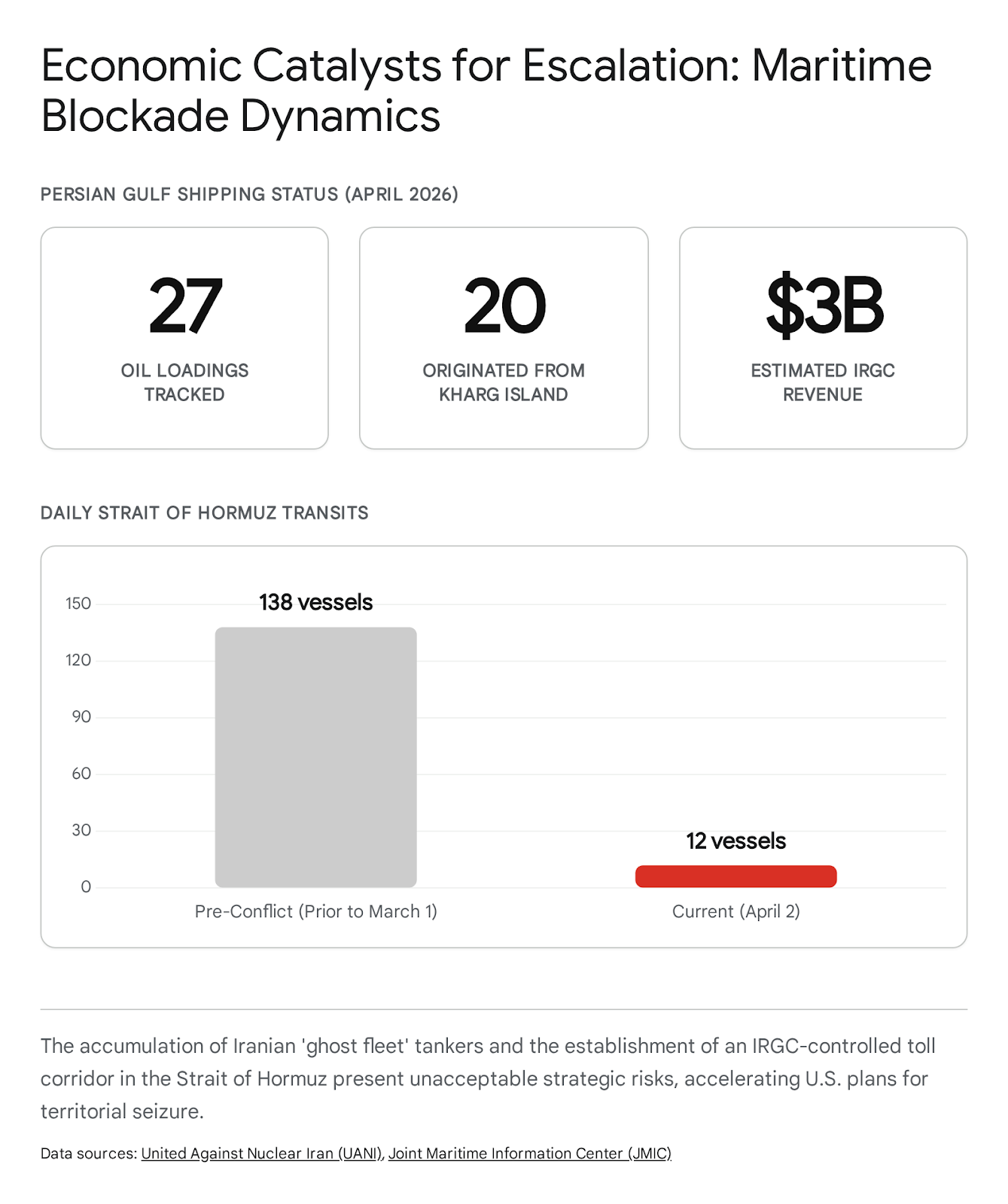
The U.S. military strategy assumed that the destruction of 90% of the Iranian Navy would ensure control over the Strait of Hormuz.2 However, this reflects a conventional bias that failed to account for Iran’s “multidomain punishment campaign”.14 Iran has successfully used shore-based anti-ship missiles, expendable drones, and sea mines to create an environment of “unacceptable risk” for commercial shipping.7
The result is an “effective closure” of the Strait that is psychological and financial rather than purely physical. On March 2, major marine insurers Gard and Skuld cancelled war-risk coverage for the region, a move that halted 20% of global oil flow more effectively than a naval blockade could have.8 The U.S. failure to pre-position escort assets or coordinate a global insurance guarantee prior to the strikes allowed Tehran to “weaponize” the global economy, leading to a 39% surge in Brent crude prices and a “grocery supply emergency” in the GCC.8
2.5 Rank 5: Incomplete Degradation of the Internal Security Apparatus
While the decapitation strikes eliminated top-tier leadership, the U.S. campaign has arguably focused too much on “strategic” targets (nuclear sites and missile silos) and not enough on the “tactical” control mechanisms of the IRGC Ground Forces and Basij.4 By leaving the regime’s internal repressive capacity largely intact, the U.S. has enabled the hardline transition to proceed with minimal internal disruption.4
If the U.S. agrees to a ceasefire now, the Iranian security apparatus remains capable of violently suppressing the very civilian protests that the Trump administration hoped would lead to regime change.1 This is a fundamental error in “Warden’s Five Ring” theory application: by striking the center (leadership) but failing to neutralize the fourth ring (the population’s control mechanisms), the U.S. has created chaos without facilitating a viable alternative governance structure.25
3. Analysis and Ranking of Iranian Strategic Miscalculations
Iran’s response to the 2026 conflict has been characterized by ideological rigidity and a catastrophic series of intelligence failures.
3.1 Rank 1: The Collapse of the “Forward Defense” Doctrine
The single greatest strategic failure for the Islamic Republic is the total collapse of its “forward defense” doctrine.4 For decades, Tehran invested billions of dollars into its “Axis of Resistance” proxies—Hezbollah, Hamas, and various Shia militias—under the assumption that these groups would serve as a buffer to absorb threats before they reached Iranian soil.4
The 2026 conflict proved this assumption to be fundamentally flawed. U.S. and Israeli forces bypassed the proxies and struck the “head of the snake” directly on February 28.4 Furthermore, the years of sustained Israeli pressure on Hezbollah (2023-2025) had already degraded the group to the point where its retaliatory rocket barrages were “tolerable” for Israel and failed to compel a halt to the strikes on Iran.2 Iran found itself in the worst possible position: its main deterrent had been proven ineffective, yet its own territory was now a primary theater of war.4
3.2 Rank 2: Alienation of Neutral Regional Mediators and Strategic Isolation
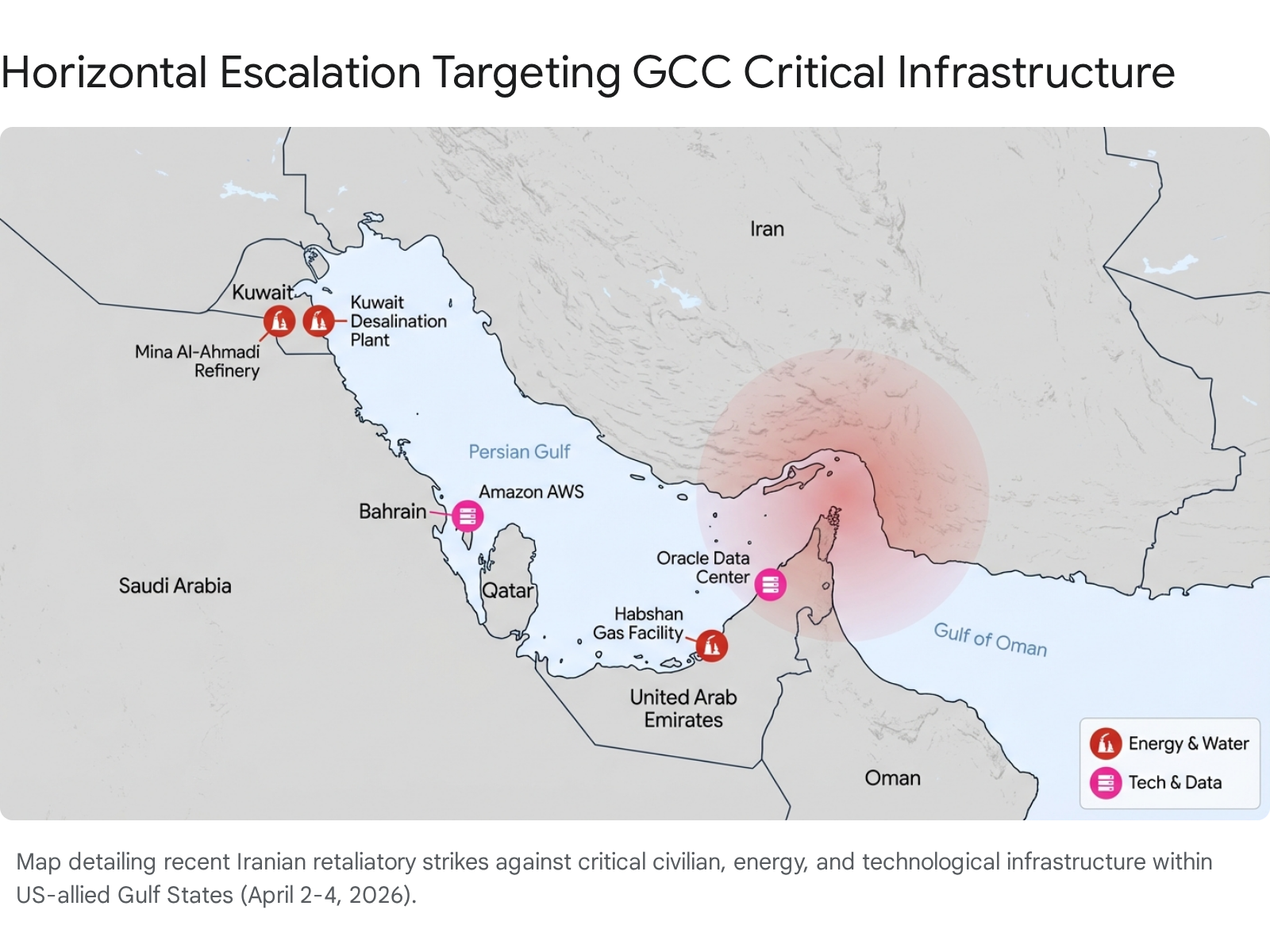
Iran’s decision to launch retaliatory strikes against the territories of its neighbors—specifically Oman, Qatar, Turkey, and the UAE—represents a “strategic blunder” that has accelerated a regional alignment against Tehran.5 Prior to 2026, many Gulf states had sought a policy of “balancing,” maintaining diplomatic channels with Tehran to avoid becoming targets.2
By striking these states’ energy infrastructure and airports, Iran “definitively broke trust” and eliminated the very mediation channels it now desperately needs to secure a ceasefire.5 The case of Oman is particularly emblematic: despite its role as the primary mediator for the 2026 nuclear talks, it was targeted, leading to a “shrinking of the space for mediation”.5 This has unified the Arab world to the point where even the Palestinian Authority issued a “strong condemnation” of Iran’s attacks on its Arab neighbors.6
Table 3: Impact of Iranian Retaliation on Regional Partners
| Target Country | Pre-Conflict Stance | Iranian Action | Post-Conflict Strategic Shift |
| Oman | Active neutral mediator.5 | Perceived or actual strikes on territory.5 | Abandoned neutral posture; closer to West.5 |
| UAE | Sought de-escalation; Abraham Accords.5 | Strikes on industrial zones and AWS data centers.14 | Strengthened defense ties with US/Israel.5 |
| Qatar | Pragmatic intermediary; hosted Al Udeid.4 | Strikes on Ras Laffan LNG and Al Udeid radar.8 | Increased military cooperation with US.2 |
| Turkey | Balancing actor; NATO member.4 | Missile interceptions over territory.4 | Heightened alertness; increased NATO integration.4 |
3.3 Rank 3: Intelligence Failure Regarding Leadership Survivability
The success of the U.S.-Israeli decapitation strikes on February 28 indicates a systemic failure of Iran’s internal security and counter-intelligence apparatus.12 The timing of the initial attack was specifically tied to the ability to target Supreme Leader Ali Khamenei before he could go into hiding, suggesting that the “shadow war” of previous years had allowed Israeli and U.S. intelligence to deeply penetrate the most sensitive levels of the Iranian regime.12
This intelligence failure had immediate strategic consequences:
- Command and Control Paralysis: The death of the Supreme Leader and senior IRGC commanders caused a 90% drop in Iranian missile coordination within the first week.2
- Succession Turmoil: The transition to Mojtaba Khamenei was conducted under the pressure of active bombardment, leading to a “disciplined but rapid” succession that may lack long-term legitimacy.9
- Vulnerability Exposure: It shattered the state-cultivated image of Khamenei as “infallible and invincible,” shaking the confidence of younger hardliners and loyalists.11
3.4 Rank 4: Miscalculation of Global Energy Resilience and Patrons’ Patience
Iran likely calculated that by closing the Strait of Hormuz and attacking energy facilities, it could force the international community—particularly China and the European Union—to pressure the United States for an immediate ceasefire.4 This miscalculation failed to account for the structural changes in the global energy market and the strategic patience of its own patrons.2
While oil prices have surged, the U.S. and its partners had spent years preparing for this exact contingency.4 The release of 400 million barrels from strategic reserves by the IEA, combined with increased U.S. domestic production, has buffered Western economies from the full force of the shock.8 More importantly, Iran’s disruption of oil and LNG primarily hurts its own customers: China, India, Japan, and South Korea account for 75% of Gulf oil exports.8 By strangling the energy supply of its only major trade partners, Iran has risked losing the “shadow support” of Beijing and Moscow at its moment of greatest need.2
3.5 Rank 5: Hardline Entrenchment and the Elimination of Negotiating “Off-Ramps”
The final strategic mistake is the Iranian regime’s decision to respond to the crisis by “digging in” with the most militant possible leadership.4 The appointment of Mojtaba Khamenei as Supreme Leader and Mohammad Bagher Zolghadr to oversee the wartime apparatus reflects the “paramountcy of the IRGC” over the political establishment.12
While this may ensure short-term regime survival through repression, it has effectively closed all diplomatic off-ramps.2 Figures like Ali Larijani, who were instrumental in previous negotiations and the JCPOA, have been killed or sidelined, leaving a leadership that views any talk of de-escalation as treason.12 This “primitive thinking” has locked Iran into a war of attrition that it cannot win conventionally and which ensures the continued systematic destruction of its defense assets.20
4. Kinetic Assessment and Tactical Realities
The military campaign, dubbed Operation Epic Fury by the United States and Operation Roaring Lion by Israel, has been defined by an extreme asymmetry in technological capability and precision.12
4.1 Comparison of Material and Personnel Losses
The data collected from OSINT and official military briefings reveals the stark contrast in the conflict’s toll on each side’s conventional capabilities.
Table 4: Reported Military Equipment and Personnel Losses (As of late March 2026)
| Category | United States / Israel Reported Losses | Iran Reported Losses |
| Personnel (KIA) | ~27 (US: 15, Israel: 12) 10 | 6,000+ (Military), ~3,500+ (Combined) 10 |
| Personnel (Wounded) | ~832 (US: 520, Israel: 312) 10 | 15,000+ (Military) 10 |
| Naval Vessels | Minimal / Not Confirmed 10 | 150 (approx. 90% of Navy) 2 |
| Ballistic Missile Launchers | 0 | 190-330 (approx. 70% of arsenal) 10 |
| High-Value Radar Systems | 2 (AN/FPS-132, AN/TPY-2) 34 | Unknown (Extensive degradation) 2 |
| Fighter Jets / Aviation | 3-4 (F-15E, KC-135) 3 | Extensive (Dezful and Bandar Abbas bases) 39 |
| Infrastructure Costs | $800M (US bases) 10 | Tens of Billions (Nuclear, Oil, Government) 8 |
4.2 Analysis of Iranian Retaliatory Strikes
Despite the degradation of its central command, Iran has maintained a “multidomain punishment campaign” using Russian-produced and modified Shahed drones.14 These strikes have been tactically significant in their choice of high-value targets.
- Al Udeid Air Base (Qatar): A strike on March 1 destroyed the AN/FPS-132 early warning radar, a system valued at $1.1 billion.34
- Al-Ruwais Industrial City (UAE): An Iranian drone successfully targeted the AN/TPY-2 radar component of the THAAD system, valued at $500 million.34
- Fifth Fleet Headquarters (Bahrain): Missiles struck the Navy’s communication hub, destroying two AN/GSC-52B satellite terminals.34
- Cyberfront: Iran has launched over 150 recorded hacktivist incidents, focusing on AI-enabled attacks against UAE government systems and U.S. medical tech firms.14
These strikes demonstrate that while Iran cannot win a conventional engagement, it can impose “asymmetric costs” that challenge the U.S. Navy’s ability to maintain long-term presence and protection.14
5. Global Economic and Geopolitical Ripple Effects
The 2026 conflict has echoed the 1970s energy crisis, creating shocks that transcend the regional theater.
5.1 Energy Markets and Shipping Insurance
The “Hormuz Impasse” has transformed from a military standoff into a global financial crisis.21 Brent crude surged to over $110 per barrel by mid-March 2026, a 39% increase from pre-conflict levels.28 The primary driver is not the physical blockade but the “withdrawal of insurance coverage”.21
Table 5: Economic Indicators of the 2026 Conflict
| Indicator | Pre-Conflict (Feb 27) | Peak Conflict (March/April) | Percentage Change |
| Brent Crude Oil | ~$63.85 37 | ~$110 – $120 8 | +39% to +88% |
| U.S. WTI Crude | ~$60.38 37 | ~$76 – $80 21 | +26% to +32% |
| LNG Spot Price (Asia) | Baseline | +140% 8 | +140% |
| Global TIV (Auto Sales) | Baseline | -800,000 to -900,000 units 43 | Reduction in growth |
| Shipping Insurance | Standard War Risk | Cancelled / Prohibitive 21 | N/A (Market failure) |
5.2 The “Grocery Supply Emergency” in the GCC
A largely overlooked but critical impact of the war is its effect on food security in the Gulf states. Countries like Saudi Arabia, the UAE, and Kuwait rely on the Strait of Hormuz for over 80% of their caloric intake.8 By mid-March, 70% of food imports were disrupted, forcing retailers like Lulu Retail to airlift staples, resulting in a 40–120% increase in food prices across the region.8 This has created significant internal political pressure on Gulf governments to seek an end to the war, even if it means pressuring the United States to make concessions.1
6. Intra-Regime Dynamics and the Succession of Power in Tehran
The assassination of Ali Khamenei on February 28 triggered the second leadership transition in the history of the Islamic Republic, occurring under the most catastrophic conditions imaginable.35
6.1 The Rise of Mojtaba Khamenei and the IRGC Junta
The selection of Mojtaba Khamenei as Supreme Leader on March 8 was a move intended to project stability, but it carries significant long-term risks.4 Mojtaba lacks the theological credentials of his father and is widely viewed as a figurehead for a “military junta” composed of senior IRGC commanders like Mohammad Bagher Zolghadr.12
- Ideological Shift: The new leadership has rejected the “pragmatism” associated with figures like Ali Larijani, who was killed on March 17.12
- Militarized Repression: Real power has shifted to the “triumvirate” of leaders and the Supreme National Security Council, which has prioritized “internal security” and the violent suppression of any nascent protests.25
- Public Response: The move to a dynastic succession contradicts the founding principles of the 1979 revolution and is likely to be unpopular with the Iranian public, potentially fueling long-term internal instability once the immediate fog of war dissipates.4
6.2 The Sidelining of the Clerical Establishment
The 2026 war has effectively marginalized the traditional clerical establishment in Qom. The Assembly of Experts, which is constitutionally tasked with choosing the leader, was targeted by an Israeli strike on March 5 to prevent their meeting.12 While they eventually appointed Mojtaba, the process was clearly dictated by the security services.12 This shift from a theocracy to a “theocratic military dictatorship” significantly alters the nature of the Iranian state, making it more predictable in its aggression but harder to engage in traditional diplomacy.4
7. Synthesis of the Five Biggest U.S. Strategic Mistakes
The ranking of U.S. mistakes is based on their impact on long-term national interest and the stability of the global order.
- Absence of Political End-State: By failing to define what “victory” looks like, the U.S. has entered a “forever war” scenario in a theater it was attempting to de-prioritize.1
- Unilateralism and Ally Alienation: The “Epic Fury” approach has strained NATO and GCC relationships, making it harder to build a sustainable post-war regional security framework.1
- Munitions Inventory Depletion: The excessive use of TLAMs and SM-6s has created a “vulnerability window” in the Pacific that adversaries like China may exploit.3
- Economic Blindness (Maritime/Insurance): Underestimating the psychological impact of the war on global shipping has allowed Iran to hold the global economy hostage despite having no navy.8
- Focus on Decapitation Over Control: By striking the leadership but leaving the IRGC’s internal control mechanisms intact, the U.S. has ensured that any successor regime will be more hardline and repressive.4
8. Synthesis of the Five Biggest Iranian Strategic Mistakes
Iran’s mistakes have led to the systematic destruction of its conventional power and the decapitation of its leadership.
- Failure of “Forward Defense”: The assumption that proxies would protect the homeland proved fatal when the U.S. and Israel chose to strike the “head”.4
- Alienation of Neutral Mediators: Striking Oman and the UAE was a “strategic blunder” that turned potential de-escalation partners into hostile neighbors.5
- Intelligence Failure (Leadership Vulnerability): The inability to protect Ali Khamenei revealed a catastrophic compromise of Iran’s internal security apparatus.11
- Miscalculation of Global Energy Resilience: Assuming the world could not handle a Hormuz closure failed to account for modern strategic reserves and production buffers.4
- Hardline Entrenchment: Choosing a militant IRGC-backed junta as the successor leadership ensures a prolonged conflict and eliminates the possibility of a negotiated settlement.2
9. Strategic Outlook: The “Brittle Accommodation” Scenario
As the conflict enters its second month, the most likely outcome is a “brittle accommodation” rather than a total regime collapse or a clear U.S. victory.22 The U.S. lacks the political will for a ground invasion of a country with 93 million people, and Iran lacks the conventional means to push U.S. forces out of the region.22
The risk is a “grinding destabilization,” where energy volatility, cyber disruptions, and periodic kinetic exchanges become the new normal.22 To secure a strategic victory, the United States must transition from “pulse operations” to a sustained diplomatic outreach that shores up its regional alliances and provides a clear, verifiable pathway for the new Iranian leadership to end the conflict.14 Failure to do so will result in a “strategic overextension” that leaves the United States less safe and more isolated, despite its overwhelming military success.1
Please share the link on Facebook, Forums, with colleagues, etc. Your support is much appreciated and if you have any feedback, please email us in**@*********ps.com. If you’d like to request a report or order a reprint, please click here for the corresponding page to open in new tab.
Sources Used
- The Iran War Is Making America Less Safe | Carnegie Endowment …, accessed April 7, 2026, https://carnegieendowment.org/emissary/2026/03/iran-war-us-less-safe
- Who Is Winning the Iran War? – CSIS, accessed April 7, 2026, https://www.csis.org/analysis/who-winning-iran-war
- Iran War Cost Estimate Update: $11.3 Billion at Day 6, $16.5 Billion at Day 12 – CSIS, accessed April 7, 2026, https://www.csis.org/analysis/iran-war-cost-estimate-update-113-billion-day-6-165-billion-day-12
- War in Iran: Q&A with RAND Experts | RAND, accessed April 7, 2026, https://www.rand.org/pubs/commentary/2026/03/war-in-iran-qa-with-rand-experts.html
- Iran’s Strategic Miscalculation – eismena.com, accessed April 7, 2026, https://eismena.com/en/article/irans-strategic-miscalculation-2026-03-02
- Iran’s strategic blunder is reshaping the Middle East – JNS.org – Jewish News Syndicate, accessed April 7, 2026, https://www.jns.org/column/fiamma-nirenstein/irans-strategic-blunder-is-reshaping-the-middle-east
- Visualizing Iran’s Escalation Strategy – CSIS, accessed April 7, 2026, https://www.csis.org/analysis/visualizing-irans-escalation-strategy
- Economic impact of the 2026 Iran war – Wikipedia, accessed April 7, 2026, https://en.wikipedia.org/wiki/Economic_impact_of_the_2026_Iran_war
- The US-Iran War: How It Is Redefining the Global Order – Observer Research Foundation, accessed April 7, 2026, https://www.orfonline.org/research/the-us-iran-war-how-it-is-redefining-the-global-order
- 2026 Iran war – Wikipedia, accessed April 7, 2026, https://en.wikipedia.org/wiki/2026_Iran_war
- Humiliation and Transformation: The Islamic Republic After the 12-Day War, accessed April 7, 2026, https://www.fpri.org/article/2025/10/humiliation-and-transformation-the-islamic-republic-after-the-12-day-war/
- 2026 Iran war | Explained, United States, Israel, Strait of Hormuz, Map, & Conflict | Britannica, accessed April 7, 2026, https://www.britannica.com/event/2026-Iran-war
- Tracking the Intelligence Landscape in the 2026 Iran War – Observer Research Foundation, accessed April 7, 2026, https://www.orfonline.org/expert-speak/intelligence-for-hyperwar-tracking-the-intelligence-landscape-in-the-2026-iran-war
- Iran’s Next Move: How to Counter Tehran’s Multidomain Punishment Campaign – CSIS, accessed April 7, 2026, https://www.csis.org/analysis/irans-next-move-how-counter-tehrans-multidomain-punishment-campaign
- Q&A | Twelve days that shook the region: Inside the Iran-Israel war | ACLED, accessed April 7, 2026, https://acleddata.com/qa/qa-twelve-days-shook-region-inside-iran-israel-war
- Situation Report: Middle East Escalation (February 27–1st March, 2026) | CloudSEK, accessed April 7, 2026, https://www.cloudsek.com/blog/middle-east-escalation-israel-iran-us-cyber-war-2026
- US/Israel-Iran conflict 2026 – UK Parliament, accessed April 7, 2026, https://researchbriefings.files.parliament.uk/documents/CBP-10521/CBP-10521.pdf
- Trump And The Unplanned Trap Of War With Iran – Analysis – Eurasia Review, accessed April 7, 2026, https://www.eurasiareview.com/07042026-trump-and-the-unplanned-trap-of-war-with-iran-analysis/
- Rationale for Iran war questioned after Trump says ‘I don’t care’ about regime’s uranium stockpiles, accessed April 7, 2026, https://www.theguardian.com/world/2026/apr/02/trump-iran-war-rationale-uranium-stockpiles
- Three Calculations, One War: Inside the Minds of the United States, Israel, and Iran, accessed April 7, 2026, https://gulfif.org/three-calculations-one-war-inside-the-minds-of-the-united-states-israel-and-iran/
- The US-Iran War: The potential economic impact and how businesses can react, accessed April 7, 2026, https://www.thomsonreuters.com/en-us/posts/corporates/iran-war-economic-business-impact/
- Eight Experts on What You’re Not Being Told about the War in Iran | The Walrus, accessed April 7, 2026, https://thewalrus.ca/iran-foreign-policy-experts/
- Iran’s War With Israel and the United States | Global Conflict Tracker, accessed April 7, 2026, https://www.cfr.org/global-conflict-tracker/conflict/confrontation-between-united-states-and-iran
- US/Israel-Iran conflict 2026 – The House of Commons Library – UK Parliament, accessed April 7, 2026, https://commonslibrary.parliament.uk/research-briefings/cbp-10521/
- The war with Iran: Expert analysis | University of Cambridge, accessed April 7, 2026, https://www.cam.ac.uk/news/the-war-with-iran-expert-analysis
- The 850 Tomahawks Launched in Operation Epic Fury Is the Most Fired in a Single Campaign – CSIS, accessed April 7, 2026, https://www.csis.org/analysis/850-tomahawks-launched-operation-epic-fury-most-fired-single-campaign
- Latest Analysis: War with Iran | CSIS, accessed April 7, 2026, https://www.csis.org/programs/latest-analysis-war-iran
- The Middle East conflict begins to cast a shadow on the global economy – Deloitte, accessed April 7, 2026, https://www.deloitte.com/us/en/insights/topics/economy/iran-middle-east-conflict-impacts-global-economy.html
- The Iranian Regime in Wartime Transformation: Why Mojtaba Khamene’i is far from Supreme – The Jerusalem Strategic Tribune, accessed April 7, 2026, https://jstribune.com/the-iranian-regime-in-wartime-transformation-why-mojtaba-khamenei-is-far-from-supreme/
- On the Brink of War: US and Iranian Calculations in the New Negotiations, accessed April 7, 2026, https://studies.aljazeera.net/en/policy-briefs/brink-war-us-and-iranian-calculations-new-negotiations
- Trump’s Iran own goal, accessed April 7, 2026, https://www.washingtonpost.com/opinions/2026/04/03/iran-war-trump-hormuz-mistake/
- Analysis – The Iran War: Strategic Implications for Israel, the Gulf states and Beyond – ELNET, accessed April 7, 2026, https://elnetwork.eu/policypaper/analysis-iran-war-israel-gulf-states/
- Timeline of the 2026 U.S. and Israel–Iran conflict – Detective-store Blog, accessed April 7, 2026, https://www.detective-store.com/blog_en/timeline-of-the-2026-u-s-and-israel-iran-conflict/
- US Military Equipment Losses Near $2 Billion After Four Days of Iran Strikes – Aviation A2Z, accessed April 7, 2026, https://aviationa2z.com/index.php/2026/03/04/us-military-equipment-losses-near-2-billion-after-four-days-of-iran-strikes/
- Who—or What—Will Replace Iran’s Supreme Leader Ali Khamenei? – RAND, accessed April 7, 2026, https://www.rand.org/pubs/commentary/2026/03/who-or-what-will-replace-irans-supreme-leader-ali-khamenei.html
- Oil Prices Rise as US-Israeli War Disrupts Supply, accessed April 7, 2026, https://discoveryalert.com.au/oil-prices-rise-us-israeli-war-2026/
- Global Market | Oil Shockwave: Iran conflict triggers record surge in 2026 price forecasts, accessed April 7, 2026, https://m.economictimes.com/markets/us-stocks/news/global-market-oil-shockwave-iran-conflict-triggers-record-surge-in-2026-price-forecasts/articleshow/129940954.cms
- The Iran Strikes, Explained: How We Got Here and What It Means | AJC, accessed April 7, 2026, https://www.ajc.org/news/the-iran-strikes-explained-how-we-got-here-and-what-it-means
- Iran Update Special Report, March 23, 2026 – Institute for the Study of War, accessed April 7, 2026, https://understandingwar.org/research/middle-east/iran-update-special-report-march-23-2026/
- Iran Update Special Report, March 15, 2026 – Institute for the Study of War, accessed April 7, 2026, https://understandingwar.org/research/middle-east/iran-update-evening-special-report-march-15-2026/
- Report: Many Middle East US Bases “All But Uninhabitable” Due to Iran Strikes – Truthout, accessed April 7, 2026, https://truthout.org/articles/report-many-middle-east-us-bases-all-but-uninhabitable-due-to-iran-strikes/
- The War Against Iran and Global Risks: “Tell Me How This Ends”, accessed April 7, 2026, https://gjia.georgetown.edu/conflict-security/the-war-against-iran-and-global-risks-tell-me-how-this-ends/
- US–Iran war continues uncertainty for global auto industry, accessed April 7, 2026, https://www.spglobal.com/automotive-insights/en/rapid-impact-analysis/us-iran-war-global-auto-industry-impact
- After Khamenei: Planning for Iran’s Leadership Transition | Council on Foreign Relations, accessed April 7, 2026, https://www.cfr.org/reports/leadership-transition-in-iran
- Iran’s Leadership Transition in the Shadow of War with the U.S. and Israel, accessed April 7, 2026, https://thesoufancenter.org/intelbrief-2026-march-1b/
- Assessing U.S. Progress in the Iran War | The Washington Institute, accessed April 7, 2026, https://www.washingtoninstitute.org/policy-analysis/assessing-us-progress-iran-war