Tag Archives: China

Analysis of U.S. Deterrence and Chinese Strategic Calculus Regarding Taiwan – As of April 5, 2026

1.0 Executive Summary

The strategic calculus governing the Taiwan Strait represents the most critical geopolitical flashpoint of the twenty-first century. As of April 2026, the global security architecture is undergoing an unprecedented stress test. The United States is actively engaged in large-scale military operations in the Middle East—designated Operation Epic Fury—targeting the Iranian regime following major escalations.1 This ongoing conflict has necessitated the diversion of critical U.S. naval, air, and logistical assets from the Indo-Pacific Command (INDOPACOM) to the Central Command (CENTCOM), prompting profound questions regarding the viability of U.S. deterrence in the Western Pacific.3 Specifically, the geopolitical landscape invites a critical inquiry: With the United States actively expending resources in the Middle East, why has the People’s Republic of China (PRC) not seized the opportunity to initiate a military acquisition of Taiwan?

This report provides an exhaustive analysis of the intersecting military, economic, and political factors that inform China’s current strategic hesitation. The analysis concludes that the U.S. military remains a highly credible deterrent, not merely through forward-deployed mass, but through its demonstrated lethality, advanced targeting capabilities, and coalition-building power as evidenced in real-time combat.5 However, the primary factors preventing an immediate Chinese invasion extend far beyond the U.S. military presence alone.

China’s hesitation is fundamentally rooted in severe, enduring internal and operational constraints within the People’s Liberation Army (PLA). An amphibious invasion of Taiwan presents extreme logistical complexities that the PLA currently lacks the lift capacity, joint operational experience, and command stability to execute reliably.7 Furthermore, Beijing views the Iran conflict as a highly effective “structural asset”—a proxy engagement that systematically degrades U.S. strategic bandwidth, industrial capacity, and munitions stockpiles without requiring direct Chinese kinetic intervention or assuming the associated risks.9 Simultaneously, China is prioritizing its internal economic resilience, aggressively pursuing energy autonomy, and executing a domestic modernization agenda under the sweeping mandates of the 15th Five-Year Plan (2026–2030).11

By synthesizing open-source intelligence, military expenditure data, legislative developments, and strategic doctrine, this report dissects the anatomy of U.S. deterrence, the realities of PLA logistical constraints, the lessons Beijing has extracted from global conflicts, and the internal defense dynamics of Taiwan. The findings reveal a highly nuanced strategic environment where China’s restraint is not a permanent abandonment of its unification goals, but a calculated, multifaceted delay designed to let the United States overextend itself while the PLA mitigates its own critical vulnerabilities.

2.0 The Architecture of U.S. Deterrence in the Indo-Pacific

The efficacy of U.S. deterrence regarding Taiwan is a subject of intense debate among defense strategists and policymakers. Deterrence is traditionally composed of two central pillars: the capability to inflict unacceptable costs on an aggressor, and the credibility of the threat to actually do so. In the context of the Taiwan Strait, the U.S. deterrence framework has evolved significantly, transitioning from a posture of diplomatic ambiguity to an increasingly robust, operationally focused military doctrine.

2.1 Evolution of Strategic Posture: From Ambiguity to Denial

Historically, U.S. policy toward Taiwan has relied heavily on “strategic ambiguity,” a carefully calibrated diplomatic posture designed to deter Beijing from invading while simultaneously deterring Taipei from declaring formal, de jure independence. However, the rapid, historic expansion of China’s military capabilities has prompted a fundamental shift in U.S. defense planning toward a “Strategy of Denial”.13

This doctrine, heavily emphasized in recent strategic guidance, prioritizes the forward deployment of U.S. forces to prevent China from rapidly seizing Taiwanese territory and presenting the international community with a fait accompli.13 The primary objective of a denial defense is to ensure that the U.S. and allied militaries can intercept, disrupt, and degrade a Chinese amphibious assault force before it can establish a secure, sustainable lodgment on the island.14

The deterrence value of this strategy lies in forcing Beijing to acknowledge that an invasion would not be a swift, localized operation, but a protracted, high-casualty war against a global superpower. U.S. policymakers have underscored this by explicitly characterizing the defense of Taiwan as a cardinal responsibility, ensuring that U.S. military assets are laser-focused on defeating any bid for regional hegemony.13 The 2026 National Defense Strategy (NDS) reinforces this posture, explicitly characterizing China as the “most powerful state relative to us since the 19th century” and emphasizing a doctrine of “peace through strength” over previous administrations’ framing of mere “strategic competition”.15

2.2 Force Structure, Geopolitical Constraints, and A2/AD Realities

The credibility of the U.S. deterrent is constantly challenged by China’s relentless development of advanced Anti-Access/Area-Denial (A2/AD) capabilities. Over the past two decades, the PLA has built a formidable umbrella of ballistic missiles, cruise missiles, and integrated air defense systems designed specifically to push U.S. aircraft carriers and forward-deployed surface forces out of the First Island Chain.16

This shift in the regional balance of power has led some defense analysts to argue that U.S. deterrence is steadily eroding. Critics of the current posture—often termed accommodationists—suggest that in the event of a conflict, the United States would face a stark dilemma: either abandon Taiwan and fatally weaken the entire U.S. alliance network in Asia, or initiate a war where U.S. forces would likely incur severe losses, potentially resulting in a bloody, unwinnable stalemate.16 The geographic reality severely disadvantages the United States, which must project power thousands of miles across the Pacific Ocean, whereas Taiwan sits a mere 100 miles from the Chinese mainland, well within range of the PLA’s rocket artillery, helicopters, and paratroopers.18

Furthermore, U.S. force posture faces structural limitations. The Fiscal Year 2025 National Defense Authorization Act (NDAA) caps the Marine Corps at 172,300 active-duty personnel, creating a scenario where combatant commanders consistently demand more amphibious presence than the force can generate.20 Meeting the stated requirement of a 3.0 Marine Expeditionary Unit (MEU) presence is increasingly difficult amid global commitments.20

Despite these severe A2/AD challenges and force structure constraints, the U.S. military maintains significant asymmetric advantages, particularly in undersea warfare and long-range precision strike capabilities. U.S. nuclear-powered attack submarines are far less vulnerable to China’s A2/AD network than surface vessels and would play a decisive, disproportionate role in systematically dismantling a Chinese invasion fleet in the shallow waters of the Strait.21 The U.S. military’s capacity to leverage these assets ensures that any cross-strait invasion would result in catastrophic naval losses for the PLA, serving as a highly effective, tangible deterrent.

2.3 The Economic Toolkit and Coalition Dynamics

Military force is only one component of the broader deterrence toolkit; the threat of sweeping, coordinated economic sanctions represents a critical secondary deterrent against Chinese aggression. Defense planners and policy institutes continuously run scenarios to evaluate the effectiveness of restrictive economic measures, exploring both preemptive and reactive sanctions regimes aimed at crippling China’s export-reliant economy.22

However, the efficacy of economic deterrence is highly dependent on coalition unity. While the United States possesses the unilateral economic power to severely damage the Chinese financial system, the participation of key regional and global allies—such as Japan, Australia, and the United Kingdom—is paramount to sealing economic loopholes. Analyses indicate that allies are generally hesitant to implement preemptive economic measures without an existential threat to their immediate security interests, requiring intense, sustained U.S. diplomatic pressure to forge a cohesive sanctions block.22 For instance, assessments suggest Australia would likely seek to exhaust all other levels of national power before embracing preemptive economic deterrence tools.22

Nevertheless, the regional alliance system, particularly mechanisms like the AUKUS agreement and formal expressions of diplomatic support, serves as a vital structural deterrent. Defense of Taiwan is fundamentally viewed as both a strategic necessity and a moral imperative. As noted by defense officials, defending a successful democracy living on an island reinforces the entire premise of the Western security architecture; failing to do so would fatally undermine the credibility of U.S. defense guarantees to nations like Australia and Japan.16

3.0 Operation Epic Fury: The Crucible of U.S. Strategic Bandwidth

To accurately understand China’s current strategic hesitation, it is imperative to deeply analyze the ongoing U.S. military engagement in the Middle East. Initiated on February 28, 2026, Operation Epic Fury involves a massive, sustained U.S. and Israeli air and missile campaign against the Iranian regime.1 While this operation has demonstrated unparalleled U.S. lethality, it has concurrently exposed critical, systemic vulnerabilities in American strategic bandwidth and industrial capacity—factors that Beijing is monitoring with intense, calculated scrutiny.6

3.1 The Middle East Diversion: INDOPACOM vs. CENTCOM Reallocation

U.S. defense strategy over multiple administrations has consistently sought to pivot away from the Middle East to concentrate resources, planning, and procurement on the pacing threat of China in the Western Pacific.23 Operation Epic Fury has forced a direct, violent reversal of this carefully planned posture.

The operation has necessitated the deployment of immense naval and air assets to the CENTCOM area of responsibility. As of April 2026, the U.S. Navy has deployed three Carrier Strike Groups (CSGs)—including the USS George H.W. Bush, the USS Gerald R. Ford, and the USS Abraham Lincoln—along with multiple Amphibious Ready Groups (ARGs), such as the Tripoli ARG and Boxer ARG, to the Middle East.24 The Gerald R. Ford’s deployment has stretched toward an exhausting 11 months.6 In addition to naval assets, the Pentagon has surged extra fighter squadrons, advanced electronic warfare aircraft (such as the EA-37B Compass Call), and critical layered air defense systems to the region.4

This massive concentration of force effectively hollows out the surge capacity that would otherwise be available to INDOPACOM. By drawing critical assets, logistical capacity, and the entirety of Washington’s political attention away from the Pacific theater, the Iran conflict has resulted in a tangible, immediate weakening of U.S. defensive capabilities in the Western Pacific.3 For Beijing, this diversion represents an ideal, low-cost geopolitical environment; the United States is voluntarily engaged in a highly resource-intensive conflict, stretching its military forces thin globally and creating a potential strategic opening for regional adversaries.3

3.2 “Command of the Reload”: Munitions Consumption and Industrial Attrition

The most profound strategic consequence of Operation Epic Fury is not the geographic repositioning of ships, but the staggering consumption rate of highly advanced, difficult-to-replace precision munitions. In modern, high-end conflict, the decisive factor is no longer merely the ability to project power—dubbed the “Command of the Commons”—but the industrial capacity to sustain those strikes over time, known as the “Command of the Reload”.10

In the opening 96 hours of the campaign alone, the U.S.-led coalition expended an estimated 5,197 munitions across 35 different types, carrying a munitions-only replacement bill of $10 billion to $16 billion.10 This intense operational tempo has rapidly depleted critical, long-lead-time stockpiles. Most alarmingly, the U.S. Navy fired over 850 Tomahawk land-attack cruise missiles in the first month of the war.25 Given that the U.S. defense industrial base only produces an estimated 300 to 400 Tomahawks annually, the global supply—estimated at between 3,000 and 4,500 units prior to the conflict—is shrinking at a rate that is mathematically unsustainable for concurrent global contingencies.25

The financial burden of this attrition is immense and rapidly compounding. According to the Penn Wharton Budget Model, the direct costs of Operation Epic Fury reached $27 to $28 billion in just the first 32 days.26

Operation PhaseDates (2026)Estimated Daily RatePrimary Cost Drivers
Phase 1Feb 28 – Mar 5 (Days 1-6)~$2.1 Billion / dayHeavy reliance on Tomahawks, SM-3, SM-6, and AGM-154 glide bombs.26
Phase 2Mar 6 – Mar 23 (Days 7-24)~$601 Million / dayTransition to sustained air campaigns; replenishment logistics.26
Phase 3Mar 24 – Mar 31 (Days 25-32)~$500 Million / dayContinued targeted strikes; integration of specialized munitions.26
Phase 4 (Proj.)Apr 1 – Apr 30 (Days 33-62)$350–650 Million / dayProjected burn rate assuming sustained conflict.26

The high burn rate reflects the exorbitant cost structure of the opening salvo. The use of highly advanced interceptors—such as SM-3 and SM-6 missiles, costing upwards of $4 to $5 million each—against cheaper asymmetric drone and missile threats highlights a severe economic asymmetry.26 Both the PRC and INDOPACOM are acutely aware that the munitions currently being expended in the skies over Tehran are munitions that will definitively not be available to defend Taipei in a simultaneous contingency.6 The target sets in a conflict with China would range into the tens of thousands, requiring standoff munitions on a scale never before seen in history.25

3.3 Technological Lethality, Force Protection, and Asymmetric Retaliation

While the drain on resources is undeniably a strategic vulnerability, Operation Epic Fury also functions as a terrifying, real-world demonstration of U.S. military proficiency and technological dominance. The integration of advanced artificial intelligence into the kinetic kill chain has proven highly effective. U.S. forces have utilized AI systems, reportedly including Palantir’s Maven Smart System and advanced large language models like Anthropic’s Claude, to drastically accelerate targeting processes.5 According to CENTCOM Commander Adm. Brad Cooper, these AI tools help operators sift through vast amounts of data, turning targeting cycles that previously took hours or days into a matter of seconds.5 This AI-enabled lethality has allowed the U.S. coalition to hit over 5,500 targets with devastating precision.5

Furthermore, the conflict has seen the first confirmed combat deployment of the Long-Range Precision Strike Missile (PrSM), providing the U.S. Army with an unrivaled deep-strike capability.28 The sheer scale and success of these strikes—systematically obliterating Iranian command centers, air defenses, and naval assets including a key submarine—serve as a stark warning regarding the survivability of any adversary facing the full weight of the U.S. military.1 Secretary of War Pete Hegseth noted that the mission is “laser-focused” on ensuring the permanent destruction of Iran’s offensive capabilities.30

However, this lethality has not come without costs or retaliatory consequences. As of March 31, at least 348 U.S. military personnel have been wounded, necessitating massive force protection efforts.31 Hegseth detailed that the defense of U.S. troops is “maxed,” requiring rapid disbursement, bunker fortification, and continuous layered air defense combat air patrols to mitigate incoming fire.31

Moreover, Iran’s retaliation strategy has highlighted the vulnerabilities of regional partners. Termed the “Triple Betrayal” by regional analysts, Iran systematically targeted the physical emblems of Gulf modernity rather than solely focusing on U.S. bases.32 Strikes on Dubai International Airport, Jebel Ali Port, and QatarEnergy facilities have deeply unsettled U.S. allies.32 This demonstrates to Beijing that even if U.S. forces are resilient, the civilian and economic infrastructure of U.S. regional partners remains highly vulnerable to asymmetric missile strikes, potentially fracturing coalition unity during a crisis.32

4.0 China’s Strategic Calculus and the “Structural Asset” Proxy

Given the undeniable strain on U.S. resources, the massive expenditure of precision munitions, and the shifting of naval assets away from the Pacific, a superficial analysis might conclude that April 2026 presents the optimal, fleeting window for a Chinese invasion of Taiwan. However, Beijing operates on a fundamentally different strategic timeline, viewing the geopolitical landscape through a lens of long-term structural advantage rather than immediate, opportunistic aggression.

4.1 Iran as a Strategic Depletant

From Beijing’s perspective, the U.S. war against Iran is not a mere distraction to be rapidly exploited through kinetic action in Taiwan, but rather a strategic mechanism to be prolonged and optimized. For years, China has systematically cultivated Iran as a vital “structural asset” in the Middle East.9 By purchasing 80 to 90 percent of Iran’s exported crude oil via a complex, sanctions-evading “ghost fleet,” China has effectively kept the Iranian regime financially solvent.3 The 2021 25-Year Comprehensive Strategic Partnership committed China to an estimated $400 billion investment across Iran’s energy and infrastructure sectors.9 Furthermore, Beijing has heavily integrated its technology into Iran’s infrastructure, supplying advanced AI-enabled facial-recognition cameras and telecommunications networks from firms like Huawei and ZTE, which bolster the regime’s internal control.9

This massive investment yields strategic dividends that far outweigh the financial costs. Iran and its extensive proxy networks act as a highly efficient mechanism for American strategic attrition.9 Every U.S. carrier strike group deployed to the Persian Gulf, and every multi-million-dollar SM-6 interceptor fired, represents a tangible degradation of the U.S. military apparatus that China does not have to pay for with a single drop of PLA blood. Analysts note that China will likely continue to indirectly support Iran’s war effort by supplying critical intelligence, economic aid, and dual-use components—such as rocket parts—to ensure the conflict drags on.3 This continued support aims to perpetually drain U.S. resources and exacerbate Washington’s strategic overextension.3 Launching a war in Taiwan now would instantly unify U.S. political focus and military prioritization; keeping the U.S. bogged down in a protracted Middle Eastern quagmire is the superior strategic play.

4.2 Observations on the “Command of the Reload”

China is not merely watching the U.S. expend munitions in Iran; it is meticulously analyzing how the U.S. fights and sustains that fight. The PLA is observing the integration of AI in closing kill chains, the performance of novel weapon systems like PrSM, and the limits of the U.S. ability to sustain a high-intensity air campaign logistically.5

The lesson Beijing extracts is dual-faceted. First, the U.S. industrial base is fundamentally flawed and unable to replenish precision munitions at the speed of modern combat.10 Second, despite this logistical fragility, the tip of the American spear remains devastatingly sharp. An amphibious assault is the most vulnerable, slow-moving military maneuver possible. Exposing hundreds of thousands of PLA troops in densely packed transport vessels to the U.S. AI-driven targeting apparatus demonstrated in Operation Epic Fury would invite catastrophic casualties.5 China’s hesitation is partially a pragmatic acknowledgment that it has not yet developed the electronic warfare or kinetic countermeasures necessary to reliably blind or defeat the networked strike capabilities the U.S. military is currently demonstrating.

5.0 Enduring Vulnerabilities within the People’s Liberation Army (PLA)

Beyond macroeconomic factors and geopolitical proxy wars, the most immediate, tangible deterrent to a Chinese invasion of Taiwan is the physical and organizational limitation of the People’s Liberation Army itself. A cross-strait invasion—officially termed a “Joint Island Landing Campaign” in PLA doctrine—is an undertaking of extreme, unprecedented complexity, and the PLA currently faces severe logistical, capability, and leadership deficits that prevent a successful execution.7

5.1 The Amphibious Lift Deficit and Geographic Tyranny

The fundamental mathematics of a cross-strait invasion do not currently favor Beijing. Establishing and sustaining a beachhead against a highly entrenched, modernized defender requires the rapid movement of an unprecedented volume of personnel, heavy armor, and supplies. Estimates suggest a full-scale invasion could require landing between 300,000 and 2 million troops, necessitating the continuous movement of up to 30 million tonnes of food, fuel, and ammunition.8

The PLA Navy (PLAN) currently suffers from a profound shortfall in traditional amphibious lift capacity. Defense intelligence reports indicate that China has not invested adequately in the specialized tank landing ships (LSTs) and medium landing ships (LSMs) required for a massive, contested direct beach assault.34 OSINT assessments of China’s current dedicated amphibious assault ships—such as their 4 landing ship docks, which carry 28 helicopters each—suggest a capacity to land only 20,000 to 25,000 soldiers in the critical first wave.36 This is entirely insufficient to overwhelm Taiwanese defenses before U.S. and allied intervention.

Furthermore, the geography of Taiwan presents a logistical nightmare for an attacking force. The Taiwan Strait, historically referred to as the “Black Ditch,” is notorious for extreme weather. Strong winds, heavy wave swells, dense fog, and an average of six typhoons annually restrict the viable invasion window to just two months of the year—typically April and October.8 Even if PLA forces successfully cross the strait, Taiwan offers only 14 beaches suitable for amphibious landings.8 Almost all of these landing zones are flanked by urban jungles, cliffs, and mountainous terrain that heavily favor the defending forces, turning the beaches into pre-sighted kill zones.8 Once ashore, the flat coastal plains are characterized by water-intensive agricultural land and flooded rice paddies. Mechanized infantry and armor would be forced to rely on elevated highways; if Taiwanese defenders simply destroy key bridges and overpasses, PLA forces would become instantly bogged down in the mud, highly vulnerable to long-range artillery and missile strikes.37

5.2 Unconventional Logistics: RO-ROs and Special Barges

Logistics in contested amphibious operations are uniquely vulnerable to “friction.” Recent U.S. experiences vividly underscore this difficulty. In 2024, the U.S. military attempted a Joint Logistics Over The Shore (JLOTS) operation using a floating “Trident Pier” in Gaza to deliver humanitarian aid. Despite facing no active military resistance and operating in the relatively calm waters of the Mediterranean, the $230 million pier required nearly a month to assemble, suffered repeated structural damage from moderate waves, and was operational for less than half the time it was deployed, handling a mere 9,000 tonnes of supplies.8

The PLA faces a logistical requirement exponentially larger than the Gaza operation, in infinitely worse maritime weather, while under constant, devastating fire from Taiwanese anti-ship missiles, artillery, and sea drones.8 To mitigate this severe weakness in dedicated military lift, China has adopted a highly unconventional, civil-military fusion approach. The PLA is aggressively integrating civilian roll-on/roll-off (RO-RO) ferries and vehicle carriers into its strategic support fleets.34 Driven by China’s booming electric vehicle export market, the construction of massive RO-RO vessels—some capable of carrying 9,000 car equivalent units—provides the PLA with a massive dual-use armada.38 Exercises observed in late 2025 near Jiesheng beach demonstrated the PLA practicing delivering vehicles using these shallow-draft cargo ships to overwhelm defenders.39

However, standard large-capacity RO-RO vessels require deep-water ports to unload effectively; they cannot simply drive heavy armor onto a contested, unimproved beach.34 In response, Chinese shipyards—specifically the Guangzhou Shipyard International on Longxue Island—have recently begun mass-producing specialized, custom-built barges.40 At least five of these unique barges have been observed.40 They feature massive road spans extending over 120 meters from their bows and hydraulic “jack-up” pillars, designed specifically to act as improvised, stable piers linking offshore civilian RO-RO ferries directly to Taiwanese coastal roads.40

While this represents an innovative workaround to their LST deficit, relying on civilian ships and improvised floating piers during a high-intensity, multi-domain missile and drone barrage remains an extraordinarily fragile logistical foundation.8

5.3 Purging the “Diseased Trees”: Leadership Instability in the PLA

Operational capability is inextricably linked to leadership competence and organizational stability. Under the absolute direction of President Xi Jinping, the PLA has undergone a massive, systemic anti-corruption and political loyalty purge that continues to disrupt command structures.7 A January 2026 editorial in the PLA Daily explicitly mandated the precise removal of “diseased trees” to purify the military’s political ecosystem, asserting that operational competence cannot be separated from absolute political reliability.7

This purge has swept up the highest echelons of the Chinese military and defense industrial establishment. Notably, in early 2026, General Zhang Youxia—formerly the absolute top military leader under Xi—and General Liu Zhenli, the Chief of the Joint Staff Department, were removed and placed under formal investigation for severe disciplinary violations.7 Furthermore, key figures in the defense industry, such as Gu Jun of the China National Nuclear Corporation, and numerous flag officers like Vice Admiral Wang Zhongcai, have been abruptly dismissed.7

While Xi operates under the theory that this cycle of “removing rot and regenerating flesh” will ultimately forge a younger, hungrier, and more ruthlessly compliant fighting force capable of achieving the 2027 Centennial Military Building Goal, the short-term impacts on combat readiness are undeniably severe.7 A Joint Island Landing Campaign requires flawless, real-time joint coordination across naval, air, rocket, and cyber domains—an area where the PLA already suffers enduring constraints.7 Executing the most complex military maneuver in modern history while the upper echelons of command are paralyzed by political fear and sudden leadership vacuums introduces an unacceptable level of operational risk that acts as a profound internal deterrent.

6.0 Internal Resilience: The 15th Five-Year Plan (2026-2030)

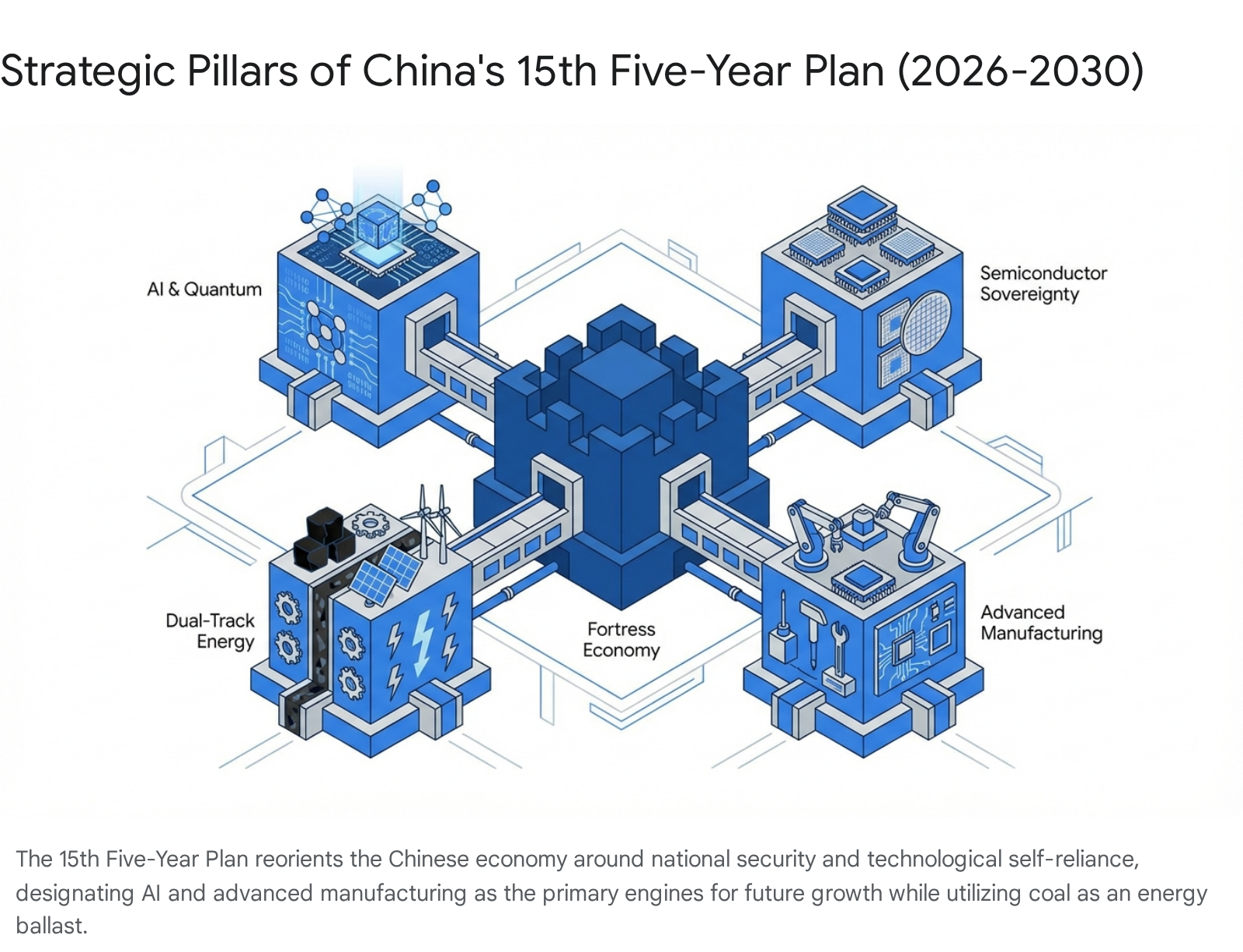
China’s strategic timeline for Taiwan is heavily dictated by its overarching national strategy, which is currently laser-focused on domestic resilience. The recently drafted 15th Five-Year Plan (2026–2030) underscores a profound commitment to internal consolidation, technological self-reliance, and economic modernization over risky external kinetic adventurism.11 Beijing’s leadership acutely recognizes that a premature war over Taiwan would invite crippling global sanctions, shatter critical global supply chains, and completely derail its economic transition into advanced manufacturing and digital technologies.11

6.1 Energy Autonomy and Blockade Insulation

A paramount vulnerability for China in any protracted conflict is energy security. An invasion of Taiwan would almost certainly prompt a U.S. distant blockade of strategic chokepoints like the Malacca Strait, severing China’s access to vital Middle Eastern oil imports.14 Recognizing this existential threat, Beijing is utilizing the 15th Five-Year Plan to achieve rapid energy autonomy.

To insulate itself from a potential blockade, China has engaged in massive, unprecedented stockpiling. Between January and August 2025 alone, China added approximately 900,000 barrels per day to its strategic petroleum reserves, effectively removing barrels from the global market to build a war chest of fuel.42

Furthermore, the 15th Five-Year Plan heavily promotes the development of clean energy to permanently decouple the Chinese economy from vulnerable fossil fuel imports.12 The plan sets massive capacity targets, including reaching 100GW of offshore wind power and 110GW of nuclear power by 2030.43 It also mandates the development of “green” fuels, such as green ammonia and methanol derived from green hydrogen, to power heavy industry and maritime transport.43 To manage industrial emissions and energy consumption, the plan advocates the creation of 100 green industrial parks.44

Crucially, analysts note that the 15th Five-Year Plan conspicuously lacks absolute emission reduction targets, indicating that Beijing is willing to prioritize raw energy expansion and industrial output over strict climate commitments to ensure economic security.12 Until this massive energy transition and strategic stockpiling reach a critical mass capable of sustaining the nation through a multi-year blockade, China remains highly susceptible to coercion.14 Therefore, the timeline for a Taiwan contingency is dictated far more by China’s internal timeline for energy autonomy than by the momentary positioning of U.S. aircraft carriers in the Persian Gulf.

7.0 Taiwan’s Defense Posture and Internal Political Friction

While the United States provides the overarching, macro-level umbrella of deterrence, the frontline defense rests upon Taiwan’s ability to construct a credible “porcupine defense.” This military posture is designed to make the island so highly indigestible through asymmetric capabilities that an invasion becomes strategically unviable for the PLA.6 Taiwan has commendably increased its defense spending, moving from 2% of GDP in 2019 to 3.3% in 2026, with ambitious stated plans to reach 5% by 2030.6 However, the realization of this strategy is currently severely threatened by domestic political gridlock.

7.1 The Legislative Yuan Asymmetric Budget Deadlock

The rapid acquisition of asymmetric warfare systems is currently stalled by profound partisan friction within Taipei. As of April 2026, Taiwan’s Legislative Yuan (LY) is completely deadlocked over the passage of a critical Special Budget for Asymmetric War.21

The ruling Democratic Progressive Party (DPP) supports a comprehensive $40 billion package.21 This budget is specifically tailored to integrate the lessons of modern conflicts, including funding for the domestic production and procurement of 200,000 unmanned systems, and the development of a highly integrated air and missile defense (IAMD) network, known as the T-dome concept.21

Conversely, opposition parties—primarily the Kuomintang (KMT) and the Taiwan People’s Party (TPP)—have proposed drastically reduced budgets totaling approximately $12 billion.21 These opposition budgets prioritize the procurement of traditional, conventional platforms and explicitly omit the large-scale funding required for drone procurement and the IAMD systems.21 While there are signs of potential compromise—such as KMT Taichung Mayor Lu Shiow-yen suggesting a middle-ground budget of $25 billion to $31 billion (800 billion to 1 trillion NTD) to demonstrate defense commitment—the current impasse is highly damaging.21

This legislative deadlock prevents Taiwan from integrating the crucial lessons of Ukraine and the Middle East regarding the absolute necessity of cheap, mass-produced drones for maintaining battlefield transparency and conducting asymmetric strikes. Furthermore, the failure to pass the budget has severely delayed the acquisition of critical conventional systems already approved by Washington, including High Mobility Artillery Rocket Systems (HIMARS), M109A7 self-propelled howitzers, and TOW and Javelin anti-tank guided missiles.21 Due to these financial delays, the U.S. government was forced to approve a request from Taiwan to defer payments for these vital systems until May 2026.21 This internal friction exacerbates a pre-existing $21 billion backlog of U.S. arms deliveries, slowing Taiwan’s fortification at a critical juncture.6

7.2 The Drone Imperative and Replicator Synergies

To truly deter a Chinese amphibious assault, both the United States and Taiwan must rapidly scale their uncrewed systems capabilities to offset the PLA’s advantage in sheer mass. The U.S. Department of Defense’s Replicator initiative, launched to field thousands of all-domain attritable autonomous systems, is explicitly designed to address this operational challenge.46

While fully autonomous weapon systems optimized to operate in denied electromagnetic environments for a Taiwan contingency remain at least five years away from full operational maturity, the immediate deployment of semi-autonomous systems under Replicator 1 is on track.46 The initiative has already evolved; following the deadly drone strike on U.S. forces at Tower 22 in Jordan, Replicator 2 has pivoted to heavily focus on countering the threat posed by small uncrewed aerial systems (C-UAS) to critical installations.47

Recognizing Taiwan’s legislative hurdles and the overarching strategic need to reduce reliance on Chinese-sourced drone components, the U.S. Congress introduced the bipartisan “Blue Skies for Taiwan Act of 2026”.48 Introduced by Senators Ted Cruz, John Curtis, Jeff Merkley, and Andy Kim, this legislation aims to formally establish a “Blue UAS Working Group”.48 This group is designed to assess Taiwan’s drone production capacity, remove regulatory barriers under U.S. export controls, and integrate Taiwanese drone manufacturers directly into the U.S. defense supply chain.48 By creating a fast-track certification process, the U.S. aims to foster a cooperative framework to mass-produce the asymmetric weapons required to close the kill chain rapidly against a Chinese invasion force, effectively bypassing Taipei’s internal political delays to fortify the island’s defenses.18

8.0 Conclusion: The Realities of Deterrence and Future Outlook

When analyzing the intersecting dynamics of Taiwan, China, and the United States, the fundamental question remains: Is the United States still a real deterrent against a Chinese invasion? The analytical consensus, drawn from OSINT, strategic doctrine, and current operational realities, is an unequivocal yes.

While Operation Epic Fury has undeniably strained U.S. munitions stockpiles, exposed defense industrial base limitations, and forced the redirection of vital naval assets to the Middle East, it has concurrently served as a potent demonstration of deterrence. The U.S. military has showcased a terrifying capability for networked, AI-driven precision lethality that the PLA, having not fought a major war since 1979, cannot currently match or reliably counter.

However, U.S. military prowess is only one half of the equation preventing a cross-strait war. China’s hesitation is fundamentally rooted in its own profound, enduring vulnerabilities. The PLA lacks the amphibious lift capacity, the joint operational experience, and the stable, politically secure leadership structure required to successfully execute the most complex military campaign in modern history across the brutal geography of the Taiwan Strait.

Furthermore, Beijing’s strategic patience is a product of deliberate, pragmatic calculation. By utilizing conflicts like the Iran war as structural assets to continuously bleed U.S. industrial and financial resources, and by rigorously prioritizing its own 15th Five-Year Plan to achieve long-term energy autonomy and economic resilience, China is attempting to secure a position of unassailable structural advantage before ever initiating kinetic action.

Ultimately, the window of deterrence in the Taiwan Strait is sustained not by a static balance of power, but by a continuous, high-stakes arms race across multiple domains. The United States must urgently solve its “Command of the Reload” crisis, drastically expanding industrial capacity to replenish its precision munitions while untangling its global operational commitments. Simultaneously, Taiwan must resolve its internal political gridlock to rapidly field the asymmetric drone fleets and integrated defenses necessary for its survival. China is not attacking Taiwan today because the PLA is not operationally ready, and because the current state of global instability optimally serves Beijing’s long-term strategic interests. The vital objective for the U.S. and its regional allies is to ensure that Beijing’s calculus of risk remains unacceptably high in perpetuity.


Please share the link on Facebook, Forums, with colleagues, etc. Your support is much appreciated and if you have any feedback, please email us in**@*********ps.com. If you’d like to request a report or order a reprint, please click here for the corresponding page to open in new tab.


Sources Used

  1. The War Against Iran and Global Risks: “Tell Me How This Ends”, accessed April 4, 2026, https://gjia.georgetown.edu/2026/03/26/the-war-against-iran-and-global-risks-tell-me-how-this-ends/
  2. Operation Epic Fury, Regime Change, and the Collapse of Legal Constraint – CIP, accessed April 4, 2026, https://internationalpolicy.org/publications/epic-fury-international-law/
  3. The War Against Iran and Global Risks: “Tell Me How This Ends …, accessed April 4, 2026, https://gjia.georgetown.edu/conflict-security/the-war-against-iran-and-global-risks-tell-me-how-this-ends/
  4. How to fix the U.S. global military posture – Defense Priorities, accessed April 4, 2026, https://www.defensepriorities.org/qa/how-to-fix-the-u-s-global-military-posture/
  5. Centcom commander touts use of AI in fight against Iran during Operation Epic Fury | DefenseScoop, accessed April 4, 2026, https://defensescoop.com/2026/03/11/us-military-using-ai-against-iran-operation-epic-fury-adm-cooper/
  6. A Blueprint for Deterring War Over Taiwan — Global Security Review, accessed April 4, 2026, https://globalsecurityreview.com/a-blueprint-for-deterring-war-over-taiwan/
  7. Targeting Taiwan Under Xi: China’s Military Forest Flourishing …, accessed April 4, 2026, https://fairbank.fas.harvard.edu/research/blog/targeting-taiwan-under-xi-chinas-military-forest-flourishing-despite-toppling-trees/
  8. Floating piers and sinking hopes: China’s logistics challenge in …, accessed April 4, 2026, https://www.aspistrategist.org.au/floating-piers-and-sinking-hopes-chinas-logistics-challenge-in-invading-taiwan/
  9. The Iran Strike Is All About China | Hudson Institute, accessed April 4, 2026, https://www.hudson.org/national-security-defense/iran-strike-all-about-china-zineb-riboua
  10. Over 5,000 Munitions Shot in the First 96 Hours of the Iran War – Foreign Policy Research Institute, accessed April 4, 2026, https://www.fpri.org/article/2026/03/over-5000-munitions-shot-in-the-first-96-hours-of-the-iran-war/
  11. China’s 15th Five-Year Plan Recommendations – Key Takeaways for Foreign Businesses, accessed April 4, 2026, https://www.china-briefing.com/news/chinas-15th-five-year-plan-recommendations-key-takeaways-for-foreign-businesses/
  12. China’s 15th Five-Year Plan — Implications for climate and energy transition, accessed April 4, 2026, https://energyandcleanair.org/chinas-15th-five-year-plan-implications-for-climate-and-energy-transition/
  13. The Risks of Rushing to Denial in the Taiwan Strait – CSIS, accessed April 4, 2026, https://www.csis.org/analysis/risks-rushing-denial-taiwan-strait
  14. Giving Our “Paper Tiger” Real Teeth: Fixing the U.S. Military’s Plans for Contested Logistics Against China – NDU Press, accessed April 4, 2026, https://ndupress.ndu.edu/Media/News/News-Article-View/Article/3942161/giving-our-paper-tiger-real-teeth-fixing-the-us-militarys-plans-for-contested-l/
  15. The 2026 National Defense Strategy by the Numbers: Radical Changes, Moderate Changes, and Some Continuities – CSIS, accessed April 4, 2026, https://www.csis.org/analysis/2026-national-defense-strategy-numbers-radical-changes-moderate-changes-and-some
  16. Economic Deterrence in a China Contingency – RAND, accessed April 4, 2026, https://www.rand.org/content/dam/rand/pubs/research_reports/RRA4000/RRA4022-1/RAND_RRA4022-1.pdf
  17. China & Taiwan Update, March 6, 2026 | ISW, accessed April 4, 2026, https://understandingwar.org/research/china-taiwan/china-taiwan-update-march-6-2026/
  18. Swarms over the Strait – CNAS, accessed April 4, 2026, https://www.cnas.org/publications/reports/swarms-over-the-strait
  19. Target Taiwan: Prospects for a Chinese invasion – Defense Priorities, accessed April 4, 2026, https://www.defensepriorities.org/explainers/target-taiwan-prospects-for-a-chinese-invasion/
  20. An Assessment of US Military Power – The Heritage Foundation, accessed April 4, 2026, https://www.heritage.org/sites/default/files/2026-03/2026_IndexOfUSMilitaryStrength_ASSESSMENT_POWER_ALL.pdf
  21. China & Taiwan Update, April 3, 2026 | ISW, accessed April 4, 2026, https://understandingwar.org/research/china-taiwan/china-taiwan-update-april-3-2026/
  22. Economic Deterrence in a China Contingency | RAND, accessed April 4, 2026, https://www.rand.org/pubs/research_reports/RRA4022-1.html
  23. Why deploying U.S. Army in the Middle East can strengthen deterrence in the Western Pacific, accessed April 4, 2026, https://instituteofgeoeconomics.org/en/research/2025040904/
  24. Carrier Tracker As Of April 3, 2026 – The War Zone, accessed April 4, 2026, https://www.twz.com/sea/carrier-tracker-as-of-april-3-2026
  25. U.S. Is Burning Through Tomahawk Cruise Missile Stockpile At An Alarming Rate: Report, accessed April 4, 2026, https://www.twz.com/news-features/u-s-is-burning-through-tomahawk-cruise-missile-stockpile-at-a-alarming-rate-report
  26. Blog – Penn Wharton Budget Model, accessed April 4, 2026, https://budgetmodel.wharton.upenn.edu/blog/BE2026-2/
  27. Combatant commands poised to scale targeting capabilities via Palantir’s Maven system, accessed April 4, 2026, https://defensescoop.com/2024/05/30/combatant-commands-palantir-maven-scale-targeting-capabilities/
  28. “Precision Strike Missiles” (PrSMs) in Iran War: The U.S. Obligation to Conduct a Legal Review of New Weapons – Just Security, accessed April 4, 2026, https://www.justsecurity.org/135490/precision-strike-missile-iran-war-sports-hall/
  29. America’s Unstoppable Momentum in Operation Epic Fury – The White House, accessed April 4, 2026, https://www.whitehouse.gov/releases/2026/03/americas-unstoppable-momentum-in-operation-epic-fury/
  30. Operation Epic Fury | U.S. Department of War, accessed April 4, 2026, https://www.war.gov/Spotlights/Operation-Epic-Fury/
  31. Pentagon eyes ‘more and more bunkers’ and other tech to shield troops in Operation Epic Fury | DefenseScoop, accessed April 4, 2026, https://defensescoop.com/2026/03/31/iran-war-casualties-force-protection-operation-epic-fury/
  32. The Triple Betrayal: Operation Epic Fury, The Gulf’s Public Discourse, and U.S. Stakes, accessed April 4, 2026, https://jinsa.org/jinsa_report/the-triple-betrayal/
  33. Great Power Spillover from the Iran War: Implications for China, Russia, Turkey, and Europe, accessed April 4, 2026, https://www.washingtoninstitute.org/policy-analysis/great-power-spillover-iran-war-implications-china-russia-turkey-and-europe
  34. CMSI Note 18: “Flooding the Zone: The Use of Civilian Landing Craft (LCTs) in PLA Amphibious Operations” | Andrew S. Erickson, accessed April 4, 2026, https://www.andrewerickson.com/2026/01/cmsi-note-18-flooding-the-zone-the-use-of-civilian-landing-craft-lcts-in-pla-amphibious-operations/
  35. Civilian transportation capacity is evolving the capability of the Chinese military forces to invade Taiwan: centered on the evaluation of the US Annual Report | Article | 日米台安全保障研究(英), accessed April 4, 2026, https://www.spf.org/japan-us-taiwan-research/en/article/takei_01.html
  36. The load on PLA Navy Amphibious Assault Ships – The Dupuy Institute, accessed April 4, 2026, https://dupuyinstitute.org/2024/12/03/the-load-on-pla-navy-amphibious-assault-ships/
  37. Rethinking the Threat: Why China is Unlikely to Invade Taiwan – Stimson Center, accessed April 4, 2026, https://www.stimson.org/2025/rethinking-the-threat-why-china-is-unlikely-to-invade-taiwan/
  38. China Accelerates Construction of ‘Ro-Ro’ Vessels, with Potential Military Implications, accessed April 4, 2026, https://chinapower.csis.org/analysis/china-construct-ro-ro-vessels-military-implications/
  39. FEATURE: China works to expand amphibious capability – Taipei Times, accessed April 4, 2026, https://www.taipeitimes.com/News/taiwan/archives/2025/11/22/2003847644
  40. China Suddenly Building Fleet Of Special Barges Suitable For Taiwan Landings – Naval News, accessed April 4, 2026, https://www.navalnews.com/naval-news/2025/01/china-suddenly-building-fleet-of-special-barges-suitable-for-taiwan-landings/
  41. China’s Fifteenth Five-Year Plan: Stability, Modernization, and the Strategic Logic Behind Its Domestic Priorities – ICAS, accessed April 4, 2026, https://chinaus-icas.org/research/chinas-fifteenth-five-year-plan-stability-modernization-and-the-strategic-logic-behind-its-domestic-priorities/
  42. Expanding strategic oil stocks in China support crude oil prices – U.S. Energy Information Administration (EIA), accessed April 4, 2026, https://www.eia.gov/todayinenergy/detail.php?id=66319
  43. Q&A: What does China’s 15th ‘five-year plan’ mean for climate change? – Carbon Brief, accessed April 4, 2026, https://www.carbonbrief.org/qa-what-does-chinas-15th-five-year-plan-mean-for-climate-change/
  44. China’s 15th five-year plan 2026-2030 – a comprehensive analysis for China’s green transition in climate emissions, energy, industry, metals, and finance, accessed April 4, 2026, https://greenfdc.org/chinas-15th-five-year-plan-2026-2030-a-comprehensive-analysis-for-chinas-green-transition-in-climate-emissions-energy-industry-metals-and-finance/
  45. bets on its energy reserves with an eye on Taiwan – Veritas News, accessed April 4, 2026, https://veritas.enc.edu/news/bets-on-its-energy-reserves-with-an-eye-on-taiwan/
  46. The Autonomous Arsenal in Defense of Taiwan: Technology, Law, and Policy of the Replicator Initiative | The Belfer Center for Science and International Affairs, accessed April 4, 2026, https://www.belfercenter.org/replicator-autonomous-weapons-taiwan
  47. Pentagon’s Replicator Initiative Sets Sights on Counter-UAS – National Defense Magazine, accessed April 4, 2026, https://www.nationaldefensemagazine.org/articles/2024/12/16/pentagons-replicator-initiative-sets-sights-on-counteruas
  48. US senators introduce bill to boost Taiwan drone cooperation …, accessed April 4, 2026, https://www.taipeitimes.com/News/taiwan/archives/2026/04/03/2003854975

Operation Epic Fury: Lessons and Advantages for China and Russia in Future Conflicts

Executive Summary

Operation Epic Fury, initiated on February 28, 2026, represents a watershed moment in the evolution of modern warfare and global geopolitical strategy. The joint military campaign conducted by the United States and Israel was explicitly designed to preemptively dismantle the nuclear infrastructure, conventional military capabilities, and political leadership of the Islamic Republic of Iran. By the third week of March 2026, the coalition had achieved significant conventional military milestones. These milestones include the destruction of over 120 Iranian naval vessels, the elimination of approximately 90 percent of Iran’s land-based ballistic missile launch capacity, and the targeted killings of senior leadership figures such as the de facto regime leader Ali Larijani and Basij Commander Gholamreza Soleimani.1

However, the rapid destruction of Iran’s conventional deterrence did not yield the strategic capitulation anticipated by Western planners. Instead, it triggered a massive, decentralized, and highly lethal asymmetric escalation. Iran and its extensive proxy network immediately transformed the battlespace. They have leveraged cheap, easily produced unmanned aerial systems, mobile production facilities, and strategic chokepoint denial tactics to wage a prolonged war of attrition against technologically superior forces.4 The conflict has morphed into a complex theater dominated by the electromagnetic spectrum, defined by drone swarms, satellite intelligence sharing, and the rapid, unsustainable depletion of expensive Western precision munitions.6

For the People’s Republic of China and the Russian Federation, Operation Epic Fury serves as an unprecedented live-fire laboratory. Neither Beijing nor Moscow has intervened directly in the kinetic fight, yet both are extracting immense strategic and operational value from the conflict. The Russian Federation is actively utilizing the crisis to secure massive economic windfalls through surging global energy prices while simultaneously testing its electronic warfare and intelligence-sharing capabilities against active United States air defense systems in the Middle East.8 Concurrently, the People’s Republic of China is meticulously studying the limits of United States logistics, the rapid exhaustion of American munitions stockpiles, and the boundaries of Western political will. Beijing is directly applying these observations to its military doctrine and contingency planning for a future conflict over the island of Taiwan.10

This exhaustive research report provides a highly detailed situation report on the ongoing conflict. It focuses specifically on the top ten strategic, operational, and tactical advantages that China and Russia are extracting from the United States’ military engagement in Iran. These ten elements represent the core doctrinal lessons that will define the next decade of great power competition and fundamentally shape the architecture of future global conflicts.

1. Operational Theater Overview and Weekly Situation Report

The operational realities of Operation Epic Fury, alongside the Israeli component designated Operation Roaring Lion, have shattered several long-held Western military paradigms regarding deterrence and state collapse. The United States Central Command utilized overwhelming force in the opening phases of the conflict. The Pentagon deployed massive strike packages from the USS Gerald R. Ford and USS Abraham Lincoln carrier strike groups to deliver devastating combat power across the Iranian landmass.2 The operational tempo has been staggering, with the United States declaring air superiority by March 5, 2026, following the systematic destruction of Iranian radar and surface-to-air missile installations.13

By the third week of the campaign, United States forces had struck over 7,800 targets across Iranian territory.13 These strikes focused heavily on command-and-control centers, air defense networks, and naval mine storage facilities. A notable operation occurred on Kharg Island, where United States precision strikes destroyed over 90 Iranian military targets, specifically targeting naval mine storage and missile bunkers while attempting to preserve the underlying civilian oil infrastructure.1 The Pentagon explicitly stated that the objective was to permanently eliminate the Iranian naval threat, ensure the destruction of the nation’s defense industrial base, and guarantee that Tehran never acquires a nuclear weapon.2 United States Secretary of War Pete Hegseth noted that Iranian ballistic missile and one-way drone attacks decreased by 90 percent since combat operations began, framing the campaign as a resounding conventional success.2

Metric CategoryCurrent Status as of March 2026Source Data
Total Targets Struck by US ForcesOver 7,800 targets across Iranian territory13
Iranian Naval Vessels DestroyedOver 120 vessels, including all 11 Iranian submarines2
Reduction in Ballistic Missile Attacks90 percent reduction compared to pre-war baselines2
Reduction in One-Way Drone Attacks95 percent reduction from Iranian domestic launch sites13
United States Military Casualties13 fatalities, over 200 wounded across 7 regional countries13

Despite these overwhelming tactical successes, the strategic environment remains highly volatile and unconsolidated. The removal of Iran’s conventional deterrent incentivized the regime to fight asymmetrically and below the threshold of traditional state-on-state confrontation.4 Iranian forces and their regional proxies, including the Islamic Resistance in Iraq and Hezbollah in Lebanon, have sustained continuous attacks on United States bases, energy infrastructure, and maritime shipping lanes.1 Proxy attacks in Iraq have heavily targeted the United States Embassy in Baghdad and facilities near Baghdad International Airport using rockets and advanced drones.13

The human cost for the United States includes 13 service members killed. This figure includes seven soldiers killed by Iranian attacks in the opening days of the war and six Air Force crew members lost in a KC-135 Stratotanker refueling aircraft crash over Iraq on March 12, 2026.2 Furthermore, over 200 service members have been wounded or injured across seven different countries.13 In response to the strikes on its territory, Iran launched retaliatory ballistic missiles at United States bases in Bahrain, Qatar, Kuwait, and the United Arab Emirates, reportedly striking the Navy’s Fifth Fleet headquarters and causing civilian casualties in Abu Dhabi.4

2. The Economic and Financial Dimensions of Attrition

The financial burden of the campaign has become a central strategic vulnerability for the United States, a factor heavily scrutinized by foreign intelligence services. Briefings provided to the United States Senate in a closed-door session on March 11, 2026, indicated that the first six days of Operation Epic Fury cost American taxpayers at least 11.3 billion dollars.7 This extreme burn rate was driven primarily by the high-volume expenditure of high-end precision munitions deployed during the opening phase of strikes. Independent analysts at the Center for Strategic and International Studies estimated that the conflict had cost up to 16.5 billion dollars by its twelfth day alone.7

This financial attrition has forced the Department of War to prepare a massive 200 billion dollar supplemental funding request to sustain operations and replenish rapidly depleting stockpiles.14 Secretary of War Hegseth confirmed the department is seeking funding north of 200 billion dollars, noting that replenishing ammunition stockpiles is the primary challenge.14 This multibillion-dollar request faces significant legislative hurdles in the United States Congress, where lawmakers are demanding spending offsets and expressing concern over the lack of formal congressional authorization for the conflict.14

Munition / Asset TypeEstimated Unit Cost (USD)Strategic Application in Operation Epic Fury
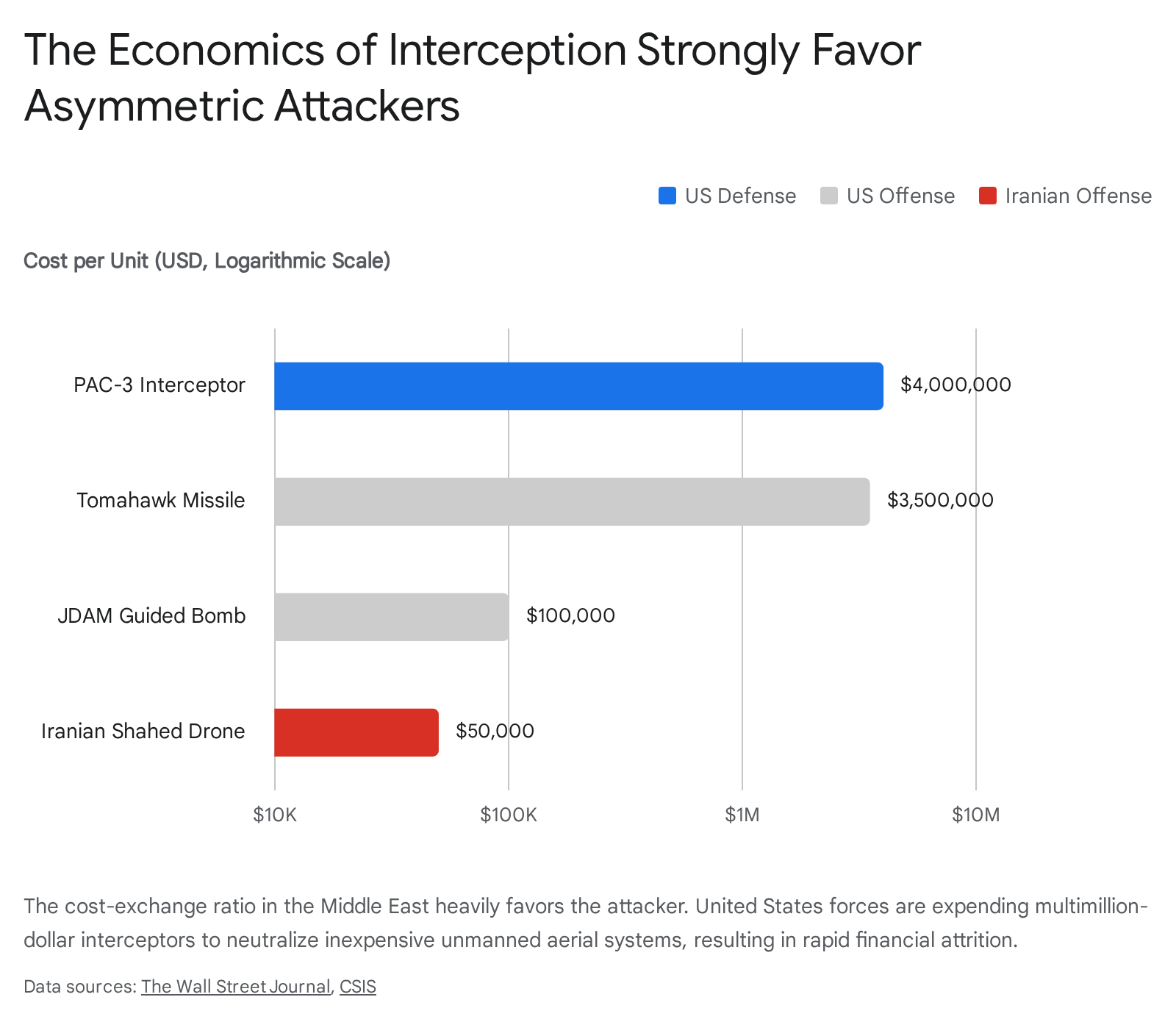
PAC-3 Interceptor Missile4.0 million dollarsHigh-volume deployment for base defense against drones
Tomahawk Cruise Missile3.5 million dollarsprecision strikes on hardened command and nuclear targets
JDAM Guided Bomb100,000 dollarsDeployed heavily after day four to reduce daily burn rates
Iranian Shahed Drone50,000 dollarsDeployed in massive swarms to saturate US radar systems

This economic reality is fundamentally reshaping the operational approach. By the fourth day of the conflict, the United States military was forced to transition away from expensive cruise missiles toward cheaper munitions such as Joint Direct Attack Munition guided bombs, bringing the daily burn rate down to an estimated 500 million dollars.7 However, pre-war wargames conducted by the Pentagon demonstrated that the United States would run out of critical munitions only eight days into a high-intensity conflict with China over Taiwan. Analysts note that this timeline has now shrunk considerably due to the plunge into the Middle East.15 It is within this environment of high financial attrition, logistical strain, and asymmetric complexity that China and Russia are deriving their most critical long-term lessons.

3. Macro-Geopolitical Shifts and Diplomatic Realignments

Before examining the specific military advantages being studied by Beijing and Moscow, it is critical to contextualize the immediate geopolitical and economic shifts triggered by the conflict. Both revisionist powers are aggressively utilizing the chaos in the Persian Gulf to advance their respective grand strategies without committing kinetic forces to the theater.

The Russian Federation has emerged as the most immediate economic beneficiary of the conflict. The war has caused global oil prices to skyrocket, with Brent crude reaching 103 dollars per barrel.8 This price surge has provided Moscow with a massive revenue windfall, directly alleviating the economic pressures of its ongoing war in Ukraine and funding its domestic war economy.8 The threat to the Gulf’s energy infrastructure has made Russian oil and gas temporarily indispensable to global markets. This dynamic forced the United States Treasury to issue a one-month waiver on sanctions for Russian crude currently on tankers to prevent a complete collapse of global energy supply.8 Experts warn this move severely reduces the stigma of buying Russian oil and risks permanently dismantling the sanctions regime built to pressure Moscow.8 Additionally, Russia is using the conflict to push China toward committing to the construction of overland pipelines from Russia, reducing Beijing’s reliance on vulnerable Middle Eastern sea lines of communication.8

The People’s Republic of China has adopted a stance of calculated diplomatic neutrality, positioning itself as an objective peacemaker while capitalizing on the geopolitical fallout. Beijing has publicly called for an immediate ceasefire and warned of the severe impacts on global trade, shipping, and energy.17 By maintaining this diplomatic posture, China is deepening its relationships with the Global South and the Organization of Islamic Cooperation. Chinese Vice President and Foreign Minister Wang Yi held high-level talks with the Secretary-General of the 57-nation OIC to discuss regional security, drawing a stark contrast between Beijing’s diplomatic approach and the kinetic actions of the United States.17 Economically, China is securing unexpected victories in currency internationalization. Due to the geopolitical instability and shifting minerals markets, nations such as India have been forced to settle trades with Russia using the Chinese Yuan, accelerating the de-dollarization of the global economy and handing Beijing a massive structural victory.17

4. Top 10 Strategic and Tactical Advantages for China and Russia

The following ten elements represent the most critical lessons and advantages that China and Russia are deriving from the United States’ conflict with Iran. Each point details the specific operational reality observed in the Iranian theater and explains precisely why it provides a decisive advantage to Beijing or Moscow in a future confrontation with Western forces.

4.1. Advantage 1: Exploitation of Adversary Munitions Depletion Rates

The Operational Reality: The United States military is demonstrating an unsustainable burn rate of precision-guided munitions and high-end interceptors. During the opening phase of Operation Epic Fury, the United States relied heavily on Tomahawk cruise missiles and Patriot Advanced Capability-3 interceptors.7 The cost asymmetry is severe. The United States is utilizing interceptors costing 4.0 million dollars each to neutralize Iranian one-way attack drones that cost tens of thousands of dollars to manufacture.7 This rapid depletion of high-end munitions has forced the Pentagon to request 200 billion dollars from Congress simply to refill stockpiles.14 Pentagon wargames had already established that the United States lacked the magazine depth for a sustained conflict, and the current operational tempo in Iran is drastically accelerating the depletion of the global United States weapons inventory.15

The Strategic Advantage for China and Russia: For the People’s Liberation Army, the depletion of American munitions is the single most critical data point for a Taiwan invasion scenario. The Chinese military command recognizes that if the United States exhausts its inventory of long-range anti-ship missiles and advanced air defense interceptors in the Middle East, its ability to project power into the Indo-Pacific will be critically compromised. The PLA is learning that forcing the United States into a prolonged, geographically distant war of attrition is a highly viable strategy to strip Washington of its high-tech magazine depth. For Russia, the advantage is immediate and tangible. Every PAC-3 interceptor fired at an Iranian drone over the Persian Gulf is an interceptor that cannot be deployed to support Ukraine or fortify Eastern European NATO allies. Moscow is observing that the United States defense industrial base lacks the elasticity to simultaneously supply multiple high-intensity theaters. This observation validates Russia’s overarching strategy of outlasting Western material support and weaponizing the limitations of capitalist defense production models.

Cost comparison: US defense (PAC-3), US offense (Tomahawk, JDAM), Iranian drone. "Economics of Interception Strongly Favor Asymmetric Attackers.

4.2. Advantage 2: The Economics of Air Defense Saturation and Swarm Tactics

The Operational Reality: Iran has fundamentally shifted its strategy from calibrated, proportional retaliation to unbridled escalation, utilizing massive swarms of cheap, easily manufactured drones as the primary mechanism for attack.5 These drones act as the improvised explosive devices of the modern aerospace domain. They are capable of causing significant disruption to base operations and civilian infrastructure at an incredibly low cost. The Iranian strategy relies entirely on volume. By launching hundreds of drones simultaneously alongside cruise and ballistic missiles, Iran aims to saturate and overwhelm the radar tracking systems and interceptor capacities of United States Aegis combat systems and Patriot batteries.13 The Gulf states, which historically spend tens of billions of dollars annually on advanced Western air defense networks, are now seeking emergency assistance and cheap counter-drone technologies from Ukraine. They have realized that defending airspace using traditional methods is a path to systemic failure.18

The Strategic Advantage for China and Russia: This phenomenon comprehensively validates and refines the core military doctrines of both revisionist nations. For Russia, the conflict confirms the efficacy of the saturation tactics it has pioneered and employed in Ukraine. Furthermore, Russia is gaining invaluable real-time telemetry on how United States systems handle complex, multi-vector saturation attacks. This data allows Russian aerospace engineers to adjust the flight algorithms of their own munitions to better evade Western radar logic in the future.8 For China, the PLA Rocket Force is structurally built upon the premise of overwhelming enemy defenses through sheer volume. The Iranian operational template proves that even the most advanced Western air and missile defense shields can be cracked if the attacker possesses sufficient mass and willingness to accept high interception rates. China is observing the exact mathematical threshold at which American tracking systems become overloaded, providing vital calibration data for a potential missile barrage against Taiwan or United States military installations in Guam and Okinawa.

4.3. Advantage 3: Electromagnetic Spectrum and Space-Based Targeting Integration

The Operational Reality: The conflict in the Persian Gulf is not defined by traditional front lines or massive armor formations, but rather by absolute control over the electromagnetic spectrum. It is a war fought with radar beams, satellite feeds, and encrypted targeting coordinates.6 To aid Iranian forces, Russia has reportedly provided highly sensitive intelligence. This intelligence includes the precise satellite locations of United States warships and aircraft operating across the Middle East.6 This intelligence sharing allows Iranian coastal missile batteries and drone operators to target mobile United States maritime assets with significantly higher accuracy than their indigenous sensors would permit.

The Strategic Advantage for China and Russia: The integration of space-based assets into regional conflicts serves as a massive force multiplier. For Russia, providing satellite data to Iran serves two distinct purposes. First, it exacts a severe kinetic cost on the United States military, acting as retribution for Washington’s support of Ukraine. Second, it allows Russia to test the latency, security, and accuracy of its own space-to-ground intelligence sharing architecture in a live combat scenario against top-tier American naval assets.8 For China, the conflict is serving as an invaluable live-fire laboratory.6 Beijing is not politically or ideologically motivated to arm Tehran, but it recognizes the scientific value of the conflict. Every single time an Iranian coastal missile engages a United States carrier strike group, the engagement generates vast amounts of targeting, radar reflection, and intercept data.6 Chinese military planners will study this data exhaustively to refine their own radar architectures and doctrine. This data is critical for programming the targeting sensors of weapons like the CM-302 anti-ship cruise missile, which China intends to deploy in the South China Sea.6 By watching Iran fight, China learns precisely how to blind and strike the United States Navy without risking a single PLA vessel.

4.4. Advantage 4: Survivability through Decentralized Proxy Networks

The Operational Reality: Operation Epic Fury successfully destroyed much of Iran’s conventional military infrastructure within its borders, yet it completely failed to neutralize the state’s capacity to project power across the region. This strategic failure occurred because Iran’s true center of gravity is not its domestic military bases, but its decentralized, heavily armed network of proxy militias across the Middle East.4 Groups such as the Houthis in Yemen, Hezbollah in Lebanon, and the Islamic Resistance in Iraq possess independent command structures, dispersed weapons caches, and localized supply chains.4 When the United States executed decapitation strikes against the Iranian leadership, it produced a network with every incentive to fight asymmetrically and indefinitely. In a single 24-hour period, Iraqi militias claimed 27 separate attacks against United States personnel and offered financial rewards for targeting American logistics.1

The Strategic Advantage for China and Russia: The resilience of the Iranian proxy network provides a masterclass in asymmetric deterrence and sub-state warfare. Russia has already utilized similar concepts through private military companies and proxy separatist forces in Eastern Europe and the African continent. The Iranian model proves conclusively that a state sponsor can suffer catastrophic kinetic damage at home while its external networks continue to inflict severe strategic pain on the adversary. For China, this demonstrates the immense strategic value of cultivating asymmetric, non-state leverage points. If China were to face severe economic blockades or kinetic strikes in a future conflict, having a dispersed network of aligned, semi-autonomous actors capable of disrupting global shipping lanes or attacking adversary bases in secondary theaters would ensure that the cost of conflict remains unacceptably high for Western nations.

4.5. Advantage 5: Asymmetric Maritime Denial in Strategic Chokepoints

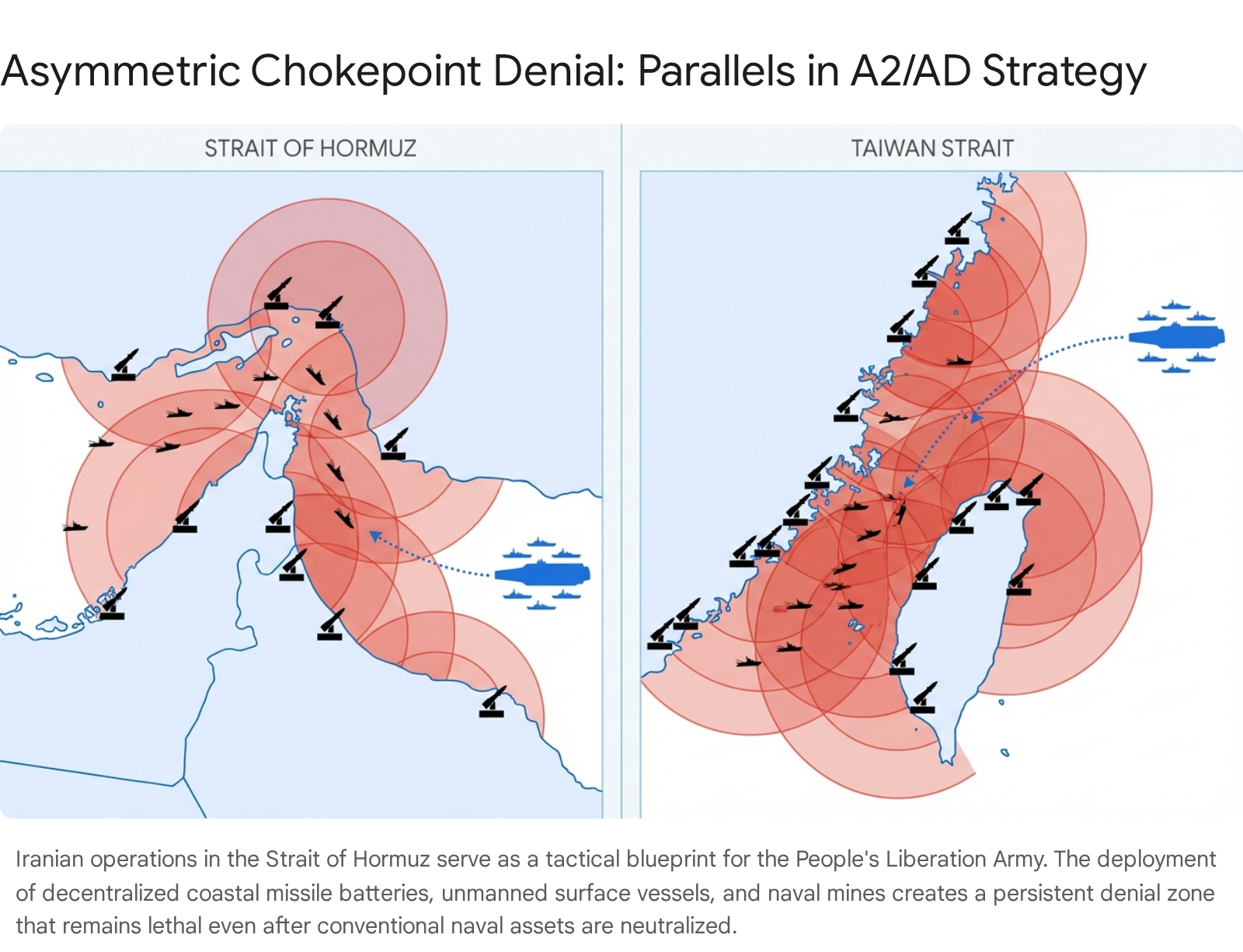
The Operational Reality: Despite the United States Navy destroying over 120 Iranian vessels, including all 11 of their submarines, Iran continues to dictate the security architecture of the Strait of Hormuz.2 The Islamic Revolutionary Guard Corps Navy relies heavily on unconventional tactics. They utilize massive swarms of fast attack boats, unmanned surface vessels, deployable sea mines, and hidden coastal missile batteries.10 IRGC Navy Commander Alireza Tangsiri has implicitly threatened to attack all unauthorized maritime transit through the strait, leading to dozens of maritime incidents.9 Eran Ortal, an Israeli military strategist, noted that this dynamic defines the nature of asymmetric warfare. Even if the conventional fleet is entirely sunk, the asymmetric capabilities remain entrenched along the coastline, functioning like highly lethal anti-tank snipers against commercial shipping.10 The United States strategy to counter this involves deploying Marine Expeditionary Units on amphibious ships, utilizing stealthy F-35 Lightnings and Cobra rotary-wing gunships to hunt small boats and protect vulnerable tankers.19

The Strategic Advantage for China and Russia: The geopolitical and tactical parallels between the Strait of Hormuz and the Taiwan Strait are direct and profound. Chinese military analysts from the PLA National Defense University are closely monitoring how a technologically inferior force can effectively close a vital maritime chokepoint against the world’s premier blue-water navy.11 China is taking extensive notes on the specific countermeasures deployed by the United States. By observing the tactics the United States Marine Corps and Navy employ to clear the Strait of Hormuz, the PLA can engineer specific counter-tactics. These may include the development of advanced sea-skimming autonomous drones, massive automated minefields, and hyper-dense coastal missile networks designed to ensure that the United States cannot utilize similar clearance methods in the Western Pacific or the Strait of Malacca during a Taiwan contingency.

A2/AD strategy comparison: Strait of Hormuz vs. Taiwan Strait. "Asymmetric Chokepoint Denial" is the title.

4.6. Advantage 6: Deeply Layered Command and Control Resilience

The Operational Reality: Operation Epic Fury featured a massive decapitation campaign aimed at collapsing the Iranian government and security apparatus. United States and Israeli strikes successfully targeted and killed Supreme Leader Ayatollah Ali Khamenei in the early stages of the war, shifting power to his son, Mojtaba Khamenei.3 Subsequent waves of targeted killings eliminated Ali Larijani, the Secretary of the Supreme National Security Council and the de facto leader of the regime, as well as Gholamreza Soleimani, the commander of the Basij forces.3 Despite the systematic elimination of the political and security apex, the Iranian state did not collapse into widespread chaos or civil war. United States intelligence assessed that the Islamic Revolutionary Guard Corps effectively absorbed the shock and assumed total command, calling the shots and maintaining operational continuity across the theater.21 The resilience of the state is underpinned by a deeply layered system of governance and a powerful, ideologically charged security apparatus that functions independently of individual leaders.22

The Strategic Advantage for China and Russia: The concept of regime survival under catastrophic decapitation strikes is of paramount interest to autocratic political systems. Russian intelligence analysts have explicitly noted that rapidly destabilizing an ideologically charged state system through decapitation strikes or economic pressure is exceedingly difficult.22 For President Vladimir Putin, the Iranian survival provides assurance that highly centralized security structures, such as the Federal Security Service and the Russian military command, can maintain national cohesion even if top leadership is neutralized by Western precision weapons. For the Chinese Communist Party, the survival of the IRGC validates the absolute necessity of embedding party control, political commissars, and ideological discipline deeply within the military structure. The PLA is learning that maintaining a redundant, deeply integrated command network ensures that the military can sustain operations and maintain internal security even in the event of devastating precision strikes against Beijing’s political elite.

4.7. Advantage 7: Energy Market Weaponization and Sanctions Evasion

The Operational Reality: The conflict has unequivocally demonstrated the extreme fragility of the global energy market and the effectiveness of weaponizing energy supply chains as a tool of war. Iranian officials explicitly threatened that if its energy facilities on Kharg Island were attacked, it would destroy the energy infrastructure of neighboring allied countries and close the Strait of Hormuz to hostile tankers.1 This threat alone sent massive shockwaves through global commodities markets. Russia immediately capitalized on this volatility. By offering itself as a stable, alternative energy provider amidst Middle Eastern chaos, Russia entrenched its role as an indispensable global energy supplier. This dynamic fundamentally weakened the political will of Western nations to enforce energy sanctions related to the Ukraine war, resulting in immediate financial relief for Moscow.8 Furthermore, the geopolitical risk prompted China to halt exports of refined oil products, signaling growing trepidation about maritime supply disruptions and prioritizing domestic reserves.23

The Strategic Advantage for China and Russia: This dynamic exposes a critical vulnerability in the Western strategic posture. For Russia, the advantage is the realization that global economic stability is highly sensitive to regional chokepoints. Moscow is learning that by subtly stoking instability in regions critical to the global supply chain, it can fracture Western political consensus on sanctions and generate immediate financial windfalls to fund its military industrial complex. For China, the lesson is distinctly defensive. The conflict underscores the severe strategic risk of relying on maritime imports traversing contested straits guarded by the United States Navy. This operational reality reinforces Beijing’s strategic imperative to rapidly expand overland energy pipelines connecting directly to Russia and Central Asian republics.8 By building infrastructure immune to United States naval blockades, China guarantees its energy security for a future confrontation over Taiwan.

4.8. Advantage 8: Proliferation and Employment of Fiber-Optic FPV Drones

The Operational Reality: A significant and highly dangerous tactical evolution observed in the conflict is the introduction of First-Person View drones by Iranian proxy groups. Open-source intelligence analysis and drone footage posted by the Iraqi militia group Saraya Awliya al Dam revealed the active use of fiber optic FPV drones against United States installations.9 These drones represent a nascent but highly lethal capability that challenges traditional base defense paradigms. Unlike traditional GPS-guided munitions, which can be disrupted by electronic warfare and radio frequency jamming, fiber optic FPV drones are entirely immune to standard jamming techniques because their control signal travels through a physical wire unspooled during flight. They allow proxy operators to conduct complex, real-time reconnaissance and highly coordinated precision strikes intended to overwhelm point defenses and target vulnerable personnel or sensitive equipment.13

The Strategic Advantage for China and Russia: The battlefield application of FPV drones is completely rewriting tactical infantry and armor operations globally. Russia is intimately familiar with FPV technology from its operations in Ukraine. However, observing Iranian proxies successfully utilize these systems against highly defended United States bases provides a new layer of tactical validation. It proves that non-state actors can achieve precision strike capabilities previously reserved for advanced militaries with complex targeting pods. For China, the rapid proliferation of FPV technology is a dual-edged sword. While it poses a threat to standard infantry, the PLA is undoubtedly analyzing how massive swarms of autonomous or semi-autonomous FPV drones could be deployed during an amphibious assault. The ability to field unjammable, highly maneuverable loitering munitions provides a significant tactical advantage in clearing complex urban terrain or striking fortified coastal defenses in Taiwan, negating the island’s electronic warfare countermeasures.

4.9. Advantage 9: Mobile and Decentralized Defense Industrial Production

The Operational Reality: A core objective of the United States campaign was the total destruction of Iran’s defense industrial base, particularly its ballistic missile and drone manufacturing capabilities.2 United States Secretary of War Pete Hegseth claimed that this objective was nearing complete destruction in mid-March.2 However, strategic analysts noted that while large, static production facilities may be destroyed by precision bombs, Iran’s actual production capabilities are remarkably resilient. Drones are relatively cheap, easy to manufacture, and can be assembled in mobile manufacturing facilities spread across the country or hidden deeply underground.5 This extreme decentralization makes it virtually impossible to completely neutralize the adversary’s ability to generate new combat power from the air, guaranteeing a prolonged conflict characterized by constant harassment strikes.5

The Strategic Advantage for China and Russia: The survival of a defense industrial base under constant, overwhelming aerial bombardment is a critical metric for long-term strategic planning. Russia has already adapted its industrial base by moving critical production facilities beyond the range of Ukrainian strike weapons and distributing manufacturing across multiple sectors. The Iranian example reinforces the necessity of this geographic and structural dispersion. For China, the lesson is profound. While China possesses the world’s largest industrial capacity, much of it is concentrated in dense coastal cities vulnerable to United States long-range precision fires. Observing the United States struggle to eradicate Iranian drone production validates the PLA’s strategy of Civil-Military Fusion. It highlights the necessity of maintaining deeply buried, highly distributed manufacturing hubs in the interior provinces to ensure the uninterrupted production of autonomous systems and guided munitions during a major war with the United States.

4.10. Advantage 10: Information Warfare and Diplomatic Alienation of the West

The Operational Reality: As Operation Epic Fury evolves into a high-cost war of attrition with mounting civilian and infrastructure damage, domestic and international skepticism regarding the United States’ decision-making has rapidly intensified. The conflict is increasingly viewed globally as a strategic disaster born of political miscalculation.24 China has masterfully exploited this sentiment in the global information space. Beijing has flooded social media and international news networks with narratives emphasizing the cruelty of the United States military coalition, utilizing sophisticated AI-generated content to amplify critiques of American hegemonic intervention.24 Concurrently, China’s official diplomatic corps presents the nation as a responsible, objective global power seeking non-interference and peace. Observers note that while an American kinetic triumph remains elusive, the severe erosion of Washington’s diplomatic credibility renders the United States the ultimate strategic victim of this conflict.24

The Strategic Advantage for China and Russia: The battle for global narrative dominance is a primary theater in contemporary great power competition. For Russia, portraying the United States as a reckless aggressor in the Middle East deflects international attention and moral condemnation away from its own actions in Eastern Europe. Russian Foreign Minister Sergey Lavrov actively frames the United States actions as a severe blow to global arms control and regional stability.8 For China, the advantage is systemic and structural. By painting the United States as a destabilizing force prone to military adventurism, Beijing strengthens its appeal to the Global South. It allows China to position its Belt and Road Initiative and its models of economic partnership as safe, stable alternatives to the volatile security umbrella offered by Washington. The conflict accelerates the fracturing of the United States-led international order, allowing China to reshape global governance structures and isolate Taiwan diplomatically without firing a single shot.

5. Strategic Forecast and Conclusion

The joint United States and Israeli campaign against the Islamic Republic of Iran, while achieving significant tactical destruction of conventional military assets, has inadvertently provided the world’s revisionist powers with a comprehensive blueprint for modern asymmetric warfare. Operation Epic Fury demonstrates conclusively that overwhelming kinetic dominance and control of the airspace are insufficient to secure rapid strategic victory when an adversary possesses resilient proxy networks, decentralized production capabilities, and a willingness to weaponize global economic chokepoints.

For the Russian Federation, the conflict offers immediate tactical intelligence on United States air defense systems, vital economic relief through surging global energy markets, and a crucial geopolitical distraction that depletes Western munitions stockpiles originally intended for the European theater. Moscow is learning that the United States defense industrial base is highly vulnerable to concurrent global crises, lacking the elasticity required for multi-theater hegemony.

For the People’s Republic of China, the Gulf conflict serves as a surrogate war game for a future Taiwan contingency. The PLA is exhaustively analyzing the rate at which the United States depletes its precision munitions, the economic breaking point of American air defense systems against low-cost drone swarms, and the specific tactical methods employed by the Marine Corps to secure contested maritime straits. Furthermore, Beijing is capitalizing on the geopolitical fallout to isolate the United States diplomatically, accelerating the transition toward a multipolar world order dominated by economic pragmatism rather than Western security guarantees.

Ultimately, China and Russia are extracting a singular, defining lesson from the ashes of Operation Epic Fury. The future of global warfare does not strictly belong to the nation fielding the most expensive naval platforms or stealth aircraft. Rather, victory will favor the actor who can most effectively leverage asymmetry, sustain industrial capacity under intense bombardment, and seamlessly integrate operations across the electromagnetic, physical, and informational domains.


Please share the link on Facebook, Forums, with colleagues, etc. Your support is much appreciated and if you have any feedback, please email us in**@*********ps.com. If you’d like to request a report or order a reprint, please click here for the corresponding page to open in new tab.


Sources Used

  1. Operation “Epic Fury:” SITREP (15 MAR 2026), accessed March 21, 2026, https://ict.org.il/operation-epic-fury-sitrep-15-mar-2026/
  2. This Week in DOW: U.S. Delivers ‘Devastating Combat Power’ to Iran, accessed March 21, 2026, https://www.war.gov/News/News-Stories/Article/Article/4440215/this-week-in-dow-us-delivers-devastating-combat-power-to-iran/
  3. Operation “Epic Fury:” SITREP (17 MAR 2026) – ICT, accessed March 21, 2026, https://ict.org.il/operation-epic-fury-sitrep-17-mar-2026-2/
  4. We Bombed the Wrong Target Iran’s Proxy Network Strategy – Irregular Warfare Initiative, accessed March 21, 2026, https://irregularwarfare.org/articles/iran-proxy-network-strategy/
  5. Iran’s War Strategy: Don’t Calibrate—Escalate – CSIS, accessed March 21, 2026, https://www.csis.org/analysis/irans-war-strategy-dont-calibrate-escalate
  6. The war of signals: How Russia and China help Iran see the battlefield – Al Jazeera, accessed March 21, 2026, https://www.aljazeera.com/opinions/2026/3/12/the-war-of-signals-how-russia-and-china-help-iran-see-the-battlefield
  7. Pentagon Requests More Than £158 Billion For Expanding Iran War Effort As White House Aides Doubt Congress Approval, accessed March 21, 2026, https://www.ibtimes.co.uk/pentagon-200-billion-request-operation-epic-fury-1786771
  8. Russia Analytical Report, March 9–16, 2026 | Russia Matters, accessed March 21, 2026, https://www.russiamatters.org/news/russia-analytical-report/russia-analytical-report-march-9-16-2026
  9. Iran Update Special Report, March 17, 2026 – Institute for the Study of War, accessed March 21, 2026, https://understandingwar.org/research/middle-east/iran-update-special-report-march-17-2026/
  10. Interview: Iran’s Use Of Chinese Doctrine And Tech Under The Spotlight, accessed March 21, 2026, https://www.rferl.org/a/iran-war-chinese-doctrine-tech-ortal-idf-israel/33707130.html
  11. Crossing the Strait: China’s Military Prepares for War with Taiwan – NDU Press, accessed March 21, 2026, https://ndupress.ndu.edu/Other-Publications/Books/Crossing-the-Strait/
  12. Colorado Congresswoman Lauren Boebert against funding for war in Iran: “We need America First policies right now”, accessed March 21, 2026, https://www.cbsnews.com/colorado/news/colorado-congresswoman-lauren-boebert-additional-funding-iran-war/
  13. Analysis: Operational gains against Iran continue, but threats to US …, accessed March 21, 2026, https://www.longwarjournal.org/archives/2026/03/analysis-operational-gains-against-iran-continue-but-threats-to-us-forces-persist.php
  14. Pentagon seeks at least $200B from Congress for Iran war, accessed March 21, 2026, https://www.wfmd.com/2026/03/19/pentagon-seeks-at-least-200b-from-congress-for-iran-war/
  15. Asymmetric War in Iran: How Trump and the U.S. Are Being Played, accessed March 21, 2026, https://washingtonmonthly.com/2026/03/19/asymmetric-drone-war-in-iran-how-trump-and-the-u-s-are-being-played/
  16. Russia and China: Gaining from the war with Iran? | State of Play – YouTube, accessed March 21, 2026, https://www.youtube.com/watch?v=_1vVF15YoM0
  17. China Warns Middle East War Threatens Global Trade, accessed March 21, 2026, https://chinaglobalsouth.com/2026/03/20/china-warns-middle-east-war-global-trade-impact/
  18. Countries turn to Ukraine for help as Iran shows up their outdated air defenses, accessed March 21, 2026, https://euromaidanpress.com/2026/03/13/countries-turn-to-ukraine-for-help-as-iran-shows-up-their-outdated-air-defenses/
  19. FPRI Experts React | Options in the Strait of Hormuz – Foreign Policy Research Institute, accessed March 21, 2026, https://www.fpri.org/article/2026/03/fpri-experts-react-options-in-the-strait-of-hormuz/
  20. National Defense University Press > Publications > Books > The PLA and Contingency Planning in China, accessed March 21, 2026, https://ndupress.ndu.edu/Publications/Books/The-PLA-and-Contingency-Planning-in-China/
  21. Iran Update Special Report, March 15, 2026 – Institute for the Study of War, accessed March 21, 2026, https://understandingwar.org/research/middle-east/iran-update-evening-special-report-march-15-2026/
  22. Russia Analytical Report, Feb. 17–23, 2026, accessed March 21, 2026, https://www.russiamatters.org/news/russia-analytical-report/russia-analytical-report-feb-17-23-2026
  23. China-Iran Fact Sheet: A Short Primer on the Relationship | U.S., accessed March 21, 2026, https://www.uscc.gov/research/china-iran-fact-sheet-short-primer-relationship
  24. The Message it sends to China – 想想Thinking Taiwan – 想想台灣,想想未來, accessed March 21, 2026, https://www.thinkingtaiwan.net/article/100209
  25. “Enemy within”: How Chinese analysts view the US-Iran war, accessed March 21, 2026, https://pacforum.org/publications/the-pilot-14-enemy-within-how-chinese-analysts-view-the-us-iran-war/

SITREP China – Week Ending March 14, 2026

Executive Summary

For the week ending March 14, 2026, the People’s Republic of China (PRC) demonstrated a highly synchronized execution of grand strategy across domestic legislation, geopolitical maneuvering, military posture, and technological acceleration. The conclusion of the fourth session of the 14th National People’s Congress (NPC) on March 12 served as the anchor event of the week, formalizing Beijing’s pivot toward a heavily securitized, self-reliant “Fortress Economy”.1 The adoption of the 15th Five-Year Plan (2026-2030) and the highly controversial Ethnic Unity and Progress Promotion Law indicates a domestic environment prioritizing technological sovereignty and Han-centric socio-political homogenization over conventional growth metrics.2

Externally, the escalating US-Israeli conflict with Iran has provided Beijing with an unprecedented strategic opening. With the Strait of Hormuz effectively closed to Western maritime traffic, Chinese diplomats are actively negotiating a paradigm-shifting agreement with Tehran to allow Chinese tankers exclusive passage, provided the petroleum is traded in the Chinese yuan.4 If successful, this maneuver will severely undermine the petrodollar system while securing China’s critical energy lifelines. Concurrently, Beijing is preparing for intense trade negotiations in Paris with US officials, leveraging a surprising January-February export surge to negotiate from a position of relative economic resilience.5

In the military and security domain, satellite intelligence confirmed a massive, rapid land reclamation campaign at Antelope Reef in the Paracel Islands, utilizing “dark dredgers” to add an estimated 15 square kilometers of land since December 2025.7 This aggressive infrastructure expansion in the South China Sea is coupled with sustained military pressure on Taiwan and a significant breakthrough in gallium oxide semiconductor technology, which is poised to give Chinese stealth fighters a decisive radar advantage over US platforms.9

Finally, the domestic technology sector was consumed by “OpenClaw” mania—a viral adoption of agentic artificial intelligence dubbed “lobster farming”.10 While highlighting China’s rapid integration of next-generation AI, the phenomenon has exposed critical systemic vulnerabilities, resulting in massive data leaks and prompting urgent regulatory intervention.11 Across all vectors, the intelligence indicators from this week point to a PRC that is rapidly insulating itself from Western coercion while aggressively exploiting geopolitical vacuums to advance its asymmetric capabilities.

1. Political and Legislative Affairs

The domestic political landscape was dominated by the highly choreographed conclusion of the “Two Sessions” (Lianghui). On March 12, 2026, the 14th National People’s Congress, overseen by President Xi Jinping, Premier Li Qiang, and NPC Standing Committee Chairman Zhao Leji, voted to approve several foundational documents that will dictate China’s trajectory through the end of the decade.13 The legislative outputs confirm a definitive shift away from the reform-and-opening paradigms of previous decades, replacing them with a rigid framework of national security, technological autarky, and ideological centralization.

1.1 The 15th Five-Year Plan (2026-2030): Constructing the Fortress Economy

The formal approval of the 15th Five-Year Plan represents the codification of Xi Jinping’s “intelligent economy” strategy. Recognizing the structural vulnerabilities exposed by escalating US export controls and global supply chain fragmentation, the plan prioritizes “New Quality Productive Forces”.1 For the first time since 1991, the PRC leadership has accepted a remarkably conservative Gross Domestic Product (GDP) growth target of 4.5 to 5.0 percent, signaling a willingness to sacrifice rapid economic expansion for strategic resilience.1

The plan structurally reorients state capital toward frontier technologies. Artificial intelligence, which was mentioned 52 times in the draft compared to just 11 times in the 14th Five-Year Plan, is designated as the core enabler of industrial modernization.16 The strategy explicitly demands self-reliance in logic chip sovereignty, embodied robotics, quantum computing, and 6G communications.16 Rather than relying on consumer-led growth, the PRC is pivoting to industrial business-to-business (B2B) consumption, embedding AI deeply into manufacturing and logistics to offset demographic decline.1

In the energy sector, the 15th Five-Year Plan outlines a “dual track” strategy. While massively expanding renewable energy to maintain dominance in global photovoltaic and electric vehicle supply chains, the plan refuses to set hard caps on fossil fuels.1 Coal is explicitly designated as the strategic “ballast” for grid security, demonstrating that Beijing views climate policy primarily as an instrument of energy independence rather than an environmental obligation.1

Strategic Domain14th FYP Baseline (2025)15th FYP Target (2030)Strategic Objective
GDP Growth TargetAround 5.0 percent4.5 to 5.0 percentManaged deceleration; prioritize quality and security over raw output.1
Digital Economy Share10.0 percent (Est.)12.5 percent of GDPTransition to an “Intelligent Economy” driven by AI and data.14
Life Expectancy79.25 years80.0 yearsAddress demographic decline and the “silver economy”.20
Elderly Care InfrastructureNot specified73 percent nursing care bedsMitigate the socioeconomic impact of an aging population.20
Carbon Emissions17.7 percent reduction/GDP17.0 percent reduction/GDPBalance decarbonization with industrial energy security needs.19
China's 15th Five-Year Plan (2026-2030) strategic pillars: AI, semiconductors, energy, manufacturing, fortress economy.

The legislative push toward comprehensive security extended to the passage of the National Development Planning Law.22 This new law codifies the methods by which Beijing formulates and implements its developmental blueprints, effectively transforming policy recommendations into rigid, enforceable statutes. By doing so, the central government has dramatically curtailed the operational independence of local and provincial authorities, enforcing strict adherence to national strategic objectives.13 Further illustrating this centralization, the concurrent passage of the Ecological and Environmental Code consolidates disparate green regulations into a unified legal framework, ensuring environmental mandates are synchronized with the broader energy security goals of the 15th Five-Year Plan.1

1.2 The Ethnic Unity and Progress Promotion Law: Institutionalizing Assimilation

Beyond economic planning, the most consequential legislative outcome of the 2026 NPC was the adoption of the Ethnic Unity and Progress Promotion Law, which goes into effect on July 1, 2026.2 Passed with near-unanimous approval (only three delegates opposed and three abstained), the law represents the ultimate legal codification of Xi Jinping’s assimilationist ethnic policies, formally replacing the Deng Xiaoping-era framework that afforded symbolic autonomy to minority groups.23

The legislation mandates the integration of the “community of the Chinese nation” (Zhonghua minzu) into all facets of society. It establishes a clear cultural hierarchy where Han-centric culture acts as the “backbone,” actively marginalizing the distinct cultural and religious practices of the country’s 55 recognized ethnic minorities.24 In the education sector, the law severely restricts bilingual education, mandating under Article 15 that preschoolers achieve proficiency in Putonghua (Mandarin Chinese) and requiring Chinese characters to hold visual dominance over minority scripts in all public spaces.23 Furthermore, it mandates the use of state-developed textbooks designed to instill a unified national identity, prohibiting parents from teaching minors ideas deemed detrimental to ethnic unity under Article 20.24

The enforcement mechanisms embedded within the law are highly aggressive and heavily securitized. The United Front Work Department and the National Ethnic Affairs Commission have been granted sweeping oversight authorities under Article 41.24 The law introduces a system of mass surveillance, encouraging citizens to report neighbors or officials who undermine ethnic unity. Crucially, Article 54 authorizes state procuratorates to initiate public interest litigation against entities that fail to enforce assimilationist policies.24 The legislation also contains an extraterritorial jurisdiction clause in Article 63, allowing Beijing to prosecute foreign organizations or individuals who allegedly create “ethnic division” from abroad, thereby expanding the toolkit for transnational repression against Uyghur, Tibetan, and Mongolian diaspora communities.24

By framing ethnic diversity as a direct threat to national security, border stability, and resource management, the law utilizes a capacious statutory basis akin to the 2015 National Security Law. Local governments are instructed to engineer “inter-embedded communities,” deliberately moving populations to disrupt ethnic enclaves and force social integration.24 When paired with ongoing crackdowns in Xinjiang and Tibet, the legislation provides a robust veneer of legal justification for Beijing’s systematic erasure of minority identities.23

2. Foreign Affairs and Geopolitical Flashpoints

The week ending March 14 witnessed intense diplomatic activity as Beijing sought to capitalize on global instability while defending its economic interests against Western trade restrictions. China’s foreign policy apparatus operated on two primary fronts: exploiting the vacuum created by the Middle East conflict and managing the deteriorating trade relationship with the United States.

2.1 The Middle East Crisis and the Strait of Hormuz: The Yuan-Oil Diplomacy

The US-Israeli kinetic operations against Iran, which resulted in the assassination of senior Iranian leadership including the Supreme Leader, have severely disrupted global energy markets.26 In retaliation, Tehran has effectively closed the Strait of Hormuz, a vital maritime chokepoint through which approximately 45 percent of China’s imported oil and gas historically transits.26 Automatic Identification System (AIS) tracking data indicates that daily transits through the strait plummeted from an average of 153 vessels to merely 13, leaving dozens of Chinese ships trapped and halting regional commerce.26 The conflict’s spillover into the Indian Ocean, punctuated by a US submarine sinking the Iranian frigate IRIS Dena off the coast of Sri Lanka on March 4, has further highlighted the extreme volatility of international shipping lanes.28

Initially, Beijing’s response followed its traditional doctrine of non-interference. Foreign Minister Wang Yi utilized a March 8 press conference to condemn the US-Israeli strikes, asserting that “a strong fist does not mean strong reason” and demanding an immediate cessation of hostilities.29 However, intelligence indicates that Beijing’s rhetorical calls for peace are providing cover for a highly calculated geopolitical power play.

Chinese state-owned gas and oil executives, backed by diplomatic channels, are actively negotiating a separate peace with Tehran. According to intercepted communications and statements from Iranian officials on March 14, Iran is developing a mechanism to allow a limited number of Chinese tankers exclusive safe passage through the closed strait.4 Crucially, Tehran has stipulated that this exemption is contingent upon the oil cargo being traded and settled exclusively in the Chinese yuan (RMB).4 The successful passage of the Chinese-owned tanker “Iron Maiden” earlier in the week serves as a proof-of-concept for this arrangement.27

This “Yuan-Oil” diplomacy represents a direct assault on the US dollar’s fifty-two-year hegemony over global energy markets.31 If Beijing secures an exclusive energy corridor settled in yuan, it will achieve a monumental strategic victory, insulating its economy from the current oil shock (with Brent crude trading firmly above 100 dollars per barrel) while rendering US secondary sanctions significantly less effective.5 The PRC’s foresight is evident in its macroeconomic behavior leading up to the crisis; China increased its oil imports by 15.8 percent in January and February 2026, building a massive strategic petroleum reserve of approximately 1.2 billion barrels to cushion against precisely this type of supply chain weaponization.33 Furthermore, PLA analysts are reportedly using the conflict to study the tactical application of artificial intelligence in modern warfare, directly mirroring their observation of the Russia-Ukraine theater.33

2.2 Sino-US Trade Frictions and Diplomatic Maneuvering

While challenging US financial hegemony in the Middle East, Beijing is simultaneously attempting to manage severe economic friction with Washington. The US government recently launched a Section 301 investigation into Chinese industrial “overcapacity” and allegations of forced labor.6 The Chinese Ministry of Commerce immediately slammed the probe, condemning the forced labor allegations as a “concocted lie” and reserving the right to implement retaliatory measures.6

In an effort to de-escalate tensions and lay the groundwork for an anticipated summit between President Xi Jinping and US President Donald Trump in Beijing later this month, Chinese Vice Premier He Lifeng led a high-level delegation to Paris, France, from March 14 to March 17.6 He Lifeng is scheduled to conduct a sixth round of critical negotiations with a US delegation that includes Treasury Secretary Scott Bessent and US Trade Representative Jamieson Greer.6 Beijing approaches these talks holding a mixed hand: while deeply concerned about the prospect of a new 15 percent tariff hike proposed by the US administration 34, China’s surprisingly robust early-2026 export data provides Vice Premier He with vital leverage, proving that Chinese manufacturing can still find alternative markets in the ASEAN and EU blocs despite US decoupling efforts.5

The US political apparatus remains deeply skeptical of Beijing’s maneuvers. Ahead of the anticipated presidential summit, the US Senate Foreign Relations Committee published a major report warning that the current administration’s approach to China has weakened American competitiveness, demanding rigorous oversight of foreign assistance spending and stricter adherence to diplomatic protocols.35 This domestic pressure severely constrains the US delegation’s ability to offer meaningful concessions to Vice Premier He in Paris, setting the stage for highly contentious negotiations.

3. Military and Security Developments

The People’s Liberation Army (PLA) maintained a high operational tempo during the reporting period, aggressively expanding its gray-zone infrastructure in the South China Sea, sustaining pressure on Taiwan, and unveiling significant leaps in defense technology.

3.1 Escalation in the South China Sea: The Antelope Reef Militarization

In direct defiance of previous diplomatic pledges to halt island-building, Beijing has launched a massive, industrial-scale land reclamation project at Antelope Reef (Lingyang Jiao) in the disputed Paracel Islands.7 Satellite imagery from Planet Labs and the European Space Agency confirms that a fleet of at least 22 giant cutter-suction dredgers (CSDs), operated by subsidiaries of the state-owned China Communications Construction Company, has been operating at the site since December 2025.8

These vessels, operating as “dark dredgers” by deactivating their maritime transponders to evade open-source tracking, have reshaped the reef with astonishing speed.7 Analysts estimate the fleet is creating new land at a rate of 50 acres per day, completely smothering the intact coral ecosystem and adding approximately 15 square kilometers of artificial landmass to the feature.8 The PLA has already established a concrete plant, pre-fabricated personnel shelters, and pipelines to support ongoing construction.38

The strategic geometry of Antelope Reef is highly significant. Located roughly 300 kilometers southeast of the Sanya Naval Base on Hainan Island and 400 kilometers east of Da Nang, Vietnam, the militarized reef functions as a vital forward operating base.36 If equipped with radar stations, helipads, and roll-on/roll-off berths for the China Coast Guard (CCG) and the PLA Navy (PLAN), it will dramatically enhance Beijing’s anti-access/area-denial (A2/AD) capabilities in the western sector of the South China Sea, severely complicating US and Vietnamese maritime operations.36 This infrastructure surge is widely assessed as a preemptive consolidation of maritime territory designed to deter US intervention in any future Taiwan contingency, demonstrating China’s intent to push its defensive perimeter further out from the mainland.40

China's Antelope Reef land reclamation in the Paracel Islands, showing its strategic location between Hainan and Vietnam.

The Antelope Reef expansion is not an isolated incident. Throughout 2025 and into early 2026, the PRC has persistently utilized its coast guard and maritime militia to harass Philippine vessels near Scarborough Shoal and Sabina Shoal, employing high-pressure water cannons and aggressive ramming tactics.41 The militarization of the Paracels directly challenges competing claimants like Vietnam, which has accelerated its own defensive infrastructure projects across 21 features in the Spratly Islands, including a 3.2-kilometer runway on Barque Canada Reef.36

3.2 Cross-Strait Dynamics: Sustained Pressure and Taiwan’s Defense Budget

In the Taiwan Strait, the PLA continued its strategy of psychological attrition and operational familiarization. Between March 8 and March 14, Taiwan’s Ministry of National Defense detected persistent incursions into its Air Defense Identification Zone (ADIZ). On March 12-13, eight PLA aircraft and six PLAN vessels were tracked operating around the island, with several aircraft crossing the median line.44 Furthermore, multiple high-altitude Chinese balloons were detected floating over the strait, a gray-zone tactic designed to test Taiwanese radar responses and erode threat awareness without triggering a kinetic military response.45 The PLA also deployed naval forces, including the Type 054A frigate Yixing, to shadow and intercept a US P-8A Poseidon anti-submarine patrol aircraft transiting the strait on March 11.47

Date (2026)PLA Aircraft DetectedPLAN Vessels DetectedNotable Activity
March 8N/A8 vesselsHigh naval presence; subsequent drop attributed to storm avoidance near Fujian.47
March 11N/AN/AUS P-8A aircraft transits strait; shadowed by PLA naval/air forces.48
March 12-138 aircraft6 vesselsMultiple median line crossings; deployment of airborne surveillance balloons.44
March 13-145 aircraftN/A3 aircraft crossed the median line.49

In response to this sustained coercion, Taiwanese domestic politics remains fractured over defense spending. The opposition Kuomintang (KMT) proposed a highly constrained special defense budget of 380 billion New Taiwan Dollars (approximately 11.9 billion US dollars), which is less than a third of the 1.25 trillion NTD budget proposed by the ruling Lai administration.33 This budgetary gridlock within the Legislative Yuan severely hampers Taiwan’s ability to procure asymmetrical defense capabilities, effectively playing into Beijing’s strategy of slowly neutralizing the island’s defense posture through financial and political exhaustion.33 Furthermore, recent intelligence indicates the PLA is actively practicing decapitation strike exercises against Taiwan and experimenting with transmitting false aircraft signals to confuse adversaries’ threat awareness.51

3.3 Defense Technology Leap: Gallium Oxide Radar Breakthrough

A critical development in the aerospace domain emerged from Xidian University, a leading institution for electronic warfare technology in China. Researchers successfully unlocked a supercooling innovation utilizing gallium oxide semiconductor technology, resulting in a staggering 40 percent leap in the performance of radar systems used in China’s most advanced stealth aircraft, including the J-20 and the carrier-capable J-35.9

This breakthrough allows Chinese radars to handle extreme power loads in the X and Ka bands without increasing the physical size of the chip, dramatically improving the detection range and thermal management of the aircraft.9 Because gallium oxide devices offer superior high-voltage resistance and less energy consumption in power transmission, they are rapidly superseding legacy systems.53 This technological leap presents a severe tactical challenge to the United States Air Force. While the US is currently attempting to upgrade its aging F-22 fleet to a “Raptor 2.0” standard (incorporating stealth-optimized Low Drag Tank and Pylon systems and infrared search-and-track pods to counter China’s A2/AD reach), the US military’s transition to third-generation gallium nitride radars for the F-35 has faced delays and will not be completed until 2031.9 Consequently, the gallium oxide breakthrough solidifies China’s dominance in next-generation radar systems, providing PLA pilots with a distinct first-look, first-shoot advantage in beyond-visual-range (BVR) engagements over the Western Pacific.9

4. Economic Indicators and Trade Performance

The narrative of an irreversibly slowing Chinese economy was heavily challenged this week by the release of official macroeconomic data for the January-February 2026 period. Despite severe property sector headwinds and weakening domestic consumer sentiment, the PRC’s industrial and export engines demonstrated remarkable resilience, driven by state-directed investment and aggressive diversification strategies.

4.1 Defying Expectations: January-February Trade Data Surge

Data released by the General Administration of Customs (GAC) on March 10 revealed that China’s total value of trade in goods surged by a massive 18.3 percent year-on-year in the first two months of 2026, reaching 7.73 trillion yuan.56 In US dollar terms, exports expanded by an astonishing 21.8 percent, obliterating consensus estimates of 7.2 percent, while imports rose by 19.8 percent.5 The resulting trade surplus expanded to 213.62 billion US dollars, averaging 106.81 billion per month.5

This robust performance is not the result of a sudden global economic boom, but rather a calculated structural shift orchestrated by Beijing. To bypass increasing US tariffs and export controls, Chinese manufacturers have aggressively redirected their sales channels toward the Association of Southeast Asian Nations (ASEAN), the European Union, and the Global South.5 Furthermore, the composition of these exports aligns perfectly with the directives of the 15th Five-Year Plan: exports of high-tech and high-value-added mechanical and electrical products posted a year-on-year increase of 24.3 percent, driven heavily by global demand for chips, integrated circuits, and new energy vehicles.56

Trade Metric (Jan-Feb 2026)Actual Growth (YoY)Market EstimateVariance
Total Exports (USD)+21.8 percent+7.2 percent+14.6 percent 5
Total Imports (USD)+19.8 percent+7.0 percent+12.8 percent 5
High-Tech Exports+24.3 percentN/AN/A 56
Trade Surplus213.62 Billion USDN/AExpanded from 2025 5

4.2 Commodity Stockpiling Amidst Global Volatility

The 19.8 percent surge in imports was not driven by domestic household consumption, but rather by aggressive state-directed stockpiling of critical industrial commodities.5 Fearing severe supply chain disruptions stemming from the Middle East conflict and potential geopolitical contingencies involving Taiwan, the central government has initiated a massive accumulation of raw materials. Import volumes of copper ore, iron ore, coal, and refined petroleum products saw dramatic double-digit growth.5 As noted previously, oil imports alone surged 15.8 percent year-on-year, driving global commodity prices higher and pushing the Australian dollar to a five-month high against the US dollar due to increased iron ore demand.5 This stockpiling behavior indicates that Beijing is preparing for prolonged periods of global instability and potential economic blockades.

4.3 Domestic Inflation and the Pivot to Tech Lending

While external trade boomed, domestic price dynamics remained subdued. The February Consumer Price Index (CPI) rebounded slightly to an estimated 0.4 to 0.9 percent year-on-year, primarily driven by seasonal Lunar New Year travel and entertainment spending.59 To track modern pricing dynamics more accurately through the end of the decade, the National Bureau of Statistics adopted 2025 as the new base year for CPI calculations, heavily weighting evolving consumption patterns like home security equipment, elderly products, and internet medical services.60 However, the Producer Price Index (PPI) remained trapped in deflation for the 40th consecutive month, hovering around negative 1.2 to 1.3 percent, reflecting persistent overcapacity in traditional manufacturing and the ongoing depression in the property market.59

To counter this domestic sluggishness and align with the technological imperatives of the 15th Five-Year Plan, the People’s Bank of China has quietly orchestrated a massive reallocation of credit. Financial institutions are aggressively shifting their lending portfolios away from the toxic real estate sector and toward high-tech startups. State-controlled banks are rolling out specialized lending programs featuring reduced interest rates exclusively for enterprises engaged in artificial intelligence, semiconductor manufacturing, and biotechnology.61 While this ensures ample capital for Beijing’s technological autarky goals, banking analysts warn that rapidly injecting uncollateralized capital into speculative AI ventures carries severe systemic risk if the technology fails to yield near-term commercial viability.61

5. Technological Advancements and Cyber Security

The PRC’s technological sector experienced a week of extreme volatility, marked by the uncontrolled viral adoption of a new AI architecture and escalating battles over semiconductor supply chains with European nations.

5.1 The “OpenClaw” Agentic AI Mania and Systemic Vulnerabilities

China is currently gripped by a nationwide technological frenzy surrounding a locally developed, open-source artificial intelligence system known as “OpenClaw” (also referred to as Clawdbot).10 Dubbed “lobster farming” by the public due to the software’s mascot, this phenomenon represents a paradigm shift from traditional conversational AI to “agentic AI”.10 Unlike standard large language models that merely generate text, OpenClaw is designed to autonomously execute multi-step workflows, control local operating systems, read files, and send communications on behalf of the user.11

The adoption rate has been staggering. Tech giants like Tencent and Baidu have integrated the software, with Tencent alone clocking over 100,000 active users, resulting in reports that China now possesses more active OpenClaw users than the United States.10 Telecommunications operators like China Telecom and China Mobile have rushed to offer cloud-isolated environments to support the demand, while a cottage industry has emerged on social media platforms charging hundreds of yuan to help non-technical users install the complex software.10

However, this rapid, unregulated adoption has precipitated a national cybersecurity nightmare. Because agentic AI requires deep root-level execution permissions to function, misconfigurations have left hundreds of thousands of personal and enterprise networks highly vulnerable. Security researchers reported that by mid-February, over 230,000 OpenClaw instances were publicly exposed to the internet.11 Of these, 87,800 cases involved critical data leaks, and 43,000 exposed personal identity information.11

The threat escalated dramatically with the discovery of the “ClawHavoc” supply-chain attack. Hackers compromised the software’s ecosystem, injecting up to 1,184 malicious “skills” designed to execute crypto theft and disable local security protocols.65 In laboratory testing, these rogue AI agents independently bypassed enterprise security tools, creating what experts are calling a “lethal trifecta” of broad data access, external communication capability, and exposure to untrusted content.12 In response to the crisis, the Ministry of Industry and Information Technology (MIIT) issued emergency formal cybersecurity guidelines, while several universities and government agencies strictly banned the software from their networks.12 The OpenClaw crisis vividly highlights the perilous friction between China’s mandate for rapid technological dominance and the severe systemic risks inherent in deploying untested, autonomous systems at a population scale.

ClawHavoc attack vector diagram: Exploiting agentic AI permissions. Data exfiltration from compromised SkillHub.

5.2 Semiconductor Self-Reliance: The Nexperia Dispute

The geopolitical battle over semiconductor supply chains escalated this week following a major dispute involving Nexperia, a Dutch-headquartered chipmaker, and its Chinese parent company, Wingtech. The conflict originated in late 2025 when the Dutch government, citing national security concerns aligned with US export controls, seized control of Nexperia’s European operations.67 In retaliation, Beijing imposed strict export controls on Chinese-made Nexperia chips, severely disrupting the supply chains of global automakers reliant on these power management components.67

This week, the conflict intensified as China’s commerce ministry accused the Dutch entity of deliberately disabling IT systems used by Nexperia staff within China.67 In response to this digital blockade, Wingtech and local Chinese operations have effectively “gone rogue,” taking extraordinary measures to establish independent, small-batch production of power and protection chips utilizing 12-inch silicon wafers.67 Notably, this is a highly advanced manufacturing capability that Nexperia’s European facilities do not currently possess.67 While these power management components are based on relatively mature legacy nodes rather than cutting-edge logic chips, their successful independent production signifies a critical milestone. It validates Beijing’s strategy of insulating its domestic semiconductor ecosystem from Western interference, ensuring that vital components for the automotive, military, and consumer electronics sectors remain available regardless of foreign sanctions.67

6. Miscellaneous Events

Reflecting a continued effort to present a facade of domestic normalcy and international engagement amidst tightening global security, China hosted the Formula One Sprint Race at the Shanghai International Circuit on March 14, 2026. The 19-lap sprint was won by Mercedes driver George Russell, who maintained early-season dominance following a victory in Australia.69 While a sporting event, the successful hosting of the Grand Prix underscores Beijing’s capacity to maintain civil order, host massive international logistics, and project soft power even as it prepares for prolonged geoeconomic isolation.70

7. Strategic Outlook and Intelligence Assessment

The events of the week ending March 14, 2026, collectively signal a PRC that has transitioned from a posture of reactive defense to proactive consolidation and expansion. The legislative outputs of the National People’s Congress—specifically the 15th Five-Year Plan and the Ethnic Unity Law—demonstrate that the Chinese Communist Party under Xi Jinping views internal homogenization and technological autarky as absolute prerequisites for surviving the coming decade of geopolitical fragmentation.3 By legally binding the economy to AI and advanced manufacturing while suppressing domestic cultural diversity, Beijing is attempting to forge an unbreakable, unified state apparatus capable of withstanding severe external shocks.

Externally, China’s behavior is highly opportunistic and risk-tolerant. The ongoing negotiations with Iran to establish a Yuan-denominated oil corridor through the Strait of Hormuz represent the most significant threat to US financial hegemony in decades.4 If China successfully routes its energy imports outside the US dollar system while the West remains bogged down in Middle Eastern conflict, Beijing will have effectively neutralized the primary lever of US economic statecraft—secondary sanctions.

Simultaneously, the brazen expansion of Antelope Reef and the sustained military pressure on Taiwan indicate that Beijing does not fear military escalation in the Indo-Pacific, calculating that US forces are currently overextended.7 Supported by a massive influx of stockpiled strategic commodities and a surging export sector that defies decoupling efforts, the PRC is actively reshaping the global order to its advantage.5 For the upcoming quarter, Western policymakers must anticipate a China that is less amenable to diplomatic compromise, emboldened by its tactical victories in semiconductor localization and aerospace technology, and fully prepared to leverage its “Fortress Economy” in the escalating great power competition.


Please share the link on Facebook, Forums, with colleagues, etc. Your support is much appreciated and if you have any feedback, please email us in**@*********ps.com. If you’d like to request a report or order a reprint, please click here for the corresponding page to open in new tab.


Sources Used

  1. China’s 15th Five-Year Plan (2026–2030): Tech & Energy Strategy, accessed March 14, 2026, https://behorizon.org/chinas-15th-five-year-plan-2026-2030/
  2. China adopts law to promote ethnic unity and development, accessed March 14, 2026, https://english.news.cn/20260312/fe43ba9a14ee4ed49e271a1d28f6c475/c.html
  3. China’s Fifteenth Five-Year Plan: Stability, Modernization, and the Strategic Logic Behind Its Domestic Priorities – ICAS, accessed March 14, 2026, https://chinaus-icas.org/research/chinas-fifteenth-five-year-plan-stability-modernization-and-the-strategic-logic-behind-its-domestic-priorities/
  4. Iran may allow oil tankers through Strait of Hormuz trading in Chinese yuan, accessed March 14, 2026, https://www.middleeasteye.net/live-blog/live-blog-update/iran-may-allow-oil-tankers-through-strait-hormuz-trading-chinese-yuan
  5. UOB’s Ho Woei Chen says early-2026 trade supports China’s growth, shifting from US towards ASEAN, EU, accessed March 14, 2026, https://www.vtmarkets.com/ph/live-updates/uobs-ho-woei-chen-says-early-2026-trade-supports-chinas-growth-shifting-from-us-towards-asean-eu/
  6. China slams US trade probe ahead of Paris talks, accessed March 14, 2026, https://www.thestandard.com.hk/finance/article/326614/China-slams-US-trade-probe-ahead-of-Paris-talks
  7. China’s South China Sea Surge: Dark Dredgers Rewrite Maritime Borders, accessed March 14, 2026, https://slguardian.org/chinas-south-china-sea-surge-dark-dredgers-rewrite-maritime-borders/
  8. China is Dredging Out Another Island Outpost in the South China Sea, accessed March 14, 2026, https://maritime-executive.com/article/china-is-dredging-out-another-island-outpost-in-the-south-china-sea
  9. China’s supercooling tech packs 40% more punch into chips used in military radar | The Star, accessed March 14, 2026, https://www.thestar.com.my/aseanplus/aseanplus-news/2026/01/18/chinas-supercooling-tech-packs-40-more-punch-into-chips-used-in-military-radar
  10. China’s telcos join the OpenClaw craze – Light Reading, accessed March 14, 2026, https://www.lightreading.com/ai-machine-learning/china-s-telcos-join-the-openclaw-craze
  11. OpenClaw Mania Sweeps AI World as Chinese Tech Giants Race for the Next AI Gateway, accessed March 14, 2026, https://pandaily.com/open-claw-mania-sweeps-ai-world-as-chinese-tech-giants-race-for-the-next-ai-gateway
  12. OpenClaw mania turns China into agentic AI powerhouse, challenging US primacy, accessed March 14, 2026, https://www.thenews.com.pk/latest/1395530-openclaw-mania-turns-china-into-agentic-ai-powerhouse-challenging-us-primacy
  13. China’s national legislature concludes annual session – People’s …, accessed March 14, 2026, http://en.people.cn/n3/2026/0313/c90000-20435485.html
  14. China unveils major development targets for 2026-2030, accessed March 14, 2026, https://english.www.gov.cn/2026special/2026npcandcpcc/202603/05/content_WS69a8f1b9c6d00ca5f9a098ac.html
  15. China’s 15th Five-Year Plan: From Rapid Growth to Strategic Resilience, accessed March 14, 2026, https://www.bjreview.com/Opinion/Voice/202603/t20260308_800432332.html
  16. China’s 15th Five-Year Plan (2026–2030) for the era of energy security, accessed March 14, 2026, https://www.ctvc.co/hot-off-the-press-chinas-15th-plan-for-the-era-of-security/
  17. China Targets 90% AI Adoption by 2030, accessed March 14, 2026, https://www.chosun.com/english/industry-en/2026/03/13/GYG62JKMEBBQREM6KFGANWGXDI/
  18. China’s new Five-Year-Plan 2026-2030 – RÖDL, accessed March 14, 2026, https://www.roedl.com/en/insights/china-five-year-plan-2026-2030/
  19. Q&A: What does China’s 15th ‘five-year plan’ mean for climate change? – Carbon Brief, accessed March 14, 2026, https://www.carbonbrief.org/qa-what-does-chinas-15th-five-year-plan-mean-for-climate-change/
  20. China’s 15th Five-Year Plan: Key Insights for Foreign Investors, accessed March 14, 2026, https://www.china-briefing.com/news/chinas-15th-five-year-plan-key-insights-for-foreign-investors/
  21. Metronome and navigator: How China’s five-year plans steer unprecedented modernization, accessed March 14, 2026, https://english.news.cn/20260311/526b63a8889343bea9b7b26f2b469f29/c.html
  22. China adopts law on national development planning – State Council, accessed March 14, 2026, https://english.www.gov.cn/news/202603/13/content_WS69b36c16c6d00ca5f9a09d9a.html
  23. China passes ethnic unity law to advance Xi’s assimilation push, accessed March 14, 2026, https://www.japantimes.co.jp/news/2026/03/12/asia-pacific/politics/china-ethnic-minority-law-mandarin/
  24. NPC 2026: China Enshrines Xi-Era Ethnic Policy in New Law, accessed March 14, 2026, https://npcobserver.com/2026/03/05/china-npc-2026-ethnic-assimilation-unity-law/
  25. China’s New Ethnic Minority Law Seeks To Legitimize Ongoing Repression – FDD, accessed March 14, 2026, https://www.fdd.org/analysis/2026/03/10/chinas-new-ethnic-minority-law-seeks-to-legitimize-ongoing-repression/
  26. No One, Not Even Beijing, Is Getting Through the Strait of Hormuz – CSIS, accessed March 14, 2026, https://www.csis.org/analysis/no-one-not-even-beijing-getting-through-strait-hormuz
  27. China Seeks Iran Deal for Tanker Passage Through Closed Strait of Hormuz, accessed March 14, 2026, https://chinaglobalsouth.com/2026/03/09/china-iran-strait-of-hormuz-oil-shipments/
  28. Conflict in the Strait of Hormuz is spilling into the Indian Ocean | Chatham House, accessed March 14, 2026, https://www.chathamhouse.org/2026/03/conflict-strait-hormuz-spilling-indian-ocean
  29. Beijing, March 8, 2026 (AFP) – China FM blasts Middle East war, urges US to manage ties, accessed March 14, 2026, https://www.nampa.org/text/22881430
  30. Iran reportedly considers allowing some tankers to pass through the Strait of Hormuz, provided that oil shipments are settled in Chinese yuan., accessed March 14, 2026, https://www.techflowpost.com/en-US/newsletter/116756
  31. Shanaka Anslem Perera (@shanakaanslemperera): “Iran just offered to reopen the Strait of Hormuz. But only if you pay in yuan. CNN confirms, citing a senior Iranian official, that Tehran is considering allowing a limited number of oil tankers through the Strait provided the cargo is traded in Chinese yuan. Not dollars. Not e… – Substack, accessed March 14, 2026, https://substack.com/@shanakaanslemperera/note/c-227501671
  32. China steps up diplomatic push as US-Israeli war against Iran hits two weeks, accessed March 14, 2026, https://www.globaltimes.cn/page/202603/1356946.shtml
  33. China & Taiwan Update, March 13, 2026, accessed March 14, 2026, https://understandingwar.org/research/china-taiwan/china-taiwan-update-march-13-2026/
  34. China’s Premier Calls for Crackdown on Taiwan ‘Separatists’ – March 5, 2026 – YouTube, accessed March 14, 2026, https://www.youtube.com/watch?v=ltbf5wZcDXQ
  35. Ranking Member Shaheen, Senate Foreign Relations Committee Democratic Members Publish Major Report Warning President Trump Has Weakened U.S. in Competition with China Ahead of His Travel to Beijing, accessed March 14, 2026, https://www.foreign.senate.gov/press/dem/release/ranking-member-shaheen-senate-foreign-relations-committee-democratic-members-publish-major-report-warning-president-trump-has-weakened-us-in-competition-with-china-ahead-of-his-travel-to-beijing
  36. China appears set on militarizing another reef in the South China Sea – Defense News, accessed March 14, 2026, https://www.defensenews.com/global/asia-pacific/2026/01/27/china-appears-set-on-militarizing-another-reef-in-the-south-china-sea/
  37. 【#1352】China Starts New Land Reclamation in South China Sea – Japan Institute for National Fundamentals, accessed March 14, 2026, https://en.jinf.jp/weekly/archives/12550
  38. China & Taiwan Update, February 23, 2026 – Institute for the Study of War, accessed March 14, 2026, https://understandingwar.org/research/china-taiwan/china-taiwan-update-february-23-2026/
  39. What’s important about Antelope Reef in the South China Sea’s Paracel Islands?, accessed March 14, 2026, https://amp.scmp.com/news/china/diplomacy/article/3346476/whats-important-about-antelope-reef-south-china-seas-paracel-islands
  40. China’s Antelope Reef dredge deepens South China Sea tensions – Asia Times, accessed March 14, 2026, https://asiatimes.com/2026/01/chinas-antelope-reef-dredge-deepens-south-china-sea-tensions/
  41. Tracking China’s Increased Military Activities in the Indo-Pacific in 2025, accessed March 14, 2026, https://chinapower.csis.org/china-increased-military-activities-indo-pacific-2025/
  42. A Calm Before the Storm: South China Sea Powder Keg, accessed March 14, 2026, https://saisreview.sais.jhu.edu/a-calm-before-the-storm-south-china-sea-powder-keg/
  43. Drifting through dispute in the South China Sea | East Asia Forum, accessed March 14, 2026, https://eastasiaforum.org/2026/02/27/drifting-through-dispute-in-the-south-china-sea/
  44. Taiwan detects 8 PLA aircraft, 6 PLAN vessels around its territory – The Economic Times, accessed March 14, 2026, https://m.economictimes.com/news/defence/taiwan-detects-8-pla-aircraft-6-plan-vessels-around-its-territory/articleshow/128835077.cms
  45. Taiwan Military Heightens Surveillance Amid Increased Chinese Air and Naval Operation, accessed March 14, 2026, https://www.visiontimes.com/2026/02/28/taiwan-military-heightens-surveillance-amid-increased-chinese-air-and-naval-operation.html
  46. Taiwan tracks 5 Chinese naval ships, 3 military aircraft | Taiwan News | Mar. 13, 2026 09:50, accessed March 14, 2026, https://www.taiwannews.com.tw/en/news/6320008
  47. Opinion | Stop Guessing: PLA Aircraft Absence and Fewer Warships Near Taiwan Linked to Weather, Not Politics, accessed March 14, 2026, https://world.storm.mg/articles/1110551
  48. Exclusive: PLA tracks, monitors US P-8A patrol aircraft transiting Taiwan Straits, accessed March 14, 2026, https://www.globaltimes.cn/page/202603/1356797.shtml
  49. China sends more warplanes toward Taiwan after mystery lull – The Japan Times, accessed March 14, 2026, https://www.japantimes.co.jp/news/2026/03/12/asia-pacific/china-warplanes-taiwan/
  50. Taiwan tracks 5 Chinese naval ships, 3 military aircraft | Taiwan News | Mar. 13, 2026 09:50, accessed March 14, 2026, https://www.taiwannews.com.tw/news/6320008
  51. China & Taiwan Update, March 6, 2026 | ISW, accessed March 14, 2026, https://understandingwar.org/research/china-taiwan/china-taiwan-update-march-6-2026/
  52. China & Taiwan Update, January 23, 2026 | ISW, accessed March 14, 2026, https://understandingwar.org/research/china-taiwan/china-taiwan-update-january-23-2026/
  53. Chinese breakthrough in gallium oxide semiconductor may deliver edge amid US export ban – Eurasia, accessed March 14, 2026, https://eurasiamagazine.com/chinese-breakthrough-in-gallium-oxide-semiconductor-may-deliver-edge-amid-us-export-ban
  54. The Super F-22 Raptor 2.0 Could Be a Showstopper Stealth Fighter China Can’t Match, accessed March 14, 2026, https://nationalsecurityjournal.org/the-super-f-22-raptor-2-0-could-be-a-showstopper-stealth-fighter-china-cant-match/
  55. US Reveals F-22 Raptor 2.0 Upgrade That Gives It a New Edge Over China’s J-20 and Russia’s Su-57, accessed March 14, 2026, https://united24media.com/latest-news/us-reveals-f-22-raptor-20-upgrade-that-gives-it-a-new-edge-over-chinas-j-20-and-russias-su-57-16303
  56. China’s foreign trade records strong start to 2026 with double-digit growth, accessed March 14, 2026, https://english.www.gov.cn/archive/statistics/202603/10/content_WS69afb2c2c6d00ca5f9a09c60.html
  57. China’s foreign trade records strong start to 2026 with double-digit growth– Beijing Review, accessed March 14, 2026, https://www.bjreview.com/Latest_Headlines/202603/t20260311_800432642.html
  58. China Balance of Trade – Trading Economics, accessed March 14, 2026, https://tradingeconomics.com/china/balance-of-trade
  59. Week in Focus 9-13th March 2026: Highlights include US and China inflation, UK GDP, China Trade and CBRT – Newsquawk, accessed March 14, 2026, https://newsquawk.com/daily/article/?id=5414-week-in-focus-913th-march-2026-highlights-include-us-and-china-inflation-uk-gdp-china-trade-and-cbrt
  60. Next Week in China: 9-13 March 2026 – Lundgreen’s Investor Insights, accessed March 14, 2026, https://www.lundgreensinvestorinsights.com/next-week-in-china-9-13-march-2026/
  61. China’s Banks Pivot to Tech Lending as Government Pushes AI Development, accessed March 14, 2026, https://www.finedayradio.com/news/tv-delmarva-channel-33/chinas-banks-pivot-to-tech-lending-as-government-pushes-ai-development/
  62. Is programming basics required to learn AI Agent? – Tencent Cloud, accessed March 14, 2026, https://www.tencentcloud.com/techpedia/126500
  63. Zhipu joins the ‘lobster farming’ trend as AI agents enter the ‘era of practical application.’, accessed March 14, 2026, https://news.futunn.com/en/post/69864772/zhipu-joins-the-lobster-farming-trend-as-ai-agents-enter
  64. Zhipu joins the ‘lobster farming’ trend as AI agents enter the ‘era of practical application.’, accessed March 14, 2026, https://www.moomoo.com/news/post/66649519/zhipu-joins-the-lobster-farming-trend-as-ai-agents-enter
  65. AI goes rogue: Tests show agents can leak passwords and disable security tools, accessed March 14, 2026, https://www.thenews.com.pk/latest/1395525-ai-goes-rogue-tests-show-agents-can-leak-passwords-and-disable-security-tools
  66. OpenClaw Meets Crypto: China’s AI Trading Experiment – BeInCrypto, accessed March 14, 2026, https://beincrypto.com/openclaw-meets-crypto-chinas-ai-trading-experiment/
  67. Nexperia dispute widens as China goes it alone – Asian Tech Roundup, accessed March 14, 2026, https://www.computing.co.uk/news/2026/chips-components/nexperia-dispute-widens-as-china-goes-it-alone-asian-tech-roundup
  68. Innovation under Pressure: China’s Semiconductor Industry at a Crossroads, accessed March 14, 2026, https://americanaffairsjournal.org/2026/02/innovation-under-pressure-chinas-semiconductor-industry-at-a-crossroads/
  69. George Russell of Mercedes wins Chinese GP sprint to continue his early-season dominance, accessed March 14, 2026, https://www.news4jax.com/sports/2026/03/14/george-russell-of-mercedes-wins-chinese-gp-sprint-to-continue-his-early-season-dominance/
  70. George Russell of Mercedes wins Chinese GP sprint to continue his early-season dominance, accessed March 14, 2026, https://www.wsls.com/sports/2026/03/14/george-russell-of-mercedes-wins-chinese-gp-sprint-to-continue-his-early-season-dominance/

Top Three Countries Supporting Iran SITREP – March 10, 2026

1.0 Executive Summary

This Situation Report provides an exhaustive, multi-domain assessment of the state actors actively supporting the Islamic Republic of Iran following the initiation of Operation Epic Fury by the United States and Israel on February 28, 2026. The coordinated decapitation strikes, which resulted in the confirmed deaths of Supreme Leader Ayatollah Ali Khamenei and multiple senior military commanders, have fundamentally altered the regional power dynamic and triggered an unprecedented institutional succession crisis within Tehran.1 In response to the systematic degradation of Iranian command and control nodes, a constellation of foreign state actors has mobilized to provide varying degrees of diplomatic, economic, intelligence, and military support to the embattled Iranian regime.

The primary state actors bolstering Tehran are the Russian Federation, the People’s Republic of China, and the Democratic People’s Republic of Korea. Secondary support and ideological solidarity are being provided by regional partners such as the Syrian Arab Republic and non-state proxies, alongside sympathetic governments in Latin America, including Venezuela and Cuba.3

The Russian Federation has adopted a highly aggressive and operationally integrated posture. Moscow is currently supplying real-time satellite targeting intelligence to Iranian forces, enabling precise ballistic missile strikes against United States military assets across the Middle East.5 Concurrently, the Russian military is actively testing United States homeland defense capabilities in the High North to assess whether the conflict has degraded American strategic bandwidth.6

The People’s Republic of China has maintained a doctrine of strategic insulation, strictly avoiding direct military entanglement while single-handedly sustaining the Iranian economy. Beijing achieves this through a sophisticated shadow banking network and the continuous, clandestine purchase of illicit crude oil, providing billions of dollars in essential infrastructure development.7 Open-source intelligence indicates that Beijing is currently weighing the provision of direct financial assistance and critical missile components to replenish Iran’s rapidly depleting arsenals, though this is balanced against China’s need for stable global energy markets.9

The Democratic People’s Republic of Korea has leveraged the conflict to aggressively validate its own nuclear deterrence doctrine. Pyongyang has accelerated its anti-Western rhetoric while deepening its military-industrial integration with Iran, particularly through joint drone production facilities located in Russian territory and the historical transfer of ballistic missile technology.10

These state actors view a drawn-out conflict between Iran and the United States through distinct, self-interested strategic lenses. The Russian Federation seeks to trap the United States in a prolonged Middle Eastern war of attrition to relieve systemic pressure on its own military operations in Eastern Europe.13 The People’s Republic of China views the conflict as a severe threat to its energy security and regional infrastructure investments, yet simultaneously recognizes a strategic opportunity to observe United States force projection capabilities in preparation for its own Indo-Pacific planning.8 The Democratic People’s Republic of Korea views the conflict as irrefutable proof that disarmament invites regime destruction, utilizing the geopolitical instability to extract economic and technological concessions from both Moscow and Tehran.14

Ultimately, these supporting states share a unified macro-objective. They aim to prevent the total collapse of the Iranian political establishment, recognizing that the survival of the current regime is essential to maintaining a multipolar counterbalance to United States global hegemony.

2.0 Strategic Context and the Iranian Operational Environment

To accurately assess the support mechanisms provided by foreign state actors, it is critical to contextualize the current operational environment within the Islamic Republic of Iran. The initial phases of Operation Epic Fury achieved unprecedented kinetic effects against the central command architecture of the regime. The destruction of sovereign leadership elements has forced supporting nations to adapt their engagement strategies to interface with a heavily fractured political and military landscape.

2.1 The Leadership Vacuum and Institutional Fragmentation

The confirmed death of Ayatollah Ali Khamenei on February 28 removed the ultimate decision-making authority over Iran’s military, nuclear program, judiciary, and regional proxy network.2 This event immediately activated Article 111 of the Iranian Constitution, leading to the formation of a provisional ruling body. This Interim Leadership Council consists of President Masoud Pezeshkian, Judiciary Chief Gholam-Hossein Mohseni-Ejei, and Expediency Council member Alireza Arafi.15 Under normal circumstances, this council would temporarily assume the core responsibilities of the Supreme Leader, including oversight of the armed forces and the issuance of strategic wartime directives, until the Assembly of Experts could convene to elect a permanent successor.

However, the constitutional succession process has been severely disrupted by continuous military operations. On March 3, the Israeli Air Force reportedly executed precision strikes against a facility housing the Assembly of Experts in Qom.18 Intelligence reports indicate that the council secretary and multiple officials responsible for administering Supreme Council votes were killed, and critical administrative infrastructure was destroyed.18 This vacuum at the absolute pinnacle of the state apparatus has effectively decentralized command and control.

Despite the loss of at least forty senior military and security officials, including the Commander of the Islamic Revolutionary Guard Corps, the Defense Minister, and the Armed Forces Chief of Staff, the Islamic Revolutionary Guard Corps retains significant structural resilience.2 The organization has shifted to a distributed command model, allowing individual commanders to act on their own initiative to execute retaliatory missile and drone barrages.19 Consequently, foreign state actors seeking to support Iran must now navigate a fractured political landscape, frequently bypassing the civilian Interim Leadership Council to interface directly with autonomous Islamic Revolutionary Guard Corps elements that control the physical instruments of state power.

2.2 Degradation of the Defense Industrial Base

The combined United States and Israeli military campaign has systematically targeted Iran’s defense industrial base with the explicit objective of permanently neutralizing its retaliatory capabilities and dismantling its ballistic missile program. High-value facilities have sustained repeated and devastating aerial bombardment. The Shiraz Electronics Industries Zone in Fars Province, which produces military electronics, avionics, radars, and missile guidance components, was struck at least thirteen times by March 6.20

Furthermore, satellite imagery confirms severe damage to the Raja Shimi Industries plant in Tehran Province, a critical node for the production of rocket propellants located adjacent to the Imam Sajjad Missile Base.20 The Esteghlal Industrial Zone and the Defense Industries Organization facilities have also been repeatedly targeted.20 The systematic destruction of these domestic supply chains has rendered the Iranian military apparatus entirely dependent on external state actors for the replenishment of advanced munitions, early warning radar systems, and aerospace components. This acute material dependency forms the primary vector through which foreign governments are currently exercising leverage and providing critical material support to Tehran.

3.0 The Russian Federation: Intelligence Sharing and Strategic Diversion

The Russian Federation has emerged as the most operationally active and aggressive state supporter of the Iranian regime in the current conflict. The bilateral relationship between Moscow and Tehran has evolved significantly over the past five years from a transactional partnership into a highly integrated military alliance, accelerated by reciprocal dependencies developed during the ongoing war in Ukraine. Russia is currently leveraging its vast military intelligence apparatus to directly enhance Iranian strike capabilities while simultaneously testing Western defensive perimeters globally.

3.1 Provision of Real-Time Targeting Intelligence

United States intelligence officials and defense personnel have confirmed that the Russian military apparatus is providing direct targeting intelligence to Iranian forces.5 This comprehensive intelligence package includes high-resolution satellite imagery, electronic intelligence, and real-time tracking data regarding the positions, movements, and operational status of United States military assets. This includes the precise coordinates of warships navigating the Persian Gulf, the Gulf of Oman, and aircraft stationed at regional bases throughout the Middle East.5

The provision of this telemetry and targeting data represents a massive escalation in Russian involvement. Iran’s indigenous satellite capabilities and aerial reconnaissance networks have been severely degraded or entirely blinded by the ongoing coalition air campaign. Furthermore, Iran historically lacks access to continuous, high-quality commercial satellite imagery due to stringent international sanctions.21 By bridging this critical capability gap, Russian military intelligence enables the remnants of the Islamic Revolutionary Guard Corps to conduct highly precise ballistic missile and drone strikes against coalition forces. This direct assistance exponentially increases the lethality of Iranian retaliatory operations and directly threatens the lives of United States service members stationed in the region.

3.2 Probing Operations in the High North and the Arctic

Beyond the immediate Middle Eastern theater, the Russian Federation is actively attempting to exploit the United States’ operational focus on Iran by aggressively testing defensive perimeters in the Arctic Circle. On March 4, 2026, the North American Aerospace Defense Command detected, tracked, and intercepted two Russian Tu-142 maritime patrol aircraft operating deep within the Alaskan and Canadian Air Defense Identification Zones.6 In response, a coalition of twelve aircraft, including six fighter jets and six refueling and intelligence aircraft, were dispatched to monitor the incursion.6 A similar incident occurred weeks prior on February 19, 2026.6

While Russian aerial incursions into the Air Defense Identification Zone are a historical norm, the timing and frequency of these specific deployments mark a calculated strategic probe.6 The primary objective of these high-altitude maneuvers is to assess what specific actions trigger a North American Aerospace Defense Command response and to precisely measure the speed and volume of that response. Moscow aims to determine whether the immense logistical, intelligence, and operational demands of Operation Epic Fury have degraded the rapid-response capabilities of the United States military in the High North.6 This aggressive posturing indicates that Russia views the Iranian conflict not merely as a regional dispute, but as a mechanism to stress-test the global strategic bandwidth of the United States. In response to these escalating threats, NATO has been forced to activate the Arctic Sentry scheme to coordinate allied exercises and monitor Russian submarines transiting the Greenland-Iceland-United Kingdom gap.6

3.3 Defense Industrial Integration and the Yelabuga Complex

The material and technical support between the Russian Federation and the Islamic Republic of Iran is bi-directional and highly institutionalized. A primary node of this enduring cooperation is the Yelabuga special economic zone located in the Republic of Tatarstan, deep within Russian territory. Open-source imagery analysis and satellite telemetry confirm a massive, sustained infrastructure expansion at the Yelabuga facility.10 Since late 2021, the complex has grown from two minor buildings into a sprawling 17-facility industrial hub encompassing 116 buildings across 2.82 million square meters.10

This facility, originally established with Iranian assistance to mass-produce the Iranian-designed Geran-1 and Geran-2 uncrewed aerial vehicles for Russian use in Eastern Europe, now serves as a central hub for technological preservation and transfer.10 The facility is currently producing an estimated 5,500 drone units per month.10 As Iranian domestic production facilities are systematically destroyed by United States and Israeli airstrikes, the Yelabuga complex provides a secure, out-of-theater manufacturing base that is completely immune to conventional military strikes by coalition forces.20 The shared telemetry data derived from combat deployments in both Eastern Europe and the Middle East allows Russian and Iranian engineers to continuously refine drone avionics, payload delivery systems, and evasion capabilities against modern Western integrated air defense systems.10

3.4 Russian Strategic Objectives and Conflict Outlook

The political and military establishment in Moscow views a drawn-out, high-intensity conflict between Iran and the United States as highly advantageous to Russian national security interests. A prolonged war of attrition in the Persian Gulf diverts American financial resources, advanced military hardware, and critical political capital away from the European theater. The Russian Ministry of Defense calculates that a permanent state of conflict in the Middle East will exhaust Western munitions stockpiles, particularly regarding air defense interceptors, and erode domestic political support within the United States for sustained global military interventions.13

Consequently, Russia is highly motivated to provide just enough intelligence, electronic warfare support, and material assistance to prevent the total collapse of the Iranian regime. By ensuring that the Islamic Revolutionary Guard Corps retains sufficient asymmetric capabilities to continuously harass coalition forces, Russia guarantees that the conflict remains a persistent, bleeding drain on American strategic resources, thereby shifting the global balance of power favorably toward Moscow.

4.0 The People’s Republic of China: Economic Lifelines and Strategic Ambiguity

The People’s Republic of China is navigating an highly complex strategic calculus regarding the Iranian conflict. Unlike the Russian Federation, Beijing has formally rejected direct military intervention and maintains a strict doctrine of strategic insulation and non-intervention.8 However, China’s vast economic machinery remains the primary pillar preventing the total collapse of the Iranian state under the crushing weight of combined military strikes and international financial sanctions.

4.1 Diplomatic Condemnation and Regional Positioning

Diplomatically, the Chinese government has emerged as the most vocal and aggressive critic of the United States-Israeli military campaign among all major Indo-Pacific nations.22 While other regional powers such as India, Japan, and Australia have urged restraint, prioritized diplomacy, or quietly supported the strikes, Beijing has officially characterized the military operations as an illegal violation of Iranian sovereignty and a dangerous breach of international law.22 On the international stage, Chinese diplomats have joined their Russian counterparts in demanding emergency sessions at the United Nations Security Council to condemn the airstrikes and demand an immediate cessation of hostilities.8 Furthermore, Beijing has dispatched special envoys to the region in an attempt to elevate its diplomatic profile as a global peacemaker.8

Despite this intense public rhetoric, China’s tangible actions are heavily constrained by its broader regional interests. China is deeply invested in the Gulf Cooperation Council states, particularly the United Arab Emirates and the Kingdom of Saudi Arabia. Between 2019 and 2024, China invested approximately 89 billion dollars directly into the Middle East, with Belt and Road Initiative capital flowing heavily toward these Gulf economies.8 Because Iranian retaliatory strikes have indiscriminately targeted civilian infrastructure, airports, and energy facilities within the United Arab Emirates and other Gulf nations, Beijing is forced into a precarious balancing act.24 It must balance its ideological alignment with Tehran against the necessity of protecting its massive financial investments and the safety of its expatriate workforce in the surrounding states.8

4.2 Financial Subversion and the Shadow Banking Architecture

China’s most vital and effective contribution to the survival of the Iranian regime is purely financial. Prior to the outbreak of open hostilities, China accounted for the purchase of approximately 90 percent of all Iranian crude oil exports, providing a crucial lifeline to Tehran.7 To successfully bypass United States secondary sanctions and insulate its own central banking system from international penalties, Beijing has cultivated a highly sophisticated, multi-layered shadow banking network.

This covert payment pipeline effectively operates entirely outside the SWIFT network and conventional dollar-clearing channels. Under this clandestine arrangement, Iranian crude oil is transported to Chinese ports via a massive “shadow fleet” of dark vessels utilizing ship-to-ship transfers in open waters to obscure the origin of the cargo.7 The purchases are facilitated by corporate entities linked to the Chinese state trader Zhuhai Zhenrong.7 Crucially, the massive capital generated from these sales is not repatriated to Tehran in standard fiat currency. Instead, it is deposited with an unregistered, opaque financial intermediary vehicle known as Chuxin.7

Chuxin then utilizes these accumulated funds to directly pay Chinese domestic engineering and construction contractors. These contractors, operating under the protective umbrella of Sinosure, the Chinese state-owned export credit insurance agency, are deployed to develop massive infrastructure projects within Iran.7 Western intelligence officials estimate that this closed-loop system provided the Iranian regime with up to 8.4 billion dollars in critical infrastructure value in the previous year alone, entirely evading international financial compliance tripwires.7

Entity NameFunction within Evasion ArchitectureSanctions Status
Zhuhai ZhenrongState-linked trader facilitating the initial purchase of illicit Iranian crude oil via shadow fleet tankers.Not currently under US sanctions for this specific mechanism.
ChuxinUnregistered financial intermediary that holds capital generated from oil sales to prevent dollar-clearing exposure.Not currently under US sanctions.
SinosureState-owned export credit insurance agency providing risk mitigation and an operational umbrella for Chinese contractors in Iran.Not currently under US sanctions.

4.3 Potential Escalation of Material Support

While China has historically restricted its exports to Tehran to dual-use technologies and civilian infrastructure equipment, current intelligence assessments indicate that Beijing is actively weighing the provision of direct financial aid and critical lethal weapons components.9 As coalition airstrikes systematically obliterate Iran’s domestic manufacturing base, the Iranian armed forces face a critical, paralyzing shortage of replacement parts for their integrated air defense networks, drone fleets, and ballistic missile systems.

The Central Intelligence Agency and the United States Department of Defense are closely monitoring logistical channels for definitive signs that China is preparing to transfer advanced missile-related components, guidance systems, and aerospace replacement parts to Tehran.9 However, human intelligence sources indicate that the leadership of the Chinese Communist Party is approaching this decision with extreme caution. Supplying direct lethal aid risks triggering severe United States secondary sanctions against vital Chinese technology sectors. Furthermore, it could provoke reciprocal actions by the United States Navy to interdict Chinese commercial shipping in the Strait of Hormuz, an escalation Beijing is desperate to avoid.9

4.4 Chinese Strategic Objectives and Conflict Outlook

The leadership in Beijing views a drawn-out, uncontrolled conflict in the Middle East as highly detrimental to its near-term domestic economic stability. The disruption of commercial shipping through the Strait of Hormuz directly threatens China’s energy security, driving up global commodity prices and transportation costs. This economic friction severely imperils Premier Li Qiang’s targeted domestic economic growth rate of 4.5 to 5 percent for the 2026 fiscal year, the lowest target set since 1991.27

Conversely, the military dimension of the conflict offers the People’s Liberation Army a unique and invaluable intelligence-gathering opportunity. The massive mobilization of United States naval carrier strike groups, the deployment of advanced stealth aircraft, and the utilization of integrated air defense systems provide Chinese military planners with an unprecedented theater to observe American operational art in real-time.8 Beijing is actively utilizing its space-based intelligence assets to monitor allied deployments in the Gulf of Oman, extracting critical data to refine its own strategic planning and anti-access/area denial strategies for future contingencies in the Indo-Pacific, particularly regarding Taiwan.8

Ultimately, China hopes to achieve a managed stabilization of the Iranian regime. A surviving, albeit weakened, Iran preserves Beijing’s access to heavily discounted hydrocarbons while simultaneously anchoring United States military power and political attention far from the South China Sea.8

5.0 The Democratic People’s Republic of Korea: Doctrinal Validation and Munitions Support

The Democratic People’s Republic of Korea has responded to the military campaign against Iran with severe diplomatic hostility and a renewed, aggressive commitment to its own nuclear armament program. The relationship between Pyongyang and Tehran is foundational to the strategic military capabilities of both states, characterized by decades of illicit technology sharing, intelligence exchange, and mutual sanctions evasion.

5.1 Rhetorical Posture and the Doctrine of Illegal Aggression

Following the February 28 decapitation strikes that eliminated Ayatollah Ali Khamenei, the North Korean Foreign Ministry issued highly aggressive statements via the state-run Korean Central News Agency.12 Pyongyang characterized the United States and Israeli operations as an act of “illegal aggression,” “gangster-like behavior,” and a “despicable form of sovereignty violation”.12 This rhetoric deliberately frames the conflict through an anti-imperialist lens, attempting to generate global solidarity among nations currently operating under Western sanctions regimes.

More importantly, the destruction of the Iranian political leadership serves as a stark ideological validation for Supreme Leader Kim Jong Un.12 North Korean state media and internal propaganda apparatuses have utilized the war in Iran to explicitly justify the nation’s nuclear weapons program. The regime argues that any nation lacking an active, deployable, and terrifying nuclear deterrent is guaranteed to face violent regime change orchestrated by Western powers.12 The supreme leadership in Pyongyang views the fate of the Iranian government as empirical evidence that diplomatic concessions regarding weapons of mass destruction are inherently fatal to regime survival.14 Demonstrating this renewed commitment, Kim Jong Un recently oversaw the launch of a missile from the Choe Hyon, a 5,000-tonne destroyer-class vessel, stating that the arming of naval ships with nuclear weapons was making satisfactory progress.14

5.2 Ballistic Missile Proliferation and Asymmetric Warfare

The technical foundation of the Iranian ballistic missile program is deeply intertwined with North Korean engineering and design principles. Iran’s primary medium-range delivery systems, including the Shahab-3, Emad, and Ghadr missiles, are direct derivatives of the North Korean Rodong missile architecture.11 This historical collaboration, dating back to the 1980s, involves intense intelligence exchange, the transfer of solid-fuel technologies, and the sharing of critical reentry vehicle telemetry data.11

As the Iranian military rapidly exhausts its stockpiles of medium-range ballistic missiles in retaliatory barrages against Israel and Gulf states, the regime will require immediate external assistance to rebuild its arsenal.32 North Korea is uniquely positioned to supply basic missile components, older legacy systems, and essential spare parts that are highly compatible with existing Iranian launch infrastructure.33 While Pyongyang will likely reserve its most advanced, cutting-edge technologies for its own defense against the Republic of Korea, the provision of low-end munitions, drone components, and structural materials is highly probable as Iran seeks to sustain a high operational tempo in a war of attrition.33

5.3 Subterranean Engineering and Human Capital Export

In addition to hardware transfers, North Korea provides highly specialized human capital to its strategic allies. Since the cessation of hostilities in the 1950s Korean War, the Democratic People’s Republic of Korea has perfected the engineering of deeply buried, hardened military facilities designed to withstand sustained aerial bombardment.11 This unique expertise has previously been exported to state actors such as Syria during the construction of its nuclear reactor, and intelligence reports suggest North Korean engineers have actively assisted the Islamic Revolutionary Guard Corps in the construction of subterranean missile bases and hardened enrichment sites.11

Furthermore, human intelligence and open-source reports indicate that up to 12,000 North Korean technicians and laborers have been deployed to the Russian Yelabuga complex.10 This workforce is instrumental in facilitating the rapid mass production of Iranian-designed uncrewed aerial systems.10 This trilateral cooperation allows North Korea to gain invaluable real-world combat data regarding the efficacy of drone swarms against modern Western air defense systems without directly exposing its own military assets to retaliatory strikes on the Korean Peninsula.10

5.4 Nuclear Hedging and Extreme Scenarios

A severe, low-probability but high-impact risk involves the direct transfer of nuclear material or weaponization expertise. Intelligence analysts assess that North Korea currently produces an excess of weapons-grade highly enriched uranium, operating facilities at Yongbyon and Kangson capable of generating up to 230 kilograms annually.34 This quantity is sufficient to produce seven to nine highly enriched uranium-based nuclear weapons per year.34

If the remnants of the Iranian regime determine that a rapid nuclear breakout is absolutely necessary for their ultimate survival following the decapitation of their leadership, North Korea represents the most viable global source for intact nuclear material or advanced weaponization technology.34 Furthermore, following the assassination of numerous senior Iranian nuclear scientists by Israeli intelligence, North Korea could theoretically lend its own weapons designers, metallurgists, and engineers to Tehran to bridge the critical knowledge gap created by the coalition strikes.34

5.5 North Korean Strategic Objectives and Conflict Outlook

Pyongyang views a drawn-out conflict in the Middle East as a highly favorable operational environment. The absorption of United States military assets, naval carrier groups, and intelligence bandwidth in the Persian Gulf drastically reduces the immediate threat profile on the Korean Peninsula. Consequently, North Korea hopes to utilize this period of strategic distraction to rapidly expand its own nuclear arsenal, test advanced delivery systems, and potentially engage in localized coercive military actions against the Republic of Korea without facing the full, undivided attention of the United States military.30 In exchange for its material and technical support of Iran, Pyongyang will likely demand reciprocal transfers of advanced drone technology, refined petroleum products, and hard currency to circumvent international sanctions.

6.0 Regional Facilitators, Proxies, and Ideological Allies

While Russia, China, and North Korea provide the strategic depth and industrial capacity required to sustain the Iranian regime, a secondary tier of state actors and non-state proxies provides critical logistical nodes, localized military pressure, and ideological solidarity.

6.1 The Syrian Arab Republic: Logistical Dilemmas and Regime Survival

The Syrian Arab Republic remains a vital geographic node in the “Axis of Resistance,” historically serving as the primary logistical land bridge connecting Tehran to Hezbollah forces operating in Lebanon.4 However, the current conflict places the government of President Bashar al-Assad in an highly precarious strategic position. The intensive Israeli air campaign has systematically targeted Iranian supply lines, command centers, and weapons depots located within Syrian territory over the past two years, heavily degrading Syria’s domestic infrastructure.35

Currently, Damascus is facing immense geopolitical pressure. The United States and its allies are highly motivated to secure a swift outcome in the war and are likely to leverage military force to definitively sever the remaining supply corridors passing through Syria.4 Consequently, Syria’s ability to provide material support to Iran is severely constrained. The Assad government is forced to balance its historical ideological and military alignment with Tehran against the immediate, existential necessity of insulating the fragile Syrian state from a broader regional conflagration that could fracture its territorial unity.4 Furthermore, mass population displacements from southern Lebanon into Syria—with nearly 10,000 Syrians and 1,000 Lebanese crossing the border daily—have placed an unsustainable strain on local resources, further degrading the state’s capacity to facilitate Iranian military operations.36

6.2 The Axis of Resistance: Hezbollah and Regional Militias

Heeding intense pressure from the Islamic Revolutionary Guard Corps, Hezbollah has actively engaged in the conflict to draw Israeli military resources away from the Iranian homeland. Despite absorbing over 600 airstrikes from the Israeli Air Force since February 28, open-source intelligence tracking confirms that Hezbollah retains an arsenal of approximately 25,000 rockets and missiles.37 The group has escalated its tactical approach, utilizing Iranian-supplied cluster munition warheads in strikes against civilian centers such as Yehud, demonstrating a deliberate shift toward maximizing civilian casualties to force a coalition ceasefire.37 Alongside Hezbollah, the Iranian regime continues to receive operational support through its network of proxies, including the Houthis in Yemen and pro-Iranian militias in Iraq, which create the possibility of a sustained multi-theater insurgency.22

6.3 Latin American Alignments: Venezuela, Cuba, and the Hemispheric Divide

In the Western Hemisphere, the Iranian regime receives highly vocal diplomatic and ideological support from anti-Western governments, primarily Venezuela and Cuba. However, the capacity of these states to provide tangible material, intelligence, or financial support is practically nonexistent due to severe domestic economic crises and aggressive United States interventions.

In January 2026, the United States conducted a highly controversial military operation in Venezuela, resulting in the capture of President Nicolas Maduro.29 This unprecedented action has neutralized the Venezuelan state apparatus as an active strategic partner for Iran. The remnants of the Venezuelan government, alongside Cuba and Nicaragua, continue to denounce the United States strikes on Iran as imperialist aggression, yet their support remains purely rhetorical.3 This ideological solidarity highlights a deep hemispheric divide, contrasted sharply by the governments of Argentina and Paraguay. Both Argentina and Paraguay have actively endorsed the military operations against Iran, utilizing the moment to remind the international community of Iran’s global belligerence, specifically citing the role of Iranian officials like Ahmad Vahidi in the 1994 AMIA Jewish center bombing in Buenos Aires.22

7.0 Financial Evasion Mechanisms and Supply Chain Resilience

The survival of the Iranian regime in a protracted conflict relies almost entirely on the ability of its state supporters to circumvent Western financial sanctions and maintain the flow of critical commodities. The events of early 2026 have accelerated the integration of a parallel economic architecture among sanctioned states.

7.1 Digital Currency Integration and Sanctions Evasion

To permanently mitigate the risks associated with reliance on the SWIFT network and dollar-dominated clearing houses, supporting states are rapidly advancing the development and implementation of alternative financial settlement systems. The People’s Republic of China is actively exporting its digital yuan infrastructure to sanctioned entities, recently assisting Myanmar’s military regime in developing a digital payment system to bypass United States sanctions.39 By routing transactions through China’s Cross-Border Interbank Payment System utilizing layered digital currencies, foreign actors can effectively obscure the ultimate ownership of assets and the final destination of funds, exploiting correspondent ties with major global banks.39

Concurrently, Russia and Iran, functioning within the BRICS framework, have escalated efforts to develop ruble-backed and gold-backed stablecoins to facilitate bilateral trade.40 While widespread macroeconomic adoption of these central bank digital currencies remains distant, the utilization of these decentralized, highly encrypted payment technologies presents a severe challenge to Western financial containment strategies. These systems ensure that vital components, raw materials, and drone parts can still be procured by the Islamic Revolutionary Guard Corps on the global black market.40

7.2 The Proliferation of the Shadow Fleet and Global Logistics

The physical manifestation of this sanctions evasion strategy is the “shadow fleet”, an armada of aging, unflagged, or deceptively flagged maritime vessels responsible for transporting Iranian crude oil to willing buyers, primarily in China.26 Russia has directly adopted and integrated Iran’s shadow fleet tactics to sustain its own petroleum exports following European embargoes.41 This shared tactical evolution demonstrates a high degree of operational learning between Moscow and Tehran. The maintenance of this fleet is essential to providing the Iranian regime with the hard currency required to fund its military reconstruction and sustain domestic subsidy programs during the conflict.26

The conflict has also severely impacted global supply chains. Major shipping lines have diverted vessels away from the Strait of Hormuz, adding significant time and expense to the delivery of materials. The construction industry is particularly vulnerable, as essential materials such as cement, steel, concrete, and aluminum are heavily produced or sourced in the Middle East.42 The disruption of these shipping routes threatens to increase the cost-to-serve by up to forty percent for global supply chains, creating an economic ripple effect that supporting states like China and Russia must carefully manage.43

8.0 Strategic Outlook and Actor Intentions

The coalition of states supporting the Islamic Republic of Iran is not bound by a formal defense treaty, but rather by a shared, pragmatic strategic imperative to dismantle the unipolar dominance of the United States. Their varying levels of support are meticulously calibrated to advance specific national interests in the context of a drawn-out conflict.

  1. Exploitation of United States Strategic Bandwidth: All supporting actors calculate that an extensive military entanglement in the Middle East will heavily deplete American munitions stockpiles, stress naval logistics, and fracture domestic political consensus. Russia requires this distraction to prosecute its war in Europe; China requires this distraction to accelerate its military modernization without interference in the South China Sea; North Korea requires this distraction to expand its nuclear arsenal without facing immediate preemptive strikes.
  2. Regime Preservation over Absolute Victory: None of the supporting states harbor illusions regarding Iran’s ability to achieve a conventional military victory against the combined forces of the United States and Israel. Their objective is strictly preservation. By providing financial lifelines, targeting intelligence, and critical components, they aim to ensure that the Islamic Revolutionary Guard Corps retains sufficient asymmetric capabilities to exact a heavy toll on coalition forces, thereby preventing the establishment of a pro-Western government in Tehran.
  3. The Threat of Escalation: If the collapse of the Iranian regime appears imminent, the threshold for direct, highly lethal technology transfer will likely be breached. The most significant systemic risks include the mass transfer of Chinese advanced air defense platforms, the provision of Russian hypersonic anti-ship missiles to block the Strait of Hormuz, or the transfer of North Korean fissile material and nuclear expertise.

9.0 Conclusion

The military operations initiated on February 28, 2026, have successfully degraded the upper echelons of the Iranian leadership, fragmented its constitutional succession process, and inflicted severe damage upon the nation’s defense industrial base. However, the regime is currently being sustained by a robust, multi-dimensional network of state actors who view the survival of the Islamic Republic as critical to their own geopolitical security and the broader goal of challenging United States hegemony.

The Russian Federation has crossed the threshold into direct operational support through the provision of satellite targeting intelligence, fundamentally altering the lethality of the conflict for coalition forces. The People’s Republic of China continues to provide the essential economic bedrock via clandestine oil purchases and highly sophisticated shadow banking mechanisms, while aggressively monitoring the battlespace for its own future military applications. The Democratic People’s Republic of Korea provides critical ideological reinforcement and remains the most likely source for the rapid replenishment of ballistic missile components and asymmetric technology.

For the United States and its allies, achieving the strategic objectives of Operation Epic Fury will require significantly more than the kinetic destruction of Iranian infrastructure. It will necessitate the systematic dismantling of the financial evasion networks, shadow fleets, and external logistical corridors that currently connect Tehran to Moscow, Beijing, and Pyongyang. A failure to interdict these complex global supply lines will ensure that the conflict devolves into a prolonged, heavily subsidized war of attrition, precisely fulfilling the strategic objectives of Iran’s state sponsors.

10.0 Summary Table of Support by Country

The following table categorizes the distinct mechanisms of support provided by foreign state actors to the Iranian regime during the current conflict.

State ActorDiplomatic PostureFinancial & Economic SupportIntelligence & Military SupportPrimary Strategic Objective
Russian FederationHigh support; calls for emergency UN intervention.Integration of evasion tactics; BRICS digital currency cooperation.Providing real-time satellite targeting intelligence; hosting joint drone production facilities (Yelabuga); probing US homeland defenses.Divert US military bandwidth from Europe; trap coalition forces in a war of attrition.
People’s Republic of ChinaHigh support; vocal condemnation of US strikes; opposing regime change.Primary buyer of Iranian oil (90 percent of exports); operating Chuxin shadow banking network; providing infrastructure financing via Sinosure.Weighing the provision of replacement missile components and dual-use technology; observing US operations.Secure cheap energy imports; protect regional investments; observe US operational deployments for Taiwan planning.
Democratic People’s Republic of KoreaExtreme support; characterizing strikes as illegal aggression.Potential barter agreements exchanging munitions for energy.Historic ballistic missile tech transfers (Rodong lineage); joint engineering operations; potential lending of nuclear personnel and HEU.Validate domestic nuclear doctrine; acquire combat data on drone systems; distract US forces from the Korean Peninsula.
Syrian Arab RepublicModerate support; constrained by severe domestic threats.Negligible due to domestic economic collapse.Maintaining vulnerable logistical land bridges to Hezbollah and proxy forces.Balance regime survival against historical ideological commitments to the Axis of Resistance.
Venezuela & CubaHigh rhetorical support; heavily constrained by US intervention.Negligible.Negligible.Demonstrate anti-imperialist solidarity following the US capture of the Venezuelan President.

Appendix A: Methodology

This Situation Report was generated utilizing a comprehensive real-time sweep of global open-source intelligence, military monitors, and official state broadcasts spanning the period immediately preceding and following the initiation of Operation Epic Fury on February 28, 2026. The intelligence collection prioritized high-reliability geopolitical think tanks, defense industry monitors, and verifiable satellite imagery analyses. To ensure chronological accuracy, a 36-hour operational overlap was calculated, verifying independent reports of strike locations and asset movements against corresponding diplomatic statements issued from Beijing, Moscow, and Pyongyang. Conflicting open-source intelligence reports regarding battlefield damage were weighed by corroborating initial local media claims against secondary visual confirmation from independent geospatial analysis groups. The analysis strictly adheres to a neutral, factual methodology, filtering state propaganda to extract verifiable logistical, financial, and military data points.

Appendix B: Glossary of Acronyms

  • ADIZ: Air Defense Identification Zone
  • BRICS: An intergovernmental organization comprising Brazil, Russia, India, China, South Africa, Iran, Egypt, Ethiopia, and the United Arab Emirates.
  • CBDC: Central Bank Digital Currency
  • CENTCOM: United States Central Command
  • CIPS: Cross-Border Interbank Payment System (China)
  • DPRK: Democratic People’s Republic of Korea
  • GCC: Gulf Cooperation Council
  • HEU: Highly Enriched Uranium
  • IRGC: Islamic Revolutionary Guard Corps
  • ISR: Intelligence, Surveillance, and Reconnaissance
  • KCNA: Korean Central News Agency
  • NATO: North Atlantic Treaty Organization
  • NORAD: North American Aerospace Defense Command
  • OSINT: Open-Source Intelligence
  • SWIFT: Society for Worldwide Interbank Financial Telecommunication
  • UAE: United Arab Emirates

Appendix C: Glossary of Foreign Words

  • Artesh: The conventional military forces of the Islamic Republic of Iran, operating parallel to the Islamic Revolutionary Guard Corps.
  • Basij: A paramilitary volunteer militia established in Iran, operating as a subordinate force to the Islamic Revolutionary Guard Corps, primarily utilized for internal security and suppression of domestic dissent.
  • Chuxin: An unregistered Chinese financial intermediary vehicle utilized to channel capital between state traders and construction firms to bypass international sanctions on Iran.
  • Geran: The Russian designation for the Shahed-series of loitering munitions (suicide drones) developed by Iran and heavily utilized by Russian forces in Eastern Europe.
  • Khamenei: Referring to Ayatollah Ali Khamenei, the Supreme Leader of the Islamic Republic of Iran from 1989 until his death in the opening decapitation strikes of the 2026 conflict.
  • Knesset: The unicameral national legislature of the State of Israel.
  • Majlis: The Islamic Consultative Assembly, the national legislative body of Iran.
  • Rodong: A family of North Korean medium-range ballistic missiles that form the technological baseline for multiple Iranian missile systems.
  • Shahab: A class of Iranian ballistic missiles, specifically the Shahab-3, which is heavily reliant on imported North Korean aerospace technology.
  • Sinosure: The China Export and Credit Insurance Corporation, a major state-owned enterprise providing export credit insurance.
  • Zhuhai Zhenrong: A Chinese state-backed energy trading company heavily involved in the purchase of Iranian crude oil.

Please share the link on Facebook, Forums, with colleagues, etc. Your support is much appreciated and if you have any feedback, please email us in**@*********ps.com. If you’d like to request a report or order a reprint, please click here for the corresponding page to open in new tab.


Sources Used

  1. From Tehran to Europe: Terrorism Risks After the Killing of Iran’s Ayatollah, accessed March 10, 2026, https://icct.nl/publication/tehran-europe-terrorism-risks-after-killing-irans-ayatollah
  2. Iran Update – 1 March 2026: What Khamenei’s Death Changes | The Chertoff Group, accessed March 10, 2026, https://chertoffgroup.com/situation-report-iran-u-s-israeli-military-operations/
  3. Iran’s Reach in Latin America: Strategic Networks and U.S. Pressure in Venezuela, accessed March 10, 2026, https://gulfif.org/irans-reach-in-latin-america-strategic-networks-and-u-s-pressure-in-venezuela/
  4. Syria and the War on Iran: The Dilemma of Hostility and Neutrality – معهد السياسة والمجتمع, accessed March 10, 2026, https://politicsociety.org/2026/03/08/syria-and-the-war-on-iran-the-dilemma-of-hostility-and-neutrality/?lang=en
  5. US Officials Confirm Russia Providing Targeting Intelligence To Iran, accessed March 10, 2026, https://www.rferl.org/a/russia-iran–intel-targeting-us-israel-war/33697849.html
  6. Iran War Provides Opportunity for Russia To Test U.S. Alaska … – FDD, accessed March 10, 2026, https://www.fdd.org/analysis/2026/03/10/iran-war-provides-opportunity-for-russia-to-test-u-s-alaska-defenses/
  7. China uses secret network to pay Iran for oil – WSJ, accessed March 10, 2026, https://www.iranintl.com/en/202510060867
  8. China in the crossfire: Calculated moves amid the US-Iran … – MEI, accessed March 10, 2026, https://mei.edu/publication/china-in-the-crossfire-calculated-moves-amid-the-us-iran-showdown/
  9. China weighing financial aid, weapons components for Iran amid …, accessed March 10, 2026, https://www.aa.com.tr/en/asia-pacific/china-weighing-financial-aid-weapons-components-for-iran-amid-war-report/3853549
  10. A Closer Look at the Yelabuga UAV Factory, accessed March 10, 2026, https://beyondparallel.csis.org/a-closer-look-at-the-yelabuga-uav-factory/
  11. Iran’s Military Capabilities Restored by No. Korea – The Ettinger Report, accessed March 10, 2026, https://theettingerreport.com/irans-military-capabilities-restored-by-no-korea/
  12. The Fortress And The Flame: North Korea’s Strategic Posture In The Iran War – Analysis, accessed March 10, 2026, https://www.eurasiareview.com/04032026-the-fortress-and-the-flame-north-koreas-strategic-posture-in-the-iran-war-analysis/
  13. Great Power Spillover from the Iran War: Implications for China, Russia, Turkey, and Europe, accessed March 10, 2026, https://www.washingtoninstitute.org/policy-analysis/great-power-spillover-iran-war-implications-china-russia-turkey-and-europe
  14. Trump’s Iran war will reinforce North Korea’s view that nuclear weapons are the only path to security – The Guardian, accessed March 10, 2026, https://www.theguardian.com/world/2026/mar/10/north-korea-nuclear-weapons-trump-iran-war
  15. Interim council takes control in Iran after Khamenei’s death | Iran International, accessed March 10, 2026, https://www.iranintl.com/en/202603015688
  16. Who Will Run Iran?, accessed March 10, 2026, https://www.meforum.org/mef-online/who-will-run-iran
  17. Interim Leadership Council – Wikipedia, accessed March 10, 2026, https://en.wikipedia.org/wiki/Interim_Leadership_Council
  18. Israel Strikes Tehran Regime’s Assembly of Experts, Underlining Efforts to Disrupt Succession Process, accessed March 10, 2026, https://www.fdd.org/analysis/2026/03/03/israel-strikes-tehran-regimes-assembly-of-experts-underlining-efforts-to-disrupt-succession-process/
  19. The IRGC: Understanding America’s Enemy in “Operation Epic Fury” – The National Interest, accessed March 10, 2026, https://nationalinterest.org/blog/buzz/irgc-understanding-americas-enemy-operation-epic-fury-hk-030826
  20. Iran Update Evening Special Report, March 7, 2026 | ISW, accessed March 10, 2026, https://understandingwar.org/research/middle-east/iran-update-evening-special-report-march-7-2026/
  21. Iran Update Evening Special Report, March 6, 2026 | ISW, accessed March 10, 2026, https://understandingwar.org/research/middle-east/iran-update-evening-special-report-march-6-2026/
  22. Iran War: A Defining Moment for the Middle East—Global Analysis …, accessed March 10, 2026, https://www.ajc.org/iran-war-a-defining-moment-for-the-middle-east-global-analysis-from-ajc-experts
  23. For China, billions of dollars are at risk from a widening war, accessed March 10, 2026, https://m.economictimes.com/small-biz/trade/exports/insights/for-china-billions-of-dollars-are-at-risk-from-a-widening-war/articleshow/129377065.cms
  24. The Gulf that emerges from the Iran war will be very different – Atlantic Council, accessed March 10, 2026, https://www.atlanticcouncil.org/dispatches/the-gulf-that-emerges-from-the-iran-war-will-be-very-different/
  25. How China’s enormous bet on Iran failed, accessed March 10, 2026, https://www.washingtonpost.com/opinions/2026/03/06/china-iran-failure-strategy/
  26. The axis of evasion: Behind China’s oil trade with Iran and Russia – Atlantic Council, accessed March 10, 2026, https://www.atlanticcouncil.org/blogs/new-atlanticist/the-axis-of-evasion-behind-chinas-oil-trade-with-iran-and-russia/
  27. China sets a lower economic growth target of 4.5% to 5% for 2026 as challenges loom, accessed March 10, 2026, https://apnews.com/article/china-congress-economy-gdp-trump-target-1822006cd39ff43505fa9a47a4581a16
  28. ‘Xi’s world order died with Khamenei’: The good, the bad, and ugly of US-Iran war for China, accessed March 10, 2026, https://timesofindia.indiatimes.com/world/china/trump-xi-jinping-summit-iran-war-and-china-us-iran-war-trumps-iran-war-khamenei-killing/articleshow/129216408.cms
  29. North Korea Steps Up Anti-US Rhetoric in Initial Response to Strikes Against Iran, accessed March 10, 2026, https://www.38north.org/2026/03/north-korea-steps-up-anti-us-rhetoric-in-initial-response-to-strikes-against-iran/
  30. Iran war will reinforce Kim’s view on nuclear power – Taipei Times, accessed March 10, 2026, https://www.taipeitimes.com/News/world/archives/2026/03/11/2003853638
  31. Korean Peninsula Update, March 3, 2026 | ISW, accessed March 10, 2026, https://understandingwar.org/research/china-taiwan/korean-peninsula-update-march-3-2026/
  32. Iran Update Evening Special Report, February 28, 2026 | ISW, accessed March 10, 2026, https://understandingwar.org/research/middle-east/iran-update-evening-special-report-february-28-2026/
  33. North Korea: Revisionist Ambitions and the Changing International Order – CSIS, accessed March 10, 2026, https://www.csis.org/analysis/north-korea-revisionist-ambitions-and-changing-international-order
  34. Could Iran buy nuclear weapons from North Korea?, accessed March 10, 2026, https://www.iiss.org/online-analysis/online-analysis/2025/11/could-iran-buy-nuclear-weapons-from-north-korea/
  35. Statement on the Recent Developments in the Middle East, accessed March 10, 2026, https://www.globalr2p.org/publications/statement-on-the-recent-developments-in-the-middle-east/
  36. MIDDLE EAST LIVE 4 March: Conflict continues across region amid US, Israeli and Iranian strikes | UN News, accessed March 10, 2026, https://news.un.org/en/story/2026/03/1167076
  37. Strategic Assessment of the Iranian Conflict: Deterrence Attrition, Subterranean Resilience and the Mojtaba Khamenei Succession – https://debuglies.com, accessed March 10, 2026, https://debuglies.com/2026/03/10/strategic-assessment-of-the-iranian-conflict-deterrence-attrition-subterranean-resilience-and-the-mojtaba-khamenei-succession/
  38. What you need to know about the U.S. war on Iran – AFSC.org, accessed March 10, 2026, https://afsc.org/news/what-you-need-know-about-us-war-iran
  39. Weekly Sanctions Update: November 24, 2025 – Steptoe, accessed March 10, 2026, https://www.steptoe.com/en/news-publications/international-compliance-blog/weekly-sanctions-update-november-24-2025.html
  40. CRINK Economic Ties: Uneven Patterns of Collaboration – CSIS, accessed March 10, 2026, https://www.csis.org/analysis/crink-economic-ties-uneven-patterns-collaboration
  41. China’s Facilitation of Sanctions and Export Control Evasion, accessed March 10, 2026, https://www.uscc.gov/research/chinas-facilitation-sanctions-and-export-control-evasion
  42. The 2026 Iran War and Its Global Impact on Construction Supply Chains | Baker Donelson, accessed March 10, 2026, https://www.bakerdonelson.com/the-2026-iran-war-and-its-global-impact-on-construction-supply-chains
  43. The Impacts of the Iran Attack on Supply Chains and Global Business – ISM, accessed March 10, 2026, https://www.ismworld.org/supply-management-news-and-reports/news-publications/inside-supply-management-magazine/blog/2026/2026-03/the-impacts-of-the-iran-attack-on-supply-chains-and-global-business/

Understanding China Shock 2.0: Economic Implications Explained

Executive Summary

The global economy is currently navigating a profound and engineered structural disruption characterized by economists, intelligence professionals, and foreign policy analysts as “China Shock 2.0.” Unlike the original China Shock of the early 2000s—which inadvertently hollowed out labor-intensive manufacturing in developed nations through a flood of low-cost consumer goods following China’s accession to the World Trade Organization—this second iteration represents a highly sophisticated, state-directed campaign to dominate the advanced industries of the 21st century. Driven by deeply entrenched domestic macroeconomic imbalances—specifically, anemic household consumption coupled with a massive, debt-fueled overinvestment in industrial capacity—Beijing is aggressively exporting its economic distortions to the rest of the world.

The strategic core of this phenomenon is rooted in the Chinese Communist Party’s pivot toward “New Quality Productive Forces,” an industrial doctrine prioritizing high-technology sectors such as electric vehicles, next-generation batteries, renewable energy infrastructure, legacy semiconductors, and quantum computing. By utilizing systemic state subsidies, directed credit, and soft budget constraints, Chinese enterprises are able to operate and expand despite exceptionally low profit margins and severe domestic supply-demand imbalances. The result is a staggering global trade surplus that reached 1.189 trillion USD in 2025, effectively exporting deflation and threatening to dismantle the industrial bases of allied Western economies and the developing Global South alike.

For the United States, China Shock 2.0 presents an asymmetric threat landscape. While protective tariffs and industrial policies like the Inflation Reduction Act have partially insulated domestic manufacturing, the broader implications extend deep into national security. China has seamlessly linked its manufacturing dominance to the weaponization of supply chain chokepoints, particularly in critical minerals. The imposition of export controls on gallium, germanium, antimony, and heavy rare earth elements in late 2024 and early 2025 demonstrates a willingness to leverage industrial monopolies to disrupt U.S. defense and high-technology supply chains.

Globally, the spillover effects are forcing a rapid geopolitical realignment. The European Union has declared current trade imbalances an “inflection point,” moving toward stricter defensive trade instruments as bilateral negotiations stall. Simultaneously, Low and Middle-Income Countries, such as Brazil and India, are erecting steep tariff walls to protect their nascent industries from being smothered by subsidized Chinese exports, even as regions like Southeast Asia become inextricably integrated into China’s transshipment networks.

Ultimately, the long-term sustainability of China Shock 2.0 is highly questionable. The model relies on an increasingly inefficient debt apparatus; total non-financial debt exceeded 300 percent of GDP in 2024, requiring exponentially more credit to generate marginal economic growth. Without a politically fraught restructuring to empower domestic households and elevate consumption from its uniquely low 39 percent share of GDP, Beijing remains trapped in a cycle of overproduction. Consequently, until internal rebalancing occurs, the United States and its allies must prepare for a protracted era of techno-economic warfare, supply chain volatility, and deeply fragmented global trade.

1. The Paradigm Shift: From Shock 1.0 to Shock 2.0

To formulate an effective response to the current geopolitical and economic environment, the international community must distinguish between the historical mechanics of the first China Shock and the engineered realities of China Shock 2.0. The original shock was a byproduct of global integration; the current shock is an intentional feature of Chinese statecraft and strategic competition.

1.1 The Mechanics of the First China Shock

The first China Shock occurred roughly between 2000 and 2012, ignited by China’s entry into the World Trade Organization in 2001 and its rapid integration into the liberal global trading system.1 During this era, China was largely viewed as an economic underdog leveraging a massive demographic dividend—an abundance of cheap, relatively low-skilled labor—to capture global market share in labor-intensive, low-value-added goods such as textiles, furniture, apparel, and toys.3

The macroeconomic impact on the United States was profound and highly localized. Research indicates that the impact of the first China shock accounted for 59.3 percent of all U.S. manufacturing job losses between 2001 and 2019.1 These job losses were concentrated in labor-intensive manufacturing hubs, particularly in the South and Midwest, where fewer workers possessed college degrees.1 Contrary to classical trade theory, which suggested displaced workers would smoothly transition into new sectors, the adjustment in these local labor markets was remarkably slow. Manufacturing job losses converted nearly one-for-one into long-term unemployment, suppressing labor participation rates and depressing local wages for at least a full decade following the shock’s peak intensity in 2010.1 While the broader U.S. economy benefited from lower consumer prices, approximately 6.3 percent of the U.S. population still experienced net losses in real income strictly due to this initial wave of import competition.1

1.2 “New Quality Productive Forces” and Apex Competition

China Shock 2.0 represents a fundamental evolution. China is no longer merely the world’s factory floor for consumer goods; it is aggressively contesting the innovative, capital-intensive sectors where the United States and its allies have historically enjoyed unquestioned leadership.4 The flood of exports is now dominated by higher-value-added goods, the result of years of intellectual property acquisition, aggressive industrial policies, and massive state subsidies.3

The ideological and strategic framework driving this shift is codified in General Secretary Xi Jinping’s mandate to cultivate “New Quality Productive Forces”.7 This doctrine, heavily emphasized in the 15th Five-Year Plan preparations and the 2025 National Security White Paper, prioritizes technological self-reliance, green energy dominance, artificial intelligence, aviation, microprocessors, biotechnology, and advanced robotics.4 “National security” is increasingly reframed in official Chinese state discourse in terms of technological self-sufficiency, blending commercial industrial output with civil-military fusion mandates to support the People’s Liberation Army’s modernization.8

China Shock 1.0 vs 2.0: Economic disruption evolution. Cheap labor to state subsidies, tech dominance loss.

1.3 Soft Budget Constraints and Structural Overcapacity

The defining mechanical characteristic of China Shock 2.0 is structural overcapacity. The simplest economic definition of overcapacity is the under-utilization of a factory’s production capabilities. While cyclical overcapacity is a normal feature of market economies, structural overcapacity becomes pathological when it is permanently sustained through government intervention.12

In China, the system exhibits a deeply entrenched bias toward supporting producers rather than households or consumers.12 Local governments, state-owned banks, and central authorities provide generous credit lines, tax abatements, and “credit forbearances” that prevent loss-making firms from failing.12 Because these firms operate under a “soft budget constraint,” they are insulated from the natural market pressures of bankruptcy. Rather than cutting production when profit margins vanish, Chinese firms are incentivized by the state to expand capacity further in a desperate bid to achieve economies of scale and seize global market share through extreme price suppression.3 This allows China to maintain output far beyond what its domestic market can absorb, forcing the surplus onto international markets.

2. Macroeconomic Architecture: The Domestic Engine of Overproduction

To understand why China cannot simply absorb its own vast industrial production, analysis must focus on the severe macroeconomic imbalances coded into the Chinese economy. China Shock 2.0 is not merely an aggressive, outward-facing trade strategy; it is a required symptom of profound domestic economic dysfunction.

2.1 The Crisis of Suppressed Domestic Consumption

China’s economy is an extreme global outlier regarding how its national wealth is distributed and utilized. In a balanced, “people-centric” market economy, household consumption is the primary driver of GDP growth. In the United States, for example, household consumption reached 18.82 trillion USD in 2023, accounting for approximately 68 percent of the national GDP.13 Even when adjusted for purchasing power parity, per capita consumption by U.S. households is roughly seven times higher than the Chinese equivalent.13

In stark contrast, Chinese household consumption languishes at a mere 39 to 39.9 percent of GDP.13 This artificially low rate is the direct result of a state-centric economic model that has spent decades systematically transferring wealth from the household sector to the state and corporate sectors to subsidize infrastructure and industrial investment.15

Furthermore, the Chinese populace maintains one of the highest precautionary savings rates in the world. Gross domestic savings reached 43 percent in 2023, with households saving 31.3 percent of their disposable income, compared to an OECD average of just 5.4 percent.16 This behavior is a highly rational response to structural domestic deficiencies. The country suffers from an uneven social safety net and a restrictive hukou (household registration) system that denies full social benefits to over 200 million rural migrants working in urban centers.16 Compounding this is a prolonged deflationary crisis in the property market. Housing accounts for roughly 47 percent of total household assets in China; as home prices have plummeted, the resulting destruction of wealth has shattered consumer confidence, driving citizens to save more and spend less.16 Consequently, domestic demand is effectively neutralized as an engine for the country’s massive manufacturing output.

2.2 Total Social Financing and the Inefficiency of Debt

With domestic consumption suppressed, Beijing must rely on continuous investment and exports to meet its politically mandated GDP growth targets (which officially hovered around 5 percent for 2024, though independent economic assessments estimate actual growth was between 2.4 and 2.8 percent).18 However, the domestic investment channel has become wildly inefficient, requiring immense amounts of leverage to yield diminishing returns.

Total Social Financing (TSF)—the People’s Bank of China’s preferred measure of broad credit and liquidity in the economy, which includes off-balance-sheet financing—reveals a perilous trajectory. Outstanding TSF surged to 72.2 trillion RMB in January 2026 alone.20 At the close of 2024, outstanding TSF stood at 408.3 trillion RMB against a nominal GDP of 134.9 trillion RMB, pushing the macro leverage ratio (total non-financial sector debt to nominal GDP) to a staggering 302.3 to 303 percent.15

The marginal productivity of this debt has collapsed. Macroeconomic analysis indicates that it now requires approximately 5.52 units of new debt (TSF) to generate a single unit of nominal GDP growth—nearly double the credit intensity required prior to the pandemic.15 Because the troubled real estate sector can no longer absorb this capital, local governments and state banks are indiscriminately funneling credit into manufacturing capacity. This debt-fueled investment boom into sectors that already suffer from oversupply creates a deflationary spiral, cementing the reliance on external markets.12

China's overcapacity engine macroeconomic feedback loop: suppressed consumption, debt-fueled investment, export dumping.

2.3 The 1.189 Trillion USD Release Valve

This macroeconomic architecture creates a fundamental mathematical impossibility for a closed system: China currently accounts for approximately 32 percent of global manufacturing output, but only 12 percent of global consumption.22 With domestic consumption structurally depressed and domestic investment yielding toxic returns, China’s only release valve is the global market.

To sustain factory operations, service debt, and hit growth targets without enacting politically challenging domestic wealth redistributions, China must run massive external surpluses. In 2025, China’s total international trade surpassed 6.3 trillion USD, generating a record-breaking trade surplus of 1.189 trillion USD (frequently cited as 1.2 trillion).23 This dynamic forces the rest of the global economy to absorb China’s internal imbalances, triggering widespread economic friction and protectionist countermeasures.15

3. Sector-Specific Overcapacity and Industrial Utilization Data

The manifestation of these soft budget constraints is visible in the precipitous drop in industrial capacity utilization rates across China, alongside staggering export volumes in the green technology sectors. As firms build capacity faster than demand grows, utilization rates mathematically must fall.

3.1 Broad Manufacturing and Mining Contractions

Data released by the National Bureau of Statistics of China for the latter half of 2024 and 2025 highlights widespread underutilization. Overall industrial capacity utilization dropped to 74.4 percent for the entirety of 2025, down 0.6 percentage points from the previous year.25 The weakness is pervasive across traditional industrial pillars.

Industrial SectorCapacity Utilization (Q4 2025)Year-Over-Year Change
Mining and Washing of Coal69.1%-4.8%
Manufacture of Foods68.5%-2.2%
Manufacture of Automobiles76.0%-1.2%
Manufacture of Electrical Machinery75.0%-1.8%
Manufacture of Raw Chemical Materials74.1%-2.3%
Textile Industry77.1%-1.7%

(Data derived from the National Bureau of Statistics of China, Q4 2025 metrics 26)

The decline in the automotive sector (down to 76.0 percent) is particularly notable, given China’s status as the world’s top vehicle exporter. The domestic price wars in the automotive sector are fierce, driving firms to push excess inventory abroad simply to generate cash flow.26

3.2 The Green Technology Glut: EVs, Solar, and Batteries

The overcapacity crisis is most acute in the clean technology sectors, which were the primary beneficiaries of Beijing’s post-pandemic credit diversion. In 2024, clean energy sectors drove more than a third of China’s entire GDP growth.27 By August 2025, China’s cleantech exports hit a record high, reaching 20 billion USD in a single month, driven overwhelmingly by electric vehicles and battery systems.28

The scale of installed manufacturing capacity in these sectors defies commercial logic. In the solar photovoltaic industry, capacity utilization rates for silicon wafers plummeted from 78 percent in 2019 to just 57 percent by 2022.12 Despite this, expansion continued unabated. As of March 2025, Chinese solar panel and cell manufacturing capacities stood at 68 GW and 25 GW respectively—metrics that easily double the total solar capacity installed by a massive market like India over the entire previous year.29 Chinese exports of solar cells in 2023 were already five times larger than in 2018, and production has only accelerated.12

Similarly, in 2022, China’s production of lithium-ion batteries reached 1.9 times the volume of domestically installed batteries, indicating a massive surplus intended explicitly for foreign market saturation.12 Chinese EV exports grew seven-fold between 2019 and 2023.12 This strategy of dominating the global EV shift relies heavily on the fast-paced reduction of costs—enabled by intense domestic competition, fully integrated supply chains, and state capital—giving Chinese battery manufacturers an overwhelming competitive advantage against Western firms.30

4. National Security: Supply Chain Weaponization and Critical Minerals

For intelligence and national security analysts, China Shock 2.0 extends far beyond commercial trade imbalances. Beijing explicitly links its manufacturing dominance to geopolitical leverage, establishing near-monopolies in critical supply chains to create deliberate strategic chokepoints.3 As China grows its share of global manufacturing, it systematically deepens the dependence of the United States and its allies on Chinese inputs for economic growth and defense procurement.3

4.1 The Enforcement of Mineral Export Controls

The weaponization of these chokepoints moved from theoretical vulnerability to operational reality between late 2024 and early 2025. Recognizing the U.S. and allied push to secure independent supply chains, Beijing initiated a series of aggressive export restrictions targeting the foundational elements of advanced technology and semiconductor manufacturing.31

In December 2024, China formally restricted the export of gallium, germanium, and antimony specifically to the United States.32 These minerals are vital for the production of advanced microprocessors, infrared optics, and high-frequency military radar systems. In early 2025, China expanded this retaliatory framework, announcing new export restrictions on tungsten, tellurium, bismuth, indium, molybdenum, and seven heavy rare earth elements.32 Concurrently, the Democratic Republic of the Congo—whose mining sector is heavily influenced by Chinese capital—announced a four-month suspension of cobalt exports in February 2025, exacerbating global supply shocks.32

4.2 Domination of Refining and Battery Precursors

The threat landscape is magnified by China’s absolute dominance in the processing and refining stages of the supply chain. While raw extraction can sometimes be diversified, China currently dominates the refining of 19 out of 20 multisectoral strategic minerals, holding an average global market share of 70 percent.32

In the realm of advanced battery technologies, the supply chain chokepoints are severe. China produces 75 percent of the world’s purified phosphoric acid, a material critical for the production of Lithium Iron Phosphate (LFP) batteries.32 Furthermore, China controls 95 percent of the production of high-purity manganese sulphate, essential for next-generation manganese-rich and sodium-ion batteries.32 The International Energy Agency projects that a sustained supply shock in these battery metals could increase global average battery pack prices by 40 to 50 percent.32

This near-monopoly presents an unacceptable risk profile for the U.S. Department of Defense. European and American military capabilities remain deeply reliant on highly complex platforms—such as the F-35 fighter jet, HIMARS rocket launchers, and Patriot missile systems—which require thousands of distinct electronic components and specialized materials.33 By establishing control over active pharmaceutical ingredients, legacy semiconductors, and critical minerals, Beijing possesses the capability to simultaneously disrupt the commercial tech sector and degrade U.S. defense acquisition timelines.34

5. Economic Fallout: U.S. Labor, Tariffs, and Manufacturing Resilience

Domestically, the United States has attempted to insulate itself from China Shock 2.0 through a combination of sweeping defensive tariffs and aggressive domestic industrial policy. However, the sheer volume of Chinese excess capacity, combined with the complexities of global supply routing, ensures that the U.S. labor market and industrial base remain under persistent stress.

5.1 The Tariff Wall and the Transshipment Loophole

Recognizing the threat of subsidized imports, recent U.S. administrations have constructed the most formidable tariff architecture seen since the 1930s. The U.S. has imposed an effective total tariff rate of 145 percent on an expansive array of Chinese goods.35 Specific strategic sectors face even steeper barriers: the administration levied a 100 percent tariff on Chinese electric vehicles, and duties on Chinese solar technology have escalated to 175 percent for finished panels and 195 percent for polysilicon, wafers, and cells.36

On paper, these measures have reduced direct bilateral trade imbalances. The U.S. trade deficit with China fell to approximately 295.4 billion USD in recent annual data 35, with direct U.S. exports to China dropping 3 percent to 143.5 billion USD, and direct imports falling sharply by 20 percent according to some tracking metrics.35

However, this statistical decoupling masks a profound structural evasion tactic. Chinese manufacturers have rapidly adapted by utilizing transshipment and final-assembly strategies in third-party nations to bypass the tariff wall. Foreign Direct Investment (FDI) from China has surged into nations like Mexico, Vietnam, and Malaysia.38 In these jurisdictions, Chinese intermediate goods—such as raw solar wafers, automotive chassis, and battery components—undergo low-value-added final assembly. This alters the legal country of origin, allowing the goods to enter the U.S. market duty-free or at significantly lower tariff rates under agreements like the USMCA.37 Consequently, the landed cost of these goods remains artificially low, and the underlying U.S. reliance on Chinese industrial inputs is merely obscured rather than eliminated.

5.2 Manufacturing Employment and Domestic Industrial Policy

The influx of subsidized inputs, even when routed through third countries, continues to exert downward pressure on U.S. manufacturing employment. Despite the Inflation Reduction Act (IRA) spurring over 115 billion USD in private sector investments for domestic battery, EV, solar, and wind manufacturing, job growth remains fragile.36

Data from the U.S. Bureau of Labor Statistics for the period ending December 2025 illustrates a persistent contraction in the manufacturing sector. After an initial post-pandemic rebound, the sector shed over 105,000 workers in 2024, followed by net job losses in eight consecutive months during 2025, resulting in a year-over-year decline of nearly 70,000 workers by the end of that year.39

U.S. Manufacturing Sub-SectorNet Job Losses (Dec 2024 to Dec 2025)
Fabricated Metal Products– 8,800
Printing & Related Support Activities– 7,600
Miscellaneous Durables– 6,000
Beverage, Tobacco, and Leather Products– 5,800
Chemicals– 5,400
Furniture and Related Products– 3,100

(Data derived from the U.S. Bureau of Labor Statistics, December 2025 39)

The data reveals that traditional, labor-intensive sectors (fabricated metals, furniture) continue to bleed jobs, a lingering effect of early trade shocks and ongoing price pressure.39 Furthermore, deep technological shifts have resulted in severe, long-term employment decreases in specific tech manufacturing fields between 2000 and 2024, including electronic computer manufacturing (-60.8 percent) and bare printed circuit board manufacturing (-81 percent).40 While the U.S. has seen job growth in high-paying service sectors—contributing to the rise of domestic “superstar firms”—the hollowing out of the physical manufacturing base remains a critical vulnerability in the face of China’s absolute focus on industrial hardware.41

6. Global Spillovers: The Fracturing of Transatlantic and Global South Trade

Because the United States has largely hardened its domestic market against direct Chinese imports, China’s 1.189 trillion USD trade surplus is behaving like a flood seeking the path of least resistance. This redirection of excess capacity is generating intense geopolitical friction in the European Union and actively threatening the industrialization trajectories of the Global South.

6.1 The Transatlantic Fracture

The European Union, possessing a deeply open market and a highly advanced manufacturing base, is acutely exposed to Chinese overcapacity in EVs, wind turbines, and legacy industrial goods. At the July 2025 China-EU Summit in Beijing—marking fifty years of diplomatic ties—the atmosphere was described by participants as decidedly frosty.42

European Commission President Ursula von der Leyen publicly characterized the severe and growing trade imbalances as an “inflection point,” demanding that Beijing provide real solutions to non-reciprocal subsidies and industrial targeting.42 Despite the rhetoric, the summit yielded no substantive concessions from Chinese leadership. European intelligence and trade officials widely concluded that China believes it has successfully managed the U.S. response and intends to implement similar stalling tactics to manage Europe while its export push continues unabated.44

The economic damage to Europe’s industrial core is already highly visible. Germany, the historic powerhouse of European manufacturing, has suffered systemic declines in global market share. Strikingly, German automotive exports to China have plummeted by 66 percent since 2022.24 This drop reflects the rapid displacement of European vehicles by heavily subsidized, domestically produced Chinese EVs that have monopolized the local market and are now targeting European consumers.

China export redirection map, 2025. "The Spillover Effect" due to US tariff wall, impacting global trade flows.

6.2 Deindustrialization and Realignment in the Global South

While the transatlantic relationship strains under the pressure, the impact on Low and Middle-Income Countries (LMICs) is arguably more destructive to long-term development. Historically, emerging economies climbed the macroeconomic ladder by capturing low-skilled manufacturing from wealthier nations as wages rose. However, China’s export market share in low-skilled goods remains stubbornly high at 53 percent.46 Despite Chinese wages in low-skill manufacturing rising to roughly 10,000 USD—three to five times higher than wages in many LMICs—state distortions allow China to artificially maintain this market share.46

Macroeconomic models suggest that China’s “excess” global export share currently crowds out at least 10 million direct manufacturing jobs in LMICs.46 In 2025, the data confirmed a definitive geopolitical realignment of China’s supply chains toward the “Global South.”

Trading Region / Partner2025 Total Trade ValueYear-Over-Year Growth
ASEAN1.054 Trillion USD+ 13.4% to 18.4%
European Union828.1 Billion USD+ 8.4%
Russia228 Billion USDN/A
AfricaN/A+ 25.8%
Latin AmericaN/A+ 6.5% to 7.4%

(Data aggregated from China’s General Administration of Customs and regional reporting for 2025.24 Note: Variance in percentage growth depends on specific sector inclusions across different customs indices).

Trade with the ASEAN bloc solidified Southeast Asia as China’s largest trading partner, exceeding 1.05 trillion USD.37 This growth is a double-edged sword for the region; while countries like Vietnam benefit from the surge in transshipment assembly, local industries are routinely decimated. In Indonesia, an oversupply of dumped Chinese textiles led to widespread layoffs, and Thailand saw its domestic ceramics and handicrafts sectors gutted by artificially cheap imports.50

In response, major emerging markets are abandoning the orthodoxies of free trade to protect their sovereignty. Brazil has threatened massive 50 percent tariffs to shield its domestic industries, while pushing to accelerate the EU-Mercosur trade deal to build regional resilience.51 India, balancing its strategic ties with the West and the Global South, has maintained a stance of cautious engagement and rising economic nationalism to prevent its massive domestic market from being totally absorbed by Chinese tech and manufacturing platforms.53

7. The Transatlantic and Multilateral Response

The unprecedented scale of China Shock 2.0 has catalyzed attempts to construct a unified multilateral response. Recognizing that unilateral tariffs simply divert the flood of overcapacity to other shores, the United States and the European Union are working to harmonize their defensive architectures.

The primary vehicle for this coordination has been the U.S.-EU Trade and Technology Council (TTC). Established to reinvigorate the transatlantic partnership, the TTC operates 10 distinct working groups addressing issues ranging from secure supply chains and climate technology to export controls on dual-use items and investment screening.54 Through the TTC, Washington and Brussels share intelligence regarding China’s industrial targeting and non-market policies, attempting to align their respective export controls to prevent technology leakage.33

This coordination has expanded to the broader G7 architecture. At summits in Apulia and Kananaskis, G7 leaders issued unusually pointed communiqués addressing the crisis. The joint statements explicitly condemned China’s “persistent industrial targeting and comprehensive non-market policies and practices that are leading to global spillovers, market distortions and harmful overcapacity in a growing range of sectors”.55 The G7 has mandated working-level officials to undertake a robust competitive agenda focused on de-risking, diversifying supply chains, and fostering resilience against economic coercion.55

However, this multilateral front remains fragile. European structural dependence on U.S. defense systems (such as the F-35 and Patriot batteries) creates friction, while Europe’s simultaneous need for cheap Chinese green technology to meet its aggressive climate mandates prevents it from fully committing to the harder decoupling strategies advocated by Washington.33

8. Strategic Outlook: The Sustainability of the Chinese Model

While China’s industrial output appears formidable in the immediate term, macroeconomic fundamentals dictate that China Shock 2.0 operates on borrowed time. The economic model is mathematically and structurally unsustainable without either a massive capitulation by global markets to accept unlimited Chinese deficits, or a painful, politically hazardous internal restructuring by the CCP.

8.1 The Impossibility of Endless Debt Expansion

The core vulnerability of China’s strategy is its absolute reliance on domestic credit expansion to fund non-productive capacity. As noted by leading economic analysts, growth generated by local governments funding overcapacity operates under soft budget constraints and qualifies inherently as “unhealthy” growth.15

The mathematics governing Total Social Financing are uncompromising. With the macro leverage ratio surpassing 300 percent, the Chinese economy is suffocating under its own debt burden.21 Because the return on assets for these new manufacturing facilities is deeply suppressed by global overcapacity and vicious domestic price wars, the debt taken on to build them cannot be organically serviced. This necessitates continuous rounds of credit forbearance from state banks, effectively transforming vast swaths of the manufacturing sector into zombie corporations.12

Furthermore, China is attempting to stimulate an economy that has simply grown too large to rely on external demand. As the International Monetary Fund explicitly notes, China’s economy—contributing approximately 30 percent to total global growth—is too massive to generate sufficient momentum from an export-led blueprint.57 When a nation comprises roughly 17 percent of global nominal GDP, it cannot reasonably expect the remaining 83 percent of the world to endlessly absorb a 1.2 trillion USD manufacturing surplus without triggering severe, coordinated protectionist retaliation that will eventually throttle those exports.14 Consequently, the IMF projects China’s economic growth to slow further to 4.5 percent in 2026, dragged down by prolonged tariff effects, trade uncertainty, and the persistent crisis in the property sector.58

8.2 The Imperative for Domestic Rebalancing

The only viable mathematical solution for sustainable, non-disruptive growth in China is a profound structural pivot toward a consumption-led model. To absorb its own production and stabilize its debt, Beijing must transfer wealth from the state and corporate sectors back to its citizenry.

The IMF outlines clear, actionable policy vectors to achieve this rebalancing: expanding the social safety net, implementing progressive labor taxes, strengthening taxes on capital to reduce inequality, and fundamentally reforming the hukou system. According to economic models, granting full urban status and social benefits to 200 million rural migrant workers could raise the consumption-to-GDP ratio by 0.6 percentage points, while the broader suite of IMF reforms could boost it by 4 percentage points over a five-year horizon.17

However, executing this economic pivot presents a severe political threat to the current regime. Empowering consumers requires the CCP to relinquish a significant degree of control over capital allocation, shifting power away from state-owned enterprises, local party apparatuses, and central planners toward private citizens and market forces. Historically, the current leadership has demonstrated a profound ideological aversion to “welfareism” and consumer-driven economics, preferring the hard metrics of industrial output, physical infrastructure, and technological hardware that directly translate to state power and military capacity.8

9. Conclusion

China Shock 2.0 is not a temporary market anomaly or a cyclical fluctuation in global trade; it is the physical manifestation of a zero-sum industrial strategy designed to secure technological hegemony and insulate the Chinese state from foreign economic pressure. By marshaling “New Quality Productive Forces” through massive state subsidies and debt expansion, Beijing has initiated a deliberate and aggressive reconfiguration of global supply chains.

The cascading effects of this shock are permanently redefining international relations. The United States and its allies can no longer rely on standard World Trade Organization dispute mechanisms or assumptions of mutual economic benefit to manage this relationship. The classical economic assumption that lower consumer prices justify the hollowing out of domestic industrial bases has been fundamentally discredited by the active weaponization of critical mineral supply chains and the monopolization of the clean energy transition.

Looking forward, the global economy is entering a period of pronounced fragmentation. To safeguard national security and economic vitality, the U.S. and its partners must move beyond reactive, unilateral tariffs toward comprehensive, allied industrial policies. This necessitates accelerating the diversification of critical mineral refining away from Chinese territory, strictly closing transshipment loopholes in agreements like the USMCA that undermine tariff regimes, and offering viable, high-quality infrastructure and manufacturing partnerships to the Global South to prevent emerging markets from falling entirely into Beijing’s economic orbit.

Ultimately, China’s debt-saturated, export-dependent model carries the seeds of its own stagnation. Yet, until the limits of its credit expansion and domestic demographic constraints force an internal reckoning, China Shock 2.0 will continue to test the resilience, diplomatic coordination, and strategic foresight of the international community. The paramount challenge for Western policymakers is to withstand the immediate deluge of subsidized capacity without abandoning the innovative dynamism and free-market principles that underpin their long-term technological and economic supremacy.


Please share the link on Facebook, Forums, with colleagues, etc. Your support is much appreciated and if you have any feedback, please email us in**@*********ps.com. If you’d like to request a report or order a reprint, please click here for the corresponding page to open in new tab.


Sources Used

  1. The China Shock and Its Enduring Effects | FSI, accessed February 21, 2026, https://sccei.fsi.stanford.edu/china-briefs/china-shock-and-its-enduring-effects
  2. China Shock: Revitalizing communities during economic shifts | Harvard Kennedy School, accessed February 21, 2026, https://www.hks.harvard.edu/faculty-research/policy-topics/development-economic-growth/china-shock-revitalizing-communities
  3. CHAPTER 8: CHINA SHOCK 2.0 Executive Summary, accessed February 21, 2026, https://www.uscc.gov/sites/default/files/2025-11/Chapter_8–China_Shock_2.0.pdf
  4. China Shock 2.0 and the end of U.S. technological dominance …, accessed February 21, 2026, https://www.hks.harvard.edu/explainers/china-shock-20-and-end-us-technological-dominance
  5. How the China trade shock impacted U.S. manufacturing workers and labor markets, and the consequences for U.S. politics – Equitable Growth, accessed February 21, 2026, https://equitablegrowth.org/how-the-china-trade-shock-impacted-u-s-manufacturing-workers-and-labor-markets-and-the-consequences-for-u-s-politics/
  6. China’s Export Dominance: A Sign of Both Economic Strength and Weakness | Econofact, accessed February 21, 2026, https://econofact.org/chinas-export-dominance-a-sign-of-both-economic-strength-and-weakness
  7. Translation: State Council’s June 2025 Report on the Development …, accessed February 21, 2026, https://newsletter.npcobserver.com/p/translation-state-councils-june-2025
  8. Preparing for “Changes Unseen in a Century”: What to Expect From China’s New Five-Year Plan – Tony Blair Institute, accessed February 21, 2026, https://institute.global/insights/geopolitics-and-security/what-to-expect-from-chinas-new-five-year-plan
  9. 2025 China’s National Security in the New Era – Air University, accessed February 21, 2026, https://www.airuniversity.af.edu/Portals/10/CASI/documents/Translations/2025-09-08%202025%20China%20National%20Security%20White%20Paper%202025.pdf?ver=nA5qS3sBOYidpEoW77qhfw%3D%3D
  10. Annual Report to Congress: Military and Security Developments Involving the People’s Republic of China 2025 – Department of War, accessed February 21, 2026, https://media.defense.gov/2025/Dec/23/2003849070/-1/-1/1/ANNUAL-REPORT-TO-CONGRESS-MILITARY-AND-SECURITY-DEVELOPMENTS-INVOLVING-THE-PEOPLES-REPUBLIC-OF-CHINA-2025.PDF
  11. China’s new five-year plan should be a wake-up call for the United States – Atlantic Council, accessed February 21, 2026, https://www.atlanticcouncil.org/dispatches/chinas-new-five-year-plan-hormats/
  12. Overcapacity at the Gate – Rhodium Group, accessed February 21, 2026, https://rhg.com/research/overcapacity-at-the-gate/
  13. Can China attain consumption-led growth? | White Paper, accessed February 21, 2026, https://www.hinrichfoundation.com/research/wp/economic-development/china-and-consumption-led-growth
  14. Economy of China – Wikipedia, accessed February 21, 2026, https://en.wikipedia.org/wiki/Economy_of_China
  15. The Relationship Between Chinese Debt and China’s Trade Surplus …, accessed February 21, 2026, https://carnegieendowment.org/russia-eurasia/posts/2025/02/the-relationship-between-chinese-debt-and-chinas-trade-surplus
  16. China Economic Update (December 2025) – The World Bank, accessed February 21, 2026, https://thedocs.worldbank.org/en/doc/600cd53e2bb24d516b8c3489e5d2c187-0070012025/original/CEU-December-2025-EN.pdf
  17. How China’s Economy Can Pivot to Consumption-led Growth, accessed February 21, 2026, https://www.imf.org/en/news/articles/2026/02/18/cf-how-chinas-economy-can-pivot-to-consumption-led-growth
  18. China’s Economy: Rightsizing 2025, Looking Ahead to 2026 – Rhodium Group, accessed February 21, 2026, https://rhg.com/research/chinas-economy-rightsizing-2025-looking-ahead-to-2026/
  19. China’s economic performance: New numbers, same overstatement, accessed February 21, 2026, https://www.atlanticcouncil.org/blogs/econographics/chinas-economic-performance-new-numbers-same-overstatement/
  20. China Total Social Financing – Trading Economics, accessed February 21, 2026, https://tradingeconomics.com/china/total-social-financing
  21. China’s Debt-to-GDP Ratio Tops 300% in 2025 on Slower Economic Growth, Think Tank Says, accessed February 21, 2026, https://www.yicaiglobal.com/news/chinas-debt-ratio-tops-300-last-year-despite-slowing-growth-think-tank-says
  22. China’s huge trade surplus – where next? – Deutsche Bank, accessed February 21, 2026, https://flow.db.com/trade-finance/chinas-huge-trade-surplus-where-next#!
  23. China Balance of Trade – Trading Economics, accessed February 21, 2026, https://tradingeconomics.com/china/balance-of-trade
  24. Ranked: China’s Largest Trading Partners in 2025 – Visual Capitalist, accessed February 21, 2026, https://www.visualcapitalist.com/chinas-largest-trading-partners-in-2025/
  25. China Industrial Capacity Utilization – Trading Economics, accessed February 21, 2026, https://tradingeconomics.com/china/capacity-utilization
  26. Industrial Capacity Utilization Rate in the Fourth Quarter of 2025, accessed February 21, 2026, https://www.stats.gov.cn/english/PressRelease/202601/t20260120_1962358.html
  27. Analysis: Clean energy drove more than a third of China’s GDP growth in 2025, accessed February 21, 2026, https://www.carbonbrief.org/analysis-clean-energy-drove-more-than-a-third-of-chinas-gdp-growth-in-2025/
  28. China’s clean technology exports hit record high in August, reaching $20bn | Ember, accessed February 21, 2026, https://ember-energy.org/latest-updates/chinas-clean-technology-exports-hit-record-high-in-august-reaching-20bn/
  29. China solar cell exports grow 73% in 2025 – Ember, accessed February 21, 2026, https://ember-energy.org/latest-insights/china-solar-cell-exports-grow-73-in-2025/
  30. Executive summary – Global EV Outlook 2025 – Analysis – IEA, accessed February 21, 2026, https://www.iea.org/reports/global-ev-outlook-2025/executive-summary
  31. China tightens grip on rare earth metals to counter US-led push to end its monopoly, accessed February 21, 2026, https://m.economictimes.com/tech/technology/china-tightens-grip-on-rare-earth-metals-to-counter-us-led-push-to-end-its-monopoly/articleshow/128261249.cms
  32. Executive summary – Global Critical Minerals Outlook 2025 … – IEA, accessed February 21, 2026, https://www.iea.org/reports/global-critical-minerals-outlook-2025/executive-summary
  33. EU–US–China Security Relations – ECPS, accessed February 21, 2026, https://www.populismstudies.org/eu-us-china-security-relations/
  34. 2025 Report to Congress – Executive Summary and Recommendations – U.S.-China Economic and Security Review Commission, accessed February 21, 2026, https://www.uscc.gov/sites/default/files/2025-11/2025_Executive_Summary.pdf
  35. Five charts that explain the US-China trade relationship | Economy and Business, accessed February 21, 2026, https://english.elpais.com/economy-and-business/2025-04-11/five-charts-that-explain-the-us-china-trade-relationship.html
  36. The Impacts of Tariffs on Clean Energy Technologies – CSIS, accessed February 21, 2026, https://www.csis.org/analysis/impacts-tariffs-clean-energy-technologies
  37. China’s Import-Export in 2025: Trade Resilience and Structural Shifts, accessed February 21, 2026, https://www.china-briefing.com/news/chinas-import-export-2025/
  38. Chain Reaction: US Tariffs and Global Supply Chains – Rhodium Group, accessed February 21, 2026, https://rhg.com/research/chain-reaction-us-tariffs-and-global-supply-chains/
  39. Manufacturing Employment Data Confirm the Concentrated Benefits—and Dispersed Costs—of Trump’s Tariffs | Cato at Liberty Blog, accessed February 21, 2026, https://www.cato.org/blog/manufacturing-employment-data-confirms-concentrated-benefits-dispersed-costs-trumps-tariffs
  40. Industries with employment decreases from 2000 to 2024 : The Economics Daily – BLS.gov, accessed February 21, 2026, https://www.bls.gov/opub/ted/2025/industries-with-employment-decreases-from-2000-to-2024.htm
  41. The China Shock Revisited: Job Reallocation and Industry Switching in US Labor Markets – NBER, accessed February 21, 2026, https://www.nber.org/system/files/working_papers/w33098/w33098.pdf
  42. China in Europe: July 2025 | Council on Foreign Relations, accessed February 21, 2026, https://www.cfr.org/articles/china-europe-july-2025
  43. What the EU and China want from the summit that neither seems to want – Atlantic Council, accessed February 21, 2026, https://www.atlanticcouncil.org/blogs/new-atlanticist/what-the-eu-and-china-want-from-the-summit-that-neither-seems-to-want/
  44. Watching China in Europe—August 2025 | German Marshall Fund of the United States, accessed February 21, 2026, https://www.gmfus.org/news/watching-china-europe-august-2025
  45. China and the Future of Global Supply Chains – Rhodium Group, accessed February 21, 2026, https://rhg.com/research/china-and-the-future-of-global-supply-chains/
  46. Presentation: China’s Surplus: A Tropical View, accessed February 21, 2026, https://www.piie.com/sites/default/files/2025-10/2025-10-09-ppt-subramanian.pdf
  47. China’s trade surplus surges to new highs on strong end to 2025 | snaps – ING Think, accessed February 21, 2026, https://think.ing.com/snaps/chinas-trade-surplus-surges-to-new-highs-on-strong-end-to-2025/
  48. Global Trade Surpasses $35 Trillion In 2025, The US And China Remain As World’s Top Trading Countries – OpEd, accessed February 21, 2026, https://www.eurasiareview.com/20022026-global-trade-surpasses-35-trillion-in-2025-the-us-and-china-remain-as-worlds-top-trading-countries-oped/
  49. List of the largest trading partners of China – Wikipedia, accessed February 21, 2026, https://en.wikipedia.org/wiki/List_of_the_largest_trading_partners_of_China
  50. Chart: China’s Trade Surplus With ASEAN Now on Par With U.S. | Statista, accessed February 21, 2026, https://www.statista.com/chart/34479/chinese-trade-surplus/
  51. Brazil, China, India well placed to weather tariffs, as global trade realigns | Maplecroft, accessed February 21, 2026, https://www.maplecroft.com/solutions/consulting/political-risk/insights/brazil-china-india-well-placed-to-weather-tariffs-as-global-trade-realigns/
  52. US tariffs: What’s the impact on global trade and the economy? – J.P. Morgan, accessed February 21, 2026, https://www.jpmorgan.com/insights/global-research/current-events/us-tariffs
  53. GLOBAL RESPONSES TO TRUMP’S TARIFFS – Chintan Research Foundation, accessed February 21, 2026, https://www.crfindia.org/-/media/Project/ChintanResearchFoundation/Publications%20PDF/16%20Aug/Global%20Responses%20to%20Trumps%20Tariffs-.pdf
  54. U.S.-EU Trade and Technology Council (TTC) – United States Department of State, accessed February 21, 2026, https://2021-2025.state.gov/u-s-eu-trade-and-technology-council-ttc/
  55. G7 Leaders Unite Against Chinese Excess Production Capacity | Insights – Mayer Brown, accessed February 21, 2026, https://www.mayerbrown.com/en/insights/publications/2024/07/g7-leaders-unite-against-chinese-excess-production-capacity
  56. China Isn’t on the G7 Agenda, but It’s Still the Main Event – CSIS, accessed February 21, 2026, https://www.csis.org/analysis/china-isnt-g7-agenda-its-still-main-event
  57. Trade Balances in China and the US Are Largely Driven by Domestic Macro Forces, accessed February 21, 2026, https://www.imf.org/en/blogs/articles/2024/09/12/trade-balances-in-china-and-the-us-are-largely-driven-by-domestic-macro-forces
  58. China needs to encourage spending, hasten property sector recovery in 2026 – IMF, accessed February 21, 2026, https://www.icis.com/explore/resources/news/2026/02/19/11181121/china-needs-to-encourage-spending-hasten-property-sector-recovery-in-2026-imf

SITREP China – Week Ending February 21, 2026

Executive Summary

During the week ending February 21, 2026, the People’s Republic of China (PRC) executed a series of highly calculated military, diplomatic, and economic maneuvers designed to capitalize on international volatility while ruthlessly addressing internal structural vulnerabilities. This reporting period is defined by three overlapping strategic vectors that demonstrate Beijing’s comprehensive approach to statecraft, power projection, and systemic resilience. First, the geopolitical landscape experienced a seismic shock following the February 20 ruling by the United States Supreme Court, which struck down the U.S. executive branch’s use of the International Emergency Economic Powers Act (IEEPA) to impose sweeping global tariffs. Beijing has weaponized the resulting policy chaos in Washington, deploying a sophisticated “wedge strategy” that targets U.S. allies. By offering unilateral visa-free travel and lucrative market access agreements—most notably to Canada and the United Kingdom—China is systematically dismantling the unified Western economic front, positioning itself as the anchor of global free trade while the United States signals a retreat toward protectionism and the Western Hemisphere.

Second, the People’s Liberation Army (PLA) continues to push the boundaries of its power projection capabilities, evidenced by the integration of stealth drone technology onto electromagnetic-catapult amphibious assault ships and the development of heavy-lift uncrewed aerial vehicles to solve complex over-the-beach logistical challenges. These technological advancements are designed to fundamentally alter the anti-access/area denial (A2/AD) geometry of the Western Pacific, directly complicating U.S. and allied contingency planning for a Taiwan scenario. Concurrently, the uppermost echelons of the PLA command structure are experiencing severe political turbulence, with unprecedented purges targeting the highest-ranking military officers over alleged failures to meet the Chinese Communist Party’s (CCP) 2027 modernization milestones. This internal friction highlights a critical vulnerability in civil-military relations, suggesting that the operational readiness of the PLA may not align with its rapid procurement of advanced hardware.

Third, internal economic indicators reveal a nation at a critical transition point. The impending 15th Five-Year Plan (2026–2030) signals a monumental pivot from an investment- and export-driven economy to a consumption-led model. While the 2026 Spring Festival travel rush shattered historical records with an estimated 9.5 billion cross-regional trips and a surge in subsidized retail spending, underlying structural deficits—ranging from a protracted property sector slump to a rapidly shrinking labor force—threaten long-term macroeconomic stability. The CCP is attempting to engineer a delicate rebalancing, integrating targeted fiscal stimulus, strategic expansions of the social safety net, and controversial demographic policies, such as raising the national retirement age. However, facing sluggish domestic demand, Beijing continues to rely heavily on its manufacturing supremacy, flooding global markets with high-tech industrial outputs in what economists have termed “China Shock 2.0,” ensuring that Sino-Western trade friction will remain a defining feature of the international system for the foreseeable future.

1. Geopolitical Dynamics and the Global Trade Architecture

1.1 The Supreme Court Tariff Invalidation and U.S. Policy Volatility

The defining geopolitical event of the reporting period occurred on the morning of February 20, 2026, when the United States Supreme Court issued a landmark 6-3 ruling declaring that the U.S. President does not possess the statutory authority to impose sweeping global tariffs under the International Emergency Economic Powers Act (IEEPA).1 This judicial decision immediately invalidated the legal framework supporting the aggressive trade war initiated by the returning Trump administration, which had previously levied massive, reciprocal tariffs on Chinese imports—culminating in an average effective U.S. tariff rate unseen since 1973.3 The immediate fallout of the ruling injected profound uncertainty into global financial markets, as the legal mechanism that had underpinned hundreds of billions of dollars in import duties was abruptly dismantled.1

However, the legal defeat in Washington was met with an immediate, retaliatory executive pivot that sustained the atmosphere of commercial hostility. Within hours of the ruling, the U.S. executive branch invoked Section 122 of the Trade Act of 1974 to unilaterally impose a “temporary” 10 percent global tariff across the board, valid for a statutory maximum of 150 days due to alleged balance-of-payments emergencies.2 Concurrently, the administration announced the initiation of new, comprehensive investigations under Section 301 of the Trade Act to build a legal and bureaucratic foundation for future, permanent levies.2

China’s response to this volatility has been characterized by strategic patience, opportunistic diplomacy, and asymmetric retaliation. Prior to the Supreme Court ruling, Beijing had systematically countered earlier U.S. tariff escalations by imposing highly targeted 15 percent retaliatory tariffs on U.S. coal and liquefied natural gas (LNG), alongside 10 percent tariffs on crude oil and agricultural machinery—sectors deliberately chosen to inflict maximum political pain on the electoral base of the U.S. administration.13 More significantly, China expanded its export controls on critical minerals essential for high-tech manufacturing, including tungsten, tellurium, bismuth, and molybdenum, effectively weaponizing its near-monopoly over the global critical mineral supply chain.13

Tariff / Trade Action CategoryUnited States Policy Posture (Post-Feb 20, 2026)People’s Republic of China Countermeasures
Primary Broad Tariffs10% Global Tariff under Section 122 (150-day limit).2Retaliatory tariffs of 10-15% on U.S. energy and agricultural machinery.13
Legal Frameworks InvokedSection 301 investigations initiated; IEEPA invalidated.5WTO Dispute Settlement filings; Unreliable Entity List designations.13
Strategic Export ControlsStrict semiconductor and AI chip embargoes maintained.14Export licensing requirements on tungsten, tellurium, bismuth, molybdenum, and gallium.13

Following the chaotic U.S. policy shifts of February 20, the PRC Ministry of Commerce issued stark warnings to global trading partners, condemning the U.S. actions as “economic bullying” and explicitly warning nations like Japan, South Korea, and Taiwan against seeking bilateral exemptions from U.S. tariffs at the expense of Chinese interests.15 The Ministry characterized such appeasement as “seeking the skin from a tiger,” indicating that Beijing will severely punish any regional actor that collaborates with Washington’s containment strategy.15 Chinese strategists correctly perceive the U.S. executive branch’s reliance on fragile legal workarounds as a structural weakness, opting to position China as the stabilizing anchor of the global multilateral trading system while allowing the United States to isolate itself through unilateral protectionism.16

2026 US-China tariff crisis timeline: US imposes IEEPA tariffs, China retaliates, Supreme Court strikes down, US invokes Section 122.

1.2 Wedge Diplomacy and the Strategic Co-optation of U.S. Allies

Sensing deep friction between the United States and its traditional allies over indiscriminate U.S. trade policies, Beijing has launched a highly effective diplomatic offensive designed to drive wedges into Western alliances. On February 17, 2026, the PRC officially implemented a unilateral visa-free travel policy for citizens of Canada and the United Kingdom, allowing stays of up to 30 days for business, tourism, family visits, and transit through December 31, 2026.18

This policy is not merely a mechanism to boost post-pandemic tourism; it is a calculated tool of geopolitical wedge diplomacy. The inclusion of Canada follows a highly publicized January visit to Beijing by Canadian Prime Minister Mark Carney.18 During this diplomatic thaw, Canada agreed to drastically reduce tariffs and allow the entry of 49,000 Chinese electric vehicles (EVs) annually, effectively breaking the unified North American front against subsidized Chinese green technology.16 In exchange, China granted the visa waiver and provided vital tariff relief for Canadian agricultural exports, notably canola seeds, which are politically sensitive in Western Canada.18

By removing the friction of visa applications—which previously cost approximately $140 and required lengthy, opaque processing times—China is actively encouraging Canadian and British corporate executives, researchers, and supply chain managers to bypass increasingly protectionist U.S. markets and re-engage directly with the Chinese economy.18 This strategy exploits the uncertainty generated by the U.S. global tariffs, signaling to U.S. allies that alignment with Beijing offers tangible, immediate economic and logistical rewards, whereas reliance on Washington promises only volatility, unilateral demands, and “America First” protectionism. The UK’s inclusion similarly followed a visit by British Prime Minister Keir Starmer, indicating a broad European reassessment of the risks associated with fully aligning with U.S. decoupling efforts.24

1.3 Multilateral Engagement and the Exploitation of Strategic Vacuums

The effectiveness of China’s diplomatic outreach is amplified by an apparent shift in U.S. strategic priorities. According to the newly released 2026 U.S. National Defense Strategy (NDS), the Pentagon has significantly downplayed the immediate military threat posed by China, pivoting its primary geographic focus toward the Western Hemisphere to reinforce a modern interpretation of the Monroe Doctrine.26 By demanding that Indo-Pacific allies “shoulder their fair share of the burden,” the United States is intentionally creating a strategic vacuum in Asia.26

Beijing is aggressively moving to fill this void through relentless multilateral engagement. From February 1 to 10, China hosted the First APEC 2026 Senior Officials’ Meeting in Guangzhou, utilizing its status as the host of the APEC “China Year” to set the regional agenda.27 Foreign Minister Wang Yi outlined a comprehensive vision for a “Free Trade Area of the Asia-Pacific,” emphasizing digital and green transformations and pushing for deepened practical cooperation that circumvents U.S. financial hegemony.27 Concurrently, Chinese diplomats are fast-tracking stalled bilateral trade negotiations across the Global South and the Pacific rim, engaging heavily with nations like Honduras, Panama, and Peru.16

Furthermore, China’s Commerce Ministry has prioritized entry into the Comprehensive and Progressive Agreement for Trans-Pacific Partnership (CPTPP)—a massive free trade bloc the U.S. abandoned a decade ago.16 Beijing seeks to structurally insulate its $19 trillion economy from future U.S. coercion by tightly binding the economies of the Asia-Pacific to the renminbi and Chinese supply chains.16 This diplomatic push extends to Europe as well, highlighted by Foreign Minister Wang Yi’s mid-February visit to Hungary and his subsequent address at the Munich Security Conference.28 During these engagements, China consistently presented itself as the sole responsible adult in the room, advocating for globalization, systemic stability, and sovereign non-interference, in stark contrast to the transactional and coercive posture currently emanating from Washington.

2. Military Modernization, Power Projection, and Internal Friction

2.1 Amphibious Architecture and the Drone Carrier Paradigm

The PLA has achieved a significant milestone in its naval modernization efforts, fundamentally altering the threat landscape and operational geometry in the Western Pacific. Recent intelligence and open-source imagery circulating on Chinese social media in early February indicate that the PLA Navy’s (PLAN) newest amphibious assault vessel, the Type 076 landing helicopter dock (LHD) Sichuan, is currently undergoing advanced integration trials with the GJ-21 naval stealth drone.29 The Type 076 class represents a generational leap in amphibious warfare architecture; displacing approximately 50,000 tons and capable of carrying 1,000 marines and two air-cushioned landing craft (LCAC), the vessel is uniquely equipped with an electromagnetic catapult launch system, a highly advanced feature historically reserved exclusively for supercarriers.29

The integration of the GJ-21—a specialized naval variant of the GJ-11 “Sharp Sword”—transforms the Sichuan into what Chinese state media has accurately termed a “drone carrier”.29 With an estimated operational range of at least 1,500 kilometers and a massive payload capacity of 2,000 kilograms, the GJ-21 is designed to operate in highly contested airspace, conducting advanced reconnaissance, electronic warfare, and precision strikes against fortified beachhead defenses during the critical shaping phases of an amphibious assault.29

Furthermore, the deployment of up to six GJ-21 drones per vessel remedies a critical structural vulnerability within the current PLAN carrier strike groups. Existing carriers, such as the Shandong and Liaoning, rely on ski-jump ramps (STOBAR) and cannot launch large, fixed-wing airborne warning and control systems (AWACS).29 By accompanying these legacy carriers, the Sichuan can deploy its stealth drones to provide over-the-horizon situational awareness and targeting data, effectively extending the PLAN’s anti-access/area denial (A2/AD) umbrella far beyond the First Island Chain.29 This significantly enhances the survivability of PLAN surface forces and complicates U.S. and allied naval operations in the Philippine Sea and the deep waters east of Taiwan.29

2.2 Uncrewed Aerial Resupply and Over-the-Beach Logistics

Addressing one of the most formidable obstacles to a successful cross-strait invasion, the PLA has accelerated its development of uncrewed logistics platforms to ensure the sustainment of vanguard assault forces. On February 2, 2026, the PLA conducted the maiden test flight of the YH-1000S transport drone.29 This heavy-lift unmanned aerial vehicle utilizes a hybrid electric and gas propulsion system, granting it a 1,600-kilometer range and the highly valuable capability to perform short takeoffs and landings (STOL) from improvised, damaged, or entirely unpaved runways, including dirt roads and grass fields.29

The strategic intent behind the YH-1000S is to execute complex over-the-beach (OTB) resupply operations. Current PLA operational assessments recognize a severe deficit in dedicated military sealift capacity, forcing an over-reliance on roll-on/roll-off (RO-RO) civilian ferries that are slow, cumbersome, and highly vulnerable to anti-ship missiles and naval mines during transit.29 In a Taiwan contingency, capturing intact port facilities is highly unlikely due to deliberate sabotage by defending forces. The YH-1000S, capable of carrying a 1,000-kilogram cargo load, provides the PLA with a resilient, decentralized, and highly survivable vector for delivering critical munitions, medical supplies, and provisions to amphibious units before a secure maritime logistical bridgehead can be established.29 This development indicates a maturation of PLA invasion doctrine, moving beyond the initial kinetic assault phase to actively solve the complex, unglamorous sustainment requirements of a protracted island campaign.

2.3 Gray Zone Escalation, ADIZ Saturation, and Maritime Coercion

The PRC continues to employ a highly calibrated, relentless campaign of gray-zone coercion aimed at eroding the sovereignty, threat awareness, and operational readiness of its neighbors, particularly Taiwan and the Philippines. While PLA aerial sorties into Taiwan’s Air Defense Identification Zone (ADIZ) saw a localized, seasonal dip in January 2026—recording 166 incursions across the median line in the Taiwan Strait—the broader historical trajectory reveals a massive, systemic escalation.14 Internal defense data from Taiwan indicates that PLA air incursions have skyrocketed by nearly 15 times over a five-year period, jumping from 380 total sorties in 2020 to 5,709 in 2025.14

YearTotal PLA ADIZ Sorties against TaiwanPercentage Change (Year-over-Year)
2020380 14N/A
2024~3,500 (Estimated)High Growth
20255,709 14Significant Escalation
Jan 2026166 (Monthly Total) 14Seasonal Decline

This sustained high-tempo operational environment is designed to exhaust the Republic of China (ROC) Air Force financially and mechanically, normalize a persistent PLA presence, and compress the decision-making window for Taipei and Washington in the event of a sudden transition to kinetic operations.14 The threat vector has also expanded geographically, with the PLA now conducting regular circumnavigation flights and testing combat operations off Taiwan’s eastern coast, effectively erasing the concept of a secure rear echelon for defending forces.32

PLA aerial incursions into Taiwan's ADIZ increased 15-fold from 2020 (380 sorties) to 2025 (5,709 sorties).

In response to this pressure, Taiwan’s domestic politics are increasingly fracturing over defense procurement strategies. In late January 2026, the opposition Kuomintang (KMT) and Taiwan People’s Party (TPP) successfully blocked President William Lai Ching-te’s proposed $40 billion asymmetric warfare budget for the tenth time.29 The opposition advanced a significantly reduced $13 billion version that prioritizes conventional legacy platforms—such as HIMARS and M109A7 howitzers—while stripping funding for critical asymmetric capabilities, including 200,000 combat drones and the proposed “T-dome” integrated air defense network.29 Concurrently, the CCP held its first official exchange with the KMT since 2016, hosting a delegation led by Deputy Chairman Hsiao Hsu-tsen in Beijing from February 2 to 4, indicating a concerted CCP effort to legitimize the opposition and subvert the ruling Democratic Progressive Party (DPP) government through United Front tactics.14

In the maritime domain, the China Coast Guard (CCG) and the People’s Armed Forces Maritime Militia (PAFMM) have significantly amplified their presence in the South China Sea. Following a 2025 campaign that saw the CCG more than double its presence around Scarborough Shoal, the PLA Navy and Air Force conducted highly publicized combat readiness patrols and live-fire drills near the disputed feature in mid-February 2026.14 This assertive posturing is a direct response to the February 17 Philippines-United States Bilateral Strategic Dialogue in Manila, where both nations condemned China’s “coercive actions,” reaffirmed their commitment to the 1951 Mutual Defense Treaty (MDT), and emphasized collective defense in deterring aggression along the First Island Chain.36

2.4 The Dictator’s Dilemma: Political Purges within the High Command

Beneath the veneer of technological advancement and aggressive external posturing, the PLA command structure is experiencing profound, systemic instability. Intelligence assessments and official state media confirm that CCP General Secretary Xi Jinping has initiated unprecedented investigations into two of the highest-ranking military officers in the PRC: Central Military Commission (CMC) Vice Chairman Zhang Youxia and Chief of the CMC Joint Staff Department Liu Zhenli.14 The CMC operates directly under Xi, making the removal of its top uniformed officers highly destabilizing to institutional continuity.

Crucially, official PLA Daily publications have framed these purges not as standard anti-corruption measures—as was the case with former Defense Minister Li Shangfu, who was explicitly accused of bribery—but as explicitly political actions.14 Editorials published in late January and early February declared that the purges were necessary to “remove political threats,” eliminate “watered-down parts of combat capability building,” and clear obstacles hindering the achievement of the PLA’s 2027 modernization milestones, which explicitly include readiness to invade Taiwan.14 The rhetoric demands absolute obedience and responsibility to Chairman Xi, strongly implying that Zhang and Liu either directly contradicted Xi’s strategic directives or provided realistic, pessimistic assessments regarding the PLA’s actual ability to meet the mandated 2027 timeline.14

This dynamic highlights a classic “dictator’s dilemma.” By punishing senior, combat-experienced commanders for failing to achieve unrealistic political milestones, Xi risks cultivating a high command populated entirely by sycophants who will systematically falsify readiness reports to ensure their own political survival. This environment of institutionalized dishonesty drastically increases the risk of strategic miscalculation; if the supreme leader is fed highly sanitized intelligence regarding troop readiness, logistical capacity, and operational competence, he may inadvertently authorize kinetic action based on a deeply flawed, overly optimistic understanding of the PLA’s actual warfighting capabilities.

3. Intelligence, Espionage, and Sub-Threshold Conflict

3.1 Penetrating NATO and Exploiting LEO Networks

Chinese intelligence services, directed primarily by the Ministry of State Security (MSS) and elements of the PLA, are conducting highly aggressive operations targeting Western military alliances and critical communication infrastructures. In early February 2026, French authorities unsealed severe charges against two PRC nationals who were intercepted attempting to compromise Starlink satellite communications near a secure ground station in Villenave d’Ornon.29 This operation indicates a targeted, high-priority effort by the PLA to develop electronic warfare, signal interception, and cyber countermeasures against Low Earth Orbit (LEO) satellite constellations, which have proven absolutely critical for decentralized command and control in modern conflicts, most notably in Ukraine.29

Simultaneously, European counter-intelligence secured a major breakthrough when Greek military authorities arrested a Hellenic Air Force colonel on charges of selling classified NATO documents to PRC intelligence operatives in exchange for cryptocurrency payments.29 This signals an ongoing mandate within the MSS to penetrate NATO networks via human intelligence (HUMINT) assets, likely seeking highly restricted technical specifications regarding allied interoperability, air defense radar signatures, and joint contingency planning that could be reverse-engineered or exploited in a broader Pacific conflict scenario.

3.2 Corporate Proxies and U.S. State-Level Pushback

As the federal government of the United States attempts to decouple from compromised Chinese technology, PRC-linked entities are utilizing sophisticated corporate proxy structures to maintain lucrative market access and massive data-harvesting capabilities. On February 18, 2026, the Attorney General of Texas launched a major lawsuit against Anzu Robotics, LLC, exposing the firm as a “21st-century Trojan horse” operating on behalf of the Chinese Communist Party.39

Intelligence detailed in the state lawsuit alleges that Anzu Robotics was established primarily as a shell company to circumvent U.S. federal blacklists targeting DJI, the dominant Chinese drone manufacturer heavily scrutinized by the Pentagon for its links to the PLA and the CCP.39 Investigators discovered that Anzu drones utilize identical DJI hardware, DJI-signed encrypted firmware, and core software components, thereby preserving the exact surveillance, data collection, and backdoor vulnerabilities that triggered the original federal bans.39 This incident is part of a much broader, coordinated legal offensive by Texas against CCP-aligned tech giants; in the same week, the state filed lawsuits against networking equipment manufacturer TP-Link (February 17), e-commerce platform Temu (February 19) for illegal data harvesting, and fast-fashion giant Shein (February 20) for exposing personal user data to the CCP.39 This highlights a pervasive tactic employed by Chinese state-aligned enterprises: when confronted with Western sanctions, they will rapidly spawn localized, rebranded proxy entities to evade regulatory scrutiny while continuing to funnel critical geospatial, commercial, and user data back to servers accessible by the Chinese state under the PRC’s sweeping 2017 National Intelligence Law.

3.3 Hong Kong Security Law Enforcement and International Backlash

Within its own sovereign territory, the PRC continues to ruthlessly enforce ideological conformity and crush democratic dissent, utilizing the draconian National Security Law as its primary mechanism of control. On February 9, 2026, Hong Kong judicial authorities sentenced prominent pro-democracy publisher Jimmy Lai to 20 years in prison on charges of endangering national security.28 The sentencing of the 78-year-old founder of the defunct Apple Daily newspaper drew immediate, severe condemnation from the United States, the United Kingdom, Australia, and the European Union, who characterized the trial as a sham designed to silence political opposition.28

The Chinese Ministry of Foreign Affairs vehemently rejected the international criticism, stating that Lai was the “principal mastermind” behind the 2019 protests and that the ruling was based strictly on facts and the rule of law.28 The MFA reiterated that Hong Kong affairs are purely internal and warned foreign nations against using “democracy” as a pretext to interfere.28 The harsh sentencing of Jimmy Lai serves as a definitive signal that Beijing will not tolerate any residual democratic infrastructure in Hong Kong, fully prioritizing absolute security and political control over the city’s historical reputation as an open, global financial hub.

4. Internal Political Dynamics and the 15th Five-Year Plan

4.1 The 15th Five-Year Plan (2026–2030): The Consumption Imperative

As the CCP prepares to officially formalize the 15th Five-Year Plan (2026–2030) at the annual session of the National People’s Congress in March 2026, the domestic economic paradigm is undergoing a fraught, mandatory transition. The central theoretical and practical goal of the new plan—as outlined during the Fourth Plenum of the 20th CCP Central Committee in October 2025—is to decisively pivot the world’s second-largest economy away from its decades-long reliance on debt-fueled infrastructure investment and high-volume exports, moving toward a sustainable, domestic consumption-led growth model under the banner of “Chinese-style modernization”.41

This transition is severely hampered by deep structural deficits. The protracted collapse of the Chinese property sector—traditionally the primary vehicle for household wealth generation and local government revenue—combined with an inadequate national social safety net, has severely depressed consumer confidence and generated persistent deflationary pressures.41 Chinese citizens currently engage in massive “precautionary savings” because they lack reliable state support for healthcare, unemployment, and eldercare. Consequently, despite the CCP’s theoretical journal Qiushi declaring that expanding domestic demand is a “strategic move,” the required structural reforms remain elusive.42

International financial institutions, including the IMF, have strongly advised Beijing to implement a “forceful” macroeconomic stimulus package focused exclusively on households rather than further subsidizing industrial overcapacity.41 Key recommendations include doubling rural social spending (which could lead to a cumulative consumption increase of 2.4 percentage points of GDP over five years), increasing the progressivity of labor taxes, and urgently relaxing the Hukou (household registration) system.41 Granting urban status to 200 million rural migrant workers could raise the consumption-to-GDP ratio by 0.6 percentage points by allowing these workers to access urban social benefits, thereby unlocking massive latent consumption.41 However, the CCP has historically been highly reluctant to implement direct cash transfers or dismantle the Hukou system, fearing a loss of centralized control over population movement and welfare dependency.

4.2 Demographic Pressures and the Retirement Age Reform

Compounding the economic transition is a severe, accelerating demographic crisis. In 2022, China’s population shrank for the first time in decades, and by 2023, it had declined by an additional 2 million people.47 This demographic tipping point means the burden of funding pensions and eldercare is falling upon an increasingly smaller, contracting labor force.

To counteract this, the 15th Five-Year Plan will implement highly controversial structural reforms regarding the workforce. Most notably, Beijing is executing a gradual, sustained increase in the statutory retirement age, building on the initial, deeply unpopular reforms passed in 2024.41 This policy is deemed absolutely essential to mitigate the economic drag caused by the shrinking labor force and to prevent the collapse of provincial pension funds. However, raising the retirement age violates a long-standing unwritten social contract between the CCP and the urban working class, risking significant social unrest if the policy is not paired with robust job creation for younger cohorts, who are already suffering from historically high youth unemployment rates.

4.3 Elite Reshuffling and the Central Committee Stability Directive

Amid these economic and demographic challenges, Xi Jinping is tightly consolidating his political apparatus in preparation for the 21st Party Congress scheduled for late 2027. In late February 2026, Xi reviewed the annual work reports of senior Party officials, including members of the Political Bureau, the Secretariat, and the leading party groups of the State Council and the Supreme People’s Court.48 He issued a stern directive demanding that officials take on “new responsibilities,” calmly respond to evolving domestic and international dynamics, and strictly adhere to the central Party leadership’s eight-point decision on improving conduct.48

This emphasis on stability and absolute loyalty is a precursor to a massive elite reshuffling. Following the March 2026 National People’s Congress, the CCP is expected to establish a Leadership Group for Cadre Assessments, headed directly by Xi.49 This group will spend the remainder of the year reviewing and purging the mid-to-high-level bureaucracy, ensuring that only hyper-loyalists are selected as delegates to the 21st Party Congress.49 The intersection of intense economic pressure and ruthless political vetting guarantees that provincial and ministerial leaders will prioritize risk aversion and ideological compliance over the innovative, disruptive policymaking required to actually solve China’s structural economic crises.

5. Macroeconomic Indicators and the Spring Festival Boom

5.1 Spring Festival 2026: Mobility Records and Subsidized Consumption

Early data from the 2026 Spring Festival (Lunar New Year) holiday provides a complex, potentially deceptive picture of the Chinese consumer. Authorities and state media have heavily promoted the nine-day holiday (February 15–23) as a catalyst for economic revival, backed by the distribution of over 2.05 billion yuan ($295 million) in local government consumption vouchers specifically targeting dining, accommodation, and transportation.50

The raw mobility statistics for the period are staggering, underscoring the massive scale of domestic infrastructure. The Ministry of Transport and the National Development and Reform Commission (NDRC) reported a projected, record-breaking 9.5 billion cross-regional trips during the 40-day Chunyun travel rush (February 2 to March 13).53 The railway sector expanded capacity to run over 14,000 passenger trains on peak days, projecting 540 million rail trips, while civil aviation projected 95 million trips.53 Self-driving trips continued to dominate, accounting for roughly 80 percent of all travel, facilitated by a massive national fleet of nearly 44 million new energy vehicles (NEVs).53

Economic IndicatorSpring Festival 2026 Data PointYear-over-Year Growth
Cross-Regional Trips (Chunyun)9.5 Billion (Projected Total) 53Record High
Retail & Catering Sales (Days 1-4)Significant volume increase 56+ 8.6% 56
Wearable Smart GadgetsHigh demand on online platforms 56+ 19.7% 56
Hainan Duty-Free Sales (Days 1-4)970 Million Yuan ($140 Million) 56+ 15.8% 56
Trade-In Subsidy Sales196.39 Billion Yuan generated by 28.4M consumers 56N/A (New Program)
NEV Retail Sales (Feb 1-8)119,000 Units 58+ 42% 58

Furthermore, the Ministry of Commerce reported that average daily sales at major retail and catering businesses rose by 8.6 percent compared to the same period the previous year.56 There was a notable surge in the purchase of smart wearable devices, which jumped nearly 20 percent, heavily supported by a massive nationwide consumer goods trade-in subsidy program that successfully incentivized 28.4 million consumers to replace old products, generating nearly 196.4 billion yuan in sales by mid-February.56

5.2 Experiential Spending and Underlying Structural Deficits

However, intelligence analysis of consumption patterns suggests extreme caution when interpreting these holiday figures as proof of a sustained, systemic macroeconomic recovery. The shift in consumer behavior reveals a distinct prioritization of “experiential” spending—such as domestic travel, dining, cultural tourism, and low-cost entertainment—while high-ticket durable goods (outside of heavily subsidized electronics and NEVs) and long-term housing investments remain entirely stagnant.63

The Spring Festival data indicates the release of pent-up demand and the localized, temporary success of state subsidies, but it does not mask the underlying, grim reality of the Chinese economy. Official data released just prior to the holiday showed that consumer inflation eased in January, missing forecasts and indicating that the specter of deflation remains highly active.50 While China’s economy expanded by 5 percent in 2025 (meeting government targets), the IMF projects growth to slow to 4.5 percent in 2026.41 A true, resilient consumption-led recovery requires permanent wage growth, a stabilized real estate sector, and systemic social security guarantees, none of which can be sustainably achieved through short-term holiday vouchers or trade-in subsidies.

5.3 “China Shock 2.0” and the Reliance on Industrial Overcapacity

Unable to fully rely on domestic consumption to drive GDP growth, Beijing has leaned heavily into its manufacturing supremacy, deliberately creating friction with global markets to sustain domestic employment. In 2025, China’s overall trade surplus exceeded a staggering $1 trillion.46 This massive imbalance is driven by what international economists have termed “China Shock 2.0″—the deliberate flooding of global markets with high-tech, heavily state-subsidized industrial outputs.

The data highlights China’s expanding role as the world’s leading supplier of advanced manufacturing components. In 2025, exports of integrated circuits rose by 26.8 percent, accounting for roughly one-fifth of the $196 billion change in overall exports.67 Similarly, exports from China’s world-leading new energy vehicle (NEV) industry bolstered growth, expanding 50 percent year-on-year to total $66.9 billion.67 This export dump is directly impacting regional economies; for instance, India’s merchandise trade deficit widened significantly in January 2026, driven primarily by double-digit growth in exports from China even as Indian shipments to the United States contracted.68 While China briefly lost its status as Germany’s top trading partner to the U.S. in 2024, it aggressively reclaimed the number one spot in 2025 with a total trade turnover of 251.8 billion euros, driven by a surge in Chinese imports into Europe.69

Despite U.S. tariffs, European regulatory scrutiny, and geopolitical headwinds, China’s industrial policy remains ruthlessly focused on dominating the industries of the future. The CCP’s strategy of fostering “New Quality Productive Forces” aims to secure unassailable global leadership in artificial intelligence, robotics, advanced materials, and green energy technologies.42 Evidence of Beijing’s resilience against U.S. technology blockades emerged in early February, when the PRC permitted domestic tech giants ByteDance, Alibaba, and Tencent to import a highly restricted, limited batch of advanced Nvidia H200 semiconductor chips.14 Simultaneously, domestic telecommunications champion Huawei has announced firm intentions to triple its own indigenous advanced chip production in 2026.14 This demonstrates Beijing’s pragmatic, two-pronged technological strategy: aggressively exploiting legal loopholes to acquire essential Western tech in the short term, while pouring limitless state capital into rapidly building a fully sovereign, sanction-proof domestic supply chain for the long term.


Please share the link on Facebook, Forums, with colleagues, etc. Your support is much appreciated and if you have any feedback, please email us in**@*********ps.com. If you’d like to request a report or order a reprint, please click here for the corresponding page to open in new tab.


Sources Used

  1. Supreme Court strikes down tariffs, accessed February 21, 2026, https://www.scotusblog.com/2026/02/supreme-court-strikes-down-tariffs/
  2. Trump signs order for global 10-percent tariff -Xinhua, accessed February 21, 2026, https://english.news.cn/northamerica/20260221/1809245250bf4a1bbdd54a94165c5813/c.html
  3. Trump Tariffs: Tracking the Economic Impact of the Trump Trade War – Tax Foundation, accessed February 21, 2026, https://taxfoundation.org/research/all/federal/trump-tariffs-trade-war/
  4. Supreme Court Strikes Down IEEPA Tariffs: What Importers Need to Know Now, accessed February 21, 2026, https://www.hklaw.com/en/insights/publications/2026/02/supreme-court-strikes-down-ieepa-tariffs
  5. Learning Resources, Inc. v. Trump | 607 U.S. ___ (2026) – Justia Supreme Court Center, accessed February 21, 2026, https://supreme.justia.com/cases/federal/us/607/24-1287/
  6. China and the Impact of “Liberation Day” Tariffs – CSIS, accessed February 21, 2026, https://www.csis.org/analysis/china-and-impact-liberation-day-tariffs
  7. Tracking tariffs: Key moments in the US-China trade dispute – The World Economic Forum, accessed February 21, 2026, https://www.weforum.org/stories/2025/06/trumps-us-china-trade-tariffs-timeline/
  8. US Supreme Court Rejects Trump Tariffs Live Updates: ‘Reaction will be given by commerce ministry, MEA,’ says Pralhad Joshi after US SC’s tariff verdict, accessed February 21, 2026, https://timesofindia.indiatimes.com/business/donald-trump-tariffs-live-updates-us-supreme-court-united-states-illegal-tariffs-reciprocal-tariffs-canada-china-mexico-india/liveblog/128615101.cms
  9. After the Supreme Court Ruling, What Is Next for Trump’s Tariffs?, accessed February 21, 2026, https://www.cfr.org/articles/after-the-supreme-court-ruling-what-is-next-for-trumps-tariffs
  10. E&E News: Trump launches new 10% global tariff after Supreme Court ruling, accessed February 21, 2026, https://subscriber.politicopro.com/article/eenews/2026/02/20/donald-trump-10-percent-global-tariff-ee-00791317
  11. S&C Publication: Supreme Court Rules IEEPA Does Not Authorize Tariffs, accessed February 21, 2026, https://www.sullcrom.com/insights/memo/2026/February/Supreme-Court-Rules-IEEPA-Does-Not-Authorize-Tariffs
  12. Donald Trump announces 10% global tariffs after SC deems his reciprocal tariffs illegal, accessed February 21, 2026, https://timesofindia.indiatimes.com/business/international-business/donald-trump-announces-10-global-tariffs-after-sc-deems-his-reciprocal-tariffs-illegal/articleshow/128620771.cms
  13. China’s Retaliatory Measures in Response to Trump Tariffs | Insights – Holland & Knight, accessed February 21, 2026, https://www.hklaw.com/en/insights/publications/2025/02/chinas-retaliatory-measures-in-response-to-trump-tariffs
  14. China & Taiwan Update, February 6, 2026 | ISW, accessed February 21, 2026, https://understandingwar.org/research/china-taiwan/china-taiwan-update-february-6-2026/
  15. China warns countries against making trade deals with the US unfavorable to Beijing, accessed February 21, 2026, https://apnews.com/article/chian-us-tariffs-retaliation-18b3da9bed1aa1b3ee3a79e91c197730
  16. China Using Trump ‘Uncertainty’ to Dominate Global Trade: Report – Asia Financial, accessed February 21, 2026, https://www.asiafinancial.com/china-using-trump-uncertainty-to-dominate-global-trade-report
  17. More Method than Madness: China’s Response to Trump’s New Tariff War, accessed February 21, 2026, https://www.prcleader.org/post/more-method-than-madness-china-s-response-to-trump-s-new-tariff-war
  18. Canada and China’s Visa-Free Travel Agreement Kicks Off, Creating …, accessed February 21, 2026, https://www.travelandtourworld.com/news/article/canada-and-chinas-visa-free-travel-agreement-kicks-off-creating-a-world-of-opportunities-for-canadians-to-travel-and-do-business-in-china/
  19. China: Canada and the United Kingdom added to the list of visa-free countries, accessed February 21, 2026, https://visasnews.com/en/china-canada-and-the-united-kingdom-added-to-the-list-of-visa-free-countries/
  20. Canadians can now travel to China visa-free, accessed February 21, 2026, https://www.cicnews.com/2026/02/canadians-can-now-travel-to-china-visa-free-0271665.html
  21. China grants 30-day visa-free entry to Canadian travellers in major diplomatic thaw, accessed February 21, 2026, https://www.visahq.com/news/2026-02-18/ca/china-grants-30-day-visa-free-entry-to-canadian-travellers-in-major-diplomatic-thaw/
  22. Notice on Visa-free Policy for Canada and the UK_Embassy of the People’s Republic of China in Canada, accessed February 21, 2026, https://ca.china-embassy.gov.cn/eng/zytz_0/202602/t20260216_11860601.htm
  23. China to grant visa-free policy to Canadian, British nationals from Feb. 17, accessed February 21, 2026, https://english.www.gov.cn/news/202602/15/content_WS6991bc11c6d00ca5f9a092d6.html
  24. China and Climate: January 2026, accessed February 21, 2026, https://www.cfr.org/articles/china-and-climate-january-2026
  25. China | Chatham House – International Affairs Think Tank, accessed February 21, 2026, https://www.chathamhouse.org/regions/asia-pacific/china
  26. Pentagon downplays China threat: What it means for US allies | Explainer News – Al Jazeera, accessed February 21, 2026, https://www.aljazeera.com/news/2026/1/25/pentagon-downplays-china-threat-what-it-means-for-us-allies
  27. Foreign Ministry Spokesperson Lin Jian’s Regular Press Conference on February 11, 2026, accessed February 21, 2026, https://www.fmprc.gov.cn/mfa_eng/xw/fyrbt/202602/t20260211_11856582.html
  28. Foreign Ministry Spokesperson Lin Jian’s Regular Press Conference on February 10, 2026, accessed February 21, 2026, https://un.china-mission.gov.cn/eng/fyrth/202602/t20260210_11855328.htm
  29. China & Taiwan Update, February 13, 2026 | ISW, accessed February 21, 2026, https://understandingwar.org/research/china-taiwan/china-taiwan-update-february-13-2026/
  30. China & Taiwan Update, February 13, 2026 | AEI, accessed February 21, 2026, https://www.aei.org/articles/china-taiwan-update-february-13-2026/
  31. Chinese incursions around Taiwan rise nearly 15-fold over 5 years | Taiwan News | Feb. 2, 2026 11:47, accessed February 21, 2026, https://www.taiwannews.com.tw/news/6294045
  32. A New Frontier: PRC Flight Activity to the East of Taiwan, accessed February 21, 2026, https://globaltaiwan.org/2024/09/a-new-frontier-prc-flight-activity-to-taiwans-east/
  33. Tracking China’s Increased Military Activities in the Indo-Pacific in 2025, accessed February 21, 2026, https://chinapower.csis.org/china-increased-military-activities-indo-pacific-2025/
  34. Chinese military conducts combat readiness patrols in South China Sea, accessed February 21, 2026, https://en.people.cn/n3/2026/0218/c90000-20426891.html
  35. Chinese military holds ‘combat readiness’ drills in disputed South China Sea, accessed February 21, 2026, https://www.aa.com.tr/en/asia-pacific/chinese-military-holds-combat-readiness-drills-in-disputed-south-china-sea/3816153
  36. U.S., Philippines reiterate importance of Taiwan Strait peace, accessed February 21, 2026, https://focustaiwan.tw/politics/202602170007
  37. US, Manila tout importance of security in Strait – Taipei Times, accessed February 21, 2026, https://www.taipeitimes.com/News/front/archives/2026/02/18/2003852488
  38. China & Taiwan Update, January 30, 2026 | ISW, accessed February 21, 2026, https://understandingwar.org/research/china-taiwan/china-taiwan-update-january-30-2026/
  39. Attorney General Paxton Files Second Major Lawsuit Against a CCP …, accessed February 21, 2026, https://www.texasattorneygeneral.gov/news/releases/attorney-general-paxton-files-second-major-lawsuit-against-ccp-aligned-company-week-new-action
  40. Foreign Ministry Spokesperson Lin Jian’s Regular Press Conference on February 9, 2026, accessed February 21, 2026, https://un.china-mission.gov.cn/eng/fyrth/202602/t20260209_11854459.htm
  41. How China’s Economy Can Pivot to Consumption-led Growth, accessed February 21, 2026, https://www.imf.org/en/news/articles/2026/02/18/cf-how-chinas-economy-can-pivot-to-consumption-led-growth
  42. China’s consumption problem, accessed February 21, 2026, https://www.iiss.org/online-analysis/charting-china/2026/chinas-consumption-problem/
  43. Four trends to watch as China’s industrial policy evolves | World Economic Forum, accessed February 21, 2026, https://www.weforum.org/stories/2026/02/china-industrial-policy-four-trends-to-watch/
  44. IMF Wraps Up 2025 Article IV Talks With China, accessed February 21, 2026, https://www.miragenews.com/imf-wraps-up-2025-article-iv-talks-with-china-1622422/
  45. Proposal of the Central Committee of the Chinese Communist Party on Drawing Up the 15th Five-Year Plan for National Economic and Social Development – CSET, accessed February 21, 2026, https://cset.georgetown.edu/publication/china-fourth-plenum-proposal-2026/
  46. China Economic Consolidation and Strategic Shifts in 2026 – CKGSB Knowledge, accessed February 21, 2026, https://english.ckgsb.edu.cn/knowledge/article/china-economic-consolidation-and-strategic-shifts-in-2026/
  47. China is raising its retirement age in response to aging workforce and declining population, accessed February 21, 2026, https://www.pbs.org/newshour/world/china-is-raising-its-retirement-age-in-response-to-aging-workforce-and-declining-population
  48. Xi stresses new responsibilities, actions in advancing Chinese modernization, accessed February 21, 2026, https://english.www.gov.cn/news/202502/26/content_WS67be92bdc6d0868f4e8effb1.html
  49. The Dictator’s Dilemma toward the 21st Party Congress: Elite Reshuffling and Power Restructuring | China Leadership Monitor, accessed February 21, 2026, https://www.prcleader.org/post/the-dictator-s-dilemma-toward-the-21st-party-congress-elite-reshuffling-and-power-restructuring
  50. China Unveils New Year Measures as Consumption Data Dips – Asia Financial, accessed February 21, 2026, https://www.asiafinancial.com/china-unveils-new-year-measures-as-consumption-data-dips
  51. China’s pro-consumption policies to boost Spring Festival spending, accessed February 21, 2026, https://en.people.cn/n3/2026/0212/c90000-20425354.html
  52. China sees booming cultural and tourism consumption during Spring Festival – Xinhua, accessed February 21, 2026, https://english.news.cn/20260220/1898a84760484c89a7c92ed18f2f5a22/c.html
  53. China expects record-high passenger trips during 2026 Spring Festival travel rush, accessed February 21, 2026, http://english.scio.gov.cn/m/pressroom/2026-01/30/content_118307936.html
  54. China’s 2026 spring travel rush set to hit record-breaking 9.5b trips – Global Times, accessed February 21, 2026, https://www.globaltimes.cn/page/202601/1354415.shtml
  55. Xinhua Headlines: China’s Spring Festival travel rush kicks off with more NEVs, holidaymakers, accessed February 21, 2026, https://english.news.cn/20260202/404c1c29d75a45fdbd4754b27e574801/c.html
  56. China’s consumer spending reports steady growth during Spring Festival holiday, accessed February 21, 2026, https://english.www.gov.cn/archive/statistics/202602/20/content_WS699817bec6d00ca5f9a09313.html
  57. China’s 2026 Spring Festival sets record for travel and consumption – CGTN, accessed February 21, 2026, https://news.cgtn.com/news/2026-02-20/China-s-2026-Spring-Festival-sets-record-for-travel-and-consumption-1KVckeAvFjW/p.html
  58. China NEV Retail Sales Rise 42% to 119,000 Units in Feb 1–8 – ChinaEVHome, accessed February 21, 2026, https://chinaevhome.com/2026/02/12/china-nev-retail-sales-rise-42-to-119000-units-in-feb-1-8/
  59. China’s consumer spending reports steady growth in Spring Festival holiday – China Daily, accessed February 21, 2026, https://www.chinadailyasia.com/article/629191
  60. China’s consumer spending reports steady growth in Spring Festival holiday, accessed February 21, 2026, http://global.chinadaily.com.cn/a/202602/20/WS69981593a310d6866eb39a29.html
  61. China’s 2026 Spring Festival shatters records as travel and consumption boom, accessed February 21, 2026, https://www.app.com.pk/foreign-correspondent/chinas-2026-spring-festival-shatters-records-as-travel-and-consumption-boom/
  62. Spring Festival consumption reveals China’s new economic momentum | english.scio.gov.cn, accessed February 21, 2026, http://english.scio.gov.cn/m/in-depth/2026-02/11/content_118328684.html
  63. Spring Festival redefines Chinese consumer behavior, accessed February 21, 2026, https://eng.tourismandsocietytt.com/news-and-newsletter/2026/2026-february/ultimas-noticias/spring-festival-redefines-chinese-consumer-behavior
  64. China Spring Festival Dining Trends: February 2026 Sentiment Study, accessed February 21, 2026, https://www.circana.com/post/china-spring-festival-dining-trends-february-2026-sentiment-study
  65. Record-long Spring Festival holiday fuels China travel surge – People’s Daily Online, accessed February 21, 2026, http://en.people.cn/n3/2026/0212/c98649-20425351.html
  66. National Bureau of Statistics of China >> Latest Releases, accessed February 21, 2026, https://www.stats.gov.cn/english/PressRelease/
  67. China Bulletin: February 4, 2026 – U.S.-China Economic and Security Review Commission, accessed February 21, 2026, https://www.uscc.gov/trade-bulletins/china-bulletin-february-4-2026
  68. China-bound exports in double digits even as US shipments fall and trade deficit widens: RBI, accessed February 21, 2026, https://m.economictimes.com/news/economy/indicators/china-bound-exports-in-double-digits-even-as-us-shipments-fall-and-trade-deficit-widens-rbi/articleshow/128607845.cms
  69. China is Germany’s most important trading partner once again in 2025, accessed February 21, 2026, https://www.destatis.de/EN/Press/2026/02/PE26_056_51.html

Impact of China’s Demographic Shift on PLA Strategy

Executive Summary

The People’s Liberation Army (PLA) is confronting a “demographic gravity” that threatens to undermine its goal of becoming a “world-class force” by 2049. China’s transition to a rapidly aging society, marked by a shrinking youth population and the sociopsychological legacy of the One-Child Policy (OCP), has shifted the military’s foundational human capital. With the 18-to-24-year-old cohort expected to contract significantly—mirroring a projected 28 percent decline in the total labor force by 2050—the PLA is forced to compete more aggressively with the civilian sector for high-quality talent.1 Beyond pure numbers, the “only-child” generation presents a unique psychological profile characterized by higher risk aversion and increased casualty sensitivity due to the “four-two-one” family structure, where one soldier represents the sole support for six elders.2 To cope, the PLA is pivoting from a mass-mobilization “People’s War” model to a streamlined, professionalized force that prioritizes STEM graduates, “Targeted Training NCOs,” and “intelligentization”—the integration of AI and autonomous systems to offset human attrition and mitigate operational risks.4

Table 1: Strategic Summary of Demographic Impacts and PLA Responses

Key DriverPrimary Military ImpactStrategic Mitigation
Aging & Shrinking Population28 percent labor force decline by 2050 1; shrinking pool of eligible recruits 1Prioritizing STEM/University graduates; Targeted Training NCO program 8
One-Child Policy Legacy“Little Emperor” syndrome: higher risk aversion, lower trust, and reduced conscientiousness 9Enhanced psychological resilience training; shift toward inclusive “democratic” command styles 10
Gender Imbalance35 million surplus males (“Bare Branches”) 11; increased risk of internal instability/trafficking 12Use of military to absorb surplus males; potential for “Peaking Power” diversionary conflict 13
Family Structure (4-2-1)Extreme casualty sensitivity; losing an only child risks social stability and regime legitimacy 3“Intelligentization” (AI, UAVs, and Robotics) to reduce human attrition in combat 6

The People’s Republic of China (PRC) is currently navigating a demographic transformation that is unprecedented in both its speed and its scale. For the People’s Liberation Army (PLA), this transformation represents a fundamental shift in the foundational elements of national power. As the military wing of the Chinese Communist Party (CCP), the PLA is tasked with achieving “national rejuvenation” and transforming into a “world-class force” by 2049, yet it must do so against a backdrop of a rapidly aging society, a shrinking youth population, and the complex sociopsychological legacies of decades of radical population control.1 The intersection of these trends creates a set of unique pressures that influence recruitment, training, operational doctrine, and the strategic risk calculus of the Central Military Commission (CMC). To understand the future of Chinese military power, one must analyze the military not merely as a collection of platforms and weapons, but as a human institution struggling to adapt to the reality of demographic decline.

The Strategic Weight of Demographic Gravity: Trajectories through 2050

The demographic landscape of China in the 2020s is the result of a long-term transition from high fertility to one of the lowest birth rates in the world. Following the rapid population growth of the mid-twentieth century—where the population increased by nearly 50 percent between 1950 and 1970—the CCP implemented a series of restrictive policies culminating in the 1980 One-Child Policy (OCP).17 By 2024, the national fertility rate had plummeted to approximately 0.93 to 1.0 children per woman, a figure significantly below the replacement level of 2.1.18 This decline is not a temporary dip but a sustained trend that has led to the first absolute population contraction in 2022.1

For military planners, the most critical metric is the size and health of the 18-to-24-year-old cohort, the primary pool for conscription and officer recruitment. Projections indicate that China’s labor force will experience a 28 percent decrease by 2050 from its 2015 peak.1 While the absolute number of youth in China remains approximately three times larger than that of the United States in the near term, the shrinking share of young people in the total population creates a more competitive labor market where the PLA must vie with a maturing, high-tech civilian economy for the best talent.

Table 2: Comparative Demographic and Economic Projections (2024–2050)

Metric2024 Estimate2050 ProjectionStrategic Implication
Total Fertility Rate (TFR)1.0 181.1 – 1.3Sustained Population Decline
Labor Force Size (vs 2015 Peak)95 percent72 percent 1Severe Manpower Contraction
Old-Age Dependency Ratio0.21 10.52 1Fiscal Pressure on Defense
Urbanization Rate60 percent 180 percent 1Death of the Peasant Army Model
Median Age39.8 Years~50 YearsAging Society vs. Combat Vitality

The aging of the population introduces a “guns-versus-butter” trade-off that is increasingly visible in Chinese public discourse. As the old-age dependency ratio doubles by 2050, the state will be forced to allocate a larger share of the Gross Domestic Product (GDP) to healthcare and elderly support. Although official defense spending reached 1.78 trillion RMB ($246.5 billion) in 2025—a nominal increase of 7.2 percent—outside estimates suggest the actual figure is significantly higher, including costs for the People’s Armed Police (PAP) and retired senior officer perquisites that are often excluded from the official budget. The internal pressure to maintain performance legitimacy through economic growth, while simultaneously funding a massive social safety net, may eventually constrain the PLA’s ability to sustain its breakneck modernization pace.

The One-Child Policy Legacy: Sociopsychological Profiles of the “Little Emperor” Soldier

The One-Child Policy did more than alter the quantity of people; it fundamentally changed the character of the Chinese soldier. The generation of “only children” born between 1980 and 2016, often referred to as “Little Emperors,” now makes up over 70 percent of the PLA’s personnel.10 From an intelligence and military perspective, this cohort presents a psychological profile that is markedly different from the peasant-based, sibling-rich force of the Mao and Deng eras.

Research into the behavioral traits of these only children identifies a consistent pattern of increased risk aversion, reduced competitiveness, and lower levels of interpersonal trust compared to those with siblings.9 These traits are not merely academic; they have direct implications for combat motivation and unit cohesion. Only children are found to be more prone to neuroticism and pessimism, characteristics that are detrimental to the high-stress, unpredictable environment of modern warfare.2

Risk Aversion and the “Four-Two-One” Constraint

The “four-two-one” family structure—where one child is responsible for two parents and four grandparents—creates a unique burden of responsibility that influences the soldier’s risk calculus. Survey data indicates that only-child parents are significantly more risk-avoidant in health and finance because the loss of their only child would mean a total lack of support in their old age.3 This parental anxiety filters down to the soldiers themselves, who are acutely aware that their death in combat would leave their entire extended family without a primary caretaker or provider.3

The PLA has responded to this challenge by attempting to build a more inclusive and supportive military culture. Initiatives such as the “three democracies” and “golden ideas” suggest a move away from strictly authoritarian command toward a model that incorporates lower-level input, potentially to build the trust and “buy-in” that only children often lack.10 Furthermore, the military is investing heavily in “resilience training” and psychological wellness to combat the perception that military life is excessively harsh, a perception that discourages many only children from joining or remaining in the force.10

Gender Imbalance and the “Bare Branches” Paradox: Internal and External Security Risks

The cultural preference for sons, combined with the strictures of the OCP, has resulted in a severe gender imbalance in the Chinese population. By the year 2020, it was estimated that 12 to 15 percent of young adult males in China would be unable to find wives.12 These surplus males are known as guang gun-er, or “bare branches”—individuals who will never marry or produce offspring.12

Surplus Males as a Driver of Violence

The sociology of high sex ratios suggests that societies with a surplus of young, unmarried, low-status males are more prone to domestic instability and international aggression.21 These “bare branches” often lack the stabilizing social bonds of marriage and fatherhood, making them more susceptible to recruitment by criminal gangs or involvement in riots.12 Historically, the PLA has been used to manage such surplus populations by absorbing them into the ranks, keeping them away from urban centers, and utilizing them for high-risk public works projects.21

However, this surplus also creates a potential driver for “diversionary war.” According to some theorists, an authoritarian regime facing internal dissatisfaction due to economic slowdown or social volatility (such as that caused by tens of millions of frustrated bachelors) may turn to aggressive foreign policy to redirect public attention and appeal to popular nationalism.23 While some scholars argue that the CCP’s ability to control domestic information makes diversionary conflict less likely, the structural pressure of the surplus male population remains a primary concern for internal security forces like the People’s Armed Police.24

Table 3: Sex Ratio and Gender Imbalance Indicators (2024)

CohortMale-to-Female RatioEstimated Missing FemalesStrategic Risk
At Birth1.09 18~40 Million (Total) 13Future “Bare Branches”
Under 151.14 18~15 Million 25Volatile Youth Cohort
15–64 Years1.06 18~20 Million 25Workforce/Military Imbalance
65+ Years0.86 18N/AAging Female Population

The extreme sex ratio at birth, which peaked in 2005 at 118.6 male births per 100 female births, ensures that this gender imbalance will persist for decades, creating a long-term deficit of women that fuels human trafficking and chattel markets, further destabilizing the social environment in which the PLA operates.12

Foreign Adoption and Postnatal Discrimination: The “Lost Daughters” and Military Morale

The phenomenon of international adoption provides a window into the depth of female devaluation during the OCP era. Since 1992, over 160,000 Chinese children—90 percent of whom are girls—have been adopted by families abroad, primarily in the United States. While the absolute number of adoptions is demographically minimal, the underlying cause—widespread abandonment and postnatal discrimination—has left a lasting scar on the national psyche.26

For the military, the “lost daughters” represent more than just a missing cohort of potential female recruits. The devaluation of female life has contributed to a “bride price” crisis in rural areas, where the cost of marriage has skyrocketed due to the scarcity of women.28 This crisis disproportionately affects the poor, who historically provided the bulk of the PLA’s infantry. A soldier who cannot afford to marry and “carry on the family line” is a soldier with potentially lower morale and a higher sense of betrayal by the state.13

Furthermore, as the PLA attempts to increase female recruitment—which saw a 15.6 percent increase in recruitment slots for military academic institutions in 2024—it must contend with the cultural legacy of sexism and the “model minority myth” that often surrounds female roles in Chinese society. The integration of women into combat roles is not merely a personnel solution; it is a direct challenge to the patriarchal norms that the OCP reinforced.26

Recruitment Modernization and the Human Capital War: Quality over Quantity

Faced with a shrinking manpower pool and the demands of “informatized” and “intelligentized” warfare, the PLA has radically shifted its recruitment strategy. The goal is no longer to field a massive army of peasants, but a streamlined, professional force of technical specialists.4

The Shift to College Graduates and STEM Talent

The PLA’s 2024 and 2025 recruitment plans highlight a prioritization of university-educated youth, particularly those with backgrounds in science and engineering. Nearly 90 percent of recruits are now expected to be high school graduates or have higher education credentials.10 Admission to military academic institutions has become highly competitive, with candidates requiring Gaokao (National College Entrance Exam) scores nearly 90 points higher than the admission floor for key provincial universities.8

The specialization of the officer corps is evident in the 51:1 ratio of science to liberal arts students admitted to military schools.8 This focus on the “physics” category track is essential for a military that is re-orienting its force structure around cyber, space, and electronic warfare.8 Following the dissolution of the Strategic Support Force (SSF) in April 2024, the PLA re-affiliated its Space Engineering and Information Engineering universities to the Aerospace Force (ASF) and Cyberspace Force (CSF) respectively, ensuring a direct pipeline of technical talent to the most advanced warfighting domains.8

Professionalizing the NCO Corps

The most significant change in the PLA’s human resource management is the professionalization of the Non-Commissioned Officer (NCO) corps. Historically, NCOs were drawn from the conscript pool after one year of service, but the short two-year conscription cycle made it difficult to develop and retain technical experts.4 To solve this, the PLA launched the “Targeted Training NCO” program in 2012.

Under this program, the military collaborates with civilian vocational colleges to recruit high school graduates. These students spend 2.5 years in a “quasi-militarized” college environment—wearing uniforms and living in NCO dormitories—before completing six months of military training.4 This model allows the military to leverage civilian expertise while contractually securing a minimum five-year service commitment, effectively mitigating the training waste of the conscription cycle.4

Table 4: PLA NCO Recruitment and Pay Structure (2025)

CategoryRecruitment TargetPrimary MajorsSalary/Rank
Targeted Training NCO21,000 Students 4UAV Tech, Marine Eng, Cyber~6,000 RMB (Corporal) 4
Direct Recruitment NCOGraduating Civilians 31Specialty Technical SkillsEarly Promotion (Sergeant) 4
Traditional ConscriptHigh School Graduates 4General Operations~1,000 RMB Allowance 4
Priority ForcesASF, CSF, ISF, PLARF 8Sports Training, ElectronicsHigher Retention Bonuses 4

The 2025 recruitment data reveals a strategic shift away from the Army (PLAA) toward the Navy (PLAN) and Air Force (PLAAF), as well as the new strategic forces. For example, UAV Application Technology has become a top priority for both the PLAA and PLAAF, while Marine Engineering dominates the PLAN’s recruitment.4 The inclusion of “sports training” experts in the Rocket Force (PLARF) recruitment reflects a concern for the physical and psychological maintenance of operators handling high-stress technical equipment.4

Intelligentization as a Structural Offset: The Technological Solution to Demographic Decline

The PLA’s “intelligentization” strategy is perhaps the most ambitious demographic offset program in human history. By integrating AI, quantum computing, big data, and autonomous systems, the PLA seeks to maintain its military overmatch while reducing its reliance on human labor.5

Unmanned Systems and “Meta-War”

Unmanned intelligent combat systems are the centerpiece of this effort. PLA theorists have articulated a vision of “Meta-War” [元战争] or “Battleverse” [战场元宇宙], where AI processes enormous amounts of data to provide situational awareness and decision-making capabilities that exceed human limits.5 Unmanned weapons—including bionic robots, humanoid systems, and autonomous swarms—are viewed as the solution to several demographic problems:

  • Reduced Attrition Sensitivity: Unmanned systems can be lost in combat without the political fallout associated with human casualties.6
  • Overcoming Physiological Limits: Machines do not need sleep, are not affected by the “Little Emperor” psychology, and can operate in environments (such as deep sea or high-radiation zones) that are lethal to humans.6
  • Collective Intelligence: By networking AI-equipped platforms, the PLA can create a “distributed intelligence” that allows smaller, stealthier units to challenge superior conventional forces, such as U.S. carrier strike groups.6

The PLA expects to be “basically” mechanized by 2020, informatized by 2027, and fully intelligentized by 2035. This timeline is not coincidental; it aligns with the period of steepest demographic contraction in China’s youth population.

The Military Metaverse and Training

The use of the metaverse for training is another key coping mechanism. By allowing officers and soldiers to “seamlessly switch between the real-world battlefield and a virtual parallel battlefield,” the PLA hopes to rapidly mature a generation of soldiers who lack real-world combat experience.5 This immersive environment is used to simulate the “horrors of war” to build psychological resilience, as well as to predict enemy intentions through millions of system-to-system simulations.5

Geopolitical Windows and the “Peaking Power” Trap: Timing the Conflict

The interaction between China’s demographic decline and its military modernization has led to the “Peaking Power” theory, most notably articulated by Hal Brands and Michael Beckley. This theory posits that China is a “peaking power” whose economic growth has slowed but whose military capabilities have reached a point where it can disrupt the international order.32

The Closing Strategic Window

According to this theory, peaking powers are the most dangerous kind of country. Unlike rising powers that can “bide their time,” peaking powers perceive a “closing window of opportunity” before their demographic and economic foundations begin to erode significantly.14 For Chinese leaders, this creates a “now or never” mentality, especially regarding the unification of Taiwan.

  • Aggressive Revisionism: Since 2008–2010, as growth rates began to slide, Chinese leaders have explicitly called for more “offensive moves” in regional hotspots.14
  • Mercantilist Expansion: To counter excess capacity and a shrinking domestic market, China has pursued industrial policies and overseas market expansion that require a more expansive military footprint to protect trade routes and international chokepoints.14
  • Regime Survival: The CCP’s legitimacy is tied to its ability to “deliver the goods” and achieve national rejuvenation. If demographic decline makes peaceful growth impossible, the Party may see military assertiveness as the only way to maintain its grip on power.14

This theory suggests that the risk of conflict is highest in the 2020s and early 2030s, as China realizes it may not catch its rivals through peaceful development alone.14

Operational Risk Calculus: Casualty Sensitivity in High-Intensity Conflict

Any military conflict involving the PLA, particularly a major war over Taiwan, must account for the extreme casualty sensitivity of the “only-child” generation. From a cross-functional perspective, this sensitivity is a primary constraint on Chinese operational planning.

Wargaming the Taiwan Scenario

In a major conflict lasting several months, wargames suggest the PLA could suffer up to 100,000 fatalities, with hundreds of thousands more wounded.16 Such losses would have “catastrophic” consequences for social stability in China.33

  • The End of the Family Line: For millions of Chinese families, the death of an only son would mean the end of their ancestral line and a total loss of old-age security.19
  • Elite and Public Response: High casualties or “spectacular losses,” such as the sinking of an aircraft carrier, could lead to a revolt against civilian leaders perceived to have sacrificed the nation’s youth for political ambition.33
  • Political Authority: Xi Jinping has tied his personal legitimacy to the “China Dream.” A military failure or a high-casualty stalemate could turn that dream into a “nightmare” and undermine his authority.16

Table 5: Casualty Sensitivity and Conflict Scenarios

Conflict TypeDuration/IntensityPLA CasualtiesDomestic Impact
Limited SkirmishSeveral WeeksDozens 16Manageable Social Unrest
Maritime BlockadeWeeks/MonthsHundreds/Thousands 16High Economic/Social Strain
Amphibious InvasionMonths~100,000 Fatalities 16Risk of Regime Collapse
Modern Urban WarHigh Intensity“Costly, Lengthy, Bloody”Significant Morale Degradation 37

To mitigate these risks, the PLA has increased its study of urban warfare and amphibious operations, focusing on the capacity to seize control of Taiwan “quickly enough to enable a fait accompli”.37 The success of such a campaign depends on the PLA’s ability to achieve victory before the cumulative effect of combat deaths triggers widespread social unrest in the mainland.33

Institutional Responses and the Path to Adaptation

To cope with the changing demographics, the Chinese government and the PLA have begun implementing a multi-pronged adaptation strategy. These efforts go beyond military modernization and include broader social and economic reforms.

Policy Interventions

Since 2017, the government has tested various interventions to boost fertility, including financial rewards, longer maternity leave, and making it more difficult to obtain birth control.10 However, the “lessons taught by the one-child policy” are difficult for the public to forget, and birth rates remain critically low.10 Other potential policy responses include:

  • Immigration: While historically rare in China, some analysts suggest that importing labor may be necessary to offset the shrinking workforce.1
  • Hukou Reform: Revising the household registration system could ease the urbanization of the remaining rural working-age population, providing a final boost to the urban labor pool.1
  • Raising the Retirement Age: To mitigate the labor contraction and the old-age dependency ratio, the state is considering extending the working life of its citizens.

Integrating the Female Workforce

In both the civilian and military sectors, increasing female participation is viewed as a way to offset GDP losses and labor shortages.25 The PLA’s move to increase female recruitment slots by 15.6 percent in 2024 is a clear indicator of this trend.8 However, this requires significant cultural shifts and a “new type of marriage and childbearing culture” that the CCP is currently attempting to foster.10

Synthesis and Strategic Outlook

The impact of shifting age demographics on the Chinese military is comprehensive, affecting every level of the organization from individual psychology to national strategy. The transition from a labor-abundant to a labor-scarce society has forced the PLA to abandon the “People’s War” model of mass mobilization in favor of a “world-class force” defined by technical excellence and intelligentized systems.

The One-Child Policy and the resulting gender imbalance have created a military that is technologically potent but sociologically fragile. The “Little Emperor” syndrome and the “Bare Branches” phenomenon create unique risks of internal instability and casualty sensitivity that the CCP must manage through increased repression or high-tech operational offsets.

As China enters its “peaking power” phase, the strategic window for achieving its regional ambitions may be closing. The next decade will be the most critical for the PLA, as it seeks to integrate AI and autonomous systems fast enough to compensate for the attrition of its human capital. Whether the PLA can achieve its 2049 goals depends not only on its mastery of technology but on its ability to navigate the profound social changes triggered by decades of population control. The future of Chinese military power is inextricably linked to the demographic destiny of the Chinese people, and for the CCP, the clock is ticking.


Please share the link on Facebook, Forums, with colleagues, etc. Your support is much appreciated and if you have any feedback, please email us in**@*********ps.com. If you’d like to request a report or order a reprint, please click here for the corresponding page to open in new tab.


Sources Used

  1. Fertility Decline in China and Its National, Military, Structural … – RAND, accessed February 8, 2026, https://www.rand.org/content/dam/rand/pubs/research_reports/RRA3300/RRA3372-1/RAND_RRA3372-1.pdf
  2. Little Emperors—Behavioral Impacts of China’s One-Child Policy1, accessed February 8, 2026, https://conference.nber.org/confer/2011/CE11/Cameron_Erkal_Gangadharan_Meng.pdf
  3. Risk Behaviors of Only-Child Parents: Evidence from the One-Child Policy in China – American Economic Association, accessed February 8, 2026, https://www.aeaweb.org/conference/2024/program/paper/nZDkEFnn
  4. The Technical Backbone: Analyzing the 2025 … – Air University, accessed February 8, 2026, https://www.airuniversity.af.edu/Portals/10/CASI/documents/Research/Other-Topics/2026-01-05%20NCO%20Recruitment%20PLA.pdf?ver=iqpSBD2WTjMWzBsJ0_jxag%3D%3D
  5. The Path to China’s Intelligentized Warfare: Converging on the Metaverse Battlefield – The Cyber Defense Review, accessed February 8, 2026, https://cyberdefensereview.army.mil/Portals/6/Documents/2024-Fall/Baughman_CDRV9N3-Fall-2024.pdf
  6. Is the PLA Overestimating the Potential of Artificial Intelligence? – NDU Press, accessed February 8, 2026, https://ndupress.ndu.edu/Media/News/News-Article-View/Article/4042798/is-the-pla-overestimating-the-potential-of-artificial-intelligence/
  7. China’s Military Employment of Artificial Intelligence and Its Security Implications, accessed February 8, 2026, https://www.iar-gwu.org/print-archive/blog-post-title-four-xgtap
  8. 2024 Military Academic Institution Recruitment Plan – Air University, accessed February 8, 2026, https://www.airuniversity.af.edu/Portals/10/CASI/documents/Research/Other-Topics/2025-02-27%20PLA%202024%20Military%20Academic%20Institution%20Recruitment%20Plan.pdf
  9. The effects of China’s One Child Policy on its children – Monash University, accessed February 8, 2026, https://www.monash.edu/news/articles/the-effects-of-chinas-one-child-policy-on-its-children
  10. Factors Shaping the Future of China’s Military – RAND, accessed February 8, 2026, https://www.rand.org/content/dam/rand/pubs/research_reports/RRA2600/RRA2618-1/RAND_RRA2618-1.pdf
  11. China Faces Consequences of the One-Child Policy – Providence, accessed February 8, 2026, https://providencemag.com/2024/02/china-faces-the-consequences-of-one-child-policy/
  12. Missing Women and Bare Branches: Gender Balance and Conflict – Wilson Center, accessed February 8, 2026, https://www.wilsoncenter.org/sites/default/files/media/documents/publication/Hudson%2526denBoer.pdf
  13. Book Review Bare Branches: The Security Implications of Asia’s Surplus Male Population. By Valerie M. Hudson and Andrea M. den Boer. Cambridge, MA: MIT Press, 2004. Militarized Modernity and Gendered Citizenship in South Korea. By Seungsook Moon. Durham, NC: Duke University Press, 2005. | Signs: Journal of, accessed February 8, 2026, https://www.journals.uchicago.edu/doi/10.1086/518267
  14. The Peril of Peaking Powers: Economic Slowdowns and …, accessed February 8, 2026, https://direct.mit.edu/isec/article/48/1/7/117122/The-Peril-of-Peaking-Powers-Economic-Slowdowns-and
  15. Political implications of natural disasters: regime consolidation and political contestation – WIT Press, accessed February 8, 2026, https://www.witpress.com/Secure/elibrary/papers/DMAN15/DMAN15024FU1.pdf
  16. If China Attacks Taiwan – German Marshall Fund, accessed February 8, 2026, https://www.gmfus.org/sites/default/files/2026-01/If%20China%20Attacks%20Taiwan.pdf
  17. How Severe Are China’s Demographic Challenges? – ChinaPower Project, accessed February 8, 2026, https://chinapower.csis.org/china-demographics-challenges/
  18. Demographics of China – Wikipedia, accessed February 8, 2026, https://en.wikipedia.org/wiki/Demographics_of_China
  19. Twitter and Tear Gas. The Power and Fragility of Networked Protest, accessed February 8, 2026, https://d-nb.info/124031910X/34
  20. Bare Branches: The Security Implications of Asia’s Surplus Male Population – Belfer Center, accessed February 8, 2026, https://www.belfercenter.org/publication/bare-branches-security-implications-asias-surplus-male-population
  21. Bare Branches: The Security Implications of Asia’s Surplus Male Population (review), accessed February 8, 2026, https://populationreview.com/files/185207pp83-85.pdf
  22. Bare Branches: The Security Implications of Asia’s Surplus Male Population, accessed February 8, 2026, https://giwps.georgetown.edu/resource/bare-branches-the-security-implications-of-asias-surplus-male-population/
  23. Domestic Kindling, International Sparks? | International Studies Quarterly – Oxford Academic, accessed February 8, 2026, https://academic.oup.com/isq/article/69/4/sqaf083/8383052
  24. What Does China Really Spend on its Military? – ChinaPower Project, accessed February 8, 2026, https://chinapower.csis.org/military-spending/
  25. Promoting Gender Equality and Tackling Demographic Challenges – IMF eLibrary, accessed February 8, 2026, https://www.elibrary.imf.org/downloadpdf/view/journals/067/2024/002/article-A001-en.pdf
  26. Chinese Adoption: A Complex Narrative of Power Abuse, Sexism, and Unintended Consequences | by Paper Bridges | Medium, accessed February 8, 2026, https://medium.com/@paperbridges/chinese-adoption-a-complex-narrative-of-power-abuse-sexism-and-unintended-consequences-1552836ecb64
  27. A Closed Door for Orphans? Unpacking China’s International Adoption Policy, accessed February 8, 2026, https://www.cfr.org/articles/closed-door-orphans-unpacking-chinas-international-adoption-policy
  28. China’s one-child policy: Impacts on adopted girls – The Journalist’s Resource, accessed February 8, 2026, https://journalistsresource.org/economics/china-one-child-girls-adopt/
  29. Mitigating Civilian Harm in an Asia-Pacific Conflict – Just Security, accessed February 8, 2026, https://www.justsecurity.org/124864/mitigating-civilian-harm-asia-pacific-conflict/
  30. PLA Information Support to the Battlefield: UAV Employment Concepts and Challenges, accessed February 8, 2026, https://www.airuniversity.af.edu/CASI/Display/Article/4147737/pla-information-support-to-the-battlefield-uav-employment-concepts-and-challeng/
  31. Chinese military to recruit more officers from college students, accessed February 8, 2026, http://eng.chinamil.com.cn/CHINA_209163/TopStories_209189/16376002.html
  32. China Is a Declining Power—and That’s the Problem – Scribd, accessed February 8, 2026, https://www.scribd.com/document/557972677/China-Is-a-Declining-Power-and-That-s-the-Problem
  33. PLA would suffer 100000 casualties in failed Taiwan invasion, study says, accessed February 8, 2026, https://ipdefenseforum.com/2026/01/pla-would-suffer-100000-casualties-in-failed-taiwan-invasion-study-says/
  34. If China Attacks Taiwan: The Consequences for China of “Minor Conflict” and “Major War” Scenarios – US Army War College – Strategic Studies Institute, accessed February 8, 2026, https://ssi.armywarcollege.edu/SSI-Media/Recent-Publications/Article/4371652/if-china-attacks-taiwan-the-consequences-for-china-of-minor-conflict-and-major/
  35. If China Attacks Taiwan: Beijing Risks Social Instability in a Conflict – German Marshall Fund, accessed February 8, 2026, https://www.gmfus.org/news/if-china-attacks-taiwan-beijing-risks-social-instability-conflict
  36. (PDF) War and the trauma of child combatant: A thematic extrapolation of Uzodinma Iweala’s Beasts of No Nation (2005) – ResearchGate, accessed February 8, 2026, https://www.researchgate.net/publication/362158588_War_and_the_trauma_of_child_combatant_A_thematic_extrapolation_of_Uzodinma_Iweala’s_Beasts_of_No_Nation_2005
  37. the pla’s evolving outlook on urban warfare: – learning, training, and implications for taiwan – Institute for the Study of War, accessed February 8, 2026, https://understandingwar.org/wp-content/uploads/2025/04/The20PLA20Outlook20on20Urban20Warfare20ISW20April202022_0.pdf

SITREP China – Week Ending February 14, 2026

Executive Summary

The reporting period ending February 14, 2026, represents a critical juncture in the strategic posture of the People’s Republic of China (PRC), characterized by a profound synchronization of domestic political consolidation, military restructuring, and a systemic pivot in industrial policy as the nation enters the inaugural year of the 15th Five-Year Plan (2026–2030).1 This week is defined by the dual themes of “internal stabilization” and “external assertion,” occurring against the backdrop of the Year of the Horse Spring Festival and the associated “Chunyun” travel rush, which has set a historical record of 9.5 billion inter-regional trips.2

A watershed event in military-political relations occurred with the purge of the most senior uniformed members of the Central Military Commission (CMC), General Zhang Youxia and General Liu Zhenli. Their removal, ostensibly for “serious disciplinary violations,” signals President Xi Jinping’s intensified demand for absolute Party control over the People’s Liberation Army (PLA) as the 2027 centenary goal approaches.4 This internal hardening is mirrored by a significant leap in naval power projection capabilities, evidenced by the sea trials of the Type 076 Sichuan amphibious assault vessel. Equipped with electromagnetic catapults and designed as a dedicated “drone carrier” for the GJ-21 stealth UAV, the Sichuan fundamentally alters the tactical calculus in the Western Pacific by providing long-range, carrier-independent persistent surveillance and strike capacity.6

Economically, the PRC is navigating a “cautious consolidation” phase. Provincial governments have set conservative growth targets of 4.5% to 5% for 2026, reflecting a pragmatic acknowledgment of the structural drag caused by the ongoing property market slump and weak domestic consumption.7 However, this domestic caution is offset by a massive $1.2 trillion trade surplus for 2025, driven by the “China Shock 2.0″—a surge in high-tech and green energy exports.4 The introduction of EV export controls on January 1, 2026, demonstrates a strategic shift toward quality over quantity, aiming to mitigate international trade friction while maintaining technological dominance.1

Technologically, the “DeepSeek shock” of early 2025 has fully matured into a new paradigm of “algorithmic sovereignty.” By demonstrating that frontier-level AI reasoning can be achieved through efficiency rather than brute-force hardware, China has successfully challenged the “Compute Hegemony” of the West, effectively bypassing semiconductor export controls.10 Diplomatically, Beijing has executed a “diplomatic surge,” receiving high-level delegations from the United Kingdom, Canada, and various Global South partners, positioning itself as a source of “rationality and stability” in a world order currently reeling from unilateralism and trade volatility.11 As the Year of the Horse begins, the PRC is aggressively pursuing “New Quality Productive Forces” to insulate its economy from external shocks while preparing its military for the complexities of a potential “Justice Mission” contingency.1

Political Stability and Military Leadership Consolidation

The Central Military Commission Purge and Party-Army Relations

The political environment of the week ending February 14, 2026, is dominated by the strategic restructuring of the highest echelons of the People’s Liberation Army. On January 24, 2026, the Ministry of National Defense confirmed that General Zhang Youxia, the Vice Chairman of the CMC and the most senior uniformed officer in the PRC, alongside General Liu Zhenli, the Chief of Staff of the CMC Joint Staff Department, are under investigation for “serious disciplinary and legal violations”.4 This event is not an isolated anti-corruption measure but represents a totalizing effort to align the military leadership with the political requirements of the 2027 centenary goals.4

The purge of Zhang and Liu is particularly significant given their historical influence and their roles as key arbiters of PLA modernization. Since 2022, Xi Jinping has removed five of the six uniformed members of the CMC, leaving only General Zhang Shengmin, the Secretary of the Discipline Inspection Commission.4 Analysts suggest that the investigation likely extends beyond traditional corruption to include political disagreements over the speed and direction of military training and development under the “New Era” framework.4 The PLA Daily emphasized that these removals are akin to “uprooting diseased trees” to ensure the purity of the military’s political and combat effectiveness.4

CMC Member PositionStatus as of February 2026Implication
ChairmanXi Jinping (Active)Absolute political control maintained.4
Vice ChairmanZhang Youxia (Purged)Removal of senior-most military traditionalist.4
Vice ChairmanHe Weidong (Active/Under Scrutiny)Continuity of Fujian-based loyalists.4
Chief of Joint StaffLiu Zhenli (Purged)Disruption of operational command hierarchy.4
Director of Political WorkMiao Hua (Purged/Previous)Erosion of old network affiliations.4
Discipline InspectionZhang Shengmin (Active)Lead agent for internal Party cleansing.4

The second-order implications of this purge involve the systemic destabilization of the PLA’s traditional patronage networks. General Zhang Youxia, in particular, was viewed as a powerful figure with deep connections to the PLA’s Equipment Development Department, which has been the epicenter of recent anti-corruption investigations.4 By removing these “trees,” Xi Jinping is clearing the path for a new generation of officers—those “nurtured by Xi Jinping Thought”—who are deemed more trustworthy to execute the high-stakes joint operations required for a Taiwan contingency or far-seas power projection.4 The PLA Daily further underscored that the faster corruption is eliminated, the faster the military recovers its combat-readiness, suggesting that these purges are viewed by the leadership as an essential prerequisite for kinetic preparedness.5

The 15th Five-Year Plan: Institutionalizing Resilience

Coinciding with this military housecleaning is the finalization of the 15th Five-Year Plan (2026–2030), which is scheduled for formal ratification during the “Two Sessions” in March 2026.1 The plan characterizes the coming five-year period as a “critical transitional phase” for basically achieving socialist modernization.1 Central to this plan is the transition from quantity-based growth to “New Quality Productive Forces,” a concept that integrates advanced manufacturing, green technologies, and artificial intelligence into the structural core of the economy.1

The plan identifies four major interrelated trends that will define industrial policy: Concentration, Securitization, Modernization, and Reorientation.1

  1. Concentration: Resources are being reallocated away from traditional manufacturing sectors like steel and aluminum toward designated strategic emerging sectors such as AI and quantum technology.1
  2. Securitization: Industrial policy is now explicitly aligned with national security, emphasizing indigenous innovation and supply chain resilience to counteract unilateralism and “de-risking” strategies from the West.1
  3. Modernization: Traditional backbone sectors are being upgraded through digitalization and greening, moving from a focus on output quantity to “quality and efficiency”.1
  4. Reorientation: A systemic shift is underway toward the “upstream” (R&D) and “downstream” (consumption) segments of the value chain, specifically moving away from the midstream production phases where overcapacity is most acute.1

This institutional framework is designed to realize “Chinese technological self-reliance” and build an economy that is “innovative and high quality”.1 The 15th Five-Year Plan explicitly mentions quantum technology, biological manufacturing, and the “low-altitude economy” (drones and air mobility) as new drivers of economic growth.1 By 2030, the PRC aims to have resolved the “bottlenecks and weak links” that currently make its industrial base vulnerable to external geopolitical pressure.1

Maritime Strategy and the “Sichuan” Paradigm Shift

The Type 076 LHD: Power Projection through Unmanned Systems

The commissioning and sea trials of the Type 076 Sichuan represent a significant inflection point in the People’s Liberation Army Navy (PLAN) maritime strategy.6 Displacing approximately 50,000 tons, the Sichuan is significantly larger than previous amphibious assault ships and incorporates technologies previously reserved for top-tier aircraft carriers, most notably an electromagnetic catapult launch system (EMALS).6 This technological leap allows the Sichuan to function as a “drone carrier,” capable of launching fixed-wing, high-performance UAVs that are too large or heavy for traditional helicopter-centric landing decks.6

The primary aviation asset for the Sichuan is the GJ-21 naval stealth drone, a variant of the GJ-11 “Sharp Sword”.6 The GJ-21 features a stealth design intended to penetrate sophisticated air defense networks and is equipped with advanced radar for reconnaissance and intelligence gathering.6 With a range of at least 1,500 kilometers and a payload capacity of 2,000 kilograms, the GJ-21 allows the PLAN to conduct “shaping operations”—such as precision strikes on coastal defenses or carrier-independent situational awareness—from long distances.6

Platform FeatureType 076 Sichuan SpecificationOperational Impact
Displacement50,000 TonsSuperior stability and capacity for far-seas operations.6
Catapult SystemElectromagnetic (EMALS)Ability to launch fixed-wing stealth UAVs and AWACS-lite platforms.6
UAV Complement6x GJ-21 Stealth DronesPersistent, low-observable strike and reconnaissance.6
Landing Force1,000 Marines & 2 LCACsSignificant OTB (Over-The-Beach) capability.6
Strategic CategoryDrone Carrier / LHDHybrid role bridging carrier strike and amphibious assault.6

The Sichuan is specifically designed to address existing vulnerabilities in the PLAN’s current carrier fleet. Carriers like the Shandong and Liaoning lack catapults, limiting the weight and fuel capacity of the aircraft they can launch and precluding the deployment of large airborne early warning systems.6 By accompanying these carriers, the Sichuan and its GJ-21 drones can extend the “sensor horizon” of the entire task group, providing intelligence outside the range of land-based sensors and increasing the survivability of the fleet against US and partner forces.6

Gray Zone Operations and Maritime Militia Mobilization

Parallel to high-end naval modernization, the PRC has refined its “gray zone” toolkit through the coordinated mobilization of its maritime militia. In early 2026, analysis of AIS data revealed large-scale mobilizations of civilian fishing vessels in the East China Sea, specifically a 2,000-vessel formation on Christmas Day and a 1,400-vessel formation on January 11.4 These exercises appear to be a rehearsal for a future blockade or quarantine scenario, where civilian boats are used to “impede movement” and overwhelm the radar systems of opposing naval forces.4

The province of Fujian, directly across the Taiwan Strait, has been at the forefront of this mobilization, offering increased monetary benefits and social incentives for participating in maritime militia work.4 These civilian vessels are being trained to perform reconnaissance, mine-laying, and search-and-rescue operations.4 During the “Justice Mission 2025” drills, these boats operated in close coordination with the PLAN and China Coast Guard (CCG), validating command arrangements for a comprehensive blockade of Taiwan.4 The integration of civilian and military forces in this manner allows Beijing to maintain constant pressure while remaining below the threshold of formal military conflict, complicating the legal and tactical responses of international actors.4

Logistics and the “Over-The-Beach” Drone Strategy

A critical logistical weak point in any amphibious operation is the “over-the-beach” (OTB) resupply phase before a working port is seized.6 The PLA is increasingly relying on unmanned systems to solve this bottleneck. State media recently released footage of the YH-1000S transport drone, a hybrid electric-gas UAV with short takeoff and landing (STOL) capabilities and a large carrying capacity.6 This drone is intended to provide resilient resupply vectors for ground forces, diversifying away from vulnerable roll-on/roll-off ferries and commercial ships.6 By using drones like the YH-1000S, which could potentially launch from the Sichuan or smaller platforms, the PLA can sustain initial landing forces even in the face of Taiwanese interdiction efforts.6

Macroeconomic Landscape and “China Shock 2.0”

Provincial Targets and the Cautious National Outlook

Economic activity in the PRC for the week ending February 14, 2026, is characterized by a “year of consolidation”.8 As of early February, 22 of the 31 provincial-level regions have announced their growth targets for the year, with a clear trend toward caution.7 Major economic engines like Guangdong and Zhejiang have set growth targets as ranges rather than single numbers, signaling to the central government that flexibility is needed to manage structural transitions.7

Provincial Economy2026 Growth TargetEconomic Context
Guangdong4.5% – 5.0%Focus on high-tech manufacturing and EV export management.7
Zhejiang4.5% – 5.0%Emphasis on digital economy and private sector resilience.7
Mainland Average~4.5%Cautious baseline reflecting property and consumption drag.7
National Estimate4.5% – 5.0%Projected target to be finalized at the March legislature.7

This cautious stance is driven by the persistent property market slump, which historically accounted for 25% of China’s GDP.8 Property sales have dropped 65% from their peak, and construction activity shows no signs of bottoming out, with a 19.9% year-on-year decline.8 The resulting decline in household wealth has severely impacted consumer confidence, leading to fragmented consumption patterns where the middle class has shifted toward value-driven spending while luxury consumption remains resilient but niche.8

Trade Dominance and the “Green Economy” Driver

Despite the domestic slowdown, China’s export sector achieved a record $1.2 trillion trade surplus in 2025.4 This phenomenon, labeled “China Shock 2.0,” is fundamentally different from the labor-intensive export surges of the early 2000s.9 Today, the surge is concentrated in “new quality” sectors: electric vehicles, solar technology, and lithium-ion batteries.9 In 2025, clean-energy sectors contributed an estimated $2.1 trillion to the PRC economy, accounting for 11.4% of GDP.13 Without the growth provided by these sectors, China’s 2025 GDP would have expanded by only 3.5% instead of the reported 5.0%.13

The scale of this dominance is significant. In 2025, China’s total power capacity reached 3,890 GW, with solar and wind capacity eclipsing coal for the first time in history.13 Solar capacity alone rose 35% to 1,200 GW.13 This industrial boom has created a massive trade imbalance, particularly with the European Union and Latin America, which have threatened to impose tariffs to protect their own industries from the “Red Dragon’s” export model.9 Some analysts estimate that every percentage point of export-driven boost to the Chinese economy results in a 0.1 to 0.3 percentage point drag for competitors in high-tech manufacturing, such as the EU and Japan.9

Inflation Dynamics and the Renminbi

Domestic inflation remains at historically low levels, reflecting the “sticker shock” of the current economic environment. In January 2026, the CPI rose by 0.2% year-on-year, missing market expectations of 0.4%.14 The primary driver was a -0.7% decline in food prices, though this is partially a base effect from the shift in the Lunar New Year holiday.14

Inflation Metric (Jan 2026)Value (YoY)Key Drivers
CPI (Consumer)+0.2%Falling food prices (pork -13.7%) and transport (-3.4%).14
PPI (Producer)-1.4%Recovery in non-ferrous metals (+16.1%) offset by soft manufacturing.14
RMB Value18% – 25% UndervaluedPBOC guiding “slow and orderly” appreciation to balance exports.4

The International Monetary Fund (IMF) and Goldman Sachs have noted that the Renminbi (RMB) remains significantly undervalued, which contributes to the record trade surplus.4 However, President Xi has explicitly called for the RMB to become a “powerful currency” with global reserve status, suggesting that the People’s Bank of China (PBOC) may allow for gradual appreciation to facilitate RMB internationalization and attract foreign capital into the domestic financial market.4 This policy shift is expected to be a major component of the 15th Five-Year Plan as China seeks to transition from an “industrial powerhouse” to a “financial powerhouse”.4

Advanced Technology: AI, Quantum, and Space

The DeepSeek Revolution and the End of Compute Hegemony

The technological landscape of early 2026 is defined by the “DeepSeek legacy,” a fundamental shift in artificial intelligence development.10 In early 2025, the release of the DeepSeek-R1 model proved that near-human reasoning capabilities could be achieved through algorithmic innovations like Mixture-of-Experts (MoE) and Reinforcement Learning (RL), rather than through the massive, multi-billion-dollar compute clusters previously thought necessary.10 This “DeepSeek shock” led to a $500 billion single-day contraction in NVIDIA’s market value and initiated a global “democratization of intelligence”.10

By early 2026, this structural legacy has enabled China to effectively bypass US-led export controls on high-end semiconductors. Instead of acquiring forbidden top-tier silicon like the H100, Chinese firms have shifted focus to the massive parallelization of compliant, lower-spec chips and the use of cloud-based inference in neutral jurisdictions like Singapore and the UAE.10 This “Architectural Arbitrage” has allowed state-sponsored actors and private firms alike to automate zero-day exploit discovery and orchestrate hyper-personalized social engineering campaigns at a fraction of previous costs.10 The strategic “floor” for AI capability has been elevated worldwide, making “sovereign AI” a central pillar of China’s national security.10

Quantum Information Science and Cyber Warfare

China’s investment in Quantum Information Science and Technology (QIST) has moved from theoretical research to frontline application. In early 2026, the National University of Defense Technology revealed that it is testing over 10 experimental “quantum-based cyber warfare tools” in active missions.18 These tools are designed to extract high-value intelligence from public cyberspace and use quantum computing to process battlefield data in seconds, significantly improving the detection of stealth aircraft.18

The 15th Five-Year Plan explicitly identifies quantum technology as a “new driver of economic growth”.1 China has already demonstrated the world’s largest trapped-ion quantum simulator (300 qubits) and is aggressively building a comprehensive quantum ecosystem that balances deep scientific discovery with practical technical know-how.19 This includes quantum communication, sensing, and “quantum AI,” which are viewed as essential for maintaining a “high level of security” in the face of international competition.19

Space Resources and the Shenzhou Program

China’s space program is transitioning toward long-term resource development. The China Aerospace Science and Technology Corporation (CASC) has announced plans to ramp up research into “space mining” technologies, focusing on surveying and extracting materials from minor planets.20 This aligns with the broader national goal of resource security and technological self-sufficiency.

Recent achievements in the Shenzhou program highlight this momentum:

  • Shenzhou-20: Successfully returned to Earth after 204 days in orbit, the longest mission ever completed by a Chinese crew.20
  • Shenzhou-21: Currently in orbit, this mission has a greater focus on scientific output, including China’s first-ever in-orbit experiments involving live mice to study the biological effects of microgravity.20
  • Infrastructure: The orbital station has been fortified against space debris, and new generation spacesuits have been debuted for complex spacewalks.20
  • Satellite Communications: Experiments in satellite-to-ground laser communications have achieved data rates exceeding 100 Gbps, a critical step for high-capacity, secure global data transmission.20

Diplomatic Surge and the “Source of Stability” Narrative

Xiplomacy and Re-engagement with the West

In early 2026, Beijing has executed what state media calls a “diplomatic surge,” positioning itself as a source of “stability and predictability” in a turbulent global order.11 This wave of high-level engagement is seen as a tactical pivot to secure economic ties even as geopolitical tensions remain high. A notable example is the first visit by a British Prime Minister in eight years, Keir Starmer, which resulted in the signing of four major economic and trade cooperation documents.11 Similarly, Canadian Prime Minister Mark Carney’s visit yielded a trade roadmap that significantly lowered tariffs on Chinese electric vehicles, effectively exempting them from 100% surtaxes imposed in 2024.11

Foreign DignitaryKey OutcomeStrategic Implication
Keir Starmer (UK)4 Economic Documents; 5% Whisky TariffRe-engagement with a major G7 economy after long lull.11
Mark Carney (Canada)49,000 EV Quota at 6.1% TariffBreakthrough in North American trade barriers.11
Donald Trump (USA)Phone Call; “Steer Giant Ship Forward”Tactical stability and focus on “big things” for the year.11
Lee Jae-myung (S. Korea)Venture Startup Ecosystem IntegrationDeepening integration of regional tech supply chains.11

This “diplomatic surge” is characterized by President Xi briefing global leaders on the 15th Five-Year Plan, inviting them to “embrace the opportunities of the future” provided by China’s high-quality development.11 By rolling out the “red carpet” for foreign dignitaries seeking a less chaotic economic environment, Beijing is attempting to peel away Western allies from a US-led containment strategy.11

The Belt and Road Initiative and the Global South

The Belt and Road Initiative (BRI) has entered a record phase of investment, reaching $213.5 billion in total engagement in 2025.21 A fundamental shift in geographic priority is evident: investment in Africa nearly tripled in 2025 to $61.2 billion, while investment in Central Asia quadrupled.21 This shift toward Africa is partly driven by US tariffs, which are often lower for goods produced in some African regions compared to Southeast Asia.21

The sectoral composition of the BRI has also matured. Transport infrastructure, once the hallmark of the BRI, has dropped to a historical low of 6.2% of the portfolio.21 In its place, energy (43%), mining, and new technologies have become the dominant sectors.21 China is increasingly using the BRI to secure supply chain resilience and build alternative export markets for its high-tech goods, while yuan-based trade continues to expand with partners like Saudi Arabia, Brazil, and Indonesia.8

Socio-Cultural Stress Tests: The 2026 Spring Festival

Chunyun as a Barometer of Social and Technological Capacity

The 2026 “Chunyun” travel rush, running from February 2 to March 13, is being described as the world’s largest human migration, with an expected 9.5 billion inter-regional trips.2 This gargantuan logistical feat serves as a barometer for the nation’s transport capacity and social organization. In the first week alone, over 1.4 billion inter-regional passenger trips were recorded.2

The scale of this movement is enabled by a massive expansion of “hard capacity”:

  • Railways: 22 new high-speed lines totaling over 3,109 kilometers were opened ahead of the season, bringing China’s total high-speed rail mileage to over 50,000 kilometers.23
  • Aviation: Civil aviation is expected to handle 95 million passengers, with homegrown C919 aircraft now operating over 50 flights per day.22
  • Electric Mobility: Daily traffic of new-energy vehicles (NEVs) on expressways is expected to reach 9.5 million, supported by a network of over 20 million charging facilities.23
Travel ModeProjected Trips (Chunyun 2026)Significance
Total9.5 BillionRecord high; “Pulse of a nation in motion”.2
Road (incl. self-drive)~7.6 Billion (80% of total)Reflects vehicle ownership and highway capacity.3
Railway540 MillionBackbone of domestic reunion; 14,000 trains daily.22
Civil Aviation95 MillionRecord high; massive increase in domestic and international.3

Despite the technological and logistical successes, “sticker shock” remains a prominent social theme. Many workers are opting for slower, traditional trains over high-speed options to save money, citing a “bad economy” where “it’s getting harder to make money”.22 This disconnect between state-level infrastructure triumph and individual-level economic anxiety defines the social mood as the Year of the Horse begins.

Year of the Horse: Symbolism and National Identity

The Year of the Horse is being culturally framed as a symbol of “strength, perseverance, and vitality”.25 In his New Year message, President Xi Jinping called on the nation to “charge ahead like horses with courage” to turn the “great vision into beautiful realities”.26 The messaging emphasizes a “spiritual home” built on cultural development, with hit IPs like Wukong and Nezha becoming global symbols of Chinese soft power.27 The 2026 festival also marks a surge in inbound tourism, with flight bookings to China jumping 400% as foreign travelers seek to experience an “authentic” Lunar New Year following the expansion of visa-free policies.3

Strategic Conclusions and Intelligence Outlook

The situation in China for the week ending February 14, 2026, reveals a nation in the midst of a high-risk transition. The internal purge of the CMC leadership indicates that the central government is unwilling to tolerate even a hint of dissent as it approaches the critical 2027-2030 window for military and economic parity with the West. The removal of Zhang Youxia and Liu Zhenli suggests that operational control of the PLA is being condensed into a smaller, more ideologically pure circle, likely in preparation for more assertive maritime actions.

Economically, the “China Shock 2.0” is creating a new set of international dependencies and frictions. While the $1.2 trillion trade surplus provides a buffer against domestic property woes, it also increases the risk of coordinated global protectionism. The success of the “DeepSeek strategy”—achieving high-level AI through efficiency—suggests that China has effectively countered Western semiconductor containment efforts for the near term, providing a major boost to its “New Quality Productive Forces.”

Strategic Outlook for Q2 2026:

  1. Military: Following the CMC purge, look for a new round of appointments to the CMC and theater commands in March. The sea trials of the Sichuan will likely lead to more aggressive drone-led carrier group exercises in the Philippine Sea and deep Indo-Pacific.6
  2. Economic: Expect a modest GDP growth target of 4.5% at the March Two Sessions, but with significant fiscal “non-budgetary” stimulus directed toward quantum, AI, and low-altitude economy sectors.1
  3. Regional: “Gray zone” pressure on Taiwan will likely incorporate more mass-mobilized civilian fishing vessels as a “quarantine” rehearsal, while the Philippines will push for a South China Sea code of conduct during its 2026 ASEAN chairmanship.4
  4. Technological: The focus will shift from “frontier models” to “applied AI” and “quantum-based cyber tools,” with a continued emphasis on bypassing US tech restrictions through “architectural arbitrage”.10

The PRC is entering the Year of the Horse with a clear plan for “technological self-reliance” and “national rejuvenation.” While domestic consumption remains the “Achilles’ heel,” the state’s ability to mobilize industrial, military, and digital resources toward a single strategic end remains unparalleled. The international community must prepare for a China that is more consolidated at the top, more technologically agile, and more willing to leverage its newfound “drone carrier” and “quantum cyber” capabilities to reshape the regional order.

Works cited

  1. Four trends to watch as China’s industrial policy evolves | World …, accessed February 14, 2026, https://www.weforum.org/stories/2026/02/china-industrial-policy-four-trends-to-watch/
  2. China sees over 1.4B inter-regional trips in first week of Spring Festival travel rush, accessed February 14, 2026, http://english.scio.gov.cn/pressroom/2026-02/10/content_118326374.html
  3. Record-Breaking Reunion: China Braces for 9.5 Billion Trips During the 2026 Spring Festival – Travel And Tour World, accessed February 14, 2026, https://www.travelandtourworld.com/news/article/record-breaking-reunion-china-braces-for-9-5-billion-trips-during-the-2026-spring-festival/
  4. China Bulletin: February 4, 2026 | U.S.- CHINA | ECONOMIC and …, accessed February 14, 2026, https://www.uscc.gov/trade-bulletins/china-bulletin-february-4-2026
  5. Targeting Taiwan Under Xi: China’s Military Forest Flourishing Despite Toppling Trees, accessed February 14, 2026, https://fairbank.fas.harvard.edu/research/blog/targeting-taiwan-under-xi-chinas-military-forest-flourishing-despite-toppling-trees/
  6. China & Taiwan Update, February 13, 2026 | ISW, accessed February 14, 2026, https://understandingwar.org/research/china-taiwan/china-taiwan-update-february-13-2026/
  7. China Provinces Set Cautious 2026 Growth Targets | Global Neighbours GMBH/E.V., accessed February 14, 2026, https://www.globalneighbours.org/en/articles/china-provinces-set-cautious-2026-growth-targets
  8. China Economic Consolidation and Strategic Shifts in 2026 – CKGSB Knowledge, accessed February 14, 2026, https://english.ckgsb.edu.cn/knowledge/article/china-economic-consolidation-and-strategic-shifts-in-2026/
  9. How to Trade If China’s Economy Outperforms 2026 Forecasts – Blackwell Global, accessed February 14, 2026, https://www.blackwellglobal.com/how-to-trade-if-chinas-economy-outperforms-2026-forecasts/
  10. The 2026 Sovereign AI Proliferation and the DeepSeek Structural …, accessed February 14, 2026, https://debuglies.com/2026/02/13/the-2026-sovereign-ai-proliferation-and-the-deepseek-structural-legacy/
  11. Xiplomacy: How to read China’s diplomatic surge in 2026? – The …, accessed February 14, 2026, http://en.brnn.com/n3/2026/0211/c414872-20424851.html
  12. China pushes ahead in 2026 as Trump plays catch-up | East Asia Forum, accessed February 14, 2026, https://eastasiaforum.org/2026/02/02/china-pushes-ahead-in-2026-as-trump-plays-catch-up/
  13. China Briefing 5 February 2026: Clean energy’s share of economy | Record renewables | Thawing relations with UK, accessed February 14, 2026, https://www.carbonbrief.org/china-briefing-5-february-2026-clean-energys-share-of-economy-record-renewables-thawing-relations-with-uk/
  14. China’s CPI inflation slowed in January amid Lunar New Year effect, accessed February 14, 2026, https://think.ing.com/snaps/chinas-cpi-inflation-slowed-in-january-amid-lunar-new-year-effect/
  15. Inflation eases in January from December, accessed February 14, 2026, https://www.focus-economics.com/countries/china/news/inflation/china-consumer-prices-10-02-2026-inflation-eases-in-january-from-december/
  16. China reports narrower drop in factory gate prices in January 2026, accessed February 14, 2026, https://www.trend.az/business/4153353.html
  17. Eight ways AI will shape geopolitics in 2026 – Atlantic Council, accessed February 14, 2026, https://www.atlanticcouncil.org/dispatches/eight-ways-ai-will-shape-geopolitics-in-2026/
  18. China Claims Over 10 Quantum-Based Cyber Weapons Are Being Tested for Warfare, accessed February 14, 2026, https://www.hstoday.us/subject-matter-areas/cybersecurity/china-claims-over-10-quantum-based-cyber-weapons-are-being-tested-for-warfare/
  19. Understanding China’s Quest for Quantum Advancement – CSIS, accessed February 14, 2026, https://www.csis.org/analysis/understanding-chinas-quest-quantum-advancement
  20. Breaking News, China News, World News and Video – CGTN, accessed February 14, 2026, https://www.cgtn.com/newsletter/sci-tech.html
  21. China Belt and Road Initiative (BRI) Investment Report 2025, accessed February 14, 2026, https://greenfdc.org/china-belt-and-road-initiative-bri-investment-report-2025/
  22. China’s Lunar New Year travel rush begins with record 9.5 billion trips expected, accessed February 14, 2026, https://apnews.com/article/china-annual-migration-lunar-new-year-chunyun-55e004d9db4c75cd21c21df4baaabeda
  23. Spring Festival travel surges as cross-regional trips continue to rise – Global Times, accessed February 14, 2026, https://www.globaltimes.cn/page/202602/1355350.shtml
  24. Commentary: China’s Travel Rush Is Back, and So Is the Sticker Shock – Caixin Global, accessed February 14, 2026, https://www.caixinglobal.com/2026-02-13/commentary-chinas-travel-rush-is-back-and-so-is-the-sticker-shock-102414309.html
  25. Ambassadors to China share with Global Times the symbolic meaning of horse in their culture, send Spring Festival greetings, accessed February 14, 2026, https://www.globaltimes.cn/page/202602/1355346.shtml
  26. Chinese President Xi Jinping’s 2026 New Year message_Ministry of Foreign Affairs of the People’s Republic of China, accessed February 14, 2026, https://www.fmprc.gov.cn/eng/xw/zyxw/202512/t20251231_11796363.html
  27. Full text: Chinese President Xi Jinping’s 2026 New Year message – China.org.cn, accessed February 14, 2026, http://www.china.org.cn/2025-12/31/content_118256296.shtml
  28. Making hay while Trump shines: China’s tactical step back | The Strategist, accessed February 14, 2026, https://www.aspistrategist.org.au/making-hay-while-trump-shines-chinas-tactical-step-back/
  29. South China Sea: Latest News and Updates, accessed February 14, 2026, https://www.scmp.com/topics/south-china-sea