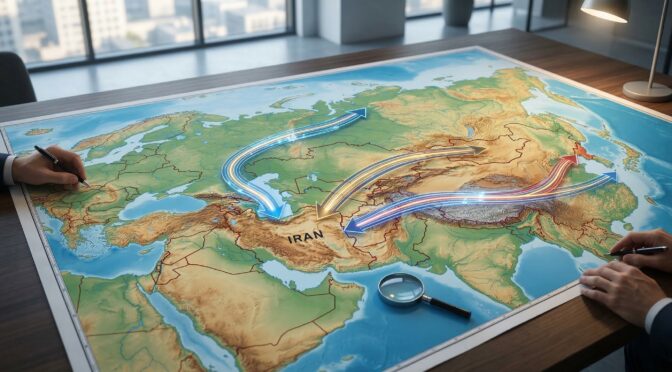
1.0 Executive Summary
This Situation Report provides an exhaustive, multi-domain assessment of the state actors actively supporting the Islamic Republic of Iran following the initiation of Operation Epic Fury by the United States and Israel on February 28, 2026. The coordinated decapitation strikes, which resulted in the confirmed deaths of Supreme Leader Ayatollah Ali Khamenei and multiple senior military commanders, have fundamentally altered the regional power dynamic and triggered an unprecedented institutional succession crisis within Tehran.1 In response to the systematic degradation of Iranian command and control nodes, a constellation of foreign state actors has mobilized to provide varying degrees of diplomatic, economic, intelligence, and military support to the embattled Iranian regime.
The primary state actors bolstering Tehran are the Russian Federation, the People’s Republic of China, and the Democratic People’s Republic of Korea. Secondary support and ideological solidarity are being provided by regional partners such as the Syrian Arab Republic and non-state proxies, alongside sympathetic governments in Latin America, including Venezuela and Cuba.3
The Russian Federation has adopted a highly aggressive and operationally integrated posture. Moscow is currently supplying real-time satellite targeting intelligence to Iranian forces, enabling precise ballistic missile strikes against United States military assets across the Middle East.5 Concurrently, the Russian military is actively testing United States homeland defense capabilities in the High North to assess whether the conflict has degraded American strategic bandwidth.6
The People’s Republic of China has maintained a doctrine of strategic insulation, strictly avoiding direct military entanglement while single-handedly sustaining the Iranian economy. Beijing achieves this through a sophisticated shadow banking network and the continuous, clandestine purchase of illicit crude oil, providing billions of dollars in essential infrastructure development.7 Open-source intelligence indicates that Beijing is currently weighing the provision of direct financial assistance and critical missile components to replenish Iran’s rapidly depleting arsenals, though this is balanced against China’s need for stable global energy markets.9
The Democratic People’s Republic of Korea has leveraged the conflict to aggressively validate its own nuclear deterrence doctrine. Pyongyang has accelerated its anti-Western rhetoric while deepening its military-industrial integration with Iran, particularly through joint drone production facilities located in Russian territory and the historical transfer of ballistic missile technology.10
These state actors view a drawn-out conflict between Iran and the United States through distinct, self-interested strategic lenses. The Russian Federation seeks to trap the United States in a prolonged Middle Eastern war of attrition to relieve systemic pressure on its own military operations in Eastern Europe.13 The People’s Republic of China views the conflict as a severe threat to its energy security and regional infrastructure investments, yet simultaneously recognizes a strategic opportunity to observe United States force projection capabilities in preparation for its own Indo-Pacific planning.8 The Democratic People’s Republic of Korea views the conflict as irrefutable proof that disarmament invites regime destruction, utilizing the geopolitical instability to extract economic and technological concessions from both Moscow and Tehran.14
Ultimately, these supporting states share a unified macro-objective. They aim to prevent the total collapse of the Iranian political establishment, recognizing that the survival of the current regime is essential to maintaining a multipolar counterbalance to United States global hegemony.
2.0 Strategic Context and the Iranian Operational Environment
To accurately assess the support mechanisms provided by foreign state actors, it is critical to contextualize the current operational environment within the Islamic Republic of Iran. The initial phases of Operation Epic Fury achieved unprecedented kinetic effects against the central command architecture of the regime. The destruction of sovereign leadership elements has forced supporting nations to adapt their engagement strategies to interface with a heavily fractured political and military landscape.
2.1 The Leadership Vacuum and Institutional Fragmentation
The confirmed death of Ayatollah Ali Khamenei on February 28 removed the ultimate decision-making authority over Iran’s military, nuclear program, judiciary, and regional proxy network.2 This event immediately activated Article 111 of the Iranian Constitution, leading to the formation of a provisional ruling body. This Interim Leadership Council consists of President Masoud Pezeshkian, Judiciary Chief Gholam-Hossein Mohseni-Ejei, and Expediency Council member Alireza Arafi.15 Under normal circumstances, this council would temporarily assume the core responsibilities of the Supreme Leader, including oversight of the armed forces and the issuance of strategic wartime directives, until the Assembly of Experts could convene to elect a permanent successor.
However, the constitutional succession process has been severely disrupted by continuous military operations. On March 3, the Israeli Air Force reportedly executed precision strikes against a facility housing the Assembly of Experts in Qom.18 Intelligence reports indicate that the council secretary and multiple officials responsible for administering Supreme Council votes were killed, and critical administrative infrastructure was destroyed.18 This vacuum at the absolute pinnacle of the state apparatus has effectively decentralized command and control.
Despite the loss of at least forty senior military and security officials, including the Commander of the Islamic Revolutionary Guard Corps, the Defense Minister, and the Armed Forces Chief of Staff, the Islamic Revolutionary Guard Corps retains significant structural resilience.2 The organization has shifted to a distributed command model, allowing individual commanders to act on their own initiative to execute retaliatory missile and drone barrages.19 Consequently, foreign state actors seeking to support Iran must now navigate a fractured political landscape, frequently bypassing the civilian Interim Leadership Council to interface directly with autonomous Islamic Revolutionary Guard Corps elements that control the physical instruments of state power.
2.2 Degradation of the Defense Industrial Base
The combined United States and Israeli military campaign has systematically targeted Iran’s defense industrial base with the explicit objective of permanently neutralizing its retaliatory capabilities and dismantling its ballistic missile program. High-value facilities have sustained repeated and devastating aerial bombardment. The Shiraz Electronics Industries Zone in Fars Province, which produces military electronics, avionics, radars, and missile guidance components, was struck at least thirteen times by March 6.20
Furthermore, satellite imagery confirms severe damage to the Raja Shimi Industries plant in Tehran Province, a critical node for the production of rocket propellants located adjacent to the Imam Sajjad Missile Base.20 The Esteghlal Industrial Zone and the Defense Industries Organization facilities have also been repeatedly targeted.20 The systematic destruction of these domestic supply chains has rendered the Iranian military apparatus entirely dependent on external state actors for the replenishment of advanced munitions, early warning radar systems, and aerospace components. This acute material dependency forms the primary vector through which foreign governments are currently exercising leverage and providing critical material support to Tehran.
3.0 The Russian Federation: Intelligence Sharing and Strategic Diversion
The Russian Federation has emerged as the most operationally active and aggressive state supporter of the Iranian regime in the current conflict. The bilateral relationship between Moscow and Tehran has evolved significantly over the past five years from a transactional partnership into a highly integrated military alliance, accelerated by reciprocal dependencies developed during the ongoing war in Ukraine. Russia is currently leveraging its vast military intelligence apparatus to directly enhance Iranian strike capabilities while simultaneously testing Western defensive perimeters globally.
3.1 Provision of Real-Time Targeting Intelligence
United States intelligence officials and defense personnel have confirmed that the Russian military apparatus is providing direct targeting intelligence to Iranian forces.5 This comprehensive intelligence package includes high-resolution satellite imagery, electronic intelligence, and real-time tracking data regarding the positions, movements, and operational status of United States military assets. This includes the precise coordinates of warships navigating the Persian Gulf, the Gulf of Oman, and aircraft stationed at regional bases throughout the Middle East.5
The provision of this telemetry and targeting data represents a massive escalation in Russian involvement. Iran’s indigenous satellite capabilities and aerial reconnaissance networks have been severely degraded or entirely blinded by the ongoing coalition air campaign. Furthermore, Iran historically lacks access to continuous, high-quality commercial satellite imagery due to stringent international sanctions.21 By bridging this critical capability gap, Russian military intelligence enables the remnants of the Islamic Revolutionary Guard Corps to conduct highly precise ballistic missile and drone strikes against coalition forces. This direct assistance exponentially increases the lethality of Iranian retaliatory operations and directly threatens the lives of United States service members stationed in the region.
3.2 Probing Operations in the High North and the Arctic
Beyond the immediate Middle Eastern theater, the Russian Federation is actively attempting to exploit the United States’ operational focus on Iran by aggressively testing defensive perimeters in the Arctic Circle. On March 4, 2026, the North American Aerospace Defense Command detected, tracked, and intercepted two Russian Tu-142 maritime patrol aircraft operating deep within the Alaskan and Canadian Air Defense Identification Zones.6 In response, a coalition of twelve aircraft, including six fighter jets and six refueling and intelligence aircraft, were dispatched to monitor the incursion.6 A similar incident occurred weeks prior on February 19, 2026.6
While Russian aerial incursions into the Air Defense Identification Zone are a historical norm, the timing and frequency of these specific deployments mark a calculated strategic probe.6 The primary objective of these high-altitude maneuvers is to assess what specific actions trigger a North American Aerospace Defense Command response and to precisely measure the speed and volume of that response. Moscow aims to determine whether the immense logistical, intelligence, and operational demands of Operation Epic Fury have degraded the rapid-response capabilities of the United States military in the High North.6 This aggressive posturing indicates that Russia views the Iranian conflict not merely as a regional dispute, but as a mechanism to stress-test the global strategic bandwidth of the United States. In response to these escalating threats, NATO has been forced to activate the Arctic Sentry scheme to coordinate allied exercises and monitor Russian submarines transiting the Greenland-Iceland-United Kingdom gap.6
3.3 Defense Industrial Integration and the Yelabuga Complex
The material and technical support between the Russian Federation and the Islamic Republic of Iran is bi-directional and highly institutionalized. A primary node of this enduring cooperation is the Yelabuga special economic zone located in the Republic of Tatarstan, deep within Russian territory. Open-source imagery analysis and satellite telemetry confirm a massive, sustained infrastructure expansion at the Yelabuga facility.10 Since late 2021, the complex has grown from two minor buildings into a sprawling 17-facility industrial hub encompassing 116 buildings across 2.82 million square meters.10
This facility, originally established with Iranian assistance to mass-produce the Iranian-designed Geran-1 and Geran-2 uncrewed aerial vehicles for Russian use in Eastern Europe, now serves as a central hub for technological preservation and transfer.10 The facility is currently producing an estimated 5,500 drone units per month.10 As Iranian domestic production facilities are systematically destroyed by United States and Israeli airstrikes, the Yelabuga complex provides a secure, out-of-theater manufacturing base that is completely immune to conventional military strikes by coalition forces.20 The shared telemetry data derived from combat deployments in both Eastern Europe and the Middle East allows Russian and Iranian engineers to continuously refine drone avionics, payload delivery systems, and evasion capabilities against modern Western integrated air defense systems.10
3.4 Russian Strategic Objectives and Conflict Outlook
The political and military establishment in Moscow views a drawn-out, high-intensity conflict between Iran and the United States as highly advantageous to Russian national security interests. A prolonged war of attrition in the Persian Gulf diverts American financial resources, advanced military hardware, and critical political capital away from the European theater. The Russian Ministry of Defense calculates that a permanent state of conflict in the Middle East will exhaust Western munitions stockpiles, particularly regarding air defense interceptors, and erode domestic political support within the United States for sustained global military interventions.13
Consequently, Russia is highly motivated to provide just enough intelligence, electronic warfare support, and material assistance to prevent the total collapse of the Iranian regime. By ensuring that the Islamic Revolutionary Guard Corps retains sufficient asymmetric capabilities to continuously harass coalition forces, Russia guarantees that the conflict remains a persistent, bleeding drain on American strategic resources, thereby shifting the global balance of power favorably toward Moscow.
4.0 The People’s Republic of China: Economic Lifelines and Strategic Ambiguity
The People’s Republic of China is navigating an highly complex strategic calculus regarding the Iranian conflict. Unlike the Russian Federation, Beijing has formally rejected direct military intervention and maintains a strict doctrine of strategic insulation and non-intervention.8 However, China’s vast economic machinery remains the primary pillar preventing the total collapse of the Iranian state under the crushing weight of combined military strikes and international financial sanctions.
4.1 Diplomatic Condemnation and Regional Positioning
Diplomatically, the Chinese government has emerged as the most vocal and aggressive critic of the United States-Israeli military campaign among all major Indo-Pacific nations.22 While other regional powers such as India, Japan, and Australia have urged restraint, prioritized diplomacy, or quietly supported the strikes, Beijing has officially characterized the military operations as an illegal violation of Iranian sovereignty and a dangerous breach of international law.22 On the international stage, Chinese diplomats have joined their Russian counterparts in demanding emergency sessions at the United Nations Security Council to condemn the airstrikes and demand an immediate cessation of hostilities.8 Furthermore, Beijing has dispatched special envoys to the region in an attempt to elevate its diplomatic profile as a global peacemaker.8
Despite this intense public rhetoric, China’s tangible actions are heavily constrained by its broader regional interests. China is deeply invested in the Gulf Cooperation Council states, particularly the United Arab Emirates and the Kingdom of Saudi Arabia. Between 2019 and 2024, China invested approximately 89 billion dollars directly into the Middle East, with Belt and Road Initiative capital flowing heavily toward these Gulf economies.8 Because Iranian retaliatory strikes have indiscriminately targeted civilian infrastructure, airports, and energy facilities within the United Arab Emirates and other Gulf nations, Beijing is forced into a precarious balancing act.24 It must balance its ideological alignment with Tehran against the necessity of protecting its massive financial investments and the safety of its expatriate workforce in the surrounding states.8
4.2 Financial Subversion and the Shadow Banking Architecture
China’s most vital and effective contribution to the survival of the Iranian regime is purely financial. Prior to the outbreak of open hostilities, China accounted for the purchase of approximately 90 percent of all Iranian crude oil exports, providing a crucial lifeline to Tehran.7 To successfully bypass United States secondary sanctions and insulate its own central banking system from international penalties, Beijing has cultivated a highly sophisticated, multi-layered shadow banking network.
This covert payment pipeline effectively operates entirely outside the SWIFT network and conventional dollar-clearing channels. Under this clandestine arrangement, Iranian crude oil is transported to Chinese ports via a massive “shadow fleet” of dark vessels utilizing ship-to-ship transfers in open waters to obscure the origin of the cargo.7 The purchases are facilitated by corporate entities linked to the Chinese state trader Zhuhai Zhenrong.7 Crucially, the massive capital generated from these sales is not repatriated to Tehran in standard fiat currency. Instead, it is deposited with an unregistered, opaque financial intermediary vehicle known as Chuxin.7
Chuxin then utilizes these accumulated funds to directly pay Chinese domestic engineering and construction contractors. These contractors, operating under the protective umbrella of Sinosure, the Chinese state-owned export credit insurance agency, are deployed to develop massive infrastructure projects within Iran.7 Western intelligence officials estimate that this closed-loop system provided the Iranian regime with up to 8.4 billion dollars in critical infrastructure value in the previous year alone, entirely evading international financial compliance tripwires.7
| Entity Name | Function within Evasion Architecture | Sanctions Status |
| Zhuhai Zhenrong | State-linked trader facilitating the initial purchase of illicit Iranian crude oil via shadow fleet tankers. | Not currently under US sanctions for this specific mechanism. |
| Chuxin | Unregistered financial intermediary that holds capital generated from oil sales to prevent dollar-clearing exposure. | Not currently under US sanctions. |
| Sinosure | State-owned export credit insurance agency providing risk mitigation and an operational umbrella for Chinese contractors in Iran. | Not currently under US sanctions. |
4.3 Potential Escalation of Material Support
While China has historically restricted its exports to Tehran to dual-use technologies and civilian infrastructure equipment, current intelligence assessments indicate that Beijing is actively weighing the provision of direct financial aid and critical lethal weapons components.9 As coalition airstrikes systematically obliterate Iran’s domestic manufacturing base, the Iranian armed forces face a critical, paralyzing shortage of replacement parts for their integrated air defense networks, drone fleets, and ballistic missile systems.
The Central Intelligence Agency and the United States Department of Defense are closely monitoring logistical channels for definitive signs that China is preparing to transfer advanced missile-related components, guidance systems, and aerospace replacement parts to Tehran.9 However, human intelligence sources indicate that the leadership of the Chinese Communist Party is approaching this decision with extreme caution. Supplying direct lethal aid risks triggering severe United States secondary sanctions against vital Chinese technology sectors. Furthermore, it could provoke reciprocal actions by the United States Navy to interdict Chinese commercial shipping in the Strait of Hormuz, an escalation Beijing is desperate to avoid.9
4.4 Chinese Strategic Objectives and Conflict Outlook
The leadership in Beijing views a drawn-out, uncontrolled conflict in the Middle East as highly detrimental to its near-term domestic economic stability. The disruption of commercial shipping through the Strait of Hormuz directly threatens China’s energy security, driving up global commodity prices and transportation costs. This economic friction severely imperils Premier Li Qiang’s targeted domestic economic growth rate of 4.5 to 5 percent for the 2026 fiscal year, the lowest target set since 1991.27
Conversely, the military dimension of the conflict offers the People’s Liberation Army a unique and invaluable intelligence-gathering opportunity. The massive mobilization of United States naval carrier strike groups, the deployment of advanced stealth aircraft, and the utilization of integrated air defense systems provide Chinese military planners with an unprecedented theater to observe American operational art in real-time.8 Beijing is actively utilizing its space-based intelligence assets to monitor allied deployments in the Gulf of Oman, extracting critical data to refine its own strategic planning and anti-access/area denial strategies for future contingencies in the Indo-Pacific, particularly regarding Taiwan.8
Ultimately, China hopes to achieve a managed stabilization of the Iranian regime. A surviving, albeit weakened, Iran preserves Beijing’s access to heavily discounted hydrocarbons while simultaneously anchoring United States military power and political attention far from the South China Sea.8
5.0 The Democratic People’s Republic of Korea: Doctrinal Validation and Munitions Support
The Democratic People’s Republic of Korea has responded to the military campaign against Iran with severe diplomatic hostility and a renewed, aggressive commitment to its own nuclear armament program. The relationship between Pyongyang and Tehran is foundational to the strategic military capabilities of both states, characterized by decades of illicit technology sharing, intelligence exchange, and mutual sanctions evasion.
5.1 Rhetorical Posture and the Doctrine of Illegal Aggression
Following the February 28 decapitation strikes that eliminated Ayatollah Ali Khamenei, the North Korean Foreign Ministry issued highly aggressive statements via the state-run Korean Central News Agency.12 Pyongyang characterized the United States and Israeli operations as an act of “illegal aggression,” “gangster-like behavior,” and a “despicable form of sovereignty violation”.12 This rhetoric deliberately frames the conflict through an anti-imperialist lens, attempting to generate global solidarity among nations currently operating under Western sanctions regimes.
More importantly, the destruction of the Iranian political leadership serves as a stark ideological validation for Supreme Leader Kim Jong Un.12 North Korean state media and internal propaganda apparatuses have utilized the war in Iran to explicitly justify the nation’s nuclear weapons program. The regime argues that any nation lacking an active, deployable, and terrifying nuclear deterrent is guaranteed to face violent regime change orchestrated by Western powers.12 The supreme leadership in Pyongyang views the fate of the Iranian government as empirical evidence that diplomatic concessions regarding weapons of mass destruction are inherently fatal to regime survival.14 Demonstrating this renewed commitment, Kim Jong Un recently oversaw the launch of a missile from the Choe Hyon, a 5,000-tonne destroyer-class vessel, stating that the arming of naval ships with nuclear weapons was making satisfactory progress.14
5.2 Ballistic Missile Proliferation and Asymmetric Warfare
The technical foundation of the Iranian ballistic missile program is deeply intertwined with North Korean engineering and design principles. Iran’s primary medium-range delivery systems, including the Shahab-3, Emad, and Ghadr missiles, are direct derivatives of the North Korean Rodong missile architecture.11 This historical collaboration, dating back to the 1980s, involves intense intelligence exchange, the transfer of solid-fuel technologies, and the sharing of critical reentry vehicle telemetry data.11
As the Iranian military rapidly exhausts its stockpiles of medium-range ballistic missiles in retaliatory barrages against Israel and Gulf states, the regime will require immediate external assistance to rebuild its arsenal.32 North Korea is uniquely positioned to supply basic missile components, older legacy systems, and essential spare parts that are highly compatible with existing Iranian launch infrastructure.33 While Pyongyang will likely reserve its most advanced, cutting-edge technologies for its own defense against the Republic of Korea, the provision of low-end munitions, drone components, and structural materials is highly probable as Iran seeks to sustain a high operational tempo in a war of attrition.33
5.3 Subterranean Engineering and Human Capital Export
In addition to hardware transfers, North Korea provides highly specialized human capital to its strategic allies. Since the cessation of hostilities in the 1950s Korean War, the Democratic People’s Republic of Korea has perfected the engineering of deeply buried, hardened military facilities designed to withstand sustained aerial bombardment.11 This unique expertise has previously been exported to state actors such as Syria during the construction of its nuclear reactor, and intelligence reports suggest North Korean engineers have actively assisted the Islamic Revolutionary Guard Corps in the construction of subterranean missile bases and hardened enrichment sites.11
Furthermore, human intelligence and open-source reports indicate that up to 12,000 North Korean technicians and laborers have been deployed to the Russian Yelabuga complex.10 This workforce is instrumental in facilitating the rapid mass production of Iranian-designed uncrewed aerial systems.10 This trilateral cooperation allows North Korea to gain invaluable real-world combat data regarding the efficacy of drone swarms against modern Western air defense systems without directly exposing its own military assets to retaliatory strikes on the Korean Peninsula.10
5.4 Nuclear Hedging and Extreme Scenarios
A severe, low-probability but high-impact risk involves the direct transfer of nuclear material or weaponization expertise. Intelligence analysts assess that North Korea currently produces an excess of weapons-grade highly enriched uranium, operating facilities at Yongbyon and Kangson capable of generating up to 230 kilograms annually.34 This quantity is sufficient to produce seven to nine highly enriched uranium-based nuclear weapons per year.34
If the remnants of the Iranian regime determine that a rapid nuclear breakout is absolutely necessary for their ultimate survival following the decapitation of their leadership, North Korea represents the most viable global source for intact nuclear material or advanced weaponization technology.34 Furthermore, following the assassination of numerous senior Iranian nuclear scientists by Israeli intelligence, North Korea could theoretically lend its own weapons designers, metallurgists, and engineers to Tehran to bridge the critical knowledge gap created by the coalition strikes.34
5.5 North Korean Strategic Objectives and Conflict Outlook
Pyongyang views a drawn-out conflict in the Middle East as a highly favorable operational environment. The absorption of United States military assets, naval carrier groups, and intelligence bandwidth in the Persian Gulf drastically reduces the immediate threat profile on the Korean Peninsula. Consequently, North Korea hopes to utilize this period of strategic distraction to rapidly expand its own nuclear arsenal, test advanced delivery systems, and potentially engage in localized coercive military actions against the Republic of Korea without facing the full, undivided attention of the United States military.30 In exchange for its material and technical support of Iran, Pyongyang will likely demand reciprocal transfers of advanced drone technology, refined petroleum products, and hard currency to circumvent international sanctions.
6.0 Regional Facilitators, Proxies, and Ideological Allies
While Russia, China, and North Korea provide the strategic depth and industrial capacity required to sustain the Iranian regime, a secondary tier of state actors and non-state proxies provides critical logistical nodes, localized military pressure, and ideological solidarity.
6.1 The Syrian Arab Republic: Logistical Dilemmas and Regime Survival
The Syrian Arab Republic remains a vital geographic node in the “Axis of Resistance,” historically serving as the primary logistical land bridge connecting Tehran to Hezbollah forces operating in Lebanon.4 However, the current conflict places the government of President Bashar al-Assad in an highly precarious strategic position. The intensive Israeli air campaign has systematically targeted Iranian supply lines, command centers, and weapons depots located within Syrian territory over the past two years, heavily degrading Syria’s domestic infrastructure.35
Currently, Damascus is facing immense geopolitical pressure. The United States and its allies are highly motivated to secure a swift outcome in the war and are likely to leverage military force to definitively sever the remaining supply corridors passing through Syria.4 Consequently, Syria’s ability to provide material support to Iran is severely constrained. The Assad government is forced to balance its historical ideological and military alignment with Tehran against the immediate, existential necessity of insulating the fragile Syrian state from a broader regional conflagration that could fracture its territorial unity.4 Furthermore, mass population displacements from southern Lebanon into Syria—with nearly 10,000 Syrians and 1,000 Lebanese crossing the border daily—have placed an unsustainable strain on local resources, further degrading the state’s capacity to facilitate Iranian military operations.36
6.2 The Axis of Resistance: Hezbollah and Regional Militias
Heeding intense pressure from the Islamic Revolutionary Guard Corps, Hezbollah has actively engaged in the conflict to draw Israeli military resources away from the Iranian homeland. Despite absorbing over 600 airstrikes from the Israeli Air Force since February 28, open-source intelligence tracking confirms that Hezbollah retains an arsenal of approximately 25,000 rockets and missiles.37 The group has escalated its tactical approach, utilizing Iranian-supplied cluster munition warheads in strikes against civilian centers such as Yehud, demonstrating a deliberate shift toward maximizing civilian casualties to force a coalition ceasefire.37 Alongside Hezbollah, the Iranian regime continues to receive operational support through its network of proxies, including the Houthis in Yemen and pro-Iranian militias in Iraq, which create the possibility of a sustained multi-theater insurgency.22
6.3 Latin American Alignments: Venezuela, Cuba, and the Hemispheric Divide
In the Western Hemisphere, the Iranian regime receives highly vocal diplomatic and ideological support from anti-Western governments, primarily Venezuela and Cuba. However, the capacity of these states to provide tangible material, intelligence, or financial support is practically nonexistent due to severe domestic economic crises and aggressive United States interventions.
In January 2026, the United States conducted a highly controversial military operation in Venezuela, resulting in the capture of President Nicolas Maduro.29 This unprecedented action has neutralized the Venezuelan state apparatus as an active strategic partner for Iran. The remnants of the Venezuelan government, alongside Cuba and Nicaragua, continue to denounce the United States strikes on Iran as imperialist aggression, yet their support remains purely rhetorical.3 This ideological solidarity highlights a deep hemispheric divide, contrasted sharply by the governments of Argentina and Paraguay. Both Argentina and Paraguay have actively endorsed the military operations against Iran, utilizing the moment to remind the international community of Iran’s global belligerence, specifically citing the role of Iranian officials like Ahmad Vahidi in the 1994 AMIA Jewish center bombing in Buenos Aires.22
7.0 Financial Evasion Mechanisms and Supply Chain Resilience
The survival of the Iranian regime in a protracted conflict relies almost entirely on the ability of its state supporters to circumvent Western financial sanctions and maintain the flow of critical commodities. The events of early 2026 have accelerated the integration of a parallel economic architecture among sanctioned states.
7.1 Digital Currency Integration and Sanctions Evasion
To permanently mitigate the risks associated with reliance on the SWIFT network and dollar-dominated clearing houses, supporting states are rapidly advancing the development and implementation of alternative financial settlement systems. The People’s Republic of China is actively exporting its digital yuan infrastructure to sanctioned entities, recently assisting Myanmar’s military regime in developing a digital payment system to bypass United States sanctions.39 By routing transactions through China’s Cross-Border Interbank Payment System utilizing layered digital currencies, foreign actors can effectively obscure the ultimate ownership of assets and the final destination of funds, exploiting correspondent ties with major global banks.39
Concurrently, Russia and Iran, functioning within the BRICS framework, have escalated efforts to develop ruble-backed and gold-backed stablecoins to facilitate bilateral trade.40 While widespread macroeconomic adoption of these central bank digital currencies remains distant, the utilization of these decentralized, highly encrypted payment technologies presents a severe challenge to Western financial containment strategies. These systems ensure that vital components, raw materials, and drone parts can still be procured by the Islamic Revolutionary Guard Corps on the global black market.40
7.2 The Proliferation of the Shadow Fleet and Global Logistics
The physical manifestation of this sanctions evasion strategy is the “shadow fleet”, an armada of aging, unflagged, or deceptively flagged maritime vessels responsible for transporting Iranian crude oil to willing buyers, primarily in China.26 Russia has directly adopted and integrated Iran’s shadow fleet tactics to sustain its own petroleum exports following European embargoes.41 This shared tactical evolution demonstrates a high degree of operational learning between Moscow and Tehran. The maintenance of this fleet is essential to providing the Iranian regime with the hard currency required to fund its military reconstruction and sustain domestic subsidy programs during the conflict.26
The conflict has also severely impacted global supply chains. Major shipping lines have diverted vessels away from the Strait of Hormuz, adding significant time and expense to the delivery of materials. The construction industry is particularly vulnerable, as essential materials such as cement, steel, concrete, and aluminum are heavily produced or sourced in the Middle East.42 The disruption of these shipping routes threatens to increase the cost-to-serve by up to forty percent for global supply chains, creating an economic ripple effect that supporting states like China and Russia must carefully manage.43
8.0 Strategic Outlook and Actor Intentions
The coalition of states supporting the Islamic Republic of Iran is not bound by a formal defense treaty, but rather by a shared, pragmatic strategic imperative to dismantle the unipolar dominance of the United States. Their varying levels of support are meticulously calibrated to advance specific national interests in the context of a drawn-out conflict.
- Exploitation of United States Strategic Bandwidth: All supporting actors calculate that an extensive military entanglement in the Middle East will heavily deplete American munitions stockpiles, stress naval logistics, and fracture domestic political consensus. Russia requires this distraction to prosecute its war in Europe; China requires this distraction to accelerate its military modernization without interference in the South China Sea; North Korea requires this distraction to expand its nuclear arsenal without facing immediate preemptive strikes.
- Regime Preservation over Absolute Victory: None of the supporting states harbor illusions regarding Iran’s ability to achieve a conventional military victory against the combined forces of the United States and Israel. Their objective is strictly preservation. By providing financial lifelines, targeting intelligence, and critical components, they aim to ensure that the Islamic Revolutionary Guard Corps retains sufficient asymmetric capabilities to exact a heavy toll on coalition forces, thereby preventing the establishment of a pro-Western government in Tehran.
- The Threat of Escalation: If the collapse of the Iranian regime appears imminent, the threshold for direct, highly lethal technology transfer will likely be breached. The most significant systemic risks include the mass transfer of Chinese advanced air defense platforms, the provision of Russian hypersonic anti-ship missiles to block the Strait of Hormuz, or the transfer of North Korean fissile material and nuclear expertise.
9.0 Conclusion
The military operations initiated on February 28, 2026, have successfully degraded the upper echelons of the Iranian leadership, fragmented its constitutional succession process, and inflicted severe damage upon the nation’s defense industrial base. However, the regime is currently being sustained by a robust, multi-dimensional network of state actors who view the survival of the Islamic Republic as critical to their own geopolitical security and the broader goal of challenging United States hegemony.
The Russian Federation has crossed the threshold into direct operational support through the provision of satellite targeting intelligence, fundamentally altering the lethality of the conflict for coalition forces. The People’s Republic of China continues to provide the essential economic bedrock via clandestine oil purchases and highly sophisticated shadow banking mechanisms, while aggressively monitoring the battlespace for its own future military applications. The Democratic People’s Republic of Korea provides critical ideological reinforcement and remains the most likely source for the rapid replenishment of ballistic missile components and asymmetric technology.
For the United States and its allies, achieving the strategic objectives of Operation Epic Fury will require significantly more than the kinetic destruction of Iranian infrastructure. It will necessitate the systematic dismantling of the financial evasion networks, shadow fleets, and external logistical corridors that currently connect Tehran to Moscow, Beijing, and Pyongyang. A failure to interdict these complex global supply lines will ensure that the conflict devolves into a prolonged, heavily subsidized war of attrition, precisely fulfilling the strategic objectives of Iran’s state sponsors.
10.0 Summary Table of Support by Country
The following table categorizes the distinct mechanisms of support provided by foreign state actors to the Iranian regime during the current conflict.
| State Actor | Diplomatic Posture | Financial & Economic Support | Intelligence & Military Support | Primary Strategic Objective |
| Russian Federation | High support; calls for emergency UN intervention. | Integration of evasion tactics; BRICS digital currency cooperation. | Providing real-time satellite targeting intelligence; hosting joint drone production facilities (Yelabuga); probing US homeland defenses. | Divert US military bandwidth from Europe; trap coalition forces in a war of attrition. |
| People’s Republic of China | High support; vocal condemnation of US strikes; opposing regime change. | Primary buyer of Iranian oil (90 percent of exports); operating Chuxin shadow banking network; providing infrastructure financing via Sinosure. | Weighing the provision of replacement missile components and dual-use technology; observing US operations. | Secure cheap energy imports; protect regional investments; observe US operational deployments for Taiwan planning. |
| Democratic People’s Republic of Korea | Extreme support; characterizing strikes as illegal aggression. | Potential barter agreements exchanging munitions for energy. | Historic ballistic missile tech transfers (Rodong lineage); joint engineering operations; potential lending of nuclear personnel and HEU. | Validate domestic nuclear doctrine; acquire combat data on drone systems; distract US forces from the Korean Peninsula. |
| Syrian Arab Republic | Moderate support; constrained by severe domestic threats. | Negligible due to domestic economic collapse. | Maintaining vulnerable logistical land bridges to Hezbollah and proxy forces. | Balance regime survival against historical ideological commitments to the Axis of Resistance. |
| Venezuela & Cuba | High rhetorical support; heavily constrained by US intervention. | Negligible. | Negligible. | Demonstrate anti-imperialist solidarity following the US capture of the Venezuelan President. |
Appendix A: Methodology
This Situation Report was generated utilizing a comprehensive real-time sweep of global open-source intelligence, military monitors, and official state broadcasts spanning the period immediately preceding and following the initiation of Operation Epic Fury on February 28, 2026. The intelligence collection prioritized high-reliability geopolitical think tanks, defense industry monitors, and verifiable satellite imagery analyses. To ensure chronological accuracy, a 36-hour operational overlap was calculated, verifying independent reports of strike locations and asset movements against corresponding diplomatic statements issued from Beijing, Moscow, and Pyongyang. Conflicting open-source intelligence reports regarding battlefield damage were weighed by corroborating initial local media claims against secondary visual confirmation from independent geospatial analysis groups. The analysis strictly adheres to a neutral, factual methodology, filtering state propaganda to extract verifiable logistical, financial, and military data points.
Appendix B: Glossary of Acronyms
- ADIZ: Air Defense Identification Zone
- BRICS: An intergovernmental organization comprising Brazil, Russia, India, China, South Africa, Iran, Egypt, Ethiopia, and the United Arab Emirates.
- CBDC: Central Bank Digital Currency
- CENTCOM: United States Central Command
- CIPS: Cross-Border Interbank Payment System (China)
- DPRK: Democratic People’s Republic of Korea
- GCC: Gulf Cooperation Council
- HEU: Highly Enriched Uranium
- IRGC: Islamic Revolutionary Guard Corps
- ISR: Intelligence, Surveillance, and Reconnaissance
- KCNA: Korean Central News Agency
- NATO: North Atlantic Treaty Organization
- NORAD: North American Aerospace Defense Command
- OSINT: Open-Source Intelligence
- SWIFT: Society for Worldwide Interbank Financial Telecommunication
- UAE: United Arab Emirates
Appendix C: Glossary of Foreign Words
- Artesh: The conventional military forces of the Islamic Republic of Iran, operating parallel to the Islamic Revolutionary Guard Corps.
- Basij: A paramilitary volunteer militia established in Iran, operating as a subordinate force to the Islamic Revolutionary Guard Corps, primarily utilized for internal security and suppression of domestic dissent.
- Chuxin: An unregistered Chinese financial intermediary vehicle utilized to channel capital between state traders and construction firms to bypass international sanctions on Iran.
- Geran: The Russian designation for the Shahed-series of loitering munitions (suicide drones) developed by Iran and heavily utilized by Russian forces in Eastern Europe.
- Khamenei: Referring to Ayatollah Ali Khamenei, the Supreme Leader of the Islamic Republic of Iran from 1989 until his death in the opening decapitation strikes of the 2026 conflict.
- Knesset: The unicameral national legislature of the State of Israel.
- Majlis: The Islamic Consultative Assembly, the national legislative body of Iran.
- Rodong: A family of North Korean medium-range ballistic missiles that form the technological baseline for multiple Iranian missile systems.
- Shahab: A class of Iranian ballistic missiles, specifically the Shahab-3, which is heavily reliant on imported North Korean aerospace technology.
- Sinosure: The China Export and Credit Insurance Corporation, a major state-owned enterprise providing export credit insurance.
- Zhuhai Zhenrong: A Chinese state-backed energy trading company heavily involved in the purchase of Iranian crude oil.
Please share the link on Facebook, Forums, with colleagues, etc. Your support is much appreciated and if you have any feedback, please email us in**@*********ps.com. If you’d like to request a report or order a reprint, please click here for the corresponding page to open in new tab.
Sources Used
- From Tehran to Europe: Terrorism Risks After the Killing of Iran’s Ayatollah, accessed March 10, 2026, https://icct.nl/publication/tehran-europe-terrorism-risks-after-killing-irans-ayatollah
- Iran Update – 1 March 2026: What Khamenei’s Death Changes | The Chertoff Group, accessed March 10, 2026, https://chertoffgroup.com/situation-report-iran-u-s-israeli-military-operations/
- Iran’s Reach in Latin America: Strategic Networks and U.S. Pressure in Venezuela, accessed March 10, 2026, https://gulfif.org/irans-reach-in-latin-america-strategic-networks-and-u-s-pressure-in-venezuela/
- Syria and the War on Iran: The Dilemma of Hostility and Neutrality – معهد السياسة والمجتمع, accessed March 10, 2026, https://politicsociety.org/2026/03/08/syria-and-the-war-on-iran-the-dilemma-of-hostility-and-neutrality/?lang=en
- US Officials Confirm Russia Providing Targeting Intelligence To Iran, accessed March 10, 2026, https://www.rferl.org/a/russia-iran–intel-targeting-us-israel-war/33697849.html
- Iran War Provides Opportunity for Russia To Test U.S. Alaska … – FDD, accessed March 10, 2026, https://www.fdd.org/analysis/2026/03/10/iran-war-provides-opportunity-for-russia-to-test-u-s-alaska-defenses/
- China uses secret network to pay Iran for oil – WSJ, accessed March 10, 2026, https://www.iranintl.com/en/202510060867
- China in the crossfire: Calculated moves amid the US-Iran … – MEI, accessed March 10, 2026, https://mei.edu/publication/china-in-the-crossfire-calculated-moves-amid-the-us-iran-showdown/
- China weighing financial aid, weapons components for Iran amid …, accessed March 10, 2026, https://www.aa.com.tr/en/asia-pacific/china-weighing-financial-aid-weapons-components-for-iran-amid-war-report/3853549
- A Closer Look at the Yelabuga UAV Factory, accessed March 10, 2026, https://beyondparallel.csis.org/a-closer-look-at-the-yelabuga-uav-factory/
- Iran’s Military Capabilities Restored by No. Korea – The Ettinger Report, accessed March 10, 2026, https://theettingerreport.com/irans-military-capabilities-restored-by-no-korea/
- The Fortress And The Flame: North Korea’s Strategic Posture In The Iran War – Analysis, accessed March 10, 2026, https://www.eurasiareview.com/04032026-the-fortress-and-the-flame-north-koreas-strategic-posture-in-the-iran-war-analysis/
- Great Power Spillover from the Iran War: Implications for China, Russia, Turkey, and Europe, accessed March 10, 2026, https://www.washingtoninstitute.org/policy-analysis/great-power-spillover-iran-war-implications-china-russia-turkey-and-europe
- Trump’s Iran war will reinforce North Korea’s view that nuclear weapons are the only path to security – The Guardian, accessed March 10, 2026, https://www.theguardian.com/world/2026/mar/10/north-korea-nuclear-weapons-trump-iran-war
- Interim council takes control in Iran after Khamenei’s death | Iran International, accessed March 10, 2026, https://www.iranintl.com/en/202603015688
- Who Will Run Iran?, accessed March 10, 2026, https://www.meforum.org/mef-online/who-will-run-iran
- Interim Leadership Council – Wikipedia, accessed March 10, 2026, https://en.wikipedia.org/wiki/Interim_Leadership_Council
- Israel Strikes Tehran Regime’s Assembly of Experts, Underlining Efforts to Disrupt Succession Process, accessed March 10, 2026, https://www.fdd.org/analysis/2026/03/03/israel-strikes-tehran-regimes-assembly-of-experts-underlining-efforts-to-disrupt-succession-process/
- The IRGC: Understanding America’s Enemy in “Operation Epic Fury” – The National Interest, accessed March 10, 2026, https://nationalinterest.org/blog/buzz/irgc-understanding-americas-enemy-operation-epic-fury-hk-030826
- Iran Update Evening Special Report, March 7, 2026 | ISW, accessed March 10, 2026, https://understandingwar.org/research/middle-east/iran-update-evening-special-report-march-7-2026/
- Iran Update Evening Special Report, March 6, 2026 | ISW, accessed March 10, 2026, https://understandingwar.org/research/middle-east/iran-update-evening-special-report-march-6-2026/
- Iran War: A Defining Moment for the Middle East—Global Analysis …, accessed March 10, 2026, https://www.ajc.org/iran-war-a-defining-moment-for-the-middle-east-global-analysis-from-ajc-experts
- For China, billions of dollars are at risk from a widening war, accessed March 10, 2026, https://m.economictimes.com/small-biz/trade/exports/insights/for-china-billions-of-dollars-are-at-risk-from-a-widening-war/articleshow/129377065.cms
- The Gulf that emerges from the Iran war will be very different – Atlantic Council, accessed March 10, 2026, https://www.atlanticcouncil.org/dispatches/the-gulf-that-emerges-from-the-iran-war-will-be-very-different/
- How China’s enormous bet on Iran failed, accessed March 10, 2026, https://www.washingtonpost.com/opinions/2026/03/06/china-iran-failure-strategy/
- The axis of evasion: Behind China’s oil trade with Iran and Russia – Atlantic Council, accessed March 10, 2026, https://www.atlanticcouncil.org/blogs/new-atlanticist/the-axis-of-evasion-behind-chinas-oil-trade-with-iran-and-russia/
- China sets a lower economic growth target of 4.5% to 5% for 2026 as challenges loom, accessed March 10, 2026, https://apnews.com/article/china-congress-economy-gdp-trump-target-1822006cd39ff43505fa9a47a4581a16
- ‘Xi’s world order died with Khamenei’: The good, the bad, and ugly of US-Iran war for China, accessed March 10, 2026, https://timesofindia.indiatimes.com/world/china/trump-xi-jinping-summit-iran-war-and-china-us-iran-war-trumps-iran-war-khamenei-killing/articleshow/129216408.cms
- North Korea Steps Up Anti-US Rhetoric in Initial Response to Strikes Against Iran, accessed March 10, 2026, https://www.38north.org/2026/03/north-korea-steps-up-anti-us-rhetoric-in-initial-response-to-strikes-against-iran/
- Iran war will reinforce Kim’s view on nuclear power – Taipei Times, accessed March 10, 2026, https://www.taipeitimes.com/News/world/archives/2026/03/11/2003853638
- Korean Peninsula Update, March 3, 2026 | ISW, accessed March 10, 2026, https://understandingwar.org/research/china-taiwan/korean-peninsula-update-march-3-2026/
- Iran Update Evening Special Report, February 28, 2026 | ISW, accessed March 10, 2026, https://understandingwar.org/research/middle-east/iran-update-evening-special-report-february-28-2026/
- North Korea: Revisionist Ambitions and the Changing International Order – CSIS, accessed March 10, 2026, https://www.csis.org/analysis/north-korea-revisionist-ambitions-and-changing-international-order
- Could Iran buy nuclear weapons from North Korea?, accessed March 10, 2026, https://www.iiss.org/online-analysis/online-analysis/2025/11/could-iran-buy-nuclear-weapons-from-north-korea/
- Statement on the Recent Developments in the Middle East, accessed March 10, 2026, https://www.globalr2p.org/publications/statement-on-the-recent-developments-in-the-middle-east/
- MIDDLE EAST LIVE 4 March: Conflict continues across region amid US, Israeli and Iranian strikes | UN News, accessed March 10, 2026, https://news.un.org/en/story/2026/03/1167076
- Strategic Assessment of the Iranian Conflict: Deterrence Attrition, Subterranean Resilience and the Mojtaba Khamenei Succession – https://debuglies.com, accessed March 10, 2026, https://debuglies.com/2026/03/10/strategic-assessment-of-the-iranian-conflict-deterrence-attrition-subterranean-resilience-and-the-mojtaba-khamenei-succession/
- What you need to know about the U.S. war on Iran – AFSC.org, accessed March 10, 2026, https://afsc.org/news/what-you-need-know-about-us-war-iran
- Weekly Sanctions Update: November 24, 2025 – Steptoe, accessed March 10, 2026, https://www.steptoe.com/en/news-publications/international-compliance-blog/weekly-sanctions-update-november-24-2025.html
- CRINK Economic Ties: Uneven Patterns of Collaboration – CSIS, accessed March 10, 2026, https://www.csis.org/analysis/crink-economic-ties-uneven-patterns-collaboration
- China’s Facilitation of Sanctions and Export Control Evasion, accessed March 10, 2026, https://www.uscc.gov/research/chinas-facilitation-sanctions-and-export-control-evasion
- The 2026 Iran War and Its Global Impact on Construction Supply Chains | Baker Donelson, accessed March 10, 2026, https://www.bakerdonelson.com/the-2026-iran-war-and-its-global-impact-on-construction-supply-chains
- The Impacts of the Iran Attack on Supply Chains and Global Business – ISM, accessed March 10, 2026, https://www.ismworld.org/supply-management-news-and-reports/news-publications/inside-supply-management-magazine/blog/2026/2026-03/the-impacts-of-the-iran-attack-on-supply-chains-and-global-business/