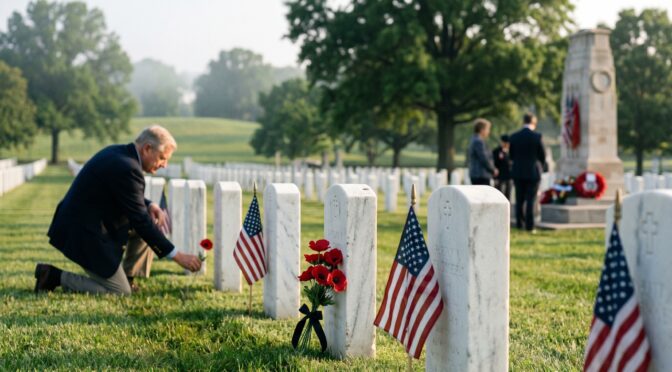
The human compulsion to commemorate the war dead is as ancient as conflict itself, yet the systematic, state-sponsored rituals of martial mourning that define contemporary societies are largely products of the modern era. Prior to the mid-nineteenth century, monuments and memorial days were predominantly dedicated to victorious generals, sovereign leaders, and the broader triumphs of empires. The advent of industrialized warfare—beginning notably with the American Civil War and culminating in the unprecedented, mechanized devastation of the First World War—wrought a scale of carnage that necessitated a fundamental democratization of mourning. The sheer volume of casualties required nations to develop entirely new civic liturgies to process collective grief, encode shifting national identities, and rationalize the ultimate sacrifice of the common soldier. The state had to construct mechanisms to ensure that mass death did not lead to mass despair or political instability.
This comprehensive historical analysis examines the profound evolution of the United States Memorial Day, tracing its complex origins from fractured, localized expressions of grassroots grief to a unified, albeit heavily commercialized, federal holiday. Furthermore, it contextualizes the American experience by comparatively analyzing similar, state-sponsored commemorative holidays across the globe. This includes a detailed examination of Remembrance Day in the United Kingdom and the broader Commonwealth, ANZAC Day in Australia and New Zealand, Volkstrauertag in Germany, and Dodenherdenking in the Netherlands. By interrogating the origins, legislative histories, material cultures, and shifting sociological contexts of these observances, a profound second-order insight emerges: national days of mourning function as temporal monuments. They are not static reflections of the past; rather, they are dynamic entities that reflect the shifting political ideologies, cultural anxieties, and historical mythologies of the states that enact them. The way a nation remembers its fallen is an ongoing negotiation between historical trauma and contemporary identity.
Part I: The Crucible of the Civil War and the Genesis of the American Memorial Day
The American Civil War (1861–1865) fundamentally altered the United States’ relationship with death. The unprecedented loss of over 600,000 lives overwhelmed existing funerary infrastructure, religious paradigms, and cultural practices surrounding mortality.1 Out of this profound national trauma, the tradition of decorating soldiers’ graves emerged. It is crucial to understand that this phenomenon did not begin as a top-down federal edict; rather, it was a highly decentralized, grassroots movement driven primarily by grieving women and marginalized communities who were attempting to impose order and dignity upon the chaotic aftermath of fratricidal war.
The Contested Birthplaces of a National Tradition
Because the impulse to mourn was spontaneous, localized, and driven by immediate communal needs, numerous municipalities across the United States have historically laid claim to being the original “birthplace” of Memorial Day.1 These competing claims reflect a broader historiographical battle over memory, regional pride, and the desire to claim ownership over a foundational national narrative.
The Charleston, South Carolina Precedent (1865): One of the earliest and most profound large-scale observances occurred in Charleston, South Carolina, on May 1, 1865, mere weeks after the cessation of major hostilities.1 The location was the Washington Race Course, a facility that the Confederacy had repurposed as a prison camp.1 Within the confines of this camp, 257 Union soldiers had perished from disease and exposure, their remains unceremoniously interred in a mass, unmarked grave.1 Following the fall of Charleston, a crowd of approximately 10,000 people—consisting primarily of recently freed Black citizens—organized a massive commemorative parade.1 These freed men and women undertook the laborious, deeply symbolic task of unearthing the remains from the mass grave, providing the Union soldiers with proper, individual burials, and meticulously decorating the new graves with spring flowers.1
This mass demonstration of gratitude and the reclamation of the dead was documented contemporaneously by both the Charleston Daily Courier and the New-York Tribune.1 Prominent historian David Blight has extensively researched this event, characterizing it as the “first Memorial Day”.1 However, rigorous archival research has not established a direct legislative or causal link between the 1865 Charleston observance and the later federal establishment of the national holiday.1 Nevertheless, the Charleston precedent stands as a poignant testament to the intersection of emancipation and memorialization, demonstrating how the formerly enslaved utilized the act of mourning to assert their new civic identity and honor those who fought for their liberation.
Early Northern Precedents: Simultaneously, in the North, similar civic rituals of grave decoration were emerging. A notable early precedent occurred during the cemetery dedication at Gettysburg, Pennsylvania, in 1863, which included a formal ceremony of commemoration at the graves of the fallen.1 Because of this early commemorative ceremony, some historians and theorists have argued that President Abraham Lincoln was the true, spiritual founder of Memorial Day, while others, such as Chicago journalist Lloyd Lewis, have contended that it was the prolonged, highly visible national mourning surrounding President Lincoln’s subsequent funeral procession that truly spurred the widespread, grassroots practice of decorating soldiers’ graves.1
In Boalsburg, Pennsylvania, local lore fiercely contends that the holiday originated there on July 4, 1864.1 According to this narrative, three local women—Sophie Keller Hall, Emma Hunter, and Elizabeth Myers—decorated the grave of Emma’s father, Reuben Hunter, and subsequently decided to adorn the graves of all the other soldiers interred in the cemetery.1 This claim, however, is heavily undermined by glaring historical inconsistencies. Archival records indicate that Reuben Hunter did not actually die until September 19, 1864, rendering the claimed July 4 decoration date impossible.1 Furthermore, the earliest published account of this event did not appear until 1904 in the History of the 148th Pennsylvania Volunteers, and that original account failed to mention Elizabeth Myers entirely.1 To reconcile these chronological discrepancies, local historians have since amended their claim, asserting that the original decoration actually took place on an unspecified Sunday in October 1864.1 Despite these significant historiographical flaws, Boalsburg heavily promotes its status as a foundational site, complete with a bronze monument near the cemetery entrance depicting the three women gazing upon Hunter’s grave.1
The Southern Women’s Movement and the Impulse for Reconciliation: In the defeated South, the practice of decorating graves began even before the war’s conclusion, functioning as a vital coping mechanism for a populace dealing with catastrophic losses and the destruction of their social order. In Warrenton, Virginia, local records assert that the grave of John Quincy Marr—recognized as the first soldier killed in the conflict, having died during a skirmish at the Battle of Fairfax Courthouse on June 1, 1861—was decorated as early as June 3, 1861, marking the first known decoration of a Civil War soldier’s grave.1
The formalization of these isolated acts into a recurring, recognized regional holiday is largely attributed to the Ladies Memorial Association of Columbus, Georgia.1 On March 11, 1866, the association’s secretary, Mary Ann Williams, published an open letter appealing to the press and to women throughout the South to establish a specific, annual holiday.1 She eloquently pleaded for assistance to “set apart a certain day to be observed, from the Potomac to the Rio Grande and be handed down through time as a religious custom of the country, to wreathe the graves of our martyred dead with flowers”.1 Williams suggested April 26 as the date for this observance, chosen specifically because it corresponded to the anniversary of the surrender of Confederate General Joseph E. Johnston to Union General William T. Sherman in 1865.1 The National Cemetery Administration, a division of the Department of Veterans Affairs, officially credits Williams and her association with originating the idea of an annual, standardized date to decorate the graves of Civil War veterans.1
Williams’ call to action resonated deeply and spread rapidly, inspiring observances in numerous southern cities, including Atlanta, Augusta, Macon, Montgomery, Memphis, Louisville, New Orleans, and Jackson.1 Crucially, her letter directly inspired an act of profound, localized reconciliation in Columbus, Mississippi. On April 25, 1866—one day prior to the designated regional date—four women gathered at Friendship Cemetery to decorate the graves of Confederate soldiers.1 Disturbed by the neglected, barren state of the nearby graves of Union soldiers, the women were moved to acknowledge the shared grief of the Northern families.1 Consequently, they chose to place flowers on the burial sites of their former enemies as well.1 This specific gesture of humanity and post-war reconciliation is frequently cited by writers and historians as the spiritual inspiration for the unified, national Memorial Day that would eventually follow.1 Similarly, in Jackson, Mississippi, a woman named Sue Landon Vaughan claimed to have decorated both Confederate and Union graves on April 26, 1865.1 This alleged event is physically memorialized on the southeast panel of the city’s Confederate Monument, erected in 1891, though contemporary historical sources contradict Vaughan’s account, and the earliest references to her actions did not appear until many years after the fact.1
The Waterloo Proclamation: Despite the myriad of grassroots precedents, particularly those driven by women in the South and freedmen in South Carolina, the United States federal government officially recognizes Waterloo, New York, as the definitive birthplace of Memorial Day.1 This recognition stems from the efforts of local citizens Henry Welles and John Murray, who organized formalized grave visits on May 5, 1866.1 A century later, the 89th Congress passed House Concurrent Resolution 587, officially recognizing that the patriotic tradition of observing Memorial Day began in Waterloo in 1866.1 Subsequently, on May 26, 1966, President Lyndon B. Johnson signed a presidential proclamation solidifying Waterloo’s official status.1 However, historical scholarship views this official designation with immense skepticism. Multiple scholars suggest that Waterloo’s claim to fame was more a product of successful mid-twentieth-century civic lobbying than an undisputed historical fact, with some researchers even suggesting the claim might have originally stemmed from a simple typographical error in a historical newspaper.1
Grassroots Precedents to Memorial Day (1861–1866)
| Date | Location | Key Figures / Participants | Historical Significance |
| June 3, 1861 | Warrenton, Virginia | Mourners of John Quincy Marr | Local records claim this as the site of the first decorated Civil War soldier’s grave, occurring during the funeral of the first soldier killed in the conflict. |
| 1863 | Gettysburg, Pennsylvania | President Abraham Lincoln | The cemetery dedication included a commemoration ceremony at the graves of dead soldiers. Some have claimed President Lincoln as the holiday’s actual founder due to this event. |
| July 4, 1864(Claimed) | Boalsburg, Pennsylvania | Sophie Keller Hall, Emma Hunter, Elizabeth Myers | Local historians claim ladies decorated soldiers’ graves, leading the town to promote itself as the birthplace of Memorial Day, despite historical inconsistencies regarding the dates. |
| April 26, 1865 | Jackson, Mississippi | Sue Landon Vaughan | Vaughan claimed to have decorated both Union and Confederate graves. While contradicted by contemporary sources, the event is inscribed on the city’s 1891 Confederate Monument. |
| May 1, 1865 | Charleston, South Carolina | ~10,000 recently freed Black citizens | Following the city’s fall, the freed population unearthed 257 Union soldiers from a mass grave at a Confederate prison camp, giving them proper burials and decorating their graves with flowers. Identified by historian David Blight as the “first Memorial Day.” |
| March/April 1866 | Columbus, Georgia | Mary Ann Williams, Ladies Memorial Association | Published an open letter appealing to the press and women across the South to establish an annual date (April 26) to decorate soldiers’ graves. Officially credited by the National Cemetery Administration with originating the idea of an annual standard date. |
| April 25, 1866 | Columbus, Mississippi | Four local women | Inspired by the Georgia appeal, women gathered at Friendship Cemetery to decorate Confederate graves, but in an act of humanity and reconciliation, chose to decorate neglected Union graves as well. Cited by some writers as the inspiration for the original Memorial Day. |
| April 29, 1866 | Carbondale, Illinois | Citizens (Wartime home of Gen. John Logan) | A stone in a local cemetery carries the statement that the first Decoration Day ceremony took place there. |
| 1866(Designated 1966) | Waterloo, New York | Recognized by Pres. Lyndon B. Johnson & 89th Congress | Holds the “official” federal title as the birthplace of Memorial Day based on traditions started 100 years prior, though this status is highly debated among historians due to the extensive earlier precedents. |
Data sources: Wikipedia, Department of Veterans Affairs, Edwards Air Force Base
Institutionalization: General Logan, the GAR, and Decoration Day
The disparate, highly localized observances required a centralizing force to coalesce into a truly national movement. This centralization was achieved through the bureaucratic machinery of the Grand Army of the Republic (GAR), a powerful and politically influential fraternal organization composed of Union veterans.1 On May 5, 1868, the GAR’s Commander-in-Chief, Major General John A. Logan, issued General Order No. 11, officially designating May 30, 1868, as “Decoration Day”.1
The date of May 30 was not chosen to commemorate any specific battle or historical event; rather, it was selected for purely practical and botanical reasons. Logan mandated the date because it was late enough in the spring to ensure that “flowers would be in bloom all over the country,” allowing citizens nationwide to “garland the passionless mounds above them with the choicest flowers of Springtime”.1 The first large-scale national observance occurred that year at Arlington National Cemetery, situated across the Potomac River from Washington, D.C..1 The ceremonies were highly symbolic, centered around the mourning-draped veranda of the Arlington mansion, which had formerly been the home of Confederate General Robert E. Lee.2
The Arlington ceremony was presided over by General Ulysses S. Grant and his wife, and it featured a solemn, rhetorically soaring address by then-Congressman James A. Garfield.2 Garfield eulogized the dead by highlighting their ultimate sacrifice for the state, noting, “We do not know one promise these men made, one pledge they gave, one word they spoke; but we do know they summed up and perfected, by one supreme act, the highest virtues of men and citizens. For love of country they accepted death, and thus resolved all doubts, and made immortal their patriotism and their virtue”.6 Following the speeches, orphans from the Soldiers’ and Sailors’ Orphan Home, accompanied by members of the GAR, systematically made their way through the cemetery, strewing flowers on the graves of both Union and Confederate soldiers while reciting prayers and singing hymns.2
General Logan’s edict successfully nationalized the holiday in the North. State legislatures quickly adopted the practice. New York became the first state to declare Decoration Day an official state holiday in 1873, and by 1890, every northern state in the Union had followed suit.1 In 1888, the federal government officially recognized the day by passing an act making May 30 a holiday within the District of Columbia.6 However, the holiday retained a distinctly partisan flavor for decades. The southern states largely ignored Logan’s May 30 directive, viewing the GAR as an antagonistic Northern institution.1 Instead, southern municipalities chose to continue observing their own separate “Confederate Memorial Days” on various dates ranging from April to June.1
It was not until the aftermath of World War I that the holiday’s scope was fundamentally expanded. Faced with a new generation of casualties from a foreign war, the national focus shifted from honoring strictly Civil War dead to commemorating all American military personnel who died fighting in any war.3 This expansion allowed Memorial Day to transcend its sectional origins and become a truly unifying national observance. Following World War II, the term “Memorial Day” largely supplanted the original “Decoration Day” in common parlance, a linguistic shift that was officially adopted by the federal government in 1967.6
Part II: The Uniform Monday Holiday Act: Commerce versus Commemoration
The legislative history of Memorial Day in the late twentieth century reflects a profound cultural tension between solemn civic commemoration and the capitalist imperatives of leisure and commerce. In 1968, the 90th United States Congress engaged in extensive debate over, and subsequently passed, the Uniform Monday Holiday Act (Public Law 90-363), introduced in the House of Representatives as H.R. 15951.7 Signed into law by President Lyndon B. Johnson on June 28, 1968, and officially taking effect on January 1, 1971, the Act sought to provide “uniform annual observances” by permanently moving three existing federal holidays—Washington’s Birthday, Memorial Day, and Veterans Day—to specified Mondays, while simultaneously establishing Columbus Day as a new, permanent Monday holiday.6 Memorial Day was subsequently relocated from its traditional, historically anchored fixed date of May 30 to the last Monday in May.6 Washington’s Birthday was moved to the third Monday in February, Veterans Day to the fourth Monday in October, and Columbus Day was set for the second Monday in October.8
The Economic Imperative
The primary impetus behind this sweeping legislative change was explicitly economic. The Act was designed to structurally increase the number of long, three-day weekends for federal employees and the broader workforce.8 Congressional records and committee reports, such as the House Judiciary Committee’s April 1968 report (H.Rept. 1280), reveal that the bill was heavily championed by major corporate lobbies and the travel industry.11 Proponents of the legislation included the Chamber of Commerce of the United States, the National Association of Manufacturers, the National Association of Travel Organizations, and the National Retail Federation.11 The labor community, including the American Federation of Government Employees, also expressed substantial support for the measure.11
The arguments advanced by these groups were entirely utilitarian. The House Judiciary Committee argued that consolidating holidays onto Mondays would provide substantial benefits to the economic life of the nation.11 Specifically, the legislation was perceived as a mechanism to stimulate greater industrial and commercial production by reducing employee absenteeism and preventing the costly interruptions to the workweek caused by mid-week holidays.9 Furthermore, it was argued that guaranteed three-day weekends would enable Americans to travel farther, enjoy a wider range of recreational activities, and participate more fully in hobbies and cultural events, thereby injecting significant capital into the travel and retail sectors.9
President Johnson’s statement upon signing the bill on June 28, 1968, heavily emphasized these economic benefits. He explicitly noted that the legislation would “bring new efficiency to our economy” and “stimulate greater industrial and commercial production, sparing business and labor the penalty of midweek shutdowns”.9 While Johnson also highlighted that the bill would afford families living at a distance more time to spend together, the underlying architecture of the law was fundamentally designed to optimize consumer behavior and industrial output.9
| Legislative Milestone | Key Details and Ramifications | Source |
| H.R. 15951 Introduced | March 13, 1968: The Uniform Monday Holiday Act is introduced in the 90th Congress to move holidays to Mondays to create 3-day weekends. | 8 |
| House Judiciary Report (H.Rept. 1280) | April 1968: Argued the bill would stimulate commercial production, reduce absenteeism, and boost the travel industry. Supported by the Chamber of Commerce. | 11 |
| Bill Signed into Law | June 28, 1968: Signed by President Lyndon B. Johnson (Public Law 90-363), moving Memorial Day to the last Monday in May. | 8 |
| Law Takes Effect | January 1, 1971: The shift to Monday holidays officially begins, altering the cultural observance of Memorial Day. | 8 |
| Veterans Day Reverted | 1975/1978: Due to immense backlash from veterans, Congress returns Veterans Day to its original historical date of November 11. | 6 |
Cultural Backlash and the Fight for Restoration
This systemic shift fundamentally altered the cultural topography of the holiday. By untethering Memorial Day from its historical anchor of May 30, critics argue the legislation diluted its inherent solemnity. The Act effectively transformed a dedicated day of national mourning into the symbolic, heavily commercialized “unofficial start of summer,” characterized more by retail sales and barbecues than by cemetery visits and civic reverence.6
Veterans’ organizations, notably the Veterans of Foreign Wars (VFW) and the American Legion, vehemently opposed the change.6 They posited that maintaining a fixed date forces the populace to pause its routine—regardless of the day of the week it happens to fall upon—thereby demanding active reflection on martial sacrifice. In their view, integrating the holiday into a convenient, predictable leisure entitlement degrades the memory of the fallen.6 This sentiment was not without precedent or political efficacy; a similar backlash regarding the relocation of Veterans Day was so intense that Congress ultimately reversed course, passing legislation in 1975 that returned Veterans Day to its original, historically significant date of November 11, effective in 1978.6
For decades, advocates fought tirelessly to achieve a similar restoration for Memorial Day, seeking to return it to May 30.6 The most prominent and persistent legislative crusader in this effort was Senator Daniel Inouye of Hawaii.6 Senator Inouye possessed an impeccable moral authority on the subject; he was a highly decorated veteran who had served as a medical volunteer at Pearl Harbor on December 7, 1941, before enlisting in the Army and subsequently losing an arm while fighting for his country in Italy during World War II.6 Recognizing the creeping historical amnesia facilitated by the three-day weekend, Senator Inouye repeatedly introduced legislation in every congressional session from 1987 until his death in 2012 at the age of 88 to revert the holiday to its original date.6 Despite his seniority and the backing of major veterans’ groups, his efforts ultimately proved unsuccessful against the entrenched popularity of the three-day weekend.6
Attempting to Reclaim the Narrative: The National Moment of Remembrance
Recognizing the pervasive commercialization surrounding the holiday and the decline in traditional commemorative practices, the federal government attempted to artificially inject a moment of synchronized reverence back into the culture at the turn of the millennium. In December 2000, the United States Congress passed the National Moment of Remembrance Act (PL 106-579), which was subsequently signed into law by President Bill Clinton on December 28, 2000.5
The Act officially designated 3:00 p.m. local time on Memorial Day as the “National Moment of Remembrance”.12 It called upon all Americans, regardless of their location, to pause for a duration of one minute in a symbolic act of unity to honor the men and women of the United States who died in the pursuit of freedom and peace.12 The specific time of 3:00 p.m. was not chosen for its military significance, but rather for its sociological reality: it was deliberately selected because it represents the peak hour when most Americans are enjoying their time off from work, attending barbecues, or traveling.12 The initiative was an explicit acknowledgment by the state that traditional forms of commemoration—such as visiting cemeteries or attending local parades—had been largely eclipsed by leisure activities.16 The government thus attempted a novel strategy: bringing the commemoration to the people, designing the Moment to reach citizens in their “backyards, at their picnics, on their road trips”.16 The Act recognized in law a grassroots commemoration that had begun in May 1997, when the bugle call “Taps” was played at 3:00 p.m. on numerous radio and television stations across the nation.14
The legislation also established the White House Commission on the National Moment of Remembrance to coordinate and encourage commemorative events, as well as a Remembrance Alliance to assist in promoting the observance.5 However, the initiative struggled immensely with systemic underfunding and bureaucratic apathy. As of 2006, the Commission was allotted a meager annual budget of just $250,000.12 Carson Ross, who was appointed as a charter member of the Commission by President George W. Bush, ultimately resigned after discovering that his primary expected role was simply fundraising for the chronically underfunded entity.12 Consequently, the “Moment” suffered from a severe lack of public awareness. Surveys conducted in the years following its establishment found that the vast majority of Americans remained entirely unaware that the 3:00 p.m. mandate even existed.16 This failure underscores the profound difficulty a state faces when attempting to legislate cultural reverence once a holiday has been thoroughly secularized, commercialized, and untethered from its historical roots.
Part III: The Commonwealth and the Eleventh Hour: Remembrance Day
While the United States Memorial Day traces its complex lineage back to the internal fratricide of the American Civil War, the primary commemorative holiday in the United Kingdom and the broader Commonwealth of Nations was forged in the global conflagration of the First World War. Remembrance Day, originally known and celebrated as Armistice Day, is an international day of commemoration observed on November 11.17
The Origins of Armistice Day and the Shift in Nomenclature
The date and the exact time of the observance are deeply symbolic, functioning as a precise temporal anchor. The holiday commemorates the exact moment the armistice between Germany and the Entente became effective, ceasing hostilities on the Western Front: the 11th hour of the 11th day of the 11th month of 1918.17 The agreement itself had been signed hours earlier by representatives of Germany and the Entente, between 5:12 a.m. and 5:20 a.m. that morning, in Compiègne, France.17 Although the formal, permanent cessation of the war would not be finalized until the signing of the Treaty of Versailles the following year on June 28, 1919, the November 11 ceasefire immediately became the focal point for global mourning and relief.17 (Notably, despite the scheduled 11:00 a.m. ceasefire, artillery shelling from both sides continued throughout the day, only ceasing entirely at nightfall, according to intelligence officers like Thomas R. Gowenlock 17).
The institutionalization of the day began at the very apex of the British Empire. On the evening of November 10, 1919, King George V hosted a formal “Banquet in Honour of the President of the French Republic” (Raymond Poincaré) at Buckingham Palace.17 The following morning, November 11, 1919, the very first official Armistice Day ceremonies were held on the palace grounds.17 This inaugural royal event firmly established the enduring, powerful tradition of the two-minute silence, mandating that the public pause and reflect silently on the unimaginable human toll of the conflict and the families left devastated in its wake.17
During the Second World War, the focus and nomenclature of the holiday evolved significantly to accommodate new geopolitical realities. Because the term “Armistice Day” was explicitly tied to the end of the First World War, the United Kingdom and the member states of the Commonwealth of Nations adopted the broader term “Remembrance Day” to encompass the mounting dead of the new, ongoing global conflict.17 Concurrently, the United States altered its own November 11 observance; in 1954, it officially changed the name from Armistice Day to “Veterans Day,” shifting the focus to honor all American veterans, both living and deceased (remaining distinct from the American Memorial Day, which is reserved strictly for the fallen).17
Furthermore, to prevent the interruption of vital wartime industrial production when November 11 fell on a weekday, the United Kingdom temporarily shifted its central observance to the nearest Sunday beginning in 1939.17 This pragmatic wartime adjustment birthed the tradition of “Remembrance Sunday”.17 Today, the UK continues to hold its primary, highly elaborate national ceremony on Remembrance Sunday, while still retaining the traditional two-minute silence on November 11 itself.17
The Botanical Architecture of Grief: The Remembrance Poppy
The most globally recognizable symbol of Remembrance Day is the artificial red poppy (Papaver rhoeas), a powerful emblem that has led to the holiday’s colloquial moniker, “Poppy Day”.17 The adoption of the poppy represents a fascinating, organic convergence of front-line literature, botany, transnational charity, and collective memory.
The botanical origins of the symbol lie in the devastated physical landscapes of the Western Front in Europe. The unprecedented, intense artillery bombardments fundamentally altered the soil chemistry of France and Belgium, churning the earth and bringing dormant poppy seeds to the surface while enriching the soil with lime from shattered buildings.20 Consequently, bright red poppies bloomed in stark, violent contrast across the scarred battlefields and freshly dug mass graves. This haunting visual imagery was immortalized by Canadian Lieutenant Colonel John McCrae, a brigade artillery surgeon.20 Grieving the loss of his comrades, McCrae penned the poem “In Flanders Fields”.21 First printed in the British magazine Punch in December 1915, the poem explicitly links the blooming flowers to the sacrifice of the soldiers: “In Flanders fields the poppies blow / Between the crosses, row on row”.21
The translation of this poetic imagery into a physical, mass-produced symbol of remembrance was spearheaded by two distinct, highly motivated women. The first was Moina Belle Michael, an American education professor working for the YMCA at Columbia University during the war.20 Deeply moved by McCrae’s poem, which she read in an issue of the Ladies Home Journal on November 9, 1918 (just two days prior to the armistice), Michael penned a responsive poem titled “We Shall Keep the Faith” (also known as the Victory Emblem).20 She vowed to always wear a red poppy of Flanders Fields as a sign of remembrance.20 Utilizing a $10 donation she received from a superior at a YMCA conference, she purchased 25 silk poppies, wore one herself, and distributed the rest to her colleagues, effectively initiating the “Flanders Field Memorial Poppy Idea”.20 She campaigned tirelessly, and in September 1920, the American Legion officially adopted the red poppy as their memorial flower at their convention in Cleveland.22
However, the true internationalization of the poppy was driven by Anna E. Guerin of France. Also inspired by McCrae’s poem, Guerin recognized the immense fundraising potential of the artificial flowers.21 In December 1918, she founded a charity in Paris and orchestrated the mass production of fabric poppies by French women and orphans.21 Her goal was to raise funds for the post-war recovery of France and to aid French soldiers who had been medically discharged without pensions.24 Guerin acted as a global ambassador for the emblem; in 1921, she traveled to Britain and Canada, successfully convincing the recently formed British Legion and the Canadian Great War Veterans Association to officially adopt the poppy as their symbol of remembrance.17
Today, the poppy is worn traditionally from All Souls’ Day (November 2) until Remembrance Day (November 11) or Remembrance Sunday.17 The Royal British Legion’s annual Poppy Appeal remains a massive philanthropic endeavor, raising funds for the armed forces community.17 The poppy’s enduring visual power was dramatically demonstrated in 2014 when the art installation Blood Swept Lands and Seas of Red filled the moat of the Tower of London with 888,246 ceramic poppies, each representing a single British Empire military fatality from the First World War.17
The Liturgy of the Cenotaph
In the United Kingdom, the absolute locus of Remembrance Sunday is the Cenotaph on Whitehall in London.17 The term cenotaph, derived directly from Greek meaning “empty tomb,” serves as a powerful symbolic grave for the hundreds of thousands of Empire soldiers whose remains were never recovered, who were vaporized by artillery, or who were buried in foreign soil.17
The national ceremony held at the Cenotaph is a masterclass in highly choreographed, solemn state ritual. At precisely 11:00 a.m., marking the start of the ceremony, the two-minute silence is strictly observed.17 Members of the Royal Family, senior political dignitaries, the judiciary, and representatives of the armed forces lay intricate poppy wreaths at the monument’s base.17 The service is deeply steeped in military tradition, incorporating specific bugle calls that govern daily military life.17 The “Last Post,” which historically signified the end of the day’s activities in military camps, serves as a mournful tribute indicating the soldier has gone to his final rest.17 Following the silence, the “Reveille” (or the shorter “Rouse”) is played, a bright call traditionally used to wake soldiers, symbolizing an awakening in a better world for the dead and rousing the living back to their earthly duties.17
The recitation of the “Ode of Remembrance” operates as the central liturgy of the ceremony across the Commonwealth.17 This Ode is the famous fourth stanza of Laurence Binyon’s poem For the Fallen, published in The Times of London: “They shall grow not old, as we that are left grow old: / Age shall not weary them, nor the years condemn. / At the going down of the sun and in the morning / We will remember them”.17
Part IV: The Forging of National Identity: ANZAC Day
While Remembrance Day focuses heavily on the successful conclusion of the First World War, the nations of Australia and New Zealand center their martial memory on a profound military failure that paradoxically birthed their independent national identities. ANZAC Day, observed annually as a public holiday on April 25, broadly commemorates all Australians and New Zealanders who served and died in all wars, conflicts, and peacekeeping operations, but it was originally devised specifically to honor the members of the Australian and New Zealand Army Corps (ANZAC) who served in the disastrous Gallipoli campaign of 1915.18
The Gallipoli Campaign and the Creation of a Mythos
On April 25, 1915, ANZAC forces executed an amphibious landing on the Gallipoli peninsula in the Ottoman Empire (modern-day Türkiye).18 The assault was part of a broader, highly ambitious Allied expedition designed to capture Constantinople (the capital of the Ottoman Empire), knock the Ottomans out of the war, and open a vital sea route to Russia via the Black Sea.27 However, the strategic plan immediately faltered. The Anzacs met fierce, entrenched resistance from the Ottoman Army, commanded by the brilliant tactician Mustafa Kemal (who would later become Atatürk, the founder of the Republic of Turkey).27
The campaign rapidly devolved into a brutal, eight-month stalemate characterized by abhorrent trench conditions, rampant disease, severe water rationing, and staggering casualties.27 Recognizing the futility of the operation, Allied forces executed a full evacuation at the end of 1915.27 The campaign resulted in over 56,000 Allied deaths, including the loss of 8,709 Australian soldiers and 2,721 New Zealanders.27
Despite the total tactical failure of the military objective, the extraordinary endurance, bravery, and egalitarian camaraderie (a concept culturally codified as “mateship”) of the troops birthed the enduring “Anzac legend”.27 For both colonies, which had previously defined themselves primarily as subservient appendages of the British Empire, the extreme bloodletting at Gallipoli acted as a tragic baptism of fire, cementing a unique, independent psychological identity on the world stage.27 Over 100,000 New Zealanders ultimately served in WWI (with 18,000 dying and 41,000 injured), an immense demographic toll for a small island nation.31 Consequently, April 25 quickly eclipsed November 11 as the primary day of national reflection in the Antipodes.17
Early observances were swift and highly organic. When the very first news of the Gallipoli landing reached New Zealand on April 30, 1915, a half-day holiday was immediately declared, and impromptu services were held.27 In Australia, Adelaide became the site of the nation’s first built memorial to the landing, unveiled by Governor-General Sir Ronald Munro Ferguson on Wattle Day, September 7, 1915, originally located in Wattle Grove.27 Also in South Australia, the holiday known as “Eight Hour Day” was renamed “Anzac Day” on October 13, 1915, following a naming competition won by Robert Wheeler, a draper from Prospect, and a carnival was organized to raise funds for wounded soldiers.27
The formal institutionalization of the day, however, was heavily influenced by Canon David John Garland, who was appointed honorary secretary of the Anzac Day Commemoration Committee of Queensland on January 10, 1916.27 Garland is credited with establishing the crucial non-denominational framework for ANZAC Day services, specifically designed to prevent religious sectarian disputes from fracturing the mourning process.27 He notably initiated the integration of the two-minute silence, utilizing it as a universally acceptable secular substitute for a specific religious prayer, thereby ensuring maximum public participation.27
The Evolution of the Dawn Service
The defining, most emotionally resonant ritual of ANZAC Day is the Dawn Service.27 The timing of these services—typically beginning around 4:28 a.m.—directly corresponds to the exact hour the initial landing forces waded ashore under heavy enemy fire at ANZAC Cove.27 However, the dawn vigil also taps into much deeper, practical military rhythms; in the trenches of the Western Front and Gallipoli, the pre-dawn “stand-to” was the most dangerous hour, requiring all soldiers to be awake, fully armed, and manning the parapets against potential enemy attacks.27
The Dawn Service evolved organically across the continent. While some debate exists, early dawn services spontaneously popped up in the years following the first anniversary.27 On April 26, 1916, in Rockhampton, Queensland, an early interdenominational service was held at 6:30 a.m., attended by over 600 people.27 In 1923, Reverend Arthur White—a former padre with the 44th Battalion on the Western Front—conducted an early dawn service in Albany, Western Australia.27 The first official, continuous Dawn Service tradition at a major monument, however, began at the Sydney Cenotaph in 1928.27
These early services were austere, silent affairs, restricted strictly to veterans.27 The simple ceremony allowed returned soldiers to assemble before dawn for a military “stand-to,” accompanied by two minutes of silence and the playing of the Last Post, providing a space for comrades to quietly reflect on their shared bonds and trauma.27 In modern times, the Dawn Service has expanded dramatically to include families of veterans and the general public.27 While maintaining the core elements, modern ceremonies are more elaborate, incorporating hymns, prayer readings, the laying of wreaths, laments, and the playing of national anthems.27
The Material Culture of ANZAC Day: Rosemary, Biscuits, and Two-Up
ANZAC Day is entirely unique among global commemorative holidays due to its fascinating juxtaposition of profound, hushed solemnity at dawn with boisterous, working-class cultural rituals in the afternoon. This duality perfectly reflects the Australian “larrikin” spirit—a cultural rejection of aristocratic British stoicism in favor of egalitarian, subversive camaraderie.
The Botany of Remembrance: Rosemary While the red poppy is recognized internationally and is utilized on ANZAC Day, the primary botanical symbol of the holiday in Australia is a simple sprig of rosemary.26 The association is deeply geographical and historical. Rosemary (Salvia rosmarinus) grows wild and abundantly across the rugged slopes of the Gallipoli peninsula.32 Legend dictates that a wounded Australian “digger” brought a small rosemary bush back from ANZAC Cove and planted it at the Army Hospital in Keswick, South Australia, from which cuttings were propagated nationwide.32 Furthermore, rosemary has ancient associations with memory and fidelity; Roman writers like Pliny the Elder noted its use in funerary rites, and Shakespeare explicitly linked it to memory in Hamlet (“There’s rosemary, that’s for remembrance”).26 Thus, the herb serves as an olfactory and visual link connecting the modern public to the physical landscape of the 1915 trauma.35 Traditionally, sprigs are worn on the left lapel, near the heart, or pinned alongside war service medals.32
ANZAC Biscuits The culinary staple of the holiday is the ANZAC biscuit, originally known simply as the “Soldiers’ Biscuit” or “Army Biscuit”.28 During World War I, shipping delays meant that care packages of food sent to the front lines by wives and mothers in Australia had to withstand months at sea without spoiling.36 The solution was a highly specific, hardtack-style biscuit made from a basic blend of rolled oats, plain flour, sugar, desiccated coconut, butter, golden syrup (or treacle), baking soda, and boiling water.28 Crucially, the recipe omitted eggs entirely to prevent spoilage during transit.38
The original biscuits were notoriously hard, providing a high nutritional value but challenging the teeth of the soldiers. The rations at Gallipoli were so severe that the diet of hardtack (often referred to as “clack clack”) was universally despised; Father John Fahey, a Catholic padre serving on Gallipoli, famously wrote, “the man who invented the army biscuit was an unmitigated rascal. As an eatable there is little to choose between it and a seasoned jarrah board”.29 Desperate soldiers often resorted to grinding the hard biscuits up and boiling them to eat as a makeshift porridge.36 While modern iterations are beloved, softer sweet treats, they intrinsically tie domestic labor and the sacrifices of the home front to the martial mythos.36 Recognizing its cultural value, the term “ANZAC” is protected by federal legislation in Australia, which heavily regulates the legal marketing and commercial use of the word on commodities like biscuits.28
The Ritual of Two-Up Following the solemnity of the dawn services and the mid-morning marches, ANZAC Day afternoons in Australia are traditionally given over to the game of Two-Up.39 Tracing its roots back to the 1850s Australian goldfields in places like Kalgoorlie and Broken Hill, Two-Up is a rudimentary, fast-paced gambling game.39 A designated “spinner” stands in the center of a ring and uses a small piece of wood (a “kip”) to toss two pennies high into the air.39 A surrounding crowd (the “school”) places bets with a “boxer” on whether the coins will land as two heads, two tails, or odds (one of each).39
During WWI, Australian soldiers played Two-Up obsessively in the muddy trenches and aboard crowded troopships to alleviate the crushing boredom and terror of war, fostering a deep sense of camaraderie.40 Today, Two-Up is legally classified as an unregulated form of gambling and is consequently illegal throughout Australia for 364 days of the year.40 However, state and territory laws provide a specific, highly regulated exception allowing it to be played in pubs, clubs, and Returned and Services League (RSL) venues exclusively on ANZAC Day.40 This sanctioned illegality is a vital component of the day’s cultural mechanics. Playing Two-Up allows modern civilians to participate in a tangible, tactile recreation of the “diggers'” lived experience, preserving the specific brand of mateship and larrikinism that characterized the original Anzacs.40
Part V: Germany’s Fractured Memory: Volkstrauertag and Heldengedenktag
If the American Memorial Day and the Antipodean ANZAC Day represent successful, continuous encodings of national mythos, the German experience of martial mourning represents a profound ideological rupture. The history of Germany’s primary commemorative holiday, Volkstrauertag (National Day of Mourning), is inextricably linked to the severe pathology of twentieth-century German history, reflecting a turbulent transition from imperial collapse, to fascist perversion, and finally to democratic rehabilitation and atonement.45
The Weimar Republic and the Inception of Volkstrauertag
In the immediate aftermath of the First World War, the newly formed, fragile Weimar Republic grappled with the staggering loss of two million soldiers, coupled with the profound national humiliation of the Treaty of Versailles. In 1919, the German War Graves Commission (Volksbund Deutsche Kriegsgräberfürsorge) was established to manage the vast, sprawling cemeteries across Europe and to facilitate a structured process of national mourning.45 At the suggestion of its Bavarian branch, the Volksbund proposed the creation of Volkstrauertag as a specific day to remember the fallen of WWI.45
The original intent of the holiday was explicitly mournful and reconciliatory. The motivation was not to mandate grief “by order” of the state, but rather to provide a structured, civic opportunity for citizens who had suffered no direct familial loss to display visible solidarity with the surviving widows and orphans of the fallen.45 The first official ceremony took place in the German Reichstag in Berlin in 1922.45 During this inaugural event, Reichstag President Paul Löbe delivered a highly regarded, emotionally resonant speech.45 In his address, Löbe actively confronted a hostile domestic environment by advocating for international reconciliation and understanding, standing in stark contrast to the revanchist, militaristic fervor that was already simmering in right-wing German political circles.45 By 1926, the observance had become a standard feature, regularly held on the fifth Sunday before Easter (known in the Catholic liturgical calendar as Reminiscere).45
The Fascist Subversion: Heldengedenktag
The solemn, reflective, and ultimately pacifist nature of Volkstrauertag was absolute anathema to National Socialist (Nazi) ideology. The Nazi regime viewed mourning as a sign of bourgeois weakness and actively sought to militarize the German populace, preparing them psychologically for future, aggressive conflicts.47 Upon seizing power, the regime systematically co-opted and mutated the holiday. In 1934, they enacted a law officially abolishing Volkstrauertag and replacing it with “Heldengedenktag” (Day of Commemoration of Heroes).45
Control of the commemorative events was aggressively stripped from the civilian Volksbund and transferred directly to the Nazi Party apparatus and the Wehrmacht (the armed forces).45 The Ministry of Propaganda, under the direction of Joseph Goebbels, issued strict, dictatorial guidelines governing the exact content, tone, and execution of the day.45 The fundamental character of the observance was forcibly shifted from a somber, empathetic remembrance of the dead to the aggressive, state-sponsored worship of martial heroism.47
To visually manifest this ideological shift in the public square, Goebbels commanded that flags no longer be flown at half-mast, eradicating the traditional, universal cue of mourning.47 The 1939 orders further prohibited any entertainment events on this day unless they possessed a specifically “soldierly and heroic character”.47 The regime sought to frame the dead of WWI not as tragic victims of a geopolitical catastrophe, but as glorious, foundational martyrs who had willingly laid the groundwork for the ascendant Third Reich. This grotesque perversion of memory continued relentlessly until the final Heldengedenktag was celebrated in 1945, just as the regime collapsed under the crushing weight of the Second World War.47
Democratic Rehabilitation and the Legal Architecture of Stille Feiertage
Following the total military defeat of Nazi Germany and the exposure of the Holocaust, the concept of German “hero worship” was thoroughly and permanently discredited. In 1948, the nascent democratic structures of West Germany initiated the complex process of restoring the original, mournful intent of Volkstrauertag.46 The German War Graves Commission was reinstated as the primary organizing body, and the first central post-war meeting took place in the plenary chamber of the Bundestag in Bonn in 1950.46
To definitively and symbolically sever the holiday from the toxic legacy of Heldengedenktag, the West German government made two critical alterations in 1952. First, the date was permanently moved from the spring (Reminiscere) to the very end of the liturgical year—specifically, two Sundays before the first day of Advent (falling in mid-November).46 This specific period in the Christian calendar is traditionally devoted to eschatological thoughts of death, the passage of time, and eternity, thereby reinforcing the solemn, introspective nature of the observance.46
Second, the scope of commemoration was radically and necessarily broadened.46 Acknowledging the unparalleled atrocities of the Holocaust and the massive civilian devastation of WWII, Volkstrauertag was expanded beyond fallen German soldiers.46 It now commemorates members of the armed forces of all nations, civilians who died in armed conflicts, and, explicitly, the victims of violent oppression and state-sponsored terror.46 The day serves simultaneously as a memorial and as a continuous civic reminder to strive for reconciliation, understanding, and peace within a unified Europe.50
Today, the solemnity of Volkstrauertag is not merely suggested; it is strictly protected under federal and state law in Germany, where it is designated as one of the Stille Feiertage (quiet holidays).45 To enforce an atmosphere of absolute reverence, stringent legal prohibitions (known as Tanzverbot) are enacted.52 Depending on the state, from early morning (often 5:00 a.m.) until early afternoon (1:00 p.m.), public dancing, loud musical events, concerts, markets, commercial exhibitions, and sporting events are entirely banned by law.52 This legal mechanism forces a mandatory pause in the commercial, recreational, and sporting life of the nation, mandating a protected space for historical reflection that the United States notably abandoned with the passage of the Uniform Monday Holiday Act.
Part VI: Liberation and Remembrance: Dodenherdenking in the Netherlands
The Netherlands provides a final, highly compelling model of national commemoration, distinguished by its unique chronological sequencing. Unlike the United States or the Commonwealth, the Dutch observe their primary martial holidays over two consecutive, contrasting days, deliberately and physically decoupling the solemn act of mourning from the euphoric celebration of victory and freedom.
Every year on May 4, the Netherlands observes Dodenherdenking (Remembrance of the Dead).55 The holiday was originally established in August 1945 by the Commission for National Remembrance, an organization whose roots lay deeply within the Dutch Resistance against the Nazi occupation.58 Initially intended to honor only the Dutch victims of the Second World War, the scope of the day was officially expanded in 1961.56 Today, the official memorandum dictates a broad, inclusive scope: “we remember all those – civilians and military – who were killed or murdered in the Kingdom of the Netherlands or anywhere else in the world; both during World War II and the colonial war in Indonesia, and in war situations and peacekeeping operations thereafter”.55
The defining ritual of Dodenherdenking is a masterful orchestration of national silence and visual solemnity. Across local municipalities, silent marches commence in the early evening, and flags are lowered to half-mast from 6:00 p.m. until sunset.58 The primary national ceremony occurs at the National Monument on Dam Square in Amsterdam, heavily attended by the Dutch royal family and state dignitaries.55 At precisely 8:00 p.m., the entire nation observes two minutes of absolute, unbroken silence.55 This silence is deeply pervasive and universally respected; even public transportation across the country is completely halted for the duration.59
The profound solemnity of May 4, dedicated to the “silence of deep and painful memories,” is immediately and deliberately counterbalanced by the sheer exuberance of May 5, Bevrijdingsdag (Liberation Day).56 This day explicitly marks the exact date in 1945 when the German forces surrendered in the Netherlands, officially ending the long nightmare of occupation.57 The capitulation was famously signed in the Hotel de Wereld located in Wageningen, a town in Gelderland that now proudly titles itself the “City of Liberation”.57 Bevrijdingsdag is marked by festivals, concerts, and national celebration of hard-won freedom.56
Interestingly, the enduring structure of these two consecutive days was not a foregone conclusion. Within the first year following the war, the Dutch council of ministers actively attempted to combine the acts of remembering the dead and celebrating the liberation into a single, consolidated holiday on May 5.58 However, the Remembrance committee fiercely and successfully resisted this consolidation.58 The resulting two-day structure is a sophisticated psychological model; the separation ensures that the trauma of the victims and the profound cost of war are never overshadowed or erased by the triumphant celebrations of the state, maintaining a delicate, respectful balance that many other nations struggle to achieve within a single 24-hour observance.58
Conclusion
The comparative historical study of the United States Memorial Day alongside Remembrance Day, ANZAC Day, Volkstrauertag, and Dodenherdenking reveals that national mourning is never a static or purely emotional phenomenon. It is, instead, a highly engineered civic process that is continuously subjected to intense political, economic, and cultural pressures.
In the United States, the localized, grassroots origins of grave decoration following the Civil War—driven largely by grieving women and newly freed citizens—were ultimately institutionalized by military fraternities and later fundamentally altered by the capitalist priorities of the Uniform Monday Holiday Act. This trajectory highlights a uniquely American tension between the desire for civic reverence and the economic imperatives of recreation and commerce. Attempts to reclaim the solemnity, such as the National Moment of Remembrance, demonstrate the extreme difficulty of legislating reflection once a holiday has been thoroughly commodified.
Conversely, the Commonwealth’s Remembrance Day demonstrates the immense, unifying power of centralized, meticulously choreographed ritual. The architecture of the Cenotaph, the strict adherence to the two-minute silence, and the global adoption of the Flanders poppy have successfully created a transnational, botanical language of grief that endures a century later. Australia and New Zealand’s ANZAC Day illustrates how a catastrophic military disaster can be alchemized into a foundational national mythos, utilizing highly unique material culture—such as wild rosemary, hardtack biscuits, and the subversive game of Two-Up—to bridge the temporal gap between the living and the dead, ensuring the ‘larrikin’ spirit of 1915 remains tangible.
Germany’s Volkstrauertag serves as a stark historical warning regarding the extreme vulnerability of collective memory to fascist state co-optation, while its modern iteration—enforced by the legal mandate of Stille Feiertage—demonstrates a society actively and legally forcing a pause in daily life to atone for its past. Finally, the Dutch separation of profound mourning on May 4 and exuberant celebration on May 5 offers a highly sophisticated, sequential model for processing historical trauma without allowing triumphalism to erase the agony of the fallen.
Ultimately, these temporal monuments reveal that how a nation chooses to remember its dead is one of the most profound indicators of its foundational cultural values, its historical anxieties, and its ideological vision for the future. Through the careful curation of silence, the laying of wreaths, and the pinning of flowers, the state continuously attempts to ensure that the chaotic, terrifying finality of war is ordered into a cohesive narrative of purpose, sacrifice, and enduring national legacy.
Please share the link on Facebook, Forums, with colleagues, etc. Your support is much appreciated and if you have any feedback, please email us in**@*********ps.com. If you’d like to request a report or order a reprint, please click here for the corresponding page to open in new tab.
Sources Used
- Memorial Day – Wikipedia, accessed May 23, 2026, https://en.wikipedia.org/wiki/Memorial_Day
- The Origins of Memorial Day, accessed May 23, 2026, https://www.va.gov/opa/publications/celebrate/memday.pdf
- The origin of Memorial Day – Edwards Air Force Base – USAF, accessed May 23, 2026, https://www.edwards.af.mil/News/Article/395271/the-origin-of-memorial-day/
- The Origins of Memorial Day – Emerging Civil War, accessed May 23, 2026, https://emergingcivilwar.com/2019/05/27/the-origins-of-memorial-day/
- Memorial Day history – National Cemetery Administration – Veterans Affairs, accessed May 23, 2026, https://www.cem.va.gov/history/Memorial-Day-history.asp
- The origins of the Memorial Day holiday | Constitution Center, accessed May 23, 2026, https://constitutioncenter.org/blog/remembering-the-real-reason-for-memorial-day
- Federal Holidays: Evolution and Current Practices, accessed May 23, 2026, https://www.hsdl.org/c/view?docid=726633
- Uniform Monday Holiday Act – Wikipedia, accessed May 23, 2026, https://en.wikipedia.org/wiki/Uniform_Monday_Holiday_Act
- Statement by the President Upon Signing the Uniform Holiday Bill, accessed May 23, 2026, https://www.presidency.ucsb.edu/documents/statement-the-president-upon-signing-the-uniform-holiday-bill
- By George, IT IS Washington’s Birthday! – National Archives, accessed May 23, 2026, https://www.archives.gov/publications/prologue/2004/winter/gw-birthday-1.html
- CRS Report for Congress, accessed May 23, 2026, https://www.everycrsreport.com/files/19990208_98-301_b846147ccab7f4548954317025736af29fb19cc3.pdf
- National Moment of Remembrance – Wikipedia, accessed May 23, 2026, https://en.wikipedia.org/wiki/National_Moment_of_Remembrance
- National Moment of Remembrance and Taps | Harry S. Truman, accessed May 23, 2026, https://www.trumanlibrary.gov/events/82796
- Statement on Signing the National Moment of Remembrance Act, accessed May 23, 2026, https://www.presidency.ucsb.edu/documents/statement-signing-the-national-moment-remembrance-act
- National Moment of Remembrance – The White House, accessed May 23, 2026, https://clintonwhitehouse5.archives.gov/remembrance/index.html
- Every American Needs to Know What Happens at 3 p.m. on Memorial Day – Military.com, accessed May 23, 2026, https://www.military.com/every-american-needs-to-know-what-happens-at-3-pm-on-memorial-day
- Remembrance Day – Wikipedia, accessed May 23, 2026, https://en.wikipedia.org/wiki/Remembrance_Day
- ANZAC Day vs Remembrance Day Explained | News & Stories – RSL Queensland, accessed May 23, 2026, https://rslqld.org/news/anzac-day-vs-remembrance-day-explained
- Honouring the Fallen: Remembrance Day Traditions Around the World – Carry On, accessed May 23, 2026, https://www.carryon.org.au/blog/honouring-the-fallen-remembrance-day-traditions-around-the-world
- Poppy Ladies: Moina Michael and Anna Guérin – History Detective Podcast, accessed May 23, 2026, https://historydetectivepodcast.com/poppy-ladies-moina-michael-and-anna-guerin/
- Flower of Remembrance, accessed May 23, 2026, https://www.va.gov/opa/publications/celebrate/flower.pdf
- We Shall Keep the Faith | Inside Adams – Library of Congress Blogs, accessed May 23, 2026, https://blogs.loc.gov/inside_adams/2010/05/we-shall-keep-the-faith/
- Poppy – Remembrance – Canadian War Museum, accessed May 23, 2026, https://www.warmuseum.ca/remembrance-day-resources/poppy
- Moina Michael: The Poppy Lady – American Legion Auxiliary, accessed May 23, 2026, https://www.legion-aux.org/blog/moina-michael-the-poppy-lady
- Commemorative traditions – NSW Office for Veterans Affairs, accessed May 23, 2026, https://www.veterans.nsw.gov.au/commemoration/commemorative-traditions/
- Features of Anzac Day – RSL Australia, accessed May 23, 2026, https://www.rslaustralia.org/anzac-features
- Anzac Day – Wikipedia, accessed May 23, 2026, https://en.wikipedia.org/wiki/Anzac_Day
- Anzac Day – Australian Army, accessed May 23, 2026, https://www.army.gov.au/about-us/history-research/traditions/anzac-day
- Arnott’s Anzac Biscuits – Tasting History, accessed May 23, 2026, https://www.tastinghistory.com/recipes/arnottsanzacbiscuits
- Anzac Day – Background and History – Australian Embassy Vienna, accessed May 23, 2026, https://austria.embassy.gov.au/vien/AnzacDay_background.html
- Anzacs of Aotearoa New Zealand – Te Papa, accessed May 23, 2026, https://www.tepapa.govt.nz/discover-collections/read-watch-play/anzacs-aotearoa-new-zealand
- The Traditions of ANZAC Day, accessed May 23, 2026, https://anzacspirit.com.au/blog/the-traditions-of-anzac-day
- Anzac Day 2024 – Traditions and rituals on Anzac Day: a quick guide – Parliament of Australia, accessed May 23, 2026, https://www.aph.gov.au/About_Parliament/Parliamentary_departments/Parliamentary_Library/Research/Quick_Guides/2023-24/AnzacTraditionsRituals
- Rosemary as a symbol of commemoration in Australia – Anzac Portal – DVA, accessed May 23, 2026, https://anzacportal.dva.gov.au/commemoration/symbols/rosemary
- ANZAC Day and Rosemary: A Symbol of Remembrance, accessed May 23, 2026, https://www.anzacday.tours/en-au/insight/anzac-day-and-rosemary-a-symbol-of-remembrance/
- MUFTI | A short history of the ANZAC biscuit – RSL Victoria, accessed May 23, 2026, https://rslvic.com.au/news/a-short-history-of-the-anzac-biscuit/
- accessed May 23, 2026, https://www.army.gov.au/about-us/history-research/traditions/anzac-day#:~:text=History%20of%20the%20Anzac%20Biscuit,Anzac%20biscuit%20met%20this%20need.
- Anzac biscuits – Australian War Memorial, accessed May 23, 2026, https://www.awm.gov.au/articles/encyclopedia/anzac/biscuit
- accessed May 23, 2026, https://mosmancollective.com/general/how-to-play-two-up-your-complete-guide-to-anzac-days-most-australian-game/#:~:text=Two%2DUp%20is%20a%20coin,ANZAC%20Day%20commemorations%20ever%20since.
- Two-Up: The ANZAC Day Tradition, accessed May 23, 2026, https://www.anzacday.tours/en-au/insight/two-up-the-anzac-day-tradition/
- Two-up – Wikipedia, accessed May 23, 2026, https://en.wikipedia.org/wiki/Two-up
- How to Play Two-Up: Guide to Australia’s ANZAC Day Tradition | Man of Many, accessed May 23, 2026, https://manofmany.com/culture/how-to-play-two-up
- Two-up: An ANZAC Day tradition | News & Stories – RSL Queensland, accessed May 23, 2026, https://rslqld.org/news/two-up-an-anzac-day-tradition
- The colourful history of two-up – YouTube, accessed May 23, 2026, https://www.youtube.com/watch?v=clLypqO7tgs
- The history of Volkstrauertag (National day of Mourning)| Portal of Remembrance Volksbund, accessed May 23, 2026, https://gedenkportal.volksbund.de/en/remembrance-day/national-day-of-mourning/the-history-of-volkstrauertag-national-day-of-mourning
- Volkstrauertag – Wikipedia, accessed May 23, 2026, https://en.wikipedia.org/wiki/Volkstrauertag
- Heldengedenktag – Wikipedia, accessed May 23, 2026, https://en.wikipedia.org/wiki/Heldengedenktag
- MEMORY WITH “NO CLEAR ANSWERS:” VOLKSTRAUERTAG, OPFER DES FASCHISMUS, AND THE POLITICS OF PUBLICLY MOURNING THE WAR DEAD IN, accessed May 23, 2026, https://cdr.lib.unc.edu/downloads/v692t7177?locale=en
- National Day of Mourning – gahmusa.org, accessed May 23, 2026, https://gahmusa.org/national-day-of-mourning/
- History of Remembrance Day – National Day of Mourning | Volksbund.de, accessed May 23, 2026, https://www.volksbund.de/en/erinnern-gedenken/national-day-of-mourning-portal-of-remembrance/history-of-remembrance-day
- Germany honors victims of war and violent regimes | Article | The United States Army, accessed May 23, 2026, https://www.army.mil/article/240835/germany_honors_victims_of_war_and_violent_regimes
- 6 Stille Feiertage – FeiertG NRW – LexMea, accessed May 23, 2026, https://lexmea.de/en/gesetz/feiertg-nrw/6
- Noise Rules & Quiet Hours – Ruhezeiten – Germany Guide – SmarterGerman, accessed May 23, 2026, https://smartergerman.com/welcome/noise-rules/
- Stille Feiertage im November – IHK zu Essen, accessed May 23, 2026, https://www.ihk.de/meo/recht-und-steuern/steuerrecht/downloads/weihnachten-winter/stille-feiertage-2104406
- Remembrance of the Dead – Wikipedia, accessed May 23, 2026, https://en.wikipedia.org/wiki/Remembrance_of_the_Dead
- Remembrance Day Dodenherdenking in the Netherlands – IamExpat, accessed May 23, 2026, https://www.iamexpat.nl/lifestyle/events-festivals-netherlands/remembrance-day-netherlands
- Remembrance and freedom in the Netherlands – Dodenherdenking and Bevrijdingsdag, accessed May 23, 2026, https://integratedexpat.wordpress.com/2015/05/13/dodenherdenking-remembrance-freedom/
- A time to remember and celebrate | Article | The United States Army, accessed May 23, 2026, https://www.army.mil/article/275868/a_time_to_remember_and_celebrate
- How Countries Around the World Celebrate Memorial Day – TIME, accessed May 23, 2026, https://time.com/3892385/memorial-day-2015-world-celebrations/
- Remembrance Day in the Netherlands: The Power of Silence – NomadWomen, accessed May 23, 2026, https://www.nomadwomen.com/remembrance-day-netherlands/