Category Archives: Country Analytics

Strategic Assessment of SMR and MMR Power Generation: Technological Viability, Economic Realities, and Geopolitical Risks

1. Executive Summary

The transition toward decentralized, low-carbon energy infrastructure has catalyzed a resurgence in the development of Small Modular Reactors (SMRs) and Micro Modular Reactors (MMRs), the latter commonly referred to as microreactors. Defined as nuclear power systems with an electrical output ranging from 20 to 300 megawatts (MWe) for SMRs, and 20 MWe or less for MMRs, these modular systems represent a fundamental paradigm shift in nuclear engineering. They move away from gigawatt-scale, custom-built facilities toward factory-fabricated, highly transportable units.1 This intelligence and economic assessment evaluates the historical trajectory, technological architecture, economic feasibility, and risk profile of both SMR and MMR deployment.

Analysis indicates that modern modular reactors leverage significant advancements over legacy designs. While many near-term SMRs rely on scaled-down, proven light-water technology, advanced SMRs and MMRs utilize passive safety mechanisms, tristructural isotropic (TRISO) fuel, and advanced cooling technologies such as heat pipes and molten salts.2 These innovations theoretically mitigate the risk of severe meltdown scenarios and eliminate the need for active, pump-driven mechanical components.3 Economically, SMRs and MMRs abandon traditional “economies of scale” in favor of “economies of volume,” relying on factory mass-production and standardization to drive down high first-of-a-kind (FOAK) capital costs.6 If optimal learning rates are achieved and federal tax credits are applied, the levelized cost of energy (LCOE) could fall to competitive ranges, positioning them favorably against diesel generation in remote environments and parity with the cost of firming intermittent renewables.8 However, recent FOAK commercialization failures in the SMR sector highlight that realizing these economic benefits remains highly challenging.

Furthermore, the deployment of advanced modular reactors is constrained by severe geopolitical, environmental, and security vulnerabilities. The reliance of advanced SMRs and MMRs on High-Assay Low-Enriched Uranium (HALEU) presents an acute supply chain bottleneck, as global commercial production is currently heavily influenced by Russian state-owned enterprises, necessitating aggressive near-term investments in domestic Western enrichment capacity.10 Furthermore, the decentralized deployment of HALEU-fueled reactors elevates proliferation risks and introduces highly complex physical security, cyber, and transportability challenges.1 Environmental assessments also remain polarized; current lifecycle modeling suggests SMRs and MMRs may generate significantly more radioactive waste by volume per unit of energy compared to conventional light-water reactors, complicating long-term repository planning.14

Through the lens of geostrategy, SMRs and MMRs serve not only as decentralized energy assets but as profound instruments of nuclear diplomacy. Recent bilateral frameworks, such as the 123 Agreement between the United States and the Republic of the Philippines, illustrate how advanced nuclear exports are being leveraged to secure influence in critical geopolitical theaters, counterbalancing rival state-backed nuclear enterprises.16 Ultimately, while SMRs and MMRs present a realistic and necessary evolution in nuclear technology for specific grid, off-grid, industrial, and military use cases, their broader commercial viability remains contingent upon overcoming substantial regulatory, supply chain, and backend waste management hurdles over the next decade.

2. Historical Context: The Origins and Evolution of SMRs and MMRs

The conceptualization of portable, low-yield nuclear reactors is not a twenty-first-century phenomenon; it is rooted deeply in Cold War military logistics. The strategic logic was to reduce the costly, vulnerable, and highly carbon-intensive logistical tail required to supply fossil fuels to forward operating bases and remote military installations.18 To address this, the United States established the Army Nuclear Power Program (ANPP) in 1954, a joint initiative between the Army Corps of Engineers and the Atomic Energy Commission aimed at developing rugged, transportable nuclear plants capable of providing both heat and electricity.19

2.1 The Legacy of the ML-1 and PM-1 Platforms

The most ambitious of these early mobile designs was the ML-1, a 0.3 MWe plant designed to be truck-mobile, air-transportable, and capable of a rapid 12-hour setup time.2 Tested in Idaho between 1962 and 1966, the ML-1 featured an innovative water-moderated, high-temperature reactor utilizing pressurized nitrogen at 650°C to drive a Brayton closed-cycle gas turbine.2 It was fueled by highly enriched uranium (HEU) arranged in a cluster of 19 pins, housed within a highly compact core.2 Despite the innovative thermodynamic concept, the ML-1 ultimately failed to achieve operational viability. The design suffered from persistent rapid shutdowns, spurious sensor readings, and undetected mechanical failures in its non-nuclear components, resulting in the reactor never achieving more than 66% of its specified electrical output.20 A 1964 economic analysis dealt the final blow, concluding that operating the ML-1 over a 10-year lifecycle would cost ten times more than a comparable diesel plant.20 Regarded as a mechanical and economic failure, the program was permanently shut down in 1965 amid Vietnam War budget cuts.20

Concurrently, the ANPP achieved highly localized success with stationary portable plants such as the PM-1, the first portable land-based nuclear plant deployed in the United States.18 Situated at an elevation of 6,000 feet on Warren Peak in the Bearlodge Mountains of Wyoming, the PM-1 successfully powered large radar installations and provided space heating for the Sundance Air Force Station from 1962 to 1968.18 The 1.25 MW PM-1 was designed to handle extreme climatic conditions—ranging from -45°F winters to 102°F summers—while managing rapid shifts in power loads of plus or minus 30%.18

2.2 The Pivot to Modern Modularity and SMR Commercial Hurdles

The ultimate abandonment of the ANPP by 1976 highlighted a critical limitation of mid-century engineering: the technology lacked the advanced materials, sophisticated computational modeling, and passive safety mechanisms required to make small-scale nuclear generation both highly reliable and economically competitive.4

Modern SMR and MMR development has completely pivoted away from bespoke on-site construction toward centralized factory fabrication.18 However, the SMR sector has recently encountered significant commercial turbulence. In late 2023, NuScale Power and the Utah Associated Municipal Power Systems (UAMPS) cancelled the Carbon Free Power Project (CFPP)—which was slated to be the first operational SMR in the U.S.—due to a lack of sufficient subscriber demand amidst escalating FOAK costs. The termination of the CFPP serves as a critical lesson for the SMR industry; analysts note that NuScale’s 77 MWe VOYGR design required the construction of a massive, expensive pool to submerge the reactors, incurring large fixed costs that negated many of the intended economic benefits of modularity.

3. Technical Architecture: Light-Water SMRs vs. Advanced MMRs

While both classes rely on modularity, SMRs (20-300 MWe) and MMRs (<20 MWe) frequently utilize vastly different technical architectures. Many near-term SMRs rely on scaled-down versions of traditional gigawatt-class technology, whereas MMRs and advanced SMRs represent an extreme "plug-and-play" deployment model, aiming to contain the entire reactor within standard ISO shipping containers.1

3.1 Next-Generation Fuel: TRISO and HALEU Dynamics

While conventional Light-Water SMRs continue to use standard low-enriched uranium oxide pellets housed in zirconium cladding, advanced SMRs and most MMRs transition toward advanced, resilient fuel forms like Tristructural Isotropic (TRISO) fuel.3 TRISO fuel encapsulates a uranium kernel within multiple layers of carbon and silicon carbide.24 This micro-encapsulation renders the 19.75% enriched fuel structurally resilient against neutron irradiation, corrosion, oxidation, and extreme high temperatures, effectively allowing the fuel particle to act as its own primary containment vessel.3

To achieve multi-year refueling intervals—often ranging from 10 to 20 years, or matching the entire physical lifetime of the reactor module—within a highly compact core footprint, these advanced designs heavily rely on High-Assay Low-Enriched Uranium (HALEU).25 While traditional gigawatt-scale light-water reactors and near-term SMRs operate on uranium enriched to under 5% U-235, HALEU is enriched between 5% and 20%.26 This higher concentration of fissile material permits extended fuel cycles and higher operational efficiencies, optimizing the power-density-to-weight ratio absolutely required for mobility and containerized transport.25

3.2 Advanced Cooling Topologies and Core Configurations

SMRs such as the NuScale VOYGR and GE-Hitachi BWRX-300 continue to use water as a primary coolant, relying on natural circulation rather than mechanical pumps. Conversely, MMRs categorically abandon complex water cooling systems, which require large external water sources and massive high-pressure containment vessels.3 Instead, the MMR industry is pursuing several distinct cooling topologies:

  1. Heat Pipe Microreactors (HPMR): Designs such as the Westinghouse eVinci rely on an array of high-temperature alkali metal heat pipes.3 These passive thermal transport devices use the phase change of a working fluid to draw heat away from a solid monolithic reactor core directly to the hot end of an intermediate heat exchanger or thermoelectric conversion device.28 Because heat pipes operate on natural capillary action and vapor flow, they eliminate the need for reactor coolant pumps and associated cooling water infrastructure.3
  2. High-Temperature Gas-Cooled Reactors (HTGR): Systems like the Ultra Safe Nuclear Corporation (USNC) Micro-Modular Reactor (MMR) utilize pressurized helium as a primary coolant.30 Helium is chemically inert, entirely preventing the corrosion and explosive phase-change risks associated with water coolants. The MMR design utilizes TRISO fuel arranged in prismatic graphite blocks.30
  3. Liquid Metal and Molten Salt Reactors: Companies like Oklo (Aurora Powerhouse) and BWXT (BANR) are developing reactors that utilize liquid metals or advanced molten salts, allowing the system to operate flexibly at significantly higher temperatures and lower pressures than traditional water-cooled designs.22 BWXT’s Project Pele and BANR designs, for example, heavily integrate TRISO fuel particles to achieve higher uranium loading and improved fuel utilization within these novel coolant mediums.23
Global microreactor deployment pipeline table: developer, project, target capacity, target year.

4. Passive Safety Architectures and Beyond Design Basis Event (BDBE) Mitigation

The fundamental value proposition of both SMRs and MMRs over older generations of nuclear technology is their inherent reliance on passive safety. By systematically minimizing the number of moving parts, these reactors drastically reduce the vectors for mechanical failure.27

4.1 Heat Pipe Thermal Dynamics and Failure Redundancy in MMRs

In Heat Pipe Microreactors (HPMR), the core block is a pivotal component; it integrates the functions of the reactor vessel, structural components, and fuel cladding into a single monolithic structure.32 Safety is derived from extreme structural redundancy. An HPMR contains hundreds of individual heat pipes operating within tight physical parameters. The main constraints on a heat pipe’s performance are governed by strict operating limits: the viscous limit, sonic limit, entrainment limit, capillary limit, and boiling limit.33 If these limits are breached during operation—particularly under evaporator dry-out conditions observed under capillary, entrainment, and boiling limits—the pipe may suffer a drastic reduction in power throughput or complete failure.34

If a single heat pipe fails, the system relies on radial and axial thermal conduction through the solid core monolith to redirect the heat to adjacent functioning pipes.4 Advanced simulation tools have been extensively utilized to model these Beyond Design Basis Events (BDBE).35

Los Alamos National Laboratory simulations provide empirical insights into heat pipe failure thresholds. A single central heat pipe failure results in a localized temperature increase of approximately 15°C in surrounding pipes, representing a 16% increase in localized heat load.33 A double adjacent heat pipe failure increases nearby pipe temperatures by 25°C, corresponding to a 31% load increase.33 Because microreactor heat pipes are nominally designed to operate below 70% capacity, the system safely absorbs this redirected thermal energy without initiating a cascading failure.33

4.2 Reactivity Control and Decay Heat Removal

For light-water SMRs, decay heat removal is often managed by submerging the reactor vessel in an immense underground pool of water, which acts as an ultimate heat sink capable of absorbing decay heat for days without active power. In MMRs, reactivity is managed passively through strong negative temperature coefficients; as the core heats up, the atomic interactions fundamentally change, and the nuclear reaction naturally slows down.36 Active control is typically supplemented by robust shutdown rods inserted during transport to provide defense-in-depth, and control drums located on the core periphery, which rotate neutron-absorbing materials toward or away from the core to adjust reactivity safely during normal operation.3

In the event of an Unprotected Loss of Heat Sink (ULOHS) in an MMR—a severe scenario where the primary power conversion system fails to draw heat—passive heat removal systems (PHS) utilize natural convection and radiation heat transfer.3 These systems dissipate decay heat directly to the surrounding environment or into a specialized reactor cavity cooling system (RCCS) indefinitely, preventing the core from breaching its thermal containment limits without any human or mechanical intervention.3

Passive redundancy in heat pipe microreactors: thermal dynamics of failed and active heat pipes.

5. Economic Viability: Costs, Capacity, and the Learning Curve Trade-off

The fundamental economic challenge for modular reactors is reconciling their inherently smaller capacity with exceedingly high initial capital costs. Historically, the nuclear energy industry achieved cost competitiveness strictly through economies of scale—building increasingly larger gigawatt-class reactors to amortize fixed construction, licensing, and engineering costs over massive megawatt output.37 SMRs and MMRs invert this economic logic, attempting to achieve “economies of volume” through centralized factory manufacturing, rapid assembly-line production, and identical modular deployments.7

5.1 Capital Expenditures and Levelized Cost of Energy (LCOE)

Initial First-of-a-Kind (FOAK) deployments are heavily burdened by high overnight capital costs, largely due to the immaturity of the specialized supply chain and the rigors of initial NRC licensing. U.S. Department of Energy estimates place FOAK microreactor overnight capital costs between $6,200 and $10,000 per kilowatt-electric (kWe).39 The corresponding FOAK Levelized Cost of Energy (LCOE) is estimated at an expensive $85 to $109 per MWh.39 SMR FOAK costs face similar hurdles, often requiring significant subsidies and subscription commitments to remain viable.

However, advanced probabilistic cost optimization frameworks—such as those utilizing Genetic Algorithms to model capital, operations and maintenance (O&M), and fuel costs—reveal that unit costs can decline sharply through learning-by-doing.8 Economic performance is most heavily influenced by overnight capital costs, with O&M and fuel cost variability playing comparatively smaller secondary roles.8 Optimization models demonstrate that achieving significantly lower LCOE requires a specific convergence of design parameters: maximizing the reactor rated capacity, utilizing lower-to-moderate fuel enrichments, extending refueling intervals, and achieving high discharge burnup.8

If developers reach Nth-of-a-Kind (NOAK) maturity—a plateau typically modeled to occur after 10 to 20 reactor installations—capital costs could compress substantially to approximately $3,600/kWe, reducing the base NOAK LCOE to $66/MWh.39 When augmented by aggressive policy incentives such as the U.S. Inflation Reduction Act’s Production Tax Credits (PTC) and Investment Tax Credits (ITC), optimized microreactor designs can achieve a highly competitive LCOE ranging between $48/MWh and $78/MWh.8 This dynamic has spurred interest globally; for example, Appalachian Power applied for an Early Site Permit (ESP) for an SMR in 2025, and the European Union is currently crafting a dedicated SMR strategy targeting deployment in the coming decade.

5.2 Capacity Relative to Costs: The Standardization vs. Customization Dilemma

The realization of these NOAK cost plateaus depends entirely on maintaining strict factory standardization. A “bottom-up” evaluation of learning rates highlights that capital-related expenses benefit most from medium-to-high learning effects, whereas permitting and land acquisition offer zero learning curve advantages.4 Yet, international market analysis indicates a severe strategic conflict: to generate sufficient demand to justify dedicated factory production lines, SMRs and MMRs must serve highly diverse use cases.7 The operational requirements for an arctic mining operation are vastly different from those of a military forward operating base, a university campus, or an archipelagic island grid.7

This diversity necessitates design customizability, which inherently clashes with the standardization required for steep economic learning rates.7 The industry will likely adopt a compromise strategy, utilizing a uniform “base” reactor block while offering modular, swappable variants for the power conversion and balance-of-plant systems.7

Furthermore, traditional macroeconomic financing metrics used for large nuclear projects—such as sovereign credit ratings and massive external debt structuring—are largely inapplicable to MMRs. The significantly lower total capital outlay of microreactors allows local entities with Limited Access to Local Capital (LOCCAP), such as mining corporations or tribal utility boards, to finance these units directly, bypassing the traditional utility megaproject bottleneck.27

Projected LCOE for microreactors vs. alternatives: FOAK ($85-$109), NOAK ($48-$78), renewables ($&gt;150), diesel ($140-$310).

6. Human and Environmental Risk Profiles: The Waste Calculus

While SMRs and MMRs offer distinct and undeniable advantages regarding operational safety and carbon displacement, the management of their backend nuclear fuel cycle remains a point of intense scientific, political, and environmental contention.

6.1 The Volume vs. Radiotoxicity Debate

A highly influential 2022 study by Krall et al., published in the Proceedings of the National Academy of Sciences (PNAS), severely disrupted industry claims regarding the environmental footprint of small reactors. The research assessed the low-, intermediate-, and high-level waste streams of several SMR and microreactor designs, concluding that the intrinsically higher neutron leakage associated with smaller, more compact cores fundamentally reduces neutron efficiency.14 Consequently, the study estimated that small modular and micro designs could increase the physical volume of nuclear waste requiring complex management and disposal by factors of 2 to 30 per unit of energy generated, compared to conventional gigawatt-scale light-water reactors (LWRs).14

Furthermore, the study asserted that SMRs are poised to discharge spent fuel with relatively high concentrations of fissile material, sharply elevating the risk of re-criticality events within deep geological repositories.41 The authors also warned that novel coolants, such as molten salt or sodium, introduce unique and highly reactive chemical challenges for long-term waste packaging and isolation.15

However, industry analysts and nuclear engineers have aggressively rebutted these findings, arguing that the Stanford-led study critically conflates waste volume with waste activity (radiotoxicity).42 Critics assert that the total quantity of highly radioactive isotopes generated by atomic fission is directly proportional to the thermal energy produced; therefore, an SMR or MMR will produce the exact same amount of fundamental radioactive fission products as a large reactor per unit of heat generated.42 While the physical volume of the encapsulating material—such as the bulky prismatic graphite blocks required in a TRISO-fueled HTGR—may be substantially larger, the actual radiological hazard to the environment does not multiply by a factor of 30.42 Moreover, some advanced SMR designs are being developed concurrently with innovative recycling strategies to fundamentally reduce the long-term high-level waste burden.31

Regardless of the volumetric debate, the decentralized deployment model of modular reactors will indisputably exacerbate the logistical complexity of waste management. Returning highly radioactive, factory-sealed modules from distributed remote locations to centralized decommissioning and repository facilities introduces unprecedented environmental and kinetic transport risks that current commercial nuclear frameworks are simply not equipped to manage at scale.45

7. Proliferation, Safeguards, and Physical Security Vulnerabilities

The high mobility and highly decentralized nature of SMRs and MMRs present acute challenges to the global non-proliferation regime and domestic physical security frameworks.

7.1 HALEU Proliferation Attractiveness and Enrichment Risks

While some Light-Water SMRs utilize standard LEU, most advanced SMRs and MMRs depend heavily on HALEU fuel to achieve extended operating cycles without continuous refueling.25 While HALEU (enriched up to 20% U-235) remains strictly below the technical threshold of highly enriched, weapons-grade uranium (≥90% U-235), it constitutes a significantly more attractive target for diversion by hostile state or non-state actors than the standard LEU (<5% U-235) utilized in conventional commercial fleets.12

Intelligence and safeguards analyses indicate that re-enriching HALEU from near 20% to weapons-grade levels requires only about 40% of the separative work units (SWU) or enrichment effort necessary to enrich standard commercial reactor fuel to the same threshold.48 Furthermore, certain advanced SMR and MMR concepts may revive strategic interest in spent fuel reprocessing; if the plutonium in spent HALEU is chemically separated without remaining mixed with the uranium, it significantly increases the latent capability of a state to covertly produce weapons-usable material.48 Consequently, widespread, global deployment of HALEU-fueled reactors will likely necessitate the application of tamper-evident seals and locks, verified by both shippers and receivers, and a vast increase in the frequency and intensity of international safeguard inspections.47

7.2 Physical Security Frameworks and Cyber Threat Matrices

Domestic physical security frameworks, established by the U.S. Nuclear Regulatory Commission (NRC) under 10 CFR §73.55, currently require extensive on-site response forces to interrupt and neutralize adversaries attempting theft of nuclear material or radiological sabotage.50 Implementing such robust, heavily armed security perimeters is economically ruinous and practically unfeasible for a small MMR deployed at an isolated mining site or an SMR on a university campus.46

While reactor designers convincingly argue that the exponentially smaller source term and passive safety systems drastically reduce the potential radiological consequences of a kinetic sabotage event, the small physical footprint of the reactor makes the unit inherently vulnerable to coordinated theft.52 Moreover, because SMRs and MMRs are explicitly designed for highly autonomous operation to reduce heavy overhead labor costs, they rely extensively on digital control systems and remote telemetry monitoring. This reliance radically expands the cyberattack surface, presenting severe technical and regulatory challenges regarding defense-in-depth.13

8. Transportability Challenges and Regulatory Frameworks

Moving a factory-fueled MMR module or massive SMR components through populated areas via highway, rail, barge, or air creates novel security and safety paradigms entirely foreign to the operation of stationary gigawatt-scale plants.1

Regulatory compliance relies heavily on rigorous Probabilistic Risk Assessments (PRA) evaluating kinetic collision-only, fire-only, and combined collision-and-fire accident events across various transport modes.1 Under international frameworks, such as the IAEA Specific Safety Guide No. 33, shipping an entire irradiated microreactor requires certification as a Type B package, which must withstand severe accident conditions—including massive structural shock and sustained high-temperature fires—without leaking.1 The transportation phase remains arguably the most vulnerable node in the entire modular reactor lifecycle regarding both kinetic sabotage and fissile material theft.53

9. Geopolitics of the Supply Chain: The HALEU Vulnerability

The most critical near-term bottleneck to the widespread commercialization of advanced SMRs and MMRs is the profound geopolitical fragility of the nuclear fuel supply chain.

9.1 Russian Dominance and Strategic Decoupling

Currently, the global uranium enrichment and conversion market is highly consolidated. Alarmingly, TENEX (a Russian state-owned enterprise) is currently the world’s only viable commercial supplier of HALEU.10 Following the 2022 Russian invasion of Ukraine, the reliance of Western nations on TENEX transformed overnight from an economic convenience into an acute diplomatic and national security crisis.10 Russia’s demonstrated willingness to weaponize energy exports underscored the strategic imperative for Western nations to permanently decouple from the Russian nuclear fuel cycle, lest the deployment of advanced SMRs and MMRs become a vector for Russian geopolitical coercion.11

9.2 Building Domestic Enrichment Capacity

Recognizing that the advanced nuclear renaissance cannot be fueled by adversarial states, the U.S. government has initiated aggressive, heavily funded interventions to forge a resilient domestic HALEU supply chain. The Energy Act of 2020 established the Advanced Nuclear Fuel Availability Program, which was subsequently supercharged by approximately $700 million from the Inflation Reduction Act (IRA).10 To force market compliance, the U.S. enacted a formal legislative ban on Russian uranium imports in 2024, utilizing carefully managed waivers through 2027 to stabilize the market while domestic capacity is constructed.26

At Centrus Energy’s Oak Ridge, Tennessee facility, a demonstration cascade utilizing the domestically produced AC100M centrifuge began manufacturing in late 2023.26 Utilizing a fully domestic manufacturing supply chain, Centrus produced over 920 kg of HALEU by mid-2025.26 Despite these massive capital injections, supply chain constraints will almost certainly bottleneck widespread advanced SMR and MMR deployments through the late 2020s.25

10. Strategic Deployment Case Study: The Philippines

The commercialization of SMRs and MMRs extends far beyond domestic corporate economics; it is increasingly utilized as a critical tool of modern geopolitics. The ongoing strategic maneuverings in the Republic of the Philippines illustrate precisely how the United States is utilizing advanced nuclear technology exports to cement bilateral alliances, counter rival state influence, and address critical energy security vulnerabilities in the Indo-Pacific theater.

10.1 The Archipelagic Energy Crisis and the BNPP Debate

The Philippines faces an acute, multifaceted energy trilemma: a rapidly growing population of over 116 million, an electricity demand projected to more than triple by 2040, and a heavy 80% reliance on imported fossil fuels.57 As an archipelago comprising over 7,000 islands, maintaining a centralized, interconnected grid infrastructure is highly inefficient and vulnerable to severe typhoons; therefore, the Philippines represents an optimal geographic and economic market for decentralized SMR and MMR deployment.59

Historically, the nation’s relationship with nuclear power has been fraught with controversy regarding the mothballed 621 MWe Bataan Nuclear Power Plant (BNPP).60 Under President Ferdinand Marcos Jr., the Philippines has aggressively revived its nuclear ambitions, formally targeting at least 1,200 MW of nuclear capacity by 2032.61 This directive has sparked a fierce domestic debate between two divergent nuclear strategies: rehabilitating the legacy gigawatt-scale BNPP or bypassing traditional technology entirely in favor of advanced SMRs and MMRs.

10.2 Nuclear Diplomacy: SMR and MMR Integration via the U.S. 123 Agreement

In late 2023, the strategic posture shifted decidedly toward advanced modular reactors when the United States and the Philippines signed a landmark Agreement for Cooperation in the Peaceful Uses of Nuclear Energy—commonly known as a “123 Agreement.”16

The U.S. government immediately leveraged this diplomatic breakthrough to embed American technology into the Philippine energy sector across both the SMR and MMR spectrums:

  • SMR Feasibility: The U.S. Trade and Development Agency (USTDA) awarded a $2.7 million grant to Meralco PowerGen Corp (MGEN) to fund a comprehensive feasibility study evaluating advanced U.S.-designed SMRs, identifying viable sites, and delivering an implementation roadmap.67
  • MMR Deployment: Concurrently, Meralco entered into a high-profile cooperative agreement with the U.S.-based Ultra Safe Nuclear Corporation (USNC) to specifically study the deployment of USNC’s 15 MWe high-temperature gas-cooled Micro-Modular Reactor (MMR) system.30

To further solidify long-term technological dependence and build local capacity, the U.S. State Department provided a $1.5 million NuScale VOYGR SMR control room simulator to establish a regional nuclear training hub in the Luzon Economic Corridor.16 Through these highly coordinated inter-agency actions, the United States achieves multiple geostrategic objectives: it secures a vital export market for nascent domestic nuclear technology and directly preempts Russian or Chinese state-backed nuclear entities from establishing long-term infrastructural footholds.65

11. Strategic Conclusions and Operational Outlook

The aggressive development and deployment of Small Modular Reactors and Micro Modular Reactors marks a critical inflection point in both the global energy transition and the international security architecture. From an engineering perspective, modern designs replace complex water cooling systems with passive heat pipes, advanced molten salts, and structurally impervious TRISO fuel, creating reactors that are fundamentally resilient to catastrophic meltdown.

Economically, however, the viability of these systems rests on an unproven hypothesis: that the heavily regulated nuclear industry can master the rapid, standardized discipline of factory mass-production. Recent setbacks, such as the cancellation of the NuScale CFPP, underscore that SMRs are highly vulnerable to FOAK cost overruns and complex subscription requirements. To achieve an LCOE truly competitive with remote diesel generation and firmed renewables, manufacturers must maintain rigid design standardization across hundreds of units, successfully making the transition from economies of scale to economies of volume.

Furthermore, the realization of advanced SMRs and MMRs is tethered to severe external and geopolitical risks. Their absolute dependence on HALEU fuel creates a critical vulnerability to Russian state influence until Western supply chains are fully insulated. Additionally, the highly decentralized deployment of HALEU-fueled reactors mandates an immediate and profound paradigm shift in international safeguards, domestic physical security frameworks, and transportation regulations to prevent nuclear material diversion and cyber sabotage.

Ultimately, SMRs and MMRs are not a panacea for the global clean energy transition. Instead, they represent highly specialized, technically sophisticated instruments designed for off-grid resilience, remote industrial applications, and geostrategic energy diplomacy. As evidenced by the rapid diplomatic maneuverings in the Philippines, nations that master the commercialization, fueling, and secure export of modular reactors will wield immense leverage in shaping the energy infrastructure and political alliances of the 21st century.


Please share the link on Facebook, Forums, with colleagues, etc. Your support is much appreciated and if you have any feedback, please email us in**@*********ps.com. If you’d like to request a report or order a reprint, please click here for the corresponding page to open in new tab.


Sources Used

  1. Microreactor Transportability Challenges – 21072 – INIS-IAEA, accessed April 23, 2026, https://inis.iaea.org/records/me6b9-3gn36
  2. Small Modular Reactors – World Nuclear Association, accessed April 23, 2026, https://world-nuclear.org/information-library/nuclear-power-reactors/small-modular-reactors/small-modular-reactors
  3. eVinci™ Microreactor | Westinghouse Nuclear, accessed April 23, 2026, https://westinghousenuclear.com/innovation/evinci-microreactor/
  4. An Economics-by-Design Approach Applied to a Heat Pipe Microreactor Concept – – INL Research Library Digital Repository – Idaho National Laboratory, accessed April 23, 2026, https://inldigitallibrary.inl.gov/sites/sti/sti/Sort_46104.pdf
  5. Full article: Review of Passive Heat Removal Strategies for Nuclear Microreactor Systems, accessed April 23, 2026, https://www.tandfonline.com/doi/full/10.1080/00295450.2022.2055701
  6. NAE Website – Chasing Cheap Nuclear: Economic Trade-Offs for Small Modular Reactors, accessed April 23, 2026, https://www.nae.edu/239267/Chasing-Cheap-Nuclear-Economic-TradeOffs-for-Small-Modular-Reactors
  7. Full article: Assessment of Factory Fabrication Considerations for Nuclear Microreactors – Taylor & Francis, accessed April 23, 2026, https://www.tandfonline.com/doi/full/10.1080/00295450.2023.2206779
  8. Evaluating the economic viability of microreactors across today’s …, accessed April 23, 2026, https://ners.engin.umich.edu/2025/12/01/evaluating-the-economic-viability-of-microreactors-across-todays-electricity-markets/
  9. 2024 Total Cost Projection of Next AP1000 – MIT, accessed April 23, 2026, https://web.mit.edu/kshirvan/www/research/ANP201%20TR%20CANES.pdf
  10. Developing Domestic HALEU Supply Spells Freedom from Russian Dependency, accessed April 23, 2026, https://www.thirdway.org/memo/developing-domestic-haleu-supply-spells-freedom-from-russian-dependency
  11. Securing America’s Energy Future with Domestic Uranium Enrichment – Nuclear Innovation Alliance, accessed April 23, 2026, https://nuclearinnovationalliance.org/sites/default/files/2025-04/NIA_Securing%20America%27s%20Energy%20Future%20with%20Domestic%20Uranium%20Enrichment.pdf
  12. Science & Tech Spotlight: Nuclear Microreactors | U.S. GAO, accessed April 23, 2026, https://www.gao.gov/products/gao-20-380sp
  13. Cybersecurity for Small Modular Reactors (SMRs): Regulatory Challenges and Opportunities, accessed April 23, 2026, https://resources.inmm.org/sites/default/files/2023-07/finalpaper_378_0512115036.pdf
  14. Small modular reactors produce high levels of nuclear waste – Stanford Report, accessed April 23, 2026, https://news.stanford.edu/stories/2022/05/small-modular-reactors-produce-high-levels-nuclear-waste
  15. Nuclear waste from small modular reactors – PubMed, accessed April 23, 2026, https://pubmed.ncbi.nlm.nih.gov/35639689/
  16. Fact Sheet: U.S.-Philippines Civilian Nuclear Cooperation, accessed April 23, 2026, https://ph.usembassy.gov/fact-sheet-u-s-philippines-civilian-nuclear-cooperation/
  17. Nuclear accord signed between USA and Philippines, accessed April 23, 2026, https://www.world-nuclear-news.org/articles/nuclear-accord-signed-between-usa-and-philippines
  18. Hold on! Did you know that microreactors were field deployed over 60 years ago?, accessed April 23, 2026, https://inl.gov/feature-story/hold-on-did-you-know-that-microreactors-were-field-deployed-over-60-years-ago/
  19. Army Nuclear Power Program – U.S. Army Corps of Engineers, accessed April 23, 2026, https://www.usace.army.mil/About/History/Exhibits/Nuclear-Power-Program/
  20. ML-1 – Wikipedia, accessed April 23, 2026, https://en.wikipedia.org/wiki/ML-1
  21. The US Army tried portable nuclear power at remote bases 60 years ago – it didn’t go well, accessed April 23, 2026, https://www.arcticfocus.org/stories/the-us-army-tried-portable-nuclear-power-at-remote-bases-60-years-ago-it-didnt-go-well/
  22. 5 Advanced Reactor Designs to Watch in 2030 | Department of Energy, accessed April 23, 2026, https://www.energy.gov/ne/articles/5-advanced-reactor-designs-watch-2030
  23. advanced nuclear reactor, accessed April 23, 2026, https://nuclearinnovationalliance.org/sites/default/files/2025-11/Primer%20%282025%29%20%281%29.pdf
  24. WM2021 Conference, March 8 – 12, 2021, Phoenix, Arizona, USA 1 Microreactor Transportability Challenges, accessed April 23, 2026, https://www.pnnl.gov/sites/default/files/media/file/MicroreactorTransportability_PNNL_WMS_2021.pdf
  25. The Drive to Establish Domestic HALEU Supply Chains is a Gambit – The National Interest, accessed April 23, 2026, https://nationalinterest.org/blog/energy-world/the-drive-to-establish-domestic-haleu-supply-chains-is-a-gambit
  26. High-Assay Low-Enriched Uranium (HALEU) – World Nuclear Association, accessed April 23, 2026, https://world-nuclear.org/information-library/nuclear-fuel-cycle/conversion-enrichment-and-fabrication/high-assay-low-enriched-uranium-haleu
  27. Global Market Analysis of Microreactors – Gateway for Accelerated Innovation in Nuclear (GAIN) – Idaho National Laboratory, accessed April 23, 2026, https://gain.inl.gov/content/uploads/4/2024/04/Document-INL-EXT-21-63214.pdf
  28. Improvement and Validation of the System Analysis Model and Code for Heat-Pipe-Cooled Microreactor – MDPI, accessed April 23, 2026, https://www.mdpi.com/1996-1073/15/7/2586
  29. Multi-Physics Simulations of Heat Pipe Micro Reactor – Argonne Scientific Publications, accessed April 23, 2026, https://publications.anl.gov/anlpubs/2019/10/155817.pdf
  30. Philippines considers deploying USNC microreactors – World Nuclear News, accessed April 23, 2026, https://www.world-nuclear-news.org/articles/philippines-considers-deploying-usnc-microreactors
  31. The NEA Small Modular Reactor Dashboard: Third Edition, accessed April 23, 2026, https://www.oecd-nea.org/upload/docs/application/pdf/2025-09/web_-_smr_dashboard_-_third_edition.pdf
  32. Initial development for the introduction of provisions for irradiation effects in Division 5 rules, accessed April 23, 2026, https://publications.anl.gov/anlpubs/2020/10/162862.pdf
  33. Effects of Heat Pipe Failures in Microreactors, accessed April 23, 2026, https://gain.inl.gov/content/uploads/4/2024/04/Document-LA-UA-20-23798.pdf
  34. Operation and Security Considerations for Heat Pipe Cooled Microreactors – – INL Research Library Digital Repository – Idaho National Laboratory, accessed April 23, 2026, https://inldigitallibrary.inl.gov/sites/sti/sti/Sort_125075.pdf
  35. Assessment of Microreactor Safety Analysis Challenges and Recommendations for Utilization of the Comprehensive Reactor Analysis – INFO – Oak Ridge National Laboratory, accessed April 23, 2026, https://info.ornl.gov/sites/publications/Files/Pub204154.pdf
  36. Heat Pipe Microreactor SCALE & MELCOR Source Term & Fuel Cycle Demonstration Project – Nuclear Regulatory Commission, accessed April 23, 2026, https://www.nrc.gov/docs/ML2508/ML25084A173.pdf
  37. COST PROJECTIONS OF SMALL MODULAR REACTORS: A Model-Based Analysis, accessed April 23, 2026, https://conferences.iaea.org/event/374/papers/31012/files/12710-IAEA_Paper-57_SMR_final_V3.pdf
  38. Are SMRs Actually More Economical than Regular Reactors? : r/nuclear – Reddit, accessed April 23, 2026, https://www.reddit.com/r/nuclear/comments/tcl1xo/are_smrs_actually_more_economical_than_regular/
  39. Status of New Nuclear – Novi AMS, accessed April 23, 2026, https://assets.noviams.com/novi-file-uploads/fmea/Presentations/2023_ECC/EO_5_ENERCON_2-ecd28a30.pdf
  40. Research and Perspective: Small Modular Reactors | FSI – Stanford University, accessed April 23, 2026, https://fsi.stanford.edu/news/research-and-perspective-small-modular-reactors
  41. A Critical Analysis Of The Nuclear Waste Management Consequences For Small Modular Reactors – Center for International Security and Cooperation, accessed April 23, 2026, https://cisac.fsi.stanford.edu/events/critical-analysis-nuclear-waste-management-consequences-small-modular-reactors
  42. Five Things the “Nuclear Bros” Don’t Want You to Know About Small Modular Reactors, accessed April 23, 2026, https://blog.ucs.org/edwin-lyman/five-things-the-nuclear-bros-dont-want-you-to-know-about-small-modular-reactors/
  43. How Does SMR Waste Compare to Conventional Reactors? → Question, accessed April 23, 2026, https://energy.sustainability-directory.com/question/how-does-smr-waste-compare-to-conventional-reactors/
  44. Stanford-led research finds small modular reactors will exacerbate challenges of highly radioactive nuclear waste – Reddit, accessed April 23, 2026, https://www.reddit.com/r/nuclear/comments/v18g2o/stanfordled_research_finds_small_modular_reactors/
  45. Small Modular Reactors and Microreactors: A Review of Safety, Economics, Regulation, and Environmental Impacts in Energy Transition | AltEnergyMag, accessed April 23, 2026, https://www.altenergymag.com/article/2025/10/small-modular-reactors-and-microreactors-a-review-of-safety-economics-regulation-and-environmental-impacts-in-energy-transition/46272
  46. Micro Nuclear Reactors Can Help Solve the Climate Crisis – Bradley Newsad, accessed April 23, 2026, https://law.lclark.edu/live/blogs/227-micro-nuclear-reactors-can-help-solve-the-climate
  47. PRO-X Transportation Global Landscape – OSTI, accessed April 23, 2026, https://www.osti.gov/servlets/purl/2430793
  48. HALEU: Potential Safeguards and Non-Proliferation Implications, accessed April 23, 2026, https://vcdnp.org/haleu-potential-safeguards-and-non-proliferation-implications/
  49. NNSA Administrator Jill Hruby Issues Statement on Understanding and Assessing the Risks Associated with HALEU | Department of Energy, accessed April 23, 2026, https://www.energy.gov/nnsa/articles/nnsa-administrator-jill-hruby-issues-statement-understanding-and-assessing-risks
  50. U.S. Domestic Microreactor Security-by- Design – Sandia National Laboratories, accessed April 23, 2026, https://www.sandia.gov/app/uploads/sites/273/2022/07/US_DomesticMicroreactorSecurity-bydesignSAND2021-13779_R-1.pdf
  51. Physical Protection Recommendations for Small Modular Reactor Facilities – OSTI, accessed April 23, 2026, https://www.osti.gov/servlets/purl/1837151
  52. Chapter: 9 Ensuring Security and Promoting Safeguards – Read “Laying the Foundation for New and Advanced Nuclear Reactors in the United States” at NAP.edu, accessed April 23, 2026, https://www.nationalacademies.org/read/26630/chapter/11
  53. Integration of Safety, Security, and Safeguards During Design and Operations – Nuclear Regulatory Commission, accessed April 23, 2026, https://www.nrc.gov/docs/ML2427/ML24275A075.pdf
  54. Key Regulatory Issues in Nuclear Microreactor Transport and Siting – – INL Research Library Digital Repository – Idaho National Laboratory, accessed April 23, 2026, https://inldigitallibrary.inl.gov/sites/sti/sti/Sort_18717.pdf
  55. Fully Fueled: Strengthening America’s Nuclear Toolkit | Third Way, accessed April 23, 2026, https://www.thirdway.org/memo/fully-fueled-strengthening-americas-nuclear-toolkit
  56. US Domestic Uranium Enrichment Expansion Plans 2026 – Discovery Alert, accessed April 23, 2026, https://discoveryalert.com.au/american-nuclear-energy-strategy-2026-enrichment/
  57. Nuclear Power in the Philippines, accessed April 23, 2026, https://world-nuclear.org/information-library/country-profiles/countries-o-s/philippines
  58. The Philippines’ Nuclear Gamble: Reviving Bataan After 40 Years – The Energy Pioneer, accessed April 23, 2026, https://theenergypioneer.com/the-philippines-nuclear-gamble/
  59. Philippines / Utility Applying For US Grant For SMR Feasibility Study – NucNet, accessed April 23, 2026, https://www.nucnet.org/news/utility-applying-for-us-grant-for-smr-feasibility-study-12-3-2022
  60. Bataan Nuclear Power Plant vs Renewables: Why a $1 Billion Revival Could Beat Solar, Wind and Battery Costs for the Philippines – Gulf News, accessed April 23, 2026, https://gulfnews.com/opinion/op-eds/nuclear-revival-or-renewable-mirage-why-bataans-1-billion-fix-beats-the-solar-wind-hydroelectric-battery-tax-1.500492462
  61. America Backs First Manila SMR Study: The New Nuclear Roadmap for Philippine Power, accessed April 23, 2026, https://carboncredits.com/america-backs-first-manila-smr-study-the-new-nuclear-roadmap-for-philippine-power/
  62. Meralco considers rehabilitation of Bataan – Nuclear Engineering International, accessed April 23, 2026, https://www.neimagazine.com/news/meralco-considers-rehabilitation-of-bataan/
  63. Newest 123 Agreements – Partnership for Global Security, accessed April 23, 2026, https://partnershipforglobalsecurity.org/newest-123-agreements/
  64. US supports Philippines SMRs – Nuclear Engineering International, accessed April 23, 2026, https://www.neimagazine.com/news/us-support-for-philippines-smrs/
  65. Philippines / KHNP To Conduct Study On Revival Of Bataan Nuclear Plant, Say Reports, accessed April 23, 2026, https://www.nucnet.org/news/khnp-to-conduct-study-on-revival-of-bataan-nuclear-plant-say-reports-10-1-2024
  66. USTDA Brings U.S. Small Modular Reactor Technology to Strengthen Philippines Energy Security, accessed April 23, 2026, https://www.ustda.gov/ustda-brings-u-s-small-modular-reactor-technology-to-strengthen-philippines-energy-security/
  67. USA touts SMR designs to the Philippines – World Nuclear News, accessed April 23, 2026, https://www.world-nuclear-news.org/articles/us-touts-smr-designs-to-the-philippines

Operation Epic Fury Weekly SITREP – April 25, 2026

1.0 Executive Summary

During the week ending April 25, 2026, the geopolitical and military landscape of the Middle East underwent a profound and systemic transition. The conflict shifted from a high intensity kinetic air campaign to a protracted period of economic attrition, maritime interdiction, and severe diplomatic polarization. Operation Epic Fury, initiated on February 28 by the United States and Israel, previously resulted in the degradation of over 13,000 Iranian military targets, the functional neutralization of the Iranian Air Force, and the destruction of approximately 90 percent of the regular Iranian naval fleet.1 As the active bombardment phase paused under a fragile, unilaterally extended ceasefire, the conflict evolved into a complex “dual blockade” paradigm centered around the Strait of Hormuz, the Arabian Sea, and the broader Indian Ocean.3

The most critical escalation of the past seven days involved a series of aggressive, tit for tat maritime seizures that effectively shattered the temporary cessation of hostilities. The United States military officially initiated a global naval blockade aimed at enforcing strict economic sanctions, executing the boarding and capture of multiple Iranian linked vessels. This included the high profile interdictions of the M/V Touska and the M/T Majestic X by United States naval forces and Marine Expeditionary Units.5 In direct retaliation, elements of the Islamic Revolutionary Guard Corps (IRGC) utilized asymmetrical “mosquito fleet” tactics to seize two commercial container ships within the Strait of Hormuz, demonstrating their continued capability to disrupt global shipping despite the prior destruction of their primary naval assets.7

Concurrently, diplomatic efforts to secure a permanent cessation of hostilities collapsed entirely this week. Planned negotiations in Islamabad, Pakistan, failed to materialize after the Iranian government refused to send a delegation. Tehran cited the United States maritime seizures as acts of armed piracy and blatant violations of the April 8 ceasefire agreement.5 In response, United States President Donald Trump unilaterally extended the ceasefire while simultaneously intensifying Operation Economic Fury, a comprehensive sanctions and interdiction campaign directed by the Department of the Treasury to suffocate the Iranian economy.10

Systemically, this reporting period revealed profound internal fracturing within the Iranian political establishment. A highly confidential communication addressed to the new Supreme Leader, Mojtaba Khamenei, was leaked to the public. The document, reportedly signed by senior pragmatic officials, warned of an impending economic collapse and urged immediate nuclear negotiations with the United States to secure regime survival.4 This unprecedented leak triggered a severe backlash from ultraconservative factions, exposing a critical power vacuum and a fundamental ideological division regarding the future of the Islamic Republic.4

The spillover effects of this protracted standoff continue to severely impact regional and global systems. Gulf Cooperation Council (GCC) member states remain on high alert, dealing with restricted airspace, targeted energy infrastructure, and the constant threat of proxy militia activity originating from Iraq and Yemen.12 Furthermore, the global economy is absorbing the macroeconomic shockwaves of sustained supply chain disruptions. The United States is experiencing a notable surge in petroleum costs and core inflation indicators directly attributable to the prolonged conflict, indicating that the strategic consequences of Operation Epic Fury will persist well beyond any formal cessation of military operations.14

2.0 Chronological Timeline of Key Events (Last 7 days)

  • April 18, 2026, 09:00 UTC: IRGC Quds Force Commander Brigadier General Esmail Ghaani arrives in Baghdad for high level strategic meetings with Iraqi militia leaders to coordinate Axis of Resistance readiness and discuss regional escalation parameters.16
  • April 18, 2026, 14:00 UTC: Egyptian Foreign Minister Badr Abdelatty formally announces a joint diplomatic effort with Pakistan, Turkey, and Saudi Arabia to draft a comprehensive regional security deal independent of direct United States involvement.19
  • April 19, 2026, 01:00 UTC: The Arleigh Burke class guided missile destroyer USS Spruance fires its 5 inch MK 45 gun to disable the propulsion system of the Iranian flagged container ship M/V Touska in the Arabian Sea after the vessel ignores multiple withdrawal warnings.5
  • April 19, 2026, 03:00 UTC: United States Marines from the 31st Marine Expeditionary Unit aboard the USS Tripoli execute a vertical helicopter boarding operation to successfully seize control of the M/V Touska.5
  • April 20, 2026, 10:00 UTC: Iranian Foreign Ministry Spokesperson Esmaeil Baghaei denounces the Touska seizure as armed piracy and formally withdraws the Iranian diplomatic delegation from the scheduled Islamabad peace negotiations, collapsing the diplomatic track.5
  • April 21, 2026, 13:00 UTC: The United States Department of State issues a comprehensive legal memorandum authored by Legal Adviser Reed Rubinstein, justifying Operation Epic Fury under Article 51 of the UN Charter as collective self defense of Israel and an extension of the June 2025 hostilities.20
  • April 22, 2026, 05:00 UTC: United States President Donald Trump unilaterally announces an indefinite extension of the temporary military ceasefire, while simultaneously ordering the continuation and expansion of the global naval blockade against Iran.6
  • April 22, 2026, 07:00 UTC: IRGC fast attack boats intercept and seize two commercial container ships transiting the Strait of Hormuz. A third commercial vessel is fired upon but manages to evade capture.7
  • April 23, 2026, 02:00 UTC: United States naval forces operating in the Indian Ocean intercept and board the M/T Majestic X, a stateless vessel previously sanctioned for smuggling Iranian crude oil to Chinese refineries.6
  • April 23, 2026, 16:00 UTC: The Nimitz class aircraft carrier USS George H.W. Bush (CVN-77) officially enters the United States Central Command (CENTCOM) Area of Responsibility, significantly bolstering the regional maritime deterrence posture.6
  • April 24, 2026, 11:00 UTC: Details of a highly confidential letter authored by Iranian Parliament Speaker Mohammad Bagher Ghalibaf and other pragmatic officials leak to the public, revealing severe internal divisions over the necessity of nuclear negotiations to stave off economic collapse.4
  • April 24, 2026, 15:00 UTC: Israel and Hezbollah formally agree to extend their localized cessation of hostilities for an additional three weeks, maintaining an uneasy calm on the northern Israeli border to allow for civilian recovery operations.24
  • April 25, 2026, 12:00 UTC: The United States Department of War publicly confirms that the maritime blockade is absolute, declaring that no vessel is permitted to sail from the Strait of Hormuz to any global destination without express permission from the United States Navy.2

3.0 Situation by Primary Country

3.1 Iran

3.1.1 Military Actions & Posture

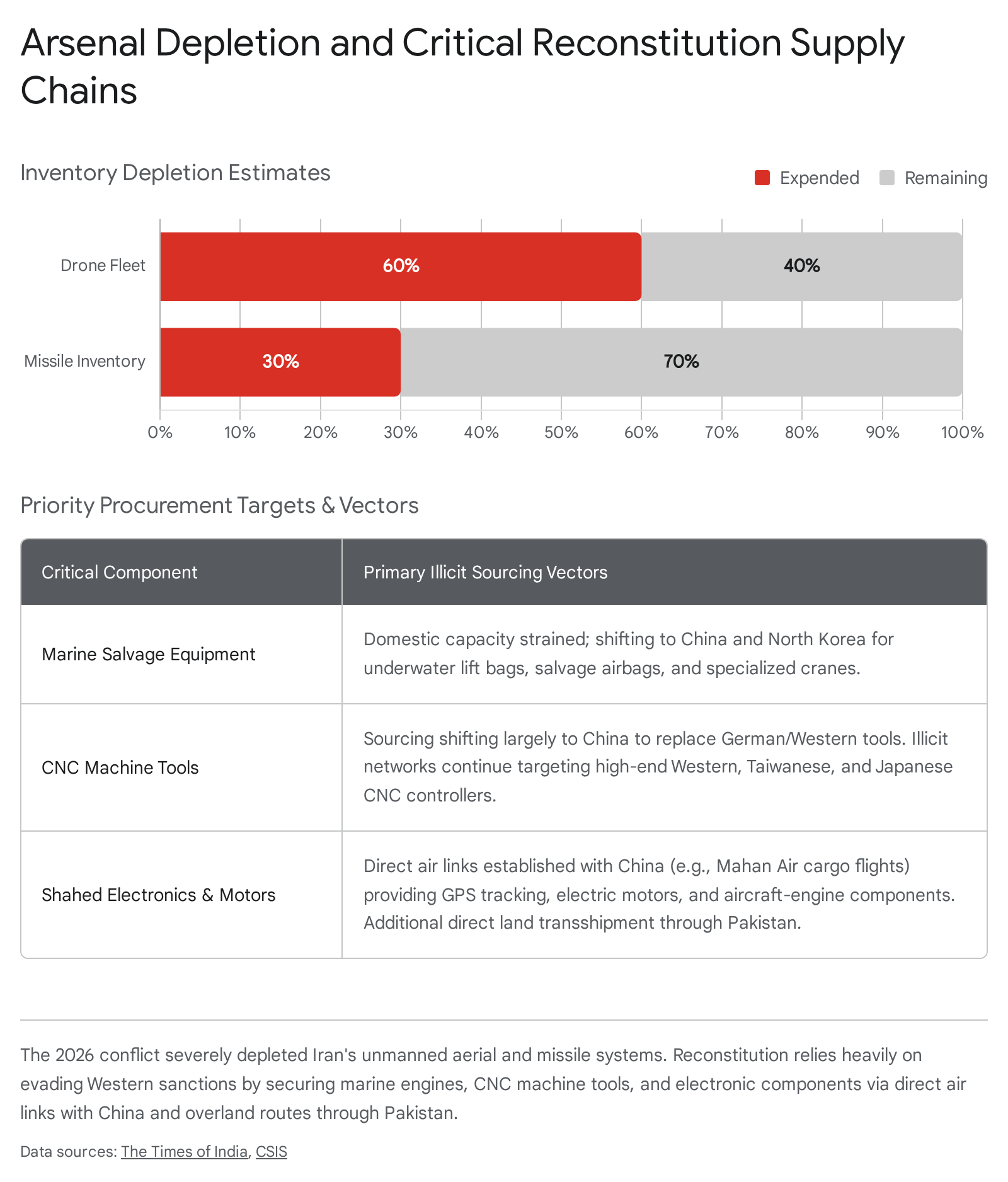
The Iranian military apparatus remains severely degraded following the initial 38 day kinetic phase of Operation Epic Fury. Pentagon assessments indicate that over 80 percent of Iran’s integrated air defense systems (IADS) have been destroyed, leaving the national airspace heavily compromised and vulnerable to continued exploitation by United States and Israeli aviation assets.2 Furthermore, approximately 90 percent of the regular Iranian naval fleet and half of the Islamic Revolutionary Guard Corps (IRGC) small attack craft were systematically neutralized by early April.2 The destruction of major ballistic missile production facilities and solid rocket motor manufacturing plants has significantly curtailed Tehran’s strategic strike capabilities.2

Despite these catastrophic materiel losses, the IRGC has successfully transitioned to an asymmetric maritime warfare doctrine, utilizing a surviving “mosquito fleet” of highly mobile fast attack boats to project localized power in littoral zones. On April 22, IRGC naval units demonstrated their residual capability by intercepting and seizing two commercial container ships transiting the Strait of Hormuz, while concurrently firing upon a third vessel.7 Tehran justified these actions as legitimate responses to maritime violations and explicitly framed them as proportionate retaliation against the ongoing United States naval blockade.7 This action effectively cemented a “dual blockade” scenario, wherein the United States interdicts Iranian commerce in the broader Indian Ocean while Iran holds global commercial shipping hostage within the geographic choke point of the Strait of Hormuz.3

Concurrently, Iran continues to actively manage and coordinate its regional proxy network. On April 18, IRGC Quds Force Commander Brigadier General Esmail Ghaani arrived in Baghdad for high level strategic meetings with Iraqi militia leaders.16 This visit, representing Ghaani’s first confirmed foreign trip since the temporary ceasefire began, was designed to maintain operational cohesion among the Axis of Resistance. The objective was to prepare proxy forces for a potential resumption of widespread regional hostilities should the ceasefire completely collapse, ensuring that Iraqi territory remains a viable vector for asymmetric strikes against United States regional bases.18

3.1.2 Policy & Diplomacy

The diplomatic posture of the Islamic Republic was marked by a complete and highly publicized withdrawal from international peace negotiations this week. Following the United States seizure of the M/V Touska on April 19, Iranian officials labeled the act as armed piracy. Consequently, the foreign ministry refused to dispatch a diplomatic delegation to Islamabad, effectively terminating the mediation efforts painstakingly organized by the Pakistani government.5

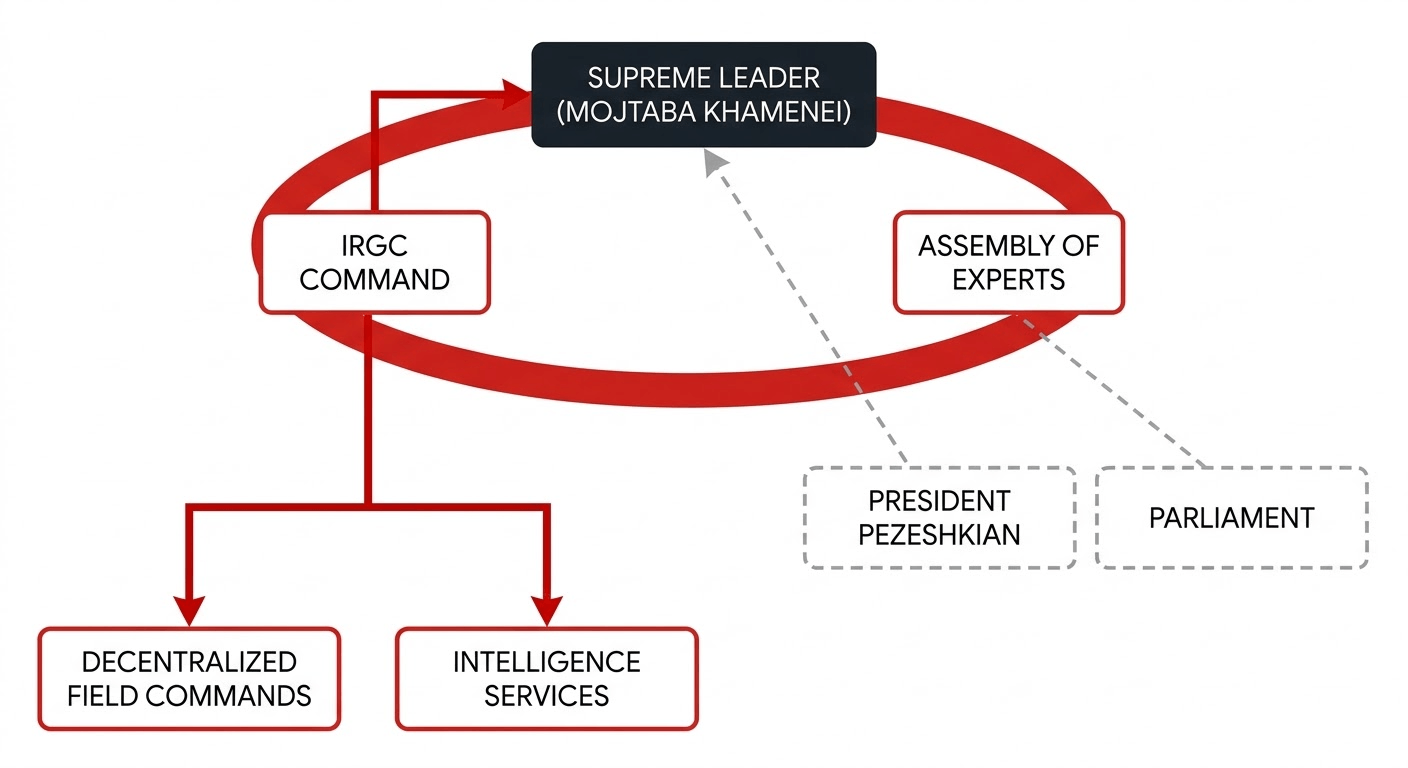
Internally, the Iranian political establishment is experiencing a severe structural crisis driven by economic desperation and succession politics. During the week of April 24, a highly confidential letter addressed to the newly installed Supreme Leader, Mojtaba Khamenei, was leaked to the public sphere.4 The document was reportedly drafted by prominent pragmatic and centrist figures, including Parliament Speaker Mohammad Bagher Ghalibaf, President Masoud Pezeshkian, and Foreign Minister Abbas Araghchi.4 The signatories starkly warned that the Iranian economy is on the brink of total systemic collapse. They asserted that the leadership has no practical alternative but to engage in serious, comprehensive nuclear negotiations with the United States to secure immediate sanctions relief and ensure the survival of the regime.4

This internal dissent directly violated a reported red line established by Mojtaba Khamenei, which strictly forbade government officials from discussing the nuclear portfolio with American representatives under any circumstances.4 The leak, allegedly facilitated by former nuclear negotiator Ali Bagheri Kani to prove his non involvement, triggered a fierce backlash from ultraconservative factions. Hardline parliamentarians, such as Mahmoud Nabavian and Amir Hossein Sabeti, publicly attacked the pragmatic signatories, accusing them of advocating for surrender and compromising national security during a time of war.4 To mitigate the appearance of a fragmented leadership and counteract President Trump’s public assertions that Iranian officials were fighting among themselves, the government subsequently launched a coordinated unity campaign. Senior officials issued synchronized statements affirming their absolute loyalty to the Supreme Leader, though the underlying ideological fracture remains unhealed.4

3.1.3 Civilian Impact

The civilian population of Iran continues to suffer from the compounding, catastrophic effects of destroyed civil infrastructure, global financial sanctions, and the ongoing naval blockade. The systematic destruction of major gas, petrochemical, and steel industrial sites during the primary bombing campaign (such as the strikes on the Asaluyeh petrochemical complex and facilities on Lavan and Siri islands) has resulted in profound energy shortages and widespread industrial paralysis.27

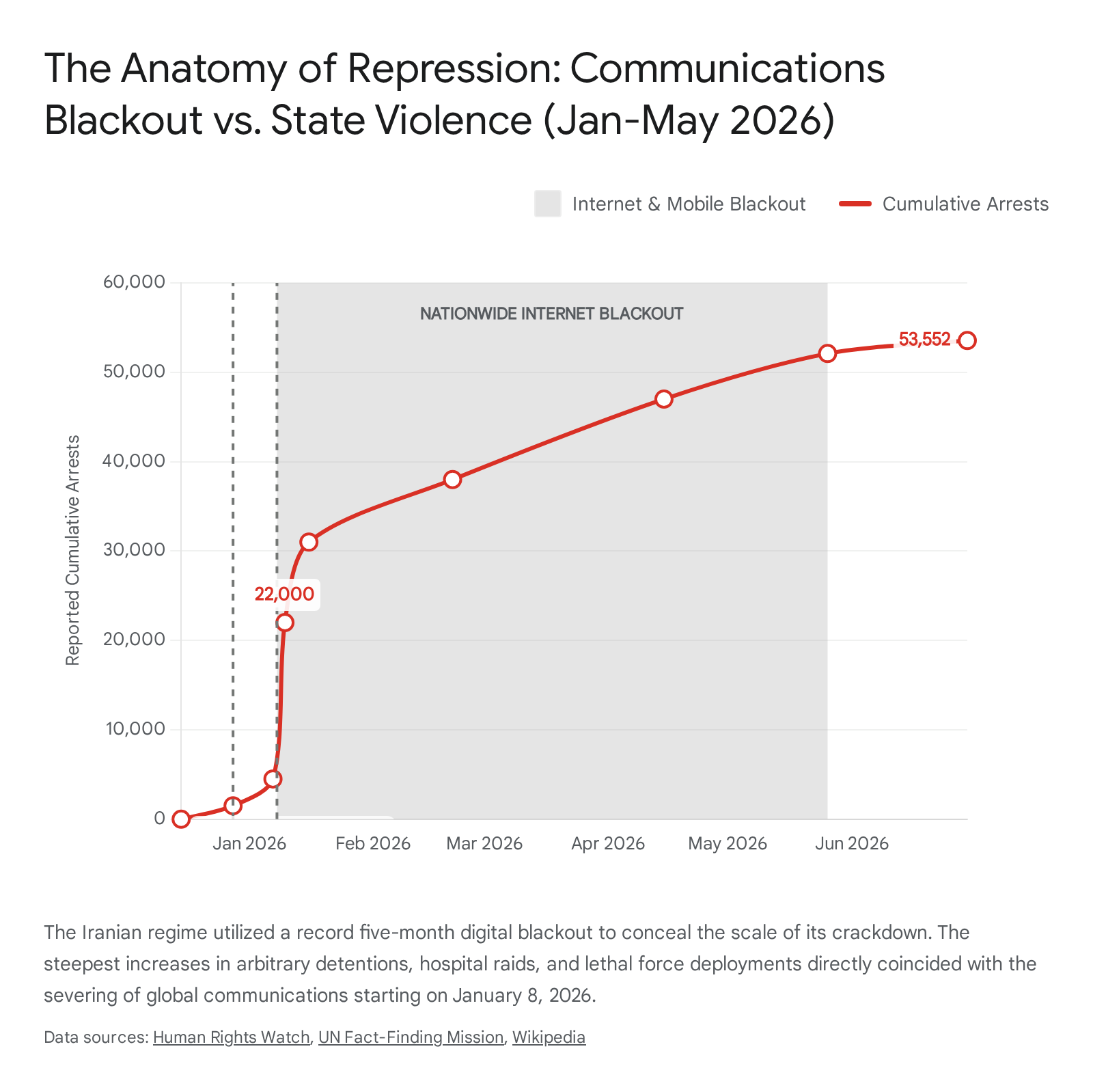
The effective closure of maritime trade routes has drastically reduced the importation of essential goods, medical supplies, and technological components. The economic strain is exacerbating deep seated societal grievances, forcing the state security apparatus to double down on domestic repression to contain potential civil unrest.27 While exact civilian casualty figures from the kinetic phase remain difficult to verify independently, the secondary impacts of the conflict have created a widespread humanitarian crisis. The degradation of power grids and water desalination plants has left millions across the southern coastal provinces without reliable access to basic utilities, compounding the trauma of a war weary populace.27

3.2 Israel

3.2.1 Military Actions & Posture

The Israeli military posture during this reporting period remained largely defensive and consolidatory, focusing on maintaining security along the northern border while supporting United States operations in the Persian Gulf through intelligence sharing and strategic coordination. A significant tactical achievement occurred on April 24, when a temporary ceasefire between the Israel Defense Forces (IDF) and Hezbollah forces in Lebanon was officially extended for an additional three weeks.24 This extension provided essential operational relief for the IDF, allowing them to consolidate defensive positions and rotate personnel after a highly intense period of cross border artillery exchanges and airstrikes earlier in the month.27

Domestically, the IDF Home Front Command continues to manage complex urban recovery operations stemming from the initial Iranian retaliatory barrages. Notably, specialized search and rescue units spent over 18 hours executing a highly complex recovery mission in Haifa following a direct impact from an Iranian ballistic missile equipped with a cluster warhead that struck a residential building earlier in the conflict.28

Concurrently, Israeli military operations in the West Bank and Gaza Strip have resulted in profound infrastructural and societal shifts. According to United Nations monitoring, the IDF has established 925 movement obstacles across the West Bank, representing the highest number recorded in two decades.29 The strategic integration of the IDF with United States regional objectives remains absolute, as Israel continues to view the neutralization of the Iranian nuclear and ballistic missile programs as an existential imperative.27

3.2.2 Policy & Diplomacy

Israel’s diplomatic strategy remains tightly synchronized with Washington, carefully maneuvering to maximize the strategic benefits of Operation Epic Fury while managing international legal scrutiny. The Israeli government has maintained a tactical silence regarding the specific operational parameters of the ongoing naval blockade in the Arabian Sea, allowing the United States to absorb the international diplomatic friction associated with maritime interdictions.

A critical development in bilateral policy emerged on April 21, when the United States Department of State published a detailed legal memorandum outlining the international law justification for the war.20 The document explicitly cited the “collective self defense of its Israeli ally” as a primary legal foundation for the preemptive strikes against Iranian infrastructure.20 This public articulation legally entwines the security architectures of both nations, reinforcing Israel’s diplomatic position that the Iranian military apparatus constitutes an imminent threat requiring multilateral intervention. However, this posture has drawn criticism from international legal scholars who argue the justification stretches the definitions of imminent threat and ongoing armed conflict.21

3.2.3 Civilian Impact

The civilian impact within Israel remains pronounced and systemic. The IDF Home Front Command has mandated that the current “special home front situation” defensive guidelines will remain in effect until at least April 28.31 These guidelines dictate civilian behavior, limit the size of mass gatherings, and ensure proximity to fortified safe rooms across 30 designated geographic zones.

The conflict has also resulted in significant and sustained internal displacement. While the northern border with Lebanon has temporarily stabilized due to the extended ceasefire, tens of thousands of Israeli civilians remain evacuated from their communities due to the persistent, lingering threat of Hezbollah rocket fire and potential border incursions.24 The broader economic indicators within Israel reflect the heavy strain of sustained military mobilization. The national economy is experiencing severe disruptions to the technology, construction, and agricultural sectors, which are further compounded by the logistical challenges of restricted regional airspace and localized labor shortages.32

Regionally, the humanitarian situation in the occupied territories has deteriorated sharply. The United Nations Development Programme estimates that the gross domestic product of the Palestinian territories will contract by 35.1 percent in 2026, with unemployment rising to nearly 50 percent.34 The Human Development Index for Gaza is projected to regress by two decades, driven by the collapse of healthcare infrastructure, restricted aid access, and the widespread destruction of civilian environments.29 The fatalities of humanitarian workers, including United Nations peacekeepers and World Central Kitchen contractors, continue to draw intense international condemnation.35

3.3 United States

3.3.1 Military Actions & Posture

The United States Department of War has fully transitioned its primary operational effort toward enforcing absolute maritime dominance and executing economic interdiction. The military posture in the Middle East is exceptionally robust, anchored by three aircraft carrier strike groups currently operating within the CENTCOM Area of Responsibility. The USS Abraham Lincoln (CVN 72) and a second unnamed carrier were joined by the Nimitz class USS George H.W. Bush (CVN-77) on April 23, providing an overwhelming projection of naval aviation and strategic strike capability.6

The defining military action of the week was the aggressive enforcement of a global maritime blockade targeting Iranian commerce. On April 19, the guided missile destroyer USS Spruance fired upon and disabled the Iranian flagged container ship M/V Touska in the Arabian Sea.5 Following the kinetic disabling of the vessel’s propulsion system, Marines from the 31st Marine Expeditionary Unit executed a complex helicopter borne vertical boarding operation from the USS Tripoli to seize the ship.5 A similar interdiction occurred on April 23 in the Indian Ocean, where United States forces boarded and captured the M/T Majestic X, a stateless tanker previously sanctioned for smuggling Iranian crude oil to Chinese destinations.22

Map of Persian Gulf &amp; Indian Ocean showing dual maritime blockade by US and Iran in April 2026.

To counter the residual asymmetric threat posed by the IRGC mosquito fleet in littoral waters, the United States has deployed Marine Corps AH-1Z Viper helicopters equipped with Target Sight Systems and Joint Air to Ground Missiles (JAGM), specifically designed to neutralize fast attack swarm tactics.6 Additionally, specialized mine countermeasures are being actively deployed to the Strait of Hormuz. The USS Warrior is currently in transit from Japan to assist the USS Canberra in identifying and clearing naval mines laid by Iranian forces.6

It must be noted that the sustained intensity of Operation Epic Fury has significantly depleted United States precision munition inventories. Analytical models indicate that out of a pre war inventory of 3,100 Tomahawk missiles, approximately 850 have been expended. Furthermore, the joint force has utilized over 1,000 Joint Air to Surface Standoff Missiles (JASSMs) and hundreds of Patriot and THAAD interceptors to defend against incoming ballistic threats.6 While President Trump has publicly asserted that the United States possesses a virtually unlimited supply of ammunition, defense analysts point to a more constrained reality regarding highly advanced, finite interceptor systems.38

3.3.2 Policy & Diplomacy

United States policy regarding the conflict has hardened into a strategy of absolute economic attrition, branded internally by the administration as Operation Economic Fury.10 Following the collapse of the Islamabad negotiations, President Trump unilaterally extended the ceasefire parameters while simultaneously accelerating the enforcement of the global naval blockade.6

The legal framework supporting these actions was formalized on April 21 by State Department Legal Adviser Reed Rubinstein.20 The published memorandum asserted that Operation Epic Fury is not a new conflict, but rather the legal continuation of an ongoing international armed conflict that originated during the June 2025 hostilities.20 By arguing that the previous cessation of hostilities lacked permanence, the administration contends it is acting within the bounds of collective self defense to protect Israel, while simultaneously attempting to bypass the 60 day congressional authorization mandate explicitly outlined in the War Powers Resolution.21 This legal maneuver has drawn intense scrutiny from constitutional scholars and international legal bodies.

Furthermore, the Department of the Treasury implemented sweeping secondary sanctions against 40 shipping firms and vessels, explicitly targeting the shadow fleet networks and Chinese oil refineries that facilitate illicit Iranian petroleum exports.39 This aggressive financial strangulation is designed to completely sever Tehran’s access to foreign currency, compounding the physical blockade enforced by the Navy.

3.3.3 Civilian Impact

The domestic impact of the conflict within the United States is primarily macroeconomic, driven by severe disruptions in global energy markets and supply chains. The functional closure of the Strait of Hormuz has triggered a massive spike in global petroleum prices, resulting in an estimated $8.4 billion increase in aggregate fuel costs for American consumers since the conflict began.14 Industry analysts estimate that between 600 and 700 million barrels of oil production have been lost due to the conflict.40

The national average for gasoline surpassed $4.05 per gallon during this reporting period, directly impacting the disposable income of lower and middle class households.14 Consequently, the Bureau of Labor Statistics reported a sharp increase in core inflation, which jumped to 3.3 percent in March.15 The International Monetary Fund (IMF) subsequently revised its United States inflation forecast upward to 3.2 percent for the year 2026, explicitly warning that the macroeconomic shockwaves of the conflict will persist long after a formal cessation of hostilities is achieved.15 Consumer sentiment has plummeted to a 70 year low, with recent polling indicating that 76 percent of Americans disapprove of how the administration is handling the rising cost of living, reflecting growing domestic anxiety over the economic consequences of the overseas military engagement.41

4.0 Regional and Gulf State Impacts

The strategic spillover from Operation Epic Fury continues to fundamentally destabilize the broader Middle East, particularly the member states of the Gulf Cooperation Council (GCC). These nations (Saudi Arabia, the United Arab Emirates, Qatar, Bahrain, Kuwait, and Oman) find themselves caught in a precarious security dilemma, balancing their reliance on the United States security umbrella with their geographic vulnerability to devastating Iranian retaliation.

Airspace Restrictions and Aviation Logistics The regional aviation network remains severely fractured, forcing global commercial carriers to adopt highly inefficient bypass routing, which drives up operational costs and delays international logistics. The operational picture for GCC airspace as of April 25 demonstrates a complex patchwork of hard closures and tightly managed corridors 12:

StateAirspace (FIR) StatusOperational Impact and Current Guidelines
KuwaitClosedThe Kuwait Flight Information Region (FIR) remains fully closed to commercial traffic. The airport infrastructure sustained damage in previous drone strikes, rendering it unusable for international transit. Short term closure NOTAMs are continually issued.
IranHigh Risk / Partially OpenThe Tehran FIR opened for limited eastbound transit above Flight Level 285 under strict recovery procedures. However, major international carriers continue to avoid the airspace entirely due to acute security risks and unpredictable air defense activity.
QatarRestricted / ControlledThe Doha FIR is open but highly regulated. Arrivals and departures are restricted to specific entry points. Foreign airline rotation caps are structurally limiting regional air cargo uplift, creating significant logistical bottlenecks.
UAEPartially ClosedThe Emirates FIR operates under a strict, non flexible corridor system. Overflights are limited to westbound traffic only via the LUDID waypoint. Operators must expect flow measures and extensive delays.
BahrainApproval-BasedBahraini airspace remains fully open but is strictly approval based. Operators must secure prior authorization from the Civil Aviation Authority and adhere to fixed, predetermined entry and exit parameters.
Saudi ArabiaOpen (Bypass Route)Saudi airspace remains fully open, serving as the primary “southern bypass” for global traffic avoiding the conflict zone. Airports in Jeddah are absorbing massive displaced cargo volumes, leading to severe logistical congestion and delays.

Diplomatic Maneuvering and Security Posture The GCC states have maintained a unified diplomatic front condemning Iranian aggression. In a joint statement, the foreign ministries of Saudi Arabia, the UAE, Bahrain, Kuwait, Qatar, and Jordan explicitly denounced the Iranian missile and drone strikes that targeted their sovereign territory and energy infrastructure during the kinetic phase of the war.13 The coalition cited Article 51 of the UN Charter, formally reserving their inherent right to individual and collective self defense against further proxy or direct attacks.13

Despite this unified public rhetoric, individual states are pursuing varied, pragmatic mitigation strategies to de escalate the situation. Egypt, acting as a regional mediator, has partnered with Saudi Arabia, Pakistan, and Turkey in an attempt to draft a comprehensive security settlement independent of direct United States involvement.19 This diplomatic initiative reflects a growing, palpable anxiety among Gulf capitals that Washington’s current strategy of total economic blockade prioritizes nuclear containment at the unacceptable cost of regional economic stability.19

Furthermore, significant friction has emerged regarding post conflict financial reparations. Qatar, which experienced an estimated 17 percent drop in its critical energy export capacity following a direct Iranian strike on the Pearl GTL facility in Ras Laffan earlier in the conflict, has publicly demanded financial compensation from Tehran, complicating future normalization efforts.27

Internal Security and Domestic Stability The threat of asymmetrical warfare and domestic subversion remains acute across the Arabian Peninsula. Following the publication of an IRGC target list threatening specific, high value oil and gas facilities in Saudi Arabia, Kuwait, Bahrain, Qatar, and the UAE, local security forces have mobilized heavily to protect critical infrastructure from sabotage.11 To preempt internal dissent, multiple Gulf states have initiated sweeping waves of domestic arrests. These crackdowns explicitly target individuals suspected of harboring affiliations with the Axis of Resistance, as well as civilians arrested for filming or disseminating unauthorized footage of military movements and intercepted missile strikes.27 This heightened security posture reflects the deep concern that external kinetic warfare could catalyze internal political instability across the monarchies.

5.0 Appendices

Appendix A: Methodology

The intelligence, statistical data, and qualitative analysis compiled in this situation report were generated through an exhaustive, real time research sweep of open source intelligence (OSINT) networks, military monitor databases, state sponsored broadcasts, and verified diplomatic communications covering the seven day period ending April 25, 2026. The synthesis of this report explicitly prioritizes official, verifiable statements from the United States Department of War, the Department of State, and CENTCOM press releases for primary operational military data.

To balance potential institutional bias and provide a holistic geopolitical view, these official accounts were systematically cross referenced against regional reporting (including Al Jazeera and Iran International), economic assessments from global financial institutions (IMF, OECD), and independent conflict monitors (such as The Institute for the Study of War and ACLED). Where conflicting timelines emerged regarding specific maritime seizures in the Arabian Sea and Indian Ocean, priority was granted to verifiable maritime tracking data cross referenced with corresponding official military confirmations. The temporal overlap was calculated using Coordinated Universal Time (UTC) to ensure chronological accuracy across disparate time zones.

Appendix B: Glossary of Acronyms

  • AOR: Area of Responsibility. The specific geographic region assigned to a military combatant commander for the execution of military operations.
  • CENTCOM: United States Central Command. The unified combatant command responsible for United States security interests in the Middle East, Central Asia, and parts of South Asia.
  • CSG: Carrier Strike Group. A formidable naval operational formation composed of an aircraft carrier, guided missile cruisers, destroyers, and logistical support ships.
  • FIR: Flight Information Region. A specified region of airspace in which a flight information service and an alerting service are provided to civilian and military aviation.
  • GCC: Gulf Cooperation Council. A regional, intergovernmental political and economic union consisting of Bahrain, Kuwait, Oman, Qatar, Saudi Arabia, and the United Arab Emirates.
  • IADS: Integrated Air Defense System. A highly complex network of radars, surface to air missiles, and command centers used to detect, track, and intercept aerial threats.
  • IDF: Israel Defense Forces. The national military of the State of Israel.
  • IRGC: Islamic Revolutionary Guard Corps. A multi service primary branch of the Iranian Armed Forces, distinct from the regular military, responsible for internal security, ballistic missiles, and asymmetric warfare.
  • JAGM: Joint Air to Ground Missile. A precision guided munition utilized by United States rotary wing aircraft to engage high value stationary and moving targets.
  • JASSM: Joint Air to Surface Standoff Missile. A low observable standoff air launched cruise missile used by the United States Air Force.
  • MEU: Marine Expeditionary Unit. A highly mobile, rapid response marine air ground task force capable of executing amphibious and special operations.
  • THAAD: Terminal High Altitude Area Defense. A United States anti ballistic missile defense system designed to intercept short, medium, and intermediate range ballistic missiles.

Appendix C: Glossary of Foreign Words

  • Axis of Resistance: An informal political and military coalition led by the Iranian government, comprising various state and non state actors (including Hezbollah in Lebanon, Shia militias in Iraq and Syria, and the Houthis in Yemen) operating across the Middle East to oppose Western and Israeli influence.
  • Khamenei: A prominent Iranian clerical family name. It refers to Ali Khamenei, the former Supreme Leader of Iran who served until his death in the opening salvos of Operation Epic Fury. His son, Mojtaba Khamenei, subsequently assumed the position of Supreme Leader.
  • Majlis: The Islamic Consultative Assembly, which serves as the national legislative body or Parliament of the Islamic Republic of Iran.
  • Quds Force: One of the five branches of Iran’s Islamic Revolutionary Guard Corps, specifically tasked with conducting unconventional warfare, intelligence gathering, and extraterritorial military operations, often acting as the primary liaison to proxy militias.

Please share the link on Facebook, Forums, with colleagues, etc. Your support is much appreciated and if you have any feedback, please email us in**@*********ps.com. If you’d like to request a report or order a reprint, please click here for the corresponding page to open in new tab.


Sources Used

  1. Peace Through Strength: Operation Epic Fury Crushes Iranian …, accessed April 26, 2026, https://www.whitehouse.gov/releases/2026/04/peace-through-strength-operation-epic-fury-crushes-iranian-threat-as-ceasefire-takes-hold/
  2. Epic Fury Quelled for Now, Objectives Accomplished, U.S. Forces …, accessed April 26, 2026, https://www.war.gov/News/News-Stories/Article/Article/4454276/epic-fury-quelled-for-now-objectives-accomplished-us-forces-remain-ready/
  3. 2026 Iran war – Wikipedia, accessed April 26, 2026, https://en.wikipedia.org/wiki/2026_Iran_war
  4. Behind Tehran’s unity show: The secret letter to the shadow king …, accessed April 26, 2026, https://www.iranintl.com/en/202604244463
  5. US captures Iranian ship Touska amid mediation efforts: All we know …, accessed April 26, 2026, https://www.aljazeera.com/news/2026/4/20/us-captures-iranian-ship-touska-amid-mediation-efforts-all-we-know
  6. Epic Fury Update – April 24, 2026 – SOF News, accessed April 26, 2026, https://sof.news/middle-east/epic-fury-24april2026/
  7. Tehran Says It Has Seized Two Ships in Strait of Hormuz as Iranian Adviser Argues Cease-Fire Means ‘Nothing’, accessed April 26, 2026, https://time.com/article/2026/04/22/strait-of-hormuz-attacks-vessels-seized-iran-us-war-ceasefire/
  8. Iran fast-boat swarms add to Hormuz threats for shipping | The Jerusalem Post, accessed April 26, 2026, https://www.jpost.com/middle-east/article-894036
  9. How Iran raised Hormuz stakes by capturing ships | US-Israel war on Iran News | Al Jazeera, accessed April 26, 2026, https://www.aljazeera.com/news/2026/4/23/how-iran-raised-hormuz-stakes-by-capturing-ships
  10. U.S. launches ‘Operation Economic Fury’ to obstruct Iran’s revenue streams amid blockade, accessed April 26, 2026, https://defensescoop.com/2026/04/16/trump-economic-pressure-iran-blockade/
  11. Gulf States: Situation & Travel Update | 24 APRIL 2026 – Solace Global, accessed April 26, 2026, https://www.solaceglobal.com/news/2026/04/24/gulf-sitrep-2404/
  12. Middle East Airspace – Current Operational Picture – International Ops 2025 – OpsGroup, accessed April 26, 2026, https://ops.group/blog/middle-east-airspace-current-operational-picture/
  13. Joint Statement by UAE, Kuwait, Bahrain, Saudi Arabia, Qatar and Jordan on Iran’s Blatant Attacks, accessed April 26, 2026, https://www.mofa.gov.ae/en/mediahub/news/2026/3/25/uae-kuwait
  14. Higher gas prices have cost U.S. drivers an additional $8.4 billion, Democrats say, accessed April 26, 2026, https://www.cbsnews.com/news/gas-prices-iran-war-8-4-billion-increased-costs/
  15. Impact of Iran war will hurt US even after conflict ends, economists warn, accessed April 26, 2026, https://www.ft.com/content/80436d72-25e1-4a97-be09-3327c2d0af9a?syn-25a6b1a6=1
  16. Iran Update Special Report, April 19, 2026, accessed April 26, 2026, https://understandingwar.org/research/middle-east/iran-update-special-report-april-19-2026/
  17. Iran’s Quds Force chief Qaani visits Iraq: senior official – SpaceWar.com, accessed April 26, 2026, https://www.spacewar.com/afp/260418192600.fi7qg6kf.html
  18. Iran’s Quds Force commander visits Baghdad as factions look to fill PM post | The National, accessed April 26, 2026, https://www.thenationalnews.com/news/mena/2026/04/20/irans-quds-force-commander-visits-baghdad-as-factions-look-to-fill-pm-post/
  19. Egypt and the Gulf: A Relationship under Pressure, accessed April 26, 2026, https://arabcenterdc.org/resource/egypt-and-the-gulf-a-relationship-under-pressure/
  20. Operation Epic Fury and International Law, accessed April 26, 2026, https://www.state.gov/releases/office-of-the-legal-adviser/2026/04/operation-epic-fury-and-international-law
  21. On the State Department Memorandum “Operation Epic Fury and International Law”, accessed April 26, 2026, https://www.justsecurity.org/137097/state-department-epic-fury-international-law/
  22. U.S. Forces Seize Third Iranian-Linked Tanker in Indian Ocean, accessed April 26, 2026, https://www.sofx.com/u-s-forces-seize-third-iranian-linked-tanker-in-indian-ocean/
  23. US forces board VLCC carrying Iranian oil, accessed April 26, 2026, https://www.argusmedia.com/en/news-and-insights/latest-market-news/2818030-us-forces-board-vlcc-carrying-iranian-oil
  24. 2026 Iran war | Explained, United States, Israel, Strait of Hormuz …, accessed April 26, 2026, https://www.britannica.com/event/2026-Iran-war
  25. Joint Force Enforces Maritime Blockade in Gulf of Oman, Globally, accessed April 26, 2026, https://www.war.gov/News/News-Stories/Article/Article/4470128/joint-force-enforces-maritime-blockade-in-gulf-of-oman-globally/
  26. Baghdad, April 18, 2026 (AFP) – Iran’s Quds Force chief Qaani visits Iraq: senior official, accessed April 26, 2026, https://www.nampa.org/text/22912461
  27. Middle East Overview: April 2026 – ACLED, accessed April 26, 2026, https://acleddata.com/update/middle-east-overview-april-2026
  28. Home Front Command officer says Haifa recovery operation one of war’s ‘most complex’, accessed April 26, 2026, https://www.timesofisrael.com/liveblog_entry/home-front-command-officer-says-haifa-recovery-operation-one-of-wars-most-complex/
  29. Humanitarian Situation Report | 23 April 2026 – OCHA oPt, accessed April 26, 2026, https://www.ochaopt.org/content/humanitarian-situation-report-23-april-2026
  30. US memo debunks Trump claims: Iran war launched at ‘Israel’s’ request, accessed April 26, 2026, https://english.almayadeen.net/news/politics/us-memo-debunks-trump-claims–iran-war-launched-at–israel-s
  31. National Emergency Portal | Home Front Command defensive policy – פיקוד העורף, accessed April 26, 2026, https://www.oref.org.il/eng/articles/info/iron-swords/1100/
  32. Operation Roaring Lion: A Special Home Front Situation – The Israel Democracy Institute, accessed April 26, 2026, https://en.idi.org.il/articles/63607
  33. Home Front Command says civilians in most of north can exit bomb shelters, accessed April 26, 2026, https://www.timesofisrael.com/liveblog_entry/home-front-command-says-civilians-in-most-of-north-can-exit-bomb-shelters/
  34. Gaza war: Expected socioeconomic impacts on the State of Palestine – United Nations Development Programme, accessed April 26, 2026, https://www.undp.org/sites/g/files/zskgke326/files/2024-10/gaza-war-expected-socioeconomic-impacts-palestine-policy-brief-english-1.pdf
  35. Reported impact snapshot | Gaza Strip (18 February 2026) – Queensland Parliament, accessed April 26, 2026, https://www.parliament.qld.gov.au/Work-of-the-Assembly/Tabled-Papers/docs/5826T0381/5826t381.pdf
  36. Noon briefing of 24 April 2026 | Secretary-General – the United Nations, accessed April 26, 2026, https://www.un.org/sg/en/content/highlight/2026-04-24.html
  37. Epic Fury Update – 19 April 2026 – SOF News, accessed April 26, 2026, https://sof.news/middle-east/epic-fury-19april2026/
  38. As U.S. re-arms during Iran ceasefire, long-term concerns emerge about advanced munitions supplies, accessed April 26, 2026, https://www.cbsnews.com/news/us-rearms-iran-ceasefire-advanced-munitions-supplies/
  39. U.S. targets China’s shadow trade with Iran in sweeping sanctions, accessed April 26, 2026, https://www.washingtonpost.com/national-security/2026/04/24/china-iran-oil-treasury-sanctions/
  40. Economic impact of the 2026 Iran war – Wikipedia, accessed April 26, 2026, https://en.wikipedia.org/wiki/Economic_impact_of_the_2026_Iran_war
  41. Economists give dire prediction about inflation as no end in sight for Iran war, accessed April 26, 2026, https://www.the-independent.com/news/world/americas/us-politics/economists-inflation-estimates-iran-war-b2964524.html
  42. Pain at the Pump… Are We There Yet?, accessed April 26, 2026, https://www.pennmutualam.com/market-insights-news/blogs/chart-of-the-week/2026-04-23-pain-at-the-pump-are-we-there-yet
  43. S/PV.10119 Security Council – the United Nations, accessed April 26, 2026, https://docs.un.org/en/S/PV.10119
  44. Three Scenarios for the Gulf States After the Iran War, accessed April 26, 2026, https://carnegieendowment.org/emissary/2026/04/gulf-states-gcc-iran-war-three-scenarios

Global Nuclear Power Infrastructure: Strategic Analysis of Fleet Status, Economics, and Geopolitical Vulnerabilities

1. Executive Summary

The global commercial nuclear energy sector currently occupies a critical nexus of climate imperatives, national security, and complex techno-economic realities. As nation-states pursue rapid decarbonization alongside sovereign energy independence, nuclear power—uniquely capable of providing high-density, reliable baseload electricity without carbon emissions—is undergoing a profound strategic reassessment globally. This document provides an exhaustive intelligence and economic analysis of the worldwide commercial nuclear power fleet designed to provide electricity to national power grids. The analysis synthesizes operating statuses, power outputs, capital cost economics, life extension methodologies, and the geopolitical vulnerabilities inherent within the nuclear fuel cycle.

Currently, the global operating fleet consists of 415 commercial nuclear reactors, which collectively generate approximately 379,471 megawatts (MW) of net electrical capacity.1 These facilities provide nearly ten percent of global electricity and represent a quarter of all low-carbon power generation worldwide.3 However, the geographic distribution of this capability is undergoing a historic shift. While the United States and France maintain the oldest and largest fleets by capacity, the momentum for new construction has decisively moved eastward. Of the 78 reactors currently under construction globally, the vast majority are located in Asia—driven largely by the People’s Republic of China—and deployed internationally through aggressive export strategies by the Russian Federation.5

The economics of nuclear power present a stark international dichotomy. In state-directed economies, standardized build programs have successfully driven overnight construction costs down to approximately $2,341 per kilowatt (kW).7 Conversely, Western projects are plagued by first-of-a-kind premiums, regulatory bottlenecks, and a generational loss of supply chain expertise. This has led to immense budget overruns, exemplified by the United Kingdom’s Hinkley Point C project, which is now estimated to cost up to £48 billion.8 Consequently, Western nations are increasingly prioritizing the lifetime extension of existing assets—pushing operational limits to 60 or 80 years—and pursuing the unprecedented strategy of restarting decommissioned or mothballed reactors, such as the Palisades plant and Three Mile Island Unit 1 in the United States.10

Furthermore, this report investigates the significant geopolitical risks embedded in the nuclear supply chain. The global reliance on Russia’s State Atomic Energy Corporation (Rosatom) and its subsidiary Tenex for uranium conversion, enrichment, and High-Assay Low-Enriched Uranium (HALEU) presents an acute vulnerability.13 As the world navigates the transition to net-zero emissions, the future of nuclear power will depend not only on overcoming exorbitant capital costs and technical aging challenges but also on successfully decoupling critical supply chains from adversarial state actors.

2. The Global Operating Fleet: Capacity, Topography, and Performance

The International Atomic Energy Agency’s (IAEA) Power Reactor Information System (PRIS) database remains the most authoritative and comprehensive repository for global nuclear infrastructure data, tracking reactor status, performance, and energy availability since 1970.15 As of mid-2025, the world operates 415 nuclear reactors dedicated to supplying electricity to national grids, representing a total net electrical capacity of 379,471 MW.1

2.1 Geographic Distribution of Operating Capacity

The global distribution of nuclear power is highly concentrated among advanced industrial economies and rapidly developing nations. The United States maintains the largest operational fleet, though it is characterized by aging infrastructure and a historical dearth of recent deployments. China is rapidly closing this gap, maintaining an aggressive build schedule that outpaces all other nations combined. The table below provides a comprehensive breakdown of the world’s operational nuclear fleet by country, detailing the number of active reactors and their total net electrical capacity.2

Country / TerritoryNumber of Operating ReactorsTotal Net Electrical Capacity (MW)Share of Global Capacity (%)
United States of America9496,95225.55
France5763,00016.60
China6058,77015.49
Russia3427,9697.37
Republic of Korea (South Korea)2625,6096.75
Ukraine1513,1073.45
Canada1712,7143.35
Japan1412,6313.33
India217,5501.99
Spain77,1231.88
Sweden67,0081.85
United Kingdom95,8831.55
United Arab Emirates45,3481.41
Finland54,3691.15
Czech Republic63,9631.04
Pakistan63,2620.86
Switzerland42,9730.78
Slovakia52,3020.61
Belarus22,2200.59
Belgium22,0560.54
Bulgaria22,0060.53
Hungary41,9160.50
Brazil21,8840.50
South Africa21,8540.49
Argentina31,6410.43
Mexico21,5520.41
Romania21,3000.34
Islamic Republic of Iran19150.24
Slovenia16960.18
Netherlands14820.13
Armenia14160.11
Total415379,471100.00
Top 10 nations by operating nuclear capacity: US, France, China lead.

The proportion of total electricity demand met by nuclear power varies drastically by jurisdiction. In the United States, nuclear power supplied 781,979 gigawatt-hours (GWh) in 2024, representing approximately 18.2% of the nation’s total electricity production.17 This share has remained relatively stable over the past two decades, hovering between 18% and 20%.17 Conversely, France derives over 70% of its electrical power from its nuclear fleet, underscoring a distinct national energy security strategy formulated in the late twentieth century.18

2.2 Reactor Technology Topography

The technological foundation of the global fleet is overwhelmingly dominated by Light-Water Reactors (LWRs). Specifically, Pressurized Light-Water Moderated and Cooled Reactors (PWRs) form the absolute core of the industry standard. There are 308 operational PWR units worldwide, generating 297,631 MW of total capacity.1 The design preference for PWRs stems from their inherent physical stability, the critical separation of the primary radioactive coolant loop from the secondary steam generation loop, and decades of extensive historical operating data that inform modern safety and maintenance protocols.

Boiling Light-Water Cooled and Moderated Reactors (BWRs) comprise the second-largest technological contingent, with 43 reactors currently generating 44,720 MW.1 Pressurized Heavy-Water Moderated and Cooled Reactors (PHWRs), which are prominently utilized in Canada and India and often recognized internationally as CANDU-type designs, total 46 units providing 24,430 MW.1 The PHWR design allows for the use of unenriched natural uranium, circumventing the need for complex and strategically sensitive enrichment supply chains.

Legacy and experimental technologies hold a much smaller market share. The Light-Water Cooled, Graphite Moderated Reactor (LWGR, which includes the Soviet-era RBMK design) accounts for 7 operational units providing 6,475 MW.1 Gas-Cooled, Graphite Moderated Reactors (GCR) comprise 8 units generating 4,685 MW, while Fast Breeder Reactors (FBR) remain largely experimental or limited in commercial scope, with only two units operational globally, contributing 1,380 MW.1 Furthermore, there is currently one High Temperature Gas Cooled Reactor (HTGR) generating 150 MW.1

2.3 Operational Performance and Load Factors

Modern nuclear reactors operate with exceptional efficiency and uptime. The median capacity factor for the global fleet operates at nearly 88 percent.3 A review of the top-performing reactors by load factor in 2024 demonstrates that rigorous maintenance and operational excellence can yield load factors exceeding 100 percent of nominal nameplate capacity through uprating and optimized thermal efficiencies. Russian and American reactors heavily populate the highest performance tiers. For instance, Russia’s Balakovo 4 (a 950 MW VVER V-320 PWR) achieved a 108.60 load factor, closely followed by the United States’ Turkey Point 4 (an 821 MW PWR) at 106.40, and Russia’s Kalinin 2 at 106.10.5 Japan’s Takahama 3, a pressurized water reactor, demonstrated a 105.80 load factor, highlighting post-Fukushima operational resilience.5

In terms of absolute electricity generation, the newest generation of high-capacity reactors dominates. China’s Taishan 1 (an EPR-1750 PWR) is projected to generate 12.7 TWh in 2025, while South Korea’s Saeul 1 (an APR-1400 PWR) follows closely at 11.8 TWh, and the United States’ Palo Verde 1 at 11.7 TWh.5 Historically, cumulative generation records are held by aging but highly optimized Western plants, with the U.S. Peach Bottom 2 and 3 boiling water reactors leading global lifetime generation figures at nearly 400 TWh each.5

3. The Economics of Nuclear Energy: Capital Deployment and LCOE

The economic viability of commercial nuclear power is severely front-loaded, making it highly sensitive to macroeconomic financing conditions. Capital expenditures—encompassing the overnight construction cost (OCC), financing costs accrued during the lengthy multi-year build period, and project management—account for the vast majority of the Levelized Cost of Energy (LCOE) over the plant’s operational life. Effective modeling of global energy markets requires a nuanced understanding of how these costs fluctuate based on jurisdiction, regulatory environment, and supply chain maturity.19

3.1 Divergent Overnight Construction Costs

The overnight cost to build a nuclear reactor varies wildly depending on the regulatory environment, localized labor costs, and the degree of design standardization. A deep dive into Chinese nuclear economics reveals unparalleled cost efficiency driven by state planning. The total investment for the 55 operational reactors in China amounted to roughly 841 billion CNY, yielding a unit cost of 14,755 CNY/kW (approximately $2,230 USD/kW).7 When factoring in reactors currently under construction and those approved for near-term deployment, the estimated unit cost rises only slightly to 15,873 CNY/kW ($2,341 USD/kW).7 Furthermore, construction durations in China average an incredibly swift 74 months, significantly mitigating the accrual of financing interest.7 Chinese operating costs are equally optimized, estimated to range between $0.03 and $0.04 USD/kWh.7

By stark contrast, the atrophied nuclear supply chain in the West leads to crippling First-of-a-Kind (FOAK) premiums. Data regarding the AP1000 and European Pressurized Water Reactor (EPR) deployments suggest that slower concrete installation rates, stringent regulatory redesigns mid-construction, and the loss of experienced metallurgical tradespeople have exponentially driven up costs.20 Flowline chart analyses indicate that delays in Western projects are predominantly rooted in fundamentally slower civil engineering and concrete installation rates compared to South Korean and Chinese deployments.20

Bar chart: China nuclear construction cost $2,341/kW vs. USA $13,800/kW & UK $15,000/kW.

3.2 Discount Rates and Financial Engineering

Because nuclear megaprojects require billions in upfront capital and take up to a decade to yield initial revenue, the cost of capital—expressed through the discount rate or Weighted Average Cost of Capital (WACC)—is the primary determinant of the final Levelized Cost of Energy. At a 3% discount rate, which implies heavy state subsidization or sovereign loan guarantees, nuclear power is highly competitive with natural gas and coal globally. For instance, at a 3% discount rate, the estimated cost of nuclear energy in the United States is $43.9/MWh, while in China it is $49.9/MWh, and in Russia, it falls to an astonishing $27.4/MWh.21

However, at a 7% or 10% discount rate—which is highly typical of private equity or Western financial markets evaluating high-risk infrastructure projects—the LCOE nearly doubles. At a 7% discount rate, the U.S. LCOE rises to $71.3/MWh, and at 10%, it surges to $98.6/MWh.21 This financial reality renders private nuclear development uncompetitive in deregulated markets without heavy state subsidies or guaranteed strike prices. This dynamic necessitates financial mechanisms such as the Contract for Difference (CfD), utilized to secure the UK’s Hinkley Point C project and recently approved by the European Commission for Poland’s planned AP1000 units to guarantee revenue stability over 40 years.22

4. The Global Pipeline: Reactors Under Construction

The global construction pipeline reveals a pronounced macroeconomic and geopolitical shift. There are currently 78 nuclear reactors under construction worldwide, representing a total net capacity of 78,986 MWe.5 The locus of nuclear expansion is overwhelmingly concentrated in Asia and executed through Russian-led export projects. Over the last five years, of the 52 reactors that commenced construction globally, 25 were of Chinese design and 23 were of Russian origin.6

4.1 Detailed Status of Active Megaprojects

The table below outlines a comprehensive selection of the most critical reactors currently under construction globally, prioritizing those with recent grid connections, upcoming expected startup dates, and the newest generation of heavy-capacity builds.5

Reactor NameLocationReactor ModelNet Capacity (MWe)Expected Startup / Grid Connection
San’ao 1ChinaHualong One (PWR)1117March 2026
Taipingling 1ChinaHualong One (PWR)1116February 2026
Kursk 2-1RussiaVVER-TOI (PWR)1200December 2025
Zhangzhou 2ChinaHualong One (PWR)1126November 2025
Rajasthan 7IndiaPHWR630March 2025
Flamanville 3FranceEPR (PWR)1630December 2024
Zhangzhou 1ChinaHualong One (PWR)1126November 2024
Shidaowan Guohe One 1ChinaCAP1400 (PWR)1400October 2024
Fangchenggang 4ChinaHPR1000 (PWR)1105April 2024
Barakah 4United Arab EmiratesAPR-1400 (PWR)1337March 2024
Akkuyu 1TurkeyVVER-1200 (PWR)1114Late 2025 / 2026
Rooppur 1BangladeshVVER-1200 (PWR)12002025
Hinkley Point C (Unit 1)United KingdomEPR (PWR)16302030 (Estimated)
El Dabaa 4EgyptVVER-1200 (PWR)12002031 (Estimated)
Paks II-1HungaryVVER-1200 (PWR)1100Under Construction

4.2 Chinese Domestic Build and Standardization

China is executing the most aggressive and successful nuclear expansion program in human history. The nation’s strategy relies heavily on standardized domestic designs, primarily the Generation III+ Hualong One (HPR1000) and the CAP1400.5 By avoiding the bespoke, site-specific engineering changes that historically plague Western builds, China benefits from massive economies of scale and rapid learning curves. The Chinese pipeline includes a massive wave of new starts scheduled for late 2025 and early 2026, including Xuwei 1, Bailong 1, Lufeng 2, Ningde 6, San’ao 3, and Zhaoyuan 1, all boasting capacities exceeding 1100 MWe.5

4.3 Russian Exports and Geopolitical Integration

The Russian Federation, executed via its state-owned enterprise Rosatom, is the world’s undisputed leader in nuclear technology exports. Russia utilizes nuclear power plant construction as a primary tool of geopolitical statecraft, offering comprehensive financing, construction, and lifetime fuel supply packages to developing nations.18

  • Akkuyu Nuclear Power Plant (Turkey): This project involves four VVER-1200 units totaling over 4,400 MWe.5 With an estimated cost of $24 to $25 billion, it is a flagship Build-Own-Operate model for Rosatom.24 The project has injected over $11 billion into the Turkish economy, and the first unit is expected to achieve full operational status in 2026.24
  • El Dabaa (Egypt): Egypt is progressing with the construction of four 1.2 GWe VVER-1200 reactors in deep cooperation with Russia, with the facility expected to be fully operational by the end of 2031.26
  • Rooppur (Bangladesh): Two VVER-1200 units are under construction with an estimated cost of $12.65 billion.28 The project is currently suffering from delays, resulting in significant daily interest penalties owed to Russia and pushing the Levelized Cost of Energy higher than initially modeled.29

4.4 Western Construction: Delays and Financial Hemorrhaging

In stark contrast to the rapid deployment in the East, the United States and Europe have faced severe, existential challenges in revitalizing their nuclear supply chains. The deployment of “Generation III+” reactors—such as the Westinghouse AP1000 and the French EPR—was originally intended to simplify construction through modularity and passive safety systems.31 Instead, these projects have been characterized by catastrophic schedule delays and cost inflation.

The Vogtle Units 3 and 4 in the United States took 15 years to build and cost $31 billion, approximately $17 billion over the initial budget, illustrating the extreme difficulty of executing first-of-a-kind designs with an inexperienced workforce.10 Similarly, the Hinkley Point C project in the United Kingdom, consisting of two EPR units, was originally estimated to cost £18 billion in 2015 prices with a 2025 completion date.8 Systemic project management failures, stringent regulatory interventions, and a loss of specialized trades have driven current forecasts to a staggering £35 billion in 2015 prices (approximately £48 billion in 2026 prices), with unit 1 delayed until at least 2030.8

5. Aging Fleets, Material Degradation, and Plant Life Extensions

The lack of new builds in the West over the past three decades has resulted in an increasingly geriatric nuclear fleet. As of 2023, the average age of an operating reactor globally was 31 years.32 The United States operates the oldest fleet (average age 41 years), followed closely by France (36 years).32 Consequently, utility companies and safety regulators are intensely focused on Long-Term Operation (LTO) through rigorous license extensions.

5.1 Regulatory Frameworks for Extension

In the United States, the Nuclear Regulatory Commission (NRC) originally licensed plants for 40 years of operation. To date, 88 of America’s 92 operational reactors have received initial 20-year extensions, pushing their operational life to 60 years.12 Driven by the Department of Energy’s Light Water Reactor Sustainability (LWRS) program, which has provided a decade of material research, utilities are now seeking Subsequent License Renewals (SLR) for an additional 20 years. This action would bring the total operational life of these assets to 80 years, effectively keeping a quarter of the U.S. fleet online beyond 2050.12

In France, operating licenses are not strictly time-limited at issuance but are subject to comprehensive decennial safety reviews by the Autorité de Sûreté Nucléaire (ASN).33 The “fourth periodic safety review” (PSR4) is currently evaluating the 900 MWe and 1300 MWe fleets for operation beyond their initial 40-year design life.34 The ASN mandates that extending operations must aim for the best modern safety standards, including resilience against climate change impacts. In August 2023, Tricastin 1 became the first French reactor approved to operate past 40 years, setting a precedent for the entire national fleet.35

5.2 Technical Risks: Embrittlement and Stress Corrosion Cracking

Extending reactor lifespans to 60 or 80 years is not merely an administrative hurdle; it requires navigating severe material degradation under extreme thermal, mechanical, and radiological stresses over decades.

  • Neutron Embrittlement: Inside the Reactor Pressure Vessel (RPV)—the thick steel container holding the nuclear fuel—high-energy neutrons bombard the steel structure continuously.37 Over decades, these subatomic impacts alter the crystalline structure of the steel, significantly reducing its ductility and fracture toughness.37 This “embrittlement” is particularly critical in Pressurized Water Reactors. In an accident scenario known as Pressurized Thermal Shock (PTS), where cold emergency water is injected into a hot, pressurized vessel, the rapid thermal stress could potentially fracture the embrittled steel, compromising the primary containment barrier.37 Regulators enforce strict monitoring via Appendix H material surveillance programs to ensure the vessel steel retains adequate safety margins.37
  • Intergranular Stress Corrosion Cracking (IGSCC): High operational stresses combined with a highly corrosive, high-temperature water environment cause critical internal metallic components to crack and fail, sometimes with little warning.38 Advanced metallurgical research indicates that nanoscale mismatches between adjacent crystals in polycrystalline alloys create weak regions that alter electronic properties, accelerating oxygen reactions and chemical attacks.38 Managing IGSCC requires continuous non-destructive evaluation, advanced noble chemical water chemistry controls, and the eventual, highly expensive replacement of massive components like steam generators.38

6. Permanently Shut Down and Phased-Out Reactors

Globally, over 200 commercial reactors have been permanently shut down. While the mean age of closure for units taken offline between 2020 and 2024 was just 43.2 years, the primary drivers for these closures are rarely absolute technical exhaustion.41 Instead, they are overwhelmingly driven by shifting political mandates and unfavorable localized economic conditions.32

6.1 Catastrophic Failures and Economic Closures

A subset of global reactors was permanently shuttered due to severe technical failures or catastrophic accidents. Notable examples include:

  • Chernobyl 4 (Ukraine): Destroyed in April 1986 due to a fire and complete meltdown.42
  • Three Mile Island 2 (USA): Shut down in March 1979 following a severe partial core melt.42
  • Fukushima Daiichi 1-4 (Japan): Destroyed in 2011 by core melts resulting from cooling loss and subsequent hydrogen explosion damage following a tsunami.42
  • Vandellos 1 (Spain): Shut down in mid-1990 following a severe turbine fire.42
  • Bohunice A1 (Slovakia): Closed in 1977 due to core damage resulting from a fueling error.42
  • St Lucens (Switzerland): Shut down in 1966 due to a core melt.42
  • Monju (Japan): A prototype fast neutron reactor permanently closed in 2016 following persistent sodium leaks.42

In deregulated energy markets, particularly in the United States, nuclear plants have historically struggled to compete with cheap natural gas and subsidized renewable energy. Numerous fully functional U.S. plants—such as San Onofre 1, 2, and 3, Fort Calhoun, and Rancho Seco 1—were shuttered prematurely simply because they were operating at a financial loss.43

6.2 Policy-Driven Phase-Outs: Germany and Japan

Following the 1986 Chernobyl disaster and the 2011 Fukushima Daiichi accident, intense public opposition catalyzed aggressive, state-mandated phase-out policies in several technologically advanced nations.44

Germany historically generated a quarter of its electricity from 17 operational reactors.45 In the immediate aftermath of Fukushima, Angela Merkel’s government passed the 13th amendment to the Nuclear Power Act, forcing eight units to close immediately.45 The remaining units (including Brokdorf, Grohnde, Gundremmingen C, Emsland, Isar 2, and Neckarwestheim 2) were systematically phased out, culminating in the total eradication of German nuclear power on April 15, 2023.45

Similarly, Japan possesses 33 reactors classified as technically “operable,” yet the vast majority have remained in long-term outage since 2011 as they undergo grueling post-Fukushima safety retrofits and navigate highly contentious local political approvals for restart.41 The emissions impact of these political closures has been severe. Macroeconomic health studies conclude that retaining the German and Japanese fleets between 2011 and 2017 could have prevented the emission of 2,400 Megatons of carbon dioxide and averted 28,000 air pollution-induced deaths that resulted from the substitute burning of coal and natural gas.44

7. Cancelled and Never Completed Megaprojects

The history of the commercial nuclear industry is littered with partially built, multi-billion-dollar monuments to shifting geopolitical winds, financial collapse, and regulatory paralysis. Analyzing these abandoned megaprojects provides crucial risk intelligence for modern infrastructure planning. The table below highlights significant cancelled global nuclear projects, followed by detailed case analyses.

Project NameLocationPlanned CapacityStatusYear Cancelled / SuspendedPrimary Reason for Cancellation
JuraguaCuba2 x 440 MWAbandoned1992 (Suspended), 2000 (Abandoned)Soviet collapse, lack of funding, U.S. embargo 48
BellefonteUSA2 x 1256 MWCancelled1988 (Suspended), 2021 (Permits Expired)Falling energy demand, massive debt, shifting economics 49
BataanPhilippines1 x 621 MWMothballed1986Political corruption allegations, post-Chernobyl safety fears 50
ZarnowiecPoland4 x 440 MWCancelled1990Post-Soviet economic changes, public opposition post-Chernobyl 51
StendalGermany4 x 1000 MWCancelled1990/1991German reunification, economic restructuring 52

7.1 The Juragua Nuclear Power Plant (Cuba)

Initiated in 1976 as a premier symbol of Soviet-Cuban strategic cooperation, the Juragua plant was designed to house two VVER-440 V318 reactors, intended to supply over 15% of Cuba’s electricity and sever its reliance on imported oil.48 Construction commenced in 1983 under the supervision of Fidel Castro Díaz-Balart.48 By the time construction was suspended in 1992, the first reactor’s civil structure was estimated to be 90% to 97% complete, though only 37% of the mechanical equipment was actually installed.48

The immediate reason for failure was the collapse of the Soviet Union, which severed the economic lifeline funding the project.48 The Russian Federation demanded hard currency on commercial terms to finish the work, which the Cuban government could not afford—highlighted by its inability to pay Siemens $21 million for critical instrumentation and control equipment.48 Furthermore, the project was plagued by severe safety controversies. Defected Cuban technicians testified to the U.S. Congress that 10% to 15% of the 5,000 inspected civil welds were deeply defective, and that operators were being trained on inadequate simulators that did not reflect the actual reactor design.48 Attempts to restart the project in the late 1990s were blocked by the U.S. Helms-Burton Act, and in 2000, Vladimir Putin and Fidel Castro officially agreed to abandon the site.48 Today, Juragua remains a decaying, skeletal structure alongside the partially inhabited workers’ town, Ciudad Nuclear, with its primary turbine having been scavenged in 2004 to repair a fossil-fuel plant.48

7.2 The Bellefonte Nuclear Generating Station (USA)

Owned by the Tennessee Valley Authority (TVA), the Bellefonte project was envisioned in 1975 to house two massive Babcock & Wilcox pressurized water reactors.49 After sinking $6 billion into the project over a decade, the TVA suspended construction in 1988.49 At that time, Unit 1 was considered 88% complete and Unit 2 was 58% complete.49

The project fell victim to a combination of falling electricity demand, changing regulatory requirements following the Three Mile Island accident, and immense overarching financial burdens on the TVA.49 Over the subsequent decades, the TVA systematically stripped the plant of valuable components—selling off steam generators, massive pumps, and condenser tubes to serve as spares for other facilities.49 This asset recovery effort reduced the actual completion status of the units to roughly 55% and 35%, respectively.49 In 2016, Nuclear Development LLC attempted to purchase the site at auction for $111 million, intending to invest an additional $13 billion to finish the reactors.49 However, the TVA pulled out of the agreement, the courts ruled in the TVA’s favor, and the construction permits officially expired in October 2021, permanently terminating the site’s nuclear prospects.49

7.3 Bataan Nuclear Power Plant (Philippines)

Completed in 1984 at a cost exceeding $2 billion, the 621-MW Westinghouse PWR at Bataan is historically unique in that it was fully built but never fueled or commissioned for operation.50 The plant was abruptly mothballed due to immense public outcry over safety—specifically its proximity to geological fault lines and volcanoes—amplified by the global panic following the 1986 Chernobyl disaster.50 Furthermore, the project was deeply entangled in allegations of massive corruption under the dictatorship of Ferdinand Marcos Sr..50 For forty years, the plant has remained an expensive, non-producing monument, maintained solely on care-and-maintenance budgets.54

7.4 European Cancellations: Zarnowiec and Stendal

The collapse of the Eastern Bloc resulted in the immediate termination of several massive nuclear infrastructure projects.

  • Zarnowiec (Poland): Construction began in 1982 on four VVER-440 reactors intended to be Poland’s first nuclear power station.51 The project was officially cancelled in September 1990 due to extreme economic instability in post-Soviet Poland, though the psychological impact and public opposition stemming from the Chernobyl disaster played a definitive role in the political decision.51 The unfinished remains sit abandoned, though the general geographic region is now being prepared for Poland’s modern AP1000 builds.55
  • Stendal (Germany): Intended to be the largest nuclear power plant in central Europe with a planned output of 4,000 MW, construction on the VVER-1000 units halted in 1990 following German reunification.52 The custom-built reactor pressure vessels were cut up and scrapped, and the three completed cooling towers were demolished with explosives in 1999.52 The vast site, which once employed 13,000 workers, has since been converted into an industrial estate.52

8. The Feasibility and Economics of Restarting Dormant Plants

In a stunning reversal of historical energy trends, the intersection of aggressive net-zero emissions targets and the explosive electricity demand generated by artificial intelligence data centers has catalyzed serious efforts to resurrect permanently closed or mothballed nuclear power plants.10 Restarting a retired reactor is increasingly viewed by private capital as an economically superior, lower-risk alternative to navigating the extreme FOAK risks and multi-decade timelines of building new advanced reactors.10

8.1 The American Vanguard: Palisades and Three Mile Island

The Palisades plant in Michigan, shut down in May 2022 purely for economic reasons and subsequently sold to Holtec International for tear-down, is now the pioneer of the global restart movement.10 Supported by a massive $1.5 billion loan from the Department of Energy and strong state-level backing from the Michigan government, Holtec has pivoted entirely to relicensing the plant, with a projected restart timeline of at least three years.10

Similarly, Three Mile Island Unit 1 in Pennsylvania is under active evaluation for a restart.10 Unlike Unit 2, Unit 1 operated safely and efficiently as a highly reliable performer until its premature economic closure in 2019.10 Constellation Energy is actively negotiating with the state government and hyperscalers (such as Microsoft) to fund the restart via long-term, premium-priced Power Purchase Agreements (PPAs) designed specifically to supply carbon-free, 24/7 power to data centers.6

8.2 International Restart Feasibility: Bataan and Germany

Internationally, the feasibility of recommissioning dormant plants is gaining intense political traction. In the Philippines, the government is actively evaluating a restart of the 40-year-old Bataan plant.50 In 2024, the Department of Energy commissioned Korea Hydro & Nuclear Power (KHNP) to conduct a comprehensive, two-phase technical and economic feasibility study to determine if the 1980s-era structural and mechanical systems can be safely refurbished, upgraded, and brought online to meet the nation’s severe energy shortages.54

In Germany, despite the political finality of the April 2023 phase-out, the technical reality is that the recently closed reactors remain highly functional, world-class assets. The German nuclear technology association (KernD) assesses that up to six reactors (including Emsland, Isar 2, and Grohnde) could technically resume operation between 2028 and 2032 if the political will existed.46 Proponents argue that a restart would preserve 5,000 high-paying technical jobs and drastically cut the emissions currently generated by replacement coal and gas power.47 However, reversing the phase-out would require amending the Atomic Energy Act via a majority vote in the Bundestag—a move that remains politically fraught, despite gaining traction among industrial sectors facing crippling energy costs.47

8.3 Systemic Hurdles to Recommissioning

While economically advantageous compared to new greenfield builds, restarting a mothballed plant presents immense, unprecedented logistical challenges:

  1. Regulatory Precedent and Licensing: Reactor operating licenses are not simple certificates; they encompass thousands of pages of technical specifications, inspection intervals, and testing procedures.10 Re-licensing a dismantled plant requires proving the continuous operability and structural integrity of millions of aging components to safety regulators—a process with virtually no established regulatory precedent.10
  2. Human Capital Attrition: Specialized nuclear operators hold strict licenses specific to single reactor units.10 When plants close, the highly trained workforce disperses to other industries. Rebuilding, training, and certifying a new operational workforce to safely run a legacy reactor takes years and significant capital investment.10
  3. Deferred Maintenance and Supply Chains: Plants scheduled for retirement strategically cease major capital upgrades and preventative maintenance years in advance of their closure date to save money.10 The new operator inherits a massive, complex maintenance backlog. Furthermore, securing the specific, highly engineered nuclear fuel assemblies required to run the reactor is a multi-month, highly constrained procurement process.10

9. Geopolitical Risks and Supply Chain Vulnerabilities

The global push to expand and extend commercial nuclear energy is occurring within a deeply fractured and increasingly hostile geopolitical environment. The Western world’s nuclear supply chain has severely atrophied over the past thirty years, resulting in a dangerous, systemic dependency on the Russian Federation for the most critical elements of the nuclear fuel cycle.

9.1 The Rosatom Stranglehold on the Fuel Cycle

U3O8, uranium oxide fuel for nuclear power plants
UF6 chemical symbol, uranium hexafluoride

Russia’s Rosatom is not merely an exporter of physical reactors; it exerts hegemonic control over critical chokepoints in the global nuclear fuel supply chain. To produce functional nuclear fuel, raw natural uranium must be mined, milled into uranium-oxide (), converted into a gaseous state known as uranium-hexafluoride (), and then enriched via highly complex gas centrifuges into Low-Enriched Uranium (LEU).61Russia’s Rosatom is not merely an exporter of physical reactors; it exerts hegemonic control over critical chokepoints in the global nuclear fuel supply chain. To produce functional nuclear fuel, raw natural uranium must be mined, milled into uranium-oxide (), converted into a gaseous state known as uranium-hexafluoride (), and then enriched via highly complex gas centrifuges into Low-Enriched Uranium (LEU).61Russia’s Rosatom is not merely an exporter of physical reactors; it exerts hegemonic control over critical chokepoints in the global nuclear fuel supply chain. To produce functional nuclear fuel, raw natural uranium must be mined, milled into uranium-oxide (), converted into a gaseous state known as uranium-hexafluoride (), and then enriched via highly complex gas centrifuges into Low-Enriched Uranium (LEU).61

The statistics regarding this dependency are alarming. In 2023, the European Union relied on Russia for 23% of its natural uranium supply and an astonishing 27% of its conversion services (amounting to 3,543 tU).62 Similarly, the United States relies heavily on foreign enrichment; approximately 27% of the enriched uranium utilized by U.S. commercial reactors in recent years originated in Russia, which single-handedly controls roughly 44% of total global enrichment capacity.14

Furthermore, the next generation of advanced Small Modular Reactors (SMRs) requires a specialized fuel known as High-Assay Low-Enriched Uranium (HALEU)—which is enriched to between 5% and 20%.13 Currently, Rosatom’s subsidiary, Tenex, operates as the only commercial producer of HALEU in the world.13 This effective monopoly has severely paralyzed the deployment of advanced reactor designs in the West, as commercial developers and utilities cannot commit billions of dollars to reactor designs without a guaranteed fuel supply independent of Moscow.13

9.2 Western Decoupling Efforts and Sanctions

In response to the overt weaponization of energy supplies following the 2022 invasion of Ukraine, the United States and the European Union are attempting a rapid, highly expensive reconstruction of their domestic nuclear fuel cycles.

In May 2024, the United States enacted the Prohibiting Russian Uranium Imports Act (H.R. 1042), legally banning the import of Russian uranium products.64 However, recognizing the immediate, critical supply deficit this would cause for currently operating plants, the law permits a strategic waiver process through January 1, 2028, to prevent American reactors from shutting down due to fuel starvation while domestic capacity is slowly rebuilt.14 Concurrently, the U.S. Congress appropriated $2.72 billion to the Department of Energy to aggressively jumpstart domestic enrichment and HALEU production capabilities.13

In Europe, the REPowerEU roadmap mandates the phase-out of Russian energy dependencies.62 Western nuclear fuel conglomerates, including Orano in France, Cameco in Canada, and Urenco, are racing to expand their domestic conversion and enrichment facilities.63 However, entirely phasing out Russian nuclear dependency remains immensely difficult, particularly for Eastern European member states (such as Hungary and Slovakia) that operate Russian-designed VVER reactors.65 These specific reactor designs require highly customized Russian fuel assemblies, making a rapid switch to Western fuel fabricators a profound technical and safety challenge.61

10. Strategic Conclusions

The global commercial nuclear power industry currently operates under a paradigm defined by intense, systemic contradictions. On one hand, nuclear energy is increasingly recognized by international coalitions and energy economists as absolutely indispensable for achieving deep, rapid macroeconomic decarbonization while simultaneously ensuring baseload grid stability in the emerging era of hyperscale artificial intelligence computing. This stark realization has definitively halted decades of premature plant closures in the United States, prompted unprecedented, multi-billion-dollar moves to resurrect decommissioned reactors like Palisades and Three Mile Island, and spurred an aggressive, state-backed build-out of new capacity in the global East.

On the other hand, the Western industrial base has largely lost the institutional knowledge required to build large-scale nuclear infrastructure efficiently. The staggering capital costs, supply chain bottlenecks, and decade-long delays defining megaprojects like Vogtle in the United States and Hinkley Point C in the United Kingdom threaten the fundamental financial viability of new large-scale Light Water Reactors in deregulated, free-market economies. Consequently, the commercial momentum has shifted decisively to China and Russia. China is leveraging state financing, localized supply chains, and highly standardized designs to build reactors at a fraction of Western costs. Simultaneously, Russia utilizes Rosatom as a primary arm of geopolitical statecraft, locking developing nations into century-long technological, financial, and fuel dependencies through massive export projects in Egypt, Turkey, and Bangladesh.

For Western nations to successfully navigate this perilous strategic landscape, energy policy and capital deployment must remain fiercely dedicated to three interconnected pillars:

  1. Asset Preservation: Aggressively funding and facilitating the safe operational life extension of the existing, highly profitable LWR fleet to 60 and 80 years, recognizing these plants as irreplaceable strategic assets.
  2. Supply Chain Sovereignty: Executing a rapid, heavily subsidized reconstruction of domestic uranium conversion and enrichment capabilities to permanently break the Tenex and Rosatom monopolies, thereby securing the fuel cycle for both legacy and advanced reactors.
  3. Industrial Evolution: Transitioning future reactor construction away from bespoke, site-built megaprojects toward factory-manufactured, modular assembly designs to definitively solve the overnight capital cost crisis that currently paralyzes Western deployment.

Failure to execute decisively on these three fronts will not only jeopardize national climate commitments but will ultimately cede the future of global zero-carbon baseload energy—and the geopolitical leverage it provides—entirely to strategic adversaries.


Please share the link on Facebook, Forums, with colleagues, etc. Your support is much appreciated and if you have any feedback, please email us in**@*********ps.com. If you’d like to request a report or order a reprint, please click here for the corresponding page to open in new tab.


Sources Used

  1. Reactor status reports – In Operation & Suspended Operation – By Type – (https://pris.iaea.org)., accessed April 23, 2026, https://pris.iaea.org/pris/worldstatistics/operationalreactorsbytype.aspx
  2. PRIS – Reactor status reports – In Operation & Suspended Operation …, accessed April 23, 2026, https://pris.iaea.org/pris/WorldStatistics/WorldStatisticsLandingPage.aspx
  3. IAEA Releases Nuclear Power Data and Operating Experience for 2023, accessed April 23, 2026, https://www.iaea.org/newscenter/news/iaea-releases-nuclear-power-data-and-operating-experience-for-2023
  4. Nuclear Power in the World Today, accessed April 23, 2026, https://world-nuclear.org/information-library/current-and-future-generation/nuclear-power-in-the-world-today
  5. Reactor Database Global Dashboard – World Nuclear Association, accessed April 23, 2026, https://world-nuclear.org/nuclear-reactor-database/summary
  6. Executive Summary – The Path to a New Era for Nuclear Energy – Analysis – IEA, accessed April 23, 2026, https://www.iea.org/reports/the-path-to-a-new-era-for-nuclear-energy/executive-summary
  7. Nuclear Cost Analysis – Anthropocene Institute, accessed April 23, 2026, https://anthropoceneinstitute.com/research/nuclear-economics/
  8. Hinkley Point C nuclear power station – Wikipedia, accessed April 23, 2026, https://en.wikipedia.org/wiki/Hinkley_Point_C_nuclear_power_station
  9. Hinkley Point C nuclear plant delayed to 2030 as costs climb to £35bn – The Guardian, accessed April 23, 2026, https://www.theguardian.com/uk-news/2026/feb/20/hinkley-point-c-delayed-to-2030-as-costs-climb-to-35bn
  10. New Trend: Trying to Restart Retired… | The Breakthrough Institute, accessed April 23, 2026, https://thebreakthrough.org/journal/no-20-spring-2024/new-trend-trying-to-restart-retired-reactors
  11. Restarting Old Nuclear Reactors: Can It Be Done?, accessed April 23, 2026, https://extension.psu.edu/restarting-old-nuclear-reactors-can-it-be-done
  12. What’s the Lifespan for a Nuclear Reactor? Much Longer Than You Might Think, accessed April 23, 2026, https://www.energy.gov/ne/articles/whats-lifespan-nuclear-reactor-much-longer-you-might-think
  13. The New Nuclear Age: Why the World Is Rethinking Atomic Power | Goldman Sachs, accessed April 23, 2026, https://www.goldmansachs.com/insights/articles/new-nuclear-age-why-the-world-is-rethinking-atomic-power
  14. Securing energy independence: The US path to resilient enriched uranium supply chain, accessed April 23, 2026, https://www.atlanticcouncil.org/blogs/securing-energy-independence-the-us-path-to-resilient-enriched-uranium-supply-chain/
  15. Power Reactor Information System (PRIS) | IAEA, accessed April 23, 2026, https://www.iaea.org/resources/databases/power-reactor-information-system-pris
  16. The Database on Nuclear Power Reactors – (https://pris.iaea.org). – International Atomic Energy Agency, accessed April 23, 2026, https://pris.iaea.org/pris/home.aspx
  17. United States of America – PRIS – Country Details – International Atomic Energy Agency, accessed April 23, 2026, https://pris.iaea.org/pris/CountryStatistics/CountryDetails.aspx?current=US
  18. The Nuclear Renaissance in a Geopolitical Crossfire: Uranium’s Role in the Net-Zero Transition – JPT, accessed April 23, 2026, https://jpt.spe.org/twa/the-nuclear-renaissance-in-a-geopolitical-crossfire-uraniums-role-in-the-net-zero-transition
  19. Nuclear Energy Cost Estimates for Net Zero World Initiative, accessed April 23, 2026, https://www.energy.gov/sites/default/files/2024-10/NZW09%20Nuclear%20Energy%20Cost%20Estimates%20for%20Net%20Zero%20World%20Initiative.pdf
  20. Comparison of AP1000 and APR1400 construction processes and its implications for SMR deployment – Seoul National University, accessed April 23, 2026, https://snu.elsevierpure.com/en/publications/comparison-of-ap1000-and-apr1400-construction-processes-and-its-i/
  21. Economics of Nuclear Power, accessed April 23, 2026, https://world-nuclear.org/information-library/economic-aspects/economics-of-nuclear-power
  22. Nuclear Power in Poland, accessed April 23, 2026, https://world-nuclear.org/information-library/country-profiles/countries-o-s/poland
  23. Plans For New Reactors Worldwide – World Nuclear Association, accessed April 23, 2026, https://world-nuclear.org/information-library/current-and-future-generation/plans-for-new-reactors-worldwide
  24. Akkuyu Nuclear Power Plant – Wikipedia, accessed April 23, 2026, https://en.wikipedia.org/wiki/Akkuyu_Nuclear_Power_Plant
  25. Key Highlights from the Turkish Nuclear Market in 2025, accessed April 23, 2026, https://www.nuclearbusiness-platform.com/media/insights/key-highlights-from-the-turkish-nuclear-market-in-2025
  26. ROADMAPS TO NEW NUCLEAR 2025, accessed April 23, 2026, https://www.oecd-nea.org/upload/docs/application/pdf/2025-11/roadmaps_to_new_nuclear_-_brief_for_ministers_and_ceos.pdf
  27. Egypt – World Nuclear Performance Report, accessed April 23, 2026, https://world-nuclear.org/our-association/publications/world-nuclear-performance-report/egypt-world-nuclear-performance-report
  28. Rooppur Nuclear Power Plant – Wikipedia, accessed April 23, 2026, https://en.wikipedia.org/wiki/Rooppur_Nuclear_Power_Plant
  29. Rooppur Nuclear Power Plant: Who’s responsible for the delays, cost overruns and mismanagement? | Prothom Alo, accessed April 23, 2026, https://en.prothomalo.com/opinion/op-ed/fy3a91mkhi
  30. Cost modeling and policy insights for deploying two VVER-1200 reactors in the newcomer nuclear country of Bangladesh – ResearchGate, accessed April 23, 2026, https://www.researchgate.net/publication/400694246_Cost_modeling_and_policy_insights_for_deploying_two_VVER-1200_reactors_in_the_newcomer_nuclear_country_of_Bangladesh
  31. The Next Nuclear Renaissance? – Cato Institute, accessed April 23, 2026, https://www.cato.org/regulation/fall-2025/next-nuclear-renaissance
  32. The aging of the world’s nuclear reactors – Visualizing Energy, accessed April 23, 2026, https://visualizingenergy.org/age-of-nuclear-reactor-fleets-by-country/
  33. French 1300 MWe reactor fleet – Task 1, accessed April 23, 2026, https://www.umweltbundesamt.at/fileadmin/site/publikationen/rep0934.pdf
  34. ASNR: French Authority for Nuclear Safety and Radiation Protection, accessed April 23, 2026, https://regulation-oversight.asnr.fr/
  35. French regulator says 1300 MW units can operate beyond 40 years – World Nuclear News, accessed April 23, 2026, https://www.world-nuclear-news.org/articles/french-regulator-says-1300-mw-units-can-operate-beyond-40-years
  36. Nuclear Power in France, accessed April 23, 2026, https://world-nuclear.org/information-library/country-profiles/countries-a-f/france
  37. Backgrounder on Reactor Pressure Vessel Issues | Nuclear Regulatory Commission, accessed April 23, 2026, https://www.nrc.gov/reading-rm/doc-collections/fact-sheets/prv
  38. Stress corrosion cracking – MIT Energy Initiative, accessed April 23, 2026, https://energy.mit.edu/news/stress-corrosion-cracking/
  39. Emerging Issues of Corrosion in Nuclear Power Plants: The Case of Small Modular Reactors – MDPI, accessed April 23, 2026, https://www.mdpi.com/1996-1073/18/24/6376
  40. IAEA Nuclear Energy Series Stress Corrosion Cracking in Light Water Reactors: Good Practices and Lessons Learned, accessed April 23, 2026, https://www-pub.iaea.org/MTCD/Publications/PDF/P1522_web.pdf
  41. World Nuclear Industry Status Report 2025 (HTML version), accessed April 23, 2026, https://www.worldnuclearreport.org/World-Nuclear-Industry-Status-Report-2025-HTML-version
  42. Decommissioning Nuclear Facilities, accessed April 23, 2026, https://world-nuclear.org/information-library/nuclear-fuel-cycle/nuclear-waste/decommissioning-nuclear-facilities
  43. Nuclear Reactor Shutdown List – EIA, accessed April 23, 2026, https://www.eia.gov/nuclear/reactors/shutdown/
  44. Nuclear power phase-out – Wikipedia, accessed April 23, 2026, https://en.wikipedia.org/wiki/Nuclear_power_phase-out
  45. Nuclear Power in Germany, accessed April 23, 2026, https://world-nuclear.org/information-library/country-profiles/countries-g-n/germany
  46. German nuclear association calls for restart of reactors, accessed April 23, 2026, https://www.world-nuclear-news.org/articles/german-nuclear-association-calls-for-restart-of-reactors
  47. Restarting Germany’s Reactors: Feasibility and Schedule – Radiant Energy Group, accessed April 23, 2026, https://www.radiantenergygroup.com/reports/restarting-germanys-reactors-feasibility-and-schedule
  48. Juragua Nuclear Power Plant – Wikipedia, accessed April 23, 2026, https://en.wikipedia.org/wiki/Juragua_Nuclear_Power_Plant
  49. Bellefonte Nuclear Plant – Wikipedia, accessed April 23, 2026, https://en.wikipedia.org/wiki/Bellefonte_Nuclear_Plant
  50. Philippines / KHNP To Conduct Study On Revival Of Bataan Nuclear Plant, Say Reports, accessed April 23, 2026, https://www.nucnet.org/news/khnp-to-conduct-study-on-revival-of-bataan-nuclear-plant-say-reports-10-1-2024
  51. Żarnowiec Nuclear Power Plant – Wikipedia, accessed April 23, 2026, https://en.wikipedia.org/wiki/%C5%BBarnowiec_Nuclear_Power_Plant
  52. Stendal nuclear power plant – Wikipedia, accessed April 23, 2026, https://en.wikipedia.org/wiki/Stendal_nuclear_power_plant
  53. Bataan nuclear plant revival pushed amid oil crisis | Philstar.com, accessed April 23, 2026, https://www.philstar.com/business/2026/04/17/2521435/bataan-nuclear-plant-revival-pushed-amid-oil-crisis
  54. Bataan nuclear plant’s future hinges on new independent regulator – Asian Journal News, accessed April 23, 2026, https://asianjournal.com/philippines/metro-manila/bataan-nuclear-plants-future-hinges-on-new-independent-regulator/
  55. Poland’s nuclear folly, accessed April 23, 2026, https://beyondnuclearinternational.org/2021/09/20/polands-nuclear-folly/
  56. Only Cash to Blame for Halting Polish N-Plant Project – NucNet, accessed April 23, 2026, https://www.nucnet.org/news/only-cash-to-blame-for-halting-polish-n-plant-project
  57. Nuclear power plant in Żarnowiec after all? Pomeranian governor considers changing the location : r/europe – Reddit, accessed April 23, 2026, https://www.reddit.com/r/europe/comments/19915d1/nuclear_power_plant_in_%C5%BCarnowiec_after_all/
  58. Demolition mission – SWI swissinfo.ch, accessed April 23, 2026, https://www.swissinfo.ch/eng/banking-fintech/demolition-mission/33958712
  59. Nuclear Power in the Philippines, accessed April 23, 2026, https://world-nuclear.org/information-library/country-profiles/countries-o-s/philippines
  60. Is a German Nuclear Comeback Possible? – EuropeanRelations.com, accessed April 23, 2026, https://europeanrelations.com/is-a-german-nuclear-comeback-possible/
  61. Reducing Russian Involvement in Western Nuclear Power Markets, accessed April 23, 2026, https://www.energypolicy.columbia.edu/publications/reducing-russian-involvement-western-nuclear-power-markets/
  62. Roadmap towards ending Russian energy imports – European Union, accessed April 23, 2026, https://eur-lex.europa.eu/legal-content/EN/TXT/HTML/?uri=CELEX:52025DC0440
  63. Ending European Union imports of Russian uranium – Bruegel, accessed April 23, 2026, https://www.bruegel.org/sites/default/files/2025-04/ending-european-union-imports-of-russian-uranium-10820_0.pdf
  64. Prohibiting Imports of Uranium Products from the Russian Federation – State Department, accessed April 23, 2026, https://2021-2025.state.gov/prohibiting-imports-of-uranium-products-from-the-russian-federation/
  65. Beyond politics: Can the EU really phase out Russian nuclear fuel?, accessed April 23, 2026, https://www.enstrat.hu/en/blog/beyond-politics-can-the-eu-really-phase-out-russian-nuclear-fuel

Exploring Mount Samat National Shrine: A Tribute to Valor

1. Executive Summary

The Mount Samat National Shrine, formally designated as Dambana ng Kagitingan (Shrine of Valor), stands as one of the most structurally and historically significant military memorial complexes in the Republic of the Philippines.1 Situated near the summit of Mount Samat in the municipality of Pilar, Bataan, the shrine was established to immortalize the tactical resistance and ultimate sacrifice of Filipino and American forces against the Imperial Japanese Army during the 1942 Battle of Bataan.1 Commissioned in 1966 by President Ferdinand E. Marcos, the 75-hectare core heritage site forms the geographic and symbolic anchor of World War II memory in the Pacific Theater, capturing the profound geopolitical shifts of the mid-twentieth century.1

Structurally, the complex is defined by two primary architectural elements: a sprawling marble Colonnade that serves as a ceremonial altar, and a towering 95-meter Memorial Cross that dominates the peninsula’s skyline.4 Designed by Architect Lorenzo del Castillo with extensive sculptural integration by National Artist Napoleon Abueva, the shrine represents a masterful fusion of monumental mid-century architecture, modernist sculpture, and military historiography.6 Its engineering, situated on the rim of an extinct volcanic crater 555 meters above sea level, required significant logistical and structural innovation, culminating in its formal inauguration in 1970.1

Beyond its physical architecture, the shrine operates as a living administrative and economic entity. Under the joint stewardship of the Philippine Veterans Affairs Office (PVAO) and the Tourism Infrastructure and Enterprise Zone Authority (TIEZA), the site is currently undergoing a comprehensive, multi-phase redevelopment.8 Designated as a Flagship Tourism Enterprise Zone (FTEZ), the complex is expanding to integrate heritage preservation with sustainable economic development.3 This includes the development of a 144-hectare locator site and the construction of a newly capitalized Visitors Complex.3 This report provides a detailed analysis of the historical commissioning, architectural framework, engineering parameters, artistic iconography, and modern operational evolution of the Mount Samat National Shrine.

Mount Samat Philippine National Shrine.  April 24, 2026.  The cross and museum were closed due to renovations.
Mount Samat Philippine National Shrine. April 24, 2026. The cross and museum were closed due to renovations.

2. Historical Antecedents: The Strategic Defense of Bataan (1941-1942)

The conceptualization and geographic placement of the Mount Samat National Shrine are deeply rooted in the tactical realities of the 1942 Bataan campaign. Following the surprise attack on Pearl Harbor and the subsequent Japanese invasion of Luzon in December 1941, the United States Army Forces in the Far East (USAFFE)—commanded initially by General Douglas MacArthur and later by Lieutenant General Jonathan Wainwright—executed a strategic withdrawal to the Bataan Peninsula.4 This maneuver was dictated by War Plan Orange-3, a long-standing American military doctrine designed to concentrate defending forces in central Luzon and deny the Imperial Japanese Navy access to the strategic anchorage of Manila Bay.10

Mount Samat, rising 555 meters (1,821 feet) above sea level, served as the focal point of the critical Orion-Bagac defensive line.2 Its elevated topography and dense jungle canopy provided the Philippine Commonwealth Army and American artillery units with an advantageous vantage point to suppress the advancing 14th Japanese Imperial Army, commanded by Lieutenant General Masaharu Homma.11 The mountain dominated the valley below, allowing USAFFE artillery to throw a highly effective curtain of barrage fire against Japanese forces attempting to break through the defensive perimeter.11

However, the strategic situation rapidly deteriorated due to disrupted supply lines, rampant disease, and overwhelming enemy air superiority. During the second major Japanese offensive, Mount Samat was systematically neutralized by intense carpet bombing and concentrated artillery barrages.11 The bombardment severed communication lines, shrouded the mountain in smoke, and incinerated the foliage with incendiary bombs, ultimately fracturing the Allied defense.11 After four months of grueling combat, approximately 78,000 exhausted, sick, and starving Filipino and American soldiers, under the local command of Major General Edward P. King, surrendered to the Japanese on April 9, 1942.1

This capitulation marked the single largest surrender of United States military personnel in history.1 The prisoners of war were subsequently forced into the Bataan Death March, a brutal 182-kilometer forced transit from Mariveles and Bagac to Camp O’Donnell in Capas, Tarlac, during which thousands perished from abuse, starvation, and disease.4 The sheer scale of this sacrifice established the Bataan Peninsula—and Mount Samat specifically—as hallowed ground, necessitating a monument of unprecedented scale to adequately contextualize the tactical defeat as a triumph of endurance and martial spirit.12

The Battle of Bataan text and map at Mount Samat National Shrine
Text on a marble wall detailing WWII battles and troop movements in the Philippines.

3. Commissioning and Administrative Origins (1966-1970)

The physical memorialization of the Bataan campaign required a distinct shift in national historiography, transforming a military capitulation into an enduring narrative of collective valor and delayed enemy timetables. Shortly after assuming the presidency in 1965, Ferdinand E. Marcos—himself a veteran who claimed guerrilla service during the conflict—conceived the Dambana ng Kagitingan as a fitting monument to this strategic sacrifice.3 The objective was to create a permanent installation that would honor the allied forces and serve as a physical testament to the Philippine commitment to democratic defense.3

The legal and administrative groundwork was established rapidly in the spring of 1966. On April 14, 1966, coinciding with the annual Bataan Day commemoration, President Marcos officially laid the cornerstone for the project on the summit of Mount Samat.1 Four days later, on April 18, Marcos issued Proclamation No. 25, which legally excised the specific Mount Samat area from the broader Bataan National Park Reservation (which had been established previously in December 1945) and designated the 73,665-hectare area exclusively as the Mount Samat National Shrine.5

Funding a civil engineering project of this magnitude atop a mountain presented immediate fiscal challenges for the national government. On September 10, 1966, through Proclamation No. 103, the government authorized a nationwide fund campaign under the National Shrines Commission to finance the development without relying entirely on direct state appropriations.14 A dedicated campaign committee was established, headed by Colonel Ernesto D. Rufino, the prominent president of the Merchants Bank, to source private and public contributions.5

Despite these high-profile efforts, initial fundraising fell significantly short of the required capital. Due to this severe lack of funds, construction schedules were delayed, preventing the shrine from being completed in time for the 25th anniversary of the Fall of Bataan in 1967 as originally intended.1 The fund campaign period was subsequently extended multiple times—eventually running until December 1972—to sustain the necessary cash flow for the massive civil works.5 Through a combination of persistent fundraising and eventual government subsidization, the shrine was completed and formally inaugurated in 1970, strategically timed to align with the 25th anniversary of the end of World War II.1

4. Architectural Master Plan and Landscape Integration

The architectural master plan for the Mount Samat National Shrine was entrusted to Lorenzo del Castillo, who was tasked with designing a monument that balanced immense physical scale with the solemn requirements of a national memorial.6 The initial concept proposed by the National Shrines Commission called for a 60-meter cross equipped with a sightseeing elevator, accompanied by a separate Memorial Chapel and a Hall of Fame featuring wide concourses.6

As the design evolved, practical, aesthetic, and financial considerations led to a significant modification of this layout. The standalone Memorial Chapel and Hall of Fame concepts were merged and reinterpreted into the expansive Colonnade structure that exists today.5 Simultaneously, the scale of the Memorial Cross was drastically increased from the originally planned 60 meters to a towering 95 meters, ensuring its visibility across the entirety of the Bataan Peninsula and Manila Bay.4

The integration of the massive structures with the rugged mountain terrain was overseen by landscape architect Dolly Quimbo Perez.6 Her design philosophy emphasized the solemn approach to the monument. From the Colonnade, visitors must ascend a 14-flight zigzagging footpath built directly into the mountain slope.6 Crucially, this path is paved with “bloodstones”—red-hued rocks sourced directly from Corregidor Island.16 This landscape choice is deeply symbolic, physically and thematically linking Mount Samat and Corregidor, the two ultimate bastions of Allied resistance in the Philippines, beneath the feet of the visitor.17

A central tenet of Castillo’s design was the seamless incorporation of fine arts to articulate the historical narrative. To achieve this, the government commissioned Professor Napoleon V. Abueva—who would later be recognized as the Father of Modern Philippine Sculpture and conferred the title of National Artist—to execute the massive bas-reliefs and high-reliefs that clad both the Colonnade and the Memorial Cross.18 The stained glass elements of the complex were designed by Professor Cenon Rivera and fabricated by Vetrate D’Arte Giuliani in Rome, Italy, adding a layer of European artisanal craftsmanship to the Filipino architectural framework.6

5. Structural Engineering and Construction Dynamics

The execution of Castillo and Abueva’s designs required overcoming severe logistical and geographic hurdles. Mount Samat is geologically classified as a parasitic cone of the larger Mount Mariveles caldera, and the shrine sits near the edge of a 550-meter-wide crater that opens to the northeast.2 Constructing a massive, wind-resistant vertical structure at 555 meters above sea level necessitated specialized engineering to withstand typhoon-force winds and the seismic activity endemic to the Western Bataan Lineament.2

Initial site preparation and access road construction were handled by the 51st Engineer Brigade of the Armed Forces of the Philippines (AFP), which cut through the dense jungle to allow heavy construction machinery to reach the summit.6 The asphalting and ongoing maintenance of these vital access roads were managed by the Bataan Bureau of Public Highways under the direction of Engineer Jose C. Aliling.6 Structural engineering consultation for the monuments was provided by DCCD Engineering Corporation, led by Dr. Salvador F. Reyes, ensuring the cross’s foundation was deeply anchored into the volcanic rock.6

The primary construction contract was awarded to D.M. Consunji, Inc. (DMCI) on January 16, 1967.5 The structural steel framework, which was essential for the cross’s rigidity and for housing the internal elevator apparatus, was fabricated and erected by the Atlantic Gulf & Pacific Co. (AG&P).6

The construction process was heavily impacted by the erratic flow of campaign funds. By early 1971, the government sought to minimize overhead costs as budgets tightened significantly. Consequently, the contract with DMCI was formally terminated on April 30, 1971, at which point the memorial complex was estimated to be 99% complete.5 The responsibility for the final touches, testing of utilities, and the operational handover fell to the Armed Forces of the Philippines Centralized Construction Group (AFPCCG).5

To support the isolated facility, a robust utilities infrastructure had to be engineered from scratch. Water is drawn from the Tala River, located 1.5 kilometers away from the summit, utilizing a custom infiltration gallery and high-pressure pumping stations to transport water to a concealed storage tank located inside the base of the Memorial Cross.6 From this elevated tank, gravity feeds the complex’s distribution system.6 Power was initially supplied entirely by two heavy-duty 100 KVA generating sets, though the site is now connected to the local grid managed by the Peninsula Electric Cooperative (PENELCO).3

Table 1: Key Project Contractors and Consultants

Function / ResponsibilityExecuting Entity / Individual
Principal ArchitectLorenzo del Castillo
Landscape ArchitectDolly Quimbo Perez
Structural Engineering ConsultantDCCD Engineering Corp. (Dr. Salvador F. Reyes)
Primary Civil Works BuilderD.M. Consunji, Inc. (DMCI)
Structural Steel FabricationAtlantic Gulf & Pacific Co. (AG&P)
Site Preparation & Access Roads51st Engineer Brigade, AFP
Final Construction Phase & HandoverAFP Centralized Construction Group (AFPCCG)
(Source: Compiled from historical shrine construction records 5)

6. The Colonnade: Ceremonial Architecture and Symbolism

Functioning as the ceremonial heart of the shrine, the Colonnade replaces the originally planned chapel and serves as a sprawling, open-air sanctuary for remembrance.5 The approach to the Colonnade sets a somber, processional tone: visitors ascend from the lower parking area via a series of three wide, narrowing stone staircases that lead to a central flagpole hoisting the Philippine flag.1 The final flight of steps opening onto the Colonnade level is flanked by pedestals topped with heavy bronze urns, which symbolically hold an eternal flame.1

The Colonnade itself is a rectangular, marble-clad structure bordered by a wide esplanade and protective marble parapets.1 In the exact center of the Colonnade sits the main altar. Directly behind this altar are three towering religious stained glass murals designed by Cenon Rivera.1 The murals project the themes of “The Supreme Sacrifice,” “The Call to Arms,” and “Peace,” blending theological imagery with the nationalist cause.23 The stained glass also subtly incorporates the indigenous mythological motifs of Malakas (Strong), Maganda (Beautiful), and Mahinhin (Modest), indigenizing the otherwise classical European medium.7 Four large bronze chandeliers are suspended from the ceiling, illuminating the space during nighttime observances.24

Stained glass altar at the Mount Samat National Shrine - the Altar of Valor.
The Altar of Valar – April 23, 2026.

The lateral interior walls of the Colonnade feature an extensive marble inscription narrating the Battle of Bataan. The text explicitly frames the conflict as a unifying national epic, reading in part: “On this ground gallant men chose to die rather than surrender… fighting valiantly, the United States Army Forces in the Far East (USAFFE) led by General Douglas MacArthur was thrown back in fierce actions by the implacable advance of the enemy”.12 The narrative text concludes with a clear directive to future generations: “Our mission is to remember”.12

Furthermore, the architectural perimeter honors the specific military units that fought in the campaign. The Colonnade features 18 bronze insignias representing the various USAFFE divisions and units, executed by the prominent talleres (workshops) of Maximo Vicente, Leonides Valdez, and Angel Sampra and Sons.24 Each bronze insignia is accompanied by a flagstaff intended to bear the colors of the respective division, ensuring that the distinct organizational elements of the defense are permanently and individually recognized within the broader national monument.5

7. The Sculptural Iconography of Napoleon Abueva

The visual and thematic weight of the Mount Samat National Shrine relies heavily on the sculptural contributions of Napoleon V. Abueva. Appointed to the project in his late thirties, Abueva utilized a modernist approach characterized by robust, monumental forms that projected strength, suffering, and resilience.18 His work at the shrine is divided into two major installations: the high reliefs of the Colonnade and the bas-reliefs at the base of the Memorial Cross.

The Colonnade High Reliefs

The outer parapets of the Colonnade are clad in 19 distinct high-relief marble sculptures crafted by Abueva.1 These panels provide a sequential, visual narrative of the Philippine experience during World War II, alternating chronologically and spatially with the USAFFE bronze insignias. The reliefs vividly depict scenes of national mobilization (inscribed with themes such as “All responded to the Colors”), the second inauguration of President Manuel L. Quezon on Corregidor, the brutal realities of the battlefield, the ultimate surrender, and the agonies of the Bataan Death March.13 By utilizing direct carving techniques on marble—a physically demanding process that Abueva mastered—he captured the visceral tension of the conflict, elevating the historical events to the status of a national mythos.18

“Nabiag nga Bato” (Living Stone)

At the terminus of the 14-flight zigzagging footpath lies the 11-meter-high base of the Memorial Cross, which is entirely encased in a separate series of sculptural slabs titled Nabiag nga Bato, an Ilocano phrase translating to “Living Stone”.16

While the Colonnade reliefs focus strictly on the events of World War II, the Nabiag nga Bato expands the historical lens considerably. Abueva designed these bas-reliefs to anchor the courage of the Bataan defenders within a longer, unbroken continuum of Philippine resistance against foreign domination.17 The panels feature monumental depictions of pre-colonial and revolutionary figures, including Lapu-Lapu at the Battle of Mactan in 1521, the execution of national hero Dr. Jose Rizal by Spanish authorities, and the martial leadership of General Antonio Luna during the Philippine-American War.17 This deliberate thematic choice by Abueva and Castillo serves to contextualize the Fall of Bataan not as an isolated 20th-century defeat, but as the latest chapter in an ongoing, centuries-long struggle for Philippine sovereignty.17

8. The Memorial Cross: Dimensions and Geographic Dominance

Rising directly behind the Colonnade at the absolute peak of the mountain is the Memorial Cross, the visual hallmark of the shrine. It is widely recognized as the second tallest cross in the world, surpassed only by the monumental cross at the Valle de los Caídos (Valley of the Fallen) in El Escorial, Spain.4

The structural specifications of the cross underline its engineering complexity and scale. Constructed of structural steel and reinforced concrete, the monument stands 95 meters (312 feet) tall from its base, though some early historical markers and documentation occasionally round this to 92 meters.1 The cross arms intersect the vertical shaft at a height of 74 meters (243 feet).4 The massive arms extend a total of 30 meters (98 feet) across, with each wing measuring 15 meters on either side of the central shaft.4

Philippine flag waves near the shrine's massive cross under construction with scaffolding.
Completion of the shrine’s renovation is expected in 2027.

The exterior finish of the cross above the 11-meter sculptural base consists of chipped granolithic marble.6 This material choice ensures the cross reflects sunlight brilliantly, maximizing its visibility as a stark white contrast against the dense green canopy of the Bataan peninsula.29

Internally, the vertical steel shaft houses an elevator system designed to transport visitors to the viewing gallery located inside the transverse arms of the cross.1 The gallery measures 5.5 meters by 27.4 meters (18 by 90 feet) and features a vertical clearance of 2.1 meters (6.9 feet).4 From this elevated vantage point, visitors are offered a 360-degree panoramic view that encompasses the entirety of the Bataan Peninsula, the Corregidor Island fortress, the West Philippine Sea, and, under clear atmospheric conditions, the skyline of Manila located approximately 50 kilometers across the bay.1 For times when the elevator is non-operational for maintenance, a concrete staircase is built into the structure, ensuring access to the gallery wings.28

Memorial Cross at Mount Samat: 95m tall, with viewing gallery and elevator shaft.

9. Subterranean World War II Museum and Artillery Artifacts

Integrated seamlessly into the complex is a subterranean World War II museum, positioned beneath the esplanade of the Colonnade. This underground placement ensures that the museum facility does not disrupt the visual primacy of the open-air altar or the Memorial Cross above.32 Recently modernized with a P19 million funding allocation, the facility has been formally renamed the “Bataan World War II Museum and the Legacy of Bataan and its Heroes”.33

The museum functions as the primary repository for artifacts and tactical narratives of the Battle of Bataan. Exhibits house a substantial collection of wartime memorabilia, including salvaged weaponry, military uniforms, and tactical accoutrements utilized by the Philippine Commonwealth Army, the American forces, and the Japanese Imperial Army.7 A central educational feature of the museum is a large-scale diorama detailing the tactical dispositions and the rugged terrain over which the Battle of Bataan was fought, utilizing blue LEDs to indicate Allied positions and red LEDs for Japanese forces.34

The museum’s upper floor and subterranean walls are lined with a gallery of portraits and photographs honoring prominent Allied leaders, Medal of Honor recipients, and guerrilla commanders who directed operations during the invasion and subsequent occupation. The inclusion of diverse units ensures a comprehensive representation of the varied forces that contested the peninsula.34

Table 2: Selected Hero Portraits and Units Recognized in the Museum

Recognized Individual / LeaderKey Affiliated Units Highlighted in the Shrine
Bernard Lawrence Anderson81st Philippine Infantry Division
Willibald Charles BianchiPhilippine Scouts
Donald Dunwody BlackburnPhilippine Army
Jose Cabalfin CalugasUnited States Army Forces in the Far East (USAFFE)
Vicente LimUnited States Marine Corps
Alexander Ramsey NiningerUS Army Air Corps
Russell William VolckmannFilipino-American Irregular Troops / Guerrillas
(Source: Museum monument text and archival data 34)

Above ground, positioned near the entrance to the building, rests a significant piece of preserved military hardware: a 155mm GPF (Grand Puissance Filloux) Towed Howitzer.7 This specific artillery piece represents the heavy guns utilized by the USAFFE to hold the Orion-Bagac line.36 Historical accounts indicate that as Bataan fell on April 9, 1942, American officers such as Captain D’Arezzo received orders to destroy their guns to prevent Japanese capture. After TNT charges failed to destroy the weapon, crews resorted to loading a round in the chamber with a 1.5x powder charge, stuffing the barrel with rocks and sand, draining the recoil cylinders of oil, and firing the gun with a long lanyard to intentionally destroy the breech.35 The presence of the 155mm GPF serves as a tangible artifact of the desperate doctrine of material denial executed during the final hours of the campaign.

10. Dedication, Memorialization, and the Day of Valor Protocols

Although the cornerstone was laid in 1966, the completed Dambana ng Kagitingan was officially inaugurated in 1970 to coincide with the 25th anniversary of the end of World War II.1 The inauguration served a dual purpose for the Marcos administration: honoring the veterans while simultaneously utilizing the monument to project national resilience and political alignment with anti-communist allies during the height of the Cold War.37 In his speeches during this era, Marcos leveraged the imagery of Bataan to rally against “alien ideologies” and frame his administration’s development goals as a continuation of the wartime struggle for freedom.37

Operationally, the shrine is the focal point for the annual national observance of Araw ng Kagitingan (Day of Valor), a public holiday held every April 9 to mark the fall of Bataan.38 During this solemn observance, protocol dictates that the President of the Philippines, alongside top military brass, foreign dignitaries, and surviving veterans or their descendants, gather at the Colonnade for a wreath-laying ceremony.37

Recent ceremonies have highlighted the enduring international significance of the site. During the 82nd and 83rd observances in 2024 and 2025, President Ferdinand R. Marcos Jr. led the ceremonies, emphasizing that the heroism of Bataan transcends mere observance by law and serves as the foundation for a united Filipino people.40 These events are heavily attended by the diplomatic corps, prominently including the Ambassadors of Japan and the United States (such as Japanese Ambassador Endo Kazuya and US Chargé d’Affaires Robert Ewing), reflecting a modern narrative of post-war reconciliation and enduring alliances.39 For the Japanese delegation, attendance at Mount Samat often involves expressions of regret and a commitment to peace, linking former adversaries in a shared commemorative space.37

Maintenance and preservation have been ongoing challenges, as the harsh mountain climate continuously degrades the infrastructure.28 In a push to revitalize the monument’s visibility, a major aesthetic lighting project was completed in May 2023. Managed through TIEZA, linear lighting and aesthetic fixtures were installed to illuminate the Memorial Cross and Colonnade. This project made the structure highly visible at night across Manila Bay for the first time since its construction, a feature intended to jumpstart nighttime tourism operations after the lull of the COVID-19 pandemic.30

Historic cannon displayed on a marble platform with chains and bollards.
 The climate causes a constant battle with rust. To the left of the main steps is a US 155mm Towed Howitzer – either a M1 or M59. These were nicknamed the “Long Tom” and the carrage and wheels are heavily rusting.

11. Modern Evolution: The Flagship Tourism Enterprise Zone (FTEZ)

The management of the Mount Samat National Shrine relies on a strategic collaborative agreement between the Department of National Defense-Philippine Veterans Affairs Office (DND-PVAO) and the Tourism Infrastructure and Enterprise Zone Authority (TIEZA).9 Under this framework, PVAO is mandated to maintain the solemnity of the site, manage the museum operations, and advocate for veterans’ interests, while TIEZA is responsible for broad-scale tourism development, infrastructure upgrades, and the provision of investment incentives.9

In October 2017, to ensure the long-term economic sustainability of the shrine, the TIEZA Board approved the Mount Samat Comprehensive Tourism Master Plan (CTMP), officially designating the area as a Flagship Tourism Enterprise Zone (FTEZ).3 The master plan aims to transition the site from a purely passive memorial, heavily reliant on government subsidies, into an active, multi-functional, and self-sustaining heritage destination.3

The FTEZ master plan divides the territory into three primary functional areas:

  1. The Shrine Site (75 Hectares): Serving as the “heritage core,” this area includes the Memorial Cross and Colonnade. Phase 1 development focused on immediate repairs, such as upgrading the cross’s elevator. Phase 2 plans include the construction of a Center for World War II Studies, a new administration office, and a Tribute Wall.3
  2. The Locator Site (144 Hectares): Positioned on the western fringe of the FTEZ, this zone acts as the economic engine. It is designated for public-private partnerships (PPP) and is subdivided into a 24.5-hectare Agro-Residential Zone (for agri-tourism and wellness centers), a 15-hectare Commercial Zone, and a 33-hectare Leisure and Recreational area intended for boutique hotels and entertainment.3
  3. The Forest Reserve (879 Hectares): Acting as the environmental connector, this zone restricts development to low-impact activities.3

Table 3: Mount Samat FTEZ Land Allocation

Zone DesignationAreaPrimary Function / Planned Infrastructure
Shrine Site75 haHeritage Core: Memorial Cross, Colonnade, WWII Museum, Tribute Wall
Locator Site144 haEconomic Hub: Boutique Hotels, Commercial Centers, Agri-tourism, Transport Hub
Forest Reserve879 haEnvironmental Buffer: Forest protection, eco-trails, canopy walks
(Source: Extracted from the Mount Samat CTMP 3)

The most significant recent infrastructure advancement under this master plan is the P170-million Visitors Complex. Groundbreaking for the complex occurred on April 9, 2024, with target completion set for mid-2025 or 2026, potentially aligning with Independence Day celebrations.43 Designed to stimulate local enterprises and generate employment, the complex features three main facilities: a Tourist Assistance Center, a modern Visitors Center with orientation and exhibit spaces, and a Multipurpose Administration Building.8 Future phases of the transportation overlay also propose the installation of a cable car system to link the Locator Site’s transport hub to the Shrine Site, further reducing vehicular impact on the historic core.3

12. Environmental Context and Structural Resilience

The physical placement of the Mount Samat National Shrine demands rigorous environmental management and continuous structural oversight. Geologically, Mount Samat is classified as an extinct parasitic cone of the larger Mount Mariveles volcano.2 The massive Memorial Cross is situated perilously close to the edge of the mountain’s 550-meter-wide crater rim.2

This elevated topography exposes the towering 95-meter concrete and steel cross to extreme wind velocities, particularly during the Philippine typhoon season. Furthermore, the Bataan peninsula’s proximity to active fault lines within the Western Bataan Lineament requires high structural resilience. Independent civil engineering studies, including assessments simulating a magnitude 6.0 earthquake, have been conducted to rigorously evaluate the ongoing performance and structural integrity of the aging cross.20 Maintaining this resilience requires continuous monitoring by PVAO and TIEZA engineers to prevent the degradation of the granolithic marble facade and the internal steel framework from water ingress and sheer stress.20

Simultaneously, the 879-hectare forest reserve surrounding the shrine acts as a vital carbon sink and ecological buffer. The management strategy strictly delineates “Forest Protection” areas from “Forest Use” areas.3 Permitted activities are limited to low-impact eco-tourism, such as bird-watching, canopy walks, and geocaching (GPS-based treasure hunting).3 This zoning ensures that the surge in heritage tourism and the commercial development generated by the FTEZ locator sites do not compromise the biodiversity and ecological stability of the Bataan peninsula.

13. Strategic Summary and Future Trajectory

The Mount Samat National Shrine represents a masterclass in the architectural codification of history. By transforming the site of a devastating tactical military defeat into a monumental tribute to valor, the architects, sculptors, and planners successfully cemented the Battle of Bataan into the physical and cultural landscape of the Philippines. Napoleon Abueva’s Nabiag nga Bato and Colonnade reliefs effectively synthesize the events of World War II within the broader sweep of Philippine resistance against colonial and imperial powers, while the sheer scale of Lorenzo del Castillo’s Memorial Cross anchors the narrative geographically across Manila Bay.

Today, the Dambana ng Kagitingan is navigating a critical transition. Through the strategic implementation of the TIEZA Flagship Tourism Enterprise Zone master plan, the site is evolving from a static memorial into a self-sustaining heritage tourism ecosystem. The addition of the P170-million Visitors Complex, the modernization of the subterranean museum, and the planned commercial locator zones demonstrate an operational pivot toward immersive historical education and economic integration. Ultimately, the meticulous maintenance of the shrine’s structural integrity, combined with progressive economic master planning, ensures that the sacrifices made on the slopes of Mount Samat will remain a dominant fixture—both literally and historiographically—for future generations.

We visisted the site on April 23, 2026, and the photos were taken then by the author. Both the cross and museum were closed for renovation. Renovation is estimated to complete in 2027.


Please share the link on Facebook, Forums, with colleagues, etc. Your support is much appreciated and if you have any feedback, please email us in**@*********ps.com. If you’d like to request a report or order a reprint, please click here for the corresponding page to open in new tab.


Sources Used

  1. Mount Samat National Shrine – Wikipedia, accessed April 24, 2026, https://en.wikipedia.org/wiki/Mount_Samat_National_Shrine
  2. Mount Samat – Wikipedia, accessed April 24, 2026, https://en.wikipedia.org/wiki/Mount_Samat
  3. The Proposed Redevelopment of the Mt. Samat Shrine of Valor: Balancing Heritage, Progress and Sustainability, accessed April 24, 2026, https://capu.arcabc.ca/_flysystem/repo-bin/2021-11/capu_5697.pdf
  4. Mt. Samat National Shrine – Bataan.gov.ph, accessed April 24, 2026, https://bataan.gov.ph/behold-bataan/mt-samat-national-shrine/
  5. The Rising of the Shrine [Construction Details Part 1] | RISE OF THE FALLEN, accessed April 24, 2026, https://dambanangkagitingan.wordpress.com/2011/11/12/the-rising-of-the-shrine-construction-details-part-2/
  6. RISE OF THE FALLEN | Doon po sa amin, matayog ang diwa ng huling tanggulan, accessed April 24, 2026, https://dambanangkagitingan.wordpress.com/
  7. MT. SAMAT SHRINE OF VALOR: Remembering the brave and the fallen – Issuu, accessed April 24, 2026, https://issuu.com/gadgetsmagazine/docs/2019_04_april/s/10416675
  8. Mt. Samat visitors complex to create jobs, enhance heritage tourism in Bataan, accessed April 24, 2026, https://pia.gov.ph/news/luzon/cl/mt-samat-visitors-complex-to-create-jobs-enhance-heritage-tourism-in-bataan/
  9. TIEZA-DND MoA for Mt. Samat TEZ | PDF | Regulatory Compliance | License – Scribd, accessed April 24, 2026, https://www.scribd.com/document/399604975/Draft-Moa-y-Pvao
  10. World War II in the Philippines | The National WWII Museum | New Orleans, accessed April 24, 2026, https://www.nationalww2museum.org/events/educational-travel/world-war-ii-philippines/world-war-ii-philippines-march-16-24-2024
  11. Bataan battlefield visit | WWII Forums, accessed April 24, 2026, http://ww2f.com/threads/bataan-battlefield-visit.13829/
  12. Mt. Samat Colonnade – Monument Details, accessed April 24, 2026, https://www.uswarmemorials.org/html/monument_details.php?SiteID=2569&MemID=3355
  13. Dambana ng Kagitingan (Mount Samat Shrine), Pilar, Bataan – The Quaint Traveler, accessed April 24, 2026, http://thequainttraveler.blogspot.com/2014/07/DambanaNgKagitinganMountSamatShrineBataan.html
  14. Proclamation No. 103 – Lawphil, accessed April 24, 2026, https://lawphil.net/executive/proc/proc1966/proc_103_1966.html
  15. MT. SAMAT NATIONAL SHRINE | Senate of the Philippines Legislative Reference Bureau, accessed April 24, 2026, https://ldr.senate.gov.ph/subject/mt-samat-national-shrine
  16. Bataan: History, Culture, and Geography | PDF | Military | Violence – Scribd, accessed April 24, 2026, https://www.scribd.com/document/360382908/Bataan
  17. The Politics of Asia-Pacific War Memorialization in Thailand’s Victory Monument and the Philippines’ Shrine of Valor – Japan Focus, accessed April 24, 2026, https://apjjf.org/2023/10/candelaria
  18. ABUEVA Works and Words – Artes De Las Filipinas, accessed April 24, 2026, https://artesdelasfilipinas.com/archives/abueva-works-and-words/
  19. Birth Anniversary of Napoleon Abueva – National Museum, accessed April 24, 2026, https://www.nationalmuseum.gov.ph/2022/01/26/birth-anniversary-of-napoleon-abueva/
  20. assessing the performance of a heritage structure in bataan under a magnitude 6.0 earthquake: mount samat memorial cross – ResearchGate, accessed April 24, 2026, https://www.researchgate.net/publication/341639063_ASSESSING_THE_PERFORMANCE_OF_A_HERITAGE_STRUCTURE_IN_BATAAN_UNDER_A_MAGNITUDE_60_EARTHQUAKE_MOUNT_SAMAT_MEMORIAL_CROSS
  21. DAMBANA NG KAGITINGAN ATOP MT. SAMAT – www.dwaentertainment.com, accessed April 24, 2026, https://dwaentertainment.com/2018/04/09/dambana-ng-kagitingan/
  22. MOUNT SAMAT HONORS THE VALOR OF BATAAN – Meandering through the Prologue, accessed April 24, 2026, https://meaderingthroughtheprologue.com/mount-samat-honors-the-valor-of-bataan/
  23. Information about Mount Samat War Memorial | Guide to the Philippines, accessed April 24, 2026, https://guidetothephilippines.ph/destinations-and-attractions/mount-samat-war-memorial
  24. Dambana ng kagitingan | DOCX – Slideshare, accessed April 24, 2026, https://www.slideshare.net/slideshow/dambana-ng-kagitingan/30746747
  25. Mount Samat National Shrine: A castle on the hill – CJ LAO – WordPress.com, accessed April 24, 2026, https://cleiffordjourney.wordpress.com/2017/03/20/mount-samat-national-shrine/
  26. Sculpting heaven – Philippines Graphic, accessed April 24, 2026, https://philippinesgraphic.com.ph/2018/03/03/sculpting-heaven/
  27. Top 14 Tourist Spots in Bataan: Home to Historical and Nature Spots Near Manila, accessed April 24, 2026, https://guidetothephilippines.ph/articles/what-to-experience/bataan-tourist-spots
  28. Mt. Samat, Bataan – SunStar, accessed April 24, 2026, https://www.sunstar.com.ph/baguio/lifestyle/mt-samat-bataan
  29. Top 10 Intriguing Facts About Shrine of Valor – Discover Walks Blog, accessed April 24, 2026, https://www.discoverwalks.com/blog/philippines/top-10-intriguing-facts-about-shrine-of-valor/
  30. From One Marcos to Another Marcos: Towering Heroism and Hope at the Dambana ng Kagitingan – People’s Television Network, accessed April 24, 2026, https://ptni.gov.ph/from-one-marcos-to-another-marcos-towering-heroism-and-hope-at-the-dambana-ng-kagitingan/
  31. Dambana ng Kagitingan (Shrine of Valor): Mount Samat, Bataan – Travel Through Paradise, accessed April 24, 2026, https://travelthroughparadise.com/destinations/articles/Pilar_Mt_Samat_And_Dambana_Ng_Kagitingan_Shrine_Of_Valor.php
  32. World War Two Museum on Mt. Samat (proposed) – Dominic Galicia, accessed April 24, 2026, http://www.domgalicia.com/2020/08/world-war-two-museum-on-mt-samat.html
  33. Mt. Samat Underground Museum reopens after modernization – The Voice Newsweekly, accessed April 24, 2026, https://thevoicenewsweekly.com/%F0%9D%90%8C%F0%9D%90%AD-%F0%9D%90%92%F0%9D%90%9A%F0%9D%90%A6%F0%9D%90%9A%F0%9D%90%AD-%F0%9D%90%94%F0%9D%90%A7%F0%9D%90%9D%F0%9D%90%9E%F0%9D%90%AB%F0%9D%90%A0%F0%9D%90%AB%F0%9D%90%A8%F0%9D%90%AE/
  34. Mt. Samat Museum – Monument Details, accessed April 24, 2026, https://www.uswarmemorials.org/html/monument_details.php?SiteID=2569&MemID=3364
  35. ShellWings, accessed April 24, 2026, https://shellwings.wordpress.com/
  36. TEXT For Philippine Scouts Flier – Squarespace, accessed April 24, 2026, https://static1.squarespace.com/static/5e10ea57f51cd16ca72b46b4/t/5e85e6c4d3eee631a4d020c4/1585833683026/Heritage_of_Valor.pdf
  37. TRANSNATIONAL BATAAN MEMORIES: TEXT, FILM, MONUMENT, AND COMMEMORATION A DISSERTATION SUBMITTED TO THE GRADUATE DIVISION OF THE – ScholarSpace, accessed April 24, 2026, https://scholarspace.manoa.hawaii.edu/server/api/core/bitstreams/ed5b2627-59a0-4f6e-a118-3bdd67e47650/content
  38. Day of Valor – Wikipedia, accessed April 24, 2026, https://en.wikipedia.org/wiki/Day_of_Valor
  39. Visitors Complex to rise at Mt. Samat National Shrine – Bataan.gov.ph, accessed April 24, 2026, https://bataan.gov.ph/news/visitors-complex-to-rise-at-mt-samat-national-shrine/
  40. 82nd Anniversary of the Araw ng Kagitingan 04/09/2024 – YouTube, accessed April 24, 2026, https://www.youtube.com/watch?v=vTiiqTKU3_E
  41. Viewing of the Newly Curated Mt. Samat National Shrine Underground Museum 4/9/2025, accessed April 24, 2026, https://www.youtube.com/watch?v=Z51aDGKGnvA
  42. Mt. Samat Development Plan 2025 | PDF | Economies – Scribd, accessed April 24, 2026, https://www.scribd.com/document/528212664/Mt-Samat-Bataan-briefer
  43. Mt. Samat visitors complex to create jobs, enhance heritage tourism in Bataan – Punto! Central Luzon, accessed April 24, 2026, https://punto.com.ph/mt-samat-visitors-complex-to-create-jobs-enhance-heritage-tourism-in-bataan/
  44. Mt. Samat visitors complex to enhance tourism in Bataan – SunStar, accessed April 24, 2026, https://www.sunstar.com.ph/pampanga/mt-samat-visitors-complex-to-enhance-tourism-in-bataan
  45. P170M visitors’ complex to rise soon in Mt. Samat | The Manila Times, accessed April 24, 2026, https://www.manilatimes.net/2026/04/15/regions/p170m-visitors-complex-to-rise-soon-in-mt-samat/2319855

Bataan Death March: The Struggle of American and Filipino Soldiers

The Bataan Death March endures as one of the most harrowing and meticulously documented atrocities in the annals of the Second World War, a profound tragedy that unfolded in the geopolitical crucible of the Pacific Theater. In April 1942, following a protracted, desperate, and ultimately doomed defense of the Bataan Peninsula in the Philippine archipelago, tens of thousands of American and Filipino soldiers were forced into capitulation. What followed was not a standard transfer of prisoners of war governed by international law or the Geneva Conventions, but a descent into systemic brutality, calculated deprivation, and mass murder orchestrated by the Imperial Japanese Army.

However, to view the Bataan Death March exclusively through the traditional historiographical lens of victimization, tactical defeat, and military atrocity is to overlook a vital, parallel narrative of extraordinary human resilience. Woven deeply into the fabric of this catastrophe are profound stories of defiance, quiet heroics among the captive ranks, and the extraordinary, life-risking compassion of the local Filipino civilian population. This comprehensive analysis explores the military realities that precipitated the march, the horrific human toll exacted on the road to Camp O’Donnell, and, crucially, the heavily overlooked acts of grassroots humanitarianism and solidarity that illuminated one of modern history’s darkest chapters.

The Strategic Collapse: The Siege of the Bataan Peninsula

To comprehend the sheer scale of the humanitarian disaster that became the Bataan Death March, it is first necessary to examine the strategic and logistical collapse that precipitated it. The timeline of the disaster began on December 7, 1941, with the Imperial Japanese Navy’s surprise attack on the United States Pacific Fleet at Pearl Harbor, Hawaii.1 Within hours, the Japanese military apparatus initiated a lightning-fast, coordinated assault across Southeast Asia, launching a massive invasion of the Philippine island of Luzon by January 1942.1

The defense of the Philippine archipelago was tasked to the United States Army Forces in the Far East (USAFFE), a combined force commanded by General Douglas MacArthur.2 Facing overwhelming Japanese air superiority, naval dominance, and highly experienced mechanized infantry, and reeling from the neutralization of the U.S. Pacific Fleet, the USAFFE forces recognized that a forward defense of the Lingayen Gulf beaches was untenable. They executed a pre-planned fighting retreat southward into the dense, mountainous, and heavily jungled terrain of the Bataan Peninsula.3

The overarching military strategy, an adaptation of War Plan Orange, was to heavily fortify and hold the peninsula alongside the island fortress of Corregidor. By holding these geographic choke points, the USAFFE forces successfully denied the Japanese the logistical use of the highly strategic Manila Bay.2 The operational assumption was that the defenders merely needed to hold the line until naval reinforcements and resupply convoys could arrive from the continental United States.2

However, the strategic reality of the Japanese naval blockade across the Western Pacific meant that no reinforcements, food, artillery ammunition, or medical supplies would ever breach the perimeter.2 For three agonizing months, approximately 120,000 combined American and Filipino troops mounted a courageous, entrenched defense against the 75,000-strong invasion force commanded by Japanese General Masaharu Homma.3

The true enemy on the Bataan Peninsula, however, was not solely the Japanese infantry, but a profound, systemic logistical starvation paired with an epidemiological disaster. By early March 1942, the defenders were surviving on half-rations; weeks later, they were reduced to quarter-rations, heavily reliant on slaughtered cavalry horses, monkeys, and scant jungle forage.2 Troops suffered catastrophic physical degradation, with many men losing up to 30 percent of their total body weight before the final surrender was even ordered.2

Furthermore, tropical diseases ravaged the compromised immune systems of the defenders. Malaria, dengue fever, and virulent strains of amebic dysentery swept through the front lines and the rear echelon encampments alike.2 With the peninsula’s quinine supplies entirely exhausted, over 10,000 men were confined to makeshift, open-air jungle hospitals, entirely incapacitated and combat-ineffective.2 When Japanese forces launched their final, massive artillery and infantry offensives in early April, they shattered front lines manned by soldiers who were not merely outgunned, but physiologically broken and essentially starving to death.6

On April 9, 1942, recognizing the absolute impossibility of continued tactical resistance and seeking to prevent the wholesale, pointless slaughter of his starving men, Major General Edward P. King surrendered the Bataan forces to the Imperial Japanese Army.2 General MacArthur had already withdrawn to Australia under presidential orders, famously declaring “I shall return,” leaving King to face the grim reality on the ground.4 This capitulation represented one of the largest and most devastating military defeats in the history of the United States.4 It delivered tens of thousands of personnel into the hands of an enemy utterly unprepared for, and ideologically hostile to, the logistical realities of mass surrender.7

The Architecture of the March: Geography and Demographics

The logistical challenge of suddenly processing, securing, and moving nearly 80,000 prisoners of war was immense. The Imperial Japanese Army’s failure to adequately plan for this transfer—having anticipated capturing a much smaller force and expecting the journey to take a fraction of the time—directly precipitated the death march.9

The demographic composition of the surrendered forces is a critical, frequently overlooked aspect of the Bataan narrative. While popular American historical memory often centers on the suffering of U.S. troops, the vast majority of the defenders, and consequently the victims of the march, were native Filipinos fighting in defense of their homeland.4

Captive DemographicsEstimated Troop StrengthPercentage of Total Force
Filipino Forces (Philippine Scouts, Commonwealth Army, Constabulary)~66,00085%
American Forces (U.S. Army, Army Air Corps, Marines, Navy)~12,00015%
Total Estimated POWs on the March~78,000100%

Data representing the approximate initial demographic breakdown of the forces surrendered at Bataan prior to the commencement of the forcible transfer.7

The primary route of the forcible transfer was dictated by the geography of the peninsula and the location of the established Japanese prison facilities. The march originated at the extreme southern tip of the Bataan Peninsula, primarily in the coastal municipalities of Mariveles and Bagac.7 The ultimate destination was Camp O’Donnell, a former, unfinished Philippine Army training base located far to the north in the municipality of Capas, Tarlac.7

The journey was bifurcated into two distinct, equally lethal phases. The first phase consisted of a grueling overland march stretching approximately 65 miles (105 kilometers) up the eastern coast of the peninsula, following a single, unimproved dirt track known as the East Road, leading to the vital railway hub in San Fernando, Pampanga.1

The environmental conditions on the East Road were merciless. April marks the absolute height of the Philippine dry season. The prisoners were forced to march continuously under a blistering, unshielded tropical sun, with ambient temperatures regularly exceeding 100 degrees Fahrenheit.9 The intense heat radiating from the baked earth, combined with the dense, suffocating clouds of pulverized dust kicked up by Japanese mechanized columns, artillery tractors, and supply trucks moving south along the exact same road, created an unbreathable, searing atmosphere that rapidly accelerated severe clinical dehydration among the POWs.

The prisoners were organized arbitrarily into columns of approximately 100 men and were driven forward by guards.10 They were provided with absolutely no briefing, given no indication of their ultimate destination, and offered no timeline for the duration of their forced march.8 This psychological deprivation of hope and predictability exacerbated the physical torment. For the next five to seven days, these columns trudged continuously, denied adequate rest, shelter from the sun, or basic caloric sustenance.10

The Doctrine of Cruelty: War Crimes on the East Road

The staggering mortality rate of the Bataan Death March was not merely the tragic byproduct of exposure, disease, and poor logistics; it was the direct result of a deliberate, systemic campaign of “war without mercy” characterized by physical abuse, psychological torture, and wanton murder.7

The extreme brutality exhibited by the Imperial Japanese Army must be contextualized within their cultural and ideological conditioning. Rooted in a highly militarized, bastardized interpretation of the ancient Bushido code, the Imperial Japanese military ethos viewed the act of surrender as the ultimate, unforgivable dishonor. A soldier was expected to fight to the death or commit ritual suicide; capitulation was deemed worse than death itself. Consequently, the Japanese captors looked upon the starving, disease-ridden American and Filipino prisoners with profound contempt, considering them stripped of their humanity and entirely unworthy of the humane treatment mandated by international conventions.11

From the moment the march commenced, the Japanese initiated a systemic process of dehumanization. Prisoners were subjected to violent shakedowns; wallets, wedding rings, family keepsakes, and military identification tags were confiscated.6 What followed was a rolling campaign of unrelenting violence. Guards routinely beat prisoners with the butts of their Arisaka rifles, struck them with sabers, and bludgeoned them with bamboo clubs for the slightest perceived infractions—such as falling out of step or turning their heads—or simply for sadistic sport.6

The most terrifying, omnipresent threat on the march was the arbitrary enforcement of forward movement. The Japanese guards exhibited zero clemency for the sick, the wounded, or the dying. Prisoners who succumbed to the ravages of malaria, dysentery, or sheer physiological exhaustion and fell out of the marching column were immediately executed to serve as a brutal warning to the others.2 Men who collapsed were bayoneted, shot at point-blank range, or beheaded by officers wielding katana swords where they lay in the dust.5

Survivors later recounted the psychological horror of being forced to march directly over the mutilated bodies of their fallen comrades. In some instances, Japanese armored vehicles and heavy supply trucks intentionally swerved into the columns, crushing living men beneath their treads and wheels.11 Marine Private First Class Irvin Scott, a survivor who later earned a Bronze Star, recalled the sheer scale of the slaughter, noting that the prisoners “walked over men who were a few inches thick” on the road.11 In another harrowing account, an American soldier witnessed the immediate aftermath of a beheading, noting the blood pooling on the ground near a Filipino man’s head, and nearby, the body of a Filipino woman who had been violently sexually assaulted and impaled on a bamboo stake—stark, inescapable testaments to the absolute breakdown of military discipline and basic human morality among the occupying forces.14

The Weaponization of Water and the Pantingan River

Perhaps the most insidious form of torture utilized on the march was the deliberate weaponization of water. Despite the extreme tropical heat and the desperate, clinical dehydration of the marchers, Japanese guards routinely prevented prisoners from accessing natural water sources. The march route passed numerous artesian wells, yet guards stood by them with fixed bayonets, executing any man who broke ranks to drink. Driven to madness by thirst, some men risked death to drink from muddy, stagnant ditches alongside the road, many of which were contaminated with motor oil, raw sewage, and the decomposing bodies of previous victims.13 This desperate act inevitably resulted in fatal, explosive outbreaks of amoebic dysentery within days. If a prisoner subsequently stopped to relieve himself due to the severe gastrointestinal illness, he risked immediate bayoneting.14

The march was also punctuated by highly organized, large-scale massacres that went beyond the casual brutality of individual guards. The most infamous of these was the Pantingan River massacre. Masterminded by the fanatical Japanese intelligence officer Masanobu Tsuji, this event saw up to 400 Filipino prisoners—primarily officers and non-commissioned officers belonging to the Philippine Army’s 91st Division—separated from the main columns, bound together with wire, and methodically slaughtered with swords and bayonets along the riverbanks.7

The Calculus of Atrocity: Casualties and Mortality

The casualty figures generated during the Bataan Death March and the subsequent initial internment period are staggering. Establishing precise numbers remains a subject of ongoing historical debate, largely due to the complete lack of accurate Japanese record-keeping regarding the prisoners, the chaotic nature of the surrender, and the mass, unmarked graves.2 However, rigorous historical consensus provides a terrifying picture of the attrition rate.

Phase of CaptivityEstimated Filipino DeathsEstimated American DeathsPrimary Causes of Mortality
The March (Mariveles to San Fernando)5,000 to 18,000500 to 650Summary execution, dehydration, heatstroke, physical exhaustion.7
Camp O’Donnell (First Two Months)~26,000~1,500Starvation, untreated malaria, dysentery, lack of sanitation.15
Total Estimated POW Deaths in the Philippines (1942)> 31,000> 2,000Systemic neglect, abuse, disease.15

Note: The overall death rate for Allied POWs held by the Japanese Empire during World War II exceeded 30 percent. By stark comparison, Allied POWs held by Nazi Germany and other Axis powers in the European theater suffered a mortality rate of approximately 3 percent, underscoring the extreme, systemic lethality of Japanese captivity.15

In a deeply cynical attempt to counter the inevitable American propaganda value of the death march, the Japanese occupation authorities forced The Manila Times to publish reports claiming that the prisoners were being treated humanely. The propaganda falsely asserted that the high death rate was entirely attributable to the “intransigence” of the American commanders who stubbornly refused to surrender until their men were already on the verge of death from starvation.7

Following the cessation of hostilities in 1945, the orchestrators of these atrocities faced international justice. General Masaharu Homma, along with two of his senior officers, Major General Yoshitaka Kawane and Colonel Kurataro Hirano, were tried by United States military commissions in Manila.7 They were found guilty of war crimes, specifically for failing to exercise command responsibility and prevent their subordinates from committing widespread atrocities, and were executed.7 However, Masanobu Tsuji, the direct mastermind behind the Pantingan River massacre, successfully fled into hiding, evaded prosecution, and even served various foreign intelligence agencies during the Cold War before mysteriously disappearing in Laos in 1961.7

The Brotherhood of the Damned: Quiet Heroics in the Ranks

Amidst the unfathomable cruelty and the relentless specter of death, the Bataan Death March also functioned as a crucible that forged an unbreakable, desperate bond of brotherhood among the prisoners. Stripped of their weapons, their unit cohesion, and their military uniforms, the rigid hierarchies of military life rapidly dissolved. The distinction between American and Filipino, officer and enlisted man, faded into a singular, shared struggle for physical survival.

Acts of mutual aid within the marching columns were constant, despite being highly perilous. Knowing that falling behind meant certain execution, men routinely utilized their last reserves of physical strength to support their comrades. Soldiers linked arms to physically drag sick, delirious, or wounded men forward mile after mile.13 Whispered words of encouragement, shared prayers in the dark, and tactical advice became vital psychological lifelines.13

Survival often depended on rapid adaptation and shared intelligence. Paul Kerchum, a combat veteran of the 31st Infantry Regiment who lived to be 102 years old, survived the march by keenly observing the patterns of Japanese brutality. He quickly realized that the guards riding in trucks moving opposite the columns took sadistic pleasure in striking the prisoners walking on the outer edges with rifle butts or long bamboo poles. Kerchum shared this intelligence and deliberately positioned himself in the middle of the three-man-wide columns, fixing his eyes solely on the shoes of the man in front of him to maintain pace and avoid attracting the lethal attention of the guards.12

The sharing of meager, life-saving resources was perhaps the most profound expression of this internal brotherhood. A compelling testament to this quiet heroism is found in the harrowing account of Marine Private First Class Irvin Scott. During the march, Scott was stricken severely by a dual infection of malaria and dysentery. Rapidly losing body mass and the physical ability to continue putting one foot in front of the other, Scott was on the verge of collapse—a death sentence.11

At this critical juncture, another American prisoner, Bill White—a man Scott did not previously know—intervened at great personal risk. White, who was also suffering from a milder case of malaria, recognized Scott’s dire condition. In an act of profound, asymmetrical sacrifice, White gave his entire, hidden personal supply of quinine tablets to Scott.11 Furthermore, whenever the column briefly halted, White scrounged the immediate area and forcefully fed Scott “lugua,” a watery, barely nutritious rice gruel the prisoners occasionally managed to boil in scavenged wheelbarrows.11 It was this selfless intervention by a fellow prisoner, demanding nothing in return, that allowed Scott to regain enough marginal strength to survive the overland march and endure the subsequent three years in Japanese labor camps.11

The legacy of these internal heroics persisted long after the war. Survivors like Lester Tenney, a tank commander with the 192nd Tank Battalion who endured the march, the horrific conditions of a Japanese “hell ship,” and slave labor in a coal mine, dedicated his postwar life to education and advocacy.5 Tenney became a university professor and a staunch advocate for his fellow POWs, fighting for official acknowledgment and apologies from the Japanese government for the atrocities committed, ensuring that the quiet heroism of his brothers-in-arms would never be relegated to the footnotes of history.5 For others, the tragedy remained unresolved for generations. The remains of Technician 5th Class Julius St. John Knudsen, a vibrant young daredevil from Minnesota who vanished into the horrors of the march, were not formally identified and returned to his family until 2025, over eighty years after he fell on the road to O’Donnell.16

The Vanguard of Compassion: Filipino Civilian Resistance

While traditional military histories often focus exclusively on the tactical defeat of the USAFFE forces and the subsequent brutality of the Japanese captors, the most overlooked, complex, and deeply human aspect of the Bataan Death March is the extraordinary, systemic intervention by Filipino civilians. As the columns of starving, beaten, and dying men trudged northward through the rural municipalities of Pampanga and Tarlac, the local populace did not retreat into their homes in fear, nor did they passively observe the tragedy. Instead, they mounted a decentralized, highly dangerous, and entirely spontaneous campaign of humanitarian resistance.

For the Filipino villagers, extending even the smallest gesture of compassion to the prisoners was a capital offense. The Japanese military police and regular infantry guards actively chased off, viciously beat, and frequently executed civilians who attempted to approach the marching lines with food, water, or medicine.2 Yet, the townspeople of Samal, Lubao, Bacolor, and San Fernando repeatedly braved the bayonets and rifle fire to aid the defenders who had fought for their nation.17

The Logistics of Civilian Smuggling

Unable to walk up and directly hand provisions to the marching men without drawing lethal fire, Filipino civilians developed ingenious, rapid-deployment methods of distribution. When Japanese guards kicked over the buckets and clay jars of water that villagers bravely set out by the roadside, the civilians adapted. They began soaking clean rags in water and hurling them into the columns, allowing the desperate soldiers to suck the moisture from the cloth.

The distribution of solid food required equal cunning. Civilians would spend the night cooking massive quantities of rice, sweet potatoes, and root crops. They would tightly wrap these prepared meals in broad banana leaves to protect them from the dirt and dust. Then, positioning themselves along the road, they would wait for a momentary lapse in the guards’ attention and hurl these makeshift care packages over the heads of the Japanese soldiers directly into the ranks of the marching prisoners.17

In the towns situated along the provincial railway lines, such as Angeles, this civilian defiance continued with remarkable audacity. As the march transitioned from an overland trek to a rail journey, prisoners were packed tightly into suffocating, unventilated steel boxcars and open-topped cattle cars for the final leg to Capas. Local residents, men, women, and children alike, would run alongside the slow-moving trains as they departed the stations, throwing packages of food, stalks of raw sugarcane for hydration, and bamboo tubes filled with water through the narrow slats and open roofs of the sweltering cars.17

The emotional impact of this civilian sacrifice on the POWs was profound and lasting. Decades after the conclusion of the war, Sergeant Marfori, a Filipino survivor of the march, recounted receiving a small, wrapped parcel of rice thrown into his train car. Tucked inside the banana leaf was a hastily scribbled note from a complete stranger. The note proudly explained that the civilian had stolen the rice directly from the local Japanese garrison’s supply depot, risking certain execution, and had cooked it specifically for the “brave defenders” of Bataan. Despite numerous attempts and years of searching after the war, Marfori never found the anonymous benefactor to offer his gratitude; the hero remained nameless, one of thousands of unsung civilians who tipped the scales of survival.17

Orchestrating Escapes: Skirts, Disguises, and Banceros

The civilian intervention extended far beyond basic sustenance; it evolved into active, high-risk subversion and the orchestration of prison breaks. Hundreds, perhaps thousands, of prisoners managed to successfully escape the Bataan Death March due entirely to the bravery, quick thinking, and logistical support of the local populace.

Civilians actively facilitated escapes by providing their own clothing to the defenders. When columns rested briefly near villages, locals would covertly pass plain shirts and straw hats into the lines, allowing soldiers to rapidly strip off their tattered military uniforms, don the civilian garb, and silently blend into the crowds of sympathetic onlookers lining the streets.17 In deeply courageous bluffs, some local women boldly posed as the wives, sisters, or mothers of the soldiers, engaging in heated arguments with the Japanese guards and physically pulling men out of the lines under the guise of aggressively claiming a delinquent relative.17

One of the most extraordinary, visually striking, and heavily overlooked methods of rescue involved the brave, elderly women of the provincial villages. Displaying immense nerve and utilizing traditional Filipino garments to their advantage, these women, wearing long, voluminous skirts (such as the saya), would edge dangerously close to the columns when the prisoners were ordered to sit and rest in the dirt. Making eye contact with a targeted soldier, the woman would subtly signal him. The exhausted prisoner would quietly roll or crawl beneath the wide, draping fabric of her skirt. Moving with agonizing slowness so as not to arouse suspicion, the elderly woman would then casually walk away from the march, physically smuggling the hidden soldier out of the killing zone and into the safety of the village.17

In the coastal municipalities along Manila Bay, local fishermen and boatmen, known as banceros, utilized their deep knowledge of the waterways to subvert the Japanese occupation. These banceros routinely risked execution to secretly ferry escaping, wounded defenders by sea, navigating past Japanese patrol boats to safe havens like the coastal town of Hagonoy.17 The townspeople of Hagonoy organized a highly effective, covert shelter system. They hid the sick and wounded escapees in their homes and barns, shielding them from the constant threat of Japanese spies and local informants. The community pooled their meager resources to feed and nurse the soldiers back to health, eventually smuggling them through the jungle back to their home provinces to rejoin the fight as guerrillas.17

The story of Amado Ante, a 22-year-old Philippine Scout with the 12th Quartermaster Regiment, perfectly encapsulates this dynamic of suffering and civilian salvation. On the fifth agonizing day of the march, Ante was stricken with a severe case of malaria. His feet were massively swollen, and he lost all ability to walk. Knowing that the next guard rotation would certainly execute him, his comrades dragged him to the edge of the road and forcefully pushed him into a deep drainage ditch, telling him to lay low. Ante crawled into the thick brush and hid until nightfall. Under the cover of darkness, local civilians found him. Instead of turning him over to the Japanese for a reward, they transported him to a safehouse, provided him with vital medical care, and sheltered him for three months until he fully recovered. Ante subsequently reenlisted in the underground guerrilla movement, fighting the Japanese until General MacArthur’s forces finally liberated the Philippines in 1945.10

The Elite Underground: High Society on the Rails

The spontaneous, grassroots acts of rural villagers were paralleled by highly organized, exceptionally dangerous relief efforts spearheaded by the elite echelons of Philippine society in Manila. Recognizing the unfolding humanitarian catastrophe on the peninsula, members of Manila’s high society mobilized their resources, networks, and influence to form the Volunteer Social Aid Committee (VSAC).17 This clandestine relief group included prominent figures such as Helena Benitez, Conchita Sunico, and the legendary Josefa Llanes Escoda, along with her husband, Antonio.17

The VSAC did not limit their efforts to fundraising in the capital; they actively deployed to the front lines of the atrocity. The teams routinely traveled north to the Capas railroad station, the terminus of the horrific boxcar journey. There, amidst the filth, the stench of death, and the constant threat of violence, they braved physical intimidation and drawn bayonets from the Japanese guards to distribute provisions to the arriving POWs. Lieutenant Rafael Estrada, an American survivor, later documented the surreal, deeply moving juxtaposition of the experience: receiving meticulously prepared, high-quality sandwiches, with the crusts carefully removed in the fashion of Manila high society, from elegantly dressed women amidst the absolute horror of the train station.17

The Martyrdom of Josefa Llanes Escoda

At the vanguard of this elite underground resistance was Josefa Llanes Escoda. A highly educated, pioneering social worker who had studied in New York and famously founded the Girl Scouts of the Philippines, Escoda became the undisputed linchpin of the POW relief effort.18 When news of the death march reached Manila, and while the columns were still only halfway to their destination, Josefa and Antonio Escoda immediately rushed to San Fernando, Pampanga, to assess the situation and deliver critical food supplies to the exhausted American and Filipino soldiers.19

Escoda’s subsequent wartime work was characterized by exceptional bravery, logistical brilliance, and strategic cunning. Following the conclusion of the march, her initial major undertaking was the agonizing compilation of names and addresses for the thousands of Filipino prisoners interned at Camp O’Donnell.19 Working out of the National Federation of Women’s Clubs headquarters in Malate, she created an essential registry, providing desperate families with the only reliable information regarding the fate of their loved ones.19

Over the following three years, Escoda established an illicit, highly effective smuggling network to sustain the prisoners interned at Camp O’Donnell and, later, the notorious Cabanatuan and Los Baños prison camps.19 She utilized her pre-war reputation and considerable charm to brazenly deceive high-ranking Japanese military officials. She convinced the occupying authorities that her frequent trips to the camps were merely standard, harmless welfare programs conducted by the Women’s Clubs.19 In reality, she was orchestrating “frequent but hazardous trips” to smuggle vast quantities of vital foodstuffs, life-saving medicines like quinine, used clothing, old leather shoes, and coconut shells (which the POWs desperately needed to use as eating receptacles) past the checkpoints and into the camps.19

Furthermore, Escoda operated as a highly effective secret courier. She possessed a photographic memory, eluding the scrutiny of the guards to memorize and smuggle messages, intelligence, and letters between the POWs and their desperate families scattered across Manila and the provinces.19

Another extraordinary, anomalous figure operating within this underground network was Joey Guerrero. A young Filipino woman afflicted with leprosy, Guerrero recognized a unique tactical advantage in her tragic condition: the Japanese guards held a profound, superstitious fear of contracting the disease and absolutely refused to physically touch or closely inspect her. Guerrero bravely weaponized her illness, using it as a biological shield to confidently walk through military checkpoints. She successfully smuggled vital medical aid, covert messages, and critical intelligence regarding troop movements into and out of the Cabanatuan prison camp, saving countless Allied lives in the process.17

Ultimately, Josefa Llanes Escoda paid the highest possible price for her unwavering heroism. As the war progressed and the Japanese Kempeitai (military police) cracked down on the resistance, she continuously refused offers from friends to take lucrative, safe positions in the puppet government, choosing instead to remain deeply embedded in the underground.19 When her husband, Antonio, was captured in Mindoro in June 1944, she explicitly refused pleas to flee into hiding, stating she would not abandon him when he needed her most.19

She was subsequently arrested by the Kempeitai on August 27, 1944, and imprisoned in the dark, damp dungeons of Fort Santiago in Manila.19 Despite suffering inhuman, prolonged tortures at the hands of her interrogators, Escoda adamantly refused to betray the underground network or reveal the identities of her contacts. Sister M. Trinita, a nun who shared a cramped cell with her, later testified to Escoda’s continued heroism even in extremis; despite her own severe injuries, Escoda continually distributed the meager rations smuggled into the cell to the weaker, dying prisoners.19 She was last seen alive in January 1945, martyred just weeks before the liberation of Manila.20 Today, her ultimate sacrifice is memorialized on the Philippine one-thousand-peso banknote, standing alongside Chief Justice José Abad Santos and General Vicente Lim as a testament to the unyielding spirit of the Philippine resistance.17

The Anomaly of Compassion: A Japanese Guard

In analyzing the horrors of the Bataan Death March, the historical record predominantly, and highly accurately, paints the Imperial Japanese forces as brutal, unyielding perpetrators of mass atrocities. The systemic nature of the abuse leaves little room for ambiguity. However, the nuance of human history occasionally reveals startling anomalies that complicate absolute narratives and highlight the complex reality of individual moral agency, even within a totalitarian military machine. Amidst the systemic cruelty, there were isolated, extraordinary instances of covert compassion exhibited by individual Japanese guards.

The survival of Marine Pfc. Irvin Scott, heavily reliant on the asymmetrical sacrifice of his fellow prisoner Bill White, also hinged on a startling act by a nameless enemy.11 While Scott lay severely ill with malaria on a rocky outcrop, near death and unable to move, an anonymous Japanese guard walked past the suffering group of American prisoners. Without breaking stride, making eye contact, or speaking a word—actions that would have undoubtedly exposed him to severe physical punishment, court-martial, or immediate execution by his own fanatical officers—the guard deliberately dropped a folded green banana leaf onto the rocks near the Americans.11

When Bill White cautiously retrieved and unwrapped the leaf, he found a cache of life-saving, highly illegal contraband: cooked rice, a piece of fruit, and, most crucially, a small piece of paper wrapping two tablets of quinine.11 This highly specific medical provision indicates that the guard had intentionally pilfered anti-malarial medication from guarded Japanese medical stocks specifically to aid a dying enemy soldier. Decades later, Scott credited this anonymous guard’s covert, life-risking mercy as a pivotal factor in his physical survival, and, more importantly, in his post-war psychological ability to forgive his captors and view the Japanese people with humanity.11 It stands as a stark, powerful reminder that even deeply embedded within the machinery of a massive war crime, the individual human capacity for empathy occasionally flickered and defied the prevailing darkness.

Camp O’Donnell: The Continuation of the Nightmare

The cessation of marching at San Fernando did not end the suffering of the POWs; it merely changed its venue and mechanism. The prisoners were crammed into poorly ventilated, scorching steel boxcars designed by the railway to hold a maximum of 40 men or a few head of cattle; the Japanese forced upwards of 100 standing prisoners into each car.14 As the trains baked in the tropical sun, the internal temperatures skyrocketed. Men who died of heatstroke or suffocation in transit remained standing, pinned rigidly in place by the crushing mass of bodies, until the heavy doors were finally slid open at the Capas train station.7

From Capas, the traumatized survivors marched a final few miles to Camp O’Donnell. The camp, essentially a massive, unfinished dirt clearing lacking basic sanitation, adequate latrines, clean running water, or any functional medical facilities, rapidly evolved into a death trap.4 In the first two months of internment alone, it is estimated that 26,000 Filipino soldiers and 1,500 American soldiers died of severe malnutrition, untreated malaria, and rampant, camp-wide epidemics of dysentery.4

Yet, even in the shadow of the Camp O’Donnell death camp, Filipino civilian intervention persisted, evolving from immediate physical rescue to administrative subversion. The municipality of Capas essentially opened its doors to the thousands of desperate families traversing the war-torn country in search of their missing husbands, brothers, and sons.17 The local government, operating under the nose of the Japanese garrison, acted as a vast, unofficial safe deposit box for the prisoners. Mayors and civic leaders safeguarded the personal valuables, pay, military documents, and family letters of the POWs.17 Years after the conclusion of the war, veterans like Lieutenant Felix Pestana returned to Capas to find the wallets and money they had hastily entrusted to the townspeople perfectly preserved and returned without hesitation or expectation of reward.17

Furthermore, as the death toll inside Camp O’Donnell reached catastrophic levels, the Japanese occupation authority eventually began a limited parole program for severely ill Filipino POWs, attempting to alleviate the severe logistical burden of feeding and burying them. However, this required a guarantor. Local politicians took extraordinary personal risks to facilitate these releases. Town mayors and provincial governors across Luzon boldly stepped forward to act as official guarantors for the released prisoners.17 Many signed official Japanese military release papers taking direct personal responsibility for men who did not even reside in their administrative jurisdictions, fully aware that if the paroled soldier recovered and subsequently joined the armed guerrilla resistance in the mountains, the Japanese Kempeitai would hunt down and execute the guarantor in retaliation.17

The Bureaucratic Betrayal: The Rescission Act of 1946

The historical narrative of the Bataan Death March, and the broader Philippine campaign from 1941 to 1945, is defined by the absolute parity of sacrifice between American and Filipino forces. They bled on the exact same battlefields, starved in the same Bataan jungles, endured the same horrific beatings on the East Road, and died side-by-side in the squalor of Camp O’Donnell and Cabanatuan.

Recognizing this integrated force structure, President Franklin D. Roosevelt had formally issued a military order on July 25, 1941, officially inducting the Philippine Commonwealth Army, the Philippine Scouts, and eventually the recognized guerrilla forces, into active service within the United States Armed Forces of the Far East.21 In doing so, the United States government explicitly promised these Filipino soldiers the exact same veterans’ benefits, pensions, healthcare, and national recognition as their American counterparts.22

However, the postwar geopolitical and economic reality delivered a profound, lingering betrayal to the survivors. On February 18, 1946, shortly after the Allied victory over Japan and just months before the Philippines was granted formal independence on July 4, 1946, the United States Congress passed the first of two Rescission Acts.21 Driven by severe postwar budget constraints and the political calculus that the impending independent Philippine republic should bear the financial cost of caring for its own veterans, the U.S. Congress retroactively stripped the Filipino soldiers of their status as active-duty U.S. veterans.21

The legislation was stark and unequivocal, explicitly stating that service in the Commonwealth Army of the Philippines “should not be deemed to have been service in the military or naval forces of the United States”.21

Infographic: 66,000 Filipino forces on Bataan, 18,000 casualties, 250,000 veterans stripped of status 1946.

With a single legislative stroke, over 250,000 Filipino veterans—men who had survived the horrors of Bataan, endured the death march, suffered in the camps, and subsequently waged years of brutal, unyielding guerrilla warfare holding the line for General MacArthur’s promised return—were erased from the American military ledger. They were denied their rightful military pensions, access to Veterans Affairs healthcare, and GI Bill benefits.22 President Harry S. Truman signed the bill into law, publicly acknowledging that the legislation “does not release the United States from its moral obligation” to the veterans who sacrificed so much, but the practical, legal effect was absolute disenfranchisement.21

For the survivors of the Bataan Death March, the profound physical and psychological trauma of Japanese captivity was thus compounded by a bureaucratic betrayal orchestrated by the very nation they had sworn to defend. This legislative act sparked a bitter civil rights and equity struggle that spanned more than six decades. Aging veterans organized, marched, and lobbied Congress, fighting for the recognition and compensation they were promised in 1941.24

It was not until the passage of the American Recovery and Reinvestment Act of 2009—over sixty years after the end of the war—that the U.S. government finally established the Filipino Veterans Equity Compensation Fund. This legislation offered a one-time lump-sum payment to the surviving veterans: $15,000 for those who had become U.S. citizens, and $9,000 for those living in the Philippines.24 While hailed as a long-awaited victory, the celebration was deeply bittersweet. By 2009, out of the quarter-million men who served, only an estimated 18,000 Filipino World War II veterans were still alive, with an attrition rate of three to ten veterans dying each day.24 For the vast majority of the men who marched from Mariveles to Capas, the recognition came decades too late.

Conclusion

The Bataan Death March remains a seminal, defining event in the military history of the Second World War. It serves as a grim masterclass in the cascading, lethal failures of military logistics, the horrific consequences of strategic isolation, and a terrifying testament to the depths of human cruelty when ideologically unchecked and fueled by cultural supremacy. The physical realities of the 65-mile trek from Mariveles and Bagac to San Fernando, the massacres along the Pantingan River, and the systematic starvation engineered by the Imperial Japanese Army resulted in one of the most catastrophic loss-of-life events ever endured by American and Philippine military forces.

However, a comprehensive historical analysis demands that the sheer volume of the atrocities does not entirely overshadow the profound, defiant humanity that simultaneously manifested on the peninsula. The true, complete narrative of Bataan is inextricably linked to the stories of internal solidarity and external rescue. It is the story of Bill White sharing his life-saving quinine with a stranger, and the story of Paul Kerchum leading men through the safest paths of the column. It is the story of the elderly Filipino women risking bayonets to hide soldiers beneath their traditional skirts, the villagers of Pampanga tossing rice wrapped in banana leaves, and the banceros ferrying the wounded across Manila Bay. Above all, it is defined by the ultimate, martyred sacrifice of figures like Josefa Llanes Escoda, who refused to abandon the prisoners when they needed her most.

These acts of quiet heroism and defiant compassion, exhibited by both the starving military prisoners and the terrorized civilian population, demonstrate a fundamental historical truth: even when entirely enveloped by a massive, industrialized military atrocity, the human capacity for goodness, empathy, and solidarity cannot be entirely extinguished. The legacy of Bataan, therefore, is dualistic. It is a cautionary tale of death, cruelty, and subsequent political betrayal, but it simultaneously stands as an enduring, luminous monument to the resilience of the human spirit in the face of absolute despair.


Please share the link on Facebook, Forums, with colleagues, etc. Your support is much appreciated and if you have any feedback, please email us in**@*********ps.com. If you’d like to request a report or order a reprint, please click here for the corresponding page to open in new tab.


Sources Used

  1. Battle of Bataan | The National WWII Museum | New Orleans, accessed April 23, 2026, https://www.nationalww2museum.org/war/topics/battle-bataan-death-march
  2. Surrender at Bataan Led to One of the Worst Atrocities in Modern Warfare – USO, accessed April 23, 2026, https://www.uso.org/stories/122-surrender-at-bataan-led-to-one-of-the-worst-atrocities-in-modern-warfare
  3. Battle of Bataan – Wikipedia, accessed April 23, 2026, https://en.wikipedia.org/wiki/Battle_of_Bataan
  4. Explainer 3 – Duty to Country, accessed April 23, 2026, https://dutytocountry.org/project/explainer-3/
  5. Bataan Death March Survivor Lester Tenney Dies at Age 96 | The National WWII Museum, accessed April 23, 2026, https://www.nationalww2museum.org/war/articles/bataan-death-march-survivor-lester-tenney-dies-age-96
  6. Bataan Death March survivor shares story – Air Force Museum, accessed April 23, 2026, https://www.nationalmuseum.af.mil/Upcoming/Press-Room/News/Article-Display/Article/110878/bataan-death-march-survivor-shares-story/
  7. Bataan Death March – Wikipedia, accessed April 23, 2026, https://en.wikipedia.org/wiki/Bataan_Death_March
  8. Bataan Death March: Japanese Brutality – Air Force Museum, accessed April 23, 2026, https://www.nationalmuseum.af.mil/Visit/Museum-Exhibits/Fact-Sheets/Display/Article/196797/bataan-death-march-japanese-brutality/
  9. In Their Footsteps – Smithsonian Magazine, accessed April 23, 2026, https://www.smithsonianmag.com/history/in-their-footsteps-103905961/
  10. Philippine Scout, Army Veteran shares story of his escape from the Bataan Death March, accessed April 23, 2026, https://news.va.gov/43677/philippine-scout-army-veteran-shares-story-of-how-his-escape-from-bataan-death-march/
  11. Bataan Death March survivor: Marine Corps Veteran Irvin Scott – VA …, accessed April 23, 2026, https://news.va.gov/70565/bataan-death-march-marine-corps-survivor-irvin-scott/
  12. Surviving the Bataan Death March: A Former POW’s Story – DAV, accessed April 23, 2026, https://www.dav.org/learn-more/news/2022/how-dav-member-former-pow-survived-the-bataan-death-march/
  13. Bataan Death March: Courage, Sacrifice, and Lasting Legacy – Soldiers’ Angels, accessed April 23, 2026, https://soldiersangels.org/bataan-death-march-wwii-legacy/
  14. The Bataan Death March, accessed April 23, 2026, https://www2.gvsu.edu/walll/The%20Bataan%20Death%20March.htm
  15. Bataan Death March | Definition, Date, Pictures, Facts, Survivors, & Significance | Britannica, accessed April 23, 2026, https://www.britannica.com/event/Bataan-Death-March
  16. Bringing Home the Heroes: The Heart-Wrenching Journey to Uncover Julius St. John Knudsen and Honor the Forgotten Souls of the Bataan Death March – Stories of Sacrifice, accessed April 23, 2026, https://www.storiesofsacrifice.org/blog/bringing-home-the-heroes-the-heart-wrenching-journey/
  17. www.mansell.com, accessed April 23, 2026, https://www.mansell.com/lindavdahl/omuta17/articles_memorials_etc/Civilians_and_the_Death_March.doc
  18. Josefa Llanes Escoda: Filipino Heroine | PDF | Social Science – Scribd, accessed April 23, 2026, https://www.scribd.com/doc/61844513/josefa-Llanes-escoda
  19. The heroic martyrdom of Josefa Llanes Escoda, September 20, 1952, accessed April 23, 2026, https://philippinesfreepress.wordpress.com/1952/09/20/the-heroic-martyrdom-of-josefa-llanes-escoda-september-20-1952/
  20. Josefa Llanes Escoda – Wikipedia, accessed April 23, 2026, https://en.wikipedia.org/wiki/Josefa_Llanes_Escoda
  21. Repeal the Rescission Act of 1946 – FilVetREP, accessed April 23, 2026, https://filvetrep.org/repeal-the-rescission-act-of-1946/
  22. From Corregidor To Congress’ Corridors: The Fight For Filipino WWII Veterans’ Benefits, accessed April 23, 2026, https://mvets.law.gmu.edu/2019/08/26/from-corregidor-to-congress-corridors-the-fight-for-filipino-wwii-veterans-benefits/
  23. Testimony Before the Senate Committee on Veterans Affairs on the Filipino Veterans Equity Act | Daniel K. Inouye Institute, accessed April 23, 2026, https://dkii.org/speeches/july-25-1997-washington-d-c/
  24. Veterans fight for full equity – New Times San Luis Obispo, accessed April 23, 2026, https://www.newtimesslo.com/veterans-fight-for-full-equity-2946119/
  25. TIL That during WW2 there were around 250,000+ Filipino soldiers that fought for the allied forces and were promised the same compensation as their American counterparts, but in 1946 Truman signed the Rescission Act of 1946 which denied Filipino soldiers all of their benefits. : r/todayilearned – Reddit, accessed April 23, 2026, https://www.reddit.com/r/todayilearned/comments/bbgogc/til_that_during_ww2_there_were_around_250000/

Strategic Assessment of the Philippine Nuclear Energy Program: The Bataan Legacy, Modern Alternatives, and Geopolitical Imperatives

1. Executive Summary

The Philippine pursuit of nuclear energy represents one of the most complex intersections of macroeconomic policy, infrastructural ambition, geohazard risk, and geopolitical maneuvering in the Indo-Pacific region. This comprehensive assessment evaluates the historical trajectory, technical specifications, and current viability of the Bataan Nuclear Power Plant (BNPP), while simultaneously analyzing the strategic pivot toward Small Modular Reactors (SMRs) and Micro-Modular Reactors (MMRs).

Initiated in the 1970s as a strategic response to the global oil crisis, the BNPP was envisioned as the cornerstone of Philippine energy sovereignty. However, the 621-megawatt (MW) Westinghouse pressurized water reactor (PWR), completed in 1984 at a staggering cost of over $2.3 billion, never generated a single kilowatt of commercial electricity.1 A confluence of systemic corruption, political upheaval, alarming geological vulnerabilities, and the chilling effect of the 1986 Chernobyl disaster forced the government to mothball the facility.1

Recent years have witnessed a renaissance in Philippine nuclear ambitions, driven by a rapidly expanding economy, the impending depletion of the Malampaya domestic natural gas field, and the highest electricity rates in the Association of Southeast Asian Nations (ASEAN) region.2 The Philippine government has formally adopted a nuclear energy posture, targeting 1,200 MW of nuclear capacity by 2032 and up to 4,800 MW by 2050.3 Consequently, the debate regarding the BNPP has been resurrected, accompanied by foreign-backed feasibility studies aimed at assessing the physical and economic viability of rehabilitating the four-decade-old megaproject.2

This report concludes that while the physical rehabilitation of the BNPP is theoretically possible from an extreme engineering standpoint, it is neither economically optimal nor strategically sound. The facility sits atop highly active geological fault lines and in the direct path of volcanic hazards from Mount Natib—threats for which no engineering mitigation currently exists.9 Furthermore, the estimated $1 billion to $2.3 billion required for rehabilitation 1 is economically uncompetitive when benchmarked against the plunging Levelized Cost of Electricity (LCOE) of solar-plus-storage solutions, which are projected to reach cost parity with thermal generation by 2025.10

Instead, the deployment of advanced SMRs and MMRs—such as the NuScale VOYGR system or the Ultra Safe Nuclear Corporation (USNC) high-temperature gas-cooled reactor—offers a superior strategic pathway.11 These modern systems resolve the overarching defects of the BNPP era by providing scalable capacity, enhanced passive safety mechanisms, and immense siting flexibility.14 Crucially, the integration of American SMR technology under the recently enacted US-Philippines 123 Agreement serves as a vital geopolitical counterweight to adversarial influence within the Philippine energy grid, fundamentally enhancing the nation’s energy security and sovereign resilience.15

2. Strategic Origins and Macroeconomic Drivers of the Philippine Nuclear Program

The genesis of the Philippine nuclear program predates the conception of the Bataan Nuclear Power Plant by several decades. The nation formally entered the atomic age in 1958 with the establishment of the Philippine Atomic Energy Commission (PAEC), an initiative heavily influenced by the United States’ “Atoms for Peace” program, which resulted in the acquisition of a small research fission reactor.1 For over a decade, the PAEC focused on academic research, isotope production, and establishing a baseline of domestic nuclear engineering expertise through the operation of the Philippine Research Reactor-1 (PRR-1).19

However, the impetus for transitioning from academic research to a full-scale commercial nuclear power plant was born out of profound macroeconomic vulnerability. In 1973, the geopolitical landscape was fractured by the Yom Kippur War, leading the Organization of Arab Petroleum Exporting Countries (OAPEC) to proclaim an oil embargo against nations perceived as supporting Israel.1 The resulting 1973 global oil crisis exposed the severe fragility of the Philippine economy, which was almost entirely reliant on imported fossil fuels for its baseload power generation and industrial operations.20 The sudden and exponential increase in global energy prices triggered severe balance-of-payments deficits, rampant inflation, and a stark realization among Philippine policymakers that energy dependence was tantamount to a profound national security threat.

In July 1973, operating under the extraordinary powers of martial law, the administration of President Ferdinand Marcos Sr. decisively pivoted toward commercial nuclear energy. The administration announced its intention to construct two 620-megawatt nuclear reactors.1 The strategic rationale was explicit: to insulate the national economy from the volatile pricing and geopolitical whims of Middle Eastern oil producers, thereby securing the long-term energy needs of the Luzon grid, the economic engine of the archipelago.1 A presidential committee was immediately established and tasked with securing the massive funding required and soliciting bids from international nuclear vendors to execute this unprecedented infrastructure project.

3. Procurement Anomalies and the Westinghouse Contract

The procurement process for the Bataan Nuclear Power Plant is widely documented by economists and historians as a textbook case of systemic megaproject mismanagement and grand corruption. The bidding phase primarily involved two American industrial titans: General Electric (GE) and Westinghouse Electric.1

General Electric submitted a comprehensive, highly detailed proposal containing explicit technical specifications for the nuclear plant, backed by a firm cost estimate of approximately $700 million.1 Westinghouse, conversely, submitted an initial cost estimate of $500 million. Crucially, intelligence and historical audits indicate that the Westinghouse proposal was virtually devoid of any detailed technical specifications or concrete engineering plans.1

The presidential committee tasked with evaluating the proposals, alongside technical experts from the National Power Corporation (Napocor)—the state-owned utility responsible for the nation’s electricity generation—heavily favored the General Electric proposal due to its technical rigor and transparent pricing.1 However, in a stark circumvention of standard procurement protocols, President Marcos unilaterally overruled both the committee and Napocor in June 1974.1 He signed a letter of intent awarding the sole contract to Westinghouse, despite the glaring absence of specifications in their proposal.1

Subsequent investigations and the recovery of financial documents following the 1986 People Power Revolution revealed the underlying mechanics of this decision. The contract award to Westinghouse was heavily influenced and brokered by Herminio Disini, a highly influential crony and golfing partner of President Marcos.5 Disini’s wife was the personal physician and first cousin of First Lady Imelda Marcos, providing him with unparalleled access to the executive branch.5 Evidence indicated that Disini received millions of dollars in illicit kickbacks from Westinghouse to secure the contract.5 While Westinghouse maintained that Disini was paid legitimate consulting fees, the sheer scale of the payments and the manner in which GE was sidelined cast a permanent shadow of illegitimacy over the project.5

The financial structuring of this project was heavily underwritten by the United States Export-Import Bank, which provided the necessary loan guarantees.5 However, as construction commenced in July 1976 at Napot Point in Morong, Bataan, the lack of initial specifications, combined with unchecked scope creep, inflation, and systemic graft, led to catastrophic cost overruns. Originally slated to cost $650 million for a single unit, the price tag ultimately ballooned to an estimated $1.9 billion to over $2.3 billion by the time the facility was completed in 1984.1 At the time, this debt represented an astronomical burden on the Philippine sovereign debt profile, fundamentally altering the nation’s economic trajectory for decades.

4. Technical Specifications and Structural Architecture

From a purely engineering standpoint, the BNPP was designed around a robust, second-generation nuclear architecture typical of the 1970s. The chosen site was a 3.57-square-kilometer government reservation at Napot Point in Barangay Nagbalayong, Morong, Bataan, situated on a peninsula roughly 100 kilometers west of Manila.1

The facility was built to accommodate a single Westinghouse Pressurized Water Reactor (PWR), a technology that utilizes ordinary light water as both a coolant and a neutron moderator, kept under immense pressure to prevent it from boiling within the reactor core.1

Component / SpecificationDetail
Reactor TypePressurized Water Reactor (PWR) 1
Primary SupplierWestinghouse Electric 1
Nameplate Capacity621 to 623 Megawatts Electric (MWe) 1
LocationMorong, Bataan (14°37′45″N 120°18′50″E) 1
Containment ArchitectureMeter-thick Class A concrete barrier designed to prevent radiological escape 21
Seismic Isolation8-inch seismic gap between the reactor core and main building 21
Safety MechanismsPassive safety systems for automatic shutdown during seismic events 21
Final Construction Cost>$2.3 Billion 1

The structural engineering of the plant included several features intended to mitigate environmental risks. The reactor containment building was constructed using a robust, meter-thick Class A concrete barrier designed to prevent the escape of radiation in the event of an internal breach.21 Furthermore, acknowledging the seismic activity native to the Philippine archipelago, the facility incorporated an 8-inch seismic gap separating the reactor core from the main building infrastructure. This gap was engineered to dampen seismic impacts and physically isolate the reactor core from destructive structural shifts during an earthquake.21 Additionally, the design included a passive safety system calibrated to automatically trigger a plant shutdown upon the detection of significant seismic duress.21

Despite these theoretical safety features, and despite the physical delivery of nuclear fuel to the site in 1984, the plant was never fueled, commissioned, or integrated into the Luzon power grid.1 The reasons for this failure to launch were rooted in profound deficiencies discovered during the construction phase.

5. The Puno Commission and Engineering Deficiencies

The technical integrity of the BNPP was called into question almost immediately as construction progressed. In 1979, the global nuclear industry was paralyzed by the Three Mile Island nuclear accident in Pennsylvania, United States.1 The partial meltdown of a commercial PWR dramatically altered the global consensus on nuclear safety and prompted immense domestic pushback against the Bataan project. The executive director of the U.S. Union of Concerned Scientists reportedly communicated directly with President Marcos, warning of systemic safety problems inherent in the Westinghouse design and highlighting that the ballooning costs far exceeded equivalent projects globally.23

Under mounting domestic and international pressure, President Marcos ordered the temporary suspension of construction and convened a special investigative body, the Puno Commission, headed by Assemblyman Ricardo Puno, to conduct an independent safety inquiry.23 The Commission’s mandate was to thoroughly audit the project’s safeguards and its adherence to international standards for dealing with potential nuclear contamination.

The Puno Commission submitted its highly critical report in September 1980.23 The investigation revealed profound inadequacies in the project’s safeguards and quality assurance protocols.23 Independent engineering audits and rigorous safety inspections allegedly documented up to 4,000 distinct structural and systemic flaws.1

The technical nature of these defects spanned critical infrastructural domains. Inspectors found substandard welding across high-pressure containment vessels and coolant loops, improper cabling arrays that posed significant fire and short-circuit risks, and inadequately secured pipes and valves.1 The cooling system, a critical component designed to handle operating temperatures as high as 35°C, was deemed highly susceptible to failure, which could theoretically lead to a complete plant shutdown and the release of radioactive materials into the surrounding coastal environment.25 While the government eventually ordered Westinghouse to rectify these issues and allowed construction to resume in 1981, the technical foundation of the plant was permanently shadowed by these documented quality assurance failures.

6. Geomorphological Vulnerabilities: Mount Natib and the Lubao Fault

While the engineering defects could theoretically be mitigated through extensive retrofitting, the most insurmountable deterrents to the BNPP’s operation are rooted in the immutable geomorphology of the Bataan Peninsula. For decades, proponents of the plant, including the Philippine Institute of Volcanology and Seismology (Phivolcs) in its early assessments, argued that the site was seismically stable and far from active fault lines.23 However, rigorous modern geological assessments have completely dismantled this assertion, revealing a terrifying convergence of natural hazards.

The plant is situated on the southwestern sector of Mount Natib, a massive caldera-genic volcano that forms part of the Bataan volcanic arc.9 Exhaustive research conducted by Dr. Alfredo Mahar Lagmay and his team from the National Institute of Geological Sciences of the University of the Philippines Diliman, published in 2012 by the Geological Society of London, established beyond a doubt that the site is structurally untenable.9

The geological reality of the BNPP site is characterized by three highly critical risk vectors:

First, the proximity to eruptive centers is alarming. The BNPP is located a mere 5.5 kilometers from the eruptive center of Mount Natib.9 While long considered dormant by early planners, modern volcanology classifies Mount Natib as a potentially active volcano with a credible risk of future eruptions, driven by an active internal hydrothermal system and significant radon gas emissions.9

Second, the site is critically vulnerable to volcaniclastic hazards. The geological mapping of the southwestern sector of Mount Natib revealed that the area is underlain by extensive lahar deposits and at least six separate pyroclastic density current (PDC) deposits.9 PDCs are fast-moving currents of extremely hot gas and volcanic matter that obliterate everything in their path. Shockingly, the research revealed that three of these ancient PDC deposits directly underlie the nuclear reactor facility itself.9 From an engineering perspective, there is no known structural design capable of withstanding the extreme thermal and kinetic forces of a direct PDC impact; if a nuclear facility is within the screening distance of such a volcano, the risk cannot be engineered away.9

Third, the site is bisected by active faulting. Detailed structural mapping using persistent scatterer interferometry and remote sensing established the presence of the Lubao Fault, a capable seismic fault trending N30°E.9 This fault passes directly through the municipality of Lubao, traverses Mount Natib, and extends to the BNPP coastal site.9 High radon gas emissions—a primary geochemical indicator of hidden active faults—were measured at the traces of these faults.9 Furthermore, an associated thrust fault was physically found to cut through lahar deposits directly to the ground surface at the nuclear site itself.9

The convergence of an active fault line directly beneath a reactor situated 5.5 kilometers from a potentially active volcano presents an unacceptable risk profile. Experts have drawn direct parallels to the 2011 Fukushima Daiichi nuclear disaster, noting that ignoring massive geological red flags inevitably leads to catastrophic failure.26

Bataan Nuclear Power Plant site profile: Mount Natib, Lubao Fault, PDC deposits

7. Geopolitical Upheaval and the Mothballing of BNPP

The insurmountable technical and geological concerns reached a critical mass concurrently with monumental geopolitical shifts within the Philippines. By early 1986, the Marcos administration was facing intense domestic unrest, severe economic contraction, and massive protests regarding the staggering $2.3 billion national debt incurred by the BNPP project.1 In February 1986, the historic People Power Revolution successfully ousted the Marcos regime, elevating Corazon Aquino to the presidency.3

Merely two months into the new administration, in April 1986, the global nuclear paradigm was shattered by the catastrophic meltdown of the Chernobyl Nuclear Power Plant in the Soviet Union.1 The resulting radioactive fallout and the realization of the horrific human and environmental costs of a nuclear accident fundamentally altered global public perception and intensified absolute distrust in the deeply flawed Bataan facility.3

Citing these severe economic burdens, the legacy of corruption, and the overriding safety concerns amplified by the Chernobyl disaster, President Aquino issued Executive Order 55 in November 1986, officially mothballing the BNPP.5 The state-owned Napocor was designated as the caretaker, mandated to oversee the preservation, maintenance, and security of the dormant facility.5

For the past forty years, the plant has sat idle on the Bataan coastline. The financial drain of this decision has been immense. The Philippine government continued to pay the massive foreign debt incurred for its construction, finally paying off the core obligations in April 2007, decades after the plant was supposed to generate revenue.28 Furthermore, the government continues to spend an estimated $1 million (₱40 to ₱50 million) annually in taxpayer funds merely to maintain the structural integrity and security of the site without generating a single megawatt of electricity.5 In a testament to its status as a monumental white elephant, the facility was even briefly opened in 2011 as a tourist attraction to generate marginal awareness and offset maintenance costs.5

8. The Modern Rehabilitation Debate: Economic and Technical Feasibility

Despite its troubled history, the BNPP has continually resurfaced in Philippine policy debates. As energy demand in the archipelago is forecast to more than triple by 2040, and as the vital Malampaya domestic natural gas field approaches total depletion within this decade, the government has officially designated nuclear energy as a critical, zero-emission component of its clean energy transition.2 This urgency has prompted rigorous debate regarding the realistic activation of the BNPP versus the procurement of entirely new capacity.

The Philippine government has repeatedly engaged international bodies to assess the viability of reviving the facility. In 2008, the International Atomic Energy Agency (IAEA) dispatched an expert mission led by Akira Omoto to evaluate the site.28 The IAEA mission observed that the plant appeared “preserved and well-maintained” visually, but it pointedly did not endorse immediate activation. Instead, the IAEA recommended a highly thorough, phased technical and economic evaluation conducted by preservation management experts, stressing the need for a robust regulatory infrastructure before any nuclear program could proceed.28

More recently, South Korea—a global leader in the construction and operation of nuclear power—has taken a strategic interest in the facility. Building on an earlier 2008-2009 feasibility study conducted by the Korea Electric Power Corporation (Kepco) which tentatively recommended refurbishment 2, Korea Hydro & Nuclear Power (KHNP) expanded its involvement. In October 2024, KHNP signed a memorandum of understanding (MOU) with the Philippine Department of Energy to fund and conduct a comprehensive technical and economic feasibility study regarding the plant’s rehabilitation.2

This study, which commenced in January 2025 in two phases (assessing the plant’s current condition, then evaluating refurbishment options), represents the most serious technical audit in decades.2 Bilateral cooperation further escalated in early 2026, when KHNP, the Export-Import Bank of Korea (Eximbank), and the Manila Electric Company (Meralco) signed a tripartite MOU during a state visit. This agreement provides the technical and financial framework to support potential nuclear projects in the Philippines, explicitly including the rehabilitation of BNPP if deemed viable.32

However, the primary barrier to reviving the BNPP remains deeply economic. Initial estimates for rehabilitation reflect the extreme uncertainty of retrofitting forty-year-old analog technology. While KHNP previously floated rehabilitation estimates near $1 billion to $1.2 billion, the Philippine Department of Energy’s internal estimates, updated in late 2022, suggest the cost could soar to $2.3 billion.2

From an investment perspective, committing $2.3 billion to a 621 MW plant equates to a capital cost of roughly $3,700 per installed kilowatt. While this ratio is marginally lower than the capital cost of a greenfield massive nuclear build, it is highly deceptive. It does not account for the facility’s vastly constrained operational lifespan compared to a new build, nor does it factor in the exorbitant insurance premiums that would inevitably be required due to the active geological risks beneath Mount Natib.9 Furthermore, the Philippine Institute for Development Studies (PIDS) noted that previous assessments conducted by Russian nuclear experts indicated that rehabilitating the BNPP would be prohibitively expensive, raising fundamental questions about whether the project is economically worth it.35

Beyond economics, the metallurgical and structural reality of a dormant nuclear plant is highly complex. The pressure vessel, piping arrays, and critical cooling infrastructure have sat unused in a tropical, humid, and saline coastal environment for four decades. The thermal cycling, seal degradation, and potential micro-corrosion of the 4,000 previously identified defects present an unprecedented quality-assurance challenge for any regulatory body attempting to certify the plant for commercial, high-pressure, radioactive operation.20

9. Legal Frameworks and Regulatory Evolution: EPIRA and PhilATOM

Assuming the physical and economic hurdles of the BNPP could be overcome, the Philippine legal landscape poses equally formidable constraints. The Electric Power Industry Reform Act (EPIRA) of 2001, a landmark law designed to liberalize the energy sector, strictly prohibits the Philippine government from engaging in commercial power generation, effectively dismantling the state-owned monopolies of the past.23 Because the BNPP remains a state-owned asset, the government cannot legally operate it and sell the electricity without violating EPIRA.23 Therefore, any activation would necessitate a highly complex privatization, joint venture, or leasing arrangement with a private utility conglomerate capable of absorbing massive financial risk.23

Recognizing that the nation lacked the modern legal infrastructure to oversee a nuclear program, the Philippine Congress took decisive action. In September 2025, President Ferdinand Marcos Jr. signed the Philippine National Nuclear Energy Safety Act (Republic Act 12305) into law.2 This landmark legislation established the Philippine Atomic Energy Regulatory and Safety Authority (PhilATOM) as the country’s sole, independent nuclear regulatory body.2

Crucially, this law decoupled regulatory oversight from the promotional duties previously held simultaneously by the Philippine Nuclear Research Institute (PNRI), aligning the country with strict IAEA standards.2 PhilATOM now possesses exclusive authority over nuclear licensing, safety oversight, and the regulation of all radioactive materials.36 Consequently, any future activation of the BNPP, or the deployment of any new reactors, is strictly contingent upon PhilATOM’s independent safety licensing.36 Given the plant’s history and location, achieving this certification would be intensely scrutinized and highly improbable without an effective rebuilding of the entire facility.

Timeline of Philippine nuclear energy policy: 1976 BNPP construction, 1986 mothballing, 2023 US-Philippines agreement, 2032 capacity target.

10. The Strategic Pivot to Advanced Nuclear Technologies: SMRs and MMRs

Given the intractable engineering, geological, and economic risks associated with the archaic BNPP, Philippine energy conglomerates and government planners have strategically shifted their focus toward next-generation nuclear technology. Specifically, the nation is actively courting developers of Small Modular Reactors (SMRs) and Micro-Modular Reactors (MMRs).14

These advanced systems fundamentally alter the risk-reward calculus of nuclear energy. SMRs—defined by the IAEA as newer-generation reactors generating typically up to 300 MW—rely on modular, in-factory construction.14 By building modules in a controlled factory setting and assembling them on-site, developers can drastically reduce upfront capital exposure, minimize the chronic construction delays that plague gigawatt-scale projects like the BNPP, and scale capacity sequentially as grid demand dictates.14

Currently, two specific Western reactor designs have gained significant traction and financial backing within the Philippine energy sector:

  1. NuScale Power (VOYGR System): Based in the United States, NuScale remains the only SMR technology company to achieve a Standard Design Approval from the highly stringent U.S. Nuclear Regulatory Commission (NRC).12 The NRC recently approved an uprated design that generates 77 MWe per module, a significant increase from its original 50 MWe capacity.12 These modules can be clustered into scalable power plants (e.g., a 6-module VOYGR plant producing 462 MWe).12 NuScale relies on advanced pressurized water reactor technology heavily featuring passive safety systems.43 The company has actively engaged the Philippine government at the highest levels, with President Marcos indicating that NuScale plans to conduct detailed siting studies within the archipelago, backed by local conglomerate Prime Infrastructure Capital.2
  2. Ultra Safe Nuclear Corporation (USNC) – Micro-Modular Reactor (MMR): In November 2023, Meralco—the Philippines’ largest private distribution utility—signed a landmark cooperative agreement with USNC to conduct pre-feasibility and deployment studies for their MMR technology.11 Unlike traditional water-cooled reactors, the USNC MMR is a Generation IV high-temperature gas-cooled reactor.13 It provides a steady 45 MW of thermal output and 15 MW of electrical output, operating continuously with an initial licensed lifetime of 40 years without the need for constant refueling.13
FeatureBataan Nuclear Power Plant (BNPP)NuScale VOYGR (SMR)USNC Micro-Modular Reactor (MMR)
Reactor TypeTraditional Pressurized Water Reactor (PWR)Advanced Light Water SMRHigh-Temperature Gas-Cooled (Gen IV)
Capacity621 MWe (Single Massive Unit)77 MWe per module (Scalable to 462 MWe)15 MWe / 45 MWt per module
Fuel TypeStandard Uranium Fuel RodsStandard Uranium Fuel AssembliesFully Ceramic Micro-encapsulated (FCM) TRISO
CoolantMassive Coastal Water IntakeWater (Passive natural circulation)Helium Gas
Safety ParadigmActive systems reliant on power/pumpsPassive safety (walk-away safe)Inherently safe (meltdown-proof fuel)
DeploymentSite-built, decade-long constructionFactory-built modules, assembled on-siteFactory-built “nuclear battery”

The technological leap from the BNPP to the USNC MMR is profound, particularly regarding fuel architecture. The MMR relies on Fully Ceramic Micro-encapsulated (FCM) TRISO (tristructural isotropic) fuel.13 This specialized fuel involves encasing uranium within microscopic, multi-layered ceramic spheres embedded in prismatic graphite blocks.13 This specific architecture is virtually meltdown-proof; even under extreme temperature loss-of-coolant scenarios, the ceramic layers maintain their integrity, trapping radioactive byproducts inside rather than releasing them into the environment.13

Furthermore, the archipelagic geography of the Philippines makes centralized, gigawatt-scale power generation like the BNPP highly inefficient. The Philippine power grid struggles with severe inter-island transmission bottlenecks.48 SMRs and MMRs offer a highly decentralized solution. They can be deployed as steady-state baseload power for off-grid islands or directly integrated into energy-intensive industrial parks, bypassing massive transmission infrastructure entirely.47 Additionally, because gas-cooled MMRs do not require the massive water intake necessary for the BNPP, they possess immense siting flexibility, allowing them to be placed far inland and away from vulnerable coastlines and fault systems.13

11. Comparative Economics: LCOE and the Viability of Nuclear Power

The ultimate decision to deploy SMRs will not be driven by technological novelty, but by cold, comparative economics. Specifically, the Levelized Cost of Electricity (LCOE)—the average cost of construction and operation per unit of electricity generated over the lifetime of a project—will dictate the market share of nuclear power.23

Currently, the Philippine grid is heavily dominated by expensive imported fossil fuels, with coal accounting for 62% of generation and natural gas providing 14%.2 This reliance has resulted in the Philippines suffering from some of the highest electricity prices in Southeast Asia, reported at approximately Php 9.86 per kWh, drastically hindering the nation’s industrial competitiveness compared to neighbors like Malaysia (Php 1.42/kWh).6

Recent macroeconomic data published by BloombergNEF (2025) provides a stark competitive landscape for future power generation in the Philippines. According to the report, solar power is already the cheapest source of raw electricity generation in the country. A new utility-scale solar power plant currently achieves an LCOE of $35 to $72 per Megawatt-hour (MWh).51 Crucially, the cost of energy storage is plummeting. BloombergNEF projects that solar generation paired with a four-hour lithium-ion battery storage system will see its LCOE fall to $52–$96/MWh by 2025, becoming directly cost-competitive with newly built combined-cycle gas turbines (CCGT) ($87–$105/MWh) and coal power plants ($87–$117/MWh).10

Power Generation TechnologyEstimated LCOE ($/MWh)Baseload / Dispatchable Capability
Utility-Scale Solar (No Storage)$35 – $72No (Intermittent)
Solar + 4-Hour Battery Storage$52 – $96Limited (Short-duration dispatch)
Combined-Cycle Gas Turbine (CCGT)$87 – $105Yes (High fuel price volatility)
Coal Power Plant$87 – $117Yes (High carbon emissions)
SMR (Target Estimate – NuScale)~$89Yes (Zero-carbon baseload)
(Data synthesized from BloombergNEF 2025 and NuScale targets 10)

To remain viable in this shifting economic environment, SMRs must compete aggressively. NuScale, for instance, updated its target power price in 2023 to approximately $89/MWh.42 While this LCOE is higher than raw, intermittent solar, it remains highly competitive against traditional fossil fuels and solar-plus-storage.

From an energy economist’s perspective, grid stability cannot rely solely on four-hour battery systems. As the nation industrializes and data centers proliferate, the grid requires deep, steady-state dispatchable baseload power that operates 24/7, regardless of weather conditions or typhoons.7 SMRs fill this exact niche, providing the systemic stability that intermittent renewables cannot guarantee, while offering a cleaner, economically comparable alternative to imported liquefied natural gas (LNG) and coal.7

Philippine LCOE comparison 2024-2025: Solar & Storage cheapest, SMR competitive.

12. Geopolitical Imperatives: Energy Sovereignty and the NGCP Vulnerability

The Philippine transition toward nuclear energy is not occurring in an isolated domestic vacuum; it is deeply intertwined with the broader geopolitical competition for technological and economic dominance in Southeast Asia. From an intelligence perspective, energy infrastructure is a primary vector for great power projection.

For decades, the global export market for new nuclear reactors has been aggressively dominated by the Russian Federation (through Rosatom) and the People’s Republic of China (through CNNC).52 These state-backed entities use civil nuclear cooperation as a highly effective tool of strategic statecraft, locking developing nations into decades-long dependencies on their fuel supply chains, maintenance contracts, and financing structures.53

To counter this expanding influence, the United States has sought to reassert its leadership in global nuclear standards. In a monumental shift in bilateral relations, the United States and the Philippines negotiated and signed a “123 Agreement” (formally the Agreement for Cooperation in the Peaceful Uses of Nuclear Energy) in November 2023, which officially entered into full force on July 2, 2024.15 Mandated by Section 123 of the U.S. Atomic Energy Act of 1954, this legally binding treaty is a mandatory prerequisite for the direct export of American nuclear material, advanced reactor equipment (specifically including SMR and MMR components), and highly specialized technical information to the Philippines.15

This agreement aims to permanently tether the emerging Philippine nuclear sector to Western technological, safety, and non-proliferation standards, directly limiting the encroachment of adversarial technology.16 The geopolitical weight of this pivot is evidenced by concrete financial backing: in February 2026, the U.S. Trade and Development Agency (USTDA) directly committed $2.7 million in technical assistance to help Meralco evaluate and create an implementation roadmap for deploying U.S.-designed SMRs, signaling intense strategic alignment between Washington and Manila.2

However, the drive for independent, decentralized nuclear generation via SMRs is also heavily influenced by acute national security concerns regarding the vulnerability of the domestic Philippine transmission grid. The National Grid Corporation of the Philippines (NGCP), a private consortium that holds a 25-year concession to operate the country’s entire power transmission network, is 40% owned by the State Grid Corporation of China (SGCC).17

From an intelligence and energy sovereignty perspective, the presence of Chinese state-linked entities within the command and control structure of critical Philippine infrastructure introduces profound vulnerabilities.56 The power grid is the central nervous system of the nation, enabling everything from military communications to hospital operations.56 Tensions in the West Philippine Sea have highlighted the severe risk of relying on a geopolitical adversary to maintain domestic energy flows. The NGCP has faced significant scrutiny, with Senate Committee on Energy hearings questioning the potential for cyber-espionage, the risk of malware deployment, and the theoretical potential for Beijing to enact targeted grid disruptions under the guise of “technical issues” during a geopolitical crisis.17

Herein lies the profound strategic value of Micro-Modular Reactors. By deploying localized, independent SMRs or MMRs directly to critical industrial hubs, military installations, or major urban centers, the Philippines can theoretically bypass the heavily compromised NGCP transmission network entirely.56 SMRs allow for the creation of isolated, secure microgrids that ensure sovereign resilience against external infrastructural coercion, effectively neutralizing a major vector of foreign leverage.

13. Strategic Waste Management and Deep Borehole Disposal

A fundamental prerequisite for the legitimate reintegration of nuclear power is public trust, which is predicated on the establishment of a robust, scientifically sound framework for radioactive waste management. Recent Department of Energy surveys conducted in 2024 and 2025 indicate a highly favorable public sentiment, with over 70% of Filipinos backing the adoption of nuclear energy as a vital power source for the future.58 This approval is particularly strong among young demographics who view nuclear energy as a necessary tool for deep decarbonization.62

To honor this public trust, the newly created PhilATOM has instituted comprehensive legal mandates ensuring that the generation of radioactive waste is aggressively minimized and that private operators—not the state—remain solely financially responsible for the complete lifecycle management and final disposal of spent fuel.63

While traditional “Dilute and Disperse” methods or shallow near-surface facilities managed by the Department of Environment and Natural Resources (DENR) are utilized for low and intermediate-level waste generated by industrial and medical applications 63, the Philippines is actively adopting state-of-the-art strategies for high-level spent nuclear fuel. Specifically, the national framework heavily prioritizes and legally outlines the use of Deep Borehole Disposal (DBD) as the primary mechanism for geologic isolation.38

DBD involves utilizing advanced drilling technologies to create narrow shafts several kilometers into highly stable, crystalline basement rock—well below the depth limits of circulating pure groundwater resources.65 This method offers profound advantages for a geographically constrained, archipelagic, and seismically active nation like the Philippines. It provides vast siting flexibility, significantly lowers the barrier to local community consent compared to the construction of massive, sprawling mined geological repositories (such as Finland’s ONKALO facility), and offers exceptional geological isolation for high-level waste, keeping it secure for thousands of years.65 The U.S. commercial sector is already positioning to provide advanced deep borehole drilling technologies to the Philippines as a direct operational consequence of the broader civil nuclear cooperation agenda.38

14. Strategic Conclusions

The Philippines stands at a critical juncture in its macroeconomic and energy transition. Driven by surging industrial demand, punishingly high electricity tariffs, and a geopolitical imperative to achieve energy independence away from volatile fossil fuel markets, the nation requires vast amounts of stable, zero-carbon baseload power. While the sentiment for nuclear adoption is overwhelmingly positive, the precise vector of this adoption carries immense economic, geological, and security implications.

Based on an exhaustive analysis of historical, technical, economic, and intelligence data, the following strategic conclusions are drawn:

  1. The Bataan Nuclear Power Plant is Operationally and Economically Unviable: The rehabilitation of the 40-year-old BNPP represents an unacceptable concentration of geohazard and financial risk. The presence of pyroclastic flow pathways directly beneath the facility, combined with the proximity of the active Mount Natib volcano and the Lubao fault line, renders any capital expenditure—estimated at up to $2.3 billion—highly imprudent.2 The facility’s thousands of documented construction defects further compromise its integrity. The BNPP should remain mothballed or be fully repurposed for non-nuclear utilization, and it must not serve as the physical foundation of the modern Philippine nuclear renaissance.
  2. SMRs and MMRs Provide the Optimal Strategic Pathway: Next-generation reactors natively resolve the geographic and infrastructural constraints of the Philippine archipelago. Their modular, factory-built nature mitigates sovereign financial exposure and construction delays, allowing for an LCOE that competes directly with imported coal and gas. Furthermore, advanced safety architectures, such as the meltdown-proof TRISO fuel utilized by USNC, vastly reduce the risk profile. These reactors can operate safely distributed across the islands, providing critical dispatchable baseload power to isolated grids and high-demand industrial centers without relying on massive water intake.
  3. Nuclear Procurement is a Geopolitical Defense Mechanism: The integration of nuclear energy transcends basic grid economics; it is fundamentally a matter of national security. By actively engaging American SMR vendors under the legal aegis of the U.S.-Philippines 123 Agreement, the Philippines secures its nuclear supply chain against adversarial disruption and aligns itself with Western non-proliferation standards.15 More urgently, distributed nuclear generation via localized SMR microgrids provides a strategic workaround to the profound vulnerabilities inherent in the Chinese-owned National Grid Corporation of the Philippines (NGCP), thereby reinforcing national energy sovereignty against potential coercion or sabotage.17

The successful re-entry of the Philippines into the global nuclear arena requires strict adherence to the newly established PhilATOM regulatory frameworks, the deployment of Deep Borehole Disposal for secure waste management, and a decisive, permanent departure from the sunk-cost fallacy of the Bataan Nuclear Power Plant. By prioritizing advanced, modular technologies and deeply integrating with allied supply chains, the Philippines can achieve the elusive trifecta of grid reliability, economic competitiveness, and sovereign energy security.


Please share the link on Facebook, Forums, with colleagues, etc. Your support is much appreciated and if you have any feedback, please email us in**@*********ps.com. If you’d like to request a report or order a reprint, please click here for the corresponding page to open in new tab.


Sources Used

  1. Bataan Nuclear Power Plant – Wikipedia, accessed April 23, 2026, https://en.wikipedia.org/wiki/Bataan_Nuclear_Power_Plant
  2. Nuclear Power in the Philippines – World Nuclear Association, accessed April 23, 2026, https://world-nuclear.org/information-library/country-profiles/countries-o-s/philippines
  3. Nuclear Power in the Philippines: The Need to Address Institutional Gaps | FULCRUM, accessed April 23, 2026, https://fulcrum.sg/nuclear-power-in-the-philippines-the-need-to-address-institutional-gaps/
  4. The Bataan Nuclear Power Plant in the Philippines: Lessons from a White Elephant Project, accessed April 23, 2026, https://www.researchgate.net/publication/317996968_The_Bataan_Nuclear_Power_Plant_in_the_Philippines_Lessons_from_a_White_Elephant_Project
  5. VERA FILES FACT SHEET: A sleeping power giant, Bataan Nuclear Power Plant explained, accessed April 23, 2026, https://verafiles.org/articles/vera-files-fact-sheet-sleeping-power-giant-bataan-nuclear-po
  6. The Critical Role of Nuclear Power For The Philippines, accessed April 23, 2026, https://www.nuclearbusiness-platform.com/media/insights/the-critical-role-of-nuclear-power-for-the-philippines
  7. Philippines Nuclear: New Laws and Pioneer Incentives Drive Multi-Billion Dollar Investment, accessed April 23, 2026, https://www.nuclearbusiness-platform.com/media/insights/philippines-nuclear-new-laws
  8. Korea to assess rehabilitation of Philippine plant – World Nuclear News, accessed April 23, 2026, https://www.world-nuclear-news.org/articles/korea-to-assess-rehabilitation-of-philippine-plant
  9. (PDF) Geological hazards of SW Natib Volcano, site of the Bataan …, accessed April 23, 2026, https://www.researchgate.net/publication/258646215_Geological_hazards_of_SW_Natib_Volcano_site_of_the_Bataan_Nuclear_Power_Plant_the_Philippines
  10. The Philippines’ Path to Clean and Affordable Electricity – Bloomberg Professional Services, accessed April 23, 2026, https://assets.bbhub.io/professional/sites/44/The-Philippines-Path-to-Clean-and-Affordable-Electricity.pdf
  11. Philippines / Ultra Safe Agreement Paves Way For Microreactor Deployment – NucNet, accessed April 23, 2026, https://www.nucnet.org/news/ultra-safe-agreement-paves-way-for-microreactor-deployment-11-3-2023
  12. NuScale Power’s Small Modular Reactor (SMR) Achieves Standard Design Approval from U.S. Nuclear Regulatory Commission for 77 MWe, accessed April 23, 2026, https://www.nuscalepower.com/press-releases/2025/nuscale-powers-small-modular-reactor-smr-achieves-standard-design-approval-from-us-nuclear-regulatory-commission-for-77-mwe
  13. Philippines considers deploying USNC microreactors – World Nuclear News, accessed April 23, 2026, https://www.world-nuclear-news.org/articles/philippines-considers-deploying-usnc-microreactors
  14. Technical Review and Status of Small Modular Reactor Technologies: Prospects of Nuclear Infrastructure Development in the Philippines – MDPI, accessed April 23, 2026, https://www.mdpi.com/1996-1073/18/7/1862
  15. Energy Security and the U.S.-Philippine Alliance – CSIS, accessed April 23, 2026, https://www.csis.org/analysis/energy-security-and-us-philippine-alliance
  16. Nuclear accord signed between USA and Philippines, accessed April 23, 2026, https://www.world-nuclear-news.org/articles/nuclear-accord-signed-between-usa-and-philippines
  17. IEEFA update: China’s state grid group triggers oversight controversy in the Philippines, accessed April 23, 2026, https://ieefa.org/resources/ieefa-update-chinas-state-grid-group-triggers-oversight-controversy-philippines
  18. The Controversy of the Bataan Nuclear Power Plant – Stanford University, accessed April 23, 2026, http://large.stanford.edu/courses/2017/ph241/camacho2/
  19. Re-energizing the Philippine nuclear machinery – DOST-STII, accessed April 23, 2026, http://sntpost.dost.gov.ph/dost/re-energizing-the-philippine-nuclear-machinery
  20. Bataan Philippine Reactor – 30 Years Unfueled – Stanford, accessed April 23, 2026, http://large.stanford.edu/courses/2015/ph241/anderson-m1/
  21. Bataan Nuclear Power Plant Assessment | PDF – Scribd, accessed April 23, 2026, https://www.scribd.com/document/672738933/Bataan-Nuclear-Power-Plant
  22. The Philippines’ Nuclear Gamble: Reviving Bataan After 40 Years – The Energy Pioneer, accessed April 23, 2026, https://theenergypioneer.com/the-philippines-nuclear-gamble/
  23. The Implications of Developing a Philippine Nuclear Energy Program, accessed April 23, 2026, https://pidswebs.pids.gov.ph/CDN/document/pidsdps2261.pdf
  24. Philippines 2018 – Scientific, technical publications in the nuclear field | IAEA, accessed April 23, 2026, https://www-pub.iaea.org/MTCD/Publications/PDF/cnpp2018/countryprofiles/Philippines/Philippines.htm
  25. The Dark Side of Progress: Unveiling the Bataan Nuclear Plant’s Hidden Dangers – what.it.is, accessed April 23, 2026, https://dev.what.it.is/dev/the-dark-side-of-progress-unveiling-the-bataan-nuclear-plants-hidden-dangers
  26. Geological Hazards of the Bataan Nuclear Plant: Propaganda and Scientific Fact, accessed April 23, 2026, https://www.cbcplaiko.org/wp-content/uploads/2016/11/Geological-Hazards-of-the-Bataan-Nuclear-Plant.pdf
  27. Experts urge more studies on the opening of Bataan nuclear plant – DOST, accessed April 23, 2026, https://www.dost.gov.ph/knowledge-resources/news/45-2016-news/1095-experts-urge-more-studies-on-the-opening-of-bataan-nuclear-plant.html
  28. IAEA helps Philippines reassess Bataan – World Nuclear News, accessed April 23, 2026, https://www.world-nuclear-news.org/Articles/IAEA-helps-Philippines-reassess-Bataan
  29. Bataan Nuclear Power Plant vs Renewables: Why a $1 Billion Revival Could Beat Solar, Wind and Battery Costs for the Philippines – Gulf News, accessed April 23, 2026, https://gulfnews.com/opinion/op-eds/nuclear-revival-or-renewable-mirage-why-bataans-1-billion-fix-beats-the-solar-wind-hydroelectric-battery-tax-1.500492462
  30. IAEA Advises Philippines on Next Steps for “Mothballed” NPP, accessed April 23, 2026, https://www.iaea.org/newscenter/news/iaea-advises-philippines-next-steps-mothballed-npp
  31. Philippines 2016 – Scientific, technical publications in the nuclear field | IAEA, accessed April 23, 2026, https://www-pub.iaea.org/MTCD/publications/PDF/cnpp2016/countryprofiles/Philippines/Philippines.htm
  32. Korea, ASEAN strengthen nuclear ties, accessed April 23, 2026, https://www.neimagazine.com/news/korea-asean-strengthen-nuclear-ties/
  33. South Korea to cooperate with the Philippines on nuclear power projects, accessed April 23, 2026, https://www.world-nuclear-news.org/articles/south-korea-to-cooperate-with-the-philippines-on-nuclear-power-projects
  34. KHNP, Meralco, And South Korea’s Eximbank Sign Cooperation On Philippine Nuclear Projects – NucNet, accessed April 23, 2026, https://www.nucnet.org/news/khnp-meralco-and-south-korea-s-eximbank-sign-cooperation-on-philippine-nuclear-projects-3-3-2026
  35. Nuclear decision to hinge on economics of BNPP rehab, compliance with safety rules, accessed April 23, 2026, https://www.bworldonline.com/economy/2023/01/03/496372/nuclear-decision-to-hinge-on-economics-of-bnpp-rehab-compliance-with-safety-rules/
  36. Bataan nuclear plant’s future hinges on new independent regulator – Asian Journal News, accessed April 23, 2026, https://asianjournal.com/philippines/metro-manila/bataan-nuclear-plants-future-hinges-on-new-independent-regulator/
  37. Republic Act No. 12305 – Lawphil, accessed April 23, 2026, https://lawphil.net/statutes/repacts/ra2025/ra_12305_2025.html
  38. Philippine Nuclear Energy Regulation – International Trade Administration, accessed April 23, 2026, https://www.trade.gov/market-intelligence/philippine-nuclear-energy-regulation
  39. Philippines Civil Nuclear Energy Opportunities – International Trade Administration, accessed April 23, 2026, https://www.trade.gov/market-intelligence/philippines-civil-nuclear-energy-opportunities
  40. Nuclear power: Should the Philippines go for smaller modular reactors? – Gulf News, accessed April 23, 2026, https://gulfnews.com/world/asia/philippines/nuclear-power-should-the-philippines-go-for-smaller-modular-reactors-1.1658297433946
  41. America Backs First Manila SMR Study: The New Nuclear Roadmap for Philippine Power, accessed April 23, 2026, https://carboncredits.com/america-backs-first-manila-smr-study-the-new-nuclear-roadmap-for-philippine-power/
  42. FINAL REPORT STUDY ON SMALL MODULAR REACTOR TECHNOLOGY AND ITS IMPACT FOR INDIANA – IN.gov, accessed April 23, 2026, https://www.in.gov/oed/files/IOED-SMR-Report_Final_2024.pdf
  43. Small Modular Reactor Market Size, Share & Competitive Analysis, accessed April 23, 2026, https://www.maximizemarketresearch.com/market-report/small-modular-reactor-market/285041/
  44. NuScale in talks with the Philippines on SMR deployment – World Nuclear News, accessed April 23, 2026, https://www.world-nuclear-news.org/articles/nuscale-in-talks-with-the-philippines-on-smr-deplo
  45. Deploying Small Modular Reactors in East Asia: Implications on Nuclear Governance – Tennessee Research and Creative Exchange (TRACE), accessed April 23, 2026, https://trace.tennessee.edu/cgi/viewcontent.cgi?article=1360&context=ijns
  46. Ultra Safe signs to perform a microreactor pre-feasibility study in the Philippines, accessed April 23, 2026, https://www.ans.org/news/article-5540/ultra-safe-signs-to-perform-a-microreactor-prefeasibility-study-in-the-philippines/
  47. Philippines / Power Utility Identifies Three Possible Sites For Nuclear Plant – NucNet, accessed April 23, 2026, https://www.nucnet.org/news/power-utility-identifies-three-possible-sites-for-nuclear-plant-1-0-2024
  48. Renewable Energy Transition in the Philippines: Trends, Opportunities, Challenges 1, accessed April 23, 2026, https://www.elibrary.imf.org/view/journals/002/2025/334/article-A002-en.xml
  49. Accelerating Safe Small Modular Reactor Development in Southeast Asia – Re*******@****mi.it, accessed April 23, 2026, https://re.public.polimi.it/bitstream/11311/1204862/4/Accelerating%20safe%20small%20modular%20reactor%20development%20in%20Southeast%20Asia.pdf
  50. Small Modular Reactor (SMR) Economic Feasibility and Cost-Benefit Study for Remote Mining in the Canadian North: A Case – OPG, accessed April 23, 2026, https://www.opg.com/documents/smr-economic-feasibility-and-cost-benefit-study-for-remote-mining/
  51. Solar Shines the Path for the Philippines to Reduce Reliance on …, accessed April 23, 2026, https://about.bnef.com/insights/clean-energy/solar-shines-the-path-for-the-philippines-to-reduce-reliance-on-fossil-fuel-imports/
  52. Can 123 Agreements Boost Southeast Asia’s Nuclear Energy Programs?, accessed April 23, 2026, https://www.nuclearbusiness-platform.com/media/insights/123-agreements-southeast-asia-nuclear-energy
  53. Reframing the U.S. Role in a New Nuclear Renaissance: Ensuring Flexibility in Fuel Procurement as a Counter to FEOC Influence, accessed April 23, 2026, https://carnegieendowment.org/research/2025/11/reframing-the-us-role-in-a-new-nuclear-renaissance-ensuring-flexibility-in-fuel-procurement-as-a-counter-to-feoc-influence
  54. Competitive Strategy vis-a-vis China: The Case Study of Civil-Nuclear Cooperation, accessed April 23, 2026, https://2017-2021.state.gov/competitive-strategy-vis-a-vis-china-the-case-study-of-civil-nuclear-cooperation/
  55. Fact Sheet: U.S.-Philippines Civilian Nuclear Cooperation, accessed April 23, 2026, https://ph.usembassy.gov/fact-sheet-u-s-philippines-civilian-nuclear-cooperation/
  56. Chinese stake in power transmission grid not a threat to national security: NGCP | ABS-CBN News : r/Philippines – Reddit, accessed April 23, 2026, https://www.reddit.com/r/Philippines/comments/1i1wobu/chinese_stake_in_power_transmission_grid_not_a/
  57. Remove Chinese control of our country’s electric power grid | Inquirer Opinion, accessed April 23, 2026, https://opinion.inquirer.net/179973/remove-chinese-control-of-our-countrys-electric-power-grid
  58. Over 70% of Filipinos Back Nuclear Energy as Power for the Future – DOE, accessed April 23, 2026, https://doe.gov.ph/articles/3076785–over-70-of-filipinos-back-nuclear-energy-as-power-for-the-future
  59. Over 70% of Filipinos Back Nuclear Energy as Power for the Future, accessed April 23, 2026, https://pia.gov.ph/press-release/over-70-of-filipinos-back-nuclear-energy-as-power-for-the-future/
  60. DOE: Surveyed Filipinos favor use of nuclear power for electricity – Philippine News Agency, accessed April 23, 2026, https://www.pna.gov.ph/articles/1259842
  61. 2024 Nuclear Energy Public Perception Survey – DOE, accessed April 23, 2026, https://doe.gov.ph/articles/2983058–2024-nuclear-energy-public-perception-survey?title=2024%20Nuclear%20Energy%20Public%20Perception%20Survey
  62. Nuclear Energy and Public Opinion, accessed April 23, 2026, https://world-nuclear.org/information-library/current-and-future-generation/nuclear-energy-and-public-opinion
  63. REPUBLIC ACT NO. 12305 – AN ACT PROVIDING FOR A COMPREHENSIVE LEGAL FRAMEWORK FOR NUCLEAR SAFETY, SECURITY, AND SAFEGUARDS IN THE PEACEFUL UTILIZATION OF NUCLEAR ENERGY IN THE PHILIPPINES, ESTABLISHING THE PHILIPPINE ATOMIC ENERGY REGULATORY AUTHORITY, AND APPROPRIATING FUNDS THEREFOR – Supreme Court E-Library, accessed April 23, 2026, https://elibrary.judiciary.gov.ph/thebookshelf/showdocs/2/99921
  64. Philippine Initiatives for the Safe Management and Disposal of Radioactive Waste – OSTI, accessed April 23, 2026, https://www.osti.gov/etdeweb/servlets/purl/21190265
  65. Towards Sustainable Nuclear Waste Management: A Study of Philippine Geological Disposal Alternatives – Archium Ateneo, accessed April 23, 2026, https://archium.ateneo.edu/cgi/viewcontent.cgi?article=1162&context=ecce-faculty-pubs
  66. Putting Deep Borehole Disposal of Nuclear Waste into Practice: The Challenges or the International Community – INIS-IAEA, accessed April 23, 2026, https://inis.iaea.org/records/nsskx-ez945

Understanding the Rare Earth Element Supply Chain Dependencies

1.0 Executive Summary

The global supply chain for Rare Earth Elements (REEs) represents one of the most critical vulnerabilities in modern industrial and defense architectures. These seventeen elements, which include the fifteen lanthanides along with scandium and yttrium, form the requisite foundation for advanced permanent magnets, high-performance electronics, precision guided munitions, and renewable energy infrastructure. The current strategic landscape is characterized by a severe structural imbalance. While the physical deposits of these minerals are distributed globally across various continents, the industrial capacity to refine, process, and manufacture them into usable components is overwhelmingly monopolized by the People’s Republic of China. This monopoly does not stem from a sheer geological advantage. Instead, it is the deliberate result of decades of coordinated state-sponsored industrial policy, predatory pricing methodologies, and the aggressive consolidation of midstream processing capabilities.

Despite periodic public announcements detailing the discovery of massive new rare earth deposits in North America, the Arctic, and other allied territories, the strategic dependency remains unbroken. The primary barrier is not upstream mineral scarcity but rather a severe deficiency in midstream processing capability, commonly referred to as the missing midstream problem. Transforming raw mined ore into separated, high-purity rare earth oxides requires complex hydrometallurgical processing, advanced solvent extraction techniques, and massive capital expenditures that are difficult to sustain in free-market economies subject to aggressive foreign price manipulation. Furthermore, stringent environmental regulations in Western nations increase operational costs significantly, creating an economic environment where raw domestic deposits frequently fail to achieve commercial viability.

This report provides an objective and detailed analysis of the current state of the rare earth market, the underlying structural causes of Western dependency, and the specific reasons why raw geological discoveries consistently fail to alter the balance of power. Finally, the report delineates ten strategic development options necessary to break this dependency. These pathways require a synchronized approach utilizing advanced financial instruments, plurilateral trade agreements, advanced material sciences, and highly innovative extraction technologies. The objective is to transition from a reactive posture into a proactive industrial strategy that secures the supply chains essential for national defense and economic continuity over the coming decades.

2.0 The Current State of the Rare Earth Element Market

To understand the severity of the dependency problem, one must first analyze the current state of the rare earth market and the fundamental reliance of critical infrastructure on these materials. The strategic importance of REEs is derived from their unique magnetic, luminescent, and electrochemical properties, which make them currently irreplaceable in modern technological paradigms.

2.1 Criticality to Defense and Advanced Technologies

The defense industrial base is uniquely reliant on secure access to high-purity rare earth elements. Neodymium, praseodymium, dysprosium, and terbium are critical for the production of Neodymium Iron Boron (NdFeB) permanent magnets. These specialized magnets are essential components in the electric motors, targeting systems, and advanced sensors deployed across air, sea, and land platforms.1

The volume of REEs required for major military platforms illustrates the scale of the vulnerability. A single F-35 Lightning II fighter jet requires approximately 418 kilograms of rare earth materials to function, supporting guided missile systems, radar, and laser targeting technologies used to determine targets.2 The requirement scales drastically for naval platforms. An Arleigh Burke-class DDG-51 destroyer requires approximately 2,600 kilograms of REEs for advanced radar systems, missile guidance, and sophisticated propulsion mechanisms.2 The Virginia-class nuclear-powered attack submarine requires an estimated 4,600 kilograms to support its drive motors, sonar suites, and Tomahawk cruise missile vertical launch systems.2

Furthermore, individual munitions rely heavily on these elements. The BGM-109 Tomahawk Land Attack Missile utilizes REEs in its guidance systems and control actuators.4 Given the high consumption rate of these munitions in sustained conflict scenarios, the ability to rapidly replenish stockpiles is a direct function of supply chain resilience. An interruption in the supply of heavy rare earths, such as dysprosium and terbium, would immediately constrain the production of these platforms. This constraint would thereby degrade the operational readiness of the armed forces and nullify established strategic deterrence architectures.3 Strategic logic dictates that as maritime theaters become increasingly contested, the demand for precision long-range strike capabilities will surge, exacerbating the pressure on already fragile mineral supply lines.5

Rare earth element requirements for defense platforms: Virginia-class submarine, Arleigh Burke destroyer, F-35 fighter jet.

The following table summarizes the material dependencies of key strategic defense assets, displaying the kilogram weight of rare earths required per unit alongside their primary applications.

Defense PlatformRare Earth Element Requirement per Unit (kg)Primary Technological Applications
F-35 Lightning II Fighter Jet418Guided missiles, laser targeting, radar arrays
Arleigh Burke DDG-51 Destroyer2,600Advanced radar systems, missile guidance, propulsion
Virginia-Class Attack Submarine4,600Drive motors, Tomahawk missile launch systems, sonar

2.2 Global Distribution of Reserves versus Refining Capacity

The fundamental vulnerability in the rare earth supply chain is not absolute geological scarcity, but rather the severe geographical concentration of processing infrastructure. The global distribution of raw rare earth reserves remains concentrated, but multiple nations possess deposits sufficient to support domestic industries if processing capabilities existed. According to data provided by the International Energy Agency regarding critical mineral outlooks, China accounts for roughly half of the world’s known reserves. This equates to approximately 44 million tonnes of rare earth oxide equivalent, representing 49 percent of the global total.7 Brazil holds a notable 21 million tonnes, representing 23 percent of the global share, while India possesses 7.2 million tonnes.7 Australia, Russia, and Vietnam hold deposits ranging from 3 to 6 million tonnes each, and the United States accounts for approximately 2 percent of total known reserves.7

However, measuring reserves provides an incomplete picture of market dominance. The true measure of geopolitical leverage lies in the capacity to refine and convert these raw resources into high-purity industrial materials. In this sector, China’s dominance is nearly absolute. China accounted for approximately 60 percent of global mined production in recent years, but it commands a staggering 90 to 91 percent of global refining capacity for key rare earth elements.3 Between 2020 and 2024, the geographic concentration of refining increased across nearly all critical minerals.10 For rare earths, this concentration is expected to grow further.12 As a stark point of comparison, the only rare earth processing facility outside of Asia and Oceania is located in Estonia, which refined a mere 368 metric tons in 2024, equating to just 0.6 percent of global output.13

The following table contrasts the distribution of geological reserves against the distribution of midstream refining capacity, illustrating the structural imbalance that defines the current geopolitical crisis.

Nation / RegionEstimated Share of Global Reserves (%)Estimated Share of Global Refining Capacity (%)
China49.0%90.0% – 91.0%
Brazil23.0%Negligible
India8.0%Minimal
United States2.0%< 5.0%
Europe (Estonia)< 1.0%0.6%

This massive disparity underscores a key vulnerability identified by global sourcing professionals. While raw resources are geographically widespread, the sophisticated industrial capacity to refine them is entirely localized within the borders of a primary strategic competitor.

3.0 The Source of the Dependency Problem: The Missing Midstream

The core of the United States dependency problem lies securely in the “missing midstream.” The midstream encompasses the highly complex, transformative processing steps required to convert upstream extraction, such as concentrated mineral ores, into separated, high-purity rare earth oxides and metals suitable for downstream manufacturing.8 A nation can possess vast upstream mining operations, but without midstream processing facilities, it remains entirely dependent on foreign powers to render those raw materials useful for technology and defense sectors.

3.1 The Chemical and Technical Complexity of Solvent Extraction

Unlike traditional commodity metals such as copper, iron, or zinc, which can be extracted through relatively standard pyrometallurgical smelting processes, rare earth elements present unique chemical challenges rooted deeply in their atomic structure. All fifteen lanthanides exhibit a phenomenon known as lanthanide contraction. This phenomenon results in nearly identical ionic radii across the entire group of elements.14 Because these elements are chemically indistinguishable in many industrial contexts, separating them from one another requires extreme precision and highly complex hydrometallurgical techniques.8

The primary industrial method utilized to achieve this separation is solvent extraction. This hydrometallurgical process involves dissolving the rare earth mineral concentrates into a liquid solution through an initial leaching step, and then passing that solution through a prolonged sequence of organic solvents.8 These solvents selectively bond with specific rare earth metals, gradually pulling them out of the combined solution. Because the chemical differences between the target elements are exceptionally minute, this process must be repeated continuously through dozens of discrete stages to achieve the 99.9 percent purity levels demanded by high-tech defense and electronics manufacturers.8

Separating light rare earth elements, such as neodymium and praseodymium, typically requires six to eight distinct processing phases.14 Isolating heavy rare earth elements, such as dysprosium and terbium, necessitates an even more grueling twelve to fifteen discrete separation stages.14 This exponential increase in processing complexity requires massive industrial footprints and highly specialized technical expertise. Every distinct mineral deposit requires a unique processing solution, adding layers of difficulty to any domestic capacity expansion strategy.8

Currently, the United States faces a severe and noticeable scarcity of professionals with direct, applied experience in designing, optimizing, and scaling these specific midstream techniques.8 This dearth of domestic engineering expertise directly impacts the ability of nascent American companies to pinpoint systemic inefficiencies, accurately estimate project timelines, minimize operational costs, and effectively train a new generation of hires.8 China, conversely, has spent the last several decades aggressively refining its solvent extraction processes and holds unmatched technical know-how, creating a formidable and highly protected barrier to entry for prospective Western competitors attempting to enter the midstream market.3

3.2 Capital Expenditure and Environmental Compliance Disparities

The capital expenditure required to establish and scale rare earth processing facilities is exorbitant, further discouraging private equity investment in Western nations. Environmental regulations and associated compliance risks play a major role in escalating these costs. Solvent extraction is a highly chemical-intensive process that generates significant quantities of hazardous waste, including acidic wastewater and, depending heavily on the specific geological feedstock, potentially radioactive byproducts such as thorium and uranium.15

Historically, Chinese producers absorbed these environmental externalities by operating with minimal regulatory oversight and highly permissive environmental standards. This structural advantage originally allowed Chinese state-backed firms to drastically undercut global competitors, effectively forcing American and Western mines out of business in the late 1990s and early 2000s.15 The resulting environmental degradation in southern China’s rare earth refining hubs has been catastrophic, prompting the Chinese Ministry of Industry and Information Technology to estimate clean-up costs at roughly $5.5 billion for illegal mining sites alone.15

In stark contrast, modern processing facilities operating in the United States, Europe, or Australia must integrate highly advanced waste management, water treatment systems, and radiation containment protocols into their baseline capital expenditures. Relocating the refining and manufacturing of rare earth ores to countries with stricter environmental regulations and greater public concerns about contamination makes the production of usable elements substantially more expensive.15

This requirement radically alters the economic viability of Western midstream projects. For example, the Australian firm Lynas Rare Earths is currently constructing a dedicated rare earth refinery in Texas to service the United States defense sector. While initially projected at $400 million, the facility construction costs recently surged to an estimated $575 million, representing a hike of more than 40 percent.13 These cost overruns were driven largely by unanticipated complexities regarding the treatment of wastewater and the stringent requirements of local regulatory compliance.13 Such escalating capital requirements act as a powerful deterrent to private investment, forcing critical mineral supply chains to rely heavily on intermittent government subsidies to complete strategic infrastructure.

4.0 Chinese Market Manipulation and Weaponization of Supply Chains

The third fundamental barrier preventing the United States from breaking its rare earth dependency is the systemic and deliberate manipulation of global commodity markets by foreign state actors. Chinese state-backed entities do not operate strictly on traditional free-market principles focused on maximizing quarterly profit margins for independent shareholders. Instead, they pursue market dominance to maximize long-term geopolitical advantage and strategic leverage.16

4.1 State-Sponsored Consolidation and Predatory Pricing

Supported extensively by direct state subsidies and coordinated tightly by the China Rare Earth Industry Association, Chinese enterprises engage in calculated predatory pricing strategies designed to deliberately crash the market value of rare earth oxides whenever competing Western projects near commercial viability.17 The Chinese rare earth sector recently underwent a massive structural reorganization, consolidating production under state-owned behemoths like the China Rare Earth Group.19 This highly centralized structure equips state officials with enhanced mechanisms to seamlessly enforce production quotas, manage strategic reserves, and manipulate global pricing in a manner directly beneficial to their national priorities.19

When global prices fall below the necessary breakeven point for Western producers, who are already burdened by higher operational costs and environmental compliance mandates, private financing quickly evaporates. Private investors and financial institutions correctly identify that without a guaranteed price floor or strict tariff protections, capital injected into Western midstream processing projects will be lost to state-subsidized Chinese undercutting.20 This structural market failure ensures that even if an American company solves the immense technical and environmental challenges of solvent extraction, they remain continuously vulnerable to targeted economic warfare. The strategy is highly effective, as demonstrated by previous bankruptcies of American producers like Molycorp in the mid-2010s.3

4.2 Extraterritorial Export Controls and Regulatory Encirclement

China has frequently demonstrated its willingness to weaponize its monopoly to achieve political objectives. In 2010, the nation abruptly restricted rare earth exports to Japan over a maritime fishing trawler dispute, providing a stark warning regarding the vulnerability of allied supply chains.3 More recently, in 2023, China imposed a comprehensive global ban on the export of specific technologies used for rare earth processing and separation, directly aiming to obstruct the development of midstream capabilities outside its own borders.3

This strategy escalated dramatically in late 2025. On October 9, 2025, the Chinese Ministry of Commerce unveiled sweeping new measures that radically tightened export controls on sensitive materials and technologies.21 Through Ministry of Commerce Notification No. 61 and No. 62, China established unprecedented extraterritorial export controls on rare earth items.21 These regulations incorporated a Chinese version of the de minimis rule and a foreign direct product rule.21

Under these new frameworks, foreign manufacturers operating entirely outside of China are required to obtain specific Chinese government approval to export dual-use items, notably semiconductor and artificial intelligence-related devices, if those goods contain permanent magnet materials incorporating Chinese-origin rare earths at or above a remarkably low 0.1 percent value threshold.22 Furthermore, the regulations adopted a novel 50 percent rule, which imposes presumptive license denials for exports to subsidiaries, branches, and affiliates that are 50 percent or more owned by entities listed on China’s export control watchlists.21 This aggressive regulatory expansion indicates a deliberate strategy to encircle foreign manufacturing sectors, complicating global counterparty diligence and maintaining absolute sovereign leverage over advanced high-tech production supply chains.21

5.0 The Paradox of Raw Deposits: Why Discoveries Do Not Break Dependency

The general public, policy makers, and non-specialist media frequently misinterpret the discovery of new rare earth deposits as an immediate and complete solution to the dependency crisis. Press releases detailing massive geological finds in the United States, Nordic regions, and allied territories generate substantial optimism, but these discoveries rarely translate into operational supply chain resilience. The disparity between physically locating a deposit and achieving true market independence is vast, hindered by extreme economic, logistical, and political realities.

5.1 Economic Viability and Grade Challenges in the United States

A prime example of this phenomenon is the Halleck Creek deposit located in the United States. Recent technical reports proudly indicate that the deposit contains an estimated 7.5 million tonnes of total rare earth oxides, a volume that is undeniably significant on a geological scale.25 However, the physical presence of the mineral trapped within the bedrock does not guarantee economic viability.

Mining operations must extract ore at a grade and scale that comfortably covers the immense upfront capital costs of blasting, crushing, transportation, and eventual chemical separation. If the global market price for rare earth elements is artificially suppressed by Chinese overproduction and predatory pricing, only the absolute highest-grade ores make economic sense to extract.25 The technical reports regarding domestic discoveries are frequently silent on how economic viability can be maintained in a suppressed market environment.25 Consequently, lower-grade portions of these vast deposits, regardless of their total theoretical volume, become economically stranded assets. Without access to a domestic midstream processing hub capable of processing the ore cost-effectively, American mining companies are ironically forced to ship their newly concentrated ore directly to China for refinement, thereby reinforcing the exact dependency the domestic mine was originally intended to alleviate.

5.2 Arctic Logistics and Political Risk in Greenland

Greenland holds some of the world’s most significant undeveloped rare earth reserves, estimated at roughly 36 million tonnes, with 1.5 million tonnes currently considered proven and economically viable for near-term extraction.26 The Kvanefjeld project and the neighboring Tanbreez project are frequently cited in geopolitical discussions as powerful potential alternatives to Chinese supply dominance. However, developing mega-projects in the Arctic presents profound logistical, environmental, and political challenges that routinely derail progress.

The massive Kvanefjeld deposit sits within an exceptionally complex political framework. The geological formations contain significant accumulations of rare earth oxides, but these critical minerals are geologically co-located with substantial uranium and thorium content.28 Following sustained opposition from local communities deeply concerned about potential radioactive contamination and severe environmental degradation, the Greenlandic government officially reinstated a strict ban on uranium mining in 2021.27 This sudden legislative action immediately stalled the development of the Kvanefjeld project, resulting in complex, protracted legal disputes and halting the flow of vital international capital required for development.28

While the rival Tanbreez project possesses a different geological profile with significantly less radioactive material, it faces the harsh logistical realities of Arctic development.29 Establishing a massive mining operation in an area with virtually no pre-existing infrastructure requires constructing specialized heavy-haul roads, deep-water ports capable of handling bulk carriers, independent power generation facilities, and insulated housing for specialized labor in a deeply hostile climate.30 These extreme upfront infrastructure costs make the project highly sensitive to price volatility. Competing effectively against state-backed Chinese investment in such environments demands credible alternatives, such as competitive financing structures and patient statecraft, which standard private markets are naturally hesitant to provide without robust government guarantees.27

5.3 The Misconception of Icelandic Rare Earth Reserves

There is frequent, widespread confusion in popular media and certain analytical circles regarding rare earth potential in the Nordic regions, often conflating the massive geological hard-rock deposits of Greenland with the geothermal landscape of Iceland.31 It is imperative to clarify that Iceland possesses an abundance of geothermal and hydropower energy sources, but it has absolutely no proven traditional mineral fuel or metallic mineral reserves, and its conventional mining sector is virtually nonexistent.33 Visual data aggregators have previously published flawed graphics attributing large rare earth reserves to Iceland by mistakenly conflating different datasets or misinterpreting geological surveys.34

However, innovation is occurring within the Icelandic territory. Companies such as St-Georges Eco-Mining, operating through its subsidiary Iceland Resources, are actively pioneering research into extracting critical metals directly from geothermal effluent.35 This highly unconventional initiative seeks to identify and extract metals from the mineral-rich muds and fluids discharged by geothermal power plants.35 While these novel, secondary-resource extraction methods present fascinating long-term sustainability opportunities and align perfectly with circular economy principles, they are currently in the developmental and research licensing phase. They cannot immediately scale to meet the thousands of tonnes of separated heavy rare earths required annually by the global heavy manufacturing and defense sectors. Therefore, citing Iceland as a near-term solution to the rare earth crisis is factually incorrect.

6.0 Ten Strategic Development Options to Break the Dependency

Breaking the deep structural dependency on Chinese rare earth processing requires a comprehensive, whole-of-government approach that flawlessly integrates aggressive market intervention, rapid technological innovation, and nuanced plurilateral diplomacy. The following ten strategic development options outline a highly viable, multifaceted pathway to achieving total supply chain security for the United States and its allies.

6.1 Deployment of Defense Production Act Title III Capital

Because traditional private capital markets are inherently adverse to the long development timelines, environmental liabilities, and extreme price volatility of the rare earth midstream sector, direct federal intervention is absolutely required to capitalize the necessary infrastructure. Title III of the Defense Production Act (DPA) provides the executive branch with the unique authority to issue direct grants, low-interest loans, and binding purchase commitments to secure domestic industrial capabilities deemed essential for national defense.36

The targeted deployment of DPA funds has recently demonstrated significant success in accelerating critical infrastructure development. Notable examples include the Department of Defense utilizing DPA authorities to execute a massive $400 million equity investment and issue a $150 million loan package to definitively establish heavy rare earth separation capacity at MP Materials in California.37 Concurrently, the Pentagon established a protective price floor of $110 per kilogram for neodymium-praseodymium oxide for this specific facility.37 Furthermore, a $5.1 million award was granted to REEcycle to advance the commercial-scale recovery of heavy rare earths directly from electronic waste.1 Expanding these highly targeted financial injections is critical to crossing the developmental “valley of death,” enabling domestic companies to successfully scale pilot processing plants into full, globally competitive commercial operations.

6.2 Establishment of Commercial Strategic Reserves via Project Vault

While the United States maintains a robust National Defense Stockpile, its mandate is primarily military and its reserves are strictly controlled. Supply chain disruptions in the broader commercial sector also pose severe threats to overarching economic security. The establishment of an original equipment manufacturer driven strategic commercial reserve is a paramount necessity.

Initiatives such as Project Vault, which is backed by a historic $10 billion loan from the Export-Import Bank of the United States, provide a highly effective template for this capability.20 By utilizing public financing matched seamlessly with private capital commitments, manufacturers can pre-fund the procurement and physical storage of processed critical minerals within domestic borders before crises occur. This strategic buffer prevents catastrophic production halts during sudden supply shocks and creates a guaranteed, highly stable demand signal that catalyzes domestic midstream processing investments. Crucially, the model allows OEMs to rotate inventory annually while maintaining readiness, and they cover the storage and interest costs, ensuring the system operates without relying heavily on direct taxpayer subsidies.20

6.3 Implementation of Enforceable Price Floors and Preferential Trading Blocs

To effectively counter the state-sponsored market manipulation and aggressive predatory pricing executed by foreign adversaries, the United States and its trusted allies must immediately establish robust market-stabilizing mechanisms. A highly effective strategic option involves the creation of enforceable price floors for processed critical minerals. Utilizing frameworks such as Section 232 investigations, the government can implement minimum import prices to actively shield domestic producers from the artificial dumping of underpriced foreign minerals designed to disincentivize Western investments.20

Furthermore, establishing a preferential trading bloc among allied nations would allow for the creation of internal reference prices based on fair market value, ethical labor practices, and high environmental standards. Within this protected economic zone, prices for refined rare earths would remain strictly constant regardless of external Chinese production surges.20 These benchmarks would operate as binding price floors, reinforced by adjustable tariffs, preserving pricing integrity and ensuring that long-term capital investments in Western mining and processing projects remain economically viable.20

6.4 Leveraging the 45X Advanced Manufacturing Production Tax Credit

Financial independence requires ongoing operational support to remain competitive globally, not just massive upfront capital injections. The Section 45X Advanced Manufacturing Production Credit, significantly enhanced by recent legislative updates, provides a continuous, highly effective subsidy to directly offset the higher operational costs of domestic mineral processing. The credit offers a substantial 10 percent incentive on the production costs of fifty specifically designated critical minerals, provided they are processed or refined to specified, stringent purity levels within the physical borders of the United States.40

Crucially, the integrity of this generous tax credit must be fiercely protected from foreign exploitation. Legislation such as the Omnibus legislation establishes strict classifications for Foreign Entities of Concern, ensuring that Chinese military companies, banned battery manufacturers, and entities subject to export controls are entirely barred from accessing these specific production tax credits starting in 2026.40 By strictly barring entities with deep ties to adversary nations from accessing the 45X credits, the United States ensures that taxpayer funds strictly benefit secure, independent supply chains, thereby neutralizing insidious attempts by foreign monopolies to subsidize their own operations on American soil.40

6.5 Advancing Plurilateral Coordination through FORGE and Friendshoring

No single nation, regardless of its economic output, currently possesses the financial resources or technical capabilities to independently outpace the entrenched Chinese rare earth monopoly.3 The United States must actively engage in “friendshoring,” which involves sourcing raw materials and coordinating processing infrastructure strictly with a cohesive group of nations that share democratic values, military alliances, and long-term security interests.42

The recent strategic transition from the Minerals Security Partnership to the highly integrated Forum on Resource Geostrategic Engagement represents a critical maturation of this plurilateral strategy.20 FORGE, chaired by the Republic of Korea through June 2026 and comprising 17 member nations, actively facilitates deep policy alignment and sophisticated cross-border project coordination.20 This alliance enables a globally integrated approach where raw ore can be extracted in a resource-rich allied nation, such as Australia or Canada, and shipped seamlessly to a secure, technologically advanced processing hub in the United States. By aligning regulatory frameworks, export controls, and financing tools across borders, the allied bloc can achieve the collective economic scale necessary to influence global markets and counter destabilizing pricing practices.20 Programs like the Pax Silica initiative further integrate these supply chains with the future demands of artificial intelligence and advanced computing.20

Integrated supply chain framework: upstream mining, midstream processing, downstream manufacturing.

6.6 Streamlining Permitting and Regulatory Frameworks for Domestic Projects

The sheer speed of industrial deployment is a critical metric of modern national security. In the United States, bringing a new primary mine or complex processing facility from initial discovery to commercial production currently averages seventeen years, suffocated largely by redundant regulatory environmental reviews and extensive, protracted litigation.43 This sluggish pace deeply deters private investment and severely delays supply chain independence.

The federal government must aggressively prioritize streamlining the permitting processes for critical mineral extraction and midstream processing projects on federal lands. This strategy involves narrowing jurisdictional veto points, limiting state-led interventions that conflict with national defense priorities, and centralizing the overarching environmental review processes.44 To ensure that rapid industrial deployment does not result in severe environmental degradation or compromise ethical standards, these streamlined frameworks should be paired with mandatory, rigorous third-party audits.45 These independent audits would verify that operating companies adhere to strict environmental, social, and governance commitments, carefully balancing the desperate need for speed with responsible ecological stewardship.45

6.7 Engineering Alternative Magnet Technologies

The most decisive and permanent method to break a severe supply chain dependency is to engineer the dependency out of the system entirely through material science innovation. Investing heavily in research to develop completely rare-earth-free alternatives for high-performance permanent magnets is a high-leverage strategic option that completely bypasses the Chinese monopoly.

Considerable, highly promising progress is currently being made in the rapid development of Iron-Nitride and Tetrataenite magnets.46 Companies like Niron Magnetics, operating with support from the Department of Energy and major automotive manufacturers like Stellantis, are pioneering the full commercialization of Iron-Nitride technology.48 This groundbreaking approach utilizes highly abundant, domestically sourced commodity iron ore and atmospheric nitrogen to produce high-performance magnets suitable for electric vehicles and industrial motors.48 Because this unique technology bypasses the lanthanide series entirely, it requires absolutely no complex chemical separation facilities or environmentally hazardous solvent extraction methods. Federal procurement preferences, targeted tax incentives, and research grants must aggressively target these alternative technologies to rapidly transition downstream commercial and defense consumers away from vulnerable rare earth architectures.49

6.8 Deploying Advanced Non-Traditional Extraction Technologies

In critical applications where true rare earths are strictly required by the laws of physics, the processing methodology itself must be radically modernized. The industry must transition swiftly away from legacy, environmentally hazardous solvent extraction toward highly advanced, high-efficiency elemental separation technologies.

Robust research and development programs are currently yielding promising results in several vital areas. Bio-mining, which utilizes specifically engineered microbes, offers a highly sustainable alternative to conventional hydrometallurgy. By leveraging microbially mediated leaching processes and biosorption, biological systems can expertly extract and differentiate specific metal ions from complex ores with significantly reduced chemical volume and lower energy requirements.50 Additionally, the application of chelation-assisted electrodialysis and the utilization of novel ion-imprinted nanocomposite membranes are revolutionizing the precision of elemental separation.53 These cutting-edge technologies utilize electric fields and selectively structured physical barriers to isolate target elements based on extremely subtle differences in molecular charge density.54 This approach potentially allows Western processors to achieve the required 99.9 percent purity levels with a drastically smaller environmental footprint and lower continuous operating costs.

6.9 Mandating Urban Mining and Extended Producer Responsibility

The current global recycling rate for rare earth elements remains abysmally low, resting below one percent of total supply.7 This is largely due to the severe technical and logistical difficulties of recovering microscopic amounts of material deeply embedded within highly complex, end-of-life electronic assemblies.7 Tapping into this massive, ever-growing secondary resource, commonly termed urban mining, provides a highly strategic, low-impact method of securing critical heavy rare earths like dysprosium and terbium.

To make urban mining truly economically viable on an industrial scale, vast logistical scalability is required. This can be achieved definitively through the strict implementation of Extended Producer Responsibility regulations across developed economies.56 These legislative frameworks would legally require manufacturers of consumer electronics, hard drives, and electric vehicles to fully fund or directly manage the end-of-life collection, disassembly, and recycling of their products.56 This policy guarantees a steady, high-volume, reliable feedstock of discarded motors and batteries to domestic recycling facilities, fundamentally solving the logistical bottleneck that currently prevents large-scale rare earth recycling operations from achieving baseline profitability.9

6.10 Commercializing Extraction from Unconventional Secondary Feedstocks

Finally, reducing dependency requires looking creatively beyond traditional hard-rock mining and extracting rare earths directly from vast, pre-existing industrial waste streams. Unconventional feedstocks, such as coal fly ash, acid mine drainage, aluminum refining byproducts, and oil and gas produced wastewater, contain low-level but extractable concentrations of highly valuable critical minerals.52

The strategic advantage of secondary feedstock extraction is remarkably two-fold. First, it completely avoids the immense upfront capital costs, heavy carbon emissions, and multi-year permitting delays intrinsically associated with discovering and opening a virgin primary mine. Second, it contributes directly to environmental remediation by removing hazardous, leachable metals from existing, problematic industrial waste sites. Government research programs, such as the Department of Energy initiatives focused on critical mineral recovery, are currently demonstrating that highly optimized liquid-liquid solvent extraction processes can successfully achieve rare earth recovery yields greater than 90 percent directly from coal byproducts.58 Expanding these proven technologies to a full commercial scale provides a highly secure, entirely domestic supply of rare earths while simultaneously cleaning up legacy industrial sites across the nation.

7.0 Strategic Conclusion

The severe strategic vulnerability resulting from the United States dependency on the People’s Republic of China for refined rare earth elements is a profound, multifaceted national security challenge. It is a dependency methodically engineered through decades of highly targeted industrial policy, the ruthless monopolization of complex midstream processing technologies, and a demonstrated willingness to utilize predatory pricing to deter free-market competition. The repeated public announcements of vast geological deposits located in North America and the Arctic, while factually and geologically accurate, continuously fail to alter this overarching geopolitical dynamic because the true choke point resides entirely in the processing phase, not the extraction phase.

Breaking this dependency permanently demands a fundamental paradigm shift from passive free-market reliance to a highly proactive, muscular industrial strategy. The ten strategic development options outlined in this report provide the necessary structural architecture for total decoupling. By intelligently utilizing financial instruments like Project Vault and the Defense Production Act to forcefully capitalize the missing midstream, establishing strict price floors to protect nascent domestic industries, and coordinating globally via robust plurilateral forums like FORGE, the United States and its trusted allies can successfully reconstruct the supply chain. Furthermore, aggressive, sustained investments in alternative magnet technologies, advanced biological and electrochemical extraction methods, and mandated urban mining logistics will fundamentally alter the material demands of the future economy. Execution of these synchronized strategies is an absolute imperative; the continuation of this processing dependency poses unacceptable, existential risks to both economic sovereignty and long-term military readiness.


Please share the link on Facebook, Forums, with colleagues, etc. Your support is much appreciated and if you have any feedback, please email us in**@*********ps.com. If you’d like to request a report or order a reprint, please click here for the corresponding page to open in new tab.


Sources Used

  1. Department of Defense Awards $5.1 Million to Recover Rare Earth Elements From Recycled Electronic Waste, accessed April 14, 2026, https://www.war.gov/News/Releases/Release/Article/4033048/department-of-defense-awards-51-million-to-recover-rare-earth-elements-from-rec/
  2. How Rare Earths Power US Defense – Elements by Visual Capitalist, accessed April 14, 2026, https://elements.visualcapitalist.com/visualizing-how-rare-earths-power-u-s-defense/
  3. Developing Rare Earth Processing Hubs: An Analytical Approach, accessed April 14, 2026, https://www.csis.org/analysis/developing-rare-earth-processing-hubs-analytical-approach
  4. Tomahawk missile – Wikipedia, accessed April 14, 2026, https://en.wikipedia.org/wiki/Tomahawk_missile
  5. The U.S. Navy’s Self-Inflicted Tomahawk Cruise Missile Shortage – National Security Journal, accessed April 14, 2026, https://nationalsecurityjournal.org/the-u-s-navys-self-inflicted-tomahawk-cruise-missile-shortage/
  6. What Can Trump’s Budget Buy the Navy? Exploring Options and Trade-Offs – CSIS, accessed April 14, 2026, https://www.csis.org/analysis/what-can-trumps-budget-buy-navy-exploring-options-and-trade-offs
  7. Chart: Where Are the World’s Rare Earths? – Statista, accessed April 14, 2026, https://www.statista.com/chart/33754/countries-with-the-largest-known-rare-earths-reserves/
  8. The Missing Midstream – Bipartisan Policy Center, accessed April 14, 2026, https://bipartisanpolicy.org/wp-content/uploads/2024/05/BPC_The-Missing-Midstream-Report_May-2024.pdf
  9. RARE EARTHS: Fledgling rare earths recycling sector offers non-China supply | S&P Global, accessed April 14, 2026, https://www.spglobal.com/market-intelligence/en/news-insights/articles/2026/4/rare-earths-fledgling-rare-earths-recycling-sector-offers-non-china-supply-100009207
  10. Executive summary – Global Critical Minerals Outlook 2025 – Analysis – IEA, accessed April 14, 2026, https://www.iea.org/reports/global-critical-minerals-outlook-2025/executive-summary
  11. Global Critical Minerals Outlook 2025, accessed April 14, 2026, https://iea.blob.core.windows.net/assets/ef5e9b70-3374-4caa-ba9d-19c72253bfc4/GlobalCriticalMineralsOutlook2025.pdf
  12. Regional snapshots – Global Critical Minerals Outlook 2025 – Analysis – IEA, accessed April 14, 2026, https://www.iea.org/reports/global-critical-minerals-outlook-2025/regional-snapshots
  13. Critical Minerals, Rare Earth Elements, and the Challenges Ahead for the United States, accessed April 14, 2026, https://globalaffairs.org/research/report/critical-minerals-rare-earth-elements-and-challenges-ahead-united-states
  14. Midstream Processing in Rare Earths: Tech & Economics – Discovery Alert, accessed April 14, 2026, https://discoveryalert.com.au/rare-earth-processing-economics-challenges-2026/
  15. Can the U.S. Reduce Its Reliance on Imported Rare Earth Elements? | Econofact, accessed April 14, 2026, https://econofact.org/can-the-u-s-reduce-its-reliance-on-imported-rare-earth-elements
  16. CHINA’S RARE EARTH SUBSIDIES AND STRUCTURAL ADVANTAGES, accessed April 14, 2026, https://thoriumenergyalliance.com/resource/chinas-rare-earth-subsidies-and-structural-advantages/
  17. Predatory Pricing: How the Chinese Communist Party Manipulates Global Mineral Prices To Maintain Its Dominance – Small Wars Journal, accessed April 14, 2026, https://smallwarsjournal.com/2026/01/12/predatory-pricing-how-the-chinese-communist-party-manipulates-global-mineral-prices-to-maintain-its-dominance/
  18. Atlantic Council – Mapping China’s strategy for rare earths dominance, accessed April 14, 2026, https://www.atlanticcouncil.org/wp-content/uploads/2025/06/Mapping-Chinas-strategy-for-rare-earths-dominance.pdf
  19. Of Chinese Behemoths: What China’s Rare Earths Dominance Means for the US, accessed April 14, 2026, https://www.bakerinstitute.org/research/chinese-behemoths-what-chinas-rare-earths-dominance-means-us
  20. Critical Minerals Ministerial Introduces New International … – CSIS, accessed April 14, 2026, https://www.csis.org/analysis/critical-minerals-ministerial-introduces-new-international-cooperation-strategy
  21. China Imposes Extraterritorial Export Control Measures Over Rare Earth Items – Jones Day, accessed April 14, 2026, https://www.jonesday.com/en/insights/2025/10/china-imposes-extraterritorial-export-control-measures-over-rare-earth-items
  22. Ministry of Commerce Notice 2025 No. 61: Announcement of the Decision to Implement Controls on Exports of Rare Earth-Related Items to Foreign Countries | Center for Security and Emerging Technology – CSET, accessed April 14, 2026, https://cset.georgetown.edu/publication/mofcom-notice-2025-61/
  23. PRC Announces New Export Controls on Rare Earth and Battery Materials and Technology, accessed April 14, 2026, https://www.mayerbrown.com/en/insights/publications/2025/10/prc-announces-new-export-controls-on-rare-earth-and-battery-materials-and-technology
  24. China imposes extraterritorial jurisdiction and a 50% Rule for export controls on rare earth elements and other items | White & Case LLP, accessed April 14, 2026, https://www.whitecase.com/insight-alert/china-imposes-extraterritorial-jurisdiction-and-50-rule-export-controls-rare-earth
  25. American Rare Earths Find Comes up Short | Chicago Council on Global Affairs, accessed April 14, 2026, https://globalaffairs.org/commentary/blogs/american-rare-earths-find-comes-short
  26. Greenland, Rare Earths, and Arctic Security – CSIS, accessed April 14, 2026, https://www.csis.org/analysis/greenland-rare-earths-and-arctic-security
  27. Greenland’s critical minerals require patient statecraft – Atlantic Council, accessed April 14, 2026, https://www.atlanticcouncil.org/dispatches/greenlands-critical-minerals-require-patient-statecraft/
  28. Kvanefjeld – Wikipedia, accessed April 14, 2026, https://en.wikipedia.org/wiki/Kvanefjeld
  29. Greenland’s Rare Earths – Deep Dive into What Lies Beneath – Strategic Metals Invest, accessed April 14, 2026, https://strategicmetalsinvest.com/greenland-rare-earths-deep-dive-2025/
  30. U.S. Push for Greenland’s Minerals Faces Harsh Arctic Realities – e360-Yale, accessed April 14, 2026, https://e360.yale.edu/features/greenland-critical-minerals
  31. The Truth Behind Greenland and Iceland’s Confusing Names [ID2027] – YouTube, accessed April 14, 2026, https://www.youtube.com/watch?v=ZvmFRuPhAf8
  32. What are the misconceptions about Greenland’s resources and why is its development so challenging? – Quora, accessed April 14, 2026, https://www.quora.com/What-are-the-misconceptions-about-Greenlands-resources-and-why-is-its-development-so-challenging
  33. The Mineral Industry of Iceland in 2019 – USGS Publications Warehouse, accessed April 14, 2026, https://pubs.usgs.gov/myb/vol3/2019/myb3-2019-iceland.pdf
  34. How Greenland’s Rare Earth Reserves Compare to the Rest of the World : r/Infographics – Reddit, accessed April 14, 2026, https://www.reddit.com/r/Infographics/comments/1qhnt94/how_greenlands_rare_earth_reserves_compare_to_the/
  35. St-Georges explores unique geothermal-derived metals opportunity – YouTube, accessed April 14, 2026, https://www.youtube.com/watch?v=4cgutp1xrY0
  36. Defense Production Act (DPA) Title III Rare Earth Element (REE) Separation and Processing Project Statement of Objectives (SOO) – Grants.gov, accessed April 14, 2026, https://apply07.grants.gov/grantsws/rest/opportunity/att/download/292954
  37. U.S. Expands Critical Minerals Financing and Bilateral Partnerships Under Trump, accessed April 14, 2026, https://www.bhfs.com/insight/u-s-expands-critical-minerals-financing-and-bilateral-partnerships-under-trump/
  38. Unpacking the DoD and MP Materials Critical Minerals Partnership, accessed April 14, 2026, https://fas.org/publication/unpacking-dod-and-mp-partnership/
  39. 2026 Critical Minerals Ministerial – U.S. Mission to The African Union, accessed April 14, 2026, https://usau.usmission.gov/2026-critical-minerals-ministerial/
  40. Impacts of the One Big Beautiful Bill Act on the Mining Sector – CSIS, accessed April 14, 2026, https://www.csis.org/analysis/impacts-one-big-beautiful-act-mining-sector
  41. Q&A | The Debate over the 45X Tax Credit and Critical Minerals Mining – Center on Global Energy Policy at Columbia University SIPA | CGEP %, accessed April 14, 2026, https://www.energypolicy.columbia.edu/qa-the-debate-over-the-45x-tax-credit-and-critical-minerals-mining/
  42. Why Can’t We be Friends? Friendshoring the REE Supply Chain – USITC, accessed April 14, 2026, https://www.usitc.gov/sites/default/files/publications/332/executive_briefings/ebot_friendshoring_ree.pdf
  43. Special Report: Top 10 Themes for 2026 – Sprott, accessed April 14, 2026, https://sprott.com/insights/top-10-themes-for-2026/
  44. Top 10 Energy Issues for 2026: What to Watch and Why It Matters | ArentFox Schiff, accessed April 14, 2026, https://www.afslaw.com/perspectives/energy-cleantech-counsel/top-10-energy-issues-2026-what-watch-and-why-it-matters
  45. Securing defense critical minerals: Challenges and U.S. strategic responses in an evolving geopolitical landscape – Taylor & Francis, accessed April 14, 2026, https://www.tandfonline.com/doi/full/10.1080/01495933.2025.2456427
  46. Rare Earth Permanent Magnet Alternatives – Innovate UK Business Connect, accessed April 14, 2026, https://iuk-business-connect.org.uk/wp-content/uploads/2025/07/IUK-Climate-REE-Alternatives-Report-TW-D4-compressed.pdf
  47. Alternatives to rare-earth magnets, accessed April 14, 2026, https://suprememagnets.com/blogs/articles/whats-happening-in-the-world-of-magnets
  48. Niron Magnetics and Stellantis Partner to Pioneer Rare-Earth-Free Electric Motor Innovation, accessed April 14, 2026, https://www.nironmagnetics.com/news/niron-magnetics-and-stellantis-partner-to-pioneer-rare-earth-free-electric-motor-innovation
  49. Niron Magnetics CEO: Five Steps to U.S. Permanent Magnet Dominance – NAM, accessed April 14, 2026, https://nam.org/niron-magnetics-ceo-five-steps-to-u-s-permanent-magnet-dominance-35252/
  50. REE Bio-mining – Barstow Research Team, accessed April 14, 2026, https://barstow.bee.cornell.edu/research/ree-bio-mining/
  51. Urban Biomining of Rare Earth Elements: Current Status and Future Opportunities – PMC, accessed April 14, 2026, https://pmc.ncbi.nlm.nih.gov/articles/PMC12828617/
  52. Biotechnological Solutions for Critical Mineral Recovery from Unconventional Feedstocks – Publications, accessed April 14, 2026, https://docs.nrel.gov/docs/fy25osti/96534.pdf
  53. Rare Earth Elements Recovery Using Selective Membranes via Extraction and Rejection, accessed April 14, 2026, https://www.mdpi.com/2077-0375/12/1/80
  54. Chelation-Assisted Electrodialysis for REE Extraction – Discovery Alert, accessed April 14, 2026, https://discoveryalert.com.au/ion-transport-advanced-mineral-processing-2025/
  55. Clean energy supply chains of the future need a circular economy | World Economic Forum, accessed April 14, 2026, https://www.weforum.org/stories/2026/01/circular-economy-clean-energy-supply-chain-critical-minerals/
  56. The Strategic Future of Rare Earth Elements (REEs) in 2026 | by Artiscribe | Medium, accessed April 14, 2026, https://medium.com/@Artiscribe/the-strategic-future-of-rare-earth-elements-rees-in-2026-6147a17f4e3b
  57. Leapfrogging China’s Critical Minerals Dominance – Council on Foreign Relations, accessed April 14, 2026, https://www.cfr.org/reports/leapfrogging-chinas-critical-minerals-dominance
  58. Recovery of Rare Earth Elements and Critical Materials from Coal and Coal Byproducts – Department of Energy, accessed April 14, 2026, https://www.energy.gov/sites/default/files/2022-05/Report%20to%20Congress%20on%20Recovery%20of%20Rare%20Earth%20Elements%20and%20Critical%20Minerals%20from%20Coal%20and%20Coal%20By-Products.pdf
  59. Framework for Securing American Critical Mineral Supply Chains – Bipartisan Policy Center, accessed April 14, 2026, https://bipartisanpolicy.org/explainer/us-critical-mineral-supply-framework/

The American Impulse vs. Iranian Patience: A Strategic Analysis

Executive Summary

The ongoing military confrontation between the United States and the Islamic Republic of Iran, which dramatically escalated with the commencement of Operation Epic Fury in early 2026, presents a profound strategic paradox that fundamentally challenges traditional assessments of national power. At the core of this conflict lies a severe temporal mismatch: Washington seeks swift, decisive victory through the application of overwhelming kinetic force and economic blockade, while Tehran aims for long-term endurance, regime survival, and the gradual attrition of adversary resolve.1 This exhaustive intelligence assessment investigates how the American penchant for immediate gratification—rooted deeply in its sociological development, economic systems, and political structures—impacts its strategic calculus and overall efficacy against an adversary operating on a generational time horizon.

By analyzing the conflict across three distinct but deeply interconnected domains—governmental structures, military doctrines, and civilian morale—this report reveals that the United States is essentially playing a “finite game” with strictly defined short-term outcomes (such as restored deterrence and nuclear dismantlement), whereas Iran is engaged in an “infinite game” where success is measured by continuity, the absorption of pressure, and historical survival.1 The failure of American policymakers, military commanders, and the broader civilian populace to reconcile these competing temporal realities frequently leads to a condition of “strategic narcissism,” wherein U.S. policy erroneously assumes the adversary will conform to American timetables, economic pressures, and behavioral expectations.2 Understanding what the American apparatus fails to realize about Iranian time scale perspectives is paramount for recalibrating U.S. strategy, preventing the continuous cycle of inconclusive military engagements, and avoiding long-term strategic overextension in the Middle East.4

1. The Sociological and Historical Roots of Temporal Dissonance

To accurately comprehend the strategic behavior, vulnerabilities, and strengths of both the United States and the Islamic Republic of Iran, it is necessary to examine the underlying cultural, historical, and sociological frameworks that govern their respective concepts of time, success, and sacrifice. The strategies deployed in the Strait of Hormuz or the diplomatic corridors of international summits are direct manifestations of these deeply ingrained societal temporalities.

1.1 The American Transformation: From Enduring Ideals to the Impulse Society

The historical trajectory of American foreign policy reveals a distinct shift in temporal horizons. During the foundational era of the United States, the nation’s architects sought to define a national good that transcended local, immediate interests.5 The strategic purpose was to demonstrate the long-term feasibility of self-government and to establish a sustainable ground for relations among nations, an ideal that required profound patience and a generational perspective on national honor and international justice.5 For much of its early history, the United States focused on becoming an “Empire of Liberty,” expanding across the continent, and gradually asserting its role in global affairs without the urgent necessity of rapid global dominance.6 Even in the aftermath of World War I, Woodrow Wilson’s promotion of liberal internationalism laid the groundwork for institutions that were designed to endure over decades, reflecting a capacity for long-term strategic architectural planning.6

However, the modern American strategic mindset is now deeply intertwined with, and heavily constrained by, the nation’s post-World War II socio-economic evolution. Following the end of the Second World War, vast wartime industrial production capacities were seamlessly redirected to fuel a dynamic mass-consumption economy.8 The American citizen was increasingly defined as a consumer, and national economic recovery depended directly on the rapid, continuous acquisition of goods, creating a pervasive cultural expectation for “more, newer, and better”.8 Purchasing for the home and upgrading living standards became synonymous with patriotic duty, permanently altering the societal baseline for delayed gratification.8 The notion of human beings as consumers, which took shape before World War I, became the undeniable center of American life.9

Over subsequent decades, this consumer-centric identity transitioned into what sociologists term the “Impulse Society,” where discretionary consumption and the pursuit of short-term corporate profitability became the absolute center of economic activity.10 As individualistic identity merged with purchasing habits, the American populace transitioned from being active, long-term civic participants to passive consumers demanding immediate satisfaction.10 In the contemporary digital age, this expectation of immediate returns has been exponentially amplified by the “attention economy”.11 Algorithmic social media platforms and digital environments cultivate highly compressed attention spans, an urgent desire to keep up with rapidly shifting trends, and a culture of severe overconsumption.11

When translated into the realm of foreign policy and national security, this cultural penchant demands rapid returns on military and diplomatic investments. The American societal baseline expects rapid solutions, immediate feedback, and swift resolutions to complex geopolitical problems. The American public, heavily influenced by this consumer paradigm, consistently demonstrates an inability to tolerate prolonged, inconclusive foreign engagements, preferring strategies that promise quick, highly visible, and measurable victories.13 This overconsumption and demand for immediate results form the psychological fuel for America’s economic and military power, yet simultaneously constitute its greatest strategic vulnerability when facing an adversary capable of enduring long-term hardship.12

1.2 The Iranian Paradigm: Historical Consciousness and Strategic Patience

In stark contrast to the American impulse-driven temporality, Iranian strategic culture is underpinned by an expansive, deeply rooted conception of time. This perspective is drawn from a national and political history that spans twenty-five centuries of empires, catastrophic invasions, systemic collapses, and eventual resurrections.13 The Iranian national consciousness is built upon an “accumulated” political experience, allowing the state to contextualize present conflicts—even highly destructive ones like the current U.S.-Israeli military campaign—within a vast historical continuum.13 While the United States views history largely as a post-1776 phenomenon driven by progress and technological innovation, the Iranian cultural memory recognizes the cyclical nature of power and the inevitability of enduring periods of severe adversity.

This temporal depth is powerfully reinforced by Shiite historical narratives and Islamic theology, which elevate the virtues of patience, endurance, and long-term triumph over immediate, short-term gratification. Iranian leaders and military commanders frequently reference historical precedents to justify their operational timelines. For instance, Imam Ali was initially passed over to lead the ummah after the death of the Prophet Muhammad but demonstrated strategic patience and eventually ascended to become the fourth caliph.14 Similarly, following the Arab conquest of Iran, the underlying Persian culture and influence did not immediately rebel in a decisive, catastrophic war; instead, it bided its time, eventually prevailing and dominating the Islamic empire with the rise of the Abbasid dynasty more than a century later.14 Culturally, this preference for delay and indirection is mirrored in classical literature, such as Sheherezade’s strategy of extending her survival night by night in One Thousand and One Nights.14

Consequently, the leadership of the Islamic Republic has operationalized and formalized “strategic patience” as a core tenet of its foreign policy and military doctrine.14 This approach deliberately utilizes delay, indirection, and attrition, operating on the fundamental assumption that time inherently favors the defender.13 Iranian strategists calculate that the United States, constrained by the impatience of its own domestic populace and the rigidities of its electoral and financial systems, cannot sustain an open-ended conflict.13

Temporal asymmetry of US and Iranian strategic cultures: finite vs infinite game.

2. Governmental Horizons: Electoral Ephemera vs. Regime Perpetuity

The temporal dissonance highlighted in the sociological domain is most visibly and consequentially manifested at the highest levels of government policy formulation. The structural mechanisms of governance in Washington and Tehran create fundamentally incompatible strategic rhythms, dictating how each state engages in diplomacy, threat assessment, and crisis management.

2.1 The United States: Policy Oscillation and Strategic Narcissism

The American political system is strictly dictated by two-year congressional and four-year presidential electoral cycles. This rigid, short-term structural reality forces U.S. administrations to prioritize foreign policy “wins” that can be easily communicated to the electorate within a highly compressed timeframe.16 Because American voters expect a tangible return on their political investment rapidly, administrations frequently oscillate in their strategic approach to Iran, perpetually seeking a silver bullet that will resolve the conflict before the next election. Since the 1979 Islamic Revolution, Washington’s policy has been characterized by a constant state of “recovery” mode, playing a double-speed game that rapidly shifts between attempted engagement and punitive coercion.18 Policy has swung from the “dual containment” strategies of the 1990s, to conciliation during moderate Iranian administrations, to the aggressive “maximum pressure” campaigns of recent years, creating an environment that appears to the outside world as chronically lacking in long-term consistency.16

This structural inconsistency is profoundly exacerbated by the modern 24-hour news cycle, which compresses the time policymakers have to deliberate and respond to international crises.20 The advent of real-time, emotive news coverage—often referred to historically as the “CNN Effect”—forces the government to react to sudden global developments instantly to appease public demand, occasionally overriding sober, long-term strategic deliberation.20 The classic example occurred in 1993, when heartbreaking footage from Somalia pressured U.S. officials to deploy troops, and subsequent horrifying footage of American casualties prompted an equally rapid withdrawal, demonstrating how live media can completely dictate military deployment timelines.20 Today, algorithms further polarize the public into partisan information bubbles, heavily favoring extreme liberal or conservative viewpoints.22 This media ecosystem deprives viewers of opposing perspectives, intensifying domestic divisions and making nuanced, long-term, bipartisan foreign policy discourse regarding Iran nearly impossible.22

The culmination of these electoral and media pressures leads directly to what former National Security Advisor H.R. McMaster identifies as “strategic narcissism”—the pervasive tendency of American policymakers to define the world only in relation to the United States and to assume that U.S. actions alone are the decisive factors in achieving favorable global outcomes.2 Drawing upon concepts formulated by classical realist Hans Morgenthau, strategic narcissism fosters a dangerous optimism bias within the U.S. government.3 American administrations frequently develop policies based on their own preferences rather than what the situational reality demands.3 Consequently, the U.S. engages in wishful thinking, believing that brief, intense applications of military or economic pressure will instantly force a fundamental change in the nature of the Iranian regime.3 American leaders repeatedly fail to account for the agency, influence, and long-term authorship that Iranian leaders possess over their own future, operating under the delusion that adversaries will simply capitulate according to Washington’s desired timeline.3

2.2 Iran: Institutional Continuity, “Maslahat,” and Iranian Realism

Conversely, the Islamic Republic of Iran operates under a system explicitly designed for regime perpetuity rather than public accountability. Key political, intelligence, and military figures often hold their positions for decades, allowing for seamless, uninterrupted generational planning.14 This institutional continuity largely inoculates the regime against the erratic, short-term shifts characteristic of Western democracies, enabling Tehran to plot strategic objectives spanning decades rather than mere months.

Iranian decision-making is heavily insulated from immediate public pressure and is guided by the foundational principle of maslahat (the expediency and interest of the regime).14 Established by Ayatollah Ruhollah Khomeini, the doctrine of maslahat formalizes the supremacy of raison d’etat over all other considerations, mandating that the preservation of the Islamic Republic supersedes all other religious obligations and tenets.14 Under this axiom, the regime has no theological or moral qualms about violating ordinary Islamic rules, engaging in deception, or sacrificing immediate tactical positions if it serves the ultimate goal of state survival.14 This highly pragmatic framework enables the regime to absorb immense short-term tactical losses while keeping its focus locked on long-term endurance. When the devastating Iran-Iraq war became existentially untenable in 1988, Khomeini famously “drank the cup of poison” to accept a ceasefire, demonstrating conclusively that the regime will prioritize survival and continuity over ideological purity or immediate victory when facing true existential threats.14

Furthermore, Iran’s foreign policy is driven by an indigenous theoretical framework defined as “Iranian Realism”.28 This doctrine harbors a profound, structural distrust of American diplomacy and the broader international system.28 Iranian leadership views U.S. behavior—such as the unilateral withdrawal from the Joint Comprehensive Plan of Action (JCPOA), the sudden abandonment of allies in Afghanistan, and the broader withdrawal from numerous international treaties under the Trump administration—as empirical evidence of an inherent inability of the American system to uphold long-term commitments.28 Therefore, Tehran places zero intrinsic value on diplomatic assurances, written agreements, or international institutions, viewing them as functions of classical liberal diplomacy that are wholly ineffectual against America’s structural interests and habitual pattern of abrogating agreements.28 Instead, Iranian Realism dictates that only tangible, operational capabilities on the ground and a posture of “active deterrence” can guarantee national security and regime survival.28 To Tehran, negotiations are merely an extension of the battlefield; recognition at the diplomatic table is only accorded to the power that has already been unequivocally established in the theater of conflict.28

3. Military Doctrines: The “American Way of War” vs. Asymmetric Attrition

The stark contrast in government timeframes trickles down directly into military doctrine and procurement, where the U.S. reliance on immediate tactical dominance clashes inevitably with Iran’s complex architecture of protracted, asymmetric attrition.

3.1 The Military-Industrial Complex and the Illusion of Decisive Force

The U.S. military doctrine is historically predicated on achieving rapid, decisive victories through the application of overwhelming industrial capacity and technological superiority—a paradigm often referred to by military historians as the “American Way of War”.13 Supported by the ideological belief in “Manifest Destiny,” the American military apparatus is designed to press forward through massive destruction until the enemy is entirely annihilated.13 This approach was highly effective during periods of immeasurable economic superiority, such as the American Civil War and World War II, but has consistently struggled against determined resistance in prolonged, geographically diffuse conflicts, as evidenced by the wars in Vietnam, Iraq, and Afghanistan.13 The United States can strike targets with extraordinary precision and project force across multiple theaters, yet translating that raw kinetic power into stable, long-term political outcomes has become an enduring challenge.29

The U.S. expectation of rapid military results is inextricably tied to its military-industrial complex and its domestic procurement cycles. As President Dwight D. Eisenhower warned in 1961, the intricate network of governmental and private industrial entities exerts unwarranted influence over national security policy.30 Defense contractors, functioning as for-profit corporate entities, rely heavily on annual congressional budgets and the continuous development of next-generation, high-cost military hardware.24 These entities underwent massive restructuring and consolidation in the 1990s, increasing their reliance on continuous government revenues.34

When conflicts arise, the financial burn rate of the U.S. military is staggering, demanding rapid operational success before political will evaporates. For instance, during the early phases of Operation Epic Fury against Iran, the Pentagon expended an estimated $11.3 billion within just the first six days.35 The Center for Strategic and International Studies estimated that the first 100 hours of the operation cost roughly $891.4 million each day.35 This exorbitant burn rate demands quick victories, as prolonged operations rapidly deplete finite congressional funding and trigger fierce domestic political debates regarding the massive opportunity costs. Critics immediately point out that the $12 billion spent in mere days on an inconclusive war could have fully funded the training of 100,000 new nurses or provided healthcare for 1.3 million Americans for an entire year.35 Because the U.S. cannot sustain these financial and political costs indefinitely without congressional authorization—which is often politically fraught or entirely absent—the military is forced to seek rapid, decisive blows.35

However, against an adversary like Iran, the U.S. operates under the dangerous illusion that destroying physical infrastructure inherently changes the strategic calculus of the enemy.29 Hegemonic powers often experience an erosion of authority long before their physical capabilities decline; they transition from an ability to organically compel outcomes to a desperate need to enforce them through visible demonstrations of force, consuming vital political capital in the process.29

Structural asymmetry: U.S. conventional might (high burn rate) vs. Iranian mosaic defense (risk management &amp; deniability).

3.2 Iranian Doctrine: The Fabian Strategy and “Mosaic Defense”

Iran, acutely aware of its inability to match the conventional military hardware, air supremacy, or defense budgets of the United States, has spent decades engineering an entirely asymmetric military doctrine designed specifically to exploit American impatience and the structural weaknesses of the American Way of War. The Iranian military approach is fundamentally “Fabian”—centered on delay, indirection, the conservation of forces, and the absolute avoidance of direct, decisive, head-on confrontations.14

To counter technologically advanced opponents, Iran utilizes a sophisticated “layered defense strategy,” commonly referred to as a “mosaic defense”.38 This involves a highly decentralized command structure designed to survive decapitation strikes, the massive proliferation of relatively inexpensive ballistic missiles and suicide drones, offensive cyber warfare capabilities, and, most crucially, a vast, deeply entrenched network of regional proxy militias (such as Lebanese Hezbollah, the Houthis in Yemen, and various Iraqi Shia militias).38 By distributing its forces and military assets across various geographic domains, subterranean facilities, and non-state actors, Iran effectively prevents the possibility of a single, decisive defeat that the U.S. military is structurally designed to inflict.38

Furthermore, Iran manages existential risk through deliberate ambiguity and plausible deniability. By operating primarily through these surrogates, Iran aims to drain the political will and resources of its adversaries without triggering massive, regime-ending conventional retaliation against the Iranian homeland.14 When the United States initiates kinetic campaigns aimed at degrading Iranian capabilities, it often mistakenly assumes that the destruction of naval assets or missile silos equates to strategic capitulation.37 However, Iran’s objective is not to “win” the military exchange in a traditional, territorial sense. Its goal is to endure the barrage, regenerate its capabilities through its decentralized networks, and impose ongoing, unacceptable psychological and economic costs on the United States and its allies until American public support inevitably collapses.1 The Iranian strategy recognizes that a ground invasion of Iran by the U.S. is strategically unfeasible, given that modeling points to a U.S. inability to actually win and pacify such a vast, mountainous, and heavily populated terrain; such an invasion would only demonstrate the limits of U.S. strength.38

4. Civilian Morale, Information Ecosystems, and Economic Endurance

The ultimate determinant of foreign policy sustainability in any protracted conflict is the resilience of the civilian populace. The United States and Iran possess highly divergent thresholds for economic hardship, human casualties, and societal disruption, driven by distinct historical experiences and information environments.

4.1 The Fragility of American Public Support and the 24-Hour News Cycle

Historically, American public opinion regarding Iran has not been guided by consistent strategic principles, but rather has been abruptly molded by moments of acute crisis. During the early years of the Cold War in 1952, only 35% of Americans believed it would matter a “great deal” if communists took control of Iran, demonstrating a general apathy toward the region.41 Even by 1976, public appetite for involvement remained limited, with merely 23% of the populace supporting military aid to the Shah.41

This apathy was violently shattered by the 1979 Iran Hostage Crisis, a defining watershed moment that permanently cemented Iran as a primary, visceral adversary in the American imagination. Driven by daily television coverage of the crisis, an overwhelming 66% of Americans supported a direct military attack on Iran if hostages were harmed.41 Following the September 11, 2001 attacks, perceptions became inextricably tied to overarching national security anxieties. By 2004, 77% of Americans viewed Iran unfavorably, and 58% explicitly viewed the nation as a long-term threat to the United States, fearing nuclear attacks on Israel or the provisioning of weapons of mass destruction to transnational terrorist groups.41

YearMilestone Event / Polling ContextKey U.S. Public Sentiment Data
1952Cold War / Communism ThreatOnly 35% believed communist control of Iran would matter a “great deal.” 41
1976Pre-RevolutionJust 23% supported sending military aid to the Shah of Iran. 41
1979Iran Hostage Crisis66% supported an attack on Iran if hostages were harmed. 41
2004Post-9/11 Threat Assessment77% viewed Iran unfavorably; 58% viewed it as a long-term threat. 41
2015Mid-2010s Tensions84% held an unfavorable view (highest recorded negative perception). 41
2026Operation Epic FurySupport for the war remains below 40%; major opposition among younger cohorts. 41

Despite recognizing Iran as a consistent, long-term threat, American support for direct, sustained military conflict remains remarkably low and highly hesitant. During the initial phases of the current 2026 conflict, support for the war was mostly stable but hovered at just below the 40% mark.42 As undecided Americans formed opinions, disapproval climbed steeply.42 The primary catalyst for this rapid erosion of support is not necessarily the volume of military casualties, but severe economic sentiment and domestic financial pain. The conflict’s disruption of the Strait of Hormuz caused immediate spikes in gasoline prices to near-record highs, contributing to one of the steepest month-over-month drops in U.S. consumer confidence since the COVID-19 pandemic.42 When half of the American populace reports that a foreign conflict is having a direct, negative impact on their personal finances, the political pressure on elected officials to terminate the engagement mounts exponentially.42 The American public is unwilling to weather economic uncertainty for abstract strategic gains in the Middle East without a massive, galvanizing domestic attack.42

Furthermore, generational divides and shifts in media consumption heavily influence the U.S. time horizon. Younger cohorts (Millennials and Generation Z), whose political socialization occurs primarily via online platforms rather than traditional broadcast networks, overwhelmingly oppose protracted military interventions.23 These demographics find it increasingly difficult to determine if news is accurate, exacerbating societal divisions and a lack of consensus on foreign policy objectives.23 As these younger, highly digitally-native cohorts age into greater political power, the societal appetite for sustained overseas military commitments is expected to wane even further, severely limiting the options available to future administrations.23

War costs vs. US public support: Expenditure rises to $11.3B by day 6, approval stagnant at 39%.

4.2 Iranian Civilian Resilience and the Mechanisms of State Control

Conversely, the Iranian populace has historically demonstrated a demonstrably higher threshold for pain absorption, heavily influenced by intense state indoctrination, a deep security apparatus, and cultural conditioning. The psychological asymmetry in this conflict tilts decisively in Iran’s favor because the state successfully frames its conflicts as existential struggles for defense and survival against imperialist aggressors—a narrative that generally generates much stronger national cohesion than the elective wars of choice frequently undertaken by the United States.13 Culturally, the Iranian regime continually leverages the narratives of sacrifice and martyrdom, heavily utilized during the brutal eight-year war with Iraq, to maintain a populace accustomed to enduring immense hardship without capitulation.13

To survive decades of crippling Western economic sanctions, Iran has proactively engineered a “Resistance Economy”.45 The state has minimized its exposure to U.S.-dominated financial systems by fundamentally restructuring its internal markets. Reduced oil revenues have compelled the government to rely more heavily on domestic taxation and assume direct control over manufacturing and services sectors.47 This process has deeply expanded the state’s reach into the daily economy and society, while simultaneously expanding the deep state security apparatus.47 Furthermore, Tehran has cultivated a strategic, continent-wide alignment with a Eurasian zone encompassing Russia and China, effectively creating alternate global economic pathways and black-market trade networks that blunt the immediate, catastrophic impact of Western financial embargoes.46

However, intelligence assessments must maintain strict analytical nuance: Iranian civilian resilience is formidable, but it is not infinite. Decades of heavy sanctions have undeniably degraded public health, reduced access to critical drugs and medical equipment, and fostered severe, persistent economic crises characterized by income inequality and poverty.48 The Iranian state is currently facing an internal “perfect storm” composed of poor economic management, crippling inflation, and deep-seated public unrest.51 Nationwide protests, particularly those following the death of Mahsa Amini in late 2022 and continuing into recent years, reveal that the regime’s foundational social contract is severely fraying.51 A highly diverse range of Iranians are increasingly willing to openly challenge the state despite the certainty of lethal repression.51

Despite these glaring domestic vulnerabilities, the Iranian state apparatus remains ruthlessly efficient at ensuring regime survival. Much of the domestic activism is localized, and the state successfully utilizes violent suppression to hinder broader, organized cross-community or nationwide mobilization.48 The U.S. tendency to eagerly interpret localized domestic Iranian protests as the imminent, inevitable collapse of the entire regime is a classic symptom of American strategic optimism bias and strategic narcissism.3 The regime’s security forces are heavily militarized, and current intelligence assessments strongly suggest that external military strikes on the homeland by the U.S. and Israel may inadvertently cause the government to emerge even more hardline, heavily militarized, and dangerous, rather than causing it to fracture.14

5. Economic Horizons: Market Pressures vs. Institutional Funding Mechanisms

The disparate time horizons between the two states are acutely visible in their respective macroeconomic arenas and defense funding mechanisms. The U.S. relies on immediate market stability and congressional approval, whereas Iran relies on opaque, deeply entrenched institutional funding that bypasses traditional markets entirely.

5.1 The Velocity of U.S. Capital and Domestic Markets

American foreign policy is deeply sensitive to the velocity of global capital and the immediate reactions of financial markets. Even within the U.S. defense sector, investors exhibit a strictly short-term mentality. Analysts note that during the military buildup prior to Operation Epic Fury, U.S. defense stocks initially surged due to a perceived “conflict premium.” However, these stocks quickly declined by nearly 8% in March as the war dragged on without clear resolution, as investors rapidly unwound their positions to secure immediate profits rather than waiting for long-term defense contracts to materialize.54 This dynamic demonstrates that even the domestic sectors directly benefiting from kinetic operations are subject to rapid, short-term valuation cycles rather than long-term strategic commitments.54

Furthermore, broader financial markets view prolonged geopolitical instability as a severe risk to underlying economic themes, particularly regarding inflation.55 The closure of the Strait of Hormuz by Iran, which prompted major marine insurers to withdraw coverage for vessels, instantly reverberated through global energy markets, causing oil prices to surge.43 Prolonged disruptions to energy supplies introduce inflation risks that the U.S. Federal Reserve and political leaders are loath to manage during election cycles.44 Because U.S. political pressures demand rapid resolutions to avoid alienating voters through economic strain, financial analysts often correctly predict that Washington will seek a swift “off-ramp” or declare a premature “victory” to placate domestic markets, invariably leaving the underlying strategic threats unresolved.44

5.2 Iran’s Institutional Funding and Evasion Networks

Iran, largely cut off from the SWIFT banking system and traditional global capital markets, does not face the same immediate market volatility or shareholder pressure. Instead, it plays a highly sophisticated, long-term game of financial evasion and institutional funding. The economic system is explicitly designed around the paramount goal of ensuring the regime can divert streams of income to fund its military and proxy terror operations, often to the profound detriment of all other forms of civilian economic activity.56

The Islamic Revolutionary Guard Corps (IRGC) benefits from opaque, long-term strategic funding streams that are not subject to public democratic debate. The IRGC operates expansive economic empires through religious-political foundations (bonyads) that control vast swaths of the domestic economy with virtually zero oversight from the Supreme Audit Court or parliament, ensuring their operations are well-capitalized regardless of domestic political shifts or civilian poverty.48 For example, in recent budgets, the regime increased funding for the IRGC’s Shahid Ebrahimi program by 386%, and the budget for the Ministry of Intelligence increased by nearly 30%, which included a 326% increase to the Shahid Shateri program.56 Iran’s financing is often conducted directly through the Central Bank of Iran, utilizing complex networks of front companies to evade sanctions.56

Moreover, the imposition of broad U.S. sanctions on multiple global actors has inadvertently facilitated Iran’s long-term survival strategy. By alienating countries like Russia and China from the Western financial order, the United States has allowed Iran to forge strategic alliances with these major powers.40 These states benefit strategically from prolonged U.S. entanglement in the Middle East—Russia profits immensely from sanction-free, high-priced oil, while China studies U.S. multi-domain warfare capabilities in real-time—and in return, they provide Iran with vital economic relief, intelligence, and a guaranteed market for its heavily sanctioned energy exports.40 Iran’s expansive time horizon allows it to painstakingly build these alternate international architectures, permanently insulating itself from the immediate economic shocks that so heavily dictate Washington’s erratic behavior.47

6. Operation Epic Fury: The Collision of Temporal Realities

The theoretical mismatch in time horizons detailed in the preceding sections is currently playing out in real-time through the kinetic events of early 2026. The U.S. and Israeli military campaign, dubbed Operation Epic Fury, commenced with highly defined, immediate, and ambitious objectives: destroying Iranian missile production sites, degrading proxy networks, annihilating the Iranian navy, and permanently preventing nuclear acquisition.4

In pursuit of these rapid objectives, the United States amassed a massive naval armada—including the USS Gerald R. Ford and the USS Abraham Lincoln carrier strike groups, alongside 16 surface warships—to launch punitive strikes and institute a severe naval blockade of Iranian ports in the Strait of Hormuz.57 Concurrently, the U.S. Treasury initiated the financial equivalent of a military campaign, expanding sanctions and actively pursuing ships worldwide attempting to provide material support to Iran.58

From a purely kinetic standpoint, the United States has undeniably achieved significant short-term degradation of Iranian physical military assets and leadership.37 However, as the conflict extends into its second month and multiple rounds of ceasefire negotiations in Islamabad and Qatar continuously falter, the severe limits of American temporal endurance are becoming glaringly apparent.57 The U.S. delegation, driven by domestic political necessity for swift resolution, has sought comprehensive capitulation from Iran—demanding zero Iranian enrichment, the complete destruction of major nuclear facilities, the elimination of uranium stockpiles, and a full reopening of the Strait of Hormuz—all while offering virtually zero long-term incentives that Iran can trust to outlast the current U.S. administration.24

Iran’s response is highly characteristic of its infinite game strategy and its reliance on asymmetric attrition. Rather than attempting to meet U.S. carrier groups in decisive conventional naval battles, Iran’s escalation strategy centers on unrestrained, widely distributed retaliation.61 Tehran is hitting back by expanding the theater of war, launching waves of ballistic missiles and drones against civilian and military infrastructure across Bahrain, Kuwait, Iraq, Saudi Arabia, Israel, and the UAE.39 Furthermore, Iran is utilizing aggressive cyber and electronic warfare to target U.S. critical infrastructure and military logistics globally, demonstrating an intent to inflict pain beyond the immediate theater.62

The Iranian strategic calculus is remarkably straightforward: they do not need to militarily defeat the U.S. Navy; they merely need to endure the physical damage while systematically increasing the economic and psychological pain felt by the United States and its allies. They aim to push the conflict to a point where the political and economic cost of maintaining the blockade and the bombing campaign becomes domestically unviable in Washington.39 By threatening an increase in international terrorism and maintaining the closure of the Strait of Hormuz, Tehran is actively, deliberately draining the finite political will of the American administration and its impatient electorate.39

7. Strategic Implications and Conclusions

The American penchant for immediate gratification, rooted deeply in its consumer-driven society, reinforced by the 24-hour digital news cycle, and mandated by rigid electoral and budgetary timelines, acts as a severe, systemic vulnerability when engaged in protracted conflict with the Islamic Republic of Iran. The primary intelligence takeaway is that American policymakers, military planners, and the civilian populace consistently fail to realize that their adversaries are operating on an entirely different, generational temporal plane. To mitigate further strategic overextension, U.S. planners must internalize several critical assessments:

  1. The Fallacy of Decisive Force: The United States must abandon the deep-seated assumption that overwhelming kinetic strikes and infrastructure destruction will yield rapid political capitulation.1 Iran’s mosaic defense, distributed proxy networks, and resistance economy are specifically engineered to absorb such strikes, prevent decisive defeat, and prolong the conflict indefinitely.38
  2. Vulnerability to Economic Attrition: The U.S. government must recognize that its highest strategic vulnerability in the Middle East is not conventional military defeat, but rather the rapid erosion of domestic public support caused by economic shocks (such as fluctuating gas prices) and media fatigue.20 Iran’s entire asymmetric strategy is built around exploiting this specific domestic American vulnerability.38
  3. The Danger of Strategic Narcissism: U.S. strategy must account for Iranian agency and historical continuity. Iran’s leadership will rely on absolute pragmatism (maslahat) and generational planning to outlast American attention spans.3 Attempting to force an immediate, fundamental regime change through maximum pressure often backfires, resulting in a more militarized, hardline, and dangerous adversary rather than a compliant one.45

To successfully manage the ongoing conflict and broader relationship with Iran, the United States must fundamentally transition from a strategy of rapid escalation aimed at decisive victory toward a patient, endurance-based, incentive-driven strategy.1 This requires securing bipartisan, long-term diplomatic frameworks that do not wildly vacillate with every presidential election cycle.18 It also requires redefining strategic success not as immediate, total adversary capitulation, but as the steady, long-term management of regional stability and deterrence. Until the United States adjusts its temporal horizons to match the endurance of its adversary, it will continue to achieve localized tactical military successes that ultimately fail to translate into durable, long-term strategic victories.


Please share the link on Facebook, Forums, with colleagues, etc. Your support is much appreciated and if you have any feedback, please email us in**@*********ps.com. If you’d like to request a report or order a reprint, please click here for the corresponding page to open in new tab.


Sources Used

  1. America Wants Victory, Iran Wants Time – Fair Observer, accessed April 20, 2026, https://www.fairobserver.com/world-news/middle-east-news/america-wants-victory-iran-wants-time/
  2. Testimony of Lt. General H.R. McMaster (U.S. Army, Retired) Senior Fellow, Hoover Institution at Stanford University Before the, accessed April 20, 2026, https://www.hoover.org/sites/default/files/research/docs/FILE_1998.pdf
  3. The Need to Compete on Multiple Battlegrounds: An Interview with Lt. Gen. H.R. McMaster, accessed April 20, 2026, https://smallwarsjournal.com/2020/11/17/need-compete-multiple-battlegrounds-interview-lt-gen-hr-mcmaster/
  4. The War Against Iran and Global Risks: “Tell Me How This Ends”, accessed April 20, 2026, https://gjia.georgetown.edu/conflict-security/the-war-against-iran-and-global-risks-tell-me-how-this-ends/
  5. America’s Founders and the Principles of Foreign Policy: Sovereign Independence, National Interests, and the Cause of Liberty in the World | The Heritage Foundation, accessed April 20, 2026, https://www.heritage.org/political-process/report/americas-founders-and-the-principles-foreign-policy-sovereign-independence
  6. History of the foreign policy of the United States – Wikipedia, accessed April 20, 2026, https://en.wikipedia.org/wiki/History_of_the_foreign_policy_of_the_United_States
  7. The Top Ten Decisions in U.S. Foreign Policy – The Institute of World Politics, accessed April 20, 2026, https://www.iwp.edu/articles/2023/02/08/the-top-ten-decisions-in-u-s-foreign-policy/
  8. The Rise of American Consumerism | American Experience | Official Site – PBS, accessed April 20, 2026, https://www.pbs.org/wgbh/americanexperience/features/tupperware-consumer/
  9. A Brief History of Consumer Culture | The MIT Press Reader, accessed April 20, 2026, https://thereader.mitpress.mit.edu/a-brief-history-of-consumer-culture/
  10. American Consumer Culture and Social Media Polarization: Analyzing Twentieth Century Trends and Their Effects on Twenty First Ce – PDXScholar, accessed April 20, 2026, https://pdxscholar.library.pdx.edu/cgi/viewcontent.cgi?article=2884&context=honorstheses
  11. The Excessive Nature of Overconsumption in American Culture – The University of Alabama at Birmingham, accessed April 20, 2026, https://sites.uab.edu/humanrights/2023/10/24/the-excessive-nature-of-overconsumption-in-american-culture/
  12. Social Engineering, The Consumer Culture And US Foreign Policy – Resilience.org, accessed April 20, 2026, https://www.resilience.org/stories/2024-08-30/social-engineering-the-consumer-culture-and-us-foreign-policy/
  13. The Real Asymmetric War Between the United States and Iran, accessed April 20, 2026, https://www.spykmancenter.org/the-real-asymmetric-war-between-the-us-and-iran
  14. The Strategic Culture of the Islamic Republic of Iran – GovInfo, accessed April 20, 2026, https://www.govinfo.gov/content/pkg/GOVPUB-D214-PURL-gpo81047/pdf/GOVPUB-D214-PURL-gpo81047.pdf
  15. The Strategic Culture of the Islamic Republic of Iran – The Washington Institute, accessed April 20, 2026, https://www.washingtoninstitute.org/media/2293
  16. The US Policy Towards the Persian Gulf: Continuity and Change, accessed April 20, 2026, https://ciaotest.cc.columbia.edu/olj/sa/sa_may01khm01.html
  17. U.S. Elections and Iran – Brookings Institution, accessed April 20, 2026, https://www.brookings.edu/articles/u-s-elections-and-iran/
  18. The Presidential Elections in the United States: What Impact on Iranian-American Relations?, accessed April 20, 2026, https://ras-nsa.ca/the-presidential-elections-in-the-united-states-what-impact-on-iranian-american-relations/
  19. U.S.-Iran Relations: 40 Years of Antagonism, Distrust, and Frustration Reflected in New Volume of Declassified Documents, accessed April 20, 2026, https://nsarchive.gwu.edu/briefing-book/iran/2021-09-20/us-iran-relations-40-years-antagonism-distrust-and-frustration
  20. View of Effects of Real-Time News Coverage on Foreign Policy | Journal of Conflict Studies, accessed April 20, 2026, https://journals.lib.unb.ca/index.php/jcs/article/view/4309/4920
  21. “The CNN Effect”: How 24-Hour News Coverage Affects Government Decisions and Public Opinion | Brookings, accessed April 20, 2026, https://www.brookings.edu/events/the-cnn-effect-how-24-hour-news-coverage-affects-government-decisions-and-public-opinion/
  22. 24-Hour News Deepening Partisan Divides – – College of Liberal Arts – Purdue University, accessed April 20, 2026, https://www.cla.purdue.edu/academic/history/debate/opeds/Op-Ed-jake.html
  23. How Media Habits Shape American Foreign Policy Views, accessed April 20, 2026, https://globalaffairs.org/research/public-opinion-survey/how-media-habits-shape-american-foreign-policy-views
  24. THE FUTURE OF US STRATEGY TOWARD IRAN – Atlantic Council, accessed April 20, 2026, https://www.atlanticcouncil.org/wp-content/uploads/2024/10/The-future-of-US-strategy-toward-Iran.pdf
  25. Contending With McMaster – War on the Rocks, accessed April 20, 2026, https://warontherocks.com/2021/03/battlegrounds-the-fight-for-american-foreign-policy/
  26. Statement of LTG HR McMaster (US Army, retired), accessed April 20, 2026, https://www.armed-services.senate.gov/imo/media/doc/McMaster–Statement%20for%20the%20Record_03-02-21.pdf
  27. Ali Khamenei: the guardian of Iran’s strategic patience doctrine | Al Majalla, accessed April 20, 2026, https://en.majalla.com/node/326120/profiles/ali-khamenei-guardian-irans-strategic-patience-doctrine
  28. Iran’s Strategic Options: Rethinking Negotiation with America | Al …, accessed April 20, 2026, https://studies.aljazeera.net/en/analyses/iran%E2%80%99s-strategic-options-rethinking-negotiation-america
  29. The Iran war and the limits of American power, accessed April 20, 2026, https://www.epc.eu/publication/the-iran-war-and-the-limits-of-american-power/
  30. U.S. Politics: The Military-Industrial Complex | Social Sciences and Humanities – EBSCO, accessed April 20, 2026, https://www.ebsco.com/research-starters/social-sciences-and-humanities/us-politics-military-industrial-complex
  31. Ike’s Fears Reexamined: Modern Developments in the Military Industrial Complex, accessed April 20, 2026, https://www.youtube.com/watch?v=PiSd2dC8Aac
  32. The Complex | Article | The United States Army, accessed April 20, 2026, https://www.army.mil/article/281926/the_complex
  33. Policy Forum: The Military-Industrial Complex at 50 | Cato Institute, accessed April 20, 2026, https://www.cato.org/policy-report/march/april-2011/policy-forum-military-industrial-complex-50
  34. The Military-Industrial Complex and US Military Spending After 9/11 – Semantic Scholar, accessed April 20, 2026, https://pdfs.semanticscholar.org/27ce/a90a3ddf7c508ea2862a319b12828938f3ee.pdf
  35. What US Spending on the War in Iran Could Fund Instead – Time Magazine, accessed April 20, 2026, https://time.com/article/2026/03/16/what-us-spending-on-the-war-in-iran-could-fund-instead/
  36. BWAF Podcast — Ep. 111: Iran, War Powers, and the Budget, accessed April 20, 2026, https://www.taxpayer.net/national-security/bwaf-podcast-ep-111-iran-war-powers-and-the-budget/
  37. Mission Accomplished? Taking Stock of the War in Iran | Council on Foreign Relations, accessed April 20, 2026, https://www.cfr.org/articles/taking-stock-of-the-war-in-iran
  38. A Ground War in Iran Would Be America’s Worst Strategic Mistake Yet – FPIF, accessed April 20, 2026, https://fpif.org/a-ground-war-in-iran-would-be-americas-worst-strategic-mistake-yet/
  39. What Are the Unintended Consequences of the U.S.-Iran Conflict for Defense and Security?, accessed April 20, 2026, https://www.csis.org/analysis/what-are-unintended-consequences-us-iran-conflict-defense-and-security
  40. How the Iran War Confirmed, Contradicted, and Complicated U.S. Policy, accessed April 20, 2026, https://www.cfr.org/articles/how-the-iran-war-confirmed-contradicted-and-complicated-u-s-policy
  41. Time Machine: Iran from the American Perspective – Home of the …, accessed April 20, 2026, https://maristpoll.marist.edu/time-machine-iran-from-the-american-perspective/
  42. How public opinion on the Iran war has evolved | Ipsos, accessed April 20, 2026, https://www.ipsos.com/en-us/how-public-opinion-iran-war-has-evolved
  43. US & Iran Conflict: What it means for the Markets | Lifetime Wealth Strategies, accessed April 20, 2026, https://www.lifetimewealthstrategies.net/blog/us-iran-conflict-what-it-means-markets
  44. Investment considerations of prolonged uncertainty over Iran – Janus Henderson Investors, accessed April 20, 2026, https://www.janushenderson.com/en-us/advisor/article/investment-considerations-of-prolonged-uncertainty-over-iran/
  45. U.S. Intel’s Sobering Assessment of Iran’s War Resilience – The Cipher Brief, accessed April 20, 2026, https://www.thecipherbrief.com/sobering-assessment-of-irans-resilience
  46. Iran – Intelligence and Security Committee of Parliament, accessed April 20, 2026, https://isc.independent.gov.uk/wp-content/uploads/2025/07/Intelligence-and-Security-Committee-of-Parliament-Iran.pdf
  47. Competing visions of international order | 04 Resistance: the mantra …, accessed April 20, 2026, https://www.chathamhouse.org/2025/03/competing-visions-international-order/04-resistance-mantra-behind-irans-worldview
  48. Iran Country Report 2026 – Bti-project.org, accessed April 20, 2026, https://bti-project.org/en/reports/country-report/IRN
  49. The Impact of Economic Sanctions on Health and Strategies for Mitigation: A Glance at the Case of Iran – PMC, accessed April 20, 2026, https://pmc.ncbi.nlm.nih.gov/articles/PMC12440346/
  50. Sanctions and Impacts on Lasting Peace with Iran, accessed April 20, 2026, https://ucfglobalperspectives.org/blog/2025/01/03/sanctions-and-impacts-on-lasting-peace-with-iran/
  51. About the unravelling of Iran’s social contract – Clingendael, accessed April 20, 2026, https://www.clingendael.org/publication/about-unravelling-irans-social-contract
  52. Is Iran on the brink of change? – Brookings Institution, accessed April 20, 2026, https://www.brookings.edu/articles/is-iran-on-the-brink-of-change/
  53. Fact-checking Trump and Hegseth’s claims of U.S. ‘victory’ in the Iran war | PBS News, accessed April 20, 2026, https://www.pbs.org/newshour/politics/fact-checking-trump-and-hegseths-claims-of-u-s-victory-in-the-iran-war
  54. Analysis-US defense stocks see no Iran war lift after early surge By Reuters – Investing.com, accessed April 20, 2026, https://www.investing.com/news/stock-market-news/analysisus-defense-stocks-see-no-iran-war-lift-after-early-surge-4595559
  55. The War with Iran and the Impact On Investment Portfolios – NEPC, accessed April 20, 2026, https://www.nepc.com/the-war-with-iran-and-the-impact-on-investment-portfolios/
  56. How America and Its Allies Can Stop Hamas, Hezbollah, and Iran from Evading Sanctions and Financing Terror – House.gov, accessed April 20, 2026, https://docs.house.gov/meetings/ba/ba10/20231025/116509/hhrg-118-ba10-wstate-noronhag-20231025.pdf
  57. The global ripple effects of the United States’ diplomacy with Iran – Defense Priorities, accessed April 20, 2026, https://www.defensepriorities.org/opinion/the-global-ripple-effects-of-the-united-states-diplomacy-with-iran/
  58. U.S. Continues Economic and Diplomatic Pressure on Iran | Council on Foreign Relations, accessed April 20, 2026, https://www.cfr.org/articles/u-s-continues-economic-and-diplomatic-pressure-on-iran
  59. U.S. Military in the Middle East: Numbers Behind Trump’s Threats Against Iran – CSIS, accessed April 20, 2026, https://www.csis.org/analysis/us-military-middle-east-numbers-behind-trumps-threats-against-iran
  60. Who Is Winning the Iran War? – CSIS, accessed April 20, 2026, https://www.csis.org/analysis/who-winning-iran-war
  61. Visualizing Iran’s Escalation Strategy – CSIS, accessed April 20, 2026, https://www.csis.org/analysis/visualizing-irans-escalation-strategy
  62. Iran War: Kinetic, Cyber, Electronic and Psychological Warfare Convergence – Resecurity, accessed April 20, 2026, https://www.resecurity.com/blog/article/iran-war-kinetic-cyber-electronic-and-psychological-warfare-convergence