1. Executive Summary
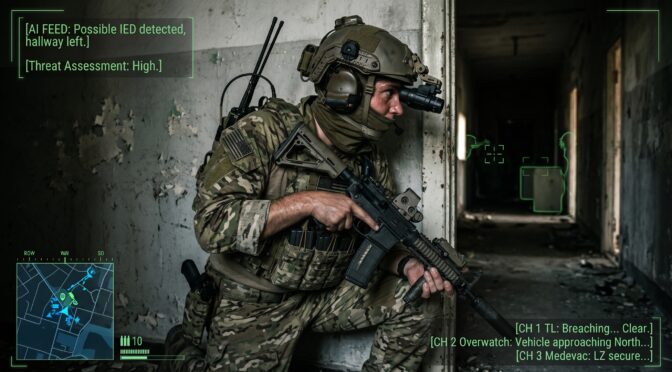
The modern tactical environment has evolved from a spatially defined physical battlespace into a highly networked, multidimensional theater defined by continuous, real-time data saturation. Tactical operators are no longer merely confronting physical threats; they are simultaneously managing complex data streams, artificial intelligence (AI) audio prompts, heads-up display (HUD) visuals, and excessive multi-channel radio chatter. This exponential increase in available information often outpaces human cognitive processing bandwidth, precipitating a state of severe cognitive overload during critical moments of close-quarters battle (CQB), particularly within the highly volatile threshold known as the “fatal funnel.”
This report explores the direct physiological and biomechanical degradation of marksmanship that occurs when an operator’s cognitive capacity is overwhelmed by digital noise. Extensive analysis of military and law enforcement performance metrics indicates a distinct phenomenon of cognitive-motor interference: when the brain is inundated with complex cognitive tasks—such as interpreting spatial audio alerts, processing AI-generated threat assessments, or decoding fragmented radio communications—it systematically deprioritizes fine motor control and biomechanical alignment.1
This mental overload manifests as an acute physical breakdown in weapon manipulation. Operators experiencing cognitive saturation exhibit the “white-knuckling” phenomenon, an over-activation of the upper kinetic chain characterized by deltoid and upper trapezius tension that destroys fine motor stability.4 This gross motor tension cascades into the hands, resulting in a loss of trigger finger isolation and the onset of sympathetic finger movement, where the contraction of the lower grip structurally drags the index finger off its linear trigger press.6 Furthermore, this systemic rigidity causes a total collapse of structural wrist alignment, preventing effective recoil management and reducing sequential shot precision.8
To maintain a clean weapon press and preserve marksmanship fundamentals amidst severe digital noise, operators must implement advanced cognitive resilience strategies. This analysis concludes by detailing mental compartmentalization techniques, information “chunking,” and autonomic regulation via tactical breathing to manage intrinsic and extraneous cognitive loads.11 By structurally training the “brain behind the trigger,” operators can mitigate the destructive physical translation of data-induced stress and maintain lethal precision in the fatal funnel.14
2. The Evolution of the Fatal Funnel and Cognitive Load Theory
The concept of the “fatal funnel” has traditionally been defined in terms of physical geometry. In standard tactical doctrine, this area is described as a cone-shaped zone spanning outward from a doorway, hallway, or any narrow point of entry.15 Within this space, an operator is framed against a backdrop, their mobility is severely limited, and they present a high-contrast target to an entrenched adversary.15 Historically, survival within this space dictated immediate threat discrimination, the violent application of speed, and overwhelming marksmanship accuracy.15 Contemporary evaluations of CQB methodologies highlight the inherent limitations of treating the fatal funnel merely as a physical space to “push through,” acknowledging that blind reliance on speed often leads operators directly into awaiting muzzles.15
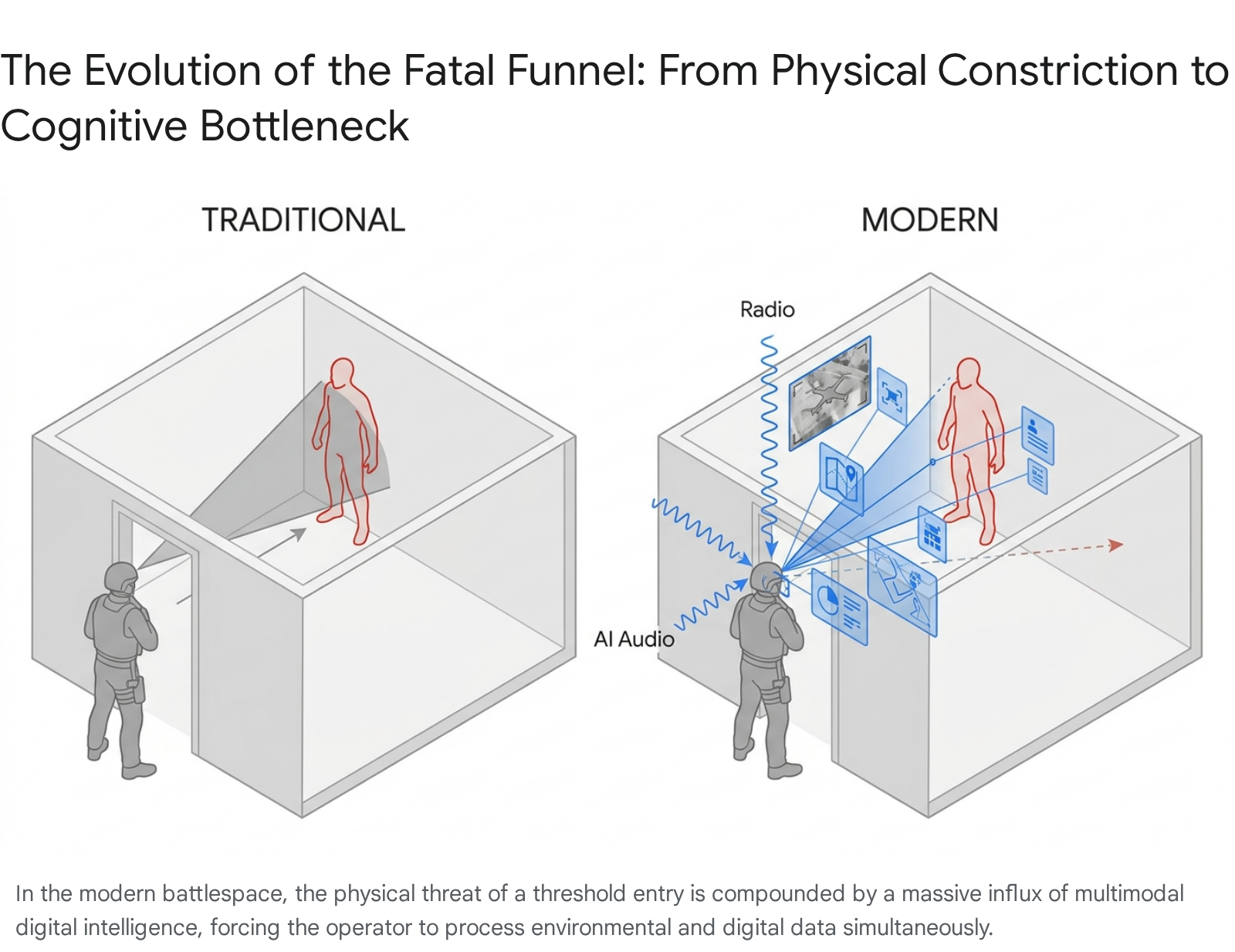
However, the architecture of the modern fatal funnel has fundamentally changed, transitioning from a strictly physical constriction into a severe cognitive chokepoint. The contemporary battlespace is intertwined across land, air, sea, cyber, and space domains, funneling unprecedented volumes of raw intelligence directly to the individual operator.19 A modern operator is required to process environmental threat indicators—such as the presence of a weapon, the layout of a room, and the distinction between hostile combatants and innocent civilians—while simultaneously managing inputs from digital combat systems.20
2.1 Intrinsic, Extraneous, and Germane Cognitive Load
To understand the degradation of physical performance in the fatal funnel, it is necessary to examine the mechanisms of human working memory through the lens of cognitive load theory. Cognitive load refers to the working memory utilized to learn new material or process immediate environmental variables.11 The theory categorizes mental effort into three distinct types, all of which converge violently during a tactical entry:
- Intrinsic Load: This represents the inherent difficulty and complexity of the task itself.2 In a tactical scenario, intrinsic load includes the mathematical realities of calculating firing solutions, coordinating multi-domain movements, or discriminating between a hostile combatant and an unarmed civilian.2 Intrinsic load is generally considered immutable; the operational task is either complex or it is not.11
- Extraneous Load: This refers to the mental effort expended that does not directly contribute to the mission, often resulting from poor interface design or environmental distractions.2 In the modern battlespace, extraneous load is generated by the necessity of decoding heavily masked radio chatter, attempting to read inconsistent control layouts on a tactical display, or parsing conflicting AI voice prompts.2
- Germane Load: This encompasses the mental effort devoted to building mental schemas, recognizing tactical patterns, and applying historical training models to the current situation to improve future performance.2
Optimal combat systems and tactical training programs must minimize extraneous load while managing intrinsic load and promoting appropriate germane load.2 When extraneous load spikes due to digital noise, it aggressively consumes the working memory required for intrinsic threat processing.
2.2 The Digital Funnel and Augmented Reality
The volume problem in the modern battlespace arises when technical capability supersedes human usability. Combat systems designed by engineers often display all technically available information, creating interfaces that overwhelm the operator’s cognitive bandwidth.2 Systems such as the F-35 Helmet Mounted Display have revolutionized interfaces by projecting sensor data directly onto the user’s visor, providing unlimited fields of regard.2 The United States military is actively seeking to replicate this for dismounted soldiers through augmented reality devices like the Integrated Visual Augmentation System.20
While multimodal interaction is designed to distribute cognitive load across sensory channels—utilizing haptic feedback, spatial audio, and visual projections—poor integration creates severe interference.2As information density increases exponentially, the time available to process this data remains constant or shrinks.19During a threshold entry, an operator evaluating the physical fatal funnel is simultaneously bombarded by a digital funnel of visual and auditory inputs. Research conducted by Ambush identifies this specific cognitive workload as a critical factor affecting soldier performance, noting that the gap between human cognitive capacity and system information output continues to widen.2
3. Multimodal Data Influx and the Crisis of Divided Attention
The integration of continuous auditory data—specifically AI-driven voice prompts and multi-channel radio chatter—into the tactical environment fundamentally alters how an operator allocates attention. Multiple resource theory predicts that gains in performance can be achieved through multisensory presentation, as the brain can process information in parallel across different sensory pathways under certain conditions.22 However, when high-stakes cognitive demands compete for the same neurological resources, the result is processing interference.
3.1 Artificial Intelligence Prompts and Processing Delays
The introduction of Artificial Intelligence assistants into the command hierarchy complicates the auditory landscape. Systems designed to react faster than human operators, processing incident intelligence in seconds, deliver bidirectional speech and real-time prompts.23 For example, AI platforms are being integrated to serve as cognitive partners in complex scenario designs, tracking relationships across actors and monitoring simulated resources.24 Furthermore, AI-driven situational intelligence models condense data streams from cyber, air, and ground domains into a coherent operational picture.19
However, when these systems interact with the end-user on the ground, the modality of interaction is crucial. Studies comparing human-machine collaboration indicate that while AI assistants can improve overall task performance, voice-only assistants impose a significantly higher cognitive burden on the decision-maker compared to embodied assistants that utilize visual or gestural cues.25 The reality for a dismounted tactical operator is that voice-only prompts, delivered via bone-conduction headsets or earpieces, remain the primary AI interface.
3.2 Message Presentation Rates and Sensory Modality
The rate at which digital intelligence is presented dictates the severity of cognitive interference. Studies assessing the influence of message presentation rate (MPR) and sensory modality on soldier cognitive load provide quantitative evidence of this degradation.26 In experiments involving tactical scenarios, researchers utilized the Detection Response Task (DRT) and the NASA Task Load Index (NASA-TLX) to measure cognitive load and situational awareness.26
The data reveals that a fast MPR significantly reduces DRT accuracy and increases response times relative to a slow MPR.26 When an AI prompt or digital text message interrupts a high-stakes kinetic event, the operator experiences a processing collision. The brain struggles to parse the rapid artificial voice or text over environmental noise, leading directly to a delay in decision-making and a stall in physical momentum.19
| Presentation Variable | Impact on Cognitive Load & Performance | Target Effect on Situational Awareness (SA) |
| Fast Message Presentation Rate (MPR) | Increased response times; lower Detection Response Task (DRT) accuracy; increased subjective workload. | Substantially degraded SA due to inability to process overlapping inputs.26 |
| Visual Modality (HUD Text) | Slower DRT response times compared to auditory processing. | Impedes visual scanning of the physical environment, causing a dangerous attention shift.26 |
| Slow MPR / Auditory Modality | Higher accuracy in DRT; lower subjective NASA-TLX workload scores. | Maintained SA, provided the auditory data does not conflict with immediate physical survival demands.26 |
Visual presentation modalities produced even slower DRT response times than auditory conditions, indicating that forcing an operator to read text on a HUD while navigating a physical space requires immense cognitive effort.26 Fast MPR and visual presentation independently increase cognitive load and degrade situational awareness.26
3.3 Audio-Tactile Interference in the Kinetic Space
The addition of tactile alerts, designed to bypass overwhelmed visual and auditory channels, introduces further complexities. While tactile displays interface well with certain body parts, those that interface with the hands can interfere with the performance of activities requiring manual manipulation.22 Operators have noted that while auditory and tactile alerts easily capture attention, caution must be exercised in implementation; environmental noise may mask audio, while tactile alerts may be mistaken for vehicle vibration or physical contact.27 This audio-tactile interaction can sometimes result in illusionary effects, where the brain misinterprets the source or nature of the stimulus, adding another layer of extraneous cognitive load during a lethal engagement.30
[Image: A schematic showing the transition from a purely physical ‘fatal funnel’ to a modern cognitive-physical ‘fatal funnel’ due to data saturation. It illustrates how the operator’s attention is divided between physical threats and multimodal digital inputs.]
4. Radio Chatter, Auditory Exclusion, and Neurological Processing
Beyond structured AI prompts, the sheer volume of organic human radio chatter acts as a primary catalyst for cognitive saturation. The tactical environment is characterized by high stakes, time constraints, and immense external stressors—flames, pumps, saws, breaking glass, and gunfire—all of which necessitate clear communication but simultaneously make it nearly impossible.31
4.1 The Paradox of Auditory Exclusion Under Lethal Threat
The physiological response to a lethal threat naturally alters sensory perception. High levels of arousal are associated with perceptual narrowing, a phenomenon where the perceptual field shrinks under stress, resulting in tunnel vision and auditory exclusion.32 Auditory exclusion refers to a stress-induced state where the brain involuntarily excludes specific auditory stimuli, resulting in temporary or selective hearing loss to hyper-focus visual attention on the immediate physical threat.33
Extensive post-incident interviews with law enforcement and military personnel reveal the prevalence of these neurological shifts. Up to 85% of officers in high-stress engagements report experiencing auditory exclusion, failing to hear radio traffic, peer commands, or even the deafening booms of gunfire without hearing protection.34 Furthermore, 80% report tunnel vision, blocking out all activity in their periphery to achieve focused visual clarity on the threat, and 65% report a slow-motion effect, where their actions feel temporally distorted.35
4.2 Overriding Autonomic Responses for Communication
The modern operator is tethered to communications networks that demand continuous monitoring, creating a profound neurological paradox. While the human brain is biologically attempting to mute ambient sound to ensure survival in the fatal funnel, the operator is simultaneously forced by operational protocol to actively listen to a tactical net.
Fighting through the biological instinct of auditory exclusion to process actionable intelligence requires immense cognitive effort.33 This forced divided attention drastically shrinks cognitive bandwidth.31 When attending to a physical threat, less attention is available for cognitive processing, making cognitive overload highly likely and resulting in inattentional blindness.32 The operator may physically see a secondary threat but fail to process it because their cognitive resources are entirely consumed by attempting to decipher a distorted radio transmission.
4.3 The “Two-Challenge Rule” and Communication Breakdown
The consequences of this sensory saturation are evident in aviation and special operations communities, which have implemented specific tactics to mitigate cognitive failure. The “two-challenge rule,” a component of Crew Resource Management (CRM), was developed specifically because operators routinely become task-saturated and unresponsive to radio chatter.36 If a crew member fails to respond to two consecutive auditory challenges, it is assumed they are incapacitated by cognitive overload or physical trauma, prompting immediate intervention by another team member.36 In urban combat environments, overlapping radio chatter frequently prevents critical messages from being transmitted, forcing operators to abandon the digital network and rely on physical proximity and hand signals to communicate immediate life-saving instructions.37
5. The Physiology of Cognitive-Motor Interference
The bridge between digital noise and the physical breakdown of tactical performance is found in the physiological realities of cognitive-motor interference. When an individual attempts to execute a complex motor skill (such as a dynamic threshold entry and weapon presentation) while simultaneously resolving a high cognitive demand (such as evaluating an AI prompt or decoding overlapping radio transmissions), the central nervous system must allocate limited neurological resources.1
5.1 Prioritizing Cognitive Demands Over Motor Execution
In military contexts, empirical research demonstrates that personnel unconsciously prioritize cognitive tasks over motor execution when forced to multitask under stress.1 A pivotal study utilizing a tactical-specific cognitive-motor multitask challenge provided quantifiable evidence of this phenomenon. Military personnel were required to perform a forward drop jump landing—simulating a dynamic tactical movement—while simultaneously identifying target acquisition orders, introducing a heavy cognitive load.1
The results demonstrated significant biomechanical alterations when participants were subjected to the cognitive load:
- Decreased Knee Flexion: The knee flexion angle at initial contact decreased by 6.07 degrees, resulting in a “stiffer,” less shock-absorbent landing.1
- Increased Joint Abduction: The knee abduction angle at initial contact increased by 2.3 degrees, and the peak knee abduction angle increased by 3.04 degrees.1 The multitask cost for the knee abduction angle at initial contact was exceptionally high at -107.98%.1
- Greater Ground Reaction Forces: The peak vertical ground reaction force (vGRF) increased by 0.81 N/kg, indicating that the subjects were hitting the ground significantly harder.1
While the participants successfully maintained their shooting target accuracy—proving they prioritized the cognitive puzzle of target identification—they completely sacrificed the neuromuscular control of their landing biomechanics.1 They adopted a highly rigid, stiffened physical strategy that dramatically increased their risk of acute musculoskeletal injury.1
5.2 Sympathetic Arousal and Vasoconstriction
This “stiffening” strategy observed in the lower extremities perfectly mirrors the physiological response in the upper kinetic chain during a CQB event. High levels of perceived threat, spatial complexity, and time constraints elicit an acute increase in physiological arousal, driven by the sympathetic nervous system.34
The brain’s amygdala detects the threat and signals the hypothalamus, which activates the sympathetic nervous system. This results in the rapid release of stress hormones, including adrenaline and cortisol.34 The physiological changes are profound: veins constrict to raise blood pressure, arteries dilate to increase blood flow to major muscle groups, bronchial tubes dilate to provide more oxygen, and non-essential functions like digestion are suppressed.34
The brain’s bandwidth becomes monopolized by the combination of sympathetic arousal and the cognitive load of digital noise, delaying normal motor-processing pathways. The result is a total loss of physical fluidity.40 Instead of executing a relaxed, subconscious motor program for weapon manipulation, the body relies on gross muscle activation, locking joints in a desperate attempt to create artificial stability while the brain struggles to process the overwhelming data influx.1
6. The Physical Breakdown of Marksmanship: The White-Knuckle Phenomenon
The systemic rigidity induced by cognitive overload directly sabotages the precise biomechanics required for lethal marksmanship. Shooting a firearm accurately under stress is an exercise in isolating micro-movements (the linear trigger press) against a foundation of macro-stability (the stance, grip, and skeletal alignment). When digital noise fractures cognitive bandwidth, this delicate isolation collapses through a process colloquially known as “white-knuckling.”
6.1 Scapular Instability and Deltoid Overcompensation
“White-knuckling” is often described in psychological and substance abuse recovery terms as attempting to survive a high-stress scenario or craving through sheer willpower, tension, and isolation, without processing the underlying mechanism.41 In the realm of tactical performance, this psychological state of unmitigated tension translates into a literal, destructive physical action: the severe over-gripping of the weapon and the locking of the upper kinetic chain.5
Optimal pistol marksmanship relies on a precise kinetic chain that begins at the torso and ends at the fingertips.4 The scapula must serve as a silent, anchored base. The rotator cuff muscles—specifically the supraspinatus for initial centering, the infraspinatus and teres minor for external rotation and posterior stability, and the subscapularis for internal rotation—work in concert to center the humeral head inside the shoulder socket, managing micro-corrections.4 The deltoids should only serve to hold the arm in space, working on top of the stability generated by the cuff and scapula below them.4 The elbow acts as a passive transmitter, transferring stillness from the shoulder directly to the wrist without co-contracting the biceps and triceps.4
However, under the acute stress of cognitive overload, the operator loses proprioceptive awareness. The brain, panicked by sensory saturation from the HUD or radio, signals the body to simply “hold tighter.” This causes a chain reaction of biomechanical failure:
- Scapular Instability: The upper trapezius over-activates, generating severe neck tension and microscopic head movements that shift the visual sight picture.4
- Deltoid Overcompensation: Because the foundational stability of the scapula is lost, the deltoids attempt to simultaneously lift the arm and stabilize the weapon. The deltoid is not designed for fine stabilization, and forcing it to do so rapidly induces gross muscle tremor.4
6.2 Grip Saturation and the Loss of Proprioception
This tremor and instability cascade down the arm, terminating at the hands. The forearms and wrists become intensely tense. Instead of applying directional, leveraged pressure, the operator grips the gun “like a rope,” crushing the frame from all sides.4 This exhausts the flexor muscles of the forearm and completely eliminates the relaxed independence required by the trigger finger.4 The operator is now white-knuckling the firearm, utilizing maximum muscular exertion for minimal biomechanical return.
6.3 The Anatomy of Sympathetic Finger Movement
One of the most catastrophic results of the white-knuckle grip is the onset of sympathetic finger movement. Anatomically, the flexor tendons of the fingers (the flexor digitorum superficialis and flexor digitorum profundus) run parallel through the carpal tunnel and are closely tethered in the forearm. When an operator squeezes the bottom three fingers of the dominant hand with maximum, unmitigated force, the index finger will instinctively and involuntarily curl inward in sympathy.6
Optimal trigger control requires the ability to move the trigger finger directly to the rear without disrupting the alignment of the firearm’s sights.7 This necessitates profound dexterity—the ability to isolate the action of the index finger while maintaining a firm, static grip with the rest of the hand.7 Expert tactical instructors teach operators to grip the firearm high on the tang, utilizing a “C-clamp” style pressure.6 In this technique, the front parts of the second knuckles are driven aggressively into the front strap of the grip, while the support hand fills the cavity on the support side, applying inward pressure.6 This specific directional leverage theoretically relaxes the tendons connected to the trigger finger, allowing it to operate fluidly without sympathetically disrupting the muzzle.6
However, cognitive overload shatters this practiced isolation. When an operator is struggling to process an overriding radio command while actively engaging a threat in the fatal funnel, the prefrontal cortex cannot dedicate the bandwidth required to maintain the nuanced separation of flexor activation.40 The gross motor command of the sympathetic nervous system (“grip hard to survive”) overrides the fine motor command (“press smoothly”). As the lower fingers crush the grip sympathetically, the trigger finger hooks the trigger rather than pressing it flatly.
6.4 Trigger Press Deviation and Aim Trace Precision
The relationship between the geometry of the gun, the grip circumference, and the physicality of the shooter’s hand further complicates this issue.49 A clean press comes from maximizing contact between the trigger finger and the flat face of the trigger.49 If the grip is too large, the operator may only engage the tip of the finger; if too small, the finger wraps too far over.49 When sympathetic finger movement is introduced into these suboptimal geometries, the contraction pulls the muzzle laterally—usually low and away from the dominant side—just as the shot breaks.49 The resulting shot completely misses the intended point of aim, neutralizing the operator’s effectiveness in the fatal funnel.
7. The Collapse of Structural Wrist Alignment
The final stage of physical breakdown resulting from cognitive overload occurs at the wrist. The wrist is the primary biomechanical hinge that dictates recoil management; to function correctly, it must remain neutral and quiet.4
7.1 The Biomechanics of Neutral Wrist Alignment
Proper neutral alignment can be assessed via radiography: the proximal and distal carpal rows must form smooth, congruent arcs, and the lunate bone should be aligned within 10 degrees of the capitate.10 When the wrist is locked in this neutral position, it ensures that the immense kinetic forces of the weapon’s recoil travel linearly down the bones of the forearm (the radius and ulna) and into the operator’s body, minimizing muzzle flip.9
7.2 Energy Leakage and Uncontrolled Muzzle Rise
Under tactical stress and cognitive distraction, the generalized tension of the “white-knuckle” grip often forces the wrist out of its optimal alignment. If an operator’s cognitive attention is pulled toward an auditory AI alert rather than their physical mechanics, they routinely fail to consciously lock the wrist structure prior to breaking the shot.4
This structural failure results in catastrophic energy leakage. Rather than the recoil energy transferring smoothly through the skeletal structure, the force violently impacts the unlocked wrist joint, causing rapid, uncontrolled flexion, extension, or ulnar/lateral deviation.8 When the wrist structure collapses, the muzzle rises dramatically. The physical time required for the operator to force the sights to settle back onto the target increases exponentially, destroying their ability to deliver rapid, sequential, and accurate follow-up shots.
7.3 Force Transfer and Articular Surface Strain
Furthermore, repetitive firing with a collapsed wrist alignment places immense, unnatural strain on the soft tissues of the joint. The triangular fibrocartilage complex (TFCC), which stabilizes the ulnar side of the wrist, bears the brunt of this off-axis torque.9 In disciplines like powerlifting, athletes utilize ultra-rigid wrist wraps specifically to prevent this structural collapse under maximum load, as energy leakage at the joint directly causes TFCC tears and prevents force transfer.9
Similarly, maintaining poor wrist and forearm positioning during repetitive, forceful actions can lead to medial or lateral epicondylitis (golfer’s or tennis elbow), further degrading the operator’s grip endurance and overall functional strength.52 In the tactical context, an operator whose wrist alignment collapses due to cognitive distraction not only fails to neutralize the threat effectively but also significantly increases their risk of acute physical injury.9
8. Quantitative Impacts on Marksmanship Metrics
The physiological breakdowns—scapular instability, sympathetic finger movement, and wrist collapse—are directly corroborated by quantitative data measuring marksmanship performance under cognitive load. When operators are subjected to secondary cognitive tracking tasks—simulating the effort required to monitor radio networks or process AI data streams—their physical proficiency suffers measurable degradation.
8.1 Reaction Time Delays Under Multitask Constraints
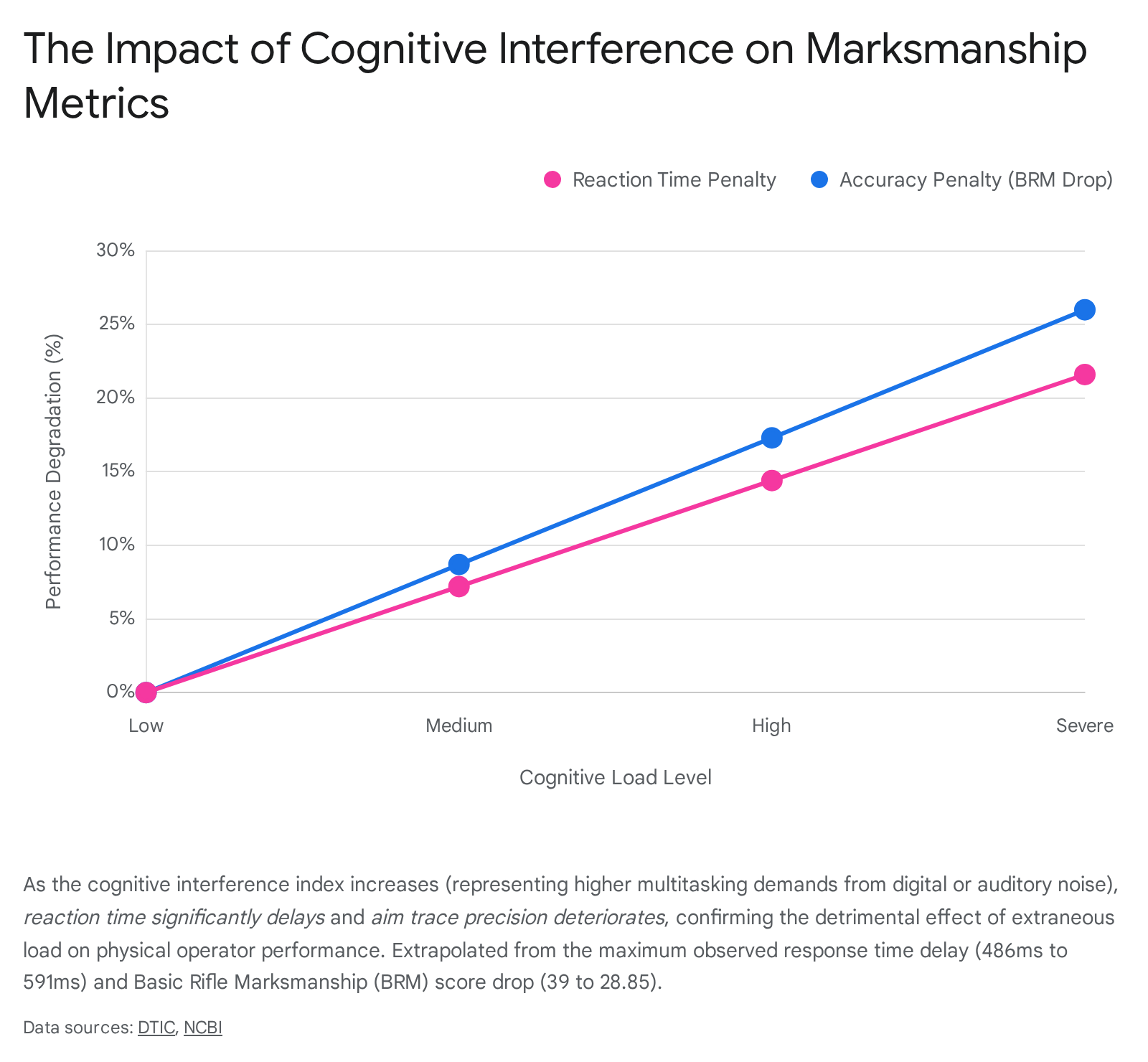
Studies utilizing standard marksmanship qualifying tasks, such as Basic Rifle Marksmanship (BRM) assessments, demonstrate significant inverse relationships between cognitive interference and physical execution.3 Researchers often measure this interference using specific time trials, such as the CTT-1 and CTT-2 tests. The data reveals that as the interference index increases, CTT-2 times (representing the time required to complete the shooting task under load) also increase significantly.3
Specifically, multiple linear regression models confirm that CTT-2 time is the only stable, statistically significant predictor of a degraded BRM score, highlighting that the time delay caused by cognitive processing directly correlates to poorer overall shooting performance.3 Reaction time to a newly presented physical threat increases drastically as the cognitive load level escalates from low to severe.40 The operator physically sees the threat, but the brain’s processing pipeline is clogged with digital noise, delaying the neural signal to the trigger finger.
8.2 Aim Trace Precision and Shot Radius Variance
Simultaneously, “aim trace precision”—the steadiness of the muzzle in the milliseconds prior to the shot breaking—deteriorates.54 This metric is the quantifiable result of the deltoid tremors and loss of scapular stability induced by the white-knuckle phenomenon.4 The shot radius from center mass widens as sympathetic finger movement pulls the muzzle off-axis.54
The empirical data confirms that while highly trained operators might eventually strike the target, the temporal delay required to process the cognitive load, combined with the physical degradation leading up to the shot, renders their actions dangerously sub-optimal. In a fatal funnel scenario, where milliseconds dictate survival and the “suicide mission” nature of the threshold entry requires immediate dominance, these delays are unacceptable.1
[Image: A line chart demonstrating the inverse relationship between cognitive load (interference index) and marksmanship performance metrics (reaction time and accuracy) as established by empirical data.]
9. Strategic Mitigation: Mental Compartmentalization and Autonomic Regulation
If the influx of data and digital noise on the modern battlefield cannot be physically turned off, the operator must be systematically trained to manage it. “Cognitive shooting” represents a paradigm shift in training philosophy, moving beyond static range repetition to develop the operator’s mental and physical capabilities simultaneously.14 It teaches the “brain behind the trigger” to react, adapt, and process information under severe pressure.14 To prevent the physical collapse of grip and wrist alignment, operators must utilize cognitive chunking, mental compartmentalization, and autonomic regulation techniques to aggressively manage their cognitive load.
9.1 Cognitive Chunking to Reduce Intrinsic Load
To reduce the extraneous cognitive load that leads to physical tension, operators must utilize “chunking”.11 Chunking is a well-established psychological process of organizing smaller, disparate pieces of information into cohesive groups or singular automated steps, much like how phone numbers are broken into familiar sequences to aid memory.11
In the tactical context, if an operator had to consciously think about foot placement, sight alignment, trigger press, and recoil management simultaneously, their intrinsic cognitive load would be maxed out before radio chatter even occurred.11 By drilling the physical mechanics of the weapon presentation to the point of subconscious mastery, the brain “merges” these individual micro-tasks into a single mental schema: “engage target”.11 This process, often described in martial arts as “form to leave form,” frees up massive amounts of working memory.11 By moving the physical act of shooting entirely into the subconscious, the prefrontal cortex retains the bandwidth necessary to process the AI audio prompt or the radio call without creating the cognitive-motor interference that leads to white-knuckling.11
9.2 Information Segregation and Compartmentalization Techniques
Even with physical automation, the sheer volume of digital noise can be overwhelming. Mental compartmentalization is a psychological technique used to isolate difficult or distracting inputs, preventing them from corrupting immediate performance.12 In behavioral finance, mental compartmentalization is observed when individuals divide complex investment decisions into separate, manageable mental “boxes” based on risk or source.58 This same psychological segregation is highly applicable to the tactical environment.
When an operator in the fatal funnel hears an unexpected AI alert regarding a secondary threat in another sector, they must instantly evaluate its immediate relevance. If the data is not critical to surviving the primary threshold entry, the operator utilizes mental compartmentalization to place that information into a separate mental compartment.12 The internal monologue is strictly regulated: the operator acknowledges the input (“I will return to that information if time permits”), files it away for future processing, and immediately shifts full attention back to the front sight and the physical geometry of the room.12 This deliberate, trained partition prevents the stress of the digital alert from cascading into the sympathetic nervous system, thereby saving the physical integrity of the wrist and the fine motor dexterity of the trigger finger.4
9.3 Autonomic Regulation Through Tactical Breathing
Because cognitive overload fundamentally triggers a sympathetic nervous system response (the fight or flight mechanism) that causes vasoconstriction and the destructive “white-knuckling” effect, the operator must possess a physical mechanism to manually override their autonomic nervous system.34
Tactical breathing, also known as box breathing, combat breathing, or paced breathing, is the most effective, evidence-based intervention for this purpose.13 The technique, derived from traditional pranayama practices and adapted for tactical populations, involves a continuous repetition of four equally timed steps: a deep diaphragmatic inhalation, a pause (holding the breath), a slow exhalation, and a final pause, typically for counts of four seconds each.13
Executing a cycle of tactical breathing prior to entering the fatal funnel, or during a micro-pause in a prolonged engagement, physically stimulates the vagus nerve. This action slows the heart rate, forces the autonomic nervous system to shift from sympathetic arousal back toward a parasympathetic balance, and directly mitigates systemic muscle tension.61 By consciously regulating respiration, the operator breaks the stiffening response.62 This relaxation cascades down the kinetic chain, relaxing the deltoids and forearms, and restoring the fine motor dexterity required to isolate the trigger finger from the rest of the grip.4 Furthermore, regulating the heart rate helps reverse perceptual narrowing—specifically mitigating tunnel vision and auditory exclusion—allowing the operator to process radio chatter more efficiently without it triggering a localized panic response.34
9.4 Contextual Visual Focus and Threat Discrimination
Finally, to optimize cognitive processing at close range and further reduce the burden on working memory, operators must manage how they visually process the threat. In the extremely close quarters of a threshold entry, attempting to find a perfect focal plane on the front sight requires excess cognitive effort and time.63
Operators should transition between specific visual modes based on spatial distance to streamline decision-making:
| Engagement Distance | Recommended Visual Processing Mode | Cognitive & Physical Justification |
| 0 – 3 Yards (Contact) | Index or Point Shooting | Eyes remain locked on the threat. Relies entirely on automated physical presentation and consistent wrist alignment to guarantee hits without consuming cognitive bandwidth analyzing sights.63 |
| 3 – 7 Yards (Close) | Front-Sight Focus with Target Confirmation | Eyes prioritize the front sight, then glance at the target. Balances the need for repeatable accuracy with the necessity of maintaining spatial awareness.63 |
| 7+ Yards (Extended) | Full Sight Picture with Controlled Press | Utilizes full sight alignment and smooth trigger press when the luxury of space and time permits higher cognitive dedication to the aiming process.63 |
By explicitly defining which visual mode to use based on immediate spatial distance, operators remove the cognitive friction of deciding “how” to shoot.63 This pre-programmed response further streamlines their mental bandwidth, protecting their physical execution from the degrading effects of hesitation and extraneous load.
10. Conclusion
The integration of real-time data, AI audio interfaces, and pervasive communications networks was designed to yield total situational dominance on the modern battlefield.19 Yet, the human operator remains a biological organism governed by strict neurophysiological limits. When the volume of digital noise exceeds an operator’s cognitive capacity, the resulting failure is not merely mental; it manifests as an acute, measurable physical breakdown.
Empirical evidence demonstrates that cognitive-motor interference translates the stress of a flooded working memory directly into the kinetic chain.1 Under the weight of extraneous cognitive load, the operator loses scapular stability, over-grips the weapon in a white-knuckled panic, loses the fine motor isolation necessary for a clean trigger press due to sympathetic finger movement, and structurally collapses the wrist joint upon recoil.4 In the fatal funnel, where split-second accuracy is paramount and movement must be decisive, this sequence of physical degradation is catastrophic, delaying reaction times and destroying aim trace precision.15
To survive the modern, data-saturated battlespace, traditional physical marksmanship training is insufficient. Operators must cultivate advanced cognitive resilience, training the brain to process chaos systematically.14 By mastering mental compartmentalization to filter extraneous data, utilizing chunking to automate physical responses, and employing tactical breathing to sever the link between mental stress and muscular tension, operators can insulate their physical performance from cognitive overload.11 Only through deliberate, disciplined management of the cognitive load can an operator maintain structural biomechanical alignment, ensure an isolated weapon press, and survive the compounding, multi-dimensional pressures of the fatal funnel.14
Please share the link on Facebook, Forums, with colleagues, etc. Your support is much appreciated and if you have any feedback, please email us in**@*********ps.com. If you’d like to request a report or order a reprint, please click here for the corresponding page to open in new tab.
Sources Used
- Cognitive Load Influences Drop Jump Landing Mechanics During …, accessed May 9, 2026, https://academic.oup.com/milmed/article/188/7-8/e2102/7017992
- Cognitive Overload: The Hidden Killer in Combat Systems – Ambush’s, accessed May 9, 2026, https://www.getambush.com/article/cognitive-load-optimization-in-combat-systems/
- Cognitive Flexibility Predicts Live-Fire Rifle Marksmanship in Airborne Cadets: A Pilot Study, accessed May 9, 2026, https://pmc.ncbi.nlm.nih.gov/articles/PMC12649876/
- Mastering Precision Shooting Stability | PDF | Shoulder | Anatomical Terms Of Motion, accessed May 9, 2026, https://www.scribd.com/document/971658687/Shooting
- The Psychology of Alcoholism – IU South Bend Libraries, accessed May 9, 2026, https://library.iusb.edu/search-find/archives/gcarchive/docs/bk-psych.pdf
- Pistol Fundamentals with Mike Hughes: Grip – YouTube, accessed May 9, 2026, https://www.youtube.com/watch?v=SqkmYEQFlDI
- Simple Exercise to Improve Your Trigger Pull – YouTube, accessed May 9, 2026, https://www.youtube.com/watch?v=qZJTenjAh5A
- SESSION 1: TENDON – FESSH, accessed May 9, 2026, https://fessh.com/library/2009_abstracts.pdf
- Stiff Wrist Wraps for Lifting: Real-World Answers from an Athlete Who Relied On Them Through Injury and Heavy Sessions – AliExpress, accessed May 9, 2026, https://www.aliexpress.com/s/wiki-ssr/article/wrist-brace-lifting
- Juerg Hodler Rahel A. Kubik-Huch Gustav K. von Schulthess Editors Diagnostic Imaging – OAPEN Library, accessed May 9, 2026, https://library.oapen.org/bitstream/id/8ae4cb30-c1bd-4c59-89ed-50b617579d4e/9783030712815.pdf
- Cognitive Load – BJJ Mental Models, accessed May 9, 2026, https://www.bjjmentalmodels.com/cognitive-load
- AFOQT Study Guide: 2500+ Questions | PDF | Equations | Mathematics – Scribd, accessed May 9, 2026, https://www.scribd.com/document/938877440/AFOQT-STUDY-GUIDE-2025-2026
- Psychological Skills to Improve Emergency Care Providers’ Performance Under Stress, accessed May 9, 2026, https://www.researchgate.net/publication/316590774_Psychological_Skills_to_Improve_Emergency_Care_Providers’_Performance_Under_Stress
- Cognitive Shooting: Training the Brain Behind the Trigger – Michigan Pistol Academy, accessed May 9, 2026, https://michiganpistolacademy.com/firearms-blog/f/cognitive-shooting-training-the-brain-behind-the-trigger?blogcategory=Personal+Defense
- Rethinking CQB: Beyond the Fatal Funnel | PDF | Military | Violence – Scribd, accessed May 9, 2026, https://www.scribd.com/document/434363840/Closequarterbattleathankfullychangingparadigm-151001032447-Lva1-App6891
- Critical Incident Review: Active Shooter at Robb Elementary School – Agency Portal – Department of Justice, accessed May 9, 2026, https://portal.cops.usdoj.gov/resourcecenter/content.ashx/cops-r1141-pub.pdf
- The Art of Reading Places Using Situational Awareness | RECOIL OFFGRID, accessed May 9, 2026, https://www.offgridweb.com/survival/the-art-of-reading-places-using-situational-awareness/
- LOS ANGELES POLICE DEPARTMENT Officer Safety Field Tactics Update (LETAC) Expanded Course Outline 1850-22405, accessed May 9, 2026, https://lapdonlinestrgeacc.blob.core.usgovcloudapi.net/lapdonlinemedia/2021/10/Officer_Safety_and_Field_Tactics_Update_22405.pdf
- Cognitive overload on the modern battlefield | HENSOLDT, accessed May 9, 2026, https://www.hensoldt.net/insights/cognitive-overload-on-the-modern-battlefield
- Utilizing Augmented Reality to Evaluate Service Member Team Performance | Military Medicine | Oxford Academic, accessed May 9, 2026, https://academic.oup.com/milmed/article/189/Supplement_3/341/7735950
- Modernizing Military Decision-Making: Integrating AI into Army Planning, accessed May 9, 2026, https://www.armyupress.army.mil/Journals/Military-Review/Online-Exclusive/2025-OLE/Modernizing-Military-Decision-Making/
- Multimodal and Multisensory Displays for Perceptual Tasks (Chapter 15) – The Cambridge Handbook of Applied Perception Research, accessed May 9, 2026, https://www.cambridge.org/core/books/cambridge-handbook-of-applied-perception-research/multimodal-and-multisensory-displays-for-perceptual-tasks/F41298DD46F4BF38DF883D6F466D2AF5
- RapidResponse.ai | Building a Real‑Time AI Dispatch System | AWS Builder Center, accessed May 9, 2026, https://builder.aws.com/content/3B2PdXLzr9efslIODMtipFtd9r0/rapidresponseai-or-building-a-realtime-ai-dispatch-system
- Artificial Intelligence: The New Force Multiplier in Training Exercises – usajfkswcs, accessed May 9, 2026, https://www.swcs.mil/Special-Warfare-Journal/Article/4397748/artificial-intelligence-the-new-force-multiplier-in-training-exercises/
- Reducing Cognitive Load and Improving Warfighter Problem Solving With Intelligent Virtual Assistants – Frontiers, accessed May 9, 2026, https://www.frontiersin.org/journals/psychology/articles/10.3389/fpsyg.2020.554706/full
- Cognitive Load and Situation Awareness for Soldiers: Effects of Message Presentation Rate and Sensory Modality – PubMed, accessed May 9, 2026, https://pubmed.ncbi.nlm.nih.gov/30768371/
- Effects of Alerts on Army Infantry Platoon Leader Decision Making Performance – DTIC, accessed May 9, 2026, https://apps.dtic.mil/sti/tr/pdf/ADA463289.pdf
- Effects of Visual, Auditory, and Tactile Alerts on Platoon Leader Performance and Decision Making – DTIC, accessed May 9, 2026, https://apps.dtic.mil/sti/tr/pdf/ADA441214.pdf
- 2006 CCRTS THE STATE OF THE ART AND THE … – dodccrp.org, accessed May 9, 2026, http://www.dodccrp.org/events/2006_CCRTS/html/papers/148.pdf
- Cross-modal Effects In Tactile And Visual Signaling – ucf stars, accessed May 9, 2026, https://stars.library.ucf.edu/cgi/viewcontent.cgi?article=4752&context=etd
- Expectation to Action: Communication Considerations – Fire Engineering, accessed May 9, 2026, https://www.fireengineering.com/firefighting/expectation-to-action-communication-considerations/
- Stress-Activity Mapping: Physiological Responses During General Duty Police Encounters – PMC, accessed May 9, 2026, https://pmc.ncbi.nlm.nih.gov/articles/PMC6788355/
- Psychological Experiences of Law Enforcement Officers Responding to Critical Incidents Alone and With a Partner – ScholarWorks, accessed May 9, 2026, https://scholarworks.waldenu.edu/cgi/viewcontent.cgi?article=21430&context=dissertations
- Applying Neuroscience to Enhance Tactical Leader Cognitive Performance in Combat – DTIC, accessed May 9, 2026, https://apps.dtic.mil/sti/tr/pdf/ADA556552.pdf
- The Missing Pieces of Firefighter Survival: Investigating the Psychology and Physiology of Surviving on the Fire Ground – National Fire Academy, accessed May 9, 2026, https://apps.usfa.fema.gov/pdf/efop/efo47608.pdf
- FSM Apr 07.indd – Air Force Safety Center, accessed May 9, 2026, https://www.safety.af.mil/Portals/71/documents/Magazines/FSM/FSM%20Apr%2007.pdf?ver=2016-08-19-145224-027
- 11-05 – Urban Operations Fight in the COE Newsletter, accessed May 9, 2026, https://mcoecbamcoepwprd01.blob.core.usgovcloudapi.net/library/ABOLC_BA_2018/Research_Module_A/Ad_Diwaniyah/Task_Force_Duke.pdf
- Simply distracting learners is not enough: More evidence for the learning benefits of an external focus of attention | Request PDF – ResearchGate, accessed May 9, 2026, https://www.researchgate.net/publication/246474626_Simply_distracting_learners_is_not_enough_More_evidence_for_the_learning_benefits_of_an_external_focus_of_attention
- Cognitive Load Influences Drop Jump Landing Mechanics During Cognitive-Motor-Simulated Shooting – PubMed, accessed May 9, 2026, https://pubmed.ncbi.nlm.nih.gov/36722162/
- Negative Consequences of Pressure on Marksmanship May be Offset by Early Training Exposure to Contextually Relevant Threat Training: A Systematic Review and Meta-Analysis – PMC, accessed May 9, 2026, https://pmc.ncbi.nlm.nih.gov/articles/PMC10756023/
- The OCD Treatment Center, accessed May 9, 2026, https://theocdtreatmentcenter.com/category/ocd-treatment/
- The Tim Ferriss Show Transcripts: Dave Elitch (#348), accessed May 9, 2026, https://tim.blog/2018/11/28/the-tim-ferriss-show-transcripts-dave-elitch/
- #274 Tim Ferriss – Life-Changing Practical Wisdom Backed by Experience and Science — The Shawn Ryan Show Transcript, accessed May 9, 2026, https://podcasts.happyscribe.com/the-shawn-ryan-show/274-tim-ferriss-life-changing-practical-wisdom-backed-by-experience-and-science
- 2nd Annual Game Changer Event – CEP Mindset, accessed May 9, 2026, https://cepmindset.com/game-changer/
- Women In Alcoholics Anonymous: A Qualitative Research Study – Duquesne Scholarship Collection, accessed May 9, 2026, https://dsc.duq.edu/cgi/viewcontent.cgi?article=1815&context=etd
- Jason Jacobs – Manchester Hive, accessed May 9, 2026, https://www.manchesterhive.com/downloadpdf/9781526107084/9781526107084.pdf
- “I’m putting a Band-Aid on a bullet hole the only way I know how:” a qualitative study of barriers and facilitators to opioid misuse and recovery in Nevada – PMC, accessed May 9, 2026, https://pmc.ncbi.nlm.nih.gov/articles/PMC9694560/
- You Want Me to Do What with My Finger? – ITS Tactical, accessed May 9, 2026, https://www.itstactical.com/warcom/firearms/you-want-me-to-do-what-with-my-finger/
- Trigger Finger Mastery: The Key to a Better Shot – A Girl and A Gun, accessed May 9, 2026, https://www.agirlandagun.org/trigger-finger-mastery-the-key-to-a-better-shot/
- Sympathetic Hand Squeeze | Primary & Secondary Forum, accessed May 9, 2026, https://primaryandsecondary.com/forum/index.php?threads/sympathetic-hand-squeeze.6944/
- Off-Axis AR-15 Foregrips: Biomechanics, Control … – Contour Tactics, accessed May 9, 2026, https://contourtactics.com/pages/off-axis-ar-15-foregrips-biomechanics-control-placement-guide
- Corrective Human body & Postures – DDE, Pondicherry University, accessed May 9, 2026, https://dde.pondiuni.edu.in/files/StudyMaterials/MBA/MBA3SemesterElective/1CorrectiveHumanbody&Postures.pdf
- The Effect of Wrist Position on Grip Endurance and Grip Strength – ResearchGate, accessed May 9, 2026, https://www.researchgate.net/publication/307456066_The_Effect_of_Wrist_Position_on_Grip_Endurance_and_Grip_Strength
- Think before You Shoot: The Relationship between Cognition and Marksmanship – DTIC, accessed May 9, 2026, https://apps.dtic.mil/sti/tr/pdf/ADA553803.pdf
- Prior Mental Fatigue Impairs Marksmanship Decision Performance, accessed May 9, 2026, https://eprints.hud.ac.uk/id/eprint/33204/
- APA – Technology Mind and Society – 2019 Full Program, accessed May 9, 2026, https://irp-cdn.multiscreensite.com/b2b36d3f/files/uploaded/tms2019_full_program.pdf
- Workplace Trauma in a Digital Age: The Impact of Video Evidence of Violent Crime on Criminal Justice Professionals – PMC, accessed May 9, 2026, https://pmc.ncbi.nlm.nih.gov/articles/PMC9709553/
- THE INFLUENCE OF ONLINE COMMUNITIES, eWOM & UGC – Diva-portal.org, accessed May 9, 2026, https://www.diva-portal.org/smash/get/diva2:1575448/FULLTEXT01.pdf
- What traits would be desirable in a super-soldier? : r/worldbuilding – Reddit, accessed May 9, 2026, https://www.reddit.com/r/worldbuilding/comments/1l758hw/what_traits_would_be_desirable_in_a_supersoldier/
- How to Break Free of Chronic Stress – Live Healthillie, accessed May 9, 2026, https://livehealthillie.com/blogs/news/how-to-break-free-of-chronic-stress
- Handbook of Mental Performance, accessed May 9, 2026, https://www.stemlynsblog.org/wp-content/uploads/2025/01/Handbook-of-Mental-Performance_25_01_31_16_54_32.pdf
- Proceedings of the 6th Annual GIFT Users Symposium (GIFTSym6) – GIFTtutoring.org, accessed May 9, 2026, https://www.gifttutoring.org/attachments/download/3006/FINAL_Proceedings_GIFTSym6.pdf
- Close‑Quarter Shooting Drills for Personal Defense – A Girl and A Gun, accessed May 9, 2026, https://www.agirlandagun.org/close%E2%80%91quarter-shooting-drills-for-personal-defense/