1. Executive Summary
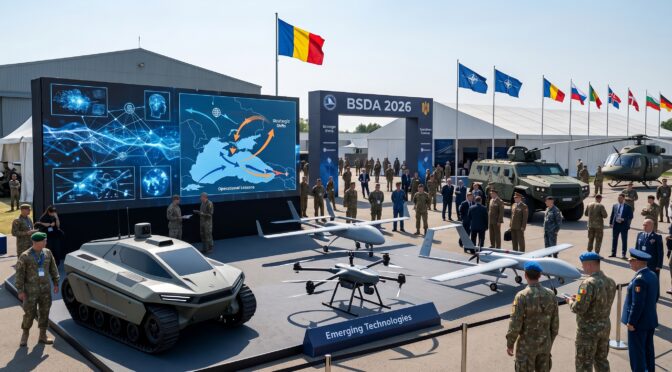
The Black Sea Defense & Aerospace exhibition, convened in Bucharest, Romania, from May 13 to May 15, functioned as a critical indicator of the rapidly altering defense posture along the Eastern Flank of the North Atlantic Treaty Organization (NATO). Conducted simultaneously with the Bucharest Nine (B9) Summit—a gathering of Eastern European heads of state—the tenth edition of this biennial event was the largest in its history, assembling more than 550 exhibiting companies from 36 countries and drawing an estimated 30,000 visitors, including senior political and military leadership.1Against the immediate backdrop of protracted high-intensity conflict in neighboring Ukraine, the exhibition delineated a fundamental transition in European defense procurement doctrine. The prevailing paradigm has demonstrably pivoted away from standard, off-the-shelf foreign military sales (FMS) toward the establishment of sovereign industrial capacity, rapid technology transfer, and mandatory localized manufacturing.
Analysis of the capabilities demonstrated, industrial agreements signed, and doctrinal lessons discussed at the Romaero Băneasa complex reveals four primary operational trajectories defining the modernization of regional forces. First, there is a distinct prioritization of localized small arms and tactical vehicle manufacturing. This is evidenced by strategic maneuvers from global defense primes, including SIG SAUER and Otokar, to establish permanent industrial footprints within Romanian borders, thereby securing vital supply chains. Second, the integration of Manned-Unmanned Teaming (MUM-T) has matured from theoretical concepts to deployable, electronic warfare-resilient doctrines, highlighted by the trilateral agreement between Hanwha Aerospace and Milrem Robotics to co-produce autonomous platforms.
Third, the approach to Counter-Unmanned Aerial Systems (C-UAS) has evolved strictly to address the unsustainable cost-exchange ratios of traditional missile-based air defense. Kinetic interceptor drones, such as the Ukrainian-developed P1-SUN, and non-kinetic cyber-takeover systems dominated the air defense discussions. Finally, Black Sea naval dynamics are forcing unprecedented agility in maritime procurement. This was demonstrated by Romania’s expedited acquisition of a Turkish-built Hisar-class corvette, bypassing standard European shipbuilding delays, and the rollout of artificial intelligence-assisted coastal defense networks designed to protect critical energy infrastructure like the Neptun Deep project.
This document synthesizes the technological debuts, industrial frameworks, and doctrinal observations from BSDA 2026, offering a detailed assessment of the systems and strategic calculations that will shape the forward defense architecture of the region over the coming decade.
2. Strategic Context: The Black Sea as the Center of Gravity
To accurately interpret the technological and industrial developments at BSDA 2026, one must evaluate the strategic geography and political directives shaping the region. The Black Sea is no longer viewed as a peripheral area of regional interest; it constitutes the active frontline of European security.4 Sharing a border of over 400 miles with Ukraine, Romania has emerged as one of the Alliance’s most consequential frontline states, necessitating the forward deployment and equipping of combat power that is continually ready for engagement.4
The national response to this heightened threat environment has been characterized by aggressive fiscal commitments to defense. The Romanian government has mandated the allocation of 2.5 percent of its Gross Domestic Product (GDP) to defense expenditures, placing it among the highest proportional spenders within NATO and signaling a commitment to position the nation as an industrial leader within the defense industrial base.5
However, the sheer allocation of capital is recognized as only one facet of the strategic shift. A primary lesson absorbed from the attrition warfare observed in the Ukrainian theater is that financial capital cannot easily or immediately replace industrial capacity during a conflict. Supply chain brittleness, particularly the reliance on overseas manufacturing for basic munitions, infantry equipment, and replacement parts, constitutes a severe strategic vulnerability. Consequently, the Romanian Ministry of National Defence (MApN) and the Ministry of Economy have implemented procurement policies heavily favoring acquisitions that include substantial offset agreements, technology transfers, and localized production mandates.
The presence of the state-owned defense consortium ROMARM and its subsidiaries—including Fabrica de Arme Cugir, Automecanica Moreni, Carfil S.A., and Metrom—at the forefront of international partnerships during BSDA 2026 signifies a deliberate effort to revitalize a domestic industrial base that experienced post-Cold War stagnation.3The convergence of the B9 Summit in Bucharest precisely during the exhibition amplified this strategic gravity, facilitating direct dialogues between heads of state, military chiefs of staff, and defense industry executives regarding the immediate deployment of NATO-interoperable combat power backed by secure, sovereign supply chains.1
3. Small Arms and Dismounted Infantry Systems Modernization
A critical vulnerability within the Romanian Land Forces, and similarly structured Eastern European militaries, has been the fragmented nature of its dismounted infantry weaponry. The legacy arsenal features a mix of Warsaw Pact systems, primarily the 5.45x39mm PA md. 86 and the older 7.62x39mm PM md. 63, alongside limited quantities of 5.56x45mm NATO-standard rifles issued primarily to special operations and deployed elements.8 The logistical burden of supplying three disparate intermediate calibers, along with non-interchangeable magazines and spare parts, to front-line combat formations constitutes a severe operational liability during high-intensity conflict. BSDA 2026 highlighted major initiatives to rectify this through domestic industrial partnerships.
3.1. Sovereign Production and the SIG SAUER Initiative
The most consequential development in the small arms sector surrounding the event was the strategic groundwork laid by SIG SAUER. In April 2026, Ron Cohen, the Chief Executive Officer of SIG SAUER, a major supplier to the U.S. Military and manufacturer of the M8 rifle selected for the Next Generation Squad Weapon (NGSW) program, conducted a highly targeted visit to the historic Cugir industrial platform in Alba County.5
This visit was not a routine sales delegation but an assessment aimed at establishing a long-term industrial commitment to solve Romania’s stalled assault rifle modernization program. SIG SAUER established a direct local footprint by registering SSI Legion SRL in Cugir, positioning the subsidiary as a licensed arms manufacturer within Romanian territory.5 The objective of this maneuver is to map local industrial capabilities at established facilities such as Nova Modul SRL, Fabrica de Arme Cugir, and S. Uzina Mecanica Cugir S.A. to identify capable co-manufacturing partners.5
The proposed industrial package involves a comprehensive transfer of technical know-how. This includes the provision of technical data packages (TDPs), advanced production machinery, specialized workforce training programs, and the alignment of local metallurgical standards to strict NATO specifications.5 By establishing an “industrial platform” rather than merely treating the nation as an export market, SIG SAUER aims to provide the Romanian military with a fully NATO-compliant rifle portfolio manufactured entirely locally.5 This methodology ensures that, in the event of regional hostilities, the production lines for primary infantry weapons and replacement parts remain sovereign and insulated from global supply chain disruptions or political embargoes.
3.2. Turkish Penetration into the NATO Firearms Market
The exhibition also demonstrated the aggressive expansion of Turkish small arms manufacturers into European and NATO markets. SARSILMAZ, a major Turkish defense contractor, utilized BSDA 2026 as a platform to display a comprehensive suite of pistols, assault rifles, and military-grade firearms explicitly tailored for NATO caliber standards.10 The notable presence of Turkish small arms firms at an Eastern European exhibition underscores a broader geopolitical trend: Turkey is actively leveraging its highly integrated, cost-effective defense industrial base to secure market share in regions urgently seeking to rearm. By offering rapidly deployable, cost-competitive alternatives to traditional Western European and American suppliers, Turkish manufacturers are positioning themselves as vital nodes in the broader NATO logistics network.
3.3. Advanced Optics and Sensor Superiority
Modern dismounted combat requires absolute sensor supremacy. The ability to detect, identify, and engage targets before the adversary can react is a primary determinant of infantry survivability. At BSDA 2026, Thales showcased advanced optical solutions designed to enhance dismounted lethality. Central to their display was the XTRAIM Weapon Sight, an innovative sighting system that blends day optics and thermal/night vision capabilities, offering high precision and operational flexibility in dynamic environments.11The tactical advantage of seamlessly transitioning optical modes without requiring the operator to break cheek weld or manually swap optics is immense, particularly in contested urban terrain.
Furthermore, Thales exhibited the NightRise NVG (Night Vision Goggle) range, specifically highlighting the PANORAMIC and HELIE models.11 The PANORAMIC configuration addresses a historical limitation of traditional night vision tubes—severe tunnel vision—by providing an extended field of view. This drastically improves the operator’s peripheral situational awareness, a critical factor in close-quarters battle. The HELIE model focuses heavily on ergonomic endurance, engineered for long-term use in austere conditions to mitigate the cervical strain frequently associated with extended helmet-mounted optic usage.11
Beyond dismounted infantry, Thales also demonstrated the Scorpion system, a helmet-mounted display optimized for fighter pilots, including those operating the F-16 Fighting Falcon.11 The Scorpion system projects essential navigational and tactical data via color symbols and video images directly onto the pilot’s visor for both day and night missions.11 By installing the system directly onto standard pilot helmets, it facilitates rapid target identification in degraded visual environments while reducing the overall footprint of equipment required within the cockpit, optimizing lifecycle maintenance costs.11
4. Armored Vehicle Platforms and Digital Battle Management
The requirement for mobile, survivable, and digitally networked armor remains foundational to territorial defense in Eastern Europe. BSDA 2026 served as a primary showcase for heavy and medium armored platforms, with an explicit emphasis on integrating these vehicles into digital battle management architectures and transitioning their final assembly to local production facilities.
4.1. Localized Assembly and the COBRA II Milestone
A major industrial milestone presented at the exhibition was the debut of the first COBRA II armored vehicle manufactured entirely in Romania.12 Produced by the Turkish defense firm Otokar, the vehicle rolled off the production line at the Mediaș facility, signaling the activation of a mass production schedule set to commence in June 2026.12 This development follows Otokar’s €85 million acquisition of Automecanica S.A., including its extensive manufacturing facility, formally establishing Romania as a strategic hub for managing European defense contracts.12
The local production of the COBRA II fulfills Romania’s stringent offset obligations under the ATBTU (Armored Tactical Vehicles) project and ensures that NATO-standard armored platforms are built, maintained, and repaired domestically.12 The COBRA II platform itself offers high levels of ballistic and mine protection alongside significant modular payload capacity, making it a highly versatile asset for infantry mobility, reconnaissance, border patrol, and internal security operations. Otokar additionally displayed its Next-Generation UGV and the TULPAR Infantry Fighting Vehicle (IFV) at the Romaero complex, signaling intent to compete for heavier armor contracts.12
4.2. Heavy Armor and Modular Weapon Stations
While medium wheeled armor fulfills rapid mobility requirements, heavy tracked armor remains the core of land combat power. German defense manufacturer Rheinmetal presented a commanding display focusing heavily on its integrated land warfare systems.14The centerpiece of their land systems portfolio at BSDA was the Lynx KF41 Infantry Fighting Vehicle.16The platform was showcased equipped with a Lance turret featuring the 30mm MK30-2/ABM (Air Burst Munition) automatic cannon and the Main Sensor Slaved Armament (MSSA) weapon station.15
The Lynx KF41 is designed with a highly modular open-systems architecture, allowing for rapid mission reconfiguration. Rheinmetall explicitly utilized the exhibition to offer customized concepts for local manufacturing capabilities and direct technology transfer to the Romanian defense industry, aligning perfectly with Bucharest’s localized procurement doctrine.15 Romanian acquisition plans indicate a strong interest in procuring up to 232 Lynx vehicles, potentially financed through the European Union’s SAFE defense mechanism, marking it as one of the country’s most significant modernization programs.17
Similarly, Elbit Systems utilized the event to showcase locally produced solutions at the Elmet booth, specifically displaying the 30mm unmanned turret selected for the Romanian Army’s Piranha V armored personnel carriers.18 The presentation of remotely controlled weapon stations and advanced mortar systems like the Iron Sting precision mortar emphasizes the shift toward increasing the lethality and precision of mechanized infantry without exposing crew members to direct enemy fire.18
4.3. Digital Command Architectures for the M1A2 SEPv3
The modernization of Romania’s main battle tank fleet was addressed comprehensively by Leonardo DRS. Following a 2024 contract award through the U.S. Government Foreign Military Sales program to provide Battle Management Systems (BMS) for the Romanian Land Forces’ newly acquired M1A2 SEPv3 Abrams tanks, Leonardo DRS demonstrated its battle command computing backbone at BSDA 2026.4
The transition from legacy Soviet-era armor, which relied on rudimentary voice communications, to a digitally networked force relies entirely on these advanced computing architectures. The Leonardo DRS BMS acts as the central nervous system of the armored brigade combat team. It turns isolated vehicular platforms into a cohesive, decision-ready fighting force by enabling real-time data sharing, precision blue-force tracking, and rapid sensor-to-shooter integration.4 This digital networking ensures that Romanian armored units can operate seamlessly alongside U.S. and allied NATO forces in complex, multi-domain environments.
5. The Maturation of Manned-Unmanned Teaming (MUM-T)
One of the most defining technological maturation points observed at BSDA 2026 was the prominent display and live operational validation of Manned-Unmanned Teaming (MUM-T). The integration of Unmanned Ground Vehicles (UGVs) into infantry and armored formations aims fundamentally to alter tactical geometry, pushing sensors and kinetic effectors forward while reducing human risk during hazardous operations such as lane clearance, reconnaissance, and casualty evacuation under fire.
5.1. The Hanwha-Milrem Trilateral Framework
A cornerstone of the exhibition was the formal teaming agreement signed on the second day of the event between South Korea’s Hanwha Aerospace, its newly formed local subsidiary Hanwha Aerospace Romania (HARO), and Estonia’s Milrem Robotics.19 This trilateral partnership was established to jointly pursue Romania’s national UGV program and establish localized mass production capabilities within the country, serving as a springboard for broader European expansion.19
The strategic logic of this partnership lies in the highly complementary nature of their respective autonomous platforms. Hanwha Aerospace Romania, acting as the prime contractor, provides advanced wheeled UGVs, specifically leveraging the Arion-SMET and its upgraded variant, the GRUNT (GRound UNcrewed Transport).19 The GRUNT is a high-mobility 6×6 platform boasting an operational range of approximately 290 km and a heavy payload capacity exceeding 900 kg.22 Milrem Robotics contributes the THeMIS (Tracked Hybrid Modular Infantry System), a globally recognized, combat-proven tracked UGV featuring hybrid propulsion and exceptional stability in severe off-road terrain, with a payload capacity of up to 1,200 kg.19 By offering a mixed fleet of wheeled vehicles (optimized for endurance and logistics) and tracked vehicles (optimized for tactical mobility and combat support), the consortium presents a full-spectrum solution tailored to the varied geography of the Eastern Flank.
[Image: Comparative matrix detailing the specifications and operational roles of the UGVs]
Table 1: MUM-T Platform Specifications and Operational Roles
| Platform | Manufacturer | Propulsion | Payload Capacity | Operational Range | Primary Mission Profile |
| GRUNT | Hanwha Aerospace | 6×6 Wheeled | 900+ kg | ~290 km | Long-range logistics, casualty evacuation, fast reconnaissance. |
| THeMIS | Milrem Robotics | Tracked Hybrid | 1,200 kg | Variable (Hybrid) | Heavy weapons platform, ATGM carrier, rugged terrain breaching. |
5.2. Live Validation Under Electronic Warfare Conditions
Prior to the exhibition floor displays, the Hanwha-Milrem consortium conducted a highly publicized live MUM-T demonstration near Bucharest on May 12, successfully integrating Hanwha’s manned TIGON armored vehicle with the GRUNT and THeMIS Cargo UGV platforms.19 Crucially, this demonstration was executed under simulated Electronic Warfare (EW) conditions to replicate a realistic, high-threat battlefield scenario.19
The Ukrainian theater has conclusively demonstrated that command links for unmanned systems are the primary target of Russian EW assets. Demonstrating UGV operations—including logistics resupply, simulated casualty evacuation, and drone-enabled battlefield monitoring—in a degraded electromagnetic spectrum proves the viability of the platforms’ autonomous navigation and resilient communication architectures.19 A UGV that requires a constant, uninterrupted high-bandwidth telemetry link to a human operator is a severe operational liability; the systems demonstrated rely on advanced edge computing and localized autonomy algorithms to execute waypoint navigation and obstacle avoidance even when command links are jammed or intermittent.
5.3. Payload Integration and Tactical Redefinition
The payloads capable of being integrated into these UGVs drastically alter infantry tactics at the platoon and squad levels. The GRUNT can be equipped with remote-controlled weapon stations (RCWS), counter-battery acoustic detection sensors, and automated target tracking systems.22 The THeMIS has repeatedly demonstrated the ability to carry loitering munitions, anti-tank guided missiles (ATGMs), and tethered drones for persistent overwatch. By pushing the primary sensor suite and the kinetic effector forward on an expendable unmanned chassis, a single dismounted squad can exert the operational footprint and firepower of a much larger conventional mechanized unit, fulfilling the core promise of MUM-T doctrine.
6. Counter-Unmanned Aerial Systems (C-UAS) and the Air Defense Cost-Exchange Paradigm
The proliferation of Group 1-3 unmanned aerial systems, particularly loitering munitions like the Iranian-designed Shahed series utilized extensively by Russian forces against Ukrainian infrastructure, has precipitated a severe air defense crisis. Traditional Surface-to-Air Missiles (SAMs), such as the Patriot or NASAMS, represent a wholly unsustainable cost-exchange ratio when a multimillion-dollar interceptor is expended against a drone costing less than $50,000. Furthermore, the magazine depth of standard SAM batteries is quickly exhausted by drone swarms, leaving critical assets vulnerable to follow-on cruise or ballistic missile strikes. BSDA 2026 featured prominent displays of emerging C-UAS technologies specifically designed to invert this economic and tactical asymmetry.
6.1. Kinetic Interception: The SkyFall P1-SUN Phenomenon
The most heavily scrutinized C-UAS solution at the exhibition was the Bavovna P1-Sun, developed by the Ukrainian defense tech firm SkyFall.17The system was borne directly out of frontline combat necessities and represents a paradigm shift toward dedicated “drone-on-drone” aerial combat.
The P1-SUN is an autonomous or semi-autonomous interceptor UAV designed around a highly modular, 3D-printed airframe, allowing for rapid, scalable production in the thousands per month.24 This exceptional production rate ensures that defending forces possess a deep, attritable magazine capable of matching the volume of incoming threat swarms. The platform boasts formidable kinematics, capable of operating at altitudes up to 5,000 meters and achieving maximum speeds of 450 km/h.24 This represents a 50% increase in propulsion capability over previous iterations, granting the P1-SUN the speed advantage necessary to reliably pursue and physically intercept fast-moving loitering munitions like the Shahed/Geran, as well as rotary-wing assets and FPV-carrying motherships such as the Russian Gerbera UAV.24
According to statements made surrounding the event, the P1-SUN system had reportedly successfully intercepted over 3,000 Shahed-type drones since the beginning of 2026.17 The integration of such systems into broader national air defense frameworks provides a highly cost-effective, high-volume layer of defense that preserves high-tier SAM interceptors for their intended purpose: defeating advanced ballistic and cruise missile threats.
6.2. Cyber-Takeover and Non-Kinetic Defeat Mechanisms
While kinetic interception is necessary for autonomous munitions operating on internal guidance, non-kinetic defeat mechanisms remain crucial, particularly in dense urban environments or near critical industrial facilities where falling debris poses a severe risk. The Romanian company Optoelectronica utilized BSDA 2026 to present advanced C-UAS solutions, including components of its integrated SkyDome system and the D-FEND ENFORCEAIR system.28
Unlike traditional RF jamming, which relies on brute-force electromagnetic interference that can easily disrupt friendly military communications and civilian GPS signals, the ENFORCEAIR system employs highly targeted cyber-takeover methodology.28 It precisely identifies the hostile drone’s communication protocol and asserts control over the UAV without physically destroying it. This allows the defending operator to safely land the hostile asset in a designated safe zone or return it to its point of origin to identify the launch location.28
Optoelectronica also presented the SKYLOCK system, designed specifically to counter Shahed drones and currently utilized in over 20 countries. In a significant win for local industry, over 65% of the SKYLOCK system is slated to be produced locally at Optoelectronica’s main production center in Măgurele under an industrial cooperation agreement.28 These systems were rigorously tested and validated during the Capu Midia NATO exercise in April, where Optoelectronica’s proposed solutions ranked first, successfully taking control of and downing assigned military targets under real operational conditions.28
6.3. Radar Integration and AI Threat Assessment
Detecting the threat is the prerequisite to defeating it. Thales demonstrated the C-UAS EagleShield system, an integrated solution designed for both civil and military environments.11 Tested extensively during the NATOLCI-X exercise at Capu Midia, EagleShield is built around the Gamekeeper radar, which detects all types of UAS (regardless of whether they emit an RF signal) at ranges up to 20 km, ensuring continuous 360-degree coverage.11 Powered by advanced artificial intelligence, the system can simultaneously detect, track, and classify an unlimited number of targets—even very small micro-drones under 2 kg. It provides automatic threat assessment and decision support, drastically minimizing operator cognitive load and reaction times during complex swarm attacks.11
Above the drone threat layer lies the requirement for comprehensive air and missile defense against fixed-wing aircraft and cruise missiles. Thales exhibited the SkyDefender Air Defense Solution, an integrated, multi-layered network designed to merge kinetic and non-kinetic effectors under the SkyView command and control (C2) system.11 The architecture’s primary value lies in its open and modular nature, rendering it fully compatible with existing air defense systems and interoperable with NATO standards. Uniquely, SkyDefender has the capacity to process early warning and monitoring data from SMART-L MM and UHF radars at extreme distances of up to 5,000 km, providing unparalleled operational awareness.11 The integration of the highly mobile GM200 radar, displayed in the outdoor exhibition space, provides the necessary mid-tier tracking capabilities to close the operational kill chain.11
6.4. VSHORAD and Programmable Airburst Munitions
As the economic cost of missile interception continues to rise, the utility of radar-guided autocannons for Very Short Range Air Defense (VSHORAD) has strongly re-emerged as a tactical necessity. Rheinmetall showcased vital elements of its ground-based air defense portfolio, prominently featuring the 35mm Oerlikon Revolver Gun Mk3 integrated into the highly regarded Skynex air defense system.15
Utilizing Advanced Hit Efficiency And Destruction (AHEAD) programmable airburst ammunition, the Skynex system calculates the exact intercept point and programs the 35mm round as it exits the muzzle to detonate at a precise distance, creating a dense cloud of tungsten sub-projectiles directly in the flight path of incoming targets. This provides a highly lethal, cost-effective point-defense mechanism capable of shredding cruise missiles and drone swarms that manage to penetrate outer missile defense layers. The modular and scalable nature of the Skynex system allows it to be mounted on various heavy truck platforms, ensuring it possesses the necessary mobility to accompany and protect advancing armored columns.15
7. Naval Dynamics and Asymmetric Maritime Security
The naval domain in the Black Sea has been fundamentally altered by the ongoing conflict. The denial of sea control through the extensive use of land-based anti-ship cruise missiles and unmanned surface vessels (USVs) has demonstrated the extreme vulnerability of large, conventional surface combatants operating without comprehensive layered defense. Consequently, Romania is aggressively adapting its naval posture toward distributed surveillance, asymmetric defense methodologies, and the rapid acquisition of capable platforms.
7.1. Procurement Agility: The Turkish Hisar-Class Corvette Acquisition
Perhaps the most revealing procurement action discussed extensively among naval analysts at the event was Romania’s recent acquisition of a Turkish-built Hisar-class (Akhisar-class) light corvette.29 The context surrounding this acquisition is highly instructive regarding the new realities of defense procurement. For over three years, Romania had been engaged in protracted discussions with the European shipbuilder Damen for the construction of two OPV 2600 vessels configured for a light corvette role.31 Damen’s proposal, priced at €115 million per naval platform plus an additional €85 million for combat systems supplied by Thales (including the TACTICOS CMS), required an estimated 36 to 42 months for delivery following the finalization of a 300-page technical assessment.31
Facing an acute, immediate security deficit in the Black Sea, the Romanian government effectively bypassed the protracted European procurement process and directly acquired the lead ship of a new class of light corvettes from the Turkish defense company ASFAT.29 The 2,300-ton, 99.5-meter vessel, originally the TCG Akhisar (P-1220), had been constructed for the Turkish Navy but was transferred to Romania prior to entering Turkish service for even a single day.29
This decisive action underscores a paramount lesson: in a pre-war or active-war environment, the speed of delivery supersedes custom domestic build programs or lengthy allied negotiations. As noted by analysts analyzing the transfer, “Türkiye delivered in months what the EU could not deliver in over a decade”.32 The Hisar-class provides immediate, fully functional NATO-interoperable combat capability. It is heavily armed for its displacement, featuring an MKE 76mm naval gun, an Aselsan Gokdeniz close-in weapon system (CIWS), eight Hisar-D surface-to-air missiles, eight Atmaca anti-ship missiles, Roketsan anti-submarine warfare (ASW) rockets, and two Unirobotics Targan remote-controlled weapon stations.33 Powered by a combined diesel-electric propulsion system, it is capable of maximum speeds of 24 knots and an operational range of 4,500 nautical miles, with aviation facilities to support an S-70 Seahawk ASW helicopter or UAVs.29
7.2. AI-Assisted Coastal Defense and Critical Infrastructure Protection
The protection of critical maritime infrastructure, specifically the upcoming Neptun Deep offshore gas extraction project, is a paramount national security priority for Bucharest. Slated to begin operations in 2027, the Neptun Deep project will transform Romania into the European Union’s largest producer of natural gas, inherently making the offshore infrastructure a high-value target for state-sponsored sabotage, cyberattacks, or asymmetric kinetic threats.34
To address this specific vulnerability, an international industrial consortium led by the Romanian state-owned Carfil S.A. (a subsidiary of ROMARM) and including NSE India, Farpoint, Top Metrology, and DxDrones launched “Coastguard X” at BSDA 2026.34Coastguard X is an advanced, AI-assisted maritime security ecosystem operating on C2C’s MAGI-C5ISR architecture.34It fundamentally discards the reliance on a few expensive, highly vulnerable patrol boats in favor of a dense, distributed multi-domain sensor network.
The platform fuses data from autonomous multi-sensor surface buoys, maritime ISR drones, and multi-domain detection arrays (spanning aerial, surface, and underwater environments) into a unified, artificial intelligence-assisted command and control center.34 This ecosystem provides persistent, real-time detection and monitoring of unidentified vessels, low-flying drones, underwater sabotage activities, and other asymmetric maritime threats, providing an early warning and operational response shield around LNG terminals, ports, and strategic maritime borders.34 The launch marks C2C Advanced Systems’ strategic entry into the European defense ecosystem via a NATO-affiliated consortium.35
7.3. Expeditionary Mine Countermeasures (MCM)
The proliferation of drifting and tethered sea mines in the Black Sea represents an ongoing, severe hazard to commercial shipping, agricultural exports, and naval operations. Traditional mine-hunting vessels are slow, highly vulnerable to asymmetric attack, and expensive to operate. The solutions presented at BSDA 2026 focused almost entirely on unmanned, expeditionary capabilities that remove human operators from the minefield.
Thales introduced the Expeditionary Pathmaster, a highly mobile system that can be operated from a portable expeditionary operations center (e-POC) located on shore, on a light craft, or on a vessel of opportunity.11 By utilizing AI-driven mission management systems like M-Cube and the MiMap sonar analysis application, operators can process vast amounts of underwater sonar data four times faster than conventional methods, accurately locating and classifying underwater mines with 99% precision.11 The system integrates seamlessly with third-party autonomous underwater vehicles (AUVs) and remotely operated vehicles (ROVs) to conduct comprehensive mine countermeasure missions anywhere in the world.11 Similarly, Elbit Systems showcased the Seagull Unmanned Surface Vessel (USV), a highly capable multi-mission platform designed specifically to execute extensive mine countermeasures and anti-submarine warfare sweeps autonomously.18
8. Specialized Munitions, Breaching, and CBRN Defense
Beyond primary combat platforms and theater-level air defense networks, enabling technologies in specialized demolitions, urban breaching, and force protection saw significant developments at BSDA 2026, reflecting the tactical demands of complex urban combat and evolving asymmetric threats.
8.1. Advanced Shaped Charges and Urban Breaching
Urban combat operations require precise, reliable explosive breaching tools to create entry points for assault elements without causing catastrophic structural collapse or excessive collateral damage.Alford Technologies, an award-winning leader in explosive engineering and clearance tools, utilized the exhibition to sign a Memorandum of Understanding (MoU) with Romanian state-owned entity Carfil S.A. and defense technology firm MATE-FIN.38This strategic partnership aims to expand specialist manufacturing and Explosive Ordnance Disposal (EOD) capabilities directly within Romania.39
The specialized tools highlighted by Alford include the Gatecrasher series of water-tamped charges, explicitly designed to breach thick concrete and brick walls while mitigating hazardous overpressure.39 Furthermore, Alford showcased the Vulcan and Pluton user-filled shaped charge systems, which are utilized globally for the low-order deflagration of unexploded ordnance (UXO), both on land and in maritime environments.39 By localizing the production and technical expertise surrounding these specialized explosive charges, Romanian EOD and special operations units ensure a steady, uninterrupted supply of high-end tactical breaching and clearance capabilities.
8.2. Active Stand-Off Chemical Detection
The threat of Chemical, Biological, Radiological, and Nuclear (CBRN) incidents—whether arising from the deliberate deployment of chemical warfare agents or accidental collateral damage to industrial facilities releasing Toxic Industrial Chemicals—necessitates highly advanced, reliable detection capabilities. SEC Technologies, a Slovak defense technology manufacturer, in partnership with Romanian firm MATE-FIN, showcased the Falcon 4G active stand-off chemical detector at BSDA 2026.42
The Falcon 4G provides forces with the unique capability to detect, identify, and precisely quantify chemical warfare agents at extreme stand-off distances of up to 6 kilometers.42 The operational advantage of active stand-off detection is profound: it provides vital early warning and identifies the exact location and concentration of toxic clouds long before dismounted troops or unarmored logistics convoys enter the contaminated zone.43 In a volatile geopolitical context where chemical weapon usage or industrial sabotage are realistic scenarios, keeping operators entirely out of the “hot zone” while maintaining absolute environmental situational awareness serves as a critical force protection multiplier, significantly increasing force mobility by allowing units to maneuver around hazardous areas.43
9. Doctrinal Lessons Learned and Strategic Implications
The extensive technological exhibitions, live demonstrations, and high-level industrial agreements finalized at BSDA 2026 do not exist in a vacuum; they are direct, calculated responses to the brutal realities of contemporary high-intensity warfare observed on NATO’s eastern borders. The event functioned as an intellectual and commercial clearinghouse for military professionals to distill these observations into actionable procurement doctrines.
9.1. The Supremacy of Sovereign Supply Chains Over Globalized Logistics
The foremost strategic lesson internalized by Eastern European defense planners is that the era of “just-in-time” globalized defense logistics has definitively ended. The staggering expenditure rates of artillery shells, small arms ammunition, interceptor missiles, and drone platforms in the Ukrainian theater have proven unequivocally that states lacking deep, resilient domestic industrial bases quickly face operational culmination.
The relentless drive observed at BSDA 2026 toward localized manufacturing—from SIG SAUER establishing SSI Legion SRL in Cugir for small arms production 5, to Otokar purchasing Automecanica for armored vehicle assembly in Mediaș 12, and Hanwha’s creation of the localized HARO subsidiary for UGV production 19—demonstrates that technology transfer and domestic production lines are no longer optional. They are now mandatory components of any major defense contract signed by Eastern Flank nations. Sovereign supply chains ensure that a nation can sustain its warfighting capability even when external supply routes are interdicted or political dynamics delay foreign assistance.
9.2. Procurement Velocity as a Strategic Imperative
The acquisition of the Turkish Hisar-class corvette by the Romanian Naval Forces, deliberately executed in lieu of the severely delayed European Damen OPV program, illustrates a harsh but necessary reality: a highly capable, “good enough” asset in the field today is infinitely superior to a “perfect” asset delivered a half-decade from now.31 As the regional threat environment compresses decision-making timelines, defense ministries are actively bypassing standard, bureaucratic multi-year acquisition frameworks. They are prioritizing rapidly available, off-the-shelf, or fully matured systems that can immediately plug into NATO architectures. The rapid scaling and iterative improvement of the 3D-printed P1-SUN interceptor drone 24 further validates this lesson; agile manufacturing and continuous battlefield feedback loops are vastly outperforming legacy aerospace development cycles.
9.3. Operating in Drone-Dense, EW-Heavy Environments
The airspace extending from the surface up to 10,000 feet is now recognized as permanently contested by diverse arrays of unmanned systems. The deployment of AI-driven C-UAS radars (such as the Gamekeeper) 11, high-speed kinetic interceptor drones 24, and cyber-takeover systems (like EnforceAir) 28 reflects the doctrinal understanding that no single weapon system can comprehensively defeat the drone threat. Defeating a swarm requires a networked, multi-layered approach that simultaneously addresses both the physical airframe and its electromagnetic control links, while preserving high-tier SAMs for ballistic threats. Furthermore, the explicit necessity of testing MUM-T platforms like the GRUNT and THeMIS under heavy Electronic Warfare jamming 19 acknowledges a grim reality: future ground combat will occur in a severely degraded electromagnetic spectrum, necessitating autonomous edge-computing capabilities over continuous, vulnerable remote control.
10. Conclusion
The Black Sea Defense & Aerospace (BSDA) 2026 exhibition effectively codified a permanent structural shift in Eastern European defense strategy. For Romania specifically, the event validated its accelerating transition from a passive consumer of foreign military hardware to an emerging, vital hub of localized, NATO-standard defense manufacturing. By aggressively pursuing comprehensive technology transfers in small arms, establishing domestic assembly lines for tactical and heavy armored vehicles, and pioneering the integration of autonomous ground and aerial systems alongside allied partners, the Romanian Armed Forces are systematically addressing the specific tactical and strategic vulnerabilities exposed by recent regional conflicts.
The pervasive themes dominating the exhibition—AI-enabled battle management, the absolute necessity of sovereign supply chains, platform resilience against pervasive electronic warfare, and the relentless optimization of the cost-exchange ratio in air defense—serve as a clear blueprint for modern, conventional deterrence. As the geopolitical center of gravity remains firmly anchored in the Black Sea region, the capabilities demonstrated and the industrial partnerships forged at BSDA 2026 are designed to ensure that frontline NATO forces possess the requisite industrial backing, logistical depth, and technological agility to sustain high-intensity, multi-domain operations into the foreseeable future.
Please share the link on Facebook, Forums, with colleagues, etc. Your support is much appreciated and if you have any feedback, please email us in**@*********ps.com. If you’d like to request a report or order a reprint, please click here for the corresponding page to open in new tab.
Sources Used
- Dispatch from Bucharest: NATO’s center of gravity is shifting eastward, accessed May 20, 2026, https://www.atlanticcouncil.org/dispatches/dispatch-from-bucharest-natos-center-of-gravity-is-shifting-eastward/
- BSDA 2026 Brings Global Defense Leaders to Bucharest – The Romania Journal, accessed May 20, 2026, https://www.romaniajournal.ro/society-people/bsda-2026-brings-global-defense-leaders-to-bucharest/
- BSDA 2026: România a fost pentru o săptămână centru global al industriei de apărare, accessed May 20, 2026, https://adevarul.ro/blogurile-adevarul/bsda-2026-romania-a-fost-pentru-o-saptamana-2530025.html
- Commanding the Edge on NATO’s Black Sea Flank – Leonardo DRS, accessed May 20, 2026, https://www.leonardodrs.com/news/feature-stories/commanding-the-edge-on-natos-black-sea-flank/
- Sig Sauer CEO Ron Cohen visits Cugir to built partnership, accessed May 20, 2026, https://business-review.eu/business/defence/sig-sauer-ceo-ron-cohen-visits-cugir-to-built-partnership-295498
- BSDA 2026 – Ministerul Economiei, Digitalizării, Antreprenoriatului și Turismului, accessed May 20, 2026, https://economie.gov.ro/bsda-2026/
- BSDA 2026 Dialog strategic România-Polonia-Ucraina, proiectarea „software-ului” rezilienței regionale în…, accessed May 20, 2026, https://adevarul.ro/blogurile-adevarul/bsda-2026-dialog-strategic-2530535.html
- List of equipment of the Romanian Armed Forces – Wikipedia, accessed May 20, 2026, https://en.wikipedia.org/wiki/List_of_equipment_of_the_Romanian_Land_Forces?oldformat=true
- List of equipment of the Romanian Armed Forces – Wikipedia, accessed May 20, 2026, https://en.wikipedia.org/wiki/List_of_equipment_of_the_Romanian_Armed_Forces
- SARSILMAZ to present weapon systems at BSDA 2026 – Defensehere, accessed May 20, 2026, https://defensehere.com/en/sarsilmaz-to-present-weapon-systems-at-bsda-2026/
- Thales participation in the Black Sea Defense, Aerospace and Security (BSDA) 2026 exhibition – Business Review, accessed May 20, 2026, https://business-review.eu/business/defence/thales-participation-in-the-black-sea-defense-aerospace-and-security-bsda-2026-exhibition-296444
- First Romanian-Built Otokar COBRA II at BSDA 2026 | Joint Forces …, accessed May 20, 2026, https://www.joint-forces.com/defence-equipment-news/91041-first-romanian-built-otokar-cobra-ii-at-bsda-2026
- Defence – Business Review, accessed May 20, 2026, https://business-review.eu/category/business/defence
- Rheinmetall Expands European Defense Push With Land, Air, And Naval Systems At BSDA 2026, accessed May 20, 2026, https://thedefensewatch.com/global-news/rheinmetall-showcases-land-air-and-naval-defense-systems-at-bsda-2026/
- Rheinmetall to showcase land, air and naval defence systems at BSDA 2026 in Bucharest, accessed May 20, 2026, https://defence-industry.eu/rheinmetall-to-showcase-land-air-and-naval-defence-systems-at-bsda-2026-in-bucharest/
- Rheinmetall at the Black Sea Defence & Aerospace, accessed May 20, 2026, https://www.rheinmetall.com/en/media/news-watch/news/2026/05/2026-05-12-rheinmetall-at-the-black-sea-defence-aerospace
- BSDA 2026 to open as global defense industry gathers in Bucharest – Defensehere, accessed May 20, 2026, https://defensehere.com/en/bsda-2026-to-open-in-bucharest/
- Elbit Systems to Showcase Romanian and Global Defense Innovation at BSDA 2026, accessed May 20, 2026, https://www.elbitsystems.com/news/elbit-systems-showcase-romanian-and-global-defense-innovation-bsda-2026
- Hanwha Signs Teaming Agreement with Milrem Robotics for …, accessed May 20, 2026, https://www.asdnews.com/news/defense/2026/05/18/hanwha-signs-teaming-agreement-with-milrem-robotics-romanian-ugv-program
- Hanwha Aerospace joins Milrem Robotics for Romania unmanned vehicle program, accessed May 20, 2026, https://www.koreaherald.com/article/10738758
- South Korea and Estonia join forces for Romanian ground robot bid – The Defence Blog, accessed May 20, 2026, https://defence-blog.com/south-korea-and-estonia-join-forces-for-romanian-ground-robot-bid/
- Hanwha showcases defense solutions at BSDA 2026, accessed May 20, 2026, https://www.hanwha.com/newsroom/news/press-releases/hanwha-showcases-unmanned-and-ai-capabilities-at-bsda-2026-to-advance-european-partnerships.do
- Hanwha Aerospace and Milrem Robotics partner on Romanian unmanned ground vehicle programme at BSDA 2026, accessed May 20, 2026, https://defence-industry.eu/hanwha-aerospace-and-milrem-robotics-partner-on-romanian-unmanned-ground-vehicle-programme-at-bsda-2026/
- P1-SUN – Bavovna.AI, accessed May 20, 2026, https://bavovna.ai/uav/p1-sun/
- SkyFall Unveils P1-Sun Modular Interceptor at Dubai Airshow – TechUkraine, accessed May 20, 2026, https://techukraine.org/2025/11/24/skyfall-unveils-p1-sun-modular-interceptor-at-dubai-airshow/
- P1-SUN Drones Down Gerbera UAVs Carrying FPV Drones for the First Time, accessed May 20, 2026, https://militarnyi.com/en/news/p1-sun-drones-down-gerbera-uavs-carrying-fpv-drones-for-the-first-time/
- Ukrainian P1-Sun drones intercept more than 3000 Shahed-type drones since start of year, accessed May 20, 2026, https://www.pravda.com.ua/eng/news/2026/04/23/8031503/
- Optoelectronica presented anti-drone systems successfully tested in …, accessed May 20, 2026, https://www.caleaeuropeana.ro/optoelectronica-presented-anti-drone-systems-successfully-tested-in-nato-exercises-at-bsda-2026-we-will-produce-them-in-romania-in-a-proportion-of-over-65-interview/
- Romania to Buy Ready-Built Hisar-Class Corvette from Turkey, accessed May 20, 2026, https://militarnyi.com/en/news/romania-to-buy-ready-built-hisar-class-corvette-from-turkey/
- Romania boosts Black Sea defense with acquisition of light corvette from Türkiye, accessed May 20, 2026, https://www.romania-insider.com/romania-light-corvette-turkie-deal-dec-2025
- Romania Justifies Warship Acquisition Through SAFE Over Damen’s Offer, accessed May 20, 2026, https://www.navalnews.com/naval-news/2026/05/romania-justifies-warship-acquisition-through-safe-over-damen-offer/
- Why Romania Preferred the Turkish Solution: MILGEM Akhisar – TURDEF, accessed May 20, 2026, https://turdef.com/article/why-romania-preferred-the-turkish-solution-milgem-akhisar
- Romania acquires lead ship of new Turkish-built corvette class – Baird Maritime, accessed May 20, 2026, https://www.bairdmaritime.com/security/naval/naval-ships/romania-acquires-lead-ship-of-new-turkish-built-corvette-class
- Ecosistem de securitate maritimă, lansat la BSDA 2026 de un consorțiu care are ca lider Carfil Brașov – Go4IT, accessed May 20, 2026, https://www.go4it.ro/content/inteligenta-artificiala/ecosistem-de-securitate-maritima-lansat-la-bsda-2026-de-un-consortiu-care-are-ca-lider-carfil-brasov-19273426/
- Date: 18th May 2026 To, The National Stock Exchange of India Limited, Exchange Plaza, Plot No. C/1, G Block, Bandra-Kurla Comple, accessed May 20, 2026, https://nsearchives.nseindia.com/corporate/C2CAS_18052026114653_C2C_MAY_18_2026_.pdf
- C2C Advanced Systems Share Price Today Live- NSE/BSE – Choice India, accessed May 20, 2026, https://choiceindia.com/stocks/c2c-advanced-systems-ltd-share-price
- MS Daily Brief-en – Maritime Security Forum, accessed May 20, 2026, https://www.forumulsecuritatiimaritime.ro/ms-daily-brief-en-2/
- S. Carfil SA, MATE-FIN, and Alford Technologies sign a Memorandum of Understanding to develop specialized capabilities in Romania – Business Review, accessed May 20, 2026, https://business-review.eu/business/defence/s-carfil-sa-mate-fin-and-alford-technologies-sign-a-memorandum-of-understanding-to-develop-specialized-capabilities-in-romania-296319
- Tactical Breaching | Alford Technologies, accessed May 20, 2026, https://www.explosives.net/security-and-policing-breaching/
- Alford Technologies: Explosive Tools | Training | R&D, accessed May 20, 2026, https://www.explosives.net/
- Military UW UXO Clearance – Alford Technologies, accessed May 20, 2026, https://www.explosives.net/maritime-military-uxo-clearance/
- SEC Technologies and MATE-FIN are showcasing the Falcon 4G stand-off chemical detector at BSDA 2026 – Business Review, accessed May 20, 2026, https://business-review.eu/business/defence/sec-technologies-and-mate-fin-are-showcasing-the-falcon-4g-stand-off-chemical-detector-at-bsda-2026-296289
- Falcon 4G – Cutting-edge CBRN technology comes to Romania – Business-Review.eu., accessed May 20, 2026, https://business-review.eu/tech/falcon-4g-cutting-edge-cbrn-technology-comes-to-romania-286282