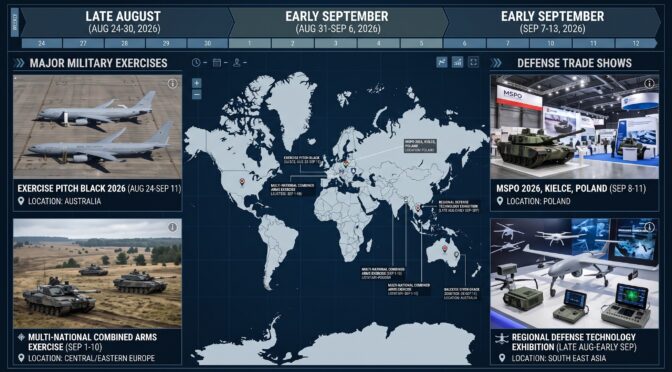
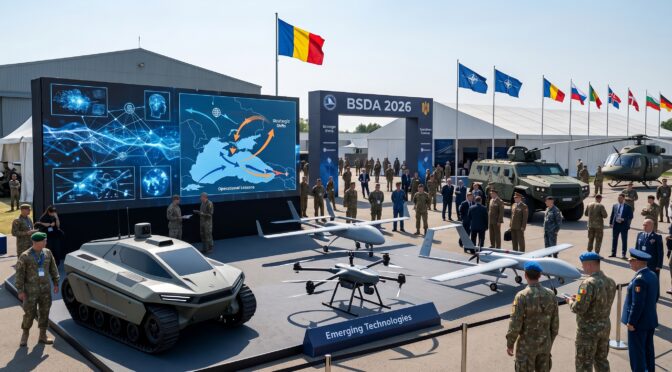
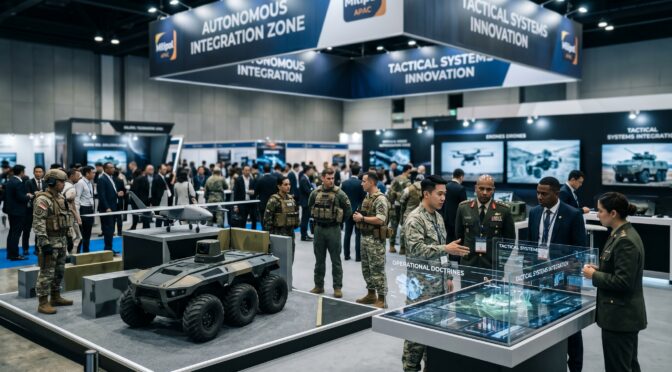
Between mid-August and early September 2026, the global military and defense industrial landscape underwent significant strategic recalibration. Insights from major defense exhibitions and multinational military exercises reveal that traditional, unipolar security architectures are shifting toward localized, pragmatically aligned defense networks. In the Indo-Pacific, defense engagement bifurcated along alliance structures. Multilateral cooperation reached high levels of tactical integration during the Super Garuda Shield 2026 exercise1 in Indonesia, which brought together forces from 21 nations under a unified task force structure. By contrast, long-standing bilateral alliances faced political friction. On the Korean Peninsula, the abrupt shortening of the Ulchi Freedom Shield exercise3 exposed vulnerabilities in the U.S.-South Korea security partnership, disrupting readiness evaluations needed for the planned transfer of wartime operational control.
At the same time, the global defense industrial base—as showcased at MSPO 20266 in Poland and the NGAUS 148th General Conference8 in the United States, is pivoting toward synthetic training environments, uncrewed systems, and resilient supply chains. NATO’s eastern flank remains the primary hub for European procurement, attracting substantial interest and investment from North American prime contractors. Across the industry, high costs for ammunition and live-flight hours are accelerating a shift from buying platforms to acquiring lifecycle training and sustainment systems. Meanwhile, strategic competitors are expanding their military diplomacy. Deployments of UAE and Egyptian air assets to joint exercises with China’s People’s Liberation Army Air Force signal a weakening of traditional U.S. dominance in Middle Eastern and North African aerospace defense, as regionally aligned nations diversify their security partnerships.
1.1 Summary Table of Key Events and Lessons Learned
NATO’s eastern flank remains the focus of rapid procurement. High demand exists for synthetic training environments and contracted adversary-air services to support diverse, multi-origin fleet acquisitions without shortening the lifespan of front-line aircraft.
NGAUS 148th General Conference
Tradeshow / Expo
Indianapolis, Indiana, USA August 28, 31, 2026
Civilian and military technology requirements continue to overlap. Cost pressures and range limits are driving widespread adoption of immersive virtual and augmented reality simulators for marksmanship and tactical training across reserve units.
Political volatility can quickly affect joint tactical readiness. Canceling live-fire and constructive counterattack phases limits command staff evaluations of multi-domain challenges, delaying operational control transfer assessments.
Waters south of Jeju Island, South Korea September 7, 11, 2026
Trilateral defense frameworks (U.S., South Korea, Japan) demonstrate strong organizational resilience despite regional political friction. Real-time data sharing and maritime interdiction remain crucial for addressing expanding North Korean naval and nuclear capabilities.
Super Garuda Shield 2026
Military Exercise
Sumatra and Java, Indonesia August 31, September 11, 2026
Embedding multinational platoons into single battalion structures achieves tactical integration. Additionally, environmental adaptation—such as proactive wildfire mitigation—is now essential for land strike operations in the Indo-Pacific.
Falcon Shield 2026
Military Exercise
Hotan, Xinjiang, China Late August, Mid-September 2026
Gulf states are actively diversifying their defense relationships. China demonstrated the capability and willingness to integrate Western-equipped partner forces in complex command simulations and mixed flight operations within its contested airspace.
Civilization Eagles 2026
Military Exercise
Egyptian Air Bases, Egypt August 2026
The Chinese People’s Liberation Army Air Force demonstrated logistics and interoperability capabilities across Africa and the Middle East, reflecting a broader trend toward multipolar security partnerships among traditional U.S. allies.
2.0 Details: Military Tradeshows and Defense Expos
2.1 MSPO 2026 (34th International Defence Industry Exhibition)
The 34th International Defence Industry Exhibition (MSPO)6 took place at the Targi Kielce Exhibition and Congress Centre in Kielce, Poland, from September 8 to 11, 2026, confirming its role as Central and Eastern Europe’s main defense technology forum. The event brought together defense ministers, military delegations, over 34,000 professional visitors, and more than 625 exhibitors7. A notable geopolitical development was Canada’s designation as the Lead Nation, following negotiations for an expanded Canadian national pavilion during Prime Minister Mark Carney’s visit to Warsaw in August 202510. Canada sent its largest-ever defense delegation to Poland, comprising over 250 organizations, 500 delegates, and more than 90 exhibitors in the national pavilion10. Major international contractors alongside Poland’s state-owned Polska Grupa Zbrojeniowa included General Atomics Aeronautical Systems, CAE, Top Aces, Calian, Kraken Robotics, and Telesat6.
Technology displays at MSPO 2026 centered on supporting and maintaining recent platform acquisitions by the Polish Armed Forces. As Poland simultaneously integrates 32 F-35A fighters, 48 FA-50 combat aircraft, 96 AH-64E attack helicopters, and 32 AW149 helicopters—while continuing to operate 48 F-16C/Ds—it faces training and maintenance bottlenecks10. Consequently, synthetic training and contracted adversary-air services were key focal points. CAE demonstrated full-mission simulators designed to reduce live flight hours10, while Top Aces presented adversary-air solutions to provide aggressor training for F-16 and F-35 pilots without taxing Poland’s operational aircraft fleet10. General Atomics highlighted Synthetic Aperture Radar systems for uncrewed aerial vehicles targeting NATO eastern flank surveillance needs6. Canadian firms also showcased anti-jamming navigation tech (Calian), secure satellite communications (Telesat), and subsea sensing systems (Kraken Robotics)10.
Polish Military Acquisition Program
Associated Canadian Industrial Solution Exhibited at MSPO 2026
Strategic Justification for Procurement
32 F-35A / 48 F-16C/D Fighters
Top Aces Contracted Adversary-Air (Red Air)
Preserves the lifespan and maintenance resources of front-line aircraft by outsourcing aggressor training duties.
48 FA-50 / 96 AH-64E / 32 AW149
CAE Synthetic Training Environments and Simulators
Accelerates pilot conversion and training pipelines while reducing live-flight operational expenses.
Border Surveillance / NATO Flank ISR
General Atomics High-Performance Synthetic Aperture Radar
Provides persistent, all-weather intelligence gathering capabilities for uncrewed platforms in contested environments.
Ensures resilient navigation and communication networks in regions affected by heavy electronic warfare interference.
Baltic Sea Coastal Defense
Kraken Robotics Subsea Sensing Systems
Enhances underwater situational awareness and protects critical maritime infrastructure against subsurface threats.
MSPO 2026 highlighted the growth of secondary markets following major defense procurement investments. Poland’s fleet expansion has created demand for maintenance, repair, overhaul, and training support. Canada’s Lead Nation presence aligns with its 2026 Defence Industrial Strategy, which targets CAD $180 billion in procurement opportunities and CAD $290 billion in capital investments over the coming decade, alongside goals to expand exports by 50 percent10. By integrating Canadian subsystems and simulation technologies into Polish infrastructure, both nations position themselves to serve regional markets, including Ukraine and the Baltic states10. Central Europe is increasingly developing into a localized hub for assembly, integration, and life-cycle sustainment.
2.2 NGAUS 148th General Conference and Exhibition
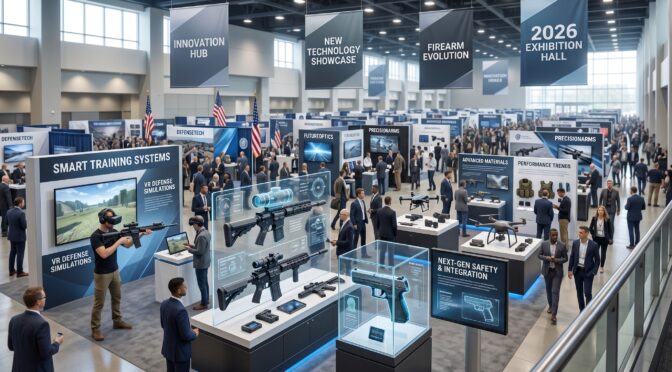
The 148th National Guard Association of the United States General Conference and Exhibition brought together over 4,000 Army and Air National Guard officers, defense officials, and industry representatives, and was held from August 28 to 31, 2026, at the Indiana Convention Center in Indianapolis. The exhibition featured more than 240 companies12, including major prime contractors such as Boeing, Lockheed Martin, General Atomics, AM General, and Rolls-Royce11. Notably, over 60 first-time exhibitors participated, presenting commercial technologies adapted for military applications11. New entrants included immersive training developers (HTX Labs, BILT), simulator providers (Conflict Kinetics, InVeris Training Solutions, Laser Shot), and communications suppliers (Motorola Solutions, Safran Defense & Space)11.
The NGAUS exhibition reflected the National Guard’s dual mandate of overseas combat readiness and domestic disaster response. Key displays included the Gray Eagle 25M uncrewed aerial system, emphasizing the Guard’s integration of persistent intelligence, surveillance, reconnaissance, and strike capabilities into joint operations11. Industry analyses indicate that autonomous warfare and unmanned systems are becoming standard components of modern military operations13. Additionally, virtual and augmented reality training systems were prominently featured. HTX Labs and BILT showcased 3D synthetic training environments using interactive tablets and Apple Vision Pro headsets11, while Conflict Kinetics and Laser Shot demonstrated marksmanship simulators designed to emulate field conditions11. For domestic missions, Motorola Solutions displayed AI-enabled public safety communication networks, while Safran highlighted advanced navigation and geospatial tools11.
NGAUS 2026 illustrated the expanding adoption of synthetic training tools across reserve components. Increasing use of virtual and augmented reality simulators addresses challenges like rising ammunition costs, limited range availability, and logistical constraints, enabling units to increase tactical decision-making repetitions for junior leaders. These developments align with broad trends documented by data-driven intelligence reporting on tactical programs and human performance14. Furthermore, the conference underscored the operational convergence of military C2 infrastructure and emergency management networks. Technologies adopted by the Guard for domestic response—such as resilient communication nodes and geospatial platforms—increasingly overlap with tools required for multi-domain combat operations. The participation of 60 non-traditional commercial exhibitors highlights how commercial tech startups are continuing to integrate into military defense supply chains11.
2.3 Emerging Regional Forums: Egypt International Airshow and Ireland Emergency Services Expo
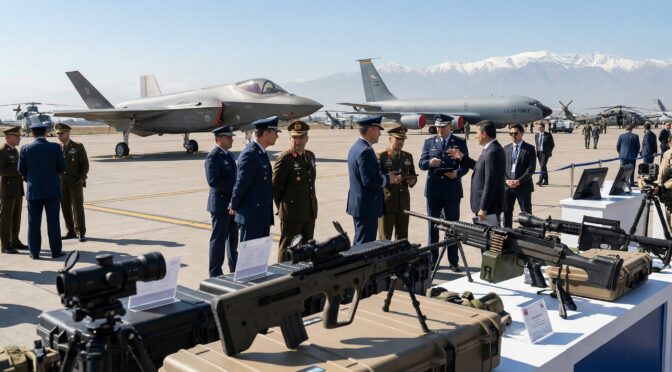
Smaller regional events in early September highlighted shifting procurement patterns. The Egypt International Airshow 202615, held from September 8 to 10, served as a platform for defense suppliers connecting with leadership from the Egyptian Armed Forces, African air forces, and regional civil aviation authorities15. Discussions focused on airspace management, regional air defense integration, and multi-role combat aircraft suited for deterrence and counter-insurgency operations across North Africa and the Levant.
Concurrently, Ireland held the Emergency Services and Military Expo17 on September 10 in Athlone. The event brought together the Irish Defence Forces, An Garda Síochána, the Health Service Executive, the Prison Service, and the Coast Guard, as well as specialized equipment vendors17. The expo emphasized internal security, veteran transition support, dual-use emergency response equipment, and inter-agency C2 software tailored for civil assistance operations18.
The growth of the Egypt International Airshow reflects Cairo’s efforts to position itself as a regional technology and arms hub, aligning with broader Middle Eastern supply-chain diversification. Meanwhile, Ireland’s expo demonstrates a European trend toward aligning military and civil emergency services. As domestic hybrid threats—such as cyber disruption, infrastructure sabotage, and natural disasters—increase, governments are streamlining procurement across defense and public safety agencies to build unified dual-use command and communication capabilities.
3.0 Details: Military Exercises
3.1 Ulchi Freedom Shield 2026
Ulchi Freedom Shield 20263 was planned as the largest annual combined military exercise on the Korean Peninsula. Co-sponsored by the United States and South Korea, it was scheduled to run for 11 days from August 17 to August 27, 20263, involving approximately 18,000 personnel from the U.S., South Korea, the UN Command, and partner nations3. Doctrinally, the exercise is structured in two sequential phases: an initial defensive phase followed by a counterattack phase4. The exercise aimed to test tactical capabilities, enhance multinational interoperability, evaluate cyber and electronic warfare procedures, and complete the Full Operational Capability assessment required to transition wartime operational control to South Korean military leadership3.
Execution was altered following political directives. On August 16, 2026, U.S. President Donald Trump directed Defense Secretary Pete Hegseth to scale back the exercise, citing operational costs, diplomatic engagement with North Korean leader Kim Jong Un, and discussions with South Korean President Lee Jae-Myung3. As a result, Ulchi Freedom Shield concluded early on August 21 after five days4. The second phase involving counterattack maneuvers was canceled4, and field maneuvers and live-training events were reduced or shifted to computer simulations3. While previous iterations included extensive live-fly operations featuring U.S. and South Korean combat aircraft (F-16, F-22, F-35, F-15K, FA-50)3, the 2026 event shifted focus primarily to command-post computer simulations4. Additionally, regional naval presence was affected when the USS George Washington carrier strike group was redeployed from the South China Sea to the Middle East to relieve the USS Abraham Lincoln19.
The shortened timeline of Ulchi Freedom Shield 2026 highlights several strategic implications. First, canceling the live counterattack phase limits the completeness of the Full Operational Capability assessment, as simulations alone may not fully capture logistical and operational friction4. Second, scaling back the exercise did not halt North Korean military developments; North Korea conducted short-range ballistic missile tests on August 6 and 123 and subsequently commissioned the Kang Kon, its second 5,000-ton destroyer equipped for cruise missiles, following the Choe Hyon in June20. Third, aerospace analysts note that while command-post exercises train staff, live flight hours remain critical for tactical flight readiness and air force integration3.
3.2 Freedom Edge (Trilateral Exercise)
In contrast to the shortened bilateral exercise, the U.S., South Korea, and Japan executed the fourth iteration of the Freedom Edge22 trilateral exercise from September 7 to 11, 2026, in international waters near Jeju Island22. The objective was to strengthen joint response capabilities against North Korean missile and nuclear threats while advancing regional security cooperation22.
Freedom Edge proceeded as scheduled22. The multi-domain exercise emphasized real-time data sharing across maritime, air, and cyber domains22. Tactical drills included air defense scenarios focused on tracking simulated ballistic targets, as well as maritime interdiction exercises overseen by a joint control group22.
The execution of Freedom Edge demonstrates operational consistency within trilateral security arrangements even when bilateral events face adjustments22. Focus areas like real-time data sharing and maritime interception directly address developments in regional naval capabilities, such as North Korea’s introduction of new naval vessels like the Kang Kon and Choe Hyon20.
3.3 Super Garuda Shield 2026
Super Garuda Shield 20261 took place from August 31 to September 11, 2026, across training sites in Indonesia, including Bandung, Baturaja, and Lampung on Sumatra and Java. Co-hosted by the Indonesian National Armed Forces and U.S. Pacific Command1, the exercise involved approximately 5,000 personnel from 21 nations, including core participants from the U.S., Indonesia, Australia, Canada, Japan, Singapore, South Korea, France, India, and New Zealand, alongside observer nations such as Vietnam25. The exercise aimed to strengthen multi-nation interoperability, command-and-control capabilities, and regional security cooperation1.
Maneuvers during Super Garuda Shield 2026 included live-fire, airborne, cyber, and civil-military drills. On September 4, over 200 paratroopers conducted a jump into the Baturaja training area in South Sumatra27. The U.S. contingent was drawn from the 11th Airborne Division’s 1st Battalion, 501st Parachute Infantry Regiment (2nd Mobile Brigade Combat Team), based in Alaska27. Led by U.S. Army Lt. Col. Dwayne Steppe, troops adapted from Arctic environments to tropical conditions during the deployment27. Following insertion, participants formed Combined Task Force 501—an integrated battalion structure designed to align tactical communications and operational procedures across participating units27.
Combined Task Force 501 Composition
Participating Nations
Tactical Integration Objective
Core Command & Airborne Infantry
United States, Indonesia
Establish a baseline command structure and execute the initial airborne insertion into jungle terrain.
Integrated Rifle Platoons
Japan, Australia, New Zealand
Embed multinational squads into unified companies to streamline communications and operational procedures.
Specialized Support Elements
India, Canada, France
Integrate specialized maneuver and support tactics within the unified battalion structure.
Additional elements included a dedicated cyber defense exercise (“Cyberthon”) involving Singapore’s Digital and Intelligence Service1, as well as staff planning exercises combining personnel from 14 armed forces25. U.S. Marines from Marine Rotational Force , Darwin conducted expeditionary logistics, water purification, and force-on-force training in Lampung24. Due to dry season conditions, U.S. and Indonesian engineers also carried out wildfire mitigation measures—including clearing trenches and access routes—prior to executing Joint Land Strike live-fire artillery drills with High Mobility Artillery Rocket Systems1.
Super Garuda Shield 2026 reflected progress in multi-nation operational integration. Constructing Combined Task Force 501 allowed units to address communication and procedural differences directly during tactical operations27. Furthermore, wildfire mitigation tasks highlighted how environmental considerations impact training scheduling and resource allocation29, while joint cyber exercises underscored the role of shared digital defense strategies in coalition planning25.
In August and September 2026, China’s People’s Liberation Army Air Force conducted joint exercises with military partners in the Middle East and North Africa. China and Egypt held the Civilization Eagles 2026 air exercise across several Egyptian bases30. Concurrently, China and the UAE Air Force conducted Falcon Shield 202631 in Hotan, Xinjiang31. These events aimed to improve tactical capabilities and foster military-to-military cooperation31.
Falcon Shield 2026—the fourth iteration in the bilateral series—included command simulations, flight training, and mixed-formation exercises31. Flying in mixed formations required participants to coordinate datalinks and communication protocols. Operating out of Hotan exposed UAE aircrews to high-altitude, arid conditions while conducting drills within Chinese air defense infrastructure31.
Falcon Shield and Civilization Eagles reflect evolving defense relationships in the region. UAE and Egyptian participation in joint exercises with China indicates that regional partners are actively diversifying their international security ties30. The deployments demonstrate China’s ability to host international forces domestically while projecting military diplomacy overseas30.
Mixed-formation training facilitates mutual familiarity with flight tactics, radar systems, and operational procedures across different platforms. Through these engagements, participating air forces gain insight into foreign command structures and air defense networks, which supports broader defense autonomy. Recent SITREP reports on Chinese Military and Intelligence note that the People’s Liberation Army continues to expand its military outreach beyond its immediate region13.
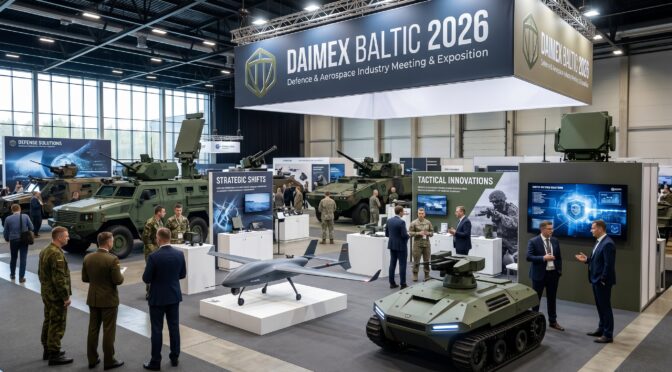
The inaugural Defence and Aerospace Industry Meeting and Exposition (DAIMEX) Baltic 2026, held from May 12 to May 14 in Vilnius and Pabradė, Lithuania, represented a defining moment in the military acquisition and strategic posture of NATO’s eastern flank. Organized by the defense industry associations of Lithuania, Latvia, and Estonia, alongside the Lithuanian Riflemen’s Union, the event functioned as a critical convergence point for military leadership, defense policymakers, and international contractors.1 The gathering was designed to evaluate emerging operational threats, facilitate structural supply chain integration, and align regional procurement strategies with the harsh operational realities observed during the ongoing conflict in Ukraine.2
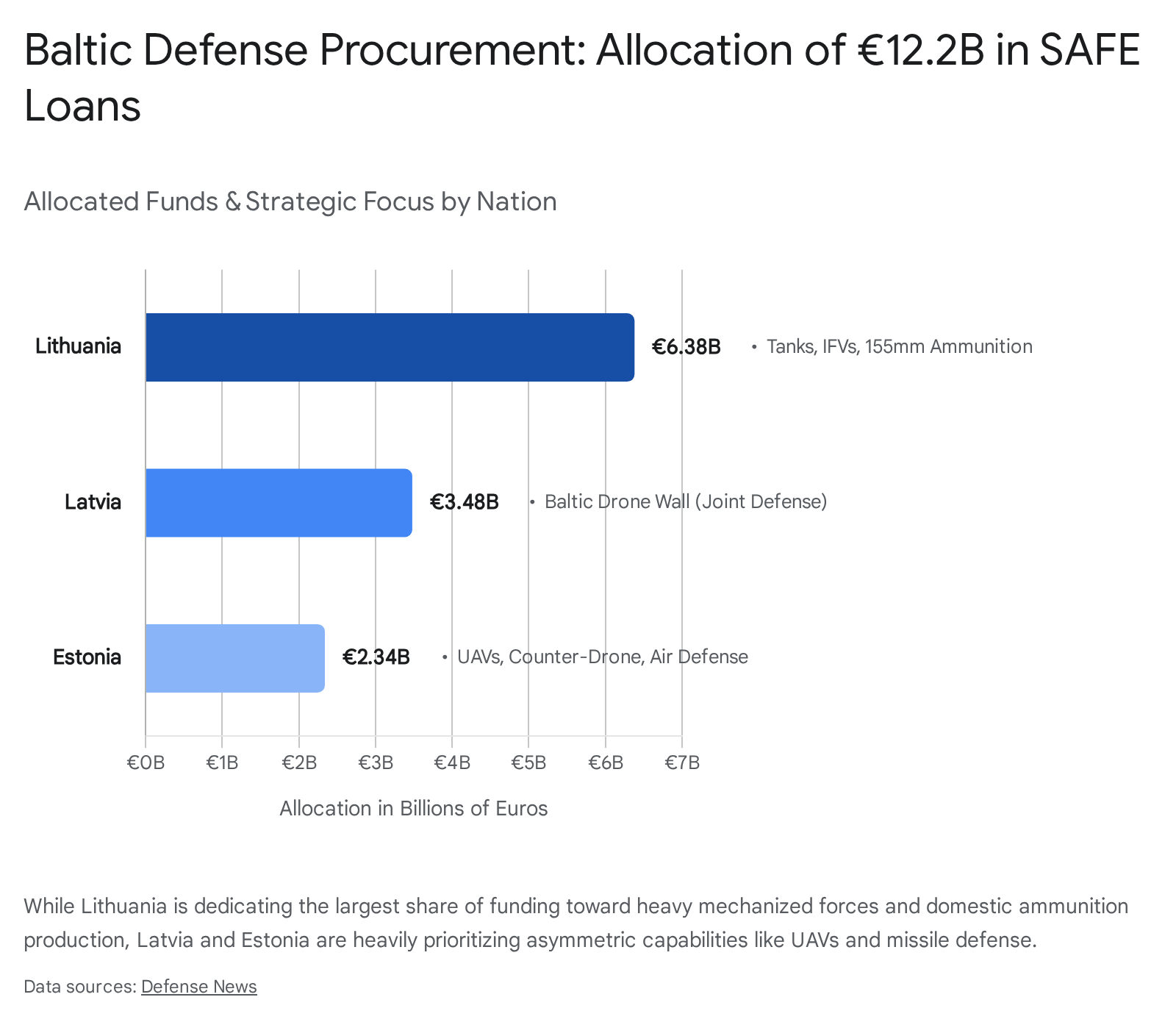
A central catalyst for the strategic dialogue at the event was the confirmed deployment of approximately €12.2 billion ($14 billion) in European Union Security Action for Europe (SAFE) loans.4 This unprecedented infusion of capital is driving a regional paradigm shift, moving the Baltic states away from reliance on foreign, off-the-shelf military purchases and toward localized manufacturing, deep technology transfers, and joint regional procurement initiatives.4 Major industrial agreements reinforced during the exhibition include Rheinmetall’s commitment to localized 155mm ammunition production in Lithuania, KNDS’s establishment of regional assembly hubs, and Lockheed Martin’s expanded maintenance footprint in Estonia.4
On a tactical level, the live-fire and mobility demonstrations held at the General Silvestras Žukauskas Training Area in Pabradė illuminated how the defense industry is adapting to the demands of dispersed, high-attrition, and drone-saturated warfare.6 The small arms sector, led heavily by FN Herstal, debuted mature variants of ultralight machine guns that successfully reduce squad burden while maintaining sustained fire capabilities.8 In the protected mobility domain, the launch of the Patria TRACKX all-terrain vehicle addressed the urgent requirement for low-ground-pressure troop transport capable of operating in the challenging, austere topographies of the Baltic region.10
Furthermore, the overwhelming presence of specialized Unmanned Aerial Systems (UAS), loitering munitions, and kinetic Counter-UAS (C-UAS) platforms demonstrated a collective military consensus: control of the low-altitude tactical airspace is now a strict prerequisite for ground maneuverability.4 This report evaluates the new equipment announced, analyzes the tactical and operational doctrines shaping these acquisitions, and outlines the strategic supply chain mitigation efforts redefining the defense architecture of the Baltic states as observed at DAIMEX 2026.
2. Strategic Operating Environment and Doctrinal Realignments
The strategic operating environment dictating the proceedings at DAIMEX 2026 is entirely defined by the conventional warfare occurring in Eastern Europe. The conflict has systematically dismantled previous assumptions regarding deterrence, force design, and supply chain elasticity within the NATO alliance.12 Statements from senior leadership at the event, specifically Lithuanian President Gitanas Nausėda, established a new baseline for regional defense doctrine: industrial capacity is practically indistinguishable from battlefield capacity.5
The Realities of High-Intensity Warfare
Modern combat operations are currently consuming munitions, armored platforms, and specialized personnel at rates that outstrip the production capacity of the Western defense industrial base. For the Baltic states, which lack the geographic depth required to absorb and subsequently counterattack a prolonged initial assault, deterrence by denial requires highly responsive, localized defense architectures.4
The DAIMEX conference highlighted the rapid, continuous evolution of adversarial threat profiles. Adversaries are heavily investing in asymmetric capabilities, such as long-range loitering munitions, massed autonomous systems, and advanced electronic warfare (EW), which necessitates a continuous loop of tactical adaptation.12 Discussions held during the concurrent military engineering and logistics panels emphasized that effective terrain management remains the key to absorbing an adversary’s momentum and seizing the operational initiative.13 The operational tempo on modern battlefields has accelerated, rendering static positions highly vulnerable. The prevailing tactical doctrine requires extreme agility and dispersion, operating under the assumption that there are no safe rear areas; forces that remain stationary are quickly targeted by aerial ISR and precision fires.13
The Five Percent Defense Expenditure Mandate
To adequately resource this doctrinal shift, the Baltic nations are radically restructuring their fiscal priorities. President Nausėda articulated that Lithuania, alongside its regional partners, views elevated defense spending not as a temporary economic burden, but as the permanent price of sovereign survival and a potential engine for domestic industrial growth.5 While NATO currently mandates a 2% of GDP expenditure baseline, the Baltic states are actively pushing to meet and exceed a 5% GDP threshold for national defense spending, with Lithuania currently operating near or above this target.14
This level of sustained capital investment is effectively unprecedented in modern peacetime Europe and reflects the acute, existential threat perception along the Suwalki Gap and the broader eastern frontier. This capital is being directed toward multi-layered, redundant defense networks.4 To execute this, the defense industrial base is being asked to transition toward sustained, scaled production models, closing the gap between sensor detection and kinetic response.16
3. Fiscal Catalysts and the €12.2 Billion SAFE Loan Deployment
The primary financial mechanism enabling the rapid modernization of Baltic forces is the deployment of approximately €12.2 billion ($14 billion) in low-cost loans via the European Union’s Security Action for Europe (SAFE) initiative.4 The DAIMEX exhibition served as a primary venue for contractors to position themselves for these imminent contract awards.4
However, the deployment of these SAFE loans reveals highly divergent national priorities based on differing strategic geographies, existing force structures, and distinct tactical philosophies among the three Baltic nations.
Divergent National Procurement Strategies
Lithuania: Heavy Mechanization and Domestic Production Lithuania has secured the largest allocation of SAFE funding, totaling €6.38 billion.4 The Lithuanian Ministry of National Defence is prioritizing heavy conventional deterrence. A large portion of these funds is earmarked for the procurement of main battle tanks, specifically the Leopard 2A8, alongside new infantry fighting vehicles (IFVs) and massive stockpiles of 155mm artillery ammunition.4 Lithuania’s strategy relies on maintaining a robust, heavily armored maneuver force capable of contesting physical territory directly against armored incursions.
Latvia: Asymmetric Force Multipliers Latvia, operating with a €3.5 billion SAFE loan allocation, is pursuing a markedly different trajectory.4 Latvian defense officials noted that for a nation with a smaller population and industrial base, attempting parity in heavy armor is economically and demographically unfeasible. Instead, Latvia is heavily prioritizing unmanned aerial systems (UAVs), ground robotics, anti-drone defense matrices, and advanced missile systems.6 Drones and robotics are viewed as “asymmetric power” multipliers, allowing smaller formations to exert outsized lethality and surveillance over wide geographic areas.6
Estonia: Dominating the Low-Altitude Airspace Estonia, utilizing €2.34 billion in SAFE loans, recently executed a highly visible doctrinal pivot. The Estonian government opted to put its planned procurement of traditional infantry fighting vehicles on hold, choosing instead to rapidly shift capital toward the acquisition of UAS, extensive counter-drone measures, and layered air-defense systems.4 Furthermore, Estonia is in the final stages of selecting a new national missile defense system, evaluating competing architectures from U.S., European, and Israeli defense contractors.4 This shift represents a profound acknowledgment that heavy mechanized forces are increasingly vulnerable without absolute superiority in the low-altitude airspace.
The detailed breakdown of these SAFE loan allocations underscores a dual-track approach within the Baltic alliance: maintaining a hard conventional anvil (Lithuania’s armor) against which adversary forces can be pinned and destroyed by an asymmetric, highly mobile hammer (Latvia and Estonia’s drone and missile forces).
4. Physical Infrastructure and Counter-Mobility: The Eastern Shield
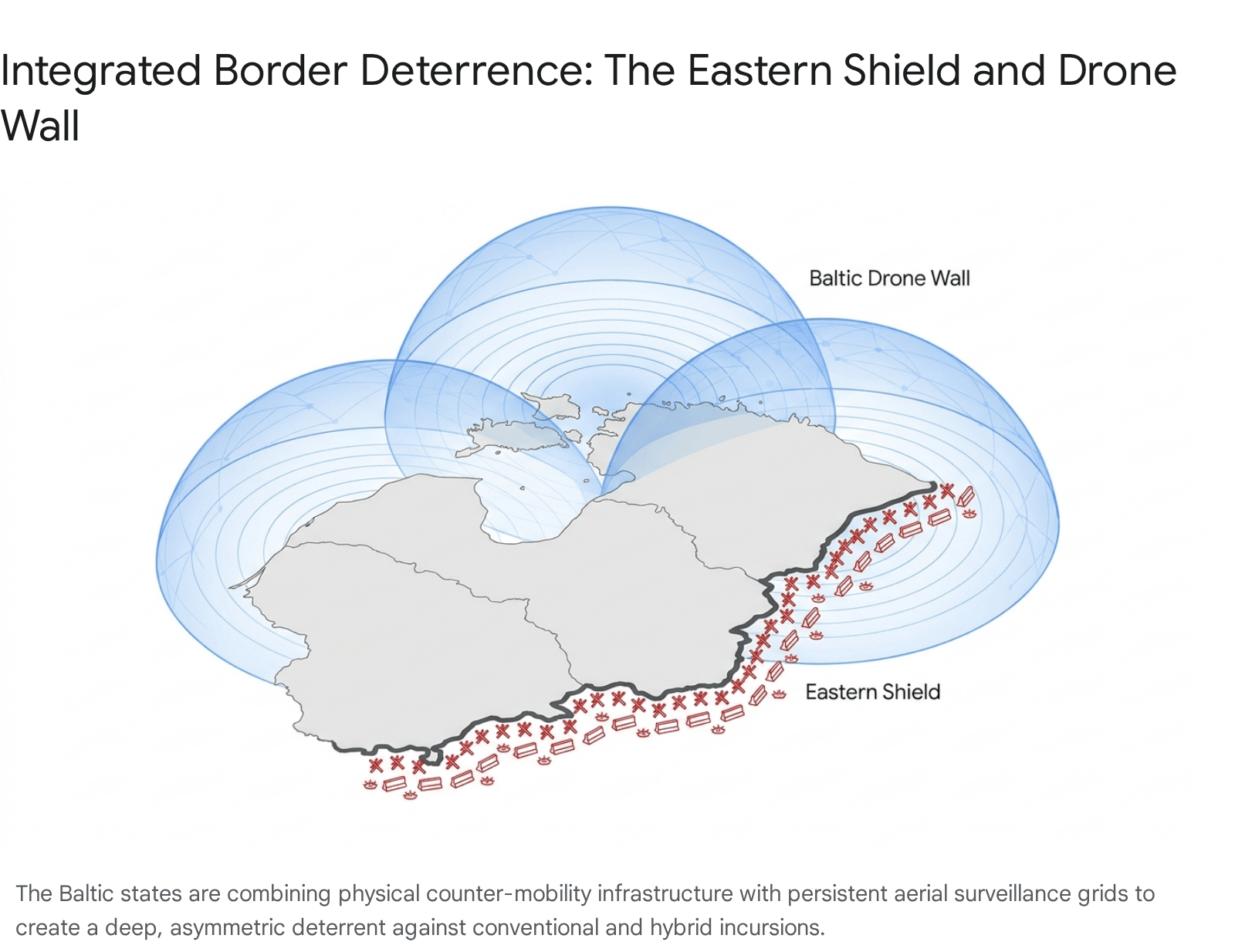
A critical focal point of the DAIMEX 2026 conference was the deep integration of civilian industry capabilities into the physical defense architecture of the NATO frontier. The “Baltic Defense Line” and the interconnected Polish “Eastern Shield” initiatives represent a massive, multi-billion-euro investment in hard infrastructure, counter-mobility measures, and border fortifications spanning the entirety of the Russian and Belarusian borders.5
Implementing Physical Fortifications
The Baltic Defense Line is engineered as a continuous, interconnected network of physical barriers designed to deny enemy mobility, disrupt armored advances, and channel hostile mechanized forces into pre-designated, highly targeted engagement zones. DAIMEX 2026 provided a necessary venue for military procurement officials to evaluate the specialized materials, heavy machinery, and civil engineering services required to construct these defenses at a continental scale.17
The infrastructure overhaul features several core components:
Anti-Tank and Mobility Obstacles: The extensive deployment of reinforced dragon’s teeth, massive concrete tetrahedrons, and deep anti-vehicle trench systems designed to significantly slow mechanized advances, forcing adversaries to halt and deploy bridging equipment while under fire.18
Reintroduction of Mine Warfare: In a significant policy shift dictated by necessity, Lithuania and its Baltic partners confirmed comprehensive plans to utilize both anti-personnel and anti-tank mines along vulnerable border segments. These minefields will be heavily integrated into the broader counter-mobility doctrines to maximize friction against an advancing force.19
Underground Logistics and Hardened Structures: Recognizing that surface-level supply depots are highly vulnerable to deep-strike precision-guided munitions and long-range loitering drones, the Baltic states are initiating the construction of hardened, subterranean ammunition depots and supply caches.5
To support the rapid deployment of necessary infrastructure, companies like(https://kt-shelter.com/news-and-events/) showcased their rapidly deployable infrastructure systems. Highlighting the shared challenges of arctic and extreme-weather conditions, rapidly deployable hangars and command posts are vital for maintaining operational continuity and protecting high-value assets from aerial surveillance and harsh elements when underground facilities are unavailable.21
5. Multi-Layered Airspace Denial and the Baltic Drone Wall
Complementing the physical ground barriers of the Eastern Shield is the “Baltic Drone Wall,” a highly ambitious joint project spearheaded by Lithuania, Latvia, and Estonia to create a unified, multi-layered aerial surveillance and interception network.4 Discussions held during the DAIMEX panel sessions revealed that the three nations are actively pooling their procurement resources to ramp up this eastern flank defense initiative.4
The Drone Wall concept moves far beyond localized, ad-hoc counter-UAS (C-UAS) point defense. It envisions a persistent, integrated sensor grid spanning the entire eastern border, capable of detecting, tracking, and neutralizing low-altitude threats using a highly integrated mix of electronic warfare (EW), kinetic interceptors, and directed energy systems.
The operational goal of the Drone Wall is to systematically prevent adversaries from utilizing commercial off-the-shelf (COTS) or military-grade drones for intelligence, surveillance, and reconnaissance (ISR) or artillery spotting over sovereign Baltic territory. By denying the enemy the ability to safely operate ISR drones, the Baltic states effectively blind hostile artillery and rocket systems, mitigating the primary cause of casualties in modern trench and fortification warfare. Furthermore, the Drone Wall is designed to serve as an early warning apparatus, identifying the launch patterns of deep-strike loitering munitions aimed at critical civilian and military infrastructure.
6. Localized Industrial Integration and Strategic Mitigation
The vulnerability of modern, globally distributed defense supply chains was a dominant theme across the Business-to-Business (B2B) matchmaking sessions and the high-level conferences at DAIMEX 2026.1 Modern weapons platforms rely heavily on complex, transnational supply chains for microelectronics, specialized metallurgy, ballistic materials, and energetic chemicals.
Addressing Component Dependencies
Component dependencies create acute operational risks during a high-intensity conflict. If a nation cannot quickly repair battle damage or manufacture replacement munitions due to a lack of foreign-sourced parts, frontline forces will inevitably face critical shortages that degrade combat effectiveness. The Baltic states, acutely recognizing this exposure, utilized the DAIMEX B2B platform to explicitly target international partnerships focused on “supply-chain integration,” “technology transfer,” and “joint development and co-production”.1
To proactively address these vulnerabilities and incentivize foreign direct investment, Lithuania has successfully implemented a “Green Corridor” framework.6 This policy dramatically accelerates bureaucratic procedures, environmental permits, and zoning regulations for defense contractors willing to establish research and development (R&D) or actual manufacturing operations within Lithuanian borders.6
Executing Strategic Mitigation
Key examples of this strategic mitigation presented and formalized at DAIMEX 2026 include:
Repatriation of Energetics Production (Rheinmetall): Artillery ammunition production remains the most glaring bottleneck in the current European defense framework. Rheinmetall’s commitment to building a 155mm projectile plant in Lithuania directly mitigates the reliance on Western European manufacturing, which currently faces severe backlogs and extended delivery timelines.5 By producing heavy artillery shells domestically, Lithuania secures its own operational tempo and becomes a net provider of munitions to the regional alliance, rather than a mere consumer.
Localizing Maintenance and Repair Operations (KNDS & Lockheed Martin): The agreements with KNDS for Leopard 2A8 tank assembly and maintenance, and with Lockheed Martin for HIMARS sustainment, ensure that critical sub-components and repair depots are located directly within the operational theater.4 This significantly shortens the logistical tether, preventing situations where battle-damaged, highly complex systems must be shipped back to Germany or the United States via vulnerable rail lines for routine maintenance or repair.
Supply Chain Redundancy via B2B Networking: The DAIMEX industrial cooperation meetings aimed to connect massive prime contractors with local Small and Medium Enterprises (SMEs).1 By integrating Baltic SMEs into the supply chains of global defense giants, contractors build redundant manufacturing capabilities. If a primary supplier in a different hemisphere is disrupted by geopolitical realignments or shipping interdictions, a secondary regional supplier can surge production to meet demand.
Specialized Component Partnerships (DEW Engineering): Companies such as(https://www.dewengineering.com/index.php/whatwedo/vehicle-services), Canada’s largest manufacturer of add-on-armor, actively participated in DAIMEX 2026 to offer strategic mitigation solutions.24 Demonstrating their expertise in providing ITAR-free armor solutions, including ballistic door panels and vehicle protection that meet STANAG mine-blast and Improvised Explosive Device (IED) standards, DEW Engineering highlights the necessity of localized armor integration.24 The presence of such firms—supported by initiatives like the Canada Pavilion, which offered a B2B venue at a €1000 co-exhibitor cost—facilitates the immediate transfer of survivability technologies to local Baltic vehicle fleets without relying on prolonged foreign military sales processes.1
7. Tactical Mobility Innovations: The Patria TRACKX
One of the most significant and highly anticipated vehicle debuts at DAIMEX 2026 was the Patria TRACKX, an all-terrain tracked armored personnel carrier (APC).7 Demonstrated in realistic, sandy terrain conditions during the driving exhibitions at Pabradė, the TRACKX is explicitly designed to replace aging cold-war legacy platforms like the American M113 and the Soviet-designed MT-LB.27 These older platforms are still widely used across Eastern Europe for utility and troop transport but severely lack the mine and ballistic survivability standards required on a modern battlefield.27
The FAMOUS Consortium
The TRACKX was developed under the European Union-backed FAMOUS (Future Highly Mobile Augmented Armoured Systems) program.10 Finland serves as the lead nation for this initiative, with Patria acting as the industrial coordinator alongside partners from over eleven member nations.10 The overarching objective of the FAMOUS program is to maximize synergies, interoperability, and standardization across European light armored vehicle fleets, thereby drastically reducing life-cycle costs and mitigating component dependencies across the NATO alliance.29
Operational Role and Specifications
The TRACKX fills a distinct and urgent operational gap in the Baltic and Nordic theaters. While modular wheeled APCs—such as the Patria 6×6, which was also showcased at DAIMEX—offer excellent on-road mobility and tactical capability for large fleet troop transportation, and heavy Infantry Fighting Vehicles (IFVs) like the CV90 offer intense firepower and armor, neither is perfectly suited for the challenging off-road conditions of the region.26 The soft bogs, thawing muskeg, dense forests, and deep snow prevalent in Northern Europe frequently immobilize wheeled vehicles and overly burden 35-tonne IFVs.10
The Patria TRACKX is optimized strictly for strategic and tactical mobility in these extreme environments, serving as a modern battle taxi and multi-role platform.31 By prioritizing a low and centrally positioned center of gravity and utilizing a nearly flat underside without traditional torsion bars, Patria has engineered a platform that can shadow frontline battle tanks or serve in vital secondary logistical roles in terrain previously deemed impassable by conventional armor.10 This capability significantly complicates adversary targeting calculations, as defensive lines can no longer rely on natural terrain barriers to funnel opposing forces.
The following table details the core technical specifications of the Patria TRACKX as demonstrated and published at the event:
80 km/h maximum road speed; operational range of 500 km.33
Amphibious Capability
Fully amphibious with a 4 km/h swimming speed (propelled via tracks).33
Ground Pressure
Exceptionally low 32 kPa (0.326 kg/cm²) at maximum combat weight.10
Track Dimensions
56 cm wide Soucy composite rubber tracks (CRTs).33
Obstacle Clearance
Capable of traversing a 60% gradient and crossing a 2 m trench; 0.55 m ground clearance.33
Protection Profile
STANAG 4569 Level 1 ballistic and mine protection (baseline), scalable to Level 2 optional.33
8. Next-Generation Infantry Support: Small Arms Evolution
The live-fire demonstrations held on May 13 at the Pabradė Training Area provided operators, tacticians, and procurement specialists direct access to the latest infantry weapon systems.7 The evolution of small arms showcased at DAIMEX 2026 clearly reflected a stringent operational mandate: to increase squad-level lethality and volume of fire while aggressively reducing the physical weight burden on the individual soldier.7
The FN Herstal EVOLYS System
Belgium’s FN Herstal dominated the small arms exhibition with a comprehensive live-fire demonstration of its portfolio, centering heavily on the FN EVOLYS ultralight machine gun (available in both 5.56x45mm NATO and 7.62x51mm NATO calibers).7
The EVOLYS represents a fundamental paradigm shift in the design of squad automatic weapons. Historically, belt-fed machine guns like the FN MAG (7.62mm) and the FN MINIMI (5.56mm/7.62mm) forced infantry commanders to accept severe compromises between firepower, total system weight, and operator ergonomics.36 The current in-service 7.62mm MINIMI, for instance, weighs approximately 8.8 kg unloaded.36 By contrast, the new EVOLYS 5.56mm variant weighs only 5.5 kg, and the 7.62mm variant weighs roughly 6.2 kg (13.67 lbs).8 This drastic weight reduction is achieved through the use of advanced lightweight materials, a monolithic one-piece aluminum receiver, and a patented lateral feed mechanism.8
Strategic Implications of Weight Reduction: In modern combat scenarios, infantry personnel are extraordinarily burdened. Soldiers routinely carry Level IV ballistic plates, specialized encrypted communication gear, night vision capabilities, heavy medical kits, and increasingly, portable drone-jamming equipment. Shedding over two to three kilograms from the squad automatic weapon significantly reduces operator fatigue and enhances tactical mobility. This directly addresses the contemporary doctrine of rapid dispersion, allowing machine gunners to relocate swiftly after firing to avoid precision artillery or FPV drone strikes.13
Key Features of the EVOLYS System Demonstrated at DAIMEX 2026:
Advanced Optics Integration: Traditional belt-fed machine guns require the operator to open a top cover to load or clear malfunctions, which severely interrupts the optic rail and compromises zero. The EVOLYS lateral feed mechanism allows for a monolithic, uninterrupted top rail.8 This permits the tandem mounting of primary day optics alongside clip-on thermal or night vision devices without removing iron sights—a critical necessity for 24-hour, all-weather operational capability.8
Suppressor Optimization: Observations from the Ukrainian theater indicate that muzzle flash and acoustic signatures instantly draw lethal drone and mortar counter-fire. The EVOLYS is factory-optimized for sustained, heavy volumes of fire with a sound suppressor attached, managing internal pressures to prevent excessive gas blowback to the operator and eliminating cyclic rate malfunctions common in older suppressed weapons.8
Operational Maturity: FN Herstal representatives revealed that since its initial evaluations, the EVOLYS has undergone several internal modifications directly based on end-user feedback, including the integration of a bipod and a revised M4-style adjustable buttstock.8 The weapon system is currently being evaluated by 15 countries and is certified and ready for scaled mass production.9
Heavy Support and Remote Weapon Stations
Beyond man-portable infantry systems, FN Herstal demonstrated the FN M3M WM (Weapon Mount) system and its FN DEFNDER medium-weight remote weapon station (RWS).7 The DEFNDER RWS is highly adaptable, capable of mounting a variety of heavy weapons up to the.50 caliber (12.7mm) M2HB heavy machine gun, which provides a firing rate of 600 rounds per minute.9 Furthermore, the system can accommodate the advanced M3R variant, which delivers an exceptional 1,100 rounds per minute.9 Controlled via an updated station with high-resolution imaging, remote weapon stations are becoming standard issue on both light ground vehicles and autonomous platforms, keeping human operators safely under armor or in defilade while delivering precise, overwhelming support fire.
9. Autonomous Systems and the Democratization of Aerial Strike
The pervasive, transformative impact of unmanned systems in modern conflict was unmistakable across the DAIMEX 2026 live demonstrations. The scenarios showcased a permanent shift in military thought: moving from viewing drones solely as auxiliary, high-echelon intelligence assets to establishing them as core, squad-level elements of the infantry strike matrix. Exhibitors demonstrated comprehensive, integrated drone ecosystems ranging from micro-reconnaissance platforms to highly lethal loitering munitions.6
Tactical Loitering Munitions
Rafael Advanced Defense Systems utilized the Pabradė live-fire ranges to demonstrate the L-SPIKE 1X Tactical Loitering Munition.7 The live engagement of a container-type target showcased the devastating precision capabilities of modern “kamikaze” drones. Loitering munitions like the L-SPIKE allow infantry operators to launch the weapon from a concealed position, survey the battlefield for targets of opportunity, and execute highly precise kinetic strikes on armored vehicles or fortified bunkers. Crucially, this is achieved without exposing the launch crew to direct line-of-sight counter-battery fire, fundamentally altering the geometry of infantry engagements.
Coordinated ISR and Strike Workflows
A significant operational advancement demonstrated at the exhibition was the deep integration of disparate, multi-role drone platforms to effectively compress the “kill chain” from identification to neutralization.
Vantor and Vytistech collaborated to demonstrate a highly coordinated target acquisition and autonomous strike workflow.7 The tactical scenario utilized a Parrot Anafi USA drone acting in a dedicated Intelligence, Surveillance, and Reconnaissance (ISR) capacity to locate and identify targets. Once identified, precise target coordinates were immediately transmitted to a Ripley eVTOL (electric vertical take-off and landing) drone, which functioned purely as the weapon carrier. The Ripley eVTOL subsequently flew to the designated coordinates to execute the kinetic attack.7 This strict separation of ISR and strike assets allows the cheaper, explosive-laden strike drone to be risked in contested airspace, while the high-value optics on the ISR platform remain safely loitering at a standoff distance.
Meridein Grupp in partnership with Ukrspecsystems demonstrated fixed-wing deep reconnaissance via the Shark-M UAV, actively coupled with First-Person View (FPV) target strikes utilizing explosive charges.7 The use of FPV drones, heavily refined and scaled in the Ukrainian theater, represents an exceedingly cost-effective method for delivering precision ordnance into the vulnerable top-armor of vehicles or the openings of fortified trenches.
Drone Ecosystems and Support Logistics
Companies also focused heavily on the logistical and infrastructural architecture required to sustain continuous, 24-hour drone operations in austere field environments:
Atlas Aerospace presented a comprehensive suite of tactical solutions, including the Atlas Pro (tricopter) and AtlasMICRO (quadcopter) for rapid reconnaissance, alongside the larger Atlas Storm 1000.7 More importantly, they demonstrated the AtlasNEST, an autonomous remote docking and charging station, and AtlasTETHER solutions.7 Tethered systems provide persistent, continuously powered flight for static surveillance, completely bypassing the severe battery limitations that typically ground commercial drones after 30 minutes of flight. Atlas Aerospace also showcased the AtlasROVER, an Unmanned Ground Vehicle (UGV), reflecting the rapid convergence and integration of air and ground robotic platforms.7
Eraser showcased highly specialized, purpose-built drone systems tailored to specific infantry needs, including the MK8 (a compact, ruggedized training drone designed to quickly onboard new pilots without risking expensive operational airframes), the MK12 (a dedicated reconnaissance platform), and the B19, which features a custom-integrated ammunition dropper mechanism for improvised bombardment.7
The following table summarizes the diverse array of UAS platforms and roles demonstrated at DAIMEX 2026:
Manufacturer / Partner
Drone Platform / System
Primary Tactical Role Demonstrated
Rafael
L-SPIKE 1X
Tactical Loitering Munition (Kinetic Strike)
Vantor & Vytistech
Parrot Anafi USA
Intelligence, Surveillance, and Reconnaissance (ISR)
As the offensive capability and sheer volume of deployed drones have expanded, so too has the urgent military requirement for affordable, scalable counter-drone architectures. The current paradigm—utilizing multi-million-dollar surface-to-air missiles (SAMs) to intercept thousand-dollar commercial FPV drones—imposes an economically unsustainable cost-exchange ratio on the defending force. DAIMEX 2026 featured multiple, innovative systems aimed at restoring economic balance to tactical air defense.6
Kinetic Interception and Physical Neutralization
While electronic warfare (EW) and localized signal jamming remain the primary soft-kill tools for C-UAS, sophisticated adversaries are rapidly developing autonomous drones guided by inertial navigation or machine-vision optical recognition. Because these drones do not rely on GPS signals or constant operator datalinks during their terminal attack phase, standard EW jamming is rendered entirely ineffective. Consequently, there is a massive, renewed focus on physical, kinetic neutralization systems.7
Nexdef “GABIJA” System: Recognizing the threat of autonomous quadcopters, Nexdef demonstrated the GABIJA ground-to-air weapon system.7 Specifically engineered for the effective physical neutralization of highly maneuverable FPV and Mavic-style drones, systems like GABIJA offer a dedicated, localized kinetic capability. This allows infantry squads and critical logistics nodes to protect themselves from sudden, short-range drone ambushes without relying on scarce, higher-echelon air defense assets.7
Jet Drones Interceptor: Addressing the strategic threat of long-range, high-altitude loitering munitions (such as the Iranian-designed Shahed series, which have been used extensively against critical civilian and military infrastructure), the company Jet Drones demonstrated a highly innovative jet-driven lightweight interceptor.7 By utilizing a fast, relatively low-cost jet drone to physically intercept incoming Shaheds, defenders can efficiently neutralize the threat while preserving their exceedingly expensive, long-range Patriot or NASAMS interceptor missiles for high-value ballistic or hypersonic cruise missile threats.
The successful integration of these diverse kinetic hard-kill systems into the broader “Baltic Drone Wall” sensor grid exemplifies the required multi-layered approach to modern air defense: utilizing wide-area EW for soft-kill disruptions, localized kinetic systems for terminal FPV threats, and high-speed jet interceptors for long-range loitering munitions.4
11. Conclusion and Forward Outlook
The inaugural DAIMEX Baltic 2026 event clearly illustrated that the nations operating on NATO’s eastern flank are fundamentally restructuring their approach to national security, acquisition, and industrial policy. The era of peace-dividend defense budgets and the reliance on distant, vulnerable logistical hubs has definitively ended. The aggressive deployment of €12.2 billion in SAFE loans represents a massive, generational investment designed to establish a robust, localized, and technically superior forward defense posture.4
The exhibition and high-level conferences highlighted several core operational and industrial shifts:
The Primacy of Tactical Agility: The introduction of advanced platforms like the Patria TRACKX and the ultralight FN EVOLYS machine gun demonstrate that the defense industry is responding to the urgent need for highly mobile, self-sufficient infantry forces. Units must be capable of traversing difficult, austere terrain rapidly, delivering overwhelming firepower, and displacing immediately to avoid precision counter-strikes.
The Democratization of Aerial Strike: The staggering proliferation of FPVs, loitering munitions, and highly coordinated ISR/strike drone workflows confirms that control of the tactical airspace is no longer the exclusive domain of national air forces. Down to the platoon level, infantry units are now expected to deploy organic, precision aerial strike and reconnaissance capabilities.
The Necessity of Multi-Layered, Asymmetric Defense: Drones have entirely shattered the concept of conventional, safe rear areas. The active development of physical, terrain-altering barriers like the Eastern Shield, tightly coupled with the advanced sensor and interceptor networks of the Baltic Drone Wall, acknowledges that modern deterrence requires deep, overlapping layers of both physical and electronic infrastructure.
Sovereignty Through Supply Chain Integration: The absolute requirement for technology transfer and localized manufacturing—evidenced by the commitments from Rheinmetall, KNDS, and Lockheed Martin—highlights a grim strategic realization. True deterrence requires not just the financial capacity to purchase advanced weapons, but the sovereign industrial capacity to sustain, repair, and restock those weapons independently during a protracted, high-intensity conflict.
Moving forward, the ultimate success of the Baltic defense strategy will depend entirely on the successful execution of the industrial partnerships and B2B memorandums forged at DAIMEX 2026. If the Baltic region can rapidly transition these policy initiatives, SAFE loan allocations, and technical innovations into active factory floors and fully operational field deployments, it will secure a highly resilient, deeply integrated, and lethal forward defense line for the broader NATO alliance.
The ultimate tracked all-terrain armoured vehicle designed to conquer the most challenging environments with ease PROTECTED MOBILITY – Patria, accessed May 18, 2026, https://www.patriagroup.com/download/patria-trackx
The eighth iteration of the Defence24 Days conference, convened at the PGE Narodowy Stadium in Warsaw from May 6 to 7, 2026, reinforced its position as the premier defense and security forum in Central and Eastern Europe.1 Gathering defense ministers, senior NATO and European Union representatives, military commanders, and defense industry executives, the event functioned as a critical nexus for aligning allied security policies with accelerating technological advancements.3 Against the backdrop of the ongoing Russian aggression against Ukraine, the 2026 proceedings demonstrated a definitive pivot from theoretical capability planning to the rapid acquisition of battlefield-proven, highly automated combat systems.2
The primary analytical takeaways from the event center on three operational domains: the paradigm shift in frontline logistics and infantry doctrine based on Ukrainian combat data, the introduction of a massive new Counter-Unmanned Aerial Systems (C-UAS) architecture, and the modernization of infantry small arms.5
Key defense procurement announcements were dominated by the finalization and rollout of Poland’s historic $4.2 billion SAN anti-drone system, developed by a consortium of Polska Grupa Zbrojeniowa (PGZ) and Norway’s Kongsberg Defence & Aerospace.8 This layered defense matrix utilizes over 700 tactical vehicles and a combination of programmable artillery, heavy machine guns, and interceptor drones to seal NATO’s eastern flank against hybrid aerial threats.10
Simultaneously, the Polish domestic small arms industry, led by Fabryka Broni (FB) “Łucznik” Radom, utilized the event to demonstrate the maturity of the MSBS Grot modular rifle ecosystem, announcing significant export milestones and new variants tailored for both military and civilian markets.12 Furthermore, the conference served as a critical platform for analyzing the structural integration of the Polish and Ukrainian defense-industrial bases, highlighting the transition from political rhetoric to actionable joint ventures in artillery and unmanned systems manufacturing.14
This report provides a detailed analysis of the hardware unveiled, the doctrinal lessons assimilated from the Ukrainian theater, the specific mechanics of the newly acquired defense systems, and the strategic procurement shifts reshaping the defense-industrial base of the European continent.
2. Geopolitical and Strategic Context
To contextualize the capability requirements and hardware acquisitions presented at Defence24 Days 2026, it is necessary to examine the threat environment dictating Polish and NATO eastern flank defense spending. The modernization efforts showcased at the event are not occurring in a vacuum; they are a direct response to quantified strategic risks and are enabled by new European financial architectures.15
2.1 The Economic and Societal Imperative for High-Intensity Deterrence
Analyses presented during the conference framework by the Defence Institute and the Union of Entrepreneurs and Employers (ZPP) provided a sobering assessment of the economic cost of a potential full-scale Russian conventional invasion of Poland. The report calculates that such an event could exact a cost exceeding €1 trillion, virtually erasing 40% of the nation’s fixed capital and causing real GDP to collapse by more than half.15 The realization of these catastrophic estimates validates Poland’s current defense expenditure, which reached a record PLN 200 billion (approximately 4.8% of GDP) in the 2026 budget.16
Polish rearmament is driven by the strategic logic that the financial burden of high-intensity deterrence is a fraction of the cost of civilizational degradation.15 The ZPP analysis argues that Poland’s potential losses are proportionally higher than those experienced by Ukraine because Poland ranks among the world’s top 20 economies; the more developed a national infrastructure, the higher the financial and social cost of its destruction.15 Furthermore, the report emphasizes that even low-intensity hybrid attacks—such as regular drone incidents—could undermine Poland’s credibility as a secure destination for foreign direct investment, establishing a requirement for hermetic air defense systems.15
2.2 The Baltic 2035 Concept and Frontline Realities
Discussions at the conference heavily referenced the “Baltic 2035” security paradigm, which reclassifies the Baltic Sea from a quiet northern periphery to a highly contested “frontline sea”.15 Following Sweden’s accession to NATO, the region is now treated as an integrated strategic organism that combines military, economic, technological, and industrial facets.15
Vulnerabilities in this operational theater have shifted from purely military targets to critical civilian infrastructure, including undersea cables, energy pipelines, liquefied natural gas (LNG) terminals, and logistics corridors.15 The weaponization of economic interdependence and the persistent activity of Russia’s “shadow fleet” have forced NATO planners to prioritize multi-domain integration, rapid-response capabilities, and resilient supply chains.15 Strategic projects, such as the proposed deep-sea Ro-Ro port in Choczewo (Port Haller), are no longer viewed merely as commercial gateways but as critical national security architecture designed to enable faster allied reinforcement and military logistics.15
2.3 SAFE Funding and Defense Base Expansion
A critical enabler of Poland’s rapid procurement cycle is the European Union’s Security Action for Europe (SAFE) instrument. Poland has emerged as the largest beneficiary of this program, securing up to €43.7 billion in low-interest loans to finance urgent defense acquisitions and scale its domestic industrial base.16
The SAFE framework is specifically designed to boost industrial production capacity across the European defense technological and industrial base (EDTIB), making sure defense equipment is available when needed and addressing existing capability gaps.18 Polish Deputy Prime Minister Radosław Sikorski emphasized during his panel that procurement financed under SAFE will fundamentally alter the operational readiness of the Polish Armed Forces, allowing the nation to leverage funding to acquire the most advanced gear available to deter adversaries across the eastern border.16 This capital injection directly underpins the massive scale of the SAN anti-drone program and the broader recapitalization of the Polish land forces.17
3. Tactical Infantry Shifts and the WOT 2.0 Doctrine
The most significant intellectual output of Defence24 Days 2026 was the formal assimilation of tactical lessons derived from the war in Ukraine. The conference served to translate ad-hoc battlefield adaptations into formal NATO and Polish military doctrine, heavily scrutinizing the role of light infantry and territorial defense forces.19
3.1 Analyzing the First Decade of Territorial Defense
The role of light infantry was evaluated via a comprehensive report presented by the Eastern Flank Institute (EFI), titled “WOT 2.0: The Return of Light Infantry to the Polish Armed Forces”.19 Presented by EFI experts including Grzegorz Matyasik and Dr. Przemysław Wywiał, the report summarized the first decade of WOT (Wojska Obrony Terytorialnej) operations and established guidelines for its future development in the face of deep-strike capabilities and hybrid threats.19
Former Polish Ambassador to NATO Tomasz Szatkowski provided commentary on the study, noting that while WOT remains a vital achievement for national security, its foundational objectives and implementation methods require periodic review to address operational distortions and adapt to the changing character of war.20 The presence of WOT leadership at the conference facilitated a direct, public dialogue between strategic analysts and operational commanders.20
3.2 The Paradigm Shift to Universal Civic Service
A primary consensus emerging from the EFI panels is the pressing need to move beyond traditional concepts of military conscription. General Jarosław Gromadziński argued forcefully that the defense establishment must shift the public narrative from a narrow focus on compulsory military service toward a broader concept of “universal service to the state”.20
This doctrine posits that national security relies on a resilient society where every citizen has an obligation to act for the security of the state, whether through direct military service, the police, fire service, civil defense, or public administration.20 General Gromadziński emphasized that while the military fights the battle, the state as a whole fights the war. This requires the creation of a “system of state resilience” to protect critical infrastructure and the civilian population—duties that are administrative and governmental rather than strictly military.20
3.3 Human Capital versus Equipment Procurement
Furthermore, analysts such as Michał Dworczyk, Chairman of the EFI Program Council, emphasized that the Polish defense strategy must balance its heavy equipment procurement with human capital development. Dworczyk warned that the current state of Polish military reserves requires urgent attention, noting that the national defense posture is excessively focused on hardware acquisitions while neglecting the personnel required to operate it.20
Reiterating the foundational military principle that “reservists win wars, not professional armies,” Dworczyk criticized the disparity between Poland and other NATO Eastern Flank nations, pointing out that Poland remains the last bordering nation with the Russian Federation that has not restored some form of mandatory military training.20 This critique underscores the WOT 2.0 argument: hardware overmatch is insufficient if the demographic and training pipelines are not scaled concurrently to sustain a protracted, high-attrition conflict.
4. Small Arms Modernization: FB Radom and Mesko Portfolios
While heavy air defense systems dominated procurement headlines, Defence24 Days 2026 featured an extensive exhibition of modernized infantry small arms. The showcase was predominantly led by state-owned Polish Armaments Group (PGZ) entities, specifically Fabryka Broni (FB) “Łucznik” Radom and Zakłady Mechaniczne Tarnów (ZMT).21 The hardware displayed reflects a total phase-out of legacy post-Soviet equipment in favor of NATO-standard, modular ecosystems.
4.1 The MSBS Grot Modular Ecosystem
The Modułowy System Broni Strzeleckiej (MSBS) Grot assault rifle has matured significantly since its initial fielding. Combat experience gained by Ukrainian forces operating donated Grot rifles has fed directly into the system’s iterative development, validating its performance in austere, mud-heavy, and high-attrition environments.22
The latest iterations of the system emphasize its core design philosophy: absolute modularity. Built around a common upper receiver, the rifle can be rapidly converted between a standard layout (C16) and a bullpup configuration (B16).7 This structural commonality allows infantry armorers to tailor the weapon’s center of gravity and overall length for specific environments. For instance, mechanized infantry operating in the cramped troop compartments of KTO Rosomak vehicles benefit immensely from the reduced overall length of the bullpup configuration, while retaining the ballistic advantages of a full 16-inch barrel.7
Table 1: FB Radom Small Arms Technical Specifications7
Weapon System
Caliber
Operating Principle
Weight (Empty)
Barrel Length
Effective Range
Primary Role
MSBS Grot C16
5.56x45mm NATO
Short-stroke gas piston
3.65 kg
406 mm (16 in)
500 m
Standard Infantry Service Rifle
MSBS Grot B16
5.56x45mm NATO
Short-stroke gas piston
3.40 kg
406 mm (16 in)
500 m
Mechanized Infantry (Bullpup)
MSBS Grot 762N
7.62x51mm NATO
Short-stroke gas piston
~4.50 kg
508 mm (20 in)
800 m
Designated Marksman Rifle (DMR)
VIS 100
9x19mm NATO
Short recoil, locked breech
0.69 kg
110 mm (4.3 in)
50 m
Standard Service Sidearm
MPS Pistol
9x19mm NATO
Short recoil, striker-fired
0.65 kg
102 mm (4.0 in)
50 m
Tactical / Specialized Sidearm
UKM-2020S
7.62x51mm NATO
Gas-operated, open bolt
8.40 kg
440 mm (17.3 in)
1000 m
General Purpose Machine Gun
A major announcement coinciding with the conference period was the successful entry of the MSBS Grot into the United States civilian and law enforcement market, representing a significant export milestone for the Polish defense industry.12 FB Radom successfully secured certification from the U.S. Bureau of Alcohol, Tobacco, Firearms and Explosives (ATF) for the MSBS Grot Pistol variant.12
Distributed by Arms of America, the platform will be available in 10.5-inch, 13-inch, and 14.5-inch barrel configurations.12 Within the highly competitive U.S. market, the MSBS Grot is positioned as an advanced, piston-driven alternative to standard direct-impingement AR-15 platforms.12 The short-stroke gas piston operating mechanism provides superior reliability when utilized with sound suppressors, as it vents excess gas at the gas block rather than directing carbon fouling back into the receiver—a tactical advantage increasingly demanded by special operations and tactical law enforcement end-users.7
4.2 Sidearms and Specialist Weaponry
FB Radom also exhibited its modernized sidearm portfolio, specifically designed to phase out legacy equipment such as the WIST-94 and P-83 Wanad.26
VIS 100: A 9x19mm semi-automatic pistol utilizing a traditional hammer-fired double-action/single-action (DA/SA) mechanism. It is currently entering widespread service with the Polish Land Forces, with tens of thousands of units already delivered.26
MPS (Modular Semi-Automatic Pistol): Unveiled for specialized tactical use, this 9x19mm striker-fired pistol represents a shift toward modern duty handgun designs. It functions on the principle of short barrel recoil with a locked breech and features a semi-DAO (Double Action Only) trigger system with initial tension.7 Equipped with automatic trigger and firing pin fuses, the MPS is fully ambidextrous with symmetrical controls, catering to the ergonomic demands of modern close-quarters engagements.7
Furthermore, Zakłady Mechaniczne Tarnów (ZMT) displayed the UKM-2020S machine gun.21 This weapon represents the latest iteration of the Polish effort to adapt the highly reliable, PK-pattern belt-fed machine gun to the NATO 7.62x51mm cartridge. The UKM-2020S features reduced weight, improved ergonomics, and integrated Picatinny rails for modern optical sights, ensuring Polish infantry retain heavy volume-of-fire capabilities while streamlining ammunition logistics within the NATO alliance.21
4.3 Ammunition Logistics and Remote Weapon Stations
The deployment of new small arms requires a concurrent scaling of ammunition production and logistics. Mesko S.A., Poland’s premier munitions manufacturer, confirmed extensive contracts to supply vast quantities of dedicated 5.56x45mm and 9x19mm ammunition specifically tailored to the ballistic profiles of the MSBS Grot and VIS 100 platforms.27
Beyond small arms ammunition, Mesko’s systems integration capabilities were highlighted through their partnership with Kongsberg. Mesko-produced armaments are being integrated directly into Kongsberg’s RS4 and RS6 remote weapon stations (RWS).28 This interoperability allows Polish-manufactured weapons to be mounted on advanced targeting gimbals, providing armored vehicle crews with stabilized, high-precision fire capabilities while remaining under armor—a critical survivability factor observed in the Ukrainian theater.28
5. The SAN Counter-UAS Architecture: Scale and Capabilities
The most strategically significant hardware development discussed at Defence24 Days 2026 was the formalization of the SAN anti-drone system. Prompted by Russian drone incursions into NATO airspace in late 2025, the Polish Armaments Agency finalized a PLN 15-16 billion (approximately $4.2 billion) contract with a PGZ-Kongsberg consortium in January 2026.10
The SAN system represents a paradigm shift in air defense doctrine. Traditional surface-to-air missile (SAM) systems, such as the Patriot (Wisła program) or CAMM (Narew program), possess highly unfavorable cost-exchange ratios when utilized against low-cost loitering munitions like the Shahed-136.30 The SAN program rectifies this imbalance by prioritizing cost-per-kill efficiency through high-volume kinetic effectors and localized electronic warfare, filling a critical gap in Poland’s multi-layered air defense network.31
5.1 System Structure and Network Deployment
The SAN program is not a single vehicle or weapon, but an interconnected, decentralized defensive shield. The acquisition constitutes the largest counter-drone program in Polish military history, with initial deployments expected to begin in 2026 and final batteries entering service by January 2028.6
The organizational structure of the SAN deployment is massive in scale, consisting of 32:
18 Battery Modules
18 Command Platoons (Housing communication nodes and data processing centers)
52 Fire Platoons (Capable of autonomous detection, classification, and kinetic engagement)
The system’s modularity allows each of the 52 fire platoons to operate independently if communication with higher echelon command nodes is severed or degraded by hostile electronic warfare. This distributed lethality ensures that the air defense shield cannot be collapsed by striking a single centralized command post.34
5.2 Sensor Integration and Command Control
The backbone of the SAN system relies heavily on domestic Polish technology, integrated with Kongsberg’s proven command architecture. Advanced Protection Systems (APS), a Polish technology firm, serves as the primary subcontractor responsible for the sensor suite and local command framework.10
Sensor Matrices: APS provides the FIELDctrl Ultra and Follow radars, augmented by high-resolution electro-optical tracking stations.10 These sensors provide 3D track data on targets featuring exceptionally low radar cross-sections (RCS), such as commercial quadcopters or composite-built fixed-wing attack drones.35
SanView C2: The proprietary command-and-control software, SanView, serves as the digital brain of the system. It fuses data from multiple radar tracks, classifies the target using advanced algorithms, and automatically cues the most appropriate effector based on the target’s vector, speed, and the engagement cost.10 This reduces the cognitive load on operators and drastically decreases the sensor-to-shooter latency.
5.3 Platform Mobility: The Vehicle Fleet
The physical hardware of the SAN system will be mounted on a fleet of 703 tactical vehicles. This high degree of mobility is crucial; static air defense sites in Ukraine have proven highly vulnerable to suppression of enemy air defenses (SEAD) operations and loitering munition strikes.10
The fleet is divided into two primary domestic chassis types:
Jelcz Platforms (approx. 400 units): These heavy-duty military trucks will carry the larger, more power-intensive systems, including the primary search radars, SanView command posts, and the heavier 35mm artillery modules.9
Igwan Platforms (approx. 300 units): The Igwan is a lighter, highly mobile 4×4 tactical vehicle. Within the SAN architecture, the Igwan chassis functions as a rapid-response effector platform. It is specifically utilized to mount the Kongsberg PROTECTOR remote weapon stations paired with the 12.7mm WLKM rotary machine guns, allowing these units to quickly reposition and saturate localized threat vectors.10
6. Kinetic and Electronic Effectors within the SAN Matrix
The SAN system’s lethality is derived from a diversified portfolio of effectors, allowing commanders to match the weapon to the target precisely, thereby preserving high-end munitions for complex threats.6
6.1 Programmable Artillery and Rotary Machine Guns
SA-35 Cannon: Developed by PIT-RADWAR, this 35mm self-propelled anti-aircraft artillery system forms the heavy kinetic core of the SAN platoons.10 The critical technological advantage of the SA-35 is its use of programmable “smart” ammunition. As the projectile leaves the barrel, the fire control system magnetically programs a fuse within the shell to detonate at a precise point in space immediately in front of the target.6 This generates a dense cloud of tungsten sub-projectiles that shreds the drone, eliminating the need for a direct hit and drastically increasing the probability of kill (Pk) against small, evasive targets.6
WLKM 12.7mm Heavy Machine Gun: Designed by Zakłady Mechaniczne Tarnów (ZMT), this multi-barrel rotary weapon system provides intense localized point defense. The WLKM features a block of four 900mm barrels capable of firing up to 3,600 rounds per minute.10 Crucially, barrel rotation is driven by electric motors rather than gas operation.10 This ensures a consistent, highly reliable rate of fire that is unaffected by gas port fouling or ammunition inconsistencies. Weighing only 50 kilograms and measuring 130 cm in length, the weapon is compact enough to be easily integrated onto the Kongsberg PROTECTOR turrets mounted on the light Igwan vehicles, creating a dense stream of 12.7mm fire effective up to 2,200 meters.10
6.2 Precision Missiles and Drone Interceptors
APKWS II: The Advanced Precision Kill Weapon System converts standard unguided 70mm Hydra rockets into laser-guided precision munitions.6 By integrating a mid-body guidance section, the APKWS provides a low-cost, highly accurate intercept capability for engaging larger Group 3 drones, loitering munitions, and certain subsonic cruise missiles at ranges exceeding the reach of the 35mm cannons.6
Interceptor UAVs: Acknowledging that drone-on-drone combat is becoming a standard tactical reality, the SAN system integrates proprietary hunter-killer drones, such as the MEROPS system.10 These interceptors are launched from ground nodes and steered toward incoming threats by the system’s radar, physically colliding with or detonating near hostile UAVs to destroy them in mid-air.10
Table 2: SAN System Primary Kinetic Effectors6
Effector System
Type
Engagement Method
Primary Target Profile
SA-35 Cannon
35mm Autocannon
Programmable Airburst Munition
Swarms, Fixed-wing UAVs
WLKM 12.7mm
Rotary Machine Gun
Kinetic Saturation (3600 rpm)
Low-altitude Quadcopters, Loitering Munitions
APKWS II
70mm Guided Rocket
Laser-guided Kinetic Impact
Group 3 UAVs, Cruise Missiles
MEROPS / Vertex
Interceptor Drone
Physical Ramming / Proximity Detonation
Evasive, High-altitude UAVs
6.3 Non-Kinetic Systems and Analytical Critique
Beyond kinetic weapons, the SAN architecture incorporates electronic warfare (EW) capabilities. The system features the SKYstrl EW complex and directional microwave jammers designed to disrupt command data links, spoof GPS navigation signals, and fry drone circuitry via directed energy before kinetic engagement becomes necessary.6
Despite the impressive technical specifications, the SAN program was subject to analytical critique during the conference panels. Michał Dworczyk noted that while the program is a vital step, the current expenditure model may be inefficient based on empirical data from the Ukrainian conflict.20 Dworczyk highlighted that combat statistics show less than 10% of hostile drones in Ukraine are successfully destroyed by barrel-based anti-aircraft artillery.20 Despite this, three out of the five primary effector types in the Polish SAN program (the 35mm, 30mm, and 12.7mm systems) are barrel-based.20 He argued that a larger proportion of the $4.2 billion budget should be allocated to electronic warfare and automated interceptor drones, which have demonstrated a higher cost-to-kill ratio in actual combat operations.20
7. Unmanned Systems: Ground Logistics and Maritime Autonomy
The exhibition halls at PGE Narodowy Stadium provided a physical showcase of the unmanned systems expected to fulfill the doctrinal requirements established by the war in Ukraine.2 The focus has shifted from simple reconnaissance to heavy logistics, explosive ordnance disposal, and maritime intelligence.
7.1 Automating the Supply Chain: Unmanned Ground Vehicles (UGVs)
Ukrainian officials at the conference detailed an aggressive push to remove human soldiers from the most dangerous logistical routes. Defense Minister Mykhailo Fedorov’s stated goal is that 100% of frontline logistics and medical evacuations should be performed by robotic systems.36 To achieve this, Ukraine is procuring 25,000 Unmanned Ground Vehicles (UGVs) in the first half of 2026, more than double the acquisitions of the previous year.36
A prime example of this capability is the Bizon-L, recently codified under NATO cataloging standards. This UGV possesses a 300-kilogram payload capacity and a 50-kilometer operational range, allowing it to resupply entrenched infantry under heavy artillery fire without risking logistical convoys.36
In parallel, Polish domestic industry focused heavily on specialized UGVs for combat engineering. The Łukasiewicz PIAP Institute displayed its combat-proven pyrotechnic robots, notably the PIAP GRYF and PIAP PATROL.15 These tracked, modular systems feature highly articulate manipulator arms and are designed to detect, remove, and neutralize improvised explosive devices (IEDs) and unexploded ordnance (UXO).15 Deploying these platforms allows combat engineers to clear contested routes and breach minefields remotely.
7.2 The Proliferation of Drone Interceptors
A notable trend in the exhibition was the rapid evolution of dedicated “interceptor” drones. The Polish distributor UMO showcased the Vertex interceptor drone, a platform emblematic of this new class of weaponry.37
Designed to counter the proliferation of cheap commercial drones utilized for artillery spotting, the Vertex is constructed from a carbon filament reinforced with fine carbon fibers, providing the structural rigidity necessary to execute high-G maneuvers without airframe deformation.37 It features a 500-gram warhead, a 15-minute flight endurance, and a functional engagement range of 7 to 10 kilometers.37 The widespread deployment of platforms like Vertex and MEROPS indicates a tactical evolution where airspace denial at the squad and platoon level is achieved via drone-on-drone combat, augmenting the larger SAN umbrella.
7.3 Strategic Maritime Autonomy
Reflecting the “Baltic 2035” frontline sea concept, the maritime domain is also experiencing rapid automation. Israel Aerospace Industries (IAI) exhibited the BlueWhale uncrewed submarine.38 This autonomous underwater vehicle (AUV) is designed for persistent intelligence gathering, maritime domain awareness, and anti-submarine warfare (ASW) operations.38 The integration of long-endurance AUVs allows navies to continuously monitor critical undersea infrastructure, such as the Baltic Pipe and communication cables, without risking manned submarine crews in the shallow, highly contested littoral zones of the Baltic Sea.38
Defence24 Days 2026 dedicated significant bandwidth to the structural integration of the Polish and Ukrainian defense-industrial bases. Discussions highlighted a transition from political rhetoric to actionable joint ventures, though critical bottlenecks continue to impede rapid scaling.14
8.1 Joint Production and Technology Transfer
Ukrainian Deputy Foreign Minister Olexandr Mischenko stated that Ukraine is ready to share its tactical experience from the ongoing war to assist partners in developing more effective combat systems.14 This openness to technology transfer has facilitated several high-profile joint projects:
Bohdana Howitzer Production: A joint venture was announced to manufacture the Ukrainian-designed 155mm Bohdana wheeled self-propelled howitzer directly on Polish territory, combining a battlefield-proven design with Polish manufacturing capacity.14
Drone Fleet Initiative: A collaborative project has been launched to create a massive “drone fleet,” combining Polish state financing and industrial infrastructure with Ukrainian technical engineering and combat software.14
To accommodate this rapid integration, the Polish Ministry of National Defense issued Decision No. 123/MON, which significantly simplified the testing and procurement regulations for autonomous systems, allowing prototypes to reach the field faster.14
8.2 Overcoming Systemic Bottlenecks
Despite these advancements, defense executives warned that the primary barriers to scaling production are no longer political, but regulatory and administrative.14
A significant hurdle is the absence of a centralized framework for cross-border defense collaboration. Ukrainian defense firms struggle to identify appropriate industrial partners within Poland due to the lack of a unified state liaison or “centralized point of cooperation”.14 Furthermore, structural legal divergences actively impede rapid contracting. Polish procurement law requires strict documentation confirming the “non-criminal status” of corporate partners before contracts can be awarded. However, this legal concept does not exist for collective entities under Ukrainian law, leading to severe administrative paralysis during joint venture formations.14
To resolve these systemic frictions, industry leaders, such as Dmytro Shymkiv of AeroDrone, proposed adopting a framework analogous to the U.S.-Canada Defence Production Sharing Agreement (DPSA) to harmonize supply chains and procurement standards.14 Additionally, stakeholders advocated for the creation of a dedicated cross-border mobility scheme to allow engineers, soldiers, and defense specialists to move fluidly between the two nations, bypassing standard visa and immigration delays that currently throttle collaborative research and development.14
9. Future Trajectories and Strategic Mitigation
Defence24 Days 2026 underscored a stark reality for NATO’s eastern flank: deterrence can no longer rely solely on the promise of eventual allied reinforcement. Frontline nations must possess the immediate, decentralized, and highly automated capability to absorb and repel initial hybrid and conventional strikes.15
The procurement of the $4.2 billion SAN anti-drone shield, the aggressive modernization of basic infantry systems like the MSBS Grot and VIS 100, and the push toward autonomous ground logistics reflect a unified strategy to build this systemic resilience.8 Furthermore, the conceptual shift toward “universal service to the state” and the WOT 2.0 doctrine indicates a fundamental acknowledgment that future high-intensity conflicts will require the mobilization of the entire societal and industrial apparatus, not merely the professional military.20
As Poland continues to deploy the €43.7 billion in SAFE funding, its defense-industrial base is transitioning from a regional supplier to a primary pillar of European security architecture.16 The technologies, procurement strategies, and doctrinal lessons formalized in Warsaw in May 2026 will dictate the operational tempo, logistics networks, and survival metrics for NATO forces operating in contested environments for the next decade.
The reconstruction and new role of the defense industry in Central Europe – experiences from the war in Ukraine. – Stosunki Międzynarodowe – International Relations, accessed May 18, 2026, https://internationalrelations-publishing.org/articles/4-17
The Black Sea Defense & Aerospace exhibition, convened in Bucharest, Romania, from May 13 to May 15, functioned as a critical indicator of the rapidly altering defense posture along the Eastern Flank of the North Atlantic Treaty Organization (NATO). Conducted simultaneously with the Bucharest Nine (B9) Summit—a gathering of Eastern European heads of state—the tenth edition of this biennial event was the largest in its history, assembling more than 550 exhibiting companies from 36 countries and drawing an estimated 30,000 visitors, including senior political and military leadership.1Against the immediate backdrop of protracted high-intensity conflict in neighboring Ukraine, the exhibition delineated a fundamental transition in European defense procurement doctrine. The prevailing paradigm has demonstrably pivoted away from standard, off-the-shelf foreign military sales (FMS) toward the establishment of sovereign industrial capacity, rapid technology transfer, and mandatory localized manufacturing.
Analysis of the capabilities demonstrated, industrial agreements signed, and doctrinal lessons discussed at the Romaero Băneasa complex reveals four primary operational trajectories defining the modernization of regional forces. First, there is a distinct prioritization of localized small arms and tactical vehicle manufacturing. This is evidenced by strategic maneuvers from global defense primes, including SIG SAUER and Otokar, to establish permanent industrial footprints within Romanian borders, thereby securing vital supply chains. Second, the integration of Manned-Unmanned Teaming (MUM-T) has matured from theoretical concepts to deployable, electronic warfare-resilient doctrines, highlighted by the trilateral agreement between Hanwha Aerospace and Milrem Robotics to co-produce autonomous platforms.
Third, the approach to Counter-Unmanned Aerial Systems (C-UAS) has evolved strictly to address the unsustainable cost-exchange ratios of traditional missile-based air defense. Kinetic interceptor drones, such as the Ukrainian-developed P1-SUN, and non-kinetic cyber-takeover systems dominated the air defense discussions. Finally, Black Sea naval dynamics are forcing unprecedented agility in maritime procurement. This was demonstrated by Romania’s expedited acquisition of a Turkish-built Hisar-class corvette, bypassing standard European shipbuilding delays, and the rollout of artificial intelligence-assisted coastal defense networks designed to protect critical energy infrastructure like the Neptun Deep project.
This document synthesizes the technological debuts, industrial frameworks, and doctrinal observations from BSDA 2026, offering a detailed assessment of the systems and strategic calculations that will shape the forward defense architecture of the region over the coming decade.
2. Strategic Context: The Black Sea as the Center of Gravity
To accurately interpret the technological and industrial developments at BSDA 2026, one must evaluate the strategic geography and political directives shaping the region. The Black Sea is no longer viewed as a peripheral area of regional interest; it constitutes the active frontline of European security.4 Sharing a border of over 400 miles with Ukraine, Romania has emerged as one of the Alliance’s most consequential frontline states, necessitating the forward deployment and equipping of combat power that is continually ready for engagement.4
The national response to this heightened threat environment has been characterized by aggressive fiscal commitments to defense. The Romanian government has mandated the allocation of 2.5 percent of its Gross Domestic Product (GDP) to defense expenditures, placing it among the highest proportional spenders within NATO and signaling a commitment to position the nation as an industrial leader within the defense industrial base.5
However, the sheer allocation of capital is recognized as only one facet of the strategic shift. A primary lesson absorbed from the attrition warfare observed in the Ukrainian theater is that financial capital cannot easily or immediately replace industrial capacity during a conflict. Supply chain brittleness, particularly the reliance on overseas manufacturing for basic munitions, infantry equipment, and replacement parts, constitutes a severe strategic vulnerability. Consequently, the Romanian Ministry of National Defence (MApN) and the Ministry of Economy have implemented procurement policies heavily favoring acquisitions that include substantial offset agreements, technology transfers, and localized production mandates.
The presence of the state-owned defense consortium ROMARM and its subsidiaries—including Fabrica de Arme Cugir, Automecanica Moreni, Carfil S.A., and Metrom—at the forefront of international partnerships during BSDA 2026 signifies a deliberate effort to revitalize a domestic industrial base that experienced post-Cold War stagnation.3The convergence of the B9 Summit in Bucharest precisely during the exhibition amplified this strategic gravity, facilitating direct dialogues between heads of state, military chiefs of staff, and defense industry executives regarding the immediate deployment of NATO-interoperable combat power backed by secure, sovereign supply chains.1
3. Small Arms and Dismounted Infantry Systems Modernization
A critical vulnerability within the Romanian Land Forces, and similarly structured Eastern European militaries, has been the fragmented nature of its dismounted infantry weaponry. The legacy arsenal features a mix of Warsaw Pact systems, primarily the 5.45x39mm PA md. 86 and the older 7.62x39mm PM md. 63, alongside limited quantities of 5.56x45mm NATO-standard rifles issued primarily to special operations and deployed elements.8 The logistical burden of supplying three disparate intermediate calibers, along with non-interchangeable magazines and spare parts, to front-line combat formations constitutes a severe operational liability during high-intensity conflict. BSDA 2026 highlighted major initiatives to rectify this through domestic industrial partnerships.
3.1. Sovereign Production and the SIG SAUER Initiative
The most consequential development in the small arms sector surrounding the event was the strategic groundwork laid by SIG SAUER. In April 2026, Ron Cohen, the Chief Executive Officer of SIG SAUER, a major supplier to the U.S. Military and manufacturer of the M8 rifle selected for the Next Generation Squad Weapon (NGSW) program, conducted a highly targeted visit to the historic Cugir industrial platform in Alba County.5
This visit was not a routine sales delegation but an assessment aimed at establishing a long-term industrial commitment to solve Romania’s stalled assault rifle modernization program. SIG SAUER established a direct local footprint by registering SSI Legion SRL in Cugir, positioning the subsidiary as a licensed arms manufacturer within Romanian territory.5 The objective of this maneuver is to map local industrial capabilities at established facilities such as Nova Modul SRL, Fabrica de Arme Cugir, and S. Uzina Mecanica Cugir S.A. to identify capable co-manufacturing partners.5
The proposed industrial package involves a comprehensive transfer of technical know-how. This includes the provision of technical data packages (TDPs), advanced production machinery, specialized workforce training programs, and the alignment of local metallurgical standards to strict NATO specifications.5 By establishing an “industrial platform” rather than merely treating the nation as an export market, SIG SAUER aims to provide the Romanian military with a fully NATO-compliant rifle portfolio manufactured entirely locally.5 This methodology ensures that, in the event of regional hostilities, the production lines for primary infantry weapons and replacement parts remain sovereign and insulated from global supply chain disruptions or political embargoes.
3.2. Turkish Penetration into the NATO Firearms Market
The exhibition also demonstrated the aggressive expansion of Turkish small arms manufacturers into European and NATO markets. SARSILMAZ, a major Turkish defense contractor, utilized BSDA 2026 as a platform to display a comprehensive suite of pistols, assault rifles, and military-grade firearms explicitly tailored for NATO caliber standards.10 The notable presence of Turkish small arms firms at an Eastern European exhibition underscores a broader geopolitical trend: Turkey is actively leveraging its highly integrated, cost-effective defense industrial base to secure market share in regions urgently seeking to rearm. By offering rapidly deployable, cost-competitive alternatives to traditional Western European and American suppliers, Turkish manufacturers are positioning themselves as vital nodes in the broader NATO logistics network.
3.3. Advanced Optics and Sensor Superiority
Modern dismounted combat requires absolute sensor supremacy. The ability to detect, identify, and engage targets before the adversary can react is a primary determinant of infantry survivability. At BSDA 2026, Thales showcased advanced optical solutions designed to enhance dismounted lethality. Central to their display was the XTRAIM Weapon Sight, an innovative sighting system that blends day optics and thermal/night vision capabilities, offering high precision and operational flexibility in dynamic environments.11The tactical advantage of seamlessly transitioning optical modes without requiring the operator to break cheek weld or manually swap optics is immense, particularly in contested urban terrain.
Furthermore, Thales exhibited the NightRise NVG (Night Vision Goggle) range, specifically highlighting the PANORAMIC and HELIE models.11 The PANORAMIC configuration addresses a historical limitation of traditional night vision tubes—severe tunnel vision—by providing an extended field of view. This drastically improves the operator’s peripheral situational awareness, a critical factor in close-quarters battle. The HELIE model focuses heavily on ergonomic endurance, engineered for long-term use in austere conditions to mitigate the cervical strain frequently associated with extended helmet-mounted optic usage.11
Beyond dismounted infantry, Thales also demonstrated the Scorpion system, a helmet-mounted display optimized for fighter pilots, including those operating the F-16 Fighting Falcon.11 The Scorpion system projects essential navigational and tactical data via color symbols and video images directly onto the pilot’s visor for both day and night missions.11 By installing the system directly onto standard pilot helmets, it facilitates rapid target identification in degraded visual environments while reducing the overall footprint of equipment required within the cockpit, optimizing lifecycle maintenance costs.11
4. Armored Vehicle Platforms and Digital Battle Management
The requirement for mobile, survivable, and digitally networked armor remains foundational to territorial defense in Eastern Europe. BSDA 2026 served as a primary showcase for heavy and medium armored platforms, with an explicit emphasis on integrating these vehicles into digital battle management architectures and transitioning their final assembly to local production facilities.
4.1. Localized Assembly and the COBRA II Milestone
A major industrial milestone presented at the exhibition was the debut of the first COBRA II armored vehicle manufactured entirely in Romania.12 Produced by the Turkish defense firm Otokar, the vehicle rolled off the production line at the Mediaș facility, signaling the activation of a mass production schedule set to commence in June 2026.12 This development follows Otokar’s €85 million acquisition of Automecanica S.A., including its extensive manufacturing facility, formally establishing Romania as a strategic hub for managing European defense contracts.12
The local production of the COBRA II fulfills Romania’s stringent offset obligations under the ATBTU (Armored Tactical Vehicles) project and ensures that NATO-standard armored platforms are built, maintained, and repaired domestically.12 The COBRA II platform itself offers high levels of ballistic and mine protection alongside significant modular payload capacity, making it a highly versatile asset for infantry mobility, reconnaissance, border patrol, and internal security operations. Otokar additionally displayed its Next-Generation UGV and the TULPAR Infantry Fighting Vehicle (IFV) at the Romaero complex, signaling intent to compete for heavier armor contracts.12
4.2. Heavy Armor and Modular Weapon Stations
While medium wheeled armor fulfills rapid mobility requirements, heavy tracked armor remains the core of land combat power. German defense manufacturer Rheinmetal presented a commanding display focusing heavily on its integrated land warfare systems.14The centerpiece of their land systems portfolio at BSDA was the Lynx KF41 Infantry Fighting Vehicle.16The platform was showcased equipped with a Lance turret featuring the 30mm MK30-2/ABM (Air Burst Munition) automatic cannon and the Main Sensor Slaved Armament (MSSA) weapon station.15
The Lynx KF41 is designed with a highly modular open-systems architecture, allowing for rapid mission reconfiguration. Rheinmetall explicitly utilized the exhibition to offer customized concepts for local manufacturing capabilities and direct technology transfer to the Romanian defense industry, aligning perfectly with Bucharest’s localized procurement doctrine.15 Romanian acquisition plans indicate a strong interest in procuring up to 232 Lynx vehicles, potentially financed through the European Union’s SAFE defense mechanism, marking it as one of the country’s most significant modernization programs.17
Similarly, Elbit Systems utilized the event to showcase locally produced solutions at the Elmet booth, specifically displaying the 30mm unmanned turret selected for the Romanian Army’s Piranha V armored personnel carriers.18 The presentation of remotely controlled weapon stations and advanced mortar systems like the Iron Sting precision mortar emphasizes the shift toward increasing the lethality and precision of mechanized infantry without exposing crew members to direct enemy fire.18
4.3. Digital Command Architectures for the M1A2 SEPv3
The modernization of Romania’s main battle tank fleet was addressed comprehensively byLeonardo DRS. Following a 2024 contract award through the U.S. Government Foreign Military Sales program to provide Battle Management Systems (BMS) for the Romanian Land Forces’ newly acquired M1A2 SEPv3 Abrams tanks, Leonardo DRS demonstrated its battle command computing backbone at BSDA 2026.4
The transition from legacy Soviet-era armor, which relied on rudimentary voice communications, to a digitally networked force relies entirely on these advanced computing architectures. The Leonardo DRS BMS acts as the central nervous system of the armored brigade combat team. It turns isolated vehicular platforms into a cohesive, decision-ready fighting force by enabling real-time data sharing, precision blue-force tracking, and rapid sensor-to-shooter integration.4 This digital networking ensures that Romanian armored units can operate seamlessly alongside U.S. and allied NATO forces in complex, multi-domain environments.
5. The Maturation of Manned-Unmanned Teaming (MUM-T)
One of the most defining technological maturation points observed at BSDA 2026 was the prominent display and live operational validation of Manned-Unmanned Teaming (MUM-T). The integration of Unmanned Ground Vehicles (UGVs) into infantry and armored formations aims fundamentally to alter tactical geometry, pushing sensors and kinetic effectors forward while reducing human risk during hazardous operations such as lane clearance, reconnaissance, and casualty evacuation under fire.
5.1. The Hanwha-Milrem Trilateral Framework
A cornerstone of the exhibition was the formal teaming agreement signed on the second day of the event between South Korea’s Hanwha Aerospace, its newly formed local subsidiary Hanwha Aerospace Romania (HARO), and Estonia’s Milrem Robotics.19 This trilateral partnership was established to jointly pursue Romania’s national UGV program and establish localized mass production capabilities within the country, serving as a springboard for broader European expansion.19
The strategic logic of this partnership lies in the highly complementary nature of their respective autonomous platforms. Hanwha Aerospace Romania, acting as the prime contractor, provides advanced wheeled UGVs, specifically leveraging the Arion-SMET and its upgraded variant, the GRUNT (GRound UNcrewed Transport).19 The GRUNT is a high-mobility 6×6 platform boasting an operational range of approximately 290 km and a heavy payload capacity exceeding 900 kg.22 Milrem Robotics contributes the THeMIS (Tracked Hybrid Modular Infantry System), a globally recognized, combat-proven tracked UGV featuring hybrid propulsion and exceptional stability in severe off-road terrain, with a payload capacity of up to 1,200 kg.19 By offering a mixed fleet of wheeled vehicles (optimized for endurance and logistics) and tracked vehicles (optimized for tactical mobility and combat support), the consortium presents a full-spectrum solution tailored to the varied geography of the Eastern Flank.
[Image: Comparative matrix detailing the specifications and operational roles of the UGVs]
Table 1: MUM-T Platform Specifications and Operational Roles
Platform
Manufacturer
Propulsion
Payload Capacity
Operational Range
Primary Mission Profile
GRUNT
Hanwha Aerospace
6×6 Wheeled
900+ kg
~290 km
Long-range logistics, casualty evacuation, fast reconnaissance.
THeMIS
Milrem Robotics
Tracked Hybrid
1,200 kg
Variable (Hybrid)
Heavy weapons platform, ATGM carrier, rugged terrain breaching.
5.2. Live Validation Under Electronic Warfare Conditions
Prior to the exhibition floor displays, the Hanwha-Milrem consortium conducted a highly publicized live MUM-T demonstration near Bucharest on May 12, successfully integrating Hanwha’s manned TIGON armored vehicle with the GRUNT and THeMIS Cargo UGV platforms.19 Crucially, this demonstration was executed under simulated Electronic Warfare (EW) conditions to replicate a realistic, high-threat battlefield scenario.19
The Ukrainian theater has conclusively demonstrated that command links for unmanned systems are the primary target of Russian EW assets. Demonstrating UGV operations—including logistics resupply, simulated casualty evacuation, and drone-enabled battlefield monitoring—in a degraded electromagnetic spectrum proves the viability of the platforms’ autonomous navigation and resilient communication architectures.19 A UGV that requires a constant, uninterrupted high-bandwidth telemetry link to a human operator is a severe operational liability; the systems demonstrated rely on advanced edge computing and localized autonomy algorithms to execute waypoint navigation and obstacle avoidance even when command links are jammed or intermittent.
5.3. Payload Integration and Tactical Redefinition
The payloads capable of being integrated into these UGVs drastically alter infantry tactics at the platoon and squad levels. The GRUNT can be equipped with remote-controlled weapon stations (RCWS), counter-battery acoustic detection sensors, and automated target tracking systems.22 The THeMIS has repeatedly demonstrated the ability to carry loitering munitions, anti-tank guided missiles (ATGMs), and tethered drones for persistent overwatch. By pushing the primary sensor suite and the kinetic effector forward on an expendable unmanned chassis, a single dismounted squad can exert the operational footprint and firepower of a much larger conventional mechanized unit, fulfilling the core promise of MUM-T doctrine.
6. Counter-Unmanned Aerial Systems (C-UAS) and the Air Defense Cost-Exchange Paradigm
The proliferation of Group 1-3 unmanned aerial systems, particularly loitering munitions like the Iranian-designed Shahed series utilized extensively by Russian forces against Ukrainian infrastructure, has precipitated a severe air defense crisis. Traditional Surface-to-Air Missiles (SAMs), such as the Patriot or NASAMS, represent a wholly unsustainable cost-exchange ratio when a multimillion-dollar interceptor is expended against a drone costing less than $50,000. Furthermore, the magazine depth of standard SAM batteries is quickly exhausted by drone swarms, leaving critical assets vulnerable to follow-on cruise or ballistic missile strikes. BSDA 2026 featured prominent displays of emerging C-UAS technologies specifically designed to invert this economic and tactical asymmetry.
6.1. Kinetic Interception: The SkyFall P1-SUN Phenomenon
The most heavily scrutinized C-UAS solution at the exhibition was the Bavovna P1-Sun, developed by the Ukrainian defense tech firm SkyFall.17The system was borne directly out of frontline combat necessities and represents a paradigm shift toward dedicated “drone-on-drone” aerial combat.
The P1-SUN is an autonomous or semi-autonomous interceptor UAV designed around a highly modular, 3D-printed airframe, allowing for rapid, scalable production in the thousands per month.24 This exceptional production rate ensures that defending forces possess a deep, attritable magazine capable of matching the volume of incoming threat swarms. The platform boasts formidable kinematics, capable of operating at altitudes up to 5,000 meters and achieving maximum speeds of 450 km/h.24 This represents a 50% increase in propulsion capability over previous iterations, granting the P1-SUN the speed advantage necessary to reliably pursue and physically intercept fast-moving loitering munitions like the Shahed/Geran, as well as rotary-wing assets and FPV-carrying motherships such as the Russian Gerbera UAV.24
According to statements made surrounding the event, the P1-SUN system had reportedly successfully intercepted over 3,000 Shahed-type drones since the beginning of 2026.17 The integration of such systems into broader national air defense frameworks provides a highly cost-effective, high-volume layer of defense that preserves high-tier SAM interceptors for their intended purpose: defeating advanced ballistic and cruise missile threats.
6.2. Cyber-Takeover and Non-Kinetic Defeat Mechanisms
While kinetic interception is necessary for autonomous munitions operating on internal guidance, non-kinetic defeat mechanisms remain crucial, particularly in dense urban environments or near critical industrial facilities where falling debris poses a severe risk. The Romanian company Optoelectronica utilized BSDA 2026 to present advanced C-UAS solutions, including components of its integrated SkyDome system and the D-FEND ENFORCEAIR system.28
Unlike traditional RF jamming, which relies on brute-force electromagnetic interference that can easily disrupt friendly military communications and civilian GPS signals, the ENFORCEAIR system employs highly targeted cyber-takeover methodology.28 It precisely identifies the hostile drone’s communication protocol and asserts control over the UAV without physically destroying it. This allows the defending operator to safely land the hostile asset in a designated safe zone or return it to its point of origin to identify the launch location.28
Optoelectronica also presented the SKYLOCK system, designed specifically to counter Shahed drones and currently utilized in over 20 countries. In a significant win for local industry, over 65% of the SKYLOCK system is slated to be produced locally at Optoelectronica’s main production center in Măgurele under an industrial cooperation agreement.28 These systems were rigorously tested and validated during the Capu Midia NATO exercise in April, where Optoelectronica’s proposed solutions ranked first, successfully taking control of and downing assigned military targets under real operational conditions.28
6.3. Radar Integration and AI Threat Assessment
Detecting the threat is the prerequisite to defeating it. Thales demonstrated the C-UAS EagleShield system, an integrated solution designed for both civil and military environments.11 Tested extensively during the NATOLCI-X exercise at Capu Midia, EagleShield is built around the Gamekeeper radar, which detects all types of UAS (regardless of whether they emit an RF signal) at ranges up to 20 km, ensuring continuous 360-degree coverage.11 Powered by advanced artificial intelligence, the system can simultaneously detect, track, and classify an unlimited number of targets—even very small micro-drones under 2 kg. It provides automatic threat assessment and decision support, drastically minimizing operator cognitive load and reaction times during complex swarm attacks.11
Above the drone threat layer lies the requirement for comprehensive air and missile defense against fixed-wing aircraft and cruise missiles. Thales exhibited the SkyDefender Air Defense Solution, an integrated, multi-layered network designed to merge kinetic and non-kinetic effectors under the SkyView command and control (C2) system.11 The architecture’s primary value lies in its open and modular nature, rendering it fully compatible with existing air defense systems and interoperable with NATO standards. Uniquely, SkyDefender has the capacity to process early warning and monitoring data from SMART-L MM and UHF radars at extreme distances of up to 5,000 km, providing unparalleled operational awareness.11 The integration of the highly mobile GM200 radar, displayed in the outdoor exhibition space, provides the necessary mid-tier tracking capabilities to close the operational kill chain.11
6.4. VSHORAD and Programmable Airburst Munitions
As the economic cost of missile interception continues to rise, the utility of radar-guided autocannons for Very Short Range Air Defense (VSHORAD) has strongly re-emerged as a tactical necessity. Rheinmetall showcased vital elements of its ground-based air defense portfolio, prominently featuring the 35mm Oerlikon Revolver Gun Mk3 integrated into the highly regarded Skynex air defense system.15
Utilizing Advanced Hit Efficiency And Destruction (AHEAD) programmable airburst ammunition, the Skynex system calculates the exact intercept point and programs the 35mm round as it exits the muzzle to detonate at a precise distance, creating a dense cloud of tungsten sub-projectiles directly in the flight path of incoming targets. This provides a highly lethal, cost-effective point-defense mechanism capable of shredding cruise missiles and drone swarms that manage to penetrate outer missile defense layers. The modular and scalable nature of the Skynex system allows it to be mounted on various heavy truck platforms, ensuring it possesses the necessary mobility to accompany and protect advancing armored columns.15
7. Naval Dynamics and Asymmetric Maritime Security
The naval domain in the Black Sea has been fundamentally altered by the ongoing conflict. The denial of sea control through the extensive use of land-based anti-ship cruise missiles and unmanned surface vessels (USVs) has demonstrated the extreme vulnerability of large, conventional surface combatants operating without comprehensive layered defense. Consequently, Romania is aggressively adapting its naval posture toward distributed surveillance, asymmetric defense methodologies, and the rapid acquisition of capable platforms.
7.1. Procurement Agility: The Turkish Hisar-Class Corvette Acquisition
Perhaps the most revealing procurement action discussed extensively among naval analysts at the event was Romania’s recent acquisition of a Turkish-built Hisar-class (Akhisar-class) light corvette.29 The context surrounding this acquisition is highly instructive regarding the new realities of defense procurement. For over three years, Romania had been engaged in protracted discussions with the European shipbuilder Damen for the construction of two OPV 2600 vessels configured for a light corvette role.31 Damen’s proposal, priced at €115 million per naval platform plus an additional €85 million for combat systems supplied by Thales (including the TACTICOS CMS), required an estimated 36 to 42 months for delivery following the finalization of a 300-page technical assessment.31
Facing an acute, immediate security deficit in the Black Sea, the Romanian government effectively bypassed the protracted European procurement process and directly acquired the lead ship of a new class of light corvettes from the Turkish defense company ASFAT.29 The 2,300-ton, 99.5-meter vessel, originally the TCG Akhisar (P-1220), had been constructed for the Turkish Navy but was transferred to Romania prior to entering Turkish service for even a single day.29
This decisive action underscores a paramount lesson: in a pre-war or active-war environment, the speed of delivery supersedes custom domestic build programs or lengthy allied negotiations. As noted by analysts analyzing the transfer, “Türkiye delivered in months what the EU could not deliver in over a decade”.32 The Hisar-class provides immediate, fully functional NATO-interoperable combat capability. It is heavily armed for its displacement, featuring an MKE 76mm naval gun, an Aselsan Gokdeniz close-in weapon system (CIWS), eight Hisar-D surface-to-air missiles, eight Atmaca anti-ship missiles, Roketsan anti-submarine warfare (ASW) rockets, and two Unirobotics Targan remote-controlled weapon stations.33 Powered by a combined diesel-electric propulsion system, it is capable of maximum speeds of 24 knots and an operational range of 4,500 nautical miles, with aviation facilities to support an S-70 Seahawk ASW helicopter or UAVs.29
7.2. AI-Assisted Coastal Defense and Critical Infrastructure Protection
The protection of critical maritime infrastructure, specifically the upcoming Neptun Deep offshore gas extraction project, is a paramount national security priority for Bucharest. Slated to begin operations in 2027, the Neptun Deep project will transform Romania into the European Union’s largest producer of natural gas, inherently making the offshore infrastructure a high-value target for state-sponsored sabotage, cyberattacks, or asymmetric kinetic threats.34
To address this specific vulnerability, an international industrial consortium led by the Romanian state-owned Carfil S.A. (a subsidiary of ROMARM) and including NSE India, Farpoint, Top Metrology, and DxDrones launched “Coastguard X” at BSDA 2026.34Coastguard X is an advanced, AI-assisted maritime security ecosystem operating on C2C’s MAGI-C5ISR architecture.34It fundamentally discards the reliance on a few expensive, highly vulnerable patrol boats in favor of a dense, distributed multi-domain sensor network.
The platform fuses data from autonomous multi-sensor surface buoys, maritime ISR drones, and multi-domain detection arrays (spanning aerial, surface, and underwater environments) into a unified, artificial intelligence-assisted command and control center.34 This ecosystem provides persistent, real-time detection and monitoring of unidentified vessels, low-flying drones, underwater sabotage activities, and other asymmetric maritime threats, providing an early warning and operational response shield around LNG terminals, ports, and strategic maritime borders.34 The launch marks C2C Advanced Systems’ strategic entry into the European defense ecosystem via a NATO-affiliated consortium.35
7.3. Expeditionary Mine Countermeasures (MCM)
The proliferation of drifting and tethered sea mines in the Black Sea represents an ongoing, severe hazard to commercial shipping, agricultural exports, and naval operations. Traditional mine-hunting vessels are slow, highly vulnerable to asymmetric attack, and expensive to operate. The solutions presented at BSDA 2026 focused almost entirely on unmanned, expeditionary capabilities that remove human operators from the minefield.
Thales introduced the Expeditionary Pathmaster, a highly mobile system that can be operated from a portable expeditionary operations center (e-POC) located on shore, on a light craft, or on a vessel of opportunity.11 By utilizing AI-driven mission management systems like M-Cube and the MiMap sonar analysis application, operators can process vast amounts of underwater sonar data four times faster than conventional methods, accurately locating and classifying underwater mines with 99% precision.11 The system integrates seamlessly with third-party autonomous underwater vehicles (AUVs) and remotely operated vehicles (ROVs) to conduct comprehensive mine countermeasure missions anywhere in the world.11 Similarly, Elbit Systems showcased the Seagull Unmanned Surface Vessel (USV), a highly capable multi-mission platform designed specifically to execute extensive mine countermeasures and anti-submarine warfare sweeps autonomously.18
8. Specialized Munitions, Breaching, and CBRN Defense
Beyond primary combat platforms and theater-level air defense networks, enabling technologies in specialized demolitions, urban breaching, and force protection saw significant developments at BSDA 2026, reflecting the tactical demands of complex urban combat and evolving asymmetric threats.
8.1. Advanced Shaped Charges and Urban Breaching
Urban combat operations require precise, reliable explosive breaching tools to create entry points for assault elements without causing catastrophic structural collapse or excessive collateral damage.Alford Technologies, an award-winning leader in explosive engineering and clearance tools, utilized the exhibition to sign a Memorandum of Understanding (MoU) with Romanian state-owned entity Carfil S.A. and defense technology firm MATE-FIN.38This strategic partnership aims to expand specialist manufacturing and Explosive Ordnance Disposal (EOD) capabilities directly within Romania.39
The specialized tools highlighted by Alford include the Gatecrasher series of water-tamped charges, explicitly designed to breach thick concrete and brick walls while mitigating hazardous overpressure.39 Furthermore, Alford showcased the Vulcan and Pluton user-filled shaped charge systems, which are utilized globally for the low-order deflagration of unexploded ordnance (UXO), both on land and in maritime environments.39 By localizing the production and technical expertise surrounding these specialized explosive charges, Romanian EOD and special operations units ensure a steady, uninterrupted supply of high-end tactical breaching and clearance capabilities.
8.2. Active Stand-Off Chemical Detection
The threat of Chemical, Biological, Radiological, and Nuclear (CBRN) incidents—whether arising from the deliberate deployment of chemical warfare agents or accidental collateral damage to industrial facilities releasing Toxic Industrial Chemicals—necessitates highly advanced, reliable detection capabilities. SEC Technologies, a Slovak defense technology manufacturer, in partnership with Romanian firm MATE-FIN, showcased the Falcon 4G active stand-off chemical detector at BSDA 2026.42
The Falcon 4G provides forces with the unique capability to detect, identify, and precisely quantify chemical warfare agents at extreme stand-off distances of up to 6 kilometers.42 The operational advantage of active stand-off detection is profound: it provides vital early warning and identifies the exact location and concentration of toxic clouds long before dismounted troops or unarmored logistics convoys enter the contaminated zone.43 In a volatile geopolitical context where chemical weapon usage or industrial sabotage are realistic scenarios, keeping operators entirely out of the “hot zone” while maintaining absolute environmental situational awareness serves as a critical force protection multiplier, significantly increasing force mobility by allowing units to maneuver around hazardous areas.43
9. Doctrinal Lessons Learned and Strategic Implications
The extensive technological exhibitions, live demonstrations, and high-level industrial agreements finalized at BSDA 2026 do not exist in a vacuum; they are direct, calculated responses to the brutal realities of contemporary high-intensity warfare observed on NATO’s eastern borders. The event functioned as an intellectual and commercial clearinghouse for military professionals to distill these observations into actionable procurement doctrines.
9.1. The Supremacy of Sovereign Supply Chains Over Globalized Logistics
The foremost strategic lesson internalized by Eastern European defense planners is that the era of “just-in-time” globalized defense logistics has definitively ended. The staggering expenditure rates of artillery shells, small arms ammunition, interceptor missiles, and drone platforms in the Ukrainian theater have proven unequivocally that states lacking deep, resilient domestic industrial bases quickly face operational culmination.
The relentless drive observed at BSDA 2026 toward localized manufacturing—from SIG SAUER establishing SSI Legion SRL in Cugir for small arms production 5, to Otokar purchasing Automecanica for armored vehicle assembly in Mediaș 12, and Hanwha’s creation of the localized HARO subsidiary for UGV production 19—demonstrates that technology transfer and domestic production lines are no longer optional. They are now mandatory components of any major defense contract signed by Eastern Flank nations. Sovereign supply chains ensure that a nation can sustain its warfighting capability even when external supply routes are interdicted or political dynamics delay foreign assistance.
9.2. Procurement Velocity as a Strategic Imperative
The acquisition of the Turkish Hisar-class corvette by the Romanian Naval Forces, deliberately executed in lieu of the severely delayed European Damen OPV program, illustrates a harsh but necessary reality: a highly capable, “good enough” asset in the field today is infinitely superior to a “perfect” asset delivered a half-decade from now.31 As the regional threat environment compresses decision-making timelines, defense ministries are actively bypassing standard, bureaucratic multi-year acquisition frameworks. They are prioritizing rapidly available, off-the-shelf, or fully matured systems that can immediately plug into NATO architectures. The rapid scaling and iterative improvement of the 3D-printed P1-SUN interceptor drone 24 further validates this lesson; agile manufacturing and continuous battlefield feedback loops are vastly outperforming legacy aerospace development cycles.
9.3. Operating in Drone-Dense, EW-Heavy Environments
The airspace extending from the surface up to 10,000 feet is now recognized as permanently contested by diverse arrays of unmanned systems. The deployment of AI-driven C-UAS radars (such as the Gamekeeper) 11, high-speed kinetic interceptor drones 24, and cyber-takeover systems (like EnforceAir) 28 reflects the doctrinal understanding that no single weapon system can comprehensively defeat the drone threat. Defeating a swarm requires a networked, multi-layered approach that simultaneously addresses both the physical airframe and its electromagnetic control links, while preserving high-tier SAMs for ballistic threats. Furthermore, the explicit necessity of testing MUM-T platforms like the GRUNT and THeMIS under heavy Electronic Warfare jamming 19 acknowledges a grim reality: future ground combat will occur in a severely degraded electromagnetic spectrum, necessitating autonomous edge-computing capabilities over continuous, vulnerable remote control.
10. Conclusion
The Black Sea Defense & Aerospace (BSDA) 2026 exhibition effectively codified a permanent structural shift in Eastern European defense strategy. For Romania specifically, the event validated its accelerating transition from a passive consumer of foreign military hardware to an emerging, vital hub of localized, NATO-standard defense manufacturing. By aggressively pursuing comprehensive technology transfers in small arms, establishing domestic assembly lines for tactical and heavy armored vehicles, and pioneering the integration of autonomous ground and aerial systems alongside allied partners, the Romanian Armed Forces are systematically addressing the specific tactical and strategic vulnerabilities exposed by recent regional conflicts.
The pervasive themes dominating the exhibition—AI-enabled battle management, the absolute necessity of sovereign supply chains, platform resilience against pervasive electronic warfare, and the relentless optimization of the cost-exchange ratio in air defense—serve as a clear blueprint for modern, conventional deterrence. As the geopolitical center of gravity remains firmly anchored in the Black Sea region, the capabilities demonstrated and the industrial partnerships forged at BSDA 2026 are designed to ensure that frontline NATO forces possess the requisite industrial backing, logistical depth, and technological agility to sustain high-intensity, multi-domain operations into the foreseeable future.
The Milipol TechX (MTX) Summit APAC 2026, held from April 28 to 30 at the Sands Expo and Convention Centre in Singapore, represents a critical inflection point in the evolution of regional security, public safety, and infantry operations.1 Jointly organized by Singapore’s Home Team Science and Technology Agency (HTX), France’s Civipol, TechX Ventures, and Comexposium, the summit hosted over 21,000 visitors and 270 curated exhibitors.2 The event firmly positioned itself as the premier nexus for public safety and homeland security technology in the Asia-Pacific (APAC) theater, transitioning from a traditional hardware exhibition into a working environment for evaluating the intersection of technology, policy, and field operations.1
The defining characteristic of the 2026 iteration was the decisive pivot away from purely kinetic solutions—such as traditional small arms and static armor—toward a comprehensive cyber-physical convergence. While the exhibition floor featured significant material advancements in personal protection and lethal enablers, the core narrative focused heavily on how physical defense assets are now subordinate to, or heavily integrated with, overriding digital architectures. Key product announcements in the tactical and hardware space included Mehler Protection’s Modular Universal Scalable Technology (M.U.S.T.) and the ExoM Exoskeleton, alongside ST Engineering’s ARIELE 2nd Generation personal protection suite and Manned-Unmanned Teaming Operations System (MUMTOS).5
However, the paramount strategic lessons learned from MTX 2026 centered on the weaponization, deployment, and defense of artificial intelligence (AI). Recognizing that the modern operational environment is defined by unprecedented speed, complex urbanization, and interconnected risks, regional state actors are urgently pursuing sovereign compute capabilities. Singapore’s announcement of “NGINE,” a sovereign GPU-powered AI infrastructure, and the deployment of the indigenous “Phoenix” Large Language Model (LLM) family underscore a new strategic reality.7 Future tactical superiority will rely as much on proprietary, air-gapped algorithms and secure data pipelines as it does on ballistic superiority and rapid deployment forces.
This comprehensive research report provides a meticulous analysis of the tactical gear, small arms developments, autonomous platforms, directed energy systems, and strategic AI doctrines unveiled at MTX 2026. It evaluates their underlying technological mechanisms and their overarching operational impact on modern military and public safety deployments in the Asia-Pacific region and beyond.
2. The Asia-Pacific Operational Context and Doctrinal Shifts
To accurately contextualize the technological announcements and product launches at MTX 2026, it is necessary to thoroughly examine the specific operational environment of the Asia-Pacific region. Security dynamics in this theater are distinctly defined by vast maritime distances, rapid urban development, high-density critical infrastructure, and deeply digitally integrated civic systems.1
2.1. The Interconnected and Autonomous Risk Environment
During the opening panel of MTX 2026, titled “New Frontlines: Emerging Threats Shaping the Future of Public Safety,” intelligence analysts and operational commanders emphasized that regional threats have become diffuse, decentralized, and exceedingly difficult to predict.8 Singapore’s Immigration & Checkpoints Authority (ICA) Commissioner Lian Ghim Hua articulated that the accelerating pace of technological change serves as both the primary enabler for state security forces and the principal vulnerability against asymmetric actors.8
The digitization of physical security has eroded the traditional border between cyber and kinetic warfare. Threat actors are increasingly utilizing AI not merely to generate sophisticated synthetic media and deepfakes for misinformation campaigns—which jeopardize citizen trust and suppress democratic functions—but to execute rapid, automated cyberattacks against critical national infrastructure.9 Advanced, autonomous AI models are now capable of identifying zero-day vulnerabilities in state networks and chaining them into complex exploits with minimal human oversight.7 This hyper-automation cuts the timeline between vulnerability discovery and exploitation from months to mere hours, leaving human defenders effectively blind and unable to react in time.7
The operational reality of this threat was evidenced by the prolonged “Operation Cyber Guardian” mounted by Singapore to counter a highly sophisticated threat actor, designated UNC3886, which actively targeted the nation’s telecommunications infrastructure in a sustained eleven-month campaign.7 Traditional reactive cybersecurity is no longer sufficient; security operations must become as automated, predictive, and AI-driven as the threats they face.
2.2. Near-Peer Ballistic Parity and Force Dispersal
While the MTX summit focuses heavily on public safety and homeland security, the overarching military balance inherently dictates the tier of technology required by state actors and domestic response units. The proliferation of advanced ballistic systems across the region has fundamentally altered the Anti-Access/Area Denial (A2/AD) calculus. Military analysis concurrently highlights the deployment of platforms such as China’s conventional DF-27 intercontinental ballistic missile, which features both land-attack and anti-ship capabilities at intercontinental ranges.10 Furthermore, the fielding of highly maneuverable hypersonic payloads capable of exploiting gaps in traditional radar and interceptor coverage necessitates a distributed, highly autonomous, and resilient force structure across the Pacific.10
Because large, concentrated force deployments and static command centers are highly vulnerable to these advanced standoff weapons, military and civil defense doctrines are shifting toward dispersed, highly lethal small-unit operations. These dismounted units must carry organic intelligence, surveillance, and reconnaissance (ISR) capabilities, relying heavily on the precise manned-unmanned teaming concepts and localized AI processing that dominated the exhibition halls at MTX 2026.
3. Advancements in Infantry Armor and Load Mitigation
The traditional paradigm of infantry armor has consistently struggled against the inverse relationship between ballistic protection and user mobility. At MTX 2026, leading defense contractors demonstrated a matured approach to material science and biomechanical engineering, seeking to break this historical compromise through modularity, load redistribution, and advanced molecular composites.
3.1. Modular and Scalable Protection Frameworks
Germany-based Mehler Protection utilized MTX 2026 to launch a robust portfolio of scalable armor systems tailored for the diverse operational profiles of the APAC region.5 The centerpiece of their exhibition was the Modular Universal Scalable Technology (M.U.S.T.).5
The M.U.S.T. system deliberately abandons the rigid, one-size-fits-all approach of legacy plate carriers utilized in the early Global War on Terror. Instead, it utilizes an architecture that allows operators to rapidly reconfigure their ballistic baseline depending on immediate mission requirements and evolving threat intelligence.5 For low-visibility operations, such as covert intelligence gathering or close protection details, the system can be stripped to minimal soft-armor configurations. Conversely, it can be scaled up with hard ballistic plates, deltoid (shoulder) protectors, groin guards, and neck collars for high-threat kinetic raids.5
Similarly, Mehler exhibited the MOBAST programme, showcasing their capacity for large-scale, standardized modular vest deployments, alongside the Protec Flex system.5 The Protec Flex is a complete riot gear setup providing comprehensive coverage across the torso, arms, groin, and legs, integrated with specialized gloves, helmets, and shields. It is engineered specifically to maintain joint articulation and operator agility in volatile, high-density public order scenarios.5
3.2. Load Mitigation: The ExoM Exoskeleton and Biomechanical Enhancement
One of the most operationally significant hardware debuts at MTX 2026 was Mehler’s ExoM Exoskeleton.5 The physical burden placed on modern dismounted operators is immense. Combining Level IV ceramic plates, primary and secondary weapon systems, ammunition, water, encrypted radios, and increasingly, drone control units and auxiliary batteries, the typical loadout frequently exceeds 45 kilograms. This weight induces severe musculoskeletal fatigue, which directly degrades cognitive function, situational awareness, and marksmanship during extended patrols.
The ExoM system is designed to passively transfer the load of the operator’s gear directly to the ground, bypassing the spine, hips, and knees entirely.5 By supporting load carriage and reducing physical strain during extended use, the exoskeleton allows infantry and special operations forces to arrive at the objective with a lower resting heart rate and a higher cognitive baseline.5 The integration of such systems indicates a profound strategic shift: rather than merely attempting to lighten the gear, defense manufacturers are now actively enhancing the human platform’s biomechanical capacity to carry it.
[Image: Conceptual rendering of an exoskeleton-equipped operator]
3.3. Next-Generation Armor Materials and Strategic Sovereignty
Singapore’s indigenous defense prime, ST Engineering (Land Systems), utilized MTX 2026 to showcase the second generation of their ARIELE Personal Protection System.6 The ARIELE suite (Army Individual Eco-lightweight Equipment) is engineered with an acute focus on mass reduction without compromising NATO STANAG protection levels.11
The system introduces advanced material sciences, most notably CleArmour transparent ceramic technology. Traditional transparent armor relies on thick, heavy layers of laminated glass and polycarbonate. This legacy approach adds immense top-weight to vehicles and tactical riot shields, negatively impacting the center of gravity, accelerating mechanical wear, and limiting maneuverability. ST Engineering’s transparent ceramic technology slashes this mass, rendering it up to 50% lighter than conventional glass armor while maintaining superior optical clarity even post-impact.12 Furthermore, ARIELE’s proprietary Armour Glass reduces weight by more than 20% across STANAG Levels 1 through 3.12 In the context of dismounted mobility and vehicle endurance in rugged terrain, these margins of weight reduction translate directly to increased fuel efficiency, extended loiter times, and prolonged operational endurance.
Simultaneously, the geopolitical necessity of securing domestic supply chains for these advanced materials was evident. Aksa Akrilik, the world’s largest acrylic fiber producer based in Turkey, presented MITHRA, their first domestically produced high-performance Ultra-High-Molecular-Weight Polyethylene (UHMWPE) fiber.13 Developed with an entirely in-house research and engineering infrastructure, MITHRA represents a fully integrated production process from raw fiber to Unidirectional (UD) fabric.13 The ability to produce UHMWPE—the foundational material for modern body armor, ballistic composite systems, and vehicle spall liners—domestically insulates defense forces from global supply chain shocks and export controls, marking a strategic step toward self-reliance in defense manufacturing.
4. Small Arms, Enablers, and Ammunition Evolution
While MTX 2026 was overwhelmingly oriented toward software, sensors, and platform integration, advancements in the physical delivery of kinetic force remain foundational to homeland security and military operations. Exhibitors showcased a range of evolutionary steps in small arms technology, optics, and ammunition design.
4.1. Polymer-Cased Ammunition Innovations
ST Engineering highlighted continuous innovations within their lethal solutions portfolio, specifically addressing the core logistical and physiological issue of ammunition weight. A standout component is the 5.56mm PluS ammunition.11 By replacing the traditional heavy brass cartridge case with a high-strength polymer, the manufacturer achieves a 30% reduction in weight compared to conventional 5.56x45mm NATO ammunition.11
The operational implications of transitioning to polymer-cased ammunition are profound and multi-faceted. An infantryman carrying a standard combat load of seven 30-round magazines experiences a substantial decrease in physical burden. This weight dividend allows for the carriage of additional medical supplies, communications batteries, or specialized munitions without increasing the total gross weight of the loadout. Furthermore, polymer behaves differently under thermal stress than brass. While brass acts as a thermal conductor, transferring chamber heat into the weapon system during cyclic fire, polymer acts as an insulator. The heat is largely extracted from the weapon along with the ejected casing, keeping the rifle’s chamber significantly cooler during sustained engagements. ST Engineering notes that the 5.56mm PluS is fully compatible with standard 5.56mm rifles and is heavily optimized for urban operations, where mobility and rapid target transition are paramount.11
The international presence at the summit further underscored the demand for premium small-caliber munitions. Germany’s MEN (Metallwerk Elisenhütte) and Hungary’s MFS Defense both exhibited their high-quality infantry ammunition portfolios, emphasizing reliable function across military, law enforcement, and special forces applications globally.13
4.2. Global Context in Optics and Tactical Firearms
The trends observed at MTX 2026 must be analyzed within the broader global context of the small arms industry, particularly the developments concurrently emerging from major international exhibitions like the 2026 SHOT Show in the United States. The global tactical market is currently undergoing a rapid standardizing of enclosed emitter pistol optics, direct-mount solutions, and advanced rangefinding technologies.14
A critical vulnerability of red dot optics on service handguns has historically been the fragility of intermediary mounting plates, which are prone to shearing under the immense reciprocating G-forces of the slide. The industry has moved decisively toward direct-mount solutions, exemplified by Aimpoint’s A-CUT system. This integrated mounting system mechanically locks the optic directly to the slide without plates, offering unprecedented durability and consistency for law enforcement and military end-users.15
Furthermore, electro-optics are becoming highly computational. Devices such as the newly announced Leupold BX-6 Range HD binoculars represent a serious leap forward.14 These systems integrate onboard ballistics processors powered by Hornady, featuring customizable in-glass data displays and extreme long-range performance.14 Operators can switch environmental and ballistic profiles instantaneously via mobile applications, merging the roles of observation and firing solution calculation.14
In the realm of firearms hardware, manufacturers like Rise are introducing tool-less, quick-install trigger systems that reduce installation time to under 60 seconds while providing interchangeable trigger faces and crisp breaks.14 Concurrently, there is an operational shift back toward heavier service weapons for specific tactical roles. The introduction of all-steel, hammer-fired 9mm pistol lineups from manufacturers like SAR highlights this trend.14 By increasing the mass of the firearm, operators experience significantly mitigated recoil impulses, allowing for faster and more accurate follow-up shots in high-stress, close-quarters environments compared to lighter polymer-framed alternatives.14
5. Manned-Unmanned Teaming (MUM-T) and Swarm Integration
The rapid proliferation of unmanned aerial vehicles (UAVs) and unmanned ground vehicles (UGVs) has saturated the modern battlespace and urban operational environments. However, the operational bottleneck has shifted from platform acquisition to cognitive overload; human operators cannot effectively manage multiple disparate drones while simultaneously engaging in kinetic combat, communicating with command, and maintaining situational awareness. MTX 2026 highlighted software architectures and platforms specifically designed to bridge this gap through advanced Manned-Unmanned Teaming (MUM-T).
5.1. Open Architecture and Autonomous Orchestration
ST Engineering unveiled its Manned-Unmanned Teaming Operations System (MUMTOS), an advanced, open-architecture platform designed to orchestrate seamless coordination between manned assets and a wide variety of unmanned systems, including aerial drones, surface vessels, and ground robots.6
MUMTOS leverages AI-driven Command, Control, and Communications (C3) logic to enable sophisticated swarm capabilities.6 Instead of a linear, one-to-one ratio where a human operator must manually pilot a single drone via a remote control, MUMTOS allows a tactical commander to issue macro-level objectives to the system. For instance, a commander can command the swarm to “secure a specific perimeter” or “search a grid coordinate for thermal signatures.” The underlying AI architecture then autonomously delegates flight paths, coordinates search patterns, manages battery life across the swarm, and executes de-confliction protocols to prevent mid-air collisions.
This technological integration transitions traditional tactical vehicles from simple troop transports into highly capable mobile intelligence hubs.12 The TERREX s5 infantry carrier, for example, is envisioned as a forward energy and command hub capable of launching micro UAVs like the ARES platform. The ARES micro drone provides real-time, high-definition imagery directly to dismounted troops, drastically shortening the OODA (Observe, Orient, Decide, Act) loop and granting critical early situational awareness before physical contact is initiated.12
Unmanned Platform / Software
Manufacturer
Core Capability Demonstrated
Tactical Application
MUMTOS Architecture
ST Engineering
AI-driven C3, open architecture swarm logic.6
Orchestrating multi-domain assets (air, land, sea) from a unified interface without overwhelming the human operator.
Providing autonomous breaching, fire support, and logistics in advanced littoral and contested environments.
Kazhan UAV
Reactive Drone
Multi-channel communication upgrades.16
Ensuring resilient drone operations in electronically contested or jammed environments.
SkyLance Platform
Rotron
Autonomous long-range OWE platform.16
Executing long-range reconnaissance or strike missions autonomously following a firing trial demonstration.
5.2. Navigating Denied Environments and Advanced Sensors
The effectiveness of unmanned systems relies heavily on their ability to navigate when standard signals are degraded or actively jammed. Acknowledging the reality of electronic warfare in modern conflict, UAV Navigation unveiled a new autopilot system specifically engineered for contested and GNSS-denied (Global Navigation Satellite System) environments.16 This allows UAVs to maintain course and execute missions even when adversaries spoof or block GPS signals.
Simultaneously, the sensor payloads attached to these platforms are achieving unprecedented resolution. Advancements such as the Applanix POSPac next-generation hybrid aerial mapping system by Trimble Applanix, the cutting-edge LiDAR solutions presented by YellowScan, and the Eyeonic Vista Ultra-Long-Range 4D Vision System by SiLC Technologies are transforming raw data collection.16 These sensors allow drones to map complex topography, identify camouflaged assets, and provide highly accurate targeting coordinates in real-time. Furthermore, addressing the critical limitation of drone loiter time, Natrion introduced new advanced battery product lines specifically designed for uncrewed systems, significantly increasing energy density and extending operational range.16
6. Counter-UAS (C-UAS) and Directed Energy Systems
The asymmetric advantage provided by low-cost commercial drones utilized for dropping munitions or conducting surveillance has forced a rapid acceleration in Counter-Unmanned Aerial Systems (C-UAS) technology. Traditional kinetic interceptors, such as surface-to-air missiles, present a highly unfavorable cost-per-kill ratio when used against inexpensive quadcopters. MTX 2026 highlighted the shift toward electronic warfare and directed energy as the primary defensive layers.
6.1. Directed Energy and Artificial Intelligence
A prominent showcase at the HTX Pavilion was the BlueHalo LOCUST Laser Weapon System (LWS), also known as the P-HEL system, presented in collaboration with HENSOLDT Singapore.17 The LOCUST system represents the maturation of directed energy weapons for tactical deployment. It combines precision optical and laser hardware with advanced software processing and artificial intelligence.17
The integration of AI is critical for directed energy systems. Tracking a small, highly maneuverable drone at long ranges requires predictive algorithms to calculate lead and maintain the laser’s focal point on a specific, vulnerable component of the target (e.g., the battery or flight controller) long enough to achieve a thermal kill. By utilizing directed energy, the LOCUST system provides defenders with an effectively “infinite magazine,” limited only by the platform’s electrical power generation capabilities, fundamentally altering the economics of drone defense.17
6.2. Spectrum Dominance and Simulation
Securing the airspace begins with dominating the electromagnetic spectrum. Rohde & Schwarz exhibited their comprehensive suite of C-UAS and SIGINT/EW (Signals Intelligence / Electronic Warfare) systems.18 These systems provide real-time spectrum monitoring, allowing operators to detect, localize, and classify the radio frequency signatures of incoming drones or hostile communications before the physical threat is visible.18 Their hardware is designed to be highly scalable, offering stationary, mobile, and transportable configurations ready for deployment across air, land, and sea domains to protect essential frequencies and ensure communications reliability.18
Furthermore, ST Engineering presented the AGIL Counter Drone solution alongside an advanced CUAS Simulation System.6 Recognizing that C-UAS tactics must be constantly refined, the simulation system allows operators to wargame various swarm attack scenarios and test defensive algorithms in a virtual environment before deploying them to the physical AGIL Counter Drone hardware.
7. Tactical Robotics and Autonomous Platforms
The concept of removing the human operator from the immediate line of fire was heavily emphasized in the Robotics Zone at MTX 2026. Agencies are increasingly viewing robotic platforms not just as tools, but as expendable forward extensions of human officers.
7.1. Humanoid Proxies and Whole-Body Control
HTX demonstrated how robotics engineers are developing remote extensions of human officers through advanced telepresence and humanoid whole-body control.19 During live experiential sessions, attendees were able to operate cutting-edge humanoid robots capable of navigating complex, human-centric environments, such as stairwells and standard doorways.20 By utilizing advanced teleoperation, these platforms allow front-line personnel to interact with highly hazardous environments—such as post-blast investigation sites, chemical spills, or active hostage situations. The human operator maintains full situational awareness, tactical judgment, and manual dexterity while remaining physically shielded from harm at a remote command station.19
7.2. Autonomous Mapping and Digital Twins
Autonomous navigation was vividly demonstrated by FieldAI’s quadruped robots, which navigated the MTX exhibition hall in real-time.20 Quadrupedal locomotion offers distinct advantages over tracked or wheeled UGVs in urban environments, allowing the robot to step over debris, climb stairs, and traverse the uneven terrain typical of post-blast or disaster zones. As the FieldAI robot moves, its onboard sensors create a high-fidelity digital twin (a real-time 3D map) of the environment.20 This capability allows command centers to generate highly accurate layouts of contested or disaster-stricken environments autonomously, paving the way for safer, intelligence-led human interventions.
Similarly, the creation of digital twins was explored by Vizzio and Polytron.AI in the Science Zone.20 Their systems utilize 720-degree omnidirectional cameras and autonomous drone swarms to simulate evacuations, calculate blast zones, and analyze crowd flows.20 This data is fused into a unified AI command center, enabling security forces to harden sites and protect major events with a level of predictive modeling previously unavailable.20
These robotic mapping concepts are synthesized in the PINPOINT system developed by HTX. Demonstrated via live operations, PINPOINT is designed for search and rescue operations, highlighting how emergency responders can seamlessly switch between autonomous robotic intelligence and human-guided operations. Utilizing collaborative mapping and advanced human-robot interfaces, PINPOINT promises to revolutionize indoor emergency response by mapping structurally unsound environments before human personnel are committed.20
8. Sovereign AI, Cyber-Physical Security, and Infrastructure
The most critical strategic dialogues at MTX 2026 did not revolve around calibers, armor plating, or hardware, but rather the integrity, speed, and sovereignty of the data networks that control them. As Singapore’s Coordinating Minister for National Security and Minister for Home Affairs K. Shanmugam noted, AI has unequivocally become the most important force multiplier for state security.7
8.1. Sovereign Compute Infrastructure: Project NGINE
A profound lesson articulated at the summit is that serious, national-level AI capability requires sovereign infrastructure.7 Relying on commercial, foreign-hosted cloud environments for defense and public safety AI models introduces unacceptable risks regarding data privacy, model poisoning, and strategic dependency. If a state does not physically control the hardware computing the intelligence, its sovereignty is fundamentally compromised.7
To address this critical vulnerability, Singapore’s HTX established strategic partnerships with ST Engineering, Google, NVIDIA, and Nutanix to construct “NGINE”.7 NGINE is the Ministry of Home Affairs’ first fully sovereign, GPU-powered AI infrastructure.7 Utilizing NVIDIA B200 DGX SuperPODs, this infrastructure securely computes classified and operational data entirely under domestic control.21 The MoU signed with NVIDIA ensures that Singapore remains at the forefront of AI research, talent development, and gains early access to advanced development kits, securing a vital technological advantage in the region.7
8.2. Large Language Models in Tactical Roles: The Phoenix Family
Hardware sovereignty is only half of the equation; security agencies must also control the algorithms. In collaboration with the prominent French AI firm Mistral AI—whose Co-founder and CEO Arthur Mensch delivered a keynote address on advancing strategic AI and safeguarding public trust—HTX has pre-trained an indigenous family of large language models designated “Phoenix”.7
The Phoenix family operates on multiple tiers:
Phoenix Small: Already fully operational, this model is designed to assist intelligence officers and analysts in synthesizing vast amounts of complex, unstructured information rapidly within a secure, air-gapped digital sandbox.7
Phoenix Medium: Officially unveiled during MTX 2026, this more robust iteration possesses multi-modal capabilities, including the ability to analyze images and complex documents.7
Crucially, Phoenix Medium is engineered to execute advanced agentic tasks.7 Unlike standard generative AI, which merely outputs text in response to a prompt, agentic AI acts autonomously within defined parameters. Agentic systems can continuously monitor intelligence feeds, verify cross-border documents against databases, trigger automated alerts, and orchestrate security protocols based on predefined operational boundaries. This transition from AI as a passive consultant to AI as an active, decision-making agent is poised to redefine public safety workflows.
[Image: Layered architecture diagram of sovereign AI framework]
8.3. Governance, Cybersecurity, and Ecosystem Integration
Deploying AI in mission-critical environments carries profound operational and political risks. When an AI makes a faulty decision in a high-stakes kinetic or intelligence environment, the consequences can be catastrophic. Consequently, MTX highlighted the vital necessity of AI validation and transparency. Through partnerships like the Strategic Partnership for Innovation (SPI) agreement between HTX and Resaro, the assurance and transparency of AI are moving from ad hoc principles to structured, scalable, and mathematically verifiable practices.9 Similarly, companies like CodexScribe were recognized at the Milipol Innovation Awards for redefining AI reliability through formal mathematical verification for critical environments.23 To safely test these systems, governance frameworks such as the AI Verify Sandbox and the GenAI Eval Sandbox have been established to allow enterprises to experiment with AI within controlled legal and operational boundaries.21
The integration of hacker culture into state security apparatuses was another prominent theme. Jeff Moss, the Founder of the renowned Black Hat and DEF CON conferences, conducted a highly anticipated fireside chat titled “AI Agents in Cybersecurity: Redefining the Role of Hackers”.22 Furthermore, the alignment of the DEFCONSG 2026 event alongside MTX illustrates a strategic imperative: public safety agencies must actively collaborate with the cybersecurity research community to defend the very systems they are building.7
This ecosystem approach is further evidenced by NCS, a leading technology services firm, which deepened its collaboration with HTX while simultaneously establishing new partnership milestones with Mistral AI, VAST Data, Lian Xin, AGIBOT, and Huazhi Tiancheng.24 These alliances aim to build mission-critical AI solutions, spanning from Physical AI and autonomous systems to high-level data architecture, ensuring that frontline responses are deployed with absolute trust, security, and intent.24 Additionally, Akidaia showcased the first sovereign, internationally distinguished dynamic authentication system, providing robust identity verification for defense and corporate networks.13
9. Cross-Domain Operations: Space, Maritime, and Border Integration
The technological integration showcased at MTX 2026 extended far beyond terrestrial boundaries, reflecting a modern force modernization doctrine where the traditional dividing lines between military branches, domestic security agencies, and domain operations are entirely dissolved.
9.1. Orbital Infrastructure and Environmental Overwatch
Reflecting this cross-domain trend, HTX and ST Engineering announced a five-year Memorandum of Understanding (MoU) to establish a comprehensive new space technology program.25 The primary objective is to co-develop space-based science and technology capabilities specifically tailored to strengthen domestic public safety operations.25
A critical application of this orbital infrastructure involves utilizing Earth observation satellites for precise environmental monitoring and early-warning systems. Satellite constellations can provide persistent, unblinking overwatch to detect and monitor hazardous gas plumes, chemical spills, or large-scale fires originating from offshore industrial facilities.25 By providing high-fidelity, real-time geospatial telemetry from space, these systems act as an ultimate strategic force multiplier. They grant first responders, Coast Guard units, and civil defense teams crucial lead time to enact evacuation protocols, deploy specialized CBRNE (Chemical, Biological, Radiological, Nuclear, and Explosive) teams, and ultimately mitigate casualty rates effectively.25 This MoU signifies a maturation of homeland security doctrine, demonstrating that domestic public safety is no longer confined to local police forces and localized sensors, but increasingly relies on the macro-level intelligence-gathering capabilities traditionally reserved for national defense intelligence agencies.
9.2. Maritime Security and Frictionless Borders
In the maritime domain, ST Engineering displayed extensive advancements aimed at securing coastlines and territorial waters. Key exhibits included the 2nd Generation Heavy Fire Vessel, engineered for large-scale maritime emergency response, alongside the 5th Generation PT Class Patrol Boat, advanced Unmanned Surface Vessels (USVs), and Autonomous Underwater Vehicles (AUVs).6 These autonomous maritime assets integrate directly into broader command systems like the AGIL Ops Hub and AGIL Cloud Weave, creating a seamless net of maritime awareness capable of detecting smuggling, illegal fishing, or hostile incursions without risking human patrols.6
On land, the concept of border security is being revolutionized by AI. Lightning talks at MTX 2026 explored how a holistic approach to intelligent borders can combine frictionless traveler processing with AI-powered decision-making.20 By integrating digital pre-registration, contactless biometrics, automated vehicle clearance, and advanced document verification, security agencies can enable seamless identity verification throughout the traveler journey.20 Behind these operational innovations, sophisticated AI-powered risk analysis and modern border management systems provide authorities with the continuous intelligence needed to support rapid, risk-based decisions, ensuring that borders remain both highly secure and economically efficient.20
10. Strategic Conclusions
The Milipol TechX Summit APAC 2026 offered a definitive, comprehensive blueprint for the immediate future of combat, law enforcement, and public safety. The era where tactical superiority was determined primarily by the terminal ballistics of a service rifle or the raw thickness of steel vehicle armor has definitively concluded. As demonstrated comprehensively in Singapore, the modern operator—whether a dismounted infantryman or a border security agent—is now merely a single node within a vastly larger, highly integrated cyber-physical network.
Three overarching conclusions dictate the immediate future of the sector based on the announcements and lessons learned at MTX 2026:
First, physical infantry equipment must relentlessly prioritize load mitigation, biomechanical enhancement, and modularity. Innovations such as the Mehler ExoM Exoskeleton, ST Engineering’s polymer-cased 5.56mm PluS ammunition, and CleArmour transparent ceramics are no longer luxury items.5 They are essential operational requirements needed not merely for operator comfort, but to preserve the vital cognitive stamina required to interface with complex battlefield networks, interpret augmented reality data, and manage drone swarms under fire. Furthermore, the domestic production of critical materials, such as Aksa Akrilik’s UHMWPE fiber, is essential to maintain supply chain sovereignty.13
Second, Manned-Unmanned Teaming (MUM-T) is rapidly transitioning from a conceptual, asymmetric advantage to a baseline operational necessity. The deployment of open-architecture orchestration systems like MUMTOS will enable small, highly dispersed units to wield the ISR, electronic warfare, and kinetic capabilities that previously required company-sized elements.6 Human operators will increasingly step back from the direct line of fire, relying on humanoid proxies, quadruped UGVs, and micro UAVs to map, assess, and neutralize threats in high-risk zones.19 Countering adversary deployment of similar systems requires the fielding of directed energy weapons, like the LOCUST system, which alter the cost-exchange ratio of drone defense.17
Finally, the absolute bedrock of all future tactical capability is Sovereign Artificial Intelligence. The speed of autonomous cyber threats and the complexity of modern multi-domain intelligence dictate that security agencies must possess their own localized, heavily secured GPU infrastructure, exemplified by Singapore’s NGINE.7 Indigenous algorithms, such as the Phoenix Medium LLM, will rapidly evolve from passive analytical tools into active, agentic participants in public safety workflows.7 However, this necessitates rigorous, mathematically verifiable validation protocols to ensure the “black box” of artificial intelligence can be explicitly trusted when human lives and national stability are at stake.9 Nations that fail to secure their computational infrastructure, validate their models, and integrate their systems across space, maritime, and cyber domains will find themselves outmaneuvered not on the physical battlefield, but within the neural networks that now control it.
The 155th National Rifle Association (NRA) Annual Meetings & Exhibits, held at the George R. Brown Convention Center in Houston, Texas, from April 16 through April 19, 2026, served as a definitive technological and strategic waypoint for the modern firearms industry.1 Transitioning rapidly from the supply-chain constraints of previous years, the 2026 exhibition demonstrated a market characterized by significant legislative deregulation, advanced additive manufacturing techniques, and highly specialized, data-driven end-user modularity.4 The convention highlighted a clear shift away from incremental aesthetic updates, favoring profound mechanical re-engineering across handguns, precision rifles, and sound suppression systems.
Three primary analytical pillars defined the industrial narrative of the 2026 show. First, the January 1, 2026, implementation of the “One Big Beautiful Bill Act” fundamentally altered the market economics of National Firearms Act (NFA) items, specifically suppressors, by eliminating the $200 transfer tax.7 This legislative catalyst has forced the industry to rapidly scale metal additive manufacturing (AM) capabilities to meet historic demand surges, transitioning suppressors from niche accessories to standard safety equipment.9 Second, handgun design parameters witnessed a maturation phase highlighted by the launch of the Glock Generation 6 platform, signaling a departure from legacy geometry toward profound ergonomic alterations designed to optimize biomechanical recoil management and isolated, direct-mount optic integration.11 Third, precision centerfire architectures continued to embrace chassis-like modularity within traditional stock profiles, as evidenced by the Savage Arms Model 110 expansion, while barrel manufacturing shifted to accommodate highly efficient, low-recoil quarter-bore cartridges such as the.25 Creedmoor.13
Beyond hardware announcements, the educational and legal symposia at the convention highlighted an increasingly empirical approach to defensive training and a highly favorable outlook regarding federal regulatory frameworks.2 The NRA Civil Rights Defense Fund’s Annual National Firearms Law Seminar provided critical guidance on post-Bruen litigation and the evolving NFA landscape.16 This report provides an exhaustive, engineering-focused analysis of the product unveilings, manufacturing trends, and strategic intelligence gathered at the 2026 NRA Annual Meetings.
2. The Macro-Industrial Climate and the NFA Legislative Paradigm Shift
To accurately contextualize the engineering, manufacturing, and product decisions showcased on the floor of the convention center, it is necessary to analyze the legislative shift that occurred at the start of the 2026 calendar year. The firearms industry is currently operating in the immediate aftermath of the most significant NFA deregulation since the law’s inception in 1934.6
The “One Big Beautiful Bill Act” and Subsequent Supply Chain Shock
Signed into law on July 4, 2025, and enacted on January 1, 2026, the “One Big Beautiful Bill Act” zeroed out the $200 federal excise tax stamp previously imposed on the transfer and manufacture of sound suppressors, short-barreled rifles (SBRs), short-barreled shotguns (SBSs), and Any Other Weapons (AOWs).6 While lawmakers had previously explored broader changes to the NFA through proposals such as the Hearing Protection Act and the SHORT Act, which would have removed suppressors from the NFA purview entirely, the enacted legislation preserved the requirement for background checks, fingerprinting, and registration through the Bureau of Alcohol, Tobacco, Firearms and Explosives (ATF).8 However, the removal of the financial barrier acted as a massive, immediate demand catalyst.6
The immediate market response observed upon the law’s enactment was entirely unprecedented. On Thursday, January 1, 2026, alone, the ATF reported an intake of approximately 150,000 online e-Form applications.9 To place this volume into perspective, the typical daily volume for NFA e-Forms throughout the preceding year hovered near 2,500.9 This represents a staggering 5,900 percent day-over-day increase, creating an instant and severe supply chain vacuum across the suppressor manufacturing sector.9
The National Shooting Sports Foundation (NSSF), acting as the industry’s trade association, noted that the ATF’s online system experienced significant glitches and delays due to this surge, prompting the NSSF to lobby for additional federal funding to update the ATF’s chronically under-resourced IT infrastructure.9 For Federal Firearms Licensees (FFLs), this shift dictates that customer acquisition and purchasing decisions are now driven almost entirely by product availability and administrative processing timing, rather than financial cost.8 The 2026 market landscape indicates that the American Suppressor Association’s estimates of 4.4 million registered suppressors in circulation will easily exceed 5 million before the end of the year, cementing 2026 as what industry analysts have dubbed the “Year of the Suppressor”.19
Additive Manufacturing as the Core Production Solution
Conventional subtractive manufacturing of suppressors—which relies on CNC lathes and multi-axis mills to turn titanium, stainless steel, and Inconel bar stock, followed by highly specialized and labor-intensive baffle welding processes—cannot scale linearly to meet a 5,900 percent demand increase.9 Consequently, the 2026 NRA show highlighted the rapid, widespread adoption of metal additive manufacturing (AM), colloquially known as 3D printing, as the primary method to alleviate the supply bottleneck.10
Firms utilizing advanced EOS AM systems demonstrated that direct metal laser sintering (DMLS) is now the premier, mission-critical method for suppressor fabrication.20 Additive manufacturing allows engineers to design complex, continuous internal geometries that slow, cool, and redirect expanding propellant gases with a fluid dynamic efficiency that is physically impossible to achieve via traditional subtractive milling.20 At the convention, Faxon Firearms provided a prime example of this technological application by announcing their new FAXON HARMONIX® Ti•CONEL® Suppressors.22 These units leverage advanced manufacturing principles to combine a lightweight titanium exterior structure with a highly durable Inconel blast baffle, optimizing the strength-to-weight ratio specifically for sustained, high-volume fire schedules.22
The broader industry takeaway from the convention floor is distinct: the modern baseline firearm is now expected to be suppressed.23 As retailers across the country note a massive pivot toward these devices to compensate for a slight post-holiday slump in traditional firearm sales 4, engineers are actively redesigning host weapon systems. Gas-operated rifles, tilt-barrel locked-breech pistols, and direct impingement systems are being re-tuned from the factory to reliably cycle under the increased backpressure profiles and altered kinematic timing generated by modern silencers.23
3. Handgun Engineering Evolutions: The Gen 6 Paradigm and Beyond
The handgun sector in 2026 is defined by a shift toward complete structural modularity and factory integration of enclosed optical systems.23 The most highly anticipated product launch of the 2026 exhibition was the official public debut of the Glock Generation 6 pistol series.11 Celebrating the 40th anniversary of Glock pistol sales in the United States, the Austrian manufacturer introduced the G17, G19, G45, and G49 Gen 6 models, which began arriving at authorized dealer locations on January 20, 2026, with an MSRP of $745 USD.11
While previous Glock generational updates over the past two decades largely focused on modular backstraps, minor internal spring revisions, or surface finish alterations, the Gen 6 represents a profound mechanical re-engineering of both the polymer frame’s external geometry and the slide’s structural optical interface.12
Biomechanical Frame Geometry Alterations
Glock has historically faced industry criticism regarding its rigid grip angle and blocky frame profile, which some shooters find challenging for rapid sight index acquisition. The Gen 6 addresses these biomechanical concerns directly through significant structural molding alterations.12 The new polymer frame incorporates a subtle palm swell and an undercut trigger guard.12 The undercut drastically reduces the vertical distance from the backstrap resting point to the trigger face, effectively lowering the bore axis relative to the shooter’s hand and mitigating the phenomenon known as “Glock knuckle” during extended firing schedules.24
Furthermore, Glock integrated a pronounced, enlarged, permanent beavertail directly into the polymer frame mold.12 This geometric alteration prevents the reciprocating slide from striking the web of the shooter’s hand (commonly referred to as “slide bite”) and mechanically forces a higher grip purchase.12 In kinematic terms, a higher grip purchase reduces the fulcrum distance between the bore axis and the wrist, which is a critical element for vertical recoil mitigation and rapid target re-engagement.12 Observers at the show noted that the beavertail does not negatively alter how the pistol points, but rather changes how easily the firearm indexes into a master grip.26
To augment control, the frame introduces the RTF6 (Rough Textured Frame 6) matrix, which utilizes a dual-pattern texture for enhanced friction without being overly abrasive to clothing during concealed carry.27 Notably, the aggressive texture coverage extends higher onto the frame, incorporating a newly integrated thumb rest—often colloquially termed a “gas pedal” in competitive shooting circles.12 This textured thumb rest allows the support-hand thumb to exert direct downward leverage during rapid fire, counteracting muzzle rise.12 Slide manipulation has also been enhanced; the forward and rear slide serrations are angled deeper into the steel slide, increasing tactile engagement and making administrative slide manipulations more secure under adverse environmental conditions.12
The Optic Ready System (ORS) and Trigger Mechanics
The defensive handgun industry has universally adopted slide-mounted optics, and Glock’s legacy Modular Optic System (MOS) has been entirely replaced by the newly engineered Optic Ready System (ORS).12 The ORS is engineered around two primary objectives: minimizing height-over-bore and mitigating kinetic shock transfer to the delicate electronic internals of the mounted optic.12
The new ORS slide cut is seated significantly deeper into the slide than previous iterations.12 Rather than utilizing rigid, stamped steel adapter plates, the Gen 6 standard frame models are shipped with three proprietary polymer plates.12 These polymer plates are specifically designed to achieve a compression fit upon torquing, acting as mechanical shock absorbers that dampen the harsh vibrational frequencies and sheer forces generated by the reciprocating slide cycle.12 Furthermore, the system transitions to a direct-mount architecture where screws thread completely through the polymer plate and directly into the steel slide body, minimizing the structural vulnerabilities and tolerance stacking associated with multi-plate failure points.12
Internally, Glock has standardized a flat-faced trigger across the Gen 6 line, yielding a consistent 5.5-pound (26 N) pull weight.27 Analysts and law enforcement professionals examining the firearm at the show noted the trigger travel is perceived as significantly shorter and more refined, rivaling expensive aftermarket drop-in systems.24
Internal Simplifications and Compatibility Shifts
In a surprising engineering pivot, Glock reverted the 9x19mm Parabellum Gen 6 models to a single captive recoil spring assembly, abandoning the dual-spring system utilized in Generations 4 and 5.12 Engineers at Glock assert that advancements in modern spring metallurgy and the specific cyclic rate of the 9mm cartridge render the dual-spring assembly unnecessary, allowing for a simpler, more robust internal mechanism that mirrors the highly revered Gen 1 through Gen 3 models.12
However, these internal alterations introduce strict compatibility trade-offs. The Gen 6 features modified locking block and barrel geometry, rendering all previous generational barrels entirely incompatible.12 While the pistols retain compatibility with legacy Gen 3 through Gen 5 double-stack magazines (15-17 round capacities), end-users requiring suppression capabilities will have to wait for the rollout of Gen 6 specific factory threaded barrels, which the company confirmed are in development.12 Due to extensive industry collaboration prior to the launch, duty and carry holsters compatible with the new frame geometry were available immediately upon release, smoothing the transition for law enforcement agency procurement.26
Model
Caliber
Capacity
Barrel Length
Overall Length
Weight (Unloaded)
Action Type
MSRP
Glock 17 Gen6
9x19mm
17
4.49 in
7.95 in
24.7 oz
Striker-Fired
$745
Glock 19 Gen6
9x19mm
15
4.02 in
7.44 in
22.5 oz
Striker-Fired
$745
Glock 45 Gen6
9x19mm
17
4.02 in
7.44 in
24.5 oz
Striker-Fired
$745
Table 1: Technical specifications of the initial Glock Generation 6 rollout presented at the 2026 NRA Annual Meetings.25
Additional Handgun Innovations and Specialized Platforms
While Glock dominated the striker-fired discussions, numerous other manufacturers leveraged the NRA convention to introduce specialized sidearms, addressing the entry-level to midrange market segment ($400-$600) which retailers identified as demonstrating robust sales velocity going into 2026.4
The Friends of the NRA showcased the highly anticipated 2026 Gun of the Year: a custom Daniel Defense H9 (DDH9) chambered in 9mm.28 Limited to a production run of just 615 units exclusively for Friends of NRA events, the aluminum-framed, striker-fired DDH9 is engineered with an exceptionally low bore axis.28 This geometric design drastically reduces muzzle rise, facilitating faster follow-up shots and tighter grouping during rapid fire.29 The firearm is bundled with a custom-etched VortexDefender ST red dot optic, visually validating the industry-wide transition toward optics-equipped defensive pistols straight from the factory.28
In the high-value segment, TriStar Arms introduced the APOC Pro, an evolution of their original APOC platform.30 This new iteration features enhanced ergonomics and improved shooter control mechanisms, aimed at delivering reliable striker-fired performance at an accessible price point.30 Similarly, Derya Arms unveiled the DY9Z, an affordable micro-compact pistol designed specifically for the concealed carry market.30
Beyond standard semi-automatics, the show featured unique interpretations of classic designs. Henry Repeating Arms unveiled the Bear’s Leg Pistol for 2026, offering a modernized take on the classic lever-action pistol configuration.30 For those focused on competition, Beretta introduced the B22 Jaguar Metal Competition, bringing high-end “racegun polish” and tuned trigger dynamics to rimfire steel challenge competitions.30 Springfield Armory displayed the SA-35 4-inch model, a refined, shortened iteration of the classic Browning Hi-Power design.31 Revolvers also maintained a strong presence; Chiappa Firearms showcased the Rhino 30DS Nebula.357 Magnum, renowned for firing from the bottom chamber of the cylinder to lower the bore axis and drastically reduce felt recoil, featuring a striking iridescent metal finish.33 Furthermore, Kimber donated a 2k11 Special NRA Edition.45 ACP pistol for the auction, highlighting the sustained market demand for modular 1911/2011 architectures, a trend analysts refer to as the “2011-Effect”.23
4. Precision, Tactical, and Rimfire Rifle Developments
The centerfire rifle market in 2026 displayed a distinct structural convergence between traditional hunting platforms and tactical precision rifles. Historically, these two disciplines required fundamentally distinct firearm architectures—lightweight, sporter-profile stocks for high-altitude hunters, and heavy, rigid, highly modular chassis systems for Precision Rifle Series (PRS) competitors. In 2026, manufacturers are bridging this gap, utilizing advanced composite materials to offer hybrid platforms that provide the structural rigidity and modularity of a chassis while maintaining the weight profile of a field rifle.
Savage Arms Model 110 Expansion and the AccuFit V2 System
Savage Arms utilized the convention to dramatically expand its venerable Model 110 lineup, introducing the 110 Core Predator, 110 Core Tactical, and the 110 Ultralite Predator models.13 The engineering foundation of this expansion is the integration of the newly developed AccuFit V2 stock system, which builds upon the legacy Trophy Series.36 The AccuFit V2 iteration provides toolless, rapid adjustments for both length of pull (LOP) and comb height.36 This is a critical development, as modern, large-objective telescopic sights require higher mounting rings; the adjustable comb allows the shooter to rapidly align their eye precisely behind the optic without losing cheek weld.36 Furthermore, the system incorporates interchangeable grip modules, acknowledging the ergonomic reality that proper trigger control is heavily dependent on the shooter’s individual hand size and the angle of the wrist.36
The forend geometry of the new 110 Core series represents a major tactical influence on field rifles. The models feature a wide beavertail forend that houses both M-Lok accessory attachment slots and an integrated, full-length ARCA rail.13 The ARCA-Swiss rail system, originally designed for professional camera tripods, has been wholly adopted by the precision shooting community.36 It allows the rifle to be locked directly into a tripod head at its exact center of gravity, providing unparalleled stability for standing or kneeling shots in the field where traditional bipods are ineffective.35
Mechanically, Savage pairs these modular stocks with medium-contour, straight-fluted carbon steel or carbon fiber wrapped barrels ranging from 16.5 to 24 inches, depending on the chosen chambering.35 All muzzles are factory threaded, reflecting the industry anticipation of high suppressor attachment rates.35 The actions feature a Black Ink or Platinum Cerakote finish for elemental resistance, threaded bolt handles for customized tactical bolt knobs, AICS pattern detachable box magazines, and Savage’s proprietary user-adjustable AccuTrigger.35 The 110 Ultralite Predator model pushes the engineering envelope further by skeletonizing the receiver to shave critical ounces, yielding a high-performance mountain rifle with an MSRP of $1,899.35
Caliber Diversification: The Rise of the Quarter-Bores
The expansion of the Savage 110 line also served as the launchpad for six new chamberings: 22 Creedmoor, 22 ARC, 25 Creedmoor, 300 HAM’R, 338 ARC, and 6.8 Western.14 This highlights a broader industry trend toward hyper-specialized, highly efficient cartridges that maximize aerodynamic performance while minimizing shooter fatigue.14
The most heavily discussed cartridge on the show floor was the 25 Creedmoor. Created by necking down the ubiquitous 6.5 Creedmoor case to accept.257 caliber projectiles, the 25 Creedmoor boasts incredibly high ballistic coefficients and sectional density.14 This results in a flatter trajectory and significantly less wind drift than its 6.5mm parent case, coupled with a concurrent reduction in felt recoil.14 Howa Precision Rifles leaned heavily into this cartridge, announcing that their new Fence Line Series and Super Lite Gen 2 rifles will be chambered in 25 Creedmoor.32 Howa markets the cartridge as the “Triple Threat,” capable of excelling in varmint hunting, medium game hunting, and precision target applications.32
Howa’s Fence Line Series features 22-inch threaded barrels with a fast 1:7.5-inch twist rate—specifically engineered to stabilize long, heavy-for-caliber 25 Creedmoor bullets.37 The rifles utilize the proven M1500 bolt-action receiver, are finished in Tungsten Cerakote for superior elemental resistance, and feature custom synthetic camouflage patterns such as Scorched Earth, Prairie Reaper, and Gray Light.32 Impressively, Howa’s Super Lite Gen 2 series pairs this action with a premium HS Precision stock to achieve a sub-5-pound overall weight and a sub-MOA accuracy guarantee, representing a pinnacle of mass-to-performance engineering for mountain hunters.32
Table 2: Comparison of key precision bolt-action rifle platforms and chamberings debuted at the 2026 NRA Annual Meetings.14
Big Bore, Lever Action, and Rimfire Developments
Beyond bolt-action precision, the show featured notable developments in other rifle categories. Big Horn Armory presented its Model 89 Take Down Carbine, a robust lever-action platform capable of handling massive big-bore cartridges while breaking down for compact transport.30 The lever-action modernization trend continued with XS Sights introducing lightweight, low-profile handguards for Smith & Wesson 1854 rifles featuring M-LOK attachments, while Magpul updated their ELG M-Lok handguard specifically for Marlin lever-action rifles.30
The rimfire segment saw significant investment as manufacturers scale down centerfire features for affordable training. Savage Arms introduced the Model 110 RF Series, featuring three full-size rimfire rifles chambered in.22 LR (110 RF Core Tactical, 110 RF Elite Precision, and 110 RF Magpul).41 These models provide the exact ergonomic footprint and control layout of their centerfire counterparts.41 Ruger showcased 250th Anniversary standard upgrades for its legendary 10/22 rimfire rifle, catering to the enduring popularity of the platform.34
On the shotgun front, TriStar Arms highlighted the Upland Hunter Thumbhole Stock, an over/under shotgun designed specifically for turkey hunters.30 The thumbhole stock blends classic styling with modern handling, and its O/U configuration allows hunters to use a barrel selector to choose between a tighter choke for long shots or a more open choke for close-range opportunities without changing chokes in the field.30 Mossberg also featured the 590R Chisel, a modernized tactical shotgun optimized for defensive applications.30
5. Optic Systems, Modularity, and Component Ecosystems
The accessory and optics markets demonstrated that end-users are demanding “smart” features, enclosed durability, and seamless integration with existing platforms.23 The era of open-emitter reflex sights on duty or harsh-use firearms is waning, rapidly being replaced by robust, fully enclosed optical systems.
FN PUREVIEW Holographic Micro Red Dot
FN America utilized the NRA convention to debut the FN PUREVIEW, a fully enclosed holographic micro red dot sight engineered specifically for pistol mounting.42 Traditional pistol red dots utilize an LED emitter that reflects off a curved, coated piece of objective glass. This curved glass geometry can induce astigmatic distortion and image warping at the edges of the sight picture, compromising aiming confidence under pressure.
The PUREVIEW solves this optical limitation by utilizing advanced holographic technology powered by ImageGuide®.42 This system projects a perfectly aligned aiming dot through a flat window, providing a significantly sharper reticle with zero edge distortion, regardless of the user’s eye position relative to the optic.42 Constructed from highly durable titanium and aluminum, the unit is incredibly lightweight at 1.55 ounces (including the CR2032 battery).42 This low weight is approximately 25 percent lighter than similar enclosed sights, which is critical for maintaining the natural cyclic mass and reliability of the host pistol’s reciprocating slide.42
The optic is fully enclosed, rendering it immune to rain, lint, or environmental debris blocking the emitter—a critical failure point inherent in open-emitter designs.42 It features 14 automatic brightness settings (including dedicated night vision compatibility), motion-sensing activation to preserve its 800-hour continuous battery life, and a top-loading battery compartment that eliminates the need to unmount the optic and re-zero the weapon after a battery swap.42 Engineered to withstand temperatures from -40°F to 126°F, the PUREVIEW is positioned as a premium duty and tactical optic with an MSRP of $749.42 It will initially be compatible with the FN E-NOVATION line, including the FN 509, 510, 545, and Five-seveN.42
Accessory Expansion and Telescopic Sights
Texas-based XS Sights expanded its catalog to aggressively support the optic-ready paradigm. The company announced the immediate development of optic mounting plates for the newly launched Glock Gen 6 platform, specifically targeting the Aimpoint ACRO footprint.40 Recognizing the growing market share of competitors, XS Sights also released ACRO and RMR footprint plates for the Heckler & Koch VP9.40 To address capacity, they unveiled new +5 magazine extensions constructed from CNC-machined U.S. steel for the Walther PDP and Smith & Wesson M&P platforms.40 The company also showcased its legendary Big Dot night sights and R3D 2.0 sights, known for high visibility in low-light conditions.40
Telescopic sights across the board are catering to specialized, long-range hunting needs.31 Trijicon extended its Credo HX riflescope line, focusing on rapid target acquisition in real-world conditions, while also featuring the AccuPoint 1-8×24 mm, a flexible low-power variable optic (LPVO) suitable for dangerous game.30 Hawke introduced the Vantage HD 34 First Focal Plane (FFP) scope, bringing premium long-range reticle scaling to more affordable value brackets.31 Additional notable optics included the Vortex AMG 1-10×24 FFP riflescope, the Leupold VX-Freedom series expansion (adding five new models), the Burris Veracity scopes, and observation optics like the Zeiss Conquest Apia 20-50x 65 mm spotting scope and GPO-USA RangeGuide 10×50 binoculars.30
To support the advancement in centerfire rifle ranges, ammunition manufacturers introduced high-pressure loads. Federal Premium showcased its 7mm Backcountry round, a high-pressure innovation now fully supported by Lee Precision dies for domestic reloaders.30
6. Keynote Addresses, Legal Seminars, and Educational Symposia
While the expansive 14-acre exhibit hall showcased hardware, the conference rooms of the George R. Brown Convention Center hosted critical discussions on the legal, political, and kinetic realities of firearm ownership in 2026.5 The rhetoric and data presented in these sessions provide a roadmap for the industry’s strategic positioning over the next election cycle.
The Leadership Forum and Favorable Federal Momentum
The NRA-ILA Leadership Forum served as the marquee political event of the convention, uniting tens of thousands of members.43 Former President Donald Trump delivered the keynote address, receiving a standing ovation from an audience of over 77,000 attendees.43
The political atmosphere at the convention was described by industry analysts as highly invigorated, reflecting a profound shift in federal momentum.15 Following recent changes in the executive branch, representatives from various levels of government, including the Department of Justice (DOJ), utilized the platform to indicate a slate of imminent regulatory rollbacks.15 Deputy Attorney General Todd Blanche indicated movement on important federal initiatives, including the restoration of firearm rights programs and additional legal action against states that continue to abridge Second Amendment rights.15 Furthermore, Harmeet Dillon, Assistant Attorney General for the Civil Rights Division, outlined initiatives to streamline the complex paperwork associated with firearms commerce, signaling a highly favorable regulatory environment for manufacturers that will facilitate long-term research and development investments without fear of sudden administrative bans.15
The National Firearms Law Seminar
The NRA Civil Rights Defense Fund hosted its Annual National Firearms Law Seminar, a critical summit for legal professionals specializing in Second Amendment jurisprudence.16 The 2026 seminar featured extensive, high-level discussions on the ripple effects of the landmark NYSRPA v. Bruen Supreme Court decision.16 Attorneys examined how lower federal courts are applying the strict “text, history, and tradition” standard to actively strike down state-level magazine capacity restrictions and feature-based assault weapon bans.16
Additionally, the seminar delved deeply into the legal mechanics of the newly enacted “One Big Beautiful Bill Act,” advising legal counsel on how to navigate the remaining ATF registration frameworks, the relief of federal firearm disabilities, and the intersections of infringing the Second Amendment by abridging the First Amendment.16 Speakers included renowned constitutional scholars such as Stephen P. Halbrook, author of Gun Control in the Third Reich, who discussed historical analogs to modern legislative efforts, and attorneys specializing in litigation strategies for defending outdoor shooting ranges.46
Data-Driven Defensive Training
A significant shift in training pedagogy was evident in the educational seminars. The convention featured a highly attended seminar on Friday afternoon titled “Top 5 Myths Concealed Carriers Believe: What 50,000 Real Gunfights Analyzed Shows Us Really Happens”.2
Historically, civilian concealed carry training has relied heavily on anecdotal experience or rigid law enforcement qualification standards that rarely map directly to the chaotic reality of civilian defensive encounters. The presentation of empirical data derived from 50,000 kinetic events—often captured via security footage and high-definition body cameras—represents a critical maturation of civilian defensive doctrine.2 Analysts suggest this data-centric approach will inevitably influence future firearm engineering. If data proves that the vast majority of defensive encounters occur in extreme low light, require one-handed manipulation, and conclude in under three seconds, manufacturers will increasingly prioritize enclosed high-visibility optics (like the FN PUREVIEW), aggressive slide texturing for one-handed racking (like the Glock Gen 6), and high-capacity micro-compact frames over precision-focused target sights.12
Philanthropy and Auctions: The Women’s Leadership Forum
The convention also highlighted the immense philanthropic power of the firearms community. The NRA Women’s Leadership Forum (WLF), one of the most influential philanthropic groups within the organization, hosted its 2026 Luncheon & Auction at the Marriott Marquis Houston.48 The event united women of influence to raise funds essential to strengthening the NRA-ILA’s legislative fight, demonstrating the growing demographic diversification of the shooting sports.48
Similarly, the National Friends of NRA Event hosted massive auctions featuring highly sought-after, limited-production firearms.34 Highlights from the auction block included the Henry Spirit of ’76 Semiquincentennial Edition.44-40 WCF (Serial #2 of 250), a Kimber 2k11 Special NRA Edition.45 ACP, a flag-themed Fostech Origin 12-Gauge, and an Auto-Ordnance 250th Anniversary U.S. Army Commemorative Set featuring a Thompson Rifle and M1911A1 Pistol.34 These auctions not only raise capital but demonstrate the high intrinsic value collectors place on American-made, historically significant firearms.
7. Strategic Lessons Learned and Future Trajectories
The conclusion of the 2026 NRA Annual Meetings provides clear strategic vectors for the firearms industry over the next half-decade. The convergence of legislative deregulation, manufacturing evolution, and data-driven end-user demands has established a new operational baseline.
The Era of the Standardized Suppressor: The elimination of the NFA transfer tax via the “One Big Beautiful Bill Act” has permanently altered the accessory market landscape.7 Suppressors are no longer niche products reserved for affluent enthusiasts; they are rapidly becoming standard safety equipment. Firearm manufacturers must now engineer every new platform—from rimfire plinkers to duty pistols and hunting rifles—with the explicit assumption that the end-user will attach a sound suppressor. This requires optimizing gas blocks, recoil spring rates, and barrel twist rates to seamlessly accommodate the altered fluid dynamics and backpressure generated by these devices without sacrificing reliability.6
Additive Manufacturing is Mission-Critical: The 5,900 percent surge in suppressor demand exposed the inherent fragility of traditional subtractive manufacturing supply chains.8 Companies that do not invest heavily in metal additive manufacturing (DMLS/3D printing) infrastructure will fail to capture the explosive growth in this sector.21 AM is no longer an experimental prototyping tool; it is the absolute requisite mass-production methodology for complex geometric gas flow management in modern suppressors.20
Modular Ergonomics Trump Aesthetic Design: The launch of the Glock Gen 6 platform and the Savage AccuFit V2 systems demonstrates that end-users prioritize biomechanical interface over legacy brand aesthetics.11 The ability to seamlessly adjust length of pull, comb height, grip angle, and thumb placement allows a single firearm SKU to accommodate diverse physiological profiles. Integrated features like ARCA-Swiss rails, M-LOK slots, and direct-mount optic cuts have transitioned from expensive custom gunsmithing requests to non-negotiable factory-standard requirements.12
Ballistic Efficiency over Raw Power: The rapid proliferation of calibers like the 25 Creedmoor and 22 ARC indicates a distinct shift in long-range shooting and hunting philosophies.14 Rather than relying on massive powder charges and heavy recoil to achieve velocity, engineers are leveraging high ballistic coefficient, aerodynamically superior projectiles seated in highly efficient cases to deliver maximum kinetic energy at range with minimal shooter fatigue.14
The 2026 NRA Annual Meetings in Houston confirmed that the firearms industry has fully emerged from a period of stagnation and supply-chain apprehension. Empowered by a highly favorable legal climate, driven by relentless consumer demand for capability, and equipped with empirical combat data, the sector is currently executing some of the most sophisticated mechanical engineering and advanced manufacturing integrations in its history.
The 24th iteration of the Feria Internacional del Aire y del Espacio (FIDAE), held from April 7 to April 12, 2026, at the Arturo Merino Benítez International Airport in Santiago, Chile, convened at a critical inflection point in global military doctrine.1 Universally recognized as Latin America’s premier aerospace, defense, and security exhibition, the 2026 event hosted over 350 exhibitors from 33 countries and attracted an estimated 100,000 attendees, alongside hundreds of official military, commercial, and diplomatic delegations.1 Approaching nearly half a century of operation, FIDAE 2026 expanded its scope significantly, covering civil and commercial aviation, defense, homeland security, and space technology.3
However, the atmosphere, strategic dialogues, and procurement priorities at this year’s exhibition were heavily overshadowed by the geopolitical and tactical realities emerging from the ongoing “Operation Epic Fury” in the Middle East, as well as the protracted conflict in Eastern Europe.5 The lessons extracted from these modern high-intensity conflicts—specifically the vulnerability of traditional mechanized forces to unmanned aerial systems (UAS) and the fundamentally unsustainable cost-exchange ratios of legacy air and missile defense networks—dictated the technological offerings on the show floor.5 Exhibitors across all domains pivoted aggressively away from exquisite, single-role platforms toward modularity, multi-domain integration, attritable mass, and cost-effective precision.
In the small arms and infantry weapon sector, regional manufacturing champion Fábricas y Maestranzas del Ejército (FAMAE), celebrating its 215th anniversary, demonstrated localized self-sufficiency by launching a highly advanced multi-caliber precision sniper system and modernized submachine gun platforms designed specifically for the rigorous Andean theater.8 Concurrently, European giants such as FN Herstal introduced next-generation squad automatic weapons, such as the 7.62mm MINIMI and the EVOLYS, that bridge the gap between maneuverability and terminal ballistics.10
In the armored maneuver domain, a landmark memorandum of understanding (MOU) was signed between South Korea’s Hanwha Aerospace and Spain’s Indra Group to jointly pursue the Chilean Army’s wheeled armored vehicle replacement program, seamlessly marrying Asian heavy manufacturing with European sensor fusion.12 Furthermore, Turkey’s Aselsan showcased extensive modernization packages for Chile’s Leopard 2A4 main battle tanks, directly addressing vulnerabilities exposed by recent top-attack loitering munitions.13
The airspace and static displays were dominated not just by legacy fighters, but by an expansive array of UAS, ranging from the Airbus “Mastering Extremes” tactical trio to EDGE Group’s debut of long-endurance drones and localized loitering munitions.15 The United States utilized the exhibition to demonstrate profound hemispheric interoperability, highlighted by a historic mid-air refueling of U.S. Air Force F-35s by a Chilean KC-135E.17
This report provides an exhaustive, expert-level analysis of the new product announcements, strategic realignments, and doctrinal lessons learned at FIDAE 2026. The assessment synthesizes equipment specifications, industrial partnerships, and the overarching shift toward attritable mass and smart munitions, offering a definitive overview of the trajectory of Latin American defense procurement.
2.0 Doctrinal Context and “Lessons Learned”: The Shadow of Epic Fury
To accurately interpret the product showcases, defense investments, and strategic dialogues at FIDAE 2026, one must fundamentally analyze the contemporary conflicts that dominated the “Lessons Learned” seminars, bilateral meetings, and the overarching Dual Hub Summit. Specifically, Operation Epic Fury—the joint U.S.-Israeli military campaign against Iranian infrastructure initiated on February 28, 2026—served as a brutal, real-time proving ground for the realities of modern multidomain warfare.5
2.1 The Asymmetric Cost-Exchange Paradigm and Economic Volatility
The primary doctrinal shockwave reverberating through the halls of FIDAE 2026 was the catastrophic financial mismatch inherent in current integrated air and missile defense (IAMD) architectures. Analytical reviews of the opening phases of Epic Fury, heavily discussed by analysts and defense officials at the exhibition, revealed that U.S. and Gulf partner air defenses were rapidly overwhelmed by massive, synchronized salvos of low-cost, one-way attack drones (such as the Iranian-designed Shahed series) alongside ballistic missiles.5
The tactical failure observed in the Middle East was not one of interception capability, but of economic sustainability and stockpile depth. Defending forces routinely utilized high-end interceptors to defeat highly attritable unmanned threats. Data indicates a profound cost disparity: forces were forced to launch PAC-3 Patriot missiles, valued at approximately $4,000,000 per unit, to eliminate offensive Shahed drones that cost a mere $30,000 to manufacture.5 This staggering 133-to-1 negative cost-exchange ratio led to a rapid, unsustainable depletion of interceptor stockpiles, forcing the Pentagon to expend an estimated $5.6 billion on munitions in merely the first 48 hours of the assault.5
The strategic implications of this munitions exhaustion were severe. With defensive magazines depleted, critical infrastructure was left vulnerable. Following an Israeli strike on the South Pars gas field, Iranian retaliatory strikes devastated energy infrastructure in the Gulf States, including severe damage to the Ras Laffan liquefied natural gas (LNG) terminal in Qatar, which accounts for twenty percent of global LNG exports.18 The resulting economic shock sent Brent crude fluctuating wildly between $108 and $119 per barrel, demonstrating how the failure of cost-effective localized air defense can trigger global macroeconomic crises.18 For defense ministries attending FIDAE, the lesson was absolute: traditional air defense economics are broken, and procurement must shift immediately toward cheaper kinetic countermeasures, directed energy, and electronic warfare.
2.2 Reversing the Paradigm: The Ukrainian Playbook and Air Superiority
Compounding the strategic anxiety at FIDAE was the revelation that months prior to the outbreak of Epic Fury, Ukrainian President Volodymyr Zelenskyy had offered the U.S. and its partners detailed, combat-proven blueprints for defeating these exact drone swarms.5 Relying on their hard-won experience, Ukraine proposed sharing methods utilizing low-cost interceptor drones, specialized acoustic and electronic sensors, adaptive software, and the establishment of dedicated “drone combat centers” across the Middle East.5
These methods, forged in the crucible of the Eastern European theater, were initially viewed with skepticism and largely ignored by planners.5 It was only after Gulf partner nations suffered heavy casualties—including seven U.S. service members killed and 140 injured, alongside casualties in the UAE, Saudi Arabia, Bahrain, Kuwait, and Oman—that defense officials retroactively sought Ukrainian expertise.5 By March 2026, Ukrainian specialists were hastily deployed to U.S. bases in Jordan, Qatar, and the UAE to implement these asymmetric defense networks.5
Furthermore, the conflict highlighted the distinct operational divergence of advanced airframes. Analysts at FIDAE noted the complementary but distinct roles of the F-22 Raptor and the F-35 Lightning II during Epic Fury. The F-22 operated strictly as an unmatched air superiority specialist, keeping Iranian fighter aircraft out of the contested airspace, while the F-35 functioned as a highly networked, multi-role “quarterback,” utilizing its advanced sensor fusion to manage the complex battlespace, locate hidden air defense nodes, and execute deep precision strikes.20
For Latin American defense planners, these lessons dictate a clear path forward. Relying exclusively on exquisite, expensive platforms for base defense is obsolete. The regional demand signal has definitively shifted toward layered defenses, electronic warfare (EW), localized short-range air defense (SHORAD), and most importantly, scalable smart munitions that allow militaries to project precision power without bankrupting their defense budgets.7
3.0 Small Arms and Infantry Weapons: Precision, Modularity, and Ergonomics
While aerospace and strategic platforms historically dominate the static displays of FIDAE, the 2026 exhibition featured remarkably robust developments in the small arms and infantry weapons sector. As military doctrine increasingly emphasizes the survivability, autonomy, and lethality of the dismounted infantry squad in complex, multi-domain environments, global and regional manufacturers focused heavily on modularity, ergonomic integration, and multi-caliber capabilities.
Chile’s state-owned defense manufacturer, Fábricas y Maestranzas del Ejército (FAMAE), utilized FIDAE 2026 as a premier platform to commemorate its 215th anniversary.9 Founded in 1811, FAMAE solidified its status as the oldest continuously operating defense enterprise in Chile and the fifth oldest in Latin America.9 FAMAE’s comprehensive showcase served as a masterclass in localized defense industrial base capability, demonstrating unequivocally that South American armed forces can design, test, and field top-tier infantry systems independent of extended global supply chains.
The Multi-Caliber Precision Sniper Rifle
The undisputed centerpiece of FAMAE’s infantry portfolio at FIDAE 2026 was the debut of its new multi-caliber precision sniper rifle.8 This system was engineered explicitly for the extreme topographical and meteorological conditions inherent to the Andes mountains, where high-altitude, high-angle, and extreme long-range engagements are standard operational requirements for regional military and border security units.
Unlike traditional sniper systems that are factory-chambered for a single, fixed cartridge, the new FAMAE system offers profound modularity. It allows operators to alternate between the.338 Lapua Magnum and the.308 Winchester (7.62x51mm NATO) calibers depending entirely on the specific mission profile.8 The.308 Winchester configuration allows for highly cost-effective garrison training and ensures logistical interoperability with standard infantry platoons. Conversely, the.338 Lapua Magnum configuration provides the terminal ballistics necessary to defeat advanced body armor and penetrate light materiel targets at extreme distances, engaging objectives reliably between 1.5 and 1.8 kilometers.8
A critical engineering choice by FAMAE was the implementation of a straight-pull (rectilíneo) manual bolt action, departing from traditional turn-bolt designs.8 In high-stress combat environments, the straight-pull mechanism eliminates the upward and downward rotational movement required by legacy Mauser-style bolt actions. This allows the sniper to cycle the weapon significantly faster, chambering a new round while maintaining a continuous cheek weld and uninterrupted target observation through the optic.
Specification
Detail / Operational Capability
Manufacturer
FAMAE (Fábricas y Maestranzas del Ejército, Chile)
Action Type
Manual straight-pull (rectilíneo) bolt system for rapid cycling
Caliber Options
Modular:.338 Lapua Magnum /.308 Winchester
Effective Range
1,500 to 1,800 meters
Overall Length
1,300 mm
System Weight
Approximately 10.4 kg
Barrel Profile
Heavy “bull barrel” with multi-radial rifling (22” to 26” options)
Trigger System
Match-grade, fully adjustable weight (from 800 g) and travel
Feed System
Detachable metallic box magazine (5 or 10 round capacities)
Ergonomics & Mounting
Fully adjustable/folding tactical stock, monolithic top Picatinny rail, factory bipod and monopod included
Durability Finish
Matte Cerakote treatment for extreme weather and corrosion resistance
Table 1: Technical specifications of the FAMAE Multi-Caliber Sniper Rifle showcased at FIDAE 2026.8
Submachine Gun Modernization and Handgun Developments
In the close-quarters combat (CQB) and law enforcement domains, FAMAE unveiled the highly anticipated 2026 modernized variant of its legacy SAF submachine gun.8 Chambered in 9x19mm, the SAF has long been a rugged staple of Chilean security forces. The modernized version integrates contemporary tactical requirements, completely replacing legacy polymer handguards with a lightweight aluminum M-LOK system.9 This crucial upgrade allows operators to directly mount modular accessories such as infrared laser designators, tactical illuminators, and vertical foregrips without adding the unnecessary bulk and weight associated with older quad-rail systems. Furthermore, the inclusion of a modernized folding stock with an adjustable buttpad and a refined selective fire lever (capable of semi-automatic and automatic fire) vastly enhances the weapon’s ergonomics for vehicle-borne operations and dynamic urban room clearing.9
Expanding its sidearm portfolio, FAMAE displayed 11 specific models of pistols developed through an enduring industrial partnership with Italy’s Tanfoglio.9 These weapons undergo nationalized machining, advanced surface treatments, and rigorous quality control at FAMAE’s domestic facilities before delivery.9 Notably, the catalog included the F1811, a compact, striker-fired (launched needle) 9x19mm pistol set for widespread military and police release.22 Featuring a 16+1 magazine capacity, a 92mm barrel, and an unloaded weight of 780g, the F1811 positions FAMAE as a direct competitor to ubiquitous polymer-framed sidearms heavily imported into the region.22 The robust Tifon family (Tifon-F, Tifon-FD, Tifon-FD1) was also prominently displayed, offering varied magazine capacities (13 or 16 rounds) and ergonomic profiles to suit varying institutional client requirements.22
To support the testing and certification of these indigenous weapons and ammunition lines, FAMAE highlighted its mobile ballistic resistance laboratory.23 Furthermore, the company showcased a telemetry drone utilized to identify the exact coordinates of artillery impacts, providing a high degree of safety and data fidelity for live-fire testing protocols.23
Belgium-based FN Herstal, an undisputed global heavyweight in small arms manufacturing, leveraged its presence at FIDAE 2026 (Booth E-117) to reinforce its dominance in the Latin American market.24 FN’s approach demonstrated a clear doctrinal understanding of modern infantry operations, prioritizing weight reduction, sustained suppressive fire capability, and operator ergonomics.
The 7.62mm MINIMI Light Machine Gun
A paramount challenge for modern light infantry is balancing the necessity for suppressive firepower with the physical burden placed on the operator. Standard 5.56x45mm weapons often lack the terminal ballistics necessary to penetrate modern Level IV body armor or light foliage at extended ranges. At FIDAE 2026, FN Herstal showcased the 7.62x51mm NATO variant of its globally recognized MINIMI Light Machine Gun (LMG).10 FN engineers explicitly designed this weapon to fulfill a specific combat requirement: delivering “the power of 7.62 ammunition in the weight of a 5.56 machine gun”.10
By maintaining the exact ergonomic profile, manual of arms, and operating procedures of the ubiquitous 5.56mm MINIMI—which has already been adopted by over 45 nations—FN Herstal allows militaries to drastically upgrade their squad-level terminal ballistics and effective range without incurring massive retraining costs or completely overhauling their existing logistics chains.10 Additionally, the display featured the MINIMI MK3 Long Rail Feed Cover variant.24 This extended rail provides the necessary real estate to mount in-line thermal or night-vision clip-on optics ahead of a primary day sight, a critical capability for modern night-fighting operations.24
The FN EVOLYS and Aviation Armament
Further pushing the boundaries of machine gun design, FN Herstal exhibited the FN EVOLYS chambered in 5.56mm.11 The EVOLYS represents a radical departure from traditional belt-fed weapon systems by incorporating an innovative lateral feed mechanism. Historically, the hinged feed cover on standard machine guns made the mounting of zero-sensitive optics highly problematic, as opening the cover to load the weapon could shift the optic’s zero. The EVOLYS solves this entirely; the lateral feed allows the weapon to feature a continuous, monolithic top rail, enabling the precise and permanent mounting of advanced fire control systems and laser rangefinders.
In the rotary-wing domain, FN expanded its portfolio of integrated weapon systems. Drawing upon decades of combat experience mounting the heavy M3M.50 caliber machine gun on helicopter floors and windows, FN Herstal debuted a new mounting configuration tailored specifically for the rear ramp of transport helicopters.10 This development directly responds to the operational requirement for heavy, suppressed rear-arc defensive fire during high-risk extraction and insertion missions—a highly common scenario in counter-narcotics and special operations deep within the jungles of Latin America.10
Sidearm Innovation: The FN HiPer
For individual defense, FN showcased the FN HiPer, a 9x19mm pistol designed from the ground up to establish a new benchmark for armed forces and law enforcement agencies.11 The HiPer intentionally abandons legacy pistol geometries in favor of radical ergonomic optimization. It features an extremely low bore axis designed to mitigate muzzle flip for faster follow-up shots, fully ambidextrous controls integrated seamlessly into the frame rather than protruding awkwardly, and enhanced reliability mechanisms intended to function flawlessly in the high-humidity, high-debris environments endemic to South America.11
3.3 Regional Competitors and Geopolitical Market Dynamics
While FAMAE and FN Herstal commanded significant attention, the broader Latin American and global small arms ecosystem was well represented, facilitating intense commercial diplomacy. Brazilian defense conglomerates Taurus and IMBEL maintained a strong presence, utilizing the exhibition to conduct high-level bilateral meetings. Notably, representatives from IMBEL engaged in strategic discussions with officials from Turkey’s Mechanical and Chemical Industry Corporation (MKE), alongside the Turkish Ambassador to Chile and the General Manager of FAMAE.25
These high-level meetings indicate potential cross-hemispheric technology transfers and joint ventures in ammunition and small arms production. This aligns perfectly with a broader geopolitical trend observed throughout FIDAE 2026: South American defense industries are actively seeking partnerships and technology sharing beyond traditional Western European and North American suppliers, looking toward ascending defense powers like Turkey and South Korea to secure sovereign manufacturing capabilities.25
4.0 Armored Vehicles and Ground Systems: The Chilean Modernization Push
The diverse topography of Latin America—ranging from dense, triple-canopy jungles to high-altitude deserts and rugged mountain passes—dictates highly unique requirements for armored maneuver forces. At FIDAE 2026, the focus shifted sharply from the acquisition of entirely new, heavy tracked platforms toward the sophisticated modernization of existing main battle tanks (MBTs) and the procurement of highly mobile, mine-resistant wheeled infantry fighting vehicles (IFVs).
4.1 The Hanwha-Indra Consortium: Replacing the Mowag Piranha
One of the most consequential industrial developments of the exhibition, drawing intense scrutiny from defense analysts, was the signing of a Memorandum of Understanding (MOU) between South Korea’s Hanwha Aerospace and Spain’s Indra Group.12 Signed on April 8 at the FIDAE grounds in the presence of senior corporate executives, land systems directors, and the Republic of Korea’s Ambassador to Chile, the MOU establishes a joint consortium to aggressively bid on the Chilean Army’s next-generation armored vehicle program.12
The Chilean Army is actively seeking to replace its aging fleet of over 200 Mowag Piranha wheeled armored personnel carriers, with an initial tranche requirement set for 45 vehicles.28 The Hanwha-Indra consortium offers a synergistic, turnkey solution that perfectly encapsulates modern defense procurement strategies: marrying rugged, proven Asian heavy manufacturing with highly sophisticated European electronic warfare and command systems.
Hanwha Aerospace will serve as the primary platform provider, offering its advanced Tigon wheeled armored vehicle.12 The Tigon represents a monumental leap over the legacy Piranha in terms of modular ballistic protection, underbelly mine blast resistance (featuring a distinct V-hull design to deflect explosive force), and overall off-road mobility.12 Indra Group, acting as the regional coordination lead and technology integrator, will provide the Mission System Equipment.12 This complex electronic suite includes state-of-the-art C2 (Command and Control) architecture, battlefield management networks, and advanced situational awareness sensors, ensuring the Tigon functions not merely as a troop transport, but as a fully interconnected node within a digitized battlespace.12
The strategic intent of this MOU extends far beyond the borders of Chile. Both Hanwha and Indra executives explicitly noted that the Chilean procurement serves as an optimal gateway; the consortium intends to leverage this integrated platform to aggressively target ground defense modernization programs across the broader Latin American region, positioning their turnkey solution as a highly competitive, state-of-the-art product capable of meeting high regional demand.12
4.2 Aselsan’s Leopard 2A4 Modernization: Enhancing Heavy Survivability
Chile currently operates one of the most capable heavy armored forces in South America, spearheaded by its fleet of Leopard 2A4 main battle tanks. However, the rapid proliferation of top-attack loitering munitions and advanced anti-tank guided missiles (ATGMs) observed in Ukraine and the Middle East has rendered baseline legacy armor highly vulnerable. Turkey’s defense electronics powerhouse, Aselsan, utilized FIDAE 2026 to showcase its comprehensive modernization package designed specifically for the Chilean Leopard 2A4 fleet.13
The Aselsan upgrade is a system-of-systems approach focused on vastly improving the tank’s sensor capabilities, situational awareness, and active survivability without requiring a fundamental, cost-prohibitive redesign of the vehicle’s base composite armor.13 Key components of the modernization package include:
Next-Generation Optics and Fire Control: Implementation of advanced gunner and commander panoramic sights, coupled with an entirely overhauled Fire Control System (FCS).13 This allows for rapid target acquisition in all weather conditions, higher first-round hit probability, and advanced hunter-killer capabilities, enabling the commander to search for targets independently while the gunner engages.
Electric Turret Drives: Replacing the legacy, highly volatile hydraulic turret traverse mechanisms with fully electric drives.13 This not only increases the speed and precision of turret movement but drastically reduces the risk of catastrophic internal fires and crew casualties if the armor is penetrated and the hydraulic lines are ruptured.
Battlefield Management System (BMS): Integration of Aselsan’s KOCATEPE BMS, which networks the tank with accompanying infantry, UAS, and higher command nodes, providing real-time situational awareness and coordinated operational planning.13
Defensive Suite and 360-Degree Vision: The installation of high-resolution 360-degree close-in camera systems effectively eliminates the tank’s operational blind spots.13 This vision system is integrated with an advanced Laser Warning System (LWS) and Identification Friend or Foe (IFF) protocols that instantly alert the crew if they are being painted by an enemy laser rangefinder or ATGM designator.13 Crucially, the modernization pathway allows for the future integration of an Active Protection System (APS), such as the Pulat or Akkor, capable of physically intercepting incoming kinetic and chemical energy projectiles before they strike the armor.13
4.3 KNDS and EDGE Group: Mobile Artillery and Light Armor
The Franco-German defense consortium KNDS also reinforced its South American footprint at FIDAE. Recognizing the topographical challenges of the region, KNDS highlighted its mastery of the 155mm artillery value chain, specifically the CAESAR self-propelled howitzer.33 As a highly mobile wheeled, truck-mounted system, the CAESAR offers strategic mobility and rapid “shoot-and-scoot” capabilities that traditional heavy tracked howitzers simply cannot match. This makes it highly relevant for Latin American forces prioritizing rapid deployment and counter-battery evasion over heavy armor. KNDS also noted its ongoing logistical support for the region, including the supply of 105mm 105LG howitzers to Colombia and 76mm naval ammunition to Chile, emphasizing long-term operational partnerships.33
Simultaneously, EDGE Group presented its AJBAN MK2 and HAFEET MK2 armored vehicles.16 Engineered for exceptional mobility, enhanced ballistic protection, and operational effectiveness across diverse terrains, these vehicles offer Latin American militaries a highly resilient platform for border patrol, reconnaissance, and internal security missions where mine and IED threats are prevalent.16
5.0 Unmanned Aerial Systems (UAS) and Loitering Munitions: The New Maneuver Force
If there was a single technological domain that utterly dominated the airspace, static displays, and commercial discussions of FIDAE 2026, it was the explosive proliferation of Unmanned Aerial Systems (UAS) and loitering munitions. The operational data derived from conflicts in Eastern Europe and the Middle East has cemented the drone as an indispensable, attritable asset capable of conducting Intelligence, Surveillance, and Reconnaissance (ISR), deep kinetic strikes, and localized tactical disruption.
5.1 The Airbus UAS Trio: Mastering Extreme Environments
European aerospace conglomerate Airbus presented a highly specialized portfolio of UAS designed explicitly to conquer the varied and unforgiving topography of Latin America, a concept they marketed effectively as “Mastering Extremes”.15 Latin American border security, disaster response, and counter-narcotics missions frequently require persistent operations in the thin air of the high Andes or over the vast, dense canopy of the Amazon basin—environments that routinely push standard commercial-off-the-shelf drones beyond their operational envelopes.
The Airbus display highlighted three distinct platforms, each tailored to specific mission profiles and operational tiers:
Sirtap: Serving as the heavy-duty tier, Sirtap is an advanced, high-performance tactical UAS designed for demanding ISR missions along remote frontiers. Its robust design allows for prolonged loiter times in adverse weather conditions, carrying sophisticated sensor payloads.15
Flexrotor: Demonstrating its capabilities with live demonstration flights during the initial days of the exhibition (April 8 and 9), the Flexrotor is a highly versatile Vertical Take-Off and Landing (VTOL) system.15 Its VTOL capability completely removes the logistical footprint of prepared runways or bulky pneumatic catapult launchers, making it ideal for expeditionary forces, remote outposts, and maritime patrol vessels operating in constrained deck spaces.15
Aliaca: Representing the tactical tier, the Aliaca is a lightweight, highly portable system optimized for rapid deployment and versatile surveillance operations, providing immediate “over-the-hill” intelligence to localized tactical commanders without requiring higher-echelon clearance.15
5.2 EDGE Group’s Strategic Debut and the Indra Joint Venture
The United Arab Emirates-based advanced technology and defense group, EDGE, marked its official debut at FIDAE 2026, signaling a massive, well-capitalized push into the Latin American market.16 EDGE’s showcase was a direct reflection of the multi-domain, attritable warfare paradigm.
In the aerial domain, EDGE displayed the HT-100 unmanned helicopter, capable of vertical heavy-lift logistics and sustained ISR, alongside the REACH-S, a Medium-Altitude Long-Endurance (MALE) UAS designed for persistent theater-level surveillance and strike capabilities.16 However, the most strategically significant aspect of EDGE’s presence was its aggressive focus on loitering munitions and the infrastructure to build them.
Just days prior to FIDAE, EDGE and Spain’s Indra Group announced a landmark agreement to launch a new loitering munition manufacturing company based in Europe.36 This joint venture aims to seamlessly combine EDGE’s advanced weapons technology and payload designs with Indra’s large-scale manufacturing capacity. The goal is to meet the explosive global demand for sovereign, export-ready kamikaze drones, a capability EDGE is aggressively marketing to South American defense ministries seeking to build domestic stockpiles.36
5.3 Tactical Swarms and High-Speed Drones
Turkish defense contractor STM further underscored the dominance of loitering munitions at FIDAE by exhibiting its combat-proven tactical UAS portfolio.37 STM’s centerpiece was the KARGU, a national rotary-wing loitering munition system that has achieved significant global success, boasting exports to 15 countries across four continents.37 The KARGU operates effectively in swarm configurations, allowing infantry units to deploy localized, precision kinetic strikes against entrenched personnel or light vehicles without calling upon centralized artillery or exposing themselves to return fire. STM also featured the TOGAN surveillance drone and the BOYGA ammunition-drop UAV, highly tactical systems that provide squad-level commanders with organic, immediate precision strike capabilities.37
In the high-speed reconnaissance domain, attention was drawn to the FLARIS SINYAR-LAR3P.38 This rapid-deployable unmanned aerial vehicle boasts a remarkable 30m/sec climb rate, allowing it to quickly reach observation altitude, where it can reduce speed for extended loitering missions lasting up to 18 hours, providing both combat and persistent ISR capabilities.38
6.0 Precision-Guided Munitions, Air Defense, and Retrofit Economics
While fifth-generation stealth fighters generate public headlines, the strategic reality for most Latin American air forces is the absolute necessity to maximize the lethality and survivability of their existing fourth-generation fleets. The sheer replacement cost of modern airframes necessitates that they deploy standoff, precision-guided munitions (PGMs) to strike targets while remaining safely outside the engagement envelopes of modern air defense networks.
6.1 Aselsan’s Retrofit Economics: The Smart Munition Revolution
Addressing the urgent, region-wide demand for cost-effective precision, Turkey’s Aselsan presented an extensive portfolio of smart munition guidance kits.7 As explicitly noted by Aselsan executives at the exhibition, the brutal lessons learned from recent conflicts—specifically the unsustainable cost of using high-end interceptors against cheap threats—have driven a massive, global demand for affordable strike capabilities.7
Aselsan’s engineering philosophy revolves around the concept of “retrofit economics.” Rather than purchasing entirely new, prohibitively expensive smart missiles, air forces can acquire Aselsan’s modular guidance kits to convert their massive existing stockpiles of unguided, “dumb” iron bombs into highly precise, standoff weapons.7 This approach drastically reduces acquisition and lifecycle costs while instantly upgrading the strike capability of the air fleet, allowing air forces to leverage existing inventories.7
Munition Kit
Base Munition Compatibility
Guidance Mechanism
Operational Advantage
LGK 82
500 lb class (Mk-82, QFAB-250T)
Semi-Active Laser (SAL) Seeker
Near-precision strike, highly effective against moving targets, low collateral damage.39
LGK 83
1000 lb class (Mk-83, BETAB-500)
Semi-Active Laser (SAL) Seeker
Deep-strike capability against high-value targets, maintains stability in challenging environments.39
Extended standoff glide range; allows launch aircraft to remain safely outside enemy terminal air defenses.7
Table 2: Overview of Aselsan’s Smart Munition Retrofit Kits displayed at FIDAE 2026.7
In addition to retrofit kits, Aselsan displayed purpose-built smart munitions like the TOLUN and GÖZDE, designed specifically for high-precision effects against hardened targets with exceptionally low collateral damage, a critical requirement for operations in densely populated urban environments.7
6.2 Counter-UAS and Multi-Domain Radar Integration
To counter the exact attritable drone threats that plagued defenders during Epic Fury, companies showcased specialized detection and interception hardware. UK-based Blighter Surveillance Systems debuted its A400 series micro-Doppler radars at the UK Pavilion.41 These ultra-reliable, low-power electronic scanning array antennas utilize advanced AI-driven processing to detect, classify, and track people, vehicles, and near-ground airborne threats at ranges of up to 32 km.41 Blighter’s patented technology excels at identifying small, covert targets—like loitering munitions—in complex environments, integrating seamlessly via the AI-assisted BlighterNexus software to reduce the cognitive burden on radar operators.41
BAE Systems augmented this defensive posture by presenting its comprehensive air defense and naval solutions, including the Commander SL Long Range Tactical Air Defence Radar, the TRIDON Mk2 system, and its highly lethal 3P Programmable Ammunition.42 Furthermore, BAE showcased its 40 Mk4 and 57 Mk3 Naval Guns, systems increasingly tasked with providing point defense against drone swarms targeting maritime assets.42
EDGE Group also recognized that modern warfare occurs heavily in the electromagnetic spectrum. Acknowledging that GPS-denied environments are now the standard baseline in modern conflicts, EDGE showcased its GPS PROTECT 2 and GPS PROTECT 4 anti-jamming solutions, alongside the BORDERSHIELD autonomous border security network, designed to protect operations in highly contested electromagnetic environments.16
7.0 Aerospace Platforms and Hemispheric Interoperability
Despite the rise of unmanned systems, manned aviation remains the cornerstone of strategic power projection and logistics. At FIDAE 2026, the contrast between massive tactical airlifters, agile rotary-wing platforms, and fifth-generation fighters provided a comprehensive view of hemispheric airpower.
7.1 U.S. Airpower and Strategic Deterrence
While the hardware on display signaled a growing Latin American openness toward European and Asian suppliers, the United States maintained a formidable, highly visible presence at FIDAE 2026 to emphasize hemispheric security, deep operational interoperability, and the unmatched capabilities of its airpower.17
The U.S. Air Force and newly reorganized Space Force deployment, coordinated under Air Forces Southern, featured a diverse spectrum of strategic and tactical assets. This included C-130 Hercules tactical airlifters, MQ-9 Reaper drones from the Texas Air National Guard, the Wings of Blue parachute team, and maritime patrol support from a U.S. Navy P-8 Poseidon.17
The undisputed highlight of the U.S. presence, however, was the participation of the F-35A Lightning II Demonstration Team.17 The arrival of the F-35s in Santiago was deeply symbolic of the strategic defense partnership between the U.S. and Chile. In a historic first, the F-35s were sustained en route to the exhibition by a Chilean Air Force (FACh) KC-135E Stratotanker, which successfully conducted mid-air refueling operations in international airspace at an altitude of approximately 26,000 feet.17 This seamless logistical and operational interoperability between a fifth-generation U.S. fighter platform and a South American logistical asset sends a powerful deterrent message regarding the combined operational reach and integrated readiness of allied forces in the Western Hemisphere.17
This integration aligns directly with the U.S. Department of the Air Force’s broader mandate, highlighted at the show, regarding “Reoptimization for Great Power Competition.” Recognizing that the space and air domains are no longer benign but highly congested and contested, the U.S. stressed the need to enhance capabilities and project power alongside regional allies to thrive in high-intensity conflicts.45
7.2 Tactical Airlift and Vertical Aviation
Airbus maintained its status as a foundational partner to Latin American militaries, showcasing platforms built to master extreme altitudes and remote frontiers.15 In the fixed-wing logistics domain, Airbus featured the A400M, a high-performance, versatile military transport aircraft capable of tactical low-level flights and austere runway operations.15 Additionally, Airbus highlighted the C295, firmly recognized as Latin America’s leading tactical multi-mission aircraft, ideal for maritime patrol, transport, and medical evacuation across the continent.15
The rotary-wing sector received unprecedented attention at FIDAE 2026. For the first time in its 46-year history, the exhibition featured dedicated, comprehensive programming focused entirely on the future of vertical aviation.1 Spearheaded by Vertical Aviation International (VAI) and the Chilean Association of Vertical Flight (ACHAV), a series of high-level panel sessions addressed the rapidly evolving role of helicopters and emerging VTOL technologies in civil and military operations.1 The inclusion of this track underscores the unique, heavy reliance of South American logistics, medical evacuation, and internal security forces on rotorcraft, given the severe lack of contiguous road infrastructure in many rural and mountainous regions.
Airbus demonstrated its dominance in this sector by showcasing its modern helicopter fleet. This included the H125, specifically noted for its incredible life-saving capabilities and performance in the Andes at altitudes exceeding 6,000 meters, alongside the modern H135 and H160 platforms.15 The H145 was also highlighted for its critical role in “Golden Hour” life-saving medical missions, specifically utilized by the Minas Gerais fleets in Brazil.15 Bell Flight also participated robustly, displaying the Bell 505 and emphasizing its Global Customer Solutions and Bell Training Academy, focusing on operational readiness for public safety and military training.46
8.0 Cyber, Space, and the Geopolitics of Defense Innovation
FIDAE 2026 transcended traditional kinetic platforms by dedicating substantial programming to the strategic enablers that will define future conflicts: space infrastructure, cybersecurity protocols, and the rapid integration of dual-use technologies.
8.1 Dual-Use Innovation and the Cyber Domain
The blurring lines between civilian technology and military application were addressed directly by the Dual Hub Summit, hosted for the first time at FIDAE.47 Launched by Know Hub Chile, Dual Hub is the first permanent dual-use innovation platform in Latin America. It brings together academia, the defense sector, government, and private entrepreneurship to accelerate the development of technologies with both commercial and strategic applications.47 Initiatives championed at the summit, like the “Avante Challenge” (an open innovation project connecting startups with the naval sector), represent a paradigm shift away from slow, closed-door military R&D toward agile, startup-driven defense innovation, mimicking technology incubation models successfully employed in the United States and Israel.47
Protecting this interconnected, digitized military and civilian infrastructure was the primary focus of the FIDAE Cyber Summit.48 With highly technical sessions detailing frontier technologies in cybersecurity and the absolute necessity of strengthening public-private security alliances, defense officials widely acknowledged that advanced platforms—whether the Hanwha Tigon, the F-35, or a swarm of EDGE loitering munitions—are operationally useless if the data links connecting them are compromised, jammed, or spoofed by hostile state actors.48
8.2 The Space Domain and Sovereign Infrastructure
Concurrently, the space domain was recognized not merely as a scientific frontier, but as critical, contestable national infrastructure. FIDAE hosted the Space Summit, focusing heavily on “Driving Space Capabilities for Development and National Sovereignty”.48 The exhibition also partnered with the Secure World Foundation (SWF) to host the 10th South American Space Generation Workshop, convening young professionals and industry leaders to strengthen regional space collaboration and sustainable space governance.50 These summits aimed to consolidate Chile’s National Space System, fostering civil-military cooperation and ensuring technological autonomy in satellite communication, Earth observation, and secure navigation—capabilities deemed essential for modern military operations.3
The geopolitical undercurrents shaping the global defense industry were clearly visible in the organizational structure of FIDAE 2026. A notable shift from previous exhibitions was the status of Israeli defense contractors. While Israel has historically been a key supplier of advanced defense technology to Chile, the Chilean government had excluded Israel from institutional participation at FIDAE 2024 amidst the intense political fallout of the Gaza conflict.51
For the 2026 exhibition, a delicate diplomatic compromise was reached. Israeli companies—including heavyweights such as Israel Aerospace Industries (IAI), Rafael, Elbit Systems, Aeronautics, and UVision—returned to FIDAE and participated vigorously.51 However, their participation was strictly on a commercial, company-by-company basis; there was no official Israeli national pavilion, nor was there formal government representation through the Israeli Ministry of Defense (SIBAT).51 This arrangement allowed Latin American militaries to continue accessing cutting-edge Israeli drone, radar, and missile technology while allowing the host nation to navigate complex domestic and international political sensitivities.
9.0 Conclusion: The Trajectory of Latin American Defense
The 24th Feria Internacional del Aire y del Espacio (FIDAE) 2026 provided an unprecedented, highly detailed window into the rapidly evolving mindset of Latin American defense planners. Observing the brutal, attritional realities of Operation Epic Fury and the protracted war in Ukraine, regional militaries are decisively pivoting away from the slow acquisition of scarce, ultra-expensive legacy platforms that cannot survive in a drone-saturated, electronically contested battlespace.
The procurement trends, industrial consortiums, and technological showcases solidified at FIDAE 2026 indicate three defining trajectories for the future of regional defense:
The Supremacy of Cost-Effective Mass and Retrofit Economics: Defense budgets are shifting toward affordable precision. The massive interest in Aselsan’s retrofit guidance kits (LGK, KGK) and the proliferation of loitering munitions from EDGE Group and STM demonstrate a realization that volume, sustainable cost-exchange ratios, and financial sustainability are just as vital as technological sophistication. Militaries can no longer afford to shoot down $30,000 drones with $4,000,000 missiles.
Sovereign Production and Transnational Consortiums: Nations are aggressively pursuing technology transfers and local manufacturing to insulate themselves from global supply chain shocks and political embargoes. FAMAE’s indigenous sniper and pistol production, coupled with the Hanwha-Indra consortium’s willingness to build turnkey, localized armored solutions in Chile, represents a firm rejection of the traditional client-state arms purchasing model. Latin America is demanding domestic production capabilities.
Survivability Through Sensor Fusion and Modernization: Rather than replacing entire fleets of heavy armor or legacy aircraft, militaries are focusing on sensor-fusion, electronic warfare, and active defense retrofits. The comprehensive upgrading of the Chilean Leopard 2A4 fleet with Aselsan electronics, electric drives, and defensive suites provides a concrete blueprint for how legacy armor can remain relevant and survivable against modern, asymmetric top-attack threats.
Ultimately, FIDAE 2026 signaled a maturing, highly pragmatic Latin American defense sector—one that is highly observant of global tactical shifts, fiercely protective of its strategic industrial autonomy, and increasingly defined by the rapid integration of multi-domain, attritable, and precision technologies.
The rapid evolution of transnational threats, hybrid warfare, and asymmetric tactics has fundamentally dissolved the historical boundary between foreign military theaters and domestic law enforcement jurisdictions. State and federal law enforcement agencies (LEAs) are increasingly confronted with adversaries utilizing military-grade technologies—ranging from encrypted, decentralized communication networks to weaponized commercial drones. To maintain tactical superiority and secure the homeland, law enforcement intelligence, procurement, and operational commands must continuously evaluate the global defense and security market.
Enforce Tac 2026, the premier European trade fair for internal and external security, concluded today, February 25, 2026, at the Exhibition Centre Nuremberg in Germany.1 With over 1,300 international exhibitors and an excess of 20,000 trade visitors, the event served as a critical nexus for defense contractors, government agencies, and technology startups.3 Under the patronage of German Chancellor Friedrich Merz, the 2026 iteration expanded across seven exhibition halls, covering more than 60,000 square meters, reflecting a profound surge in international focus on domestic resilience and tactical capability enhancement.4 This exhaustive intelligence report details the primary themes, strategic discussions, and notable technological advancements unveiled at Enforce Tac 2026, translating these developments into actionable insights and procurement considerations for United States law enforcement agencies.
Macro Themes and Strategic Directives for the Security Apparatus
The overarching conceptual framework governing Enforce Tac 2026 was explicitly defined as “Networked Security”.2 This theme represents a systemic rejection of siloed capability development. Historically, law enforcement agencies have procured discrete solutions—a vehicle from one vendor, a radio from another, and a surveillance camera from a third—resulting in fragmented operational pictures. The contemporary threat landscape demands that human operators, sensors, artificial intelligence (AI) triage systems, and kinetic effectors function as a singular, interoperable nervous system capable of real-time data fusion.2
Software-Defined Defense and Open Architectures
A dominant technological philosophy explored extensively at the inaugural Enforce Tac Conference was “Software-Defined Defense”.6 Brigadier-General Dr. Volker Pötzsch of the German Ministry of Defence delivered a foundational keynote emphasizing that modern security forces require open architectures and modular platform approaches.1
For state and federal law enforcement, the implications of this shift are profound. Procurement strategies must pivot away from static, hardware-centric acquisitions toward systems that treat hardware merely as a vehicle for software capabilities. A software-defined approach allows agencies to receive over-the-air (OTA) updates, integrate third-party artificial intelligence algorithms, and dynamically reconfigure their communication protocols to counter emerging tactics, techniques, and procedures (TTPs) deployed by organized crime or domestic extremists.1 This mitigates vendor lock-in and dramatically reduces the latency between identifying a new threat and deploying a countermeasure.
During the conference, Alexander Philipp, Managing Director of Rohde & Schwarz Vertriebs GmbH, expanded on this during his address regarding the “Zeitenwende 2.0” (Turning Point 2.0).1 Philipp noted that as defense and security sectors gain exemption from traditional borrowing limits, agencies can secure long-term financial predictability. This predictability is essential for investing in cybersecurity, artificial intelligence, and autonomous systems, which require sustained funding for continuous software iteration rather than one-off capital expenditures.1
Critical Infrastructure Protection and the Whole-of-Society Approach
The defense of the domestic rear area was a critical focal point, conceptualized through legislative and strategic frameworks such as the Umbrella Act for Critical Infrastructure Protection (KRITIS-Dachgesetz) and Operation Plan Germany (OPLAN DEU).2 While these are European frameworks, they mirror the mandates of the US Cybersecurity and Infrastructure Security Agency (CISA) and the operational realities of state-level homeland security task forces.
The exhibition highlighted that critical infrastructure—encompassing power grids, water treatment facilities, and transportation hubs—can no longer be defended through passive physical perimeters alone. Modern law enforcement must integrate cyber resilience and electronic spectrum monitoring into their physical security paradigms.2 Professor Dr. Clemens Gause provided an extensive overview of the KRITIS law, emphasizing the new physical and digital requirements for operators of critical infrastructure and the necessity for law enforcement to seamlessly interface with private sector security apparatuses during a crisis.10
This integration was physically manifested on the trade show floor through the “it-sa Pavilion,” which specifically bridged conventional tactical defense with IT and software expertise.2 The pavilion underscored the growing importance of cybersecurity for physical systems, with an emphasis on secure communications, endpoint protection, and the mitigation of vulnerabilities within the information space.2
Simulation, Practical Validation, and the Enforce Tac Village
Theoretical architectures must survive contact with reality. Enforce Tac 2026 emphasized practical validation through the “Enforce Tac Village,” an immersive environment where products were tested in authentic, moderated scenarios developed by active and former military and police personnel.11 These live demonstrations showcased the interaction of protected communication, sensors, situation analysis, mobility, and deployment coordination during counter-terrorism operations and high-value target (HVT) raids.2 For LEA procurement officers, observing gear subjected to dynamic stress tests—complete with bodycam feeds broadcasted across the exhibition halls—provides a critical baseline for evaluating vendor claims.11
Furthermore, the integration of advanced simulation environments like “GhostPlay” was a major highlight on the Inno Stage.5 GhostPlay is an artificial intelligence-driven simulation platform utilized for the development and evaluation of cross-dimensional attack and defense tactics.12 For law enforcement tactical commanders, AI-assisted combat management and simulation represent the future of pre-mission planning. By inputting known variables regarding a target location, suspect behavior patterns, and structural blueprints, commanders can run thousands of simulated raid iterations to identify optimal entry points, line-of-sight vulnerabilities, and probability of success metrics before committing human operators to the field.12
The Unmanned Threat Vector and Counter-UAS (C-UAS) Capabilities
Perhaps the most acute operational vulnerability currently facing domestic law enforcement is the democratization of unmanned aerial systems (UAS). The proliferation of highly maneuverable First-Person View (FPV) drones, heavy-lift commercial platforms, and autonomous loitering munitions presents unprecedented challenges. Malicious actors routinely utilize these platforms for counter-surveillance during tactical deployments, smuggling contraband into correctional facilities, and executing targeted kinetic or incendiary attacks against critical infrastructure and armored vehicles.13
Traditional air defense radars and missile systems are prohibitively expensive for domestic law enforcement and largely ineffective against the immediate, close-in envelope where a commercial drone suddenly emerges from behind an urban structure or terrain feature.14 Consequently, Enforce Tac 2026 showcased a robust spectrum of scalable, affordable, and highly effective Counter-UAS solutions.
Mehler Protection: SCILT Close-Range C-UAS
In a groundbreaking development for armored vehicle survivability and SWAT team mobility, Mehler Protection unveiled the SCILT (System for Close-In Layered Threat Defeat) active protection system.14 SCILT is designed specifically to address the immediate close-in envelope where conventional mobile air-defense systems reach their detection and defeat limits.15 It acts as a dedicated final protective layer for individual vehicles, bridging the gap between passive vehicle armor and wider-area air defense.14
What makes SCILT particularly viable for law enforcement is its highly pragmatic and cost-effective defeat mechanism. Instead of utilizing costly radar arrays and guided interceptors, SCILT relies on standard 12-gauge shotgun shells integrated into effector modules mounted directly onto the vehicle.16 The system utilizes sophisticated dual-camera blocks (electro-optical sensors) that merge two images to determine the precise distance, angle, and trajectory of an incoming threat.16
The system underwent 48 extensive test campaigns over 18 months, encompassing external and terminal ballistics, temperature behavior, trigger reliability, and fragment-density measurements to optimize its effective range.15 Crucially for domestic deployment, SCILT features a deliberate “man-in-the-loop” architecture with three staged alert levels (detection, approach, and trigger), ensuring human verification before kinetic engagement.14 The system’s sector-based configuration allows operators to activate or deactivate individual firing directions depending on formation movement and the presence of civilian bystanders.14 SCILT is projected to be available commercially starting in the summer of 2026.15
Addressing the need for non-destructive, “soft-kill” kinetic neutralization, ParaZero Technologies exhibited its DefendAir counter-drone platform as part of the Israeli National Pavilion.13 DefendAir utilizes a patented net-launching technology designed to physically entangle and neutralize hostile drones with minimal collateral damage, a critical requirement for urban policing and crowd control environments.13
The company highlighted several variants highly relevant to state and federal LEAs:
Portable personal net guns: Designed for squad-level protection, allowing patrol officers or event security personnel to neutralize localized drone threats immediately.13
Drone-mounted interception systems: Engineered for the high-speed pursuit of evasive target drones, matching the mobility of the adversary.13
Stationary turrets: Providing 360-degree coverage for fixed-site defense, ideal for stadiums, airports, and power grids.13
ParaZero reported a 100% interception success rate during field trials against various drone typologies, including high-speed FPV attack variants and heavy-lift platforms.13
Rheinmetall: RCWS320-UAS
For scenarios demanding absolute perimeter denial, Rheinmetall showcased the RCWS320-UAS, a latest-generation remote-controlled weapon station designed as an effector against uncrewed aerial systems and fast-moving targets.21 The system integrates a Dillon Aero M134D electrically driven minigun, leveraging an extremely high rate of fire to establish a kinetic wall against aerial incursions.21
While a minigun-based system poses significant collateral damage concerns for standard municipal policing, federal agencies tasked with protecting high-value assets in remote or highly controlled environments (e.g., nuclear material transport, border outposts) require this level of overwhelming force. The RCWS320-UAS features sensor fusion, automated target engagement, and seamless integration with the SEOSS-320 vision system, ensuring high precision and first-hit probability.21 It complies with NATO Generic Vehicle Architecture (NGVA) standards, making it highly interoperable for agencies utilizing standardized command protocols.21
Software-Centric C-UAS: DroneShield and Hensoldt
Hardware effectors represent only the final stage of the kill chain; early detection relies entirely on software. DroneShield emphasized its agile, software-defined defense model by highlighting its quarterly software updates across its product line, including the RfPatrol system.22 These updates continuously expand the threat library, allowing LEAs to identify new, uncooperative drones utilizing atypical frequencies and cellular control mechanisms.8
Similarly, Hensoldt prominently featured its Elysion C-UAS Mission Core, a comprehensive suite of counter-UAS software.23 Hensoldt’s “Shelterised Asset Protection” and “Flexible Site Protection” configurations emphasize modular, deployable C-UAS command-and-control networks that can be erected temporarily to secure major public events, VIP movements, or political conventions against aerial surveillance or attack.23
Overview of Notable Counter-UAS Solutions Exhibited
Manufacturer / Developer
Product Name
Primary Mechanism
Key Law Enforcement Application
Further Information URL
Mehler Protection
SCILT
Hard-kill (12-gauge shotgun effectors)
Final-layer active protection for armored tactical vehicles (e.g., SWAT BearCats) against FPVs.
Digital Intelligence, Forensics, and Electronic Warfare (EW)
The domain of digital intelligence has irreversibly shifted from a purely post-incident forensic analysis role to a requirement for real-time, preventive tactical intelligence. The exponential growth in data volume, the ubiquity of advanced encryption, and the reliance of criminal enterprises on decentralized communication networks represent acute vulnerabilities for modern investigative units.
The Digital Evidentiary Bottleneck
Cellebrite’s 7th annual Industry Trends Report, highlighted alongside the trade show context, quantifies the immense and growing pressure on digital forensic laboratories and field investigators.25 The data presents a stark operational reality:
Ubiquity of Digital Evidence: Smartphones now appear in a staggering 97% of all investigations, solidifying mobile forensics as the absolute cornerstone of modern law enforcement casework.25
Access Friction: More than half of devices (56%) arrive at the laboratory locked, instituting immediate, often critical delays in accessing time-sensitive evidence at the earliest stages of an investigation.25
Case Complexity: A single case now typically involves two to five devices, requiring complex data correlation and timeline reconstruction across multiple platforms.25
Systemic Inefficiencies: A startling 67% of agencies still rely on physical portable hard drives to share digital evidence. This archaic practice introduces severe chain-of-custody risks, potential data corruption, and massive operational latency.25
Human Strain: Investigators manage a crushing workload, handling a median of six to ten active digital cases simultaneously, compounding the risk of burnout and evidentiary oversight.25
AI-Driven Triage and Continuous Skill Enhancement
To combat this unsustainable bottleneck, the industry is pivoting toward artificial intelligence and advanced platform integration. Magnet Forensics highlighted its Magnet One platform, focusing on AI-enabled solutions designed to rapidly surface investigative insights and automatically generate leads.26 This transition from manual “data extraction” to automated “intelligence synthesis” is essential. By utilizing AI to parse millions of data artifacts and flag relevant communications or media, agencies can triage cases rapidly, allowing forensic examiners to focus their limited bandwidth on the most critical evidentiary elements.26
Simultaneously, MSAB promoted its focus on emerging technologies and practical skill refinement through its Digital Summit.27 Recognizing that advanced tools are only as effective as the operators wielding them, MSAB’s initiatives emphasize the necessity of continuous, rigorous training. Their inclusion of advanced Capture the Flag (CTF) showdowns, led by experts like Jessica Hyde, provides investigators with realistic, high-stakes environments to refine their skills against sophisticated evasion techniques and complex digital architectures.27
Spectrum Dominance and Tactical Electronic Warfare (EW)
Electronic Warfare (EW) and Signals Intelligence (SIGINT) are no longer disciplines confined to military intelligence units. Organized crime syndicates, cartels, and sophisticated domestic threat actors actively monitor police frequencies, utilize localized jamming equipment, and coordinate via encrypted mesh networks. Rohde & Schwarz dominated discussions at Enforce Tac regarding securing “Spectrum Dominance” and translating raw Radio Frequency (RF) data into actionable law enforcement intelligence.8
A highly critical presentation by S.E.A. Datentechnik GmbH, titled “Cellular, Wi-Fi and Bluetooth technology for military and law enforcement applications,” addressed the shifting paradigm of suspect tracking.29 Historically, call data records (CDRs) retrieved via subpoenas to centralized cellular network operators were the gold standard for investigations.29 However, criminals increasingly bypass cellular networks entirely, utilizing decentralized Wi-Fi communications and Bluetooth mesh networks. These communication points are variable in time and location, and critically, lack a central repository or corporate entity from which investigative agencies can easily retrieve historical data.29
During the conference, Martin Herzer of Rohde & Schwarz explained the vulnerabilities of traditional monitoring when adversaries utilize atypical frequencies and cellular control.8 Operational solutions showcased included tactical systems capable of actively assuring radio traces in 4G and 5G networks, and mapping decentralized Wi-Fi nodes and Bluetooth signatures during active manhunts or preventative operations.29
Furthermore, Rohde & Schwarz demonstrated how tactical SIGINT, Open Source Intelligence (OSINT), and multi-sensor fusion can be integrated using AI-assisted classification.8 This provides tactical commanders with a highly reliable, real-time operational picture of the electromagnetic spectrum within a given jurisdiction.8 Agencies can utilize these tools to track uncooperative drones, identify illicit communication hubs operating in urban environments, and secure their own tactical networks using heavily ruggedized routers and end-to-end disk encryption.8
Overview of Notable Digital Intelligence and Forensics Offerings
Vendor / Platform
Primary Capability Area
Strategic Law Enforcement Value
Further Information URL
Magnet Forensics (Magnet One)
AI-Enabled Forensic Triage
Automates the surfacing of investigative leads from massive data sets, reducing manual review time.
Advanced Ballistic Protection and Wearable Survivability
As the lethality of street-level weaponry escalates—specifically the proliferation of rifle-caliber ammunition, armor-piercing rounds, and improvised explosive devices (IEDs) encountered during high-risk warrant executions—the protective equipment issued to tactical officers must evolve. Enforce Tac 2026 featured significant advancements in modular, scalable ballistic protection that balances uncompromising safety with the ergonomic mobility required for dynamic entry and extended operations.
Rheinmetall: Modular Military Body Armor System
Rheinmetall debuted a newly developed, comprehensive body armor system designed to shield operators against high-velocity firearms, stabbing weapons, and explosive shrapnel.30 The primary operational advantage of this system for law enforcement is its extensive modularity, allowing for situation-specific configurations tailored to the precise threat profile of a given deployment.30
The baseline soft ballistic protection secures the front, back, and abdomen in accordance with the VPAM BSW Level 3 standard.30 For high-threat active shooter responses or barricaded suspect scenarios, officers can rapidly insert hard ballistic plates, upgrading the protective envelope to VPAM BSW stand-alone Levels 6 or 9.30
Crucially, the system addresses vulnerabilities frequently encountered in riot control or correctional facility operations by allowing the integration of stab protection compliant with VPAM KDIW Level K1.30 Furthermore, the system incorporates dedicated shrapnel protection for the upper arms, thighs, neck, and shoulders.30 Historically, these areas have been left exposed to preserve operator mobility; however, protecting major arterial pathways against explosive breaching blowback or localized IEDs represents a significant upgrade in overall operator survivability.30 The system also integrates a customizable chest rig, ammunition pouches, and transport bags, cementing Rheinmetall’s position as a provider of holistic survivability solutions.30
Mehler Protection: Omega Core and the Revolutionary Omega Jaw
Head trauma, particularly from high-powered rifles, remains one of the most catastrophic risks for SWAT operators during urban engagements. Mehler Protection introduced the Omega Core, a next-generation ultra-light combat helmet featuring a sophisticated ballistic construction.33 The helmet features an open rail architecture and modular interfaces designed to seamlessly accept night vision goggles (NVGs), specialized visors, communications headsets, and active hearing protection.33 Inside the shell, the Omega Core utilizes multi-chamber pads and adaptive anchoring points to minimize micro-movements under dynamic loads.33 This stability is critical for operators utilizing heavy dual-tube NVGs, ensuring optical alignment is maintained during rapid physical exertion.33 A continuously ventilated suspension net significantly reduces heat build-up during extended high-intensity activities.33
However, the most notable and operationally disruptive introduction in the wearables category was Mehler Protection’s “Omega Jaw”.33 Facial shots, specifically to the exposed lower face and mandible, represent an acute vulnerability when facing barricaded suspects firing from elevated or fortified positions. The Omega Jaw is billed as the first mandible guard engineered to offer verified, homogeneous head protection against the pervasive AK-47 Mild Steel Core (MSC) projectile, successfully meeting the rigorous VPAM 6 ballistic standard.35
The Omega Jaw integrates seamlessly into existing high-cut helmets without requiring any underlying design modifications.35 Its modular textile and plate concept allows for scalable protection and supports future material upgrades, while retaining crucial mounting options on Picatinny rails so users can attach tactical equipment without compromising their protective envelope.35 The system is designed to be quickly donned and doffed using robust hook-and-loop straps, allowing operators to scale their facial protection on the fly as the tactical situation dictates.35 This capability allows entry teams to confidently face high-powered rifle threats without suffering the traditional drawbacks of full-face protection: loss of peripheral vision, degraded communication clarity, or restricted head mobility.
Additional Wearable Innovations
Beyond ballistic plating, the exhibition featured crucial advancements in environmental and chemical protection. The NFM Group exhibited alongside its subsidiaries to showcase “Full Spectrum Protection,” highlighting their new EIR CBRN (Chemical, Biological, Radiological, and Nuclear) product line, essential for specialized hazardous material response teams.37 Additionally, advancements in Law Enforcement uniform technology were present, such as the new GORE-TEX PYRAD FR (Flame Resistant) uniforms, designed to protect officers from incendiary attacks (such as Molotov cocktails) frequently encountered during severe civil unrest.2
Overview of Notable Advanced Protection Systems
Manufacturer
Product Category
Specific Model
Key Protective Standard
Operational Capability / Feature
Further Information URL
Rheinmetall
Body Armor
Modular Body Armour System
VPAM BSW Lvl 3, 6, 9; VPAM KDIW Lvl K1
Highly scalable threat response; extensive shrapnel coverage for limbs and neck.
Next-Generation Optics, Optronics, and Small Arms Deployments
Precision engagement, superior situational awareness, and the effective management of the escalation of force continuum are heavily reliant on the quality and reliability of the hardware operators carry into the field. Enforce Tac 2026 served as a launchpad for next-generation optics and highly specialized kinetic tools.
Advanced Optics and Sensor Systems
The ability to accurately identify threats in degraded visual environments (low light, smoke, extreme distance) is non-negotiable for designated marksmen and surveillance units.
HENSOLDT: The renowned optics manufacturer showcased an expansive portfolio of specialized sensor and surveillance solutions.23 For snipers and tactical overwatch personnel, the ZF 3.5-26×56 telescopic sight, the ZF4-MKO, and the ZF4-R riflescopes were highlighted for unparalleled clarity in day and night operations.23 These were complemented by the Spotter 42 and Spotter 45/60 observation optics.23 Advanced, digitized target acquisition is facilitated by the TAROSS (Target Acquisition & Reconnaissance Optronical Sighting System).23 Furthermore, Hensoldt presented the “Ceretron” mission assistant for land vehicles, a system designed to drastically enhance situational awareness for mobile command posts by synthesizing external sensor data.23
EOTECH and Primary Arms: Spartanat reporting from the exhibition floor noted the introduction of the new EOTECH VUDU 4-12×36 FFP (First Focal Plane) scope, a compact optic highly compatible with ACOG mounts, offering versatile, rapid-adjustment magnification for designated marksmen operating in mixed-range urban environments.38 Primary Arms also displayed its highly capable 1.5-12×36 FFP RDB versatile riflescope.39
Steiner eOptics: Exhibiting a robust line of red dot sights, optronics, and laser aiming devices designed for close-quarters battle (CQB) reliability.40
Small Arms and Less-Lethal Solutions
Combined Systems, Inc. (CSI): Focusing intently on the non-lethal de-escalation of violence and crowd control, the US-based manufacturer exhibited its extensive range of less-lethal munitions and launchers.41 A major highlight was the Penn Arms PG640-LR, a highly reliable pump-lock multi-launcher.39 Capable of delivering a sustained barrage of tear gas, impact rounds, or marking munitions with high precision, the PG640-LR is an essential tool for riot control units and SWAT teams executing barricaded suspect resolutions.39
Rheinmetall Squad Support Weapon SSW40: Representing a massive leap in squad-level firepower, Rheinmetall showcased the SSW40, billed as the world’s first automatic, magazine-fed, shoulder-fired grenade launcher for 40mm ammunition.42 While heavily weaponized for military applications, the ability to automatically deliver 40mm less-lethal or chemical payloads with pinpoint accuracy offers profound tactical advantages for highly specialized law enforcement riot response units.42
Precision and Service Firearms: Notable small arms introductions included the CZ P13, which has been selected as the new service pistol for the German Army, indicating its high durability and reliability standards.39 The Arex AMG556 light machine gun was also prominently displayed.39 For precision rifle platforms, the Steyr SSG M1 represents the next generation of bolt-action sniper rifles, offering modularity and extreme accuracy for elite law enforcement marksmen.39 Additionally, expanded contracts were noted for the Colt Canada C8 MRR Carbines, a proven platform in use with allied forces.2
Overview of Notable Optics and Kinetic Systems
Manufacturer
Product / System
Category
Key Capability
Further Information URL
HENSOLDT
TAROSS / Ceretron
Optronics / Sensor Fusion
Advanced target acquisition and synthesized vehicle situational awareness.
Mobility and protected transport remain foundational to any tactical response. The newly established “Armored Forces Area” in Hall 11 created a structured environment dedicated to land-bound military capabilities, showcasing how protection, mobility, sensors, and leadership capabilities are operationally combined.2
Rheinmetall dominated the vehicular space with several key platforms. The company premiered the Fuchs JAGM armoured missile tank destroyer.30 While primarily a military asset, the underlying armored chassis technology represents the pinnacle of wheeled survivability. Highly relevant to law enforcement was the Caracal air assault vehicle, which meets all modern mobility requirements for rapid deployment of light forces, making it an ideal platform for border patrol or rugged terrain interdiction teams.42 Rheinmetall also showcased the Rapid Obscuring System (ROSY), a mechanism that protects land vehicles even when in motion through the spontaneous generation of a dense fog shield, effectively blinding incoming optically guided threats or masking tactical retreats.42
Other notable heavy platforms included the BAE Systems CV90 combat vehicle and the Rheinmetall CT-025 Turrets and Simulators designed specifically for the Luchs 2 system.2
The Innovation Stage (Inno Stage): Emerging Technologies
Looking toward the immediate horizon of security technology, Enforce Tac 2026 dedicated significant resources to the “Inno Stage,” an interactive platform where over 30 start-ups and innovative technology suppliers pitched solutions designed to revolutionize the security landscape.2
GhostPlay: AI-Assisted Combat Management
A standout presentation on the Inno Stage featured GhostPlay, a highly advanced simulation environment.5 GhostPlay utilizes sophisticated artificial intelligence to facilitate the development and evaluation of cross-dimensional specific attack and defense tactics.12
For law enforcement, an AI-driven simulation environment is an invaluable asset for pre-mission planning and training. Tactical commanders can input the precise parameters of a high-risk warrant execution, a hostage barricade within a known architectural layout, or a VIP protection route. The GhostPlay AI then simulates thousands of dynamic variables—including erratic suspect movements, civilian interference, optimal entry points, and complex line-of-sight calculations—ultimately recommending the most statistically successful tactical approach and identifying unforeseen vulnerabilities before operators are placed in harm’s way.5
MuQuaNet: Quantum-Secure Communications
A highly critical session titled “True Spectrum Dominance – From EW and Counter-UAS to Quantum-Secure Defense,” delivered by Michael Grundl of Rohde & Schwarz, highlighted the impending, catastrophic threat of quantum computing to current cryptographic standards.28 Complementing this was the presentation of the MuQuaNet project, developed in conjunction with the CODE research institute at the University of the Federal Armed Forces in Munich (Palladion Defence Accelerator).5 MuQuaNet aims to develop, build, and operate a quantum-secure communication network capable of seamless integration into today’s network architecture.43
State and federal law enforcement agencies regularly transmit highly classified intelligence, informant identities, and operational plans over encrypted networks. The current threat model involves adversarial intelligence services and highly funded transnational cartels intercepting and storing encrypted data today, intending to decrypt it tomorrow when quantum computing matures (the “Harvest Now, Decrypt Later” strategy).44 Technologies discussed at Enforce Tac, such as Quantum Key Distribution (QKD) and Post-Quantum Cryptography (PQC), implemented via crypto-agile Hardware Security Modules (HSMs), represent the only viable defense against this future-dated compromise.44 Transitioning LEA communication architectures to quantum-ready networks is no longer a theoretical academic exercise but a pressing strategic and budgetary necessity.
Supply Chain Resilience and Acoustics
Other notable presentations on the Inno Stage focused on the logistical realities of defense. Niclas Fritz of BatchOne GmbH delivered a lecture titled “From Concept to Scale,” emphasizing that in today’s contested environment, supply chain resilience is as decisive as tactical capability.45 If an agency cannot source, manufacture, or sustain systems under disruption, the product is effectively useless.45 This highlights the need for LEAs to verify the secondary sourcing options and domestic manufacturing capabilities of their vendors. Furthermore, innovative concepts like structure-borne sound analysis for rotating vehicle components were discussed, pointing toward a future of predictive maintenance for armored vehicle fleets, minimizing downtime and maximizing operational readiness.45
Open Source Intelligence (OSINT) and Human Capital
Technology is merely an enabler for human operators. Enforce Tac 2026 recognized this through dedicated Masterclasses and the Enforce Tac Job Zone.2
The Masterclasses, presented by the Carl-Cranz-Gesellschaft e.V., provided concise, practical knowledge on modern security issues.47 A highly relevant session for law enforcement intelligence analysts was “Open Source Intelligence – Theory and Practice for Security Agencies and Armed Forces,” led by Timo Keim and Floyd Mecklenburg of HENSOLDT.47 As criminals increasingly coordinate via public and semi-public digital forums, the mastery of OSINT is critical for identifying threats, tracking illicit funding, and building robust prosecutorial cases prior to executing physical warrants.47 Another critical Masterclass, led by Ulf Barth, focused specifically on the drone threat paradigm, educating operators on why traditional security measures are powerless against aerial incursions.47
Furthermore, the Enforce Tac Job Zone directly addressed the systemic shortage of skilled workers in the security sector.2 By connecting companies and agencies directly with qualified candidates, the trade fair acknowledged that the recruitment and retention of highly specialized personnel—specifically those capable of managing software-defined systems, digital forensics, and electronic warfare equipment—is the primary bottleneck restricting the modernization of law enforcement agencies globally.2
Strategic Imperatives and Procurement Recommendations
The technologies, methodologies, and strategic frameworks showcased at Enforce Tac 2026 demand a comprehensive reevaluation of how state and federal law enforcement agencies approach procurement, training, and operational doctrine. The profound convergence of military-grade technology with civilian policing environments dictates several immediate strategic imperatives:
Mandate Software-Defined Architectures: Agencies must systematically abandon rigid, single-use hardware procurement. Future requests for proposals (RFPs) for tactical vehicles, radios, and sensor networks must strictly mandate open, modular software architectures. The ability to push over-the-air updates to counter new drone control frequencies, or to rapidly update AI forensic triage algorithms, is the new baseline standard for operational agility and fiscal responsibility.
Deploy Multi-Layered C-UAS Protocols: The threat posed by weaponized and surveillance-capable commercial drones to domestic infrastructure and tactical teams is acute, immediate, and evolving rapidly. Agencies must implement layered, defense-in-depth strategies: utilizing software platforms like Hensoldt Elysion for wide-area RF detection and early warning, ParaZero DefendAir net systems for low-collateral public event mitigation, and advocating for the rapid evaluation and adoption of close-in kinetic systems like Mehler’s SCILT for armored rescue vehicle protection during high-risk deployments.
Modernize Digital Intelligence Triage: The current evidentiary bottleneck is unsustainable and actively degrades investigative success rates. Agencies must aggressively phase out the use of physical hard drives for evidence sharing, transitioning immediately to secure, encrypted, cloud-based investigative platforms. Furthermore, capital investments must pivot toward AI-assisted triage tools (such as Magnet One) that surface leads automatically, reserving manual, hex-level forensic examination for deep-dive evidentiary extraction where automated tools fall short.
Prioritize Spectrum Dominance and Quantum Readiness: Law enforcement must begin training technical officers to understand, monitor, and manipulate the electromagnetic spectrum. The capability to detect decentralized Wi-Fi and Bluetooth communication nodes is essential for disrupting modern, agile criminal networks. Concurrently, IT departments must immediately begin auditing current cryptographic standards and planning the complex transition path toward Post-Quantum Cryptography (PQC) to protect long-term intelligence assets from adversarial “Harvest Now, Decrypt Later” strategies.
Re-evaluate Ballistic Standards against Evolving Kinetic Threats: The widespread availability and utilization of high-velocity rifle platforms by domestic threat actors necessitates an immediate upgrade in standard-issue tactical armor. Procurement officers must evaluate advanced systems like the Mehler Omega Jaw to protect against catastrophic facial trauma from rounds such as the 7.62x39mm MSC. Furthermore, agencies should transition to highly modular body armor systems that provide scalable shrapnel and stab protection (VPAM KDIW Lvl K1), allowing operators to tailor their protective envelope depending on the specific operational deployment.
Enforce Tac 2026 clearly and unequivocally demonstrated that the future of security is interconnected, highly agile, software-driven, and fiercely contested within the digital and electromagnetic spectrums. State and federal law enforcement agencies that rapidly adopt this “Networked Security” paradigm will maintain tactical superiority and ensure the safety of the public and their operators. Those clinging to isolated, static hardware and legacy protocols will inevitably face systemic operational failures against modern, hybrid threats.