Executive Summary
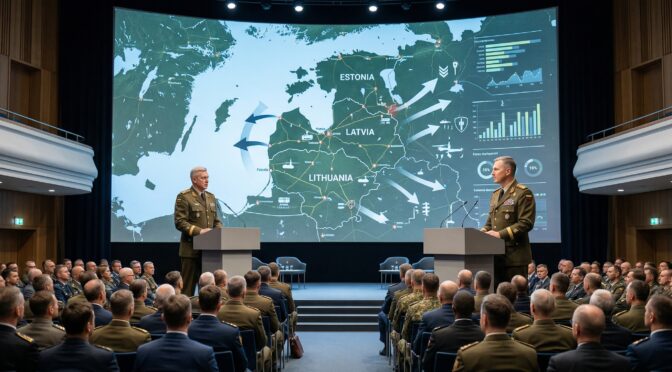
The geopolitical architecture of Eastern Europe is undergoing a fundamental transformation, driven by the protracted realities of the Russo-Ukrainian War and the escalating hybrid threat matrix along the borders of the North Atlantic Treaty Organization (NATO). Against this volatile backdrop, the 6th Baltic Military Conference, convened in Vilnius, Lithuania, on March 19 and 20, 2026, served as a critical nexus for defense policymakers, military strategists, and industrial leaders. Operating under the theme “Building a Fortress of Strength,” the summit transcended conventional dialogue, explicitly demanding actionable outcomes to reinforce regional deterrence and accelerate capability development.1
The conference underscored a decisive pivot in Baltic defense strategy from deterrence by punishment to deterrence by denial. This paradigm shift is actively funded and materialized through unprecedented budgetary commitments, with Lithuania’s defense expenditures now exceeding 5% of its Gross Domestic Product (GDP).2 The overarching objective articulated by Lithuanian Minister of National Defence Robertas Kaunas was to ensure that the transatlantic community departs with concrete frameworks to fortify regional defense and systematically weaken adversarial capabilities.1
A comprehensive analysis of the summit’s announcements, subsequent industrial agreements, and strategic discourse reveals three dominant vectors of transformation. The first is the aggressive localization and expansion of the Defense Industrial Base (DIB). Vulnerabilities exposed by global supply chain bottlenecks have catalyzed immense investments in domestic manufacturing. This is highlighted by the groundbreaking of Rheinmetall’s 155mm artillery ammunition plant in Baisogala, Lithuania, the establishment of Hanwha Aerospace’s 40mm grenade facility in Estonia, and the modernization of the AB Giraitė Armament Factory, which has now achieved complete self-sufficiency in domestic bullet production.3
The second vector involves the systemic modernization of infantry and armored capabilities tailored for the unique operational environment of the Baltic theater. Procurement announcements featured specialized small arms acquisitions, including Heckler & Koch G36 KA4M1 assault rifles for the Lithuanian Riflemen’s Union (LŠS) and the introduction of the MP7 A2 submachine gun for specialized combat in confined spaces.7 Concurrently, heavy capability upgrades are advancing, marked by progress toward acquiring Leopard 2A8 main battle tanks and the continuous integration of High Mobility Artillery Rocket Systems (HIMARS) across the trilateral Baltic alliance.10
The third vector encompasses the doctrinal internalization of combat realities observed in Ukraine. The conference panels definitively established that modern warfare requires a “whole of society” approach, where national security is integrated as a civic duty.12 Furthermore, the ubiquity of drone warfare and software-driven electronic warfare (EW) necessitates a layered, redundant approach to air defense. Regional commanders are actively moving away from an over-reliance on expensive, high-tier interceptors toward sustainable, cost-effective counter-unmanned aerial systems (C-UAS) and mobile fire groups.14 This report delivers an exhaustive examination of these developments, synthesizing open-source intelligence and industry publications to evaluate the strategic trajectory of the Baltic region following the March 2026 conference.
Introduction: The Imperative for Tangible Deterrence
The strategic environment surrounding the Baltic states remains precarious. With the Russian Federation’s full-scale invasion of Ukraine entering its fifth year, the threshold for hybrid and conventional conflict in Eastern Europe has permanently altered.2 In his address to the Baltic Military Conference, Lithuanian President Gitanas Nausėda accurately characterized the current paradigm by referencing the NATO Secretary General’s assessment: the alliance is not at war, but it is unequivocally no longer at peace.2 This liminal state requires a fundamental recalibration of both military readiness and industrial capacity.
The 6th Baltic Military Conference, hosted by the Lithuanian Ministry of National Defence in Vilnius, was engineered to address this exact operational reality. The location itself carried profound strategic weight. Vilnius is situated on NATO’s most vulnerable geographic flank, in close proximity to the heavily militarized Russian exclave of Kaliningrad, the hostile territory of Belarus, and the critical strategic chokepoint known as the Suwalki Corridor.1 The conference was inherently designed not as an academic exercise, but as a crucible for high-level decision-making. Defense Minister Robertas Kaunas explicitly mandated that the dialogue must transcend rhetoric, insisting that participants derive at least one actionable, concrete decision to enhance collective defense prior to returning to their respective commands.1
The thematic framework of the conference, “Building a Fortress of Strength,” reflects a mature understanding of modern deterrence. Deterrence is no longer viewed merely as the theoretical threat of a retaliatory strike or the promise of eventual allied liberation; rather, it is conceptualized as the physical, industrial, and societal capacity to deny an adversary any prospect of operational success from the very first minute of a hypothetical conflict.1 To support this doctrine, the conference convened a formidable roster of military leadership, including General Seán Clancy, Chair of the European Union Military Committee; Lieutenant General Nicole Schilling, Deputy Chief of the German Armed Forces; and General Aurelio Colagrande, Deputy Supreme Allied Commander Transformation.1 The proceedings functioned as the catalyst for a series of concurrent defense industrial and procurement announcements. By integrating high-level policy discussions with tangible acquisitions and industrial groundbreakings, the Baltic states demonstrated a unified effort to transition from policy formulation to physical implementation.
The Geopolitical and Strategic Environment
To comprehend the significance of the 2026 Baltic Military Conference, one must rigorously analyze the broader geopolitical mechanics currently acting upon the region. The Baltic states—Lithuania, Latvia, and Estonia—have historically operated under the doctrine of collective defense, relying heavily on the rapid reinforcement capabilities of NATO allies. However, the operational delays and logistical hurdles observed in the early phases of the Ukraine conflict, combined with the sheer mass of Russian artillery and infantry deployments, have necessitated a profound shift in localized readiness.
The Shift to a War Economy and Enhanced Defense Spending
The most definitive indicator of this strategic shift is the radical increase in defense allocations. President Nausėda confirmed during the conference that Lithuania has elevated its defense spending to over 5% of its GDP.2 This expenditure eclipses the NATO baseline requirement of 2% and places Lithuania among the highest proportional defense spenders within the alliance. This capital is not merely allocated to personnel costs or routine maintenance; it is actively being injected into deep capability development, structural military reorganization, and the aggressive expansion of the national defense industry.2
This financial commitment is a direct response to the “long-term threat” posed by the Russian Federation. The prevailing assessment among Baltic leadership is that irrespective of the ultimate outcome in Ukraine, the Russian military-industrial complex has transitioned to a war footing and will continue to pose an existential threat to the Eastern Flank for the foreseeable future.1 The 5% GDP allocation enables the Lithuanian Armed Forces to accelerate the formation of a national division, stockpile essential wartime ammunition reserves, and co-finance the multi-national Baltic Defense Line.16
The Suwalki Corridor and Regional Hybrid Threats
The geographic vulnerability of the Baltic states was a recurring theme throughout the strategic discourse in Vilnius. The Suwalki Corridor—a narrow strip of land connecting Poland and Lithuania, flanked by Belarus and Kaliningrad—remains the primary strategic bottleneck for NATO ground lines of communication.1 The conceptual layout of NATO’s Eastern Flank vulnerabilities highlights the Suwalki Corridor as a critical chokepoint, bounded on either side by adversarial territories. To mitigate this risk, defense planners are establishing a continuous barrier, the Baltic Defense Line, across the eastern borders of the Baltic states, heavily supported by the strategic placement of localized defense industrial bases, such as Rheinmetall’s new facility in Baisogala and the Giraitė armament hub in Kaunas, to ensure a domestic supply of munitions independent of vulnerable international logistics routes.
Complicating the conventional military threat is a persistent and escalating campaign of hybrid warfare. The weeks leading up to the conference were marked by heightened tension, culminating in the declaration of a state of emergency by Defense Minister Kaunas.17 The emergency was precipitated by a series of adversarial incursions, specifically involving surveillance balloons and hostile drones penetrating Lithuanian airspace.17 These incidents are symptomatic of a broader strategy employed by Moscow to test response times, exhaust air defense systems, and normalize airspace violations below the threshold of an Article 5 triggering event. Such gray-zone tactics necessitate a constant state of high alert and continuous scrambles of the NATO Air Policing Detachment, which reported multiple interceptions in the weeks preceding the conference.1
Allied Integration and Frictional Points
The enhancement of regional security is inherently tied to the integration of allied forces. A cornerstone of this integration is the permanent deployment of a German military brigade to Lithuania, a historic move that physically anchors German combat power on the Eastern Flank.2 This deployment transitions the NATO posture from a rotational enhanced Forward Presence (eFP) to a permanent, combat-credible forward defense force, fundamentally altering the correlation of forces in the region.
However, the pursuit of seamless regional interoperability is not without diplomatic friction. Just as the conference concluded, a significant political disagreement emerged regarding joint military infrastructure. Poland officially rejected a proposal to establish a joint military training area with Lithuania in Kapčiamiestis, located near the Polish border.6 Warsaw expressed a preference for moving the proposed facility further away from the immediate border zone, ostensibly to avoid creating a concentrated, highly provocative target directly adjacent to the Suwalki Gap, though Polish leadership maintained its unwavering commitment to defending the corridor itself.6
This rejection triggered domestic political turbulence in Vilnius. Opposition leaders, including Laurynas Kasčiūnas and Viktorija Čmilytė-Nielsen, publicly criticized the government’s diplomatic execution, arguing that the failure to coordinate the proposal privately before announcing it publicly undermined alliance cohesion and portrayed a fractured front to adversaries.6 Minister Kaunas attempted to mitigate the fallout by clarifying that while Poland opted out of establishing a permanent joint facility, Warsaw remains committed to participating in joint tactical exercises within the Kapčiamiestis training area.6 This incident highlights the complex bureaucratic and political realities of attempting to synchronize defense infrastructure across sovereign borders, demonstrating that even among steadfast allies, national strategic calculations can occasionally misalign.
Deterrence by Denial: The Baltic Defense Line and Heavy Armor
While small arms provide the foundation of localized resistance, deterrence against a conventional mechanized assault relies on heavy armor, long-range fires, and impenetrable counter-mobility infrastructure. The Baltic states are aggressively scaling these upper-tier capabilities through synchronized, multinational procurement strategies, shifting decisively away from the tripwire force model.
Armored Parity: The Leopard 2A8 Acquisition
To counter the mass of Russian armored formations, Lithuania is moving decisively to establish its own credible mechanized capability. Reports surrounding the conference period confirm that Lithuania, in parallel with Croatia, is advancing toward the acquisition of the Leopard 2A8 main battle tank.11 The 2A8 variant represents the absolute cutting edge of European armor, featuring advanced modular composite armor, a highly lethal 120mm L55A1 smoothbore gun, and, critically, the organic integration of the EuroTrophy active protection system (APS).
The inclusion of APS is a direct lesson from the anti-tank guided missile (ATGM) and drone threats observed in Ukraine. First-person view (FPV) drones and top-attack munitions have devastated legacy armored platforms lacking active defense. By mandating the 2A8 standard, Lithuanian defense planners are ensuring that their nascent mechanized forces will possess a hard-kill defense mechanism capable of intercepting and neutralizing incoming shaped-charge munitions before they impact the vehicle’s hull. This drastically increases the survivability of the armored corps, allowing them to operate effectively as a mobile reserve to plug breakthroughs or conduct decisive counter-attacks.
Joint Procurement and Long-Range Precision Fires
Recognizing that individual national budgets cannot unilaterally match the scale of potential adversaries, the Baltic states have prioritized joint capability development. As highlighted by regional defense officials, the synchronization of procurement ensures interoperability, logistical commonality, and economies of scale across the entire Eastern Flank.10
The centerpiece of this joint effort is the trilateral acquisition of the M142 High Mobility Artillery Rocket System (HIMARS).10 By collectively fielding HIMARS, Lithuania, Latvia, and Estonia establish a unified umbrella of precision long-range fires capable of striking adversarial logistics hubs, command and control nodes, and troop staging areas deep behind the front lines. This offensive capability prevents the adversary from massing forces with impunity and disrupts their operational tempo. The HIMARS acquisition is paired with joint efforts to acquire integrated air and missile defense systems, creating a multi-layered shield over the Baltics that complicates adversarial planning at every altitude and range band.10
Counter-Mobility: Engineering the Battlefield
Perhaps the most structurally significant announcement regarding ground warfare was the commitment to the Baltic Defense Line. Lithuanian Minister of National Defence Dovilė Šakalienė (noting transition dynamics in the defense ministry during the period) and Robertas Kaunas confirmed that Lithuania alone is prepared to invest €1.1 billion over the next decade specifically into counter-mobility measures.16
The Baltic Defense Line is a comprehensive, physical manifestation of deterrence by denial. It involves the pre-planned engineering of the battlefield to channel, slow, and ultimately destroy invading mechanized forces. This massive €1.1 billion allocation will fund the construction of anti-tank ditches, the strategic placement of concrete dragon’s teeth, the pre-rigging of critical bridges for demolition, and the stockpiling of advanced deployment mines.16
Notably, this effort is supported by a recent €50 million contract signed by the Latvian Ministry of Defence with Dynamit Nobel Defence for advanced anti-tank mines and deployment systems, ensuring that the physical barriers are backed by highly lethal, smart explosive ordnance.5 The overarching philosophy of the Baltic Defense Line is to ensure that any hostile advance is met with immediate, debilitating friction at the very border. By denying the adversary the rapid territorial gains necessary to present a fait accompli to the NATO alliance, the Baltic states aim to render the cost of an invasion strategically prohibitive from day one.
Revitalization of the Defense Industrial Base (DIB)
A prevailing consensus at the Baltic Military Conference was the acknowledgment that modern conflicts are ultimately contests of industrial endurance. The expenditure of artillery shells, small arms ammunition, and attritable drones in Ukraine has vastly outpaced Western production capacities. Consequently, the Baltic states are pivoting from a model of pure importation to a model of domestic industrial autonomy. This shift is designed to shorten supply chains, insulate the armed forces from global market fluctuations, and create a resilient, localized war economy capable of sustaining high-intensity combat operations without external lifelines.
AB Giraitė Armament Factory: Achieving Total Autonomy
The most immediate and critical milestone in this industrial revitalization was announced concurrently with the conference regarding the AB Giraitė Armament Factory. As the sole cartridge manufacturer in the Baltic states, Giraitė has historically occupied a vital but vulnerable position in the regional supply chain.6 Prior to this modernization, the factory was dependent on external suppliers for 40% to 45% of the raw components required to assemble its finished bullets.6 This reliance exposed the Lithuanian Armed Forces to the risk of foreign export restrictions, supply chain disruptions during a broader European crisis, and severe price gouging during periods of high demand.
On March 20, 2026, the Ministry of Finance confirmed the culmination of a highly strategic modernization program at the facility. Supported by an investment of EUR 2.645 million, AB Giraitė has successfully operationalized new, state-of-the-art presses dedicated to military bullet manufacturing, precision sniper bullet production, and lead core formation.6
The strategic implications of this capability upgrade are profound. First, it grants the facility 100% self-sufficiency in bullet production, thereby allowing the company to control the entire manufacturing lifecycle of a cartridge internally.6 Second, this internal control balances the productivity across all production chains, leading to a projected 20% to 40% reduction in production costs compared to purchasing bullets on the volatile open market.6 Finally, the capability to manufacture sniper-grade projectiles domestically signifies a maturation in metallurgical and manufacturing precision. Moving beyond bulk standard-issue ammunition to highly specialized, high-tolerance ordnance ensures that specialized reconnaissance and marksman units have an uninterrupted supply of the precision ammunition required for their operational roles.
Heavy Artillery Manufacturing: The Rheinmetall Expansion
While AB Giraitė secures the supply of small arms ammunition, the strategic requirement for heavy artillery is being addressed through aggressive foreign direct investment and joint ventures. The cornerstone of this effort is the partnership with the German defense conglomerate Rheinmetall, a primary supplier for the NATO alliance.
During the conference period, a groundbreaking ceremony was held in the Lithuanian municipality of Baisogala for a new facility dedicated to the production of 155mm artillery ammunition.4 This joint venture effectively anchors a major node of the European defense industrial base directly on NATO’s eastern flank. The Baisogala plant will drastically reduce the logistical tail required to supply Baltic artillery units, particularly as the region transitions from legacy Soviet calibers (such as 152mm) to standard NATO 155mm systems utilized by the Panzerhaubitze 2000 and the CAESAR self-propelled howitzers.
Simultaneously, Rheinmetall’s footprint is expanding across the broader Baltic region. Reports indicate that a foundry and filling line for 155mm artillery shell casings is being established in the Zemgale region of Latvia.21 This specific facility is being tailored to meet the operational demands of the Latvian armed forces, with production methodologies explicitly informed by metallurgical and explosive lessons derived from the war in Ukraine.21 The Latvian plant is projected to begin construction in 2026, creating approximately 150 localized jobs.21 Strikingly, the exact geographical coordinates of the facility are being intentionally withheld by the government in order to mitigate the risk of Russian hybrid interference, sabotage, and artificially engineered local protests.21
The Hanwha Aerospace Investment and 40mm Ecosystem
The diversification of the Baltic defense industrial base extends beyond European conglomerates. South Korean defense giant Hanwha Aerospace announced a major investment in the region, committing approximately €100 million to operations in Estonia.3 This investment package includes the establishment of a state-of-the-art 40mm ammunition factory capable of producing over 300,000 rounds annually, alongside a new regional competence and research center.3
The introduction of South Korean manufacturing prowess into the Baltic ecosystem not only diversifies the technological base but also provides a high-volume production line for 40mm grenades. The 40mm caliber is a critical munition for infantry grenade launchers, automatic grenade launchers (like the Mk 19), and, increasingly, for automated drone delivery systems. By securing a domestic source of 300,000 rounds per year, Estonia ensures that its ground forces possess the organic explosive firepower necessary to suppress enemy infantry in trench clearing operations and urban engagements.
| Industrial Facility / Partnership | Location | Investment / Status | Core Output | Strategic Impact |
| AB Giraitė Armament Factory | Lithuania (Kaunas region) | €2.645 Million (Operational) | Small arms cartridges, sniper bullets, lead cores | 100% domestic autonomy; 20-40% cost reduction; eliminates 45% foreign component reliance.6 |
| Rheinmetall Joint Venture | Lithuania (Baisogala) | Groundbreaking initiated | 155mm Artillery Ammunition | Localizes heavy artillery supply chain on the Eastern Flank; reduces logistical tail.4 |
| Rheinmetall Foundry | Latvia (Zemgale region) | Construction starting 2026 | 155mm Artillery Casings | Tailored to Latvian needs; creates 150 jobs; location secured against hybrid threats.21 |
| Hanwha Aerospace | Estonia | €100 Million Investment | 40mm Ammunition Ecosystem | 300,000+ rounds/year; establishes Asian defense integration in Baltics for high-volume explosive ordnance.3 |
Modernization of Infantry Tactics and Small Arms Procurement
The evolution of the Baltic defense posture is intimately linked to the modernization of the individual warfighter. The nature of a potential conflict in the region—characterized by dense forestry, urban centers, and the necessity for asymmetric resistance against numerically superior forces—requires a highly adaptable and lethal infantry force. The procurement announcements surrounding the 2026 Baltic Military Conference highlight a nuanced approach to small arms acquisition, emphasizing versatility, confined-space lethality, and the integration of paramilitary organizations into the regular order of battle.
The Heckler & Koch G36 KA4M1 and the Riflemen’s Union
A major pillar of Lithuania’s defense doctrine is the integration and professionalization of the Lithuanian Riflemen’s Union (Lietuvos Šaulių Sąjunga, LŠS). Operating as a state-supported paramilitary organization with over 14,000 volunteer members, the LŠS plays a foundational role in national resilience. During peacetime, LŠS units are assigned to the Lithuanian Land Forces, maintaining strict interoperability as part of state defense preparations and participating in joint exercises.7 In the event of armed conflict, they are structured to command armed resistance movements behind enemy lines, conduct rear-area security operations, and execute the mobilization exercise known as Perkūno Bastionas.7 Reflecting their growing operational importance, state funding for the LŠS has surged exponentially from €2.04 million in 2020 to €13.6 million in the current fiscal year.7
To ensure tactical parity with regular forces and eliminate logistical discrepancies, the Lithuanian Defense Material Agency placed an order in March 2026 for a new batch of 5.56x45mm Heckler & Koch assault rifles specifically earmarked for the LŠS.7 Valued at approximately €3.5 million ($3.8 million USD), this procurement introduces a highly modernized variant of the standard service rifle: the G36 KA4M1.7
The KA4M1 configuration was developed in direct response to rigorous user feedback and the shifting demands of modern infantry combat. The platform abandons the bulky profile of legacy G36 models in favor of a much slimmer handguard, improving the ergonomics for modern “C-clamp” shooting grips and slightly reducing the overall weight profile, thereby decreasing operator fatigue during prolonged patrols.9 The weapon features a highly modular, continuous sight rail allowing for the tandem mounting of optics and thermal or night vision clip-on devices, alongside a redesigned, adjustable shoulder stock that accommodates operators wearing bulky body armor.9
Crucially, the contract includes the integration of the HK269 40mm underbarrel grenade launcher. The HK269 represents a significant tactical upgrade over older systems (like the AG36) because its barrel is designed to swing out to both the left and the right, allowing for completely ambidextrous loading and operation.9 This seemingly minor mechanical capability is critical in urban combat; it allows riflemen to seamlessly load and fire explosive, smoke, or illumination rounds regardless of cover orientation or whether they are shooting from their dominant or non-dominant shoulder. This vastly increases the squad’s organic area-denial capability and responsiveness in chaotic, close-quarters environments.
| Small Arms Procurement | Caliber | Recipient / Operator | Contract Value | Key Tactical Enhancements |
| Heckler & Koch G36 KA4M1 | 5.56x45mm NATO | Lithuanian Riflemen’s Union (LŠS) | €3.5 Million | Slimmer handguard, adjustable stock, HK269 ambidextrous 40mm launcher.7 |
| Heckler & Koch MP7 A2 | 4.6x30mm | Lithuanian Armed Forces (Specialized Units) | €1.56 Million | High rate of fire, extreme armor penetration (CRISAT standard), ultra-compact design.8 |
Adopting the MP7 A2 for Confined Space Operations
In a parallel development that indicates a specific doctrinal shift regarding urban combat and the protection of rear-echelon assets, the Lithuanian Armed Forces announced the acquisition of the Heckler & Koch MP7 A2 submachine gun.8 The contract, valued at €1.56 million and spanning a five-year delivery schedule, marks the first time the Lithuanian military has officially adopted this specific weapon system.22
The selection of the MP7 A2 is highly indicative of modern tactical requirements and the realities of near-peer conflict. Traditional 9x19mm submachine guns, while historically effective against unarmored targets, have proven increasingly obsolete against modern military body armor, which is now standard issue even for conscript infantry. The MP7 A2, however, is chambered in the proprietary 4.6x30mm cartridge.8 This high-velocity, small-caliber ammunition was specifically engineered to defeat CRISAT (Collaborative Research Into Small Arms Technology) standard body armor at extended ranges (often piercing titanium plates and Kevlar backing) while maintaining the compact dimensions of a pistol-caliber submachine gun.
The Lithuanian Ministry of Defense justified the selection based on the weapon’s extreme light weight, rapid rate of fire, and unparalleled armor penetration capabilities in confined spaces.8 As the conflict in Ukraine has demonstrated, modern combat frequently devolves into brutal, room-to-room engagements in ruined urban environments and complex trench networks. In these highly restricted micro-terrains, the physical length of a standard 5.56mm assault rifle can become a fatal liability, snagging on debris or limiting the operator’s turning radius.
Furthermore, artillery crews, drone operators, and vehicle personnel operate in cramped environments where carrying a full-sized rifle is impractical. The MP7 A2 provides these specialized units with a Personal Defense Weapon (PDW) that is compact enough to maneuver inside structures and vehicle cabins, yet lethal enough to immediately neutralize adversaries equipped with modern ballistic plates who might breach the rear echelon. By adopting the MP7 A2, the Lithuanian Armed Forces are closing a critical capability gap in close-quarters survivability.
Doctrinal Internalization: Lessons from the Ukrainian Theater
A central pillar of the Baltic Military Conference was the rigorous, unsentimental analysis of the Russo-Ukrainian War. The Baltic states have recognized that Ukraine is effectively serving as a brutal, live-fire laboratory for 21st-century warfare. Through dedicated panels such as the “Annual Conference on Russia” hosted by the Baltic Defence College, military leaders explicitly sought to translate front-line experiences into actionable defense insights.23 The synthesis of these lessons is driving profound changes in how the Baltics conceptualize air defense architecture, the application of electronic warfare, and the foundational concept of civil resilience.
The Drone Economy and Layered Air Defense
The proliferation of unmanned aerial systems (UAS) has fundamentally altered the geometry of the battlefield and the macroeconomics of air defense. As analyzed during the conference and in subsequent strategic literature, the Russian Federation’s employment of Shahed-type loitering munitions represents a calculated strategy of systemic exhaustion.14 By launching coordinated, massive waves of cheap, mass-produced drones—sometimes exceeding 800 units in a single night—the adversary seeks to probe radar networks, deplete valuable interceptor stockpiles, and force defenders into asymmetrical, mathematically ruinous trades.14 Firing a multi-million-dollar Patriot or IRIS-T missile to destroy a twenty-thousand-dollar drone is an unsustainable equation for NATO forces; doing so rapidly drains the alliance’s most capable interceptors, leaving the airspace vulnerable to follow-on attacks by sophisticated cruise and ballistic missiles.
The fundamental lesson extracted from Ukraine is the absolute necessity of a transition from a monolithic air defense posture to a sustainable, layered ecosystem. By delegating low-cost drone threats to mobile fire groups and electronic warfare, high-tier interceptors are preserved for ballistic and cruise missile threats. This conceptual hierarchy was a dominant theme at the conference. The bottom tier involves engaging high-volume, low-cost threats using highly mobile fire groups mounted on light tactical vehicles, equipped with heavy machine guns, automatic cannons, and electronic warfare (EW) disruption arrays. The middle tier addresses faster, more robust cruise missiles via medium-range surface-to-air missiles. Finally, the top tier reserves high-cost, high-capability interceptors like the Patriot system strictly for low-volume, high-cost ballistic missile threats.
In a tangible demonstration of this adaptation and a show of continued support, Minister Kaunas announced the transfer of 30 missiles for the RBS-70 Man-Portable Air Defense System (MANPADS) to Ukraine.25 This action simultaneously supports Kyiv’s mobile fire groups while allowing Baltic defense planners to integrate real-world combat data on the system’s effectiveness against low-flying drones into their own defense doctrine. Furthermore, the aforementioned €100 million Hanwha investment in 40mm ammunition in Estonia directly feeds into this C-UAS strategy, as programmable 40mm airburst munitions are increasingly recognized as an optimal kinetic countermeasure against commercial-grade drones.
Electronic Warfare: The Software-Driven Contest
Coupled with the physical drone threat is the invisible, highly dynamic battleground of the electromagnetic spectrum. A key finding disseminated by military researchers, including those from the French Institute of International Relations (IFRI) in studies surrounding the conference, is that Electronic Warfare (EW) is no longer a static, hardware-centric capability utilized primarily at the strategic level by specialized electronic attack aircraft.15
In Ukraine, EW has devolved into a continuous, software-driven contest embedded at the lowest tactical levels of the infantry squad.15 As adversarial drones constantly change their operational frequencies and navigation protocols to evade jamming, defense systems must adapt their disruption algorithms in near real-time. This requires a defense industrial base capable of rapid software iteration and seamless over-the-air updates to front-line backpack jammers and vehicle-mounted arrays.
The traditional, multi-year military procurement cycle for hardware is entirely incompatible with this reality. Consequently, Baltic defense planners are increasingly looking to integrate agile, commercial-sector technology firms into the military ecosystem. This is evidenced by initiatives like the letter of intent signed between Ukraine’s defense platform Brave1 and the French Defense Innovation Agency to support defense startups, a model the Baltics are emulating.25 The goal is to ensure that regional EW capabilities can evolve at the speed of software development rather than the speed of hardware manufacturing, maintaining a constant edge in the invisible spectrum.15
The Whole of Society Approach: Redefining Civil Defense
Beyond technology and munitions, the most profound lesson the Baltic states have internalized is fundamentally sociological. The conventional distinction between the “military front” and the “civilian rear” has entirely evaporated. As noted by David Cattler, a Non-Resident Research Fellow at the International Centre for Defence and Security (ICDS), the frontline is now everywhere; Moscow makes no operational distinction between striking a military base, a civilian power grid, or a residential block.12
To withstand this totalizing form of hybrid and kinetic warfare, society itself must be hardened. For the Baltic nations, deterrence begins not solely with artillery ratios, but with the psychological and organizational resilience of the populace. National security is being fundamentally re-engineered as a “civic habit, not a military speciality”.12
This “Whole of Society” approach dictates that civil infrastructure, cyber networks, and public utilities are treated as critical, frontline defense assets. The conference emphasized the urgent need to reform civil preparedness, educate the youth on crisis response, and build a robust civil defense architecture from the capital cities down to the smallest rural villages.13 The massive expansion of the Lithuanian Riflemen’s Union is a primary example of this doctrine in action—arming and training civilians to serve as a decentralized nervous system of national resistance.7 The ultimate goal is to signal to any potential adversary that conquering the physical territory of the Baltics is impossible because the society itself is an indigestible, heavily armed, and highly resilient organism that will contest every inch of ground.
Strategic Outlook and Future Imperatives
As the European defense landscape continues to adapt, the outcomes of the 2026 Baltic Military Conference serve as a roadmap for future capability development. The immediate priorities for Lithuania, Latvia, and Estonia over the next 24 to 36 months are clearly defined by the intersection of industrial capacity, political cohesion, and operational readiness.
- Sustaining Supply Chain Autonomy: The momentum generated by the Rheinmetall, Hanwha, and AB Giraitė investments must be sustained and protected from bureaucratic stagnation. However, as noted by regional defense industry leaders like Taavi Veskimägi, Chairman of the Estonian Defence and Aerospace Industry Association, achieving true strategic autonomy requires overcoming the severe fragmentation of the European Union’s internal defense market.28 The existence of 27 different regulatory approaches, export restrictions, and disjointed procurement standards prevents disruptive defense startups from scaling rapidly.28 Harmonizing these regulations is critical for the Baltics to not only defend themselves but to export their growing defense industrial capabilities across the wider NATO alliance.
- Mitigating Administrative Burden in Assistance Programs: In post-conference discussions at the EU level, Minister Kaunas emphasized the absolute necessity of ensuring that military assistance programs, such as the EU Military Assistance Mission in support of Ukraine (EUMAM Ukraine), remain flexible and free of unnecessary administrative burdens.29 Bureaucratic friction is viewed as a critical vulnerability in a security environment that demands rapid, unencumbered adaptation and the swift transfer of lethal aid.
- Physicalizing the Defense Line: The €1.1 billion allocation for counter-mobility infrastructure must transition quickly from a fiscal commitment to physical engineering. The pouring of concrete, the digging of anti-tank trenches, and the deployment of smart-mine systems along the Suwalki Corridor and eastern borders will be the ultimate physical metric of the conference’s success.16 This infrastructure must be integrated seamlessly with the target acquisition radars of the newly procured HIMARS batteries.
- Maturation of the Drone/EW Ecosystem: The integration of AI-driven defense solutions, sovereign industrial AI, and resilient Positioning, Navigation, and Timing (PNT) systems must accelerate.15 The Baltic states, particularly Estonia, are uniquely positioned to leverage their advanced civilian tech sectors to dominate the tactical EW space. Converting commercial software agility into military lethality will be the defining technological challenge of the next decade.
Conclusion
The 6th Baltic Military Conference in Vilnius did not merely serve as a forum for geopolitical observation; it acted as a definitive inflection point for Eastern European defense strategy. Operating under the stringent imperative of “Building a Fortress of Strength,” the Baltic states have conclusively abandoned any residual hope of a rapid return to pre-2022 security norms.1 By mandating concrete, actionable decisions from all participating allied representatives, regional leaders catalyzed a comprehensive, top-to-bottom overhaul of their strategic posture.
The transition to a localized, highly resilient war economy is now actively underway, characterized by the localized manufacturing of heavy artillery by global conglomerates like Rheinmetall and Hanwha, and the achievement of total bullet production autonomy by domestic entities like the AB Giraitė Armament Factory.3 On the tactical level, the modernization of the individual warfighter is advancing rapidly through targeted, highly specific procurements. The acquisition of the Heckler & Koch G36 KA4M1 and the MP7 A2 submachine gun directly addresses the requirement for enhanced lethality in confined urban spaces and empowers both conventional forces and the deeply integrated, civilian-based paramilitary Riflemen’s Union.7
Most importantly, the Baltic states have unsentimentally internalized the harsh realities of the Ukrainian battlefield. They are actively engineering a defense ecosystem built on the principles of layered, cost-effective counter-drone networks, agile, software-defined electronic warfare, and impenetrable physical counter-mobility lines.14 Through these massive financial commitments, exceeding 5% of GDP in Lithuania’s case, and structural sociological reforms, Lithuania, Latvia, and Estonia are actively shifting the strategic calculus on NATO’s Eastern Flank.2 By transforming their physical borders into engineered fortresses and their civil societies into resilient, mobilized entities, they are ensuring that deterrence by denial is not merely a theoretical doctrine discussed in conference halls, but an insurmountable physical reality on the ground.
Please share the link on Facebook, Forums, with colleagues, etc. Your support is much appreciated and if you have any feedback, please email us in**@*********ps.com. If you’d like to request a report or order a reprint, please click here for the corresponding page to open in new tab.
Sources Used
- Baltic Military Conference kicks off in Vilnius – Krašto apsaugos ministerija, accessed March 22, 2026, https://kam.lt/en/baltic-military-conference-kicks-off-in-vilnius/
- The President at the Baltic Military Conference: Lithuania has chosen to lead by example, accessed March 22, 2026, https://lrp.lt/en/media-center/news/the-president-at-the-baltic-military-conference-lithuania-has-chosen-to-lead-by-example/47159
- Supply, Security & Defence Expo 2026 (SSD) – SSD2026, accessed March 22, 2026, https://2026.supplysecurity.eu/
- Miltech Sandbox – Inovacijų agentūra, accessed March 22, 2026, https://gynyba.inovacijuagentura.lt/en
- Boosting cooperation with German defense sector – Deutsch-Baltische Handelskammer, accessed March 22, 2026, https://www.ahk-balt.org/de/publikationen/baltic-business-quarterly/bbq-winter-2026/boosting-cooperation-with-german-defense-sector
- ELTA, accessed March 22, 2026, https://www.elta.lt/en/
- H&K G36 rifles for the Lithuanian Riflemen’s Association – MILMAG, accessed March 22, 2026, https://milmag.pl/en/hk-g36-rifles-for-the-lithuanian-riflemens-association/
- Lithuanian Army selects MP7 A2 submachine gun, accessed March 22, 2026, https://www.globaldefenseaerospacepost.com/news/articleView.html?idxno=2853
- Lithuanian Army orders additional G36 assault rifles from Heckler & Koch, accessed March 22, 2026, https://defence-blog.com/lithuanian-army-orders-additional-g36-assault-rifles-from-heckler-koch/
- Joint procurement makes Baltic defensive capabilities more robust – Krašto apsaugos ministerija, accessed March 22, 2026, https://kam.lt/en/joint-procurement-makes-baltic-defensive-capabilities-more-robust/
- Croatia and Lithuania Closer to Acquiring Leopard 2A8 Tanks – MILMAG, accessed March 22, 2026, https://milmag.pl/en/croatia-and-lithuania-closer-to-acquiring-leopard-2a8-tanks/
- Europe’s War and the Baltic Lesson: Building Resilience When the Front Is Everywhere, accessed March 22, 2026, https://icds.ee/en/europes-war-and-the-baltic-lesson-building-resilience-when-the-front-is-everywhere/
- Symposium Recap | The Baltic Defence Line: Strengthening the Defence of NATO’s Eastern Flank – HCSS – The Hague Centre for Strategic Studies, accessed March 22, 2026, https://hcss.nl/news/symposium-recap-the-baltic-defence-line-strengthening-the-defence-of-natos-eastern-flank/
- Russia Analytical Report, March 9–16, 2026, accessed March 22, 2026, https://www.russiamatters.org/news/russia-analytical-report/russia-analytical-report-march-9-16-2026
- Russia Analytical Report, Feb. 9–17, 2026, accessed March 22, 2026, https://www.russiamatters.org/news/russia-analytical-report/russia-analytical-report-feb-9-17-2026
- CONTENTS, accessed March 22, 2026, https://kariuomene.lt/data/public/uploads/2026/02/warrior_2026_nr_2_inernetui.pdf?csrt=4924041677380995304
- Lithuania declares state of emergency, calls balloon and drone incursions ‘hybrid attack’, accessed March 22, 2026, https://resiliencemedia.co/lithuania-declares-state-of-emergency/
- Defending the Baltic Region: The Focus of Senior Leaders’ Course 2025, accessed March 22, 2026, https://baltdefcol.org/news/senior-leaders-course-2025
- ELTA news, accessed March 22, 2026, https://www.elta.lt/en
- Lithuania is looking to invest EUR 1.1 bllion in countermobility measures over the next decade, says Minister of National Defence D. Šakalienė – Krašto apsaugos ministerija, accessed March 22, 2026, https://kam.lt/en/lithuania-is-looking-to-invest-eur-1-1-bllion-in-countermobility-measures-over-the-next-decade-says-minister-of-national-defence-d-sakaliene/
- Rheinmetall’s Baltic Entry Exposes Divisions Over Defence Deals – Re:Baltica, accessed March 22, 2026, https://en.rebaltica.lv/2026/02/rheinmetalls-baltic-entry-exposes-divisions-over-defence-deals/
- Lithuanian Armed Forces Acquire MP7 A2 Submachine Guns from Heckler & Koch, accessed March 22, 2026, https://www.israeldefense.co.il/en/node/63081
- Lessons from Ukraine and the Future of European Security: Key Takeaways from the Annual Conference on Russia 2026 – Baltic Defence College, accessed March 22, 2026, https://baltdefcol.org/news/lessons-from-ukraine-and-the-future-of-european-security-key-takeaways-from-the-annual-conference-on-russia-2026
- DEFIS_EXT – Newsletter Archives – European Commission, accessed March 22, 2026, https://ec.europa.eu/newsroom/defis_ext/newsletter-archives/view/service/8834
- Russian Offensive Campaign Assessment Updates December 2025 – February 2026, accessed March 22, 2026, https://understandingwar.org/research/russia-ukraine/russian-offensive-campaign-assessment-updates-2/
- Ukraine | Analyses and News from Ifri, accessed March 22, 2026, https://www.ifri.org/en/regions/russia-eurasia/ukraine
- From Tallinn to Berlin: Civil preparedness and defence in the Baltic Sea region in a time of rising geopolitical uncertainty, accessed March 22, 2026, https://www.cfg.cam.ac.uk/events/from-tallinn-to-berlin-civil-preparedness-and-defence-in-the-baltic-sea-region-in-a-time-of-rising-geopolitical-uncertainty/
- The Baltic-German Defence Industry Conference took place in Vilnius, accessed March 22, 2026, https://defence.ee/news/the-baltic-german-defence-industry-conference-took-place-in-vilnius/
- PermRep of Lithuania to the EU (@lithuaniaineu.bsky.social) — Bluesky, accessed March 22, 2026, https://bsky.app/profile/did:plc:vok7rcmitz5l6zamk6e2txi2
- PermRep of Lithuania to the EU (@lithuaniaineu.bsky.social) — Bluesky, accessed March 22, 2026, https://bsky.app/profile/lithuaniaineu.bsky.social