Executive Summary: The First Island Chain Flank & Shared Threat Perceptions
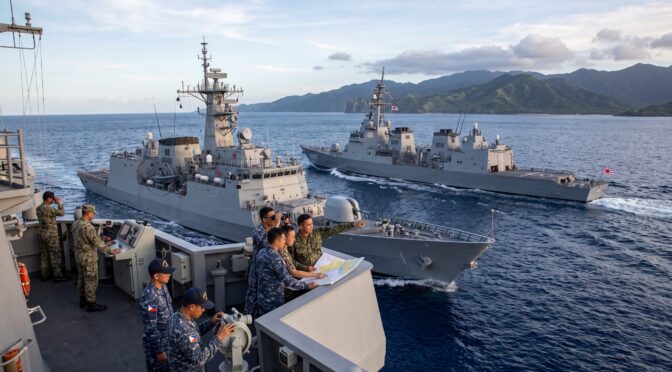
The strategic relationship between Japan and the Philippines has evolved from a primarily economic partnership into a robust and highly integrated defense architecture. Driven by the shared need to counter the People’s Republic of China’s (PRC) gray-zone coercion and maritime expansionism, Tokyo and Manila have aligned their defense postures across the First Island Chain (第一列島線, Dai-ichi Rettōsen). This synchronization treats the East China Sea, the Taiwan Strait, and the South China Sea—known in Manila as the West Philippine Sea (WPS)—as a single, interconnected theater of strategic competition.
For Japan, the stability of the Northern Philippines closely ties to the security of its vital sea lines of communication (SLOCs) and the territorial integrity of its Southwestern Islands (南西諸島, Nansei Shotō). As the People’s Liberation Army Navy (PLAN) shifts its doctrine from “Near Seas Defense” (近海防御, Jinhai Fangyu) to “Far Seas Protection” (远海防卫, Yuanhai Fangwei), it increasingly seeks access to the broader Pacific Ocean1. The Bashi Channel and Luzon Strait are critical deep-water chokepoints between Taiwan and Luzon2. If Beijing were to gain uncontested control over these straits, it could project naval power deep into the Philippine Sea, outflank Taiwan, and threaten the maritime trade routes that are essential to the Japanese economy1.
Japan’s 2026 Annual Defense White Paper (日本の防衛 令和8年版), released under Prime Minister Sanae Takaichi, identifies the Armed Forces of the Philippines (AFP) as a key frontline partner in the Indo-Pacific5. Through new legal frameworks and the provision of advanced equipment, Tokyo is supporting Manila’s Comprehensive Archipelagic Defense Concept (CADC). This assessment explores how Japan aims to integrate and operate alongside the Philippines to create a lethal “porcupine” defense network to deter PLA expansion2.
Part I: Legal, Institutional, & Command Frameworks for Defense Cooperation
This shift in Japan-Philippines security relations relies on a new legal and institutional architecture. This framework addresses historical constitutional limits and administrative hurdles that once hindered joint military operations and deployments.
1. The Reciprocal Access Agreement (RAA)
The cornerstone of this integration is the Japan-Philippines Reciprocal Access Agreement (相互アクセス協定 / RAA), which entered into force on September 11, 20257. The Philippines is only the third nation, after Australia and the UK, to sign such an agreement with Japan10.
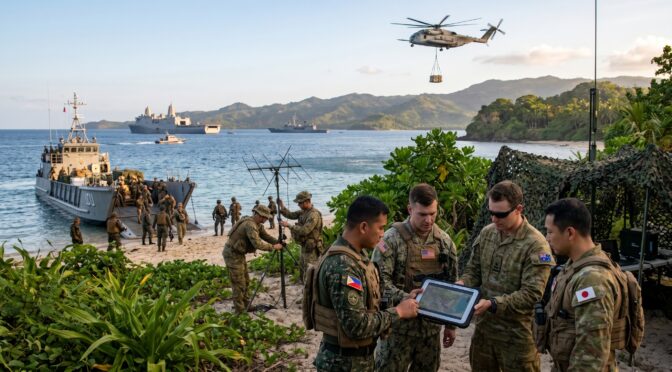
The RAA streamlines administrative procedures and establishes legal jurisdiction for the Japan Self-Defense Forces (JSDF) and the AFP to deploy to each other’s territory. This pact was instrumental during the Balikatan 2026 exercises, where roughly 1,400 JSDF personnel participated in live-fire and amphibious drills in the Philippines—a significant moment for Japanese defense policy12.
2. Acquisition and Cross-Servicing Agreement (ACSA)
To support these deployments, the two nations signed the Acquisition and Cross-Servicing Agreement (物品役務相互提供協定 / ACSA) in early 20267. The ACSA allows for the reciprocal exchange of fuel, ammunition, and maintenance services during joint exercises and humanitarian missions12. By utilizing Philippine infrastructure, Japan can significantly extend its operational endurance in the South China Sea.
3. General Security of Military Information Agreement (GSOMIA)
Effective maritime domain awareness (MDA) requires secure data-sharing. In May 2026, Japan and the Philippines began formal negotiations for a General Security of Military Information Agreement (GSOMIA)7.
This pact will establish protocols to protect classified intelligence and reduce the risk of leaks17. It will allow for the rapid exchange of radar data and satellite imagery regarding Chinese naval movements across the First Island Chain18. This agreement complements a similar pact between the Philippines and the U.S., creating a trilateral intelligence-sharing network19.
4. Foreign and Defense Ministerial (2+2) Meetings & The CSP
These legal pacts are managed through Foreign and Defense Ministerial (2+2) meetings. Under Prime Minister Takaichi and President Marcos Jr., the relationship was elevated to a Comprehensive Strategic Partnership (CSP) in May 20267. The CSP ensures that both nations synchronize their procurement, operational doctrines, and regional deterrence strategies7.
Part II: Capacity Building, Equipment Transfers, & Official Security Assistance (OSA)
Japan’s support for Philippine defense has grown from symbolic gestures to substantial material aid. This includes financial grants and the transfer of advanced hardware to improve the AFP’s maritime and aerial surveillance capabilities.
1. The Legal Catalyst: Revision of the Three Principles
The scope of this assistance expanded in April 2026 when the Takaichi cabinet revised the Three Principles on Transfer of Defense Equipment and Technology6. Previously, exports were limited to non-lethal categories like rescue and surveillance6.
The revision now allows the direct export of lethal weapon systems to 17 allied nations, including the Philippines6. This change transforms Japan from a provider of surveillance gear into a supplier of comprehensive combat capabilities.
2. Official Security Assistance (OSA) Grants
To fund these transfers, Japan established the Official Security Assistance (OSA) framework in 2023. Unlike traditional aid, OSA specifically funds the militaries of partner nations15.
The Philippines was the first recipient of the OSA program. Initial grants provided ¥600 million for coastal radars26, followed by ¥1.6 billion for additional defense equipment and inflatable boats in late 202427. The Japan International Cooperation System (JICS) manages these grants.
3. Air Surveillance & Radar Interoperability
A key project in this partnership is the Horizon 2 Air Surveillance Radar System. Through a $103.5 million deal, Mitsubishi Electric Corporation (MELCO) is supplying four advanced radar systems to the Philippine Air Force (PAF)28.
J/FPS-3ME (Fixed Radars): The PAF received three fixed active phased array radars. The J/FPS-3ME has a range of 610 kilometers and can track high-altitude targets and ballistic trajectories29. The first unit is operational in La Union, with others planned for Zamboanga, Cagayan, and Camarines Norte28.
J/TPS-P14ME (Mobile Radar): To ensure resilience, the PAF received a mobile AESA radar in 202428. With a 400-kilometer range, this truck-mounted system allows the AFP to quickly cover sensor gaps and maintain surveillance even if fixed sites are targeted32.
These Japanese radars integrate with the PAF’s existing Israeli systems to create a comprehensive early warning network. This coverage allows the AFP to monitor aircraft operating within the Philippine Air Defense Identification Zone (PADIZ), particularly in sensitive areas like the Bashi Channel2.
4. Coastal Defense & Naval Capability Upgrades
Following the 2026 export revisions, Tokyo and Manila began negotiating the transfer of major naval and aerial platforms to address critical AFP capability gaps.
Abukuma-class Destroyer Escorts: Japan has agreed in principle to transfer up to five Abukuma-class destroyer escorts to the Philippines starting in 202734. These ships, designed for anti-submarine warfare (ASW), will provide the Philippine Navy with a significant blue-water capability37.
TC-90 Maritime Patrol Aircraft: Building on a previous transfer of five TC-90s, Manila is seeking five more from Japan to expand its maritime surveillance over contested waters38.
Coast Guard Augmentation: Japan also supports the Philippine Coast Guard (PCG) through ODA loans. This includes financing for five 97-meter Teresa Magbanua-class vessels, which the Philippine Coast Guard uses to counter aggressive maneuvers in the West Philippine Sea40.
Part III: Operational Synergy & Geographic Chokepoint Defense
The integration of JSDF and AFP forces aims to secure the maritime chokepoints of the First Island Chain through tactical cooperation.
1. Luzon Strait & Bashi Channel Interdiction
The Bashi Channel is a preferred route for Chinese submarines entering the Pacific because its depth reduces the risk of detection4. To counter this, Japan and the Philippines have prioritized ASW and sensor monitoring in the Luzon Strait. By combining PAF radars, incoming Abukuma-class ships, and Japanese patrol aircraft, the alliance aims to establish a “tripwire” to track submerged vessels1.
To counter this strategic vulnerability, Japan and the Philippines have heavily prioritized Anti-Submarine Warfare (ASW) and seabed sensor monitoring in the Luzon Strait. By leveraging the overlapping coverage of PAF J/FPS-3ME radars in Northern Luzon, incoming Japanese Abukuma-class destroyers, and JMSDF P-1 and P-3C Orion maritime patrol aircraft flying from Okinawa, the bilateral alliance aims to establish a contiguous acoustic and electromagnetic tripwire across the strait1. This “mesh network” of distributed, persistent awareness is vital for prosecuting submerged PLAN contacts before they can achieve positional advantage in the Philippine Sea2.
2. The Comprehensive Archipelagic Defense Concept (CADC) & Land-Based Fires
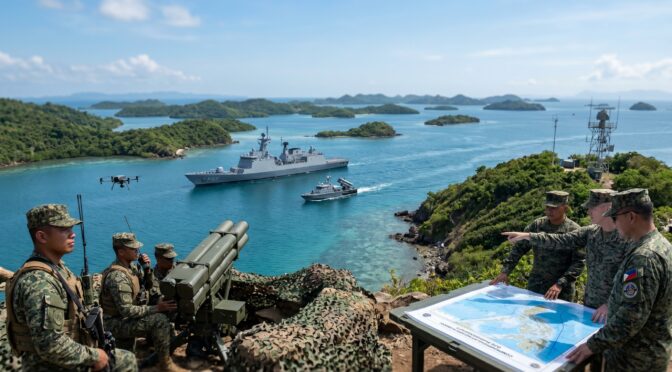
Manila’s defense focus has shifted to the Comprehensive Archipelagic Defense Concept (CADC)9. This includes the use of shore-based anti-ship missiles by the Philippine Marine Corps (PMC) to deny access to coastal waters6.
This doctrine aligns with Japanese strategy. During the Balikatan 2026 exercises, the JGSDF deployed a Type 88 Surface-to-Ship Missile battery in Ilocos Norte14. The Type 88 has a range of up to 180 kilometers6. In a joint drill, the Japanese battery successfully struck a target ship located 75 kilometers offshore, demonstrating the ability to shut down the Luzon Strait in a crisis14.
The success of this exercise sent a strong signal to Beijing44. Furthermore, Japan is considering the export of surplus Type 88 systems to the Philippines, which would bolster Manila’s own coastal defenses and create a contiguous “denial envelope” along its western coast23.
3. Amphibious Rapid Deployment & Cybersecurity
Cooperation also extends to amphibious drills and cybersecurity. The JGSDF’s Amphibious Rapid Deployment Brigade (ARDB) frequently trains with the PMC on island-retaking and littoral maneuver43. Meanwhile, both nations are collaborating to defend digital infrastructure and communication cables through the Japan-U.S.-Philippines Cyber-Digital Dialogue20.
Simultaneously, recognizing the severe vulnerability of undersea communication cables and critical digital infrastructure in the South China Sea, Japan and the Philippines have instituted active cybersecurity cooperation. The AFP’s newly activated Cyber Command collaborates closely with Japanese cyber defense counterparts through the Japan-U.S.-Philippines Cyber-Digital Dialogue20. These joint efforts focus on defending critical industrial control systems, establishing resilient digital corridors against state-sponsored intrusions, and exploring satellite-based redundancies like Starlink to ensure command and control survivability during a conflict37.
Part IV: Multilateralizing Counter-Coercion (Trilateral & Minilateral Alignments)
Japan and the Philippines are part of a broader multilateral network designed to impose costs on maritime aggression and uphold international law.
1. U.S.-Japan-Philippines Trilateral Integration
The trilateral relationship between Washington, Tokyo, and Manila is the core of Indo-Pacific deterrence. The three nations conduct combined patrols in the Philippines’ EEZ to challenge blockade tactics and support freedom of navigation13. Coast guard exercises have also become routine9.
Additionally, the Luzon Economic Corridor initiative aims to build infrastructure connecting major ports. This corridor boosts the Philippines’ economic resilience and provides logistical support for allied operations during a crisis45.
2. The Squad & Minilateral Linkages
These bilateral pacts also serve as models for wider regional integration. The Philippines is expanding its engagement with Australia and South Korea. This collective front maintains a unified stance against maritime law violations, particularly in the South China Sea47.
While the strategic intent uniting Tokyo and Manila is resolute, the operationalization of the alliance faces distinct structural, financial, and mechanical frictions. The following matrix delineates the division of labor across key security domains, followed by a critical analysis of persistent operational bottlenecks.
Provision of TC-90 aircraft; JMSDF P-1/P-3C Orion wide-area sub-hunting patrols from Okinawa.
Intelligence cuing; integration of towed-array sonar (TASS) on offshore patrol vessels.
Logistics & Force Projection
Financial underwriting via OSA/ODA; ACSA cross-servicing; engineering and shipyard investments.
Provision of strategic basing access (EDCA sites, Subic Bay); troop staging areas via the RAA.
Critical Friction Points & Absorptive Capacity
Maintenance and Capacity: The biggest challenge for the AFP is the burden of maintaining advanced Japanese equipment. The Abukuma-class destroyers, for example, have complex gas turbine systems that the Philippine Navy currently lacks the infrastructure to support36. Without long-term technical support from Japan, these assets risk becoming unusable36.
Budgetary Limits: While Japan’s OSA grants provide a start, the AFP’s modernization budget remains tight. Defending an archipelago of over 7,000 islands requires far more capital than is currently available for large-scale fleets and missile systems2.
Political Sustainability: Despite easing export rules, Japan still faces domestic sensitivities regarding military operations. Every lethal equipment transfer must be carefully justified and reviewed by Japan’s National Security Council6. Sustaining this alignment will require continued political will in both Tokyo and Manila.
6. Comprehensive Bilingual Glossary
Acronym / Japanese Term (Kanji / Rōmaji) / Filipino Term
Full English Term
Operational Definition & Strategic Significance
RAA (部隊間協力円滑化協定 / 相互アクセス協定, Sōgo Akusesu Kyōtei)
Reciprocal Access Agreement
A bilateral treaty establishing the legal status, jurisdiction, and administrative procedures for JSDF and AFP forces operating in each other’s territory, effectively enabling combat exercises and joint deployments.
OSA (政府安全保障能力強化支援, Seifu Anzen Hoshō Nōryoku Kyōka Shien)
Official Security Assistance
A Japanese grant framework designed specifically to provide defense equipment and infrastructure funding to the armed forces of allied nations, distinct from civilian ODA.
A logistics pact allowing the JSDF and AFP to share supplies, fuel, food, and services, drastically increasing the operational endurance and reach of bilateral deployments.
General Security of Military Information Agreement
A binding intelligence-sharing treaty protecting classified military data, enabling real-time sensor-to-shooter integration and coordinated tracking of adversary forces.
CADC
Comprehensive Archipelagic Defense Concept
The AFP’s strategic doctrine is shifting focus from internal counter-insurgency to external territorial defense, emphasizing sea denial, coastal missiles, and multidomain awareness across the archipelago.
WPS
West Philippine Sea
The official Philippine designation for the eastern parts of the South China Sea that fall within the Philippines’ Exclusive Economic Zone (EEZ), the primary theater of PRC gray-zone coercion.
Three Principles (防衛装備移転三原則, Bōei Sōbi Iten San Gensoku)
Three Principles on Transfer of Defense Equipment and Technology
Japan’s constitutional guidelines for arms exports. The April 2026 revision authorized the export of lethal, finished weapons systems to specific allied partners, transforming Japan’s defense industrial posture.
JADGE (自動警戒管制組織, Jidō Keikai Kansei Soshiki)
Japan Aerospace Defense Ground Environment
Japan’s integrated air defense and radar network. The export of J/FPS-3ME radars to the Philippines effectively extends the technological architecture of JADGE into the First Island Chain.
Type 88 SSM (88式地対艦誘導弾, Hachihachi-shiki Chitaikan Yūdōdan)
Type 88 Surface-to-Ship Missile
A truck-mounted, sea-skimming coastal defense cruise missile (180km range) utilized by the JGSDF, demonstrated during Balikatan 2026 and is actively considered for export to the AFP.
ARDB (水陸機動団, Suiriku Kidōdan)
Amphibious Rapid Deployment Brigade
The JGSDF’s specialized marine infantry unit, tasked with defending and retaking remote islands, frequently conducts joint littoral maneuver operations with the Philippine Marine Corps.
First Island Chain (第一列島線, Dai-ichi Rettōsen)
First Island Chain
A strategic geographical concept denoting the first line of archipelagos off the East Asian continental coast, stretching from the Kuril Islands through Japan, Taiwan, and the Philippines, acting as a natural maritime barrier.
Outstanding Issues for Official Security Assistance (OSA) and its Strategic Utilization | List of Articles | International Information Network Analysis | SPF, https://www.spf.org/iina/en/articles/nishida_03.html
As of August 2026, the strategic environment in the South China Sea—specifically within the West Philippine Sea (WPS)—has deteriorated into a state of high-intensity, non-kinetic attrition. The People’s Republic of China (PRC) has systematically escalated its gray-zone coercion against the Republic of the Philippines. Characterized by the deployment of the largest maritime militia fleet in history, this escalation includes the weaponization of the China Coast Guard (CCG) to execute physical blockades and rammings, alongside the unilateral declaration of baseline coordinates over disputed maritime features. Beijing’s objective is to establish de facto administrative control over the WPS, exhausting Philippine maritime law enforcement resources and eroding Manila’s political resolve without triggering the 1951 Mutual Defense Treaty (MDT) with the United States.
In response to this unprecedented pressure, the Philippines has executed a comprehensive strategic reorientation under the administration of President Ferdinand Marcos Jr., decisively departing from the appeasement policies of his predecessor. This realignment involves the operationalization of the Comprehensive Archipelagic Defense Concept (CADC), a doctrinal shift directing the Armed Forces of the Philippines (AFP) toward external territorial defense. Furthermore, Manila has fortified its legal claims through the Philippine Maritime Zones Act (Republic Act No. 12064) and the Archipelagic Sea Lanes Act (Republic Act No. 12065), both signed on November 7, 2024. Simultaneously, the government has prosecuted a highly publicized “Assertive Transparency” campaign designed to impose reputational costs on Beijing.
Crucially, the Philippines has rapidly integrated its defense posture within an allied minilateral network. The United States has expanded its Enhanced Defense Cooperation Agreement (EDCA) footprint to nine strategic sites, secured $500 million in annual security assistance, and deployed the Typhon Mid-Range Capability missile system to Northern Luzon, fundamentally altering the theater’s strike geometry. Simultaneously, Japan has emerged as an indispensable secondary security guarantor, officially elevating its relationship with Manila to a Comprehensive Strategic Partnership in May 2026. This includes signing a Reciprocal Access Agreement (RAA) and supplying advanced air surveillance radars and multi-role response vessels (MRRVs).
Despite these formidable external defense alignments, the Philippine strategy faces severe vulnerabilities stemming from domestic political instability. The collapse of the Marcos-Duterte political alliance has provided Beijing with a vector for information operations, threatening the long-term continuity of Manila’s maritime strategy. This assessment concludes that the most likely future scenario is a protracted gray-zone attrition campaign culminating in a fortified equilibrium; China may maintain sub-lethal dominance at sea while the Philippines and its allies solidify an asymmetric deterrence posture along the First Island Chain, avoiding kinetic conflict while sustaining high-level tensions.
1. The Operational Environment: PRC Coercion and Gray-Zone Tactics
Over the past three years, the PRC has shifted from maintaining a sporadic maritime presence to executing persistent, aggressive interdiction operations across the WPS. This operational shift leverages China’s vast numerical superiority in civilian, paramilitary, and coast guard assets to assert sovereignty claims explicitly invalidated by the 2016 Hague Arbitral Tribunal.
1.1 The Expansion of the Maritime Militia and the Coast Guard
The PRC has achieved unparalleled numerical superiority in contested waters. Verified data indicates that China’s maritime militia reached a record daily average of 241 vessels in 2025, up from 232 in 2024 and 195 in 2023. This militia operates in a coordinated swarm architecture comprising two detachments: a professional core that receives direct military training for shadowing and surveillance, and the civilian “Spratly Backbone Fishing Fleet,” which maintains a persistent presence and responds to official summons.
These vessels are primarily concentrated around Mischief Reef and Whitsun Reef, which serve as forward staging areas and logistical hubs19. Concurrently, the CCG serves as the tip of the spear for physical confrontations. The CCG’s rules of engagement have visibly loosened, escalating from the use of military-grade lasers and water cannons to the deliberate physical ramming of Philippine Coast Guard (PCG) and Bureau of Fisheries and Aquatic Resources (BFAR) vessels, executing operations well within the internationally recognized 200-nautical-mile Philippine Exclusive Economic Zone (EEZ)1.
1.2 Tactical Flashpoints: Second Thomas, Sabina, and Scarborough Shoals
The tactical execution of this coercion is most vividly demonstrated across three primary maritime flashpoints, each illustrating a distinct facet of Beijing’s broader strategic campaign to deny Manila access to its own waters.
At Second Thomas Shoal (Ayungin Shoal), the Philippine outpost consists of the BRP Sierra Madre (LT-57), a deliberately grounded World War II-era landing craft that has housed a small contingent of marines since 199925. In 2024, Chinese forces shifted tactics at this feature, utilizing small interceptor craft and rigid-hulled inflatable boats (RHIBs) to directly engage, block, and physically damage Philippine resupply vessels22. This culminated in violent clashes involving the severing of mooring lines and physical injuries to Philippine Navy personnel, utilizing less-lethal but highly dangerous bladed weapons and pickaxes22.
While a fragile “provisional arrangement” in mid-2024 temporarily reduced the tempo of clashes at Ayungin, tensions re-escalated violently in July 2026. A highly publicized incident saw CCG personnel engage in direct hand-to-hand combat using wooden batons and oars against Philippine Navy sailors. This event was designed to maximize physical coercion while remaining below the threshold of a conventional kinetic firearm exchange that might trigger the MDT. Furthermore, Beijing maintains a strict blockade against construction materials, calculating that the corroded hull of the Sierra Madre will eventually collapse, thereby ending the Philippine presence without direct military action.
Following the provisional arrangement at Second Thomas Shoal in 2024, PRC aggression pivoted sharply to Sabina Shoal (Escoda Shoal). In August 2024, CCG vessel 5205 executed dangerous maneuvers and deliberately rammed the PCG’s flagship, the 97-meter BRP Teresa Magbanua (MRRV-9701), multiple times23. The PCG had deployed the vessel in April to monitor suspected Chinese land reclamation and unauthorized marine research24. After a prolonged standoff characterized by Chinese blockades that prevented resupply—leaving the Philippine crew severely dehydrated—the Teresa Magbanua was forced to return to port in September 202424. Violence in this sector continued into late 2025, with CCG vessels utilizing water cannons and severing the anchor lines of over 20 Filipino civilian fishing boats seeking shelter at the shoal during difficult sea conditions, injuring multiple civilian fishermen in the process23.
Scarborough Shoal (Bajo de Masinloc), seized by China in 2012, remains under de facto PRC control. In May 2026, China escalated its presence by deploying a manned research platform and a network of floating barriers designed to exclude Philippine vessels. Furthermore, on November 10, 2024, the Chinese Foreign Ministry unilaterally announced territorial sea baselines around the shoal. This aggressive legal maneuver, intended to enclose the feature under domestic Chinese law, was a direct retaliation for new Philippine maritime legislation.
1.3 The Economic Center of Gravity: The Fisheries Crisis
The geopolitical standoff has precipitated a severe domestic economic crisis for the Philippines, specifically targeting the livelihoods of coastal communities to generate domestic political pressure on Manila. Philippine capture fishery output has experienced a prolonged contraction, dropping from approximately 2.6 million metric tons in 2010 to roughly 1.9 million metric tons in 202336. This decrease represents an average annual loss of roughly 45 million kilograms of fish, totaling a staggering 591,136 metric tons lost over the 13-year period37.
The human cost is acute in provinces adjacent to the WPS, such as Zambales. Fishermen who traditionally relied on the bountiful, shallow waters of Scarborough Shoal report income losses of up to 70%39. Prior to 2012, a single fishing trip could yield up to three tons of high-value species, generating weekly incomes of 8,000 to 10,000 Philippine pesos; currently, incomes have plunged to 2,000 to 3,000 pesos, often requiring up to three weeks at sea just to break even39. Forced into the open ocean, these fishermen face exorbitant fuel costs, which have spiked dramatically and now account for 70% to 80% of their total operating expenses38. This systematic denial of access to the EEZ acts as a socio-economic pressure campaign aimed at trapping coastal populations in a cycle of generational poverty and inciting domestic unrest against the Marcos administration’s foreign policy38.
1.4 Regional Comparisons: Strategic Selectivity Regarding Vietnam and Malaysia
A critical analysis of the PRC’s actions reveals distinct strategic selectivity. While aggressively blockading the Philippines, Beijing has remained conspicuously silent regarding Vietnam’s massive island-building campaign. Between 2021 and early 2026, Vietnam expanded its Spratly Island outposts by creating over 2,200 acres of new land, bringing its total artificial land to approximately 2,771 acres (11.2 km²) across 21 occupied features40. This rapid reclamation includes the construction of an 8,000-foot runway on Barque Canada Reef and the development of 15 deep-water ports designed to forward-deploy coast guard and fisheries patrol vessels42. Despite Vietnam’s physical alterations matching or surpassing recent Chinese dredging efforts, Beijing has issued only tepid public statements and refrained from kinetic blockades against Vietnamese construction41.
Similarly, Malaysia initiated gas production at its Kasawari field in August 2024—an offshore block located 200 kilometers off Sarawak’s coast in waters contested by China45. Malaysia successfully navigated this through “triadic maritime diplomacy,” combining quiet coercive naval measures with persuasive diplomatic rhetoric that downplayed any crises, all while maintaining high-level bilateral dialogues and joint military drills with the PRC45.
This regional context suggests that China tolerates Hanoi’s expansion and Malaysia’s resource extraction because both nations adhere to traditional, closed-door diplomacy. Conversely, Manila’s strategy of openly broadcasting Chinese aggression poses a direct threat to Beijing’s international legitimacy, drawing the brunt of PRC kinetic and non-kinetic retaliation.
2. The Philippine Response: Strategic Reorientation and Lawfare
Recognizing the existential threat posed by China’s creeping hegemony, the administration of President Ferdinand Marcos Jr. has engineered a profound shift in national security policy. This marks a definitive transition from the appeasement posture of the Duterte era—which prioritized Chinese economic investment over territorial defense—to a robust doctrine of external sovereignty enforcement19.
2.1 The Comprehensive Archipelagic Defense Concept (CADC)
Initiated in early 2024 by Secretary of National Defense Gilberto Teodoro Jr., the Comprehensive Archipelagic Defense Concept (CADC) represents the Philippines’ first coherent grand strategy as an independent republic3. The doctrine is heavily driven by the demographic and geographic realities of the 7,641-island archipelago, acknowledging that a growing population demands unhindered access to the natural resources within the 200-nautical-mile EEZ to ensure food and energy security50. The CADC requires the AFP to pivot structurally away from decades of internal counterinsurgency operations toward modern, multi-domain external defense and maritime power projection3.
To operationalize the CADC, the AFP launched the “Re-Horizon 3” phase of its modernization program in January 2024, overhauling previous modernization schedules to urgently meet the demands of this geopolitical recalibration. Re-Horizon 3 outlines a $35 billion procurement strategy over the next decade51. The focus is on acquiring asymmetric capabilities, including enhanced maritime domain awareness, connectivity, and C4iSTAR (Command, Control, Communications, Computers, Intelligence, Surveillance, Target Acquisition, and Reconnaissance) systems to establish an effective area denial posture4. However, executing this concept remains heavily constrained by historical funding backlogs and the enormous financial burden it places on a developing economy3.
2.2 Legislative Fortification: The Lawfare Strategy
Complementing its military modernization, the Philippines has engaged in highly sophisticated “lawfare” to codify its international legal victories into domestic statutes. On November 7, 2024, President Marcos signed Republic Act No. 12064 (The Philippine Maritime Zones Act) and Republic Act No. 12065 (The Philippine Archipelagic Sea Lanes Act)5.
The Maritime Zones Act formally delineates the country’s internal waters, archipelagic waters, territorial sea, contiguous zone, EEZ, and continental shelf in strict adherence to UNCLOS and the 2016 Hague Arbitral Award7. Crucially, the law asserts sovereignty over the airspace and seabed within these zones, effectively localizing the international ruling7. The Archipelagic Sea Lanes Act designates three specific maritime routes and air corridors for foreign vessels, curbing the unmonitored loitering and surveying activities of PRC military and research vessels within the archipelago5.
This legislation is designed to insulate the Philippines’ territorial claims from domestic political volatility. Any future administration attempting to pivot back to Beijing and shelve the 2016 arbitral ruling would now be in direct violation of domestic Philippine law7. To ensure international recognition, the Philippines formally deposited its official nautical charts of Scarborough Shoal and surrounding waters with the United Nations56. In direct retaliation, China formally deposited its own disputed baselines for the shoal on December 2, 2024, attempting to lock its narrative into the international hydrographic record despite its illegal occupation of the feature56. The efficacy of these laws now relies entirely on the government’s ability to produce authoritative charts and establish clear rules of engagement for enforcement personnel to prevent operational hesitation57.
2.3 Assertive Transparency
As a tactical component of its broader strategy, the Philippines continues to leverage “Assertive Transparency”—the rapid declassification, publication, and dissemination of imagery detailing CCG harassment58. By embedding international journalists on resupply missions, Manila has effectively dismantled Beijing’s narrative of a “peaceful rise” and rallied both domestic nationalism and international diplomatic support8. This transparency campaign forces China to pay a reputational cost for its gray-zone tactics8. Nevertheless, transparency alone cannot deter kinetic action; exposing coercion does not inherently stop it, compelling Manila to rely increasingly on hard-power alliances to physically secure its waters60.
3. Allied Integration and the First Island Chain Architecture
Recognizing its severe conventional military inferiority relative to the People’s Liberation Army (PLA), the Philippines has rapidly integrated its CADC into a broader regional deterrence architecture, primarily anchored by the United States and Japan.
3.1 The United States: EDCA Expansion and Strategic Strike Capabilities
The U.S.-Philippine alliance has transitioned from a traditional, static defensive pact to a highly dynamic, forward-deployed node within the U.S. Indo-Pacific Command’s (INDOPACOM) “integrated deterrence” framework10. Crucially, the United States has publicly and explicitly reaffirmed that the 1951 Mutual Defense Treaty extends to armed attacks on either country’s armed forces, public vessels, and aircraft—including “white hull” coast guard vessels—anywhere in the South China Sea61. The cornerstone of this integration is the expansion of the Enhanced Defense Cooperation Agreement (EDCA) and the guarantee of $500 million in annual U.S. security assistance12.
The number of designated EDCA sites has surged from the original five to nine, with the new locations positioned for maximum strategic utility regarding both a Taiwan and South China Sea contingency.
EDCA Site Name
Location / Province
Strategic Orientation
Basa Air Base
Floridablanca, Pampanga
West Philippine Sea / Central Hub
Fort Magsaysay
Santa Rosa, Nueva Ecija
Inland Training & Logistics
Antonio Bautista Air Base
Puerto Princesa, Palawan
Spratly Islands / South China Sea
Mactan-Benito Ebuen Air Base
Lapu-Lapu, Cebu
Central Logistics Node
Lumbia Air Base
Cagayan de Oro, Misamis Oriental
Southern Logistics Node
Naval Base Camilo Osias
Santa Ana, Cagayan
Luzon Strait / Taiwan Contingency
Lal-lo Airport
Lal-lo, Cagayan
Luzon Strait / Taiwan Contingency
Camp Melchor dela Cruz
Gamu, Isabela
Northern Luzon Defense
Balabac Island Facilities
Balabac, Palawan
Southern Spratlys / Chokepoint Control
The U.S. has invested heavily in these sites, allocating $82 million for initial upgrades, including a $25 million rehabilitation of the 2,800-meter runway at Basa Air Base (completed November 2023), alongside the construction of Humanitarian Assistance and Disaster Relief (HADR) warehouses, command-and-control infrastructure, and fuel storage facilities9. Reports suggest that U.S. policymakers are exploring avenues for Taiwan to fund further non-lethal infrastructure upgrades at these bases via the Foreign Military Sales program, highlighting the interconnected security dynamics of the First Island Chain63.
In a paradigm-shifting deployment, the U.S. Army stationed the Typhon Mid-Range Capability (MRC) weapon system in Northern Luzon in 2024, later shifting it to different locations on the island in January 2025 to test mobility10. Capable of launching Standard Missile-6 (SM-6) and Tomahawk cruise missiles, the Typhon system provides a highly mobile, containerized land-based strike capability11. This deployment allows U.S. and allied forces to cover both the Taiwan Strait and the South China Sea, severely complicating the PRC’s Anti-Access/Area Denial (A2/AD) calculus by introducing a pervasive, long-range threat to PLA Navy assets11. Furthermore, U.S. forces have established “Task Force Ayungin” to directly support Philippine maritime domain awareness and operational capacity, representing a highly integrated command structure at the tactical level12. To further balance Beijing’s reliance on Coast Guard assets, the United States Coast Guard responded to the July 2026 tactical escalations by redeploying Sentinel-class fast response cutters to the region to offer symmetric, law-enforcement deterrence28.
3.2 Japan: The Secondary Security Guarantor
Japan has emerged as an indispensable pillar of Philippine defense modernization, driven by Tokyo’s strategic imperative to secure its maritime lifelines through the South China Sea and counterbalance Chinese hegemony14. Highlighting this growing closeness, Tokyo and Manila officially elevated their bilateral relationship to a Comprehensive Strategic Partnership during a summit in May 202615.
This partnership is formalized through the Reciprocal Access Agreement (RAA), signed in July 2024 and ratified by President Marcos in November 202413. The RAA facilitates the reciprocal deployment of military forces, dramatically enhancing interoperability between the AFP and the Japan Self-Defense Forces (JSDF) and allowing for complex joint exercises on Philippine soil13.
Under its Official Security Assistance (OSA) program and commercial defense contracts, Japan is transforming the Philippines’ domain awareness capabilities. Through a $103 million government-to-government agreement, Mitsubishi Electric delivered advanced air surveillance radar systems to the Philippine Air Force. The first J/FPS-3ME fixed radar became operational at Wallace Air Station in La Union in December 2023, replacing Cold War-era equipment and providing an instrumented range of 611 kilometers deep into the contested airspace over the WPS14. Additional fixed radars and a J/TPS-P14ME mobile radar have been deployed to strategic locations including Elum Air Station in Zamboanga and locations in Cagayan and Camarines Norte, creating a comprehensive early-warning network14.
In the maritime domain, Japan has financed the modernization of the PCG through the Japan International Cooperation Agency (JICA). The crown jewels of this effort are the 97-meter Teresa Magbanua-class MRRVs. Built by Mitsubishi Shipbuilding, these vessels feature 6,600 kW diesel engines, a maximum speed of 24 knots, and a 4,000-nautical-mile range, making them the only Philippine assets capable of matching the endurance of large CCG cutters24. Following the delivery of the first two vessels, Manila and Tokyo fast-tracked the procurement of five additional 97-meter MRRVs under a new JICA loan in 2024, ensuring a sustained pipeline of capable maritime platforms through 203014.
3.3 Minilateralism: The “Squad” and Beyond
Bilateral defense treaties are increasingly being augmented by overlapping minilateral arrangements. The defense ministers of the United States, Japan, Australia, and the Philippines—informally dubbed the “Squad”—routinely coordinate policy and military deployments to present a unified deterrence front72. Throughout 2025 and 2026, the Philippines hosted multiple Multilateral Maritime Cooperative Activities (MMCAs), executing joint naval patrols within its EEZ alongside assets from Australia, Canada, France, and India18. This multilateral presence serves to internationalize the dispute, signaling broad global rejection of Beijing’s expansive claims and complicating China’s ability to isolate the Philippines diplomatically.
4. Strategic Vulnerabilities: Domestic Political Warfare
While the Philippines’ external defense posture is structurally robust and internationally supported, its center of gravity—and its greatest vulnerability—lies in its domestic political environment. The foreign policy trajectory established by President Marcos is under severe threat due to the total collapse of the “UniTeam” political alliance that brought him to power16. This political fragility is compounded by external shocks, such as the macroeconomic contagion and fuel rationing caused by the effective closure of the Strait of Hormuz in early 2026, which further strained the Philippine economy and prompted the government to temporarily resume diplomatic talks with Beijing regarding joint oil and gas exploration in the South China Sea75.
4.1 The Marcos-Duterte Schism
The political marriage of convenience between President Ferdinand Marcos Jr. and Vice President Sara Duterte has fractured into open political warfare. In June 2024, Vice President Duterte resigned from the cabinet, explicitly citing disagreements over the administration’s confrontational approach in the South China Sea18. By late 2024 and early 2025, the rift had deepened exponentially, involving public exchanges of drug use allegations, threats of assassination, and formal impeachment proceedings against the Vice President18.
The Duterte political dynasty, which retains a formidable political base in the southern Philippines, maintains a conspicuously neutral or explicitly pro-Beijing stance on maritime disputes. The faction frequently criticizes the expansion of EDCA sites and the strengthening of the U.S. alliance as needlessly “provoking” China and risking war18. Polling data underscores the severity of this threat to the Marcos administration’s policy continuity; a 2024 Pulse Asia survey showed Vice President Sara Duterte statistically tied for the lead among potential 2028 presidential candidates (at 34%), representing a highly viable alternative government that explicitly opposes the CADC and current allied integration16.
4.2 Information Operations and Cognitive Warfare
This deep domestic schism provides the PRC with an ideal vector for cognitive warfare and information operations. Chinese state-linked networks, alongside domestic political proxies, have engaged in extensive disinformation campaigns designed to undermine public support for the Marcos administration’s foreign policy17.
These operations utilize sophisticated tactics, including the dissemination of deepfake audio portraying President Marcos as a warmonger ordering the military to attack China, and social media campaigns aimed at discrediting civil society groups like the “Atin Ito!” coalition, which organizes civilian resupply missions to contested shoals17. The cognitive warfare escalated notably in July 2026, when Chinese state media outlets distributed highly offensive, artificial intelligence-generated propaganda videos targeting Filipinos, leading to formal diplomatic protests from the Philippine government28. Furthermore, these information campaigns actively exploit genuine public frustration over domestic issues, such as inflation and corruption—where 76% of Filipinos believe that poorly built or unfinished government projects are a direct result of corruption—to argue that funds spent on defense modernization and EDCA expansion are being wasted by an incompetent administration acting merely as a pawn for Washington17.
The analysis concludes that Beijing recognizes the immense difficulty of conventionally defeating the combined U.S.-Japan-Philippine military architecture now entrenched along the First Island Chain. Therefore, the PRC’s primary strategy is temporal: to maintain relentless, punishing pressure at sea while actively fueling domestic political polarization in Manila. The ultimate objective is to endure the Marcos administration and support the electoral victory of a sympathetic political faction in 2028 that will voluntarily dismantle the CADC, restrict U.S. access to EDCA sites, and return to bilateral appeasement.
5. Future Scenarios and Predictive Analysis
Based on current operational tempos, the trajectory of allied force postures, and the volatility of domestic Philippine political indicators, the following represent the three most likely scenarios for the West Philippine Sea theater over the next 3 to 5 years, ranked from most to least likely.
In this scenario, the PRC refrains from lethal kinetic action to avoid triggering the Mutual Defense Treaty, but successfully institutionalizes a permanent, high-intensity gray-zone campaign. The CCG and maritime militia maintain absolute numerical superiority around Sabina, Second Thomas, and Scarborough Shoals, effectively suffocating the Philippine fishing industry and enforcing a de facto administrative blockade. Occasional non-lethal violence, including intentional rammings, the deployment of water cannons, military-grade lasers, and electronic interference, becomes the accepted “new normal” in the theater.
In response, Manila manages to effectively operationalize the CADC, enduring the attrition. The Philippine Navy and Coast Guard adapt by utilizing airdrops, varied resupply routes, and the deployment of their growing fleet of 97-meter MRRVs to maintain their physical presence on contested features. The United States and Japan maintain a persistent, highly visible rotational presence at the expanded EDCA sites. The integration of the Typhon missile system and Japanese ASRS radars establishes a robust intelligence and asymmetric deterrence umbrella over the WPS.
The strategic outcome is a tense, highly militarized stalemate. China dominates the physical water column and inflicts severe economic damage on Philippine coastal communities, but ultimately fails to dislodge the Philippine physical presence or fracture the US-Japan-Philippine alliance architecture.
5.2 Scenario 2 (Likely): Strategic Reversal via Domestic Political Upheaval
The primary catalyst for this scenario is the grueling economic impact of the fisheries crisis combined with highly effective, PRC-backed information warfare, which successfully degrades domestic support for the Marcos administration’s foreign policy. The Duterte faction—or a similarly aligned populist political coalition—capitalizes on public frustration regarding inflation, corruption, and the perceived risks of war, consolidating power following the 2025 midterm elections and capturing the presidency in 2028.
Upon assuming power, the new Philippine administration immediately pursues detente with Beijing, returning to the bilateral appeasement model. The CADC is effectively hollowed out, with military funding redirected back toward internal security and counter-narcotics operations. The implementation and enforcement of the Maritime Zones Act are quietly shelved to avoid offending Chinese sensibilities. Crucially, Manila limits U.S. operational access to critical EDCA sites—particularly those facing Taiwan (such as Camilo Osias and Lal-lo in Cagayan) and the Spratlys (Balabac)—and formally requests the removal of offensive platforms like the Typhon missile system to appease Beijing.
The strategic outcome represents a bloodless strategic victory for China. The First Island Chain deterrence architecture fractures from within. The United States and Japan are forced to rely entirely on bases in Okinawa, Guam, and northern Australia, severely degrading allied response times and logistical capabilities for both a Taiwan contingency and the defense of the South China Sea.
5.3 Scenario 3 (Least Likely): Kinetic Escalation and MDT Activation
This low-probability, high-impact scenario is triggered by a tactical miscalculation by CCG or maritime militia commanders operating under aggressive rules of engagement. This miscalculation results in a lethal kinetic event—such as the accidental sinking of a Philippine Navy or Coast Guard vessel, or the death of Philippine service members during a contested resupply mission to the BRP Sierra Madre or Sabina Shoal.
In response to the loss of life and the destruction of state assets, President Marcos faces overwhelming domestic pressure and formally invokes Article IV of the 1951 Mutual Defense Treaty. The United States publicly acknowledges the unprovoked attack on Philippine armed forces or public vessels and initiates a coordinated military response to uphold its treaty obligations. INDOPACOM activates Task Force Ayungin for direct intervention, and U.S. Navy and Air Force assets in the region move to actively escort Philippine vessels and establish exclusion zones around contested shoals.
The strategic outcome is a direct, armed military confrontation between the United States and China. Depending on the efficacy of crisis communication and escalation control mechanisms, this conflict could range from a localized, contained naval skirmish resulting in the destruction of specific CCG or militia vessels, to a broader theater conflict involving U.S. strikes launched from EDCA sites and retaliatory PRC strikes against Philippine sovereign territory. While both Beijing and Washington actively wish to avoid a superpower war, the increasingly reckless tactical maneuvers employed by the CCG elevate the risk of accidental initiation to its highest point in decades.
Conclusion
The strategic landscape in the West Philippine Sea has transitioned from a localized dispute over fishing rights and resource extraction into a foundational contest over the future security architecture of the Indo-Pacific. The PRC’s deployment of unparalleled paramilitary forces and the execution of deliberate, non-lethal violence has forced the Philippines into an existential defense reorientation.
By operationalizing the Comprehensive Archipelagic Defense Concept, codifying its maritime zones into domestic law, and expanding EDCA and the RAA, Manila has interwoven its territorial survival with the strategic imperatives of the United States and Japan. This trilateral integration has fundamentally altered the region’s deterrence calculus. However, military modernization cannot outpace domestic political fragility. The ultimate outcome in the WPS theater will be determined not only by the tonnage of coast guard vessels at Sabina Shoal but by the resilience of the Philippine political consensus in the face of economic attrition and cognitive warfare directed from Beijing.
Appendix: Methodology and Data Sources
This assessment was produced utilizing methodologies standard in geopolitical risk analysis, relying exclusively on unclassified, Open Source Intelligence (OSINT) gathered and synthesized up to August 2026. Key methodological approaches and data sources include:
Satellite Imagery and Vessel Tracking Analysis: Data regarding the deployment, concentration, and specific tactical maneuvers of the People’s Armed Forces Maritime Militia (PAFMM), the China Coast Guard (CCG), and Vietnamese land reclamation efforts were sourced from technical reports published by the Center for Strategic and International Studies (CSIS) Asia Maritime Transparency Initiative (AMTI). This data integrates AIS (Automatic Identification System) tracking with high-resolution commercial visual satellite corroboration to overcome AIS spoofing and dark vessel operations1.
Official State Dispatches and Legal Texts: Analysis of Philippine strategic shifts was derived from official policy statements by the Department of National Defense (DND), the National Maritime Council (NMC), and the codified texts of Republic Act No. 12064 and 12065. Ally defense postures were evaluated using public releases from US INDOPACOM, the US-China Economic and Security Review Commission, and the Japanese Ministry of Defense Acquisition, Technology & Logistics Agency (ATLA) regarding radar capabilities37.
Socio-Economic Data: The economic impact of maritime coercion on Philippine fisheries was assessed using aggregate data from the Philippine Statistics Authority (PSA), the Bureau of Fisheries and Aquatic Resources (BFAR), and environmental NGO assessments (e.g., Oceana) to quantify capture fishery output decline and localized income impacts36.
Political and Geopolitical Analysis: Domestic political intelligence and strategic context were informed by regional think tanks, survey data (Pulse Asia, SWS), policy institute publications, and independent strategic intelligence platforms such as the Ronin’s Grips Blog (blog.roninsgrips.com), analyzing the internal Marcos-Duterte political schism, disinformation campaigns, tactical engagements, and allied minilateral defense arrangements15.
The geopolitical landscape of the Indo-Pacific is undergoing a structural realignment characterized by overlapping maritime entitlements, resource competition, and the rapid modernization of naval forces. At the focal point of this regional friction lies the Philippines, an archipelagic nation that has historically directed its military apparatus toward internal security and counter-insurgency operations. In response to persistent gray-zone coercion and conventional naval posturing within its maritime periphery, the Marcos Jr. administration has initiated the Comprehensive Archipelagic Defense Concept (CADC). This doctrinal shift mandates a fundamental transformation of the Armed Forces of the Philippines (AFP) from an internally focused organization to a modern force optimized for external territorial defense and sea denial. The CADC prioritizes distributed basing, advanced maritime domain awareness, ranged kinetic strike capabilities, and the tactical exploitation of archipelagic geography to secure the nation’s Exclusive Economic Zone (EEZ) and vital sea lanes of communication.
However, modernizing a military through the acquisition of conventional platforms alone is inherently insufficient when tasked with countering a numerically and technologically superior adversary. Military planners must extract combat-validated operational blueprints from contemporary theaters of conflict to inform structural and tactical realignments. The ongoing Russo-Ukrainian War and the sustained maritime interdiction campaigns orchestrated by Iran and the Houthi movement in the Middle East provide highly relevant case studies in asymmetric naval warfare. Ukraine’s success in establishing sea denial in the Black Sea without a traditional surface fleet—achieved through the deployment of unmanned surface vehicles (USVs), decentralized tactical command structures, and land-based anti-ship missiles—offers a proven template for cost-imposing strategies. Similarly, Iran’s “mosaic defense” doctrine, which leverages swarms of advanced fast attack craft, reverse-engineered cruise missiles, and one-way attack unmanned aerial vehicles (OWA-UAVs) in the constrained littoral environments of the Persian Gulf and the Red Sea, demonstrates how asymmetric capabilities can effectively degrade and paralyze superior naval armadas.
This analysis systematically evaluates the foundational tenets, capability acquisitions, and strategic trajectories of the Philippine CADC. It subsequently disaggregates the tactical, operational, and strategic lessons derived from the Ukrainian and Middle Eastern theaters. By synthesizing these insights, the report forecasts how the AFP can optimize its transition toward a resilient, distributed, and lethal archipelagic defense network, thereby establishing a credible and sustainable deterrent against coercive maritime expansionism.
2. The Strategic Context of the Archipelagic Defense Mandate
2.1 Geographic Realities and Resource Imperatives
The formulation and execution of the CADC are intrinsically tied to the geographic and demographic realities of the Philippines. As an archipelagic state comprising 7,641 islands, the nation possesses a highly fragmented landmass alongside an exponentially growing population.1 This mounting demographic pressure necessitates secure access to the natural resources situated within the country’s 200-nautical-mile EEZ. Access to these maritime zones is fundamental to guaranteeing long-term food and energy security, as well as maintaining unhindered access to international trade routes upon which the national economy relies.1
The primary catalyst for the operationalization of the CADC is the strategic imperative to counter expansionist maneuvers in the South China Sea, particularly actions based on expansive territorial claims that disregard the United Nations Convention on the Law of the Sea (UNCLOS) and established international legal frameworks.1 The AFP’s push for force modernization is premised on a deeply entrenched institutional view that capability-building must serve as a central pillar of the Philippines’ overall strategy to counterbalance expansionist state actors.1
2.2 Public Mandate and Political Capital
The execution of a massive military modernization program requires sustained political capital and public support. Recent demographic data indicates that public sentiment strongly underpins this strategic realignment. According to an OCTA Research Survey conducted in early 2024, 76 percent of adult Filipinos firmly support the government’s commitment to defending national territory, specifically highlighting the strategic importance of the West Philippine Sea.3 Within the sample of 1,200 adult respondents, only 17 percent were undecided, and a mere seven percent strongly disagreed with the territorial defense mandate.3
This overwhelming public mandate provides the necessary political momentum for the AFP to accelerate its force modernization and adopt a forward-leaning defensive posture.3 Military leadership views this data as a fortification of their resolve to resist coercive and illegal actions within Philippine waters, framing the defense of sovereign rights and maritime entitlements as a collective national duty.3
2.3 Institutional Pivot: From Counter-Insurgency to External Defense
Historically, the AFP—and particularly its largest branch, the Philippine Army—has been structured, trained, and deployed primarily to counter domestic insurgencies and asymmetric internal threats. The CADC marks a definitive break from this historical posture, mandating a holistic national approach that pivots the military’s focus entirely toward external territorial defense.4 Under the parameters of the CADC, the military is legally and operationally required to defend the mainland, held island territories, and maritime features across its vast EEZ.5
This pivot alters the operational mandates of all service branches. While the Philippine Navy and Air Force serve as the primary instruments of maritime projection and air interdiction, the Philippine Army is undergoing a fundamental reorientation. Land maneuver forces are now designated as critical components of the archipelagic defense network, responsible for securing dispersed naval and air bases, protecting coastal defense assets, and providing the sustainment infrastructure necessary to keep maritime assets operational during protracted conflicts.4 Army leadership has explicitly noted that naval ships, aircraft, and their crews require secure bases to return to for maintenance and reprovisioning; thus, the Army’s primary function within the CADC is to provide the critical protection and logistical sustainment required to maintain operational tempo.5
[Image: Map depicting the Philippine archipelago, highlighting the 200-nautical-mile Exclusive Economic Zone, major military installations, and strategic maritime choke points.]
3. Force Restructuring and the Re-Horizon 3 Modernization Program
The modernization of the Philippine military has been executed in distinct phases. Horizon 1 focused on the acquisition of basic operational assets, such as light transport aircraft (e.g., Bell 412 helicopters), the upgrading of small arms, and improvements to communication centers.2 Horizon 2, spanning from 2018 to 2022, initiated a more enhanced modernization effort aimed at addressing growing regional threats, notably through the acquisition of missile-capable frigates.2 However, a 2024 executive decision restructured the procurement pipeline, moving many projects into a new phase known as “Re-Horizon 3,” which is specifically tailored to enable the implementation of the CADC.2
3.1 The Five Pillars of Archipelagic Defense
To effectively operationalize the CADC, Re-Horizon 3 concentrates resources on developing five major defensive capabilities 5:
Defensive Capability Pillar
Strategic Objective within the CADC Framework
Operational Requirements
Cyber Systems
Protect critical national infrastructure and military command networks from digital disruption.
Integration of robust cyber defensive protocols to defend against advanced state-sponsored intrusions and electronic warfare.
Air Interdiction
Deny hostile aerial platforms the ability to operate freely over Philippine territory and the EEZ.
Procurement of multi-role fighters (MRFs), comprehensive radar coverage, and advanced localized air defense systems.
Surface and Sub-Surface
Assert maritime sovereignty and conduct continuous patrols across internal waterways and the EEZ.
Acquisition of purpose-built corvettes, offshore patrol vessels (OPVs), and the integration of a submarine force.
Missile Defense Systems
Deter maritime incursions and protect coastal nodes through ranged kinetic strike capabilities.
Deployment of land-based anti-ship cruise missiles (ASCMs) and mobile coastal defense batteries.
Support Systems
Ensure the endurance, repair, and sustainment of deployed forces in a distributed operational environment.
Establishment of submarine bases, rapid repair facilities, robust logistics networks, and credible, highly trained reserve forces.
3.2 Surface Fleet Modernization: The Corvette vs. Frigate Strategic Calculus
The Philippine Navy is undergoing a rapid transition from a reactive posture heavily reliant on decommissioned World War II-era and former USCoast Guard vessels to a modern fleet of purpose-built warships.4South Korea has emerged as the premier defense partner in this modernization effort, becoming the largest arms supplier to the Philippines between 2019 and 2023.8 South Korean defense contractors, notably Hyundai Heavy Industries (HHI), have secured pivotal contracts to deliver multiple corvettes and offshore patrol vessels scheduled for delivery through 2028.8 This strategic partnership provides the AFP with a high degree of logistical commonality and operational familiarity across its fleet.2
A critical strategic debate within the Re-Horizon 3 program involved calculating the optimal balance between procuring larger, more heavily armed frigates versus a higher quantity of smaller corvettes. The Philippine Navy ultimately opted to acquire four HDC-2000 class corvettes rather than two larger HDF-4000 class frigates.9 This decision was heavily influenced by the specific operational environment of the West Philippine Sea.
The primary threat vector in these waters consists of “gray zone” tactics—the coordinated use of state-sponsored coast guard and maritime militia vessels to persistently harass domestic shipping and block resupply missions.9 Countering these tactics requires continuous physical presence rather than singular, high-end engagements. A fleet of four corvettes allows the Navy to maintain at least two vessels on constant patrol while the others undergo necessary maintenance and replenishment.9 Conversely, two larger frigates cannot cover the requisite geographic area simultaneously.9 Furthermore, the shallow waters, coral reefs, and narrow channels characteristic of the South China Sea heavily favor the maneuverability and shallow draft of specialized littoral corvettes over deep-water frigates.9 The HDC-2000 offers an optimal balance of anti-ship missile armament and maneuverability, providing higher total firepower (eight surface-to-surface missile launchers across four ships) and superior area coverage within the budgetary constraints of the government.9
While the 4,000-ton HDF-4000 frigate offers superior endurance, sea-keeping in rough deep waters, and advanced Area Air Defense (AAD) and Anti-Submarine Warfare (ASW) capabilities (often viewed as a “mini-Aegis” platform), the immediate tactical requirement for high-volume littoral patrols dictated the procurement of corvettes.9
3.3 Submarine Integration and Logistical Prerequisites
Beyond surface combatants, the CADC envisions the integration of sub-surface capabilities to establish genuine sea denial. Exploratory efforts have highlighted the French Scorpène-class submarine as a platform that fits the requirements of the Philippine Navy.10 However, military analysts emphasize that acquiring submarines is only a fraction of the necessary investment; the Philippines must concurrently invest heavily in developing a robust naval support system, including specialized submarine bases, complex repair facilities, and highly trained personnel to operate and maintain these advanced platforms safely.2
4. Shore-Based Strike Capabilities and Anti-Access/Area Denial (A2/AD)
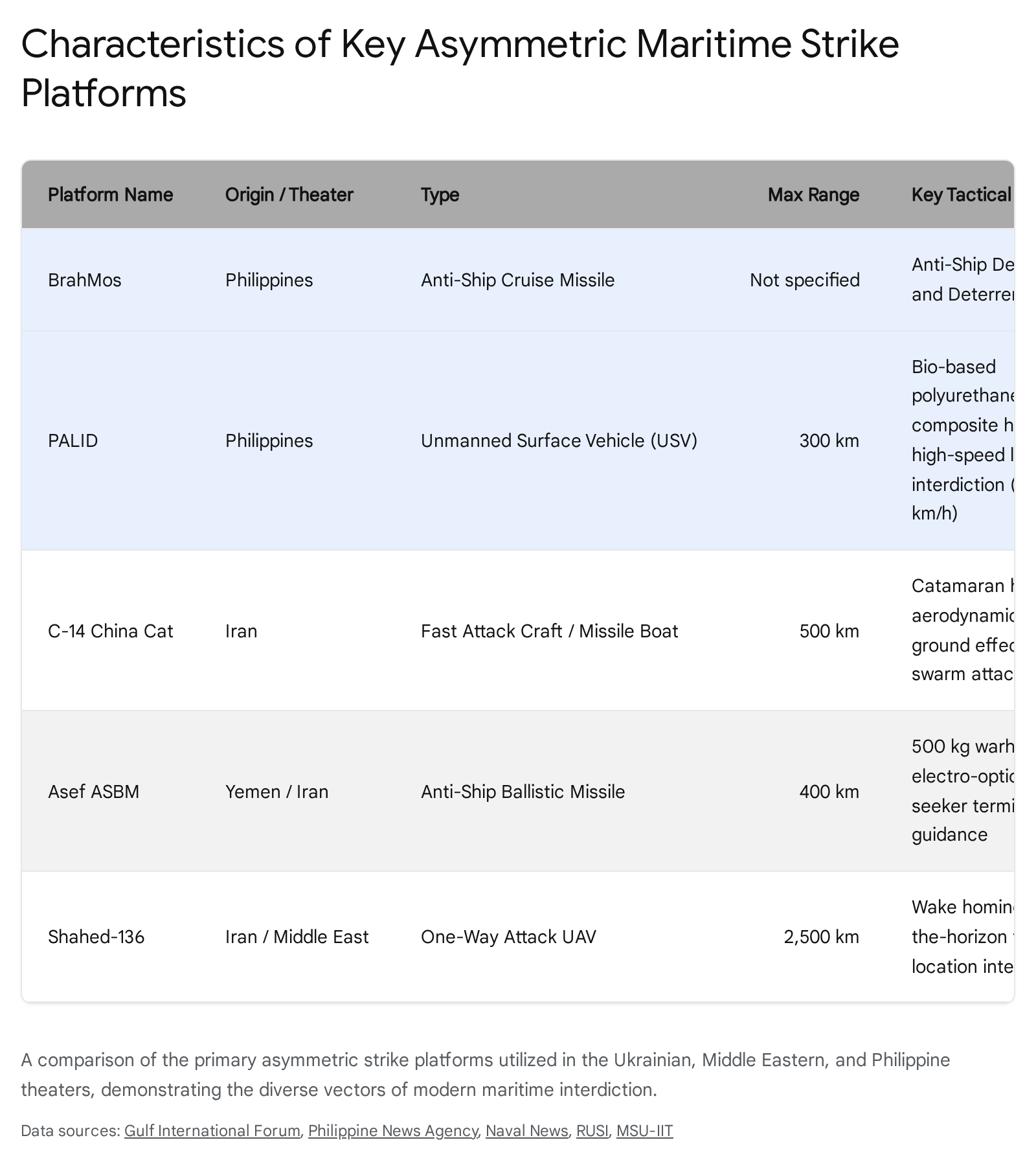
A cornerstone of the CADC is the integration of land-based, ranged kinetic strike capabilities. This effort is spearheaded by the Philippine Marine Corps’ newly established Coastal Defense Regiment (CDR), which achieved a historic milestone with the acquisition and deployment of the Indian-manufactured BrahMos supersonic cruise missile system.5
4.1 The BrahMos Supersonic Missile System
The deployment of the BrahMos system marks the first overseas induction of the platform and signals a deepening defense architecture between New Delhi and Manila.2 With an operational range of 290 kilometers, the BrahMos system introduces a highly potent anti-access/area denial (A2/AD) capability capable of directly threatening hostile vessels operating near contested maritime features, such as Scarborough Shoal.12
The deployment architecture of the BrahMos system reveals a commitment to distributed lethality. The CDR is structured to operate three distinct missile batteries. Each battery comprises a self-contained combat unit including at least two mobile launchers (each equipped with two missiles), a dedicated radar vehicle, a transport-loader holding four additional rounds, and a command-and-control vehicle.14 This modular design allows for rapid coastal deployment and engagement of surface targets at extended ranges.15
Strategic placement of these systems maximizes their deterrent effect. The primary battery is based in Western Luzon, directly facing the South China Sea.12 However, local officials have also donated land for coastal defense purposes in strategic choke points such as Lubang and Calayan.11 Defense analysts suggest that relocating these mobile batteries across Northern Luzon, including potential deployments at Cape Bojeador or within the Batanes island chain, creates overlapping zones of kinetic threat across the vital Luzon Strait.14 The extreme speed and precision of the supersonic BrahMos missile make it exceptionally difficult for current naval air defense systems to intercept, thereby serving as a formidable psychological and tactical deterrent against coercive maneuvers.5
4.2 Joint Force Strike Simulation and Air Defense
The integration of these capabilities is actively tested through multinational exercises. During the Balikatan military exercises, the CDR’s BrahMos units participated in simulated firing within a joint maritime strike environment in Northern Luzon.16 Simulation firing involves activating all sensors and fire control systems to track targets as if in an actual combat scenario, ensuring that targeting telemetry and command structures are fully operational.16
These exercises also facilitate interoperability with advanced allied assets, such as the deployment of the US Navy-Marine Corps Expeditionary Ship Interdiction System (NMESIS), a mobile anti-ship missile platform with a 100-nautical-mile range, and the Typhon Mid-Range Capability (MRC) platform, capable of firing Tomahawk Land Attack Missiles and Standard Missile-6 (SM-6) variants out to 1,000 nautical miles.16
To protect these high-value coastal defense assets from aerial interdiction, Manila is concurrently negotiating with New Delhi for the procurement of the Akash short-range air defense system. The Akash system is capable of intercepting high-speed aerial threats at ranges up to 30 kilometers and altitudes of 18 kilometers, providing the necessary localized air defense umbrella for the dispersed missile batteries.15 Furthermore, the Philippine Navy is evaluating the advanced K-SAAM Haegung missile system for its future Miguel Malvar-class frigates. Capable of speeds above Mach 2 and an engagement range of 20 kilometers, the K-SAAM features a dual-seeker guidance system optimized specifically to defeat fast, low-flying “sea-skimming” anti-ship missiles.18
5. Autonomous Littoral Warfare and the Development of USVs
Recognizing that conventional surface combatants remain vulnerable, crew-intensive, and expensive to replace, the AFP is actively pursuing autonomous maritime capabilities to augment its sea denial strategy.19 The shift toward unmanned systems aligns with a global “dronification” trend, offering a mechanism to maintain continuous intelligence, surveillance, and reconnaissance (ISR) without risking personnel.20
5.1 Indigenous Development: The PALID Program
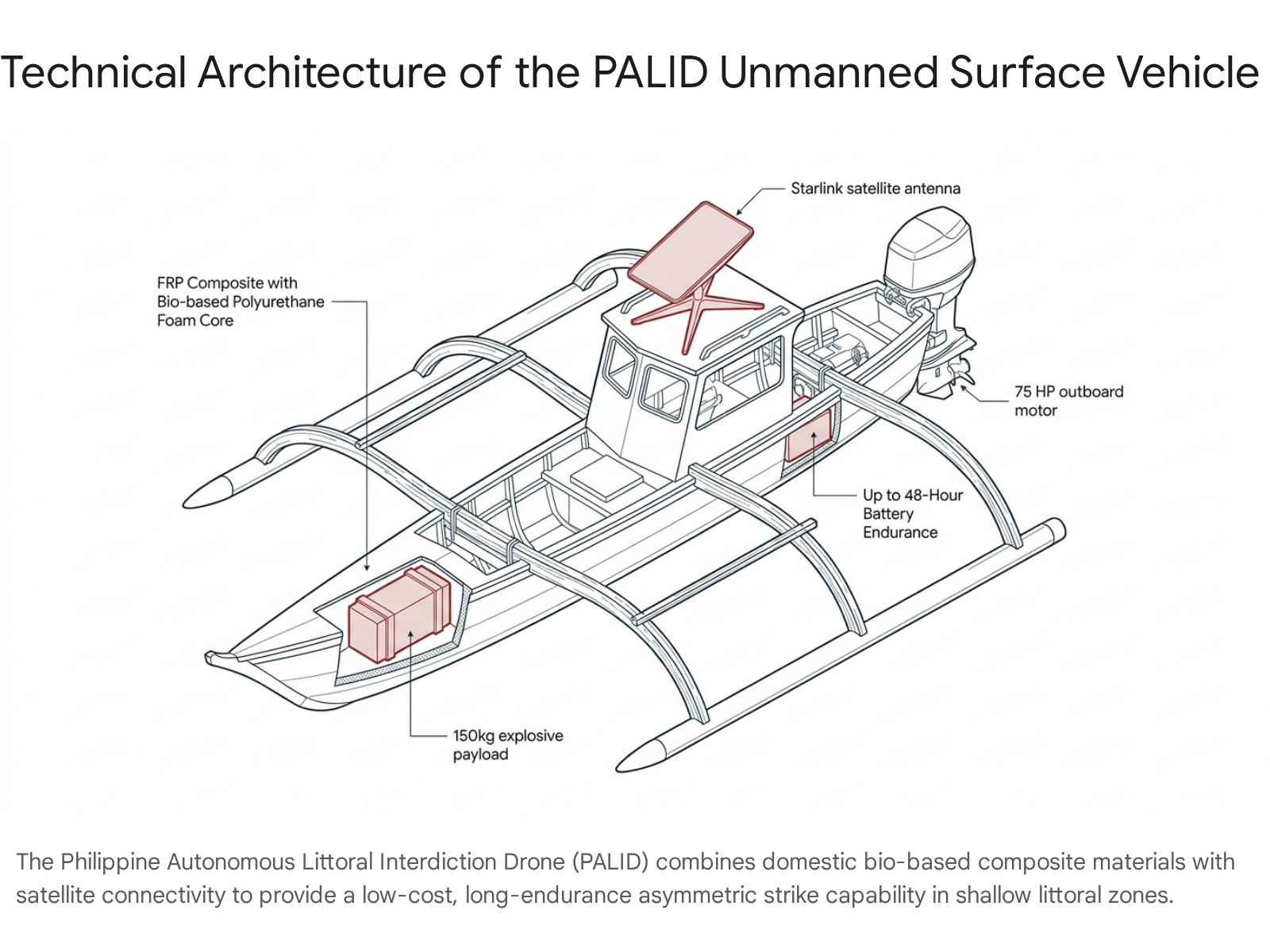
The development of the Philippine Autonomous Littoral Interdiction Drone (PALID) represents a significant leap toward indigenous asymmetric warfare capabilities.21 Spearheaded by local Filipino engineers from Mindanao State University under a research grant from the Department of Economy, Planning, and Development, the PALID aims to reduce reliance on foreign imports and build a sovereign defense technology base.21
The PALID is uniquely designed for covert operations. It is visually disguised as a traditional civilian “banca” outrigger boat, an unassuming aesthetic intended to mask its military utility and make it virtually indistinguishable from civilian fishing vessels in littoral zones.21 Beneath this disguise, the vessel features an advanced composite hull structure. The hull utilizes lightweight Fiber-Reinforced Polymer (FRP) sandwich composites, primarily consisting of carbon fiber reinforced with fiberglass components.22 This structure is integrated with a locally sourced, bio-based polyurethane foam core developed by the Center for Sustainable Polymers at the Mindanao State University-Iligan Institute of Technology (MSU-IIT).22 The use of this sustainable foam core significantly enhances the vessel’s corrosion resistance and structural durability in harsh saltwater environments.22
Measuring approximately 3.6 meters in length, the USV features a modular design that allows for size scaling based on mission requirements.22 Powered by a 75-horsepower outboard motor, the PALID is projected to reach speeds of 76 km/h (41 knots), facilitating rapid interception and evasion.22 The vessel boasts a payload capacity of 200 kilograms.22 In its offensive configuration, it functions as a kamikaze drone armed with a 150-kilogram unguided explosive payload.21 The tactical objective is to execute a high-speed strike against the critical propulsion or sensor systems of a high-value enemy warship, utilizing a low-cost asset to render a billion-dollar platform inoperable.21
For operations requiring extended range, the PALID is equipped with satellite-based communication systems via Starlink, ensuring low-latency, over-the-horizon connectivity.21 The vessel can carry up to 120 liters of gasoline and features onboard batteries that allow it to operate silently without fuel for up to 48 hours, providing a projected operational range of 300 kilometers.21 This combination of speed, stealth, and lethal payload makes it an ideal platform for archipelagic sea denial.
5.2 Integration of Foreign Autonomous Systems
While indigenous projects like PALID mature, the Philippine Navy is accelerating its USV operational experience by integrating advanced American systems. Personnel are actively training on US-made T-12 Mantas semi-submersible USVs acquired through a $500 million foreign military financing program.21 Furthermore, high-end AI-powered vessels such as the SELKIE and the Devil Ray T-38 are slated for deployment and potential co-production on Philippine soil.24 To support these operations, Washington and Manila are constructing specialized facilities at a Philippine Navy base in Western Palawan, directly bordering the South China Sea, explicitly designed to support and sustain long-endurance drone operations.25
6. Operational Blueprints from the Ukrainian Theater
To maximize the effectiveness of its new capabilities, the AFP must look to modern theaters of conflict where smaller nations are successfully countering naval hegemons. The Russo-Ukrainian War has fundamentally shattered established paradigms regarding naval supremacy, demonstrating that asymmetric innovation can neutralize massive conventional advantages.
6.1 The Mechanics of Sea Denial in the Black Sea
At the onset of the conflict, the Russian Federation maintained overwhelming naval superiority in the Black Sea, threatening amphibious assaults and launching devastating cruise missile strikes from the sea.26Ukraine systematically dismantled this advantage through a textbook application of sea denial—restricting the adversary’s freedom of maneuver without attempting to establish traditional sea control.27
The kinetic foundation of this strategy was established with the sinking of the Moskva, a guided-missile cruiser and the flagship of the Russian Black Sea Fleet, utilizing domestically produced land-based anti-ship missiles.27 This engagement proved that a nation entirely lacking a functional navy could project lethal force from its coastline, forcing hostile vessels to operate at significantly extended distances.27
To address the increased standoff distances of the Russian fleet, Ukraine innovated by modifying civilian recreational watercraft and purpose-built drone hulls into explosive-laden USVs, notably the “Sea Babies” and the MAGURA V5.27 By integrating explosive payloads and advanced navigation systems, Ukraine orchestrated coordinated swarm attacks that overwhelmed complex Russian shipborne defenses.27 This tactic achieved highly favorable cost-exchange ratios, leading to the decisive sinking of heavily defended, high-value vessels such as the Ivanovets missile corvette in January 2024 and the Caesar Kunikov landing ship in February 2024.28 The persistent threat of these low-cost USVs ultimately forced the Russian fleet to retreat from its forward operating bases in the occupied Crimean Peninsula, severely degrading its operational reach.27
6.2 Decentralization of Command and AI-Driven Targeting
A crucial factor enabling Ukraine’s asymmetric success is a sweeping cultural and doctrinal shift regarding command and control. The proliferation of inexpensive, rapidly adaptable technology has driven a profound decentralization of leadership across fires, electronic warfare, and air defense.29 Tasks that traditionally required coordination from higher-echelon headquarters are now executed organically at the platoon and squad levels, allowing for extreme speed and responsiveness in a constantly contested environment.29
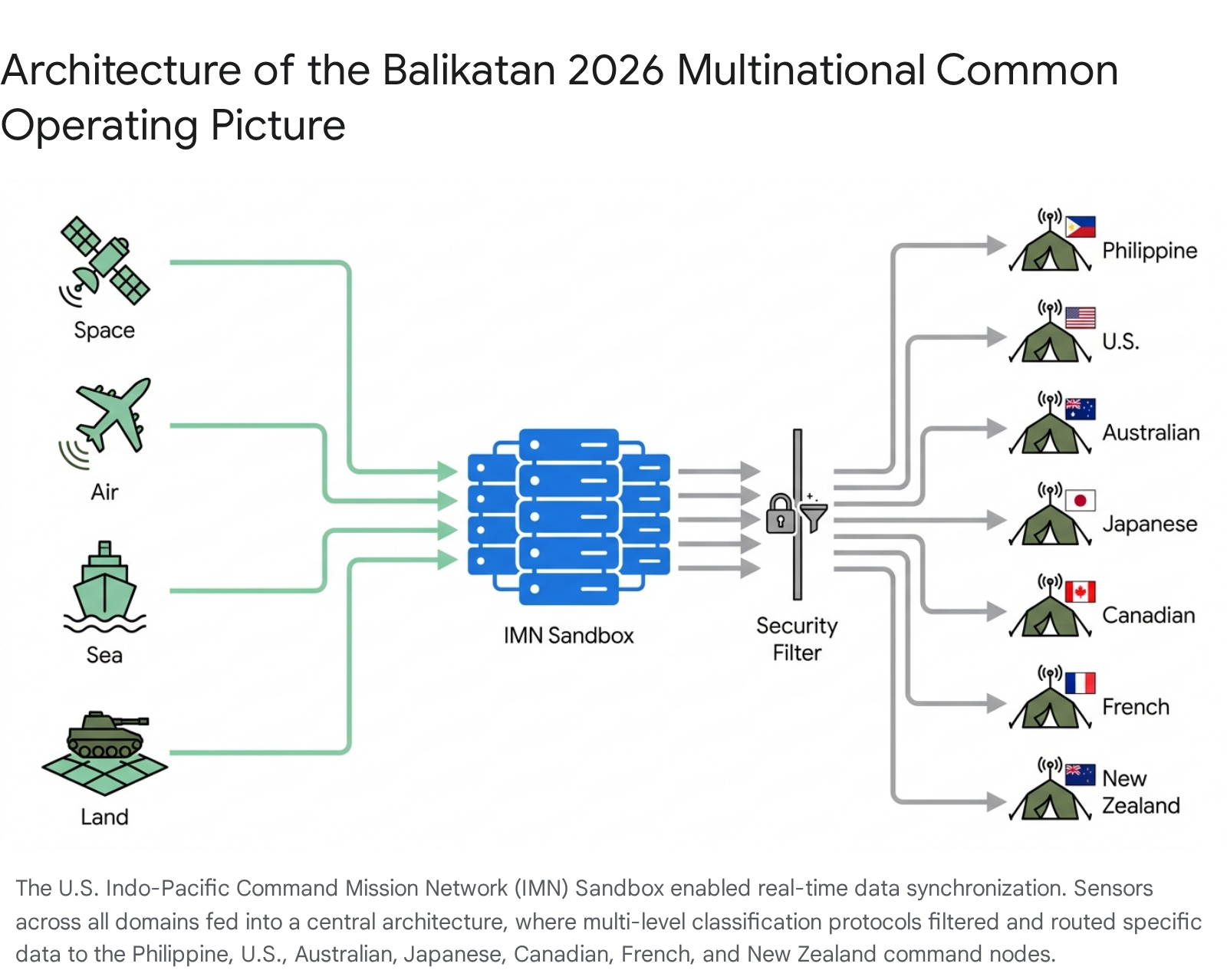
This decentralized operational model is supported by advanced digital battle management systems, most notably the Delta software platform.29 Originally created by the tech volunteer group Aerorozvidka, Delta functions as a fully digitized, real-time command-and-control interface that integrates live feeds from ubiquitous reconnaissance drones directly into a Common Operating Picture (COP).29
Within the Delta ecosystem, operators utilize the Vezha video sub-system to aggregate multiple live drone feeds, placing markers directly onto the battlefield map almost instantly.29 This process is dramatically accelerated by the Avengers AI platform, which analyzes drone and camera footage within Delta to automatically identify up to 12,000 pieces of Russian equipment every week.29 This seamless integration of AI and decentralized drone operations radically shortens the “kill chain,” allowing junior leaders to detect, relay, and authorize strikes before the target can relocate.29
6.3 The Capability Gap and Logistics
The potency of this decentralized, highly agile system was starkly demonstrated during the Hedgehog 2025 exercise in Estonia. A small group of just 10 Ukrainian drone specialists, acting as the opposing force (OPFOR), completely neutralized two NATO battalions in half a day.29 Utilizing commercial drones and digital battle management, the Ukrainian contingent simulated the destruction of 17 armored vehicles and conducted 30 successful strikes, prompting an observing NATO commander to declare, “We are finished”.29 This exercise exposed a massive systemic agility gap, highlighting that legacy, highly centralized, peacetime procurement ecosystems are vulnerable to combat-hardened, technologically agile forces.29
Furthermore, the logistical lessons from Ukraine indicate that changes to logistics delivery in modern conflict are evolutionary, not revolutionary.30 Unmanned ground vehicles are increasingly used for resupply to isolated units under direct fire, directly enhancing the generation of operational tempo without risking logistics personnel.31
7. Electronic Warfare and Signature Management Tactics
The Ukrainian theater demonstrates that the electromagnetic spectrum is a primary domain of active combat. Managing electromagnetic signatures is no longer a specialized function handled by dedicated electronic warfare (EW) battalions; it is a baseline survival skill for all combat personnel.29 Failing to manage electronic emissions results in rapid detection and subsequent destruction by loitering munitions or precision artillery.29
7.1 Tactical Detection and Countermeasure Systems
To survive this environment, Ukrainian forces have pioneered the widespread distribution of tactical detection and countermeasure systems down to the individual soldier. Junior leaders actively manage the spectrum using man-portable signal intelligence (SIGINT) devices, such as the Tsukorok (Sugar Cube) detector.29 Costing approximately $52 per unit, the Tsukorok passively scans major frequency bands (865–885 MHz, 902–928 MHz, and 970–1020 MHz) to detect incoming reconnaissance drones (e.g., Orlan-10, Zala) and loitering munitions (e.g., Lancet) at ranges of 8 to 16 kilometers, providing vital early warning.29 Notably, the production of this device highlights the vulnerabilities of modern supply chains, as a reliance on a single Chinese component factory forced Ukrainian engineers to rapidly establish domestic manufacturing capabilities to meet frontline demands.29
Concurrently, nearly all frontline logistical and combat vehicles are equipped with localized EW jammers, such as the Shield X SkyBlock system.29 Mounted directly onto vehicles, this system creates a protective 250-meter radio-frequency dome.29 Utilizing passive cooling and powered by an independent LiFePo4 battery, the system disrupts the control links and navigation signals (GPS/GLONASS) of incoming FPV drones across multiple frequency bands (300–1020 MHz and 2380–5850 MHz), neutralizing threats while the vehicle is in motion.29
7.2 The Action-Reaction Cycle of Unmanned Systems
The reliance on EW has sparked rapid technological adaptation. As jamming becomes ubiquitous, Ukrainian and Russian forces are modifying their drone platforms to ensure strike completion. Drones are increasingly equipped with autonomous terminal guidance systems, allowing them to hit targets even after losing connection with the operator.29 More significantly, forces are employing physical workarounds, such as outfitting FPV drones with wire spools or fiber-optic cables.29 While trailing a physical wire degrades flight performance and limits operational range to approximately 10 kilometers, it renders the drone entirely impervious to radio frequency and GPS jamming, highlighting the relentless action-reaction cycle of modern asymmetric warfare.29
To counter drones that slip through electronic defenses, forces rely on localized kinetic systems. The deployment of mobile counter-UAS platforms, such as the M-LIDS (Mobile-Low, Slow, Small Unmanned Aircraft Integrated Defeat System), which pairs a 30mm chain gun with KuRFS precision targeting radar and expendable Coyote interceptors, represents the integration of hard-kill solutions into mobile maneuver forces.29
8. Littoral Warfare and Asymmetric Tactics: Iran and the Houthis
While Ukraine provides a blueprint for high-intensity, digitally networked sea denial, the maritime strategies employed by Iran and its proxy forces, particularly the Houthis in Yemen, offer critical lessons in exploiting littoral geography and leveraging low-cost munitions to disrupt global maritime traffic in strategic choke points.
8.1 The “Mosaic Defense” and Fast Attack Craft Swarms
Following severe losses to its conventional deep-water fleet in previous conflicts, Iran fundamentally reoriented its naval strategy around the Islamic Revolutionary Guard Corps Navy (IRGCN).32 The IRGCN is optimized specifically for irregular warfare in the shallow, constrained, and highly congested waters of the Persian Gulf and the Strait of Hormuz, an environment that restricts the maneuverability of large, blue-water enemy vessels.32
The core of this strategy is the “mosaic defense” concept—a highly decentralized command structure that grants local commanders immense operational autonomy.32 The Iranian coastline is divided into five distinct naval districts, extending from Mahshahr to Bandar Abbas, each supported by a dense network of concealed shore-based missile batteries, dispersed weapons depots, and forward outposts located on strategically positioned islands, such as Farsi Island.32 This structure ensures that even if central command nodes are degraded by airstrikes, individual units retain the tactical capacity and logistical support to sustain combat operations independently.32
To project force, the IRGCN avoids crew-intensive platforms, relying instead on heavily armed, highly maneuverable fast attack craft (FAC).32 A prime example is the C-14 China Cat patrol boat. Measuring roughly 23 meters with a light displacement of 20 tons, the C-14 utilizes an advanced catamaran hull design.32 This design features a center tunnel that traps air as the vessel moves, creating aerodynamic lift (ground effect) that reduces water displacement.32 This allows the craft to achieve maximum speeds of 50 knots (93 km/h) and a range of 500 kilometers while providing an exceptionally stable platform for firing its complement of C-701 anti-ship cruise missiles in rough seas.32 These small vessels are easily concealed within the natural bays of the coastline and can be rapidly deployed to execute coordinated swarm attacks against larger, less maneuverable warships, overwhelming their point defenses.32
8.2 Proliferation of Low-Cost Missiles and OWA-UAVs in the Red Sea
The ongoing crisis in the Red Sea highlights the strategic impact of proliferating low-cost precision strike capabilities to non-state or proxy actors. The Houthi movement has executed an unprecedented campaign against commercial shipping and naval armadas utilizing Iranian-designed weaponry.34
A hallmark of this campaign is the combat debut of anti-ship ballistic missiles (ASBMs). Iran successfully modified legacy ballistic missiles, such as the Fatah-110, by integrating electro-optical/infrared seekers into the nose cones, creating dedicated maritime strike variants like the Asef and Raad-500 (Tankil).35 While these ASBMs may lack the sophisticated maneuverable re-entry vehicles (MARVs) required for pinpoint accuracy against highly maneuverable warships, their sheer speed and kinetic energy pose a severe threat, particularly to large commercial vessels operating in the tight engagement spaces of the Red Sea.37
Furthermore, the deployment of cheap, reverse-engineered cruise missiles—such as the Al-Mandeb 2, a close copy of the Chinese C-802/Iranian Noor with a 120-kilometer range, and scaled-down versions of the Russian Kh-55 utilizing commercial turbojet engines—provides a highly cost-effective means of striking vessels from easily concealed, truck-mounted launchers.35
Simultaneously, the use of one-way attack drones (OWA-UAVs), particularly the Shahed series, has revolutionized over-the-horizon targeting. Boasting an operational range of up to 2,500 kilometers, these drones can threaten shipping far out into the Arabian Sea.37 Because hitting a moving vessel in the vastness of the ocean is inherently difficult, operators rely on target location intelligence to guide the drone. This intelligence is gathered by exploiting a vessel’s Automated Information System (AIS) broadcasts or through visual identification provided by Iranian surveillance cargo ships, such as the MV Saviz and its successor the MV Behshad, which loiter in international waters to provide signal intelligence (SIGINT).37 In the terminal phase, these drones employ advanced tactics such as “wake homing,” where the UAV descends to a sea-skimming altitude and flies directly up the wake of the moving ship to strike the vulnerable stern, maximizing the probability of a hit.37
8.3 Economic Disruption and Magazine Depletion
The strategic objective of the Houthi maritime campaign is not necessarily the absolute destruction of superior naval forces, but rather the creation of unsustainable operational costs and severe economic disruption. By executing sustained, multi-vector attacks utilizing drones, cruise missiles, and ASBMs, the Houthis force defending warships (such as the USS Gravely, USS Laboon, USS Mason, and HMS Diamond) to continuously expend highly sophisticated and expensive surface-to-air interceptors (like the SM-2) to defeat relatively cheap incoming threats.35
This strategy rapidly depletes the ammunition magazines of naval vessels. Because vertical launch systems cannot be easily reloaded at sea, these multi-million-dollar warships are eventually forced to withdraw to friendly ports for replenishment, temporarily exposing the vital shipping lanes they were tasked to protect.37 Furthermore, the persistent threat environment—characterized by sudden attacks and floating tactical minefields—forces maritime insurance companies to exponentially increase or completely suspend war-risk coverage.32 This financial pressure effectively strands hundreds of merchant vessels and forces global logistics companies to reroute supply chains away from critical waterways, granting the asymmetric actor outsized geopolitical leverage.32
9. Synthesizing Global Lessons for the Armed Forces of the Philippines
The convergence of the Philippine CADC with the tactical realities observed in Ukraine and the Middle East provides a clear roadmap for constructing an impenetrable archipelagic defense network. By internalizing these lessons, the AFP can optimize its capability acquisitions and refine its doctrinal deployment.
9.1 Integrating Autonomous USVs into Archipelagic Defense
The Philippine archipelago, much like the constrained littoral waters of the Persian Gulf and the Black Sea, provides an ideal operating environment for Unmanned Surface Vehicles. The successful development of the PALID program indicates that the Philippines possesses the engineering acumen to produce cost-effective, domestic unmanned systems that leverage locally sourced materials.21
Drawing upon the operational lessons of the Ukrainian MAGURA V5 and Sea Babies, the AFP should prioritize the mass production of these systems to execute coordinated drone swarms.27 Strategically, these USV swarms can be forward-deployed from concealed coastal inlets to interdict hostile vessels attempting to transit critical maritime choke points, such as the Balintang Channel, the Mindoro Strait, or the approaches to Palawan. Furthermore, by adopting the Iranian methodology of utilizing civilian vessels or decentralized forward outposts for target sighting and SIGINT collection, the Philippine Navy can partially offset its current deficits in expensive over-the-horizon radar coverage, effectively cueing autonomous USVs and cruise missiles to their targets.38
9.2 Developing an Archipelago-Wide Anti-Access/Area Denial Network
The CADC’s emphasis on ranged strike capabilities must be closely coupled with the operational principles of the Iranian mosaic defense. The deployment of the BrahMos Coastal Defense Regiment must not rely on static, centralized bases that are vulnerable to preemptive decapitation strikes.5 Instead, the AFP must leverage the vast geography of its 7,641 islands to create a fluid, highly mobile, and redundant missile network.
By establishing a network of pre-surveyed launch sites, dispersed munitions depots, and hardened shelters across Western Luzon, Palawan, and the Batanes island chain, the AFP can ensure the survivability of its BrahMos batteries.14 Much like the Houthi deployment of mobile truck-mounted ASCMs, Philippine Marine units must be trained to rapidly deploy from concealment, execute a firing mission against targets in the South China Sea, and immediately relocate to avoid counter-battery fire.35 This highly distributed A2/AD network guarantees that any hostile force entering the Philippine EEZ is subjected to persistent, overlapping fields of supersonic missile threat.12
9.3 The Necessity of Tactical Decentralization and EW Resilience
The transition of the Philippine Army from internal counter-insurgency to external territorial defense necessitates a total reevaluation of tactical command structures. Drawing directly from the Ukrainian experience, the AFP must empower junior officers and non-commissioned officers with the autonomy to execute decentralized operations.29 The defense of critical coastal nodes, logistical hubs, and mobile missile batteries cannot be micromanaged by higher headquarters in an environment characterized by disrupted communications and rapid operational tempos.
Furthermore, the AFP must rapidly integrate tactical electronic warfare and counter-UAS capabilities down to the squad and vehicle level. The proliferation of localized jammers—analogous to the Ukrainian Shield X SkyBlock systems—and passive signal detectors must become standard issue for motorized infantry and coastal defense units.29 Establishing spectrum awareness as a core tactical competency will ensure that Philippine maneuver forces can survive, reposition, and strike under the persistent aerial surveillance expected in a high-intensity maritime conflict.29
10. Strategic Implications and Final Assessment
The operationalization of the Comprehensive Archipelagic Defense Concept marks a definitive and irreversible turning point in the strategic posture of the Philippines. By transitioning from an internally focused, conventionally minded military toward a modernized force explicitly designed for archipelagic sea denial, Manila is actively raising the kinetic and economic costs of maritime coercion within its sovereign waters.
However, the implementation of the CADC carries inherent strategic risks. As noted by defense analysts, the deliberate construction of an archipelagic defense network, characterized by the deployment of advanced missile batteries and assertive, continuous naval patrols, will highly likely precipitate sharper military confrontations with regional adversaries in the near term.6 Expansionist powers interpret the deepening security cooperation between the Philippines, the United States, and Japan—coupled with the integration of advanced kinetic systems like BrahMos and Typhon—as a direct challenge to their freedom of maneuver in the South China Sea.6
To ensure the long-term viability of the CADC, the Armed Forces of the Philippines must meticulously balance the acquisition of high-end foreign hardware with the rapid expansion of its indigenous Self-Reliance Defense Posture (SRDP).21 While South Korean corvettes and Indian supersonic missiles provide immediate conventional deterrence, the true resilience of the Philippine defense network will rely on the mass production of low-cost, asymmetrical systems like the PALID USV and the institutionalization of tactical electronic warfare.21
Ultimately, the empirical evidence from the Black Sea and the Middle East demonstrates that control of the maritime domain is no longer the exclusive purview of massive, multi-billion-dollar blue-water navies. By combining the geographic advantages of its vast archipelago with decentralized command structures, localized electronic resilience, and a lethal mixture of asymmetric strike capabilities, the Philippines is uniquely positioned to establish a formidable, cost-imposing, and enduring maritime deterrent.
BrahMos missile system to undergo ‘simulation firing’ in ‘Balikatan’ – Philippine News Agency, accessed May 26, 2026, https://www.pna.gov.ph/articles/1273289
The 41st iteration of Exercise Balikatan, conducted from April 20 to May 8, 2026, represented a defining inflection point in the security architecture of the Indo-Pacific region. Originating as a bilateral training mechanism between the Armed Forces of the Philippines and the United States military, the exercise has fundamentally transformed into a massive, multilateral deterrence operation.1 The 2026 iteration mobilized an unprecedented 17,000 personnel, incorporating active combat forces from Australia, Japan, Canada, France, and New Zealand, while hosting observers from 17 additional nations.1 This expansion signals a definitive transition from localized partnership-building toward the operationalization of a broad, multi-domain coalition designed to secure the first island chain and deter unilateral alterations to the regional status quo.1
The operational tempo of Balikatan 2026 yielded critical lessons in modern expeditionary warfare, particularly regarding coalition command and control, data-centric combat operations in austere environments, and the absolute necessity of distributed maritime logistics.5 A primary technological milestone was the debut of a groundbreaking Common Operating Picture that allowed eight disparate national militaries to deconflict assets, synchronize multidomain fires, and operate under a unified tactical understanding.5 Tactically, the exercise validated the doctrine of “see, sense, strike, and protect,” utilizing advanced kinetic platforms—including the Typhon Mid-Range Capability missile system, the Navy-Marine Expeditionary Ship Interdiction System, and the Vehicle-Agnostic Modular Palletized ISR Rocket Equipment—against simulated amphibious and maritime threats.4
Geopolitically, the exercise illuminated the continued transition of the Armed Forces of the Philippines from internal counter-insurgency operations toward a robust external territorial defense posture.4 Furthermore, it formalized Japan’s emergence as a consequential hard-power actor, highlighted by the nation’s first deployment of combat troops to the region since the conclusion of World War II.1 The resulting operational data and the strategic messaging derived from Balikatan 2026 will profoundly influence regional defense postures, driving further interoperability and pragmatic multi-alignment strategies among Indo-Pacific middle powers for the foreseeable future.
2. The Geopolitical Context and the Deterrence Paradigm
The strategic environment surrounding Exercise Balikatan 2026 reflects a fundamental realignment of Indo-Pacific security dynamics. The exercise explicitly tested the capacity of a United States-led coalition to maintain a free and open operational corridor along the first island chain, a critical geographic and strategic threshold that encompasses Japan, Taiwan, and the Philippine archipelago.4 The massive scale of the exercise was a direct response to a security environment that participating nations view as increasingly severe and complex, necessitating immediate advancements in collective deterrence mechanisms.1
2.1 The Asian NATO Debate Versus Pragmatic Multi-Alignment
Japan’s unprecedented deployment of 1,400 combat personnel to the Philippines catalyzed intense debate among regional defense analysts regarding the future design of Indo-Pacific security architectures.1 Two distinct strategic visions framed the diplomatic context of the military maneuvers. The first vision, heavily promoted by figures such as former Japanese Prime Minister Shigeru Ishiba, advocates for the transformation of existing United States-led bilateral alliances into a formal, treaty-based multilateral collective defense organization.1 Proponents of this “Asian NATO” model argue that the absence of a formalized collective self-defense system in Asia significantly increases the probability of conflict. Pointing to the defense collaboration between China, Russia, and North Korea, Ishiba starkly warned that “Ukraine today is Asia tomorrow,” asserting that a formalized collective deterrent is essential to stabilize the region.1
Conversely, a parallel school of strategic thought—dominant among middle-power nations—favors pragmatic multi-alignment and strategic autonomy over rigid military blocs.1 Scholars such as Kuik Cheng-Chwee argue that a formal collective defense pact would alienate potential regional partners who are necessary to pursue broader diplomatic and economic interests.1 Instead, this approach advocates for an “alliance-plus” posture, wherein core security alliances are maintained but are heavily complemented by flexible, issue-specific partnerships.1 This sentiment was echoed in a 2026 World Economic Forum speech by Canadian Prime Minister Mark Carney, who called on middle powers to assert themselves collaboratively within a ruptured world order.1
Balikatan 2026 functionally served as a highly successful stress test for this pragmatic multi-alignment strategy. The seamless tactical integration of Canadian, French, and New Zealand forces alongside the core United States-Philippine-Australian-Japanese framework demonstrated that flexible alignments can produce credible, combat-ready coalitions without the bureaucratic inertia and geopolitical polarization inherent to a formal treaty organization.1 The exercise proved that an alliance-plus architecture can deliver the deterrence benefits of an Asian NATO without demanding the same level of absolute geopolitical commitment from participating states.1
2.2 The Strategic Pivot of the Armed Forces of the Philippines
Domestically, Exercise Balikatan 2026 served as a catalyst for the Armed Forces of the Philippines to accelerate its pivot toward external border defense. For decades, the Philippine military was primarily optimized for internal security and counter-insurgency operations, heavily focused on combating domestic groups such as the New People’s Army.4 Recent intelligence reports indicate that incidents linked to the communist insurgency fell steadily from 2019 to 2025, a decline attributed to intensified military campaigns, inter-agency coordination, and localized peace efforts.4 With the domestic insurgency severely weakened and largely relegated to isolated, small-scale extortion efforts for survival, the Philippine military has gained the operational bandwidth required to focus outward.4
The drills provided the Armed Forces of the Philippines with the necessary environment to acquire and master new capabilities for external defense, specifically focusing on anti-access and area-denial strategies along its archipelagic borders.4 Philippine Defense Secretary Gilberto Teodoro Jr. emphasized the critical nature of this transition, noting that while the activities tested in 2026 were robust, they remained geographically limited.10 He indicated that future iterations of the exercise will likely expand beyond the West Philippine Sea to include operations on the eastern seaboard, aiming to establish a comprehensive, 360-degree territorial defense posture.10 This shift highlights a national recognition that the defense of Philippine sovereignty now relies on securing the maritime and aerospace domains that surround the archipelago, requiring seamless integration with allied forces.11
3. Next-Generation Command and Control Architectures
The capacity to share data securely and instantaneously among multinational partners is historically the most significant hurdle in coalition warfare. Incompatible communication hardware, disparate national security classifications, and language barriers routinely degrade the operational tempo of allied forces. Exercise Balikatan 2026 confronted this challenge directly through the implementation of next-generation digital architectures designed to shorten the decision-making cycle across multiple domains.5
3.1 The Multilateral Common Operating Picture
A crowning technical achievement of the 2026 exercise was the successful deployment of a Common Operating Picture accessible to eight distinct national militaries.5 Developed over eight years by the United States Indo-Pacific Command J7 Pacific Multi-Domain Training and Experimentation Capability, alongside joint interface control officers, the system fundamentally altered how allied forces perceive the modern battlespace.5 The architecture was built upon the Indo-Pacific Command Mission Network, which provided a secure “Sandbox” platform where approved coalition partners could operate seamlessly.5
The Common Operating Picture solved the historic challenge of coalition data sharing through advanced multi-level classification tagging.5 This architecture allowed raw data from various sensor networks to pass through cross-domain solutions, filtering information so that each participating nation could view the exact tactical intelligence it required without compromising highly classified source parameters.5 This enabled the synchronization of data from live military assets, constructive virtual assets, and simulated training environments into a unified, real-time battlespace visualization.5 Leaders involved in the network’s deployment noted that managing this multi-level classification while maintaining a steady flow of contextual information was a primary logistical challenge, yet its success proved vital for building coalition confidence.5
The primary lesson derived from the implementation of this Common Operating Picture was the absolute necessity of interoperability under combat duress.5 During intense live-fire events, the network successfully deconflicted air, ground, and surface assets, ensuring that rapid force deployment did not result in friendly fire incidents or operational bottlenecks.5 By tailoring the Common Operating Picture to provide real-time information sharing across all domains, commanders achieved a significantly faster response to emerging threats, reinforcing the necessity of systems that are ready for a real-world “fight tonight” scenario.5
3.2 Artificial Intelligence and Data-Centric Operations at the Tactical Edge
Complementing the theater-wide Common Operating Picture, the United States Army’s 25th Infantry Division, operating alongside its Philippine counterparts, conducted rigorous operational demonstrations of data-centric warfare at the tactical edge.12 Over a three-day period in early May, these forces deployed into the austere, jungle environments of the Indo-Pacific to refine next-generation digital architectures under realistic, harsh conditions.12 The primary objective was to push fielded command and control systems to their limits, proving that advanced networks remain resilient, secure, and lethal regardless of the operational terrain.12
A critical takeaway from this operational demonstration was the successful refinement of Artificial Intelligence as a battlefield decision aid.12 By establishing a unified data network that linked remote threat-detection sensors directly to effector weapons systems, the coalition drastically shortened the decision-making cycle.12 Artificial Intelligence applications processed vast amounts of incoming data, identifying targets and suggesting engagement matrices faster than human analysts could parse the information.12 However, as emphasized by Colonel Daniel VonBenken, commander of the 25th Infantry Division Artillery, the technology served solely as a powerful decision aid; human commanders retained full authority over every kinetic engagement, ensuring ethical oversight while maintaining a decisive information advantage.12
Furthermore, the integration of electromagnetic warfare capabilities proved essential to maintaining this digital lethality.12 Specialized personnel utilized electromagnetic warfare tools to verify the lines of bearing between sensors, ensuring that data flow remained accurate and untampered with despite simulated adversarial jamming efforts.12 Signal support system specialists successfully established and maintained the necessary connectivity, proving that a digitally synchronized force can operate effectively outside of pristine garrison environments.12
4. Tactical Execution: Coastal Defense and Multi-Domain Fires
The tactical execution of Exercise Balikatan 2026 was anchored in the seamless integration of lethal firepower with advanced intelligence, surveillance, and reconnaissance capabilities. The overarching doctrine governing these maneuvers was explicitly articulated by General Ronald Clark, commander of the United States Army Pacific, as the imperative to “see, sense, strike, and protect”.4 This doctrine emphasizes the necessity of detecting adversarial movements long before they reach the littorals, allowing allied forces to initiate defensive strikes well over the horizon.4
4.1 Coastal Defense and Counter-Landing Operations
The most complex and heavily scrutinized tactical event of the exercise was the counter-landing live-fire training held at the La Paz sand dunes in Laoag City.4 This operation brought together over 500 service members from the United States, the Philippines, Australia, and New Zealand, tasking them with repelling a highly dynamic simulated amphibious assault.11 The defenders included United States Marines from the Marine Rotational Force – Darwin, soldiers from the 7th Infantry Division, Philippine marines from the 3rd Marine Brigade, soldiers from the Royal Australian Regiment’s 5th/7th Battalion, and, for the first time, infantry from the Royal New Zealand Infantry Regiment’s 2nd/1st Battalion.11
The engagement sequence provided a masterclass in layered coastal defense.4 The operation commenced with intelligence, surveillance, and reconnaissance assets—including silver drone boats scanning the azure waters—detecting a notional enemy flotilla.4 This intelligence was fed immediately into the combined command and control node.11 As the simulated enemy approached the coastline, allied fighter aircraft, missile patrol boats, and attack helicopters initiated the engagement, winnowing the number of enemy landing craft at sea.9 For the amphibious assault vehicles that survived the initial barrage and reached the searingly hot beachhead, they were met by a devastating wall of integrated ground fire.9 High Mobility Artillery Rocket Systems positioned directly on the beach delivered precision strikes, supported by overlapping fields of fire from mortars, machine guns, and Stinger surface-to-air missiles.4
The operation culminated with a final defensive line of direct-fire weapons from all four participating nations engaging the last wave of targets simultaneously, effectively neutralizing the threat.11 Philippine Marine Corps Colonel Dennis Hernandez summarized the core lesson of the event, stating that beach defense is no longer the responsibility of a single unit or domain; it requires seamless, real-time integration across services and allied nations.11 The successful coordination of these multidomain fires proved that coalition forces can think, decide, and act as a singular combat entity under extreme pressure.11
4.2 Autonomous Systems and Mid-Range Capabilities in the Littorals
Balikatan 2026 also served as a proving ground for the deployment of highly advanced, autonomous strike platforms in remote archipelagic environments. In the northernmost Philippine province of Batanes, situated along the strategic Luzon Strait, United States and Philippine forces showcased the Navy-Marine Expeditionary Ship Interdiction System.8 Flown into the austere location via a United States Air Force C-130 transport aircraft, this coastal anti-ship missile system demonstrated the operational feasibility of rapidly inserting lethal area-denial weapons into remote maritime corridors.8
The Navy-Marine Expeditionary Ship Interdiction System is uniquely designed for remote operation. As explained by United States Marine Corps Staff Sergeant Darren Gibbs, the platform is fully autonomous, requiring no human driver or passenger inside the vehicle.8 Operators program the system’s destination and engagement parameters remotely, allowing it to navigate independently and target surface vessels at ranges up to 185 kilometers.8 Philippine Army Major General Francisco Lorenzo Jr. noted that testing such autonomous assets in Batanes is critical for rehearsing rapid deployment scenarios where immediate territorial defense is required.8
Beyond autonomous platforms, the exercise featured the highly controversial deployment of the Typhon Mid-Range Capability missile system.4 Deployed by the United States military from a civilian airport into a military reservation in the Philippines, the Typhon system successfully fired a Tomahawk cruise missile carrying a dummy warhead during the drills.4 This deployment validated the coalition’s ability to project strategic strike capabilities capable of hitting targets deep within adversarial mainland territory from mobile, land-based launchers.4 The presence of the Typhon system represents a profound escalation in regional deterrence mechanics, utilizing land power to assert control over sea lanes and maritime choke points.4
4.3 Integrated Air and Missile Defense and Counter-UAS Operations
Recognizing the rapid proliferation and lethal efficacy of uncrewed aerial systems in modern conflict, Exercise Balikatan 2026 placed a heavy emphasis on Integrated Air and Missile Defense.7 At Naval Station Leovigildo Gantioqui, United States Army and Marine Corps air defense units stood shoulder-to-shoulder with the Philippine Air Force and the Japanese Air Self-Defense Force to conduct exhaustive live-fire and dry-fire exercises focused on Counter-Unmanned Aircraft Systems weaponry.7
The primary asset tested during these evolutions was the Vehicle-Agnostic Modular Palletized ISR Rocket Equipment, commonly referred to as VAMPIRE.7 VAMPIRE is a self-contained, precision-guided weapons platform explicitly designed to defeat small uncrewed aerial systems and execute precision strikes against surface targets.7 Carrying a payload of four 70mm laser-guided rockets equipped with proximity fuzes, the system provides highly lethal, rapid-response air defense.7 United States Army Lieutenant Colonel Kenneth Collins, commander of the 1st Battalion, 51st Air Defense Artillery Regiment, articulated the strategic value of the system, noting that bringing rapid, palletized capabilities like VAMPIRE to the shorelines provides a decisive, precision-strike capability that fills a vital gap in the coastal air defense network.7 The successful integration of these systems alongside the Fixed Site-Low, Slow, Small Unmanned Aerial System Integrated Defeat System dramatically enhanced the bilateral knowledge and operational readiness of Philippine and United States air defenders.7
4.4 Space Force Integration and Cyber Operations
Modern multidomain operations are entirely reliant on the invisible infrastructure of space and cyber capabilities. Marking a significant historical milestone, Balikatan 2026 featured the unprecedented inclusion of United States Space Force personnel directly integrated into the Joint Task Force.13 Brigadier General Brian Denaro, commander of United States Space Forces Indo-Pacific, emphasized that this integration proves the alliance is adapting to modern warfare.13 Space Force Guardians provided tactical units with critical enablers, including secure satellite communication, precise navigation data, early missile warning telemetry, and comprehensive situational awareness.14 By bringing these space-based capabilities directly into the tactical exercise environment, the coalition strengthened its ability to respond quickly and operate with extreme precision.14
Simultaneously, the exercise tested the cyber resilience of the participating nations. Cyber operations events held at Camp General Emilio Aguinaldo involved specialized personnel, such as host analysts from the New Zealand Army’s 1st Command Support Regiment, working alongside multinational peers to defend command and control networks against simulated digital intrusions.3 This comprehensive approach to training ensured that the coalition forces were prepared to protect their digital command structures while executing kinetic strikes in the physical domains.
5. Maritime Strike and Naval Integration
Given the archipelagic geography of the Indo-Pacific, naval supremacy and maritime strike capabilities remain central to any deterrence strategy. The maritime component of Balikatan 2026 included the largest multinational anti-submarine warfare exercise ever hosted by the Philippines, alongside highly coordinated surface strike events.16
A centerpiece of the naval maneuvers was a multidomain maritime strike drill conducted off the western coast of Northern Luzon, which culminated in the sinking of two decommissioned vessels, including the Philippine Navy corvette BRP Magat Salamat.12 Multinational forces from the Philippines, the United States, Japan, and Canada integrated land, sea, and air platforms to sense, strike, and destroy the targets.12 The strike utilized AGM-65 Maverick missiles, United States Army High Mobility Artillery Rocket Systems, and, notably, a Type 88 anti-ship missile fired by the Japanese Amphibious Rapid Deployment Brigade.4 This coordinated destruction of surface targets demonstrated the coalition’s ability to seamlessly pass targeting data between disparate national platforms to execute a decisive kill chain.18
The naval integration extended deep beneath the surface during comprehensive anti-submarine warfare exercises.16 For two days, a united fleet comprising ships from the Royal Australian Navy, the Philippine Navy, the United States Navy, the Royal Canadian Navy, and the Japan Maritime Self-Defense Force worked to sharpen their sub-surface hunting skills.16 Directed by the United States Navy’s Destroyer Squadron 7, which served as the multinational maritime event Task Group commander, the ten-ship surface action group operated as a single tactical entity.20 Royal Australian Navy Lieutenant Commander Matthew Driml of the HMAS Toowoomba highlighted the strategic value of this integration, noting that while the participating navies possessed vastly different capabilities, those differences created a robust force multiplier effect when combined.16 Operating as one comprehensive anti-submarine force, the coalition proved that deep interoperability can overcome individual platform limitations.16
6. Component Dependencies: Archipelagic Logistics and Distributed Sustainment
Military logisticians frequently assert that logistics is the pacing function of expeditionary operations; without resilient sustainment, tactical proficiency is easily neutralized.6 Before an infantry company can secure an objective or an artillery battery can provide suppressive fire, equipment and supplies must be positioned accurately across vast distances.6 Exercise Balikatan 2026 exposed both the inherent vulnerabilities and the recent advancements in archipelagic logistics.
6.1 Maritime Prepositioning and the Mindanao Offload
A historic logistical milestone was achieved weeks before the kinetic exercises began, featuring the first-ever Maritime Prepositioning Force offload on the southern Philippine island of Mindanao.6 Conducted in March 2026, the operation involved months of intricate planning between United States Marine Corps commands, the Armed Forces of the Philippines, local port authorities, and civilian transportation contractors.6 The evolution culminated with the arrival of the USNS Sgt. William W. Seay at the Cagayan de Oro port, carrying heavy equipment and sustainment vital to supporting the subsequent tactical drills.6
Following the rapid offload of the maritime prepositioning vessel, the equipment was seamlessly transferred onto contracted host-nation barges for northbound distribution through the archipelago to Subic Bay, where it was issued to participating combat units.6 This operation provided several vital strategic lessons regarding distributed sustainment. First, it demonstrated the necessity of geographic flexibility.6 Relying solely on major, centralized port facilities in Luzon creates a single point of failure vulnerable to preemptive adversarial strikes. Expanding the logistical network to southern islands like Mindanao provides Marine Air-Ground Task Force commanders with decentralized supply nodes, complicating adversary targeting efforts.6
Second, the operation showcased the absolute necessity of military-to-civilian collaboration.6 The successful northbound movement of heavy armor and munitions relied heavily on local commercial infrastructure, proving that civilian economic integration is a critical component of military sustainment in the Philippines.6 Finally, as noted by Colonel Coby Moran, the officer in charge of the offload, the evolution served as a practical, large-scale rehearsal for rapidly surging combat power during an unexpected real-world crisis, validating the Marine Corps’ unique ability to operationalize distributed logistics across complex maritime terrain.6
7. Review of Participating Militaries: Strategic Motivations and Leadership Commentary
Exercise Balikatan 2026 required the complex diplomatic and operational alignment of a massive coalition force. Table 1 provides a comprehensive overview of the participating nations, highlighting their primary asset contributions and distinct operational focuses during the drills.
Nation
Estimated Personnel
Key Assets & Units Deployed
Operational Focus during Balikatan 2026
United States
~10,000
25th Infantry Division, Space Force, HIMARS, Typhon MRC, VAMPIRE C-UAS, USNS Sgt. William W. Seay
Command and control architecture, strategic long-range strike, multidomain sensor integration, distributed maritime logistics.4
Philippines
~5,000
3rd Marine Brigade, Philippine Air Force (FA-50, A-29), Naval Patrol Gunboats
The presence of the United States military served as the foundational bedrock of the exercise, providing the overarching logistical, technological, and command scaffolding necessary to manage a multinational event of this magnitude.5 By deploying roughly 10,000 service members alongside advanced platforms like the Typhon missile system and Space Force detachments, Washington signaled an unwavering commitment to the 1951 Mutual Defense Treaty.4 General Ronald Clark summarized the operational philosophy driving U.S. participation, stating, “It’s really about ‘see, sense, strike and protect.’ We want to see the enemy first,” reflecting the doctrinal shift toward deep-sensing and long-range precision fires in archipelagic defense.4 Beyond the hardware, United States Marine Corps Colonel G.J. Flynn III highlighted the human element of coalition building, noting that while capabilities are important, the true cornerstone of readiness is found in “the friendships that we made being in the dirt in defensive positions alongside each other”.11
7.2 The Philippines
Serving as the host nation, the Armed Forces of the Philippines utilized Balikatan 2026 to rapidly mature its conventional, multidomain warfare capabilities. Moving past its historical focus on internal counter-insurgency, Philippine units acquired hands-on proficiency with anti-access and area-denial platforms.4 Defense Secretary Gilberto Teodoro Jr. maintained a forward-looking perspective on the drills, asserting, “What we tested now is still limited. We can increase the scope, but not necessarily the scale,” suggesting that future exercises will focus on broader geographic coverage across the archipelago rather than simply accumulating larger troop numbers.10 The tactical success of this transition was echoed by Colonel Dennis Hernandez, who proudly noted that the live-fire exercises decisively demonstrated the nation’s “growing capability to defend our shores through a multilayered, joint and combined approach”.9
7.3 Japan
Japan’s deployment to Balikatan 2026 was deeply historic, marking the operational realization of its evolving defense posture.1 By deploying 1,400 combat troops from the Amphibious Rapid Deployment Brigade and firing Type 88 anti-ship missiles on Philippine soil, Tokyo decisively broke from decades of strictly domestic military posturing.1 This action represents the culmination of policy shifts beginning with the 2014 constitutional reinterpretation under Shinzo Abe and advancing through the 2022 National Security Strategy under Fumio Kishida.1 Driven by a profound threat perception regarding regional stability, Japanese strategic elites like Shigeru Ishiba explicitly linked European conflicts to Asian security, warning that without robust, collective deterrents, “Ukraine today is Asia tomorrow”.1
7.4 Australia
The Australian Defence Force leveraged the exercise to deeply integrate its naval and ground forces into large-scale, allied task groups.3 Contributing roughly 400 personnel, medical teams, tactical air support, and the frigate HMAS Toowoomba, Australia focused heavily on complex mission sets including maritime security, targeting, and anti-submarine warfare.3 The primary operational takeaway for Australia was the validation of diverse, complementary capabilities. As Royal Australian Navy Lieutenant Commander Matthew Driml observed during the sub-hunting drills, the vastly different capabilities of the participating ships “proved to create a robust force multiplier effect,” proving that allied navies do not need identical equipment to dominate the maritime domain.16 Vice Admiral Justin Jones reaffirmed that this high level of integration reflects Australia’s shared commitment to maintaining absolute peace and stability in the region.3
7.5 Canada and France
Balikatan 2026 served as the inaugural active participation platform for the Canadian Armed Forces, executing their mandate under Operation HORIZON to promote security in the Indo-Pacific.23 Deploying the HMCS Charlottetown, a CH-148 Cyclone helicopter, and specialized infantry from the 3rd Battalion, Princess Patricia’s Canadian Light Infantry, Canada actively engaged in coastal defense, maritime strikes, and multinational coordination.23
Similarly, the French Navy contributed a significant maritime presence, deploying an amphibious assault ship and frigates, including the FS Dixmude and FS Aconit.25 The involvement of these Western nations signifies a broadening of the Indo-Pacific security architecture, demonstrating that European and North American middle powers are willing to project naval power to uphold freedom of navigation and support the Philippine deterrence posture.1
7.6 New Zealand
The New Zealand Defence Force utilized the exercise to test command integration at the absolute tactical edge, deploying cyber operations specialists and infantry from the 2nd/1st Battalion, Royal New Zealand Infantry Regiment.11 Participating for the first time in a counter-landing live-fire event, New Zealand troops validated their ability to seamlessly coordinate multidomain fires with foreign partners.11 Captain Will Hutchinson framed the deployment as a strategic imperative to “strengthen interoperability with partner nations and our ally, Australia”.11 His remarks emphasize the cascading nature of modern alliances, wherein secondary partners achieve regional integration by plugging directly into the operational frameworks established by primary regional allies.11
8. Adversarial Responses and Geopolitical Fallout
The unprecedented scale, technological sophistication, and multinational integration displayed during Exercise Balikatan 2026 did not occur in a geopolitical vacuum; the maneuvers triggered immediate and forceful reactions from regional adversaries.
The deployment of the Typhon Mid-Range Capability missile system by the United States elicited explicit and severe condemnation from the Chinese government.4 Chinese Ministry of Foreign Affairs officials characterized the deployment as both “ridiculous but also extremely dangerous”.4 Beijing vehemently argued that the introduction of strategic offensive weapons into the Philippines severely disrupts regional peace, introduces an unwarranted arms race, and inherently harms the legitimate security interests of neighboring nations.4 Furthermore, China accused the Philippine government of breaching prior commitments to remove the system, claiming that Manila is recklessly outsourcing its national security and defense to foreign powers, thereby inviting geopolitical confrontation directly into the region.4
Operationally, the People’s Liberation Army Navy responded to the coalition’s maneuvers by surging its own military presence in adjacent waters.19 Concurrently with the commencement of Balikatan, the Chinese aircraft carrier Liaoning was observed transiting south through the Taiwan Strait.19 Furthermore, unverified satellite imagery and reports from state-owned media indicated that the Type 076 landing helicopter dock departed Shanghai to conduct sea trials in the South China Sea.19 The People’s Liberation Army Southern Theater Command explicitly announced that it was conducting military exercises in the South China Sea in direct response to what it termed Philippine attempts to “stir trouble”.19
This synchronized counter-deployment aligns perfectly with Beijing’s overarching strategy to frame United States-Philippine defense cooperation as inherently escalatory and provocative.19 By deploying major naval assets around the Philippines during the drills, China sought to visually demonstrate its capability to contest freedom of maneuver across the region and intimidate the participating middle powers.4 However, the primary strategic implication derived from Balikatan 2026 is that such coercive actions by adversaries are generating the exact opposite of their intended effect; the ongoing friction in the South China Sea has rapidly catalyzed the precise multilateral, heavily armed defense architecture that competing powers actively sought to prevent.1
9. Strategic Mitigation and Future Operational Outlook
The conclusion of Exercise Balikatan 2026 provides the participating nations with a wealth of actionable data required to refine future operations, address identified vulnerabilities, and permanently institutionalize the coalition’s deterrence capabilities. Based on post-exercise assessments, technological performance data, and leadership commentary, several forward-looking strategic mitigation pathways have emerged.
First, to establish a truly comprehensive territorial defense, future iterations of the exercise must undergo significant geographic expansion.10 As articulated by Philippine Defense Secretary Teodoro, planners must test logistics, command and control, and multi-domain fires across a wider geographical area.10 Shifting operational focus toward the Philippine eastern seaboard and deeper into the strategic corridors of the Luzon Strait will ensure that allied forces are prepared to respond to multi-axis contingencies, rather than focusing solely on the heavily contested West Philippine Sea.8
Second, while the Indo-Pacific Command Mission Network successfully provided a groundbreaking Common Operating Picture, the coalition must focus on the continuous refinement and hardening of this digital architecture.5 Maintaining real-time, multi-level classification data streams requires persistent network defense against rapidly evolving cyber and electromagnetic threats.5 Future exercises must increasingly simulate heavily degraded communication environments, forcing tactical units to rely on decentralized Artificial Intelligence decision aids and localized command initiatives when higher headquarters connectivity is severed.5
Third, the coalition must prioritize the permanent institutionalization of archipelagic logistics.6 The operational success of the Maritime Prepositioning Force offload in Mindanao dictates that the United States and the Armed Forces of the Philippines should formalize decentralized logistics nodes outside of the primary threat envelopes.6 By expanding pre-existing contracts with local maritime and ground transportation providers, the coalition can build resilient, deeply integrated sustainment webs capable of surviving initial kinetic strikes and rapidly surging combat power during a crisis.6
Finally, the exercise highlighted the absolute necessity of standardizing anti-access and area-denial capabilities among allied nations.4 As the Philippine military fully adopts external defense strategies, allied partners must facilitate the transfer and integration of compatible coastal defense systems.4 Ensuring that Philippine platforms can seamlessly plug into the broader allied sensor-to-shooter kill chain—sharing targeting data with United States HIMARS, Japanese Type 88s, and Canadian maritime strike assets—is critical to maintaining an impenetrable defensive perimeter.12
Ultimately, Exercise Balikatan 2026 conclusively proved that the Indo-Pacific security paradigm has irrevocably shifted. Through the tactical integration of Space Force enablers, AI-driven command architectures, historic combat deployments from emerging hard-power nations, and geographically distributed logistics, the multilateral coalition demonstrated a highly lethal, highly credible deterrent force. The lessons learned on the beaches of Luzon and the shores of Batanes will dictate the trajectory of military modernization and pragmatic multi-alignment strategies across the region for the remainder of the decade.
The historical trajectory of United States military installations within the Philippine archipelago constitutes a complex narrative of American global force projection, colonial administration, and mutual defense strategy. Commencing with the conclusion of the Spanish-American War and the subsequent Treaty of Paris in 1898, the United States acquired the Philippines and occupied existing Spanish military infrastructure.1 Over the ensuing decades, this early footprint evolved into a sophisticated network of naval, army, and aviation facilities. These installations—most notably the logistical and power-projection hubs of Clark Air Base and Naval Base Subic Bay—served as the cornerstone of American military deterrence and operational staging in the Pacific Theater.3 They were utilized during the pacification campaigns of the early 20th century, the crucible of World War II, and the subsequent containment strategies of the Cold War, including the Korean and Vietnam conflicts,.32
However, the enduring presence of these sovereign-style American bases generated diplomatic, social, and political friction. From the perspective of the United States, the bases were strategic nodes required for regional stability and global military readiness.3 Conversely, to a newly independent Philippine republic post-1946, these military reservations frequently represented a visible truncation of national sovereignty and a vestige of colonial subjugation.4 Decades of intensive diplomatic renegotiations progressively reduced the physical footprint, lease durations, and jurisdictional autonomy of these facilities.1 This diplomatic struggle culminated in the historic September 1991 Philippine Senate vote to reject the extension of the Military Bases Agreement, an act that forced a total American military withdrawal by 1992.1
Following the withdrawal, the physical infrastructure of these former bases was systematically assimilated by the Armed Forces of the Philippines (AFP) and various civilian economic zones. Military reservations were converted into commercial international airports, maritime freeport zones, and metropolitan centers.5 Today, the bilateral defense relationship has pivoted away from the permanent, sovereign-style American basing model toward a strategy of reciprocal rotational access. Driven by shifting geopolitical dynamics and maritime security challenges in the South China Sea, the 2014 Enhanced Defense Cooperation Agreement (EDCA) and its 2023 expansion have granted United States forces rotational access to nine strategic AFP installations.1 This report details the history, operational significance, nomenclature evolution, armament specifics, and current status of major United States military installations in the Philippines.
2. Strategic Geopolitics and the Legal Architecture of American Basing
The legal and geopolitical framework governing the presence of United States military forces in the Philippines has undergone structural changes over the last century. This evolution reflects the maturation of the Philippine state, the changing threat landscape of the Pacific, and the shifting dynamics of the bilateral alliance.
The initial phase of American military basing was rooted in territorial acquisition. Following the Spanish-American War, the United States assumed control of the archipelago under the terms of the 1898 Treaty of Paris.7 The U.S. military occupied former Spanish arsenals and established new reservations under executive orders signed by presidents such as Theodore Roosevelt.8 During this colonial and Commonwealth era (1898–1946), the United States exercised territorial sovereignty over tracts of land, establishing cavalry posts, coastal artillery batteries, and aviation fields to secure the archipelago against internal insurrection and external imperial threats.9
The devastation of World War II and the subsequent recognition of Philippine independence on July 4, 1946, altered this dynamic. The two nations sought to formalize their post-independence security arrangement. In 1944, anticipating the post-war strategic landscape, the U.S. Congress authorized the acquisition of bases for mutual protection.1 This legislative authorization led directly to the Military Bases Agreement (MBA), signed on March 14, 1947.4 The 1947 MBA was a sweeping document that granted the United States the right to retain the use of 16 specific bases—including complexes at Clark Field and Subic Bay—for a term of 99 years.1 The agreement also granted the U.S. military the right to access several additional bases, such as those in Palawan and the Sulu Archipelago, should military necessity dictate.1
Despite the mutual defense imperative, the terms of the 1947 MBA quickly became a source of friction. By the mid-1950s, the administration of the bases became a contentious issue in bilateral relations.3 American authorities claimed legal title over large tracts of land and exercised extraterritorial jurisdiction over Filipino civilians within and adjacent to the bases.3 These jurisdictional disputes provided ammunition for Philippine nationalists who argued that independence remained incomplete as long as American military police could exercise authority over Philippine citizens on Philippine soil.4 Over time, the U.S. presence was progressively scaled back. In 1958, the United States officially relinquished the Manila Military Port area, ending its military installation presence within the capital city proper.1
In response to domestic tensions, the 1966 Rusk-Ramos Agreement significantly altered the structural arrangement of the alliance.1 The agreement shortened the base leaseholds from 99 years to 25 years, moving the expiration date to 1991.1 It also officially terminated U.S. civil control over adjacent civilian municipalities, such as Olongapo, and limited U.S. military holdings to a few major bases.1 A subsequent 1979 amendment further eroded the sovereign-style nature of the bases by mandating the installation of Philippine commanders at each facility and introducing a formal financial compensation model, though the United States retained operational command over its specific facilities.1
The expiration of the 1947 MBA leasehold fell in 1991, coinciding with the end of the Cold War and the eruption of Mount Pinatubo, which rendered Clark Air Base operationally unviable.1 Against this backdrop, the Philippine Senate engaged in a debate over the proposed Treaty of Friendship, Peace and Cooperation, which would have extended the lease of Subic Bay for an additional ten years. On September 16, 1991, the Philippine Senate narrowly rejected the treaty by a 12–11 vote, viewing the bases as lingering remnants of colonialism.1 This compelled the deactivation of U.S. permanent bases and a military withdrawal by 1992.1
For two decades following the withdrawal, the U.S. military presence in the Philippines was limited to temporary, joint training exercises governed by the 1999 Visiting Forces Agreement (VFA).1 However, territorial disputes in the West Philippine Sea prompted a strategic recalibration in Manila and Washington.11 In 2014, the two nations signed the Enhanced Defense Cooperation Agreement (EDCA).1 Unlike the 1947 MBA, EDCA respects Philippine sovereignty by granting U.S. forces only rotational access to designated, Philippine-owned and Philippine-commanded military facilities.1 Originally covering five locations, EDCA was expanded in 2023 to include four additional sites positioned to address modern maritime security challenges.6
3. The Manila Bay and Cavite Complexes: The Early Naval Footprint
The earliest iteration of American military basing in the Philippines was concentrated around Manila Bay, capitalizing on centuries of Spanish maritime engineering. Following the naval engagement of the Battle of Manila Bay on May 1, 1898, Commodore George Dewey and the Asiatic Squadron defeated the Spanish fleet. By the morning of May 2, Dewey took formal possession of the Spanish arsenal and shipyard situated on the eastern end of the bay at Cavite.12
3.1 Cavite Navy Yard
The Cavite Navy Yard possessed a military history long before the arrival of American forces. The Spanish had occupied the strategic peninsula since the 16th century, building arsenals and defensive forts to protect the capital city of Manila from seaborne attack.12 In the 19th century, the Spanish added dedicated shipbuilding facilities and a makeshift medical installation at nearby Sangley Point. Prior to the U.S. Navy’s arrival, the shipyard served as the command center for all Spanish naval operations and was the principal naval station in the Philippines.12
Upon taking control, the U.S. Navy found the Spanish shipbuilding and repair facilities to be outdated. The Navy embarked on a modernization program to upgrade the yard to service modern warships.12 Cavite Navy Yard became the chief repair and refueling base for the entire U.S. Asiatic Fleet, with the fleet’s headquarters established nearby on the Manila waterfront.12 The facility also served an infantry role; on April 13, 1899, following the outbreak of the Philippine-American War, a battalion of U.S. Marines arrived to protect the Navy Yard from Filipino insurgents.12 Subsequent Marine deployments to Cavite over the next two years formed the nucleus of the 1st Marine Regiment. The Cavite Navy Yard operated under American control through World War II, finally closing in 1948 as the Navy shifted its primary focus to the deeper waters of Subic Bay.12
3.2 U.S. Naval Station Sangley Point
While the Cavite Navy Yard closed shortly after World War II, the adjacent U.S. Naval Station Sangley Point remained an active facility for the United States Navy throughout the early Cold War.12 Located on a peninsula jutting into Manila Bay, Sangley Point housed a Naval Air Station and the expanded Naval Hospital Cañacao.3 It served as a communications and logistics relay for fleet operations in the South China Sea. However, as the U.S. footprint was gradually reduced, Sangley Point was deactivated by the U.S. Navy in 1971.1 Following its transfer to the Republic of the Philippines, the peninsula was divided between the nation’s maritime and aviation branches. Today, it operates as Naval Base Heracleo Alano for the Philippine Navy and Major Danilo Atienza Air Base for the Philippine Air Force.
3.3 Naval Base Manila
In addition to the Cavite facilities, the United States maintained Naval Base Manila, a support base situated directly south of the city of Manila.7 Recognizing the growing threat from the Empire of Japan, the U.S. Navy began utilizing civilian contractors in 1938 to construct new waterfront facilities in Manila.7 As the headquarters for the short-lived American-British-Dutch-Australian Command (ABDACOM), Manila was briefly the focal point of Allied defense efforts. However, lacking sufficient troops and air cover to halt the Japanese advance, construction was halted on December 23, 1941.7 Manila was declared an open city, and the base was abandoned to the Japanese in January 1942, with remaining naval personnel retreating to Bataan.7 Following the war, the U.S. maintained a military port unloading facility in Manila harbor to primarily serve logistics trains heading north to Clark Field.3 In 1958, this Manila Military Port area was formally relinquished, marking the end of American military installations within the capital city limits.1
4. The Harbor Defenses of Manila and Subic Bays: The Island Fortresses
To secure the maritime approaches to Manila and Subic Bay, the United States Army Coast Artillery Corps embarked on an ambitious military engineering project.8 Authorized by President Theodore Roosevelt in 1902, the military constructed a network of armed island fortresses known collectively as the Harbor Defenses of Manila and Subic Bays.13 By July 1941, this command was led by Major General George F. Moore and comprised nearly 5,000 assigned troops operating vast arrays of coastal artillery.8 These fortresses were subjected to Japanese aerial and artillery bombardment in 1942, eventually surrendering in May of that year.14 Today, they stand as historical monuments, reclaimed by nature or repurposed by the modern Philippine military.
4.1 Fort Mills (Corregidor Island)
Corregidor Island, a tadpole-shaped landmass located directly at the mouth of Manila Bay, was the largest and most fortified of the harbor defenses.8 Named Fort Mills, the island was divided by topography into specific military zones: Topside, Middleside, and Bottomside.15 Topside, a wide plateau, contained the majority of Fort Mills’ coastal artillery pieces and reinforced concrete installations. Middleside housed additional battery positions and barracks complexes, while Bottomside contained the primary dock area and the civilian town of San Jose.15 To the east lay the narrow tail of the island, which featured an aviation landing strip known as Kindley Field.15 The island was famous for the Malinta Tunnel, a subterranean complex bored through solid rock that contained the command headquarters, a lateral hospital, and communication arrays safe from aerial bombardment.15 Today, Corregidor Island is a protected Philippine National Monument and a destination for historical tourism.16
4.2 Fort Drum (El Fraile Island)
Fort Drum, located on El Fraile Island, was a highly engineered military installation in the Pacific.8 Completed in 1914, the U.S. Army leveled the rocky island down to the water line and encased it in thick, reinforced concrete, shaping the island to resemble the hull of a battleship.15 This “concrete battleship” was armed with a main battery of four 14-inch guns mounted in two armored steel turrets (Batteries Wilson and Marshall), supplemented by 6-inch guns mounted in casemates along the hull.16 During the Japanese invasion, Fort Drum’s durable construction allowed it to survive intense onslaughts, surrendering only when ammunition and supplies were exhausted on May 6, 1942.14 Today, the abandoned fort remains an informal memorial to its defenders, serving a practical modern role as a navigational light site operated by the Philippine Coast Guard.14
4.3 Fort Hughes (Caballo Island)
Situated near Corregidor, Fort Hughes was constructed on Caballo Island, a rocky bluff that divides the entrance to Manila Bay into the North and South Channels.13 Construction was largely completed by 1914, with the installation of its primary armament: 14-inch M1910 guns mounted on disappearing carriages (Batteries Gillespie and Woodruff).17 In 1919, the fort’s firepower was upgraded with the completion of Battery Craighill, which featured four 12-inch mortars.17 Unlike Corregidor, Caballo Island is currently an active military installation occupied by the Philippine Navy and is strictly off-limits to civilians.13 The island’s isolated geography made it a location for the AFP to utilize as a secure quarantine facility in November 2014 for Filipino peacekeepers returning from Ebola-stricken West Africa.13
4.4 Fort Frank (Carabao Island)
Located on Carabao Island, Fort Frank was the most vulnerable of the Manila Bay fortresses. Situated a mere 500 yards from the Cavite shoreline, it was susceptible to land-based artillery attacks from the mainland.15 The fort was armed with 14-inch guns on disappearing carriages (Batteries Greer and Crofton) and eight 12-inch mortars (Battery Koehler).13 During the siege of 1942, its proximity to the Japanese-occupied mainland allowed enemy artillery to systematically diminish the American and Filipino defensive responses.14 Fort Frank surrendered alongside its counterparts on May 6, 1942.14 Today, the island is abandoned. Its concrete structures and remaining armaments have been largely inundated and consumed by tropical vegetation, accessible only via private boats.14
4.5 Fort Wint (Grande Island)
To protect the deep-water anchorage of Subic Bay, the U.S. Army fortified Grande Island, designating it Fort Wint.8 The fort was armed primarily with 10-inch guns mounted on disappearing carriages.16 While it did not see the same level of siege warfare as the Manila Bay forts due to the rapid tactical withdrawal of forces toward Bataan in late 1941, it remained a component of the coastal defense strategy. Fort Wint was eventually turned over to the Philippine government in 1992 alongside the rest of the Subic Bay Naval Base.16 Today, Grande Island is utilized as a radar site and has been partially developed into a resort area.16
4.6 Armament Summary of the Island Fortresses
The scale of the coastal artillery deployed to protect the Philippine harbors represented a large logistical and engineering effort. Table 1 details the primary heavy armament of the island fortresses prior to the outbreak of World War II.
Table 1: Primary Heavy Armament of the Island Fortresses
5. Early Army and Aviation Installations: Central Luzon and Metro Manila
Beyond the fortified coastal and naval facilities, the United States established several Army and Air Corps installations in the early 1900s to facilitate the administration, training, and aerial defense of the archipelago. As the Philippines gained independence, these bases were among the first to be transferred to the Philippine government, evolving into the core command centers of the modern Armed Forces of the Philippines or transitioning into commercial real estate.
5.1 Fort William McKinley (Metro Manila)
Established in 1901 during the Philippine-American War, Fort William McKinley was created when the U.S. government declared a 25.78-square-kilometer property south of the Pasig River in Taguig as a U.S. Military Reservation.19 Named after the 25th President of the United States, Fort McKinley became an administrative and training hub.19 Prior to World War II, it served as the headquarters for both the Philippine Department and the Philippine Division of the United States Army Forces in the Far East (USAFFE).19 It was the primary location for specialized artillery training and the home of the 31st Infantry Regiment.19
Following Philippine independence, the United States surrendered its rights of possession and jurisdiction over the facility, formally turning it over to the Philippine government on May 14, 1949.20 Under the leadership of AFP General Alfonso Arellano, the base was made the permanent headquarters of the Philippine Army in 1957.19 It was subsequently renamed Fort Andres Bonifacio, honoring the recognized Father of the Philippine Revolution against Spain.20 While the AFP retains its core headquarters in the area, massive tracts of the former military reservation were later privatized by the government’s Bases Conversion and Development Authority (BCDA).21 Today, that land has been transformed into Bonifacio Global City (BGC), one of Metro Manila’s financial, commercial, and residential districts.19 The solemn Manila American Cemetery and Memorial, established after World War II, remains preserved on a portion of the original site.22
5.2 Camp Nichols (Pasay/Parañaque)
Camp Nichols was established in 1919 by the Air Service of the United States Army.23 Located just south of Manila near Fort McKinley, it served as the original home of the 1st Group (Observation) and subsequently became the headquarters of the Philippine Department Air Force.23 During the outbreak of World War II, the airfield was captured by advancing Japanese forces and utilized by the Imperial Japanese Navy Air Service.23 The occupying forces used Camp Nichols as a prisoner-of-war labor camp, forcing captives to expand the airfield’s runways.24
After the liberation of Manila, U.S. and Philippine forces used the repaired airfield as a launch pad for combat operations.24 Following the war, Nichols Airfield was turned over to the Philippine government and officially renamed Colonel Jesus Villamor Air Base.24 The name honors a decorated Filipino-American fighter pilot and clandestine intelligence agent who exhibited valor fighting the Japanese.25 Today, Villamor Air Base serves as the general headquarters for the Philippine Air Force, located in Pasay City, Metro Manila, and uniquely shares its extensive runway infrastructure with the bustling Ninoy Aquino International Airport (NAIA).23
5.3 Camp Murphy and Zablan Field (Quezon City)
Opened in 1935, Camp Murphy was an American-era military base named after William Francis Brennan Murphy, the former American Governor-General and High Commissioner to the Philippines.27 On December 23, 1935, the site became the designated headquarters for the newly formed Philippine Army Air Corps (PAAC).28 The camp featured Zablan Field, an aviation facility characterized by intersecting sod runways.28 Zablan Field holds a unique place in history as the location where Major Dwight D. Eisenhower—then serving as the assistant to Military Advisor General Douglas MacArthur—took his early flying lessons.28
As Japanese aggression loomed over Southeast Asia in 1941, Camp Murphy and Zablan Airfield were urgently transferred to the U.S. Far East Air Force (FEAF) on August 15, 1941.28 The base suffered significant damage during a Japanese air raid on December 10, 1941.28 Decades after its return to Philippine control, the Philippine Congress passed Republic Act No. 4434 in 1965, officially changing the name of Camp Murphy to Camp General Emilio Aguinaldo.29 Today, Camp Aguinaldo is the site of the General Headquarters (GHQ) of the Armed Forces of the Philippines, located in Quezon City, Metro Manila 30, while an adjacent section evolved into Camp Crame, the national headquarters of the Philippine National Police.
5.4 Camp Wallace and Camp John Hay
In November 1903, President Theodore Roosevelt signed an executive order establishing two specialized military reservations in the northern provinces of Luzon: Camp Wallace and Camp John Hay.31
Camp Wallace (San Fernando, La Union): Established as a facility for the United States Cavalry, the 101-hectare installation at Poro Point was named in honor of Second Lieutenant George W. Wallace, a Medal of Honor recipient from the U.S. 9th Infantry Regiment who was killed in action during the Philippine-American War.31 The facility eventually evolved into a radar and communications site known as Wallace Air Station.31 It was formally turned over by the United States to the Republic of the Philippines on September 16, 1991.31 The BCDA is converting this area into a tourism and industrial estate.31
Camp John Hay (Baguio City): Located in the elevated mountains of northern Luzon, Camp John Hay served exclusively as a leave and recreation center for U.S. military forces.1 The establishment of the base resulted in the displacement of local Aeta and Ibaloi indigenous communities from their ancestral lands.1 The base was transferred to the Philippines in 1991 and is now operated as a mixed-use tourism, commercial, and recreational zone.1
6. The Primary Power Projection Hubs: Clark and Subic Bay
For the majority of the 20th century, the United States military footprint in the Philippines was anchored by two installations located in Central Luzon. Operating in tandem, Clark Air Base and Naval Base Subic Bay provided a synthesis of naval repair, air power projection, and logistical staging.
6.1 Clark Air Base (Pampanga)
The origins of the aviation hub known as Clark Air Base date back to 1902 and 1903, when the U.S. Army established Fort Stotsenburg in Sapang Bato, Angeles, Pampanga.32 The site was selected by American planners because the flatlands possessed an abundance of edible sweet grass necessary to feed cavalry horses.10 Encompassing a reservation of 151,000 acres, Fort Stotsenburg became the premier field artillery training ground in the archipelago and the home of the 26th Cavalry Regiment, a unit comprised of American officers and enlisted Philippine Scouts.10 The fort was named after Colonel John Stotsenburg, who was killed in action during the Philippine-American War in 1899.10
American air power officially arrived in the Philippines in March 1912 when Lieutenant Frank Lahm established the Philippine Air School on the reservation.33 This aviation component eventually became known as Clark Field. Prior to World War II, Clark Field was a critical hub for the Far East Air Force. On December 8, 1941, Japanese forces executed a surprise attack on the facility, destroying dozens of aircraft on the ground and forcing an evacuation by December 24.32 Following years of Japanese occupation, the base was liberated by the Sixth United States Army in February 1945.34
During the Cold War, the base was consolidated and officially redesignated as Clark Air Base under Pacific Air Forces.34 It grew into the largest American base overseas.5 Clark served as a vital logistical backbone during the Vietnam War, handling volumes of transport, bomber, fighter, and medical evacuation traffic.5 However, its tenure as an American stronghold ended catastrophically in June 1991 due to the eruption of nearby Mount Pinatubo.1 The volcano blanketed the installation in volcanic ash and lahar flows, collapsing roofs and burying infrastructure.1 Recognizing the operational unviability of the damaged base and facing the impending expiration of the MBA leasehold, the U.S. Air Force formally turned Clark over to the Philippine government on November 26, 1991.1 Today, the site has been transformed by the Philippine government into the Clark Freeport Zone and Clark International Airport.5 A portion of the facility remains under the control of the Philippine Air Force, and under the modern EDCA framework, U.S. forces have regained rotational access to Clark to conduct intelligence, surveillance, and reconnaissance (ISR) missions and to pre-position equipment.5
6.2 Naval Base Subic Bay (Zambales)
Located adjacent to the town of Olongapo in Zambales province, the deep-water harbor of Subic Bay was initially fortified by the Spanish Navy in 1885 before being seized by the United States.35 Under the 1947 MBA, the United States developed Subic Bay into a major fleet and fleet air base.3 Encompassing 262 square miles, the reservation was roughly the size of Singapore.35 It operated on a staggering scale, boasting the Navy Exchange with the largest volume of sales in the world, while its Naval Supply Depot handled the largest volume of fuel oil of any U.S. Navy facility globally.35 In 1951, to expand its aviation capabilities, U.S. Navy Seabees constructed Naval Air Station Cubi Point across the bay by undertaking an earth-moving project to carve an airfield out of the surrounding mountains and jungle.12
Subic Bay was central to the diplomatic and social friction that defined U.S.-Philippine relations in the 1950s. The city of Olongapo, which contained 65,000 Filipino citizens, was situated within the geographical boundaries of the naval reservation and was subjected to the administrative control and regulation of U.S. naval authorities.3 This extraterritorial arrangement—highlighted by incidents such as the base command dismissing a local Filipino high school principal, and U.S. Navy authorities forcing Filipino civilians transiting Philippine National Highway No. 7 to disembark and submit to military searches—fueled domestic resentment.3 Filipino politicians utilized these incidents as examples of how the bases infringed upon national sovereignty.3 In a diplomatic concession, control of Olongapo was eventually relinquished to the Philippine government under the 1966 Rusk-Ramos Agreement.1
Like Clark, Subic Bay was devastated by the 1991 Mount Pinatubo eruption.36 The ashfall was severe, causing the tragic deaths of an American dependent and a Filipino citizen when the roof of the George Dewey High School collapsed.36 The threat of continued eruptions, combined with the loss of municipal water and electricity, led to an emergency evacuation. The aircraft carriers USS Abraham Lincoln and USS Midway, along with a fleet of cargo ships and Air Force C-141 Starlifters, executed the emergency evacuation of 20,000 military dependents to Guam.36 Following the Philippine Senate’s rejection of a treaty extension that same year, Naval Station Subic Bay was officially deactivated and turned over to the Philippine government in 1992.1
The site was converted into the Subic Bay Freeport Zone, becoming an economic hub for civilian shipbuilding and maritime commerce.35 However, recent geopolitical shifts in the South China Sea have prompted a military revitalization of the area. A portion of the former base is now leased to the Philippine Navy for use as a Naval Operating Base.35 Furthermore, in 2022, the U.S. investment firm Cerberus Capital Management acquired the massive shipyard formerly operated by Hanjin, paving the way for renewed U.S. Navy and allied ship repair, maintenance, and logistical support within the bay.35
7. World War II and the Liberation Build-up: Staging and Internment Complexes
The liberation of the Philippines in 1944 and 1945 required a military and logistical build-up. As United States forces advanced through the archipelago, they constructed temporary staging bases that altered the landscape, while simultaneously uncovering the horrific realities of Japanese internment camps housed within former Philippine military installations.
7.1 Leyte-Samar Naval Base Complex
As General Douglas MacArthur’s forces landed on the eastern shore of Leyte Island on October 20, 1944, the U.S. Navy faced a lack of forward staging areas capable of supporting an invasion fleet of that magnitude.37 To solve this, Navy Seabees—specifically the 93rd and 61st Naval Construction Battalions—rapidly constructed the Leyte-Samar Naval Base, a sprawling complex spanning the San Juanico Strait and Leyte Gulf.38
Because the terrain around the primary city of Tacloban lacked sufficient dry ground for heavy infrastructure, secondary base sectors were rapidly constructed across Leyte Gulf on the southern tip of Samar at Guiuan, Calicoan Island, and Tubabao Island.38 The Seabees utilized pontoon causeways to unload LSTs directly onto the beaches and built a PT boat base at Salcedo featuring three pontoon drydocks.38 At Guiuan, a 3,000-bed naval hospital was erected to serve the fleet.38 In July 1945, the floating drydock USS Artisan was assembled directly in the gulf, granting the base the capacity to repair the Navy’s largest battleships on site.38 At its operational peak in June 1945, the Leyte-Samar complex housed a population of 72,000 troops.38 Smaller naval bases were also constructed at the ports of Ormoc and Calbayog.38
Despite being explicitly listed in the 1947 MBA as a site the United States could utilize upon “military necessity,” the hastily built infrastructure of the Leyte-Samar base was largely dismantled and abandoned by the military in 1947 as operations contracted.38 Guiuan Airport, originally built by the Seabees, remains in use today as a civilian airstrip.38
7.2 Camp O’Donnell (Tarlac)
Located in the municipality of Capas, Tarlac, Camp O’Donnell was established in August 1941 on a 250-hectare plot of land to serve as the cantonment for the newly created Philippine Army 71st Division.39 During World War II, the facility gained tragic historical notoriety when the Imperial Japanese Army captured the site and utilized it as the terminus for the infamous Bataan Death March.39 It served as a prisoner-of-war camp holding the surrendered American and Filipino forces.39 During the few months in 1942 that Camp O’Donnell was used as a POW facility, approximately 20,000 Filipino soldiers and 1,500 American soldiers died within its confines due to rampant disease, starvation, neglect, and brutality.39
Following the end of the war, the base transitioned into a facility for the U.S. Air Force and notably housed the U.S. Naval Radio Station Tarlac, operating alongside Philippine Army installations.39 Today, the grounds have been returned entirely to the Philippine Armed Forces and currently serve as the Philippine Army’s Training and Doctrine Command (TRADOC), hosting armor divisions, officer candidate schools, and non-commissioned officer academies.39
8. Cold War Expansion and Communication Nodes
As the strategic focus of the United States shifted toward containing the spread of communism in Southeast Asia during the Cold War, the U.S. military expanded its aviation and communications footprint throughout the Philippine archipelago. Many of these Cold War-era bases have transitioned into primary operating locations for the modern Philippine Air Force.
8.1 Basa Air Base (Floridablanca, Pampanga)
Constructed hastily in late 1941 by Company B of the 803rd Engineer Battalion, the facility originally known as Del Carmen Field was built just miles from Clark Field.40 The strategic objective behind Del Carmen was to disperse the newly arriving B-17 bombers from Clark to prevent a single strike by the Japanese.40 The engineers relied on the natural drainage properties of the volcanic lahar soil to avoid paving the runways.40 Unfortunately, the pulverization of this specific soil type produced clouds of dust during aircraft operations.40 Following the war, the U.S. Army Air Corps utilized the base briefly before turning it over to the Philippine government. It was subsequently renamed Basa Air Base in honor of César Basa, one of the pioneer fighter pilots of the Philippine Air Force.41 Today, it serves as a modern fighter base complex for the PAF’s 5th Fighter Wing and has been designated as an access site under the EDCA.1
8.2 Mactan-Benito Ebuen Air Base (Cebu)
Constructed in 1956 on Mactan Island in the central Visayas region, Mactan Air Base became a logistical and transport node during the Vietnam War.43 It was notably utilized by the U.S. Air Force as a testing and operational ground for the low-altitude parachute extraction system (LAPES), allowing C-130 transport aircraft to safely offload supply pallets at Vietnamese bases while under enemy fire without having to land.44 The U.S. military vacated the base in the early 1970s, transferring ownership to the Philippine Air Force.45 It was later renamed Brigadier General Benito N. Ebuen Air Base, honoring a former PAF commanding general who perished in a 1957 aviation accident alongside Philippine President Ramon Magsaysay.43 Due to its runway infrastructure, the base is now a hub for heavy lift and disaster response. During the Super Typhoon Yolanda relief efforts, the base accommodated flows of international cargo aircraft, including U.S. Marine V-22 Ospreys and C-5 Galaxy freighters.43 It is currently an active EDCA site.1
8.3 Lumbia Air Base (Cagayan de Oro)
Located in Northern Mindanao, Lumbia Airfield was originally opened in the 1930s during the American territorial occupation.46 For several decades, it functioned primarily as the domestic civilian airport serving Cagayan de Oro and Northern Mindanao.46 However, due to its high geographical elevation, which resulted in flight diversions due to fog, and following a tragic commercial plane crash in 1998 (Cebu Pacific Flight 387), civilian commercial operations were transferred to the newly constructed Laguindingan Airport in 2013.46 The facility immediately reverted to exclusive military control, becoming the home of the PAF’s 15th Strike Wing, which operates OV-10 Bronco aircraft and helicopters for counter-insurgency operations.46 Recognizing its strategic location for deployment across Mindanao, Lumbia was selected as one of the original five EDCA sites in 2014, facilitating joint U.S.-Philippine military exercises and infrastructure modernization.11
8.4 Antonio Bautista Air Base (Puerto Princesa, Palawan)
During World War II, the airfield located in Puerto Princesa, Palawan, was the site of the infamous “Palawan Massacre.” Retreating Japanese soldiers brutally executed 150 American POWs who had been used as forced labor to construct the runway; only eleven men escaped to be rescued by local guerrillas.49 Following the liberation of the island, U.S. Army Air Forces units—including the XIII Fighter Command, the 42d Bombardment Group, and the 347th Fighter Group—operated from the base.49 The facility was eventually transferred to the Philippine government, and on March 21, 1975, it was named Antonio Bautista Air Base in honor of an AFP F-86 Sabre pilot killed in combat action.49 Geographically facing the contested Spratly Islands in the South China Sea, the base is currently home to the PAF’s 4th Tactical Operations Command and the 570th Composite Tactical Wing.49 It serves as one of the most strategically sensitive EDCA locations in the nation.1
8.5 Naval Station San Miguel (Zambales)
Located in Barangay San Miguel, San Antonio, Zambales, Naval Station San Miguel was commissioned in the 1950s at the height of the Cold War as a primary U.S. Naval Communications Station (NPO).52 Throughout the Cold War and the Vietnam War, the secure facility operated advanced radio, satellite, and cryptographic equipment to provide vital communications, intelligence support, and command and control connectivity for U.S. and allied naval operations operating throughout the Western Pacific.53 Following the expiration of the base leasing agreements, the United States turned over the installation to the Philippine government in 1992.52 The Philippine Navy subsequently transferred its Naval Training Command from Cavite to the Zambales facility.52 Today, it operates as the headquarters of the Philippine Navy’s Naval Education, Training and Doctrine Command, and is reportedly the designated operational site for the Philippines’ newly acquired BrahMos anti-ship missile complex.52
9. Fort Magsaysay Military Reservation
Due to its geographical scale and operational importance, the Fort Magsaysay Military Reservation requires dedicated historical consideration. Created by presidential proclamation (Proclamation No. 237) signed by President Ramon Magsaysay on December 10, 1955, the base spans 73,000 hectares.54 Centered in Palayan City, the reservation covers vast swaths of territory across Nueva Ecija, Bulacan, and Aurora provinces, making it the largest military reservation in the Philippines.55
In its infancy, Fort Magsaysay hosted the Army Training Command (ATC), providing basic and advanced combat training for enlisted personnel in infantry and artillery disciplines.55 During the martial law era, the fort was utilized as an incarceration site for political prisoners, most notably housing opposition leader Ninoy Aquino.56 Following the 1991 eruption of Mount Pinatubo, tracts of land at Fort Magsaysay were utilized by the government as a relocation site for displaced residents.56 The size of the reservation has historically led to land disputes, with the Philippine Army remaining in conflict over eviction orders with local tenant farmers claiming the land.56 Today, Fort Magsaysay remains the primary live-fire training ground for the Philippine Army.55 Its varied terrain makes it an ideal location for bilateral and multilateral training operations with U.S. forces, securing its status as one of the designated EDCA access sites.1
10. The EDCA Era: Rotational Access and Modernization
The termination of the 1947 Military Bases Agreement fundamentally altered the strategic posture of the United States in the Western Pacific, permanently removing its sovereign military enclaves.1 However, the modernization requirements of the Armed Forces of the Philippines and the escalating maritime security threats in the South China Sea necessitated a renewed partnership framework. The resulting 2014 Enhanced Defense Cooperation Agreement (EDCA) allows U.S. forces to rotate troops, conduct joint interoperability training, and pre-position vital defense equipment entirely on pre-approved, Philippine-owned and Philippine-commanded military bases.1
The first wave of designated EDCA sites in 2014 heavily utilized former Cold War installations that provided immediate strategic value for airlift capabilities, logistics distribution, and proximity to contested maritime zones. These included Antonio Bautista Air Base in Palawan, Basa Air Base in Pampanga, Fort Magsaysay in Nueva Ecija, Mactan-Benito Ebuen Air Base in Cebu, and Lumbia Air Base in Cagayan de Oro.1
In February 2023, the United States and the Philippines announced an expansion of the EDCA framework, adding four new operational locations.1 This expansion marked a geographical pivot in defense strategy, moving focus toward the northern periphery of the archipelago (facing the Bashi Channel and the Taiwan Strait) and the far western maritime borders. The new locations include Naval Base Camilo Osias in Santa Ana, Cagayan; Lal-lo Airport, also in Cagayan; Camp Melchor Dela Cruz in Gamu, Isabela; and Balabac Island in Palawan, which controls the sea lines of communication entering the South China Sea.6 The U.S. Department of Defense has allocated over $82 million toward infrastructure investments at existing sites, focusing on modernization projects that spur local economic growth while enhancing military readiness.58
Concurrently, beyond the scope of EDCA, the Philippine Navy has expanded its own independent operations to secure its southern frontiers. The remote naval facilities in Tawi-Tawi, located in the Sulu Archipelago and historically utilized as a minor U.S. naval anchorage, are currently experiencing a tactical resurgence.1 In 2024, the AFP deployed its newly formed Maritime Security Battalion, alongside modern patrol gunboats, to Tawi-Tawi to actively monitor critical waterways that are transited by foreign naval warships and coast guard vessels moving between the first and second island chains.59
11. Sovereignty, Social Impact, and Environmental Legacy
The century-long presence of United States military bases in the Philippines left complex socio-political, legal, and environmental legacies that continue to influence bilateral relations to this day.
Throughout the duration of the 1947 Military Bases Agreement era, the installations at Clark and Subic were frequent targets of domestic protest. Philippine nationalist movements argued that the bases constituted an infringement on absolute Philippine sovereignty.4 The crux of this anger stemmed from the fact that the United States military enjoyed extraterritorial and extrajudicial rights.4 American military personnel who committed crimes against Filipino citizens were routinely insulated from prosecution under the Philippine legal system.4 Offending personnel were often reassigned to other theaters or repatriated to the United States before facing a local trial, a dynamic that angered the local populace.4
Furthermore, the land acquisitions required to build these bases in the early 20th century resulted in social disruption. The construction of installations like Fort Stotsenburg (Clark) and Camp John Hay in Baguio resulted in the uncompensated displacement of indigenous communities, specifically the Aeta and Ibaloi peoples.1 These communities lost permanent access to their ancestral domains and hunting grounds, establishing a legacy of marginalization.1
The closure of the bases following the Senate vote in 1991 and 1992 also revealed environmental consequences. Subsequent scientific investigations uncovered significant toxic waste contamination across 46 separate locations within the Clark and Subic reservations.1 This environmental damage stemmed from decades of unchecked munitions disposal, uncontained aviation fuel leaks, and toxic chemical runoff into the local water tables. The U.S. government has historically maintained that under the terms of the withdrawal, it holds no legal obligation for the financial cost or execution of the environmental cleanup of these polluted sites.1
When negotiating the modern EDCA framework, Philippine authorities were acutely aware of this fraught history. To definitively avoid the sovereignty disputes that poisoned relations in the 1950s and 1960s, the current bilateral agreement avoids the re-establishment of sovereign U.S. bases.1 Instead, U.S. forces operate strictly as visiting entities on a rotational basis within AFP-commanded installations.1 Infrastructure investments made by the U.S. Department of Defense are coordinated to ensure they directly support the modernization priorities of the Philippine military, fundamentally altering the power dynamic to one of an equal strategic partner.
12. Conclusion: The Trajectory of the U.S.-Philippine Defense Posture
The history of United States military bases in the Philippines traces the historical arc of American geopolitical strategy in the Pacific—evolving from rapid colonial expansion to the projection of conventional military power during the decades of the Cold War, and finally arriving at a modern, highly interoperable defense alliance.1
The sovereign American enclaves of Clark Air Base, Subic Bay Naval Base, and the concrete fortresses guarding Manila Bay are now relics of a bygone era. Through Philippine legislative action and natural disasters, these bases have been successfully transitioned into vital civilian economic zones, commercial airports, and sovereign commands of the Armed Forces of the Philippines.1 Yet, the strategic geography of the Philippine archipelago remains unchanged. In a 21st-century era defined by intense great power competition and volatile maritime territorial disputes in the South China Sea, the bilateral alliance has adapted well.
Through the legal framework of the Enhanced Defense Cooperation Agreement, the United States and the Philippines have deliberately constructed an agile, geographically dispersed, and rotational basing posture.1 By reactivating historical World War II-era airfields and establishing access points on the extreme maritime frontiers of Palawan and Cagayan 6, the alliance has optimized its shared military infrastructure to powerfully deter external aggression, while simultaneously protecting the absolute national sovereignty of the Philippine republic.6
The Mount Samat National Shrine, formally designated as Dambana ng Kagitingan (Shrine of Valor), stands as one of the most structurally and historically significant military memorial complexes in the Republic of the Philippines.1 Situated near the summit of Mount Samat in the municipality of Pilar, Bataan, the shrine was established to immortalize the tactical resistance and ultimate sacrifice of Filipino and American forces against the Imperial Japanese Army during the 1942 Battle of Bataan.1 Commissioned in 1966 by President Ferdinand E. Marcos, the 75-hectare core heritage site forms the geographic and symbolic anchor of World War II memory in the Pacific Theater, capturing the profound geopolitical shifts of the mid-twentieth century.1
Structurally, the complex is defined by two primary architectural elements: a sprawling marble Colonnade that serves as a ceremonial altar, and a towering 95-meter Memorial Cross that dominates the peninsula’s skyline.4 Designed by Architect Lorenzo del Castillo with extensive sculptural integration by National Artist Napoleon Abueva, the shrine represents a masterful fusion of monumental mid-century architecture, modernist sculpture, and military historiography.6 Its engineering, situated on the rim of an extinct volcanic crater 555 meters above sea level, required significant logistical and structural innovation, culminating in its formal inauguration in 1970.1
Beyond its physical architecture, the shrine operates as a living administrative and economic entity. Under the joint stewardship of the Philippine Veterans Affairs Office (PVAO) and the Tourism Infrastructure and Enterprise Zone Authority (TIEZA), the site is currently undergoing a comprehensive, multi-phase redevelopment.8 Designated as a Flagship Tourism Enterprise Zone (FTEZ), the complex is expanding to integrate heritage preservation with sustainable economic development.3 This includes the development of a 144-hectare locator site and the construction of a newly capitalized Visitors Complex.3 This report provides a detailed analysis of the historical commissioning, architectural framework, engineering parameters, artistic iconography, and modern operational evolution of the Mount Samat National Shrine.
Mount Samat Philippine National Shrine. April 24, 2026. The cross and museum were closed due to renovations.
2. Historical Antecedents: The Strategic Defense of Bataan (1941-1942)
The conceptualization and geographic placement of the Mount Samat National Shrine are deeply rooted in the tactical realities of the 1942 Bataan campaign. Following the surprise attack on Pearl Harbor and the subsequent Japanese invasion of Luzon in December 1941, the United States Army Forces in the Far East (USAFFE)—commanded initially by General Douglas MacArthur and later by Lieutenant General Jonathan Wainwright—executed a strategic withdrawal to the Bataan Peninsula.4 This maneuver was dictated by War Plan Orange-3, a long-standing American military doctrine designed to concentrate defending forces in central Luzon and deny the Imperial Japanese Navy access to the strategic anchorage of Manila Bay.10
Mount Samat, rising 555 meters (1,821 feet) above sea level, served as the focal point of the critical Orion-Bagac defensive line.2 Its elevated topography and dense jungle canopy provided the Philippine Commonwealth Army and American artillery units with an advantageous vantage point to suppress the advancing 14th Japanese Imperial Army, commanded by Lieutenant General Masaharu Homma.11 The mountain dominated the valley below, allowing USAFFE artillery to throw a highly effective curtain of barrage fire against Japanese forces attempting to break through the defensive perimeter.11
However, the strategic situation rapidly deteriorated due to disrupted supply lines, rampant disease, and overwhelming enemy air superiority. During the second major Japanese offensive, Mount Samat was systematically neutralized by intense carpet bombing and concentrated artillery barrages.11 The bombardment severed communication lines, shrouded the mountain in smoke, and incinerated the foliage with incendiary bombs, ultimately fracturing the Allied defense.11 After four months of grueling combat, approximately 78,000 exhausted, sick, and starving Filipino and American soldiers, under the local command of Major General Edward P. King, surrendered to the Japanese on April 9, 1942.1
This capitulation marked the single largest surrender of United States military personnel in history.1 The prisoners of war were subsequently forced into the Bataan Death March, a brutal 182-kilometer forced transit from Mariveles and Bagac to Camp O’Donnell in Capas, Tarlac, during which thousands perished from abuse, starvation, and disease.4 The sheer scale of this sacrifice established the Bataan Peninsula—and Mount Samat specifically—as hallowed ground, necessitating a monument of unprecedented scale to adequately contextualize the tactical defeat as a triumph of endurance and martial spirit.12
3. Commissioning and Administrative Origins (1966-1970)
The physical memorialization of the Bataan campaign required a distinct shift in national historiography, transforming a military capitulation into an enduring narrative of collective valor and delayed enemy timetables. Shortly after assuming the presidency in 1965, Ferdinand E. Marcos—himself a veteran who claimed guerrilla service during the conflict—conceived the Dambana ng Kagitingan as a fitting monument to this strategic sacrifice.3 The objective was to create a permanent installation that would honor the allied forces and serve as a physical testament to the Philippine commitment to democratic defense.3
The legal and administrative groundwork was established rapidly in the spring of 1966. On April 14, 1966, coinciding with the annual Bataan Day commemoration, President Marcos officially laid the cornerstone for the project on the summit of Mount Samat.1 Four days later, on April 18, Marcos issued Proclamation No. 25, which legally excised the specific Mount Samat area from the broader Bataan National Park Reservation (which had been established previously in December 1945) and designated the 73,665-hectare area exclusively as the Mount Samat National Shrine.5
Funding a civil engineering project of this magnitude atop a mountain presented immediate fiscal challenges for the national government. On September 10, 1966, through Proclamation No. 103, the government authorized a nationwide fund campaign under the National Shrines Commission to finance the development without relying entirely on direct state appropriations.14 A dedicated campaign committee was established, headed by Colonel Ernesto D. Rufino, the prominent president of the Merchants Bank, to source private and public contributions.5
Despite these high-profile efforts, initial fundraising fell significantly short of the required capital. Due to this severe lack of funds, construction schedules were delayed, preventing the shrine from being completed in time for the 25th anniversary of the Fall of Bataan in 1967 as originally intended.1 The fund campaign period was subsequently extended multiple times—eventually running until December 1972—to sustain the necessary cash flow for the massive civil works.5 Through a combination of persistent fundraising and eventual government subsidization, the shrine was completed and formally inaugurated in 1970, strategically timed to align with the 25th anniversary of the end of World War II.1
4. Architectural Master Plan and Landscape Integration
The architectural master plan for the Mount Samat National Shrine was entrusted to Lorenzo del Castillo, who was tasked with designing a monument that balanced immense physical scale with the solemn requirements of a national memorial.6 The initial concept proposed by the National Shrines Commission called for a 60-meter cross equipped with a sightseeing elevator, accompanied by a separate Memorial Chapel and a Hall of Fame featuring wide concourses.6
As the design evolved, practical, aesthetic, and financial considerations led to a significant modification of this layout. The standalone Memorial Chapel and Hall of Fame concepts were merged and reinterpreted into the expansive Colonnade structure that exists today.5 Simultaneously, the scale of the Memorial Cross was drastically increased from the originally planned 60 meters to a towering 95 meters, ensuring its visibility across the entirety of the Bataan Peninsula and Manila Bay.4
The integration of the massive structures with the rugged mountain terrain was overseen by landscape architect Dolly Quimbo Perez.6 Her design philosophy emphasized the solemn approach to the monument. From the Colonnade, visitors must ascend a 14-flight zigzagging footpath built directly into the mountain slope.6 Crucially, this path is paved with “bloodstones”—red-hued rocks sourced directly from Corregidor Island.16 This landscape choice is deeply symbolic, physically and thematically linking Mount Samat and Corregidor, the two ultimate bastions of Allied resistance in the Philippines, beneath the feet of the visitor.17
A central tenet of Castillo’s design was the seamless incorporation of fine arts to articulate the historical narrative. To achieve this, the government commissioned Professor Napoleon V. Abueva—who would later be recognized as the Father of Modern Philippine Sculpture and conferred the title of National Artist—to execute the massive bas-reliefs and high-reliefs that clad both the Colonnade and the Memorial Cross.18 The stained glass elements of the complex were designed by Professor Cenon Rivera and fabricated by Vetrate D’Arte Giuliani in Rome, Italy, adding a layer of European artisanal craftsmanship to the Filipino architectural framework.6
5. Structural Engineering and Construction Dynamics
The execution of Castillo and Abueva’s designs required overcoming severe logistical and geographic hurdles. Mount Samat is geologically classified as a parasitic cone of the larger Mount Mariveles caldera, and the shrine sits near the edge of a 550-meter-wide crater that opens to the northeast.2 Constructing a massive, wind-resistant vertical structure at 555 meters above sea level necessitated specialized engineering to withstand typhoon-force winds and the seismic activity endemic to the Western Bataan Lineament.2
Initial site preparation and access road construction were handled by the 51st Engineer Brigade of the Armed Forces of the Philippines (AFP), which cut through the dense jungle to allow heavy construction machinery to reach the summit.6 The asphalting and ongoing maintenance of these vital access roads were managed by the Bataan Bureau of Public Highways under the direction of Engineer Jose C. Aliling.6 Structural engineering consultation for the monuments was provided by DCCD Engineering Corporation, led by Dr. Salvador F. Reyes, ensuring the cross’s foundation was deeply anchored into the volcanic rock.6
The primary construction contract was awarded to D.M. Consunji, Inc. (DMCI) on January 16, 1967.5 The structural steel framework, which was essential for the cross’s rigidity and for housing the internal elevator apparatus, was fabricated and erected by the Atlantic Gulf & Pacific Co. (AG&P).6
The construction process was heavily impacted by the erratic flow of campaign funds. By early 1971, the government sought to minimize overhead costs as budgets tightened significantly. Consequently, the contract with DMCI was formally terminated on April 30, 1971, at which point the memorial complex was estimated to be 99% complete.5 The responsibility for the final touches, testing of utilities, and the operational handover fell to the Armed Forces of the Philippines Centralized Construction Group (AFPCCG).5
To support the isolated facility, a robust utilities infrastructure had to be engineered from scratch. Water is drawn from the Tala River, located 1.5 kilometers away from the summit, utilizing a custom infiltration gallery and high-pressure pumping stations to transport water to a concealed storage tank located inside the base of the Memorial Cross.6 From this elevated tank, gravity feeds the complex’s distribution system.6 Power was initially supplied entirely by two heavy-duty 100 KVA generating sets, though the site is now connected to the local grid managed by the Peninsula Electric Cooperative (PENELCO).3
Table 1: Key Project Contractors and Consultants
Function / Responsibility
Executing Entity / Individual
Principal Architect
Lorenzo del Castillo
Landscape Architect
Dolly Quimbo Perez
Structural Engineering Consultant
DCCD Engineering Corp. (Dr. Salvador F. Reyes)
Primary Civil Works Builder
D.M. Consunji, Inc. (DMCI)
Structural Steel Fabrication
Atlantic Gulf & Pacific Co. (AG&P)
Site Preparation & Access Roads
51st Engineer Brigade, AFP
Final Construction Phase & Handover
AFP Centralized Construction Group (AFPCCG)
(Source: Compiled from historical shrine construction records 5)
6. The Colonnade: Ceremonial Architecture and Symbolism
Functioning as the ceremonial heart of the shrine, the Colonnade replaces the originally planned chapel and serves as a sprawling, open-air sanctuary for remembrance.5 The approach to the Colonnade sets a somber, processional tone: visitors ascend from the lower parking area via a series of three wide, narrowing stone staircases that lead to a central flagpole hoisting the Philippine flag.1 The final flight of steps opening onto the Colonnade level is flanked by pedestals topped with heavy bronze urns, which symbolically hold an eternal flame.1
The Colonnade itself is a rectangular, marble-clad structure bordered by a wide esplanade and protective marble parapets.1 In the exact center of the Colonnade sits the main altar. Directly behind this altar are three towering religious stained glass murals designed by Cenon Rivera.1 The murals project the themes of “The Supreme Sacrifice,” “The Call to Arms,” and “Peace,” blending theological imagery with the nationalist cause.23 The stained glass also subtly incorporates the indigenous mythological motifs of Malakas (Strong), Maganda (Beautiful), and Mahinhin (Modest), indigenizing the otherwise classical European medium.7 Four large bronze chandeliers are suspended from the ceiling, illuminating the space during nighttime observances.24
The Altar of Valar – April 23, 2026.
The lateral interior walls of the Colonnade feature an extensive marble inscription narrating the Battle of Bataan. The text explicitly frames the conflict as a unifying national epic, reading in part: “On this ground gallant men chose to die rather than surrender… fighting valiantly, the United States Army Forces in the Far East (USAFFE) led by General Douglas MacArthur was thrown back in fierce actions by the implacable advance of the enemy”.12 The narrative text concludes with a clear directive to future generations: “Our mission is to remember”.12
Furthermore, the architectural perimeter honors the specific military units that fought in the campaign. The Colonnade features 18 bronze insignias representing the various USAFFE divisions and units, executed by the prominent talleres (workshops) of Maximo Vicente, Leonides Valdez, and Angel Sampra and Sons.24 Each bronze insignia is accompanied by a flagstaff intended to bear the colors of the respective division, ensuring that the distinct organizational elements of the defense are permanently and individually recognized within the broader national monument.5
7. The Sculptural Iconography of Napoleon Abueva
The visual and thematic weight of the Mount Samat National Shrine relies heavily on the sculptural contributions of Napoleon V. Abueva. Appointed to the project in his late thirties, Abueva utilized a modernist approach characterized by robust, monumental forms that projected strength, suffering, and resilience.18 His work at the shrine is divided into two major installations: the high reliefs of the Colonnade and the bas-reliefs at the base of the Memorial Cross.
The Colonnade High Reliefs
The outer parapets of the Colonnade are clad in 19 distinct high-relief marble sculptures crafted by Abueva.1 These panels provide a sequential, visual narrative of the Philippine experience during World War II, alternating chronologically and spatially with the USAFFE bronze insignias. The reliefs vividly depict scenes of national mobilization (inscribed with themes such as “All responded to the Colors”), the second inauguration of President Manuel L. Quezon on Corregidor, the brutal realities of the battlefield, the ultimate surrender, and the agonies of the Bataan Death March.13 By utilizing direct carving techniques on marble—a physically demanding process that Abueva mastered—he captured the visceral tension of the conflict, elevating the historical events to the status of a national mythos.18
“Nabiag nga Bato” (Living Stone)
At the terminus of the 14-flight zigzagging footpath lies the 11-meter-high base of the Memorial Cross, which is entirely encased in a separate series of sculptural slabs titled Nabiag nga Bato, an Ilocano phrase translating to “Living Stone”.16
While the Colonnade reliefs focus strictly on the events of World War II, the Nabiag nga Bato expands the historical lens considerably. Abueva designed these bas-reliefs to anchor the courage of the Bataan defenders within a longer, unbroken continuum of Philippine resistance against foreign domination.17 The panels feature monumental depictions of pre-colonial and revolutionary figures, including Lapu-Lapu at the Battle of Mactan in 1521, the execution of national hero Dr. Jose Rizal by Spanish authorities, and the martial leadership of General Antonio Luna during the Philippine-American War.17 This deliberate thematic choice by Abueva and Castillo serves to contextualize the Fall of Bataan not as an isolated 20th-century defeat, but as the latest chapter in an ongoing, centuries-long struggle for Philippine sovereignty.17
8. The Memorial Cross: Dimensions and Geographic Dominance
Rising directly behind the Colonnade at the absolute peak of the mountain is the Memorial Cross, the visual hallmark of the shrine. It is widely recognized as the second tallest cross in the world, surpassed only by the monumental cross at the Valle de los Caídos (Valley of the Fallen) in El Escorial, Spain.4
The structural specifications of the cross underline its engineering complexity and scale. Constructed of structural steel and reinforced concrete, the monument stands 95 meters (312 feet) tall from its base, though some early historical markers and documentation occasionally round this to 92 meters.1 The cross arms intersect the vertical shaft at a height of 74 meters (243 feet).4 The massive arms extend a total of 30 meters (98 feet) across, with each wing measuring 15 meters on either side of the central shaft.4
Completion of the shrine’s renovation is expected in 2027.
The exterior finish of the cross above the 11-meter sculptural base consists of chipped granolithic marble.6 This material choice ensures the cross reflects sunlight brilliantly, maximizing its visibility as a stark white contrast against the dense green canopy of the Bataan peninsula.29
Internally, the vertical steel shaft houses an elevator system designed to transport visitors to the viewing gallery located inside the transverse arms of the cross.1 The gallery measures 5.5 meters by 27.4 meters (18 by 90 feet) and features a vertical clearance of 2.1 meters (6.9 feet).4 From this elevated vantage point, visitors are offered a 360-degree panoramic view that encompasses the entirety of the Bataan Peninsula, the Corregidor Island fortress, the West Philippine Sea, and, under clear atmospheric conditions, the skyline of Manila located approximately 50 kilometers across the bay.1 For times when the elevator is non-operational for maintenance, a concrete staircase is built into the structure, ensuring access to the gallery wings.28
9. Subterranean World War II Museum and Artillery Artifacts
Integrated seamlessly into the complex is a subterranean World War II museum, positioned beneath the esplanade of the Colonnade. This underground placement ensures that the museum facility does not disrupt the visual primacy of the open-air altar or the Memorial Cross above.32 Recently modernized with a P19 million funding allocation, the facility has been formally renamed the “Bataan World War II Museum and the Legacy of Bataan and its Heroes”.33
The museum functions as the primary repository for artifacts and tactical narratives of the Battle of Bataan. Exhibits house a substantial collection of wartime memorabilia, including salvaged weaponry, military uniforms, and tactical accoutrements utilized by the Philippine Commonwealth Army, the American forces, and the Japanese Imperial Army.7 A central educational feature of the museum is a large-scale diorama detailing the tactical dispositions and the rugged terrain over which the Battle of Bataan was fought, utilizing blue LEDs to indicate Allied positions and red LEDs for Japanese forces.34
The museum’s upper floor and subterranean walls are lined with a gallery of portraits and photographs honoring prominent Allied leaders, Medal of Honor recipients, and guerrilla commanders who directed operations during the invasion and subsequent occupation. The inclusion of diverse units ensures a comprehensive representation of the varied forces that contested the peninsula.34
Table 2: Selected Hero Portraits and Units Recognized in the Museum
Recognized Individual / Leader
Key Affiliated Units Highlighted in the Shrine
Bernard Lawrence Anderson
81st Philippine Infantry Division
Willibald Charles Bianchi
Philippine Scouts
Donald Dunwody Blackburn
Philippine Army
Jose Cabalfin Calugas
United States Army Forces in the Far East (USAFFE)
(Source: Museum monument text and archival data 34)
Above ground, positioned near the entrance to the building, rests a significant piece of preserved military hardware: a 155mm GPF (Grand Puissance Filloux) Towed Howitzer.7 This specific artillery piece represents the heavy guns utilized by the USAFFE to hold the Orion-Bagac line.36 Historical accounts indicate that as Bataan fell on April 9, 1942, American officers such as Captain D’Arezzo received orders to destroy their guns to prevent Japanese capture. After TNT charges failed to destroy the weapon, crews resorted to loading a round in the chamber with a 1.5x powder charge, stuffing the barrel with rocks and sand, draining the recoil cylinders of oil, and firing the gun with a long lanyard to intentionally destroy the breech.35 The presence of the 155mm GPF serves as a tangible artifact of the desperate doctrine of material denial executed during the final hours of the campaign.
10. Dedication, Memorialization, and the Day of Valor Protocols
Although the cornerstone was laid in 1966, the completed Dambana ng Kagitingan was officially inaugurated in 1970 to coincide with the 25th anniversary of the end of World War II.1 The inauguration served a dual purpose for the Marcos administration: honoring the veterans while simultaneously utilizing the monument to project national resilience and political alignment with anti-communist allies during the height of the Cold War.37 In his speeches during this era, Marcos leveraged the imagery of Bataan to rally against “alien ideologies” and frame his administration’s development goals as a continuation of the wartime struggle for freedom.37
Operationally, the shrine is the focal point for the annual national observance of Araw ng Kagitingan (Day of Valor), a public holiday held every April 9 to mark the fall of Bataan.38 During this solemn observance, protocol dictates that the President of the Philippines, alongside top military brass, foreign dignitaries, and surviving veterans or their descendants, gather at the Colonnade for a wreath-laying ceremony.37
Recent ceremonies have highlighted the enduring international significance of the site. During the 82nd and 83rd observances in 2024 and 2025, President Ferdinand R. Marcos Jr. led the ceremonies, emphasizing that the heroism of Bataan transcends mere observance by law and serves as the foundation for a united Filipino people.40 These events are heavily attended by the diplomatic corps, prominently including the Ambassadors of Japan and the United States (such as Japanese Ambassador Endo Kazuya and US Chargé d’Affaires Robert Ewing), reflecting a modern narrative of post-war reconciliation and enduring alliances.39 For the Japanese delegation, attendance at Mount Samat often involves expressions of regret and a commitment to peace, linking former adversaries in a shared commemorative space.37
Maintenance and preservation have been ongoing challenges, as the harsh mountain climate continuously degrades the infrastructure.28 In a push to revitalize the monument’s visibility, a major aesthetic lighting project was completed in May 2023. Managed through TIEZA, linear lighting and aesthetic fixtures were installed to illuminate the Memorial Cross and Colonnade. This project made the structure highly visible at night across Manila Bay for the first time since its construction, a feature intended to jumpstart nighttime tourism operations after the lull of the COVID-19 pandemic.30
The climate causes a constant battle with rust. To the left of the main steps is a US 155mm Towed Howitzer – either a M1 or M59. These were nicknamed the “Long Tom” and the carrage and wheels are heavily rusting.
11. Modern Evolution: The Flagship Tourism Enterprise Zone (FTEZ)
The management of the Mount Samat National Shrine relies on a strategic collaborative agreement between the Department of National Defense-Philippine Veterans Affairs Office (DND-PVAO) and the Tourism Infrastructure and Enterprise Zone Authority (TIEZA).9 Under this framework, PVAO is mandated to maintain the solemnity of the site, manage the museum operations, and advocate for veterans’ interests, while TIEZA is responsible for broad-scale tourism development, infrastructure upgrades, and the provision of investment incentives.9
In October 2017, to ensure the long-term economic sustainability of the shrine, the TIEZA Board approved the Mount Samat Comprehensive Tourism Master Plan (CTMP), officially designating the area as a Flagship Tourism Enterprise Zone (FTEZ).3 The master plan aims to transition the site from a purely passive memorial, heavily reliant on government subsidies, into an active, multi-functional, and self-sustaining heritage destination.3
The FTEZ master plan divides the territory into three primary functional areas:
The Shrine Site (75 Hectares): Serving as the “heritage core,” this area includes the Memorial Cross and Colonnade. Phase 1 development focused on immediate repairs, such as upgrading the cross’s elevator. Phase 2 plans include the construction of a Center for World War II Studies, a new administration office, and a Tribute Wall.3
The Locator Site (144 Hectares): Positioned on the western fringe of the FTEZ, this zone acts as the economic engine. It is designated for public-private partnerships (PPP) and is subdivided into a 24.5-hectare Agro-Residential Zone (for agri-tourism and wellness centers), a 15-hectare Commercial Zone, and a 33-hectare Leisure and Recreational area intended for boutique hotels and entertainment.3
The Forest Reserve (879 Hectares): Acting as the environmental connector, this zone restricts development to low-impact activities.3
Table 3: Mount Samat FTEZ Land Allocation
Zone Designation
Area
Primary Function / Planned Infrastructure
Shrine Site
75 ha
Heritage Core: Memorial Cross, Colonnade, WWII Museum, Tribute Wall
Locator Site
144 ha
Economic Hub: Boutique Hotels, Commercial Centers, Agri-tourism, Transport Hub
The most significant recent infrastructure advancement under this master plan is the P170-million Visitors Complex. Groundbreaking for the complex occurred on April 9, 2024, with target completion set for mid-2025 or 2026, potentially aligning with Independence Day celebrations.43 Designed to stimulate local enterprises and generate employment, the complex features three main facilities: a Tourist Assistance Center, a modern Visitors Center with orientation and exhibit spaces, and a Multipurpose Administration Building.8 Future phases of the transportation overlay also propose the installation of a cable car system to link the Locator Site’s transport hub to the Shrine Site, further reducing vehicular impact on the historic core.3
12. Environmental Context and Structural Resilience
The physical placement of the Mount Samat National Shrine demands rigorous environmental management and continuous structural oversight. Geologically, Mount Samat is classified as an extinct parasitic cone of the larger Mount Mariveles volcano.2 The massive Memorial Cross is situated perilously close to the edge of the mountain’s 550-meter-wide crater rim.2
This elevated topography exposes the towering 95-meter concrete and steel cross to extreme wind velocities, particularly during the Philippine typhoon season. Furthermore, the Bataan peninsula’s proximity to active fault lines within the Western Bataan Lineament requires high structural resilience. Independent civil engineering studies, including assessments simulating a magnitude 6.0 earthquake, have been conducted to rigorously evaluate the ongoing performance and structural integrity of the aging cross.20 Maintaining this resilience requires continuous monitoring by PVAO and TIEZA engineers to prevent the degradation of the granolithic marble facade and the internal steel framework from water ingress and sheer stress.20
Simultaneously, the 879-hectare forest reserve surrounding the shrine acts as a vital carbon sink and ecological buffer. The management strategy strictly delineates “Forest Protection” areas from “Forest Use” areas.3 Permitted activities are limited to low-impact eco-tourism, such as bird-watching, canopy walks, and geocaching (GPS-based treasure hunting).3 This zoning ensures that the surge in heritage tourism and the commercial development generated by the FTEZ locator sites do not compromise the biodiversity and ecological stability of the Bataan peninsula.
13. Strategic Summary and Future Trajectory
The Mount Samat National Shrine represents a masterclass in the architectural codification of history. By transforming the site of a devastating tactical military defeat into a monumental tribute to valor, the architects, sculptors, and planners successfully cemented the Battle of Bataan into the physical and cultural landscape of the Philippines. Napoleon Abueva’s Nabiag nga Bato and Colonnade reliefs effectively synthesize the events of World War II within the broader sweep of Philippine resistance against colonial and imperial powers, while the sheer scale of Lorenzo del Castillo’s Memorial Cross anchors the narrative geographically across Manila Bay.
Today, the Dambana ng Kagitingan is navigating a critical transition. Through the strategic implementation of the TIEZA Flagship Tourism Enterprise Zone master plan, the site is evolving from a static memorial into a self-sustaining heritage tourism ecosystem. The addition of the P170-million Visitors Complex, the modernization of the subterranean museum, and the planned commercial locator zones demonstrate an operational pivot toward immersive historical education and economic integration. Ultimately, the meticulous maintenance of the shrine’s structural integrity, combined with progressive economic master planning, ensures that the sacrifices made on the slopes of Mount Samat will remain a dominant fixture—both literally and historiographically—for future generations.
We visisted the site on April 23, 2026, and the photos were taken then by the author. Both the cross and museum were closed for renovation. Renovation is estimated to complete in 2027.
The Politics of Asia-Pacific War Memorialization in Thailand’s Victory Monument and the Philippines’ Shrine of Valor – Japan Focus, accessed April 24, 2026, https://apjjf.org/2023/10/candelaria
The Philippine pursuit of nuclear energy represents one of the most complex intersections of macroeconomic policy, infrastructural ambition, geohazard risk, and geopolitical maneuvering in the Indo-Pacific region. This comprehensive assessment evaluates the historical trajectory, technical specifications, and current viability of the Bataan Nuclear Power Plant (BNPP), while simultaneously analyzing the strategic pivot toward Small Modular Reactors (SMRs) and Micro-Modular Reactors (MMRs).
Initiated in the 1970s as a strategic response to the global oil crisis, the BNPP was envisioned as the cornerstone of Philippine energy sovereignty. However, the 621-megawatt (MW) Westinghouse pressurized water reactor (PWR), completed in 1984 at a staggering cost of over $2.3 billion, never generated a single kilowatt of commercial electricity.1 A confluence of systemic corruption, political upheaval, alarming geological vulnerabilities, and the chilling effect of the 1986 Chernobyl disaster forced the government to mothball the facility.1
Recent years have witnessed a renaissance in Philippine nuclear ambitions, driven by a rapidly expanding economy, the impending depletion of the Malampaya domestic natural gas field, and the highest electricity rates in the Association of Southeast Asian Nations (ASEAN) region.2 The Philippine government has formally adopted a nuclear energy posture, targeting 1,200 MW of nuclear capacity by 2032 and up to 4,800 MW by 2050.3 Consequently, the debate regarding the BNPP has been resurrected, accompanied by foreign-backed feasibility studies aimed at assessing the physical and economic viability of rehabilitating the four-decade-old megaproject.2
This report concludes that while the physical rehabilitation of the BNPP is theoretically possible from an extreme engineering standpoint, it is neither economically optimal nor strategically sound. The facility sits atop highly active geological fault lines and in the direct path of volcanic hazards from Mount Natib—threats for which no engineering mitigation currently exists.9 Furthermore, the estimated $1 billion to $2.3 billion required for rehabilitation 1 is economically uncompetitive when benchmarked against the plunging Levelized Cost of Electricity (LCOE) of solar-plus-storage solutions, which are projected to reach cost parity with thermal generation by 2025.10
Instead, the deployment of advanced SMRs and MMRs—such as the NuScale VOYGR system or the Ultra Safe Nuclear Corporation (USNC) high-temperature gas-cooled reactor—offers a superior strategic pathway.11 These modern systems resolve the overarching defects of the BNPP era by providing scalable capacity, enhanced passive safety mechanisms, and immense siting flexibility.14 Crucially, the integration of American SMR technology under the recently enacted US-Philippines 123 Agreement serves as a vital geopolitical counterweight to adversarial influence within the Philippine energy grid, fundamentally enhancing the nation’s energy security and sovereign resilience.15
2. Strategic Origins and Macroeconomic Drivers of the Philippine Nuclear Program
The genesis of the Philippine nuclear program predates the conception of the Bataan Nuclear Power Plant by several decades. The nation formally entered the atomic age in 1958 with the establishment of the Philippine Atomic Energy Commission (PAEC), an initiative heavily influenced by the United States’ “Atoms for Peace” program, which resulted in the acquisition of a small research fission reactor.1 For over a decade, the PAEC focused on academic research, isotope production, and establishing a baseline of domestic nuclear engineering expertise through the operation of the Philippine Research Reactor-1 (PRR-1).19
However, the impetus for transitioning from academic research to a full-scale commercial nuclear power plant was born out of profound macroeconomic vulnerability. In 1973, the geopolitical landscape was fractured by the Yom Kippur War, leading the Organization of Arab Petroleum Exporting Countries (OAPEC) to proclaim an oil embargo against nations perceived as supporting Israel.1 The resulting 1973 global oil crisis exposed the severe fragility of the Philippine economy, which was almost entirely reliant on imported fossil fuels for its baseload power generation and industrial operations.20 The sudden and exponential increase in global energy prices triggered severe balance-of-payments deficits, rampant inflation, and a stark realization among Philippine policymakers that energy dependence was tantamount to a profound national security threat.
In July 1973, operating under the extraordinary powers of martial law, the administration of President Ferdinand Marcos Sr. decisively pivoted toward commercial nuclear energy. The administration announced its intention to construct two 620-megawatt nuclear reactors.1 The strategic rationale was explicit: to insulate the national economy from the volatile pricing and geopolitical whims of Middle Eastern oil producers, thereby securing the long-term energy needs of the Luzon grid, the economic engine of the archipelago.1 A presidential committee was immediately established and tasked with securing the massive funding required and soliciting bids from international nuclear vendors to execute this unprecedented infrastructure project.
3. Procurement Anomalies and the Westinghouse Contract
The procurement process for the Bataan Nuclear Power Plant is widely documented by economists and historians as a textbook case of systemic megaproject mismanagement and grand corruption. The bidding phase primarily involved two American industrial titans: General Electric (GE) and Westinghouse Electric.1
General Electric submitted a comprehensive, highly detailed proposal containing explicit technical specifications for the nuclear plant, backed by a firm cost estimate of approximately $700 million.1 Westinghouse, conversely, submitted an initial cost estimate of $500 million. Crucially, intelligence and historical audits indicate that the Westinghouse proposal was virtually devoid of any detailed technical specifications or concrete engineering plans.1
The presidential committee tasked with evaluating the proposals, alongside technical experts from the National Power Corporation (Napocor)—the state-owned utility responsible for the nation’s electricity generation—heavily favored the General Electric proposal due to its technical rigor and transparent pricing.1 However, in a stark circumvention of standard procurement protocols, President Marcos unilaterally overruled both the committee and Napocor in June 1974.1 He signed a letter of intent awarding the sole contract to Westinghouse, despite the glaring absence of specifications in their proposal.1
Subsequent investigations and the recovery of financial documents following the 1986 People Power Revolution revealed the underlying mechanics of this decision. The contract award to Westinghouse was heavily influenced and brokered by Herminio Disini, a highly influential crony and golfing partner of President Marcos.5 Disini’s wife was the personal physician and first cousin of First Lady Imelda Marcos, providing him with unparalleled access to the executive branch.5 Evidence indicated that Disini received millions of dollars in illicit kickbacks from Westinghouse to secure the contract.5 While Westinghouse maintained that Disini was paid legitimate consulting fees, the sheer scale of the payments and the manner in which GE was sidelined cast a permanent shadow of illegitimacy over the project.5
The financial structuring of this project was heavily underwritten by the United States Export-Import Bank, which provided the necessary loan guarantees.5 However, as construction commenced in July 1976 at Napot Point in Morong, Bataan, the lack of initial specifications, combined with unchecked scope creep, inflation, and systemic graft, led to catastrophic cost overruns. Originally slated to cost $650 million for a single unit, the price tag ultimately ballooned to an estimated $1.9 billion to over $2.3 billion by the time the facility was completed in 1984.1 At the time, this debt represented an astronomical burden on the Philippine sovereign debt profile, fundamentally altering the nation’s economic trajectory for decades.
4. Technical Specifications and Structural Architecture
From a purely engineering standpoint, the BNPP was designed around a robust, second-generation nuclear architecture typical of the 1970s. The chosen site was a 3.57-square-kilometer government reservation at Napot Point in Barangay Nagbalayong, Morong, Bataan, situated on a peninsula roughly 100 kilometers west of Manila.1
The facility was built to accommodate a single Westinghouse Pressurized Water Reactor (PWR), a technology that utilizes ordinary light water as both a coolant and a neutron moderator, kept under immense pressure to prevent it from boiling within the reactor core.1
Component / Specification
Detail
Reactor Type
Pressurized Water Reactor (PWR) 1
Primary Supplier
Westinghouse Electric 1
Nameplate Capacity
621 to 623 Megawatts Electric (MWe) 1
Location
Morong, Bataan (14°37′45″N 120°18′50″E) 1
Containment Architecture
Meter-thick Class A concrete barrier designed to prevent radiological escape 21
Seismic Isolation
8-inch seismic gap between the reactor core and main building 21
Safety Mechanisms
Passive safety systems for automatic shutdown during seismic events 21
Final Construction Cost
>$2.3 Billion 1
The structural engineering of the plant included several features intended to mitigate environmental risks. The reactor containment building was constructed using a robust, meter-thick Class A concrete barrier designed to prevent the escape of radiation in the event of an internal breach.21 Furthermore, acknowledging the seismic activity native to the Philippine archipelago, the facility incorporated an 8-inch seismic gap separating the reactor core from the main building infrastructure. This gap was engineered to dampen seismic impacts and physically isolate the reactor core from destructive structural shifts during an earthquake.21 Additionally, the design included a passive safety system calibrated to automatically trigger a plant shutdown upon the detection of significant seismic duress.21
Despite these theoretical safety features, and despite the physical delivery of nuclear fuel to the site in 1984, the plant was never fueled, commissioned, or integrated into the Luzon power grid.1 The reasons for this failure to launch were rooted in profound deficiencies discovered during the construction phase.
5. The Puno Commission and Engineering Deficiencies
The technical integrity of the BNPP was called into question almost immediately as construction progressed. In 1979, the global nuclear industry was paralyzed by the Three Mile Island nuclear accident in Pennsylvania, United States.1 The partial meltdown of a commercial PWR dramatically altered the global consensus on nuclear safety and prompted immense domestic pushback against the Bataan project. The executive director of the U.S. Union of Concerned Scientists reportedly communicated directly with President Marcos, warning of systemic safety problems inherent in the Westinghouse design and highlighting that the ballooning costs far exceeded equivalent projects globally.23
Under mounting domestic and international pressure, President Marcos ordered the temporary suspension of construction and convened a special investigative body, the Puno Commission, headed by Assemblyman Ricardo Puno, to conduct an independent safety inquiry.23 The Commission’s mandate was to thoroughly audit the project’s safeguards and its adherence to international standards for dealing with potential nuclear contamination.
The Puno Commission submitted its highly critical report in September 1980.23 The investigation revealed profound inadequacies in the project’s safeguards and quality assurance protocols.23 Independent engineering audits and rigorous safety inspections allegedly documented up to 4,000 distinct structural and systemic flaws.1
The technical nature of these defects spanned critical infrastructural domains. Inspectors found substandard welding across high-pressure containment vessels and coolant loops, improper cabling arrays that posed significant fire and short-circuit risks, and inadequately secured pipes and valves.1 The cooling system, a critical component designed to handle operating temperatures as high as 35°C, was deemed highly susceptible to failure, which could theoretically lead to a complete plant shutdown and the release of radioactive materials into the surrounding coastal environment.25 While the government eventually ordered Westinghouse to rectify these issues and allowed construction to resume in 1981, the technical foundation of the plant was permanently shadowed by these documented quality assurance failures.
6. Geomorphological Vulnerabilities: Mount Natib and the Lubao Fault
While the engineering defects could theoretically be mitigated through extensive retrofitting, the most insurmountable deterrents to the BNPP’s operation are rooted in the immutable geomorphology of the Bataan Peninsula. For decades, proponents of the plant, including the Philippine Institute of Volcanology and Seismology (Phivolcs) in its early assessments, argued that the site was seismically stable and far from active fault lines.23 However, rigorous modern geological assessments have completely dismantled this assertion, revealing a terrifying convergence of natural hazards.
The plant is situated on the southwestern sector of Mount Natib, a massive caldera-genic volcano that forms part of the Bataan volcanic arc.9 Exhaustive research conducted by Dr. Alfredo Mahar Lagmay and his team from the National Institute of Geological Sciences of the University of the Philippines Diliman, published in 2012 by the Geological Society of London, established beyond a doubt that the site is structurally untenable.9
The geological reality of the BNPP site is characterized by three highly critical risk vectors:
First, the proximity to eruptive centers is alarming. The BNPP is located a mere 5.5 kilometers from the eruptive center of Mount Natib.9 While long considered dormant by early planners, modern volcanology classifies Mount Natib as a potentially active volcano with a credible risk of future eruptions, driven by an active internal hydrothermal system and significant radon gas emissions.9
Second, the site is critically vulnerable to volcaniclastic hazards. The geological mapping of the southwestern sector of Mount Natib revealed that the area is underlain by extensive lahar deposits and at least six separate pyroclastic density current (PDC) deposits.9 PDCs are fast-moving currents of extremely hot gas and volcanic matter that obliterate everything in their path. Shockingly, the research revealed that three of these ancient PDC deposits directly underlie the nuclear reactor facility itself.9 From an engineering perspective, there is no known structural design capable of withstanding the extreme thermal and kinetic forces of a direct PDC impact; if a nuclear facility is within the screening distance of such a volcano, the risk cannot be engineered away.9
Third, the site is bisected by active faulting. Detailed structural mapping using persistent scatterer interferometry and remote sensing established the presence of the Lubao Fault, a capable seismic fault trending N30°E.9 This fault passes directly through the municipality of Lubao, traverses Mount Natib, and extends to the BNPP coastal site.9 High radon gas emissions—a primary geochemical indicator of hidden active faults—were measured at the traces of these faults.9 Furthermore, an associated thrust fault was physically found to cut through lahar deposits directly to the ground surface at the nuclear site itself.9
The convergence of an active fault line directly beneath a reactor situated 5.5 kilometers from a potentially active volcano presents an unacceptable risk profile. Experts have drawn direct parallels to the 2011 Fukushima Daiichi nuclear disaster, noting that ignoring massive geological red flags inevitably leads to catastrophic failure.26
7. Geopolitical Upheaval and the Mothballing of BNPP
The insurmountable technical and geological concerns reached a critical mass concurrently with monumental geopolitical shifts within the Philippines. By early 1986, the Marcos administration was facing intense domestic unrest, severe economic contraction, and massive protests regarding the staggering $2.3 billion national debt incurred by the BNPP project.1 In February 1986, the historic People Power Revolution successfully ousted the Marcos regime, elevating Corazon Aquino to the presidency.3
Merely two months into the new administration, in April 1986, the global nuclear paradigm was shattered by the catastrophic meltdown of the Chernobyl Nuclear Power Plant in the Soviet Union.1 The resulting radioactive fallout and the realization of the horrific human and environmental costs of a nuclear accident fundamentally altered global public perception and intensified absolute distrust in the deeply flawed Bataan facility.3
Citing these severe economic burdens, the legacy of corruption, and the overriding safety concerns amplified by the Chernobyl disaster, President Aquino issued Executive Order 55 in November 1986, officially mothballing the BNPP.5 The state-owned Napocor was designated as the caretaker, mandated to oversee the preservation, maintenance, and security of the dormant facility.5
For the past forty years, the plant has sat idle on the Bataan coastline. The financial drain of this decision has been immense. The Philippine government continued to pay the massive foreign debt incurred for its construction, finally paying off the core obligations in April 2007, decades after the plant was supposed to generate revenue.28 Furthermore, the government continues to spend an estimated $1 million (₱40 to ₱50 million) annually in taxpayer funds merely to maintain the structural integrity and security of the site without generating a single megawatt of electricity.5 In a testament to its status as a monumental white elephant, the facility was even briefly opened in 2011 as a tourist attraction to generate marginal awareness and offset maintenance costs.5
8. The Modern Rehabilitation Debate: Economic and Technical Feasibility
Despite its troubled history, the BNPP has continually resurfaced in Philippine policy debates. As energy demand in the archipelago is forecast to more than triple by 2040, and as the vital Malampaya domestic natural gas field approaches total depletion within this decade, the government has officially designated nuclear energy as a critical, zero-emission component of its clean energy transition.2 This urgency has prompted rigorous debate regarding the realistic activation of the BNPP versus the procurement of entirely new capacity.
The Philippine government has repeatedly engaged international bodies to assess the viability of reviving the facility. In 2008, the International Atomic Energy Agency (IAEA) dispatched an expert mission led by Akira Omoto to evaluate the site.28 The IAEA mission observed that the plant appeared “preserved and well-maintained” visually, but it pointedly did not endorse immediate activation. Instead, the IAEA recommended a highly thorough, phased technical and economic evaluation conducted by preservation management experts, stressing the need for a robust regulatory infrastructure before any nuclear program could proceed.28
More recently, South Korea—a global leader in the construction and operation of nuclear power—has taken a strategic interest in the facility. Building on an earlier 2008-2009 feasibility study conducted by the Korea Electric Power Corporation (Kepco) which tentatively recommended refurbishment 2, Korea Hydro & Nuclear Power (KHNP) expanded its involvement. In October 2024, KHNP signed a memorandum of understanding (MOU) with the Philippine Department of Energy to fund and conduct a comprehensive technical and economic feasibility study regarding the plant’s rehabilitation.2
This study, which commenced in January 2025 in two phases (assessing the plant’s current condition, then evaluating refurbishment options), represents the most serious technical audit in decades.2 Bilateral cooperation further escalated in early 2026, when KHNP, the Export-Import Bank of Korea (Eximbank), and the Manila Electric Company (Meralco) signed a tripartite MOU during a state visit. This agreement provides the technical and financial framework to support potential nuclear projects in the Philippines, explicitly including the rehabilitation of BNPP if deemed viable.32
However, the primary barrier to reviving the BNPP remains deeply economic. Initial estimates for rehabilitation reflect the extreme uncertainty of retrofitting forty-year-old analog technology. While KHNP previously floated rehabilitation estimates near $1 billion to $1.2 billion, the Philippine Department of Energy’s internal estimates, updated in late 2022, suggest the cost could soar to $2.3 billion.2
From an investment perspective, committing $2.3 billion to a 621 MW plant equates to a capital cost of roughly $3,700 per installed kilowatt. While this ratio is marginally lower than the capital cost of a greenfield massive nuclear build, it is highly deceptive. It does not account for the facility’s vastly constrained operational lifespan compared to a new build, nor does it factor in the exorbitant insurance premiums that would inevitably be required due to the active geological risks beneath Mount Natib.9 Furthermore, the Philippine Institute for Development Studies (PIDS) noted that previous assessments conducted by Russian nuclear experts indicated that rehabilitating the BNPP would be prohibitively expensive, raising fundamental questions about whether the project is economically worth it.35
Beyond economics, the metallurgical and structural reality of a dormant nuclear plant is highly complex. The pressure vessel, piping arrays, and critical cooling infrastructure have sat unused in a tropical, humid, and saline coastal environment for four decades. The thermal cycling, seal degradation, and potential micro-corrosion of the 4,000 previously identified defects present an unprecedented quality-assurance challenge for any regulatory body attempting to certify the plant for commercial, high-pressure, radioactive operation.20
9. Legal Frameworks and Regulatory Evolution: EPIRA and PhilATOM
Assuming the physical and economic hurdles of the BNPP could be overcome, the Philippine legal landscape poses equally formidable constraints. The Electric Power Industry Reform Act (EPIRA) of 2001, a landmark law designed to liberalize the energy sector, strictly prohibits the Philippine government from engaging in commercial power generation, effectively dismantling the state-owned monopolies of the past.23 Because the BNPP remains a state-owned asset, the government cannot legally operate it and sell the electricity without violating EPIRA.23 Therefore, any activation would necessitate a highly complex privatization, joint venture, or leasing arrangement with a private utility conglomerate capable of absorbing massive financial risk.23
Recognizing that the nation lacked the modern legal infrastructure to oversee a nuclear program, the Philippine Congress took decisive action. In September 2025, President Ferdinand Marcos Jr. signed the Philippine National Nuclear Energy Safety Act (Republic Act 12305) into law.2 This landmark legislation established the Philippine Atomic Energy Regulatory and Safety Authority (PhilATOM) as the country’s sole, independent nuclear regulatory body.2
Crucially, this law decoupled regulatory oversight from the promotional duties previously held simultaneously by the Philippine Nuclear Research Institute (PNRI), aligning the country with strict IAEA standards.2 PhilATOM now possesses exclusive authority over nuclear licensing, safety oversight, and the regulation of all radioactive materials.36 Consequently, any future activation of the BNPP, or the deployment of any new reactors, is strictly contingent upon PhilATOM’s independent safety licensing.36 Given the plant’s history and location, achieving this certification would be intensely scrutinized and highly improbable without an effective rebuilding of the entire facility.
10. The Strategic Pivot to Advanced Nuclear Technologies: SMRs and MMRs
Given the intractable engineering, geological, and economic risks associated with the archaic BNPP, Philippine energy conglomerates and government planners have strategically shifted their focus toward next-generation nuclear technology. Specifically, the nation is actively courting developers of Small Modular Reactors (SMRs) and Micro-Modular Reactors (MMRs).14
These advanced systems fundamentally alter the risk-reward calculus of nuclear energy. SMRs—defined by the IAEA as newer-generation reactors generating typically up to 300 MW—rely on modular, in-factory construction.14 By building modules in a controlled factory setting and assembling them on-site, developers can drastically reduce upfront capital exposure, minimize the chronic construction delays that plague gigawatt-scale projects like the BNPP, and scale capacity sequentially as grid demand dictates.14
Currently, two specific Western reactor designs have gained significant traction and financial backing within the Philippine energy sector:
NuScale Power (VOYGR System): Based in the United States, NuScale remains the only SMR technology company to achieve a Standard Design Approval from the highly stringent U.S. Nuclear Regulatory Commission (NRC).12 The NRC recently approved an uprated design that generates 77 MWe per module, a significant increase from its original 50 MWe capacity.12 These modules can be clustered into scalable power plants (e.g., a 6-module VOYGR plant producing 462 MWe).12 NuScale relies on advanced pressurized water reactor technology heavily featuring passive safety systems.43 The company has actively engaged the Philippine government at the highest levels, with President Marcos indicating that NuScale plans to conduct detailed siting studies within the archipelago, backed by local conglomerate Prime Infrastructure Capital.2
Ultra Safe Nuclear Corporation (USNC) – Micro-Modular Reactor (MMR): In November 2023, Meralco—the Philippines’ largest private distribution utility—signed a landmark cooperative agreement with USNC to conduct pre-feasibility and deployment studies for their MMR technology.11 Unlike traditional water-cooled reactors, the USNC MMR is a Generation IV high-temperature gas-cooled reactor.13 It provides a steady 45 MW of thermal output and 15 MW of electrical output, operating continuously with an initial licensed lifetime of 40 years without the need for constant refueling.13
Feature
Bataan Nuclear Power Plant (BNPP)
NuScale VOYGR (SMR)
USNC Micro-Modular Reactor (MMR)
Reactor Type
Traditional Pressurized Water Reactor (PWR)
Advanced Light Water SMR
High-Temperature Gas-Cooled (Gen IV)
Capacity
621 MWe (Single Massive Unit)
77 MWe per module (Scalable to 462 MWe)
15 MWe / 45 MWt per module
Fuel Type
Standard Uranium Fuel Rods
Standard Uranium Fuel Assemblies
Fully Ceramic Micro-encapsulated (FCM) TRISO
Coolant
Massive Coastal Water Intake
Water (Passive natural circulation)
Helium Gas
Safety Paradigm
Active systems reliant on power/pumps
Passive safety (walk-away safe)
Inherently safe (meltdown-proof fuel)
Deployment
Site-built, decade-long construction
Factory-built modules, assembled on-site
Factory-built “nuclear battery”
The technological leap from the BNPP to the USNC MMR is profound, particularly regarding fuel architecture. The MMR relies on Fully Ceramic Micro-encapsulated (FCM) TRISO (tristructural isotropic) fuel.13 This specialized fuel involves encasing uranium within microscopic, multi-layered ceramic spheres embedded in prismatic graphite blocks.13 This specific architecture is virtually meltdown-proof; even under extreme temperature loss-of-coolant scenarios, the ceramic layers maintain their integrity, trapping radioactive byproducts inside rather than releasing them into the environment.13
Furthermore, the archipelagic geography of the Philippines makes centralized, gigawatt-scale power generation like the BNPP highly inefficient. The Philippine power grid struggles with severe inter-island transmission bottlenecks.48 SMRs and MMRs offer a highly decentralized solution. They can be deployed as steady-state baseload power for off-grid islands or directly integrated into energy-intensive industrial parks, bypassing massive transmission infrastructure entirely.47 Additionally, because gas-cooled MMRs do not require the massive water intake necessary for the BNPP, they possess immense siting flexibility, allowing them to be placed far inland and away from vulnerable coastlines and fault systems.13
11. Comparative Economics: LCOE and the Viability of Nuclear Power
The ultimate decision to deploy SMRs will not be driven by technological novelty, but by cold, comparative economics. Specifically, the Levelized Cost of Electricity (LCOE)—the average cost of construction and operation per unit of electricity generated over the lifetime of a project—will dictate the market share of nuclear power.23
Currently, the Philippine grid is heavily dominated by expensive imported fossil fuels, with coal accounting for 62% of generation and natural gas providing 14%.2 This reliance has resulted in the Philippines suffering from some of the highest electricity prices in Southeast Asia, reported at approximately Php 9.86 per kWh, drastically hindering the nation’s industrial competitiveness compared to neighbors like Malaysia (Php 1.42/kWh).6
Recent macroeconomic data published by BloombergNEF (2025) provides a stark competitive landscape for future power generation in the Philippines. According to the report, solar power is already the cheapest source of raw electricity generation in the country. A new utility-scale solar power plant currently achieves an LCOE of $35 to $72 per Megawatt-hour (MWh).51 Crucially, the cost of energy storage is plummeting. BloombergNEF projects that solar generation paired with a four-hour lithium-ion battery storage system will see its LCOE fall to $52–$96/MWh by 2025, becoming directly cost-competitive with newly built combined-cycle gas turbines (CCGT) ($87–$105/MWh) and coal power plants ($87–$117/MWh).10
Power Generation Technology
Estimated LCOE ($/MWh)
Baseload / Dispatchable Capability
Utility-Scale Solar (No Storage)
$35 – $72
No (Intermittent)
Solar + 4-Hour Battery Storage
$52 – $96
Limited (Short-duration dispatch)
Combined-Cycle Gas Turbine (CCGT)
$87 – $105
Yes (High fuel price volatility)
Coal Power Plant
$87 – $117
Yes (High carbon emissions)
SMR (Target Estimate – NuScale)
~$89
Yes (Zero-carbon baseload)
(Data synthesized from BloombergNEF 2025 and NuScale targets 10)
To remain viable in this shifting economic environment, SMRs must compete aggressively. NuScale, for instance, updated its target power price in 2023 to approximately $89/MWh.42 While this LCOE is higher than raw, intermittent solar, it remains highly competitive against traditional fossil fuels and solar-plus-storage.
From an energy economist’s perspective, grid stability cannot rely solely on four-hour battery systems. As the nation industrializes and data centers proliferate, the grid requires deep, steady-state dispatchable baseload power that operates 24/7, regardless of weather conditions or typhoons.7 SMRs fill this exact niche, providing the systemic stability that intermittent renewables cannot guarantee, while offering a cleaner, economically comparable alternative to imported liquefied natural gas (LNG) and coal.7
12. Geopolitical Imperatives: Energy Sovereignty and the NGCP Vulnerability
The Philippine transition toward nuclear energy is not occurring in an isolated domestic vacuum; it is deeply intertwined with the broader geopolitical competition for technological and economic dominance in Southeast Asia. From an intelligence perspective, energy infrastructure is a primary vector for great power projection.
For decades, the global export market for new nuclear reactors has been aggressively dominated by the Russian Federation (through Rosatom) and the People’s Republic of China (through CNNC).52 These state-backed entities use civil nuclear cooperation as a highly effective tool of strategic statecraft, locking developing nations into decades-long dependencies on their fuel supply chains, maintenance contracts, and financing structures.53
To counter this expanding influence, the United States has sought to reassert its leadership in global nuclear standards. In a monumental shift in bilateral relations, the United States and the Philippines negotiated and signed a “123 Agreement” (formally the Agreement for Cooperation in the Peaceful Uses of Nuclear Energy) in November 2023, which officially entered into full force on July 2, 2024.15 Mandated by Section 123 of the U.S. Atomic Energy Act of 1954, this legally binding treaty is a mandatory prerequisite for the direct export of American nuclear material, advanced reactor equipment (specifically including SMR and MMR components), and highly specialized technical information to the Philippines.15
This agreement aims to permanently tether the emerging Philippine nuclear sector to Western technological, safety, and non-proliferation standards, directly limiting the encroachment of adversarial technology.16 The geopolitical weight of this pivot is evidenced by concrete financial backing: in February 2026, the U.S. Trade and Development Agency (USTDA) directly committed $2.7 million in technical assistance to help Meralco evaluate and create an implementation roadmap for deploying U.S.-designed SMRs, signaling intense strategic alignment between Washington and Manila.2
However, the drive for independent, decentralized nuclear generation via SMRs is also heavily influenced by acute national security concerns regarding the vulnerability of the domestic Philippine transmission grid. The National Grid Corporation of the Philippines (NGCP), a private consortium that holds a 25-year concession to operate the country’s entire power transmission network, is 40% owned by the State Grid Corporation of China (SGCC).17
From an intelligence and energy sovereignty perspective, the presence of Chinese state-linked entities within the command and control structure of critical Philippine infrastructure introduces profound vulnerabilities.56 The power grid is the central nervous system of the nation, enabling everything from military communications to hospital operations.56 Tensions in the West Philippine Sea have highlighted the severe risk of relying on a geopolitical adversary to maintain domestic energy flows. The NGCP has faced significant scrutiny, with Senate Committee on Energy hearings questioning the potential for cyber-espionage, the risk of malware deployment, and the theoretical potential for Beijing to enact targeted grid disruptions under the guise of “technical issues” during a geopolitical crisis.17
Herein lies the profound strategic value of Micro-Modular Reactors. By deploying localized, independent SMRs or MMRs directly to critical industrial hubs, military installations, or major urban centers, the Philippines can theoretically bypass the heavily compromised NGCP transmission network entirely.56 SMRs allow for the creation of isolated, secure microgrids that ensure sovereign resilience against external infrastructural coercion, effectively neutralizing a major vector of foreign leverage.
13. Strategic Waste Management and Deep Borehole Disposal
A fundamental prerequisite for the legitimate reintegration of nuclear power is public trust, which is predicated on the establishment of a robust, scientifically sound framework for radioactive waste management. Recent Department of Energy surveys conducted in 2024 and 2025 indicate a highly favorable public sentiment, with over 70% of Filipinos backing the adoption of nuclear energy as a vital power source for the future.58 This approval is particularly strong among young demographics who view nuclear energy as a necessary tool for deep decarbonization.62
To honor this public trust, the newly created PhilATOM has instituted comprehensive legal mandates ensuring that the generation of radioactive waste is aggressively minimized and that private operators—not the state—remain solely financially responsible for the complete lifecycle management and final disposal of spent fuel.63
While traditional “Dilute and Disperse” methods or shallow near-surface facilities managed by the Department of Environment and Natural Resources (DENR) are utilized for low and intermediate-level waste generated by industrial and medical applications 63, the Philippines is actively adopting state-of-the-art strategies for high-level spent nuclear fuel. Specifically, the national framework heavily prioritizes and legally outlines the use of Deep Borehole Disposal (DBD) as the primary mechanism for geologic isolation.38
DBD involves utilizing advanced drilling technologies to create narrow shafts several kilometers into highly stable, crystalline basement rock—well below the depth limits of circulating pure groundwater resources.65 This method offers profound advantages for a geographically constrained, archipelagic, and seismically active nation like the Philippines. It provides vast siting flexibility, significantly lowers the barrier to local community consent compared to the construction of massive, sprawling mined geological repositories (such as Finland’s ONKALO facility), and offers exceptional geological isolation for high-level waste, keeping it secure for thousands of years.65 The U.S. commercial sector is already positioning to provide advanced deep borehole drilling technologies to the Philippines as a direct operational consequence of the broader civil nuclear cooperation agenda.38
14. Strategic Conclusions
The Philippines stands at a critical juncture in its macroeconomic and energy transition. Driven by surging industrial demand, punishingly high electricity tariffs, and a geopolitical imperative to achieve energy independence away from volatile fossil fuel markets, the nation requires vast amounts of stable, zero-carbon baseload power. While the sentiment for nuclear adoption is overwhelmingly positive, the precise vector of this adoption carries immense economic, geological, and security implications.
Based on an exhaustive analysis of historical, technical, economic, and intelligence data, the following strategic conclusions are drawn:
The Bataan Nuclear Power Plant is Operationally and Economically Unviable: The rehabilitation of the 40-year-old BNPP represents an unacceptable concentration of geohazard and financial risk. The presence of pyroclastic flow pathways directly beneath the facility, combined with the proximity of the active Mount Natib volcano and the Lubao fault line, renders any capital expenditure—estimated at up to $2.3 billion—highly imprudent.2 The facility’s thousands of documented construction defects further compromise its integrity. The BNPP should remain mothballed or be fully repurposed for non-nuclear utilization, and it must not serve as the physical foundation of the modern Philippine nuclear renaissance.
SMRs and MMRs Provide the Optimal Strategic Pathway: Next-generation reactors natively resolve the geographic and infrastructural constraints of the Philippine archipelago. Their modular, factory-built nature mitigates sovereign financial exposure and construction delays, allowing for an LCOE that competes directly with imported coal and gas. Furthermore, advanced safety architectures, such as the meltdown-proof TRISO fuel utilized by USNC, vastly reduce the risk profile. These reactors can operate safely distributed across the islands, providing critical dispatchable baseload power to isolated grids and high-demand industrial centers without relying on massive water intake.
Nuclear Procurement is a Geopolitical Defense Mechanism: The integration of nuclear energy transcends basic grid economics; it is fundamentally a matter of national security. By actively engaging American SMR vendors under the legal aegis of the U.S.-Philippines 123 Agreement, the Philippines secures its nuclear supply chain against adversarial disruption and aligns itself with Western non-proliferation standards.15 More urgently, distributed nuclear generation via localized SMR microgrids provides a strategic workaround to the profound vulnerabilities inherent in the Chinese-owned National Grid Corporation of the Philippines (NGCP), thereby reinforcing national energy sovereignty against potential coercion or sabotage.17
The successful re-entry of the Philippines into the global nuclear arena requires strict adherence to the newly established PhilATOM regulatory frameworks, the deployment of Deep Borehole Disposal for secure waste management, and a decisive, permanent departure from the sunk-cost fallacy of the Bataan Nuclear Power Plant. By prioritizing advanced, modular technologies and deeply integrating with allied supply chains, the Philippines can achieve the elusive trifecta of grid reliability, economic competitiveness, and sovereign energy security.
Technical Review and Status of Small Modular Reactor Technologies: Prospects of Nuclear Infrastructure Development in the Philippines – MDPI, accessed April 23, 2026, https://www.mdpi.com/1996-1073/18/7/1862
DOE: Surveyed Filipinos favor use of nuclear power for electricity – Philippine News Agency, accessed April 23, 2026, https://www.pna.gov.ph/articles/1259842
REPUBLIC ACT NO. 12305 – AN ACT PROVIDING FOR A COMPREHENSIVE LEGAL FRAMEWORK FOR NUCLEAR SAFETY, SECURITY, AND SAFEGUARDS IN THE PEACEFUL UTILIZATION OF NUCLEAR ENERGY IN THE PHILIPPINES, ESTABLISHING THE PHILIPPINE ATOMIC ENERGY REGULATORY AUTHORITY, AND APPROPRIATING FUNDS THEREFOR – Supreme Court E-Library, accessed April 23, 2026, https://elibrary.judiciary.gov.ph/thebookshelf/showdocs/2/99921
Putting Deep Borehole Disposal of Nuclear Waste into Practice: The Challenges or the International Community – INIS-IAEA, accessed April 23, 2026, https://inis.iaea.org/records/nsskx-ez945
As of April 2, 2026, the Philippine energy sector is navigating a period of elevated operational risk and systemic constraint, driven by a convergence of global geopolitical developments, grid infrastructure limitations, and evolving cybersecurity challenges. The national energy infrastructure is currently operating under a declared State of National Energy Emergency, institutionalized via Executive OrderCreate a professional photo realistic main blog image that has an aspect ratio of 16:9 and no text. Title is: No. 110 by President Ferdinand R. Marcos Jr. in late March 2026.1 This measure responds to the destabilization in the Middle East—specifically military engagements involving the United States, Israel, and Iran—which has restricted the transit of global hydrocarbon supplies through the Strait of Hormuz.2 Because the Philippines historically relies on the Middle East for up to 98% of its crude oil imports and roughly 26% of its aggregate national energy supply, this external shock presents considerable macroeconomic and operational challenges.2
Projections by the Independent Electricity Market Operator of the Philippines (IEMOP) indicate that without regulatory intervention, Wholesale Electricity Spot Market (WESM) clearing prices would likely increase from a pre-conflict baseline of ₱5.00 per kilowatt-hour (kWh) to over ₱9.00 per kWh.1 This has prompted expedited state interventions, including mandated fuel stockpiling, the prioritized dispatch of indigenous and coal-fired thermal units, and the activation of a ₱20 billion emergency security fund to procure 2 million barrels of refined petroleum buffers.1
Concurrently, the domestic power grid faces a constrained operational outlook throughout the second quarter of 2026. While national aggregate generation capacity is technically sufficient, operating margins in the Visayas and Luzon grids remain narrow and sensitive to external variables.5 The National Grid Corporation of the Philippines (NGCP) and the Department of Energy (DOE) are managing elevated seasonal demand, compounded by dry-season temperatures and volatile global fuel prices. The Visayas grid remains structurally reliant on high-voltage direct current (HVDC) imports from neighboring island grids, increasing the probability of yellow alerts by May 2026.5
The current energy landscape also intersects with broader strategic and security considerations. Manila is engaging in diplomatic dialogues with Beijing regarding potential joint oil and gas exploration in the West Philippine Sea, while domestic political discourse has temporarily revived geoeconomic discussions regarding dormant territorial claims over Sabah, Malaysia.6 Furthermore, advanced persistent threats (APTs) are actively targeting Philippine critical infrastructure, necessitating a transition toward proactive cyber defense frameworks to ensure the integrity of the digitized grid.8
This assessment synthesizes operational grid telemetry, macroeconomic indicators, and intelligence streams to evaluate the Philippine energy sector’s current state, its four-week trajectory, and its medium-term forecast through June 2026.
2. Strategic Geopolitical and Macroeconomic Context
The intersection of national energy requirements and international geopolitics requires the Philippines to navigate complex strategic positioning, particularly given the vulnerability of its import-dependent, archipelagic energy system.
2.1 The Strait of Hormuz Disruption and Executive Order No. 110
The primary external factor influencing the domestic energy paradigm is the destabilization of the Middle Eastern theater, notably the conflict involving the United States, Israel, and Iran, which escalated following coordinated military actions beginning on February 28, 2026.3 Subsequent maritime interdictions in the Strait of Hormuz have constrained a key global energy supply route.3 For the Philippines—a net importer of coal, crude oil, and liquefied natural gas (LNG)—this represents a significant economic risk.4
The national exposure to this region is substantial. The Philippines sources an estimated 80% to 98% of its crude oil and petroleum products from the Middle East.2 The nation’s energy procurement bill from the region totaled $16 billion in 2024.3 In response, Executive Order No. 110 was issued on March 24, 2026, declaring a state of national energy emergency.3
This executive action enables a coordinated government mobilization intended to expedite standard procurement processes. It authorizes the Unified Package for Livelihoods, Industry, Food, and Transport (UPLIFT), a support framework designed to assist economic sectors vulnerable to utility cost inflation, including transportation, agriculture, and micro, small, and medium enterprises (MSMEs).3 The order also operationalizes a ₱20 billion emergency fund managed under the DOE’s emergency energy security program to stockpile up to 2 million barrels of fuel to meet baseline domestic requirements.3
2.2 Wholesale Electricity Spot Market Dynamics and Price Mitigation
The disruption in the Middle East has introduced volatility within the Philippine Wholesale Electricity Spot Market (WESM). Elevated global maritime freight insurance premiums and supply constraints have increased the generation costs associated with imported liquid fuels and LNG.
Prior to the Middle East escalation, average WESM clearing prices were approximately ₱5.00 per kilowatt-hour (kWh).1 Independent market simulations indicated that systemic exposure to global spot prices could drive WESM averages above ₱9.00 per kWh.1
In response, the DOE mandated the maximum dispatch of all operational indigenous energy sources and coal-fired power plants to mitigate pricing pressures.1 While this diverges from long-term decarbonization objectives, coal constituted 54.6% of the national power generation mix as of February 2026. Maximizing this baseload capacity is projected to reduce the WESM price increase by approximately ₱2.00 per kWh, stabilizing the average clearing price near ₱7.00 per kWh.1
Despite these interventions, the Energy Regulatory Commission (ERC) projects a net increase of ₱2.00 to ₱4.00 per kWh for end-user electricity bills beginning in April 2026.10 This increase reflects the combined effects of elevated fuel costs and high dry-season electricity demand.10
WESM Pricing Scenario
Average Clearing Price (per kWh)
Primary Drivers
Pre-Conflict Baseline
~₱5.00 or lower
Stable global supply, normal seasonal demand. 1
Unmitigated Projection
>₱9.00
Middle East supply constraint, LNG/Oil price increases. 1
Post-Intervention Projection
~₱7.00
Prioritized dispatch of coal and indigenous thermal units. 1
End-User Bill Impact (April)
+₱2.00 to ₱4.00
Compounded by seasonal demand and plant outages. 10
3. Long-Term Infrastructure and The Transmission Development Plan
Understanding the constraints facing the Philippine grid in Q2 2026 requires an analysis of its underlying structural architecture, governed by the Philippine Energy Plan (PEP) 2023–2050 and the Transmission Development Plan (TDP) 2024-2050.
3.1 The Power Development Plan (PDP) 2024-2050 and Renewable Integration
The Philippine government has established targets to increase the share of renewable energy in its generation mix, aiming for 35% by 2030, 50% by 2040, and over 50% by 2050.12 Peak electricity demand is projected to undergo a threefold expansion, rising from 16.6 gigawatts (GW) in 2022 to an estimated 68.5 GW by 2050, driven by macroeconomic growth and the expansion of digital infrastructure.13
The realization of these targets involves managing existing fossil fuel assets. In 2024, fossil fuels comprised 78% of total power generation, with coal accounting for 63% and natural gas at 14.2%.13 The PEP 2023–2050 utilizes fossil gas as a transitional fuel, reflecting a prioritization of baseload reliability, which concurrently maintains exposure to global supply chain disruptions.14
3.2 Transmission Constraints and Development Timelines
A primary structural challenge is the temporal mismatch between generation facility construction and transmission infrastructure development. According to the National Transmission Corporation (TRANSCO), renewable energy development frequently outpaces the grid’s physical capacity for new connections.15
Utility-scale solar and onshore wind facilities often complete development within a single year.15 Conversely, transmission planning and construction can require a decade or more due to right-of-way acquisitions, environmental permitting, and complex terrain.15 This logistical disparity creates a financing deadlock: developers require guaranteed transmission access to secure financing, while transmission projects depend on confirmed generation demand before receiving regulatory approval.15
The NGCP has achieved recent milestones in grid unification, including the energization of the Mindanao-Visayas Interconnection Project (MVIP) in January 2024, which allows surplus capacity in Mindanao to support the Visayas region.16 This was followed by the completion of the Cebu-Negros-Panay 230 kV Backbone Project (Stage 3), the Mariveles-Hermosa-San Jose 500 kV Transmission Line, and the Cebu-Bohol Interconnection Project.16 While these high-voltage corridors accommodated 3,291 MW of new generation capacity, localized congestion remains a factor during peak demand cycles.16
Major Transmission Infrastructure
Completion Date
Strategic Function
Mindanao-Visayas Interconnection (MVIP)
January 2024
Achieved a unified national grid; enables export of Mindanao surplus to Visayas. 16
Cebu-Negros-Panay 230kV (Stage 3)
March 2024
Strengthened intra-regional power sharing in the central archipelago. 16
Mariveles-Hermosa-San Jose 500kV
May 2024
Established a bulk power corridor for the Luzon load center. 16
Cebu-Bohol Interconnection (CBIP)
December 2024
Improved grid reliability for the Bohol province. 16
3.3 Missionary Electrification and Off-Grid Resilience
The archipelagic geography requires the 2024–2028 Missionary Electrification Development Plan (MEDP) to guide energy access in isolated and underserved areas.17 The MEDP emphasizes the modernization of isolated grids via hybrid power systems, integrating variable renewable energy with battery energy storage systems (BESS) and conventional diesel generation.17 Given global diesel price increases, the economic rationale for transitioning off-grid areas to renewable microgrids has strengthened.17
4. Current Grid Situation and Exogenous Physical Threats (As of April 2026)
As of early April 2026, the Philippine power grid is operating within narrow margins. Physical infrastructure is intact, but generation viability and frequency stability reserves are under elevated stress.
4.1 The Molucca Sea Earthquake and Coastal Infrastructure
On April 2, 2026, a magnitude 7.4 to 7.6 earthquake struck the Northern Molucca Sea, approximately 580 kilometers south of the Philippine coast.18 The Pacific Tsunami Warning Center issued initial regional warnings forecasting hazardous waves for coastal zones, including Mindanao municipalities such as Davao, Cotabato City, Maimbung, and Zamboanga.19
The Philippine Institute of Volcanology and Seismology (Phivolcs) subsequently lifted the threat warning after wave modeling confirmed no destructive hazard to the archipelago.19 This event demonstrated the importance of resilient infrastructure, highlighting the need for coastal baseload power plants, subsea transmission lines, and LNG import terminals to withstand both severe weather events and regional tectonic activity.18
4.2 Thermal Load and Climatological Factors
The onset of the peak dry season in April typically corresponds with an increase in electricity demand due to agricultural irrigation and urban cooling requirements. The Philippine Atmospheric, Geophysical and Astronomical Services Administration (PAGASA) notes that suppressed precipitation patterns and elevated ambient temperatures continue to produce high heat indexes across the country.22
Elevated ambient temperatures affect power generation by reducing the thermal efficiency of conventional power plants and diminishing the carrying capacity of overhead transmission lines. Historical data indicates that a 1-degree Celsius increase in the country’s annual mean temperature can correspond to a reduction in aggregate output growth by 0.37 percentage points, reflecting impacts on labor productivity, agriculture, and grid performance.22
5. Four-Week Supply and Demand Outlook (April 2026)
Analyses by the Institute for Climate and Sustainable Cities (ICSC), utilizing NGCP Weekly Power Outlook data, indicate baseline capacity sufficiency across the national grids for the second quarter.5 However, the operational status is characterized as manageable but vulnerable due to narrow contingency margins.5
5.1 Week 1 (April 1 – April 5): Transition and Adjustments
The initial week of April involves operational adjustments to Executive Order No. 110. PAGASA forecasts indicate warmer-than-average temperatures in Northern Luzon and moderate rainfall deficits across the archipelago.26 The Luzon grid maintains stable reserves, while the Visayas grid’s internal generating capacity remains insufficient to meet local demand independently.5 Visayan grid stability relies on the continuous flow of HVDC imports, drawing up to 450 MW from Mindanao and 250 MW from Luzon.5 Interruptions in these HVDC lines could necessitate localized grid alerts.
During the second week, warmer temperatures are projected to expand into Central Luzon.26 In response to fuel supply concerns, the DOE is expediting the commercial grid entry of 1,471 MW of committed renewable and energy storage capacity.27 The DOE, NGCP, ERC, and IEMOP are coordinating to resolve remaining administrative and interconnection requirements.12
This capacity injection is led by 12 solar projects totaling 1,284 MW, intended to provide generation support during midday peaks.28 Supplementary capacities include hydroelectric plants (48.23 MW), biomass facilities (38 MW), wind integration (13.56 MW), and a 20 MW Integrated Renewable Energy Storage System (IRESS).28 The commissioning of Phase 1 of the Terra Solar project and the Bugallon Solar Power Project are key variables for maintaining Luzon grid stability.5
5.3 Week 3 (April 13 – April 19): Entering the Thermal Load Peak
The third week of April represents a high thermal load period. ICSC models project the Luzon grid will maintain a gross operating margin of approximately 1,621.1 MW.5 This margin incorporates strict reserve allocations necessary for frequency stability: regulating reserves (~586 to 627 MW), a fixed contingency reserve of 668 MW (equating to the largest single generating unit), and a dispatchable reserve of 668 MW.5 While mathematically adequate, the simultaneous forced outage of major baseload units would deplete this buffer, potentially triggering a red alert in Luzon.
The final week of April is projected to be the tightest operational period for the Mindanao grid.24 While Mindanao generally maintains robust reserves, its current profile involves supporting the Visayas grid via the MVIP interconnection. Mindanao’s generating assets must accommodate both escalating domestic load and a 450 MW export commitment.5 If localized power demand in Mindanao peaks, NGCP dispatchers may need to scale back HVDC exports to preserve frequency stability in the south.24 Restrictions on these exports could subsequently trigger grid alerts and potential rotational load dropping in the Visayas.5
6. Two-Month Supply and Demand Forecast (May – June 2026)
Moving into the late dry season, extended exposure to high operating temperatures increases the wear on mechanical components in baseload plants, raising the probability of forced outages during periods of narrow generation buffers.
6.1 May 2026: Visayas Grid Constraints and Projected Alerts
The Visayas system remains a focal point for capacity constraints. During the projected peak demand week of May 18–24, the Visayas peak load is expected to reach 3,340 MW.5 Because the internal generation margin is consistently negative, the region depends on external transmission. If Luzon’s operating margin decreases to its projected 843.8 MW during the same week, HVDC exports to the Visayas may be curtailed to maintain stability in Metro Manila.5 A simultaneous peak in Mindanao demand could also restrict MVIP exports.5 The loss of these combined 700 MW imports would place the Visayas under sustained alerts; analysts forecast that yellow alerts are highly probable for the region in May.5 Scheduled capacity additions for the Visayas are limited, with zero new capacity expected in May and 117.1 MW of solar anticipated in June.5
Month (2026)
Biomass (MW)
Hydro (MW)
Solar (MW)
Wind (MW)
Total (MW)
January
8.0
–
17.5
–
25.55
February
–
8.1
–
13.6
21.75
March
30.0
–
–
–
30.05
April
–
2.0
112.0
–
114.05
May
–
–
–
–
0.05
June
–
–
117.1
–
117.15
6.2 June 2026: Luzon’s Margin Projections
Luzon faces narrow margins through May and June. While emergency solar capacities assist with daytime demand, evening peaks require careful management due to limited grid-scale energy storage.30
Luzon’s operating margin is projected to compress through May, falling to 968.8 MW by the week of May 4–10, and to 843.8 MW between May 18–24.5 This leaves limited accommodation for historical forced outage trends, which typically range from 700 MW to 800 MW.5 The lowest projected point occurs between June 1–7, with the margin expected to drop to 807.8 MW.5 Any delays in infrastructure commissioning or weather-related transmission damage could result in localized supply interruptions. Margins are projected to recover to a more comfortable 1,361.8 MW by the week of June 22–28 as the transition to the rainy season reduces cooling demand.5
7. Indigenous Hydrocarbon Expansion and Territorial Geoeconomics
To provide structural relief and reduce reliance on imported fuels, the Philippine government is advancing domestic infrastructure projects and engaging in regional diplomatic initiatives to secure indigenous hydrocarbon resources.
7.1 Malampaya Phase 4 Expansion
Reliable baseload and load-following capacity is required to manage evening grid peaks. Historically, the Malampaya gas field (Service Contract 38) has provided this capability for Luzon, insulating the grid from imported LNG costs.10
In early 2026, the successful drilling of the Camago-3 well advanced the $893-million Malampaya Phase 4 expansion campaign.6 The Camago-3 well holds an estimated 2.5 times more recoverable natural gas than the Malampaya East-1 discovery, with a potential production rate of 60 million standard cubic feet per day.6 Power generated from indigenous Malampaya gas currently costs the grid approximately ₱4.80 per kWh, compared to over ₱10.30 per kWh for regasified imported LNG.35 These discoveries are projected to extend the field’s productive lifespan by roughly six years.34 Subsea pipelines are under construction, targeting first gas delivery by the fourth quarter of 2026, while exploratory drilling at the “Bagong Pag-asa” well is also proceeding.33
7.2 Strategic Dialogues and Maritime Exploration
The imperative for indigenous resources has influenced Manila’s diplomatic approach regarding the South China Sea. On March 27 and 28, 2026, Philippine and Chinese delegations met in Quanzhou, China, marking a resumption of bilateral negotiations.6 The 24th Foreign Ministry Consultations (FMC) and the 11th Bilateral Consultation Mechanism (BCM) focused on establishing communication protocols and resuming talks on joint oil and gas exploration.6
These discussions represent the first formal dialogue on joint maritime exploration since 2022.6 Operationally, joint exploration in the West Philippine Sea could distribute the financial and technical risks of deepwater drilling.37 However, strategic analysts observe that initiating these negotiations during a declared energy emergency presents complex diplomatic considerations regarding sovereign maritime claims upheld by the 2016 UNCLOS Arbitral Award.36
7.3 Regional Energy Integration and Sabah
Concurrently, domestic political discourse has introduced a complex dynamic regarding the historically dormant territorial claim over Sabah, Malaysia. Several legislators have publicly discussed Sabah’s energy resources as a potential avenue for regional energy cooperation.7 Proposals emphasize engaging with Sabah over overlapping maritime energy resources to enhance the Philippines’ long-term energy resilience.38 Sabah possesses significant infrastructure, including the Sabah Oil and Gas Terminal in Kimanis and offshore fields like Samarang.7
While proponents clarified this is a framework for geoeconomic engagement rather than a call for annexation, the Malaysian Ministry of Foreign Affairs swiftly rejected the proposition, affirming Sabah’s sovereignty as an inseparable part of Malaysia.38 Malaysia indicated a willingness to explore mutual energy cooperation, provided it is based on strict mutual respect and non-interference, highlighting the delicate balance required in regional diplomatic engagements.38
8. Cyber Threat Assessment in the Energy Sector
The rapid digitalization of the Philippine power grid—incorporating smart grid technologies, complex ICT systems, and distributed renewable assets—has expanded the digital attack surface, necessitating continuous evaluation of cybersecurity vulnerabilities.13
8.1 State-Sponsored APTs and Infrastructure Targeting
The “I AM SECURE 2026” cybersecurity initiative noted an escalating threat environment confronting Philippine critical infrastructure.40 Assessments indicate notable targeting from advanced persistent threat (APT) groups.8 These actors generally focus on persistent network monitoring, intellectual property theft, and the strategic pre-positioning of malware within industrial control systems (ICS) and Supervisory Control and Data Acquisition (SCADA) networks.8
Data indicates that public administration sectors accounted for over 20% of monitored dark web threats linked to the Philippines, followed by educational services (14.8%) and financial institutions (10.1%).9 Cyber agencies report a 37% year-over-year increase in general online threats and a 200% surge in targeted phishing incidents, which serve as a primary vector for network intrusion.9
The Philippine energy sector must also navigate threats from cybercriminals and hacktivists.8 A 2024 Global Cybersecurity Skills Gap Report indicated that 94% of surveyed organizations in the Philippines had experienced at least one security breach.42 The threat paradigm is shifting toward identity-centric attacks utilizing compromised credentials, accelerated by the deployment of generative AI in spear-phishing campaigns.43 Additionally, regional geopolitical friction occasionally correlates with Distributed Denial of Service (DDoS) attacks and website defacements.8
To enhance sector resiliency, stakeholders are integrating AI-powered anomaly detection, continuous vulnerability assessments, and defense-in-depth strategies.9 Programs supported by international partners, such as the United States Agency for International Development (USAID), are assisting in the implementation of cybersecurity standards and resiliency assessment systems across the power generation and distribution network.39
9. Appendix: Analytical Framework and Methodology
This comprehensive assessment was developed through the systematic synthesis and cross-validation of open-source intelligence (OSINT) streams, utilizing standard analytical methodologies for strategic forecasting.
Baseline grid operational telemetry, including transmission limits, reserve margins, and project timelines, were sourced from technical assessments published by the National Grid Corporation of the Philippines (NGCP), the Philippine Department of Energy (DOE), and the Institute for Climate and Sustainable Cities (ICSC). These figures were contextualized against historical forced-outage probabilities for thermal infrastructure.
Macroeconomic impacts were evaluated by reviewing Executive Order No. 110, pricing projections from the Energy Regulatory Commission (ERC), and commodity models provided by the Independent Electricity Market Operator of the Philippines (IEMOP).
Geopolitical threat modeling and cybersecurity assessments incorporated official state diplomacy readouts, statements from the Armed Forces of the Philippines Cyber Command, and threat analyses from global cybersecurity firms. Environmental parameters were integrated using active climatological and tectonic forecasts from the Philippine Atmospheric, Geophysical and Astronomical Services Administration (PAGASA) and the Philippine Institute of Volcanology and Seismology (Phivolcs).