1. Executive Summary
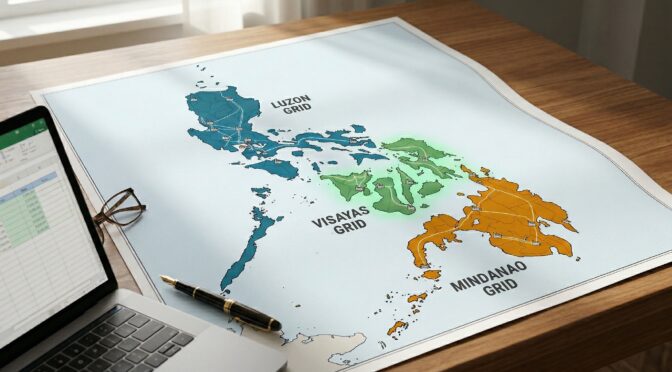
As of April 2, 2026, the Philippine energy sector is navigating a period of elevated operational risk and systemic constraint, driven by a convergence of global geopolitical developments, grid infrastructure limitations, and evolving cybersecurity challenges. The national energy infrastructure is currently operating under a declared State of National Energy Emergency, institutionalized via Executive OrderCreate a professional photo realistic main blog image that has an aspect ratio of 16:9 and no text. Title is: No. 110 by President Ferdinand R. Marcos Jr. in late March 2026.1 This measure responds to the destabilization in the Middle East—specifically military engagements involving the United States, Israel, and Iran—which has restricted the transit of global hydrocarbon supplies through the Strait of Hormuz.2 Because the Philippines historically relies on the Middle East for up to 98% of its crude oil imports and roughly 26% of its aggregate national energy supply, this external shock presents considerable macroeconomic and operational challenges.2
Projections by the Independent Electricity Market Operator of the Philippines (IEMOP) indicate that without regulatory intervention, Wholesale Electricity Spot Market (WESM) clearing prices would likely increase from a pre-conflict baseline of ₱5.00 per kilowatt-hour (kWh) to over ₱9.00 per kWh.1 This has prompted expedited state interventions, including mandated fuel stockpiling, the prioritized dispatch of indigenous and coal-fired thermal units, and the activation of a ₱20 billion emergency security fund to procure 2 million barrels of refined petroleum buffers.1
Concurrently, the domestic power grid faces a constrained operational outlook throughout the second quarter of 2026. While national aggregate generation capacity is technically sufficient, operating margins in the Visayas and Luzon grids remain narrow and sensitive to external variables.5 The National Grid Corporation of the Philippines (NGCP) and the Department of Energy (DOE) are managing elevated seasonal demand, compounded by dry-season temperatures and volatile global fuel prices. The Visayas grid remains structurally reliant on high-voltage direct current (HVDC) imports from neighboring island grids, increasing the probability of yellow alerts by May 2026.5
The current energy landscape also intersects with broader strategic and security considerations. Manila is engaging in diplomatic dialogues with Beijing regarding potential joint oil and gas exploration in the West Philippine Sea, while domestic political discourse has temporarily revived geoeconomic discussions regarding dormant territorial claims over Sabah, Malaysia.6 Furthermore, advanced persistent threats (APTs) are actively targeting Philippine critical infrastructure, necessitating a transition toward proactive cyber defense frameworks to ensure the integrity of the digitized grid.8
This assessment synthesizes operational grid telemetry, macroeconomic indicators, and intelligence streams to evaluate the Philippine energy sector’s current state, its four-week trajectory, and its medium-term forecast through June 2026.
2. Strategic Geopolitical and Macroeconomic Context
The intersection of national energy requirements and international geopolitics requires the Philippines to navigate complex strategic positioning, particularly given the vulnerability of its import-dependent, archipelagic energy system.
2.1 The Strait of Hormuz Disruption and Executive Order No. 110
The primary external factor influencing the domestic energy paradigm is the destabilization of the Middle Eastern theater, notably the conflict involving the United States, Israel, and Iran, which escalated following coordinated military actions beginning on February 28, 2026.3 Subsequent maritime interdictions in the Strait of Hormuz have constrained a key global energy supply route.3 For the Philippines—a net importer of coal, crude oil, and liquefied natural gas (LNG)—this represents a significant economic risk.4
The national exposure to this region is substantial. The Philippines sources an estimated 80% to 98% of its crude oil and petroleum products from the Middle East.2 The nation’s energy procurement bill from the region totaled $16 billion in 2024.3 In response, Executive Order No. 110 was issued on March 24, 2026, declaring a state of national energy emergency.3
This executive action enables a coordinated government mobilization intended to expedite standard procurement processes. It authorizes the Unified Package for Livelihoods, Industry, Food, and Transport (UPLIFT), a support framework designed to assist economic sectors vulnerable to utility cost inflation, including transportation, agriculture, and micro, small, and medium enterprises (MSMEs).3 The order also operationalizes a ₱20 billion emergency fund managed under the DOE’s emergency energy security program to stockpile up to 2 million barrels of fuel to meet baseline domestic requirements.3
2.2 Wholesale Electricity Spot Market Dynamics and Price Mitigation
The disruption in the Middle East has introduced volatility within the Philippine Wholesale Electricity Spot Market (WESM). Elevated global maritime freight insurance premiums and supply constraints have increased the generation costs associated with imported liquid fuels and LNG.
Prior to the Middle East escalation, average WESM clearing prices were approximately ₱5.00 per kilowatt-hour (kWh).1 Independent market simulations indicated that systemic exposure to global spot prices could drive WESM averages above ₱9.00 per kWh.1
In response, the DOE mandated the maximum dispatch of all operational indigenous energy sources and coal-fired power plants to mitigate pricing pressures.1 While this diverges from long-term decarbonization objectives, coal constituted 54.6% of the national power generation mix as of February 2026. Maximizing this baseload capacity is projected to reduce the WESM price increase by approximately ₱2.00 per kWh, stabilizing the average clearing price near ₱7.00 per kWh.1
Despite these interventions, the Energy Regulatory Commission (ERC) projects a net increase of ₱2.00 to ₱4.00 per kWh for end-user electricity bills beginning in April 2026.10 This increase reflects the combined effects of elevated fuel costs and high dry-season electricity demand.10
| WESM Pricing Scenario | Average Clearing Price (per kWh) | Primary Drivers |
| Pre-Conflict Baseline | ~₱5.00 or lower | Stable global supply, normal seasonal demand. 1 |
| Unmitigated Projection | >₱9.00 | Middle East supply constraint, LNG/Oil price increases. 1 |
| Post-Intervention Projection | ~₱7.00 | Prioritized dispatch of coal and indigenous thermal units. 1 |
| End-User Bill Impact (April) | +₱2.00 to ₱4.00 | Compounded by seasonal demand and plant outages. 10 |
3. Long-Term Infrastructure and The Transmission Development Plan
Understanding the constraints facing the Philippine grid in Q2 2026 requires an analysis of its underlying structural architecture, governed by the Philippine Energy Plan (PEP) 2023–2050 and the Transmission Development Plan (TDP) 2024-2050.
3.1 The Power Development Plan (PDP) 2024-2050 and Renewable Integration
The Philippine government has established targets to increase the share of renewable energy in its generation mix, aiming for 35% by 2030, 50% by 2040, and over 50% by 2050.12 Peak electricity demand is projected to undergo a threefold expansion, rising from 16.6 gigawatts (GW) in 2022 to an estimated 68.5 GW by 2050, driven by macroeconomic growth and the expansion of digital infrastructure.13
The realization of these targets involves managing existing fossil fuel assets. In 2024, fossil fuels comprised 78% of total power generation, with coal accounting for 63% and natural gas at 14.2%.13 The PEP 2023–2050 utilizes fossil gas as a transitional fuel, reflecting a prioritization of baseload reliability, which concurrently maintains exposure to global supply chain disruptions.14
3.2 Transmission Constraints and Development Timelines
A primary structural challenge is the temporal mismatch between generation facility construction and transmission infrastructure development. According to the National Transmission Corporation (TRANSCO), renewable energy development frequently outpaces the grid’s physical capacity for new connections.15
Utility-scale solar and onshore wind facilities often complete development within a single year.15 Conversely, transmission planning and construction can require a decade or more due to right-of-way acquisitions, environmental permitting, and complex terrain.15 This logistical disparity creates a financing deadlock: developers require guaranteed transmission access to secure financing, while transmission projects depend on confirmed generation demand before receiving regulatory approval.15
The NGCP has achieved recent milestones in grid unification, including the energization of the Mindanao-Visayas Interconnection Project (MVIP) in January 2024, which allows surplus capacity in Mindanao to support the Visayas region.16 This was followed by the completion of the Cebu-Negros-Panay 230 kV Backbone Project (Stage 3), the Mariveles-Hermosa-San Jose 500 kV Transmission Line, and the Cebu-Bohol Interconnection Project.16 While these high-voltage corridors accommodated 3,291 MW of new generation capacity, localized congestion remains a factor during peak demand cycles.16
| Major Transmission Infrastructure | Completion Date | Strategic Function |
| Mindanao-Visayas Interconnection (MVIP) | January 2024 | Achieved a unified national grid; enables export of Mindanao surplus to Visayas. 16 |
| Cebu-Negros-Panay 230kV (Stage 3) | March 2024 | Strengthened intra-regional power sharing in the central archipelago. 16 |
| Mariveles-Hermosa-San Jose 500kV | May 2024 | Established a bulk power corridor for the Luzon load center. 16 |
| Cebu-Bohol Interconnection (CBIP) | December 2024 | Improved grid reliability for the Bohol province. 16 |
3.3 Missionary Electrification and Off-Grid Resilience
The archipelagic geography requires the 2024–2028 Missionary Electrification Development Plan (MEDP) to guide energy access in isolated and underserved areas.17 The MEDP emphasizes the modernization of isolated grids via hybrid power systems, integrating variable renewable energy with battery energy storage systems (BESS) and conventional diesel generation.17 Given global diesel price increases, the economic rationale for transitioning off-grid areas to renewable microgrids has strengthened.17
4. Current Grid Situation and Exogenous Physical Threats (As of April 2026)
As of early April 2026, the Philippine power grid is operating within narrow margins. Physical infrastructure is intact, but generation viability and frequency stability reserves are under elevated stress.
4.1 The Molucca Sea Earthquake and Coastal Infrastructure
On April 2, 2026, a magnitude 7.4 to 7.6 earthquake struck the Northern Molucca Sea, approximately 580 kilometers south of the Philippine coast.18 The Pacific Tsunami Warning Center issued initial regional warnings forecasting hazardous waves for coastal zones, including Mindanao municipalities such as Davao, Cotabato City, Maimbung, and Zamboanga.19
The Philippine Institute of Volcanology and Seismology (Phivolcs) subsequently lifted the threat warning after wave modeling confirmed no destructive hazard to the archipelago.19 This event demonstrated the importance of resilient infrastructure, highlighting the need for coastal baseload power plants, subsea transmission lines, and LNG import terminals to withstand both severe weather events and regional tectonic activity.18
4.2 Thermal Load and Climatological Factors
The onset of the peak dry season in April typically corresponds with an increase in electricity demand due to agricultural irrigation and urban cooling requirements. The Philippine Atmospheric, Geophysical and Astronomical Services Administration (PAGASA) notes that suppressed precipitation patterns and elevated ambient temperatures continue to produce high heat indexes across the country.22
Elevated ambient temperatures affect power generation by reducing the thermal efficiency of conventional power plants and diminishing the carrying capacity of overhead transmission lines. Historical data indicates that a 1-degree Celsius increase in the country’s annual mean temperature can correspond to a reduction in aggregate output growth by 0.37 percentage points, reflecting impacts on labor productivity, agriculture, and grid performance.22
5. Four-Week Supply and Demand Outlook (April 2026)
Analyses by the Institute for Climate and Sustainable Cities (ICSC), utilizing NGCP Weekly Power Outlook data, indicate baseline capacity sufficiency across the national grids for the second quarter.5 However, the operational status is characterized as manageable but vulnerable due to narrow contingency margins.5
5.1 Week 1 (April 1 – April 5): Transition and Adjustments
The initial week of April involves operational adjustments to Executive Order No. 110. PAGASA forecasts indicate warmer-than-average temperatures in Northern Luzon and moderate rainfall deficits across the archipelago.26 The Luzon grid maintains stable reserves, while the Visayas grid’s internal generating capacity remains insufficient to meet local demand independently.5 Visayan grid stability relies on the continuous flow of HVDC imports, drawing up to 450 MW from Mindanao and 250 MW from Luzon.5 Interruptions in these HVDC lines could necessitate localized grid alerts.
5.2 Week 2 (April 6 – April 12): Fast-Tracking Emergency Capacity
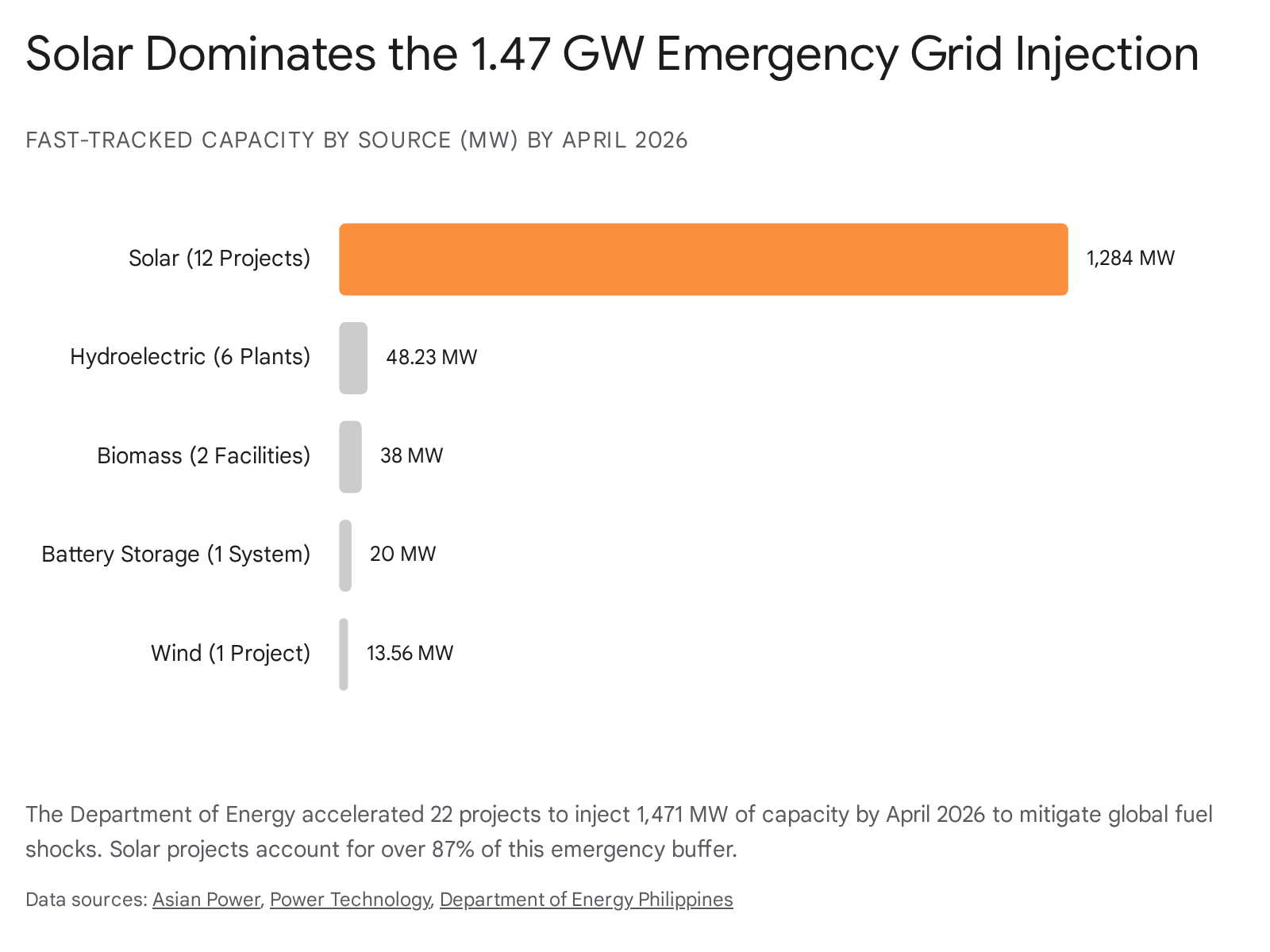
During the second week, warmer temperatures are projected to expand into Central Luzon.26 In response to fuel supply concerns, the DOE is expediting the commercial grid entry of 1,471 MW of committed renewable and energy storage capacity.27 The DOE, NGCP, ERC, and IEMOP are coordinating to resolve remaining administrative and interconnection requirements.12
This capacity injection is led by 12 solar projects totaling 1,284 MW, intended to provide generation support during midday peaks.28 Supplementary capacities include hydroelectric plants (48.23 MW), biomass facilities (38 MW), wind integration (13.56 MW), and a 20 MW Integrated Renewable Energy Storage System (IRESS).28 The commissioning of Phase 1 of the Terra Solar project and the Bugallon Solar Power Project are key variables for maintaining Luzon grid stability.5
5.3 Week 3 (April 13 – April 19): Entering the Thermal Load Peak
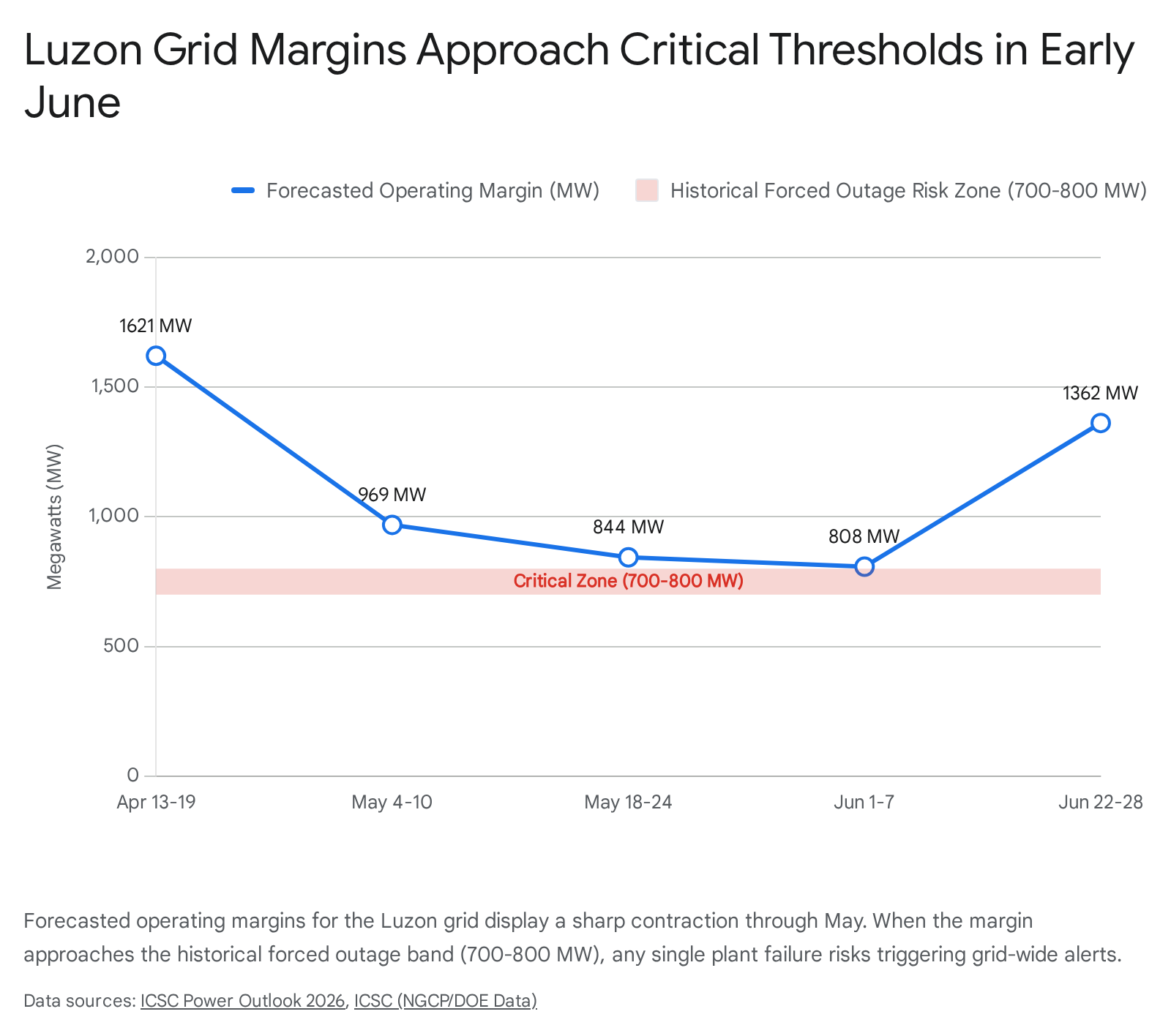
The third week of April represents a high thermal load period. ICSC models project the Luzon grid will maintain a gross operating margin of approximately 1,621.1 MW.5 This margin incorporates strict reserve allocations necessary for frequency stability: regulating reserves (~586 to 627 MW), a fixed contingency reserve of 668 MW (equating to the largest single generating unit), and a dispatchable reserve of 668 MW.5 While mathematically adequate, the simultaneous forced outage of major baseload units would deplete this buffer, potentially triggering a red alert in Luzon.
5.4 Week 4 (April 20 – April 26): Mindanao Export Considerations
The final week of April is projected to be the tightest operational period for the Mindanao grid.24 While Mindanao generally maintains robust reserves, its current profile involves supporting the Visayas grid via the MVIP interconnection. Mindanao’s generating assets must accommodate both escalating domestic load and a 450 MW export commitment.5 If localized power demand in Mindanao peaks, NGCP dispatchers may need to scale back HVDC exports to preserve frequency stability in the south.24 Restrictions on these exports could subsequently trigger grid alerts and potential rotational load dropping in the Visayas.5
6. Two-Month Supply and Demand Forecast (May – June 2026)
Moving into the late dry season, extended exposure to high operating temperatures increases the wear on mechanical components in baseload plants, raising the probability of forced outages during periods of narrow generation buffers.
6.1 May 2026: Visayas Grid Constraints and Projected Alerts
The Visayas system remains a focal point for capacity constraints. During the projected peak demand week of May 18–24, the Visayas peak load is expected to reach 3,340 MW.5 Because the internal generation margin is consistently negative, the region depends on external transmission. If Luzon’s operating margin decreases to its projected 843.8 MW during the same week, HVDC exports to the Visayas may be curtailed to maintain stability in Metro Manila.5 A simultaneous peak in Mindanao demand could also restrict MVIP exports.5 The loss of these combined 700 MW imports would place the Visayas under sustained alerts; analysts forecast that yellow alerts are highly probable for the region in May.5 Scheduled capacity additions for the Visayas are limited, with zero new capacity expected in May and 117.1 MW of solar anticipated in June.5
| Month (2026) | Biomass (MW) | Hydro (MW) | Solar (MW) | Wind (MW) | Total (MW) |
| January | 8.0 | – | 17.5 | – | 25.5 5 |
| February | – | 8.1 | – | 13.6 | 21.7 5 |
| March | 30.0 | – | – | – | 30.0 5 |
| April | – | 2.0 | 112.0 | – | 114.0 5 |
| May | – | – | – | – | 0.0 5 |
| June | – | – | 117.1 | – | 117.1 5 |
6.2 June 2026: Luzon’s Margin Projections
Luzon faces narrow margins through May and June. While emergency solar capacities assist with daytime demand, evening peaks require careful management due to limited grid-scale energy storage.30
Luzon’s operating margin is projected to compress through May, falling to 968.8 MW by the week of May 4–10, and to 843.8 MW between May 18–24.5 This leaves limited accommodation for historical forced outage trends, which typically range from 700 MW to 800 MW.5 The lowest projected point occurs between June 1–7, with the margin expected to drop to 807.8 MW.5 Any delays in infrastructure commissioning or weather-related transmission damage could result in localized supply interruptions. Margins are projected to recover to a more comfortable 1,361.8 MW by the week of June 22–28 as the transition to the rainy season reduces cooling demand.5
7. Indigenous Hydrocarbon Expansion and Territorial Geoeconomics
To provide structural relief and reduce reliance on imported fuels, the Philippine government is advancing domestic infrastructure projects and engaging in regional diplomatic initiatives to secure indigenous hydrocarbon resources.
7.1 Malampaya Phase 4 Expansion
Reliable baseload and load-following capacity is required to manage evening grid peaks. Historically, the Malampaya gas field (Service Contract 38) has provided this capability for Luzon, insulating the grid from imported LNG costs.10
In early 2026, the successful drilling of the Camago-3 well advanced the $893-million Malampaya Phase 4 expansion campaign.6 The Camago-3 well holds an estimated 2.5 times more recoverable natural gas than the Malampaya East-1 discovery, with a potential production rate of 60 million standard cubic feet per day.6 Power generated from indigenous Malampaya gas currently costs the grid approximately ₱4.80 per kWh, compared to over ₱10.30 per kWh for regasified imported LNG.35 These discoveries are projected to extend the field’s productive lifespan by roughly six years.34 Subsea pipelines are under construction, targeting first gas delivery by the fourth quarter of 2026, while exploratory drilling at the “Bagong Pag-asa” well is also proceeding.33
7.2 Strategic Dialogues and Maritime Exploration
The imperative for indigenous resources has influenced Manila’s diplomatic approach regarding the South China Sea. On March 27 and 28, 2026, Philippine and Chinese delegations met in Quanzhou, China, marking a resumption of bilateral negotiations.6 The 24th Foreign Ministry Consultations (FMC) and the 11th Bilateral Consultation Mechanism (BCM) focused on establishing communication protocols and resuming talks on joint oil and gas exploration.6
These discussions represent the first formal dialogue on joint maritime exploration since 2022.6 Operationally, joint exploration in the West Philippine Sea could distribute the financial and technical risks of deepwater drilling.37 However, strategic analysts observe that initiating these negotiations during a declared energy emergency presents complex diplomatic considerations regarding sovereign maritime claims upheld by the 2016 UNCLOS Arbitral Award.36
7.3 Regional Energy Integration and Sabah
Concurrently, domestic political discourse has introduced a complex dynamic regarding the historically dormant territorial claim over Sabah, Malaysia. Several legislators have publicly discussed Sabah’s energy resources as a potential avenue for regional energy cooperation.7 Proposals emphasize engaging with Sabah over overlapping maritime energy resources to enhance the Philippines’ long-term energy resilience.38 Sabah possesses significant infrastructure, including the Sabah Oil and Gas Terminal in Kimanis and offshore fields like Samarang.7
While proponents clarified this is a framework for geoeconomic engagement rather than a call for annexation, the Malaysian Ministry of Foreign Affairs swiftly rejected the proposition, affirming Sabah’s sovereignty as an inseparable part of Malaysia.38 Malaysia indicated a willingness to explore mutual energy cooperation, provided it is based on strict mutual respect and non-interference, highlighting the delicate balance required in regional diplomatic engagements.38
8. Cyber Threat Assessment in the Energy Sector
The rapid digitalization of the Philippine power grid—incorporating smart grid technologies, complex ICT systems, and distributed renewable assets—has expanded the digital attack surface, necessitating continuous evaluation of cybersecurity vulnerabilities.13
8.1 State-Sponsored APTs and Infrastructure Targeting
The “I AM SECURE 2026” cybersecurity initiative noted an escalating threat environment confronting Philippine critical infrastructure.40 Assessments indicate notable targeting from advanced persistent threat (APT) groups.8 These actors generally focus on persistent network monitoring, intellectual property theft, and the strategic pre-positioning of malware within industrial control systems (ICS) and Supervisory Control and Data Acquisition (SCADA) networks.8
Data indicates that public administration sectors accounted for over 20% of monitored dark web threats linked to the Philippines, followed by educational services (14.8%) and financial institutions (10.1%).9 Cyber agencies report a 37% year-over-year increase in general online threats and a 200% surge in targeted phishing incidents, which serve as a primary vector for network intrusion.9
| Targeted Sector (Philippines) | Share of Dark Web Threats | Primary Threat Vectors |
| Public Administration / Gov | 20.0%+ | APT espionage, credential harvesting, malware pre-positioning. 9 |
| Educational Services | 14.8% | Phishing, ransomware, data exfiltration. 9 |
| Finance and Insurance | 10.1% | Identity-driven attacks, synthetic fraud, credential abuse. 9 |
8.2 Institutional Defense and Sector Resiliency
The Philippine energy sector must also navigate threats from cybercriminals and hacktivists.8 A 2024 Global Cybersecurity Skills Gap Report indicated that 94% of surveyed organizations in the Philippines had experienced at least one security breach.42 The threat paradigm is shifting toward identity-centric attacks utilizing compromised credentials, accelerated by the deployment of generative AI in spear-phishing campaigns.43 Additionally, regional geopolitical friction occasionally correlates with Distributed Denial of Service (DDoS) attacks and website defacements.8
To enhance sector resiliency, stakeholders are integrating AI-powered anomaly detection, continuous vulnerability assessments, and defense-in-depth strategies.9 Programs supported by international partners, such as the United States Agency for International Development (USAID), are assisting in the implementation of cybersecurity standards and resiliency assessment systems across the power generation and distribution network.39
9. Appendix: Analytical Framework and Methodology
This comprehensive assessment was developed through the systematic synthesis and cross-validation of open-source intelligence (OSINT) streams, utilizing standard analytical methodologies for strategic forecasting.
Baseline grid operational telemetry, including transmission limits, reserve margins, and project timelines, were sourced from technical assessments published by the National Grid Corporation of the Philippines (NGCP), the Philippine Department of Energy (DOE), and the Institute for Climate and Sustainable Cities (ICSC). These figures were contextualized against historical forced-outage probabilities for thermal infrastructure.
Macroeconomic impacts were evaluated by reviewing Executive Order No. 110, pricing projections from the Energy Regulatory Commission (ERC), and commodity models provided by the Independent Electricity Market Operator of the Philippines (IEMOP).
Geopolitical threat modeling and cybersecurity assessments incorporated official state diplomacy readouts, statements from the Armed Forces of the Philippines Cyber Command, and threat analyses from global cybersecurity firms. Environmental parameters were integrated using active climatological and tectonic forecasts from the Philippine Atmospheric, Geophysical and Astronomical Services Administration (PAGASA) and the Philippine Institute of Volcanology and Seismology (Phivolcs).
Please share the link on Facebook, Forums, with colleagues, etc. Your support is much appreciated and if you have any feedback, please email us in**@*********ps.com. If you’d like to request a report or order a reprint, please click here for the corresponding page to open in new tab.
Sources Used
- DOE Enforces Emergency Measures to Keep Power Stable, Protect …, accessed April 2, 2026, https://pia.gov.ph/press-release/doe-enforces-emergency-measures-to-keep-power-stable-protect-consumers-from-price-spikes/
- 2026 Philippine energy crisis – Wikipedia, accessed April 2, 2026, https://en.wikipedia.org/wiki/2026_Philippine_energy_crisis
- Philippines becomes 1st country to declare energy emergency due to Mideast conflict, accessed April 2, 2026, https://www.aa.com.tr/en/energy/general/philippines-becomes-1st-country-to-declare-energy-emergency-due-to-mideast-conflict/55819
- Philippines issues emergency orders for energy security | Latest …, accessed April 2, 2026, https://www.argusmedia.com/en/news-and-insights/latest-market-news/2806181-philippines-issues-emergency-orders-for-energy-security
- ICSC.NGO MARCH 2026, accessed April 2, 2026, https://icsc.ngo/wp-content/uploads/2026/03/ICSC_Power-Outlook-2026.pdf
- Philippines, China ‘reset’ talks on sea tensions, oil – Asia News …, accessed April 2, 2026, https://asianews.network/philippines-china-reset-talks-on-sea-tensions-oil/
- Energy Crisis Triggers Sovereignty Shock: Philippines Eyes Oil-Rich Sabah as Strategic Lifeline Amid Global Fuel Turmoil, accessed April 2, 2026, https://defencesecurityasia.com/en/philippines-sabah-claim-oil-energy-crisis-marcos-padilla-geopolitics/
- Critical Infrastructure Threat Landscape of the Philippines – American Hospital Association, accessed April 2, 2026, https://www.aha.org/system/files/media/file/2025/10/h-isac-tlp-white-report-critical-infrastructure-threat-landscape-of-the-philippines-october-2025.pdf
- AFP: Chinese cyber threats escalating in 2026 amid geopolitical tension | GMA News Online, accessed April 2, 2026, https://www.gmanetwork.com/news/topstories/nation/977119/afp-chinese-cyber-threats-2026/story/
- DOE studying power mix to avoid rate hikes | The Manila Times, accessed April 2, 2026, https://www.manilatimes.net/2026/03/17/business/top-business/doe-studying-power-mix-to-avoid-rate-hikes/2300842
- PBBM declares state of nat’l energy emergency amid global supply risks, accessed April 2, 2026, https://www.pna.gov.ph/articles/1271702
- Philippines Fast-Tracks 1.5 GW of Renewable Energy Projects to Grid – IndexBox, accessed April 2, 2026, https://www.indexbox.io/blog/philippines-fast-tracks-15-gw-of-renewable-energy-projects-to-grid/
- Renewable Energy Transition in the Philippines: Trends, Opportunities, Challenges 1, accessed April 2, 2026, https://www.elibrary.imf.org/view/journals/018/2026/005/article-A001-en.xml
- Philippines – Policies & action | Climate Action Tracker, accessed April 2, 2026, https://climateactiontracker.org/countries/philippines/policies-action/
- 1-year builds vs 10-year grids: transmission lag threatens PH renewable rollout, accessed April 2, 2026, https://powerphilippines.com/1-year-builds-vs-10-year-grids-transmission-lag-threatens-ph-renewable-rollout/
- TDP 2025-2050 REPORT-2025-03-11-10-38-56.pdf – NGCP, accessed April 2, 2026, https://www.ngcp.ph/Attachment-Uploads/TDP%202025-2050%20REPORT-2025-03-11-10-38-56.pdf
- Department of Energy Philippines – DOE, accessed April 2, 2026, https://doe.gov.ph/articles/group/plans-2?category=Electric%20Power%20Industry&display_type=Card
- Indonesia earthquake damages buildings, but tsunami alerts have been lifted, accessed April 2, 2026, https://www.thestar.com.my/news/world/2026/04/02/indonesia-earthquake-damages-buildings-triggers-tsunami-waves
- Update: One dead as 7.4-magnitude quake hits Eastern Indonesia; tsunami warning issued but later removed, accessed April 2, 2026, https://www.thestar.com.my/aseanplus/aseanplus-news/2026/04/02/one-dead-as-74-magnitude-quake-hits-eastern-indonesia-tsunami-warning-issued-but-later-removed
- Tsunami warning issued for Indonesia, Philippines, Malaysia …, accessed April 2, 2026, https://economynext.com/tsunami-warning-issued-for-indonesia-philippines-malaysia-265878/
- Earthquake off Indonesia topples buildings, kills 1 person and sets off small tsunami, accessed April 2, 2026, https://www.cambridgetoday.ca/world-news/earthquake-off-indonesia-topples-buildings-kills-1-person-and-sets-off-small-tsunami-12091265
- Confronting Climate Change: OECD Economic Surveys: Philippines 2026, accessed April 2, 2026, https://www.oecd.org/en/publications/oecd-economic-surveys-philippines-2026_f0e0c581-en/full-report/confronting-climate-change_d3856ef6.html
- El Nino may return in 2026 and make planet even hotter | ABS-CBN News, accessed April 2, 2026, https://www.abs-cbn.com/news/weather-traffic/2026/3/2/el-nino-may-return-in-2026-and-make-planet-even-hotter-1451
- Philippine power supply for Q2 2026 remains sufficient, but thin reserves leave grid at risk amid demand surge and plant outages, accessed April 2, 2026, https://icsc.ngo/philippine-power-supply-for-q2-2026-remains-sufficient-but-thin-reserves-leave-grid-at-risk-amid-demand-surge-and-plant-outages/
- PH power outlook for April to June 2026 manageable but fragile — ICSC – GMA Network, accessed April 2, 2026, https://www.gmanetwork.com/news/money/economy/981195/ph-power-outlook-april-june-2026/story/
- Sub Seasonal to Seasonal (S2S) Forecast – PAGASA – DOST, accessed April 2, 2026, https://bagong.pagasa.dost.gov.ph/climate/climate-prediction/sub-seasonal2
- DOE Pushes 1,471 MW in Renewable and Energy Storage Projects Toward April 2026 Grid Entry, accessed April 2, 2026, https://doe.gov.ph/articles/3384039–doe-pushes-1-471-mw-in-renewable-and-energy-storage-projects-toward-april-2026-grid-entry?title=DOE%20Pushes%201,471%20MW%20in%20Renewable%20and%20Energy%20Storage%20Projects%20Toward%20April%202026%20Grid%20Entry
- Philippines to fast-track 1471 MW of new renewable power by April 2026, accessed April 2, 2026, https://asian-power.com/in-focus/philippines-fast-track-1471-mw-new-renewable-power-april-2026
- accessed December 31, 1969, https://doe.gov.ph/articles/3384039–doe-pushes-1-471-mw-in-renewable-energy-storage-projects-toward-april-2026-grid-entry?title=DOE%20Pushes%201,471%20MW%20in%20Renewable%20and%20Energy%20Storage%20Projects%20Toward%20April%202026%20Grid%20Entry
- Philippines DOE targets 1,471MW grid boost by April 2026, accessed April 2, 2026, https://www.power-technology.com/news/philippines-targets-1471mw-grid-boost/
- Operations – National Grid Corporation of the Philippines, accessed April 2, 2026, https://www.ngcp.ph/operations
- CEA Plan Targets 1121 GW Capacity And 70% Clean Energy Share By 2035-36, accessed April 2, 2026, https://solarquarter.com/2026/04/02/cea-plan-targets-1121-gw-capacity-and-70-clean-energy-share-by-2035-36/
- Philippines reports successful drilling, testing of the Camago-3 well in Malampaya gas field, accessed April 2, 2026, https://gulfnews.com/business/energy/philippines-hits-fresh-jackpot-with-successful-drilling-testing-of-camago-3-well-in-malampaya-gas-field-1.500487701
- Energy Beneath the Waves: The Strategic Promise of the West Philippine Sea | Raul F. Borjal – dateline ibalon, accessed April 2, 2026, https://dateline-ibalon.com/2026/03/energy-beneath-the-waves-the-strategic-promise-of-the-west-philippine-sea-raul-f-borjal/
- Marcos announces Camago-3 gas drilling, testing operations – News, accessed April 2, 2026, https://newsinfo.inquirer.net/2201912/marcos-announces-camago-3-gas-drilling-testing-operations
- Not out of desperation | Inquirer Opinion, accessed April 2, 2026, https://opinion.inquirer.net/190778/not-out-of-desperation
- The perils of a Philippines–China energy deal in disputed waters | Lowy Institute, accessed April 2, 2026, https://www.lowyinstitute.org/the-interpreter/perils-philippines-china-energy-deal-disputed-waters
- Manila rep sees Sabah solution in energy crisis | Daily Express Malaysia, accessed April 2, 2026, https://www.dailyexpress.com.my/news/278382/manila-rep-sees-sabah-solution-in-energy-crisis/
- Energy Security and the U.S.-Philippine Alliance – CSIS, accessed April 2, 2026, https://www.csis.org/analysis/energy-security-and-us-philippine-alliance
- How is PH fighting cybersecurity threats? | ABS-CBN News, accessed April 2, 2026, https://www.abs-cbn.com/news/technology/2026/3/26/how-is-ph-fighting-cybersecurity-threats-1625
- State of Security Report | Recorded Future, accessed April 2, 2026, https://www.recordedfuture.com/research/state-of-security
- Philippines Cybersecurity Market Trends, Growth 2026-2034 – IMARC Group, accessed April 2, 2026, https://www.imarcgroup.com/philippines-cybersecurity-market
- Annual Threat Dynamics 2026: Cyber threats in motion – PwC, accessed April 2, 2026, https://www.pwc.com/gx/en/issues/cybersecurity/cyber-threat-intelligence/annual-threat-dynamics.html