Category Archives: Analytics and Reports

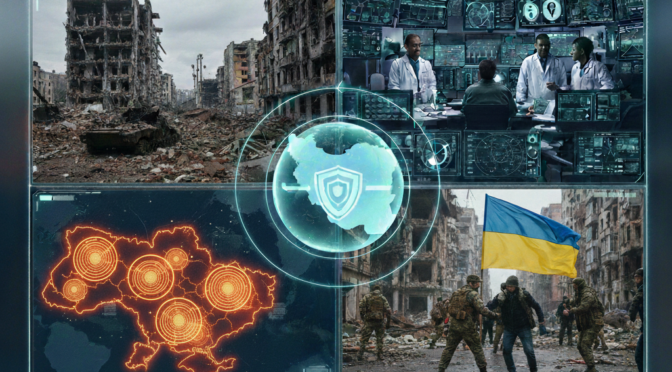
SITREP Russia-Ukraine Conflict – Week Ending February 14, 2026

Executive Summary

The military, political, and economic landscape of the Russia-Ukraine conflict during the week ending February 14, 2026, is defined by a paradox of high-intensity attritional combat and a maturing diplomatic framework under intense international pressure. As the war approaches its four-year mark, the Russian Federation maintains a grinding offensive across the Donbas, achieving marginal territorial gains at a cost in personnel and materiel that several assessments characterize as unsustainable for a major power in long-term decline.1 Russian forces have adopted a tactical pace reminiscent of early 20th-century trench warfare, advancing at approximately 15 to 70 meters per day in key sectors, yet managing to seize 182 square miles over the last thirty days—a notable increase from the previous month’s 79 square miles.1

Strategically, the Kremlin has shifted its focus toward the systematic destruction of the Ukrainian energy grid through an “islanding” campaign, targeting high-voltage substations to fragment the national power system.5 This has reduced Ukraine’s available generating capacity to 14 GW, forcing millions into sub-zero conditions with only hours of electricity daily.6 Concurrently, the 33rd Ramstein meeting secured a historic $38 billion assistance package for Ukraine for 2026, signaling a pivot toward long-term defense sustainability despite potential political shifts in the United States.8

On the diplomatic front, the announcement of high-level trilateral peace talks in Geneva for February 17–18, 2026, serves as a critical junction. With a reported U.S.-imposed deadline for a settlement by June 2026, both sides are maneuvering for leverage: Russia through continued territorial pressure and infrastructure warfare, and Ukraine through the expansion of its transnational drone industry and deep strikes against Russian oil and missile infrastructure.3 The involvement of North Korean troops in technical roles and the launch of NATO’s Operation Eastern Sentry further complicate the regional security architecture, as the conflict remains deeply embedded in a broader global competition between the West and a nascent Eurasian security framework.3

Operational Environment and Tactical Frontline Dynamics

The Donbas Theater and the Struggle for the “Fortress Belt”

The central gravity of Russian ground operations remains focused on the “Fortress Belt” of the Donetsk Oblast. This string of heavily fortified urban centers has anchored Ukrainian defenses for over a decade. Throughout the reporting week, Russian forces maintained a high operational tempo in the Pokrovsk and Slovyansk directions, utilizing approximately 150,000 personnel in the Pokrovsk sector alone.10 The tactical reality on the ground is one of agonizingly slow progression; while the Russian Ministry of Defense and President Putin claim confidence and momentum, the data suggests that these gains are being “ground down” rather than achieved through maneuver.1

In the Kupyansk direction, the situation has stabilized into a brutal exchange of attrition. Russian units in central Kupyansk are reportedly facing dire shortages of food, medicine, and water, compounded by Ukrainian electronic warfare efforts that have disrupted Russian communication and supply lines.10 Ukrainian forces have leveraged Starlink outages on the Russian side to conduct localized counterattacks, though the overall frontline remains largely static.10 To the south, in the Chasiv Yar sector, Russian forces achieved confirmed advances on February 12, continuing their efforts to seize the high ground overlooking the central Donbas industrial heartland.3

DateSectorNotable Tactical Developments
Feb 7, 2026DonbasRussian advances confirmed near Yampil, Bondarne, and Stepanivka.3
Feb 8, 2026PokrovskAdvances reported near Tykhe, Pryvillia, and in Vasyukivka.3
Feb 9, 2026KostyantynivkaMarginal Russian advance south of central Kostyantynivka; advances in central Pleshchiivka.10
Feb 11, 2026Luhansk/BorovaRussian forces advanced into central Bohuslavka; Ukrainian forces cleared Chuhunivka.10
Feb 12, 2026Chasiv YarDeepState OSINT confirms Russian advances near Chasiv Yar.3
Feb 13, 2026KupyanskReports of severe food and water shortages among Russian frontline units.10

Northern Axis and Cognitive Warfare

The northern border regions of Sumy and Kharkiv have seen a resurgence of activity that analysts classify as part of a Russian cognitive warfare campaign. By conducting small-scale cross-border attacks and seizing minor settlements like Komarivka and Sydorivka, the Kremlin seeks to portray a narrative of a collapsing Ukrainian defense.15 However, intelligence assessments indicate that the Russian military command has not yet redeployed the necessary forces to sustain a major offensive in the north, lacking the battlefield air interdiction (BAI) capabilities required to degrade Ukrainian defensive logistics.15

These raids serve the dual purpose of creating a “buffer zone” to mitigate Ukrainian shelling of Russian border towns and forcing Ukraine to divert elite reserves from the critical Donbas front. On February 9, Ukrainian forces successfully neutralized a 22-man Russian unit attempting to utilize a gas pipeline for infiltration near Yablunivka, illustrating the high-risk, low-reward nature of these northern operations.10

Southern Axis and Rear Area Conflict

The southern front, encompassing Zaporizhia and Kherson, remains characterized by static positions and intensive drone warfare. Ukrainian forces conducted limited clearing operations near Hulyaipole this week, reclaiming control of Ternuvate and Tsvitkove.10 In response, Russian forces are entrenching their long-term presence by constructing physical military infrastructure, including a large-scale base near occupied Myrne designed for the 291st Motorized Rifle Regiment and drone operator training.10

Ukrainian deep strikes have continued to target Russian command centers and logistics. On the night of February 11–12, Ukrainian forces utilized domestically produced FP-5 Flamingo cruise missiles to strike the Kotluban GRAU arsenal in Volgograd Oblast, roughly 320 kilometers from the border.18 This strike, which caused secondary detonations, highlights Ukraine’s growing capability to strike the Russian defense industrial base (DIB) asymmetrically.9

The Strategic Air Campaign and Infrastructure Systemics

The “Islanding” of the Ukrainian Power Grid

Russia has intensified its aerial campaign against the Ukrainian energy sector, transitioning from generalized strikes to a highly specific strategy of “islanding.” This approach focuses on destroying the 750kV and 330kV high-voltage substations and transmission lines that constitute the foundation of the national energy system.5 By breaking the grid into isolated pockets, Russian commanders prevent the redistribution of electricity from functioning generation sites, such as nuclear power plants, to areas of high demand or critical industrial hubs.5

As of early February 2026, the consequences of this strategy are catastrophic:

  • Generation Deficit: Ukraine’s total generating capacity has plummeted to approximately 14 GW, down from 33.7 GW prior to the full-scale invasion.6
  • Grid Resilience: Approximately 90% of thermal power generation and 50% of hydropower installations have been damaged or destroyed.6
  • Military Impact: Stable power is a requirement for the refurbishment of tanks and the production of artillery. The fragmentation of the grid has slowed military repair cycles, forcing reliance on decentralized generators that are less efficient and harder to sustain.5
Infrastructure TypeStatus as of February 14, 2026Percentage of Pre-War Capacity
Thermal Generation90% destroyed or disabled 6~10%
Hydropower50% damaged; 40% destroyed 6~50%
High-Voltage SubstationsSystematically targeted for “islanding” 5Fragile/Disconnected
Available Capacity~14 GW remaining from 33.7 GW 6~41.5%

Humanitarian and Social Consequences of Energy Warfare

The humanitarian situation in Ukraine has deteriorated as the conflict enters its fifth winter. With temperatures dropping to -15C/5F, the systematic outages of heating, water, and electricity have led to a rise in hypothermia-related deaths and mass internal displacement.6 In Kyiv, residents often face up to 16 hours a day without power, prompting an estimated 600,000 people to leave the capital for the countryside where wood and coal stoves are more reliable.7

The Amnesty International report released on February 10 emphasizes that these strikes are not merely collateral damage but a deliberate attempt to freeze the population into submission.19 This infrastructure warfare serves as a primary lever for the Kremlin in the lead-up to the Geneva peace talks, as it gambles that the humanitarian cost will eventually outweigh the Ukrainian national resolve.

The Socio-Economic Foundation of the Russian War Machine

Economic Stagnation and the Inflationary Spiral

The Russian economy is increasingly described by analysts as experiencing stagflation—a period of stagnant growth coupled with high inflation. Official forecasts for 2026 GDP growth have been revised downward to 2.2% or even 0.6% in some models, reflecting the exhaustion of the initial mobilization-driven boom.1 To curb an inflation rate that has remained stuck at 8.2%, the Russian Central Bank has maintained a key interest rate that, while stabilizing the ruble, has essentially “strangled” non-military sectors of the economy.10

The federal budget is under mounting strain due to the dual pressure of high defense spending (estimated at over 7% of GDP) and declining oil revenues.20 New sanctions regimes have successfully limited Russian hydrocarbon exports to primary buyers such as India and China. In January 2026, Russian oil and gas revenues fell to 393 billion rubles ($5.1 billion), a massive decline from the 1.12 trillion rubles ($14.5 billion) reported in January 2025.20

MetricFebruary 2025 DataFebruary 2026 DataImpact Assessment
Hydrocarbon Revenue1.12 Trillion RUB393 Billion RUB 2065% decrease in primary income
GDP Growth Rate4.9% (2024 avg)1.1% (Forecast) 20Approaching zero growth/recession
Inflation (Consumer)~10% (Peak)8.2% 20Sustained pressure on households
Interest RatesElevatedLowered slightly to support DIB 10DIB priority over civilian welfare

Labor Scarcity and Social Unrest

The requirement to send approximately 30,000 men to the front each month has created a labor market “tighter than ever”.21 This labor shortage is not only driving wage inflation but also leading to the neglect of essential public services. Regional authorities are bracing for prolonged slowdowns, and the risk of social instability is projected to rise throughout 2026.20 Average Russian citizens, particularly retirees on fixed pensions, are reporting significant distress as food prices, such as those for cucumbers and tomatoes, have risen by over in the first two months of the year alone.20

Furthermore, the Kremlin has established “A7,” a state-linked company that utilizes “monopoly money” and ruble-pegged stablecoins to bypass SWIFT and maintain international trade volumes.23 This shadow financial network reflects the increasing desperation of the Russian state to maintain the facade of economic normalcy while its actual liquid reserves in the National Wealth Fund (NWF) face potential depletion by the end of 2026 if oil prices do not recover.22

Technological Hegemony and the Drone Revolution

Ukraine as a Global Laboratory for Asymmetric Warfare

Ukraine has undergone a transformation from a marginal player in unmanned systems to the world’s largest producer of tactical and long-range drones by volume. In 2025, the country manufactured over 2 million first-person-view (FPV) drones, with a projected capacity of 4 to 8 million units annually by early 2026.24 This industry is no longer a collection of “garage startups” but a transnational defense enterprise. On February 8, President Zelenskyy announced that Ukraine would open ten weapon export centers in Europe to internationalize its arms production.16

The technological cycle in this conflict is accelerating rapidly, with key developments this week including:

  • Resistance to Jamming: Ukrainian forces have introduced fiber-optic controlled drones that are immune to radio-frequency electronic warfare, alongside AI-assisted autonomous navigation for GPS-denied environments.24
  • Strategic Deep Strike: Platforms like the Magura V5 maritime drone and deep-strike UAVs now reach ranges of up to 1,700 km, allowing Ukraine to systematically target Russian refineries and launch sites.24
  • C-UAS Interceptors: High-speed interceptor drones (>300 km/h) have emerged as a primary counter to Russian reconnaissance drones, shifting the aerial balance on the frontline.24

Russian Technical Adaptations and Resource Identification

Russian forces have responded to Ukrainian aerial dominance by modifying their own systems. Shahed drones are now being equipped with backward-facing R-60 air-to-air missiles, a tactical adjustment designed to threaten Ukrainian aircraft and interceptor drones that hunt them from the rear.16 Additionally, the Russian military has increasingly integrated UMPB-5R guided glide bombs with ranges of up to 200 kilometers, extending the standoff distance for Russian tactical aviation.14

Ukrainian intelligence (HUR) has been successful in identifying the specific Russian firms driving this production. A report released on February 9 named 21 companies, including LLC “Agency for Digital Development” and the “Mikrob” Design Bureau, as key nodes in the Russian drone supply chain.27 These companies rely heavily on foreign-produced industrial equipment and sophisticated smuggling networks, highlighting the need for more “strategically precise” sanctions to disrupt the Russian war machine.23

International Diplomatic Maneuvering and Peace Negotiations

The Path to Geneva: Feb 17-18, 2026

The trilateral peace talks in Geneva represent the most serious diplomatic effort since the failed Istanbul protocols of 2022. The negotiations will see the return of Vladimir Medinsky, a hawk who has previously pushed for maximalist Russian conditions, as the head of the Russian delegation.2 Ukraine will be represented by Rustem Umerov, Kyrylo Budanov, and other high-ranking security officials.11

The context of these talks is heavily influenced by a June 2026 deadline reportedly set by U.S. President Donald Trump, who has pressured both sides to reach a deal before the U.S. midterm elections.3 The core sticking point remains the future of the Donbas. Russia demands a total Ukrainian withdrawal from the occupied fifth of the Donetsk region, while Ukraine refuses unilateral concessions without ironclad Western security guarantees—something the Kremlin has consistently rejected.10

Domestic Political Pressures in Kyiv

President Zelenskyy faces an increasingly precarious domestic situation. To legitimize any potential “painful compromise” involving territorial loss, there is speculation that he may announce a wartime presidential election and a national referendum on a peace deal by February 24—the fourth anniversary of the full-scale invasion.3 While his office has denied some of these reports, the underlying pressure to renew his mandate while navigating the “garden snail” pace of the war is a primary driver of Ukrainian diplomatic strategy.2

Allied Security Posture and Regional Stability

NATO’s “Eastern Sentry” and the Baltic Sea

The security architecture of NATO’s eastern flank has been fundamentally altered by a series of Russian drone incursions into Polish and Romanian airspace in late 2025. In response, NATO launched Operation Eastern Sentry (or Eastern Sentinel) in September 2025, which has now transitioned into a permanent multi-domain security initiative.12 This operation establishes a collective policy for aerial defense along the eastern flank, moving away from the individual responsibility of member states.

Key Allied contributions to Eastern Sentry include:

  • Aviation: RAF Typhoons, French Rafales, German Eurofighters, and Italian F-35As are conducting 24/7 air policing and intercept missions.12
  • Maritime: Denmark has committed an Iver Huitfeldt-class frigate, and Poland has signed a $1.4 billion contract for Kongsberg counter-drone systems to secure its border regions.12
  • Missile Defense: Italy has deployed a SAMP/T missile system to Estonia, specifically to counter the threat of Russian drones and cruise missiles violating NATO airspace.12

The “Vassalage” of Belarus and the North Korean Contingent

Estonian intelligence’s 2026 report characterizes Belarus as a “Russian vassal state,” noting that the country has been fully integrated into Russia’s policy coordination and military-industrial supply chains.29 This integration has allowed Russia to replenish strategic reserves of artillery ammunition, even as it continues to import shells from Iran and North Korea—estimated at 5 to 7 million shells since 2023.29

The North Korean military presence in the Kursk region is a significant development. Approximately 10,000 North Korean combat troops and 1,000 engineers are currently deployed, with an estimated 6,000 casualties to date.3 These troops have moved into more advanced technical roles, including drone operations and demining.3 In exchange, Pyongyang is receiving technical assistance from Russia for its reconnaissance satellite program and is participating in a new “Eurasian security framework” alongside Belarus, Iran, and Myanmar—a direct challenge to the Western-led international order.30

Human Rights and Occupation Policy

Administrative Coercion and Document Nationalization

In the occupied regions of Kherson and Luhansk, the Russian state is utilizing administrative deadlines to force the “Russification” of the population. Residents have been given until July 1, 2026, to re-register property ownership under Russian law, a process that requires a Russian passport.17 Properties that are not re-registered will be designated as “ownerless” and seized by the state for redistribution to Russian citizens relocating to the region.17

Even more concerning is the March 1, 2026, deadline for the re-registration of Ukrainian guardianship and adoption documents.17 Failure to comply puts Ukrainian children at risk of being removed from their families and placed into the Russian state foster system or adopted by Russian families—a practice that international human rights groups have condemned as a component of a systematic campaign to dismantle Ukrainian national identity.17

Defense Assistance and Sustainability Metrics

The 33rd Ramstein meeting highlighted a pivot toward sustainable, long-term support. The $38 billion package for 2026 is distributed across several critical pillars, with a heavy emphasis on air defense and drone manufacturing.

Assisting Entity2026 Budgetary AllocationPrimary Focus Areas
European Union€90 Billion (Loan)€60B for defense; €30B for macro-finance 31
Germany€11.5 Billion€1B for drones; anti-drone shields for cities 8
Norway$7 Billion$1.4B for drones; $700M for air defense 8
United Kingdom£3 Billion£500M for air defense; PURL funding 8
Sweden€3.7 Billion24th aid package (€1.2B); maritime capabilities 8
Denmark$2 BillionIncreased military assistance budget 8

Through the PURL initiative, the United States makes high-priority defense materiel available to Ukraine, funded by a coalition of Allies including Sweden, the Netherlands, Norway, and the UK.32 This mechanism ensures that even if direct U.S. funding fluctuates, the pipeline of advanced U.S. technology remains open through European financing.

Conclusion and Strategic Forecast

The week ending February 14, 2026, marks a pivotal moment in the Russia-Ukraine conflict. On the battlefield, the Russian military remains committed to a strategy of attrition that yields minimal territorial gains at maximal human cost. However, the systematic “islanding” of the Ukrainian energy grid represents a sophisticated and dangerous evolution in Russian strategy, aimed at achieving the collapse of the Ukrainian industrial base and domestic morale before the June 2026 diplomatic deadline.5

Ukraine’s survival strategy has shifted toward asymmetric deep strikes and the internationalization of its defense industry. By opening export centers and striking Russian missile sites like Kapustin Yar, Kyiv is attempting to make the cost of the war “unbearable” for the Kremlin.9 The Geneva talks will serve as the first true test of whether either side is willing to deviate from their maximalist goals.

The most likely forecast for the coming quarter includes:

  1. Continued Infrastructure Pressure: Russia will likely maintain its focus on the 750kV grid to force a humanitarian crisis in major cities.5
  2. Spring Offensive Preparation: Intelligence indicates Russia is preparing a Summer 2026 offensive, possibly starting in late April, focused on the Slovyansk–Kramatorsk axis.3
  3. Diplomatic Brinkmanship: The lead-up to the June 2026 deadline will see increased volatility as both sides conduct high-profile military operations to improve their bargaining positions at the table.11

As the conflict matures into its fifth year, the sustainability of the Russian war economy—facing 8.2% inflation and potential reserve depletion—will be the ultimate check on the Kremlin’s “garden snail” progression.2 Concurrently, the unity of the NATO-led coalition, now formalized through missions like Eastern Sentry and multi-billion-euro loan packages, remains the indispensable anchor for Ukrainian resistance.12


Please share the link on Facebook, Forums, with colleagues, etc. Your support is much appreciated and if you have any feedback, please email us in**@*********ps.com. If you’d like to request a report or order a reprint, please click here for the corresponding page to open in new tab.


Sources Used

  1. Russia’s Grinding War in Ukraine – CSIS, accessed February 14, 2026, https://www.csis.org/analysis/russias-grinding-war-ukraine
  2. A new round of US-brokered talks between Russia and Ukraine is set for Geneva next week, accessed February 14, 2026, https://lasvegassun.com/news/2026/feb/13/a-new-round-of-us-brokered-talks-between-russia-an/
  3. Russia in Review, Feb. 6–13, 2026, accessed February 14, 2026, https://www.russiamatters.org/news/russia-review/russia-review-feb-6-13-2026
  4. The Russia-Ukraine War Report Card, Feb. 11, 2026, accessed February 14, 2026, https://www.russiamatters.org/news/russia-ukraine-war-report-card/russia-ukraine-war-report-card-feb-11-2026
  5. Saving Ukraine’s Power Grid – CEPA, accessed February 14, 2026, https://cepa.org/article/saving-ukraines-power-grid/
  6. The Russia-Ukraine War Report Card, Jan. 14, 2026, accessed February 14, 2026, https://www.russiamatters.org/news/russia-ukraine-war-report-card/russia-ukraine-war-report-card-jan-14-2026
  7. The Russia-Ukraine War Report Card, Feb. 4, 2026, accessed February 14, 2026, https://www.russiamatters.org/news/russia-ukraine-war-report-card/russia-ukraine-war-report-card-feb-4-2026
  8. Ramstein Meeting Secures $38B in Military Aid for Ukraine in 2026 …, accessed February 14, 2026, https://www.kyivpost.com/post/69990
  9. Ukraine secures nearly $38 billion in military aid after Ramstein meeting, accessed February 14, 2026, https://kyivindependent.com/ukraines-defense-minister-outlines-ukraines-military-priorities-ahead-of-ramstein-meeting/
  10. Russian Offensive Campaign Assessment, Feb. 13, 2026 | ISW, accessed February 14, 2026, https://understandingwar.org/research/russia-ukraine/russian-offensive-campaign-assessment-february-13-2026/
  11. Russia and Ukraine to hold new talks in Geneva next week, accessed February 14, 2026, https://www.aljazeera.com/amp/news/2026/2/13/russia-and-ukraine-to-hold-next-round-of-talks-in-geneva-next-week
  12. Operation Eastern Sentry – Wikipedia, accessed February 14, 2026, https://en.wikipedia.org/wiki/Operation_Eastern_Sentry
  13. SHAPE | Eastern Sentry, accessed February 14, 2026, https://shape.nato.int/operations/operations-and-missions/eastern-sentry
  14. Russian Offensive Campaign Assessment, February 9, 2026 | ISW, accessed February 14, 2026, https://understandingwar.org/research/russia-ukraine/russian-offensive-campaign-assessment-february-9-2026/
  15. Russian Offensive Campaign Assessment, January 14, 2026 | ISW, accessed February 14, 2026, https://understandingwar.org/research/russia-ukraine/russian-offensive-campaign-assessment-january-14-2026/
  16. Russian Offensive Campaign Assessment, February 8, 2026 | ISW, accessed February 14, 2026, https://understandingwar.org/research/russia-ukraine/russian-offensive-campaign-assessment-february-8-2026/
  17. Russian Occupation Update, February 12, 2026 | ISW, accessed February 14, 2026, https://understandingwar.org/research/russia-ukraine/russian-occupation-update-february-12-2026/
  18. Russian Offensive Campaign Assessment, February 12, 2026 – Institute for the Study of War, accessed February 14, 2026, https://understandingwar.org/research/russia-ukraine/russian-offensive-campaign-assessment-february-12-2026/
  19. Russia attacks on Ukraine energy grid cause severe harm, Amnesty Intentional says, accessed February 14, 2026, https://www.jurist.org/news/2026/02/russia-attacks-on-ukraine-energy-grid-cause-severe-harm-rights-group-says/
  20. Guns Or Cucumbers: The Kremlin’s Wartime Economy Steers Into …, accessed February 14, 2026, https://www.rferl.org/a/russia-war-economy-stagnating-wages-prices-unemployment/33675240.html
  21. Rough times for the Russian economy – Bank of Finland Bulletin, accessed February 14, 2026, https://www.bofbulletin.fi/en/blogs/2026/rough-times-for-the-russian-economy/
  22. Russia’s economy in 2026: A rising deficit, regional depression, and the possible depletion of sovereign reserves, accessed February 14, 2026, https://theins.ru/en/economics/289363
  23. Russia Analytical Report, Feb. 2–9, 2026, accessed February 14, 2026, https://www.russiamatters.org/news/russia-analytical-report/russia-analytical-report-feb-2-9-2026
  24. Evolution of Ukrainian Drone Systems Industry as a NATO-Aligned Asymmetric Warfare Laboratory (2022–February 2026) – https://debuglies.com, accessed February 14, 2026, https://debuglies.com/2026/02/08/evolution-of-ukrainian-drone-systems-industry-as-a-nato-aligned-asymmetric-warfare-laboratory-2022-february-2026/
  25. Ukraine to open 10 weapons export centers in Europe in 2026 in major wartime policy shift, accessed February 14, 2026, https://kyivindependent.com/ukraine-to-open-10-weapons-export-centers-in-europe-in-2026-zelensky-says/
  26. When Weapons Cross Borders, Data Follows: Ukraine’s Drone Expansion and the Compliance Reckoning to Come – ComplexDiscovery, accessed February 14, 2026, https://complexdiscovery.com/when-weapons-cross-borders-data-follows-ukraines-drone-expansion-and-the-compliance-reckoning-to-come/
  27. Ukrainian Intelligence Identifies 21 Russian Firms Behind Drones Used in War Against Ukraine – UNITED24 Media, accessed February 14, 2026, https://united24media.com/latest-news/ukrainian-intelligence-identifies-21-russian-firms-behind-drones-used-in-war-against-ukraine-15731
  28. NATO Launches Eastern Sentry To Boost Security – Defence Leaders, accessed February 14, 2026, https://defenceleaders.com/news/nato-launches-eastern-sentry-to-boost-security/
  29. Estonian intelligence: Belarus is a “Russian vassal state,” Moscow preparing for future wars, accessed February 14, 2026, https://en.belsat.eu/91529248/estonian-intelligence-belarus-is-a-russian-vassal-state-moscow-preparing-for-future-wars
  30. Korean Peninsula Update, February 10, 2026 | ISW, accessed February 14, 2026, https://understandingwar.org/research/china-taiwan/korean-peninsula-update-february-10-2026/
  31. Parliament approves €90 billion Ukraine support loan package | News, accessed February 14, 2026, https://www.europarl.europa.eu/news/en/press-room/20260206IPR33903/parliament-approves-EU90-billion-ukraine-support-loan-package
  32. Sweden strengthens Ukraine’s defence with a contribution of USD 100 million to US package, accessed February 14, 2026, https://www.government.se/press-releases/2026/02/sweden-strengthens-ukraines-defence-with-a-contribution-of-usd-100-million-to-us-package/


SITREP China – Week Ending February 14, 2026

Executive Summary

The reporting period ending February 14, 2026, represents a critical juncture in the strategic posture of the People’s Republic of China (PRC), characterized by a profound synchronization of domestic political consolidation, military restructuring, and a systemic pivot in industrial policy as the nation enters the inaugural year of the 15th Five-Year Plan (2026–2030).1 This week is defined by the dual themes of “internal stabilization” and “external assertion,” occurring against the backdrop of the Year of the Horse Spring Festival and the associated “Chunyun” travel rush, which has set a historical record of 9.5 billion inter-regional trips.2

A watershed event in military-political relations occurred with the purge of the most senior uniformed members of the Central Military Commission (CMC), General Zhang Youxia and General Liu Zhenli. Their removal, ostensibly for “serious disciplinary violations,” signals President Xi Jinping’s intensified demand for absolute Party control over the People’s Liberation Army (PLA) as the 2027 centenary goal approaches.4 This internal hardening is mirrored by a significant leap in naval power projection capabilities, evidenced by the sea trials of the Type 076 Sichuan amphibious assault vessel. Equipped with electromagnetic catapults and designed as a dedicated “drone carrier” for the GJ-21 stealth UAV, the Sichuan fundamentally alters the tactical calculus in the Western Pacific by providing long-range, carrier-independent persistent surveillance and strike capacity.6

Economically, the PRC is navigating a “cautious consolidation” phase. Provincial governments have set conservative growth targets of 4.5% to 5% for 2026, reflecting a pragmatic acknowledgment of the structural drag caused by the ongoing property market slump and weak domestic consumption.7 However, this domestic caution is offset by a massive $1.2 trillion trade surplus for 2025, driven by the “China Shock 2.0″—a surge in high-tech and green energy exports.4 The introduction of EV export controls on January 1, 2026, demonstrates a strategic shift toward quality over quantity, aiming to mitigate international trade friction while maintaining technological dominance.1

Technologically, the “DeepSeek shock” of early 2025 has fully matured into a new paradigm of “algorithmic sovereignty.” By demonstrating that frontier-level AI reasoning can be achieved through efficiency rather than brute-force hardware, China has successfully challenged the “Compute Hegemony” of the West, effectively bypassing semiconductor export controls.10 Diplomatically, Beijing has executed a “diplomatic surge,” receiving high-level delegations from the United Kingdom, Canada, and various Global South partners, positioning itself as a source of “rationality and stability” in a world order currently reeling from unilateralism and trade volatility.11 As the Year of the Horse begins, the PRC is aggressively pursuing “New Quality Productive Forces” to insulate its economy from external shocks while preparing its military for the complexities of a potential “Justice Mission” contingency.1

Political Stability and Military Leadership Consolidation

The Central Military Commission Purge and Party-Army Relations

The political environment of the week ending February 14, 2026, is dominated by the strategic restructuring of the highest echelons of the People’s Liberation Army. On January 24, 2026, the Ministry of National Defense confirmed that General Zhang Youxia, the Vice Chairman of the CMC and the most senior uniformed officer in the PRC, alongside General Liu Zhenli, the Chief of Staff of the CMC Joint Staff Department, are under investigation for “serious disciplinary and legal violations”.4 This event is not an isolated anti-corruption measure but represents a totalizing effort to align the military leadership with the political requirements of the 2027 centenary goals.4

The purge of Zhang and Liu is particularly significant given their historical influence and their roles as key arbiters of PLA modernization. Since 2022, Xi Jinping has removed five of the six uniformed members of the CMC, leaving only General Zhang Shengmin, the Secretary of the Discipline Inspection Commission.4 Analysts suggest that the investigation likely extends beyond traditional corruption to include political disagreements over the speed and direction of military training and development under the “New Era” framework.4 The PLA Daily emphasized that these removals are akin to “uprooting diseased trees” to ensure the purity of the military’s political and combat effectiveness.4

CMC Member PositionStatus as of February 2026Implication
ChairmanXi Jinping (Active)Absolute political control maintained.4
Vice ChairmanZhang Youxia (Purged)Removal of senior-most military traditionalist.4
Vice ChairmanHe Weidong (Active/Under Scrutiny)Continuity of Fujian-based loyalists.4
Chief of Joint StaffLiu Zhenli (Purged)Disruption of operational command hierarchy.4
Director of Political WorkMiao Hua (Purged/Previous)Erosion of old network affiliations.4
Discipline InspectionZhang Shengmin (Active)Lead agent for internal Party cleansing.4

The second-order implications of this purge involve the systemic destabilization of the PLA’s traditional patronage networks. General Zhang Youxia, in particular, was viewed as a powerful figure with deep connections to the PLA’s Equipment Development Department, which has been the epicenter of recent anti-corruption investigations.4 By removing these “trees,” Xi Jinping is clearing the path for a new generation of officers—those “nurtured by Xi Jinping Thought”—who are deemed more trustworthy to execute the high-stakes joint operations required for a Taiwan contingency or far-seas power projection.4 The PLA Daily further underscored that the faster corruption is eliminated, the faster the military recovers its combat-readiness, suggesting that these purges are viewed by the leadership as an essential prerequisite for kinetic preparedness.5

The 15th Five-Year Plan: Institutionalizing Resilience

Coinciding with this military housecleaning is the finalization of the 15th Five-Year Plan (2026–2030), which is scheduled for formal ratification during the “Two Sessions” in March 2026.1 The plan characterizes the coming five-year period as a “critical transitional phase” for basically achieving socialist modernization.1 Central to this plan is the transition from quantity-based growth to “New Quality Productive Forces,” a concept that integrates advanced manufacturing, green technologies, and artificial intelligence into the structural core of the economy.1

The plan identifies four major interrelated trends that will define industrial policy: Concentration, Securitization, Modernization, and Reorientation.1

  1. Concentration: Resources are being reallocated away from traditional manufacturing sectors like steel and aluminum toward designated strategic emerging sectors such as AI and quantum technology.1
  2. Securitization: Industrial policy is now explicitly aligned with national security, emphasizing indigenous innovation and supply chain resilience to counteract unilateralism and “de-risking” strategies from the West.1
  3. Modernization: Traditional backbone sectors are being upgraded through digitalization and greening, moving from a focus on output quantity to “quality and efficiency”.1
  4. Reorientation: A systemic shift is underway toward the “upstream” (R&D) and “downstream” (consumption) segments of the value chain, specifically moving away from the midstream production phases where overcapacity is most acute.1

This institutional framework is designed to realize “Chinese technological self-reliance” and build an economy that is “innovative and high quality”.1 The 15th Five-Year Plan explicitly mentions quantum technology, biological manufacturing, and the “low-altitude economy” (drones and air mobility) as new drivers of economic growth.1 By 2030, the PRC aims to have resolved the “bottlenecks and weak links” that currently make its industrial base vulnerable to external geopolitical pressure.1

Maritime Strategy and the “Sichuan” Paradigm Shift

The Type 076 LHD: Power Projection through Unmanned Systems

The commissioning and sea trials of the Type 076 Sichuan represent a significant inflection point in the People’s Liberation Army Navy (PLAN) maritime strategy.6 Displacing approximately 50,000 tons, the Sichuan is significantly larger than previous amphibious assault ships and incorporates technologies previously reserved for top-tier aircraft carriers, most notably an electromagnetic catapult launch system (EMALS).6 This technological leap allows the Sichuan to function as a “drone carrier,” capable of launching fixed-wing, high-performance UAVs that are too large or heavy for traditional helicopter-centric landing decks.6

The primary aviation asset for the Sichuan is the GJ-21 naval stealth drone, a variant of the GJ-11 “Sharp Sword”.6 The GJ-21 features a stealth design intended to penetrate sophisticated air defense networks and is equipped with advanced radar for reconnaissance and intelligence gathering.6 With a range of at least 1,500 kilometers and a payload capacity of 2,000 kilograms, the GJ-21 allows the PLAN to conduct “shaping operations”—such as precision strikes on coastal defenses or carrier-independent situational awareness—from long distances.6

Platform FeatureType 076 Sichuan SpecificationOperational Impact
Displacement50,000 TonsSuperior stability and capacity for far-seas operations.6
Catapult SystemElectromagnetic (EMALS)Ability to launch fixed-wing stealth UAVs and AWACS-lite platforms.6
UAV Complement6x GJ-21 Stealth DronesPersistent, low-observable strike and reconnaissance.6
Landing Force1,000 Marines & 2 LCACsSignificant OTB (Over-The-Beach) capability.6
Strategic CategoryDrone Carrier / LHDHybrid role bridging carrier strike and amphibious assault.6

The Sichuan is specifically designed to address existing vulnerabilities in the PLAN’s current carrier fleet. Carriers like the Shandong and Liaoning lack catapults, limiting the weight and fuel capacity of the aircraft they can launch and precluding the deployment of large airborne early warning systems.6 By accompanying these carriers, the Sichuan and its GJ-21 drones can extend the “sensor horizon” of the entire task group, providing intelligence outside the range of land-based sensors and increasing the survivability of the fleet against US and partner forces.6

Gray Zone Operations and Maritime Militia Mobilization

Parallel to high-end naval modernization, the PRC has refined its “gray zone” toolkit through the coordinated mobilization of its maritime militia. In early 2026, analysis of AIS data revealed large-scale mobilizations of civilian fishing vessels in the East China Sea, specifically a 2,000-vessel formation on Christmas Day and a 1,400-vessel formation on January 11.4 These exercises appear to be a rehearsal for a future blockade or quarantine scenario, where civilian boats are used to “impede movement” and overwhelm the radar systems of opposing naval forces.4

The province of Fujian, directly across the Taiwan Strait, has been at the forefront of this mobilization, offering increased monetary benefits and social incentives for participating in maritime militia work.4 These civilian vessels are being trained to perform reconnaissance, mine-laying, and search-and-rescue operations.4 During the “Justice Mission 2025” drills, these boats operated in close coordination with the PLAN and China Coast Guard (CCG), validating command arrangements for a comprehensive blockade of Taiwan.4 The integration of civilian and military forces in this manner allows Beijing to maintain constant pressure while remaining below the threshold of formal military conflict, complicating the legal and tactical responses of international actors.4

Logistics and the “Over-The-Beach” Drone Strategy

A critical logistical weak point in any amphibious operation is the “over-the-beach” (OTB) resupply phase before a working port is seized.6 The PLA is increasingly relying on unmanned systems to solve this bottleneck. State media recently released footage of the YH-1000S transport drone, a hybrid electric-gas UAV with short takeoff and landing (STOL) capabilities and a large carrying capacity.6 This drone is intended to provide resilient resupply vectors for ground forces, diversifying away from vulnerable roll-on/roll-off ferries and commercial ships.6 By using drones like the YH-1000S, which could potentially launch from the Sichuan or smaller platforms, the PLA can sustain initial landing forces even in the face of Taiwanese interdiction efforts.6

Macroeconomic Landscape and “China Shock 2.0”

Provincial Targets and the Cautious National Outlook

Economic activity in the PRC for the week ending February 14, 2026, is characterized by a “year of consolidation”.8 As of early February, 22 of the 31 provincial-level regions have announced their growth targets for the year, with a clear trend toward caution.7 Major economic engines like Guangdong and Zhejiang have set growth targets as ranges rather than single numbers, signaling to the central government that flexibility is needed to manage structural transitions.7

Provincial Economy2026 Growth TargetEconomic Context
Guangdong4.5% – 5.0%Focus on high-tech manufacturing and EV export management.7
Zhejiang4.5% – 5.0%Emphasis on digital economy and private sector resilience.7
Mainland Average~4.5%Cautious baseline reflecting property and consumption drag.7
National Estimate4.5% – 5.0%Projected target to be finalized at the March legislature.7

This cautious stance is driven by the persistent property market slump, which historically accounted for 25% of China’s GDP.8 Property sales have dropped 65% from their peak, and construction activity shows no signs of bottoming out, with a 19.9% year-on-year decline.8 The resulting decline in household wealth has severely impacted consumer confidence, leading to fragmented consumption patterns where the middle class has shifted toward value-driven spending while luxury consumption remains resilient but niche.8

Trade Dominance and the “Green Economy” Driver

Despite the domestic slowdown, China’s export sector achieved a record $1.2 trillion trade surplus in 2025.4 This phenomenon, labeled “China Shock 2.0,” is fundamentally different from the labor-intensive export surges of the early 2000s.9 Today, the surge is concentrated in “new quality” sectors: electric vehicles, solar technology, and lithium-ion batteries.9 In 2025, clean-energy sectors contributed an estimated $2.1 trillion to the PRC economy, accounting for 11.4% of GDP.13 Without the growth provided by these sectors, China’s 2025 GDP would have expanded by only 3.5% instead of the reported 5.0%.13

The scale of this dominance is significant. In 2025, China’s total power capacity reached 3,890 GW, with solar and wind capacity eclipsing coal for the first time in history.13 Solar capacity alone rose 35% to 1,200 GW.13 This industrial boom has created a massive trade imbalance, particularly with the European Union and Latin America, which have threatened to impose tariffs to protect their own industries from the “Red Dragon’s” export model.9 Some analysts estimate that every percentage point of export-driven boost to the Chinese economy results in a 0.1 to 0.3 percentage point drag for competitors in high-tech manufacturing, such as the EU and Japan.9

Inflation Dynamics and the Renminbi

Domestic inflation remains at historically low levels, reflecting the “sticker shock” of the current economic environment. In January 2026, the CPI rose by 0.2% year-on-year, missing market expectations of 0.4%.14 The primary driver was a -0.7% decline in food prices, though this is partially a base effect from the shift in the Lunar New Year holiday.14

Inflation Metric (Jan 2026)Value (YoY)Key Drivers
CPI (Consumer)+0.2%Falling food prices (pork -13.7%) and transport (-3.4%).14
PPI (Producer)-1.4%Recovery in non-ferrous metals (+16.1%) offset by soft manufacturing.14
RMB Value18% – 25% UndervaluedPBOC guiding “slow and orderly” appreciation to balance exports.4

The International Monetary Fund (IMF) and Goldman Sachs have noted that the Renminbi (RMB) remains significantly undervalued, which contributes to the record trade surplus.4 However, President Xi has explicitly called for the RMB to become a “powerful currency” with global reserve status, suggesting that the People’s Bank of China (PBOC) may allow for gradual appreciation to facilitate RMB internationalization and attract foreign capital into the domestic financial market.4 This policy shift is expected to be a major component of the 15th Five-Year Plan as China seeks to transition from an “industrial powerhouse” to a “financial powerhouse”.4

Advanced Technology: AI, Quantum, and Space

The DeepSeek Revolution and the End of Compute Hegemony

The technological landscape of early 2026 is defined by the “DeepSeek legacy,” a fundamental shift in artificial intelligence development.10 In early 2025, the release of the DeepSeek-R1 model proved that near-human reasoning capabilities could be achieved through algorithmic innovations like Mixture-of-Experts (MoE) and Reinforcement Learning (RL), rather than through the massive, multi-billion-dollar compute clusters previously thought necessary.10 This “DeepSeek shock” led to a $500 billion single-day contraction in NVIDIA’s market value and initiated a global “democratization of intelligence”.10

By early 2026, this structural legacy has enabled China to effectively bypass US-led export controls on high-end semiconductors. Instead of acquiring forbidden top-tier silicon like the H100, Chinese firms have shifted focus to the massive parallelization of compliant, lower-spec chips and the use of cloud-based inference in neutral jurisdictions like Singapore and the UAE.10 This “Architectural Arbitrage” has allowed state-sponsored actors and private firms alike to automate zero-day exploit discovery and orchestrate hyper-personalized social engineering campaigns at a fraction of previous costs.10 The strategic “floor” for AI capability has been elevated worldwide, making “sovereign AI” a central pillar of China’s national security.10

Quantum Information Science and Cyber Warfare

China’s investment in Quantum Information Science and Technology (QIST) has moved from theoretical research to frontline application. In early 2026, the National University of Defense Technology revealed that it is testing over 10 experimental “quantum-based cyber warfare tools” in active missions.18 These tools are designed to extract high-value intelligence from public cyberspace and use quantum computing to process battlefield data in seconds, significantly improving the detection of stealth aircraft.18

The 15th Five-Year Plan explicitly identifies quantum technology as a “new driver of economic growth”.1 China has already demonstrated the world’s largest trapped-ion quantum simulator (300 qubits) and is aggressively building a comprehensive quantum ecosystem that balances deep scientific discovery with practical technical know-how.19 This includes quantum communication, sensing, and “quantum AI,” which are viewed as essential for maintaining a “high level of security” in the face of international competition.19

Space Resources and the Shenzhou Program

China’s space program is transitioning toward long-term resource development. The China Aerospace Science and Technology Corporation (CASC) has announced plans to ramp up research into “space mining” technologies, focusing on surveying and extracting materials from minor planets.20 This aligns with the broader national goal of resource security and technological self-sufficiency.

Recent achievements in the Shenzhou program highlight this momentum:

  • Shenzhou-20: Successfully returned to Earth after 204 days in orbit, the longest mission ever completed by a Chinese crew.20
  • Shenzhou-21: Currently in orbit, this mission has a greater focus on scientific output, including China’s first-ever in-orbit experiments involving live mice to study the biological effects of microgravity.20
  • Infrastructure: The orbital station has been fortified against space debris, and new generation spacesuits have been debuted for complex spacewalks.20
  • Satellite Communications: Experiments in satellite-to-ground laser communications have achieved data rates exceeding 100 Gbps, a critical step for high-capacity, secure global data transmission.20

Diplomatic Surge and the “Source of Stability” Narrative

Xiplomacy and Re-engagement with the West

In early 2026, Beijing has executed what state media calls a “diplomatic surge,” positioning itself as a source of “stability and predictability” in a turbulent global order.11 This wave of high-level engagement is seen as a tactical pivot to secure economic ties even as geopolitical tensions remain high. A notable example is the first visit by a British Prime Minister in eight years, Keir Starmer, which resulted in the signing of four major economic and trade cooperation documents.11 Similarly, Canadian Prime Minister Mark Carney’s visit yielded a trade roadmap that significantly lowered tariffs on Chinese electric vehicles, effectively exempting them from 100% surtaxes imposed in 2024.11

Foreign DignitaryKey OutcomeStrategic Implication
Keir Starmer (UK)4 Economic Documents; 5% Whisky TariffRe-engagement with a major G7 economy after long lull.11
Mark Carney (Canada)49,000 EV Quota at 6.1% TariffBreakthrough in North American trade barriers.11
Donald Trump (USA)Phone Call; “Steer Giant Ship Forward”Tactical stability and focus on “big things” for the year.11
Lee Jae-myung (S. Korea)Venture Startup Ecosystem IntegrationDeepening integration of regional tech supply chains.11

This “diplomatic surge” is characterized by President Xi briefing global leaders on the 15th Five-Year Plan, inviting them to “embrace the opportunities of the future” provided by China’s high-quality development.11 By rolling out the “red carpet” for foreign dignitaries seeking a less chaotic economic environment, Beijing is attempting to peel away Western allies from a US-led containment strategy.11

The Belt and Road Initiative and the Global South

The Belt and Road Initiative (BRI) has entered a record phase of investment, reaching $213.5 billion in total engagement in 2025.21 A fundamental shift in geographic priority is evident: investment in Africa nearly tripled in 2025 to $61.2 billion, while investment in Central Asia quadrupled.21 This shift toward Africa is partly driven by US tariffs, which are often lower for goods produced in some African regions compared to Southeast Asia.21

The sectoral composition of the BRI has also matured. Transport infrastructure, once the hallmark of the BRI, has dropped to a historical low of 6.2% of the portfolio.21 In its place, energy (43%), mining, and new technologies have become the dominant sectors.21 China is increasingly using the BRI to secure supply chain resilience and build alternative export markets for its high-tech goods, while yuan-based trade continues to expand with partners like Saudi Arabia, Brazil, and Indonesia.8

Socio-Cultural Stress Tests: The 2026 Spring Festival

Chunyun as a Barometer of Social and Technological Capacity

The 2026 “Chunyun” travel rush, running from February 2 to March 13, is being described as the world’s largest human migration, with an expected 9.5 billion inter-regional trips.2 This gargantuan logistical feat serves as a barometer for the nation’s transport capacity and social organization. In the first week alone, over 1.4 billion inter-regional passenger trips were recorded.2

The scale of this movement is enabled by a massive expansion of “hard capacity”:

  • Railways: 22 new high-speed lines totaling over 3,109 kilometers were opened ahead of the season, bringing China’s total high-speed rail mileage to over 50,000 kilometers.23
  • Aviation: Civil aviation is expected to handle 95 million passengers, with homegrown C919 aircraft now operating over 50 flights per day.22
  • Electric Mobility: Daily traffic of new-energy vehicles (NEVs) on expressways is expected to reach 9.5 million, supported by a network of over 20 million charging facilities.23
Travel ModeProjected Trips (Chunyun 2026)Significance
Total9.5 BillionRecord high; “Pulse of a nation in motion”.2
Road (incl. self-drive)~7.6 Billion (80% of total)Reflects vehicle ownership and highway capacity.3
Railway540 MillionBackbone of domestic reunion; 14,000 trains daily.22
Civil Aviation95 MillionRecord high; massive increase in domestic and international.3

Despite the technological and logistical successes, “sticker shock” remains a prominent social theme. Many workers are opting for slower, traditional trains over high-speed options to save money, citing a “bad economy” where “it’s getting harder to make money”.22 This disconnect between state-level infrastructure triumph and individual-level economic anxiety defines the social mood as the Year of the Horse begins.

Year of the Horse: Symbolism and National Identity

The Year of the Horse is being culturally framed as a symbol of “strength, perseverance, and vitality”.25 In his New Year message, President Xi Jinping called on the nation to “charge ahead like horses with courage” to turn the “great vision into beautiful realities”.26 The messaging emphasizes a “spiritual home” built on cultural development, with hit IPs like Wukong and Nezha becoming global symbols of Chinese soft power.27 The 2026 festival also marks a surge in inbound tourism, with flight bookings to China jumping 400% as foreign travelers seek to experience an “authentic” Lunar New Year following the expansion of visa-free policies.3

Strategic Conclusions and Intelligence Outlook

The situation in China for the week ending February 14, 2026, reveals a nation in the midst of a high-risk transition. The internal purge of the CMC leadership indicates that the central government is unwilling to tolerate even a hint of dissent as it approaches the critical 2027-2030 window for military and economic parity with the West. The removal of Zhang Youxia and Liu Zhenli suggests that operational control of the PLA is being condensed into a smaller, more ideologically pure circle, likely in preparation for more assertive maritime actions.

Economically, the “China Shock 2.0” is creating a new set of international dependencies and frictions. While the $1.2 trillion trade surplus provides a buffer against domestic property woes, it also increases the risk of coordinated global protectionism. The success of the “DeepSeek strategy”—achieving high-level AI through efficiency—suggests that China has effectively countered Western semiconductor containment efforts for the near term, providing a major boost to its “New Quality Productive Forces.”

Strategic Outlook for Q2 2026:

  1. Military: Following the CMC purge, look for a new round of appointments to the CMC and theater commands in March. The sea trials of the Sichuan will likely lead to more aggressive drone-led carrier group exercises in the Philippine Sea and deep Indo-Pacific.6
  2. Economic: Expect a modest GDP growth target of 4.5% at the March Two Sessions, but with significant fiscal “non-budgetary” stimulus directed toward quantum, AI, and low-altitude economy sectors.1
  3. Regional: “Gray zone” pressure on Taiwan will likely incorporate more mass-mobilized civilian fishing vessels as a “quarantine” rehearsal, while the Philippines will push for a South China Sea code of conduct during its 2026 ASEAN chairmanship.4
  4. Technological: The focus will shift from “frontier models” to “applied AI” and “quantum-based cyber tools,” with a continued emphasis on bypassing US tech restrictions through “architectural arbitrage”.10

The PRC is entering the Year of the Horse with a clear plan for “technological self-reliance” and “national rejuvenation.” While domestic consumption remains the “Achilles’ heel,” the state’s ability to mobilize industrial, military, and digital resources toward a single strategic end remains unparalleled. The international community must prepare for a China that is more consolidated at the top, more technologically agile, and more willing to leverage its newfound “drone carrier” and “quantum cyber” capabilities to reshape the regional order.

Works cited

  1. Four trends to watch as China’s industrial policy evolves | World …, accessed February 14, 2026, https://www.weforum.org/stories/2026/02/china-industrial-policy-four-trends-to-watch/
  2. China sees over 1.4B inter-regional trips in first week of Spring Festival travel rush, accessed February 14, 2026, http://english.scio.gov.cn/pressroom/2026-02/10/content_118326374.html
  3. Record-Breaking Reunion: China Braces for 9.5 Billion Trips During the 2026 Spring Festival – Travel And Tour World, accessed February 14, 2026, https://www.travelandtourworld.com/news/article/record-breaking-reunion-china-braces-for-9-5-billion-trips-during-the-2026-spring-festival/
  4. China Bulletin: February 4, 2026 | U.S.- CHINA | ECONOMIC and …, accessed February 14, 2026, https://www.uscc.gov/trade-bulletins/china-bulletin-february-4-2026
  5. Targeting Taiwan Under Xi: China’s Military Forest Flourishing Despite Toppling Trees, accessed February 14, 2026, https://fairbank.fas.harvard.edu/research/blog/targeting-taiwan-under-xi-chinas-military-forest-flourishing-despite-toppling-trees/
  6. China & Taiwan Update, February 13, 2026 | ISW, accessed February 14, 2026, https://understandingwar.org/research/china-taiwan/china-taiwan-update-february-13-2026/
  7. China Provinces Set Cautious 2026 Growth Targets | Global Neighbours GMBH/E.V., accessed February 14, 2026, https://www.globalneighbours.org/en/articles/china-provinces-set-cautious-2026-growth-targets
  8. China Economic Consolidation and Strategic Shifts in 2026 – CKGSB Knowledge, accessed February 14, 2026, https://english.ckgsb.edu.cn/knowledge/article/china-economic-consolidation-and-strategic-shifts-in-2026/
  9. How to Trade If China’s Economy Outperforms 2026 Forecasts – Blackwell Global, accessed February 14, 2026, https://www.blackwellglobal.com/how-to-trade-if-chinas-economy-outperforms-2026-forecasts/
  10. The 2026 Sovereign AI Proliferation and the DeepSeek Structural …, accessed February 14, 2026, https://debuglies.com/2026/02/13/the-2026-sovereign-ai-proliferation-and-the-deepseek-structural-legacy/
  11. Xiplomacy: How to read China’s diplomatic surge in 2026? – The …, accessed February 14, 2026, http://en.brnn.com/n3/2026/0211/c414872-20424851.html
  12. China pushes ahead in 2026 as Trump plays catch-up | East Asia Forum, accessed February 14, 2026, https://eastasiaforum.org/2026/02/02/china-pushes-ahead-in-2026-as-trump-plays-catch-up/
  13. China Briefing 5 February 2026: Clean energy’s share of economy | Record renewables | Thawing relations with UK, accessed February 14, 2026, https://www.carbonbrief.org/china-briefing-5-february-2026-clean-energys-share-of-economy-record-renewables-thawing-relations-with-uk/
  14. China’s CPI inflation slowed in January amid Lunar New Year effect, accessed February 14, 2026, https://think.ing.com/snaps/chinas-cpi-inflation-slowed-in-january-amid-lunar-new-year-effect/
  15. Inflation eases in January from December, accessed February 14, 2026, https://www.focus-economics.com/countries/china/news/inflation/china-consumer-prices-10-02-2026-inflation-eases-in-january-from-december/
  16. China reports narrower drop in factory gate prices in January 2026, accessed February 14, 2026, https://www.trend.az/business/4153353.html
  17. Eight ways AI will shape geopolitics in 2026 – Atlantic Council, accessed February 14, 2026, https://www.atlanticcouncil.org/dispatches/eight-ways-ai-will-shape-geopolitics-in-2026/
  18. China Claims Over 10 Quantum-Based Cyber Weapons Are Being Tested for Warfare, accessed February 14, 2026, https://www.hstoday.us/subject-matter-areas/cybersecurity/china-claims-over-10-quantum-based-cyber-weapons-are-being-tested-for-warfare/
  19. Understanding China’s Quest for Quantum Advancement – CSIS, accessed February 14, 2026, https://www.csis.org/analysis/understanding-chinas-quest-quantum-advancement
  20. Breaking News, China News, World News and Video – CGTN, accessed February 14, 2026, https://www.cgtn.com/newsletter/sci-tech.html
  21. China Belt and Road Initiative (BRI) Investment Report 2025, accessed February 14, 2026, https://greenfdc.org/china-belt-and-road-initiative-bri-investment-report-2025/
  22. China’s Lunar New Year travel rush begins with record 9.5 billion trips expected, accessed February 14, 2026, https://apnews.com/article/china-annual-migration-lunar-new-year-chunyun-55e004d9db4c75cd21c21df4baaabeda
  23. Spring Festival travel surges as cross-regional trips continue to rise – Global Times, accessed February 14, 2026, https://www.globaltimes.cn/page/202602/1355350.shtml
  24. Commentary: China’s Travel Rush Is Back, and So Is the Sticker Shock – Caixin Global, accessed February 14, 2026, https://www.caixinglobal.com/2026-02-13/commentary-chinas-travel-rush-is-back-and-so-is-the-sticker-shock-102414309.html
  25. Ambassadors to China share with Global Times the symbolic meaning of horse in their culture, send Spring Festival greetings, accessed February 14, 2026, https://www.globaltimes.cn/page/202602/1355346.shtml
  26. Chinese President Xi Jinping’s 2026 New Year message_Ministry of Foreign Affairs of the People’s Republic of China, accessed February 14, 2026, https://www.fmprc.gov.cn/eng/xw/zyxw/202512/t20251231_11796363.html
  27. Full text: Chinese President Xi Jinping’s 2026 New Year message – China.org.cn, accessed February 14, 2026, http://www.china.org.cn/2025-12/31/content_118256296.shtml
  28. Making hay while Trump shines: China’s tactical step back | The Strategist, accessed February 14, 2026, https://www.aspistrategist.org.au/making-hay-while-trump-shines-chinas-tactical-step-back/
  29. South China Sea: Latest News and Updates, accessed February 14, 2026, https://www.scmp.com/topics/south-china-sea

SITREP Iran – Week Ending February 14, 2026

Executive Summary

The reporting period ending February 14, 2026, represents a critical juncture for the Islamic Republic of Iran, characterized by a convergence of extreme domestic volatility, macroeconomic disintegration, and a heightened state of military readiness against a backdrop of intensifying international pressure. The week was punctuated by the 47th anniversary of the 1979 Islamic Revolution on February 11, an event the clerical establishment utilized to project an image of national cohesion and revolutionary resilience.1 While state-controlled media reported a massive, unprecedented turnout of up to 26 million participants across 1,400 urban and rural districts, this narrative of unity stands in stark contrast to the ground reality of a nation still reeling from the January 2026 anti-government protests.1 These demonstrations, which were met with a lethal state crackdown resulting in over 3,000 confirmed deaths and 50,000 arrests, have left a fractured social contract and a burgeoning “Lion and Sun” revolutionary movement that continues to manifest through nightly rooftop chants and localized strikes.4

On the international stage, the strategic environment has shifted toward a state of imminent kinetic risk. US President Donald Trump confirmed the deployment of the USS Gerald R. Ford carrier strike group to the Middle East, reinforcing the USS Abraham Lincoln already in theater.1 These military movements serve as a coercive backdrop to nascent negotiations in Oman and Qatar, which the US administration has described as a final window for diplomacy before potential military action.8 Concurrently, the International Atomic Energy Agency (IAEA) has reported a “radically changed” nuclear landscape following the 12-day war in June 2025, noting that while inspections have resumed, the physical infrastructure at Natanz, Fordow, and Isfahan remains significantly degraded or inaccessible.10

Economically, Iran has entered a phase of hyperinflationary instability. The Iranian Rial breached the symbolic threshold of 1.5 million to the US Dollar in late January, and annual inflation has surged to 60%, with food and beverage prices nearly doubling over the last year.12 The implementation of US Executive Order 14382, which threatens 25% secondary tariffs on countries trading with Iran, has further isolated the regime, forcing its primary economic partner, China, to weigh its energy security against the risk of a trade war with Washington.14 As the week concludes, the “Global Day of Action” on February 14, spearheaded by the exiled Prince Reza Pahlavi, highlights a resurgent opposition movement that is increasingly coordinated with the Iranian diaspora and leveraging the 40-day mourning cycle of the January martyrs to sustain domestic pressure.16

Internal Security and Domestic Stability

The domestic security environment in Iran is currently defined by a high-stakes competition between the regime’s sophisticated apparatus of suppression and a decentralized, multi-ethnic protest movement. The 47th anniversary of the Islamic Revolution served as a forced litmus test for state legitimacy.3 President Masoud Pezeshkian, representing a reformist faction that is increasingly sidelined by the De Facto Leadership Council, utilized his Azadi Square address to acknowledge the “great sorrow” of the recent crackdown while simultaneously framing the state’s survival as synonymous with national territorial integrity.4

The Anniversary Rallies and the Dual Narratives of Power

The state’s orchestration of the February 11 rallies involved a massive institutional mobilization of civil servants, students, and military families. The reported turnout of 23 to 26 million people is viewed by intelligence analysts as an attempt to overwhelm international headlines with images of mass support.3 However, the “split-screen” reality of Iranian life was palpable. On the eve of the anniversary, verified video evidence from Tehran and other major cities documented citizens shouting “Death to the dictator” and “Death to Khamenei” from their rooftops, a tactic that has become a standardized method of defiance during the ongoing internet blackout.4

The presence of long-range missiles on public display at Azadi Square was intended to communicate military readiness to both the domestic population and the lurking US carrier groups.1 Yet, the symbolic burning of “Baal” statues—horned, bull-headed figures identified by organizers as representations of Western-backed “evil”—suggests a regime increasingly reliant on archaic ideological tropes to maintain its base of support.22

Judicial Repression and the January Uprising Legacy

The legacy of the January 2026 uprising continues to haunt the regime’s security calculus. The state-funded Martyrs Foundation has admitted to at least 3,117 deaths, while independent rights groups such as HRANA suggest the true toll may exceed 7,000.7 The judiciary has transitioned into a phase of rapid “legal” retribution, with over 50,000 individuals currently detained.5 Reports indicate that the dragnet has extended beyond street protesters to include university students, doctors who treated the wounded, and reformist political figures close to the president.5

Protest MetricConfirmed ValueEstimated Upper LimitSource
Deaths (Jan 2026)3,1177,0051
Arrests50,00053,0005
Missing PersonsUnknown10,000+5
Executions Pending200+500+23

The use of foreign mercenaries and proxy militias to assist in the January crackdown remains a significant point of contention.24 Credible field reports suggest that the Supreme Leader, Ayatollah Ali Khamenei, authorized the summoning of extraterritorial arms due to fears of noncompliance or defections within the traditional ranks of the Law Enforcement Forces (LEC) and the Basij.24 This reliance on non-national actors indicates a deepening crisis of trust within the domestic security architecture.

The “Global Day of Action” and the 40-Day Mourning Cycle

The week concluded with the “Global Day of Action” on February 14, a coordinated effort by the Iranian diaspora and internal opposition to coincide with the start of 40-day mourning ceremonies for those killed in January.6 Exiled Prince Reza Pahlavi’s call for Iranians to “chant from the rooftops” on February 14 and 15 represents an attempt to synchronize domestic dissent with international rallies in Munich, Los Angeles, and Toronto.16

This 40-day cycle is culturally and religiously significant in Iran, often serving as a catalyst for renewed waves of unrest as mourning rituals provide a legitimate space for public assembly that the state finds difficult to fully suppress without risking further escalation.6 The intelligence community assesses that this cycle, combined with the extreme economic deprivation, creates a “point of no return” for the regime’s social stability.24

Cyber Operations and Information Control

The Iranian regime has implemented what is described as the most sophisticated internet blackout in its history, a month-long operation that has significantly hampered the ability of domestic actors to coordinate and international monitors to verify human rights abuses.21

The Technical Infrastructure of the 2026 Blackout

Initiated on January 8, the blackout transitioned from localized disruptions to a comprehensive shutdown of both mobile and fixed-line connectivity.21 Unlike previous shutdowns in 2019 and 2022, the 2026 operation utilized “whitelisting” protocols, where only approved government, financial, and military traffic is permitted via the National Information Network (NIN).21 This system effectively creates a “two-tier internet” that isolates the general population while maintaining the functionality of the state’s command-and-control apparatus.25

Cyber MetricData PointImpactSource
Start DateJanuary 8, 2026Ongoing (1 month, 5 days)25
Primary MechanismTLS/DNS InterferenceBlocks global routing21
Daily Economic Cost$35.7 Million – $37 Million80% drop in online sales25
Starlink Terminals~6,000 SmuggledRisks 10-year jail/execution25

The regime has increasingly relied on Chinese “Great Firewall” technology and governance models to manage this repression.16 This includes the use of core router manipulation to prevent routing announcements, making Iran’s network effectively “disappear” from the global internet while remaining functional internally.21

State-Sponsored Cyber Espionage and Offensive Activity

Despite the domestic blackout, Iranian state-sponsored cyber actors have resumed operations with high intensity. The threat group known as “Infy” (Prince of Persia) was observed setting up new command-and-control (C2) infrastructure as of late January, introducing the “Tornado version 51” malware.27 This group, which has operated since 2004, focuses on “laser-focused” espionage against dissidents and international targets.27

Simultaneously, the Shin Bet and the Israeli National Cyber Directorate reported a significant rise in targeted phishing campaigns by Iranian intelligence.28 These attacks have targeted private Google, Telegram, and WhatsApp accounts of Israeli defense officials, academics, and journalists, utilizing personalized lures to exfiltrate professional and personal data.28 The timing of these operations suggests a coordinated effort to collect intelligence that could be used for “terrorist activity, espionage, or influence operations” during the current period of high military tension.28

Macroeconomic Crisis and Fiscal Instability

Iran is currently experiencing what economists describe as its deepest and most prolonged economic crisis in modern history, driven by the combined effects of the 2025 war, structural mismanagement, and the “Maximum Pressure 2.0” sanctions regime.12

The Collapse of the Rial and Hyperinflation

The Iranian Rial’s decline beyond the symbolic 1.5 million threshold against the US dollar in late January has triggered a psychological and practical collapse of the domestic currency market.12 By mid-February, the open market rate fluctuated near 1,627,000, reflecting a de-facto dollarization of the economy where businesses and households exclusively seek assets in foreign currency, gold, or tangible goods to avoid the 60% annual inflation.12

The impact on purchasing power has been catastrophic. Food and beverage inflation reached 89.9% in January 2026, largely due to the removal of the preferential exchange rate for essential imports.13 This has resulted in a national malnourishment rate of 57%, as reported by the Ministry of Social Welfare.29

Economic IndicatorCurrent Value (Feb 2026)TrendSource
USD/IRR Exchange Rate1,627,000Record Low13
Annual Inflation60%Increasing13
Food Inflation89.9%Critical13
Unemployment Rate7.2% (Dec 2024)Rising (est)30
Stock Market Index-450,000 pointsCrashing25

US Executive Order 14382 and the War on Sanctioned Oil

A pivotal development for Iran’s fiscal outlook is US Executive Order 14382, signed on February 6, 2026.31 This order establishes a mechanism for 25% secondary tariffs on any country that acquires goods or services from Iran.31 This is a direct strike at the “Ghost Fleet” and China’s energy imports, which accounted for 77% of Iran’s oil exports in 2024.15

The US administration has already demonstrated the bite of this policy by removing a 25% secondary tariff on India only after New Delhi signaled a reduction in its intake of Russian and Iranian oil.33 China’s response has been one of public defiance, with the Foreign Ministry vowing to “protect its legitimate interests,” but analysts suggest that the risk of a 25% tariff on all Chinese exports to the US (on top of existing trade war rates) may force Beijing to significantly curtail its Iranian energy purchases.14

The International Energy Agency (IEA) reports that sanctioned oil accounted for 72% of the 248 million barrels currently “on water” globally.34 Any significant seizure of these tankers—a move the US administration is reportedly considering—would add a massive risk premium to the oil market and could serve as the trigger for Iranian military retaliation in the Strait of Hormuz.35

Nuclear Landscape and International Monitoring

The status of Iran’s nuclear program as of February 2026 is one of technical degradation paired with intense defensive fortification. IAEA Director General Rafael Grossi’s assessment at the Munich Security Conference on February 13 underscored the extreme difficulty of establishing a new inspection regime following the kinetic strikes of June 2025.10

The “Radical Shift” in Infrastructure

Grossi reported that the physical infrastructure of Iran’s nuclear program—specifically at Natanz, Fordow, and Isfahan—is “basically no longer there or badly damaged”.11 This has fundamentally altered the nuclear landscape from one of an active fuel cycle to one of residual capabilities and damaged facilities.11 While IAEA inspectors have returned and are monitoring undamaged sites, they are still denied access to the bombed facilities, making a full inventory of Iran’s enriched uranium stockpile impossible.10

Defensive Engineering at Isfahan and Beyond

In response to the threat of further strikes, Iranian forces have been observed using “soil and dirt” to fortify the Isfahan Nuclear Complex.8 Satellite imagery shows tunnel entrances being buried to dampen the impact of explosive attacks and complicate any potential ground operations aimed at securing nuclear material.8 This “defensive layering” is a clear indication that Tehran expects further military confrontation and is prioritizing the preservation of its remaining nuclear assets over diplomatic optics.8

The Diplomatic Stalemate

Despite the physical damage, the Iranian regime’s negotiating position remains inflexible. Senior lawmaker Alaeddin Boroujerdi reaffirmed that “peaceful nuclear knowledge” is a non-negotiable red line.38 President Pezeshkian’s public insistence that Iran is “not seeking nuclear weapons” and is “ready for any kind of verification” is largely viewed as a strategic messaging effort aimed at regional audiences, as the state continues to obstruct IAEA access to critical sites.8

Military Posture and Deterrence

The Iranian military, specifically the IRGC Aerospace Division, has shifted to an “active war room” status during the reporting week.38 This posture is designed to project a credible threat of regional escalation to deter a US or Israeli strike.

Reconstitution of the Ballistic Missile Stockpile

A primary concern for regional intelligence agencies is the rapid restoration of Iran’s ballistic missile capabilities. Israeli sources reported to CNN on February 10 that Iran could possess between 1,800 and 2,000 missiles within “weeks or months,” nearly returning to pre-2025 levels.36 Iran’s production capacity is estimated at approximately 300 ballistic missiles per month, a rate that could overwhelm regional air defenses if production continues unabated for another year.36

Military AssetStatus/QuantityOperational NoteSource
Ballistic Missiles1,800 – 2,000Rapidly reconstituting36
Monthly Production~300 MissilesFocus on quantity36
Penetration Rate>50% (claimed)Target: Israel/US Bases38
Drone StrategyMass InductionScalable and hard to preempt39

The IRGC’s military doctrine has increasingly favored “numbers, dispersal, and attrition tolerance”.39 The mass induction of drones is intended to force adversaries to invest heavily in layered counter-UAS architectures while Iran maintains the ability to strike distributed US assets and personnel.38

US Carrier Deployments and “Maximum Pressure 2.0”

The deployment of a second aircraft carrier group, the USS Gerald R. Ford, to join the USS Abraham Lincoln in the Middle East, marks a significant escalation in US military pressure.1 President Trump has explicitly stated that the carrier group is leverage for negotiations: “In case we don’t make a deal, we’ll need it”.7 The Ford, which had been operating in the Caribbean for missions related to Venezuela, brings an expanded strike capability to the Persian Gulf, directly threatening Iranian infrastructure and the IRGC’s naval assets.6

Foreign Policy and Regional Proxy Dynamics

Tehran is pursuing a dual-track strategy of “backchannel diplomacy” to stall for time while continuing to fund its regional proxy network.

The Larijani Diplomatic Mission

Supreme National Security Council (SNSC) Secretary Ali Larijani has been the regime’s primary envoy this week, traveling to Oman and Qatar.8

  • In Oman: Larijani indicated that Iran might be willing to discuss its ballistic missile program “in the future,” but only after a successful nuclear agreement is reached and sanctions are lifted.36 Intelligence assessments view this as a delaying tactic intended to extract immediate concessions while providing a window for stockpile reconstitution.36
  • In Qatar: The focus has been on managing regional tensions and utilizing Qatar’s role as a mediator with Washington.8
  • Russia’s Role: Moscow remains a key supporter, with Foreign Minister Sergei Lavrov in “constant contact” with Iranian officials to head off a US strike.40 Russia seeks a “broadly acceptable agreement” that preserves Iran’s regional influence and missile program, which aligns with the Kremlin’s interests in maintaining a counter-balance to US power in the Middle East.40

Proxy Network Reconstitution

Despite the domestic economic crisis, the regime continues to prioritize the funding of the “Axis of Resistance.” Reports suggest that senior diplomats have used diplomatic immunity to smuggle hundreds of millions of dollars in cash to Hezbollah in Beirut to support its reconstitution after the 2025 conflict.36 In Yemen, the Houthis continue to hold UN personnel and civil society workers, while the US Navy has successfully intercepted multiple shipments of Iranian-made missile parts bound for the group, confirming that the “Red Sea Crisis” remains an active front in the broader proxy war.41

Strategic Assessment and Outlook

The collective analysis of national security, foreign affairs, and intelligence teams suggests that the Islamic Republic of Iran is entering a “survival situation” characterized by extreme fragility and a high risk of miscalculation.

Internal Stability Forecast

The convergence of the 40-day mourning cycle of the January martyrs and the devastating economic reality (1.5M Rial/USD) creates a volatile environment for the remainder of February.6 While the state’s security apparatus remains loyal and no defections have been reported, the “fear wall” is increasingly porous, as evidenced by the persistence of rooftop chanting and localized industrial strikes.4 The regime’s reliance on foreign mercenaries and the internet blackout are short-term tactical successes that may accelerate long-term delegitimization, potentially leading to a “slow collapse” or a sudden, second revolutionary wave.23

Geopolitical and Military Forecast

The US deployment of the USS Gerald R. Ford and President Trump’s rhetoric regarding “regime change” suggest a narrowing window for diplomatic resolution.6 If talks in Oman fail to produce substantive concessions from Tehran—specifically regarding missile limits and proxy support—the likelihood of a limited US kinetic strike against missile production facilities or the “Ghost Fleet” increases significantly.7

Iran’s most likely course of action (MLCOA) is to continue its “strategic defiance,” using backchannel talks to delay military action while accelerating the fortification of its remaining nuclear sites and the production of its ballistic missile stockpile.8 The critical variable remains the response of China to US secondary tariffs; a significant reduction in Chinese oil purchases would force the De Facto Leadership Council into a desperate choice between total economic collapse or a high-stakes military escalation in the Strait of Hormuz to force a global energy crisis and compel international intervention.12

The situation remains fluid, with the February 14 Global Day of Action serving as a key indicator of the opposition’s ability to mobilize in the face of sustained state repression.17 Monitoring of IRGC communications and satellite imagery of the Isfahan complex will remain priority intelligence requirements (PIR) for the next reporting period.


Please share the link on Facebook, Forums, with colleagues, etc. Your support is much appreciated and if you have any feedback, please email us in**@*********ps.com. If you’d like to request a report or order a reprint, please click here for the corresponding page to open in new tab.


Sources Used

  1. Iran marks revolution anniversary with rallies amid U.S. threats – The …, accessed February 14, 2026, https://www.thehindu.com/news/international/iran-marks-revolution-anniversary-with-rallies-amid-us-threats/article70620108.ece
  2. Mideast in Pictures: Iran marks 47th anniversary of Islamic Revolution with nationwide celebrations, accessed February 14, 2026, https://english.news.cn/20260213/99ee93c4073b435ca73333fd04ea23e0/c.html
  3. 47TH ANNIVERSARY OF THE VICTORY OF THE ISLAMIC REVOLUTION OF IRAN – WANA, accessed February 14, 2026, https://wanaen.com/47th-anniversary-of-the-victory-of-the-islamic-revolution-of-iran/
  4. Iran Commemorates Revolution, With US Warships Lurking Off the Coast – GV Wire, accessed February 14, 2026, https://gvwire.com/2026/02/11/iran-commemorates-revolution-with-us-warships-lurking-off-the-coast/
  5. Widespread arrests roil Iran weeks after security forces crushed protests, accessed February 14, 2026, https://www.timesofisrael.com/widespread-arrests-roil-iran-weeks-after-security-forces-crushed-protests/
  6. US President Donald Trump says change in power in Iran would be …, accessed February 14, 2026, https://www.newsonair.gov.in/us-president-donald-trump-says-change-in-power-in-iran-would-be-best-thing-that-could-happen/
  7. Best thing that could happen: Trump floats Iran regime change amid tensions, accessed February 14, 2026, https://www.indiatoday.in/world/story/very-bad-day-for-iran-trump-sends-second-us-carrier-to-middle-east-2868072-2026-02-14
  8. Why Iran is using dirt at nuclear facilities on Islamic Revolution anniversary, accessed February 14, 2026, https://www.indiatoday.in/world/story/iran-news-tehran-celebrates-1979-islamic-revolution-fortifies-isfahan-nuclear-facility-us-strike-donald-trump-2866660-2026-02-11
  9. Trump says change in power in Iran ‘would be best thing that could happen’, accessed February 14, 2026, https://www.thehindu.com/news/international/trump-says-change-in-power-in-iran-would-be-best-thing-that-could-happen/article70630332.ece
  10. In Munich, IAEA Chief Says Nuclear Inspection Regime With Iran ‘Technically Possible’, accessed February 14, 2026, https://www.rferl.org/a/grossi-iran-nuclear-deal-munich-security/33677208.html
  11. IAEA chief says Iran inspections deal ‘possible but terribly difficult …, accessed February 14, 2026, https://www.aa.com.tr/en/world/iaea-chief-says-iran-inspections-deal-possible-but-terribly-difficult-after-12-day-war/3829539
  12. Iran Currency Crisis: What’s Driving the Rial Down, accessed February 14, 2026, https://caspianpost.com/analytics/iran-currency-crisis-what-s-driving-the-rial-down
  13. Iranian rial gains against foreign currencies – Shafaq News, accessed February 14, 2026, https://shafaq.com/en/Economy/Iranian-rial-gains-against-foreign-currencies
  14. China responds to US tariff threat against Iran’s partners: “We will protect our interests.”, accessed February 14, 2026, https://www.agenzianova.com/en/news/China-responds-to-US-tariff-threat-against-Iran%27s-partners–we-will-protect-our-interests/
  15. China threatens to retaliate over Trump’s 25% tariff on countries trading with Iran, accessed February 14, 2026, https://www.theguardian.com/us-news/2026/jan/12/trump-tariffs-iran
  16. Prince Pahlavi urges unity ahead of February 14 protests | Iran International, accessed February 14, 2026, https://www.iranintl.com/en/202602115811
  17. 2026 Iranian diaspora protests – Wikipedia, accessed February 14, 2026, https://en.wikipedia.org/wiki/2026_Iranian_diaspora_protests
  18. Pezeshkian tells victims families protests provoked from ‘abroad’ | Iran International, accessed February 14, 2026, https://www.iranintl.com/en/202602127805
  19. Iran Protest Wave 2026: Pressure, Possibilities and Future Outlook – Canvas, accessed February 14, 2026, https://canvasopedia.org/2026/02/09/iran-protest-wave-2026-pressure-possibilities-and-future-outlook/
  20. Iran’s president denies it seeks nuclear weapon and admits ‘shame’ after mass protests, accessed February 14, 2026, https://www.theguardian.com/world/2026/feb/11/iran-president-denies-it-seeks-nuclear-weapon-admits-shame-after-protests
  21. Iran’s Internet Blackout Hits Phones, Starlink – Mirage News, accessed February 14, 2026, https://www.miragenews.com/irans-internet-blackout-hits-phones-starlink-1603356/
  22. Iranians challenge Islamic Republic’s show of unity, accessed February 14, 2026, https://www.iranintl.com/en/202602128484
  23. Iran protests 2026: UK and international response – House of Commons Library, accessed February 14, 2026, https://commonslibrary.parliament.uk/research-briefings/cbp-10462/
  24. Iran News in Brief – February 8, 2026 – NCRI, accessed February 14, 2026, https://www.ncr-iran.org/en/news/iran-news-in-brief-news/iran-news-in-brief-february-8-2026/
  25. 2026 Internet blackout in Iran – Wikipedia, accessed February 14, 2026, https://en.wikipedia.org/wiki/2026_Internet_blackout_in_Iran
  26. Iran Update, February 10, 2026, accessed February 14, 2026, https://understandingwar.org/research/middle-east/iran-update-february-10-2026/
  27. Infy Hackers Resume Operations with New C2 Servers After Iran Internet Blackout Ends, accessed February 14, 2026, https://thehackernews.com/2026/02/infy-hackers-resume-operations-with-new.html
  28. Defense officials say hundreds of Iranian cyberattacks foiled in past months, accessed February 14, 2026, https://www.timesofisrael.com/defense-officials-say-hundreds-of-iranian-cyberattacks-foiled-in-past-months/
  29. Iranian economic crisis – Wikipedia, accessed February 14, 2026, https://en.wikipedia.org/wiki/Iranian_economic_crisis
  30. Iran Indicators – Trading Economics, accessed February 14, 2026, https://tradingeconomics.com/iran/indicators
  31. Trump 2.0 tariff tracker, accessed February 14, 2026, https://www.tradecomplianceresourcehub.com/2026/02/12/trump-2-0-tariff-tracker/
  32. President Trump Issues Executive Order to Address Continuing Threats by Iran | SmarTrade, accessed February 14, 2026, https://www.thompsonhinesmartrade.com/2026/02/president-trump-issues-executive-order-to-address-continuing-threats-by-iran/
  33. The BR International Trade Report: February 2026, accessed February 14, 2026, https://www.blankrome.com/publications/br-international-trade-report-february-2026
  34. Oil Market Report – February 2026 – Analysis, accessed February 14, 2026, https://www.iea.org/reports/oil-market-report-february-2026
  35. The Commodities Feed: Lingering Iranian uncertainty supports the oil market, accessed February 14, 2026, https://think.ing.com/articles/the-commodities-feed-lingering-iranian-uncertainty-supports-the-oil-market110226/
  36. Iran Update, February 11, 2026 | ISW, accessed February 14, 2026, https://understandingwar.org/research/middle-east/iran-update-february-11-2026/
  37. IAEA chief says peaceful nuclear program Iran’s right, accessed February 14, 2026, https://en.mehrnews.com/news/241772/IAEA-chief-says-peaceful-nuclear-program-Iran-s-right
  38. Iran war room active, ready for conflict, IRGC aerospace chiefs tell …, accessed February 14, 2026, https://www.iranintl.com/en/202602027098
  39. GRYPHON GROWL, accessed February 14, 2026, https://www.wpafb.af.mil/LinkClick.aspx?fileticket=fmpMmpTByPY%3D&tabid=13680&portalid=60
  40. Iran Update, February 9, 2026, accessed February 14, 2026, https://understandingwar.org/research/middle-east/iran-update-february-9-2026/
  41. Yemen, February 2026 Monthly Forecast – Security Council Report, accessed February 14, 2026, https://www.securitycouncilreport.org/monthly-forecast/2026-02/yemen-87.php
  42. U.S. conducts another attack against Houthis, hitting anti-ship missiles | PBS News, accessed February 14, 2026, https://www.pbs.org/newshour/world/u-s-conducts-another-attack-against-houthis-hitting-anti-ship-missiles
  43. Red Sea crisis – Wikipedia, accessed February 14, 2026, https://en.wikipedia.org/wiki/Red_Sea_crisis

SITREP USA – Week Ending February 14, 2026

Executive Summary

The national security landscape for the week ending February 14, 2026, is characterized by a fundamental restructuring of the United States’ institutional and strategic framework. This period marks a critical inflection point in the administration’s “America First” agenda, most notably signaled by the formal rebranding of the Department of Defense to the Department of War within the newly released 2026 National Defense Strategy (NDS). This shift reflects a broader thematic pivot toward “performative realism,” wherein traditional multilateralism is being systematically dismantled in favor of transactional diplomacy and a prioritized focus on domestic industrial capacity.1 This institutional overhaul coincides with a partial shutdown of the Department of Homeland Security (DHS), triggered by a legislative impasse over the controversial federal operations in Minneapolis, known as Operation Metro Surge.3 The domestic crisis, underscored by the fatal shootings of two U.S. citizens by federal agents, has exposed deep fractures in the national security apparatus and the chain of command.5

In the intelligence domain, the Director of National Intelligence (DNI), Tulsi Gabbard, faces converging crises. A whistleblower complaint alleging the suppression of sensitive National Security Agency (NSA) intelligence has reached a critical stage in the Senate Intelligence Committee, while a high-level security breach involving an encrypted messaging application—dubbed “Signalgate”—has roiled the Cabinet.7 Diplomatically, the 62nd Munich Security Conference (MSC) served as a global stage where the administration’s “bulldozer politics” met significant resistance from European allies, who characterize the current international order as “under destruction”.10 Despite these tensions, a tactical de-escalation with China is underway, evidenced by the pausing of several key tech bans ahead of an April summit with President Xi Jinping.12 This report provides an exhaustive analysis of these developments, their underlying mechanisms, and their implications for U.S. stability and global posture.

Domestic Stability and the Homeland Security Crisis

The DHS Shutdown and the Minneapolis Impasse

At midnight on February 14, 2026, the Department of Homeland Security (DHS) entered a partial shutdown after the United States Senate failed to reconcile differences on a full-year appropriations bill.14 This funding lapse is not a standard fiscal disagreement but a direct response to the escalations of Operation Metro Surge (OMS) in Minneapolis. The operation, which deployed approximately 3,000 federal agents into the metropolitan area, has been marred by allegations of racial profiling, excessive force, and the fatal shootings of Renee Good and Alex Pretti in January 2026.4

The legislative deadlock is rooted in Democratic demands for immediate reforms within Immigration and Customs Enforcement (ICE) and Customs and Border Protection (CBP). These demands include a prohibition on agents wearing masks during operations, a mandate for body cameras, and a requirement for judicial warrants for property entry.14 While Senate Republicans and the White House have signaled openness to body cameras, they have rejected the identification requirements, citing concerns that agents could become targets for “doxing” by activists.19 Consequently, while 95% of the federal government remains funded through September 30, 2026, the specific security functions of DHS are now operating under emergency “essential” status.3

The economic and social costs of Operation Metro Surge have reached a critical mass. In Minneapolis, city leaders estimate the total impact of the surge at over $203 million in a single month.4 This includes lost wages for residents afraid to go to work, substantial losses in small business revenue, and a 50% reduction in mental health client contact as vulnerable populations go “underground” to avoid federal detection.4 The city identifies this as a “protection crisis,” where the aggressive tactics intended to restore “law and order” have instead destabilized the local economy and civil society.4

Economic Impact SectorDescription of Losses/Costs (One Month Snapshot)Estimated Value (USD)
LivelihoodLost wages and small business revenue (restaurants/hotels)$132.7 Million 4
ShelterAdditional rent assistance needed due to income loss$15.7 Million 4
Food SecurityWeekly cost to support 76,200 food-insecure residents$2.4 Million 4
OperationsCity staff payroll, police overtime, and logistics$6.0 Million 4
Total Citywide ImpactAggregated losses to economy and city operations$203.1 Million 4

Despite the shutdown, the White House claims that over 4,000 “criminal illegal aliens” have been removed from Minnesota since the operation began, characterizing the surge as a “landmark achievement” against “open border policies”.21 However, the reality of the shutdown means that while ICE and CBP remain operational due to significant carry-over funding from the 2025 “One Big Beautiful Bill” Act, other essential services are being throttled.3 TSA screeners and Coast Guard personnel are now working without pay, leading to warnings of major travel disruptions over the Presidents’ Day weekend, which is expected to see over 7.4 million domestic departures.15

Operation Metro Surge: Use of Force and Civil Unrest

The fatalities of Renee Good and Alex Pretti have become central to the national debate on federal overreach. Good, a 37-year-old mother, was killed on January 7 while driving away from ICE officers; subsequent evidence suggested that the officer who fired was not in the vehicle’s path, contradicting the initial federal narrative that Good attempted to “run over” agents.5 Alex Pretti, an ICU nurse, was killed on January 24 while filming federal agents; video evidence showed Pretti was pinned to the ground and disarmed of his legally carried firearm before being shot multiple times in the back.5

These incidents have triggered a federal perjury probe into ICE testimonies after video evidence repeatedly contradicted official statements.23 The Hennepin County Sheriff’s office reported at least 42 arrests on February 14 as protesters marked the one-month anniversary of Good’s death.6 Minnesota Attorney General Keith Ellison has testified before the Senate Committee on Homeland Security, calling for an immediate end to the surge and a full accounting of all individuals detained.16 The long-term implications of these events include a profound erosion of trust in federal law enforcement and a potential redesign of how DHS interacts with “Welcoming Cities” that resist federal immigration directives.4

Intelligence Community: Oversight and Communication Failures

The Gabbard Whistleblower Allegations

The Office of the Director of National Intelligence (ODNI) is currently embroiled in a high-stakes oversight battle involving a whistleblower complaint that alleges DNI Tulsi Gabbard intentionally blocked the distribution of a sensitive NSA intelligence report.7 The intelligence in question reportedly stems from an NSA intercept of a phone call between two foreign nationals who discussed a person “close to the Trump White House”.7 The whistleblower claims that instead of allowing the report to be disseminated through routine channels to the broader intelligence community and Congress, Gabbard delivered a physical copy to White House Chief of Staff Susie Wiles and then ordered the NSA to halt further publication.7

The legal and procedural fallout of this event is significant. Senator Mark Warner has characterized the nine-month delay in informing Congress—from May 2025 to February 2026—as a deliberate attempt to “bury the complaint”.25 The ODNI general counsel has countered by warning the whistleblower’s attorney, Andrew Bakaj, that sharing the top-secret details of the complaint with Congress could result in criminal charges, a move seen by critics as an act of intimidation.24

The second-order effects of this rift include a breakdown in the “Gang of Eight” oversight mechanism. Lawmakers have requested the underlying raw intelligence to determine if the intercept contained vital national security information or merely “gossip” intended as disinformation by a foreign power.8 The credibility of the ODNI is further strained by the fact that successive inspectors general did not find the complaint “credible,” yet the procedural anomalies—such as the restriction of report distribution for political purposes—remain a focal point of the Senate Intelligence Committee’s February 11 hearing.7

Signalgate: The Erosion of Communications Security

Parallel to the whistleblower crisis, the “Signalgate” incident has exposed systemic vulnerabilities in how senior national security officials handle pre-decisional communications. A Signal group chat, intended to coordinate air strikes against Houthi rebels in Yemen, inadvertently included Jeffrey Goldberg, the editor-in-chief of The Atlantic.9 The chat featured high-level participants including DNI Gabbard, CIA Director John Ratcliffe, Secretary of War Pete Hegseth, and Vice President JD Vance.9

While the administration has dismissed the breach as a “glitch,” the subsequent publication of the chat transcripts by The Atlantic revealed that officials discussed weapon systems, strike sequences, and specific military targets in a “candid and sensitive” manner.9 Democratic lawmakers, led by Representative Raja Krishnamoorthi, have argued that these messages constitute a leak of classified information that could have been intercepted by Russia or China, potentially allowing the Houthis to reposition assets and endanger U.S. service members.9

Signalgate ParticipantDefense and Testimony Summary (Week of Feb 8-14)
Tulsi Gabbard (DNI)Admitted “mistake” but insisted no “classified” war plans were shared; information was “sensitive” but unclassified.9
John Ratcliffe (CIA)Defended Signal as a secure platform; emphasized the “remarkable success” of the mission over the communication lapse.9
Mike Waltz (NSA)Accepted responsibility for the inadvertent inclusion of the journalist; currently leading the NSC internal review.9
Pete Hegseth (SECWAR)Facing calls for resignation; accused by Democrats of sharing tactical details while potentially “under the influence”.9

This incident reflects a third-order risk: the normalization of “unconventional” and “unstructured” leadership, which, while bypassing bureaucratic gridlock, simultaneously bypasses the stringent security protocols governing military and intelligence operations.30 The ongoing National Security Council investigation will likely determine if this represents a violation of the Arms Export Control Act or the National Security Act of 1947.

National Defense: The Reindustrialization Strategy

Rebranding the “Department of War” and the 2026 NDS

The release of the 2026 National Defense Strategy (NDS) has formally codified the rebranding of the Department of Defense as the Department of War.1 This change is not merely cosmetic; it signals a philosophical return to a strategy of “Peace Through Strength” and “Deterrence by Denial”.1 The NDS identifies four key priorities: defending the homeland, deterring China, increasing burden-sharing with allies, and “supercharging” the U.S. defense industrial base.1

The NDS explicitly notes that the Indo-Pacific will soon comprise half of the global economy, and the administration views Chinese dominance in this region as a “veto” over American economic access.1 To counter this, the strategy calls for bolstering the military capabilities of the “First Island Chain” partners—Japan, the Philippines, and Taiwan—while simultaneously critiquing these allies for not contributing enough to their own defense.1 The strategy operates on the premise that U.S. military power should be used to “incentivize and enable” allies, but it warns that the U.S. will act unilaterally to secure its immediate interests if allies do not meet spending thresholds.1

The America First Arms Transfer Strategy (EO 14383)

The most tangible implementation of the new NDS is the “America First Arms Transfer Strategy,” established via Executive Order 14383 on February 6, 2026.33 This strategy reorders the hierarchy of U.S. arms transfers, prioritizing commercial considerations and the health of the domestic industrial base over traditional high-level strategic statecraft.35

The strategy leverages over $300 billion in annual defense sales to achieve the following:

  • Reindustrialization: Foreign purchases are being used as capital to build U.S. production capacity and expand manufacturing.34
  • Prioritization: A forthcoming “Sales Catalog” will prioritize platforms and systems that support U.S. acquisition goals, essentially turning allies into funding sources for American R&D.33
  • Efficiency Reforms: The EO directs the Department of War to streamline Congressional notifications and “onerous” regulations like Enhanced End-Use Monitoring (EEUM) and Third-Party Transfer (TPT) reviews.35

For industry participants, this represents a significant shift toward a more policy-driven and centralized export environment. A new “Promoting American Military Sales Task Force,” chaired by the National Security Council, will oversee these efforts, aiming to increase the speed of delivery to partners who “demonstrate sustained investment in their own defense capabilities”.33 Critics, however, argue that this “capricious” approach may drive long-term partners to diversify their defense suppliers to avoid dependency on an increasingly unpredictable Washington.35

The Uncrewed Revolution: MQ-9B and Gambit

The technological focus of the Department of War remains fixed on the “uncrewed revolution.” General Atomics’ recent displays at the 2026 World Defense Show in Riyadh highlighted the MQ-9B and the Gambit Series as the foundational elements of future regional air dominance.39 The Gambit series uses a common core to support four distinct uncrewed aerial vehicles (UAVs) tailored for high-risk operations in contested environments.

Gambit VariantPrimary Mission FocusKey Capability/Technical Feature
Gambit 1ISR (Intelligence, Surveillance, Reconnaissance)Long-endurance, high-altitude sensing 39
Gambit 2Air-to-Air CombatOptimized for speed and maneuverability; equipped with air-to-air weapons 39
Gambit 3Adversary Air (Training)Simulates fifth-generation threats for training sorties 39
Gambit 4Stealth Combat ReconnaissanceTail-less, swept-wing design for high-risk contested zones 39

This modular approach allows for rapid scaling of capabilities based on theater-specific threats, particularly in the Indo-Pacific where stealth and endurance are paramount.39 The integration of these uncrewed systems into the “America First” strategy suggests a future where the U.S. exports “autonomous security” packages to allies, further reducing the need for direct U.S. personnel deployment.1

Foreign Affairs and Geopolitical Risk

The Munich Security Conference: A World “Under Destruction”

The 62nd Munich Security Conference (MSC) opened on February 13, 2026, under the ominous theme “Under Destruction”.40 The conference’s flagship report argues that the U.S.-led post-1945 international order is being systematically dismantled by “wrecking-ball politics”.10 Ironically, the report identifies the President of the United States—the architect of the post-war order—as the most prominent of the “demolition men”.10

Secretary of State Marco Rubio attended the conference with the difficult task of reassuring allies while maintaining the administration’s hardline stance on burden-sharing.43 Rubio argued that the “old world is gone” and that the “dangerous delusion” of the “end of history” must be replaced with a realistic assessment of nationhood and borders.43 He emphasized that the U.S. remains “forever tied” to Europe but insisted on a “European-led” NATO where the continent takes primary responsibility for its own defense.43

Key developments from Munich include:

  • German Defense Spending: Chancellor Friedrich Merz highlighted that Germany has doubled its defense spending since 2021, targeting over $150 billion by 2029.46
  • The Greenland Issue: Tensions persisted over the U.S. administration’s threats of sanctions against allies that bolstered Greenland’s defense, a move Rubio described as something the U.S. “feels good about” despite European outrage.1
  • NATO Evolution: Secretary General Mark Rutte noted a “shift in mindset” where all NATO members are now reaching the 2% spending target, with an agreement in The Hague to push toward 5%.46

Sino-American Relations: Tech Ban Pause and the April Summit

In a significant tactical pivot, the administration has paused several planned technology bans against Chinese entities ahead of an April 2026 summit between President Trump and President Xi Jinping.12 This “trade truce” is designed to avoid antagonizing Beijing during a period of intense economic negotiation.12

Paused measures include:

  • Bans on China Telecom’s U.S. operations and sales of Chinese equipment for U.S. data centers.13
  • Bans on domestic sales of routers from TP-Link and restrictions on China Unicom and China Mobile.47
  • Prohibitions on the sale of Chinese electric trucks and buses in the U.S..47

In exchange, China has reportedly pledged to delay export restrictions on rare-earth minerals critical to the U.S. tech sector.12 However, analysts like Matt Pottinger warn that this pause allows Beijing to acquire new areas of leverage over the U.S. economy, particularly as data center construction for AI surges.12 This illustrates the administration’s “transactional realism”—willingness to sacrifice long-term tech decoupling for short-term mineral supply security.

Global Conflict Theaters: Ukraine and the Middle East

The war in Ukraine has entered its fourth year of “protracted war,” with Russia intensifying its hybrid warfare campaign and a “Foreign Fighter Pipeline” that luring thousands of men from the Global South—including India, Nepal, Cuba, and Kenya—to the frontlines.50 Ukraine continues to require approximately $100 billion in annual military and financial aid, but U.S. support has become increasingly conditional and “volatile”.42 NATO Secretary General Rutte characterized the Russian advance as having the “stilted speed of a garden snail,” yet the staggering losses—estimated at 35,000 deaths in December 2025 alone—have not deterrred the Kremlin’s war of attrition.46

In the Middle East, a state of “uneasy peace” persists following the 2025 Israel-Iran kinetic escalation.51 The U.S. is currently engaged in a high-stakes pressure campaign, deploying a second aircraft carrier, the USS Gerald R. Ford, to join the USS Abraham Lincoln in the region.50 This build-up is intended to force Iran into a new nuclear agreement, but experts warn that Tehran’s response could inadvertently trigger a wider regional war.50 Simultaneously, the Red Sea remains a persistent maritime flashpoint, with traffic through the Suez Canal remaining 60% lower than pre-crisis levels despite a reduction in Houthi attacks.52

Space Policy and Technological Infrastructure

Crew-12, Artemis II, and the Moon Race

The week ending February 14 saw the launch and docking of Crew-12 to the International Space Station (ISS).54 This routine mission gained urgency after Crew-11’s early return, leaving the ISS temporarily unattended.54 Concurrently, the Artemis II mission—the first crewed flight around the Moon—has been delayed to early March due to liquid hydrogen leaks during wet dress rehearsals.54

These delays have intensified concerns among space policy experts that China may land “taikonauts” on the Moon before the U.S. returns astronauts.54 Former NASA Administrator Jim Bridenstine, addressing the Maryland Space Business Roundtable, highlighted that the Human Landing Systems (HLS) remain behind schedule, potentially handing Beijing a significant geopolitical and symbolic victory in the “Lunar Race”.54

Satellite and Telecommunications Streamlining Act

Legislative efforts to maintain the U.S. lead in space infrastructure are centered on the Satellite and Telecommunications Streamlining Act (S. 3639).54 The bill seeks to speed up FCC approval for commercial satellite licenses, a critical necessity as companies like SpaceX file plans for “one million satellites” to serve as orbiting data centers.54

Legislative FeatureDescription of Policy ShiftKey Proponent/Opponent
“Deemed Granted” RuleApplications not acted upon within a set period are automatically approved 54Sen. Ted Cruz (Proponent) 54
Ground Segment FocusAmending the bill to apply streamlining only to ground stations, not the satellites themselves 54Sen. Maria Cantwell (Proponent) 54
National Security ReviewEnhanced scrutiny of orbital debris and “mega-constellation” congestion 55Space Summit 2026 (Singapore) 55

The second-order implication of this legislation is the creation of a “permissive” orbital environment that prioritizes commercial speed over long-term orbital safety.54 This mirrors the “America First” deregulation seen in the Arms Transfer Strategy, where bureaucratic “inefficiency” is viewed as the primary threat to national competitiveness.37

Economic and Industrial Outlook

Appropriations and “Regular Order”

On February 12, 2026, the House of Representatives passed H.R. 7006, a major appropriations package covering Fiscal Year 2026.56 The bill achieves a 16% reduction in spending compared to FY25 while realigning investments to support the “Peace Through Strength” mission.56 Key components include:

  • IRS Funding Cuts: Enforcement funding for the IRS is being redirected to “customer service” for the Working Families Tax Cut filing season.56
  • CFIUS Strengthening: Targeted investments in the Committee on Foreign Investment in the United States (CFIUS) to protect American innovation from hostile foreign acquisition.56
  • Border Security: Significant allocations for Customs and Border Protection (CBP) to stem the flow of fentanyl.56

This “regular order” appropriations process is intended to signal fiscal responsibility, yet it has directly contributed to the DHS shutdown by excluding the Department of Homeland Security from the broader bipartisan funding agreement.3 The administration is using this “funding by exclusion” as a tool of political leverage to force Democratic concessions on immigration enforcement.14

Energy Security and Geopolitics

The European energy sector continues to face “persistent uncertainty” due to the ongoing conflict in Ukraine and tensions in the Arctic and North Sea.58 Geopolitical energy risk in 2026 is framed by three structural forces: the fragmentation of global cooperation, interventionism through protectionist policies, and the politicization of climate narratives.58 For the U.S., this has meant a surge in liquefied natural gas (LNG) and crude oil exports to Taiwan and European allies, often tied to broader security agreements where “energy as a foreign policy tool” is becoming the norm.49

Conclusion: Strategic Recommendations and Outlook

The events of the week ending February 14, 2026, suggest that the United States has entered a period of “controlled volatility.” The administration’s willingness to disrupt established institutional norms—from the Signal chats of the Cabinet to the rebranding of the Department of War—is intended to break “institutional inertia” and compel a global realignment.1 However, this strategy carries profound risks. The DHS shutdown and the Minneapolis civil crisis illustrate that domestic instability can paralyze the very agencies tasked with national security.

Second and Third-Order Analytical Inferences:

  1. Deterrence vs. Friction: The “Department of War” branding and aggressive arms transfer policies may successfully deter peer adversaries in the short term, but they are simultaneously creating high-level friction with allies that may lead to the “fragmentation” of Western security architectures.
  2. The Information Integrity Crisis: The combination of “Signalgate” and the Gabbard whistleblower allegations suggests a systemic vulnerability in the IC. If senior leaders prioritize “unconventional” communication over secure protocols, foreign adversaries (Russia/China) will likely exploit these gaps for cognitive warfare and tactical advantage.
  3. The Industrial-Strategic Loop: By linking arms transfers to domestic reindustrialization, the U.S. is creating a self-reinforcing loop where foreign policy is dictated by the needs of the defense industrial base. This may lead to an “over-prioritization” of high-end kinetic platforms at the expense of non-kinetic and diplomatic tools of influence.
  4. Domestic Federalism Strain: The clash between federal agents and “Welcoming Cities” in Minneapolis, resulting in a DHS shutdown, suggests that immigration enforcement has moved from a policy debate to a “federalist crisis” that threatens the basic functionality of the U.S. government.

Recommended Strategic Actions:

  • Institutional Stabilization: The National Security Council must immediately finalize and release the findings of the “Signalgate” review to restore confidence in Cabinet-level communications.
  • Oversight Resolution: The Senate Intelligence Committee should proceed with an unclassified briefing on the Gabbard whistleblower complaint to provide transparency and mitigate the risk of a prolonged “intelligence-oversight deadlock.”
  • DHS Funding De-escalation: A short-term, “clean” funding extension for DHS is necessary to ensure that “essential” personnel (TSA/Coast Guard) are compensated, particularly ahead of the high-volume Presidents’ Day travel period.
  • Sino-American Summit Calibration: The administration should utilize the tech ban pause to secure verifiable commitments from Beijing on the non-weaponization of rare-earth minerals before finalizing any broader “Trade Truce” in April.

The “Under Destruction” world order is not a vacuum but a transition. The United States’ success in 2026 will depend on whether its leaders can effectively “build” a new, more sustainable strategic design while the structures of the old order are dismantled. Failure to do so risks a world that privileges short-term “wrecking-ball” victories over long-term national and global stability.10


Please share the link on Facebook, Forums, with colleagues, etc. Your support is much appreciated and if you have any feedback, please email us in**@*********ps.com. If you’d like to request a report or order a reprint, please click here for the corresponding page to open in new tab.


Sources Used

  1. The 2026 National Defense Strategy Won’t Achieve Foreign Policy …, accessed February 14, 2026, https://www.americansecurityproject.org/the-2026-national-defense-strategy-foreign-policy-goals/
  2. February | 2026 | American Diplomacy Est 1996, accessed February 14, 2026, https://americandiplomacy.web.unc.edu/2026/02/
  3. Beltway Buzz, February 13, 2026, accessed February 14, 2026, https://ogletree.com/insights-resources/blog-posts/beltway-buzz-february-13-2026/
  4. Operation Metro Surge results in $203 million impact on Minneapolis, accessed February 14, 2026, https://www.minneapolismn.gov/news/2026/february/oms-impact/
  5. MN Oversight Report, accessed February 14, 2026, https://oversightdemocrats.house.gov/imo/media/doc/mn_oversight_report.pdf
  6. Police arrest protesters at Minneapolis federal building on 1-month anniversary of woman’s death, accessed February 14, 2026, https://apnews.com/article/renee-good-minnesota-ice-shooting-memorial-8cf815a6c4b20f1f79874d65c9f1361f
  7. NSA detected foreign intelligence phone call about a person close …, accessed February 14, 2026, https://www.theguardian.com/us-news/2026/feb/07/nsa-foreign-intelligence-trump-whistleblower
  8. DNI whistleblower complaint includes details about intercept of call between foreign nationals discussing person close to Trump, sources say, accessed February 14, 2026, https://www.cbsnews.com/news/dni-whistleblower-complaint-nsa-intercept-sources/
  9. WATCH: Gabbard calls Signal chats a ‘mistake’ as Trump officials face House Intelligence Committee | PBS News, accessed February 14, 2026, https://www.pbs.org/newshour/politics/watch-live-trump-officials-testify-in-house-hearing-as-more-details-on-signal-chat-released
  10. Introduction: Under Destruction – Munich Security Conference – Münchner Sicherheitskonferenz, accessed February 14, 2026, https://securityconference.org/en/publications/munich-security-report/2026/introduction/
  11. Munich Security Report 2026 – Münchner Sicherheitskonferenz, accessed February 14, 2026, https://securityconference.org/en/publications/munich-security-report/2026/
  12. Trump pauses China tech bans ahead of Xi summit, accessed February 14, 2026, https://www.japantimes.co.jp/news/2026/02/13/world/trump-pause-china-tech-curbs/
  13. US Suspends Key Tech Restrictions On China Ahead Of Trump-Xi Summit In April: Report, accessed February 14, 2026, https://finviz.com/news/310107/us-suspends-key-tech-restrictions-on-china-ahead-of-trump-xi-summit-in-april-report
  14. Budget impasse shuts down US Department of Homeland Security, but ICE remains operational, accessed February 14, 2026, https://www.timesofisrael.com/liveblog_entry/budget-impasse-shuts-down-us-department-of-homeland-security-but-ice-remains-operational/
  15. Homeland Security Faces Midnight Shutdown After Senate Funding Bill Fails – VisaHQ, accessed February 14, 2026, https://www.visahq.com/news/2026-02-14/us/homeland-security-faces-midnight-shutdown-after-senate-funding-bill-fails/
  16. February 12, 2026 Press Release, accessed February 14, 2026, https://www.ag.state.mn.us/Office/Communications/2026/02/12_SenateCommitteeRemarks.asp
  17. Operation Metro Surge – Wikipedia, accessed February 14, 2026, https://en.wikipedia.org/wiki/Operation_Metro_Surge
  18. US Homeland Security shuts down partially as Democrats, Republicans fail to agree on funding; ICE remains operational, accessed February 14, 2026, https://timesofindia.indiatimes.com/world/us/us-homeland-security-shuts-down-partially-as-democrats-republicans-fail-to-agree-on-funding-ice-remains-operational/articleshow/128335850.cms
  19. Much of DHS runs out of money after ICE negotiations falter, accessed February 14, 2026, https://www.washingtonpost.com/politics/2026/02/13/dhs-shutdown-congress/
  20. Barrett Statement on Democrats’ Reckless Shutdown of Homeland Security Putting Americans at Risk, accessed February 14, 2026, https://barrett.house.gov/media/press-releases/barrett-statement-democrats-reckless-shutdown-homeland-security-putting
  21. New Milestone in Operation Metro Surge: 4000+ Criminal Illegals Removed from Minnesota Streets – The White House, accessed February 14, 2026, https://www.whitehouse.gov/articles/2026/02/new-milestone-in-operation-metro-surge-4000-criminal-illegals-removed-from-minnesota-streets/
  22. 6 Deaths in ICE Custody and 2 Fatal Shootings: A Horrific Start to 2026, accessed February 14, 2026, https://www.americanimmigrationcouncil.org/blog/ice-deaths-shootings-2026/
  23. Perjury probe into ICE testimonies marks latest shooting where evidence contradicts Trump officials, accessed February 14, 2026, https://www.kgw.com/article/syndication/associatedpress/perjury-probe-into-ice-testimonies-marks-latest-shooting-where-evidence-contradicts-trump-officials/616-aca37a56-806b-43ec-b57a-285e8ad1b5c8
  24. Gabbard’s office warns attorney against sharing classified complaint with Congress – KVUE, accessed February 14, 2026, https://www.kvue.com/article/syndication/associatedpress/gabbards-office-warns-attorney-against-sharing-classified-complaint-with-congress/616-eafa0ea5-e6ec-406b-8eb5-691da2ec8a01
  25. Intelligence Panel Grills Gabbard Over Classified Complaint Delay – Legis1, accessed February 14, 2026, https://legis1.com/news/whistleblower-complaint-delay-gabbard/
  26. US intel chief Gabbard calls claim she hid whistleblower complaint a ‘blatant lie’, accessed February 14, 2026, https://www.timesofisrael.com/us-intel-chief-gabbard-says-claim-she-hid-whistleblower-complaint-a-blatant-lie/
  27. WhistleblowerAid.org Client Reveals DNI Director Gabbard Violated the Law by Hiding High-Level Intelligence from Congress for Nearly Eight Months, accessed February 14, 2026, https://whistlebloweraid.org/whistlebloweraid-org-client-reveals-dni-director-gabbard-violated-the-law-by-hiding-high-level-intelligence-from-congress-for-nearly-eight-months/
  28. Gabbard’s office denies wrongdoing amid scrutiny over whistleblower complaint, accessed February 14, 2026, https://www.nextgov.com/people/2026/02/gabbards-office-denies-wrongdoing-amid-scrutiny-over-whistleblower-complaint/411287/
  29. WATCH: Gabbard questioned on participating in Signal chat where war plans allegedly leaked | PBS News, accessed February 14, 2026, https://www.pbs.org/newshour/politics/watch-gabbard-questioned-on-participating-in-signal-chat-where-war-plans-allegedly-leaked
  30. Intel chiefs stand by defense of Signal chat at House hearing after new texts emerge, accessed February 14, 2026, https://www.cbsnews.com/news/house-intelligence-committee-hearing-gabbard-ratcliffe-signal-group-chat-testify/
  31. Intelligence chiefs deny they discussed war plans on Signal in House hearing, accessed February 14, 2026, https://www.theguardian.com/us-news/2025/mar/26/signal-leak-house-committee-hearing
  32. WATCH: Tulsi Gabbard testifies at confirmation hearing for national intelligence director, accessed February 14, 2026, https://www.pbs.org/newshour/politics/watch-live-tulsi-gabbard-testifies-at-confirmation-hearing-for-national-intelligence-director
  33. White House Announces America First Arms Transfer Strategy – Torres Trade Law, accessed February 14, 2026, https://www.torrestradelaw.com/posts/White-House-Announces-America-First-Arms-Transfer-Strategy/428
  34. Fact Sheet: President Donald J. Trump Establishes the America First Arms Transfer Strategy, accessed February 14, 2026, https://www.whitehouse.gov/fact-sheets/2026/02/fact-sheet-president-donald-j-trump-establishes-the-america-first-arms-transfer-strategy/
  35. The “America First Arms Transfer Strategy” Reorders US Arms Transfer Priorities, accessed February 14, 2026, https://www.stimson.org/2026/the-america-first-arms-transfer-strategy-reorders-us-arms-transfer-priorities/
  36. Executive Order Establishes US Arms Transfer Strategy – ExecutiveGov, accessed February 14, 2026, https://www.executivegov.com/articles/executive-order-us-arms-transfer-strategy
  37. Establishing an America First Arms Transfer Strategy – The White House, accessed February 14, 2026, https://www.whitehouse.gov/presidential-actions/2026/02/establishing-an-america-first-arms-transfer-strategy/
  38. “Establishing An America First Arms Transfer Strategy” Executive Order: Key Takeaways and Implications for Defense Companies – Fluet, accessed February 14, 2026, https://fluet.law/establishing-an-america-first-arms-transfer-strategy-executive-order-key-takeaways-and-implications-for-defense-companies/
  39. The uncrewed revolution: MQ-9B and Gambit Series forge a path to regional air dominance, accessed February 14, 2026, https://breakingdefense.com/2026/02/the-uncrewed-revolution-mq-9b-and-gambit-series-forge-a-path-to-regional-air-dominance/
  40. Munich Security Conference 2026: Germany as host in times of geopolitical upheaval, accessed February 14, 2026, https://www.auswaertiges-amt.de/en/aussenpolitik/2755890-2755890
  41. Munich Security Conference 2026 – Münchner Sicherheitskonferenz, accessed February 14, 2026, https://securityconference.org/en/medialibrary/collection/muenchner-sicherheitskonferenz-2026-munich/
  42. Executive Summary of the Munich Security Report 2026 – Münchner Sicherheitskonferenz, accessed February 14, 2026, https://securityconference.org/en/publications/munich-security-report/2026/executive-summary/
  43. Rubio reassures trans-Atlantic ties with Europe at Munich Security Conference, accessed February 14, 2026, https://www.kosu.org/news/2026-02-14/rubio-reassures-trans-atlantic-ties-with-europe-at-munich-security-conference
  44. Munich security conference live: Starmer addresses summit after Rubio warns against west’s ‘dangerous delusion’, accessed February 14, 2026, https://www.theguardian.com/world/live/2026/feb/14/munich-security-conference-live-marco-rubio-keir-starmer-eu-europe-ukraine-russia-latest-news-updates?page=with:block-69902df78f08a3236d0645b0
  45. Secretary of State Marco Rubio Remarks to the Press, accessed February 14, 2026, https://www.state.gov/releases/office-of-the-spokesperson/2026/02/secretary-of-state-marco-rubio-remarks-to-the-press-7
  46. Doorstep statement, accessed February 14, 2026, https://www.nato.int/en/news-and-events/events/transcripts/2026/02/13/doorstep-statement-by-the-nato-secretary-general-at-the-munich-security-conference
  47. Early Edition: February 13, 2026, accessed February 14, 2026, https://www.justsecurity.org/131555/early-edition-february-13-2026/
  48. Trump Pauses China-Focused Tech Controls Ahead of April Beijing Visit – 아시아경제, accessed February 14, 2026, https://cm.asiae.co.kr/en/article/2026021301265640798
  49. U.S. Pauses China Tech Restrictions Before Trump-Xi Meeting, accessed February 14, 2026, https://tradingeconomics.com/united-states/balance-of-trade/news/525537
  50. The Cipher Brief – Daily National Security Brief, accessed February 14, 2026, https://www.thecipherbrief.com/
  51. The world in 2026 | Chatham House – International Affairs Think Tank, accessed February 14, 2026, https://www.chathamhouse.org/publications/the-world-today/2025-12/world-2026
  52. Middle East Geopolitical Risk 2026 – SpecialEurasia, accessed February 14, 2026, https://www.specialeurasia.com/2025/12/28/middle-east-risk-2026/
  53. Analysis of maritime geopolitics on early 2026: The Red Sea Factor, accessed February 14, 2026, https://isdo.ch/analysis-of-maritime-geopolitics-on-early-2026-the-red-sea-factor/
  54. What’s Happening in Space Policy February 8-14, 2026 …, accessed February 14, 2026, https://spacepolicyonline.com/news/whats-happening-in-space-policy-february-8-14-2026/
  55. Global Summits to Watch in 2026: Bracing for a New Global (Dis)order?, accessed February 14, 2026, https://www.cfr.org/articles/global-summits-watch-2026-bracing-new-global-disorder
  56. House Passes H.R. 7006, Strengthening National Security, Protecting Economic Growth, and Restoring Regular Order, accessed February 14, 2026, https://appropriations.house.gov/news/press-releases/house-passes-hr-7006-strengthening-national-security-protecting-economic-growth
  57. FY26 Homeland Security Report – Senate Appropriations Committee, accessed February 14, 2026, https://www.appropriations.senate.gov/download/fy26-homeland-security-report
  58. Geopolitical Outlook – February 2026 – Montel, accessed February 14, 2026, https://montel.energy/resources/reports/geopolitical-outlook-february-2026

Top 5 Federal Agencies Known for Small Arms Research and Testing Methodologies

Executive Summary

Firearms procurement within the non-defense federal sector has transitioned from administrative selection to a rigorous, data-driven discipline. This report identifies the top five federal agencies that maintain independent testing capabilities and stringent protocols to evaluate the small arms they adopt for their own personnel. Leading this effort is the Federal Bureau of Investigation (FBI), whose Ballistic Research Facility sets the national standard for terminal performance. U.S. Customs and Border Protection (CBP) and U.S. Immigration and Customs Enforcement (ICE) leverage massive field evaluations and high-volume endurance trials, often conducting joint solicitations that influence the entire Department of Homeland Security. The U.S. Secret Service (USSS) conducts specialized service-life testing tailored to high-stakes protection missions, while the Department of Energy (DOE) employs unique force-on-force performance testing to secure the nation’s nuclear complex. These agencies do not merely “issue” firearms; they subject them to thousands of rounds of endurance fire, environmental stress, and terminal ballistic analysis before a single agent is armed.

1. Federal Bureau of Investigation (FBI)

The FBI’s Ballistic Research Facility (BRF) at Quantico is the primary authority for evaluating small arms and ammunition for the Bureau’s 13,000+ agents. Its methodology, known globally as the “FBI Protocol,” was developed following the 1986 Miami shootout to replace hardware myths with empirical tissue-simulant data.1

1.1 Test Protocols and Methodology

The FBI’s evaluation process is divided into ammunition terminal performance and firearm mechanical reliability.

  • Ammunition Protocol: Bullets are fired into 10 percent calibrated ballistic gelatin at 10 feet.3 The FBI mandates a penetration depth between 12 and 18 inches.3 The protocol includes eight “Test Events” through common urban barriers, including heavy clothing, 20-gauge steel, wallboard, plywood, and laminated automobile glass.
  • Firearm Reliability: The Bureau subjects candidate handguns to a “gauntlet” of trials, including 25-yard accuracy tests and drop tests to ensure internal safety mechanisms remain engaged under impact.6
  • Historical Context: In its 2016 solicitation, the FBI mandated a striker-fired 9mm platform without manual safeties, a decision based on internal studies showing 9mm Luger’s modern ballistics matched larger calibers while reducing shooter fatigue.

1.2 Current Small Arms Usage

CategoryModelCaliber
Primary DutyGlock 17M / 19M9x19mm
Sub-CompactGlock 26 Gen59x19mm
Tactical RifleColt M4 Carbine5.56x45mm

2. U.S. Customs and Border Protection (CBP)

As the largest non-DOD law enforcement entity, CBP’s Law Enforcement Safety and Compliance Directorate (LESC) executes some of the most expensive and technically demanding firearms evaluations in the world.3

2.1 Test Protocols and Methodology

CBP’s testing philosophy emphasizes high-volume reliability and logistical modularity.

  • 10,000-Round Endurance Test: For its 2019 duty handgun solicitation, CBP required full-size and mid-size models to pass a 10,000-round endurance trial at a certified NIJ laboratory.9
  • Flashlight Integration: The first 4,000 rounds of the endurance test are fired with a weapon light (SureFire X300U) attached, and the remaining 6,000 are fired without it to assess how weight and vibrations affect frame integrity.9
  • User Evaluations: CBP incorporated direct feedback from over 16,000 agents and officers into the final selection process.
  • Modular Innovation: CBP’s testing led to the development of the Glock 47, a hybrid platform designed to maximize parts compatibility across their massive 45,000-person fleet.3

2.2 Current Small Arms Usage

CategoryModelCaliber
Uniformed DutyGlock 47 (Standard)9x19mm
Mid-Size DutyGlock 19 Gen5 MOS9x19mm
Sub-CompactGlock 26 Gen59x19mm

3. U.S. Secret Service (USSS)

The USSS maintains a “zero-fail” mission that requires firearms capable of high-precision work and extreme durability. They operate the James J. Rowley Training Center (RTC), where firearms are vetted for protective intelligence and field use.11

3.1 Test Protocols and Methodology

The USSS protocol focuses on “service life” and sustained accuracy over tens of thousands of rounds.

  • 20,000-Round Service Life: For rifle procurements, the USSS defines “service life” based on specific, acceptable levels of accuracy and velocity degradation over a 20,000-round lifespan.
  • Accuracy Intervals: Rifles are tested for group consistency at the 10,000, 15,000, and 20,000-round marks to monitor bore wear and gas port erosion.
  • Optics-Focused Evaluation: The USSS recently transitioned to the “MOS” (Modular Optic System) variants of the Glock platform, conducting independent research into Red Dot Sight (RDS) integration to ensure agents remain “threat-focused” under stress.

3.2 Current Small Arms Usage

UnitModelCaliber
Special AgentGlock 19 MOS Gen59x19mm
Special Ops (SOD)Glock 47 MOS Gen59x19mm
Protection RifleKnight’s Armament SR-16 / KAC5.56x45mm

4. U.S. Immigration and Customs Enforcement (ICE)

ICE’s Office of Firearms and Tactical Programs (OFTP) is responsible for the technical vetting of all firearms and tactical gear for Homeland Security Investigations (HSI) and Enforcement and Removal Operations (ERO).13

4.1 Test Protocols and Methodology

ICE utilizes a mix of administrative oversight and rigorous technical statements of work (SOW) to define their adoption standards.

  • Technical Vetting: The OFTP vetting process for duty ammunition involves a specific SOW for up to 67.5 million rounds, delineating performance criteria that include velocity consistency and terminal expansion standards.15
  • Safety Pivot: ICE recently demonstrated its evaluation rigor by discontinuing the authorization of the Sig Sauer P320 platform in 2025 following internal safety reviews and reports of unintentional discharges.
  • Contract Leveraging: ICE frequently uses CBP’s Indefinite Delivery, Indefinite Quantity (IDIQ) contract vehicles but only after ensuring the weapon systems meet ICE’s specific mission requirements for ERO and HSI.16

4.2 Current Small Arms Usage

CategoryModelCaliber
Duty PistolGlock 19 Gen5 MOS9x19mm
SecondaryGlock 26 Gen59x19mm
Specialized UnitsSig MPX / P365 (Undercover)9x19mm

5. Department of Energy (DOE) / NNSA

The DOE’s Office of Enterprise Assessments (EA) and the National Nuclear Security Administration (NNSA) manage the protection of the nation’s nuclear arsenal. Their testing is centered on “high-consequence” scenarios where firearm failure could lead to radiological sabotage.18

5.1 Test Protocols and Methodology

DOE testing is highly operational, focusing on weapon system effectiveness within a broader defensive architecture.

  • Force-on-Force (FoF) Security Exercises: These evaluate whether the firearms and protective forces can meet the “baseline adversary threat levels” defined by DOE threat policy.4
  • Limited-Notice Performance Test (LNPT): These tests are conducted without prior announcement to the protective force to assess the real-world readiness of the equipment and the shooter’s proficiency under genuine surprise conditions.
  • ROWS Standards: The DOE maintains its own technical standard (DOE-STD-1047-2008) for Remotely Operated Weapon Systems, evaluating safety functions and remote engagement capabilities that are unique to nuclear site defense.21

5.2 Current Small Arms Usage

RoleModelCaliber
Protective ForceM4 Carbine / AR-15 Variant5.56x45mm
Static DefenseROWS (M240B / M249)7.62mm / 5.56mm
Specialized TeamsLPVO-equipped Precision RiflesVarious

6. Summary Table of Agency Methodologies

AgencyPrimary Test Facility/DirectorateFlagship Methodology
FBIBallistic Research Facility (BRF)8-Event Ballistic Gelatin Protocol 3
CBPLESC / NIJ Laboratories10,000-Round Endurance & Field Trials 9
USSSRowley Training Center (RTC)20,000-Round Service Life Reliability
ICEOffice of Firearms & Tactical ProgramsTactical Gear Vetting & Safety Pivots 16
DOEOffice of Enterprise AssessmentsForce-on-Force Performance Testing 20

Please share the link on Facebook, Forums, with colleagues, etc. Your support is much appreciated and if you have any feedback, please email us in**@*********ps.com. If you’d like to request a report or order a reprint, please click here for the corresponding page to open in new tab.


Sources Used

  1. Laboratory Services Firearm and Toolmark – ATF, accessed February 13, 2026, https://www.atf.gov/media/24176/download
  2. US Secret Service Adopts Glock 19 MOS Gen 5 in 9mm | Soldier Systems Daily, accessed February 13, 2026, https://soldiersystems.net/2019/08/01/us-secret-service-adopts-glock-19-mos-gen-5-in-9mm/
  3. GLOCK wins Contract for U.S. Customs and Border Protection, accessed February 13, 2026, https://us.glock.com/press-release/news-page/glock-is-awarded-contract-for-us-customs-and-border-protection
  4. FBI Body Armor Test Protocol, accessed February 13, 2026, https://www.bodyarmornews.com/wp-content/uploads/2013/10/FBI-body-armor-test-protocol-2008.pdf
  5. Firearms Instructor Training Program – American Council on Education, accessed February 13, 2026, https://www.acenet.edu/National-Guide/Pages/Course.aspx?org=U.S.+Customs+and+Border+Protection&cid=31e47f2a-727a-ed11-81ad-00224805f697&oid=92099b28-9016-e811-810f-5065f38bf0e1
  6. Firearms Examiner Training | Test Firing – National Institute of Justice, accessed February 13, 2026, https://nij.ojp.gov/nij-hosted-online-training-courses/firearms-examiner-training/module-08/test-firing
  7. Glock 19 vs Sig P320: Which is the best for Concealed Carry – Total Impact Guns & Range, accessed February 13, 2026, https://totalimpactguns.com/blog/glock-19-vs-sig-p320-which-is-the-best-for-concealed-carry/
  8. 9.2.1 Training | Internal Revenue Service, accessed February 13, 2026, https://www.irs.gov/irm/part9/irm_09-002-001
  9. GAO-25-108085, FEDERAL PROTECTIVE SERVICE: Actions Needed to Address Critical Guard Oversight and Information System Problems, accessed February 13, 2026, https://www.gao.gov/assets/gao-25-108085.pdf
  10. us customs and border protection, accessed February 13, 2026, https://www.nbpc2366.org/files/Glock-MOU.pdf
  11. The U.S. Nuclear Security Enterprise: Background and Possible Issues for Congress, accessed February 13, 2026, https://www.congress.gov/crs-product/R48194
  12. DSS Physical Security R&D: A Tradition of Protection and Innovation – State Department, accessed February 13, 2026, https://2021-2025.state.gov/dss-physical-security-rd-a-tradition-of-protection-and-innovation/
  13. Office of Firearms and Tactical Programs | ICE, accessed February 13, 2026, https://www.ice.gov/leadership/oftp
  14. After 20 years the Coast Guard is changing their Personal Defense Weapon, accessed February 13, 2026, https://www.mycg.uscg.mil/News/Article/3607044/after-20-years-the-coast-guard-is-changing-their-personal-defense-weapon/
  15. IRS Criminal Investigation Special Agent – IRS Careers, accessed February 13, 2026, http://jobs.irs.gov/resources/job-descriptions/irs-criminal-investigation-special-agent
  16. ICE Drops SIG P320s, Moves to Glock 19s for Duty Use Amid Civilian Market Pullback, accessed February 13, 2026, https://www.usacarry.com/ice-drops-sig-p320s-moves-to-glock-19s-for-duty-use-amid-civilian-market-pullback/
  17. Criminal Investigation | Internal Revenue Service, accessed February 13, 2026, https://www.irs.gov/compliance/criminal-investigation
  18. U.S. Department of Energy – DOE Directives, accessed February 13, 2026, https://www.directives.doe.gov/directives-documents/200-series/0227.1-BOrder-a-chg1-admchg/@@images/file
  19. United States Postal Inspection Service Annual Report 2022, accessed February 13, 2026, https://www.uspis.gov/wp-content/uploads/2023/07/508_USPIS-ARFY2022-annual-report.pdf
  20. ATF: Home, accessed February 13, 2026, https://www.atf.gov/
  21. Current Technical Standards List – DOE Standards – Department of Energy, accessed February 13, 2026, https://www.standards.doe.gov/standards-browse
  22. GAO-11-460, Diplomatic Security: Expanded Missions and Inadequate Facilities Pose Critical Challenges to Training Efforts, accessed February 13, 2026, https://www.gao.gov/assets/a319255.html

Silent Precision: The Top 20 Covert Sniper Rifles

Executive Summary

The paradigm of precision rifle engagement has undergone a radical transformation in the post-Global War on Terror (GWOT) era. While the previous two decades prioritized extreme long-range (ELR) capabilities to dominate vast rural expanses in Afghanistan and Iraq, the contemporary threat landscape has shifted toward asymmetric urban warfare, executive protection, and low-visibility surveillance operations. This operational pivot has necessitated the development of a new class of small arms: the Covert Precision System. These platforms are defined not merely by their accuracy, but by their “Packable Precision”—the ratio of their deployed lethality to their stowed footprint. The market requirement is clear: a system capable of delivering sub-Minute of Angle (MOA) performance that can be transported discreetly in a standard daypack or laptop case, deployed in under sixty seconds, and operated with a minimal acoustic and thermal signature.

This report provides an exhaustive technical and market analysis of the top covert sniper rifles available in the 2025-2026 fiscal period. Our analysis indicates a bifurcation in engineering philosophies. One vector pursues the miniaturization of standard bolt-action architectures through folding chassis systems and short barrels, exemplified by the Accuracy International AXSR and Victrix Pugio. The second vector explores radical architectural departures, such as the bullpup configuration of the Desert Tech SRS A2 or the tool-less takedown mechanisms of the Nemesis Arms Vanquish. Furthermore, the integration of specialized subsonic ballistics—specifically.300 AAC Blackout and the emerging 8.6 Blackout—has allowed for a reduction in engagement signature that borders on the undetectable in ambient urban noise floors.

The following table summarizes the elite tier of this category. These twenty systems represent the current apex of concealable small arms engineering, selected based on a weighted matrix of concealability, reliability, ballistic capability, and modularity.

Table 1: Top 20 Covert Sniper Systems Summary (2025-2026)

RankRifle SystemManufacturerOriginArchitecturePrimary Strategic Advantage
1SRS A2 CovertDesert TechUSABullpupUnrivaled OAL-to-Barrel Length Ratio; Multi-Caliber Magnum Capability
2SPR300 PROB&TSwitzerlandBolt ActionClass-Leading Integral Suppression (121 dB); Urban Stealth
3AXSR (Covert)Accuracy InternationalUKBolt ActionBattle-Proven Durability; QuickLoc Barrel System
4Vanquish (ANSR)Nemesis ArmsUSATakedownTool-less “Backpack” Disassembly; Rapid Deployment
5CDX-SS Seven S.T.A.R.S.Cadex DefenceCanadaBolt ActionUltra-Compact Folded Length (24.7″); High-End Chassis Ergonomics
6Pugio VVictrix ArmamentsItalyBolt ActionDedicated Urban Geometry; Superior Italian Craftsmanship
7CSR (Concealable Sniper)Surgeon RiflesUSABolt ActionCustom-Grade Action Tolerances; Anti-Bind Reliability
8Mini FixQ, LLCUSABolt ActionPistol/SBR Form Factor; Ultra-Lightweight Mobility
9Ultima RatioPGM PrécisionFranceBolt ActionIntegral Suppression; Heat-Sink Barrel Technology
10Paratus Gen-2DRD TacticalUSASemi-Auto“Briefcase” Takedown; Semi-Automatic Volume of Fire
11SSG 08 A1Steyr ArmsAustriaBolt ActionRobust Folding Mechanism; Safe Bolt System (SBS) Reliability
12TRG M10SakoFinlandBolt ActionTool-less Modular Configuration; Extreme Cold Weather Performance
13Cross TraxSIG SauerUSABolt ActionBackcountry Weight Optimization; Accessible Price Point
14Modern Precision RifleChristensen ArmsUSABolt ActionCarbon Fiber Barrel Technology; Lightweight Chassis
15CS5 (Alias)McMillanUSABolt ActionDedicated Subsonic Geometry; Adjustable Indexing Stock
16X3 / X4VoereAustriaBolt ActionLinear Bearing Bolt; Multi-Caliber Takedown Versatility
17TPG-3 A4Unique AlpineGermanyBolt ActionNATO Specification Compliance; Heavy Duty Modularity
18SX-1 MTRRitter & StarkAustriaBolt ActionBarrel-Mounted Optic Rail (Zero Retention); Electrochemical Rifling
19NexusGunwerksUSABolt ActionIntegrated Ballistics Technology; Carbon Fiber Stock
20MRAD SMRBarrettUSABolt ActionProven Military Pedigree (Mk22 lineage); Fixed Stock Simplicity

1. The Strategic Evolution of Covert Precision

1.1 The Shift from Rural to Urban Dominance

Historically, the sniper rifle was an instrument of rural warfare. From the trench lines of the First World War to the ridgelines of Afghanistan, the primary design driver was effective range. This necessitated long barrels to maximize powder burn and muzzle velocity, heavy stocks to mitigate recoil and provide stability, and large, high-magnification optics. The resulting systems, such as the M24 SWS or the L115A3, were formidable but unwieldy, often exceeding 48 inches in length and 15 pounds in weight.

However, the geopolitical reality of the mid-2020s is characterized by rapid urbanization and gray-zone conflicts. Military Special Operations Forces (SOF) and specialized Law Enforcement (LE) units are increasingly tasked with operations in dense population centers where the engagement distances rarely exceed 300 meters. In these environments, the physical footprint of a traditional sniper rifle is a liability. Navigating narrow stairwells, deploying from non-standard civilian vehicles, or infiltrating a target area through public transit systems requires a weapon profile that is fundamentally different from the long-range interdiction tools of the past.

1.2 Defining “Packable Precision”

The industry response to these evolving requirements is the concept of “Packable Precision.” This design philosophy prioritizes the minimization of the stowed envelope without degrading the mechanical accuracy of the system. It is a complex engineering challenge. In traditional firearms design, rigidity is synonymous with accuracy. Breaking a rifle down into component parts or introducing hinges into the stock architecture introduces variables that can lead to point-of-impact (POI) shifts.

Modern covert rifles overcome these challenges through advanced metallurgy and precision manufacturing. The use of 7075-T6 aluminum billets for chassis construction, combined with wire-EDM (Electrical Discharge Machining) cutting for action raceways, allows for tolerances measured in microns. This precision enables “Return to Zero” (RTZ) capabilities that were previously theoretically impossible for takedown weapons. An operator can now remove a barrel, fold a stock, stow the weapon in a gym bag, and reassemble it hours later with the confidence that the first shot will strike within one Minute of Angle (MOA) of the aim point.1

1.3 The Acoustic Dimension: Silence as a Capability

In covert operations, visual concealment is only half the equation; acoustic signature management is equally critical. The proliferation of inexpensive acoustic gunshot detection systems in urban centers and the necessity of maintaining operational secrecy during multi-target engagements have driven the integration of suppression technologies.

The “Covert” class of rifles distinguishes itself by optimizing for subsonic performance. Standard supersonic ammunition creates a sonic boom—a distinct “crack” caused by the bullet breaking the sound barrier—that cannot be eliminated by a muzzle suppressor. Subsonic ammunition, traveling below approximately 1,125 feet per second, eliminates this sonic signature. When paired with a bolt-action mechanism that eliminates the mechanical noise of a cycling action (unlike a semi-automatic), the result is a weapon system that is nearly inaudible beyond the immediate vicinity. Systems like the B&T SPR300 PRO are engineered specifically around these ballistics, utilizing fast twist rates (e.g., 1:5 or 1:8) to stabilize heavy, slow-moving projectiles for maximum terminal effect.2

2. Technical Profile: The Top 10 Covert Sniper Rifles

This section provides a granular, technical analysis of the top ten systems identified in our review. Each profile examines the specific engineering choices, operational advantages, and limitation of the platform.

2.1 Desert Tech SRS A2 Covert: The Bullpup Benchmark

The Desert Tech Stealth Recon Scout (SRS) A2 Covert stands as the definitive solution for the “power-to-size” dilemma. It utilizes a bullpup configuration, where the firing action and magazine are located behind the trigger group. This architecture fundamentally alters the relationship between barrel length and overall length (OAL).

Architectural Advantage

In a conventional rifle, the action length (receiver + bolt travel) is added to the barrel length. In the SRS A2 bullpup design, the action length is essentially absorbed into the stock area, occupying the “dead space” required for the length of pull. This allows the SRS A2 Covert to maintain a 16-inch barrel—sufficient for full powder burn in.308 Winchester—while maintaining an overall length of just 26 inches.4 This is nearly identical to the barrel length alone of many traditional sniper rifles.

Ronin's Grips polymer samples showing heat resistance at different temperatures.

Table 2: Desert Tech SRS A2 Covert Technical Specifications

FeatureSpecificationImpact on Operations
Caliber Options.308 Win, 6.5 CM,.300 Win Mag,.338 LMUnmatched versatility; capability scales from urban sub-sonic to ELR magnum. 5
Barrel Length16 inches (Standard Covert)Maximizes maneuverability in confined spaces (vehicles, stairwells). 5
Overall Length~26-29 inchesFits in standard backpacks without disassembly; rapid deployment. 5
Weight~8.9 lbsLightweight chassis reduces operator fatigue during extended carry. 5
Twist Rate (.308)1:11″Optimized for standard supersonic loads; capable of stabilizing heavier subsonic projectiles. 5

Multi-Caliber Logic

The strategic value of the SRS A2 Covert is further amplified by its quick-change barrel system. Utilizing a patented clamping mechanism, the barrel can be removed and replaced in under sixty seconds using a single 5mm hex torque wrench.6 This is not merely a logistical convenience; it is a tactical capability. An operator can deploy with a.308 Winchester barrel for urban surveillance and carry a.338 Lapua Magnum conversion kit in a pack. Should the mission profile shift to require anti-materiel or extreme long-range engagement, the rifle can be up-gunned in the field. This “one rifle, multiple missions” philosophy reduces the training burden and logistical footprint for small units.1

Acoustic Performance

While primarily a supersonic platform, the SRS A2 Covert supports subsonic operations. With a 16-inch barrel, the.308 cartridge achieves full velocity potential in a package that is shorter than an MK18 carbine. When suppressed, the bullpup design keeps the center of gravity rearward, preventing the “front-heavy” imbalance common with long suppressors on conventional rifles.5

2.2 B&T SPR300 PRO: The Acoustic Ghost

If the Desert Tech is the multi-role hammer, the B&T SPR300 PRO is the surgical scalpel. Manufactured by Brügger & Thomet in Switzerland, the SPR300 PRO is a dedicated, purpose-built platform for the.300 Blackout cartridge. It is widely regarded by industry analysts as the quietest sniper system currently in production.

Integral Suppression Physics

The SPR300 PRO differs from competitors by utilizing an integral suppression system. Unlike a standard “screw-on” suppressor, which attaches to the end of the muzzle, the SPR300’s suppression unit envelopes the barrel. This large volume allows for massive gas expansion and cooling before the gases exit the system. Combined with the naturally low pressure of the subsonic.300 Blackout round, the result is a sound signature of approximately 121 dB—comparable to the mechanical noise of a staple gun.2

Precision Engineering

The rifle features a 9.8-inch (250mm) cold hammer-forged barrel with a fast 1:8 twist rate.3 This twist rate is critical for stabilizing the heavy, long projectiles (typically 190 to 220 grains) used in subsonic ammunition. Without adequate spin stability, these slow-moving bullets can “keyhole” (tumble) in flight, destroying accuracy and risking baffle strikes in the suppressor. B&T’s engineering ensures sub-MOA accuracy out to 150 meters, the practical limit for subsonic engagement.8

Discreet Logistics

The SPR300 PRO is designed for extreme discreet carry. The stock folds to the side, reducing the overall length to 30.86 inches. However, the true covert capability lies in its takedown nature. The suppressor can be unscrewed, and the bolt removed, allowing the system to fit into a remarkably small discrete carry bag. B&T guarantees no point-of-impact shift upon reassembly, a claim supported by the precision of Swiss manufacturing tolerances.2 The rifle feeds from standard AR-15 pattern magazines, simplifying logistics for units already fielding the M4/AR-15 platform.9

2.3 Accuracy International AXSR (Covert Configuration)

Accuracy International (AI) is arguably the most storied name in modern sniper rifles. The AXSR is the latest evolution of their chassis system, designed to meet the USSOCOM Advanced Sniper Rifle (ASR) solicitation requirements. While the standard AXSR is a large, long-action system, the “Covert” configuration utilizes short barrels and the folding chassis to achieve a surprisingly compact footprint.

The QuickLoc System

The centerpiece of the AXSR’s covert capability is the QuickLoc barrel release mechanism. Traditional barrel changes require headspace gauges, barrel vises, and significant torque application. The QuickLoc system uses a simple 4mm hex key (stored in the cheek piece) to loosen a tension screw, allowing the barrel to be unscrewed by hand.10 This allows the rifle to be broken down into three main components (chassis, bolt, barrel) in seconds.

Ronin's Grips polymer samples showing heat resistance at different temperatures.

Durability Over Weight

Strategic analysis reveals a distinct philosophy in the AI design: durability over weight savings. The AXSR is significantly heavier than its competitors, often exceeding 15 pounds when fully configured.11 This mass is a byproduct of the ruggedized steel action bonded to the aluminum chassis. For covert teams operating in extreme environments—arctic cold, desert sand, or maritime saltwater—the AXSR offers a reliability guarantee that lighter systems cannot match. It is the choice for missions where equipment failure is not an option.

Table 3: AXSR Covert Configuration Specs

SpecValueContext
Calibers.308,.300 WM,.300 NM,.338 NM,.338 LMMulti-caliber long action enables full mission spectrum dominance. 10
Folded Length~41.5″ (Std) / ~30″ (Short Bbl)Folding stock captures bolt handle for snag-free transport. 10
Weight~16.02 lbs (Bare)High mass aids in recoil management for magnum calibers but increases carry fatigue. 11
MechanismQuickLoc (Hex Key)Field-expedient barrel swap without loss of zero. 10

2.4 Nemesis Arms Vanquish (ANSR): The Backpack Assassin

The Nemesis Arms Vanquish, technically designated as the ANSR (Advanced Nemesis Sniper Rifle), represents the pure “takedown” philosophy. Unlike chassis rifles that fold, the Vanquish is designed to be disassembled completely.

Tool-less Disassembly

The defining feature of the Vanquish is its tool-less takedown capability. The barrel is secured via a large, knurled barrel nut that can be tightened and loosened by hand. The stock slides onto the rear of the receiver on rails and detaches with a simple button press. The bolt can be removed instantly. This allows the entire rifle to be stowed in a small hard case or a dedicated backpack that is indistinguishable from civilian luggage.12

Form Factor and Ergonomics

When stowed, the longest component is the barrel (typically 16-20 inches). This allows for concealment in “non-permissive” environments where carrying a distinctively shaped rifle bag would compromise the mission. The trade-off for this extreme compactness is ergonomics. The skeletonized stock and minimalist receiver lack the adjustability and comfort of a full chassis system like the AXSR or SRS A2. However, for short-duration missions where the primary requirement is getting the gun to the target unseen, this is an acceptable compromise.14

2.5 Cadex CDX-SS Seven S.T.A.R.S. Covert

Cadex Defence of Canada has leveraged its expertise in chassis manufacturing to create the CDX-SS Seven S.T.A.R.S. Covert. This platform is notable for offering ultra-short barrel configurations direct from the factory, acknowledging the market shift toward short-range urban precision.

The Ultra-Short Advantage

Cadex offers the CDX-SS with barrel lengths as short as 11 inches for calibers like.300 Blackout and.223 Remington.16 With an 11-inch barrel, the folded length of the rifle drops to a staggering 24.7 inches.16 This rivals the size of a submachine gun, yet offers the mechanical accuracy of a bolt-action sniper rifle.

Chassis Ergonomics

Despite its small size, the Seven S.T.A.R.S. (Strike Dual Rifle Chassis) retains the ergonomic features of Cadex’s larger anti-materiel rifles. This includes a fully adjustable stock for length of pull and cheek height, and a folding mechanism that completely shrouds the bolt handle. This shroud is a critical detail; it prevents the bolt handle from snagging on pack straps or clothing during rapid deployment, a common failure point in other folding designs.16

2.6 Victrix Pugio V: Italian Urban Precision

Victrix Armaments, an Italian manufacturer with a history of producing high-end competition actions, designed the Pugio V specifically for the LE/Urban Sniper role. “Pugio” refers to the Roman dagger, fitting for a weapon designed for close-quarters precision.

Urban Geometry

The Pugio V is built around a short action and a 16-inch barrel. Its chassis is monolithic, meaning the action and rail interface are extremely rigid. The center of gravity is optimized for unsupported shooting (e.g., off-hand or kneeling), which is common in dynamic urban raids where a prone bipod position may not be available.18

Craftsmanship and Finish

Victrix is renowned for its machining quality. The action features a three-lug bolt with a 60-degree throw, allowing for rapid cycling and clearance for large optics. The rifle weighs approximately 12.7 lbs, placing it in the “middleweight” category—heavy enough to be stable, but light enough to be man-portable for extended periods.20 The folding stock mechanism is robust, utilizing a reversible button system that locks up with zero play, contributing to the system’s accuracy.18

2.7 Surgeon CSR (Concealable Sniper Rifle)

The Surgeon CSR is a product of the high-end custom rifle market meeting military necessity. Surgeon Rifles (now part of Strategic Armory Corps) built its reputation on the 591 action, which is essentially a perfected Remington 700 footprint.

The 591 Action

The heart of the CSR is the Surgeon 591 action. It is machined from a single billet of steel, with the recoil lug and Picatinny rail integral to the receiver. This eliminates two common points of failure (loose rail screws or a sheared recoil lug). The bolt raceways are cut with wire EDM to extremely tight tolerances, yet they feature an “anti-bind” rail that ensures smooth operation even when the bolt is manipulated aggressively under stress.22

System Integration

The CSR typically mates this action with a high-end chassis (often a customized Cadex or Accuracy International chassis) and a match-grade 16-inch barrel. The result is a system that offers custom-shop accuracy (often < 0.5 MOA) in a ruggedized, duty-ready package. It is favored by elite LE units who have the budget for custom-grade hardware.23

2.8 Q Mini Fix: The Lightweight Disruptor

Q, LLC, founded by Kevin Brittingham (formerly of AAC and Sig Sauer), introduced the Mini Fix as a radical departure from traditional rifle design. It is often described as a “bolt action pistol” or SBR (Short Barreled Rifle).

Unibody Design

The Mini Fix uses a unibody receiver made of aluminum, rather than a steel receiver bedded into a stock. The bolt locks directly into the barrel extension, similar to an AR-15. This architecture drastically reduces weight. A Mini Fix can weigh as little as 5-6 lbs, making it the lightest option in this analysis.24

The 45-Degree Bolt

One of the most innovative features is the 45-degree short-throw bolt handle. Traditional bolt actions require a 60 or 90-degree lift. The 45-degree lift is incredibly fast and clears large optics with ease. Coupled with the rifle’s light weight and compact size (8-inch barrel options for.300 BLK), the Mini Fix is the ultimate tool for mobility-centric operations where the operator must move fast and light.26

2.9 PGM Ultima Ratio (Integral Silencieux)

France’s PGM Précision offers the Ultima Ratio, a rifle that has seen extensive service with French counter-terrorism units like RAID and GIGN. The “Integral Silencieux” model is a specialized variant.

Heat Sink Technology

Integrally suppressed rifles generate significant heat, which can cause mirage (distorting the sight picture) and shift the point of impact. The PGM system utilizes a barrel with integrated heat sink fins to dissipate this thermal buildup rapidly. This allows for sustained rates of fire that would render other suppressed covert rifles inaccurate.27

Quick-Change Barrel

Like the AI AXSR, the PGM features a rapid barrel change system. This allows the operator to switch from the integrally suppressed subsonic barrel to a standard supersonic barrel for longer-range engagements in the field. The suppression level is substantial, utilizing a large volume over-barrel suppressor to achieve significant decibel reduction.28

2.10 DRD Tactical Paratus: The Briefcase Rifle

The DRD Tactical Paratus distinguishes itself as a semi-automatic rifle in a field dominated by bolt actions. It utilizes a patented internal recoil system that eliminates the standard AR buffer tube.

Takedown and Firepower

The Paratus breaks down into upper and lower receivers, barrel, and handguard, all fitting into a hard case the size of a briefcase (18″ x 14″ x 7″).30 Because it is semi-automatic (available in 7.62 NATO and 6.5 Creedmoor), it offers a volume of fire that bolt guns cannot match. This makes it particularly suitable for executive protection details where a “sniper” threat may transition into a dynamic firefight requiring rapid follow-up shots.31

3. Comparative Performance Analysis

3.1 Dimensions Comparison: The “Covert” Metric

In the world of covert operations, dimensions are often the primary filter for equipment selection. If a weapon cannot fit into the operational cover (e.g., a specific bag or vehicle compartment), its ballistic performance is irrelevant. The following visualization ranks the top contenders by their most compact stowed state.

Ronin&#039;s Grips polymer samples showing heat resistance at different temperatures.

Table 4: Stowed Length Comparison

Rifle ModelConfigurationStowed Length (Inches)MechanismSource
Nemesis VanquishTakedown (16″ bbl)~20.0″ (Disassembled)Full Takedown12
Cadex CDX-SSFolded (11″ bbl)24.7″Folding Stock16
Sig Cross TraxFolded (16″ bbl)26.0″Folding Stock33
Desert Tech SRS A2Bullpup (16″ bbl)26.2″Fixed Bullpup1
Victrix Pugio VFolded (16″ bbl)28.1″Folding Stock20
B&T SPR300 PROFolded (9.8″ bbl)30.9″Folding Stock3

3.2 The Physics of Silence: Suppression and Ballistics

The effectiveness of a covert rifle is heavily dependent on the ammunition it fires. There is an inherent trade-off between acoustic stealth and effective range.

Subsonic vs. Supersonic Ballistics

  • Subsonic (.300 BLK /.308 Sub): To remain subsonic, these cartridges fire heavy projectiles (190-220 grains) at low velocities (< 1,100 fps). This results in a “rainbow” trajectory with significant bullet drop. Precise range estimation is critical; a range error of just 10 meters at 150 meters can result in a miss. However, the acoustic signature is minimal (~120-125 dB).
  • Supersonic (.308 Win / 6.5 CM): These rounds travel at 2,600+ fps. They offer flat trajectories and high energy retention out to 800+ meters. However, the sonic crack generated by the bullet creates a continuous noise signature along the flight path (~140+ dB), which can alert targets even if the muzzle report is suppressed.

Table 5: Acoustic vs. Range Capabilities

Caliber / ConfigEst. Sound (Suppressed)Max Effective RangeTactical Role
.300 BLK Subsonic~120-125 dB200mSentry Removal, Urban Close Quarter
8.6 Blackout Sub~125-130 dB300mHeavy Energy Delivery, Barrier Penetration
.308 Win Supersonic~138-145 dB800mGeneral Purpose Sniping, Overwatch
6.5 Creedmoor~138-145 dB1000mPrecision Interdiction, Long Range

4.1 The Rise of 8.6 Blackout

A significant emerging trend in the covert sector is the adoption of the 8.6 Blackout cartridge. Developed by Q, LLC, this cartridge utilizes a.338 diameter projectile in a shortened case. Its defining feature is the ultra-fast 1:3 twist rate. This rapid spin imparts massive rotational energy to the projectile, which enhances terminal ballistics (the “blender effect”) upon impact. This addresses the primary weakness of traditional subsonic rounds—lack of lethality. We anticipate increased adoption of 8.6 BLK barrels for platforms like the Fix, SRS A2, and AXSR in the 2026 procurement cycle.34

4.2 Material Science: The Carbon & Titanium Era

To counter the weight penalty of chassis systems, manufacturers are increasingly turning to exotic materials. Christensen Arms (Modern Precision Rifle) and Gunwerks (Nexus) are pioneering the use of carbon fiber wrapped barrels and carbon composite stocks. Gunwerks, for instance, has integrated carbon fiber directly into the Nexus stock architecture, achieving a weight of ~7 lbs for a magnum-capable rifle.35 Titanium actions are also becoming more common in the high-end custom sector to shave ounces without sacrificing strength.

4.3 Modular Integration

The covert rifle is evolving from a standalone weapon into a networked system node. The Accuracy International AXSR exemplifies this with its KeySlot and M-LOK rail systems designed specifically to accommodate clip-on thermal imagers and night vision devices.10 The integration of “smart” rail systems that can power accessories or transmit data from a laser rangefinder directly to a ballistic computer in the scope is the next frontier. We are already seeing the early stages of this with systems like the Wilcox BOSS, and future chassis designs will likely incorporate cable management or internal power buses to support this electronic ecosystem.

5. Conclusion

The landscape of the covert sniper rifle market in 2025 is defined by specialized diversity. There is no longer a “one size fits all” solution. For operators requiring the absolute smallest footprint for non-permissive environments, the Nemesis Arms Vanquish and Desert Tech SRS A2 Covert offer unmatched concealability. For missions where silence is the primary parameter, the B&T SPR300 PRO stands alone as the industry benchmark. And for rugged, all-weather reliability in a package that can still be deployed from a pack, the Accuracy International AXSR remains the professional’s choice for durability.

As urbanization continues to define the battlespace, the demand for these “Packable Precision” systems will only accelerate. The convergence of advanced metallurgy, subsonic ballistics, and modular design has created a golden age for the covert precision rifle, providing modern warfighters with capabilities that were effectively science fiction just a decade ago.

Appendix: Methodology

This report was compiled using a multi-source analysis of open-source intelligence (OSINT), manufacturer technical specifications, and defense industry literature.

  • Selection Criteria: Rifles were selected based on their explicit marketing or adoption for “covert,” “clandestine,” “urban,” or “compact” roles. Inclusion required the system to feature either a folding stock, takedown capability, or bullpup architecture that significantly reduced overall length.
  • Key Metrics Definition:
  • OAL (Overall Length): Measured in the shortest functional configuration (folded or stowed).
  • Deployment Speed: Qualitative assessment of time to fire from stowed state based on mechanism complexity.
  • Suppression: Manufacturer stated dB reduction or independent testing data (e.g., Pew Science) where available.
  • Modularity: Ability to change calibers or configurations at the user level (e.g., quick-change barrels).
  • Data Sources: Specifications were cross-referenced between official manufacturer product pages (Desert Tech, B&T, AI), third-party reviews (Outdoor Life, Pew Pew Tactical, Snipers Hide), and defense news outlets to ensure accuracy. Discontinued models (like the McMillan CS5) were noted but included if they remain in active service or secondary market circulation relevant to the analysis.
  • Ranking Logic: The Top 10 ranking is a qualitative synthesis of the metrics above, heavily weighted towards the “Packable Precision” ratio—how much capability fits into the smallest volume. Reliability and track record in professional use were secondary weighting factors.

Works cited

  1. Desert Tech SRS-A2 Covert Rifle – SPECIAL PURPOSE RIFLES, accessed January 26, 2026, https://www.specialpurposerifles.com/desert-tech/desert-tech-srs-a2-covert-rifle
  2. SPR300 – B&T USA, accessed January 26, 2026, https://bt-usa.com/products/spr300/
  3. TFB Review: B&T SPR300 PRO | thefirearmblog.com, accessed January 26, 2026, https://www.thefirearmblog.com/blog/2021/12/03/tfb-review-bt-spr300-pro/
  4. Desert Tactical’s ‘Concealable’ Sniper Rifle – Military.com, accessed January 26, 2026, https://www.military.com/kitup/2011/03/desert-tacticals-concealable-sniper-rifle.html
  5. SRS-A2 Bullpup Rifle, Covert 308Win 16″ 6rd BLK/BLK – Desert Tech, accessed January 26, 2026, https://deserttech.com/srsa2-rifle-covert-308win-16-6rd-blk-blksrs-rf-c-c16r-bb.html
  6. SRS Precision Bullpup Rifle – Desert Tech, accessed January 26, 2026, https://deserttech.com/srsm2-standard-rifle.html
  7. B&T SPR300 Suppressed 300 BLK SBR – Capitol Armory, accessed January 26, 2026, https://www.capitolarmory.com/b-t-spr300-integrally-suppressed-300-blackout-sbr.html
  8. SPR300 – B&T USA, accessed January 26, 2026, https://bt-usa.com/product-category/spr300/
  9. B&T SPR300 PRO SBR, Integrally Suppressed Sniper Rifle , New Gen with updates., accessed January 26, 2026, https://axarms.com/product/bt-spr300-pro-sbr-integrally-suppressed-sniper-rifle-new-gen-with-updates/
  10. AXSR long action multi calibre sporting rifle – Accuracy International, accessed January 26, 2026, https://www.accuracyinternational.us/AXSR-long-action-multi-calibre-sporting-rifle
  11. Accuracy International AXSR Review – PrecisionRifleBlog.com, accessed January 26, 2026, https://precisionrifleblog.com/2020/08/16/accuracy-international-axsr-review/
  12. NEMESIS ARMS SNIPER VANQUISH FULL METAL BLACK RIFLE – Target Soft, accessed January 26, 2026, https://www.target-softair.com/en/cat0_18595_348/softair/sniper-bolt-action-rifles/p1004543-nemesis-arms-sniper-vanquish-full-metal-black-rifle.php
  13. Nemesis Arms VANQUISH Bolt Action Airsoft Sniper Rifle with Hard Case – Echo1 USA, accessed January 26, 2026, https://echo1usa.com/products/nemesis-arms-vanquish-bolt-action-airsoft-sniper-rifle-with-hard-case
  14. Nemesis Arms VANQUISH Bolt Action Airsoft Sniper Rifle with Hard Case, accessed January 26, 2026, https://mdggifts.com/Nemesis-Arms-VANQUISH-Bolt-Action-Airsoft-Sniper-Rifle-with-Hard-Case_p_5258.html
  15. Full Review Nemesis Arms Vanquish / EDM Mini-Windrunner Rifles | Sniper’s Hide Forum, accessed January 26, 2026, https://www.snipershide.com/shooting/threads/full-review-nemesis-arms-vanquish-edm-mini-windrunner-rifles.6508766/
  16. Cdx-SS Seven S.T.A.R.S. Covert – Cadex Defence, accessed January 26, 2026, https://www.cadexdefence.com/products/cadex-precision-rifles/cdx-ss-seven-stars-covert/
  17. Cadex CDX-MC Kraken Series Rifle – Customized to your specs (CDXMC-KRKN), accessed January 26, 2026, https://charliescustomclones.com/cadex-cdx-mc-kraken-series-rifle-customized-to-your-specs-cdxmc-krkn/
  18. Pugio – Victrix Armaments, accessed January 26, 2026, https://victrixarmaments.com/en/pugio/
  19. Victrix Pugio Review – Compact Precision Rifle for Tactical Shooters, accessed January 26, 2026, https://precision-rifle.com.au/2024/02/26/victrix-pugio/
  20. VICTRIX Pugio V Sniper Rifle | Aliran Nova Sdn Bhd, accessed January 26, 2026, https://www.alirannova.com/product-page/victrix-pugio-v-sniper-rifle
  21. Victrix Pugio V (compact sniper) 16″ .308 Win (1/10) – American Precision Firearms, accessed January 26, 2026, https://americanprecisionfirearms.com/product/victrix-pugio-v-compact-sniper-16-308-win-1-10/
  22. 591RSARH308WIN-CSR-SPEC-SHEET.pdf – Surgeon Rifles, accessed January 26, 2026, https://surgeonrifles.com/wp-content/uploads/2024/03/591RSARH308WIN-CSR-SPEC-SHEET.pdf
  23. Concealable Sniper Rifle (CSR) – 16″ – Surgeon Rifles, accessed January 26, 2026, https://surgeonrifles.com/product/rifles/concealable-sniper-rifle-csr/concealable-sniper-rifle-csr-16/
  24. Q Mini Fix vs Fix vs Mega Fix – Specs, Calibers, Use Cases – Silencer Shop, accessed January 26, 2026, https://www.silencershop.com/q-mini-fix-vs-fix-vs-mega-fix
  25. Q Minifix SBR – 300 Blackout | Capitol Armory, accessed January 26, 2026, https://www.capitolarmory.com/q-minifix-sbr-300-blackout-bolt-action-short-barrel-rifle.html
  26. Q Mini Fix, Tested and Reviewed – Outdoor Life, accessed January 26, 2026, https://www.outdoorlife.com/guns/q-mini-fix-review/
  27. Ultima Ratio – PGM Précision, accessed January 26, 2026, https://www.pgmprecision.com/en/product/ultima-ratio/
  28. POTD: PGM Precision – Integrally Suppressed Ultima Ratio | thefirearmblog.com, accessed January 26, 2026, https://www.thefirearmblog.com/blog/2022/12/17/potd-pgm-precision-suppressed-ultima-ratio/
  29. Sound suppressors for sniper rifles – PGM Précision, accessed January 26, 2026, https://www.pgmprecision.com/en/product-category/precision-shooting-accessories/rifle-equipment/sound-suppressors/
  30. Breakdown DRD Tactical Paratus Rifle Case – Case Club, accessed January 26, 2026, https://www.caseclub.com/product/drd-tactical-paratus-rifle-case/
  31. DRD Paratus P762 Gen-2 Battle Worn – Xtreme Guns And Ammo, accessed January 26, 2026, https://xtremegunsandammo.com/shop/free-shipping/drd-paratus-p762-gen-2-battle-worn/
  32. DRD Tactical 2019 – Knife Rights, accessed January 26, 2026, https://kniferights.org/ultimatesteelprize/drd-tactical-2019/
  33. Sig Sauer Cross Trax .308 Win 16″ Bolt Action Rifle, 5-Rd – C-A-L Ranch, accessed January 26, 2026, https://www.calranch.com/products/shooting/guns/rifles/sig-sauer-cross-trax-308-win-16-bolt-action-rifle-5-rd-06941cross30816btrx
  34. Thoughts on the staying power of 8.6 blackout? Is it around to stay? Do you think Hornady will offer an alternative that will replace it? | Sniper’s Hide Forum, accessed January 26, 2026, https://www.snipershide.com/shooting/threads/thoughts-on-the-staying-power-of-8-6-blackout-is-it-around-to-stay-do-you-think-hornady-will-offer-an-alternative-that-will-replace-it.7248313/
  35. Gunwerks Nexus Bolt-Action Precision Hunting Rifle: Review – Firearms News, accessed January 26, 2026, https://www.firearmsnews.com/editorial/gunwerks-nexus-review/467670

Russian Economic Costs and Equipment Shortages: The Price of War in Ukraine

The conflict in Ukraine has entered a systemic phase defined by the competitive exhaustion of human, industrial, and fiscal reserves. As the war of attrition moves through its fourth year, the Russian Federation faces a series of intersecting constraints that suggest a strategic culmination point by late 2026. While the Kremlin continues to project an image of military momentum and economic resilience, a granular assessment of the “burn rate” across key sectors reveals a state that is consuming its legacy Soviet capital and its future economic potential to sustain a marginal rate of territorial advance. The sustainability of this effort is no longer a matter of mere political will, but a function of physical limits in equipment refurbishment, the depletion of liquid financial reserves, and the onset of a demographic crisis that pits the frontline against the factory floor.

The Human Attrition Matrix: Casualty Rates and Recruitment Coercion

The most immediate and visible indicator of the Russian Federation’s burn rate is the staggering loss of personnel. By the first quarter of 2026, cumulative Russian casualties—encompassing those killed, wounded, and missing in action—have surpassed 1.2 million.1 This figure represents more losses than any major power has suffered in any conflict since the conclusion of World War II.1 Within 2025 alone, the Russian military recorded approximately 425,000 casualties, a testament to the intensified “meat grinder” tactics employed to seize the initiative after the 2024 offensive cycles.2

The lethality of the battlefield has scaled alongside the proliferation of drone technology and precision fires. Current estimates suggest that of the total 1.2 million casualties, approximately 315,000 to 325,000 soldiers have been killed.2 The daily average of casualties has increased every year since the 2022 invasion, with peak periods in late 2024 and throughout 2025 regularly exceeding 1,000 to 1,500 daily losses.6 These losses are not merely numerical; they represent a fundamental hollowing out of the Russian professional military. Many of these casualties have occurred among elite paratrooper units (VDV), special forces (Spetsnaz), and the junior officer corps, leading to a precipitous decline in tactical leadership and operational flexibility.7

To replenish these losses, the Russian Ministry of Defense (MoD) has been forced to adopt a recruitment model that is both economically exorbitant and increasingly coercive. The current operational tempo requires an influx of 30,000 to 40,000 new recruits per month.7 While the Kremlin reported reaching a quota of 417,000 recruits in 2025, signs of fatigue in the voluntary recruitment pool are evident.7 Signing bonuses in impoverished regions have surged to over 4 million rubles (€46,000), a sum that dwarfs average regional salaries and creates an unsustainable burden on municipal and federal budgets.2

Casualty and Recruitment Data: Russian Federation (As of Jan 2026)Data PointSource
Cumulative Personnel Casualties (K/W/M)1,198,000 – 1,200,0002
Estimated Fatalities (KIA)315,000 – 325,0002
2025 Annual Casualty Count425,0002
Monthly Recruitment Requirement30,000 – 40,0007
Reported 2025 Recruits417,0007
Peak Daily Casualties (Late 2024-2025)1,500+6

The transition toward a “year-round” conscription system, established by presidential decree on December 29, 2025, marks a significant shift in the state’s mobilization strategy.10 Beginning January 1, 2026, conscription offices operate continuously, allowing for the year-round processing of fitness evaluations and the convening of draft boards.11 While the official goal for the 2026 draft remains 261,000 men, the infrastructure is now in place for what analysts describe as “covert mobilization”.10 Conscripts are increasingly pressured through sleep deprivation, physical abuse, and forged signatures to convert their mandatory service into combat contracts.8 Furthermore, “phantom terms” are now common, where initial one-year contracts are unilaterally extended by the MoD into indefinite service for the duration of the “Special Military Operation”.2

This high human burn rate has profound demographic and economic implications. The loss of approximately 1.5 million men—through death, injury, or flight from the country—has triggered a labor market crisis.13 Unemployment has fallen to an unnatural low of 2%, reflecting a severe labor shortage that pits the military’s need for frontline personnel against the defense industry’s requirement for skilled workers.14 The competition for able-bodied men is driving wage inflation, which in turn complicates the Central Bank’s efforts to stabilize the ruble and manage the broader war economy.15

The Industrial Ceiling: Equipment Depletion and the End of the Soviet Legacy

The Russian military’s ability to project power has historically relied on vast stockpiles of equipment inherited from the Soviet Union. However, the intensity of the Ukrainian conflict has rapidly depleted these reserves, bringing the Russian military-industrial base (DIB) to a critical threshold. By early 2026, Russian forces have lost over 13,800 tanks and armored vehicles, a figure that exceeds the entire pre-war active-duty tank inventory.5

The primary challenge for Moscow is the widening gap between the rate of battlefield attrition and the capacity for new production. While the primary tank manufacturer, Uralvagonzavod, has announced ambitious plans to increase T-90 production by 80 percent by 2028, these targets are largely aspirational in the 2026 timeframe.16 Internal documents suggest the factory expects to produce only 10 T-90M2 units in 2026, with the bulk of production not coming online until 2027-2029.16 In the interim, Russia is forced to rely on the refurbishment of increasingly antiquated models.

Russian Tank Reserve Depletion (June – Oct 2025)June 2025 InventoryOct 2025 InventoryPercent Change
T-72A Tanks in Storage900461-48.8%
T-72B Tanks in StorageUnknown287N/A
T-62 Tanks in StorageUnknown885N/A
T-54/55 Tanks in StorageUnknown141N/A
Total Observable Tank Reserve3,1062,478-20.2%

This data indicates that Russia is withdrawing T-72A tanks from previously untouched depots for refurbishment and is increasingly dismantling T-64 tanks to serve as a source for spare parts.16 At current attrition rates, recoverable Soviet-era equipment is projected to be exhausted by late 2026 or early 2027.17 Once this threshold is crossed, the Russian military will no longer be able to field massed armored formations, as new production remains far below the levels required to sustain high-intensity offensive operations.

The shift in tactics observed in 2025—moving away from large-scale mechanized assaults toward small infantry teams supported by motorcycles, ATVs, and light vehicles—is a direct response to this equipment scarcity.16 While these tactics minimize high-value asset losses, they contribute to the “grinding” nature of the war, where advances are measured in tens of meters per day.1 For example, offensives in the Chasiv Yar and Kupiansk sectors throughout 2025 averaged advances of only 15 to 23 meters per day.4 At such rates, it would take Russian forces over 150 years to capture the remaining 80 percent of Ukrainian territory.6

Simultaneously, Russia has attempted to offset its conventional weaknesses by scaling up drone production and electronic warfare capabilities. The Russian military has established dedicated drone system units numbering 80,000 personnel, with plans to double this to 165,500 by the end of 2026.18 These units utilize inexpensive strike drones, such as the Molniya-2 and various FPV variants, to generate favorable battlefield effects.19 However, the effectiveness of Russian guided artillery, such as the Krasnopol munition, has declined from a 70% success rate to approximately 50% as of late 2025, due to the density of Ukrainian electronic warfare and the inability of crews to conduct reconnaissance under the threat of Ukrainian drone strikes.19

The Fiscal Rubicon: The “Pyramid Scheme” Economy and NWF Depletion

The Russian Federation’s economic sustainability is increasingly tethered to a high-risk fiscal model that economists describe as a “pyramid scheme”.20 This system relies on a closed loop where the state pays soldiers and their families massive sums, then offers exceptionally high deposit rates (often exceeding 20%) to prevent that cash from flooding the real economy and causing runaway inflation.20 Households place their cash in banks to capture these rates, and the banks then lend that money back to the state to finance further wartime payouts.20 This loop is highly sensitive to confidence shocks; any mass withdrawal of deposits or a slowdown in new inflows could cause the entire financial system to snap, leading to an outright depression.20

The state’s ability to maintain this loop is underpinned by the National Wealth Fund (NWF), which has served as the primary buffer against oil price shocks and budget deficits. However, the NWF’s liquid assets are being depleted at a record pace. Before the 2022 invasion, the fund held $113 billion in liquid assets (6.5% of GDP).21 By January 2026, this amount has shrunk to $52 billion (1.9% of GDP), a 2.5-fold decline.21

The longevity of the remaining reserves is contingent on the price of Urals crude oil. The 2026 federal budget was drafted under the assumption of an average oil price of $59 per barrel, yet actual prices in late 2025 and January 2026 have averaged between $36 and $39 per barrel.21

Oil Price Scenarios and NWF Exhaustion (Estimated from Jan 2026)Projected Longevity of Liquid Assets
Urals Crude at $59/barrel (Budget Cut-off)3+ Years
Urals Crude at $50/barrel2.5 Years
Urals Crude at $40/barrel1.3 Years
Urals Crude at $30 – $35/barrelExhausted by end of 2026

The fiscal crunch is further exacerbated by the “friendship tax” imposed by Chinese suppliers. While bilateral trade reached a record $254 billion in 2024, much of this increase reflects higher prices rather than volume.23 Critical dual-use components, such as ball bearings, have seen price markups of 87% for Russian buyers compared to other international markets.23 This extraction of wealth by China, combined with the 34% year-on-year drop in Russian oil and gas revenues recorded in late 2025, has forced the Kremlin to spike annual borrowing and hike taxes on its own citizens.9

As of January 1, 2026, the VAT rate in Russia has been increased from 20% to 22%.9 Additionally, the threshold for the “simplified” tax system has been lowered, effectively increasing the tax burden on approximately 450,000 small businesses and self-employed individuals.22 These measures signify a pivot from relying on energy windfalls to extracting resources directly from the domestic population to fund the invasion.9 This shift is not without political risk, as remote regions that have “tasted” financial stability through wartime payouts are now facing the prospect of permanent scarcity as Moscow attempts to insulate itself from the growing malaise.20

External Pillars of Sustainability: The North Korean and Chinese Lifelines

Russia’s ability to persist into 2026 is inextricably linked to the military and industrial support provided by the Democratic People’s Republic of Korea (DPRK) and the People’s Republic of China (PRC). These partnerships have transformed from opportunistic transactions into a structural lifeline for the Russian war machine.

The DPRK has become a critical supplier of both ammunition and manpower. By January 2026, a contingent of North Korean troops is permanently stationed in Russia’s Kursk region, carrying out gun and rocket artillery strikes on Ukrainian border communities.24 These forces are regularly rotated under an agreement between Moscow and Pyongyang, with approximately 3,000 soldiers having already returned to North Korea to serve as instructors, spreading modern warfare skills in drone and artillery operations to the broader DPRK military.24 Along with troops, North Korea has supplied millions of artillery shells and dozens of ballistic missiles, such as the KN-23, which accounted for approximately 30% of the Russian ballistic missiles launched in 2024.27

China, meanwhile, has become the “de facto weapons parts factory” for the Russian defense industry.29 An investigation by the London Daily Telegraph identified $10.3 billion worth of technology and advanced equipment sent by Beijing to Moscow, including CNC machine tools, microchips, and memory boards.29 Chinese companies have also provided the manufacturing equipment necessary for the production of the Oreshnik hypersonic missile and the domestic Russian drone program.29 In the domain of intelligence, Chinese reconnaissance flights have been observed over Ukrainian positions, suggesting a level of surveillance and target-sharing support that compensates for Russia’s outdated satellite capabilities.30

However, this support is not an act of alliance but of strategic interest. The PRC has significantly reduced shipments of precision machine tools in late 2025, likely in response to the threat of U.S. secondary sanctions, and has sharply hiked prices on the goods it does deliver.23 This transactional nature ensures that while Russia can continue to fight, it does so as a declining power, increasingly beholden to Beijing’s geopolitical and economic dictates.1

The 2026 Inflection: When and How the Conflict Changes

The convergence of military equipment exhaustion, fiscal reserve depletion, and recruitment challenges suggests that the Russian Federation will reach a “culmination point” in late 2026. This is not to say that the Russian military will collapse instantaneously, but rather that its ability to conduct conventional, high-intensity offensive operations will be fundamentally foreclosed by the exhaustion of its Soviet-era capital.

The Strategic “Snap”: Projections for 2026-2027

A cross-functional analysis identifies late 2026 as the timeframe for a projected “fiscal crunch” and “equipment exhaustion”.17 By this point, the Russian economy will likely have transitioned from “managed cooling” into outright stagnation, with GDP growth of 1% or lower being insufficient to offset the rising costs of the war.14 The National Wealth Fund’s liquid assets will be near zero if oil prices remain below $40, forcing the state to choose between hyperinflationary currency printing or a dramatic reduction in military expenditure.20

On the battlefield, the exhaustion of recoverable armor will force the Russian military to rely almost exclusively on “hybrid” warfare and inexpensive strike drones to maintain the illusion of offensive capability.17 The transition from mechanized warfare to infantry-centric attrition will increase the human burn rate even further, potentially forcing the Kremlin to choose between a socially destabilizing general mobilization or the acceptance of a “frozen conflict” on unfavorable terms.17

What Will Russia Do?

As the conventional military toolkit shrinks, the Kremlin is expected to pivot toward three primary strategies to preserve its gains and wait out Western resolve:

  1. Hybrid Escalation and Infrastructure Warfare: Russia will likely double down on the destruction of the Ukrainian energy grid and logistics. By early 2026, Ukraine had already lost 80-90% of its thermal and hydropower capacity.3 The goal is to make Ukrainian cities uninhabitable, drive new waves of refugees into Europe, and create “buffer zones” in the Kharkiv, Sumy, and Dnipropetrovsk regions through constant drone and artillery bombardment.33
  2. The “Abu Dhabi” Peace Gambit: Russia will engage in performative diplomacy, such as the U.S.-brokered talks in Abu Dhabi, to appear constructive while maintaining its maximalist demands.33 The strategy is to leverage political fatigue in the West—specifically targeting shifts in U.S. policy under President Trump—to secure a deal that recognizes Russian annexations, limits Ukraine’s military, and provides a “frozen” status that allows Moscow to reconstitute its forces for a future conflict (circa 2030).33
  3. Domestic Repression and the “Pyramid” Defense: Internally, the regime will complete its transition to a total war state. This includes the permanent abolition of public asset declarations for officials, further tax hikes on the middle class, and the systemic use of coercive recruitment tactics.8 The Kremlin will rely on its ability to isolate the Moscow and St. Petersburg elites from the war’s consequences while the “beneficiaries of the war” in the peripheral regions continue to be bought off with inflated payouts until the fiscal pyramid snaps.6

The ultimate end of the conflict is unlikely to be a conclusive battlefield victory for either side. Instead, it will resemble the conclusion of World War I—a collapse of the domestic economy and a crisis of trust that turns the system against itself.9 By late 2026, the Russian Federation will find itself at this precipice, where the costs of continuing the war outweigh the benefits of the regime’s survival. The “what they will do” is clear: they will attempt to pivot to a staging of peace to avoid the finality of economic and military exhaustion, seeking a “frozen” truce as a temporary reprieve in a longer cycle of conventional and hybrid warfare.

Image Source

The main blog image is computer generated and is not an actual location or event.


Please share the link on Facebook, Forums, with colleagues, etc. Your support is much appreciated and if you have any feedback, please email us in**@*********ps.com. If you’d like to request a report or order a reprint, please click here for the corresponding page to open in new tab.


Sources Used

  1. Russia’s Grinding War in Ukraine – CSIS, accessed February 8, 2026, https://www.csis.org/analysis/russias-grinding-war-ukraine
  2. Russia’s 1.2 million casualty toll: The human price of minimal territorial gains – Moldova 1, accessed February 8, 2026, https://moldova1.md/p/67500/russia-s-1-2-million-casualty-toll-the-human-price-of-minimal-territorial-gains
  3. The Russia-Ukraine War Report Card, Feb. 4, 2026, accessed February 8, 2026, https://www.russiamatters.org/news/russia-ukraine-war-report-card/russia-ukraine-war-report-card-feb-4-2026
  4. Russia’s Grinding War in Ukraine: Massive Losses and Tiny Gains for a Declining Power, accessed February 8, 2026, https://smallwarsjournal.com/2026/01/30/russia-ukraine-war-losses-gains-outlook/
  5. The Russia-Ukraine War Report Card, Jan. 28, 2026, accessed February 8, 2026, https://www.russiamatters.org/news/russia-ukraine-war-report-card/russia-ukraine-war-report-card-jan-28-2026
  6. Putin’s Great Disaster: Russia Can’t ‘Win’ the Ukraine War with 1.2 Million Casualties, accessed February 8, 2026, https://www.19fortyfive.com/2026/02/putins-great-disaster-russia-cant-win-the-ukraine-war-with-1-2-million-casualties/
  7. Russian Military Performance and Outlook – Congress.gov, accessed February 8, 2026, https://www.congress.gov/crs_external_products/IF/PDF/IF12606/IF12606.6.pdf
  8. Russia Needs Men to Fight in Ukraine in 2026. Where Will They Come From?, accessed February 8, 2026, https://www.themoscowtimes.com/2026/01/05/russia-needs-men-to-fight-in-ukraine-in-2026-where-will-they-come-from-a91588
  9. Vladimir Putin’s war machine may finally be running out of fuel – Atlantic Council, accessed February 8, 2026, https://www.atlanticcouncil.org/blogs/ukrainealert/vladimir-putins-war-machine-may-finally-be-running-out-of-fuel/
  10. What’s changing in Russia in 2026? Year-round conscription, higher taxes, rising utility costs, and AI surveillance – Meduza, accessed February 8, 2026, https://meduza.io/en/slides/what-s-changing-in-russia-in-2026
  11. Putin signs decree on year-round conscription in 2026: 261000 people to be drafted, accessed February 8, 2026, https://www.pravda.com.ua/eng/news/2025/12/29/8013893/
  12. Putin Signs Decree for Continuous Conscription in 2026, Draft Target Set at 261000, accessed February 8, 2026, https://united24media.com/latest-news/putin-signs-decree-for-continuous-conscription-in-2026-draft-target-set-at-261000-14635
  13. Rough times for the Russian economy – Bank of Finland Bulletin, accessed February 8, 2026, https://www.bofbulletin.fi/en/blogs/2026/rough-times-for-the-russian-economy/
  14. Why Russia’s economy is unlikely to collapse even if oil prices fall …, accessed February 8, 2026, https://www.theguardian.com/business/2026/jan/10/russia-economy-collapse-oil-prices-fall-war
  15. Russian Offensive Campaign Assessment, January 12, 2026 | ISW, accessed February 8, 2026, https://understandingwar.org/research/russia-ukraine/russian-offensive-campaign-assessment-january-12-2026/
  16. Russia outlines plan to rebuild its armored forces in preparation for large-scale war with NATO | Milwaukee Independent, accessed February 8, 2026, https://www.milwaukeeindependent.com/explainers/russia-outlines-plan-rebuild-armored-forces-preparation-large-scale-war-nato/
  17. Russia is Losing – Time for Putin’s 2026 Hybrid Escalation | Royal …, accessed February 8, 2026, https://my.rusi.org/resource/russia-is-losing-time-for-putins-2026-hybrid-escalation.html
  18. Russian war deaths are rising to unsustainable levels, says Ukraine – Al Jazeera, accessed February 8, 2026, https://www.aljazeera.com/news/2026/1/8/russian-war-fatalities-are-rising-to-unsustainable-levels-says-ukraine
  19. Russian Offensive Campaign Assessment, January 13, 2026 | ISW, accessed February 8, 2026, https://understandingwar.org/research/russia-ukraine/russian-offensive-campaign-assessment-january-13-2026/
  20. What Breaks First – Russia’s Economy or Its War? – Visegrad Insight, accessed February 8, 2026, https://visegradinsight.eu/russias-economy-event-recap/
  21. Russia’s National Wealth Fund Could Run Dry Within a Year, Gazprombank Analysts Warn, accessed February 8, 2026, https://united24media.com/latest-news/russias-national-wealth-fund-could-run-dry-within-a-year-analysts-warn-15475
  22. Russia to Tap National Wealth Fund at Record Pace as Oil and Gas …, accessed February 8, 2026, https://www.themoscowtimes.com/2026/01/16/russia-to-tap-national-wealth-fund-at-record-pace-as-oil-and-gas-revenues-slump-a91696
  23. China Hikes Prices on Dual-Use Goods Exports to Russia – Study – The Moscow Times, accessed February 8, 2026, https://www.themoscowtimes.com/2025/11/24/china-hikes-prices-on-dual-use-goods-exports-to-russia-study-a91227
  24. North Korean Soldiers Shell Ukrainian Border Areas With Artillery – Defense Intelligence, accessed February 8, 2026, https://militarnyi.com/en/news/north-korean-soldiers-shell-ukrainian-border-areas-with-artillery-defense-intelligence/
  25. Russia is training North Korea’s future army: 3,000 North Korean soldiers return home as war instructors – Euromaidan Press, accessed February 8, 2026, https://euromaidanpress.com/2026/02/04/russia-is-training-north-koreas-future-army-3000-north-korean-soldiers-return-home-as-war-instructors/
  26. North Korean troops in Russia attack Ukrainian border communities, HUR says, accessed February 8, 2026, https://kyivindependent.com/north-korean-troops-carry-out-attacks-on-ukraines-border-area-ukraines-military-intelligence-says/
  27. A CRINK in the Armor of Deterrence: The Axis of Upheaval in the Indo-Pacific – Small Wars Journal, accessed February 8, 2026, https://smallwarsjournal.com/2026/02/05/a-crink-in-the-armor-of-deterrence/
  28. Korean Peninsula Update, February 3, 2026 | ISW, accessed February 8, 2026, https://understandingwar.org/research/china-taiwan/korean-peninsula-update-february-3-2026/
  29. China Has Become the De Facto Weapons Parts Factory for Russia’s War in Ukraine, accessed February 8, 2026, https://www.19fortyfive.com/2026/02/china-has-become-the-de-facto-weapons-parts-factory-for-russias-war-in-ukraine/
  30. China in Russia and Ukraine: October 2025 | Council on Foreign Relations, accessed February 8, 2026, https://www.cfr.org/articles/china-russia-and-ukraine-october-2025
  31. Russia’s Economy in 2026: More War, Slower Growth and Higher Taxes, accessed February 8, 2026, https://www.themoscowtimes.com/2026/01/02/russias-economy-in-2026-more-war-slower-growth-and-higher-taxes-a91579
  32. Russia’s war death tally spurs European scrutiny on recruitment – The Japan Times, accessed February 8, 2026, https://www.japantimes.co.jp/news/2026/02/01/world/russia-war-deaths-recruitment/
  33. Ukraine war in 2026 – Three scenarios analysts see | RBC-Ukraine, accessed February 8, 2026, https://newsukraine.rbc.ua/news/ukraine-war-in-2026-three-scenarios-analysts-1769682969.html
  34. From trenches to tenders: the investor playbook for a possible Ukraine peace deal | Saxo, accessed February 8, 2026, https://www.home.saxo/content/articles/equities/ukrainerussiapeace-26112025
  35. Seven Security Scenarios on Russian War in Ukraine for 2025 – 2026: – GLOBSEC, accessed February 8, 2026, https://www.globsec.org/sites/default/files/2025-10/Seven%20Security%20Scenarios%20Ukraine%202025-2026%20WEB%20rv.pdf
  36. Peace negotiations in the Russo-Ukrainian war (2022–present) – Wikipedia, accessed February 8, 2026, https://en.wikipedia.org/wiki/Peace_negotiations_in_the_Russo-Ukrainian_war_(2022%E2%80%93present)
  37. Beneficiaries of the war versus advocates of peace: Elite …, accessed February 8, 2026, https://nestcentre.org/beneficiaries-of-the-war-versus-advocates-of-peace-elite-expectations-and-the-reality-of-war/

Russia’s Military Attrition: A Deep Dive into Casualties

The conflict in Ukraine has reached a critical stage where the sheer volume of human attrition is no longer an isolated military variable but has become the primary driver of Russian domestic and foreign policy. As of early 2026, the Russian Federation has crossed a psychological and structural threshold, with total casualties—comprising killed, severely wounded, and missing—exceeding 1.2 million personnel.1 This figure represents the highest loss sustained by a major power in any conflict since the conclusion of the Second World War.2 For a cross-functional assessment, this attrition must be viewed through a tripartite lens: military effectiveness, internal state stability, and long-term economic viability. The data collected through 2025 and into January 2026 indicates that while the Kremlin has successfully insulated its core political centers from the immediate shock of these losses, the cumulative secondary and tertiary effects are creating a state of systemic fragility. The transition to a “war of the old” and the “normalization of violence” are not merely social phenomena but are indicators of a state that is consuming its future human capital to maintain a marginal tactical presence in the present.3

Military Analysis: The Attrition of Tactical and Operational Capability

The Russian military’s operational tempo throughout 2025 has been defined by a paradox: a willingness to accept record-breaking casualty rates in exchange for geographically minute territorial gains. British intelligence and Ukrainian General Staff data confirm that in 2025, Russian forces suffered approximately 415,000 to 418,000 casualties, a slight reduction from the catastrophic peaks of 2024 but still maintaining a daily average loss of 1,130 to 1,145 soldiers.1 This attrition rate, equivalent to losing 35 divisions in a single calendar year, has forced a total reorganization of the Russian force structure and tactical doctrine.5

Tactical Transformation and the Meat Assault Doctrine

The depletion of the professional contract force that launched the initial invasion has necessitated a shift toward “small-unit warfare” and “infiltration tactics”.7 By 2025, large-scale armored maneuvers were largely abandoned in favor of dismounted infantry assaults.6 This evolution was not a choice of strategic preference but a requirement dictated by the saturation of the battlefield with first-person view (FPV) drones and the exhaustion of armored vehicle stockpiles.8 The tactical result is a “meat grinder” environment where Russian forces average approximately 70 to 100 casualties for every square kilometer of territory seized.8

The military significance of this shift is profound. By relying on expendable infantry—composed largely of volunteers, penal recruits, and mobilized personnel—the Russian High Command has managed to maintain pressure along the entire line of contact.7 However, the quality of these forces is in steep decline. The average age of the volunteer force is trending toward 50, with the most frequent age of death recorded in 2025 being between 46 and 52.3 From a military perspective, this “aging” of the force limits operational mobility and increases the burden on combat medical services, which are already struggling with a 1:1.3 KIA to WIA ratio.14

Tactical Metric: Russian Battlefield Performance (2024–2025)2024 Average2025 AverageTrend Analysis
Daily Personnel Losses1,1801,145Sustained Attrition 1
Casualties per Sq. Km Gained59 (Fall 2024)71–99 (Early 2025)Efficiency Decline 8
Armored Vehicle UtilizationHigh (Regimental)Low (Small Unit/Moto)Resource Conservation 7
KIA to WIA Ratio1:3 (Standard)1:1.3 (Sector Specific)Medical Failure 14
Daily Drone Sorties (Shahed/Decoy)80–100150–200Technological Reliance 13

Degradation of the Junior Officer Corps and Command Stability

Perhaps the most damaging long-term military consequence is the systematic elimination of the junior officer corps. By January 2026, confirmed deaths among Russian officers exceeded 6,350.12 The loss of these tactical leaders has broken the chain of professional military education and mentoring.16 New officers are being pushed through “substandard and rushed” training cycles, leading to a rigid command structure that is incapable of complex, synchronized operations.16 This has resulted in unit-level failures, such as the 1st Guards Tank Army’s inability to seize Kupyansk despite suffering over 21,000 casualties in that sector alone.14

The lack of competent leadership has manifested in “abusive leadership, extortion, and poor treatment of wounded soldiers,” which in turn drives the desertion rates observed by intelligence agencies.17 Commanders, under pressure to show territorial gains, frequently commit wounded personnel back into assault operations without medical clearance, a practice that leads to further degradation of morale and the eventual collapse of unit cohesion.17

Intelligence Assessment: Force Generation and the Crisis of Internal Cohesion

From an intelligence standpoint, the primary concern is the sustainability of the Russian mobilization apparatus and the growing divergence between official narratives and the reality of human loss. The Kremlin has successfully utilized “covert mobilization” and high financial incentives to delay a second wave of formal mobilization, but the limits of this “voluntary” system are becoming visible as of early 2026.13

The Recruitment-Attrition Imbalance

In 2024 and early 2025, Russia was able to recruit approximately 30,000 to 40,000 new soldiers per month, a rate that roughly matched its casualties.16 However, by the end of 2025, recruitment figures began to dip. In 2025, approximately 422,000 people signed military contracts, a 6% drop from 2024, despite significantly increased bonuses.19 This indicates that the pool of “financially motivated” recruits is being exhausted. The Russian government has responded by targeting increasingly vulnerable groups, including defendants in pretrial detention and students at elite universities who are lured into contracts with “no way back”.3

The intelligence community has noted a “systemic practice of executions” for soldiers who refuse to follow assault orders, with over 30 such cases documented in 2025.20 This, combined with the “unbearable service conditions” and “rampant hazing,” has led to a record surge in desertion. More than 25,000 soldiers and officers deserted from the Central Military District alone between late 2024 and mid-2025.20 The total number of soldiers “on the run” is estimated to exceed 70,000 for the year 2025, a figure that threatens the strategic reserve intended for future offensives.20

Bureaucratic Erasure and the “Missing” Dead

A significant intelligence finding in late 2025 was the mass deletion of court records related to missing and deceased soldiers. Around December 2025, Russian court websites in 50 regions began removing records of lawsuits seeking to declare soldiers missing or dead.3 This process, following a “technical update,” saw the number of visible cases collapse from over 111,000 to roughly 41,000 overnight.3 This bureaucratic erasure is a deliberate attempt to conceal the scale of the “unrecovered dead,” which independent analysts estimate at over 180,000 personnel—bodies left on the battlefield that the Ministry of Defense refuses to acknowledge to avoid paying death benefits and to suppress public anxiety.3

Force Generation and Discipline Metrics (2025)Total Reported / EstimatedSource / Implication
Annual Contract Recruitment422,7046% YoY Decrease 19
Active Desertion / AWOL Cases>184,000 (Cumulative)Morale Collapse 20
Lawsuits for Missing Soldiers90,000Concealed Mortality 3
Prison Population Recruitment180,000 (Total Est.)Penal Force Reliability 23
Average Signing Bonus1.1M Rubles ($11k)Fiscal Strain 24

Economic Analysis: The Fiscal and Labor Cost of Perpetual War

The economic impact of human attrition is two-fold: the immediate fiscal burden of maintaining a massive force and the long-term structural damage caused by the loss of prime-age labor. By early 2026, the Russian “war economy” has begun to stagnate, with GDP growth falling to an estimated 0.6%–0.8%, far below the rebounded levels of 2023–2024.11

Personnel Costs and the Rehabilitation Crisis

The cost of maintaining troop levels has reached a historic peak. In 2025, personnel costs—salaries, bonuses, and compensation—accounted for approximately 9.5% of all planned federal spending.27 The Kremlin is now spending nearly 2 billion rubles ($25 million) per hour on the war effort.28 A particularly acute economic pressure is the rising cost of rehabilitation. With hundreds of thousands of permanently disabled veterans, the state has been forced to triple its procurement of prosthetics, with the 2026 budget allocating 98.1 billion rubles for this purpose alone.29

The long-term obligations to these veterans, including disability pensions and social benefits, represent a “sunk cost” that will drain the Russian budget for decades. To manage this, the government has begun cutting transfers to the Pension and Social Insurance Fund by over 1.4 trillion roubles ($17 billion) in 2025, essentially trade-off civilian welfare for military maintenance.32

Labor Shortages and Demographic Collapse

The loss of over 1.2 million personnel to death or injury, combined with the emigration of nearly 1 million “best and brightest” young people, has created a labor deficit that is now the primary constraint on Russian industrial production.32 Unemployment has hit a record low of 2.3%, but this is not a sign of health; it is a sign of exhaustion. Approximately 73% of Russian enterprises report acute labor shortages, with an estimated 1.6 million to 4 million jobs remaining unfilled.24

This shortage has triggered a wage-price spiral. To retain staff, industries (especially in the defense sector) have increased wages by up to 33%, but these increases are not supported by productivity gains.24 The resulting inflation is eroding the living standards of the Kremlin’s core supporters—pensioners and public sector workers—whose benefits are tied to official inflation rates (~9%) while real household inflation for food and medicines exceeds 20%.24

Economic Structural Indicators (2025–2026)ValueImpact on Sustainability
Personnel Costs (H1 2025)2 Trillion Rubles9.5% of Federal Budget 27
Defense & Security Share of Budget38%Crowding out Social Policy 28
Labor Force Shortage (Est. 2030)2.4M – 4MGDP Loss of 1-2% Annually 24
Real Household Inflation>20%Erosion of the Social Contract 24
Oil & Gas Revenue (Nov 2025)-34% YoYFiscal Crunch Indicator 9

Social and Cultural Impact: The Normalization of Violence and Internal Fragmentation

The war is fundamentally altering the Russian social fabric, creating what sociologists and intelligence analysts call the “normalization of violence.” The return of hundreds of thousands of combatants—officially termed “SMO Participants” (Участники СВО)—is injecting a new level of volatility into civilian life.4 This legal designation covers contract soldiers, mobilized reservists, volunteers, and private military company (PMC) personnel, and acts as the mechanism for granting them status as a “new elite” with priority legal and social rights. (For a full definition and breakdown of these categories, see the Appendix).

The Surge in Veteran Crime and Judicial Impunity

In 2025, Russia recorded its highest number of serious and especially serious crimes in 15 years.37 Nearly 8,000 veterans of the Ukraine war have been convicted of civilian crimes since 2022, with the number of convictions increasing exponentially each year: from 350 in 2022 to over 4,700 in 2024.38 These crimes are frequently gruesome, involving the murder and assault of family members or neighbors.38

The Kremlin’s response has been to grant “veteran status” as a legal shield. Courts are 2.5 times more likely to grant lenient or suspended sentences to SMO participants, even for violent felonies.38 This has created a sense of “impunity” among returnees, further radicalizing the veteran population and increasing the risk of domestic instability. The state’s concern is evident in its plans to bring 70–80 “war heroes” into the State Duma in 2026, an effort to co-opt and control potential leaders of a radicalized veteran movement.37

The Erosion of Local Stability and Regional Protest

The human cost of the war is felt most acutely in the peripheral regions. In regions like Kuzbass, coal revenues have collapsed from 46.7 billion rubles to just 1.8 billion in two years, leading to a “monstrous deficit” and the cutting of recruitment bonuses.19 In the Altai Republic and Bashkortostan, the war’s demands have intersected with local grievances over land rights and government reform, leading to protests and road blockades in 2025.40

The “Way Home” movement, led by the families of mobilized soldiers, represents the only consistent voice for demobilization. Despite being suppressed by the state, the movement’s existence highlights the “exhaustion” of the Russian public. Polls in early 2026 show a decline in support for continuing military operations, with 61% favoring peace negotiations, a significant shift from the early-war consensus.41

Foreign Policy and Diplomatic Posture: The “Axis of Autocracy”

Russia’s endurance is no longer self-sufficient; it is increasingly a byproduct of its transactional relationships with China, Iran, and North Korea. This “Axis of Autocracy” provides the material and political support necessary to withstand the human and economic costs of the conflict.42

  1. China as the Economic Anchor: China has replaced Western goods and provided an economic lifeline through renminbi-denominated trade.43 However, Beijing has maintained a strategic distance, viewing Russia as a “second-rate power” and a “junior partner” whose primary value is as a disruptor of Western interests.43
  2. North Korea and Iran as Munitions Hubs: These states provide the volume of low-tech and medium-tech systems—drones and artillery—that allow Russia to maintain its attritional pressure despite the degradation of its own military industry.42

The foreign affairs implication is clear: Russia is a “declining power” that has sacrificed its strategic autonomy for tactical survival in Ukraine.2 The reliance on North Korean personnel and Iranian technology indicates a state that has exhausted its conventional military toolkit.9

The Horizon of Sustainability: How Long Can Russia Last?

The cross-functional assessment of military, intelligence, and economic data suggests that the Russian Federation is approaching a “fiscal and equipment crunch” projected for late 2026 or early 2027.9

Equipment Depletion and the Hybrid Pivot

Russia is currently consuming its Soviet-era equipment reserves at an unsustainable rate. Leaked communications reveal that Moscow must establish a 10-year production line to replace the 4,000 tanks confirmed destroyed.9 By early 2027, the pool of restorable equipment is expected to be empty.9 This will force Russia into a “hybrid escalation”—using cyberattacks, sabotage in Europe, and political subversion—to compensate for the military capability it no longer possesses on the ground.9

The “Sunk Cost” Trap

As casualties mount, the Kremlin is increasingly trapped by “sunk costs.” To admit defeat or accept a strategic retreat would be to acknowledge that over 1.2 million lives were sacrificed for minimal gain, an admission that would likely lead to regime collapse.45 Consequently, the Kremlin is incentivized to reframe the war as “existential” and “patriotic,” effectively demanding that the Russian public accept perpetual hardship.45

Conclusions and Recommendations

The impact of human losses on the Russian Federation is not a single, catastrophic event but a “slow-motion grinding down” of the state’s structural integrity.

  1. Military Conclusion: The Russian army is becoming older, less professional, and more reliant on massed infantry. Its offensive potential is increasingly limited to “localized opportunities” rather than strategic breakthroughs.7
  2. Intelligence Conclusion: The regime is highly sensitive to the social impact of the dead and missing, as evidenced by the mass deletion of court records. The internal threat from radicalized, jobless veterans is now considered a primary risk to regime stability.2
  3. Economic Conclusion: The war economy is cannibalizing long-term productivity and demographic health for short-term military stimulus. The 2026 budget represents a pivot toward internal repression as a means of managing the social costs of the war.28
  4. Sustainability Forecast: Russia can likely sustain this level of attrition through the end of 2026, but only by further degrading its future as a global power. The convergence of equipment exhaustion, labor shortages, and fiscal deficits in 2027 represents the most likely window for a significant reduction in combat intensity or a shift in the conflict’s nature.9

The term “SMO Participant” (Участники СВО) serves as the primary administrative and legal framework for the distribution of state benefits, judicial protections, and political status within the Russian Federation.

1. Eligible Personnel Categories

  • Contract and Mobilized Forces: Includes professional contract soldiers and civilians drafted during the September 2022 mobilization.18
  • Volunteers and PMC Personnel: Individuals in volunteer battalions and private military companies, including those integrated into state structures following the 2023 dissolution of the Wagner Group’s independent status.
  • Defense Participants: As of August 2025, the status extends to “defense participants” in 11 territories adjacent to the conflict zone, including Crimea and the Belgorod, Bryansk, and Kursk regions.
  • Foreign Volunteers: Foreign nationals and stateless persons who sign military contracts for at least one year are eligible for simplified Russian citizenship for themselves and their families.

2. Statutory Benefits and State Protections

  • Financial Compensation: includes signing bonuses averaging 1.1 million rubles ($11,000) and federal insurance payouts for death or severe injury totaling approximately 14 million rubles ($150,000).
  • Priority Rights: Defined as a “sacred duty” of the state, these provide priority access to medical care, land ownership, and subsidized housing.
  • Tax and Fiscal Relief: Exemptions from land and property taxes in emergency zones, and additional transport tax relief for participants and their families.
  • Elite Advancement Programs: The “Time of Heroes” (Vremya Geroev) master’s program provides selected veterans with management training and guaranteed job placement in the state apparatus to replace the liberal-technocratic “old guard”.

Image Source

The main blog image is computer generated and not based on a real location.


Please share the link on Facebook, Forums, with colleagues, etc. Your support is much appreciated and if you have any feedback, please email us in**@*********ps.com. If you’d like to request a report or order a reprint, please click here for the corresponding page to open in new tab.


Sources Used

  1. British Intelligence estimates Russian casualties in 2025 | UA.NEWS, accessed February 8, 2026, https://ua.news/en/war-vs-rf/britanska-rozvidka-nazvala-vtrati-rosiiskikh-okupantiv-za-2025-rik
  2. Russia’s Grinding War in Ukraine – CSIS, accessed February 8, 2026, https://www.csis.org/analysis/russias-grinding-war-ukraine
  3. Russian army in 2025. Record bloodshed, “meat grinder” continues …, accessed February 8, 2026, https://en.zona.media/article/2025/12/30/war_2025
  4. Crime surges in russia amid the war | Центр протидії дезінформації, accessed February 8, 2026, https://cpd.gov.ua/en/results/rf-en/crime-surges-in-russia-amid-the-war/
  5. Losses of the russian army in 2025: equivalent of 35 divisions of personnel, 14,000 artillery systems, 40,000 units of automotive equipment | MoD News, accessed February 8, 2026, https://mod.gov.ua/en/news/losses-of-the-russian-army-in-2025-equivalent-of-35-divisions-of-personnel-14-000-artillery-systems-40-000-units-of-automotive-equipment
  6. 2025 Was a Really, Really Bad Year to Be a Russian Soldier – The National Interest, accessed February 8, 2026, https://nationalinterest.org/blog/buzz/2025-really-really-bad-year-to-be-russian-soldier-sa-011726
  7. How Did Russia’s War Effort Change in 2025? – The Moscow Times, accessed February 8, 2026, https://www.themoscowtimes.com/2025/12/30/how-did-russias-war-effort-change-in-2025-a91570
  8. Russian Offensive Campaign Assessment, September 9, 2025 – Institute for the Study of War, accessed February 8, 2026, https://understandingwar.org/research/russia-ukraine/russian-offensive-campaign-assessment-september-9-2025/
  9. Russia is Losing – Time for Putin’s 2026 Hybrid Escalation | Royal United Services Institute, accessed February 8, 2026, https://my.rusi.org/resource/russia-is-losing-time-for-putins-2026-hybrid-escalation.html
  10. Russian Offensive Campaign Assessment, February 3, 2025 | ISW, accessed February 8, 2026, https://understandingwar.org/research/russia-ukraine/russian-offensive-campaign-assessment-february-3-2025/
  11. Russia’s War in Ukraine: The Next Chapter – CSIS, accessed February 8, 2026, https://www.csis.org/analysis/russias-war-ukraine-next-chapter
  12. How many Russian soldiers died in the war with Ukraine – Mediazona, accessed February 8, 2026, https://en.zona.media/article/2026/01/30/casualties_eng-trl
  13. Russian Offensive Campaign Assessment, March 3, 2025 | ISW, accessed February 8, 2026, https://understandingwar.org/research/russia-ukraine/russian-offensive-campaign-assessment-march-3-2025/
  14. Russian Offensive Campaign Assessment, October 7, 2025 | ISW, accessed February 8, 2026, https://understandingwar.org/research/russia-ukraine/russian-offensive-campaign-assessment-october-7-2025/
  15. Russian Offensive Campaign Assessment, October 7, 2025 | ISW, accessed February 8, 2026, https://understandingwar.org/research/russia-ukraine/russian-offensive-campaign-assessment-october-7-2025
  16. Russian Military Performance and Outlook – Congress.gov, accessed February 8, 2026, https://www.congress.gov/crs_external_products/IF/PDF/IF12606/IF12606.6.pdf
  17. Russian Force Generation and Technological Adaptations Update, September 24, 2025, accessed February 8, 2026, https://understandingwar.org/research/russia-ukraine/russian-force-generation-and-technological-adaptations-update-september-24-2025/
  18. 2022 Russian mobilization – Wikipedia, accessed February 8, 2026, https://en.wikipedia.org/wiki/2022_Russian_mobilization
  19. Russia’s New Military Recruits Dipped in 2025, Figures Show – The Moscow Times, accessed February 8, 2026, https://www.themoscowtimes.com/2026/01/16/russias-new-military-recruits-dipped-in-2025-figures-show-a91703
  20. Ukrainian Intelligence Reports Unprecedented Russian Desertion Rates. Here’s What We Know – UNITED24 Media, accessed February 8, 2026, https://united24media.com/latest-news/ukrainian-intelligence-reports-unprecedented-russian-desertion-rates-heres-what-we-know-12607
  21. Tracked down, coerced, threatened: How Russia hunts down deserters and forces them back to the front lines in Ukraine – The Insider, accessed February 8, 2026, https://theins.ru/en/confession/286662
  22. 3rd Assault Brigade records only 13 AWOL cases a month – Biletskyi, accessed February 8, 2026, https://english.nv.ua/nation/awol-in-ukrainian-armed-forces-biletskyi-on-systemic-solutions-and-return-of-soldiers-50581890.html
  23. From Front Line to Fault Line: Russia’s Challenge Managing Veteran Reintegration, accessed February 8, 2026, https://www.fpri.org/article/2025/12/from-front-line-to-fault-line-russias-challenge-managing-veteran-reintegration/
  24. Russia’s Economic Gamble: The Hidden Costs of War-Driven Growth, accessed February 8, 2026, https://carnegieendowment.org/russia-eurasia/politika/2024/12/russia-economy-difficulties
  25. The Russia-Ukraine War Report Card, Dec. 10, 2025, accessed February 8, 2026, https://www.russiamatters.org/news/russia-ukraine-war-report-card/russia-ukraine-war-report-card-dec-10-2025
  26. The Russian economy is finally stagnating. What does it mean for the war – and for Putin? | Russia | The Guardian, accessed February 8, 2026, https://www.theguardian.com/world/ng-interactive/2026/feb/06/the-russian-economy-is-finally-stagnating-what-does-it-mean-for-the-war-and-for-putin
  27. Russian Military Personnel Costs Hit Record High – Analysis – The Moscow Times, accessed February 8, 2026, https://www.themoscowtimes.com/2025/07/10/russian-military-personnel-costs-hit-record-high-analysis-a89769
  28. Kremlin War Spending Surges 30% as Defense Outlays Hit Record Levels – Kyiv Post, accessed February 8, 2026, https://www.kyivpost.com/post/66135
  29. The Jump in Prosthetics Costs Reveals the Scale of russia’s Losses, Which the Authorities Are Concealing – Служба зовнішньої розвідки України, accessed February 8, 2026, https://szru.gov.ua/en/news-media/news/the-jump-in-prosthetics-costs-reveals-the-scale-of-russias-losses-which-the-authorities-are-concealing
  30. Russia to spend €1 bln on prosthetic limbs for disabled war casualties – TVP World, accessed February 8, 2026, https://tvpworld.com/89830059/russia-to-spend-1-bln-on-prosthetics-for-disabled-soldiers
  31. IISS: Over 180,000 amputee invalids return from Ukraine front – Radio Moldova, accessed February 8, 2026, https://radiomoldova.md/p/62711/iiss-over-180-000-amputee-invalids-return-from-ukraine-front
  32. Russia’s War Economy: Growth Built on Fragile Foundations – Vision of Humanity, accessed February 8, 2026, https://www.visionofhumanity.org/russias-war-economy-growth-built-on-unsustainable-foundations/
  33. Taylor Weighs In on the Impact of the Russia-Ukraine War on Russian Demographics, accessed February 8, 2026, https://www.maxwell.syr.edu/news/article/taylor-weighs-in-on-the-impact-of-the-russia-ukraine-war-on-russian-demographics
  34. Tragedy After Disaster? War in Ukraine and Demography – Institut Montaigne, accessed February 8, 2026, https://www.institutmontaigne.org/en/expressions/tragedy-after-catastrophe-demographic-impact-war-russia-and-ukraine
  35. The costs of war are driving the economy: Russia’s economic situation in 2024 – OSW, accessed February 8, 2026, https://www.osw.waw.pl/en/publikacje/osw-commentary/2025-02-28/costs-war-are-driving-economy-russias-economic-situation-2024
  36. Russia’s 2026 budget: mounting financial challenges and economic stagnation, accessed February 8, 2026, https://www.osw.waw.pl/en/publikacje/osw-commentary/2025-12-09/russias-2026-budget-mounting-financial-challenges-and-economic
  37. Armed, Traumatized, and Back Home—Russia Faces Record Surge in Serious Crime by Its Own Veterans, accessed February 8, 2026, https://united24media.com/latest-news/armed-traumatized-and-back-home-russia-faces-record-surge-in-serious-crime-by-its-own-veterans-15077
  38. War Comes Home: How Returning Veterans Are Driving a Surge in Violent Crime in Russia, accessed February 8, 2026, https://russiapost.info/society/war_comes_home
  39. Strangled In Siberia: Deep Inside Russia, The Violent Echoes Of Moscow’s War On Ukraine – Radio Free Europe, accessed February 8, 2026, https://www.rferl.org/a/russia-war-veterans-violent-crime-impunity-ukraine/33666867.html
  40. Wartime Protest across Russia’s Internal Borders – После – Posle Media, accessed February 8, 2026, https://www.posle.media/article/wartime-protest-across-russias-internal-borders
  41. Russia Analytical Report, Jan. 26–Feb. 2, 2026, accessed February 8, 2026, https://www.russiamatters.org/news/russia-analytical-report/russia-analytical-report-jan-26-feb-2-2026
  42. CHAPTER 3: AXIS OF AUTOCRACY: CHINA’S REVISIONIST AMBITIONS WITH RUSSIA, IRAN, AND NORTH KOREA Executive Summary, accessed February 8, 2026, https://www.uscc.gov/sites/default/files/2025-11/Chapter_3–Axis_of_Autocracy.pdf
  43. The CRINK: Inside the new bloc supporting Russia’s war against Ukraine – Atlantic Council, accessed February 8, 2026, https://www.atlanticcouncil.org/content-series/russia-tomorrow/the-crink-inside-the-new-bloc-supporting-russias-war-against-ukraine/
  44. Putin’s longest war: Calling time on Russia’s endurance myth – European Council on Foreign Relations, accessed February 8, 2026, https://ecfr.eu/article/putins-longest-war-calling-time-on-russias-endurance-myth/
  45. Why Economic Pain Won’t Stop Russia’s War | Royal United …, accessed February 8, 2026, https://www.rusi.org/explore-our-research/publications/commentary/why-economic-pain-wont-stop-russias-war