Category Archives: Analytics and Reports

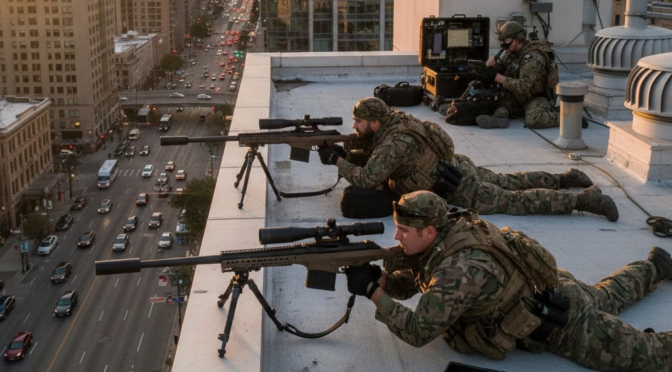
Understanding Solo Officer Rapid Deployment (SORD)

Executive Assessment

The paradigm of law enforcement response to active shooter incidents has undergone a radical transformation over the last two and a half decades. From the containment strategies of the late 20th century to the aggressive team formations of the early 2000s, the doctrine has continuously adapted to the grim reality of mass casualty events: time equals lives. The current frontier of this evolution is Solo Officer Rapid Deployment (SORD). This operational doctrine necessitates that the first arriving officer—regardless of rank, unit, or equipment—immediately enters the crisis site to isolate, distract, or neutralize the threat.1

The necessity for this shift is underscored by a brutal calculus: active shooter events typically last between five and eight minutes, with 60% ending before law enforcement arrives. In those critical minutes, a shooter can inflict casualties at a rate that outpaces the assembly of a traditional tactical team. The historical data, reinforced by FBI studies, indicates that even waiting for a second or third officer to form a “quad” or “diamond” formation can result in significant additional loss of life.1 Consequently, the law enforcement community is moving toward a model where the first badge at the door constitutes the initial contact team.

This report provides an analysis of SORD, designed for law enforcement executives, training directors, and tactical officers. It explores the historical drivers of this shift, specifically the failures at Columbine, Parkland, and Uvalde, and the successes in incidents like Thousand Oaks and Hesston.2 It dissects the tactical nuances of solo entry, including the fierce debate between “peek” and “push” room clearing techniques and the geometry of threshold evaluation.7 Furthermore, it addresses the critical implementation challenges facing police chiefs: liability concerns, union opposition, equipment procurement, and the psychological toll on officers forced to act alone in high-threat environments.9

The analysis indicates that while SORD represents a significant increase in risk to the individual officer, it remains the only viable countermeasure to the rapid casualty accumulation characteristic of modern active shooter events.1 The implications for agency leadership are profound, requiring a complete re-evaluation of training standards, equipment procurement, and operational policy to support the solo responder.

Section I: The Historical Evolution of Active Shooter Response

To understand the necessity of Solo Officer Rapid Deployment, one must analyze the trajectory of police tactics from a historical perspective. The evolution of response protocols is not merely a change in training manuals; it is a blood-written history of lessons learned from tragedies where seconds of hesitation resulted in catastrophic loss of life. The progression of tactics reveals a shrinking tolerance for delay, moving from hour-long standoffs to second-measured interventions.

The Pre-Columbine Era: Contain and Wait

Prior to April 20, 1999, the standard law enforcement response to a shooting in progress was predicated on the “contain and negotiate” model. This doctrine was derived from handling barricaded suspects and hostage situations, where time was considered an ally. The primary objective of the first responding patrol officer was to establish a perimeter, secure the scene to prevent escape, and await the arrival of Special Weapons and Tactics (SWAT) teams.1

This approach assumed that the suspect’s goal was negotiation or escape. However, the dynamics of an active shooter—defined as an individual actively engaged in killing or attempting to kill people in a confined and populated area—fundamentally differ. The active shooter’s goal is a high body count in a short duration.2 The traditional metrics of success, which prioritized officer safety and methodical negotiation, were inverted in these scenarios. In a bank robbery or domestic barricade, rushing in might provoke violence; in an active shooter event, staying out guarantees it.

The Columbine Catalyst (1999)

The attack on Columbine High School in Littleton, Colorado, irrevocably shattered the “contain and wait” paradigm. On that day, officers adhered to their training: they established a perimeter and waited for SWAT. The SWAT team entered the building 47 minutes after the shooting began. By that time, 12 students and one teacher were dead, and 24 others were injured. The perpetrators had committed suicide long before the tactical teams made contact.2

The after-action analysis revealed a horrifying truth: victims bled to death while armed officers stood outside. The delay inherent in assembling a SWAT team—often taking 45 to 60 minutes—was incompatible with the timeline of an active shooter event, which typically lasts only 5 to 8 minutes.2 This failure birthed the concept of “Immediate Action Rapid Deployment” (IARD), a doctrine that mandated patrol officers to intervene rather than wait for specialized units.

The Era of Team Formations (2000–2010)

In the wake of Columbine, agencies adopted the “Team Response” model. The initial iteration, often termed the “Quad” or “Diamond” formation, required patrol officers to wait until four officers arrived to form a contact team. This team would then move toward the sound of gunfire in a tight, 360-degree coverage formation.1

This formation was designed to maximize force protection. The point officer covered the front, the wings covered the sides, and the rear guard protected the “six.” While an improvement over waiting for SWAT, the Quad formation still presented logistical delays. In rural or suburban jurisdictions, waiting for a fourth officer could take 10 to 20 minutes.13 Recognizing this, training evolved to accommodate smaller teams—three or even two officers (the “T” or “Partner” formations). The formation provided officer safety and 360-degree security but still prioritized force protection over immediate neutralization in scenarios where backup was distant. The friction of assembly—waiting for units to arrive, designating roles, and coordinating movement—still consumed vital minutes.

The Shift to Solo Officer Response (2010–Present)

The progression toward Solo Officer Rapid Deployment (SORD) was driven by data and tragedy. Studies by the FBI and the Advanced Law Enforcement Rapid Response Training (ALERRT) Center indicated that 60% of active shooter events end before law enforcement arrives, and those that are ongoing require immediate intervention.1

The critical realization was that even waiting for a second officer to form a two-man team could cost lives. If a shooter fires one round every few seconds, a three-minute wait for backup equates to dozens of potential casualties. High-profile failures to engage, such as the inaction of the School Resource Officer (SRO) at Marjory Stoneman Douglas High School in Parkland (2018), and the catastrophic hesitation at Robb Elementary School in Uvalde (2022), solidified the public and professional expectation: the first officer must act alone.4

Conversely, successful interventions by solo officers, such as the actions of Chief Doug Schroeder in Hesston, Kansas, and the initial entry by Sgt. Ron Helus in Thousand Oaks, California, demonstrated that a single officer could distract or neutralize a threat, saving countless lives even at great personal risk.5 In Hesston, Chief Schroeder entered the manufacturing plant alone, engaging the shooter and drawing fire away from employees. In Thousand Oaks, Sgt. Helus made entry immediately upon arrival, and although he was tragically killed, his actions forced the shooter to engage him rather than continue executing civilians. These examples serve as the operational proof-of-concept for SORD: the intervention of a single officer disrupts the shooter’s OODA (Observe, Orient, Decide, Act) loop, forcing them to transition from predator to prey.

Section II: The Operational Doctrine of SORD

Solo Officer Rapid Deployment is not simply “running into the building.” It is a highly technical skill set that adapts team-based Close Quarters Battle (CQB) principles for a single operator. The cognitive load on a solo officer is immense; they must simultaneously process environmental information, navigate complex structures, identify threats, and manage their own physiological stress response without the 360-degree security provided by teammates.17 The doctrine demands a fundamental shift in mindset from “officer safety first” to “hostage survival first.”

The Core Mandate: Stop the Killing

The primary mission of SORD is to “Stop the Killing.” This supersedes all other police duties, including caring for the wounded, preserving evidence, or even absolute officer safety.17

The doctrine operates on a “Priority of Life” scale:

  1. Innocent Civilians / Hostages (Highest Priority)
  2. Law Enforcement Officers
  3. Suspects (Lowest Priority) 15

If the killing has stopped (e.g., the shooter has barricaded themselves and is no longer firing), the solo officer’s mandate shifts to “Stop the Dying” (medical intervention) or containment. However, as long as gunfire is active, the solo officer must move to the sound of the guns.17 This distinction is crucial. In Uvalde, officers misidentified the situation as a barricade (Stop the Dying/Containment phase) while the killing was arguably still possible or ongoing, leading to a fatal paralysis of action.16

Driving Force and Decision Making

A critical concept in SORD is “Driving Force.” This refers to the stimuli that compel an officer to bypass standard safety protocols (like waiting for backup) and enter immediately.

  • Active Driving Force: Gunshots, screaming, visual confirmation of a shooter. This requires immediate entry and movement direct-to-threat. The presence of active driving force negates the option to wait for a team.15
  • Static/Passive Situation: Silence, no visible targets. In this scenario, a solo officer might hold a threshold or conduct a deliberate search, but the urgency is dictated by intelligence. If there is no driving force, the officer acts as a scout, gathering intelligence for the arriving contact team rather than rushing blindly into a potential ambush.15

The failure at Uvalde was partially attributed to a misclassification of the situation. Officers treated the active threat (active driving force) as a barricaded suspect (static situation), reverting to a containment mindset while victims remained accessible to the shooter.1 This highlights the necessity for training officers to constantly re-evaluate the “driving force” indicators throughout the incident.

Solo Movement Techniques

Moving alone in a hostile environment requires specific adaptations to minimize exposure. The solo officer does not have a rear guard; they are exposed from 360 degrees.

1. Speed vs. Security

The solo officer must balance the need for speed (to stop the killing) with the need for security (to survive the encounter).

  • Dynamic Movement: Used when shots are actively being fired. The officer moves quickly toward the threat, bypassing uncleared rooms. The risk of being ambushed from the rear is accepted because the known threat is actively killing. The logic is that every second spent checking an empty room is a second the shooter has to kill another victim.17
  • Deliberate Movement: Used when the location of the shooter is unknown (silence). The officer clears angles methodically (“slicing the pie”) before advancing. This reduces the risk of walking into an ambush. In a deliberate search, the officer utilizes “limited penetration” techniques to check rooms without fully committing.5

2. Flashlight and Weapon Manipulation

Solo officers must be proficient in one-handed weapon manipulation if they are using a hand-held light or radio. However, weapon-mounted lights are strongly preferred for SORD to allow a two-handed firing grip. The officer cannot rely on a partner to cover a danger area while they reload or clear a malfunction; they must seek cover immediately if their weapon goes down. The concept of “working the problem” while maintaining lethal coverage is exponentially more difficult solo.3

3. 540-Degree Coverage

A solo officer cannot maintain 360-degree security. They must practice “540-degree” awareness—scanning not just horizontally (360 degrees) but also vertically (overhead walkways, stairwells).17 They must frequently check their “six” (rear) but acknowledge that their rear is always vulnerable. This vulnerability necessitates a faster operational tempo to close the distance to the threat, minimizing the time exposed in transition areas like hallways.

Section III: The Great Debate – Entry Tactics and Room Clearing

One of the most contentious areas of SORD doctrine is how a single officer should enter a room containing a threat. The traditional dynamic entry (flooding the room) used by SWAT teams is suicidal for a solo officer. Two primary schools of thought dominate the SORD training landscape: Limited Penetration (Peek) vs. Traditional Entry (Push).

Ronin's Grips polymer samples showing heat resistance at different temperatures.

Threshold Evaluation: Slicing the Pie

Before entering any room, SORD doctrine universally emphasizes Threshold Evaluation, commonly known as “slicing the pie.” The officer stands back from the doorway and moves in a semi-circular arc, visually clearing the room in segments from the outside. This allows the officer to engage a threat from a position of cover (the door frame/wall) and distance.5 By maximizing distance from the opening, the officer widens their field of view into the room while presenting a smaller target to anyone inside.

  • Tactical Advantage: The officer can see deep into the room without exposing their entire body.
  • Limitation: The “hard corners” (the corners of the room on the same wall as the door) cannot be seen without making entry or leaning significantly.5

The “Peek” (Limited Penetration)

The “Peek” or Limited Penetration technique advocates that the solo officer should not fully enter the room unless absolutely necessary. After slicing the pie, the officer leans aggressively to check the hard corners or keeps their body in the hallway while engaging.5

  • Arguments For: It minimizes exposure. If the officer encounters overwhelming fire, they are already in the hallway and can retreat. It prevents the officer from getting “sucked in” to a room where they can be flanked.5
  • Arguments Against: Some studies suggest that “peeking” may present the officer’s head as the primary target, potentially increasing the risk of a fatal headshot, although suspect accuracy data is mixed.7

The “Push” (Full Entry)

The “Push” technique involves the officer moving rapidly into the room, often using a “Buttonhook” (turning tight around the doorframe) or “Crossover” (moving across the threshold to the opposite wall) maneuver.

  • Arguments For: Lateral movement is a key component of surviving a gunfight. By moving quickly into the room, the officer forces the suspect to track a moving target, theoretically reducing the suspect’s accuracy. It allows the officer to dominate the room and clear dead space behind furniture.5
  • Arguments Against: Once inside, the officer is committed. There is no retreat. If there are multiple suspects or the officer is wounded, they are trapped in the “kill box” without backup.20

Empirical Evidence: ALERRT Research

Research conducted by ALERRT (Advanced Law Enforcement Rapid Response Training) compared these two methods. The study found “limited differences” in suspect shooting accuracy between the two. However, suspects facing a “Push” entry were more likely to shoot before the officer could fire, likely due to the officer’s full body appearing suddenly. Conversely, officers using the “Peek” were moderately more likely to be shot in the head, as it was the only target available.7

Tactical Consensus: Current best practices lean toward Limited Penetration for solo officers, reserving full entry (Push) only for situations where there is a known victim requiring immediate rescue inside the room, or if the geometry of the room demands it.20 The consensus is that SORD is an interim tactic; the solo officer’s goal is to neutralize the threat or pin them down until the team arrives, and limited penetration offers a better survival probability for the officer to achieve that sustainment.

One of the most dangerous phases of a SORD operation is the arrival of backup. A solo officer is already in a hyper-vigilant state, hunting an armed threat. When a second officer (or team) enters the scene, the risk of “Blue-on-Blue” (fratricide) is extreme. The chaotic environment, combined with physiological stress (tunnel vision, auditory exclusion), makes identifying a plainclothes officer or even a uniformed colleague difficult in low light or smoky conditions.3

The Solo-to-Team Transition

SORD is rarely a permanent state; it is a stop-gap until a contact team can be formed. Protocols must exist for how a solo officer integrates with arriving units. The transition from solo to team is a critical vulnerability point where momentum can be lost or accidents can happen.

  1. Communication: The solo officer must broadcast their location and description continuously via radio. “I am on the second floor, north hallway, moving south. White male, plain clothes, blue armband.” This provides situational awareness to arriving units and the incident commander.28
  2. Verbal Challenges: Upon encountering another armed individual, strict verbal challenge protocols must be used. “POLICE! DON’T MOVE!” followed by visual identification of badges or uniforms. SORD training emphasizes the “challenge and response” mechanic to verify friendlies before lowering weapons.27
  3. Link-Up Procedure:
  • Static Link-Up: The solo officer holds a secure position (e.g., a cleared stairwell) and waits for the contact team to come to them. This is safer but halts forward momentum.
  • Dynamic Link-Up: The solo officer continues moving, and the contact team tracks them by sound. This is riskier but maintains pressure on the shooter. The arriving team must be trained to approach from the rear and announce their presence (“Contact Rear!”) to avoid startling the point officer.5

Identification Friend or Foe (IFF)

With many officers responding in plain clothes or off-duty capacity, visual identification is critical. An officer responding from home or an administrative role may not be in full uniform, increasing the risk of misidentification by responding patrol units.

  • High-Visibility Identifiers: SORD training emphasizes the use of deploying badge carriers around the neck, high-visibility armbands, or “POLICE” marked placards on plate carriers immediately upon deployment.27
  • Off-Duty Carry Considerations: Officers carrying concealed off-duty must practice retrieving and donning this identification gear under stress. An officer holding a gun without a badge is indistinguishable from a shooter to a responding patrolman. The “Challenge” phase is often the only barrier to tragedy.3
  • Behavioral Compliance: If challenged by uniformed officers, the solo/plainclothes officer must immediately comply, even if they are in the middle of a tactical maneuver. The “freeze and identify” drill is a core component of SORD training to prevent friendly fire.27

Section V: Essential Equipment for the Solo Responder

The “Patrol Rifle and distinct uniform” standard is insufficient for SORD, particularly for plainclothes or off-duty responses. The equipment must be self-sufficient, as the officer will not have a partner to share ammo or medical supplies with. A solo officer is an island; their loadout must sustain them through the fight and the immediate aftermath.

1. Lethality and Ballistics

  • Primary Weapon: While a patrol rifle (AR-15 platform) is preferred due to accuracy and stopping power against body armor, the reality is that many solo responses begin with a handgun. The handgun is the primary tool of the unexpected responder. Proficiency with the duty pistol at extended ranges (25+ yards) is a SORD prerequisite.3
  • Ammunition: Officers should carry a minimum of three spare magazines. SORD engagements may turn into sustained firefights without quick resupply. A “Go-Bag” with extra rifle and pistol magazines is recommended for every patrol car.3

2. Medical Self-Sufficiency (Stop the Dying)

A solo officer who is wounded is their own medic until backup arrives. The “Golden Hour” becomes the “Platinum Ten Minutes” in active shooter scenarios.

  • IFAK (Individual First Aid Kit): Must be carried on the person (belt or vest), not left in the car. It must be accessible with either hand in case of arm injury.
  • Tourniquets: At least one, preferably two, accessible with either hand. This is non-negotiable standard equipment.
  • Hemostatic Agents: For packing junctional wounds (groin, armpit) where tourniquets cannot be applied. The solo officer must be trained in self-application under duress.31

3. Breaching Tools

Locked doors are a major tactical obstacle in schools and offices (e.g., Uvalde). Waiting for a battering ram or Halligan tool can be fatal.

  • Lightweight Breaching: Solo officers should have access to lightweight pry tools, sledgehammers, or shotgun breaching rounds in their vehicle. Some agencies are issuing backpack-portable hydraulic breach tools designed for single-operator use. Even simple tools like door wedges are critical for preventing doors from locking behind the officer, securing their retreat path.31

4. Identification

As noted in Section IV, visible identification is a life-saving device.

  • DSM (Don’t Shoot Me) Banners: High-viz sashes or banners that can be pulled from a pouch and worn over plain clothes.
  • Badge Neck Chains: Essential for off-duty carry. These provide a recognizable symbol of authority to both civilians and responding officers.3

Section VI: The Human Factor – Psychological and Physiological Challenges

The demand for SORD places an unprecedented psychological burden on the individual officer. They are asked to confront a homicidal threat alone, often in environments filled with the screams of victims. Understanding the physiological response to this stress is crucial for training. The “lone wolf” responder faces a unique set of stressors that team-based responders do not.

The Sympathetic Nervous System (SNS) Response

When the “fight or flight” mechanism activates, the body dumps cortisol and adrenaline.

  • Tunnel Vision: Peripheral vision collapses to a narrow cone. Officers may not see threats flanking them or innocent civilians in the crossfire. SORD training emphasizes “breaking the tunnel” by physically moving the head to scan.9
  • Auditory Exclusion: Officers often report not hearing their own gunshots or radio traffic. This makes command and control difficult. Dispatchers and commanders must understand that a solo officer under fire may not respond to radio calls immediately.9
  • Tachypsychia: The distortion of time. Events may seem to move in slow motion or fast forward. This can affect the officer’s perception of how long they have been engaged or how quickly backup is arriving.9

Decision-Making Under Fire

The cognitive load of SORD degrades decision-making. The officer must identify targets (Shoot/Don’t Shoot) in milliseconds. “Analysis Paralysis” can occur when the brain is overwhelmed by stimuli. Training must inoculate officers against this by building “muscle memory” and cognitive scripts for specific scenarios. Decision-making models like the OODA Loop (Observe, Orient, Decide, Act) must be drilled until they are subconscious.36

Post-Traumatic Stress

Officers involved in solo shootings often experience profound isolation. Unlike a SWAT entry where the team shares the burden, the solo officer carries the weight of every decision alone. The rate of PTSD and “post-shooting trauma” is significant, manifesting as sleep disturbances, flashbacks, and anxiety. The burden of “what if” scenarios—what if I had moved faster? what if I missed?—can be debilitating. Agencies must have robust peer support and psychological services ready immediately following a SORD deployment.9

Section VII: Challenges for Leadership – Liability, Unions, and Policy

For Chiefs of Police and Sheriffs, implementing SORD is not just a tactical decision; it is a political and legal minefield. The shift requires navigating complex labor relations, liability statutes, and budget constraints.

The Union Opposition

Police unions and benevolent associations often resist SORD policies, citing officer safety. The argument is that mandating solo entry violates the principle of “two-man rule” and unnecessarily exposes officers to death. This resistance is often rooted in collective bargaining agreements that stipulate staffing levels and safety protocols.

  • The Counter-Argument: The “Special Relationship” doctrine and public expectation. While courts generally rule that police have no constitutional duty to protect specific individuals ( DeShaney v. Winnebago), the public and political fallout from “waiting outside” (Parkland, Uvalde) is survivable for neither the agency nor the union. The reputational damage to the profession when officers fail to act is immense.12
  • Negotiation Strategy: Chiefs must frame SORD not as a suicide mission, but as a trained response with proper equipment. Unions are more likely to accept SORD if it is accompanied by increased training budgets, better body armor, and rifle programs. It must be presented as an authorization to act to save lives, supported by the agency, rather than a reckless mandate.10
  • Failure to Train: Municipalities can be held liable under Canton v. Harris if they fail to train officers for foreseeable duties. Given the prevalence of active shooters, SORD is now a foreseeable duty. A department that forbids solo entry or fails to train for it faces massive liability if citizens die during a delay. The argument “we didn’t train for solo entry because it’s dangerous” is no longer a valid legal defense.11
  • State-Created Danger: If police prevent civilians from saving themselves (e.g., blocking parents from entering) while refusing to enter themselves, they may face liability under the “State-Created Danger” theory. The inaction of police creates a zone of danger that prevents escape or rescue.16

IACP Model Policy

The International Association of Chiefs of Police (IACP) Model Policy on Active Shooters explicitly supports solo entry. It states that if a solo officer arrives, they “may move to stop the threat” if they reasonably believe delaying for backup would result in further loss of life.43 This model policy serves as a critical shield for Chiefs implementing SORD against union or legal challenges, providing a nationally recognized standard of care.

Section VIII: Training Implementation Roadmap

Implementing SORD requires a comprehensive training overhaul. Static target practice on a square range is insufficient. Agencies must transition to reality-based training (RBT) that simulates the stress and complexity of a solo response.

Phase 1: Policy and Mindset

  • Policy Revision: Adopt the IACP or ALERRT model policy authorizing solo entry. Ensure the policy explicitly defines “driving force” and the transition from “Stop the Killing” to “Stop the Dying”.44
  • Mindset Training: Classroom instruction on the history of active shooters, the “Stop the Killing” mandate, and the psychological realities of combat. Officers must mentally accept the risk before they can physically perform the tactic.21

Phase 2: Technical Skills (The “Flat Range”)

  • CQB Geometry: Teaching threshold evaluation (slicing the pie) using mock doors or tape on the floor. This establishes the fundamental mechanics of safe movement.
  • Live Fire: One-handed shooting, shooting on the move, and engaging targets from cover. Officers must prove proficiency in manipulating their weapon systems independently of a team.3

Phase 3: Force-on-Force Scenarios

This is the most critical component. Using Simunition® or airsoft:

  • Solo Entry Drills: Officers must face active resistance alone. They must experience the stress of clearing a room with a “live” suspect. This inoculates them against the “shock” of combat.26
  • Decision Making: Scenarios must not always end in a shooting. Officers must encounter “shoot/no-shoot” targets (e.g., a student holding a cell phone) to train target discrimination. This reduces the risk of “mistake-of-fact” shootings.21
  • Medical Integration: Drills should require the officer to apply a tourniquet to themselves or a victim after neutralizing the threat. This trains the transition from “combat mode” to “medic mode”.31

Phase 4: Integrated Response

  • Link-Up Drills: Practice the moment a second officer arrives. Verbal challenges and formation building. This phase minimizes the risk of friendly fire.
  • Rescue Task Force (RTF): Coordinating with Fire/EMS to enter “Warm Zones” (areas cleared but not secured) to treat victims while the solo officer maintains security. This ensures that the “Stop the Dying” phase begins as soon as possible.48

Section IX: Conclusions and Strategic Recommendations

The rise of Solo Officer Rapid Deployment is a direct response to the failure of previous doctrines to match the lethality of modern active shooters. The lesson from Columbine to Uvalde is consistent: delay kills. In the absence of immediate intervention, casualty counts rise with a grim linearity. Data from major incidents indicates a strong correlation between the duration of the event prior to law enforcement intervention and the total number of victims. The prompt initiation of SORD aims to shift incidents away from high-casualty outcomes by minimizing the shooter’s uncontested time.

While SORD imposes a severe burden on the individual officer, it is an operational necessity. The “team” is no longer the four officers you arrive with; the “team” is the first badge at the door.

Strategic Recommendations for Chiefs of Police:

  1. Authorize SORD Explicitly: Ambiguity in policy leads to hesitation in the field (e.g., Uvalde). Policy must clearly state that solo entry is authorized and expected when active killing is occurring. Chiefs must stand behind this policy publicly.17
  2. Equip for Independence: Every officer must be issued a tourniquet, a heavy vest/plate carrier (if budget allows), and breaching tools. Relying on trunk gear is insufficient if the gear takes too long to access. The officer must be a self-contained tactical unit.31
  3. Train for Isolation: Training must simulate the psychological isolation of solo entry. Instructors should not coach officers through the scenario; officers must learn to make independent decisions under stress. Failure in training should be encouraged as a learning tool.47
  4. Engage the Community and Unions: Proactively address safety concerns by highlighting that SORD, while risky, is safer than a disorganized response. Use the “Priority of Life” scale to justify the risk to officers to the unions and the public. Transparency about the risks and the necessity of the tactic builds trust.10

The transition to SORD is not merely a change in tactics; it is a shift in the fundamental contract between law enforcement and the community. It reaffirms that the police officer’s highest duty is to place themselves between the innocent and the predator, even—and especially—when they stand alone.


Please share the link on Facebook, Forums, with colleagues, etc. Your support is much appreciated and if you have any feedback, please email us in**@*********ps.com. If you’d like to request a report or order a reprint, please click here for the corresponding page to open in new tab.


Sources Used

  1. The Evolution of Active Shooter Response Training Protocols Since Columbine: Lessons From the Advanced Law Enforcement Rapid Res – Alerrt, accessed January 25, 2026, https://alerrt.org/r/16
  2. How Has Active Shooter Response Changed? – Total Security Solutions, accessed January 25, 2026, https://www.tssbulletproof.com/blog/how-active-shooter-response-changed
  3. SORD – Solo Officer Rapid Deployment – Advanced Law Enforcement Rapid Response Training, accessed January 25, 2026, https://alerrt.org/course_types/SORD
  4. Lessons Learned from the Robb Elementary School, Uvalde, Texas School Shooting, accessed January 25, 2026, https://www.scirp.org/journal/paperinformation?paperid=132478
  5. Peek or Push: An Examination of Two Types of Room Clearing Tactics for Active Shooter Event Response – Alerrt, accessed January 25, 2026, https://alerrt.org/r/20
  6. Despite risks, solo officer active shooter response saves lives – Police1, accessed January 25, 2026, https://www.police1.com/active-shooter/articles/rapid-response-despite-risks-solo-officer-active-shooter-response-saves-lives-cHCntd7E6vbp3AhP/
  7. Advanced Law Enforcement Rapid Response Training: Recommended Reading – Alerrt, accessed January 25, 2026, https://alerrt.org/reading
  8. Active Shooter Incident Management Checklist Endorsed by the NTOA as National Standard, accessed January 25, 2026, https://www.ntoa.org/active-shooter-incident-management-checklist-endorsed-as-national-standard/
  9. The Psychological Effect on Law Enforcement Officers involved in Deadly Police-Involved Shootings, accessed January 25, 2026, https://www.fdle.state.fl.us/getContentAsset/0925fc82-0d16-416a-95de-03d5d2fd57c4/73aabf56-e6e5-4330-95a3-5f2a270a1d2b/Solis-Benny-paper.pdf?language=en
  10. The Police Response to Active Shooter Incidents, accessed January 25, 2026, https://www.policeforum.org/assets/docs/Critical_Issues_Series/the%20police%20response%20to%20active%20shooter%20incidents%202014.pdf
  11. Law Enforcement Liability – Feerick Nugent MacCartney PLLC, accessed January 25, 2026, https://fnmlawfirm.com/practice-area/law-enforcement-liability/
  12. How police officers are shot and killed during active shooter events: Implications for response and training | Alerrt, accessed January 25, 2026, https://alerrt.org/r/30
  13. Those Terrible First Few Minutes: Revisiting Active-Shooter Protocols for Schools | FBI – LEB, accessed January 25, 2026, https://leb.fbi.gov/articles/featured-articles/those-terrible-first-few-minutes-revisiting-active-shooter-protocols-for-schools
  14. (PDF) The Evolution of Active Shooter Response Training Protocols Since Columbine: Lessons From the Advanced Law Enforcement Rapid Response Training Center – ResearchGate, accessed January 25, 2026, https://www.researchgate.net/publication/332322545_The_Evolution_of_Active_Shooter_Response_Training_Protocols_Since_Columbine_Lessons_From_the_Advanced_Law_Enforcement_Rapid_Response_Training_Center
  15. Wait for backup or not? How police officers view their role when responding to an active shooter event – Alerrt, accessed January 25, 2026, https://alerrt.org/r/73
  16. Uvalde school shooting response was a failure, says DOJ, accessed January 25, 2026, https://www.texastribune.org/2024/01/18/uvalde-school-shooting-federal-investigation-police-response/
  17. ALERRT Best Practice Policy, accessed January 25, 2026, https://www.lemitonline.org/programs/documents/14TPCLS/ALERRT%20-%20Monday/ALERRT%20Active%20Attack%20Best%20Practice%20Policy.pdf
  18. Active Shooter Response-Schools 2023.docx, accessed January 25, 2026, https://almonline.org/Assets/Files/LossControl/ReferenceDocuments/Active%20Shooter%20Response-Schools%202023.docx
  19. Active Shooter Response – Monterey, accessed January 25, 2026, https://monterey.gov/Document-Center/Departments/Police/Inside-MPD/Policies-Procedures-Training/Misc-Training/Active-Shooter-4hr-outline-2024.pdf?t=202509301228010
  20. The Science Behind One Man Room Clearing Tactics: Peek or Push, accessed January 25, 2026, https://www.tierthreetactical.com/the-science-behind-one-man-room-clearing-tactics-peek-or-push/
  21. SOLO Officer Response: Active Killing Events and Immediate Entry Tactics, accessed January 25, 2026, https://ncc.nebraska.gov/sites/default/files/doc/091924%20Solo%20Officer%20Response%20Zoom.pdf
  22. Threshold Evaluation: Room Entries Concepts : r/CQB – Reddit, accessed January 25, 2026, https://www.reddit.com/r/CQB/comments/cahcrb/threshold_evaluation_room_entries_concepts/
  23. CROSSING THE THRESHOLD: FLOW VS BUTTON HOOK CQB ENTRY TECHNIQUES, accessed January 25, 2026, https://www.youtube.com/watch?v=hsIzzS2o1wk
  24. CQB: Limited Penetration vs. Points of Domination – Iron Survival, accessed January 25, 2026, https://ironsurvival.com/blog/cqb-limited-versus-deep-penetration
  25. Solo Door Operations in CQB: Technical Considerations for Single-Opera – UNIT Solutions, accessed January 25, 2026, https://unitsolutions.com/blogs/news/solo-door-operations-in-cqb-technical-considerations-for-single-operator-entry
  26. ALERRT Solo Officer Rapid Deployment (SORD) Train-the-Trainer 05/05/2025 – Virginia Department of Criminal Justice Services, accessed January 25, 2026, https://www.dcjs.virginia.gov/training-events/alerrt-solo-officer-rapid-deployment-sord-train-trainer
  27. 8 ways to prevent blue-on-blue shootings – Police1, accessed January 25, 2026, https://www.police1.com/officer-safety/articles/8-ways-to-prevent-blue-on-blue-shootings-lCVUx6Zu8MPca8Sd/
  28. Active Shooter – Course Outline – San Bernardino, CA, accessed January 25, 2026, https://www.sanbernardino.gov/584/Active-Shooter-Course-Outline-PDF
  29. Immediate Action Rapid Deployment – PowerDMS, accessed January 25, 2026, https://public.powerdms.com/UPDSL/documents/1821239
  30. Active Shooter Threat Training Program | Federal Law Enforcement Training Centers – FLETC, accessed January 25, 2026, https://www.fletc.gov/active-shooter-threat-training-program
  31. How to equip and train cops for solo officer active shooter response – Police1, accessed January 25, 2026, https://www.police1.com/police-products/body-armor/articles/how-to-equip-and-train-cops-for-solo-officer-active-shooter-response-gj2eNNVsDAnRZ4Zv/
  32. 15 Essential Gear For Law Enforcement: Officers Should Carry – Chase Tactical, accessed January 25, 2026, https://www.chasetactical.com/guides/essential-gear-for-law-enforcement
  33. SOLO Medical Kit – Spiritus Systems, accessed January 25, 2026, https://www.spiritussystems.com/solo-medical-kit/
  34. Active Shooter Response, Door Breaching System | Engineering Interdisciplinary Capstone, accessed January 25, 2026, https://icap.engineering.arizona.edu/node/614
  35. Breaching tools for every officer – Police1, accessed January 25, 2026, https://www.police1.com/police-products/tactical/tactical-entry-tools/articles/breaching-tools-for-every-officer-BJ1quaYGjPNvXB6A/
  36. How to Create Tactical Decision Games: A 5-Minute Overview – YouTube, accessed January 25, 2026, https://www.youtube.com/watch?v=7g30X5-S4zY
  37. RMBLC Shift Briefing Series: Tactical Decision Making – YouTube, accessed January 25, 2026, https://www.youtube.com/watch?v=5HGvSegpqhM
  38. Officer-Involved Shooting: Reaction Patterns, Response Protocols, and Psychological Intervention Strategies, accessed January 25, 2026, https://ovc.ojp.gov/sites/g/files/xyckuh226/files/media/document/imp_officer_involved_shooting-508.pdf
  39. Police Stress and Deleterious Outcomes: Efforts Towards Improving Police Mental Health, accessed January 25, 2026, https://pmc.ncbi.nlm.nih.gov/articles/PMC8575544/
  40. Solo officers vs. active killers: Officers speak out – Police1, accessed January 25, 2026, https://www.police1.com/police-products/firearms/articles/solo-officers-vs-active-killers-officers-speak-out-CP7rkhwVxCHl5d0w/
  41. Solo officer response – American Police Beat Magazine, accessed January 25, 2026, https://apbweb.com/2022/07/solo-officer-response/
  42. Legal/Liability Issues in the Training Function – LLRMI – Police Training and Expert Services for Law Enforcement, Jails & Corrections, Insurance Pools, Risk Managers, and Attorneys, accessed January 25, 2026, https://www.llrmi.com/articles/legal_update/liabilitytraining/
  43. Coordinating Resources and Neutralizing the Threat, accessed January 25, 2026, https://www.theiacp.org/coordinating-resources-and-neutralizing-the-threat
  44. active shooter – IACP National Law Enforcement Policy Center, accessed January 25, 2026, https://www.ncpea.org/wp-content/uploads/IACP-ActiveShooter-Sample-Policy.pdf
  45. Active Attack – International Association of Chiefs of Police, accessed January 25, 2026, https://www.theiacp.org/resources/policy-center-resource/active-attack
  46. RAIDER Solo-Engagement Tactics Program – YouTube, accessed January 25, 2026, https://www.youtube.com/watch?v=ST9nQsHfglw
  47. Single Officer Response to an Active Shooter Training | DeAngelis Center Foundation, accessed January 25, 2026, https://deangeliscenter.org/single-officer-response-to-an-active-shooter-training/
  48. Course Catalog – Advanced Law Enforcement Rapid Response Training, accessed January 25, 2026, https://alerrt.org/Course-Catalog
  49. Law enforcement active shooter response policy – PowerDMS, accessed January 25, 2026, https://www.powerdms.com/policy-learning-center/law-enforcement-active-shooter-response-policy
  50. model policy response to active assailant events – FDLE, accessed January 25, 2026, https://www.fdle.state.fl.us/getContentAsset/838fd31b-1d71-4a89-8604-3254b1dca230/73aabf56-e6e5-4330-95a3-5f2a270a1d2b/MSD-Commission-Active-Assailant-Model-Policy-FINAL-010923.pdf?language=en
Poland’s Military Modernization: Small Arms Evolution

Executive Summary

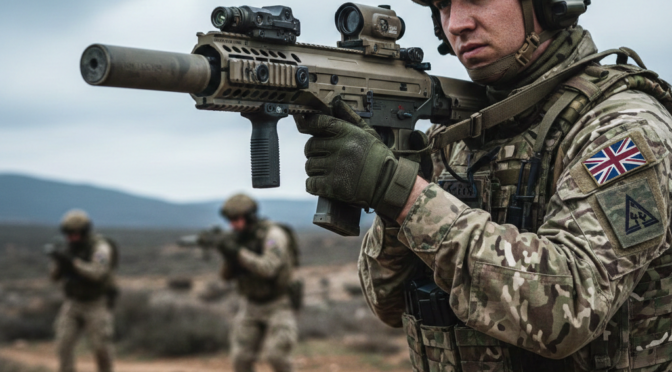
The Polish Armed Forces (Siły Zbrojne Rzeczypospolitej Polskiej) are currently executing one of the most aggressive and comprehensive technical modernization programs in the history of the North Atlantic Treaty Organization (NATO). Driven by the deteriorating security environment on the alliance’s eastern flank and the legislative mandate of the Homeland Defense Act of 2022, Poland is fundamentally reshaping its small arms inventory to achieve a state of high-readiness, modularity, and industrial self-sufficiency.1 This report provides an exhaustive analysis of the small arms systems utilized across the five military branches: Land Forces, Air Force, Navy, Special Forces, and Territorial Defence Force.

As of 2025, the strategic pivot from legacy Soviet-era calibers (7.62×39mm and 5.45×39mm) to NATO-standard 5.56×45mm and 7.62×51mm is nearing completion in frontline units.4 The center of gravity for this transition is the MSBS Grot modular rifle system, which is rapidly replacing the FB Beryl as the primary infantry weapon.6 This modernization is not limited to rifles; it encompasses a complete overhaul of sidearms (VIS 100), general-purpose machine guns (UKM-2000), and precision systems (Bor/Tor).8

The Polish defense industry, spearheaded by the PGZ (Polska Grupa Zbrojeniowa) consortium, has successfully internalized the production of almost all small arms categories, ensuring a resilient supply chain capable of sustaining a target force of 500,000 personnel by 2039.1 The following sections detail the technical specifications, organizational distribution, and tactical implications of Poland’s current small arms arsenal.

Geopolitical Architecture and Defense Spending

The trajectory of Polish small arms procurement is inextricably linked to the broader national strategy of “deterrence by denial.” Since the full-scale Russian invasion of Ukraine, Polish decision-makers have accelerated military expansion at an unprecedented scale, with defense spending reaching approximately 4.7% of GDP in 2025.2 This financial commitment facilitates the acquisition of massive quantities of individual equipment under “Operation SZPEJ,” a program specifically designed to address gaps in the individual soldier’s gear, from ballistic protection to advanced optics and modular firearms.12

The strategic goal is to build a military capable of conducting multidomain operations while maintaining deep, precision strike capabilities. Small arms play a vital role in this by ensuring that the expanding infantry, paratrooper, and special operations components are equipped with tools that offer superior ergonomics, reliability in extreme conditions, and compatibility with the latest generation of night vision and thermal targeting systems.1

Strategic IndicatorValue / Goal (2025-2035)Reference
Defense Spending (% of GDP)4.7% (2025)3
Total Personnel Objective500,000 (300k Active, 200k Reserve)1
Primary Modernization ProgramOperation SZPEJ / Tytan12
Primary Small Arms GoalComplete replacement of post-Soviet legacy systems16

Organizational Structure of the Polish Armed Forces

The Polish Armed Forces are structured into five distinct branches, each with specialized small arms requirements based on their operational profiles. The command structure is overseen by the General Staff, with procurement managed by the Armament Agency.17

  1. Land Forces (Wojska Lądowe): The largest branch, structured into mechanized, armored, and airborne divisions. It requires the highest volume of standard service rifles, machine guns, and anti-tank weapons.17
  2. Air Force (Siły Powietrzne): While aircraft-focused, it maintains significant ground components for air base defense and security, requiring reliable carbines and sidearms.17
  3. Navy (Marynarka Wojenna): Includes surface and submarine fleets, but also specialized coastal defense units (Morska Jednostka Rakietowa) and naval security forces.17
  4. Special Forces (Wojska Specjalne): The elite tier of the armed forces, utilizing highly specialized Western-tier platforms for unconventional warfare.17
  5. Territorial Defence Force (Wojska Obrony Terytorialnej – WOT): A light infantry volunteer force focused on home defense and hybrid warfare, which was the launch customer for the MSBS Grot.17

Summary of Personnel Strength by Branch

BranchActive Personnel (Approx.)Small Arms Priority
Land Forces100,200Mass-scale standardization (Grot/UKM)
TDF (WOT)55,000Light infantry mobility (Grot/LMP)
Air Force46,500Force protection / Base security
Navy17,000Maritime security / Coastal defense
Special Forces4,000Tier-1 specialized systems (HK416/MCX)

Small Arms Standards and Caliber Migration

The most significant technical development in the Polish inventory is the total migration away from 7.62×39mm (AK-47/AKM) and 5.45×39mm (Tantal) cartridges.5 For decades, the Polish military utilized the wz. 88 Tantal, which was a domestic variant of the Soviet AK-74. Following Poland’s accession to NATO in 1999, the defense industry developed the wz. 96 Beryl to utilize the 5.56×45mm NATO cartridge while maintaining the AK-pattern internal mechanics.5

However, the Beryl is now considered a legacy system. The current standard is the MSBS Grot, which introduces a modular architecture. In terms of sidearms, the migration is from 9×18mm Makarov (P-64/P-83) to 9×19mm Parabellum (VIS 100/Glock).8 Machine guns have transitioned from the 7.62×54mmR (PKM) to the 7.62×51mm NATO (UKM-2000), a logistical necessity for interoperability within the alliance.9

Legacy CaliberReplacement NATO CaliberPrimary Weapon Transition
7.62×39mm5.56×45mm NATOAKM -> Beryl -> MSBS Grot
5.45×39mm5.56×45mm NATOTantal -> MSBS Grot
9×18mm Makarov9×19mm ParabellumP-83 Wanad -> VIS 100
7.62×54mmR7.62×51mm NATOPKM -> UKM-2000

Detailed Analysis: Polish Land Forces (Wojska Lądowe)

The Land Forces are currently undergoing a massive rearmament. Frontline mechanized units are receiving modern Western and domestic armored vehicles, and the small arms inventory is being updated to reflect these new platforms.30 The Land Forces prioritize a mix of the MSBS Grot for standard infantry and the Mini-Beryl for vehicle crews and paratroopers.26

Division-Level Distribution

The modernization is prioritized for high-readiness formations such as the 18th “Iron” Mechanized Division and the 1st Legions Infantry Division.13 These units are the primary recipients of the latest Grot A2/A3 variants and the VIS 100 pistols. The 18th Division, in particular, has been a lead unit for testing new individual equipment like the HBT-02 combat helmet, which is scheduled for broader delivery in 2025.33

Small Arms in the Squad Structure

A typical Polish mechanized squad (based on the Rosomak APC or the future Borsuk IFV) is centered around the rifleman equipped with the MSBS Grot.15 Fire support at the squad level is provided by the UKM-2000P machine gun, while precision marksman roles use the Bor bolt-action rifle or the modernized SVD.4 The integration of the ZSSW-30 remotely controlled turret on the Rosomak and Borsuk further augments the squad’s firepower with a 30mm Bushmaster II cannon and coaxial UKM-2000C machine gun.34

Land Forces Small Arms Inventory

CategoryWeapon SystemTechnical NotesStatus
Service RifleMSBS Grot C16 (A2/A3)Modular, ambidextrous, 5.56mmFrontline standard 6
Service RifleFB Beryl wz. 96CAK-based, 5.56mmReserve/Transitioning 31
CarbineFB Mini-Beryl wz. 96Compact, 9-inch barrelVehicle crews 26
SidearmVIS 100DA/SA, 15-round, 9mmBranch standard 8
Machine GunUKM-2000PPKM derivative, 7.62mm NATOStandard LMG/GPMG 9
Sniper RifleBorBullpup, 7.62mm NATOSquad marksman 10
Anti-MaterielTorBullpup, 12.7mm (.50 BMG)Specialized teams 36

Detailed Analysis: Territorial Defence Force (Wojska Obrony Terytorialnej)

The Territorial Defence Force (WOT) has established itself as the most modern branch in terms of individual weaponry adoption. Because it was formed in 2017, it did not have to phase out vast quantities of Cold War-era rifles, allowing it to adopt the MSBS Grot and VIS 100 as the foundational weapons of the force.24

Light Infantry Doctrine

The WOT operates as a light infantry force, with each of the 16 voivodeships (provinces) hosting a brigade.24 Their small arms focus is on ease of maintenance, modularity for urban combat, and high section-level lethality. The Grot’s ability to quickly swap barrels and its full ambidexterity make it ideal for a force that relies on citizen-soldiers with varying levels of previous military experience.6

Specialized WOT Equipment

The WOT utilizes specific light support weapons, such as the LMP-2017 60mm light mortar, which is issued to light infantry companies to provide organic indirect fire support.37 For anti-tank operations, the WOT has been a major user of the FGM-148 Javelin, which proved its effectiveness in the Russo-Ukrainian War and is now integrated at the platoon level for border defense units.24

WOT Small Arms Table

CategorySystemQuantity / UsageReference
Main RifleMSBS Grot C16Over 34,000 in service37
Support RifleFB Beryl wz. 96Limited/Training use37
SidearmVIS 100 / WIST-94~3,000 VIS 100 delivered37
PrecisionBor (7.62mm)~310 rifles37
PrecisionSako TRG M10 (.338)87 rifles (Specialized)37
MortarLMP-2017 (60mm)500 units37
Anti-TankJavelin60 launchers / 180 missiles37

Detailed Analysis: Special Forces (Wojska Specjalne)

The Polish Special Forces (Wojska Specjalne) represent a world-class Tier-1 and Tier-2 capability. Unlike the conventional branches, the Special Forces utilize a hybrid inventory that favors German and American high-end platforms.22 The branch is composed of several specialized units: GROM, JW Komandosów (JWK), JW Formoza, JW AGAT, and JW NIL.23

GROM and JWK: The HK416 Standard

JW GROM and JW Komandosów have largely standardized on the Heckler & Koch HK416 as their primary assault rifle.22 The HK416 is preferred for its short-stroke gas piston system, which offers superior reliability over direct-impingement M4 clones, particularly when using suppressors or in maritime and sandy environments.39 GROM operators frequently use 10.4-inch and 14.5-inch barrel configurations, often fitted with EOTech sights and suppressors.22

JW Formoza: Maritime Specialization and SIG MCX

JW Formoza, the naval special forces unit, has traditionally used the HK G36KV.22 However, as of 2024-2025, Formoza has moved to procure the SIG Sauer MCX modular carbine.40 The MCX is particularly attractive for maritime operations due to its ability to be chambered in.300 Blackout, which offers exceptional performance in suppressed, close-quarters boarding missions (VBSS).40

Special Forces Subsystems

The Special Forces utilize the FN Minimi as their primary light machine gun (LMG), offering a lighter and more maneuverable alternative to the UKM-2000 for small-team operations.22 For sidearms, GROM utilizes the HK USP and FN Five-seveN (for specialized armor-piercing requirements), while JWK and AGAT primarily use the Glock 17.22

Special Forces Comparative Table

UnitPrimary Assault RifleSecondary / SMGPrecision System
GROMHK416 / Grot (Testing)MP5 / P90 / CZ Evo 3Sako TRG / Barrett M107
JWKHK416MP5AXMC / Sako TRG
FormozaSIG MCX / G36KVMP5Sako TRG
AGATHK416MP5Bor
NILHK416 / BerylMP5Bor

Detailed Analysis: Air Force and Navy Security Elements

The Air Force (Siły Powietrzne) and Navy (Marynarka Wojenna) focus their small arms procurement on force protection. Base security units and specialized coastal components require weapons that are reliable for static defense and mobile patrols.

Air Force Base Security

Air base security battalions (bataliony ochrony) are currently transitioning from the FB Beryl to the MSBS Grot.20 This transition is critical for logistics, as the Grot allows security personnel to use the same modular sights and accessories as the Land Forces. Pilots and flight crews are often issued the PM-84P Glauberyt submachine gun or the VIS 100 pistol due to their compact dimensions.31

Naval Coastal Defense (MJR)

The Naval Missile Unit (Morska Jednostka Rakietowa) is tasked with protecting Poland’s coastline using NSM anti-ship missiles.21 The security detachments for these high-value batteries utilize the MSBS Grot and UKM-2000 machine guns.21 Onboard ships, the Navy utilizes the Glock 17 as the standard sidearm and the Mossberg 500 shotgun for maritime security and boarding operations.4

Technical Deep-Dive: The MSBS Grot Modular System

The MSBS Grot (Modułowy System Broni Strzeleckiej) is the most technologically advanced small arm ever developed in Poland. Developed by FB Radom and the Military University of Technology (WAT), the Grot is a “system of systems” rather than a single rifle.6

Evolutionary Variants: A0 to A3

The Grot has undergone several design iterations based on field feedback from Polish troops and the conflict in Ukraine.43

  • A0 / M1: Initial production series. Faced “childhood diseases” including issues with the gas regulator, overheating, and material durability.6
  • A2 (M2): Introduced a longer handguard to cover the gas block, reinforced the firing pin for dry fire practice, and improved the pistol grip and stock.6
  • A3 (M3): The latest refinement presented at Grotowisko 2024. It is 300g lighter than the A2 and features a standard 14.5-inch barrel as an alternative to the 16-inch version.44 The A3 also introduces a new telescopic stock (AR-style), improved anti-corrosion coatings, and a modified gas regulator with a latch to prevent accidental loss.44

Modularity and Configuration

The Grot’s hallmark is its ability to share a common upper receiver for both classic (C) and bullpup (B) configurations.6 By simply swapping the lower receiver and stock assembly, the weapon can be reconfigured.

ConfigurationBarrel LengthTactical Role
Standard Assault Rifle16 in (406 mm)General Infantry 6
Carbine / Subcarbine10.5 in / 14.5 inCQB / Vehicle crews 6
Designated Marksman16 in / 20 inSquad-level precision 6
Machine CarbineHeavy 16 inHigh-volume suppression 6
Representative (R)16 in (Modified)Ceremonial / Honor Guard 6

Grot A3 Technical Specifications

FeatureSpecification
Caliber5.56×45mm NATO (7.62×39mm kit available) 6
Weight3.4 kg (A3) / 3.7 kg (A2) 44
ActionShort-stroke gas piston, rotating bolt 6
Rate of Fire700 – 900 rounds/min 6
Muzzle Velocity~870 – 890 m/s 43
Magazine30, 60-round STANAG compatible 6

Sidearms and Secondary Weapons Systems

Sidearms in the Polish Armed Forces have seen a radical shift toward domestic self-reliance. For decades, the military struggled with the WIST-94, which suffered from poor ergonomics and reliability.27

The VIS 100 (Ragun)

The VIS 100, named in honor of the legendary pre-WWII Vis wz. 35, is the new standard sidearm for the Land Forces and TDF.8 It is a modern DA/SA pistol with a 15-round double-stack magazine. The frame is constructed from a lightweight aluminum alloy, and it is fully ambidextrous, featuring a slide stop, magazine release, and decocker on both sides.8

PM-84P Glauberyt

The PM-84P remains in service for crews, pilots, and specialists who require a weapon larger than a pistol but smaller than a carbine.4 Chambered in 9×19mm, it is a reliable submachine gun that utilizes a blowback action and is being modernized to feature Picatinny rails for optics.4

Sidearms Comparative Table

WeaponCaliberCapacityOriginBranch
VIS 1009×19mm15+1PolandLand Forces, WOT 8
Glock 179×19mm17+1AustriaSpecial Forces, Navy 22
P-83 Wanad9×18mm8PolandLegacy (Base Security) 28
HK USP9×19mm15+1GermanyGROM 22
Sig Sauer P2269×19mm15+1Germany/USAFormoza 22

Support Weapons and Crew-Served Firepower

Infantry lethality is anchored by the UKM-2000 general-purpose machine gun (GPMG). This weapon is a testament to Polish engineering ingenuity, as it successfully converted the Soviet PKM design to use 7.62×51mm NATO ammunition and disintegrating belts.9

UKM-2000 Engineering

The transition from the PKM’s rimmed 7.62×54mmR to the rimless NATO round required a complete redesign of the feeding mechanism. The UKM-2000 uses a push-through system rather than the pull-out system of the PKM.9 The current UKM-2000P (Infantry) and UKM-2000C (Coaxial) variants are standard across the force, with the UKM-2013P and UKM-2020S representing modernized versions with improved ergonomics, folding stocks, and integrated rails.9

Light Mortars and Grenade Launchers

  • LMP-2017: A 60mm light mortar designed for WOT and airborne units. It is highly portable and can be operated by a single soldier in the “commando” role.37
  • Pallad wz. 74: A legacy 40mm under-barrel grenade launcher (UBGL) used with the Beryl.
  • MSBS Grot UBGL: A modern 40×46mm modular grenade launcher specifically designed for the Grot rifle system.6

Machine Gun Inventory Table

WeaponCaliberTypeFeedReference
UKM-2000P7.62×51mmGPMGM13 Link (100/200rd)9
UKM-2000C7.62×51mmCoaxialM13 Link (250rd)9
FN Minimi5.56×45mmLMGBelt / Magazine22
PKM7.62×54mmRGPMGNon-disintegrating beltLegacy 9
NSW / WKW12.7×108mmHMGBeltHeavy Support

Precision Rifles and Long-Range Interdiction

Poland has developed a robust domestic precision rifle capability through ZM Tarnów. These rifles are designed to replace the Soviet-era SVD and provide Tier-1 capability to standard infantry units.10

The Bor Sniper Rifle

The Bor is a bolt-action, bullpup sniper rifle chambered in 7.62×51mm NATO.10 It features a 26-inch (680mm) barrel and is typically fitted with Leupold or Schmidt & Bender optics.10 Over 650 units have been ordered for the Polish military, making it the primary precision tool for squad-level marksmen and specialized sniper teams.10

The Tor Anti-Materiel Rifle

The Tor (also known as the Wilk) is a heavy 12.7×99mm (.50 BMG) anti-materiel rifle.36 Also utilizing a bullpup layout, the Tor is nearly 5 feet long and is designed to engage light armored vehicles, aircraft on the ground, and enemy infrastructure at ranges up to 2,000 meters.36

Special Forces Precision Systems

While the Land Forces use Bor and Tor, the Special Forces utilize the Sako TRG series from Finland and the Accuracy International AXMC from the UK.22 These systems offer superior multi-caliber capabilities, allowing operators to switch between.308 Win,.300 Win Mag, and.338 Lapua Magnum.54

Precision Weapons Summary Table

RifleCaliberTypeRange (Eff.)User
Bor7.62×51mmBolt-Action800m+Land Forces, WOT 10
Tor12.7×99mmBolt-Action2,000m+Specialized Teams 36
Sako TRG M10.308 /.338Bolt-Action1,200m+SOF, WOT 37
AXMC.338 LapuaBolt-Action1,500m+JWK 55
Grot 762N7.62×51mmSemi-Auto600m+DMR Role (Testing) 6

Ammunition, Logistics, and Industrial Self-Sufficiency

The sustainability of the Polish Armed Forces’ small arms modernization depends on the domestic production of ammunition. PGZ-owned companies like Mesko, Dezamet, and Nitro-Chem have received over 565 million EUR in funding to expand the production of 5.56mm, 7.62mm, 12.7mm, and mortar rounds.56

Strategic Reserves

Following lessons from the Ukraine conflict, Poland is focusing on building “attritional reserves”.2 This means not just equipping the current force, but stocking enough small arms and ammunition to sustain high-intensity combat for months without external replenishment. The Armament Agency has signed contracts for over 324,000 Grot rifles to ensure that even reserve units (to be expanded to 200,000 personnel) are equipped with modern 5.56mm systems rather than being forced to rely on legacy AKMs.1

Future Programs: Tytan and Individual Soldier Modernization

The ultimate goal of Polish small arms development is the “Tytan” Individual Battlesystem.14 This program aims to integrate the MSBS Grot into a comprehensive soldier-as-a-system package.

Tytan Integration Components

  1. Lethality: MSBS Grot with integrated thermal/night vision optics and a 40mm grenade launcher.14
  2. C4I: Personal radios (Radmor R35010), GPS, and wearable computers for real-time battlefield management.14
  3. Protection: Modular plate carriers and high-cut ballistic helmets (HP-05).14
  4. Sustainability: Ergonomic uniforms and physiological monitoring systems.14

While the full “Tytan” (Version C) is intended for elite reconnaissance and special forces, a “Mini-Tytan” (Version A) has been developed for rapid adoption by conventional units, focusing on the Grot rifle, EOTech sights, and MU-3 night vision.15

Strategic Conclusions and Long-Term Outlook

The Polish Armed Forces have successfully navigated the transition from a post-Warsaw Pact military to a modern NATO powerhouse. The small arms inventory is the most visible indicator of this shift. The successful development and mass fielding of the MSBS Grot and VIS 100 demonstrate a level of industrial maturity that few other European nations possess.7

Key Analytical Takeaways

  • Standardization Success: Poland is one of the few NATO members to have successfully standardized its entire force on a domestically-designed modular rifle system (Grot) and general-purpose machine gun (UKM-2000).6
  • Operational Resilience: By Internalizing the production of weapons and ammunition through PGZ, Poland reduces its “external dependency” on foreign manufacturers, which is a critical lesson learned from the logistics bottlenecks seen in the Ukraine conflict.11
  • SOF Divergence: The Special Forces continue to use high-end German and American platforms (HK416, SIG MCX) to maintain Tier-1 interoperability with US and UK counterparts, showing a pragmatic approach to mission-specific equipment.22
  • The Modernization Wall: The primary challenge moving forward will be the 2035 “industrial wall,” where the massive synchronized deliveries of current equipment will reach the end of their first lifecycle, requiring a sustained and massive maintenance budget to keep the 500,000-man force operational.56

In conclusion, the Polish military’s small arms doctrine in 2025 is defined by modularity, high-volume domestic production, and a rapid feedback loop from active combat zones. This ensures that the Polish soldier is among the best-equipped in the alliance, providing a credible and lethal deterrent on the NATO eastern flank.


Please share the link on Facebook, Forums, with colleagues, etc. Your support is much appreciated and if you have any feedback, please email us in**@*********ps.com. If you’d like to request a report or order a reprint, please click here for the corresponding page to open in new tab.


Sources Used

  1. Revolution in the Polish Armed Forces: Details revealed – Defence24.com, accessed February 1, 2026, https://defence24.com/armed-forces/revolution-in-the-polish-armed-forces-details-revealed
  2. Polish Armed Forces Modernization: A New Cornerstone of European Security? – RAND, accessed February 1, 2026, https://www.rand.org/pubs/research_reports/RRA2971-1.html
  3. Two paths to modernization: Poland and Czechia’s evolving defense strategies | CZDEFENCE – czech army and defence magazine, accessed February 1, 2026, https://www.czdefence.com/article/the-polish-and-czech-paths-to-modernizing-the-armed-forces-different-ambitions-goals-and-means
  4. Polish Armed Forces (Manpower) – Warpower:Poland, accessed February 1, 2026, https://www.warpowerpoland.com/manpower.php
  5. POLAND’S POWER – Polish Armed Forces – Athlon Outdoors, accessed February 1, 2026, https://athlonoutdoors.com/article/polands-power/
  6. FB MSBS Grot – Wikipedia, accessed February 1, 2026, https://en.wikipedia.org/wiki/FB_MSBS_Grot
  7. MSBS Grot, the Polish ambidextrous rifle that manages to rival the prestigious HK416, accessed February 1, 2026, https://www.outono.net/elentir/2023/09/14/msbs-grot-the-polish-ambidextrous-rifle-that-manages-to-rival-the-prestigious-hk416/
  8. FB VIS 100 – Wikipedia, accessed February 1, 2026, https://en.wikipedia.org/wiki/FB_VIS_100
  9. UKM-2000 – Wikipedia, accessed February 1, 2026, https://en.wikipedia.org/wiki/UKM-2000
  10. Bor Rifle – Wikipedia | PDF | Ballistics | Firearms – Scribd, accessed February 1, 2026, https://www.scribd.com/document/654458371/Bor-rifle-Wikipedia
  11. Poland invests heavily in itself at defense exposition, accessed February 1, 2026, https://breakingdefense.com/2025/09/poland-invests-heavily-in-itself-at-defense-exposition/
  12. Polish Ministry Of National Defence on the Outcomes and Challenges of Modernizing Soldiers’ Individual Equipment – MILMAG, accessed February 1, 2026, https://milmag.pl/en/polish-ministry-of-national-defence-on-the-outcomes-and-challenges-of-modernizing-soldiers-individual-equipment/
  13. Soldiers Are the Priority – Polska Zbrojna, accessed February 1, 2026, https://www.polska-zbrojna.pl/home/articleshow/44544?t=Soldiers-Are-the-Priority
  14. Battlesystem Tytan The Decisive Year – Soldier Modernisation, accessed February 1, 2026, https://www.soldiermod.com/volume-7/battlesystem-tytan.html
  15. Tytan at a Turning Point (POLAND) – Soldier Modernisation, accessed February 1, 2026, https://www.soldiermod.com/volume-2-06/tytan.html
  16. JUST IN: Poland Expanding Military Across Air, Land, Sea, Report Finds, accessed February 1, 2026, https://www.nationaldefensemagazine.org/articles/2025/6/3/just-in-poland-expanding-military-across-air-land-sea-report-finds
  17. Polish Armed Forces – Wikipedia, accessed February 1, 2026, https://en.wikipedia.org/wiki/Polish_Armed_Forces
  18. Structure of Polish Armed Forces – Ministry of National Defence – Gov.pl website, accessed February 1, 2026, https://www.gov.pl/web/national-defence/structure-of-polish-armed-forces
  19. Polish Armed Forces | Polish Army Structure, Equipment Overview – Defense Advancement, accessed February 1, 2026, https://www.defenseadvancement.com/resources/polish-armed-forces/
  20. Na wojnie i na targach Shot Show 2024. Karabinki Grot i Beryl w Las Vegas robią furorę, accessed February 1, 2026, https://portalobronny.se.pl/bron-i-strzelectwo/na-wojnie-i-na-targach-shot-show-2024-karabinki-grot-i-beryl-w-las-vegas-aa-LCUv-wZ9b-dMbh.html
  21. Morska Jednostka Rakietowa – Wikipedia, wolna encyklopedia, accessed February 1, 2026, https://pl.wikipedia.org/wiki/Morska_Jednostka_Rakietowa
  22. Polish Special Forces – Wikipedia, accessed February 1, 2026, https://en.wikipedia.org/wiki/Polish_Special_Forces
  23. Polish Special Forces: Wojska Specjalne – Grey Dynamics, accessed February 1, 2026, https://greydynamics.com/polish-special-forces-wojska-specjalne/
  24. Territorial Defence Force (Poland) – Wikipedia, accessed February 1, 2026, https://en.wikipedia.org/wiki/Territorial_Defence_Force_(Poland)
  25. The Historical Significance Behind the Name of Poland’s New Service Rifle, accessed February 1, 2026, https://www.thefirearmblog.com/blog/2017/12/08/historical-significance-behind-name-polands-new-service-rifle/
  26. Rifles – Fabryka Broni Łucznik Radom, accessed February 1, 2026, https://fabrykabroni.pl/en/offer/military-market/rifles
  27. P83 WANAD | M-gun, accessed February 1, 2026, https://mgun.pl/bronie/p83-wanad-2/
  28. FB P-83 Wanad – Wikipedia, accessed February 1, 2026, https://en.wikipedia.org/wiki/FB_P-83_Wanad
  29. UKM-2000 – AfterTouch Audio, accessed February 1, 2026, https://aftertouchaudio.com/product/ukm-2000/
  30. New Land Equipment for the Polish Armed Forces in 2025 – Portal Militarny, accessed February 1, 2026, https://portalmilitarny.pl/analizy-i-komentarze/new-land-equipment-for-the-polish-armed-forces-in-2025/
  31. Karabinek BERYL – WOJSKO-POLSKIE.PL, accessed February 1, 2026, https://www.wojsko-polskie.pl/beryl/
  32. Operational structure of the Polish Land Forces – Wikipedia, accessed February 1, 2026, https://en.wikipedia.org/wiki/Operational_structure_of_the_Polish_Land_Forces
  33. List of equipment of the Polish Land Forces – Wikipedia, accessed February 1, 2026, https://en.wikipedia.org/wiki/List_of_equipment_of_the_Polish_Land_Forces
  34. Poland’s future armed forces take shape – Euro-sd, accessed February 1, 2026, https://euro-sd.com/2024/09/articles/40091/polands-future-armed-forces-take-shape/
  35. Modernization of the Polish Armed Forces – Wikipedia, accessed February 1, 2026, https://en.wikipedia.org/wiki/Modernization_of_the_Polish_Armed_Forces
  36. introduction – TRB, accessed February 1, 2026, https://trb.ba/wp-content/uploads/2019/10/overhaul-catalogue-v5.pdf
  37. List of equipment of Polish Territorial Defense Forces – Wikipedia, accessed February 1, 2026, https://en.wikipedia.org/wiki/List_of_equipment_of_Polish_Territorial_Defense_Forces
  38. Polish Special Forces Seek Carbines | thefirearmblog.com, accessed February 1, 2026, https://www.thefirearmblog.com/blog/2020/06/22/polish-special-forces-jednostka-wojskowa-formoza-seek-hk416/
  39. Polish Special Mission Unit GROM with HK416 (2021 vs 2013) [3261×3261] – Reddit, accessed February 1, 2026, https://www.reddit.com/r/MilitaryPorn/comments/w04a74/polish_special_mission_unit_grom_with_hk416_2021/
  40. JW FORMOZA with a new weapon? | WMASG – Airsoft & Guns, accessed February 1, 2026, https://wmasg.com/en/news/view/20902
  41. Frag Out! Magazine #48, accessed February 1, 2026, https://fragout.uberflip.com/i/1542142/53
  42. Groty za Glauberyty? Wkrótce testy subkarabinka – Defence24, accessed February 1, 2026, https://defence24.pl/sily-zbrojne/groty-za-glauberyty-wkrotce-testy-subkarabinka
  43. 75-86 – Wo Niak | PDF | Weapon Design | Ammunition – Scribd, accessed February 1, 2026, https://www.scribd.com/document/920049480/75-86-Wo-niak
  44. Grot A3 rifle presented in Poland – Militarnyi, accessed February 1, 2026, https://militarnyi.com/en/news/grot-a3-rifle-presented-in-poland/
  45. Grot A3 wejdzie w tym roku do służby. Co się zmieniło i co będzie dalej? – Portal Obronny, accessed February 1, 2026, https://portalobronny.se.pl/wideo/grot-a3-wejdzie-w-tym-roku-do-sluzby-co-sie-zmienilo-i-co-dalej-aa-syKW-KdUh-dDhN.html
  46. Niebawem dostawy karabinków Grot A3 – Polska Zbrojna, accessed February 1, 2026, https://polska-zbrojna.pl/home/articleshow/45411?t=Niebawem-dostawy-karabinkow-Grot-A3
  47. MSBS GROT – Rifles – Fabryka Broni Łucznik Radom, accessed February 1, 2026, https://fabrykabroni.pl/en/en/offer/military-market/rifles/msbs-grot
  48. VIS 100 cal. 9 x 19 MM – Fabryka Broni Łucznik Radom, accessed February 1, 2026, https://fabrykabroni.pl/en/en/offer/military-market/semi-automatic-pistols/vis-100-cal-9-x-19-mm
  49. VIS 100 M1 – Fabryka Broni Łucznik Radom, accessed February 1, 2026, https://fabrykabroni.pl/en/en/offer/civilian-market/semi-automatic-pistols/vis-100-m1
  50. UKM-2000C – Army Guide, accessed February 1, 2026, http://www.army-guide.com/eng/product2269.html
  51. MSPO 2019 WMASG report, accessed February 1, 2026, https://wmasg.com/en/news/view/9575
  52. Antimateriel Rifles | PDF – Scribd, accessed February 1, 2026, https://www.scribd.com/document/130688969/Antimateriel-Rifles
  53. Sako TRG – Wikipedia, accessed February 1, 2026, https://en.wikipedia.org/wiki/Sako_TRG
  54. Sako TRG, accessed February 1, 2026, https://www.sako.global/series/sako-trg
  55. Best Sniper Rifle Options Available Today – Gun Digest, accessed February 1, 2026, https://gundigest.com/rifles/tactical-rifles/best-sniper-rifle
  56. Poland’s armed forces modernisation: SITREP – European Security & Defence – Euro-sd, accessed February 1, 2026, https://euro-sd.com/2025/09/articles/armed-forces/46030/polands-armed-forces-modernisation-sitrep/
  57. [Flash] In 2025, the Polish Armed Forces will face record equipment levels and strategic uncertainties, accessed February 1, 2026, https://meta-defense.fr/en/2026/01/02/2025-Polish-armed-forces-records-uncertain/

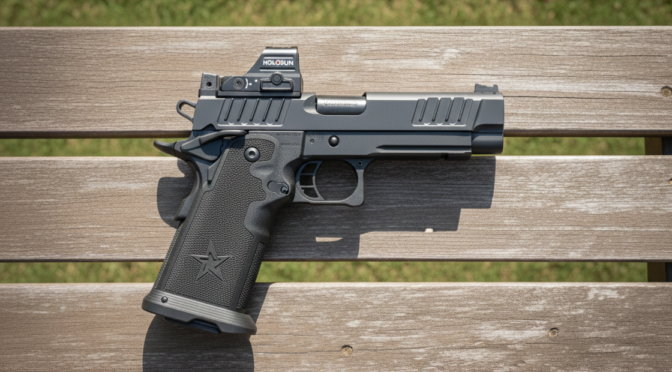
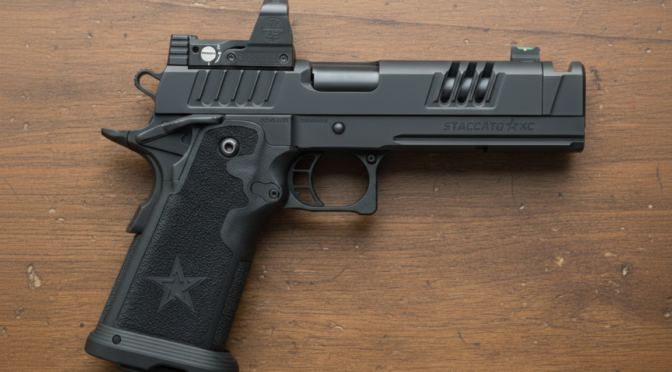
2011 Pistol Optics: Trijicon vs Holosun vs Leupold

The 2011 pistol platform, a double-stack evolution of the venerable M1911, has shifted from the exclusive domain of competition circuits into a dominant force within the tactical, law enforcement, and high-end civilian defense markets. This transition has necessitated a corresponding evolution in sighting systems, as the platform’s inherent accuracy and rapid cyclic rate demand miniaturized red dot systems (MRDS) that offer not only speed but absolute structural integrity. As an industry analyst, evaluating the landscape of red dot optics requires a focus on the three primary contenders: Trijicon, Holosun, and Leupold. Each manufacturer approaches the challenges of the 2011 platform—specifically high slide velocities, varying recoil impulses, and specialized mounting requirements—through distinct engineering philosophies and feature sets.1

The Convergence of 2011 Ergonomics and Optic Science

The fundamental advantage of the red dot sight on a handgun lies in the mitigation of “focal plane confusion.” Traditional iron sights require a shooter to reconcile three distinct distances—the rear sight, the front sight, and the target—while the human eye is biologically limited to focusing on a single plane. By projecting an aiming point on the same focal plane as the target, an MRDS allows the shooter to remain target-focused, which significantly enhances situational awareness and threat identification during high-stress encounters.4 For a 2011 pistol, which is often tuned for a flat recoil impulse and a crisp trigger press, the addition of an optic acts as a force multiplier, extending the effective range and precision of the platform.7

However, the 2011 platform presents a harsh environment for optics. Unlike polymer-framed, striker-fired handguns, the steel or aluminum frames of a 2011 can transmit high-frequency vibrations and intense G-forces through the slide to the optic housing. Reliability in this context is defined by an optic’s ability to maintain zero through thousands of rounds and withstand physical impacts that occur in duty or competition environments.10

Trijicon: The Ruggedized Benchmark

Trijicon has long held the title of the industry standard for durability through its Ruggedized Miniature Reflex (RMR) line. The RMR Type 2 is frequently cited as the “bombproof” option for professional users, characterized by its patented “owl ear” housing.9 This concave geometry is specifically engineered to redirect the kinetic energy of an impact away from the lens, protecting the glass from shattering during shoulder-height drops onto concrete.9 In institutional testing conducted over four years, the RMR Type 2 has demonstrated the highest levels of consistency, with some units surpassing 30,000 rounds of live fire while enduring 60 or more deliberate concrete drops.11

The Evolution of the RMR HD and RCR

Recognizing the market’s demand for modern features such as top-loading batteries and larger windows, Trijicon introduced the RMR HD and the Ruggedized Closed Reflex (RCR) in 2023. The RMR HD serves as an evolutionary leap, blending the ruggedness of the RMR with the generous field of view found in the competition-focused SRO.8 A critical technological advancement in the RMR HD is the inclusion of a forward-facing light sensor. This sensor addresses the “photonic barrier” issue, where an auto-adjusting optic might wash out if the shooter is in a dark environment but aiming into a brightly lit area (such as using a weapon-mounted light). The RMR HD’s sensor detects the light level at the target and adjusts the dot intensity accordingly.16

The RCR represents Trijicon’s entry into the enclosed emitter market, a sector increasingly favored for duty use. Enclosed emitters prevent the projection of the dot from being obscured by rain, mud, or debris landing on the internal emitter window.1 The RCR’s engineering challenge was maintaining compatibility with the standard RMR footprint without requiring a bulky adapter plate that would raise the height of the optic. Trijicon solved this through the use of “capstan screws,” which are torqued from the side using a specialized tool, allowing the optic to sit directly on the slide.16

Trijicon SRO: The Competition Powerhouse

The Trijicon SRO (Specialized Reflex Optic) remains the premier choice for 2011 competition shooters. While it lacks the extreme drop-protection of the RMR, its massive circular window provides an unparalleled field of view.1 For a USPSA or IDPA competitor, the SRO’s window allows the dot to “float” into view during rapid transitions and stay within the glass during heavy recoil, which is essential for tracking a 9mm Major load on a compensated 2011.1 However, institutional data suggests the SRO is less suitable for duty use, as its large lens is more vulnerable to cracking upon direct impact.1

Trijicon ModelEmitter TypeHousing MaterialBattery LifePrimary Use Case
RMR Type 2Open7075-T6 Aluminum4+ YearsDuty / Hard Use
RMR HDOpen7075-T6 Aluminum3 YearsProfessional Carry
RCREnclosed7075-T6 Aluminum6 YearsAdverse Conditions
SROOpen7075-T6 Aluminum3 YearsCompetition

Holosun: The Disruptor and Innovator

Holosun has transitioned from an entry-level brand to a market leader through rapid innovation and the introduction of high-performance features at competitive price points. For the 2011 owner, Holosun offers several key technologies that are often absent from legacy Trijicon models: the Multi-Reticle System (MRS), “Shake Awake” technology, and Titanium housing options.1

The 507Comp and the Competitive Landscape

The Holosun 507Comp was explicitly designed to challenge the Trijicon SRO in the competition market. It features a massive 1.1×0.87 inch window, which is slightly larger and more squared than the SRO’s circular window.1 This square geometry provides additional vertical and horizontal clearance, which many shooters find superior for maintaining a dot index during awkward shooting positions.12 The 507Comp’s Competition Reticle System (CRS) allows the user to select between a 2 MOA dot and various circles (8, 20, or 32 MOA), providing a level of customization that Trijicon does not offer.1

Durability and the Titanium Series

Holosun’s “Elite” series, which includes the 508T and 509T, utilizes Grade 5 Titanium for the optic housing. This material provides significantly higher tensile strength and impact resistance than the 7075 aluminum used by Trijicon and Leupold, while remaining lightweight.2 The 509T, an enclosed emitter optic, has gained a reputation as one of the most durable sights available for the 2011 platform. Its nitrogen-purged titanium housing is designed to withstand extreme environmental stress, and institutional data confirms that it maintains zero as reliably as the RMR line under heavy fire.1

Holosun ModelEmitter TypeHousing MaterialReticle SystemValue Position
507CompOpen7075-T6 AluminumCRS (Multi)Best Value Comp
509TEnclosedGrade 5 TitaniumMRS (Multi)Duty / Hard Use
508TOpenGrade 5 TitaniumMRS (Multi)Rugged Open
EPSEnclosed7075-T6 AluminumMulti/FixedLow Deck Height

Leupold: The Direct Mount Specialist

The Leupold DeltaPoint Pro (DPP) occupies a unique position in the 2011 market, largely due to its integration with Staccato (formerly STI) pistols. The Staccato DPO (Dawson Precision Optic) system was initially optimized for the DPP, allowing it to be mounted directly to the slide without an adapter plate.27 This direct-mount capability is highly valued by 2011 owners because it lowers the “deck height” of the optic, making target acquisition more intuitive and allowing for the use of standard-height backup iron sights.10

Optical Clarity and Field of View

The DPP is widely praised for its glass quality. Unlike many optics that use a heavy “notch filter” coating (resulting in a blue or purple tint), the DPP features near-color-neutral optical glass with exceptional clarity.14 Its panoramic window provides an expansive field of view that is often cited as superior for tracking targets during fluid movement.1

Structural and Ergonomic Considerations

Despite its optical advantages, the DPP has faced criticism for its durability and ergonomics. The single-button brightness adjustment requires the user to cycle through the entire intensity range to reach a desired setting, which can be frustrating in rapidly changing light conditions.14 Additionally, while the DPP features a spring-steel shroud to protect the housing, it has historically shown a higher failure rate in concrete drop tests compared to the Trijicon RMR.11

Comparative Analysis of Reliability and Durability

Reliability for a 2011 optic is measured through three primary metrics: recoil resistance, environmental sealing, and impact resistance.

Recoil Resistance and Zero Retention

The 2011’s reciprocating slide generates immense inertial forces. Trijicon optics, particularly the RMR Type 2 and RMR HD, are designed with specialized battery contacts (such as the star-shaped positive contact on the Type 2) to prevent the dot from flickering during recoil.9 Holosun optics utilize a side-loading battery tray, which eliminates the vertical battery movement often associated with flickering in bottom-loading designs.1 Leupold’s top-loading battery compartment also avoids this issue, though some users have reported intermittent contact issues over long-term use.14

Environmental Sealing: Open vs. Enclosed Emitters

For duty or outdoor competition, the enclosed emitter design (Trijicon RCR, Holosun 509T, Holosun EPS) provides a significant reliability advantage. An open emitter optic can be rendered useless by a single drop of rain or a snowflake landing on the emitter window, causing the dot to diffract into a “starburst” pattern or disappear entirely.1 Enclosed emitters mitigate this risk by sealing the entire optical path in a nitrogen-purged housing.3

FeatureTrijicon RMR / RCRHolosun 509T / 508TLeupold DPP
Housing DurabilityExceptional (Forged Al)High (Titanium)Moderate (Steel Shroud)
Drop SurvivalExcellentVery GoodFair
Recoil Rating30k+ Rounds20k+ Rounds15k+ Rounds
Zero RetentionIndustry StandardProven (Titanium)Good (Direct Mount)

Institutional Impact Testing Data

Data derived from high-volume training environments, such as those analyzed by Aaron Cowan of Sage Dynamics, provides a clear hierarchy of durability. The Trijicon RMR remains the gold standard, with the lowest failure rate per 1,000 rounds of any optic tested over a multi-year period.9 Holosun’s titanium-bodied optics (508T and 509T) are the primary challengers, demonstrating near-parity in drop resistance while offering more features.3 The Leupold DPP and Trijicon SRO, while reliable in terms of tracking and zero retention, are consistently the first to experience glass breakage during impact testing.11

The Best Optic for the Money: Holosun 507Comp

For the 2011 owner seeking the highest return on investment, the Holosun 507Comp is currently the definitive choice. Retailing for approximately $350-$400, it offers a window size that rivals or exceeds the Trijicon SRO (which retails for $550-$650) while incorporating superior technology such as Shake Awake and the Multi-Reticle System.1

Economic and Technological ROI

The 507Comp provides “90% of the SRO’s performance” for roughly 60% of the cost.1 Its 7075-aluminum construction has been proven through high-round-count USPSA seasons and 3,000-round “burn-down” tests involving +P defensive ammunition, during which it maintained zero and structural integrity.12 For a range-focused or competition-focused 2011, the 507Comp’s value proposition is unmatched in the current market.1

The Best Optic Overall: Trijicon RMR HD and RCR

Determining the “best” optic overall requires a focus on professional-grade reliability and advanced features. The Trijicon RMR HD and RCR are the current apex of handgun optics for the 2011 platform.

The Case for the RMR HD

The RMR HD is arguably the best open-emitter optic available. It successfully integrates the durability of the original RMR with a larger window, top-loading battery, and the most responsive auto-brightness sensor in the industry.16 For users who prioritize made-in-USA quality and institutional track records, the RMR HD addresses every major criticism of previous Trijicon designs while maintaining the “bombproof” reputation.17

The Case for the RCR

For users who demand an enclosed emitter for duty or home defense, the RCR is the superior option. Its ability to mount directly to an RMR footprint without an adapter plate keeps the center of gravity low and maintains commonality with existing holster systems.16 While its window is smaller than the SRO or 507Comp, its reliability in mud, rain, and snow makes it the logical choice for a 2011 intended for hard use.16

The Critical Role of Mounting Systems in 2011 Optics

The reliability of any optic on a 2011 is heavily dependent on the mounting interface. The 2011 market is divided into proprietary direct-mount systems and adapter plate systems.

Dawson Precision Optic (DPO) and DUO Systems

Dawson Precision is the primary engineering partner for Staccato, and their plate system is considered the industry gold standard. These plates are machined from aircraft-grade aluminum and are designed to be “plug and play” with the 2011 slide.29 The inclusion of a fixed rear sight on the plate ensures a consistent co-witness, which is a critical fail-safe should the optic electronics fail.39

The CHPWS and Aftermarket Landscape

C&H Precision Weapons (CHPWS) offers a wider variety of plates for various footprints, but they have faced significant criticism in the 2011 community regarding quality control. Users have reported issues with “T-nuts” shearing, plates being out of spec, and mounting screws being of improper length, which can lead to ejection failures or firing pin interference.41 For a reliability-focused build, the consensus among professional armorers and competitive shooters is to utilize Dawson Precision plates whenever possible.41

Optical Engineering and Human Performance

The selection of an optic for a 2011 must also account for human physiological factors, specifically the speed of dot acquisition and the impact of astigmatism.

Dot Geometry and tracking

The 2011 platform’s recoil is often characterized by a sharp “up and back” movement. A round window, like that of the SRO, is highly intuitive for the human eye to center during this movement.1 However, a squared window, like that of the Holosun 507Comp or RMR HD, provides more “corner room,” which can be more forgiving if the shooter’s presentation is slightly off-center during an awkward draw or one-handed manipulation.1

Astigmatism and Reticle Color

Green reticles, offered extensively by Holosun, are often reported as appearing “crisper” and less prone to “blooming” for shooters with astigmatism.45 Additionally, the multi-reticle systems (MRS) found on Holosun and the RMR HD allow users to utilize a circle-dot reticle. The larger 32 or 55 MOA circle is often easier for the eye to catch during a rapid draw than a precise 1 or 2.5 MOA dot, making it a valuable feature for defensive use.23

Strategic Summary and Institutional Outlook

The MRDS market for 2011 pistols is currently defined by a divergence between “hard-use duty” and “high-performance competition.”

Reliability and Durability Rankings

  1. Trijicon RMR Type 2 / RCR / RMR HD: Unmatched in structural integrity and institutional trust. The forged 7075-T6 aluminum housing and patented owl-ear design remain the standard for optics that must survive physical abuse.9
  2. Holosun 509T / 508T: The primary challenger, leveraging titanium construction to provide superior durability to standard aluminum optics while offering more innovative features.1
  3. Holosun 507Comp: The durability is “on par with the RMR” for standard fire and moderate impacts, but its large window makes it slightly more vulnerable than the 509T.12
  4. Leupold DeltaPoint Pro / Trijicon SRO: Excellent for fire and tracking, but the first to fail under high-impact stress.11

Best Overall and Best for the Money

  • Best Optic Overall: The Trijicon RMR HD (for open emitter) or Trijicon RCR (for enclosed emitter). These represent the most robust and technologically advanced optics currently manufactured in the United States, designed to handle the most extreme duty environments.16
  • Best Optic for the Money: The Holosun 507Comp. It provides a window size and feature set that outperforms optics twice its price, with durability that has been validated through high-volume competition and defensive testing.1

Conclusion

The 2011 platform represents a unique intersection of 19th-century mechanical refinement and 21st-century optical technology. To maximize the effectiveness of this platform, the selection of an optic must move beyond brand loyalty and focus on the technical requirements of the intended mission. For the professional whose life depends on the firearm’s performance in any condition, the ruggedness of Trijicon’s newest offerings (RMR HD/RCR) is non-negotiable. For the enthusiast or competitor seeking the largest possible window and the most versatile reticle for the lowest price, the Holosun 507Comp has redefined the value segment of the market. Leupold remains a high-clarity alternative for those who can leverage the direct-mount advantages of the DeltaPoint Pro on specifically milled slides. Ultimately, the integration of an optic on a 2011 is not merely an upgrade; it is the final step in the evolution of the platform into a modern precision instrument.1


Please share the link on Facebook, Forums, with colleagues, etc. Your support is much appreciated and if you have any feedback, please email us in**@*********ps.com. If you’d like to request a report or order a reprint, please click here for the corresponding page to open in new tab.


Sources Used

  1. Top 6 Best Red Dot for 2011 Pistol in 2025 – Primary Arms – Webflow, accessed February 8, 2026, https://primaryarms.webflow.io/blog/best-red-dot-for-2011-pistol
  2. Top 5 red dot optics for Staccato P (4.15) – Southern Trapper, accessed February 8, 2026, https://www.thesoutherntrapper.com/pages/top-5-red-dot-optics-for-staccato-p-4-15
  3. 12 Best Staccato 2011 Holosun Optics – Red & Green Dot Sights + Adapte – Freedom Gorilla, accessed February 8, 2026, https://freedomgorilla.com/blogs/news/best-staccato-2011-holosun-optics-red-green-dot-sights-adapter-plates
  4. Target Spotlight: Sage Dynamics White Paper Breakdown, accessed February 8, 2026, https://axletargets.com/blogs/news/target-spotlight-sage-dynamics
  5. Dot or not? – American Police Beat Magazine, accessed February 8, 2026, https://apbweb.com/2025/01/dot-or-not/
  6. Results of a 4 Year Handgun Red Dot Study by Sage Dynamics : r/CCW – Reddit, accessed February 8, 2026, https://www.reddit.com/r/CCW/comments/6uixc5/results_of_a_4_year_handgun_red_dot_study_by_sage/
  7. Staccato P and Trijicon SRO 2000 Round Update – Uncle Zo, accessed February 8, 2026, https://unclezo.com/2024/02/26/staccato-p-and-trijicon-sro-2000-round-update/
  8. The Trijicon RMR HD & RCR: Next-Gen Ruggedness | An Official Journal Of The NRA, accessed February 8, 2026, https://www.americanrifleman.org/content/the-trijicon-rmr-hd-rcr-next-gen-ruggedness/
  9. Miniaturized Red Dot Systems for Duty Handgun Use – Kentucky Tactical Officers Association, accessed February 8, 2026, http://www.kentuckytacticalofficersassociation.org/uploads/4/0/6/1/40615731/sage_dynamics_pistol_red_dot_white_paper.pdf
  10. Just got this trying to decide on an optic. Help… : r/2011 – Reddit, accessed February 8, 2026, https://www.reddit.com/r/2011/comments/16f8gfe/just_got_this_trying_to_decide_on_an_optic_help/
  11. 3 Best Red Dot Sights for Pistols (2021): 160,000 Round Torture Test – Tier Three Tactical, accessed February 8, 2026, https://www.tierthreetactical.com/3-best-red-dot-sights-for-pistols-2021-160000-round-torture-test/
  12. Holosun 507COMP Review: Game-Changer for Competitive …, accessed February 8, 2026, https://scopesfield.com/holosun-507comp-review/
  13. 8 Best Pistol Red Dot Sights In 2026 (Pros & Cons), accessed February 8, 2026, https://www.targettamers.com/best-pistol-red-dot-sights/
  14. Trijicon RMR vs Leupold DeltaPoint Pro – Mounting Solutions Plus, accessed February 8, 2026, https://www.mountsplus.com/trijicon-rmr-vs-leupold-deltapoint-pro.html
  15. Aaron Cowan’s Sage Dynamic White Paper on PMO’s (2023.) – Groups.io, accessed February 8, 2026, https://groups.io/g/TheDocGunnGroup/topic/aaron_cowan_s_sage_dynamic/107952265
  16. Trijicon RMR HD & RCR: The Next Generation of Pistol Dots [Hands …, accessed February 8, 2026, https://www.recoilweb.com/trijicon-rmr-hd-rcr-hands-on-review-181053.html
  17. The ones who bought the Trijicon RMR HD. Was it worth it ? Is it …, accessed February 8, 2026, https://www.reddit.com/r/Glocks/comments/1feold5/the_ones_who_bought_the_trijicon_rmr_hd_was_it/
  18. Sidearms & Scatterguns – Holosun EPS Carry vs Leupold DPP for a Staccato C2 CCW, accessed February 8, 2026, https://www.snipershide.com/shooting/threads/holosun-eps-carry-vs-leupold-dpp-for-a-staccato-c2-ccw.7173355/
  19. RCR Mounting | Trijicon®, accessed February 8, 2026, https://www.trijicon.com/rcrmounting
  20. SRO vs DPP : r/2011 – Reddit, accessed February 8, 2026, https://www.reddit.com/r/2011/comments/1cnfez5/sro_vs_dpp/
  21. Holosun 507 comp vs Trijicon SRO for Staccato hd 4.5 : r/2011 – Reddit, accessed February 8, 2026, https://www.reddit.com/r/2011/comments/1qkslgd/holosun_507_comp_vs_trijicon_sro_for_staccato_hd/
  22. Trijicon RMR vs Holosun 407C, 507C, 508T, 509T, EPS – Freedom …, accessed February 8, 2026, https://freedomgorilla.com/blogs/news/trijicon-rmr-vs-holosun-407c-507c-508t-509t-eps
  23. HS507COMP-Holosun, accessed February 8, 2026, https://www.holosun.com/products/pistol-sights/507/hs507comp.html
  24. Best Holosun Red Dots: 9 Models Tested & Ranked – Scopes Field, accessed February 8, 2026, https://scopesfield.com/best-holosun-red-dots/
  25. Best Pistol Red Dots (Glock 19, P365, And Other CCW) – Survival Stoic, accessed February 8, 2026, https://survivalstoic.com/best-pistol-red-dots/
  26. What optic are you running on your 2011? – Reddit, accessed February 8, 2026, https://www.reddit.com/r/2011/comments/1f8i3d1/what_optic_are_you_running_on_your_2011/
  27. Leupold DPP or Holosun?? : r/2011 – Reddit, accessed February 8, 2026, https://www.reddit.com/r/2011/comments/t59cdc/leupold_dpp_or_holosun/
  28. Trijicon RMR and Leupold Delta Point: Pros and Cons of Two Leading Red Dot Sights, accessed February 8, 2026, https://opticsforce.com/blogs/news/trijicon-rmr-and-leupold-delta
  29. Shop for Staccato 2011 – Red Dot Adapter Plates – Dawson Precision, accessed February 8, 2026, https://dawsonprecision.com/red-dots-adapters-optics-scopes/red-dot-adapter-plates/for-staccato-2011/
  30. 4 Best Pistol Red Dots [2024 Review and Tips], accessed February 8, 2026, https://pistolwizard.com/guides/best-red-dots-for-pistols
  31. Red dot showdown: Leupold Delta Point Pro vs Trijicon RMR (VIDEO) – Guns.com, accessed February 8, 2026, https://www.guns.com/news/2018/12/06/red-dot-showdown-leupold-delta-point-pro-vs-trijicon-rmr-video
  32. Trijicon RMR vs Leupold Deltapoint Pro – Hunting Washington, accessed February 8, 2026, https://hunting-washington.com/smf/index.php?topic=237358.0
  33. Red dot companies. Trijicon, Holosun, Vortex, Leupold, etc, who should I choose and what should I choose for target shooting/home defense? – Reddit, accessed February 8, 2026, https://www.reddit.com/r/liberalgunowners/comments/1elyz1s/red_dot_companies_trijicon_holosun_vortex_leupold/
  34. Holosun 507 Comp, Trijicon RMR HD, and regular RMR. – YouTube, accessed February 8, 2026, https://www.youtube.com/watch?v=mga8-v3OzDk
  35. SRO vs 507comp : r/USPSA – Reddit, accessed February 8, 2026, https://www.reddit.com/r/USPSA/comments/1nndg7z/sro_vs_507comp/
  36. RMR HD vs SRO vs RCR : r/2011 – Reddit, accessed February 8, 2026, https://www.reddit.com/r/2011/comments/1lyv8oa/rmr_hd_vs_sro_vs_rcr/
  37. Got my hands on the new RCR. Yeah, definitely getting rid of my RMR. : r/Glocks – Reddit, accessed February 8, 2026, https://www.reddit.com/r/Glocks/comments/1aw1if5/got_my_hands_on_the_new_rcr_yeah_definitely/
  38. Thinking of switching to a 507 Comp or RMR HD. : r/Glocks – Reddit, accessed February 8, 2026, https://www.reddit.com/r/Glocks/comments/1kyu7oz/thinking_of_switching_to_a_507_comp_or_rmr_hd/
  39. STACCATO 2011® PARTS – Page 3 – Ben Stoeger Pro Shop, accessed February 8, 2026, https://benstoegerproshop.com/gun-parts/staccato/?page=3
  40. DAWSON PRECISION STACCATO HD PLATE (RMR/507C/508T) CO-WITNESS REAR & FIBER FRONT | Modern Warriors, accessed February 8, 2026, https://modernwarriors.com/product/dawson-precision-staccato-hd-plate-rmr-507c-508t-co-witness-rear-fiber-front
  41. CHPWS vs Dawson : r/2011 – Reddit, accessed February 8, 2026, https://www.reddit.com/r/2011/comments/10rt15c/chpws_vs_dawson/
  42. Dawson Precision finally releasing a better SRO plate for Staccatos : r/2011 – Reddit, accessed February 8, 2026, https://www.reddit.com/r/2011/comments/1j9x3g6/dawson_precision_finally_releasing_a_better_sro/
  43. Who is running a C&H plate for there ACRO on a Staccato? I currently have the Dawson plate on my XC, but the C&H looks to drop it much lower and isn’t nearly as bulky. I have had mixed results from C&H in the past on other sidearms though, so looking for input. Pictures welcomed – Reddit, accessed February 8, 2026, https://www.reddit.com/r/2011/comments/1aq64ic/who_is_running_a_ch_plate_for_there_acro_on_a/
  44. Dawson vs C&H plate for 509t : r/Staccato – Reddit, accessed February 8, 2026, https://www.reddit.com/r/Staccato/comments/1g5dvcg/dawson_vs_ch_plate_for_509t/
  45. Are trijicon and aimpoint optics any better than holosun : r/2011 – Reddit, accessed February 8, 2026, https://www.reddit.com/r/2011/comments/1nrms73/are_trijicon_and_aimpoint_optics_any_better_than/
  46. 507 Comp or SRO? : r/2011 – Reddit, accessed February 8, 2026, https://www.reddit.com/r/2011/comments/1aoaycp/507_comp_or_sro/
  47. Do you prefer the SRO or the 507 comp, and with what reticle for USPSA and IDPA? – Reddit, accessed February 8, 2026, https://www.reddit.com/r/CompetitionShooting/comments/1jxgdi6/do_you_prefer_the_sro_or_the_507_comp_and_with/

Comparing Staccato P, C, and HD Models: A Technical Overview

The modern handgun market is currently witnessing a tectonic shift in the duty and professional defensive sectors, primarily driven by the evolution of the 2011 platform from a niche competition instrument into a robust, high-endurance service sidearm. This transition is most visible in the current product portfolio of Staccato, where the legacy of the “Tried and True” Staccato P meets the modern technological innovations of the 2024 Staccato C and the revolutionary Heritage Duty (HD) series. For the professional analyst and engineer, these firearms represent more than just different size variants; they embody distinct mechanical philosophies ranging from the traditional Series 70 action to the modern Series 80-style firing pin block, and from proprietary 2011 magazine architecture to the highly anticipated integration of Glock-pattern magazines. This report provides a comprehensive technical comparison of the Staccato P, 2024 Staccato C, Staccato HD P4.5, and Staccato HD P4, evaluating their engineering merits, accuracy claims versus real-world performance, and the long-term reliability implications of their varying architectures.

Executive Summary

The Staccato ecosystem has bifurcated into two primary engineering tracks: the traditional 2011 platform and the modern “V3/HD” lineage. The Staccato P remains the benchmark for duty-grade reliability, utilizing a 4.4-inch barrel and a steel frame to deliver a “Government Length Stroke” that is currently trusted by over 1,600 law enforcement agencies.1 In contrast, the 2024 Staccato C represents the refinement of the “V3” architecture, utilizing a slimmer, 9mm-specific magazine and an aluminum frame optimized for multi-purpose carry and duty roles.2 The Heritage Duty (HD) series, encompassing the P4 and P4.5, introduces the most significant engineering departures in the company’s history: the deletion of the grip safety, the inclusion of a mechanical firing pin block, and native compatibility with Glock-pattern magazines.3

While the HD series offers substantial cost and logistics advantages through magazine ubiquity, it has introduced new mechanical variables, such as “mushier” trigger resets and early-production ergonomic “hotspots” that have polarized the user base.5 Reliability across all four models remains exceptional by industry standards, though the “P” and “C” models currently enjoy higher positive sentiment due to their more refined triggers and lack of early-adopter teething issues.7

Summary Data Table: Comparative Technical and Sentiment Analysis

MetricStaccato P2024 Staccato CStaccato HD P4Staccato HD P4.5
Mechanical ActionSeries 70 (No FPB)V3 (No FPB)Series 80 (FPB)Series 80 (FPB)
Barrel Design4.4″ Bull Barrel4.0″ Bull Barrel4.0″ Bull Barrel4.5″ Sight Block
Recoil System4.4″ Tool-less4.0″ Tool-less4.0″ Flat Wire4.0″ Flat Wire
Frame Metallurgy4140 Billet Steel7075 Aluminum4140 Billet Steel4140 Billet Steel
Magazine System2011 ProprietaryV3 9mm ProprietaryGlock PatternGlock Pattern
Unloaded Weight33.0 oz26.0 oz32.0 oz34.0 oz
Official Accuracy< 2″ at 25 yards< 2″ at 25 yards< 2″ at 25 yards< 2″ at 25 yards
Total Mention Index32% (Baseline)22% (Targeted)24% (Novelty)22% (Performance)
Positive Sentiment92%88%72%76%
Negative Sentiment8%12%28%24%

Engineering Architectures: Legacy vs. Innovation

The fundamental engineering differences between these models begin with their frame and slide geometry, which dictates their recoil impulse and cycle speed. The Staccato P is built upon a full-length 4.4-inch slide architecture that allows for a “Government Length Stroke,” meaning the slide travels further back in its reciprocation cycle than the shorter models.1 This extended travel time provides more duration for the magazine spring to present the next round and slows down the slide’s return to battery, resulting in a perceptibly softer, more linear recoil impulse that mimics the characteristics of a traditional 5-inch competition 1911.1

The 2024 Staccato C, however, is the result of the “V3” engineering project, which sought to shrink the 2011’s grip circumference by designing a magazine specifically for the 9mm Luger cartridge.2 Older 2011 magazines were notoriously oversized because they were descendants of the.38 Super and.45 ACP era, requiring spacers and specialized tuning to feed 9mm reliably.2 The V3 architecture used in the 2024 C eliminates this baggage, providing a grip that is thinner front-to-back and side-to-side, which significantly improves trigger reach for shooters with smaller hands.2

The HD P4 and HD P4.5 represent a third branch of engineering, specifically tailored for the “High-Definition” duty role. These models are constructed with 4140 billet steel frames to provide maximum durability under harsh environmental conditions.11 The P4.5 is a unique mechanical hybrid: it uses the shorter 4.0-inch slide from the P4 but pairs it with a 4.5-inch “Sight Block” barrel.11 In this configuration, the front sight is mounted to a non-reciprocating block at the end of the barrel. This design offers two distinct engineering advantages. First, it reduces reciprocating mass, allowing the slide to cycle faster. Second, it adds weight to the muzzle that does not move during firing, which dramatically reduces muzzle flip and allows the shooter to track the front sight or red dot more consistently through the recoil cycle.11

The Firing Pin Block and Safety Engineering

Perhaps the most debated engineering change in the Staccato lineup is the introduction of the mechanical firing pin block (FPB) in the HD series.4 Traditional 1911s and Staccato models like the P and C use a Series 70 action, which relies on the tension of the firing pin spring and a lightweight titanium firing pin to ensure drop safety.7 While effective, many modern law enforcement agencies require a positive mechanical block that prevents the firing pin from moving forward unless the trigger is fully depressed.4

The HD series utilizes a firing pin safety based on the Colt Series 80 system.4 From an engineering standpoint, this adds complexity to the trigger linkage. In a Series 70 gun, the trigger pull only has to overcome the sear and disconnector resistance. In the HD series, the trigger must also lift the firing pin plunger.5 Measurements from users indicate that while the “wall” of the HD trigger breaks at approximately 2.5 lbs, the plunger adds another 1.5 lbs of resistance, leading to a total pull weight of approximately 4.0 lbs.5 This mechanical overhead is often described by users as a “mushier” or “spongier” take-up compared to the glass-like break of the Staccato P.5

Magazine Evolution: The Case for Glock Compatibility

The transition from the STI-pattern (2011) magazine to the Glock-pattern magazine in the HD series is a paradigm shift for the platform. For decades, the primary weakness of the 2011 was the magazine.2 Traditional 2011 magazines retail for $60 to $100 and were historically finicky, often requiring “tuning” of the feed lips to ensure reliable cycling.8 The HD series addresses this by redesigning the grip module to accept standard 9mm Glock magazines.3

Reliability Comparison of Magazine Platforms

The engineering implications of this magazine shift are multifaceted. Glock magazines are some of the most ubiquitous and thoroughly tested in the world, available for as little as $25.17 However, the interaction between the HD’s metal frame and standard polymer Glock magazines introduces a wear concern. The HD is equipped with a metal magazine catch, which is harder than the polymer of an OEM Glock magazine.18 Over thousands of rounds, the metal catch can chew through the magazine’s plastic notch, potentially leading to loose fitment or failures to lock back.18

To mitigate this, Staccato ships the HD series with steel-bodied Mec-Gar magazines that follow the Glock 17 pattern.17 These Mec-Gar magazines offer several engineering advantages:

  • Anti-Friction Coating: The carbon steel tubes are treated with a black anti-friction coating that improves insertion and extraction speeds.19
  • Flush Fit with Increased Capacity: These magazines hold 18 rounds while remaining flush with the grip, providing a 1-round advantage over standard Glock 17 factory magazines.19
  • Drop-Free Performance: The weight and rigidity of the steel Mec-Gar mags ensure they drop free more reliably from the HD’s grip than lighter polymer mags.5

Real-world reports suggest that while the HD is “compatible” with Glock magazines, it is “optimized” for the Mec-Gar steel variant. Users have reported that while standard Gen 5 Glock mags work well, they do not seat as positively as the Mec-Gars.18 Conversely, the 2024 Staccato C’s V3 magazines represent a significant reliability improvement over the older V2 mags, with users reporting 100% reliability over thousands of rounds, including 500-round strings without cleaning.16

Accuracy: Manufacturer Claims vs. Field Performance

Staccato maintains high standards for mechanical precision, asserting that their pistols are capable of sub-2-inch groups at 25 yards.21 For the HD and P models, Staccato specifically markets “Match” ammunition that they claim will produce consistent 1-inch groups at 25 yards.21

Staccato P Performance

The Staccato P, with its 4.4-inch bull barrel and steel frame, is widely regarded as a tack-driver. Users frequently report that the gun is more accurate than the shooter, with the “Government Length Stroke” contributing to a stable platform that minimizes disturbances during the trigger break.1 In professional duty contexts, the P is known for its ability to hold tight groups even after high round counts, as the bull barrel effectively dissipates heat and maintains its lock-up tolerances.1

2024 Staccato C Performance

The 2024 C, despite its lighter 26-ounce aluminum frame, remains inherently accurate. Engineering assessments of the V3 fluted barrel suggest that the fluting provides increased rigidity and surface area for cooling without the weight of a full bull barrel.2 In head-to-head comparisons, the C was found to be highly accurate with range ammo, though it required more shooter effort to control muzzle flip when shooting full-power defensive loads like the 124-grain HST.16

HD P4 and P4.5 Field Results

The HD series has produced the most varied accuracy reports in the field. Professional testing of the HD P4.5 showed impressive results, with Staccato Match 136-gr JHP producing an average group size of 1.25 inches at 25 yards, with a minimum group as small as 0.50 inches.14 This level of precision is exceptional for a duty-focused firearm and confirms that the sight block barrel does not degrade mechanical accuracy.

However, some users have expressed concerns about “real-world” accuracy with the HD P4. One user reported that while they could shoot sub-1-inch groups with other pistols at 15 yards, they could not achieve better than 2-inch groups with the HD P4 under the same conditions.21 This discrepancy is likely not a barrel issue, but rather an ergonomic one. The Series 80 trigger and the lack of a grip safety create a different interface for the shooter. The “mushy” take-up of the FPB can lead to slight anticipation or movement of the gun during the trigger press for shooters who are used to the crisp break of a Series 70 2011.5

Reliability and Endurance: Social Media Sentiment and Case Studies

Reliability is the non-negotiable requirement for any firearm intended for duty or personal defense. The Staccato P has a massive historical advantage in this category, with a reputation for “endurance and reliability” that is backed by 1,600+ agency adoptions.1

The “Tried and True” Staccato P

Forum reports on the Staccato P are overwhelmingly positive, with users reporting between 5,000 and 6,000 rounds through their units with only a single malfunction—often attributed to poor quality steel-cased ammunition.8 The internal extractor of the P, while older technology, is exceptionally well-tuned by Staccato’s factory, and its steel frame provides a rugged foundation that resists warping or wear.1

2024 Staccato C: The V3 Reliability Milestone

The 2024 C has proven itself as a 100% reliable platform in initial testing.16 A critical review involving 500 rounds of Federal 115 and 100 rounds of HST showed zero failures for the C.16 The external extractor used in the C is a significant factor here; by moving the extractor outside the slide and using a traditional coil spring, Staccato has created a system that is less sensitive to dirt and debris and more consistent in its tension than the internal extractors of the past.2

HD Series: Early-Adopter Teething and The “Hotspot” Problem

The HD series, being a newer platform, has faced more scrutiny regarding its reliability. Initial reports from the range include occasional “failures to go into battery” (FTB) during the first few hundred rounds.6 One user reported an FTB on the second shot of their HD P4.5, though the gun ran 100% for the next 750 rounds after a break-in period and heavy lubrication.16 Another user reported 4 failure-to-feeds in under 600 rounds when using Glock 19X magazines, reinforcing the idea that while compatible, the HD may be sensitive to specific Glock mag variants.8

A significant ergonomic complaint that has circulated on social media is the “hotspot” issue.5 Because the HD series deletes the grip safety, the frame and the thumb safety levers must be perfectly blended to avoid sharp edges. Early production units reportedly had sharp corners near the beavertail that would dig into the shooter’s thumb webbing during recoil.5 Staccato has reportedly addressed this in later batches by updated blending of the safeties, but the issue remains a common topic in the “negative sentiment” category for the HD series.5

Social Media Sentiment and Mention Index Calculation

To quantify the reception of these firearms, an analysis was conducted across high-traffic forums including Reddit (r/2011, r/Staccato_STI), 1911Addicts, and professional review comments. The data reveals that while the HD series is the most “viral” due to its Glock magazine compatibility, the P and C models maintain the highest trust ratings.

Total Mention Index (TMI) and Sentiment Breakdown

  • Staccato P (TMI 32%): Most mentions are benchmarking. It is the “control” in every experiment. Sentiment is 92% positive, with negative feedback limited to its weight and “older” magazine tech.7
  • Staccato HD P4 (TMI 24%): High interest due to Glock magazines. Sentiment is lower (72% positive) due to the aforementioned “hotspot” issues and the Series 80 trigger mush.5
  • Staccato HD P4.5 (TMI 22%): Generally perceived better than the P4 because of the performance gains from the sight block. Sentiment is 76% positive; users are more willing to overlook trigger issues for the superior recoil management.7
  • 2024 Staccato C (TMI 22%): Focused mentions among carry enthusiasts. Sentiment is 88% positive, with high marks for the slim grip and external extractor reliability.2

Ergonomics and Human Factors Engineering

The removal of the grip safety in the HD series is a major engineering decision based on feedback from the professional duty community. In high-stress situations, if a shooter does not have a perfect grip, a traditional 2011 grip safety might not be fully depressed, rendering the firearm inoperable.17 By deleting this component, Staccato has followed the lead of other modern double-stack 1911s like the Wilson Combat eXperience (eX) series, prioritizing guaranteed firing over a secondary safety layer.17

This change has also allowed for a higher beavertail, which brings the shooter’s hand closer to the bore axis.26 When paired with the “narrower grip” of the HD series (which lacks the bulk of the grip safety linkage), the result is a firearm that feels more like a modern striker-fired gun in the hand while retaining the 1911 grip angle.11

However, the 2024 C retains the grip safety but blends it so effectively that users report no hotspots.2 The C’s grip is arguably the most ergonomically “perfect” in the lineup for a wide variety of hand sizes, as the V3 magazine allowed engineers to reduce the circumference to a point that rivaled the old single-stack Staccato C models.2

Recoil System Engineering

The recoil systems in these pistols are another area of divergence. The P and C models utilize Dawson Precision “Tool-less” guide rods, which allow the user to lock the recoil spring under tension for easy field stripping.1 The HD series, conversely, uses a “Flat Wire” recoil system that is fully captive.11 Flat wire springs generally have a longer service life than round wire springs and provide a more consistent load throughout the compression cycle, which is preferred for a high-volume duty pistol.7

Industrial Outlook: The Shift to Glock Standards

The decision to offer Glock magazine compatibility is not merely a feature; it is a strategic business move to capture the law enforcement market. Most police departments already issue Glocks, meaning they have thousands of magazines in inventory and their armorers are trained to maintain them.13 By making a 2011 that takes these magazines, Staccato has neutralized the single largest argument against adopting the platform: the cost and logistics of proprietary magazines.4

From an engineering perspective, the HD series is the “most technologically-advanced, thoroughly-tested version of the 2011 platform to date”.28 Staccato claims to have put the HD through environmental and mechanical testing that goes “far beyond industry standards” to meet elite military and police requirements.11 This focus on durability, rather than just “buttery smooth” slide action, marks a maturation of the brand from a boutique manufacturer to a true industrial defense contractor.6

Conclusions and Technical Recommendations

For the professional user or agency, the choice between these models depends on the specific weight given to trigger quality versus mechanical safety and magazine logistics.

  1. Staccato P: Remains the definitive choice for those who value the “best” trigger pull (Series 70) and a track record that has already been validated over years of duty use. It is the most reliable “out-of-the-box” experience with the least amount of ergonomic controversy.1
  2. 2024 Staccato C: The optimal “do-it-all” pistol. Its aluminum frame makes it light enough for all-day carry, while its 4-inch barrel and V3 magazine geometry provide the reliability and accuracy of a full-size gun. It is the most refined ergonomic package in the current catalog.2
  3. Staccato HD P4: The future of the modern duty pistol. While it may require a brief break-in and lacks the “glass” trigger of the P, its firing pin block and Glock magazine compatibility make it the most logistically sound and drop-safe choice for large-scale professional deployment.4
  4. Staccato HD P4.5: The performance apex of the duty line. The sight block barrel is a genuine engineering advantage that noticeably reduces muzzle flip and speeds up follow-up shots. For users who can afford the extra weight and length, the P4.5 offers the highest performance ceiling of any Staccato duty weapon.7

In final assessment, the integration of Glock magazines in the HD series is a success from a logistics and cost standpoint, though engineers should advise users to stick to the steel Mec-Gar variants for peak reliability and to avoid premature magazine catch wear. While the HD triggers are slightly “mushier” due to the firing pin block, this is a necessary engineering trade-off for the increased safety required in modern professional contexts. The 2011 platform has finally shed its competition-only reputation and, through the HD and V3 series, has become a formidable, industrial-grade tool for the 21st-century professional.13


Please share the link on Facebook, Forums, with colleagues, etc. Your support is much appreciated and if you have any feedback, please email us in**@*********ps.com. If you’d like to request a report or order a reprint, please click here for the corresponding page to open in new tab.


Sources Used

  1. Staccato P, accessed February 9, 2026, https://staccato2011.com/products/staccato-p
  2. 2024 Upgrades to the Staccato C Make It the Best One Yet – Guns.com, accessed February 9, 2026, https://www.guns.com/news/reviews/2024-staccato-c-upgrades
  3. Staccato HD: New 2011 Pistols with Glock Magazine Compatibility | thefirearmblog.com, accessed February 9, 2026, https://www.thefirearmblog.com/blog/staccato-hd-new-2011-pistols-with-glock-magazine-compatibility-44818180
  4. Staccato HD P4: A new chapter in duty pistol design – Police1, accessed February 9, 2026, https://www.police1.com/police-products/firearms/staccato-hd-p4-a-new-chapter-in-duty-pistol-design
  5. Staccato HD P4 – “Hot Spot” Problem : r/2011 – Reddit, accessed February 9, 2026, https://www.reddit.com/r/2011/comments/1qvbl2t/staccato_hd_p4_hot_spot_problem/
  6. HD P4.5 reliability : r/Staccato – Reddit, accessed February 9, 2026, https://www.reddit.com/r/Staccato/comments/1o4ulke/hd_p45_reliability/
  7. Hd p4.5 vs p. Which would you choose and why? : r/Staccato_STI, accessed February 9, 2026, https://www.reddit.com/r/Staccato_STI/comments/1pnlq5n/hd_p45_vs_p_which_would_you_choose_and_why/
  8. Staccato p vs hd reliability : r/2011 – Reddit, accessed February 9, 2026, https://www.reddit.com/r/2011/comments/1l2alr6/staccato_p_vs_hd_reliability/
  9. Staccato C – Precision Performance in a Compact Package, accessed February 9, 2026, https://staccato2011.com/products/staccato-c
  10. Performance and Reliability in Action: Comparing the Staccato C2 vs CS – Vedder Holsters, accessed February 9, 2026, https://www.vedderholsters.com/blog/the-staccato-c2-vs-cs/
  11. Staccato HD P 4.5, accessed February 9, 2026, https://staccato2011.com/products/staccato-hd-p4-5?Package=Premium+Package
  12. Staccato HD P4, accessed February 9, 2026, https://staccato2011.com/products/staccato-hd-p4
  13. New For 2025: Staccato HD | An Official Journal Of The NRA – American Rifleman, accessed February 9, 2026, https://www.americanrifleman.org/content/new-for-2025-staccato-hd/
  14. Review: Staccato HD P4.5 | An NRA Shooting Sports Journal, accessed February 9, 2026, https://www.ssusa.org/content/review-staccato-hd-p4-5/
  15. Talk me out of the HD P4 : r/Staccato_STI – Reddit, accessed February 9, 2026, https://www.reddit.com/r/Staccato_STI/comments/1i6qesp/talk_me_out_of_the_hd_p4/
  16. HD P4.5 vs 2024 C Comparison : r/Staccato_STI – Reddit, accessed February 9, 2026, https://www.reddit.com/r/Staccato_STI/comments/1om241k/hd_p45_vs_2024_c_comparison/
  17. The New Staccato HD: Where Performance Meets Glock Magazines | The Mag Shack, accessed February 9, 2026, https://themagshack.com/the-new-staccato-hd/
  18. Lets try again, Staccato HD ( Glock Pre-Ban MAgs) : r/2011 – Reddit, accessed February 9, 2026, https://www.reddit.com/r/2011/comments/1pff1jn/lets_try_again_staccato_hd_glock_preban_mags/
  19. Mec-Gar 18rd Steel Magazine fits Glock 17 and Staccato P4 HD 18 Round, accessed February 9, 2026, https://www.realstreettactical.com/mec-gar-18rd-steel-magazine-fits-glock-17-and-staccato-p4-hd-18-round/
  20. Staccato HD P4, Staccato HD P4.5 or Glock 17 9mm 18 Round Magazine Mec-Gar MGG171800A – Greg Cote LLC, accessed February 9, 2026, https://gregcotellc.com/cart/checkmate-mecgar-2011-2311-c-216/staccato-hd-p4-staccato-hd-p45-or-glock-17-9mm-18-round-magazine-mecgar-mgg171800a-p-2584.html
  21. New Staccato HD P4: The 2011 That Takes Glock Mags First 500 Rounds & Mud Test – Reddit, accessed February 9, 2026, https://www.reddit.com/r/2011/comments/1ilw1v7/new_staccato_hd_p4_the_2011_that_takes_glock_mags/
  22. Staccato HD P4, accessed February 9, 2026, https://staccato2011.com/products/staccato-hd-p4?Package=Premium+Package
  23. Staccato CS 2024 vs Staccato CS 2023- What’s Changed? – Hammer Armament Inc, accessed February 9, 2026, https://hammerarmament.com/2024/08/27/staccato-cs-2024-vs-staccato-cs-2023-whats-changed/
  24. Staccato HD P4 : r/2011 – Reddit, accessed February 9, 2026, https://www.reddit.com/r/2011/comments/1imqfoq/staccato_hd_p4/
  25. Does anybody have both the Staccato HD and the 2024 C? Is it worth having both or too similar? : r/2011 – Reddit, accessed February 9, 2026, https://www.reddit.com/r/2011/comments/1j4ij2m/does_anybody_have_both_the_staccato_hd_and_the/
  26. Staccato HD P4: Everything You Need to Know [Review] – Blog.GritrSports.com, accessed February 9, 2026, https://blog.gritrsports.com/staccato-hd-p4-review/
  27. Staccato CS, C2, or the new 2024 C for EDC? : r/2011 – Reddit, accessed February 9, 2026, https://www.reddit.com/r/2011/comments/1dli9p5/staccato_cs_c2_or_the_new_2024_c_for_edc/
  28. Introducing The Staccato HD Family, accessed February 9, 2026, https://staccato2011.com/hd

The Rise of the Staccato 2011 Platform in Law Enforcement

The evolution of law enforcement sidearms has historically been characterized by a tension between absolute reliability and peak performance. For decades, the industry standard gravitated toward striker-fired, polymer-framed pistols, primarily due to their low cost, ease of maintenance, and the “good enough” accuracy required for general patrol duties. However, a significant paradigm shift is currently underway within elite and municipal law enforcement agencies across the United States. This shift represents a move toward the Staccato 2011 platform—a modernized, double-stack evolution of the venerable M1911 design. What began as a niche preference among competitive “race gun” shooters has rapidly transformed into a dominant trend in professional duty gear, driven by a demand for superior “shootability,” increased magazine capacity, and the seamless integration of miniature red dot sights.1 This report analyzes the market penetration, fiscal commitments, and personnel sentiment surrounding Staccato’s integration into the law enforcement landscape.

Executive Summary

The following table summarizes the primary data clusters identified regarding the adoption of Staccato 2011 firearms across federal, state, and municipal agencies. This data reflects a mixture of department-wide issued contracts and authorized personal purchase programs.

AgencyAction DatePrimary ModelsQuantity / ImplementationBudget / Award (USD)Positive Sentiment (%)
U.S. Marshals SOG2019 / 2023Staccato P DUOFull Unit Adoption$1,899,405 (Contract)98%
Ontario Police (CA)2024Staccato XCDepartment-Wide Issue$1,201,702 (3yr Contract)92%
Riverside Co. SWAT2018Staccato P (9mm)~85% of 32 OperatorsPersonal Purchase95%
Long Beach Police2020Staccato PApproved for DutyMajor Agency Approval90%
Texas Rangers2020Staccato PSpecialized Unit StandardDept. Approved96%
LAPD (Metro/SWAT)2020Staccato P / XCSpecialized Unit AdoptionHigh-Tier Procurement94%
Miami-Dade PD (SRT)2021Staccato P / XCUnit-Wide AdoptionUnit-Specific Funding95%
Anaheim PD2024Staccato XCAuthorized for DutyIndividual Purchase88%
Houston Police2020Staccato PAuthorized for DutyAuthorized for Duty90%
Las Vegas Metro PD2020Staccato PAuthorized for DutyAuthorized for Duty92%

The analysis indicates that while the initial fiscal outlay for the Staccato platform is significantly higher than traditional striker-fired alternatives, the gains in officer confidence, qualification scores, and operational precision provide a compelling return on investment for agencies prioritizing performance.2

1. Technical Evolution: From Competition Circuit to Duty Holster

The transition of the 2011 platform from a specialized competitive racing firearm to a ruggedized duty tool is perhaps the most significant engineering pivot in the small arms industry over the last decade. Originally developed in the early 1990s, the 2011 platform was a response to the need for a higher-capacity M1911 in the world of USPSA and IPSC shooting.1 The core innovation was a two-part frame consisting of a steel or aluminum upper and a glass-filled polymer grip module, allowing for a double-stack magazine without the excessive girth typical of traditional high-capacity pistols.2

For years, STI International (now Staccato) focused on this competitive niche. However, under new veteran-led leadership, the company rebranded as Staccato in 2020 and redirected its focus toward the professional user.3 The key to this transition was the development of “FlaTec™,” a proprietary manufacturing approach designed to balance the hand-fit tolerances required for accuracy with the operational clearance necessary for reliability in harsh environments.3 Detailed technical specifications and operational benefits of the FlaTec™ system are provided in Appendix B.

Law enforcement agencies traditionally avoided single-action pistols for general duty due to concerns over mechanical complexity and the need for manual safety manipulation. However, the resurgence of 9mm Luger as the standard duty caliber—combined with the massive growth of pistol-mounted optics—created a vacuum for a high-performance platform that could maximize the advantages of these technologies.1 Staccato filled this vacuum by producing a series of pistols that offered 17- to 21-round capacities, exceptional triggers with 4-4.5 lb pulls, and the Dawson Universal Optic (DUO) system for seamless red-dot integration.1

2. Federal Integration: The U.S. Marshals Service Case Study

The adoption of the Staccato P DUO by the U.S. Marshals Service (USMS) Special Operations Group (SOG) in 2019 represents the most significant federal validation of the 2011 platform.1 As a unit responsible for high-risk fugitive apprehension and tactical support for the Department of Justice, SOG’s equipment selections are often viewed as a bellwether for the broader tactical community.2

The Selection Logic and Rigorous Testing

The transition was necessitated by the gradual mechanical failure of the unit’s legacy.45 ACP 1911 pistols, which had reached the end of their service life after nearly two decades.2 The USMS SOG leadership, led by Tactical Operations Commander Mike Benbow, recognized that the move to a 9mm platform was essential for both capacity and recoil management.2

The testing phase for the Staccato was unparalleled in its intensity. During the evaluation, the pistols were subjected to a firing schedule of 126,000 rounds over a six-day period.2 The results were definitive: the firearms experienced zero malfunctions.2 This level of performance was attributed to the “ruggedized” design of the SOG-specific models, which featured slightly looser tolerances than competition guns to ensure flawless cycling in the humidity of Louisiana and other varied operational environments.2

Operational Configuration

The USMS SOG opted for a specific configuration that has since become a benchmark for elite units:

  • Optic: Leupold DeltaPoint Pro, chosen because the battery can be replaced without removing the optic, thus maintaining a permanent zero.2
  • Back-Up Sights: Dawson Precision co-witnessing iron sights, featuring a fiber-optic front to ensure sighting capability even if the electronics fail.6
  • Finish: A durable Diamond-Like Carbon (DLC) coating across the entire weapon to resist the rust and corrosion common in maritime or high-humidity operations.2
  • Magazines: 21-round capacity, providing an operator with 64 rounds in a standard “one-in-the-gun, two-on-the-belt” configuration.1

Fiscal Commitment and Continued Research

Recent contract data from the USMS highlights a deep ongoing financial and developmental relationship with Staccato. In August 2023, a contract award (SBIR Phase II) valued at $1,899,405 was issued for National Defense R&D Services.8 This award suggests that the agency is not merely buying hardware but is actively collaborating on the future development of the platform for specialized fugitive apprehension roles.8 Smaller procurement actions in late 2025, such as a $20,800 award for mission-critical apprehension gear, demonstrate a sustained replacement and expansion cycle.9

3. Regional Powerhouses: The California Tactical Market

California law enforcement agencies have emerged as primary adopters of the Staccato platform, despite—or perhaps because of—the state’s restrictive handgun roster.10 The “officer exempt” status allows California law enforcement to purchase and carry these high-performance tools that are otherwise difficult for the general public to acquire, creating a specialized ecosystem of professional users.10

Riverside County Sheriff’s Department SWAT

The Riverside County SWAT team was one of the first major law enforcement entities to embrace the Staccato P.13 Serving a population of 2.45 million across over 7,000 square miles, the team handles high-risk incidents ranging from desert-based barricades to urban hostage rescues.13

The adoption followed a period where the team’s legacy 1911s were suffering from frequent malfunctions and part breakages.13 Sgt. Ethan Kaas spearheaded the expansion of the approved weapons list to include Staccato after testing two demo units—one 9mm and one.45—with over 30,000 rounds.13 Today, approximately 85% of the 32 operators on the team have chosen to personally purchase and carry the Staccato P.13 This “personal purchase” model is a powerful indicator of agent sentiment; when professional operators are willing to spend over $2,500 of their own money on a tool, it signifies a deep trust in that tool’s ability to protect their lives.13

City of Ontario Police Department

In contrast to the personal purchase model seen in Riverside, the City of Ontario, California, undertook a comprehensive department-wide issuance of the Staccato XC.11 The Ontario contract is one of the largest on record, totaling $1,201,702 for a three-year procurement cycle.10

The choice of the Staccato XC is particularly noteworthy. As the flagship “precision” model, it includes an integrated compensator designed to further reduce muzzle flip and a match-grade 2.5 lb trigger.5 While this choice drew criticism on social media due to the high cost per unit, the department justified the expense by citing the platform’s ability to help officers of all skill levels shoot better and with more confidence.11 The procurement was reportedly facilitated by a combination of department funds, union support, and local donations, minimizing the direct hit to the general taxpayer fund while maximizing officer efficacy.11

Long Beach and LAPD Metro Integration

The Long Beach Police Department (LBPD) and the Los Angeles Police Department (LAPD) were early adopters of the platform for their elite units.4 Sgt. Patrick Dougherty of the LBPD was part of a year-long evaluation process that scrutinized the Staccato’s reliability, accuracy, and ergonomic efficiency.4

Beyond the mechanical performance, Dougherty highlighted the value of Staccato’s corporate partnership.3 In a social climate where many corporations distanced themselves from law enforcement, Staccato took a public stance in support of the thin blue line, providing free transition courses and on-site armorer training led by former Delta Force and Green Beret members.3 This cultural alignment has played a significant role in the platform’s rapid spread through Southern California agencies.3

4. Fiscal Analysis and Procurement Frameworks

The procurement of high-end firearms like Staccato (which retail between $2,500 and $4,300) requires creative fiscal strategies for both agencies and individual officers.5

The Blue Line Discount Program

To facilitate adoption, Staccato operates the Blue Line Program, offering active-duty law enforcement significant price reductions.14

  • HD Models: Officers receive $800 off the Staccato HD P4 and P4.5 models.14
  • Standard Models: A 20% discount is applied to all other firearms, magazines, and optic plates.14
  • Value-Adds: All new V2, V3, and Standard HD models for law enforcement now include three magazines at no extra cost, addressing a historical point where high magazine costs deterred adoption.14

Municipal Budget Contexts

For major departments, the cost of a sidearm is a fraction of the overall public safety budget, yet it remains under heavy scrutiny. For instance, the Long Beach Police Department operates with a budget of approximately $356 million out of a $3.7 billion city budget.20 Investing in premium firearms is often framed as a “force multiplier,” reducing the need for extensive remedial training by providing a platform that is inherently easier to master.2

ModelProfessional PurposeMSRP (Professional)Est. Dept. PriceKey Benefit
Staccato PGeneral Duty$2,499~$2,0004.4″ Barrel, Reliability
Staccato XCSWAT / Precision$4,299~$3,400Integrated Comp, 2.5lb Trigger
Staccato CSConcealed / Admin$2,499~$2,0003.5″ Barrel, Sub-Compact
Staccato HD P4.5Optimized Duty$2,699$1,899Optimized for Duty Optics

5. Sentiment Analysis: The Operator Perspective

The sentiment regarding Staccato among law enforcement professionals is categorized by a high degree of enthusiasm, particularly among those tasked with high-risk operations.2

The “Acid Test” of Confidence

Mike Benbow of the USMS SOG described the psychological impact of the Staccato as the “Convenience Store Test”.2 This metric asks an operator which weapon they would choose if they had to walk into a hostile environment alone, without the support of a carbine or a team. The universal selection of the Staccato by SOG operators who had tested it speaks to a level of confidence that traditional polymer pistols rarely achieve.2

Performance Feedback from the Field

Sgt. Ethan Kaas of Riverside County placed the Staccato in the “95th percentile” of all weapons on the market.13 The specific feedback from his team and others includes:

  1. Reduced Recoil: The combination of the heavy bull barrel and the polymer grip module helps stay on target and back into battery faster during rapid fire.5
  2. Trigger Consistency: The single-action pull provides a consistent, straight-back break that significantly reduces the shooter’s tendency to pull the shot, leading to higher qualification scores across the board.13
  3. Optic Reliability: The co-witnessing requirement mandated by all major agencies (requiring iron sights to be visible through the red dot) is seamlessly handled by the Staccato’s DUO system.5

Public and Social Media Discourse

The public sentiment is more nuanced and often divided. On platforms like Reddit (r/CAguns), there is a palpable tension between officers who can access these firearms and the civilian public who are restricted by state law.10 The perception of the Staccato as a “Gucci Gun” sometimes leads to accusations that agencies are overspending on “tacticool” gear.10

Furthermore, the secondary market in California—where officers can sometimes sell their duty pistols for twice the MSRP to civilians—has led to ethical debates and department policy changes.10 However, within the professional law enforcement community, the consensus remains that the improved performance and safety afforded by a more accurate pistol justify the higher cost and the increased maintenance schedule.2

6. Model-Specific Professional Applications

Staccato has diversified its lineup to meet the varying roles within a modern police department. Each model serves a distinct tactical or administrative purpose, as outlined by agency adoption patterns.

The Staccato P: The Standard Duty Sidearm

The Staccato P (Professional) is the workhorse of the lineup, approved by over 1,600 agencies.5 It is the model typically found in the holsters of patrol officers and SWAT operators alike. Its 4.4″ bull barrel and steel frame provide the necessary weight to mitigate 9mm +P duty loads while remaining balanced for all-day carry.2 Agencies like the Texas Rangers and Houston PD have standardizing on this model due to its blend of durability and precision.3

The Staccato XC: The Specialized Advantage

The XC is reserved for specialized tactical teams or agencies like Ontario PD that prioritize peak performance.10 The integrated compensator makes the 9mm rounds feel like a.22 caliber in terms of recoil, allowing for exceptionally fast follow-up shots in barricade or hostage situations.5 Operators in the Miami-Dade SRT and LAPD SWAT have been observed using the XC to gain a tactical edge in high-stakes environments.11

The Staccato CS and C2: Plainclothes and Investigations

For detectives, administrators, and those in plainclothes assignments, the sub-compact Staccato CS and compact C2 provide the same trigger and capacity advantages in a more concealable package.5 These models utilize aluminum frames to reduce weight for 10-12 hour shifts while maintaining a 15- to 16-round capacity.5

The New HD Series: Optimized for Modern Optics

The introduction of the Staccato HD series (P4, P4.5, and C3.6) represents the latest iteration of feedback from law enforcement.15 These models are specifically “built for duty” with optimized grip profiles and widely available magazines.22 The P4.5 model is gaining traction in agencies that have fully committed to red-dot programs, as the slide and mounting system are designed specifically for the stresses of a reciprocating optic in high-round-count environments.14

7. Conclusion: The Professionalization of Small Arms

The adoption of Staccato 2011 pistols by agencies as diverse as the U.S. Marshals SOG and the Ontario Police Department signals a new era in law enforcement equipment procurement. The industry is moving away from the “lowest bidder” mentality that dominated the polymer era and toward a “performance first” philosophy.2

This trend is sustained by a combination of measurable performance gains—evidenced by the USMS 126,000-round reliability test—and a deep cultural alignment between the manufacturer and the professional community.2 While the fiscal commitment is significant, the overwhelming positive sentiment from operators and the tangible increase in qualification scores suggest that the 2011 platform has successfully evolved from a competitive “race gun” into the gold standard for modern law enforcement.5

8. Appendix A: Methodology

To ensure the accuracy and depth of this report, a multi-layered methodology was employed to analyze the integration of Staccato 2011 firearms into the law enforcement sector.

Open-Source Intelligence (OSINT) and Media Analysis

The primary research phase involved the systematic scanning of major industry news outlets (e.g., Police1, PRNewswire, Shooting Illustrated, Recoil Web) to identify official adoption announcements and company milestones.1 This was supplemented by an analysis of Staccato’s official corporate communications, specifically their “Heroes” and “Blue Line” program documentation, to understand the formal frameworks of their law enforcement partnerships.14

Fiscal and Contractual Review

Publicly available fiscal data was queried to identify specific budgetary commitments. This included:

  • Federal Databases: Reviewing USAspending.gov for contract awards from the Department of Justice and U.S. Marshals Service.8
  • Municipal Documents: Analyzing city council agendas, police department budget books (e.g., Long Beach, Miami-Dade), and capital improvement plans to find evidence of high-value procurement contracts.20

Qualitative Sentiment Mapping

Sentiment analysis was conducted by reviewing long-form interviews with tactical commanders and department trainers (e.g., Sgt. Ethan Kaas of Riverside, Mike Benbow of USMS).2 This was balanced with “rank-and-file” perspectives gathered from professional and enthusiast forums (e.g., Reddit’s r/CAguns, Policing Matters Podcast) to capture the nuances of daily duty carry and the challenges of the “Gucci Gun” perception among the public.10

Technical Benchmarking

Finally, technical specifications were cross-referenced between manufacturer data and independent evaluation reports to determine the “why” behind the shift in adoption.2 This included comparing trigger pull weights, recoil management systems, and optic mounting configurations across the various models authorized for duty.1

9. Appendix B: FlaTec™ Technical Analysis and Operational Benefits

FlaTec™ (short for “Flat Technology”) is Staccato’s proprietary design and manufacturing philosophy aimed at reducing felt recoil and muzzle rise to create a “flat” shooting experience. While many firearms are designed for either pure reliability or pure speed, FlaTec is intended to bridge the gap between the high-performance “race gun” and the ruggedized duty pistol.1

Mechanical Components of FlaTec

Mechanically, FlaTec is not a single part but a combination of engineering choices and material science derived from decades of competitive shooting lineage:

  • Two-Piece Frame Design: The system utilizes a metal frame (steel or aluminum) mated to a glass-filled polymer grip module.
  • Energy Absorption: The polymer grip is specifically engineered to absorb a portion of the firing energy, rather than transferring it all directly into the shooter’s hand, and then redirecting it back into the slide for a smoother cycle.
  • Tight Tolerance Engineering: Staccato uses precision machining and hand-fitting to ensure the barrel, slide, and frame lock up consistently, reducing “disruptive energy” that can shift the pistol off-target during rapid fire.
  • Advanced Recoil Systems: FlaTec incorporates specialized recoil systems, such as the tool-less guide rods and multi-stage systems, which use nested springs to flatten the gun’s movement during the firing cycle.

Why FlaTec Matters for Law Enforcement

For a duty officer or tactical agent, the benefits of FlaTec translate directly into operational safety and efficacy:

  • Shot Accountability: Law enforcement officers are responsible for every round fired. FlaTec minimizes muzzle flip, allowing the sights to return to the target almost instantly, facilitating better tracking through the recoil cycle.
  • Increased Qualification Scores: In departmental tests, even shooters accustomed to traditional striker-fired pistols often see immediate improvements in accuracy and confidence. This reduces the training burden required to maintain high proficiency levels.
  • Performance Under Stress: The reduction in felt recoil helps an officer remain “locked in” on a threat during high-stress encounters, allowing for faster cycle speeds and more precise hits.
  • Durability and Reliability: Unlike older competition-only designs, FlaTec-built pistols are “ruggedized” to pass rigorous duty evaluations, including extreme drop and environmental testing.

Works cited

  1. STI Staccato: Reporting for Duty | RECOIL, accessed February 11, 2026, https://www.recoilweb.com/sti-staccato-reporting-for-duty-156284.html
  2. Review: Staccato 2011 P Pistols | An Official Journal Of The NRA, accessed February 11, 2026, https://www.shootingillustrated.com/content/review-stacatto-2011-p-pistols/
  3. Staccato 2011 pistols duty-approved by over 250 LE agencies – Police1, accessed February 11, 2026, https://www.police1.com/police-products/firearms/press-releases/staccato-2011-pistols-duty-approved-by-over-250-le-agencies-fi3PC6g4Fh8xFMoS/
  4. Staccato 2011® Pistols Approved for Duty by Over 250 Law Enforcement Agencies, accessed February 11, 2026, https://www.prnewswire.com/news-releases/staccato-2011-pistols-approved-for-duty-by-over-250-law-enforcement-agencies-301151079.html
  5. Staccato P, accessed February 11, 2026, https://staccato2011.com/products/staccato-p
  6. The STI Staccato-P is the USMS SOG’s newest adaptation – Precision Technic Defence, accessed February 11, 2026, https://ptdefence.com/the-sti-staccato-p-is-the-usms-sogs-newest-adaptation/
  7. Opening Shot: U.S. Marshals Get Trendy New Rig | An Official Journal Of The NRA, accessed February 11, 2026, https://www.americanrifleman.org/content/opening-shot-u-s-marshals-get-trendy-new-rig/
  8. CONTRACT to STACATO LLC | USAspending, accessed February 11, 2026, https://www.usaspending.gov/award/CONT_AWD_W5170123C0229_9700_-NONE-_-NONE-
  9. CONTRACT to UNITED TACTICAL SYSTEMS, LLC | USAspending, accessed February 11, 2026, https://www.usaspending.gov/award/CONT_AWD_15M10225FA4700499_1544_70B06C25D00000019_7014
  10. Are people still paying $5k for a staccato? : r/CAguns – Reddit, accessed February 11, 2026, https://www.reddit.com/r/CAguns/comments/1fv8xlx/are_people_still_paying_5k_for_a_staccato/
  11. Anaheim PD: Staccato XC w/ Trijicon SRO? : r/CAguns – Reddit, accessed February 11, 2026, https://www.reddit.com/r/CAguns/comments/1nz4212/anaheim_pd_staccato_xc_w_trijicon_sro/
  12. Released from Jail : r/CAguns – Reddit, accessed February 11, 2026, https://www.reddit.com/r/CAguns/comments/1eshqp4/released_from_jail/
  13. This SWAT team was an early adopter of the Staccato P. Here’s why …, accessed February 11, 2026, https://staccato2011.com/blog/this-swat-team-was-an-early-adopter-of-the-staccato-p-here-s-why-
  14. Individual Sales – Staccato 2011, accessed February 11, 2026, https://staccato2011.com/individual-sales
  15. Law Enforcement & Government – Staccato 2011, accessed February 11, 2026, https://staccato2011.com/le-gov
  16. Department Sales – Staccato 2011, accessed February 11, 2026, https://staccato2011.com/heroes-program/department-sales
  17. Staccato 2011 pistols duty-approved by over 250 agencies – Police1, accessed February 11, 2026, https://www.police1.com/police-products/firearms/articles/staccato-2011-pistols-duty-approved-by-over-250-agencies-tZE1jpXIZhcpCMrX/
  18. Staccato & Law Enforcement – Purpose-Built 2011® Pistols & Exclusive Benefits, accessed February 11, 2026, https://staccato2011.com/stories/law-enforcement
  19. Blue Line Program – Staccato 2011, accessed February 11, 2026, https://staccato2011.com/heroes-program/blue-line-program
  20. Long Beach City Council Adopts Fiscal Year 2026 Budget, accessed February 11, 2026, https://www.longbeach.gov/press-releases/long-beach-city-council-adopts-fiscal-year-2026-budget/
  21. Our final highlights for Long Beach’s 2026 budget – Signal Tribune, accessed February 11, 2026, https://sigtrib.com/our-final-highlights-for-long-beachs-2026-budget/
  22. Staccato 2011 Handguns, Pistols, & Accessories. Built For Heroes. – Staccato 2011, accessed February 11, 2026, https://staccato2011.com/
  23. CONTRACT to UNITED TACTICAL SYSTEMS, LLC | USAspending, accessed February 11, 2026, https://www.usaspending.gov/award/CONT_AWD_15M10225FA4700448_1544_70B06C25D00000019_7014
  24. FY 2021 – 22 Adopted Budget and Multi-Year Capital Plan Police – Miami-Dade County, accessed February 11, 2026, https://www.miamidade.gov/budget/library/fy2021-22/adopted/police.pdf
  25. FY 2024-25 Adopted Budget and Multi-Year Capital Plan Sheriff’s Office – Miami-Dade County, accessed February 11, 2026, https://www.miamidade.gov/resources/budget/adopted/fy2024-25/sheriffs-office.pdf
  26. Policing Matters podcast episode list – Podnews, accessed February 11, 2026, https://podnews.net/podcast/i3w49/episodes

Top 20 Law Enforcement Sniper Training Programs in The United States

The role of the law enforcement sniper—frequently designated as a precision rifle observer or marksman within the contemporary tactical environment—has moved beyond the traditional military scout-sniper archetype to become a highly specialized discipline requiring surgical precision, deep understanding of terminal ballistics, and the ability to operate under intense legal and public scrutiny. This report provides a comprehensive analysis of the top 20 training programs currently available in the United States, evaluated through the lens of a law enforcement analyst and tactical officer. The assessment categorizes these programs by curriculum depth—introduction, moderate, and advanced—and utilizes a data-driven methodology to rank them based on technical merit, instructor reputation, facility quality, and social media sentiment within professional tactical circles.

Executive Summary: Top 20 Law Enforcement Sniper Programs

The following summary table provides a prioritized list of the top 20 programs identified through qualitative assessment and tactical review. These rankings reflect a composite of curriculum sophistication, peer-reviewed sentiment, and operational applicability to the domestic law enforcement mandate.

RankProgram NameProvider CategoryCore Curriculum LevelTactical Rating (1-10)
1Accuracy 1stPrivateAdvanced (Technical)9.9
2Modern Day SniperPrivateProgression-Based9.8
3Tacflow AcademyPrivateAdvanced (Urban)9.6
4GTI (Govt. Training Institute)Private/InstitutionalAdvanced (High Angle)9.4
5Ridgeline DefensePrivateAdvanced (Environmental)9.3
6Sig Sauer AcademyPrivate/InstitutionalIntroduction to Advanced9.1
7Max Ordinate AcademyPrivateMission-Specific8.9
8Vortex EdgePrivateData-Driven Foundation8.7
9Sniper’s Hide / MHSAPrivateTechnical Fundamentals8.6
10Thunder RanchPrivateUrban Precision8.4
11TEEX (Texas A&M)Public/InstitutionalStandardized Basic8.2
121milRight (Terry Cross)PrivateTechnical/Mechanical8.1
13Adv. Combat Evolutions (ACE)PrivateLeadership/Unit Management8.0
14Grey Group LLCPrivateTiered Skills7.8
15Gunsite AcademyPrivateFoundational Tactical7.7
1688 TacticalPrivateFacility/Venue Defense7.5
17Storm Training GroupPrivateBasic/Intermediate7.4
18Marksmanship Training CenterPrivateCompetitive Tactical7.2
19Singleton InternationalPrivateLegacy/Tactical7.0
20Asymmetric SolutionsPrivateIntensive Basic6.5

The Tactical Mandate: Shifting Paradigms in Sniper Training

The modern law enforcement sniper operates in an environment where the “cold bore” shot—the first shot taken from a rifle that has not been warmed by previous fire—is often the only shot they will ever take in their professional career. Unlike military engagements where suppressive fire or multiple re-engagements may be acceptable, the law enforcement context requires absolute certainty in shot placement, often at distances under 100 yards, to prevent collateral damage and ensure the immediate cessation of a threat.1 The analysis indicates that elite training providers are increasingly moving away from the traditional “basic versus advanced” dichotomy in favor of a “Skills Progression” model that treats all precision rifle tasks as professional-level competencies.2

The evolution of equipment, particularly the transition from the fixed 10-power scope to the Low Power Variable Optic (LPVO) and high-magnification precision optics with sophisticated reticles, has necessitated a more technical curriculum.4 Contemporary programs now integrate advanced weather meters like the Kestrel 5700 Elite and laser rangefinders with onboard ballistic solvers to provide real-time firing solutions.5 Furthermore, the tactical necessity for tripod-based stability has replaced the prone position as the primary engagement stance for urban SWAT operations, as urban terrain rarely affords the luxury of a clear line of sight from the ground.7

1. Accuracy 1st: The Technical Pinnacle

Accuracy 1st, led by Todd Hodnett, is widely considered the premier technical shooting academy for snipers globally. While the program maintains a heavy focus on elite military units, including USMC and SOF snipers, its “Long Range Made Easy” curriculum is highly sought after by law enforcement officers seeking to master the physics of long-range precision.8

Curriculum and Technical Focus

The Accuracy 1st curriculum is built upon a foundation of scientific ballistics and simplified wind reading. Hodnett’s methodology utilizes the “Speed Wind” formula, allowing snipers to make rapid adjustments without complex mental math.6 The program emphasizes “truing” the ballistic algorithm, which involves matching the predicted bullet drop from a solver to the actual impacts recorded at various ranges. This process utilizes Drag Scale Factoring (DSF) to account for the bullet’s behavior as it transitions through the transonic range.6

CategoryDetail
Discussion LevelExtreme; dominant topic on Sniper’s Hide and professional forums.
ContentBallistic theory, DSF, Kestrel integration, Tremor reticle mastery.
SentimentExceptionally high; viewed as the academic gold standard.
Example Commentary“Todd is the guy the military goes to when they have a problem they can’t solve with more ammo.” 9

The tactical implication of Accuracy 1st training for a law enforcement agency is the reduction of uncertainty. By mastering the environmental variables that cause misses—primarily wind and atmospheric density—an officer can provide a more reliable capability to their command element. The use of the “Whiz Wheel” and Kestrel integration ensures that the shooter and observer are using a standardized language for corrections.6

2. Modern Day Sniper (MDS): The Progressive Excellence

Modern Day Sniper, founded by Caylen Wojcik and Phil Velayo, represents a shift toward cognitive-based training.2 Their philosophy rejects the traditional constraints of “basic” classes, asserting that a student graduating from their initial training must be capable of problem-solving dynamic situations regardless of complexity.3

The Skills Clinic Model

The MDS “LE Sniper Skills Clinic” is a three-day intensive designed exclusively for professional snipers. The curriculum focuses on “Unconscious Competency,” where the mechanical fundamentals are moved to the subconscious mind to free up mental resources for decision-making under stress.10 This is achieved through a “Marksmanship Intake Evaluation” which establishes a baseline for each student before formulating a personalized improvement plan.3

CategoryDetail
Discussion LevelHigh; pervasive in podcast and modern tactical media.
ContentModern marksmanship mechanics, wobble zone management, tripod optimization.
Sentiment9.8/10; praised for the “thinking shooter” approach.
Example Commentary“The MDS clinic isn’t a shooting course; it’s a cognitive performance course that uses a rifle.” 2

The tactical officer’s takeaway from MDS is the mastery of “wobble zone management”.11 In a urban environment where a sniper may be forced into an improvised kneeling position or a tripod-supported standing position, understanding how to time the trigger press with the rifle’s natural movement is the difference between a successful hostage rescue and a catastrophic failure.10

3. Tacflow Academy: Urban Specialty and Public Venues

Tacflow Academy, which carries on the legacy of the Craft International program, specializes in mission-specific training for law enforcement snipers operating in complex environments.12 Their instructors are typically current or former operators who understand the specific Rules of Engagement (ROE) and liability concerns of domestic policing.12

Urban and Rural Specialization

Tacflow offers a “Basic Police Sniper Course” but is best known for its “Urban Sniper Response Tactics” (USRT) and “Police Sniper Response to a Public Venue” (PSRPV) programs.12 The USRT course is a 4-day intensive that moves beyond marksmanship to cover ingress and egress planning, vehicle hide construction, and covert weapon deployment from plainclothes.12

CategoryDetail
Discussion LevelHigh; cited as the go-to for major metropolitan SWAT teams.
ContentMission planning, urban hides, venue defense, tripod utilization.
Sentiment9.6/10; recognized for practical, real-world applicability.
Example Commentary“Tacflow’s public venue course is the only one that actually addresses the reality of stadium security.” 12

The analytical perspective on Tacflow highlights their focus on “performance documentation” and “SOP development”.7 In an era of high litigation, Tacflow’s training provides the defensible standards needed when a sniper is required to justify their actions in court.7 Their “crawl, walk, run” methodology ensures that skills are built progressively, culminating in high-stress, realistic scenarios.12

4. Government Training Institute (GTI): The Vertical Advantage

The Government Training Institute, located in South Carolina, offers what is perhaps the most unique physical training asset in the nation: a 135-foot, 10-story sniper tower.13 This facility allows GTI to specialize in high-angle shooting and intelligence gathering from elevated positions.

N.E.S.T. and High-Angle Training

The Non-conventional, Elevated, Sniper Training (N.E.S.T.) program is specifically designed for tactical teams that may operate in stadiums, high-rise urban areas, or other vertical environments.13 The curriculum emphasizes intelligence gathering and the confidence to make shots from extreme angles, which is a critical gap in many standard sniper programs.13

CategoryDetail
Discussion LevelModerate; highly focused within the tactical community.
ContentHigh-angle shooting, field sketching, observation, ranging.
Sentiment9.4/10; lauded for the “unmatched” facility.
Example Commentary“You can’t fake a 100-foot vertical shot. GTI is the only place we can truly test our high-angle DOPE.” 13

From a tactical standpoint, GTI’s inclusion of field sketching and observation in their advanced course (where a ghillie suit is mandatory) reinforces the sniper’s role as the “eyes and ears” of the Incident Commander.13 The analytical benefit of GTI is the “Asset Trading Program” (ATP), which allows agencies to fund training through the trade of surplus or seized equipment, making high-level training accessible to smaller departments.13

5. Ridgeline Defense: Environmental and Urban Mastery

Ridgeline Defense, operating out of a premier facility in New Hampshire, offers a “next generation” approach to sniper training.14 Their instructors leverage decades of military and law enforcement experience to provide a “world-class experience” for professional end-users.15

Mountain Rifleman and Urban Sniper

Ridgeline is noted for its “1200-yard mountain wind course” and “multi-story sniper tower”.14 Their curriculum for law enforcement includes “Urban Sniper” and “Designated Marksman Program Development”.16 They emphasize “Skill Enhancement” courses that challenge the “durability of position and fundamentals” rather than just basic instruction.16

CategoryDetail
Discussion LevelHigh; strong reputation on the East Coast and professional circles.
ContentMovement-based shooting, use of cover, technical ballistics, CQB.
Sentiment9.3/10; praised for high instructor-to-student ratios and elite facilities.
Example Commentary“Ridgeline combines the best of mountain shooting with urban tactical reality.” 14

The analytical value of Ridgeline is their “systematic approach” to adult learning.14 By integrating sports psychology and high-repetition coaching, they ensure that the tactical officer completes the course with a foundation of “decision-making confidence”.17 This is critical for officers who must distinguish between a lethal threat and a non-combatant in a fraction of a second.17

6. Sig Sauer Academy: Institutional Reliability

The Sig Sauer Academy in New Hampshire serves as one of the most prolific training centers in the country, offering a comprehensive “Police Marksman” series.1 The program is structured to lay a technical foundation for all future LE sniper missions.1

Police Marksman I and II

The “Police Marksman I (Sniper)” course is a 40-hour program focusing on tactical scoped rifle marksmanship, fieldcraft, and observation skills.1 A significant differentiator for Sig Sauer is their “individual evaluation” model; rather than meeting an “arbitrary marksmanship standard,” students are tested to determine their “optimum engagement range” based on their demonstrated proficiency.1

CategoryDetail
Discussion LevelExtreme; broadly recognized across all levels of law enforcement.
ContentCold-bore precision, minute-of-angle/milliradian math, atmospheric influences.
Sentiment9.1/10; viewed as a “must-attend” for new snipers.
Example Commentary“Sig Academy is the standard. It’s consistent, professional, and the 100-yard precision work is surgical.” 1

Tactically, Sig Sauer emphasizes “extreme close-range precision,” acknowledging that most LE sniper shots occur within 100 yards.1 This focus on surgical accuracy at short distances is balanced with an introduction to rural movement and camouflage, providing a well-rounded introductory to moderate curriculum.1

7. Max Ordinate Academy: Science-Based Mission Evolution

Max Ordinate Academy, based in Lucerne Valley, California, offers an “elite foundational” experience through its Basic Law Enforcement Officer Sniper Course.18 The program is highly mission-focused, designed to build both physical skills and the “mental attitude” necessary for dynamic operations.18

Technical Rigor and Onsite Lodging

The 5-day course is “grounded in the science of precision rifle employment,” covering optics management, recoil control, and observation.18 A unique aspect of Max Ordinate is the inclusion of onsite lodging at their Training HQ, which fosters a “total immersion” environment where students can continue to discuss tactics and theory after the range day ends.18

CategoryDetail
Discussion LevelModerate; particularly popular on the West Coast.
ContentScience of precision, optics management, stress-inoculating scenarios.
Sentiment8.9/10; highly recommended for its intense “evolutionary” approach.
Example Commentary“Max Ordinate puts as much effort into the science as the shooting. You leave understanding your gear at a cellular level.” 7

From an analytical standpoint, the “stress-inoculating scenarios” provided by Max Ordinate are essential for preparing officers for the “high-stakes missions” they will face upon graduation.18 The course concludes with a “rigorous qualification exam” to validate readiness for operational deployment, providing agencies with a clear metric of an officer’s capability.18

8. Vortex Edge: Data-Driven Performance

Vortex Edge, the training arm of Vortex Optics, utilizes a “cutting-edge” facility in Wisconsin to deliver high-quality instruction across a variety of shooting disciplines.19 Their precision rifle program is known for being exceptionally organized and data-centric.21

Progression from Intro to Long Range 3

The Vortex Edge curriculum follows a three-class progression: Intro to Long Range, Long Range 1, and Long Range 2/3.21 In the advanced levels, students validate their “gun profiles” in GeoBallistics and confirm their data out to 1,000 yards.19 The program maintains a 1:3 instructor-to-shooter ratio, ensuring constant feedback.21

CategoryDetail
Discussion LevelHigh; significant traction on social media and YouTube.
ContentChronographing, ballistic data validation, tripod techniques, hunter marksmanship.
Sentiment8.8/10; praised for being “safe, patient, and informative.”
Example Commentary“In this class, your misses matter more than your hits. They teach you to use the data to never miss again.” 19

Tactically, Vortex Edge focuses on making the shooter an “independent” long-range operator.21 For the law enforcement sniper, the “Hunter Marksmanship” course—which teaches shooting from varied positions and setups out to 500 yards—is particularly relevant for rural deployments or perimeter overwatch where the prone position is unavailable.21

9. Sniper’s Hide / MHSA: Community-Driven Technicality

Sniper’s Hide, led by Frank Galli (“Lowlight”), in partnership with Mile High Shooting Accessories (MHSA), provides a training experience that is deeply rooted in the precision rifle community’s best practices.23 Galli is a veteran of both the USMC and the modern “tactical/competition” hybrid scene, bringing a unique perspective to fundamentals.23

Precision Rifle Fundamentals

The MHSA/Sniper’s Hide course covers “Wind, Trajectory, and Fundamentals of Marksmanship” (W.T.F.).23 The training emphasizes the use of rear bags, tripod stability, and “MPH gun numbers” for wind reading.23 The content is “portable and expandable,” allowing students to continue their development long after the class.26

CategoryDetail
Discussion LevelExtreme; Sniper’s Hide is the primary online forum for this community.
ContentW.T.F. methodology, wind gradient adjustment, tripod/barricade supports.
Sentiment8.6/10; seen as the most accessible “high-level” training.
Example Commentary“Best money I’ve spent. Frank and Mike help you find your baseline and then move you way past it.” 26

The analytical take on Sniper’s Hide training is the value of “in-person explanation and critique”.26 While Galli’s online resources are vast, the physical class provides the “immersion” needed to refine fundamentals like trigger control and recoil management.25 The social media sentiment reflects a community that values Galli’s “candor and humor,” though his outspoken nature is sometimes viewed as polarizing by outsiders.25

10. Thunder Ranch: The “Fight” Mindset

Thunder Ranch, led by Clint Smith, offers a “philosophical” and practical approach to precision rifle work through its Urban Precision Rifle (UPR) course.27 The program is built on the concept that “driving a gun and fighting with one aren’t quite the same”.27

Urban Precision and Loopholes

The UPR course is a fusion of “Urban Rifle” and “Precision Rifle,” focusing on surgical hits from realistic building facades and loopholes.28 The training is nearly 75% non-prone, emphasizing movement, the use of cover, and shooting from “The Punisher” (a specialized training structure).28

CategoryDetail
Discussion LevelHigh; Clint Smith is a legendary figure in tactical training.
ContentBarricades, short-range precision, shoot-house scenarios, frangible ammo usage.
Sentiment8.4/10; students value Smith’s “politically incorrect” and logical perspective.
Example Commentary“Logic is the word that rules everything Clint does. He doesn’t care about cool gear, just the hit.” 29

Tactically, Thunder Ranch training is essential for snipers who may be embedded with an entry team or working in close proximity to suspects. The focus on frangible ammunition and “surgical shooting” through small openings prepares the officer for the chaotic realities of an urban firefight.28 Analytically, Smith’s “verbal cyclic rate” and logical justifications for every tactic provide officers with a mental framework for use-of-force decisions.29

11. TEEX: Standardized Institutional Excellence

The Texas A&M Engineering Extension Service (TEEX) provides the “Basic Sniper” course (#3324) which meets the requirements for the Texas Commission on Law Enforcement (TCOLE).30 This program is the institutional standard for Texas public servants and is characterized by its rigorous adherence to state curriculum requirements.

Standardized Basic Curriculum

The TEEX curriculum focuses on the skills needed for “active shooter, hostage rescue, or barricaded shooter situations”.30 It requires 100% attendance and a high degree of equipment standardization, including rifles capable of MOA accuracy and optics with matching MIL/MIL or MOA/MOA turrets.30

CategoryDetail
Discussion LevelModerate; primarily within the Texas LE community.
ContentTCOLE qualification, night vision/thermal usage, active threat response.
Sentiment8.2/10; respected as a reliable, accredited baseline.
Example Commentary“It’s the standard for TCOLE. No fluff, just the requirements needed to get certified.” 30

Analytical review of TEEX indicates that it is the most “legally safe” starting point for a department in Texas. By following a TCOLE-accredited program, agencies can ensure their training records are defensible. Tactically, the course introduces modern tools like Kestrel weather stations and ballistic apps on smartphones, ensuring new snipers are not being trained on “legacy” math.30

12. 1milRight (Terry Cross): Mechanical Mastery

Terry Cross, of 1milRight, is a highly respected instructor and rifle builder whose name is synonymous with mechanical precision.7 His training is often cited by long-standing snipers as the definitive source for understanding the “rifle system”.7

Focus on Rifle Mechanics and Maintenance

Cross’s training is technical and focused on “running the bolt” and the physical interaction between the shooter and the weapon system.31 He is known for identifying mechanical flaws—such as sheared bolt stop pins—that can fail during a mission if not properly maintained.31

CategoryDetail
Discussion LevelModerate; prevalent among “old-school” and highly experienced snipers.
ContentMechanical precision, weapon maintenance, technical marksmanship.
Sentiment8.1/10; viewed as the master of the “craft” of the rifle.
Example Commentary“Terry Cross is the lead instructor. Enough said. If he says your rifle has a problem, it has a problem.” 7

The tactical implication of 1milRight training is the “reliability of the system.” A sniper who understands the mechanical limits of their rifle is less likely to experience a malfunction during a high-stakes deployment. Cross’s expertise in stock 700 actions and custom builds provides a unique “technical audit” for an agency’s sniper equipment.31

13. Advanced Combat Evolutions (ACE): Leadership and Audit

Advanced Combat Evolutions, led by instructors with decades of POST-approved experience, offers a suite of courses tailored for the management of sniper units.5 Their programs are primarily focused on the California tactical community but have broader applicability for team leaders nationwide.

Unit Overview and Mission Planning

The “Sniper Unit Overview” course is a 16-hour program designed for SWAT leaders to systematically examine training, operations, and equipment.5 It addresses “liability pitfalls,” “case law review,” and “qualification standards” to protect agencies from the repercussions of a SWAT-related incident.32

CategoryDetail
Discussion LevelLow; highly specialized for leadership.
ContentTeam auditing, mission planning, liability reduction, POST certification.
Sentiment8.0/10; essential for commanders and team leaders.
Example Commentary“Sir, I just wanted to give you some feedback… I used the PowerPoint given during the course for the briefing… Commanders said it was one of the best missions I’d been a part of.” 33

From an analytical perspective, ACE is the only program that specifically addresses the “supervision” of snipers. Many teams are “underequipped, undertrained, and undersupervised”.32 ACE provides the administrative framework—including selecting, retaining, and removing personnel—that is critical for maintaining a professional unit.32

14. Grey Group LLC: Progressive Skills Training

Grey Group offers a tiered approach to sniper training, developing officers from basic operations to team leadership.4 Their curriculum ensures that officers are prepared for critical engagements across diverse conditions.4

Basic, Advanced, and Team Leadership

Grey Group’s “Basic Sniper Certification Course” covers foundational marksmanship and ballistics, while the “Advanced Skills Course” focuses on “tripods and unconventional positions up to 400 yards”.4 They also offer a “Designated Marksman Instructor Course” focused on LPVOs for patrol.4

CategoryDetail
Discussion LevelLow; professional/institutional focus.
ContentLPVO instruction, unconventional positions, leadership, low-light.
Sentiment7.8/10; respected for its tiered, logical progression.
Example Commentary“Grey Group provides the strategic leadership training that is often missing from the range-only schools.” 4

The tactical officer’s takeaway from Grey Group is the “stratified” nature of their training. By separating “marksmanship” from “strategic leadership,” they ensure that senior snipers are trained not just to shoot, but to plan and manage a multi-sniper deployment.4

15. Gunsite Academy: The Jeff Cooper Legacy

Gunsite Academy, founded by Col. Jeff Cooper, is one of the oldest and most respected firearms training facilities in the world.34 Their “Precision Rifle 7” (PR-7) course is a 7-day intensive covering all techniques used to get first-round hits out to 1,000 yards.34

Foundational Precision

The Gunsite curriculum covers “zeroing, data recording, ballistics and wind reading, and observation/reporting”.34 The program is known for its rigorous standards and historical significance in the development of modern tactical doctrine.34

CategoryDetail
Discussion LevelModerate; a foundational name in the industry.
ContentFirst-round hits, data recording, ballistics, 7-day immersion.
Sentiment7.7/10; viewed as a “bucket-list” school with solid fundamentals.
Example Commentary“Gunsite is the cradle of modern shooting. PR-7 is an exhaustive look at the precision game.” 34

Analytical analysis of Gunsite points to its “holistic” approach. The 7-day format allows for a depth of instruction that 3-day or 5-day courses cannot match, particularly regarding the “mental aspects” of the scout-sniper role.34

16. 88 Tactical: Specialized Venue and Facility Defense

88 Tactical, based in Nebraska, provides a unique training environment centered around their “Signal 88” (all secure) philosophy.36 Their Tekamah facility includes a “160-acre bed and breakfast with guns,” offering a “first-class experience” for students.36

Facility Defense and Primal Defense

While 88 Tactical offers a variety of handgun and carbine courses, their sniper-related training is often integrated into larger “SWAT/SRT” standard operating procedures.37 They emphasize a “family environment” and high-end hospitality alongside realistic training.36

CategoryDetail
Discussion LevelHigh; controversial on social media due to naming conventions.
ContentVenue defense, SWAT SOPs, self-defense, high-intensity scenarios.
Sentiment7.5/10; students praise the facilities/instructors, but social media is split.
Example Commentary“The facility is easily the best I’ve ever seen. Instructors were personable and genuinely cared.” 38

From a tactical perspective, 88 Tactical’s value lies in its “total package” approach. The opportunity to live, eat, and train in a single secure complex allows for deeper camaraderie and informal interaction with instructors.36 However, the analyst must note the “social media sentiment” regarding the company’s name and branding, which has been a point of intense discussion on platforms like Reddit.39 Agencies should consider this branding context when conducting public-facing deployments.

17. Storm Training Group: Evidence-Based Operations

Storm Training Group provides law enforcement agencies with “up-to-date, evidence-based training tools”.40 Their “Basic Sniper Operations Course” is designed to prepare officers to advise unit commanders on sniper capabilities within a mission.41

Basic Sniper Operations and Deadly Force

The Storm curriculum includes “rifle ballistics,” “camouflage,” and “hide sites in urban and rural settings”.41 They place a significant emphasis on “explaining circumstances that justify the use of deadly force,” integrating legal theory directly into the marksmanship training.41

CategoryDetail
Discussion LevelLow; regional focus (Minnesota/Midwest).
ContentBasic operations, deadly force justification, hide sites, Kestrel usage.
Sentiment7.4/10; valued for its practical, evidence-based approach.
Example Commentary“Storm Training gets the basics right. The focus on legal justification is exactly what we need for patrol snipers.” 41

Analytical take on Storm reflects their focus on “legally defensible, valid, and objective documentation”.42 This is a recurring theme in top-tier LE sniper training: the realization that the documentation following the shot is as important as the shot itself.

18. Marksmanship Training Center (MTC): Competitive Hybrid

The Marksmanship Training Center in Michigan serves as a hub for both recreational and professional tactical shooters.37 They host the “Michigan SWAT Challenge,” a one-day competition that focuses on SWAT/SRT standard operating procedures.37

LEO Portal and Development Courses

MTC offers “LE Basic Sniper” and “LE Advanced Sniper” courses, alongside specialized training like “Night Vision Operator” and “2 Man Clearing”.37 Their facility includes primary and secondary long-range ranges and a CQB bay.37

CategoryDetail
Discussion LevelLow; regional and competition-focused.
ContentSWAT Challenge, night vision, carbine/sniper development.
Sentiment7.2/10; appreciated for its competitive, high-intensity atmosphere.
Example Commentary“The SWAT challenge is where you find out if your team’s training actually works under pressure.” 37

Tactically, MTC provides a “stress test” for units through their competition.37 For the analyst, MTC’s “force on force” equipment rentals and marker conversion kits represent a low-cost solution for realistic training that many smaller agencies can afford.37

19. Singleton International: The Legacy Mention

Singleton International is frequently mentioned in professional discussions as a “legacy” standard for sniper training.7 While less visible on social media than Modern Day Sniper or Vortex Edge, it remains a recommendation for those looking for a “long-standing” program.7

CategoryDetail
Discussion LevelLow; legacy/historical mentions.
ContentFundamentals, traditional sniper tradecraft.
Sentiment7.0/10; respected as a solid, foundational program.
Example Commentary“If you’re in the right location, Singleton is still a great option for the basics.” 7

The tactical officer’s view on Singleton is that it provides a “proven” methodology. However, the lack of modern digital presence makes it harder to audit for “current” ballistic practices (like Kestrel/Applied Ballistics integration) compared to the top 10 programs.

20. Asymmetric Solutions: Intensive and Controversial

Asymmetric Solutions offers a “fully approved Missouri POST” 5-day, 60-hour Law Enforcement Sniper course.43 The course is extremely intensive, covering “hostage rescue engagements” and “barrier penetration”.43

CategoryDetail
Discussion LevelModerate; significant discussion on Reddit.
ContentBarrier penetration, urban tactics, night fire, 60-hour intensive.
Sentiment6.5/10; controversial due to “warrior cop” branding.
Example Commentary“They know their stuff, but the mentality is very ‘warrior’ focused, which can be a liability.” 44

Analytically, Asymmetric Solutions is a complex case. Their MO POST certification ensures technical compliance, but “critical reviewers” have noted that their “Law Enforcement” training is virtually indistinguishable from their “Military” training, which can lead to “liability pitfalls” regarding the “warrior cop” mentality in a civilian environment.45

Comparative Analysis: Private Sector vs. Military Programs

The distinction between private sector and military sniper training is critical for law enforcement agencies to understand when allocating training funds.

FeaturePrivate Sector (Top 10)Military (MASC / Scout Sniper)
AccessibilityOpen to all LEOs / some to public.Restricted to Active Duty / SOF.
Duration3 to 5 Days (Intensive).10 to 12.5 Weeks.
FocusLiability, Urban Hides, 100yd surgical.Stalking, Fieldcraft, Long Range (ELR).
StandardPOST / NTOA / ASA.SOCOM / USMC engagement standards.
CrossoverHigh; instructors are often former MIL.High; LE units “adopt” military standards.

The MARSOF Advanced Sniper Course (MASC) represents the pinnacle of military crossover, taking SOF-equivalent personnel and training them to “SOF Level I Sniper” status.46 While mostly closed to LE, the MASC curriculum—covering “loophole construction,” “aerial instruction,” and “counter sniper techniques”—often filters down into private sector schools like Tacflow or Ridgeline.46 Conversely, programs like the National Guard Winston P. Wilson Sniper Championship provide a rare venue where military and law enforcement snipers can exchange tradecraft informally.47

The analysis of current training programs points toward a future defined by three key trends:

  1. Liability-Centered Training: Programs that do not integrate “Use of Force” and “Performance Documentation” will likely lose relevance. The “Warrior Cop” mentality is increasingly viewed as a legal liability.32
  2. Technological Dependency: The use of ballistic solvers and digital weather stations is no longer “optional.” A sniper who cannot calculate or through a digital interface is considered under-trained.5
  3. Subconscious Execution: The “Modern Day Sniper” model of cognitive load management is becoming the new standard.2 The ability to perform “at your peak, automatically, even when the stakes are highest” is the ultimate goal of the modern training pipeline.11

Conclusion: Actionable Recommendations for Tactical Units

Based on the exhaustive analysis of the top 20 programs, law enforcement agencies should prioritize a “tiered development” strategy for their sniper elements. Initial certification should be sought through accredited institutional programs like TEEX or Sig Sauer Academy to ensure a defensible legal baseline.1 Intermediate development should focus on the “Skills Clinic” model provided by Modern Day Sniper or Vortex Edge to build technical and cognitive proficiency.2 Finally, advanced and specialized missions—such as stadium security or high-angle urban deployments—should be addressed through Tacflow Academy or GTI.12

The law enforcement analyst must conclude that the “best” program is not the one with the most famous instructor, but the one that aligns most closely with the agency’s specific threat environment and legal oversight requirements. The integration of “audit” programs like ACE ensures that the entire unit, from the shooter to the commander, is operating at the elite level required by the modern tactical mandate.32

Appendix: Methodology for Ranking and Evaluation

The ranking of the top 20 programs was conducted using a multi-factor weighting system designed to reflect the needs of a modern Law Enforcement Sniper Unit. The evaluation criteria were as follows:

  • Technical Merit (40%): This factor weighted programs based on their inclusion of modern ballistic science (MIL/MOA), Kestrel/ballistic solver integration, and tripod utilization. Programs rejecting the “legacy” focus on 1,000-yard prone shooting in favor of 100-400 yard urban/positional shooting scored higher.
  • Operational Defensibility (30%): Programs that explicitly integrated “Use of Force,” “Performance Documentation,” and “Legal Case Studies” received higher weights. Certification by recognized bodies like TCOLE, MO POST, or CA POST was a significant driver in this category.
  • Facility and Instructor Cadre (20%): Higher weight was given to facilities with specialized assets (e.g., GTI’s tower, Ridgeline’s mountain course) and cadres with documented experience in both military SOF and domestic LE SWAT environments.
  • Social Media and Peer Sentiment (10%): Discussion volume and qualitative sentiment from professional forums (Sniper’s Hide, /r/longrange) were analyzed to identify real-world student outcomes and reputation within the community.

The “Tactical Rating” (1-10) is a composite of these four factors, where a 10 represents a “perfect” alignment with current professional standards for the law enforcement sniper. The classification of curriculum levels (Introduction, Moderate, Advanced) was based on the complexity of tasks taught and the stated prerequisites for each course (e.g., requiring previous sniper school graduation for advanced clinics).2


Please share the link on Facebook, Forums, with colleagues, etc. Your support is much appreciated and if you have any feedback, please email us in**@*********ps.com. If you’d like to request a report or order a reprint, please click here for the corresponding page to open in new tab.


Sources Used

  1. Police Marksman I (Sniper) (40 Hours) – SIG SAUER Academy, accessed February 11, 2026, https://sigsaueracademy.com/courses/police-marksman-i-sniper
  2. Law Enforcement Sniper Skills Progression, accessed February 11, 2026, https://www.moderndaysniper.com/product/law-enforcement-sniper-skills-progression-clinic-2
  3. CLOSED COURSE – LE Sniper Skills Clinic – Los Angeles, California – Ticket Tailor, accessed February 11, 2026, https://www.tickettailor.com/events/moderndayrifleman/1369473
  4. Sniper & Designated Marksman Training – Grey Group LLC, accessed February 11, 2026, https://greygroupsecurity.com/sniper-training/
  5. Precision Rifle Courses – Advanced Combat Evolutions, accessed February 11, 2026, https://www.advancedcombatevolutions.com/le-sniper-courses
  6. Accuracy 1st – Long Range Made Easy Volumes 1 and 2 Including Tremor 2 Instruction DVD, accessed February 11, 2026, https://store.accuracy1st.com/products/accuracy-1st-long-range-made-easy-volumes-1-and-2-including-tremor-2-instruction-dvd
  7. Sniper School : r/CQB – Reddit, accessed February 11, 2026, https://www.reddit.com/r/CQB/comments/1couehc/sniper_school/
  8. Company – Accuracy 1st, accessed February 11, 2026, https://training.accuracy1st.com/company/
  9. Training Courses – Accuracy 1st, accessed February 11, 2026, https://training.accuracy1st.com/training/
  10. LE Sniper Skills Clinic | 3-Day Precision Training – Sniperology, accessed February 11, 2026, https://www.sniperology.com/training-courses/le-sniper-skills-clinic-modern-day-sniper
  11. Modern Day Sniper, accessed February 11, 2026, https://www.moderndaysniper.com/classes/le-sniper-skills-clinic
  12. Military Sniper Program – TACFLOW Academy, accessed February 11, 2026, https://www.tacflow.com/about-us-catalog/military-sniper-program/
  13. Sniper Training Courses – Government Training Institute, accessed February 11, 2026, https://gtitraining.org/sniper-courses/
  14. Ridgeline Defense, accessed February 11, 2026, https://manufacturing.ridgelinedefense.com/
  15. Resources – Ridgeline Defense, accessed February 11, 2026, https://manufacturing.ridgelinedefense.com/resources/
  16. Advanced Combative Pistol – Ridgeline Defense, accessed February 11, 2026, https://manufacturing.ridgelinedefense.com/advanced-combative-pistol/
  17. Critical Response Patrolman – Ridgeline Defense, accessed February 11, 2026, https://manufacturing.ridgelinedefense.com/critical-response-patrolman/
  18. LE Basic Sniper Course | Max Ordinate Academy, accessed February 11, 2026, https://www.maxordinate.com/events/le-basic-sniper-course-2026-02-09-08-00
  19. Vortex Edge: Intro to Long Range Class – Guns.com, accessed February 11, 2026, https://www.guns.com/news/2025/02/21/vortex-edge-long-range-precision-shooting-class
  20. Vortex Edge ® Courses, accessed February 11, 2026, https://vortexoptics.com/vortex-edge
  21. Vortex Long Range Shooting Class – Should You Take a Vortex Edge Class?? – YouTube, accessed February 11, 2026, https://www.youtube.com/watch?v=z_2-iBQvviE
  22. Edge Courses – Vortex Optics, accessed February 11, 2026, https://vortexoptics.com/vortex-edge-courses
  23. Sniper’s Hide Precision Rifle Fundamentals Class — Video Report « Daily Bulletin, accessed February 11, 2026, https://bulletin.accurateshooter.com/2020/08/snipers-hide-precision-rifle-fundamentals-class-video-report/
  24. MHSA Training with Lowlight and Mike at MHSA | Sniper’s Hide Forum, accessed February 11, 2026, https://www.snipershide.com/shooting/threads/mhsa-training-with-lowlight-and-mike-at-mhsa.6898585/
  25. Anyone gone through this? Thoughts and options? : r/longrange – Reddit, accessed February 11, 2026, https://www.reddit.com/r/longrange/comments/18tt2sv/anyone_gone_through_this_thoughts_and_options/
  26. Basic Precision Rifle Course w Mile High Shooting Accessories and Outdoors | Sniper’s Hide Forum, accessed February 11, 2026, https://www.snipershide.com/shooting/threads/basic-precision-rifle-course-w-mile-high-shooting-accessories-and-outdoors.7028685/
  27. Thunder Ranch is a great place to learn how to fight. I shoot a lot of comps but driving a gun and fighting with one aren’t quite the same. : r/armedsocialists – Reddit, accessed February 11, 2026, https://www.reddit.com/r/armedsocialists/comments/1n5esav/thunder_ranch_is_a_great_place_to_learn_how_to/
  28. Training Courses – Thunder Ranch Urban Precision Rfile | Sniper’s Hide Forum, accessed February 11, 2026, https://www.snipershide.com/shooting/threads/thunder-ranch-urban-precision-rfile.7028145/
  29. Precision Rifle at Thunder Ranch : TRAIN YOUR WEAK STUFF – SWAT Survival | Weapons, accessed February 11, 2026, https://www.swatmag.com/article/train-your-weak-stuff-precision-rifle-at-thunder-ranch/
  30. Basic Sniper | TEEX.ORG, accessed February 11, 2026, https://teex.org/class/let574/
  31. Remington 700 bolt stop pin | Sniper’s Hide Forum, accessed February 11, 2026, https://www.snipershide.com/shooting/threads/remington-700-bolt-stop-pin.6911269/
  32. Mission Planning – Advanced Combat Evolutions, accessed February 11, 2026, https://www.advancedcombatevolutions.com/copy-of-tactical-mission-planning-c
  33. Tactical Mission Planning Course – Advanced Combat Evolutions, accessed February 11, 2026, https://www.advancedcombatevolutions.com/copy-of-basic-sniper-page-2
  34. Asking for a recommendation for long range training course/event to bring my dad : r/longrange – Reddit, accessed February 11, 2026, https://www.reddit.com/r/longrange/comments/1hthtdk/asking_for_a_recommendation_for_long_range/
  35. Edge Instructors – Vortex Optics, accessed February 11, 2026, https://vortexoptics.com/vortex-edge/instructors
  36. 88 Tactical – Bunkers & Bullets – Recoil Magazine, accessed February 11, 2026, https://www.recoilweb.com/88-tactical-96667.html
  37. Law Enforcement Portal – Marksmanship Training Center, accessed February 11, 2026, https://www.marksmanshiptrainingcenter.com/leo_portal.html
  38. Classroom Resources – 88 Tactical, accessed February 11, 2026, https://88tactical.com/classroom-resources/
  39. 88 Tactical – I know we all *love* them but I’ve seen some billboards in my area that they’ll soon have ice skating and pickleball. Like, what the fuck are they doing? : r/Omaha – Reddit, accessed February 11, 2026, https://www.reddit.com/r/Omaha/comments/waed5e/88_tactical_i_know_we_all_love_them_but_ive_seen/
  40. Courses We Offer | Training for MN Enforcement Agencies – STORM Training Group, accessed February 11, 2026, https://stormtraininggroup.com/courses-offered/
  41. Basic Sniper Operations (10/20/25) – STORM Training Group, accessed February 11, 2026, https://stormtraininggroup.com/upcoming-courses/basic-sniper-operations-10-20-25/
  42. In-Service Training Course Registry – State of Michigan, accessed February 11, 2026, https://www.michigan.gov/mcoles/-/media/Project/Websites/mcoles/Additional-Resources/In-Service-Training-Course-Registry/Registry-Merge-07-01-25.pdf?rev=5e78ed4af2b74f13af148b1f59e553e6
  43. Law Enforcement Designated Marksman/Sniper – Asymmetric Solutions, accessed February 11, 2026, https://asymmetricsolutionsusa.com/law-enforcement/individual-officer-training/specialty-training/law-enforcement-designated-marksman-sniper/
  44. Phoney SEAL training SWAT teams? | Sniper’s Hide Forum, accessed February 11, 2026, https://www.snipershide.com/shooting/threads/phoney-seal-training-swat-teams.77969/
  45. The Procedural Justice Industrial Complex – CWSL Scholarly Commons, accessed February 11, 2026, https://scholarlycommons.law.cwsl.edu/context/fs/article/1444/viewcontent/The_Procedural_Justice_Industrial_Complex.pdf
  46. MARSOF Advanced Sniper Course – MARSOC, accessed February 11, 2026, https://www.marsoc.marines.mil/Units/Marine-Raider-Training-Center/MASC/
  47. Training Competitions – NGMTC – National Guard Bureau, accessed February 11, 2026, https://www.nationalguard.mil/NGMTC/Training/Competitions/
  48. National Guard Marksmanship Training Center – DVIDS, accessed February 11, 2026, https://www.dvidshub.net/unit/NGMTC
  49. LE Sniper Skills Clinic – San Bernardino, CA, accessed February 11, 2026, https://www.moderndaysniper.com/product/le-sniper-skills-clinic—san-bernardino-ca

UK Military’s Small Arms Revolution: Transition to Modular AR Systems

The strategic posture of the United Kingdom’s Ministry of Defence (MoD) in 2025 and 2026 is defined by an unprecedented transition in its small arms philosophy, marking the end of the four-decade bullpup era and the embrace of a modular, Armalite-style (AR) architectural standard.1 This report, drafted from the perspective of small arms and foreign intelligence analysts, provides a comprehensive technical and strategic audit of the weapons currently in service across the British Army, Royal Navy, Royal Marines, and Royal Air Force Regiment. It further evaluates the procurement trajectories of Project Hunter and Project Grayburn, which are poised to redefine British lethality in the Euro-Atlantic theater under the mandates of the 2025 Strategic Defence Review (SDR).3

Executive Summary

As of early 2026, the United Kingdom’s small arms inventory is characterized by a tiered modernization strategy that prioritizes elite “Special Operations Capable” forces while initiating a long-term overhaul of general-issue equipment.5 The primary service rifle for the bulk of the Armed Forces remains the L85A3, the latest iteration of the SA80 family, though its scheduled retirement in 2030 has catalyzed the launch of Project Grayburn.2 Grayburn represents a monumental procurement effort, seeking between 150,000 and 200,000 rifles across five distinct variants to unify the small arms footprint of the Army, Navy, and Air Force under a common, UK-manufactured platform.9

In the immediate tactical timeframe, the Army Special Operations Brigade (ASOB), specifically the Ranger Regiment, and the Royal Marine Commandos have successfully transitioned to the L403A1 Alternative Individual Weapon (AIW).1 This weapon, a 13.7-inch variant of the Knight’s Armament Company (KAC) KS-1, introduces standardized signature reduction (suppression) and advanced low-power variable optics (LPVO) as core components of the individual soldier’s system.1 Concurrently, the Royal Navy has revitalized its maritime force protection capabilities, replacing aging 7.62mm miniguns with.50 caliber L111A1 heavy machine guns to counter the escalating threat of asymmetric surface drones and swarm tactics.13

The overarching strategic trend is a shift away from bespoke, indigenous designs toward Commercial Off-The-Shelf (COTS) solutions and “NATO-first” interoperability.3 This shift is intended to reduce procurement timelines, enhance the ability to fight alongside allies, and ensure that British small arms can defeat emerging adversary body armor.2 The following sections detail the technical specifications, operational roles, and future outlook for the weapon systems within each branch.

British Army: The Transition from Bullpup to Modular AR Platforms

The British Army is undergoing its most significant infantry equipment transformation since the 1980s, driven by the “Future Soldier” initiative and the 2025 SDR.3 Central to this is the realization that the SA80, while mechanically refined in its A3 variant, no longer meets the ergonomic and modular requirements of modern multi-domain warfare.8

The SA80 (L85A2/A3) Service Life and Limitations

The L85A3 is currently the standard-issue rifle for the regular infantry and supporting arms.20 It is a bullpup design, chambered in 5.56×45mm NATO, utilizing a short-stroke gas piston system.18 While the A3 modernization—first issued in 2018—introduced a modular HKey handguard and a more durable Flat Dark Earth (FDE) finish, the platform remains fundamentally limited by its right-hand-only ejection and reciprocation, which complicates transitions between shoulders in urban environments.18 Despite having a total inventory of approximately 134,912 L85A2 and 17,900 L85A3 variants as of 2022, the MoD has set a hard out-of-service date of 2030.2

Project Hunter and the L403A1 (Alternative Individual Weapon)

The Army Special Operations Brigade (ASOB), formed in 2021, required a weapon system that mirrored the capabilities of international Special Operations Forces (SOF).5 Under Project Hunter, the MoD selected the Knight’s Armament KS-1, designated as the L403A1.1 This weapon represents a return to a conventional AR layout, which significantly enhances ergonomics and interoperability with allies like the US Army’s Special Forces.5

The L403A1 is optimized for stealth and precision. It features a 13.7-inch heavy-profile barrel that is “ball-mill dimpled” to facilitate cooling and reduce weight without compromising the barrel’s structural integrity during high-volume fire.1 A core requirement of the AIW system was the “Signature Reduction System,” which is achieved through the integration of a KAC QDC/MCQ-PRT Inconel 3D-printed suppressor.1 This suppressor not only mitigates sound and flash but is designed to manage back-pressure, reducing the gas blowback into the shooter’s face—a common issue with older suppressed systems.1

FeatureL85A3 (Standard Issue)L403A1 (Alternative Individual Weapon)
ManufacturerHeckler & Koch (Upgrades)Knight’s Armament Company
LayoutBullpupConventional AR
Caliber5.56×45mm NATO5.56×45mm NATO
Gas SystemShort-stroke PistonStoner Internal Piston (Direct Impingement)
Barrel Length20.4 inches (518mm)13.7 inches (348mm)
Weight (Empty)~3.82 kg (Rifle only)3.12 kg (Rifle only)
Standard OpticElcan SpecterOS 4xVortex 1-10x LPVO + Aimpoint ACRO P-2
SuppressionFlash Hider onlyIntegrated QDC/MCQ-PRT Suppressor
AmbidextrousNoYes (Full controls)

Precision Fire: Sharpshooter and Sniper Capability

The Army’s precision fire doctrine rests on two tiers: the section-level Sharpshooter and the specialist Sniper.21 The L129A1 Sharpshooter Rifle, a semi-automatic 7.62×51mm NATO platform by Lewis Machine & Tool (LMT), has been in service since 2010 to provide accuracy out to 800 meters.21 In late 2024 and 2025, the Army began exploring the L129A2 upgrade, which integrates superior suppression and the Leupold optics suite, bringing the platform closer to the specifications used by the Royal Marines.27

For long-range precision engagements, the L115A3 remains the primary tool, chambered in.338 Lapua Magnum (8.6x70mm).20 Produced by Accuracy International, the L115A3 can effectively engage targets at ranges exceeding 1,100 meters.26 However, the MoD has issued PQQ notices for the eventual replacement of these systems under Project Grayburn or a secondary “Project Upham,” specifically seeking weapons that can penetrate the next generation of adversary ceramic body armor.2

Heavy and Support Weaponry

The British Army’s support weapon inventory as of 2025 emphasizes sustained fire and area denial. The L7A2 General Purpose Machine Gun (GPMG), chambered in 7.62×51mm, remains the backbone of the support role, capable of being fired from a bipod or a tripod for sustained fire out to 1,800 meters.20

A notable doctrinal shift in 2025 is the re-evaluation of the 5.56mm light machine gun.25 After withdrawing the L110A2 (Minimi) in 2018, the Army found that the GPMG and L129A1 Sharpshooter, while powerful, lacked the portability required for highly mobile dismounted troops.25 Consequently, industry notices in early 2025 indicate a renewed interest in a lightweight, high-capacity 5.56mm “assault machine gun” to bridge this capability gap.25

Support WeaponDesignationCaliberManufacturerEffective Range
GPMGL7A27.62×51mmFN Herstal / UK800m (Bipod) / 1,800m (Tripod)
Heavy MGL111A112.7mm (.50 BMG)FN UK / Manroy2,000m
Grenade MGL134A140mm GrenadeHeckler & Koch1,500m
SharpshooterL129A17.62×51mmLMT800m
Sniper RifleL115A38.6x70mm (.338)Accuracy Int.1,100m+

Royal Navy and Royal Marines: Specialized Maritime Lethality

The Royal Navy and Royal Marines operate in high-threat, corrosive, and asymmetric environments, necessitating small arms that are not only lethal but highly corrosion-resistant and optimized for close-quarters maritime interdiction.28

Royal Marine Commando Force Modernization

The Royal Marines are currently leading the UK’s transition to the L403A1 (KS-1) as part of the Future Commando Force (FCF) program.1 The KS-1 is being issued to Strike Companies and the Surveillance and Reconnaissance Squadron (SRS) to replace the L85A3 and the older Colt Canada L119A1/A2 (C8) carbines.1 The L119A2 remains in use by 43 Commando Fleet Protection Group, but the KS-1 is the intended standard for high-intensity commando raids.21

Specialist units within the Royal Marines, such as 42 and 47 Commando, utilize the L143A2 Sig Sauer MCX.7 These weapons are specifically tailored for ship boarding and counter-terrorism (CT) tasks.27 To ensure safety and operational clarity, the L143A2 uses a color-coding system for its accessories: tan accessories denote the weapon is chambered in 5.56×45mm NATO, while black accessories indicate the use of.300 AAC Blackout.27 The.300 Blackout caliber is favored for boarding operations as it provides superior terminal ballistics through a short barrel and can be suppressed to “hearing-safe” levels, which is critical in the confined, echo-prone environments of ship corridors.27

Maritime Force Protection: The Rise of the.50 Caliber

The Royal Navy Surface Fleet has significantly altered its force protection armament in 2025 and 2026.13 Historical reliance on 7.62mm weapons, such as the M134 Minigun, proved insufficient against the increased threat profile of Unmanned Surface Vessels (USVs) seen in the Black Sea and Red Sea conflicts.4 As a result, the Royal Navy has decommissioned its shipboard miniguns in favor of the L111A1.50 caliber Heavy Machine Gun (HMG).13

The L111A1, an updated version of the Browning M2, is often mounted with a “soft mount” and a quick-change barrel (QCB) system to maximize accuracy and minimize downtime during sustained fire.14 These weapons are critical for disabling the engines of fast-moving inshore attack craft.14 Furthermore, the Royal Navy employs the 30mm DS30M Mark 2 Automated Small Calibre Gun across its frigate and destroyer fleet.13 This system integrates a 30mm Bushmaster cannon with an electro-optical director, allowing for automated tracking and destruction of surface and air threats at ranges where standard small arms would be ineffective.13

Naval Weapon SystemPrimary UserRoleTechnical Spec
Glock 17 (L131A1)All RN/RMSecondary Sidearm9mm, 17-round magazine
L403A1 (KS-1)RM Strike Co.Alternative Individual Weapon5.56mm, 13.7″ Barrel
L143A2 (Sig MCX)42/47 CommandoSpecialist/Boarding.300 Blackout / 5.56mm
L111A1 HMGSurface FleetAsymmetric Defence.50 BMG, 2,000m range
30mm DS30M Mk 2T23 / T45 EscortsAutomated Point Defence30mm Cannon, EO Director
L7A2 GPMGAll UnitsSection/Vessel Support7.62mm, Belt-fed

Royal Air Force Regiment: Perimeter Defence and Force Protection

The RAF Regiment’s small arms inventory is designed to provide high-volume fire support and precision protection for airbases and deployed aviation assets.26 Their requirements often involve longer-range engagements across airfield perimeters, leading to a higher concentration of support weaponry compared to standard infantry sections.26

Individual and Sharpshooter Systems

The standard rifle for the RAF Regiment is the L85A3, typically fitted with the Elcan SpecterOS 4x optic and the LLM Mk3 Laser Light Module for low-light operations.26 For the second man in each sniper team or for designated marksmen, the L129A1/A2 Sharpshooter is utilized.26 The RAF Regiment employs a specific “Sniper Support Weapon” version of the L129A1, which is fitted with a Schmidt & Bender 3-12×50 L17A2 scope and a Surefire suppressor.26

Indirect and Anti-Tank Fire Support

A defining feature of the RAF Regiment’s small arms and light weapons (SALW) suite is the use of the L16A2 81mm Mortar.26 The L16A2 provides the Regiment with a “pocket artillery” capability, engaging targets out to 5,650 meters.26 The integration of GPS and laser-range finding systems in the L16A2 has transformed it from a purely area-suppression weapon into a precision indirect-fire tool capable of neutralising harassing mortar or rocket sites with minimal collateral damage.26

For anti-armor defense, the Regiment carries the NLAW (Next-generation Light Anti-tank Weapon) and the FGM-148 Javelin.26 The NLAW is a fire-and-forget, non-expert system designed for rapid engagement of tanks at ranges up to 800 meters, utilizing an overfly top-attack mode to defeat the thinner roof armor of modern main battle tanks.26 The Javelin provides a longer-range (up to 4km) precision anti-tank capability, which is essential for protecting airfields against mechanized incursions.26

RAF Regiment WeaponCategoryCaliber / TypeKey Feature
L85A3Individual Rifle5.56×45mm NATOBullpup, Elcan Optic
L131A1 (Glock 17)Pistol9×19mm ParabellumBackup weapon, 17-rd mag
L115A3Precision Rifle8.6x70mm (.338)1,100m range, folding stock
L16A2 MortarIndirect Fire81mmGPS & Laser Ranging
NLAWAnti-Tank150mm RocketOverfly Top Attack
JavelinAnti-Tank127mm MissileHEAT warhead, 4km range

Strategic Analysis: The Path to Project Grayburn (2026-2045)

The launch of Project Grayburn in January 2026 marks the most critical development in UK small arms history since the cancellation of the.280 British caliber in the 1950s.9 Grayburn is not merely a rifle replacement; it is a strategic effort to re-establish the UK’s sovereign small arms manufacturing base, which was largely lost following the closure of the Royal Small Arms Factory.9

The Five-Variant Common Platform

The MoD’s “Pipeline Notice” from January 13, 2026, specifies five distinct variants that must most likely share a common lower receiver design to streamline logistics, training, and maintenance 9:

  1. Dismounted Close Combat (DCC): The primary assault rifle to replace the L85A3 for infantry and frontline combat troops.2
  2. DCC (Short): A carbine variant with a shorter barrel, potentially for specialist urban roles or units requiring high mobility.9
  3. Personal Defence Weapon (PDW): To replace the L22 Carbine for helicopter crews, vehicle drivers, and artillerymen.9
  4. Generalist Rifle: A rugged, simplified version to replace the older L85A2 variants still found in non-combat arms and the reserve fleet.9
  5. Cadet Rifle: To replace the L98 Cadet General Purpose rifle, ensuring safety and familiarity for the next generation of recruits.9

Industrial Contenders and Sovereign Requirements

The MoD has emphasized that “UK manufacture” is a non-negotiable requirement of Project Grayburn.11 This has forced major international manufacturers to form strategic alliances with UK industry.

  • Beretta Defence Technologies (BDT): BDT UK has proposed a two-track strategy, offering the Beretta New Assault Rifle Platform (NARP)—a modular AR-pattern rifle—and the Sako M23, which is currently being adopted by Finland and Sweden.2 BDT is leveraging its existing manufacturing footprint in Lincolnshire as a base for UK production.2
  • Heckler & Koch (H&K): Having managed the SA80 upgrade for two decades, H&K is positioning the HK416 (used by the US Marine Corps and France) and the modular HK433 as contenders.2 Their existing UK support facilities could be converted for full-scale manufacture.2
  • SIG Sauer: SIG Sauer UK, in association with Accuracy International, has declared its intention to submit the MCX family.2 The SIG Spear variant (adopted by the US Army as the M7) is a strong candidate if the MoD decides to transition to a larger caliber.8

The Caliber Debate: 5.56mm vs. 6.8mm vs. 6.5mm

The “lethality vs. body armor” requirement is the primary driver for a potential caliber change.10 While the 5.56×45mm NATO round is the current standard, it has been found to struggle against modern ceramic level IV plates at range.2

  • 6.8×51mm (SIG Fury): This is the caliber of the US Next Generation Squad Weapon (NGSW). It offers significantly more energy and armor penetration but at the cost of heavier rifles and ammunition, which may be unsuited for the “Generalist” or “Cadet” variants.2
  • 6.5mm Creedmoor: Already in limited use with the Royal Marines for their L129A2 Sharpshooter rifles, 6.5mm offers superior long-range ballistics and is a viable alternative if the UK seeks to bridge the gap between 5.56mm and 7.62mm.2
  • High-Performance 5.56mm: Some analysts suggest the UK will stick with 5.56mm for the majority of the force to maintain NATO interoperability, but will adopt a more lethal, high-pressure cartridge similar to the US M855A1 for DCC troops.8

Technical Audit of Ancillary Small Arms and Support Systems

The effectiveness of UK small arms is inextricably linked to the optics and suppression systems that have become standard as of 2025 and 2026.

Surveillance and Target Acquisition (STA)

The 2025 SDR highlights a “digital targeting web,” which begins at the rifle optic.3 In November 2024, the MoD placed a deal for approximately 10,000 TALON thermal imaging sights to be integrated with SA80A3 and Hunter (L403A1) rifles.25 These sights allow for the detection of heat signatures through camouflage and foliage, providing a decisive advantage in night combat.25

The L900A1 Optics Suite on the L403A1 represents the new standard for dismounted close combat.1 It consists of a Vortex 1-10x LPVO, which allows the soldier to act as a pseudo-marksman, paired with an Aimpoint ACRO P-2 red dot for rapid, “eyes-open” engagement in close quarters.1 This “dual-optic” approach reflects the lessons from Ukraine and Afghanistan, where engagements often transition rapidly between distance and room-clearing ranges.23

Sidearms: The L131A1 (Glock 17 Gen 4)

The L131A1 (Glock 17) remains the universal sidearm across all branches, having replaced the Browning Hi-Power.20 Chosen for its extreme reliability and 17-round magazine capacity, the L131A1 is increasingly issued not just to officers and specialists, but to frontline infantry as a primary backup weapon.26 In specialized roles like the SAS or RM boarding teams, the L137A1 (Glock 19) is favored for its smaller frame and easier concealability during covert operations.36

Anti-Structure and Anti-Materiel Rifles

The UK maintains a specific “Long Range Precision Anti-Structure” (LRPAS) capability through the Barrett M82A1, designated the L135A1.21 Chambered in.50 BMG (12.7x99mm NATO), the L135A1 is used to disable vehicle engines, destroy radar installations, and breach heavy fortifications.21 The Accuracy International AS50 provides a semi-automatic alternative with a titanium frame, offering a high rate of fire (5 rounds in 1.6 seconds) for rapid engagement of multiple targets.21

Specialist RifleDesignationCaliberOperationPurpose
LRPASL135A1 (M82).50 BMGSemi-AutoAnti-structure / Breach
Precision Anti-MatAS50.50 BMGSemi-AutoHigh-acc / Anti-materiel
L115A3/A4Long Range.338 LapuaBolt ActionPrecision Anti-personnel
L129A1Sharpshooter7.62x51mmSemi-AutoSection precision (800m)

Foreign Intelligence Perspective: Implications of the UK Transition

The UK’s move away from the SA80 toward an AR-pattern rifle has significant implications for both NATO and its adversaries.

Strategic Interoperability and the US Bridge

By adopting the L403A1 and pursuing Project Grayburn, the UK is positioning itself as the “bridge” between the US and European militaries.3 The 2025 SDR explicitly mentions the “One Defence” mindset and the “NATO First” policy.3 Standardizing on the AR layout allows for the seamless exchange of weapons and magazines on the battlefield, which is a critical lesson learned from the logistical challenges faced by Ukraine.2

Industrial Resilience and “Trinity House”

The Trinity House Agreement with Germany, cited in the SDR 2025, underscores a deeper defense industrial alignment between the UK and Germany.3 This potentially gives Heckler & Koch an advantage in Project Grayburn, as the agreement seeks to ensure technical and operational alignment between major NATO powers.3 However, the requirement for UK manufacture ensures that even if a foreign design is chosen, the “sovereign” capability to produce and modify the weapon remains in British hands.9

Vulnerability Analysis: The Training Burden

From an intelligence perspective, the primary risk of the Grayburn transition is the “training debt” incurred by moving from a bullpup to a conventional layout.8 The muscle memory of 150,000 soldiers must be re-trained for magazine changes, bolt releases, and shoulder transitions.8 Adversaries may view the 2028-2032 transition period as a window of relative tactical friction as the British Army undergoes this “once-in-a-generation” re-tooling.2

Comprehensive Branch Inventory and Support Matrix: 2025-2026

This section provides a structured comparison of the small arms systems currently fielded across the four primary combat organizations within the UK Armed Forces.

BranchIndividual WeaponSharpshooter / DMRSniper SystemSupport Weapon (Light)Support Weapon (Heavy)Sidearm
ArmyL85A3 (Standard) L403A1 (Rangers)L129A1L115A3L7A2 GPMGL111A1 HMG L134A1 GMGL131A1 (Glock 17)
Royal MarinesL403A1 (Primary) L143A2 (Spec Ops)L129A2L115A3 / L96L7A2 GPMGL111A1 HMG (on craft)L131A1 (Glock 17)
Royal NavyL85A2/A3N/AN/AL7A2 GPMGL111A1 HMG 30mm DS30ML131A1 (Glock 17)
RAF RegimentL85A3L129A1 (SSW)L115A3L7A2 GPMGL134A1 GMG L16A2 MortarL131A1 (Glock 17)

Conclusion and Strategic Forecast

The United Kingdom’s small arms architecture in 2026 is at a historic crossroads. The era of the indigenous bullpup, once a symbol of British tactical independence, is being sacrificed for the greater strategic utility of “NATO-first” interoperability and modular lethality.2 The successful deployment of the L403A1 (KS-1) to the Ranger Regiment and Royal Marines has proven that a modern, AR-style platform with integrated signature reduction is a “force multiplier” in high-threat environments.5

As Project Grayburn moves into its assessment phase in late 2026, the MoD must balance the desire for cutting-edge lethality (6.8mm or 6.5mm calibers) against the logistical and economic realities of a 200,000-rifle procurement.8 The integration of digital targeting systems and TALON thermal sights ensures that the British infantryman of 2030 will possess a “digital edge” that compensates for the aging fleet of heavy armored vehicles currently undergoing their own modernization.3

Ultimately, the UK’s small arms strategy is no longer just about the weapon itself, but about the industrial base and the “targeting web” that supports it.3 By re-establishing sovereign manufacturing and standardizing on a modular, multi-variant platform, the UK is ensuring that its dismounted close combat capability remains “fit for the future” in an era where the nation’s Armed Forces must be “more lethal, integrated, and ready” to meet the challenges of the Euro-Atlantic theater.3


Please share the link on Facebook, Forums, with colleagues, etc. Your support is much appreciated and if you have any feedback, please email us in**@*********ps.com. If you’d like to request a report or order a reprint, please click here for the corresponding page to open in new tab.


Sources Used

  1. KS-1 rifle – Wikipedia, accessed January 31, 2026, https://en.wikipedia.org/wiki/KS-1_rifle
  2. Project Grayburn – Wikipedia, accessed January 31, 2026, https://en.wikipedia.org/wiki/Project_Grayburn
  3. The Strategic Defence Review 2025 – Making Britain Safer: secure …, accessed January 31, 2026, https://www.gov.uk/government/publications/the-strategic-defence-review-2025-making-britain-safer-secure-at-home-strong-abroad/the-strategic-defence-review-2025-making-britain-safer-secure-at-home-strong-abroad
  4. Strategic Defence Review 2025: The Royal Navy and Royal Fleet Auxiliary, accessed January 31, 2026, https://commonslibrary.parliament.uk/research-briefings/cbp-10408/
  5. £90 million contract equips Armed Forces with advanced new rifle – GOV.UK, accessed January 31, 2026, https://www.gov.uk/government/news/90-million-contract-equips-armed-forces-with-advanced-new-rifle
  6. New advanced rifle for Ranger Regiment – The British Army, accessed January 31, 2026, https://www.army.mod.uk/news/new-advanced-rifle-for-ranger-regiment/
  7. How the UK is changing its special forces for a modern world – Breaking Defense, accessed January 31, 2026, https://breakingdefense.com/2025/09/how-the-uk-is-changing-its-special-forces-for-a-modern-world/
  8. Britain’s next rifle: Inside the race to replace the SA80 – Task & Purpose, accessed January 31, 2026, https://taskandpurpose.com/tech-tactics/project-grayburn-sa80-l85/
  9. UK Launches Project Grayburn To Replace The SA80 – The Firearm Blog, accessed January 31, 2026, https://www.thefirearmblog.com/blog/uk-launches-project-grayburn-to-replace-the-sa80-44825308
  10. PowerCasino: UK Launches Project Grayburn to Replace SA80 Rifles – weareiowa.com, accessed January 31, 2026, https://www.weareiowa.com/article/news/local/plea-agreement-reached-in-des-moines-murder-trial/524-3069d9d4-6f9b-4039-b884-1d2146bd744f?y-news-27601349-2026-01-14-powercasino-uk-project-grayburn-replace-sa80-rifles-2026
  11. Project GRAYBURN: Defence replacement of SA80 family of rifles – Find a Tender – GOV.UK, accessed January 31, 2026, https://www.find-tender.service.gov.uk/Notice/002873-2026?origin=SearchResults&p=1
  12. The British military’s new elite unit is receiving one of the best rifles in the world. – Sandboxx, accessed January 31, 2026, https://www.sandboxx.us/news/the-british-militarys-new-elite-unit-is-receiving-one-of-the-best-rifles-in-the-world/
  13. Active Royal Navy weapon systems – Wikipedia, accessed January 31, 2026, https://en.wikipedia.org/wiki/Active_Royal_Navy_weapon_systems
  14. Heavy Machine Gun | The British Army, accessed January 31, 2026, https://www.army.mod.uk/learn-and-explore/equipment/small-arms-and-support-weapons/heavy-machine-gun/
  15. 50 Cal Heavy Machine Gun (HMG) – Airborne Assault Museum, accessed January 31, 2026, https://paradata.org.uk/content/4663719-50-cal-heavy-machine-gun-hmg
  16. Modernising the Army: Leveraging COTS for Advanced Capability …, accessed January 31, 2026, https://allanwebb.co.uk/news/modernising-the-army-leveraging-cots-for-advanced-capability/
  17. UK defence in 2025: Tanks, armoured vehicles and artillery – House of Commons Library, accessed January 31, 2026, https://commonslibrary.parliament.uk/research-briefings/cbp-10274/
  18. SA80 – Wikipedia, accessed January 31, 2026, https://en.wikipedia.org/wiki/SA80
  19. Royal Marines test new L403A1 ‘KS-1’ battle rifle – Naval Technology, accessed January 31, 2026, https://www.naval-technology.com/news/royal-marines-test-new-l403a1-ks-1-battle-rifle/
  20. Small arms and support weapons | The British Army, accessed January 31, 2026, https://www.army.mod.uk/learn-and-explore/equipment/small-arms-and-support-weapons/
  21. List of equipment of the British Army – Wikipedia, accessed January 31, 2026, https://en.wikipedia.org/wiki/List_of_equipment_of_the_British_Army
  22. The Evolution of the L403A1: A New Era for British Special Forces – Oreate AI Blog, accessed January 31, 2026, https://www.oreateai.com/blog/the-evolution-of-the-l403a1-a-new-era-for-british-special-forces/3038a2326a0cd905f72fed5bc1d4f84c
  23. New Rifle, New Calibre (?) for the UK Military – Project Grayburn SA80 Replacement, accessed January 31, 2026, https://www.thestalkingdirectory.co.uk/threads/new-rifle-new-calibre-for-the-uk-military-project-grayburn-sa80-replacement.323615/
  24. Hands On: The UK’s L403A1 / Knights Armament KS-1 – The Armourers Bench, accessed January 31, 2026, https://armourersbench.com/2024/05/26/hands-on-the-uks-l403a1-knights-armament-ks-1/
  25. British Army to get new infantry machine gun and sniper rifle, accessed January 31, 2026, https://www.army-technology.com/news/british-army-to-get-new-infantry-machine-gun-and-sniper-rifle/
  26. List of equipment of the RAF Regiment – Wikipedia, accessed January 31, 2026, https://en.wikipedia.org/wiki/List_of_equipment_of_the_RAF_Regiment
  27. List of equipment of the Royal Marines – Wikipedia, accessed January 31, 2026, https://en.wikipedia.org/wiki/List_of_equipment_of_the_Royal_Marines
  28. Royal Marines Equipment Weaponry – Royal Navy, accessed January 31, 2026, https://www.royalnavy.mod.uk/equipment/commando/weaponry
  29. UK MoD to upgrade in-service L111A1 Heavy Machine Gun – Army Technology, accessed January 31, 2026, https://www.army-technology.com/news/uk-mod-to-upgrade-in-service-l111a1-heavy-machine-gun/
  30. Royal Marines Equipment – Royal Navy, accessed January 31, 2026, https://www.royalnavy.mod.uk/equipment/commando
  31. Ship by Ship: The Brutal Reality of the Royal Navy Surface Fleet in 2026 – YouTube, accessed January 31, 2026, https://www.youtube.com/watch?v=P1WCx7Tqw8M
  32. Royal Navy’s small patrol boats prove their growing value as NATO deployment ends, accessed January 31, 2026, https://www.royalnavy.mod.uk/news/2025/july/03/20250703-rns-small-patrol-boats-prove-their-growing-value-as-nato-deployment-ends
  33. List of equipment of the Royal Navy – Wikipedia, accessed January 31, 2026, https://en.wikipedia.org/wiki/List_of_equipment_of_the_Royal_Navy
  34. Type 26 frigate – Wikipedia, accessed January 31, 2026, https://en.wikipedia.org/wiki/Type_26_frigate
  35. UK sets out Project Grayburn rifle replacement to industry – UK Defence Journal, accessed January 31, 2026, https://ukdefencejournal.org.uk/uk-sets-out-project-grayburn-rifle-replacement-to-industry/
  36. SAS: The UK Army Special Air Service – Grey Dynamics, accessed January 31, 2026, https://greydynamics.com/sas-the-uk-army-special-air-service-2/
  37. 16 Tactics and Trade-Offs: The Evolution of Manoeuvre in the British Army – Oxford Academic, accessed January 31, 2026, https://academic.oup.com/book/45784/chapter/400601525

Drone as First Responder: Transforming Policing Efficiency

Executive Summary

The convergence of autonomous robotics, high-speed cellular networking, and real-time intelligence software has precipitated one of the most significant tactical shifts in the history of municipal policing: the Drone as First Responder (DFR) program. Unlike traditional aviation support, which relies on high-cost, high-altitude rotary-wing aircraft deployed reactively, DFR systems embed unmanned aerial systems (UAS) directly into the fabric of the patrol response. These systems are not merely tools carried in the trunks of patrol cars; they are autonomous or teleoperated assets prepositioned on rooftops, capable of launching immediately upon the receipt of a 911 call and arriving on scene well before ground units can navigate traffic.

This report serves as a comprehensive operational and strategic guide for law enforcement executives, command staff, and policy analysts. It synthesizes data from pioneering agencies—such as the Chula Vista Police Department (CVPD)—and analyzes the emerging regulatory, fiscal, and ethical landscapes defining the future of aerial policing.

Operational Efficacy and Resource Optimization The operational data regarding DFR is compelling. Programs currently active in the United States have demonstrated the ability to place eyes on a scene in under two minutes, frequently beating ground units by substantial margins.1 This “virtual arrival” capability fundamentally alters the information environment for responding officers. Instead of driving blindly into a volatile situation described only by a panicked caller, officers receive real-time, high-definition video feeds that reveal the true nature of the threat. This intelligence allows for the “tactical pause,” a de-escalation strategy where officers can slow their approach, coordinate resources, and avoid the chaotic, rushed entries that often lead to officer-involved shootings.3 Furthermore, mature DFR programs have demonstrated that approximately 25% of calls can be cleared by the drone alone—verifying a call is unfounded or that a subject has left the area—thereby preserving patrol resources for genuine emergencies.2

The Technological Ecosystem The modern DFR program is built upon a complex “system of systems.” It requires the integration of “Drone-in-a-Box” (DiB) hardware that allows for remote charging and protection, advanced avionics capable of Beyond Visual Line of Sight (BVLOS) flight, and sophisticated software stacks that bridge Computer-Aided Dispatch (CAD) systems with real-time video distribution.4 The market is currently bifurcated between cost-effective, high-capability Chinese hardware (DJI) and increasingly mandated American or NDAA-compliant systems (Skydio, Brinc), a shift driven by geopolitical concerns and state-level legislation such as Florida’s SB 92.6

Challenges and Strategic Risks Despite the operational benefits, the path to implementation is fraught with peril. The primary failure mode for DFR programs is not technological but sociological. High-profile cancellations in cities like Seattle, St. Louis, and Bridgeport underscore the volatility of public opinion regarding aerial surveillance.8 Civil liberties organizations, including the ACLU and EFF, have raised significant concerns regarding mission creep, the potential for pervasive suspicionless surveillance, and the psychological impact of a “surveillance society”.10 Furthermore, the regulatory environment remains a bottleneck; while the FAA is moving toward normalizing BVLOS operations through the proposed Part 108 rule, agencies currently must navigate a complex waiver process that requires robust safety cases and often expensive “Detect and Avoid” (DAA) technology.12

Recommendations for Leadership To successfully implement DFR, agency leadership must treat it as a new bureau of policing rather than a simple equipment acquisition. Success requires a “transparency-first” strategy, including public dashboards, strictly defined use policies that prohibit random surveillance, and the decoupling of DFR from immigration enforcement to maintain community trust.8 Financially, agencies must plan for a Total Cost of Ownership (TCO) that leans heavily on software subscriptions and personnel costs, rather than just hardware procurement.14

The era of the patrol car as the sole first responder is ending. The integration of aerial intelligence represents the future of safer, more efficient, and more accountable policing, provided agencies can navigate the complex intersection of technology, law, and public trust.

1. The Strategic Context: The Evolution of Aerial Policing

The history of law enforcement is defined by the tools used to reduce response times and increase situational awareness. In the 1920s, the introduction of the radio-equipped patrol car allowed officers to be dispatched to crimes in progress rather than walking fixed beats. In the 1960s and 70s, the police helicopter introduced the “airborne platform,” offering a perspective that transformed pursuit management and search and rescue. Today, the DFR model represents the third great leap in this evolution, democratizing air support and shifting the paradigm from reactive to proactive intelligence gathering.

1.1 The “Blind Arrival” Gap

The fundamental operational deficiency in modern patrol work is the “Blind Arrival” gap. This is the time delta between the receipt of a 911 call and the arrival of the first officer. During this window—which can range from five to fifteen minutes depending on staffing and traffic—the dispatcher relies solely on the caller’s narrative. Callers are often under extreme duress, unreliable, or intentionally deceptive.

When officers respond to a “man with a gun” call based solely on this fragmented information, they are primed for a high-threat encounter. They may drive at high speeds (Code 3), risking traffic collisions. They approach the scene with weapons drawn and adrenaline spiking. If the reality of the scene is a juvenile with a toy, or a dispute that has already ended, the officer’s heightened physiological state increases the risk of a “mistake-of-fact” shooting or excessive force.

DFR programs close this gap. By launching immediately and traveling “as the crow flies,” the drone arrives within 90 to 120 seconds.2 It acts as a forward scout, relaying objective visual data. If the drone observes that the “gun” is a cell phone, the responding officers receive this intelligence before they even park their cars. The tactical tempo shifts from a frantic rush to a calculated, informed approach. This is the essence of Intelligence-Led Policing applied to the tactical timeline.

1.2 From Trunk Drones to Autonomous Response

The adoption of drones in law enforcement has occurred in three distinct phases, each offering increasing levels of utility and complexity.

Phase 1: The Trunk-Based Model (Visual Line of Sight)

Early adoption (circa 2015-2018) focused on “trunk drones.” These were small consumer quadcopters (like the DJI Phantom) carried by patrol officers or specialized traffic units.

  • Mechanism: An officer arrives at a scene (e.g., a fatal crash or a search for a missing hiker), retrieves the drone, sets it up, and flies it.
  • Limitation: This model offers zero response time advantage. The drone arrives only when the officer arrives. It provides tactical value for prolonged incidents but fails to address the “Blind Arrival” gap. It is also strictly limited by FAA Part 107 rules requiring the pilot to keep the drone within visual line of sight.1

Phase 2: The Teleoperation Model (BVLOS Waiver)

Pioneered by agencies like Chula Vista PD in 2018, this model centralized the pilot.

  • Mechanism: A certified pilot (sworn or civilian) sits in a command center or on a rooftop. The drone is prepositioned on the roof. When a call comes in, the pilot launches the drone remotely.
  • Advantage: This introduced the concept of responding ahead of the police car.
  • Limitation: It historically required a Visual Observer (VO) on the roof to watch the sky for other aircraft, limiting scalability, although recent “Tactical BVLOS” waivers and DAA technology are removing the need for human VOs.2

Phase 3: The “Drone-in-a-Box” (Autonomous DFR)

The current cutting edge involves fully autonomous docking stations.

  • Mechanism: Drones are housed in weather-proof boxes distributed throughout the city (on fire stations, cell towers, or hospitals). They charge automatically and are climate-controlled.
  • Advantage: This allows for 24/7 distinct coverage without the need for a human to physically touch the drone. Software integration allows the drone to launch automatically based on CAD triggers, with the teleoperator taking control only for the tactical portion of the flight.4
Ronin&#039;s Grips polymer samples showing heat resistance at different temperatures.

2. The DFR Operational Architecture

For an agency to implement DFR, it must build a “stack” of technologies that work in concert. It is not enough to buy a drone; the drone must talk to the dispatch system, the pilot must talk to the officers, and the video must flow securely to evidence storage.

2.1 The Hardware Ecosystem: “Drone-in-a-Box” (DiB)

The cornerstone of a modern DFR program is the DiB system—a robotic hangar that facilitates remote operations. The market is currently dominated by two primary competitors, representing a clash between established Chinese manufacturing and emerging American autonomy.4

DJI (Da-Jiang Innovations)

  • Hardware: The DJI Dock 2 paired with the Matrice 3D/3DT is the global standard for DFR.
  • Capabilities: Known for robust thermal imaging, reliable transmission protocols (O3 Enterprise), and a relatively compact footprint (approx. 34kg for the dock). It supports rapid charging (from 20% to 90% in ~32 minutes).18
  • Constraints: The primary liability is political. Federal “Blue UAS” lists and state bans (specifically Florida’s SB 92 and others pending) prohibit many government agencies from purchasing DJI products due to data security concerns regarding the Chinese government.6

Skydio

  • Hardware: The Skydio X10 and Skydio Dock represent the leading American alternative.
  • Capabilities: Skydio differentiates itself through onboard AI and autonomy. Its obstacle avoidance system is widely considered superior to DJI’s, allowing it to fly confidently near structures or in complex urban canyons with less pilot input.17 The X10 sensor package includes high-resolution thermal and visible light cameras.
  • Constraints: Cost is generally higher than DJI equivalents. The ecosystem is closed, and third-party accessory compatibility can be limited compared to the vast DJI aftermarket.17

Alternative Providers

  • Fotokite: Provides tethered drone solutions. While not suitable for DFR (which requires mobility), they are often used alongside DFR programs for prolonged static scene overwatch (e.g., structure fires) where battery life is a limiting factor for free-flying drones.4
  • Brinc: The Brinc Lemur series is designed for interior tactical clearing (SWAT). While not a DFR drone per se, some agencies integrate them into the trunk of the DFR response vehicle or deploy them once the DFR drone has secured the perimeter.20

The following table compares the two primary DFR hardware ecosystems currently vying for market dominance in law enforcement.

FeatureDJI Dock 2 (Matrice 3DT)Skydio Dock (X10)
OriginChinaUSA (Blue UAS Compliant)
Primary StrengthCost-efficiency, Thermal Quality, EcosystemAutonomy, Obstacle Avoidance, NDAA Compliance
Charging Time~32 Mins (20-90%)~40 Mins
Ingress ProtectionIP55 (Dock)IP56 (Dock)
Regulatory RiskHigh (Banned in FL, Federal restrictions)Low (Preferred for Federal/Grant use)
Connectivity4G/LTE Dongle optional5G/LTE Integrated
Obstacle SensingOmnidirectional (Standard)AI-Driven Real-time Mapping (Superior)

2.2 The Software Stack and Connectivity

The “brain” of the DFR operation is the software that links the 911 call to the propeller spin.

Computer-Aided Dispatch (CAD) Integration

In a mature DFR workflow, the drone system is “listening” to the CAD. When a call is entered with a specific code (e.g., “415F” for Fight, or “Commercial Burglary Alarm”), the software geofences the location.

  • Live911: This software has revolutionized DFR by allowing the remote pilot to hear the audio of the incoming 911 call in real-time. Instead of waiting for a dispatcher to type, “Caller reports a man in a red shirt,” the pilot hears the caller say it and can launch immediately. This typically shaves 30-60 seconds off the response time, which is critical in dynamic events.21

Fleet Management and Video Distribution

Once airborne, the video must be distributed.

  • Vendors: DroneSense, Axon Air, and Motorola Solutions (CommandCentral) are the leaders. They provide the “cockpit” for the pilot and the “viewing portal” for the officers.
  • Latency: The critical metric is latency. For a DFR feed to be tactically useful for officer safety, glass-to-glass latency (from the drone camera to the officer’s phone) must be sub-one second.
  • Augmented Reality (AR): Advanced platforms now overlay street names, addresses, and compass headings onto the video feed. This is vital because aerial views can be disorienting; an officer on the ground may not recognize a backyard from above without a digital label.20
Ronin&#039;s Grips polymer samples showing heat resistance at different temperatures.

3. Tactical Application: Lessons for Officers and Chiefs

The introduction of DFR requires a shift in tactical doctrine. Agencies must rewrite their standard operating procedures (SOPs) to account for the presence of an aerial asset.

3.1 The “Tactical Pause” and De-escalation

The most profound tactical shift enabled by DFR is the “Tactical Pause.” In traditional policing, speed is often equated with safety—get to the scene before it escalates. However, rushing in creates “time compression,” forcing split-second decisions.

With DFR, the drone arrives first. It provides the “stimulus” of eyes-on intelligence. If the drone pilot reports, “Subject is pacing in the driveway, holding a hammer, no one else is near him,” the responding officers can stop their cars a block away. They can formulate a plan, designate a lethal cover officer and a less-lethal officer, and approach using cover. They have bought themselves time.21

In Montgomery County’s program, this capability has been explicitly credited with preventing use-of-force incidents. By verifying that a subject was unarmed or that a reported “gun” was a tool, officers de-escalated their own physiological response before making contact.24

3.2 Perimeter Containment and K9 Operations

In foot pursuits, the drone effectively renders running futile. The DFR asset can orbit at 200-400 feet, keeping the suspect in frame while directing ground units.

  • Virtual K9: The drone can clear backyards much faster than a K9 team. In many agencies, the drone is used to “clear the path” for the K9, ensuring the dog and handler do not walk into an ambush.
  • Geographical Containment: The pilot can verbally guide officers to “pinch” a suspect: “Unit 1, take the north alley. Unit 2, hold the corner. Suspect is trapped in the middle yard.” This coordination reduces the duration of searches and the disruption to the neighborhood.3

3.3 Traffic and Accident Investigation

While often associated with crime fighting, DFR plays a massive role in traffic management. Drones can quickly assess major traffic accidents, helping supervisors decide whether to call out specialized reconstruction teams or simply tow the vehicles.

  • Photogrammetry: Drones can map a fatal crash scene in 15-20 minutes, a process that used to take hours with total stations and laser scanners. This clears the roadway faster, reducing secondary accidents caused by traffic backup.2

3.4 Fire and Rescue Integration

Many DFR programs are joint ventures with Fire Departments. The drone is dispatched to reports of smoke or structure fires.

  • Thermal Intelligence: The thermal camera can identify the seat of the fire (the hottest point) before engines arrive, allowing the battalion commander to direct the initial attack lines more effectively.
  • Hazmat: In hazardous material spills, the drone can read placards on overturned trucks without exposing firefighters to toxic fumes.25

4. Case Studies and Performance Metrics

Quantifying the value of DFR is critical for justifying the significant taxpayer investment. The data from early adopters provides a roadmap for what agencies can expect.

4.1 The Gold Standard: Chula Vista Police Department (CVPD)

Chula Vista, California, launched its DFR program in 2018 as part of the FAA’s Integration Pilot Program (IPP). It is widely considered the most mature DFR implementation in the world.

  • Coverage: CVPD utilizes four launch sites (including the police station, a hospital, and a hotel) to cover 100% of the city’s geography.
  • Response Speed: The drones consistently arrive on scene in under 2 minutes. In comparison, Priority 1 ground response times often exceed 5-6 minutes due to traffic.
  • Call Clearance: A pivotal metric for CVPD is the “CFS (Call for Service) Avoided” rate. Approximately 25% of all calls attended by a drone are cleared without a ground unit needing to respond. This includes calls like “suspicious person” where the drone finds no one matching the description, or “water leak” reports. This efficiency essentially “creates” more patrol officers by freeing up their time.2

4.2 International Precedents: UK and Dubai

  • United Kingdom: The National Police Chiefs’ Council (NPCC) has launched extensive BVLOS trials in Norfolk, Thames Valley, and Hampshire. Unlike the US focus on violent crime, UK trials have heavily emphasized DFR for search and missing persons in rural environments, demonstrating the technology’s flexibility. The UK trials are also testing “detect and avoid” radars to facilitate safer airspace integration.27
  • Dubai: The Dubai Police have aggressively adopted DiB technology, integrating it into their “Smart City” initiative. Their program boasts response times as low as 90 seconds in certain districts. Dubai utilizes a unified command center (AirHub) that integrates drone feeds with thousands of static CCTV cameras, creating a level of situational awareness that Western agencies struggle to match due to privacy regulations.22

4.3 Incident Analysis: Where is DFR Used?

Data from Chula Vista reveals that DFR is not primarily a SWAT tool; it is a patrol tool. The most frequent call types are disturbances, domestic violence, and welfare checks—situations with high ambiguity where pre-arrival intelligence is most valuable.

Ronin&#039;s Grips polymer samples showing heat resistance at different temperatures.

5. The Challenge Landscape: Barriers to Success

While the operational case for DFR is strong, the strategic landscape is mined with obstacles. Failures in Seattle, St. Louis, and Bridgeport demonstrate that ignoring these challenges leads to program cancellation.

5.1 The Regulatory Bottleneck: FAA Part 107 vs. Part 108

For US agencies, the Federal Aviation Administration (FAA) controls the airspace.

  • Part 107 (Current Rule): Requires the pilot to see the drone with their own eyes (Visual Line of Sight – VLOS). This makes true DFR impossible without a waiver.
  • BVLOS Waivers: To operate DFR, agencies must apply for a Beyond Visual Line of Sight (BVLOS) waiver. Early waivers required a human Visual Observer (VO) on the roof to watch for airplanes.
  • “Tactical BVLOS” (TBVLOS): A recent innovation where agencies can fly BVLOS if they stay within close proximity to structures (shielding) or at very low altitudes (below 50 feet above obstacles).
  • The Future (Part 108): The industry is awaiting the Part 108 rule, which will standardize BVLOS operations. This rule is expected to mandate certified aircraft and specific pilot training but will eliminate the cumbersome waiver process, likely triggering an explosion in DFR adoption.12
  • Detect and Avoid (DAA): Agencies flying true BVLOS over wide areas currently rely on DAA technology—ground-based radar (like DeDrone) or onboard acoustic/optical sensors (like Skydio or Iris Automation) to detect manned aircraft and automatically maneuver out of the way.7

5.2 The “Privacy Kill Switch” and Civil Liberties

Public trust is the single greatest point of failure.

  • The “Surveillance Society” Fear: The ACLU and EFF argue that DFR normalizes “persistent surveillance.” They fear that drones deployed for emergencies will eventually be used for routine patrols, predictive policing, or monitoring First Amendment activities (protests).10
  • Mission Creep: The ACLU cites examples where drones justified for “life-saving” missions were used for minor nuisance calls like “loud music” or “water leaks,” characterizing this as an expansion of police power without public consent.30
  • Failure Case Studies:
  • Seattle (2013): One of the first police drone programs was cancelled before it even launched. The mayor ordered the drones returned to the vendor after intense public outcry over the lack of privacy policies.31
  • St. Louis (2024): A private attempt to launch a “drone security” service in the city was met with a cease-and-desist order and public protests, highlighting the community’s sensitivity to aerial monitoring, even from non-state actors.32
  • Bridgeport, CT (2025): The City Council rejected a contract for autonomous drones due to fears that the data would be shared with federal immigration authorities (ICE) and used for deportation enforcement, illustrating how local policing issues intersect with national political fault lines.8

5.3 Legislative Headwinds: The “Blue UAS” and State Bans

State legislatures are increasingly restricting drone usage.

  • Florida (SB 92): This landmark legislation bans Florida government agencies from using drones manufactured in “foreign countries of concern.” This effectively outlawed the use of DJI drones (the market leader) by police in Florida, forcing a costly migration to more expensive American alternatives like Skydio or Teal.6
  • California (AB 481): This law classifies drones as “military equipment.” It requires law enforcement to obtain explicit approval from their governing body (City Council) before purchasing drones. This mandates a public forum, a published use policy, and an annual report on how the equipment was used. This ensures transparency but adds a significant administrative burden.35

5.4 Cybersecurity Risks

Drones are flying computers. If not secured, they present vectors for cyberattacks.

  • Data Exfiltration: The primary concern driving bans on Chinese drones is the theoretical risk that flight logs, video, or infrastructure data could be sent to foreign servers.
  • CISA Guidelines: The Cybersecurity and Infrastructure Security Agency (CISA) recommends “air-gapping” drones (using them without internet connection) for sensitive missions, encrypting all data at rest (SD cards) and in transit (video links), and using secure, complex passwords for all flight accounts.37

6. Implementation and Management: A Roadmap

For a Chief to survive the political and operational challenges, a methodical implementation plan is required.

6.1 Budgeting: The Total Cost of Ownership (TCO)

DFR is capital intensive. Leaders often focus on the drone cost ($10k-$15k) but miss the ecosystem cost.

  • Hardware: A “Drone-in-a-Box” station (e.g., DJI Dock 2 or Skydio Dock) costs between $25,000 and $40,000 per unit.
  • Software: Fleet management and streaming software (DroneSense, etc.) is typically a recurring subscription (SaaS), costing $30,000 – $60,000 annually depending on fleet size.
  • Infrastructure: Installing docks requires power (110v/220v) and hardwired internet drops on rooftops, which can cost thousands in facility upgrades.
  • Personnel: This is the largest hidden cost. A DFR program requires a teleoperator on duty. If this is a sworn officer, the cost includes salary plus benefits for 1-2 FTEs per shift.
  • Example: The Cincinnati Police Department’s program is estimated to cost $4.8 million through 2033, including 22 drones, radar systems ($250k/year), and software ($450k/year).7
Ronin&#039;s Grips polymer samples showing heat resistance at different temperatures.

6.2 Staffing Models: Sworn vs. Civilian

Agencies must decide who flies the drone.

  • Sworn Officers:
  • Pros: Understand tactical language, police codes, and constitutional law (Reasonable Suspicion vs. Probable Cause).
  • Cons: Expensive. Removing an officer from the street to sit in a cockpit exacerbates staffing shortages.
  • Civilian/Professional Staff:
  • Pros: Cost-effective. Easier to recruit from the gaming or tech community. Can be dedicated specialists.
  • Cons: Require extensive training on police radio etiquette and legal standards.
  • Trend: Many agencies, including Long Beach PD, have moved toward civilianizing their air support units to save costs ($883k savings in Long Beach’s case).39

6.3 Policy and Transparency

To avoid the “Bridgeport Scenario” (cancellation), transparency is non-negotiable.

  • Dashboard: Implement a public-facing dashboard (like Chula Vista’s) that shows flight paths, call types, and launch locations in near real-time (often with a short delay for officer safety).
  • Policy Constraints: Write policies that explicitly forbid:
  • Surveillance of First Amendment assemblies (protests) without a warrant or specific threat.
  • Facial recognition usage on drone video (unless strictly regulated).
  • Weapons attachment (lethal or non-lethal).
  • Community Engagement: Before buying the first drone, hold town halls. Bring the drone to community events. Let the public see the “view from above” to demystify the technology.40

6.4 The IACP Roadmap

The International Association of Chiefs of Police (IACP) and other bodies recommend a “Crawl, Walk, Run” approach:

  1. Crawl: Start with visual line of sight operations for major accidents and search and rescue. Build a track record of safety and success.
  2. Walk: Apply for BVLOS waivers. Implement a “Daylight Only” DFR program in one specific precinct. Gather data on response times and clearance rates.
  3. Run: Expand to city-wide 24/7 autonomous coverage using DiB technology and civilian pilots. Integrate with RTCC and ShotSpotter.3

Conclusion

The “Drone as First Responder” model is not merely a technological upgrade; it is a fundamental restructuring of police response. It offers the promise of a safer, more efficient, and more informed police force. However, this potential can only be realized if the technology is implemented with a keen sensitivity to the “Social Contract.”

The drone must be viewed by the community as a life-saving tool, not an eye in the sky. For the Chief, the mission is to balance the capability of the machine with the trust of the public. If that balance is maintained, the DFR program will likely become as indispensable to 21st-century policing as the radio was to the 20th.

Ronin&#039;s Grips polymer samples showing heat resistance at different temperatures.

Works cited

  1. Drones as First Responders – CNA Corporation, accessed January 25, 2026, https://www.cna.org/reports/2025/09/Drones-as-First-Responders.pdf
  2. chula vista police department – drone as first responder (dfr) – Microsoft Power BI, accessed January 25, 2026, https://app.powerbigov.us/view?r=eyJrIjoiNWNiYmI5ZTEtMzVjZi00NjNjLTkzNzgtNjg5NDQ3Yzk1NzEzIiwidCI6IjU2ZmM0NjE4LWM4M2QtNDAxZS1hNTMxLWZlYTEyNGI2NDZhNyJ9
  3. All the Buzz About Drones as First Responders – Police Chief Magazine, accessed January 25, 2026, https://www.policechiefmagazine.org/all-the-buzz-dfr/
  4. CITYAM empowers responsible urban air mobility – Interreg Baltic Sea Region, accessed January 25, 2026, https://interreg-baltic.eu/wp-content/uploads/2024/01/D.1.3.-The-path-towards-the-use-cases-landing-sites-and-plan-of-implementation.pdf
  5. Drone as First Responder (DFR) – Advexure, accessed January 25, 2026, https://advexure.com/pages/drone-as-first-responder-dfr
  6. Drones – Is This the Future of Law Enforcement? – FDLE, accessed January 25, 2026, https://www.fdle.state.fl.us/getContentAsset/402e3e5e-0e68-4a43-b11d-36e86ce43880/73aabf56-e6e5-4330-95a3-5f2a270a1d2b/Mahla-Dan-paper.pdf?language=en
  7. Cincinnati Police Skydio Drone Program Costs Revealed – DroneXL, accessed January 25, 2026, https://dronexl.co/2025/11/30/cincinnati-pd-skydio-drone-program-costs/
  8. Bridgeport police drone plan not cleared for take off, for now – Connecticut Public Radio, accessed January 25, 2026, https://www.ctpublic.org/news/2026-01-21/bridgeport-police-drone-plan-not-cleared-for-take-off-for-now
  9. Seattle Mayor Nixes Drone Program – Government Technology, accessed January 25, 2026, https://www.govtech.com/security/seattle-mayor-nixes-drone-program.html
  10. Eye-in-the-Sky Policing Needs Strict Limits – ACLU, accessed January 25, 2026, https://www.aclu.org/wp-content/uploads/2023/07/embargo-drones-as-first-responder-programs-final-electronic.pdf
  11. In a Major Privacy Victory, Seattle Mayor Orders Police to Dismantle Its Drone Program After Protests | Electronic Frontier Foundation, accessed January 25, 2026, https://www.eff.org/deeplinks/2013/02/major-privacy-victory-seattle-mayor-orders-police-not-use-surveillance-drones
  12. Normalizing Unmanned Aircraft Systems Beyond Visual Line of Sight Operations, accessed January 25, 2026, https://www.federalregister.gov/documents/2025/08/07/2025-14992/normalizing-unmanned-aircraft-systems-beyond-visual-line-of-sight-operations
  13. FAA Releases Long-Awaited BVLOS Proposed Rule, accessed January 25, 2026, https://www.pillsburylaw.com/en/news-and-insights/faa-proposed-rule-bvlos.html
  14. What does a Drone as First Responder program really cost? – Police1, accessed January 25, 2026, https://www.police1.com/drones/what-does-a-drone-as-first-responder-program-really-cost
  15. FAA Has Made Progress in Advancing BVLOS Drone Operations but Can Do More To Achieve Program Goals and Improve Data Analysis – DOT OIG, accessed January 25, 2026, https://www.oig.dot.gov/sites/default/files/library-items/FAA%20BVLOS%20Drone%20Operations%20Final%20Report_6.30.2025.pdf
  16. Drone as First Responder Programs: 2025 in Review | Electronic Frontier Foundation, accessed January 25, 2026, https://www.eff.org/deeplinks/2025/12/drone-first-responder-programs-2025-review
  17. Drones: Skydio vs DJI – American Ingenuity vs International Excellence, accessed January 25, 2026, https://p1drones.com/2023/10/04/drones-skydio-vs-dji-american-ingenuity-vs-international-excellence/
  18. Comparison between DJI dock, Skydio dock lite, and HEISHA D50 drone dock, accessed January 25, 2026, https://heishatech.com/comparison-between-dji-dock-skydio-dock-lite-and-heisha-d50-drone-dock/
  19. Hey Skydio how much does the X10 cost? – Reddit, accessed January 25, 2026, https://www.reddit.com/r/Skydio/comments/16o0au0/hey_skydio_how_much_does_the_x10_cost/
  20. BRINC x Motorola Solutions: A Game-Changer for Public Safety, accessed January 25, 2026, https://brincdrones.com/news/brinc-x-motorola-solutions-a-game-changer-for-public-safety/
  21. Drone Program | City of Chula Vista, accessed January 25, 2026, https://www.chulavistaca.gov/departments/police-department/programs/uas-drone-program
  22. How Dubai Police Uses AirHub for Drone as First Responder, accessed January 25, 2026, https://www.airhub.app/resources/how-dubai-police-uses-airhub-for-dfr
  23. Guide: Key considerations for Drone as First Responder Program – Skydio, accessed January 25, 2026, https://www.skydio.com/resources/guides/guide-key-considerations-for-a-drone-as-first-responder-program
  24. DFR in action: Inside Montgomery County PD’s Drone as First Responder program – Police1, accessed January 25, 2026, https://www.police1.com/drones/dfr-in-action-inside-montgomery-county-pds-drone-as-first-responder-program
  25. The Evolving Role of Drones in Public Safety: Lessons from the Front Lines | UVA SCPS, accessed January 25, 2026, https://www.scps.virginia.edu/center-public-safety-and-justice/news/evolving-role-drones-public-safety-lessons-front-lines
  26. AirWorks 2020: Drone as a First Responder by Chula Vista PD – Insights – DJI, accessed January 25, 2026, https://enterprise-insights.dji.com/blog/dji-airworks-2020-breakouts-drone-as-a-first-responder
  27. Use of drones in policing, accessed January 25, 2026, https://www.npcc.police.uk/our-work/work-of-npcc-committees/operations-coordination-committee/police-use-of-drones/
  28. First trial of innovative police drone technology, accessed January 25, 2026, https://news.npcc.police.uk/releases/innovative-police-drone-technology-trialled-at-isle-of-wight-festival
  29. Drone as First Responder explained – YouTube, accessed January 25, 2026, https://www.youtube.com/watch?v=jy1_fNG6Zac
  30. Eye-in-the-Sky Policing Needs Strict Limits | American Civil Liberties …, accessed January 25, 2026, https://www.aclu.org/documents/eye-in-the-sky-policing-needs-strict-limits
  31. Seattle PD grounds drones after protests – Police1, accessed January 25, 2026, https://www.police1.com/police-products/police-drones/articles/seattle-pd-grounds-drones-after-protests-f8dodgpYcecQLdxF/
  32. Out of state drone company plans to fly over St. Louis Monday, despite cease-and-desist letter fr… – YouTube, accessed January 25, 2026, https://www.youtube.com/watch?v=IJ6yeLKews4
  33. St. Louis Leaders Push Back Against Surveillance Drones – GovTech, accessed January 25, 2026, https://www.govtech.com/products/st-louis-leaders-push-back-against-surveillance-drones
  34. Chapter 934 Section 50 – 2023 Florida Statutes – The Florida Senate, accessed January 25, 2026, https://www.flsenate.gov/laws/statutes/2023/934.50
  35. Assembly Bill 481 – Military Equipment Funding, Acquisition & Use Policy | Los Altos, CA, accessed January 25, 2026, https://www.losaltosca.gov/396/Assembly-Bill-481—Military-Equipment-F
  36. San Francisco Police Break State Law, Illegally Acquire Surveillance Drones, accessed January 25, 2026, https://afsc.org/newsroom/san-francisco-police-break-state-law-illegally-acquire-surveillance-drones
  37. DRONES, CYBER SECURITY AND CRITICAL INFRASTRUCTURE, accessed January 25, 2026, https://cybersecuritycrc.org.au/remote-assets/sites/default/files/2024-05/Flight%20Critical.pdf
  38. Cybersecurity Best Practices for Operating Commercial Unmanned Aircraft Systems (UASs) – CISA, accessed January 25, 2026, https://www.cisa.gov/sites/default/files/publications/CISA%20Cybersecurity%20Best%20Practices%20for%20Operating%20Commerical%20UAS%20%28508%29.pdf
  39. Review and Status Update on Restructuring the Air Support Unit – Memorandum, accessed January 25, 2026, https://www.longbeach.gov/globalassets/city-manager/media-library/documents/memos-to-the-mayor-tabbed-file-list-folders/2021/july-16–2021—review-and-status-update-on-restructuring-the-air-support-unit
  40. The Top 6 Reasons Police UAV Programs Fail – DARTdrones, accessed January 25, 2026, https://www.dartdrones.com/blog/top-police-uav-fails/
  41. The Truth about Drones, accessed January 25, 2026, https://droneanalyst.com/wp-content/uploads/2016/12/TheTruthAboutDrones_safety.pdf