Executive Summary
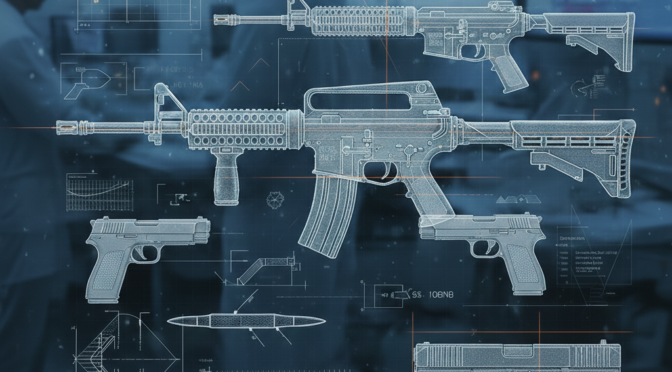
Firearms procurement within the non-defense federal sector has transitioned from administrative selection to a rigorous, data-driven discipline. This report identifies the top five federal agencies that maintain independent testing capabilities and stringent protocols to evaluate the small arms they adopt for their own personnel. Leading this effort is the Federal Bureau of Investigation (FBI), whose Ballistic Research Facility sets the national standard for terminal performance. U.S. Customs and Border Protection (CBP) and U.S. Immigration and Customs Enforcement (ICE) leverage massive field evaluations and high-volume endurance trials, often conducting joint solicitations that influence the entire Department of Homeland Security. The U.S. Secret Service (USSS) conducts specialized service-life testing tailored to high-stakes protection missions, while the Department of Energy (DOE) employs unique force-on-force performance testing to secure the nation’s nuclear complex. These agencies do not merely “issue” firearms; they subject them to thousands of rounds of endurance fire, environmental stress, and terminal ballistic analysis before a single agent is armed.
1. Federal Bureau of Investigation (FBI)
The FBI’s Ballistic Research Facility (BRF) at Quantico is the primary authority for evaluating small arms and ammunition for the Bureau’s 13,000+ agents. Its methodology, known globally as the “FBI Protocol,” was developed following the 1986 Miami shootout to replace hardware myths with empirical tissue-simulant data.1
1.1 Test Protocols and Methodology
The FBI’s evaluation process is divided into ammunition terminal performance and firearm mechanical reliability.
- Ammunition Protocol: Bullets are fired into 10 percent calibrated ballistic gelatin at 10 feet.3 The FBI mandates a penetration depth between 12 and 18 inches.3 The protocol includes eight “Test Events” through common urban barriers, including heavy clothing, 20-gauge steel, wallboard, plywood, and laminated automobile glass.
- Firearm Reliability: The Bureau subjects candidate handguns to a “gauntlet” of trials, including 25-yard accuracy tests and drop tests to ensure internal safety mechanisms remain engaged under impact.6
- Historical Context: In its 2016 solicitation, the FBI mandated a striker-fired 9mm platform without manual safeties, a decision based on internal studies showing 9mm Luger’s modern ballistics matched larger calibers while reducing shooter fatigue.
1.2 Current Small Arms Usage
| Category | Model | Caliber |
| Primary Duty | Glock 17M / 19M | 9x19mm |
| Sub-Compact | Glock 26 Gen5 | 9x19mm |
| Tactical Rifle | Colt M4 Carbine | 5.56x45mm |
2. U.S. Customs and Border Protection (CBP)
As the largest non-DOD law enforcement entity, CBP’s Law Enforcement Safety and Compliance Directorate (LESC) executes some of the most expensive and technically demanding firearms evaluations in the world.3
2.1 Test Protocols and Methodology
CBP’s testing philosophy emphasizes high-volume reliability and logistical modularity.
- 10,000-Round Endurance Test: For its 2019 duty handgun solicitation, CBP required full-size and mid-size models to pass a 10,000-round endurance trial at a certified NIJ laboratory.9
- Flashlight Integration: The first 4,000 rounds of the endurance test are fired with a weapon light (SureFire X300U) attached, and the remaining 6,000 are fired without it to assess how weight and vibrations affect frame integrity.9
- User Evaluations: CBP incorporated direct feedback from over 16,000 agents and officers into the final selection process.
- Modular Innovation: CBP’s testing led to the development of the Glock 47, a hybrid platform designed to maximize parts compatibility across their massive 45,000-person fleet.3
2.2 Current Small Arms Usage
| Category | Model | Caliber |
| Uniformed Duty | Glock 47 (Standard) | 9x19mm |
| Mid-Size Duty | Glock 19 Gen5 MOS | 9x19mm |
| Sub-Compact | Glock 26 Gen5 | 9x19mm |
3. U.S. Secret Service (USSS)
The USSS maintains a “zero-fail” mission that requires firearms capable of high-precision work and extreme durability. They operate the James J. Rowley Training Center (RTC), where firearms are vetted for protective intelligence and field use.11
3.1 Test Protocols and Methodology
The USSS protocol focuses on “service life” and sustained accuracy over tens of thousands of rounds.
- 20,000-Round Service Life: For rifle procurements, the USSS defines “service life” based on specific, acceptable levels of accuracy and velocity degradation over a 20,000-round lifespan.
- Accuracy Intervals: Rifles are tested for group consistency at the 10,000, 15,000, and 20,000-round marks to monitor bore wear and gas port erosion.
- Optics-Focused Evaluation: The USSS recently transitioned to the “MOS” (Modular Optic System) variants of the Glock platform, conducting independent research into Red Dot Sight (RDS) integration to ensure agents remain “threat-focused” under stress.
3.2 Current Small Arms Usage
| Unit | Model | Caliber |
| Special Agent | Glock 19 MOS Gen5 | 9x19mm |
| Special Ops (SOD) | Glock 47 MOS Gen5 | 9x19mm |
| Protection Rifle | Knight’s Armament SR-16 / KAC | 5.56x45mm |
4. U.S. Immigration and Customs Enforcement (ICE)
ICE’s Office of Firearms and Tactical Programs (OFTP) is responsible for the technical vetting of all firearms and tactical gear for Homeland Security Investigations (HSI) and Enforcement and Removal Operations (ERO).13
4.1 Test Protocols and Methodology
ICE utilizes a mix of administrative oversight and rigorous technical statements of work (SOW) to define their adoption standards.
- Technical Vetting: The OFTP vetting process for duty ammunition involves a specific SOW for up to 67.5 million rounds, delineating performance criteria that include velocity consistency and terminal expansion standards.15
- Safety Pivot: ICE recently demonstrated its evaluation rigor by discontinuing the authorization of the Sig Sauer P320 platform in 2025 following internal safety reviews and reports of unintentional discharges.
- Contract Leveraging: ICE frequently uses CBP’s Indefinite Delivery, Indefinite Quantity (IDIQ) contract vehicles but only after ensuring the weapon systems meet ICE’s specific mission requirements for ERO and HSI.16
4.2 Current Small Arms Usage
| Category | Model | Caliber |
| Duty Pistol | Glock 19 Gen5 MOS | 9x19mm |
| Secondary | Glock 26 Gen5 | 9x19mm |
| Specialized Units | Sig MPX / P365 (Undercover) | 9x19mm |
5. Department of Energy (DOE) / NNSA
The DOE’s Office of Enterprise Assessments (EA) and the National Nuclear Security Administration (NNSA) manage the protection of the nation’s nuclear arsenal. Their testing is centered on “high-consequence” scenarios where firearm failure could lead to radiological sabotage.18
5.1 Test Protocols and Methodology
DOE testing is highly operational, focusing on weapon system effectiveness within a broader defensive architecture.
- Force-on-Force (FoF) Security Exercises: These evaluate whether the firearms and protective forces can meet the “baseline adversary threat levels” defined by DOE threat policy.4
- Limited-Notice Performance Test (LNPT): These tests are conducted without prior announcement to the protective force to assess the real-world readiness of the equipment and the shooter’s proficiency under genuine surprise conditions.
- ROWS Standards: The DOE maintains its own technical standard (DOE-STD-1047-2008) for Remotely Operated Weapon Systems, evaluating safety functions and remote engagement capabilities that are unique to nuclear site defense.21
5.2 Current Small Arms Usage
| Role | Model | Caliber |
| Protective Force | M4 Carbine / AR-15 Variant | 5.56x45mm |
| Static Defense | ROWS (M240B / M249) | 7.62mm / 5.56mm |
| Specialized Teams | LPVO-equipped Precision Rifles | Various |
6. Summary Table of Agency Methodologies
| Agency | Primary Test Facility/Directorate | Flagship Methodology |
| FBI | Ballistic Research Facility (BRF) | 8-Event Ballistic Gelatin Protocol 3 |
| CBP | LESC / NIJ Laboratories | 10,000-Round Endurance & Field Trials 9 |
| USSS | Rowley Training Center (RTC) | 20,000-Round Service Life Reliability |
| ICE | Office of Firearms & Tactical Programs | Tactical Gear Vetting & Safety Pivots 16 |
| DOE | Office of Enterprise Assessments | Force-on-Force Performance Testing 20 |
Please share the link on Facebook, Forums, with colleagues, etc. Your support is much appreciated and if you have any feedback, please email us in**@*********ps.com. If you’d like to request a report or order a reprint, please click here for the corresponding page to open in new tab.
Sources Used
- Laboratory Services Firearm and Toolmark – ATF, accessed February 13, 2026, https://www.atf.gov/media/24176/download
- US Secret Service Adopts Glock 19 MOS Gen 5 in 9mm | Soldier Systems Daily, accessed February 13, 2026, https://soldiersystems.net/2019/08/01/us-secret-service-adopts-glock-19-mos-gen-5-in-9mm/
- GLOCK wins Contract for U.S. Customs and Border Protection, accessed February 13, 2026, https://us.glock.com/press-release/news-page/glock-is-awarded-contract-for-us-customs-and-border-protection
- FBI Body Armor Test Protocol, accessed February 13, 2026, https://www.bodyarmornews.com/wp-content/uploads/2013/10/FBI-body-armor-test-protocol-2008.pdf
- Firearms Instructor Training Program – American Council on Education, accessed February 13, 2026, https://www.acenet.edu/National-Guide/Pages/Course.aspx?org=U.S.+Customs+and+Border+Protection&cid=31e47f2a-727a-ed11-81ad-00224805f697&oid=92099b28-9016-e811-810f-5065f38bf0e1
- Firearms Examiner Training | Test Firing – National Institute of Justice, accessed February 13, 2026, https://nij.ojp.gov/nij-hosted-online-training-courses/firearms-examiner-training/module-08/test-firing
- Glock 19 vs Sig P320: Which is the best for Concealed Carry – Total Impact Guns & Range, accessed February 13, 2026, https://totalimpactguns.com/blog/glock-19-vs-sig-p320-which-is-the-best-for-concealed-carry/
- 9.2.1 Training | Internal Revenue Service, accessed February 13, 2026, https://www.irs.gov/irm/part9/irm_09-002-001
- GAO-25-108085, FEDERAL PROTECTIVE SERVICE: Actions Needed to Address Critical Guard Oversight and Information System Problems, accessed February 13, 2026, https://www.gao.gov/assets/gao-25-108085.pdf
- us customs and border protection, accessed February 13, 2026, https://www.nbpc2366.org/files/Glock-MOU.pdf
- The U.S. Nuclear Security Enterprise: Background and Possible Issues for Congress, accessed February 13, 2026, https://www.congress.gov/crs-product/R48194
- DSS Physical Security R&D: A Tradition of Protection and Innovation – State Department, accessed February 13, 2026, https://2021-2025.state.gov/dss-physical-security-rd-a-tradition-of-protection-and-innovation/
- Office of Firearms and Tactical Programs | ICE, accessed February 13, 2026, https://www.ice.gov/leadership/oftp
- After 20 years the Coast Guard is changing their Personal Defense Weapon, accessed February 13, 2026, https://www.mycg.uscg.mil/News/Article/3607044/after-20-years-the-coast-guard-is-changing-their-personal-defense-weapon/
- IRS Criminal Investigation Special Agent – IRS Careers, accessed February 13, 2026, http://jobs.irs.gov/resources/job-descriptions/irs-criminal-investigation-special-agent
- ICE Drops SIG P320s, Moves to Glock 19s for Duty Use Amid Civilian Market Pullback, accessed February 13, 2026, https://www.usacarry.com/ice-drops-sig-p320s-moves-to-glock-19s-for-duty-use-amid-civilian-market-pullback/
- Criminal Investigation | Internal Revenue Service, accessed February 13, 2026, https://www.irs.gov/compliance/criminal-investigation
- U.S. Department of Energy – DOE Directives, accessed February 13, 2026, https://www.directives.doe.gov/directives-documents/200-series/0227.1-BOrder-a-chg1-admchg/@@images/file
- United States Postal Inspection Service Annual Report 2022, accessed February 13, 2026, https://www.uspis.gov/wp-content/uploads/2023/07/508_USPIS-ARFY2022-annual-report.pdf
- ATF: Home, accessed February 13, 2026, https://www.atf.gov/
- Current Technical Standards List – DOE Standards – Department of Energy, accessed February 13, 2026, https://www.standards.doe.gov/standards-browse
- GAO-11-460, Diplomatic Security: Expanded Missions and Inadequate Facilities Pose Critical Challenges to Training Efforts, accessed February 13, 2026, https://www.gao.gov/assets/a319255.html