Executive Summary
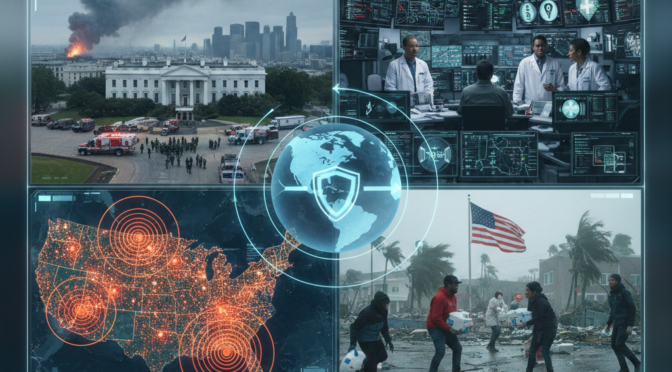
The national security landscape for the week ending February 14, 2026, is characterized by a fundamental restructuring of the United States’ institutional and strategic framework. This period marks a critical inflection point in the administration’s “America First” agenda, most notably signaled by the formal rebranding of the Department of Defense to the Department of War within the newly released 2026 National Defense Strategy (NDS). This shift reflects a broader thematic pivot toward “performative realism,” wherein traditional multilateralism is being systematically dismantled in favor of transactional diplomacy and a prioritized focus on domestic industrial capacity.1 This institutional overhaul coincides with a partial shutdown of the Department of Homeland Security (DHS), triggered by a legislative impasse over the controversial federal operations in Minneapolis, known as Operation Metro Surge.3 The domestic crisis, underscored by the fatal shootings of two U.S. citizens by federal agents, has exposed deep fractures in the national security apparatus and the chain of command.5
In the intelligence domain, the Director of National Intelligence (DNI), Tulsi Gabbard, faces converging crises. A whistleblower complaint alleging the suppression of sensitive National Security Agency (NSA) intelligence has reached a critical stage in the Senate Intelligence Committee, while a high-level security breach involving an encrypted messaging application—dubbed “Signalgate”—has roiled the Cabinet.7 Diplomatically, the 62nd Munich Security Conference (MSC) served as a global stage where the administration’s “bulldozer politics” met significant resistance from European allies, who characterize the current international order as “under destruction”.10 Despite these tensions, a tactical de-escalation with China is underway, evidenced by the pausing of several key tech bans ahead of an April summit with President Xi Jinping.12 This report provides an exhaustive analysis of these developments, their underlying mechanisms, and their implications for U.S. stability and global posture.
Domestic Stability and the Homeland Security Crisis
The DHS Shutdown and the Minneapolis Impasse
At midnight on February 14, 2026, the Department of Homeland Security (DHS) entered a partial shutdown after the United States Senate failed to reconcile differences on a full-year appropriations bill.14 This funding lapse is not a standard fiscal disagreement but a direct response to the escalations of Operation Metro Surge (OMS) in Minneapolis. The operation, which deployed approximately 3,000 federal agents into the metropolitan area, has been marred by allegations of racial profiling, excessive force, and the fatal shootings of Renee Good and Alex Pretti in January 2026.4
The legislative deadlock is rooted in Democratic demands for immediate reforms within Immigration and Customs Enforcement (ICE) and Customs and Border Protection (CBP). These demands include a prohibition on agents wearing masks during operations, a mandate for body cameras, and a requirement for judicial warrants for property entry.14 While Senate Republicans and the White House have signaled openness to body cameras, they have rejected the identification requirements, citing concerns that agents could become targets for “doxing” by activists.19 Consequently, while 95% of the federal government remains funded through September 30, 2026, the specific security functions of DHS are now operating under emergency “essential” status.3
The economic and social costs of Operation Metro Surge have reached a critical mass. In Minneapolis, city leaders estimate the total impact of the surge at over $203 million in a single month.4 This includes lost wages for residents afraid to go to work, substantial losses in small business revenue, and a 50% reduction in mental health client contact as vulnerable populations go “underground” to avoid federal detection.4 The city identifies this as a “protection crisis,” where the aggressive tactics intended to restore “law and order” have instead destabilized the local economy and civil society.4
| Economic Impact Sector | Description of Losses/Costs (One Month Snapshot) | Estimated Value (USD) |
| Livelihood | Lost wages and small business revenue (restaurants/hotels) | $132.7 Million 4 |
| Shelter | Additional rent assistance needed due to income loss | $15.7 Million 4 |
| Food Security | Weekly cost to support 76,200 food-insecure residents | $2.4 Million 4 |
| Operations | City staff payroll, police overtime, and logistics | $6.0 Million 4 |
| Total Citywide Impact | Aggregated losses to economy and city operations | $203.1 Million 4 |
Despite the shutdown, the White House claims that over 4,000 “criminal illegal aliens” have been removed from Minnesota since the operation began, characterizing the surge as a “landmark achievement” against “open border policies”.21 However, the reality of the shutdown means that while ICE and CBP remain operational due to significant carry-over funding from the 2025 “One Big Beautiful Bill” Act, other essential services are being throttled.3 TSA screeners and Coast Guard personnel are now working without pay, leading to warnings of major travel disruptions over the Presidents’ Day weekend, which is expected to see over 7.4 million domestic departures.15
Operation Metro Surge: Use of Force and Civil Unrest
The fatalities of Renee Good and Alex Pretti have become central to the national debate on federal overreach. Good, a 37-year-old mother, was killed on January 7 while driving away from ICE officers; subsequent evidence suggested that the officer who fired was not in the vehicle’s path, contradicting the initial federal narrative that Good attempted to “run over” agents.5 Alex Pretti, an ICU nurse, was killed on January 24 while filming federal agents; video evidence showed Pretti was pinned to the ground and disarmed of his legally carried firearm before being shot multiple times in the back.5
These incidents have triggered a federal perjury probe into ICE testimonies after video evidence repeatedly contradicted official statements.23 The Hennepin County Sheriff’s office reported at least 42 arrests on February 14 as protesters marked the one-month anniversary of Good’s death.6 Minnesota Attorney General Keith Ellison has testified before the Senate Committee on Homeland Security, calling for an immediate end to the surge and a full accounting of all individuals detained.16 The long-term implications of these events include a profound erosion of trust in federal law enforcement and a potential redesign of how DHS interacts with “Welcoming Cities” that resist federal immigration directives.4
Intelligence Community: Oversight and Communication Failures
The Gabbard Whistleblower Allegations
The Office of the Director of National Intelligence (ODNI) is currently embroiled in a high-stakes oversight battle involving a whistleblower complaint that alleges DNI Tulsi Gabbard intentionally blocked the distribution of a sensitive NSA intelligence report.7 The intelligence in question reportedly stems from an NSA intercept of a phone call between two foreign nationals who discussed a person “close to the Trump White House”.7 The whistleblower claims that instead of allowing the report to be disseminated through routine channels to the broader intelligence community and Congress, Gabbard delivered a physical copy to White House Chief of Staff Susie Wiles and then ordered the NSA to halt further publication.7
The legal and procedural fallout of this event is significant. Senator Mark Warner has characterized the nine-month delay in informing Congress—from May 2025 to February 2026—as a deliberate attempt to “bury the complaint”.25 The ODNI general counsel has countered by warning the whistleblower’s attorney, Andrew Bakaj, that sharing the top-secret details of the complaint with Congress could result in criminal charges, a move seen by critics as an act of intimidation.24
The second-order effects of this rift include a breakdown in the “Gang of Eight” oversight mechanism. Lawmakers have requested the underlying raw intelligence to determine if the intercept contained vital national security information or merely “gossip” intended as disinformation by a foreign power.8 The credibility of the ODNI is further strained by the fact that successive inspectors general did not find the complaint “credible,” yet the procedural anomalies—such as the restriction of report distribution for political purposes—remain a focal point of the Senate Intelligence Committee’s February 11 hearing.7
Signalgate: The Erosion of Communications Security
Parallel to the whistleblower crisis, the “Signalgate” incident has exposed systemic vulnerabilities in how senior national security officials handle pre-decisional communications. A Signal group chat, intended to coordinate air strikes against Houthi rebels in Yemen, inadvertently included Jeffrey Goldberg, the editor-in-chief of The Atlantic.9 The chat featured high-level participants including DNI Gabbard, CIA Director John Ratcliffe, Secretary of War Pete Hegseth, and Vice President JD Vance.9
While the administration has dismissed the breach as a “glitch,” the subsequent publication of the chat transcripts by The Atlantic revealed that officials discussed weapon systems, strike sequences, and specific military targets in a “candid and sensitive” manner.9 Democratic lawmakers, led by Representative Raja Krishnamoorthi, have argued that these messages constitute a leak of classified information that could have been intercepted by Russia or China, potentially allowing the Houthis to reposition assets and endanger U.S. service members.9
| Signalgate Participant | Defense and Testimony Summary (Week of Feb 8-14) |
| Tulsi Gabbard (DNI) | Admitted “mistake” but insisted no “classified” war plans were shared; information was “sensitive” but unclassified.9 |
| John Ratcliffe (CIA) | Defended Signal as a secure platform; emphasized the “remarkable success” of the mission over the communication lapse.9 |
| Mike Waltz (NSA) | Accepted responsibility for the inadvertent inclusion of the journalist; currently leading the NSC internal review.9 |
| Pete Hegseth (SECWAR) | Facing calls for resignation; accused by Democrats of sharing tactical details while potentially “under the influence”.9 |
This incident reflects a third-order risk: the normalization of “unconventional” and “unstructured” leadership, which, while bypassing bureaucratic gridlock, simultaneously bypasses the stringent security protocols governing military and intelligence operations.30 The ongoing National Security Council investigation will likely determine if this represents a violation of the Arms Export Control Act or the National Security Act of 1947.
National Defense: The Reindustrialization Strategy
Rebranding the “Department of War” and the 2026 NDS
The release of the 2026 National Defense Strategy (NDS) has formally codified the rebranding of the Department of Defense as the Department of War.1 This change is not merely cosmetic; it signals a philosophical return to a strategy of “Peace Through Strength” and “Deterrence by Denial”.1 The NDS identifies four key priorities: defending the homeland, deterring China, increasing burden-sharing with allies, and “supercharging” the U.S. defense industrial base.1
The NDS explicitly notes that the Indo-Pacific will soon comprise half of the global economy, and the administration views Chinese dominance in this region as a “veto” over American economic access.1 To counter this, the strategy calls for bolstering the military capabilities of the “First Island Chain” partners—Japan, the Philippines, and Taiwan—while simultaneously critiquing these allies for not contributing enough to their own defense.1 The strategy operates on the premise that U.S. military power should be used to “incentivize and enable” allies, but it warns that the U.S. will act unilaterally to secure its immediate interests if allies do not meet spending thresholds.1
The America First Arms Transfer Strategy (EO 14383)
The most tangible implementation of the new NDS is the “America First Arms Transfer Strategy,” established via Executive Order 14383 on February 6, 2026.33 This strategy reorders the hierarchy of U.S. arms transfers, prioritizing commercial considerations and the health of the domestic industrial base over traditional high-level strategic statecraft.35
The strategy leverages over $300 billion in annual defense sales to achieve the following:
- Reindustrialization: Foreign purchases are being used as capital to build U.S. production capacity and expand manufacturing.34
- Prioritization: A forthcoming “Sales Catalog” will prioritize platforms and systems that support U.S. acquisition goals, essentially turning allies into funding sources for American R&D.33
- Efficiency Reforms: The EO directs the Department of War to streamline Congressional notifications and “onerous” regulations like Enhanced End-Use Monitoring (EEUM) and Third-Party Transfer (TPT) reviews.35
For industry participants, this represents a significant shift toward a more policy-driven and centralized export environment. A new “Promoting American Military Sales Task Force,” chaired by the National Security Council, will oversee these efforts, aiming to increase the speed of delivery to partners who “demonstrate sustained investment in their own defense capabilities”.33 Critics, however, argue that this “capricious” approach may drive long-term partners to diversify their defense suppliers to avoid dependency on an increasingly unpredictable Washington.35
The Uncrewed Revolution: MQ-9B and Gambit
The technological focus of the Department of War remains fixed on the “uncrewed revolution.” General Atomics’ recent displays at the 2026 World Defense Show in Riyadh highlighted the MQ-9B and the Gambit Series as the foundational elements of future regional air dominance.39 The Gambit series uses a common core to support four distinct uncrewed aerial vehicles (UAVs) tailored for high-risk operations in contested environments.
| Gambit Variant | Primary Mission Focus | Key Capability/Technical Feature |
| Gambit 1 | ISR (Intelligence, Surveillance, Reconnaissance) | Long-endurance, high-altitude sensing 39 |
| Gambit 2 | Air-to-Air Combat | Optimized for speed and maneuverability; equipped with air-to-air weapons 39 |
| Gambit 3 | Adversary Air (Training) | Simulates fifth-generation threats for training sorties 39 |
| Gambit 4 | Stealth Combat Reconnaissance | Tail-less, swept-wing design for high-risk contested zones 39 |
This modular approach allows for rapid scaling of capabilities based on theater-specific threats, particularly in the Indo-Pacific where stealth and endurance are paramount.39 The integration of these uncrewed systems into the “America First” strategy suggests a future where the U.S. exports “autonomous security” packages to allies, further reducing the need for direct U.S. personnel deployment.1
Foreign Affairs and Geopolitical Risk
The Munich Security Conference: A World “Under Destruction”
The 62nd Munich Security Conference (MSC) opened on February 13, 2026, under the ominous theme “Under Destruction”.40 The conference’s flagship report argues that the U.S.-led post-1945 international order is being systematically dismantled by “wrecking-ball politics”.10 Ironically, the report identifies the President of the United States—the architect of the post-war order—as the most prominent of the “demolition men”.10
Secretary of State Marco Rubio attended the conference with the difficult task of reassuring allies while maintaining the administration’s hardline stance on burden-sharing.43 Rubio argued that the “old world is gone” and that the “dangerous delusion” of the “end of history” must be replaced with a realistic assessment of nationhood and borders.43 He emphasized that the U.S. remains “forever tied” to Europe but insisted on a “European-led” NATO where the continent takes primary responsibility for its own defense.43
Key developments from Munich include:
- German Defense Spending: Chancellor Friedrich Merz highlighted that Germany has doubled its defense spending since 2021, targeting over $150 billion by 2029.46
- The Greenland Issue: Tensions persisted over the U.S. administration’s threats of sanctions against allies that bolstered Greenland’s defense, a move Rubio described as something the U.S. “feels good about” despite European outrage.1
- NATO Evolution: Secretary General Mark Rutte noted a “shift in mindset” where all NATO members are now reaching the 2% spending target, with an agreement in The Hague to push toward 5%.46
Sino-American Relations: Tech Ban Pause and the April Summit
In a significant tactical pivot, the administration has paused several planned technology bans against Chinese entities ahead of an April 2026 summit between President Trump and President Xi Jinping.12 This “trade truce” is designed to avoid antagonizing Beijing during a period of intense economic negotiation.12
Paused measures include:
- Bans on China Telecom’s U.S. operations and sales of Chinese equipment for U.S. data centers.13
- Bans on domestic sales of routers from TP-Link and restrictions on China Unicom and China Mobile.47
- Prohibitions on the sale of Chinese electric trucks and buses in the U.S..47
In exchange, China has reportedly pledged to delay export restrictions on rare-earth minerals critical to the U.S. tech sector.12 However, analysts like Matt Pottinger warn that this pause allows Beijing to acquire new areas of leverage over the U.S. economy, particularly as data center construction for AI surges.12 This illustrates the administration’s “transactional realism”—willingness to sacrifice long-term tech decoupling for short-term mineral supply security.
Global Conflict Theaters: Ukraine and the Middle East
The war in Ukraine has entered its fourth year of “protracted war,” with Russia intensifying its hybrid warfare campaign and a “Foreign Fighter Pipeline” that luring thousands of men from the Global South—including India, Nepal, Cuba, and Kenya—to the frontlines.50 Ukraine continues to require approximately $100 billion in annual military and financial aid, but U.S. support has become increasingly conditional and “volatile”.42 NATO Secretary General Rutte characterized the Russian advance as having the “stilted speed of a garden snail,” yet the staggering losses—estimated at 35,000 deaths in December 2025 alone—have not deterrred the Kremlin’s war of attrition.46
In the Middle East, a state of “uneasy peace” persists following the 2025 Israel-Iran kinetic escalation.51 The U.S. is currently engaged in a high-stakes pressure campaign, deploying a second aircraft carrier, the USS Gerald R. Ford, to join the USS Abraham Lincoln in the region.50 This build-up is intended to force Iran into a new nuclear agreement, but experts warn that Tehran’s response could inadvertently trigger a wider regional war.50 Simultaneously, the Red Sea remains a persistent maritime flashpoint, with traffic through the Suez Canal remaining 60% lower than pre-crisis levels despite a reduction in Houthi attacks.52
Space Policy and Technological Infrastructure
Crew-12, Artemis II, and the Moon Race
The week ending February 14 saw the launch and docking of Crew-12 to the International Space Station (ISS).54 This routine mission gained urgency after Crew-11’s early return, leaving the ISS temporarily unattended.54 Concurrently, the Artemis II mission—the first crewed flight around the Moon—has been delayed to early March due to liquid hydrogen leaks during wet dress rehearsals.54
These delays have intensified concerns among space policy experts that China may land “taikonauts” on the Moon before the U.S. returns astronauts.54 Former NASA Administrator Jim Bridenstine, addressing the Maryland Space Business Roundtable, highlighted that the Human Landing Systems (HLS) remain behind schedule, potentially handing Beijing a significant geopolitical and symbolic victory in the “Lunar Race”.54
Satellite and Telecommunications Streamlining Act
Legislative efforts to maintain the U.S. lead in space infrastructure are centered on the Satellite and Telecommunications Streamlining Act (S. 3639).54 The bill seeks to speed up FCC approval for commercial satellite licenses, a critical necessity as companies like SpaceX file plans for “one million satellites” to serve as orbiting data centers.54
| Legislative Feature | Description of Policy Shift | Key Proponent/Opponent |
| “Deemed Granted” Rule | Applications not acted upon within a set period are automatically approved 54 | Sen. Ted Cruz (Proponent) 54 |
| Ground Segment Focus | Amending the bill to apply streamlining only to ground stations, not the satellites themselves 54 | Sen. Maria Cantwell (Proponent) 54 |
| National Security Review | Enhanced scrutiny of orbital debris and “mega-constellation” congestion 55 | Space Summit 2026 (Singapore) 55 |
The second-order implication of this legislation is the creation of a “permissive” orbital environment that prioritizes commercial speed over long-term orbital safety.54 This mirrors the “America First” deregulation seen in the Arms Transfer Strategy, where bureaucratic “inefficiency” is viewed as the primary threat to national competitiveness.37
Economic and Industrial Outlook
Appropriations and “Regular Order”
On February 12, 2026, the House of Representatives passed H.R. 7006, a major appropriations package covering Fiscal Year 2026.56 The bill achieves a 16% reduction in spending compared to FY25 while realigning investments to support the “Peace Through Strength” mission.56 Key components include:
- IRS Funding Cuts: Enforcement funding for the IRS is being redirected to “customer service” for the Working Families Tax Cut filing season.56
- CFIUS Strengthening: Targeted investments in the Committee on Foreign Investment in the United States (CFIUS) to protect American innovation from hostile foreign acquisition.56
- Border Security: Significant allocations for Customs and Border Protection (CBP) to stem the flow of fentanyl.56
This “regular order” appropriations process is intended to signal fiscal responsibility, yet it has directly contributed to the DHS shutdown by excluding the Department of Homeland Security from the broader bipartisan funding agreement.3 The administration is using this “funding by exclusion” as a tool of political leverage to force Democratic concessions on immigration enforcement.14
Energy Security and Geopolitics
The European energy sector continues to face “persistent uncertainty” due to the ongoing conflict in Ukraine and tensions in the Arctic and North Sea.58 Geopolitical energy risk in 2026 is framed by three structural forces: the fragmentation of global cooperation, interventionism through protectionist policies, and the politicization of climate narratives.58 For the U.S., this has meant a surge in liquefied natural gas (LNG) and crude oil exports to Taiwan and European allies, often tied to broader security agreements where “energy as a foreign policy tool” is becoming the norm.49
Conclusion: Strategic Recommendations and Outlook
The events of the week ending February 14, 2026, suggest that the United States has entered a period of “controlled volatility.” The administration’s willingness to disrupt established institutional norms—from the Signal chats of the Cabinet to the rebranding of the Department of War—is intended to break “institutional inertia” and compel a global realignment.1 However, this strategy carries profound risks. The DHS shutdown and the Minneapolis civil crisis illustrate that domestic instability can paralyze the very agencies tasked with national security.
Second and Third-Order Analytical Inferences:
- Deterrence vs. Friction: The “Department of War” branding and aggressive arms transfer policies may successfully deter peer adversaries in the short term, but they are simultaneously creating high-level friction with allies that may lead to the “fragmentation” of Western security architectures.
- The Information Integrity Crisis: The combination of “Signalgate” and the Gabbard whistleblower allegations suggests a systemic vulnerability in the IC. If senior leaders prioritize “unconventional” communication over secure protocols, foreign adversaries (Russia/China) will likely exploit these gaps for cognitive warfare and tactical advantage.
- The Industrial-Strategic Loop: By linking arms transfers to domestic reindustrialization, the U.S. is creating a self-reinforcing loop where foreign policy is dictated by the needs of the defense industrial base. This may lead to an “over-prioritization” of high-end kinetic platforms at the expense of non-kinetic and diplomatic tools of influence.
- Domestic Federalism Strain: The clash between federal agents and “Welcoming Cities” in Minneapolis, resulting in a DHS shutdown, suggests that immigration enforcement has moved from a policy debate to a “federalist crisis” that threatens the basic functionality of the U.S. government.
Recommended Strategic Actions:
- Institutional Stabilization: The National Security Council must immediately finalize and release the findings of the “Signalgate” review to restore confidence in Cabinet-level communications.
- Oversight Resolution: The Senate Intelligence Committee should proceed with an unclassified briefing on the Gabbard whistleblower complaint to provide transparency and mitigate the risk of a prolonged “intelligence-oversight deadlock.”
- DHS Funding De-escalation: A short-term, “clean” funding extension for DHS is necessary to ensure that “essential” personnel (TSA/Coast Guard) are compensated, particularly ahead of the high-volume Presidents’ Day travel period.
- Sino-American Summit Calibration: The administration should utilize the tech ban pause to secure verifiable commitments from Beijing on the non-weaponization of rare-earth minerals before finalizing any broader “Trade Truce” in April.
The “Under Destruction” world order is not a vacuum but a transition. The United States’ success in 2026 will depend on whether its leaders can effectively “build” a new, more sustainable strategic design while the structures of the old order are dismantled. Failure to do so risks a world that privileges short-term “wrecking-ball” victories over long-term national and global stability.10
Please share the link on Facebook, Forums, with colleagues, etc. Your support is much appreciated and if you have any feedback, please email us in**@*********ps.com. If you’d like to request a report or order a reprint, please click here for the corresponding page to open in new tab.
Sources Used
- The 2026 National Defense Strategy Won’t Achieve Foreign Policy …, accessed February 14, 2026, https://www.americansecurityproject.org/the-2026-national-defense-strategy-foreign-policy-goals/
- February | 2026 | American Diplomacy Est 1996, accessed February 14, 2026, https://americandiplomacy.web.unc.edu/2026/02/
- Beltway Buzz, February 13, 2026, accessed February 14, 2026, https://ogletree.com/insights-resources/blog-posts/beltway-buzz-february-13-2026/
- Operation Metro Surge results in $203 million impact on Minneapolis, accessed February 14, 2026, https://www.minneapolismn.gov/news/2026/february/oms-impact/
- MN Oversight Report, accessed February 14, 2026, https://oversightdemocrats.house.gov/imo/media/doc/mn_oversight_report.pdf
- Police arrest protesters at Minneapolis federal building on 1-month anniversary of woman’s death, accessed February 14, 2026, https://apnews.com/article/renee-good-minnesota-ice-shooting-memorial-8cf815a6c4b20f1f79874d65c9f1361f
- NSA detected foreign intelligence phone call about a person close …, accessed February 14, 2026, https://www.theguardian.com/us-news/2026/feb/07/nsa-foreign-intelligence-trump-whistleblower
- DNI whistleblower complaint includes details about intercept of call between foreign nationals discussing person close to Trump, sources say, accessed February 14, 2026, https://www.cbsnews.com/news/dni-whistleblower-complaint-nsa-intercept-sources/
- WATCH: Gabbard calls Signal chats a ‘mistake’ as Trump officials face House Intelligence Committee | PBS News, accessed February 14, 2026, https://www.pbs.org/newshour/politics/watch-live-trump-officials-testify-in-house-hearing-as-more-details-on-signal-chat-released
- Introduction: Under Destruction – Munich Security Conference – Münchner Sicherheitskonferenz, accessed February 14, 2026, https://securityconference.org/en/publications/munich-security-report/2026/introduction/
- Munich Security Report 2026 – Münchner Sicherheitskonferenz, accessed February 14, 2026, https://securityconference.org/en/publications/munich-security-report/2026/
- Trump pauses China tech bans ahead of Xi summit, accessed February 14, 2026, https://www.japantimes.co.jp/news/2026/02/13/world/trump-pause-china-tech-curbs/
- US Suspends Key Tech Restrictions On China Ahead Of Trump-Xi Summit In April: Report, accessed February 14, 2026, https://finviz.com/news/310107/us-suspends-key-tech-restrictions-on-china-ahead-of-trump-xi-summit-in-april-report
- Budget impasse shuts down US Department of Homeland Security, but ICE remains operational, accessed February 14, 2026, https://www.timesofisrael.com/liveblog_entry/budget-impasse-shuts-down-us-department-of-homeland-security-but-ice-remains-operational/
- Homeland Security Faces Midnight Shutdown After Senate Funding Bill Fails – VisaHQ, accessed February 14, 2026, https://www.visahq.com/news/2026-02-14/us/homeland-security-faces-midnight-shutdown-after-senate-funding-bill-fails/
- February 12, 2026 Press Release, accessed February 14, 2026, https://www.ag.state.mn.us/Office/Communications/2026/02/12_SenateCommitteeRemarks.asp
- Operation Metro Surge – Wikipedia, accessed February 14, 2026, https://en.wikipedia.org/wiki/Operation_Metro_Surge
- US Homeland Security shuts down partially as Democrats, Republicans fail to agree on funding; ICE remains operational, accessed February 14, 2026, https://timesofindia.indiatimes.com/world/us/us-homeland-security-shuts-down-partially-as-democrats-republicans-fail-to-agree-on-funding-ice-remains-operational/articleshow/128335850.cms
- Much of DHS runs out of money after ICE negotiations falter, accessed February 14, 2026, https://www.washingtonpost.com/politics/2026/02/13/dhs-shutdown-congress/
- Barrett Statement on Democrats’ Reckless Shutdown of Homeland Security Putting Americans at Risk, accessed February 14, 2026, https://barrett.house.gov/media/press-releases/barrett-statement-democrats-reckless-shutdown-homeland-security-putting
- New Milestone in Operation Metro Surge: 4000+ Criminal Illegals Removed from Minnesota Streets – The White House, accessed February 14, 2026, https://www.whitehouse.gov/articles/2026/02/new-milestone-in-operation-metro-surge-4000-criminal-illegals-removed-from-minnesota-streets/
- 6 Deaths in ICE Custody and 2 Fatal Shootings: A Horrific Start to 2026, accessed February 14, 2026, https://www.americanimmigrationcouncil.org/blog/ice-deaths-shootings-2026/
- Perjury probe into ICE testimonies marks latest shooting where evidence contradicts Trump officials, accessed February 14, 2026, https://www.kgw.com/article/syndication/associatedpress/perjury-probe-into-ice-testimonies-marks-latest-shooting-where-evidence-contradicts-trump-officials/616-aca37a56-806b-43ec-b57a-285e8ad1b5c8
- Gabbard’s office warns attorney against sharing classified complaint with Congress – KVUE, accessed February 14, 2026, https://www.kvue.com/article/syndication/associatedpress/gabbards-office-warns-attorney-against-sharing-classified-complaint-with-congress/616-eafa0ea5-e6ec-406b-8eb5-691da2ec8a01
- Intelligence Panel Grills Gabbard Over Classified Complaint Delay – Legis1, accessed February 14, 2026, https://legis1.com/news/whistleblower-complaint-delay-gabbard/
- US intel chief Gabbard calls claim she hid whistleblower complaint a ‘blatant lie’, accessed February 14, 2026, https://www.timesofisrael.com/us-intel-chief-gabbard-says-claim-she-hid-whistleblower-complaint-a-blatant-lie/
- WhistleblowerAid.org Client Reveals DNI Director Gabbard Violated the Law by Hiding High-Level Intelligence from Congress for Nearly Eight Months, accessed February 14, 2026, https://whistlebloweraid.org/whistlebloweraid-org-client-reveals-dni-director-gabbard-violated-the-law-by-hiding-high-level-intelligence-from-congress-for-nearly-eight-months/
- Gabbard’s office denies wrongdoing amid scrutiny over whistleblower complaint, accessed February 14, 2026, https://www.nextgov.com/people/2026/02/gabbards-office-denies-wrongdoing-amid-scrutiny-over-whistleblower-complaint/411287/
- WATCH: Gabbard questioned on participating in Signal chat where war plans allegedly leaked | PBS News, accessed February 14, 2026, https://www.pbs.org/newshour/politics/watch-gabbard-questioned-on-participating-in-signal-chat-where-war-plans-allegedly-leaked
- Intel chiefs stand by defense of Signal chat at House hearing after new texts emerge, accessed February 14, 2026, https://www.cbsnews.com/news/house-intelligence-committee-hearing-gabbard-ratcliffe-signal-group-chat-testify/
- Intelligence chiefs deny they discussed war plans on Signal in House hearing, accessed February 14, 2026, https://www.theguardian.com/us-news/2025/mar/26/signal-leak-house-committee-hearing
- WATCH: Tulsi Gabbard testifies at confirmation hearing for national intelligence director, accessed February 14, 2026, https://www.pbs.org/newshour/politics/watch-live-tulsi-gabbard-testifies-at-confirmation-hearing-for-national-intelligence-director
- White House Announces America First Arms Transfer Strategy – Torres Trade Law, accessed February 14, 2026, https://www.torrestradelaw.com/posts/White-House-Announces-America-First-Arms-Transfer-Strategy/428
- Fact Sheet: President Donald J. Trump Establishes the America First Arms Transfer Strategy, accessed February 14, 2026, https://www.whitehouse.gov/fact-sheets/2026/02/fact-sheet-president-donald-j-trump-establishes-the-america-first-arms-transfer-strategy/
- The “America First Arms Transfer Strategy” Reorders US Arms Transfer Priorities, accessed February 14, 2026, https://www.stimson.org/2026/the-america-first-arms-transfer-strategy-reorders-us-arms-transfer-priorities/
- Executive Order Establishes US Arms Transfer Strategy – ExecutiveGov, accessed February 14, 2026, https://www.executivegov.com/articles/executive-order-us-arms-transfer-strategy
- Establishing an America First Arms Transfer Strategy – The White House, accessed February 14, 2026, https://www.whitehouse.gov/presidential-actions/2026/02/establishing-an-america-first-arms-transfer-strategy/
- “Establishing An America First Arms Transfer Strategy” Executive Order: Key Takeaways and Implications for Defense Companies – Fluet, accessed February 14, 2026, https://fluet.law/establishing-an-america-first-arms-transfer-strategy-executive-order-key-takeaways-and-implications-for-defense-companies/
- The uncrewed revolution: MQ-9B and Gambit Series forge a path to regional air dominance, accessed February 14, 2026, https://breakingdefense.com/2026/02/the-uncrewed-revolution-mq-9b-and-gambit-series-forge-a-path-to-regional-air-dominance/
- Munich Security Conference 2026: Germany as host in times of geopolitical upheaval, accessed February 14, 2026, https://www.auswaertiges-amt.de/en/aussenpolitik/2755890-2755890
- Munich Security Conference 2026 – Münchner Sicherheitskonferenz, accessed February 14, 2026, https://securityconference.org/en/medialibrary/collection/muenchner-sicherheitskonferenz-2026-munich/
- Executive Summary of the Munich Security Report 2026 – Münchner Sicherheitskonferenz, accessed February 14, 2026, https://securityconference.org/en/publications/munich-security-report/2026/executive-summary/
- Rubio reassures trans-Atlantic ties with Europe at Munich Security Conference, accessed February 14, 2026, https://www.kosu.org/news/2026-02-14/rubio-reassures-trans-atlantic-ties-with-europe-at-munich-security-conference
- Munich security conference live: Starmer addresses summit after Rubio warns against west’s ‘dangerous delusion’, accessed February 14, 2026, https://www.theguardian.com/world/live/2026/feb/14/munich-security-conference-live-marco-rubio-keir-starmer-eu-europe-ukraine-russia-latest-news-updates?page=with:block-69902df78f08a3236d0645b0
- Secretary of State Marco Rubio Remarks to the Press, accessed February 14, 2026, https://www.state.gov/releases/office-of-the-spokesperson/2026/02/secretary-of-state-marco-rubio-remarks-to-the-press-7
- Doorstep statement, accessed February 14, 2026, https://www.nato.int/en/news-and-events/events/transcripts/2026/02/13/doorstep-statement-by-the-nato-secretary-general-at-the-munich-security-conference
- Early Edition: February 13, 2026, accessed February 14, 2026, https://www.justsecurity.org/131555/early-edition-february-13-2026/
- Trump Pauses China-Focused Tech Controls Ahead of April Beijing Visit – 아시아경제, accessed February 14, 2026, https://cm.asiae.co.kr/en/article/2026021301265640798
- U.S. Pauses China Tech Restrictions Before Trump-Xi Meeting, accessed February 14, 2026, https://tradingeconomics.com/united-states/balance-of-trade/news/525537
- The Cipher Brief – Daily National Security Brief, accessed February 14, 2026, https://www.thecipherbrief.com/
- The world in 2026 | Chatham House – International Affairs Think Tank, accessed February 14, 2026, https://www.chathamhouse.org/publications/the-world-today/2025-12/world-2026
- Middle East Geopolitical Risk 2026 – SpecialEurasia, accessed February 14, 2026, https://www.specialeurasia.com/2025/12/28/middle-east-risk-2026/
- Analysis of maritime geopolitics on early 2026: The Red Sea Factor, accessed February 14, 2026, https://isdo.ch/analysis-of-maritime-geopolitics-on-early-2026-the-red-sea-factor/
- What’s Happening in Space Policy February 8-14, 2026 …, accessed February 14, 2026, https://spacepolicyonline.com/news/whats-happening-in-space-policy-february-8-14-2026/
- Global Summits to Watch in 2026: Bracing for a New Global (Dis)order?, accessed February 14, 2026, https://www.cfr.org/articles/global-summits-watch-2026-bracing-new-global-disorder
- House Passes H.R. 7006, Strengthening National Security, Protecting Economic Growth, and Restoring Regular Order, accessed February 14, 2026, https://appropriations.house.gov/news/press-releases/house-passes-hr-7006-strengthening-national-security-protecting-economic-growth
- FY26 Homeland Security Report – Senate Appropriations Committee, accessed February 14, 2026, https://www.appropriations.senate.gov/download/fy26-homeland-security-report
- Geopolitical Outlook – February 2026 – Montel, accessed February 14, 2026, https://montel.energy/resources/reports/geopolitical-outlook-february-2026