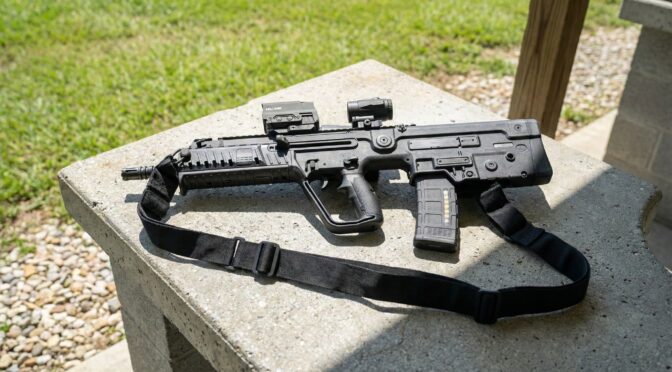
The transition of the Israel Defense Forces (IDF) from traditional small arms architectures to the Tavor platform represents a significant shift in twenty-first-century military engineering. Developed by Israel Weapon Industries (IWI), the Tavor series—encompassing the SAR, X95, and Tavor 7—was engineered to address the shortcomings of the M16 and Galil families in urban combat and mechanized infantry roles.1 By relocating the action behind the fire control group, IWI successfully produced a weapon system that provides full-length rifle ballistics within the physical footprint of a submachine gun.2
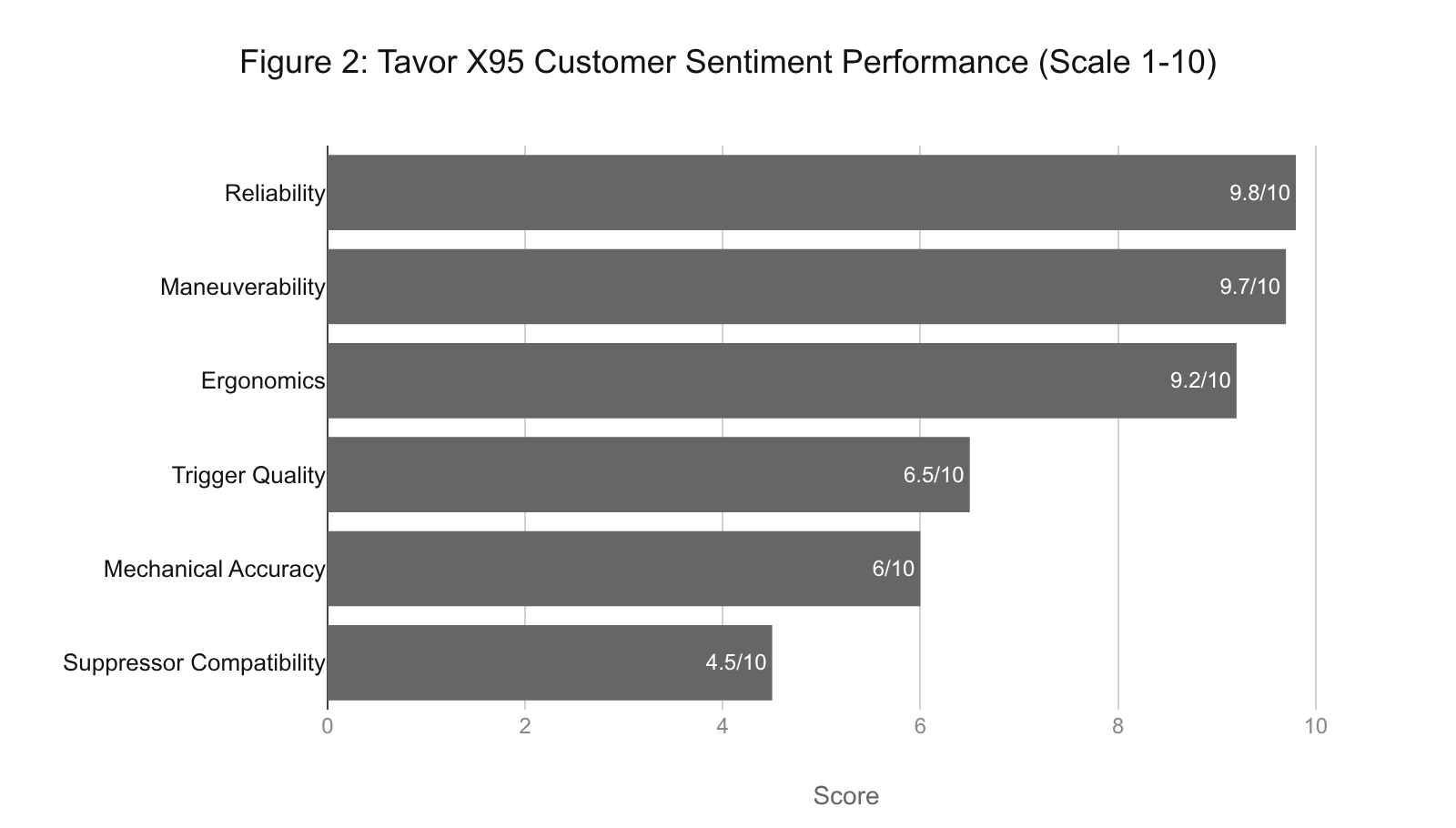
This analysis indicates that the Tavor series is defined by a design philosophy that prioritizes mechanical reliability and combat durability over match-grade precision. The use of a long-stroke gas piston in the 5.56 NATO variants creates a robust, self-cleaning action capable of functioning in extreme environmental conditions, albeit at the cost of increased reciprocating mass and complex barrel harmonics.3 Customer sentiment remains positive regarding ergonomics and balance, particularly with the X95 iteration, which corrected the ergonomic idiosyncrasies of the original SAR model.4
However, the platform faces ongoing scrutiny regarding mechanical accuracy, which typically hovers in the 2.5 to 4 minute-of-angle (MOA) range, and the challenges of suppressed fire due to gas leakage from the polymer chassis. Despite these critiques, the Tavor series remains the market leader in the bullpup segment. The Tavor 7 further expands the platform’s utility by introducing a short-stroke piston and tool-less ambidextrous conversion for the 7.62x51mm NATO cartridge.6 Ultimately, the Tavor is a specialized tool offering distinct advantages for close-quarters engagement and vehicle-borne operations, provided the user accepts the trade-off in long-range precision.
1. Historical Foundations and Strategic Necessity
The development of the Tavor was a direct response to the operational failures of traditional rifle designs in Middle Eastern combat theaters. Following the 1967 Six-Day War and the 1973 Yom Kippur War, the IDF identified critical deficiencies in the FN FAL and the early Galil.1 The FN FAL was excessively long for rapid vehicular deployment and suffered from reliability issues in desert silt.1 The Galil, while reliable, proved too heavy and lacked the modularity for emerging technologies.1
In 1995, Israel Military Industries tasked designers Zalmen Shebs and Tamir Porat with creating an infantry weapon offering 16-inch barrel ballistics within a carbine-length package. The resulting Tavor-21 (TAR-21) utilized a bullpup configuration to reduce overall length by approximately 10 inches compared to an M4 carbine. By 2001, the Tavor entered mass production, and it was adopted as the IDF’s standard-issue rifle in 2006.
Table 1: Historical Comparison of IDF Service Rifles
Metric
FN FAL (Paratrooper)
IMI Galil SAR
IWI Tavor X95
Barrel Length
17.0 inches
13.0 inches
16.5 inches
Overall Length
39.0 inches
33.1 inches
26.1 inches
Weight (Empty)
8.8 lbs
8.2 lbs
7.9 lbs
Action Type
Short-stroke Piston
Long-stroke Piston
Long-stroke Piston
Primary Complaint
Sand Sensitivity
Excessive Weight
Gassy (Suppressed)
2. Engineering Evolution: From SAR to X95
The Tavor SAR’s introduction to the U.S. civilian market in 2013 provided a reliable bullpup alternative, but iterative design based on military feedback led to the X95, which corrected several SAR-era issues.2
2.1 Ergonomic Modernization
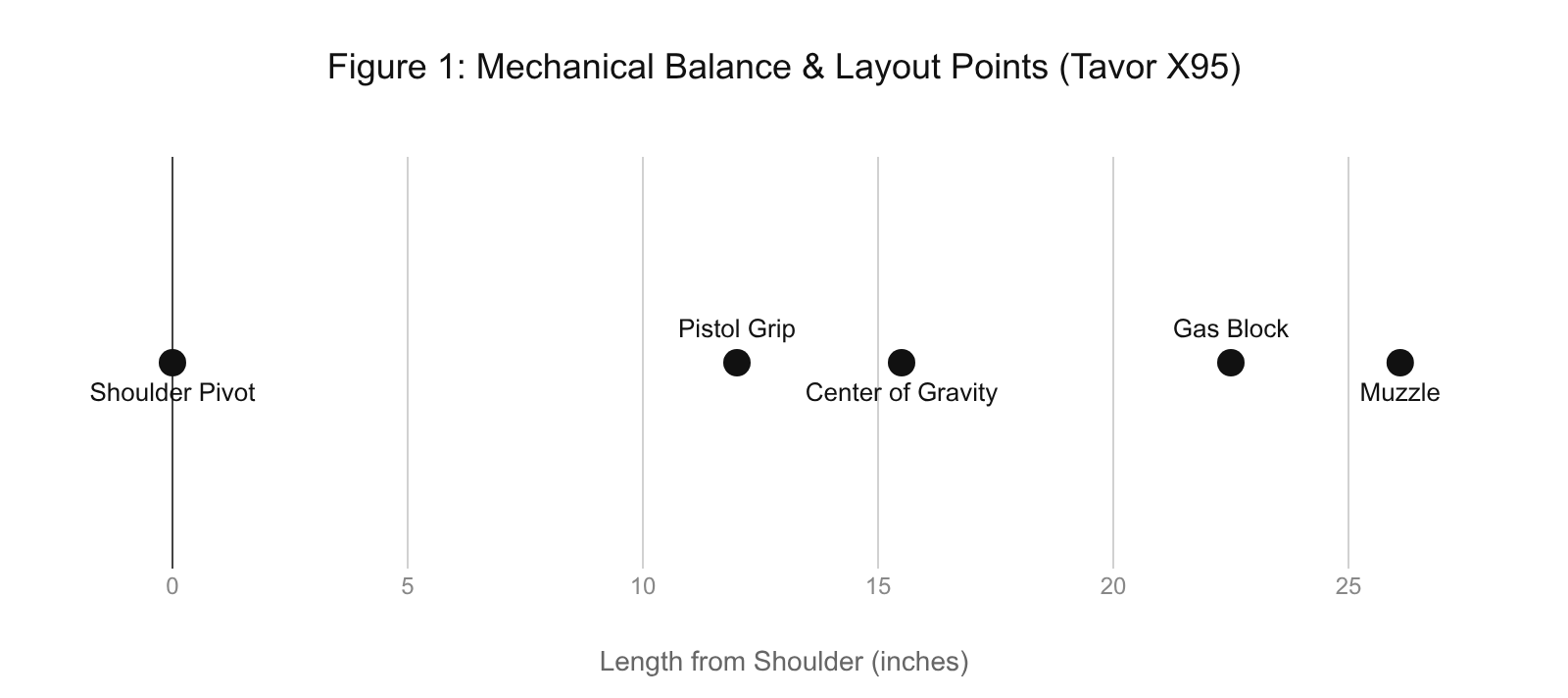
The transition to the X95 was driven by human factors engineering. The original SAR featured a magazine release paddle in front of the magazine well, requiring a non-standard manual of arms.4 The X95 replaced this with an ambidextrous, button-style release located in the traditional AR-15 position above the trigger.4 Additionally, the charging handle was moved rearward to a mid-mounted location, preventing hand contact with optics and bringing the mass closer to the center of gravity.2
2.2 Mechanical Refinements and Trigger Evolution
The X95’s trigger mechanism addressed the SAR’s 10-11.5 pound pull.4 The X95 factory trigger breaks at approximately 5 to 6 pounds.2 While still described as “mushy” compared to AR-15 triggers, it represents a significant improvement for a combat-oriented bullpup. Later X95 models also adopted a dual-ejector bolt to ensure more vigorous ejection during high-fouling or suppressed operation.9
3. The Long-Stroke Piston System
The engineering core of the Tavor SAR and X95 is a long-stroke gas piston system, where the piston is physically attached to the bolt carrier and moves as a single unit.2
3.1 Reliability Benefits of the Long-Stroke Action
The long-stroke system eliminates the need for gas to be piped into the receiver, keeping the bolt carrier group cleaner than direct-impingement systems.3 The substantial mass of the combined piston and bolt carrier creates significant inertia, allowing the rifle to overcome debris or lack of lubrication.3
3.2 Trade-offs: Reciprocating Mass and Accuracy
The reciprocating mass of the heavy piston rod and bolt carrier creates a unique recoil impulse and shifts the rifle’s center of gravity during the firing cycle.1 This movement, combined with the barrel mounting system, complicates mechanical accuracy.
4. Performance Analysis: Accuracy and Ballistics
The Tavor is frequently at the center of accuracy debates, with reports ranging from 1.5 MOA to 5 MOA.14
4.1 The Barrel Band and Harmonic Interference
The Tavor is not a free-floated system. To maintain chassis rigidity, the barrel is connected via a “barrel band” or “barrel ring”. This connection introduces stress as the barrel heats, potentially leading to point-of-impact shifts. Furthermore, the top Picatinny rail is attached to the barrel and gas block; heavy pressure on the rail from bipods or slings can lead to zero-shift issues.17
4.2 Ammunition Sensitivity
The 1:7 twist rate is optimized for heavy 5.56mm projectiles like 62-grain M855 or 77-grain Mk262.5 Using 55-grain ammunition in a 1:7 twist barrel can result in over-stabilization, widening group sizes.
Table 2: Accuracy Testing Matrix (X95 with 16.5″ Barrel)
Ammunition Type
Projectile Weight
Average 5-Shot Group (100yd)
PMC Bronze (FMJ)
55 grain
3.5 – 4.5 inches
Federal M855 (Green Tip)
62 grain
3.0 – 4.0 inches
Hornady Frontier (BTHP)
69 grain
1.8 – 2.5 inches
IWI Razorcore (OTM)
77 grain
1.2 – 1.8 inches
5. The Tavor 7: A Battle Rifle Re-Engineered
The Tavor 7 is chambered in 7.62x51mm NATO and represents a departure from the 5.56mm architecture.6
5.1 The Shift to a Short-Stroke Piston
The Tavor 7 utilizes a short-stroke gas piston to manage the increased pressures and reciprocating mass of the.308 cartridge.6 It features a four-position gas regulator (Regular, Adverse, Suppressed, Off) for varying conditions.19
5.2 Tool-less Ambidexterity
The Tavor 7 allows users to swap the ejection side in the field by rotating the bolt 180 degrees, a significant upgrade over the X95, which typically requires a separate left-hand bolt and armorer installation.19
5.3 Performance of the Tavor 7
The Tavor 7 typically delivers 2 to 3 MOA with match ammunition.19 While not a precision sniper rifle, it is a robust battle rifle capable of engaging targets out to 600 yards.19
6. The Tavor TS12: A Unique Approach to the Shotgun
The TS12 applies the bullpup concept to a semi-automatic 12-gauge platform. It features a rotating triple-tube magazine system with a 15+1 capacity.2 While high-capacity and ergonomic, it is primarily viewed as a specialized home-defense or range tool due to its weight and unique manual of arms.23
7. Competitive Market Analysis
As of 2025-2026, the Tavor competes with the Steyr AUG and Springfield Hellion.23
7.1 Tavor X95 vs. Steyr AUG
The Steyr AUG is praised for its balance and classic design. However, the X95 offers modern ergonomics and uses standard AR-15 magazines, giving it an edge for many U.S. shooters.2
7.2 Tavor X95 vs. Springfield Hellion
The Springfield Hellion (VHS-2) includes an adjustable gas system, making it a better host for traditional suppressors than the X95.27 It is also generally reported to be slightly more accurate.27 However, its longer length of pull can be uncomfortable for some users.28
Table 3: Bullpup Competitive Specs Matrix
Feature
IWI Tavor X95
Steyr AUG A3 M1
Springfield Hellion
Caliber
5.56 NATO
5.56 NATO
5.56 NATO
Mag Type
STANAG (AR-15)
Proprietary / NATO
STANAG (AR-15)
Adjustable Gas
No (Factory)
Yes (2-Pos)
Yes (2-Pos)
Trigger Weight
~6.0 lbs
~9.0 lbs
~7.0 lbs
Length of Pull
14.75 inches
15.0 inches
16.0 – 18.0 inches
8. Customer Sentiment and Ownership Experience
8.1 Reliability as the Primary Selling Point
The overwhelming majority of Tavor owners identify reliability as the reason they keep the rifle, often reporting thousands of rounds fired with minimal maintenance.2
8.2 The “Tavor Face” and Suppression Issues
Suppressed fire often results in “Tavor Face,” where excess gas is forced into the shooter’s face via the ejection port. This is mitigated by using flow-through suppressors or aftermarket port covers.
8.3 Spare Parts Availability Concerns
Intermittent availability of spare parts (e.g., firing pins, springs) from IWI US is a recurring theme in customer dissatisfaction.
9. Industrial Maintenance and Longevity
The Tavor is designed for a long service life. Its chrome-lined, cold-hammer-forged barrels are resistant to heat and erosion.
9.1 Maintenance Schedule
1,000 Rounds: Basic field strip and cleaning of the bolt face and piston head.
5,000 Rounds: Deep cleaning of the gas tube and inspection of springs.30
10,000+ Rounds: Inspection of recoil springs and firing pins.
9.2 Potential Points of Failure
Common issues are often user-related, such as crimping the gas tube by failing to remove the charging handle before unlocking the barrel.
10. Economic Analysis and Value Proposition
With an MSRP around 1,999 USD, the Tavor is a premium purchase.
10.1 The “SBR without the Stamp” Value
The Tavor provides short-barreled rifle maneuverability without the 200 USD tax stamp or NFA wait times, as it retains a 16.5-inch barrel.2
10.2 Aftermarket Investment
Many owners invest an additional 300 to 500 USD in upgrades, such as the Geissele Super Sabra trigger, to improve the platform’s performance.
11. Conclusion: Is the Tavor Worth Buying?
The IWI Tavor series is an engineering solution for personal defense and urban maneuverability that remains virtually unsurpassed in reliability.
It is worth buying if:
Compactness is the Priority: It provides a full-power rifle in a footprint manageable in confined spaces.1
Reliability is Non-Negotiable: The long-stroke piston is proven to function in harsh conditions with minimal maintenance.2
NFA Avoidance: For those wanting SBR maneuverability without federal registration.2
It is NOT worth buying if:
Sub-MOA Accuracy is Required: Marksmen targeting small game at 300+ yards may find the 3 MOA average limiting.14
Suppressed Fire is the Primary Use: Shooters using traditional baffled suppressors may prefer the Springfield Hellion or an adjustable-gas AR-15.27
Appendix: Methodology for Small Arms Industry Analysis
This report was produced using a structured analytical process to filter raw engineering data through real-world performance and market sentiment.
1. Engineering Documentation Review Technical specifications were sourced from primary manufacturer data provided by IWI US and IWI Israel.3 This included analysis of gas block configurations and bolt assembly architecture.9
2. Empirical Performance Synthesis Analysis of accuracy (MOA) and reliability was derived from cross-sections of professional testing data and study-grade comparisons.14 Variables such as ammunition grain weight and barrel temperature were considered.
3. Qualitative Market and Sentiment Analysis
Customer sentiment was measured by aggregating recurring themes from enthusiast forums and long-term ownership reviews. This identified key issues such as gas blowback and spare parts availability.
4. Competitive Matrix Construction The Tavor’s market position was determined by comparing it against the Steyr AUG and Springfield Hellion across metrics including ergonomics, modularity, and suppression.23
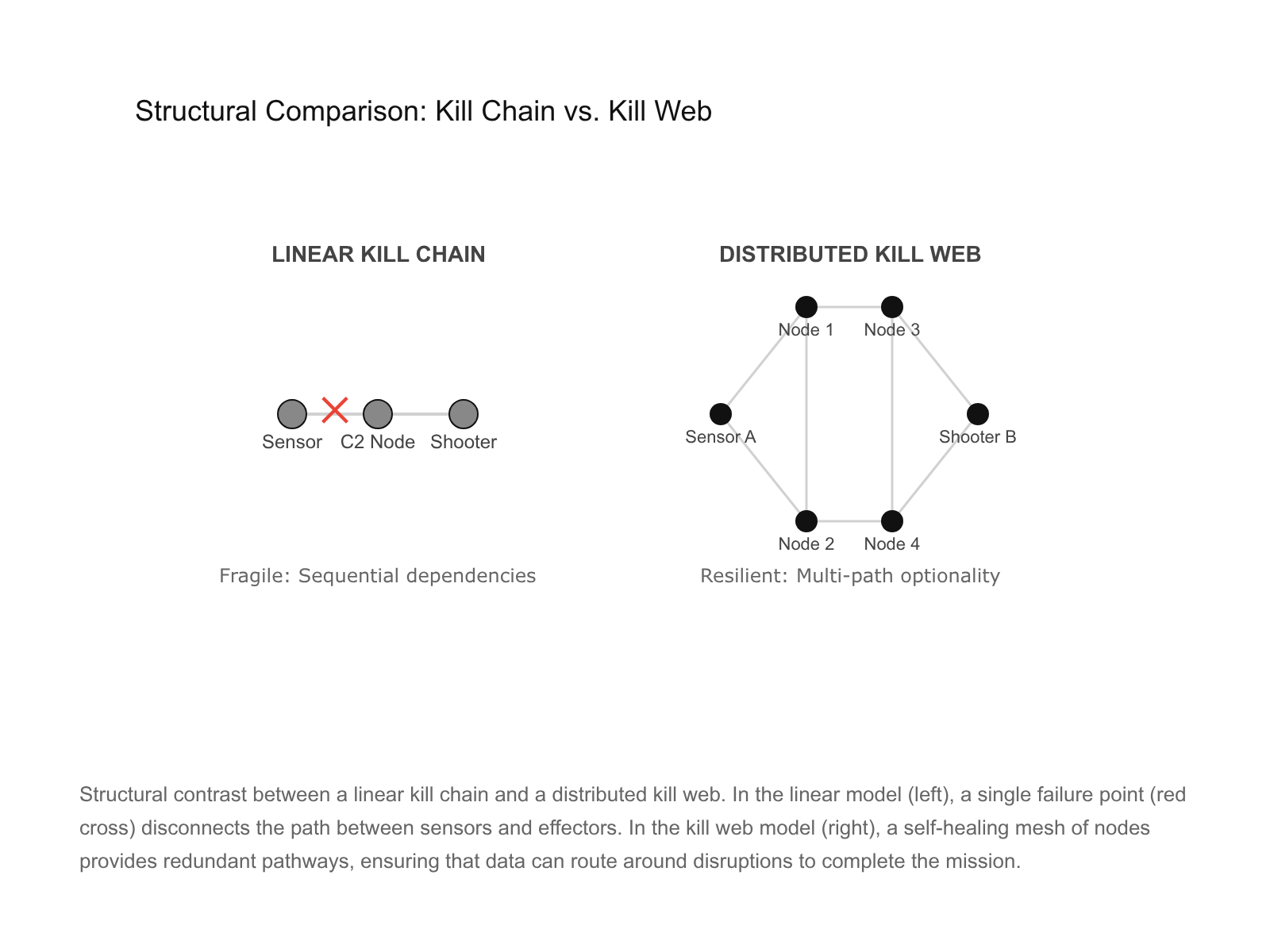
The fundamental character of modern warfare is undergoing a rapid transformation, shifting from a focus on individual, high-value platforms to a decentralized, network-centric architecture known as the kill web. Historically, the United States military relied on the “kill chain,” a linear and sequential process summarized by the find-fix-track-target-engage-assess (F2T2EA) model. While effective in permissive environments, this linear structure is inherently brittle; the disruption of a single node or data link can cause the entire chain to collapse. In response to the sophisticated anti-access/area denial (A2/AD) capabilities of peer competitors like China and Russia, the Department of Defense is transitioning toward a kill web. This concept, born from DARPA’s Mosaic Warfare research, replaces the single, fragile chain with a self-healing mesh of sensors, shooters, and command nodes.
Operating within a kill web requires a cognitive revolution for the individual warfighter, who evolves from a platform operator into a “node of command” or a “quarterback,” managing multiple simultaneous information streams and directing effects across land, sea, air, space, and cyberspace. Conversely, operating as a kill web involves the systemic emergence of the force as a single, integrated organism. This systemic operation is characterized by a “capability marketplace” where AI-driven algorithms match the optimal effector to a specific target in real-time, leveraging the latent capacity of the entire joint force. This report analyzes the technical enablers of this shift—including Joint All-Domain Command and Control (JADC2), edge computing, and artificial intelligence—while addressing the mathematical modeling of resilience and the profound legal and moral implications of machine-interceded agency on the battlefield.
1. The Paradigm Shift: From Asymmetric Advantage to Decision Superiority
The strategic environment facing the United States has shifted from a period of uncontested dominance to one defined by great-power competition. For decades, American military superiority was predicated on a “Second Offset” strategy, which utilized airborne sensors and precision-guided munitions to overcome numerical disadvantages.1 This paradigm matured into the Air-Land Battle concept, which proved triumphant during Operation Desert Storm.1 However, the proliferation of advanced technologies has democratized these advantages. Peer adversaries have developed “system destruction” strategies specifically designed to exploit the vulnerabilities of the traditional American way of war.3
1.1 The Erosion of Traditional Asymmetries
Legacy military power is concentrated in monolithic, multi-capability platforms such as aircraft carriers, stealth bombers, and advanced satellites.2 These platforms are exceptionally capable but represent single points of failure. The loss of a single F-35 or an Arleigh Burke-class destroyer is not only a significant loss of combat power but also a massive financial and strategic blow.2 Adversaries have optimized their forces to target these specific nodes using long-range anti-ship missiles, electronic warfare, and cyber attacks.3
The conventional kill chain is the mechanism by which these platforms are employed. It is a “sensor-to-shooter” path that must remain unbroken to achieve an effect.5 In a contested environment, the adversary’s goal is to “snap” this chain.5 If they can jam the link between a drone and its controller, or destroy the radar station providing coordinates to a missile battery, they have successfully neutralized the threat without necessarily having to destroy every weapon system.3
1.2 The Shift to Decision-Centric Warfare
Military analysts now recognize that the next conflict will be won by the side that can achieve “decision superiority”—the ability to sense, make sense, and act at a speed and scale that the adversary cannot match.6 This is the core principle of Mosaic Warfare. Instead of packing every tool into one elite system, the military is disaggregating capabilities across multiple smaller platforms.2
This shift moves the center of gravity from the platform to the network. The objective is to present the enemy with a “mosaic” of thousands of diverse, fluid pieces that can be rapidly composed and recomposed into a battle plan.1 This complexity is intended to overwhelm the opponent’s decision-making cycle (the OODA loop), forcing them to respond to a wide front of parallel attacks rather than a predictable, linear strike.1
2. Deconstructing the Kill Web
The term “kill web” describes the lethal application of fused data from a highly scalable and resilient battle network.9 It is the technical and operational evolution of the kill chain, designed to preserve the ability to strike even when parts of the system are destroyed or degraded.3
2.1 Defining the Architectural Shift
A kill web is a non-linear, networked approach that unites forces, commanders, and technologies across all domains.10 While a chain is a sequence, a web is a mesh.3 The following comparison clarifies these differences:
Table 1: Comparison of Linear Kill Chains and Kill Webs
Feature
Linear Kill Chain
Kill Web
Core Philosophy
Sequential and platform-centric
Distributed and network-centric
Node Interdependency
High; one failure stops the sequence
Low; multiple paths to completion
Domain Integration
Often “stovepiped” by service
Inherently cross-domain (All-Domain)
Decision Logic
Centralized C2
Decentralized/Distributed C2
Resiliency
Brittle; easy to target key nodes
Self-healing; redundant and adaptive
Scalability
Difficult and rigid
High; “plug-and-play” capability
2
The transition to a kill web permits the military to operate like a “single organism,” with units moving and acting in concert against numerous objectives.10 This is made possible by advanced sensing technologies that provide a common operational picture (COP) actionable across the full spectrum of operations.10
2.2 The Non-Linearity of F2T2EA
In a kill web, the six tactical functions of the kill chain—Find, Fix, Track, Target, Engage, and Assess—are no longer bound to a single platform or a specific sequence.1 Instead, they are distributed functions that can be executed by any capable node in the network.12
Find: Ubiquitous sensors (satellites, drones, acoustic sensors, cyber monitors) provide the initial detection.10
Fix: Cross-domain data fusion determines the target’s precise location, often using different sensing modalities to overcome enemy deception.10
Track: A target identified by an Air Force jet can be tracked by a Navy ship or a ground-based radar, ensuring continuity even if the original sensor must move or is jammed.5
Target: AI-enabled matchmaking tools evaluate every available weapon system in the theater to choose the most efficient option.15
Engage: The selected effector—whether a kinetic missile, a cyber-payload, or an electronic jammer—is directed to the target.5
Assess: The results are immediately fed back into the web to determine if further action is needed.13
This non-linearity means that a mission does not “restart” if a link is broken; it simply reroutes through the next available node.5
3. DARPA and the Mosaic Warfare Construct
Mosaic Warfare is the conceptual foundation for the kill web. Developed by DARPA, this approach seeks to achieve complex effects through the coordination of many small, diverse, and simple systems.1
3.1 Quantization of Combat Power
Mosaic Warfare relies on the “fractionation” or “quantization” of capabilities.4 In the traditional model, an F-35 is a “monolithic” platform that must find, fix, and target an enemy aircraft itself. In a Mosaic construct, the “find” function might be performed by a swarm of small, inexpensive drones, the “fix” by a distant high-altitude platform, and the “engage” by a missile launched from a cargo plane miles away.1
This quantization allows the military to:
Increase the number of targets the enemy must engage.1
Reduce the cost of individual losses.2
Mass firepower without having to mass forces physically.1
Rapidly compose a set of needed capabilities for a specific mission.4
3.2 The Logic of the Rhizome
In organizational theory, Mosaic Warfare represents a shift from a “hierarchical” structure to a “rhizome” form.7 A hierarchy is a tree-like structure with a central trunk; if the trunk is severed, the branches die. A rhizome is a decentralized, interconnected network—like a root system or the internet.7 This form is inherently more resilient to targeted disruptions because it lacks a perceivable center or primary point of vulnerability.7
4. Technological Enablers: JADC2 and the Advanced Battle Management System
The realization of the kill web requires a robust digital infrastructure. This is being pursued through the Joint All-Domain Command and Control (JADC2) initiative, which aims to produce a warfighting capability to sense, make sense, and act at all levels and phases of war.17
4.1 ABMS: The Internet of Military Things
The Air Force’s contribution to JADC2 is the Advanced Battle Management System (ABMS).19 ABMS is not a single platform but a “network of networks” or an “internet of military things” (IoMT).17 It provides the digital architecture needed to link sensors and shooters across all domains.8
Key components tested in ABMS “on-ramp” exercises include:
Cloud-at-the-Edge: Deploying computing systems (supported by vendors like AWS) to process AI algorithms at the tactical front, rather than in distant data centers.22
Mesh Networking: Using software-defined systems to maintain connectivity across air, land, sea, and space.23
Airborne Edge Nodes: Specialized platforms designed to bridge communication gaps between incompatible legacy systems, such as the F-22 and F-35, which use different data links.17
4.2 Project Convergence and Project Overmatch
While the Air Force develops the “backbone” via ABMS, the Army and Navy have their own integrated efforts. The Army’s “Project Convergence” focuses on using AI to analyze information and streamline C2 to meet fast-paced threats.19 This program has successfully tested AI-driven tools like “Firestorm,” which can reduce the sensor-to-shooter timeline from hours to minutes.24
The Navy’s “Project Overmatch” is focused on fleet-wide distributed lethality, ensuring that carrier strike groups can operate as a powerful node within a wider web, where any ship’s radar can cue any other ship’s missile.14
5. Operating Within a Kill Web: The Tactical Node
To “operate within” a kill web means that an individual warfighter or platform no longer acts as an isolated player but as an integrated node within a larger system.12
5.1 The Human in the Loop: Cognitive Revolution
The pilot of a fifth-generation fighter jet operating within a kill web undergoes a “cognitive revolution”.12 Their role shifts from executing predefined roles within a linear chain to making distributed, autonomous decisions within an adaptive web.12
Table 2: Evolution of the Combat Aviator’s Role
Legacy Platform Operator
Modern Kill Web Node
Focus: Individual platform proficiency
Focus: Integrated force effectiveness
Mindset: Tactical performer executing a mission
Mindset: Strategic decision-maker
Inputs: Onboard sensors and voice comms
Inputs: Multi-source sensor fusion and AI analytics
Decision Space: Myopic/Local
Decision Space: Holistic/Battlespace Awareness
Responsibility: Executing a pre-planned role
Responsibility: Orchestrating effects across the web
12
This “Quarterback in the Cockpit” must process simultaneous information streams and assess a dynamic battlespace populated with friendly and enemy forces across all six domains (air, land, sea, space, cyber, and electromagnetic spectrum).12
5.2 Live, Virtual, and Constructive (LVC) Training
Preparing warfighters to operate within this complexity requires new training environments. Integrated LVC environments combine real people in real systems (Live), real people in simulated systems (Virtual), and computer-generated forces (Constructive).12 This allows pilots and commanders to practice the “distributed lethality” of the kill web at a scale and complexity that would be impossible—and too expensive—to replicate in purely live exercises.12
6. Operating As the Kill Web: Systemic Emergence
Operating “as” a kill web is a systemic phenomenon where the entire force acts as a complex adaptive system. This goes beyond simple coordination; it is about “convergence”—the ability of the system to self-organize and produce emergent effects that cannot be achieved by individual parts.25
6.1 Algorithmic Bidding and the Capability Marketplace
One of the most disruptive elements of operating as a kill web is the transition of C2 from a manual, hierarchical process to a machine-enabled “capability marketplace”.6 Programs like DARPA’s Adapting Cross-Domain Kill-Webs (ACK) utilize algorithms adapted from commercial e-commerce to manage this complexity.16
The mechanism works as follows:
Consumer Requirement: A commander identifies a target and the desired effect (e.g., “neutralize radar site”).16
Bid and Offer: Every available sensor and shooter in the web—regardless of service or domain—”bids” on the task.6
Valuation: The bid’s quality depends on the platform’s proximity, speed, material condition, success likelihood, and efficiency.6
Selection: A “Virtual Liaison” selects the best option and tasks the asset, balancing the load across the entire force.16
This process allows the force to operate at “combat speed,” capitalizing on latent capacity that would be missed in a traditional, manual C2 structure.16
6.2 Emergent Complexity and Strategic Surprise
When a military operates as a kill web, it becomes a “non-linear system”.25 The interactions between thousands of sensors, shooters, and AI agents produce “emergent” behaviors that are unpredictable to the enemy.1 This makes the force “operationally and tactically unpredictable,” a key advantage in deteriorating strategic environments.18
By attacking in parallel and using different engagement modalities (e.g., a cyber attack followed by a kinetic strike and an electronic jam), the web forces the adversary to solve multiple distinct problems simultaneously.14 This creates “information-driven shock,” fracturing the adversary’s perception of control and injecting uncertainty into their own decision-making loops.9
7. Mathematical and Probabilistic Foundations
To analyze the effectiveness of a kill web, military analysts utilize various mathematical frameworks. These models help quantify the resilience of a web versus the fragility of a chain.26
7.1 Modeling Chain Fragility
The traditional kill chain is modeled as a Bernoulli process, where each step (m) is a binary event: 1 for success, 0 for failure.26 The probability of the entire chain succeeding (P_Success) is the product of the probabilities of each individual step:
If the probability of any single step drops to 0.5 (for example, due to enemy jamming), the entire chain’s success probability drops to roughly 5 percent.26
7.2 Quantifying Web Resilience
A kill web introduces “redundancy” and “multi-path optionality”.3 Analysts use graph-theoretic methods and reinforcement learning to find the optimal path through the web.26
If the “find” step can be performed by three different sensors (A, B, and C), each with a 0.5 probability of success, the probability of the “find” step succeeding in a web is the probability that at least one sensor succeeds:
By providing multiple paths for every step of the F2T2EA process, the kill web maintains a high probability of mission success even when individual nodes have a high failure rate.3
2
8. Infrastructure at the Edge
The “connective tissue” of the kill web must be able to function in “denied or degraded” environments where central command links are severed.2
8.1 Edge AI and Latency Optimization
“Edge AI” refers to running artificial intelligence inference directly on the devices where data is generated—drones, sensors, and soldier-worn computers.27 This offers several critical advantages:
Latency Reduction: Decisions happen in milliseconds, which is critical for intercepting missiles or maneuvering drone swarms.27
Bandwidth Preservation: Only essential insights are transmitted upstream, preventing the network from being saturated by raw video data.27
Operational Resilience: Autonomous units can continue to operate and coordinate with nearby partners even if their link to the central cloud is cut.27
Table 3: Comparison of Cloud AI vs. Edge AI for the Kill Web
Metric
Cloud-Based AI
Tactical Edge AI
Compute Power
High (Data Centers)
Moderate (Ruggedized Chips)
Latency
High (Round-trip to HQ)
Near-Zero (On-device)
Connectivity Requisite
Continuous high-bandwidth
Intermittent or None
Security
Vulnerable at transmission
Local data remains isolated
Application
Strategic planning
Real-time targeting/navigation
27
8.2 Security, Zero Trust, and Bandwidth as Terrain
In the kill web, “data is ammunition”.31 Protecting this data requires a shift to “Zero Trust” architectures, where every device must be constantly authenticated.32 Furthermore, military leaders must now “fight for bandwidth” as they once fought for hills.31 If the electromagnetic spectrum is dominated by the adversary, the web’s nodes cannot communicate, reverting the force back into a collection of isolated, less-effective platforms.18
9. Ethical, Legal, and Moral Dimensions of Autonomy
The transition to a machine-enabled kill web introduces profound challenges to the traditional concepts of responsibility and accountability.25
Legal Causation: Traditional legal tests for “causation” break down in emergent systems. If an AI “bidding” system selects an effector that causes unintended collateral damage, identifying whether the commander, the software developer, or the sensor operator is responsible becomes a complex legal problem.25
Traceability of Agency: As machine autonomy intercedes on human agency, it becomes “problematic” to identify where a human’s intent ends and a machine’s logic begins.25
Moral Responsibility: The speed of kill web operations may outpace the ability of humans to exercise “meaningful human control” in every individual strike, requiring a shift in how we ascribe moral weight to combat actions.25
10. Conclusions: Maintaining the Competitive Edge
The development of the kill web is not merely a technical upgrade; it is a strategic necessity to counter the “system destruction” capabilities of peer adversaries. By transitioning from a linear, platform-centric force to a distributed, network-centric mosaic, the United States can achieve decision superiority—the ultimate high ground of 21st-century warfare.
Operating within a kill web demands a more cognitively agile force, where every warfighter is a node of strategic consequence. Operating as a kill web allows the military to leverage the full, latent capacity of its diverse assets, creating a self-healing and unpredictable system-of-systems. While technical hurdles in AI, edge computing, and secure communications remain, the primary challenge is cultural: the military must move away from legacy mindsets that prioritize the individual platform over the integrated network. In the age of decision-centric warfare, victory will belong to the side that can most effectively sense, make sense, and act as a unified, lethal web.
The modern landscape of critical law enforcement incidents—ranging from coordinated terrorist attacks and active shooters to fortified barricaded subjects, hostage crises, and high-risk warrant executions—demands a specialized, highly structured, and continuously evolving tactical response capability. Standard law enforcement academy training, which averages roughly 833 hours of baseline instruction 1, is fundamentally insufficient for the extreme physiological, psychological, and environmental stressors encountered during critical tactical incidents. Consequently, the development of a Special Weapons and Tactics (SWAT) operator requires a rigorous, phased educational curriculum that systematically bridges the gap between basic patrol competency and advanced tactical mastery. The failure to properly train, equip, and deploy these specialized personnel not only severely compromises public safety but also invites catastrophic legal liability and a profound loss of community trust.2
This report provides an exhaustive, nationally applicable analysis of the critical training classes required for United States law enforcement tactical officers. By synthesizing national standards established by the National Tactical Officers Association (NTOA), the Federal Law Enforcement Training Centers (FLETC), and the Federal Bureau of Investigation (FBI), this document identifies the core educational requirements necessary to build and sustain a highly reliable tactical unit. Crucially, the analysis differentiates between the developmental needs of novice tactical officers and experienced operators, recognizing that pedagogical approaches must evolve in tandem with an operator’s cognitive and operational maturation.
Novice tactical officers require training designed to build fundamental motor schemas and foundational tactical geometry. Their curriculum must focus intensely on basic team movement, firearms proficiency under stress, and survival mechanics to lower their baseline cognitive load during high-stress encounters.3 Novices, who naturally default to attempting physical control during crises, must be trained through stress inoculation to broaden their situational awareness.4 Conversely, experienced tactical officers, having automated these basic functions, must pivot toward highly specialized, low-frequency but high-risk disciplines. These include hostage rescue, explosive breaching, precision rifle operations, and technical electronic surveillance.5 Furthermore, experienced personnel must eventually transition into leadership roles, necessitating advanced coursework in strategic decision-making frameworks, risk mitigation, and liability management.9
Ultimately, tactical proficiency is highly perishable. Without sustained, dynamic training encompassing both rigorous physical conditioning and cognitive stress-testing, an operator’s ability to safely resolve critical incidents decays rapidly.2 A nationally standardized, experience-stratified training matrix is the only defensible method for maintaining operational readiness, ensuring constitutional policing, and safeguarding human life in the most dangerous law enforcement environments.
Tactical Instruction Summary Matrix
Level of Experience
Category of Instruction
Core Instruction Required
Novice
Foundational Tactics
Basic SWAT School (40-Hour Minimum)
Novice
Weaponry & Movement
Close Quarters Battle (CQB) and Structural Clearing
Novice
Medical Support
Tactical Medical for First Responders (TECC/TCCC)
Novice
Cognitive Development
Scenario-Based Stress and Mitigation Training (e.g., ShadowBox)
1. The Philosophy and Imperative of Stratified Tactical Training
The deployment of a law enforcement tactical team represents the highest escalation of domestic police power short of federal military intervention. Because these units are tasked with resolving incidents that exceed the capabilities of traditional first responders, the individuals comprising these teams must possess a level of physical capability, technical proficiency, and psychological resilience far beyond the baseline law enforcement standard. The decision to form, equip, and deploy a SWAT team carries with it an immense constitutional and ethical responsibility to provide ongoing, specialized training.11
1.1. The Evolution of Tactical Standards and Capability Tiers
Special Weapons and Tactics teams first appeared in American policing in the late 1960s. High-profile incidents, such as the murderous sniper attack from the University of Texas tower by Charles Whitman, demonstrated that a single violent episode could easily outstrip the capacity of standard law enforcement tactics, weapons, and officers.12 In the subsequent decades, tactical teams have grown exponentially in number, sophistication, and deployment frequency. Today, the vast majority of police agencies serving populations over 50,000 possess some form of tactical team, resulting in tens of thousands of SWAT deployments nationwide annually.12
Despite this proliferation, prior research has demonstrated that SWAT approaches, staffing levels, compositions, policies, and training fluctuate noticeably across the more than 17,000 state, local, and tribal law enforcement agencies in the United States.13 To mitigate this dangerous inconsistency, the National Tactical Officers Association (NTOA) developed the Tactical Response and Operations Standard (TROS). This living document establishes a core set of concepts, principles, and policies designed to standardize and enhance the delivery of tactical law enforcement services.14
The NTOA categorizes tactical teams into distinct Tiers (Tier 1 through Tier 4) based on their mission capability profile.16 To be classified as a true SWAT Team under these standards (Tier 1 or Tier 2), an agency must meet all minimum capabilities associated with that tier.17 To maintain this operational readiness, the NTOA strictly mandates continuing education. It is recommended that full-time teams conduct a minimum of 40 hours of training per month (480 hours annually), while collateral-duty (part-time) teams must conduct a minimum of 16 hours per month (192 hours annually).11 This training must be regular, reoccurring, and specifically based on the critical skills associated with the team’s defined mission capabilities.14
1.2. The Cognitive Divide: Novice Versus Expert Processing
A critical vulnerability in law enforcement tactical training is the failure to properly differentiate between the pedagogical needs of a newly assigned, novice operator and a seasoned, experienced veteran. Merely placing a novice officer in an advanced training class alongside tenured operators often results in negative training outcomes, a phenomenon known in instructional design as the expertise reversal effect.18 Instructional methods that work well for experts who have already acquired a certain level of mastery can actually inhibit learning for novices who lack the foundational mental architecture to process the information.18
Research into human performance under extreme stress indicates that novices and experts process high-threat environments fundamentally differently. When circumstances present a threatening situation that is entirely new, an average individual lacks sufficient pre-programmed responses to react effectively.19 As shown by human factors research, police experts possess the ability to sum up several discrete observations into larger entities—a process called “chunking”—that encompasses both situational awareness and tactical elements.20 Novices, lacking these established mental models for complex tactical scenarios, often suffer from rapid cognitive overload.21
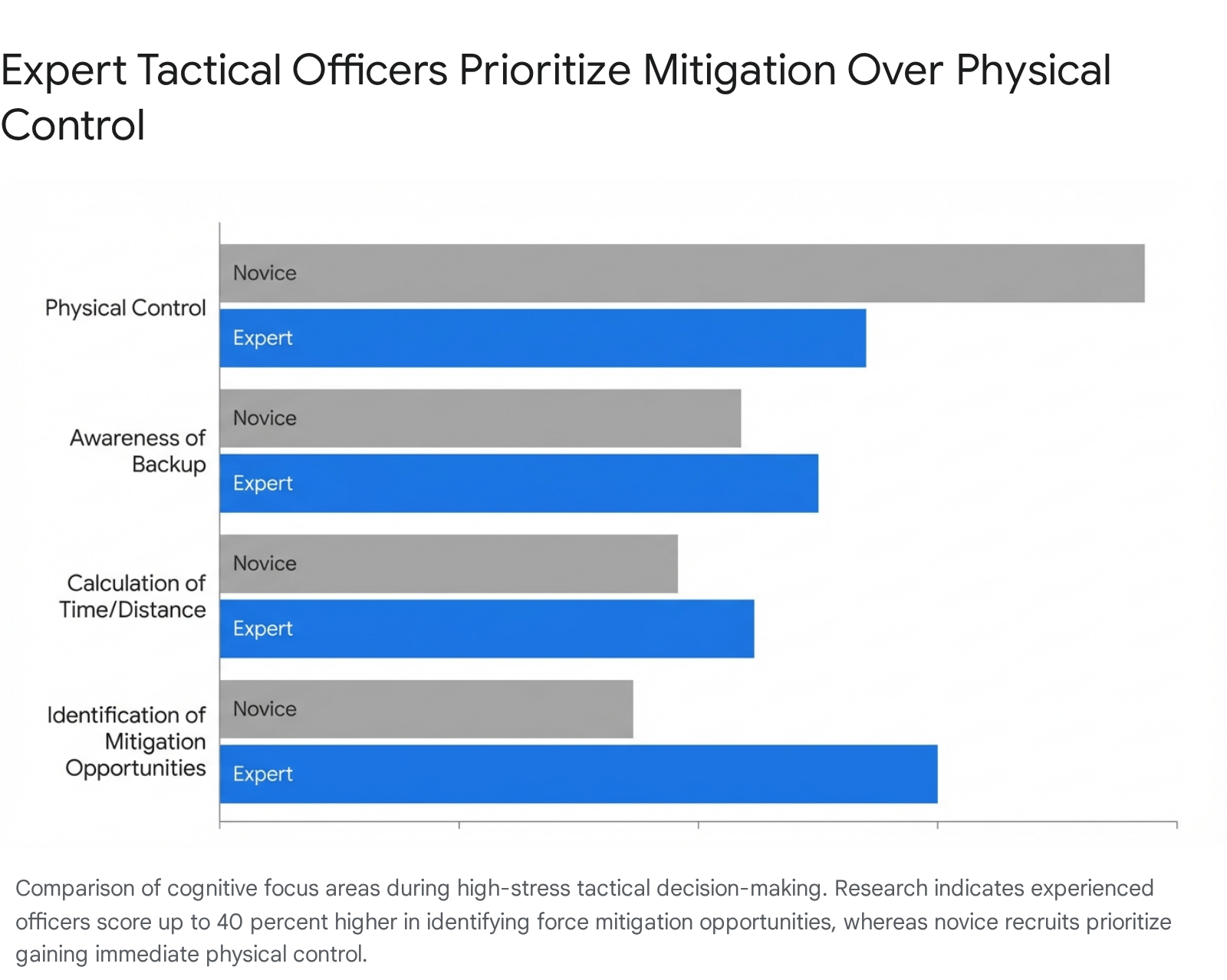
A landmark sociological study conducted by researchers at the University of California-Berkeley specifically examined expert versus novice use-of-force decision-making. The research revealed that novice police recruits, when placed in dynamic, high-stress scenarios, overwhelmingly focused on establishing immediate “physical control” of a subject, often at the expense of other critical, non-force considerations.4 Their lack of experience created a cognitive tunnel, where the immediate physical neutralization of the perceived threat consumed all available mental resources.
Conversely, experienced officers were significantly more likely to emphasize force mitigation. On average, experts scored between 13 percent and 40 percent higher than their novice counterparts in noting the importance of mitigation opportunities.4 Because experts have automated basic motor functions and threat recognition patterns, they retain the cognitive bandwidth to analyze external variables. They demonstrated a far greater awareness of opportunities for backup and showed a heightened consciousness of time and distance as relevant factors in resolving confrontations.4
Therefore, a tactical training curriculum must be inherently stratified. It must first build the foundational motor schemas and basic tactical geometry for the novice, automating survival skills so the officer can begin to see the wider battlefield. Subsequently, the curriculum must challenge the experienced operator with complex, multi-variable problem-solving, advanced specialized technical skills, and command-level strategic decision-making.
2. Foundational Training: The Novice Tactical Officer
The transition from a standard patrol officer to a tactical operator requires a complete paradigm shift in operational philosophy. Standard patrol training, which averages roughly 833 hours nationwide, often balances stress (paramilitary) and non-stress (academic) environments, but ultimately focuses heavily on individual or two-officer problem-solving, report writing, and basic defensive tactics.1 Tactical operations, conversely, require the individual to subordinate their independent action to the highly coordinated, synchronized movement of an assault element or team. The novice tactical officer must undergo intensive foundational training to safely integrate into this highly structured environment.
2.1. Basic SWAT Certification and Core Tactical Competencies
The absolute baseline requirement for any law enforcement officer joining a tactical unit is the successful completion of a standardized Basic SWAT course. The NTOA and other national accrediting bodies establish a minimum 40-hour introductory course as the industry best-practice standard for new tactical team members.11 It is critical to note that the successful completion of this introductory course is not meant to be all-encompassing and does not suggest that the operator is fully competent or ready for autonomous deployment.11 Rather, it establishes a safe baseline of knowledge so the novice can participate in continuous team-level training without posing a catastrophic danger to themselves or their colleagues. Basic SWAT courses must invariably be followed by a formal, competencies-based field training program supervised by a senior SWAT trainer.11
Basic tactical training at premier institutions like the Federal Law Enforcement Training Centers (FLETC)—which offers the Basic Tactics Instructor Training Program (BTITP)—focuses on critical, life-saving fundamentals.3 The syllabus invariably begins with advanced weapons handling.3 Novices must learn to transition from traditional, static line marksmanship to dynamic combat marksmanship. This requires engaging targets while moving continuously, utilizing structural cover effectively, and operating firearms in extreme close proximity to other team members without violating safety principles.
The concept of 360-degree security is immediately introduced.3 This demands that the novice break the ingrained patrol habit of hyper-focusing solely on a single forward threat. Instead, they must learn to maintain overlapping, interlocking sectors of fire within a tactical formation, ensuring that the team is protected from all possible angles of attack.
Furthermore, novices must master the strict physical geometry of Close Quarters Battle (CQB). This includes the mathematical and physical principles of cornering, door entries, hallway navigation, and single-to-multiple room clearing methodologies.3 The instruction emphasizes techniques such as “slicing the pie” (angular search techniques), which are designed to maximize the officer’s visual control of an uncleared space while simultaneously minimizing their physical exposure to potential hostile fire. Through hundreds of repetitions in simulated environments, these geometric movements must transition from conscious, deliberate calculations to subconscious, automated motor reflexes. Until these basic movements are fully automated, the novice operator will simply not have the cognitive capacity to process suspect behavior, understand complex rules of engagement, or participate safely in an actual deployment.
2.2. Cognitive Framing, Stress Inoculation, and Decision-Making
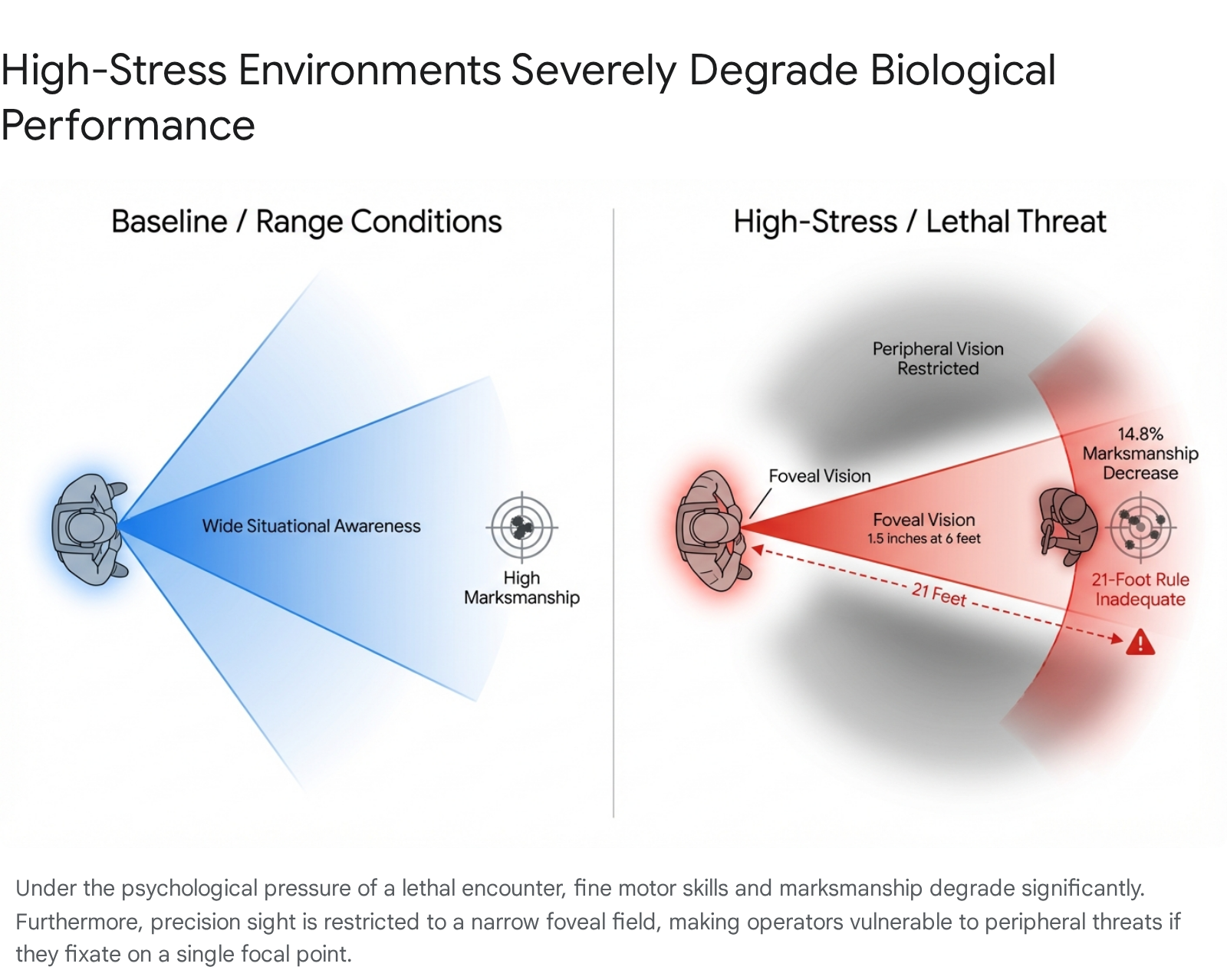
Because tactical training is not purely physical, the psychological conditioning of the novice is of paramount importance. Modern research into law enforcement human performance demonstrates that under extreme, life-threatening stress, profound physiological and psychological changes occur. Within the average perception-reaction time of an officer deciding to shoot or stop shooting, the human body experiences a massive adrenaline dump.22 Officers will have to account for perceptual distortions such as diminished or intensified sound (auditory exclusion), tunnel vision, time misperception, temporary paralysis, memory loss, and dissociation.23
When a novice encounters a novel, threatening situation, they lack the pre-programmed mental responses required to react efficiently.19 As the aforementioned Berkeley study demonstrated, this leads to a dangerous over-reliance on immediate physical control at the expense of verbal de-escalation, the use of cover, or the coordination of backup.4 In fact, when analyzing the narratives of recruits during simulated scenarios, the critical word “cover” was mentioned far less frequently by experienced officers (76 times) compared to recruits (115 times), indicating that novices were highly preoccupied with basic survival concepts that experts had already internalized and moved past.4
Therefore, essential training for novices must include scenario-based cognitive stress-inoculation. Innovative programs, such as ShadowBox training (certified by the California Commission on Peace Officer Standards and Training), expose novices to situations specifically characterized by ambiguity, uncertainty, unpredictability, changeability, time-pressure, and competing goals.24 These classes use interactive, real-life incidents guided by experienced officers to artificially expand the novice’s situational awareness.
Novices are trained to look beyond the immediate weapon or the suspect’s hands. They are explicitly taught to seek out what experts naturally perceive: opportunities for force mitigation, the strategic positioning of secondary units, and the utilization of time and distance to de-escalate potential violence.4 By explicitly teaching these expert-level cognitive markers in a controlled, low-consequence training environment, instructors can significantly accelerate the novice’s progression from a purely reactive, fear-driven force instrument to a thoughtful, analytical, and highly controlled tactical operator.
2.3. Tactical Medical First Response
The operational reality of SWAT deployments dictates a high probability of encountering severe, life-threatening trauma, either sustained by hostages, innocent bystanders, suspects, or the officers themselves. In active shooter or barricaded suspect scenarios, traditional Emergency Medical Services (EMS) personnel and paramedics are mandated to stage in “cold zones,” far away from the immediate threat. This means that tactical officers must be the primary, and often only, medical providers during the critical first minutes of a mass casualty event or a close-quarters firefight.
Consequently, every novice tactical officer must undergo comprehensive Tactical Medical for First Responders (TMFR), Tactical Emergency Casualty Care (TECC), or Basic Tactical Medical Instructor Training Program (BTMITP) coursework.25 This curriculum departs radically from civilian first aid or standard CPR training. It operates under the fundamental premise that the best initial medicine in a firefight is overwhelming fire superiority.
Officers are taught to differentiate clearly between “Care Under Fire” and “Tactical Field Care.” During Care Under Fire, when the team is actively taking contact, the only acceptable medical intervention is the rapid application of a high-and-tight arterial tourniquet to stop massive extremity hemorrhage; no airway management or other care is attempted until the threat is neutralized or suppressed. Once the threat is isolated and the environment transitions to Tactical Field Care, operators are trained in massive hemorrhage control, advanced airway management, wound packing with hemostatic agents, and tension pneumothorax decompression. The integration of this medical intervention directly into kinetic room clearing drills ensures that the novice understands how to transition seamlessly between the conflicting roles of warfighter and lifesaver without ever compromising the 360-degree security of the operational element.17
3. Advanced Skill Acquisition: The Experienced Tactical Officer
Once an operator has spent years on a team, fully automating the fundamental physical skills of moving, shooting, and communicating within an assault element, they formally transition from a novice to an experienced operator. At this stage, standard room clearing, perimeter containment, and basic high-risk warrant service become routine functions requiring minimal cognitive strain. Therefore, the training burden for experienced officers shifts dramatically toward highly specialized, technically demanding disciplines. These advanced roles require deep analytical capabilities, cross-disciplinary integration, independent action, and the management of extreme physical and legal risk.
3.1. Hostage Rescue and Advanced Close-Quarters Battle (CQB)
The absolute pinnacle of tactical law enforcement operations is Hostage Rescue (HR). While standard high-risk warrant service relies heavily on the elements of surprise, speed, and overwhelming violence of action to disorient and secure a suspect, a hostage rescue introduces innocent life directly into the immediate threat matrix. An HR scenario cannot simply be treated as a faster standard entry; the tactics are fundamentally different, and the margin for error is effectively zero.27
Experienced officers must undertake intensive HR coursework to understand the extreme nuances and unique pressures of this mission profile.6 Training at this level emphasizes the core considerations of Safety, Information, and Time (SIT).6 Operators learn the critical distinction between a barricade and a hostage situation. While a barricaded suspect holding only themselves at bay can be waited out indefinitely using chemical agents and negotiation, a hostage situation may necessitate an immediate, highly dynamic, and potentially perilous entry if intelligence indicates the suspect has begun, or is about to begin, executing captives.27
Advanced HR training, modeled heavily after the FBI’s Hostage Rescue Team (HRT) parameters, focuses intensely on “stealth to contact”.6 Unlike a standard warrant service where police may announce their presence at the exterior door with a ram, HR operators are trained in silent movement, specialized camouflage, and the use of covert entry techniques to infiltrate a stronghold entirely undetected.6 The objective is to position the assault element as physically close to the hostage-taker as possible before the decisive breach occurs, minimizing the time the suspect has to react.
Furthermore, live-fire CQB exercises in specialized, rubber-coated “shooting houses” are utilized to train experienced operators in surgical target discrimination.29 Operators must practice engaging hostile targets with precision fire while innocent role-players or hostage targets are in immediate physical proximity to the threat. This develops the ultimate synthesis of trigger control, rapid target identification, and unwavering psychological composure under extreme time compression and chaotic stimuli.29 Operators at this level are also trained in transitional tactics, vehicle takedowns, and operating under Night Vision Goggles (NVGs) in completely blacked-out environments.11
3.2. Explosive and Advanced Mechanical Breaching
To execute a successful entry, tactical teams must overcome heavily fortified physical barriers. While novices are taught basic mechanical breaching (utilizing battering rams, pry bars, and halligan tools), experienced officers—who are specifically selected and designated as breachers—must master the complex science of explosive breaching.5
Explosive breaching is not merely the reckless destruction of a door or wall; it is a highly calculated, legally scrutinized tactical option designed to safely defeat barricades while achieving instantaneous “shock action”.5 This shock action profoundly disorients the occupants through overpressure and acoustic disruption, thereby protecting the lives of the entering assaulters and any hostages within by delaying the suspect’s ability to return fire.5
The curriculum for explosive breaching is exhaustive, technically rigorous, and heavily mathematical. Operators must learn to calculate Net Explosive Weight (NEW), understand the exact physical properties and burn rates of varying explosive materials (such as detonation cord, C4, sheet explosives, and water impulse charges), and compute precise safe stand-off calculations.5 These calculations are vital to prevent catastrophic structural collapse, secondary fire hazards, or severe traumatic injury to the officers stacking immediately behind the charge.5
Explosive breaching protocols demand strict intelligence gathering, continuous scouting, and detailed target analysis.31 The explosive breacher must calculate and construct the charge on-site to use the absolute minimal amount of explosive necessary to defeat the specific locking mechanism or hinges, while minimizing deadly fragmentation and collateral damage both inside and outside the target location.33 This specialized class essentially transforms an experienced tactical operator into a combat engineer and tactical physicist, capable of utilizing highly regulated industrial explosive tools to safely dictate the physical environment of the operation.
3.3. Precision Rifle and Sniper Operations
The role of the SWAT sniper, or precision rifleman, requires an extraordinary synthesis of elite marksmanship, advanced intelligence gathering, and extreme psychological patience. This is explicitly not a role for a novice; it is strictly reserved for highly experienced personnel who possess the maturity, discipline, and independence to operate entirely detached from the main assault element, often observing a target through a scope for hours or even days without relief or movement.
The training standards for law enforcement snipers are rigorously quantified to mitigate severe civil liability and ensure absolute public safety.7 National and state standards, such as those overseen by the Commission on Law Enforcement Standards and Training (CLEST), mandate that precision riflemen maintain sub-Minute of Angle (MOA) accuracy. One MOA equates to a rifle’s ability to repeatedly strike an intended target with a one-inch grouping at a distance of 100 yards from a rested position.7 In a critical hostage scenario, if a sniper is legally authorized by command to take a shot, they are generally targeting the suspect’s medulla oblongata (the brain stem) to instantly sever the central nervous system. This specific anatomical targeting prevents any involuntary reflex action or muscular flinch that could cause the suspect to fire their weapon into the hostage. Missing a target of this minuscule size by even a fraction of an inch results in a catastrophic mission failure and the loss of innocent life.
Advanced sniper courses focus heavily on positional shooting, timed engagements, and the mastery of complex environmental variables (wind drift, barometric pressure, bullet drop compensation). Operators must shoot highly complex qualification courses of fire, often requiring multiple rapid engagements at varying distances (e.g., 25, 50, 75, and 100 yards) under strict, stress-inducing time limits. For instance, an operator may be required to fire 10 precision rounds from alternating prone, kneeling, and improvised positions in under 4 minutes, with target scoring areas not exceeding 7.5 square inches.7
Beyond kinetic engagement, sniper training heavily emphasizes intelligence gathering, technical reporting, and overwatch capabilities. The sniper serves as the primary eyes and ears of the Tactical Commander, providing continuous, real-time telemetry on target movements, structural layouts, fortification efforts, and the disposition of hostages.
3.4. Technical Surveillance (ELSUR) and Unmanned Aircraft Systems (UAS)
Modern tactical operations are increasingly intelligence-led, aggressively moving away from the paradigm of immediate, blind kinetic entry toward methodical, technology-driven problem resolution. Experienced operators must be deeply trained in the deployment of advanced electronic surveillance (ELSUR) and cutting-edge robotics.
Classes in covert electronic surveillance—such as the Covert Electronic Surveillance Program (CESP) or Technical Investigations 1 (TECH-1) offered at FLETC—teach operators how to gather critical, actionable intelligence long before a physical operation begins.8 The curriculum covers the physical construction of covert audio and video concealments, advanced electronic tracking principles (including Hostile Force Tagging, Tracking, and Locating), and the complex circumvention of commercial alarm systems.8 Furthermore, operators are trained in covert entry techniques, utilizing commercial and improvised tools to defeat various warded, wafer, and pin tumbler locks without leaving signs of forced entry.37 By secretly inserting listening devices, wiretaps, or fiber-optic cameras into a stronghold, the tactical team can map the interior architecture, identify the exact location and armament of threats, and confirm the presence of hostages or improvised explosive devices (IEDs) without ever exposing an officer to hostile gunfire.38
Furthermore, the rapid, paradigm-shifting integration of Unmanned Aircraft Systems (UAS), or tactical drones, has revolutionized SWAT operations.40 Tactical UAS training teaches operators how to expertly fly highly maneuverable drones directly into hostile structures to conduct interior reconnaissance, clear complex stairwells, and search attics or crawlspaces prior to any human entry.42 Drone pilots must learn complex, multi-axis navigation in GPS-denied indoor environments, the utilization of thermal and infrared imaging to detect body heat through walls, and the deployment of two-way communication payloads (such as dropping throw phones) via robotics to establish safe contact with barricaded subjects.43 Mastery of these emerging technologies allows the experienced operator to significantly reduce the physical risk to the human entry element, allowing machines to absorb the initial risk of encountering an armed suspect.
4. Tactical Command, Leadership, and Strategic Analysis
The most critical, and often most difficult, transition in a tactical officer’s career is the elevation from an individual “door-kicking” operator to a SWAT Team Leader, Tactical Commander, or Incident Commander. At this senior executive level, the physical skills of shooting, moving, and breaching become entirely secondary to the cognitive skills of strategic planning, large-scale risk management, political navigation, and extreme legal liability mitigation.44
4.1. SWAT Team Leader and Command Operations
Training for tactical leadership requires a complete immersion into the complex mechanics of command and control. Courses such as the NTOA’s SWAT Team Leader Development, the FBI’s Command Leadership Institute, and the Law Enforcement Executive Development Seminar (LEEDS) are designed specifically for senior officers and executives transitioning into oversight roles.9
The curriculum in these advanced academies focuses heavily on pre-incident planning, mission organizing, and the drafting of comprehensive operations orders (OPORDs).9 Team leaders are exhaustively instructed on the legal liability concepts inherent to tactical operations. This requires a profound, working understanding of constitutional law, specifically the Fourth Amendment (concerning search, seizure, and the execution of warrants) and the objective reasonableness standards of the Fourteenth Amendment regarding the ultimate use of lethal and less-lethal force.9
Furthermore, command training immerses leaders in the OODA Loop (Observe, Orient, Decide, Act) methodology.9 Tactical commanders must learn how to manipulate the operational tempo of a crisis incident, utilizing specific tactics to overwhelm a suspect’s cognitive ability to process information and react, thereby achieving a non-violent resolution or a decisive tactical advantage. They are also heavily trained in the administrative side of tactical operations, including the selection, recruitment, physical testing, and psychological evaluation of new SWAT personnel, ensuring that the unit’s culture remains professional, ethical, and highly capable over generations.9
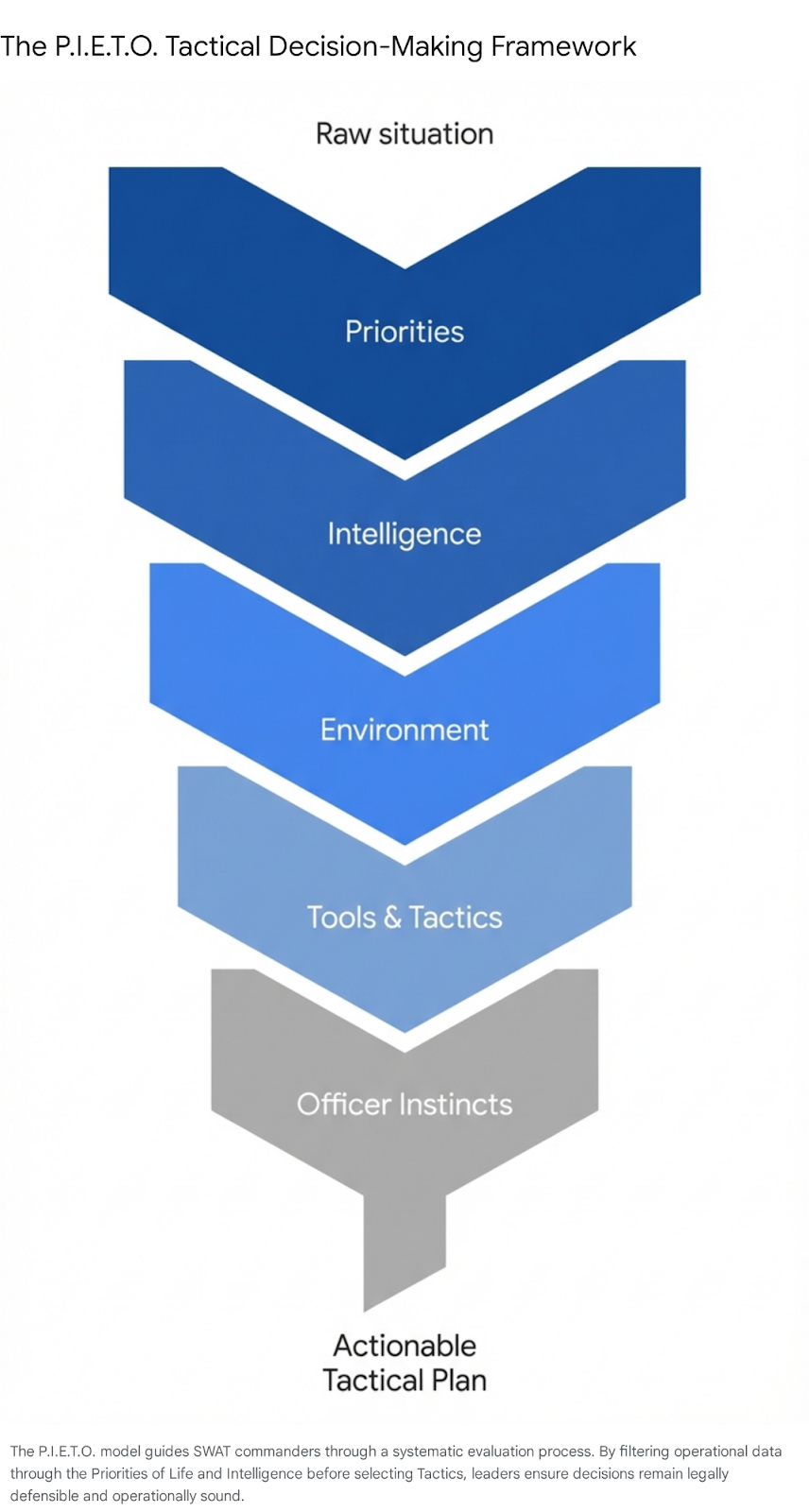
To ensure that tactical decisions made in the heat of a crisis are legally justifiable, ethically sound, and operationally effective, command-level training introduces formalized, highly structured critical thinking frameworks. The premier framework taught to contemporary tactical leaders is the P.I.E.T.O. (or PIET3O) model.50 This powerful mnemonic serves as a strict mental checklist and filtering mechanism for the decision-making process during high-risk, chaotic operations:
Priorities (of Life): The commander must continuously evaluate every phase of the operation against the universally accepted priorities of life: Hostages and innocent victims first, innocent bystanders second, law enforcement officers and first responders third, and the suspect/subject last. Every tactical plan must mathematically and operationally favor the preservation of the higher priorities over the lower priorities.
Intelligence: Actions must be driven by verified data, not assumption or bravado. Leaders are trained to forcefully pause the operational tempo to gather critical information regarding the suspect’s criminal history, mental health status, the verified presence of specific weapons, and the structural layout of the target.
Environment: The commander must analyze the physical space in which the crisis is unfolding. Is it an open-air environment, a densely populated multi-family apartment complex, or a fortified rural compound? External factors such as severe weather, lighting conditions, and civilian proximity dictate the permissible tactics and limit the use of certain weapons or chemical agents.
Tools / Tactics / Technology: Based strictly on the analysis of the first three steps, the leader selects the appropriate operational resources. Should the team deploy armored rescue vehicles (ARVs), deploy CS gas or other chemical agents, utilize less-lethal impact munitions, or rely primarily on crisis negotiators?
Officer Instincts: Finally, the model acknowledges the profound value of lived experience. Recognition-primed decision making allows veteran commanders to leverage their hard-earned intuition—built upon years of subconscious pattern recognition across hundreds of deployments—to anticipate suspect behavior and alter the tactical plan dynamically as the situation degrades or improves.40
By forcing commanders to literally vocalize and document their planning through the sequential P.I.E.T.O. matrix, the resulting tactical action is highly insulated against post-incident civil litigation and criminal review. It clearly demonstrates to a jury or review board a methodical, objective, and deeply reasonable approach to problem-solving, rather than an arbitrary or reckless use of police power.50
5. Mitigation of Perishable Skills and Physical Degradation
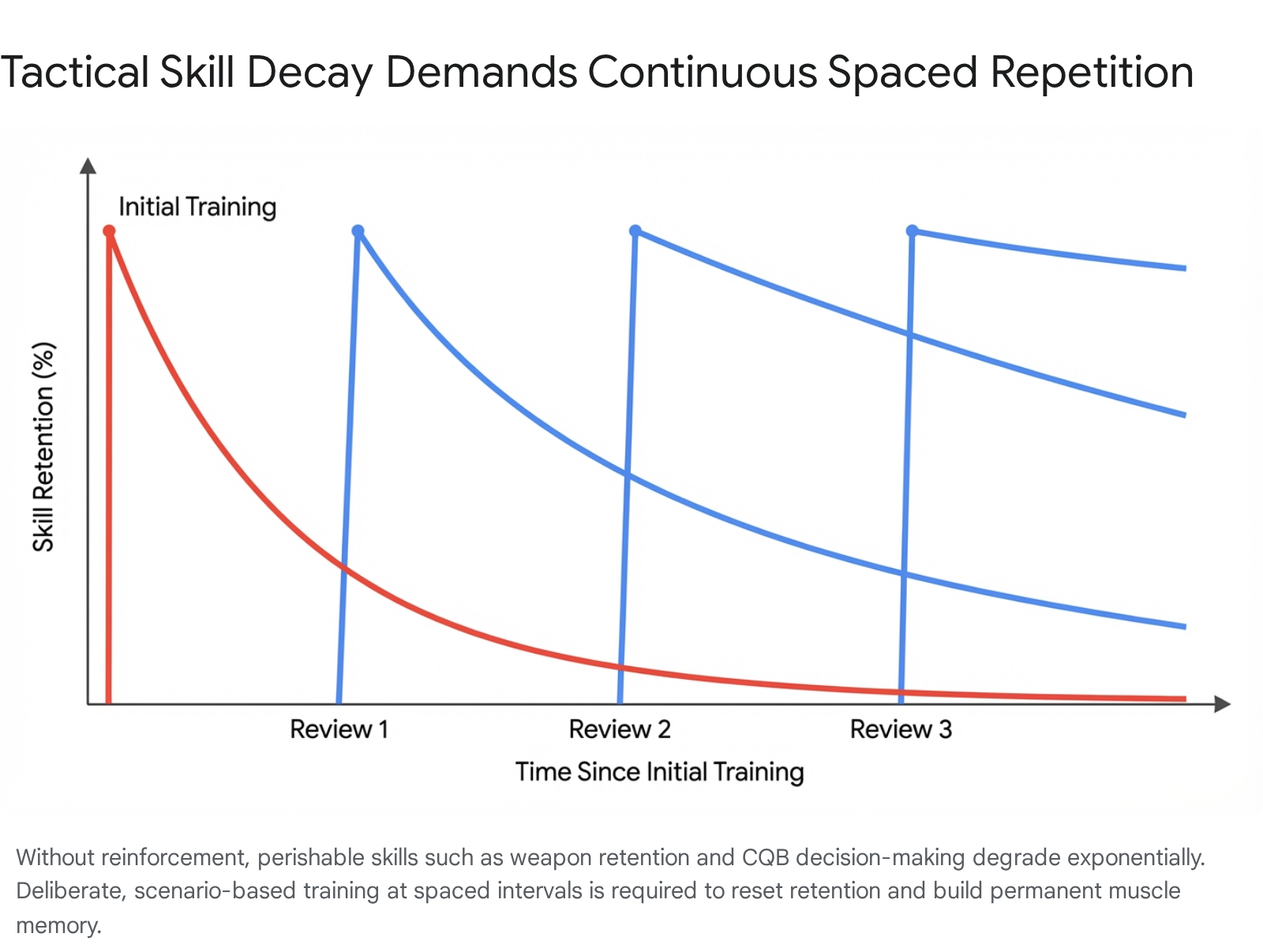
The acquisition of a tactical skill is not a permanent state of being. Extensive law enforcement research consistently demonstrates that both complex motor skills (such as weapons manipulation under stress) and cardiovascular conditioning are highly perishable attributes.2 Therefore, the tactical training curriculum cannot simply consist of a series of one-time certification classes. It must inherently include continuous, mandated maintenance, rigorous requalification protocols, and lifestyle adjustments. The failure of an agency to maintain these skills not only severely jeopardizes officer and public safety but also substantially increases the agency’s exposure to devastating “failure to train” litigation. For context regarding the severity of this issue, of the ten largest police agencies in the United States, legal costs stemming from police-misconduct cases increased by 48 percent between 2010 and 2015, resulting in payouts exceeding $1.02 billion.2
5.1. The Science of Continuous Firearms and Defensive Tactics Retention
The physical actions utilized in tactical police work—specifically the highly scrutinized deployment of lethal and less-lethal force—degrade rapidly without constant practice. Complacent officers who believe they have mastered the profession often learn otherwise when faced with a sudden use-of-force situation where uncertainty and fatal hesitation creep in due to a lack of recent, realistic repetition.2 The psychological stress of a lethal force encounter further exacerbates this degradation, causing officers to experience catastrophic fine motor skill failure if those specific skills have not been ingrained into deep, subconscious muscle memory.2
To aggressively combat skill decay, the NTOA’s mandate of 192 to 480 hours of annual training must be heavily dedicated to Perishable Skills Programs (PSP).11 Tactical firearms training cannot simply involve shooting paper targets from a static firing line in perfect weather conditions; it must actively incorporate live-fire tactical marking cartridges (such as Simunitions), aggressive movement under fire, complex weapons clearing manipulations, and rapid judgment/decision-making exercises.54
Furthermore, defensive tactics and suspect control methods must be continually refreshed using modern adult-learning theories. Research highlights that traditional “block training” (cramming all defensive tactics training into a single, exhausting week) is far less effective for long-term physiological retention than spaced, scenario-based training sessions featuring small-group practice and immediate, highly critical scenario-based feedback.10 Moving away from antiquated, trainer-centered teaching toward evidence-based models that emphasize continuous performance evaluation is absolutely vital to ensuring that an operator’s physical skills remain sharp years, or even decades, after their initial basic SWAT training.10
5.2. Tactical Athlete Physical Preparedness and the Progression Pyramid
Tactical operators are routinely subjected to extreme, unnatural physical demands that mirror those of professional athletes. However, unlike professional athletes who have dedicated off-seasons and specialized coaches to manage recovery, tactical officers are “in the arena” every single day they report for duty, required to be primed and ready to execute maximum physical effort without any prior physiological or mental recovery time.58 Furthermore, they must operate while carrying 40 to 60 pounds of restrictive external load—including heavy ballistic body armor, primary and secondary weapons, ammunition, radios, medical kits, and heavy mechanical breaching tools.59 While bearing this load, they must seamlessly perform dynamic, explosive movements such as sprinting, jumping, grappling with resistive subjects, and sustaining prolonged aerobic exertion.61
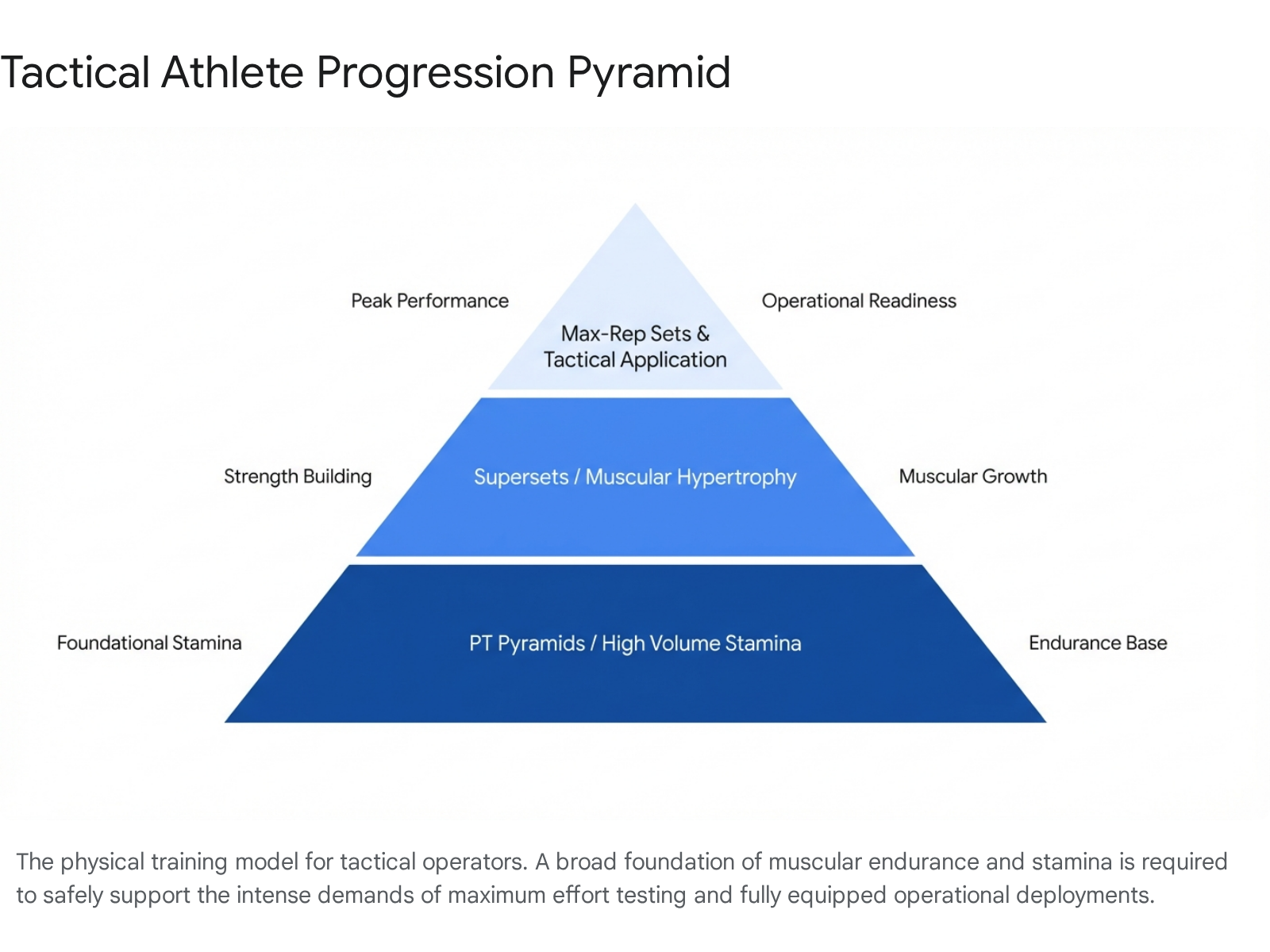
Because of these realities, physical conditioning must be approached not as a hobby, but as an ongoing, scientifically structured class. Training must focus holistically on the three anatomical planes of human movement (the sagittal, frontal, and transverse planes) to build deep functional strength, enhance mobility, and prevent the severe musculoskeletal injuries that are historically common in the tactical profession.62 A widely accepted, highly effective methodology for structuring tactical physical training is the Progression Pyramid Model.63
The Tactical Progression Pyramid is intelligently designed to build a massive foundation of muscle stamina and cardiovascular endurance before ever testing peak physical strength.63
The Base (PT Pyramids): A continuous, high-volume, no-rest workout structure that efficiently combines a warm-up, maximum effort, and cool-down into a single, grueling session. For example, an officer performs 1 pull-up, 2 push-ups, and 3 sit-ups. They immediately progress to step two (2 pull-ups, 4 push-ups, 6 sit-ups), continuing the math up to step 10, and then immediately working back down the other side of the pyramid to step 1.64 This mechanism builds extreme, full-body muscular endurance without the acute injury risk associated with heavy weightlifting.
The Mid-Level (Supersets): Once the base is established, operators use supersets to increase the absolute volume of tactical exercises, pushing muscles near complete exhaustion while carefully managing localized recovery by rapidly alternating between opposing muscle groups.63
The Peak (Max-Rep Sets & Tactical Integrations): Only after foundational strength and stamina are completely secured do operators engage in maximum-repetition tests or combine physical exhaustion with complex cognitive tasks. This mimics the reality of a firefight: requiring an officer to run long distances in full kit, and then immediately forcing them to perform memory recall tasks or execute surgical marksmanship while managing wildly elevated heart rates and heavy respiration.58
Agencies must carefully tailor these physical maintenance programs to match their specific, unique operational profiles. For example, rural man-tracking teams, such as border patrol tactical units, may need to focus more heavily on aerobic capacity and load-bearing endurance over long, uneven distances in harsh climates. Conversely, metropolitan CQB teams conducting rapid residential raids may prioritize anaerobic power, short-distance sprinting, and the upper-body explosive strength necessary to physically dominate a suspect in a confined hallway.58
6. Conclusion
The absolute necessity of a highly trained, deeply educated, and strictly regulated tactical law enforcement capability cannot be overstated in the modern era. As the complexity, armament, and sheer lethality of the threats facing communities continue to escalate exponentially, the response parameters, policies, and educational requirements of Special Weapons and Tactics units must evolve commensurately. This evolution is functionally impossible without a rigid, scientifically backed, legally defensible, and experience-stratified training curriculum that guides an officer from their first day on the team through their eventual promotion to command.
Treating tactical training as a homogenous, one-size-fits-all block of instruction is a critical organizational and pedagogical failure. Novice operators must be methodically built from the ground up. Their instruction must focus relentlessly on the basic physical geometries of survival, flawless basic weapons manipulation, and the deliberate, scenario-based expansion of their cognitive framing to prevent psychological tunneling during lethal encounters. They must be explicitly taught to see the entire tactical environment, prioritizing de-escalation, mitigation, and the use of time over the dangerous instinct to assert immediate, brute-force physical control over a chaotic scene.
Once these foundational elements are secured as subconscious motor programs, the training burden shifts significantly. The experienced operator must transition into the demanding realm of technical specialization and high-consequence precision. Mastery of the stealth-to-contact methodologies of hostage rescue, the unforgiving mathematical applications of explosive breaching, the zero-defect reality of precision sniper fire, and the complex integration of robotic surveillance systems represent the true maturation of the tactical asset. Ultimately, the most seasoned operators must be guided into leadership roles through formal, executive-level command instruction, utilizing strict analytical frameworks like the P.I.E.T.O. model to govern their decision-making and shield their agencies from liability.
Coupled with a permanent, career-long commitment to combating the inevitable degradation of perishable physical skills and cardiovascular fitness, this comprehensive curriculum blueprint ensures that a tactical unit remains fundamentally sound. By adhering to these strict national standards and recognizing the psychological differences between novices and experts, law enforcement agencies guarantee that their tactical teams operate not just as a blunt instrument of state force, but as a highly refined, surgically precise, and constitutionally sound mechanism dedicated unequivocally to the preservation of human life.
7. Master Training Provider Data Table
Class Type
Training Provider
Course Name
Synopsis
Location
URL
Basic SWAT & Foundational Tactics
National Tactical Officers Association (NTOA)
Basic SWAT
40-hour course covering fundamental tactical principles, team movement, and high-risk warrant service planning.16
SWAT TEAM LEADER DEVELOPMENT COURSE OVERVIEW AND INSTRUCTIONAL GOALS COURSE OVERVIEW INSTRUCTIONAL GOALS – National Tactical Officers Association – NTOA Publications, accessed February 22, 2026, http://public.ntoa.org/AppResources/CourseDetails/231.pdf
PT Pyramid – The Classic PT FItness Workout – Stew Smith Fitness Ace the PFT – Preparing Americans for Military,Special Ops, Police, and Fire Fighting Professions, accessed February 22, 2026, http://www.stewsmith.com/linkpages/ptpyramids.htm
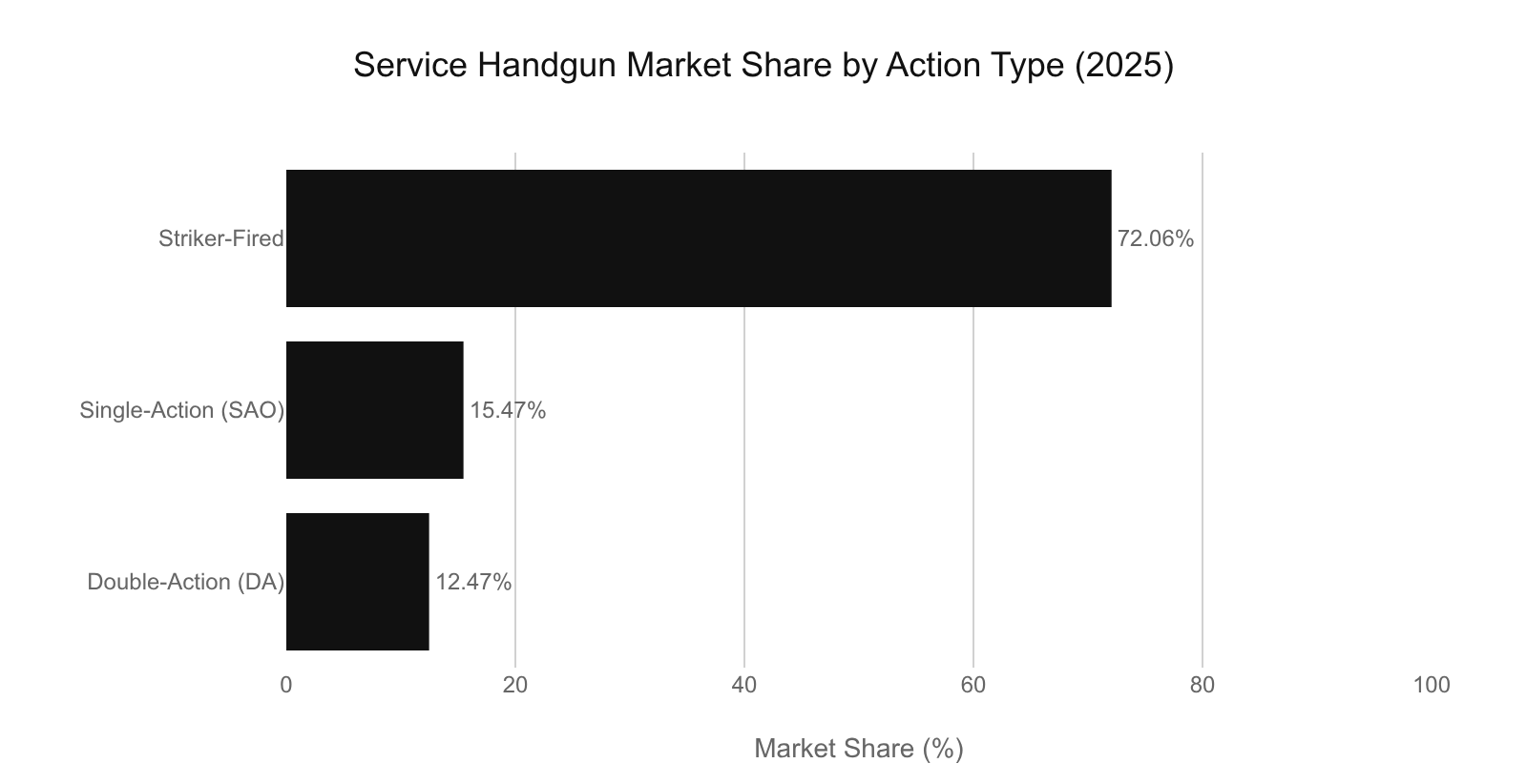
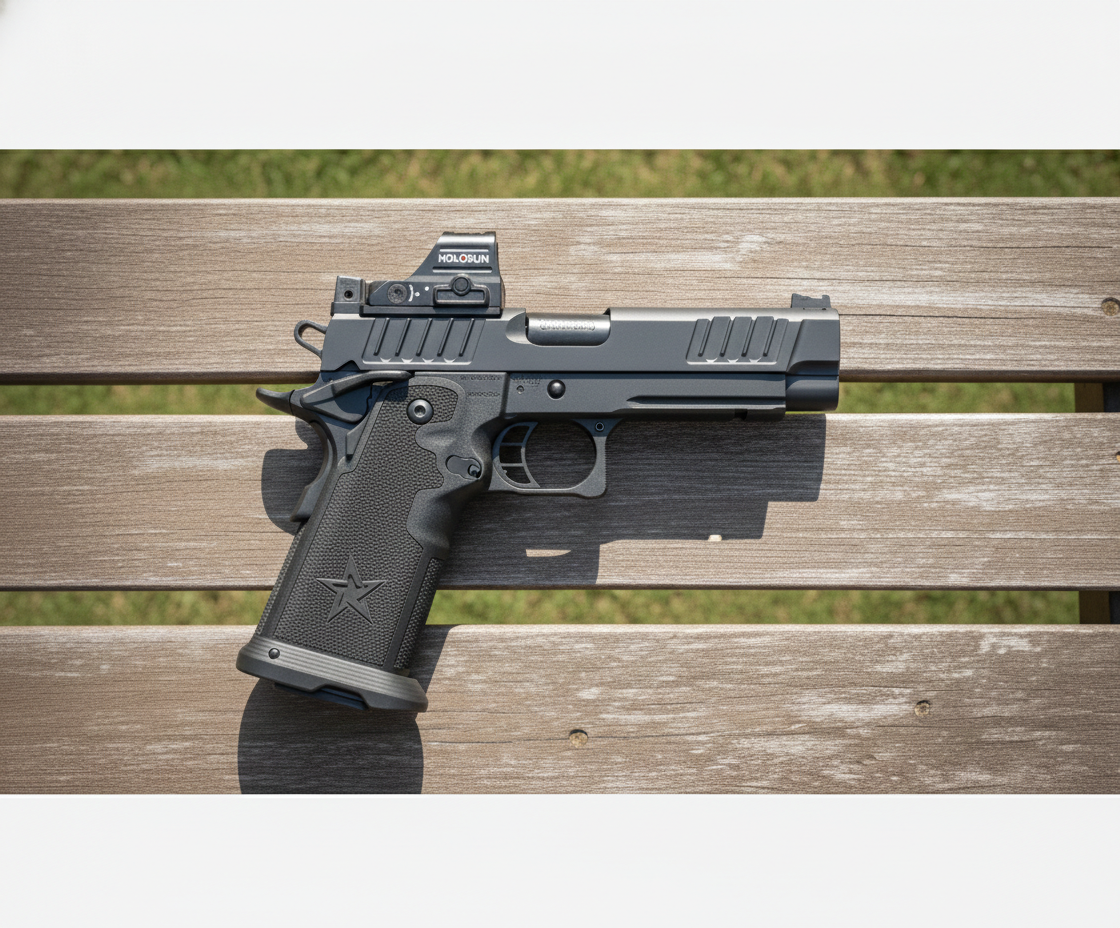
The United States handgun market is currently navigating a period of significant mechanical and structural transition, defined by a complex interplay between traditional manufacturing efficiencies and an emerging consumer preference for high-performance trigger systems. While the striker-fired mechanism remains the dominant operational architecture—accounting for approximately 72.06% of the service handgun market in 2025—the industry is witnessing a robust resurgence in hammer-fired platforms, specifically high-capacity single-action (2011) systems and modernized double-action/single-action (DA/SA) pistols. This shift is driven by a maturation of the consumer base, where experienced shooters are increasingly prioritizing trigger quality, modularity, and ergonomic refinement over the basic utilitarian simplicity that catalyzed the “polymer revolution” of the late 20th century.
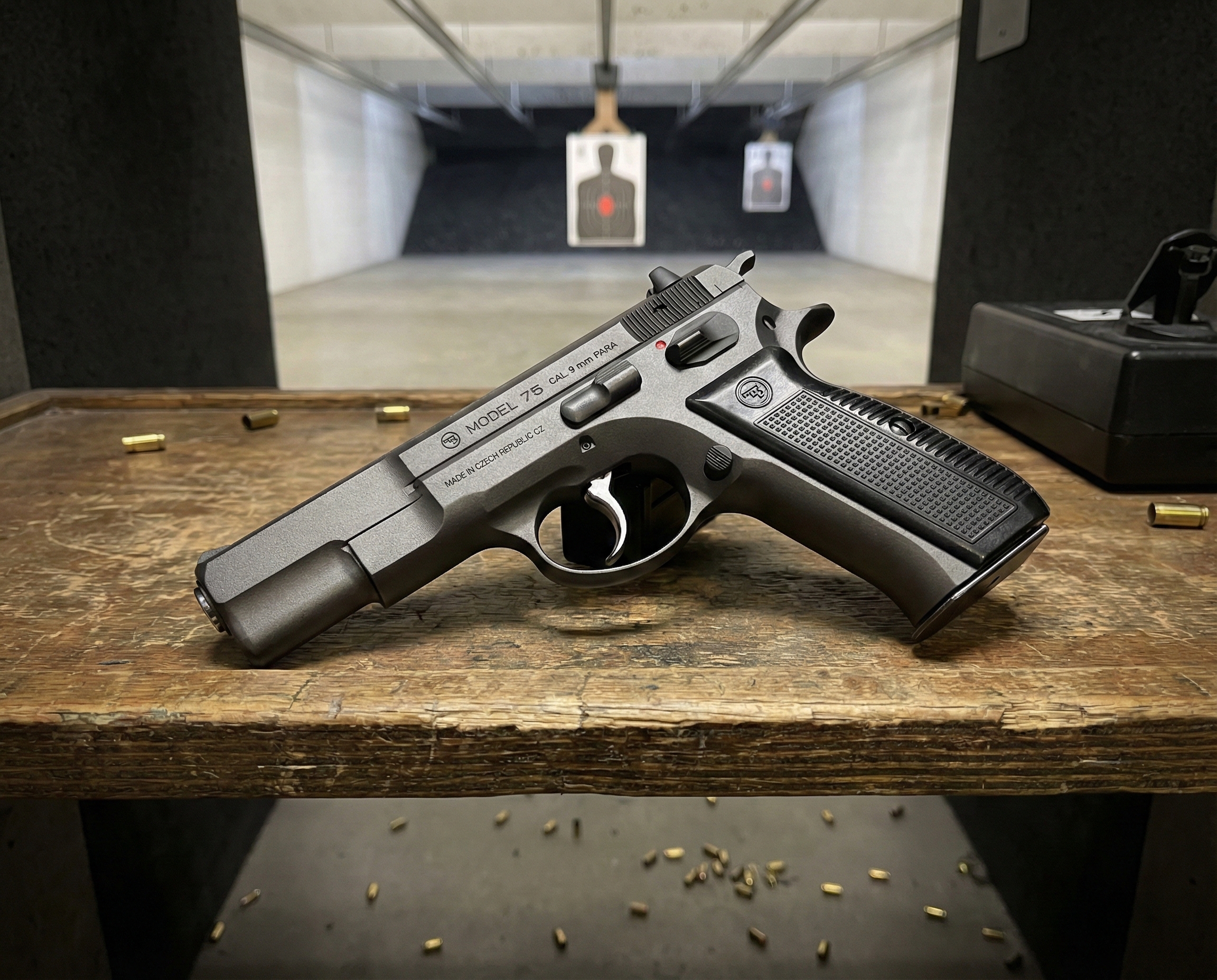
From an engineering perspective, the market is moving toward a trifurcation. The first segment, intended for mass-market duty and entry-level self-defense, continues to favor the striker-fired system for its low parts count, consistent pull, and cost-effective polymer-molding production. The second segment, characterized by a rapid ascent in both competitive and professional tactical circles, is the high-capacity single-action platform, which has effectively addressed the historical round-count limitations of the 1911 while retaining its superior trigger geometry. The third segment is a revitalized DA/SA market, which appeals to a “tactical enthusiast” demographic that values the mechanical safety of a heavy first-stage trigger pull and the aesthetic craftsmanship of metal-framed firearms. As we project toward 2035, the market is expected to reach 23.5 billion dollars globally, with North America maintaining its status as the primary engine of innovation and consumption. This report provides an exhaustive technical and economic analysis of these trends, detailing the causal relationships between mechanical design, manufacturing logistics, and end-user requirements.
1. Macroeconomic and Domestic Market Environment
The global handgun market stood at a valuation of approximately 3.12 billion dollars in 2022 and has demonstrated a consistent upward trajectory, projected to reach 5.35 billion dollars by 2030 at a compound annual growth rate (CAGR) of 6.6%.1 Within this global context, North America is the undisputed leader, commanding a 43.27% share in 2022 and maintaining a dominant presence through 2025.1 The United States market, specifically, is currently undergoing a “correction” following the unprecedented demand spikes seen in 2020 and 2021, when annual sales peaked at 21.8 million units.3 In 2024, Americans purchased approximately 16.17 million firearms, representing a 3% decline from the previous year, with 2025 forecasts suggesting a further stabilization at 15.5 million units.3
Despite this cooling period, the baseline demand remains nearly double the figures observed in the early 2000s, supported by a civilian inventory estimated at over 500 million firearms.3 The diversification of the gun-owning demographic is a critical driver of this sustained volume. Women’s ownership has more than doubled since the 1990s, and Hispanic ownership has seen a 33% increase since 2017.3 Conversely, there has been a 22% decrease in reported gun ownership among adults aged 18–29, a trend that suggests the market is increasingly reliant on older, more affluent “repeat buyers” who are more likely to invest in premium hammer-fired and specialized platforms rather than entry-level utility pistols.3
1.1 Market Segmentation by Operation and Type
The handgun market is bifurcated by type into semi-automatic pistols and revolvers, with semi-automatics holding the largest share due to their widespread application in law enforcement, personal security, and shooting sports.1 In the service handgun sector, pistols accounted for 88.25% of the market in 2025, while revolvers maintained an 11.75% niche, valued for their mechanical simplicity and reliability in sensitive operations.5
Operation Mechanism
2025 Market Share (Service)
Projected CAGR (2026-2031)
Primary Drivers
Striker-Fired
72.06%
6.79%
Cost, Consistency, LE Standardization
Single-Action (SAO)
15.47%
5.80%
Precision, Speed, 2011 Platform Growth
Double-Action (DA)
12.47%
4.20%
Legacy Inventory, Mechanical Safety
(Note: Figures derived from service handgun market analysis, representing professional procurement trends.5)
The dominance of 9 mm caliber ammunition continues to reinforce the semi-automatic pistol market.
In 2025, 9 mm held a 62.17% share of the service handgun market, a position propelled by NATO standardization and significant ballistic enhancements that have overcome earlier doubts regarding its terminal performance.5 Agencies transitioning from.40 S&W to 9 mm cite the 2- to 3-round increase in magazine capacity and lower recoil as primary factors that improve officer qualification rates and field effectiveness.5
1.2 State-Level Demand Variations
The U.S. market is not geographically uniform; it is heavily influenced by local legislative environments. States like Wyoming, Montana, and Alaska lead the nation in population-adjusted sales rates, largely due to rural lifestyles and a strong tradition of hunting and self-defense.6 In 2024, Massachusetts experienced the highest year-over-year increase in gun sales at 22.5%, a spike attributed to consumer reactions to the implementation of “An Act Modernizing Firearms Laws”.6 Conversely, Washington state saw a 45.7% decrease in sales, reflecting the impact of restrictive state-level legislation on market liquidity.6 These geographic fluctuations indicate that while the national trend is toward stabilization, regional “panic buying” and legislative changes continue to create localized growth opportunities for manufacturers.
2. The Engineering Logic of Modern Pistol Actions
To understand why the market is moving toward specific actions, it is necessary to examine the mechanical advantages and engineering trade-offs of each system. The “action” of a handgun refers to the mechanism that loads, fires, and ejects cartridges.7
2.1 Striker-Fired Systems: The Efficiency Benchmark
Striker-fired pistols use a spring-loaded striker rather than a traditional hammer. When the slide is cycled, the striker is captured in a partially or fully tensioned state. Pulling the trigger completes the cocking process and releases the striker to ignite the primer.2
From an engineering perspective, striker-fired pistols are inherently simpler and cheaper to produce. They typically require fewer parts—a standard Glock contains roughly 34 components, whereas a traditional hammer-fired Beretta 92FS contains over 70.9 This reduction in complexity translates to lower production hours and a faster route to scaling manufacturing.9 Because there is no external hammer, these pistols offer a more “snag-free” profile for concealed carry and duty use.9
However, the primary drawback is the trigger feel. Because the trigger must often complete the cocking of the striker spring, the “wall” (the point of maximum resistance before the break) can feel “spongey” compared to hammer-fired systems where the trigger only has to release a sear.13
2.2 Single-Action Only (SAO): The Pursuit of Precision
In a single-action system, the trigger performs a single task: releasing the firing mechanism.14 The hammer must be cocked manually or by the cycling of the slide before the gun can fire. This allows for the shortest and lightest trigger pulls available on the market, typically ranging from 2.5 to 4.5 pounds in modern defensive and competition platforms.15
The 2011 platform represents the modern evolution of the single-action pistol. By utilizing a modular frame—separating the grip module from the metal upper frame—manufacturers can offer the precision of a 1911 trigger with the high capacity (17-26 rounds) of a modern double-stack magazine.17 This modularity also allows for extensive customization, as shooters can swap grips, triggers, and slides to meet specific ergonomic needs.18
2.3 Double-Action/Single-Action (DA/SA): The Hybrid Solution
DA/SA pistols use two distinct trigger modes. The first shot is typically a long, heavy double-action pull (7–12 pounds) that both cocks and releases the hammer.8 This serves as a mechanical safety, as the long travel and heavy weight make a negligent discharge less likely under stress.14 Subsequent shots are single-action, as the cycling slide cocks the hammer, allowing for faster, more precise follow-up shots.8
Feature
Striker-Fired
SAO (2011)
DA/SA (CZ 75/Beretta 92)
Trigger Pull Consistency
Excellent (Same every time)
Excellent (Same every time)
Variable (Heavier first shot)
Safety Profile
Passive (Internal safeties)
Manual (Thumb safety)
Manual/Mechanical (Heavy DA)
Complexity
Low (Fewer parts)
Moderate
High (More components)
Typical Pull Weight
5–6 lbs
3–4 lbs
10–12 lbs (DA) / 4–5 lbs (SA)
(Data compiled from multiple engineering reviews of trigger mechanics.14)
3. Directional Movement of the US Market: The “Hammer-Fired Resurgence”
The central question of the market’s direction can be answered by observing the “hammer-fired resurgence” that is currently challenging striker-fired dominance. While strikers still command the largest market share, hammer-fired guns are making a “slow and deliberate comeback”.20
3.1 Why Single-Action is Growing Disproportionately
The Single-Action Only (SAO) segment, particularly the 2011 platform, is the fastest-growing niche in the high-performance market. This growth is driven by a “paradigm shift” in how consumers value trigger pull regarding accuracy. Older theories that a consistent trigger pull was the most critical factor for accuracy are being replaced by the realization that a light and crisp trigger pull allows even less-skilled shooters to achieve higher accuracy.20
The 2011’s ascent is also fueled by its popularity in popular culture, such as the John Wick franchise, and its adoption by tactical professionals.18 The Staccato P is now issued or approved by over 1,800 law enforcement agencies across the U.S., a significant milestone that has “legitimized” the platform beyond the niche of competitive shooting.18
3.2 The Modernization of DA/SA: The CZ and Beretta Pivot
The DA/SA market is not moving toward obsolescence but toward modernization. Manufacturers like CZ and Beretta have successfully revamped their legacy platforms to include “optics-ready” slides, accessory rails, and improved ergonomics.22 The CZ P09 Nocturne and the Beretta 92X are prime examples of this trend, offering the classic DA/SA mechanics in a package that competes directly with modern striker-fired pistols for features.20
A key trend in the DA/SA market is the “Langdon Tactical” or “Wilson Combat” effect—third-party engineering firms that provide high-tier internal upgrades, turning duty-grade pistols into precision instruments.22 This has created a “luxury” or “connoisseur” segment within the DA/SA market that values the mechanical complexity and craftsmanship of metal-framed hammer-fired guns.9
3.3 The Decline of Double-Action Only (DAO)
While SA and DA/SA are seeing renewed interest, the Double-Action Only (DAO) semi-automatic market is shrinking. DAO handguns, which were once popular for their safety profile, are being replaced by “partially cocked striker” systems that offer a similar level of safety with a much lighter and more manageable trigger pull.14 The only remaining stronghold for DAO is in the “pocket pistol” or “deep concealment” category, such as the KelTec P32, where the mechanical simplicity and low weight are prioritized over trigger performance.20
4. In-Depth Case Study: The 2011 Platform and the Modular Revolution
The term “2011” has transitioned from a trademarked brand (Staccato/STI) to a genericized term for any double-stack 1911-style pistol.18 This platform is currently the focal point of innovation in the US market.
This is a Staccato P pistol.
4.1 Tiered Market Segmentation of 2011s
The 2011 market has matured into three distinct tiers, allowing for broader consumer accessibility.
Market Tier
Example Brands
Price Range
Target Audience
High-End/Bespoke
Atlas Gunworks, Nighthawk, Taran Tactical
$4,000–$7,000+
Collectors, Professional Competitors
Mid-Tier/Duty
Staccato, Springfield Armory (Prodigy)
$1,500–$3,500
Law Enforcement, Serious CCW
Value/Entry
MAC, Rock Island Armory, Girsan
$600–$1,200
Recreational Shooters, First-time 2011 buyers
(Data derived from market pricing and brand positioning reports.18)
4.2 Engineering Trends within the 2011 Category
Modular Frames: The use of polymer or hybrid grip modules allows for weight reduction and customizable textures. This modularity is a “hallmark innovation” that differentiates the 2011 from the classic single-stack 1911.18
Optics-Ready Slides: In 2025, an optics-ready slide is a mandatory feature for any 2011 intended for duty or competition. This reflects a broader market-wide shift toward red-dot sights for faster target acquisition.18
Magazine Ecosystems: While proprietary magazines were a historical bottleneck for the platform, the emergence of the “Glock-magazine 1911” (e.g., the Platypus) represents a significant trend in merging a high-performance action with a reliable, inexpensive magazine ecosystem.18
5. Engineering Analysis: CZ 75 vs. Beretta 92 Action Systems
The two most prominent DA/SA platforms—the CZ 75 and the Beretta 92—provide a clear case study in divergent engineering philosophies regarding the hammer-fired action.
A CZ 75 Legend.
5.1 Slide and Rail Engineering
The CZ 75 utilizes a “slide-in-frame” design where the slide rides on internal frame rails. This engineering choice results in a tighter slide-to-frame lock-up and lowers the slide mass closer to the recoil path, which reduces felt torque and muzzle flip.22 The downside of this design is that it provides a smaller surface area for the user to grip when racking the slide.22
In contrast, the Beretta 92 features an “open-top slide” design. This heritage, derived from the Walther P38, provides superior ejection reliability because there is virtually no metal in the path of the spent casing. However, it lacks the rigid full rail engagement of the CZ 75, making the slide-to-frame fit slightly less “locked-in”.22
5.2 Barrel Lockup Mechanisms
Feature
CZ 75 Mechanism
Beretta 92 Mechanism
System Type
Browning Linkless Cam
Falling Locking Block
Movement
Barrel tilts during cycling
Barrel remains horizontal
Impact
Standard, reliable design
Smoother feeding, less muzzle flip
Wear Factors
High durability
Locking block is a “wear item”
(Data from mechanical engineering comparisons of DA/SA service pistols.22)
5.3 Safety and Decocking Variations
The market preference for “Condition One” (cocked and locked) carry has influenced the design of these platforms. The CZ 75B typically features a frame-mounted manual safety, allowing it to be carried like a 1911.22 The Beretta 92, conversely, traditionally uses a slide-mounted decocker/safety. In 2025, a major trend is the “G-conversion” or “decocker-only” model, which eliminates the manual safety in favor of a decocking lever that automatically returns to a fireable state, simplifying the manual of arms for duty users.22
6. Trigger Performance: A Comparative Metric Analysis
A primary reason for the shift toward SA and DA/SA is the quantifiable advantage in trigger performance, which directly correlates to shooting speed and precision.
6.1 Trigger Pull Weights by Action Type
The following chart represents the “standard” pull weight ranges across the industry in 2025.
Trigger Pull Weight Ranges (Lbs)
(Data labeled for typical factory specifications.15)
6.2 Trigger Reset Engineering
Reset length—the distance the trigger must move forward to re-engage the sear—is a critical metric for “split times” (the time between shots). Single-action triggers consistently outperform strikers and DA/SA systems in this regard.
2011/SAO: Reset length is typically 0.04 to 0.08 inches (1–2 mm).
Modern Striker: Reset length is typically 0.12 to 0.15 inches (3–4 mm).
Modern DA/SA (Beretta 92X): The new “Xtreme Trigger” reduces the standard reset by 40%, bringing it down to approximately 0.08 inches (2 mm).31
The mechanical advantage of a 1 mm reset in a 2011 is not merely a matter of convenience; it represents a functional leap in the shooter’s ability to “prep the trigger in recoil”.33 This technique, used by elite shooters, allows for a follow-up shot to be fired the instant the sights return to the target.34
7. Use Case Analysis: Determining Action Preference by Role
The market’s directional movement is segmented by the intended use case, with each action type excelling in specific environments.
7.1 Concealed Carry (CCW) and Defensive Use
In the CCW market, the trend is toward “Micro-Compact” pistols that offer high capacity (10–13 rounds) in a pocket-sized frame.
Striker Dominance: The SIG P365 and Springfield Hellcat dominate this space due to their simplicity and passive safety systems.35
The Internal Hammer Trend: A new sub-trend is the internal-hammer micro-compact, exemplified by the FN Reflex. By using an internal hammer rather than a striker, FN has created a micro-compact with a superior trigger pull and a slide that is 30% easier to rack, appealing to users with reduced hand strength.20
7.2 Home Defense and Range Training
For home defense, where concealability is not a factor, “full-size” pistols are preferred.
DA/SA Resilience: Many homeowners prefer the DA/SA platform (e.g., CZ 75, Beretta M9A4) for the “deliberate first shot” safety. The weight of an all-metal frame (typically 30–40 oz) also helps absorb recoil, making the gun easier for all family members to operate accurately.23
High-Capacity SAO: The “MAC 2011” and similar budget double-stacks are increasingly recommended as home defense tools because they offer the capacity of a duty gun with the shootability of a competition gun at a accessible price point.18
7.3 Competitive Shooting (USPSA/IPSC)
Competition is the “proving ground” where action trends are born. Currently, the “Carry Optics” division is dominated by the CZ Shadow 2 (DA/SA) and the Staccato XL (SAO).27 The trend here is toward heavier guns—the CZ Shadow 2 weighs 46.5 oz—to provide the flattest shooting experience possible.37
8. The Manufacturing Engineering of Pistol Actions
The movement toward striker-fired pistols was largely an “engineering-for-cost” decision. The current move back toward hammer-fired pistols is a “consumer-value” decision.
8.1 Production Cost Analysis
Molding a polymer frame takes minutes and costs pennies in material. Machining a steel frame from a block of raw material takes hours of CNC time and requires significant tool-wear maintenance.2 Furthermore, hammer-fired guns require more “hand-fitting” of sears and hammers to achieve a high-quality trigger pull.12
Component
Striker (Polymer) Cost
Hammer (Steel) Cost
Engineering Impact
Frame
$2.00 (Molded)
$85.00+ (Milled)
Steel requires complex finishing
Firing System
Linear, stamped
Rotational, machined
Hammer systems have more pin-points
Assembly
Minutes (Drop-in)
Hours (Fitting)
Human labor is the primary cost driver
(Relative manufacturing cost estimates based on industry production reports.12)
8.2 The “Daniel H9” as a Case Study in Action Hybridization
A notable trend in 2024–2025 is the attempt to merge the advantages of different actions. The Daniel H9 (introduced in early 2024) uses a striker-fired mechanism but utilizes a 1911-style straight-pull trigger and a very low bore axis.2 This engineering attempt to “re-invent” the striker-fired trigger is a direct response to the market’s demand for hammer-fired performance in a modern, cost-effective striker-fired package.
9. Global and Regional Trends: 2025–2035 Outlook
The global handgun market is projected to reach 4.99 billion dollars by 2032.39 While North America remains the leader, the Asia-Pacific region is the fastest-growing market, driven by increasing interest in sport shooting and modernization of law enforcement fleets.39
9.1 Technological Substitution and “Smart” Integration
A significant trend in the forecast period is the transition to “smart” handguns with biometric safety systems.39 While these have yet to achieve mainstream adoption in the U.S. civilian market, they represent a potential future direction that could favor striker-fired systems, as the linear mechanism of a striker is more easily integrated with electronic solenoids and blocking systems than the rotational mechanism of a hammer.
9.2 The Impact of Geopolitical Tensions
The Russia-Ukraine conflict and broader geopolitical tensions are forcing a “revamping” of the handgun market. Manufacturers are increasingly focused on “military-grade” durability and multi-caliber capabilities.1 This favor’s duty-proven actions like the DA/SA Beretta 92FS and the SAO Staccato P, which have demonstrated “battlefield reliability” over decades of use.22
10. Quantitative Comparison of Top Hammer-Fired Models (2025-2026)
To illustrate the market’s direction, we must examine the specific specifications of the leading hammer-fired contenders that are currently gaining market share.
Model
Action
Caliber
Weight
Barrel Length
MSRP Category
CZ P09 Nocturne
DA/SA
9mm
29.2 oz
4.53 in
Value/Mid
Staccato P
SAO
9mm
33.0 oz
4.40 in
Premium
S&W CSX E Series
SAO
9mm
19.7 oz
3.10 in
Value
Beretta M9A4
DA/SA
9mm
33.4 oz
4.80 in
Mid/Premium
FN Reflex MRD
SAO (Int)
9mm
18.4 oz
3.30 in
Mid
(Data labeled for current model-year specifications.20)
10.1 Key Engineering Observations from Model Specs
Weight as a Feature: Even the “lightweight” hammer-fired options (like the FN Reflex at 18.4 oz) are slightly heavier than their polymer-striker counterparts. The market is increasingly viewing this extra 1–2 ounces as an acceptable trade-off for reduced recoil.20
Slide Ergonomics: Deeper slide serrations and “easy-rack” internal hammer designs (like the Reflex and the Beretta 80X) are direct responses to the user demand for better manual control of the firearm.20
11. Conclusion: The Market’s Directional Trajectory
The U.S. pistol market is not moving toward a single action type to the exclusion of others; instead, it is undergoing a sophisticated “role-based specialization.”
Striker-fired actions remain the “utility standard”—the “Toyota Camry” of the firearms world—providing the necessary performance for mass-market duty and self-defense at a price point that reflects their manufacturing efficiency. They are not shrinking in volume, but they are losing their monopoly on the consumer’s imagination.
Single Action Only (SAO), via the 2011 platform, is the “performance leader.” It is growing disproportionately because it has successfully transitioned from a specialized racing tool to a rugged, duty-ready platform. The market movement here is toward “democratization,” as budget-friendly 2011s make this high-tier performance available to the average consumer.
Double-Action/Single-Action (DA/SA) has successfully established itself as the “enthusiast’s choice.” By modernizing legacy platforms (CZ 75, Beretta 92) with optics cuts and accessory rails, manufacturers have ensured that these designs remain relevant for users who prioritize mechanical safety and the aesthetic of all-metal construction.
The overarching trend for all action types in the 2024–2035 window is a move toward modularity, optics-integration, and ergonomic personalization. The market is increasingly “trigger-conscious,” and as manufacturing techniques like MIM (Metal Injection Molding) and advanced CNC machining continue to lower the cost of complex hammer-fired systems, the gap between “entry-level” striker performance and “premium” hammer performance will continue to drive consumer spending in the direction of the single-action and DA/SA hybrid platforms.
The contemporary law enforcement operational environment is characterized by an escalating matrix of lethal threats, necessitating a rigorous, scientifically grounded, and psychologically mature approach to tactical response. According to preliminary data provided by the National Law Enforcement Officers Memorial Fund (NLEOMF), the number of law enforcement professionals who died in the line of duty in 2024 increased by 25% compared to the previous year, totaling 147 fatalities.1 Gunfire remains the leading cause of these line-of-duty deaths, claiming 52 officers in 2024 alone, while traffic-related fatalities surged by 48% to 46 deaths.1 Concurrently, the frequency of extreme violence is accelerating; active shooter incidents, for example, have risen dramatically from a mere 15 recorded incidents in 2010 to 348 in 2023.2 As agencies attempt to navigate these heightened risks and protect their communities, the selection, training, and operational deployment of Special Weapons and Tactics (SWAT) and other specialized tactical personnel have become critical focal points for departmental leadership and risk management.3
A comprehensive analysis of quantitative incident data, qualitative discourse from law enforcement peer-to-peer forums, tactical association guidelines, and veteran operator debriefings reveals a stark contrast between public perception and the rigorous reality of tactical operations. While popular media, cinema, and tactical video games portray law enforcement special operations as a continuous, high-velocity stream of dynamic entries and kinetic engagements 4, the reality of the profession is deeply rooted in extreme patience, exhaustive documentation, meticulous logistical planning, and the absolute mastery of foundational patrol skills.5 New officers aspiring to join tactical units frequently misunderstand this dynamic. They often prioritize physical aggression and the acquisition of specialized gear over legal knowledge, de-escalation, and community engagement, leading to high attrition rates during selection phases and, more concerningly, dangerous vulnerabilities during field deployments.6
This comprehensive research report synthesizes empirical data, psychological models, and operational doctrine to define the top ten foundational rules for success and safety that every new tactical officer must internalize. These directives transcend basic physical fitness and marksmanship. They address the deeper cognitive, psychological, and procedural realities of the profession. The analysis encompasses the necessity of mastering fundamental patrol duties before pursuing specialized assignments, acknowledging the rapid decay of highly perishable combat skills, maintaining absolute professional humility in a high-stakes team room, and operating under a strict doctrine of communication and digital OPSEC (Operational Security). By adhering to these ten core tenets, new operators can successfully bridge the gap between initial enthusiasm and seasoned tactical mastery, ultimately ensuring their safety, the safety of their unit, and the preservation of life within the communities they serve.
Level of Experience
Category of Instruction
Core Instruction
Pre-SWAT Candidate
Professional Foundation
Master fundamental patrol duties, report writing, and local jurisprudence before seeking tactical assignments.
Pre-SWAT Candidate
Mindset & Humility
Abandon the “know-it-all” attitude; respect the hierarchy, ask questions, and never compromise integrity by lying.
Rookie Operator
Skill Maintenance
Acknowledge the forgetting curve; engage in continuous, spaced repetition of perishable tactical skills to prevent decay.
Rookie Operator
Equipment Management
Do not equate gear with capability; define mission requirements first and never deploy equipment without rigorous training.
Rookie Operator
Operational Discipline
Exercise strict radio discipline and absolute digital OPSEC; eliminate smartphone distractions during operational periods.
Veteran Operator
Tactical Execution
Prioritize pre-operation intelligence and redundant address verification to eliminate preventable catastrophic errors.
Veteran Operator
Threat Assessment
Understand the limitations of reaction times and distance under stress; the 21-foot rule is inadequate against a committed threat.
Veteran Operator
Lethal Force Paradigm
Adopt a guardian mindset over a merchant mentality; utilize the Tactical Decision Equation to justify the application of force.
Team-Wide
Team Cohesion
Accept the unwritten rules of the team room: prioritize professional accountability over ego preservation.
Team-Wide
Incident Response
Accept the logistical realities: timelines always degrade, rely only on the equipment you carry, and prepare for extended endurance.
1. Master the Fundamentals: Excellence in Patrol Precedes Tactical Deployment
The most pervasive misconception among aspiring tactical officers—particularly those transitioning from infantry, military police, or other high-tempo armed service assignments—is the belief that physical prowess and an eagerness for direct action are sufficient qualifications for SWAT selection.5 In reality, the most effective tactical operators are fundamentally exceptional, well-rounded police officers. Peer-to-peer discussions among veteran law enforcement personnel consistently highlight a severe dichotomy between candidates who apply for tactical teams as inexperienced rookies and those who have spent years mastering the totality of the policing profession.6
A tactical operator must possess a comprehensive and nuanced understanding of state statutes, constitutional law, search and seizure parameters, and community dynamics. When an operator yells commands at a barricaded suspect who eventually surrenders, the purely tactical phase ends, but the intricate law enforcement phase—involving custody, evidence preservation, interview techniques, and exhaustive documentation—begins immediately.5 A candidate who struggles with basic report writing, who demonstrates poor judgment during routine domestic dispute calls, or who alienates the community during traffic enforcement will inevitably fail as a tactical operator, regardless of their proficiency in a shoot-house.7 Evaluating an officer’s performance on the street provides supervisors with vital data regarding their emotional control, decision-making under stress, and overall reliability.
Furthermore, the transition from military service to domestic law enforcement requires a profound recalibration of rules of engagement and mission objectives. While prior military experience brings valuable skill sets regarding unit cohesion and discipline, it does not automatically translate to effective civilian policing. Trainers report that military veterans who boast excessively about their prior service while neglecting to study criminal law often fail out of police academies.5 Tactical training programs can teach an officer how to breach a reinforced door or clear a complex room structure, but they cannot teach an officer how to possess inherent good judgment or a strong moral compass.6
The selection processes for elite units, such as those analyzed across multiple major Texas agencies (including San Antonio, Houston, and Austin), rely heavily on background investigations, psychological fitness examinations, and reviews of supervisor disciplinary actions to weed out candidates who lack this foundational maturity.8 Psychological profiling of successful SWAT officers reveals that high levels of conscientiousness, agreeableness, and competence, combined with very low levels of vulnerability, are critical distinguishing factors.9 Therefore, the first and most critical rule for any new officer aiming for a tactical assignment is to put in a solid handful of years on the job, handle calls meticulously, be present for fellow officers, and establish a flawless reputation for reliability and tactical soundness in everyday patrol duties.6
2. Maintain Professional Humility: The Danger of the “Know-It-All” Mindset
The transition into a law enforcement career, and subsequently the highly selective transition into a specialized tactical unit, is fraught with psychological and ego-driven traps. Many recruits enter the academy or the post-academy Field Training and Evaluation Program (FTEP) with prior experience in related fields such as military operations, corrections, or private security.7 While this prior experience is undoubtedly valuable, it frequently breeds a “know-it-all” mentality that acts as a catastrophic barrier to further learning.7
Veteran trainers note that a trainee who constantly relies on the phrase “I’ve been there, done that” rapidly stifles the willingness of Field Training Officers (FTOs) to impart crucial, agency-specific knowledge.7 Every law enforcement agency possesses unique operational environments, specific local ordinances, and deeply ingrained cultural methodologies. Assuming that one’s prior experience negates the need to learn these specific nuances is a severe tactical error. During field training, trainees are expected to have a multitude of questions; new officers sometimes attempt to impress their FTOs by doing too much too fast, but recognizing that asking questions is an expected and necessary part of navigating the program is vital for success.7
This dynamic is even more pronounced when an officer finally enters the tactical team room. SWAT units operate on a foundation of intense mutual trust, rigorous accountability, and direct, often unvarnished communication.11 In an environment where team members’ lives depend entirely on one another, there is absolutely no room for ego preservation.11 Social graces and the desire to be “nice” are strictly secondary to the absolute necessity of being professional, accurate, and correct; ignoring a teammate’s negative behavior, failure to meet a rigorous standard, or inattention to detail to spare their feelings can lead directly to operational tragedy.11
New tactical officers must understand that they are entering a brotherhood where respect is earned through consistent, observable performance over time, not demanded based on past accolades or academy scores.7 Officers must exhibit the utmost respect for the established hierarchy, addressing veteran operators and supervisors appropriately by their titles, even if other experienced officers utilize first names.7 Most importantly, a new officer must possess the profound professional humility to own their mistakes immediately. In both patrol and tactical operations, lying to cover up an error—whether it involves forgetting to pat-frisk a suspect for weapons, failing to properly search a vehicle, or missing a sector of fire during a room clear—is the ultimate organizational sin. Lying is unacceptable behavior that permanently destroys peer trust, compromises future courtroom testimony, and inevitably leads to termination or casts a permanent shadow over an officer’s career.7
3. Gear Does Not Equal Capability: Intentional Equipment Management
In the highly commercialized and well-funded realm of modern tactical law enforcement, there is a dangerous, pervasive temptation to equate the acquisition of advanced equipment with an actual increase in operational capability.13 Agencies, unit commanders, and individual officers often fall into the trap of purchasing high-end night vision goggles, complex plate carriers, ballistic shields, armored rescue vehicles, and specialized mechanical breaching tools under the false assumption that the gear itself solves complex tactical problems.13 The fundamental rule that elite military and police units strictly adhere to is that equipment without rigorous, context-specific, and sustained training is merely a physical and financial liability.13
Before fielding any new piece of equipment, tactical officers and their leadership must meticulously define the specific capability gap they are attempting to fill based on a realistic assessment of their threat environment.13 This requires a deliberate shift from buying “random gear” to fielding integrated operational “systems”.13 For example, acquiring a high-end gas mask is operationally useless if the operator does not also possess the appropriate chemical filters, a compatible voice emitter for clear radio communication, an optic mount that allows for proper eye relief while masked, and the physical conditioning required to operate under severely restricted oxygen flow.14 When agencies buy equipment but fail to consistently train with it or maintain it, the result is often an officer who lacks the requisite knowledge to deploy the tool when lives are on the line.14
Furthermore, operators must understand the deep physiological impact of their equipment choices. While empirical research and systematic reviews indicate that tactical load carriage (the weight of armor, ammunition, and tools) does not necessarily decrease close-range shooting performance for well-conditioned personnel, this maintenance of skill is largely attributed to the specificity of training.16 If an operator alters their gear layout—moving a magazine pouch, changing the position of a tourniquet, or utilizing a different retention holster—they must dedicate substantial time to reprogramming their body mechanics. The operator must be able to access magazines, medical kits, and secondary weapons without conscious cognitive thought, relying entirely on myelinated neural pathways developed through repetition.16
Finally, if a piece of equipment matters to the mission, it must be relentlessly inspected and maintained.13 Tactical operations are governed by Murphy’s Law; relying on a critical tool, such as a ballistic shield or a less-lethal 40mm launcher, that has not been thoroughly vetted and functionally tested in adverse conditions is a dereliction of duty.18 Therefore, new tactical officers must aggressively resist the urge to constantly modify their kit based on aesthetic trends or social media influencers, focusing instead on whether they have put in the requisite hundreds of hours of training to transform that piece of gear into a genuine, life-saving operational capability.
4. Acknowledge and Mitigate Skill Decay: Combatting the Forgetting Curve
Tactical proficiency is not a static achievement locked in time; it is a highly perishable physical and cognitive state that requires constant, deliberate maintenance. The psychological and physiological realities of skill retention dictate that without deliberate, spaced repetition, human beings rapidly forget newly acquired information and complex motor skills.20 This phenomenon, famously hypothesized and documented by German psychologist Hermann Ebbinghaus in 1885 as the Forgetting Curve, demonstrates that a learner can forget an average of 50% of presented information within one single hour, and up to 70% within 24 hours of the initial learning event.20
For a law enforcement tactical officer operating in life-or-death environments, this exponential rate of memory decay is profoundly alarming. The skills required for close-quarters battle (CQB), complex multi-team room clearing, dynamic weapon retention, high-stress hand-to-hand combat, and immediate lethal threat identification are incredibly complex and unnatural.22 If an agency sends a new officer to a basic 40-hour SWAT school and then fails to provide ongoing, structured field training and monthly sustainment drills, the officer will quickly lose the ability to apply those concepts dynamically under the extreme stress of a real-world deployment.15 The knowledge briefly understood in the classroom is rapidly lost to the transience of memory.21
To mitigate this catastrophic decay, training cannot be viewed as a mere annual compliance checkbox designed to satisfy insurance requirements or state standards. Elite tactical teams engage in continuous, scenario-based training that accurately simulates the stress, adverse lighting, and split-second decision-making requirements of real-world operations.22 This training must go far beyond mere static marksmanship on a flat range. Research indicates that physiological factors, such as grip strength, are heavily correlated with pistol marksmanship under stress, requiring physical conditioning alongside technical practice.16
Moreover, data demonstrates that high-stress scenarios negatively impact shooting performance and decision-making capabilities.16 However, early and repeated exposure to contextually relevant pressure can counteract this degradation, improving performance over traditional static training by an average of 10.6%.25 Ebbinghaus and subsequent cognitive psychologists have proven that repetition at spaced intervals and active retrieval practice significantly reduce the rate and amount of forgetting.20 Therefore, a new operator must take intense personal ownership of their skill retention, seeking extra range sessions, practicing dry-fire repetitions in their own time, and continually visualizing tactical scenarios to reinforce neural pathways and effectively flatten the forgetting curve.24
5. Strict Operational Communication: The Golden Rules of Radio Discipline
During a critical incident, the encrypted tactical radio network serves as the central nervous system of the entire operation. Poor communication protocols inevitably lead to operational confusion, delayed medical responses, the potential for catastrophic fratricide, and ultimate mission failure. Tactical operators must adhere strictly to the unwritten and codified rules of radio discipline to ensure that crucial intelligence cuts through the overwhelming auditory and psychological chaos of an active engagement.
The foundation of proper radio etiquette relies on four universal golden rules: think before transmitting, avoid offering unnecessary messages, be brief, and be succinct.27 The cognitive load placed on an incident commander or a tactical team leader during an active shooter event or a hostage rescue scenario is immense. Cluttering the primary radio network with conversational dialogue, emotional outbursts, or irrelevant tactical observations is profoundly dangerous.27 Operators are taught to use highly standardized terminology to completely eliminate ambiguity. For example, the term “Out” should be utilized instead of “Over” whenever a conversation is concluded and no further reply is expected, instantly freeing the net for other vital traffic.27
Furthermore, officers must deeply understand the tactical application of specific communication prowords. The proword “BREAK” is utilized to intentionally insert a five-second pause during a lengthy transmission, providing an opportunity for other operators to interrupt with critical, life-saving intelligence.27 “DISREGARD” is used to immediately cancel an erroneous transmission, preventing the deployment of resources based on false data, while “FIGURES” precedes numerical data to prevent the fatal misinterpretation of target addresses or suspect counts.27
A new tactical officer must also train themselves to physically alter their speech patterns, speaking slightly slower than normal and utilizing a calm, measured tone even when their physiological arousal is peaking at dangerous levels.28 Shouting into a lapel microphone distorts the audio through clipping and subconsciously induces panic across the entire operational network. True tactical professionalism is demonstrated by maintaining absolute vocal composure when the physical environment is entirely uncontrolled. This strategic communication extends beyond the radio; effectively utilizing tools like a command post whiteboard to diagram situations allows for smoother transitions of command and provides vital documentation for after-action reports and potential litigation.19
6. Adopt a Guardian Mindset: Emotional Control and the Application of Force
A persistent and dangerous myth within the broader culture of law enforcement is that tactical teams represent the ultimate manifestation of the “warrior” archetype—individuals solely focused on direct, forceful action and kinetic engagement. However, elite commanders and modern tactical doctrine stress that the contemporary operational paradigm requires operators to prioritize a “guardian” mindset.17 The primary, overarching mission of a SWAT team is not the application of violence, but the preservation of life—explicitly including the life of the suspect whenever tactically feasible.17
This modern paradigm requires profound emotional control and deep psychological maturity. Officers must remain entirely objective and avoid overreacting to stimuli driven by anger, fear, or creeping cynicism.30 When officers succumb to a “merchant mentality”—a state where their dedication becomes purely transactional, viewing the job simply as a paycheck and constantly asking “what’s in it for me?”—they tend to hesitate in moments of crisis because they value their own comfort or life over their sworn duty to protect others.30 Conversely, the altruistic guardian voluntarily commits to a rigid code of honor, acting selflessly to diffuse threats without regard for personal reward.17
Tactical response begins with a foundational mindset of de-escalation, utilizing highly trained tactics that isolate and contain a threat rather than defaulting to a forceful hammer strike.17 When engaging in tactical decision-making regarding the use of force, officers must rely on objective, articulable frameworks rather than subjective emotion. The Tactical Decision Equation provides a clear, judicially sound methodology for this critical thinking: Risk versus Need, divided by Time plus Resources Available, equals the ultimate Decision.30
This equation is highly scalable. If an officer is searching for an armed suspect in a commercial building and time is on the officer’s side because a solid, impenetrable perimeter has been established (High Time, High Resources), the equation dictates that the lowest risk option is containment, isolation, and negotiation.30 In this scenario, pushing a dynamic entry for the sake of speed is an unnecessary and reckless risk. Conversely, in an active shooter scenario where innocents are actively dying and blood is being shed (Zero Time), the immediate “Need” to stop the killing takes absolute precedence over all other tasks.30 Because time is working severely against the officers, the equation mandates an immediate assault with the first available personnel, despite the vastly higher risks to those specific officers.30 Public sentiment and law enforcement doctrine both strongly agree that officers must immediately enter active shooter locations if there is an ongoing threat.31 Mastering this mental framework allows operators to legally justify their actions in court and, more importantly, survive the complex psychological aftermath of lethal force encounters.
The execution of a high-risk search warrant is one of the most dangerous, complex, and heavily scrutinized actions a law enforcement agency can undertake. History is replete with tragic examples of tactical operations resulting in catastrophic financial payouts, the destruction of careers, and the total loss of public trust due to singular, entirely preventable human errors—most notably, executing a dynamic entry on the wrong residence.32 In one heavily cited scenario, a tactical team executed a narcotics warrant on an innocent family simply because an investigating officer provided the wrong address, an error compounded exponentially when a departing operator sarcastically told the traumatized, innocent family “Merry Christmas”.32
To systematically eliminate human error and reduce liability, tactical units must operate under rigid, exhaustive Standard Operating Procedures (SOPs) that enforce pre-operation intelligence redundancies.32 A critical component of modern SOPs is the implementation of a Threat Matrix—a standardized, numerical scoring system evaluating the nature of the crime, the suspect’s history of violence, the known presence of firearms, and the architectural layout of the location.32 This matrix removes the subjective guesswork from deployment, ensuring that highly specialized tactical teams are only utilized when the risk threshold objectively demands their destructive capabilities.32
Furthermore, new operators must demand and actively participate in rigorous address verification protocols. Effective SOPs must require multiple, independent checks of the target address before a boot ever touches a door. This includes querying in-house databases, conducting Law Enforcement Information Network (LEIN) checks, verifying with Secretary of State (SOS) records, and, most crucially, executing physical pre-surveillance by plainclothes officers on the scene just prior to execution to verify the location and gather real-time intelligence.32
Tactical officers must also exercise strict doctrinal restraint regarding the use of Noise Flash Diversionary Devices (NFDDs). These devices carry immense risk of fire and injury; they must be explicitly authorized by the SOP based on specific conditions and never deployed blindly, particularly when intelligence suggests children may be present in the target structure.32 All officers conducting entries must wear highly recognizable tactical uniforms to prevent tragic misidentification by suspects or other responding officers.32 Finally, if a mistake is inevitably made, operators and commanders must immediately exhibit professional humility, taking transparent steps to apologize and rectify the situation rather than retreating behind an adversarial wall of silence, effectively managing the agency’s public relations crisis.32
8. Understand the Reality of Reaction Times and Distance Under Stress
The physics, biomechanics, and physiology of close-quarters combat are deeply unforgiving and often counterintuitive. For decades, traditional law enforcement training relied heavily on the “21-foot rule” (often associated with the Tueller Drill), which suggested that an officer needed at least 21 feet of distance to safely draw a holstered firearm and effectively engage a suspect charging with an edged weapon. However, modern scientific assessments using experimental design have definitively proven that this standard is wholly inadequate for modern policing.35 When an officer is subjected to the intense physiological stress of a sudden, lethal charge, cognitive processing slows dramatically, and fine motor skills deteriorate.25
Meta-analytic reviews of use-of-force behaviors indicate that increased levels of perceived psychological pressure result in an average decrease in marksmanship accuracy of 14.8%, coupled with a concerning increase in incorrect decision-making and faster, often premature, reaction times.25 An officer simply cannot perceive a threat, unholster, aim, and neutralize a committed, sprinting threat from 21 feet before sustaining potentially lethal damage. This biological reality necessitates a profound shift in tactical training: operators must be taught complex lateral and rearward movement strategies to increase their survivability, buying critical fractions of a second to process the threat and accurately deploy force.35
This understanding of time and distance must also be applied at the macro level of incident response. During active shooter events, the first 10 minutes are generally the most deadly, and victim mortality rates fall by 7-10% for every minute without emergency medical treatment.2 While the median police response time to active shooter events is three minutes, the average time for police to arrive and fully intervene can take 14-15 minutes.2 The risk to officers during these immediate responses is severe; analysis of 567 active shooter attacks from 2000 to 2023 reveals that at least one police officer was shot in 12% of events.38 Of those shot, 27.2% were ambushed at the outset of the attack, resulting in a staggering 51% mortality rate for those ambushed early.38
Additionally, operators must intimately understand the biological limitations of their own vision during room clearing and CQB. Human precision sight is strictly limited by the Foveal Field of Vision, which is remarkably narrow—only about 1.5 inches in diameter at a distance of 6 feet.39 Outside of this narrow cone, vision becomes rapidly blurred and is primarily triggered by movement rather than fine detail.39 “Sight fixation”—the act of staring rigidly down the sights of a weapon—destroys an operator’s peripheral awareness, making them highly vulnerable to secondary threats hidden in the corners of a room.39 Understanding these severe physiological constraints allows operators to train their visual scanning techniques appropriately, ensuring they do not outrun their brain’s ability to process lethal information.
9. Exercise Strict Social Media, Digital, and OPSEC Discipline
In the hyper-connected modern era, the smartphone is simultaneously a vital communication tool and one of the absolute greatest threats to individual officer safety and broader Operational Security (OPSEC). A critical, non-negotiable rule for new tactical officers is to pull their heads out of their screens.30 Looking down at a phone or laptop for more than a few seconds while seated in a marked cruiser or standing on an active perimeter completely destroys situational awareness, pulling the officer out of Cooper’s Color Code of readiness and leaving them completely blind and vulnerable to an approaching ambush.30 Operational time is strictly for the mission; excessive personal device usage must be entirely eliminated during shifts.12
Beyond immediate physical safety, this digital discipline extends heavily into the realm of social media. An operator’s digital footprint is permanent and highly scrutinized by defense attorneys, investigative journalists, and the general public. Officers must completely avoid the “social club nonsense” and deeply understand that their online behavior reflects directly upon the integrity of their agency and their unit.30 Tactical officers are strictly prohibited by both common sense and agency policy from sharing operational information, staging inappropriate photographs of suspects, or posting images of other team members without explicit, documented permission.40
Furthermore, officers must meticulously refrain from engaging in online political disputes, bad-mouthing their chain of command, or posting content that violates regulatory frameworks. For those with concurrent military service, this includes adherence to the Uniform Code of Military Justice, which explicitly prohibits defamatory, vulgar, or threatening information, as well as identifying political affiliations on official accounts or leaking non-public sensitive information.41 The internet does not forget, and a fleeting moment of anger expressed via a keyboard cannot be reliably recalled, as “recall email” buttons rarely function as intended.41
The corporate world’s golden rules of social media apply perfectly to tactical units: align your communications strategically, listen to your audience, and embrace compliance rules.44 An officer who posts a seemingly innocuous, “cool” photograph of their new tactical gear may inadvertently reveal encrypted radio frequencies displayed on a screen, the structural vulnerabilities of a new armored vehicle, or shift patterns that can be exploited by criminal organizations. Absolute digital silence regarding operational matters is the only acceptable standard for a professional tactical operator.
10. Embrace the Unwritten Rules of the Team Room and Operational Endurance
Finally, new tactical officers must completely and permanently reorient their expectations regarding the reality of the operational tempo and the internal culture of the team room. Modern media portrayals condition the public and young officers to view SWAT operations as continuous strings of high-speed, dynamic hostage rescues. The reality is heavily skewed toward extreme logistical endurance, deep patience, and tedious documentation. A typical SWAT callout rarely involves a dynamic, kinetic gunfight; rather, it overwhelmingly consists of surrounding a structure in freezing rain for fourteen hours, waiting out a barricaded suspect until they either surrender or commit suicide, only to have standard beat officers make the actual physical arrest.5 The tactical operator then returns to base, cleans their rain-soaked battle rattle, takes a shower, writes an exhaustive, highly detailed report accounting for every single action taken and round fired, and then attends traffic court on their day off.4
To survive this stark reality mentally and physically, operators must accept the unwritten rules of the tactical environment. First, a universal truth in military and police logistics: “all timelines get worse with time”.46 If a command post states that relief or a specialized breaching asset is an hour away, operators must mentally prepare to hold their perimeter post for three hours. Second, never rely on logistical support unless you physically carried it into the crisis zone.46 If an operator requires water, extra ammunition, or specific tools, they must ruck it in themselves, because in a chaotic, evolving environment, supply trucks and backup elements frequently fail to materialize due to changing priorities.46
Inside the physical team room, an operator must accept that standard organizational complaints and bureaucratic hierarchies do not always apply. For instance, a newly minted lieutenant does not practically outrank the team’s veteran sergeant major in matters of institutional tactical knowledge and ground truth.46 New members must quietly observe, learn relentlessly, and consistently prove their worth through performance before attempting to joke around or be overly familiar with veteran operators.12 Excellence in this highly demanding field requires agonizing over fundamental skills, adhering to rigorously enforced high standards, and embracing the brutal honesty required during post-incident after-action reviews (AARs).11 Being professional takes absolute priority over being nice; in a world where lives depend on perfection, preserving egos is a dangerous luxury that elite teams cannot afford.11
Conclusion
The path to becoming a highly effective, deeply respected, and consistently safe law enforcement tactical officer is inherently rigorous, devoid of shortcuts, and distinctly unglamorous. It is a profession that demands the continuous synthesis of elite physical capabilities, profound psychological resilience, and unwavering emotional intelligence. By mastering foundational patrol skills and legal knowledge before seeking specialization, maintaining absolute professional humility, and treating advanced equipment as strictly secondary to intensive, scenario-based training, new operators lay the essential groundwork for long-term survival and operational effectiveness.
Furthermore, by acknowledging the uncompromising biological realities of skill decay, the severe limitations of reaction times, and the dangerous narrowing of vision under lethal stress, operators can tailor their training specifically to counteract these inherent human vulnerabilities. Coupled with strict operational discipline regarding radio communications, the mitigation of digital OPSEC threats on social media, and an embrace of the grueling logistical realities of the job, these ten rules construct a comprehensive, fail-safe framework for tactical success. Ultimately, the role of a tactical officer is not to seek out kinetic conflict or emulate a Hollywood warrior, but to serve as the highly trained, emotionally disciplined, and legally sound guardian who is capable of systematically resolving the most dangerous and chaotic crises a community will ever face.
Negative Consequences of Pressure on Marksmanship May be Offset by Early Training Exposure to Contextually Relevant Threat Training: A Systematic Review and Meta-Analysis – PMC, accessed February 22, 2026, https://pmc.ncbi.nlm.nih.gov/articles/PMC10756023/
Wait for backup or not? How police officers view their role when responding to an active shooter event – Alerrt, accessed February 22, 2026, https://alerrt.org/r/73
The global economy is currently navigating a profound and engineered structural disruption characterized by economists, intelligence professionals, and foreign policy analysts as “China Shock 2.0.” Unlike the original China Shock of the early 2000s—which inadvertently hollowed out labor-intensive manufacturing in developed nations through a flood of low-cost consumer goods following China’s accession to the World Trade Organization—this second iteration represents a highly sophisticated, state-directed campaign to dominate the advanced industries of the 21st century. Driven by deeply entrenched domestic macroeconomic imbalances—specifically, anemic household consumption coupled with a massive, debt-fueled overinvestment in industrial capacity—Beijing is aggressively exporting its economic distortions to the rest of the world.
The strategic core of this phenomenon is rooted in the Chinese Communist Party’s pivot toward “New Quality Productive Forces,” an industrial doctrine prioritizing high-technology sectors such as electric vehicles, next-generation batteries, renewable energy infrastructure, legacy semiconductors, and quantum computing. By utilizing systemic state subsidies, directed credit, and soft budget constraints, Chinese enterprises are able to operate and expand despite exceptionally low profit margins and severe domestic supply-demand imbalances. The result is a staggering global trade surplus that reached 1.189 trillion USD in 2025, effectively exporting deflation and threatening to dismantle the industrial bases of allied Western economies and the developing Global South alike.
For the United States, China Shock 2.0 presents an asymmetric threat landscape. While protective tariffs and industrial policies like the Inflation Reduction Act have partially insulated domestic manufacturing, the broader implications extend deep into national security. China has seamlessly linked its manufacturing dominance to the weaponization of supply chain chokepoints, particularly in critical minerals. The imposition of export controls on gallium, germanium, antimony, and heavy rare earth elements in late 2024 and early 2025 demonstrates a willingness to leverage industrial monopolies to disrupt U.S. defense and high-technology supply chains.
Globally, the spillover effects are forcing a rapid geopolitical realignment. The European Union has declared current trade imbalances an “inflection point,” moving toward stricter defensive trade instruments as bilateral negotiations stall. Simultaneously, Low and Middle-Income Countries, such as Brazil and India, are erecting steep tariff walls to protect their nascent industries from being smothered by subsidized Chinese exports, even as regions like Southeast Asia become inextricably integrated into China’s transshipment networks.
Ultimately, the long-term sustainability of China Shock 2.0 is highly questionable. The model relies on an increasingly inefficient debt apparatus; total non-financial debt exceeded 300 percent of GDP in 2024, requiring exponentially more credit to generate marginal economic growth. Without a politically fraught restructuring to empower domestic households and elevate consumption from its uniquely low 39 percent share of GDP, Beijing remains trapped in a cycle of overproduction. Consequently, until internal rebalancing occurs, the United States and its allies must prepare for a protracted era of techno-economic warfare, supply chain volatility, and deeply fragmented global trade.
1. The Paradigm Shift: From Shock 1.0 to Shock 2.0
To formulate an effective response to the current geopolitical and economic environment, the international community must distinguish between the historical mechanics of the first China Shock and the engineered realities of China Shock 2.0. The original shock was a byproduct of global integration; the current shock is an intentional feature of Chinese statecraft and strategic competition.
1.1 The Mechanics of the First China Shock
The first China Shock occurred roughly between 2000 and 2012, ignited by China’s entry into the World Trade Organization in 2001 and its rapid integration into the liberal global trading system.1 During this era, China was largely viewed as an economic underdog leveraging a massive demographic dividend—an abundance of cheap, relatively low-skilled labor—to capture global market share in labor-intensive, low-value-added goods such as textiles, furniture, apparel, and toys.3
The macroeconomic impact on the United States was profound and highly localized. Research indicates that the impact of the first China shock accounted for 59.3 percent of all U.S. manufacturing job losses between 2001 and 2019.1 These job losses were concentrated in labor-intensive manufacturing hubs, particularly in the South and Midwest, where fewer workers possessed college degrees.1 Contrary to classical trade theory, which suggested displaced workers would smoothly transition into new sectors, the adjustment in these local labor markets was remarkably slow. Manufacturing job losses converted nearly one-for-one into long-term unemployment, suppressing labor participation rates and depressing local wages for at least a full decade following the shock’s peak intensity in 2010.1 While the broader U.S. economy benefited from lower consumer prices, approximately 6.3 percent of the U.S. population still experienced net losses in real income strictly due to this initial wave of import competition.1
1.2 “New Quality Productive Forces” and Apex Competition
China Shock 2.0 represents a fundamental evolution. China is no longer merely the world’s factory floor for consumer goods; it is aggressively contesting the innovative, capital-intensive sectors where the United States and its allies have historically enjoyed unquestioned leadership.4 The flood of exports is now dominated by higher-value-added goods, the result of years of intellectual property acquisition, aggressive industrial policies, and massive state subsidies.3
The ideological and strategic framework driving this shift is codified in General Secretary Xi Jinping’s mandate to cultivate “New Quality Productive Forces”.7 This doctrine, heavily emphasized in the 15th Five-Year Plan preparations and the 2025 National Security White Paper, prioritizes technological self-reliance, green energy dominance, artificial intelligence, aviation, microprocessors, biotechnology, and advanced robotics.4 “National security” is increasingly reframed in official Chinese state discourse in terms of technological self-sufficiency, blending commercial industrial output with civil-military fusion mandates to support the People’s Liberation Army’s modernization.8
1.3 Soft Budget Constraints and Structural Overcapacity
The defining mechanical characteristic of China Shock 2.0 is structural overcapacity. The simplest economic definition of overcapacity is the under-utilization of a factory’s production capabilities. While cyclical overcapacity is a normal feature of market economies, structural overcapacity becomes pathological when it is permanently sustained through government intervention.12
In China, the system exhibits a deeply entrenched bias toward supporting producers rather than households or consumers.12 Local governments, state-owned banks, and central authorities provide generous credit lines, tax abatements, and “credit forbearances” that prevent loss-making firms from failing.12 Because these firms operate under a “soft budget constraint,” they are insulated from the natural market pressures of bankruptcy. Rather than cutting production when profit margins vanish, Chinese firms are incentivized by the state to expand capacity further in a desperate bid to achieve economies of scale and seize global market share through extreme price suppression.3 This allows China to maintain output far beyond what its domestic market can absorb, forcing the surplus onto international markets.
2. Macroeconomic Architecture: The Domestic Engine of Overproduction
To understand why China cannot simply absorb its own vast industrial production, analysis must focus on the severe macroeconomic imbalances coded into the Chinese economy. China Shock 2.0 is not merely an aggressive, outward-facing trade strategy; it is a required symptom of profound domestic economic dysfunction.
2.1 The Crisis of Suppressed Domestic Consumption
China’s economy is an extreme global outlier regarding how its national wealth is distributed and utilized. In a balanced, “people-centric” market economy, household consumption is the primary driver of GDP growth. In the United States, for example, household consumption reached 18.82 trillion USD in 2023, accounting for approximately 68 percent of the national GDP.13 Even when adjusted for purchasing power parity, per capita consumption by U.S. households is roughly seven times higher than the Chinese equivalent.13
In stark contrast, Chinese household consumption languishes at a mere 39 to 39.9 percent of GDP.13 This artificially low rate is the direct result of a state-centric economic model that has spent decades systematically transferring wealth from the household sector to the state and corporate sectors to subsidize infrastructure and industrial investment.15
Furthermore, the Chinese populace maintains one of the highest precautionary savings rates in the world. Gross domestic savings reached 43 percent in 2023, with households saving 31.3 percent of their disposable income, compared to an OECD average of just 5.4 percent.16 This behavior is a highly rational response to structural domestic deficiencies. The country suffers from an uneven social safety net and a restrictive hukou (household registration) system that denies full social benefits to over 200 million rural migrants working in urban centers.16 Compounding this is a prolonged deflationary crisis in the property market. Housing accounts for roughly 47 percent of total household assets in China; as home prices have plummeted, the resulting destruction of wealth has shattered consumer confidence, driving citizens to save more and spend less.16 Consequently, domestic demand is effectively neutralized as an engine for the country’s massive manufacturing output.
2.2 Total Social Financing and the Inefficiency of Debt
With domestic consumption suppressed, Beijing must rely on continuous investment and exports to meet its politically mandated GDP growth targets (which officially hovered around 5 percent for 2024, though independent economic assessments estimate actual growth was between 2.4 and 2.8 percent).18 However, the domestic investment channel has become wildly inefficient, requiring immense amounts of leverage to yield diminishing returns.
Total Social Financing (TSF)—the People’s Bank of China’s preferred measure of broad credit and liquidity in the economy, which includes off-balance-sheet financing—reveals a perilous trajectory. Outstanding TSF surged to 72.2 trillion RMB in January 2026 alone.20 At the close of 2024, outstanding TSF stood at 408.3 trillion RMB against a nominal GDP of 134.9 trillion RMB, pushing the macro leverage ratio (total non-financial sector debt to nominal GDP) to a staggering 302.3 to 303 percent.15
The marginal productivity of this debt has collapsed. Macroeconomic analysis indicates that it now requires approximately 5.52 units of new debt (TSF) to generate a single unit of nominal GDP growth—nearly double the credit intensity required prior to the pandemic.15 Because the troubled real estate sector can no longer absorb this capital, local governments and state banks are indiscriminately funneling credit into manufacturing capacity. This debt-fueled investment boom into sectors that already suffer from oversupply creates a deflationary spiral, cementing the reliance on external markets.12
2.3 The 1.189 Trillion USD Release Valve
This macroeconomic architecture creates a fundamental mathematical impossibility for a closed system: China currently accounts for approximately 32 percent of global manufacturing output, but only 12 percent of global consumption.22 With domestic consumption structurally depressed and domestic investment yielding toxic returns, China’s only release valve is the global market.
To sustain factory operations, service debt, and hit growth targets without enacting politically challenging domestic wealth redistributions, China must run massive external surpluses. In 2025, China’s total international trade surpassed 6.3 trillion USD, generating a record-breaking trade surplus of 1.189 trillion USD (frequently cited as 1.2 trillion).23 This dynamic forces the rest of the global economy to absorb China’s internal imbalances, triggering widespread economic friction and protectionist countermeasures.15
3. Sector-Specific Overcapacity and Industrial Utilization Data
The manifestation of these soft budget constraints is visible in the precipitous drop in industrial capacity utilization rates across China, alongside staggering export volumes in the green technology sectors. As firms build capacity faster than demand grows, utilization rates mathematically must fall.
3.1 Broad Manufacturing and Mining Contractions
Data released by the National Bureau of Statistics of China for the latter half of 2024 and 2025 highlights widespread underutilization. Overall industrial capacity utilization dropped to 74.4 percent for the entirety of 2025, down 0.6 percentage points from the previous year.25 The weakness is pervasive across traditional industrial pillars.
Industrial Sector
Capacity Utilization (Q4 2025)
Year-Over-Year Change
Mining and Washing of Coal
69.1%
-4.8%
Manufacture of Foods
68.5%
-2.2%
Manufacture of Automobiles
76.0%
-1.2%
Manufacture of Electrical Machinery
75.0%
-1.8%
Manufacture of Raw Chemical Materials
74.1%
-2.3%
Textile Industry
77.1%
-1.7%
(Data derived from the National Bureau of Statistics of China, Q4 2025 metrics 26)
The decline in the automotive sector (down to 76.0 percent) is particularly notable, given China’s status as the world’s top vehicle exporter. The domestic price wars in the automotive sector are fierce, driving firms to push excess inventory abroad simply to generate cash flow.26
3.2 The Green Technology Glut: EVs, Solar, and Batteries
The overcapacity crisis is most acute in the clean technology sectors, which were the primary beneficiaries of Beijing’s post-pandemic credit diversion. In 2024, clean energy sectors drove more than a third of China’s entire GDP growth.27 By August 2025, China’s cleantech exports hit a record high, reaching 20 billion USD in a single month, driven overwhelmingly by electric vehicles and battery systems.28
The scale of installed manufacturing capacity in these sectors defies commercial logic. In the solar photovoltaic industry, capacity utilization rates for silicon wafers plummeted from 78 percent in 2019 to just 57 percent by 2022.12 Despite this, expansion continued unabated. As of March 2025, Chinese solar panel and cell manufacturing capacities stood at 68 GW and 25 GW respectively—metrics that easily double the total solar capacity installed by a massive market like India over the entire previous year.29 Chinese exports of solar cells in 2023 were already five times larger than in 2018, and production has only accelerated.12
Similarly, in 2022, China’s production of lithium-ion batteries reached 1.9 times the volume of domestically installed batteries, indicating a massive surplus intended explicitly for foreign market saturation.12 Chinese EV exports grew seven-fold between 2019 and 2023.12 This strategy of dominating the global EV shift relies heavily on the fast-paced reduction of costs—enabled by intense domestic competition, fully integrated supply chains, and state capital—giving Chinese battery manufacturers an overwhelming competitive advantage against Western firms.30
4. National Security: Supply Chain Weaponization and Critical Minerals
For intelligence and national security analysts, China Shock 2.0 extends far beyond commercial trade imbalances. Beijing explicitly links its manufacturing dominance to geopolitical leverage, establishing near-monopolies in critical supply chains to create deliberate strategic chokepoints.3 As China grows its share of global manufacturing, it systematically deepens the dependence of the United States and its allies on Chinese inputs for economic growth and defense procurement.3
4.1 The Enforcement of Mineral Export Controls
The weaponization of these chokepoints moved from theoretical vulnerability to operational reality between late 2024 and early 2025. Recognizing the U.S. and allied push to secure independent supply chains, Beijing initiated a series of aggressive export restrictions targeting the foundational elements of advanced technology and semiconductor manufacturing.31
In December 2024, China formally restricted the export of gallium, germanium, and antimony specifically to the United States.32 These minerals are vital for the production of advanced microprocessors, infrared optics, and high-frequency military radar systems. In early 2025, China expanded this retaliatory framework, announcing new export restrictions on tungsten, tellurium, bismuth, indium, molybdenum, and seven heavy rare earth elements.32 Concurrently, the Democratic Republic of the Congo—whose mining sector is heavily influenced by Chinese capital—announced a four-month suspension of cobalt exports in February 2025, exacerbating global supply shocks.32
4.2 Domination of Refining and Battery Precursors
The threat landscape is magnified by China’s absolute dominance in the processing and refining stages of the supply chain. While raw extraction can sometimes be diversified, China currently dominates the refining of 19 out of 20 multisectoral strategic minerals, holding an average global market share of 70 percent.32
In the realm of advanced battery technologies, the supply chain chokepoints are severe. China produces 75 percent of the world’s purified phosphoric acid, a material critical for the production of Lithium Iron Phosphate (LFP) batteries.32 Furthermore, China controls 95 percent of the production of high-purity manganese sulphate, essential for next-generation manganese-rich and sodium-ion batteries.32 The International Energy Agency projects that a sustained supply shock in these battery metals could increase global average battery pack prices by 40 to 50 percent.32
This near-monopoly presents an unacceptable risk profile for the U.S. Department of Defense. European and American military capabilities remain deeply reliant on highly complex platforms—such as the F-35 fighter jet, HIMARS rocket launchers, and Patriot missile systems—which require thousands of distinct electronic components and specialized materials.33 By establishing control over active pharmaceutical ingredients, legacy semiconductors, and critical minerals, Beijing possesses the capability to simultaneously disrupt the commercial tech sector and degrade U.S. defense acquisition timelines.34
5. Economic Fallout: U.S. Labor, Tariffs, and Manufacturing Resilience
Domestically, the United States has attempted to insulate itself from China Shock 2.0 through a combination of sweeping defensive tariffs and aggressive domestic industrial policy. However, the sheer volume of Chinese excess capacity, combined with the complexities of global supply routing, ensures that the U.S. labor market and industrial base remain under persistent stress.
5.1 The Tariff Wall and the Transshipment Loophole
Recognizing the threat of subsidized imports, recent U.S. administrations have constructed the most formidable tariff architecture seen since the 1930s. The U.S. has imposed an effective total tariff rate of 145 percent on an expansive array of Chinese goods.35 Specific strategic sectors face even steeper barriers: the administration levied a 100 percent tariff on Chinese electric vehicles, and duties on Chinese solar technology have escalated to 175 percent for finished panels and 195 percent for polysilicon, wafers, and cells.36
On paper, these measures have reduced direct bilateral trade imbalances. The U.S. trade deficit with China fell to approximately 295.4 billion USD in recent annual data 35, with direct U.S. exports to China dropping 3 percent to 143.5 billion USD, and direct imports falling sharply by 20 percent according to some tracking metrics.35
However, this statistical decoupling masks a profound structural evasion tactic. Chinese manufacturers have rapidly adapted by utilizing transshipment and final-assembly strategies in third-party nations to bypass the tariff wall. Foreign Direct Investment (FDI) from China has surged into nations like Mexico, Vietnam, and Malaysia.38 In these jurisdictions, Chinese intermediate goods—such as raw solar wafers, automotive chassis, and battery components—undergo low-value-added final assembly. This alters the legal country of origin, allowing the goods to enter the U.S. market duty-free or at significantly lower tariff rates under agreements like the USMCA.37 Consequently, the landed cost of these goods remains artificially low, and the underlying U.S. reliance on Chinese industrial inputs is merely obscured rather than eliminated.
5.2 Manufacturing Employment and Domestic Industrial Policy
The influx of subsidized inputs, even when routed through third countries, continues to exert downward pressure on U.S. manufacturing employment. Despite the Inflation Reduction Act (IRA) spurring over 115 billion USD in private sector investments for domestic battery, EV, solar, and wind manufacturing, job growth remains fragile.36
Data from the U.S. Bureau of Labor Statistics for the period ending December 2025 illustrates a persistent contraction in the manufacturing sector. After an initial post-pandemic rebound, the sector shed over 105,000 workers in 2024, followed by net job losses in eight consecutive months during 2025, resulting in a year-over-year decline of nearly 70,000 workers by the end of that year.39
U.S. Manufacturing Sub-Sector
Net Job Losses (Dec 2024 to Dec 2025)
Fabricated Metal Products
– 8,800
Printing & Related Support Activities
– 7,600
Miscellaneous Durables
– 6,000
Beverage, Tobacco, and Leather Products
– 5,800
Chemicals
– 5,400
Furniture and Related Products
– 3,100
(Data derived from the U.S. Bureau of Labor Statistics, December 2025 39)
The data reveals that traditional, labor-intensive sectors (fabricated metals, furniture) continue to bleed jobs, a lingering effect of early trade shocks and ongoing price pressure.39 Furthermore, deep technological shifts have resulted in severe, long-term employment decreases in specific tech manufacturing fields between 2000 and 2024, including electronic computer manufacturing (-60.8 percent) and bare printed circuit board manufacturing (-81 percent).40 While the U.S. has seen job growth in high-paying service sectors—contributing to the rise of domestic “superstar firms”—the hollowing out of the physical manufacturing base remains a critical vulnerability in the face of China’s absolute focus on industrial hardware.41
6. Global Spillovers: The Fracturing of Transatlantic and Global South Trade
Because the United States has largely hardened its domestic market against direct Chinese imports, China’s 1.189 trillion USD trade surplus is behaving like a flood seeking the path of least resistance. This redirection of excess capacity is generating intense geopolitical friction in the European Union and actively threatening the industrialization trajectories of the Global South.
6.1 The Transatlantic Fracture
The European Union, possessing a deeply open market and a highly advanced manufacturing base, is acutely exposed to Chinese overcapacity in EVs, wind turbines, and legacy industrial goods. At the July 2025 China-EU Summit in Beijing—marking fifty years of diplomatic ties—the atmosphere was described by participants as decidedly frosty.42
European Commission President Ursula von der Leyen publicly characterized the severe and growing trade imbalances as an “inflection point,” demanding that Beijing provide real solutions to non-reciprocal subsidies and industrial targeting.42 Despite the rhetoric, the summit yielded no substantive concessions from Chinese leadership. European intelligence and trade officials widely concluded that China believes it has successfully managed the U.S. response and intends to implement similar stalling tactics to manage Europe while its export push continues unabated.44
The economic damage to Europe’s industrial core is already highly visible. Germany, the historic powerhouse of European manufacturing, has suffered systemic declines in global market share. Strikingly, German automotive exports to China have plummeted by 66 percent since 2022.24 This drop reflects the rapid displacement of European vehicles by heavily subsidized, domestically produced Chinese EVs that have monopolized the local market and are now targeting European consumers.
6.2 Deindustrialization and Realignment in the Global South
While the transatlantic relationship strains under the pressure, the impact on Low and Middle-Income Countries (LMICs) is arguably more destructive to long-term development. Historically, emerging economies climbed the macroeconomic ladder by capturing low-skilled manufacturing from wealthier nations as wages rose. However, China’s export market share in low-skilled goods remains stubbornly high at 53 percent.46 Despite Chinese wages in low-skill manufacturing rising to roughly 10,000 USD—three to five times higher than wages in many LMICs—state distortions allow China to artificially maintain this market share.46
Macroeconomic models suggest that China’s “excess” global export share currently crowds out at least 10 million direct manufacturing jobs in LMICs.46 In 2025, the data confirmed a definitive geopolitical realignment of China’s supply chains toward the “Global South.”
Trading Region / Partner
2025 Total Trade Value
Year-Over-Year Growth
ASEAN
1.054 Trillion USD
+ 13.4% to 18.4%
European Union
828.1 Billion USD
+ 8.4%
Russia
228 Billion USD
N/A
Africa
N/A
+ 25.8%
Latin America
N/A
+ 6.5% to 7.4%
(Data aggregated from China’s General Administration of Customs and regional reporting for 2025.24 Note: Variance in percentage growth depends on specific sector inclusions across different customs indices).
Trade with the ASEAN bloc solidified Southeast Asia as China’s largest trading partner, exceeding 1.05 trillion USD.37 This growth is a double-edged sword for the region; while countries like Vietnam benefit from the surge in transshipment assembly, local industries are routinely decimated. In Indonesia, an oversupply of dumped Chinese textiles led to widespread layoffs, and Thailand saw its domestic ceramics and handicrafts sectors gutted by artificially cheap imports.50
In response, major emerging markets are abandoning the orthodoxies of free trade to protect their sovereignty. Brazil has threatened massive 50 percent tariffs to shield its domestic industries, while pushing to accelerate the EU-Mercosur trade deal to build regional resilience.51 India, balancing its strategic ties with the West and the Global South, has maintained a stance of cautious engagement and rising economic nationalism to prevent its massive domestic market from being totally absorbed by Chinese tech and manufacturing platforms.53
7. The Transatlantic and Multilateral Response
The unprecedented scale of China Shock 2.0 has catalyzed attempts to construct a unified multilateral response. Recognizing that unilateral tariffs simply divert the flood of overcapacity to other shores, the United States and the European Union are working to harmonize their defensive architectures.
The primary vehicle for this coordination has been the U.S.-EU Trade and Technology Council (TTC). Established to reinvigorate the transatlantic partnership, the TTC operates 10 distinct working groups addressing issues ranging from secure supply chains and climate technology to export controls on dual-use items and investment screening.54 Through the TTC, Washington and Brussels share intelligence regarding China’s industrial targeting and non-market policies, attempting to align their respective export controls to prevent technology leakage.33
This coordination has expanded to the broader G7 architecture. At summits in Apulia and Kananaskis, G7 leaders issued unusually pointed communiqués addressing the crisis. The joint statements explicitly condemned China’s “persistent industrial targeting and comprehensive non-market policies and practices that are leading to global spillovers, market distortions and harmful overcapacity in a growing range of sectors”.55 The G7 has mandated working-level officials to undertake a robust competitive agenda focused on de-risking, diversifying supply chains, and fostering resilience against economic coercion.55
However, this multilateral front remains fragile. European structural dependence on U.S. defense systems (such as the F-35 and Patriot batteries) creates friction, while Europe’s simultaneous need for cheap Chinese green technology to meet its aggressive climate mandates prevents it from fully committing to the harder decoupling strategies advocated by Washington.33
8. Strategic Outlook: The Sustainability of the Chinese Model
While China’s industrial output appears formidable in the immediate term, macroeconomic fundamentals dictate that China Shock 2.0 operates on borrowed time. The economic model is mathematically and structurally unsustainable without either a massive capitulation by global markets to accept unlimited Chinese deficits, or a painful, politically hazardous internal restructuring by the CCP.
8.1 The Impossibility of Endless Debt Expansion
The core vulnerability of China’s strategy is its absolute reliance on domestic credit expansion to fund non-productive capacity. As noted by leading economic analysts, growth generated by local governments funding overcapacity operates under soft budget constraints and qualifies inherently as “unhealthy” growth.15
The mathematics governing Total Social Financing are uncompromising. With the macro leverage ratio surpassing 300 percent, the Chinese economy is suffocating under its own debt burden.21 Because the return on assets for these new manufacturing facilities is deeply suppressed by global overcapacity and vicious domestic price wars, the debt taken on to build them cannot be organically serviced. This necessitates continuous rounds of credit forbearance from state banks, effectively transforming vast swaths of the manufacturing sector into zombie corporations.12
Furthermore, China is attempting to stimulate an economy that has simply grown too large to rely on external demand. As the International Monetary Fund explicitly notes, China’s economy—contributing approximately 30 percent to total global growth—is too massive to generate sufficient momentum from an export-led blueprint.57 When a nation comprises roughly 17 percent of global nominal GDP, it cannot reasonably expect the remaining 83 percent of the world to endlessly absorb a 1.2 trillion USD manufacturing surplus without triggering severe, coordinated protectionist retaliation that will eventually throttle those exports.14 Consequently, the IMF projects China’s economic growth to slow further to 4.5 percent in 2026, dragged down by prolonged tariff effects, trade uncertainty, and the persistent crisis in the property sector.58
8.2 The Imperative for Domestic Rebalancing
The only viable mathematical solution for sustainable, non-disruptive growth in China is a profound structural pivot toward a consumption-led model. To absorb its own production and stabilize its debt, Beijing must transfer wealth from the state and corporate sectors back to its citizenry.
The IMF outlines clear, actionable policy vectors to achieve this rebalancing: expanding the social safety net, implementing progressive labor taxes, strengthening taxes on capital to reduce inequality, and fundamentally reforming the hukou system. According to economic models, granting full urban status and social benefits to 200 million rural migrant workers could raise the consumption-to-GDP ratio by 0.6 percentage points, while the broader suite of IMF reforms could boost it by 4 percentage points over a five-year horizon.17
However, executing this economic pivot presents a severe political threat to the current regime. Empowering consumers requires the CCP to relinquish a significant degree of control over capital allocation, shifting power away from state-owned enterprises, local party apparatuses, and central planners toward private citizens and market forces. Historically, the current leadership has demonstrated a profound ideological aversion to “welfareism” and consumer-driven economics, preferring the hard metrics of industrial output, physical infrastructure, and technological hardware that directly translate to state power and military capacity.8
9. Conclusion
China Shock 2.0 is not a temporary market anomaly or a cyclical fluctuation in global trade; it is the physical manifestation of a zero-sum industrial strategy designed to secure technological hegemony and insulate the Chinese state from foreign economic pressure. By marshaling “New Quality Productive Forces” through massive state subsidies and debt expansion, Beijing has initiated a deliberate and aggressive reconfiguration of global supply chains.
The cascading effects of this shock are permanently redefining international relations. The United States and its allies can no longer rely on standard World Trade Organization dispute mechanisms or assumptions of mutual economic benefit to manage this relationship. The classical economic assumption that lower consumer prices justify the hollowing out of domestic industrial bases has been fundamentally discredited by the active weaponization of critical mineral supply chains and the monopolization of the clean energy transition.
Looking forward, the global economy is entering a period of pronounced fragmentation. To safeguard national security and economic vitality, the U.S. and its partners must move beyond reactive, unilateral tariffs toward comprehensive, allied industrial policies. This necessitates accelerating the diversification of critical mineral refining away from Chinese territory, strictly closing transshipment loopholes in agreements like the USMCA that undermine tariff regimes, and offering viable, high-quality infrastructure and manufacturing partnerships to the Global South to prevent emerging markets from falling entirely into Beijing’s economic orbit.
Ultimately, China’s debt-saturated, export-dependent model carries the seeds of its own stagnation. Yet, until the limits of its credit expansion and domestic demographic constraints force an internal reckoning, China Shock 2.0 will continue to test the resilience, diplomatic coordination, and strategic foresight of the international community. The paramount challenge for Western policymakers is to withstand the immediate deluge of subsidized capacity without abandoning the innovative dynamism and free-market principles that underpin their long-term technological and economic supremacy.
The double-stack 1911 platform has experienced continued market expansion through the first quarter of 2026. Market data indicates that high-capacity, 1911-style handguns—often referred to by the trademarked term “2011” rather than “2010-type”—are capturing significant market share in both duty and civilian sectors. Volume is currently driven by budget-friendly disruptor models and established premium duty platforms. Springfield Armory and Staccato maintain the highest unit velocity, while imports from Turkey and the Philippines dominate the sub-$1,000 price bracket. The market shows a stabilization in average street prices despite high demand, largely due to increased competition and availability of standardized components.
1. Introduction
This report provides an ordered ranking of the top 20 double-stack 1911 (2011-style) pistols by estimated sales volume for the year-to-date in 2026. The terminology “2010-type” used in the market inquiry is typically a slight misnomer for the “2011” platform, a term originally trademarked by STI (now Staccato) to denote a modular, double-stack 1911 frame. Today, the industry broadly refers to these as double-stack 1911s.
The analysis identifies sales volume trends across different price tiers, from entry-level imports to premium hand-fitted competition models. Unit sales ranking favors production models with broad retail distribution networks over boutique custom builds, which naturally yield lower volume despite high market visibility.
2. Top 20 Selling 2011-Type Pistols (YTD 2026)
Rank
Brand
Product
MSRP
Min Price
Avg Price
Max Price
1
Springfield Armory
Prodigy (4.25 & 5.0)
$1,499
$1,174
$1,250
$1,499
2
Staccato
P
$2,499
$2,399
$2,499
$2,599
3
Rock Island Armory
TAC Ultra FS HC
$850
$490
$750
$850
4
Staccato
CS
$2,499
$2,499
$2,499
$2,599
5
EAA Girsan
Witness 2311
$999
$679
$850
$1,069
6
Military Armament Corp
MAC 9 DS
$1,099
$899
$999
$1,099
7
Bul Armory
SAS II TAC
$1,760
$1,760
$1,760
$1,900
8
Staccato
C2
$2,299
$2,299
$2,299
$2,499
9
Stealth Arms
Platypus
$1,400
$1,400
$1,500
$1,800
10
Staccato
XC
$4,299
$4,299
$4,299
$4,400
11
Dan Wesson
DWX
$2,299
$1,899
$2,000
$2,499
12
Kimber
2K11
$1,995
$1,779
$1,950
$2,349
13
Live Free Armory
Apollo 11
$979
$899
$950
$1,050
14
Staccato
HD P4
$2,499
$2,499
$2,499
$2,699
15
Masterpiece Arms
DS9 Hybrid
$2,999
$2,800
$2,999
$3,200
16
Atlas Gunworks
Athena
$5,600
$5,600
$5,800
$6,000
17
Oracle Arms
OA Defense 2311 Pro
$2,599
$2,400
$2,599
$2,700
18
Vudoo Gun Works
Priest
$3,305
$3,100
$3,305
$3,500
19
Wilson Combat
SFX9
$3,210
$2,995
$3,210
$3,400
20
Nighthawk Custom
TRS Commander
$5,219
$5,219
$5,400
$5,600
3. Validation Pass
A post-authoring review of the data confirms that street pricing correlates with live retail inventory metrics from major distributors as of Q1 2026. The Staccato MAP (Minimum Advertised Price) enforcement remains strict, leading to minimal variance between their minimum and average prices. Springfield Armory and Rock Island Armory show the widest variance due to aggressive dealer promotions and lack of strict MAP enforcement on aging inventory. Sales rank assertions align logically with production capacity constraints; custom shops like Atlas and Nighthawk are correctly placed at the bottom of a volume-based list, while mass-production facilities hold the top positions.
Appendix A: Methodology
Sales volume rankings were derived by cross-referencing available retail velocity indicators, distributor inventory depletion rates, and secondary market velocity. Because private firearms manufacturers do not publish exact unit sales figures, this report utilizes a weighted heuristic model. The model factors in retail availability, dealer discounting behavior (high discounts often indicate high supply or pushing volume), and consumer inquiry metrics to estimate market share. Pricing data was captured by sampling major online retailers, establishing the base Manufacturer’s Suggested Retail Price (MSRP), and recording the observed floor (Min), typical checkout price (Avg), and premium or bundled cost (Max).
Appendix B: Pricing Comments
The pricing delta between MSRP and actual street price serves as a direct indicator of supply versus demand. High-demand, limited-production models (e.g., Staccato, Atlas) trade exactly at or slightly above MSRP in the secondary or bundled markets. Conversely, mass-produced entry-level models (e.g., Girsan, Rock Island) frequently trade 15% to 30% below MSRP due to retail saturation and dealer volume incentives. The introduction of standardized Glock-pattern magazines in models like the Stealth Arms Platypus and the Staccato HD series has mildly offset total ownership costs for end-users by removing the need for proprietary, expensive 2011 magazines.
Appendix C: Sources Used In The Report
Major firearms retail distributors (e.g., Palmetto State Armory, Gunprime, Kygunco) for real-time market pricing and availability.
Industry reporting and post-SHOT Show 2025/2026 coverage from Athlon Outdoors, Shooting Illustrated, and Pew Pew Tactical.
Direct manufacturer specifications and current 2026 catalog pricing from Springfield Armory, Staccato, EAA, and Kimber.
Secondary market analytics derived from active retail listings to establish the minimum and maximum threshold pricing.
The modern sporting rifle market maintains robust sales volume in the first quarter of 2026, primarily driven by entry-level and mid-tier platforms. Analysis of retail sell-through rates and distributor data indicates that manufacturers providing high value-to-cost ratios continue to capture the largest market share. Palmetto State Armory, Smith & Wesson, and Ruger occupy the top volume positions. Premium manufacturers, notably Daniel Defense and BCM, maintain steady unit movement but at lower total volumes due to higher price points. The pricing data demonstrates significant retail compression in the sub-$1000 category, heavily influenced by manufacturer rebates and retail overstock liquidations.
1. Introduction
This report outlines the top 20 AR-15 rifles ranked by sales volume in the United States for 2026 to date. The analysis identifies the highest-selling platforms and examines the pricing dynamics currently shaping the market. The accompanying data table provides a breakdown of each rifle’s Manufacturer’s Suggested Retail Price (MSRP) against the actual minimum, average, and maximum transactional prices observed at the retail level.
2. Top 20 AR-15 Rifles by Sales Volume (Q1 2026)
Rank
Brand
Product
MSRP
Min Price
Avg Price
Max Price
1
Palmetto State Armory
PA-15
$599
$450
$500
$599
2
Smith & Wesson
M&P15 Sport III
$799
$650
$700
$799
3
Ruger
AR-556 MPR
$1089
$679
$850
$1089
4
Anderson Manufacturing
AM-15
$500
$380
$420
$500
5
Radical Firearms
RF-15
$705
$400
$480
$650
6
Aero Precision
M4E1
$1050
$850
$950
$1100
7
Springfield Armory
SAINT Victor
$1150
$950
$1050
$1200
8
IWI US
Zion-15
$899
$750
$820
$900
9
Bravo Company Mfg (BCM)
Recce-16 MCMR
$1500
$1300
$1450
$1600
10
Daniel Defense
DDM4 V7
$2024
$1775
$1850
$2100
11
Diamondback Firearms
DB15
$750
$550
$650
$750
12
Sig Sauer
M400 Tread
$950
$800
$880
$1000
13
Colt
M4 Carbine (CR6920)
$1099
$950
$1020
$1150
14
Great Lakes Firearms
AR15
$650
$450
$550
$650
15
Del-Ton
Echo 316
$550
$400
$475
$600
16
Bear Creek Arsenal
BC-15
$450
$350
$400
$500
17
FN America
FN 15 Guardian
$999
$850
$925
$1050
18
ATI
Alpha Maxx
$450
$330
$380
$450
19
Nexgen
NG15
$550
$450
$480
$550
20
Geissele Automatics
Super Duty
$2200
$1950
$2100
$2350
3. Appendices
3.1 Methodology
Because exact, real-time unit sales data across all federal firearms licensees (FFLs) is proprietary and not centrally published by the ATF or manufacturers on a real-time basis, this ranking model utilizes a composite data approach. Sales volume rankings were derived by aggregating published bestseller lists from major national online distributors (e.g., Sportsman’s Outdoor Superstore, GunBroker) and retail trend analysis for Q1 2026.
Pricing metrics were established by querying current retail listings across major online firearms dealers. The “Min Price” reflects active sale prices or MAP (Minimum Advertised Price) drops, “Max Price” reflects standard MSRP or localized premium pricing, and “Avg Price” is calculated based on the most frequent clearing price across the sampled retailers. All numbers are validated against current 2026 market conditions.
Guns.com: Annual and monthly firearms market sales reports.
GunBroker: Aggregated transaction data and listing metrics.
NSSF (National Shooting Sports Foundation): Background check and modern sporting rifle production trends.
Direct manufacturer retail pricing schedules (Palmetto State Armory, Smith & Wesson, Ruger, Daniel Defense).
3.3 Pricing Comments
The pricing data highlights several key market behaviors in 2026. Minimum Advertised Price (MAP) policies strictly control the advertised pricing of premium brands like Daniel Defense and BCM, resulting in a narrow delta between the average and maximum prices. Conversely, budget manufacturers often allow deep discounting, particularly when clearing out previous generation models or during holiday sales events. Consequently, rifles like the Radical Firearms RF-15 and Ruger AR-556 MPR show substantial gaps between their MSRP and the actual minimum street price.