Executive Summary
The transition from a highly skilled tactical operator to a proficient tactical instructor represents one of the most critical paradigm shifts within law enforcement. Mastery of physical tactics—whether in close-quarters battle, firearms precision, or defensive control—does not inherently translate to the ability to impart that knowledge to others. As law enforcement faces unprecedented scrutiny regarding the use of force, community relations, and operational transparency, the burden of organizational risk mitigation falls squarely on the shoulders of agency trainers. Therefore, the curriculum and certification pathways for tactical instructors must be rigorously structured, empirically based, and strategically tiered to separate fundamental pedagogical development from advanced command and analytical thinking.
The analysis indicates that the training requirements for tactical instructors must be bifurcated into two distinct phases: foundational development for novice instructors and advanced mastery for experienced trainers. Novice tactical instructors must prioritize the acquisition of adult learning theories, cognitive load management, and the safe implementation of reality-based training. Foundational courses such as the Federal Law Enforcement Training Centers (FLETC) Law Enforcement Instructor Training Program (LEITP) and fundamental discipline-specific certifications (e.g., Basic Firearms, Control Tactics) establish the baseline. At this stage, the primary objective is transforming an operator’s unconscious competence into conscious, articulate instruction that adheres to established legal thresholds, such as the objective reasonableness standard established in the Supreme Court case of Graham v. Connor.
Conversely, experienced tactical instructors must evolve beyond the mechanics of physical skills to understand the underlying science of human performance, tactical doctrine, and unit leadership. Advanced instructors are required to navigate the complexities of human biomechanics, perception, and memory gaps through programs like the Force Science Analyst certification. Furthermore, they must adopt advanced decision-making frameworks and tactical science principles, utilizing tools like the “Exploding Squares” and “Five Whys” methodologies. Organizations such as the National Tactical Officers Association (NTOA) and the International Association of Law Enforcement Firearms Instructors (IALEFI) provide master-level development programs that focus on tactical leadership, high-stress coaching strategies, and the mitigation of institutional liability.
The return on investment for adhering to this comprehensive framework is substantial. Data demonstrates that advanced, scenario-based training methodologies significantly increase skill retention compared to traditional classroom lectures. Furthermore, agencies that invest in master-level instructor development experience measurable reductions in excessive force litigation, officer injuries, and citizen complaints. This report details the specific courses, rationales, and scientific principles that form the mandatory educational matrix for modern United States law enforcement tactical instructors.
| Level of Experience | Category of Instruction | Instruction |
| Novice | Foundational Pedagogy | Law Enforcement Instructor Training Program (LEITP) |
| Novice | Legal & Liability | Use of Force Instructor Training Program (UOFITP) |
| Novice | Core Tactical Delivery | Basic Firearms Instructor / Control Tactics Instructor |
| Novice | Experiential Learning | Reality-Based Training (RBT) / Scenario Instructor |
| Novice | Unit Operations | Basic SWAT / Tactical Team Operations |
| Experienced | Human Performance | Force Science Analyst Certification |
| Experienced | Master Discipline Mastery | Master Instructor Development Program (MIDP) |
| Experienced | Advanced Weapons Systems | Less Lethal, FSDD, and Chemical Agent Instructor |
| Experienced | Tactical Command | SWAT Team Leader / Tactical Command Development |
| Experienced | Analytical Leadership | NTOA Command College (Tactical Leadership Module) |
1. The Pedagogical Imperative: Transitioning from Operator to Instructor
The foundation of any effective law enforcement training program rests on the understanding that teaching is a distinct discipline from operating. A common fallacy within law enforcement agencies is the assumption that the most proficient marksman or the most physically capable defensive tactics practitioner will naturally be the best trainer. The analysis of modern training standards reveals that without a firm grounding in pedagogy and andragogy (adult learning principles), highly skilled operators often fail to transfer their knowledge effectively to recruits or peers. Instructors who rely solely on their operational experience frequently default to rote memorization and compliance-based instruction, which fails to prepare officers for the dynamic realities of a lethal encounter.
1.1 Adult Learning and Cognitive Load Theory
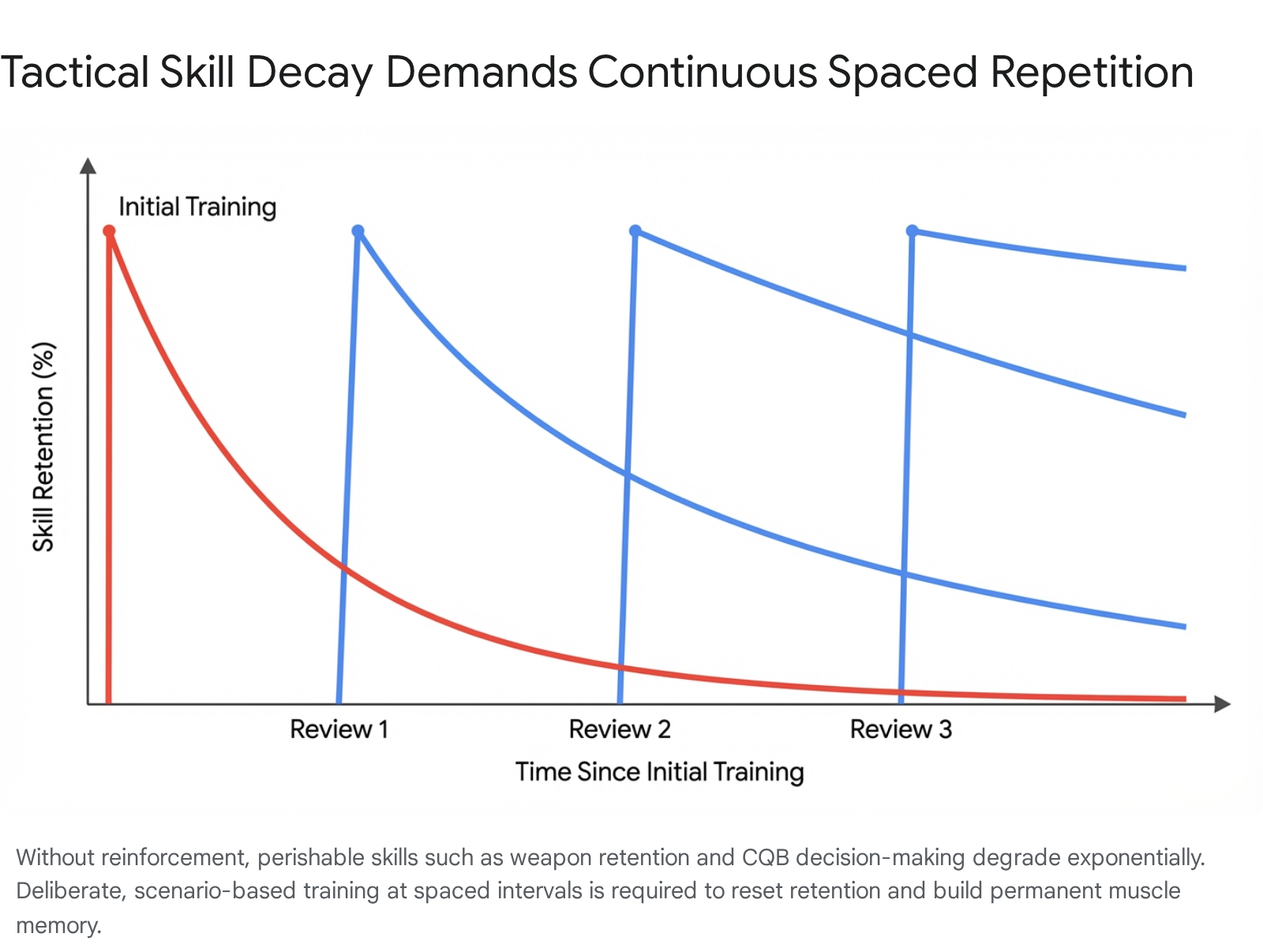
Adult learning within high-stress professions requires a departure from traditional, lecture-heavy pedagogical models. Novice instructors must be trained to recognize how the human brain processes, retains, and retrieves information under stress. Cognitive Load Theory (CLT) is central to this understanding. Research demonstrates that the working memory of a police officer is severely limited when processing complex, novel tasks, particularly in environments designed to simulate lethal threats.
If a novice instructor overloads a student with too many technical micro-corrections during a high-stress scenario, the student’s cognitive capacity is breached, resulting in a failure to encode the skill into long-term memory. Foundational instructor courses teach trainers to manage intrinsic cognitive load, which is the inherent difficulty of the task, and reduce extraneous cognitive load, which consists of distractions or poor instructional design. By managing these loads, the instructor allows the student to focus entirely on the germane load, which is the actual learning and schema formation necessary for survival in the field.
1.2 Foundational Instructor Development Curriculum
To bridge the gap between operator and educator, novice tactical trainers must complete a comprehensive general instructor course before they are permitted to teach specialized tactical subjects. Programs like the Federal Law Enforcement Training Centers (FLETC) Law Enforcement Instructor Training Program (LEITP) serve as the national standard for this critical transition. The LEITP is a rigorous program that focuses explicitly on the delivery of approved curriculum rather than the creation of new tactics.
The curriculum mandates that novice instructors master student-centered learning methodologies, presentation skills, and classroom management over the course of an intensive program. A critical component of this training is the implementation of the Student Centered Feedback Model, which trains the instructor to identify feedback errors and provide corrective guidance that empowers the student to self-diagnose mistakes. By requiring students to deliver progressively longer presentations of 15, 30, and 50 minutes using agency-approved lesson plans, these programs ensure that instructors can maintain fidelity to standardized training doctrines without injecting unauthorized, localized variations—often referred to as “training scars” or “range lore”. This standardization is a crucial first step in risk mitigation, ensuring that all officers within an agency receive uniform, legally defensible instruction.
2. Core Curricula for the Novice Tactical Instructor
Once the foundational pedagogical skills are established, the novice instructor must acquire subject-matter instructor certifications. These initial tactical classes focus heavily on the mechanical, legal, and safety aspects of core law enforcement duties, ensuring that the trainer can conduct safe exercises before moving on to advanced tactical problem-solving.
2.1 Use of Force and Legal Standards Instruction
Every tactical instructor must possess an encyclopedic understanding of use-of-force case law, as they are legally responsible for teaching officers when and how to deploy violence legitimately. The FLETC Use of Force Instructor Training Program (UOFITP) is specifically designed for professionals who train agents in these principles. Novice instructors cannot merely teach an officer how to shoot; they must inextricably link the physical action to the legal justification.
The rationale for this course is rooted deep in institutional liability and constitutional law. Instructors study the Fourth Amendment standard of objective reasonableness established by the Supreme Court in Graham v. Connor, which dictates that force must be judged through the lens of a reasonable officer on the scene, rather than with the 20/20 vision of hindsight. Novice instructors learn to design training laboratories that test environmental influences on de-escalation and decision-making, ensuring that the tactical skills taught are directly tethered to constitutional limits. Furthermore, a deep understanding of Title 42 United States Code Section 1983 liability is paramount, as plaintiffs frequently cite “failure to train” as a primary driver in civil litigation against municipalities.
2.2 Control Tactics and Defensive Maneuvers
Physical skills require specialized instructional methodology. The Law Enforcement Control Tactics Instructor Training Program (LECTITP) is a physically demanding course that prepares trainers to teach arrest techniques, intermediate weapon deployment, and defense against spontaneous attacks. Instructors learn how to teach gross motor skills, which are scientifically proven to be more reliable under stress than complex fine motor skills.
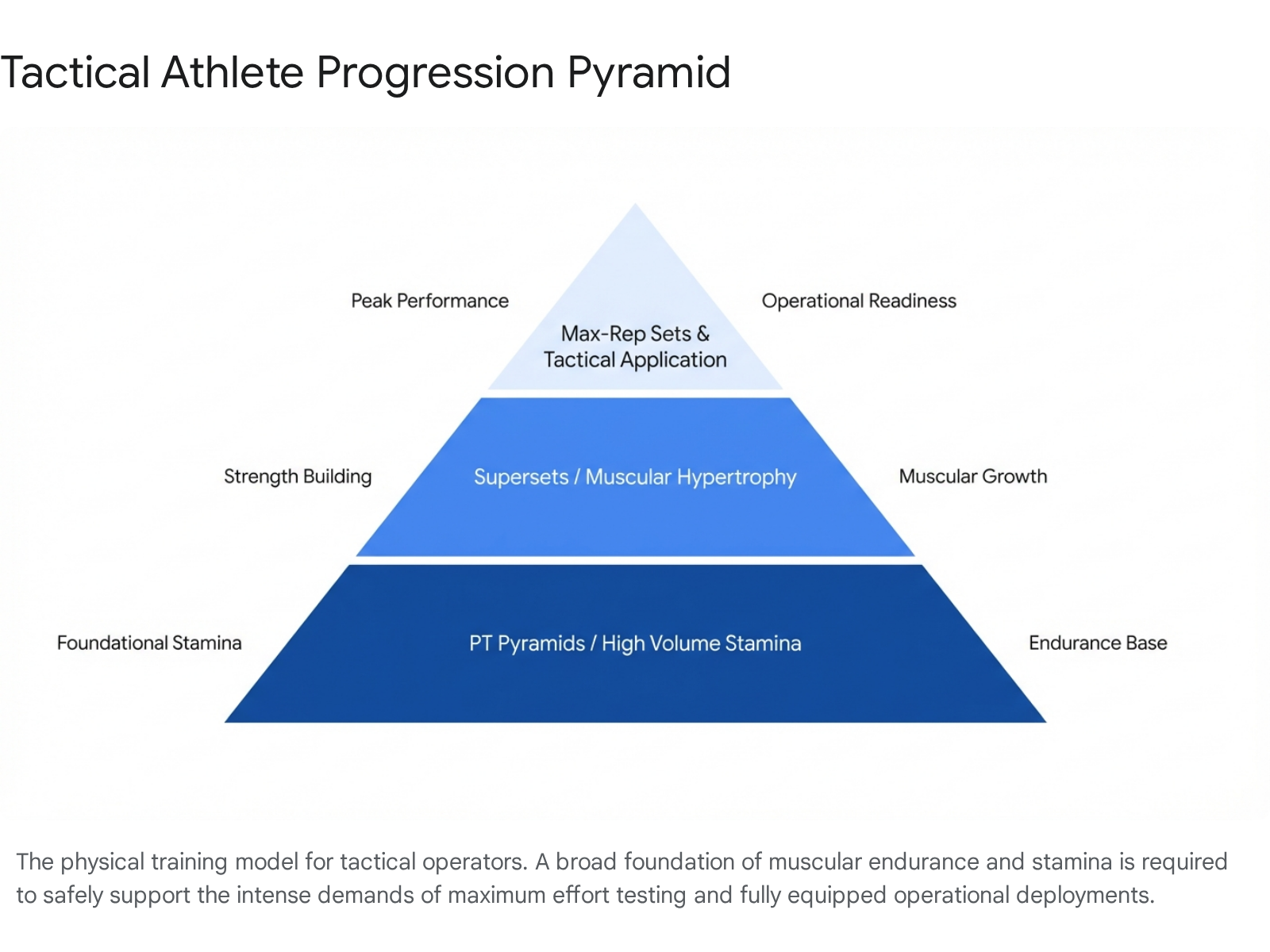
The curriculum in these foundational courses covers a broad spectrum of competencies, including baton control techniques, the deployment of Oleoresin Capsicum spray, and familiarization with electronic control devices. Instructors are taught how to safely manage physical efficiency batteries and implement injury prevention strategies during academy training, which is critical considering that over half of all academy injuries occur during physical training and defensive tactics sessions. Recent trends also emphasize ground survival and control-based grappling systems, which give officers safer alternatives to strikes and reduce both suspect injury and agency liability.
2.3 Fundamentals of Tactical Firearms Instruction
Initial firearms instructor courses, such as those recognized by state Peace Officer Standards and Training (POST) commissions, the International Association of Law Enforcement Firearms Instructors (IALEFI), or the National Rifle Association (NRA) Law Enforcement Division, focus heavily on the fundamentals of marksmanship and range safety protocols. IALEFI’s foundational 44-hour Firearms Instructor Course is an interactive program where students participate directly in course presentations under the mentorship of experienced trainers.
The primary rationale for the novice firearms instructor is ensuring absolute range safety and developing the ability to diagnose fundamental shooting errors in a static environment. Instructors learn to conduct safety checks, unpack liability through court case analyses, and build courses of fire that meet state qualification standards. At this stage, the instructor is mastering the mechanics of the weapon system—pistol, rifle, and shotgun—and the basic administration of the firing line, which must be flawless before any dynamic movement or stress can be introduced into the training environment.
3. Intermediate Curricula: Bridging Tactics and Reality
The most significant evolution in modern law enforcement training is the shift from static, flat-range drills to dynamic, scenario-based exercises. However, introducing stress and simulated weapons exponentially increases the risk of training injuries and fatalities. Novice instructors transitioning to intermediate roles must learn to facilitate these environments flawlessly.
3.1 Reality-Based Training (RBT) and Scenario Instruction
A Reality-Based Training (RBT) Instructor course is a mandatory requirement for any trainer conducting force-on-force exercises. These courses instruct the trainer on the physiology of high stress, the strict protocols for “sterile” training environments, and the methodology for scenario development. A sterile environment ensures that no live weapons enter the training space, a protocol that prevents tragic training accidents that have historically plagued law enforcement agencies.
Instructors learn that the purpose of RBT is not to defeat or fail the student, but to provide critical stress inoculation. Through repeated, controlled exposures to high-pressure training, officers develop neural pathways that allow them to process complex, ambiguous situations under time constraints. Furthermore, RBT instructors are taught specific debriefing techniques that allow officers to articulate their decision-making process, cementing the learning experience.
3.2 Basic SWAT and Tactical Team Operations
For instructors operating within specialized tactical units, attending a Basic SWAT course is an essential intermediate step. Programs endorsed by the National Tactical Officers Association (NTOA) offer a thorough introduction to tactical principles and their practical application. This standard 40-hour course meets the NTOA Tactical Response and Operations Standard (TROS) recommendation for Tier 1 through Tier 4 classification.
Instructors participating in these programs learn essential SWAT concepts, team organization, movement tactics at the individual and element levels, and warrant service planning. The program features numerous practical training scenarios aimed at developing foundational skills so that when the instructor returns to their agency, they have a comprehensive understanding of how individual tactical skills amalgamate into a cohesive team deployment. The training ensures that instructors are fluent in the common language and standardized practices utilized by tactical teams nationwide, facilitating seamless multi-jurisdictional operations.
4. Advanced Curricula for the Experienced Tactical Instructor
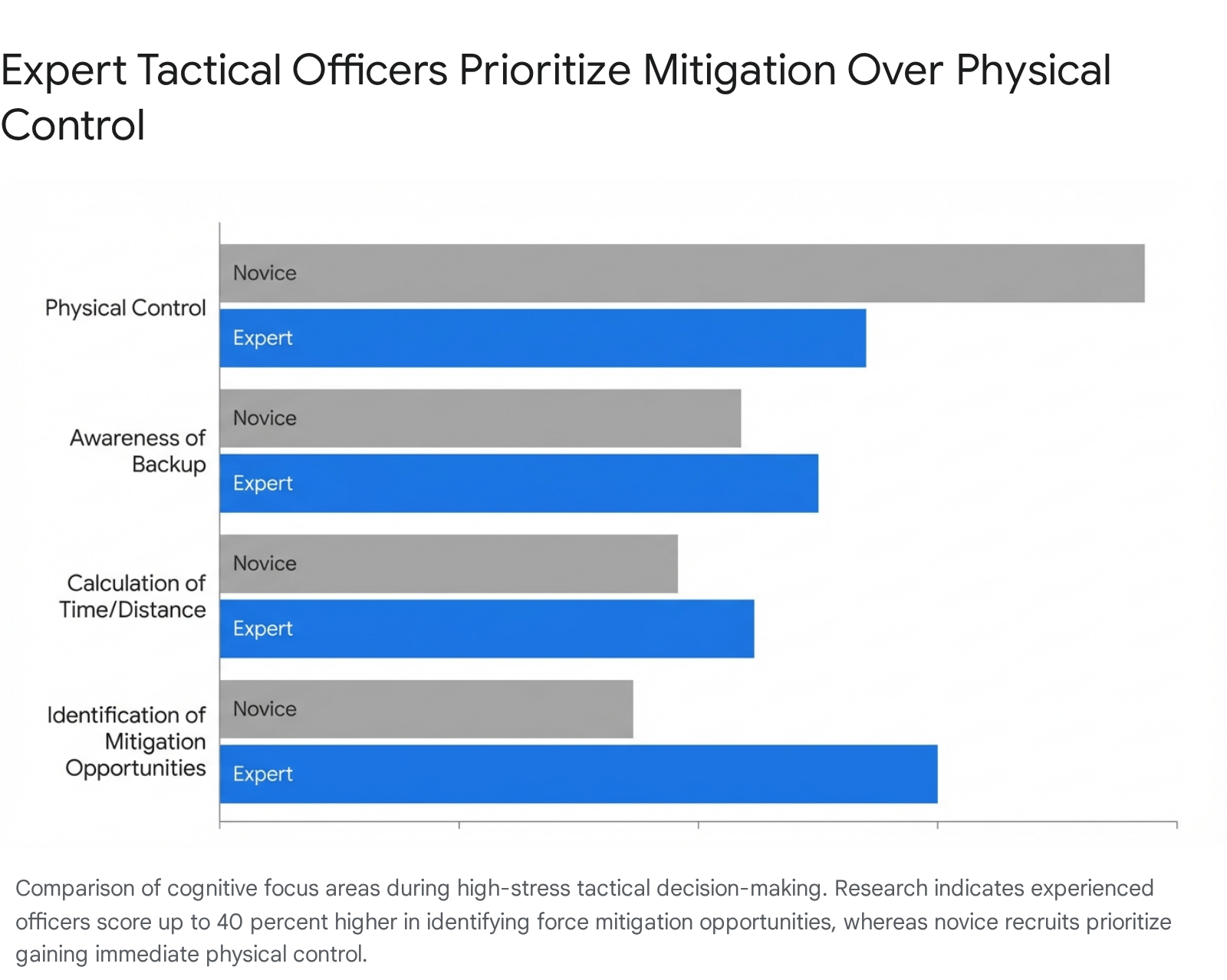
As an instructor transitions from a novice to an experienced trainer, their focus must shift from how to teach a physical tactic to why a human being performed a certain way during a lethal encounter. The integration of advanced human performance science, master-level discipline mastery, and tactical medicine is critical to developing training that acknowledges biological and environmental realities.
4.1 The Science of Human Performance
The Force Science Institute (FSI) offers an advanced certification course that is widely considered a cornerstone for experienced tactical instructors and use-of-force investigators. The curriculum bridges the gap between academic biomechanics, cognitive psychology, and the chaotic realities of a street encounter.
Experienced instructors attending this course study the physiological and perceptual factors that govern split-second decisions. A primary learning objective is the deep analysis of reaction times. Training reveals that the time it takes an officer to perceive a lethal threat, make a decision, and physically respond—known as perception-reaction time—is often slower than the time it takes a suspect to initiate an attack. Understanding this biological limitation explains why well-trained officers might shoot a suspect in the back; the suspect may have turned away in the fraction of a second between the officer’s decision to fire and the mechanical discharge of the weapon.
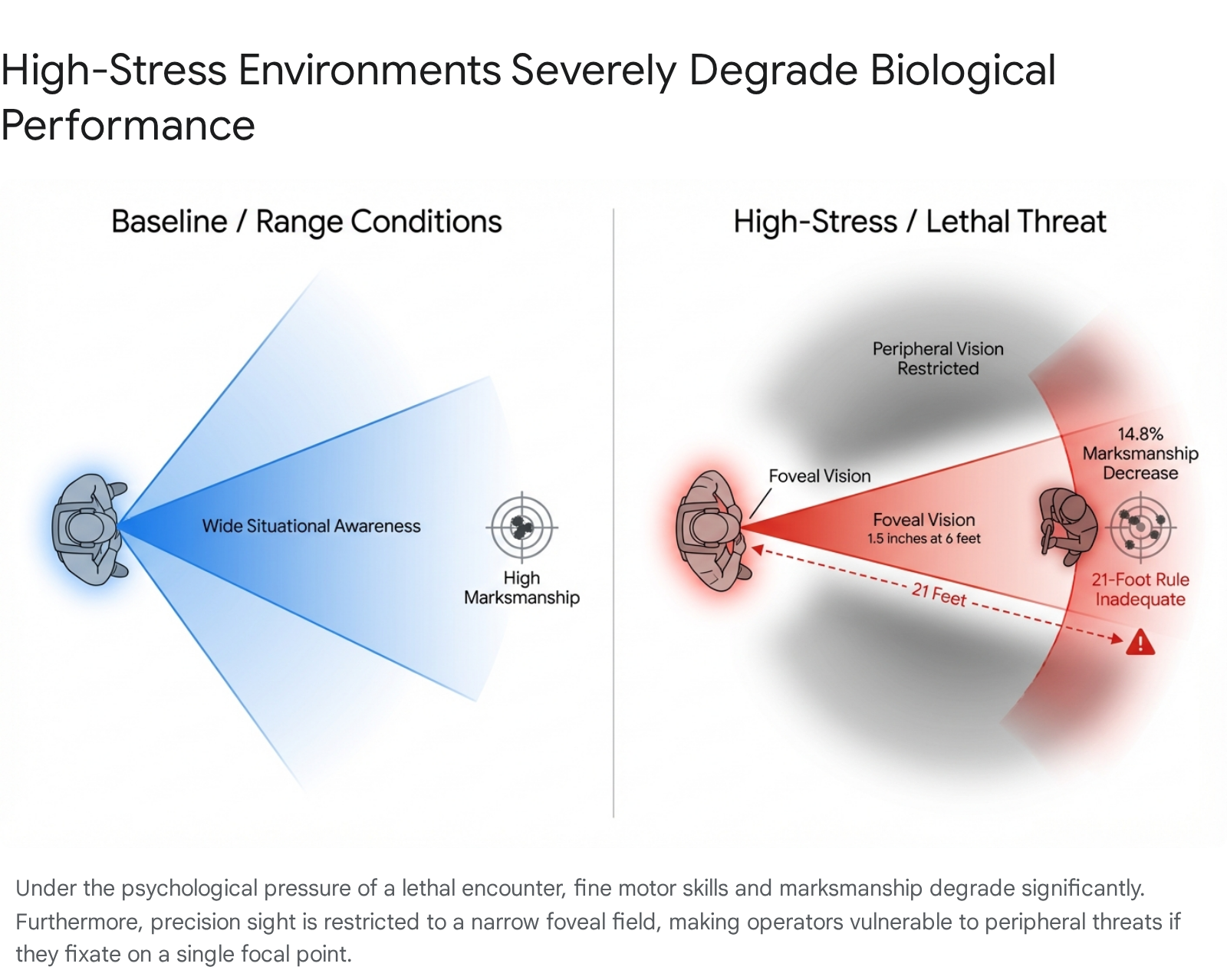
Advanced instructors utilize Force Science training to design curricula that account for phenomena such as perceptual distortions, auditory exclusion, tunnel vision, and memory gaps. During a high-stress event, the traumatized brain does not record information like a continuous video camera; it fragments. Instructors learn that discrepancies between an officer’s statement and objective body-worn camera video evidence are frequently the result of stress-induced memory failures rather than intentional deception. By understanding the autonomic responses linked to defensive actions, instructors can tailor reality-based scenarios to better regulate an officer’s psychophysiological response and prevent them from teaching tactics that are biomechanically impossible to execute during a sudden, violent ambush.
4.2 Master Instructor Development Programs
Experienced firearms instructors must move beyond the static firing line to master dynamic combat coaching. IALEFI provides the Master Instructor Development Program (MIDP), a premier continuing education course restricted to already-certified firearms instructors. The MIDP is not a basic shooting school; it is an intensive three-day clinic focused on advanced adult learning concepts and coaching strategies for natural action responses.
Experienced instructors are required to demonstrate proficiency across all three primary law enforcement weapon systems—handgun, shotgun, and semi-automatic rifle—under highly demanding physical conditions, often expending up to 800 rounds of ammunition over the course of the training. The curriculum forces instructors to progress from isolated concepts to practical skills, and finally to dynamic drills, teaching the gunfight mindset rather than simple target marksmanship.
Similarly, the FLETC Advanced Pistol Instructor Training Program (APITP) requires instructors to critically analyze traditional methodologies and adopt modern biomechanical concepts. Instructors are taught specific techniques such as the thumbs-forward grip, committed shot trigger control, and advanced movement protocols. These skills are designed to enhance the officer’s weapon control and ability to engage multiple targets while under extreme physiological stress, elevating the agency’s training program from basic survival to dominant tactical proficiency.
4.3 Tactical Medicine Integration (TECC/TCCC)
The modern tactical instructor must seamlessly integrate medical response into tactical operations. Law enforcement specialized tactical teams deploy to high-risk operations where officers, bystanders, and suspects are at a high risk for traumatic injury. Therefore, advanced instructors must be trained in Tactical Emergency Casualty Care (TECC) or Tactical Combat Casualty Care (TCCC).
Influenced by the Department of Defense model, these programs focus on saving preventable deaths while achieving three primary goals: Treat the Casualty, Prevent Additional Casualties, and Continue the Mission. Instructors learn to civilianize these military tenets, adhering to the Hartford Consensus, which insists upon basic tactical medical training for all law enforcement officers. Experienced tactical instructors incorporate medical skill sets—such as the application of tourniquets and hemostatic gauze during the “Care Under Fire” phase—directly into their firearms and room-clearing curricula. This ensures that officers do not view tactics and medicine as separate silos, but rather as an integrated continuum of survival.
5. Specialized and Less-Lethal Capabilities
As the spectrum of force expands and public scrutiny over police use of force intensifies, experienced instructors must master less-lethal and specialized munitions. Teaching these disciplines requires a nuanced understanding of technology, physics, and highly specific legal precedents.
| Advanced Weapons System | Core Curriculum Focus | Primary Instructor Responsibility |
| Less Lethal Impact Munitions | 12ga, 37mm, and 40mm deployment | Target isolation, kinetic energy calculation, liability |
| Flash Sound Diversionary Devices | Overpressure, blast radii, ignition risks | Safe preparation, environmental assessment, legal limits |
| Chemical Agents | CS, CN, OC, and Smoke characteristics | Delivery systems, area denial, hazard decontamination |
The NTOA offers master-level, train-the-trainer certifications in Less Lethal Impact Projectiles, Flash Sound Diversionary Devices (FSDD), and Chemical Agents. These intensive five-day courses cover complex deployment tactics, strict policy issues, hazard mitigation, and the physiological effects of chemical munitions on the human body.
For example, a tactical instructor teaching FSDD deployment must understand the exact blast radii, the risk of secondary fires in a structure, and the severe legal implications of utilizing diversionary devices in confined spaces occupied by non-combatants. In crowd control or barricaded suspect scenarios, the improper use of less-lethal force can be as legally devastating as lethal force, necessitating an instructor who thoroughly understands both the technological capabilities and the stringent, court-tested deployment criteria. The instructor must translate these complex technical specifications into easily understandable operational policies for the officers on the line.
6. Tactical Science, Analytical Thinking, and Command Leadership
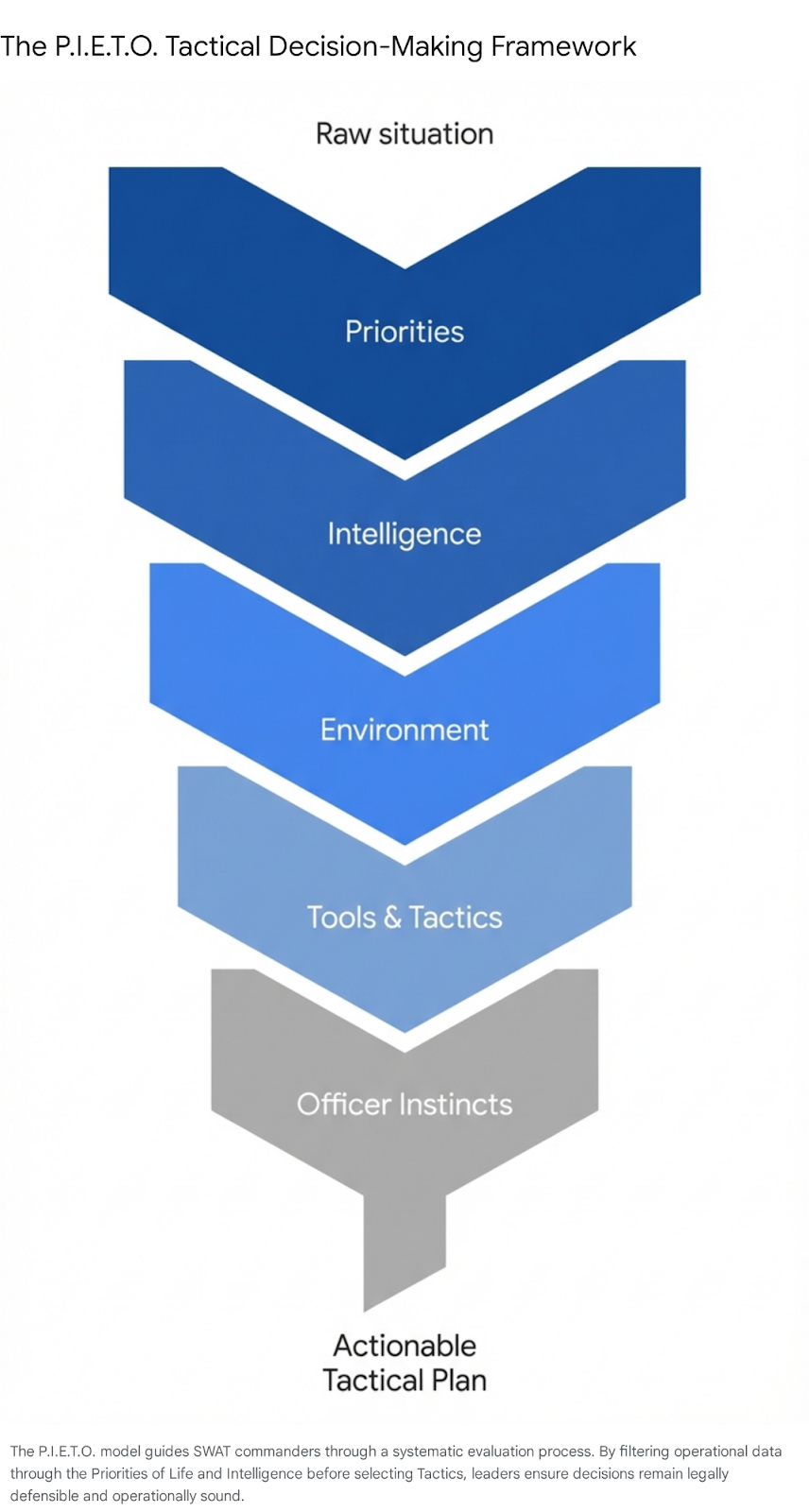
The apex of a tactical instructor’s educational journey transitions away from the physical execution of tactics entirely, focusing instead on leadership, unit culture, analytical problem solving, and strategic management. The actions of a tactical team are invariably a reflection of the team’s leadership and the culture cultivated by its instructors.
6.1 Sound Doctrine and Tactical Principles
Pioneered heavily by military and law enforcement strategist Sid Heal, the concept of Tactical Science treats tactics not merely as a set of physical skills, but as an intuitive application of fundamental, time-tested principles. Advanced tactical instructors study texts like Sound Doctrine: A Tactical Primer, which distills centuries of military strategy into concepts directly applicable to modern law enforcement crises. Instructors learn to identify the “center of gravity” in a critical incident—the focal point of a suspect’s power or advantage—and train their officers on how to systematically dismantle it.
The curriculum also relies heavily on understanding the OODA Loop (Observe, Orient, Decide, Act) and how it dictates movement and reaction in a crisis. By teaching officers how to disrupt a suspect’s OODA loop through surprise, speed, and violence of action, instructors elevate the intellectual capacity of the tactical team.
6.2 Analytical Problem Solving: “Exploding Squares” and “Five Whys”
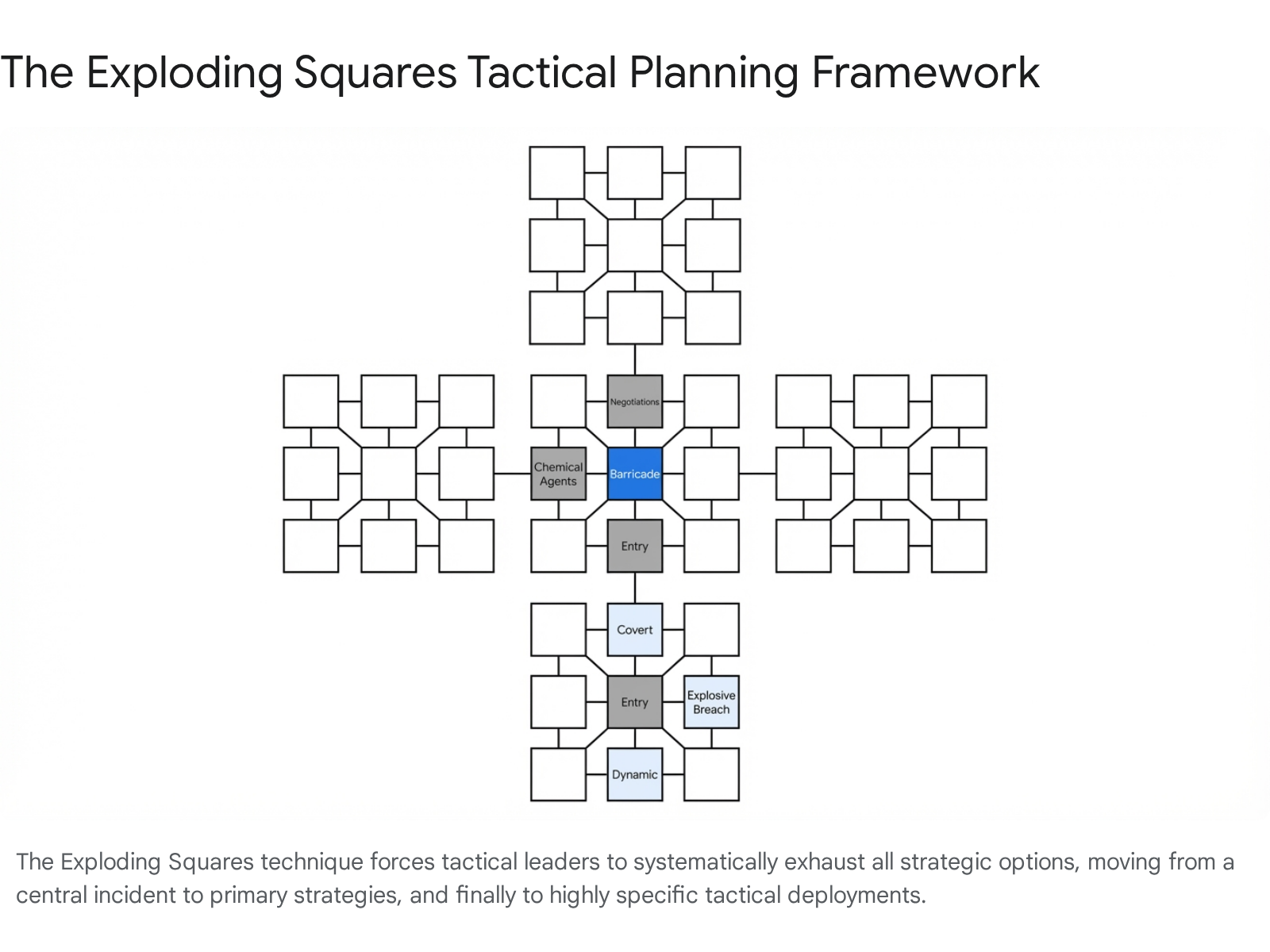
To teach advanced problem-solving and operational planning, expert tactical instructors employ specific analytical tools. The “Exploding Squares” technique, also known as the Lotus Blossom Technique, is a structured brainstorming model used by commanders to develop exhaustive tactical alternatives.
In a barricaded suspect scenario, for example, the instructor places the core problem—the barricade—in the center of a grid. The surrounding squares are populated with primary strategic options, such as Negotiations, Chemical Agents, Entry, and Anxiety Manipulation. The process then “explodes” outward; if “Entry” is selected, it becomes the center of a new grid, prompting sub-tactics like Explosive Breach, Covert Entry, or Limited Penetration. This methodical expansion prevents tactical tunnel vision and ensures teams train for the broadest possible spectrum of options before an incident occurs.
Similarly, the “Five Whys” is an iterative root-cause analysis technique used extensively during post-scenario debriefs. By repeatedly asking “Why?” after a tactical failure in a training environment, instructors bypass superficial symptoms to uncover systemic root causes. For instance, if an officer misses a critical shot, the instructor asks why, potentially discovering that the root cause was visual narrowing due to artificial time compression imposed by poorly designed scenario parameters, rather than a failure of marksmanship.
6.3 NTOA Command College and Tactical Leadership
The NTOA Sid Heal Tactical Command College is the premier certification pathway for SWAT team leaders and tactical commanders. This rigorous program utilizes a blended learning environment to expose commanders to the theoretical, ethical, and organizational elements of specialized law enforcement.
The curriculum is heavily invested in tactical leadership, requiring 186 hours of intensive coursework. Modules cover the psychological aspects of leadership, practical emotional intelligence, and managing the Corruption Continuum—the gradual erosion of ethical standards within high-stress units if left unchecked by leadership. The coursework explicitly differentiates between the concepts of management, which involves coordinating resources and schedules, and leadership, which focuses on influencing behavior and motivating personnel to act in life-threatening environments.
Advanced tactical leadership training borrows heavily from military history and corporate management models. The NTOA Command College curriculum requires students to analyze the leadership styles of historical figures and modern military commanders to derive lessons applicable to law enforcement. The curriculum incorporates studies on Lincoln on Leadership to understand executive strategies during severe crises, and It’s Your Ship by former Navy Captain D. Michael Abrashoff. Abrashoff’s methodology, which transformed the worst-performing ship in the Pacific Fleet into the best, emphasizes building self-esteem and ownership among subordinates rather than relying on drill-sergeant bullying. Tactical instructors apply these case studies to foster a culture of trust and decentralized decision-making within their units, ensuring that operators can think critically and act independently during rapidly evolving deployments.
7. The Return on Investment (ROI) and Liability Mitigation
A law enforcement agency’s investment in both novice and advanced tactical instructor development requires substantial financial and temporal resources. However, the empirical data and legal precedents unequivocally demonstrate that the Return on Investment (ROI) is realized through the drastic reduction of organizational liability, officer injuries, and costly litigation.
7.1 Statistical Reductions in Litigation and Use of Force
Law enforcement is an exceptionally high-liability profession. Historical data reveals that a disproportionate amount of civil litigation and excessive force complaints are generated by a small fraction of poorly trained or improperly supervised officers. When tactical instructors are appropriately certified to deliver modern, scenario-based, and force-science-informed training, the outcomes are quantifiably improved.
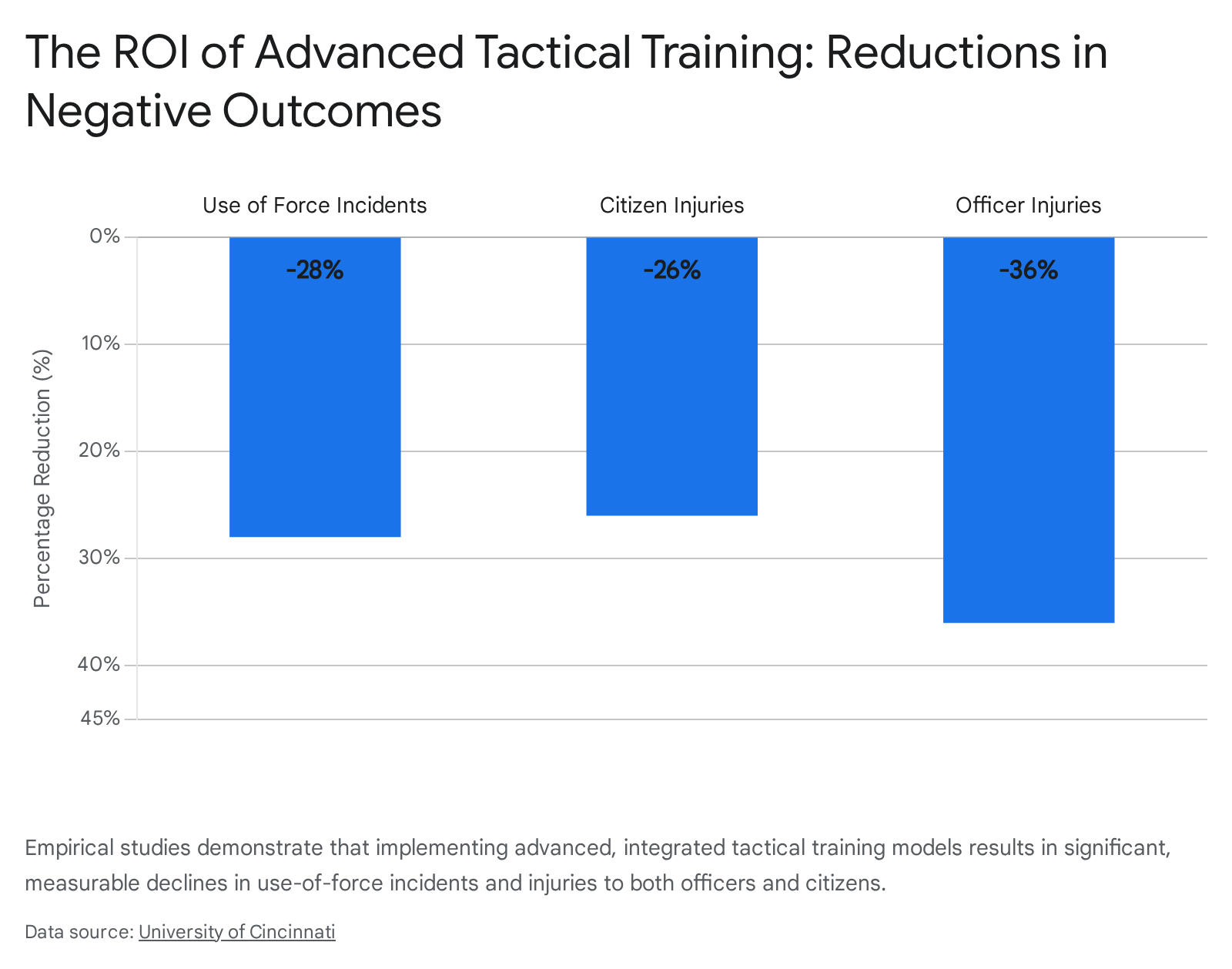
For example, studies analyzing the implementation of advanced de-escalation and tactical integration programs—such as the ICAT (Integrating Communications, Assessment, and Tactics) model—demonstrate profound impacts. Rigorous research indicates that agencies employing these advanced training matrices experience a 28 percent reduction in use-of-force incidents, a 26 percent decrease in citizen injuries, and a remarkable 36 percent reduction in officer injuries. These statistics provide a clear, empirical justification for the time and budget allocated to advanced instructor certification.
Furthermore, integrating disciplines such as control-based defensive tactics into standard training paradigms has shown comparable efficacy. Real-world data indicates that shifting from traditional compliance-strike models to control-focused models results in notable reductions in Taser deployments, excessive force complaints, and municipal payouts. Given that civil settlements regarding police liability can cost major municipalities hundreds of millions of dollars over a decade, the preventative fiscal value of an elite instructional cadre cannot be overstated.
7.2 Insurance Standardization and National Accreditation
The proficiency of an agency’s tactical instructors directly influences its insurability. Municipal risk pools and private liability insurers increasingly act as indirect regulators of police training. Insurers heavily subsidize and incentivize advanced training, recognizing that dynamic, reality-based training decreases the likelihood of unjustified shootings.
Agencies that employ highly certified instructors and maintain adherence to national standards—such as the NTOA Tactical Response and Operations Standard (TROS) or the International Association of Directors of Law Enforcement Standards and Training (IADLEST) National Certification Program—frequently qualify for reductions in their law enforcement liability premiums. IADLEST establishes stringent, evidence-based rubrics for instructor certification, requiring verified continuing education and peer endorsements to maintain active status. The alignment of agency training with objectively measurable, internationally recognized standards ensures that when an officer’s actions are challenged in federal court, the agency can definitively prove that the officer was trained utilizing the most advanced, scientifically valid methodologies available in the profession.
8. Conclusion
The operational environment of modern law enforcement is profoundly unforgiving. The margin for error during a critical incident is measured in fractions of a second, and the consequences of failure reverberate through the legal system, the community, and the lives of the officers involved. To navigate this landscape, the law enforcement tactical instructor cannot simply be a senior operator passing down anecdotal experience. They must be developed through a formalized, scientifically rigorous continuum.
Novice instructors must build a bedrock of adult learning theory, strict legal comprehension, and reality-based training safety protocols. Without this foundation, the transmission of tactical skills is flawed and potentially disastrous. As instructors mature, they must transcend mechanical proficiency to master Force Science, tactical doctrine, and unit leadership. By progressing through master-level certifications and command colleges, experienced instructors learn to manipulate cognitive load, execute strategic analytical planning, and forge resilient, highly capable tactical teams. Ultimately, an agency’s commitment to this extensive instructor development matrix is not merely an administrative checkbox; it is the most effective proactive measure an organization can take to ensure constitutional policing, preserve human life, and mitigate catastrophic liability.
9. Appendix: Master Data Table of Tactical Instructor Training Providers
The following table categorizes the leading training providers in the United States according to the specific educational tier and discipline required for tactical instructors.
| Category of Instruction | Leading Training Provider | Course Name | Synopsis | Location | Website URL |
| Foundational Pedagogy | FLETC | Law Enforcement Instructor Training Program (LEITP) 1 | Provides foundational instructional skills with a focus on adult learning, presentation skills, and the delivery of approved agency curricula. | Glynco, GA / Artesia, NM | https://www.fletc.gov/law-enforcement-instructor-training-program |
| Foundational Pedagogy | TEEX | Basic Instructor Development 2 | Introduces fundamental adult learning theory, lesson plan development, and classroom management techniques for law enforcement. | Face-to-Face (Various) | https://teex.org/certificate-programs/master-law-enforcement-instructor/ |
| Legal & Liability | FLETC | Use of Force Instructor Training Program (UOFITP) 3 | Focuses on constitutional standards (Graham v. Connor), legal liability, and designing reality-based use of force scenarios. | Glynco, GA / Cheltenham, MD | https://www.fletc.gov/use-force-instructor-training-program |
| Human Performance | Force Science Institute | Force Science Certification / Force Encounters Analysis 4 | A deep dive into the physiological and psychological phenomena (reaction times, memory gaps) affecting officers during deadly force encounters. | Various / Nationwide | https://events.forcescience.com/ |
| Core Tactics (Control) | FLETC | Law Enforcement Control Tactics Instructor (LECTITP) 5 | Physically demanding program preparing instructors to teach gross motor control tactics, intermediate weapons, and defense against attacks. | Glynco, GA / Artesia, NM | https://www.fletc.gov/law-enforcement-control-tactics-instructor-training-program |
| Core Tactics (Firearms) | IALEFI | Firearms Instructor Course 6 | 44-hour foundational course certifying instructors in range safety, marksmanship diagnosis, and liability management. | Various / Nationwide | https://www.ialefi.com/training-course-calendar/ |
| Experiential Learning | ALERRT | Level 1 Active Shooter Instructor (Train-the-Trainer) | Prepares instructors to safely design, implement, and evaluate dynamic force-on-force active shooter response scenarios. | San Marcos, TX / Various | https://alerrt.org/courses/view/28120 |
| Experiential Learning | TEEX | Reality Based Training Instructor | Teaches trainers how to safely design, implement, and evaluate high-stress, scenario-based training within their home agencies. | Face-to-Face (Various) | https://teex.org/class/let705/ |
| Unit Operations | NTOA | Basic SWAT 7 | 40-hour introductory course focusing on tactical team movement, operational planning, and the safe execution of high-risk warrants. | Various / Nationwide | https://public.ntoa.org/default.asp?action=courseview&titleid=72 |
| Master Discipline | IALEFI | Master Instructor Development Program (MIDP) 8 | Advanced continuing education for certified instructors focusing on coaching strategies, gunfight mindset, and complex live-fire drills. | Various / Nationwide | https://www.ialefi.com/training-course-calendar/master-instructor-development-program/ |
| Master Discipline | SIG SAUER Academy | Advanced Pistol Instructor 9 | A 2-day advanced course focusing on high-level shooting bio-mechanics and sophisticated instructional development. | Epping, NH | https://sigsaueracademy.com/armed-professional |
| Tactical Medicine | FLETC | Basic Tactical Medical Instructor Training Program (BTMITP) 10 | Equips instructors to teach civilianized Tactical Combat Casualty Care (TCCC) and Care Under Fire techniques to patrol officers. | Glynco, GA / Artesia, NM | https://www.fletc.gov/basic-tactical-medical-instructor-training-program |
| Tactical Medicine | STORM Training Group | Trauma Med Instructor | Advanced course developed by Special Forces medics preparing officers to teach critical hemorrhage control and airway management. | Various / Minnesota | https://stormtraininggroup.com/courses-offered/trauma-med-instructor/ |
| Advanced Weapons | NTOA | Less Lethal, FSDD, Chemical Agent Instructor Certification 11 | A comprehensive 5-day course on the legal limits, tactical deployment, and safe instruction of impact and chemical munitions. | Various / Nationwide | https://public.ntoa.org/default.asp?action=courseview&titleid=173 |
| Advanced Weapons | Defense Technology | 4-Day Less Lethal ICP Instructor Program 12 | Extensive curriculum covering OC Aerosols, Impact Munitions, and Chemical Agents instruction and legal considerations. | Various / Nationwide | https://defense-technology.policeoneacademy.com/ |
| Tactical Command | NTOA | SWAT Team Leader Development 13 | Focuses on risk mitigation, legal liability, personnel management, and operational decision-making for high-risk operations. | Various / Nationwide | https://public.ntoa.org/default.asp?action=courseview&titleid=231 |
| Tactical Command | NTOA | SWAT Command Decision-Making and Leadership I 15 | Explores contemporary SWAT issues, practical emotional intelligence, critical thinking, and the psychology of team leadership. | Various / Online | https://public.ntoa.org/default.asp?action=courseview&titleid=314 |
Please share the link on Facebook, Forums, with colleagues, etc. Your support is much appreciated and if you have any feedback, please email us in**@*********ps.com. If you’d like to request a report or order a reprint, please click here for the corresponding page to open in new tab.
Sources Used
- Law Enforcement Instructor Training Program, accessed February 22, 2026, https://www.fletc.gov/law-enforcement-instructor-training-program
- Master Law Enforcement Instructor – TEEX.ORG, accessed February 22, 2026, https://teex.org/certificate-programs/master-law-enforcement-instructor/
- Use of Force Instructor Training Program – Federal Law Enforcement Training Centers, accessed February 22, 2026, https://www.fletc.gov/use-force-instructor-training-program
- Force Encounters Analysis – Human Performance Training and Consulting Inc, accessed February 22, 2026, https://www.hptc-pro.com/services/force-encounters-analysis/
- Law Enforcement Control Tactics Instructor Training Program, accessed February 22, 2026, https://www.fletc.gov/law-enforcement-control-tactics-instructor-training-program
- Firearms Instructor Course – IALEFI, accessed February 22, 2026, https://www.ialefi.com/training-course-calendar/firearms-instructor-course-2/
- Basic SWAT – National Tactical Officers Association – NTOA Publications, accessed February 22, 2026, https://public.ntoa.org/default.asp?action=courseview&titleid=72
- Master Instructor Development Program – IALEFI, accessed February 22, 2026, https://www.ialefi.com/training-course-calendar/master-instructor-development-program/
- Armed Professional – SIG SAUER Academy, accessed February 22, 2026, https://sigsaueracademy.com/armed-professional
- Basic Tactical Medical Instructor Training Program, accessed February 22, 2026, https://www.fletc.gov/basic-tactical-medical-instructor-training-program
- National Tactical Officers Association – NTOA Training Courses, accessed February 22, 2026, https://public.ntoa.org/default.asp?action=courseview&titleid=173
- Welcome to Defense Technology® Training Academy, accessed February 22, 2026, https://defense-technology.policeoneacademy.com/
- SWAT TEAM LEADER DEVELOPMENT COURSE OVERVIEW AND …, accessed February 22, 2026, http://public.ntoa.org/AppResources/CourseDetails/231.pdf
- National Tactical Officers Association – NTOA Training Courses, accessed February 22, 2026, https://public.ntoa.org/default.asp?action=courseview&titleid=231
- NTOA Training Courses – National Tactical Officers Association, accessed February 22, 2026, https://training.ntoa.org/
- National Tactical Officers Association – NTOA Training Courses, accessed February 22, 2026, https://public.ntoa.org/default.asp?action=courseview&titleid=314