Category Archives: Country Analytics

SITREP USA – Week Ending February 21, 2026

Executive Summary

During the week ending February 21, 2026, the national security apparatus of the United States navigated a highly volatile and unprecedented convergence of international military escalation, domestic constitutional friction, and complex macroeconomic adjustments. This comprehensive situation report synthesizes multi-source intelligence, diplomatic cables, economic modeling, and cybersecurity telemetry to provide an exhaustive analysis of the geostrategic, domestic, and economic threat landscapes currently shaping and constraining United States national security policy. The operational environment is defined by overlapping crises that require simultaneous management across multiple discrete theaters, stretching the bandwidth of the executive branch as it prepares for the constitutionally mandated State of the Union address.

Internationally, the predominant focus of the national security community is the rapid and massive concentration of United States military assets in the Middle East, representing the largest deployment of American air and naval power in the region since the buildup preceding the 2003 invasion of Iraq.1 Following the apparent collapse of diplomatic negotiations in Geneva regarding Iran’s nuclear program, the executive branch has publicly signaled a ten-to-fourteen day decision window regarding the authorization of kinetic military action against the Islamic Republic of Iran.3 This highly aggressive coercive diplomatic posture is structurally supported by a dual-carrier strike group deployment. The strategic encirclement features the arrival of the USS Gerald R. Ford supercarrier in the Eastern Mediterranean and the operational positioning of the USS Abraham Lincoln in the Arabian Sea.4 Simultaneously, to mitigate asymmetric vulnerabilities to Iranian proxy retaliation, the Department of Defense has initiated a widespread evacuation of non-essential personnel from forward-operating bases across the Middle East, including the critical Al Udeid Air Base in Qatar.7 Compounding the instability in the region, the sudden and accelerated withdrawal of United States forces from northeastern Syria has precipitated the collapse of the Syrian Democratic Forces’ security umbrella, leading directly to the catastrophic failure of the Al-Hol detention facility and the mass release of an estimated 15,000 to 20,000 Islamic State (ISIS) affiliates into the battlespace.3

Domestically, the executive branch suffered a profound and structurally altering legal defeat when the Supreme Court of the United States issued a 6-3 ruling striking down the administration’s sweeping utilization of the International Emergency Economic Powers Act (IEEPA) to impose a global tariff regime.9 This ruling fundamentally alters the trajectory of United States trade policy, instantly injecting massive uncertainty into global supply chains and raising the immediate prospect of the federal government being legally compelled to refund upward of $200 billion to domestic importers for levies collected in 2025 alone.10 This unprecedented judicial rebuke arrives against the backdrop of a visibly cooling domestic economy. Fourth-quarter 2025 Gross Domestic Product (GDP) growth slowed significantly to an annualized rate of 1.4%, heavily dragged down by a six-week federal government shutdown that severely curtailed federal outlays and disrupted aggregate economic activity.12

On the homeland security and interior enforcement front, the administration achieved significant operational milestones that align with its core policy directives. The Department of Homeland Security (DHS) awarded a pivotal, multi-billion dollar oversight contract to Parsons Government Services Inc. to manage the accelerated completion of the southern border wall, funded by the $46.5 billion One Big Beautiful Act.13 Border enforcement metrics remain at historic, unprecedented levels of restriction, with zero interior releases recorded for the ninth consecutive month and a 96% reduction in Southwest border apprehensions compared to the prior administration’s averages.14 However, this total tightening of border security and interior enforcement has visibly constrained the domestic labor market, a dynamic clearly evidenced by the rapid exhaustion of the H-2B supplemental visa cap for returning temporary non-agricultural workers by the first week of February.15

In the cyber domain, sophisticated threat actors continue to demonstrate advanced capabilities, characterized by a 75% year-over-year increase in cloud environment intrusions and the rapid exploitation of artificial intelligence for automated ransomware extortion and identity attacks.16 Significant data breaches at major corporate entities, alongside the active mapping of critical infrastructure control loops by state-sponsored and criminal syndicates, highlight the persistent, systemic vulnerabilities within the United States digital ecosystem.18 Concurrently, the national security community is accelerating its preparation for the post-quantum cryptographic transition, recognizing the existential threat posed by future quantum computing capabilities to current encryption standards.20

As the President prepares to deliver the State of the Union address to a joint session of Congress on February 24, 2026, the administration faces a critical inflection point.22 The convergence of Middle Eastern brinkmanship, constitutional limitations on executive economic authority, a slowing macroeconomic environment, and pervasive digital threats requires immediate, nuanced, and comprehensive strategic recalibration across all instruments of national power.

1. Geostrategic Posture and Military Operations: The Middle East Theater

The most acute and immediate national security development of the reporting period is the rapid, highly visible, and massive concentration of United States military assets across the Middle East. Intelligence, defense, and geopolitical analyses indicate that this unprecedented deployment is designed to maximize coercive diplomatic pressure on the government in Tehran, while simultaneously providing the executive branch with a full spectrum of kinetic military options should current diplomatic ultimatums expire without a comprehensive resolution.3 The scale of this mobilization indicates a posture that extends far beyond routine deterrence, positioning the United States for potential sustained conflict.

1.1 The Architecture of the Dual-Carrier Strike Group Deployment

The physical architecture of the current United States military posture relies heavily on the establishment of overwhelming naval and air superiority, designed to project power from multiple vectors simultaneously. The United States has established a highly irregular dual-carrier presence to effectively box in Iranian strategic operational space and divide its air defense networks. At the center of the eastern deployment is the USS Abraham Lincoln Carrier Strike Group, which is currently operating in the northern Arabian Sea.2 Satellite imagery and open-source intelligence confirm the carrier is operating approximately 240 kilometers off the coast of Oman, placing its full complement of advanced F-35C stealth fighters and F/A-18 strike aircraft within immediate, unrefueled striking range of critical Iranian mainland targets, including command and control nodes and nuclear research facilities.2 The Lincoln went operational in the Fifth Fleet’s area of responsibility in late January, immediately flying combat sorties and conducting maritime surveillance with P-8A Poseidon patrol aircraft.23

Simultaneously, the USS Gerald R. Ford—the United States Navy’s newest, largest, and most technologically advanced supercarrier—has completed its transit through the Strait of Gibraltar and entered the Eastern Mediterranean.5 The presence of the Ford significantly expands the Pentagon’s strike vectors. By positioning a carrier strike group in the Mediterranean, the United States military can launch sustained, high-intensity air operations from the west, traversing allied airspace, without relying entirely on the airspace permissions or base access from Gulf Arab partners who may be hesitant to support offensive operations due to fear of Iranian retaliation.2

This overwhelming naval power is augmented by a massive, corresponding influx of land-based aviation and support assets. The United States has relocated extensive tactical and strategic air assets to the region, including deployments of F-22 Raptors, F-16 fighter jets, and long-range strategic bombers, bolstering the roughly 75 warplanes carried by each of the supercarriers.4 Furthermore, aviation tracking experts have noted the highly significant deployment of six E-3 Sentry Airborne Warning and Control System (AWACS) aircraft, which have been repositioned from installations in the United States and Japan to the Prince Sultan Air Base in the Kingdom of Saudi Arabia.26 These AWACS platforms are absolutely critical for real-time command, control, and complex battlespace management, indicating preparations for a highly coordinated, multi-wave air campaign. In total, military analysts assess that the United States has gathered the largest concentration of air power in the Middle Eastern theater since the buildup that preceded the 2003 invasion of Iraq, creating a force capable of sustaining a punishing bombing campaign for weeks or even months.1

U.S. Dual-Carrier Pincer Posture: USS Ford in the Mediterranean, USS Lincoln in the Arabian Sea, base evacuations.

1.2 Kinetic Options and the Strategic Absence of Ground Forces

Despite the overwhelming naval and aerial buildup, which includes at least 13 United States destroyers and one nuclear submarine operating across the Persian Gulf, Red Sea, and Northern Arabian Sea, the administration has conspicuously avoided deploying large formations of ground combat troops to the immediate theater.2 This deliberate force structure design heavily signals that the administration’s kinetic options are weighted entirely toward localized, punitive precision strikes or a sustained, high-altitude degradation of Iranian infrastructure, rather than a full-scale ground invasion, territorial occupation, or forced regime change through infantry maneuvers.

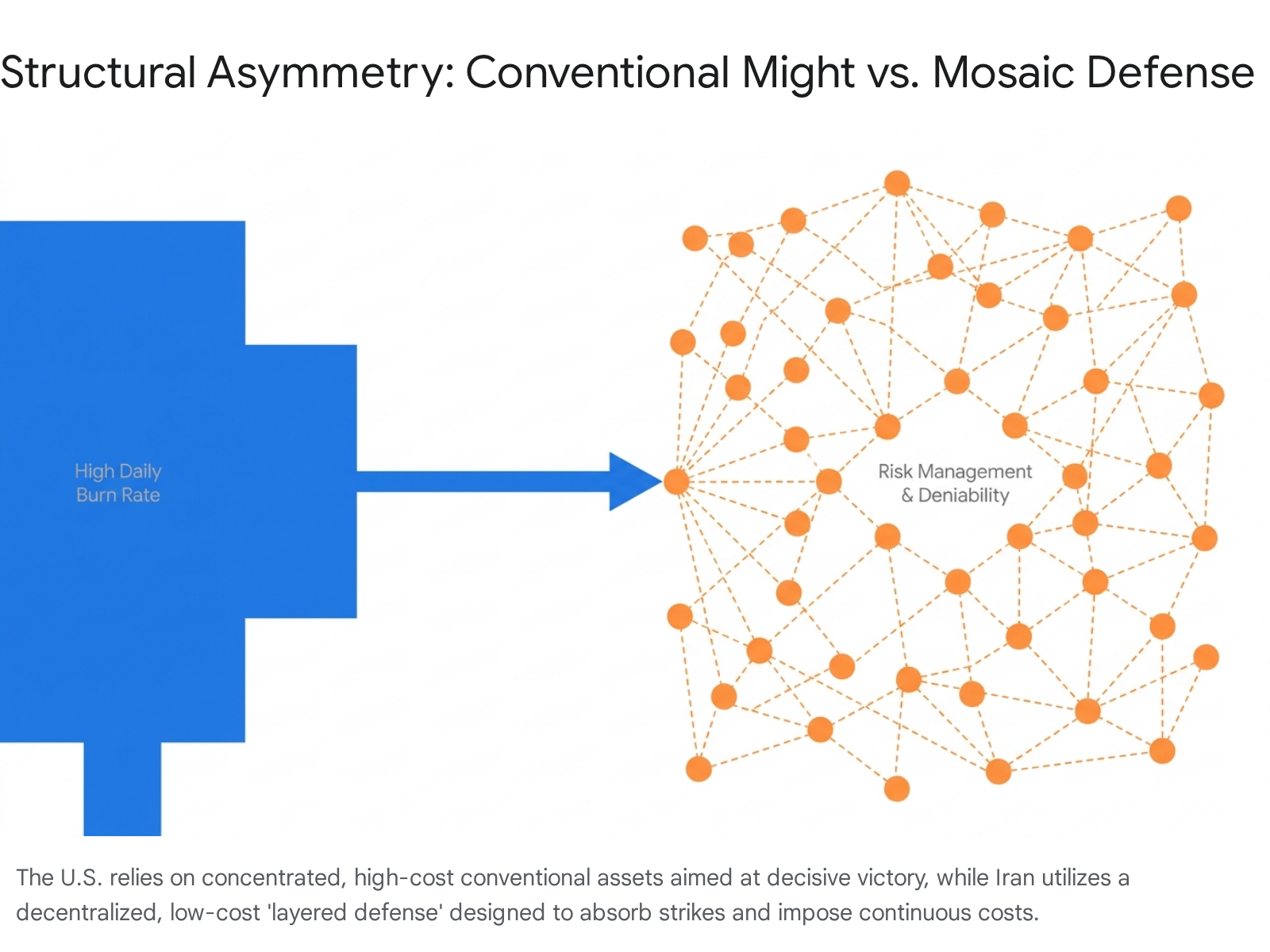
Military planners have reportedly presented the President with a menu of kinetic options ranging from a limited, “one-and-done” retaliatory strike designed to shock the Iranian leadership and force immediate diplomatic concessions, to a comprehensive, multi-domain air and naval campaign targeting Iran’s nuclear enrichment facilities, integrated air defense systems, and the command nodes of the Islamic Revolutionary Guard Corps (IRGC).2 Analysts assess that the lack of a credible United States ground invasion threat represents a significant variable in the escalatory calculus. Iranian leadership—operating through a highly decentralized, resilient power structure—likely calculates that the regime can survive a purely aerial bombardment campaign, even if it inflicts massive damage on critical infrastructure, thereby potentially emboldening Tehran to absorb the strikes rather than capitulate to maximalist demands.4

1.3 Force Protection and the Mitigation of Asymmetric Vulnerability

Recognizing the exceptionally high probability of Iranian retaliation through its sophisticated regional proxy network—often referred to as the “Axis of Resistance”—the Pentagon has initiated a calculated, highly sensitive withdrawal of vulnerable assets. The Department of Defense is currently executing the systematic evacuation of hundreds of non-essential troops and civilian contractors from major fixed installations across the region.7 This includes drawdowns at the Al Udeid Air Base in Qatar, the cluster of United States bases in Bahrain that house the Navy’s 5th Fleet, and various facilities across Iraq, Syria, Kuwait, Saudi Arabia, Jordan, and the United Arab Emirates.7

With 30,000 to 40,000 United States troops normally stationed across the Middle East, these fixed bases present highly vulnerable, static, target-rich environments for Iranian ballistic missile barrages and coordinated suicide drone swarms.7 The Iranian mission to the United Nations has explicitly and publicly warned that any United States attack would immediately render all American bases, facilities, and assets in the region “legitimate targets” for reprisal.7 Consequently, while evacuating non-essential personnel, the United States is simultaneously deploying and activating advanced air and missile defense systems, including Patriot and THAAD batteries, around remaining operational nodes to protect essential personnel and critical hardware from anticipated asymmetric counter-attacks.7

1.4 Diplomatic Deadlines, Negotiations, and the Iranian Response

The intense military maneuvering is intrinsically tied to a rapidly closing, high-stakes diplomatic window. The President has publicly stated that a final decision regarding whether the United States will conduct a military strike against Iran will be made within a ten-to-fourteen day timeframe, creating an artificial crisis designed to force a breakthrough.4 United States diplomatic officials have presented Tehran with a hardline end-of-February deadline to agree to sweeping, structural concessions.3 These demands reportedly include the complete, verifiable cessation of all uranium enrichment activities, severe, monitored limitations on Iran’s ballistic missile development program, and the total termination of material and financial support for regional proxy militias in Lebanon, Yemen, Iraq, and Syria.3

While there are reports that the administration has floated the possibility of a narrow, “token” nuclear deal that might allow for highly restricted, low-level uranium enrichment as a face-saving measure for Tehran, the overarching posture remains maximalist.6 Intelligence assessments, however, indicate a high likelihood that Iran will reject these demands. Recent diplomatic engagements, including talks held in Geneva on February 17, have failed to produce a viable framework for de-escalation, leaving United States officials highly pessimistic regarding the prospects for a negotiated settlement before the deadline expires.3

In a clear demonstration of defiance, operational readiness, and allied solidarity, Iranian naval forces hosted a highly publicized joint military exercise with the Russian Navy in the Gulf of Oman and the southern tip of the Persian Gulf on February 19.3 The exercise, which heavily involved Iranian Islamic Revolutionary Guard Corps (IRGC) units and a Russian Steregushchiy-class corvette, focused on practicing joint command-and-control protocols, rapid response maneuvers, and defensive operations against maritime security threats.3 This joint drill clearly signals Iran’s readiness to contest the vital Strait of Hormuz—through which a massive percentage of the world’s daily oil supply transits—in the event of United States military action, explicitly leveraging its strategic partnership with Moscow as a deterrent.3

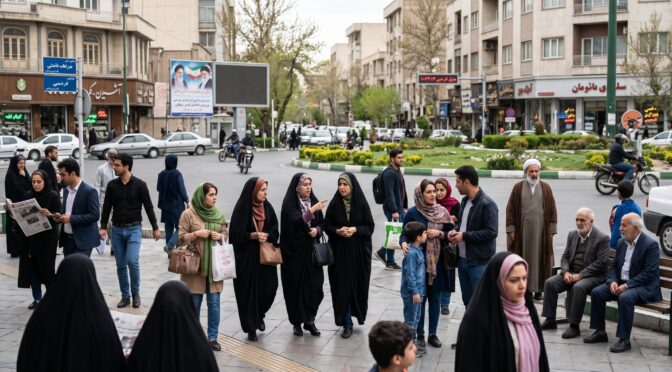
Simultaneously, the Iranian domestic landscape remains highly volatile and unpredictable. On February 19, Iran witnessed the largest single day of anti-regime protests since the major unrest of January 11.3 Intelligence streams tracked five large-scale demonstrations, defined as exceeding 1,000 participants, alongside 14 smaller, localized protests across the country.3 While this domestic unrest exerts undeniable pressure on the regime and highlights profound internal dissatisfaction, historical geopolitical precedent suggests that external military strikes often generate a powerful “rally ’round the flag” effect. Hardline elements within the IRGC may calculate that absorbing a United States strike would provide the necessary pretext to violently suppress internal dissent and consolidate domestic control under the banner of national defense. Additionally, Israeli and Lebanese intelligence officials assess a high probability that Hezbollah, Iran’s most capable proxy, would participate in any future conflict, potentially opening a devastating northern front against Israel and further regionalizing the war.3

1.5 Domestic Political Calculus and Isolationist Pushback

The administration’s rapid escalation toward potential large-scale conflict has triggered notable, albeit currently muted, resistance from its core political base. Prominent conservative influencers, media personalities, and “America First” advocates, including figures such as Charlie Kirk, Tucker Carlson, and Stephen K. Bannon, have previously expressed deep, principled reservations regarding United States entanglement in another protracted Middle Eastern war or efforts aimed at regime change.27 During earlier periods of escalation, such as the lead-up to the strikes in June 2025, these voices loudly warned the administration that the “MAGA base does not want a war, at all, whatsoever” and strongly resisted “the siren song of displacing dictators in lands we do not understand”.27

While public lobbying against the current, massive military buildup is noticeably less vociferous than in the past—partly due to accumulated trust in the administration’s transactional, unpredictable approach to the use of force—the underlying political constraints remain a critical factor in the executive branch’s calculus.27 The administration has not yet formally articulated a comprehensive casus belli to the American public, nor has it sought formal authorization for the use of military force (AUMF) from the United States Congress, or attempted to build a broad international coalition beyond the immediate support of Israel.4 Launching a sustained bombing campaign without these domestic and international legal frameworks risks igniting severe political backlash, particularly if the conflict results in American casualties, a spike in global energy prices, or a prolonged regional quagmire leading into the midterm election cycle.

2. Global Diplomatic Realignments and Secondary Theaters

While the overwhelming focus of the national security apparatus remains fixed on the Persian Gulf, compounding crises and strategic shifts in secondary theaters continue to demand resources and complicate the global operating environment.

2.1 The Syrian Vacuum and the Catastrophic Resurgence of the Islamic State

A secondary, yet highly consequential and immediate security crisis has erupted in northeastern Syria, directly resulting from the broader shift in United States strategic posture and resource allocation. The administration’s decision to rapidly draw down the remaining United States military presence in Syria—a withdrawal publicly scheduled for completion over a compressed two-month timeframe—has drastically and violently altered the local balance of power.3

As United States Special Operations forces and support units retrograde from their forward positions, the United States-backed Syrian Democratic Forces (SDF), who have served as the primary ground component in the fight against the Islamic State, have been thoroughly routed by advancing Syrian government units backed by Russian airpower.8 This total collapse of the SDF security umbrella led directly to the catastrophic failure of security protocols at the Al-Hol detention facility.8 Located in the harsh eastern Syrian desert, Al-Hol was a sprawling, highly volatile encampment holding tens of thousands of individuals, a significant percentage of whom were highly radicalized family members of deceased or captured ISIS fighters.8

United States intelligence agencies have now concluded, with a high degree of confidence, that between 15,000 and 20,000 individuals, including hardcore Islamic State affiliates, trained operatives, and radicalized youths, have escaped the facility and are currently at large in the Syrian battlespace.8 The Pentagon’s Inspector General had previously reported over 23,000 individuals remaining at the camp at the end of 2025.8 Security experts and counter-terrorism analysts have long warned that Al-Hol functioned as a dangerous incubator for the next generation of jihadist militants, effectively operating as a localized caliphate behind razor wire. The sudden, uncontrolled diffusion of these operatives presents an immediate, severe threat of an ISIS resurgence in the Levant, threatening to undo years of grueling counter-terrorism operations.

In response to this rapidly deteriorating situation, the United States Central Command (CENTCOM) accelerated its kinetic counter-terrorism operations, conducting ten precision strikes against over 30 identified ISIS infrastructure targets, including weapons depots and staging areas, between February 3 and 12.3 However, the broader strategic implication is inescapable: the United States withdrawal signals a de facto, reluctant transfer of the counter-ISIS mandate to the government of Bashar al-Assad and its Russian and Iranian military backers, creating a chaotic security vacuum that transnational terrorist organizations are highly likely to exploit to rebuild their operational networks.3

2.2 Transatlantic Drift and the Pivot from European Security Architectures

The administration’s broader foreign policy is increasingly characterized by a deliberate divestment from traditional, multilateral European security architectures, favoring bilateral engagement with ideologically aligned governments. Concurrently with the massive expenditure of resources in the Middle East, the United States drastically reduced its planned participation in the annual NATO “Cold Response” military exercises in Northern Norway.8 The Pentagon opted to withhold thousands of troops and critical F-35 fighter squadrons that were previously committed to the multinational exercise.8

This visible military withdrawal from European collective defense initiatives aligns seamlessly with the diplomatic itinerary of Secretary of State Marco Rubio, who conducted a highly targeted tour of Eastern Europe, specifically visiting Germany, Slovakia, and Hungary from February 13 to 16.28 The deliberate choice to engage heavily with the populist, often euroskeptic governments of Slovakia, led by Prime Minister Robert Fico, and Hungary, suggests a calculated strategy of cultivating bilateral relationships with specific European factions that share the administration’s nationalist priorities, rather than reinforcing the collective, unified mechanisms of NATO defense.28

2.3 The Western Hemisphere Focus and Latin American Flashpoints

Conversely, the United States strategic focus is pivoting sharply toward security threats within the Western Hemisphere. The Council on Foreign Relations (CFR) in its widely cited 2026 Preventive Priorities Survey has, for the first time in the survey’s history, elevated the risk of a military conflict with Venezuela to a Tier 1 threat.29 This alarming assessment is driven by the visible escalation of United States hard power operations targeting transnational criminal groups operating across Latin America and the Caribbean, operations that risk inadvertently or deliberately destabilizing the heavily armed Maduro regime in Caracas.30 This pivot indicates a growing willingness to utilize military force to address localized hemispheric threats, even as the administration attempts to disentangle from legacy conflicts in the Middle East and Europe.

3. Homeland Security, Border Enforcement, and Immigration Policy

The domestic security apparatus, operating primarily through the Department of Homeland Security, continues to execute a highly aggressive, deeply restrictive border enforcement paradigm. Statistical releases for January 2026 confirm that the administration’s suite of policies has fundamentally suppressed irregular migration flows across the United States-Mexico border, achieving unprecedented enforcement milestones while simultaneously generating severe collateral impacts on the domestic labor market.

3.1 Aggressive Enforcement Statistics and the Apprehension Collapse

United States Customs and Border Protection (CBP) recorded a total of 34,631 nationwide encounters (combining both the United States Border Patrol and the Office of Field Operations) in January 2026.14 This figure represents a staggering 91% decrease from the peak encounter levels experienced during the prior administration, and a highly significant 58% year-over-year decrease from January 2025.14

The restriction of movement is most severe in the areas between official ports of entry. United States Border Patrol apprehensions along the entirety of the Southwest border totaled a mere 6,070 individuals for the month.14 This equates to roughly 196 apprehensions per day, a historic operational decline that is 96% lower than the daily averages sustained under the Biden administration.14

Crucially, the administration has entirely eliminated the controversial practices of internal parole and catch-and-release protocols, a core campaign promise. For the ninth consecutive month, the United States Border Patrol recorded absolute zero illegal aliens released into the interior of the United States, effectively establishing a policy of total detention or immediate expulsion.14

3.2 High-Volume Narcotics Interdiction

The dramatic drop in human traffic coincides with sustained, high-volume narcotics interdictions, primarily occurring at official ports of entry. In January alone, CBP seized 816 pounds of highly lethal illicit fentanyl, with 98% of that volume captured along the Southwest border.14 Additionally, interdiction operations yielded 12,241 pounds of methamphetamine, 5,386 pounds of cocaine (a 40% increase from the previous month), and 17,639 pounds of marijuana.32 The sustained high volume of hard narcotics interdictions—even as human encounters plummet to historic lows—strongly suggests that transnational criminal organizations and cartels are aggressively pivoting their business models toward specialized, high-yield, low-volume smuggling operations, utilizing commercial trucking and passenger vehicles through ports of entry managed by the Office of Field Operations, rather than relying on decentralized human smuggling routes.

3.3 Infrastructure Fortification: The Parsons Contract and the Wall

To permanently solidify these temporary enforcement gains, the Department of Homeland Security announced a historic infrastructure advancement on February 17, 2026. Following what was described as an extremely competitive bidding process engaging dozens of private-sector firms, DHS officially awarded the pivotal “owner’s agent” contract to Parsons Government Services Inc. to oversee, manage, and accelerate the completion of the physical border wall system.13

This massive infrastructure project is fully financed by the $46.5 billion appropriation secured under the One Big Beautiful Act.13 This critical piece of legislation uniquely insulates border construction funding from the broader, ongoing DHS budgetary shutdown, providing uninterrupted capital not only for physical steel barriers but also for advanced non-intrusive inspection technology at ports of entry, vehicle fleet modernization, facility improvements, and significantly expanded CBP staffing and specialized training.13 DHS Secretary Kristi Noem has publicly indicated that the integration of high-level private-sector project management expertise through Parsons is designed to streamline bureaucracy and “supercharge” the construction timeline, with the administration’s strategic goal explicitly set to complete the entire contiguous border wall system by early 2028.13

3.4 Immigration Restrictions and Acute Labor Market Squeeze

The collateral economic impact of this regime of total border restriction, coupled with heightened interior deportation operations, is manifesting acutely within the domestic labor market. The agricultural, hospitality, landscaping, and construction sectors—industries historically dependent on a steady flow of immigrant labor—are experiencing severe, highly disruptive labor shortfalls.

In a powerful statistical indicator of this surging demand, United States Citizenship and Immigration Services (USCIS) formally announced that by February 6, 2026, it had already received more than enough petitions to completely exhaust the cap for the 18,490 supplemental H-2B nonimmigrant visas explicitly allocated for returning workers in the first quarter.15 The rapid, almost immediate exhaustion of these temporary worker visas highlights the deep, systemic reliance of the United States economy on foreign labor. This structural reliance is being increasingly squeezed by the administration’s comprehensive immigration clampdown, forcing businesses to attest to suffering “irreparable harm” simply to qualify for the limited visa lottery.15 This labor constraint is expected to feed directly into domestic inflationary pressures, as businesses are forced to dramatically raise wages to attract scarce domestic workers or curtail operations entirely.

Furthermore, the aggressive posture of interior enforcement agencies continues to generate intense domestic friction. The administration’s policies have sparked significant protests, most notably in Minneapolis, following the highly publicized deaths of Renee Good, who was killed by an Immigration and Customs Enforcement (ICE) officer, and Alex Pretti, who was killed by Border Patrol.33 The fact that both individuals were United States citizens engaging in protest activities has drawn severe judicial scrutiny, with a federal judge noting that the executive branch has “extended its violence on its own citizens,” highlighting the volatile intersection of aggressive homeland security operations and domestic civil liberties.33

4. Macroeconomic Intelligence and Constitutional Friction

On February 20, 2026, the administration’s core economic agenda sustained a critical, potentially devastating blow when the Supreme Court of the United States issued a 6-3 ruling striking down the President’s sweeping deployment of tariffs under the International Emergency Economic Powers Act (IEEPA).9 This landmark ruling represents the most significant judicial check on the administration’s expansive view of executive authority to date and radically reshapes the near-term global economic landscape.

The IEEPA, originally enacted in 1977, grants the President broad, highly deferential authority to regulate commerce, freeze assets, and impose sanctions during declared national emergencies stemming from “unusual and extraordinary” foreign threats to the national security, foreign policy, or economy of the United States.10 The current administration had aggressively utilized and interpreted this statute as the foundational legal justification for a comprehensive, multi-billion-dollar global tariff regime, arguing that global trade imbalances constituted such an emergency. The Supreme Court majority definitively ruled that the administration’s specific application of sweeping, generalized tariffs fundamentally exceeded the powers delegated by Congress within the text of the 1977 law, thereby instantly invalidating the centerpiece of the President’s protectionist “America First” trade policy.9

4.2 Fiscal Repercussions, the Refund Crisis, and Trade Destabilization

The immediate fiscal, logistical, and macroeconomic consequences of this ruling are profound and chaotic. In the year 2025 alone, the federal government collected an estimated $200 billion in direct revenue from these specific, now-illegal tariffs.10 The Court notably declined to issue a prescriptive remedy regarding whether, or precisely how, the federal government must provide refunds to the thousands of domestic importers who paid the unconstitutional levies.10

In his sharply worded dissenting opinion, Justice Brett Kavanaugh highlighted the impending logistical and fiscal catastrophe this lack of clarity creates. He noted that the federal government may be legally required to refund billions of dollars to importers, creating a massive sudden liability, even in complex cases where those importers had already passed the tariff costs down to domestic consumers through higher retail prices.10 Furthermore, Kavanaugh explicitly warned that the ruling instantly destabilizes trillions of dollars in established global trade deals—including major, highly complex bilateral agreements with China, Japan, and the United Kingdom.10 These deals were explicitly negotiated under the coercive threat of the now-invalidated tariffs; with the threat removed, the compliance of these foreign nations is highly uncertain.

4.3 Quantitative Assessment of the Tariff Reversal

Sophisticated economic modeling conducted by the Budget Lab at Yale prior to the ruling underscores the immense magnitude of this policy shift. Their analysis quantifies the massive gap between a counterfactual scenario where the IEEPA tariffs are permanently upheld, versus the current reality of abrupt repeal and mandated refunds.

Economic Metric (Projected 2026-2035)Current Policy (IEEPA Repealed, With Refunds)Counterfactual (IEEPA Upheld)Variance
Effective Overall Tariff Rate8.0%14.3%-6.3%
Conventional Revenue (Trillions)$1.2$2.7-$1.5 Trillion
Dynamic Revenue (Trillions)$1.0$2.3-$1.3 Trillion
Change in PCE Price Level (Inflation)0.5%0.9%-0.4%
Average Household Real Income Loss$618$1,253-$635
Change in Long-Run GDP-0.10%-0.31%+0.21%

Data synthesized from macroeconomic projections regarding the fiscal effects of 2026 tariffs through February 20. Values reflect post-substitution estimates. 34

The data clearly demonstrates that the Supreme Court’s decision, while drastically and painfully reducing anticipated federal revenue by over $1.5 trillion over the next decade (a massive blow to the administration’s fiscal planning), simultaneously functions as a powerful disinflationary shock.34 The repeal reduces the projected drag on long-run GDP by 0.21 percentage points and effectively halves the average household real income loss, providing an unexpected, structurally mandated stimulus to the consumer economy.34

4.4 Executive Branch Response and Institutional Friction

The ruling has immediately exacerbated profound friction between the executive branch and the judiciary. In a highly unusual, aggressive public rebuke during a press conference on Friday, the President lambasted the justices, characterizing the decision as “disloyal” and referring to the Court as a “disgrace to our nation”—rhetoric previously reserved for lower-court judges.9

However, despite the rhetorical fury, the administration indicated it would comply with the judicial order while immediately seeking alternative, older statutory authorities to rapidly reimpose the tariffs.9 The White House released a rapid-response fact sheet doubling down on the core policy’s intent, arguing that the tariffs were absolutely essential to “reshape the long-distorted global trading system” and combat “fundamental international payment problems”.35 The administration maintains that the “overall direction of travel… reshoring domestic production and expanding market access abroad” will remain totally unaltered, signaling an impending period of intensive legal maneuvering to bypass the Court’s restrictions.35

4.5 Q4 GDP Deceleration and Structural Economic Fragility

The judicial invalidation of the tariff regime arrives at an exceptionally precarious moment for the United States economy, which demonstrated highly visible, undeniable signs of deceleration at the close of 2025. The Commerce Department officially reported on Friday that United States Gross Domestic Product (GDP) grew at a sluggish annualized rate of just 1.4% in the fourth quarter of 2025.12 This represents a sharp, concerning deceleration from the robust 4.4% growth recorded in the third quarter and the 3.8% growth in the second quarter.12

The primary catalyst for this severe macroeconomic drag was the acute fiscal contraction caused by a brutal six-week shutdown of the federal government. The disruption caused federal government outlays to plunge by nearly 17% during the quarter, directly shaving a full percentage point off the national growth rate.12 Currently, the Department of Homeland Security (DHS) remains the sole federal agency still operating under a localized, highly disruptive shutdown, as Congress continues to painfully negotiate its Fiscal Year 2026 funding levels.22

US GDP growth decelerates: 3.8% (Q2), 4.4% (Q3), 1.4% (Q4) in 2025. Six-week shutdown impact.

Despite the alarming headline GDP contraction, underlying private-sector metrics demonstrated a fragile resilience. Consumer spending rose by a solid 2.4% in the fourth quarter, though this marks a noticeable cooling from the 3.5% gain seen in the third quarter.12 A deeper measure of underlying economic health, tracking strictly consumer and business spending (and explicitly excluding the highly volatile government sector), remained healthy at 2.4%.12

However, systemic risks are compounding rapidly beneath the surface. Consumers are increasingly maintaining their spending levels by deeply depleting pandemic-era savings reserves and absorbing significantly higher credit card debt loads, a trajectory economists warn is structurally unsustainable.12 Furthermore, business investment remains highly concentrated in artificial intelligence equipment and data center infrastructure, masking incredibly sluggish capital expenditure across broader traditional industrial and manufacturing sectors.12 Prior to their invalidation by the Supreme Court, the administration’s tariffs were also contributing directly to a slight elevation in inflationary pressure, increasing production costs for United States manufacturers reliant on imported components and severely suppressing export growth, which crawled at a mere 0.4% throughout 2025.12

5. Cybersecurity, Digital Threat Vectors, and Quantum Readiness

The cyber threat landscape facing the United States remains highly elevated, dynamic, and incredibly dangerous. The reporting period is characterized by a rapid, observable transition from traditional ransomware methodologies to highly advanced, automated AI-driven extortion, alongside persistent, critical vulnerabilities in industrial control systems and cloud infrastructure.

5.1 Operational Technology (OT) and Critical Infrastructure Vulnerabilities

High-level intelligence derived from Dragos’s 2026 OT (Operational Technology) Cybersecurity Report highlights a disturbing and highly sophisticated evolution in adversary behavior. Advanced persistent threat (APT) actors have moved beyond mere digital prepositioning and passive espionage; they are now actively mapping complex control loops within industrial networks.19 This indicates a clear intent to deeply understand, and potentially manipulate or destroy, physical industrial processes—such as municipal water treatment, energy generation, and advanced manufacturing—rather than merely stealing data for financial gain or espionage.

The report identified three entirely new threat groups operating in this space and noted that established groups have expanded their operations globally.19 Furthermore, the report notes that ransomware operations have evolved to cause significant, physical operational disruptions in OT environments. Alarmingly, Dragos assesses that despite this escalating, existential threat, only a small fraction of United States OT networks possess the requisite visibility, sensors, and telemetry to detect these sophisticated intrusions before a kinetic, physical operational impact occurs.19

5.2 The Proliferation of AI-Driven Extortion and Cloud Intrusions

Corporate breaches and financial extortion remain relentless and highly lucrative. In January, the notorious ShinyHunters cybercriminal syndicate executed major, highly damaging breaches against corporate targets. This included a breach against Panera Bread, where the group published a massive 760 MB archive containing the sensitive names, physical addresses, and phone numbers of customers after the corporation refused to meet their ransom demands, sparking immediate class-action lawsuits.18 The syndicate also successfully breached the Match family of dating applications.38

More concerning for national security planners is the profound structural shift in attack vectors. Security analytics reveal a staggering 75% year-over-year increase in cloud environment intrusions, and a 110% increase in cases categorized as “cloud-conscious”.16 Disturbingly, 84% of these complex cloud intrusions were executed by financially motivated eCrime actors rather than state-sponsored entities, indicating a democratization of highly advanced hacking capabilities.16

This threat multiplier is being driven directly by the integration of artificial intelligence into the attack chain. Cybersecurity researchers have identified new variants of AI-powered ransomware and extortion tools—identified in the wild as “LunaLock” and “PromptLock”—which are successfully automating the discovery of zero-day vulnerabilities, the drafting of hyper-personalized, flawless phishing lures, and the rapid, autonomous deployment of encryption protocols.17 Furthermore, telemetry shows that 75% of detected identity attacks in the past year were completely “malware-free,” relying instead on sophisticated AI-enhanced social engineering and the targeted abuse of trusted OAuth tokens (as seen in recent attacks targeting Salesforce integrations by the Scattered Lapsus$ Hunters) to effortlessly bypass traditional perimeter defenses.16

5.3 Strategic Defense: The Post-Quantum Cryptographic Transition

Recognizing the impending, mathematical obsolescence of current global encryption standards, the cybersecurity community and federal agencies are rapidly mobilizing to prepare for “Q-Day”—the theoretical point at which advanced quantum computers can easily break standard public-key cryptography, rendering current digital secrets entirely transparent.

This week, the inaugural “Quantum Security 25” list was published by DigiCert and the Techstrong Group, honoring the top global leaders pioneering the transition to post-quantum cryptography (PQC).21 The initiative, which recognizes key figures from institutions such as NIST (Dustin Moody), IBM Research (Vadim Lyubashevsky), AWS (Matthew Campagna), and major banking institutions like JPMorgan Chase, underscores the absolute critical national security imperative of migrating federal, military, and financial data infrastructure to quantum-resistant algorithms.20 The intelligence community assesses that adversarial nation-states are currently engaging in “harvest now, decrypt later” campaigns, stealing vast amounts of encrypted data today with the explicit intention of decrypting it once quantum supremacy is achieved, making the rapid adoption of PQC a matter of urgent national survival.21

6. Strategic Outlook and the State of the Union

The week ending February 21, 2026, presents a uniquely complex, highly volatile matrix of compounding crises for the United States, straining the bandwidth of the executive branch and the national security apparatus.

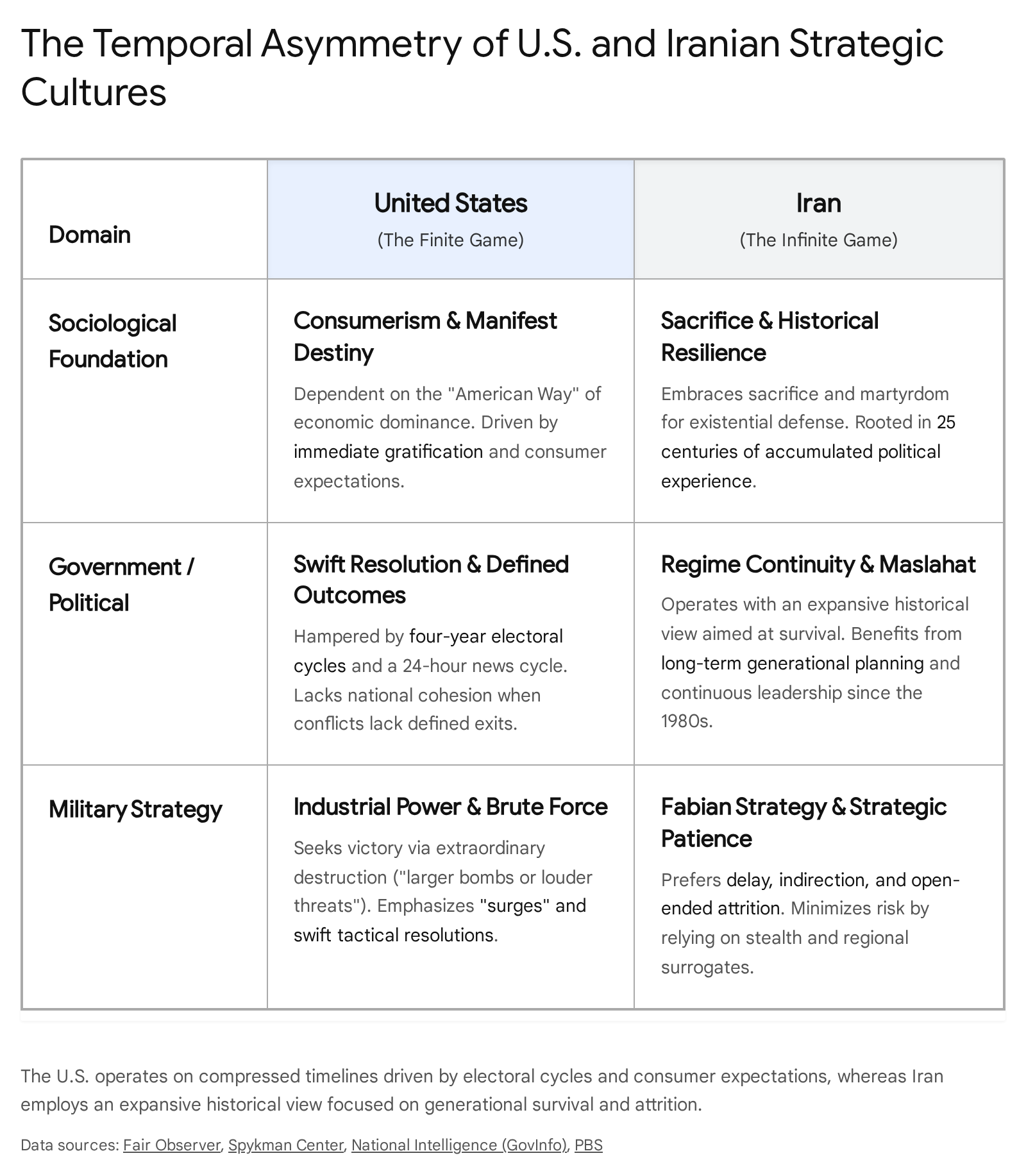
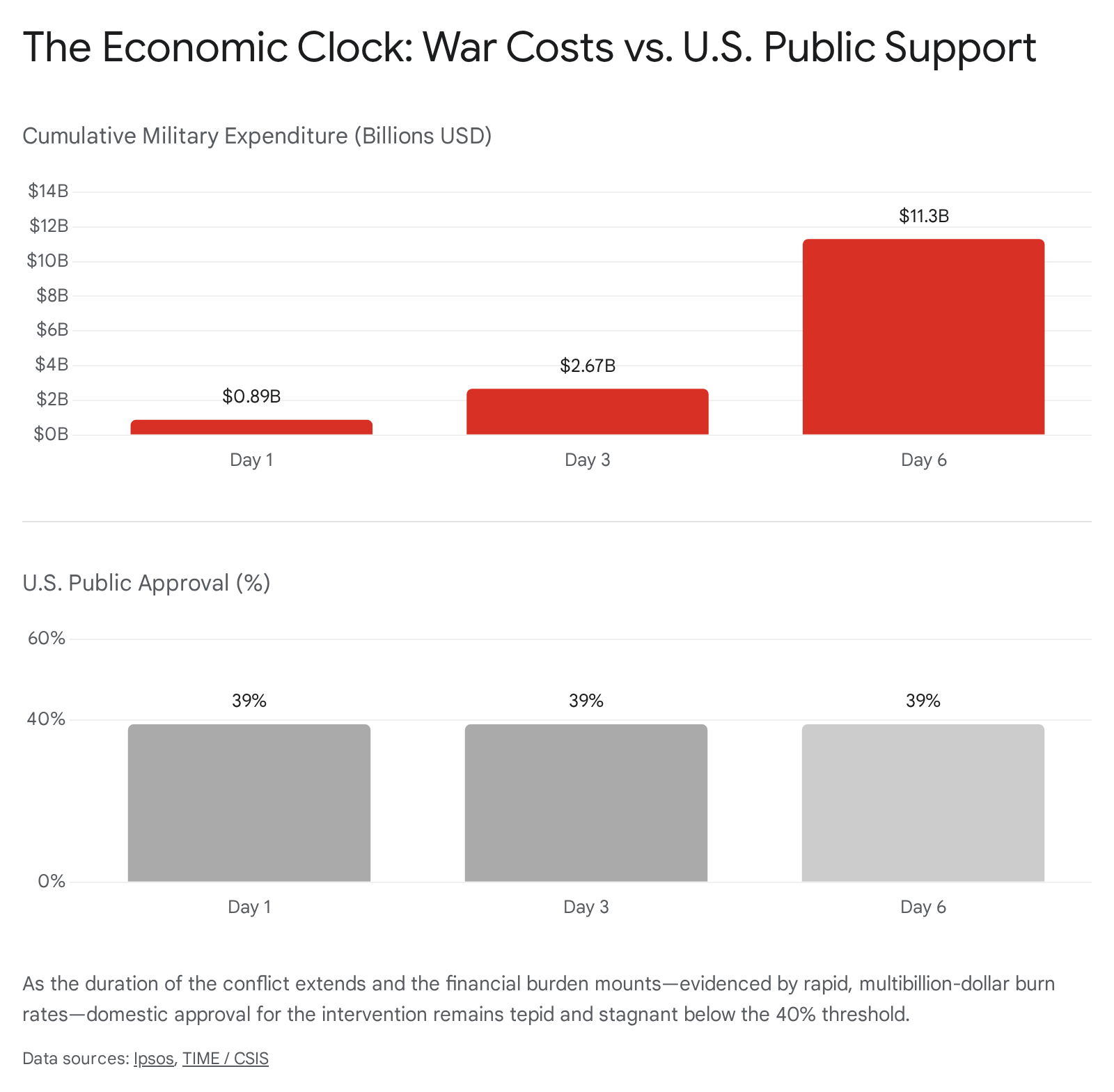
The administration’s most immediate, dangerous, and unpredictable variable is the ticking diplomatic and military clock in the Middle East. By establishing a massive, highly visible military armada while publicly issuing explicit, unyielding diplomatic deadlines to Tehran, the executive branch has staked massive geopolitical credibility on its ability to force Iranian concessions. The deliberate lack of deployed ground troops suggests a clear intent to rely on punitive, standoff air and naval strikes. However, if Tehran chooses to absorb the strikes without capitulating—a highly likely scenario given its decentralized command structure, immense proxy network, and history of asymmetric warfare—the United States risks becoming rapidly entangled in an open-ended, escalating regional war, precisely the outcome that isolationist domestic factions and the administration’s own political base have repeatedly warned against.

Simultaneously, the administration must navigate a domestic political and economic landscape severely complicated by the Supreme Court’s unprecedented invalidation of the IEEPA tariff regime. This ruling strips the executive branch of its primary, favored lever for unilateral economic coercion on the global stage. The legal requirement to potentially refund billions in collected tariffs, combined with the ongoing, disruptive DHS budgetary shutdown, threatens to severely exacerbate the already tangible deceleration of United States GDP growth, pushing a fragile economy closer to recessionary territory ahead of the critical 2026 midterm elections.

These intersecting, high-stakes crises will fundamentally define the President’s State of the Union address, scheduled for delivery to a joint session of Congress on Tuesday, February 24.22 The nationally televised address is expected to serve as the critical political platform for the administration to frame the humiliating judicial defeat regarding tariffs as establishment obstructionism, to publicly justify the immense military expenditure and risk in the Middle East to a highly war-weary base, and to highlight the undeniable statistical successes achieved in locking down the Southern border.22 The overarching strategic trajectory for the United States for the remainder of the first quarter of 2026 hinges entirely on whether the highly aggressive, coercive military buildup in the Persian Gulf can yield tangible diplomatic dividends before severe domestic economic friction, constitutional limitations on executive power, and the fatigue of the American electorate force an executive retreat.


Please share the link on Facebook, Forums, with colleagues, etc. Your support is much appreciated and if you have any feedback, please email us in**@*********ps.com. If you’d like to request a report or order a reprint, please click here for the corresponding page to open in new tab.


Sources Used

  1. 2026 United States military buildup in the Middle East – Wikipedia, accessed February 21, 2026, https://en.wikipedia.org/wiki/2026_United_States_military_buildup_in_the_Middle_East
  2. Jets, warships and bombers: Inside Washington’s expanding military squeeze on Iran, accessed February 21, 2026, https://timesofindia.indiatimes.com/defence/news/jets-warships-and-bombers-inside-washingtons-expanding-military-squeeze-on-iran/articleshow/128557433.cms
  3. Iran Update, February 19, 2026, accessed February 21, 2026, https://understandingwar.org/research/middle-east/iran-update-february-19-2026/
  4. With U.S. forces in position, Trump mulls his options for Iran | WUNC …, accessed February 21, 2026, https://www.wunc.org/2026-02-21/with-u-s-forces-in-position-trump-mulls-his-options-for-iran
  5. Supercarrier USS Gerald R. Ford Has Crossed Into The Mediterranean – The War Zone, accessed February 21, 2026, https://www.twz.com/news-features/supercarrier-uss-gerald-r-ford-has-crossed-into-the-mediterranean
  6. Trump to offer Khamenei ‘token’ deal as US continues major military buildup in Middle East, accessed February 21, 2026, https://timesofindia.indiatimes.com/world/us/trump-offers-khamenei-token-deal-as-us-continues-major-military-buildup-in-middle-east/articleshow/128633437.cms
  7. NYT: Pentagon has been evacuating bases in Middle East, accessed February 21, 2026, https://www.jpost.com/middle-east/article-887377
  8. News | 5 Big News Stories Overnight – Saturday, February 21, 2026, accessed February 21, 2026, https://www.golocalprov.com/news/5-big-news-stories-overnight-saturday-february-21-2026
  9. Handing defeats to Trump, Supreme Court signals potential course change, accessed February 21, 2026, https://www.washingtonpost.com/politics/2026/02/21/supreme-court-trump-tariffs-presidential-power/
  10. Supreme Court strikes down tariffs, accessed February 21, 2026, https://www.scotusblog.com/2026/02/supreme-court-strikes-down-tariffs/
  11. Supreme Court Strikes Down IEEPA Tariffs: What Importers Need to Know Now, accessed February 21, 2026, https://www.hklaw.com/en/insights/publications/2026/02/supreme-court-strikes-down-ieepa-tariffs
  12. US economic growth weaker than thought in fourth quarter with government shutdown, consumer pullback, accessed February 21, 2026, https://www.ksat.com/business/2026/02/20/us-economy-grows-at-14-rate-in-the-fourth-quarter-slower-than-economists-expected/
  13. DHS Announces Historic Next Step in Border Wall Project …, accessed February 21, 2026, https://www.dhs.gov/news/2026/02/17/dhs-announces-historic-next-step-border-wall-project
  14. One year of the most secure border in history, accessed February 21, 2026, https://www.cbp.gov/newsroom/national-media-release/one-year-most-secure-border-history
  15. Temporary Increase in H-2B Nonimmigrant Visas for FY 2026 | USCIS, accessed February 21, 2026, https://www.uscis.gov/working-in-the-united-states/temporary-workers/h-2b-non-agricultural-workers/temporary-increase-in-h-2b-nonimmigrant-visas-for-fy-2026
  16. 101 Cybersecurity Statistics and Trends for 2026 | NU – National University, accessed February 21, 2026, https://www.nu.edu/blog/cybersecurity-statistics/
  17. Recent Cyber Attacks In 2026 | The Breach Report – PurpleSec, accessed February 21, 2026, https://purplesec.us/breach-report/
  18. SWK Technologies February 2026 Cybersecurity News Recap, accessed February 21, 2026, https://www.swktech.com/swk-technologies-february-2026-cybersecurity-news-recap/
  19. Dragos 2026 OT Cybersecurity Report: A Year in Review, accessed February 21, 2026, https://www.dragos.com/ot-cybersecurity-year-in-review
  20. Quantum Security 25 winners announced by Techstrong – SourceSecurity.com, accessed February 21, 2026, https://www.sourcesecurity.com/news/quantum-security-25-winners-announced-techstrong-co-1537770532-ga-co-1771583165-ga.1771584109.html
  21. Quantum Security 25 honours leaders in post-quantum era, accessed February 21, 2026, https://securitybrief.co.uk/story/quantum-security-25-honours-leaders-in-post-quantum-era
  22. Healthcare Preview for the Week of: February 17, 2026, accessed February 21, 2026, https://www.jdsupra.com/legalnews/healthcare-preview-for-the-week-of-9597248/
  23. The Gathering Storm: U.S. and Israeli Military Posturing and the Coming Reckoning with Iran, accessed February 21, 2026, https://smallwarsjournal.com/2026/02/19/the-gathering-storm/
  24. What we know about the U.S. military buildup near Iran | CBC Accessibility, accessed February 21, 2026, https://www.cbc.ca/news/world/us-iran-military-buildup-iran-9.7097884
  25. What we know about the massive US military buildup in the Middle East, accessed February 21, 2026, https://www.israelhayom.com/2026/02/17/what-we-know-about-the-massive-us-military-buildup-in-the-middle-east/
  26. Iran deal prospects will be clear within 10 days, Trump says as military buildup grows, accessed February 21, 2026, https://www.theguardian.com/us-news/2026/feb/19/us-military-buildup-in-middle-east-intensifies-but-to-what-end
  27. Trump’s MAGA base raged against Iran strikes last year. This time, it’s quieter., accessed February 21, 2026, https://www.washingtonpost.com/politics/2026/02/21/trump-us-iran-maga-base/
  28. Public Schedule – February 15, 2026 – U.S. Department of State, accessed February 21, 2026, https://www.state.gov/releases/office-of-the-spokesperson/2026/02/public-schedule-february-15-2026
  29. Which Conflicts Will Matter Most in 2026? – YouTube, accessed February 21, 2026, https://www.youtube.com/watch?v=LdTiKOWaoIY
  30. Conflicts to Watch in 2026 – Council on Foreign Relations, accessed February 21, 2026, https://www.cfr.org/reports/conflicts-watch-2026
  31. Conflict Watchlist 2026 – ACLED, accessed February 21, 2026, https://acleddata.com/series/conflict-watchlist-2026
  32. Historic 9th Straight Month of Zero Releases at the Border | Homeland Security, accessed February 21, 2026, https://www.dhs.gov/news/2026/02/04/historic-9th-straight-month-zero-releases-border
  33. Trump news at a glance: president lobs insults at US supreme court for striking down his global tariffs – The Guardian, accessed February 21, 2026, https://www.theguardian.com/us-news/2026/feb/20/trump-administration-news-updates-today
  34. State of U.S. Tariffs: SCOTUS Ruling Update | The Budget Lab at Yale, accessed February 21, 2026, https://budgetlab.yale.edu/research/state-us-tariffs-scotus-ruling-update
  35. Fact Sheet: President Donald J. Trump Imposes a Temporary Import Duty to Address Fundamental International Payment Problems, accessed February 21, 2026, https://www.whitehouse.gov/fact-sheets/2026/02/fact-sheet-president-donald-j-trump-imposes-a-temporary-import-duty-to-address-fundamental-international-payment-problems/
  36. The U.S. economy in 2026: What to watch for | Stanford Institute for Economic Policy Research (SIEPR), accessed February 21, 2026, https://siepr.stanford.edu/publications/policy-brief/us-economy-2026-what-watch
  37. The Budget and Economic Outlook: 2026 to 2036 | Congressional Budget Office – CBO.gov, accessed February 21, 2026, https://www.cbo.gov/publication/62105
  38. 2026 Data Breaches: Cybersecurity Incidents Explained – PKWARE, accessed February 21, 2026, https://www.pkware.com/blog/2026-data-breaches
  39. Cybersecurity News Roundup: Mid-December to Mid-February 2026, accessed February 21, 2026, https://www.ptechpartners.com/2026/02/17/cybersecurity-news-roundup-mid-december-to-mid-february-2026/
  40. Quantum Security 25 honours leaders in post-quantum era – SecurityBrief Asia, accessed February 21, 2026, https://securitybrief.asia/story/quantum-security-25-honours-leaders-in-post-quantum-era
  41. State of the Union BINGO: 2026, accessed February 21, 2026, https://www.lwv.org/blog/state-union-bingo-2026
  42. Trump’s State of the Union set for Feb. 24 – POLITICO Pro, accessed February 21, 2026, https://subscriber.politicopro.com/article/2026/01/trumps-state-of-the-union-set-for-feb-24-00715036

SITREP Global Conflicts & Disputes – Week Ending February 21, 2026

Executive Summary

The global security landscape for the week ending February 21, 2026, is defined by an accelerating fragmentation of traditional international order, replaced increasingly by unilateral interventions, ad-hoc diplomatic coalitions, and protracted attritional warfare. Across multiple theaters, the post-Cold War mechanisms of conflict resolution—namely United Nations peacekeeping and regional bloc mediation—are being bypassed or fundamentally dismantled.

In the Middle East, the inaugural meeting of the “Board of Peace” in Washington, D.C., signifies a drastic shift in conflict management. Driven by the United States, this coalition aims to deploy a 32,000-strong International Stabilization Force (ISF) and police contingent to the Gaza Strip, sidelining traditional UN structures in favor of a transactional, donor-driven stabilization model. Simultaneously, U.S.-Iran tensions have reached a critical threshold, with Washington issuing a stringent ten-day deadline for nuclear concessions amidst a massive naval buildup in the Persian Gulf, prompting joint Iranian-Russian naval drills in response.

In Eastern Europe, the Russia-Ukraine war has settled into a grinding, highly lethal phase of positional warfare. Russian forces have sustained extraordinary casualties—now estimated at 1.2 million since February 2022—while achieving only marginal territorial gains. Ukrainian forces remain heavily reliant on asymmetric technological advantages, recently exploiting commercial satellite communications blackouts to mount localized counteroffensives. The conflict continues to drain global military stockpiles and has cemented a hardened alliance between Moscow and Pyongyang, providing North Korea with significant capital to accelerate its nuclear and ballistic missile programs.

Sub-Saharan Africa faces unprecedented humanitarian and institutional crises. Sudan is on the brink of total state collapse as the civil war enters its third year, with the Rapid Support Forces (RSF) committing documented atrocities in Darfur and besieging critical logistical hubs in North Kordofan. In the Sahel, the formal withdrawal of Mali, Burkina Faso, and Niger from the Economic Community of West African States (ECOWAS) cements the region’s geopolitical realignment toward Russian mercenary support, even as jihadist groups expand their territorial reach southward toward the Gulf of Guinea. Concurrently, the Democratic Republic of Congo (DRC) is witnessing intense fighting as the Rwanda-backed M23 rebellion tightens its grip on the eastern provinces, worsening an already catastrophic displacement crisis.

In the Asia-Pacific, diplomatic and military coercion are escalating. China’s gray-zone operations in the Taiwan Strait are now coupled with sophisticated political warfare aimed at domestic Taiwanese opposition parties, attempting to undermine U.S.-Taiwan defense cooperation from within. On the Korean Peninsula, the 9th Workers’ Party Congress has seen North Korea declare its status as a nuclear weapons state “irreversible,” leveraging its newfound economic and military ties with Russia to defy international sanctions. Meanwhile, border skirmishes between Thailand and Cambodia have reignited, uniquely intertwined with transnational cybercrime and scam center operations.

Finally, in the Americas, the aftermath of the unilateral U.S. military extraction of Venezuelan President Nicolás Maduro continues to reverberate, reshaping regional sovereignty norms. In Haiti, the expiration of the Transitional Presidential Council’s mandate has left a severe executive vacuum, prompting aggressive U.S. naval posturing as a Kenya-led security mission attempts to transition into a broader Gang Suppression Force.

The compounding nature of these crises indicates a systemic overload of global crisis management capabilities. The normalization of exorbitant civilian casualties, the weaponization of economic dependencies, and the increasing irrelevance of established diplomatic frameworks suggest that 2026 will be characterized by high-volatility flashpoints and the continuous redrawing of regional power balances.

1. Middle East and North Africa

1.1 The Post-Conflict Architecture of Gaza and the Board of Peace

The geopolitical architecture of the Levant is undergoing a radical restructuring following the inaugural meeting of the Board of Peace (BoP) in Washington, D.C., on February 19, 2026.1 Chaired by U.S. President Donald Trump, the initiative represents a concerted effort to bypass the United Nations and traditional multilateral frameworks, establishing a donor-driven, ad-hoc governance and security apparatus for the Gaza Strip.1 The BoP is a core component of a 20-point peace plan initiated following the October 2025 ceasefire.3 The operationalization of this board demonstrates a shift toward privatized, coalition-based stabilization, heavily reliant on bilateral leverage rather than international consensus.

Financial pledges at the summit highlighted a significant, though ultimately insufficient, capital mobilization. The United States committed 10 billion USD, a figure that remains pending congressional authorization.1 A coalition of nine nations—including Kazakhstan, Azerbaijan, the United Arab Emirates, Morocco, Bahrain, Qatar, Saudi Arabia, Uzbekistan, and Kuwait—collectively pledged 7 billion USD.2 Additional contributions included 2 billion USD from the UN and 75 million USD from FIFA.6 However, this 19 billion USD total falls drastically short of the estimated 70 billion USD required to rebuild Gaza’s devastated infrastructure following more than two years of intense warfare.2

Gaza reconstruction funding: Pledged vs. required. $19.075B pledged, $70B needed, $51B shortfall. SITREP Global Conflicts.

The security architecture for post-war Gaza centers on the deployment of an International Stabilization Force (ISF), commanded by U.S. Army Major General Jasper Jeffers.8 The ISF aims to deploy 20,000 military personnel alongside 12,000 local police officers.5 The logistics of assembling such a force from disparate national militaries present profound interoperability and command-and-control challenges. Initial troop commitments have been secured from a varied coalition, with specialized police training duties delegated to regional actors.

Contributing NationPledged Contribution / Role within ISFCurrent Status
IndonesiaUp to 8,000 military personnel; potential deputy commandCommitted, deployment expected by June 2026
MoroccoMilitary personnel; specialized police trainingCommitted
KazakhstanMilitary personnelCommitted
KosovoMilitary personnelCommitted
AlbaniaMilitary personnelCommitted
EgyptSpecialized police trainingTraining underway
JordanSpecialized police trainingTraining underway
United StatesCommand structure (Maj. Gen. Jasper Jeffers)Active

The ISF is tasked with maintaining internal order, supporting the dismantlement of militant infrastructure, and enforcing the disarmament of Hamas—a mandate that carries severe risks of triggering renewed urban combat.3 The Trump administration is reportedly planning the construction of a massive 350-acre military base in Gaza to accommodate up to 5,000 ISF personnel, signaling a long-term occupational footprint.10

Governance under the 20-point plan explicitly excludes both Hamas and the Palestinian Authority, delegating administrative duties to a National Committee for the Administration of Gaza (NCAG) composed of technocrats and international experts.3 This arrangement faces deep skepticism from the local population, who view the initiative as an externally imposed mechanism prone to corruption and disconnected from the reality of their ongoing suffering.7 Residents have expressed concerns that reconstruction funds will be diverted to high administrative salaries rather than tangible rebuilding efforts.7

Furthermore, the viability of the entire stabilization effort is compromised by the revelation of a recently published, peer-reviewed study in the Lancet Global Health journal.11 The study estimates that over 75,000 Palestinians were killed in the first 16 months of the war alone—representing 3 to 4 percent of Gaza’s pre-war population.12 Demographically, the data reveals that 56 percent of the victims were women, children, and the elderly, accounting for 42,200 non-combatant deaths.12 The sheer scale of destruction, coupled with the systemic collapse of sanitary, educational, and medical infrastructure, presents an insurmountable barrier to rapid stabilization.7 Humanitarian access remains severely constrained; while the Rafah crossing has reopened for limited movement, winter weather and transit delays have led to the significant spoilage of vital food commodities, and the water supply remains highly contaminated, leading to outbreaks of Hepatitis A.4

1.2 Iran Nuclear Coercion and Gulf Security Posture

Concurrent with the Gaza stabilization efforts, the United States has engineered an acute escalation with the Islamic Republic of Iran regarding its nuclear enrichment program. At the BoP summit on February 19, President Trump issued a stark ultimatum, giving Tehran “probably 10 days” to agree to a new nuclear framework or face severe, unspecified military consequences.10 This diplomatic coercion is backed by a massive regional deployment of U.S. naval assets, including the imminent arrival of the USS Gerald R. Ford carrier strike group.10 U.S. defense officials have indicated that target packages are in advanced stages of preparation, potentially extending beyond subterranean nuclear facilities to include regime leadership decapitation strikes.17

Iran’s response has been a calibrated mix of diplomatic engagement and military signaling, intended to deter American preemptive strikes while buying time for nuclear consolidation. Indirect negotiations in Geneva between Iranian Foreign Minister Abbas Araghchi and U.S. envoys Steve Witkoff and Jared Kushner have reportedly yielded an understanding on broad “guiding principles,” with Tehran promising a formal counterproposal within days.17 However, Araghchi publicly rebuffed the utility of American military threats, noting that previous kinetic strikes against Iranian facilities and the assassination of its scientists failed to arrest the trajectory of the nuclear program.17 Intelligence assessments indicate that Iran is highly unlikely to meet maximalist U.S. demands, which include zero-enrichment protocols, the capping of its ballistic missile program, and the complete cessation of support for regional proxy networks.16

Militarily, Iran has postured to demonstrate its capacity to disrupt regional maritime corridors and leverage great-power partnerships. On February 19, the Iranian First Artesh Naval Base in Bandar Abbas hosted joint Iranian-Russian naval exercises in the Gulf of Oman and the Strait of Hormuz.16 The drills, involving Islamic Revolutionary Guard Corps (IRGC) units and a Russian Steregushchiy-class corvette, simulated rapid response, combined assault methods, and operations to free hijacked commercial vessels.16 This joint exercise serves as an explicit signal of solidarity between Moscow and Tehran, complicating U.S. military calculus by introducing the risk of Russian military casualties in the event of an American preemptive strike in the Gulf.16

The interplay between the Gaza stabilization plan and the Iran standoff is highly volatile. Any U.S. or Israeli military action against Iran would likely activate the broader “Axis of Resistance.” In Lebanon, Hezbollah has already been conducting rocket attacks against IDF positions, demonstrating its capacity for regional disruption despite taking heavy losses in previous campaigns.18 An escalation with Iran would trigger major Israeli aerial operations in southern Lebanon, instantly derailing the fragile Gaza ceasefire, deterring ISF troop-contributing nations from deploying to a hot combat zone, and collapsing the Board of Peace’s precarious financial commitments.15

2. Europe and Eurasia

2.1 The Russia-Ukraine War: Attritional Dynamics and Strategic Stagnation

The war in Ukraine has entered its fifth year, characterized by brutal attritional warfare, devastating civilian impacts, and marginal, yet highly costly, territorial exchanges. The strategic initiative remains broadly, though haltingly, in the hands of the Russian Armed Forces.19 However, the pace of the Russian advance is historically lethargic; prominent offensives are moving at an average rate of between 15 and 70 meters per day, slower than almost any major offensive campaign in the last century.19

According to analysis from the Institute for the Study of War (ISW), between January 20 and February 17, 2026, Russian forces gained approximately 127 square miles of Ukrainian territory—a slight acceleration from the 63 square miles gained in the preceding four-week period.20 Conversely, the localized tactical picture reveals Ukrainian resilience and adaptive operational capabilities. During the week of February 10 to February 17, 2026, Ukrainian forces launched successful localized counterattacks, actually reclaiming 19 square miles of territory.20 Notably, Ukrainian units liberated several small settlements along the Yanchur and Haichur rivers in the Zaporizhzhia Oblast by exploiting a localized shutdown of Starlink communications that temporarily blinded Russian command and control networks.20 Additionally, Ukraine maintains a persistent 4-square-mile foothold across the Russian border in the Kursk and Belgorod regions, a critical psychological and strategic wedge.20

Despite these tactical fluctuations, Russia currently controls approximately 45,816 square miles, equating to roughly 20 percent of Ukraine’s total sovereign territory.20 The human cost of sustaining this occupation has been historically unprecedented. Estimates compiled by Western intelligence and independent monitors in early 2026 suggest Russian military casualties have reached staggering proportions.

Source / OrganizationEstimated Russian CasualtiesEstimated Ukrainian CasualtiesTimeframe
CSIS Estimate1,200,000 (killed, wounded, missing); up to 325k fatalities500,000–600,000 (killed, wounded, missing); 100k-140k fatalitiesFeb 2022 – Dec 2025 19
U.K. Ministry of Defense1,168,000 (killed and wounded)Not SpecifiedFeb 2022 – Dec 2025 20
Estonian Foreign Intel1,000,000 (killed and wounded)Not SpecifiedFeb 2022 – Feb 2026 20
Unnamed Western Officials1,200,000 (including 415k in 2025 alone)Not SpecifiedFeb 2022 – Feb 2026 20

This casualty rate eclipses any losses sustained by a major power in a single conflict since World War II.19 If current attrition rates hold, combined casualties could reach 2 million by the spring of 2026.19

Ukraine conflict casualties vs. territorial control, February 2022-2026. Russia: 1.2M, Ukraine: 550K. Russia controls 20%.

The war’s impact on civilians continues to compound drastically. The year 2025 was recorded as the deadliest for Ukrainian non-combatants since the initial invasion, with civilian casualties caused by explosive violence soaring by 26 percent.21 The UN Human Rights Monitoring Mission in Ukraine recorded 2,514 civilian deaths and 12,142 injuries in 2025, an average of 4.8 civilians killed or injured per Russian strike.21 In early February 2026, Russia launched massive, systematic strikes against Ukraine’s energy grid, damaging 70 percent of the nation’s energy facilities and plunging parts of Kyiv into winter blackouts without heat or water.21 The war has resulted in a staggering 6.9 million registered refugees globally, fundamentally altering European demographics.21

Strategically, the astronomical cost of the war is straining the Russian economy, which is projected to see a slowing growth rate of just 0.6 percent in 2025 alongside a notable decline in domestic manufacturing.19 To compensate for severe personnel shortages, Russian commanders have become increasingly dependent on foreign recruits and mercenary formations.23 Units such as the far-right Rusich group have engaged in the documented execution of Ukrainian prisoners of war, offering cash rewards for execution footage, thereby further degrading the laws of armed conflict.24 Ultimately, President Vladimir Putin remains locked in a war of attrition; as geopolitical analysts suggest, he is trapped in a war he cannot win conclusively but dare not end due to the domestic political risks of admitting strategic failure.23

3. Sub-Saharan Africa

3.1 Sudan’s State Collapse and Geopolitical Mediation

As the conflict in Sudan approaches its third anniversary in April 2026, the country is facing total institutional collapse and the world’s most severe humanitarian emergency.25 The war between the Sudanese Armed Forces (SAF), led by General Abdel Fattah al-Burhan, and the paramilitary Rapid Support Forces (RSF) has resulted in an estimated 400,000 fatalities and the displacement of over 11 million people.25 The crisis is rapidly evolving into a regional catastrophe, with over four million refugees overwhelming ill-equipped camps in neighboring Chad, Ethiopia, and South Sudan, triggering the world’s largest hunger crisis.25

On February 19, 2026, U.S. Senior Adviser Massad Boulos addressed the United Nations Security Council, introducing a comprehensive “five-pillar” strategy designed to halt the violence and restore civilian governance.27 The proposal, coordinated with Egypt, Saudi Arabia, the UAE, and Britain, demands an immediate cessation of hostilities without preconditions.27

U.S. Five-Pillar Strategy for SudanCore Objective
Pillar 1 & 2Immediate humanitarian truce and the establishment of a UN supervisory mechanism to guarantee safe aid access. 27
Pillar 3Phased negotiations for a permanent ceasefire and the creation of comprehensive security arrangements. 27
Pillar 4A structured political process to establish a civilian-led transitional government, dismantle militia patronage structures, and prepare for democratic elections. 27
Pillar 5A robust international reconstruction effort linked to accountability for atrocities and war crimes. 27

Despite this diplomatic initiative, the realities on the ground severely undermine any near-term peace prospects. General al-Burhan has outright rejected any truce unless the RSF completely withdraws from occupied territories, and has barred the United Arab Emirates—which is widely accused of arming and financing the RSF—from participating in mediation efforts.27

The military situation is marked by extreme brutality, shifting frontlines, and the advanced use of drone warfare by both sides.26 In North Darfur, a recent UN fact-finding mission reported that the RSF’s capture of El Fasher involved acts bearing the “hallmarks of genocide,” including mass killings, systematic sexual violence, and the ethnic cleansing of non-Arab communities.28 Strategic warnings from U.S. intelligence regarding the impending massacre at El Fasher were largely sidelined in favor of maintaining strategic relations with the UAE, highlighting the paralyzing effect of proxy interests.29 Currently, violence is intensifying in North Kordofan, where the RSF has besieged the state capital, El Obeid, from three sides.26 The fall of El Obeid to the RSF would deal a catastrophic blow to SAF logistics and effectively sever western Sudan from the government’s remaining strongholds in the east.26

3.2 The Sahel Security Vacuum and the Retreat of ECOWAS

The political geography of West Africa has been permanently altered following the formal withdrawal of Burkina Faso, Mali, and Niger from the Economic Community of West African States (ECOWAS) in late January 2026.30 These three junta-led nations, having seized power through consecutive military coups, have consolidated their breakaway bloc, the Alliance of Sahel States (AES), establishing a collective defense pact and completely severing ties with Western security frameworks, including the withdrawal of French counterterrorism forces.30

This geopolitical realignment has created a massive security vacuum that violent extremist organizations are rapidly exploiting.32 Jama’at Nusrat al-Islam wal-Muslimin (JNIM), the primary Al-Qaeda affiliate in the region, has launched an aggressive expansion campaign.33 JNIM operations are no longer confined to the central Sahel; the group is executing a deliberate, strategic push southward, initiating operations in the northern territories of coastal states such as Benin and Togo, threatening to link the Sahelian insurgency with the Gulf of Guinea.34

To counter the jihadist threat and secure regime survival, the AES juntas have deepened their reliance on Russian paramilitary forces, primarily the Wagner Group (now reorganized under the Africa Corps).35 Despite suffering an unprecedented number of casualties in clashes with Tuareg rebels and jihadists in Mali in late 2025, Russian mercenaries have shown no signs of disengaging from the region.37 Moscow views its presence in the Sahel as a critical vector for projecting power, extracting mineral resources, and systematically challenging Western diplomatic and military influence on the African continent.35

3.3 Eastern DRC Conflict and the Great Lakes Humanitarian Crisis

The eastern provinces of the Democratic Republic of Congo (DRC) remain engulfed in a multifaceted conflict characterized by proxy warfare, massive resource exploitation, and severe human rights abuses. The primary belligerent is the March 23 Movement (M23), a highly organized rebel group operating as a heavily armed proxy for the Rwandan government.38 Operating under the umbrella of the Congo River Alliance (AFC), M23 has effectively annexed large swaths of North and South Kivu, surrounding key economic hubs like Goma and Bukavu and establishing parallel administrative structures.38

The humanitarian impact is catastrophic. M23 fighters have engaged in summary executions, the gang-rape of women and girls, attacks on medical facilities, and the targeted assassination of civil society activists.40 The Congolese government in Kinshasa has exacerbated the crisis by employing a loose, undisciplined coalition of armed militias known as the Wazalendo to fight alongside the national army, leading to widespread indiscipline and further abuses against civilians.40 Furthermore, the DRC government has initiated a severe crackdown on media and political opposition, threatening journalists with the death penalty for reporting on the advance of Rwandan-backed forces.41

Diplomatic efforts remain stalled. While a ceasefire mechanism Terms of Reference was signed in Doha in early 2025 under AU mediation, implementation on the ground has failed entirely.42 During a regional tour on February 20, 2026, EU Commissioner Hadja Lahbib visited the rebel-held city of Goma to announce an 81.2 million EUR humanitarian aid package, pleading for respect for international humanitarian law.43 This was swiftly rebuked by AFC leader Corneille Nangaa, who cynically deflected blame, claiming that humanitarian conditions were far worse in government-controlled areas like Beni and Bunia.43 The weaponization of humanitarian access remains a primary tactic for all belligerents in the Kivu provinces.

3.4 Horn of Africa: Somaliland Sovereignty and Ethiopian Internal Fractures

Stability in the Horn of Africa is threatened by internal fracturing in Ethiopia and deep diplomatic disputes regarding Somali sovereignty. In Ethiopia’s northern Tigray region, the fragile peace established by the 2022 Pretoria Agreement is rapidly unraveling.44 The Tigray People’s Liberation Front (TPLF) has fractured, leading to violent clashes with the Tigray Interim Administration.44 Eritrea is reportedly fueling this dissidence by supporting breakaway TPLF factions, aiming to permanently weaken the region, prevent the disarmament of the Tigray Defense Forces, and block Ethiopian Prime Minister Abiy Ahmed’s ambitions for sovereign sea access.44

Simultaneously, regional diplomacy has been inflamed by external interference in Somalia. The African Union Peace and Security Council convened in February 2026 to strongly condemn the unilateral recognition of the breakaway region of Somaliland by the State of Israel.45 The AU firmly rejected this move, warning that the fragmentation of Somali sovereignty undermines the ongoing, fragile state-building process and emboldens the Al-Shabaab insurgency.45 Concurrently, counterterrorism operations continue; U.S. Africa Command and the Somali National Army launched coordinated airstrikes in the Middle Shabelle region in mid-February, successfully neutralizing Al-Shabaab militants attempting to lay improvised explosive devices along vital civilian and military supply routes.46

4. Asia-Pacific

4.1 Taiwan Strait: Gray-Zone Escalation and Political Warfare

Tensions in the Taiwan Strait have evolved beyond mere military posturing, as the Chinese Communist Party (CCP) intensifies a sophisticated campaign of political warfare alongside its military gray-zone operations. Beijing continues to unequivocally reject the sovereignty of the Democratic Progressive Party (DPP) government in Taipei, pursuing a comprehensive strategy aimed at isolating Taiwan internationally and fracturing it domestically.47

In February 2026, the intersection of CCP influence operations and Taiwanese domestic politics became highly visible. Wang Huning, the CCP’s fourth-highest ranking official, engaged in high-level talks with Hsiao Hsu-tsen, Vice Chairman of Taiwan’s opposition Kuomintang (KMT) party, during a think-tank forum in Beijing.48 According to intelligence leaks published in Taiwanese media, Wang instructed the KMT leadership to advocate more aggressively for “unification,” to actively block the purchase of U.S. military hardware in the legislature, and to prioritize supply chain integration with the PRC.48 While KMT leadership vehemently denied receiving instructions from Beijing, the engagement underscores the CCP’s strategy of utilizing sympathetic factions within Taiwan’s political establishment to achieve strategic paralysis, specifically targeting the $11 billion in U.S. arms sales authorized in late 2025.48

Militarily, the People’s Liberation Army (PLA) continues to establish a “new normal” of relentless incursions across the median line of the Taiwan Strait, maintaining an omnipresent threat vector.50 The PLA Navy is rapidly expanding its power projection capabilities, evidenced by the recent outfitting of the Type 076 amphibious assault vessel with GJ-21 stealth naval drones, designed to support long-distance amphibious operations and establish local air superiority.49 While analysts note that a full-scale amphibious invasion remains unlikely in the immediate term, the persistent gray-zone coercion systematically exhausts Taiwan’s defense resources and tests the limits of U.S. extended deterrence in the Indo-Pacific.51

4.2 The Korean Peninsula: The 9th Workers’ Party Congress and Nuclear Irreversibility

The security environment in Northeast Asia has severely deteriorated as North Korea formally shifts its strategic doctrine away from any pretense of denuclearization. During the opening of the ruling Workers’ Party’s 9th Congress in Pyongyang on February 19, 2026, Supreme Leader Kim Jong Un issued a definitive declaration that North Korea’s status as a nuclear weapons state is firmly consolidated and “irreversible”.52 Notably absent from Kim’s keynote address was any mention of reunification with South Korea or dialogue with the United States—a stark departure from previous congresses, signaling a total abandonment of diplomatic engagement with the West.52

This highly aggressive posture is entirely underwritten by Pyongyang’s deepening strategic and economic alliance with the Russian Federation. Following the June 2024 Comprehensive Strategic Partnership agreement, North Korea has become a vital supplier of munitions, artillery shells, and ballistic missiles for Russia’s war in Ukraine.54 By mid-2025, North Korea had generated an estimated 19.5 billion USD through arms sales and the deployment of engineering and combat troops to support Russian operations.54

This massive influx of capital has insulated the Kim regime from the impact of international sanctions and provided the resources necessary to rapidly modernize the Korean People’s Army (KPA).53 During the current 2026–2030 defense cycle, Pyongyang is accelerating the operational deployment of tactical nuclear weapons and finalizing a nuclear-powered submarine capable of launching nuclear-armed SLBMs.53 With Russian diplomatic protection effectively neutralizing the UN Security Council, North Korea is highly likely to increase its provocations against South Korea, potentially moving to redefine maritime boundaries around the contested Northern Limit Line to force a crisis.53

4.3 The South China Sea: Sino-Philippine Maritime Coercion

The South China Sea remains a highly volatile maritime flashpoint, characterized by frequent, aggressive confrontations between the China Coast Guard (CCG) and Philippine maritime forces. During the week ending February 21, a CCG vessel intentionally blocked a Philippine patrol ship attempting to resupply outposts in a disputed shoal, resulting in a near-collision that highlighted the physical risks of Beijing’s territorial assertiveness.56

The physical altercations are mirrored by an escalating diplomatic war of words that challenges the norms of diplomatic conduct. The Chinese military publicly accused the Philippines of destabilizing the region by organizing joint naval patrols with “countries outside the region” (referring primarily to the United States and Japan).57 In response, Philippine officials, including Coast Guard spokesperson Tarriela and Senator Risa Hontiveros, have openly rebuked Chinese diplomats.58 Hontiveros accused the Chinese embassy of violating the Vienna Convention by attempting to silence and publicly censure Philippine public officials within their own country.58 Despite nominal ongoing negotiations between ASEAN and China regarding a long-delayed Code of Conduct for the South China Sea, the reality on the water demonstrates Beijing’s unwavering commitment to enforcing its expansive territorial claims through physical coercion and diplomatic intimidation.59

4.4 Myanmar’s Electoral Facade and Accelerating State Failure

Myanmar’s trajectory toward complete state failure accelerated following a multi-phase, junta-orchestrated election that concluded in late January 2026. Unsurprisingly, the military-backed Union Solidarity and Development Party (USDP) secured a preordained landslide victory after systematically excluding all major opposition parties and violently suppressing dissent.60 With 25 percent of parliamentary seats automatically reserved for the military under the 2008 Constitution, junta chief Min Aung Hlaing has cemented total legal control, enabling him to enact constitutional amendments to legitimize his continued authoritarian rule.61

Despite this political theater in Naypyidaw, the junta is decisively losing the civil war on the ground. The military is facing fierce, coordinated resistance from a decentralized network of People’s Defense Forces (PDFs) and established Ethnic Armed Organizations (EAOs), notably the Arakan Army, which continues to make significant territorial advances in Rakhine State.61 The regime has survived primarily due to diplomatic and material support from China, which has pressured certain ethnic resistance groups along its border to halt offensives, allowing the junta to temporarily stabilize specific northern fronts.61

The conflict has exacted a horrifying toll on the civilian population. According to the Landmine Monitor report, Myanmar recorded the highest number of landmine casualties globally in 2024.

Myanmar Landmine Casualties202220232024
Total Casualties (Killed/Injured)5451,0032,029
Civilian PercentageN/AN/A86%

The data indicates a staggering exponential increase in explosive ordnance casualties since the 2021 coup.62 Junta troops have reportedly engaged in the systemic use of civilians as human shields and “human minesweepers” in contested areas, constituting grave violations of international humanitarian law.62 Concurrently, the collapse of the rule of law has allowed transnational organized crime to flourish, with Myanmar becoming the epicenter of massive cyber-scam operations fueled by human trafficking, extortion, and forced labor.63

4.5 Transnational Crime and the Thailand-Cambodia Border Crisis

The territorial dispute between Thailand and Cambodia, historically centered around the Preah Vihear temple complex and colonial-era cartography, re-escalated violently in mid-February 2026. Following the collapse of a fragile December 2025 ceasefire, Thai forces detected and engaged increased Cambodian military activity near the border in Ubon Ratchathani on February 16, prompting immediate reinforcement of Thai defensive positions.64

However, this renewed confrontation is heavily influenced by non-traditional security threats. The border dispute has become deeply intertwined with allegations regarding multi-billion-dollar illegal online scam centers operating out of Cambodian territory.64 The Thai government has utilized the military standoff to pressure Phnom Penh regarding its failure to crack down on these transnational criminal syndicates, which routinely target Thai citizens.64

The crisis is also serving domestic political utilities. In Thailand, Prime Minister Anutin Charnvirakul utilized the national security emergency to justify the dissolution of Parliament and the calling of snap elections for late February 2026, temporarily muting public scrutiny of his fragile coalition and contested civil-military relations.67 On the Cambodian side, public discourse—driven by civil society and Buddhist monks—has notably favored restraint, placing pressure on Prime Minister Hun Manet to avoid a full-scale war that would jeopardize the regime’s economic modernization goals and international standing.67

5. South Asia

5.1 India-Pakistan Strategic Friction and Subconventional Conflict

The strategic equilibrium between nuclear-armed rivals India and Pakistan remains dangerously fragile, with a leading U.S. think tank, the Council on Foreign Relations, assessing a “moderate likelihood” of renewed armed conflict in 2026 that would carry severe implications for U.S. interests.68 The primary catalyst for escalation remains cross-border terrorism. Tensions are currently heightened following India’s recent “Operation Sindoor”—a military response comprising drone and missile strikes targeting terror infrastructure in Pakistan-Occupied Kashmir, launched after Pakistan-backed militants killed 22 Indian civilians in Pahalgam.68

The diplomatic environment is highly toxic. Pakistan’s Defense Minister Khawaja Asif recently accused India and the Taliban regime in Afghanistan of colluding in a proxy war against Islamabad.70 New Delhi dismissed these allegations as desperate diversionary tactics by a Pakistani establishment struggling with severe internal instability and an escalating domestic insurgency.70 Furthermore, Pakistan continues to accuse India of orchestrating extraterritorial assassination campaigns against dissidents on Pakistani soil, a claim India vehemently denies, though it echoes similar allegations raised by Canada and the United States.71

Both nations are engaged in rapid, reactionary military modernization. India has recently approved 79,000 crore INR (approximately 9.5 billion USD) in defense acquisitions, focusing heavily on precision-guided munitions, air-to-air missiles, and drone fleets.69 Pakistan, attempting to close the capability gap exposed during recent clashes, is actively negotiating with China and Turkey to overhaul its air defense networks and unmanned aerial capabilities.69 Paradoxically, amidst this military brinkmanship, cultural ties occasionally pierce the hostility; the February 15 India-Pakistan T20 World Cup cricket match in Colombo shattered global digital viewership records with 163 million viewers, highlighting the deeply intertwined, yet fiercely antagonistic, nature of the bilateral relationship.72

5.2 The Afghanistan-Pakistan Border: ISKP, TTP, and Threats of Cross-Border Intervention

Pakistan’s western border with Afghanistan has devolved into a zone of continuous, multi-factional low-intensity conflict. The Pakistani military is engaged in a grueling counterinsurgency campaign against the Tehreek-e-Taliban Pakistan (TTP), which operates with near impunity from safe havens within Taliban-controlled Afghanistan.73 On February 21, 2026, the extreme complexity of the militant landscape was highlighted when fierce infighting erupted in Pakistan’s Khyber Pakhtunkhwa province between the TTP and fighters from the Islamic State Khorasan Province (ISKP).74 The clash, which took place in the Orakzai District, was triggered by a dispute over lucrative extortion networks, resulting in multiple militant casualties, including the death of a senior ISKP commander.74

The Pakistani government’s frustration with Kabul’s refusal to rein in the TTP is boiling over into explicit public threats of cross-border military action. Defense Minister Khawaja Asif openly warned that Pakistan would launch kinetic strikes into sovereign Afghan territory if the Taliban government does not dismantle TTP sanctuaries.73 The Pakistani Ministry of Foreign Affairs echoed this aggressive posture, officially asserting Pakistan’s right to self-defense under Article 51 of the UN Charter.71 This diplomatic framing signals that cross-border aerial or artillery bombardments are actively being considered as a near-term policy option, a move that would drastically escalate regional instability and potentially draw the Afghan Taliban into direct conventional conflict with Islamabad.71

6. The Americas

6.1 The Haitian Institutional Vacuum and Gang Suppression Efforts

Haiti has crossed a critical constitutional and security threshold, moving deeper into state failure. On February 7, 2026, the mandate of the Transitional Presidential Council (TPC)—the executive body established in 2024 to guide the country toward democratic elections following the assassination of President Jovenel Moïse—officially expired without a viable successor mechanism in place.75 This expiration effectively dissolved the council, consolidating all remaining executive authority in the hands of the U.S.-backed Prime Minister, Alix Didier Fils-Aimé.77

The transition of power was facilitated by explicit, modern “gunboat diplomacy.” In the days leading up to the TPC’s expiration, the United States deployed warships and Coast Guard vessels off the coast of Port-au-Prince.76 This naval posturing was designed to demonstrate Washington’s willingness to use force to ensure the council stepped down, effectively averting a messy constitutional challenge to Fils-Aimé’s authority and enforcing a singular executive point of contact.76

Despite this consolidation of political power, the security situation remains apocalyptic. Criminal syndicates now control approximately 90 percent of the capital, Port-au-Prince.76 The UN estimates that nearly 6,000 Haitians were killed by gang violence in 2025 alone, and half the population faces acute hunger due to the strangulation of supply lines.76 The international response hinges entirely on the UN-authorized Multinational Security Support (MSS) mission, led by Kenya. Following UN Security Council Resolution 2793, the MSS is currently attempting to transition into a more robust “Gang Suppression Force” (GSF) with expanded, kinetic rules of engagement.75 However, the mission remains chronically underfunded, and the transition process is hindered by severe logistical bottlenecks, insufficient troop contributions, and ongoing concerns regarding the human rights vetting of international police personnel operating in complex urban terrain.80

6.2 Venezuela: The Strategic Fallout of Operation Absolute Resolve

The geopolitical shockwaves of the unilateral U.S. military intervention in Venezuela on January 3, 2026, continue to dictate the security and economic environment in South America. In a highly classified operation code-named “Absolute Resolve,” U.S. special operations forces extracted President Nicolás Maduro and his wife, Cilia Flores, from a military base in Caracas, transporting them to a U.S. warship bound for New York to face federal narco-terrorism charges.82 The strike was the culmination of a months-long U.S. naval buildup in the Caribbean and Eastern Pacific, justified by the Trump administration under a controversial directive targeting drug cartels designated as foreign terrorist organizations.83

The intervention was executed without authorization from the U.S. Congress and completely outside the bounds of a UN mandate, drawing severe international condemnation for violating established norms of state sovereignty.82 Domestically, the operation achieved immediate regime decapitation but left the broader authoritarian power structure largely intact. Vice President Delcy Rodríguez was immediately sworn in as acting president of Venezuela, urging citizens to resist the “imperialist attack”.83

In the weeks following the extraction, a complex, highly transactional diplomatic and economic recalibration has occurred between Washington and Caracas. By mid-February, the acting Venezuelan government released 444 political prisoners.84 In a reciprocal, deeply controversial move, the U.S. administration lifted crippling sanctions on the Venezuelan oil trade, paving the way for the potential privatization of the nation’s energy sector and the reentry of Western petroleum conglomerates.84 While Washington frames this as a successful operation to restore democratic conditions and secure vital hemispheric energy supplies, the precedent of using overwhelming military force for unilateral regime change has deeply unsettled regional actors. The intervention has permanently altered the security calculus of Latin American states vis-à-vis the United States, likely prompting an accelerated pursuit of asymmetric defense capabilities and deeper alignments with extra-hemispheric powers like China and Russia.


Please share the link on Facebook, Forums, with colleagues, etc. Your support is much appreciated and if you have any feedback, please email us in**@*********ps.com. If you’d like to request a report or order a reprint, please click here for the corresponding page to open in new tab.


Sources Used

  1. Five Key Takeaways From Trump’s First Gaza Board of Peace Meeting, accessed February 21, 2026, https://time.com/7379788/trump-gaza-board-of-peace-first-meeting-takeaways/
  2. Trump Announces Gaza Relief Pledges, Troop Pledges at First Board of Peace Meeting, accessed February 21, 2026, https://www.theintelligencer.net/news/top-headlines/2026/02/trump-announces-gaza-relief-pledges-troop-pledges-at-first-board-of-peace-meeting/
  3. 5 Things to Know About Trump’s Board of Peace | AJC – American Jewish Committee, accessed February 21, 2026, https://www.ajc.org/news/5-things-to-know-about-trumps-board-of-peace
  4. A Guide to the Gaza Peace Deal | Council on Foreign Relations, accessed February 21, 2026, https://www.cfr.org/articles/guide-trumps-twenty-point-gaza-peace-deal
  5. Trump gets pledges for Gaza reconstruction and troop commitments at inaugural Board of Peace talks, accessed February 21, 2026, https://apnews.com/article/trump-board-of-peace-first-meeting-22e587df67e27cd1e1d96e446cb88378
  6. Troops for Gaza and money top agenda as Trump’s Board of Peace meets, accessed February 21, 2026, https://www.theguardian.com/us-news/2026/feb/19/troops-for-gaza-and-money-top-agenda-as-trumps-board-of-peace-meets
  7. In Gaza, Trump’s Board of Peace met with deep scepticism, little …, accessed February 21, 2026, https://www.aljazeera.com/features/2026/2/20/in-gaza-trumps-board-of-peace-met-with-deep-scepticism-little-hope
  8. Prabowo confirms Indonesian troop deployment to Gaza within 2 months, accessed February 21, 2026, https://en.antaranews.com/news/405202/prabowo-confirms-indonesian-troop-deployment-to-gaza-within-2-months
  9. Stabilization force and funding pledged for Gaza at Board of Peace meeting, accessed February 21, 2026, https://www.fdd.org/analysis/2026/02/20/stabilization-force-and-funding-pledged-for-gaza-at-board-of-peace-meeting/
  10. Trump news at a glance: president weighs ordering ‘bad things’ against Iran as nuclear deal sits in limbo, accessed February 21, 2026, https://www.theguardian.com/us-news/2026/feb/19/trump-news-at-a-glance-latest-updates-today
  11. Israel-Gaza war | The Guardian, accessed February 21, 2026, https://www.theguardian.com/world/israel-hamas-war
  12. Gaza death toll for first 16 months of war far higher than reported, says peer-reviewed study, accessed February 21, 2026, https://www.theguardian.com/world/2026/feb/19/gaza-death-toll-higher-than-reported-lancet-study
  13. OCHA Humanitarian Situation Update #357 – Gaza Strip, accessed February 21, 2026, https://www.un.org/unispal/document/ocha-humanitarian-situation-update-357-gaza-strip/
  14. Morning Briefing: Feb. 20, 2026, accessed February 21, 2026, https://www.aa.com.tr/en/world/morning-briefing-feb-20-2026/3835289
  15. Inaugural Board of Peace Meeting: Opportunities, but No Shortage of Challenges, accessed February 21, 2026, https://thesoufancenter.org/intelbrief-2026-february-20/
  16. Iran Update, February 19, 2026, accessed February 21, 2026, https://understandingwar.org/research/middle-east/iran-update-february-19-2026/
  17. Iran prepares nuclear counterproposal as US considers limited military strikes, accessed February 21, 2026, https://www.theguardian.com/world/2026/feb/21/iran-nuclear-counterproposal-us-strikes-threat
  18. Iran Update, February 20, 2026, accessed February 21, 2026, https://understandingwar.org/research/middle-east/iran-update-february-20-2026/
  19. Russia’s Grinding War in Ukraine – CSIS, accessed February 21, 2026, https://www.csis.org/analysis/russias-grinding-war-ukraine
  20. The Russia-Ukraine War Report Card, Feb. 18, 2026, accessed February 21, 2026, https://www.russiamatters.org/news/russia-ukraine-war-report-card/russia-ukraine-war-report-card-feb-18-2026
  21. Country Conditions: Ukraine February 2026, accessed February 21, 2026, https://refugees.org/country-conditions-ukraine-february-2026/
  22. Ukrainian civilian casualties surged by 26% in 2025, say researchers, accessed February 21, 2026, https://www.theguardian.com/world/2026/feb/16/ukrainian-civilian-casualties-surged-by-26-in-2025-say-researchers
  23. Ukraine hopes escalating Russian losses will push Putin toward peace, accessed February 21, 2026, https://www.atlanticcouncil.org/blogs/ukrainealert/ukraine-hopes-escalating-russian-losses-will-push-putin-toward-peace/
  24. Russian Offensive Campaign Assessment, February 20, 2026, accessed February 21, 2026, https://understandingwar.org/research/russia-ukraine/russian-offensive-campaign-assessment-february-20-2026/
  25. Civil War in Sudan | Global Conflict Tracker – Council on Foreign Relations, accessed February 21, 2026, https://www.cfr.org/global-conflict-tracker/conflict/power-struggle-sudan
  26. ‘No corner of Sudan is safe’: UN officials warn of famine and atrocities as war intensifies, accessed February 21, 2026, https://news.un.org/en/story/2026/02/1167003
  27. US Boulos outlines five-step plan to end Sudan conflict – Sudan …, accessed February 21, 2026, https://sudantribune.com/article/310895
  28. Security Council LIVE: Sudan in focus amid genocide warnings in Darfur, accessed February 21, 2026, https://news.un.org/en/story/2026/02/1166999
  29. These atrocities in Sudan were entirely predictable. So why did the rest of the world fail to stop them?, accessed February 21, 2026, https://www.theguardian.com/commentisfree/2026/feb/20/atrocities-el-fasher-sudan-predictable
  30. West Africa and the Sahel, April 2025 Monthly Forecast – Security Council Report, accessed February 21, 2026, https://www.securitycouncilreport.org/monthly-forecast/2025-04/west-africa-and-the-sahel-14.php
  31. The Wagner Group’s Growing Shadow in the Sahel: What Does It Mean for Counterterrorism in the Region? – Modern War Institute, accessed February 21, 2026, https://mwi.westpoint.edu/the-wagner-groups-growing-shadow-in-the-sahel-what-does-it-mean-for-counterterrorism-in-the-region/
  32. Violent Extremism in the Sahel | Global Conflict Tracker – Council on Foreign Relations, accessed February 21, 2026, https://www.cfr.org/global-conflict-tracker/conflict/violent-extremism-sahel
  33. Sahel | International Crisis Group, accessed February 21, 2026, https://www.crisisgroup.org/africa/sahel
  34. Conflict intensifies and instability spreads beyond Burkina Faso, Mali, and Niger | ACLED, accessed February 21, 2026, https://acleddata.com/report/conflict-intensifies-and-instability-spreads-beyond-burkina-faso-mali-and-niger
  35. While the focus is on Ukraine, Russia’s presence in the Sahel is steadily growing | Bruce Mutsvairo, Mirjam de Bruijn, Kristin Skare Orgeret | The Guardian, accessed February 21, 2026, https://www.theguardian.com/global-development/2022/feb/03/while-the-focus-is-on-ukraine-russias-presence-in-the-sahel-is-steadily-growing
  36. The Coups d’État of the Sahel Region: Domestic Causes and International Competition, accessed February 21, 2026, https://arabcenterdc.org/resource/the-coups-detat-of-the-sahel-region-domestic-causes-and-international-competition/
  37. Wagner Mercenaries Clash with Rebels and Jihadists in the Sahel – The Soufan Center, accessed February 21, 2026, https://thesoufancenter.org/intelbrief-2024-september-13/
  38. 10 Conflicts to Watch in 2026 | International Crisis Group, accessed February 21, 2026, https://www.crisisgroup.org/cmt/global/10-conflicts-watch-2026
  39. M23 and Lake Region Conflicts, accessed February 21, 2026, https://www.fairobserver.com/fofeatures/m23-and-lake-region-conflicts/
  40. DRC: EU must move from concern to action for human rights in Eastern DRC – Joint letter, accessed February 21, 2026, https://www.amnesty.eu/news/drc-eu-must-move-from-concern-to-action-in-eastern-drc/
  41. World Report 2026: Democratic Republic of Congo | Human Rights Watch, accessed February 21, 2026, https://www.hrw.org/world-report/2026/country-chapters/democratic-republic-of-congo
  42. African Union Commission Welcomes the Signing of the Terms of Reference for the Ceasefire Mechanism between the Government of the Democratic Republic of the Congo and AFC/M23, accessed February 21, 2026, https://au.int/en/pressreleases/20260212/auc-welcomes-signing-tor-ceasefire-mechanism-between-drc-and-afcm23
  43. EU official warns of crisis in eastern DR Congo, rebel leader pushes back, accessed February 21, 2026, https://english.news.cn/africa/20260221/f5238fa40e1e476789019c6310ffa06c/c.html
  44. Conflict in Ethiopia | Global Conflict Tracker – Council on Foreign Relations, accessed February 21, 2026, https://www.cfr.org/global-conflict-tracker/conflict/conflict-ethiopia
  45. Communiqué of the 1330th meeting of the PSC held, at Ministerial level, on 12 February 2026 on Consideration of the Situation in Somalia and Operations of the AU Support and Stabilization Mission in Somalia (AUSSOM)-African Union – Peace and Security Department, accessed February 21, 2026, https://www.peaceau.org/en/article/communique-of-the-1330th-meeting-of-the-psc-held-at-ministerial-level-on-12-february-2026-on-consideration-of-the-situation-in-somalia-and-operations-of-the-au-support-and-stabilization-mission-in-somalia-aussom
  46. America’s Counterterrorism Wars: The War in Somalia – New America, accessed February 21, 2026, https://www.newamerica.org/future-security/reports/americas-counterterrorism-wars/the-war-in-somalia/
  47. Confrontation Over Taiwan | Global Conflict Tracker – Council on Foreign Relations, accessed February 21, 2026, https://www.cfr.org/global-conflict-tracker/conflict/confrontation-over-taiwan
  48. China & Taiwan Update, February 13, 2026, accessed February 21, 2026, https://understandingwar.org/research/china-taiwan/china-taiwan-update-february-13-2026/
  49. China & Taiwan Update, February 13, 2026, accessed February 21, 2026, https://www.aei.org/articles/china-taiwan-update-february-13-2026/
  50. Taiwan: Defense and Military Issues – Congress.gov, accessed February 21, 2026, https://www.congress.gov/crs_external_products/IF/PDF/IF12481/IF12481.19.pdf
  51. Escalation or Restraint? Tensions Simmer in the Taiwan Strait as Beijing Tests Red Lines, accessed February 21, 2026, https://www.visiontimes.com/2026/02/18/escalation-or-restraint-tensions-simmer-in-the-taiwan-strait-as-beijing-tests-red-lines.html
  52. As North Korea’s party congress opens, Kim asserts state’s ‘irreversible’ position while avoiding naming South, U.S., accessed February 21, 2026, https://koreajoongangdaily.joins.com/news/2026-02-21/national/northKorea/As-North-Koreas-party-congress-opens-Kim-asserts-states-irreversible-position-while-avoiding-naming-South-US/2527824
  53. Korean Peninsula Update, February 17, 2026 – American Enterprise Institute, accessed February 21, 2026, https://www.aei.org/articles/korean-peninsula-update-february-17-2026/
  54. Korean Peninsula Update, February 10, 2026 | AEI – American Enterprise Institute, accessed February 21, 2026, https://www.aei.org/articles/korean-peninsula-update-february-10-2026/
  55. North Korea in 2026: Will the US and South Korean push for talks succeed?, accessed February 21, 2026, https://www.chathamhouse.org/2026/01/north-korea-2026-will-us-and-south-korea-push-talks-succeed
  56. Tense face-off: Philippines confronts China over sea claims – AP News, accessed February 21, 2026, https://apnews.com/article/philippines-dispute-south-china-sea-patrol-27ee9778f7302938c5090644e3d153c2
  57. China Criticizes Philippines Over South China Sea Tensions – Novinite.com – Sofia News Agency, accessed February 21, 2026, https://www.novinite.com/articles/236674/China+Criticizes+Philippines+Over+South+China+Sea+Tensions
  58. Philippines tells Beijing it is alarmed over escalating verbal tussle in South China Sea dispute | kare11.com, accessed February 21, 2026, https://www.kare11.com/article/syndication/associatedpress/philippines-tells-beijing-it-is-alarmed-over-escalating-verbal-tussle-in-south-china-sea-dispute/616-3075252e-d664-40dc-8603-0122a1ed84de
  59. Parties involved in South China Sea code of conduct negotiations ‘bent’ on meeting 2026 deadline – YouTube, accessed February 21, 2026, https://www.youtube.com/watch?v=5HVqGXEimg0
  60. Civil War in Myanmar | Global Conflict Tracker – Council on Foreign Relations, accessed February 21, 2026, https://www.cfr.org/global-conflict-tracker/conflict/rohingya-crisis-myanmar
  61. Myanmar without a path to recovery | East Asia Forum, accessed February 21, 2026, https://eastasiaforum.org/2026/02/17/myanmar-without-a-path-to-recovery/
  62. Myanmar records world’s highest landmine casualties as conflict intensifies, says Landmine Monitor, accessed February 21, 2026, https://eng.mizzima.com/2026/02/21/31461
  63. Sham Elections amid the War in Myanmar – Stiftung Wissenschaft und Politik, accessed February 21, 2026, https://www.swp-berlin.org/10.18449/2026C09/
  64. Thailand and Cambodia’s diplomatic rivalry intensifies as online scams add complexity to border tensions, accessed February 21, 2026, https://www.nationthailand.com/news/world/40062700
  65. 2025 Cambodian–Thai border crisis – Wikipedia, accessed February 21, 2026, https://en.wikipedia.org/wiki/2025_Cambodian%E2%80%93Thai_border_crisis
  66. Cambodia hopes French maps will vindicate it in Thai row, accessed February 21, 2026, https://indianexpress.com/article/world/cambodia-thailand-border-dispute-france-colonial-maps-preah-vihear-icj-explained-10538740/
  67. Thai-Cambodian Dispute: Differing Configurations of Nationalism and Legitimacy, accessed February 21, 2026, https://fulcrum.sg/thai-cambodian-dispute-differing-configurations-of-nationalism-and-legitimacy/
  68. India-Pakistan War Risk in 2026? US Think Tank CFR Warns India – YouTube, accessed February 21, 2026, https://www.youtube.com/watch?v=-Xwm7XqTgoI
  69. India-Pakistan tensions could turn into armed conflict in 2026, warns US Think Tank, accessed February 21, 2026, https://www.ptcnews.tv/world-news/india-pakistan-tensions-armed-conflict-warning-us-think-tank-4419298
  70. India Delivers Grim Terror Reminder To Pakistan After Khawaja Asif Alleges Delhi-Kabul Proxy Nexus, accessed February 21, 2026, https://timesofindia.indiatimes.com/videos/news/india-delivers-grim-terror-reminder-to-pakistan-after-khawaja-asif-alleges-delhi-kabul-proxy-nexus/videoshow/128616743.cms
  71. Transcript of the Press Briefing by the Spokesperson on Thursday 19th February 2026, accessed February 21, 2026, https://mofa.gov.pk/press-releases/transcript-of-the-press-briefing-by-the-spokesperson-on-thursday-19th-february-2026
  72. Record-breaking reach! India-Pakistan clash becomes T20 World Cup’s most-viewed match, accessed February 21, 2026, https://timesofindia.indiatimes.com/sports/cricket/icc-mens-t20-world-cup/record-breaking-reach-india-pakistan-clash-becomes-t20-world-cups-most-viewed-match/articleshow/128595825.cms
  73. Difficult neighbour – Newspaper – DAWN.COM, accessed February 21, 2026, https://www.dawn.com/news/1974525
  74. Tehreek-e-Taliban Pakistan & Islamic State Clash In Khyber Pakhtunkhwa, accessed February 21, 2026, https://www.afintl.com/en/202602219765
  75. Haiti – End of the Transitional Presidential Council mandate (09.02.26) – France Diplomatie, accessed February 21, 2026, https://www.diplomatie.gouv.fr/en/country-files/haiti/news/article/haiti-end-of-the-transitional-presidential-council-mandate-09-02-26
  76. Further US intervention in Haiti would be worst Trump move of all, accessed February 21, 2026, https://responsiblestatecraft.org/haiti-us-intervention/
  77. Transitional Presidential Council – Wikipedia, accessed February 21, 2026, https://en.wikipedia.org/wiki/Transitional_Presidential_Council
  78. Another government transition in Haiti’s quest for stability, accessed February 21, 2026, https://www.mnnonline.org/news/another-government-transition-in-haitis-quest-for-stability/
  79. Haiti, January 2026 Monthly Forecast – Security Council Report, accessed February 21, 2026, https://www.securitycouncilreport.org/monthly-forecast/2026-01/haiti-33.php
  80. A roadmap for security and governance reform in Haiti – Chatham House, accessed February 21, 2026, https://www.chathamhouse.org/2026/01/roadmap-security-and-governance-reform-haiti
  81. Kenya-Led Security Mission Prepares for Deployment in Haiti – Human Rights Watch, accessed February 21, 2026, https://www.hrw.org/news/2024/05/28/kenya-led-security-mission-prepares-deployment-haiti
  82. Unilateral U.S. military intervention to remove authoritarian dictator Nicolas Maduro from power violates international law and sets a dangerous precedent for the region – WOLA, accessed February 21, 2026, https://www.wola.org/2026/01/military-action-venezuela-united-states-maduro-trump/
  83. A timeline of U.S. military escalation against Venezuela leading to Maduro’s capture – PBS, accessed February 21, 2026, https://www.pbs.org/newshour/world/a-timeline-of-u-s-military-escalation-against-venezuela-leading-to-maduros-capture
  84. 2026 United States intervention in Venezuela – Wikipedia, accessed February 21, 2026, https://en.wikipedia.org/wiki/2026_United_States_intervention_in_Venezuela
  85. U.S. Military’s Boat Strike Escalates Tensions With Venezuela, accessed February 21, 2026, https://www.cfr.org/articles/us-militarys-boat-strike-escalates-tensions-venezuela

SITREP Russia – Week Ending February 21, 2026

Executive Summary

For the week ending February 21, 2026, the strategic posture of the Russian Federation demonstrates a complex, high-risk synthesis of aggressive frontline military operations, high-stakes coercive diplomacy, and mounting macroeconomic vulnerability. The operational environment is defined by an accelerating, desperate push by Moscow to secure a favorable negotiated settlement in Ukraine before the compounding effects of domestic economic stagnation, demographic attrition, and tightening Western sanctions enforcement fundamentally degrade the Kremlin’s long-term war-making capacity. The culmination of the United States-brokered trilateral talks in Geneva on February 17 and 18 yielded no definitive breakthrough on territorial concessions or security guarantees, highlighting a deep strategic impasse between the negotiating parties. Moscow continues to demand uncompromising territorial maximalism—specifically the formal cession of roughly 2,000 square miles of the Donetsk region and the establishment of a vast demilitarized zone—while simultaneously attempting to fracture the United States-Ukraine alliance through a highly publicized, transactional $14 trillion economic proposal pitched directly to the U.S. administration.

Militarily, the Russian Armed Forces maintain the overarching strategic initiative across the line of contact, but they are experiencing rapidly diminishing marginal returns on their combat investments. The offensive campaign across the Eastern and Northern axes is characterized by grinding, attritional warfare that relies heavily on massed infantry assaults and guided aerial bombardments. This methodology has driven cumulative Russian casualties to an estimated 1.2 million personnel since the commencement of the full-scale invasion in 2022. Despite advancing at a historically sluggish pace of between 15 and 70 meters per day in key sectors, the Kremlin continues to project a rigorous cognitive warfare narrative of inevitable victory. This localized tactical pressure was augmented by a massive, complex combined-arms aerospace strike on February 17, which deployed over 425 drones and missiles against Ukrainian energy and transport infrastructure in a calculated attempt to maximize coercive leverage during the Geneva negotiations.

Economically, the Russian state has fully transitioned from a liquidity-fueled wartime boom into a perilous phase of managed macroeconomic stagnation. The artificial stimulation of the defense-industrial base has masked profound, systemic structural deficiencies. Gross Domestic Product (GDP) growth has plummeted to 1 percent, a sharp decline from the 4.1 percent expansion seen in previous years. This contraction is heavily constrained by severe labor shortages, a central bank interest rate holding at a punitive 16 percent to combat rampant inflation, and an impending federal budget deficit that has necessitated drastic increases in corporate and value-added taxes. Furthermore, Russia’s critical hydrocarbon export revenues face immediate, existential threats. The newly minted United States-India trade pact actively disincentivizes New Delhi’s procurement of Russian crude, threatening to collapse Russia’s pivot to Asian markets. Concurrently, Western physical enforcement actions against Russia’s clandestine “shadow fleet” of oil tankers have prompted severe, escalatory threats of naval retaliation from senior Kremlin security officials.

Domestically, the regime is actively hardening the state against internal dissent and preparing the societal substrate for a protracted, generational conflict. New legislative frameworks targeting the “evasion of the duty to defend the Fatherland” signal concrete preparations for a covert, phased, and limited mobilization of strategic reserves in 2026. Simultaneously, the Kremlin is accelerating the militarization of the Russian public sphere and the illegally occupied Ukrainian territories through the “Time of Heroes” program, which structurally embeds combat veterans into civil administration and educational institutions to engineer a new, ultra-loyalist elite. Concurrently, Russian hybrid warfare operations persist globally, evidenced by targeted cyberattacks against the 2026 Winter Olympics in Milan, designed to exact symbolic retribution for Russia’s continued diplomatic and athletic exclusion from the international community.

1. Diplomatic Engagements and Strategic Negotiations

1.1 The Geneva Trilateral Talks and Competing Architectures

The diplomatic landscape for the reporting period was entirely dominated by the high-stakes United States-brokered trilateral negotiations held at the InterContinental Hotel in Geneva, Switzerland, on February 17 and 18, 2026.1 Building upon previous, largely inconclusive bilateral and trilateral meetings in Abu Dhabi, this third round of talks featured senior, multi-agency delegations from the United States, the Russian Federation, and Ukraine.1 The United States delegation was led by special envoys Steve Witkoff and Jared Kushner, signaling intense, top-level prioritization by the White House to force a negotiated settlement, supported by military and intelligence advisors including Daniel P. Driscoll and Alexus Grynkewich.1 The Russian contingent was headed by seasoned negotiators Vladimir Medinsky and Kirill Dmitriev, alongside Mikhail Galuzin and Igor Kostyukov, while the Ukrainian delegation was led by Defense Minister Rustem Umerov, military intelligence chief Kyrylo Budanov, and officials including Andrii Hnatov, David Arakhamia, Serhiy Kyslytsia, and Vadym Skibitsky.3

The negotiations remain deeply gridlocked over fundamentally irreconcilable territorial, political, and sovereignty demands. Intelligence analysis of the proceedings indicates that Moscow’s negotiating posture relies heavily on a psychological strategy of deep anchoring.4 By presenting highly unrealistic, maximalist proposals at the absolute beginning of the talks, Russian negotiators attempt to force the opposing parties to respond and anchor subsequent discussions around Russian views, thereby artificially shifting the potential zone of agreement closer to the Kremlin’s baseline.4

A central point of friction revolves around the architectural parameters of a potential ceasefire line and the establishment of a demilitarized zone (DMZ).5 Throughout the two-day summit, the delegations fiercely debated competing visions for the post-conflict security environment.

Negotiation DimensionRussian Federation PositionUnited States ProposalUkrainian Red Lines
Territorial SovereigntyDemands the formal cession of roughly 2,000 square miles of the currently contested Donetsk region.1Proposes Ukrainian forces withdraw from highly fortified parts of the Donbas to create a “free economic zone”.1Rejects unilateral withdrawal. Demands any pullout must be symmetrically matched by Russian pullbacks.1
Security ArchitectureDemands Ukraine formally renounce future NATO membership.1Explored the creation of a vast Demilitarized Zone (DMZ) approximately 50 miles long and 40 miles wide.5Requires the U.S. to first provide legally binding, 20-year security guarantees before any territorial adjustments.5
Domestic Political & Military PostureDemands radical, permanent cuts to the Armed Forces of Ukraine and constitutional bans on “Ukrainian nationalism”.1Pushing aggressively for a rapid deal on its own timeline, squeezing Kyiv for painful concessions.1Insists that any final peace deal must be strictly approved by a national referendum, fearing public backlash.5

Despite the deadlock on major political and territorial issues, the working-level military negotiators from the respective teams reported making incremental but significant technical progress regarding the operational parameters of a potential ceasefire.5 According to diplomatic readouts, the military officials successfully agreed on key operational terms and formally defined the specific kinetic actions that would constitute future violations of a cessation of hostilities.5 The leader of the Ukrainian delegation, Rustem Umerov, publicly described the talks as “intensive and substantive,” while his Russian counterpart, Vladimir Medinsky, characterized the atmosphere as “tough but businesslike”.3

1.2 Internal Divisions and United States Coercive Diplomacy

Intelligence assessments indicate that the United States administration is aggressively pushing for an expedited resolution to the conflict, with multiple reports suggesting the White House is disproportionately squeezing Kyiv—rather than Moscow—to make painful, asymmetric concessions.1 The U.S. diplomatic timeline reportedly aimed for Ukrainian President Volodymyr Zelenskyy to announce tangible, definitive progress by February 24, aligning with the highly symbolic fourth anniversary of the full-scale Russian invasion.1 However, Zelenskyy has openly and forcefully pushed back against repeated public calls from the U.S. administration for Ukraine to compromise, warning that it is fundamentally “not fair” to pressure the smaller, defending nation into a deal that would inherently “give victory” to Vladimir Putin.1

This intense, sustained U.S. pressure has begun to expose and exacerbate emerging fault lines within the Ukrainian political and military establishment.1 A specific faction within the Ukrainian delegation, reportedly centered around the influential military intelligence chief Kyrylo Budanov, is assessed to believe that a swift, pragmatic accommodation—even one requiring painful concessions—might best serve Ukraine’s immediate survival interests and preserve its remaining demographic and industrial base.1 This pragmatic wing contrasts sharply with the broader political consensus maintained by Zelenskyy, who acutely understands that his domestic public would “never” forgive a unilateral pullout or the permanent surrender of sovereign territory without symmetric Russian concessions and ironclad Western security guarantees.1

The shifting dynamics were visually evident on the second day of the Geneva summit, February 18. In a clear signal that the high-level political talks had potentially stalled or reached a temporary impasse over these irreconcilable differences, the two lead U.S. negotiators, Steve Witkoff and Jared Kushner, abruptly departed and did not take part in the second day’s meetings, leaving less senior American diplomats to navigate the technical military discussions.3 Switzerland is slated to host the next iterative round of these trilateral talks in approximately ten days.5

1.3 The $14 Trillion Economic Wedge Strategy

In a blatant, highly calculated attempt to exploit the perceived transactional inclinations of the new U.S. administration, the Kremlin publicly floated a massive economic inducement intrinsically tied to the total dismantling of Western sanctions.6 On February 18, Kirill Dmitriev—a top Kremlin economic negotiator, head of the Russian Direct Investment Fund, and a close confidant of Vladimir Putin—publicly pitched a sprawling portfolio of potential U.S.-Russia joint projects purportedly valued at over $14 trillion.6 Dubbed the “Dmitriev package” by wary officials in Kyiv, who first revealed its existence earlier in the month, this proposal represents a multifaceted instrument of economic statecraft designed specifically to drive a strategic wedge between Washington and its European and Ukrainian allies.6

The core tenets of the Dmitriev package are exceptionally broad and tailored to appeal to domestic U.S. corporate interests. The proposals reportedly include offering individuals closely aligned with the U.S. administration lucrative ownership stakes in major, state-backed Russian energy extraction projects.6 Furthermore, the deal suggests a complete strategic reversal of Russia’s heavily promoted “de-dollarization” policy, offering to reintegrate the Russian economy back into the global dollar financial system in exchange for relief from restrictions on cross-border payments.6 Dmitriev explicitly framed the pitch around the unverified assertion that the current sanctions regime has cost U.S. businesses in excess of $300 billion, thereby attempting to reframe sanctions relief not as a geopolitical concession to an aggressor state, but as a domestic economic victory and a massive stimulus for the United States.6

This overture has triggered profound alarm in Kyiv and among hawkish elements in Washington, who view it as a transparent, high-level attempt to bribe the U.S. executive branch into abandoning its security commitments to Ukraine.6 European intelligence chiefs have corroborated this assessment, noting that Russia has spent the past year actively utilizing bilateral business talks to intentionally distract the United States from the primary security and territorial objectives of the Ukraine negotiations.7 Senator Sheldon Whitehouse publicly highlighted the growing concern in the U.S. legislature, noting “a lot of chatter” regarding private business deals being floated to U.S. officials, including envoy Steve Witkoff, stating that such arrangements would constitute “horrifying misconduct”.6 By attempting to bifurcate the diplomatic track—separating the geopolitical reality of the kinetic war from the allure of bilateral economic opportunities—Russia is engaging in advanced cognitive warfare, seeking to fundamentally alter the decision-making calculus in Washington.

2. Military Operations, Frontline Dynamics, and Aerospace Campaigns

2.1 The Attritional Calculus and Systemic Casualty Metrics

The operational reality on the ground in Ukraine stands in stark, empirical contradiction to the Kremlin’s heavily curated domestic narrative of rapid, inevitable victory.8 The Russian Armed Forces continue to maintain the strategic initiative across nearly the entire line of contact, dictating the tempo of engagements, but their tactical execution relies almost entirely on mass infantry assaults that yield only marginal territorial gains at an extraordinary, historically unprecedented human cost.8 Analysis of longitudinal combat data reveals that, after seizing the initiative in 2024, Russian forces are currently advancing at an agonizingly slow average rate of between 15 and 70 meters per day in their most active, highly prioritized offensive sectors.9 Military historians and analysts note that this represents one of the slowest major offensive campaigns documented in any major conflict over the last century.9

The toll of this grinding, highly attritional methodology has been catastrophic for Russian force generation and demographic stability. Aggregated estimates derived from Western intelligence agencies, independent strategic analysis, and open-source verification suggest that cumulative Russian casualties—encompassing personnel killed in action, severely wounded, and missing—have reached approximately 1.2 million since the commencement of the “special military operation” in February 2022.9

Source of Intelligence EstimateDate of EstimateCasualty MetricEstimated Figure
U.K. Ministry of DefenseDecember 2025Killed and Wounded~1,168,000 10
Center for Strategic and International Studies (CSIS)January 2026Killed, Wounded, Missing~1,200,000 11
Ex-CIA Director William Burns (FT)January 2026Casualties~1,100,000 10
Estonian Foreign Intelligence ServiceFebruary 2026Killed or Wounded~1,000,000 10
Western Officials (via Bloomberg)February 2026Casualties (Inc. 430k in ’24, 415k in ’25)~1,200,000 10

The operational inefficiency of the Russian advance is glaring. In early 2026, Russian forces suffered an estimated 83 casualties for every single square kilometer of territory gained.8 The Kremlin, fully aware of the domestic political vulnerabilities associated with these losses, attempts to obscure this reality through rigorous cognitive warfare and state-mandated censorship, prosecuting a false narrative that Russian forces are securing widespread, sweeping battlefield victories.8 For instance, Russian Chief of the General Staff’s Main Operations Directorate, Colonel General Sergei Rudskoy, publicly claimed that Russian forces seized approximately 900 square kilometers and 42 settlements in early 2026.8 However, independent geospatial intelligence collection verifies the capture of only 572 square kilometers and 19 settlements during that precise period, highlighting the systemic exaggeration embedded within Russian military reporting.8

2.2 Sectoral Analysis of the Line of Contact

The primary axes of Russian offensive operations remain heavily concentrated in the Eastern and Northern theaters, characterized by relentless small-unit infiltrations, the heavy employment of “mothership” drones, and the devastating use of guided aerial bombs against Ukrainian defensive fortifications.8

The Northern Axis (Sumy and Kharkiv Oblasts): The Russian command has intentionally escalated cross-border incursions into previously dormant sectors of northern Sumy Oblast.8 The strategic objective of these localized attacks is not to achieve a deep operational breakthrough, but rather to execute a shaping operation designed to fix Ukrainian reserves in place, stretch logistics, and create the psychological perception of a collapsing, overextended frontline.8 While Colonel General Rudskoy claimed elements of the Northern Grouping of Forces seized 26 settlements in Sumy and 15 in northern Kharkiv to establish a “security zone,” verified data confirms the seizure of only nine settlements in Sumy and seven in Kharkiv.8

In the critical logistics hub of Kupyansk, the situation remains highly fluid despite premature Russian declarations of victory. The commander of the Russian Western Grouping of Forces, Colonel General Sergei Kuzovlev, previously claimed that his forces would completely encircle Ukrainian defenders in Kupyansk by February 2026.12 However, Ukrainian forces have launched aggressive clearing operations, successfully halting the encirclement.8 As of mid-February, Ukrainian Joint Forces Task Force spokespersons report that the Russian presence in Kupyansk has been isolated to a remnant force of approximately 30 to 40 personnel trapped within a localized block of high-rise buildings and the municipal hospital.7 These isolated troops lack the combat power to conduct effective offensive operations, leading Russian milbloggers to fiercely criticize Chief of the General Staff Army General Valery Gerasimov for lying about advances in the Kupyansk direction.7

The Eastern Axis (Donetsk and Luhansk Oblasts): The locus of Russia’s main operational effort remains concentrated in the Central Sector, specifically the Pokrovsk and Toretsk directions.8 The Russian Central Grouping of Forces claimed to have seized 86 settlements in 2025, including the major urban centers of Pokrovsk, Toretsk, and Myrnohrad.8 However, verified evidence supports the capture of only a fraction of these claims.8 Russian forces have achieved incremental advances near Kurakhove, Vozdvyzhenka, and Chasiv Yar, occupying settlements south of Pokrovsk and west of Kurakhove.13 Their claims of controlling major urban centers are frequently exaggerated; the Russian Ministry of Defense claimed control of “more than half” of Kostyantynivka, yet verified evidence indicates their footprint is strictly limited to peripheral infiltration operations covering less than seven percent of the city.8 During the reporting period, Ukrainian forces successfully cleared eastern Hryshyne following infiltrations by Russian small groups, demonstrating the fluid, back-and-forth nature of the urban combat.8

The Southern Axis (Zaporizhia, Dnipropetrovsk, and Kherson Oblasts): The front in the south has seen localized, opportunistic engagements, largely defined by static defense and artillery duels. Following the Russian seizure of Hulyaipole in early 2026, Ukrainian forces launched aggressive, localized counterattacks that have successfully degraded the combat effectiveness of the Russian 36th Combined Arms Army.8 This Ukrainian pressure has largely constrained further Russian momentum toward Zaporizhzhia City; despite Russian claims of advancing within 12 kilometers of the city outskirts, geospatial evidence places them no closer than 20 kilometers from the southern administrative boundary, having seized only two settlements in western Zaporizhia since November 2025.8

2.3 The February 17 Aerospace Strike Package

In direct tactical coordination with the commencement of the Geneva diplomatic talks, the Russian Aerospace Forces and naval assets executed a massive, highly complex combined strike package overnight on February 16-17, targeting Ukrainian critical energy and transport infrastructure.7 This operation was explicitly designed to weaponize the harsh winter weather and generate maximum societal and political pressure on the Ukrainian delegation by demonstrating Russia’s enduring capacity to induce systemic collapse.

The strike package consisted of an unprecedented 425 munitions, demonstrating significant coordination across multiple launch platforms.8 The primary wave comprised 396 strike drones—predominantly Iranian-designed Shahed variants, augmented by cheaper Gerbera and Italmas types used to oversaturate air defenses.8 These swarms were launched from multiple, geographically dispersed vectors, including Kursk, Oryol, and Bryansk in the north; Millerovo in Rostov Oblast; Primorsko-Akhtarsk in Krasnodar Krai; Shatalovo in Smolensk; and occupied Hvardiiske in Crimea.8

This drone screen was layered with 29 high-value precision missiles, including four Iskander-M ballistic missiles, 20 Kh-101 cruise missiles launched from strategic bombers over the Caspian Sea, four Iskander-K cruise missiles, and one Kh-59/69 variant.8 Ukrainian air defenses, heavily reinforced by integrated Western systems including newly deployed F-16 and Mirage fighter aircraft, successfully intercepted 367 drones and 25 missiles, achieving a near-perfect interception rate against the cruise missile variants.8

Munition CategorySpecific Types DeployedQuantity LaunchedQuantity Intercepted
Unmanned Aerial VehiclesShahed, Gerbera, Italmas396367
Cruise MissilesKh-101, Iskander-K, Kh-59/692525
Ballistic MissilesIskander-M40

Despite the high interception rate, the ballistic components largely penetrated the defense net, striking 13 specific critical infrastructure locations across the Sumy, Chernihiv, Dnipropetrovsk, Ivano-Frankivsk, Kharkiv, and Odesa regions.8 These strikes inflicted devastating localized damage on the energy grid. Ukrainian President Zelenskyy reported to the Munich Security Conference that every single major power plant in Ukraine has now sustained damage.5 The February 17 strikes caused massive power outages, affecting 28,000 consumers in Kharkiv Oblast and up to 90,000 people in Odesa City.8 A specific strike on a thermal power plant in Mykolaiv left 100,000 civilians entirely without centralized heating amidst sub-zero temperatures.13 The human toll of these infrastructure attacks is mounting; UN statistics indicate that in 2025, Russia killed more than 2,500 Ukrainian civilians, a 20 percent increase from 2024, highlighting the increasingly indiscriminate nature of the deep-strike campaign.5

2.4 The Ukrainian Deep-Strike Counter-Campaign

In response to Russian aggression, Ukrainian forces maintain a robust, highly targeted long-range strike campaign against Russian military and logistical assets, both within the occupied territories and deep inside the Russian Federation.7 On the night of February 18-19, units of the Ukrainian Security Service (SBU) executed a successful drone strike against the Velikolukskaya oil depot in Pskov Oblast, hundreds of kilometers from the frontline, triggering massive fires and degrading Russian fuel logistics.7

Within the occupied territories, Ukrainian Special Operations Forces (SSO) and regular units conducted a series of precision strikes utilizing FPV drones and Western-supplied munitions.7 Notable targets neutralized during the reporting period include a temporary deployment point of the Russian Federal Security Service (FSB) in occupied Yurivka (roughly 100km from the front line), an Iskander operational-tactical missile complex storage site near Pasichne in Crimea, and a Russian Ka-27 naval helicopter targeted near occupied Kamyshly.7 Furthermore, Ukrainian forces successfully struck a drone control point near Rodynske and an advanced S-300VM anti-aircraft missile system launcher near occupied Mariupol, systematically degrading the Russian localized air defense umbrella.8

3. Economic Warfare, Sanctions Evasion, and Macroeconomic Indicators

3.1 The Transition to Managed Macroeconomic Stagnation

The widespread illusion of absolute Russian economic resilience, which characterized much of the commentary in 2023 and 2024, has fundamentally evaporated. As of February 2026, the Russian economy has firmly transitioned from a liquidity-fueled, state-subsidized boom into a perilous phase defined by analysts as “managed stagnation”.14 The overarching vulnerability of the Russian state stems from the hyper-militarization of its industrial base. The economy is now classified as a true “war economy,” where defense and security expenditures consume an unsustainable 40 percent of the total federal budget, starving all other sectors of necessary capital.14

The primary macroeconomic indicators reflect this profound systemic strain. Gross Domestic Product (GDP) growth, which previously shocked Western analysts by expanding at 4.1 percent annually in both 2023 and 2024, plummeted steadily throughout 2025.14 President Vladimir Putin was forced to publicly confirm in February 2026 that the total GDP growth for the full year of 2025 was a mere 1 percent, while the International Monetary Fund (IMF) projects an even more dismal 0.6 percent growth rate moving forward.9

The domestic consumer sector, which was previously buoyed by artificially high wartime wages and state transfer payments, is now being systematically crushed by severe, restrictive monetary policy.14 The Central Bank of Russia has been forced to maintain interest rates at a punitive 16 percent (down slightly from a peak of 21% in 2024, but still structurally devastating) to combat rampant, structural inflation.14 This exorbitant cost of borrowing has effectively frozen private-sector investment and made commercial credit prohibitively expensive for non-defense industries.14

Russian GDP growth vs. interest rates, 2023-2026 projection, showing economic stagnation.

To finance the insatiable demands of the war machine and manage a projected federal budget deficit ranging between 1.7 and 2.6 percent of GDP for 2025, the Kremlin has resorted to aggressive wealth extraction from the civilian economy.14 Corporate taxes were drastically hiked from 20 percent to 25 percent at the start of 2025, and the value-added tax (VAT) was raised to 22 percent in January 2026, further dampening consumer spending.14 Compounding these fiscal pressures is a catastrophic depletion of human capital. The economy faces a weakening human capital base driven by the flight of hundreds of thousands of skilled professionals seeking to evade conscription, an inherently aging population, and severe labor shortages driven by the mobilization of prime-age males for the war effort.7

3.2 Hydrocarbon Revenue Collapse and the US-India Trade Pact

The absolute foundation of Russia’s ability to sustain its war economy is its hydrocarbon export revenue. However, these vital receipts have fallen to a five-year low and are facing acute, compounding external threats.7 Russian oil producers drilled 3.4 percent fewer production wells in 2025 compared to 2024 as Western sanctions, a lack of access to high-tech drilling equipment, and a strong ruble reduced overall revenue.7 Finance Minister Anton Siluanov has openly acknowledged that Russian authorities expect the share of federal revenues derived from oil and gas sales to plummet by roughly 30 percent in 2026.7 The broader current-account surplus has already narrowed drastically to approximately $30 billion, down from $49 billion in the previous year.14

The most significant geopolitical development on the economic front this week was the crystallization of the United States-India interim trade pact, a strategic maneuver that directly targets and threatens Moscow’s energy revenue pipeline.15 Following the complete loss of the European energy market, Russia was forced to pivot its oil exports almost entirely to Asia, with India emerging as a critical, high-volume lifeline, albeit demanding steep discounts.14 In response to this lifeline, the previous U.S. administration had imposed punitive 50 percent tariffs on a wide range of Indian exports to coerce New Delhi away from purchasing Russian crude.16

The new, highly negotiated trade deal, which takes full effect in late February 2026, establishes a massive reduction in U.S. tariffs on Indian goods. The agreement drops the base tariff rate on Indian goods from 50 percent down to 18 percent, and institutes a temporary 10 percent uniform tariff replacing the previous penalty structure, providing massive relief to Indian sectors like textiles, gems, and pharmaceuticals.15 Crucially, this lucrative tariff relief is explicitly tied to an unwritten but heavily enforced Indian commitment to phase out the purchase of Russian oil and commit to buying $500 billion worth of U.S. products over five years.17 While major Indian refiners, such as Reliance Industries, are actively attempting to exploit sanctions loopholes by purchasing crude from technically non-sanctioned Russian front entities at widening discounts, the structural reality is clear: the U.S. has successfully weaponized its massive consumer market to force a decoupling between India and the Russian energy sector.20 This represents a catastrophic strategic failure for Russia’s pivot to Asia, as it removes the primary buyer of its discounted crude, threatening to drive export revenues below the absolute threshold of profitability required to fund the state budget.21

3.3 The Shadow Fleet and Escalation toward Naval Confrontation

Compounding the imminent loss of the Indian market, the Western coalition has fundamentally shifted its sanctions enforcement methodology from reliance on bureaucratic financial restrictions to kinetic, physical interdiction on the high seas. Over recent months, the United States and its European allies have actively hunted, intercepted, and seized vessels belonging to Russia’s “shadow fleet”—a vast, clandestine network of aging, poorly maintained, and inadequately insured tankers utilized to smuggle illicit oil, effectively bypassing the G7 price cap.14

Recent maritime operations underscore this newly aggressive, uncompromising posture. Following a months-long journey marked by suspicious automatic identification system (AIS) behavior and identity changes spanning 32 Exclusive Economic Zones, the United States successfully seized the Marinera (formerly Bella-1).21 The Marinera is a very large crude carrier (VLCC) with a deadweight tonnage range between 200,000 and 320,000, deeply involved in the complex, overlapping illicit trade networks transporting sanctioned Russian, Iranian, and Venezuelan oil.21 Similarly, in a robust enforcement action, the French Navy intercepted and seized the Grinch, an Indian-captained shadow fleet tanker operating in the Mediterranean without a legally recognized flag.25 The vessel was moored under armed guard in Marseille and was only released after the Russian owners were forced to pay a massive, multimillion-euro penalty to the French state.25

This physical interdiction campaign represents an existential threat to Moscow’s already fragile revenue logistics, prompting severe, highly escalatory rhetoric from the highest echelons of the Russian security apparatus. Nikolai Patrushev, the former director of the Federal Security Service (FSB), current chairman of Russia’s Maritime Board, and one of Putin’s closest ideological allies, explicitly threatened to deploy the Russian Navy to physically escort merchant tankers and forcefully break what he termed “western piracy”.22 Patrushev warned unambiguously that if the seizures continue, the Russian Navy will “move to eliminate” any perceived blockade, directly raising the specter of armed, state-on-state confrontation between Russian warships and European or U.S. Coast Guard and Naval assets.22

This rhetoric forcefully moves the economic conflict into the highly volatile realm of gunboat diplomacy. For the commercial shipping industry and military planners alike, the immediate risk to the global maritime domain is no longer merely regulatory compliance, but the distinct, terrifying probability of tactical miscalculation. Ambiguous maneuvers, close approaches, or disputed radio exchanges between a heavily armed Russian naval escort and a NATO boarding party could rapidly, inadvertently escalate into a localized kinetic exchange on the high seas, fundamentally altering the scope of the war.22

4. Internal Security, Force Generation, and Societal Militarization

Recognizing the fundamentally unsustainable nature of current battlefield attrition rates, the Kremlin is systematically altering its domestic legal and administrative architecture to facilitate future troop generation while mitigating the severe domestic political blowback that accompanied the chaotic, highly unpopular 2022 mass mobilization.8 Intelligence reports indicate that the Russian state’s voluntary recruitment model, despite offering exorbitant signing bonuses, is nearing total exhaustion, failing to meet the replacement rate required to sustain the 15 to 70-meter-per-day attrition strategy.8 Reports suggest that in early 2026, Russia sustained approximately 9,000 more battlefield casualties per month than it was able to replace through voluntary channels.8

To bridge this critical manpower deficit, the Russian State Duma advanced a critical, sweeping piece of legislation in its first reading on February 18, introducing severe preventive measures against the “evasion of the duty to defend the Fatherland” and the “distortion of historical truth”.8 This bill proposes amending Article Six of the law “On the Basics of the Crime Prevention System,” effectively criminalizing any domestic criticism of military call-ups and empowering law enforcement to place objectors, or those convicted of “insulting veterans,” under strict “preventive supervision”.29 Authorities will be granted the power to conduct “preventive conversations,” deliver formal warnings, and place individuals on special watchlists.29 Lawmakers also advanced amendments to extend mandatory military genomic registration—previously limited to contract personnel—to civil servants, police officers, Rosgvardia personnel, and conscripts, regardless of their combat deployment status, vastly expanding the state’s biometric surveillance over its population.29

This legal mechanism is not an isolated event; it is the culmination of a deliberate, months-long administrative preparation. Following presidential decrees signed in late 2025 that allowed the year-round conscription of reservists and permitted their deployment abroad in expeditionary missions without officially declaring martial law, intelligence analysts assess that Vladimir Putin has established the statutory grounds for a covert, phased, and rolling draft of strategic reserves slated for later in 2026.8 By masking the draft beneath layers of bureaucratic routine and preemptively criminalizing any form of dissent, the regime seeks to maintain its precarious “guns and butter” equilibrium, supplying the frontlines without triggering the mass civilian exodus witnessed in 2022.28

Concurrently, the regime has intensely escalated its control over the domestic information space to isolate the populace from the uncurated, grim realities of the war. Russian authorities have instituted sweeping, nationwide blocks on WhatsApp and other Western social media platforms, while deliberately throttling the messaging app Telegram.8 Minister of Digital Development Maksut Shadayev publicly justified the Telegram throttling by claiming that foreign intelligence services were systematically exploiting the platform to intercept sensitive Russian military correspondence.8 However, the primary, unstated objective remains the suppression of critical, ultra-nationalist milbloggers who frequently expose military incompetence, allowing the state to consolidate a hermetically sealed domestic cognitive domain.8

4.2 The “Time of Heroes” Program and Elite Renewal

A profound, generational sociological transformation is currently underway within the Russian state apparatus and the illegally occupied territories of Ukraine. The Kremlin has launched and heavily funded the “Time of Heroes” (Vremya Geroev) program, a massive, state-sponsored initiative designed to retrain and embed veterans of the Ukraine war directly into municipal, regional, and federal government positions.8 Far from a simple post-combat veterans’ welfare or transition program, this is a systematic, ideologically driven effort to engineer a new, ultra-loyalist political and administrative elite.32

By elevating traumatized, ideologically hardened combatants to positions of significant administrative power, Putin is actively purging the remnants of the pragmatist, technocratic bureaucracy and replacing them with a cadre whose primary qualification is militant, unquestioning allegiance to the regime’s imperial project.32 The Russian Foreign Ministry has confirmed its involvement in the program, signaling that these veterans will eventually be integrated into the diplomatic corps to project this hardened stance internationally.34 Notable recent appointments underscore this trend: Vladimir Manokhin, a veteran and participant in the program, was appointed as the Deputy Minister of Sports for occupied Crimea in February, directly militarizing civilian governance.8 Furthermore, Russian occupation officials are aggressively staffing educational institutions with combat veterans; in the occupied Donetsk region alone, 622 veterans are currently working as full-time teachers, and approximately 8,000 veterans have been integrated into extracurricular activities to normalize the occupation and militarize the curriculum for Ukrainian children.8

4.3 Militarization and Indoctrination in Occupied Territories

This systematic militarization extends aggressively into the industrial and technological sectors of the occupied territories, constituting a clear, documented violation of international law regarding the treatment of civilian populations in conflict zones.35 Russian authorities are directly utilizing student brigade programs to actively recruit, coerce, and train Ukrainian youth to serve the Russian defense-industrial base (DIB).8 For example, Ukrainian students from occupied Luhansk have been transported deep into Russia to Naberezhnye Chelny, Tatarstan, for specialized training. They are subsequently embedded into the KamAz manufacturing ecosystem—a critical industrial node that has shifted 50 percent of its total manufacturing capacity to produce trucks, engines, and armored vehicles for the Russian military.8

Furthermore, the occupation apparatus is heavily investing in the psychological gamification of warfare to indoctrinate children and build a future pipeline of combat operators. In occupied Crimea, authorities hosted the “Unmanned Technologies Cup,” a national drone racing competition specifically designed to groom 48 teenagers from Simferopol as future combat drone operators, developers, and producers.8 Occupation head Sergey Aksyonov proudly claimed that Crimea possesses a “full cycle” of drone operator talent, capturing youth before they enter the wider military ecosystem.8 A larger “Battle of the Drones” festival is scheduled for Spring 2026 at the Artek Children’s Camp for teenagers aged 14 to 17.8

This indoctrination extends to strategic infrastructure. Hundreds of Ukrainian high school students in occupied Zaporizhia are being forced into career guidance programs funded by Rosenergoatom, such as the “The Path of a Nuclear Worker” forum held at Sevastopol State University (SevGU), aimed at integrating them into Russia’s nuclear energy operation ecosystem to cement long-term, generational control over the Zaporizhzhia Nuclear Power Plant (ZNPP).8 To enforce strict compliance with these programs, Russian authorities continue to utilize “temporary accommodation centers” (TACs) as covert filtration points, aggressively interrogating civilians regarding their loyalties, forcing them into accepting Russian passports, and facilitating forced deportations deep into the Russian Federation under the cynical guise of humanitarian evacuation.8

5. Cyber Operations, Internal Intelligence, and Hybrid Confrontation

5.1 Pro-Russian Hacktivism and the 2026 Winter Olympics

As conventional, kinetic conflict grinds on in Eastern Europe, the Russian Federation continues to project asymmetric power globally through aggressive hybrid and cyber warfare methodologies. During the reporting period, the primary focal point of these operations was the 2026 Winter Olympic Games held in Milan and Cortina d’Ampezzo, Italy.37 Following Russia’s formal exclusion from participating in the Games—stemming directly from the ongoing invasion of Ukraine—international intelligence agencies accurately anticipated significant digital pushback, echoing the state-sponsored sabotage executed during the 2018 PyeongChang Olympics.37

Days prior to the opening ceremonies on February 6, and continuing steadily through the week ending February 21, Italian cybersecurity infrastructure experienced a massive surge of malicious, coordinated activity.37 A prominent, highly active pro-Russian hacktivist syndicate, operating under the designation NoName057(16), launched a sustained wave of Distributed Denial-of-Service (DDoS) attacks.37 The targeting matrix for these attacks was exceptionally broad, encompassing the official Milano-Cortina 2026 websites, the digital booking infrastructure of several prominent hotels in the resort town of Cortina d’Ampezzo, and critical national infrastructure, most notably the Milan Malpensa Airport.37 Furthermore, the group publicly claimed responsibility for targeted digital strikes against the National Olympic Committees of nations that have been highly supportive of Ukraine, specifically Lithuania, Poland, and Spain.38

Italian authorities, led by Foreign Minister Antonio Tajani, confirmed that approximately 120 sites were targeted, but stated that robust pre-event digital hardening successfully mitigated the attacks, preventing large-scale data exfiltration or systemic disruption to the Games’ operations.40 Intelligence analysts assess that, unlike previous Olympic cyber-sabotage events directed explicitly by the GRU (Russian military intelligence), this current campaign is driven by semi-autonomous, relatively unsophisticated hacktivist proxy groups rather than top-tier state actors.38 The primary objective of NoName057(16) is not catastrophic infrastructure failure, but rather symbolic disruption and cognitive warfare—generating propaganda victories for domestic consumption to project defiance against Western diplomatic isolation, while the premier Russian advanced persistent threat (APT) groups remain focused on higher-priority strategic targets directly related to the Ukrainian theater.38

5.2 Domestic Counter-Terrorism Operations

Despite the hyper-focus on the external war effort, the Russian internal security apparatus continues to face significant domestic vulnerabilities. In late January and early February 2026, the Federal Security Service (FSB) executed critical counter-terrorism operations in the volatile Dagestan region.43 The FSB successfully eliminated two active supporters of the Islamic State who were in the advanced stages of organizing a coordinated terrorist attack.43 The operatives, communicating via Telegram with an international Islamic State handler, had manufactured an improvised explosive device (IED) and filmed a video pledging allegiance to IS leader Abu Hafs al-Hashimi al-Qurayshi.43 Their intended targets included a local synagogue and critical railway tracks near the Ullubiyevo railway station in the Karabudakhkent district, highlighting the persistent threat of radical domestic insurgencies operating within Russia’s borders while the bulk of its military and security resources are deployed to Ukraine.43

6. Nuclear Posturing and Escalation Management

Underpinning all conventional, economic, and hybrid operations is Russia’s continuous, highly calculated reliance on nuclear coercion to paralyze Western decision-making and limit support for Ukraine.44 Following the formal lowering of the threshold for nuclear use in Russia’s revised strategic doctrine—which now alarmingly encompasses conventional conflicts against non-nuclear states if they are supported by nuclear powers—senior Russian officials have engaged in deliberate, sustained rhetorical escalation.27

During the sensitive diplomatic window of the Geneva talks, Nikolai Patrushev utilized prominent public forums to emphasize Russia’s readiness to deliver a “firm rebuff” to the West. He explicitly coupled naval threats regarding the defense of the shadow fleet with pointed, baseless criticisms of NATO naval expansion in the Baltic Sea region, specifically criticizing Finland for acquiring modern corvettes.8 This orchestrated brinkmanship is designed to artificially inflate the perceived risk of a localized incident—such as a shadow fleet tanker seizure—spiraling rapidly into a strategic nuclear exchange, thereby coercing Western powers into restraining their material support for Ukraine and pressuring Kyiv to accept the unfavorable Geneva settlement terms.45 Former Deputy Secretary General of NATO Rose Gottemoeller recently highlighted the growing concern over an impending arms race, noting that with the lapse of the New START treaty (which limits the U.S. and Russia to 1,550 strategic warheads) approaching in 2026, Russia has the technical capacity to rapidly sprint away from historic limits, adding a profound layer of global strategic instability to the immediate regional crisis.1

7. Strategic Outlook and Intelligence Assessment

The cumulative events of the week ending February 21, 2026, illuminate a Russian Federation that is exceptionally dangerous, deeply entrenched, yet structurally fragile. The fundamental intelligence assessment indicates that the Kremlin is racing against a rapidly closing temporal window. The convergence of a collapsing GDP growth rate, hyper-inflationary pressures forcing a 16 percent interest rate, the imminent exhaustion of the voluntary military recruitment pool, and the catastrophic collapse of the Asian oil revenue pipeline due to the U.S.-India trade pact creates a hard, unforgiving limit on Russia’s ability to sustain high-intensity operations indefinitely.

Consequently, Vladimir Putin’s overarching strategy is currently defined by maximum exertion across all conceivable domains to force a diplomatic capitulation before these systemic internal failures become critical and irreversible. The $14 trillion Dmitriev economic package is not a genuine offer of geopolitical partnership, but a desperate, asymmetric gambit designed to bribe Washington into breaking the sanctions regime that is slowly strangling the Russian state apparatus. The grinding, high-casualty infantry advances in the Donbas, coupled with the terror bombardment of the Ukrainian energy grid via 400-plus drone swarms, are precisely engineered to break the political will of Kyiv and convince U.S. negotiators that Ukraine’s defensive position is ultimately untenable.

However, Ukraine’s remarkable resilience at critical junctions like Kupyansk, its successful deep-strike counter-operations against Russian energy and military logistics, and its steadfast refusal to yield to unilateral territorial concessions at the Geneva summit demonstrate that Russian kinetic coercion is fundamentally failing to yield decisive, strategic outcomes.1 In the near term, analysts expect a highly dangerous escalation in the maritime domain as Russia attempts to safeguard its illicit shadow fleet against increasingly aggressive Western interdiction, coupled with covert, highly repressive domestic mobilization efforts within the Russian homeland. The international community must remain braced for a proliferation of hybrid provocations, as Moscow attempts to compensate for its diminishing conventional and economic leverage through acts of outsized, asymmetric disruption globally.


Please share the link on Facebook, Forums, with colleagues, etc. Your support is much appreciated and if you have any feedback, please email us in**@*********ps.com. If you’d like to request a report or order a reprint, please click here for the corresponding page to open in new tab.


Sources Used

  1. Russia Analytical Report, Feb. 9–17, 2026, accessed February 21, 2026, https://www.russiamatters.org/news/russia-analytical-report/russia-analytical-report-feb-9-17-2026
  2. Russia-Ukraine talks: All the mediation efforts, and where they stand – Al Jazeera, accessed February 21, 2026, https://www.aljazeera.com/news/2026/2/18/russia-ukraine-talks-all-the-mediation-efforts-and-where-they-stand
  3. 2026 United States–Ukraine–Russia meetings in Geneva – Wikipedia, accessed February 21, 2026, https://en.wikipedia.org/wiki/2026_United_States%E2%80%93Ukraine%E2%80%93Russia_meetings_in_Geneva
  4. Negotiating with Putin’s Russia, accessed February 21, 2026, https://www.atlanticcouncil.org/content-series/russia-tomorrow/negotiating-with-putins-russia/
  5. Russia in Review, Feb. 13–20, 2026 | Russia Matters, accessed February 21, 2026, https://www.russiamatters.org/news/russia-review/russia-review-feb-13-20-2026
  6. Russia publicly pitches $14 trillion economic deal to Trump tied to …, accessed February 21, 2026, https://kyivindependent.com/russia-publicly-pitches-14-trillion-economic-deal-to-trump-tied-to-lifting-sanctions/
  7. Russian Offensive Campaign Assessment, February 19, 2026 – Institute for the Study of War, accessed February 21, 2026, https://understandingwar.org/research/russia-ukraine/russian-offensive-campaign-assessment-february-19-2026/
  8. Russian Offensive Campaign Assessment, FEB 20, 2026 | ISW, accessed February 21, 2026, https://understandingwar.org/research/russia-ukraine/russian-offensive-campaign-assessment-february-20-2026/
  9. Russia’s Grinding War in Ukraine – CSIS, accessed February 21, 2026, https://www.csis.org/analysis/russias-grinding-war-ukraine
  10. The Russia-Ukraine War Report Card, Feb. 18, 2026, accessed February 21, 2026, https://www.russiamatters.org/news/russia-ukraine-war-report-card/russia-ukraine-war-report-card-feb-18-2026
  11. The Russia-Ukraine War Report Card, Feb. 11, 2026, accessed February 21, 2026, https://www.russiamatters.org/news/russia-ukraine-war-report-card/russia-ukraine-war-report-card-feb-11-2026
  12. Russian Offensive Campaign Assessment, January 15, 2026 | ISW, accessed February 21, 2026, https://understandingwar.org/research/russia-ukraine/russian-offensive-campaign-assessment-january-15-2026/
  13. Ukraine War Situation Update: 15 – 21 February 2025 – ReliefWeb, accessed February 21, 2026, https://reliefweb.int/report/ukraine/ukraine-war-situation-update-15-21-february-2025
  14. Russia’s economy faces years of low growth – GIS Reports, accessed February 21, 2026, https://www.gisreportsonline.com/r/russia-economy-low-growth/
  15. Explainer: India-US tariffs after Supreme Court verdict – The Federal, accessed February 21, 2026, https://thefederal.com/category/business/explainer-india-us-tariffs-after-supreme-court-verdict-230927
  16. India must reassess US trade deal as Trump tariffs lose bite after Supreme Court ruling, accessed February 21, 2026, https://m.economictimes.com/news/economy/foreign-trade/india-us-trade-deal-trump-tariffs-supreme-court-ruling-modi-exports-impact-global-trade-uncertainty/articleshow/128636293.cms
  17. Moody’s cites Russian crude uncertainty in US trade pact, accessed February 21, 2026, https://m.economictimes.com/news/economy/foreign-trade/moodys-cites-russian-crude-uncertainty-in-us-trade-pact/articleshow/128394080.cms
  18. Despite reset in India–US relations, New Delhi retains commitment to strategic hedging, accessed February 21, 2026, https://www.chathamhouse.org/2026/02/despite-reset-india-us-relations-new-delhi-retains-commitment-strategic-hedging
  19. January 2026 — Monthly analysis of Russian fossil fuel exports and sanctions, accessed February 21, 2026, https://energyandcleanair.org/january-2026-monthly-analysis-of-russian-fossil-fuel-exports-and-sanctions/
  20. India crude imports set to remain elevated in January | Vortexa, accessed February 21, 2026, https://www.vortexa.com/insights/india-crude-imports-stay-elevated
  21. What the Bella-1 Teaches Us About Targeting Shadow Fleets – CSIS, accessed February 21, 2026, https://www.csis.org/analysis/what-bella-1-teaches-us-about-targeting-shadow-fleets
  22. Russia Signals Naval Shield for Shadow Fleet as Sanctions Enforcement Turns Physical, accessed February 21, 2026, https://gcaptain.com/russia-signals-naval-shield-for-shadow-fleet-as-sanctions-enforcement-turns-physical/
  23. When economic warfare meets gunboat diplomacy: What to know about the US seizures of shadow fleet tankers – Atlantic Council, accessed February 21, 2026, https://www.atlanticcouncil.org/dispatches/when-economic-warfare-meets-gunboat-diplomacy-what-to-know-about-the-us-seizures-of-shadow-fleet-tankers/
  24. How Can the West Sink the Shadow Fleet? We Asked Four Experts., accessed February 21, 2026, https://www.kharon.com/brief/shadow-fleet-iran-news-russia-venezuela-oil-sanctions
  25. France Releases Grinch ‘Shadow Fleet’ Tanker After Multimillion-Euro Fine, accessed February 21, 2026, https://www.kyivpost.com/post/70246
  26. Russia threatens to deploy navy to protect vessels from ‘western piracy’ – The Guardian, accessed February 21, 2026, https://www.theguardian.com/world/2026/feb/17/russia-threatens-to-deploy-navy-vessels-shadow-fleet-europe
  27. Europe-Russia: Balance of Power Review – Ifri, accessed February 21, 2026, https://www.ifri.org/sites/default/files/2025-11/ifri_gomart_ed_europe_russia_2025_1.pdf
  28. Putin preparing a hidden 2026 draft to compensate for heavy losses – UA.NEWS, accessed February 21, 2026, https://ua.news/en/war-vs-rf/putin-gotuie-prikhovanii-prizov-u-2026-mu-cherez-veliki-vtrati
  29. Mobilization in Russia for Feb. 17-19, 2026 CIT Volunteer Summary, accessed February 21, 2026, https://notes.citeam.org/mobi-feb-17-19-2026
  30. Russian Offensive Campaign Assessment, February 12, 2026 – Institute for the Study of War, accessed February 21, 2026, https://understandingwar.org/research/russia-ukraine/russian-offensive-campaign-assessment-february-12-2026/
  31. Russian Occupation Update February 19, 2026, accessed February 21, 2026, https://understandingwar.org/research/russia-ukraine/russian-occupation-update-february-19-2026/
  32. From battlefield to ballot box: Why Russia is drafting war veterans into politics, accessed February 21, 2026, https://ecfr.eu/article/from-battlefield-to-ballot-box-why-russia-is-drafting-war-veterans-into-politics/
  33. Kiriyenko, Sergei – Events ∙ President of Russia, accessed February 21, 2026, http://en.kremlin.ru/catalog/persons/175/events/by-date/11.02.2026
  34. Briefing by Foreign Ministry Spokeswoman Maria Zakharova, Moscow, October 15, 2025, accessed February 21, 2026, https://mid.ru/en/press_service/spokesman/briefings/2053653/
  35. Russian Occupation Update, February 12, 2026 | ISW, accessed February 21, 2026, https://understandingwar.org/research/russia-ukraine/russian-occupation-update-february-12-2026/
  36. A new season of the patriotic project “Keepers of History”has started in Moscow, accessed February 21, 2026, https://xn--90acagbhgpca7c8c7f.xn--p1ai/news/v-moskve-startoval-novyy-sezon-patrioticheskogo-proekta-khraniteli-istorii/
  37. Inside Russian Cyber Attacks at the 2026 Winter Olympics, accessed February 21, 2026, https://cybermagazine.com/news/inside-russian-cyber-attacks-at-the-2026-winter-olympics
  38. Weekly Intelligence Report – 20 February 2026, accessed February 21, 2026, https://www.cyfirma.com/news/weekly-intelligence-report-20-february-2026/
  39. The Milan-Cortina 2026 Olympic Games are a prime cyber target. Here’s why – and how defenders are responding, accessed February 21, 2026, https://www.weforum.org/stories/2026/02/2026-milan-cortina-olympic-games-cyber-target-how-defenders-responding/
  40. Milan-Cortina 2026: How Winter Olympics embraced AI to fend off cyber attacks, accessed February 21, 2026, https://www.sportspro.com/analysis/technology/milan-cortina-2026-winter-olympics-cybersecurity-ai-tech-february-2026/
  41. Italy Says It Thwarted Russian Cyberattacks Targeting Winter Olympics – The Moscow Times, accessed February 21, 2026, https://www.themoscowtimes.com/2026/02/05/italy-says-it-thwarted-russian-cyberattacks-targeting-winter-olympics-a91866
  42. Russia’s Shadow War Against the West – CSIS, accessed February 21, 2026, https://www.csis.org/analysis/russias-shadow-war-against-west
  43. Russia FSB Eliminated Islamic State Supporters in Dagestan – SpecialEurasia, accessed February 21, 2026, https://www.specialeurasia.com/2026/01/30/islamic-state-dagestan-russia/
  44. Nuclear rhetoric and escalation management in Russia’s war against Ukraine: A Chronology – Stiftung Wissenschaft und Politik, accessed February 21, 2026, https://www.swp-berlin.org/publications/products/arbeitspapiere/Arndt-Horovitz_Working-Paper_Nuclear_rhetoric_and_escalation_management_in_Russia_s_war_against_Ukraine.pdf
  45. Full article: Russia’s Failed Nuclear Coercion Against Ukraine – Taylor & Francis, accessed February 21, 2026, https://www.tandfonline.com/doi/full/10.1080/0163660X.2023.2259665
  46. Russia’s hope for trans-atlantic rift at MSC disappointed, accessed February 21, 2026, https://www.prio.org/comments/1862
  47. RUSSIA: ARMS CONTROL, DISARMAMENT AND INTERNATIONAL SECURITY – SIPRI, accessed February 21, 2026, https://www.sipri.org/sites/default/files/FFIN%20Supplement%20with%20coverRussia%20Arms%20Control%202022%20%20pdf-a.pdf

SITREP Venezuela – Week Ending February 21, 2026

Executive Summary

This Situation Report (SITREP) covers the strategic, political, economic, and security developments in the Bolivarian Republic of Venezuela for the week ending February 21, 2026. Seven weeks following the execution of Operation Absolute Resolve—the United States military intervention that resulted in the capture and extradition of former President Nicolás Maduro and his wife, Cilia Flores—the Venezuelan state remains in a period of profound and volatile transition.1 The current operating environment is characterized by a fragile cohabitation between an interim administration led by acting President Delcy Rodríguez and the overwhelming geopolitical and economic leverage exerted by the United States.2

Politically, the interim government has initiated a calculated process of institutional pacification, highlighted by the National Assembly’s unanimous passage of a sweeping amnesty law on February 19, 2026.4 This legislation has facilitated the release of hundreds of political prisoners, though significant carve-outs for military personnel and the requirement for strict judicial approval have drawn deep skepticism from human rights organizations such as Foro Penal.3 The amnesty serves as a critical pressure-release valve designed to satisfy baseline demands from Washington while allowing the Rodríguez administration to maintain the core architectural control of the state’s judiciary and security apparatus.3

On the security front, internal fractures within the Chavista power structure have manifested physically. Armed clashes in Caracas near the Miraflores Presidential Palace have illuminated a deepening schism between technocratic loyalists aligned with Rodríguez and hardline militaristic factions commanded by Interior Minister Diosdado Cabello.6 Cabello, who maintains significant influence over the Bolivarian National Armed Forces (FANB) and irregular civilian militias (colectivos), represents the most acute internal threat to the US-backed transition plan.2 Simultaneously, external security dynamics have deteriorated along the eastern border. A violent ambush on Guyanese soldiers navigating the Cuyuni River by Venezuelan armed gangs (sindicatos) has severely escalated tensions with Georgetown, occurring precisely on the 60th anniversary of the 1966 Geneva Agreement.9

Economically, the country remains in a precarious state, described by the International Monetary Fund (IMF) as “quite fragile,” with public debt at 180 percent of gross domestic product and inflation projected to reach 682.1 percent in 2026.12 However, a massive overhaul of the US sanctions regime—orchestrated through Executive Order 14373 and a suite of new General Licenses from the Office of Foreign Assets Control (OFAC)—has initiated a phased revitalization of the Venezuelan hydrocarbons sector.14 The creation of Foreign Government Deposit Funds effectively shields Venezuelan oil revenues from external creditors, laying the groundwork for international energy conglomerates to boost domestic production by an estimated 300,000 to 400,000 barrels per day by year-end.16

Regionally, the shockwaves of Maduro’s extraction continue to reorder the geopolitical landscape. The abrupt cessation of subsidized Venezuelan oil shipments has plunged Cuba into a catastrophic energy crisis, while neighboring Colombia has pragmatically pivoted to engage the Rodríguez government.19 Concurrently, Russia, China, and Brazil have voiced strident opposition at the United Nations to what they perceive as a dangerous precedent of unilateral US military intervention.22 As Maduro awaits his rescheduled March 26 trial in New York, the incoming weeks will be critical in determining whether the Rodríguez-US cohabitation can stabilize the Venezuelan state or if internal security frictions will ignite a broader domestic conflict.24

1. Political Transition and Institutional Engineering

The political landscape in Venezuela is currently defined by a delicate balancing act engineered by acting President Delcy Rodríguez and her brother, Jorge Rodríguez, the president of the National Assembly.2 As the interim head of state following the January 3 capture of Nicolás Maduro, Delcy Rodríguez is tasked with executing a “stabilization, recovery, and transition” plan largely dictated by the Trump administration, while simultaneously preventing the total collapse of the ruling United Socialist Party of Venezuela (PSUV).3 This week, the centerpiece of this political maneuvering was the passage and implementation of a controversial national amnesty law, designed to project an image of democratic reform while carefully preserving the regime’s structural integrity.

1.1 The Amnesty Law and the Illusion of Pacification

On February 19, 2026, the Venezuelan National Assembly unanimously passed a highly anticipated amnesty bill, which was subsequently signed into law by acting President Rodríguez on the same day.4 The legislation is ostensibly designed to promote “national pacification,” democratic coexistence, and reconciliation following decades of political persecution under the Maduro and Chávez administrations.3 The law officially grants an amnesty for specific crimes and offenses committed during periods of politically driven conflict since 1999, specifically targeting those arrested during the violent aftermath of the July 2024 presidential elections.28

However, intelligence and human rights analyses indicate that the law is less a genuine concession to democratic norms and more a strategic calculation to alleviate international pressure. The legislation mandates that individual amnesty requests must be approved by trial courts within a strict 15-day window following submission.5 This requirement for judicial oversight has drawn severe criticism from domestic and international observers, as it leaves the ultimate authority in the hands of the very same judicial apparatus that was instrumental in executing politically motivated prosecutions in the first place.3

Alfredo Romero, president of the prominent prisoners’ rights group Foro Penal, explicitly noted that while the law benefits a significant group, the underlying system of political persecution remains entirely intact because the same prosecutors and judges remain in power.30 The UN commission of experts welcomed the initial draft but emphasized that the victims must remain at the center of the process, a principle that seems to be sidelined by the bureaucratic hurdles of the final text.27

1.2 Quantitative Assessment of Prisoner Releases and Strategic Carve-Outs

The execution of the amnesty law has resulted in a disjointed and heavily scrutinized release process. Prior to the intervention in January 2026, human rights organizations such as Foro Penal estimated that approximately 600 to 800 political prisoners were languishing in Venezuelan detention centers, including the notorious El Helicoide, Tocorón, and Rodeo 1 prisons.3

Following the immediate aftermath of Maduro’s capture, an initial wave of releases freed roughly 104 individuals.32 This included high-profile human rights lawyers and communications students, such as Kennedy Tejeda, a human rights activist who had been imprisoned in Tocorón since August 2024 for providing legal assistance to detainees, and Juan Francisco Alvarado.32 Under the newly formalized amnesty law, National Assembly deputy Jorge Arreaza announced that 379 additional political prisoners were slated for immediate release between February 20 and February 21.26 Foro Penal has independently verified a total of 448 releases since the political transition began in early January, representing roughly half of the documented political prisoner population.33

Despite these figures, the amnesty contains critical and highly specific exclusions. It explicitly denies clemency to individuals prosecuted for “promoting or facilitating armed or forceful actions against Venezuela’s sovereignty,” a clause widely interpreted as a mechanism to keep figures associated with foreign interventions or coup attempts incarcerated.26 Furthermore, the interim government has leveled such accusations against prominent opposition leaders like María Corina Machado, effectively utilizing the law’s exclusions to prevent her return from the United States.26

Crucially, the law entirely excludes members of the military and security forces convicted of terrorism-related activities.5 For instance, Henryberth Rivas, a former soldier arrested in 2018 for allegedly participating in a drone assassination attempt against Maduro, remains imprisoned in Rodeo 1.26 By keeping dissident military elements locked away, the Rodríguez administration is signaling to the armed forces that insubordination remains a capital offense, thereby mitigating the risk of a military uprising. The administration has stated that the military justice system will handle these cases separately, further obfuscating their potential for release.26

Amnesty Law Exclusions in Venezuela: 800 political prisoners, 448 civilians released, military personnel excluded.

1.3 The Opposition’s Calculated Restraint

The mainstream Venezuelan opposition has responded to the amnesty and the broader political transition with cautious pragmatism. The opposition recognizes that acting President Rodríguez is utilizing the amnesty to whitewash the regime’s image in the eyes of the international community, particularly the United States.3 Instances of bad faith have already been documented; for example, opposition leader Juan Pablo Guanipa was transferred to house arrest on February 9, only to be detained again hours later after he publicly called on citizens to participate in protests.3

Despite these provocations, opposition leaders are largely avoiding mass mobilization or highly inflammatory rhetoric, likely due to back-channel communications with Washington. The US strategy relies heavily on an orderly transition to secure the energy sector; thus, any attempt by the opposition to destabilize the Rodríguez interim government could jeopardize the broader US agenda and risk plunging the country into a failed-state scenario.2

2. Security Apparatus and Internal Factional Friction

The veneer of institutional transition masks a highly volatile security environment within Venezuela. The PSUV was never a monolithic entity; it operated as a “civico-military” alliance held together by the patronage networks and balancing acts controlled by Nicolás Maduro.2 With Maduro abruptly removed, the internal power equilibrium has shattered, leading to a high-stakes standoff between the civilian-technocratic wing and the hardline military-security apparatus.

2.1 The Aftermath of Operation Absolute Resolve

To understand the current security dynamics, one must contextualize the sheer scale of the January 3, 2026, military intervention, codenamed Operation Absolute Resolve.1 Initiated at approximately 02:00 local time, the operation involved a massive deployment of US military assets, including elements of the 160th Special Operations Aviation Regiment, Delta Force, the US Navy, and the US Marine Corps, with tactical support from F-35A jets operating out of Roosevelt Roads Naval Station in Puerto Rico.1 The US Armed Forces conducted suppression of enemy air defenses (SEAD) operations, bombing infrastructure across northern Venezuela, while an apprehension force secured Maduro and his wife at their compound in Caracas.1

The operation was executed with overwhelming force. While the exact casualty figures remain classified by the US Department of Defense, regional diplomatic sources and the Colombian government have cited estimates of approximately 120 Venezuelan casualties resulting from the kinetic strikes.1 The psychological shock of this operation deeply traumatized the upper echelons of the Venezuelan military and intelligence services, creating an atmosphere of intense paranoia and leading to immediate factional splintering as surviving leaders scrambled to consolidate their remaining power bases.

2.2 The Cabello Faction and the Miraflores Clashes

During the week of February 15-21, 2026, intelligence networks and local reporting confirmed alarming armed movements in the capital, Caracas. Elements of the Bolivarian National Armed Forces (FANB) were observed maneuvering in combat postures near the Miraflores Presidential Palace.6 Concurrently, anti-aircraft fire was reported, and locals witnessed the repulsion of an alleged aerial threat.6

These military movements are not indicators of a foreign invasion, but rather symptomatic of a severe internal power struggle. Sources indicate that an armed column of Chavista loyalists, purportedly directed by Interior Minister Diosdado Cabello, marched toward the presidential palace.2 Cabello, who has historically commanded immense loyalty among the radical civilian militias known as colectivos and holds deep roots in the military establishment since participating in Hugo Chávez’s 1992 coup attempt, represents the primary vector for domestic instability.2

The imagery emerging from state media highlights this tension. During Delcy Rodríguez’s swearing-in ceremony, Cabello was visibly circumspect, wearing a cap emblazoned with the phrase “To doubt is treason”.7 Shortly after, he led a march of armed, uniformed men vowing to defend the homeland, sending a clear, physical message to the technocrats in Miraflores: the monopoly on violence remains in his hands.7 The ideological divide is stark; the Rodríguez siblings represent a willingness to cohabit with US interests to preserve their personal wealth and political survival, while Cabello represents the orthodox, anti-imperialist core of the Bolivarian revolution.

2.3 US Coercive Diplomacy and Military Command Calculus

The Trump administration is acutely aware that the success of its “stabilization, recovery, and transition” policy hinges entirely on neutralizing Diosdado Cabello and Defense Minister Vladimir Padrino López. Both men remain under US indictment for narco-terrorism and have multimillion-dollar bounties on their heads, yet they control the physical mechanisms of state coercion.2

Intelligence sources indicate that Washington has established back-channel communications with Cabello, presenting him with a stark ultimatum: facilitate the transition under acting President Rodríguez, ensure the colectivos remain demobilized, and maintain public order, or face the exact same fate as Nicolás Maduro—capture by US special operations forces or targeted elimination.8 The US Department of Justice views Padrino’s collaboration as absolutely essential to preventing a power vacuum that could lead to widespread anarchy.8

Taking direct kinetic action against Cabello is currently viewed as a high-risk contingency. His elimination could trigger a decentralized, violent uprising by the colectivos, plunging Caracas into urban warfare and destroying the very stability the US seeks to foster for the return of international oil companies.8 Consequently, the current US posture is one of coercive containment—keeping Cabello under the constant threat of lethal force while attempting to sever his patronage lines to the mid-level officer corps by promising sanctions relief and economic benefits to the broader military establishment.

3. Territorial Flashpoints: The Essequibo Crisis and Border Security

As the internal power struggle simmers, Venezuela’s external borders remain highly militarized and prone to violent escalation. The most pressing territorial flashpoint remains the resource-rich Essequibo region, a 160,000-square-kilometer area administered by Guyana but historically claimed by Caracas since the 19th century.36 The discovery of massive offshore oil reserves by international energy conglomerates in 2015 dramatically raised the stakes, leading to a severe crisis in late 2023 when Venezuela held a referendum to annex the territory.37

3.1 Historical Context and the 1966 Geneva Agreement Anniversary

The current border was originally established by the Paris Arbitral Award in 1899, a ruling that Venezuela subsequently challenged as fraudulent in 1962.37 February 17, 2026, marked the 60th anniversary of the 1966 Geneva Agreement, the foundational UN treaty that outlined steps to resolve the territorial dispute between Venezuela and the United Kingdom (and subsequently, independent Guyana).38

Coinciding with this anniversary, acting President Rodríguez issued her first major foreign policy statement since taking office, explicitly reaffirming Venezuela’s historical rights over the Essequibo.38 Rodríguez declared that the Geneva Agreement is the “only legally valid instrument” for achieving a mutually acceptable solution, effectively rejecting the jurisdiction of the International Court of Justice (ICJ), which Guyana heavily relies upon.38 The Guyanese government argues that the UN Secretary-General legally referred the matter to the ICJ in 2018 under the terms of the Geneva Agreement, a position Caracas fundamentally disputes.37

This statement was a highly calibrated geopolitical maneuver by the interim government. Domestically, it appeased the deeply ingrained nationalist sentiments of the Venezuelan public and the armed forces, proving that the interim government had not surrendered sovereignty under US pressure.38 Internationally, however, the statement was noticeably devoid of immediate military threats, calling instead for “good faith negotiations”.38 This restraint is almost certainly a product of intense pressure from the Trump administration, which has fortified security ties with Guyana and vehemently opposes any Venezuelan military adventurism that could disrupt regional energy markets.38

3.2 The Cuyuni River Ambush and Diplomatic Fallout

Despite the diplomatic restraint at the executive level, the tactical reality on the ground deteriorated sharply during the reporting period. On February 13, 2026, an armed clash occurred on the Cuyuni River, which serves as a de facto boundary in the disputed zone. A supply vessel belonging to the Guyana Defence Force (GDF), navigating Guyanese waters between Eteringbang and Makapa, was ambushed by armed men in civilian clothing operating from the Venezuelan riverbank.11

The attack was severe, resulting in gunshot wounds to six Guyanese soldiers, including Sergeant Kevon Davis and Second Lieutenant Ansel Murray, one of whom sustained a critical gunshot wound to the head.9 The GDF executed a measured response, returning fire to suppress the attackers, and subsequently evacuated the wounded for surgical care.11

The government of Guyana, led by President Irfaan Ali, expressed profound outrage. Guyanese Foreign Minister Hugh Todd formally summoned the Venezuelan Ambassador to Georgetown, Carlos Pérez, holding the Venezuelan state strictly accountable under international law, regardless of whether the attackers were uniformed military personnel or irregular militias.10 Georgetown characterized the attackers as Venezuelan sindicatos—heavily armed criminal syndicates involved in illegal mining.11 Minister Todd demanded that Venezuela redirect its military presence away from posturing against Guyana and toward eliminating these criminal elements, warning that “inaction is complicity”.11

3.3 Irregular Actors and the Sindicato Threat

Conversely, the Venezuelan Foreign Ministry launched a rapid information operation, denouncing Guyana’s claims as a “false flag and fake news operation” designed to manipulate international public opinion.10 Caracas alleged that Guyanese soldiers had initiated an unprovoked attack on civilian Venezuelan miners engaged in illegal mining activities, resulting in casualties that were subsequently treated on the Venezuelan side of the border.10 Venezuelan Attorney General Tarek William Saab immediately announced a domestic investigation into the incident, framing Guyana as the aggressor facilitating US-backed militarization of the region.10

This skirmish underscores a critical vulnerability in the current transition: the Rodríguez administration does not possess total command and control over the remote border regions. The proliferation of sindicatos, ELN guerrillas, and dissident FARC elements in the Orinoco Mining Arc means that localized violence can easily spark a bilateral diplomatic crisis, irrespective of the strategic desires of Caracas or Washington.11 The Venezuelan military’s capacity to police this region is also highly questionable; much of their air force is grounded due to a lack of parts, and armored elements suffer from severe maintenance deficits, making jungle pacification operations highly complex.42

Essequibo Disputed Zone map showing tactical escalation, Feb 13 ambush, GDF & FANB troops, and Sindicato mining operations.

4. Economic Revitalization, Sanctions Architecture, and Energy Output

The core economic rationale underpinning the United States’ intervention in Venezuela has become explicitly clear: the rapid revival of the Venezuelan hydrocarbons sector to supply the US Gulf Coast and stabilize global energy markets. Following years of hyperinflation, mismanagement, and suffocating international sanctions (including the 2019 designation of PDVSA as a Specially Designated National), the Venezuelan economy remains in a state of structural ruin.12

4.1 Macroeconomic Overview and Humanitarian Conditions

The International Monetary Fund continues to monitor the situation closely, with spokeswoman Julie Kozack describing the economic and humanitarian situation as “quite fragile”.12 The macroeconomic indicators are severe. The IMF estimates public debt at roughly 180 percent of GDP, a figure that does not account for billions in pending arbitration payouts from previous defaults.12 Inflation, which has historically reached astronomical levels, is projected to sit at a staggering 682.1 percent for 2026, accompanied by a rapidly depreciating currency (the Bolívar Soberano), which traded at an official Central Bank rate of 401.83 VES/USD as of February 20.12

The human toll of this economic collapse is catastrophic. Since 2013, approximately eight million Venezuelans—roughly a quarter of the population—have fled the country to escape multidimensional poverty and food shortages, creating one of the largest displacement crises in modern history.12 Domestic wages remain critically low; public sector workers, such as full-time teachers, earn as little as $160 a month, forcing them into multiple jobs to survive.48 To arrest this collapse and simultaneously protect Western financial interests, the Trump administration has engineered a highly complex, phased sanctions relief architecture.

Macroeconomic Indicator (2026 Projections/Current)ValueSource Note
Inflation Rate (CPI, Projected)682.1%IMF DataMapper 13
Public Debt to GDP~180.0%IMF Briefing 12
Official Exchange Rate (VES/USD)401.83As of Feb 20, 2026 46
Projected Real GDP Growth-3.0%IMF DataMapper 13
Migrant Diaspora (Since 2013/2014)~8.0 MillionUN/NGO Estimates 12

4.2 Executive Order 14373 and the Foreign Government Deposit Funds (FGDF)

The primary obstacle to revitalizing Venezuela’s oil industry has been the massive overhang of sovereign and corporate debt. If US sanctions were simply lifted, commercial judgment creditors and international arbitration winners would immediately seize Venezuelan oil cargoes and revenues in international waters or financial systems.15

To solve this, President Donald Trump signed Executive Order (EO) 14373 on January 9, 2026, titled “Safeguarding Venezuelan Oil Revenue for the Good of the American and Venezuelan People”.15 This EO declares a national emergency under the International Emergency Economic Powers Act (IEEPA) and creates a targeted legal shield around Venezuelan oil revenues.50

EO 14373 establishes “Foreign Government Deposit Funds” (FGDF)—specialized accounts held by or on behalf of the US Department of the Treasury.15 Under this regime, any monetary payments derived from the sale of Venezuelan natural resources, or the sale of diluents to Venezuela, must be deposited directly into these US-controlled accounts.18 The EO explicitly determines that these funds are the sovereign property of Venezuela held in a custodial capacity by the US, thereby legally immunizing them from attachment, garnishment, or execution by private creditors.15 This aggressive use of executive power effectively overrides the claims of private judgment creditors in favor of US national security and foreign policy objectives—namely, bringing Venezuelan crude to the global market without legal friction.

4.3 The General License Overhaul

Operating beneath the umbrella of EO 14373, the US Treasury’s Office of Foreign Assets Control (OFAC) has issued a flurry of new General Licenses (GLs) representing the broadest easing of Venezuela-related sanctions in over a decade.14 The architecture is designed in phases to carefully calibrate the opening of the sector:

  • Phase 1 (Liquidity and Logistics): Addressed by GL 46A and GL 47. GL 46A authorizes “established U.S. entities” to engage in a wide array of activities involving Venezuelan-origin oil, including lifting, exporting, refining, and transporting.14 GL 47 explicitly authorizes the export of US-origin diluents (such as heavy naphtha) to Venezuela, an absolute necessity for blending and transporting the tar-like extra-heavy crude produced in the Orinoco Belt.14
  • Phase 2 (Upstream Revitalization): Addressed by GL 48, GL 49, and GL 50A. GL 48 permits the supply of goods, technology, and services for the exploration, development, and production of oil and gas.14 GL 49 allows companies to negotiate and enter into “contingent contracts” for new investments and joint ventures, pending specific future OFAC approval.14 Crucially, GL 50A provides broad authorization for specified international energy majors—including Chevron, BP, Eni, Repsol, Shell, and Établissements Maurel & Prom SA—to conduct full-spectrum operations within the country.14
  • Logistics: GL 30B authorizes transactions incident to the use of ports and airports in Venezuela, which is critical for maritime infrastructure and the export of crude.18

A critical compliance mechanism across all these licenses is the routing of funds. While major payments (royalties, per-barrel levies, federal taxes) to blocked entities like the Government of Venezuela or the state oil company PDVSA must go into the FGDF, OFAC recently issued guidance allowing for the routine payment of local taxes, permits, and operational fees directly to local entities, ensuring day-to-day operations are not paralyzed by compliance bottlenecks.14 Furthermore, these licenses contain strict geopolitical firewalls: transactions involving entities from Russia, Iran, North Korea, Cuba, or China are explicitly prohibited.14

Architecture of US Sanctions Relief: Key OFAC General Licenses (Feb 2026) detailing scope, entities, and payment requirements.

4.4 Upstream and Downstream Infrastructure Reality

The political and legal frameworks are now aligned for a surge in production, and US officials are remarkably bullish. On February 17, US Energy Secretary Chris Wright stated in Paris that Venezuelan oil output could rise by 30 to 40 percent in 2026, equating to an addition of roughly 300,000 to 400,000 barrels per day (bpd) by year-end.16

However, achieving this target requires overcoming a dilapidated, deeply degraded industrial infrastructure. Data from January 2026 indicates that crude oil production actually decreased to 924,000 bpd, down from 1.12 million bpd in December 2025, likely due to operational paralysis during the immediate aftermath of the US military intervention.55

The state of PDVSA’s downstream assets remains abysmal. Currently, the domestic refining network is operating at merely 35 percent of its 1.29 million bpd installed capacity.56 The massive Paraguana Refining Center is only processing 287,000 bpd at five of its nine distillation units following severe power blackouts that took the Amuay refinery temporarily offline.56 The Puerto la Cruz refinery is processing 82,000 bpd, and El Palito is running at 80,000 bpd.56 This lack of refining capacity forces Venezuela to rely heavily on the importation of US naphtha and diluents to maintain operations.56

Refinery NameInstalled Capacity (bpd)Current Processing (bpd)Status / Notes
Paraguana Refining Center (Amuay/Cardon)955,000287,000Recovering from power blackout; Amuay recently offline.
Puerto la Cruz187,00082,000Operating at two distillation units.
El Palito146,00080,000One distillation unit and fluid catalytic cracker operating.
Total Domestic Network1,290,000~450,000Operating at ~35% of total installed capacity.
Data derived from industry reporting as of mid-February 2026.56

Upstream operations face equally daunting challenges. Incidents such as a Chinese drilling rig (the Alula) striking an underwater pipeline in Lake Maracaibo—resulting in months of crude leakage—highlight the immense environmental and logistical hazards inherent in operating within Venezuela’s oldest oil fields.58 Operators are currently battling insufficient gas supply for well pressure, loss of technical data, and a lack of transportation for workers.58

While major players like Chevron currently produce around 240,000 to 250,000 bpd through joint ventures and plan to increase output by 50 percent in the short term, reaching the Energy Secretary’s target of an additional 400,000 bpd will require billions of dollars in rapid capital expenditure, massive imports of diluents, and the urgent restoration of basic utilities like electricity and water to the oil camps.56 Exxon Mobil has remained noticeably unenthusiastic, describing the environment as “uninvestible,” indicating that not all Western majors are willing to absorb the high risk.57

4.5 The Return to Global Energy Markets: Israel and Beyond

Despite the infrastructural hurdles, the immediate lifting of sanctions has allowed existing production to find new markets, fundamentally altering global energy flows. On February 10, 2026, shipping data confirmed that a cargo of Venezuelan heavy crude was delivered to Israel’s Bazan Group, the operator of the country’s largest refinery in Haifa.60

The shipment, comprising approximately 200,000 barrels from a larger transatlantic delivery (with the remainder destined for Italy and Spain), marks the first Venezuelan delivery to Israel since mid-2020.60 While the volume is modest—supplying a refinery of Haifa’s size for roughly one day—the geopolitical significance is vast.60 Under the Chávez and Maduro regimes, Venezuela maintained a stridently anti-Israel foreign policy, heavily aligned with Iran and Hezbollah.50 Venezuelan Information Minister Miguel Pérez Pirela attempted to deny direct sales to Israel, claiming the oil was sold to independent traders, but the delivery demonstrates that the Rodríguez administration is now thoroughly integrated into Western-aligned supply chains, effectively decoupling from its prior Middle Eastern alliances.60

5. Geopolitical Realignments and Regional Contagion

The gravitational pull of the United States’ military and economic actions in Venezuela has fundamentally altered the geopolitical dynamics of Latin America and the Caribbean, drawing sharp reactions from global adversaries and forcing rapid recalibrations from regional allies.

5.1 The 2026 Cuban Crisis

The most immediate and devastating regional contagion of Maduro’s ouster is occurring in Cuba. The deep symbiotic relationship established in 2002 between Hugo Chávez and Fidel Castro—which birthed the Bolivarian bloc (ALBA) and the Petrocaribe energy alliance—has been completely severed.61 The Trump administration immediately cut off the estimated 27,000 to 35,000 barrels per day of subsidized Venezuelan oil that Havana relied upon for basic survival, triggering what is now being termed the “2026 Cuban Crisis”.21

The sudden termination of this energy lifeline has plunged the island into severe distress. The Cuban government under President Miguel Díaz-Canel has been forced to impose harsh emergency measures, resulting in near-constant power blackouts, the paralysis of public transportation, and families reverting to wood and coal for cooking.20 Washington is explicitly utilizing this energy strangulation to force regime change in Havana by the end of 2026, threatening secondary sanctions and tariffs against any nation attempting to supply oil to the island.21

While Díaz-Canel has expressed a willingness to engage in dialogue without preconditions, stating that Cuba will not negotiate “under pressure,” the White House continues to demand the release of political prisoners and the holding of free elections—demands the Communist Party views as existential threats.21 The US strategy mirrors its approach in Venezuela: utilize absolute economic leverage to force political capitulation, though analysts note that inducing a famine in Cuba risks a massive migratory crisis reminiscent of the 1990s rafter crisis, which would directly impact the Florida coast.21

5.2 Pragmatism in Bogotá: The Colombia-Venezuela Rapprochement

In stark contrast to Cuba’s ideological rigidity and suffering, neighboring Colombia is demonstrating rapid geopolitical pragmatism. Following the US intervention on January 3, Colombian President Gustavo Petro—a prominent leftist leader—was highly critical of the extrajudicial nature of the military operation, which resulted in significant casualties.19

However, recognizing the permanence of the new reality and the potential economic benefits of a stabilized Venezuelan energy sector, Petro has rapidly shifted his rhetoric. On February 18, acting President Rodríguez announced an upcoming bilateral summit with President Petro, potentially to be held in the strategic border city of Cúcuta or the capital, Bogotá.19 The agenda is heavily focused on economic, energy, and border security cooperation.19

For Colombia, engaging with the Rodríguez administration is a matter of strict national security. The porous 2,200-kilometer border region is a sanctuary for transnational criminal organizations, dissident FARC elements, and the ELN.19 Petro recognizes that ignoring the interim government in Caracas would only grant these irregular armed groups total operational impunity along the frontier. Reestablishing bilateral security protocols is essential to prevent the internal factional violence in Venezuela from spilling over into Colombian territory.

5.3 Global Backlash at the United Nations

Outside the immediate sphere of US influence, the military extraction of a sitting head of state has provoked severe diplomatic backlash at the United Nations, highlighting the growing divide between the West and the multipolar bloc. During emergency sessions of the UN Security Council, both the Russian Federation and the People’s Republic of China vehemently condemned the US actions.22

Russian UN Ambassador Vassily Nebenzia categorized the military intervention and the subsequent naval blockade of sanctioned tankers as a “real act of aggression” and “cowboy-like conduct,” warning that it establishes a dangerous template for future acts of force against sovereign states in Latin America.22 He noted that Washington’s actions were aimed at executing an illegal regime change against a government “inconvenient for the United States”.22 China echoed these sentiments, accusing Washington of bullying, coercive practices, and intimidation, while reaffirming its support for the government and people of Venezuela in safeguarding their sovereignty.22

Regionally, Brazil has taken a firm diplomatic stance against the US methodology, despite the ideological differences between Brasilia and the former Maduro regime. President Luiz Inácio Lula da Silva, speaking at an Artificial Intelligence Summit in India, asserted that while the restoration of democracy in Venezuela is the ultimate goal, Nicolás Maduro must face legal accountability within his own borders, not in a foreign courtroom.65 Brazil’s UN Ambassador, Sérgio França Danese, expanded on this, warning that the US had crossed an “unacceptable line” regarding international law and the UN Charter. Danese argued that the use of force to exploit natural resources or illegally change a government jeopardizes South America’s status as a zone of peace, and that “the ends do not justify the means”.23 This diplomatic resistance indicates that while the US has achieved its immediate tactical goals in Caracas, it has suffered significant reputational damage across the Global South.

6. The Judicial Front: The United States v. Nicolás Maduro

As the geopolitical fallout settles, the judicial mechanism against the deposed Venezuelan leadership continues to grind forward in the United States. Nicolás Maduro and his wife, Cilia Flores, captured during the January 3 Operation Absolute Resolve, were immediately transported to New York to face prosecution in the Southern District of New York.1

Both appeared in a Manhattan federal court on January 5, pleading not guilty to severe charges including narco-terrorism conspiracy, cocaine-importation conspiracy, and possession of and conspiracy to possess machine guns.24 During the hearing, Maduro defiantly declared himself a “prisoner of war”.24

Initially scheduled for a follow-up hearing on March 17, 2026, the court appearance has been officially postponed to March 26.24 US prosecutors cited “scheduling and logistical issues,” a request granted by the judge with the consent of the defense counsel.24 Legal experts, including former federal prosecutors, assess that due to the severe security considerations, the massive volume of classified intelligence evidence involved, and the unprecedented nature of trying a captured head of state, the actual jury trial is highly unlikely to commence before the end of 2026.68 In the interim, the trial serves as a powerful deterrent mechanism for the Trump administration, a constant reminder to remaining Chavista holdouts like Diosdado Cabello of the consequences of non-compliance.8

7. Strategic Outlook and Intelligence Forecast (30-90 Days)

The trajectory of the Venezuelan state over the next quarter will be dictated by the interplay between US economic engineering, the resolution of internal factional friction, and the management of territorial disputes. The current operational environment suggests three primary vectors of development:

  1. Economic Stabilization via Energy Influx: The deployment of the Foreign Government Deposit Funds (FGDF) successfully ring-fences Venezuelan oil assets from historical creditors. Consequently, within the next 60 days, expect a surge in procurement contracts, diluent shipments from the US Gulf Coast, and initial upstream refurbishments by Western majors operating under GL 50A. However, structural degradation (power grid failures, pipeline integrity, and labor shortages) will severely cap the velocity of production increases. The Energy Secretary’s targeted 400,000 bpd increase by year-end is highly ambitious and will likely fall short in the near term, with production stabilizing closer to an additional 150,000 to 200,000 bpd by Q3 2026.
  2. Neutralization or Escalation of the Cabello Faction: The armed posture of Interior Minister Diosdado Cabello in Caracas is unsustainable in the medium term. The US strategy of coercive containment will either result in Cabello negotiating an exit (exile or heavily monitored internal retirement) or a violent confrontation. If Cabello assesses that his patronage networks within the FANB are successfully being dismantled by the Rodríguez-US alignment, the probability of preemptive kinetic action by colectivo militias in the capital increases significantly within the next 45 days, threatening the broader pacification strategy.
  3. Border Volatility and the Guyanese Flashpoint: The Rodríguez administration will maintain rhetorical hostility regarding the Essequibo to satisfy domestic nationalist constituencies and the military, but will actively avoid initiating conventional military conflict. However, the prevalence of sindicatos operating autonomously along the Cuyuni River guarantees further localized skirmishes. Guyana will likely respond by further deepening its defense cooperation with the US Southern Command and Brazil, leading to a highly militarized and perpetually tense border environment that will require constant diplomatic de-escalation.

Please share the link on Facebook, Forums, with colleagues, etc. Your support is much appreciated and if you have any feedback, please email us in**@*********ps.com. If you’d like to request a report or order a reprint, please click here for the corresponding page to open in new tab.


Sources Used

  1. 2026 United States intervention in Venezuela – Wikipedia, accessed February 21, 2026, https://en.wikipedia.org/wiki/2026_United_States_intervention_in_Venezuela
  2. From Rogue State to Failed State?: The Perils of Intervention in …, accessed February 21, 2026, https://americanaffairsjournal.org/2026/02/from-rogue-state-to-failed-state-the-perils-of-intervention-in-venezuela/
  3. Venezuela: Dismantle Repressive Apparatus, accessed February 21, 2026, https://www.hrw.org/news/2026/02/18/venezuela-dismantle-repressive-apparatus
  4. U.S. Confrontation With Venezuela | Global Conflict Tracker, accessed February 21, 2026, https://www.cfr.org/global-conflict-tracker/conflict/instability-venezuela
  5. Venezuela’s new amnesty law gets a chilly response from the opposition and detainees’ families, accessed February 21, 2026, https://apnews.com/article/venezuela-amnesty-prisoners-delcy-rodriguez-5f34e5dd597f9ac9e307d4eba76d31e5
  6. BREAKING: Venezuela | Military Clashes In Caracas – Speevr, accessed February 21, 2026, https://speevr.com/2026/01/06/breaking-venezuela-military-clashes-in-caracas/
  7. Chavismo factions divide presidency of the new Venezuela | International | EL PAÍS English, accessed February 21, 2026, https://english.elpais.com/international/2026-01-07/chavismo-factions-divide-up-presidency-of-the-new-venezuela.html
  8. Hardline Venezuelan security chief could be targeted next if US demands not met — sources, accessed February 21, 2026, https://www.timesofisrael.com/liveblog_entry/hardline-venezuelan-security-chief-could-be-targeted-next-if-us-demands-not-met-sources/
  9. Guyanese soldiers ambushed, shot by Venezuelan gang – Kaieteur News, accessed February 21, 2026, https://kaieteurnewsonline.com/2025/02/18/guyanese-soldiers-ambushed-shot-by-venezuelan-gang/
  10. Venezuela Denounces Guyana ‘False Narrative’ Over Clash in Disputed Essequibo Territory – Venezuelanalysis, accessed February 21, 2026, https://venezuelanalysis.com/news/venezuela-denounces-guyana-false-narrative-over-clash-in-disputed-essequibo-territory/
  11. Guyana outraged at attack on soldiers – Stabroek News, accessed February 21, 2026, https://www.stabroeknews.com/2025/02/19/news/guyana/guyana-outraged-at-attack-on-soldiers/
  12. IMF warns Venezuela’s economy and humanitarian situation is ‘quite fragile’ – Al Jazeera, accessed February 21, 2026, https://www.aljazeera.com/news/2026/2/20/imf-warns-venezuelas-economy-and-humanitarian-situation-is-quite-fragile
  13. República Bolivariana de Venezuela and the IMF, accessed February 21, 2026, https://www.imf.org/en/countries/ven
  14. OFAC Issues New General Licenses Expanding Permitted Activities …, accessed February 21, 2026, https://www.mayerbrown.com/en/insights/publications/2026/02/ofac-issues-new-general-licenses-expanding-permitted-activities-in-the-venezuelan-energy-sector
  15. New Executive Order Shields Venezuelan Oil Revenue in US Government Custody, accessed February 21, 2026, https://www.mayerbrown.com/en/insights/publications/2026/01/new-executive-order-shields-venezuelan-oil-revenue-in-us-government-custody
  16. U.S. Energy Chief Says Venezuela Could Boost Output by “Several Hundred Thousand Bpd by Year‑End” – EnergyNow.com, accessed February 21, 2026, https://energynow.com/2026/02/u-s-energy-chief-says-venezuela-could-boost-output-by-several-hundred-thousand-bpd-by-year-end/
  17. U.S. says Venezuela oil output could rise 30%–40% in 2026, accessed February 21, 2026, https://worldoil.com/news/2026/2/18/u-s-says-venezuela-oil-output-could-rise-30-40-in-2026/
  18. United States Issues Significant New Sanctions Relief for …, accessed February 21, 2026, https://www.winston.com/en/blogs-and-podcasts/global-trade-and-foreign-policy-insights/united-states-issues-significant-new-sanctions-relief-for-venezuelas-oil-and-gas-sector
  19. Venezuela’s Delcy Rodríguez and Colombia’s Gustavo Petro to Meet Amid Shifting Regional Dynamics – Orinoco Tribune, accessed February 21, 2026, https://orinocotribune.com/venezuelas-delcy-rodriguez-and-colombias-gustavo-petro-to-meet-amid-shifting-regional-dynamics/
  20. From blackouts to food shortages: How US blockade is crippling life in Cuba – Al Jazeera, accessed February 21, 2026, https://www.aljazeera.com/economy/2026/2/8/from-blackouts-to-food-shortages-how-us-blockade-is-crippling-life-in-cuba
  21. How far will Trump push Cuba? | Chatham House – International Affairs Think Tank, accessed February 21, 2026, https://www.chathamhouse.org/2026/02/how-far-will-trump-push-cuba
  22. Russia, China condemn US blockade of Venezuela, calling it ‘cowboy behaviour’ at UN, accessed February 21, 2026, https://www.trtworld.com/article/a9f4b22a041b
  23. Brazil at UN: US action in Venezuela threatens peace in South America – Agência Brasil, accessed February 21, 2026, https://agenciabrasil.ebc.com.br/en/internacional/noticia/2026-01/brazil-un-us-action-venezuela-threatens-peace-south-america
  24. Maduro’s next US court date pushed back to March 26: filing, accessed February 21, 2026, https://www.bssnews.net/international/361945
  25. Maduro’s Court Hearing Postponed in New York, accessed February 21, 2026, https://en.isna.ir/news/1404112917504/Maduro-s-Court-Hearing-Postponed-in-New-York
  26. Venezuela grants amnesty to 379 political prisoners, accessed February 21, 2026, https://www.bssnews.net/international/362660
  27. Proposed amnesty law offers political prisoners in Venezuela an ‘opportunity’ | UN News, accessed February 21, 2026, https://news.un.org/en/story/2026/02/1166929
  28. World Report 2026: Rights Trends in Venezuela, accessed February 21, 2026, https://www.hrw.org/world-report/2026/country-chapters/venezuela
  29. Venezuela approves amnesty bill, paving way for release of … – PBS, accessed February 21, 2026, https://www.pbs.org/newshour/world/venezuela-approves-amnesty-bill-paving-way-for-release-of-hundreds-of-political-detainees
  30. Venezuela’s new amnesty law gets a chilly response from the opposition and detainees’ families – KSAT, accessed February 21, 2026, https://www.ksat.com/news/2026/02/20/venezuelas-new-amnesty-law-has-a-chilly-response-from-opposition-and-detainees-families/
  31. Human rights organization in Venezuela: 80 political prisoners released in the country, accessed February 21, 2026, https://www.ynetnews.com/article/fetf9j5js
  32. Venezuela frees 104 political prisoners, rights group says, accessed February 21, 2026, https://www.aljazeera.com/news/2026/1/26/venezuela-frees-104-political-prisoners-rights-group-says
  33. Venezuela’s new amnesty law gets a chilly response from the opposition and detainees’ families, accessed February 21, 2026, https://lasvegassun.com/news/2026/feb/20/venezuelas-new-amnesty-law-gets-a-chilly-response-/
  34. US act of aggression against Venezuela further weakens rules-based order, accessed February 21, 2026, https://www.amnesty.org/en/latest/news/2026/02/usa-aggression-against-venezuela-further-weakens-rules-based-order/
  35. Crisis in Venezuela: Three Scenarios – Toda Peace Institute, accessed February 21, 2026, https://toda.org/global-outlook/2026/crisis-in-venezuela-three-scenarios.html
  36. Venezuela rejects US warning over Essequibo dispute – Anadolu Ajansı, accessed February 21, 2026, https://www.aa.com.tr/en/energy/general/venezuela-rejects-us-warning-over-essequibo-dispute/48283
  37. Guyana–Venezuela crisis (2023–2024) – Wikipedia, accessed February 21, 2026, https://en.wikipedia.org/wiki/Guyana%E2%80%93Venezuela_crisis_(2023%E2%80%932024)
  38. Venezuela, Guyana: President Rodriguez Issues Statement Regarding Essequibo Region, accessed February 21, 2026, https://worldview.stratfor.com/situation-report/venezuela-guyana-president-rodriguez-issues-statement-regarding-essequibo-region
  39. Venezuela Reaffirms Claim to Essequibo Territory Disputed With Guyana – Government, accessed February 21, 2026, https://www.nampa.org/text/22862334
  40. Venezuela Rejects Guyana’s Attempt to Distort Terms of 1966 Geneva Agreement, accessed February 21, 2026, https://orinocotribune.com/venezuela-rejects-guyanas-attempt-to-distort-terms-of-1966-geneva-agreement/
  41. Guyana Not Letting Its Guard Down Against Venezuela’s Attempt To Invade By Referendum., accessed February 21, 2026, https://www.thestkittsnevisobserver.com/guyana-not-letting-its-guard-down-against-venezuelas-attempt-to-invade-by-referendum/
  42. Venezuela, Guyana: The shocking war that wasn’t | Responsible Statecraft, accessed February 21, 2026, https://responsiblestatecraft.org/guyana-venezuela/
  43. Guyana soldiers attacked three times in 24 hours amid tensions with Venezuela, accessed February 21, 2026, https://www.theguardian.com/world/2025/may/15/guyana-venezuela-attack-essquibo
  44. Colombia And Venezuela Warn US Over Military Moves – Grand Pinnacle Tribune, accessed February 21, 2026, https://evrimagaci.org/gpt/colombia-and-venezuela-warn-us-over-military-moves-513737
  45. OFAC Issues Several New General Licenses Regarding Oil Trade with Venezuela, accessed February 21, 2026, https://www.jdsupra.com/legalnews/ofac-issues-several-new-general-8972562/
  46. Venezuelan Bolivar – Quote – Chart – Historical Data – News – Trading Economics, accessed February 21, 2026, https://tradingeconomics.com/venezuela/currency
  47. ‘Besieged’ Venezuela unveils reduced budget for 2026 – Indo Premier Sekuritas, accessed February 21, 2026, https://www.indopremier.com/ipotnews/newsDetail.php?jdl=_Besieged__Venezuela_unveils_reduced_budget_for_2026&news_id=1713248&group_news=ALLNEWS&news_date=&taging_subtype=VENEZUELA&name=&search=y_general&q=VENEZUELA,%20&halaman=1
  48. Venezuela’s oil revival brings hope but little relief for workers, accessed February 21, 2026, https://www.wgcu.org/2026-02-17/venezuelas-oil-revival-brings-hope-but-little-relief-for-workers
  49. US government authorizes US entities to transact in Venezuelan-origin oil | DLA Piper, accessed February 21, 2026, https://www.dlapiper.com/en/insights/publications/2026/02/us-government-authorizes-us-entities-to-transact-in-venezuelan-origin-oil
  50. Safeguarding Venezuelan Oil Revenue for the Good of the American and Venezuelan People – The White House, accessed February 21, 2026, https://www.whitehouse.gov/presidential-actions/2026/01/safeguarding-venezuelan-oil-revenue-for-the-good-of-the-american-and-venezuelan-people/
  51. Safeguarding Venezuelan Oil Revenue for the Good of the American and Venezuelan People – Federal Register, accessed February 21, 2026, https://www.federalregister.gov/documents/2026/01/15/2026-00831/safeguarding-venezuelan-oil-revenue-for-the-good-of-the-american-and-venezuelan-people
  52. US Eases Venezuela Sanctions Through New General Licenses and FAQs, accessed February 21, 2026, https://www.hunton.com/insights/legal/us-eases-venezuela-sanctions-through-new-general-licenses-and-faqs
  53. 1237 | Office of Foreign Assets Control, accessed February 21, 2026, https://ofac.treasury.gov/faqs/1237
  54. Venezuela’s Oil Output Can Grow 30%-40% This Year, US Says, accessed February 21, 2026, https://www.ttnews.com/articles/venezuelas-oil-output
  55. Venezuela Crude Oil Production – Trading Economics, accessed February 21, 2026, https://tradingeconomics.com/venezuela/crude-oil-production
  56. Venezuela’s Refineries Boost Processing to 35% of Capacity, Sources Say, accessed February 21, 2026, https://tankterminals.com/news/venezuelas-refineries-boost-processing-to-35-of-capacity-sources-say/
  57. Why Big Oil wants no part of Trump-seized Venezuela, accessed February 21, 2026, https://asiatimes.com/2026/02/why-big-oil-wants-no-part-of-trump-seized-venezuela/
  58. Oil companies jostle for projects to boost Venezuelan output quickly; a real grind awaits, accessed February 21, 2026, https://boereport.com/2026/02/19/oil-companies-jostle-for-projects-to-boost-venezuelan-output-quickly-a-real-grind-awaits/
  59. What’s the status of international oil companies in Venezuela?, accessed February 21, 2026, https://boereport.com/2026/02/19/whats-the-status-of-international-oil-companies-in-venezuela/
  60. Venezuela’s Return to Oil Markets Enhances Israel’s Energy Security, accessed February 21, 2026, https://www.meforum.org/mef-observer/venezuelas-return-to-oil-markets-enhances-israels-energy-security
  61. Cuba’s alliances are crumbling in Trump’s world – The Pais in English – EL PAÍS, accessed February 21, 2026, https://english.elpais.com/international/2026-02-16/cubas-alliances-are-crumbling-in-trumps-world.html
  62. 2026 Cuban crisis – Wikipedia, accessed February 21, 2026, https://en.wikipedia.org/wiki/2026_Cuban_crisis
  63. Cubans wonder if they could be next after Venezuela as rumours swirl about U.S. talks, accessed February 21, 2026, https://www.cbc.ca/news/politics/cuban-cia-castro-energy-collapse-9.7078628
  64. Russia & China Accuse US of Bullying Nations, Violating Intl Law at UN Over Venezuela, accessed February 21, 2026, https://www.youtube.com/watch?v=sEVY1K6VkG8
  65. Brazilian President Lula says Maduro should face justice in Venezuela, accessed February 21, 2026, https://www.aa.com.tr/en/americas/brazilian-president-lula-says-maduro-should-face-justice-in-venezuela/3836263
  66. Brazil Goes Ballistic At UNSC Over Maduro Capture, Demands US’ Accountability For Venezuela Raid – YouTube, accessed February 21, 2026, https://www.youtube.com/watch?v=6M2MQwwtZkM
  67. FULL REMARKS: Brazil Says US Bombing of Venezuela Crossed a Red Line, Slams Capture of Maduro – YouTube, accessed February 21, 2026, https://www.youtube.com/watch?v=qXf8wpIU__w
  68. The criminal prosecution of Nicolás Maduro is underway. Here’s what to expect – WUFT, accessed February 21, 2026, https://www.wuft.org/2026-01-06/the-criminal-prosecution-of-nicolas-maduro-is-underway-heres-what-to-expect

SITREP Cuba – Week Ending February 21, 2026

Executive Summary

The week ending February 21, 2026, marks an unprecedented and potentially terminal inflection point in the political, economic, and social trajectory of the Republic of Cuba. The current environment is characterized by a massive convergence of external geopolitical strangulation, total systemic energy failure, the collapse of critical domestic infrastructure, and highly sensitive covert diplomatic maneuvering. The United States government, operating under the explicit directives of an executive order issued on January 29, 2026, has fundamentally altered its strategic posture toward Havana.1 Washington has effectively transitioned from enforcing a decades-long, largely financial and commercial economic embargo to executing a kinetic, globally enforced maritime quarantine designed to systematically dismantle Cuba’s energy logistics networks and international supply chains.2 This aggressive strategic escalation was catalyzed by the January 3, 2026, United States military operation in Caracas, Venezuela, which neutralized the leadership of Nicolás Maduro and abruptly severed the primary artery of heavily subsidized crude oil that had sustained the Cuban economy for over two decades.5

By publicly threatening secondary tariffs and devastating financial penalties on any third-party nation, private shipping firm, or maritime insurance conglomerate supplying petroleum to the island, the United States has successfully weaponized global maritime commerce.5 This pressure campaign has forced traditional regional suppliers, most notably the government of Mexico, as well as an array of private commodity traders, to abruptly abandon their Cuban contracts.5 The resulting domestic consequences of this comprehensive oil siege have catalyzed a rapid, cascading failure of Cuba’s critical national infrastructure. The national energy grid is currently operating at a catastrophic deficit, plunging the island into unpredictable, daily rolling blackouts that frequently last upwards of twelve to fifteen hours.10 Simultaneously, the absolute exhaustion of aviation fuel reserves has forced major international carriers, particularly those originating from Canada—historically Cuba’s largest source market for tourism—to suspend all flight operations indefinitely and initiate emergency protocols to repatriate thousands of stranded tourists.9

This comprehensive transportation paralysis has decimated the Cuban tourism sector, historically a vital engine for acquiring the hard currency necessary for state survival.12 The immediate economic fallout includes the indefinite postponement of the internationally renowned Habano cigar festival and the mass closure of major resort facilities in hubs such as Varadero.12 The cascading effects of the energy deficit have prompted the United Nations to formally issue warnings of an impending “humanitarian collapse”.2 This assessment cites the complete disruption of the state-regulated food rationing system, the paralysis of electrically dependent municipal water pumping stations, and a hollowed-out medical infrastructure that is currently operating with a seventy percent deficit of essential medicines while attempting to manage simultaneous, uncontrolled outbreaks of dengue fever, Oropouche fever, and chikungunya.5

Beneath the surface of this manufactured societal collapse, intelligence streams indicate that a highly delicate and secretive diplomatic backchannel is actively operating in Mexico City.17 Representatives of the United States are reportedly engaged in intense negotiations with General Alejandro Castro Espín, the son of former President Raúl Castro, effectively bypassing the civilian administration of President Miguel Díaz-Canel.20 This dynamic suggests that the current United States administration is leveraging the acute suffering of the Cuban populace to force structural economic concessions and the introduction of American corporate interests into specific sectors, rather than pursuing a purely ideological agenda of total regime change.9 Concurrently, traditional Cuban strategic allies, such as the Russian Federation and the People’s Republic of China, have offered rhetorical solidarity and minor humanitarian aid, but have notably refused to risk direct military or severe economic confrontation with the United States to break the maritime blockade.23 The Republic of Cuba is currently functioning as a besieged state, actively negotiating its sovereign survival while navigating the most profound existential threat to its current political and social structure since the October 1962 missile crisis.25

1.0 The Evolution of the United States Pressure Campaign

The foundational architecture of the current crisis was established on January 29, 2026, when United States President Donald Trump issued a sweeping executive order declaring that the policies and actions of the Cuban government constitute an “unusual and extraordinary threat” to United States national security and foreign policy.1 This declaration formally invoked the National Emergencies Act and the International Emergency Economic Powers Act (IEEPA), granting the executive branch expansive authority to impose a comprehensive system of tariffs and financial penalties on any foreign entity or nation that directly or indirectly supplies oil to the Cuban government.1 The administration’s stated justification for this extreme measure extends beyond historical ideological grievances, explicitly citing national security imperatives. The White House has publicly alleged that Havana provides a safe environment for transnational terrorist organizations, specifically naming Hezbollah and Hamas, allowing them to build economic and logistical networks within the Western Hemisphere.9 Furthermore, the administration highlighted Cuba’s deepening intelligence and defense cooperation with the People’s Republic of China and its hosting of the Russian Federation’s largest overseas signals intelligence facility, framing the island as an active staging ground for adversaries seeking to steal sensitive national security information.26

The practical implementation of this executive order has marked a profound shift from a financial embargo to what the United States Charge d’Affaires in Havana, Mike Hammer, explicitly described to foreign diplomats on January 28 as a “real blockade”.9 The threat of secondary sanctions has been meticulously designed to target the global maritime logistics chain. By warning that any country providing oil to Cuba will face severe United States tariffs, Washington has effectively frozen the credit, insurance, and shipping markets that Havana relies upon.5 Shipping firms, commodity traders, and maritime insurers inherently pause operations when faced with secondary penalty risks, as the potential financial exposure in the United States market vastly outweighs the marginal profits of fulfilling Cuban contracts.8 This strategy demonstrates a sophisticated understanding of modern global supply chains, illustrating how “soft” diplomatic pressure and tariff threats seamlessly translate into hard, real-world disruption without requiring a formal congressional declaration of war.8

1.2 The Shift Toward Transactional Regime Modification

A critical analysis of the current United States posture reveals a significant deviation from the historical bipartisan consensus regarding Cuba. While previous administrations generally predicated the normalization of relations or the lifting of sanctions upon sweeping democratic reforms, the release of all political prisoners, and the dismantling of the single-party state, the current administration’s strategy appears to be fundamentally transactional.18 Intelligence assessments suggest that the United States is not explicitly demanding an immediate change to the political operating system of the Republic of Cuba as a precondition for a rapprochement.22 Instead, the administration is heavily focused on how the Cuban government manages its commercial, economic, and financial infrastructure.22

This transactional approach is modeled on the United States’ relationships with other single-party socialist states, such as the Socialist Republic of Vietnam and the People’s Republic of China, where ideological differences are managed alongside robust commercial engagement.22 The primary objective appears to be securing access and opportunities for United States-based corporations to export products, import goods, and provide services within a restructured Cuban economy.22 This dynamic was clearly telegraphed during the February 2026 Munich Security Conference, where United States Secretary of State Marco Rubio—historically a staunch advocate for total regime change—indicated that granting the Cuban people “more freedom, not just political freedom but economic freedom,” could represent a “potential way forward”.9 This subtle rhetorical shift implies that the United States might accept the continued existence of an authoritarian security state in Havana, provided it abandons its state-monopoly socialist economic model and permits the entry of American capital.9

The military operation in Venezuela in early January 2026 serves as the primary leverage point for this strategy. The removal of Nicolás Maduro demonstrated the United States’ willingness to employ direct kinetic action in the region.7 However, unlike Maduro, who was viewed by Washington as an optical and personality obstacle requiring physical extraction, Cuban President Miguel Díaz-Canel is not viewed with the same level of personalized animosity, largely because he is not perceived as the ultimate arbiter of power within the Cuban regime.22 Consequently, the United States strategy relies on inflicting overwhelming economic pain through the oil siege to force the true power brokers in Havana to the negotiating table, offering an “off-ramp” that exchanges ideological purity for regime survival via economic capitulation.18

2.0 The Diplomatic Backchannel and Dynastic Resurgence

2.1 The Re-emergence of Alejandro Castro Espín

As the external pressure mounts, the internal power dynamics of the Cuban state are undergoing a profound, albeit highly opaque, realignment. The most critical development is the verified existence of high-level, secretive backchannel negotiations taking place in Mexico City between representatives of the United States and the highest echelons of the Cuban power structure.17 Despite public statements from Cuban Deputy Foreign Minister Carlos Fernández de Cossío, who attempted to minimize the interactions as mere “exchanges of messages” while denying the existence of a formal dialogue table, regional intelligence sources confirm that substantive negotiations regarding the survival of the regime are actively underway.18

The composition of the Cuban delegation highlights the marginalized status of the civilian technocratic government.19 The negotiations are reportedly being spearheaded by General Alejandro Castro Espín, the forty-one-year-old son of former President Raúl Castro and the former head of Cuban counterintelligence.19 General Castro Espín previously served as the lead Cuban negotiator during the secret bilateral talks under the Obama administration that culminated in the temporary reestablishment of diplomatic relations in 2014.19 Following the formal transition of the presidency to Miguel Díaz-Canel in 2018, Castro Espín had completely vanished from public view, allegedly placed on the “pajama plan”—a Cuban colloquialism for forced, secretive early retirement within the ranks of the elite.19 His sudden re-emergence, initially previewed during an October 2024 political rally in Havana and now confirmed in the context of the Mexico City talks, indicates a structural reversion to dynastic authority.19

The Revolutionary Armed Forces (FAR) and the Ministry of the Interior (MININT), which possess total ownership over key areas of the economy including tourism and financial services via large holding companies like GAESA, recognize that the civilian administration led by Díaz-Canel lacks the necessary authority and historical legitimacy to negotiate a foundational surrender of the socialist economic model.30 When facing an existential threat, the Cuban power apparatus has bypassed its nominal civilian leaders and re-empowered the Castro bloodline to manage the crisis.19 Additional reporting suggests that Raúl Guillermo Rodríguez, the grandson of Raúl Castro, is also involved in high-level communications, further cementing the dynastic nature of the regime’s crisis management strategy.17

2.2 Parameters of the Secret Negotiations

The substance of the Mexico City negotiations, mediated discreetly by the government of Mexican President Claudia Sheinbaum, revolves around negotiating a managed transition that prevents the violent overthrow of the Cuban regime while satisfying Washington’s demands for economic access.17 According to diplomatic sources, the preliminary exchanges have focused on the potential easing of the acute energy embargo.21 The United States has proposed an initial gesture that would authorize the sale of American crude oil to Cuba in quantities sufficient to sustain its collapsing energy system—estimated at 100,000 to 150,000 barrels per day.21

In exchange for this vital lifeline, the United States is demanding that Havana permit the entry of American corporate entities into highly restricted and lucrative sectors of the Cuban economy, specifically targeting energy infrastructure, telecommunications, banking, and the remnants of the tourism industry.21 This proposed framework represents a fundamental contradiction for the Cuban elite.30 Public officials and the military high command have been heavily indoctrinated in the myth of the socialist revolution and inherently fear that sweeping economic liberalization will inevitably erode their monopoly on political power.30 However, the alternative—a total collapse of the state apparatus driven by mass starvation and civil unrest—leaves them with virtually no negotiating leverage.8

The Mexican government’s role in facilitating these talks highlights its own complex geopolitical position.17 President Sheinbaum has publicly stated that her administration is seeking a diplomatic solution to ease the fuel blockade and restore the oil supply contracts that the Mexican state-owned firm Pemex held with Havana until mid-January 2026.17 However, facing the overwhelming threat of United States tariffs on Mexican exports, Sheinbaum was forced to cancel further Pemex shipments, classifying the cessation as a “sovereign decision” to avoid the appearance of capitulation to Washington while protecting the broader Mexican economy.9 To counterbalance this withdrawal of vital fuel, Mexico has increased its provision of basic humanitarian aid, repeatedly dispatching naval vessels loaded with powdered milk and medical supplies to Havana.12 This approach allows Mexico to maintain its historical posture of solidarity with Cuba while strictly complying with the parameters of the United States energy quarantine.23

3.0 Global Autocratic Realignment and the Failure of Alliances

3.1 The Russian Federation’s Strategic Calculation

The aggressive United States posture toward Cuba has severely tested the operational reality of global autocratic cooperation, particularly the historical alliance between Havana and Moscow.23 For decades, the Russian Federation has cultivated close ties with the Cuban regime, utilizing the island as a strategic listening post and a mechanism to project power into the Western Hemisphere.31 However, the current crisis has laid bare the stark asymmetry of this relationship and the limits of Russian commitment in the face of direct United States military enforcement.31

During high-level bilateral meetings in Moscow on February 18, 2026, Russian President Vladimir Putin and Foreign Minister Sergei Lavrov hosted Cuban Foreign Minister Bruno Rodríguez Parrilla.33 The diplomatic rhetoric from the Russian side was robust; Lavrov publicly condemned the United States blockade as “illegitimate and inhumane,” warning that the restrictions were designed to stifle the economy and provoke violent regime change, and he explicitly demanded that Washington refrain from imposing a full naval military blockade.35 Putin echoed these sentiments, affirming that Russia consistently supports the Cuban people in their struggle for independence and rejects the United States’ aggressive containment strategy.33

However, the substantive outcome of the meeting was a definitive strategic withdrawal by Moscow.24 When Foreign Minister Rodríguez specifically requested that the Russian Navy be deployed to the Caribbean to escort Russian-flagged tankers and break the United States quarantine, President Putin flatly refused.24 Intelligence analyses from Moscow indicate that Putin clearly communicated that while Russia maintains historical solidarity with Cuba, it will not risk a direct military conflict with the United States Navy or Southern Command to secure Havana’s energy supply.24 Regional security analysts characterized this decision as highly pragmatic, noting that Putin is operating with the caution of Mikhail Gorbachev rather than the brinkmanship of Nikita Khrushchev during the 1962 missile crisis.24

This calculation is driven by multiple factors. The Russian economy is currently under significant strain, and the logistical challenges of transporting crude oil from the Black Sea across the Atlantic to Havana are immense.23 Furthermore, the financial risk is unacceptable; deploying Russian tankers under the active threat of seizure by the United States, coupled with the denial of international maritime insurance, makes the endeavor economically unviable.23 Historically, Putin has viewed Cuba as a transactional asset rather than a sacred ideological partner; in 2001, he offered to close the massive Russian signals intelligence base in Lourdes, Cuba, in exchange for improved business relations with the United States.24 Consequently, Moscow’s current support is limited to rhetorical defense at international forums and minor, indirect economic assistance that remains strictly below the threshold of triggering United States retaliation.23

3.2 The People’s Republic of China’s Cautious Distance

The People’s Republic of China has adopted an even more restrained and cautious diplomatic posture regarding the Cuban crisis.23 While Beijing has increasingly utilized its economic leverage to support fellow socialist states and challenge United States hegemony globally, its response to the siege of Havana has been meticulously calibrated to avoid direct confrontation.23 The Chinese Ministry of Foreign Affairs has repeatedly issued statements calling on the United States to lift its unilateral sanctions and respect Cuban sovereignty, but Beijing has explicitly refused to step in as the primary energy guarantor for the island.23

China’s strategic calculus dictates that while maintaining a foothold in the Caribbean is desirable, triggering a full-scale trade war with the United States or exposing its state-owned shipping conglomerates to secondary sanctions over Cuba is an unacceptable risk.23 Therefore, Chinese support has been strictly limited to the provision of “emergency humanitarian aid,” which primarily consists of financing the export of solar panels, limited food shipments, and basic medical supplies.23 While this assistance provides marginal relief, it is entirely insufficient to offset the massive macroeconomic deficit created by the United States blockade of millions of barrels of crude oil.23

The collective failure of both Russia and China to actively break the United States energy quarantine demonstrates a profound shift in the global geopolitical architecture. It reveals that in an era of intense economic interconnectivity and overwhelming United States maritime dominance, autocratic alliances are heavily constrained by pragmatic economic self-interest.23 The Republic of Cuba, despite its strategic location and historical alignment with anti-Western blocs, has been functionally abandoned to face the United States pressure campaign alone.23

4.0 Kinetic Maritime Interdiction and the Blockade Mechanism

The enforcement mechanism of the United States strategy has rapidly evolved from theoretical tariff threats to aggressive, kinetic maritime interdiction operations spanning multiple global theaters.3 Following the January 29 executive order, the United States Department of Defense, utilizing assets from both the Southern Command and the Indo-Pacific Command, initiated a comprehensive campaign to identify, track, and seize vessels attempting to supply petroleum to Cuba.3 This marks a significant escalation, transitioning the policy from an economic embargo to a de facto naval blockade, despite the absence of a formal declaration of war.2

Global map showing the U.S. maritime quarantine operation pursuit route of the Aquila II, enforcing the Cuban energy embargo.

The most significant demonstration of this global capability occurred on February 9, 2026, with the interception and boarding of the oil tanker Aquila II.3 This vessel, laden with approximately 700,000 barrels of Venezuelan heavy crude oil intended for Havana, departed Venezuelan waters in early January following the capture of Nicolás Maduro.3 In an attempt to evade the United States quarantine, the Aquila II operated under a false registry to obscure its identity as part of the global “dark fleet” often utilized by sanctioned states.3 The vessel fled the Caribbean, prompting a relentless pursuit by United States naval forces across the Atlantic Ocean and around the African continent.3 The pursuit concluded when the tanker was boarded and seized in the middle of the Indian Ocean by assets under the Indo-Pacific Command.3

The Aquila II seizure represents the eighth vessel captured by United States forces since late 2025.4 Prior operations included the January 7 boarding and seizure of the Russian-linked tanker Marinera and the Panama-flagged M Sophia in the Caribbean theater.4 The Department of Defense has utilized these seizures to project a highly assertive deterrent posture. Official statements declared that “no other nation has the reach, endurance or will to do this,” emphasizing that international waters do not provide sanctuary and warning adversaries that “you will run out of fuel long before you will outrun us”.3

This aggressive enforcement has systematically dismantled the shadow fleet that Havana previously relied upon to circumvent international sanctions.4 More importantly, the physical seizures have fundamentally altered the risk calculus for the entire global shipping industry.8 Legitimate shipping firms, commodity traders, and maritime insurance conglomerates operate on risk models that cannot accommodate the high probability of physical vessel seizure and total cargo forfeiture.8 Consequently, the maritime logistics network supporting Cuba has entirely frozen. According to tracking data from the commodities consultancy Kpler, Mexico delivered its final, minor cargo on January 9, and since the escalation of United States threats, all inbound flows have ceased.8 Analysts estimate that as of mid-February, Cuba possesses fewer than twenty days of crude oil in storage, leaving the island completely exposed to a total cessation of critical services.8 To enforce the local perimeter, the United States has also repositioned amphibious assault ships, including the USS Iwo Jima and the USS San Antonio, in the Atlantic off Cuba’s northern coast, projecting overwhelming conventional military dominance just outside territorial waters.12

Maritime Interdiction Timeline (Recent Key Events)Target Vessel / EntityOperational Details
January 3, 2026Government of VenezuelaU.S. military operation in Caracas; arrests Maduro; ceases crude exports to Cuba.
January 7, 2026Marinera & M SophiaRussian-linked and Panama-flagged tankers boarded and seized in the Caribbean.
January 29, 2026Global Shipping / Third-Party StatesU.S. Executive Order threatens secondary tariffs on any entity supplying oil to Cuba.
February 9, 2026Aquila IITanker carrying 700k barrels of Venezuelan crude seized in the Indian Ocean after global pursuit.

Data compiled from Department of Defense announcements and global maritime tracking sources.1

5.0 National Grid Failure and the Energy Deficit

The immediate domestic consequence of the maritime blockade is the total systemic failure of Cuba’s national energy infrastructure.10 The island’s electricity generation system is fundamentally reliant on aging, highly inefficient thermal power plants that require constant inputs of imported petroleum.11 Cuba’s domestic oil production is minimal, capable of satisfying barely forty percent of the nation’s baseline demand.10 Furthermore, the crude extracted domestically is a heavy, sour variant that requires blending with lighter imported crude to be processed effectively in the country’s decaying refineries; notably, one of these strained facilities caught fire in mid-February, further crippling processing capacity.12

Historically, Cuba has relied on foreign imports to meet approximately sixty percent of its total energy needs.11 In 2025, Venezuela contributed roughly 34 percent of Cuba’s total oil demand, while Mexico supplied 44 percent.7 The sudden and total cessation of both supply lines has created an insurmountable mathematical deficit for the national grid.7 By mid-February 2026, the Cuban Electrical Union reported that generation capacity could cover less than half of the national peak demand—leaving a massive shortfall of approximately 3,100 megawatts.13

Cascading infrastructure failure diagram due to a U.S. maritime quarantine, leading to thermal power plant failure.

The immediate result is a brutal regime of rolling blackouts that leave an estimated 50 to 60 percent of consumers—and up to 64 percent of the island during peak hours—without electricity for upwards of twelve to fifteen hours per day.11 Some energy experts project that a “total blackout” of the entire national grid could occur as early as March 2026 if fuel shipments do not resume immediately.12 In response, the government of President Díaz-Canel has implemented harsh emergency measures, prioritizing the meager remaining fuel reserves strictly for national defense, hospitals, and vital food production.6 All non-essential state enterprises have been reduced to a four-day workweek, universities have suspended in-person attendance, and public transportation has been drastically curtailed or completely canceled across major urban centers.4

To manage the absolute scarcity of gasoline for civilian use, the Ministry of Transportation has mandated the use of a digital queuing application known as “Ticket”.38 The implementation of this system has effectively institutionalized severe rationing, limiting purchases to just 20 liters per vehicle and pushing wait times for a refueling appointment to several months.37 The vast majority of service stations in Havana, such as those in the central El Vedado district, are completely dry.39 Furthermore, starting in early February, the state mandated that fuel at available stations must be purchased in United States dollars, a policy that structurally excludes the vast majority of the population who are paid in rapidly depreciating Cuban pesos, further exacerbating profound social inequality.37

In a desperate bid to mitigate the disaster, the government has accelerated a massive pivot toward renewable energy, specifically solar power.36 Backed by Chinese financing and equipment donations, Cuban authorities claim to have added over 1,000 megawatts of solar capacity to the grid, which now accounts for roughly 38 percent of daytime electricity output.10 The government has announced the installation of an additional 5,000 solar systems targeting isolated communities and vital service centers like polyclinics and maternity homes.40 Furthermore, new tax incentives have been implemented to encourage private citizens to import and install solar panels.36 However, the high capital cost of these imported systems, which are priced in foreign currency, makes them accessible only to successful private entrepreneurs or individuals receiving substantial financial remittances from relatives overseas.36 Consequently, while solar energy provides isolated pockets of relief, it is entirely insufficient to replace the baseload power generation required to run an industrialized national economy.32

6.0 Macroeconomic Collapse and the Annihilation of Tourism

The macroeconomic data emerging from Cuba paints a portrait of an economy in terminal freefall. The national economy has shrunk by an estimated 11 percent between 2019 and 2024, with a further 5 percent contraction recorded over the course of 2025.9 While official statistics from the National Office of Statistics report the annual inflation rate eased slightly to 12.52 percent in January 2026 (down from 14.07 percent in December 2025), independent economists and market realities suggest the true rate of inflation—fueled by the collapse of the peso, extreme scarcity of basic goods, and total reliance on the black market—is exponentially higher, effectively destroying the purchasing power of state wages and pensions.9

Macroeconomic IndicatorLatest Value (Jan/Feb 2026)Historical Context / Peak
Annual Inflation Rate (Official)12.52 percentPeak: 77.30 percent (Dec 2021)
Balance of Trade Deficit6,596 Million USDChronic structural deficit
Interest Rate2.25 percentStagnant monetary policy
Crude Oil Production25.00 BBL/D/1KCovers less than 40% of demand

Data compiled from the National Office of Statistics, Republic of Cuba and international economic monitors.41

The most devastating immediate economic blow has been the functional annihilation of the tourism sector, historically the island’s primary engine for acquiring the hard currency necessary to import food and fuel.12 The national fuel crisis has cascaded directly into the aviation sector. On February 8, 2026, Cuban aviation authorities issued a Notice to Airmen (NOTAM) declaring an absolute exhaustion of aviation fuel, suspending refueling operations at Havana’s José Martí International Airport and the country’s eight other main airports until at least March 11, 2026.9

This NOTAM prompted immediate and total flight suspensions by major international carriers, most notably Air Canada, WestJet, and Air Transat.9 Given that Canada is the absolute largest source market for Cuban tourism—providing 860,000 visitors in 2024—the withdrawal of Canadian airlines is catastrophic for the state budget.12 Air Canada alone was forced to initiate emergency operations to repatriate over 3,000 stranded tourists back to North America.9 While some European carriers, such as Air Europa, have managed to maintain their routes by implementing costly technical refueling stops in Santo Domingo, Dominican Republic, the overall volume of arrivals has plummeted.9 Mexican carriers like Viva are maintaining operations only because they can complete round trips by refueling at their own bases in Mexico.12

The tourism industry was already severely weakened prior to the total fuel cutoff. The year 2024 concluded with just 1.9 million visitors, a 14 percent decline from the previous year and 62 percent below the 2018 peak of 4.7 million travelers.12 Official estimates for tourism revenue at the end of 2024 were a meager 917 million USD, a fraction of historical yields.12 Currently, major resort towns like Varadero have been described as skeleton operations, with the majority of hotels forced to close due to the inability to guarantee power, food, or air conditioning for guests.12

Further compounding the loss of foreign exchange, the Cuban government was forced to indefinitely postpone the iconic Habano cigar festival, originally scheduled for February 24-27, 2026.14 This annual event is a massive international showcase that historically generates millions of dollars and serves as a vital networking nexus for Habanos S.A., the state’s premium export joint venture.15 Organizers cited the inability to guarantee the “highest standards of quality and experience” due to the fuel crisis.14 The cancellation serves as a highly visible international admission of the state’s incapacity to maintain basic operational continuity, deeply damaging the brand prestige of one of its few remaining viable export products.15 Additionally, industrial output has ground to a halt; the Canadian company Sherritt International, which operates a massive nickel and cobalt mine at Moa, reported that it had to suspend operations entirely due to the lack of fuel, severing another critical revenue stream.32

7.0 Humanitarian, Health, and Epidemiological Crises

The intersection of the energy deficit, chronic financial insolvency, and the United States blockade has pushed the Cuban population into a state of profound humanitarian distress.5 The United Nations has formally raised the alarm, with the Spokesperson for the Secretary-General explicitly warning that the humanitarian situation will “worsen, and if not collapse” if the island’s energy needs remain unmet.2

7.1 Extreme Poverty and Food Insecurity

The metrics of the crisis are staggering. Independent economic analyses indicate that nearly 89 percent of the Cuban population is currently living in extreme poverty.12 Citizens are attempting to survive on an average monthly state salary equivalent to approximately 15 USD, while a vast segment of the elderly population relies on minimum pensions equivalent to just 7 USD.12

The fuel shortage has critically disrupted the state-managed logistical networks responsible for the distribution of the regulated basic food basket, effectively severing the final lifeline for the most vulnerable demographics.16 This breakdown affects critical social protection networks, including school feeding programs, maternity homes, and nursing facilities.16 The lack of diesel for agricultural machinery and domestic transportation means that domestic food production is paralyzed, leaving urban centers entirely dependent on imports that the state can no longer afford.8 The Ministry of Public Health has acknowledged a drastic rise in malnutrition, with reports indicating that 70 percent of Cubans are forced to skip meals due to severe shortages, and a significant portion of the population is reduced to eating only once a day.12

The impact on children is particularly severe. The United Nations Children’s Fund (UNICEF) reports that ten percent of children on the island are currently living in “severe food poverty”.12 In response to this unprecedented crisis, the Cuban government was forced into the humiliating position of formally requesting emergency assistance from the United Nations World Food Programme, specifically asking for shipments of powdered milk to feed children under the age of seven.12 While international actors like Mexico have sent naval vessels carrying humanitarian shipments of powdered milk, and the Canadian parliament is debating emergency food aid, experts note that a nation of 11 million people cannot survive indefinitely on external charity while its macro-economy remains completely paralyzed by an energy blockade.12

7.2 The Collapse of the Public Health System

The Cuban public health system—once heavily promoted internationally as a paradigm of universal primary care and a core pillar of the socialist revolution’s legitimacy—is in a state of functional collapse.12 Hospitals and local clinics are currently operating with an estimated 70 percent deficit in essential medicines and basic diagnostic reagents.12 In clinics across Havana, physicians like Dr. Omitsa Valdés are forced to inform patients that they must supply their own syringes, medications, and even the chemical reagents necessary for basic blood and urine tests.12 Hospitals suffer from peeling hallways, burnt-out lightbulbs, and a lack of basic furniture, with patients frequently forced to lean against walls or bring their own bedding and food.12 The ongoing power outages critically compromise intensive care units, emergency rooms, and the cold-chain storage required for vaccines, blood products, and other temperature-sensitive medications.16

This systemic vulnerability is currently being exploited by a severe, multi-vector epidemiological crisis.12 Cuba is currently battling simultaneous, uncontrolled outbreaks of dengue fever, Oropouche fever, and chikungunya, alongside a surge in nine different respiratory viruses and acute diarrheal diseases.12 The epicenter of this crisis has been traced to the city of Matanzas, where the infections rapidly overwhelmed local health infrastructure before spreading nationwide.12 Patients report severe symptoms including fevers reaching 40ºC, debilitating joint pain, and vomiting, with numerous unofficial reports of deaths resulting from hemorrhagic dengue fever.12

The state’s inability to control these vector-borne diseases is directly linked to the broader infrastructure failure. A lack of fuel prevents the operation of fumigation trucks, while the inability to power municipal water pumps—over 80 percent of which depend entirely on the electric grid—leaves citizens without safe drinking water or the means to maintain basic sanitary hygiene.12 Residents are forced to store water in open containers during blackouts, creating ideal breeding grounds for the Aedes aegypti mosquito, the primary vector for these viruses.12 Furthermore, the collapse of municipal sanitation services, hindered by a severe lack of fuel for garbage trucks and a shortage of personnel in the state-owned firm Comunales, has resulted in massive accumulations of waste in urban centers like Havana, where over 30,000 cubic meters of garbage accumulate daily, exacerbating the spread of infection.12

The crisis is compounded by a massive brain drain from the medical sector. The severe economic conditions and the extreme devaluation of state salaries have forced thousands of highly trained medical professionals to emigrate or abandon their practice to work in the private sector; for example, trained physicians frequently resort to driving moto-taxis because they can earn more in a single day than they would in a month practicing medicine.9 Consequently, the ratio of family doctors to citizens has plummeted from one per 350 people in the 1980s to one per 1,500 today, leaving the population highly vulnerable and stripping the state of its ability to monitor and respond to public health emergencies.12

8.0 Internal Security, Dissidence, and State Repression

The intense psychological and physical toll of mass starvation, prolonged periods of darkness, and rampant disease has steadily eroded the traditional mechanisms of state compliance and social control in Cuba. Since 2024, the island has experienced a rolling continuum of localized protests, driven almost entirely by the lack of food, the collapse of electric power, and the sharp rise in internet costs.43 The government’s absolute inability to provide basic services has fundamentally broken the foundational social contract of the revolution, forcing the state to rely increasingly on brute force to maintain order.43

During the week ending February 21, 2026, the structural strain manifested in spontaneous acts of civil disobedience.44 On February 6, a massive “cacerolazo” (the loud banging of pots and pans as a form of protest) erupted during a prolonged blackout in the Arroyo Naranjo district of Havana.44 In other urban sectors, desperate residents have resorted to setting fire to the accumulating piles of garbage in the streets—a highly visible and hazardous tactic designed to force authorities to deploy emergency services and momentarily restore power to the localized grid.12

Despite the severe national fuel shortage that has paralyzed civilian transportation, agriculture, and emergency medical services, the government continues to prioritize the allocation of its dwindling diesel reserves to its repressive forces.12 State Security agents maintain constant surveillance on known dissidents, independent journalists, and political influencers.12 Authorities frequently station patrol cars outside the residences of those demanding political change or the release of prisoners, enforcing de facto house arrest to dissuade them from mobilizing the public.12

The penal system remains the primary tool of social control. As of early 2026, the nongovernmental organization Prisoners Defenders reported that Cuba is holding nearly 700 verified political prisoners.43 A significant portion of these individuals, estimated at 359 by the organization Justicia 11J, are serving extreme sentences of up to 22 years for their participation in the landmark July 2021 anti-government demonstrations.43 Reports from Human Rights Watch detail systematic and horrific abuses within these penal facilities.12 Prisoners are subjected to physical beatings, prolonged solitary confinement, sleep deprivation, and the denial of basic medical care.12 Guards routinely utilize stress positions, such as “the bicycle,” forcing handcuffed prisoners to run with their arms raised above their heads.12 Prominent dissidents, such as José Daniel Ferrer, have been severely beaten and denied treatment during tuberculosis outbreaks within the prisons.12 While the government did negotiate the release of 553 detainees in January 2025 following Vatican-led mediation, the underlying legal and judicial structures that facilitate arbitrary detention without due process remain fully intact, ensuring that the courts serve exclusively as instruments of the executive branch to punish dissent.12

This breakdown in the social fabric has also led to a marked increase in public insecurity and ordinary crime.12 The historical perception of Cuba as a highly secure, heavily policed society has evaporated. Citizens report a surge in violent robberies, home invasions, and the theft of highly prized items such as electric generators, bicycles, and personal food reserves.12 The police response to ordinary crime is reportedly abysmal, with victims waiting hours for assistance.12 This stands in stark contrast to the immediate and overwhelming deployment of militarized Special Forces (known as the “Black Wasps”) when politically motivated protests occur.12 This selective application of state security further alienates the population, underscoring that the state’s primary function is no longer public welfare, but elite preservation.12 Driven by this combination of economic collapse and repression, the country has suffered an unprecedented demographic collapse, losing roughly ten percent of its population in recent years as millions flee the island, shrinking the total population from 11 million to approximately 8.5 million.12

9.0 Strategic Outlook and Intelligence Projections

Based on the synthesis of the preceding diplomatic, military, and macroeconomic intelligence, the trajectory of the Republic of Cuba over the next thirty to ninety days is highly volatile and inherently unstable. The United States strategy of maximalist economic warfare—transitioning from a passive financial embargo to an active, globally enforced maritime energy quarantine—has successfully brought the Cuban state infrastructure to the absolute precipice of total systemic failure.2

Intelligence streams suggest three highly probable, though non-exclusive, scenarios for the near term:

Scenario 1: Negotiated Capitulation (The “Off-Ramp”) The backchannel negotiations in Mexico City between the United States and the dynastic Castro family faction (led by Alejandro Castro Espín) yield a transactional, macroeconomic agreement.18 Under immense pressure to prevent the violent overthrow of the regime and the total loss of their wealth and status, the Revolutionary Armed Forces (FAR) agree to a controlled, structural opening of the Cuban economy. They will concede strategic sectors to American corporate interests in exchange for an immediate lifting of the naval quarantine and the resumption of crude oil shipments.21 This scenario allows the United States to claim a strategic victory in opening a closed market while avoiding the geopolitical chaos of a collapsed state ninety miles from its borders. Crucially, it allows the Cuban military elite to transition from communist administrators to oligarchic managers, akin to the post-Soviet transition in Eastern Europe, maintaining their wealth while shedding the responsibility of universal social welfare.

Scenario 2: State Collapse and Uncontrolled Mass Migration If the negotiations fail, or if hardliners in either Washington or Havana successfully sabotage the talks, the island’s energy reserves will hit absolute zero within weeks.8 The total, permanent paralysis of water pumping, food distribution, and hospital generators will trigger a rapid transition from severe hardship to mass casualty events. This will inevitably ignite uncontrollable, widespread civilian riots that overwhelm the physical capacity of State Security and the military, resulting in the violent fracture of the government apparatus. The immediate secondary consequence of this scenario will be an unprecedented, chaotic maritime migration crisis aimed directly at the Florida straits, fundamentally destabilizing the immediate region and forcing a massive reactionary military and humanitarian response from the United States Coast Guard and Southern Command.12

Scenario 3: Hardened Retrenchment and Escalated Repression The Cuban regime, calculating that any economic concession will inevitably lead to a total loss of political control, rejects the United States demands outright.30 President Díaz-Canel and the military elite invoke a state of total siege, executing the doctrine of “the war of all the people,” and radically escalating domestic repression to crush any dissent.12 The state formally abandons any pretense of providing universal social services, hoarding all remaining resources and fuel exclusively for the military and political elite. They attempt to survive by relying on bare-minimum humanitarian drops from China and Mexico to keep a subservient underclass alive. This scenario prolongs the agonizing status quo, institutionalizing extreme poverty and turning the island into an isolated, heavily militarized holding pen, effectively becoming a Caribbean equivalent to North Korea.

The current evidence, specifically the confirmed physical presence of top-tier, non-civilian Cuban leadership engaging with United States intermediaries in foreign capitals, strongly suggests that Scenario 1 is currently the primary operational objective for both the Trump administration and the pragmatists within the Cuban military establishment.21 However, the extremely narrow timeframe dictated by the complete exhaustion of the island’s fuel reserves means that if a diplomatic breakthrough is not achieved imminently, the physical realities of the energy blockade will preempt negotiations, forcing the situation rapidly toward catastrophic collapse.


Please share the link on Facebook, Forums, with colleagues, etc. Your support is much appreciated and if you have any feedback, please email us in**@*********ps.com. If you’d like to request a report or order a reprint, please click here for the corresponding page to open in new tab.


Sources Used

  1. U.S. Policy Toward Cuba: Recent Developments and Congressional Considerations, accessed February 21, 2026, https://www.congress.gov/crs-product/IN12650
  2. Economic Warfare in the Caribbean: Cuba’s Fuel Crisis and the Unravelling “Rules Based Order” – Australian Institute of International Affairs, accessed February 21, 2026, https://www.internationalaffairs.org.au/australianoutlook/economic-warfare-in-the-caribbean-cubas-fuel-crisis-and-the-unravelling-rules-based-order/
  3. U.S. interceptions of oil tankers in Indian Ocean demonstrate global ability to disrupt illicit maritime activity, accessed February 21, 2026, https://ipdefenseforum.com/2026/02/u-s-interceptions-of-oil-tankers-in-indian-ocean-demonstrate-global-ability-to-disrupt-illicit-maritime-activity/
  4. U.S. Naval Blockade and Regime Change Dynamics in the Republic of Cuba (Q1 2026), accessed February 21, 2026, https://debuglies.com/2026/02/10/u-s-naval-blockade-and-regime-change-dynamics-in-the-republic-of-cuba-q1-2026/
  5. Cuba: UN warns of possible humanitarian ‘collapse’, as oil supplies dwindle – UN News, accessed February 21, 2026, https://news.un.org/en/story/2026/02/1166895
  6. From blackouts to food shortages: How US blockade is crippling life …, accessed February 21, 2026, https://www.aljazeera.com/economy/2026/2/8/from-blackouts-to-food-shortages-how-us-blockade-is-crippling-life-in-cuba
  7. The Cuban Revolution holds out against U.S. imperialism – MR Online, accessed February 21, 2026, https://mronline.org/2026/02/20/the-cuban-revolution-holds-out-against-u-s-imperialism/
  8. How US tariff threats froze Cuba’s oil lifeline, and who is picking up the pieces – TradingView, accessed February 21, 2026, https://www.tradingview.com/news/invezz:f54f92452094b:0-how-us-tariff-threats-froze-cuba-s-oil-lifeline-and-who-is-picking-up-the-pieces/
  9. No fuel, no tourists, no cash – this was the week the Cuban crisis got …, accessed February 21, 2026, https://www.theguardian.com/news/ng-interactive/2026/feb/15/cuba-crisis-oil-shortage-venezuela-donald-trump-havana
  10. Cubans Struggle Against a Tightening U.S. Noose – Truthdig, accessed February 21, 2026, https://www.truthdig.com/articles/cubans-struggle-under-a-tightening-us-noose/
  11. Cuba Faces Deepening Energy Crisis as Fuel Imports Dry Up – National Today, accessed February 21, 2026, https://nationaltoday.com/us/dc/washington/news/2026/02/12/cuba-faces-deepening-energy-crisis-as-fuel-imports-dry-up
  12. The sinking of Cuba: ‘We are a sacrificial altar’ | International | EL …, accessed February 21, 2026, https://english.elpais.com/international/2026-02-21/the-sinking-of-cuba-we-are-a-sacrificial-altar.html
  13. WestJet, Transat Halt Cuba Flights Over Fuel Shortage – Mexico Business News, accessed February 21, 2026, https://mexicobusiness.news/aerospace/news/westjet-transat-halt-cuba-flights-over-fuel-shortage
  14. Havana, Feb 14, 2026 (AFP) – Cuba cancels cigar festival amid economic crisis | NAMPA, accessed February 21, 2026, https://www.nampa.org/text/22860155
  15. Cuba delays Habano Festival, losing key foreign currency source | News.az, accessed February 21, 2026, https://news.az/news/cuba-delays-habano-festival-losing-key-foreign-currency-source
  16. Concerns over Cuba’s deepening economic crisis | OHCHR, accessed February 21, 2026, https://www.ohchr.org/en/press-briefing-notes/2026/02/concerns-over-cubas-deepening-economic-crisis
  17. The United States demands Cuba make ‘dramatic changes very soon’, accessed February 21, 2026, https://english.elpais.com/usa/2026-02-19/the-united-states-demands-dramatic-changes-very-soon-from-cuba.html
  18. What a Deal Between Trump and Cuba Might Look Like – National Security Archive, accessed February 21, 2026, https://nsarchive.gwu.edu/sites/default/files/2026-02/2026-02-05_-_foreign_policy_-what_a_deal_between_trump_and_cuba_might_look_like.pdf
  19. Alejandro Castro Espín, Cuba’s prince in the shadows | International | EL PAÍS English, accessed February 21, 2026, https://english.elpais.com/international/2026-02-09/alejandro-castro-espin-cubas-prince-in-the-shadows.html
  20. Cubans wonder if they could be next after Venezuela as rumours swirl about U.S. talks, accessed February 21, 2026, https://www.cbc.ca/news/politics/cuban-cia-castro-energy-collapse-9.7078628
  21. The Cuban Regime Negotiates Its Survival with Washington, According to ABC News, accessed February 21, 2026, https://translatingcuba.com/the-cuban-regime-negotiates-its-survival-with-washington-according-to-abc-news/
  22. Trump Administration Opens Diplomatic Door To Cuba: First, Change The Economy. Second, Invite U.S. Companies. Third, For Now, Type Of Government Not Important- Just Make It Work Like China, Vietnam, accessed February 21, 2026, https://www.cubatrade.org/blog/2026/2/15/6gmgnfs8du6zv9u9lx9hjvrkiwmwig
  23. The Energy Siege Of 2026: Cuba’s Struggle For Survival Amidst International Sanctions And Systemic Collapse – Analysis, accessed February 21, 2026, https://www.eurasiareview.com/20022026-the-energy-siege-of-2026-cubas-struggle-for-survival-amidst-international-sanctions-and-systemic-collapse-analysis/
  24. The Putin plan for Cuba and the Castro family-more Gorbachev …, accessed February 21, 2026, https://mronline.org/2026/02/21/the-putin-plan-for-cuba-and-the-castro-family-more-gorbachev-definitely-not-khrushchev/
  25. SWP call to action: US hands off Cuba! End Washington’s economic blockade!, accessed February 21, 2026, https://themilitant.com/2026/02/13/swp-call-to-action-us-hands-off-cuba-end-washingtons-economic-blockade/
  26. Addressing Threats to the United States by the Government of Cuba – The White House, accessed February 21, 2026, https://www.whitehouse.gov/presidential-actions/2026/01/addressing-threats-to-the-united-states-by-the-government-of-cuba/
  27. ‘The regime has to go’: Rubio in secret talks with Cuba’s Raul Guillermo Rodriguez, grandson of Castro, accessed February 21, 2026, https://timesofindia.indiatimes.com/world/us/the-regime-has-to-go-rubio-in-secret-talks-with-cubas-raul-guillermo-rodriguez-grandson-of-castro/articleshow/128509950.cms
  28. The mystery surrounding Cuba’s next ruler: The man who is emerging as the ‘Delcy Rodríguez of Havana’ – El Pais in English, accessed February 21, 2026, https://english.elpais.com/international/2026-02-14/the-mystery-surrounding-cubas-next-ruler-the-man-who-is-emerging-as-the-delcy-rodriguez-of-havana.html
  29. A deal that Cuba (and Trump) cannot refuse? – Responsible Statecraft, accessed February 21, 2026, https://responsiblestatecraft.org/deal-cuba-trump/
  30. How far will Trump push Cuba?, accessed February 21, 2026, https://www.chathamhouse.org/2026/02/how-far-will-trump-push-cuba
  31. Cuba’s Woes Threaten the Kremlin’s Authoritarian International, accessed February 21, 2026, https://cepa.org/article/cubas-woes-threaten-the-kremlins-authoritarian-international/
  32. Cuba running on fumes as Canada considers sending relief | CBC …, accessed February 21, 2026, https://www.cbc.ca/news/politics/cuba-canada-embargo-aid-9.7100202
  33. Putin: Russia considers new restrictions against Cuba unacceptable, accessed February 21, 2026, https://www.chinadailyasia.com/article/629149
  34. Russia considers new restrictions against Cuba unacceptable: Putin, accessed February 21, 2026, http://en.ce.cn/main/latest/202602/t20260219_2779996.shtml
  35. Lavrov: We urge the U.S. to refrain from imposing a naval military blockade on Cuba, accessed February 21, 2026, https://www.radiorebelde.cu/english/lavrov-we-urge-the-u-s-to-refrain-from-imposing-a-naval-military-blockade-on-cuba-18022026/
  36. Cuba Turns to Solar Power as Energy Crisis Deepens Amid US Sanctions – Fine Day 102.3, accessed February 21, 2026, https://now.solar/2026/02/21/cuba-turns-to-solar-power-as-energy-crisis-deepens-amid-us-sanctions-fine-day-102-3/
  37. Darío Hernández – Translating Cuba, accessed February 21, 2026, https://translatingcuba.com/category/authors/dario-hernandez/
  38. Cuban drivers face monthslong wait for gasoline in a government app designed to reduce lines, accessed February 21, 2026, https://apnews.com/article/cuba-fuel-22a2a6377a83fc0fecb346e175c3bc81
  39. Most Havana Gas Stations Have Stopped Pumping, accessed February 21, 2026, https://havanatimes.org/features/most-havana-gas-stations-have-stopped-pumping/
  40. Cuban president announces increase in renewable energy – Radio Rebelde, accessed February 21, 2026, https://www.radiorebelde.cu/english/cuban-president-announces-increase-in-renewable-energy-05022026/
  41. Cuba Inflation Rate – Trading Economics, accessed February 21, 2026, https://tradingeconomics.com/cuba/inflation-cpi
  42. Cuba Indicators – Trading Economics, accessed February 21, 2026, https://tradingeconomics.com/cuba/indicators
  43. World Report 2026: Cuba | Human Rights Watch, accessed February 21, 2026, https://www.hrw.org/world-report/2026/country-chapters/cuba
  44. 2024–2026 Cuban protests – Wikipedia, accessed February 21, 2026, https://en.wikipedia.org/wiki/2024%E2%80%932026_Cuban_protests

SITREP Russia-Ukraine – Week Ending February 21, 2026

Executive Summary

For the week ending February 21, 2026, the Russia-Ukraine conflict experienced several profound strategic, operational, and technological inflections that collectively signal a highly volatile and transformative phase of the war. The multilateral security architecture governing the theater continues to face severe degradation, heavily influenced by geoeconomic friction, the weaponization of critical supply chains, and the terminal impotence of legacy conflict-resolution frameworks. At the geopolitical level, the U.S.-brokered negotiations in Geneva concluded without a territorial breakthrough, though marginal progress was recorded regarding the mechanics of a theoretical ceasefire and the parameters of a demilitarized zone in the Donbas. However, the diplomatic landscape was severely complicated by an acute intra-European crisis, as Hungary formally vetoed a critical €90 billion European Union macro-financial loan package designed to sustain Ukraine through 2026 and 2027. This veto, supported rhetorically by Slovakia, was explicitly retaliatory, functioning as leverage to force Kyiv to reopen the Druzhba pipeline, which has been inoperable since a Russian strike in late January.

In the operational domain, the Ukrainian Armed Forces capitalized on a severe degradation of Russian command and control (C2) networks to execute a successful counteroffensive in the southern theater, liberating approximately 300 square kilometers of territory. This localized collapse in Russian defensive cohesion was directly precipitated by a joint effort between the Ukrainian government and SpaceX to enforce a strict geographic and cryptographic whitelist on Starlink satellite terminals. By actively disabling thousands of smuggled Starlink units utilized by Russian frontline forces, Ukraine effectively blinded Russian unmanned aerial vehicle (UAV) operators and severed real-time artillery kill chains. Concurrently, Russian offensive operations in the northern and eastern axes—particularly around Sumy and the Vovchansk sector in Kharkiv Oblast—have largely culminated into attritional positional warfare, yielding negligible territorial gains despite maximalist claims propagated by the Russian General Staff. The human toll of this grinding attrition has reached unprecedented levels, with allied intelligence and independent estimates converging on approximately 1.2 million total Russian casualties and upwards of 500,000 to 600,000 Ukrainian casualties since the inception of the full-scale invasion.

The most strategically disruptive development of the reporting period was the dramatic escalation of Ukraine’s indigenous deep-strike campaign. Armed with the newly unveiled FP-5 “Flamingo” subsonic cruise missile, Ukrainian forces executed a precision strike against the Votkinsk Machine Building Plant in Russia’s Udmurt Republic, located over 1,300 kilometers from the Ukrainian border. Because the Votkinsk facility is the primary manufacturing hub for Russia’s intercontinental ballistic missiles (ICBMs) and the Iskander-M ballistic missile systems, this strike crosses a historic threshold: a non-nuclear state successfully executing a conventional precision strike against the core industrial base of a nuclear superpower’s strategic deterrent. This action, coupled with systemic strikes against Russian navigation electronics facilities and ammunition depots, demonstrates that Ukraine has successfully bypassed Western restrictions on the use of imported long-range munitions by establishing a highly capable, sovereign defense industrial base. Meanwhile, the Kremlin has accelerated its domestic security consolidation, with President Vladimir Putin authorizing sweeping new legislation that grants the Federal Security Service (FSB) the power to unilaterally sever mobile and internet communications for individual citizens, a move running parallel to the state’s ongoing throttling of the Telegram messaging network.

1.0 Multilateral Security Architecture and Geopolitical Alignments

1.1 The Geneva Negotiations and Ceasefire Mechanics

The U.S.-brokered diplomatic negotiations held in Geneva on February 17 and 18, 2026, underscored the persistent strategic deadlock between Kyiv and Moscow, even as both sides demonstrated a willingness to discuss the highly technical parameters of conflict suspension. The talks produced no public breakthrough concerning the fundamental issues of territorial sovereignty or political control.1 Western and European intelligence assessments remain highly confident that Russian President Vladimir Putin’s strategic objectives are unchanged; the Kremlin seeks the total restructuring of the European security architecture, the imposition of permanent Ukrainian neutrality, the severe limitation of the Ukrainian Armed Forces, and the eventual installation of a pro-Russian government in Kyiv.2 Consequently, European intelligence chiefs assess that even significant territorial concessions by Ukraine, such as the total cession of the remainder of Donetsk Oblast, would not satisfy the Kremlin’s maximalist aims and would merely serve as a tactical pause for military reconstitution before the issuance of further demands.2

Despite this overarching misalignment, the Geneva summit facilitated granular discussions on the mechanical implementation of a theoretical ceasefire. Negotiators explored the viability of establishing a demilitarized zone (DMZ) in the highly fortified Donbas region, proposing a sector roughly 50 miles in length and 40 miles in width.1 A parallel proposal regarding a joint Russian-Ukrainian civilian administration to govern this proposed zone was swiftly rejected by Ukrainian officials as functionally unrealistic and politically unacceptable, resulting in a diplomatic stalemate.4 Ukrainian President Volodymyr Zelenskyy articulated a posture of conditional openness to a tactical withdrawal from specific fortified frontline positions currently under Kyiv’s control, but strictly predicated this theoretical withdrawal on the prior establishment of the DMZ and the provision of binding, minimum 20-year security guarantees from the United States and its allies.1 Furthermore, Zelenskyy reinforced domestic political boundaries, stating that any final settlement would require ratification via a national referendum, emphasizing that the Ukrainian populace would “never” tolerate a unilateral pullout or the permanent surrender of additional land.1 Negotiating teams made incremental progress in defining the specific military metrics that would constitute a ceasefire violation, and discussions included the future monitoring of the Russian-occupied Zaporizhzhia Nuclear Power Plant.1 A subsequent round of negotiations is scheduled to convene in Switzerland in late February or early March.1

1.2 The Munich Security Conference and the Sino-Russian Axis

The diplomatic friction over the potential shape of a peace settlement occurred against the backdrop of the Munich Security Conference (February 13-15, 2026), where Western officials sought to project strategic unity and address the evolving systemic threats to the global security architecture. NATO Secretary General Mark Rutte utilized the forum to reaffirm the alliance’s commitment to Ukraine, warning that President Putin is engaged in a psychological and attritional campaign designed to break the resolve of the Ukrainian populace through the systematic destruction of critical infrastructure.5 Rutte highlighted the continued necessity of allied support, citing the newly launched NATO PURL initiative, which aims to supply Ukraine with hundreds of millions of euros worth of essential military equipment.5

A central theme of the intelligence briefings at Munich was the rapid expansion of the Sino-Russian strategic partnership, which has effectively shielded the Russian economy from total isolation. According to Western intelligence assessments provided to Bloomberg, the People’s Republic of China (PRC) significantly escalated its material support for the Russian war economy throughout 2025 and early 2026.1 Beijing is now assessed as the primary external facilitator of Moscow’s military-industrial complex, providing massive quantities of dual-use microelectronics, machine tools, and critical minerals essential for the domestic production of UAVs, cruise missiles, and precision-guided munitions.1 Furthermore, China has provided a critical economic lifeline by absorbing immense volumes of Russian crude oil exports displaced by Western sanctions.1 U.S. Ambassador to NATO Matthew Whitaker publicly articulated this assessment in Munich, explicitly stating that the Russian war effort is being “completely enabled by China,” and argued that Beijing possesses the unique geopolitical leverage to terminate the conflict immediately by severing its economic and technological supply lines to Moscow.1

1.3 Institutional Impotence of Legacy Frameworks

The reliance on ad-hoc coalitions and bilateral security guarantees underscores the terminal degradation of legacy conflict-resolution frameworks. Intelligence syntheses evaluating the broader theater note the systemic failure of the United Nations (UN) and the Organization for Security and Co-operation in Europe (OSCE) to provide a viable security guarantee in the face of sustained, high-intensity kinetic warfare and sophisticated hybrid operations.8 The central paradox resides in the fact that a permanent, veto-wielding member of the UN Security Council is the primary aggressor, rendering traditional peacekeeping, mediation, and arms control mechanisms functionally obsolete.8 The Kremlin continues to utilize its position within the UN to conduct sophisticated “Lawfare,” employing the legalistic protections of the UN Charter to shield its tactical maneuvers from collective international intervention.8 Consequently, the defense of Central and Eastern Europe has entirely pivoted to a “Forward Defense” posture spearheaded by the U.S. Department of Defense and NATO, bypassing paralyzed multilateral institutions.8

2.0 Geoeconomic Friction: The EU Financial Blockade

2.1 The Hungarian Veto of the Macro-Financial Loan

The cohesion of the European Union’s financial support apparatus was severely fractured on February 20, 2026, when Hungary executed a formal veto against a critical €90 billion macro-financial loan package intended for Ukraine.9 The financial vehicle, originally championed by the European Parliament, was designed to cover Ukraine’s sovereign budgetary and military expenditure requirements for the 2026-2027 fiscal period.11 The architecture of the loan is structured upon EU borrowing on international capital markets, backed by the bloc’s budget reserves.12

To grant the €90 billion loan, three specific EU regulations must be adopted: one on implementing enhanced cooperation to establish the support loan, one amending the Ukraine Facility, and one amending the 2021-2027 Multiannual Financial Framework.10 While the first two regulations can be adopted by a qualified majority of EU member states, the amendment to the EU’s long-term budget requires the unanimous approval of all 27 member states, granting Budapest absolute leverage.10 By refusing to vote in favor of the Multiannual Financial Framework amendment, Hungary unilaterally halted the entire disbursement process.10

Druzhba pipeline disruption diagram showing blocked EU financial flow to Ukraine due to vetoes. "Geoeconomic Friction" text.

2.2 The Druzhba Pipeline Dispute

Hungarian Prime Minister Viktor Orbán and Foreign Minister Peter Szijjarto explicitly linked the veto to Ukraine’s failure to resume the transit of Russian crude oil through the southern branch of the Soviet-era Druzhba pipeline.9 The pipeline, which traverses Ukrainian territory to supply landlocked Hungary and Slovakia (both of which hold exemptions from the EU embargo on seaborne Russian oil), has been inoperable since a Russian drone and missile strike damaged key pumping infrastructure on January 27, 2026.15

Szijjarto accused Kyiv of intentionally delaying repairs and utilizing the energy bottleneck to blackmail Budapest, claiming the disruption violated the EU-Ukraine Association Agreement and was an attempt to influence the upcoming Hungarian general elections scheduled for April 12.14 Slovakian Prime Minister Robert Fico echoed these sentiments, declaring a state of emergency over domestic fuel supplies and threatening retaliatory economic measures against Kyiv if the transit of Russian crude is not rapidly restored.9

The blockade presents a severe systemic risk to Ukraine’s macroeconomic stability. Without the immediate disbursement of the EU funds, Ukraine faces the risk of a comprehensive financial collapse by the second quarter of 2026, and the delay simultaneously endangers an active $8 billion program managed by the International Monetary Fund (IMF).1 In an attempt to circumvent the crisis, Croatia offered the use of its Adriatic JANAF pipeline to supply seaborne non-Russian (and potentially Russian) crude to Hungarian and Slovakian refineries.18 However, Budapest and Bratislava have historically shunned the JANAF route, citing highly prohibitive transit tariffs and a strategic preference for the discounted pricing structure of Russian pipeline crude.18 Furthermore, Kyiv proposed that the EU utilize alternative elements of Ukraine’s oil transport network, specifically the Odesa-Brody pipeline, to deliver crude to Hungary and Slovakia while the Druzhba network remains offline.12 Ukraine’s energy ministry continues to assert that repair operations on the Druzhba network are proceeding under the constant threat of subsequent Russian aerial bombardment, rejecting the accusations of political manipulation.13

3.0 Operational Theater Developments: The Ground War

3.1 The Southern Vector: Ukrainian Counteroffensive Exploitation

In a highly significant operational development, the Ukrainian Armed Forces successfully executed localized counteroffensive operations in the southern theater, resulting in the liberation of approximately 300 square kilometers of territory.19 President Zelenskyy confirmed the territorial reclamation on February 21 during an interview with Agence France-Presse, noting the advances occurred primarily along the Zaporizhzhia and Dnipropetrovsk Oblast borders.20 Tactical reporting indicates that Ukrainian maneuver elements successfully assaulted and cleared multiple Russian defensive positions along the Yanchur and Haichur river lines, pushing toward the Oleksandrivka and Hulyaipole directions.21

This rapid territorial gain—which represents the fastest pace of Ukrainian advance since late 2023—was not merely a product of overwhelming kinetic force, but rather the exploitation of a catastrophic, technology-induced collapse in Russian tactical command and control.20 The Ukrainian penetration was highly correlated with the sudden, theater-wide blackout of illicitly acquired Starlink satellite terminals utilized by Russian forces (detailed further in Section 5.2).22 By blinding the Russian ISR (Intelligence, Surveillance, and Reconnaissance) architecture and severing the data links between frontline trenches and rear-echelon command posts, Ukrainian mechanized units were able to achieve local tactical surprise and maneuver through highly contested gray zones before Russian artillery could calculate and execute defensive fire missions.22

3.2 The Northern and Eastern Axes: Russian Attritional Offensives

Conversely, Russian offensive operations across the northern and eastern axes have largely devolved into localized, high-attrition positional engagements with minimal operational-level success. In the northern sector, elements of the Russian Northern Grouping of Forces—including the 1443rd Motorized Rifle Regiment and the 83rd Airborne (VDV) Brigade—attempted to breach Ukrainian defensive fortifications in the Sumy Oblast, specifically targeting the Pysarivka and Marine directions.2 Despite the deployment of significant manpower and persistent mechanized assaults, Ukrainian military observers assess that the Russian forces failed to achieve a tactical breakthrough, as well-prepared Ukrainian trench networks and dense minefields effectively absorbed the shock of the advance.2 Drone operators from the 106th VDV Division continue to operate in the area, but their effectiveness has been blunted.2

In northern Kharkiv Oblast, Russian forces continued their protracted campaign to establish a sanitary “buffer zone” to push Ukrainian tube artillery out of range of Belgorod City.2 Russian maneuver elements attempted a push along the T-2104 highway toward Velykyi Burluk but became heavily bogged down in intense urban and suburban combat on the southern outskirts of Vovchansk.2 The pervasive presence of Ukrainian First-Person View (FPV) strike drones, operating effectively up to 20 kilometers into the Russian deep rear, has prohibited Russian commanders from safely accumulating the necessary mass of armored vehicles and infantry reserves required to exploit localized tactical successes.2

Despite these operational realities, the Russian Ministry of Defense engaged in a systemic cognitive warfare campaign designed to project an aura of inevitable victory. Colonel General Sergei Rudskoy, Chief of the General Staff’s Main Operations Directorate, publicly claimed on February 20 that Russian forces had seized approximately 900 square kilometers of territory and 42 settlements since the beginning of 2026, and over 6,700 square kilometers throughout 2025.24 However, independent geospatial analysis by the Institute for the Study of War (ISW) routinely refutes these maximalist figures. The analysis indicates that the Russian General Staff frequently aggrandizes the seizure of tactically insignificant tree lines and depopulated microscopic hamlets to influence the domestic informational space and exert psychological pressure on Western capitals during diplomatic negotiations.3

Reporting SourceTimeframe AssessedClaimed Territorial Gains by RussiaContext / Verification Status
Russian General Staff (Gen. Rudskoy)Jan 1, 2026 – Feb 20, 2026~900 square kilometersUnverified maximalist claim aimed at cognitive warfare.3
Russian General Staff (Gen. Gerasimov)Feb 1, 2026 – Feb 15, 2026200 square kilometersHighly aggrandized; includes microscopic, depopulated hamlets.3
Institute for the Study of War (ISW)Jan 13, 2026 – Feb 10, 2026182 square miles (~471 sq km)Verified via geolocated footage and satellite telemetry.26
Ukrainian Armed Forces (Southern Counteroffensive)Feb 2026-300 square kilometers (Liberated by Ukraine)Verified by multiple sources; nullifies substantial portions of Russian winter gains.19

3.3 Force Generation, Attrition, and Casualty Assessments

The strategic choice to pursue a war of attrition has resulted in catastrophic personnel losses for both combatant nations. The defining characteristic of the Russian tactical approach relies on evolving infiltration ground tactics combined with the use of long-range fires and glide bombs, essentially trading massive expenditures of materiel and human life for marginal territorial gains.27 By mid-February 2026, Western intelligence agencies, the UK Ministry of Defense, and the Estonian Foreign Intelligence Service converged on estimates indicating that Russian military casualties have reached unprecedented levels.21

To sustain this extraordinary rate of attrition without declaring a politically perilous general mobilization, the Kremlin has intensified its efforts to optimize the domestic recruitment pipeline. President Putin seeks to normalize limited, rolling call-ups to sustain the size of the Russian force grouping, utilizing legislative pressure to shape the Russian public consciousness into viewing the evasion of military service as “socially unacceptable”.28

The following table synthesizes the most current consensus estimates regarding military casualties since the onset of the full-scale invasion on February 24, 2022:

Source of AssessmentDate of EstimateEstimated Russian Casualties (Killed, Wounded, Missing)Estimated Ukrainian Casualties (Killed, Wounded, Missing)
Ukrainian General StaffFeb 21, 20261,258,890 (Including 1,010 in the prior 24 hours) 19Classified / Not Disclosed
Western Officials (via Bloomberg)Feb 20261,200,000 (Includes 430K in 2024 and 415K in 2025) 21Not specified
Estonian Foreign Intelligence ServiceFeb 20261,000,000 21Not specified
Ex-CIA Director William BurnsJan 20261,100,000 21Not specified
Center for Strategic and International Studies (CSIS)Jan 20261,200,000 (Including as many as 325,000 killed) 26500,000 – 600,000 (Including 100,000 – 140,000 killed) 26

4.0 The Deep Strike Campaign and Defense Industrial Degradation

4.1 The Votkinsk ICBM Facility Strike

In a paradigm-shifting demonstration of indigenous kinetic capability, Ukrainian forces executed a complex, long-range drone and cruise missile strike against the Votkinsk Machine Building Plant in Russia’s Udmurt Republic on the night of February 20-21, 2026.4 Located deep within the Russian interior, over 1,300 kilometers (800 miles) from the Ukrainian border, the Votkinsk facility is a highly classified, state-owned defense enterprise that serves as the absolute core of Russia’s strategic missile production infrastructure.4 The plant is the primary manufacturing hub for the Iskander-M short-range ballistic missile systems, which are routinely utilized to bombard Ukrainian energy infrastructure and urban centers.4 Crucially, Votkinsk is also the sole producer of Russia’s road-mobile and silo-based intercontinental ballistic missiles (ICBMs), including the RS-24 Yars and the Topol family of missiles, as well as the RSM-56 Bulava submarine-launched ballistic missile.4

Ukrainian deep strike envelope expansion, February 2026. Targets include Votkinsk (>1300km). SITREP Russia-Ukraine.

Open-source intelligence (OSINT), including data from the “CyberBoroshno” project, and subsequent satellite telemetry confirmed that the attack heavily damaged production workshops No. 22 and No. 36.29 The strike caused massive secondary detonations, large-scale fires visible from nearby residential areas, and structural collapse, resulting in at least 11 reported casualties.19 The strike was executed using a combination of long-range loitering munitions and the new FP-5 “Flamingo” cruise missile.29

This operation represents a severe psychological and strategic blow to the Kremlin. It definitively proves that a non-nuclear state, utilizing indigenously produced conventional weaponry, can successfully penetrate deep into Russian airspace and inflict critical damage upon the very facilities that manufacture Russia’s nuclear deterrent. The operation simultaneously degrades the immediate supply chain for the Iskander-M missiles used against Ukrainian cities while exposing the systemic vulnerabilities in Russia’s deep-rear strategic air defense networks.30 Western intelligence analysis, specifically referencing forensic assessments of the strike, suggests that while the physical devastation may not entirely halt ICBM production, the demonstration of capability places Russia’s most guarded assets—including hypersonic reentry technology and MIRV architectures—at perpetual risk.30

4.2 Target Network Analysis: VNIIR-Progress, Kotluban, and Oil Depots

The attack on Votkinsk was not an isolated incident, but rather the apex of a highly coordinated, systemic campaign designed to dismantle specific bottlenecks within the Russian defense-industrial supply chain. On February 18, Ukrainian long-range strike drones penetrated the Chuvash Republic, roughly 1,000 kilometers from the border, to strike the VNIIR-Progress defense plant in the city of Cheboksary.31 The VNIIR-Progress facility is a critical node in the Russian aerospace industry, responsible for the manufacturing of the “Kometa” satellite navigation antennas and Global Navigation Satellite System (GNSS) modules.31 These highly specialized electronic components function as the central nervous system for the Shahed-type suicide drones, Kalibr cruise missiles, and the ubiquitous glide-bomb guidance kits (UMPK) that form the backbone of Russian tactical aviation strikes.31 By targeting the production of the Kometa modules, Ukraine aims to induce a systemic shortage of precision guidance capabilities across the entire spectrum of Russian strike assets.

Furthermore, Ukraine maintained its pressure on Russian logistical nodes closer to the front. On February 12, Ukrainian forces utilized Flamingo missiles to strike a massive ammunition depot operated by the Russian Main Missile and Artillery Directorate (GRAU) near Kotluban in the Volgograd Oblast, approximately 320 kilometers from the border.22 The strike ignited a series of powerful secondary explosions, forcing the emergency evacuation of the local civilian population and destroying vast quantities of stockpiled artillery shells and tactical missiles destined for the southern and eastern fronts.22

Concurrently, the economic foundations of the Russian war machine were targeted. The Security Service of Ukraine’s (SBU) specialized “Alpha” UAV unit successfully navigated anti-drone defenses to strike a major oil depot in the town of Velikiye Luki, located in the northwestern Pskov Oblast.33 Additionally, satellite imagery confirmed severe damage to primary crude oil processing units at an oil refinery in Ukhta following earlier drone strikes, continuing a sustained campaign to constrain Russian fuel production capabilities.34

5.0 Technological, Cyber, and Electromagnetic Warfare Domains

5.1 The FP-5 Flamingo Cruise Missile: Strategic Democratization

The geometric expansion of the Ukrainian deep-strike envelope has been enabled by the rapid operational deployment of the FP-5 “Flamingo,” a heavy, subsonic, ground-launched cruise missile developed indigenously by the Ukrainian defense startup Fire Point.32 Unveiled publicly and rapidly integrated into combat operations, the Flamingo represents a masterclass in the democratization of strategic strike capabilities through asymmetric engineering.36

The technical specifications of the FP-5 are highly ambitious. Designed as a low-cost solution, the massive airframe carries a devastating 1,150-kilogram (1.15 metric ton) conventional fragmentation/high-explosive warhead, dwarfing the payload capacity of the U.S.-manufactured Tomahawk cruise missile.32 The following table outlines the verified technical specifications of the FP-5 Flamingo:

SpecificationDetails
Mass6,000 kg (6.0 metric tons) 32
DimensionsLength: 12-14 meters; Wingspan: 6 meters 32
Warhead Weight1,150 kg (1.15 metric tons) 32
Engine ConfigurationSolid fuel for booster, liquid fuel for the AI-25TL turbofan 32
Operational Range3,000 km (1,900 miles) 32
Flight DynamicsFlight ceiling: 5,000 m; Maximum speed: 950 km/h; Cruising speed: 850-900 km/h 32
Guidance SystemGPS/GNSS with INS backup (No TERCOM/DSMAC verified) 32
Stated Accuracy14 meters (Circular Error Probable) 32

The defining characteristic of the Flamingo is its absolute prioritization of simplicity, affordability, and rapid manufacturability over exquisite, highly expensive technologies.36 Traditional long-range cruise missiles rely on highly controlled, miniaturized turbojet or turbofan engines that require vast, complex supply chains. To bypass this bottleneck, Fire Point engineers integrated the Ivchenko AI-25TL turbofan engine—a full-sized powerplant originally designed in the Soviet era for crewed training aircraft like the Aero L-39 Albatros.36 To further compress production timelines and reduce unit costs, Fire Point explicitly sources AI-25TL engines that are nearing the end of their operational lifespans. Because the Flamingo is a one-way attack platform with a maximum flight duration of approximately 3.5 hours, the manufacturer can safely utilize refurbished jet engines that possess as little as ten hours of remaining operational life.37 During the refurbishment process, Fire Point replaces expensive original titanium components with cheaper, simplified materials, as long-term durability is entirely irrelevant for a kamikaze platform.37

Similarly, the Flamingo eschews highly complex, costly terminal guidance systems such as Terrain Contour Matching (TERCOM) or Digital Scene-Matching Area Correlation (DSMAC) optical systems.36 Instead, it relies on a robust combination of commercially available GPS/GNSS satellite navigation backed by an Inertial Navigation System (INS).32 While potentially vulnerable to intense electronic warfare (EW) jamming, the sheer size of the 1,150-kilogram payload ensures that even a near-miss will inflict catastrophic damage upon soft targets like fuel refineries, ammunition depots, and exposed factory production floors.

In early February 2026, the intersection of commercial space technology and the electromagnetic spectrum drastically altered the tactical equilibrium on the frontline. Responding to the systemic proliferation of smuggled Starlink satellite internet terminals among Russian forces, the Ukrainian Ministry of Defense, in direct collaboration with SpaceX, implemented a stringent geographic and cryptographic “whitelist” protocol.1 Under this new architecture, only verified, cryptographically registered Starlink terminals explicitly authorized by the Ukrainian military are permitted to interface with the Low Earth Orbit (LEO) satellite constellation.38 Any terminal lacking the correct digital authorization, regardless of its physical location within Ukrainian borders, was immediately and permanently disconnected from the network.38

The operational impact on the Russian Armed Forces was immediate and severe. Driven by Western sanctions, the Russian military had grown highly dependent on illicitly acquired Starlink hardware—often smuggled through third-party jurisdictions like Dubai using falsified documents—to bypass the highly contested, EW-saturated environments of eastern Ukraine.39 Starlink provided Russian commanders with a secure, high-bandwidth communication layer that was virtually immune to traditional Ukrainian jamming equipment. Specifically, Russian specialized drone units, such as the Rubikon center, had integrated Starlink dishes directly onto long-range “Molniya” and highly modified “Geran-2” (Shahed) attack drones.1 This integration allowed Russian operators in the deep rear to receive real-time, high-definition video feeds from the drones, actively retargeting the munitions mid-flight to strike dynamic targets, such as fast-moving logistical trains and mobile air defense systems.39

The implementation of the whitelist completely severed this capability. Following the disconnection on February 1, ISW intelligence assessments noted that the Rubikon unit abruptly ceased publishing precision geolocation strike videos, indicating a profound degradation in their real-time targeting telemetry.1 The blindfolding of Russian ISR assets directly correlated with a verified 15% reduction in the efficacy of Russian drone strikes in key frontline sectors.1

The tactical blackout was heavily compounded by the Kremlin’s concurrent decision to throttle the Telegram messaging application.1 Because the official Russian encrypted communications platforms (such as the “Azart” radio systems) are notoriously unreliable and easily intercepted, Russian infantry commanders had grown heavily reliant on Telegram for localized C2 and fire coordination. The simultaneous loss of high-bandwidth Starlink connectivity and low-bandwidth Telegram functionality threw Russian tactical command posts into chaos.22 It was precisely this window of localized paralysis and communication degradation that the Ukrainian Armed Forces exploited to launch their successful 300-square-kilometer penetration in the southern theater.20 Ukrainian unmanned systems commanders assess that the Russian military industrial complex will require a minimum of six months to develop, mass-produce, and deploy a secure, high-bandwidth alternative to Starlink capable of restoring the lost C2 and deep-strike telemetry capabilities.1

6.0 Domestic Security Consolidation and Occupation Dynamics

6.1 The Russian Information Space and the “Kill Switch” Law

As the conflict grinds into a protracted war of attrition, the Kremlin has moved aggressively to consolidate absolute control over the domestic information space and suppress any potential anti-war mobilization. On February 20, 2026, President Putin signed sweeping legislation granting the Federal Security Service (FSB) the legal authority to unilaterally order internet service providers and telecommunications operators to disconnect specific individuals from mobile and home internet networks, citing broad national security prerogatives.19 This targeted digital exile capability essentially provides the state with an individualized “kill switch,” allowing security services to silence dissidents, independent journalists, and military bloggers who contradict the Ministry of Defense’s narrative without the need for prolonged judicial proceedings.

This legislative maneuver operates in tandem with the Russian government’s ongoing, state-level throttling of the Telegram messaging platform, a highly popular network that has served as the primary nexus for both pro-war military bloggers and grassroots opposition.1 FSB Director Alexander Bortnikov justified the Telegram degradation by citing the platform’s alleged facilitation of terrorism and acts of sabotage.1 Bortnikov publicly confirmed that discussions with Telegram founder Pavel Durov had broken down, rejecting criticisms regarding freedom of speech and insisting that the measures were necessary to protect the public interest.1 Intelligence analysts assess that the move is primarily designed to monopolize the domestic information space, prevent the coordination of localized anti-war movements (particularly around sensitive dates such as the anniversary of Alexei Navalny’s death 40), and force the Russian public into reliance on state-controlled media channels. Despite the throttling, the Kremlin ironically announced it would maintain its own official Telegram channel.1

6.2 Occupation Infrastructure and Demographic Engineering

In the occupied territories of eastern and southern Ukraine, the Russian state apparatus continues a systemic, multi-tiered campaign of demographic engineering, economic extraction, and forced assimilation. The occupation administrations rely heavily on a network of “temporary accommodation centers” (TACs) to facilitate the forcible transfer of Ukrainian civilians deeper into occupied territory or directly into the Russian Federation.41 This process is frequently executed under the guise of humanitarian evacuation from frontline combat zones. Furthermore, Russian state-sponsored entities, such as the “Russian Children’s Fund,” have been heavily implicated in the systemic deportation of Ukrainian minors, moving them into the Russian interior for medical examinations and subsequent placement in state facilities or foster homes.41

The occupation authorities are also rapidly accelerating the administrative integration of the conquered territories. The Donetsk Oblast occupation administration has initiated the mandatory issuance of “Donetsk People’s Republic (DNR) Resident Cards” to all remaining civilians, a coercive measure designed to formalize Russian administrative control and force compliance with occupation mandates, including taxation and potential military conscription.41 Veterans of the war are increasingly being installed in public-facing bureaucratic positions within occupied Ukraine to enforce loyalty and manage the civilian populace.41

Simultaneously, the Russian state is deeply engaged in the economic exploitation of the occupied regions. The federal government is directing massive investments into the agricultural sectors of occupied Ukraine, explicitly designed to maximize the extraction of grain and other valuable resources for direct export and profit by the Russian Federation, further stripping the occupied regions of their economic sovereignty.41 In a long-term effort to sustain the war economy, Russian authorities have introduced gamified drone racing competitions in occupied schools and established specific student programs.41 These initiatives are explicitly designed to indoctrinate Ukrainian youth and pipeline them directly into future service within the Russian defense-industrial base as UAV operators, developers, and technicians, effectively weaponizing the occupied population against their own nation.41


Please share the link on Facebook, Forums, with colleagues, etc. Your support is much appreciated and if you have any feedback, please email us in**@*********ps.com. If you’d like to request a report or order a reprint, please click here for the corresponding page to open in new tab.


Sources Used

  1. Russia in Review, Feb. 13–20, 2026 | Russia Matters, accessed February 21, 2026, https://www.russiamatters.org/news/russia-review/russia-review-feb-13-20-2026
  2. Russian Offensive Campaign Assessment, February 19, 2026 – Institute for the Study of War, accessed February 21, 2026, https://understandingwar.org/research/russia-ukraine/russian-offensive-campaign-assessment-february-19-2026/
  3. Russian Offensive Campaign Assessment Updates DEC 2025 – Institute for the Study of War, accessed February 21, 2026, https://understandingwar.org/research/russia-ukraine/russian-offensive-campaign-assessment-updates-2/
  4. One of Russia’s most important ballistic missile factories reportedly hit in Ukrainian long-range strike, at least 11 injured – The Kyiv Independent, accessed February 21, 2026, https://kyivindependent.com/drone-strikes-russian-ballistic-missile-factory-over-1-300-km-from-ukraines-border/
  5. Joint press conference following the meeting of the Ukraine Defence Contact Group, 12 February 2026 – YouTube, accessed February 21, 2026, https://www.youtube.com/watch?v=yditjWQ-y68
  6. Putin ‘trying to break the Ukrainian people – they will not be broken,’ says Nato’s Rutte – Europe live – The Guardian, accessed February 21, 2026, https://www.theguardian.com/world/live/2026/feb/11/europe-live-latest-news-updates-eu-ukraine-russia
  7. Foreign Minister Tsahkna in Munich: Europe has strong levers to strengthen its security and support Ukraine | Välisministeerium, accessed February 21, 2026, https://www.vm.ee/en/news/foreign-minister-tsahkna-munich-europe-has-strong-levers-strengthen-its-security-and-support
  8. The Erosion of the Multilateral Security Architecture in Central and Eastern Europe Amid Systematic Kinetic-Cyber Hybrid Aggression by the Russian Federation – https://debuglies.com, accessed February 21, 2026, https://debuglies.com/2026/02/08/the-erosion-of-the-multilateral-security-architecture-in-central-and-eastern-europe-amid-systematic-kinetic-cyber-hybrid-aggression-by-the-russian-federation/
  9. Ukraine war briefing: Hungary threatens to block €90bn EU loan to Kyiv in oil row, accessed February 21, 2026, https://www.theguardian.com/world/2026/feb/21/ukraine-war-briefing-hungary-threatens-to-block-90bn-eu-loan-to-kyiv-in-oil-row
  10. Revealed: how Orbán blocked €90bn loan for Ukraine, accessed February 21, 2026, https://www.pravda.com.ua/eng/news/2026/02/20/8022012/
  11. Ukraine war: UN appeals for $2.3 billion to support aid teams’ ‘heroic work’, accessed February 21, 2026, https://europeansting.com/2026/01/13/ukraine-war-un-appeals-for-2-3-billion-to-support-aid-teams-heroic-work/
  12. European Commission responds to Hungary’s blocking of €90bn for Ukraine, accessed February 21, 2026, https://www.pravda.com.ua/eng/news/2026/02/21/8022049/
  13. Ukraine offers EU Odesa-Brody pipeline as alternative to damaged Druzhba, accessed February 21, 2026, https://www.pravda.com.ua/eng/news/2026/02/21/8022045/
  14. Hungary to block $106B EU loan for Ukraine until Druzhba oil transit resumes, accessed February 21, 2026, https://www.aa.com.tr/en/europe/hungary-to-block-106b-eu-loan-for-ukraine-until-druzhba-oil-transit-resumes/3836240
  15. EU Quizzes Ukraine On Timeline For Repair Of Druzhba Oil Pipeline – Radio Free Europe, accessed February 21, 2026, https://www.rferl.org/a/eu-ukraine-druzhba-russian-oil-pipeline-hungary-slovakia/33680685.html
  16. Oil Supplies to Hungary and Slovakia Halted After Damage to Druzhba Pipeline, accessed February 21, 2026, https://www.themoscowtimes.com/2026/02/16/oil-supplies-to-hungary-and-slovakia-halted-after-damage-to-druzhba-pipeline-a91964
  17. Kyiv urges Brussels to intervene in Hungary oil pipeline feud, accessed February 21, 2026, https://www.euractiv.com/news/kyiv-urges-brussels-to-intervene-in-hungary-oil-pipeline-feud/
  18. Croatia To Allow Russian Oil To Hungary, Slovakia, accessed February 21, 2026, https://www.marinelink.com/news/croatia-allow-russian-oil-hungary-535963
  19. The Kyiv Independent — News from Ukraine, Eastern Europe, accessed February 21, 2026, https://kyivindependent.com/
  20. Ukraine Reclaims 300km in the South While Russian Lines Crumble Without Starlink, accessed February 21, 2026, https://united24media.com/latest-news/ukraine-reclaims-300km-in-the-south-while-russian-lines-crumble-without-starlink-16127
  21. The Russia-Ukraine War Report Card, Feb. 18, 2026, accessed February 21, 2026, https://www.russiamatters.org/news/russia-ukraine-war-report-card/russia-ukraine-war-report-card-feb-18-2026
  22. Russian Offensive Campaign Assessment, February 12, 2026 – Institute for the Study of War, accessed February 21, 2026, https://understandingwar.org/research/russia-ukraine/russian-offensive-campaign-assessment-february-12-2026/
  23. Russian Offensive Campaign Assessment, February 13, 2026 – Institute for the Study of War, accessed February 21, 2026, https://understandingwar.org/research/russia-ukraine/russian-offensive-campaign-assessment-february-13-2026/
  24. Russian Offensive Campaign Assessment, FEB 20, 2026 | ISW, accessed February 21, 2026, https://understandingwar.org/research/russia-ukraine/russian-offensive-campaign-assessment-february-20-2026/
  25. Russian Offensive Campaign Assessment, February 15, 2026 – Institute for the Study of War, accessed February 21, 2026, https://understandingwar.org/research/russia-ukraine/russian-offensive-campaign-assessment-february-15-2026/
  26. The Russia-Ukraine War Report Card, Feb. 11, 2026, accessed February 21, 2026, https://www.russiamatters.org/news/russia-ukraine-war-report-card/russia-ukraine-war-report-card-feb-11-2026
  27. Russia’s Grinding War in Ukraine – CSIS, accessed February 21, 2026, https://www.csis.org/analysis/russias-grinding-war-ukraine
  28. Russian Offensive Campaign Assessment, February 18, 2026, accessed February 21, 2026, https://understandingwar.org/research/russia-ukraine/russian-offensive-campaign-assessment-february-18-2026/
  29. Ukraine’s Flamingo Missiles Fly 1,300km to Hit Russia’s Nuclear & Iskander Production Hub, accessed February 21, 2026, https://united24media.com/latest-news/ukraines-flamingo-missiles-fly-1300km-to-hit-russias-nuclear-iskander-production-hub-16125
  30. The Invisible Death Factory: A Love Story About Things That Go Boom and Academics Who Don’t Talk… – Christian Baghai, accessed February 21, 2026, https://christianbaghai.medium.com/the-invisible-death-factory-a-love-story-about-things-that-go-boom-and-academics-who-dont-talk-9acc13214ba7
  31. Fire Erupts at Key Russian Missile Component Factory After a Reported Drone Strike, accessed February 21, 2026, https://united24media.com/latest-news/fire-erupts-at-key-russian-missile-plant-after-drone-strike-16017
  32. FP-5 Flamingo – Wikipedia, accessed February 21, 2026, https://en.wikipedia.org/wiki/FP-5_Flamingo
  33. Ukraine war latest: Ukraine reportedly strikes Russian oil depot in Pskov Oblast, hits Belgorod with missiles, accessed February 21, 2026, https://kyivindependent.com/ukraine-war-latest-ukraine-reportedly-strikes-russian-oil-depot-in-pskov-oblast-hits-belgorod-with-missiles/
  34. Satellite images confirm severe damage at Oil Refinery in Ukhta – UA.NEWS, accessed February 21, 2026, https://ua.news/en/war-vs-rf/suputnikovi-znimki-pidtverdzhuiut-seriozni-poshkodzhennia-na-npz-v-ukhti
  35. Ukraine’s New FP-5 Missile Has Twice the Range of a Tomahawk | WSJ Equipped, accessed February 21, 2026, https://www.youtube.com/watch?v=bJjlYSX8XEg
  36. Ukraine’s Flamingos take to the skies – The International Institute for Strategic Studies, accessed February 21, 2026, https://www.iiss.org/online-analysis/missile-dialogue-initiative/2025/09/ukraines-flamingos-take-to-the-skies/
  37. Explained: How Is Ukraine’s Flamingo Missile Made? – Kyiv Post, accessed February 21, 2026, https://www.kyivpost.com/post/60791
  38. To Block Russians, SpaceX to Impose Whitelist for Starlink Access in Ukraine, accessed February 21, 2026, https://au.pcmag.com/networking/115689/to-block-russians-spacex-to-impose-whitelist-for-starlink-access-in-ukraine
  39. How does the cutoff of Starlink terminals affect Russia’s moves in Ukraine? – Al Jazeera, accessed February 21, 2026, https://www.aljazeera.com/news/2026/2/10/how-does-the-cutoff-of-starlink-terminals-affect-russias-moves-in-ukraine
  40. Alexei Navalny – Wikipedia, accessed February 21, 2026, https://en.wikipedia.org/wiki/Alexei_Navalny
  41. Russian Occupation Update February 19, 2026, accessed February 21, 2026, https://understandingwar.org/research/russia-ukraine/russian-occupation-update-february-19-2026/

SITREP China – Week Ending February 21, 2026

Executive Summary

During the week ending February 21, 2026, the People’s Republic of China (PRC) executed a series of highly calculated military, diplomatic, and economic maneuvers designed to capitalize on international volatility while ruthlessly addressing internal structural vulnerabilities. This reporting period is defined by three overlapping strategic vectors that demonstrate Beijing’s comprehensive approach to statecraft, power projection, and systemic resilience. First, the geopolitical landscape experienced a seismic shock following the February 20 ruling by the United States Supreme Court, which struck down the U.S. executive branch’s use of the International Emergency Economic Powers Act (IEEPA) to impose sweeping global tariffs. Beijing has weaponized the resulting policy chaos in Washington, deploying a sophisticated “wedge strategy” that targets U.S. allies. By offering unilateral visa-free travel and lucrative market access agreements—most notably to Canada and the United Kingdom—China is systematically dismantling the unified Western economic front, positioning itself as the anchor of global free trade while the United States signals a retreat toward protectionism and the Western Hemisphere.

Second, the People’s Liberation Army (PLA) continues to push the boundaries of its power projection capabilities, evidenced by the integration of stealth drone technology onto electromagnetic-catapult amphibious assault ships and the development of heavy-lift uncrewed aerial vehicles to solve complex over-the-beach logistical challenges. These technological advancements are designed to fundamentally alter the anti-access/area denial (A2/AD) geometry of the Western Pacific, directly complicating U.S. and allied contingency planning for a Taiwan scenario. Concurrently, the uppermost echelons of the PLA command structure are experiencing severe political turbulence, with unprecedented purges targeting the highest-ranking military officers over alleged failures to meet the Chinese Communist Party’s (CCP) 2027 modernization milestones. This internal friction highlights a critical vulnerability in civil-military relations, suggesting that the operational readiness of the PLA may not align with its rapid procurement of advanced hardware.

Third, internal economic indicators reveal a nation at a critical transition point. The impending 15th Five-Year Plan (2026–2030) signals a monumental pivot from an investment- and export-driven economy to a consumption-led model. While the 2026 Spring Festival travel rush shattered historical records with an estimated 9.5 billion cross-regional trips and a surge in subsidized retail spending, underlying structural deficits—ranging from a protracted property sector slump to a rapidly shrinking labor force—threaten long-term macroeconomic stability. The CCP is attempting to engineer a delicate rebalancing, integrating targeted fiscal stimulus, strategic expansions of the social safety net, and controversial demographic policies, such as raising the national retirement age. However, facing sluggish domestic demand, Beijing continues to rely heavily on its manufacturing supremacy, flooding global markets with high-tech industrial outputs in what economists have termed “China Shock 2.0,” ensuring that Sino-Western trade friction will remain a defining feature of the international system for the foreseeable future.

1. Geopolitical Dynamics and the Global Trade Architecture

1.1 The Supreme Court Tariff Invalidation and U.S. Policy Volatility

The defining geopolitical event of the reporting period occurred on the morning of February 20, 2026, when the United States Supreme Court issued a landmark 6-3 ruling declaring that the U.S. President does not possess the statutory authority to impose sweeping global tariffs under the International Emergency Economic Powers Act (IEEPA).1 This judicial decision immediately invalidated the legal framework supporting the aggressive trade war initiated by the returning Trump administration, which had previously levied massive, reciprocal tariffs on Chinese imports—culminating in an average effective U.S. tariff rate unseen since 1973.3 The immediate fallout of the ruling injected profound uncertainty into global financial markets, as the legal mechanism that had underpinned hundreds of billions of dollars in import duties was abruptly dismantled.1

However, the legal defeat in Washington was met with an immediate, retaliatory executive pivot that sustained the atmosphere of commercial hostility. Within hours of the ruling, the U.S. executive branch invoked Section 122 of the Trade Act of 1974 to unilaterally impose a “temporary” 10 percent global tariff across the board, valid for a statutory maximum of 150 days due to alleged balance-of-payments emergencies.2 Concurrently, the administration announced the initiation of new, comprehensive investigations under Section 301 of the Trade Act to build a legal and bureaucratic foundation for future, permanent levies.2

China’s response to this volatility has been characterized by strategic patience, opportunistic diplomacy, and asymmetric retaliation. Prior to the Supreme Court ruling, Beijing had systematically countered earlier U.S. tariff escalations by imposing highly targeted 15 percent retaliatory tariffs on U.S. coal and liquefied natural gas (LNG), alongside 10 percent tariffs on crude oil and agricultural machinery—sectors deliberately chosen to inflict maximum political pain on the electoral base of the U.S. administration.13 More significantly, China expanded its export controls on critical minerals essential for high-tech manufacturing, including tungsten, tellurium, bismuth, and molybdenum, effectively weaponizing its near-monopoly over the global critical mineral supply chain.13

Tariff / Trade Action CategoryUnited States Policy Posture (Post-Feb 20, 2026)People’s Republic of China Countermeasures
Primary Broad Tariffs10% Global Tariff under Section 122 (150-day limit).2Retaliatory tariffs of 10-15% on U.S. energy and agricultural machinery.13
Legal Frameworks InvokedSection 301 investigations initiated; IEEPA invalidated.5WTO Dispute Settlement filings; Unreliable Entity List designations.13
Strategic Export ControlsStrict semiconductor and AI chip embargoes maintained.14Export licensing requirements on tungsten, tellurium, bismuth, molybdenum, and gallium.13

Following the chaotic U.S. policy shifts of February 20, the PRC Ministry of Commerce issued stark warnings to global trading partners, condemning the U.S. actions as “economic bullying” and explicitly warning nations like Japan, South Korea, and Taiwan against seeking bilateral exemptions from U.S. tariffs at the expense of Chinese interests.15 The Ministry characterized such appeasement as “seeking the skin from a tiger,” indicating that Beijing will severely punish any regional actor that collaborates with Washington’s containment strategy.15 Chinese strategists correctly perceive the U.S. executive branch’s reliance on fragile legal workarounds as a structural weakness, opting to position China as the stabilizing anchor of the global multilateral trading system while allowing the United States to isolate itself through unilateral protectionism.16

2026 US-China tariff crisis timeline: US imposes IEEPA tariffs, China retaliates, Supreme Court strikes down, US invokes Section 122.

1.2 Wedge Diplomacy and the Strategic Co-optation of U.S. Allies

Sensing deep friction between the United States and its traditional allies over indiscriminate U.S. trade policies, Beijing has launched a highly effective diplomatic offensive designed to drive wedges into Western alliances. On February 17, 2026, the PRC officially implemented a unilateral visa-free travel policy for citizens of Canada and the United Kingdom, allowing stays of up to 30 days for business, tourism, family visits, and transit through December 31, 2026.18

This policy is not merely a mechanism to boost post-pandemic tourism; it is a calculated tool of geopolitical wedge diplomacy. The inclusion of Canada follows a highly publicized January visit to Beijing by Canadian Prime Minister Mark Carney.18 During this diplomatic thaw, Canada agreed to drastically reduce tariffs and allow the entry of 49,000 Chinese electric vehicles (EVs) annually, effectively breaking the unified North American front against subsidized Chinese green technology.16 In exchange, China granted the visa waiver and provided vital tariff relief for Canadian agricultural exports, notably canola seeds, which are politically sensitive in Western Canada.18

By removing the friction of visa applications—which previously cost approximately $140 and required lengthy, opaque processing times—China is actively encouraging Canadian and British corporate executives, researchers, and supply chain managers to bypass increasingly protectionist U.S. markets and re-engage directly with the Chinese economy.18 This strategy exploits the uncertainty generated by the U.S. global tariffs, signaling to U.S. allies that alignment with Beijing offers tangible, immediate economic and logistical rewards, whereas reliance on Washington promises only volatility, unilateral demands, and “America First” protectionism. The UK’s inclusion similarly followed a visit by British Prime Minister Keir Starmer, indicating a broad European reassessment of the risks associated with fully aligning with U.S. decoupling efforts.24

1.3 Multilateral Engagement and the Exploitation of Strategic Vacuums

The effectiveness of China’s diplomatic outreach is amplified by an apparent shift in U.S. strategic priorities. According to the newly released 2026 U.S. National Defense Strategy (NDS), the Pentagon has significantly downplayed the immediate military threat posed by China, pivoting its primary geographic focus toward the Western Hemisphere to reinforce a modern interpretation of the Monroe Doctrine.26 By demanding that Indo-Pacific allies “shoulder their fair share of the burden,” the United States is intentionally creating a strategic vacuum in Asia.26

Beijing is aggressively moving to fill this void through relentless multilateral engagement. From February 1 to 10, China hosted the First APEC 2026 Senior Officials’ Meeting in Guangzhou, utilizing its status as the host of the APEC “China Year” to set the regional agenda.27 Foreign Minister Wang Yi outlined a comprehensive vision for a “Free Trade Area of the Asia-Pacific,” emphasizing digital and green transformations and pushing for deepened practical cooperation that circumvents U.S. financial hegemony.27 Concurrently, Chinese diplomats are fast-tracking stalled bilateral trade negotiations across the Global South and the Pacific rim, engaging heavily with nations like Honduras, Panama, and Peru.16

Furthermore, China’s Commerce Ministry has prioritized entry into the Comprehensive and Progressive Agreement for Trans-Pacific Partnership (CPTPP)—a massive free trade bloc the U.S. abandoned a decade ago.16 Beijing seeks to structurally insulate its $19 trillion economy from future U.S. coercion by tightly binding the economies of the Asia-Pacific to the renminbi and Chinese supply chains.16 This diplomatic push extends to Europe as well, highlighted by Foreign Minister Wang Yi’s mid-February visit to Hungary and his subsequent address at the Munich Security Conference.28 During these engagements, China consistently presented itself as the sole responsible adult in the room, advocating for globalization, systemic stability, and sovereign non-interference, in stark contrast to the transactional and coercive posture currently emanating from Washington.

2. Military Modernization, Power Projection, and Internal Friction

2.1 Amphibious Architecture and the Drone Carrier Paradigm

The PLA has achieved a significant milestone in its naval modernization efforts, fundamentally altering the threat landscape and operational geometry in the Western Pacific. Recent intelligence and open-source imagery circulating on Chinese social media in early February indicate that the PLA Navy’s (PLAN) newest amphibious assault vessel, the Type 076 landing helicopter dock (LHD) Sichuan, is currently undergoing advanced integration trials with the GJ-21 naval stealth drone.29 The Type 076 class represents a generational leap in amphibious warfare architecture; displacing approximately 50,000 tons and capable of carrying 1,000 marines and two air-cushioned landing craft (LCAC), the vessel is uniquely equipped with an electromagnetic catapult launch system, a highly advanced feature historically reserved exclusively for supercarriers.29

The integration of the GJ-21—a specialized naval variant of the GJ-11 “Sharp Sword”—transforms the Sichuan into what Chinese state media has accurately termed a “drone carrier”.29 With an estimated operational range of at least 1,500 kilometers and a massive payload capacity of 2,000 kilograms, the GJ-21 is designed to operate in highly contested airspace, conducting advanced reconnaissance, electronic warfare, and precision strikes against fortified beachhead defenses during the critical shaping phases of an amphibious assault.29

Furthermore, the deployment of up to six GJ-21 drones per vessel remedies a critical structural vulnerability within the current PLAN carrier strike groups. Existing carriers, such as the Shandong and Liaoning, rely on ski-jump ramps (STOBAR) and cannot launch large, fixed-wing airborne warning and control systems (AWACS).29 By accompanying these legacy carriers, the Sichuan can deploy its stealth drones to provide over-the-horizon situational awareness and targeting data, effectively extending the PLAN’s anti-access/area denial (A2/AD) umbrella far beyond the First Island Chain.29 This significantly enhances the survivability of PLAN surface forces and complicates U.S. and allied naval operations in the Philippine Sea and the deep waters east of Taiwan.29

2.2 Uncrewed Aerial Resupply and Over-the-Beach Logistics

Addressing one of the most formidable obstacles to a successful cross-strait invasion, the PLA has accelerated its development of uncrewed logistics platforms to ensure the sustainment of vanguard assault forces. On February 2, 2026, the PLA conducted the maiden test flight of the YH-1000S transport drone.29 This heavy-lift unmanned aerial vehicle utilizes a hybrid electric and gas propulsion system, granting it a 1,600-kilometer range and the highly valuable capability to perform short takeoffs and landings (STOL) from improvised, damaged, or entirely unpaved runways, including dirt roads and grass fields.29

The strategic intent behind the YH-1000S is to execute complex over-the-beach (OTB) resupply operations. Current PLA operational assessments recognize a severe deficit in dedicated military sealift capacity, forcing an over-reliance on roll-on/roll-off (RO-RO) civilian ferries that are slow, cumbersome, and highly vulnerable to anti-ship missiles and naval mines during transit.29 In a Taiwan contingency, capturing intact port facilities is highly unlikely due to deliberate sabotage by defending forces. The YH-1000S, capable of carrying a 1,000-kilogram cargo load, provides the PLA with a resilient, decentralized, and highly survivable vector for delivering critical munitions, medical supplies, and provisions to amphibious units before a secure maritime logistical bridgehead can be established.29 This development indicates a maturation of PLA invasion doctrine, moving beyond the initial kinetic assault phase to actively solve the complex, unglamorous sustainment requirements of a protracted island campaign.

2.3 Gray Zone Escalation, ADIZ Saturation, and Maritime Coercion

The PRC continues to employ a highly calibrated, relentless campaign of gray-zone coercion aimed at eroding the sovereignty, threat awareness, and operational readiness of its neighbors, particularly Taiwan and the Philippines. While PLA aerial sorties into Taiwan’s Air Defense Identification Zone (ADIZ) saw a localized, seasonal dip in January 2026—recording 166 incursions across the median line in the Taiwan Strait—the broader historical trajectory reveals a massive, systemic escalation.14 Internal defense data from Taiwan indicates that PLA air incursions have skyrocketed by nearly 15 times over a five-year period, jumping from 380 total sorties in 2020 to 5,709 in 2025.14

YearTotal PLA ADIZ Sorties against TaiwanPercentage Change (Year-over-Year)
2020380 14N/A
2024~3,500 (Estimated)High Growth
20255,709 14Significant Escalation
Jan 2026166 (Monthly Total) 14Seasonal Decline

This sustained high-tempo operational environment is designed to exhaust the Republic of China (ROC) Air Force financially and mechanically, normalize a persistent PLA presence, and compress the decision-making window for Taipei and Washington in the event of a sudden transition to kinetic operations.14 The threat vector has also expanded geographically, with the PLA now conducting regular circumnavigation flights and testing combat operations off Taiwan’s eastern coast, effectively erasing the concept of a secure rear echelon for defending forces.32

PLA aerial incursions into Taiwan's ADIZ increased 15-fold from 2020 (380 sorties) to 2025 (5,709 sorties).

In response to this pressure, Taiwan’s domestic politics are increasingly fracturing over defense procurement strategies. In late January 2026, the opposition Kuomintang (KMT) and Taiwan People’s Party (TPP) successfully blocked President William Lai Ching-te’s proposed $40 billion asymmetric warfare budget for the tenth time.29 The opposition advanced a significantly reduced $13 billion version that prioritizes conventional legacy platforms—such as HIMARS and M109A7 howitzers—while stripping funding for critical asymmetric capabilities, including 200,000 combat drones and the proposed “T-dome” integrated air defense network.29 Concurrently, the CCP held its first official exchange with the KMT since 2016, hosting a delegation led by Deputy Chairman Hsiao Hsu-tsen in Beijing from February 2 to 4, indicating a concerted CCP effort to legitimize the opposition and subvert the ruling Democratic Progressive Party (DPP) government through United Front tactics.14

In the maritime domain, the China Coast Guard (CCG) and the People’s Armed Forces Maritime Militia (PAFMM) have significantly amplified their presence in the South China Sea. Following a 2025 campaign that saw the CCG more than double its presence around Scarborough Shoal, the PLA Navy and Air Force conducted highly publicized combat readiness patrols and live-fire drills near the disputed feature in mid-February 2026.14 This assertive posturing is a direct response to the February 17 Philippines-United States Bilateral Strategic Dialogue in Manila, where both nations condemned China’s “coercive actions,” reaffirmed their commitment to the 1951 Mutual Defense Treaty (MDT), and emphasized collective defense in deterring aggression along the First Island Chain.36

2.4 The Dictator’s Dilemma: Political Purges within the High Command

Beneath the veneer of technological advancement and aggressive external posturing, the PLA command structure is experiencing profound, systemic instability. Intelligence assessments and official state media confirm that CCP General Secretary Xi Jinping has initiated unprecedented investigations into two of the highest-ranking military officers in the PRC: Central Military Commission (CMC) Vice Chairman Zhang Youxia and Chief of the CMC Joint Staff Department Liu Zhenli.14 The CMC operates directly under Xi, making the removal of its top uniformed officers highly destabilizing to institutional continuity.

Crucially, official PLA Daily publications have framed these purges not as standard anti-corruption measures—as was the case with former Defense Minister Li Shangfu, who was explicitly accused of bribery—but as explicitly political actions.14 Editorials published in late January and early February declared that the purges were necessary to “remove political threats,” eliminate “watered-down parts of combat capability building,” and clear obstacles hindering the achievement of the PLA’s 2027 modernization milestones, which explicitly include readiness to invade Taiwan.14 The rhetoric demands absolute obedience and responsibility to Chairman Xi, strongly implying that Zhang and Liu either directly contradicted Xi’s strategic directives or provided realistic, pessimistic assessments regarding the PLA’s actual ability to meet the mandated 2027 timeline.14

This dynamic highlights a classic “dictator’s dilemma.” By punishing senior, combat-experienced commanders for failing to achieve unrealistic political milestones, Xi risks cultivating a high command populated entirely by sycophants who will systematically falsify readiness reports to ensure their own political survival. This environment of institutionalized dishonesty drastically increases the risk of strategic miscalculation; if the supreme leader is fed highly sanitized intelligence regarding troop readiness, logistical capacity, and operational competence, he may inadvertently authorize kinetic action based on a deeply flawed, overly optimistic understanding of the PLA’s actual warfighting capabilities.

3. Intelligence, Espionage, and Sub-Threshold Conflict

3.1 Penetrating NATO and Exploiting LEO Networks

Chinese intelligence services, directed primarily by the Ministry of State Security (MSS) and elements of the PLA, are conducting highly aggressive operations targeting Western military alliances and critical communication infrastructures. In early February 2026, French authorities unsealed severe charges against two PRC nationals who were intercepted attempting to compromise Starlink satellite communications near a secure ground station in Villenave d’Ornon.29 This operation indicates a targeted, high-priority effort by the PLA to develop electronic warfare, signal interception, and cyber countermeasures against Low Earth Orbit (LEO) satellite constellations, which have proven absolutely critical for decentralized command and control in modern conflicts, most notably in Ukraine.29

Simultaneously, European counter-intelligence secured a major breakthrough when Greek military authorities arrested a Hellenic Air Force colonel on charges of selling classified NATO documents to PRC intelligence operatives in exchange for cryptocurrency payments.29 This signals an ongoing mandate within the MSS to penetrate NATO networks via human intelligence (HUMINT) assets, likely seeking highly restricted technical specifications regarding allied interoperability, air defense radar signatures, and joint contingency planning that could be reverse-engineered or exploited in a broader Pacific conflict scenario.

3.2 Corporate Proxies and U.S. State-Level Pushback

As the federal government of the United States attempts to decouple from compromised Chinese technology, PRC-linked entities are utilizing sophisticated corporate proxy structures to maintain lucrative market access and massive data-harvesting capabilities. On February 18, 2026, the Attorney General of Texas launched a major lawsuit against Anzu Robotics, LLC, exposing the firm as a “21st-century Trojan horse” operating on behalf of the Chinese Communist Party.39

Intelligence detailed in the state lawsuit alleges that Anzu Robotics was established primarily as a shell company to circumvent U.S. federal blacklists targeting DJI, the dominant Chinese drone manufacturer heavily scrutinized by the Pentagon for its links to the PLA and the CCP.39 Investigators discovered that Anzu drones utilize identical DJI hardware, DJI-signed encrypted firmware, and core software components, thereby preserving the exact surveillance, data collection, and backdoor vulnerabilities that triggered the original federal bans.39 This incident is part of a much broader, coordinated legal offensive by Texas against CCP-aligned tech giants; in the same week, the state filed lawsuits against networking equipment manufacturer TP-Link (February 17), e-commerce platform Temu (February 19) for illegal data harvesting, and fast-fashion giant Shein (February 20) for exposing personal user data to the CCP.39 This highlights a pervasive tactic employed by Chinese state-aligned enterprises: when confronted with Western sanctions, they will rapidly spawn localized, rebranded proxy entities to evade regulatory scrutiny while continuing to funnel critical geospatial, commercial, and user data back to servers accessible by the Chinese state under the PRC’s sweeping 2017 National Intelligence Law.

3.3 Hong Kong Security Law Enforcement and International Backlash

Within its own sovereign territory, the PRC continues to ruthlessly enforce ideological conformity and crush democratic dissent, utilizing the draconian National Security Law as its primary mechanism of control. On February 9, 2026, Hong Kong judicial authorities sentenced prominent pro-democracy publisher Jimmy Lai to 20 years in prison on charges of endangering national security.28 The sentencing of the 78-year-old founder of the defunct Apple Daily newspaper drew immediate, severe condemnation from the United States, the United Kingdom, Australia, and the European Union, who characterized the trial as a sham designed to silence political opposition.28

The Chinese Ministry of Foreign Affairs vehemently rejected the international criticism, stating that Lai was the “principal mastermind” behind the 2019 protests and that the ruling was based strictly on facts and the rule of law.28 The MFA reiterated that Hong Kong affairs are purely internal and warned foreign nations against using “democracy” as a pretext to interfere.28 The harsh sentencing of Jimmy Lai serves as a definitive signal that Beijing will not tolerate any residual democratic infrastructure in Hong Kong, fully prioritizing absolute security and political control over the city’s historical reputation as an open, global financial hub.

4. Internal Political Dynamics and the 15th Five-Year Plan

4.1 The 15th Five-Year Plan (2026–2030): The Consumption Imperative

As the CCP prepares to officially formalize the 15th Five-Year Plan (2026–2030) at the annual session of the National People’s Congress in March 2026, the domestic economic paradigm is undergoing a fraught, mandatory transition. The central theoretical and practical goal of the new plan—as outlined during the Fourth Plenum of the 20th CCP Central Committee in October 2025—is to decisively pivot the world’s second-largest economy away from its decades-long reliance on debt-fueled infrastructure investment and high-volume exports, moving toward a sustainable, domestic consumption-led growth model under the banner of “Chinese-style modernization”.41

This transition is severely hampered by deep structural deficits. The protracted collapse of the Chinese property sector—traditionally the primary vehicle for household wealth generation and local government revenue—combined with an inadequate national social safety net, has severely depressed consumer confidence and generated persistent deflationary pressures.41 Chinese citizens currently engage in massive “precautionary savings” because they lack reliable state support for healthcare, unemployment, and eldercare. Consequently, despite the CCP’s theoretical journal Qiushi declaring that expanding domestic demand is a “strategic move,” the required structural reforms remain elusive.42

International financial institutions, including the IMF, have strongly advised Beijing to implement a “forceful” macroeconomic stimulus package focused exclusively on households rather than further subsidizing industrial overcapacity.41 Key recommendations include doubling rural social spending (which could lead to a cumulative consumption increase of 2.4 percentage points of GDP over five years), increasing the progressivity of labor taxes, and urgently relaxing the Hukou (household registration) system.41 Granting urban status to 200 million rural migrant workers could raise the consumption-to-GDP ratio by 0.6 percentage points by allowing these workers to access urban social benefits, thereby unlocking massive latent consumption.41 However, the CCP has historically been highly reluctant to implement direct cash transfers or dismantle the Hukou system, fearing a loss of centralized control over population movement and welfare dependency.

4.2 Demographic Pressures and the Retirement Age Reform

Compounding the economic transition is a severe, accelerating demographic crisis. In 2022, China’s population shrank for the first time in decades, and by 2023, it had declined by an additional 2 million people.47 This demographic tipping point means the burden of funding pensions and eldercare is falling upon an increasingly smaller, contracting labor force.

To counteract this, the 15th Five-Year Plan will implement highly controversial structural reforms regarding the workforce. Most notably, Beijing is executing a gradual, sustained increase in the statutory retirement age, building on the initial, deeply unpopular reforms passed in 2024.41 This policy is deemed absolutely essential to mitigate the economic drag caused by the shrinking labor force and to prevent the collapse of provincial pension funds. However, raising the retirement age violates a long-standing unwritten social contract between the CCP and the urban working class, risking significant social unrest if the policy is not paired with robust job creation for younger cohorts, who are already suffering from historically high youth unemployment rates.

4.3 Elite Reshuffling and the Central Committee Stability Directive

Amid these economic and demographic challenges, Xi Jinping is tightly consolidating his political apparatus in preparation for the 21st Party Congress scheduled for late 2027. In late February 2026, Xi reviewed the annual work reports of senior Party officials, including members of the Political Bureau, the Secretariat, and the leading party groups of the State Council and the Supreme People’s Court.48 He issued a stern directive demanding that officials take on “new responsibilities,” calmly respond to evolving domestic and international dynamics, and strictly adhere to the central Party leadership’s eight-point decision on improving conduct.48

This emphasis on stability and absolute loyalty is a precursor to a massive elite reshuffling. Following the March 2026 National People’s Congress, the CCP is expected to establish a Leadership Group for Cadre Assessments, headed directly by Xi.49 This group will spend the remainder of the year reviewing and purging the mid-to-high-level bureaucracy, ensuring that only hyper-loyalists are selected as delegates to the 21st Party Congress.49 The intersection of intense economic pressure and ruthless political vetting guarantees that provincial and ministerial leaders will prioritize risk aversion and ideological compliance over the innovative, disruptive policymaking required to actually solve China’s structural economic crises.

5. Macroeconomic Indicators and the Spring Festival Boom

5.1 Spring Festival 2026: Mobility Records and Subsidized Consumption

Early data from the 2026 Spring Festival (Lunar New Year) holiday provides a complex, potentially deceptive picture of the Chinese consumer. Authorities and state media have heavily promoted the nine-day holiday (February 15–23) as a catalyst for economic revival, backed by the distribution of over 2.05 billion yuan ($295 million) in local government consumption vouchers specifically targeting dining, accommodation, and transportation.50

The raw mobility statistics for the period are staggering, underscoring the massive scale of domestic infrastructure. The Ministry of Transport and the National Development and Reform Commission (NDRC) reported a projected, record-breaking 9.5 billion cross-regional trips during the 40-day Chunyun travel rush (February 2 to March 13).53 The railway sector expanded capacity to run over 14,000 passenger trains on peak days, projecting 540 million rail trips, while civil aviation projected 95 million trips.53 Self-driving trips continued to dominate, accounting for roughly 80 percent of all travel, facilitated by a massive national fleet of nearly 44 million new energy vehicles (NEVs).53

Economic IndicatorSpring Festival 2026 Data PointYear-over-Year Growth
Cross-Regional Trips (Chunyun)9.5 Billion (Projected Total) 53Record High
Retail & Catering Sales (Days 1-4)Significant volume increase 56+ 8.6% 56
Wearable Smart GadgetsHigh demand on online platforms 56+ 19.7% 56
Hainan Duty-Free Sales (Days 1-4)970 Million Yuan ($140 Million) 56+ 15.8% 56
Trade-In Subsidy Sales196.39 Billion Yuan generated by 28.4M consumers 56N/A (New Program)
NEV Retail Sales (Feb 1-8)119,000 Units 58+ 42% 58

Furthermore, the Ministry of Commerce reported that average daily sales at major retail and catering businesses rose by 8.6 percent compared to the same period the previous year.56 There was a notable surge in the purchase of smart wearable devices, which jumped nearly 20 percent, heavily supported by a massive nationwide consumer goods trade-in subsidy program that successfully incentivized 28.4 million consumers to replace old products, generating nearly 196.4 billion yuan in sales by mid-February.56

5.2 Experiential Spending and Underlying Structural Deficits

However, intelligence analysis of consumption patterns suggests extreme caution when interpreting these holiday figures as proof of a sustained, systemic macroeconomic recovery. The shift in consumer behavior reveals a distinct prioritization of “experiential” spending—such as domestic travel, dining, cultural tourism, and low-cost entertainment—while high-ticket durable goods (outside of heavily subsidized electronics and NEVs) and long-term housing investments remain entirely stagnant.63

The Spring Festival data indicates the release of pent-up demand and the localized, temporary success of state subsidies, but it does not mask the underlying, grim reality of the Chinese economy. Official data released just prior to the holiday showed that consumer inflation eased in January, missing forecasts and indicating that the specter of deflation remains highly active.50 While China’s economy expanded by 5 percent in 2025 (meeting government targets), the IMF projects growth to slow to 4.5 percent in 2026.41 A true, resilient consumption-led recovery requires permanent wage growth, a stabilized real estate sector, and systemic social security guarantees, none of which can be sustainably achieved through short-term holiday vouchers or trade-in subsidies.

5.3 “China Shock 2.0” and the Reliance on Industrial Overcapacity

Unable to fully rely on domestic consumption to drive GDP growth, Beijing has leaned heavily into its manufacturing supremacy, deliberately creating friction with global markets to sustain domestic employment. In 2025, China’s overall trade surplus exceeded a staggering $1 trillion.46 This massive imbalance is driven by what international economists have termed “China Shock 2.0″—the deliberate flooding of global markets with high-tech, heavily state-subsidized industrial outputs.

The data highlights China’s expanding role as the world’s leading supplier of advanced manufacturing components. In 2025, exports of integrated circuits rose by 26.8 percent, accounting for roughly one-fifth of the $196 billion change in overall exports.67 Similarly, exports from China’s world-leading new energy vehicle (NEV) industry bolstered growth, expanding 50 percent year-on-year to total $66.9 billion.67 This export dump is directly impacting regional economies; for instance, India’s merchandise trade deficit widened significantly in January 2026, driven primarily by double-digit growth in exports from China even as Indian shipments to the United States contracted.68 While China briefly lost its status as Germany’s top trading partner to the U.S. in 2024, it aggressively reclaimed the number one spot in 2025 with a total trade turnover of 251.8 billion euros, driven by a surge in Chinese imports into Europe.69

Despite U.S. tariffs, European regulatory scrutiny, and geopolitical headwinds, China’s industrial policy remains ruthlessly focused on dominating the industries of the future. The CCP’s strategy of fostering “New Quality Productive Forces” aims to secure unassailable global leadership in artificial intelligence, robotics, advanced materials, and green energy technologies.42 Evidence of Beijing’s resilience against U.S. technology blockades emerged in early February, when the PRC permitted domestic tech giants ByteDance, Alibaba, and Tencent to import a highly restricted, limited batch of advanced Nvidia H200 semiconductor chips.14 Simultaneously, domestic telecommunications champion Huawei has announced firm intentions to triple its own indigenous advanced chip production in 2026.14 This demonstrates Beijing’s pragmatic, two-pronged technological strategy: aggressively exploiting legal loopholes to acquire essential Western tech in the short term, while pouring limitless state capital into rapidly building a fully sovereign, sanction-proof domestic supply chain for the long term.


Please share the link on Facebook, Forums, with colleagues, etc. Your support is much appreciated and if you have any feedback, please email us in**@*********ps.com. If you’d like to request a report or order a reprint, please click here for the corresponding page to open in new tab.


Sources Used

  1. Supreme Court strikes down tariffs, accessed February 21, 2026, https://www.scotusblog.com/2026/02/supreme-court-strikes-down-tariffs/
  2. Trump signs order for global 10-percent tariff -Xinhua, accessed February 21, 2026, https://english.news.cn/northamerica/20260221/1809245250bf4a1bbdd54a94165c5813/c.html
  3. Trump Tariffs: Tracking the Economic Impact of the Trump Trade War – Tax Foundation, accessed February 21, 2026, https://taxfoundation.org/research/all/federal/trump-tariffs-trade-war/
  4. Supreme Court Strikes Down IEEPA Tariffs: What Importers Need to Know Now, accessed February 21, 2026, https://www.hklaw.com/en/insights/publications/2026/02/supreme-court-strikes-down-ieepa-tariffs
  5. Learning Resources, Inc. v. Trump | 607 U.S. ___ (2026) – Justia Supreme Court Center, accessed February 21, 2026, https://supreme.justia.com/cases/federal/us/607/24-1287/
  6. China and the Impact of “Liberation Day” Tariffs – CSIS, accessed February 21, 2026, https://www.csis.org/analysis/china-and-impact-liberation-day-tariffs
  7. Tracking tariffs: Key moments in the US-China trade dispute – The World Economic Forum, accessed February 21, 2026, https://www.weforum.org/stories/2025/06/trumps-us-china-trade-tariffs-timeline/
  8. US Supreme Court Rejects Trump Tariffs Live Updates: ‘Reaction will be given by commerce ministry, MEA,’ says Pralhad Joshi after US SC’s tariff verdict, accessed February 21, 2026, https://timesofindia.indiatimes.com/business/donald-trump-tariffs-live-updates-us-supreme-court-united-states-illegal-tariffs-reciprocal-tariffs-canada-china-mexico-india/liveblog/128615101.cms
  9. After the Supreme Court Ruling, What Is Next for Trump’s Tariffs?, accessed February 21, 2026, https://www.cfr.org/articles/after-the-supreme-court-ruling-what-is-next-for-trumps-tariffs
  10. E&E News: Trump launches new 10% global tariff after Supreme Court ruling, accessed February 21, 2026, https://subscriber.politicopro.com/article/eenews/2026/02/20/donald-trump-10-percent-global-tariff-ee-00791317
  11. S&C Publication: Supreme Court Rules IEEPA Does Not Authorize Tariffs, accessed February 21, 2026, https://www.sullcrom.com/insights/memo/2026/February/Supreme-Court-Rules-IEEPA-Does-Not-Authorize-Tariffs
  12. Donald Trump announces 10% global tariffs after SC deems his reciprocal tariffs illegal, accessed February 21, 2026, https://timesofindia.indiatimes.com/business/international-business/donald-trump-announces-10-global-tariffs-after-sc-deems-his-reciprocal-tariffs-illegal/articleshow/128620771.cms
  13. China’s Retaliatory Measures in Response to Trump Tariffs | Insights – Holland & Knight, accessed February 21, 2026, https://www.hklaw.com/en/insights/publications/2025/02/chinas-retaliatory-measures-in-response-to-trump-tariffs
  14. China & Taiwan Update, February 6, 2026 | ISW, accessed February 21, 2026, https://understandingwar.org/research/china-taiwan/china-taiwan-update-february-6-2026/
  15. China warns countries against making trade deals with the US unfavorable to Beijing, accessed February 21, 2026, https://apnews.com/article/chian-us-tariffs-retaliation-18b3da9bed1aa1b3ee3a79e91c197730
  16. China Using Trump ‘Uncertainty’ to Dominate Global Trade: Report – Asia Financial, accessed February 21, 2026, https://www.asiafinancial.com/china-using-trump-uncertainty-to-dominate-global-trade-report
  17. More Method than Madness: China’s Response to Trump’s New Tariff War, accessed February 21, 2026, https://www.prcleader.org/post/more-method-than-madness-china-s-response-to-trump-s-new-tariff-war
  18. Canada and China’s Visa-Free Travel Agreement Kicks Off, Creating …, accessed February 21, 2026, https://www.travelandtourworld.com/news/article/canada-and-chinas-visa-free-travel-agreement-kicks-off-creating-a-world-of-opportunities-for-canadians-to-travel-and-do-business-in-china/
  19. China: Canada and the United Kingdom added to the list of visa-free countries, accessed February 21, 2026, https://visasnews.com/en/china-canada-and-the-united-kingdom-added-to-the-list-of-visa-free-countries/
  20. Canadians can now travel to China visa-free, accessed February 21, 2026, https://www.cicnews.com/2026/02/canadians-can-now-travel-to-china-visa-free-0271665.html
  21. China grants 30-day visa-free entry to Canadian travellers in major diplomatic thaw, accessed February 21, 2026, https://www.visahq.com/news/2026-02-18/ca/china-grants-30-day-visa-free-entry-to-canadian-travellers-in-major-diplomatic-thaw/
  22. Notice on Visa-free Policy for Canada and the UK_Embassy of the People’s Republic of China in Canada, accessed February 21, 2026, https://ca.china-embassy.gov.cn/eng/zytz_0/202602/t20260216_11860601.htm
  23. China to grant visa-free policy to Canadian, British nationals from Feb. 17, accessed February 21, 2026, https://english.www.gov.cn/news/202602/15/content_WS6991bc11c6d00ca5f9a092d6.html
  24. China and Climate: January 2026, accessed February 21, 2026, https://www.cfr.org/articles/china-and-climate-january-2026
  25. China | Chatham House – International Affairs Think Tank, accessed February 21, 2026, https://www.chathamhouse.org/regions/asia-pacific/china
  26. Pentagon downplays China threat: What it means for US allies | Explainer News – Al Jazeera, accessed February 21, 2026, https://www.aljazeera.com/news/2026/1/25/pentagon-downplays-china-threat-what-it-means-for-us-allies
  27. Foreign Ministry Spokesperson Lin Jian’s Regular Press Conference on February 11, 2026, accessed February 21, 2026, https://www.fmprc.gov.cn/mfa_eng/xw/fyrbt/202602/t20260211_11856582.html
  28. Foreign Ministry Spokesperson Lin Jian’s Regular Press Conference on February 10, 2026, accessed February 21, 2026, https://un.china-mission.gov.cn/eng/fyrth/202602/t20260210_11855328.htm
  29. China & Taiwan Update, February 13, 2026 | ISW, accessed February 21, 2026, https://understandingwar.org/research/china-taiwan/china-taiwan-update-february-13-2026/
  30. China & Taiwan Update, February 13, 2026 | AEI, accessed February 21, 2026, https://www.aei.org/articles/china-taiwan-update-february-13-2026/
  31. Chinese incursions around Taiwan rise nearly 15-fold over 5 years | Taiwan News | Feb. 2, 2026 11:47, accessed February 21, 2026, https://www.taiwannews.com.tw/news/6294045
  32. A New Frontier: PRC Flight Activity to the East of Taiwan, accessed February 21, 2026, https://globaltaiwan.org/2024/09/a-new-frontier-prc-flight-activity-to-taiwans-east/
  33. Tracking China’s Increased Military Activities in the Indo-Pacific in 2025, accessed February 21, 2026, https://chinapower.csis.org/china-increased-military-activities-indo-pacific-2025/
  34. Chinese military conducts combat readiness patrols in South China Sea, accessed February 21, 2026, https://en.people.cn/n3/2026/0218/c90000-20426891.html
  35. Chinese military holds ‘combat readiness’ drills in disputed South China Sea, accessed February 21, 2026, https://www.aa.com.tr/en/asia-pacific/chinese-military-holds-combat-readiness-drills-in-disputed-south-china-sea/3816153
  36. U.S., Philippines reiterate importance of Taiwan Strait peace, accessed February 21, 2026, https://focustaiwan.tw/politics/202602170007
  37. US, Manila tout importance of security in Strait – Taipei Times, accessed February 21, 2026, https://www.taipeitimes.com/News/front/archives/2026/02/18/2003852488
  38. China & Taiwan Update, January 30, 2026 | ISW, accessed February 21, 2026, https://understandingwar.org/research/china-taiwan/china-taiwan-update-january-30-2026/
  39. Attorney General Paxton Files Second Major Lawsuit Against a CCP …, accessed February 21, 2026, https://www.texasattorneygeneral.gov/news/releases/attorney-general-paxton-files-second-major-lawsuit-against-ccp-aligned-company-week-new-action
  40. Foreign Ministry Spokesperson Lin Jian’s Regular Press Conference on February 9, 2026, accessed February 21, 2026, https://un.china-mission.gov.cn/eng/fyrth/202602/t20260209_11854459.htm
  41. How China’s Economy Can Pivot to Consumption-led Growth, accessed February 21, 2026, https://www.imf.org/en/news/articles/2026/02/18/cf-how-chinas-economy-can-pivot-to-consumption-led-growth
  42. China’s consumption problem, accessed February 21, 2026, https://www.iiss.org/online-analysis/charting-china/2026/chinas-consumption-problem/
  43. Four trends to watch as China’s industrial policy evolves | World Economic Forum, accessed February 21, 2026, https://www.weforum.org/stories/2026/02/china-industrial-policy-four-trends-to-watch/
  44. IMF Wraps Up 2025 Article IV Talks With China, accessed February 21, 2026, https://www.miragenews.com/imf-wraps-up-2025-article-iv-talks-with-china-1622422/
  45. Proposal of the Central Committee of the Chinese Communist Party on Drawing Up the 15th Five-Year Plan for National Economic and Social Development – CSET, accessed February 21, 2026, https://cset.georgetown.edu/publication/china-fourth-plenum-proposal-2026/
  46. China Economic Consolidation and Strategic Shifts in 2026 – CKGSB Knowledge, accessed February 21, 2026, https://english.ckgsb.edu.cn/knowledge/article/china-economic-consolidation-and-strategic-shifts-in-2026/
  47. China is raising its retirement age in response to aging workforce and declining population, accessed February 21, 2026, https://www.pbs.org/newshour/world/china-is-raising-its-retirement-age-in-response-to-aging-workforce-and-declining-population
  48. Xi stresses new responsibilities, actions in advancing Chinese modernization, accessed February 21, 2026, https://english.www.gov.cn/news/202502/26/content_WS67be92bdc6d0868f4e8effb1.html
  49. The Dictator’s Dilemma toward the 21st Party Congress: Elite Reshuffling and Power Restructuring | China Leadership Monitor, accessed February 21, 2026, https://www.prcleader.org/post/the-dictator-s-dilemma-toward-the-21st-party-congress-elite-reshuffling-and-power-restructuring
  50. China Unveils New Year Measures as Consumption Data Dips – Asia Financial, accessed February 21, 2026, https://www.asiafinancial.com/china-unveils-new-year-measures-as-consumption-data-dips
  51. China’s pro-consumption policies to boost Spring Festival spending, accessed February 21, 2026, https://en.people.cn/n3/2026/0212/c90000-20425354.html
  52. China sees booming cultural and tourism consumption during Spring Festival – Xinhua, accessed February 21, 2026, https://english.news.cn/20260220/1898a84760484c89a7c92ed18f2f5a22/c.html
  53. China expects record-high passenger trips during 2026 Spring Festival travel rush, accessed February 21, 2026, http://english.scio.gov.cn/m/pressroom/2026-01/30/content_118307936.html
  54. China’s 2026 spring travel rush set to hit record-breaking 9.5b trips – Global Times, accessed February 21, 2026, https://www.globaltimes.cn/page/202601/1354415.shtml
  55. Xinhua Headlines: China’s Spring Festival travel rush kicks off with more NEVs, holidaymakers, accessed February 21, 2026, https://english.news.cn/20260202/404c1c29d75a45fdbd4754b27e574801/c.html
  56. China’s consumer spending reports steady growth during Spring Festival holiday, accessed February 21, 2026, https://english.www.gov.cn/archive/statistics/202602/20/content_WS699817bec6d00ca5f9a09313.html
  57. China’s 2026 Spring Festival sets record for travel and consumption – CGTN, accessed February 21, 2026, https://news.cgtn.com/news/2026-02-20/China-s-2026-Spring-Festival-sets-record-for-travel-and-consumption-1KVckeAvFjW/p.html
  58. China NEV Retail Sales Rise 42% to 119,000 Units in Feb 1–8 – ChinaEVHome, accessed February 21, 2026, https://chinaevhome.com/2026/02/12/china-nev-retail-sales-rise-42-to-119000-units-in-feb-1-8/
  59. China’s consumer spending reports steady growth in Spring Festival holiday – China Daily, accessed February 21, 2026, https://www.chinadailyasia.com/article/629191
  60. China’s consumer spending reports steady growth in Spring Festival holiday, accessed February 21, 2026, http://global.chinadaily.com.cn/a/202602/20/WS69981593a310d6866eb39a29.html
  61. China’s 2026 Spring Festival shatters records as travel and consumption boom, accessed February 21, 2026, https://www.app.com.pk/foreign-correspondent/chinas-2026-spring-festival-shatters-records-as-travel-and-consumption-boom/
  62. Spring Festival consumption reveals China’s new economic momentum | english.scio.gov.cn, accessed February 21, 2026, http://english.scio.gov.cn/m/in-depth/2026-02/11/content_118328684.html
  63. Spring Festival redefines Chinese consumer behavior, accessed February 21, 2026, https://eng.tourismandsocietytt.com/news-and-newsletter/2026/2026-february/ultimas-noticias/spring-festival-redefines-chinese-consumer-behavior
  64. China Spring Festival Dining Trends: February 2026 Sentiment Study, accessed February 21, 2026, https://www.circana.com/post/china-spring-festival-dining-trends-february-2026-sentiment-study
  65. Record-long Spring Festival holiday fuels China travel surge – People’s Daily Online, accessed February 21, 2026, http://en.people.cn/n3/2026/0212/c98649-20425351.html
  66. National Bureau of Statistics of China >> Latest Releases, accessed February 21, 2026, https://www.stats.gov.cn/english/PressRelease/
  67. China Bulletin: February 4, 2026 – U.S.-China Economic and Security Review Commission, accessed February 21, 2026, https://www.uscc.gov/trade-bulletins/china-bulletin-february-4-2026
  68. China-bound exports in double digits even as US shipments fall and trade deficit widens: RBI, accessed February 21, 2026, https://m.economictimes.com/news/economy/indicators/china-bound-exports-in-double-digits-even-as-us-shipments-fall-and-trade-deficit-widens-rbi/articleshow/128607845.cms
  69. China is Germany’s most important trading partner once again in 2025, accessed February 21, 2026, https://www.destatis.de/EN/Press/2026/02/PE26_056_51.html

SITREP Iran – Week Ending February 21, 2026

Executive Summary

The week ending February 21, 2026, represents a critical and highly volatile inflection point in the geopolitical and internal trajectory of the Islamic Republic of Iran. Operating under the compounding pressures of an unprecedented macroeconomic collapse, the violent aftermath of a historic domestic uprising, and the looming, explicit threat of kinetic military action by the United States, the regime in Tehran is executing a complex, multi-layered strategy of diplomatic stalling paired with aggressive military and subterranean fortification. The analysis indicates that the Iranian state apparatus is simultaneously fighting a war of internal survival against its own populace while racing against an external ticking clock to secure its nuclear infrastructure before American military deployments reach peak operational readiness in the Persian Gulf.

Domestically, the internal security landscape is defined by the ongoing, systematic suppression campaign following the December 2025 to January 2026 nationwide protests, which represented the most severe existential threat to the clerical establishment since the 1979 revolution. While the immediate, street-level demonstrations have been largely quelled through the deployment of overwhelming lethal force, widespread internet blackouts, and mass incarcerations, subterranean resistance remains highly active and deeply entrenched. The structural drivers of the unrest—namely hyperinflation, currency devaluation, and systemic corruption—have only worsened. During the reporting period, the Iranian rial breached the psychological and historical threshold of 1.63 million to the US dollar, effectively stripping the national currency of its utility as a reliable store of value and pushing millions more citizens into deep, precarious poverty. The Central Bank of Iran’s inability to anchor inflation expectations has resulted in a de facto dollarized mindset among the populace, further eroding state legitimacy and driving massive capital flight out of the country.

In the diplomatic and nuclear domains, the strategic environment is dominated by the fallout from the October 2025 termination of the Joint Comprehensive Plan of Action (JCPOA) and the subsequent snapback of international sanctions. Amid this legal vacuum, indirect negotiations between the United States and Iran resumed in Geneva this week, mediated heavily by Oman. These talks are occurring in the immediate shadow of the June 2025 twelve-day war with Israel, which severely degraded portions of Iran’s nuclear and missile infrastructure. Iranian negotiators, led by Foreign Minister Abbas Araghchi, are attempting to draft a new framework with the International Atomic Energy Agency (IAEA) to forestall a threatened US military strike. However, parallel intelligence assessments indicate that Tehran is utilizing this diplomatic window to rapidly accelerate the construction and hardening of ultra-deep, buried nuclear facilities, most notably the Kolang-Gaz La complex, referred to as Pickaxe Mountain. High-resolution satellite imagery acquired this week confirms extensive, round-the-clock engineering efforts to seal and reinforce tunnel portals, suggesting an urgent push to render the facility immune to conventional bunker-buster munitions before US forces can execute a strike.

Regionally, the geopolitical landscape is characterized by a massive United States military buildup in the United States Central Command (CENTCOM) area of responsibility, combined with intense, behind-the-scenes lobbying by Gulf Cooperation Council (GCC) states against an American attack. Saudi Arabia, the United Arab Emirates, and Qatar view the prospect of a US-led bombing campaign with extreme trepidation, assessing with high confidence that Iranian asymmetric retaliation would almost certainly target critical energy and desalination infrastructure across the Persian Gulf. This sharp divergence in threat perception between Washington and its Arab allies is complicating US operational planning and providing Tehran with a crucial diplomatic wedge to exploit.

Concurrently, recognizing its profound isolation from the West, Iran has formalized its strategic pivot to the East by executing a trilateral strategic pact with the Russian Federation and the People’s Republic of China. While carefully stopping short of a binding mutual defense treaty, this pact establishes a unified framework for sanctions evasion, deep economic integration, and enhanced military coordination, effectively signaling the consolidation of a revisionist bloc designed to counter Western pressure and bypass the US dollar-centric global financial system.

Finally, in the realm of asymmetric warfare, the Islamic Revolutionary Guard Corps (IRGC) Quds Force has significantly altered its operational doctrine. Following the severe degradation of traditional proxy forces in the Levant during the June 2025 war, Tehran has increasingly outsourced international terrorism to criminal syndicates under the direction of the highly secretive Unit 11,000. The foiling of a high-profile assassination plot against an Israeli diplomat in Mexico this week underscores the expanding global reach of this network. Concurrently, the Houthi movement in Yemen continues to execute sustained, calibrated anti-shipping attacks in the Red Sea, maintaining severe pressure on global maritime trade choke points and serving as Iran’s most effective remaining proxy deterrent.

1. Internal Security and the Aftermath of the Winter Uprising

1.1 The Post-Uprising Security Landscape and Mass Casualties

The internal security environment in the Islamic Republic of Iran during the week ending February 21, 2026, remains highly volatile and tightly militarized. The regime is currently engaged in the sweeping, bureaucratic consolidation of its crackdown following the massive popular uprising that erupted on December 28, 2025, and burned intensely through mid-January 2026.1 This unrest, which initially triggered over acute economic grievances, water shortages, and the sudden depreciation of the rial, rapidly metastasized into a systemic, nationwide rebellion demanding the total overthrow of the Islamic Republic.1 Intelligence tracking indicates the protests reached an unprecedented geographic scale, with violent unrest reported in 675 distinct locations across 210 cities, spanning all 31 provinces of the country.1

The state’s response, directed explicitly by Supreme Leader Ali Khamenei and senior security officials, resulted in what human rights observers assess to be the largest massacres in modern Iranian history.1 During the most intense phase of the crackdown, particularly between January 8 and January 9, 2026, security forces and the IRGC utilized indiscriminate live fire, heavy weaponry, and foreign proxy militias to crush the demonstrations.1

The true scale of the casualties remains a highly contested information battlespace. According to the United Nations Special Rapporteur on Human Rights in Iran, Mai Sato, the Iranian National Security Council officially published a heavily sanitized figure of 3,117 deaths at the end of January.3 In a transparent attempt to control the narrative, the regime claimed that 2,427 of these victims were “innocent people and protectors of order and security,” while the Minister of Foreign Affairs branded the remaining 690 deceased as armed terrorists.3 However, independent civil society organizations and clandestine monitoring networks estimate the actual death toll to be significantly higher, with credible reports suggesting upwards of 20,000 to 30,000 Iranian citizens were killed during the suppression.2 Sato noted in her mid-February briefing from London that the violence of the regime was unprecedented primarily due to its massive, industrial scale, emphasizing that arbitrary arrests, violent street-level interrogations, and the searching of bystanders’ cellular devices are still occurring daily in major urban centers.3

1.2 Systemic Human Rights Violations and “Black Box” Detentions

As the conflict shifted from the streets to the prison system, the state apparatus implemented a draconian campaign of extrajudicial detentions. Intelligence reports highlight the widespread proliferation of secret “black box” detention sites operated by the Ministry of Intelligence and the IRGC Intelligence Organization.4 Tens of thousands of Iranians swept up in the January raids are currently being held in these undocumented facilities, which are modeled on the notorious prison camps of the 1980s.4 These sites operate entirely outside the purview of the formal judicial system, lacking official records and completely depriving detainees of legal counsel or familial contact, leaving families unable to confirm if their loved ones are alive.4

Reports emerging from these facilities detail extreme, systematic human rights violations. Female prisoners, particularly those accused of affiliation with the opposition Mujahedin-e Khalq (MEK), are reportedly subjected to specialized torture protocols.4 Documented methods include confinement in claustrophobic “coffin-like boxes,” prolonged stress positions such as forced squatting for days at a time, and severe caloric and sleep deprivation aimed at extracting forced, televised confessions.4

Furthermore, the state is actively engaged in a forensic cover-up to obscure the lethality of the January crackdown. Persistent controversy surrounds the Kahrizak Forensic Medicine Center in Tehran, where activists report that the bodies of at least 50 women killed during the uprising remain unidentified and hidden from the public.4 The regime’s Forensic Medicine Organization has vehemently denied these reports, issuing statements claiming that only seven unidentified male bodies are currently held at the facility; however, the heavy militarization of morgues and hospitals across the capital suggests a coordinated effort to manage the release of remains and suppress funeral gatherings, which historically serve as catalysts for renewed protests.4 Demonstrating the volatility of mourning rituals, security forces reportedly opened fire on citizens attending a 40th-day memorial service for a slain protester in the city of Abdanan on February 17, underscoring the regime’s zero-tolerance policy for public assembly.1

1.3 Continued Resistance and State Propaganda

Despite the overwhelming application of coercive force, organized domestic resistance has not been eradicated; rather, it has been forced into decentralized, clandestine operational models. Between February 14 and February 15, specialized PMOI Resistance Units executed 15 coordinated, anti-regime operations across major metropolitan areas, including Tehran, Mashhad, Shiraz, Isfahan, and Tabriz.4 These operations, strategically timed to disrupt the state’s official celebrations of the 1979 Islamic Revolution anniversary, involved the broadcasting of anti-regime messages and the display of banners explicitly rejecting both the current clerical dictatorship and any return to the pre-1979 Pahlavi monarchy, utilizing the widespread slogan “Neither Shah nor Mullahs”.4

Economic grievances continue to drive specific demographics into the streets, defying the general atmosphere of terror. On February 14, Social Security retirees held a highly visible protest in Kermanshah. The demonstrators chanted slogans such as “Our tables are empty of bread, stained instead with our blood,” directly linking their profound economic destitution—caused by hyperinflation and pension mismanagement—to the regime’s violent suppression and systemic corruption.4

In an attempt to project strength and domestic legitimacy to both internal and external audiences, the state orchestrated massive, mandatory rallies on February 11 to mark the 47th anniversary of the victory of the Islamic Revolution.6 State media outlets heavily amplified these events, claiming that up to 26 million Iranians participated nationwide.6 In a televised address preceding the rallies, Supreme Leader Ayatollah Seyyed Ali Khamenei issued a direct directive to the populace to “disappoint the enemy” by demonstrating steadfastness and national resolve.7 Khamenei explicitly argued that true national power is rooted less in military hardware like missiles and aircraft, and more in the ideological unity and resistance of the nation against foreign interference.8 This rhetorical pivot is particularly noteworthy, as it tacitly acknowledges the severe degradation of Iran’s conventional military and missile capabilities following the June 2025 war with Israel, forcing the leadership to increasingly rely on ideological mobilization as a pillar of deterrence.8

The domestic repression is mirrored by an aggressive international push by the Iranian diaspora. During the week ending February 21, MEK supporters held rallies and photo exhibitions in Malmö, Sweden, and Sydney, Australia, displaying portraits of the martyrs of the January uprising and calling for an immediate end to the state’s execution campaign.4 In Berlin, senior former European and American officials addressed the “Iran Conference: Prospects for Change,” endorsing the National Council of Resistance of Iran (NCRI) as a credible democratic alternative.4 Simultaneously, at the Munich Security Conference, Canadian Defense Minister Anita Anand announced severe new sanctions against seven high-ranking Iranian officials linked to the human rights abuses, explicitly stating that Canada will not restore diplomatic relations cut in 2012 unless a fundamental regime change occurs in Tehran.5

2. Macroeconomic Collapse and the Eradication of the Digital Economy

2.1 The Freefall of the Rial and Hyperinflation

The most immediate and pervasive existential threat to the stability of the Islamic Republic is the accelerating, uncontrolled collapse of its macroeconomic foundations. By the week ending February 21, 2026, the Iranian rial plummeted to a historic, unprecedented low, trading between 1,637,000 and 1,646,500 rials per US dollar on the unofficial open market, as tracked by currency monitors Alanchand and Bonbast.10 This represents a catastrophic loss of value and purchasing power; just eight months prior, preceding the outbreak of the 12-day war with Israel in June 2025, the exchange rate hovered around 800,000 rials to the dollar.11

Economic IndicatorJune 2025 (Pre-War)February 2026 (Current)Percentage Change
Unofficial Exchange Rate (USD to Rial)800,0001,630,000+103.7% Depreciation
Point-to-Point Inflation Rate~45%60%+15% Acceleration
Highest Value Banknote (2,000,000 Rial)~$2.50~$1.22-51.2% Purchasing Power
Estimated Capital Flight (Annualized)~$20 Billion (2024)~$40 Billion (Projected)+100% Increase

Table 1: Key macroeconomic indicators demonstrating the structural collapse of the Iranian economy from mid-2025 to February 2026. 10

The sheer mathematics of this exchange rate have created an environment of absurd, grinding hardship. Possessing merely 735 US dollars technically grants an Iranian citizen “billionaire” status in local currency (equating to over 1.2 billion rials).10 However, this nominal wealth masks a profound, devastating reduction in household purchasing power. Point-to-point inflation reached a staggering 60 percent in January 2026, meaning that the basic basket of essential goods and services costs households 60 percent more than it did the previous year.11 For the estimated 50 percent of the Iranian workforce reliant on fixed-income wages or state pensions, the lag between wage adjustments and this hyperinflation has pushed millions into extreme poverty, triggering panic buying of basic necessities and widespread hoarding of non-perishable items as a hedge against future price shocks.11

This currency crisis is not merely a cyclical fluctuation but represents a structural breakdown of the state’s monetary authority. The market has entered a state of chronic disequilibrium driven by a combination of internal mismanagement and external geopolitical shocks.11 Internally, the government suffers from persistent, deep-seated budget deficits, financed primarily through the opaque, quasi-fiscal creation of money by a deeply unbalanced and corrupt banking sector.11 The Central Bank of Iran, facing critically depleted foreign exchange reserves due to relentless US sanctions on oil exports, has largely abandoned traditional monetary discipline.11 Instead, policymakers have reverted to short-term currency market arbitrage and gold auctions, reducing the central bank to a mere tool for managing daily political failures.11 Attempts to manage public expectations through “news therapy”—the deliberate seeding of positive diplomatic rumors regarding nuclear talks to artificially lower exchange rates—have entirely lost their efficacy, as the public no longer trusts state narratives unsupported by tangible economic fundamentals.11

Consequently, the populace has reacted rationally to this monetary failure by attempting to shield their assets from rapid evaporation. This behavior has triggered massive capital flight; an estimated 20 billion US dollars left the country in 2024, with analysts projecting net outflows to double to 40 billion US dollars for the remainder of 2025 and early 2026.11 Domestically, there is a widespread, irreversible shift toward informal dollarization. Businesses and citizens are increasingly abandoning the rial as a reliable unit of account, instead pricing real estate, vehicles, and even daily services in US dollars or physical gold.11 The International Monetary Fund (IMF) has long warned that maintaining fragmented, multiple exchange rate regimes functions as a poorly targeted subsidy that accelerates depreciation expectations and permanently unanchors inflation.12 Yet, the Iranian government delays exchange-rate unification, fearing the immediate political backlash and further street protests, thereby ensuring that chronic inflation returns in recurrent, devastating waves.12

2.2 Banking Liquidity Crisis and the Digital Blackout

The commercial banking sector is straining under the immense pressure of this macroeconomic collapse and the public’s rush to convert digital rials into physical assets. To prevent a total liquidity failure and a run on the banks, institutions have instituted severe, informal caps on daily cash withdrawals. Customers are frequently limited to withdrawing between 30 million and 50 million rials (approximately 18 to 30 US dollars) daily over the counter, while automated teller machine (ATM) withdrawal limits have been drastically slashed to as low as 3 million rials (approximately 1.83 US dollars).11 The physical currency itself is failing to facilitate commerce; the largest widely circulating banknote, the 2 million rial “Iran cheque,” holds a purchasing power of barely 1.22 US dollars, making even moderate transactions logistically cumbersome.11 Concurrently, the Tehran Stock Exchange has experienced consecutive days of severe declines, reflecting a total collapse in investor confidence across the domestic industrial base.11

Compounding the monetary crisis is the severe, self-inflicted damage to the nation’s digital infrastructure. During the height of the January 2026 uprising, the regime imposed an unprecedented, near-total internet blackout lasting over 20 days to disrupt the command and control capabilities of the protesters.11 While this draconian tactic achieved short-term security objectives, the collateral economic devastation was staggering. The Iranian digital economy, which prior to the blackout generated an estimated 30 trillion rials (roughly 42 million US dollars) in daily revenue, suffered catastrophic, permanent losses.11 Revenue across the entire tech sector plummeted by 50 to 90 percent during the blackout period.11

The most severe impact was absorbed by the micro-enterprise sector, which forms the backbone of youth employment. An estimated 500,000 small businesses operating primarily through the Instagram platform—which collectively supported approximately one million jobs—were effectively wiped out, with the majority forced into immediate bankruptcy due to the inability to process orders or communicate with clients.11 Support industries experienced simultaneous collapses; domestic logistics and courier services, such as Postex, reported an 80 percent drop in order shipments, forcing immediate layoffs of up to 60 percent of their workforce.11 The intentional throttling of the digital economy highlights the regime’s desperate prioritization of short-term security control over long-term economic viability, further alienating the young, tech-literate demographic that formed the vanguard of the recent uprisings and virtually ensuring future waves of unrest.

3. The Nuclear Program, Post-JCPOA Reality, and Subterranean Fortification

The current nuclear crisis cannot be understood outside the legal and diplomatic vacuum created by the final collapse of the Joint Comprehensive Plan of Action (JCPOA). October 18, 2025, marked the highly anticipated ten-year anniversary of the JCPOA’s “Adoption Day,” a milestone originally intended to serve as “Termination Day”.14 Under the initial terms of the agreement, this date was meant to trigger the end of United Nations Security Council Resolution 2231, formally closing the UN’s nuclear file on Iran and permanently expiring the “snapback” mechanism that allowed any participant to unilaterally reimpose prior UN sanctions without the risk of a veto.14

However, anticipating this milestone and reacting to Iran’s steady, alarming escalation of uranium enrichment to 60 percent purity—alongside the discovery of uranium particles enriched to 83.7 percent—the European trio (France, Germany, and the United Kingdom) preemptively triggered the snapback mechanism in August 2025.16 This aggressive diplomatic maneuver successfully reinstated all punitive sanctions from prior UN Resolutions (1696, 1737, 1747, 1803, 1835, and 1929) before the termination deadline.14 In response, following the devastating conclusion of the June 2025 war with Israel, the Iranian government officially declared the JCPOA entirely void on October 18, symbolically burning the text of the agreement in the Islamic Consultative Assembly.15

Consequently, the international community is currently operating without any mutually recognized legal framework governing Iran’s nuclear activities. The International Atomic Energy Agency (IAEA) reports that its verification and monitoring activities have been “seriously affected” by Iran’s cessation of its nuclear-related commitments, leading to a critical loss of continuity of knowledge regarding key aspects of the program.18 The IAEA currently estimates that Tehran’s stockpile of highly enriched uranium is approximately 32 times the amount originally allowable under the JCPOA, positioning the regime dangerously close to the technological capability required to rapidly produce a deliverable nuclear device.17

3.2 The June 2025 War and the Shift in Nuclear Strategy

The sense of urgency surrounding Iran’s nuclear program is heavily informed by the traumatic outcomes of the 12-day Iran-Israel war in June 2025. During this brief but intense conflict, the Israeli Air Force executed a highly effective bombing campaign that dealt a substantial setback to Iran’s potential weaponization efforts.9 Precision strikes heavily damaged the enriched uranium metal processing facility in Isfahan, while targeted assassinations resulted in the deaths of 19 senior Iranian nuclear scientists and 30 high-ranking military commanders.9 Furthermore, the conflict severely depleted Iran’s conventional deterrence; of an estimated pre-war arsenal of 2,500 to 3,000 ballistic missiles, Iran fired over 500, while Israeli strikes destroyed an additional 1,000 missiles and approximately 250 launchers in their silos and storage depots.9

Recognizing that their above-ground and shallow subterranean facilities are highly vulnerable to advanced Western munitions, and lacking the conventional missile deterrence to prevent future strikes, the Iranian leadership has pivoted its nuclear strategy. The regime is now focused on the rapid, frantic construction of ultra-deep underground facilities designed to withstand penetration by the most advanced US bunker-buster munitions, such as the GBU-57 Massive Ordnance Penetrator.22

3.3 Engineering the “Pickaxe Mountain” Complex

The primary locus of this fortification effort is the Kolang-Gaz La mountain complex, broadly referred to in intelligence circles as Pickaxe Mountain, located approximately two kilometers south of the main Natanz enrichment facility.22 Western intelligence agencies assess that this site is being prepared to host a clandestine, deeply buried uranium enrichment plant, designed to process Iran’s existing stockpile of 60 percent enriched uranium into weapons-grade material within an impregnable fortress.22

Recent intelligence reports, confirmed by high-resolution satellite imagery acquired by the Institute for Science and International Security (ISIS) on February 10, 2026, provide undeniable evidence of a massive, round-the-clock engineering effort to secure the facility against imminent airstrikes.24 The imagery reveals a massive deployment of heavy construction equipment—including cement mixers, dump trucks, backhoes, and truck-mounted cranes—operating simultaneously across the complex.24

Cutaway diagram of Pickaxe Mountain Nuclear Complex fortification, showing tunnel entrances and construction activity.

Engineering units are actively pouring thick layers of concrete atop the western tunnel entrance extensions, while massive volumes of rock and soil are being pushed back and leveled over the eastern portals to drastically increase the facility’s earth overburden.24 Furthermore, new concrete-reinforced headworks structures have been integrated into the design, allowing for additional protective layers of earth to be stacked directly above the vulnerable entry points.24 Analysts confirm that these tunnels are now “completely buried,” severely complicating any potential ground raid aimed at seizing or destroying nuclear material.26 Concurrently, similar post-strike debris clearing and fortification efforts have been observed via satellite imagery at the Taleghan 2 facility at the Parchin military complex and the previously bombed Isfahan site, indicating a nationwide effort to reconstruct and harden the entire nuclear infrastructure architecture.22 The speed and scale of this construction indicate a high degree of panic within the Iranian leadership. If the United States intends to launch a preemptive strike, the operational window to destroy the centrifuges destined for Pickaxe Mountain is rapidly closing before the facility becomes completely impregnable to conventional ordnance.

4. Diplomatic Engagements: Geneva Talks and IAEA Coordination

4.1 US-Iran Indirect Negotiations

Against the terrifying backdrop of an accelerating nuclear program and imminent military threats, frantic diplomatic efforts to avert a direct regional war intensified during the reporting period. In early February, Oman hosted an initial round of indirect negotiations in Muscat between the United States and Iran.30 The Iranian delegation, led by Foreign Minister Abbas Araghchi, engaged with US envoys Steve Witkoff and Jared Kushner, utilizing Omani Foreign Minister Sayyid Badr Albusaidi as the primary intermediary.30 Unofficial reports suggest these initial talks explored compromise measures, such as allowing Iran limited uranium enrichment up to 1.5 percent while transferring excess material to Turkey or Russia, in exchange for American economic engagement and sanctions relief.30

Following these preliminary discussions, a second, highly critical round of indirect negotiations convened in Geneva, Switzerland, concluding on February 17.4 The primary objective of these talks, from the Iranian perspective, is to delay or permanently forestall threatened US military strikes targeting their newly fortified nuclear infrastructure. Iranian state media and diplomatic statements have consistently emphasized that these discussions are strictly confined to the nuclear file, explicitly rejecting expansive US demands to broaden the agenda to include Iran’s ballistic missile program, its human rights record, or its support for regional proxy networks.31 However, intelligence assessments suggest Iran may be floating the possibility of discussing its ballistic missile program strictly as a tactical maneuver to extract concessions and buy additional time to reconstitute its depleted missile stocks.37

The outcomes of the Geneva talks remain deeply ambiguous. Araghchi stated that Tehran and Washington had established basic “guiding principles” to avoid further escalation, and the Iranian delegation promised to present more detailed proposals within two weeks to narrow the remaining gaps.33 However, the reality of the negotiations appears far more fraught. US representatives, including Vice President JD Vance, noted publicly that Iran has fundamentally failed to acknowledge Washington’s established red lines, and the talks concluded without a definitive, binding breakthrough.34 To maintain leverage and signal martial defiance during the talks in Europe, the Iranian military simultaneously conducted highly publicized, live-fire naval exercises in the Strait of Hormuz, temporarily closing sections of the critical maritime choke point and declaring it an area of “safety and maritime concern”.33 Supreme Leader Khamenei punctuated these drills with a stark warning that “the strongest army in the world might sometimes receive such a slap that it cannot get back on its feet”.33 This dual-track strategy—engaging in protracted diplomacy in Geneva while demonstrating asymmetrical military capability in the Persian Gulf—is a classic Iranian negotiation tactic designed to raise the perceived costs of American kinetic action while the clock ticks down.

4.2 The IAEA “Framework” Strategy

Parallel to the bilateral talks with the United States, Iran is attempting to actively manage its severely strained relationship with the International Atomic Energy Agency, aiming to prevent the agency from providing the diplomatic casus belli for an American strike. On February 16, Foreign Minister Araghchi met directly with IAEA Director General Rafael Grossi in Geneva, followed by detailed telephone consultations on February 18.34 During these communications, Araghchi claimed that Tehran is actively “drafting an initial and coherent framework” designed to advance future negotiations with Washington and resolve outstanding monitoring disputes.34

Concurrently, Iran’s permanent representative to the IAEA, Reza Najafi, held tripartite meetings in Vienna with Grossi and the ambassadors from Russia and China.34 This maneuver was clearly designed to solidify the diplomatic backing of the Eastern bloc ahead of the upcoming IAEA Board of Governors session, ensuring that Moscow and Beijing would block any formal censure of Tehran’s nuclear advancements.

These diplomatic overtures heavily contrast with the aggressive, defiant rhetoric emanating from Iran’s domestic nuclear establishment. Mohammad Eslami, the head of the Atomic Energy Organization of Iran, recently stated that if Iranian nuclear sites are bombed and destroyed by foreign powers, the IAEA has absolutely no statutory grounds to demand continued oversight or compliance.40 Eslami accused the agency of taking politicized positions and operating outside its mandate.40 This dynamic reveals Iran’s core strategy: utilizing the promise of a future “framework” to string the IAEA along and prevent a formal crisis at the Board of Governors, while simultaneously threatening to completely expel inspectors if military action is taken, thereby holding the global non-proliferation regime hostage to its security demands.

5. Regional Military Posture, US Mobilization, and GCC Strategic Pushback

5.1 The Massive US Military Buildup

The United States has responded to the collapse of the non-proliferation framework, the fortification of Pickaxe Mountain, and the stalling tactics in Geneva with a massive, highly visible mobilization of strategic military assets to the Middle East. The Trump administration has articulated clear preconditions for peace, demanding that Tehran immediately halt its nuclear escalations, abandon its ballistic missile program, and cease all support for regional proxy groups—demands that Tehran views as tantamount to complete capitulation and a violation of its sovereignty.40 President Trump has explicitly stated that the window for a diplomatic resolution is exceedingly narrow, indicating that a definitive decision regarding a deal or kinetic action will be made within “probably 10 days”.23 Furthermore, US Energy Secretary Chris Wright warned that the United States is committed to deterring Tehran from acquiring a nuclear weapon “one way or the other,” signaling a high readiness for preemptive action.34

The scale and composition of the American mobilization suggest preparations for a sustained, comprehensive, and highly destructive air campaign, rather than a limited, single-night surgical strike. Two Nimitz-class aircraft carrier strike groups—led by the USS Abraham Lincoln and the USS Gerald R. Ford—are currently positioned in the Arabian Sea and the broader CENTCOM region, providing the capability to launch upwards of 125 daily bombing sorties.23 To support long-range, heavy payload strike capabilities capable of penetrating deep underground targets, the US Air Force has deployed B-2 Spirit stealth bombers to forward operating locations.43

Crucially, aviation trackers have monitored the deployment of at least 108 aerial refueling tankers converging on the CENTCOM theater, an unprecedented logistical movement necessary to sustain long-range tactical fighter operations over Iranian airspace.44 Furthermore, regional command and control infrastructure has been robustly enhanced, evidenced by the relocation of six E-3 Sentry AWACS aircraft to Prince Sultan Air Base in Saudi Arabia.23 Intelligence officials indicate that all required US forces for a comprehensive strike package will be in position and fully operational by mid-March 2026.35 If authorized, the campaign would likely bypass previously destroyed sites and focus entirely on degrading the newly fortified Pickaxe Mountain complex near Natanz and the Taleghan 2 facility at Parchin.23

5.2 Gulf Arab States’ Strategic Anxiety and Diplomatic Resistance

The massive American military buildup has triggered profound anxiety among the Gulf Cooperation Council (GCC) states, revealing a stark and highly consequential divergence in risk calculus between Washington and its regional Arab partners. Historically, nations such as Saudi Arabia, the United Arab Emirates, Qatar, and Bahrain viewed Iranian expansionism and the “Axis of Resistance” as their primary strategic threat.41 However, in the current context, they view a US-led preemptive war as a far more dangerous and destabilizing scenario.44

The GCC states assess, with high confidence, that they would become the primary targets of Iranian asymmetric retaliation following any American strike. Lacking the intercontinental capability to strike the US homeland, and with Israel possessing a dense, combat-tested, multi-layered air defense network, Iran’s most logical vector for retaliation involves crippling the global energy markets by attacking the highly vulnerable oil production, refining, and desalination infrastructure of the Gulf states hosting US military bases.44 Furthermore, regional leaders fear that a US bombing campaign aimed at regime change would not result in a stable democratic transition, but rather plunge Iran into chaotic fragmentation, potentially empowering even more radical, unpredictable elements on their immediate borders.44

Consequently, an intense, coordinated lobbying effort is underway to restrain Washington. Saudi Arabia, Qatar, Oman, and the UAE, operating in coordination with regional powers like Turkey and Egypt, have engaged in emergency diplomacy to pull the US and Iran back from the brink of conflict.44 Both Riyadh and Abu Dhabi have explicitly signaled to Washington that they will not participate in an attack.41 Crucially, they have categorically refused to grant authorization for US combat aircraft to utilize their sovereign airspace or airbases for offensive strikes against Iranian territory.35 This diplomatic resistance severely complicates US operational planning, forcing strike packages to rely on longer, highly complex, and less efficient routing from carrier decks in the Arabian Sea or distant bomber bases, thereby increasing the operational risk to American pilots and reducing the overall weight of the strike. The situation is further complicated by internal friction within the GCC; Saudi Arabia and the UAE are currently experiencing diplomatic tensions over competing interests in the Horn of Africa, particularly regarding the UAE and Israel’s recent recognition of Somaliland, demonstrating that the anti-Iran coalition in the Gulf is highly fragmented and distracted.42

6. The “CRINK” Alliance and the Eurasian Strategic Pivot

Recognizing its extreme, perhaps permanent, diplomatic and economic isolation from the West, and facing the persistent vulnerability of its domestic economy to US sanctions, the Iranian regime has aggressively accelerated its strategic pivot toward the East. This strategy culminated in late January and early February 2026 with the formal signing of a highly consequential trilateral strategic pact uniting the Islamic Republic of Iran, the Russian Federation, and the People’s Republic of China.47

This new agreement builds upon preexisting bilateral frameworks—specifically the 25-year comprehensive cooperation accord with China and the 20-year strategic partnership with Russia—elevating them for the first time into a coordinated, trilateral mechanism.47 The pact is explicitly framed as a joint commitment to “mutual respect, sovereign independence and a rules-based international system that rejects unilateral coercion,” serving as a direct ideological and economic counterweight to the United States.48 Iranian President Masoud Pezeshkian has elevated the implementation of this treaty to his primary foreign policy directive, mandating strict weekly progress reviews across critical sectors, including transportation, energy, oil and gas, agriculture, food security, defense, and intelligence sharing.50 Underscoring the operational reality of the pact, Russian Energy Minister Sergei Tsivilev arrived in Tehran on February 16 to co-chair the 19th meeting of the Iran-Russia Joint Economic Cooperation Commission, finalized on February 18, signaling rapid advancement in bilateral integration.50

While officials from Tehran, Moscow, and Beijing have carefully stated that the pact does not constitute a formal mutual defense treaty analogous to NATO’s Article 5—meaning it does not obligate automatic military intervention if one party is attacked—its strategic implications are profound and immediate.47 Informally referred to by analysts as the core of the “CRINK” (China, Russia, Iran, North Korea) revisionist alliance, the pact is explicitly designed to dismantle Western economic leverage.2 By accelerating the creation of alternative, non-dollar-centric financial mechanisms and secure trade routes, the alliance seeks to render US sanctions architecturally obsolete.48

For Iran, sitting on vast, untapped energy reserves, this ensures a steady, sanctions-proof flow of capital and advanced technology necessary to sustain both its failing domestic economy and its military-industrial complex.48 In return, China guarantees deep, uninterrupted access to heavily discounted Iranian hydrocarbons necessary to fuel its industrial base and advance its Belt and Road initiatives.48 For Russia, the pact secures a vital, continuous supply line for munitions, drones, and ballistic missiles applicable to the European theater, alongside access to alternative markets to offset European sanctions.2 Militarily, the pact facilitates deeper intelligence sharing and highly coordinated defense planning.49 This alignment significantly alters the geopolitical risk calculus for the United States and NATO; any military escalation or preemptive strike against Tehran now carries the inherent, albeit unstated, risk of drawing a coordinated strategic, economic, or asymmetric response from Beijing and Moscow, thereby raising the global threshold for conflict and drastically reducing the effectiveness of unilateral American threats.49

7. Asymmetric Warfare, Unit 11,000, and Proxy Architecture

7.1 The Evolution of Global Terror Operations: Unit 11,000

The Iranian military strategy has historically relied on a robust ring of heavily armed proxy militias—the so-called Axis of Resistance—to project regional power, harass adversaries, and maintain a forward deterrence posture without triggering direct state-on-state conflict. However, the June 2025 war and preceding regional conflicts severely degraded the strategic, offensive capabilities of key proxy groups, particularly Lebanese Hezbollah and Palestinian Hamas.2 Recognizing that these traditional paramilitary groups can no longer serve as a reliable, immediate strategic deterrent against an impending American or Israeli strike, the Islamic Revolutionary Guard Corps (IRGC) Quds Force has drastically altered its asymmetric warfare doctrine.

Operational focus and funding have shifted significantly toward Unit 11,000, a highly secretive and specialized branch of the Quds Force.2 Commanded by a senior operative identified by Israeli intelligence as “Sardar Ammar,” and operating under the direct, tactical oversight of Quds Force Commander Esmail Qaani, Unit 11,000 is explicitly tasked with executing a global campaign of assassinations, kidnappings, sabotage, and arson aimed at Israeli diplomats, Jewish diaspora institutions, and Western targets worldwide.2

To bypass the intense, high-technology surveillance networks of Western intelligence agencies, Unit 11,000 has adopted a novel “Fire and Forget” doctrine.2 Rather than deploying identifiable Iranian nationals, trained intelligence officers, or ideological zealots who can be easily tracked, the unit relies almost exclusively on outsourcing its operations.2 Unit 11,000 utilizes highly compartmentalized cells of foreign nationals and leverages established transnational criminal syndicates and drug cartels to execute attacks, creating layers of plausible deniability and severing direct forensic links back to the regime in Tehran.52

The efficacy, audacity, and expanding geographic reach of this network were starkly demonstrated during the reporting period, when a joint intelligence operation by Mexican and American security services thwarted a highly sophisticated assassination plot in Mexico City.53 The primary target of the operation was Einat Kranz Neiger, the Israeli Ambassador to Mexico.54 Intercepted intelligence documents revealed that the plot was initiated in late 2024 and coordinated by an IRGC officer named Hasan Izadi, operating under the alias Masood Rahnema.53 Izadi managed the assassination cell while utilizing official diplomatic cover as an aide at the Iranian Embassy in Caracas, Venezuela, highlighting the deep integration of Iranian covert operations with Latin American diplomatic outposts and illicit networks.53 While the Mexico City cell was successfully dismantled by Mexican security forces before executing the attack, the incident underscores the pervasive threat. Similar plots orchestrated by Unit 11,000 utilizing local criminal proxies have been disrupted across Europe and Australia over the past year.52 Furthermore, independent of Unit 11,000’s direct command but indicative of the broader radicalization threat, US authorities in Detroit recently arrested the 19-year-old son of an Iranian-American poet over an alleged, ISIS-inspired plot to bomb local establishments, demonstrating the volatile nature of domestic radicalization influenced by the broader Middle Eastern conflict.55

7.2 Proxy Network Status: The Houthi Maritime Campaign

With its Levantine proxies severely weakened and attempting to rebuild, Tehran has elevated the strategic importance and operational tempo of the Houthi movement (Ansar Allah) in Yemen. The Houthis currently remain the most effective, unconstrained, and aggressive component of Iran’s proxy architecture.2 Deployed far from the immediate borders of Israel, the Houthis are tasked with sustaining asymmetric pressure on the global economy and Western military coalitions through the relentless harassment of international maritime trade routes traversing the Red Sea, the Bab el-Mandeb Strait, and the Gulf of Aden.2

While the overall frequency of Houthi attacks has decreased by approximately 84 percent compared to the peak volumes recorded throughout 2024, the group retains substantial, highly lethal long-range strike capabilities.56 This capability relies entirely on advanced technology, solid-fuel components, and targeting intelligence smuggled into Yemen by the IRGC Navy.2 During the week of February 15-21, 2026, the Houthis executed a renewed series of highly targeted ballistic missile and unmanned aerial vehicle (UAV) strikes against commercial bulk carriers and tankers.

Date (Feb 2026)Target Vessel NameIncident Type / Weapon UsedLocation Context
15-FebLycavitosAnti-Ship Ballistic MissileGulf of Aden / Red Sea Approach
16-FebPolluxAnti-Ship Ballistic MissileGulf of Aden / Red Sea Approach
18-FebRubymarAnti-Ship Ballistic MissileRed Sea
19-FebSea ChampionMissile / Unmanned Aerial DroneRed Sea / Gulf of Aden

Table 2: Documented Houthi attacks on commercial shipping in the Red Sea and Gulf of Aden during the reporting period, demonstrating sustained capability to threaten global trade. 58

These recent attacks forcefully demonstrate the strategic failure of sustained United States and United Kingdom airstrikes to entirely degrade the Houthis’ highly mobile, deeply buried launch infrastructure.56 The economic impact of this localized maritime insurgency remains severe and global in scope. Major shipping conglomerates are continually forced to route their vessels away from the Suez Canal, opting instead for the massive detour around the Cape of Good Hope in South Africa.57 Maritime analytics confirm that this detour adds between 3,000 and 6,000 extra nautical miles to a voyage, increases total freight costs by approximately 35 percent, and delays global supply chains by an average of eight additional days per shipment.57 Recognizing the persistent, unyielding nature of this threat to global commerce, the United Nations Security Council recently adopted Resolution 2812 by a vote of 13 in favor, extending the mandate for specialized Secretary-General reporting on Houthi maritime terrorism for an additional six months.59

8. Strategic Outlook and Intelligence Conclusions

The comprehensive analysis of the week ending February 21, 2026, indicates that the Islamic Republic of Iran is navigating a period of unprecedented, multi-vector vulnerability, yet it continues to execute a highly calculated strategy of brinkmanship. The regime is attempting to manage a structural, mathematical economic collapse that fundamentally cannot be solved without massive, immediate sanctions relief. Simultaneously, it faces a highly mobilized, deeply aggrieved domestic population that has fundamentally rejected the ideological legitimacy of the state. The brutal massacres of January 2026 have achieved a tenuous, tactical silence on the streets, but they have permanently severed the social contract, necessitating a permanent, highly visible, and resource-intensive security presence that the bankrupt state can ill afford to maintain indefinitely.

In the international arena, Tehran’s primary, overarching objective is regime survival via the manipulation of time. The ongoing diplomatic negotiations in Geneva, heavily mediated by Oman, are almost certainly a stalling tactic designed to exploit the intense divergence in threat perception between the United States and the Gulf Arab states. Every day that negotiations continue without a breakdown is an additional day that IRGC engineering units can pour thousands of tons of concrete and backfill soil at the Pickaxe Mountain nuclear facility, racing to move critical enrichment cascades beyond the reach of American bunker-buster munitions.

The strategic assessment concludes that a highly dangerous convergence point is rapidly approaching in mid-March 2026. By that timeframe, the massive US military buildup will reach peak operational readiness, while the Iranian fortification of its deep-buried nuclear sites may cross the threshold of absolute invulnerability to conventional weapons. If the US administration determines that the Geneva framework is merely an empty delay tactic, the probability of a massive, preemptive kinetic strike is exceedingly high. Conversely, if the United States refrains from attacking—constrained by intense GCC lobbying, the fear of a regional energy war, and the implicit deterrent of the new Russia-China-Iran trilateral pact—Iran will likely emerge as a de facto, untouchable nuclear-threshold state. However, in either scenario, the irreversible structural collapse of the Iranian economy guarantees that internal instability, hyperinflation, and popular rebellion will remain the most potent, long-term existential threats to the regime’s survival.


Please share the link on Facebook, Forums, with colleagues, etc. Your support is much appreciated and if you have any feedback, please email us in**@*********ps.com. If you’d like to request a report or order a reprint, please click here for the corresponding page to open in new tab.


Sources Used

  1. 2025–2026 Iranian protests – Wikipedia, accessed February 21, 2026, https://en.wikipedia.org/wiki/2025%E2%80%932026_Iranian_protests
  2. Iran – Situation Assessment (February 2026): The Race to Rebuild the Nuclear and Missile Array, Casual Terror and the CRINK – Alma Research and Education Center, accessed February 21, 2026, https://israel-alma.org/iran-situation-assessment-february-2026-the-race-to-rebuild-the-nuclear-and-missile-array-casual-terror-and-the-crink/
  3. Mai Sato, UN Special Rapporteur on Iran: ‘Military action is not a magic solution’, accessed February 21, 2026, https://english.elpais.com/international/2026-02-18/mai-sato-un-special-rapporteur-on-iran-military-action-is-not-a-magic-solution.html
  4. Iran News in Brief – February 17, 2026 – NCRI, accessed February 21, 2026, https://www.ncr-iran.org/en/news/iran-news-in-brief-news/iran-news-in-brief-february-17-2026/
  5. Iran News in Brief – February 15, 2026 – NCRI, accessed February 21, 2026, https://www.ncr-iran.org/en/news/iran-news-in-brief-news/iran-news-in-brief-february-15-2026/
  6. 47TH ANNIVERSARY OF THE VICTORY OF THE ISLAMIC REVOLUTION OF IRAN – WANA, accessed February 21, 2026, https://wanaen.com/47th-anniversary-of-the-victory-of-the-islamic-revolution-of-iran/
  7. Leader of Islamic Revolution urges Iranians to disappoint enemy in revolution anniversary rallies | Taghribnews (TNA), accessed February 21, 2026, https://www.taghribnews.com/en/news/708967/leader-of-islamic-revolution-urges-iranians-to-disappoint-enemy-in-revolution-anniversary-r_allies
  8. Leader Urges Iranians to Turn Revolution Anniversary Rallies Into Show of National Resolve | FinancialTribune, accessed February 21, 2026, https://financialtribune.com/node/119611
  9. Q&A | Twelve days that shook the region: Inside the Iran-Israel war | ACLED, accessed February 21, 2026, https://acleddata.com/qa/qa-twelve-days-shook-region-inside-iran-israel-war
  10. Iranian rial crashes to 1.63 million per US dollar: How just having $735 now makes you a billionaire in Ir, accessed February 21, 2026, https://m.economictimes.com/news/international/us/iranian-rial-crashes-to-1-63-million-per-us-dollar-how-just-having-735-now-makes-you-a-billionaire-in-iran-amid-soaring-inflation-and-sanctions/articleshow/128565815.cms
  11. Why Iran cannot stop its currency collapse | Iran International, accessed February 21, 2026, https://www.iranintl.com/en/202601308271
  12. Iran can still normalize its economy—but the path will be painful and slow, accessed February 21, 2026, https://www.atlanticcouncil.org/blogs/iran-can-still-normalize-its-economy/
  13. Iran Currency Crisis: What’s Driving the Rial Down, accessed February 21, 2026, https://caspianpost.com/analytics/iran-currency-crisis-what-s-driving-the-rial-down
  14. The Joint Comprehensive Plan of Action (JCPOA) at a Glance | Arms Control Association, accessed February 21, 2026, https://www.armscontrol.org/factsheets/joint-comprehensive-plan-action-jcpoa-glance
  15. Joint Comprehensive Plan of Action – Wikipedia, accessed February 21, 2026, https://en.wikipedia.org/wiki/Joint_Comprehensive_Plan_of_Action
  16. Iran nuclear negotiations snap back to the past, accessed February 21, 2026, https://www.iiss.org/online-analysis/online-analysis/2025/10/iran-nuclear-negotiations-snap-back-to-the-past/
  17. What is the status of Iran’s nuclear programme and the JCPOA? – Commons Library, accessed February 21, 2026, https://commonslibrary.parliament.uk/research-briefings/cbp-9870/
  18. As Expiry of Iran Nuclear Deal Approaches and Regional Tensions Flare, Security Council Hears Calls for Return to Diplomacy that Achieved Agreement | UN Meetings Coverage and Press Releases, accessed February 21, 2026, https://press.un.org/en/2024/sc15942.doc.htm
  19. Iran: Impacts of June 2025 Israel and US strikes – House of Commons Library, accessed February 21, 2026, https://commonslibrary.parliament.uk/research-briefings/cbp-10292/
  20. How 12 days have changed Iran – The International Institute for Strategic Studies, accessed February 21, 2026, https://www.iiss.org/online-analysis/online-analysis/2025/07/how-12-days-have-changed-iran/
  21. Iran Update Special Edition: Israeli Strikes on Iran, June 13, 2025, 2:00 PM ET, accessed February 21, 2026, https://understandingwar.org/research/middle-east/iran-update-special-edition-israeli-strikes-on-iran-june-13-2025-200-pm-et/
  22. New Activity at Iranian Nuclear Site Shows Determination To Rebuild Program – FDD, accessed February 21, 2026, https://www.fdd.org/analysis/2026/01/08/new-activity-at-iranian-nuclear-site-shows-determination-to-rebuild-program/
  23. Iran deal prospects will be clear within 10 days, Trump says as military buildup grows, accessed February 21, 2026, https://www.theguardian.com/us-news/2026/feb/19/us-military-buildup-in-middle-east-intensifies-but-to-what-end
  24. Iran reinforcing underground nuclear site, report says citing satellite images, accessed February 21, 2026, https://www.iranintl.com/en/202602116088
  25. Imagery Update: New Developments at Pickaxe Mountain Tunnel Entrances, accessed February 21, 2026, https://isis-online.org/isis-reports/imagery-update-new-developments-at-pickaxe-mountain-tunnel-entrances
  26. Fortified tunnels, repaired missile sites: Is Iran preparing for US strike? What satellite images show, accessed February 21, 2026, https://timesofindia.indiatimes.com/world/middle-east/fortified-tunnels-repaired-missile-sites-is-iran-preparing-for-us-strike-what-satellite-images-show/articleshow/128547472.cms
  27. CSIS Satellite Imagery Analysis Reveals Possible Signs of Renewed Nuclear Activity in Iran, accessed February 21, 2026, https://www.csis.org/analysis/csis-satellite-imagery-analysis-reveals-possible-signs-renewed-nuclear-activity-iran
  28. Iran expands underground nuclear facility, images show, accessed February 21, 2026, https://www.jpost.com/middle-east/iran-news/article-887125
  29. Satellite images show Iran repairing and fortifying sites amid tensions with US, accessed February 21, 2026, https://www.timesofisrael.com/satellite-images-show-iran-repairing-and-fortifying-sites-amid-tensions-with-us/
  30. On the Brink of War: US and Iranian Calculations in the New Negotiations, accessed February 21, 2026, https://studies.aljazeera.net/en/policy-briefs/brink-war-us-and-iranian-calculations-new-negotiations
  31. Oman says it mediated ‘indirect’ Iran-US talks in Muscat, accessed February 21, 2026, https://www.iranintl.com/en/202602067676
  32. Trilateral meeting between Oman, Qatar and Iran discusses Iran-US talks | fm.gov.om, accessed February 21, 2026, https://www.fm.gov.om/en/24697/
  33. Iran says it temporarily closed the Strait of Hormuz as it held more indirect talks with the US, accessed February 21, 2026, https://apnews.com/article/iran-us-nuclear-talks-iaea-dbed41b78ce2ddabc8a04349e72abeba
  34. Iran ‘drafting framework to advance’ future talks with US, Araghchi …, accessed February 21, 2026, https://english.alarabiya.net/News/middle-east/2026/02/18/iran-drafting-framework-to-advance-future-us-talks-fm-tells-iaea-chief
  35. Trump talks peace in the Middle East as he readies war on Iran, accessed February 21, 2026, https://www.washingtonpost.com/national-security/2026/02/20/trum-war-iran-peace-middle-east/
  36. A “Good Deal” with Iran? Requirements for Preventing a Future Nuclear Breakout, accessed February 21, 2026, https://www.washingtoninstitute.org/policy-analysis/good-deal-iran-requirements-preventing-future-nuclear-breakout
  37. Iran Update, February 11, 2026 | ISW, accessed February 21, 2026, https://understandingwar.org/research/middle-east/iran-update-february-11-2026/
  38. Iran Update, January 29, 2026 | ISW, accessed February 21, 2026, https://understandingwar.org/research/middle-east/iran-update-january-29-2026/
  39. Iran informs IAEA it’s ‘drafting framework’ for future talks with US | Daily Sabah, accessed February 21, 2026, https://www.dailysabah.com/world/mid-east/iran-informs-iaea-its-drafting-framework-for-future-talks-with-us
  40. Iran’s nuclear chief to IAEA: If sites have been destroyed, what are you looking for?, accessed February 21, 2026, https://www.iranintl.com/en/202601284216
  41. Why a Nervous Mideast Braces for a New Round of Upheaval, accessed February 21, 2026, https://www.cfr.org/articles/why-a-nervous-mideast-braces-for-a-new-round-of-upheaval
  42. The Gulf Regional Stability under Strain, accessed February 21, 2026, https://idsa.in/publisher/issuebrief/the-gulf-regional-stability-under-strain
  43. Iran–Israel war – Wikipedia, accessed February 21, 2026, https://en.wikipedia.org/wiki/Iran%E2%80%93Israel_war
  44. Why Arab states are terrified of US war with Iran | Responsible …, accessed February 21, 2026, https://responsiblestatecraft.org/iran-war-gulf-states/
  45. Why are Middle Eastern governments lobbying against a US attack on Iran?, accessed February 21, 2026, https://www.chathamhouse.org/2026/02/why-are-middle-eastern-governments-lobbying-against-us-attack-iran
  46. Scenarios for Iran’s Future and Implications for GCC Security – Stimson Center, accessed February 21, 2026, https://www.stimson.org/2026/scenarios-for-irans-future-and-implications-for-gcc-security/
  47. Iran, China and Russia Sign Strategic Pact, Deepening Alignment Against Western Pressure, accessed February 21, 2026, https://gvwire.com/2026/02/02/iran-china-and-russia-sign-strategic-pact-deepening-alignment-against-western-pressure/
  48. Iran, China and Russia sign trilateral strategic pact – Middle East Monitor, accessed February 21, 2026, https://www.middleeastmonitor.com/20260129-iran-china-and-russia-sign-trilateral-strategic-pact/
  49. Iran, China and Russia Sign Trilateral Strategic Pact – TRANSCEND International, accessed February 21, 2026, https://www.transcend.org/tms/2026/02/iran-china-and-russia-sign-trilateral-strategic-pact/
  50. Pezeshkian Vows Full Implementation of Strategic Partnership Treaty with Russia, accessed February 21, 2026, https://thediplomaticinsight.com/pezeshkian-implementation-strategic-partnership-treaty-russia/
  51. Iran determined to implement strategic agreement with Russia: president – Xinhua, accessed February 21, 2026, https://english.news.cn/20260219/3071f69bf8f44f228c6244595d483b5e/c.html
  52. Mossad Exposes Iranian Mastermind Behind Global Terror Plot Targeting Jews – YouTube, accessed February 21, 2026, https://www.youtube.com/watch?v=ODjo8FfrdV8
  53. Mexico thwarted Iranian plot to assassinate Israeli ambassador, officials say, accessed February 21, 2026, https://www.timesofisrael.com/mexico-thwarted-iranian-plot-to-assassinate-israeli-envoy-officials-say/
  54. Mexico Foils Iranian Plot To Assassinate Israeli Ambassador, Officials Confirm, accessed February 21, 2026, https://themedialine.org/headlines/mexico-foils-iranian-plot-to-assassinate-israeli-ambassador-officials-confirm/
  55. Khamenei advisor accuses UK of orchestrating Manama conference against Tehran, accessed February 21, 2026, https://www.iranintl.com/en/202511095391
  56. Regional power struggles fuel simmering tensions across the Red Sea – ACLED, accessed February 21, 2026, https://acleddata.com/report/regional-power-struggles-fuel-simmering-tensions-across-red-sea
  57. Mapping the Red Sea attacks by Yemen’s Houthis – Al Jazeera, accessed February 21, 2026, https://interactive.aljazeera.com/aje/2024/mapping-red-sea-shipping-attacks/
  58. Reported Houthi attacks in the Red Sea and Gulf of Aden – Lloyd’s List, accessed February 21, 2026, https://www.lloydslist.com/hot-topics/red-sea-risk/map-and-list-of-attacks
  59. Yemen, February 2026 Monthly Forecast – Security Council Report, accessed February 21, 2026, https://www.securitycouncilreport.org/monthly-forecast/2026-02/yemen-87.php
  60. Security Council, Adopting Resolution 2812 (2026), Extends Reporting on Houthi Attacks in Red Sea for Six Months | UN Meetings Coverage and Press Releases, accessed February 21, 2026, https://press.un.org/en/2026/sc16274.doc.htm