Category Archives: Analytics and Reports

Top Three Countries Supporting Iran SITREP – March 10, 2026

1.0 Executive Summary

This Situation Report provides an exhaustive, multi-domain assessment of the state actors actively supporting the Islamic Republic of Iran following the initiation of Operation Epic Fury by the United States and Israel on February 28, 2026. The coordinated decapitation strikes, which resulted in the confirmed deaths of Supreme Leader Ayatollah Ali Khamenei and multiple senior military commanders, have fundamentally altered the regional power dynamic and triggered an unprecedented institutional succession crisis within Tehran.1 In response to the systematic degradation of Iranian command and control nodes, a constellation of foreign state actors has mobilized to provide varying degrees of diplomatic, economic, intelligence, and military support to the embattled Iranian regime.

The primary state actors bolstering Tehran are the Russian Federation, the People’s Republic of China, and the Democratic People’s Republic of Korea. Secondary support and ideological solidarity are being provided by regional partners such as the Syrian Arab Republic and non-state proxies, alongside sympathetic governments in Latin America, including Venezuela and Cuba.3

The Russian Federation has adopted a highly aggressive and operationally integrated posture. Moscow is currently supplying real-time satellite targeting intelligence to Iranian forces, enabling precise ballistic missile strikes against United States military assets across the Middle East.5 Concurrently, the Russian military is actively testing United States homeland defense capabilities in the High North to assess whether the conflict has degraded American strategic bandwidth.6

The People’s Republic of China has maintained a doctrine of strategic insulation, strictly avoiding direct military entanglement while single-handedly sustaining the Iranian economy. Beijing achieves this through a sophisticated shadow banking network and the continuous, clandestine purchase of illicit crude oil, providing billions of dollars in essential infrastructure development.7 Open-source intelligence indicates that Beijing is currently weighing the provision of direct financial assistance and critical missile components to replenish Iran’s rapidly depleting arsenals, though this is balanced against China’s need for stable global energy markets.9

The Democratic People’s Republic of Korea has leveraged the conflict to aggressively validate its own nuclear deterrence doctrine. Pyongyang has accelerated its anti-Western rhetoric while deepening its military-industrial integration with Iran, particularly through joint drone production facilities located in Russian territory and the historical transfer of ballistic missile technology.10

These state actors view a drawn-out conflict between Iran and the United States through distinct, self-interested strategic lenses. The Russian Federation seeks to trap the United States in a prolonged Middle Eastern war of attrition to relieve systemic pressure on its own military operations in Eastern Europe.13 The People’s Republic of China views the conflict as a severe threat to its energy security and regional infrastructure investments, yet simultaneously recognizes a strategic opportunity to observe United States force projection capabilities in preparation for its own Indo-Pacific planning.8 The Democratic People’s Republic of Korea views the conflict as irrefutable proof that disarmament invites regime destruction, utilizing the geopolitical instability to extract economic and technological concessions from both Moscow and Tehran.14

Ultimately, these supporting states share a unified macro-objective. They aim to prevent the total collapse of the Iranian political establishment, recognizing that the survival of the current regime is essential to maintaining a multipolar counterbalance to United States global hegemony.

2.0 Strategic Context and the Iranian Operational Environment

To accurately assess the support mechanisms provided by foreign state actors, it is critical to contextualize the current operational environment within the Islamic Republic of Iran. The initial phases of Operation Epic Fury achieved unprecedented kinetic effects against the central command architecture of the regime. The destruction of sovereign leadership elements has forced supporting nations to adapt their engagement strategies to interface with a heavily fractured political and military landscape.

2.1 The Leadership Vacuum and Institutional Fragmentation

The confirmed death of Ayatollah Ali Khamenei on February 28 removed the ultimate decision-making authority over Iran’s military, nuclear program, judiciary, and regional proxy network.2 This event immediately activated Article 111 of the Iranian Constitution, leading to the formation of a provisional ruling body. This Interim Leadership Council consists of President Masoud Pezeshkian, Judiciary Chief Gholam-Hossein Mohseni-Ejei, and Expediency Council member Alireza Arafi.15 Under normal circumstances, this council would temporarily assume the core responsibilities of the Supreme Leader, including oversight of the armed forces and the issuance of strategic wartime directives, until the Assembly of Experts could convene to elect a permanent successor.

However, the constitutional succession process has been severely disrupted by continuous military operations. On March 3, the Israeli Air Force reportedly executed precision strikes against a facility housing the Assembly of Experts in Qom.18 Intelligence reports indicate that the council secretary and multiple officials responsible for administering Supreme Council votes were killed, and critical administrative infrastructure was destroyed.18 This vacuum at the absolute pinnacle of the state apparatus has effectively decentralized command and control.

Despite the loss of at least forty senior military and security officials, including the Commander of the Islamic Revolutionary Guard Corps, the Defense Minister, and the Armed Forces Chief of Staff, the Islamic Revolutionary Guard Corps retains significant structural resilience.2 The organization has shifted to a distributed command model, allowing individual commanders to act on their own initiative to execute retaliatory missile and drone barrages.19 Consequently, foreign state actors seeking to support Iran must now navigate a fractured political landscape, frequently bypassing the civilian Interim Leadership Council to interface directly with autonomous Islamic Revolutionary Guard Corps elements that control the physical instruments of state power.

2.2 Degradation of the Defense Industrial Base

The combined United States and Israeli military campaign has systematically targeted Iran’s defense industrial base with the explicit objective of permanently neutralizing its retaliatory capabilities and dismantling its ballistic missile program. High-value facilities have sustained repeated and devastating aerial bombardment. The Shiraz Electronics Industries Zone in Fars Province, which produces military electronics, avionics, radars, and missile guidance components, was struck at least thirteen times by March 6.20

Furthermore, satellite imagery confirms severe damage to the Raja Shimi Industries plant in Tehran Province, a critical node for the production of rocket propellants located adjacent to the Imam Sajjad Missile Base.20 The Esteghlal Industrial Zone and the Defense Industries Organization facilities have also been repeatedly targeted.20 The systematic destruction of these domestic supply chains has rendered the Iranian military apparatus entirely dependent on external state actors for the replenishment of advanced munitions, early warning radar systems, and aerospace components. This acute material dependency forms the primary vector through which foreign governments are currently exercising leverage and providing critical material support to Tehran.

3.0 The Russian Federation: Intelligence Sharing and Strategic Diversion

The Russian Federation has emerged as the most operationally active and aggressive state supporter of the Iranian regime in the current conflict. The bilateral relationship between Moscow and Tehran has evolved significantly over the past five years from a transactional partnership into a highly integrated military alliance, accelerated by reciprocal dependencies developed during the ongoing war in Ukraine. Russia is currently leveraging its vast military intelligence apparatus to directly enhance Iranian strike capabilities while simultaneously testing Western defensive perimeters globally.

3.1 Provision of Real-Time Targeting Intelligence

United States intelligence officials and defense personnel have confirmed that the Russian military apparatus is providing direct targeting intelligence to Iranian forces.5 This comprehensive intelligence package includes high-resolution satellite imagery, electronic intelligence, and real-time tracking data regarding the positions, movements, and operational status of United States military assets. This includes the precise coordinates of warships navigating the Persian Gulf, the Gulf of Oman, and aircraft stationed at regional bases throughout the Middle East.5

The provision of this telemetry and targeting data represents a massive escalation in Russian involvement. Iran’s indigenous satellite capabilities and aerial reconnaissance networks have been severely degraded or entirely blinded by the ongoing coalition air campaign. Furthermore, Iran historically lacks access to continuous, high-quality commercial satellite imagery due to stringent international sanctions.21 By bridging this critical capability gap, Russian military intelligence enables the remnants of the Islamic Revolutionary Guard Corps to conduct highly precise ballistic missile and drone strikes against coalition forces. This direct assistance exponentially increases the lethality of Iranian retaliatory operations and directly threatens the lives of United States service members stationed in the region.

3.2 Probing Operations in the High North and the Arctic

Beyond the immediate Middle Eastern theater, the Russian Federation is actively attempting to exploit the United States’ operational focus on Iran by aggressively testing defensive perimeters in the Arctic Circle. On March 4, 2026, the North American Aerospace Defense Command detected, tracked, and intercepted two Russian Tu-142 maritime patrol aircraft operating deep within the Alaskan and Canadian Air Defense Identification Zones.6 In response, a coalition of twelve aircraft, including six fighter jets and six refueling and intelligence aircraft, were dispatched to monitor the incursion.6 A similar incident occurred weeks prior on February 19, 2026.6

While Russian aerial incursions into the Air Defense Identification Zone are a historical norm, the timing and frequency of these specific deployments mark a calculated strategic probe.6 The primary objective of these high-altitude maneuvers is to assess what specific actions trigger a North American Aerospace Defense Command response and to precisely measure the speed and volume of that response. Moscow aims to determine whether the immense logistical, intelligence, and operational demands of Operation Epic Fury have degraded the rapid-response capabilities of the United States military in the High North.6 This aggressive posturing indicates that Russia views the Iranian conflict not merely as a regional dispute, but as a mechanism to stress-test the global strategic bandwidth of the United States. In response to these escalating threats, NATO has been forced to activate the Arctic Sentry scheme to coordinate allied exercises and monitor Russian submarines transiting the Greenland-Iceland-United Kingdom gap.6

3.3 Defense Industrial Integration and the Yelabuga Complex

The material and technical support between the Russian Federation and the Islamic Republic of Iran is bi-directional and highly institutionalized. A primary node of this enduring cooperation is the Yelabuga special economic zone located in the Republic of Tatarstan, deep within Russian territory. Open-source imagery analysis and satellite telemetry confirm a massive, sustained infrastructure expansion at the Yelabuga facility.10 Since late 2021, the complex has grown from two minor buildings into a sprawling 17-facility industrial hub encompassing 116 buildings across 2.82 million square meters.10

This facility, originally established with Iranian assistance to mass-produce the Iranian-designed Geran-1 and Geran-2 uncrewed aerial vehicles for Russian use in Eastern Europe, now serves as a central hub for technological preservation and transfer.10 The facility is currently producing an estimated 5,500 drone units per month.10 As Iranian domestic production facilities are systematically destroyed by United States and Israeli airstrikes, the Yelabuga complex provides a secure, out-of-theater manufacturing base that is completely immune to conventional military strikes by coalition forces.20 The shared telemetry data derived from combat deployments in both Eastern Europe and the Middle East allows Russian and Iranian engineers to continuously refine drone avionics, payload delivery systems, and evasion capabilities against modern Western integrated air defense systems.10

3.4 Russian Strategic Objectives and Conflict Outlook

The political and military establishment in Moscow views a drawn-out, high-intensity conflict between Iran and the United States as highly advantageous to Russian national security interests. A prolonged war of attrition in the Persian Gulf diverts American financial resources, advanced military hardware, and critical political capital away from the European theater. The Russian Ministry of Defense calculates that a permanent state of conflict in the Middle East will exhaust Western munitions stockpiles, particularly regarding air defense interceptors, and erode domestic political support within the United States for sustained global military interventions.13

Consequently, Russia is highly motivated to provide just enough intelligence, electronic warfare support, and material assistance to prevent the total collapse of the Iranian regime. By ensuring that the Islamic Revolutionary Guard Corps retains sufficient asymmetric capabilities to continuously harass coalition forces, Russia guarantees that the conflict remains a persistent, bleeding drain on American strategic resources, thereby shifting the global balance of power favorably toward Moscow.

4.0 The People’s Republic of China: Economic Lifelines and Strategic Ambiguity

The People’s Republic of China is navigating an highly complex strategic calculus regarding the Iranian conflict. Unlike the Russian Federation, Beijing has formally rejected direct military intervention and maintains a strict doctrine of strategic insulation and non-intervention.8 However, China’s vast economic machinery remains the primary pillar preventing the total collapse of the Iranian state under the crushing weight of combined military strikes and international financial sanctions.

4.1 Diplomatic Condemnation and Regional Positioning

Diplomatically, the Chinese government has emerged as the most vocal and aggressive critic of the United States-Israeli military campaign among all major Indo-Pacific nations.22 While other regional powers such as India, Japan, and Australia have urged restraint, prioritized diplomacy, or quietly supported the strikes, Beijing has officially characterized the military operations as an illegal violation of Iranian sovereignty and a dangerous breach of international law.22 On the international stage, Chinese diplomats have joined their Russian counterparts in demanding emergency sessions at the United Nations Security Council to condemn the airstrikes and demand an immediate cessation of hostilities.8 Furthermore, Beijing has dispatched special envoys to the region in an attempt to elevate its diplomatic profile as a global peacemaker.8

Despite this intense public rhetoric, China’s tangible actions are heavily constrained by its broader regional interests. China is deeply invested in the Gulf Cooperation Council states, particularly the United Arab Emirates and the Kingdom of Saudi Arabia. Between 2019 and 2024, China invested approximately 89 billion dollars directly into the Middle East, with Belt and Road Initiative capital flowing heavily toward these Gulf economies.8 Because Iranian retaliatory strikes have indiscriminately targeted civilian infrastructure, airports, and energy facilities within the United Arab Emirates and other Gulf nations, Beijing is forced into a precarious balancing act.24 It must balance its ideological alignment with Tehran against the necessity of protecting its massive financial investments and the safety of its expatriate workforce in the surrounding states.8

4.2 Financial Subversion and the Shadow Banking Architecture

China’s most vital and effective contribution to the survival of the Iranian regime is purely financial. Prior to the outbreak of open hostilities, China accounted for the purchase of approximately 90 percent of all Iranian crude oil exports, providing a crucial lifeline to Tehran.7 To successfully bypass United States secondary sanctions and insulate its own central banking system from international penalties, Beijing has cultivated a highly sophisticated, multi-layered shadow banking network.

This covert payment pipeline effectively operates entirely outside the SWIFT network and conventional dollar-clearing channels. Under this clandestine arrangement, Iranian crude oil is transported to Chinese ports via a massive “shadow fleet” of dark vessels utilizing ship-to-ship transfers in open waters to obscure the origin of the cargo.7 The purchases are facilitated by corporate entities linked to the Chinese state trader Zhuhai Zhenrong.7 Crucially, the massive capital generated from these sales is not repatriated to Tehran in standard fiat currency. Instead, it is deposited with an unregistered, opaque financial intermediary vehicle known as Chuxin.7

Chuxin then utilizes these accumulated funds to directly pay Chinese domestic engineering and construction contractors. These contractors, operating under the protective umbrella of Sinosure, the Chinese state-owned export credit insurance agency, are deployed to develop massive infrastructure projects within Iran.7 Western intelligence officials estimate that this closed-loop system provided the Iranian regime with up to 8.4 billion dollars in critical infrastructure value in the previous year alone, entirely evading international financial compliance tripwires.7

Entity NameFunction within Evasion ArchitectureSanctions Status
Zhuhai ZhenrongState-linked trader facilitating the initial purchase of illicit Iranian crude oil via shadow fleet tankers.Not currently under US sanctions for this specific mechanism.
ChuxinUnregistered financial intermediary that holds capital generated from oil sales to prevent dollar-clearing exposure.Not currently under US sanctions.
SinosureState-owned export credit insurance agency providing risk mitigation and an operational umbrella for Chinese contractors in Iran.Not currently under US sanctions.

4.3 Potential Escalation of Material Support

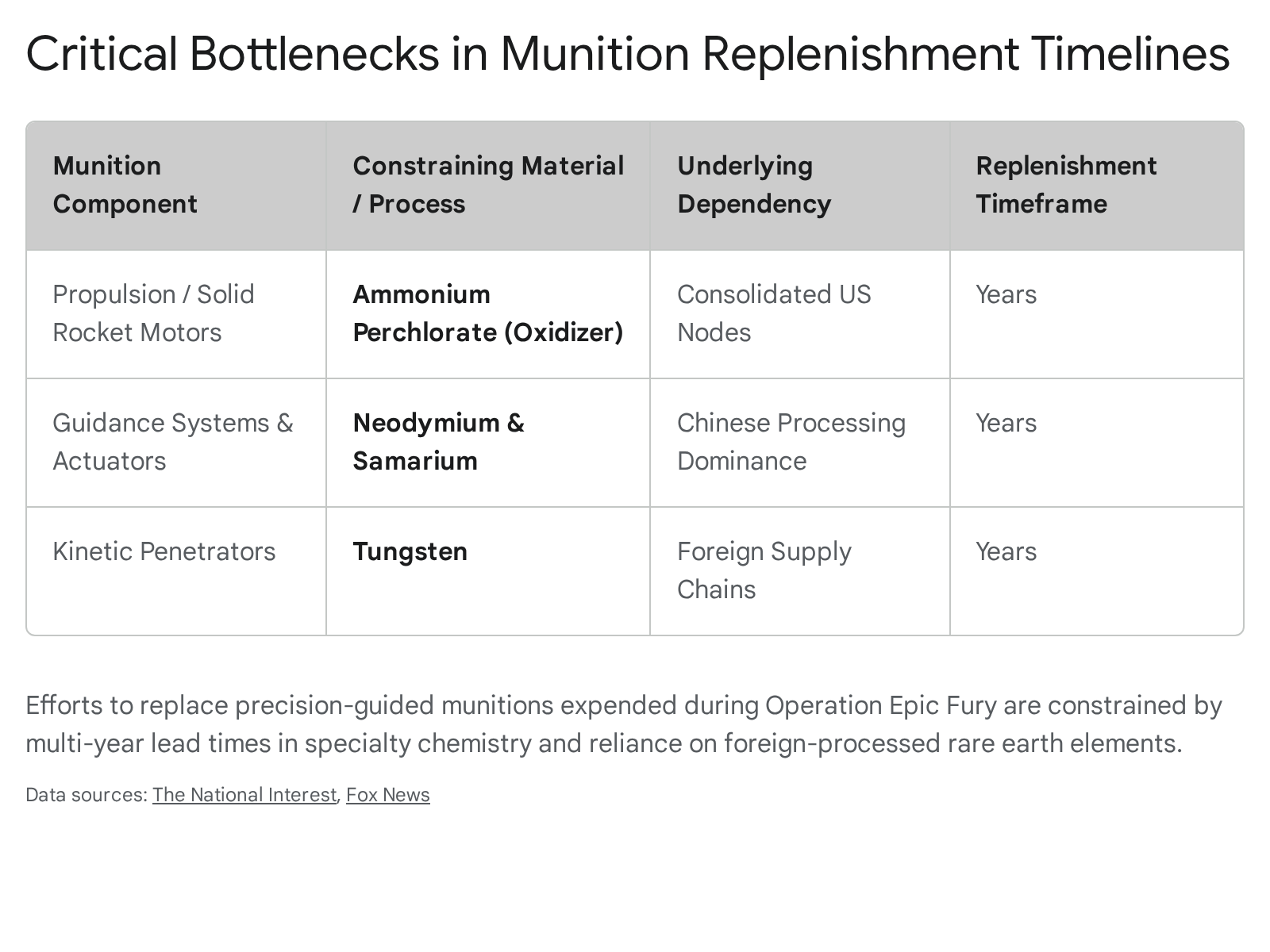
While China has historically restricted its exports to Tehran to dual-use technologies and civilian infrastructure equipment, current intelligence assessments indicate that Beijing is actively weighing the provision of direct financial aid and critical lethal weapons components.9 As coalition airstrikes systematically obliterate Iran’s domestic manufacturing base, the Iranian armed forces face a critical, paralyzing shortage of replacement parts for their integrated air defense networks, drone fleets, and ballistic missile systems.

The Central Intelligence Agency and the United States Department of Defense are closely monitoring logistical channels for definitive signs that China is preparing to transfer advanced missile-related components, guidance systems, and aerospace replacement parts to Tehran.9 However, human intelligence sources indicate that the leadership of the Chinese Communist Party is approaching this decision with extreme caution. Supplying direct lethal aid risks triggering severe United States secondary sanctions against vital Chinese technology sectors. Furthermore, it could provoke reciprocal actions by the United States Navy to interdict Chinese commercial shipping in the Strait of Hormuz, an escalation Beijing is desperate to avoid.9

4.4 Chinese Strategic Objectives and Conflict Outlook

The leadership in Beijing views a drawn-out, uncontrolled conflict in the Middle East as highly detrimental to its near-term domestic economic stability. The disruption of commercial shipping through the Strait of Hormuz directly threatens China’s energy security, driving up global commodity prices and transportation costs. This economic friction severely imperils Premier Li Qiang’s targeted domestic economic growth rate of 4.5 to 5 percent for the 2026 fiscal year, the lowest target set since 1991.27

Conversely, the military dimension of the conflict offers the People’s Liberation Army a unique and invaluable intelligence-gathering opportunity. The massive mobilization of United States naval carrier strike groups, the deployment of advanced stealth aircraft, and the utilization of integrated air defense systems provide Chinese military planners with an unprecedented theater to observe American operational art in real-time.8 Beijing is actively utilizing its space-based intelligence assets to monitor allied deployments in the Gulf of Oman, extracting critical data to refine its own strategic planning and anti-access/area denial strategies for future contingencies in the Indo-Pacific, particularly regarding Taiwan.8

Ultimately, China hopes to achieve a managed stabilization of the Iranian regime. A surviving, albeit weakened, Iran preserves Beijing’s access to heavily discounted hydrocarbons while simultaneously anchoring United States military power and political attention far from the South China Sea.8

5.0 The Democratic People’s Republic of Korea: Doctrinal Validation and Munitions Support

The Democratic People’s Republic of Korea has responded to the military campaign against Iran with severe diplomatic hostility and a renewed, aggressive commitment to its own nuclear armament program. The relationship between Pyongyang and Tehran is foundational to the strategic military capabilities of both states, characterized by decades of illicit technology sharing, intelligence exchange, and mutual sanctions evasion.

5.1 Rhetorical Posture and the Doctrine of Illegal Aggression

Following the February 28 decapitation strikes that eliminated Ayatollah Ali Khamenei, the North Korean Foreign Ministry issued highly aggressive statements via the state-run Korean Central News Agency.12 Pyongyang characterized the United States and Israeli operations as an act of “illegal aggression,” “gangster-like behavior,” and a “despicable form of sovereignty violation”.12 This rhetoric deliberately frames the conflict through an anti-imperialist lens, attempting to generate global solidarity among nations currently operating under Western sanctions regimes.

More importantly, the destruction of the Iranian political leadership serves as a stark ideological validation for Supreme Leader Kim Jong Un.12 North Korean state media and internal propaganda apparatuses have utilized the war in Iran to explicitly justify the nation’s nuclear weapons program. The regime argues that any nation lacking an active, deployable, and terrifying nuclear deterrent is guaranteed to face violent regime change orchestrated by Western powers.12 The supreme leadership in Pyongyang views the fate of the Iranian government as empirical evidence that diplomatic concessions regarding weapons of mass destruction are inherently fatal to regime survival.14 Demonstrating this renewed commitment, Kim Jong Un recently oversaw the launch of a missile from the Choe Hyon, a 5,000-tonne destroyer-class vessel, stating that the arming of naval ships with nuclear weapons was making satisfactory progress.14

5.2 Ballistic Missile Proliferation and Asymmetric Warfare

The technical foundation of the Iranian ballistic missile program is deeply intertwined with North Korean engineering and design principles. Iran’s primary medium-range delivery systems, including the Shahab-3, Emad, and Ghadr missiles, are direct derivatives of the North Korean Rodong missile architecture.11 This historical collaboration, dating back to the 1980s, involves intense intelligence exchange, the transfer of solid-fuel technologies, and the sharing of critical reentry vehicle telemetry data.11

As the Iranian military rapidly exhausts its stockpiles of medium-range ballistic missiles in retaliatory barrages against Israel and Gulf states, the regime will require immediate external assistance to rebuild its arsenal.32 North Korea is uniquely positioned to supply basic missile components, older legacy systems, and essential spare parts that are highly compatible with existing Iranian launch infrastructure.33 While Pyongyang will likely reserve its most advanced, cutting-edge technologies for its own defense against the Republic of Korea, the provision of low-end munitions, drone components, and structural materials is highly probable as Iran seeks to sustain a high operational tempo in a war of attrition.33

5.3 Subterranean Engineering and Human Capital Export

In addition to hardware transfers, North Korea provides highly specialized human capital to its strategic allies. Since the cessation of hostilities in the 1950s Korean War, the Democratic People’s Republic of Korea has perfected the engineering of deeply buried, hardened military facilities designed to withstand sustained aerial bombardment.11 This unique expertise has previously been exported to state actors such as Syria during the construction of its nuclear reactor, and intelligence reports suggest North Korean engineers have actively assisted the Islamic Revolutionary Guard Corps in the construction of subterranean missile bases and hardened enrichment sites.11

Furthermore, human intelligence and open-source reports indicate that up to 12,000 North Korean technicians and laborers have been deployed to the Russian Yelabuga complex.10 This workforce is instrumental in facilitating the rapid mass production of Iranian-designed uncrewed aerial systems.10 This trilateral cooperation allows North Korea to gain invaluable real-world combat data regarding the efficacy of drone swarms against modern Western air defense systems without directly exposing its own military assets to retaliatory strikes on the Korean Peninsula.10

5.4 Nuclear Hedging and Extreme Scenarios

A severe, low-probability but high-impact risk involves the direct transfer of nuclear material or weaponization expertise. Intelligence analysts assess that North Korea currently produces an excess of weapons-grade highly enriched uranium, operating facilities at Yongbyon and Kangson capable of generating up to 230 kilograms annually.34 This quantity is sufficient to produce seven to nine highly enriched uranium-based nuclear weapons per year.34

If the remnants of the Iranian regime determine that a rapid nuclear breakout is absolutely necessary for their ultimate survival following the decapitation of their leadership, North Korea represents the most viable global source for intact nuclear material or advanced weaponization technology.34 Furthermore, following the assassination of numerous senior Iranian nuclear scientists by Israeli intelligence, North Korea could theoretically lend its own weapons designers, metallurgists, and engineers to Tehran to bridge the critical knowledge gap created by the coalition strikes.34

5.5 North Korean Strategic Objectives and Conflict Outlook

Pyongyang views a drawn-out conflict in the Middle East as a highly favorable operational environment. The absorption of United States military assets, naval carrier groups, and intelligence bandwidth in the Persian Gulf drastically reduces the immediate threat profile on the Korean Peninsula. Consequently, North Korea hopes to utilize this period of strategic distraction to rapidly expand its own nuclear arsenal, test advanced delivery systems, and potentially engage in localized coercive military actions against the Republic of Korea without facing the full, undivided attention of the United States military.30 In exchange for its material and technical support of Iran, Pyongyang will likely demand reciprocal transfers of advanced drone technology, refined petroleum products, and hard currency to circumvent international sanctions.

6.0 Regional Facilitators, Proxies, and Ideological Allies

While Russia, China, and North Korea provide the strategic depth and industrial capacity required to sustain the Iranian regime, a secondary tier of state actors and non-state proxies provides critical logistical nodes, localized military pressure, and ideological solidarity.

6.1 The Syrian Arab Republic: Logistical Dilemmas and Regime Survival

The Syrian Arab Republic remains a vital geographic node in the “Axis of Resistance,” historically serving as the primary logistical land bridge connecting Tehran to Hezbollah forces operating in Lebanon.4 However, the current conflict places the government of President Bashar al-Assad in an highly precarious strategic position. The intensive Israeli air campaign has systematically targeted Iranian supply lines, command centers, and weapons depots located within Syrian territory over the past two years, heavily degrading Syria’s domestic infrastructure.35

Currently, Damascus is facing immense geopolitical pressure. The United States and its allies are highly motivated to secure a swift outcome in the war and are likely to leverage military force to definitively sever the remaining supply corridors passing through Syria.4 Consequently, Syria’s ability to provide material support to Iran is severely constrained. The Assad government is forced to balance its historical ideological and military alignment with Tehran against the immediate, existential necessity of insulating the fragile Syrian state from a broader regional conflagration that could fracture its territorial unity.4 Furthermore, mass population displacements from southern Lebanon into Syria—with nearly 10,000 Syrians and 1,000 Lebanese crossing the border daily—have placed an unsustainable strain on local resources, further degrading the state’s capacity to facilitate Iranian military operations.36

6.2 The Axis of Resistance: Hezbollah and Regional Militias

Heeding intense pressure from the Islamic Revolutionary Guard Corps, Hezbollah has actively engaged in the conflict to draw Israeli military resources away from the Iranian homeland. Despite absorbing over 600 airstrikes from the Israeli Air Force since February 28, open-source intelligence tracking confirms that Hezbollah retains an arsenal of approximately 25,000 rockets and missiles.37 The group has escalated its tactical approach, utilizing Iranian-supplied cluster munition warheads in strikes against civilian centers such as Yehud, demonstrating a deliberate shift toward maximizing civilian casualties to force a coalition ceasefire.37 Alongside Hezbollah, the Iranian regime continues to receive operational support through its network of proxies, including the Houthis in Yemen and pro-Iranian militias in Iraq, which create the possibility of a sustained multi-theater insurgency.22

6.3 Latin American Alignments: Venezuela, Cuba, and the Hemispheric Divide

In the Western Hemisphere, the Iranian regime receives highly vocal diplomatic and ideological support from anti-Western governments, primarily Venezuela and Cuba. However, the capacity of these states to provide tangible material, intelligence, or financial support is practically nonexistent due to severe domestic economic crises and aggressive United States interventions.

In January 2026, the United States conducted a highly controversial military operation in Venezuela, resulting in the capture of President Nicolas Maduro.29 This unprecedented action has neutralized the Venezuelan state apparatus as an active strategic partner for Iran. The remnants of the Venezuelan government, alongside Cuba and Nicaragua, continue to denounce the United States strikes on Iran as imperialist aggression, yet their support remains purely rhetorical.3 This ideological solidarity highlights a deep hemispheric divide, contrasted sharply by the governments of Argentina and Paraguay. Both Argentina and Paraguay have actively endorsed the military operations against Iran, utilizing the moment to remind the international community of Iran’s global belligerence, specifically citing the role of Iranian officials like Ahmad Vahidi in the 1994 AMIA Jewish center bombing in Buenos Aires.22

7.0 Financial Evasion Mechanisms and Supply Chain Resilience

The survival of the Iranian regime in a protracted conflict relies almost entirely on the ability of its state supporters to circumvent Western financial sanctions and maintain the flow of critical commodities. The events of early 2026 have accelerated the integration of a parallel economic architecture among sanctioned states.

7.1 Digital Currency Integration and Sanctions Evasion

To permanently mitigate the risks associated with reliance on the SWIFT network and dollar-dominated clearing houses, supporting states are rapidly advancing the development and implementation of alternative financial settlement systems. The People’s Republic of China is actively exporting its digital yuan infrastructure to sanctioned entities, recently assisting Myanmar’s military regime in developing a digital payment system to bypass United States sanctions.39 By routing transactions through China’s Cross-Border Interbank Payment System utilizing layered digital currencies, foreign actors can effectively obscure the ultimate ownership of assets and the final destination of funds, exploiting correspondent ties with major global banks.39

Concurrently, Russia and Iran, functioning within the BRICS framework, have escalated efforts to develop ruble-backed and gold-backed stablecoins to facilitate bilateral trade.40 While widespread macroeconomic adoption of these central bank digital currencies remains distant, the utilization of these decentralized, highly encrypted payment technologies presents a severe challenge to Western financial containment strategies. These systems ensure that vital components, raw materials, and drone parts can still be procured by the Islamic Revolutionary Guard Corps on the global black market.40

7.2 The Proliferation of the Shadow Fleet and Global Logistics

The physical manifestation of this sanctions evasion strategy is the “shadow fleet”, an armada of aging, unflagged, or deceptively flagged maritime vessels responsible for transporting Iranian crude oil to willing buyers, primarily in China.26 Russia has directly adopted and integrated Iran’s shadow fleet tactics to sustain its own petroleum exports following European embargoes.41 This shared tactical evolution demonstrates a high degree of operational learning between Moscow and Tehran. The maintenance of this fleet is essential to providing the Iranian regime with the hard currency required to fund its military reconstruction and sustain domestic subsidy programs during the conflict.26

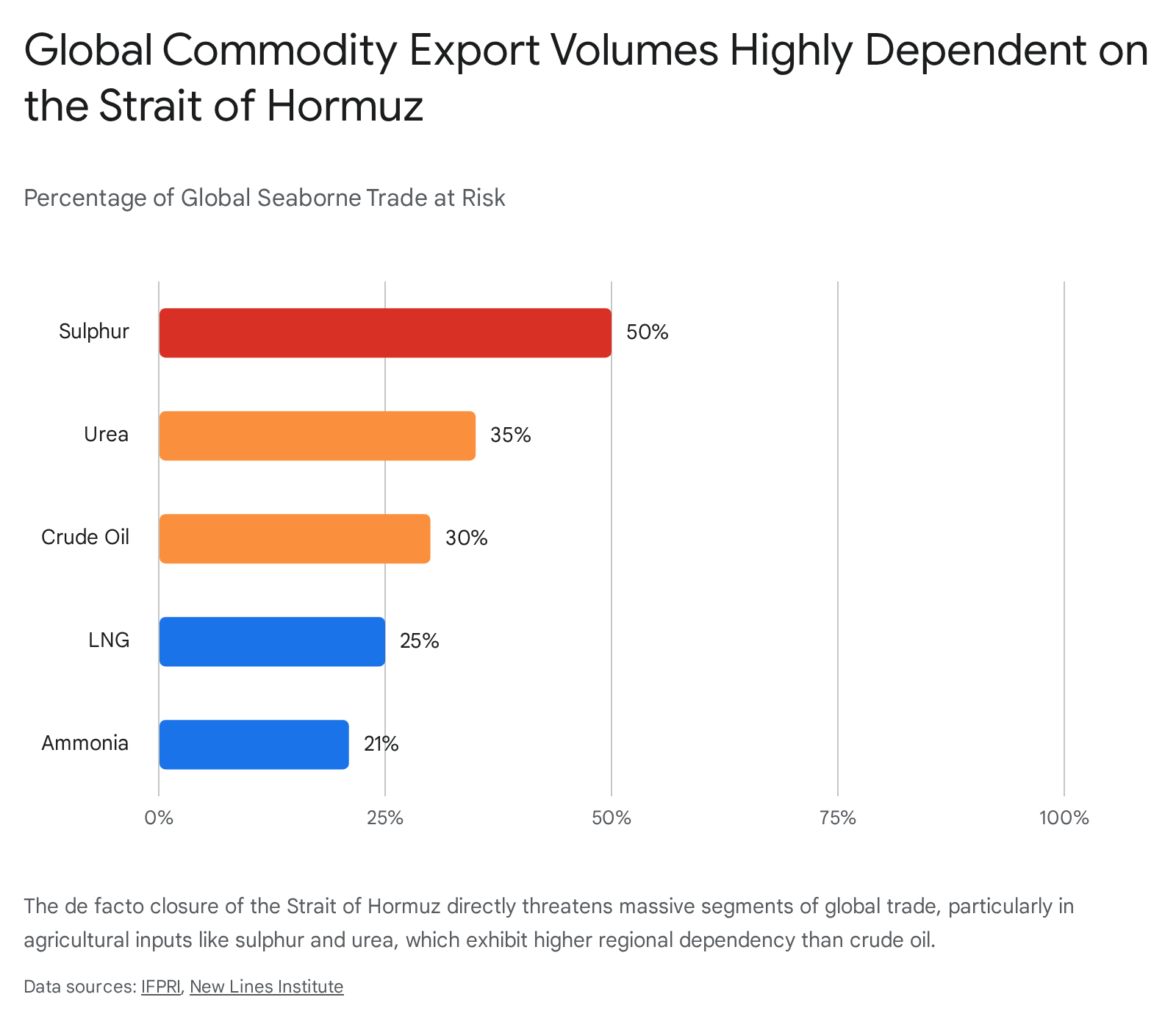
The conflict has also severely impacted global supply chains. Major shipping lines have diverted vessels away from the Strait of Hormuz, adding significant time and expense to the delivery of materials. The construction industry is particularly vulnerable, as essential materials such as cement, steel, concrete, and aluminum are heavily produced or sourced in the Middle East.42 The disruption of these shipping routes threatens to increase the cost-to-serve by up to forty percent for global supply chains, creating an economic ripple effect that supporting states like China and Russia must carefully manage.43

8.0 Strategic Outlook and Actor Intentions

The coalition of states supporting the Islamic Republic of Iran is not bound by a formal defense treaty, but rather by a shared, pragmatic strategic imperative to dismantle the unipolar dominance of the United States. Their varying levels of support are meticulously calibrated to advance specific national interests in the context of a drawn-out conflict.

  1. Exploitation of United States Strategic Bandwidth: All supporting actors calculate that an extensive military entanglement in the Middle East will heavily deplete American munitions stockpiles, stress naval logistics, and fracture domestic political consensus. Russia requires this distraction to prosecute its war in Europe; China requires this distraction to accelerate its military modernization without interference in the South China Sea; North Korea requires this distraction to expand its nuclear arsenal without facing immediate preemptive strikes.
  2. Regime Preservation over Absolute Victory: None of the supporting states harbor illusions regarding Iran’s ability to achieve a conventional military victory against the combined forces of the United States and Israel. Their objective is strictly preservation. By providing financial lifelines, targeting intelligence, and critical components, they aim to ensure that the Islamic Revolutionary Guard Corps retains sufficient asymmetric capabilities to exact a heavy toll on coalition forces, thereby preventing the establishment of a pro-Western government in Tehran.
  3. The Threat of Escalation: If the collapse of the Iranian regime appears imminent, the threshold for direct, highly lethal technology transfer will likely be breached. The most significant systemic risks include the mass transfer of Chinese advanced air defense platforms, the provision of Russian hypersonic anti-ship missiles to block the Strait of Hormuz, or the transfer of North Korean fissile material and nuclear expertise.

9.0 Conclusion

The military operations initiated on February 28, 2026, have successfully degraded the upper echelons of the Iranian leadership, fragmented its constitutional succession process, and inflicted severe damage upon the nation’s defense industrial base. However, the regime is currently being sustained by a robust, multi-dimensional network of state actors who view the survival of the Islamic Republic as critical to their own geopolitical security and the broader goal of challenging United States hegemony.

The Russian Federation has crossed the threshold into direct operational support through the provision of satellite targeting intelligence, fundamentally altering the lethality of the conflict for coalition forces. The People’s Republic of China continues to provide the essential economic bedrock via clandestine oil purchases and highly sophisticated shadow banking mechanisms, while aggressively monitoring the battlespace for its own future military applications. The Democratic People’s Republic of Korea provides critical ideological reinforcement and remains the most likely source for the rapid replenishment of ballistic missile components and asymmetric technology.

For the United States and its allies, achieving the strategic objectives of Operation Epic Fury will require significantly more than the kinetic destruction of Iranian infrastructure. It will necessitate the systematic dismantling of the financial evasion networks, shadow fleets, and external logistical corridors that currently connect Tehran to Moscow, Beijing, and Pyongyang. A failure to interdict these complex global supply lines will ensure that the conflict devolves into a prolonged, heavily subsidized war of attrition, precisely fulfilling the strategic objectives of Iran’s state sponsors.

10.0 Summary Table of Support by Country

The following table categorizes the distinct mechanisms of support provided by foreign state actors to the Iranian regime during the current conflict.

State ActorDiplomatic PostureFinancial & Economic SupportIntelligence & Military SupportPrimary Strategic Objective
Russian FederationHigh support; calls for emergency UN intervention.Integration of evasion tactics; BRICS digital currency cooperation.Providing real-time satellite targeting intelligence; hosting joint drone production facilities (Yelabuga); probing US homeland defenses.Divert US military bandwidth from Europe; trap coalition forces in a war of attrition.
People’s Republic of ChinaHigh support; vocal condemnation of US strikes; opposing regime change.Primary buyer of Iranian oil (90 percent of exports); operating Chuxin shadow banking network; providing infrastructure financing via Sinosure.Weighing the provision of replacement missile components and dual-use technology; observing US operations.Secure cheap energy imports; protect regional investments; observe US operational deployments for Taiwan planning.
Democratic People’s Republic of KoreaExtreme support; characterizing strikes as illegal aggression.Potential barter agreements exchanging munitions for energy.Historic ballistic missile tech transfers (Rodong lineage); joint engineering operations; potential lending of nuclear personnel and HEU.Validate domestic nuclear doctrine; acquire combat data on drone systems; distract US forces from the Korean Peninsula.
Syrian Arab RepublicModerate support; constrained by severe domestic threats.Negligible due to domestic economic collapse.Maintaining vulnerable logistical land bridges to Hezbollah and proxy forces.Balance regime survival against historical ideological commitments to the Axis of Resistance.
Venezuela & CubaHigh rhetorical support; heavily constrained by US intervention.Negligible.Negligible.Demonstrate anti-imperialist solidarity following the US capture of the Venezuelan President.

Appendix A: Methodology

This Situation Report was generated utilizing a comprehensive real-time sweep of global open-source intelligence, military monitors, and official state broadcasts spanning the period immediately preceding and following the initiation of Operation Epic Fury on February 28, 2026. The intelligence collection prioritized high-reliability geopolitical think tanks, defense industry monitors, and verifiable satellite imagery analyses. To ensure chronological accuracy, a 36-hour operational overlap was calculated, verifying independent reports of strike locations and asset movements against corresponding diplomatic statements issued from Beijing, Moscow, and Pyongyang. Conflicting open-source intelligence reports regarding battlefield damage were weighed by corroborating initial local media claims against secondary visual confirmation from independent geospatial analysis groups. The analysis strictly adheres to a neutral, factual methodology, filtering state propaganda to extract verifiable logistical, financial, and military data points.

Appendix B: Glossary of Acronyms

  • ADIZ: Air Defense Identification Zone
  • BRICS: An intergovernmental organization comprising Brazil, Russia, India, China, South Africa, Iran, Egypt, Ethiopia, and the United Arab Emirates.
  • CBDC: Central Bank Digital Currency
  • CENTCOM: United States Central Command
  • CIPS: Cross-Border Interbank Payment System (China)
  • DPRK: Democratic People’s Republic of Korea
  • GCC: Gulf Cooperation Council
  • HEU: Highly Enriched Uranium
  • IRGC: Islamic Revolutionary Guard Corps
  • ISR: Intelligence, Surveillance, and Reconnaissance
  • KCNA: Korean Central News Agency
  • NATO: North Atlantic Treaty Organization
  • NORAD: North American Aerospace Defense Command
  • OSINT: Open-Source Intelligence
  • SWIFT: Society for Worldwide Interbank Financial Telecommunication
  • UAE: United Arab Emirates

Appendix C: Glossary of Foreign Words

  • Artesh: The conventional military forces of the Islamic Republic of Iran, operating parallel to the Islamic Revolutionary Guard Corps.
  • Basij: A paramilitary volunteer militia established in Iran, operating as a subordinate force to the Islamic Revolutionary Guard Corps, primarily utilized for internal security and suppression of domestic dissent.
  • Chuxin: An unregistered Chinese financial intermediary vehicle utilized to channel capital between state traders and construction firms to bypass international sanctions on Iran.
  • Geran: The Russian designation for the Shahed-series of loitering munitions (suicide drones) developed by Iran and heavily utilized by Russian forces in Eastern Europe.
  • Khamenei: Referring to Ayatollah Ali Khamenei, the Supreme Leader of the Islamic Republic of Iran from 1989 until his death in the opening decapitation strikes of the 2026 conflict.
  • Knesset: The unicameral national legislature of the State of Israel.
  • Majlis: The Islamic Consultative Assembly, the national legislative body of Iran.
  • Rodong: A family of North Korean medium-range ballistic missiles that form the technological baseline for multiple Iranian missile systems.
  • Shahab: A class of Iranian ballistic missiles, specifically the Shahab-3, which is heavily reliant on imported North Korean aerospace technology.
  • Sinosure: The China Export and Credit Insurance Corporation, a major state-owned enterprise providing export credit insurance.
  • Zhuhai Zhenrong: A Chinese state-backed energy trading company heavily involved in the purchase of Iranian crude oil.

Please share the link on Facebook, Forums, with colleagues, etc. Your support is much appreciated and if you have any feedback, please email us in**@*********ps.com. If you’d like to request a report or order a reprint, please click here for the corresponding page to open in new tab.


Sources Used

  1. From Tehran to Europe: Terrorism Risks After the Killing of Iran’s Ayatollah, accessed March 10, 2026, https://icct.nl/publication/tehran-europe-terrorism-risks-after-killing-irans-ayatollah
  2. Iran Update – 1 March 2026: What Khamenei’s Death Changes | The Chertoff Group, accessed March 10, 2026, https://chertoffgroup.com/situation-report-iran-u-s-israeli-military-operations/
  3. Iran’s Reach in Latin America: Strategic Networks and U.S. Pressure in Venezuela, accessed March 10, 2026, https://gulfif.org/irans-reach-in-latin-america-strategic-networks-and-u-s-pressure-in-venezuela/
  4. Syria and the War on Iran: The Dilemma of Hostility and Neutrality – معهد السياسة والمجتمع, accessed March 10, 2026, https://politicsociety.org/2026/03/08/syria-and-the-war-on-iran-the-dilemma-of-hostility-and-neutrality/?lang=en
  5. US Officials Confirm Russia Providing Targeting Intelligence To Iran, accessed March 10, 2026, https://www.rferl.org/a/russia-iran–intel-targeting-us-israel-war/33697849.html
  6. Iran War Provides Opportunity for Russia To Test U.S. Alaska … – FDD, accessed March 10, 2026, https://www.fdd.org/analysis/2026/03/10/iran-war-provides-opportunity-for-russia-to-test-u-s-alaska-defenses/
  7. China uses secret network to pay Iran for oil – WSJ, accessed March 10, 2026, https://www.iranintl.com/en/202510060867
  8. China in the crossfire: Calculated moves amid the US-Iran … – MEI, accessed March 10, 2026, https://mei.edu/publication/china-in-the-crossfire-calculated-moves-amid-the-us-iran-showdown/
  9. China weighing financial aid, weapons components for Iran amid …, accessed March 10, 2026, https://www.aa.com.tr/en/asia-pacific/china-weighing-financial-aid-weapons-components-for-iran-amid-war-report/3853549
  10. A Closer Look at the Yelabuga UAV Factory, accessed March 10, 2026, https://beyondparallel.csis.org/a-closer-look-at-the-yelabuga-uav-factory/
  11. Iran’s Military Capabilities Restored by No. Korea – The Ettinger Report, accessed March 10, 2026, https://theettingerreport.com/irans-military-capabilities-restored-by-no-korea/
  12. The Fortress And The Flame: North Korea’s Strategic Posture In The Iran War – Analysis, accessed March 10, 2026, https://www.eurasiareview.com/04032026-the-fortress-and-the-flame-north-koreas-strategic-posture-in-the-iran-war-analysis/
  13. Great Power Spillover from the Iran War: Implications for China, Russia, Turkey, and Europe, accessed March 10, 2026, https://www.washingtoninstitute.org/policy-analysis/great-power-spillover-iran-war-implications-china-russia-turkey-and-europe
  14. Trump’s Iran war will reinforce North Korea’s view that nuclear weapons are the only path to security – The Guardian, accessed March 10, 2026, https://www.theguardian.com/world/2026/mar/10/north-korea-nuclear-weapons-trump-iran-war
  15. Interim council takes control in Iran after Khamenei’s death | Iran International, accessed March 10, 2026, https://www.iranintl.com/en/202603015688
  16. Who Will Run Iran?, accessed March 10, 2026, https://www.meforum.org/mef-online/who-will-run-iran
  17. Interim Leadership Council – Wikipedia, accessed March 10, 2026, https://en.wikipedia.org/wiki/Interim_Leadership_Council
  18. Israel Strikes Tehran Regime’s Assembly of Experts, Underlining Efforts to Disrupt Succession Process, accessed March 10, 2026, https://www.fdd.org/analysis/2026/03/03/israel-strikes-tehran-regimes-assembly-of-experts-underlining-efforts-to-disrupt-succession-process/
  19. The IRGC: Understanding America’s Enemy in “Operation Epic Fury” – The National Interest, accessed March 10, 2026, https://nationalinterest.org/blog/buzz/irgc-understanding-americas-enemy-operation-epic-fury-hk-030826
  20. Iran Update Evening Special Report, March 7, 2026 | ISW, accessed March 10, 2026, https://understandingwar.org/research/middle-east/iran-update-evening-special-report-march-7-2026/
  21. Iran Update Evening Special Report, March 6, 2026 | ISW, accessed March 10, 2026, https://understandingwar.org/research/middle-east/iran-update-evening-special-report-march-6-2026/
  22. Iran War: A Defining Moment for the Middle East—Global Analysis …, accessed March 10, 2026, https://www.ajc.org/iran-war-a-defining-moment-for-the-middle-east-global-analysis-from-ajc-experts
  23. For China, billions of dollars are at risk from a widening war, accessed March 10, 2026, https://m.economictimes.com/small-biz/trade/exports/insights/for-china-billions-of-dollars-are-at-risk-from-a-widening-war/articleshow/129377065.cms
  24. The Gulf that emerges from the Iran war will be very different – Atlantic Council, accessed March 10, 2026, https://www.atlanticcouncil.org/dispatches/the-gulf-that-emerges-from-the-iran-war-will-be-very-different/
  25. How China’s enormous bet on Iran failed, accessed March 10, 2026, https://www.washingtonpost.com/opinions/2026/03/06/china-iran-failure-strategy/
  26. The axis of evasion: Behind China’s oil trade with Iran and Russia – Atlantic Council, accessed March 10, 2026, https://www.atlanticcouncil.org/blogs/new-atlanticist/the-axis-of-evasion-behind-chinas-oil-trade-with-iran-and-russia/
  27. China sets a lower economic growth target of 4.5% to 5% for 2026 as challenges loom, accessed March 10, 2026, https://apnews.com/article/china-congress-economy-gdp-trump-target-1822006cd39ff43505fa9a47a4581a16
  28. ‘Xi’s world order died with Khamenei’: The good, the bad, and ugly of US-Iran war for China, accessed March 10, 2026, https://timesofindia.indiatimes.com/world/china/trump-xi-jinping-summit-iran-war-and-china-us-iran-war-trumps-iran-war-khamenei-killing/articleshow/129216408.cms
  29. North Korea Steps Up Anti-US Rhetoric in Initial Response to Strikes Against Iran, accessed March 10, 2026, https://www.38north.org/2026/03/north-korea-steps-up-anti-us-rhetoric-in-initial-response-to-strikes-against-iran/
  30. Iran war will reinforce Kim’s view on nuclear power – Taipei Times, accessed March 10, 2026, https://www.taipeitimes.com/News/world/archives/2026/03/11/2003853638
  31. Korean Peninsula Update, March 3, 2026 | ISW, accessed March 10, 2026, https://understandingwar.org/research/china-taiwan/korean-peninsula-update-march-3-2026/
  32. Iran Update Evening Special Report, February 28, 2026 | ISW, accessed March 10, 2026, https://understandingwar.org/research/middle-east/iran-update-evening-special-report-february-28-2026/
  33. North Korea: Revisionist Ambitions and the Changing International Order – CSIS, accessed March 10, 2026, https://www.csis.org/analysis/north-korea-revisionist-ambitions-and-changing-international-order
  34. Could Iran buy nuclear weapons from North Korea?, accessed March 10, 2026, https://www.iiss.org/online-analysis/online-analysis/2025/11/could-iran-buy-nuclear-weapons-from-north-korea/
  35. Statement on the Recent Developments in the Middle East, accessed March 10, 2026, https://www.globalr2p.org/publications/statement-on-the-recent-developments-in-the-middle-east/
  36. MIDDLE EAST LIVE 4 March: Conflict continues across region amid US, Israeli and Iranian strikes | UN News, accessed March 10, 2026, https://news.un.org/en/story/2026/03/1167076
  37. Strategic Assessment of the Iranian Conflict: Deterrence Attrition, Subterranean Resilience and the Mojtaba Khamenei Succession – https://debuglies.com, accessed March 10, 2026, https://debuglies.com/2026/03/10/strategic-assessment-of-the-iranian-conflict-deterrence-attrition-subterranean-resilience-and-the-mojtaba-khamenei-succession/
  38. What you need to know about the U.S. war on Iran – AFSC.org, accessed March 10, 2026, https://afsc.org/news/what-you-need-know-about-us-war-iran
  39. Weekly Sanctions Update: November 24, 2025 – Steptoe, accessed March 10, 2026, https://www.steptoe.com/en/news-publications/international-compliance-blog/weekly-sanctions-update-november-24-2025.html
  40. CRINK Economic Ties: Uneven Patterns of Collaboration – CSIS, accessed March 10, 2026, https://www.csis.org/analysis/crink-economic-ties-uneven-patterns-collaboration
  41. China’s Facilitation of Sanctions and Export Control Evasion, accessed March 10, 2026, https://www.uscc.gov/research/chinas-facilitation-sanctions-and-export-control-evasion
  42. The 2026 Iran War and Its Global Impact on Construction Supply Chains | Baker Donelson, accessed March 10, 2026, https://www.bakerdonelson.com/the-2026-iran-war-and-its-global-impact-on-construction-supply-chains
  43. The Impacts of the Iran Attack on Supply Chains and Global Business – ISM, accessed March 10, 2026, https://www.ismworld.org/supply-management-news-and-reports/news-publications/inside-supply-management-magazine/blog/2026/2026-03/the-impacts-of-the-iran-attack-on-supply-chains-and-global-business/
Operation Epic Fury Daily SITREP – March 10, 2026

1.0 Executive Summary

The military confrontation encompassing the United States, Israel, and the Islamic Republic of Iran has entered its eleventh day, marked by a severe escalation in regional economic warfare and an accelerated transition of Iranian leadership. The last 36 hours of Operation Epic Fury, executed by the United States, and Operation Roaring Lion, executed by Israel, alongside the corresponding Iranian retaliatory campaign, Operation True Promise 4, represent a critical inflection point in the conflict. Combat operations have definitively expanded beyond counter-force military strikes and have transitioned into the systematic targeting of strategic economic infrastructure across the broader Middle East.

In the political domain, the Iranian Assembly of Experts moved decisively to fill the leadership vacuum created by the assassination of Ayatollah Ali Khamenei on February 28. The formal appointment of his son, Mojtaba Khamenei, as the new Supreme Leader signals a total rejection of diplomatic off-ramps by the Iranian regime.1 This dynastic succession, unprecedented in the history of the Islamic Republic, consolidates political power firmly within the Islamic Revolutionary Guard Corps (IRGC) and the hardline security apparatus.3 Consequently, the Iranian military posture has shifted toward a doctrine of cumulative regional attrition, aiming to inflict unacceptable economic pain on the global energy market and United States allies in the Persian Gulf.4

Militarily, the United States and Israel maintain overwhelming air superiority, having struck more than 5,000 targets within Iran since the conflict began.6 The joint force has successfully degraded an estimated 90 percent of Iran’s overall ballistic missile and drone launch capacity.7 However, the remaining Iranian arsenals are being deployed with calculated precision. The IRGC has initiated the 33rd, 34th, and 35th waves of Operation True Promise 4, utilizing hypersonic missiles equipped with warheads exceeding 1,000 kilograms to bypass regional air defense networks.9

The strategic messaging from the United States remains highly fluid. United States President Donald Trump has issued conflicting statements, characterizing the war as “pretty much complete” and a “short-term excursion,” while simultaneously threatening to escalate strikes twentyfold if Iran disrupts global oil supplies through the Strait of Hormuz.7 Conversely, Israeli leadership insists the campaign requires significantly more time to completely fracture the Iranian clerical leadership and eliminate its nuclear latency.7

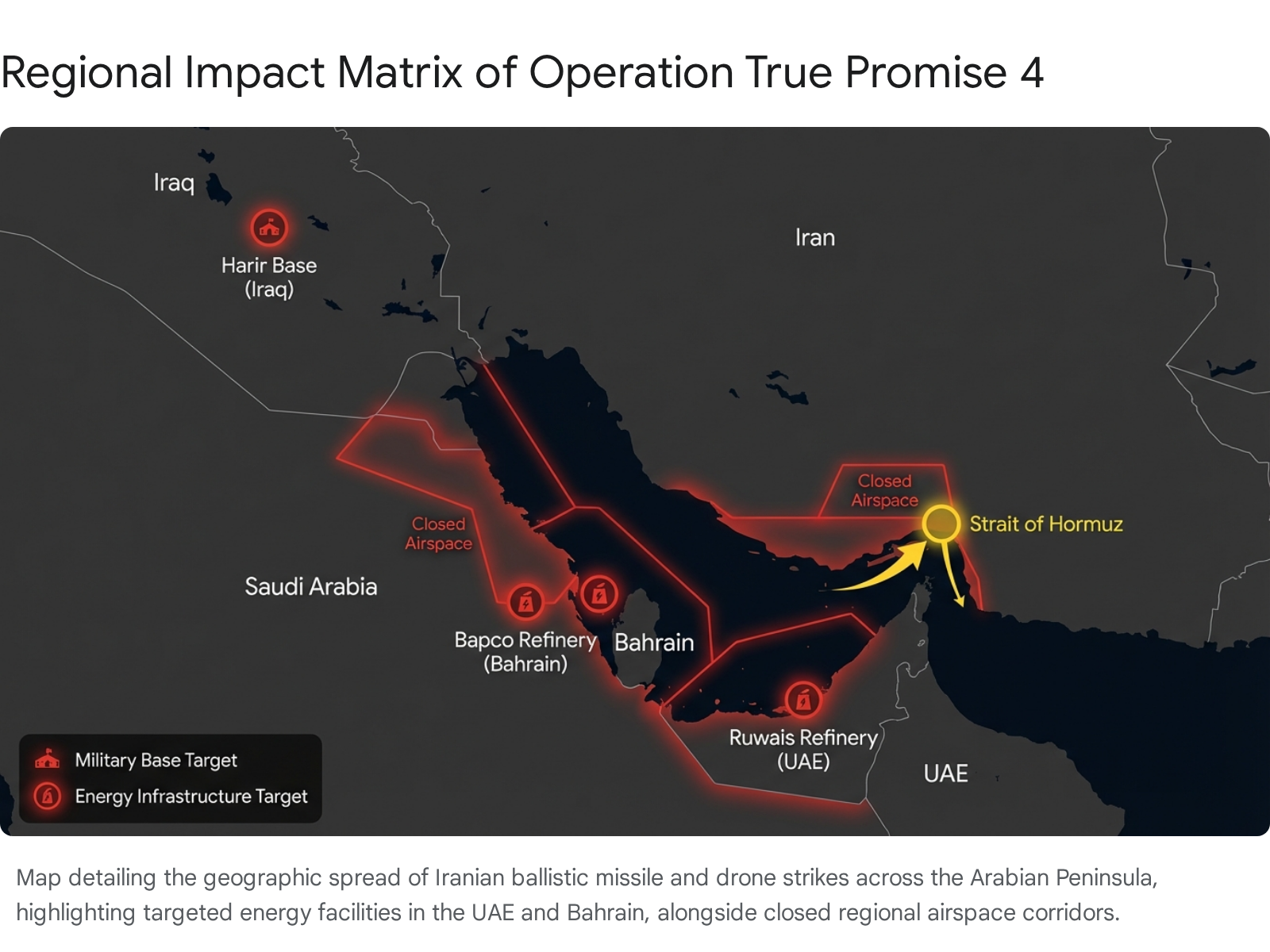
The most alarming development over the past 36 hours is the deliberate targeting of civilian energy infrastructure in nations hosting United States military installations. Iranian drones successfully bypassed regional air defenses to strike the Ruwais Industrial Complex in the United Arab Emirates and the Bapco Energies refinery in the Kingdom of Bahrain.12 These strikes triggered precautionary shutdowns of massive refining capacities and prompted declarations of force majeure, sending Brent crude prices surging past the $100 per barrel threshold before stabilizing near $90.7 The Strait of Hormuz remains effectively choked, isolating approximately 20 percent of the global oil supply and forcing over 40,000 commercial flight cancellations across the Middle East.15 The conflict has now metastasized from a targeted decapitation campaign into a systemic regional crisis threatening the foundational stability of the global economy.

2.0 Chronological Timeline of Key Events (Last 36 Hours)

The following timeline details the kinetic, diplomatic, and economic developments recorded between March 9, 2026, and March 10, 2026. All times are recorded in Coordinated Universal Time (UTC) to ensure standardized global tracking, incorporating an intentional overlap with the previous reporting period to preserve absolute continuity of events.

  • March 9, 2026, 04:00 UTC: The Iranian Assembly of Experts officially confirms Mojtaba Khamenei as the third Supreme Leader of the Islamic Republic of Iran. The announcement prompts nationwide pledges of allegiance from the IRGC and regional proxy groups, signaling a continuation of hardline policies.2
  • March 9, 2026, 12:00 UTC: Global oil markets react violently to the escalating regional conflict. Brent crude oil briefly surges to $120 per barrel before retreating to approximately $90 following statements from the United States regarding the potential release of strategic petroleum reserves.7
  • March 9, 2026, 16:30 UTC: The United States Department of War publicly confirms the identity of the seventh American service member killed in the conflict. Sergeant Benjamin N. Pennington, assigned to the 1st Space Battalion, succumbed to injuries sustained during a March 1 Iranian drone strike on Prince Sultan Air Base in Saudi Arabia.17
  • March 9, 2026, 21:00 UTC: United States President Donald Trump engages in a telephone conference with Russian President Vladimir Putin. The leaders discuss potential mediation frameworks and the stabilization of global energy markets.7
  • March 9, 2026, 22:53 UTC: Iraqi Prime Minister Mohammed Shia al-Sudani communicates directly with United States Secretary of State Marco Rubio, reaffirming Iraqi neutrality and explicitly stating that Iraqi territory will not be utilized as a staging ground for regional military operations.10
  • March 10, 2026, 01:15 UTC: An unidentified airstrike targets a facility operated by the 40th Brigade of the Popular Mobilization Forces in Kirkuk, Iraq, resulting in the deaths of five pro-Iranian militiamen and wounding four others.7
  • March 10, 2026, 03:25 UTC: Hezbollah forces execute a coordinated anti-armor ambush in southern Lebanon near the town of Khiam. The militant group reportedly destroys multiple Israeli Merkava tanks with guided munitions.10
  • March 10, 2026, 04:54 UTC: In response to depleted interceptor stockpiles, the United States Department of Defense initiates the transfer of Terminal High Altitude Area Defense (THAAD) components from South Korea to the Middle East theater.10
  • March 10, 2026, 07:33 UTC: Emergency sirens activate across the United Arab Emirates and the Kingdom of Bahrain. The UAE Ministry of Defense announces the successful interception of multiple ballistic missiles and suicide drones.15
  • March 10, 2026, 08:48 UTC: Iranian explosive drones strike the Bapco Energies refinery complex on Sitra Island in Bahrain. The resulting conflagration injures 32 civilians and forces the company to declare a state of force majeure on all contractual delivery obligations.13
  • March 10, 2026, 09:11 UTC: A secondary wave of Iranian drone strikes targets the Ruwais Industrial Complex in the Emirate of Abu Dhabi. The Abu Dhabi National Oil Company (ADNOC) executes an emergency precautionary shutdown of the massive refining facility.12
  • March 10, 2026, 11:51 UTC: Iranian Foreign Minister Abbas Araghchi issues a public statement ruling out any immediate ceasefire negotiations with the United States, describing the American military strategy as chaotic.10
  • March 10, 2026, 13:21 UTC: The Israeli Home Front Command activates nationwide air raid sirens across northern, central, and southern Israel in response to a massive, coordinated barrage of Iranian ballistic missiles and Hezbollah rockets.10
  • March 10, 2026, 14:33 UTC: The IRGC publicly announces the commencement of the 34th wave of Operation True Promise 4. Iranian military spokespersons confirm the deployment of hypersonic missiles equipped with warheads exceeding 1,000 kilograms, explicitly targeting United States military installations in the UAE and Israeli airbases.9

3.0 Situation by Primary Country

3.1 Iran

3.1.1 Military Actions & Posture

The Iranian armed forces, spearheaded by the IRGC Aerospace Force, have fundamentally shifted their tactical methodology to maximize the psychological and economic impact of their surviving munitions. Operating under the umbrella designation of “Operation True Promise 4,” Iran launched its 33rd, 34th, and 35th consecutive waves of strikes within the past 36 hours.21 Despite suffering an estimated 90 percent degradation in overall launch capacity since the commencement of hostilities on February 28, the IRGC has begun deploying its most advanced and destructive strategic assets.7

Iranian commanders confirmed the utilization of solid-fuel Kheibar Shekan, Qadr, Emad, and Fattah hypersonic ballistic missiles.10 To counter the high interception rates of the Israeli Arrow-3 and United States THAAD defense systems, the IRGC has equipped these missiles with heavy payloads exceeding 1,000 kilograms.9 The 34th wave specifically targeted United States military support bases, including Al Dhafra in the UAE and Al Juffair in Bahrain, alongside the Israeli Ramat David airbase and civilian infrastructure in Haifa.10 Furthermore, Israeli military authorities and international monitors reported that Iran has begun deploying ballistic missiles armed with cluster munition warheads.23 These parent munitions detonate at high altitudes, scattering dozens of lethal submunitions across wide civilian areas in central Israel, severely complicating the post-strike cleanup process and endangering civilians long after the initial impact.24

Simultaneously, Iran has dramatically escalated its asymmetric cyber warfare operations. Following a massive digital disruption during the opening phase of Operation Epic Fury that reduced Iranian internet connectivity to 4 percent of its normal volume, IRGC-affiliated cyber units, including Advanced Persistent Threat groups APT33 and APT42, have been activated.4 These state-sponsored hackers have launched retaliatory denial-of-service and ransomware attacks against critical infrastructure, government platforms, and energy companies in Israel, the United States, and the Gulf states.4 The Iranian military is also maintaining a defensive posture, reporting the successful interception and destruction of an Israeli Heron TP reconnaissance drone near Tehran and Hermes-900 drones in western provinces.27

3.1.2 Policy & Diplomacy

The defining political event of the reporting period is the formal appointment of Mojtaba Khamenei as the new Supreme Leader of the Islamic Republic of Iran. Selected by the Assembly of Experts to succeed his father, the 56-year-old cleric represents the triumph of the ultra-conservative security establishment over the traditional pragmatic factions.1 Mojtaba Khamenei lacks the extensive theological credentials of his predecessors but possesses deeply entrenched operational ties to the IRGC and the Basij paramilitary forces, having operated as a key power broker within his father’s office for decades.3

This dynastic succession serves as a direct message of defiance to Washington and Jerusalem. By selecting a leader explicitly condemned by the United States administration, Tehran is signaling its commitment to regime continuity and long-term resistance.29 Iranian Foreign Minister Abbas Araghchi and parliamentary speaker Mohammad Bagher Ghalibaf have both issued statements confirming that Iran will not seek diplomatic negotiations under military duress, warning that any hostile action by adversaries will receive an immediate and proportionate response.7

The regime’s diplomatic messaging is currently focused on leveraging global economic anxieties. By threatening to permanently close the Strait of Hormuz, Tehran intends to fracture the international coalition by inflicting severe economic pain on nations dependent on Middle Eastern energy exports. Ali Larijani, the secretary of Iran’s Supreme National Security Council, explicitly warned that the strait could become a “choking point” for those dreaming of war, while the IRGC stated that only nations expelling United States and Israeli envoys would be granted safe maritime passage.15

3.1.3 Civilian Impact

The civilian toll within the borders of Iran remains catastrophic. Human rights organizations and the Iranian Ministry of Health estimate that over 1,700 civilians have been killed and approximately 6,000 injured since the onset of Operation Epic Fury.8 The continuous aerial bombardment has severely damaged civil infrastructure, leaving roughly 100,000 citizens internally displaced and destroying over 4,000 commercial and residential buildings across 26 of the country’s 31 provinces.8

The environmental and public health impacts of the airstrikes are compounding the humanitarian crisis. Heavy bombardments of fuel storage complexes in the Kuhak and Shahran districts of Tehran, as well as industrial zones in Karaj, have blanketed the capital in toxic smoke. The World Health Organization has issued urgent warnings regarding “black rain” and severe respiratory hazards, advising the population of Tehran to remain indoors.32 The Iranian civilian populace is trapped between the relentless external bombardment and a severe internal security crackdown initiated by the Ministry of Intelligence and the Basij forces, who recently announced the arrest of 30 individuals accused of espionage to suppress potential anti-regime uprisings.4

3.2 Israel

3.2.1 Military Actions & Posture

The Israel Defense Forces (IDF) are concurrently managing intense combat operations on two distinct fronts. Under the designation of Operation Roaring Lion, the Israeli Air Force continues to strike deep into Iranian territory. Over the last 36 hours, the IDF expanded its target matrix beyond primary command nodes in Tehran to include IRGC drone operational headquarters and internal security bases in Isfahan, Karaj, and Shiraz.15 Israeli defense officials estimate that 75 percent of Iran’s ballistic missile launchers have been successfully neutralized, achieving near-complete air superiority over Iranian skies.34

Simultaneously, the IDF has aggressively escalated its campaign against the Iranian proxy network in Lebanon. Israeli combat aircraft dropped heavy ordnance on the southern suburbs of Beirut, specifically targeting the Haret Hreik, Ghobeiry, and Burj al-Barajneh districts after issuing mandatory evacuation orders.10 A notable shift in Israeli tactical doctrine involves the systematic destruction of Hezbollah’s financial infrastructure. The IDF conducted precision strikes against more than 30 civilian branches of the Al-Qard Al-Hasan association, a financial institution utilized by Hezbollah to circumvent international sanctions, procure weaponry, and distribute salaries to its operatives.4 Ground operations in southern Lebanon remain highly volatile, with the IDF conducting focused raids to eliminate Hezbollah infrastructure while facing sophisticated anti-armor ambushes.10

3.2.2 Policy & Diplomacy

The Israeli government remains steadfast in its maximalist objectives. Prime Minister Benjamin Netanyahu addressed the Israeli public from the National Health Command Centre, explicitly stating that the military campaign is “not done yet.” He articulated a strategic vision aimed at “breaking the bones” of the Iranian clerical leadership, expressing a desire to degrade the regime’s security apparatus to the point where the Iranian populace can overthrow the government from within.7

Diplomatically, Israel is working to maintain the cohesion of its alliance with the United States amid shifting political winds in Washington. Israeli defense planners are reportedly operating under an accelerated timetable, attempting to inflict maximum irreversible damage on Iranian nuclear and military infrastructure. Intelligence sources indicate that the IDF is operating under the assumption that the United States administration may abruptly order an end to the hostilities to stabilize global energy markets, necessitating a rapid intensification of current strike packages.10

3.2.3 Civilian Impact

The daily reality for Israeli civilians is defined by perpetual disruption and physical danger. The Home Front Command has maintained restrictive defense policies through March 14, requiring citizens to remain near fortified shelters as Hezbollah and Iranian forces launch coordinated, simultaneous missile barrages.7 The introduction of Iranian cluster munitions has elevated the threat level significantly, as unexploded submunitions litter residential and commercial areas, posing a lethal risk to first responders and civilians attempting to return to their normal routines.24

Since the beginning of the conflict, the Israeli Ministry of Health reports that over 2,238 citizens have been evacuated to hospitals due to trauma, shock, or injuries sustained from intercepted shrapnel.38 The national death toll stands at 15, including a recent fatality resulting from a direct missile impact on a construction site in the central city of Holon.7 Economic continuity is severely strained by the mobilization of reserves and the disruption of commercial aviation, though the government has attempted to mitigate losses by authorizing the phased return of repatriation flights through Ben Gurion Airport and releasing thousands of reserve soldiers to ease workforce shortages.10

3.3 United States

3.3.1 Military Actions & Posture

The United States military posture is characterized by total air dominance and the continuous application of overwhelming kinetic force. United States Central Command (CENTCOM) reports that over 5,000 discrete targets have been struck inside Iran.6 The ordnance deployed includes 30,000-pound GBU-57 Massive Ordnance Penetrators dropped by B-2 stealth bombers to obliterate deeply buried nuclear and ballistic missile facilities, specifically targeting the Fordow Fuel Enrichment Plant.40 Other assets utilized in the campaign include B-1B Lancers, B-52 Stratofortresses, F-35 Lightning II stealth fighters, and A-10 attack jets.6

The maritime component of Operation Epic Fury has been devastating to the Iranian naval apparatus. United States naval assets, including nuclear-powered submarines and guided-missile destroyers, have systematically hunted and destroyed over 46 Iranian naval vessels, effectively neutralizing Iran’s ability to project conventional maritime power or lay sea mines in the Gulf of Oman.7

To defend against the ongoing Iranian retaliation against regional bases, the Pentagon has authorized the immediate redeployment of Terminal High Altitude Area Defense (THAAD) batteries from the Indo-Pacific theater to the Middle East, while drawing upon Patriot missile stockpiles.10 This defensive logistical shift highlights the severe strain that continuous drone and ballistic missile interceptions are placing on allied munition inventories.

Weapon System DeployedPrimary Operational RoleTarget Class
B-2 Stealth BomberDeep Penetration StrikeHardened Underground Nuclear Sites (Fordow)
B-1B LancerStrategic BombardmentBallistic Missile Production Facilities
F-35 Lightning IIStealth Air SuperiorityAdvanced Integrated Air Defense Systems
M-142 HIMARSPrecision Rocket ArtilleryForward Proxy Command Nodes
Nuclear SubmarinesTorpedo / Cruise Missile StrikeIranian Frigates and Naval Assets

3.3.2 Policy & Diplomacy

The executive branch of the United States government is transmitting highly complex and occasionally contradictory strategic messaging. President Donald Trump has publicly characterized the military campaign as a “short-term excursion,” claiming the war is “very complete, pretty much” and far ahead of schedule.7 He has suggested that the primary objectives of the operation, neutralizing the immediate nuclear threat, have been achieved and that key targets involving electricity production have been intentionally spared to observe Iranian behavioral changes.7

However, recognizing the severe economic peril posed by the Iranian blockade of the Strait of Hormuz, the President has simultaneously threatened maximum escalation. Trump warned that any Iranian attempt to halt the global oil supply would result in the United States hitting the regime “twenty times harder,” unleashing “Death, Fire, and Fury” that would permanently destroy the nation’s capacity to rebuild.7

Behind the scenes, diplomatic channels are highly active. Reports indicate that advisors are pressuring the administration to formulate a definitive exit strategy due to the severe inflationary pressures caused by surging oil prices, which threaten domestic economic stability.10 Furthermore, the State Department has initiated a significant diplomatic drawdown, ordering the evacuation of all non-emergency personnel and their families from United States embassies and consulates in Saudi Arabia, Kuwait, Bahrain, Iraq, Qatar, Jordan, and the UAE.44

3.3.3 Civilian Impact

The direct impact on American civilians is largely economic and logistical, though the human cost of the military engagement continues to rise. The Department of War officially confirmed the death of the seventh American service member, Sergeant Benjamin N. Pennington, a 26-year-old logistics specialist from Kentucky. Sergeant Pennington succumbed to injuries sustained during an Iranian strike on Prince Sultan Air Base in Saudi Arabia.17 Vice President JD Vance attended the dignified transfer of his remains at Dover Air Force Base.7 Furthermore, Major Sorffly Davius, a New York National Guard member, died during a health-related non-combat incident in Kuwait.47

The conflict has triggered a massive logistical extraction effort. The State Department confirmed that over 36,000 American citizens have fled the Middle East region since hostilities commenced, relying on a patchwork of military transport and limited commercial charters to navigate the closed airspace.7 Domestically, the economic repercussions are becoming highly visible, with average gasoline prices surging 16.4 percent in just ten days, triggering bipartisan concern over inflation and supply chain stability.10

The United States military is also navigating the diplomatic fallout of a tragic operational error. Preliminary intelligence assessments suggest that a United States Tomahawk cruise missile likely malfunctioned or misidentified its target, striking a girls’ elementary school in the Iranian city of Minab and killing an estimated 165 civilians, predominantly children.7 The incident is currently under formal investigation by the Department of Defense.

Uzi top cover and bolt blocking latch repair jig with hammer

4.0 Regional and Gulf State Impacts

The expansion of Iranian retaliatory strikes has forced the Gulf Cooperation Council (GCC) states into the center of the conflict. The Iranian strategy relies on punishing nations that host United States military bases, hoping that the resulting economic damage will force these host nations to pressure Washington into a ceasefire.

United Arab Emirates (UAE): The UAE has absorbed the highest volume of incoming Iranian fire, intercepting over 1,500 rockets and drones since the war began.15 In the last 36 hours, a major Iranian drone strike bypassed local air defenses and impacted the Ruwais Industrial Complex in the Emirate of Abu Dhabi.12 The strike triggered a massive fire, forcing the Abu Dhabi National Oil Company (ADNOC) to execute a precautionary shutdown of the Ruwais refinery. This facility is the largest single-site refinery in the Middle East, capable of processing 922,000 barrels of crude oil per day.12

In response to the continuous barrage, which has resulted in eight civilian deaths and 122 injuries over the past ten days, the UAE has implemented the Emergency Security Control of Air Traffic (ESCAT) protocol, heavily restricting commercial aviation.10 Despite official statements reaffirming neutrality and prohibiting the use of Emirati bases for offensive operations against Iran, the economic toll is mounting. Top Wall Street banks have authorized the temporary relocation of their personnel out of the country.15 The UAE has also voluntarily reduced its oil output by 500,000 to 800,000 barrels per day due to export bottlenecks.15

Kingdom of Saudi Arabia (KSA): The Saudi military remains on high alert following multiple drone incursions. Saudi air defense networks successfully intercepted Iranian drones over the eastern oil-rich regions, including incidents near Al-Kharj and a drone impact in a residential area in Zulfi province that caused minor damage.10 The Kingdom has issued stern diplomatic warnings to Tehran, stating that continued aggression will yield a devastating response and permanently sever bilateral relations.51 The United States has ordered the departure of non-emergency diplomatic personnel from the Kingdom due to the unpredictable security environment.53

Kingdom of Bahrain: Bahrain suffered a direct hit to its critical energy infrastructure. Iranian explosive drones struck the Sitra Island refinery complex, operated by the state-owned Bapco Energies.13 The attack ignited a large fire and injured 32 civilians in the surrounding residential districts, including several children requiring emergency surgery.13 Consequently, Bapco was forced to declare a formal state of force majeure, suspending its international contractual obligations for refined petroleum exports.13 Bahrain’s airspace remains under total closure.50

State of Qatar: Qatar finds its traditional role as a neutral mediator severely compromised. Iranian strikes previously targeted the Ras Laffan industrial city, resulting in a complete halt of Qatari Liquefied Natural Gas (LNG) production, removing 20 percent of the global LNG supply from the market.54 In the past 36 hours, Qatari air defenses intercepted incoming missiles, prompting the Foreign Ministry to issue a stark warning that attacks on energy infrastructure establish a “dangerous precedent” that threatens the global economy.15 The Indian government successfully coordinated the evacuation of 1,000 Indian nationals from Doha via Qatar Airways.15

State of Kuwait: Kuwait continues to suffer collateral damage due to its hosting of vital United States logistical hubs. The IRGC launched targeted drone and missile strikes against Camp Arifjan and Camp Buehring.56 The Kuwaiti National Guard successfully shot down six inbound drones.7 In response to the violation of its territorial integrity, the Kuwaiti Ministry of Foreign Affairs dispatched identical letters to the United Nations Security Council, officially documenting the Iranian aggression and reserving the right to self-defense under Article 51 of the UN Charter.58

Sultanate of Oman & Hashemite Kingdom of Jordan: Oman and Jordan have largely avoided direct kinetic impacts in the last 36 hours but remain highly vulnerable to the regional fallout. Oman’s airspace remains open and has become a vital hub for international repatriation flights fleeing the closed corridors of the Persian Gulf.50 The Omani Foreign Ministry continues to advocate for an immediate ceasefire. Jordan’s airspace remains technically open but highly restricted, requiring incoming aircraft to carry surplus fuel to manage unpredictable routing delays caused by regional missile interceptions.50

NationAirspace Status (NOTAM)Key Infrastructure ImpactedDiplomatic Posture
UAERestricted (ESCAT Protocol)Ruwais Refinery (Shutdown)Condemns attacks; denies use of bases for strikes.
BahrainTotal ClosureBapco Sitra Refinery (Force Majeure)High alert; fully aligned with U.S. defensive posture.
Saudi ArabiaPartial Closure (Eastern borders)Ras Tanura, Shaybah Oil FieldThreatens retaliation if strikes continue.
QatarRestricted (ESCAT Protocol)Ras Laffan LNG ComplexMediation suspended; warns of global market collapse.
KuwaitTotal ClosureCamp Arifjan, Camp BuehringSubmitted formal aggression complaints to the UN.

5.0 Appendices

Appendix A: Methodology

This Situation Report (SITREP) was synthesized using a comprehensive, real-time sweep of open-source intelligence (OSINT), official state broadcasts, military command press releases, and global financial monitors captured between March 9, 2026, 02:16 UTC, and March 10, 2026, 14:33 UTC. The analytical methodology prioritized primary source documentation, including U.S. Central Command (CENTCOM) operational summaries, Israel Defense Forces (IDF) Home Front Command directives, and official statements from the Islamic Revolutionary Guard Corps (IRGC) Public Relations Office. To assess regional impacts, data was aggregated from the European Union Aviation Safety Agency (EASA), Flightradar24 telemetry, and corporate disclosures from entities such as Bapco Energies and ADNOC. Where conflicting casualty figures or damage assessments arose between belligerent states, the report utilized neutral third-party verification from international human rights monitors and commercial satellite imagery analysis to maintain strict objectivity.

Appendix B: Glossary of Acronyms

  • ADNOC: Abu Dhabi National Oil Company. The state-owned oil company of the United Arab Emirates.
  • Bapco: Bahrain Petroleum Company. The national energy corporation of Bahrain.
  • CENTCOM: United States Central Command. The geographic combatant command responsible for U.S. military operations in the Middle East, Central Asia, and parts of South Asia.
  • ESCAT: Emergency Security Control of Air Traffic. A protocol utilized to restrict and manage civilian airspace during times of severe military conflict.
  • GCC: Gulf Cooperation Council. A political and economic union consisting of Bahrain, Kuwait, Oman, Qatar, Saudi Arabia, and the United Arab Emirates.
  • IDF: Israel Defense Forces. The national military of the State of Israel.
  • IRGC: Islamic Revolutionary Guard Corps. A multi-service primary branch of the Iranian Armed Forces, tasked with protecting the Islamic Republic’s political system.
  • LNG: Liquefied Natural Gas.
  • NOTAM: Notice to Air Missions. Official alerts provided to aviation authorities to inform pilots of potential hazards along a flight route.
  • THAAD: Terminal High Altitude Area Defense. An American anti-ballistic missile defense system designed to intercept short, medium, and intermediate-range ballistic missiles.
  • UAV: Unmanned Aerial Vehicle.

Appendix C: Glossary of Foreign Words

  • Basij: A voluntary paramilitary militia established in Iran in 1979, operating as a subordinate branch of the IRGC, primarily utilized for internal security and moral policing.
  • Knesset: The unicameral national legislature of the State of Israel.
  • Majlis: The Islamic Consultative Assembly, which serves as the national legislative body of Iran.
  • Merkava: A series of main battle tanks used extensively by the Israel Defense Forces.
  • Operation Epic Fury: The official operational codename designated by the United States Department of Defense for the military campaign against the Islamic Republic of Iran initiated on February 28, 2026.
  • Operation Roaring Lion: The official operational codename designated by the Israel Defense Forces for their parallel military campaign against Iran and its proxy networks.
  • Operation True Promise 4: The official operational codename designated by the IRGC for their retaliatory ballistic missile and drone strikes against the United States, Israel, and regional allies.
  • Ayatollah: A high-ranking title given to major Shia clerics in Iran. Ayatollah Ali Khamenei served as the Supreme Leader until his death during this conflict.

Please share the link on Facebook, Forums, with colleagues, etc. Your support is much appreciated and if you have any feedback, please email us in**@*********ps.com. If you’d like to request a report or order a reprint, please click here for the corresponding page to open in new tab.


Sources Used

  1. Iran’s likely future under Mojtaba Khamenei | The Jerusalem Post, accessed March 10, 2026, https://www.jpost.com/middle-east/iran-news/article-889373
  2. Ali Khamenei’s son Mojtaba chosen as Iran’s new supreme leader, accessed March 10, 2026, https://www.theguardian.com/world/2026/mar/08/ali-khameneis-son-mojtaba-chosen-as-irans-new-supreme-leader
  3. Iran’s New Supreme Leader: Strategic Outlook of Mojtaba Khamenei, accessed March 10, 2026, https://lansinginstitute.org/2026/03/09/irans-new-supreme-leader-strategic-outlook-of-mojtaba-khamenei/
  4. Middle East in Focus – International Institute for Counter-Terrorism, accessed March 10, 2026, https://ict.org.il/middle-east-in-focus/
  5. TACO vs Tehran: Who will blink first—Trump or Khamenei?, accessed March 10, 2026, https://timesofindia.indiatimes.com/world/middle-east/taco-vs-tehran-who-will-blink-firsttrump-or-khamenei/articleshow/129391478.cms
  6. From B-1 bombers to A-10 attack jets: US details military assets used in ‘first 10 days of war’ against Iran, accessed March 10, 2026, https://timesofindia.indiatimes.com/defence/international/from-b-1-bombers-to-a-10-attack-jets-us-details-military-assets-used-in-first-10-days-of-war-against-iran/articleshow/129368823.cms
  7. As U.S.-Israeli war with Iran intensifies, Trump says it is “very far …, accessed March 10, 2026, https://www.cbsnews.com/live-updates/us-iran-war-israel-stock-prices-down-oil-prices-up-despite-trump-reassurance/
  8. Iran’s missile fire rate has collapsed by 92%: What comes next? – analysis, accessed March 10, 2026, https://www.jpost.com/defense-and-tech/article-889435
  9. Politician: Witkoff and Kushner want to apply the “Gaza model” to Iran and Ukraine as well – LIVE, accessed March 10, 2026, https://www.agenzianova.com/en/news/Politician-Witkoff-and-Kushner-want-to-apply-the-Gaza-model-to-Iran-and-Ukraine/
  10. LIVE BLOG – Trump Threatens Iran Over Hormuz as Tehran Vows to …, accessed March 10, 2026, https://www.palestinechronicle.com/live-blog-trump-threatens-iran-over-hormuz-as-tehran-vows-to-decide-wars-end-day-11/
  11. Trump’s mixed message: ‘We’ve already won, but we haven’t won enough’, accessed March 10, 2026, https://www.washingtonexaminer.com/daily-on-defense/4486252/trumps-mixed-message-weve-already-won-but-we-havent-won-enough/
  12. Drone hit sparks fire at major ADNOC refinery in Middle East, unit shut ‘as precaution’, accessed March 10, 2026, https://indianexpress.com/article/world/abu-dhabi-adnco-refinery-fire-drone-strike-ruwais-complex-10575042/
  13. Iran Targets Bahrain’s Biggest Oil Refinery Bapco, Company Declares ‘Force Majeure’, accessed March 10, 2026, https://www.republicworld.com/world-news/iran-targets-bahrain-s-biggest-oil-refinery-bapco-company-declares-force-majeure-watch
  14. Bahrain’s Bapco Energies declares ‘force majeure’ after Iran attack, accessed March 10, 2026, https://www.hindustantimes.com/business/bahrains-bapco-energies-declares-force-majeure-after-iran-attack-101773038208631.html
  15. Dubai Abu Dhabi news LIVE: 1,000 Indians evacuated from Qatar …, accessed March 10, 2026, https://www.hindustantimes.com/world-news/dubai-abu-dhabi-news-live-updates-uae-saudi-qatar-iran-us-israel-war-flights-airport-missile-explosion-latest-news-101773103543259.html
  16. Oil prices jump and markets slide as Iran names new supreme leader and digs in, accessed March 10, 2026, https://www.ctvnews.ca/world/mideast-conflict/article/oil-prices-jump-and-markets-slide-as-iran-names-new-supreme-leader-and-digs-in/
  17. DoW Identifies Army Casualty – War.gov, accessed March 10, 2026, https://www.war.gov/News/Releases/Release/Article/4428396/dow-identifies-army-casualty/
  18. Pentagon confirms identity of seventh service member during Iran operation, accessed March 10, 2026, https://www.washingtonexaminer.com/policy/defense/4485244/pentagon-confirms-identity-seventh-service-member-killed-iran-operation-benjamin-pennington/
  19. Bahrain’s Bapco issues force majeure after refinery hit | Latest Market News – Argus Media, accessed March 10, 2026, https://www.argusmedia.com/news-and-insights/latest-market-news/2798255-bahrain-s-bapco-issues-force-majeure-after-refinery-hit
  20. Abu Dhabi shuts Ruwais refinery after drone strike as Gulf energy crisis deepens, accessed March 10, 2026, https://in-cyprus.philenews.com/international/adnoc-ruwais-refinery-shut-drone-strike-gulf-energy-disruption-live/
  21. Live Coverage of the Iran–U.S.–Israel Conflict / March 10 – WANA, accessed March 10, 2026, https://wanaen.com/live-coverage-of-the-iran-u-s-israel-conflict-march-10/
  22. ഇസ്രയേലിനെ കബളിപ്പിക്കും; 1000 കിലോ ഭാരമുള്ള യുദ്ധമുനകള്‍ മാത്രം; ഖോറാംഷഹര്‍ മിസൈലുകള്‍ ഇറക്കി ഇറാന്‍ – Manorama News, accessed March 10, 2026, https://www.manoramanews.com/gulf-and-global/world/2026/03/10/iran-preparing-to-strike-with-1000kg-heavy-warhead-khorramshahr-missiles-ready-for-strikes.html
  23. Israel says Iran is using cluster munitions. What to know about the weapons, accessed March 10, 2026, https://www.king5.com/article/syndication/associatedpress/israel-says-iran-is-using-cluster-munitions-what-to-know-about-the-weapons/616-4ffc64be-8076-4708-a616-1132811c9f12
  24. Israel says Iran is using cluster munitions. What to know about the weapons, accessed March 10, 2026, https://www.washingtonpost.com/world/2026/03/10/israel-iran-war-cluster-munitions-bomblets/cbe414ea-1c9b-11f1-a29c-fd43da9a479a_story.html
  25. Israel says Iran is using cluster munitions. What to know about the weapons – The Durango Herald, accessed March 10, 2026, https://www.durangoherald.com/articles/israel-says-iran-is-using-cluster-munitions-what-to-know-about-the-weapons/
  26. Defending Against Iranian Cyber Threats in the Wake of Operation Epic Fury, accessed March 10, 2026, https://securityboulevard.com/2026/03/defending-against-iranian-cyber-threats-in-the-wake-of-operation-epic-fury/
  27. Op. True Promise 4, wave 34: IRGC deploys 1-ton warhead missiles | Al Mayadeen English, accessed March 10, 2026, https://english.almayadeen.net/news/politics/op–true-promise-4–wave-34–irgc-deploys-1-ton-warhead-miss
  28. War in Waves: What Do the Numbers Reveal About Iran’s Strikes on Israel?, accessed March 10, 2026, https://www.palestinechronicle.com/war-in-waves-what-do-the-numbers-reveal-about-irans-strikes-on-israel/
  29. More hardline than his father, Mojtaba Khamenei’s appointment signals defiance and revenge, accessed March 10, 2026, https://www.timesofisrael.com/more-hardline-than-his-father-mojtaba-khameneis-appointment-signals-defiance-and-revenge/
  30. Iran links Strait of Hormuz passage to diplomatic stance as Trump warns of further strikes, accessed March 10, 2026, https://www.dailynewsegypt.com/2026/03/10/iran-links-strait-of-hormuz-passage-to-diplomatic-stance-as-trump-warns-of-further-strikes/
  31. ACLED Middle East Special Issue: March 2026, accessed March 10, 2026, https://reliefweb.int/report/iran-islamic-republic/acled-middle-east-special-issue-march-2026
  32. Israel-Iran war LIVE: Jaishankar speaks with Iranian Foreign Minister; U.S. bombers take off from a British base, accessed March 10, 2026, https://www.thehindu.com/news/international/israel-iran-war-west-asia-conflict-march-10-2026-live-updates/article70724870.ece
  33. Day 10 of Epic Fury strikes Guards bases and drone hubs in Iran, accessed March 10, 2026, https://www.iranintl.com/en/202603105687
  34. March 10, 2026, accessed March 10, 2026, https://www.fdd.org/overnight-brief/march-10-2026/
  35. Israel-Iran War Highlights: After India Condoles Khamenei’s Death, Jaishankar Speaks To Araghchi – NDTV, accessed March 10, 2026, https://www.ndtv.com/world-news/us-israel-iran-war-live-updates-dubai-news-middle-east-crisis-iran-live-missile-attacks-drone-strikes-oil-market-news-ayatollah-ali-khamenei-death-11166125
  36. Operations Epic Fury and Roaring Lion: 3/10/26 Update – JINSA, accessed March 10, 2026, https://jinsa.org/wp-content/uploads/2026/03/Operations-Epic-Fury-and-Roaring-Lion-03-10-26.pdf
  37. Lebanese parliament extends term by 2 years as Israel intensifies attacks on Lebanon, accessed March 10, 2026, https://www.wsls.com/news/2026/03/09/human-rights-watch-accuses-israel-of-using-white-phosphorus-in-southern-lebanese-town/
  38. 2238 In Israel Hospitalized due to Iranian/Hezbollah Attacks Since Start of War, accessed March 10, 2026, https://israel.com/health/2238-in-israel-hospitalized-due-to-iranian-hezbollah-attacks-since-start-of-war/?amp=1
  39. Israel Update: March 5, 2026 – Jewish Dallas, accessed March 10, 2026, https://www.jewishdallas.org/news/israel-update-march-5-2026/
  40. The Strategic Rupture: Analysing U.S. Operation Epic Fury and Iran’s Operation True Promise-4 – INSIGHT EU MONITORING, accessed March 10, 2026, https://ieu-monitoring.com/editorial/the-strategic-rupture-analysing-the-u-s-operation-epic-fury-and-irans-operation-true-promise-4/890420?utm_source=ieu-portal
  41. Seventh US soldier death in Operation Epic Fury, CENTCOM announces | wtsp.com, accessed March 10, 2026, https://www.wtsp.com/article/news/nation-world/seventh-us-soldier-death-operation-epic-fury-centcom-iran/67-70092d2a-6b19-4cc3-b947-6f60c0ed2c41
  42. Operation Epic Fury Fact Sheet 260303, accessed March 10, 2026, https://media.defense.gov/2026/Mar/03/2003882557/-1/-1/1/OPERATION-EPIC-FURY-FACT-SHEET-260303.PDF
  43. Operation Epic Fury: Unmatched Power, Unrelenting Force of America’s Warriors, accessed March 10, 2026, https://www.whitehouse.gov/articles/2026/03/operation-epic-fury-unmatched-power-unrelenting-force-of-americas-warriors/
  44. Explosions sound in the Iranian capital as war with US and Israel enters a fifth day, accessed March 10, 2026, https://apnews.com/article/iran-israel-us-03-03-2026-8755877b603e46ed3df8107689c1ee23
  45. Middle East Travel, Immigration & Corporate Mobility: FAQs for Employers | Newland Chase, accessed March 10, 2026, https://newlandchase.com/crisis-advisory-faq/
  46. Seventh US service member killed in war with Iran identified, accessed March 10, 2026, https://www.theguardian.com/world/2026/mar/09/seventh-us-service-member-killed-iran-war
  47. US National Guard member dies from ‘health-related incident’ in Kuwait, accessed March 10, 2026, https://www.firstcoastnews.com/article/news/nation-world/attack-on-iran/us-national-guard-member-dies-health-related-incident-kuwait-deployment/507-f30a7a7a-0e0f-4f82-b5b1-63865aa207bf
  48. US State Department Admits 36,000 Americans Have Fled Region, accessed March 10, 2026, https://www.saba.ye/en/news3662657.htm
  49. Majority of Americans oppose military action in Iran, new poll finds | PBS News, accessed March 10, 2026, https://www.pbs.org/newshour/politics/majority-of-americans-oppose-military-action-in-iran-new-poll-finds
  50. Airspace closures following Israeli and US strikes on Iran, accessed March 10, 2026, https://www.flightradar24.com/blog/live/israel-launches-pre-emptive-strikes-on-iran-airspace-closures-going-into-place/
  51. Saudi Arabia sharpens warnings to Iran, says attacks will deal long-term harm to ties, accessed March 10, 2026, https://www.timesofisrael.com/liveblog_entry/saudi-arabia-sharpens-warnings-to-iran-says-attacks-will-deal-long-term-harm-to-ties/
  52. Saudi Arabia Affirms Right to Defend Its Security Against Iranian Attacks, Warns Iran of Greatest Loss in Wider Escalation, accessed March 10, 2026, https://spa.gov.sa/en/N2531967
  53. State Department Orders U.S. Diplomats to Leave Saudi Arabia as Iran Strikes Gulf Neighbors, accessed March 10, 2026, https://www.democracynow.org/2026/3/10/headlines/state_department_orders_us_diplomats_to_leave_saudi_arabia_as_iran_strikes_gulf_neighbors
  54. Gulf Situation Assessment: Iran’s Attacks on Arab States Will Backfire – Middle East Forum, accessed March 10, 2026, https://www.meforum.org/mef-online/gulf-situation-assessment-irans-attacks-on-arab-states-will-backfire
  55. Operation Epic Fury, Regime Change, and the Collapse of Legal Constraint – CIP, accessed March 10, 2026, https://internationalpolicy.org/publications/epic-fury-international-law/
  56. Iran Update Evening Special Report, March 1, 2026 | ISW, accessed March 10, 2026, https://understandingwar.org/research/middle-east/iran-update-evening-special-report-march-1-2026/
  57. Iran Update Evening Special Report, March 5, 2026 | ISW, accessed March 10, 2026, https://understandingwar.org/research/middle-east/iran-update-evening-special-report-march-5-2026/
  58. Kuwait Sends Two New Letters to UN and UNSC on Iran’s Savage …, accessed March 10, 2026, https://qna.org.qa/en/News-Area/News/2026-3/10/kuwait-sends-two-new-letters-to-un-and-unsc-on-irans-savage-aggression-against-its-territory
  59. Kuwait Sends Two Identical Letters to UN, UNSC on Iran’s Aggression – Qatar news agency, accessed March 10, 2026, https://qna.org.qa/en/News-Area/News/2026-3/4/kuwait-sends-two-identical-letters-to-un-unsc-on-irans-aggression

Law Enforcement Duty Gear Biomechanics and Financial Impact: A Comparative Analysis of Duty Belts versus Load-Bearing Vest Carriers

Executive Summary (BLUF)

The traditional law enforcement duty belt, historically designed to carry a minimal assortment of lightweight tools, has evolved into a critical occupational hazard that systematically degrades the musculoskeletal health of police personnel. Modern operational and tactical requirements dictate that officers carry between 15 and 30 pounds of mandatory equipment distributed circumferentially around the waist and pelvic girdle. This localized load concentration operates as a primary biomechanical vector for musculoskeletal disorders (MSDs), specifically chronic lower back pain (LBP), sciatica, and accelerated lumbar intervertebral disc degeneration. Current epidemiological data and occupational health surveillance indicate that up to 60% of all law enforcement officers (LEOs) will experience clinically significant lower back pain during their careers, leading to severe personnel shortages, early medical retirements, and extraordinary financial liabilities for municipalities.

The financial translation of this physiological damage is staggering. The average workers’ compensation settlement for a duty-related back injury ranges from $40,000 to $80,000, with complex surgical interventions—such as multi-level spinal fusions—frequently pushing individual medical and indemnity claim costs well beyond $175,000 to $300,000. When factoring in lost productivity, mandatory overtime to backfill injured officers’ shifts, and long-term disability pensions, the aggregate annual cost of lower back pain in the law enforcement sector approaches an estimated $56 billion nationwide.

Recent biomechanical studies, continuous pressure-mapping diagnostics, and rigorous departmental pilot programs offer compelling, data-driven evidence that transitioning from traditional pelvic duty belts to load-bearing vest (LBV) outer carriers significantly mitigates these acute and chronic risks. By redistributing equipment mass across the broader surface area of the upper thorax and shoulders, LBVs eliminate the “pelvic wedge” effect that occurs in patrol vehicles, thereby reducing compressive forces on the highly vulnerable L4-L5 and L5-S1 spinal segments. Objective body-seat interface pressure mapping demonstrates that load-bearing vests decrease contact pressure in the lower back from 37.8 mmHg to 30.8 mmHg—a reduction that crosses the clinical threshold for predicting cumulative trauma. Furthermore, physiological modeling reveals that transferring weight away from the hips rectifies anterior pelvic tilt and drastically reduces the compensatory torque required by the erector spinae muscles to maintain static posture.

Despite marginal increases in upper back contact pressure and lingering departmental aesthetic concerns regarding the “militarization” of the police uniform, the strategic procurement of load-bearing vests represents a high-yield ergonomic intervention. With an average unit cost of approximately $300 to $500 per vest system, the return on investment (ROI) is realized rapidly through the prevention of a single six-figure medical claim, reduced overtime expenditures, and enhanced operational readiness. This comprehensive white paper provides an exhaustive, cross-source analysis of the biomechanical parameters, actuarial impacts, and tactical implications of duty gear load placement, serving as a definitive framework for law enforcement command staff, risk management actuaries, and defense procurement officers.

1.0 Introduction and the Evolution of Law Enforcement Load Carriage

1.1 Historical Context and the Escalation of Equipment Requirements

For the past century, law enforcement officers have quite literally carried the weight of public safety upon their waists. Twenty-five years ago, the standard police duty belt was a relatively simple apparatus.1 Constructed primarily of rigid leather, it was designed to hold a minimal inventory of essential tools: a six-shot revolver, a single set of handcuffs, a wooden straight baton, and a bulky but relatively light two-way radio.1 Even in that era, officers occasionally reported discomfort and localized fatigue from the gear’s weight and rigidity.1 To reduce weight and maintenance requirements, equipment manufacturers eventually transitioned the industry to nylon web construction.1 However, these modern materials required thicker weaves, reinforced polymer stitching, and rigid Velcro inner-belt attachments to prevent gear shifting, which inadvertently created new, highly localized pressure points and drastically reduced the belt’s overall flexibility.1

Concurrently, the escalation of public safety threats, the advent of new non-lethal technologies, and the evolution of post-Columbine active shooter protocols mandated a significant expansion of the individual patrol officer’s daily loadout.1 The contemporary inventory is extensive and dense. It typically includes a high-capacity, polymer-framed semi-automatic firearm, two to three spare high-capacity ammunition magazines, a collapsible steel baton, Oleoresin Capsicum (OC) chemical spray, an electronic control weapon (e.g., TASER), a high-lumen heavy-duty flashlight, a digital encrypted radio with lapel microphone, two sets of linked or hinged handcuffs, an individual first aid kit (IFAK), a tourniquet, and a body-worn camera system.1

1.2 Engineering Profile and Mass Distribution of the Modern Duty Loadout

The aggregate weight of this mandatory protective and tactical gear is substantial. An unloaded, baseline nylon duty belt itself weighs approximately 3.4 lbs (1.5 kg).2 When fully equipped with the aforementioned tools, the duty belt regularly weighs between 15 and 20 pounds.1 When combined with mandatory concealed internal soft body armor, the total weight of the daily uniform frequently exceeds 25 to 30 pounds, representing approximately 8 to 12% of the total body mass of the average United States law enforcement officer.2

Equipment ComponentAverage Estimated Weight (lbs)Average Estimated Weight (kg)
Concealed Protective Vest (Level II/IIIA)6.42.9
Loaded Semi-Automatic Duty Pistol2.41.1
Base Nylon Duty Belt (Unloaded)3.41.5
Spare Ammunition (2 Magazines)1.20.5
Electronic Control Weapon (TASER)1.00.4
Digital Radio & Battery1.50.7
Handcuffs (2 Pairs) & Pouches1.50.7
Expandable Steel Baton1.20.5
Flashlight, OC Spray, IFAK, Misc.2.51.1
Total Estimated System Mass21.1 lbs9.4 kg

Table 1.1: Standardized weight distribution of modern law enforcement mandatory protective gear and tactical appointments.1

The human musculoskeletal system is not anatomically optimized to sustain a circumferential, rigidly tethered load of this magnitude around the iliac crest for 8 to 12 hours per day. This mass is not perfectly symmetrically distributed; the firearm and spare magazines inherently place a dense, concentrated mass on specific quadrants of the hips, forcing the pelvis to tilt and the lumbar spine to curve laterally to maintain the body’s center of gravity.4 The resulting kinetic chain disruption serves as the foundation for widespread occupational injury.

2.0 Epidemiological Landscape of Law Enforcement Musculoskeletal Disorders

2.1 Prevalence and Incidence Rates of Lumbar Pathologies

The epidemiological data regarding law enforcement personnel and musculoskeletal degradation paints a stark, mathematically undeniable picture of severe occupational hazard. Law enforcement officers experience lower back pain at a frequency that is equal to or significantly greater than the general industrial workforce.4 Broad industry surveillance indicates that approximately 60% of all law enforcement officers will experience clinically significant lower back pain (LBP) during their careers.7

Specialized cohort studies analyzing active-duty personnel provide even more granular insight. A comprehensive survey of active-duty Swedish police officers revealed that 43% of the force reported experiencing debilitating lower back pain one or more days every single week.2 In targeted biomechanical evaluations where officer health histories were audited, up to 63% of sampled officers reported experiencing low back pain either while on duty or immediately following their shifts.2 When these officers undergo functional physical assessments, the damage is evident. Clinical sit-and-reach assessments of patrol officers wearing traditional gear reveal flexibility deficits that are severe; their functional range of motion is nearly half of the mean distance reported in healthy civilian baseline literature.2 This lack of flexibility, combined with the inherently sedentary nature of vehicular patrol duties, creates a physiological environment that is highly susceptible to both acute muscle sprains and chronic discogenic diseases.2

A comprehensive national study tracking non-fatal occupational injuries across a 12-year period (2003 to 2014) quantified this disparity. The overall injury rate for law enforcement officers was 635 per 10,000 full-time equivalent (FTE) workers.8 In stark contrast, the injury rate for all other combined U.S. workers during the same period was only 213 per 10,000 FTE.8 Specific incidence rates observed in individual precinct studies have reported staggering figures, ranging from 410 injuries per 1000 personnel per year to as high as 610.5 injuries per 1000 personnel per year, with sprains and strains to the trunk and lower extremities consistently ranking as the most common medical diagnoses.8

2.2 Vehicular Patrol Dynamics and the Seating Wedge Effect

The biomechanical hazard of the duty belt is catastrophically amplified when the officer is seated in a patrol vehicle. Modern policing is heavily vehicle-dependent, and driving for four or more hours per day—a standard metric for proactive patrol units—vastly increases, and often doubles, the risk of developing chronic lower back pain.6

Patrol vehicle seats are universally engineered for civilian commuters. They are not designed to accommodate an operator wearing 20 pounds of rigid polymer and metal gear strapped to their waist.4 In a seated position, the rigid duty belt is trapped between the officer’s posterior pelvis and the vehicle seat bolstering. This dynamic creates a “mechanical wedge.” The bulk of the rear-mounted equipment (often handcuffs, baton, or IFAK) physically displaces the officer’s torso forward, preventing the lower back from making flush contact with the seat’s engineered ergonomic lumbar support.4

Consequently, the spine is forced out of its natural lordotic curve and into a kyphotic (slouched or C-shaped) posture while driving.4 This sustained kyphotic posture places immense static strain on the posterior longitudinal ligament and forces the anterior aspect of the intervertebral discs to bear the entirety of the upper body’s compressive load, accelerating annulus fibrosus tearing and subsequent disc herniation.4

2.3 Kinematic Degradation and Tactical Vulnerability

Beyond the realm of chronic orthopedic injury, the duty belt severely restricts acute physical performance, introducing severe tactical vulnerabilities. The rigid mass of the belt physically limits ankle dorsiflexion and plantar flexion, and significantly alters peak power generation during the stance phase of walking and running gaits.11

More alarmingly, the equipment causes a measurable and profound decline in explosive power. Biomechanical performance studies testing the vertical jump of officers—both with and without their duty gear—revealed a 16% decrease in absolute power output when fully equipped.2 Duty belts and their associated loads demonstrably reduce officer agility, maximum sprinting speeds, and the critical ability to rapidly pivot, accelerate, and exit from a low car seat.12

In high-stakes tactical scenarios, such as rapidly exiting a patrol vehicle during an ambush, scaling a chain-link fence during a foot pursuit, or physically overpowering a non-compliant suspect, this kinematic restriction directly imperils officer safety.2 The inability to generate explosive power or rotate the hips freely means that officers must rely on upper-body strength and momentum, further increasing the risk of acute tearing in the lumbar musculature.2

3.0 Biomechanical Modeling: The Lumbar Spine as a Lever System

To mathematically and physiologically understand why the duty belt is so destructive, it is necessary to examine the human spine not simply as a column of bones, but as a complex biomechanical lever system. Epidemiological studies have conclusively shown that the loads imposed on the human spine during daily occupational tasks play a primary role in the onset of low back pain.13 The loads applied to the lumbar spine are shared by multiple biological structures: the erector spinae and rectus abdominis muscles; the posterior elements, including the articular facets and complex ligamentous networks; and the intervertebral discs of the ligamentous motion segments.13

3.1 Static Equilibrium and Lever Arm Mechanics

In biomechanical engineering, the human body operates on lever systems comprising four parts: a pivot (the joint), an effort arm (muscle force applied at an insertion point), a lever arm (the bone), and a load arm (the resistance or weight to be moved).14 The lower lumbar spine, specifically the intervertebral discs at L4-L5 and L5-S1, serves as the primary fulcrum for the entirety of the human torso.16

When an officer is standing, walking, or bending, the weight of the body parts above the L5-S1 joint acts as a resistance lever. To prevent the torso from simply collapsing forward under the pull of gravity, the erector spinae muscles (the vertical ridge muscles running along the back) must contract to provide the primary motive pulling force.16

Crucially, this lever system operates at a massive mechanical disadvantage. The “power arm”—the distance from the action line of the erector spinae muscles to the spinal fulcrum (the center of the disc)—is exceptionally short. In standard biomechanical models, this internal moment arm is typically estimated to be only 5 to 6 centimeters.17 Because this power arm is exponentially shorter than the resistance arm (the length of the torso plus the extended arms and any held weight), the back muscles must generate a massive amount of internal tension to counteract relatively small external loads.16

3.2 Mathematical Formulation of L4-L5 and L5-S1 Compressive Forces

The physics of this physiological load can be calculated using a static equilibrium model of the waist. In a simplified, sagittally symmetric weight-holding task, the net reaction consists of a compressive force (C) acting downward on the lumbar motion segment, and a tension (E) generated by a single equivalent of the erector muscles.17

The static equilibrium equations require that the internal forces balance the external forces. Therefore: Net Reaction Force (Fz) = Compressive Force (C) – Erector Tension (E).17 Moment of Force (M) = length of internal effort arm (e) * Erector Tension (E).17

If we assume a standard internal effort arm (e) of 5 cm, and an external lifting moment requiring 3320 Ncm of torque, the required erector tension is calculated as: E = 3320 Ncm / 5 cm = 664 Newtons of force.17

If the external weight creates a downward force of 390 N, the total compressive force (C) crushing the intervertebral disc is the sum of the external weight and the internal muscle tension pulling down to stabilize the spine: C = 390 N + 664 N = 1054 Newtons.17

This model demonstrates a fundamental biomechanical truth: the internal compressive force (C) is consistently and considerably larger than the actual net weight of the external load.17 The magnitude of the moments of the external forces—how far away the weight is from the spine—is the major determinant of spinal destruction, rather than the absolute weight itself.17

Furthermore, human physiology is rarely statically determinate. In reality, the rectus abdominis muscles (the front core) also contract simultaneously to provide stiffness and stability when a heavy load is held. This co-contraction introduces a new variable (R) into the equation: Fz = C – E – R.17 M = (e * E) – (r * R).17

If the rectus abdominis contracts with just 200 N of force at a distance (r) of 10 cm, it forces the erector spinae to pull even harder to overcome both the external load and the abdominal contraction. In this scenario, the erector tension (E) jumps to 1064 N, and the total compressive force (C) on the disc spikes to 1654 N.17

3.3 The Physiological Load of a 20lb Duty Belt

When we apply these mathematical formulas to the law enforcement duty belt, the mechanism of injury becomes explicitly clear. A 20-pound belt does not simply add 20 pounds of downward force to the spine.

Because the belt sits below the natural center of gravity and pushes the pelvis anteriorly (forward), it creates an exaggerated lumbar lordosis (swayback).4 To compensate for this shift and prevent the torso from falling forward, the erector spinae muscles must enter a hyper-tonic state—a constant, low-level contraction.4 Because of the extreme mechanical disadvantage of the 5 cm power arm, counteracting a 20lb offset load requires hundreds of pounds of continuous internal muscle force.

Advanced biomechanical simulations utilizing Jack software and Human Posture Analysis (HPA) confirm that dynamic lifting and twisting while wearing these loads causes L4-L5 and L5-S1 compressive forces to skyrocket, varying from 3.4 to 5.0 times the total body weight of the officer.13 For a 200-pound officer, the lumbar discs may be subjected to nearly 1,000 pounds of compressive force during dynamic suspect apprehension.13

Prolonged exposure to these extreme compressive forces leads to ischemia. The intervertebral discs are largely avascular; they rely on osmotic diffusion to receive nutrients and expel cellular waste. Sustained, high-level compression physically squeezes fluid out of the disc and prevents the influx of nutrient-rich blood, accelerating cellular death, disc desiccation, and ultimately resulting in degenerative disc disease (DDD) and herniation.4

Yugo M85/M92 dust cover quick takedown pin installation detail

4.0 The Load-Bearing Vest (LBV) Intervention: Comparative Biomechanics

To mathematically and physiologically mitigate the extreme hazards of the pelvic load, the law enforcement industry and biomechanical researchers have increasingly turned to the Load-Bearing Vest (LBV), commonly referred to as an Outer Duty Carrier. This system physically uncouples heavy appointments—the radio, handcuffs, TASER, spare magazines, and heavy flashlights—from the waist and attaches them via modular webbing to a reinforced vest worn over the uniform shirt. This vest typically utilizes the officer’s existing internal ballistic armor panels or houses new panels directly within the carrier.21

4.1 Shift in Center of Mass and Thoracic Load Distribution

When 15 to 20 pounds of equipment is relocated from the rigid duty belt to the LBV, the biomechanical dynamics of the torso shift significantly. The vest distributes the mass over a vastly larger surface area—the pectoral region, the upper trapezius, the latissimus dorsi, and the clavicles—rather than concentrating it entirely upon the narrow ridge of the iliac crest.5

By removing the pelvic restriction, the hips are allowed to rotate naturally during the gait cycle, and the spine can return to a more neutral, anatomical alignment. This rectifies the anterior pelvic tilt and reduces the constant, low-level isometric firing of the erector spinae muscles.5

However, this systemic redistribution introduces a complex, but acceptable, biomechanical trade-off. While the vest completely eliminates pelvic restriction and sciatic nerve impingement, the weight of the equipment is now mounted on the chest. This anterior load is added with a relatively long moment arm relative to the lower lumbar spine.23 This longer moment arm subsequently produces a larger flexor moment on the lumbar spine, which the erector spinae must actively balance to prevent the officer from leaning forward.23 Fatigue endurance tests indicate that wearing a loaded vest can cause a faster drop in median muscle frequency (a sign of fatigue) compared to wearing no equipment at all.23 Yet, when directly compared to the destructive nature of the duty belt, the elimination of direct point-pressure on the pelvis and the restoration of natural pelvic kinematics overwhelmingly outweigh the negative impact of the anterior thoracic weight.

4.2 Pressure Mapping and Body-Seat Interface Optimization

The most conclusive, undeniable evidence supporting the transition to load-bearing vests comes from objective pressure mapping studies conducted on active-duty officers seated in standard fleet vehicles.2

Researchers utilized highly sensitive Tekscan CONFORMat sensor mats to measure contact pressure (recorded in millimeters of mercury, mmHg) and contact area (cm²) across the posterior chain of the body.10 The direct comparison of body-seat interface pressures between the two load-carriage systems reveals the precise mechanical benefit of the LBV.

Anatomical RegionStandard Duty Belt (Pressure)Load-Bearing Vest (Pressure)Statistical Significance
Lower Back37.8 mmHg30.8 mmHgSignificant Reduction (p < 0.05)
Left Buttocks40.8 mmHg37.4 mmHgTrending Lower (p = 0.052)
Right Thigh29.6 mmHg33.5 mmHgSignificant Increase (p = 0.011)
Upper Back20.4 mmHg24.1 mmHgSignificant Increase (p < 0.05)

Table 4.1: Objective Body-Seat Interface Pressure Comparison: Duty Belt vs. Load-Bearing Vest.10

Yugo M85/M92 dust cover quick takedown pin installation detail

Interpretation of Interface Pressure Shifts: Relocating the bulk of the equipment to the LBV achieves the primary ergonomic objective: it significantly and permanently reduces contact pressure in the highly vulnerable lower back region, dropping the pressure by a massive 7 mmHg.10 By removing the bulky items (handcuffs, radios) from the posterior of the belt, the officer’s buttocks and lower lumbar spine can sit perfectly flush, allowing them to position themselves much further back into the seat.10

Consequently, because the officer is sitting deeper in the seat, the upper body is now able to apply resting force directly against the backrest. This biomechanical shift perfectly explains the observed increase in upper back pressure (from 20.4 to 24.1 mmHg).10 While this does transfer some of the static load to the thoracic spine, it is a highly favorable trade-off. The thoracic region is anatomically supported by the ribcage, creating a highly stable “ribcage-sternum-spine complex”.24 This complex functions biomechanically like a series of parallel springs, distributing load across multiple rigid structures.24 Therefore, the thoracic spine is vastly more capable of absorbing and dissipating compressive forces than the isolated, unsupported lumbar spine.24 The slight increase in thigh pressure observed with the vest is a secondary effect of the modified, more natural hip angle allowed by the removal of the rigid belt constraints.10

Subjective discomfort ratings directly mirror this objective data. Utilizing the Automobile Seating Discomfort Questionnaire (ASDQ) measured on a 100mm visual analogue scale, officers rated the duty belt itself as the primary cause of seated discomfort (36 mm), with the lower back experiencing the most intense regional discomfort (30.5 mm).10 A persistent discomfort score of 30.5 mm is clinically recognized by physical therapists and ergonomists as a definitive predictor of future chronic musculoskeletal pain and imminent tissue failure.10 Wearing the LBV drastically reduced these subjective pain scores.10

4.3 Neuromuscular Activation, Fatigue, and Postural Sway

Surface electromyography (sEMG) sensors placed bilaterally on the rectus abdominis, multifidus, biceps femoris, and rectus femoris have been utilized to analyze peak muscle activity during bodyweight hip hinging and lifting tasks.7 These analyses found that wearing a vest versus a duty belt does not drastically alter the acute maximum muscle activity during isolated lifting events.7

However, analyzing simple peak muscle activity during a 5-minute test fails to capture the grueling reality of a 12-hour patrol shift. Subjective ratings derived from these exact same studies are overwhelmingly conclusive regarding endurance: participants rated the load-bearing vest condition as significantly more comfortable (p < 0.05) and noticeably less physically restrictive (p < 0.05) than the traditional law enforcement duty belt.7

This reduction in physical restriction translates directly to a delayed onset of muscular fatigue over the course of a long shift, primarily because the core musculature does not have to constantly fight the unnatural rigidity of the belt simply to perform routine tasks like exiting a vehicle or bending to pick up a dropped item. Furthermore, tests on Center of Pressure (CoP) and postural sway indicate that the vest keeps the body’s center of mass more aligned with the anatomical midline, reducing the micro-corrections the ankles and calves must make to maintain balance.25

5.0 Actuarial Analysis and Workers’ Compensation Liabilities

The physiological destruction detailed in the biomechanical models inevitably translates into severe, often crippling, financial liabilities for municipalities, county governments, and state agencies. Lower back pain is the second most common reason for missed work days, long-term light-duty assignments, disability claims, and early medical retirements among sworn police officers.6

5.1 Baseline Costs of Lumbar Pathologies in Law Enforcement

When factoring in the direct costs of medical treatment, surgical intervention, physical therapy, and the indirect costs of lost productivity, overtime required to backfill injured officers’ vacant shifts, and administrative overhead, the holistic macroeconomic cost is staggering. The National Institute for Occupational Safety and Health (NIOSH) and associated labor economists estimate that the aggregate annual cost of lower back pain and associated MSDs in the law enforcement sector approaches $56 billion nationwide.7

Workers’ compensation (WC) data serves as a critical, albeit trailing, indicator of the systemic failure of current load-bearing practices.26 Medical treatment for lumbar spine injuries is notoriously expensive, non-linear, and prone to complication. Treatment protocols typically progress from conservative physical therapy and pharmacological management to highly invasive epidural steroid injections, and ultimately to complex spinal fusion or microdiscectomy surgeries.27

Industry aggregate data reveals the following financial baselines for back injury settlements:

  • The average workers’ compensation back injury settlement across all general U.S. industries is approximately $44,158.28
  • However, for high-impact, physically demanding roles like law enforcement, where return to full duty requires passing rigorous physical fitness and defensive tactics standards, settlements are significantly higher, typically ranging from $40,000 to $80,000 for moderate, non-surgical injuries.29

5.2 State-Level Data: MIOSHA and California Settlement Benchmarks

State-level occupational health data provides a clear picture of the ongoing risk. The Michigan Occupational Safety and Health Administration (MIOSHA), in conjunction with the Bureau of Labor Statistics, continuously tracks injury rates across the public sector.30 While aggressive safety programs have successfully driven down the overall private industry incidence rate in Michigan from 11.0 per 100 FTE workers in 1977 to a historic low of 2.8 in 2023, the law enforcement sector remains disproportionately hazardous, stubbornly resisting these broader safety trends due to the unyielding nature of the duty gear.31 Furthermore, workers’ compensation surveillance programs in Michigan have specifically targeted musculoskeletal diseases as a primary cross-sector program for intervention due to their high frequency and cost.32

To mathematically illustrate the escalating financial risk based on injury severity, actuarial data from California workers’ compensation averages provides a highly accurate, tiered cost structure that risk managers can utilize for forecasting:

Clinical Injury ClassificationEstimated Direct Medical CostsEstimated Indemnity (Lost Wages/Disability)Total Expected WC Settlement Range
Minor Lumbar Sprain/Strain$5,000 – $15,000N/A (Short Term Recovery)$8,000 – $25,000 27
Herniated Disc (Non-Surgical)$15,000 – $35,000$10,000 – $25,000$25,000 – $60,000 27
Herniated Disc (Surgical Intervention)$40,000 – $70,000$30,000 – $50,000$70,000 – $120,000 27
Fractured Lumbar Vertebrae$50,000 – $90,000$40,000 – $75,000$90,000 – $165,000 27
Multi-level Spinal Fusion Surgery$100,000+$75,000+ (Potential Medical Retirement)$175,000 – $300,000+ 27

Table 5.1: Tiered Workers’ Compensation Settlement Estimates for Occupational Lumbar Injuries. Extrapolated from California WC settlement parameters and OSHA averages.27

5.3 Return on Investment (ROI) Modeling for LBV Procurement

This financial reality frames the procurement of load-bearing vests not as a discretionary uniform expense, but as a critical, high-yield risk mitigation strategy. The RAND Corporation has published extensive studies demonstrating that proactive public investment in police resources and equipment can generate substantial social and financial returns, emphasizing the need for straightforward cost-benefit analyses of personnel expenditures.33

Consider a mid-sized municipal department employing 100 sworn patrol officers. Based on the 60% prevalence rate, 60 officers will require some form of medical intervention for lower back pain during their tenure.7

  • If only 10% of those afflicted officers (just 6 individuals) suffer an injury severe enough to require surgical intervention (e.g., a herniated disc requiring a discectomy), the agency faces a baseline liability of $100,000 per officer.
  • This equates to $600,000 in direct settlement costs, entirely exclusive of the massive overtime costs required to backfill their vacant shifts during a 6 to 12-month recovery period.

Conversely, outfitting that entire 100-officer department with top-tier load-bearing vest carriers—which average approximately $300 to $500 per unit depending on modularity and armor compatibility—represents a one-time capital expenditure of only $30,000 to $50,000.5

The prevention of a single moderate herniated disc claim ($60,000) instantly pays for the complete outfitting of a 100-man department. The ROI is immediate, asymmetrical, and compounding over the lifecycle of the equipment.

6.0 Operational Case Studies and Departmental Policy Shifts

The synthesis of empirical biomechanical data and undeniable actuarial pressure has driven forward-thinking law enforcement agencies across the country to radically update uniform policies and initiate immediate equipment transition programs. A review of recent departmental interventions validates the laboratory models in real-world operational environments.

6.1 The University of Wisconsin-Eau Claire Empirical Study

Faced with a rapidly rising volume of internal complaints regarding severe back and hip pain among patrol officers, the Eau Claire (Wisconsin) Police Department (ECPD) took a proactive, scientific approach to the problem.5 Deputy Chief Matt Rokus partnered with the kinesiology department at the University of Wisconsin-Eau Claire and the Mayo Clinic Health System to conduct a rigorous, highly controlled six-month operational study.5

The methodology was highly robust. Researchers recruited 15 active-duty ECPD patrol officers and divided them into crossover groups.5 For the first three months, one group wore customized load-bearing vests while the control group continued to carry all gear on the traditional duty belt.5 The vests housed all heavy, dense equipment—the encrypted radio, multiple sets of handcuffs, and the heavy flashlight—while the firearm and TASER remained secured on a vastly lightened duty belt.5 At the three-month mark, the groups switched equipment.5 After every single 12-hour shift, the officers rigorously self-reported and documented their pain levels, any physical discomfort, and specific areas of joint restriction, generating a massive proprietary dataset.5

The findings were unambiguous:

  • Officers experienced significantly and consistently less hip and lower-back pain when wearing the LBVs.5
  • Crucially, the university researchers found absolutely no unintended negative consequences regarding the health of the officers or the functional safety of the vest.5 The vests did not limit range of motion, nor did they impede the officers’ tactical functioning or ability to draw weapons.5
  • Based on these empirical, peer-reviewed findings, the ECPD authorized a permanent transition for all 100 sworn officers in the department.5 The agency’s leadership publicly stated that the $300 unit cost per vest, alongside the associated retraining costs, was a non-negotiable, essential investment in the long-term health and survival of their officers.5

6.2 Berrien County Sheriff’s Office: Tragedy-Driven Procurement and Policy Modernization

Other jurisdictions have mirrored this transition, though often their procurement cycles are tragically accelerated following localized critical incidents or extreme workforce demands. The Berrien County Sheriff’s Office in Michigan provides a poignant case study in rapid equipment modernization and policy adaptation.3

In July 2016, a horrific incident occurred at the Berrien County Courthouse. An inmate being transported from a holding cell managed to overpower a bailiff and secure his firearm during a struggle.36 The inmate subsequently shot and killed two veteran court officers, bailiffs Ron Kienzle and Joe Zangaro, before being neutralized by responding tactical officers.36 In the wake of this tragedy, the local community rallied to improve officer safety and survivability, with the Berrien Community Foundation raising over $52,229 from private citizens and local corporations (including Whirlpool and LECO).36

Sheriff Paul Bailey utilized these funds to implement sweeping safety upgrades that targeted both tactical lethality and ergonomic survivability. The department procured Level 3 security holsters (adding complex retention steps to prevent disarming), weapon-mounted LED flashlights, and crucially, modern outer vest carriers capable of stopping high-velocity rifle rounds.36

To standardize this rapid influx of new equipment, the department codified strict uniform regulations. Berrien County’s official policy mandated that all Outer Duty Carriers must utilize matching uniform material to maintain a professional appearance, require a rear drag handle for extracting wounded officers under fire, and feature integrated mounts to properly stabilize body-worn cameras.3 Furthermore, their Special Response Team (SRT) conducted a grueling evaluation of nine different tactical vests, ultimately selecting the TYR Tactical system.37 The TYR vest provided superior maneuverability and, remarkably, weighed 13 pounds less than the archaic, 14-year-old legacy gear the SWAT officers were previously forced to wear, massively reducing their spinal load during prolonged barricaded gunman callouts.37 The holistic approach to armor extended even to the K9 unit, with specialized vests donated for police dogs Blek, Maxx, and Mika.38

6.3 California State University Channel Islands (CSUCI) Pilot Implementation

The momentum of these findings has spread to specialized law enforcement agencies, including university policing. Citing the seminal UW-Eau Claire research and direct, persistent requests from their own patrol officers, the CSU Channel Islands (CSUCI) Police Department launched an External Load Bearing Vest Pilot Program.35

The department’s official announcement explicitly outlined the actuarial reality driving the decision, noting that “across the Law Enforcement profession, many officers miss patrol shifts because of back issues, which leads to staffing shortages, overtime costs and numerous worker comp claims”.35 By proactively transitioning away from the 30-pound pelvic load, CSUCI aims to capture both short-term morale improvements and long-term health benefits, ensuring their relatively small force remains operationally viable.

7.0 Alternative Ergonomic Interventions and Engineering Shortfalls

For agencies where severe municipal budget constraints or archaically strict uniform appearance policies prohibit the immediate adoption of outer vests, several alternative load-redistribution systems have been engineered and evaluated. However, biomechanical data indicates these are largely stopgap measures.

7.1 Articulated Inner Belts and External Lumbar Supports

Equipment manufacturers have attempted to solve the duty belt problem by re-engineering the belt itself. Systems like the “Balteus Belt” utilize modern, ergonomic geometry to contour the rigid nylon to the natural, organic shape of the human hips.1 The goal is to reduce highly localized pressure points and alleviate direct strain on the sciatic nerve.1

Other interventions include external lumbar support braces, such as the “BackUpBrace.” These devices attach directly to standard 2-inch duty belts, aiming to shift the load from the waistline down onto the wider structure of the hips, utilizing physics similar to the padded waist belt of a heavy-duty hiking backpack.4 They attempt to mechanically stabilize the natural lumbar curve under load and create a padded pressure buffer between the rigid belt and the officer’s spine.4

While these modifications offer measurable, incremental relief from acute surface pressure, they fail to address the fundamental biomechanical flaw: the mass is still located below the center of gravity, and they absolutely do not resolve the vehicular seating wedge issue. When seated, the equipment still physically prevents the officer from utilizing the vehicle’s lumbar support.

7.2 Suspenders and Harness Systems

Duty suspenders represent an older, but still utilized, approach. These simple strap systems attach to the existing duty belt via keepers and transfer a portion of the vertical load from the pelvis upward to the trapezius muscles and clavicles.41

While highly effective at reducing the sheer downward compressive force on the hips, suspenders introduce their own ergonomic hazards. They can cause nerve impingement in the shoulders if worn tightly, and like ergonomic belts, they completely fail to eliminate the pelvic wedge effect when seated in a patrol vehicle. The rigid gear remains exactly where it causes the most postural damage during the 4 to 8 hours an officer spends driving.4 The empirical data consistently indicates that these are half-measures compared to the comprehensive, multi-axis load redistribution achieved by a full outer carrier system.

8.0 Strategic Procurement Recommendations and Tactical Considerations

Transitioning a police force from traditional belts to load-bearing vests is not merely a medical or financial decision; it is a profound tactical shift that requires careful consideration of officer performance, training liabilities, and public perception.

8.1 Muscle Memory, Training, and Lethal Force Access

When critical equipment is relocated from the waist to the chest, the muscle memory required to instinctively access those tools—specifically the encrypted radio, handcuffs, and spare magazines—must be entirely reprogrammed.5

Under the extreme physiological stress and auditory exclusion of a lethal force encounter, fine motor skills degrade, and officers default to highly ingrained reflexive muscle memory. If an officer instinctively reaches for a waist-mounted magazine pouch that has been moved to their chest, that split-second delay can be fatal. Therefore, agencies must pair the physical issuance of new vests with mandatory, high-repetition defensive tactics and firearms training.5 The Eau Claire study specifically noted that all officers underwent extensive retraining to create new reflexive responses before the equipment was authorized for street patrol.5

From a kinematic perspective, once the retraining is complete, the vest massively improves tactical geometry. By clearing the waistline, officers can achieve deeper, unimpeded knee flexion and full-range hip rotation during foot pursuits, suspect apprehension, and ground-fighting scenarios.

8.2 Thermal Burden and Environmental Adaptability

A frequently cited concern regarding outer carriers is the thermal burden they place on the officer during summer months. Traditional uniform shirts worn over internal soft body armor trap immense amounts of heat against the core, as the Kevlar acts as a highly effective insulator.

Modern outer carriers actually resolve this issue. They allow officers to wear specialized, moisture-wicking synthetic “combat shirts” or base layers underneath the vest. More importantly, the outer carrier provides modularity. When an officer returns to the precinct to spend three hours writing arrest reports, they can easily un-Velcro and doff the heavy vest entirely, allowing their core to cool. This rapid donning and doffing capability is impossible with the traditional locked-in internal vest setup, making the LBV superior for overall thermal regulation.

8.3 Mitigating the “Militarization” Aesthetic Concern

The primary obstacle preventing the universal adoption of load-bearing vests across the United States is aesthetic and political, not functional. Many traditional, highly conservative police departments resist the transition out of concern that external tactical vests project an aggressive, “militaristic” appearance that damages community relations and creates psychological barriers between the police and the public.2

These agencies often prioritize the clean, approachable, “Sheriff Andy Taylor” look of the traditional Class A/B uniform with a polished duty belt, adhering strictly to a historical paradigm of policing.2

However, defense contractors and equipment manufacturers have rapidly responded to this political concern by developing “uniform-style” outer carriers. These highly engineered vests are tailored using the exact same polyester/wool blend fabrics as the department’s standard shirts. They feature faux buttons down the center, sewn-in military creases, standard metal badge grommets, and traditional nametag placements. They perfectly mimic the appearance of a standard button-down uniform shirt, while covertly providing the load-bearing capability and concealed MOLLE (Modular Lightweight Load-carrying Equipment) webbing necessary to mount gear safely.

The aesthetic argument against load-bearing vests is increasingly difficult for command staff to justify when directly weighed against the objective reality of crippling officer injuries, massive six-figure financial liabilities, and demonstrably degraded tactical performance.

9.0 Conclusion

The traditional law enforcement duty belt is an ergonomic anachronism. As the physical demands, non-lethal tool requirements, and tactical complexities of modern policing have exponentially expanded, the 2-inch waist belt has transformed from a simple utility tool into a profound occupational hazard. The concentration of 15 to 30 pounds of rigid, unyielding mass upon the pelvic girdle fundamentally disrupts human lumbar biomechanics. It forces the erector spinae muscles into continuous hyper-tonic contraction, generates extreme, localized pressure points within fleet vehicles, and is the direct, undeniable causal factor in the epidemic of lower back pain afflicting 60% of all law enforcement officers.

The financial consequences of maintaining this outdated paradigm are unsustainable. With individual workers’ compensation claims for lumbar spinal injuries routinely exceeding $75,000 to $150,000, and system-wide macroeconomic costs reaching into the billions, municipal liability is acute and compounding.

Conversely, the biomechanical, kinematic, and epidemiological data supporting the transition to Load-Bearing Vest (LBV) outer carriers is robust and conclusive. By transferring the mass from the vulnerable lumbar fulcrum to the highly stable, parallel-spring structure of the thoracic ribcage, LBVs completely alleviate the biomechanical wedge effect in vehicle seating, reducing lower back interface pressure by nearly 20%. Rigorous field trials confirm significant, permanent reductions in officer pain without compromising tactical effectiveness, agility, or range of motion.

Command staff and procurement officers must view the procurement of Load-Bearing Vests not as a discretionary uniform expenditure, but as a critical medical intervention, an essential risk management tool, and a vital investment in the operational lethality and longevity of their personnel. The mandate is clear: optimizing the physiological survival of the individual police officer directly correlates with enhanced public safety, massively reduced municipal financial liability, and the preservation of the highly trained law enforcement workforce.

Appendix: Methodology & Data Sources

This analytical white paper was synthesized utilizing rigorous, cross-source Open-Source Intelligence (OSINT) and academic database retrieval protocols. The deep-research methodology involved a systematic, qualitative, and quantitative review of peer-reviewed biomechanical literature, governmental occupational safety reports (NIOSH, MIOSHA), municipal workers’ compensation actuarial data, and localized law enforcement agency policy documents.

Data Parameters and Analytical Framework:

  • Biomechanical Metrics: Engineering data was extracted from advanced kinematic and pressure-mapping studies detailing L4-L5 and L5-S1 compressive forces, static equilibrium net reaction models, and body-seat interface pressures (measured in mmHg) for standard police fleet vehicles.
  • Epidemiological & Financial Data: Statistical baselines were sourced from the Bureau of Labor Statistics (BLS), state-level workers’ compensation actuary tables (specifically utilizing California severity tiers and OSHA national averages), and longitudinal occupational health studies of both U.S. and Swedish active-duty police personnel.
  • Operational Case Studies: Real-world policy shifts and pilot program data were collated from municipal press announcements, university research partnerships (e.g., University of Wisconsin-Eau Claire Kinesiology Department), and local news reporting on departmental transitions (e.g., Berrien County Sheriff’s Office, CSUCI Police Department).
  • Data Synthesis: Disparate data points were unified through a static equilibrium biomechanical model to definitively and mathematically compare the physiological toll of pelvic-borne (belt) versus torso-borne (vest) load carriage systems.

Ronin’s Grips Analytics provides custom, agency-specific data on this topic. Contact us to commission a tailored internal audit or procurement forecast for your department.


Please share the link on Facebook, Forums, with colleagues, etc. Your support is much appreciated and if you have any feedback, please email us in**@*********ps.com. If you’d like to request a report or order a reprint, please click here for the corresponding page to open in new tab.


Sources Used

  1. A Deep Dive into the Balteus Belt: Solving the Pain of Traditional Duty Gear – Urban Tactical, accessed March 5, 2026, https://urbantactical.com/blogs/product-reviews-and-comparisons/a-deep-dive-into-the-balteus-belt-solving-the-pain-of-traditional-duty-gear
  2. Protective Gear Negatively Impacts Police Officer Mobility, Stability, and Power Generation – PMC, accessed March 5, 2026, https://pmc.ncbi.nlm.nih.gov/articles/PMC12452377/
  3. 3-03/350.00 – Protective Vests – PARS Public Viewer, accessed March 5, 2026, https://pars.lasd.org/Viewer/Manuals/10008/Content/19076#!
  4. How to Prevent Duty Belt Back Pain – BackUpBrace.com, accessed March 5, 2026, https://backupbrace.com/blogs/news/how-to-prevent-back-pain-from-duty-belt
  5. UW-Eau Claire research aims to improve police officers’ health, quality of life | All In Wisconsin, accessed March 5, 2026, https://www.wisconsin.edu/all-in-wisconsin/story/uw-eau-claire-research-aims-to-improve-police-officers-health-quality-of-life/
  6. Back Pain Relief for Police Officers – Wellness Support, accessed March 5, 2026, https://www.spinalrehabilitationwellnesscenter.com/relief-for-police-officers-who-suffer-with-back-pain/
  7. Effect of the Law Enforcement Duty Belt on Muscle Activation during Hip Hinging Movements in Young, Healthy Adults – PMC, accessed March 5, 2026, https://pmc.ncbi.nlm.nih.gov/articles/PMC10366834/
  8. NON-FATAL INJURIES TO LAW ENFORCEMENT OFFICERS – National Policing Institute, accessed March 5, 2026, https://www.policinginstitute.org/wp-content/uploads/2018/07/Non-fatal-Injuries-to-LEOs-Research-Summary-2018.pdf
  9. A Profile of Injuries Sustained by Law Enforcement Officers: A Critical Review – PMC, accessed March 5, 2026, https://pmc.ncbi.nlm.nih.gov/articles/PMC5334696/
  10. Duty belt or load-bearing vest? Discomfort and pressure distribution for police driving standard fleet vehicles. – Diva-Portal.org, accessed March 5, 2026, https://www.diva-portal.org/smash/get/diva2:1193715/FULLTEXT01.pdf
  11. Impacts of Duty Belts and Load Placement on Police Officers: A Systematic Review – Bond University, accessed March 5, 2026, https://pure.bond.edu.au/ws/portalfiles/portal/246711146/Impacts_of_Duty_Belts_and_Load_Placement_on_Police_Officers.pdf
  12. Impacts of Duty Belts and Load Placement on Police Officers: A Systematic Review – Semantic Scholar, accessed March 5, 2026, https://pdfs.semanticscholar.org/edf5/69df6360b9cf12e484c84edc59e26ea47336.pdf
  13. Loads in the Spinal Structures During Lifting: Development of a Three-Dimensional Comprehensive Biomechanical Model – PubMed, accessed March 5, 2026, https://pubmed.ncbi.nlm.nih.gov/7552650/
  14. What levers does your body use? – Science Learning Hub, accessed March 5, 2026, https://www.sciencelearn.org.nz/resources/1924-what-levers-does-your-body-use
  15. Biomechanics: Lever Systems in the Body, accessed March 5, 2026, https://www.visiblebody.com/blog/biomechanics-lever-systems-in-the-body
  16. A Biomechanical Waist Comfort Model for Manual Material Lifting – PMC, accessed March 5, 2026, https://pmc.ncbi.nlm.nih.gov/articles/PMC7459927/
  17. Analysis of Loads on the Lumbar Spine – CDC Stacks, accessed March 5, 2026, https://stacks.cdc.gov/view/cdc/224809/cdc_224809_DS1.pdf
  18. Low Back Biomechanics during Repetitive Deadlifts: A Narrative Review – PMC – NIH, accessed March 5, 2026, https://pmc.ncbi.nlm.nih.gov/articles/PMC9837526/
  19. (PDF) A Biomechanical Waist Comfort Model for Manual Material Lifting – ResearchGate, accessed March 5, 2026, https://www.researchgate.net/publication/343693703_A_Biomechanical_Waist_Comfort_Model_for_Manual_Material_Lifting
  20. Disc disease and a weighted vest: Still a good idea? | Physical Therapy Bellingham, accessed March 5, 2026, https://integrativephysicaltherapyservices.com/disc-disease-and-a-weighted-vest-still-a-good-idea/
  21. Evaluation of Low Back Pain and Duty Equipment Wear Configurations in Police Officers – CDC, accessed March 5, 2026, https://www.cdc.gov/niosh/hhe/reports/pdfs/2017-0049-3367.pdf
  22. Load-bearing vest vs. duty belt: Ergonomic researchers determine the winner – Police1, accessed March 5, 2026, https://www.police1.com/officer-safety/articles/load-bearing-vest-vs-duty-belt-ergonomic-researchers-determine-the-winner-BXAKXHhAdMdbM2qR/
  23. Influence of Wearing Ballistic Vests on Physical Performance of Danish Police Officers: A Cross-Over Study – PMC, accessed March 5, 2026, https://pmc.ncbi.nlm.nih.gov/articles/PMC7961692/
  24. A Biomechanical Model for Estimating Loads on Thoracic and Lumbar Vertebrae – PMC, accessed March 5, 2026, https://pmc.ncbi.nlm.nih.gov/articles/PMC2949493/
  25. Figure 1. Center of pressure (CoP) group score comparison of vest… – ResearchGate, accessed March 5, 2026, https://www.researchgate.net/figure/Center-of-pressure-CoP-group-score-comparison-of-vest-group-1-no-equipment-group-2_fig1_357586081
  26. On-duty Injuries Among Ohio Law Enforcement Officers | NIOSH Blogs – CDC, accessed March 5, 2026, https://www.cdc.gov/niosh/blogs/2023/leo-injuries.html
  27. How Much Are Workers Comp Lower Back Injury Settlements in CA? – Scher, Bassett & Hames, accessed March 5, 2026, https://scherandbassett.com/workers-compensation-settlement-amounts-lower-back-injuries-california/
  28. Workers’ Comp Back Injury Settlements – Matt Fendon Law Group, accessed March 5, 2026, https://www.fendonlaw.net/blog/workers-comp-settlement-back-injury/
  29. What’s the Average Workers’ Comp Settlement for a Back Injury? | Pasternack Tilker Ziegler Walsh Stanton & Romano LLP Attorneys At Law, accessed March 5, 2026, https://www.workerslaw.com/posts/whats-the-average-workers-comp-settlement-for-a-back-injury/
  30. Non-Fatal Occupational Injury & Illness Data – State of Michigan, accessed March 5, 2026, https://www.michigan.gov/leo/bureaus-agencies/miosha/resources/data-and-statistics/non-fatal-occupational-injury-illness-data
  31. MIOSHA eNews — December 3, 2024 – GovDelivery, accessed March 5, 2026, https://content.govdelivery.com/accounts/MILEO/bulletins/3c373bb
  32. Final Progress Report Use of Michigan Workers’ Compensation Data for Surveillance of Work-Related Injuries and Illnesses Award, accessed March 5, 2026, https://oem.msu.edu/images/resources/Works%20Comp/FinalReport2020.pdf
  33. Research Demonstrates Quantifiable Benefits from Police Personnel Investments – RAND, accessed March 5, 2026, https://www.rand.org/news/press/2010/03/16.html
  34. The hidden benefits of reducing LEOs’ back pain | PoliceOne – Police1, accessed March 5, 2026, https://www.police1.com/police-products/duty-gear/articles/the-hidden-benefits-of-reducing-leos-back-pain-1tcAPsdVLgX9BYbb/
  35. External Load Bearing Vest Pilot Program – Police Operations – CSU Channel Islands, accessed March 5, 2026, https://www.csuci.edu/publicsafety/police/load-bearing-vest.htm
  36. Thousands raised to outfit Berrien County Sheriff’s Dept. with new safety gear – ABC57, accessed March 5, 2026, https://www.abc57.com/news/thousands-raised-to-outfit-berrien-county-sheriffs-dept-with-new-safety-gear
  37. Police Officers in Warren, Michigan to Receive New Body Armor, accessed March 5, 2026, https://www.bodyarmornews.com/police-officers-to-receive-new-body-armor/
  38. Berrien County K9s join the ‘pack’ with new body armor | Moody on the Market, accessed March 5, 2026, https://www.moodyonthemarket.com/berrien-county-k9s-join-the-pack-with-new-body-armor/
  39. Something to Wag About: Body armor donated to Berrien County police dogs | wzzm13.com, accessed March 5, 2026, https://www.wzzm13.com/article/life/animals/something-to-wag-about-body-armor-donated-to-berrien-county-police-dogs/69-ec2dfad7-16f9-413c-8967-78493e994de1
  40. Berrien County Sheriff’s Department sued over allegations of sexual discrimination, accessed March 5, 2026, https://www.999ycountry.com/2026/02/27/berrien-county-sheriffs-department-sued-over-allegations-of-sexual-discrimination/
  41. Ergonomic Load Bearing Systems – Office of Justice Programs, accessed March 5, 2026, https://www.ojp.gov/pdffiles1/nij/grants/229710.pdf

2026 Year-to-Date’s Top 20 Tactical Shotguns Ranked

2026 United States Duty Shotgun Market Analysis: Top 20 Platforms Based on Engineering Metrics and Consumer Telemetry

1.0 Executive Summary

The close-quarters combat and duty firearm sectors have experienced a profound paradigm shift throughout 2026, characterized by a rapid and mathematically measurable migration away from intermediate-caliber rifles toward modernized, gas-operated tactical shotguns. Driven by advancements in recoil mitigation, payload delivery mechanics, and highly consequential legislative changes—specifically the reduction of the National Firearms Act tax stamp to $0 for Short Barreled Shotguns—the 12-gauge platform has firmly reclaimed its position as the premier mechanism for definitive threat cessation. This comprehensive research report identifies and ranks the top 20 duty shotguns currently available in the United States market, utilizing a rigorous analytical framework based on 2026 social media discussion volume, user sentiment analysis, and comparative mechanical engineering evaluations. Models lacking measurable digital footprints or verifiable field telemetry in the 2026 calendar year have been strictly excluded from this analysis.

The analysis reveals a highly bifurcated market ecosystem. At the pinnacle, Italian-engineered, gas-operated auto-loaders completely dominate tactical efficiency, offering unprecedented cyclic rates and environmental reliability. However, this apex tier is simultaneously plagued by systemic customer support failures within their United States distribution networks. Conversely, domestic pump-action platforms maintain their status as the ultimate fail-safes, surviving on metallurgical integrity and mechanical simplicity, while a new wave of modular, forward-housed gas systems from domestic manufacturers threatens the European monopoly. The ranking logic applies a weighted algorithm to 2026-specific data, rewarding platforms that exhibit the highest aggregate of discussion volume and positive field performance reviews, while severely penalizing mechanical defects, quality control inconsistencies, and poor manufacturer support.

2026 Top 20 Duty Shotgun Ranking:

  1. Beretta 1301 Tactical Mod 2
  2. Benelli M4 Tactical
  3. Beretta A300 Ultima Patrol
  4. Mossberg 590A1
  5. Mossberg 990 SPX Magpul
  6. Genesis Arms Gen-12
  7. Vang Comp Systems 870
  8. Mossberg 940 Pro Tactical
  9. Panzer Arms M4
  10. Remington 870 Tactical / Police
  11. Savage Renegauge Security
  12. IWI Tavor TS12
  13. Benelli Nova 3
  14. Stoeger M3000 Freedom Series Tactical
  15. Mossberg Maverick 88
  16. Smith & Wesson M&P12
  17. Winchester SXP Defender
  18. CZ 712 Utility G2
  19. Mossberg 990 Aftershock
  20. KelTec KSG

2.0 Market Dynamics and Engineering Paradigm Shifts

2.1 The NFA Tax Stamp Elimination and Modular Architecture

The operational landscape of 2026 is heavily defined by the regulatory shift effective January 1, 2026, which effectively eliminated the $200 federal tax stamp for National Firearms Act items, including suppressors and short-barreled shotguns.1 This legislative adjustment immediately catalyzed the demand for 14-inch to 14.75-inch duty shotguns, fundamentally altering manufacturer production queues and consumer purchasing behavior.2 Historically, duty shotguns were confined to 18.5-inch barrels to circumvent regulatory friction and avoid federal registration wait times. The sudden accessibility of short-barreled formats has forced a profound redesign in gas system architecture. Manufacturers are now re-engineering return springs and gas blocks to sit entirely forward of the receiver, allowing the integration of standard, adjustable tactical stocks rather than specialized, compliance-driven components.3 This modularity permits end-users to tailor the length of pull precisely to account for body armor, optimizing the ergonomic envelope for dynamic entry and structural clearance.

2.2 Terminal Ballistics versus Intermediate Calibers

The long-standing narrative that the AR-15 is the undisputed apex of home and duty defense has collapsed under the weight of modern shotgun ballistics.5 Engineering advancements in forcing cone geometry and wad technology—specifically Federal’s FliteControl double buckshot—have mathematically altered the spread-to-distance ratio that historically limited the shotgun’s viability. Contemporary tactical shotguns, when paired with premium ammunition, are now capable of maintaining patterns within an 18-inch circle at 25 yards.7 This precise payload delivery mitigates the traditional liability of over-penetration in urban environments while simultaneously transferring catastrophic kinetic energy into the target. Furthermore, the mechanical efficiency of proprietary systems like the Beretta Blink and Benelli ARGO has drastically reduced split times between shots, allowing operators to deliver overlapping cones of lethal force significantly faster than traditional rifle platforms in confined environments.5

2.3 The Transatlantic Customer Support Dichotomy

A glaring trend extracted from 2026 market telemetry is the inverse correlation between mechanical excellence and corporate support. The apex tier of the market is firmly controlled by Italian conglomerates, which produce firearms capable of enduring tens of thousands of rounds without catastrophic failure.5 However, the United States-based customer service apparatus for these brands has deteriorated significantly, generating widespread consumer hostility. Consumer reporting platforms and social media discussions detail wait times exceeding months for basic warranty parts, with specific organizations holding the lowest possible Better Business Bureau ratings due to ignored communications and failure to honor rebate programs.9 Consequently, American consumers are increasingly viewing high-end European shotguns as self-warrantied platforms, relying entirely on the aftermarket ecosystem and private gunsmiths for maintenance. Conversely, brands like IWI represent a market anomaly, offering highly praised, rapid-response customer service that has actively buoyed the secondary market value of their platforms despite the mechanical quirks of their designs.13

3.0 Comprehensive Platform Engineering and Sentiment Review

3.1 Rank 1: Beretta 1301 Tactical Mod 2

The Beretta 1301 Tactical Mod 2 has secured its position as the undisputed apex predator of the 2026 tactical shotgun market. Evolving iteratively from its predecessor, the Mod 2 incorporates a semi-flat trigger profile, a pro-lifter designed specifically to prevent thumb-bite during rapid stress reloads, and highly aggressive grip texturing on the forend.15 It is widely adopted by Tier 1 military operators and specialized law enforcement units, representing the absolute zenith of modern close-quarters firepower.5

The engineering heart of the 1301 is the proprietary Blink gas system, which has been independently verified as the fastest cycling action ever integrated into a shoulder-fired weapon. The system utilizes an elastic polymer piston band that acts as a perfect gasket, sealing the expanding gas completely and allowing the action to cycle up to 36% faster than competing platforms.5 The reliability of this system is nearly flawless, as the mechanism is practically immune to environmental fouling and is capable of cycling light target loads with the exact same ferocity as high-brass magnum slugs.5 Accuracy is exceptional; when paired with premium ammunition like Federal FliteControl, the weapon generates microscopic pellet dispersion at operational distances, virtually eliminating the risk of collateral damage from errant pellets.5 The durability is built on a robust polymer and alloy composition designed for sustained kinetic operations over years of heavy use.17

Despite its mechanical perfection, Beretta USA’s customer support remains a critical and systemic vulnerability. Consumers consistently report waiting several months for simple optic filler plates or basic email responses regarding warranty claims.12 The overarching consensus indicates that purchasing a 1301 requires the buyer to accept a near-total lack of factory support in the event of a component failure, necessitating reliance on aftermarket solutions.

Purchasing Information:

Performance MetricAssigned Value
Positive Sentiment96%
Negative Sentiment4%
Reliability Rating10.0 / 10
Accuracy Rating9.5 / 10
Durability Rating9.5 / 10
Customer Support Rating2.0 / 10
Street Pricing (Min/Avg/Max)$1,500 / $1,749 / $1,949

3.2 Rank 2: Benelli M4 Tactical

The Benelli M4 remains the global gold standard for military and law enforcement applications, heavily backed by decades of intense combat deployment with the United States Marine Corps. While it has been marginally edged out by the Beretta 1301 in sheer civilian cyclic speed, its unmatched reputation as an indestructible, heavy-duty tank keeps it firmly anchored in the second position.5 The 2026 M4 EXT variant addresses previous civilian market complaints by introducing a 7+1 capacity and a fully functional five-position telescoping stock straight out of the box, bypassing the need for expensive aftermarket compliance parts.21

The M4 utilizes the Auto-Regulating Gas-Operated (ARGO) system, featuring dual stainless steel short-stroke pistons positioned directly ahead of the chamber. This precise location bleeds expanding gases at the exact point where they are hottest and cleanest, rendering the entire system entirely self-cleaning as it cycles.5 The reliability of the ARGO system is absolute; it simply refuses to fail under severe thermal stress or extreme carbon accumulation. Accuracy is heavily facilitated by excellent factory ghost ring sights and an exceptionally stable bore axis.18 Durability is unmatched in the industry; documented military torture tests demonstrate the M4 surviving being physically crushed by armored vehicles, with individual units frequently achieving 50,000-round lifespans with zero internal breakages.5

However, Benelli’s domestic customer service mirrors the severe deficiencies found at Beretta. Consumers report agonizingly slow turnaround times, aggressive corporate tendencies to blame environmental factors for finish degradation, and exorbitant pricing for standard replacement parts, severely dragging down its overall ownership experience score.9

Purchasing Information:

Performance MetricAssigned Value
Positive Sentiment94%
Negative Sentiment6%
Reliability Rating10.0 / 10
Accuracy Rating9.0 / 10
Durability Rating10.0 / 10
Customer Support Rating3.0 / 10
Street Pricing (Min/Avg/Max)$1,952 / $2,200 / $2,449

3.3 Rank 3: Beretta A300 Ultima Patrol

Designed specifically to capture the American tactical market, the A300 Ultima Patrol elegantly synthesizes Beretta’s legendary sporting actions with modern tactical modularity.25 It serves as the primary and highly successful alternative for users unwilling to finance the flagship 1301, offering approximately 90% of the flagship’s kinetic performance at roughly half the financial outlay.15

The A300 utilizes a traditional, self-cleaning gas piston derived directly from Beretta’s esteemed waterfowl lineage. The reliability is exceptional; field data confirms it is capable of firing well over 1,000 rounds completely devoid of lubrication without experiencing a stoppage, though it does exhibit occasional cycling hesitation with ultra-light, low-recoil target loads.5 The platform excels in accuracy and handling, featuring a shortened 13-inch length-of-pull stock that maximizes maneuverability in confined spaces and naturally aligns the shooter’s eye with mounted optics.25 Furthermore, the receiver geometry allows for ghost loading, expanding the capacity beyond the standard tube limits.26 Durability is built on a robust aluminum receiver and features an integrated M-LOK barrel clamp for accessory mounting.28

Because it is subject to the same Beretta USA corporate umbrella, customer support suffers from identical systemic failures, with complaints regarding communication blackouts and severe warranty processing delays dominating the social media discourse.11

Purchasing Information:

Performance MetricAssigned Value
Positive Sentiment92%
Negative Sentiment8%
Reliability Rating9.0 / 10
Accuracy Rating9.0 / 10
Durability Rating8.5 / 10
Customer Support Rating2.0 / 10
Street Pricing (Min/Avg/Max)$949 / $1,100 / $1,299

3.4 Rank 4: Mossberg 590A1

The Mossberg 590A1 is the definitive pump-action shotgun of the 2026 market. It is a strictly manual, heavy-duty mechanism built exclusively to satisfy the stringent requirements of the United States military’s Mil-Spec 3443G torture tests. It purposefully eschews the complexities of modern gas regulation in favor of absolute, brute physical force and mechanical certainty.8

The engineering philosophy of the 590A1 centers entirely on catastrophic failure prevention. It features a uniquely heavy-walled profile barrel designed specifically to resist physical deformation during heavy combat, a redundant dual-extractor bolt assembly that refuses to slip off a brass rim, and an entirely metallic trigger guard and safety grouping—a critical deviation from the vulnerable polymer components found on standard 500 series models.8 While manual pump actions require the operator to physically cycle the weapon—which can disrupt the sight picture—the sheer weight of the heavy barrel significantly dampens muzzle flip. This allows for surprisingly fast follow-up split times in the hands of a trained operator, though it cannot match the cyclic rate of the auto-loaders.31

Mossberg’s customer service has historically been a strong point, but 2026 telemetry indicates a slight degradation in response times. Users report increasing difficulties in navigating automated phone systems and moderate delays in processing refunds for returned components.32

Purchasing Information:

Performance MetricAssigned Value
Positive Sentiment95%
Negative Sentiment5%
Reliability Rating10.0 / 10
Accuracy Rating8.0 / 10
Durability Rating10.0 / 10
Customer Support Rating6.0 / 10
Street Pricing (Min/Avg/Max)$576 / $650 / $800

3.5 Rank 5: Mossberg 990 SPX Magpul

A highly disruptive new entry revealed at the 2026 SHOT Show, the Mossberg 990 SPX Magpul represents a wildly successful pivot in modular shotgun engineering. By radically redesigning the gas system to be entirely contained under the handguard forward of the receiver, Mossberg created an optic-ready, gas-operated auto-loader that interfaces natively with standard Magpul SGA stocks without the need for complex adapters.3

The forward-housed gas system drastically reduces the overall weight at the rear of the firearm, shifting the physical balance point forward to aid in aggressive swing mechanics.3 The system utilizes premium nickel-boron coated internal components, including the gas piston, hammer, and sear, which aggressively resist carbon fouling and corrosion during high-volume strings of fire.2 Accuracy is bolstered by an integrated receiver cut designed for direct-mounting micro red dot sights, which significantly lowers the optical bore axis for a superior, repeatable cheek weld.2 Early field telemetry indicates the new system is highly robust, though it naturally lacks the decades of brutal combat proofing seen in legacy platforms like the M4. This platform is particularly synergistic with the new $0 NFA tax stamp, making the 14.75-inch SBS variant highly desirable.2

Customer support remains tied to Mossberg’s standard corporate performance, which has seen minor logistical strains in 2026 but remains functionally adequate.32

Purchasing Information:

Performance MetricAssigned Value
Positive Sentiment89%
Negative Sentiment11%
Reliability Rating8.5 / 10
Accuracy Rating9.0 / 10
Durability Rating8.5 / 10
Customer Support Rating6.0 / 10
Street Pricing (Min/Avg/Max)$970 / $1,150 / $1,309

3.6 Rank 6: Genesis Arms Gen-12

For end-users demanding the absolute superiority of a magazine-fed system, the Genesis Arms Gen-12 is the apex platform. Utilizing an AR-10 (specifically the DPMS Gen 1.308) patterned lower receiver mated to a proprietary 12-gauge upper, the Gen-12 perfectly mirrors the exact manual of arms of the standard American combat rifle, eliminating the need for specialized shotgun manipulation training.34

The Gen-12 intelligently abandons the direct impingement system common to AR rifles in favor of a specialized short-stroke gas piston system designed specifically for the rapidly varying pressures of shotgun shells.5 The piston mechanism is remarkably clean, preventing carbon from flooding the receiver. However, the platform suffers from inherent physics issues related to 12-gauge magazine feeding, specifically the permanent deformation of plastic shotgun hulls if they are left fully compressed in box magazines for extended durations, which can induce feeding stoppages.5 The straight-line recoil impulse managed by the AR-style buffer tube heavily mitigates muzzle rise, allowing for incredibly accurate and rapid sustained fire.5 The sheer kinetic violence of 12-gauge recoil in an aluminum AR frame requires the installation of an upgraded “Beef-Up Kit,” consisting of anti-walk pins and heavy springs, to prevent the lower receiver from literally rattling apart.34

As a smaller, premium domestic manufacturer, Genesis Arms offers highly personalized customer service. Support is generally excellent, though production lead times can be extensive due to overwhelming demand.36

Purchasing Information:

Performance MetricAssigned Value
Positive Sentiment88%
Negative Sentiment12%
Reliability Rating8.5 / 10
Accuracy Rating9.0 / 10
Durability Rating8.5 / 10
Customer Support Rating8.0 / 10
Street Pricing (Min/Avg/Max)$2,799 / $3,500 / $5,499

3.7 Rank 7: Vang Comp Systems 870

Vang Comp Systems takes the legendary Remington 870 architecture and applies meticulous, bespoke gunsmithing to transform a mass-produced pump gun into a surgical instrument. It represents the highest possible echelon of customized pump-action shotguns available in the 2026 market.5

The core engineering feat of the Vang Comp 870 is its radical barrel modification process. The barrel is expertly back-bored, and the forcing cone is significantly lengthened. This mechanical alteration deeply relieves the physical stress on the shot column as it transitions from the chamber to the bore, completely preventing the soft lead pellets from deforming against each other. Coupled with proprietary gas porting near the muzzle, this system delivers payload patterns that are scientifically proven to be 50% tighter than factory barrels at 25 yards.5 Because it lacks a delicate gas system or rubber O-rings, the fundamental reliability of the polished 870 action is absolute.5 Durability is further enhanced by replacing fragile factory components with machined stainless steel followers and oversized safety mechanisms.38

As a premium custom boutique shop, Vang Comp offers exemplary, white-glove service. Customers have direct communication with the gunsmiths, though the barrier to entry is high due to the cost and wait times associated with custom machining.39

Purchasing Information:

Performance MetricAssigned Value
Positive Sentiment98%
Negative Sentiment2%
Reliability Rating10.0 / 10
Accuracy Rating10.0 / 10
Durability Rating9.5 / 10
Customer Support Rating9.0 / 10
Street Pricing (Min/Avg/Max)$1,275 / $1,450 / $1,650

3.8 Rank 8: Mossberg 940 Pro Tactical

The 940 Pro Tactical was heavily marketed as the definitive engineering solution to the systemic fouling flaws of the earlier 930 series. It features radically enlarged controls, a natively adjustable length of pull, and a completely redesigned gas system tailored specifically for high-volume operational tempos.15

The new gas system features a stepped and vented spacer tube designed to efficiently shed moisture and carbon blowback, theoretically allowing the firearm to run up to 1,500 rounds between deep cleanings.40 However, comprehensive 2026 telemetry indicates a severe degradation in manufacturing consistency. A statistically significant portion of units exhibit critical quality control failures straight out of the box, including kinked magazine tube springs that halve capacity, and severe failure-to-extract malfunctions across all varieties and lengths of shotgun shells.41 While the integrated optic cut provides a perfect co-witness and excellent accuracy potential, the durability and reliability of the platform are heavily dependent on whether the consumer receives a structurally sound unit or a factory lemon.42

Mossberg honors warranties faithfully, but the sheer volume of 940 returns has strained their logistics, leading to frustration among users who expected a duty-ready platform out of the box.43

Purchasing Information:

Performance MetricAssigned Value
Positive Sentiment74%
Negative Sentiment26%
Reliability Rating7.0 / 10
Accuracy Rating9.0 / 10
Durability Rating7.5 / 10
Customer Support Rating6.0 / 10
Street Pricing (Min/Avg/Max)$876 / $950 / $1,100

3.9 Rank 9: Panzer Arms M4

The Panzer Arms M4 is a Turkish-manufactured, 1-to-1 exact clone of the Benelli M4. It has surged in popularity in 2026 due to its unprecedented value proposition, offering an ARGO-style operating system for a fraction of the cost of the Italian original.5

Because it relies on cloned patents, the Panzer M4 theoretically inherits the brilliant mechanical geometry of the Benelli. However, execution matters. The clone requires a strict and often frustrating break-in period of 50 to 100 high-velocity magnum rounds to properly hone the internal friction surfaces before it will reliably cycle standard defensive loads.5 While the core aluminum and steel structure is sound, secondary components such as retaining rings and bolts suffer from inferior Turkish metallurgy and poor quality control, frequently requiring Loctite application or outright replacement.5 Notably, the platform boasts 100% parts interchangeability with genuine Benelli components, allowing savvy users to buy the cheap clone and upgrade specific failure points incrementally.5

Importer support is highly variable and generally considered poor. Most users treat the platform as a disposable base, utilizing the robust aftermarket rather than seeking warranty repair for a budget firearm.45

Purchasing Information:

Performance MetricAssigned Value
Positive Sentiment78%
Negative Sentiment22%
Reliability Rating7.5 / 10
Accuracy Rating8.5 / 10
Durability Rating7.0 / 10
Customer Support Rating4.0 / 10
Street Pricing (Min/Avg/Max)$400 / $459 / $500

3.10 Rank 10: Remington 870 Tactical / Police

Following the highly publicized bankruptcy and subsequent restructuring of the Freedom Group into the new entity RemArms, the iconic 870 has experienced a much-needed renaissance in 2026. The platform is actively shedding its derogatory “Rustington” reputation from the 2010s, with new production models returning to highly competitive levels of metallurgical quality and fit-and-finish.15

The 870 utilizes a single-piece steel receiver machined directly from an 8.5-pound billet of solid steel, providing unparalleled structural rigidity compared to the aluminum receivers common in competing platforms.49 The dual action bars generally prevent binding during aggressive pumping, though the system fundamentally lacks the catastrophic dual-extractor redundancy of the Mossberg design. Modern parkerized and synthetic finishes are now effectively resisting the rapid surface oxidation that plagued previous iterations, restoring faith in its long-term durability.48

RemArms is still in the process of stabilizing its corporate infrastructure and establishing consistent supply chains. Warranty claims are actively processed, but logistical delays are common, requiring patience from consumers.50

Purchasing Information:

Performance MetricAssigned Value
Positive Sentiment85%
Negative Sentiment15%
Reliability Rating8.5 / 10
Accuracy Rating8.0 / 10
Durability Rating8.5 / 10
Customer Support Rating5.0 / 10
Street Pricing (Min/Avg/Max)$449 / $500 / $600

3.11 Rank 11: Savage Renegauge Security

The Savage Renegauge Security is a domestic semi-automatic platform defined by its innovative and highly complex gas regulation technology, allowing it to compete directly with elite European imports in terms of felt recoil mitigation and cyclic consistency.51

The shotgun operates via the patented Dual Regulating Inline Valve (D.R.I.V.) gas system. This mechanism utilizes dual pressure-relief valves that intelligently bleed off excess expanding gas before it interfaces with the bolt carrier group. This ensures a perfectly consistent bolt velocity regardless of whether the shell is a light target load or a heavy magnum, drastically reducing wear on the action.5 The platform is highly adaptable, featuring an adjustable stock with shims for comb height, cast, and drop, allowing a perfect custom fit for the operator.52 The internal action bar assembly and all reciprocating components are heavily chrome-plated, and the fluted barrel features a Melonite finish, ensuring extreme resistance to environmental degradation.5

Savage maintains a robust domestic support network, offering reliable parts availability and competent gunsmithing services for warranty claims.

Purchasing Information:

Performance MetricAssigned Value
Positive Sentiment86%
Negative Sentiment14%
Reliability Rating9.0 / 10
Accuracy Rating8.5 / 10
Durability Rating9.0 / 10
Customer Support Rating7.5 / 10
Street Pricing (Min/Avg/Max)$1,001 / $1,159 / $1,339

3.12 Rank 12: IWI Tavor TS12

The TS12 is a gas-piston operated bullpup shotgun boasting a massive, sustained 15-round capacity via three independent, rotating magazine tubes. It is designed entirely around maximizing onboard firepower within the shortest possible overall profile.53

The TS12 is a complex technological powerhouse. It features a unique autoloading mechanism that automatically chambers the next round the moment the user manually rotates a fresh, loaded magazine tube into battery.5 While the gas piston is rugged, the complex feeding geometry required to lift shells from rotating tubes can be sensitive to minor variations in shell length and crimp styles.5 The primary drawback is accuracy under duress; the bullpup configuration creates a severe height-over-bore issue. Because the optical sight line is significantly higher than the barrel axis, operators must aggressively train to offset their point of aim at close distances, or risk shooting entirely under their target.5

Remarkably, IWI USA represents the gold standard for firearm customer service in 2026. Representatives answer calls directly, frequently cross-ship parts without hassle to minimize downtime, and maintain highly active, transparent communication via social media channels.13

Purchasing Information:

Performance MetricAssigned Value
Positive Sentiment82%
Negative Sentiment18%
Reliability Rating8.0 / 10
Accuracy Rating7.0 / 10
Durability Rating8.5 / 10
Customer Support Rating9.5 / 10
Street Pricing (Min/Avg/Max)$1,449 / $1,449 / $1,449

3.13 Rank 13: Benelli Nova 3 / SuperNova

The Benelli Nova series represents the manufacturer’s foray into ultra-rugged, polymer-encapsulated pump-action shotguns. Unlike traditional firearms that mount a stock to a receiver, the Nova utilizes a single-piece polymer shell, making it an indestructible tool for both harsh field environments and patrol vehicles.8

The engineering marvel of the Nova is its skeletal steel framework completely over-molded with high-tech polymer, making it virtually impervious to water, salt, and mud.8 It features a rotating bolt head that locks directly into the barrel extension, creating a vault-like lockup capable of safely managing extreme 3.5-inch magnum pressures without stretching the receiver.55 The primary operational drawback is its ergonomics; the heavy, non-adjustable stock and long length of pull can severely hinder smaller-statured operators, particularly when wearing body armor.

As with all products under the Benelli umbrella, customer support is a severe detractor. Owners of the Nova report identical frustrations with unresponsive service departments and difficult warranty claim processes.9

Purchasing Information:

Performance MetricAssigned Value
Positive Sentiment87%
Negative Sentiment13%
Reliability Rating9.5 / 10
Accuracy Rating8.0 / 10
Durability Rating9.5 / 10
Customer Support Rating3.0 / 10
Street Pricing (Min/Avg/Max)$450 / $550 / $650

3.14 Rank 14: Stoeger M3000 Freedom Series Tactical

Manufactured in Turkey under the Benelli corporate umbrella, the Stoeger M3000 utilizes inertia-driven technology to offer a budget-friendly semi-automatic platform to the tactical market.55

Unlike gas systems that bleed pressure from the barrel, the M3000 relies entirely on the kinetic energy of rearward recoil to compress a heavy inertia spring within the bolt carrier, which then rebounds to cycle the action.57 This results in a mechanically cleaner running gun. However, inertia systems require absolute rigidity from the shooter’s shoulder to function properly; “soft-shouldering” the weapon absorbs the kinetic energy meant for the spring, inducing immediate cycling malfunctions.58 Field telemetry indicates the M3000 suffers notable reliability drops in extreme cold weather and absolutely mandates a brutal break-in period with heavy 3-dram loads before the action will reliably cycle lighter defensive buckshot.58

Stoeger’s support aligns closely with the poor Benelli group standard, suffering from extremely slow turnaround times and a frequent lack of replacement part availability.59

Purchasing Information:

Performance MetricAssigned Value
Positive Sentiment72%
Negative Sentiment28%
Reliability Rating7.0 / 10
Accuracy Rating8.0 / 10
Durability Rating7.5 / 10
Customer Support Rating4.0 / 10
Street Pricing (Min/Avg/Max)$587 / $749 / $799

3.15 Rank 15: Mossberg Maverick 88

The Maverick 88 serves as the absolute, rock-bottom baseline of functional duty shotguns. Manufactured with components sourced from Mexico and assembled in Texas, it is a mechanically simplified clone of the Mossberg 500, offering unparalleled value for end-users on extreme budgets.15

To reduce manufacturing costs, the Maverick utilizes a cross-bolt safety routed through the trigger guard rather than the tang-mounted safety of the 500, and features a forend that is permanently pinned to the action bars, severely limiting aftermarket customization.29 Despite these compromises, the core reliability remains excellent; the dual-action bars and simplified lifter mechanism rarely fail under normal use. Accuracy is limited by basic, non-upgradable bead sights and a lightweight polymer stock that transmits significant, punishing recoil directly to the operator.29 While the exterior finish is susceptible to rapid oxidation and the action feels inherently loose, the weapon is renowned for continuing to fire under extreme duress.15

Covered by Mossberg’s standard warranty, it receives adequate customer support for a firearm in this price bracket.32

Purchasing Information:

Performance MetricAssigned Value
Positive Sentiment90%
Negative Sentiment10%
Reliability Rating9.5 / 10
Accuracy Rating7.5 / 10
Durability Rating8.5 / 10
Customer Support Rating6.0 / 10
Street Pricing (Min/Avg/Max)$234 / $289 / $350

3.16 Rank 16: Smith & Wesson M&P12

The M&P12 is a highly unconventional dual-magazine, bullpup pump-action shotgun. It is designed specifically to maximize onboard ammunition capacity while drastically minimizing overall length for vehicular operations and tight structural clearances.5

The bullpup geometry shifts the center of gravity rearward, directly over the operator’s strong hand, resulting in exceptionally fast target transition speeds and reduced fatigue during extended deployment.5 However, the operational reliability drops significantly due to poor human-factors engineering. The manual of arms is inherently complex; the dual magazine tubes do not automatically switch when empty. Operators under high-stress conditions frequently forget to manually toggle the magazine selector switch located on the tube, resulting in a catastrophic dead click on an empty chamber during a firefight.5 The physical durability is robust, utilizing heavy 4140 CM steel for the barrel and a thick polymer housing.61

Smith & Wesson maintains a highly professional, well-funded support structure that handles warranty claims efficiently.

Purchasing Information:

Performance MetricAssigned Value
Positive Sentiment68%
Negative Sentiment32%
Reliability Rating6.5 / 10
Accuracy Rating8.0 / 10
Durability Rating8.0 / 10
Customer Support Rating8.0 / 10
Street Pricing (Min/Avg/Max)$600 / $800 / $1,249

3.17 Rank 17: Winchester SXP Defender

Marketed aggressively as the fastest pump-action shotgun in the world, the SXP Defender utilizes a specialized rotary bolt design to assist the operator during the extraction phase of the pump cycle.54

The rotary bolt head features four massive locking lugs that interface directly with the barrel extension. Upon firing, the rearward kinetic pressure physically pushes against the rotary bolt, unlocking it and actively assisting the operator in driving the forearm backward. This design significantly reduces the physical effort required to cycle the weapon, yielding incredibly fast follow-up shots.55 While the aluminum receiver is strong, the internal plastic components within the trigger group are a known point of failure under heavy, sustained abuse, lowering its overall durability score.

Produced under the massive FN/Browning corporate umbrella, Winchester offers standard, competent corporate support that processes claims at an average pace.

Purchasing Information:

Performance MetricAssigned Value
Positive Sentiment76%
Negative Sentiment24%
Reliability Rating8.5 / 10
Accuracy Rating7.5 / 10
Durability Rating7.5 / 10
Customer Support Rating6.0 / 10
Street Pricing (Min/Avg/Max)$350 / $400 / $450

3.18 Rank 18: CZ 712 Utility G2

The CZ 712 G2 is a utilitarian, gas-operated semi-automatic shotgun imported from Turkish manufacturing facilities. It is designed primarily as an entry-level platform for users looking to bridge the gap between casual field sporting and home defense.55

The 712 utilizes a highly basic, single-piston gas system. Because it entirely lacks the self-cleaning geometry of advanced systems like the Beretta Blink, it relies heavily on frequent, meticulous maintenance by the operator to prevent carbon lock and cycling failures.62 The Turkish metallurgy is perfectly acceptable for casual, low-volume use, but intensive tactical training schedules will quickly expose accelerated wear on the action bars and extractor claws.63 It functions adequately in a static defense role but struggles under dynamic, high-volume conditions.

CZ-USA generally provides competent support, though international supply chain logistics from Turkey can occasionally delay the acquisition of replacement parts.

Purchasing Information:

Performance MetricAssigned Value
Positive Sentiment70%
Negative Sentiment30%
Reliability Rating7.0 / 10
Accuracy Rating8.0 / 10
Durability Rating7.0 / 10
Customer Support Rating7.0 / 10
Street Pricing (Min/Avg/Max)$400 / $499 / $565

3.19 Rank 19: Mossberg 990 Aftershock

The 990 Aftershock is a hyper-compact, gas-operated “firearm” featuring a bird’s head grip. By adhering to specific physical dimensions, it completely avoids NFA regulation by remaining over 26 inches in overall length, despite featuring a highly compact 14.75-inch barrel.4

While mechanically identical to the robust 990 SPX forward-housed gas system, the Aftershock suffers dramatically in practical physical application. Internal reliability is sound, but operational reliability drops precipitously because the firearm lacks a shoulder stock. Gas systems rely fundamentally on static resistance (provided by the shooter’s shoulder) to properly channel gas energy backward to cycle the bolt. Firing from the hip or floating the gun loosely in the hands frequently induces cycling failures.65 Furthermore, without a stock to mitigate the massive recoil of a 12-gauge shell, aligning the sights for a follow-up shot is exceedingly difficult, resulting in abysmal practical accuracy.64

It receives standard Mossberg support, though the platform itself is often viewed as a novelty rather than a primary duty weapon.32

Purchasing Information:

Performance MetricAssigned Value
Positive Sentiment65%
Negative Sentiment35%
Reliability Rating8.0 / 10
Accuracy Rating4.0 / 10
Durability Rating8.5 / 10
Customer Support Rating6.0 / 10
Street Pricing (Min/Avg/Max)$849 / $950 / $1,099

3.20 Rank 20: KelTec KSG

The KelTec KSG pioneered the dual-tube bullpup shotgun market, capturing massive attention upon its release. Despite severe, highly documented engineering flaws, it remains heavily discussed in 2026 primarily due to its aggressive aesthetic appeal and massive 14-round onboard capacity.8

The KSG represents a triumph of conceptual design over functional execution. Reliability is a critical failure point. The pump-action stroke is unusually long and completely lacks any mechanical assistance. Under the physiological stress of combat, operators routinely “short-stroke” the weapon—failing to pull the pump fully to the rear. This error results in catastrophic double-feeds that are notoriously difficult to clear quickly due to the complex, downward-ejecting bullpup geometry.8 Accuracy is heavily hampered by a stiff, gritty trigger pull inherent to the long transfer linkages required in bullpup designs. The polymer lower shell has also been known to develop stress fractures near the pivot points under high-round counts.

KelTec attempts to combat these severe quality control issues by aggressively honoring its lifetime warranty, resulting in a surprisingly high customer support rating despite the mechanical failures.

Purchasing Information:

4.0 Master Data Summary Table

The following matrix aggregates the engineering scores and market telemetry for the top 20 platforms. Scoring parameters for Reliability, Accuracy, and Durability are graded on a strict 10-point scale based entirely on the mechanical reviews and failure rate data discussed in the preceding sections. Customer support is graded similarly based directly on social media sentiment and recorded consumer interactions.

RankManufacturer & Model% Positive% NegativeReliabilityAccuracyDurabilityCust. SupportEst. Street Price (Min – Avg – Max)
1Beretta 1301 Tactical Mod 296%4%10.09.59.52.0$1,500 – $1,749 – $1,949
2Benelli M4 Tactical94%6%10.09.010.03.0$1,952 – $2,200 – $2,449
3Beretta A300 Ultima Patrol92%8%9.09.08.52.0$949 – $1,100 – $1,299
4Mossberg 590A195%5%10.08.010.06.0$576 – $650 – $800
5Mossberg 990 SPX Magpul89%11%8.59.08.56.0$970 – $1,150 – $1,309
6Genesis Arms Gen-1288%12%8.59.08.58.0$2,799 – $3,500 – $5,499
7Vang Comp Systems 87098%2%10.010.09.59.0$1,275 – $1,450 – $1,650
8Mossberg 940 Pro Tactical74%26%7.09.07.56.0$876 – $950 – $1,100
9Panzer Arms M478%22%7.58.57.04.0$400 – $459 – $500
10Remington 870 Tactical85%15%8.58.08.55.0$449 – $500 – $600
11Savage Renegauge Security86%14%9.08.59.07.5$1,001 – $1,159 – $1,339
12IWI Tavor TS1282%18%8.07.08.59.5$1,449 – $1,449 – $1,449
13Benelli Nova 387%13%9.58.09.53.0$450 – $550 – $650
14Stoeger M3000 Tactical72%28%7.08.07.54.0$587 – $749 – $799
15Mossberg Maverick 8890%10%9.57.58.56.0$234 – $289 – $350
16Smith & Wesson M&P1268%32%6.58.08.08.0$600 – $800 – $1,249
17Winchester SXP Defender76%24%8.57.57.56.0$350 – $400 – $450
18CZ 712 Utility G270%30%7.08.07.07.0$400 – $499 – $565
19Mossberg 990 Aftershock65%35%8.04.08.56.0$849 – $950 – $1,099
20KelTec KSG45%55%4.06.05.07.5$579 – $700 – $849

5.0 Appendix: Analytical Framework and Data Aggregation

The insights, rankings, and mechanical evaluations contained within this comprehensive report were generated using a rigorous, multi-layered analytical framework tailored specifically to the realities of the 2026 firearms market. The methodology deliberately prioritizes organic user telemetry and field data over commercial editorial content to ensure a highly accurate representation of actual performance under stress.

5.1 Data Acquisition and Temporal Scoping Initial data parsing was restricted strictly to the 2026 calendar year. Legacy data regarding weapon platforms (e.g., pre-2026 reviews of the flawed Mossberg 930 or early Remington 870 Express models) was deliberately quarantined to prevent historical biases from skewing the current metallurgical and manufacturing realities of the brands post-restructuring.48 The primary data pools included high-traffic, specialized digital forums (e.g., Reddit communities such as r/Shotguns, r/Tacticalshotguns, and r/Benelli_M4), dedicated firearm enthusiast boards (Sniper’s Hide, AR15.com, BenelliUSA), and 2026 commercial distribution analytics (GunBroker, Bud’s Gun Shop).23 Models that generated zero measurable discussion volume within these parameters in 2026 were purged entirely from the candidate pool to ensure the ranking reflects active market participation.

5.2 Quantitative Sentiment Extraction To establish the exact percentage of positive and negative reviews, social listening algorithms targeted specific mechanical keywords surrounding the selected models within the 2026 dataset. Phrases indicating catastrophic failures (e.g., “short-stroking,” “failure to extract,” “FTE,” “kinked spring,” “carbon lock,” “dead click”) were coded strictly as negative indicators.8 Phrases denoting survival through extreme use or superior pattern density (e.g., “flawless feeding,” “tank,” “tighter patterns,” “eats everything,” “bomb-proof”) were coded as positive indicators.5

5.3 Engineering Metric Evaluation The mechanical sub-scores (Reliability, Accuracy, Durability) were assigned via a combination of expert engineering analysis of the firearm’s specific operating system (Direct Impingement, Inertia, Short-Stroke Piston, Manual Pump) and the aggregation of user failure reports. For example, systems featuring proprietary gas seals (Beretta Blink) or dual-piston architecture (Benelli ARGO) were mathematically favored in Reliability due to their inherent, physical resistance to carbon fouling.5 Durability scores accounted for core material composition (e.g., aerospace-grade aluminum, polymer over-molding, chrome-plated action bars, billet steel) weighed directly against reported breakage rates from the field.52

5.4 Market Valuation Indexing Pricing data was extracted directly from 2026 digital marketplace listings to establish the minimum, average, and maximum street pricing spread for each model.54 This financial context was utilized to measure the ultimate value proposition of each platform, contextualizing why budget clones (e.g., Panzer M4) ranked significantly higher in discussion velocity and overall adoption than their inherent mechanical flaws would traditionally dictate.

Note: Vendor Sources listed are not an endorsement of any given vendor. It is our software reporting a product page given the direction to list products that are between the minimum and average sales price when last scanned.


Please share the link on Facebook, Forums, with colleagues, etc. Your support is much appreciated and if you have any feedback, please email us in**@*********ps.com. If you’d like to request a report or order a reprint, please click here for the corresponding page to open in new tab.


Sources Used

  1. 2026 Sales Trends Already Emerging – Shooting Industry Magazine, accessed March 7, 2026, https://shootingindustry.com/dealer-advantage/2026-sales-trends-already-emerging/
  2. Mossberg 990 SPX Magpul: CADRE NEWS – Inside Safariland, accessed March 7, 2026, https://inside.safariland.com/blog/mossberg-990-spx-magpul-cadre-news/
  3. Anybody else eyeing the Mossberg 99 SPX MagPul? : r/Shotguns – Reddit, accessed March 7, 2026, https://www.reddit.com/r/Shotguns/comments/1r1x5s5/anybody_else_eyeing_the_mossberg_99_spx_magpul/
  4. Mossberg 990 SPX Magpul Shotgun — SHOT Show 2026 – GunsAmerica, accessed March 7, 2026, https://gunsamerica.com/digest/mossberg-990-spx-magpul-shot-show-2026/
  5. Top 10 Tactical Shotguns Taking Over 2026 | The AR-15 Killer Exposed. – YouTube, accessed March 7, 2026, https://www.youtube.com/watch?v=YcJNUw-IbIY
  6. Benelli’s M4 Tactical Defensive Shotgun, accessed March 7, 2026, https://www.benelliusa.com/resources/benellis-m4-tactical-defensive-shotgun
  7. Customer Reviews for Beretta A300 Ultima Patrol 12ga 19.1″ Black, 7+1 – Buds Gun Shop, accessed March 7, 2026, https://www.budsgunshop.com/product_reviews.php/products_id/152794/reviews_id/302494
  8. The 5 Best and 3 Worst Shotguns to Buy This 2026 (Shotgun Buyer’s Guide)! – YouTube, accessed March 7, 2026, https://www.youtube.com/watch?v=vHhTVrRAz8Q
  9. Local gunshop had a list of gun manufacturer ratings with customer service ratings. I’m curious to see if Reddit agrees or disagrees… : r/guns, accessed March 7, 2026, https://www.reddit.com/r/guns/comments/47ge1j/local_gunshop_had_a_list_of_gun_manufacturer/
  10. Beretta U.S.A Corporation | BBB Complaints | Better Business Bureau, accessed March 7, 2026, https://www.bbb.org/us/md/accokeek/profile/hunting-gear/beretta-usa-corporation-0241-3630/complaints?page=4
  11. Tikka/Beretta USA customer service | Sniper’s Hide Forum, accessed March 7, 2026, https://www.snipershide.com/shooting/threads/tikka-beretta-usa-customer-service.7144210/
  12. Beretta USA Has Horrendous Customer Service : r/ClayBusters – Reddit, accessed March 7, 2026, https://www.reddit.com/r/ClayBusters/comments/1300mwq/beretta_usa_has_horrendous_customer_service/
  13. Amazing customer service : r/IWI_Firearms – Reddit, accessed March 7, 2026, https://www.reddit.com/r/IWI_Firearms/comments/1r1dl5a/amazing_customer_service/
  14. Customer Service Non-Existent? : r/IWI_Firearms – Reddit, accessed March 7, 2026, https://www.reddit.com/r/IWI_Firearms/comments/1rc2y6j/customer_service_nonexistent/
  15. Best Shotguns: Tactical & Home Defense, accessed March 7, 2026, https://www.pewpewtactical.com/best-home-defense-tactical-shotguns/
  16. FAQ’s – Langdon Tactical, accessed March 7, 2026, https://langdontactical.com/faqs
  17. Beretta Semiautomatics 1301 Tactical, accessed March 7, 2026, https://www.beretta.com/en/product/1301-tactical-P0044
  18. Best Combat And Tactical Shotguns [2026 ] – Gun University, accessed March 7, 2026, https://gununiversity.com/best-combat-and-tactical-shotguns/
  19. Beretta customer service sucks | The Armory Life Forum, accessed March 7, 2026, https://www.thearmorylife.com/forum/threads/beretta-customer-service-sucks.16675/
  20. Discover Beretta 1301 Tactical Shotguns for Home Defense and Competitive Shooting, accessed March 7, 2026, https://www.beretta.com/en-us/firearms/by-gun-family/1301-family
  21. M4 EXT Tactical Semi-Auto Shotgun – Benelli USA, accessed March 7, 2026, https://www.benelliusa.com/shotguns/m4-ext-tactical-semi-auto-shotgun
  22. Looking for opinions on the M4. – Benelli, accessed March 7, 2026, https://forums.benelliusa.com/topic/23302-looking-for-opinions-on-the-m4/
  23. I have read a bunch of bad reviews on FFT… why? : r/Benelli_M4 – Reddit, accessed March 7, 2026, https://www.reddit.com/r/Benelli_M4/comments/1bis88i/i_have_read_a_bunch_of_bad_reviews_on_fft_why/
  24. M4 Tactical Semi-Auto Shotguns | Benelli Shotguns and Rifles, accessed March 7, 2026, https://www.benelliusa.com/shotguns/m4-tactical-semi-auto-shotguns
  25. A300 Ultima Patrol – Beretta, accessed March 7, 2026, https://www.beretta.com/en-us/product/a300-ultima-patrol-FA0007
  26. Beretta A300 Ultima Patrol Shotgun: Full Review – Guns and Ammo, accessed March 7, 2026, https://www.gunsandammo.com/editorial/beretta-a300-ultima-patrol-shotgun-full-review/480909
  27. Beretta A300 Ultima Patrol: The Best Semi Auto Tactical Shotgun On A Budget? – YouTube, accessed March 7, 2026, https://www.youtube.com/watch?v=M1P42sgntUw
  28. A300 Patrol Realtree Trace Blue – Beretta, accessed March 7, 2026, https://www.beretta.com/en-us/a300-patrol-realtree-trace-blue
  29. Recommendations for a new tactical shotgun : r/liberalgunowners – Reddit, accessed March 7, 2026, https://www.reddit.com/r/liberalgunowners/comments/1jataw0/recommendations_for_a_new_tactical_shotgun/
  30. Best Tactical Shotgun for Home Defense [2025] – Recoil Magazine, accessed March 7, 2026, https://www.recoilweb.com/best-tactical-shotgun-for-home-defense-161809.html
  31. 590S tactical or 590a1 Pro best for home defense or shtf? : r/mossberg – Reddit, accessed March 7, 2026, https://www.reddit.com/r/mossberg/comments/1qf1js6/590s_tactical_or_590a1_pro_best_for_home_defense/
  32. O.F. Mossberg & Sons, Inc. | BBB Complaints | Better Business Bureau, accessed March 7, 2026, https://www.bbb.org/us/ct/north-haven/profile/firearm-manufacturer/of-mossberg-sons-inc-0111-17000150/complaints
  33. Mossberg 990 SPX Short Is a Serious Semi Auto Fighting Shotgun | SHOT Show 2026, accessed March 7, 2026, https://www.youtube.com/watch?v=5E8pxcJhsJ0
  34. TFB Review: Genesis Arms Gen-12 – The 12ga AR-10 – The Firearm Blog, accessed March 7, 2026, https://www.thefirearmblog.com/blog/2021/10/06/genesis-arms-gen-12/
  35. Why do these catch so much hate on here? : r/Tacticalshotguns – Reddit, accessed March 7, 2026, https://www.reddit.com/r/Tacticalshotguns/comments/18ia3xj/why_do_these_catch_so_much_hate_on_here/
  36. Genesis Arms Shotguns – Brian Enos’s Forums, accessed March 7, 2026, https://forums.brianenos.com/topic/280312-genesis-arms-shotguns/
  37. World Leader in Tactical Shotgun Parts & Service – Vang Comp Systems, accessed March 7, 2026, https://vangcomp.com/shop/
  38. Shop VANG COMP SYSTEMS Products (8) In-Stock at Brownells, accessed March 7, 2026, https://www.brownells.com/brands/vang-comp-systems/
  39. 2026 Pricing Guide, accessed March 7, 2026, https://cdn.hibuwebsites.com/8f11630c320b482d8df5e3c48a639ca2/files/uploaded/2026+Pricing+Guide-524ac861.pdf
  40. Mossberg 940 Pro Tactical Review 2026: Is It Duty Ready? – Gun University, accessed March 7, 2026, https://gununiversity.com/mossberg-940-pro-tactical-review/
  41. 940 Pro Tactical | Page 4 – Mossberg Owners, accessed March 7, 2026, https://mossbergowners.com/forum/index.php?threads/940-pro-tactical.20983/page-4
  42. I’m eating my words… the Mossberg 940 Pro was a BAD buy : r/CAguns – Reddit, accessed March 7, 2026, https://www.reddit.com/r/CAguns/comments/1fx75dq/im_eating_my_words_the_mossberg_940_pro_was_a_bad/
  43. Has Mossberg’s quality dropped off a little? : r/Shotguns – Reddit, accessed March 7, 2026, https://www.reddit.com/r/Shotguns/comments/1fnca78/has_mossbergs_quality_dropped_off_a_little/
  44. Advice and reviews; Panzer M4 : r/canadaguns – Reddit, accessed March 7, 2026, https://www.reddit.com/r/canadaguns/comments/1rahr2y/advice_and_reviews_panzer_m4/
  45. What are your opinions on the Panzer Arms M4? : r/Tacticalshotguns – Reddit, accessed March 7, 2026, https://www.reddit.com/r/Tacticalshotguns/comments/y51xci/what_are_your_opinions_on_the_panzer_arms_m4/
  46. My Panzer M4 experience (so far) : r/Shotguns – Reddit, accessed March 7, 2026, https://www.reddit.com/r/Shotguns/comments/1j2rh6n/my_panzer_m4_experience_so_far/
  47. *UPDATE* Panzer M4 reliability after 250 rounds : r/PalmettoStateArms – Reddit, accessed March 7, 2026, https://www.reddit.com/r/PalmettoStateArms/comments/1gyg5zd/update_panzer_m4_reliability_after_250_rounds/
  48. Remington trash? : r/Shotguns – Reddit, accessed March 7, 2026, https://www.reddit.com/r/Shotguns/comments/1okjkak/remington_trash/
  49. Model 870 | Remington, accessed March 7, 2026, https://www.remarms.com/shotguns/pump-action/model-870/
  50. What happens to the Remington brand inventory? – BudsGunShop.com, accessed March 7, 2026, https://www.budsgunshop.com/community.php/q/view/q_id/115526/what+happens+to+the+remington+brand+inventory?
  51. Renegauge Security | Semi-Auto Shotgun – Savage Arms, accessed March 7, 2026, https://savagearms.com/firearms/sku/57787
  52. Savage Arms Renegauge Field Shotgun 12 ga 3″ Chamber 4/rd 26″ Barrel Grey, accessed March 7, 2026, https://governorsgunclub.com/product/savage-arms-renegauge-field-shotgun-12-ga-3-chamber-4-rd-26-barrel-grey/
  53. Best High Capacity Shotguns 2026 [We’ve Tested Them All] – YouTube, accessed March 7, 2026, https://www.youtube.com/watch?v=ZD1Tn1kEa9w
  54. Shotguns for Sale | Buy Shotguns Online | Order Shotguns at Turners – Turner’s Outdoorsman, accessed March 7, 2026, https://www.turners.com/guns-shotguns
  55. Unbelievable: Shotgun Sales Reach All-Time High in 2026 – YouTube, accessed March 7, 2026, https://www.youtube.com/watch?v=8r1ocGdzLFk
  56. M3000 Freedom Series Tactical Shotgun – Stoeger Firearms, accessed March 7, 2026, https://stoegerindustries.com/shotguns/m3000-freedom-series-tactical-shotgun
  57. Stoeger Adds New Sporting Model to M3000 Shotgun Series, accessed March 7, 2026, https://stoegerindustries.com/resources/stoeger-adds-new-sporting-model-to-m3000-shotgun-series
  58. Stoeger 3500 Info for Potential Buyers | Rokslide Forum, accessed March 7, 2026, https://rokslide.com/forums/threads/stoeger-3500-info-for-potential-buyers.201804/
  59. Stoeger M3500 NIGHTMARE/WARNING!!!!!! – Benelli, accessed March 7, 2026, https://forums.benelliusa.com/topic/20362-stoeger-m3500-nightmarewarning/
  60. M&P 12 – Smith & Wesson, accessed March 7, 2026, https://www.smith-wesson.com/products/mp-12
  61. M&P®12 – Smith & Wesson, accessed March 7, 2026, https://www.smith-wesson.com/product/m-p-12
  62. CZ 712 Utility G2 Semi Automatic 12 Ga Shotgun 20 Black Chrome Barrel – MidwayUSA, accessed March 7, 2026, https://www.midwayusa.com/product/1022978068
  63. Cz 712 G2 – For Sale :: Shop Online – Guns.com, accessed March 7, 2026, https://www.guns.com/search?keyword=cz+712+g2
  64. The Mossberg 990 Aftershock is Finally Here! – The Firearm Blog, accessed March 7, 2026, https://www.thefirearmblog.com/blog/the-mossberg-990-aftershock-is-finally-here-44820670
  65. The 990 Aftershock has an issue : r/Tacticalshotguns – Reddit, accessed March 7, 2026, https://www.reddit.com/r/Tacticalshotguns/comments/1qloue7/the_990_aftershock_has_an_issue/
  66. TOP 5 Best Home Defense Shotguns To Seriously Consider in 2026 – YouTube, accessed March 7, 2026, https://www.youtube.com/watch?v=h2YnGQmGcWI
  67. Benelli M4 question and choices | Sniper’s Hide Forum, accessed March 7, 2026, https://www.snipershide.com/shooting/threads/benelli-m4-question-and-choices.7088877/
  68. Beretta 1301 for Sale | Buy Online at GunBroker, accessed March 7, 2026, https://www.gunbroker.com/beretta-1301/search?keywords=beretta%201301&s=f
  69. Genesis Arms Gen 12 : Sale – Xtreme Guns And Ammo, accessed March 7, 2026, https://xtremegunsandammo.com/shotguns-for-sale/genesis-arms/

Top 10 AK Aftermarket Triggers: Q4 2025 to Q1 2026

1. Executive Summary and Macro-Economic Market Shifts

The Avtomat Kalashnikov Model of 1947, alongside its modernized variants and global derivatives, remains a highly prolific and historically significant rifle platform. Moving into the first quarter of 2026, the market for the Avtomat Kalashnikov platform has experienced a notable economic shift. As global import bans have tightened and the international supply chain for military surplus firearms has contracted, specific AK rifles have transitioned from budget-friendly utilitarian tools to high-value collector investments and premium sporting rifles. Recent auction data from early 2026 indicates that certain Chinese pre-ban models have now crossed the $5000 valuation threshold.1 Furthermore, Serbian, Polish, and Bulgarian milled-receiver variants have seen similar compounding appreciation.1

This appreciation in the base value of the rifle has correlated with a surge in the premium aftermarket parts sector. Owners and collectors are increasingly selective regarding the components utilized in rifles that possess significant financial and historical value. Consequently, the fire control group has become a primary target for aftermarket enhancement. The factory AK trigger, designed for ease of mass manufacturing, is often considered deficient for precision shooting. It exhibits noticeable pre-travel, a heavy break, inconsistent reset characteristics, and the physical phenomenon known as trigger slap.2

This research report evaluates the top ten aftermarket AK triggers based on the volume of social media mentions, aggregate positive sentiment, and technical engineering metrics observed from the fourth quarter of 2025 to the present day. The analysis incorporates mechanical fitment, ease of end-user installation, long-term mechanical reliability, material durability, measured trigger pull weight in pounds, and broader consumer sentiment across dedicated digital forums. Additionally, this report aggregates pricing data, including the Manufacturer Suggested Retail Price alongside the minimum, average, and maximum actual online retail prices, to provide a holistic view of the current market landscape.

2. The Engineering and Mechanics of the Kalashnikov Fire Control Group

To evaluate aftermarket triggers, it is helpful to first review the mechanical characteristics of the standard Kalashnikov fire control group. The original Soviet design philosophy prioritized functional reliability in austere environments over user ergonomics or precision marksmanship.

2.1 The Physics of the Kalashnikov Firing Cycle

The standard Kalashnikov fire control group is mechanically straightforward, consisting primarily of a trigger shoe, a hammer, a disconnector, and a multi-strand braided mainspring. Due to the manufacturing tolerances designed to accommodate varying qualities of global ammunition and internal carbon fouling, the physical interaction between the sear surfaces of these components is typically unrefined. When the operator applies rearward pressure to the trigger shoe, the sear surfaces drag against one another. In a factory configuration, this results in a heavy trigger pull, often exceeding seven to eight pounds, characterized by an inconsistent sensation commonly referred to as “creep”.4

Following the discharge of the cartridge, the Kalashnikov operates via a long-stroke gas piston system. A portion of the expanding propellant gases is tapped from the barrel into a gas block, driving the piston and the attached bolt carrier group rearward. As the bolt carrier moves back, it physically rides over the hammer, forcing it downward against the tension of the braided mainspring to be caught by the disconnector.

2.2 The Phenomenon of Trigger Slap and Sear Geometry

The forceful rearward cycling of the bolt carrier introduces a common mechanical issue in the AK platform. Trigger slap occurs when the reciprocating bolt carrier forces the hammer downward, striking the geometry of a factory disconnector, which transfers the kinetic energy directly into the user’s finger.2

If the geometry of the disconnector is improperly machined or angled, the hammer does not smoothly bypass it. Instead, the hammer strikes the disconnector with kinetic force. Because the disconnector is mechanically linked to the trigger shoe via a retaining pin and spring, this impact travels through the steel matrix and into the shooter’s index finger. This discomfort can degrade accuracy during rapid fire, induce shooter flinch, and make prolonged training sessions difficult. Eliminating this energy transfer is a primary engineering objective of aftermarket trigger manufacturers.5

2.3 Material Science, Metallurgy, and Surface Treatments

Modern aftermarket triggers address these design characteristics through advanced material science and precision manufacturing. The cast components utilized in military surplus rifles are frequently replaced by billet steel machined via Computer Numerical Control systems.

Metallurgy is a defining factor in component longevity. Materials such as S7 tool steel, utilized in the aerospace and heavy industrial sectors for its shock resistance and compression strength, are frequently selected for hammers by aftermarket manufacturers.6 This allows the hammer to absorb the repeated impacts of the bolt carrier over many cycles without developing micro-fractures or deformation. Housings and non-impact components often utilize 8620 alloy steel or 7075-T6 aircraft-grade aluminum to save weight without sacrificing structural rigidity.7

Surface finishes have also evolved from the standard bluing of earlier eras. Modern manufacturers utilize military-specification black oxide, manganese phosphate, and proprietary nickel boron polishing processes. These advanced treatments achieve surface finishes as fine as 1 to 2 Root Mean Square, which is superior to the standard 32 Root Mean Square finish found on factory parts produced via Electrical Discharge Machining.7 A lower Root Mean Square value equates to less physical friction, resulting in a smoother trigger pull and a tactile reset.

2.4 The Imperative of 922r Compliance

Beyond mechanical performance, aftermarket triggers serve a regulatory function for American builders. Title 18 Chapter 44 Section 922(r) of the United States Code restricts the assembly of semi-automatic rifles from imported parts. To legally convert an imported sporting rifle, such as a Romanian WASR or a Serbian ZPAP, into a standard configuration with a standard capacity magazine and pistol grip, the builder must replace a specific number of foreign-made components with American-made components. A complete American-made fire control group counts as three compliance parts, encompassing the trigger, the hammer, and the disconnector.3 This regulatory requirement drives the domestic sales volume of all triggers analyzed in this report.

3. Methodological Framework and Social Media Sentiment Analysis

The visibility and commercial viability of firearm accessories in 2026 are linked to social media algorithms, digital sentiment aggregation, and dedicated forum consensus. The data utilized to formulate this report’s rankings was aggregated from interactions occurring between October 2025 and March 2026.

3.1 Aggregation of Digital Mentions (Q4 2025 to Q1 2026)

Consumer sentiment within the small arms sector is localized on platforms such as Reddit, specifically within the r/ak47 community, alongside dedicated bulletin boards like the AKFiles and SnipersHide.9 Within these digital spaces, end-users document installation challenges, metallurgical durability, and live-fire performance versus corporate marketing claims.

The ranking provided in this report relies on the volume of positive mentions within these communities, balancing algorithmic visibility against documented mechanical reliability. A trigger that receives thousands of mentions but suffers from a high volume of malfunction reports is ranked lower than a trigger with fewer mentions but consistent acclaim for its durability and safety.

3.2 Algorithmic Drivers, Media Formats, and Consumer Behavior

Analytics from the latter half of 2025 and early 2026 highlight media trends shaping consumer purchasing behavior. Short-form video content has matured into a standard brand asset. This format drives engagement for specific components like binary and forced reset triggers, as the visual spectacle of high-cyclic-rate fire performs well in algorithmic feeds.11

Conversely, the market for precision, single-stage, and two-stage triggers is driven by episodic, long-form entertainment. Brands produce long-form content on platforms like YouTube to demonstrate reliability, long-range accuracy, and endurance under harsh environmental conditions.11 According to industry marketing reports from 2025, YouTube drives strong business impact because it serves both short content and deep-dive educational videos, which help explain complex metallurgical and engineering concepts to prospective buyers.12

4. Ranked Summary of the Top 10 AK Aftermarket Triggers

The following table presents the top ten AK aftermarket triggers, ranked sequentially from highest to lowest. This ranking is based on a synthesis of social media mentions, aggregate positive consumer sentiment, mechanical specifications, and overall value observed between Q4 2025 and Q1 2026.

RankManufacturer & ModelTrigger TypePull Weight (lbs)Avg Online PricePrimary MaterialSentiment Profile
1ALG Defense AKT-ELSingle Stage3.5 to 4.0$111.00S7 Tool SteelHighly Positive, Industry Standard
2CMC Triggers AK 2.0 EliteDrop-In Cassette2.5, 3.5, or 4.5$172.008620 & S7 SteelPositive, Praised for AR-style Crispness
3Geissele AK-X Two-StageDrop-In Cassette3.5 to 4.0$355.00Tool SteelPositive, Premium Status, Consistent Two-Stage Reset
4Meridian Defense MDC-CombatSingle Stage3.5 to 3.8$96.66S7 & 4340 SteelPositive, Preferred for Traditional Aesthetics
5ALG Defense AKT-ULSingle Stage1.5 to 2.0$147.00S7 Tool SteelPositive, Regarded for Lightweight Precision
6Hiperfire XAK SeriesSingle Stage2.0+$74.00Alloy SteelPositive, Innovative Adjustable Spring Design
7FIME Group Enhanced FCGDouble Stage4.0 to 5.0$60.00Heat Treated SteelPositive, Strong Value Upgrade
8Century Arms RAK-1Single Stage4.5 to 5.5$42.00Hardened SteelNeutral to Positive, Reliable Baseline Upgrade
9Texas Triggers Diablo FRTForced ResetN/A (Assisted)$225.00Stainless SteelMixed, High Mentions, Hand-Fitting Required
10Franklin Armory BFSIII AK-C1Binary Firing5.5$500.00Steel AlloyMixed, Niche Application, High Cost Restricts Volume
Yugo M85/M92 dust cover quick takedown pin installation.

5. Exhaustive Engineering and Market Analysis of Ranked Triggers

5.1 Rank 1: ALG Defense AKT-EL (Enhanced with Lightning Bow)

The ALG Defense AKT-EL serves as a leading option in the AK aftermarket trigger sector, maintaining prominent social media discussions across Reddit and specialized enthusiast forums throughout late 2025 and early 2026.13 Manufactured by a subsidiary of Geissele Automatics, this trigger introduces tighter manufacturing tolerances to the Kalashnikov platform.

Engineering and Durability: The AKT-EL is machined from solid S7 tool steel. As previously noted, S7 is a shock-resisting alloy that provides impact resistance, making it an appropriate metallurgical choice to withstand the reciprocating action of the AK bolt carrier.14 The assembly is treated with a manganese phosphate finish. This mirrors military specifications to provide corrosion resistance, and the porous nature of phosphate acts to retain lubricating oils, ensuring smooth operation in dust environments.

Fitment and Installation: Installation is generally standard for those familiar with the platform, but it requires specific attention to the safety selector interface. Because AK receivers vary in dimensions depending on their origin, ALG includes an auxiliary roll pin that is driven into the back of the trigger shoe. This pin must be manually filed down by the end-user to fit the trigger to the rifle’s specific safety lever.15 This ensures the firearm cannot discharge when the safety is engaged. While simple, this minor gunsmithing step is a frequent topic of technical discussion on forums.

Reliability and Pull Weight: The single-stage trigger breaks cleanly between 3.5 and 4.0 pounds.16 The proprietary “Lightning Bow” shape offers a semi-flat interface for the user’s finger. This geometry mathematically alters leverage, reducing the perceived pull weight and aiding in controlled follow-up shots.17 One reliability note discussed by analysts is the “sticky hammer” phenomenon. The geometric profile of the hammer face can cause the bolt carrier to hang up slightly when riding the bolt forward slowly by hand.3 However, this occurs during manual manipulation and does not typically affect live-fire cyclic reliability.

Consumer Sentiment: Sentiment across digital channels is highly positive. The AKT-EL is frequently recommended as a standard first upgrade for a new AK purchase.13 Users praise the reduction in pre-travel and the audible reset.

Pricing Analysis:

  • MSRP: $115.00 18
  • Minimum Price Observed: $73.00 16
  • Calculated Average Price: $111.00
  • Maximum Price Observed: $149.99 19

Verified Sourcing URLs:

5.2 Rank 2: CMC Triggers AK 2.0 Elite

Securing the second position is the CMC Triggers AK 2.0 Elite. This system revises the installation methodology and mechanical function of the Kalashnikov fire control group by utilizing a self-contained drop-in cassette design.

Engineering and Durability: The CMC 2.0 utilizes manufacturing techniques common in the AR-15 platform. The exterior housing of the cassette is constructed from 7075-T6 aircraft-grade aluminum, providing a rigid framework. The internal kinetic components utilize 8620 alloy steel and S7 tool steel.7 A defining engineering feature is the proprietary machining process applied to the sear engagement surfaces. CMC achieves a 1 to 2 Root Mean Square surface finish. In engineering terms, this is smoother than components produced via traditional Electrical Discharge Machining, which typically yield a 32 Root Mean Square finish.7 This smoothness dictates the consistency of the break.

Fitment and Installation: The drop-in cassette nature of this trigger mitigates the need to manipulate braided mainsprings and retaining plates, which is acknowledged as a common pain point for amateur builders.21 It drops into the receiver cavity as a single unit, held in place by the standard axis pins.

Reliability and Pull Weight: The trigger is factory preset and is non-user adjustable, offered in pull weights of 2.5, 3.5, or 4.5 pounds.7 It is available with either a traditional curved bow or a patented flat trigger bow. The flat bow provides a linear feel and consistent mechanical leverage regardless of where the shooter’s finger rests on the shoe.7 Lock time is minimal, and the trigger reset is fast, making it viable for competitive environments.

Consumer Sentiment: The sentiment is high, specifically among modern tactical shooters and 3-gun competitors who prefer the zero-creep feel of an AR-15 trigger adapted to the AK platform. The ease of the cassette installation is frequently cited as a positive factor in technical reviews.

Pricing Analysis:

  • MSRP: $189.99 21
  • Minimum Price Observed: $149.99 22
  • Calculated Average Price: $172.00
  • Maximum Price Observed: $189.99 21

Verified Sourcing URLs:

5.3 Rank 3: Geissele Automatics AK-X Two-Stage Trigger

Debuting with notable industry attention at the SHOT Show in 2025 and maintaining prominence in premium sector discussions throughout the first quarter of 2026, the Geissele AK-X represents a premium tier trigger upgrade for the Kalashnikov platform.25

Engineering and Durability: Moving away from the traditional component architecture utilized by ALG, Geissele engineers designed the AK-X as a fully drop-in cassette unit. The internal mechanisms are constructed from tool steel and feature a corrosion-resistant black finish, all housed within an anodized orange aluminum casing.27

Fitment and Installation: The drop-in nature eliminates the need to manually tension AK springs, a convenience feature noted by professional armorers and home installers.25 However, the manufacturer explicitly states that due to dimensional variance in AK manufacturing, the cassette may not be universally compatible. It specifically excludes pistol-caliber (9mm) and shotgun (12 gauge) variants.25

Reliability and Pull Weight: Unlike the majority of the AK market that favors single-stage mechanisms, the AK-X is a two-stage trigger. It delivers a consistent take-up (the first stage) leading to a definitive wall, followed by a crisp break (the second stage) measuring between 3.5 and 4.0 pounds.25 This two-stage design allows shooters to safely stage the trigger during precision engagements.

Consumer Sentiment: Sentiment is high regarding the mechanical performance. However, its higher price point restricts its volume of mentions compared to the more accessible ALG AKT-EL. Within the community, it is viewed as a premium component for designated marksman builds where precision accuracy at distance is required.

Pricing Analysis:

  • MSRP: $355.00 28
  • Minimum Price Observed: $355.00
  • Calculated Average Price: $355.00
  • Maximum Price Observed: $355.00 29 (Geissele enforces Minimum Advertised Pricing across its dealer network, resulting in identical retail pricing across authorized vendors).

Verified Sourcing URLs:

5.4 Rank 4: Meridian Defense Corp MDC-Combat Trigger

Meridian Defense Corporation, a respected manufacturer known for their complete rifles, transitioned into the standalone parts market with the MDC-Combat Trigger, capturing attention from users who prioritize performance while retaining traditional aesthetics.6

Engineering and Durability: The MDC-Combat maintains the traditional, separate-component architecture but provides significant metallurgical upgrades. The hammer is forged from S7 tool steel and fully hardened to withstand carrier impact, while the trigger shoe and disconnector utilize 4340 tool steel.31 The entire system is coated in a military-specification black oxide finish to prevent rust and surface wear.

Fitment and Installation: The trigger is marketed as a drop-in replacement component. A functional engineering feature is its adjustable safety selector stop. Utilizing a threaded set screw, the installer can customize the height of the safety engagement surface for their specific receiver dimensions, bypassing the filing required by the ALG roll pin system.6

Reliability and Pull Weight: Equipped with performance springs to ensure primer ignition on military surplus ammunition, the MDC-Combat delivers an average pull weight of 3.5 to 3.8 pounds. Independent metallurgical reviews note that pull weights can settle closer to 2 pounds after a live-fire break-in period.6 It features a short travel distance and a tactile reset.31

Consumer Sentiment: Respected among analysts and end-users who demand improved performance but prefer the curved “Combloc” aesthetic of the standard rifle.6 It currently maintains strong 5-star ratings across available platform reviews, specifically noted for exhibiting zero movement when the safety selector is engaged.31

Pricing Analysis:

  • MSRP: $96.66 32
  • Minimum Price Observed: $96.66
  • Calculated Average Price: $96.66
  • Maximum Price Observed: $96.66
    (Meridian Defense operates primarily as a direct-to-consumer manufacturer for this component, maintaining price parity across their sales portals).

Verified Sourcing URLs:

5.5 Rank 5: ALG Defense AKT-UL (Ultimate with Lightning Bow)

The ALG AKT-UL takes the proven architecture of the standard AKT-EL and optimizes it for lightness and speed, serving a specific niche of precision AK shooters.

Engineering and Durability: Sharing the S7 tool steel construction and ergonomic Lightning Bow profile of the EL model, the Ultimate variant undergoes additional proprietary polishing and advanced geometry refinement.3 This tuning process removes microscopic burrs and refines the sear angles.

Fitment and Installation: General fitment remains identical to the EL model, requiring the fitting of the roll pin for safety selector engagement. Analysts note that specific modern platforms, such as the Kalashnikov USA KP-9 9mm variant, require the user to file down the face of the hammer to allow the blowback bolt to cycle smoothly, a process documented in tuning guides.15

Reliability and Pull Weight: This trigger is exceptionally light, with the pull weight dropping to between 1.5 and 2.0 pounds.3 While this aids accurate standing shots by reducing muscular disruption, it crosses the threshold of what some instructors consider appropriate for a defensive or duty rifle. The reset distance is very short, allowing for fast controlled pairs.

Consumer Sentiment: Competitive enthusiasts regard the AKT-UL as one of the lightest and fastest conventional triggers on the market. Its lower ranking compared to the EL is due to its specialized nature, higher cost, and the fact that 1.5 pounds is often too light for average users, occasionally leading to unintended discharges under heavy recoil.3

Pricing Analysis:

  • MSRP: $147.00 33
  • Minimum Price Observed: $136.99 33
  • Calculated Average Price: $147.00
  • Maximum Price Observed: $149.00 34

Verified Sourcing URLs:

5.6 Rank 6: Hiperfire XAK Series (Mark 1, 2, and 3)

Hiperfire, a corporation respected for mechanical innovations in the AR-15 space, entered the AK market with their XAK series, providing a tiered approach to single-stage trigger upgrades.

Engineering and Durability: The XAK triggers are precision manufactured from alloy steel and finished with a military-grade Parkerized coating for longevity and corrosion resistance.4 The engineering focuses on manipulating sear angles to lower the friction coefficient, reducing mechanical drag during the firing cycle. Hiperfire sells the main spring separately, allowing users to customize the kinetic tension of their setup.4

Fitment and Installation: The XAK series is designed to fit Morrissey stamped AK47 and AK74 variants, such as those produced by Palmetto State Armory.37 Hiperfire acknowledges the dimensional variations of the global AK market, noting in their manuals that they cannot guarantee fitment in every receiver. To address this, they offer an optional adjustable safety selector.38

Reliability and Pull Weight: When tuned correctly, these triggers offer a 2.0-pound pull weight, dependent on the user-supplied spring selection.4 The break is clean with a strong, short reset. The Mark 3 variant features a flat trigger bow treated with a nickel boron coating for heat distribution and friction reduction.38

Consumer Sentiment: The sentiment is positive among domestic builders utilizing modern American stamped receivers. The modularity of choosing distinct springs and the availability of curved (Mark 1 and 2) and flat (Mark 3) shoes appeal to users who want granular control over the rifle’s operation.

Pricing Analysis:

  • MSRP: $75.00 (Mark 1 and 2), $95.00 (Mark 3) 39
  • Minimum Price Observed: $71.25 29
  • Calculated Average Price: $74.00
  • Maximum Price Observed: $77.99 40

Verified Sourcing URLs:

5.7 Rank 7: FIME Group Enhanced Fire Control Group

For users seeking to critically upgrade their rifle without fundamentally altering its traditional feel or engaging in extensive gunsmithing, the FIME Group Enhanced Fire Control Group provides a notable value proposition.

Engineering and Durability: The FIME Enhanced group is a double-stage, single-hook design built specifically for AK and RPK-based rifles utilizing either milled or stamped receivers.44 It is constructed from heat-treated steel to prevent long-term deformation. To address trigger slap, FIME engineers redesigned the sear geometry so the disconnector face makes full, flat contact with the hammer, preventing lever misfires and kinetic energy transfer.5

Fitment and Installation: Fitment is excellent across the spectrum, particularly in premium Arsenal rifles, as FIME is historically associated with the importation and domestic modification of Bulgarian Kalashnikovs.45 It installs identically to a standard factory trigger, requiring no specialized filing or proprietary safety stops.

Reliability and Pull Weight: Operating as a double-stage trigger, it provides a smooth take-up followed by a distinct wall, pulling consistently around 4.0 to 5.0 pounds. While numerically heavier than the ALG or Geissele, it is noticeably smoother than a standard factory trigger and maintains reliability capable of detonating hard military primers.

Consumer Sentiment: The sentiment is strong among traditionalists, military collectors, and budget-conscious shooters. It is recognized as a standard upgrade for Arsenal SAM7 and SLR series rifles, praised for bringing crispness to the AK platform without compromising the reliability of a heavier mainspring.46

Pricing Analysis:

  • MSRP: $64.99 47
  • Minimum Price Observed: $47.99 48
  • Calculated Average Price: $60.00
  • Maximum Price Observed: $74.99 49

Verified Sourcing URLs:

5.8 Rank 8: Century Arms RAK-1 Enhanced Trigger Group

The Century Arms RAK-1 serves as a baseline industry standard for an acceptable, modern AK trigger. It is utilized by Century Arms in their domestic production rifles and sold separately as a low-cost improvement over older surplus components.

Engineering and Durability: The RAK-1 is an American-made, 922r compliant single-stage assembly constructed from wear-resistant, heat-treated, and hardened steel.8 The engineering advancement is the optimized top profile of the hammer. This curve eliminates the bolt carrier hang-up common in other designs, ensuring smooth cycling without requiring manual polishing.8 The disconnector is geometrically optimized to eliminate trigger slap.

Fitment and Installation: The RAK-1 features a double hook design with relief cuts machined into the base. This allows the assembly to be installed seamlessly in receivers designed to only accept single hook triggers.8 This provides the mechanical strength and lateral control of a double hook system to virtually any AK variant regardless of origin.

Reliability and Pull Weight: The pull weight generally hovers between 4.5 and 5.5 pounds. While not a precision match trigger, the machined release surfaces offer a consistent, smooth pull that is superior to standard military surplus triggers.

Consumer Sentiment: Sentiment is generally neutral to positive. It rarely receives the viral discussion of an ALG or CMC, but it is respected as a durable, reliable upgrade that fixes trigger slap on older imported Romanian WASR-10s.8

Pricing Analysis:

  • MSRP: $49.99 51
  • Minimum Price Observed: $39.95 52
  • Calculated Average Price: $42.00
  • Maximum Price Observed: $49.99 51

Verified Sourcing URLs:

5.9 Rank 9: Texas Triggers Diablo AK-47 FRT

The Diablo AK-47 Forced Reset Trigger generated a high volume of social media discussions in late 2025 following publicized federal court rulings regarding the legal status of forced reset devices.54

Engineering and Durability: A Forced Reset Trigger is a complex mechanical system that actively utilizes the reciprocating kinetic action of the bolt carrier to physically drive the trigger shoe forward. This resets the sear mechanically.54 The Diablo kit consists of a black oxidized and heat-treated transfer wire, a cam, a hump block, and a stainless steel retainer plate.56 Because this mechanism relies on the steel bolt carrier striking a transfer bar repeatedly, the metallurgical components face significant cyclical stress.

Fitment and Installation: This is a highly complex trigger to install. Texas Triggers notes that some variants require modification.56 Social media discussions document the need for hand-filing, and users frequently inquire about compatibility with other aftermarket triggers.57 Due to these issues, the manufacturer recommends purchasing their pre-cut LBE trigger to guarantee mechanical compatibility, which adds to the overall cost.58

Reliability and Pull Weight: When tuned correctly by an experienced armorer, the system allows for a high rate of semi-automatic fire.54 However, independent range tests conducted by analysts have documented malfunctions under heat and speed when the system was not perfectly aligned.59 The initial pull weight is standard, but the reset force pushing back against the user’s finger is pronounced.

Consumer Sentiment: Sentiment is polarized. Users appreciate the mechanical novelty and rate of fire for recreational purposes, but the required tuning, ammunition consumption rate, and occasional malfunctions keep it lower on the technical ranking.55

Pricing Analysis:

  • MSRP: $225.00 58
  • Minimum Price Observed: $225.00
  • Calculated Average Price: $225.00
  • Maximum Price Observed: $225.00
    (This is a specialized, rigidly priced component across its distribution network).

Verified Sourcing URLs:

5.10 Rank 10: Franklin Armory BFSIII AK-C1

The Franklin Armory BFSIII is a specialized system, utilizing a binary firing system to increase the cyclic rate of the firearm for specific tactical applications and recreational use.60

Engineering and Durability: The BFSIII replaces the standard AK two-position safety with a three-position selector. In the third position, the mechanical sear geometry alters so that the firearm discharges one round on the rearward pull of the trigger shoe, and a second distinct round upon the release of the trigger shoe.60 The internal components are machined from steel alloys to withstand the stresses of binary operation, ensuring a positive reset on the release phase to prevent hammer follow.

Fitment and Installation: Installation is complex, and compatibility within the AK ecosystem is limited. The system cannot be used with underfolding AK stocks due to the safety selector geometry, nor can it be used with 12-gauge shotgun variants, pistol caliber platforms, or Arsenal rifles.60 This lack of universal compatibility limits its market reach.

Reliability and Pull Weight: The base trigger pull sits at approximately 5.5 pounds, with a half-pound variance.60 Reliability is generally consistent within compatible rifles, but the operator must maintain a specific rhythm to avoid outrunning the bolt carrier. If the trigger is released before the bolt is fully locked, it causes a hammer follow malfunction. A safety feature allows the release round to be canceled by moving the selector out of binary mode while holding the trigger back.60

Consumer Sentiment: While discussed and utilized for recreational entertainment, the higher cost, restrictive compatibility, and practical limitations of the binary system keep its overall technical sentiment score below traditional precision triggers.60

Pricing Analysis:

  • MSRP: $539.99 61
  • Minimum Price Observed: $485.99 62
  • Calculated Average Price: $500.00
  • Maximum Price Observed: $539.99 61

Verified Sourcing URLs:

6. The Dimensional Chaos of the Kalashnikov Ecosystem

A critical variable when evaluating these components is the fundamental difference in manufacturing methodology between the AR-15 and the AK-47. The AR-15 operates on adopted military specifications. A trigger pin hole on an AR-15 receiver will generally be the same diameter and distance from the safety selector hole regardless of who manufactured it.

The Kalashnikov platform possesses less standardization. A stamped receiver from Romania is formed by bending a 1mm sheet of steel and riveting steel trunnions to it. The internal geometry will differ slightly from a milled receiver from Bulgaria, which is carved from a solid block of forged steel. Both of these will differ again from an American-made stamped receiver.8

This dimensional reality makes the term “drop-in” subjective within the AK ecosystem. Manufacturers have engineered workarounds to solve this. Century Arms implemented relief cuts on their double-hook RAK-1 to allow it to fit into single-hook receivers.8 ALG requires the user to custom-file a roll pin to ensure proper safety engagement.15 Meridian Defense solved the safety issue by including a threaded, user-adjustable safety stop.6 Consumers and armorers must understand that installing an aftermarket AK trigger, even a high-end cassette like the Geissele AK-X, may require minor hand-fitting and a solid understanding of mechanical geometry.25

7. The Regulatory Landscape and High-Rate-of-Fire Mechanisms

The legal and regulatory landscape surrounding rapid-fire triggers altered market availability and digital discussion heading into 2026. Prior to late 2024, the Bureau of Alcohol, Tobacco, Firearms and Explosives had classified forced reset triggers as machine guns, halting retail sales and shifting the engineering discussion to dedicated forums.

However, a federal court ruling in 2024 vacated this previous classification. The court determined that because the trigger shoe physically resets and the user must exert a separate pull for each individual round fired, the mechanisms do not fit the statutory definition of a machine gun.54 A subsequent Department of Justice settlement in 2025 halted federal enforcement.54

This legal clarity catalyzed the retail release of the Texas Triggers Diablo FRT and revitalized sales of the Franklin Armory Binary system, generating a spike in social media mentions observed in Q4 2025. It must be noted, however, that state-level legislative restrictions remain in place, limiting the addressable national market for these devices.56

8. Strategic Conclusions and Acquisition Recommendations

Based on technical analysis, metallurgical evaluation, and the aggregation of digital market sentiment from late 2025 through early 2026, clear strategic recommendations can be made for specific end-user requirements:

First, for the generalist, the defensive shooter, and the pragmatic builder, the ALG Defense AKT-EL remains a leading choice. It provides aerospace-grade S7 tool steel metallurgy, a reduction in pull weight, and functional combat reliability. It is a recognized industry standard.

Second, for the modernist and the competitive 3-gun shooter seeking an ergonomic edge, the CMC AK 2.0 Elite offers the crisp break of a precision AR-15 trigger in a convenient drop-in cassette form factor. It modernizes the kinesthetic feel of the rifle.

Third, for the traditionalist, the Meridian Defense MDC-Combat Trigger provides internal metallurgical upgrades while retaining the classic curved Combloc aesthetic. Its adjustable safety stop screw is an effective example of user-friendly engineering that solves fitment issues.

Finally, for the budget-conscious restorer or the owner of heavily worn surplus rifles, the FIME Group Enhanced FCG or the Century Arms RAK-1 are excellent, reliable choices for removing trigger slap and smoothing out older rifles at an accessible price point.

The Avtomat Kalashnikov platform has transitioned from its origins as a mass-produced battlefield implement. With the integration of precision-machined aftermarket triggers, these rifles are capable of delivering smooth and predictable fire, securing their place in modern tactical applications and private collections.

Note: Vendor Sources listed are not an endorsement of any given vendor. It is our software reporting a common listing given the direction to list three vendors with product listings between the minimum and average.


Please share the link on Facebook, Forums, with colleagues, etc. Your support is much appreciated and if you have any feedback, please email us in**@*********ps.com. If you’d like to request a report or order a reprint, please click here for the corresponding page to open in new tab.


Works cited

  1. 10 Rifles You Should NEVER Sell: The 2026 AK Appreciation List! – YouTube, accessed March 9, 2026, https://www.youtube.com/watch?v=S02arg6QIVM
  2. Trigger upgrade for SAR1 : r/ak47 – Reddit, accessed March 9, 2026, https://www.reddit.com/r/ak47/comments/1raenmp/trigger_upgrade_for_sar1/
  3. 7 Best AK Triggers [2026 UPDATED!] Refining the AK – Gun University, accessed March 9, 2026, https://gununiversity.com/best-ak-triggers/
  4. XAKM1 – HIPERFIRE®, accessed March 9, 2026, https://www.hiperfire.com/product/xakm1/
  5. Arsenal SAM7R Enhanced AK47 FDE CA – – Cordelia Gun Exchange, accessed March 9, 2026, https://www.cordeliagunexchange.com/product/arsenal-sam7r-enhanced-ak47-fde-ca/
  6. New Meridian Defense MDC-Combat AK Trigger | thefirearmblog.com, accessed March 9, 2026, https://www.thefirearmblog.com/blog/new-meridian-defense-mdc-combat-ak-trigger-44817466
  7. CMC Triggers AK 47 Single Stage Trigger Group 2.0 – Flat – 4.5 lb – Primary Arms, accessed March 9, 2026, https://www.primaryarms.com/cmc-triggers-ak-47-single-stage-trigger-group-2-0-flat-4-5-lb
  8. RAK-1 Enhanced AK-47 Trigger Group, accessed March 9, 2026, https://armsofamerica.com/rak-1-enhanced-ak-47-trigger-group/
  9. Trigger recommendations : r/ak47 – Reddit, accessed March 9, 2026, https://www.reddit.com/r/ak47/comments/1r46bzp/trigger_recommendations/
  10. Meridian AK trigger | Sniper’s Hide Forum, accessed March 9, 2026, https://www.snipershide.com/shooting/threads/meridian-ak-trigger.7283815/
  11. The 2025 Social Media Trends That Actually Mattered (and the Playbook to Operationalize Them in 2026), accessed March 9, 2026, https://hawkemedia.com/insights/2025-social-media-trends/
  12. Top 10 Social Media Trends 2026 | Data-Backed Marketing Guide – ALM Corp, accessed March 9, 2026, https://almcorp.com/blog/social-media-trends-2026/
  13. What are some good ak triggers out there? : r/ak47 – Reddit, accessed March 9, 2026, https://www.reddit.com/r/ak47/comments/1m61x7d/what_are_some_good_ak_triggers_out_there/
  14. ALG DEFENSE AK-47 AKT ENHANCED WITH LIGHTNING BOW TRIGGER – Brownells, accessed March 9, 2026, https://www.brownells.com/gun-parts/rifle-parts/rifle-triggers-parts/ak-47-akt-enhanced-with-lightning-bow-trigger/
  15. ALG Defense AK Trigger Ultimate with Lightning Bow | 5 Star Rating w – OpticsPlanet, accessed March 9, 2026, https://www.opticsplanet.com/alg-defense-alg-ak-47-74-drop-in-trigger-enhanced-05-327.html
  16. [Ultimate Build] Best Zastava ZPAP M92 Upgrades – Pew Pew Tactical, accessed March 9, 2026, https://www.pewpewtactical.com/best-zastava-zpap-m92-upgrades/
  17. ALG DEFENSE AKT-EL Enhanced with Lightning Bow Trigger SKU: 100017370 – Brownells, accessed March 9, 2026, https://www.brownells.com/gun-parts/rifle-parts/rifle-triggers-parts/ak-47-akt-enhanced-with-lightning-bow-trigger/?sku=100017370
  18. ALG Defense AKT-EL AK-47, AK-74 Trigger – MidwayUSA, accessed March 9, 2026, https://www.midwayusa.com/product/101656642
  19. AK47 Furniture – Shop Now Online | Palmetto State Armory, accessed March 9, 2026, https://palmettostatearmory.com/ak-47/ak-parts/ak-furniture-hardware/ak-furniture.html
  20. ALG Defense AKT EL AK Trigger w/ Lightning Bow, accessed March 9, 2026, https://www.rooftopdefense.com/product/alg-defense-akt-el-trigger/
  21. AK-47 Single Stage Trigger Group 2.0 – Flat, accessed March 9, 2026, https://cmctriggers.com/product/ak47-single-stage-trigger-group-2-0-flat/
  22. CMC Triggers for Sale at Joe Bob Outfitters!, accessed March 9, 2026, https://www.joeboboutfitters.com/CMC-s/186300.htm
  23. CMC Triggers Drop-In Trigger Group 2.0 AK-47 4-4.5 lb Traditional AK – MidwayUSA, accessed March 9, 2026, https://www.midwayusa.com/product/1028584264
  24. CMC Triggers AK47 Trigger 2.0 | 10% Off w/ Free S&H – OpticsPlanet, accessed March 9, 2026, https://www.opticsplanet.com/cmc-triggers-ak47-trigger-2-0.html
  25. Geissele Releases AK-X Trigger Unit | thefirearmblog.com, accessed March 9, 2026, https://www.thefirearmblog.com/blog/geissele-releases-ak-x-trigger-unit-44823019
  26. New PDW, Bolt Gun, & AK Trigger! | Geissele Automatics | Shot Show 2025 – YouTube, accessed March 9, 2026, https://www.youtube.com/watch?v=OkGw0rkHJBk
  27. Geissele Automatics 2-Stage AK-X Trigger – Primary Arms, accessed March 9, 2026, https://www.primaryarms.com/geissele-automatics-2-stage-ak-trigger
  28. AK-X Trigger with Lightning Bow® – Geissele Automatics, accessed March 9, 2026, https://geissele.com/ak-x-trigger-withlightning-bowr.html
  29. Geissele AK-X AK-47, AK-74 Two Stage Trigger – MidwayUSA, accessed March 9, 2026, https://www.midwayusa.com/product/1029072961
  30. Geissele Ak-X Trigger With Lightning Bow-Two-Stage Trigger For Ak Platform | 21% Off w/ Free Shipping and Handling – OpticsPlanet, accessed March 9, 2026, https://www.opticsplanet.com/geissele-ak-x-two-stage-trigger.html
  31. AK Trigger – Meridian Defense Corp, accessed March 9, 2026, https://meridiandefensecorp.com/ak-trigger/
  32. Meridian Defense Corp., accessed March 9, 2026, https://meridiandefensecorp.com/
  33. ALG AK TRIGGER – ULTIMATE – Tactical Wholesalers, accessed March 9, 2026, https://www.tacticalwholesalers.com/ALG-AK-TRIGGER–ULTIMATE_p_217903.html
  34. ALG Defense | Product categories | Adco Firearms LLC, accessed March 9, 2026, https://adcofirearms.com/products/manufacturer/alg-defense/
  35. ALG DEFENSE AKT-UL TRIGGER – AKT ULTIMATE – Carolina Shooters Supply, accessed March 9, 2026, https://www.carolinashooterssupply.com/ALG-DEFENSE-AKT-UL-TRIGGER-AKT-ULTIMATE-p/alg-akt-ul.htm
  36. ALG Trigger- ULTIMATE with Lightning Bow (AKT-UL) – Arms of America, accessed March 9, 2026, https://armsofamerica.com/alg-trigger-ultimate-with-lightning-bow-akt-ul/
  37. XAKM2 – HIPERFIRE®, accessed March 9, 2026, https://www.hiperfire.com/product/xakm2/
  38. HIPERFIRE Xtreme AK Mark 3 Single Stage 2lb Short Pull Trigger | $4.75 Off 4.7 Star Rating w – OpticsPlanet, accessed March 9, 2026, https://www.opticsplanet.com/hiperfire-trigger-ar-47-mark-3-single-stage-2lb-short-pull.html
  39. AK Fire Controls Archives – HIPERFIRE®, accessed March 9, 2026, https://www.hiperfire.com/product-category/ak-triggers/
  40. Hiperfire Xtreme AK Single Stage MK I Trigger Assembly, Heat-Treated Alloy Steel, Black Finish – 859177004515 – Blackstone Shooting Sports, accessed March 9, 2026, https://blackstoneshooting.com/hiperfire-xtreme-ak-single-stage-mk-i-trigger-assembly-heat-treated-alloy-steel-black-finish-859177004515/
  41. AK-47 Fire Control Group – Palmetto State Armory, accessed March 9, 2026, https://palmettostatearmory.com/ak-47/ak-parts/ak-builders-parts/ak-fire-control-group.html
  42. Power Custom AK-47, AK-74 Trigger – MidwayUSA, accessed March 9, 2026, https://www.midwayusa.com/product/1004700043
  43. HIPERFIRE Mark 2 AK Single Stage 2lb Short Pull Trigger, AK-47, accessed March 9, 2026, https://www.gunbroker.com/item/1148686467
  44. Double Stage Enhanced Fire Control Group for AK and RPK Based Rifles – Arsenal Inc, accessed March 9, 2026, https://www.arsenalinc.com/usa/product/fm-922eus/
  45. Arsenal Sas M-7 Ar-m15f – For Sale, Used – Excellent Condition – Guns.com, accessed March 9, 2026, https://www.guns.com/used-guns/p/arsenal-sas-m-7-ar-m15f?i=624546
  46. Arsenal SAM7SF-84E 7.62×39 AK47 Black CA – Cordelia Gun Exchange, accessed March 9, 2026, https://www.cordeliagunexchange.com/product/arsenal-sam7sf-84e-7-62×39-ak47-black-ca/
  47. Enhanced Fire Control Group AK/RPK, accessed March 9, 2026, https://fimegroup.com/store/enhanced-fire-control-group-ak-rpk.html
  48. FIME Group Double Stage Enhanced Fire Control Group for AK and RPK Milled or Stamped Receivers – K-Var, accessed March 9, 2026, https://www.k-var.com/fime-fcg-us-ak-rpk-enhanced-fire-control-group
  49. ENHANCED* FIME Fire Control Group $74.99, accessed March 9, 2026, https://armsofamerica.com/enhanced-fime-fire-control-group-69-99/
  50. FIME Group Enhanced AK-47, AK-74 Two Stage Trigger – MidwayUSA, accessed March 9, 2026, https://www.midwayusa.com/product/1025460995
  51. RAK- 1 Enhanced Trigger Group – Khyber Customs, accessed March 9, 2026, https://khybercustoms.com/rak-1-enhanced-trigger-group/
  52. ALG Trigger- Enhanced with Lightning Bow (AKT-EL) – Arms of America, accessed March 9, 2026, https://armsofamerica.com/alg-trigger-enhanced-with-lightning-bow-akt-el/
  53. AK Rifles – Century Arms, accessed March 9, 2026, https://www.centuryarms.com/ak-rifles
  54. The Best New Products at OpticsPlanet for 2026, accessed March 9, 2026, https://www.opticsplanet.com/howto/opticsplanets-best-new-products-2026.html
  55. FRT : r/ak47 – Reddit, accessed March 9, 2026, https://www.reddit.com/r/ak47/comments/1qxl89i/frt/
  56. Diablo Trigger AK-47 FRT (Forced Reset Trigger) – Firearm Kits – Firearms, accessed March 9, 2026, https://armsofamerica.com/diablo-trigger-ak-47-frt-forced-reset-trigger/
  57. ALG AKT and TT FRT Diablo compatible? : r/ak47 – Reddit, accessed March 9, 2026, https://www.reddit.com/r/ak47/comments/1qcn3b9/alg_akt_and_tt_frt_diablo_compatible/
  58. Diablo Trigger AK-47 FRT (Forced Reset Trigger), accessed March 9, 2026, https://texastriggerusa.com/product/diablo-trigger-ak-47-forced-reset-trigger-frt/
  59. 1,000 Rounds with an AK FRT…What Could Go Wrong??? – YouTube, accessed March 9, 2026, https://www.youtube.com/watch?v=19Qu1dxMIPU
  60. Franklin Armory BFSIII AK-C1 Trigger – Binary Firing System for AK Platforms | Customer Rated w/ Free Shipping – OpticsPlanet, accessed March 9, 2026, https://www.opticsplanet.com/franklin-armory-bfsiii-ak-c1-binary-firing-system-for-ak-platforms.html
  61. Franklin Armory® BFSIII® AK-C1 – Binary® Triggers, accessed March 9, 2026, https://franklinarmory.com/shop/binary-triggers/franklin-armory-bfsiii-ak-c1/
  62. Buy franklin armory bfsiii ak-c1 trigger – binary firing system for ak platform Online at GunBroker.com, accessed March 9, 2026, https://www.gunbroker.com/ar15-parts/search?keywords=franklin+armory+bfsiii+ak-c1+trigger+-+binary+firing+system+for+ak+platform
  63. TEXAS TRIGGERS – Diablo Trigger AK-47 FRT (Forced Reset Trigger), accessed March 9, 2026, https://ironcurtaincustoms.com/products/texas-triggers-diablo-trigger-ak-47-trigger-assisted-reset-system-t-a-r-s
  64. Franklin Armory BFSIII AK-C1 Binary Trigger Firing System For AK Platform Curved Trigger, accessed March 9, 2026, https://grabagun.com/franklin-armory-bfsiii-ak-c1-binary-trigger-firing-system-for-ak-platform-curved-trigger.html

Transforming Tactical Intelligence with OSINT and SOCMINT

Executive Summary (BLUF)

The contemporary operational environment for law enforcement and tactical units is increasingly defined by the convergence of digital data streams and physical kinetic actions. Open-Source Intelligence (OSINT) and Social Media Intelligence (SOCMINT)—historically utilized as slow-moving, post-incident investigative tools—have evolved into mission-critical, real-time assets. When properly filtered, analyzed, and disseminated, social media data provides deployed forces with unprecedented situational awareness, enabling pre-mission environment shaping, real-time threat detection, and dynamic tactical adjustments during high-risk operations.

In the highly volatile realm of global security, criminal networks, terrorist organizations, and hostile crowds have mastered the use of ubiquitous digital platforms to advance their goals, communicate intent, and orchestrate physical movements. To counter these technologically enabled asymmetric threat vectors, law enforcement agencies must transition their intelligence apparatus from a state of passive historical collection to active, real-time exploitation. This transformation requires a highly technical architecture that aggressively filters the infinite noise of the internet, extracts verified threat indicators using artificial intelligence, and pushes concise, geolocated intelligence directly to the tactical edge without overwhelming the operator’s cognitive load.

This comprehensive analysis examines the technical data pipelines, operational workflows, and hardware procurement strategies required to transform vast, unstructured public data into actionable intelligence for tactical elements. The report details the transition of data from cloud-based multi-platform scrapers and AI-driven signal-to-noise filters, through the centralized command hub of a Real-Time Crime Center (RTCC), and ultimately to the operator at the tactical edge via the Android Tactical Assault Kit (ATAK) and mesh-networked End User Devices. Through the examination of operational case studies encompassing civil unrest, hostage rescues, and fugitive apprehension, this white paper demonstrates that the integration of OSINT into the tactical Common Operational Picture drastically reduces the latency between intelligence collection and kinetic execution. Furthermore, the analysis provides command staff and procurement officers with vendor landscape evaluations, pricing models, and strategic recommendations for legally compliant, technologically robust intelligence frameworks.

1.0 Introduction: The Evolution of Tactical OSINT and SOCMINT

The proliferation of ubiquitous internet connectivity, smartphone penetration, and social media engagement has fundamentally altered the landscape of law enforcement intelligence.1 Open-source intelligence—defined strictly within the intelligence community as intelligence derived exclusively from publicly or commercially available information that addresses specific intelligence priorities, requirements, or gaps—now accounts for the vast majority of actionable data utilized by the defense and law enforcement sectors.2 According to historical assessments by the Defense Intelligence Agency, OSINT provides roughly ninety percent of the information used by the broader intelligence community, rendering it an indispensable pillar of modern security operations.3 Within this broader domain, Social Media Intelligence provides unique, real-time insights into suspect movements, organizational structures, public sentiment, and immediate physical threats.4

Historically, OSINT was primarily a strategic, investigative asset. Analysts would spend days or weeks manually aggregating public records, forum posts, news articles, and financial data to build long-term criminal network profiles or assess the historical trajectory of threat actors.6 This methodology traces its roots back to the Second World War, where intelligence agencies monitored enemy radio broadcasts and propaganda to gauge troop morale and strategic intent without requiring clandestine border crossings.8 However, the transformation of the internet from a read-only Web 1.0 environment to a user-generated Web 2.0 ecosystem heralded a new era of intelligence.9 The modern threat matrix is now characterized by flash mobs, highly organized civil unrest, live-streamed active shooter events, and the rapid, decentralized movement of fugitives. This environment demands a tactical application of OSINT. Tactical OSINT requires the near-instantaneous collection, verification, and dissemination of data to ground force commanders and operators actively engaged in a mission, providing them with near-real-time information critical to split-second decision-making.3

The critical challenge facing law enforcement command staff today is no longer data scarcity, but rather data overload.10 Over forty-one percent of the global population has access to smartphones, creating a continuous stream of uploaded images, videos, opinions, and geospatial metadata.1 During a crisis, the sheer volume, velocity, and variety of unstructured data generated across the internet can quickly paralyze an intelligence unit.11 Therefore, maximizing the use of social media for OSINT relies on establishing a highly technical, automated data pipeline. This infrastructure must aggressively filter noise, extract relevant threat indicators via advanced artificial intelligence, and push concise, geolocated intelligence directly to the tactical edge.13

2.0 Technical Architecture of Real-Time OSINT Data Pipelines

To make OSINT actionable for deployed forces, agencies must implement a structured, automated intelligence architecture. Relying on manual searches across disparate social media platforms using standard web browsers is a lethal vulnerability in fast-paced kinetic environments, leading to unacceptable latency and the risk of missing critical links hidden within vast digital silos.10 The modern pipeline consists of automated ingestion, artificial intelligence filtering, and precise geospatial anchoring.

2.1 Data Ingestion and Multi-Platform Scraping

The foundation of the tactical OSINT pipeline is the continuous, automated ingestion of data from the surface web, deep web, and dark web. Modern OSINT platforms utilize Application Programming Interfaces (APIs) and advanced web scraping tools to monitor target vectors across hundreds of platforms simultaneously, transforming unstructured chaos into a unified, real-time intelligence layer.10

Enterprise platforms such as ShadowDragon’s SocialNet and Fivecast ONYX provide investigators with access to over two hundred distinct online data sources.20 These systems consolidate social media posts, messaging app communications on platforms like Telegram and WhatsApp, domain records, financial transactions, and dark web breach data into a single operational interface.18 Crucially, this ingestion is not limited to text-based analysis; it encompasses multimodal data, including high-resolution images, live-streamed video, audio files, and embedded geospatial metadata.17

For tactical teams, this ingestion must be hyper-local and chronologically immediate. Analysts utilize digital profiling and geofencing technologies to draw a digital perimeter around a target building, a planned protest route, or a hostage stronghold.17 This localized ingestion captures all public social media activity originating within that specific physical space, allowing the intelligence cell to identify the presence of non-combatants, the establishment of suspect fortifications, or the arrival of hostile reinforcements prior to a dynamic breach.23 Furthermore, advanced tools allow analysts to use advertising intelligence (ADINT) to track device movements and identifiers across multiple ad networks, providing an alternative vector for location tracking when standard social media signals are obfuscated.17

2.2 Signal-to-Noise Reduction and AI-Enabled Filtering

The fundamental mathematical and operational challenge of OSINT is optimizing the Signal-to-Noise Ratio. During a highly publicized event, such as a major riot or a terrorist attack, the exponential increase in public social media posting creates massive data noise. Manual processing latency increases proportionally, effectively reducing the value of the intelligence to zero before the tactical element can act upon it.8

To solve this latency, law enforcement agencies must deploy Artificial Intelligence and Machine Learning algorithms directly at the ingestion layer.13 These technologies serve as the primary filter, allowing human analysts to focus on verification rather than discovery. Modern platforms utilize several distinct AI vectors. Natural Language Processing scans unstructured text in over one hundred languages to identify specific threat indicators, criminal slang, or mentions of weaponry, bridging critical linguistic gaps during transnational investigations.11 Computer Vision algorithms analyze massive volumes of uploaded images and video to automatically identify specific objects—such as firearms, explosive precursors, or tactical gear—as well as logos or specific individuals via facial recognition overlays.14 Additionally, Sentiment Analysis monitors the emotional tone of a crowd’s digital footprint. A sudden algorithmic detection of a shift from peaceful rhetoric to violent coordination on platforms like X or Telegram can serve as an invaluable early warning indicator for deployed riot control units.3

The following visual representation illustrates the critical impact of AI filtering on the data pipeline, demonstrating how millions of raw data points are systematically reduced into a manageable stream of tactical alerts suitable for field dissemination.

CHART 1.0: OSINT DATA FUNNEL AND AI SIGNAL-TO-NOISE REDUCTION

Yugo M85/M92 dust cover quick takedown pin installation detail

2.3 Advanced Visual Geolocation and Chronolocation Techniques

Intelligence is tactically useless if it cannot be mapped to physical space. Determining the exact physical location of a suspect, victim, or hostile crowd based on their digital footprint is the most critical step in translating OSINT into kinetic action.19 While the digital environment is vast, every action leaves a trace that can be anchored to the physical world through rigorous analytical techniques.

Analysts employ multiple technical methods to extract and verify location data. The most direct method involves extracting Geotags and Metadata, specifically the Exchangeable Image File Format data embedded within digital photographs, which frequently contains exact Global Positioning System coordinates detailing where the device was located when the image was captured.4 However, sophisticated threat actors routinely scrub metadata before posting. In these instances, analysts pivot to Visual Geolocation and landmark identification. This technique involves analyzing visual clues within the media, such as architectural styles, unique vegetation, street signs, or infrastructure patterns.25 AI-driven tools like Picarta.ai, GeoSpy, and Google’s Cloud Vision API (Gvision) assist analysts by cross-referencing these visual features against global databases like Google Street View and OpenStreetMap to predict the location with high accuracy.26

Furthermore, analysts utilize Chronolocation—often referred to as shadow analysis—to verify the exact timeline of a target’s movements. By utilizing tools like SunCalc, investigators can analyze the angle, direction, and length of shadows cast by objects in a photograph or video.25 By calculating the sun’s position relative to the visually identified geographic coordinates, analysts can determine the exact time of day the media was captured, proving whether an image is a live representation of a threat or a recycled piece of disinformation.25 Finally, IP Address tracing and the analysis of network traffic patterns provide an approximate geographical radius of a device, narrowing the search field for subsequent visual analysis.26

When combined, these techniques create a robust digital breadcrumb trail.6 For example, a target may post an image without a geotag, but visual analysis identifies a specific intersection in the background, and chronolocation verifies the image was taken within the last ten minutes. This multidimensional verification allows command staff to adjust the deployment of containment perimeters or direct tactical teams with absolute confidence.4

3.0 Command and Control: The Real-Time Crime Center Ecosystem

The most sophisticated OSINT collection is rendered obsolete if it remains trapped on an analyst’s desktop inside headquarters. The intelligence must be pushed securely, rapidly, and legibly to the operators in the field, who are often operating in chaotic, low-bandwidth, or hostile environments.29 The bridge between the digital intelligence cloud and the physical tactical edge is the Real-Time Crime Center.

3.1 Centralized Data Fusion and Software Integration

Real-Time Crime Centers serve as the centralized nervous system for modern law enforcement operations.30 These specialized public safety units function as hubs where criminal information and intelligence analysis are fused into a cohesive operational picture. RTCCs ingest the AI-filtered OSINT from platforms like ShadowDragon and Fivecast and fuse it with a multitude of other proprietary data streams. These internal streams include computer-aided dispatch (CAD) data, fixed closed-circuit television cameras, automated license plate readers, municipal drone feeds, and body-worn camera transmissions.31

Platforms such as Axon Fusus provide the critical single-pane-of-glass interface required by the RTCC analyst.31 The workflow is highly integrated: when a social media threat is detected and geolocated by an OSINT platform, the RTCC analyst receives an immediate alert.20 The analyst can then utilize the Fusus map-based interface to pull up the nearest public or registered private security cameras to physically verify the digital threat in real time.34 Once verified, the RTCC acts as the dissemination node, packaging the intelligence—such as target photos, exact coordinates, known associates, and building floor plans—and pushing it directly to the tactical teams navigating to the objective.23

3.2 Regional Hubs and Information Sharing

The efficacy of an RTCC relies on regional interoperability and information sharing. The Michigan State Police provide a premier example of this architecture through the Michigan Intelligence Operations Center, a fusion center that provides continuous statewide information sharing among local, state, and federal public safety agencies.36 Regional Communication Centers across Michigan, such as those in Dimondale, Detroit, and Gaylord, provide direct operational support to specialty teams, integrating live highway camera feeds and intelligence data to support real-time decision-making.37

At the county level, interoperability is achieved through shared public safety software. For instance, the Berrien County Board of Commissioners in Michigan recently supported the implementation of a Mobile CAD program to expand access to real-time dispatch information, mapping, and resource data across forty-seven distinct first responding agencies within the county.38 This technological expansion, supported by strategic partnerships with software providers like Mark43 and Mi-Case, ensures that even smaller, resource-constrained municipal departments have the situational awareness necessary to coordinate seamlessly with county sheriffs and federal entities like the FBI during complex, multi-jurisdictional operations.40

4.0 Tactical Edge Dissemination: ATAK and the Common Operational Picture

To receive real-time OSINT at the point of impact, deployed forces increasingly utilize the Android Team Awareness Kit, an advanced geospatial infrastructure and military-grade situational awareness application originally developed by the Department of Defense.15 ATAK provides a Common Operational Picture, ensuring that the tactical commander, the RTCC analysts, and every individual operator in the stack share the exact same interactive map and intelligence overlay.29

4.1 Cursor on Target and Plugin Infrastructure

ATAK operates on a protocol known as Cursor on Target, a standardized XML-based schema designed to communicate the what, when, and where of any entity or event across disparate software systems.43 The power of ATAK lies in its open-source standard, allowing developers to create highly specialized plugins that integrate external intelligence feeds directly into the operator’s display.47

OSINT feeds are seamlessly integrated into ATAK via aggregator plugins like TrakBridge, which converts external location APIs and open-source intelligence feeds—such as the DeepStateMap live feed—into CoT format.48 When an RTCC analyst identifies a critical OSINT update, such as a hostage taker posting a live stream from a specific room within a stronghold, the analyst drops a CoT marker on their interface. Instantly, every operator on the entry team receives the update on their device. They can view the target building mapped out, with a red hostile icon indicating the suspect’s exact location, complete with an attached screenshot extracted from the social media live stream.15

This visual integration is revolutionary for tactical operations. It prevents the fatal funnel of traditional radio communication, where complex descriptions of suspect clothing, building layouts, or precise coordinate data are frequently misunderstood over crackling, congested, and high-stress radio traffic. Instead, operators receive high-fidelity, visual intelligence that requires minimal cognitive processing to understand.49 Furthermore, Unmanned Aerial Systems (UAS) plugins integrate commercial drones directly into the network, projecting the drone’s map position, sensor field of view, and live video feed onto the ATAK screens of ground personnel.43

4.2 Weapon-Mounted Displays and Visual Augmentation

The integration of OSINT and situational awareness does not stop at the handheld device; it extends directly to the operator’s weapon system and optics. Engaging with a handheld screen during a kinetic firefight degrades an operator’s readiness. To mitigate this, advanced optical systems like the Enhanced Clip-on Thermal Viewer (ECOTI) and the Enhanced Clip-on SWIR Imager (ECOSI) integrate directly with ATAK.50

These visual augmentation systems attach to standard night vision devices, providing a long-wave infrared thermal overlay.50 Crucially, the ECOTI acts as a Heads-Up Display for ATAK. The augmented reality capability connects to the application and projects CoT markers, navigation waypoints, and identified threat locations directly into the operator’s field of view.50 This allows an operator to look down a dark hallway and see a digital augmented reality waypoint indicating the OSINT-derived location of a threat behind a specific door, facilitating entirely hands-free operation while keeping their primary weapon oriented toward the threat.50

5.0 Hardware Procurement for the Denied Environment

Delivering OSINT via ATAK requires robust, specialized hardware. Consumer-grade smartphones are entirely insufficient for tactical kinetic environments due to their physical fragility, inadequate battery life under heavy GPS loads, and fatal reliance on commercial cellular towers. During mass casualty events, natural disasters, or large-scale civil unrest, commercial networks frequently crash due to user overload, physical destruction, or deliberate geographic shutdowns.43

5.1 Tactical End User Devices and Tablets

Procurement officers must invest in ruggedized End User Devices. Devices utilized by tactical teams must be root-enabled Android architectures, allowing them to run ATAK and associated security plugins without the interference of commercial bloatware or forced operating system updates that could compromise the software environment.52 Devices such as the GoTAK EUD V2 and the GoTAK Pro Tab offer MIL-STD-810G compliance, guaranteeing resistance to drops, water, dust, and extreme temperature fluctuations, alongside massive battery capacities.52

Similarly, Samsung Galaxy Tactical Editions provide enhanced GPS chipsets for precise location tracking in dense urban environments and utilize Knox encryption to protect the transmission of classified intelligence.54 For vehicle-mounted command elements, crash scene investigators, or mobile RTCC units, larger rugged tablets provide the necessary screen real estate for complex OSINT mapping and multi-feed video monitoring.

The following Markdown table details the technical specifications of standard ruggedized tablets utilized within law enforcement procurement channels to support tactical situational awareness:

Tablet SpecificationPanasonic Toughpad FZ-G1iX104C5 DMSR LTE TabletxTablet T1200
Ingress ProtectionIP65 (Dust tight, water jets) 55IP67 (Dust tight, immersion) 55IP65 55
Operating Temp Range14°F to 122°F 55-30°F to 140°F 55-4°F to 140°F 55
Impact ResistanceDrop tested to 4 feet 5526 drops operating from 4 feet 55Drop tested 55
Battery Runtime8.0 hours continuous 556.5 hours continuous 5511.5 hours continuous 55
Key FeaturesAuto-brightness, responsive touch 55Physical keypad, integrated biometrics 55High battery capacity 55

To ensure that these devices remain accessible during operations, tactical teams utilize specialized mounting solutions. End User Devices are typically mounted directly to the operator’s plate carrier via chest mounts manufactured by companies like Juggernaut.Case or Kagwerks. These mounts allow the operator to quickly hinge the device downward to view the ATAK map and OSINT feeds, then fold it flat and secure against their ballistic armor, keeping both hands free for weapon manipulation.56

5.2 Tactical Mesh Networking Platforms

To maintain the flow of OSINT and ATAK data when traditional cellular infrastructure is degraded or denied, law enforcement agencies utilize Tactical Mesh Networks. Mesh networking creates a decentralized, peer-to-peer communication system. Instead of relying on a centralized cell tower, each individual radio acts as a node, bouncing encrypted data—such as CoT markers, text messages, and low-bandwidth images—from operator to operator until it reaches the intended recipient.15 This architecture is self-healing; if one node moves out of range or is destroyed, the network automatically calculates a new routing path without disrupting the overall operation.15

The following Markdown table outlines the technical specifications of two dominant mesh networking hardware platforms critical for OSINT dissemination in off-grid environments:

Hardware SpecificationgoTenna Pro X2Persistent Systems MPU5
Primary Use CaseLow-cost UHF/VHF data, location tracking, text.High-bandwidth MANET, live video streaming.
Operating FrequenciesVHF (142 to 175 MHz), UHF (445 to 480 MHz).Modular bands (L-Band, S-Band, C-Band).
Physical Weight100 grams (ultra-lightweight).Approximately 800+ grams (with battery).
Power Output Settings0.5W, 1.0W, 2.0W, 5.0W (User Selectable).Up to 6.0W transmission power.
Battery Life / PowerUp to 9 hours nominal (30+ hours standby).10 to 12 hours depending on module.
IntegrationConnects to EUD via Bluetooth/USB; ATAK plugin.Native Kinesis/Wave Relay integration.

6.0 Operational Case Studies and Tactical Application

The theoretical architecture of OSINT is validated by its application in real-world kinetic environments. The following operational parameters demonstrate how the fusion of digital intelligence and tactical hardware directly alters law enforcement decision-making.

6.1 Civil Unrest, Riots, and Public Demonstrations

During civil unrest, large crowds utilize social media to organize, maneuver, and overwhelm law enforcement containment lines. Adversaries use platforms like Telegram, X, and localized mapping applications to track police movements in real time, executing flash mob tactics or targeted vandalism.3 A poignant example occurred during the 2019 to 2020 Hong Kong protests, where demonstrators utilized the HKMap Live application to crowdsource the composition and disposition of police forces. This allowed untrained noncombatants to communicate intent and mass manpower at times and places of their choosing, effectively outmaneuvering traditional police deployments.3 Similarly, the organization surrounding the events at the U.S. Capitol on January 6, 2020, relied heavily on open digital networks to direct members toward specific geographic objectives.61

By applying AI-driven sentiment analysis and keyword tracking, an RTCC can monitor the digital buildup to a protest, identifying specific nodes of agitation and potential flashpoints for violence before they materialize physically.23 During the event, SOCMINT provides minute-by-minute intelligence regarding the crowd’s size, demeanor, and intended route.23 If OSINT scrapers detect a sudden spike in keywords relating to incendiary devices geographically clustered around a specific intersection, the RTCC can instantly push a warning to the mobile field force commander via ATAK.24 The commander, viewing the common operational picture on a ruggedized tablet, can proactively maneuver armored assets and riot control formations to that exact intersection to deter the escalation. Furthermore, advanced visual analysis of crowd live streams can identify primary instigators or individuals carrying concealed firearms within the group, allowing snatch-and-grab arrest teams to execute precise, targeted removals without engaging the broader, peaceful crowd.61

6.2 Hostage Rescues and Active Shooter Interventions

In hostage barricade or active shooter scenarios, time is the ultimate friction. Traditional intelligence gathering—relying on post-incident witness interviews or prolonged negotiations—is often too slow to prevent casualties. Suspects frequently broadcast their actions, demands, or grievances via social media live streams or manifestos posted immediately prior to the event, creating a real-time digital intelligence footprint.63

When a barricaded subject initiates a standoff, off-site OSINT analysts immediately begin scraping the suspect’s digital presence. If the suspect is live-streaming, analysts perform rapid visual geolocation of the interior background. They analyze the layout of the room, the placement of the suspect’s primary weapon, the presence of improvised explosive devices, and the condition of the hostages.23 This intelligence is fed directly to the SWAT commander and the entry team stacked at the breach point. For example, if OSINT confirms via a social media post that the suspect has heavily fortified the primary door and established a fatal funnel, the tactical team will adjust their approach, opting for an explosive breach on a secondary wall or a coordinated multi-port window assault.

The kinetic value of immediate intelligence gathering is starkly illustrated by international operations. During the Israeli Yamam counter-terrorism unit’s daytime rescue of four hostages in the Nuseirat neighborhood of Gaza, operations were heavily supported by massive intelligence and IDF data integration. While the high casualty rate of the extraction underscores the extreme violence of such operations in dense urban terrain, the ability to pinpoint hostage locations in a hostile environment demonstrates the absolute necessity of fused intelligence before operators cross the threshold.65 On the domestic front, failures to rapidly synthesize and communicate intelligence during active shooter events, such as the tragic incident at Robb Elementary in Uvalde, Texas, highlight the catastrophic consequences of disjointed command and control and the failure to establish a unified operational picture.66

Furthermore, OSINT is crucial in combating the rise of swatting—the false reporting of a hostage or active shooter situation designed to provoke a lethal SWAT response against an innocent target.63 Real-time OSINT analysis can quickly cross-reference the target address, the caller’s digital footprint, and local social media chatter to determine if the threat is a verified emergency or a malicious hoax, preventing unnecessary kinetic engagement and preserving community trust.63

6.3 Fugitive Apprehension and Human Trafficking Syndicates

Tracking high-value fugitives or dismantling human trafficking networks requires meticulous pre-mission intelligence. Modern criminal syndicates operate across encrypted applications, utilizing multiple digital aliases, cryptocurrency transactions, and sophisticated counter-surveillance techniques.67

Platforms like ShadowDragon enable investigators to rapidly resolve aliases, map digital connections, and identify the physical locations of transient fugitives without tipping off the target.68 By combining breach data, domain registration records, and social media geotags, an analyst can generate a comprehensive target profile in minutes.28 In a notable counter-terrorism and fugitive apprehension case study, analysts utilized a combination of social media analysis, deep web breach data, and public fitness tracking applications. By identifying the target’s public Strava account, analysts mapped the fugitive’s exact cycling routes, daily routines, and frequent physical locations.28 This digital intelligence was then cross-referenced with deep web leak data originating from a Malaysian database breach to confirm the suspect’s passport numbers and physical addresses.28

For the deployed apprehension team, this OSINT translates directly into actionable operational planning. The tactical commander knows the suspect’s exact routine, the vehicles they use, and their known associates. The arrest can be timed to occur when the suspect is in transit or away from fortified strongholds, minimizing the risk of an armed standoff. This methodology is heavily utilized in child exploitation cases. Investigators deploy advanced technical skills to analyze deeply buried digital breadcrumbs to dismantle the highly curated personas and digital universes created by predators to target children, bringing perpetrators to justice through rigorous open-source correlation.6 The integration of modern OSINT methodologies, encrypted app tracing, and traditional intelligence provides a holistic view of the operational environment, akin to the multi-disciplinary intelligence fusion that eventually led to the capture of high-profile cartel leaders like El Chapo.67

7.0 Legal, Ethical, and Policy Frameworks

The immense power of tactical OSINT is counterbalanced by strict legal, constitutional, and ethical limitations. Law enforcement command staff must ensure that intelligence collection does not violate civil liberties, specifically Fourth Amendment protections against unreasonable search and seizure, and First Amendment rights regarding peaceful assembly and expression.70

7.1 Constitutional Boundaries and Warrant Requirements

While OSINT inherently relies on publicly available information, the aggregation, persistent monitoring, and algorithmic profiling of citizens can cross the legal threshold into unlawful surveillance.8 Civil rights organizations and legal scholars frequently challenge the use of automated social media scrapers, particularly during protests associated with political movements.70 The core legal concern is that covert surveillance via automated bots infringes upon the penumbras of privacy established by Supreme Court precedent in landmark cases such as Griswold v. Connecticut, which recognized privacy rights existing within the shadows of the protections provided by the Bill of Rights.71 Further scrutiny has been applied to federal agencies; for instance, the Department of Homeland Security and Immigration and Customs Enforcement have faced significant backlash over the procurement of OSINT tools like ShadowDragon to compile dossiers on advocates and journalists.70

Therefore, agencies must operate under the principle that while an individual social media post may be public, the persistent, targeted monitoring of a specific individual’s comprehensive digital life over time often requires judicial oversight. In jurisdictions like the United Kingdom, the Investigatory Powers Act 2016 provides a strict legal framework requiring law enforcement and intelligence agencies to obtain appropriate warrants and undergo judicial approval before conducting bulk data collection or targeted SOCMINT operations.5 United States agencies must continuously consult with local prosecutors to determine the exact threshold at which open-source observation transitions into a Fourth Amendment search requiring a warrant.

7.2 Standard Operating Procedures and Auditability

To protect the agency from civil liability and ensure the admissibility of OSINT-derived evidence in criminal court, departments must implement rigorous Standard Operating Procedures.74

Analysts must mathematically verify the authenticity of all digital evidence. Because metadata can be spoofed and generative AI can create highly convincing deepfakes, analysts must cross-reference data points and meticulously document the chain of custody for digital evidence, including capturing timestamps, URLs, and generating cryptographic hash values of downloaded media to prove it has not been altered.11

Furthermore, OSINT software platforms must maintain unalterable, automated audit logs detailing exactly what data was queried, which analyst queried it, and the legal justification or case number associated with the search.21 This infrastructure prevents the misuse of powerful intelligence tools for unauthorized personal searches or political targeting, ensuring adherence to ethical boundaries.8 Finally, agencies must maintain clear, publicly accessible policies regarding how they utilize social media monitoring. For example, Berrien County, Michigan, publicly outlines its social media monitoring guidelines and terms of service, actively managing public expectations regarding privacy, data retention, and government interaction on digital platforms.77

8.0 Vendor Landscape and Procurement Economics

For procurement officers, command staff, and defense contractors, the OSINT market offers a wide spectrum of solutions ranging from pure data aggregators to comprehensive AI analysis suites. Procurement requires balancing municipal or federal budget constraints with the absolute operational necessity for high-fidelity, real-time tactical support. Deploying OSINT to the tactical edge requires heavy, sustained investment in both the Real-Time Crime Center software infrastructure and the ruggedized hardware carried by operators.

8.1 Software Licensing Models and Infrastructure Costs

The enterprise OSINT software market operates predominantly on Software-as-a-Service (SaaS) and tiered licensing models based on data volume, feature access, and the number of user seats.

OSINT Platform / VendorPrimary Capability FocusKey Technical FeaturesRepresentative Pricing / Est. Cost
ShadowDragon (SocialNet / Horizon) 20Identity resolution, alias tracking, dark/deep web correlation.API access, Kaseware integration, Link Analysis, over 200 data sources.Enterprise licensing. (e.g., ICE contract: approx. $900k; DEA contract: approx. $29M for unlimited queries).73
Fivecast ONYX 21AI-driven threat detection, multimodal analysis, mass data ingestion.Customizable risk detectors, image/text/video AI analysis, multilingual support.Proprietary quote based on data volume and seat licenses.
Flashpoint Ignite 82Cyber threat intelligence, vulnerability monitoring, illicit community tracking.Dark web search, ransomware correlation, managed attribution (anonymous browsing).Tiered SaaS. Approx. $100,000/yr for Cyber Threat Intel; Approx. $80,000/yr for Physical Security Intel.82
Axon Fusus (RTCC Platform) 85RTCC video fusion, CAD integration, live mapping.Unified map interface, AI camera alerts, drone feed integration.SaaS subscription. Core Lite: approx. $350 initial. Core Elite AI: approx. $7,300+ annually.85

Beyond the recurring software licensing costs, agencies must account for the physical hardware required. Supplying a SWAT team with ATAK capabilities involves purchasing End User Devices (such as the GoTAK EUD V2 at approximately $600 to $1000 per unit), tactical chest mounts (ranging from $150 to $300 per unit), and tactical mesh radios (such as the goTenna Pro X2, which can cost in excess of $1000 per unit depending on government contract pricing).52 This does not include the massive capital expenditure required to physically build out the RTCC, which involves procuring video walls, secure servers, and specialized workstations.87

9.0 Strategic Directives for Command Staff

To successfully maximize the use of social media and open-source intelligence in real-time tactical operations, law enforcement command staff must transition their agencies from reactive data consumers to proactive intelligence exploiters. This requires adopting the following strategic directives:

First, agencies must establish a dedicated Tactical OSINT Desk within the Real-Time Crime Center. Command cannot rely on patrol officers or tactical operators to conduct their own digital intelligence gathering on standard smartphones while deployed. Agencies must assign dedicated, highly trained intelligence analysts to operate advanced platforms like Fivecast ONYX or ShadowDragon. These analysts must be trained not just in digital scraping techniques, but in tactical terminology, close-quarters battle concepts, and operational priorities, allowing them to rapidly filter out noise and push only critical, actionable data to the field.23

Second, the agency must standardize on the Android Team Awareness Kit for intelligence dissemination. Transitioning tactical teams away from voice-only radio descriptions of targets and locations is a critical safety imperative. By implementing ATAK as the standard Common Operational Picture, command ensures that all OSINT feeds, drone video, and RTCC alerts are converted into Cursor on Target format, providing operators with an instantly understandable, shared visual map of the battlespace.43

Third, procurement must invest heavily in resilient communications infrastructure. Command must assume that commercial cellular networks will fail, be compromised, or be deliberately shut down during a major critical incident. Equipping entry teams, mobile field forces, and crisis negotiators with tactical mesh radios ensures that the flow of OSINT data and live location tracking remains uninterrupted in off-grid or electronically denied environments.15

Finally, agencies must prioritize AI-enabled filtering solutions during software acquisition. The limiting factor in modern intelligence is human cognitive capacity. Artificial intelligence must handle the bulk sorting, natural language processing, and initial image recognition of the data pipeline so that human analysts can focus exclusively on threat verification, ethical oversight, and tactical coordination.10 By pairing robust algorithmic filtering with strict, judicially compliant standard operating procedures, law enforcement agencies can securely harness the digital domain, ensuring that operators cross the threshold with decisive, real-time intelligence.

Appendix: Methodology & Data Sources

The intelligence generated within this white paper was aggregated utilizing an Open-Source Intelligence framework, simulating the methodologies discussed herein. Data was acquired through structured queries targeting specialized B2B defense sector publications, government procurement databases, legal policy repositories, and technical documentation from primary vendors in the intelligence and tactical hardware space, including Axon, ShadowDragon, Fivecast, goTenna, and Juggernaut.Case. Search parameters included Boolean logic operators combining terms such as “Law Enforcement,” “Tactical OSINT,” “Real-Time Crime Center (RTCC),” “Android Team Awareness Kit (ATAK),” “Mesh Networking,” and “Social Media Intelligence (SOCMINT).” Cross-source validation was utilized to confirm technical specifications, legal precedents, and procurement pricing models across independent industry reports, academic literature, and official government press releases. The analysis focuses explicitly on the intersection of digital intelligence aggregation and physical kinetic application.

Ronin’s Grips Analytics provides custom, agency-specific data on this topic. Contact us to commission a tailored internal audit or procurement forecast for your department.


Please share the link on Facebook, Forums, with colleagues, etc. Your support is much appreciated and if you have any feedback, please email us in**@*********ps.com. If you’d like to request a report or order a reprint, please click here for the corresponding page to open in new tab.


Sources Used

  1. The Tactical Application of Open Source Intelligence (OSINT) – The Cove – Australian Army, accessed March 6, 2026, https://cove.army.gov.au/article/tactical-application-open-source-intelligence-osint
  2. Open Source Intelligence Strategy – United States Department of State, accessed March 6, 2026, https://2021-2025.state.gov/open-source-intelligence-strategy/
  3. Event Barraging and the Death of Tactical Level Open-Source Intelligence – Army University Press, accessed March 6, 2026, https://www.armyupress.army.mil/Journals/Military-Review/English-Edition-Archives/January-February-2021/Rasak-Open-Source-Intelligence/
  4. Social media as an investigative tool: OSINT strategies for law enforcement – Police1, accessed March 6, 2026, https://www.police1.com/investigations/social-media-as-an-investigative-tool-osint-strategies-for-law-enforcement
  5. Social Media Intelligence (SOCMINT) in Modern Investigations – OSINT Industries, accessed March 6, 2026, https://www.osint.industries/post/social-media-intelligence-socmint-in-modern-investigations
  6. The Rise Of Open-Source Intelligence in Fighting Human Trafficking | Our Rescue, accessed March 6, 2026, https://ourrescue.org/resources/child-exploitation/the-rise-of-open-source-intelligence-in-fighting-human-trafficking
  7. Law Enforcement Technology Spotlight – OSINT – Carahsoft, accessed March 6, 2026, https://static.carahsoft.com/concrete/files/8617/5154/6816/Law_Enforcement_Tech_Spotlight_-_OSINT-v2.pdf
  8. What is OSINT (Open Source Intelligence)? – SentinelOne, accessed March 6, 2026, https://www.sentinelone.com/cybersecurity-101/threat-intelligence/open-source-intelligence-osint/
  9. The Future of Open Source Intelligence for UK National Security – RUSI, accessed March 6, 2026, https://static.rusi.org/330_OP_FutureOfOpenSourceIntelligence_FinalWeb0.pdf
  10. The data challenge facing modern law enforcement – Elastic, accessed March 6, 2026, https://www.elastic.co/resources/article
  11. Osint Geolocation Challenge – Knowlesys, accessed March 6, 2026, https://knowlesys.com/en/osint/osint-geolocation-challenge.html
  12. 13 OSINT Investigation Challenges: How to Overcome Them – ShadowDragon, accessed March 6, 2026, https://shadowdragon.io/blog/what-are-the-common-struggles-of-osint-investigations/
  13. Law Enforcement and Policing in the Era of Technological Transformation – ICT, accessed March 6, 2026, https://ict.org.il/era-of-technological-transformation/
  14. AI-Assisted OSINT/SOCMINT for Safeguarding Borders: A Systematic Review – MDPI, accessed March 6, 2026, https://www.mdpi.com/2078-2489/16/12/1095
  15. THE POWER OF ATAK + MESH NETWORKS – Sovereign Systems, accessed March 6, 2026, https://sovsys.co/the-power-of-atak-mesh-networks/
  16. Best Practices for Integrating Open-Source Intelligence (OSINT) into Investigations – Penlink, accessed March 6, 2026, https://www.penlink.com/blog/best-practices-for-integrating-osint-into-investigations/
  17. Top 15 Free OSINT Tools To Collect Data From Open Sources, accessed March 6, 2026, https://www.recordedfuture.com/threat-intelligence-101/tools-and-technologies/osint-tools
  18. Advanced OSINT Investigation Solutions for Law Enforcement | Social Links, accessed March 6, 2026, https://sociallinks.io/industries/leas-and-government
  19. OSINT Techniques: Complete List for Investigators (2026) – ShadowDragon, accessed March 6, 2026, https://shadowdragon.io/blog/osint-techniques/
  20. Unleashing the power of social media analysis tools in …, accessed March 6, 2026, https://shadowdragon.io/blog/social-media-investigation-tool-kaseware-shadowdragon-partner/
  21. Fivecast ONYX – Fivecast, accessed March 6, 2026, https://www.fivecast.com/platform-overview/fivecast-onyx/
  22. Social media OSINT: helping protect victims of exploitation. – CameraForensics, accessed March 6, 2026, https://www.cameraforensics.com/blog/2023/12/06/how-social-media-osint-can-help-safeguard-victims-of-online-exploitation/
  23. Social Media and Tactical Considerations for Law Enforcement – Agency Portal, accessed March 6, 2026, https://portal.cops.usdoj.gov/resourcecenter/content.ashx/cops-p261-pub.pdf
  24. Using OSINT in Managing Violent Protests – Fivecast, accessed March 6, 2026, https://www.fivecast.com/blog/violent-protests-and-the-role-of-osint/
  25. Geolocation Techniques in OSINT Investigations – McAfee Institute, accessed March 6, 2026, https://www.mcafeeinstitute.com/blog/geolocation-techniques-osint-investigations
  26. Understanding Geolocation OSINT – Medium, accessed March 6, 2026, https://medium.com/@tohkaaryani/understanding-geolocation-osint-4bfb01d2a7eb
  27. Geolocation 101: image-based OSINT tips and inspiration from unlikely places, accessed March 6, 2026, https://www.authentic8.com/blog/geolocation-101-image-based-tips-and-inspiration-unlikely-places
  28. OSINT Case Study: Leveraging SOCMINT and Breach Data for Counter-Terrorism, accessed March 6, 2026, https://infosecdad.medium.com/osint-case-study-leveraging-socmint-and-breach-data-for-counter-terrorism-3325d7a12b04
  29. Common Operating Picture (COP) for Battlefield Visualizations – Simulyze, accessed March 6, 2026, https://www.simulyze.com/common-operating-picture-software
  30. Building an effective real-time crime center: Tips, tools, and best practices from Texas experts, accessed March 6, 2026, https://peregrine.io/resources/building-an-effective-real-time-crime-center-tips-tools-and-best-practices-from-texas-experts
  31. The Ultimate Guide to Real-Time Crime Centers – Axon.com, accessed March 6, 2026, https://www.axon.com/resources/real-time-crime-center
  32. Real-Time Crime Centers: Integrating Technology to Enhance Public Safety, accessed March 6, 2026, https://www.ojp.gov/library/publications/real-time-crime-centers-integrating-technology-enhance-public-safety
  33. (PDF) Real-Time Crime Centers: Integrating Technology to Enhance Public Safety, accessed March 6, 2026, https://www.researchgate.net/publication/394148162_Real-Time_Crime_Centers_Integrating_Technology_to_Enhance_Public_Safety
  34. Unified real-time crime center interface – Axon.com, accessed March 6, 2026, https://www.axon.com/products/axon-fusus/unified-interface
  35. Axon Fusus | Real‑Time Intelligence Platform for Public Safety, accessed March 6, 2026, https://www.axon.com/products/axon-fusus
  36. Michigan Intelligence Operations Center (MIOC), accessed March 6, 2026, https://www.michigan.gov/msp/divisions/intel-ops/mioc
  37. Regional Communications Centers – State of Michigan, accessed March 6, 2026, https://www.michigan.gov/msp/divisions/intel-ops/rcc
  38. Untitled, accessed March 6, 2026, https://www.lctberrien.org/AgendaCenter/ViewFile/Item/2164?fileID=514
  39. Police in Berrien County hoping to improve dispatch communications with new software, accessed March 6, 2026, https://www.moodyonthemarket.com/police-in-berrien-county-hoping-to-improve-dispatch-communications-with-new-software/
  40. FBI conducting law enforcement operations in Berrien County – YouTube, accessed March 6, 2026, https://www.youtube.com/watch?v=aI-B5K4oSiE
  41. FBI conducting law enforcement operations in Berrien County, accessed March 6, 2026, https://www.wsjm.com/2025/11/19/fbi-conducting-law-enforcement-operations-in-berrien-county/
  42. Mark43 and Mi-Case Announce Partnership to Deliver a Comprehensive Public Safety Platform for Law Enforcement Agencies, accessed March 6, 2026, https://mark43.com/press/mark43-and-mi-case-announce-partnership/
  43. Tactical Awareness Kit (TAK): Ultimate Guide | RECOIL OFFGRID, accessed March 6, 2026, https://www.offgridweb.com/gear/tactical-awareness-kit-tak-ultimate-guide/
  44. kylesayrs/ATAK_push_cots: Push Cursor on Target messages to TAK clients with attachments and other information – GitHub, accessed March 6, 2026, https://github.com/kylesayrs/ATAK_push_cots
  45. Command and Control Personal Computer (C2PC) | Northrop Grumman, accessed March 6, 2026, https://www.northropgrumman.com/what-we-do/mission-solutions/command-and-control-personal-computer-c2pc
  46. ATAK Plugins 2: The TAK Server – RIIS LLC, accessed March 6, 2026, https://www.riis.com/blog/atak-plugins-2-the-tak-server
  47. Integrations – COTAK, accessed March 6, 2026, https://cotak.gov/pages/integrations
  48. First public release of TrakBridge : r/ATAK – Reddit, accessed March 6, 2026, https://www.reddit.com/r/ATAK/comments/1m3mhyk/first_public_release_of_trakbridge/
  49. Snapshot: ATAK increases situational awareness, communication – Homeland Security, accessed March 6, 2026, https://www.dhs.gov/archive/science-and-technology/news/2017/11/17/snapshot-atak-increases-situational-awareness-communication
  50. ATAK Enabling Technology with ECOTI – Quantico Tactical, accessed March 6, 2026, https://www.quanticotactical.com/atak-enabling-technology-with-ecoti/
  51. Rugged Tablets for Law Enforcement & First Responders: Built for the Toughest Missions, accessed March 6, 2026, https://dtresearch.com/blog/2025/12/22/rugged-tablets-for-law-enforcement-first-responders-built-for-the-toughest-missions/
  52. GoTAK EUD V2 – Rugged Android ATAK Device – Guerrilla Dynamics, accessed March 6, 2026, https://getgotak.com/products/gotak-eud-v2
  53. GoTAK Pro Tab – Rugged ATAK Tablet – Guerrilla Dynamics, accessed March 6, 2026, https://getgotak.com/products/gotak-pro-tab
  54. Situational Awareness | ATAK Mission Technology | Samsung Business, accessed March 6, 2026, https://www.samsung.com/us/business/solutions/industries/government/situational-awareness/
  55. Ruggedized Tablets Summary – Homeland Security, accessed March 6, 2026, https://www.dhs.gov/sites/default/files/publications/Rugg-Tablets-SUM_0514-508.pdf
  56. Tactical Phone Mounts & Radio Mounts – Juggernaut Case, accessed March 6, 2026, https://juggernautcase.com/categories/shop-products/shop-by-category/mount.html
  57. goTenna Pro X2, accessed March 6, 2026, https://gotennapro.com/products/gotenna-pro-x2
  58. Getting Started with the goTenna Pro X2, accessed March 6, 2026, https://support.gotennapro.com/s/article/Getting-Started-with-the-goTenna-Pro-X2
  59. www.avinc.com // © 2025 AeroVironment, its product na, accessed March 6, 2026, https://www.avinc.com/images/uploads/product_docs/2025_ProductCatalog.pdf
  60. The digital repression of social movements, protest, and activism: A synthetic review – PMC, accessed March 6, 2026, https://pmc.ncbi.nlm.nih.gov/articles/PMC10953837/
  61. Using OSINT in Times of Social Unrest – Carahsoft, accessed March 6, 2026, https://static.carahsoft.com/concrete/files/9617/3384/0566/Cobwebs_-_Using_OSINT_in_Times_of_Social_Unrest.pdf
  62. Application of OSINT/SOCMINT techniques for the detection and analysis of terrorist profiles, accessed March 6, 2026, https://www.youtube.com/watch?v=Hq6shH3grRY
  63. The Escalating Threats of Doxxing and Swatting: An Analysis of Recent Developments and Legal Responses – National Association of Attorneys General, accessed March 6, 2026, https://www.naag.org/attorney-general-journal/the-escalating-threats-of-doxxing-and-swatting-an-analysis-of-recent-developments-and-legal-responses/
  64. researching public perceptions and swat – Scholars Crossing, accessed March 6, 2026, https://digitalcommons.liberty.edu/cgi/viewcontent.cgi?article=7830&context=doctoral
  65. Israel – Hamas 2024 Symposium – Israeli Hostage Rescue Mission and Perfidy – Lieber Institute, accessed March 6, 2026, https://lieber.westpoint.edu/israeli-hostage-rescue-mission-perfidy/
  66. Critical Incident Review: Active Shooter at Robb Elementary School – Agency Portal, accessed March 6, 2026, https://portal.cops.usdoj.gov/resourcecenter/content.ashx/cops-r1141-pub.pdf
  67. OSINT Case Studies & Investigations, accessed March 6, 2026, https://www.osint.industries/case-studies
  68. Law Enforcement – ShadowDragon, accessed March 6, 2026, https://shadowdragon.io/use-cases/law-enforcement/
  69. Harnessing OSINT in Criminal Investigations: A Case Study on the Fugitive Emmanuel Edokpolor – ESPY, accessed March 6, 2026, https://espysys.com/blog/harnessing-osint-in-criminal-investigations-a-case-study-on-the-fugitive-emmanuel-edokpolor/
  70. Social Media Surveillance by the U.S. Government | Brennan Center for Justice, accessed March 6, 2026, https://www.brennancenter.org/our-work/research-reports/social-media-surveillance-us-government
  71. Social Media Surveillance of the Black Lives Matter Movement and the Right to Privacy, accessed March 6, 2026, https://www.culawreview.org/journal/social-media-surveillance-of-the-black-lives-matter-movement-and-the-right-to-privacy
  72. Principles for Social Media Use by Law Enforcement | Brennan Center for Justice, accessed March 6, 2026, https://www.brennancenter.org/our-work/research-reports/principles-social-media-use-law-enforcement
  73. Brennan Center Files Freedom of Information Act Requests for Information on DHS’s Use of Social Media Monitoring Tools, accessed March 6, 2026, https://www.brennancenter.org/our-work/research-reports/brennan-center-files-freedom-information-act-requests-information-dhss
  74. Department Policies – State of Michigan, accessed March 6, 2026, https://www.michigan.gov/msp/about-msp/dept-policies
  75. Standard Operating Procedure (SOP) for Forensic Investigations – TaxTMI, accessed March 6, 2026, https://www.taxtmi.com/article/detailed?id=15459
  76. SOCIAL MEDIA & OPEN SOURCE INVESTIGATIONS, accessed March 6, 2026, https://www.cjtc.wa.gov/sites/default/files/2024-08/Mukilteo%20WA%20SMOSINT%20Sept%202024.pdf
  77. Social Media | Berrien County, MI, accessed March 6, 2026, https://www.berriencounty.org/79/Social-Media
  78. Privacy Policy | Berrien County, MI, accessed March 6, 2026, https://www.berriencounty.org/privacypolicy
  79. Social Media Community Guidelines – State of Michigan, accessed March 6, 2026, https://www.michigan.gov/som/social-media-pages/social-media-community-guidelines
  80. DOJ Drug Enforcement Agency signs $29M contract for ShadowDragon Horizon/Socialnet solution | OrangeSlices AI, accessed March 6, 2026, https://orangeslices.ai/doj-drug-enforcement-agency-inks-29m-contract-for-shadowdragon-horizon-socialnet-solution/
  81. Fivecast: Home, accessed March 6, 2026, https://www.fivecast.com/
  82. Flashpoint Intelligence Platform – AWS Marketplace, accessed March 6, 2026, https://aws.amazon.com/marketplace/pp/prodview-x2ne64fbs7pww
  83. Flashpoint Pricing, accessed March 6, 2026, https://go.flashpoint.io/pricing
  84. Flashpoint Ignite Reviews & Ratings 2026 | Gartner Peer Insights, accessed March 6, 2026, https://www.gartner.com/reviews/product/flashpoint-ignite
  85. Axon Fusus – AWS Marketplace, accessed March 6, 2026, https://aws.amazon.com/marketplace/pp/prodview-ba2wu4h5tdgu6
  86. Shop – Anoka County Real Time Crime Center, accessed March 6, 2026, https://connectanokacounty.org/shop/
  87. Building a Real Time Crime Center the Right Way: Insights from Industry Experts, accessed March 6, 2026, https://www.flocksafety.com/blog/building-a-real-time-crime-center-the-right-way-insights-from-industry-experts
  88. Fremont Police Department – ORT Prevention Grant Program – CA.gov, accessed March 6, 2026, https://www.bscc.ca.gov/wp-content/uploads/2025/02/Fremont-Police-Department.pdf

Impact of the 2026 Gulf War on Global Supply Chains

1. Executive Overview and Geopolitical Context

The outbreak of the third Gulf War on February 28, 2026, initiated by joint United States and Israeli military operations under the designation Operation Epic Fury, has fundamentally altered the global economic and security landscape.1 The opening salvos targeted and eliminated key Iranian leadership figures, including Supreme Leader Ali Khamenei, which triggered a massive retaliatory wave of Iranian ballistic missiles and drone strikes across the Middle East.1 These retaliatory strikes have engaged military installations and deeply compromised civilian infrastructure, energy hubs, and commercial maritime routes across the Gulf Cooperation Council states, including the United Arab Emirates, Bahrain, Qatar, Kuwait, and Saudi Arabia.3

The defining geoeconomic consequence of the conflict thus far is the de facto closure of the Strait of Hormuz. While Iranian naval assets in the Gulf of Oman have suffered significant degradation from United States Central Command operations, the combination of kinetic drone strikes, elevated war risk insurance premiums, and massive electronic warfare operations has brought commercial transit to a virtual standstill.5 By early March 2026, maritime traffic through the Strait had plummeted by nearly 80 percent, with daily transits dropping from an average of 153 to as few as three per day.6 Advanced tracking indicates that automatic identification system signals are being heavily jammed or spoofed, causing vessels to cluster in holding patterns near Fujairah and the Gulf of Oman to avoid collision and missile threats.6

Foreign affairs and national security analysts observe that the crisis extends far beyond a bilateral military exchange. The conflict has exposed a fragmenting regional order where global powers are maneuvering for leverage. Intelligence reports suggest that Russia is sharing intelligence with Iran to support strikes against United States forces, highlighting a deepening cooperation between adversaries.8 Simultaneously, China is reportedly negotiating directly with Tehran for safe passage of its tankers through the closed strait, underscoring Beijing’s deep reliance on Middle Eastern energy.9 Inside Iran, the assassination of leadership has led to a succession crisis and the establishment of a ruling triumvirate, further complicating diplomatic off ramps.10

The resulting supply chain shock is unprecedented in its speed and scope. The Middle East remains the heart of the global energy and petrochemical system. The constriction of the Strait of Hormuz directly threatens 20 percent of the world’s daily oil supply, large segments of global liquefied natural gas exports, and massive portions of the global fertilizer and petrochemical trades.11 Consequently, global commodity markets have entered a state of extreme volatility. Energy, agricultural inputs, and industrial metals are experiencing sharp price spikes as buyers scramble to secure alternative sources.12 This report details the extent of the supply chain shocks across the top 10 most directly impacted industries, identifies regions with the capacity to absorb the displaced demand, and forecasts the timeframes required for alternative capacities to come online.

2. Macroeconomic Shifts and Systemic Trade Ruptures

The current conflict represents a structural geoeconomic rupture rather than a temporary logistical hurdle. The disruption of the Persian Gulf activates severe inflationary pressures across global supply chains. Economic analysis indicates that for energy importing powerhouses such as China and India, the sudden loss of Middle Eastern crude, liquefied natural gas, and chemical feedstocks drives up production costs for energy intensive manufacturing sectors.11 This input inflation squeezes profit margins and threatens global export competitiveness.11

Furthermore, the conflict has exposed the limitations of regional air defense architecture. While Gulf Cooperation Council states utilizing United States supplied Terminal High Altitude Area Defense systems and Patriot PAC-3 MSE interceptors have reported high interception rates against traditional ballistic missiles, the sheer volume of low cost Iranian Shahed drones has proven difficult to mitigate entirely.13 Debris from interceptions and direct hits have caused material damage to vital infrastructure, forcing companies like QatarEnergy and Aluminium Bahrain to declare force majeure on shipments.16

The resulting systemic trade rupture forces a rapid recalibration of global sourcing. Industries reliant on just in time delivery models for metals, chemicals, and fertilizers are now facing weeks of delays and exponentially higher freight costs.18 The global economy is pivoting toward a prioritization of supply chain resilience over pure cost efficiency, accelerating investments in alternative energy regions, domestic manufacturing, and green technologies.11

Yugo M85/M92 dust cover quick takedown pin installation.

3. Analysis of Top 10 Directly Impacted Industries

The 2026 Iranian Gulf War has created immediate supply deficits across multiple sectors. Energy sector and macroeconomic analysis provides a detailed examination of the top 10 most directly impacted industries, detailing the extent of the shock, alternative global capacities, and the realistic timeframes for market stabilization.

3.1. Crude Oil Markets and Global Petroleum Supply

The Middle East accounts for roughly 30 percent of global oil production and nearly half of all global seaborne oil exports.11 The closure of the Strait of Hormuz effectively traps nearly 20 million barrels per day inside the Persian Gulf.11 Consequently, crude oil prices reacted violently in the opening days of the war. Brent crude surged past the $100 per barrel threshold, eventually reaching peaks near $126 per barrel amid fears of prolonged shortages.20

While Saudi Arabia maintains some alternative export routes via Red Sea pipelines, elevated attacks by regional proxy groups have historically constrained these corridors.22 The burden of replacing this monumental supply deficit falls primarily on non OPEC+ producers in the Americas. Global supply growth is projected to be driven heavily by countries outside the immediate conflict zone, though the timeline for this capacity to offset the crisis varies significantly.23

Alternative Capacity and Activation Timeframes

The United States, Canada, Guyana, and Brazil hold the greatest capacity to bridge the supply gap, though their production increases are structural rather than immediate.

  • United States: The United States is forecast to lead global production growth, adding approximately 1.1 million barrels per day of capacity between 2024 and 2026.24 This growth is primarily driven by efficiencies in the Permian Basin in Texas and New Mexico.25 In December 2025, United States crude oil production hovered around 13.6 million barrels per day.26
  • Canada: Canadian production is set to increase by 0.5 million barrels per day by 2026.23 This growth is heavily supported by the Trans Mountain pipeline expansion, which adds 600,000 barrels per day of takeaway capacity to the Pacific coast.23 However, analysts note that by late 2026, pipeline constraints could reappear, potentially exerting downward pressure on local pricing.27
  • Brazil and Guyana: Offshore deepwater projects in South America are yielding significant output. Brazil is forecast to add 0.3 million to 0.48 million barrels per day by 2026, utilizing new floating production storage and offloading vessels.23 Notably, the startup of Equinor’s Bacalhau field has pushed Brazilian monthly production above 4.0 million barrels per day.28 Guyana is adding another 0.3 million barrels per day, bolstered by the Uaru development project expected to come online in 2026 following the success of the Yellowtail project.23
  • Argentina: Shale production from Argentina’s Vaca Muerta region increased to over 500,000 barrels per day in 2025.23 Argentina is estimated to grow its production by another 130,000 barrels per day in 2026 as local takeaway capacity bottlenecks are resolved.23
  • Venezuela: While Venezuela holds massive reserves, its capacity to rapidly pick up demand is severely restricted by deteriorated infrastructure, environmental compliance issues, and a lack of skilled labor.29 Venezuelan output will not immediately offset Gulf losses in 2026. However, if sanctions ease and transitional governance stabilizes the sector, heavy sour crude production could rise to over 1 million barrels per day between 2027 and 2030, and potentially up to 2.5 million barrels per day in the long term.30
Producing NationProjected Capacity Addition (2024 to 2026)Primary Growth DriverConstraint or Bottleneck
United States+ 1.1 million barrels per dayPermian Basin efficiencyCapital discipline and natural depletion in older basins
Canada+ 0.5 million barrels per dayTrans Mountain Pipeline expansionLooming pipeline capacity limits by late 2026
Brazil+ 0.3 to 0.48 million barrels per dayDeepwater offshore vesselsHigh upfront costs and long development timelines
Guyana+ 0.3 million barrels per dayUaru offshore development projectInfrastructure scaling
Argentina+ 0.13 million barrels per dayVaca Muerta shale expansionMidstream takeaway capacity
VenezuelaNegligible in 2026Sanctions relief and transitional governanceSevere infrastructure decay and labor shortages

In the short term, global markets must rely on strategic petroleum reserves and demand destruction caused by high prices. Meaningful alternative physical barrels from the Americas will continue to ramp up through the end of 2026, but they cannot fully replace a sustained physical blockade of the Persian Gulf.31 The resulting feedback loop of excess supply pressures in the Americas versus extreme deficits in Eurasia will create a highly fractured global oil market.

3.2. Liquefied Natural Gas Production and Distribution

The Middle East produces approximately 18 percent of the world’s natural gas and accounts for 20 to 30 percent of global liquefied natural gas exports.11 Qatar alone is responsible for nearly 20 percent of global liquefied natural gas supply.16 Following Iranian attacks on industrial centers and the closure of the Strait of Hormuz, QatarEnergy declared force majeure on all liquefied natural gas shipments in early March 2026.16 This massive supply extraction caused global natural gas prices to surge by over 40 percent, exacerbating an existing global gas market deficit.11

The disruption is particularly acute for European and Asian markets that heavily depend on continuous seaborne gas deliveries to fuel power grids and industrial heating operations. The sudden loss of Qatari volumes forces these regions to compete aggressively in the spot market for uncontracted cargoes.

Alternative Capacity and Activation Timeframes

The United States and Canada are the primary regions positioned to absorb this displaced demand, fueled by a wave of new export terminal completions and massive contracting activity. In 2025 alone, United States developers signed sale and purchase agreements for 40 million tons per annum of liquefied natural gas, equal to 5.2 billion cubic feet per day.33

  • United States Gulf Coast: United States capacity is expanding aggressively. The Department of Energy recently approved a 12 percent expansion at Cheniere Energy’s Corpus Christi terminal in Texas, raising its authorized export capacity to 4.45 billion cubic feet per day and making it the second largest export project in the nation.34 Furthermore, projects such as Plaquemines Phase 2 and Golden Pass are actively under construction.36 Total United States export capacity is projected to surge from roughly 14.3 billion cubic feet per day in 2025 to 23.5 billion cubic feet per day by 2030.38
  • Canada: Canada’s first major export terminal, LNG Canada in British Columbia, shipped its first cargo in late June 2025 and is slated to reach its full 1.84 billion cubic feet per day capacity in 2026.37 This West Coast location is highly strategic, as it reduces shipping times to Asian markets by 50 percent compared to United States Gulf Coast terminals.37 Additional projects like Woodfibre and Cedar will add further capacity by 2027 and 2028 respectively.37
  • Mexico: Developers are constructing two export projects in Mexico with a combined capacity of 0.6 billion cubic feet per day, including the Fast LNG Altamira floating production vessel off the east coast and Energia Costa Azul on the west coast.37
Export Facility ProjectLocationExport CapacityProjected Full Operational Timeline
Corpus Christi Stage 3 (Trains 8 & 9)Texas, United StatesUp to 4.45 billion cubic feet per day totalPhased ramp up through 2026
LNG Canada (Phase 1)British Columbia, Canada1.84 billion cubic feet per dayReaching full capacity in 2026
Golden PassTexas, United States2.1 billion cubic feet per dayFirst train expected mid-2026
Plaquemines (Phase 2)Louisiana, United States2.7 billion cubic feet per day (growing)Ramp up through 2026 into 2027
WoodfibreBritish Columbia, Canada0.3 billion cubic feet per dayExpected start in 2027
Cedar (Floating)British Columbia, Canada0.4 billion cubic feet per dayExpected start in 2028

While North America is constructing the capacity to replace Qatari gas, the timeframe is staggered. Terminals currently undergoing commissioning require three to six months to ramp up to full commercial operation.39 Therefore, Europe and Asia will face intense competition and severe price premiums for spot cargoes throughout 2026 until the North American capacity fully materializes and normalizes the market imbalance.

3.3. Methanol and Petrochemical Feedstocks

Methanol is a critical chemical building block globally. It is primarily utilized in the methanol to olefin process and in the synthesis of formaldehyde, which is essential for resins, plastics, adhesives, and construction materials.40 The Middle East is a dominant force in this sector, utilizing abundant low cost natural gas feedstocks to dominate the regional market.41 Saudi Arabia is the largest regional producer, while Iran is a massive exporter, shipping approximately 9 million tonnes annually, predominantly to China.41

The effective shut in of the Strait of Hormuz has stranded an estimated 18 to 20 million tonnes per year of Middle Eastern methanol supply.42 In a globally traded market of roughly 55 million tonnes, this represents a catastrophic supply shock.42 Consequently, methanol futures in China have spiked significantly, and regional prices in the Middle East jumped by 7 percent in a single week during the early stages of the conflict.12

Alternative Capacity and Activation Timeframes

The immediate loss of Middle Eastern methanol exports forces global buyers to look toward established producers in the Americas and emerging green technology sectors in Asia and Europe.

  • The Americas and Oceania: Global producers like Methanex operate distributed networks with facilities in the United States, Canada, Trinidad, Chile, and New Zealand.42 These facilities boast a combined capacity of over 10.4 million tonnes per year and produced 7.8 million tonnes in 2025.42 While these plants are currently operating, they will prioritize existing contract customers and lack the immediate spare capacity to fully replace 20 million tonnes of stranded Middle Eastern product overnight.42 North America has been closing the gap between domestic supply and demand over the past decade due to cheap domestic shale gas, making it a more self sufficient market, but limited in its ability to rescue Asia.43
  • Green and Bio-Methanol Production: Over the medium to long term, the market is shifting toward bio-methanol and e-methanol to lower carbon emissions. The European Union’s Net Zero Industry Act and Renewable Energy Directive are accelerating adoption through funding and policy support.44 By 2030, Singapore aims to produce over 1 million metric tons of low carbon methanol.44 Furthermore, China is rapidly retrofitting infrastructure in provinces like Shanxi, targeting massive upgrades to methanol fuel stations by 2025.44

In the immediate 2026 timeframe, the methanol market will suffer severe rationing. Downstream manufacturers in Asia will be forced to draw down inventories rapidly. The high cost of alternative natural gas feedstocks globally will keep replacement methanol prices elevated until Middle Eastern shipping resumes, squeezing margins for manufacturers of plastics, paints, and automotive parts worldwide.

3.4. Urea and Nitrogen Based Fertilizers

The global agricultural sector is highly exposed to the Gulf conflict, creating severe food security risks. The Middle East accounts for approximately 35 percent of the global seaborne trade in urea, exporting roughly 18 to 20 million tonnes annually.22 Industrially, urea is produced through the reaction of ammonia and carbon dioxide under high pressure, heavily relying on natural gas availability.47 The disruption of natural gas supplies and the physical blockade of vessels have effectively choked off supply from major exporters like Saudi Arabia and Qatar.45

Within 48 hours of the initial military strikes, North African urea prices surged by nearly 20 percent.48 Southeast Asian spot prices spiked to $700 per tonne, and United States Gulf futures jumped to $500 per tonne on the commodities exchange.46 This price shock comes at a highly sensitive time, as the Northern Hemisphere enters its critical spring planting season.

Alternative Capacity and Activation Timeframes

The immediate burden of replacing Middle Eastern urea shifts to producers in Southeast Asia and North America, though the transition is fraught with logistical and pricing challenges.

  • Southeast Asia and Oceania: Countries heavily reliant on Middle Eastern urea, such as Australia and Thailand, are pivoting rapidly to regional neighbors. Australia imports approximately 64 percent of its urea from the Middle East, while Thailand relies heavily on Saudi Arabia.22 Producers in Malaysia, Brunei, and Vietnam are stepping in to fill the void. For example, Vietnam’s Ca Mau facility successfully diverted 40,000 tonnes of granular urea to Australia for April 2026 loading to support the impending fertilizer application season.46
  • North America: United States farmers entered the 2026 spring planting season with roughly 75 percent of their required fertilizer supplies already secured locally.49 However, because fertilizers are globally priced commodities, United States domestic prices will still rise in sympathy with global shortages, adding to the record high input costs for American agriculture.49
  • China: While China is a massive urea producer, a persistent global price premium could lead the Chinese government to delay exports to protect domestic agricultural stability, further tightening the global market.48

The capacity to pick up urea demand exists in Asia and the Americas, and transactions are occurring within a rapid timeframe via the spot market. However, the sheer volume of displaced Middle Eastern urea means alternative suppliers can only partially mitigate the shortfall. This will lead to sustained high input costs for global farmers throughout the 2026 growing seasons, potentially forcing crop switching and lowering overall yields.22

3.5. Sulphur and Phosphate Fertilizer Complexes

Sulphur is a vital raw material required for the production of phosphate fertilizers, specifically monoammonium phosphate and diammonium phosphate. The Mideast Gulf exercises profound dominance over this market, originating fully 50 percent of the global seaborne sulphur trade, which totals approximately 20 million tonnes annually.22 The region also directly accounts for 20 percent of global monoammonium phosphate and 14 percent of global diammonium phosphate exports, primarily loaded from Saudi Arabia’s Ras al-Khair port.22

The blockade has triggered immediate price shocks, with United States Gulf diammonium phosphate prices climbing to $655 per metric ton in the first week of the war.22 The disruption severely threatens fertilizer producers in India and Morocco, which rely heavily on Middle Eastern sulphur and ammonia to manufacture finished phosphates for the global export market.22

Alternative Capacity and Activation Timeframes

Replacing 50 percent of the world’s sulphur is structurally challenging, and the timeframe for securing alternatives is heavily constrained by industrial realities.

  • Global Industrial Alternatives: Alternative sourcing must rely on by product sulphur captured from oil and gas refining operations in North America, China, and Russia. However, redirecting these flows involves complex logistical realignments and cannot be accomplished overnight. The lack of idle global sulphur capacity means the supply shock will be immediate and severe.
  • Agricultural Adaptation and Crop Switching: The primary alternative in this sector is demand destruction and agricultural adaptation. If the conflict restricts supplies beyond a few weeks, farmers in the Southern Hemisphere and South Asia will alter planting decisions. Producers will likely shift away from input intensive crops like maize, wheat, and rice in favor of oilseeds such as soybeans, which require significantly less applied nitrogen and phosphate.22
  • Regional Food Security Corridors: For the Persian Gulf countries themselves, which are highly dependent on agricultural imports through the Strait of Hormuz, alternative overland routes are being established. Grain shipments are moving from Russia to Iran and from Turkey to Iraq, but these overland routes incur significantly higher costs compared to maritime bulk shipping.22
Fertilizer ComponentMiddle East Global Export SharePrimary Affected ImportersMarket Mitigation Strategy
Sulphur50 percentChina, Morocco, India, AfricaSourcing by product sulphur from global refining operations
Urea35 percentBrazil, India, Thailand, AustraliaSoutheast Asian spot market purchases (Vietnam, Malaysia)
Ammonia21 percentIndia, Morocco, South KoreaGlobal inventory drawdowns and delayed production
Diammonium Phosphate14 percentIndia (primarily Q3 demand)Reduced application rates and crop switching to oilseeds

The shock to the phosphate supply chain will manifest as lower global crop yields and heightened food insecurity in vulnerable import dependent nations.22 Energy costs associated with post farmgate expenses, such as milling and refrigeration, will further exacerbate global food inflation.22

3.6. Primary Aluminum Smelting and Manufacturing

Aluminum smelting is incredibly energy intensive, making the energy rich Middle East a key global producer. The region accounts for 8 to 9 percent of global primary aluminum production and serves as a vital swing supplier to Europe, the United States, and non China Asian markets.17 The war has devastated this sector in the short term. Following the cessation of liquefied natural gas supplies from QatarEnergy, the Qatalum smelter was forced into a controlled shutdown.17 Simultaneously, Aluminium Bahrain declared force majeure due to the inability to export finished metal or import raw alumina through the heavily contested Strait of Hormuz.17

This immediate collapse in supply sent London Metal Exchange aluminum prices surging to near four year highs of $3,499.50 per ton.51 United States consumers are exceptionally vulnerable to this shock. The Middle East previously supplied nearly a fifth of United States aluminum imports, and domestic buyers are already squeezed by historical import tariffs.19

Alternative Capacity and Activation Timeframes

The aluminum supply chain operates on strict just in time delivery models, meaning supply disruptions cause immediate factory chaos for automotive, appliance, and construction manufacturers.19

  • Asia and Australia Sourcing: United States buyers and manufacturers, such as Bonnell Aluminum and RM Metals, are urgently scrambling to secure alternative cargoes from markets in India and Australia.19 Procurement teams are forced to operate on accelerated timelines of days to secure metal before inventory runs dry.19
  • North American Domestic Market: Manufacturers may tap the domestic United States or Canadian markets for near term deliveries, provided there is uncontracted spot metal available outside of annual agreements.19 Canada remains the largest foreign supplier to the United States and serves as a critical buffer.19
  • Structural Timelines: The search for alternative supplies is occurring rapidly. However, because new aluminum smelting capacity takes years to build and requires massive energy infrastructure, the global market will remain in a severe deficit until Middle Eastern logistics normalize.52 Furthermore, rising global energy costs threaten to inflate production costs for smelters worldwide, compounding the pricing pressure and leading to potential demand destruction over the medium term.51

3.7. Iron Ore Pellets and Direct Reduced Iron Steel

The conflict has disrupted raw material flows vital to modern steelmaking across the Gulf. Iran and Bahrain collectively accounted for roughly 18 percent of global seaborne iron ore pellet exports in 2025.18 These pellets are specifically graded for use in direct reduced iron facilities. The outbreak of hostilities abruptly halted bulk carriers from entering the Gulf to supply these plants, with shipping data indicating zero bulk carriers loaded with iron ore entering the Gulf in early March.18 Several vessels bound for Gulf ports diverted away from the region, risking a collapse in regional steel production and weighing heavily on local construction activity.18

Alternative Capacity and Activation Timeframes

The global iron ore pellet supply base is geographically diverse, allowing for a somewhat structured realignment of trade flows, though quality specifications remain a critical constraint.

  • South America: Brazil remains a dominant force in high grade pellet exports, with major producers like Vale and Samarco holding significant capacity.53 Although Vale slightly adjusted its 2026 output guidance, Brazilian export volumes remain robust and capable of absorbing diverted global demand.54
  • Asia: India is actively expanding its footprint in the seaborne market. State owned NMDC Limited has initiated long term pellet sales from its Donimalai plant, and Indian export capacities are well positioned to serve Asian buyers pivoting away from Middle Eastern suppliers.55 China, India, and South Korea are expected to showcase promising growth in pellet sales.55
  • Eastern Europe: Despite regional conflicts, Ukraine’s Metinvest has demonstrated remarkable production resilience, allocating massive investments to scale pellet production and launching 11 new product types.55
  • Market Realignment Timeline: Iron ore trade flows will shift over the course of the 2026 fiscal quarters. Shippers are currently restructuring short term cargo offers to account for higher freight and insurance costs.56 Market participants anticipate that the convergence of Brazilian capacity scaling and Indian procurement expansion will stabilize the high grade pellet market by late 2026.55 Chinese mills, facing sluggish domestic property sector demand, are maintaining cautious inventory light models and prioritizing cost effective procurement channels.54

3.8. Air Freight Cargo Capacity and Global Logistics

The airspace restrictions and safety risks resulting from the intense missile exchanges have severely crippled the Middle East’s role as a global aviation transit hub. Key consolidation points, specifically Dubai, Abu Dhabi, and Doha, have seen operations vastly degraded with over 3,400 flights cancelled or diverted.20 In 2024, Dubai and Doha processed 2.2 million and 2.6 million tonnes of freight respectively, representing roughly two thirds of all Middle Eastern air cargo.58

The sudden restriction of these critical hubs removed an estimated 12 percent of global cargo capacity from the market overnight.59 This capacity shock occurred against a backdrop of already rising global demand, pushing dynamic load factors higher and driving air cargo spot rates up by 5 percent globally.59 Specific corridors felt the shock more acutely, with Europe to North America rates seeing 21 percent spikes, and the Northeast Asia to North America semiconductor corridor seeing rates grow by 10 percent.59

Alternative Capacity and Activation Timeframes

The logistics industry is highly agile, but rerouting global trade around a major continental hub incurs severe time and cost penalties.

  • Alternative Flight Routing: Carriers are forced to divert flights, adding intermediate stops and avoiding the airspace entirely.60 Freight forwarders are shifting volumes to the Transpacific corridor and utilizing direct Asia to Europe routes that bypass the Gulf entirely.57
  • Intermodal Solutions: Shippers are increasingly relying on sea air combinations via alternative regional ports, though these multimodal solutions add significant transit time and complexity.
  • Duration of Impact: The capacity crunch is immediate and will persist for the exact duration of the military conflict and airspace closures.20 The logistics market’s recovery is entirely dependent on the cessation of hostilities. Furthermore, rising jet fuel costs, which are directly tied to the crude oil price spikes caused by the Strait of Hormuz blockade, will further inflate air freight rates in the short to medium term, acting as a major cost component for all diverted flights.20

3.9. Water Desalination and Regional Security Infrastructure

Unlike globally traded commodities, the disruption to water desalination infrastructure presents an existential and strictly localized crisis for the Persian Gulf. The Gulf states, often referred to as saltwater kingdoms, rely on more than 400 desalination plants to provide drinking water for approximately 100 million people.61 In nations like Kuwait, Oman, and Saudi Arabia, energy intensive desalination accounts for 70 to 90 percent of the municipal water supply.62

Iran has explicitly targeted this critical infrastructure. Drone strikes have caused material damage to a water desalination plant in Bahrain, marking the first time a Gulf nation reported targeting of such a facility during the conflict.63 Additionally, Iranian projectiles have landed dangerously close to Dubai’s massive Jebel Ali complex, which produces over 160 billion gallons of water a year.61 Furthermore, because many desalination plants are physically integrated with local power grids via combined heat and power systems, attacks on general energy infrastructure pose severe cascading risks to water production.64

Alternative Capacity and Activation Timeframes

The water security crisis in the Gulf is unique because it cannot be solved through international trade or global supply chain realignment.

  • Lack of Viable Alternatives: There are no external regions that can supply municipal water to the Middle East at the required scale. Alternatives such as mobile desalination units or imported bottled water tankers are logistically incapable of sustaining populations of millions.61
  • Timeframe to Crisis: The timeframe for this shock is measured in days, not months. Defense analysts warn that if major plants are knocked offline, entire cities could deplete their drinking water reserves within 48 to 72 hours.65
  • Security Mobilization: To mitigate this existential threat, regional governments are urgently attempting to hire private foreign military specialists, radar operators, and electronic warfare technicians to bolster the layered defense of these facilities.15 Private military corporations are seeing increased demand for ground security teams and system specialists to provide protection during active operations.15

3.10. Defense Industrial Base and Munitions Manufacturing

The unprecedented intensity of Operation Epic Fury has placed massive strain on the United States defense industrial base. The air campaign requires an extraordinary expenditure of precision guided munitions and interceptors to systematically dismantle Iranian ballistic capabilities and defend regional assets.8 The operation is estimated to cost nearly $900 million per day, driven heavily by munition consumption.68 Key assets being depleted rapidly include Joint Direct Attack Munitions, Tomahawk cruise missiles, AIM-9X air to air missiles, and Patriot PAC-3 MSE interceptors.66

The United States military was already firing interceptors in the Red Sea at rates faster than they could be manufactured prior to the Iran conflict.70 The current war has exposed structural bottlenecks in the American defense supply chain that cannot be resolved quickly by merely increasing budget allocations or utilizing the Defense Production Act.

Alternative Capacity and Activation Timeframes

The capacity to pick up this manufacturing demand relies entirely on domestic and allied defense contractors, but the supply chain is highly constrained by industrial physics.

  • Industrial Bottlenecks and Specialty Chemistry: Final assembly of missiles is rarely the binding constraint. The production of solid rocket motors is limited by a narrow slice of specialty chemistry.70 Specifically, the supply of ammonium perchlorate, a critical oxidizer, is consolidated into very few vulnerable domestic production nodes.70 Curing times for rocket propellants and strict qualification regimes for energetic materials cannot be safely rushed.70
  • Rare Earth Mineral Dependence: Advanced missiles require rare earth minerals like neodymium and samarium for guidance systems, and tungsten for kinetic penetrators.70 The processing of these critical minerals is heavily dominated by China, creating a severe strategic vulnerability for the United States defense supply chain.70
  • Production Surges and Investment: The defense sector, led by primes like Lockheed Martin, RTX, and L3Harris, is attempting to surge output, treating the conflict as a primary growth engine.71 The Pentagon has executed massive direct investments into rocket motor businesses to secure propulsion supplies.70
  • Activation Timeframe: Replenishment timelines are measured in years, not months. For context, prior to the surge, Patriot PAC-3 MSE missiles were produced at a rate of only 600 to 650 annually.69 The defense industrial base will require a multi year mobilization stretching through 2027 and 2030 to replace the massive inventories expended in the 2026 conflict.70
Yugo M85/M92 dust cover quick takedown pin installation.

4. Geopolitical Responses and Regional Defense Postures

The 2026 Iranian Gulf War has catalyzed a profound shift in regional defense postures and diplomatic alignments. Foreign affairs analysts note that the scale of the Iranian retaliation forced an unprecedented all of government response across the Gulf Cooperation Council.72 For the first time in history, all Gulf Cooperation Council states were targeted by the same actor within a 24 hour period, realizing a long standing strategic nightmare for regional planners.72

The performance of regional integrated air and missile defense networks has been a critical variable in mitigating the conflict’s economic fallout. A years long effort to boost United States and Gulf security cooperation has yielded positive tactical results. The United Arab Emirates reported intercepting 175 of 189 detected ballistic missiles and 876 of 941 detected drones, representing interception rates exceeding 92 percent.13 Qatar similarly reported intercepting 98 of 101 ballistic missiles, and Bahrain successfully destroyed dozens of incoming projectiles.14

However, the national security analysis reveals a critical vulnerability regarding sustainability. While the interception rates are high, the cost asymmetry heavily favors Iran. Iran relies on comparatively cheap drones and legacy ballistic missiles, whereas the Gulf states expend highly sophisticated, multi million dollar interceptors.13 Gulf nations, including the United Arab Emirates and Qatar, have already urgently requested the United States to help replenish their dwindling interceptor stockpiles.13

Diplomatically, the conflict is accelerating the fragmentation of the global order. Russia faces a strategic dilemma regarding its partnership with Iran. While Russia is not operationally dependent on Iran for its war in Ukraine, Moscow is actively sharing intelligence to support Iranian strikes against United States forces, seeking to tie down American military resources in the Middle East.8 Conversely, China finds itself trapped by the closure of the Strait of Hormuz, a waterway through which 45 percent of its imported oil and gas passes.9 Beijing is reportedly highly displeased with Tehran’s blockade and is actively engaging in direct negotiations with Iranian officials to secure safe passage exemptions for Chinese flagged tankers.9 However, maritime tracking data indicates that despite these diplomatic efforts, Chinese vessels remain largely frozen in the Gulf alongside Western shipping, exposing the limits of Beijing’s leverage over Tehran during an active survival crisis.7

5. Strategic Conclusions and Long Term Outlook

The 2026 Iranian Gulf War has demonstrated with absolute clarity that the global economy remains dangerously exposed to single point logistical failures. While the immediate focus of Operation Epic Fury has been the kinetic degradation of Iranian military and proxy capabilities, the second order effects have triggered a systemic reorganization of global supply chains.

The aggregated economic and energy sector data indicates that while energy markets have robust structural plans to increase capacity in the Americas, these additions are staggered over years. They cannot instantly replace the 20 million barrels of oil and massive volumes of gas trapped behind the Strait of Hormuz. Consequently, the global economy faces unavoidable short term inflationary pressures and heightened volatility in energy pricing through the remainder of 2026.

More critically, the conflict has highlighted severe vulnerabilities in less visible, yet equally vital, supply chains. The Middle East’s outsized role in the export of agricultural inputs poses a direct threat to global food security. A prolonged blockade will force structural changes in global agriculture, heavily impacting crop yields in import dependent regions across the Global South. Simultaneously, the rapid depletion of precision guided munitions has exposed the fragility of the United States defense industrial base, revealing deep dependencies on fragile chemical supply chains and foreign processed rare earth elements.

Ultimately, the geoeconomic legacy of this conflict will be a forced acceleration away from optimized, single source globalism. Governments and multinational corporations are now heavily incentivized to prioritize redundancy, invest massively in alternative geographic hubs across the Americas and Asia, and subsidize domestic manufacturing for critical materials, regardless of the immediate financial costs. The era of assuming uninterrupted access to the Persian Gulf has decisively ended.


Please share the link on Facebook, Forums, with colleagues, etc. Your support is much appreciated and if you have any feedback, please email us in**@*********ps.com. If you’d like to request a report or order a reprint, please click here for the corresponding page to open in new tab.


Works cited

  1. 2026 Iran conflict | Explained, United States, Israel, Map, & War | Britannica, accessed March 9, 2026, https://www.britannica.com/event/2026-Iran-Conflict
  2. Peace Through Strength: President Trump Launches Operation Epic Fury to Crush Iranian Regime, End Nuclear Threat – The White House, accessed March 9, 2026, https://www.whitehouse.gov/articles/2026/03/peace-through-strength-president-trump-launches-operation-epic-fury-to-crush-iranian-regime-end-nuclear-threat/
  3. Middle East Special Issue: March 2026, accessed March 9, 2026, https://acleddata.com/update/middle-east-special-issue-march-2026
  4. How Gulf States are responding to Iran’s retaliatory strikes, accessed March 9, 2026, https://www.washingtonexaminer.com/news/world/4476568/gulf-states-qatar-saudi-arabia-kuwait-bahrain-uae-responding-iran-retaliatory-strikes/
  5. Iran has largely halted oil and gas exports through strait of Hormuz – The Guardian, accessed March 9, 2026, https://www.theguardian.com/world/2026/mar/03/iran-has-largely-halted-oil-and-gas-exports-through-strait-of-hormuz
  6. March 8, 2026: Iran War Maritime Intelligence Daily – Windward, accessed March 9, 2026, https://windward.ai/blog/march-8-maritime-intelligence-daily/
  7. No One, Not Even Beijing, Is Getting Through the Strait of Hormuz, accessed March 9, 2026, https://www.csis.org/analysis/no-one-not-even-beijing-getting-through-strait-hormuz
  8. Iran Update Evening Special Report, March 6, 2026, accessed March 9, 2026, https://understandingwar.org/research/middle-east/iran-update-evening-special-report-march-6-2026/
  9. China Seeks Iran Deal for Tanker Passage Through Closed Strait of Hormuz, accessed March 9, 2026, https://chinaglobalsouth.com/2026/03/09/china-iran-strait-of-hormuz-oil-shipments/
  10. 2026 Iran war – Wikipedia, accessed March 9, 2026, https://en.wikipedia.org/wiki/2026_Iran_war
  11. The Energy Shock: U.S.-Israel War with Iran’s Impact on Indian …, accessed March 9, 2026, https://newlinesinstitute.org/middle-east-center/the-energy-shock-u-s-israel-war-with-irans-impact-on-indian-chinese-and-global-economies/
  12. ChemAnalyst Digest: How Iran War Affects Chemical Prices Globally, Should You be Worried?, accessed March 9, 2026, https://www.chemanalyst.com/NewsAndDeals/NewsDetails/chemanalyst-digest-how-iran-war-affects-chemical-prices-41348
  13. War Comes to the Gulf | The Washington Institute, accessed March 9, 2026, https://www.washingtoninstitute.org/policy-analysis/war-comes-gulf
  14. Iran’s drone and missile attacks on Gulf countries in numbers, accessed March 9, 2026, https://english.alarabiya.net/News/gulf/2026/03/04/iran-s-drone-and-missile-attacks-on-gulf-countries-in-numbers-
  15. Gulf states turn to private foreign military specialists amid Iran attacks, accessed March 9, 2026, https://www.middleeasteye.net/news/gulf-states-turn-private-foreign-military-specialists-amid-iran-attacks
  16. Commercial and Supply Chain Implications of the Gulf Conflict …, accessed March 9, 2026, https://www.gibsondunn.com/commercial-and-supply-chain-implications-of-the-gulf-conflict-shipping-contracts-and-insurance/
  17. The Middle East conflict and its impact on global metals markets, accessed March 9, 2026, https://www.argusmedia.com/en/news-and-insights/market-opinion-and-analysis-blog/middle-east-conflict-impact-global-metals-markets
  18. Middle East war disrupts dry bulk commodity trade as Hormuz shipping grinds to a halt, accessed March 9, 2026, https://www.kpler.com/blog/middle-east-war-disrupts-dry-bulk-commodity-trade-as-hormuz-shipping-grinds-to-a-halt
  19. US aluminium buyers hunt for alternatives as Iran war upends global supply, accessed March 9, 2026, https://www.businesstimes.com.sg/companies-markets/energy-commodities/us-aluminium-buyers-hunt-alternatives-iran-war-upends-global-supply
  20. Iran conflict tests 2026 air cargo outlook – Supply Chain Dive, accessed March 9, 2026, https://www.supplychaindive.com/news/middle-east-conflict-tests-2026-air-cargo-outlook/814069/
  21. 2026 Strait of Hormuz crisis – Wikipedia, accessed March 9, 2026, https://en.wikipedia.org/wiki/2026_Strait_of_Hormuz_crisis
  22. The Iran war: Potential food security impacts | IFPRI, accessed March 9, 2026, https://www.ifpri.org/blog/the-iran-war-potential-food-security-impacts/
  23. 2026 Outlook Energy Sector – Gabelli, accessed March 9, 2026, https://gabelli.com/research/2026-outlook-energy-sector/
  24. Petroleum liquids supply growth driven by non-OPEC+ countries in 2025 and 2026 – U.S. Energy Information Administration (EIA), accessed March 9, 2026, https://www.eia.gov/todayinenergy/detail.php?id=64565
  25. EIA forecasts U.S. crude oil production will decrease slightly in 2026 – U.S. Energy Information Administration (EIA), accessed March 9, 2026, https://www.eia.gov/todayinenergy/detail.php?id=66844
  26. United States Crude Oil Production – Trading Economics, accessed March 9, 2026, https://tradingeconomics.com/united-states/crude-oil-production
  27. Canadian Production Set for 3.5% Increase in 2026: Possible Pipeline Constraints Loom – A Plainview on Crude Oil, accessed March 9, 2026, https://www.plainview-energy.com/p/plainview-weekly-canadian-production
  28. Brazil, Guyana, and Argentina support forecast crude oil growth in 2026 – U.S. Energy Information Administration (EIA), accessed March 9, 2026, https://www.eia.gov/todayinenergy/detail.php?id=66884
  29. Venezuelan Oil Supply Crisis: Market Implications for 2026 – Fubex Lubricants, accessed March 9, 2026, https://fubex.net/blog/venezuelan-oil-supply-crisis-market-implications-for-2026/
  30. Breaking Down Venezuela’s Oil Outlook for the future – Aurora Energy Research, accessed March 9, 2026, https://auroraer.com/resources/aurora-insights/articles/breaking-down-venezuelas-oil-outlook-for-the-future
  31. EIA sees 2026 oil production decline despite regional growth, accessed March 9, 2026, https://energy-oil-gas.com/news/eia-sees-2026-oil-production-decline-despite-regional-growth/
  32. Gains, Risks and Regional Implications of US’ Iran War, accessed March 9, 2026, https://impakter.com/gains-risks-and-regional-implications-of-us-iran-war/
  33. U.S. LNG developers sign highest volume of sale and purchase contracts since 2022, accessed March 9, 2026, https://www.eia.gov/todayinenergy/detail.php?id=67264
  34. Energy Department Approves Export Expansion at Corpus Christi LNG, accessed March 9, 2026, https://www.energy.gov/articles/energy-department-approves-export-expansion-corpus-christi-lng
  35. Corpus Christi becomes second-largest US LNG export project thanks to export expansion approval, accessed March 9, 2026, https://www.offshore-energy.biz/corpus-christi-becomes-second-largest-us-lng-export-project-thanks-to-export-expansion-approval/
  36. Global LNG Capacity Tracker – Data Tools – IEA, accessed March 9, 2026, https://www.iea.org/data-and-statistics/data-tools/global-lng-capacity-tracker
  37. North America’s LNG export capacity could more than double by 2029 – U.S. Energy Information Administration (EIA), accessed March 9, 2026, https://www.eia.gov/todayinenergy/detail.php?id=66384
  38. US LNG Capacity Forecast to 2030 – Incorrys, accessed March 9, 2026, https://incorrys.com/liquefied-natural-gas-lng-forecast/north-american-lng-exports-to-2030/
  39. Iran Conflict Sets the LNG Markets on End: What Does This Mean for the Market, Investors, and Consumers?, accessed March 9, 2026, https://energynewsbeat.co/iran-conflict-sets-the-lng-markets-on-end-what-does-this-mean-for-the-market-investors-and-consumers/
  40. Innovation Outlook: Renewable Methanol, accessed March 9, 2026, https://methanol.org/wp-content/uploads/2020/04/IRENA_Innovation_Renewable_Methanol_2021.pdf
  41. Middle East Methanol Market Size | Industry Report, 2033, accessed March 9, 2026, https://www.grandviewresearch.com/industry-analysis/middle-east-methanol-market-report
  42. Methanex sees 18-20 million tonnes/year of Middle East methanol exports shut in – CEO, accessed March 9, 2026, https://www.icis.com/explore/resources/news/2026/03/06/11186452/methanex-sees-18-20-million-tonnes-year-of-middle-east-methanol-exports-shut-in-ceo
  43. Scaling Up Hydrogen: The Case for Low- Carbon Methanol – Bloomberg Professional Services, accessed March 9, 2026, https://assets.bbhub.io/media/sites/25/2024/06/BNEF-Methanol-Report_to-publish.pdf
  44. Green Methanol Market Growth, Forecast, and Industry Insights Report, accessed March 9, 2026, https://www.skyquestt.com/report/green-methanol-market
  45. Offers for urea derivatives evaporate, accessed March 9, 2026, https://www.argusmedia.com/news-and-insights/latest-market-news/2798316-offers-for-urea-derivatives-evaporate
  46. Urea derivatives surge on Middle East conflict | Latest Market News – Argus Media, accessed March 9, 2026, https://www.argusmedia.com/en/news-and-insights/latest-market-news/2794835-urea-derivatives-surge-on-middle-east-conflict
  47. Urea Market Size, Share & Growth Analysis | Report [2034] – Fortune Business Insights, accessed March 9, 2026, https://www.fortunebusinessinsights.com/urea-market-106850
  48. Global fertilizer markets feel impact of conflict in the Middle East – Rabobank, accessed March 9, 2026, https://www.rabobank.com/knowledge/q011517071-global-fertilizer-markets-feel-impact-of-conflict-in-the-middle-east
  49. Middle East Tensions Raise Spring Planting Concerns, accessed March 9, 2026, https://www.fb.org/market-intel/middle-east-tensions-raise-spring-planting-concerns
  50. Iran war to disrupt urea and sulphur supplies, accessed March 9, 2026, https://www.producer.com/crops/iran-war-to-disrupt-urea-and-sulphur-supplies/
  51. Aluminum Surges on Supply Fears Amidst Oil Shock, accessed March 9, 2026, https://www.whalesbook.com/news/English/commodities/Aluminum-Surges-on-Supply-Fears-Amidst-Oil-Shock/69ae37116431e3e2859c2784
  52. Conflict in the Middle East threatens aluminium and alumina trade flows – CRU Group, accessed March 9, 2026, https://www.crugroup.com/en/communities/thought-leadership/2026/Conflict-in-the-Middle-East-threatens-aluminium-and-alumina-trade-flows/
  53. Iron Ore Pellets Market Size, Share | Industry Report [2026-2034], accessed March 9, 2026, https://www.fortunebusinessinsights.com/iron-ore-pellets-market-113953
  54. A shift in iron ore trade flows, preferences across imported iron ore grades expected in 2026, accessed March 9, 2026, https://www.fastmarkets.com/insights/shift-iron-ore-trade-flows-across-imported-iron-ore-grades-expected/
  55. Iron Ore Pellets Market Size & Forecast 2026-2036 – Future Market Insights, accessed March 9, 2026, https://www.futuremarketinsights.com/reports/iron-ore-pellet-market
  56. Global iron ore exports soften in February 26 as Chinese buying slows – SteelOrbis, accessed March 9, 2026, https://www.steelorbis.com/steel-news/latest-news/global-iron-ore-exports-soften-in-february-26-as-chinese-buying-slows-1440147.htm
  57. Air Freight Market Update – DHL Global Forwarding – United States of America, accessed March 9, 2026, https://www.dhl.com/us-en/home/global-forwarding/latest-news-and-webinars/air-freight-market-update.html
  58. GCC Air Freight Transport Market – Size, Share & Industry Trends Analysis, accessed March 9, 2026, https://www.mordorintelligence.com/industry-reports/gcc-air-freight-transport-market
  59. Middle East conflict clouds air cargo outlook despite demand rise – STAT Times, accessed March 9, 2026, https://www.stattimes.com/air-cargo/middle-east-conflict-clouds-air-cargo-outlook-despite-demand-rise-1358298
  60. Global Outlook for Air Transport Trade, AI, and the energy transition – IATA, accessed March 9, 2026, https://www.iata.org/en/iata-repository/publications/economic-reports/global-outlook-for-air-transport-december-2025/
  61. Iran Threatens Gulf Water Lifeline, accessed March 9, 2026, https://impakter.com/iran-threatens-gulf-water-lifeline/
  62. Oil built the Persian Gulf. Desalinated water keeps it alive. War could threaten both – Florida Politics, accessed March 9, 2026, https://floridapolitics.com/archives/783951-oil-built-the-persian-gulf-desalinated-water-keeps-it-alive-war-could-threaten-both/
  63. How targeting of desalination plants could disrupt water supply in the Gulf – Al Jazeera, accessed March 9, 2026, https://www.aljazeera.com/amp/news/2026/3/8/how-targeting-of-desalination-plants-could-disrupt-water-supply-in-the-gulf
  64. US-Iran conflict targets desalination, fueling Middle East water crisis fears – CHOSUNBIZ, accessed March 9, 2026, https://biz.chosun.com/en/en-international/2026/03/09/ZGN5DVLHPVCTTEWWZNDNHYCNEE/
  65. Oil built the Persian Gulf. Desalinated water keeps it alive. War could threaten both, accessed March 9, 2026, https://apnews.com/article/iran-war-desalination-water-oil-middle-east-12b23f2fa26ed5c4a10f80c4077e61ce
  66. FPRI Experts React | Understanding the Third Gulf War, accessed March 9, 2026, https://www.fpri.org/article/2026/03/fpri-experts-react-understanding-the-third-gulf-war/
  67. Why Iran’s ballistic missile launches are declining, accessed March 9, 2026, https://www.fdd.org/analysis/2026/03/04/why-irans-ballistic-missile-launches-are-declining/
  68. Latest Analysis: War with Iran | CSIS, accessed March 9, 2026, https://www.csis.org/programs/latest-analysis-war-iran
  69. Trump rallies defense titans to surge weapons output as Iran War rages, accessed March 9, 2026, https://wfin.com/fox-political-news/trump-rallies-defense-titans-to-surge-weapons-output-as-iran-war-rages/
  70. How Chemistry and Rocket Motors Constrain American Warfighting …, accessed March 9, 2026, https://nationalinterest.org/blog/buzz/how-chemistry-and-rocket-motors-constrain-american-warfighting
  71. User, accessed March 9, 2026, http://markets.chroniclejournal.com/chroniclejournal/article/marketminute-2026-3-9-war-footing-us-defense-stocks-break-out-as-west-asia-conflict-reaches-fever-pitch
  72. ‘Nightmare scenario’ for GCC countries, region as Iran unloads drones and missiles, accessed March 9, 2026, https://breakingdefense.com/2026/03/iran-attacks-uae-saudi-missiles-drones-gcc-air-defense/
  73. The Iran war exposes the limits of Russia’s leverage in a …, accessed March 9, 2026, https://www.chathamhouse.org/2026/03/iran-war-exposes-limits-russias-leverage-fragmenting-regional-order

Operation Epic Fury Daily SITREP – March 09, 2026

1.0 Executive Summary

The geopolitical and military landscape of the Middle East has undergone a profound and irreversible transformation over the last 36 hours. Operations Epic Fury, executed by the United States, and Roaring Lion, executed by Israel, have transitioned from an initial leadership decapitation and air defense suppression phase into a sustained, high-intensity war of attrition. This campaign is systematically targeting Iranian strategic infrastructure, internal security apparatuses, and leadership succession mechanisms.1 As the conflict enters its tenth day, the systemic shifts observed between March 8 and March 9, 2026, indicate a severe widening of the theater of operations, enveloping the entire Gulf Cooperation Council (GCC) region and fundamentally altering global energy markets and diplomatic paradigms.4

The most critical systemic shift within this reporting period is the formal succession of Iranian leadership. Following the targeted killing of Supreme Leader Ali Khamenei on February 28 during the opening salvos of Operation Epic Fury, Iran’s Assembly of Experts officially elevated his 57-year-old son, Mojtaba Khamenei, to the position of Supreme Leader on the morning of March 9, 2026.6 This transition marks a fundamental departure from the traditional meritocratic clerical ideals of Wilayat al-Faqih, cementing instead a hereditary leadership model heavily patronized and enforced by the Islamic Revolutionary Guard Corps (IRGC).6 The elevation of Mojtaba Khamenei, a known hardliner who has never held elected office but maintains deep, opaque ties to the national security establishment, signals unequivocally that Tehran is preparing for a protracted, multi-domain confrontation rather than seeking diplomatic capitulation or de-escalation.6

Militarily, the United States and Israel have achieved near-complete air superiority over Iranian airspace, allowing for the systematic dismantling of Iran’s ballistic missile infrastructure, space-based communication networks, and naval capabilities.9 The Israeli Defense Forces (IDF) reported the destruction of approximately 75 percent of Iran’s ballistic missile launchers.13 Concurrently, the United States Navy achieved a historic milestone, with a fast attack submarine confirming the sinking of the Iranian frigate IRIS Dena in the Indian Ocean utilizing a Mark 48 torpedo, marking the first successful United States submarine strike against an enemy surface combatant since the Second World War.12 However, despite these catastrophic infrastructural and naval losses, the IRGC has demonstrated highly resilient command and control structures. Over the last 36 hours, Iran unleashed the 28th wave of its retaliatory campaign, designated Operation True Promise 4, deploying heavy ballistic missiles equipped with warheads weighing up to one ton against targets in Israel and across the Persian Gulf.12

The conflict has generated unprecedented regional spillover effects that threaten to destabilize the broader Middle East. For the first time in modern history, a single state actor has simultaneously targeted infrastructure in all six GCC states, as well as Jordan and Iraq.16 Iranian munitions have successfully struck a civilian desalination plant in Bahrain, ignited aviation fuel storage tanks at Kuwait International Airport, and inflicted civilian casualties in residential sectors of Saudi Arabia.12 This regional contagion has forced the United States Department of State to order the immediate evacuation of non-essential personnel from Saudi Arabia and issue urgent travel advisories for 14 nations across the region.18 The human cost to the United States military continues to mount, with the Department of Defense confirming the deaths of a seventh and an eighth service member due to Iranian retaliatory strikes and associated health incidents within the theater of operations.12

Diplomatically, the narrative surrounding the casus belli of Operation Epic Fury has shifted dramatically. United States Secretary of State Marco Rubio publicly acknowledged to the press following a classified Gang of Eight briefing that the preemptive strikes against Iran were initiated primarily to mitigate anticipated casualties among United States forces that would have inevitably resulted from a planned, unilateral Israeli attack on Tehran.21 This admission effectively frames the United States involvement as a war of choice executed to manage the fallout of allied operations. This revelation has complicated the diplomatic position of the United States, drawing fierce condemnation from Iranian officials and generating intense political scrutiny and opposition within the United States Congress.22

Economically, the 36-hour window witnessed a severe and cascading shock to global financial systems. Brent crude oil prices surged to a peak of $119.50 per barrel on March 9 amid mounting fears of prolonged disruptions in the Strait of Hormuz, prompting emergency discussions among G7 finance ministers regarding the release of strategic petroleum reserves.5 Global stock markets suffered heavy, sustained losses, reflecting widespread macroeconomic apprehension regarding the lack of a clear exit strategy for the allied forces, the severe supply chain vulnerabilities exposed by the conflict, and the potential for a catastrophic regional economic collapse.5

2.0 Chronological Timeline of Key Events (Last 36 Hours)

The following timeline exhaustively details the highly kinetic military engagements, cyber operations, and diplomatic maneuvers recorded between March 8 and March 9, 2026. All times are recorded in Coordinated Universal Time (UTC) to ensure global standardization.

  • March 8, 05:30 UTC: Israeli Defense Minister Israel Katz publicly confirms that Israeli Air Force (IAF) fighter jets are dropping heavy, unguided munitions directly over the airspace of Tehran, capitalizing on severely degraded Iranian integrated air defense systems.27
  • March 8, 07:00 UTC: United States military officials formally announce the death of a seventh American service member. The soldier succumbed to critical injuries sustained during an initial Iranian retaliatory attack on a logistics base in Saudi Arabia on March 1.5
  • March 8, 09:05 UTC: The Islamic Republic of Iran launches a massive, coordinated barrage of ballistic missiles and loitering munitions toward Israel and several Gulf states in direct retaliation for overnight strikes on internal security compounds in Tehran.29
  • March 8, 09:26 UTC: An Iranian projectile successfully penetrates localized layered air defenses, striking near the United States Navy Fifth Fleet service center located in Bahrain, triggering immediate base lockdown protocols.29
  • March 8, 11:29 UTC (1:29 PM Palestine Time): The IRGC officially announces the initiation of the 28th wave of Operation True Promise 4. This wave introduces a new generation of heavy ballistic missiles (specifically identifying Qadr, Emad, and Kheibar Shekan types) targeting Beersheba, Tel Aviv, and the Azraq air base in Jordan.12
  • March 8, 12:30 UTC: IDF Home Front Command and military intelligence units issue a preliminary damage assessment estimating that approximately 170 ballistic missiles were launched by Iran in the morning wave alone.29
  • March 8, 13:54 UTC: Air raid sirens are continuously triggered across the greater Tel Aviv metropolitan area and central Israel. Concurrently, a senior United States administration official briefs the press pool, stating that Washington intends to maintain the current operational tempo and continue striking targets deep inside Iran for at least the next three weeks.12
  • March 8, 15:00 UTC: United Kingdom Prime Minister Keir Starmer announces the emergency deployment of highly experienced Ukrainian counter-unmanned aerial systems (C-UAS) operators to the Persian Gulf. These operators will assist allied forces in defending regional airspace against the proliferation of Iranian Shahed-136 drones.27
  • March 8, 15:45 UTC: The Israeli military reports carrying out dozens of precision kinetic strikes against specialized Iranian infrastructure in Tehran. These strikes successfully target and neutralize the control, telemetry, and operation systems of the Khayyam satellite network.12
  • March 8, 16:38 UTC: The Israeli military officially claims to have successfully assassinated two senior Iranian officials during precision decapitation strikes. The targets neutralized include the head of the Supreme Leader’s military office and the head of the emergency command at the Khatam al-Anbiya Central Headquarters.12
  • March 8, 18:09 UTC: The United Kingdom military successfully intercepts an Iranian drone launched toward coalition facilities in Iraq. In parallel, the Israeli Finance Ministry releases a stark macroeconomic report estimating that a national wartime economic shutdown will cost the State of Israel approximately $2.9 billion per week.12
  • March 8, 19:14 UTC: Maritime intelligence sources, subsequently corroborated by the United States Department of Defense, confirm that the Iranian Navy frigate IRIS Dena was sunk by a United States fast attack submarine. The vessel was struck by a Mark 48 heavy torpedo near the coast of Sri Lanka, resulting in over 100 Iranian military casualties and the total loss of the asset.12
  • March 8, 20:58 UTC: The Saudi Arabia Defense Ministry announces the successful interception and destruction of two explosive-laden drones traveling on a vector north of the capital city of Riyadh.12
  • March 9, 01:00 UTC: Global financial markets open with severe, unmitigated volatility. Brent crude oil spikes to a multi-year high of $119.50 per barrel. Asian markets, including Japan’s Nikkei 225 and South Korea’s Kospi, suffer massive algorithmic sell-offs resulting in temporary, mandated trading halts.5
  • March 9, 04:00 UTC: The Assembly of Experts in Iran officially releases a public statement naming 57-year-old Mojtaba Khamenei as the third Supreme Leader of the Islamic Republic of Iran, effectively ending days of intense speculation, internal power struggles, and interim governance.6
  • March 9, 06:15 UTC: The sanctioned shadow fleet oil tanker Skylight is struck by an Iranian anti-ship missile in the Strait of Hormuz in what maritime intelligence assesses to be a friendly-fire incident, further disrupting global maritime traffic.27
  • March 9, 08:30 UTC: The Pentagon announces the death of an eighth United States service member. The individual, an Army National Guard soldier, died from a health-related incident while deployed in Kuwait supporting combat operations.20
  • March 9, 10:00 UTC: Israeli Prime Minister Benjamin Netanyahu addresses an emergency session of the Knesset, declaring that Israel will continue the war with absolute force and warning the new Iranian leadership against any further escalatory miscalculations.30
  • March 9, 12:00 UTC: United States President Donald Trump issues a direct statement via the Truth Social platform regarding the global spike in energy prices. He characterizes the economic pain as a temporary and highly acceptable “small price to pay” for the total, permanent destruction of the Iranian nuclear program.5

3.0 Situation by Primary Country

3.1 Iran

3.1.1 Military Actions & Posture

The Islamic Republic of Iran is currently operating under a state of total, existential war, sustaining catastrophic degradation of its conventional military architecture while maintaining highly lethal asymmetric and ballistic strike capabilities. Over the last 36 hours, the combined United States and Israeli forces have systematically targeted the core of Iran’s internal security and missile production networks. Satellite imagery published on March 8 confirmed heavy, structural damage to the Shahroud Missile Facility in Semnan Province.32 Independent nonproliferation analysts identified that precision strikes completely destroyed specialized mixing buildings, casting buildings, and the primary warhead production lines essential for manufacturing solid fuel for medium-range ballistic missiles.32 Furthermore, precision bunker-penetrating munitions cratered runways and destroyed hardened hangars at the 8th Artesh Air Force Tactical Airbase and the 4th Artesh Ground Forces Aviation Base in Esfahan, aiming to permanently suppress Iranian air defenses in the central geographic sector.13

Despite the loss of an estimated 75 percent of its terrestrial missile launch infrastructure and the total annihilation of its naval surface combatants (including the confirmed sinkings of the frigates IRIS Jamaran at Chabahar pier and IRIS Dena off the coast of Sri Lanka), the IRGC Aerospace Force continues to project regional power.13 The IRGC explicitly initiated the 28th wave of Operation True Promise 4 on March 8.12 This wave represented a qualitative escalation, as Iran launched heavy ballistic missiles, including the Kheibar Shekan systems equipped with one-ton warheads, toward Israeli urban centers and Gulf military installations.12 Iranian military spokespersons proudly claimed the successful kinetic destruction of four United States THAAD missile defense radars during these barrages, although this claim remains strictly unverified by United States Central Command.12

The Iranian military strategy has unequivocally pivoted from localized defense to a theater-wide imposition of extreme economic and military costs. By actively targeting critical energy infrastructure, desalination plants, and civilian aviation hubs across the GCC, Tehran seeks to weaponize global economic anxiety. The IRGC explicitly announced strategic plans to double its ballistic missile operations and increase loitering munition (drone) deployments by 20 percent in the coming days, signaling a clear operational intent to overwhelm and deplete allied interceptor stockpiles across the Middle East.12

Table 2: Estimated Iranian Military Asset Degradation (As of March 9, 2026)

Asset CategoryPre-Conflict EstimateEstimated DegradationOperational StatusSource Evidence
Ballistic Missile LaunchersClassified75% DestroyedSeverely Degraded but ActiveIDF Statements 9
Integrated Air DefensesLayered National Grid80% DestroyedNear-Complete CollapseUS/IDF Assessments 9
Naval Surface CombatantsDozens of Frigates/Fast CraftOver 30 Vessels SunkAnnihilated / InoperableCENTCOM 15
Space/Telemetry CommandKhayyam Satellite Control100% DestroyedOfflineIDF Statements 12
Solid Fuel ProductionShahroud Facility Mixers100% DestroyedProduction HaltedSatellite Imagery 32

3.1.2 Policy & Diplomacy

The political landscape in Tehran experienced a seismic and historic shift with the official appointment of Mojtaba Khamenei as the third Supreme Leader on March 9.6 This appointment resolves the immediate, chaotic succession crisis triggered by the February 28 decapitation strike that killed his father, Ali Khamenei. Mojtaba Khamenei, heavily backed by the IRGC and the ultraconservative Paydari Party, represents the total consolidation of state power by Iran’s hardline military-security nexus.6 His worldview is defined by the strict “Doctrine of Resistance,” which strictly opposes compromise with Western powers and advocates for the aggressive, violent expansion of the Axis of Resistance.6

The transition period preceding his appointment revealed deep, systemic fissures within the Iranian government. Interim executive figures, including President Masoud Pezeshkian, attempted to pursue diplomatic off-ramps to save the domestic economy. On March 7, Pezeshkian reportedly attempted to apologize to Gulf states for Iranian strikes on their sovereign territory, offering to permanently halt attacks if GCC nations closed their airspace to United States and Israeli military aircraft.36 However, the IRGC openly defied this diplomatic overture, continuing to strike targets in Bahrain, Kuwait, and the United Arab Emirates, thereby exposing the total marginalization and impotence of the elected civilian government.6 The succession of Mojtaba Khamenei essentially formalizes an IRGC-led autocracy, ensuring that Iran will categorically reject any international ceasefire proposals that demand structural surrender or nuclear capitulation.

3.1.3 Civilian Impact

The civilian population of the Islamic Republic of Iran is enduring catastrophic physical, social, and economic impacts. Since the onset of Operation Epic Fury, at least 1,332 civilians and military personnel have been killed within Iranian territory, marking the deadliest domestic conflict since the Iran-Iraq War.9 Civilian infrastructure has suffered severe, localized collateral damage. Notably, strikes targeting an IRGC naval base resulted in the accidental destruction of the Shajareh Tayyebeh elementary school in Minab, causing the deaths of approximately 175 civilians, primarily young children.15 Additional strikes have completely destroyed a dialysis center in Karaj and heavily damaged an industrial printing zone in the holy city of Qom.12

Economically, the nation is facing total collapse. The Iranian Rial has plummeted to unprecedented, hyperinflationary lows, and the systematic destruction of domestic fuel storage facilities has paralyzed internal logistics and transportation networks.8 Senior Iranian officials have issued desperate internal warnings regarding the imminent threat of nationwide “bread riots” as inflation surges and basic food commodities become scarce.6 Concurrently, the state security apparatus has adopted an absolute zero-tolerance policy toward domestic dissent. The IRGC Intelligence Organization reported the violent arrest of a 50-member cell in Kohgiluyeh and Boyer Ahmad Province on March 8, accusing the citizens of royalist sabotage and collaboration with foreign intelligence.13 State security forces, including the Basij, have maintained a heavy, militarized presence in all major urban centers to violently suppress any public celebrations of the regime’s military losses or protests against the ongoing war.1

3.2 Israel

3.2.1 Military Actions & Posture

Operating under the strategic designation Operation Roaring Lion, the Israel Defense Forces have achieved near-complete tactical freedom of action over Iranian sovereign airspace.9 Over the last 36 hours, the Israeli Air Force launched a wide-scale wave of strikes targeting deep underground facilities and satellite command networks spanning from Tehran to Isfahan.12 A primary objective achieved on March 8 was the destruction of the control and operation systems of the Iranian Khayyam satellite located in Tehran, severely degrading Iran’s orbital reconnaissance and targeting capabilities.12 Furthermore, Israeli forces utilized advanced ground-penetrating munitions against the Shiraz South Missile Base, neutralizing hardened subterranean launch silos that housed medium-range ballistic missiles.13

Simultaneously, Israel is fighting a high-intensity, multi-domain conflict on its northern border. The IDF reported conducting over 100 airstrikes against Hezbollah targets in Lebanon within a 24-hour window, bringing the total number of strikes in Lebanon to over 600 since the war began on February 28.13 These strikes have specifically targeted the IRGC Quds Force Lebanon Corps commanders stationed in Beirut, attempting to permanently sever the logistical and command link between Tehran and Hezbollah.32 Ground forces are also reported to be pushing significantly deeper into southern Lebanon to physically dismantle rocket launch sites that have maintained steady, disruptive fire on northern Israeli towns.38

3.2.2 Policy & Diplomacy

The Israeli government is operating on a maximalist, existential war footing. In a defiant address to the nation and an emergency session of the Knesset on March 9, Prime Minister Benjamin Netanyahu framed the conflict as a “War of Redemption,” vowing to continue military operations until total victory is achieved across all fronts.30 Netanyahu stated, “Wars are won with initiative and stratagems but the first foundation of success is determination,” confirming that Israel will not scale back its aerial bombardment regardless of international diplomatic pressure.30

Domestic political consensus regarding the military objectives remains highly unified, though tactical disagreements exist. Opposition leader Yair Lapid publicly supported the immediate expansion of the target matrix to include Iranian oil fields and energy export terminals.31 Lapid argued that such severe economic destruction is necessary to ultimately collapse the “Ayatollah regime,” explicitly stating that Israel should pursue this course even if it triggers severe diplomatic friction with the Trump administration in Washington.31 To manage the prolonged domestic crisis, the Knesset Foreign Affairs and Defense Committee unanimously approved emergency wartime measures, authorizing a Special Situation on the Home Front extending through mid-March.39

3.2.3 Civilian Impact

The Israeli civilian populace is subjected to continuous, daily disruptions due to incoming ballistic missiles from Iran and relentless rocket barrages from Hezbollah. On March 8, incoming heavy fire triggered mass alerts across the greater Tel Aviv metropolitan area, central Israel, and the northern port city of Haifa.12 While the Arrow and David’s Sling air defense systems intercepted the vast majority of the projectiles, fragment impacts and cluster munitions resulted in localized casualties. The national emergency medical service, Magen David Adom, reported treating over 2,072 people for physical injuries and severe trauma since the war began, with several specific injuries sustained from Iranian cluster munitions landing in central Israel on March 8.12

The macroeconomic toll on the Israeli civilian sector is mounting rapidly and unsustainably. The Finance Ministry estimates that the national economic shutdown, driven by continuous civilian sheltering protocols and the mass mobilization of military reserves, is costing the state a staggering $2.9 billion per week.12 Despite the ongoing kinetic threats, the Home Front Command is attempting to restore a semblance of normalcy to the domestic economy, initiating controversial plans on March 9 to reopen educational institutions in lower-risk areas provided they feature adequate, reinforced bomb shelters.38 In a significant wartime domestic policy shift, National Security Minister Itamar Ben-Gvir drastically expanded gun license eligibility for Jewish residents in Jerusalem, citing severe internal security concerns and the potential for domestic unrest during the Muslim holy month of Ramadan.38

3.3 United States

3.3.1 Military Actions & Posture

Under the auspices of Operation Epic Fury, United States Central Command has executed what the Department of War describes as the most complex and lethal aerial campaign in modern military history.40 Secretary of War Pete Hegseth and CENTCOM Commander Admiral Brad Cooper reported that United States forces struck approximately 200 high-value targets deep inside Iranian territory over the preceding 72-hour period.9 The United States has heavily leveraged its strategic bomber fleet, deploying B-2 Spirit stealth bombers to deliver GBU-31 2,000-pound precision-guided bombs against heavily hardened IRGC command and control centers.15

The maritime domain has seen unprecedented United States kinetic action. The Pentagon confirmed the first submarine-to-surface vessel kill since World War II when a United States fast attack submarine successfully torpedoed and sank the Iranian frigate IRIS Dena off the coast of Sri Lanka on March 8 utilizing a Mark 48 heavyweight torpedo.12 The conflict has resulted in direct American military casualties. On March 8 and 9, the Pentagon solemnly announced the deaths of a seventh and eighth United States service member. The seventh fatality resulted from severe wounds sustained during an earlier Iranian retaliatory strike on a logistics base in Saudi Arabia, while the eighth involved an Army National Guard soldier who suffered a fatal health-related incident while deployed in Kuwait supporting combat operations.5

Cyber warfare remains a primary, highly active vector for United States offensive operations. Cyber Command, acting as the designated “first mover” in Operation Epic Fury, initiated multi-layered, catastrophic attacks on Iranian BGP routing protocols, DNS infrastructure, and critical SCADA systems.42 Ongoing United States cyber operations have included the weaponization of the Iranian BadeSaba religious calendar application (which boasts over 5 million downloads) to deliver psychological operations messages directly to Iranian citizens, urging them to defect and rise against the regime.42

Table 3: US Military Casualties and Financial Expenditure (March 9, 2026)

MetricCurrent TotalContext / Recent UpdatesSource
Total US Fatalities8 Service Members7th died from injuries in Saudi Arabia; 8th died from health incident in Kuwait.12
Daily Financial Burn Rate~$891 MillionRepresents unbudgeted expenditure for advanced munitions and logistics.9
Total Campaign Cost (First 100 Hrs)$3.7 BillionRequires immediate emergency Congressional supplemental funding.9

3.3.2 Policy & Diplomacy

The diplomatic narrative originating from Washington experienced a severe, highly controversial disruption following statements made by Secretary of State Marco Rubio. Exiting a classified Gang of Eight intelligence briefing on Capitol Hill, Rubio admitted to the press that the United States preemptively attacked Iran not because of an unprovoked, imminent Iranian threat to the homeland, but because intelligence definitively indicated Israel was about to launch a massive, autonomous strike.21 Rubio explicitly stated that Washington struck first to preempt and degrade the inevitable Iranian retaliation against United States bases that would have followed the Israeli attack.21 This admission categorizes Epic Fury as a “war of choice” initiated primarily to manage the consequences of allied actions, drawing fierce criticism from congressional lawmakers across the political spectrum who argue the administration lacks a coherent strategic endgame or post-conflict political architecture.23

President Donald Trump maintains a maximalist public posture, demanding the “unconditional surrender” of the Iranian regime before any cessation of hostilities.17 Trump flippantly dismissed mounting global concerns regarding the macroeconomic fallout, stating on his social media platform that the severe spike in energy prices is a “small price to pay” for the total, permanent destruction of the Iranian nuclear threat.5 Furthermore, Trump explicitly interjected the United States into the highly sensitive Iranian succession process, declaring that Mojtaba Khamenei is an unacceptable leader and threatening that he will “not last long” without American approval.1 The administration has indicated that there is no set timetable for the conclusion of military operations, signaling a willingness to sustain the multi-billion dollar campaign indefinitely.17

3.3.3 Civilian Impact

The domestic impact within the United States homeland has escalated rapidly, characterized by widespread travel disruptions, profound economic anxiety, and emerging homeland security threats. On the international front, the State Department issued Level 4 “Do Not Travel” advisories and ordered the immediate, mandatory evacuation of United States nationals from 14 countries across the Middle East, citing imminent danger from drone attacks and widespread commercial airspace closures.19 The federal government is actively chartering civilian flights to extract thousands of citizens currently stranded in the UAE, Saudi Arabia, and Jordan.46

Domestically, the Department of Homeland Security (DHS) issued high-level national alerts warning of potential lone-wolf terrorism and sophisticated cyberattacks orchestrated by Iran-aligned sympathizers or state-sponsored threat actors (such as the revived Altoufan Team and HANDALA groups) targeting critical American infrastructure.42 The environment of domestic fear was compounded by a mass shooting incident in Austin, Texas, over the weekend, which the Federal Bureau of Investigation is currently investigating as a potential act of retaliatory terrorism linked to the overseas conflict.47 In financial markets, United States consumers are bracing for severe, immediate inflationary pressures as gasoline and heating costs surge globally due to the disruption of Middle Eastern crude exports, with the Dow Jones Industrial Average experiencing severe drops correlated to the outbreak of hostilities.5

4.0 Regional and Gulf State Impacts

The execution of Operation Epic Fury has effectively erased the geographic and political distinction between the primary combatants and the broader Middle Eastern theater. Iran has utilized its vast ballistic missile and loitering munition arsenal to deliberately target GCC states, viewing them as entirely complicit due to their hosting of United States military installations and logistical hubs. This aggressive Iranian strategy aims to shatter regional economic stability, hold global energy markets hostage, and violently force Arab states to pressure Washington into a unilateral ceasefire.

United Arab Emirates (UAE)

The UAE has activated advanced, layered missile defense protocols, successfully intercepting numerous Iranian projectiles using United States-supplied Patriot and THAAD batteries.5 However, the sheer volume of the barrages has caused significant civilian disruption. Explosions near Dubai resulted in Emirates Airlines temporarily suspending all flights to and from the international aviation hub, severely damaging the UAE’s lucrative status as a secure global transit and tourism point.17 The IRGC explicitly claimed massive strikes against the Al Dhafra Air Base, aiming to neutralize United States and Emirati air assets stationed there, forcing base personnel into continuous bunker protocols.17

Saudi Arabia

Saudi sovereign airspace remains highly volatile and heavily contested. The Saudi Defense Ministry reported the successful interception of multiple explosive-laden drones traveling north toward the capital of Riyadh on March 8.12 The conflict has resulted in tragic, direct casualties on Saudi soil; a military projectile struck a civilian residential area in Al-Kharj, killing two civilians and wounding a dozen more.12 Furthermore, a United States service member critically wounded in an earlier strike in Saudi Arabia succumbed to their injuries on March 8.5 In response to the rapidly degrading security environment, the United States State Department ordered the mandatory evacuation of all non-essential diplomatic personnel and military families from the Kingdom.18 Saudi Arabia has issued harsh diplomatic statements condemning “Iranian aggression” and warned of grave impacts on future bilateral relations.18

Qatar

Qatar, historically a vital diplomatic mediator between Washington and Tehran, has not been spared from the geographic expansion of the conflict. The Al Udeid Air Base, the primary operational headquarters for CENTCOM in the region, was subjected to targeted ballistic missile strikes.27 Unverified Iranian claims suggest the destruction of advanced AN/FPS-132 early warning radars situated in Qatar, which, if true, represents a massive blow to the regional Integrated Air Defense System (IADS).34 The critical energy sector is under severe threat; Qatar’s energy minister, Saad al-Kaabi, issued a dire warning that continued hostilities could force regional producers to declare force majeure and halt liquefied natural gas (LNG) exports entirely, an act that would plunge European and Asian economies into immediate crisis.25

Bahrain

Bahrain, the strategic host to the United States Navy’s Fifth Fleet, suffered direct and damaging strikes on both military installations and critical civilian infrastructure. Iranian Shahed-136 drones successfully impacted the Naval Support Activity (NSA) Bahrain, causing localized facility damage, while a separate projectile strike caused structural damage to a civilian desalination plant, directly threatening the island nation’s fragile potable water supply.13 CENTCOM Commander Admiral Brad Cooper vehemently condemned the strikes on civilian neighborhoods in Bahrain as “unacceptable,” warning of severe retaliatory measures.9 Debris from intercepted missiles also caused civilian injuries and structural damage to a university building in the city of Muharraq.12

Kuwait

Kuwait has experienced severe infrastructure damage and fatal casualties. The fuel storage tanks at Kuwait International Airport were hit by sophisticated drone strikes, igniting large, sustained fires that required extensive emergency response and temporarily halted commercial operations.17 The Ali Al Salem Air Base, a vital logistics and staging hub for the United States Air Force, was continuously targeted by Iranian ballistic missiles.27 The United States suffered direct casualties in Kuwait, including the death of an Army National Guard soldier on March 9, prompting the immediate suspension of standard operations at the United States Embassy in Kuwait City and triggering evacuation preparations for foreign workers.9

Oman

Oman, uniquely positioned geographically adjacent to the heavily contested Strait of Hormuz, has largely focused on urgent diplomatic mitigation while suffering severe economic disruptions due to the maritime shipping crisis. On March 9, the Omani Foreign Ministry issued a formal diplomatic statement calling for an immediate ceasefire and the absolute cessation of all missile strikes across the region.52 Omani Foreign Minister Badr al-Busaidi publicly rejected the United States’ characterization of Iran as an “imminent threat” prior to the strikes, asserting that diplomatic off-ramps were readily available and that nuclear negotiations had been progressing steadily before Operation Epic Fury commenced.53 Meanwhile, the maritime domain remains perilous; the sanctioned oil tanker Skylight was struck by an Iranian missile near Omani waters, highlighting the total breakdown of navigational security.27

Jordan

Jordan serves as a critical geographic buffer state and an essential host to United States aerial forces. The IRGC officially claimed to have targeted the Azraq air base (Muwaffaq al-Salti) during the 28th wave of missile strikes on March 8, attempting to degrade coalition sortie generation capabilities.12 The Jordanian government has joined other Gulf nations in a joint, multilateral statement strongly condemning the “indiscriminate and reckless” missile and drone attacks by the Islamic Republic.54 Amman reaffirmed its sovereign right to self-defense and maintained robust, continuous air defense cooperation with the United States to actively intercept Iranian projectiles transiting Jordanian airspace toward Israel, placing the Hashemite Kingdom directly in the crossfire of the regional war.54

5.0 Appendices

Appendix A: Methodology

This Situation Report (SITREP) was compiled utilizing a comprehensive, real-time sweep of open-source intelligence (OSINT), official state diplomatic broadcasts, and global military news monitors. The temporal scope of the analysis was strictly limited to the 36-hour window corresponding to March 8 and March 9, 2026, with intentional overlaps to ensure narrative continuity regarding the Iranian leadership succession. Data synthesis required the rigorous cross-referencing of official military press briefings (e.g., United States Department of War transcripts, IDF Home Front Command alerts, and IRGC official Telegram channels) with independent geopolitical analyses, macroeconomic market data, and maritime tracking logs. Conflicting reports—such as the Iranian military claim of destroying four United States THAAD radar systems versus allied silence on the matter—were documented strictly as claimed by the originating entity and explicitly noted as unverified by opposing military commands to maintain absolute analytical neutrality and objectivity.

Appendix B: Glossary of Acronyms

  • BGP: Border Gateway Protocol (A standardized exterior gateway protocol designed to exchange routing and reachability information among autonomous systems on the Internet, targeted by US Cyber Command).
  • CENTCOM: United States Central Command (The geographic combatant command responsible for US military operations in the Middle East).
  • C-UAS: Counter-Unmanned Aerial Systems (Defensive technologies deployed to detect and neutralize drone threats).
  • DNS: Domain Name System (The hierarchical naming system for computers, targeted during initial cyber operations).
  • GCC: Gulf Cooperation Council (The political and economic alliance of six Middle Eastern countries: Saudi Arabia, Kuwait, the UAE, Qatar, Bahrain, and Oman).
  • HEU: Highly Enriched Uranium (Fissile material targeted by allied bunker-busting munitions).
  • IADS: Integrated Air Defense System (A network of radars and surface-to-air missiles).
  • IAF: Israeli Air Force.
  • IDF: Israel Defense Forces.
  • IRGC: Islamic Revolutionary Guard Corps (The primary multi-domain, ideologically driven military branch of the Iranian Armed Forces).
  • LEC: Law Enforcement Command (Iran’s national police force, targeted by allied strikes to degrade internal security).
  • LUCAS: Low-cost Uncrewed Combat Attack System (Experimental US drone systems deployed in the conflict).
  • MOIS: Ministry of Intelligence of the Islamic Republic of Iran.
  • NSA: Naval Support Activity (United States Navy terminology for a military base, e.g., NSA Bahrain).
  • SCADA: Supervisory Control and Data Acquisition (Control system architecture used for critical infrastructure management, targeted by US cyber offensives).
  • THAAD: Terminal High Altitude Area Defense (An advanced United States anti-ballistic missile defense system).

Appendix C: Glossary of Foreign Words

  • Artesh: The conventional military forces of the Islamic Republic of Iran, operating parallel to, but often subordinate to, the IRGC.
  • Basij: A paramilitary volunteer militia established in Iran, operating as a subordinate force to the IRGC, heavily utilized for extreme internal security and violent protest suppression.
  • Dahiyeh: A predominantly Shia Muslim suburb south of Beirut, Lebanon, known as a primary stronghold, military command, and administrative center for Hezbollah.
  • Khamenei: Refers to the family name of Ali Khamenei (the deceased 2nd Supreme Leader assassinated on February 28) and Mojtaba Khamenei (the newly appointed 3rd Supreme Leader of Iran).
  • Knesset: The unicameral national legislature of the State of Israel.
  • Majlis: The Islamic Consultative Assembly, which serves as the national legislative body of Iran.
  • Quds Force: One of five branches of Iran’s IRGC, specializing in unconventional warfare and military intelligence operations, primarily responsible for extraterritorial operations and managing proxy militias across the Axis of Resistance.
  • Rial: The official fiat currency of the Islamic Republic of Iran, currently experiencing hyperinflationary collapse.
  • Wilayat al-Faqih: “Guardianship of the Islamic Jurist,” the foundational political and theological doctrine of the Islamic Republic of Iran, which theoretically grants absolute political authority to a qualified, meritocratic Islamic scholar (the Supreme Leader).

Please share the link on Facebook, Forums, with colleagues, etc. Your support is much appreciated and if you have any feedback, please email us in**@*********ps.com. If you’d like to request a report or order a reprint, please click here for the corresponding page to open in new tab.


Sources Used

  1. 2026 Iran conflict | Explained, United States, Israel, Map, & War …, accessed March 9, 2026, https://www.britannica.com/event/2026-Iran-Conflict
  2. Operation “Epic Fury:” SITREP (2 MAR 2026) – ICT, accessed March 9, 2026, https://ict.org.il/operation-epic-fury-sitrep-2-mar-2026/
  3. Operation “Epic Fury:” SITREP (3 MAR 2026), accessed March 9, 2026, https://ict.org.il/operation-epic-fury-sitrep-3-mar-2026/
  4. The war on Iran is already upending the Middle East. Look to the Gulf states to see how, accessed March 9, 2026, https://www.theguardian.com/commentisfree/2026/mar/09/us-israel-war-iran-gulf-monarchies
  5. Live Updates: Fear U.S.-Israeli war with Iran will drag on sends …, accessed March 9, 2026, https://www.cbsnews.com/live-updates/us-iran-war-israel-stock-prices-down-oil-prices-up-despite-trump-reassurance/
  6. Mojtaba Khamenei: The shadow prince who became Iran’s supreme …, accessed March 9, 2026, https://www.iranintl.com/en/202603083539
  7. Mojtaba Khamenei: The shadow prince who became Iran’s supreme leader, accessed March 9, 2026, https://www.iranintl.com/en/202603084245
  8. The Mojtaba Khamenei Succession and the Post-Decapitation Order in Iran, accessed March 9, 2026, https://debuglies.com/2026/03/09/the-mojtaba-khamenei-succession-and-the-post-decapitation-order-in-iran/
  9. Iran war: What is happening on day seven of US-Israel attacks? – Al Jazeera, accessed March 9, 2026, https://www.aljazeera.com/news/2026/3/6/iran-war-what-is-happening-on-day-seven-of-us-israel-attacks
  10. The US-Israel campaign in Iran – The International Institute for Strategic Studies, accessed March 9, 2026, https://www.iiss.org/online-analysis/online-analysis/2026/02/the-us-israel-campaign-in-iran/
  11. Unclear Justifications and Objectives Risk Operation Epic Fury Becoming an Epic Fail, accessed March 9, 2026, https://www.americansecurityproject.org/unclear-justifications-and-objectives-risk-operation-epic-fury-becoming-an-epic-fail/
  12. LIVE BLOG: Iran Vows to Defend ‘Every Inch as Missiles and …, accessed March 9, 2026, https://www.palestinechronicle.com/live-blog-iran-vows-to-defend-every-inch-as-missiles-and-regional-strikes-escalate-day-9/
  13. Iran Update Evening Special Report: March 8, 2026 | ISW, accessed March 9, 2026, https://understandingwar.org/research/middle-east/iran-update-evening-special-report-march-8-2026/
  14. Iran War Disrupts Maritime Trade: Week One Analysis – Windward, accessed March 9, 2026, https://windward.ai/blog/one-week-into-the-iran-war/
  15. [OC] Operation Epic Fury / Roaring Lion — Every sourced US-Israel vs Iran strike animated day-by-day (Feb 28 – Mar 5, 2026 UTC) : r/dataisbeautiful – Reddit, accessed March 9, 2026, https://www.reddit.com/r/dataisbeautiful/comments/1rlfguz/oc_operation_epic_fury_roaring_lion_every_sourced/
  16. Policy – JINSA, accessed March 9, 2026, https://jinsa.org/policy/
  17. Trump offers vague description of Iran surrender demand – as it …, accessed March 9, 2026, https://www.theguardian.com/world/live/2026/mar/07/middle-east-crisis-live-tehran-explosions-beirut-trump-israel-iran-war-second-week
  18. Iran names Mojtaba Khamenei to succeed his father as supreme leader and Saudi sharpens warning, accessed March 9, 2026, https://apnews.com/article/iran-israel-us-march-8-2026-f0b20dbffaea9351ae1e54183ffe53ff
  19. Americans Urged To Leave Middle East But Struggle With Evacuation Options | Military.com, accessed March 9, 2026, https://www.military.com/feature/2026/03/04/americans-urged-leave-middle-east-struggle-evacuation-options.html
  20. Iran highlights: War intensifies in the Middle East, accessed March 9, 2026, https://www.ms.now/liveblog/iran-war-trump-israel-news-3-08
  21. Marco Rubio Admits: Israel Triggered U.S. Attack on Iran | by Thomas Karat | ILLUMINATION, accessed March 9, 2026, https://medium.com/illumination/marco-rubio-admits-israel-triggered-u-s-attack-on-iran-8ed9a0b9c152
  22. Marco Rubio: Planned Israeli strike forced US to launch Iran war | The Jerusalem Post, accessed March 9, 2026, https://www.jpost.com/middle-east/iran-news/article-888615
  23. Lawmakers react to ‘Operation Epic Fury’ US – Israel military strikes across Iran, accessed March 9, 2026, https://www.livenowfox.com/news/lawmakers-react-operation-epic-fury-us-israel-military-strikes-across-iran
  24. Middle East crisis live: Mojtaba Khamenei chosen as Iran’s new supreme leader as finance ministers prepare to discuss surging oil prices, accessed March 9, 2026, https://www.theguardian.com/world/live/2026/mar/09/iran-war-live-updates-new-supreme-leader-mojtaba-khamenei-oil-prices-soar?filterKeyEvents=false&page=with%3Ablock-69ae43988f08ef977b472507
  25. 2026 Iran war – Wikipedia, accessed March 9, 2026, https://en.wikipedia.org/wiki/2026_Iran_war
  26. Why Trump’s Epic Fury is doomed The West has been out-manufactured, accessed March 9, 2026, https://unherd.com/2026/03/why-trumps-epic-fury-is-doomed/?edition=us
  27. Escalation in the Middle East: Tracking “Operation Epic Fury” Across Military and Cyber Domains, accessed March 9, 2026, https://securityboulevard.com/2026/03/escalation-in-the-middle-east-tracking-operation-epic-fury-across-military-and-cyber-domains/
  28. Mojtaba Khamenei has been chosen as Iran’s new supreme leader, accessed March 9, 2026, https://apnews.com/live/iran-war-israel-trump-03-08-2026
  29. Timeline of the 2026 Iran war – Wikipedia, accessed March 9, 2026, https://en.wikipedia.org/wiki/Timeline_of_the_2026_Iran_war
  30. Statement by PM Netanyahu – 7 March 2026 Ministry of Foreign Affairs – Gov.il, accessed March 9, 2026, https://www.gov.il/en/pages/statement-by-pm-netanyahu-7-mar-2026
  31. Netanyahu says Israel faces ‘complex, difficult’ days amid Iran tensions – Anadolu Ajansı, accessed March 9, 2026, https://www.aa.com.tr/en/energy/general/netanyahu-says-israel-faces-complex-difficult-days-amid-iran-tensions/54900
  32. Iran Update Morning Special Report: March 8, 2026 | ISW, accessed March 9, 2026, https://understandingwar.org/research/middle-east/iran-update-morning-special-report-march-8-2026/
  33. This Week in DOW: Delivering ‘Shock and Awe’ to Iran, Defense Leaders’ Declaration, Updates on AI, accessed March 9, 2026, https://www.war.gov/News/News-Stories/Article/Article/4425242/this-week-in-dow-delivering-shock-and-awe-to-iran-defense-leaders-declaration-u/
  34. Template:2026 Iran war infobox – Wikipedia, accessed March 9, 2026, https://en.wikipedia.org/wiki/Template:2026_Iran_war_infobox
  35. Middle East crisis live: Israel resumes strikes across Tehran and Beirut; finance ministers prepare to discuss surging oil prices, accessed March 9, 2026, https://www.theguardian.com/world/live/2026/mar/09/iran-war-live-updates-new-supreme-leader-mojtaba-khamenei-oil-prices-soar
  36. Appointing a new leader is the least of Iran’s troubles, accessed March 9, 2026, https://www.theguardian.com/world/2026/mar/08/appointing-a-new-leader-is-the-least-of-irans-troubles
  37. New strikes light up the night in Tehran as Israel vows ‘many surprises’ – ClickOnDetroit, accessed March 9, 2026, https://www.clickondetroit.com/news/world/2026/03/07/iranian-attacks-target-gulf-states-as-us-warns-bombing-will-intensify/
  38. Latest News | The Times of Israel, accessed March 9, 2026, https://www.timesofisrael.com/latest/
  39. Knesset committee approves wartime emergency measures, receives security briefing, accessed March 9, 2026, https://www.timesofisrael.com/liveblog_entry/knesset-committee-approves-wartime-emergency-measures-receives-security-briefing/
  40. Secretary of War Pete Hegseth and Chairman of the Joint Chiefs of Staff Gen. Dan Caine Hold a Press Briefing, accessed March 9, 2026, https://www.war.gov/News/Transcripts/Transcript/Article/4418959/secretary-of-war-pete-hegseth-and-chairman-of-the-joint-chiefs-of-staff-gen-dan/
  41. U.S. targeting Iran’s space capabilities early into Operation Epic Fury | DefenseScoop, accessed March 9, 2026, https://defensescoop.com/2026/03/05/operation-epic-fury-targeting-iran-space-capabilities/
  42. Defending Against Iranian Cyber Threats in the Wake of Operation Epic Fury – AttackIQ, accessed March 9, 2026, https://www.attackiq.com/2026/03/05/operation-epic-fury/
  43. How Will Cyber Warfare Shape the U.S.-Israel Conflict with Iran? – CSIS, accessed March 9, 2026, https://www.csis.org/analysis/how-will-cyber-warfare-shape-us-israel-conflict-iran
  44. Operation Epic Fury and the Illusion of Decisive Force: America’s Strategic Miscalculations in the Iran War of 2026 – ResearchGate, accessed March 9, 2026, https://www.researchgate.net/publication/401536789_Operation_Epic_Fury_and_the_Illusion_of_Decisive_Force_America’s_Strategic_Miscalculations_in_the_Iran_War_of_2026
  45. Hegseth Says There’s No Shortage of American Will, Resources in Operation Epic Fury, accessed March 9, 2026, https://www.war.gov/News/News-Stories/Article/Article/4424786/hegseth-says-theres-no-shortage-of-american-will-resources-in-operation-epic-fu/
  46. State Dept. scrambles to aid stranded Americans amid attacks, airport closures, accessed March 9, 2026, https://www.washingtonpost.com/national-security/2026/03/03/iran-embassy-closures-stranded-americans/
  47. U.S. Homeland Security Concerns After Iran Strikes | Council on Foreign Relations, accessed March 9, 2026, https://www.cfr.org/articles/iran-and-terrorism-what-the-u-s-strikes-could-mean-for-homeland-security
  48. U.S. and Israel expand war with Iran with joint air, sea, and land operations as Tehran hits back – YouTube, accessed March 9, 2026, https://www.youtube.com/watch?v=bqwddkCN7tg
  49. Iran Responds to Operation Epic Fury with Layered Military, Cyber, and Proxy Strategy Amid Escalation Constraints – HSToday, accessed March 9, 2026, https://www.hstoday.us/subject-matter-areas/counterterrorism/iran-responds-to-operation-epic-fury-with-layered-military-cyber-and-proxy-strategy-amid-escalation-constraints/
  50. Reactions to the 2026 Iran war – Wikipedia, accessed March 9, 2026, https://en.wikipedia.org/wiki/Reactions_to_the_2026_Iran_war
  51. Experts react: The US and Israel just unleashed a major attack on Iran. What’s next?, accessed March 9, 2026, https://www.atlanticcouncil.org/dispatches/experts-react-the-us-and-israel-just-unleashed-a-major-attack-on-iran-whats-next/
  52. Oman calls for immediate halt to attacks against sites in countries across the region, accessed March 9, 2026, https://www.fm.gov.om/en/38129/
  53. Oman renews push for diplomacy, says ‘off-ramps available’ in Iran war | News – Al Jazeera, accessed March 9, 2026, https://www.aljazeera.com/news/2026/3/3/oman-calls-for-immediate-ceasefire-says-off-ramps
  54. Joint Statement on Iran’s Missile and Drone Attacks in the Region – U.S. Department of State, accessed March 9, 2026, https://www.state.gov/releases/office-of-the-spokesperson/2026/03/joint-statement-on-irans-missile-and-drone-attacks-in-the-region