1. Executive Summary
During the reporting period of July 12 to July 18, 2026, the global security environment experienced severe destabilization, characterized by the catastrophic breakdown of diplomatic frameworks, the intensification of high-intensity kinetic conflicts, and the rapid expansion of state-sponsored grey-zone coercion. Systemic geopolitical volatility accelerated across multiple theaters, driven by technological proliferation, proxy warfare, and the erosion of international legal architectures.
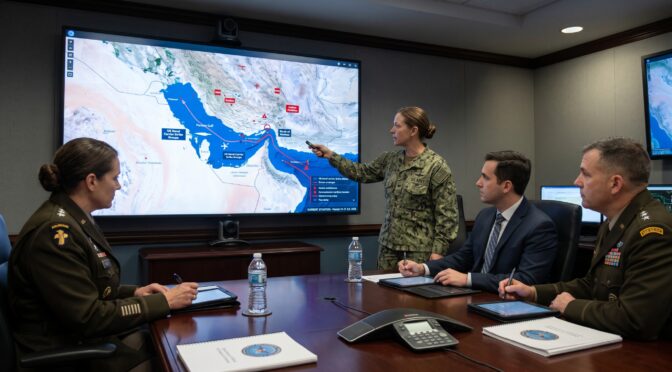
The most critical strategic development this week was the collapse of the 60-day Memorandum of Understanding (MoU) signed on June 17, 2026, between the United States and the Islamic Republic of Iran, plunging the Middle East back into a multi-front regional conflict. Retaliatory airstrikes reached unprecedented levels, with US forces targeting vital Iranian energy and maritime infrastructure, and the Islamic Revolutionary Guard Corps (IRGC) striking US military positions across the Persian Gulf and the Levant. This bilateral escalation has fundamentally altered the risk calculus for global energy markets, compounded by explicit threats from Iranian-aligned Houthi forces to blockade the Bab al-Mandab Strait entirely.
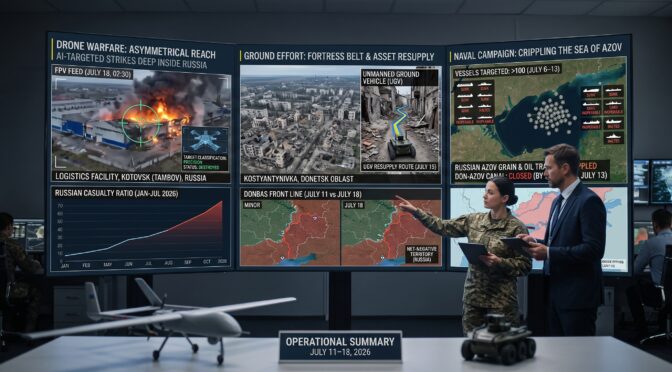
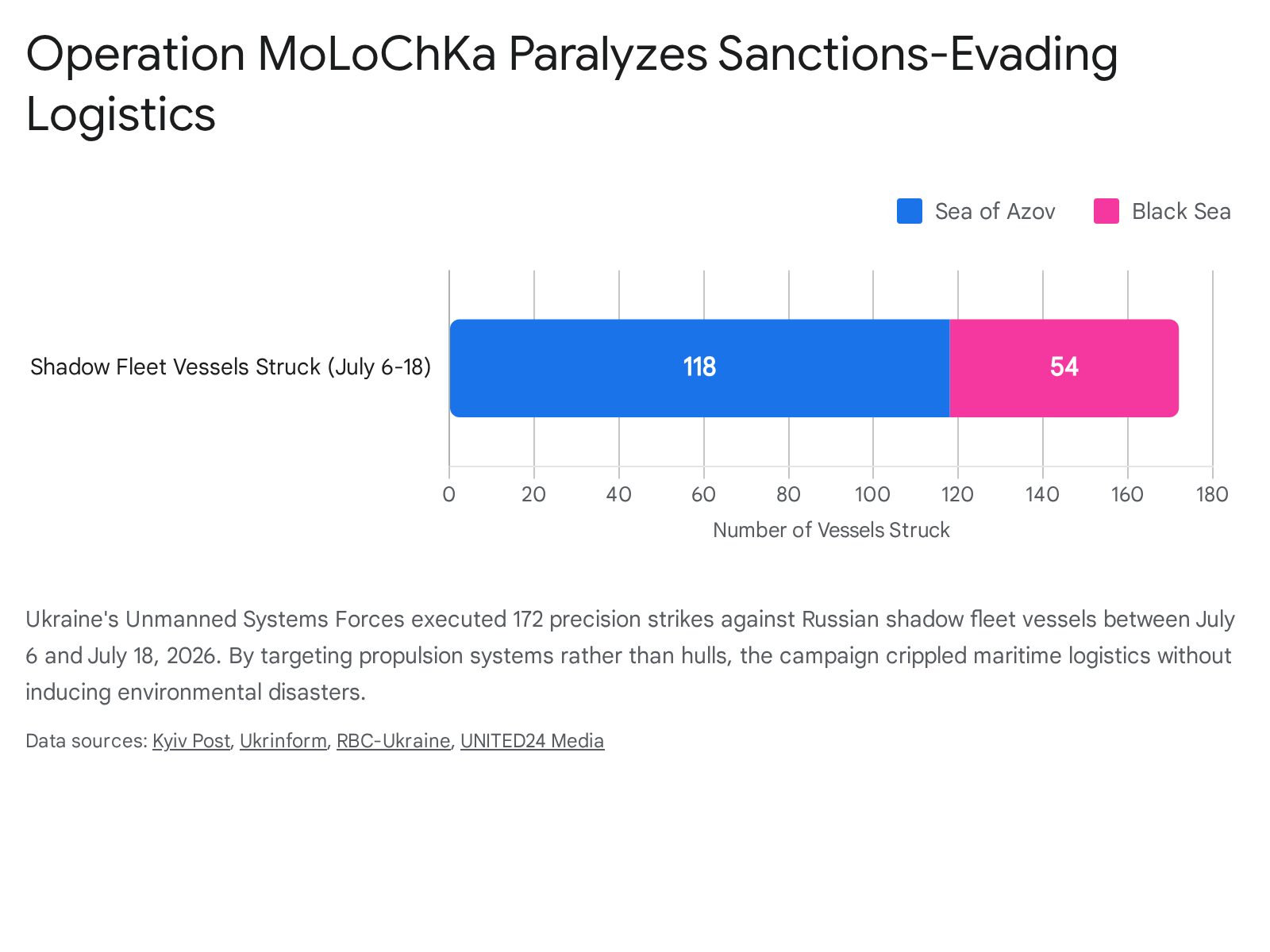
In Eastern Europe, the Russia-Ukraine War remains locked in a bloody war of attrition on land, juxtaposed against highly dynamic and consequential maritime operations. While Russian conventional forces maintain a methodical but historically slow advance in the Donetsk region, capturing territory at a pace mirroring early 20th-century trench warfare, Ukrainian forces have successfully executed an asymmetric maritime denial campaign. Ukrainian unmanned systems crippled Russian shipping in the Sea of Azov, interdicting over 100 vessels and forcing Moscow to suspend critical maritime logistics routes, thereby severing key economic and military supply lines to the occupied Crimean Peninsula.
Across the Indo-Pacific, the People’s Republic of China (PRC) intensified its grey-zone maritime coercion, demonstrating an operational shift from the Taiwan Strait to Taiwan’s eastern seaboard and the broader South China Sea. The accelerated militarization of artificial outposts, notably Antelope Reef in the Paracels, underscores Beijing’s objective of establishing a distributed, permanent military architecture to enforce its jurisdictional claims and project power beyond the First Island Chain.
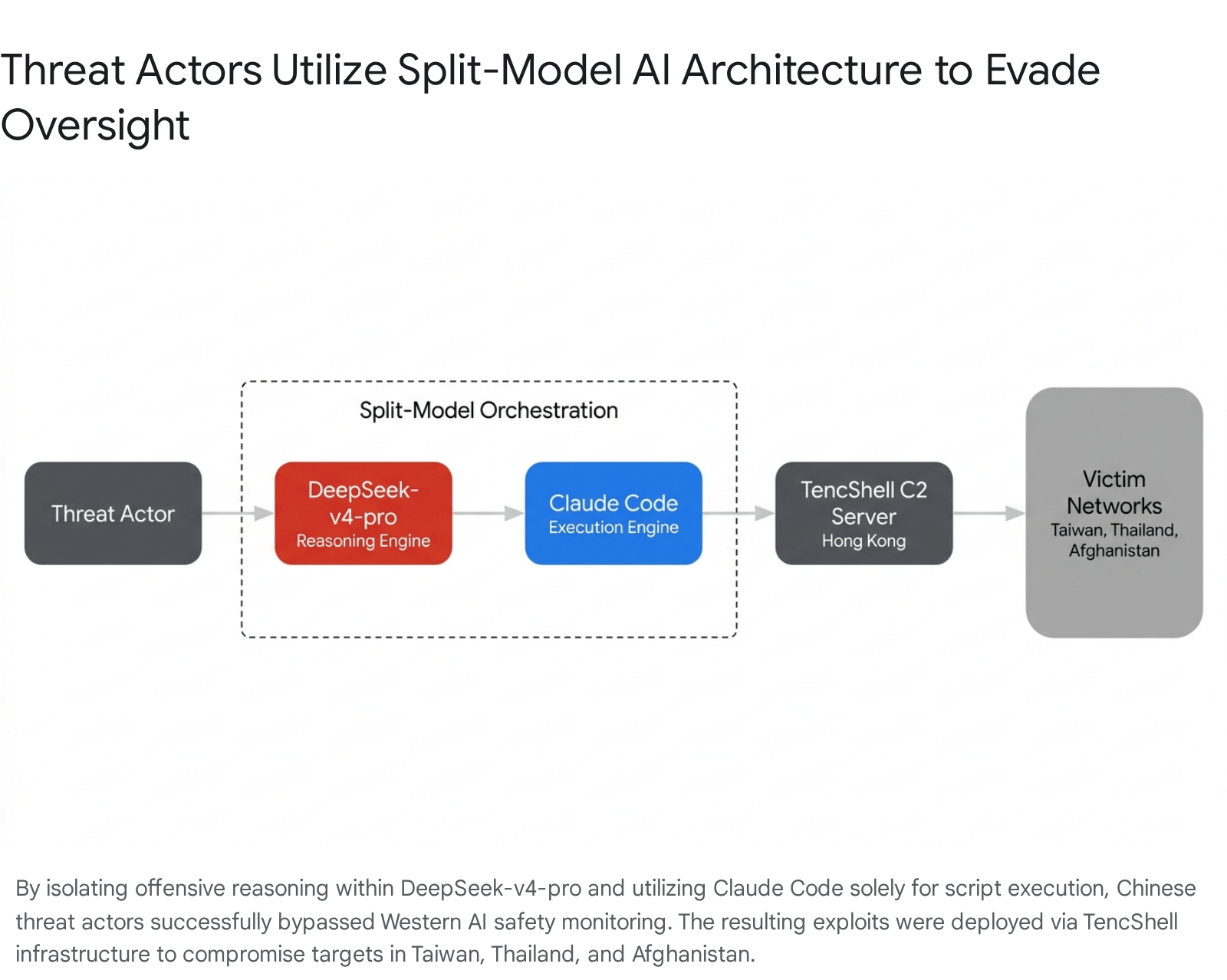
Concurrently, state-sponsored cyber warfare has emerged as a pervasive threat multiplier, with European critical infrastructure facing sustained campaigns from Russian advanced persistent threats (APTs) and proxy hacktivist collectives.
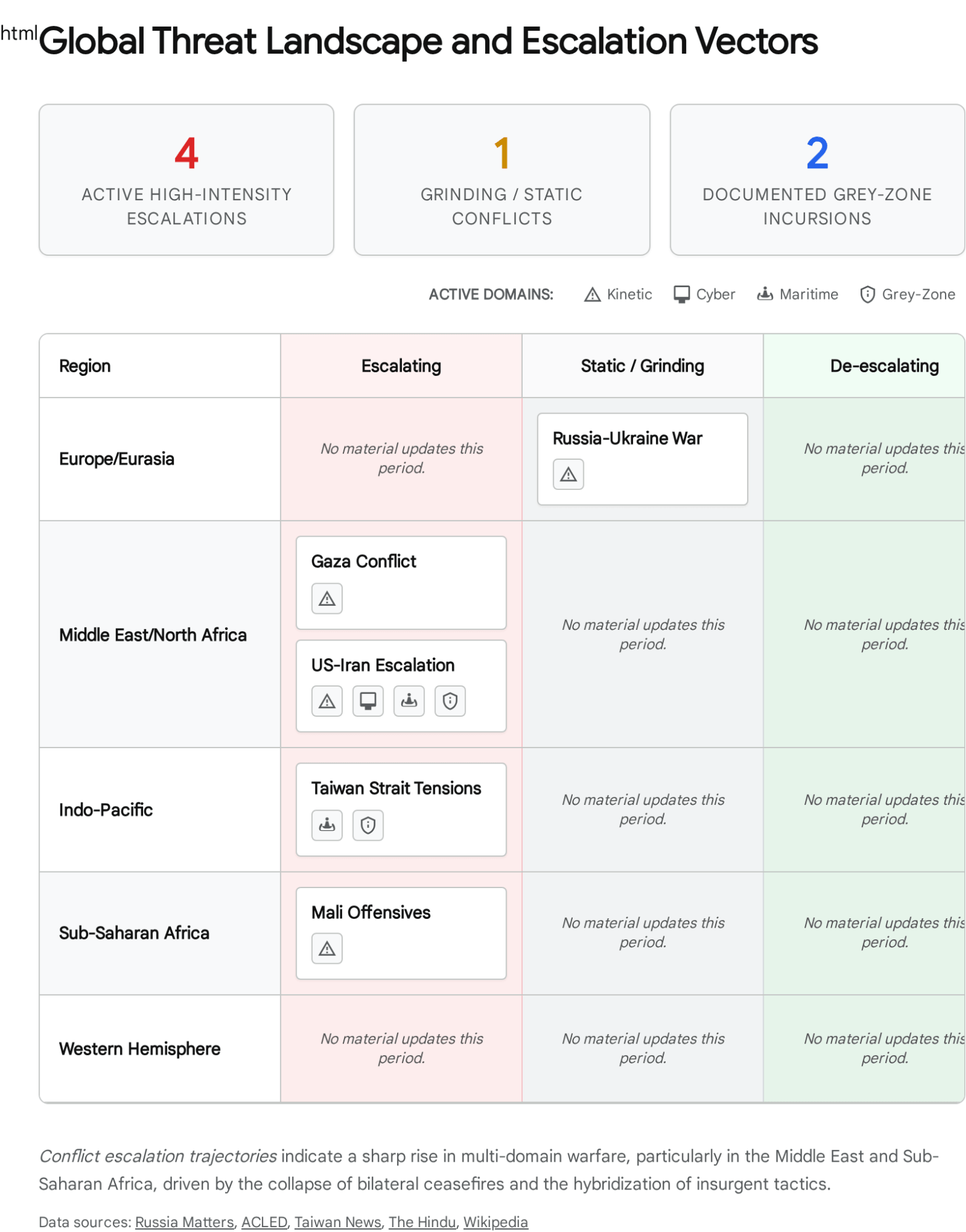
2. Regional Conflict Breakdowns
Europe and Eurasia
Conflict/Threat Name: Russia-Ukraine War
Weekly Key Events: The operational tempo of the Russia-Ukraine conflict is currently defined by two disparate realities: a static, high-casualty attritional land war in the east, and a highly dynamic, asymmetric maritime interdiction campaign in the south. On the ground, Russian forces maintain a methodical offensive posture, heavily reliant on artillery barrages and infantry assaults. According to evaluated open-source intelligence released this week, Russian forces achieved a net gain of between 5 and 15 square miles of Ukrainian territory over the preceding four-week reporting period, following a 10-square-mile gain in the prior month1.
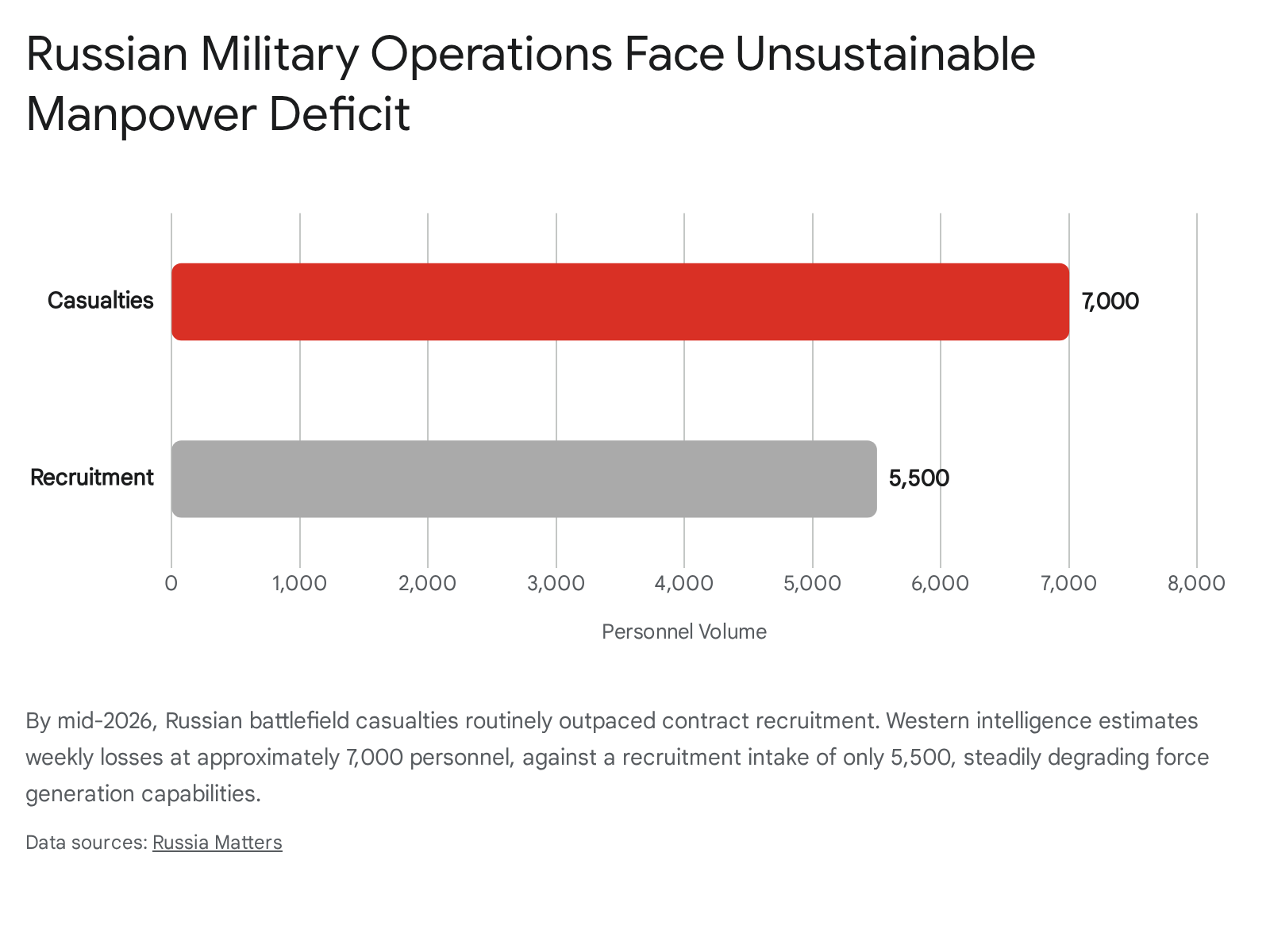
Data indicates that Russian ground forces advanced at historically slow attritional rates, averaging between 50 and 90 meters per day along primary axes. This pace is comparable to, and in some sectors slower than, the grinding offensives of World War I, underscoring the defensive density of the theater3. The human and material costs of these marginal territorial gains are severe. The Ukrainian General Staff reported that on July 18 alone, Russian forces suffered 1,420 casualties, bringing cumulative estimated Russian personnel losses since the 2022 invasion to over 1.42 million4. The integration of advanced Ukrainian drone technology has drastically altered battlefield survivability; US intelligence assessments indicate that the average life expectancy of a newly deployed Russian recruit on the front lines is currently estimated at 20 to 30 minutes5.
| Offensive Axis / Historical Campaign | Average Daily Rate of Advance | Conflict Period |
| Kostiantynivka Axis (Russian Forces) | ~50 meters/day | Russia-Ukraine War (2025–2026) |
| Pokrovsk Axis (Russian Forces) | ~70 meters/day | Russia-Ukraine War (2024–2026) |
| Battle of the Somme (British/French) | ~80 meters/day | World War I (1916) |
| Sloviansk Axis (Russian Forces) | ~90 meters/day | Russia-Ukraine War (2025–2026) |
| Oleksandrivka Axis (Ukrainian Forces) | ~90 meters/day | Russia-Ukraine War (2026) |
Conversely, Ukraine’s asymmetric maritime campaign rapidly accelerated this week, yielding profound strategic dividends. Between July 6 and July 13, the Ukrainian Unmanned Systems Forces successfully interdicted 105 Russian and Russian-affiliated vessels in the Sea of Azov and the Black Sea6. The targeted vessels included “shadow fleet” oil tankers, dry cargo ships, ferries, and a patrol boat6. This sustained drone interdiction campaign forced the Russian Federation to officially suspend commercial shipping through the vital Don-Azov canal, severing a critical maritime corridor used for exporting hydrocarbons and supplying the occupied Crimean Peninsula8. The closure of this route effectively degrades Russia’s capacity to sustain offensive logistics in southern Ukraine and exacerbates an ongoing fuel crisis in Crimea6.
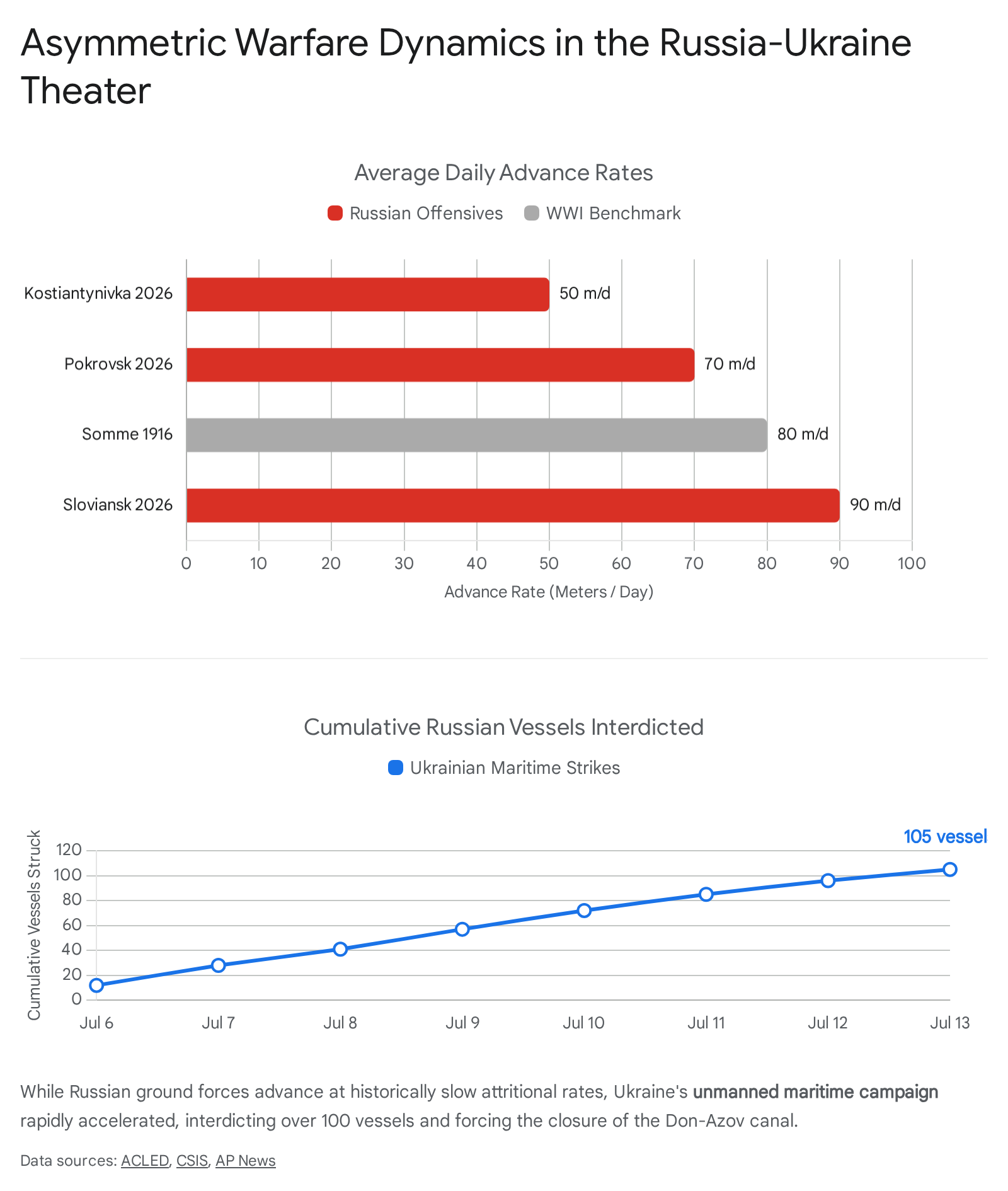
Ukraine augmented its maritime operations with deep precision strikes against Russian strategic assets and energy infrastructure. Ukrainian forces claimed the destruction of a Russian Tu-95 strategic bomber at the Engels airbase, located approximately 500 miles from the border4. Additional long-range drone and missile strikes ignited major fires at the Afipsky Oil Refinery in the Krasnodar region and the Salavat refinery in the Bashkortostan region, over 900 miles inside Russia7. These strikes are designed to systematically degrade Russia’s petroleum production capacity, thereby restricting the fuel supplies necessary to maintain armored maneuvers on the front lines.
In retaliation, the Russian Armed Forces launched a severe wave of at least 64 long-range missile and drone attacks against civilian and military manufacturing facilities in Kyiv, Donetsk, Kharkiv, and Odesa7. Notably, Ukrainian air defenses successfully intercepted one Russian ballistic missile and 25 drones over 17 locations on July 14, marking the first interception of such high-velocity munitions in two weeks7.
Politically, the conflict landscape shifted as Ukrainian President Volodymyr Zelenskyy dismissed Defense Minister Mykhailo Fedorov following disputes between the military’s old guard and technological innovators10. He was replaced by an interim minister from the Security Service of Ukraine (SBU), Major General Khmara, known for orchestrating long-range asymmetric operations against Russian air bases10. Concurrently, Ukraine joined nine partner nations in Paris to announce a coalition dedicated to developing a shared, mass-produced European anti-ballistic missile shield6.
Conflict/Threat Name: Russian Grey-Zone Coercion (South Ossetia and Abkhazia, Georgia)
Weekly Key Events: No material updates this period.
Conflict/Threat Name: Kosovo-Serbia Border Tensions
Weekly Key Events: No material updates this period.
Conflict/Threat Name: Nagorno-Karabakh Territorial Disputes
Weekly Key Events: No material updates this period.
Conflict/Threat Name: European Cyber Warfare & Grey-Zone Sabotage
Weekly Key Events: The European Union escalated its response to state-sponsored grey-zone operations on July 13, officially sanctioning nine Russian individuals and four corporate entities deeply embedded within Russia’s offensive cyber ecosystem12. The European Council targeted Media Land LLC and its subsidiary ML.Cloud, bulletproof hosting providers that facilitated large-scale ransomware and phishing operations against critical infrastructure across EU member states12. Additionally, the sanctions targeted the hacktivist collective “Cyber Army of Russia Reborn” (CARR) and its subgroup Z-Pentest, which recently executed disruptive Distributed Denial of Service (DDoS) and malware attacks against European utilities12. The regulatory action highlights a growing geopolitical overlap between cybercriminal enterprises and state intelligence agencies, specifically Russia’s GRU Unit 29155, which utilizes civilian proxies to conduct deniable hybrid warfare against NATO-aligned infrastructure12.
Middle East and North Africa
Conflict/Threat Name: US-Iran Regional Conflict & Proxy Warfare
Weekly Key Events: The geopolitical architecture of the Middle East fractured catastrophically this week following the complete collapse of the 60-day Memorandum of Understanding (MoU) signed on June 17, 2026, between the United States and the Islamic Republic of Iran13. The dissolution of this negotiating window has precipitated a return to high-intensity, direct bilateral conflict.
Acting on direct presidential orders, the United States military executed a sustained, seven-hour wave of precision airstrikes targeting critical Iranian infrastructure and military installations14. Verified targets struck inside sovereign Iranian territory included the principal port city of Bandar Abbas—home to major naval and IRGC facilities—as well as a key bridge and airport in the southern region14. Furthermore, strikes targeted an agricultural water facility in Khuzestan Province and a central maritime tower at the strategic Chabahar port on the Gulf of Oman, severely disrupting logistics routes14.
In immediate retaliation, the Islamic Revolutionary Guard Corps (IRGC) launched a coordinated barrage of ballistic missiles and unmanned aerial vehicles (UAVs) against US military assets and allied infrastructure across the Levant and the Persian Gulf14. Iranian state media and regional military sources confirmed that IRGC munitions struck near a US special operations command center at al-Tanf in eastern Syria, and targeted U.S. military aircraft stationed in Jordan14. Simultaneously, the IRGC Aerospace Force targeted the vast al-Udeid airbase in Qatar, alongside long-range air surveillance and ship-detection radar systems stationed in Bahrain and Oman14. The IRGC high command publicly vowed to sustain kinetic operations against US interests until Washington halts its strikes on Iran’s southern coastline14. This unrestrained exchange of fire has forced major international airlines to suspend flight operations to Beirut, Tel Aviv, Dubai, and Riyadh, paralyzing commercial aviation and exacerbating regional economic instability14.
Conflict/Threat Name: Red Sea Maritime Security & Houthi Attacks (Yemen)
Weekly Key Events: Capitalizing on the broader US-Iran escalation, the Houthi movement in Yemen was directed to intensify its maritime denial campaign, transforming the Red Sea into a primary vector for asymmetric economic warfare. Following the US strikes on Iranian territory, intelligence sources reported on July 16 that Tehran explicitly directed its Houthi proxies to prepare for the complete closure of the Bab al-Mandab Strait if the US continues targeting Iranian power infrastructure18. The execution of this threat would sever a vital global energy artery, potentially causing catastrophic disruptions to international supply chains and hydrocarbon markets18.
Conflict/Threat Name: Israel-Hamas War (Gaza Strip) & Israel-Hezbollah Conflict (Lebanon)
Weekly Key Events: Within the Gaza Strip, the Israeli Defense Forces (IDF) maintained persistent military pressure, shifting tactical focus toward the consolidation of physical control along the “Yellow Line” buffer zone13. Operations heavily concentrated in civilian-dense areas including Shujaiyya, al-Maghazi, Bani Suheila, and al-Mawasi, exacerbating the humanitarian crisis as hundreds of thousands of displaced civilians are compressed into shrinking enclaves13. Diplomatic efforts to implement the UN-endorsed “Comprehensive Plan” remain fundamentally stalled; negotiations faltered over irreconcilable demands, specifically Hamas’s refusal to undergo internationally verified disarmament and Israel’s refusal to commit to a phased troop withdrawal prior to the decommissioning of weapons13.
On the northern front, the conflict between Israel and Lebanese Hezbollah witnessed continued escalation. The IDF currently occupies an estimated 600 square kilometers of southern Lebanese territory, intending to establish fortified “pilot zones” to permanently dismantle Hezbollah’s cross-border infrastructure21. The operational footprint has been highly destructive; the Lebanese Ministry of Education reported on July 18 that the Israeli military utilized explosives to level three schools this week, bringing the total number of destroyed educational facilities to 20, amidst the broader destruction of over 11,000 civilian structures across the south22. Iranian diplomatic envoys communicated a hardline stance that Hezbollah’s disarmament constitutes an absolute red line for Tehran’s deterrence strategy, thereby ensuring the continuation of armed resistance against the Israeli occupation23.
Conflict/Threat Name: Libyan Civil Conflict & Military Unification
Weekly Key Events: A potentially transformative diplomatic breakthrough occurred within the fractured Libyan state, as rival military commanders convened for high-level face-to-face unification talks in the central city of Sirte on Sunday, July 1224. The negotiations brought together Khaled Haftar, chief of staff for the eastern-based Libyan National Army (LNA), and Salah Al Din Al Namroush, chief of staff for the western-based Government of National Unity (GNU)24. The commanders agreed to establish a joint operations room and immediately conduct joint military exercises in Libya’s restive southern borderlands to neutralize transnational smuggling rings and irregular migration24.
The military talks are underpinned by a comprehensive US-backed political roadmap aimed at ending over a decade of institutional bifurcation. The proposed framework envisions a 36-month transitional power-sharing arrangement wherein Abdul Hamid Dbeibah would remain Prime Minister of the GNU, while Saddam Haftar (deputy commander of the LNA) would be elevated to lead a unified Presidential Council24. However, the viability of the agreement remains highly contingent; powerful, autonomous armed militias stationed in Misurata have actively rejected the US-brokered plan, posing a significant risk of renewed militia warfare in the capital, Tripoli24.
Conflict/Threat Name: Western Sahara Dispute
Weekly Key Events: No material updates this period.
Indo-Pacific
Conflict/Threat Name: South China Sea Maritime Disputes & Taiwan Strait Tensions
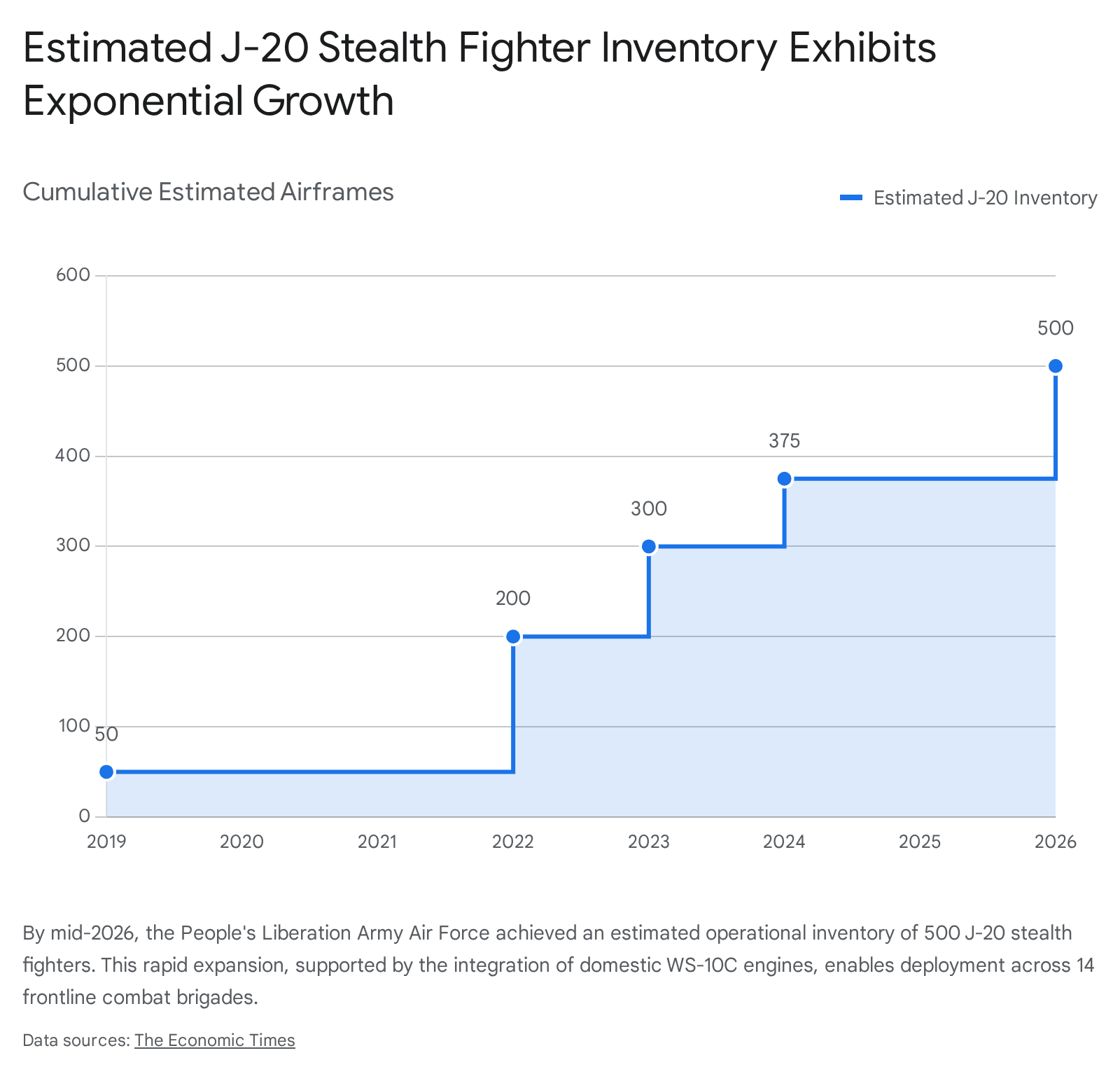
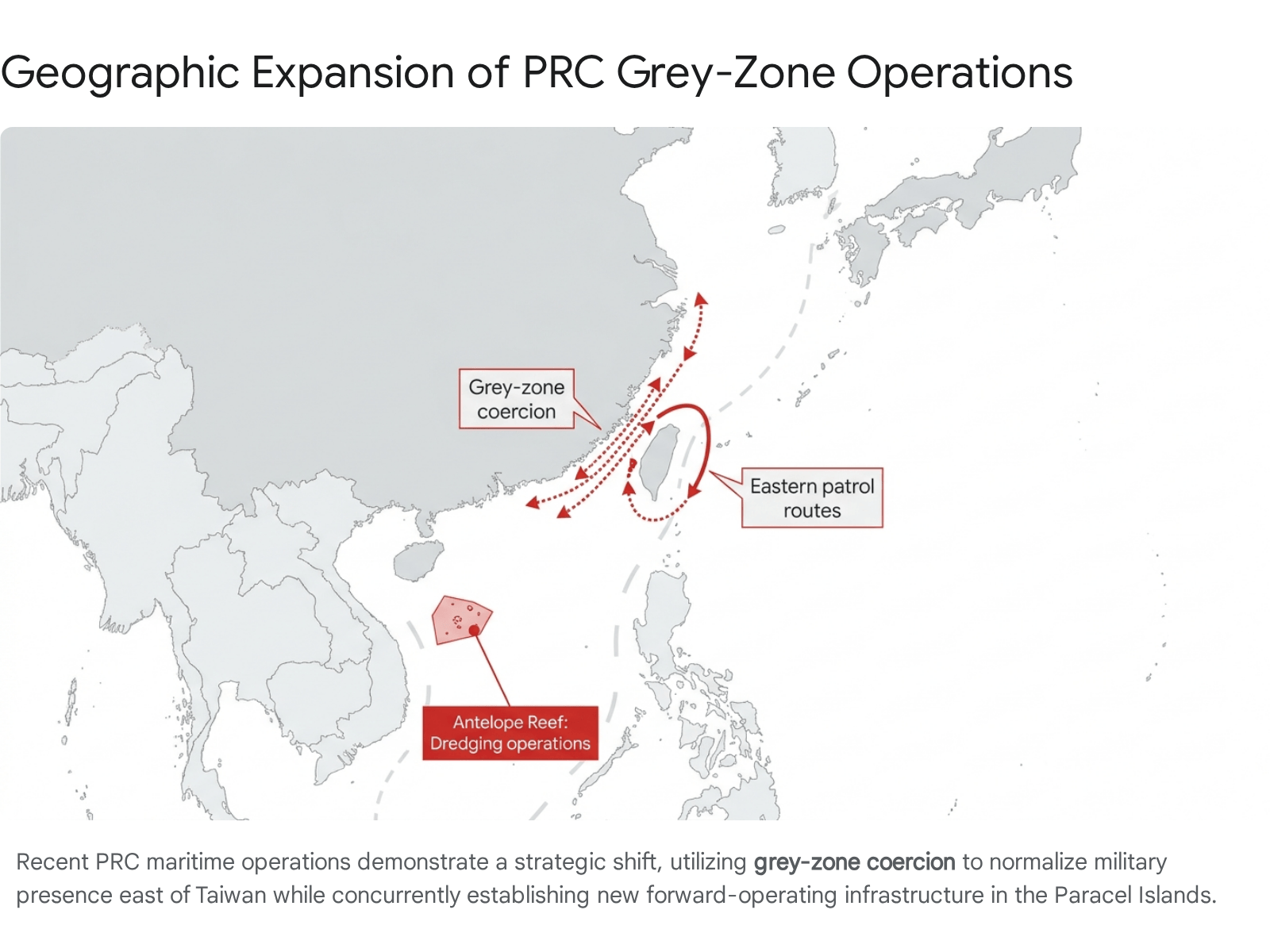
Weekly Key Events: The People’s Republic of China (PRC) significantly expanded its grey-zone coercion campaign, projecting sustained military and maritime power across the Taiwan Strait and the broader South China Sea. During the reporting period, Taiwan’s Ministry of National Defense tracked a persistent pattern of incursions, recording 114 People’s Liberation Army (PLA) aircraft and up to 186 naval and official vessels operating within Taiwan’s Air Defense Identification Zone (ADIZ) and contiguous waters so far this month28.
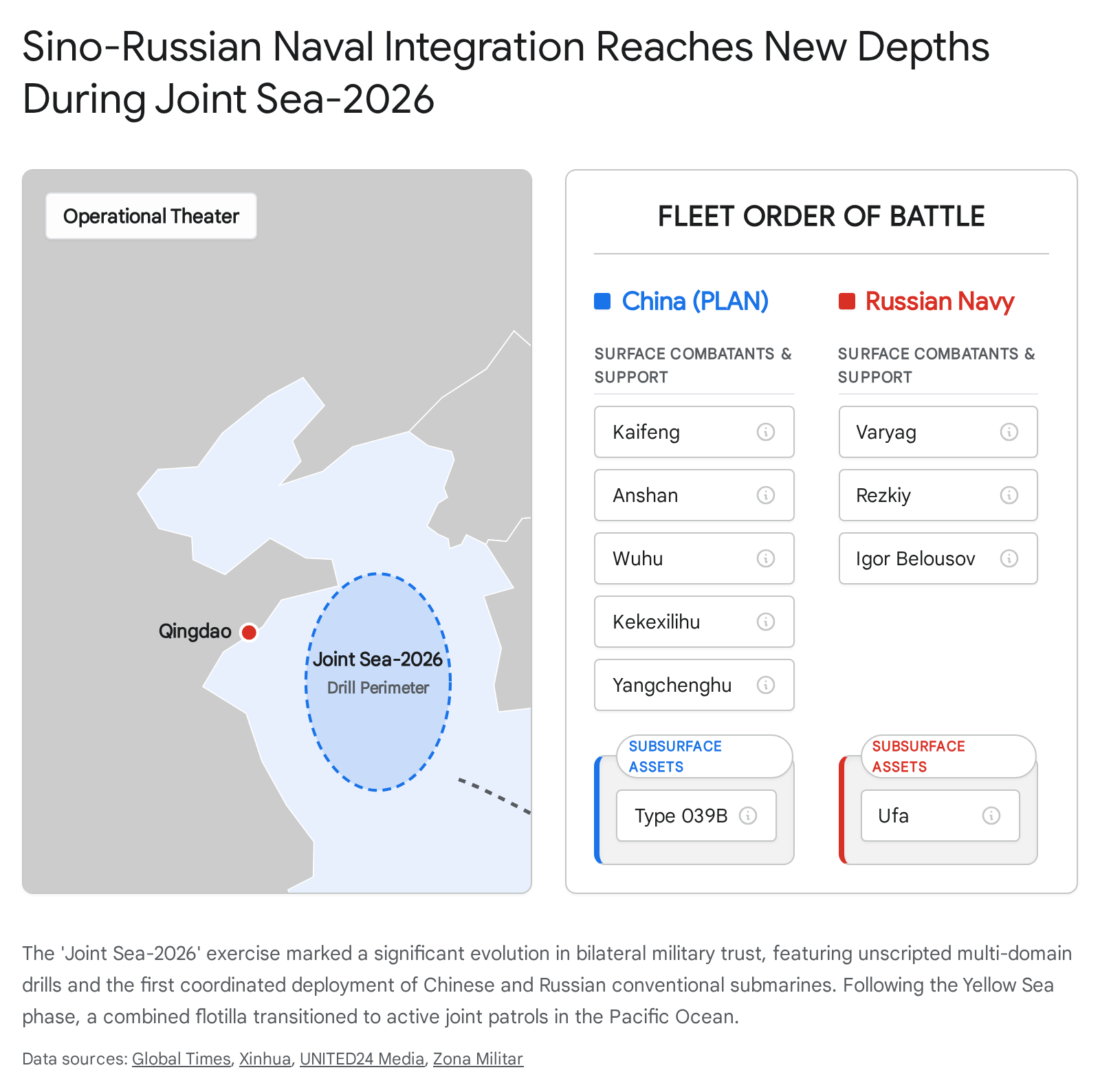
Crucially, PLA operations have increasingly bypassed the restrictive western strait, establishing a normalized presence off Taiwan’s eastern seaboard. Chinese coast guard and naval armadas executed extended patrols in the Philippine Sea, actively inspecting civilian vessels and conducting oceanographic surveys of undersea cables30. Military analysts assess that these maneuvers serve a dual purpose: mapping critical seabed infrastructure for potential sabotage and rehearsing the operational mechanics required for a total naval blockade of the island31. This territorial encirclement was complemented by joint Sino-Russian bomber patrols over the Sea of Japan and the East China Sea, as well as the commencement of the “Joint Sea-2026” naval exercises near Qingdao30.
In the South China Sea, the PRC accelerated its physical expansionism through the rapid dredging and militarization of Antelope Reef within the disputed Paracel Islands. Commercial satellite intelligence published this week confirmed the construction of a 603-hectare artificial landmass equipped with concrete plants, roll-on/roll-off berths for heavy machinery, and a straight-line beach edge indicative of a nascent military-grade runway32. This outpost adds a critical node to China’s distributed regional architecture, enhancing redundancy and power projection capabilities. These provocative developments coincided with the 10th anniversary of the landmark Hague arbitration ruling, which invalidated China’s expansive “nine-dash line.” In response to Beijing’s actions, a coalition of 14 nations—including the United States, the United Kingdom, Japan, and the Philippines—issued a joint diplomatic communiqué reaffirming the legally binding nature of the 2016 ruling and vehemently opposing China’s deployment of coast guard and maritime militia forces to obstruct lawful navigation33.
Conflict/Threat Name: Korean Peninsula Border Tensions
Weekly Key Events: The tactical equilibrium along the Demilitarized Zone (DMZ) was disrupted as North Korea initiated aggressive, unilateral fortification of the border. Intelligence reports and statements from the South Korean military confirmed that North Korean engineering units have erected heavy tactical barbed-wire fences merely 80 to 90 meters north of the Military Demarcation Line (MDL)34. Furthermore, land-clearing operations—highly indicative of fresh mine-laying activities—have been detected as close as 5 to 10 meters from the dividing line, effectively neutralizing the function of the buffer zone34.
On July 14, it was reported that South Korea’s Defense Ministry lodged formal concerns with the United Nations Command (UNC), which oversees the armistice, demanding a more substantive response to the North’s border fortifications35. South Korea argues these actions are flagrant violations of the 1953 Armistice Agreement, which strictly mandates a 2-kilometer demilitarized buffer on either side of the MDL to prevent accidental kinetic engagements34. Conversely, the UNC issued a cautious assessment, stating that defensive construction does not automatically constitute a breach, prompting frustration within the South Korean defense establishment regarding perceived disparities in enforcement34.
Conflict/Threat Name: Myanmar Civil War
Weekly Key Events: The protracted civil war in Myanmar continues to generate profound humanitarian catastrophes, bleeding into the maritime domain. On July 16, the United Nations High Commissioner for Refugees (UNHCR) and the International Organization for Migration (IOM) issued a joint alert regarding a double maritime tragedy wherein two vessels carrying over 500 predominantly ethnic Rohingya refugees capsized off the coast of Myanmar37. The vessels departed from Rakhine State, where civilians are caught in brutal crossfire between the military junta and the Arakan Army37. Attempting to navigate the treacherous Bay of Bengal outside the regular sailing season, both overcrowded vessels disappeared, highlighting the desperation of populations fleeing indiscriminate violence and forced conscription37.
Domestically, the military junta’s strategy of systematic infrastructural degradation was starkly quantified. A comprehensive conflict monitoring report published this week documented that since the February 2021 coup, state forces and affiliated militias have perpetrated at least 1,948 verifiable attacks on healthcare facilities and personnel40. This equates to an average of one attack on medical infrastructure every single day for over five years, resulting in the deaths of 175 health workers40.
Sub-Saharan Africa
Conflict/Threat Name: Central Sahel Insurgency (Mali, Burkina Faso, Niger)
Weekly Key Events: No material updates this period.
Conflict/Threat Name: Sudan Civil War
Weekly Key Events: The devastating conflict between the Sudanese Armed Forces (SAF) and the paramilitary Rapid Support Forces (RSF) remained geographically entrenched but highly lethal, characterized by localized drone warfare, infrastructural collapse, and the weaponization of the economy. The SAF maintained an aggressive aerial campaign aimed at degrading RSF mobility and logistics; military spokespersons reported on July 16 the verified destruction of 205 RSF combat vehicles, 17 supply trucks, and the downing of four strategic FH-95 drones operated by the RSF across the Darfur, Kordofan, and Blue Nile sectors during the first half of July41.
The epicenter of civilian suffering remains the besieged city of El Obeid in North Kordofan. The United Nations condemned the “relentless” RSF drone strikes that have trapped over 100,000 displaced persons within the city, systematically destroying homes, water systems, and medical facilities while obstructing the delivery of life-saving food rations42. The collapse of the healthcare system has precipitated a deadly cholera outbreak, with the WHO verifying over 1,330 cases and 114 deaths primarily concentrated in North Kordofan, yielding an alarming case-fatality rate of 13.7%42.
In a strategic maneuver to defund the warring factions, the European Council adopted stringent sectoral sanctions on July 13 targeting the Sudanese war economy45. The new EU measures impose an absolute ban on the purchase, import, or transfer of gold originating in Sudan, while simultaneously prohibiting the export of mercury and cyanide to the country45. These specific chemicals are essential for artisanal and industrial gold extraction, a sector dominated by the RSF that provides the vast majority of the illicit revenue sustaining the conflict45.
Conflict/Threat Name: Eastern Democratic Republic of the Congo (DRC) Instability
Weekly Key Events: In response to intractable violence and proxy involvement in the eastern DRC, the international community escalated punitive economic measures this week. On July 14, the United Nations Security Council unanimously imposed targeted sanctions—including global travel bans, asset freezes, and a strict arms embargo—on six prominent rebel leaders47. Notably, the designations targeted Corneille Nangaa, the political leader of the Alliance Fleuve Congo (AFC), and John Imani Nzenze, the chief of intelligence for the M2347. Concurrently, the US Treasury Department struck at the economic foundations of the insurgency, sanctioning four Rwandan corporate entities, including the Gasabo Gold Refinery, and two key businessmen for facilitating the illicit smuggling of Congolese conflict minerals to finance M23 operations and weapons procurement49.
Conflict/Threat Name: Somalia Al-Shabaab Insurgency
Weekly Key Events: No material updates this period.
Western Hemisphere
Conflict/Threat Name: Venezuela-Guyana Essequibo Dispute
Weekly Key Events: No material updates this period.
Conflict/Threat Name: Ecuador Organized Crime Conflict
Weekly Key Events: No material updates this period.
Conflict/Threat Name: Colombia Internal Armed Conflict & Peace Process
Weekly Key Events: Colombia’s internal security environment is currently subjected to intense pressure due to a radical pivot in national defense policy under the newly elected administration. President-elect Abelardo de la Espriella has definitively abandoned his predecessor’s “Total Peace” negotiation strategy, adopting a highly confrontational and militarized posture against the country’s remaining armed factions50. In a highly symbolic move announced on July 15, de la Espriella confirmed the imminent dissolution of the Office of the High Commissioner for Peace and the Agency for Reincorporation and Normalization—entities established to implement the historic 2016 FARC peace accords50.
Operationally, the incoming administration issued a strict one-month ultimatum to the command structure of the National Liberation Army (ELN) operating in the Santanderes region, demanding immediate surrender or facing total military annihilation, declaring non-compliant combatants as legitimate military targets50. Despite this aggressive rhetoric, the ELN demonstrated persistent operational capability, notably executing the mass kidnapping of 39 civilians in the rural Chocó region. The hostages were subsequently liberated following a rapid response rescue operation by the Colombian National Army reported this week50.
Conflict/Threat Name: Haiti Gang Violence
Weekly Key Events: The international effort to stabilize Haiti continued to take shape with the deployment of the UN-authorized Gang Suppression Force (GSF). Following the circulation of the UN Secretary-General’s latest report on July 14, it was confirmed that the GSF currently comprises 1,083 military personnel and 16 civilian staff contributed by partner nations52. In preparation for the July 20 Security Council briefing, the Special Representative for the GSF outlined three strategic objectives: removing gang territorial control, securing critical national infrastructure, and rebuilding the operational capacity of Haitian domestic authorities52.
Despite the deployment, the security situation remains highly volatile. Heavily armed syndicates retain control over up to 90% of the capital, Port-au-Prince, perpetuating a regime of extortion, sexual violence, and forced child recruitment52.
3. Appendix: Analytical Framework and OSINT Collection
The findings presented in this Weekly Situation Report (SITREP) are derived through a rigorous, multi-source, all-domain intelligence fusion methodology. The assessment relies exclusively on evaluated and verified open-source intelligence (OSINT). Primary data streams include commercial geospatial intelligence and satellite imagery, localized incident reporting from established defense and conflict monitors, and official declarations from state defense ministries and intergovernmental bodies.
Source credibility is established through rigorous cross-verification. Tactical claims originating from active belligerents—such as territorial gains, daily casualty figures, or the destruction of specific equipment—are treated as informational artifacts rather than established facts. These claims are vetted against independent geospatial evidence or corroborating third-party analysis prior to inclusion in the report.
The analytical threshold for inclusion is governed by a strict Materiality Rule. This dictates that only active, verifiable operations—such as kinetic strikes, quantifiable territorial shifts, high-level strategic repositioning, or significant grey-zone provocations—warrant reporting. If a recognized conflict zone exhibits no verifiable shift in its operational tempo or strategic posture during the 7-day reporting window, it is designated uniformly with the phrase: “No material updates this period.” Historical context and filler are intentionally excluded unless absolutely necessary to explicate a specific tactical action occurring within the current reporting week.
Finally, grey-zone operations are analytically distinguished from routine diplomatic maneuvering or conventional military posturing based on the principles of cumulative coercion and plausible deniability. Operations categorized as grey-zone threats are deliberately calibrated to operate below the threshold of conventional armed conflict. These tactics exploit societal, economic, and territorial vulnerabilities to achieve long-term strategic objectives while circumventing the legal triggers for formal military retaliation under international collective defense treaties.
Please share the link on Facebook, Forums, with colleagues, etc. Your support is much appreciated and if you have any feedback, please email us in**@*********ps.com. If you’d like to request a report or order a reprint, please click here for the corresponding page to open in new tab.
Sources Used
- The Russia-Ukraine War Report Card, July 15, 2026, https://www.russiamatters.org/news/russia-ukraine-war-report-card/russia-ukraine-war-report-card-july-15-2026
- The Russia-Ukraine War Report Card, July 8, 2026, https://www.russiamatters.org/news/russia-ukraine-war-report-card/russia-ukraine-war-report-card-july-8-2026
- Russian Blood and Treasure: The Ballooning Costs of Putin’s War, https://www.csis.org/analysis/russian-blood-and-treasure-ballooning-costs-putins-war
- Russia loses 1,420 soldiers over past day, https://www.pravda.com.ua/eng/news/2026/07/18/8044658/
- Russian troops on Ukraine front lines have life expectancy of 20 to 30 minutes: Ratcliffe, https://www.washingtonexaminer.com/policy/defense/4649947/russian-troops-front-lines-life-expectancy-minutes-ratcliffe/
- Ukraine and 9 other countries announce a coalition to protect Europe from ballistic missiles, https://apnews.com/article/russia-ukraine-war-europe-coalition-putin-d813eb18fba24a57f7cb2000b302ef4d
- Ukraine downs 5 Russian ballistic missiles as Kyiv looks to boost its air defenses, https://apnews.com/article/russia-ukraine-ballistic-missiles-patriot-attacks-kyiv-f38e07c64d4beba79ca145c3b4bb9510
- Ukrainian drone strikes force Russia to suspend shipping in Sea of Azov – The Guardian, https://www.theguardian.com/world/2026/jul/12/ukrainian-drone-strikes-force-russia-to-suspend-shipping-in-sea-of-azov
- Ukraine Conflict Monitor: Russia-Ukraine war map | ACLED, https://acleddata.com/monitor/ukraine-conflict-monitor
- Ukraine fights under an interim defense chief after Zelenskyy’s contested government shake-up, https://apnews.com/article/russia-ukraine-war-fedorov-defense-minister-966aa6f66b81df96310531af1f11fba5
- Has Ukraine’s Zelenskyy created a rival by sacking his defence minister?, https://www.aljazeera.com/news/2026/7/17/has-ukraines-zelenskyy-created-a-rival-by-sacking-his-defence-minister
- Russian cyber-attacks and destabilising activities: Council sanctions nine individuals and four entities – consilium.europa.eu, https://www.consilium.europa.eu/en/press/press-releases/2026/07/13/russian-cyber-attacks-and-destabilising-activities-council-sanctions-nine-individuals-and-four-entities/
- Middle East Overview: July 2026, https://acleddata.com/update/middle-east-overview-july-2026
- West Asia war updates: Iran Guards say attack on U.S. base in Qatar meant to ‘punish aggressor’ – The Hindu, https://www.thehindu.com/news/international/west-asia-war-us-iran-conflict-washington-strikes-tehran-donald-trump-strait-of-hormuz-live-updates-july-17-2026/article71232634.ece
- US military says it completed latest strikes on Iran, targets included Bandar Abbas, https://www.tbsnews.net/worldbiz/middle-east/us-military-says-it-completed-latest-strikes-iran-targets-included-bandar-abbas
- IRGC claims attacks on U.S. positions in Bahrain and Oman – Trend News Agency, https://www.trend.az/iran/politics/4206436.html
- Iran strikes eastern Syria, in first such attack during current war, https://kelo.com/2026/07/16/irans-irgc-say-they-targeted-us-command-centre-in-syria-state-media-reports/
- Twin oil chokepoints? Yemen war reignites as Houthis threaten Bab Al-Mandab blockade, https://gulfnews.com/world/mena/twin-oil-chokepoints-yemen-war-reignites-as-houthis-threaten-bab-al-mandab-blockade-1.500610997
- Reuters: Iran tells Houthis to close Red Sea gateway if US hits power network, sources say, https://en.apa.az/asia/reuters-iran-tells-houthis-to-close-red-sea-gateway-if-us-hits-power-network-sources-say-516482
- The Middle East, including the Palestinian Question, July 2026 Monthly Forecast – Security Council Report, https://www.securitycouncilreport.org/monthly-forecast/2026-07/the-middle-east-including-the-palestinian-question-25.php
- A former prime minister who led Israel out of Lebanon fears mistakes are being repeated, https://apnews.com/article/israel-lebanon-occupation-barak-hezbollah-0d3a44e70b3c75e7011a93e09cf431e1
- Israeli army destroys three schools in southern Lebanon, minister says, https://www.aljazeera.com/news/2026/7/18/israeli-army-destroys-three-schools-in-southern-lebanon-minister-says
- Spotlight on Iran and the Shiite Axis (July 8—15, 2026) – The Amit Terrorism and Intelligence Research Institute, https://www.terrorism-info.org.il/en/spotlight-on-iran-and-the-shiite-axis-july-8-15-2026/
- Libya’s rival militaries hold landmark unification talks on home soil – The National News, https://www.thenationalnews.com/news/mena/2026/07/13/libyas-rival-militaries-hold-landmark-unification-talks-on-home-soil/
- Eastern, western Libyan military leaders meet to discuss army’s unification – Anadolu Ajansı, https://www.aa.com.tr/en/africa/eastern-western-libyan-military-leaders-meet-to-discuss-army-s-unification/3996002
- Libya’s rival military chiefs meet to discuss reunification of armed forces | Africanews, https://www.africanews.com/2026/07/14/libyas-rival-military-chiefs-meet-to-discuss-reunification-of-armed-forces/
- US bid for Libya reunification a gamble, analysts say – AL-MONITOR, https://www.al-monitor.com/originals/2026/07/us-bid-libya-reunification-gamble-analysts-say
- Taiwan tracks 12 Chinese ships | Taiwan News | Jul. 18, 2026 11:23, https://www.taiwannews.com.tw/en/news/6403569
- Taiwan tracks 9 Chinese military aircraft, 9 ships | Taiwan News | Jul. 17, 2026 09:34, https://www.taiwannews.com.tw/en/news/6402938
- ‘Extraordinary confluence’: What China’s latest military moves reveal about its broader strategy – CNA, https://www.channelnewsasia.com/east-asia/china-military-maritime-drills-patrols-pacific-strategy-6250291
- China Expands Assertive Patrols Around Taiwan, https://www.chosun.com/english/world-en/2026/07/15/B6XBDZCQXZFB7H65HHILLONPRY/
- Antelope Reef transformation another step in Beijing’s destructive South China Sea activities, https://ipdefenseforum.com/2026/07/antelope-reef-transformation-another-step-in-beijings-destructive-south-china-sea-activities/
- 14 nations and the EU reaffirm 2016 ruling invalidating China’s claims in South China Sea, https://apnews.com/article/philippines-south-china-sea-disputes-arbitration-6ca48fecb19b61901b05a3f86f70be54
- South Korea Slams North Koreas Expanded Border Fencing as Armistice Agreement Violation – Islam Times, https://www.islamtimes.com/en/news/1287578/south-korea-slams-north-s-expanded-border-fencing-as-armistice-agreement-violation
- Defense Ministry raises concerns with UNC over North Korea’s DMZ activity: sources, https://www.koreaherald.com/article/10785155
- South Korea airs concerns over North Korean border activity – Global Nation, https://globalnation.inquirer.net/330809/south-korea-airs-concerns-over-north-korean-border-activity
- IOM and UNHCR Deeply Concerned by Reports of Maritime Incidents off Myanmar Coast; Over 500 Feared Dead, https://www.iom.int/news/iom-and-unhcr-deeply-concerned-reports-maritime-incidents-myanmar-coast-over-500-feared-dead
- More than 500 people feared dead in double Myanmar shipwreck tragedy, https://news.un.org/en/story/2026/07/1167951
- Myanmar: Reported sea tragedies highlight desperate choices facing Rohingya, https://www.amnesty.org/en/latest/news/2026/07/myanmar-reported-sea-tragedies-highlight-desperate-choices-facing-rohingya/
- Attacks on Health Care in Myanmar: 24 June – 07 July 2026, https://reliefweb.int/report/myanmar/attacks-health-care-myanmar-24-june-07-july-2026
- Sudan army says destroys 205 RSF vehicles, four drones in recent battles, https://sudantribune.com/article/316303
- New cholera outbreak alert for Sudan’s war-weary communities | UN News, https://news.un.org/en/story/2026/07/1167913
- Hunger deepens for displaced families in Sudan’s El Obeid, https://news.un.org/en/story/2026/07/1167967
- At least 330 children killed or injured in Sudan during first six months of 2026 as conflict takes escalating toll – ReliefWeb, https://reliefweb.int/report/sudan/least-330-children-killed-or-injured-sudan-during-first-six-months-2026-conflict-takes-escalating-toll
- Sudan: Council strengthens EU sanctions regime by targeting gold trade – Consilium, https://www.consilium.europa.eu/en/press/press-releases/2026/07/13/sudan-council-strengthens-eu-sanctions-regime-by-targeting-gold-trade/
- Looted gold and gum arabic are bankrolling Sudan’s war, UN warns, https://news.un.org/en/story/2026/07/1167944
- UN sanctions armed groups’ leaders in eastern Congo, https://www.cnbcafrica.com/2026/un-sanctions-armed-groups-leaders-in-eastern-congo
- Security Council 1533 Sanctions Committee Adds Six Individuals and Two Entities to Its Sanctions List, https://press.un.org/en/2026/sc16416.doc.htm
- How conflict minerals fuel war in eastern DR Congo amid US sanctions, https://www.aljazeera.com/news/2026/7/6/us-sanctions-target-rwandan-firms-linked-to-conflict-minerals-funding-m23
- 17/07/2026 News Review – ABColombia, https://www.abcolombia.org.uk/17-07-2026-news-review/
- De la Espriella begins cuts to peace agencies | International – El Pais in English – EL PAÍS, https://english.elpais.com/international/2026-07-15/de-la-espriella-begins-cuts-to-peace-agencies.html
- Haiti: Briefing and Consultations : What’s In Blue – Security Council Report, https://www.securitycouncilreport.org/whatsinblue/2026/07/haiti-briefing-and-consultations-18.php
- Statement by Ms. Carine Jocelyn at the UN Security Council Open Debate on Conflict-Related Sexual Violence, https://www.womenpeacesecurity.org/resource/statement-carine-jocelyn-open-debate-conflict-related-sexual-violence/