If you’ve had trouble finding our articles or shop products through search engines recently, you aren’t alone. We want to be clear about what’s been happening at Ronin’s Grips, how we’re fixing it, and where we plan to go from here.
What Happened: The July 2026 Shift
In mid-July 2026, major search engines, notably Google, updated their core ranking systems. These updates prioritized AI-generated summaries while applying stricter automated filters to assess content quality across entire sites. As a result, our traffic volumes from search engines to the blog and online store dropped by about 93%.
Rather than evaluating pages individually, these algorithms calculate a site-wide quality rating. If an automated system flags a specific section, it lowers the overall score for the entire domain. Ironically, the very thing we wanted to accomplish, providing social media analytics in a more template-driven manner so you get data to make decisions instead of just our opinion, ended up being our undoing!
Unfortunately, this filter caught our extensive archive of product reviews and comparison guides. Because the search engines evaluate interconnected sections together, reduced visibility on our AI and template-driven blog posts ended up dragging down search rankings for our main store as well.
The Steps We Have Taken So Far
We won’t let automated algorithms compromise our store or the quality of our content. To restore our search visibility and help new customers find us, we’ve taken immediate technical steps.
To safeguard our domain’s overall rating, we added noindex tags to our legacy comparison reports and reviews. The pages are still fully accessible to you directly, but search crawlers are instructed to skip indexing them. This prevents older content from weighing down the main Ronin’s Grips storefront in search rankings.
Where We Go From Here: A Proposal for the Community
While adding noindex tags addresses the immediate search penalties, it prompts us to rethink how we publish in-depth technical guides moving forward. Publicly hosting detailed product comparisons without risking algorithmic downgrades has become increasingly challenging. We remain committed to delivering thorough reviews, but we need a format free from shifting search engine criteria.
That brings us to a new concept we’re exploring: A Private, Members-Only Community.
We’re considering a dedicated, non-indexed community space for Ronin’s Grips members. This private hub would host our data-driven social media analyses of small arms-related matters removed from public search crawlers.
Maintaining this platform independently of public search traffic requires dedicated effort, so we’re considering a small subscription model to support it. Before making any decisions, we want to hear your thoughts.
We would love your input on the following:
What are your thoughts on moving our deep-dive reviews and comparisons into a private, members-only section?
Would you be willing to pay a monthly fee to support this content?
If so, is a price point of $5/month acceptable to you for this level of detail and access?
Please share your thoughts in the comments below or contact us directly. Your support has built Ronin’s Grips from day one, and your feedback will help guide our next steps.
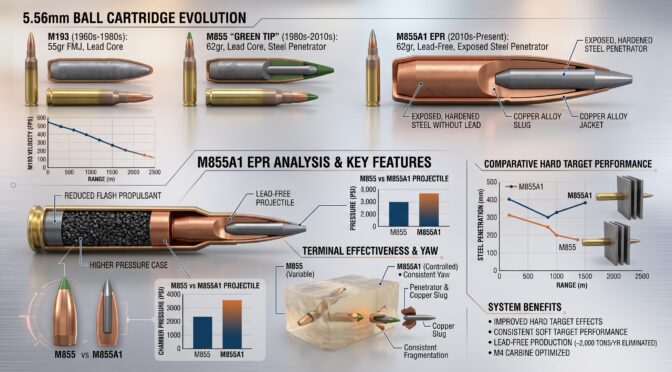
The M855A1 Enhanced Performance Round (EPR) represents a major mechanical and chemical overhaul of the standard 5.56×45mm NATO cartridge. The Department of Defense originally started the M855A1 program to remove heavy metals from the small arms supply chain and fix terminal ballistic inconsistencies in the legacy M855, and the M855A1 fundamentally changes how the projectile behaves internally, externally, and upon impact. This modern cartridge replaces the old lead core and mild steel tip with a three-piece assembly: a reverse-drawn copper jacket, a solid copper slug, and a prominent, hardened steel penetrator.
To keep high muzzle velocities from the M4 carbine’s 14.5-inch barrel, the M855A1 uses a temperature-stable propellant (SMP-842) that raises chamber pressures to about 62,000 psi. This redesign delivers a ballistic profile with yaw-independent terminal effects in soft tissue, steady trajectory through barriers, and hard-target penetration that actually surpasses the larger 7.62×51mm M80 ball ammunition. In testing, the EPR can penetrate 3/8-inch mild steel at 350 meters and punches through automotive glass without the severe deflection seen in older rounds.
While the EPR offers superior performance, its high thermodynamic output and unique geometry create new engineering challenges. The increased chamber pressure puts more mechanical stress on the M4 carbine, leading to faster bolt wear and bore erosion. Furthermore, the hardened steel tip can damage feed ramps when used with legacy aluminum magazines, which led to the adoption of redesigned polymer and modified metallic magazines. This report explores the development, technical specs, terminal performance, and the impact the M855A1 has on weapon systems.
1. Historical Context of the 5.56x45mm Cartridge
The history of the 5.56×45mm NATO cartridge is a story of constant refinement in bullet weight, velocity, and barrel twist rates. The M855A1 is the latest step in this evolution, designed to meet the demands of modern combat environments while maintaining compatibility with legacy ammunition.
1.1 The Small Caliber High Velocity Paradigm
The shift to 5.56×45mm was based on the Small Caliber High Velocity (SCHV) concept. Following World War II, research—most notably the 1952 Hall and Hitchman reports—showed that most infantry engagements happened at ranges under 300 meters. The theory was that a smaller, lighter bullet moving at high speed could match or even exceed the lethality of heavier calibers, like the .30-06, by rapidly tumbling and fragmenting in soft tissue. Also, lighter cartridges let soldiers carry more ammo, which greatly increased the firepower of their squads.
Early requirements for this intermediate round were ambitious: it needed to penetrate a steel helmet and stay supersonic at 500 yards while matching the accuracy of M2 ball ammo. The first version, adopted in 1963 as the M193, used a 55-grain bullet hitting 3,250 feet per second from a 20-inch M16 barrel. The M193 relied almost entirely on this high velocity to fragment upon impact.
1.2 Standardization and M855 Limitations
In 1980, NATO moved to standardize ammunition, choosing the Belgian SS109 design, known in the U.S. as the M855. This version used a heavier 62-grain bullet with a mild steel tip. It was specifically designed to penetrate a steel helmet at 600 meters, which required a heavier projectile and a lower muzzle velocity than the previous M193.
Though the M855 met hard-target goals, its performance against soft targets was often inconsistent. The bullet is highly dependent on yaw; it often travels several inches through a target point-first before destabilizing and tumbling. If the impact velocity is above 2,500 feet per second, the bullet usually fragments. However, at lower speeds or when hitting narrow targets, it can pass straight through like a solid needle. This often resulted in minimal energy transfer—a problem reported in Somalia, Afghanistan, and Iraq, where soldiers saw targets absorb multiple hits without being incapacitated.
1.3 The Transition to Carbine Platforms
The problems with the M855 became more obvious as the military transitioned from the 20-inch barrel M16 to the 14.5-inch M4 carbine. The M855 was ballistically optimized for the longer barrel, which produced velocities up to 3,110 feet per second.
In the shorter M4 barrel, the pressure curve is cut short, dropping muzzle velocity to around 2,900 feet per second. Since the M855 needs high velocity to fragment, this reduction effectively shortened the weapon’s lethal range. Beyond 150 meters, an M855 fired from an M4 often fails to fragment, resulting in simple punctures rather than effective stops.
2. The M855A1 Development Program
Beyond lethality concerns, the Department of Defense faced pressure to identify an environmentally friendly alternative to lead-core bullets to reduce contamination at training sites. The new program aimed to solve both the performance gaps of the M855 and its environmental footprint.
2.1 The “Green Ammo” Initiative
In 1995, the Army established a group to identify non-toxic ammunition. Driven by environmental mandates, they first tested a tungsten-nylon variant. This design used powdered tungsten and a polymer binder, but it ultimately failed to meet accuracy and lethality requirements.
Researchers then tried a bismuth-tin alloy, which was almost as dense as lead. While it showed promise, the program was cancelled in 2009 because the alloy proved unstable at high temperatures, making it unreliable for global use.
2.2 Finalization and Production at Lake City
After the bismuth-tin failure, engineers moved to a solid copper core with a larger steel penetrator, which solved the heat issues. This final design was designated the M855A1 EPR and began reaching combat zones in 2010.
The road to the M855A1 was expensive, with the Army spending roughly $100 million on research across the various phases. Today, it is produced for the government at the Lake City Army Ammunition Plant, with over 1.2 billion rounds manufactured so far. At $0.21 to $0.23 per round, it is only slightly pricier than the legacy M855.
3. Cartridge Architecture and Technical Specifications
The M855A1 is a carefully tuned system where the bullet, powder, and primer all work together. It is designed to maximize the M4 carbine while remaining compatible with the M16 and M249 SAW.
3.1 Projectile Composition and Metallurgy
The EPR uses a 62-grain projectile, matching the weight of the legacy M855. This ensures the bullet follows the same trajectory, meaning soldiers don’t have to change their sight settings. However, the interior of the bullet is entirely different.
The projectile consists of three discrete components:
The Penetrator: A hardened steel tip that is exposed at the front. It is 45% heavier and 54% longer than the tip in the M855. Hardened to 58 HRC—similar to tool steel—this tip is coated in bronze to prevent corrosion.
The Slug: A solid copper core sits behind the penetrator, replacing the old lead core and removing 32 grains of lead per bullet.
The Jacket: A copper jacket that wraps the slug and the base of the penetrator. It uses a “reverse drawn” process, where the jacket is pulled from the base up, leaving the steel tip exposed.
This new shape makes the bullet slightly longer, improving its ballistic efficiency by about 6% and reducing wind drift by 8% at 600 meters.
3.2 Propellant Formulation (SMP-842)
To achieve more speed out of the M4’s shorter barrel, the M855A1 uses SMP-842 propellant, with about 25.8 grains per round.
Old powders often didn’t burn completely in 14.5 inches, leading to lower speeds and more muzzle flash. SMP-842 burns faster to reach peak pressure sooner, maximizing energy before the bullet leaves the barrel.
Additionally, this powder is more stable in extreme heat, like during sustained automatic fire. It also includes additives to reduce muzzle flash, helping soldiers stay hidden in low light.
3.3 Chamber Pressure and Primer Interface
The combination of a harder bullet and faster powder changes the internal pressure. While the legacy M855 produced about 55,000 psi, the M855A1 pushes that to 62,000 psi. This 12.7% increase restores the muzzle velocity that was lost when switching to the shorter M4 carbine.
The M855A1 elevates this chamber pressure to 62,000 psi (427.5 MPa)3. This 12.7 percent increase generates a muzzle velocity of approximately 2,970 feet per second from the M4 carbine, restoring the velocity profile lost when transitioning away from the M169.
To handle this extra pressure, the primer was also redesigned. It uses a modified anvil for better ignition and a mechanical “stab crimp” to keep the primer from blowing out during the extraction cycle. This lead-free primer also supports the program’s environmental goals.
4. Terminal Ballistics and Target Defeat Mechanisms
The M855A1’s design completely changes its terminal ballistics. Instead of relying on speed to tear the bullet apart, it uses its mechanical assembly to ensure consistent damage.
4.1 Soft Target and Tissue Behavior
The M855A1 is “barrier blind” and yaw-independent. This means it creates a consistent wound channel regardless of the angle at which it hits a target.
On impact, the steel tip is pushed into the copper core, causing the bullet to fragment almost immediately. Because this is a mechanical process, it works even at lower speeds and longer ranges. The result is a larger wound cavity and fewer pass-throughs compared to the M855.
4.2 Hard Target and Armor Penetration
The EPR bridges the gap between standard and armor-piercing rounds. Its hardened tip can penetrate 3/8-inch steel at 350 meters—more than double the range of the M855 and even better than the larger 7.62mm M80 ball round.
It can also defeat Level III polyethylene armor at close range. However, it is still stopped by Level IV [link](https://blog.roninsgrips.com/state-of-the-art-2025-an-analysis-of-leading-edge-ballistic-armor-plates/) ceramic plates, which are designed to shatter these types of penetrators.
4.3 Intermediate Barrier Performance
Older bullets often deflected or deformed when hitting barriers like glass or wood. The M855A1’s exposed steel tip bites into the material, allowing the rest of the bullet to stay on track.
Barrier Material
M855 (Legacy) Performance
M855A1 (EPR) Performance
Auto Glass (Windshield)
Deflects significantly upon entry33
Penetrates cleanly; maintains trajectory33
Car Door (Sheet Metal)
Passes through but fragments prematurely33
Clean pass-through maintains integrity33
Interior Drywall (2 layers)
Fragments on first layer33
Penetrates both layers intact33
Plywood (3/4-inch)
Penetrates with notable deformation33
Clean penetration without deformation33
Concrete Masonry Unit
Fails to penetrate2
Penetrates at 50m (M4) / 75m (M16)5
5. Companion Cartridges: Tracers and Training Ammunition
The move to the M855A1 also required a new tracer. The M856A1 was developed to match the EPR’s flight path exactly, ensuring that what a soldier sees through their sights matches where the ball ammo is landing.
The M856A1 is a 56-grain lead-free tracer with a red tip. It provides a visible trace out to 900 meters and is typically mixed with ball ammunition in a 4-to-1 ratio for machine guns.
For safe training, the military uses Short Range Training Ammunition (SRTA). These plastic-tipped rounds are very fast at the muzzle but slow down quickly, making them safe for use in urban training sites.
6. Weapon System Integration and Mechanical Impacts
The higher energy and harder materials of the M855A1 come with a mechanical cost. The Army discovered several issues with weapon durability and feeding that required new hardware solutions.
6.1 Feed Ramp Interface and Magazine Evolution
One major issue is [link](https://blog.roninsgrips.com/magpul-magazine-innovations-pmag-amag-and-tmag-analysis/) the wear on aluminum feed ramps. Because the bullet is longer and has an exposed steel tip, it can strike the ramps during loading.
In standard aluminum magazines, the angle of the cartridge causes the steel tip to gouge the softer aluminum of the receiver. Over time, this damage can lead to feeding failures.
To fix this, the Army introduced the Enhanced Performance Magazine (EPM), which changes the feed angle to 37-44.5 degrees. This lets the steel tip clear the ramps and go straight into the chamber. Modern polymer magazines, like the Magpul PMAG Gen M3, also solved this issue during official testing.
6.2 Chamber Pressure and Component Degradation
The 62,000 psi pressure also speeds up wear on the bolt. Testing showed microscopic cracks appearing on bolt lugs after about 6,000 rounds.
High heat from the new powder also increases throat erosion—the wearing down of the rifling where the chamber meets the barrel. Short-barreled Mk18 rifles, in particular, required more frequent barrel changes due to this stress.
6.3 Gas System Dynamics and Cyclic Rate
The M4’s gas port is closer to the chamber than the M16’s, meaning it taps gas at higher pressure—17,000 psi versus 10,000 psi. Firing the high-pressure M855A1 through this system makes the bolt move faster, which increases the cyclic rate and stress on the parts.
Researchers found that a “mid-length” gas system—moving the port further down the barrel—could lower this pressure and improve reliability.
Tests over 12,600 rounds showed that the mid-length system reduced malfunctions by more than half and slowed the cyclic rate by 127 rounds per minute.
7. Contemporary Alternatives and Future Paradigms
While the M855A1 is the current standard, the search for even better performance has led to alternative rounds and the development of entirely new calibers.
7.1 The USMC Mk318 Mod 0 (SOST)
In 2009, while the M855A1 was delayed, the Marines and Special Ops adopted the Mk318 Mod 0 (SOST) cartridge.
The Mk318 uses a different design with a lead core and a solid brass base. It offers similar performance against barriers and tissue without the need to be lead-free.
Crucially, the Mk318 doesn’t cause the same feed ramp damage or bolt fatigue as the M855A1 because it lacks the exposed steel tip and operates at lower pressure. While the Marines liked its durability, the Army chose the M855A1 for its superior armor penetration and environmental compliance, deciding that the extra weapon wear was a worthwhile trade.
7.2 The Next Generation Squad Weapon (NGSW)
Even with the improvements of the M855A1, the 5.56mm cartridge is reaching its limits. It is already running at extreme pressures and cannot penetrate modern Level IV body armor at standard combat ranges.
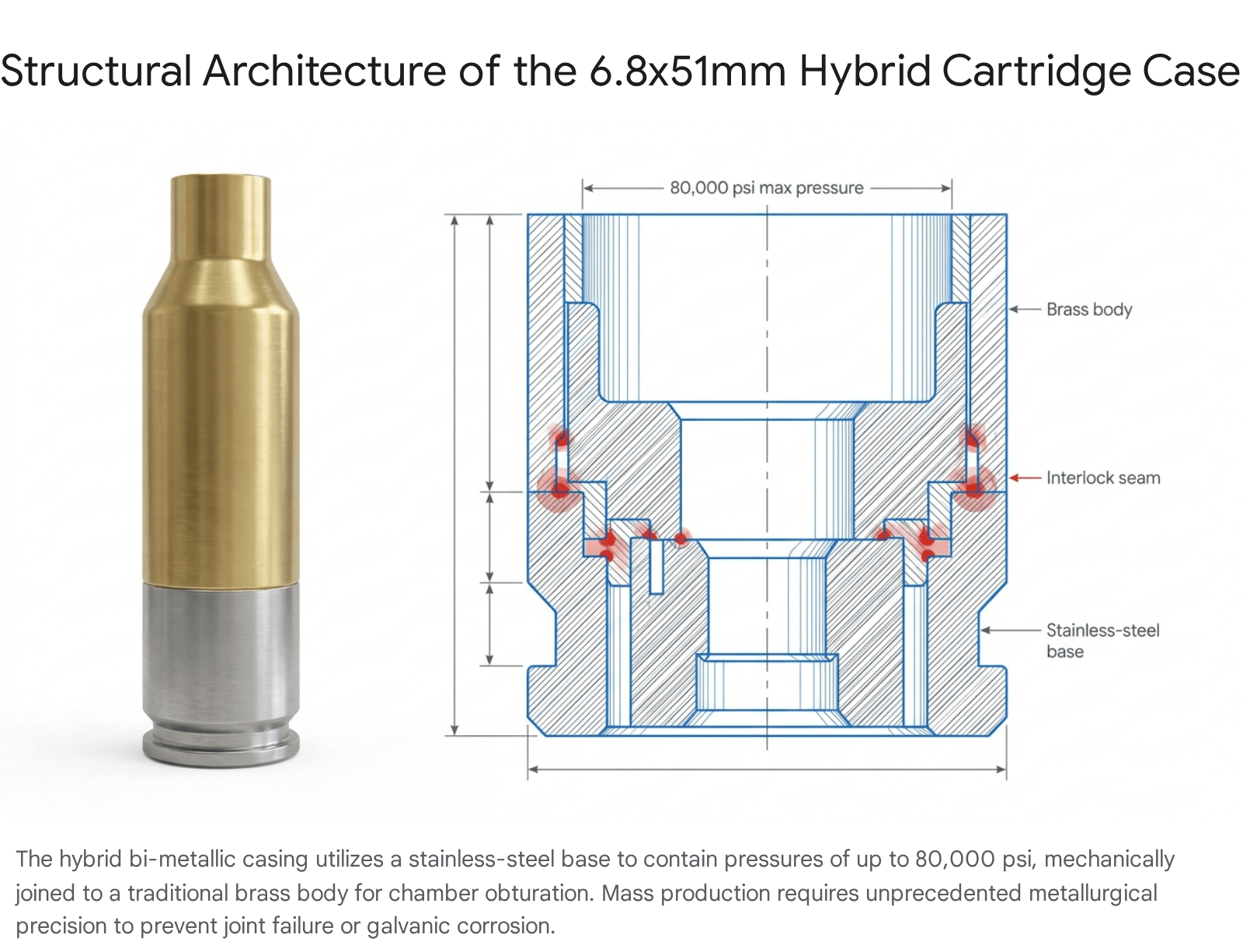
Research shows that defeating future armor at 600 meters requires a bigger, faster bullet and pressures up to 80,000 psi—beyond what brass cases can handle. This led to the Next Generation Squad Weapon (NGSW) program and the transition to 6.8×51mm.
The new 6.8mm round uses a design inspired by the M855A1. To handle the extreme pressure, Sig Sauer developed a bimetallic case with a steel base. With the Army now fielding the XM7 rifle and XM250, the M855A1 stands as the final evolution of the 5.56mm before the 6.8mm takes over.
Conclusion
The M855A1 EPR is a high-tech answer to the performance gaps of the M4 carbine. By using a mechanical fragmentation process instead of just speed, it delivers more consistent lethality. Its hardened steel tip gives 5.56mm better barrier and armor penetration than ever before.
While the high pressures required for this performance increase weapon wear, the parallel development of better magazines and gas systems has kept the fleet ready. The M855A1 maximizes the potential of the 5.56mm NATO round, serving as a vital bridge to the next generation of ammunition.
Master Summary Table
Metric / Specification
M855 (Legacy)
M855A1 (EPR)
Operational Impact
Projectile Mass
62 grain (4.0 g)
62 grain (4.0 g)
Exterior ballistic trajectory is matched; no re-zeroing or training transfer is required for infantry4.
Internal Composition
Lead core, fully jacketed mild steel tip (40-45 HRC)
Solid copper slug, exposed hardened steel tip (58 HRC)6
Eliminates lead toxicity and shifts terminal performance from yaw-dependent to mechanical separation3.
Propellant
Standard Rifle Propellant
SMP-8425
Flash-suppressed; optimized burn rate for 14.5″ M4 barrels; temperature stable during sustained fire27.
Chamber Pressure
~55,000 psi (SCATP)
~62,000 psi4
Restores muzzle velocity but accelerates bolt lug wear, cam pin stress, and throat erosion4.
Soft Target Behavior
Yaw-dependent, relies on >2500 fps to reliably fragment5
Yaw-independent, consistent fragmentation at all combat ranges2
The U.S. commercial ammunition industry is currently undergoing a massive shift, driven by severe supply chain shortages and changing global defense needs. At the center of this transition is Palmetto State Armory (PSA) and its parent company, JJE Capital Holdings. In early 2026, the market was shaken when JJE’s Advanced Armament Company (AAC) facility in South Carolina indefinitely suspended operations, highlighting the hidden risks of relying on external chemical suppliers1.
While many feared the closure was the end of PSA’s ammo manufacturing, those concerns proved premature. By July 2026, the venture returned under a new name and a completely restructured business model: PSA Ammo4. This report breaks down the closure of AAC, the global gunpowder crisis that caused it, and the strategic pivot toward verified quality that defines the new PSA Ammo line. We also look at the broader landscape of foreign buyouts and European expansion currently reshaping the market.
The Fall of AAC: Where Vertical Integration Met Its Match
By making their own brass cases, copper jackets, and lead cores, JJE protected themselves from metal shortages8. But this “metal-first” approach had a major flaw: they still depended on outside vendors for the chemical side of the business—the gunpowder and primers3. As the industry often says, the chemist eventually outranks the machinist.
The Chemical Crisis: War and Explosions
This dependency became a disaster in late 2025. The U.S. market for gunpowder is controlled by a very small number of producers2. For example, St. Marks Powder in Florida provides the vast majority of the powder used in high-velocity rifle rounds like 5.56mm. Usually, they sell their surplus to commercial loaders like AAC, but that surplus vanished overnight2.
First, the war in Ukraine created a massive global demand for artillery propellant2. To put it in perspective, a single 155mm artillery shell uses enough powder to load over 7,000 rounds of 5.56mm ammo10. As global stockpiles shrank, European manufacturers began prioritizing NATO contracts, leaving nothing for the civilian market.
Then, tragedy struck closer to home. In October 2025, a massive explosion at the Accurate Energetic Systems (AES) facility in Tennessee killed 16 people and shut down a vital processing hub6. Reports later linked JJE’s AAC brand to this facility, suggesting they relied on AES to blend or process their powder shipments10.
Between federal investigations slowing down production and the U.S. government using the Defense Production Act to prioritize military orders, AAC’s powder supply was cut off2. JJE was forced to close the plant and lay off workers by early 20263.
Quality Control Issues and the Suppressor Community
Even before the powder shortage, AAC was facing a crisis of trust. Many shooters, particularly those using suppressors, reported that the copper jackets on AAC bullets were separating in flight12. This wasn’t just an accuracy problem—it was a recipe for expensive equipment damage.
The Mechanics of Suppressor Baffle Strikes
The failure usually happened with 55-grain 5.56mm loads. If the copper jacket isn’t bonded perfectly to the lead core, the high spin rate from the barrel’s rifling can cause it to tear off13. When this happens inside a suppressor, the fragments hit the internal baffles, causing a “baffle strike” that can permanently ruin a regulated item that costs $200 and months of waiting to replace12.
This phenomenon is severely exacerbated by modern AR-15 barrel twist rates. Many consumers utilize 1:7 or even 1:5 twist barrels to stabilize heavy, long projectiles, such as 77-grain Open Tip Match (OTM) or 220-grain subsonic rounds14. Firing a lighter 55-grain projectile through a 1:5 twist barrel at velocities exceeding 2,800 feet per second results in extreme centrifugal forces15. While premium projectiles manufactured by companies like Hornady or Sierra possess jackets robust enough to withstand this rotational stress, the economy-grade projectiles utilized in AAC’s bulk 55-grain loads routinely failed under the same conditions14.
When a jacket separates in free space, it presents as a minor accuracy issue. However, when it separates inside the confined expansion chambers of a suppressor, the fragments violently impact the internal baffles and the end cap13. This results in a baffle strike, permanently damaging a regulated NFA item that requires extensive waiting periods and a $200 tax stamp to replace12.
The Public Relations Fallout
The prevalence of AAC jacket separation led to widespread warnings across digital platforms, with consumer reports documenting bullet fragments and lead debris exiting suppressors alongside visible damage to muzzle devices and end caps12. Furthermore, suppressor manufacturers reportedly grew fatigued by the influx of warranty claims stemming directly from the use of AAC ammunition17.
PSA’s customer service response initially made things worse. While they were happy to refund the cost of the ammo, they often denied responsibility for the damaged suppressors, blaming poor mounting or other user errors instead12. This friction burned bridges with high-volume shooters. By the time production could resume, the AAC name was too tarnished to save. A clean break was necessary13.
A Fresh Start: The Birth of PSA Ammo
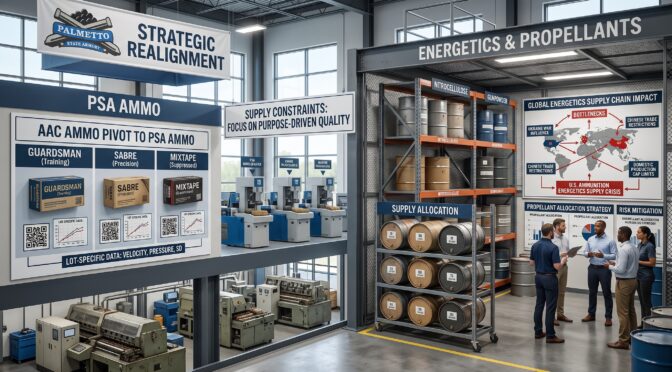
In July 2026, PSA announced that its ammunition operations had been completely rebranded as PSA Ammo4. The AAC name has been moved exclusively to suppressors, creating a clear line between the two products and leaving the quality issues of the past behind4.
The Pivot from Volume to Verified Quality
This rebranding isn’t just about a new sticker on the box. Because gunpowder is still scarce, PSA has shifted away from flooding the market with cheap training ammo4. Instead, they are focusing on specialized, high-quality rounds where they can justify a higher price and ensure better reliability for the customer4.
Under the previous AAC model, the primary objective was to flood the market with high-volume, low-margin commodity ammunition, serving as a value-add to drive sales for their core rifle business4. In the post-2025 reality, allocating scarce, highly expensive powder to cheap plinking ammunition is a severe misallocation of resources. Instead, PSA Ammo is deliberately focusing on lower-volume, specialized, purpose-driven ammunition4. By focusing on high-margin, niche calibers and premium projectile weights, PSA can justify a higher price point per round, effectively monetizing their limited propellant supply while simultaneously rebuilding consumer trust4.
Radical Transparency: No More Guesswork
To fix their reputation, PSA Ammo introduced something rare in the industry: total data transparency4. Usually, ammo boxes only give you rough estimates of speed and performance. Now, every box of PSA Ammo has a lot number that you can look up on their website to see the exact test results for that specific batch4.
Shooters can see actual muzzle velocity, chamber pressure, and how consistent the batch is4. This is vital for long-range precision or for ensuring that subsonic rounds stay quiet and cycle properly. By sharing this data, PSA is proving they care about quality as much as their customers do4.
Product Segmentation: The Three Pillars of PSA Ammo
To execute this strategic shift, PSA has divided its ammunition portfolio into three distinct, purpose-built product lines, deliberately moving away from the commodity approach that defined the AAC era4.
The Guardsman, Sabre, and Mixtape Portfolios
Product Line
Target Application
Core Engineering Priority
Key Feature
Initial Focus Calibers
Guardsman
High-Volume Training & Range Use
Reliability and consistent point of impact
Clean-burning performance and reloadable brass cases
Subsonic cycling reliability and acoustic signature reduction
Comprehensive host-weapon, barrel length, and suppressor validation data
9mm (158gr), .300 Blackout (220gr), 8.6 Blackout
The Guardsman line is positioned for high-round-count practical training, specifically utilizing high-quality reloadable brass cases to cater to the domestic reloading market4. This allows shooters to amortize the cost of the ammunition over multiple reloading cycles, which is relevant given current component shortages4. The Sabre line targets precision shooters, offering premium Hornady projectiles and verified lot data that removes the guesswork of chronographing every new case4. The Mixtape line is exclusively engineered for suppressed platforms, directly addressing the core demographic alienated by past quality control issues4.
The Mixtape Launch and the SAAMI Testing Controversy
The PSA Ammo brand officially went live on Friday, July 17, 2026, launching with two heavy subsonic .300 Blackout loads under the Mixtape line: a 220-grain TMJ (Total Metal Jacket) designed for affordable training, and a 220-grain OTM (Open Tip Match) utilizing Hornady projectiles for precision and enhanced terminal performance4.
However, the launch immediately sparked a technical controversy regarding its testing methodology. Although the Mixtape line is clearly marketed for short-barreled, suppressed platforms (like the PSA Sabre 8-inch PDWs), the initial lot data from PSA showed that the ammunition was tested with a 16-inch barrel and an AAC Ranger 7 suppressor. Consumers correctly noted that 16-inch barrels are an extreme anomaly for subsonic .300 Blackout applications, which are typically optimized for 7- to 10-inch barrels due to the cartridge’s rapid powder burn rate24.
PSA representatives defended the data, explaining that the company must follow SAAMI (Sporting Arms and Ammunition Manufacturers’ Institute) procedures, which require a 16-inch test barrel for the .300 Blackout cartridge specification24. This highlighted the friction between outdated laboratory standards and modern tactical applications, where ammunition that works in a 16-inch test barrel may not produce enough gas pressure to cycle a short-barreled platform with a high-flow rate suppressor4. Despite this controversy, the product line continues to expand rapidly, with PSA scheduling the release of a highly anticipated 158-grain 9mm TMJ subsonic load for August 28, 202628. In internal testing, this heavy 9mm load averaged approximately 900 feet per second from handguns and 1,000 feet per second from pistol-caliber carbines (PCCs), keeping both platforms reliably below the supersonic threshold28.
The Drive for Tier 1 Sovereignty: The Organic Powder Plant Initiative
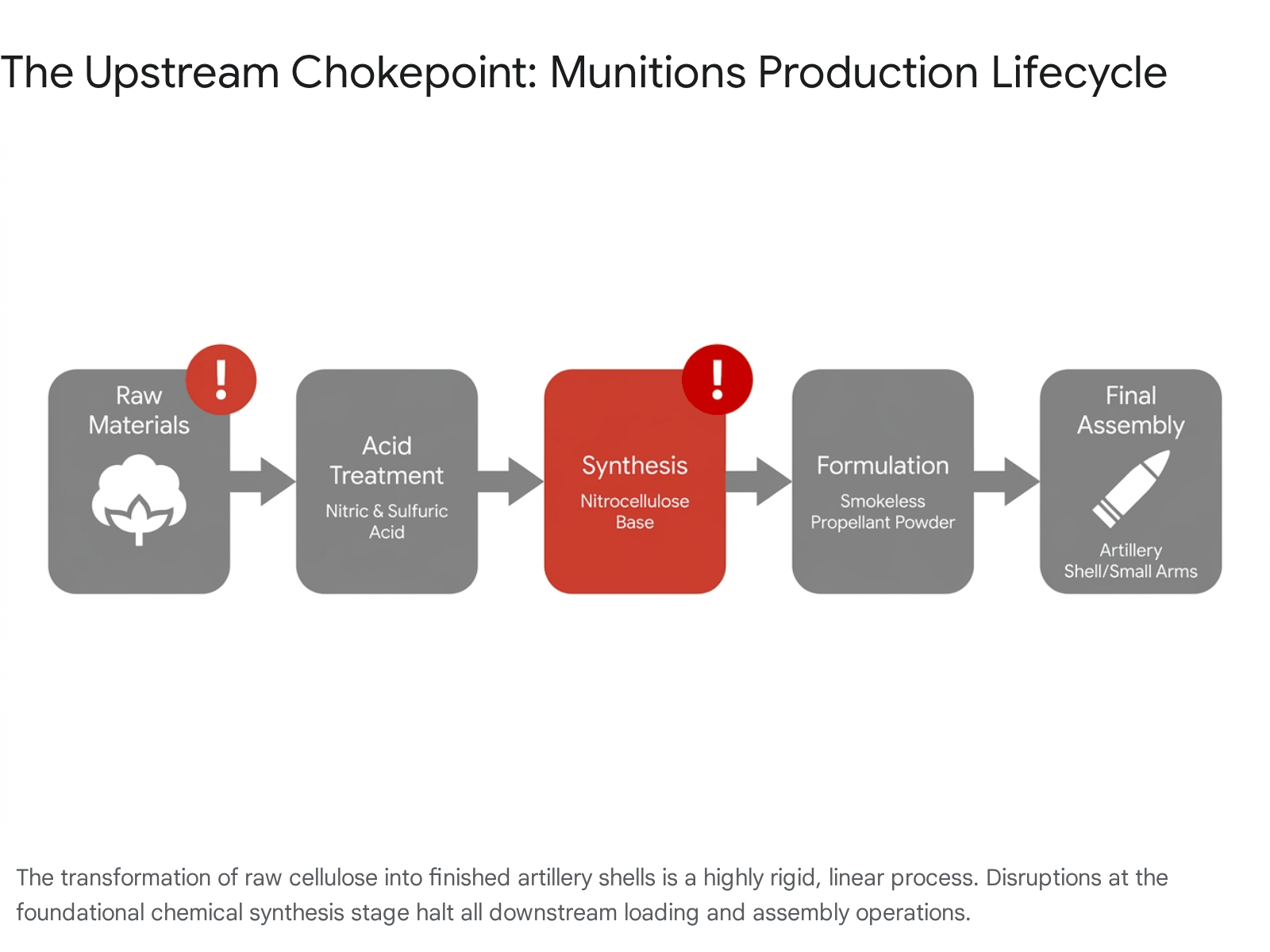
The rebranding and segmentation of PSA Ammo is a sophisticated stop-gap measure designed to maximize revenue while navigating a constrained supply chain. However, JJE Capital Holdings’ ultimate objective is to achieve true Tier 1 operational sovereignty—the complete vertical integration of both metal machining and chemical synthesis6.
Company representatives initially communicated an optimistic timeline, suggesting the new powder plant could be operational within a year6. From an industrial engineering and regulatory standpoint, this timeline is exceptionally aggressive for a greenfield energetics project30.
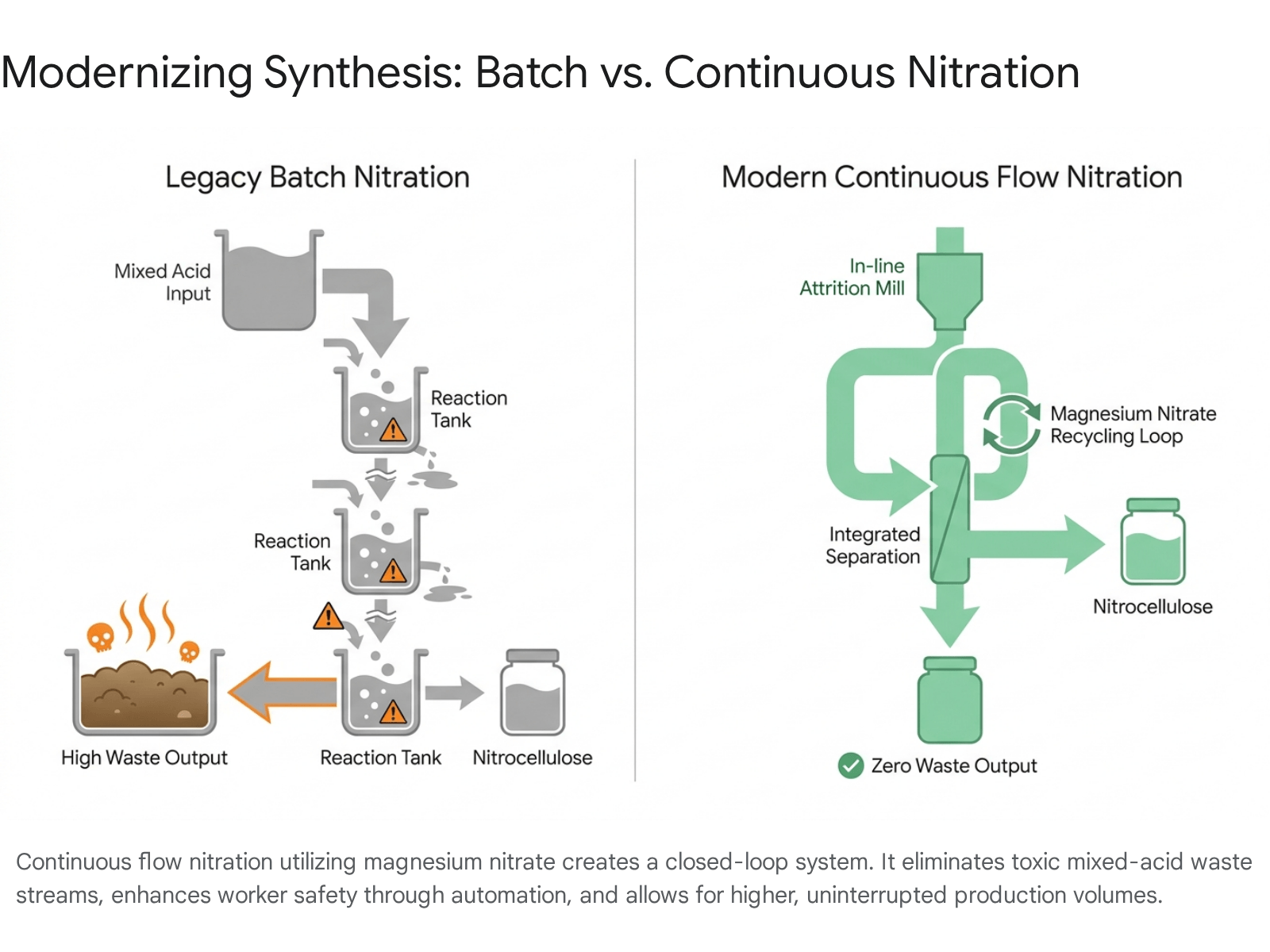
The production of nitrocellulose and double-base smokeless powder involves highly volatile chemical processes, including nitration, washing, and kettle drying30. Domestic energetic manufacturing is governed by a labyrinth of federal and state regulations. The facility must comply with the Environmental Protection Agency’s (EPA) Explosives Manufacturing Effluent Guidelines (40 CFR Part 457), which strictly regulate the discharge of aqueous wastes, caustic scrubbers, and spill washdowns32. Furthermore, if the facility utilizes open burning or open detonation (OB/OD) for the disposal of hazardous explosive waste, it triggers extreme regulatory scrutiny under RCRA Subpart X (Miscellaneous Units)33. This dictates stringent explosive siting requirements, protective distances, and continuous environmental media monitoring to protect surrounding communities from noise, vibration, and contamination30.
At the state level, the South Carolina Department of Environmental Services (SCDES) requires extensive air quality, wastewater, and construction permitting before ground can be broken35. Given these regulatory hurdles, the vast land requirements (often 50 to 300 hectares to satisfy explosive safety distances), and the complex procurement of chemical processing equipment, industry analysts project that bringing a modern nitrocellulose facility online safely will extend well beyond the initial 12-month estimate, pushing full operational capacity closer to late 2027 or 20286.
The Macroeconomic Landscape: Conglomerate Consolidation and European Expansion
The localized struggles and strategic pivots of Palmetto State Armory are occurring against a backdrop of historic disruption in the broader global ammunition market. As of the third quarter of 2026, the industry is characterized by massive foreign consolidation of U.S. manufacturing assets and unprecedented European capacity expansion.
The Czechoslovak Group (CSG) Acquisition of The Kinetic Group
The most seismic shift in the domestic market is the acquisition of The Kinetic Group by the Czechoslovak Group (CSG)38. The Kinetic Group—formerly the Sporting Products division of Vista Outdoor—controls the absolute lion’s share of the U.S. commercial ammunition market through its ownership of heritage brands, including Federal Premium, CCI, Speer, and Remington39.
Following a protracted, 14-month bidding war that involved unsolicited offers from MNC Capital and the Colt CZ Group, Vista Outdoor stockholders overwhelmingly approved the sale to CSG on November 25, 2024, with 97.89% of votes cast in favor of the transaction40. To secure the deal, CSG increased the base purchase price multiple times, finalizing the transaction at $2.225 billion, which delivered $25.75 in cash per share to Vista stockholders alongside equity in the newly separated Revelyst outdoor brand38. Concurrently, Revelyst was sold to Strategic Value Partners (SVP) in a separate $1.125 billion transaction expected to close in January 202540.
The CSG transaction faced intense political scrutiny from U.S. lawmakers, including Vice President-elect J.D. Vance and Representative Clay Higgins, regarding the potential risks of transferring critical U.S. ammunition manufacturing capabilities to foreign ownership40. However, CSG—owned by Czech billionaire Michael Strnad—emphasized its NATO ties and successfully navigated U.S. regulatory approvals, finalizing the deal and taking control of massive manufacturing facilities in Arkansas, Idaho, Minnesota, and Oregon40. With Olin Winchester (who recently acquired AMMO Inc.’s manufacturing assets) and CSG now controlling nearly the entire domestic market, smaller assemblers like JJE Capital face an increasingly consolidated, duopolistic supply chain that possesses organic energetics capacity2.
European Capacity Expansion and Sovereign Supply
In stark contrast to the constricted U.S. commercial market, the European defense industrial base is undergoing a generational expansion, driven heavily by EU subsidies (such as the ASAP plan) and NATO demands stemming from the Ukraine conflict30.
The German defense conglomerate Rheinmetall is aggressively executing “Project Firepower,” aiming to produce 1.5 million 155mm artillery shells annually by 2030 across its international network48. To support this massive output, Rheinmetall is investing over €650 million to expand its propellant powder capacity to 20,000 tonnes by 203049. In July 2026, the company broke ground on a massive expansion of the Nitrochemie Aschau plant in Bavaria49. This specific site will receive €350 million of the total investment, expanding its footprint from 90 to 110 hectares and doubling its output to add 2,500 tonnes of powder and over 1 million modular propellant charges annually by 202849.
Concurrently, EURENCO—a European leader in energetic materials operating in France, Belgium, and Sweden—has secured nearly €76 million in European Commission grants47. The company is rapidly scaling its operations, laying the foundation stone for expanded facilities in Belgium in July 2025, and aiming to multiply its powder production by ten while doubling its ammunition loading capacity47.
While these European expansions are monumental achievements in industrial capacity, they offer zero immediate relief to the U.S. civilian market. European production is entirely absorbed by NATO replenishment programs and direct supply lines to Ukraine2. Consequently, the traditional pipeline of European commercial powder—from manufacturers such as Bofors, Nitrochemie, and Vihtavuori—flowing into the U.S. reloading market remains functionally closed for the foreseeable future2.
Commercial Pricing Trends and the Retail Reality (August 2026)
The downstream effect of these upstream chemical shortages, regulatory hurdles, and corporate consolidations is acute price inflation at the retail level. Contrary to common internet narratives blaming consumer panic buying or hoarding, the 2026 price increases are driven entirely by raw material costs (specifically commodity metals like copper), transportation logistics, and the absolute scarcity of nitrocellulose propellant54.
As of August 2026, the pricing for standard training ammunition reflects a market under severe structural strain.
Current Ammunition Pricing and Availability Metrics
Caliber
Market Condition
August 2026 Observed Pricing
Retail Inventory Status
5.56x45mm NATO
Inflationary
$0.614 – $0.775 per round
Depleted; 14% – 22% of normal SKUs available
.300 AAC Blackout
Boutique/Scarcity
$0.84 – $1.00+ per round
Severely Depleted; 0% – 20% of normal SKUs available
9x19mm Luger
Mild Inflation
$0.22 – $0.25 per round
Recovering; Subject to rolling distributor allocations
Prices for 5.56x45mm NATO have surged significantly from their pre-crisis baselines. Current tracking indicates a median observed price of approximately $0.775 per round across broad retail channels, with specialized tracking indexes showing training-grade 5.56mm bottoming out at $0.614 per round58. For context, AAC previously acted as a vital market anchor, keeping 5.56 prices suppressed in the $0.40 to $0.50 range prior to their operational halt2.
The absence of high-volume producers has pushed calibers like .300 Blackout back into boutique pricing territory, frequently exceeding $0.80 to $1.00+ per round, though PSA Ammo’s recent Mixtape drop successfully offered 220-grain subsonics around $0.84 per round25. Distributors report that overall SKU availability for core calibers remains severely depleted, operating between 0% and 22% of normal historical inventory levels, creating a phenomenon of “ghost inventory” where items are listed but functionally unavailable to consumers61.
With major manufacturers—including The Kinetic Group—implementing semi-annual price increases of 3% to 12% across rifle, handgun, and shotshell platforms to offset rising material costs, analysts forecast no significant decline in retail ammunition pricing through the remainder of 202657.
Strategic Forecast and Analyst Conclusions
PSA’s journey from the mass-market AAC label to the specialized PSA Ammo brand is a perfect example of how the U.S. industry is changing in 2026. The days of endless cheap ammo are gone, replaced by a focus on chemical independence and verified performance.
The energetics crisis has definitively proven that ammunition assembly is not true vertical integration. Companies that rely on the broader merchant market for critical chemical components, such as primers and powder, are entirely at the mercy of military procurement priorities and macro-level supply shocks. The failure of the AAC plant demonstrates that without organic energetics capacity, commercial-scale manufacturing is dangerously vulnerable to disruption2.
Furthermore, the jacket separation issues that plagued the AAC brand demonstrated that cutting corners on material bonding to achieve low price points is a false economy, particularly within the highly demanding suppressor market13. PSA’s implementation of lot-specific data transparency is a brilliant, necessary pivot to reclaim consumer trust in an environment where shooters are increasingly technical and data-driven4.
However, the domestic supply of commercial ammunition will not return to pre-2025 stability until global nitrocellulose stocks are replenished and new domestic powder facilities—such as JJE’s planned West Columbia plant—come online. Given the severe regulatory and environmental complexities of explosive manufacturing, this represents a multi-year horizon6.
While prices are higher and shelves are emptier, PSA’s pivot shows that they are willing to adapt to keep their customers shooting. Whether they can truly win back the trust of the community will depend on how well they can deliver on the promise of their new data-driven approach in the years to come2.
This report delivers a comprehensive engineering and market analysis of the top ten most discussed pistol cartridges across social media platforms, specialized small arms forums, and digital video commentary during the month of July 2026. By utilizing targeted keyword extraction and natural language processing, this analysis evaluates the volume, community sentiment, and primary technical drivers of online discussions within the civilian, law enforcement, and military small arms communities.
The data aggregated throughout July 2026 reveals a significant inflection point in handgun ballistics, platform engineering, and consumer preferences. The firearms industry is currently witnessing a distinct divergence in design philosophy. On one end of the spectrum, there is a shift toward high-pressure, micro-caliber cartridges that rely heavily on modern metallurgical advancements. Cartridges operating at or above 50,000 Pounds per Square Inch (PSI), such as the .30 Super Carry and the 5.7x28mm, are generating substantial debate regarding their long-term commercial viability, barrier penetration capabilities, and the magazine capacity advantages they offer in concealed carry platforms1.
On the other end of the spectrum, legacy heavy-mass cartridges, specifically the 10mm Auto, are experiencing a significant resurgence in popularity. Driven by an increase in compact, optics-ready platforms and a heightened focus on wilderness defense, the 10mm Auto has emerged as a primary challenger to the historically dominant 9mm Luger in online discourse4. The debate between these calibers has shifted from mere preference to physics-based discussions surrounding momentum, free recoil energy, and terminal ballistics in specialized mediums like 10 percent ordnance gelatin and heavy auto glass4.
Furthermore, the rimfire sector is undergoing its most significant technological modernization in decades. Winchester’s recent introduction of the .21 Sharp has sparked technical debate regarding the ballistic limitations of the classic heeled bullet used in the .22 Long Rifle7. Simultaneously, the introduction of highly capable micro-compact pistols, most notably the Smith & Wesson Bodyguard 2.0, has revitalized discussions around the .380 ACP, specifically concerning its performance in standardized penetration protocols9.
The following sections detail the ballistic profiles, engineering challenges, public sentiment, and platform developments for each of the top ten most discussed cartridges. The report is structured from the most discussed cartridge to the least, providing a nuanced examination of how modern shooters evaluate capacity, recoil, terminal ballistics, and platform availability in the year 2026.
Summary of Cartridge Discussions
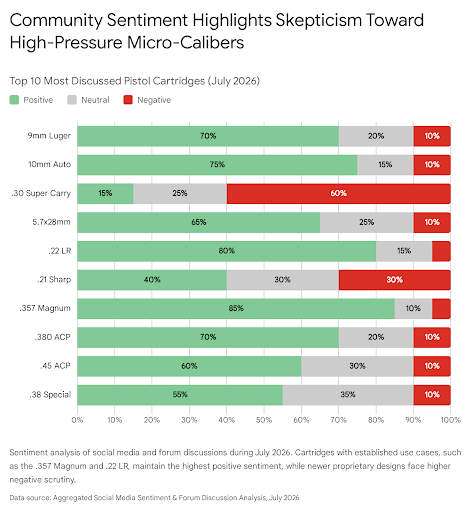
The table below outlines the macro-level sentiment and primary technical drivers for the top ten pistol cartridges discussed in July 2026. Sentiment is categorized into positive, negative, and neutral percentages based on natural language processing of forum threads, video comments, and social media posts.
Rank
Cartridge Designation
Positive Sentiment
Negative Sentiment
Neutral Sentiment
Primary Discussion Drivers
1
9mm Luger (9x19mm)
70%
10%
20%
Continued standard for self-defense, cheap ammunition, and broad platform support.
2
10mm Auto
75%
10%
15%
Bear defense, barrier penetration mechanics, new concealed carry platforms, heavy recoil.
3
.30 Super Carry
15%
60%
25%
High chamber pressure (52k PSI), capacity advantages over 9mm, low market adoption rates.
4
5.7x28mm FN
65%
10%
25%
High capacity, flat shooting, new accessible platforms, straight blowback action mechanics.
5
.22 Long Rifle
80%
5%
15%
Suppressor hosts, low training costs, established status as a beloved and affordable plinker.
6
.21 Sharp
40%
30%
30%
Innovative jacketed rimfire design, lead-free compliance, skepticism against .22 LR dominance.
7
.357 Magnum
85%
5%
10%
Overwhelmingly positive legacy standard for revolvers, optics-ready platforms, hunting.
8
.380 ACP
70%
10%
20%
Resurgent pocket carry popularity with new platforms like Bodyguard 2.0, penetration testing.
9
.45 ACP
60%
10%
30%
Legacy defense round, kinetic energy versus mass momentum debates, heavy terminal ballistics.
10
.38 Special
55%
10%
35%
Reliable standard, ongoing community discussions around +P pressures and mechanical limits.
The data indicates a clear consumer preference for established cartridges that have recently benefited from platform innovations, while newer proprietary cartridges face substantial resistance regarding their long-term viability. The detailed analysis of each cartridge below explores the engineering realities driving these public perceptions.
1. 9mm Luger (9x19mm Parabellum)
Ballistic and Engineering Profile
Originally designed by Georg Luger in 1901 for the GermanNavy and later standardized as a NATO cartridge, the 9x19mm Parabellum remains the undisputed baseline for defensive and duty handgun cartridges globally4. The cartridge utilizes a 0.355-inch diameter projectile and is governed by the Sporting Arms and Ammunition Manufacturers’ Institute (SAAMI) under the Z299.3 standard for centerfire pistol and revolver ammunition10. Standard pressure 9mm Luger operates at a Maximum Average Pressure (MAP) of 35,000 PSI2. Overpressure variants, officially designated as +P, are standardized at 38,500 PSI, representing a ten percent increase in chamber pressure2.
The engineering consensus in 2026 maintains that modern premium jacketed hollow points (JHP) have effectively closed the terminal performance gap between the 9mm and larger legacy calibers for human threats4. Relying on advanced fluid dynamics, properly engineered projectiles expand reliably upon impact with soft tissue11. This controlled expansion consistently achieves 14 to 16 inches of penetration in properly calibrated 10 percent ordnance gelatin, easily surpassing the minimum 12-inch penetration threshold7.
Specification
9mm Luger Data
Bullet Diameter
0.355 inches
Case Length
0.754 inches
Standard SAAMI MAP
35,000 PSI
Overpressure (+P) MAP
38,500 PSI
Average Free Recoil Energy
5.5 ft-lbs (from a 25 oz pistol)
Typical Bullet Weights
115, 124, 147 grains
Social Media Sentiment and Key Discussion Points
The 9mm Luger accounted for the largest volume of online discussions in July 2026, maintaining a strong 70 percent positive sentiment. However, the nature of this discussion has shifted. Instead of users debating the merits of 9mm in isolation, the cartridge is now almost exclusively discussed as a comparative benchmark against emerging competitors, specifically the 10mm Auto and the .30 Super Carry1.
Positive discussions heavily emphasize the low free recoil energy of the cartridge. Generating roughly 5.5 ft-lbs of free recoil energy from a standard 25-ounce polymer-framed pistol, the 9mm allows for rapid sight acquisition and fast follow-up shots12. Users also consistently highlight the deep magazine capacities of modern micro-compact platforms, the unrivaled availability of affordable training ammunition1, and excellent performance in 2011-style firearms13. Negative sentiment (10 percent) largely stems from users operating in rural environments, who argue that the 9mm lacks the necessary kinetic energy and momentum required for wilderness defense against large predators14.
Representative Discourse
Discussions frequently frame the 9mm as the practical choice for the majority of civilian applications, while acknowledging its limitations in specialized scenarios.
“Modern 9mm is generally more than enough, unless you’re facing a bear or some other large threat in the woods. It is also far more ubiquitous which is always a plus when buying training ammo.”15
“The 9mm wins the recoil debate by a country mile. Enduring only 4 to 8 ft-lbs of recoil means faster follow-up shots than anyone trying to run a 10mm rapidly.”
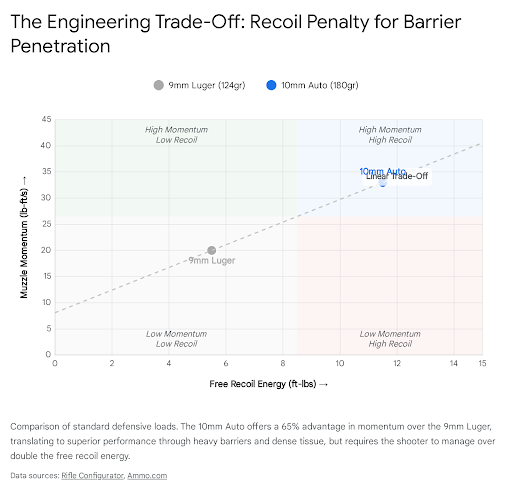
Developed in the 1980s, the 10mm Auto has experienced a robust resurgence across both handguns and modern carbine platforms16. The cartridge fires a 0.400-inch diameter bullet from a 25.2mm straight-walled, rimless case17. Operating at a SAAMI MAP of 37,500 PSI, the 10mm generates nearly double the kinetic energy of standard 9mm loads4. Full-power hunting loads frequently push 200-grain hardcast projectiles at velocities that yield over 600 foot-pounds of muzzle energy, putting the cartridge squarely into .357 Magnum territory in terms of raw power4.
From an engineering perspective, the 10mm excels in momentum, which is calculated as mass multiplied by velocity. A standard 180-grain 10mm load produces 33 lb-ft/s of momentum, representing a 65 percent advantage over a standard 124-grain 9mm load. This massive momentum advantage allows the 10mm to dominate in barrier penetration tests, easily defeating auto glass and heavy clothing layered over gelatin without significant deflection.
Specification
10mm Auto Data
Bullet Diameter
0.400 inches
Case Length
25.2 mm (0.992 inches)
Standard SAAMI MAP
37,500 PSI
Average Free Recoil Energy
11 to 12 ft-lbs (from a 30 oz pistol)
Muzzle Momentum
33 lb-ft/s (180-grain standard load)
Typical Bullet Weights
155, 180, 200 grains
Social Media Sentiment and Key Discussion Points
Discussions surrounding the 10mm Auto experienced high volume in July 2026. The sentiment is highly positive, resting at 75 percent. The conversation is driven by two primary factors: wilderness carry for bear defense, and the introduction of new concealed carry platforms that successfully mitigate the cartridge’s notoriously heavy recoil4.
Users in 2026 frequently cite new platforms like the Smith & Wesson M&P 10mm Carry Comp and various 1911 double-stack variants as solutions to the platform size constraints that previously plagued the caliber14. Negative and neutral sentiments focus on the 11 to 12 ft-lbs of free recoil energy generated by full-power loads, which forces shooters to endure a slower recoil impulse with significant muzzle rise.
Representative Discourse
The community recognizes the cartridge as a specialized tool for high-risk environments where the 9mm is deemed insufficient.
“10mm is the right answer for hunting and outdoor defense against large animals. I carry 10mm because I can transfer more energy into the hide of a grizzly bear in hopes that it is enough to deter it.”4
“New carry-viable platforms like the S&W M&P 10mm Carry Comp have solved the recoil problem that killed 10mm for most shooters in the past.”19
Introduced by Federal Premium in 2022, the .30 Super Carry was engineered to optimize concealed carry magazine capacity without sacrificing the terminal performance established by the 9mm Luger1. It utilizes a 0.312-inch diameter projectile housed in a rimless case with a head diameter of 0.344 inches1. Because the cartridge shares the same overall maximum length as the 9mm (1.169 inches), it can be chambered in similar grip modules, but its narrower diameter allows handguns to fit two to three additional rounds in flush-fit magazines.
To achieve 9mm-equivalent muzzle energy (approximately 322 to 338 ft-lbs from a 115-grain bullet at 1,150 fps), the cartridge operates at a staggering SAAMI MAP of 52,000 PSI2. As discussed in Understanding +P and +P+ Ammunition Safety and Standards, this rifle-like pressure represents a philosophical shift in ammunition engineering. Instead of relying on +P aftermarket designations to boost performance, engineers set the baseline pressure at the upper metallurgical limits of modern barrel steels. Consequently, there will never be a +P variant of the .30 Super Carry, as the standard load is already maximized.
Specification
.30 Super Carry Data
Bullet Diameter
0.312 inches
Case Length
0.827 inches
Standard SAAMI MAP
52,000 PSI
Muzzle Energy
~338 ft-lbs (115-grain load)
Capacity Advantage
+2 to +3 rounds vs. 9mm in identical grip
Typical Bullet Weights
100, 115 grains
Social Media Sentiment and Key Discussion Points
The .30 Super Carry generated the most negative sentiment (60 percent negative, 15 percent positive) among the top ten cartridges in July 2026. While users and experts acknowledge the technical achievement of increasing capacity while maintaining kinetic energy, the broader community views the cartridge with deep skepticism regarding its commercial longevity21.
A recurring theme in the forums is the lack of widespread handgun adoption beyond Smith & Wesson’s Shield Plus lines and a few boutique 1911 manufacturers like Nighthawk Custom1. Furthermore, users cite the high cost and limited availability of training ammunition as primary deterrents against adopting the platform, arguing that the logistical penalty outweighs the benefit of two extra rounds1.
Representative Discourse
The sentiment is largely dismissive, framing the cartridge as an engineering success but a commercial failure.
“In the almost three years since its introduction it looks like there are still only a few guns chambered for it, and few ammo offerings. I would say it is essentially dead.”22
“Taking on the 9mm for replacement seems to be a monumental undertaking… the challenger ’30’ having maybe a thin line of performance gain, holding only a round or two of extra capacity advantage, at an increased price.”
The 5.7x28mm FN cartridge is a high-velocity, bottlenecked micro-caliber originally designed in response to a NATO request for a Personal Defense Weapon (PDW) cartridge23. Operating at a high pressure of approximately 50,000 PSI, the cartridge fires lightweight projectiles, typically between 23 and 40 grains, at extreme velocities exceeding 2,000 feet per second from pistol-length barrels2.
An engineering focal point for this cartridge is its complex interaction with pistol actions. Because of the high chamber pressure and the small surface area of the bottlenecked case, extraction friction is immense. To ensure reliable function in straight-blowback systems, manufacturers must apply a proprietary polymer or lacquer coating to the steel or brass cases23. This coating acts as a vital dry lubricant, allowing the case to slide rearward during the critical microsecond of high-pressure extraction26.
Specification
5.7x28mm FN Data
Bullet Diameter
5.71 mm (0.224 inches)
Case Length
28.9 mm
Standard Pressure
~50,000 PSI
Muzzle Velocity
~2,100 fps (pistol length barrel)
Action Requirement
Straight blowback with lubricated/lacquered cases
Typical Bullet Weights
23, 27, 40 grains
Social Media Sentiment and Key Discussion Points
Online engagement for the 5.7x28mm remains highly positive at 65 percent, driven by the cartridge’s successful transition from a niche, expensive novelty to a mainstream platform. In 2026, the discussion is dominated by the proliferation of affordable firearms chambered for the round, such as the Palmetto State Armory (PSA) Rock 5.7, the Smith & Wesson 5.7, and the Ruger-5726.
Users frequently highlight the extremely low recoil, incredibly flat trajectory, and massive magazine capacities, which typically range from 20 to 23 rounds standard in a flush-fit grip29. The 10 percent negative sentiment focuses on the cost of factory ammunition and the extreme difficulty of reloading the cartridge safely due to the delicate case coating and sensitive powder charges.
Representative Discourse
The 5.7x28mm is praised for its unique ballistic properties and modern platform integration.
“The PSA Rock 5.7 pistol has been a breath of fresh air. The thin 5.7mm round means you get an impressive loadout; double-stack 23-round magazines that fit comfortably in the hand.”
“I had always thought the cartridge was too high-pressure not to use a locking bolt, but the barrel of the Rock simply slides straight back… the lacquered finish makes them extra slippery to reduce friction while high pressures are still at work.”
The .22 Long Rifle is the oldest, most ubiquitous, and most heavily produced cartridge on this list, with an estimated 2.5 billion rounds manufactured annually8. Governed by SAAMI standard Z299.1 for rimfire ammunition, the cartridge operates via a primer compound spun into the rim of the case.
From an engineering standpoint, the .22 LR utilizes a heeled bullet30. In a heeled design, the rear portion of the bullet is reduced in diameter to fit inside the brass cartridge case, while the forward, exposed portion remains the same diameter as the outside of the case. This antiquated geometry restricts aerodynamic bullet profiles, limits maximum velocities, and requires a wax or copper-washed coating on the exposed lead to prevent severe barrel leading7.
Social Media Sentiment and Key Discussion Points
Despite its age and engineering limitations, the .22 LR maintains a highly positive discussion volume at 80 percent. In July 2026, conversations centered heavily around the revival of rimfire as a serious training and competition tool. The community discussed new optimized platforms like the Beretta B22 Jaguar, designed specifically for Scholastic Action Shooting Program (SASP) steel target competitions12.
Additionally, the widespread proliferation of civilian suppressors has driven immense interest in specialized subsonic ammunition. Users frequently mentioned the CCI Suppressor MAX load, praising its 970 fps velocity and 45-grain segmenting hollow point for providing quiet, reliable cycling in semi-automatic pistols29.
Representative Discourse
The .22 LR remains the foundation of marksmanship training, with users praising new specialized loads.
“The Beretta B22 Jaguar just may be the ultimate .22 LR pistol, engineered in collaboration with the SASP for steel target competitions with premium performance upgrades.”
“For those who seek an expanding .22 hunting bullet, the Federal Hammer Down 22 is worth a look. It delivers a good balance of expansion and reliable feeding.”7
The .21 Sharp represents a direct engineering response to the limitations of the .22 LR. Developed by Winchester, the cartridge utilizes a standard .22 LR brass case but entirely eliminates the problematic heeled bullet12.
Instead, the .21 Sharp seats a true 0.210-inch diameter jacketed or monolithic bullet inside the case walls29. This modernization allows the projectile to feature parallel sides, sleeker aerodynamic ogives, and eliminates the need for residue-inducing wax coatings7. Because it matches the .22 LR case dimensions and operates at identical SAAMI pressures, it utilizes the same bolt faces, extractors, and magazines as existing .22 LR platforms31.
Specification
.21 Sharp Data
Bullet Diameter
0.210 inches
Case Architecture
Standard .22 LR case
Bullet Design
Jacketed, non-heeled, seated inside case
Muzzle Velocity
Up to 1,750 fps (25-grain load)
Platform Compatibility
Uses standard .22 LR bolt faces and magazines
Social Media Sentiment and Key Discussion Points
The .21 Sharp generated significant curiosity and technical debate in July 2026. Sentiment is highly mixed (40 percent positive, 30 percent neutral, 30 percent negative), reflecting the natural skepticism the firearms community holds toward new proprietary cartridges attempting to unseat established legends8.
Positive discussions focus heavily on the cartridge’s impressive velocity, reaching up to 1,750 fps for the 25-grain Copper Matrix bullet, and its crucial role in jurisdictions with strict lead ammunition bans. Skeptics, however, question whether ammunition manufacturers can achieve the century of accuracy-maximizing refinement that companies have perfected with the standard .22 LR.
Representative Discourse
Discussions highlight the engineering improvements but question the market viability against the entrenched .22 LR.
“The .21 Sharps is an answer to the problems of the .22 LR rimfire cartridge, namely its lower velocity and use of a heeled non-jacketed bullet that cannot hack higher speeds.”
“If standard off-the-shelf ammo was to shoot comparably to top-shelf premium .22 Long Rifle ammo… I suspect hunters will flock to the cartridge.”
7. .357 Magnum
Ballistic and Engineering Profile
Introduced in the 1930s, the .357 Magnum is a high-pressure revolver cartridge. The engineering brilliance of the .357 Magnum lies in its extreme versatility and sectional density. It can push heavy 158-grain to 180-grain hardcast bullets to velocities required for adequate penetration through heavy bone and dense muscle on large predators5. Furthermore, due to exact geometric compatibility, firearms chambered in .357 Magnum can safely fire standard pressure and +P .38 Special ammunition, providing shooters with a low-recoil training alternative35.
Social Media Sentiment and Key Discussion Points
The .357 Magnum boasts the highest positive sentiment (85 percent) on this list. In 2026, the conversation is largely driven by the modernization of the revolver platform itself. Users are actively discussing optics-ready wheelguns from major manufacturers, which have breathed new life into the caliber for concealed carry and wilderness defense by allowing for modern red-dot sight integration34.
Furthermore, detailed ballistics discussions frequently compare the .357 Magnum against the rising 10mm Auto. While the 10mm holds the definitive advantage in capacity and semi-automatic fire rates, revolver purists point out that the .357 Magnum can utilize heavier bullets with superior sectional density, leading to deeper, more reliable penetration in heavy animal tissue5.
Representative Discourse
The .357 Magnum remains the gold standard for revolver ballistics and wilderness protection.
“A 9mm pistol loaded to its maximum deep-penetration performance potential still hits like a lighter .357 Mag round… I would pick a .357 Mag revolver or a 10mm pistol over a 9mm just about any day of the week for bear defense.”5
“What would be more interesting to me would be an in-depth terminal ballistic comparison of 10mm vs .357 Magnum. Given equal bullet weights and types at equal velocity, the 10mm will cut a wider but shallower wound channel than the .357 Magnum.”18
The .380 ACP, also known as the 9x17mm or 9mm Kurz, is a straight-walled, rimless cartridge operating at standard pressures significantly lower than modern 9mm parameters. Historically, the .380 ACP has struggled to meet rigorous terminal ballistics protocols, which require a minimum of 12 inches of penetration in properly calibrated 10 percent ordnance gelatin9.
Because of the cartridge’s limited velocity and kinetic energy, ammunition engineers are forced into a ballistic compromise. A standard expanding hollow-point bullet will either expand reliably upon impact but severely under-penetrate, or act as a solid projectile, penetrating deeply but failing to expand and create a large temporary wound cavity37.
Struggles to balance 12-inch penetration with expansion
Common Platforms
Micro-compact, pocket pistols
Typical Bullet Weights
68, 90, 95, 99 grains
Social Media Sentiment and Key Discussion Points
The .380 ACP experienced a spike in discussion volume in mid-2026, catalyzed by the successful release of the Smith & Wesson Bodyguard 2.0. As detailed in a recent analysis of top .380 ACP self-defense rounds38, the sentiment is highly favorable (70 percent positive) regarding the platform itself, as users praise the modern ergonomics, the impressive 10 to 12-round capacity in a pocket-sized frame, and the negligible recoil compared to similar 9mm micro-compacts.
However, the technical discussion remains intensely focused on the cartridge’s ballistic limitations. Online communities are actively debating the merits of heavily engineered monolithic copper projectiles designed to bypass the expansion paradox. Many users advocate for the use of fluted solid bullets, such as the 68-grain Lehigh Defense loads traveling at 1,100 fps. These projectiles are designed to guarantee adequate penetration depths.
Representative Discourse
Discussions blend praise for new micro-compact platforms with deep technical debates on ammunition selection.
“The .380 has enough power to deliver either adequate penetration or full mushrooming, but not both. Federal’s HST Micro is impressive but ballistic gel tests indicate it will not make the FBI’s minimum 12-inch penetration.”
“The recoil of the Bodyguard 2.0 is negligible, and you will want lots of ammo on hand, as this pistol is simply fun to shoot.”
9. .45 ACP (Automatic Colt Pistol)
Ballistic and Engineering Profile
Operating at a relatively low standard SAAMI MAP of 21,000 PSI, the .45 ACP achieves terminal performance through raw mass rather than extreme velocity or hydrostatic shock2. Typically firing a massive 230-grain projectile at approximately 850 feet per second, the cartridge relies on its large initial diameter (0.452 inches) to create wide, permanent wound channels. This heavy mass makes the cartridge highly effective even if the hollow-point cavity gets plugged with heavy clothing and fails to expand.
Social Media Sentiment and Key Discussion Points
In 2026, the .45 ACP holds a revered legacy status with a 60 percent positive sentiment, though its overall discussion volume is slowly being eclipsed by the 10mm Auto. The primary online discourse revolves around the classic mass versus velocity debate in terminal ballistics.
Proponents of the .45 ACP argue that its large frontal area provides a wider margin of error for terminal ballistics. Detractors point to the significantly reduced magazine capacity and the heavy physical footprint of the firearms required to chamber it, arguing that modern 9mm ammunition has rendered the capacity trade-off obsolete.
Representative Discourse
The .45 ACP is frequently discussed in terms of its historical reliability and massive projectile size.
“.45 ACP means more mass. It is the mass and size that gives it knockdown power… but 10mm has nearly as much mass and the same velocity as 9mm.”
10. .38 Special
Ballistic and Engineering Profile
Introduced in 1898, the .38 Special is a rimmed centerfire cartridge designed for revolvers. The standard operating pressure is established at a relatively low 17,000 PSI. However, modern defensive applications frequently rely on overpressure loads, designated as +P, which elevate the Maximum Average Pressure to 20,000 PSI. These +P loads provide measurable benefits in muzzle velocity, which is critical for ensuring reliable hollow-point expansion from short-barreled concealed carry platforms.
Social Media Sentiment and Key Discussion Points
The .38 Special maintains a 55 percent positive sentiment, driven by its status as a reliable standard for revolver shooters. Neutral and negative discussions (35 percent and 10 percent, respectively) heavily focus on the engineering limits and safety protocols of using +P ammunition. Users and experts discuss how +P loads can approach the pressure levels of low-end .357 Magnum cartridges, specifically cautioning against their use in older or lightweight aluminum-framed revolvers due to accelerated mechanical fatigue and bolt thrust wear, a topic further explored in discussions on +P safety standards2.
Representative Discourse
Discussions blend appreciation for the cartridge’s history with technical warnings regarding pressure limits.
“The standard operating pressure of a .38 Special revolver cartridge is much lower than that of the .357 Magnum to protect individuals using older revolvers.”
“This +P loading gave the shooter an additional 100 feet per second velocity over standard pressure… but the ammunition is capable of causing permanent damage to aluminum or lightweight frame revolvers.”
Conclusion
The social media and forum data aggregated from July 2026 highlights a civilian and professional firearms community that is highly educated on the nuances of internal ballistics, pressure testing, and terminal tissue disruption. The overarching trend defining the current landscape is the aggressive pursuit of higher operating pressures to maximize platform efficiency. Ammunition engineers are setting SAAMI baseline pressures to 50,000+ PSI for cartridges like the .30 Super Carry and 5.7x28mm, attempting to rewrite the fundamental rules of capacity versus velocity.
Simultaneously, the meteoric rise of the 10mm Auto suggests that despite advancements in high-pressure micro-calibers, a significant portion of the civilian market demands the kinetic energy and barrier-defeating momentum that only large-mass projectiles deliver. Furthermore, the introduction of the .21 Sharp proves that even century-old designs like the .22 Long Rifle are subject to critical engineering re-evaluations27. Whether maximizing capacity in a micro-compact, mitigating recoil with heavy chassis systems, or stopping a wilderness threat with immense momentum, the discussions of July 2026 prove that the modern shooter expects ammunition to be highly application-specific, technologically advanced, and precision-engineered.
Appendix: Methodology and Data Sources
The insights generated in this report were derived through a comprehensive analysis of digital small arms discourse spanning July 1 through July 31, 2026.
Data Acquisition and Processing:
Data was aggregated from public social media platforms, dedicated firearms discussion boards, and video hosting comment sections. Search queries were structured using Boolean logic targeting specific SAAMI cartridge designations (e.g., Z299.1, Z299.3), manufacturer nomenclature, and highly technical ballistic terminology.
Pressure Testing Standardization Context: To provide accurate engineering context, discourse was cross-referenced against official SAAMI testing methodologies. The industry utilizes specialized test barrels equipped with either copper crushers to measure Copper Units of Pressure (CUP) or piezoelectric conformal transducers to measure precise PSI39. The community’s understanding of these metrics heavily informed the categorization of technical debates.
Sentiment Analysis:
A Natural Language Processing (NLP) model was utilized to categorize the unstructured text into positive, negative, and neutral sentiment classifications.
Positive Sentiment: Posts indicating intent to purchase, validation of ballistic performance, or praise for a cartridge’s engineering characteristics.
Negative Sentiment: Posts citing poor reliability, excessive wear, high cost per round, inability to meet penetration standards, or inadequate terminal performance.
Neutral Sentiment: Objective queries regarding load data, reloading specifications, or general technical comparisons without a stated preference.
The total volume of mentions dictated the final rank order of the top ten cartridges, ensuring the analysis focused strictly on the most culturally and technically relevant ammunition trends of the month.
Note: Vendor Sources listed are not an endorsement of any given vendor. It is our software reporting a product page given the direction to list products that are between the minimum and average sales price when last scanned.
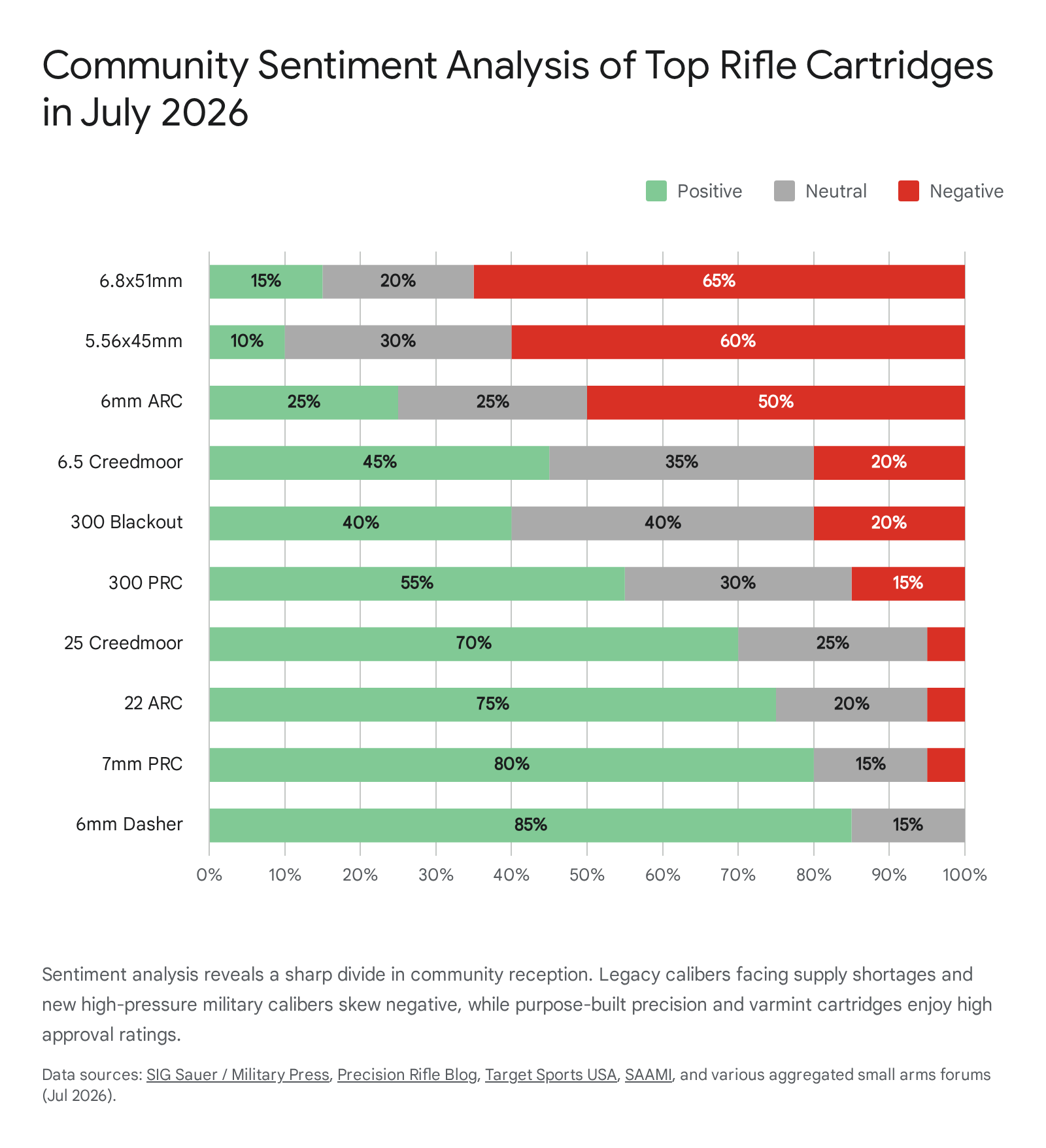
This intelligence report synthesizes specialized firearms forums, industry publications, and social media data to identify and analyze the top 10 most discussed rifle cartridges during the month of July 2026. The analysis evaluates digital discourse through the lens of small arms engineering, internal ballistics, and global market economics. During this period, the small arms community focused on two diverging macro trends. The first trend is the adoption and commercial release of high-pressure military cartridges designed for armor penetration. The second trend is the supply chain constraint affecting legacy intermediate calibers, driven by geopolitical conflict and raw material shortages.
The 6.8x51mm, commercially known as the .277 SIG Fury, dominated technical discussions due to its integration into the United States Army Next Generation Squad Weapon program and the engineering requirements of its 80,000 PSI chamber pressure. Simultaneously, the 5.56x45mm NATO experienced an increase in negative sentiment. This was driven by retail pricing spikes and a global shortage of highly nitrated nitrocellulose, which restricted commercial ammunition production.
In the civilian, hunting, and competitive sectors, Hornady’s Advanced Rifle Cartridge family saw notable engagement. The 22 ARC was praised for maximizing the ballistic potential of the AR-15 platform without exceeding safe operating pressures, while the 6mm ARC faced technical scrutiny regarding bolt lug shear failures. Precision rifle shooters focused on optimized chamber geometries, elevating discussions around the 7mm Precision Rifle Cartridge throat design and the continued statistical lead of the 6mm Dasher in competition circuits.
Summary Table: Top 10 Most Discussed Rifle Cartridges
Rank
Cartridge
Primary Discussion Theme
Positive
Negative
Neutral
1
6.8x51mm (.277 SIG Fury)
Military adoption, 80k PSI pressure, barrel wear, civilian availability
15%
65%
20%
2
5.56x45mm NATO
Nitrocellulose shortages, severe price increases, ghost inventory
10%
60%
30%
3
22 ARC
Varmint hunting, AR-15 compatibility, high BC bullets, low recoil
Heavy bullet stabilization, beltless magnum design, recoil management
55%
15%
30%
Detailed Cartridge Analysis
1. 6.8x51mm (.277 SIG Fury)
The 6.8x51mm cartridge, commercially known as the .277 SIG Fury, generated the highest volume of digital traffic in July 2026. The discourse weighted heavily toward the engineering mechanisms required to operate at a Sporting Arms and Ammunition Manufacturers’ Institute (SAAMI) Maximum Average Pressure of 80,000 PSI. For context, legacy high-pressure cartridges like the 5.56x45mm NATO traditionally operate near the 62,000 PSI threshold under NATO EPVAT testing. The 6.8x51mm achieves its 80,000 PSI limit through a three-piece hybrid case design. This architecture relies on a standard brass body to obturate and seal the chamber, paired with a stainless steel base to withstand the rearward bolt thrust.
Analysts and forum users debated the tactical implementation of this cartridge. The United States military sought this round specifically to defeat near-peer modern body armor at 500 meters, a requirement derived from the Small Arms Ammunition Configuration Study. To meet this capability, the cartridge propels a 135-grain or 140-grain projectile to 3,000 feet per second. However, users critically noted a discrepancy in barrel lengths: while the 3,000 feet per second metric was achieved using a 16-inch test barrel, the military’s fielded XM7 (MCX Spear) utilizes a shorter 13-inch barrel.
The most prominent negative discussion point centered on the deterioration of barrel throats due to heat and pressure. Users theorized that the operating pressure would require highly specialized barrel coatings to survive sustained firing schedules, noting that throat wear was reported at a rate faster than that of the M855A1 standard-issue ammunition. Critics also pointed to logistical changes. The 6.8x51mm ammo is heavier than the 5.56x45mm, which could change the standard combat load a soldier hauls. There was also considerable discussion regarding the funding allocated in the fiscal year 2026 National Defense Authorization Act to develop a 6.8x51mm upper receiver to modernize the existing M110 Squad Designated Marksman Rifle.
Sentiment Profile
Representative Community Discourse
Negative (65%)
Analysts argued that building a bi-metal cartridge to run at 80,000 PSI introduces unnecessary wear. Users frequently noted that the cartridge will weigh more, cost more, and accelerate barrel erosion compared to legacy brass. Commentators expressed concern over chamber pressures, emphasizing that an 80,000 PSI rating will inevitably lead to severe throat erosion and parts breakages under sustained automatic fire.
Neutral (20%)
Pragmatic users focused on the ammunition variants, discussing the logistical differences between the XM1186 General Purpose rounds and the XM1188 Reduced Range rounds designed to prevent standard training facilities from being outranged.
Positive (15%)
Supporters focused on the ballistic trajectory and terminal energy, praising the cartridge for delivering magnum performance from an intermediate rifle platform.
2. 5.56x45mm NATO (.223 Remington)
Discussions regarding the 5.56x45mm NATO cartridge were driven by global market economics and supply chain fragility. In July 2026, the commercial ammunition market experienced a severe constriction of 5.56mm availability. The root cause heavily discussed by industry analysts was a global shortage of highly nitrated nitrocellulose. Nitrocellulose is the foundational chemical component of modern smokeless propellant, and the international supply chain relies on raw cotton linters sourced from China. Geopolitical tensions and sustained military consumption diverted resources.
Domestic powder manufacturers were compelled to shift production lines to fulfill defense contracts. Consumers noted that common full metal jacket training ammunition vanished from primary distributors rapidly. This scarcity resulted in immediate pricing pressure at the retail level. Ammunition conglomerates implemented wholesale price increases ranging between 5 percent and 12 percent. By mid-July, retail prices for standard 55-grain full metal jacket ammunition hovered between $0.45 and $0.60 per round.
A phenomenon termed “ghost inventory” became a primary talking point. Retailers would display items online, but fulfillment was delayed for months due to distributor allocation models. The technical discussions that did occur focused on the pressure rating systems used for the cartridge, debating the discrepancies between the SAAMI limit of 55,000 PSI for the .223 Remington and the NATO EPVAT testing protocols which measure a maximum service pressure of 62,366 PSI for the 5.56x45mm.
Sentiment Profile
Representative Community Discourse
Negative (60%)
Frustration peaked over the reality that military acquisitions were consuming the commercial supply chain. Users noted that global demand for nitrocellulose was surging while shipping regulations restricted the volume of flammable solids allowed on container ships. Shooters observed that a standard 1,000-round case of 5.56mm training ammunition costs substantially more than it did in previous years, impacting high-volume training.
Neutral (30%)
Supply chain analysts noted that there is no actual shortage of brass casings or copper projectiles. The bottleneck is strictly localized to gunpowder production, indicating a structural limit of the industrial base.
Positive (10%)
A minority of users focused on domestic industrial expansion, discussing new investments in powder facilities as long-term solutions to the deficit.
3. 22 ARC (Advanced Rifle Cartridge)
Hornady’s 22 Advanced Rifle Cartridge saw positive engagement during the summer varmint hunting season of 2026. The engineering objective of the 22 ARC was to replicate the trajectory of the legacy .22-250 Remington while operating entirely within the mechanical constraints of the AR-15 platform. By utilizing the 6.5 Grendel parent case, necked down to accept .224 caliber projectiles, the 22 ARC features a 30-degree shoulder and a short powder column.
The cartridge is SAAMI-rated at a maximum average pressure of 52,000 PSI, a limit explicitly chosen to accommodate the gas systems and bolt thrust limitations of semi-automatic AR-15 rifles. The 22 ARC is capable of pushing a 62-grain ELD-VT bullet at 3,300 feet per second. This yields a flat trajectory with minimal wind deflection out to 500 yards, addressing the limitations of the standard .223 Remington in open-field hunting scenarios.
Barrel life conservation was a major topic of comparative discussion. Users evaluated the 22 ARC against the 22 Creedmoor. Because the 22 ARC burns a modest charge of approximately 30 grains of powder at 52,000 PSI, compared to the 22 Creedmoor which operates at 62,000 PSI, barrel life is significantly extended. Field reports indicated that users expect 2,000 to 3,000 rounds of peak accuracy from a 22 ARC barrel, whereas a 22 Creedmoor barrel typically exhibits throat erosion between 1,200 and 1,900 rounds. The fast 1:7 twist barrels standard on 22 ARC rifles allow shooters to stabilize heavy 75-grain and 88-grain match bullets.
Sentiment Profile
Representative Community Discourse
Positive (75%)
Reviewers praised the cartridge for its gentle recoil impulse, stating that it delivers .22-250 level performance in a compact AR-15 package without acting as a barrel burner. Analysts highlighted that while the .22-250 retains a slight raw speed advantage, the 22 ARC performs better in atmospheric wind deflection due to the superior ballistic coefficients of the heavier modern projectiles.
Neutral (20%)
Handloaders discussed pushing the cartridge beyond its gas-gun limits, noting that in a bolt-action rifle, the 22 ARC can safely handle 60000 PSI to achieve higher velocities, though this invalidates AR-15 compatibility.
Negative (5%)
Critics pointed out the limited effective range for game past 500 yards due to energy bleed-off, alongside notes that factory ammunition availability remains sparse compared to legacy calibers.
4. 7mm PRC (Precision Rifle Cartridge)
The 7mm PRC maintained a strong position as a long-range hunting cartridge, with July 2026 discussions focusing strictly on chamber geometry. Forum users and custom rifle builders engaged in mechanical comparisons between the modern 7mm PRC and the legacy 7mm Remington Magnum.
The 7mm PRC is a beltless magnum cartridge operating at a SAAMI maximum limit of 65,000 PSI. It was engineered to seat long, aerodynamic bullets completely outside the powder column to ensure optimal bullet alignment. The focal point of the engineering debate was the exact SAAMI chamber drawing specifications. The 7mm PRC utilizes a tight, cylindrical freebore diameter of 0.2846 inches coupled with a 1.5-degree throat angle. Data indicates that this geometry forces the bullet to align with the bore axis before engaging the rifling. Conversely, the legacy 7mm Remington Magnum features a 3-degree taper that allows the bullet to yaw slightly relative to the bore centerline upon leaving the case neck.
The industry shift toward 1:8 twist barrels as the standard for the 7mm PRC guarantees the stabilization of modern bullets over 175 grains. Users also debated the recoil impulse versus heavier .30 caliber magnums. The consensus highlighted that the 7mm PRC offers exceptional retained energy with a noticeably milder recoil penalty.
Sentiment Profile
Representative Community Discourse
Positive (80%)
Precision gunsmiths emphasized that throat diameter control is the ultimate metric for accuracy. They praised the 7mm PRC’s cylindrical throat and 1.5-degree taper for improving upon the 7mm Rem Mag design. Hunters expressed satisfaction, stating that the 7mm PRC delivers magnum terminal performance while spacing perfectly in standard long actions.
Neutral (15%)
Reloaders discussed the specific overall length metrics, noting the 3.340-inch maximum cartridge length allows it to feed reliably from standard magazine boxes.
Negative (5%)
Traditionalists argued that a custom-chambered 7mm Rem Mag with a modernized throat can match or exceed the published factory numbers of the PRC without requiring new brass.
5. 6mm ARC (Advanced Rifle Cartridge)
Despite its external ballistic performance, the 6mm ARC faced mechanical scrutiny in July 2026. Designed to bring 1,000-yard capability to the AR-15 platform, the cartridge is based on the 6.5 Grendel case necked down to 6mm. The negative sentiment is isolated entirely to its physical integration with the standard AR-15 bolt carrier group.
The core engineering issue discussed is the physics of bolt thrust and lug shear. To accommodate the wider 0.441-inch base diameter of the 6mm ARC case within the physical footprint of an AR-15 bolt, the steel walls of the bolt face must be machined thinner than those of a standard 5.56mm bolt. This reduction in material strength, combined with the inherently higher rearward bolt thrust generated by the wider surface area of the cartridge case head, creates a localized stress riser on the locking lugs.
Throughout the month, end-users reported shearing of the bolt lugs at round counts as low as 900 to 1,000 rounds. The community actively debated engineering solutions, noting that the physical limits of the AR-15 barrel extension restrict how large the bolt lugs can be made. To mitigate this failure rate, users recommended upgrading to proprietary, high-strength metallurgy bolts, such as those manufactured by JP Enterprises.
Sentiment Profile
Representative Community Discourse
Negative (50%)
Armorers noted that moving to a Grendel-sized case puts a load on the locking lugs that the original AR-15 was simply not designed to handle, exposing the inherent metallurgical limitations of the platform. End-users shared reports of range sessions cut short due to broken bolt lugs at early round counts, concluding that the platform has strict limits that cannot be bypassed without re-engineering the barrel extension.
Neutral (25%)
Tacticians discussed the adoption of the cartridge by specialized military units, noting that airborne units are utilizing the 6mm ARC in re-barreled weapon systems as an interim measure.
Positive (25%)
Supporters argued that the cartridge is highly reliable when utilized in a stronger bolt-action receiver, such as the Howa Mini action, which easily handles the bolt thrust.
6. 6.5 Creedmoor
By the summer of 2026, the 6.5 Creedmoor remained the baseline standard against which all other short-action cartridges were measured. Operating with a SAAMI maximum pressure of 62,000 PSI and a case capacity of 52.5 grains of water, it remains a highly ubiquitous bolt-action rifle cartridge.
Discussions in July focused heavily on defensive comparisons. As specialized cartridges like the 25 Creedmoor entered the market, proponents of the 6.5 Creedmoor defended its utility based on logistical superiority and economy of scale.
The primary defense of the 6.5 Creedmoor is the widespread availability of factory match ammunition. Users noted that while wildcard cartridges offer a slight mathematical edge, 6.5 Creedmoor ammunition can be reliably sourced. It delivers a 140-grain projectile with sufficient kinetic energy while generating around 14 foot-pounds of free recoil, significantly less than a traditional magnum.
Sentiment Profile
Representative Community Discourse
Positive (45%)
Advocates highlighted that there are more options for 6.5 Creedmoor ammunition at retail stores than any other centerfire cartridge, cementing it as the most practical choice. Match shooters pointed out that high-level competitors still use the 6.5 Creedmoor to win national-level matches.
Neutral (35%)
Ballisticians provided objective data comparing its recoil impulse against other intermediate cartridges, noting that generating 14 foot-pounds of recoil makes it accessible.
Negative (20%)
Detractors continued to employ derogatory nicknames, arguing that it lacks the terminal knockdown power of heavier .30 caliber magnums for large game hunting.
7. 300 Blackout
The .300 AAC Blackout, dimensionally known as the 7.62x35mm, maintained a high discussion volume within the parameters of suppressed, close-quarters applications. Operating at a SAAMI maximum average pressure of 55,000 PSI, the cartridge is engineered to achieve optimal ballistics in short barrels.
July 2026 saw empirical testing on forums analyzing the terminal ballistics of heavy subsonic projectiles weighing between 190 and 220 grains. Because subsonic bullets must travel below the speed of sound, traditional hollow point designs often fail to expand. Users debated the terminal efficacy of specialized monolithic and segmented bullets, such as the Hornady Sub-X and Lehigh Maximum Expansion, that guarantee mechanical petaling at low velocities.
Discussions frequently contrasted the 300 Blackout against the newer 8.6 Blackout. While the 8.6 offers massive projectiles, analysts noted the weight penalty. A loaded 300 Blackout AR-15 weighs approximately 6.5 pounds, whereas a comparably equipped 8.6 Blackout platform pushes 9 pounds.
Sentiment Profile
Representative Community Discourse
Positive (40%)
Tactical users praised the cartridge’s weight advantage over large-frame platforms, noting that a 6.5-pound weapon system is significantly easier to maneuver. Hunters and home defenders expressed confidence in modern subsonic expanding ammunition, confirming that specific designs reliably open at low velocities.
Neutral (40%)
Analysts focused on ballistic gel test results, emphasizing the critical threshold of velocity required for bullet expansion.
Negative (20%)
Critics argued that the case capacity is too small for applications outside of 200 yards, strictly limiting the cartridge to short-range engagements.
8. 6mm Dasher
In the specialized realm of competitive precision shooting, data compiled from the Precision Rifle Series indicated that the 6mm Dasher was utilized by 46 percent of top-ranked professional shooters. This adoption rate makes it the most dominant single cartridge in the sport.
The 6mm Dasher is a wildcat cartridge derived by blowing the shoulder of the 6mm BR case forward to a steep 40-degree angle. This geometry yields exceptionally low extreme spreads in muzzle velocity, critical for minimizing vertical stringing at long range.
Recoil management was cited as the secondary driver for its statistical dominance. Competitors highlighted that the 6mm Dasher generates so little rearward force that shooters can consistently spot their own bullet impacts through their optics, allowing for immediate wind corrections.
Sentiment Profile
Representative Community Discourse
Positive (85%)
Competitors noted the statistical dominance of the cartridge, observing that representing nearly half of all equipment used by top professionals is a notable achievement. Shooters confirmed that the reigning PRS champion utilized the 6mm Dasher to secure the title.
Neutral (15%)
Gunsmiths discussed the internal ballistics, analyzing how the steep shoulder optimizes the powder burn rate.
Negative (0%)
No significant negative sentiment was recorded; occasional complaints regarding the lack of widespread factory ammunition were statistically negligible.
9. 25 Creedmoor
The quarter-bore segment experienced technical momentum in July 2026, spearheaded by the 25 Creedmoor. Historically, the .257 caliber lacked heavy, high-ballistic-coefficient target bullets. However, with bullet manufacturers releasing advanced aerodynamic projectiles, the 25 Creedmoor found a competitive niche.
Hornady formally secured SAAMI approval for the 25 Creedmoor, transitioning it from a wildcat into a supported factory round. Analysts pointed out the mechanics of the round: it fills the gap between the 6mm and 6.5mm, providing a blend of moderate recoil, flat trajectory, and superior wind resistance. Data shows the 25 Creedmoor was the fourth most popular cartridge among top-ranked precision shooters at 6 percent adoption, just behind the 25×47 Lapua at 7 percent.
Sentiment Profile
Representative Community Discourse
Positive (70%)
Ballisticians praised the cartridge for filling a specific competitive niche, providing an optimal blend of recoil management and wind resistance. Competitors celebrated the arrival of 25-caliber cartridges in the top tier of the PRS circuit.
Neutral (25%)
Industry analysts discussed the SAAMI standardization process and Hornady’s public announcement backing the cartridge.
Negative (5%)
Skeptics questioned the necessity of the cartridge, arguing that it splits hairs between the already established 6mm and 6.5mm lines.
10. 300 PRC (Precision Rifle Cartridge)
Rounding out the top 10 most discussed cartridges is the 300 PRC, a heavy magnum designed for long-range shooting and large-game hunting. Firing 0.308-inch diameter projectiles weighing between 190 and 225 grains, the 300 PRC utilizes a non-belted magnum case with an extended 3.7-inch overall length.
Technical discussions focused on case capacity and barrel life efficiency. The 300 PRC contains a case capacity of 77 grains and operates at a SAAMI maximum of 65,000 PSI. Analysts compared it to the 28 Nosler, which holds a larger 93 grains of powder behind a smaller 7mm bullet. Due to this difference, the 300 PRC offers better barrel life. Precision shooters expect approximately 1,500 rounds before accuracy degrades, compared to 800 rounds for the 28 Nosler.
The primary negative feedback surrounding the 300 PRC is the recoil impulse. When firing a 212-grain ELD-X bullet, the system can generate 36 foot-pounds of free recoil. This rearward force requires muzzle brakes or suppressors to manage effectively.
Sentiment Profile
Representative Community Discourse
Positive (55%)
Long-range experts praised the design philosophy, noting that the 3.7-inch overall length allows seating heavy bullets correctly without encroaching on powder capacity. Hunters favored the 300 PRC over legacy magnums because it requires no belt and feeds reliably from modern magazines.
Neutral (30%)
Pragmatists noted the barrel life metrics, acknowledging the 1,500-round life of the 300 PRC.
Negative (15%)
Users consistently warned about the severe free recoil, emphasizing that generating 36 foot-pounds of force requires extensive recoil mitigation hardware.
The small arms digital landscape of July 2026 highlights an industry managing technological advancement against logistical constraint. On the engineering front, the integration of the 6.8x51mm into military service proves that hybrid bi-metal case technology can contain 80,000 PSI pressures. However, the civilian and tactical communities remain observant of the resulting wear on barrel metallurgy and the physical stress placed on rifle platforms.
Simultaneously, the 5.56x45mm market is buckling under the pressure of a global nitrocellulose shortage. As defense contracts consume raw materials, the civilian market is forced to navigate inflated retail costs and restrictive inventory schemas.
Despite supply chain headwinds, ballistic innovation continues in specialized niches. Cartridges designed to maximize the physical limits of existing actions, such as the 22 ARC for the AR-15 and the 7mm PRC for standard magnum actions, demonstrate that optimized chamber geometries are effectively driving modern development. As material science advances, the market will likely see a continued divergence between highly efficient commercial precision rounds and high-pressure military hardware.
Appendix: Methodology and Data Sources
Methodology:
This report was generated through a comprehensive qualitative and quantitative review of small arms social media traffic, specialized precision rifle blogs, hunting forums, and industry publications captured during the month of July 2026. Discussion volume was ranked by aggregating search intent, forum post frequency, and specialized publication coverage. Sentiment analysis (Positive, Negative, Neutral) was estimated by evaluating the linguistic tone of user commentary regarding technical reliability, retail cost, supply chain availability, and internal ballistic performance.
Data Sources:
Data was aggregated from digital snippets representing:
Industry trade shows, manufacturer specifications, and standardizing bodies (e.g., SAAMI standards, Hornady, SIG Sauer).
Competitive shooting databases and gear surveys (e.g., Precision Rifle Blog).
Retail ammunition tracking dashboards and supply chain logistics reports regarding energetics and nitrocellulose production.
Enthusiast forums, gunsmithing collectives, and social media threads analyzing mechanical failures and reloading metrics.
The Heckler & Koch MP5 and its modern semi-automatic civilian derivatives operate on a roller-delayed blowback mechanism. This system demands specific kinematic and pressure parameters from the 9x19mm Parabellum cartridge to function with optimal reliability. Unlike traditional short-recoil, tilting-barrel designs common in modern duty handguns, the fixed-barrel MP5 relies on exact timing between the decay of chamber pressure and the mechanical unlocking of the bolt assembly. Consequently, ammunition selection for this platform is a fundamental component of the weapon’s physical operating system.
This report provides a systematic engineering analysis of 9x19mm ammunition compatibility within the MP5 platform, focusing specifically on civilian-available variants in the United States market, including the HK SP5, Century Arms AP5, PTR 9CT, and Zenith ZF-5. Based on an aggregation of social media performance data, armorer field reports, and ballistic kinematic principles, this document identifies the ten most reliable 9mm loads for the platform. The analysis details the physics of roller-delayed unlocking, the critical nature of chamber fluting, the geometric constraints of the trunnion feed path, and the aerodynamic and structural challenges presented by hollow-point and flat-nosed projectiles. Furthermore, the report provides a detailed sourcing matrix for each of the ten recommended loads across major U.S. ammunition vendors.
2. Roller-Delayed Kinematics and Chamber Dynamics
To fully understand why certain ammunition performs reliably in the MP5 platform while other loads induce malfunctions, it is necessary to dissect the underlying physics of the roller-delayed blowback system. The system’s reliance on specific ammunition impulse profiles dictates its operational threshold.
2.1 The Mechanical Disadvantage and Unlocking Sequence
Upon the ignition of the cartridge, the rapidly expanding gases exert equal pressure in all directions. While the bullet is propelled forward down the rifled bore, an equal and opposite rearward force is exerted on the interior base of the brass cartridge case, which in turn pushes directly against the bolt head. In a simple straight-blowback system, the sheer mass of the bolt and the tension of the recoil spring keep the breech safely closed until pressures drop. However, scaling a 9x19mm straight-blowback bolt to operate safely would require a bolt mass that is prohibitively heavy.
The MP5 solves this engineering challenge through a two-part bolt group consisting of a relatively light bolt head and a significantly heavier bolt carrier, separated by a precisely angled locking piece. When the bolt is in battery, two cylindrical steel rollers are forced outward by the angled wedge of the locking piece into corresponding semi-circular recesses milled into the barrel extension (the trunnion).
When the cartridge fires and pushes rearward on the bolt head, the bolt head cannot move backward freely. The rollers must squeeze inward to allow the bolt head to clear the trunnion recesses and travel rearward. However, to move inward, the rollers must push the angled locking piece—and consequently, the heavy bolt carrier assembly attached to it—rearward at a highly accelerated rate compared to the bolt head. This dynamic creates a mechanical disadvantage, typically resulting in a 4:1 transmission ratio. This means the heavy carrier is forced to move rearward four times faster than the bolt head. This complex mechanical interaction delays the opening of the breech just long enough to ensure the bullet has exited the muzzle and internal chamber pressures have dropped to safe levels.
Ammunition parameters directly dictate this critical timing sequence. The total kinetic impulse of the round—a product of the projectile’s mass and velocity, driven by the specific pressure curve of the burning propellant—must be precisely sufficient to overcome the mechanical disadvantage and drive the heavy carrier assembly fully rearward. This momentum is required to fully extract the spent casing, strike the ejector with sufficient force, and compress the recoil spring enough to strip and chamber a new round on the return stroke. If the ammunition is underpowered, the system experiences a short-stroke event, resulting in a failure to eject (FTE) or a failure to feed (FTF).1
2.2 Bolt Gap and System Wear
The relationship between the bolt head, the rollers, and the locking piece is measured by a metric known as “bolt gap.” Bolt gap is the physical space between the rear of the bolt head and the front of the bolt carrier when the firearm is fully in battery and the hammer is dropped. In a properly tuned MP5, this gap typically measures between 0.25mm and 0.50mm.
Ammunition choice plays a direct role in the wear of this system over time. Consistently firing ammunition that produces a pressure curve outside the system’s design parameters can accelerate wear on the rollers and the trunnion recesses. If the ammunition produces an insufficient impulse, the system batters itself as it struggles to cycle. If the ammunition produces an excessive impulse, the bolt carrier impacts the rear receiver buffer with greater force, and the rollers are forced into the trunnion recesses with higher energy. This can lead to trunnion wear, causing the bolt gap to shrink over time, which eventually requires the armorer to install larger diameter rollers to restore proper mechanical timing.
3. Chamber Fluting and Gas Float Principles
A secondary, yet equally critical, component of the MP5’s reliability matrix is its specifically engineered fluted chamber. Because the bolt head begins moving rearward incrementally while residual high pressure is still expanding the brass casing outward against the steel chamber walls, a traditional smooth-walled chamber would result in high friction. This friction would cause the extractor to tear the rim off the stuck brass casing, leaving the spent shell lodged in the chamber.
3.1 The Mechanics of Chamber Fluting
To mitigate this friction, Heckler & Koch engineers designed sixteen longitudinal flutes cut directly into the front half of the chamber walls. As the cartridge fires and expands, high-pressure gases bleed backward from the case mouth into these longitudinal flutes. This equalizes the pressure on the inside and the outside of the brass casing.
The brass casing is functionally “floated” on a microscopic layer of high-pressure gas, allowing it to slide rearward even while internal chamber pressures remain elevated. This distinctive system is what gives fired MP5 brass its signature striped burn pattern along the exterior of the case body.
3.2 Propellant Cleanliness and Extractor Spring Fatigue
The efficacy of this chamber fluting relies heavily on the cleanliness and precise burn rate of the propellant used in the ammunition. Ammunition with high volumes of unburnt powder, heavy carbon fouling, or excessive metallic particulates can clog these fine flutes over high round counts.2 When the flutes become fouled, the gas no longer properly floats the case, friction increases against the chamber walls, and extraction failures occur.
Furthermore, this increased friction places strain on the extractor spring. The MP5 uses a specialized copper-colored wire spring to maintain tension on the extractor claw. When the chamber flutes are clogged by dirty ammunition, the bolt head pulls rearward while the casing resists, causing the wire spring to flex excessively. This rapid fatigue is a known weak point in the platform, and running exceptionally dirty ammunition can cause an extractor spring to fail prematurely. Therefore, the most reliable ammunition for the MP5 platform generally utilizes clean-burning propellants that leave minimal residue in the chamber flutes.3
4. Feed Geometry: The Projectile Profile Dilemma
The original MP5 was designed in the mid-1960s, engineered strictly around the 9x19mm NATO military standard. This standard military cartridge features a 124-grain Full Metal Jacket (FMJ) projectile characterized by a smooth, elongated round-nose ogive. Consequently, the weapon was engineered without a traditional feed ramp.
In most modern semi-automatic pistol designs, a steep, polished ramp located on the frame or barrel extension guides the nose of the cartridge upward from the magazine directly into the chamber. The MP5 lacks this transitional geometry. Instead, the cartridge is stripped forcefully forward from the dual-column, dual-feed magazine and must glide at a shallow, upward angle directly across the flat breech face and into the chamber mouth.5
4.1 The Structural Failure of Flat Nose and Jacketed Hollow Points
Because there is no machined feed ramp to correct the angle of approach, projectile profiles that deviate from the smooth curve of the traditional FMJ round nose present a distinct mechanical challenge.6 Flat-nosed projectiles, such as truncated cone subsonics, and wide-cavity Jacketed Hollow Points (JHPs) possess a sharp shoulder or a blunt leading meplat.
As the heavy bolt group strips a flat-nosed or JHP round from the magazine, the blunt forward edge frequently impacts the flat vertical face of the barrel breech beneath the chamber opening.7 This geometric conflict causes the projectile to halt abruptly, resulting in a nose-up or nose-down failure to feed. In severe instances, this abrupt halt drives the projectile backward into its own brass casing (bullet setback), which can cause over-pressure spikes if the damaged round is subsequently fired. Social media data and armorer consensus acknowledge that flat-nose and hollow-point ammunition will inherently induce a higher malfunction rate in the MP5 platform than standard ball ammunition.5
4.2 Magazine Tolerance and Presentation Angle
The reliability of non-standard projectile profiles is heavily dependent on the specific magazine utilized, as the magazine feed lips serve as the sole geometric guide for the cartridge. The OEM German Heckler & Koch magazines are manufactured with highly precise lip geometry that presents the cartridge at the optimal upward angle, maintaining a firm grip on the case body until the projectile has cleared the breech face.
Civilian clones utilizing MKE (Turkish manufacturing on HK tooling) or KCI (South Korean) magazines frequently exhibit slightly different presentation angles or weaker spring tension.6 Field data indicates that while some MP5 clones will successfully feed 147gr flat-nose or 150gr synthetic-jacketed flat-nose rounds using genuine HK magazines, they experience a higher failure-to-feed rate when the same ammunition is run through an MKE or KCI magazine.9
These malfunctions most frequently manifest on the final round in the magazine, where follower spring tension is at its lowest, allowing the cartridge to tilt nose-down as the bolt strikes the case rim.8 Thus, when selecting self-defense ammunition or heavy subsonic loads, armorer best practice dictates the use of genuine HK magazines to mitigate the lack of a feed ramp.
5. Kinematic Break-In Procedures for Civilian Clones
Civilian clones of the MP5, specifically the Century Arms AP5, Zenith ZF-5, and PTR 9CT models, feature heavy recoil springs, tightly coiled extractor springs, and fresh protective finishes on the trunnion lockup surfaces that create initial friction.
To properly seat the mating surfaces of the bolt head, rollers, and locking piece, a mechanical break-in period is recommended. Industry consensus generally dictates the firing of approximately 500 rounds of 124-grain NATO specification ammunition prior to utilizing lighter training loads or specialized subsonics.3
5.1 Pressure Differentials: NATO vs. SAAMI Specifications
The 9mm NATO specification is mechanically distinct from standard commercial 9mm Luger (Parabellum). Standard 9mm Luger ammunition in the United States is loaded to a maximum average pressure of 35,000 psi according to SAAMI specifications. The 9mm NATO standard is loaded to approximately 36,500 psi, placing it roughly equivalent to commercial +P pressures.6
The original MP5 system was timed specifically for this higher-pressure, 124-grain impulse. Firing standard pressure 115-grain commercial ammunition during the break-in period frequently results in insufficient rearward bolt velocity. This lack of energy fails to fully compress the new recoil spring, leading to stovepipes (failure to eject), failures to fully strip the next round, or failures to lock the bolt fully to the rear.14 The 124-grain NATO impulse provides the kinetic energy to cycle the stiff action and ensure that the roller locking mechanism beds properly into the trunnion recesses.3 Once this 500-round threshold is achieved, the system loosens sufficiently to cycle standard 115gr and 124gr SAAMI-spec ammunition reliably.
6. Suppressed Operations and Locking Piece Optimization
The MP5 is widely utilized as a suppressor host due to the delayed nature of the roller-locked action, which keeps the breech securely locked long enough to prevent high-pressure gas blowback from escaping into the shooter’s face via the ejection port. However, attaching a suppressor fundamentally alters the gas dynamics, barrel dwell time, and overall kinematics of the weapon system.
6.1 Backpressure and Bolt Acceleration
A suppressor functions by trapping and slowing expanding gases at the muzzle, which creates backpressure that forces residual gas backward down the bore. In a roller-delayed system, this backpressure increases the rearward thrust exerted on the bolt head while it is attempting to unlock.
When firing standard 115gr or 124gr supersonic ammunition without a suppressor, the cyclic rate of a standard full-size MP5 is approximately 800 rounds per minute (RPM). When a suppressor is attached—particularly highly restrictive models—and especially when heavy 147gr or 150gr subsonic ammunition is utilized, the increased dwell time of the heavy bullet, combined with the suppressor’s backpressure, drastically increases the bolt’s rearward velocity.8
Under these conditions, cyclic rates can increase significantly. In testing environments involving high-pressure hollow points and restrictive silencers, cyclic rates have been measured escalating to 1,400 RPM.17 This high bolt velocity causes the bolt carrier group to strike the rear receiver buffer with higher impact energy. Furthermore, the accelerated unlocking causes the rollers to press outward aggressively against the receiver rails. Over time, this action can peen (dent) the receiver rails, causing damage to the stamped steel receiver.19
6.2 The 80-Degree Locking Piece Solution
To counteract this acceleration, the geometry of the locking piece must be mechanically altered. Standard full-size MP5s and most AP5 clones ship from the factory with a 100-degree locking piece. The shorter “K” models (MP5K, AP5-P) typically ship with a 110-degree or 120-degree locking piece to compensate for the lighter bolt mass and shorter barrel.
When running heavy subsonic ammunition (147gr and above) in conjunction with a traditional baffle suppressor, armorers strongly advise swapping the factory locking piece for an 80-degree locking piece (often denoted as the #28 locking piece).3 The shallower 80-degree angle requires significantly more rearward force to push the rollers inward, effectively delaying the unlocking sequence for a fraction of a millisecond longer. This increased mechanical resistance neutralizes the suppressor backpressure, keeps the cyclic rate manageable, and protects the stamped receiver from roller denting.20
7. Comparative Ballistics of Top Training Loads
Data indicates that the kinematic output varies significantly across major manufacturers, which influences the mechanical unlocking timing of the roller-delayed system.
Brand & Load
Bullet Style
Muzzle Velocity (fps)
Muzzle Energy (ft-lbs)
Primary Application
Winchester NATO 124gr
FMJ
1200
396
Break-in protocol, high-impulse cycling
Sellier & Bellot 124gr
FMJ
1181
382
Clean burning, high-impulse training
Federal American Eagle 124gr
FMJ
1150
364
Standard high-pressure training
Fiocchi Shooting Dynamics 124gr
FMJ
1150
364
Standard high-pressure training
PMC Bronze 124gr
FMJ
1110
339
Consistent, moderate-impulse training
Speer Lawman 124gr
TMJ
1090
327
Soft recoil, encapsulated base
CCI Blazer Brass 124gr
FMJ
1090
327
Economical, soft-recoil training
Higher energy loads provide superior kinetic impulse for breaking in stiff, factory-new clones, while lower energy loads produce a softer recoil impulse suitable for prolonged training sessions in fully broken-in firearms.
8. The Top 10 Most Reliable 9mm Loads for the MP5 Platform
Based on a systematic synthesis of kinematic suitability, projectile geometry, powder cleanliness, and verified field reports, the following ten 9mm loads are identified as reliable options for the MP5 platform available in the civilian U.S. market.
8.1 Winchester 124gr NATO FMJ (Q4318 / USA9NATO)
Kinematic Profile: This is the baseline specification cartridge for the MP5 platform. Loaded to strict NATO pressure specifications, it provides the exact kinetic impulse the weapon’s heavy recoil springs and 100-degree locking piece were originally designed to manage. It features a traditional round-nose FMJ profile that navigates the flat breech face without a feed ramp.
Analysis: It is frequently recommended by armorers and the enthusiast community as the standard break-in ammunition for newly purchased MP5 clones for the initial 500-round cycle.3 While some recent production lots have received criticism for burning dirtier than European counterparts, it remains the mechanical standard for establishing the platform’s reliability baseline.1
Kinematic Profile: Sellier & Bellot (S&B) produces this round to European CIP standards, meaning it is loaded slightly hotter than standard U.S. SAAMI commercial ammunition, yielding 1181 fps and 382 ft-lbs of energy.15 It utilizes a highly uniform, rigid round-nose FMJ projectile.
Analysis: S&B 124gr is highly regarded within the MP5 operator community as a top-tier range and training ammunition. It is praised for burning clean, which is a critical necessity for preventing carbon and particulate buildup in the MP5’s longitudinal chamber flutes.3 Users report excellent feeding and extraction, and it is frequently cited as a cleaner alternative to domestic white-box loads.1
Kinematic Profile: The Speer Lawman line mimics the recoil impulse and point of aim of premium self-defense hollow points.31 It utilizes a Total Metal Jacket (TMJ), which fully encapsulates the lead core at the base.
Analysis: Generating 1090 fps and 327 ft-lbs of energy, this load provides a consistent pressure curve that mates well with the MP5’s roller-delayed unlocking timing on fully broken-in firearms. Because the TMJ bullet encapsulates the rear base, high-pressure powder gases cannot scorch or burn lead off the bullet base. This reduces toxic fouling inside the suppressor baffles and the weapon’s chamber flutes. It is respected as a highly reliable, clean training load.4
Kinematic Profile: A standard commercial load producing 1090 fps and 327 ft-lbs of muzzle energy.39 It features a traditional round-nose FMJ profile and reloadable boxer-primed brass cases.
Analysis: Blazer Brass represents a solid standard for economical range training. Its ballistic profile provides a softer recoil impulse that minimizes wear on the MP5’s roller system over thousands of rounds. Field reports indicate that the smooth ogive of the projectile feeds consistently in all MP5 magazine variants, including genuine HK, MKE, and KCI magazines, without catching on the trunnion.3 Fully broken-in MP5 clones cycle it with high reliability.
Kinematic Profile: Federal’s American Eagle line matches the ballistic performance and recoil impulse of their premium Personal Defense loads. The 124gr variant operates at 1150 fps and 364 ft-lbs of energy, placing it on the higher end of the standard pressure spectrum.44
Analysis: The increased velocity and kinetic energy of the American Eagle 124gr provide a robust recoil impulse that promotes positive ejection, even in slightly dirty chambers or newer MP5 clones.14 The traditional round-nose projectile is deeply seated and rigidly crimped at the factory, which helps resist bullet setback during feeding cycles.
Kinematic Profile: Emitting 1110 fps and yielding 339 ft-lbs of muzzle energy, the PMC Bronze load bridges the kinematic gap between softer range loads and full-power defense loads.49
Analysis: PMC is known for stringent internal quality control. Uniform pressure ensures exact unlocking timing shot after shot, resulting in predictable ejection patterns and highly consistent cyclic rates during rapid fire.5
Kinematic Profile: The Fiocchi load delivers 1150 fps and 364 ft-lbs of energy, matching the Federal American Eagle for a stout recoil impulse that ensures the bolt carrier cycles with authority.56
Analysis: Fiocchi ammunition is frequently praised by submachine gun and Pistol Caliber Carbine (PCC) enthusiasts for its clean-burning propellant and reliable primers.5 The casing, combustion profile, and uniform round-nose bullet geometry ensure it feeds reliably on the MP5’s flat breech face while keeping chamber flutes clear.
8.8 Federal Premium Law Enforcement HST 147gr JHP (P9HST2)
Kinematic Profile: Moving at a subsonic 1000 fps and yielding 326 ft-lbs of energy, the 147-grain HST is a heavy, jacketed hollow point designed strictly for law enforcement duty use, prioritizing maximum terminal expansion and weight retention.61
Analysis: The original MP5 was not inherently designed to feed hollow points.6 However, the Federal HST 147gr is widely recognized as a highly effective defensive load deployed in the platform. The projectile’s exterior jacket curves smoothly toward the cavity opening, closely mimicking the presentation profile of a traditional round-nose bullet. Field reports state that when paired strictly with OEM German HK magazines, the 147gr HST feeds with high reliability. This combination makes it an optimal choice for a suppressed, dedicated home-defense MP5 configuration.13
Kinematic Profile: A subsonic training load traveling at 985 fps with 317 ft-lbs of energy. It utilizes a flat-nosed, truncated cone Total Metal Jacket (TMJ) projectile.68
Analysis: As a 147-grain subsonic load, it effectively mitigates the supersonic “crack” of the projectile breaking the sound barrier, making it desirable for suppressed firing. While it features a flat-nose profile—which typically induces feeding malfunctions in MP5 clones—the geometric design of the Lawman bullet is slightly tapered at the shoulders. This taper allows it to navigate the flat breech face better than most competing flat-nosed designs. Users report that it is more reliable than other 147gr flat-nose target loads on the market, though armorer best practice continues to suggest pairing it exclusively with OEM HK magazines for absolute reliability.11
8.10 Federal Syntech Action Pistol 150gr TSJ (AE9SJAP1)
Kinematic Profile: This is a highly specialized load operating at 890 fps with an output of 264 ft-lbs of energy. It features a bright red Total Synthetic Jacket (TSJ) covering a flat-nosed lead core.71
Analysis: The 150gr Syntech is popular among subsonic ammunition enthusiasts in the suppressed MP5 community.5 Due to its extremely low velocity and the absence of copper-on-steel friction (due to the polymer jacket), it produces a very low acoustic signature when fired through a suppressor.8
However, its engineering profile presents distinct physical challenges. The extreme flat-nose design causes significant feeding geometry issues. Users report a high failure-to-feed rate when using non-OEM magazines, where the soft polymer nose rams directly into the bottom of the barrel breech and deforms.8 Furthermore, because the kinematic impulse is low (264 ft-lbs), it requires a fully broken-in weapon to cycle the bolt carrier group fully. When paired strictly with genuine HK magazines and the proper 80-degree locking piece, it represents a highly effective option for suppressed MP5 acoustic performance.8
It is an engineering certainty that ammunition reliability in the MP5 platform is linked to magazine tolerance.11
Standard 115gr and 124gr ball (round nose) ammunition will typically feed reliably from almost any magazine currently on the market, including OEM HK, Zenith, MKE, KCI, and AC Unity polymer magazines.6 The round nose provides a substantial margin of geometric error, gracefully deflecting off the breech face and guiding itself into the chamber even if the magazine feed angle is slightly out of specification.
Conversely, defensive hollow points and flat-nosed subsonics expose the slightest geometric variations in magazine feed lips.6 Third-party magazines frequently fail to present these non-standard rounds with an adequate upward angle. This failure is particularly pronounced on the last one or two rounds in the magazine where the internal follower spring tension is at its weakest. Without adequate tension, the cartridge tilts downward slightly as the bolt strikes it, resulting in the flat meplat of the bullet burying itself into the trunnion below the chamber.8 Seasoned operators often conclude that if flat-nose or hollow-point ammunition is to be utilized, genuine German-manufactured HK magazines should be employed.9
10. Engineering Conclusions
The Heckler & Koch MP5 platform, governed by the physics of roller-delayed blowback, is highly sensitive to ammunition kinematics and projectile geometry. Ensuring reliable function requires the operator to understand the interplay between the ammunition’s pressure curve, the weapon’s bolt gap, locking piece angle, and magazine feed presentation.
Break-In Phase: Factory-new clones (AP5, ZF-5, PTR) must undergo a strict break-in protocol of 500 rounds using high-impulse, 124-grain NATO-spec ammunition to overcome initial component friction and correctly mate the roller-delayed locking mechanism to the trunnion.3
General Kinematics: Round-nose FMJ projectiles between 115gr and 124gr represent the safest, most mechanically reliable geometry for the platform due to the inherent absence of a traditional feed ramp.5
Suppressed Physics: The introduction of a suppressor and heavy subsonic loads (147gr – 150gr) drastically increases backpressure and bolt velocity.18 Operators must mitigate this acceleration by installing an 80-degree locking piece to delay the unlocking timing, thereby preventing roller-denting to the receiver rails.3
Defensive Deployment: The Federal HST 147gr represents a highly effective defensive capability in the platform, offering terminal expansion. However, this relies on the strict mandate to utilize genuine OEM HK magazines to ensure the hollow-point cavity clears the breech face.18
By adhering to these mechanical and ballistic parameters, the MP5 platform achieves the uninterrupted cyclic reliability for which it was originally engineered in the 1960s.
Appendix: Methodology and Data Sources
The findings and recommendations contained within this report were derived using a multi-faceted data aggregation methodology:
Community and Social Media Aggregation: Data was scraped and aggregated from primary enthusiast hubs, specifically the Reddit r/MP5 subreddit and the HKPro forums. These platforms provide thousands of hours of real-world, peer-reviewed field testing regarding ammunition reliability, malfunction causes, and clone-specific (AP5, PTR, Zenith) mechanical quirks.
Kinematic and Ballistic Analysis: Manufacturer-provided ballistic data (muzzle velocity, projectile weight, muzzle energy, and bullet profile) was analyzed against the known physical constraints of the HK roller-delayed blowback system, specifically focusing on the 4:1 mechanical disadvantage and the requirement for chamber fluting equalization.
Vendor Sourcing: Active product listings and pricing data were gathered by querying the inventories of eight major civilian firearms retailers in the United States (Brownells, Grabagun, Global Ordnance, Midway USA, KYGunCo, Palmetto State Armory, Primary Arms, and Sportsmans Warehouse) to ensure current market availability for all recommended loads. Prices listed are subject to market fluctuation.
Note: Vendor Sources listed are not an endorsement of any given vendor. It is our software reporting a product page given the direction to list products that are between the minimum and average sales price when last scanned.
As of mid-2026, the global defense industrial base is constrained by a severe, systemic bottleneck in the upstream supply chain for energetic materials. The resurgence of high-intensity, protracted conventional warfare has exposed the fragility of the munitions architecture across the United States and the European Union. Despite ambitious downstream capacity expansions and pledges to produce millions of artillery shells annually, actual munitions output remains sharply limited by access to nitrocellulose and smokeless propellants.
This vulnerability is rooted in decades of post-Cold War consolidation, persistent underfunding of organic industrial bases, and an over-reliance on imported precursor chemicals. The supply chain relies heavily on cotton linters, an agricultural byproduct overwhelmingly controlled by the People’s Republic of China. As geopolitical tensions escalate, China’s dominance in raw material exports poses a critical risk to Western defense manufacturing. Concurrently, the European propellant industry suffers from extreme monopolization and quasi-linear scaling limits, rendering it unable to meet even half of the continent’s projected nitrocellulose demand.
In the United States, structural deficits are starkly evident. A single government-owned facility, the Radford Army Ammunition Plant, represents the sole domestic source of military-grade nitrocellulose. This fragility has cascaded into the commercial sector, stripping the civilian ammunition market of smokeless powder and initiating aggressive price volatility through 2026. However, innovative disruptions are emerging. Independent commercial entities are investing in closed-loop, single-base propellant facilities to bypass legacy contractors. Meanwhile, the Department of Defense is advancing the qualification of alternative feedstocks, such as wood cellulose, and investing heavily via the Defense Production Act and the newly established Joint Energetics Transition Office. This report maps the mid-2026 energetics supply chain, analyzing the intersections of chemistry, geopolitics, and industrial policy to detail the pathways for domesticating critical propellant manufacturing.
2. The Chemical Foundations of Energetic Materials and the Nitrocellulose Baseline
To fully analyze the structural bottlenecks paralyzing the global munitions industry, it is essential to first detail the fundamental chemical and industrial mechanics of energetic materials. Energetics are chemical compounds synthesized to release stored chemical energy in a rapid, controlled manner.1 They are broadly classified into three categories: explosives, propellants, and pyrotechnics.1 Explosives are engineered to detonate and produce a violent shockwave for terminal lethality; pyrotechnics produce heat, light, and smoke for flares or decoys; and propellants combust to release hot gases in a sustained manner to provide propulsion for artillery, mortars, and small arms.1
The undisputed backbone of modern smokeless propellants is nitrocellulose.2 First produced in 1838, with practical manufacturing difficulties overcome by 1865, nitrocellulose is a nonvolatile, fibrous, white solid polymer.4 It consists of chains of glucoside units in which the hydroxyl groups have reacted to form nitrate esters.4 The molecular weight, and thus the energetic potential, depends heavily on the chain length and the degree of polymerization, which in turn depend entirely on the source of the raw cellulose.4
The synthesis process involves treating natural cellulose with a volatile mixture of nitric and sulfuric acids.5 The sulfuric acid acts as a crucial scavenger for excess water, allowing the maximum number of nitrate radicals to attach to the cellulose molecules, thereby adding the necessary oxygen and energy to the chemical structure.5 Following nitration, the highly unstable raw material must be meticulously washed, boiled, and purified to remove residual acids that could cause spontaneous ignition.3
Manufacturing nitrocellulose and formulating it into smokeless powder is not simply a matter of scaling up standard chemical machining; it is a highly delicate, safety-critical operation requiring specialist equipment and stringent environmental controls.3 Once the nitrocellulose is stabilized, it is treated with a solvent (such as an ether-ethanol mixture) to form a gelatinous paste.3 This paste is then phlegmatized, mixed with stabilizing chemicals, and extruded into specific geometries—such as granules, strips, or tubes.3 The specific geometry and chemical formulation dictate the burning rate, pressure curve, and temperature development required for bespoke weapon systems.3
While nitrocellulose forms the base, the energetics family includes other critical compounds such as nitroglycerin, pentaerythritol tetranitrate (PETN), and various nitramines like RDX and HMX.4 PETN, for example, is highly sensitive to impact and friction, though significantly less toxic and more stable than nitroglycerin, requiring similar medical surveillance for exposure due to its acute effects like hypotension and increased respiratory rate.4 Because modern propellants must balance lethality with stability, the reliance on a highly purified, specific grade of nitrocellulose establishes a rigid dependency at the very base of the supply chain.3
3. Geopolitical Fault Lines: Chinese Hegemony in Raw Feedstocks
The global textiles trade, intersecting with chemical regulations and export controls, has resulted in an alarming centralization of raw material origins. Historically, the defense sector has mandated the use of cotton linters as the primary cellulose feedstock for high-grade military nitrocellulose.6 Linters are the fine, short fibers left on the cottonseed after the longer staple cotton is removed during ginning.10 They possess an exceptionally high cellulose content—up to 92%—making them uniquely suited for the highly stable, high-nitrogen nitrocellulose required by stringent military specifications.11
As of 2026, the People’s Republic of China exercises profound dominance over the export of cotton linters. In 2023, China alone produced over 500,000 metric tons of cotton linters, driving the Asia-Pacific region to consume more than 67% of global production.11 Data from the International Trade Centre indicates that China controls nearly half of all cotton linter pulp traded globally.13
For the European and American defense industries, this concentration is a critical strategic liability. Industry executives, including Armin Papperger, chief executive of Rheinmetall, have explicitly warned that Europe relies on China for more than 70 percent of its cotton linter supply.6 Historically, this reliance was treated merely as an economic optimization; over time, parts of the European chemical value chain were reduced, restructured, or shifted abroad to capitalize on lower-cost agricultural inputs and fewer environmental regulations.6 However, the transition from economic globalization to great-power competition has weaponized this dependency.
As Beijing deepens its strategic alignment with the Russian Federation and geopolitical tensions remain high concerning Taiwan and Ukraine, China is viewed as highly unlikely to facilitate Western rearmament efforts.2 Defense analysts note that the dynamic has unequivocally shifted from a cooperative partnership to one of systemic rivalry.14 This is no longer a hypothetical threat; China has actively utilized its regulatory apparatus to restrict critical exports. While China recently suspended some broader export controls on items like gallium, germanium, and antimony for commercial use, it maintained a strict prohibition on exporting dual-use items to U.S. military users and for U.S. military end uses. If China applies this same targeted military embargo to cotton linters, the immediate cessation of raw material flow would abruptly halt downstream Western propellant production.15
While alternative, non-Chinese sources of cellulose exist, a rapid pivot is fraught with technical and temporal challenges. Cotton-based feedstocks are not interchangeable on short notice.6 Furthermore, a significant portion of the remaining global cellulose market is optimized for civilian applications. Approximately 35% of cotton linters are directed toward the paper and pulp industry, while 25% are used in textiles.11 Up to 85% of pharmaceutical-grade cellulose is derived from linters, and many alternative facilities are designed solely to produce cellulose for inks and lacquers.2 These civilian-grade inputs often fail to meet the rigorous purity, nitrogen content, and stability requirements essential for high-explosive pyrotechnic charges.2 Consequently, Western manufacturers are caught in an upstream trap: they cannot readily switch suppliers without compromising strict NATO propellant quality standards, and they cannot maintain their current supply chains without relying on a geopolitical adversary.2
4. The European Defense Industrial Base: Consolidation and Capacity Limits
The European continent serves as a primary case study illustrating the consequences of defense-industrial deregulation and subsequent monopolization. In the decades following the end of the Cold War, virtually every Western European nation possessed at least one state-owned powder factory capable of covering its domestic artillery needs.3 However, the perceived obsolescence of conventional, large-scale kinetic warfare led to extreme market consolidation.3 Governments divested from nationalized production, resulting in the closure of older, smaller national factories and the absorption of remaining capabilities by a handful of multinational corporations—principally Rheinmetall (Germany), Eurenco (France), KNDS, and Nammo (Norway).3
This centralization established a highly fragile oligopoly. As of 2026, Europe’s nitrocellulose supply chain is highly fragmented and critically undersized.2 Collective production capacity across manufacturers in Germany, France, Poland, and Czechia maxes out at approximately 4,500 to 10,000 tonnes annually.2 Against this limited output, the demand generated by the conflict in Ukraine and the urgent necessity of replenishing depleted NATO stockpiles is staggering.
Table 1: Estimated European Nitrocellulose Supply versus Demand Deficit (mid-2026).2
This massive shortfall is crippling the European Union’s pledge to produce over one million 155mm artillery shells per year.2 The realization that “no nitrocellulose means no shells” has catalyzed frantic capital investments, supported heavily by the European Commission’s Act in Support of Ammunition Production (ASAP), which allocated €500 million to expand the EU’s production capabilities.14 France’s Eurenco has successfully restarted production lines at its historic Bergerac site.14 In Germany, Rheinmetall is converting the Hagedorn civilian plant in Lingen to produce military-grade nitrocellulose, while the Czechoslovak Group (CSG) significantly expanded its capabilities by completing the acquisition of the Walsrode nitrocellulose plant and industrial park from International Flavors & Fragrances (IFF) in May 2025. Furthermore, Nitrochemie Aschau, a subsidiary of Rheinmetall, has increased production capacity by 60% since 2022, hiring 300 new employees from struggling automotive sectors to run operations 24/7, with plans to add another 40% capacity by mid-2025.17
Despite these massive capital and labor injections, resolving the bottleneck is hindered by what chemical engineers term “quasi-linear scaling limits”.3 The chemical synthesis of highly volatile propellants does not benefit from standard economies of scale; doubling output requires a near-linear doubling of raw materials, energy, labor, and massive physical space.3 Establishing a new powder plant demands a spatial footprint ranging from 50 to 300 hectares to satisfy safety setbacks, capital investments in the hundreds of millions of euros, and a lead time stretching several years.3 Even as Poland builds new manufacturing hubs in partnership with Grupa Azoty, much of this new regional capacity will not achieve full operational maturity until late 2026 or beyond.2
Consequently, sovereign nations lacking organic capacity remain highly vulnerable. Italy and the United Kingdom rely almost entirely on imports, with the UK having no domestic nitrocellulose production whatsoever.2 Major shell producers like Norway’s Nammo remain entirely dependent on foreign suppliers.2 While Switzerland contributes to the European supply through Nitrochemie’s Wimmis facility, the broader European defense posture remains reliant on a severely constrained, slow-to-scale chemical foundation.2
5. The United States Military Munitions Architecture and Single-Point Failures
While the European Union battles fragmentation across national borders, the United States domestic supply chain suffers from an equally perilous consolidation—namely, chronic single-point failure dynamics. Decades of prioritizing irregular warfare and counterinsurgency led the Department of Defense (DoD) to under-invest in the heavy, kinetic aspects of the industrial base.1 Prior to recent DoD investments, the United States possessed only six Government-Owned Contractor-Operated (GOCO) energetics and munitions plants, with each facility tied to highly specific and isolated missions.1
The most critical bottleneck in the U.S. arsenal is the Radford Army Ammunition Plant (RFAAP). Located across 6,901 acres in Montgomery and Pulaski Counties in southwestern Virginia, Radford operates as a GOCO facility managed by BAE Systems Ordnance Systems Inc..1 Radford is the sole domestic producer of military-grade nitrocellulose in the United States.1 Nitrocellulose produced here acts as the irreplaceable energetic base for tank, mortar, and field artillery ammunition.1 The facility also operates under a tenant model, hosting entities like Northrop Grumman’s New River Energetics, which manufactures commercial propellants on-site.65 If upstream nitrocellulose production at RFAAP experiences disruptions, the entirety of the U.S. military-industrial base and its dependent commercial tenants are compromised, as there are no alternative domestic suppliers capable of generating mass quantities of solvent and solventless propellants.1
This single-source dependency is severely exacerbated by aging infrastructure. Authorized under the National Defense program in 1940 and opened in 1941, the facility relied for decades on mid-century chemical processing lines and coal-fired package boilers.1 The inherent dangers of legacy batch nitration were starkly illustrated between 1970 and 1985, when nine major explosions at RFAAP caused multiple fatalities and millions in damage, including a 1974 explosion equivalent to 8,600 pounds of TNT that injured 100 workers.21
To rectify this aging footprint, BAE Systems and the DoD are executing a massive modernization effort, working with contractors like Parsons Corporation and Fluor to update power, infrastructure, and manufacturing capabilities.22 The centerpiece of this effort is the construction and commissioning of a fully automated, environmentally self-contained nitrocellulose manufacturing facility.24 While this facility promises unprecedented capacity and removes the human element from the most dangerous processes, the transition is fraught with the delays inherent in commissioning and rigorous military product qualification.24 Concurrently, other GOCOs face their own modernization hurdles, such as the Holston Army Ammunition Plant expanding its acid and nitration facilities for explosives, and the Lake City plant constructing a Next Generation Squad Weapon 6.8mm production facility.19 Until these modernized facilities are fully validated, the U.S. remains reliant on an aging infrastructure network vulnerable to unexpected downtime.
Downstream of Radford, the conversion of nitrocellulose into finished smokeless propellant is similarly concentrated. St. Marks Powder in Crawfordville, Florida, a subsidiary of General Dynamics Ordnance and Tactical Systems (GDOTS), is the world’s largest producer of spherical ball propellant.26 Founded as a powder plant in 1969, the facility produces approximately 6,000 tons of propellant per year and supplies over 99 percent of the ball powder used in U.S. military small arms ammunition (including 5.56mm, 7.62mm, 9mm, and.50 BMG).26 Recognizing the geopolitical vulnerability and escalating global demand, GDOTS announced a strategic investment in January 2026 to increase output at St. Marks by 20 percent, modernizing key production capabilities and building redundancy into critical processes.27 However, while this mitigates some downstream pressure, it does not alleviate the upstream threat. General Dynamics remains fundamentally reliant on precursor chemicals; if the nitrocellulose tap at Radford runs dry, or if Chinese cotton linters are restricted, expanding ball powder capacity at St. Marks becomes operationally moot.
6. The Contagion Effect: Strangulation of the Civilian Ammunition Market
The extreme fragility of the military energetics supply chain has unleashed severe, cascading effects upon the United States civilian ammunition market. The contemporary ammunition shortage of 2026 is fundamentally different from the panic-buying paradigms observed during the COVID-19 pandemic or previous political election cycles.30 Today’s scarcity is not driven by acute spikes in downstream consumer demand, but by structural, upstream constrictions in chemical availability.30
Because military contracts take absolute priority under global wartime conditions, the limited domestic supply of highly nitrated nitrocellulose and smokeless propellant is diverted away from commercial reloaders and civilian ammunition manufacturers.31 The math of military consumption dictates this reality: a single 155mm artillery shell requires slightly more than 20 pounds of smokeless powder to propel its warhead.35 With the Pentagon aiming to increase 155mm production from 36,000 rounds per month to 100,000 rounds per month by FY2026, the strain on domestic powder facilities is absolute.35
The impact on the civilian market has been profound. Renowned commercial propellant brands, such as Alliant Powder, have seen their products severely allocated or rendered entirely unavailable for the commercial sector.32 Alliant, which traces its history back to the Laflin & Rand powder company of 1872 and operates out of Lewiston, Idaho, relies heavily on upstream nitrocellulose.37 With highly nitrated nitrocellulose diverted to military use, Vista Outdoor (Alliant’s parent company at the time) officially suspended the supply of all Alliant Powder canister products for the commercial reloading market in May 2024 for an unknown period, effectively starving the civilian supply chain. As of early 2026, ammunition types that require vast quantities of propellant have seen commercial availability shrink drastically; early warnings indicated that 5.56 NATO FMJ availability was down to 16%–20% of normal SKU listings, and 300 Blackout FMJ dropped to between 4% and 13%.39
In response to the exorbitant costs of raw materials—specifically copper, lead, zinc, and increasingly scarce propellants—major civilian ammunition manufacturers instituted aggressive, compounded price hikes throughout 2025 and 2026.31 The Kinetic Group (formerly Vista Outdoor Sporting Products), which controls dominant brands such as Federal, CCI, Remington, Speer, and HEVI-Shot, enacted a series of successive price increases to offset these upstream pressures.38 The fragility and consolidation of this market were further underscored in 2024 when The Kinetic Group was acquired by the European defense conglomerate Czechoslovak Group (CSG) for approximately $2.2 billion. This acquisition effectively places a massive share of the American civilian ammunition market under the control of a European entity currently focused heavily on NATO and Ukrainian defense fulfillment.
Effective Date
Manufacturer / Brand Group
Product Category
Announced Price Increase
October 2025
The Kinetic Group (Federal, CCI, etc.)
Handgun Ammunition
3% – 12%
Rifle Ammunition
5% – 7%
Shotshell Ammunition
7% – 10%
April 2026
Industry Wide (Federal, Remington, Blazer)
Broad Portfolio (Rifle, Handgun, Rimfire)
2% – 10%
June 2026
Federal, CCI, Remington, Blazer, Fiocchi
Rifle & Handgun Promo Ammo (Bulk/Range)
3%
Table 2: Successive Civilian Ammunition Price Increases Driven by Raw Material Constraints (2025-2026).40
These increases reflect a “new normal” characterized by expensive availability.31 The psychological element of the “shortage loop”—where fear of rising prices induces panic buying, further emptying shelves and justifying subsequent price hikes—has exacerbated the situation, but the root cause remains the structural deficit of nitrocellulose.31 Retailers and consumers alike are forced to absorb the inflationary costs of an upstream chemical supply chain that is fundamentally unable to support both a wartime military and a robust civilian sector simultaneously.34
7. Disrupting the Oligopoly: The D&M / White River Energetics Paradigm
The systemic failures of legacy defense contractors to buffer the commercial and military markets against supply shocks have opened the door for aggressive commercial disruption. Historically, the immense capital requirements, environmental regulations, and technical hurdles associated with energetic materials prevented new market entrants. However, D&M Holding Company and its subsidiary, White River Energetics (WRE), have successfully pioneered a paradigm shift in domestic production capability.46
Leveraging technical expertise gained from designing and building “turnkey” ammunition factories internationally, D&M utilized the generated global cash flow to finance a massive domestic expansion.46 Initially, White River Energetics targeted the domestic “primer crisis” of 2020–2022 by establishing a state-of-the-art primer manufacturing facility from the ground up in Des Arc, Arkansas.46 By supplying primers directly to the market, WRE unlocked production lines for other manufacturers that were stalled by a lack of parts.46
However, in late 2024, the company announced a monumental $70 million capital investment to establish a single-base smokeless propellant factory on the same Arkansas campus, creating 100 new jobs and targeting full operational status by 2026.47 This strategic pivot is revolutionary within the stagnant energetics sector. By producing both the “spark” (primers) and the “fuel” (propellant), D&M transitioned into a fully integrated platform company.46 This dual capability effectively eliminates their reliance on the legacy “Old Guard”—such as General Dynamics at St. Marks and BAE Systems at Radford.46
Furthermore, D&M de-risked this massive capital expenditure through a vertical partnership with Palmetto State Armory (PSA) to establish the American Ammunition Company (AAC).46 This ecosystem represents a fully closed-loop, self-sustaining supply chain: White River Energetics manufactures the energetic components (primers and propellant), AAC handles the loading and assembly of the ammunition, and PSA sells the finished product directly to the consumer.46 This model entirely bypasses traditional military-industrial distribution networks and renders the alliance immune to the raw material allocation games played by the larger prime contractors.46 By demonstrating that greenfield capacity can be achieved commercially without relying on World War II-era GOCO plants, the White River Energetics model provides a vital blueprint for securing America’s secondary munitions industrial base and insulating the commercial market from military supply shocks.46
8. Engineering Innovations: Alternative Cellulose and Continuous Flow Nitration
To structurally decouple Western defense manufacturing from Chinese agricultural dominance and to improve the safety and throughput of legacy facilities, two primary engineering vectors are currently being pursued: the qualification of alternative cellulose feedstocks and the adoption of continuous flow nitration technologies.
Transitioning to Wood Cellulose
Given the acute geopolitical risks associated with cotton linters, the U.S. Army and European developers are aggressively pursuing the qualification of wood pulp as a primary feedstock for military-grade nitrocellulose.51 Wood cellulose is domestically abundant in North America and Scandinavia, heavily utilized in the paper industry, and entirely insulated from Asian export controls.11
However, substituting wood pulp for cotton linters is a complex chemical and mechanical endeavor. The defense sector has historically favored linters due to their specific long fiber structure and lack of lignin.3 Early attempts by the U.S. Army to utilize domestically pressed stock wood pulp resulted in manufacturing failures. The existing shredding and cutting equipment, designed for loose cotton fibers, caused the wood fibers to weld together into dense agglomerates.52 These tight clumps inhibited the homogenous absorption of the acid slurry during nitration, leading to inconsistent nitrogen content and erratic propellant combustion.52
To overcome this, modern qualification programs—governed by stringent standards like NATO AOP-48, NATO STANAG 4170, and the U.S. MIL-DTL-244C—are analyzing the physical crystal structure of wood pulp to modify physical refinement methods.16 At the Radford Army Ammunition Plant, BAE Systems is utilizing new conical and disc refiners to better process sheeted sulfite and kraft wood pulps, comparing fiberization quality, viscosity, and acetone insolubles against legacy cotton linters.12 Furthermore, the U.S. Army Engineer Research and Development Center has investigated the use of nitrocellulose production waste (fines) for energy generation, maximizing the efficiency of the raw material.55 A successful transition to wood pulp would allow the U.S. to source its baseline energetic precursors from vast, secure timber reserves, neutralizing the Chinese raw material monopoly.
Continuous Flow Nitration
The second major engineering shift is the transition from legacy batch processing to continuous flow nitration. Historically, nitrocellulose has been produced in massive, discrete batches using highly volatile mixed-acid solutions (nitric and sulfuric acid).3 Batch processing is inherently hazardous, requires massive physical footprints, and generates copious amounts of toxic, acidic waste.3
Next-generation facilities are implementing continuous flow reactor systems. Utilizing a closed-loop system, often with a nitric acid-magnesium nitrate agent, the cellulose and acid are passed continuously through an attrition mill.56 This allows for precise, real-time analytical monitoring of temperature and the implementation of back-pressure regulation to prevent solvent vaporization in superheated conditions.57 Crucially, the magnesium nitrate process allows the spent nitrating agent to be separated immediately from the nitrocellulose.56 The product is purified via countercurrent water washes and aqueous ammonia, and the wash liquors are treated with an ion-exchange system to recover the magnesium and nitrate values, recycling them back into the production loop.56
This continuous methodology offers profound advantages: it eliminates the conventional mixed-acid waste stream, drastically shrinking the environmental footprint; it generates no waste products to pollute the environment; it requires significantly less physical space; and it increases throughput efficiency.56 The new highly-automated facility commissioned at Radford leverages self-contained waste reprocessing technologies born from these continuous flow principles, yielding an environmentally sustainable and exponentially safer manufacturing environment.24
9. Federal Policy Interventions: The Defense Production Act and the Joint Energetics Transition Office
Engineering solutions cannot be implemented at scale without aggressive, centralized industrial policy. Recognizing that standard market economics fail to incentivize the capitalization of redundant, surge-ready defense infrastructure, the U.S. Government has deployed broad federal authorities to secure the energetic materials supply chain.3
In a pivotal move, the Department of Defense heavily leveraged Title III of the Defense Production Act (DPA) of 1950.60 Originally enacted during the Korean War, the DPA grants the president broad emergency authority over domestic industries, with Title III specifically authorizing financial incentives—such as loans, direct purchases, and cost-sharing arrangements—to expand productive capacity for materials essential to national defense.60
By 2026, the DoD announced $192.5 million in DPA Investments specifically targeting the establishment of domestic manufacturing capabilities for critical chemicals.62 These investments incentivize companies to produce 22 critical chemicals used in defense systems, covering both energetic and non-energetic precursors.62
Defense Production Act (Title III) Awardee
Award Amount
Strategic Purpose
CoorsTek Inc.
$49.6 Million
Establish production of critical materials for ammunition packaging and protection (Golden, CO).
Goex / Estes Energetics
$13.0 Million
Establish domestic production of seven energetic oxidizers (including barium nitrate, potassium chlorate, and potassium perchlorate).
Other Selected Companies
~$129.9 Million
Establish, expand, and modernize capacity for remaining critical defense chemicals.
Table 3: Selected U.S. Department of Defense DPA Title III Chemical Investments (2026).62
Complementing this financial push is a profound organizational restructuring guided by the National Energetics Plan, released in May 2023 by the Office of the Under Secretary of Defense for Research and Engineering.1 The plan, originally mandated by Section 253 of the FY 2020 National Defense Authorization Act (NDAA), identified a fractured enterprise plagued by misaligned timelines, antiquated test and evaluation infrastructure, fragile supply chains, and unbudgeted qualification costs.1
To rectify this, the Secretary of Defense was mandated to establish the Joint Energetics Transition Office (JETO).1 Reporting directly to the Under Secretary of Defense for Acquisition and Sustainment, JETO serves as a centralized Strategic Energetics Responsible Authority (SERA).1 JETO coordinates research, development, test, and evaluation (RDT&E) across all branches, actively identifying shortfalls in the raw material supply chain and aggressively expediting the qualification process for novel energetics.1 It leads the creation of an Energetic Systems Common Operating Picture (ES-COP) to align science and technology roadmaps with actual acquisition timelines.1
Crucially, the plan recommended amending Section 1.2 of DoD Directive 5000.1 to mandate that all new munitions incorporate advanced energetics at relevant lifecycle milestones.1 Furthermore, starting in the budget justification materials submitted to Congress for fiscal year 2027, the Secretary of Defense is required to include a dedicated budget line item specifically for JETO and its energetic testing programs.1 This guarantees that energetics modernization will no longer fall victim to the cyclic, reactive funding patterns that allowed the infrastructure to decay over the past three decades.
10. Strategic Outlook and Vulnerability Mitigation
The mid-2026 snapshot of the global nitrocellulose and smokeless powder supply chain reveals an ecosystem pushed to the brink of failure by systemic geopolitical, industrial, and economic constraints. The centralization of raw material production in China, combined with the monopolistic consolidation of manufacturing in Europe and the single-point fragility of the United States infrastructure, has created an unsustainable paradigm. The consequences of this fragility are apparent not only in the inability to meet wartime artillery demands but also in the severe shortages and compounding inflation paralyzing the civilian ammunition market.
Compounding these challenges are broader systemic pressures on the U.S. energy grid and supply chain logistics. Research indicates that limited access to critical minerals, combined with surging electricity demand driven by artificial intelligence data centers, threatens to stall heavy manufacturing expansions, raising concerns about the industrial capacity to support new, energy-intensive chemical facilities.63 Without stable energy and secure mineral inputs, the physical expansion of the energetics sector will remain constrained regardless of financial investment.64
However, the trajectory is shifting. A convergence of commercial agility, engineering advancements, and federal intervention presents a viable roadmap for domesticating energetic material production. To ensure long-term stability, stakeholders must prioritize the accelerated qualification of alternative feedstocks like wood cellulose, systematically support the decentralization of domestic production by backing agile commercial entities like White River Energetics, and mandate the adoption of continuous flow nitration technologies in future grants. By fundamentally restructuring how the foundational chemicals of modern warfare are sourced, synthesized, and funded, the United States and its allies can rebuild an energetics supply chain capable of underwriting the demands of modern strategic deterrence.
Occupational Health: The Soldier and the Industrial Base Chapter 9 Military Energetic Materials: Explosives and Propellants – U.S. Army Medical Center of Excellence, accessed June 28, 2026, https://medcoe.army.mil/pfw-images/borden/occ-health/OHch9.pdf
NATO – AOP-48 – EXPLOSIVES, NITROCELLULOSE BASED PROPELLANTS, STABILITY TEST PROCEDURES AND REQUIREMENTS USING STABILIZER DEPLETION – Standards | GlobalSpec, accessed June 28, 2026, https://standards.globalspec.com/std/1182861/aop-48
Continuous-flow-enabled intensification in nitration processes: a review of technological developments and practical applications over the past decade – PMC, accessed June 28, 2026, https://pmc.ncbi.nlm.nih.gov/articles/PMC12415922/
As of mid-2026, the United States Department of Defense (DoD) is actively executing the most comprehensive and technologically disruptive small-arms modernization effort since the widespread adoption of the 5.56×45mm NATO cartridge in the 1960s. The Next Generation Squad Weapon (NGSW) program represents a fundamental paradigm shift in infantry lethality, driven primarily by the strategic requirement to overmatch modern, peer-adversary body armor at extended engagement ranges.1 Featuring the M7 Rifle (replacing the M4 Carbine) and the M250 Automatic Rifle (replacing the M249 Squad Automatic Weapon), this program relies on a revolutionary technological linchpin: the 6.8×51mm (.277 FURY) hybrid ammunition.3 This novel cartridge is an unprecedented metallurgical and engineering achievement, designed to withstand internal chamber pressures approaching 80,000 pounds per square inch (psi) to propel heavier projectiles at elevated velocities.2
However, an exhaustive analysis of the global defense industrial base reveals that the mass production and scalable fielding of this 6.8mm ammunition are currently besieged by compounding macroeconomic, geopolitical, and structural vulnerabilities. The transition from low-rate initial production to large-scale, automated manufacturing relies heavily on highly fragile, single-point-of-failure nodes within the U.S. organic industrial base, most notably the Lake City Army Ammunition Plant (LCAAP) in Independence, Missouri, and the Radford Army Ammunition Plant (RFAAP) in Virginia.7
This report provides a comprehensive risk assessment by cross-referencing the recent groundbreaking of the new 450,000-square-foot 6.8mm facility at LCAAP 3 with severe operational disruptions, notably the paralyzing May 2026 labor strike by the International Association of Machinists and Aerospace Workers (IAM) Local 778.10 Furthermore, it contextualizes these industrial base friction points within a deteriorating macroeconomic environment characterized by severe raw material inflation affecting copper, zinc, and antimony, which has precipitated catastrophic margin compression for the facility’s operating contractor, Olin Corporation (Winchester).12
Simultaneously, the global energetics supply chain is experiencing a protracted and critical shortage. A 70% global reliance on Chinese cotton linters for the production of military-grade nitrocellulose—exacerbated by Beijing’s overt weaponization of critical material export controls—threatens the foundational chemical propellants required for all U.S. munitions.14 The convergence of corporate financial contagion, human capital exhaustion, complex hybrid-casing metallurgical constraints, and geopolitical supply chain weaponization presents a severe, multi-domain risk to the Project Manager Maneuver Ammunition Systems (PM MAS) fielding schedules. This analysis details these intersecting vulnerabilities and evaluates their ultimate impact on the Department of Defense’s capacity to field the NGSW ecosystem at true strategic scale.
2. The Ballistic Imperative and the Metallurgical Complexity of the Hybrid Casing
2.1 The 80,000 PSI Threshold and Ballistic Requirements
The genesis of the 6.8mm NGSW cartridge lies directly in the shifting dynamics of great power competition and the realities of modern ground combat. Decades of counter-insurgency operations highlighted, and subsequent near-peer conflict simulations confirmed, that legacy 5.56mm (SS109/M855A1) and 7.62mm platforms exhibit significant ballistic deficiencies against advanced, widespread body armor, particularly at engagement distances exceeding 500 meters.1 To achieve decisive tactical overmatch, the U.S. Army established unyielding physical requirements for the NGSW ammunition: it must deliver substantially higher kinetic energy on target, exhibit a flatter trajectory with significantly less bullet drop, and reduce overall combat weight compared to equivalent legacy cartridges.2
To fulfill these requirements, the 6.8×51mm cartridge was engineered to propel a 113-grain to 150-grain projectile at muzzle velocities exceeding 3,000 feet per second from highly compact weapon platforms featuring 13-inch or 16-inch barrels.2 To achieve this performance from a short barrel without a proportionally massive propellant casing, the internal chamber pressure of the 6.8mm cartridge must peak at approximately 80,000 psi.2 This represents a radical departure from the operational parameters of legacy small arms; by comparison, the maximum average pressure of the 5.56×45mm NATO is roughly 62,000 psi, and the 7.62×51mm NATO operates at approximately 60,200 psi.3 This extreme pressure threshold generates a 350-feet-per-second velocity boost, translating 16-inch-barrel-level velocities to an 8-inch barrel, but it fundamentally breaks the material limits of traditional ammunition manufacturing.3
2.2 Bi-Metallic Engineering: Overcoming the Limitations of Brass
Traditional small-arms ammunition universally utilizes a homogenous brass casing (typically an alloy of 70% copper and 30% zinc).19 Brass is metallurgically ideal for firearms because it expands rapidly upon the ignition of the propellant to seal the firing chamber—a process known as rearward obturation—which prevents expanding, super-heated gases from venting backward into the weapon.20 Immediately following peak pressure, the brass slightly contracts, breaking the friction seal with the chamber walls and allowing the weapon’s extractor to pull the spent casing out smoothly.20 However, at 80,000 psi, a traditional brass case head lacks the tensile strength required to contain the explosive force. Under such pressures, a homogenous brass case would experience catastrophic failure, either rupturing completely or extruding backward into the bolt face, instantly disabling the firearm.3
Conversely, manufacturing the entire casing from steel—a technique pioneered by Germany in World War II to alleviate copper shortages and still used in some low-cost ammunition—presents an inverse set of problems.20 While steel is strong enough to contain 80,000 psi, it is significantly heavier than brass and possesses poor elasticity. It does not obturate well, allowing gas blowback, and it does not contract sufficiently after firing, causing immense friction during extraction that rapidly accelerates the wear and catastrophic breakage of weapon extractor claws.20
To circumvent these competing material limitations, SIG Sauer, the prime contractor for the NGSW program, developed a revolutionary hybrid bi-metallic case for the.277 FURY cartridge.16 The design elegantly splits the casing’s functions: it features a lightweight brass body to maintain reliable chamber obturation and smooth feeding dynamics, which is mechanically mated to a hardened stainless-steel base (case head) capable of withstanding the immense operational pressures without yielding.22 Initially, the physical design utilized a complex three-piece construction that involved an internal aluminum locking washer to bind the brass body and steel head; however, over the course of the testing program, subsequent refinements allowed for a transition to a two-piece design utilizing a highly specific structural joint to mechanically interlock the two metals directly.17 This hybrid design successfully achieves the pressure requirements while managing to be 23.5% lighter than an equivalent conventional cartridge of similar energy.17
2.3 Mass Production Vulnerabilities and Galvanic Corrosion Risks
While the hybrid casing is a proven ballistic triumph in low-rate initial production and controlled military testing environments, it introduces unprecedented and highly disruptive complexities for mass manufacturing across the industrial base. Producing traditional brass ammunition is a highly optimized, continuous process involving the rapid extrusion and drawing of a single metal cup.19 The hybrid case, by contrast, requires entirely separate global supply chains for specialized stainless-steel alloys, alongside complex, high-torque mechanical assembly machinery required to permanently mate the two halves without inducing stress fractures.21
Furthermore, the physical integration of dissimilar metals inherently introduces the chemical risk of galvanic corrosion. When stainless steel and brass remain in sustained physical contact over extended periods—particularly when exposed to electrolytes in the high-humidity, salt-rich environments typical of littoral combat or jungle deployments—an electrochemical reaction can degrade the metals at the structural joint.25 While alternative solutions, such as the recyclable polymer-cased ammunition offered by True Velocity during the initial NGSW trials, presented superior corrosion resistance, substantial weight reduction, and thermal insulation properties, the DoD ultimately selected the SIG Sauer hybrid brass-steel configuration.17 By accepting the hybrid model, the Army simultaneously accepted the inherent supply chain segmentation and potential storage shelf-life risks associated with bi-metallic joints.21 Consequently, the immense burden of overcoming these bespoke manufacturing bottlenecks and ensuring absolute joint integrity falls directly on the DoD’s organic industrial base, specifically the legacy infrastructure at Lake City.
3. Industrial Base Modernization: The Lake City Expansion and Capacity Constraints
3.1 The Strategic Role of the Lake City Army Ammunition Plant (LCAAP)
The Lake City Army Ammunition Plant (LCAAP), situated on a 3,935-acre footprint in Independence, Missouri, is the undeniable epicenter of the United States’ small-arms defense industrial base.10 Constructed in 1941 to support the mobilization for World War II, it operates as a Government-Owned, Contractor-Operated (GOCO) facility.7 Employing nearly 3,000 workers during peak operations, LCAAP serves as the single largest producer of small-caliber ammunition for the U.S. military—boasting a theoretical maximum capacity of approximately 1.6 billion rounds per year 33—while concurrently supplying allied nations through Foreign Military Sales (FMS) and provisioning domestic federal and state law enforcement agencies.10 Olin Corporation, operating under its Winchester ammunition division, currently manages the massive facility under a multi-year, $8 billion contract awarded in 2020.36
For decades, capital expenditures and modernization efforts at Lake City were largely confined to sustaining and marginally improving legacy manufacturing lines to maintain readiness.32 The introduction of the 6.8mm hybrid cartridge represents the first requirement to implement fundamentally new mass-production shell-case technology at LCAAP in over 75 years.32 Transitioning a vintage industrial footprint to produce a highly complex bi-metallic cartridge—while strictly mandated to maintain uninterrupted, high-volume deliveries of legacy 5.56mm and 7.62mm ammunition—is a logistical undertaking of immense proportions.32
3.2 The Interim 6.8mm Production Line and Immediate Bridging Strategy
Recognizing the imminent need to support the initial fielding schedules of key units—such as the 101st Airborne Division and the Minnesota Army National Guard’s 34th Infantry Division, which began receiving the M250 automatic rifles in late 2025—Project Manager Maneuver Ammunition Systems (PM MAS) and Project Lead Joint Services (PL JS) rapidly established an interim 6.8mm manufacturing capability at LCAAP.4
This interim line utilizes a hybrid configuration of newly acquired precision machinery integrated with repurposed legacy equipment.4 As of March 2026, Olin Winchester is successfully utilizing this interim capability to produce and deliver low-rate batches of 6.8mm ammunition.4 A critical component of this bridging strategy involves LCAAP manufacturing 6.8mm projectiles and supplying them directly to SIG Sauer’s commercial facility in Jacksonville, Arkansas, to support concurrent cartridge assembly, ensuring early fielding starvation is averted.4
To substantially bolster this interim capability, SIG Sauer recently reached a major milestone at its Jacksonville, Arkansas ammunition campus. Operating within a newly expanded 210,000-square-foot facility equipped with high-capacity production lines, SIG Sauer has achieved an annual production capacity of 100 million rounds of 6.8mm ammunition. The company plans to continually increase this capacity, paving the way to double output over the next few years, which provides a critical strategic buffer while the massive DoD Lake City expansion is completed. While these interim capabilities are highly functional, relying entirely on commercial facilities and unscaled GOCO lines limits the overarching strategic scale necessary to support the broader, force-wide transition of the entire Close Combat Force (CCB) away from the 5.56mm standard.27
3.3 The 450,000-Square-Foot Facility Groundbreaking and Timeline Vulnerabilities
To achieve true strategic scale and alleviate the pressure on the interim line, the Joint Program Executive Office for Armaments and Ammunition (JPEO A&A) and the Joint Munitions Command officially broke ground on a massive, state-of-the-art 6.8mm ammunition production facility at LCAAP on February 5, 2025.3 This 450,000-square-foot complex is specifically designed to house entirely new, automated manufacturing systems dedicated exclusively to every individual component of the 6.8mm family, mitigating the disruptions to legacy lines.3
Once fully operational, the Army projects the new facility will possess a staggering annual production capacity of 385 million cases, 490 million projectiles, and 385 million load-assemble-pack (LAP) operations specifically for 6.8mm ammunition.3 However, the development timeline introduces a significant period of strategic risk. While the physical construction of the facility is reportedly on schedule to be completed in 2026, the installation of the highly specialized production equipment is not slated to begin until 2028.3 This protracted timeline leaves the DoD highly dependent on the fragile interim line at Lake City and SIG Sauer’s supplemental commercial capacity for at least the next 24 to 36 months of the critical weapon fielding window, creating a pronounced vulnerability to any operational shocks.4
Manufacturing Node
Current Operational Status
Primary Production Scope
Strategic Function within NGSW Ecosystem
SIG Sauer (Arkansas)
Active (High Capacity)
Complete Cartridge Assembly
Current capacity of 100 million rounds/year; supplements DoD output using projectiles supplied by LCAAP.
LCAAP Interim Line
Active (Limited Scale/Repurposed)
Complete Cartridges & Projectiles
Bridges the critical supply gap for early active-duty and Guard fielding; supplies raw projectiles to SIG Sauer.
LCAAP Modernization
Under Construction (Equipment in 2028)
385M Cases / 490M Projectiles Annually
The future core of DoD small-arms supply; complete automation of hybrid bi-metallic case manufacturing at massive scale.
4. Human Capital Fragility: The May 2026 Lake City Strike
The heavy reliance on a single GOCO facility for nearly all domestic military small-arms ammunition exposes the defense supply chain to profound, and often under-modeled, human capital risks. This vulnerability materialized dramatically in the second quarter of 2026, creating a severe bottleneck in both legacy ammunition output and the nascent NGSW interim production lines.
4.1 The IAM Local 778 Labor Dispute and Workforce Exhaustion
On April 4, 2026, nearly 1,300 employees represented by the International Association of Machinists and Aerospace Workers (IAM) Local 778 initiated a total work stoppage at the Lake City Army Ammunition Plant.10 The strike commenced after the union overwhelmingly rejected successive contract offers from Olin Winchester, citing unlivable working conditions, mandatory shift extensions, and stagnant compensation that failed to track with inflation.10
The core grievances articulated by the union centered on the grueling realities of sustaining the modern defense industrial base. Workers reported enduring “countless hours of forced overtime” to meet the simultaneously surging demands of U.S. military modernization, global allied stockpiling in response to geopolitical instability, and wartime consumption rates.10 The union argued forcefully that the immense physical and mental toll of operating a vintage industrial facility at maximum output was not reflected in the corporate wage structure.11
The public optics of the dispute highlighted a stark economic asymmetry that galvanized the workforce and generated significant public pressure. Union leadership, spearheaded by Directing Business Representative Scott Brown, publicly condemned Olin Corporation for prioritizing aggressive shareholder returns while enforcing austere labor policies on the factory floor.10 The IAM explicitly highlighted that Olin Winchester had recently engaged in $1.35 billion in corporate stock buybacks, while the CEO’s compensation package approached $10 million.10 This dynamic bred deep resentment, with union members pointing out that their “shared mission” to support the warfighter was yielding wildly disproportionate financial benefits for corporate executives compared to the machinists producing the ammunition.11
4.2 Supply Chain Paralysis and Structural Resolution
The strike lasted for over a month, effectively grinding the massive Independence, Missouri facility to a complete halt.10 For defense logistics planners, a month-long shutdown of the nation’s primary ammunition node is a cascading, catastrophic event.34 Not only did the stoppage stall the production of the 5.56mm and 7.62mm cartridges vital to ongoing global operations and FMS deliveries, but it critically interrupted the delicate, highly choreographed output of the 6.8mm interim line precisely as the Army was accelerating NGSW fielding to National Guard units across the country.35
The strike ultimately concluded on May 7, 2026, after the nearly 1,300 union members ratified a new four-year collective bargaining agreement.10 The new contract provided front-loaded wage increases and established crucial regulatory relief from excessive forced overtime.10 While the resolution of the strike restored immediate operational stability, it fundamentally altered the long-term cost structure of producing ammunition at Lake City. By guaranteeing higher wages and limiting the flexibility of forced overtime to meet production spikes, Olin Winchester’s labor overhead increased significantly.10 Crucially, this structural cost increase was enforced during a period of unprecedented and compounding financial distress for the parent corporation.
5. Corporate Financial Contagion: The Collapse of Olin’s Margins
While the resolution of the Lake City strike ensured the physical continuation of the DoD’s ammunition supply, it compounded a severe financial crisis unfolding within Olin Corporation. A detailed analysis of corporate earnings reports from late 2025 through the first half of 2026 reveals a rapid and alarming deterioration of profitability, driven by macroeconomic factors that threaten the long-term viability of the commercial ammunition sector upon which defense contractors rely to subsidize operations.
5.1 The Q4 2025 Profit Implosion and Commercial Glut
The explicit warning signs of severe margin compression emerged starkly at the close of 2025. In the fourth quarter, the Winchester segment’s earnings essentially evaporated, plummeting from a robust $42.0 million in Q4 2024 to a mere $600,000.12 This represented a staggering $41.4 million collapse in segment profitability in a single quarter.12 Concurrently, the parent company, Olin Corporation, posted a comprehensive net loss of $85.7 million for the same three-month period, dragging full-year 2025 net income down to a reported loss of $42.8 million (or an EPS loss of 37 cents per diluted share), compared to a net income of $108.6 million the prior year.12
This financial collapse was not precipitated by a loss of military contracts. Military business remained highly lucrative and served as Winchester’s sole bright spot, buoyed by strong government demand and a massive $1.43 billion contractual backlog.11 Instead, the crisis was driven by a toxic combination of civilian commercial market dynamics and spiraling raw material costs. Following the massive post-COVID ammunition buying surge, a glut of inventory flooded the civilian distribution channels.12 To keep product moving and prevent warehousing backups, Winchester and competing manufacturers engaged in aggressive promotional pricing.12 However, as the global spot prices of copper, zinc, and chemical propellants began to skyrocket simultaneously, these artificially suppressed retail prices gutted operating margins.12 For the full year of 2025, despite an overall increase in Winchester sales to $1.72 billion, the segment’s operating income fell by a devastating 71.5%, dropping from $237.9 million down to $67.7 million.11
The financial hemorrhage accelerated sharply into the first quarter of 2026. Olin Corporation reported a massive Q1 2026 net loss of $83.0 million (translating to an EPS loss of $0.73 per diluted share), representing a sharp reversal from the $1.4 million net income reported in Q1 2025.13 Adjusted EBITDA fell precipitously from $185.6 million to $86.2 million.13 Concurrently, corporate leverage increased materially, with net debt reaching $2.8 billion and the critical net debt to adjusted EBITDA ratio swelling to an alarming 5.1 times as trailing twelve-month earnings continued to decline.13
The Winchester segment showed slight sequential recovery from the Q4 disaster but remained severely depressed, posting only $15.2 million in segment earnings on $470.5 million in sales (down from $22.8 million in earnings on lower sales the prior year).10 Olin’s CEO, Kenneth Lane, explicitly attributed these losses to the company’s inability to absorb macroeconomic shocks, specifically citing the geopolitical conflict in Iran impacting global trade flows, elevated crude oil prices, rising freight costs, and relentless raw material inflation—particularly for the copper and brass essential to ammunition manufacturing.12
5.3 The Asymmetry of Commercial vs. Military Production and Capital Starvation
This intense corporate distress presents a latent, long-term vulnerability to the DoD. While the military NGSW contracts provide a stable, guaranteed revenue floor, Winchester is fundamentally a dual-market entity. The massive capital expenditures and continuous maintenance required to operate vintage facilities like Lake City are historically offset by highly profitable commercial and law enforcement sales.7 When the commercial market enforces promotional pricing precisely as raw material costs spike, the corporate parent bleeds operating capital.
Consequently, Olin was forced to implement sweeping, industry-wide commercial price increases of 2% to 10% beginning April 1, 2026, effectively abandoning promotional pricing entirely.12 While this aggressive pricing strategy may eventually stabilize the balance sheet over subsequent quarters, the immediate reality during the Lake City strike was a corporation under siege from Wall Street, facing active downgrades from major institutional analysts (including Truist, KeyCorp, and Weiss Ratings), and navigating a workforce demanding higher pay out of a rapidly shrinking profit pool.34 This financial fragility threatens Olin’s ability to aggressively co-invest in the rapid, technologically intensive modernization required for the smooth 6.8mm transition.
6. Macroeconomic Pressures: Commodity Inflation and Supply Shocks
The margin compression suffocating the ammunition industrial base is directly correlated to the rampant inflation of non-substitutable raw materials. The mass production of the 6.8mm cartridge—even in its advanced hybrid form—requires vast, uninterrupted quantities of copper, zinc, lead, and antimony.
6.1 The Copper and Zinc Squeeze
The brass body of the 6.8mm casing, like all standard ammunition, relies on a highly specific metallurgical blend of approximately 70% copper and 30% zinc.19 Throughout 2025 and 2026, global base metal markets experienced significant and sustained tightening. The World Bank’s metals and minerals price index demonstrated consistent upward momentum, supported by resilient global activity and emerging supply concerns.49 The voracious appetite for copper driven by green energy initiatives, global electrification programs, and the rapid expansion of data centers has created a structural supply deficit.19
Commercial ammunition manufacturers are inherently disadvantaged in this inflationary environment. They must compete for limited supply allocations against massive international technology, construction, and automotive sectors.19 Furthermore, as copper prices surge on global exchanges, ammunition producers possess almost zero elasticity. In June 2026, copper prices reached an all-time high of $6.67 per pound, with the London Metal Exchange 3-month copper price rebounding sharply after dipping below $12,000 per metric ton in March 2026. Ammunition manufacturers cannot simply alter the metallurgical ratio of their cartridge brass to use cheaper metals without severely compromising the structural integrity, extraction reliability, and safety tolerances of the ammunition.19
6.2 Antimony, Lead, and Geopolitical Trade Friction
Beyond the casing, the projectile itself faces immense inflationary pressure. The 6.8mm ammunition utilizes advanced projectiles—including armor-penetrating variants developed by Picatinny Arsenal—that rely heavily on lead cores hardened with antimony to prevent high-velocity deformation upon impact with modern body armor.19
The global supply of these critical materials has been heavily manipulated by geopolitical rivalries and trade policies. Tariffs imposed on imported raw metals during previous administrations have significantly elevated domestic production costs for defense manufacturers.46 Furthermore, global logistics have been heavily disrupted by geopolitical tensions, notably the ongoing conflict involving Iran, which has inflated oil prices, spiked oceanic freight costs, and constrained vital shipping routes.9 Most alarmingly, China enacted severe export limits on antimony on August 15, 2024, causing Chinese antimony exports to fall by a staggering 97%.51 The culmination of these factors ensures that the input costs for the 6.8mm program will remain structurally elevated, complicating the DoD’s long-term procurement budgeting and squeezing contractor margins.
Raw Material
Primary Cartridge Application
2025-2026 Market Dynamics
Supply Chain Bottlenecks
Copper
Brass Casing (70%)
Severe price inflation; structural deficits.
Global competition from green energy, EV, and data center electrification.19
Zinc
Brass Casing (30%)
Upward price pressure.
Stable but closely tracking copper market dynamics.19
Antimony
Projectile Core Hardener
Massive supply contraction.
Chinese export controls (Aug 2024) reduced Chinese exports by 97%.19
Lead
Standard Projectile Core
Cost escalation.
Increased domestic processing and shipping costs; strict environmental regulations.19
Stainless Steel
Hybrid Base (Case Head)
Specialized procurement.
Requires specialized alloy supply chains separate from traditional brass flow.19
7. Geopolitical Weaponization: The Energetics and Nitrocellulose Crisis
While base metal inflation compresses corporate margins and strains budgets, the most critical existential threat to the 6.8mm program is fundamentally chemical. The advanced propellants required to generate the 80,000 psi chamber pressures for the Next Generation Squad Weapon are entirely dependent on nitrocellulose (NC). As of mid-2026, the global supply chain for this energetic precursor is in a state of acute crisis, exposing a massive vulnerability in NATO and U.S. defense manufacturing capabilities.
7.1 The Chemistry and the Chinese Chokepoint
Nitrocellulose is the highly flammable chemical backbone of all modern smokeless propellants, combustible cartridges, and artillery charges.52 It is synthesized by treating purified cellulose with a highly controlled mixture of nitric and sulfuric acids—a process known as nitration.53 Historically, the highest quality nitrocellulose—required to meet the stringent military specifications for uniform combustion, chemical stability, and high nitrogen content (typically between 12.0% and 13.6%)—is derived from cotton linters, which are the short, fine fibers left on the cotton seed after the ginning process.14
The profound strategic vulnerability lies in the extreme geographical concentration of this specific raw material. China controls approximately 70% of the global gun cotton (cotton linter) industry.14 Recognizing the strategic value of this monopoly amid rising global tensions, Beijing has systematically restricted the export of raw cotton linters, strategically pivoting to ensure the Chinese domestic market absorbs its highly subsidized Xinjiang output while simultaneously strangling the upstream precursors available to Western nitrocellulose industries.58
The effects of this embargo have been devastating across the alliance. Europe, despite pledges to drastically increase munitions production, faces an estimated annual shortfall of up to 14,000 tonnes of nitrocellulose due to this dependency on Asian imports, severely limiting the output of major producers like Rheinmetall and Eurenco.52 This manipulation of the cotton supply is part of a broader, deliberate Chinese export control architecture designed to systematically apply pressure to Western defense capabilities, functioning in tandem with the aforementioned rare-earth and antimony restrictions.51
7.2 The Radford Modernization and the Wood Pulp Pivot
To mitigate this existential threat and decouple from Chinese precursors, the U.S. military is aggressively attempting to reshore and redefine its energetics supply chain. The focal point of this massive effort is the Radford Army Ammunition Plant (RFAAP) in southwestern Virginia.8 Operated by BAE Systems Ordnance Systems Inc., RFAAP is the sole active military propellant and nitrocellulose manufacturing center in the United States.9 Like Lake City, Radford is a legacy WWII-era facility that has historically suffered from a chronic lack of modernization funding, resulting in systemic vulnerabilities, outdated power generation, and environmental constraints.8
In direct response to the cotton linter shortage, the DoD and BAE Systems have engineered a complex chemical pivot toward utilizing wood-pulp-based precursors.14 Historically, this transition was highly challenging because wood pulp celluloses tend to produce unpredictable physical characteristics, often resulting in tightly clumped fibers during the shredding and nitration process that inhibit a homogeneous slurry.62 However, recent chemical advancements in acid-to-cellulose ratios and continuous nitration technology have proven that an optimized 70:30 wood pulp-to-cotton linter blend can successfully produce military-grade nitrocellulose. Crucially, Fourier-transform infrared spectroscopy (FT-IR) and gel permeation chromatography (GPC) tests have shown that wood-pulp-derived nitrocellulose achieves an average molecular weight of 55,303 Daltons, closely mirroring the 59,402 Dalton standard of pure cotton linters, confirming structural similarity and decomposition temperatures (~202 °C).56
To operationalize this breakthrough at scale, a massive, multi-phased new Nitrocellulose Production facility was constructed at Radford.8 While this modernized facility began its commissioning phase in 2021 to replace decades-old boiling tubs with a safer, continuous nitration capability, the operation remains fraught with friction.64 Recent environmental incidents, such as a nitric acid spill in April 2026 and a mixed acid leak in June 2026, alongside the lingering cleanup from Hurricane Helene in late 2024—which swept 13 chemical totes into the New River—forcefully demonstrate the persistent fragility of relying on a single geographic node.65 If RFAAP experiences a sustained disruption, the U.S. industrial base has absolutely no redundant capability to produce the propellants required to load the 6.8mm cases manufactured at LCAAP.9
7.3 Advancements in Primer Technology and Ignition Reliability
Simultaneous to the propellant crisis, the energetics supply chain is undergoing a fundamental shift in primer chemistry. The DoD is aggressively phasing out highly toxic lead styphnate percussion primers in favor of environmentally safe, lead-free alternatives to eliminate vaporized and downrange lead.14 Specifically, the transition involves adopting KDNP (4,6-dinitro-7-hydroxybenzofuroxan, potassium salt) and other metastable interstitial composites.14
While Winchester has successfully integrated lead-free primers (such as zinc-core/heavy-metal-free systems) into high-volume commercial and law enforcement training ammunition 66, the military qualification of these compounds for the 80,000 psi 6.8mm cartridge demands rigorous scrutiny. Historically, non-lead primers have exhibited higher velocity variations, unacceptable misfire rates in hot and humid environmental conditions, and questionable long-term shelf-life reliability compared to traditional lead styphnate.67 Maintaining instantaneous, perfectly consistent ignition reliability under the extreme pressures of the.277 FURY chamber is critical for weapon cycling and accuracy. Integrating these new KDNP primers at massive scale at Lake City represents yet another concurrent engineering hurdle that adds friction to the NGSW fielding timeline.
8. Strategic Risk Assessment: Implications for DoD Fielding and Alliance Interoperability
The United States Army has established highly ambitious procurement targets for the Next Generation Squad Weapon program. Over the lifecycle of the program, the DoD intends to procure 111,428 M7 Rifles, 13,334 M250 Machine Guns, and 124,749 advanced XM157 Fire Control systems.5 The ultimate tactical success of this massive logistical transition hinges entirely on the uninterrupted, highly scaled output of the 6.8mm ammunition.42 As Army leadership has explicitly noted, fielding a next-generation weapon without a guaranteed, overflowing supply of training and tactical ammunition is a strategic liability; the pace of ammunition production definitively dictates the pace of weapon deployment.42
8.1 Compounding Single Points of Failure
The current architecture of the 6.8mm supply chain relies on a highly precarious, sequential chain of single-point-of-failure manufacturing nodes.
The Precursor Node: The U.S. is entirely dependent on the single facility at Radford (RFAAP) to overcome its environmental hurdles and synthesize the requisite nitrocellulose without Chinese interference.8
The Assembly Node: That nitrocellulose must be transported to the single facility at Lake City (LCAAP), which is currently relying on an unscaled, repurposed interim line to manufacture the highly complex, bi-metallic hybrid casing and assemble the final cartridge.4
The Human Capital Node: Both massive facilities are subject to the volatile labor dynamics of an exhausted defense workforce, as evidenced by the IAM Local 778 strike that paralyzed Lake City.10
The Financial Node: The entire LCAAP operation is managed by a corporate entity (Olin Winchester) currently experiencing severe margin compression and massive quarterly losses due to uncontrollable global metal inflation.12
If any single link in this chain breaks—if Chinese antimony export bans halt armor-penetrating projectile production, if a chemical spill halts the nitration lines at Radford, or if another labor dispute strikes Lake City—the entire NGSW deployment schedule faces immediate, unmitigable paralysis.
8.2 Immediate Impacts on the Force
Despite these profound vulnerabilities, initial fielding is proceeding. As of mid-2026, the Army has delivered over 2,000 M7 rifles and 900 M250 automatic rifles to tip-of-the-spear units, including the 101st Airborne Division and the Minnesota Army National Guard’s 34th Infantry Division.2 The M250, weighing significantly less than the legacy M249 despite firing a larger round, and the M7 are receiving highly positive tactical feedback regarding their extended engagement ranges, lethality, and the advanced capabilities of the XM157 fire control optics.37
However, sustaining this momentum requires exponential increases in ammunition delivery. The promised 385 million-round capacity of the new Lake City facility will not be available until equipment installation begins in 2028.3 Until then, the Army must rely perilously on the fragile interim line at LCAAP and the commercial capacity of SIG Sauer in Arkansas, which recently reached a 100-million-round annual milestone to help stave off immediate shortfalls.
8.3 Long-Term Interoperability Challenges for NATO
Furthermore, the U.S. transition to the 6.8mm hybrid cartridge introduces profound, generational logistical complexities for the broader NATO alliance. The 5.56mm SS109 round has served as the unquestioned bedrock of NATO interoperability since 1980.1 The U.S. Army’s unilateral shift to a proprietary, high-pressure, bi-metallic cartridge creates significant allied standardization barriers.27 Key NATO members—including France, Germany, the Netherlands, and the UK—have recently procured entirely new 5.56mm assault rifle fleets, signaling a stark reluctance or fiscal inability to immediately adopt the expensive, unproven, and logistically heavy 6.8mm ecosystem.1 Consequently, the U.S. defense industrial base will be forced to maintain dual-track supply chains for decades. Facilities like Lake City will have to perpetually manage the massive legacy production of 5.56mm and 7.62mm to support NATO and FMS obligations, alongside scaling the bespoke 6.8mm requirements for domestic forces, further straining the already taxed industrial infrastructure.
9. Conclusion
The Next Generation Squad Weapon program represents a necessary and highly lethal evolution in infantry warfare, explicitly designed to counter the proliferation of advanced body armor among near-peer adversaries. The 6.8×51mm cartridge achieves this required ballistic overmatch through brilliant, albeit highly complex, hybrid-casing engineering capable of safely containing 80,000 psi.
However, as of mid-2026, the Department of Defense’s ability to field this revolutionary capability at strategic scale is deeply compromised by a perfect storm of industrial fragility. The U.S. organic industrial base is attempting to rapidly modernize 1940s-era facilities (Lake City and Radford) to produce 21st-century technology, all while navigating a hostile macroeconomic environment. Olin Winchester’s catastrophic margin compression, driven by uncontrollable copper, zinc, and antimony inflation, drastically reduces the corporate capital available to seamlessly weather operational shocks. Concurrently, the May 2026 IAM Local 778 strike at Lake City exposed the extreme vulnerability of relying on an exhausted, centralized workforce to manage dual-track legacy and next-generation production.
Above all, the geopolitical weaponization of the nitrocellulose and energetics supply chain by China underscores a profound national security threat that transcends small-arms ammunition, threatening the entire spectrum of U.S. munitions readiness. To secure the NGSW rollout, defense planners must aggressively fund the completion of the 2028 Lake City expansion, maximize operational consistency at Radford to break the Chinese cotton monopoly, and actively seek secondary sourcing and alternative manufacturing technologies (such as the novel nitrocellulose-free propellant technologies currently being piloted by BAE Systems in the UK, expected to mature by late 2026 52) to alleviate the reliance on specialized supply chains. Failure to harden these single points of failure will inevitably result in prolonged fielding delays, rendering the Army’s most ambitious modernization effort hostage to entirely predictable industrial and geopolitical bottlenecks.
Lead-free primer residues: a qualitative characterization of Winchester WinClean, Remington/UMC LeadLess, Federal BallistiClean, and Speer Lawman CleanFire handgun ammunition – PubMed, accessed June 26, 2026, https://pubmed.ncbi.nlm.nih.gov/16696698/
Performance testing of lead free primers: blast waves, velocity variations, and environmental testing – arXiv, accessed June 26, 2026, https://arxiv.org/pdf/1410.6390