Executive Summary
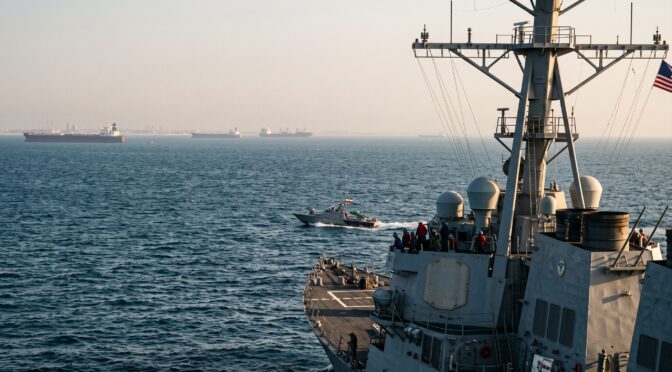
During the reporting period of July 25 to July 31, 2026, the strategic environment in the Middle East deteriorated sharply, marking the functional collapse of the June 17 Islamabad Memorandum of Understanding (MoU)1. The theater is currently dominated by a volatile “dual-track” paradigm: both Washington and Tehran are attempting to maintain the facade of diplomatic engagement through Omani and Swiss backchannels, while simultaneously engaging in aggressive kinetic escalations to maximize their respective negotiating leverage3.
The defining development of the week was a paradigm shift in Gulf security architecture: the execution of joint United States-Saudi Arabian airstrikes against Iranian-backed Iraqi militias (Hashed al-Shaabi) on July 295. This joint kinetic action, which resulted in the deaths of at least 20 militants and five commanding officers of the Islamic Revolutionary Guard Corps (IRGC) Quds Force, signifies Riyadh’s departure from its traditional posture of proxy buffering. Saudi Arabia is now directly responding to Houthi and Iraqi militia strikes on its critical energy infrastructure, fundamentally altering the deterrence calculus in the Persian Gulf6.
Diplomatically, the Bürgenstock architecture has stalled. Omani mediators proposed a 10-day truce centered on reopening the Strait of Hormuz in exchange for the lifting of the US naval blockade; Tehran rejected the framework, insisting on its right to levy mandatory maritime tariffs through its newly established Persian Gulf Strait Authority (PGSA)9. In response, the US Department of the Treasury unleashed a targeted wave of economic sanctions aimed at dismantling Iran’s maritime extortion network, specifically targeting the PGSA alongside associated maritime insurance fronts10. Domestically, the Iranian regime faces compounding fragility. A devastating macroeconomic contraction,characterized by a forecasted 68.9% average inflation rate and the rial plummeting to over 1.9 million to the US dollar,has sparked renewed domestic unrest, prompting the state to execute dissidents in Isfahan to preempt wartime uprisings13. The week concluded with both the United States and Israel finalizing operational plans for a severe bombardment campaign targeting Iranian energy infrastructure scheduled for early August, threatening to plunge the region into a state of total war5.
Detailed Operational and Diplomatic Developments
Bilateral Interactions
The diplomatic framework intended to de-escalate the conflict, the Islamabad MoU, signed remotely by US President Donald Trump and Iranian President Masoud Pezeshkian on June 17 following mediation by Pakistan and Qatar, has fractured under the weight of irreconcilable strategic objectives17. While the technical negotiations initiated at the Bürgenstock resort in Switzerland succeeded in establishing a High-Level Committee and subsidiary working groups on nuclear proliferation, sanctions relief, and dispute resolution, the translation of these high-level commitments into localized, durable ceasefires has systematically failed across all fronts18.
The United States and Iran fundamentally disagree on the sequencing of the MoU’s implementation. Washington demands the immediate and unconditional reopening of the Strait of Hormuz to international commercial shipping as a non-negotiable prerequisite for advancing sanctions relief, releasing frozen Iranian assets, and capitalizing the proposed $300 billion post-war reconstruction fund17. Conversely, Tehran interprets the MoU as implicitly granting it administrative sovereignty over the waterway. The Islamic Republic continues to utilize the threat of maritime interdiction and naval mining to force the unilateral lifting of the US naval blockade9.
In a bid to salvage the diplomatic track and avert a total collapse of the Bürgenstock architecture, Omani mediators intervened heavily between July 27 and July 28 with a formal 10-day truce proposal9. The Omani framework suggested the creation of a regional consortium to manage the Strait of Hormuz, aligning with the defunct MoU requirement that Iran consult Gulf states regarding waterway management, and reproposed a system where global shipping companies would pay voluntary maintenance fees to Iranian authorities9.
The rejection of this proposal by Iran’s Supreme National Security Council (SNSC) and the Khatam ol Anbia Central Headquarters underscores the current dominance of the IRGC-aligned faction within Tehran’s factionalized decision-making apparatus9. This hardline coalition, heavily influenced by IRGC commander Major General Ahmad Vahidi, calculates that surrendering total sovereign control over the Strait deprives Iran of its only potent asymmetrical leverage against US economic strangulation9. While a more pragmatic pro-negotiation bloc, including President Pezeshkian, Foreign Affairs Minister Abbas Araghchi, and Parliament Speaker Mohammad Bagher Ghalibaf, favors compromising on the definition of “control” to secure desperately needed economic relief, they are currently outmaneuvered by the hardliners and the ultra-radical Paydari Front, who view any capitulation on maritime sovereignty as a betrayal of revolutionary principles9.
A critical pillar of the Bürgenstock negotiations was the establishment of a “deconfliction cell” designed to monitor the cessation of hostilities in Lebanon and decouple the Levant from the Persian Gulf theater2. The Trilateral Framework Agreement called for the Lebanese Armed Forces (LAF) to assume security responsibility in designated “pilot zones” after disarming non-state actors, specifically Hezbollah22. During this reporting period, the LAF initiated a broad security plan to close smuggling routes along the Syrian border in the Hezbollah-dominated Hermel District, aiming to curb the illicit flow of weapons and fuel8.
However, the pilot zone initiative was severely hindered by localized friction and deep-seated mistrust. On July 27, the LAF formally accused the Israel Defense Forces (IDF) of firing near Lebanese military positions in Zawtar el Gharbiyeh, effectively paralyzing the handover process and violating the deconfliction protocols8. From the perspective of Israeli intelligence and political leadership, the pilot zones are inherently flawed; Israeli political sources maintained this week that there will be no IDF withdrawal from the current “yellow line” in southern Lebanon until Hezbollah’s terrorist infrastructure is verifiably dismantled and the group is completely disarmed, a condition Hezbollah violently rejects7. Consequently, the linkage between the Lebanese front and the broader US-Iran conflict remains unbroken.
Economic Statecraft
The economic dimension of the US-Iran conflict has escalated into a structural war of attrition. Washington is utilizing sophisticated financial statecraft to systematically dismantle Iran’s attempts to monetize the geopolitical crisis, while Iran attempts to institutionalize a permanent, sanctions-resistant maritime toll regime to fund its war effort and stabilize its collapsing domestic economy10.
The Reversal of Sanctions Relief: From GL X to GL X1 Following the signing of the Islamabad MoU, the US Treasury’s Office of Foreign Assets Control (OFAC) issued General License X (GL X) on June 22, 2026. This license represented the most significant easing of sanctions in decades, temporarily authorizing the production, delivery, and sale of Iranian-origin crude oil, petroleum products, and petrochemicals and notably permitting transactions to be cleared in US dollars25. The strategic intent was to provide Tehran with an immediate economic dividend for maintaining the ceasefire and reopening the Strait of Hormuz.
However, following renewed Iranian kinetic attacks on commercial shipping in early July, a direct violation of the MoU, Washington abruptly revoked this authorization. OFAC replaced it with General License X1 (GL X1), which mandated a strict 10-day wind-down period that officially expired on July 1725. By the week of July 25, the grace period had fully elapsed, placing global shipping and insurance conglomerates under extreme compliance pressure and effectively strangling Iranian energy revenues once again.
The transition from GL X to GL X1 involved sweeping structural changes to the sanctions architecture, fundamentally altering the risk calculus for international entities engaging with Iran’s energy sector.
| Regulatory Parameter | General License X (June 22 – July 7, 2026) | General License X1 (July 7 – July 17 Wind-Down) | Strategic Implication |
| New Transactions | Broadly authorized for Iranian-origin crude, petrochemicals, and petroleum products. | Strictly prohibited. No new sales, purchases, or shipments permitted after July 7. | Immediate cessation of Iranian oil exports; reinstatement of the de facto maritime and economic blockade29. |
| Payment Clearances | Authorized in US dollar-denominated funds directly to Iran or blocked persons. | Direct USD payments prohibited. Funds must be routed to blocked, interest-bearing accounts in the US. | Cuts off Tehran’s access to hard currency, exacerbating the domestic liquidity crisis and halting military supply chain financing26. |
| Maritime Services | Authorized for vessel management, crewing, bunkering, insurance, and safe docking. | Permitted strictly and only if ordinarily incident and necessary to wind down previously authorized trades. | Forces global insurers (P&I clubs) to withdraw coverage from vessels carrying Iranian cargo, rendering transit legally and financially impossible30. |
| US Importation | Expressly permitted the importation of Iranian energy products into the United States. | Prohibited, except for concluding shipments initiated prior to the July 7 revocation date. | Eliminates the symbolic and economic breakthrough of direct US-Iran energy trade, restoring pre-war maximum pressure26. |
Targeting the Extortion Network: PGSA, PGMIC, and HormuzSafe Tehran’s strategy to circumvent the US naval blockade and offset the loss of oil revenues relies on establishing “chokepoint jurisprudence.” By mandating that international vessels submit to the authority of the newly created Persian Gulf Strait Authority (PGSA), Iran is attempting to legitimize its administrative control over the Strait of Hormuz10. To enforce this, Iran mandated that transiting vessels purchase maritime insurance and navigational services through state-backed entities, threatening interdiction for non-compliance.
On July 29, the US Treasury escalated its economic countermeasures by specifically designating the Persian Gulf Marine Insurance Company (PGMIC) and the HormuzSafe Marine Services Authority as Specially Designated Nationals (SDNs)10. The State Department and Treasury indicated that these organizations were established by Iran’s Central Insurance organization to provide coercive “insurance” against risks created by the IRGC itself, acting as a sophisticated, state-sponsored extortion racket designed to force shipping companies to pay in digital assets to evade sanctions10. Furthermore, updated OFAC guidance (FAQ 1249) clarified that U.S. persons are prohibited from receiving any services from the Government of Iran, including guarantees of safe passage, even when no monetary payment is made11. By sanctioning the administrative, operational, and financial institutions underpinning this transit regime, Washington is signaling that it will dismantle the bureaucratic architecture of Iran’s blockade, not just its physical military assets10.
Macroeconomic Collapse and Internal Fragility
The cumulative effect of the reinstated blockade, the revocation of GL X, and the intense wartime environment has triggered a severe macroeconomic crisis within Iran, threatening the internal stability of the regime. A July update from the International Monetary Fund (IMF) drastically revised Iran’s 2026 economic outlook.
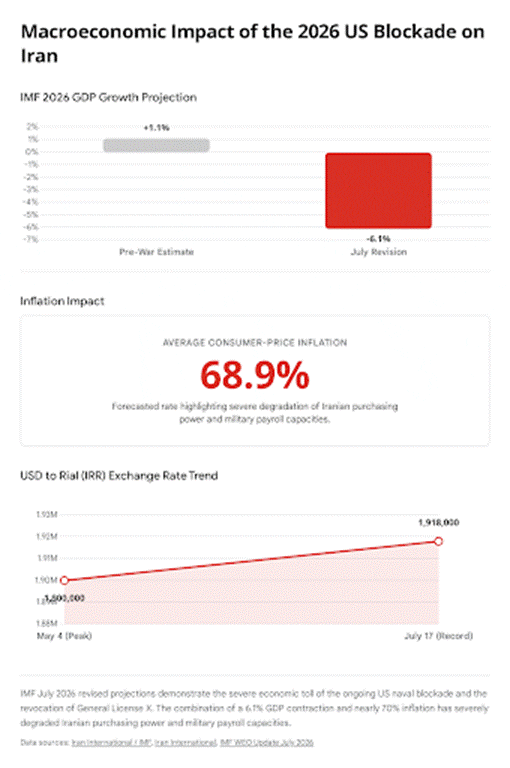
Prior to the escalation, the IMF projected a modest 1.1% GDP expansion; the July revision now forecasts a catastrophic 6.1% contraction, marking one of the sharpest economic downgrades in the region’s history13. Inflation is projected to average an extraordinary 68.9% for the year, utterly devastating domestic purchasing power and severely inflating the cost of imported goods, raw materials, and medicine13. On the open market, the Iranian rial collapsed to a record low of 1,918,000 against the US dollar by mid-July, rendering the official monthly minimum wage equivalent to approximately $8714.
This economic desperation has directly degraded the regime’s operational and administrative capacity; US intelligence assessments indicate that the Iranian government is actively struggling to meet basic military payroll obligations, risking insubordination within its vast security apparatus9. Domestically, the crisis has catalyzed unrest, forcing the regime to resort to extreme internal repression. On July 28, mass protests erupted in the Malekshahr district of Isfahan following the judiciary’s execution of two young men, Abolfazl Sepahi and Amir-Hossein Safari15. The two men, arrested during anti-government uprisings in January, were convicted of “moharebeh” (waging war against God)16. The executions carried out publicly via iron scaffolding erected in Alikhani Square despite significant international outcry serve as a brutal, preemptive deterrent by the regime, utilizing the death penalty to instill fear and suppress wartime civil unrest driven by economic desperation15.
Kinetic Escalation
The reporting period witnessed a severe intensification of military engagements, shifting from asymmetrical proxy harassment to direct, state-on-state and state-on-proxy bombardments. The scale of the violence indicates that both Washington and Tehran believe kinetic escalation is necessary to secure favorable terms before a potential collapse of the Bürgenstock architecture.
The Joint US-Saudi Air Campaign in Iraq In a historic departure from its traditional defense posture, Saudi Arabia transitioned from relying on proxy forces and Western air defense umbrellas to executing direct offensive operations alongside the United States. On July 29, US and Saudi fighter aircraft conducted a massive joint strike across multiple Iraqi provinces, including Nineveh, Babil, Wasit, Basra, Kirkuk, Karbala, and Diyala5. The primary targets were logistics hubs, weapons storage facilities, and command nodes belonging to the Hashed al-Shaabi (the Popular Mobilization Forces or PMF), an umbrella organization of powerful pro-Iran militias deeply integrated into the Iraqi state apparatus but acting under IRGC direction5.
The strategic impact of these joint strikes was profound. The operation resulted in the deaths of at least 20 militants5. Crucially, the casualties included five Iranian military advisers definitively affiliated with the IRGC’s elite Quds Force, the branch explicitly responsible for extraterritorial operations and proxy management5. Iranian state media confirmed the return of the five IRGC bodies via the Mehran border crossing in Ilam province on July 31, acknowledging the state-level losses7. This joint action was framed by US Central Command (CENTCOM) as a strong, necessary response to over 30 IRGC-directed aerial drone attacks targeting US forces and Saudi energy infrastructure in the preceding 72 hours6. By directly participating in these strikes, Riyadh signaled to Tehran that it possesses the political will and operational capability to enact active escalation dominance in response to threats against its sovereignty, abandoning its previous strategy of plausible deniability. The Iraqi government strongly condemned the strikes as a flagrant violation of its sovereignty, further straining Baghdad’s relationship with Washington7.
United States Strikes Inside Iran Following a 13-day pause designed to give the Bürgenstock negotiations breathing room, the United States resumed direct, sustained strikes on Iranian sovereign territory21. Late on July 28 and into July 29, CENTCOM launched a “heavy wave” of strikes against dozens of IRGC targets spanning Iran’s coastal and interior provinces40. The operation systematically targeted military command centers, missile and drone assembly facilities, coastal surveillance networks, and maritime interdiction capabilities40.
While the volume of strikes (roughly 1,000 targets engaged over two weeks) is lower than the initial phases of Operation Epic Fury in March and April (which saw 13,000 targets struck), the precision and focus reflect an intent to degrade Iran’s specific capability to close the Strait of Hormuz21. President Donald Trump characterized the operation as a “powerful response” to attempted Iranian surprise attacks on US forces, promising to hit Iran “very hard” and emphasizing that the US military is systematically obliterating Iran’s military capacity7. Additional localized US strikes targeted Qeshm Island in the Strait of Hormuz, resulting in reported civilian casualties, and uninhabited border regions in northwestern Iran near Piranshahr7.
Iranian Retaliatory Capabilities and the Jordanian Shield Despite the intense US bombardment, Iran has maintained a high tempo of retaliatory strikes, utilizing advanced munitions to target American regional architecture. Intelligence indicates that the IRGC Aerospace Force has deployed advanced variants of the Kheybar Shekan medium-range ballistic missile (MRBM) during this phase of the conflict39. US officials have conceded that the maneuverability and speed of these specific missiles have allowed some to successfully evade US regional air defenses, increasing the risk to forward-deployed personnel39.
The primary vector for Iranian ballistic retaliation has been US installations in Jordan, specifically the strategically vital Al-Azraq/Muwaffaq Salti Air Base7. On July 29 and July 30, the Jordanian military and US air defense batteries intercepted multiple barrages of Iranian missiles targeting the facility7. While the IRGC falsely claimed that its strikes successfully destroyed several US F-35 stealth fighters and killed American personnel in Jordan, CENTCOM firmly rejected the claim, stating all incoming munitions were intercepted or failed in flight7. However, Iran’s army subsequently claimed to be receiving targeting intelligence and base layouts from sympathetic Jordanian citizens, highlighting Tehran’s ongoing efforts to exploit domestic political fractures within US-allied nations to facilitate intelligence gathering7.
Furthermore, the geopolitical dimensions of the conflict were starkly highlighted when Ukrainian President Volodymyr Zelenskyy reported on July 25 that Russian intelligence is actively supplying Iran with satellite imagery of US bases in the Persian Gulf21. This imagery is allegedly being used to aid in battle damage assessments and significantly improve the accuracy of IRGC targeting against American installations21. This development underscores Moscow’s role as a strategic spoiler in the Middle East, enabling Iranian kinetic operations to bog down US military resources and distract Washington from the European theater.
The Strait of Hormuz Chokepoint and Beyond The maritime domain remains the primary economic battleground of the conflict. The US Navy continues to aggressively enforce a strict blockade on Iranian ports, redirecting dozens of commercial vessels and directly intervening to stop smuggling7. During the reporting period, US forces boarded the Comoros-flagged tanker M/T Charminar and fired upon the engine room of the Lavine after it ignored warnings and attempted to run the blockade21.
To project continued control over the Strait and punish compliance with the US blockade, the IRGC struck and temporarily halted multiple oil tankers on July 28, accusing them of ignoring PGSA navigational warnings7. The maritime threat vector also expanded significantly beyond the Persian Gulf. On July 29, an unprecedented and highly sophisticated drone attack struck the Egyptian Mediterranean port of Damietta7. The strike caused significant fires aboard the Energos Winter, a Floating Storage and Regasification Unit (FSRU), and the GasLog Salem LNG tanker7. While currently unclaimed, the attack’s sophistication and specific target profile, liquefied natural gas infrastructure, strongly suggest the involvement of Iranian-aligned actors seeking to disrupt alternative energy supply chains to Europe, thereby maximizing the global economic pain caused by the Hormuz closure and pressuring Western capitals to force a US concession43.
Proxy Group Activities
Iran’s Axis of Resistance continues to execute decentralized operations designed to provide Tehran with plausible deniability while advancing its overarching strategic goal of coercing regional states into capitulating to Iranian hegemony8.
- The Houthis (Yemen): Evolving beyond their initial strategy of Red Sea maritime interdictions, Houthi forces have dramatically escalated attacks on critical Saudi infrastructure vital to bypassing the Strait of Hormuz8. On July 27, Houthi military spokesperson Yahya Sarea announced drone strikes targeting petroleum facilities in Riyadh and the Eastern Province. These strikes culminated in a confirmed fire at the highly sensitive Abqaiq oil facility, the critical nexus of the East-West pipeline that terminates at the Red Sea port of Yanbu8. This operational shift aims to systematically disrupt Saudi Arabia’s alternative export routes, violently reinforcing Iran’s leverage over global energy markets and demonstrating that no Gulf energy infrastructure is safe, regardless of its distance from the Persian Gulf8. The Houthis also claimed a ballistic missile attack on the Saudi-flagged chemical tanker NCC Ghazal on July 28, explicitly punishing Riyadh for its participation in anti-Iranian operations9.
- Hamas (Gaza): In a separate but tangentially related diplomatic track, President Trump announced on July 30 that Hamas mediators had agreed to the next phase of a peace deal involving the complete disarmament of the militant group in the Gaza Strip, mediated by an international “Board of Peace”7. However, Israeli political and military sources quickly cautioned that the IDF would not withdraw from Gaza until the disarmament was physically verified and absolute, indicating that the conflict in the Levant remains unresolved despite the diplomatic announcements7.
Geopolitical Postures
The conflict has forced major geopolitical realignments, as regional and global actors attempt to navigate the collapse of the MoU, the intensification of hostilities, and the looming threat of a broader regional conflagration.
| Actor | Primary Posture | Key Actions (July 25 – July 31, 2026) |
| China | Economic Pragmatism & Navigational Hedging | Initiated direct diplomatic communications with the Houthis (July 28), formally requesting safe passage for Chinese-owned oil tankers transiting the Red Sea9. This demonstrates Beijing’s preference to secure its own vital energy supply chains bilaterally through diplomatic channels rather than joining the US-led maritime security coalition, undermining US efforts to isolate the Axis of Resistance. |
| GCC / UAE | Active Defense & Strategic Pivoting | Saudi Arabia definitively abandoned its defensive posture, executing joint airstrikes with the US in Iraq against IRGC and PMF targets, signaling a willingness to engage in direct confrontation5. The UAE announced the acceleration of the Fujairah pipeline expansion to permanently bypass the Strait of Hormuz and reduce its strategic vulnerability to Iranian chokepoint control44. Bahrain hosted a joint GCC military exercise (“Bahrain Shield”) from July 28-30 to improve integrated air defense readiness and command-and-control interoperability among Gulf states9. |
| Pakistan | Active Mediator | Maintained diplomatic pressure on both Washington and Tehran to adhere to the Bürgenstock framework, attempting to salvage the High-Level Committee structures and the roadmap for a 60-day final agreement despite the escalating kinetic environment18. |
| Israel / Russia | Kinetic Opportunist (ISR) / Strategic Spoiler (RUS) | Israel finalized operational coordination with the US for a severe, joint bombardment campaign targeting Iranian energy infrastructure, scheduled for early August5. Russia provided satellite targeting intelligence to Iran to improve the accuracy of IRGC ballistic missile strikes against US Gulf bases, actively degrading American force protection capabilities21. |
Internal Regime Dynamics: The Isolation of Mojtaba Khamenei A significant intelligence indicator emerged during this reporting period regarding the internal stability and command-and-control continuity of the Iranian regime. On July 25, Gholamali Haddad-Adel, a prominent member of the Expediency Discernment Council and father-in-law to Supreme Leader Mojtaba Khamenei, publicly stated that Mojtaba is “not in contact with any person or institution” due to unspecified “certain issues”21.
While Haddad-Adel insisted the Supreme Leader is healthy, this prolonged and public isolation, following persistent, unverified rumors that Mojtaba was severely incapacitated during joint US-Israeli strikes in February, has triggered intense speculation regarding the true locus of power within the Supreme National Security Council21. Despite this reported isolation, official statements attributed to Mojtaba were published on July 26 demanding Israel’s unconditional capitulation in Lebanon as a prerequisite for peace8. This dynamic strongly suggests that competing factions within the regime, likely the IRGC-Vahidi hardliners, are utilizing the Supreme Leader’s authority as a veneer to mandate uncompromising wartime policies and block diplomatic concessions favored by the Pezeshkian administration.
Chronological Timeline
- July 25: Ukrainian President Zelenskyy publicly reveals that Russian intelligence is actively supplying Iran with satellite imagery to aid in targeting US Gulf bases21. Gholamali Haddad-Adel states Supreme Leader Mojtaba Khamenei is entirely out of contact with all state institutions46.
- July 26: A statement officially attributed to Mojtaba Khamenei is released, declaring Hezbollah’s preservation and Israel’s complete withdrawal from Lebanon as non-negotiable prerequisites for resolving the conflict with the United States8.
- July 27: The Lebanese Armed Forces accuse the IDF of firing near Lebanese military positions, stalling the MoU pilot zone implementation in Zawtar el Gharbiyeh8. Houthi drones strike the Saudi Abqaiq oil facility, targeting the critical nexus of the East-West bypass pipeline8. Jordan intercepts multiple drones transiting its airspace8.
- July 28: Iran publicly executes two protesters (Abolfazl Sepahi and Amir-Hossein Safari) in Alikhani Square, Isfahan, sparking local riots and international condemnation15. Oman proposes a 10-day formal truce based on voluntary maritime fees, which Iran swiftly rejects9. Houthis attack the Saudi-flagged chemical tanker NCC Ghazal9.
- July 29: Unprecedented joint US-Saudi airstrikes target PMF and IRGC positions across multiple Iraqi provinces, killing at least 20 militants, including 5 Quds Force officers5. The US initiates a “heavy wave” of retaliatory airstrikes targeting IRGC command and drone centers inside Iran40. The US Treasury officially sanctions the PGSA, PGMIC, and HormuzSafe, targeting the maritime extortion network10. A highly sophisticated drone attack strikes Damietta Port in Egypt, damaging the Energos Winter and GasLog Salem LNG vessels7. A US Senate resolution attempting to limit President Trump’s war powers against Iran fails by a vote of 50-4949.
- July 30: Jordan successfully intercepts a barrage of five Iranian ballistic missiles targeting US bases7. A joint GCC military exercise (“Bahrain Shield”) commences in Bahrain to improve integrated air defense9. President Trump announces Hamas has agreed to a complete disarmament framework via the Board of Peace7.
- July 31: The bodies of the five IRGC officers killed in the joint strikes in Iraq are formally returned to Iran via the Mehran border crossing7. President Trump praises the military’s rapid progress in degrading Iran’s capabilities and publicly blames domestic water system cyberattacks on state governors rather than Iranian hackers7. Multiple intelligence sources indicate the US and Israel are in final preparations for a massive, coordinated bombardment of Iranian energy infrastructure scheduled for the coming weekend5.
Please share the link on Facebook, Forums, with colleagues, etc. Your support is much appreciated and if you have any feedback, please email us in**@*********ps.com. If you’d like to request a report or order a reprint, please click here for the corresponding page to open in new tab.
Sources Used
- Iran declares Islamabad agreement suspended, blames US violations | Middle East Eye, https://www.middleeasteye.net/news/iran-declares-islamabad-agreement-suspended-blames-us-violations
- The Islamabad MOU and the Challenges Ahead for the Gulf States – Gulf Research Center | GRC, https://www.grc.net/single-commentary/401
- The US-Iran Islamabad MoU: Assessing the Prospects for the Bürgenstock Negotiations, https://www.specialeurasia.com/2026/06/22/us-iran-burgenstock-negotiations/
- Live: US and Iran pause attacks as diplomatic efforts continue – CGTN, https://news.cgtn.com/news/2026-07-28/Live-US-and-Iran-pause-attacks-as-diplomatic-efforts-continue-1P92z5wEEQE/p.html
- Live Updates: Iran accuses U.S. of escalating tensions as Washington prepares new strikes, https://www.cbsnews.com/live-updates/iran-war-us-trump-strait-of-hormuz-kuwait-jordan-air-base/
- US thwarts an Iranian missile attack and launches strikes with Saudi Arabia against militias in Iraq, https://apnews.com/article/iran-war-us-trump-saudi-houthis-iraq-8d2ae29300a8dc5495a4ce56c5312bf1
- Iran conflict expands as Senate again rejects effort to limit Trump’s war powers – CBS News, https://www.cbsnews.com/live-updates/us-iran-war-trump-saudi-arabia-strait-of-hormuz/
- Iran Update Special Report, July 27, 2026 | ISW, https://understandingwar.org/research/middle-east/iran-update-special-report-july-27-2026/
- Iran Update Special Report, July 28, 2026, https://understandingwar.org/research/middle-east/iran-update-special-report-july-28-2026/
- New U.S. Sanctions Target Iran’s Emerging Strait of Hormuz Maritime Services Network, https://gcaptain.com/new-u-s-sanctions-target-irans-emerging-strait-of-hormuz-maritime-services-network/
- OFAC Expands Guidance on Strait of Hormuz “Safe Passage” Restrictions, https://sanctionsnews.bakermckenzie.com/ofac-expands-guidance-on-strait-of-hormuz-safe-passage-restrictions/
- Iranian Retaliation Reaches Damietta as a Third Front Opens – Windward, https://windward.ai/blog/iranian-retaliation-reaches-damietta-as-a-third-front-opens/
- Iran faces region’s harshest mix of wartime contraction and inflation, https://www.iranintl.com/en/202607114644
- Iran’s rial hits new low as dollar nears 1.92 million, https://www.iranintl.com/en/202607178061
- Iran executes two protesters amid heavy security in Isfahan, https://www.iranintl.com/en/202607289410
- Iran hangs two anti-government protesters in public, https://m.economictimes.com/news/international/world-news/iran-hangs-two-anti-government-protesters-in-public/articleshow/132676458.cms
- Islamabad Memorandum – Wikipedia, https://en.wikipedia.org/wiki/Islamabad_Memorandum
- U.S.–Iran Talks Yield 60-Day Peace Roadmap – Institute for Applied Geopolitics, https://appliedgeopolitics.com/blog/united-states-iran-sixty-day-peace-roadmap
- U.S., Iran agree to reach final deal within 60 days – Qazinform, https://qazinform.com/news/us-iran-agree-to-reach-final-deal-within-60-days-2732e7
- Joint Statement by Mediators of Switzerland Talks – WANA, https://wanaen.com/joint-statement-by-mediators-of-switzerland-talks/
- Iran Update Special Report, July 26, 2026 | ISW, https://understandingwar.org/research/middle-east/iran-update-special-report-july-26-2026/
- Iran Update Special Report, June 28, 2026 | ISW, https://understandingwar.org/research/middle-east/iran-update-special-report-june-28-2026/
- IDF redeployment hinges on Hezbollah disarmament, US officials say ahead of Netanyahu-Trump summit – The Jerusalem Post, https://www.jpost.com/middle-east/article-903894
- Iran’s Negotiating Weapon: The Persian Gulf Strait Authority – SpecialEurasia, https://www.specialeurasia.com/2026/06/01/iran-persian-gulf-authority/
- OFAC Revokes Iran General License X: a Stark Reminder That Evolving Sanctions Require Continuous Vigilance | Bracewell LLP, https://www.bracewell.com/resources/ofac-revokes-iran-general-license-x-a-stark-reminder-that-evolving-sanctions-require-continuous-vigilance/
- OFAC Rescinds Iranian Sanctions Relaxation Following Renewed Conflict | Foley & Lardner, https://www.foley.com/insights/publications/2026/07/ofac-rescinds-iranian-sanctions-relaxation-following-renewed-conflict/
- Iran Shipping Update – June 23, 2026 | UANI, https://www.unitedagainstnucleariran.com/blog/iran-shipping-update-june-23-2026
- US issues two-month sanctions waiver on Iranian oil – Lloyd’s List, https://www.lloydslist.com/LL1157632/US-issues-two-month-sanctions-waiver-on-Iranian-oil
- Alert: In response to renewed shipping attacks, OFAC revokes Iran General License X and issues wind-down General License X1 | Herbert Smith Freehills Kramer | Global law firm, https://www.hsfkramer.com/notes/sanctions/2026-posts/in-response-to-renewed-shipping-attacks-ofac-revokes-iran-general-license-x-and-issues-wind-down-general-license-x1
- Strait of Hormuz: Sanctions Considerations – Steamship Mutual, https://www.steamshipmutual.com/publications/articles/strait-hormuz-sanctions-considerations-0
- Sanctions, AML, Anti-Corruption Publications – MassPoint Legal PLLC, https://masspointpllc.com/hdeel-abdelhady-publications/sanctions-aml/
- OFAC Reinstates U.S. Sanctions Related to Sales of Iranian Oil | SmarTrade, https://www.thompsonhinesmartrade.com/2026/07/ofac-reinstates-u-s-sanctions-related-to-sales-of-iranian-oil/
- Iran Update: OFAC Revokes Iran Sanctions Waiver Issued on 17 June 2026, https://www.westpandi.com/news-and-resources/news/july-2026/iran-update-ofac-revokes-iran-sanctions-waiver-iss/
- New Iran Authorization Implements Memorandum of Understanding – WilmerHale, https://www.wilmerhale.com/en/insights/client-alerts/20260625-new-iran-authorization-implements-memorandum-of-understanding
- July 2026 World Economic Outlook Update: Global Economy in Crosscurrents of War and Technology – International Monetary Fund, https://www.imf.org/-/media/files/publications/weo/2026/update/july/english/text.pdf
- Iran hangs two anti-government protesters in public – Global News, https://globalnation.inquirer.net/332810/iran-hangs-two-anti-government-protesters-in-public
- U.S. thwarts Iranian missile attack on U.S. troops, strikes Iranian proxies in Iraq with Saudi forces – CBS News, https://www.cbsnews.com/live-updates/us-iran-war-trump-strait-of-hormuz-talks-oman/
- 2026 Iran war | Deal, Explained, United States, Israel, Strait of Hormuz, Map, & Conflict, https://www.britannica.com/event/2026-Iran-war
- Iran Update Special Report, July 25, 2026 | ISW, https://understandingwar.org/research/middle-east/iran-update-special-report-july-25-2026/
- US strikes Iran for first time in days after Jordan missile attack, https://www.washingtonexaminer.com/policy/defense/4668554/us-strikes-iran-jordan-attack-retaliation/
- U.S. hits dozens more targets in Iran as violence widens, https://www.washingtonpost.com/national-security/2026/07/29/us-strikes-iran-response-surprise-ballistic-missile-launch/
- US launches strikes on Iranian targets a day after it foiled missile attack on American forces, https://apnews.com/article/iran-war-us-hormuz-strait-july-29-2026-e31d249ba6443decdd3e63cd00f0fb84
- Drone Attack Rocks Egypt’s Damietta Port | ENERGOS WINTER & GASLOG SALEM on Fire, https://www.youtube.com/shorts/-uBPC5EsyxU
- Iran Update Special Report, May 15, 2026 | ISW, https://understandingwar.org/research/middle-east/iran-update-special-report-may-15-2026/
- GCC forces hold military drills in Bahrain amid regional tensions – DAWN.COM, https://www.dawn.com/news/2019253
- Mojtaba Khamenei has no contact with any person or institution, father-in-law says, https://www.iranintl.com/en/202607264379
- ‘Panicked’ Trump bets it all, shipping thousands of marines straight into IRGC’s deadly Gulf trap? – Hindustan Times, https://www.hindustantimes.com/videos/panicked-trump-bets-it-all-shipping-thousands-of-marines-straight-into-irgcs-deadly-gulf-trap-101774092495351.html
- Slain Khamenei’s 1983 video haunts Trump now as US loses to Iran in Hormuz strait| Israel| Gulf| oil – Hindustan Times, https://www.hindustantimes.com/videos/slain-khameneis-1983-video-haunts-trump-now-as-us-loses-to-iran-in-hormuz-strait-israel-gulf-oil-101773656731123.html
- Senate Votes Down Iran War Powers Resolution After Fetterman Votes with GOP Majority, https://www.democracynow.org/2026/7/31/headlines/senate_votes_down_iran_war_powers_resolution_after_fetterman_votes_with_gop_majority