Executive Summary
The war in Ukraine has reshaped modern warfare for smaller militaries, largely because Ukraine built and launched vast fleets of long-range aerial and sea drones. By late 2026, what began as an emergency response for an outgunned military turned into a systematic, organized campaign that threatens targets across European Russia.
These long-range strikes have fundamentally changed the dynamic of the war. By repeatedly hitting key energy facilities, airbases, supply centers, and covert shipping networks that sustain Russia’s economy, Ukraine has neutralized Russia’s traditional defense of vast geographic depth. By mid-2026, Ukrainian drones were striking major Russian oil refineries, weapons factories, and airfields up to 1,800 kilometers behind the front lines. This reach covers nearly all of Russia’s European industrial heartland, removing the safe zone that once protected sites like the Kapotnya refinery in Moscow, the Lukoil plant in Perm, the Ilsky refinery in Krasnodar Krai1, and the Engels airbase in Saratov2.
The impact of these strikes extends far beyond immediate physical damage. It is creating serious strains on Russia’s economy, public morale, and diplomatic position. This report outlines the main ways Ukraine’s drone campaign affects Russia: the technology driving it, the damage to Russian military infrastructure, the economic pressure resulting from physical destruction, the public reaction as the war reaches ordinary citizens, and the leverage it provides Kyiv in diplomatic discussions.
1. Drone Technology and Cost Advantages
The effectiveness of Ukraine’s long-range strikes stems from the rapid creation of a domestic drone industry. Before this conflict, striking targets over 1,000 kilometers away required expensive cruise missiles or stealth aircraft. Ukraine demonstrated that a nation can assemble an affordable, high-volume drone force capable of disrupting a major military power4.
Growing the Drone Arsenal
Ukraine’s long-range drone fleet expanded rapidly, transitioning from modified commercial models to specialized military systems. Early in the war, Ukraine adapted off-the-shelf commercial drones, such as the Chinese Mugin-5, to strike the Black Sea Fleet headquarters in 20228. To achieve greater range, larger payloads, and better survivability, Ukrainian engineers began producing custom designs.
Between 2024 and 2026, Ukraine deployed several key systems. The UJ-26 Bober (Beaver), featuring a distinctive rear-wing layout, can fly 1,000 kilometers with a 20-kilogram payload and frequently targets regions around Moscow. The Liutyi (Fierce), a conventional drone carrying 50 kilograms of explosives, has reliably struck deep inside Russian territory. Ukraine also introduced long-range strike systems like the FP-9, capable of reaching targets up to 850 kilometers away9.
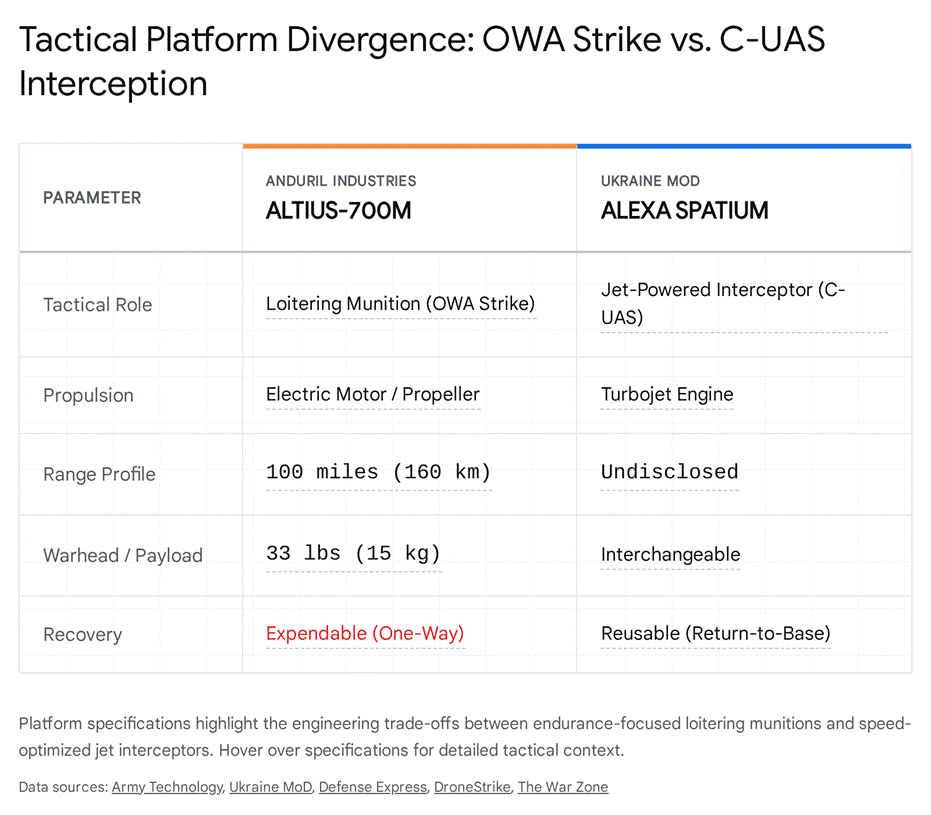
A notable technological step was the development of the Palianytsia, a jet-powered drone system. Built with a Czech-supplied turbojet engine, it reaches speeds of 900 kilometers per hour with a range of up to 700 kilometers10. Flying as low as 15 meters off the ground, it presents a difficult target for Russian air defense radar10. Ukraine developed the system in 18 months and began full production in late 2024. Able to carry up to 100 kilograms of explosives, the domestically produced system operates free from Western restriction on deep strikes inside Russia10.
| System Designation | Propulsion Type | Estimated Range (km) | Cruising Speed (km/h) | Estimated Payload (kg) | Estimated Unit Cost (USD) |
| UJ-26 Bober | Propeller (Pusher) | 1,000 | ~200 | 20 | $30,000 – $50,000 |
| Morok | Propeller (Target Drone Base) | 300 | 290 | 3 – 20 | $20,000 – $40,000 |
| An-196 Liutyi | Propeller (Tractor) | 1,000+ | ~150 – 200 | 50+ | $75,000 – $100,000 |
| Palianytsia | Turbojet | 650 – 700 | 900 | up to 100 | < $1,000,000 |
Beating Air Defenses and Jammers
To counter dense air defenses and signal jamming, Ukrainian developers adapted their navigation methods. A significant advancement involved integrating artificial intelligence (AI) for visual navigation, allowing drones to match real-time camera imagery of terrain against stored satellite maps12.
When electronic jamming disrupts satellite signals, the drones rely on visual guidance11. This allows them to navigate low terrain, bypass radar coverage, and engage targets autonomously without human control12. Select systems use specialized optics, such as the Greek Osiris navigation system, to travel over 3,000 kilometers without satellite guidance16. In response, Russian forces have used high-contrast optical patterns on vehicles and facilities to disrupt computer vision recognition12.
The Math of Drone Warfare
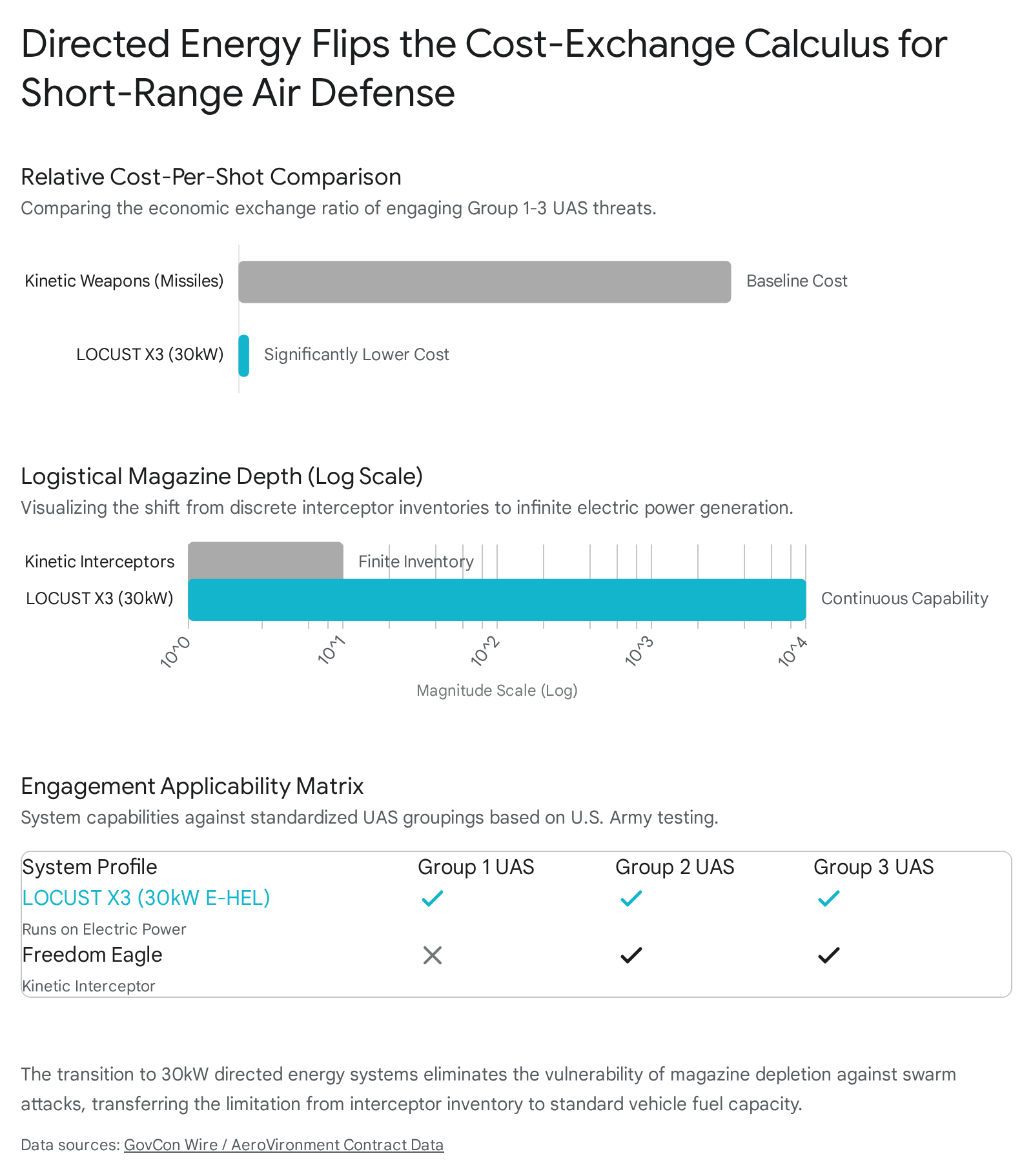
The economics of drone strikes provide a clear cost advantage to the attacker. Ukraine constructs long-range drones using commercial components at a fraction of the cost of the interceptor missiles required to destroy them8. Intercepting a low-cost drone with an advanced surface-to-air missile, such as a Patriot or S-400 system, requires munitions costing millions of dollars18.
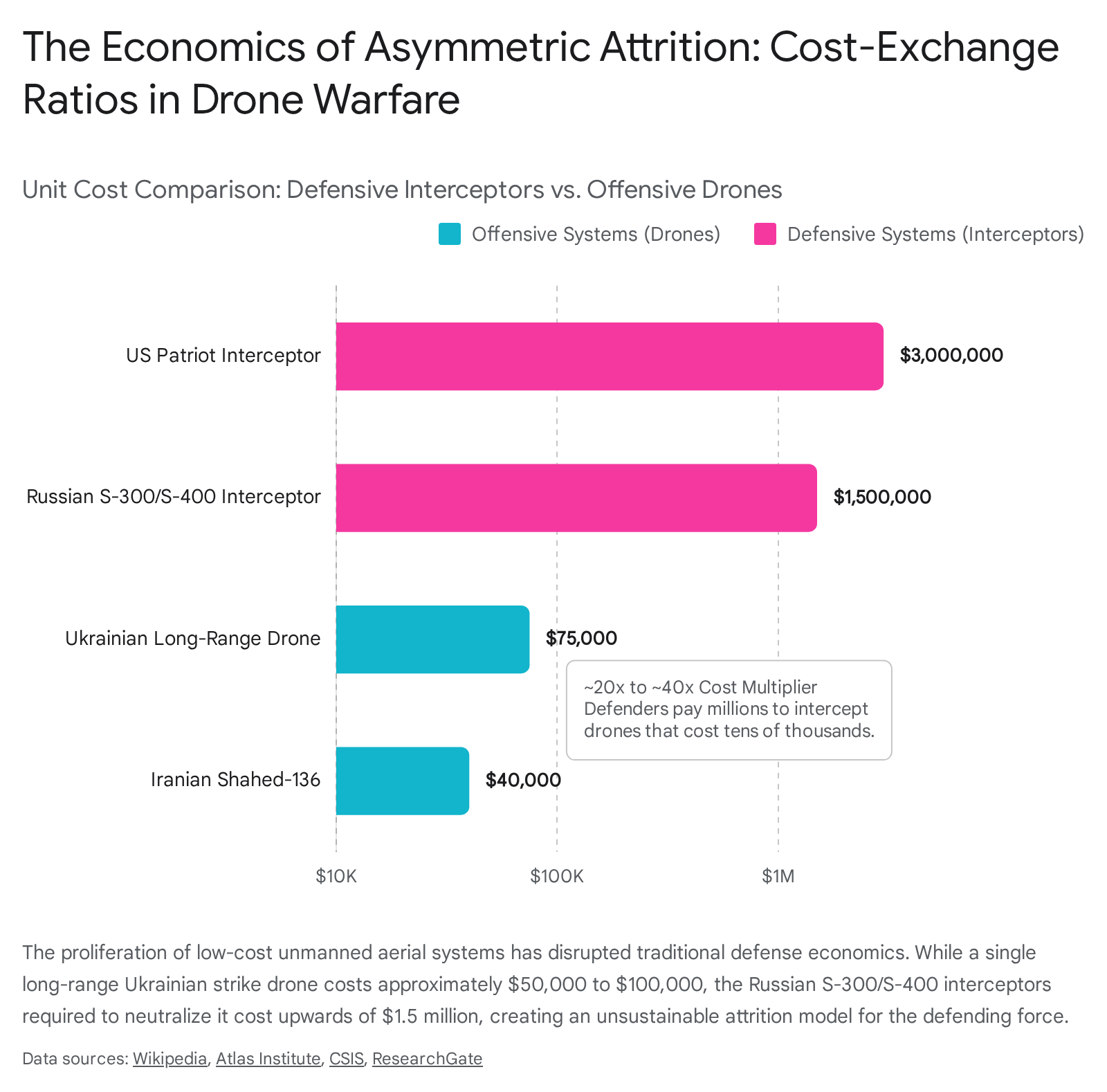
The cost differential creates a significant economic burden for air defense. Using expensive missiles against low-cost drones forces defenders to spend up to 190 times more per engagement than the attacker21. Tactical and mid-range drones average roughly $1,000 per successful strike, presenting a far lower cost profile than traditional cruise missiles. Comparing low-cost, decentralized drone models ($300 to $500) with state-built systems like the Shahed ($20,000 to $80,000) highlights this economic imbalance.
This dynamic leaves defenders with a difficult choice: expend limited, high-cost missiles on cheap airframes or risk damage to valuable industrial and military assets22. Furthermore, launching synchronized swarms of 100 to 200 drones saturates air defenses, increasing the likelihood that strike systems breach target areas16. The March 2026 Kupiansk strike demonstrated this approach, using autonomous flight paths to bypass short-range defenses and hit armored formations24. To preserve high-end air defense missiles, Ukraine has developed low-cost interceptor drones, such as the Sting and FP-1, specifically to engage incoming Russian strike drones25.
Supply Chain Weak Spots
Despite these operational gains, large-scale drone manufacturing remains vulnerable to global supply chain constraints. Sustaining high-volume production depends on specialized raw materials and electronics supplied by limited international vendors27.
Drone airframes require aerospace-grade carbon fiber and titanium, materials subject to tight production capacities28. Electric motors depend on rare-earth magnets, with roughly 90% of global processing concentrated in China. Additionally, specialized microcontrollers and navigation chips are produced by a small number of global manufacturers. Consequently, production output for both sides hinges on component access, where targeted export restrictions can rapidly disrupt manufacturing schedules27.
2. Disruption of Russian Military Infrastructure
A central challenge for Russian defense planning is the vulnerability of rear military infrastructure. For decades, strategic doctrine assumed geographic depth would safeguard facilities, logistics hubs, and airfields. Ukrainian drone operations have effectively neutralized that geographic advantage5.
Long-Range Airbase Operations
In summer 2026, Ukrainian forces conducted Operation Spiderweb, a major coordinated attack against Russian airbases housing strategic bombers30. Targeted facilities included Engels-2 in Saratov, Olenya in the Arctic region, Dyagilevo, and Belaya in Siberia, located over 1,800 kilometers from Ukraine30.
Open-source intelligence confirmed damage to several Tu-95MS, Tu-160, and Tu-22M3 strategic bombers30. Estimates indicate up to 40 aircraft were destroyed or damaged, temporarily impairing nearly one-third of Russia’s active strategic bomber fleet31. Because these aircraft are difficult to replace and costly to maintain, operational losses represent a significant set-back to long-range aviation capabilities35.
To reduce exposure, Russian command redistributed strategic aircraft across remote northern airfields and constructed reinforced shelters to mitigate fragmentation damage31. Relocating assets complicates maintenance routines, accelerates flight-hour wear, and reduces the frequency of stand-off missile sorties against Ukrainian targets37. Furthermore, strikes on strategic assets raise broader defense concerns by directly targeting equipment tied to Russia’s overall deterrence posture38.
Stretching Air Defenses Thin
Protecting infrastructure from the border to the Ural Mountains has placed substantial strain on Russian air defense networks3. Command structures frequently redeploy mobile batteries to cover newly vulnerable regions22.
Satellite imagery confirms air defense units were relocated from peripheral regions, including northern districts, the Kuril Islands, and Kaliningrad, to reinforce coverage around Moscow and key refineries39. Moving equipment to protect industrial plants leaves secondary targets, such as ammunition depots or regional airfields, exposed to follow-up strikes16.
The operational scope expanded to the Caspian Sea, where a strike hit a naval vessel docked in Dagestan, nearly 1,000 kilometers from the front40. In response, regional authorities enacted localized security measures. The Nizhny Novgorod region created a dedicated department to manage drone countermeasures5. In the Leningrad region, local administration organized reservist units equipped with mobile anti-aircraft guns under three-year service agreements41. Consequently, long-range strikes divert defensive resources and force structural adjustments far behind active lines.
3. Physical Impacts on the Russian Economy
International trade limits and price controls initially served as the primary tools to apply economic pressure on Moscow. However, trade realignments, intermediary networks, and non-standard shipping practices mitigated some financial impacts4. Drone strikes apply direct economic pressure by physically damaging energy processing and transport infrastructure. Replacing specialized industrial components requires significant time and capital, directly reducing state energy revenues4.
Wrecking Refineries and the Fuel Crisis
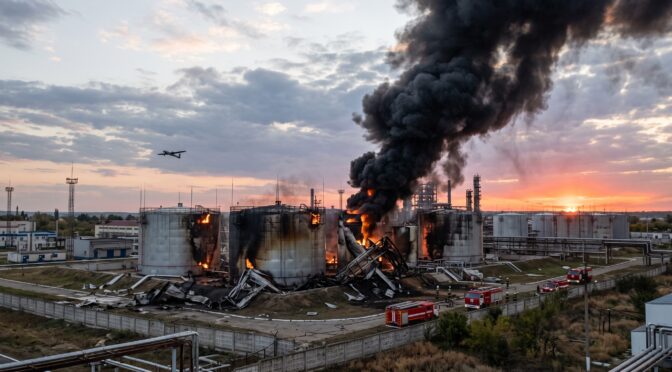
Targeting core revenue streams, Ukrainian drones attacked over two dozen major refineries, processing facilities, and storage depots starting in early 2024. Key locations included the Kapotnya facility in Moscow, plants in Perm and Yaroslavl, and export terminals in Tuapse on the Black Sea1.
By mid-2026, strikes had affected 22 processing facilities, significantly reducing diesel production45. Overall, strikes temporarily reduced national refining capacity by an estimated 15% to 20%46. This led to localized fuel constraints across 78 regions45. To stabilize domestic supply and manage consumer prices, federal authorities placed restrictions on gasoline and aviation fuel exports, lowering foreign currency earnings4.
Financial balance sheets were further impacted by fuel market stabilization payments. Federal mechanisms reimburse domestic refiners to keep internal fuel prices consistent. As refinery damage lowered supply and increased internal costs, state payments to energy firms reached 192 billion rubles in a single month, consuming revenue that would otherwise support general expenditures47. These outlays contributed to a federal deficit of 5.7 trillion rubles ($70 billion) in the first half of the year, increasing fiscal pressures on the national budget48.
Commercial Shipping and Logistics
Industrial damage extends beyond energy processing to logistics networks. Strikes damaged major regional distribution centers operated by e-commerce platforms such as Ozon and Wildberries in Rostov and Belgorod25. Disruptions to logistics routes increased handling costs and delayed consumer supply chains.
Private Sector Defensive Expenditures
With military air defenses concentrated around high-priority assets, regulatory updates permitted commercial enterprises to acquire defensive equipment and security personnel directly6. Industrial sites subsequently installed protective netting, steel barriers, and specialized anti-drone hardware managed by private security staff46.
These self-defense measures added operational expenses for commercial firms. Private spending on defensive technology exceeded 100 billion rubles over recent years, with over 440 million rubles allocated in the first half of 2026 alone53. Requests from business associations for tax credits to offset these security costs were declined by the Finance Ministry, leaving companies to absorb the expenditure53.
Insurance coverage options also tightened. Following court rulings that conflict-related losses do not qualify under standard force majeure clauses, insurers removed drone coverage from baseline policies, substantially increasing premiums for specialized riders53. Total insurance payouts for drone damage reached approximately 1 billion rubles in 2025, leaving commercial operators with significant uninsured financial exposure53.
Maritime Operations against Commercial Shipping
In maritime sectors, Ukraine’s Unmanned Systems Forces executed Operation MoLoChKa to disrupt non-standard commercial tankers used to export oil outside international financial channels57.
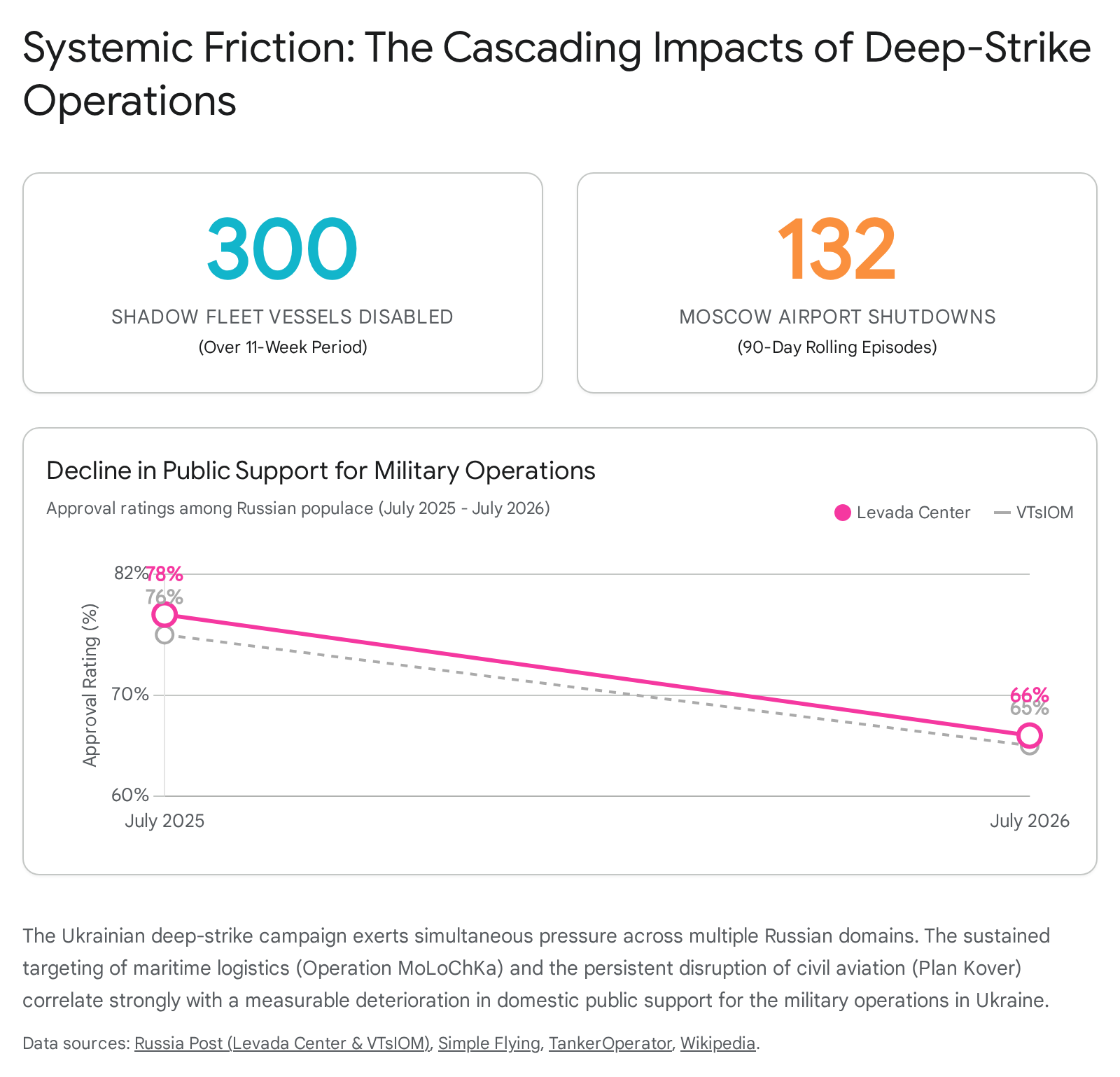
Utilizing uncrewed surface vessels such as the Sea Baby (carrying 850 kilograms of explosives with a 1,000-kilometer range) and the MAGURA V5, strike teams engaged merchant vessels and transport ships over an 11-week campaign in summer 202626. Operational reports indicate approximately 300 vessels were struck or rendered inoperable58.
| Operation MoLoChKa: Maritime Strike Statistics (11-Week Period) | Value |
| Total Vessels Struck/Disabled | 300 |
| Vessels Struck in Sea of Azov | 134 |
| Vessels Struck in Black Sea | 166 |
| Types of Vessels Targeted | Shadow Fleet Tankers, Dry Cargo Ships, Tugs, Ferries |
Frequent maritime engagements led to temporary suspensions of commercial traffic in the Sea of Azov and the Kerch Strait, restricting key corridors for agricultural and energy exports43. Rising marine insurance rates in the Black Sea further increased operating costs for commercial shipping in the region60.
Civil Aviation Disruptions
Air travel logistics faced repeated interruptions from safety protocols. Under federal aviation rules known as Plan Kover, commercial airports suspend flight operations whenever unidentified air targets are detected nearby63.
Dispatched long-range drones flying near major metropolitan centers repeatedly triggered these mandatory airspace closures. During a single weekend in September 2026, over 400 commercial flights were delayed and dozens diverted across Moscow’s primary airports63.
Industry tracking recorded 993 temporary airport closures over a 12-month period64. In late 2026, Moscow facilities initiated operational holds over 132 times in a 90-day span, generating financial losses for domestic carriers and disrupting passenger schedules.
4. Social and Public Reactions in Russia
During the initial phases of the conflict, domestic communication strategies insulated major urban centers from visible military disruptions. The expansion of Ukrainian drone strikes brought visible activity and air alerts directly into population centers across European Russia28.
Public Opinion and Polling Trends
Persistent air alerts, coupled with regional fuel shortages and price increases, correspond with measurable shifts in public sentiment. Independent polling indicates declining engagement with ongoing military operations56.
| Levada Center Polling Metric | July 2025 | July 2026 | Change |
| Support for Russian Forces in Ukraine | 78% | 66% | -12% |
| Support for Peace Negotiations | ~50% | 62% | +12% |
| Support for Continuing Military Operations | ~40% | 28% | -12% |
By July 2026, general support for military operations dropped to 66%, reflecting the lowest recorded level since 2022. Concurrently, 62% of respondents expressed preference for initiating diplomatic negotiations38. Overall public attention toward daily conflict news decreased to 44%66.
Public attitudes remain complex. While a majority favors concluding active hostilities, roughly 75% of respondents maintain that held territories should be retained in any final agreement38. This combination of desire for settlement alongside territorial expectations illustrates a cautious public posture amid changing domestic conditions38.
Information Management and Alert Protocols
Regional authorities adjusted public notification procedures to limit widespread concern during ongoing strikes. In several jurisdictions, municipal administrations reduced the routine use of public sirens during incoming air activity67.
In Crimea, officials noted that continuous siren activations during persistent drone incursions would lead to near-constant warnings67. Elsewhere, administrations restricted siren use to avoid panic4. In select municipalities near Moscow, officials limited public access to shelter maps, maintaining standard non-emergency protocols67. These administrative responses highlight the balance between civic safety and maintaining regular public routines.
Communications Restrictions
To disrupt telemetry and visual navigation data used by incoming drones, regional authorities directed mobile network operators to temporarily restrict 4G coverage68. By late 2026, nearly 60 regions experienced localized network shutdowns68.
While intended to counter strike systems, network suspensions affected daily commercial transactions, local communications, and automated emergency text updates15. Financial estimates indicate a five-day network hold in Moscow generated commercial losses of 3 to 5 billion rubles53. Civil observers note that service disruptions during active events present ongoing communication challenges for local populations15.
5. Diplomatic Position and Energy Infrastructure Strategy
Beyond immediate physical and financial impacts, long-range drone operations have altered diplomatic messaging and strategic negotiation options for Ukrainian leadership.
Strategic Leverage in Negotiations
In earlier stages of the conflict, Ukraine relied primarily on international sanctions and partner support to exert pressure. The deployment of indigenous long-range strike systems provided Kyiv with an independent means to affect Russian industrial output4.
This capability featured in autumn 2026 diplomatic initiatives, when Ukrainian President Volodymyr Zelenskyy presented a proposal for a reciprocal pause on energy infrastructure strikes at the UN General Assembly71. The concept outlined a mutual halt to strikes targeting processing plants in exchange for binding commitments against attacks on power grids and heating infrastructure72.
By demonstrating consistent operational reach against key industrial facilities, Ukrainian representatives framed long-range strike systems as a critical instrument to incentivize potential ceasefire discussions70.
International Relations and Partner Feedback
The refinery strike campaign raised discussions among international partners concerning broader energy market dynamics and global refined product pricing73.
In September 2026, US officials expressed concerns regarding potential price volatility in international diesel markets following refinery disruptions75. Former President Donald Trump similarly emphasized risks to global fuel supply stability76. Nevertheless, Kyiv maintained its strategic focus, emphasizing that energy security agreements must function reciprocally. President Zelenskyy reaffirmed the proposed infrastructure framework while seeking additional air defense systems and co-production agreements for defensive interceptors72.
This strategy illustrates a more independent operational capacity. While reliant on international security assistance for frontline needs, domestic drone programs provide Ukraine with self-directed strategic options in broader conflict planning.
6. Key Conclusions
The impact of Ukrainian long-range drone operations marks a notable development in contemporary conflict. Key analytical conclusions include:
- Reduction of Geographic Protection: The availability of affordable, long-range systems means distance alone no longer guarantees facility security. Industrial centers, airbases, and energy infrastructure remain within operational range regardless of frontline positioning.
- Compounding Economic Costs: Physical damage to industrial infrastructure creates direct economic effects. Mandatory state subsidies for refiners, private corporate spending on defense hardware, and higher maritime insurance premiums place continued pressure on federal finances.
- Information Management Challenges: Administrative decisions to limit public alerts and interrupt cellular networks reflect efforts to manage public concern and counter navigation systems. However, these measures disrupt local commerce and highlight the ongoing impact of the conflict to the public.
- Strategic Negotiation Tools: Ukraine has demonstrated how a smaller military force can establish leverage against a larger economy by consistently targeting core revenue-generating infrastructure, establishing new parameters for future diplomatic discussions.
The conflict encompasses both frontline combat and sustained pressure against deep infrastructure. Unless comprehensive air defense coverage can be established across extensive territories—a challenging requirement given current resource constraints—the exposure of rear facilities remains a defining operational factor.
Please share the link on Facebook, Forums, with colleagues, etc. Your support is much appreciated and if you have any feedback, please email us in**@*********ps.com. If you’d like to request a report or order a reprint, please click here for the corresponding page to open in new tab.
Sources Used
- Weekly SITREP Military Drones (May 30 – June 6, 2026), https://blog.roninsgrips.com/weekly-sitrep-military-drones-may-30-june-6-2026/
- Major Russian oil refineries hit in overnight Ukrainian drone attacks, https://odessa-journal.com/major-russian-oil-refineries-hit-in-overnight-ukrainian-drone-attacks
- Ukrainian Drones Hit Russia’s Ilsky Oil Refinery Overnight – Kyiv Post, https://www.kyivpost.com/post/85461
- Quantifying Ukraine’s Strikes on Russian Energy Infrastructure, https://www.bakerinstitute.org/research/quantifying-ukraines-strikes-russian-energy-infrastructure
- Russian region establishes new ‘drone defense ministry’ as, https://kyivindependent.com/russian-region-establishes-new-drone-defense-ministry-as-ukrainian-strikes-change-balance-of-war/
- Russian Lawmaker Urges Companies to Form Armed Units to, https://united24media.com/war-in-ukraine/russian-lawmaker-urges-companies-to-form-armed-units-to-counter-drone-attacks-18368
- Technological Asymmetry as a Force Multiplier, https://www.kcl.ac.uk/technological-asymmetry-as-a-force-multiplier
- Guide To Ukraine’s Long Range Attack Drones | Covert Shores, https://www.hisutton.com/Ukraine-OWA-UAVs.html
- SITREP Russia-Ukraine Conflict – April 25 – May 2, 2026, https://blog.roninsgrips.com/sitrep-russia-ukraine-conflict-april-25-may-2-2026/
- Palianytsia (missile) – Wikipedia, https://en.wikipedia.org/wiki/Palianytsia_(missile)
- Palianytsia and Peklo: Inside the Specs of Ukraine’s Long-Range, https://www.reddit.com/r/ukraine/comments/1vnao31/palianytsia_and_peklo_inside_the_specs_of/
- How Ukraine uses AI to guide long-range drone strikes through, https://euromaidanpress.com/2026/06/12/how-ukraine-is-integrating-ai-into-its-long-range-drone-strike-system/
- A Study of AI-Powered Loitering Munitions in Russia-Ukraine War, https://zenodo.org/records/18811669
- Russian AI Drone Swarm? Not There Yet – A Guide to … – Kyiv Post, https://www.kyivpost.com/post/45236
- CNN: Liutyi UAVs are AI-guided, https://militarnyi.com/en/news/cnn-liutyi-uavs-are-ai-guided/
- Ukrainian drones hits Lukoil’s major oil refinery in Russia’s Perm, https://www.youtube.com/watch?v=63HN0hgGwes
- Ukrainian drones tested a Western navigation system that operates, https://unn.ua/en/news/ukrainian-drones-tested-a-western-navigation-system-that-operates-like-those-in-cruise-missiles
- Asymmetric Warfare and the Rise of Low-Tech Defense, https://atlasinstitute.org/asymmetric-warfare-and-the-rise-of-low-tech-defense-lessons-and-opportunities-for-europe-to-enhance-strategic-autonomy/
- Calculating the Cost-Effectiveness of Russia’s Drone Strikes – CSIS, https://www.csis.org/analysis/calculating-cost-effectiveness-russias-drone-strikes
- The Cost Asymmetry of Modern Drone Warfare Explained – Facebook, https://www.facebook.com/mguruswamy/posts/a-revolution-in-military-affairsthe-cost-asymmetryattacker-economics-one-way-att/10236166677136057/
- the economics of asymmetric attrition: a quantitative analysis of low, https://www.researchgate.net/publication/401694264_THE_ECONOMICS_OF_ASYMMETRIC_ATTRITION_A_QUANTITATIVE_ANALYSIS_OF_LOW-COST_DRONE_WARFARE_IN_THE_UKRAINE_AND_IRANIAN_SHAHED_PROGRAMS_2022-2026
- While Ukraine is focused on maximizing drone production, high, https://www.facebook.com/CSIS.org/posts/while-ukraine-is-focused-on-maximizing-drone-production-high-payoff-deep-strikes/1476698267835612/
- ISW Russian Offensive Campaign Assessment, September 28, 2026, https://www.kyivpost.com/post/85614
- Ukranian Drones Archives – Ronin’s Grips, https://blog.roninsgrips.com/tag/ukranian-drones/
- Russia Situation Report: September 7 to September 21, 2026, https://blog.roninsgrips.com/russia-situation-report-september-7-to-september-21-2026/
- Lessons from Drone Warfare: Russia-Ukraine & US-Iran, https://blog.roninsgrips.com/top-10-lessons-in-drone-warfare-from-the-russia-ukraine-and-us-iran-conflicts/
- The Drone Supply Chain War: Identifying the Chokepoints to … – CSIS, https://www.csis.org/analysis/drone-supply-chain-war-identifying-chokepoints-making-drone
- After Ukraine’s innovative airbase attacks, nowhere in Russia is safe, https://www.atlanticcouncil.org/blogs/ukrainealert/after-ukraines-innovative-airbase-attacks-nowhere-in-russia-is-safe/
- The Blogs: The Drone War: Produce, Saturate, Survive | Francis Moritz, https://blogs.timesofisrael.com/the-drone-war-produce-saturate-survive/
- Operation Spiderweb – Wikipedia, https://en.wikipedia.org/wiki/Operation_Spiderweb
- Ukraine’s ‘Spiderweb’ drone assault forces Russia to shelter, move, https://www.aljazeera.com/news/2025/6/18/ukraines-spiderweb-drone-assault-forces-russia-to-shelter-move-aircraft
- Ukraine Bombs Russia’s Engels Airbase Housing Nuke … – YouTube, https://www.youtube.com/watch?v=1wkZ-71u2N4
- ENGELS BASE ATTACKED: Ukrainian Drones Target Russian, https://www.youtube.com/watch?v=ibOaraCN1cA
- Ukrainian Drones Strike Russian Nuclear Bomber Airbases, 40, https://www.youtube.com/watch?v=0D80yfwjJk0
- Ukraine’s Drone Swarms Are Destroying Russian Nuclear Bombers, https://www.csis.org/analysis/ukraines-drone-swarms-are-destroying-russian-nuclear-bombers-what-happens-now
- Russia Is Building Huge Protective Shelters For Its Strategic Bombers, https://www.twz.com/air/russia-is-building-huge-protective-shelters-for-its-strategic-bombers
- Tonight, dozens of Ukrainian drones have attacked Engels, Russia, https://www.reddit.com/r/UkrainianConflict/comments/1uxmr6v/tonight_dozens_of_ukrainian_drones_have_attacked/
- Russians Continue to Want ‘Peace, But on Russia’s Terms’ Even as, https://russiapost.info/articles/russia-polling-in-2026
- Russia redeploys air defense systems from Far North to counter, https://www.ukrinform.net/rubric-ato/4144555-russia-redeploys-air-defense-systems-from-far-north-to-counter-ukrainian-drones-media.html
- SITREP: Russia-Ukraine Conflict Summary (May 16 – May 23, 2026), https://blog.roninsgrips.com/sitrep-russia-ukraine-conflict-summary-may-16-may-23-2026/
- “Frontline Region” Inside Russia—Leningrad Governor Calls Up, https://united24media.com/latest-news/frontline-region-inside-russia-leningrad-governor-calls-up-reservists-as-drone-strikes-intensify-18020
- Russia says it intercepted nearly 600 Ukrainian drones overnight as, https://meduza.io/en/news/2026/09/25/russia-says-it-intercepted-nearly-600-ukrainian-drones-overnight-as-strikes-hit-refineries-and-industrial-sites
- Ukrainian drone strikes force Russia to suspend shipping in Sea of, https://www.theguardian.com/world/2026/jul/12/ukrainian-drone-strikes-force-russia-to-suspend-shipping-in-sea-of-azov
- OSINT: Drone Strike on Tuapse port, Russia – Clearwater Dynamics, https://www.cwdynamics.com/alerts/alert/31875?page=3
- Ukrainian Strikes Will Likely Continue to Hurt Russia | ISW, https://understandingwar.org/research/russia-ukraine/ukraines-strike-campaigns-will-likely-continue-to-hurt-russias-economy-and-military-operations-in-ukraine/
- Frontline report: Russia builds metal cages around refineries as, https://euromaidanpress.com/2025/11/01/frontline-report-2025-10-31/
- Russia’s refinery crisis costs budget $15 billion since April, https://english.nv.ua/nation/subsidies-to-oil-companies-in-russia-rising-causing-budget-deficit-amid-setbacks-at-refineries-50630396.html
- Press-releases – Левада-Центр, https://www.levada.ru/en/category/publications/press-releases/
- Weekly Analysis Report: Russia (July 12-19, 2026) – Ronin’s Grips, https://blog.roninsgrips.com/weekly-analysis-report-russia-july-12-19-2026/
- Russia Lets Private Firms Buy Heavy Weapons to Defend Sites, https://www.themoscowtimes.com/2026/05/28/russia-lets-private-firms-buy-heavy-weapons-to-defend-sites-from-drone-attacks-rbc-a92876
- Russia Installing Mesh Cage Around Refineries to Protect Against, https://defensemirror.com/news/41962/Russia_Installing_Mesh_Cage_Around_Refineries_to_Protect_Against_Ukrainian_Drones
- Russia Builds Massive Anti-Drone Shields Around Oil Refineries, https://www.youtube.com/shorts/xjacS9RCW4M
- In Russia, Private Companies Have Been Left to Pick Up the Tab for, https://carnegieendowment.org/russia-eurasia/politika/2026/05/russia-drone-defense-economy
- Russia-Ukraine War: Moscow’s Decree Forces Pvt Businesses To, https://menafn.com/1111718905/Russia-Ukraine-War-Moscows-Decree-Forces-Pvt-Businesses-To-Opt-For-Air-Defense-Systems-To-Defend-Against-Drone-Attacks
- Russian businesses face drone defence costs under Kremlin policy, https://tradersunion.com/news/financial-news/show/3528147-russian-businesses-drone-defence-costs/
- Russian Attitudes Are Shifting as the War’s Effects Come Home – CSIS, https://www.csis.org/analysis/russian-attitudes-are-shifting-wars-effects-come-home
- Operation MoLoChKa – Wikipedia, https://en.wikipedia.org/wiki/Operation_MoLoChKa
- Ukraine’s Drone Forces Hit 300 Russian Shadow Fleet Tankers in 3, https://www.tankeroperator.com/news/ukraines-drone-forces-hit-300-russian-shadow-fleet-tankers-in-3-months/15585.aspx
- Ukraine hits 300 Russian shadow fleet vessels in 11 weeks, https://english.nv.ua/nation/ukraine-s-unmanned-systems-forces-hit-300-russian-shadow-fleet-vessels-50643548.html
- Ukrainian attacks on the Russian shadow fleet – Wikipedia, https://en.wikipedia.org/wiki/Ukrainian_attacks_on_the_Russian_shadow_fleet
- Ukraine’s USF have struck 300 vessels of Russia’s shadow fleet as, https://www.ukrinform.net/rubric-ato/4166654-ukraines-usf-have-struck-300-vessels-of-russias-shadow-fleet-as-of-today.html
- Ukraine claims drones disabled 300 Russian-linked vessels since July, https://www.bairdmaritime.com/security/incidents/acts-of-war/ukraine-drones-disable-russian-linked-vessels-black-sea
- Moscow Drone Attack: 400 Flights Hit, 30 Jets Diverted – MiGFlug, https://migflug.com/afterburner/moscow-drone-attack-400-flights-delayed-diversions-september-2026/
- Ukraine’s Next Goal: 32 Russian Airports Shut Down Daily As Drone, https://simpleflying.com/32-russian-airports-shut-down-daily-drone-campaign-escalates/
- A Breakdown of The Equilibrium: A sharp deterioration in public, https://re-russia.net/en/analytics/0446/
- Russia in Review, Feb. 27–March 6, 2026, https://www.russiamatters.org/news/russia-review/russia-review-feb-27-march-6-2026
- Russian Regions Refuse to Sound Air-Raid Sirens to Hide Scale of, https://united24media.com/world/russian-regions-refuse-to-sound-air-raid-sirens-to-hide-scale-of-ukrainian-strikes-intelligence-says-20056
- Russia’s internet shutdowns disrupt warnings about incoming drone, https://therecord.media/russia-internet-shutdowns-disrupt-warnings-about-drone-attacks
- Mobile internet outage hits St Petersburg amid claimed drone threat, https://www.pravda.com.ua/eng/news/2026/07/11/8043530/
- Ukrainian peace negotiator says drone strikes could force Russia, https://www.wwno.org/npr-news/2026-07-27/ukrainian-peace-negotiator-says-drone-strikes-could-force-russia-into-ceasefire
- Zelenskyy Reportedly to Request Patriot Missiles, Propose Energy, https://united24media.com/world/zelenskyy-reportedly-to-request-patriot-missiles-propose-energy-truce-in-un-talks-with-trump-22757
- 7 Takeaways From Zelensky After Trump Meeting – Kyiv Post, https://www.kyivpost.com/post/85181
- Pressure at the Pump: Ukraine Resumes Strikes on Russian Oil, https://www.csis.org/analysis/pressure-pump-ukraine-resumes-strikes-russian-oil-refineries
- Do Ukraine’s Strikes on Russian Refineries Increase US Fuel Prices?, https://www.youtube.com/watch?v=whdMQzqW6iM
- Trump wants Zelensky to ease strikes on Russian refineries, Ukraine, https://kyivindependent.com/trump-wants-zelensky-to-ease-strikes-on-russian-refineries-ukraine-official-says-deal-must-go-both-ways/
- Trump blasts Zelensky over Russian refinery attacks as … – Facebook, https://www.facebook.com/TimesofIndia/videos/trump-blasts-zelensky-over-russian-refinery-attacks-as-diesel-panic-takes-over-a/1403811428384315/
- Zelenskyy Proposes an ‘Energy Ceasefire,’ Hoping To Secure … – FDD, https://www.fdd.org/analysis/2026/09/24/zelenskyy-proposes-an-energy-ceasefire-hoping-to-secure-patriot-interceptors/