Category Archives: Country Analytics

Taiwan’s Defense Strategies Against China’s Decapitation Threat – A Simulation

DATE: January 31, 2026

SUBJECT: Analysis of PLA “Zhan Shou” (Decapitation) Doctrine, Application of the Venezuela/Maduro Model, and Generation of the “Cognitive-Kinetic” Conflict Strategy.

SIMULATION:  This simulation is based on a proprietary conflict model created by Ronin’s Grips Analytics (RGA).  It is not a government report and is based on open source intelligence (OSINT). It uses three computerized personas representing a national security analyst, intelligence analyst and a warfare strategist that form what is referenced as the “Joint Security Council” (JSC) in the report. 

Begin Simulation

1. EXECUTIVE STRATEGIC PREAMBLE

The Joint Strategic Council (JSC) has convened to address a critical evolution in the threat landscape facing the Republic of China (Taiwan). For decades, defense planning has primarily focused on a full-scale amphibious invasion—a “D-Day” style event requiring the mass movement of the People’s Liberation Army (PLA) across the Taiwan Strait. However, recent intelligence, reinforced by the analysis of PLA “Joint Sword” exercises and doctrinal shifts following the US operations in Venezuela, indicates a dangerous pivot toward a “Decapitation” (Zhan Shou) strategy. This approach seeks to bypass the “hard shell” of Taiwan’s coastal defenses by striking directly at the “soft brain” of its political leadership, aiming to induce a collapse of command and control (C2) and political will before a general war can fully mobilize.

This report applies the Cognitive-Kinetic Continuum (CKC) methodology to this threat. The CKC posits that modern regime-change operations are not purely military (kinetic) nor purely psychological (cognitive), but a fused continuum where information warfare creates the permissiveness for special operations, and kinetic strikes reinforce psychological paralysis. The PLA’s adaptation of the “Maduro Model”—the attempt to surgically remove a hostile leader while limiting broader conflict—represents the operationalization of this continuum.

The following analysis is exhaustive, drawing upon signal intelligence, doctrinal publications, and observed exercises to construct a high-fidelity scenario of a PLA decapitation strike. It culminates in a 7-Phase Execution Matrix designed not merely to defend, but to checkmate the adversary through asymmetric escalation.

2. THE THREAT PARADIGM: THE “MADURO MODEL” AND PLA ADAPTATION

2.1 The Operational Case Study: From Caracas to Taipei

The PLA’s strategic community has engaged in a rigorous, almost obsessive, study of the United States’ efforts to dislodge Venezuelan President Nicolás Maduro, specifically analyzing the failures of “Operation Gideon” in 2020 and the broader pressure campaigns employed by Washington.1 While Western analysts often dismiss Operation Gideon as a farcical failure executed by mercenaries, PLA planners view it as a proof-of-concept for a “surgical” leadership removal that failed only due to a lack of state-level resources and synchronization.3

The Council’s INTEL Directorate assesses that Beijing views the “Maduro Model” through the lens of “Non-War Military Operations” (NWMO). The objective is to reframe an act of conquest as an act of law enforcement. Just as the US Department of Justice indicted Maduro on narcoterrorism charges to delegitimize his sovereignty 5, Beijing is constructing a legal framework to label Taiwanese leadership not as heads of state, but as “secessionist criminals” violating the Anti-Secession Law.7 This legal warfare, or “lawfare,” is critical to the Cognitive-Kinetic Continuum. By categorizing the decapitation strike as a domestic police action against a “criminal clique,” China aims to hesitate the international community, specifically exploiting the “gray zone” ambiguities in the US-Japan security guidelines.8

However, the PLA recognizes that a “Gideon-style” light footprint is insufficient for Taiwan’s hardened defenses. Consequently, the “Zhan Shou” doctrine effectively militarizes the Maduro model. It replaces mercenaries with the PLA’s elite Air Assault Brigades, fishing boats with Z-20 helicopters, and indictments with precision guided munitions.10 The goal remains the same: the rapid neutralization of the head of state to paralyze the body politic, rendering the massive conventional forces of the enemy irrelevant.

2.2 The “Zhan Shou” (Decapitation) Doctrine

The “Zhan Shou” doctrine is not merely a tactical raid; it is a strategic concept designed to achieve “assassin’s mace” effects—victory through a sudden, overwhelming blow that precludes effective resistance.

The Kinetic Component: Precision and Penetration The WAR Directorate identifies the primary assets assigned to this mission as the PLA’s expanding special operations and rocket forces. The PLA Rocket Force (PLARF) has specifically developed munitions to target Taiwan’s deep-buried command centers. The DF-15C and DF-11AZT variants are equipped with earth-penetrating warheads (“bunker busters”) designed to crack the hardened shell of facilities like the Hengshan Military Command Center.12 These kinetic assets are tasked with “blinding” the defense by destroying radar and communications nodes, while simultaneously burying the continuity-of-government (COG) leadership in their bunkers.

Parallel to the missile strikes, the PLA has invested heavily in air assault capabilities. The “Joint Sword-2024A” and “Justice Mission 2025” exercises demonstrated a new level of integration between the PLA Air Force (PLAAF) and SOF units.14 The utilization of the J-16 fighter for precision strikes, capable of carrying electronic warfare pods to suppress air defenses, mirrors the US usage of EA-18G Growlers, providing a corridor for helicopter-borne assault teams.11

The Cognitive Component: The Information Support Force The dissolution of the Strategic Support Force (SSF) and the creation of the Information Support Force (ISF) and Cyberspace Force (CSF) in 2024 signals a centralization of cognitive warfare capabilities.16 The NSA Directorate emphasizes that these new units are tasked with “information dominance”—ensuring that the narrative of the war is controlled by Beijing from the first second. This involves not only cyberattacks on Taiwan’s infrastructure but the deployment of “deepfake” technology to simulate the surrender or capture of Taiwanese leadership, thereby breaking the “will to fight” of the defending populace and military units.18

3. STRATEGIC ASSESSMENT: THE KINETIC VULNERABILITY VECTORS

3.1 The Tamsui River: The “Throat” of Taipei

The geography of Northern Taiwan presents a critical vulnerability that the PLA has focused on intensely: the Tamsui River. This waterway flows from the Taiwan Strait directly into the heart of the Taipei Basin, passing under the Guandu Bridge and terminating mere kilometers from the Presidential Office and other key government buildings.20

The WAR Directorate assesses that the Tamsui River serves as the optimal vector for a low-altitude heliborne assault. By flying Nap-of-the-Earth (NOE) above the water, Z-10 attack helicopters and Z-20 utility helicopters (loaded with SOF teams) can mask their approach from many land-based radars using the terrain and urban clutter.21 PLA drills at the Zhurihe Training Base in Inner Mongolia have replicated the Presidential Office and the surrounding road networks to practice this exact insertion profile.10

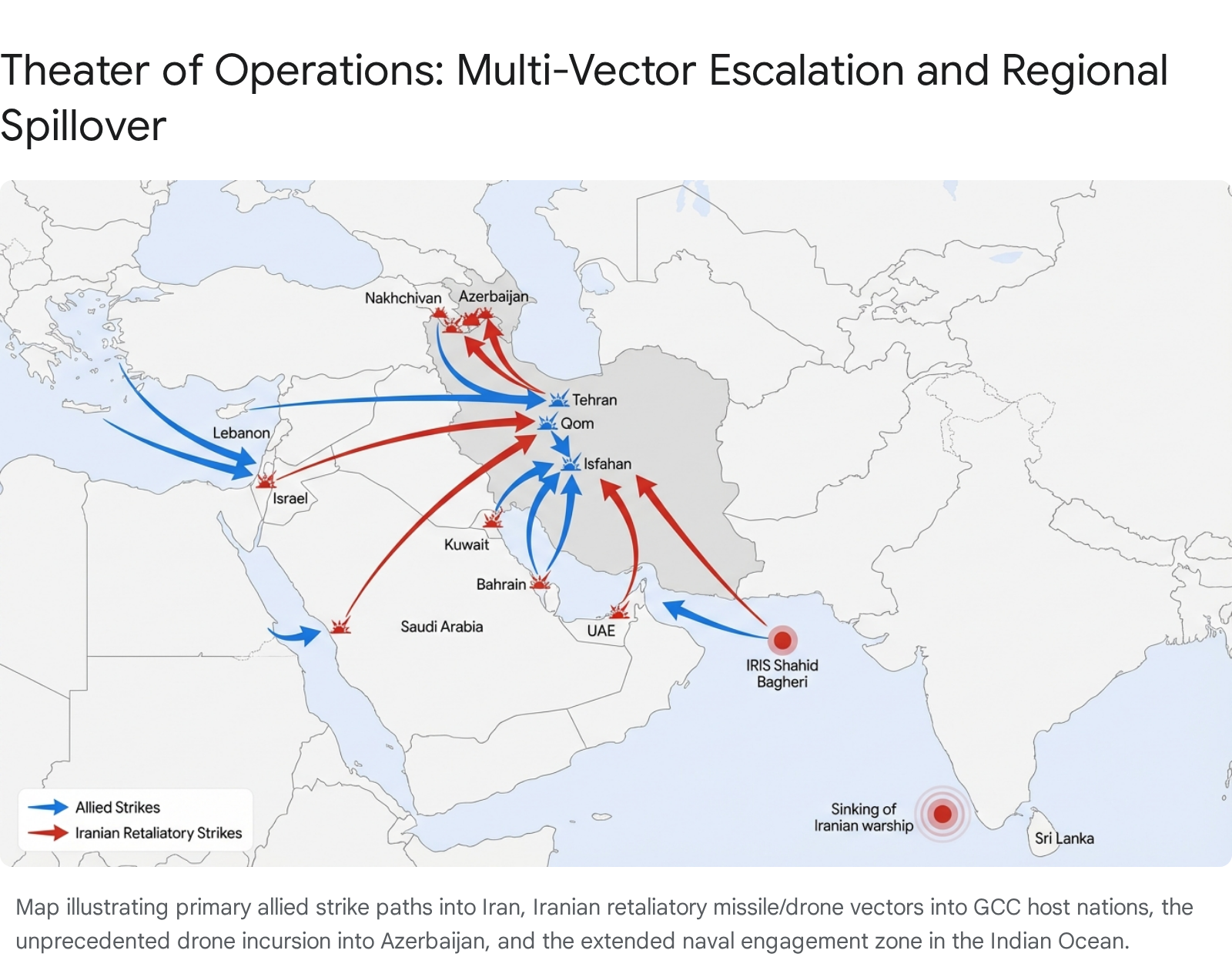
Schematic of China's theoretical 'Zhan Shou' decapitation strike on Taiwan, targeting key locations.

Defense planners in Taipei are acutely aware of this “Trojan Horse” route. The 6th Army Corps, responsible for the defense of northern Taiwan, has integrated the 202 Military Police Command into a layered defense around the river mouth and the capital.11 Defensive measures include the deployment of the M3 Amphibious Rig—normally used for bridging—to act as a floating blockade, deploying chains of explosive oil drums across the river to deny passage to hovercraft and assault boats. Additionally, the proliferation of Stinger MANPADS (Man-Portable Air-Defense Systems) among MP battalions creates a “kill box” for any aircraft attempting to navigate the narrow river channel.11

3.2 The Drone Swarm Saturation Strategy

A key evolution in PLA tactics, observed in the “Joint Sword” series, is the integration of drone swarms to conduct Suppression of Enemy Air Defenses (SEAD).10 Taiwan relies on a dense network of high-end air defense systems, primarily the US-made Patriot PAC-3 and the indigenous Tien Kung III (Sky Bow).25 While these systems are formidable against traditional aircraft and ballistic missiles, they are economically and logistically ill-suited to counter massed swarms of cheap, expendable drones.

The PLA’s strategy is one of cost-imposition and magazine depletion. By launching hundreds of converted civilian drones or loitering munitions, the PLA aims to force Taiwan’s defenders to expend their limited stock of multi-million dollar interceptors on targets worth a few thousand dollars.24 Once the batteries are depleted or reloading, the “kill window” opens for the higher-value assets—the Z-10 helicopters and J-16 fighters—to strike the unprotected C2 nodes. The “Zhan Shou” doctrine relies on this saturation to ensure the survival of the decapitation force during its transit across the Strait and into the Taipei Basin.

3.3 The Hardened Target: Hengshan and C2 Resilience

The ultimate target of a kinetic decapitation strike is the command and control infrastructure that allows the Taiwanese government to coordinate a defense. The Hengshan Military Command Center, buried deep beneath a mountain in the Dazhi district of Taipei, serves as the nerve center for the President and the General Staff.27 This facility is hardened against conventional strikes, nuclear blasts, and High-Altitude Electromagnetic Pulse (HEMP) attacks, featuring six-sided double-layer zinc-plated steel shielding.27

However, the effectiveness of Hengshan relies on the leadership reaching it. The PLA’s “Zhan Shou” doctrine focuses on the “transit vulnerability”—striking the leadership at their residences, in transit, or at less hardened interim facilities before they can secure themselves in the complex. Furthermore, the PLA’s development of the aforementioned DF-15C earth-penetrating missiles poses a theoretical threat even to hardened facilities, necessitating a shift in Taiwan’s doctrine from “static defense” to “mobile continuity,” utilizing distributed command nodes rather than relying on a single, stationary bunker.1

4. STRATEGIC ASSESSMENT: THE COGNITIVE & CYBER DOMAINS

4.1 The “Red” Mind War: ISF and Deepfakes

The NSA Directorate identifies the cognitive domain as the battlespace where the PLA intends to win the war before the first boot hits the ground. The newly formed Information Support Force (ISF) has operationalized the concept of “Cognitive Warfare” (CW) to a degree not seen in previous conflicts.17 The objective is to hack the OODA loop (Observe-Orient-Decide-Act) of the Taiwanese leadership and public.

The most potent weapon in this arsenal is the weaponization of Deepfake technology. Intelligence indicates that the PLA has likely prepared high-fidelity, AI-generated video and audio content depicting President Lai Ching-te and other key leaders surrendering, fleeing, or issuing orders to stand down.18 In a “Zhan Shou” scenario, these deepfakes would be broadcast simultaneously with a kinetic attack on Taiwan’s legitimate media infrastructure. If the PLA can hijack the emergency broadcast system or flood social media with these fabrications while severing Taiwan’s connection to the outside world, they can create a “reality gap” where the defenders believe the war is lost while it is still winnable.18

4.2 Cyber-Siege: Undersea Cables and the “Digital Blockade”

To ensure the effectiveness of the cognitive campaign, the PLA must isolate Taiwan from the global internet. Taiwan’s digital connectivity relies heavily on a network of roughly 14 undersea cables.31 The NSA Directorate highlights the vulnerability of these cables to sabotage by the PLA’s “Maritime Militia”—fishing fleets equipped with cable-cutting gear—or specialized deep-sea sabotage vessels like those developed by the China Ship Scientific Research Centre.32

Recent incidents, such as the severing of cables to the Matsu Islands in 2023 by Chinese vessels, serve as a rehearsal for a total “Digital Blockade”.31 In a full-scale decapitation scenario, the PLA would likely cut the majority of international fiber-optic links while simultaneously employing heavy electronic jamming against satellite uplinks (including Starlink) to create an information vacuum.34 This isolation prevents the Taiwanese government from communicating its “Proof of Life” to the populace and from coordinating with allies like the US and Japan.

4.3 Lawfare: The “Police Action” Narrative

The INTEL Directorate emphasizes the critical role of “Lawfare” in the PLA’s strategy. By framing the conflict as a “Non-War Military Operation” (NWMO), Beijing aims to bypass the legal triggers for foreign intervention.8 The PLA will likely cite the “Anti-Secession Law” to label the operation as a domestic law enforcement action against “separatist criminals,” mimicking the language used by the US in its indictment of Maduro.5

This narrative is specifically designed to exploit the ambiguity in the US-Japan Security Treaty. If the conflict is framed as a “police action” rather than an “armed attack” or invasion, it complicates the political decision-making in Tokyo regarding whether the situation constitutes a “survival-threatening situation” that permits the mobilization of the Japan Self-Defense Forces (JSDF).35 This legal hesitation is a weapon; every hour of delay in allied decision-making is an hour the PLA gains to complete the decapitation.

5. WAR ROOM DEBATE TRANSCRIPT: JOINT STRATEGIC COUNCIL

LOG ID: JSC-EMERGENCY-013126

ATTENDEES:

  • NSA: Director of Cyber Command & Signals Intelligence
  • INTEL: Director of Strategic Intelligence & Analysis
  • WAR: Commander of Joint Operations & Kinetic Defense

SUBJECT: Assessment of Imminent PLA ‘Zhan Shou’ Indicators and Counter-Strategy Formulation.

NSA: “Gentlemen, we need to strip away the assumptions of the last decade. The reorganization of the SSF into the Information Support Force wasn’t administrative shuffling. It was a declaration of intent. They are preparing to blind us. My teams are seeing Starlink jamming simulations running 24/7 in their wargames. They aren’t just planning to cut the cables; they’re planning to put a digital dome over the island. If we can’t authenticate the President’s voice within five minutes of the first blackout, the war is lost in the cognitive domain before WAR even loads a magazine.”

WAR: “Respectfully, NSA, your algorithms won’t stop a Z-10 attack helicopter. The 202 Military Police Battalion is digging in at the Tamsui River, but let’s be realistic—they are light infantry. If the PLA commits to a saturation attack with drone swarms to drain our Patriot batteries, followed by a heavy heliborne lift, we have a simple physics problem: we run out of interceptors before they run out of drones. We need to talk about decentralization. We need ‘shoot and scoot’ authority for platoon-level commanders now, not when the comms go dead. The chain of command is too rigid. If the head is cut off, the body must know how to fight independently.”

INTEL: “You’re both focusing on the how, but missing the why and the when. The PLA doesn’t want a Stalingrad in Taipei. They want a Crimea. They want a quick fait accompli. My concern is the ‘Maduro’ narrative. They are building a legal case, not just a military one. Look at the ‘Joint Sword’ exercises. They practiced the blockade, yes, but they also practiced the police action—Coast Guard vessels operating alongside Navy ships. They are normalizing the idea that this is a law enforcement operation. If they launch a decapitation strike, they will frame it as an arrest warrant execution. Will Japan intervene for an ‘arrest’? Will the US? That hesitation is their weapon.”

NSA: “That’s exactly why the counter-strategy must be cognitive first. We need to ‘pre-bunk’ the deepfakes. We need a cryptographic ‘Proof of Life’ system for the leadership that doesn’t rely on the public internet. And we need to make sure the Japanese know that a ‘police action’ that involves ballistic missiles is an Article 5 trigger, regardless of what Beijing calls it.”

WAR: “Agreed on the Japanese coordination. But ‘pre-bunking’ doesn’t stop a bunker buster. I need the 6th Army Corps to move its command nodes now. The Hengshan Center is hardened, sure, but it’s a known coordinate. We need mobile command posts. We need to turn Taipei into a porcupine that swallows the snake. If they enter the Tamsui, they shouldn’t find a clear river; they should find a river of fire. We need to mine the estuary.”

INTEL: “There’s an internal dimension too. Xi has purged the PLA Rocket Force leadership. There is deep distrust within their ranks. If we can sow doubt in the loyalty of the invasion force commanders—make them fear a trap, or fear being purged if they fail—we can induce hesitation. The ‘Empty Fort’ strategy. We make them think we want them to come into Taipei because it’s a trap. We play on their paranoia.”

JSC CONSENSUS: The threat is imminent and multi-dimensional. The response must be an integrated Cognitive-Kinetic counter-offensive. We cannot just defend; we must make the attempt politically fatal for the CCP.

6. SCENARIO SIMULATION: “OPERATION RED ECLIPSE”

TIMELINE: SUMMER 2026

This scenario is constructed based on the convergence of PLA doctrine, recent exercises, and the assessed capabilities of both forces.

PHASE 1: THE BLINDFOLD (T-Minus 4 Hours)

  • Cyber & Space: The PLA Information Support Force (ISF) initiates a massive DDoS and malware attack targeting Taiwan’s power grid (Taipower) and telecommunications infrastructure.
  • Physical Sabotage: “Fishing vessels” (Maritime Militia) operating near Matsu and the Taiwan Strait “accidentally” sever the TPE and TPKM-3 undersea cables using deep-sea cutters.
  • Effect: Taiwan experiences a partial communications blackout. Confusion reigns as internet connectivity drops to near zero.

PHASE 2: THE COGNITIVE SHOCK (T-Minus 1 Hour)

  • Deepfake Injection: PLA cyber units hijack emergency broadcast frequencies. A realistic AI-generated video of President Lai Ching-te airs, stating that he is “negotiating a peace transfer” to avoid bloodshed and ordering the armed forces to stand down.
  • Lawfare Declaration: Beijing announces a “Special Law Enforcement Operation” to detain “secessionist criminals,” warning foreign powers that interference constitutes an act of war against Chinese sovereignty.

PHASE 3: THE KINETIC BREACH (H-Hour)

  • The Drone Wave: Thousands of converted civilian drones launch from the mainland and ships in the Strait. Their target is saturation—forcing Taiwan’s Patriot and Tien Kung radars to light up and expend missiles.
  • The Missile Strike: Once air defense batteries are overwhelmed, PLARF launches DF-16 and DF-15C precision missiles. Targets are specific C2 nodes: Hengshan Command Center inputs, radar stations, and air base runways.

PHASE 4: THE DECAPITATION (H+1 to H+4 Hours)

  • The Tamsui Vector: Under the cover of the missile barrage, low-flying Z-10 and Z-20 helicopter squadrons enter the Tamsui River estuary. They fly below radar, navigating the river valley toward the Presidential Office.
  • SOF Insertion: PLA Special Operations Forces fast-rope onto government buildings. Their mission is to locate, capture, or kill the leadership core before they can reach the hardened bunkers.
  • Fifth Column: Sleeper agents and compromised local actors attempt to sabotage logistical routes and create chaos in Taipei streets to impede 202 MP reinforcement.

PHASE 5: THE CHECKMATE OR THE QUAGMIRE (H+12 Hours)

  • Success Scenario (PLA View): Leadership is captured. The “Surrender” is ratified. The world is presented with a fait accompli.
  • Failure Scenario (JSC View): The President is evacuated to a mobile command post. The 202 MP Battalion detonates the Tamsui bridges and mines the river. The “Deepfake” is exposed via secure channels. The war becomes a grinding urban conflict.

7. THE 7-PHASE EXECUTION MATRIX (COUNTER-STRATEGY)

To counter “Operation Red Eclipse,” the Joint Strategic Council authorizes the following 7-Phase Asymmetric Defense Strategy. This matrix integrates the Cognitive and Kinetic domains to ensure regime survival.

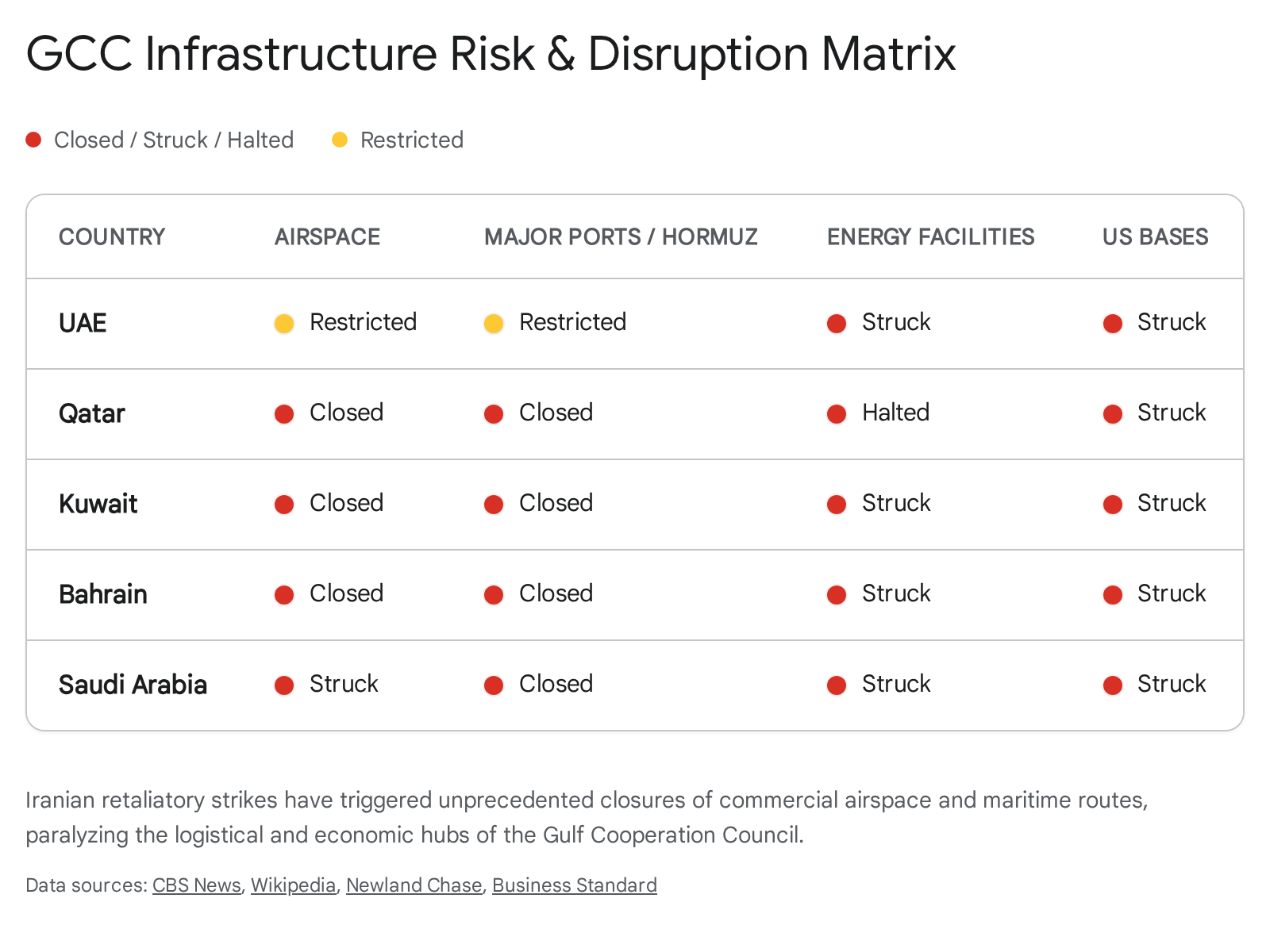
Taiwan's 7-phase counter-decapitation strategy execution matrix, showing cognitive and kinetic responses over time.

Table 7.1: Detailed Phase Breakdown

PhaseOperational CodeDomain FocusStrategic ObjectiveKey Actions (Cognitive & Kinetic)
0PRE-EMPTIONCognitive / IntelVaccinate & ExposeCog: “Pre-bunking” campaign releasing verified “Proof of Life” protocols. Public education on deepfakes.
Kin: Deployment of acoustic sensors and sea mines in Tamsui estuary. Pre-deployment of MANPADS to 202 MP.
1DETECTIONCyber / SpacePierce the FogCog: Activate redundant LEO satellite links (Starlink/OneWeb) to bypass cable cuts.37
Kin: Real-time satellite tracking of PLA “Training” fleets turning into assault formations.
2ABSORPTIONDefensiveSurvive the VolleyCog: Maintain radio silence on key nodes to deny SIGINT.
Kin: “Turtle Strategy” for air defense—hold fire on cheap drones, engage only high-value aircraft. Disperse leadership to mobile, nondescript command vehicles.
3DENIALA2/ADClose the GatesKin: Detonate Tamsui river blocks (explosive barges). Activate “Volcano” mine systems on beaches. Launch “Hsiung Feng” anti-ship missiles at amphibious transport ships.
4RESILIENCEInfrastructureKeep the Lights OnKin: Ration LNG immediately to military-only grids. Activate emergency coal reserves.38 Repair teams prioritize military fiber optics.
5COUNTER-PUNCHAsymmetricStrike the ArchersKin: Use mass-produced suicide drones (Taiwan’s “Altius” equivalent) to strike PLA staging ports across the strait. Target the launchers, not the missiles.
6SIGNALINGGeopoliticalTrigger the AllianceCog: Broadcast evidence of missile strikes to Tokyo to trigger the “Survival-Threatening Situation” clause.35 Formally declare the event an “Armed Attack.”
7STABILIZATIONContinuityThe Long WarCog: President addresses the nation from a secure, verifiable location. Mobilize reserves.
Kin: Transition from anti-decapitation to anti-invasion urban guerrilla warfare.

8. DEEP DIVE: CRITICAL INFRASTRUCTURE AND RESILIENCE

8.1 The Energy Cliff: LNG Vulnerability

The Council identifies energy security as the single greatest non-kinetic threat to Taiwan’s defense sustainability. Taiwan imports approximately 97% of its energy needs.38 The most critical bottleneck is Liquefied Natural Gas (LNG). Unlike coal or oil, which can be stockpiled for months, LNG requires constant resupply and specialized cryogenic storage, which Taiwan lacks in sufficient volume.

Current estimates place Taiwan’s LNG reserves at approximately 11 days of supply.39 In a blockade scenario, even without direct kinetic strikes on the receiving terminals at Yung-An and Taichung, the power grid would face collapse within two weeks. This “Energy Cliff” creates a hard time limit on Taiwan’s ability to resist before societal collapse begins.

While coal reserves are more robust (approx. 40 days) and oil reserves are mandated at 90 days, the reliance on gas for peak load generation means that the loss of LNG would force immediate, draconian rationing.40 The Council recommends the immediate preparation of a “War Economy Grid” plan, which would cut civilian consumption by up to 70% to preserve power for military radars, hospitals, and command centers.

8.2 The Silicon Shield: Deterrent or Magnet?

The strategic debate regarding Taiwan Semiconductor Manufacturing Company (TSMC)—the producer of over 90% of the world’s advanced chips—is central to the conflict calculus. The “Silicon Shield” theory suggests that the global economic indispensability of TSMC protects Taiwan. However, the Council assesses that in a “Decapitation” scenario, this shield may degrade into a “Silicon Magnet” or a “Scorched Earth” liability.

Some strategic analysis suggests that if China believes it cannot capture TSMC intact, or if the US believes China is about to capture it, the facilities might be targeted for destruction to prevent the transfer of capabilities.41 The destruction of these fabs would trigger a global economic depression estimated at $10 trillion, far exceeding the impact of the 2008 financial crisis or the COVID-19 pandemic.42 This “Mutually Assured Economic Destruction” is the true deterrent, but it relies on rational actors. In an ideological conflict driven by nationalism, rationality is not guaranteed.

9. SUN TZU CHECKMATE: ASYMMETRIC RESPONSES

Strategic Insight: Turning Strength into Weakness

Sun Tzu teaches: “Appear weak when you are strong, and strong when you are weak.” The PLA’s strength is its overwhelming mass and firepower. Its weakness is its political fragility and the absolute necessity of a quick, clean victory to maintain CCP legitimacy.

The Strategy: “The Poisoned Chalice”

The Council proposes a strategy that makes the successful capture of Taiwan more dangerous to the CCP than failure.

  1. The Silicon Kill Switch: Taiwan must credibly signal that it has the capability and will to remotely disable or destroy the critical EUV (Extreme Ultraviolet Lithography) machinery at TSMC fabs in the event of an invasion. This removes the economic prize of the conquest and ensures that China inherits a “silicon graveyard” rather than a technological crown jewel.41
  2. The “Empty Fort” Urban Trap: Instead of a static defense at the coastline, which can be overwhelmed, Taiwan should transform the “Bo’ai Special Zone” (Presidential district) into a pre-surveyed artillery kill zone. If SOF units land, they should not be met with static guards who can be eliminated, but with pre-sighted artillery and drone strikes from the surrounding mountains. We invite the “decapitation” force in, only to trap it in a lethal urban quagmire.
  3. The “Deep Truth” Counter-Offensive: If the PLA attempts a deepfake surrender, Taiwan must counter with a “Deep Truth” campaign—flooding the Chinese mainland intranet (breaching the Great Firewall) with high-definition footage of PLA casualties and destroyed equipment. The goal is to pierce the domestic information bubble in China, turning nationalist fervor into fear of a “Vietnam-style” quagmire, thereby destabilizing the CCP regime from within.

10. CONCLUSION

The “Venezuela Model,” while failed in its original context, has been successfully weaponized and industrialized by the People’s Liberation Army. The threat of a decapitation strike against Taiwan is not a theoretical exercise but a present operational capability, rehearsed in “Joint Sword” exercises and enabled by the new Information Support Force.

The survival of the Republic of China depends on shedding the illusion of safety provided by the Taiwan Strait. The defense must be Cognitively Hardened to resist the fake surrender, Kinetically Distributed to fight without a centralized head, and Strategically Asymmetric to convince Beijing that the cost of pulling the trigger is the regime’s own survival.

End of Simulation


Please share the link on Facebook, Forums, with colleagues, etc. Your support is much appreciated and if you have any feedback, please email us in**@*********ps.com. If you’d like to request a report or order a reprint, please click here for the corresponding page to open in new tab.


Sources Used

  1. Are U.S. Operations in Venezuela a Blueprint for China for Taiwan? – CSIS, accessed January 31, 2026, https://www.csis.org/analysis/are-us-operations-venezuela-blueprint-china-taiwan
  2. Operation Gideon (2020) – Wikipedia, accessed January 31, 2026, https://en.wikipedia.org/wiki/Operation_Gideon_(2020)
  3. Untangling Operation Gideon – Venezuelanalysis, accessed January 31, 2026, https://venezuelanalysis.com/analysis/14888/
  4. ‘His head wasn’t in the world of reality’: how the plot to invade Venezuela fell apart, accessed January 31, 2026, https://www.theguardian.com/world/2020/may/08/his-head-wasnt-in-the-world-of-reality-how-the-plot-to-invade-venezuela-fell-apart
  5. All Elements in Place for a US Strike on Venezuela – Venezuelanalysis, accessed January 31, 2026, https://venezuelanalysis.com/opinion/all-elements-in-place-for-a-us-decapitation-strike-on-venezuela/
  6. Democracy, drugs or oil? Why Trump is gunning for Venezuela’s Maduro – explained, accessed January 31, 2026, https://timesofindia.indiatimes.com/world/us/democracy-drugs-or-oil-why-trump-is-gunning-for-venezuelas-maduro-explained/articleshow/125722026.cms
  7. The Official Position of the Republic of China (Taiwan) on the People’s Republic of China’s Anti-Secession (Anti-Separation) Law, accessed January 31, 2026, https://www.mac.gov.tw/en/News_Content.aspx?n=8A319E37A32E01EA&sms=2413CFE1BCE87E0E&s=D1B0D66D5788F2DE
  8. China’s Taiwan-related legal initiatives: actors and strategic implications, accessed January 31, 2026, https://www.iiss.org/online-analysis/charting-china/2025/01/chinas-taiwan-related-legal-initiatives-actors-and-strategic-implications/
  9. Military Operations Other Than War in China’s Foreign Policy – Stimson Center, accessed January 31, 2026, https://www.stimson.org/2022/military-operations-other-than-war-and-chinas-foreign-policy/
  10. PLA Special Operations Threat to Taiwan, accessed January 31, 2026, https://globaltaiwan.org/2017/11/pla-special-operations-threat-to-taiwan/
  11. China & Taiwan Update, January 23, 2026 | ISW, accessed January 31, 2026, https://understandingwar.org/research/china-taiwan/china-taiwan-update-january-23-2026/
  12. Understanding the People’s Liberation Army Rocket Force, accessed January 31, 2026, https://www.armyupress.army.mil/Portals/7/military-review/Archives/English/JA-21/Mihal-PLA-Rocket-Force-v1.pdf
  13. Cratering Effects: Chinese Missile Threats to US Air Bases in the Indo-Pacific, accessed January 31, 2026, https://www.stimson.org/2024/cratering-effects-chinese-missile-threats-to-us-air-bases-in-the-indo-pacific/
  14. Annual Report to Congress: Military and Security Developments Involving the People’s Republic of China 2025 – DoD, accessed January 31, 2026, https://media.defense.gov/2025/Dec/23/2003849070/-1/-1/1/ANNUAL-REPORT-TO-CONGRESS-MILITARY-AND-SECURITY-DEVELOPMENTS-INVOLVING-THE-PEOPLES-REPUBLIC-OF-CHINA-2025.PDF
  15. Special Report: Surprise PRC Military Exercise Around Taiwan | ISW, accessed January 31, 2026, https://understandingwar.org/research/china-taiwan/china-taiwan-special-report-december-31-2025/
  16. People’s Liberation Army Strategic Support Force – Wikipedia, accessed January 31, 2026, https://en.wikipedia.org/wiki/People%27s_Liberation_Army_Strategic_Support_Force
  17. A New Step in China’s Military Reform – NDU Press, accessed January 31, 2026, https://ndupress.ndu.edu/Media/News/News-Article-View/Article/4157257/a-new-step-in-chinas-military-reform/
  18. China Seeks to Shape the Cross-Strait Battlefield Through Cognitive Warfare, accessed January 31, 2026, https://dominotheory.com/china-seeks-to-shape-the-cross-strait-battlefield-through-cognitive-warfare/
  19. The Malicious Exploitation of Deepfake Technology: Political Manipulation, Disinformation, and Privacy Violations in Taiwan, accessed January 31, 2026, https://globaltaiwan.org/2025/05/the-malicious-exploitation-of-deepfake-technology/
  20. Military conducts defense drills in New Taipei amid Chinese exercises – Focus Taiwan, accessed January 31, 2026, https://focustaiwan.tw/politics/202512300020
  21. China Maritime Report No. 19: The PLA Airborne Corps in a Joint Island Landing Campaign, accessed January 31, 2026, https://digital-commons.usnwc.edu/cgi/viewcontent.cgi?article=1018&context=cmsi-maritime-reports
  22. Report outlines possible PLA attacks – Taipei Times, accessed January 31, 2026, https://www.taipeitimes.com/News/front/archives/2015/09/01/2003626656
  23. China Rehearsing Possible Taiwan Decapitation Operation – T2COM G2, accessed January 31, 2026, https://oe.t2com.army.mil/product/china-rehearsing-possible-taiwan-decapitation-operation/
  24. Military eyeing defense against ‘drone swarm’ – Taipei Times, accessed January 31, 2026, https://www.taipeitimes.com/News/taiwan/archives/2020/07/27/2003740631
  25. An Assessment of Relative Costs and Operational BAir Defense Options for Taiwan – RAND, accessed January 31, 2026, https://www.rand.org/content/dam/rand/pubs/research_reports/RR1000/RR1051/RAND_RR1051.pdf
  26. Missile tests demonstrate fresh capabilities: expert – Taipei Times, accessed January 31, 2026, https://www.taipeitimes.com/News/front/archives/2025/11/23/2003847672
  27. Defense ministry confirms New Taipei Naval base hardened against nuclear electromagnetic pulse attack | Taiwan News | Oct. 30, 2023 18:26, accessed January 31, 2026, https://taiwannews.com.tw/news/5030076
  28. This Is How Taiwan’s Military Would Go To War With China – The War Zone, accessed January 31, 2026, https://www.twz.com/this-is-how-taiwans-military-would-go-to-war-with-china
  29. The Challenges Taiwan Faces in Cognitive Warfare and Its Impact on US–Taiwan Relations, accessed January 31, 2026, https://www.airuniversity.af.edu/JIPA/Display/Article/4171199/the-challenges-taiwan-faces-in-cognitive-warfare-and-its-impact-on-ustaiwan-rel/
  30. The Challenges Taiwan Faces in Cognitive Warfare and Its Impact on US–Taiwan Relations, accessed January 31, 2026, https://media.defense.gov/2025/May/01/2003702343/-1/-1/1/VIEW%20-%20CHEN%20DISCLAIMER.PDF
  31. China’s Undersea Cable Sabotage and Taiwan’s Digital Vulnerabilities, accessed January 31, 2026, https://globaltaiwan.org/2025/06/taiwans-digital-vulnerabilities/
  32. China Unveils Deep-Sea Cable Cutter, Sparking Global Security Fears – YouTube, accessed January 31, 2026, https://www.youtube.com/watch?v=EU2Dzx0U68E
  33. China’s New Deep-Sea Cable Cutter and its Security Implications, accessed January 31, 2026, https://bisi.org.uk/reports/chinas-new-deep-sea-cable-cutter-and-its-security-implications
  34. China Simulates Starlink Jamming over Taiwan with Balloons and UAVs – Militarnyi, accessed January 31, 2026, https://militarnyi.com/en/news/china-simulates-starlink-jamming-over-taiwan-with-balloons-and-uavs/
  35. Japan’s Dangerous Statements Pose Regional Security Risks, accessed January 31, 2026, http://its.taiwan.cssn.cn/cgzs/zyhd_148669/202512/t20251212_5955512.shtml
  36. Enhancing U.S.-Japan Coordination for a Taiwan Conflict – Council on Foreign Relations, accessed January 31, 2026, https://cdn.cfr.org/sites/default/files/report_pdf/Enhancing%20U.S.-Japan%20Coordination%20for%20a%20Taiwan%20Conflict_DP_1.pdf
  37. Building Resilience in Taiwan’s Internet Infrastructure from Geopolitical Threats, accessed January 31, 2026, https://jsis.washington.edu/news/building-resilience-in-taiwans-internet-infrastructure-from-geopolitical-threats/
  38. Losing the Buffer: What a Less Diverse Energy Mix Means for Taiwan’s Security, accessed January 31, 2026, https://globaltaiwan.org/2025/11/less-diverse-energy-mix-taiwans-security/
  39. Renewable Energy Strategy – TCAN 台灣氣候行動網絡, accessed January 31, 2026, https://tcan2050.org.tw/en/project/renewable-energy-strategy-en/
  40. How Long Taiwan Can Keep Its Lights On – Chung-Hua Institution for Economic Research, accessed January 31, 2026, https://www.cier.edu.tw/en/institution-en/29418/
  41. TSMC Risk – Stratechery by Ben Thompson, accessed January 31, 2026, https://stratechery.com/2026/tsmc-risk/
  42. The World’s Growing Reliance on Taiwan’s Semiconductor Industry – Vision of Humanity, accessed January 31, 2026, https://www.visionofhumanity.org/the-worlds-dependency-on-taiwans-semiconductor-industry-is-increasing/
  43. Losing Taiwan’s Semiconductors Would Devastate the US Economy | Hudson Institute, accessed January 31, 2026, https://www.hudson.org/technology/losing-taiwan-semiconductor-would-devastate-us-economy-riley-walters

China’s Military Expansion: Key Indicators for 2027

Executive Summary

The People’s Republic of China (PRC) is currently executing the most rapid and comprehensive peacetime military expansion in modern history, a trajectory that fundamentally alters the strategic balance of the Indo-Pacific and challenges the established global security architecture. This report, synthesized by a multidisciplinary team comprising national security analysts, intelligence specialists, warfare strategists, and regional experts, provides an exhaustive assessment of Beijing’s progress toward its “Centennial Military Building Goal” of 2027. The convergence of intelligence data, economic indicators, and military exercises suggests that the Chinese Communist Party (CCP) is moving beyond a posture of mere deterrence toward establishing the capability to wage and win a high-intensity conflict against a peer adversary, specifically the United States.1

While Beijing steadfastly maintains a diplomatic narrative of “peaceful development” and characterizes its military modernization as defensive in nature, the empirical evidence—ranging from high-resolution satellite imagery of expanding ICBM silo fields to the systematic mobilization of the civilian economy for wartime logistics—contradicts this rhetoric.3 The People’s Liberation Army (PLA) is actively transitioning from a continental defense force into a globally capable power projection military, driven by a “whole-of-society” approach that fuses military requirements with civilian infrastructure. This transformation is anchored in three synchronized strategic efforts: a nuclear breakout designed to neutralize U.S. coercion and ensure second-strike viability; a conventional naval and missile buildup aimed at dominating the “Near Seas” (Yellow, East, and South China Seas) and contesting the “Second Island Chain”; and a comprehensive economic mobilization program intended to “sanction-proof” the Chinese economy against potential Western blockades or financial interdiction.5

However, this trajectory is not linear nor devoid of friction. Recent high-profile purges within the PLA Rocket Force (PLARF) and the defense industrial base have exposed systemic corruption—manifesting in critical reliability failures such as water-filled missile fuel tanks and malfunctioning silo lids—that may degrade the operational readiness of key strategic assets in the near term.8 Nevertheless, assessments from the U.S. Department of Defense (DoD) and independent strategic analysis indicate that these setbacks, while significant, have not arrested the broader momentum of modernization or the political will of General Secretary Xi Jinping to achieve readiness for a Taiwan contingency by 2027.2

The following matrix synthesizes the top 20 critical indicators of China’s preparation for conflict, distinguishing between confirmed operational capabilities and areas where aspirational rhetoric outpaces current reality.

Summary of Top 20 War Preparation Indicators (2024–2025)

Data from Strategic Warning Indicators Matrix

RankDomainIndicatorCritical ObservationStatusTrend
1NuclearWarhead StockpileSurpassed 600 operational warheads; on track for >1,000 by 2030.OperationalAccelerating
2NuclearSilo Expansion300+ solid-fuel ICBM silos in Western China; “Early Warning Counterstrike” posture.OperationalAccelerating
3NuclearFissile ProductionCFR-600 breeder reactors at Xiapu likely producing weapons-grade plutonium.OperationalStable
4NavalFleet SizeWorld’s largest navy (370+ ships); target 435 by 2030.OperationalIncreasing
5NavalCarrier OperationsType 003 Fujian (Catapult) sea trials; Type 004 construction underway.In-ProgressAccelerating
6NavalAmphibious LiftDual-use Ro-Ro ferries integrated into assault exercises; floating causeways.OperationalIncreasing
7MissileHypersonicsDF-27 (5-8k km) fielded; DF-17 widespread deployment.OperationalStable
8MissilePrecision StrikeMassive expansion of DF-26 “Guam Killer” inventory; dual-capable.OperationalIncreasing
9EconomicOil StockpilingStrategic/Commercial reserves exceed 1.5B barrels; hidden capacity.OperationalAccelerating
10EconomicGold Reserves14+ consecutive months of PBOC purchases; sanctions-proofing assets.OperationalAccelerating
11EconomicFinancial PlumbingCIPS transaction volume surged 42.6% in 2024; bypassing SWIFT.In-ProgressIncreasing
12MobilizationCivil DefensePeople’s Armed Forces Depts established in private firms (SOEs/POEs).DevelopingAccelerating
13MobilizationLegal FrameworkNational Defense Mobilization Law amendments for wartime requisition.OperationalStable
14Grey ZoneCoast Guard LawCCG authorized to detain foreigners; aggressive “law enforcement” patrols.OperationalEscalating
15Grey ZoneTaiwan CoercionNormalization of median line crossings; “Joint Sword” blockade rehearsals.OperationalEscalating
16CognitiveInfo OpsAI-enabled disinformation campaigns targeting US-Taiwan resolve.OperationalIncreasing
17Legal WarfareResolution 2758Distortion of UN resolution to claim Taiwan as internal matter.OperationalEscalating
18IndustryShipbuildingCapacity exceeds US by >200x; mass production of Type 055/052D.OperationalIncreasing
19ReadinessAnti-CorruptionPLARF purges (water in missiles) suggest reliability issues.MixedUncertain
20SpaceCounter-SpaceDual-use satellites (Shijian) and direct-ascent ASAT capabilities.OperationalIncreasing

1. Strategic Net Assessment: The 2027 Consensus and Beyond

The year 2027 has emerged as the primary temporal anchor for U.S. and allied defense planning regarding the Indo-Pacific. While frequently reduced in public discourse to a deterministic “date of invasion” for Taiwan, intelligence analysis suggests it represents a milestone for capability rather than a fixed decision for action. The “Centennial Military Building Goal” mandates that the PLA achieve the mechanized, informatized, and intelligentized capabilities necessary to fight and win a local war against a “strong enemy”—a doctrinal euphemism for the United States.2

1.1 The Pentagon’s Assessment vs. Beijing’s Narrative

The Pentagon’s View: A Shift to Multi-Domain Precision Warfare The Department of Defense’s (DoD) China Military Power Report (CMPR) for 2024 and 2025 consistently highlights a fundamental shift in Chinese strategy. The PLA is moving away from its historical doctrine of “active defense”—which focused largely on territorial defense and attrition—toward a more aggressive concept of “multi-domain precision warfare” (MDPW).2 This new operational concept envisions the integration of big data and artificial intelligence to rapidly identify key vulnerabilities in the U.S. operational system and strike them with precision across air, land, sea, cyber, and space domains.

The DoD assessment emphasizes that Beijing is no longer satisfied with regional denial (Anti-Access/Area Denial, or A2/AD) but is actively seeking global power projection capabilities. The intelligence community assesses that Xi Jinping has explicitly instructed the PLA to be ready by 2027 to provide the Party leadership with a full suite of military options regarding Taiwan. These options are not binary (peace or war) but spectral, ranging from a comprehensive “joint blockade campaign” designed to strangle the island’s economy to a full-scale amphibious invasion aimed at decapitating the leadership in Taipei.9 The 2025 CMPR specifically notes that the PLA is “optimizing operational concepts” to deepen jointness, a critical deficiency in previous decades.2

Beijing’s Claim: “Peaceful Development” and Sovereignty Officially, the PRC maintains that its military modernization is strictly defensive in nature, aimed solely at protecting national sovereignty, territorial integrity, and development interests. Spokespersons for the Ministry of National Defense (MND) frequently characterize U.S. reports as products of a “Cold War mentality” and “zero-sum” thinking, arguing that China’s nuclear expansion is merely “appropriate” for its evolving national security needs.13

However, internal PLA documents, doctrinal writings, and academic discourse reveal a different reality: a fixation on “preempting the enemy” and “striking first” in the information and cyber domains to paralyze an adversary’s command and control structures. The discrepancy between Beijing’s external messaging (peace) and its internal directives (preparation for high-end combat) creates a “say-do” gap that is central to understanding the current security dilemma. For instance, while claiming to seek peaceful reunification with Taiwan, the PLA has normalized military incursions across the Taiwan Strait median line—a boundary Beijing formerly respected—effectively erasing the status quo.15

Factual Analysis: Rhetoric vs. Reality

TopicPentagon/Intel ReportingChina’s Official ClaimFactual Assessment (Propaganda vs. Reality)
Nuclear StrategyShift to “Launch on Warning” & massive expansion (>1,000 warheads).“Minimum deterrence”; no first use; purely defensive.Reality: China is building a First Strike/Counter-Force capability. The “Minimum Deterrence” claim is propaganda contradicted by the construction of 300+ silos.
TaiwanPreparing for blockade/invasion by 2027; coercive legal warfare.Seeking “peaceful reunification”; Taiwan is an internal affair.Reality: “Peaceful” increasingly means coercion without kinetic strikes. Military preparations are clearly for forceful annexation if coercion fails.
Military QualityRapid modernization but plagued by corruption (water in missiles).“World Class Military”; disciplined and loyal to the Party.Reality: Hardware is world-class; “Software” (personnel, integrity) is deeply flawed. Corruption is a genuine operational drag, though not a fatal one.
Economic Intent“Sanction-proofing” via gold/oil stockpiles & CIPS.Promoting global trade and economic openness; opposing decoupling.Reality: China is actively decoupling strategically while demanding open markets for its exports. Stockpiling is a classic pre-war signal.
Global AmbitionSeeking global power projection & bases (Djibouti, Ream, Atlantic).No desire for hegemony; focuses on development assistance.Reality: Base expansion (Cambodia, UAE, Africa) serves military projection, supporting a global naval footprint.

1.2 The “Three Warfares” Doctrine

China’s preparation for war extends far beyond kinetic capabilities. The “Three Warfares” doctrine—Public Opinion Warfare, Psychological Warfare, and Legal Warfare—is actively reshaping the battlefield before a single shot is fired.17 This cognitive domain is viewed by PLA strategists as decisive, capable of winning wars by breaking the enemy’s will to fight.

  • Legal Warfare: China is aggressively promoting a reinterpretation of UN Resolution 2758. While the resolution originally addressed the representation of China in the UN, Beijing has distorted its meaning to claim that the UN has already recognized Taiwan as a province of the PRC.19 This legal maneuver is designed to frame any future foreign intervention in a Taiwan conflict as a violation of China’s sovereignty rather than a defense of a democracy, thereby complicating the legal basis for U.S. or allied involvement.
  • Psychological Warfare: The “Joint Sword-2024B” exercises were explicitly designed as psychological operations. By surrounding the island and simulating strikes on key leadership nodes, the PLA aimed to create a sense of inevitability regarding unification and to break the psychological will of the Taiwanese population.15
  • Public Opinion Warfare: The deployment of AI-enabled disinformation campaigns, such as the network of bots impersonating Taiwanese citizens discovered in 2024, demonstrates a sophisticated attempt to sow internal division and erode trust in democratic institutions.11

2. The Nuclear Breakout: From “Minimum Deterrence” to “Early Warning Counterstrike”

The most significant strategic shift in the 2020s is China’s departure from its historic “minimum deterrence” posture. For decades, Beijing maintained a small, survivable nuclear force designed solely to retaliate against a nuclear attack. Today, the expansion of the nuclear arsenal is not merely quantitative but qualitative, introducing new doctrines of launch-on-warning and rapid reaction that mirror the postures of the United States and Russia.

2.1 The Warhead Breakout and Trajectory

The DoD estimates that China’s operational nuclear warhead stockpile surpassed 500 in 2023 and currently sits in the “low 600s” as of 2024/2025. Current projections indicate a stockpile of over 1,000 warheads by 2030, and potentially 1,500 by 2035.1 This growth trajectory represents a strategic breakout, with the rate of expansion exceeding previous U.S. intelligence estimates.

Table 2.1: Projected Growth of PRC Nuclear Warhead Stockpile

YearOperational Warheads (Est.)Milestone / ContextSource
2020~200Historical “Minimum Deterrence” BaselineDoD CMPR 2020
2022~400Discovery of Solid-Fuel Silo FieldsDoD CMPR 2022
2024>600Operational status of DF-31/DF-41 BrigadesDoD CMPR 2024 1
2027~800Centennial Goal; “Early Warning Counterstrike” MatureDoD Projection 1
2030>1,000Parity with deployed US strategic arsenal (New START limits)DoD Projection 5
2035~1,500Full modernization completeDoD Projection 5

This rapid accumulation of warheads suggests a shift toward a posture of “assured retaliation” or possibly even “coercive leverage,” where a robust nuclear umbrella provides cover for conventional aggression.

2.2 The Infrastructure of Assured Retaliation: Silos and Reactors

The physical manifestation of this buildup is the construction of three massive silo fields in western China (Yumen, Hami, Ordos), containing over 300 silos for solid-fuel ICBMs, likely the DF-31 and DF-41 variants.1 Unlike liquid-fueled missiles (like the older DF-5) that require hours to fuel and are vulnerable to pre-emption, solid-fuel missiles in silos allow for a “Launch on Warning” (LOW) posture. The 2025 DoD report confirms that the PLA has conducted exercises rehearsing a “90-second detection to 4-minute launch” cycle, indicating a high level of readiness designed to ensure survivability against a U.S. first strike.1

Furthermore, the expansion is fueled by the CFR-600 sodium-cooled fast breeder reactors at Xiapu. While ostensibly for civilian power generation, these reactors are capable of producing weapons-grade plutonium. Reports indicate that Russia has supplied highly enriched uranium fuel for these reactors, deepening Sino-Russian strategic nuclear cooperation.8 Analysis suggests that the two CFR-600 units could generate enough plutonium for hundreds of new warheads annually, removing the fissile material bottleneck that previously constrained China’s arsenal.25

2.3 Qualitative Advances: The H-6N and Low-Yield Weapons

Beyond raw numbers, the PLA is diversifying its delivery systems. The PLARF has fielded the DF-27, a long-range ballistic missile (5,000-8,000 km) capable of striking targets as far as Hawaii or Diego Garcia. Crucially, the DF-27 is assessed as a “fielded conventionally armed” system, but like many Chinese missiles, it likely possesses dual-capability.1

The air leg of the triad has also been strengthened with the H-6N bomber. For the first time, H-6Ns participated in joint Sino-Russian strategic patrols in 2024, signaling their operational integration. The DoD asserts that the H-6N’s air-launched ballistic missile (ALBM) and the DF-26 IRBM are “well suited for delivering a low-yield nuclear weapon,” suggesting Beijing is pursuing tactical nuclear options to counter U.S. regional advantages.1 This development raises the specter of limited nuclear use in a regional conflict, challenging the assumption that Beijing would only use nuclear weapons in a massive retaliation scenario.

2.4 Corruption: The Achilles Heel?

Despite these formidable advances, U.S. intelligence has uncovered significant corruption within the PLARF and the broader defense industrial base. Reports from late 2023 and 2024 revealed startling instances of corruption, including missiles filled with water instead of fuel and silo lids that were functionally inoperable due to manufacturing defects.8 These revelations led to a sweeping purge of the Rocket Force leadership, including the removal of its commander and political commissar, as well as dozens of senior officials in the equipment development departments.

While these issues raise serious questions about the immediate reliability of the force, analysts caution against assuming the threat has dissipated. The sheer scale of production and the ruthlessness of Xi Jinping’s rectification campaigns suggest these are teething issues of rapid expansion rather than fatal flaws. As noted by U.S. officials, while the corruption may make Xi “less likely to contemplate major military action” in the very short term, the fundamental trajectory of modernization remains unchanged.9

3. Domain Supremacy: Naval Expansion and the “Near Seas”

The PLA Navy (PLAN) has transformed from a coastal defense force into the largest navy in the world by hull count, possessing a battle force of approximately 370 ships compared to the U.S. Navy’s 296.28 This numerical advantage is projected to widen, with the PLAN expected to reach 435 ships by 2030.

3.1 The “Blue Water” Carrier Program

The commissioning of the Fujian (Type 003) aircraft carrier marks a technological leap for the PLAN. Unlike its predecessors (Liaoning and Shandong), which use ski-jumps that limit aircraft takeoff weight and range, the Fujian employs an Electromagnetic Aircraft Launch System (EMALS).30 This technology allows for the launch of heavier, fully loaded fighter jets and, crucially, fixed-wing airborne early warning (AEW) aircraft like the KJ-600. This capability is essential for operating carrier strike groups beyond the range of land-based air cover, signaling an intent to contest the “Second Island Chain” (Guam/Papua New Guinea).

Construction of a fourth carrier (Type 004), widely rumored to be nuclear-powered, is reportedly underway.31 This would provide the PLAN with true global endurance, mirroring U.S. carrier strike group capabilities and enabling sustained operations in the Indian Ocean or beyond.

Table 3.1: PLAN vs. USN Fleet Comparison (2025 Data)

CategoryPLA Navy (PLAN)US Navy (USN)Strategic Implications
Total Battle Force Ships~370 – 395~294 – 296China prioritizes quantity and regional presence; US forces are globally dispersed.
Aircraft Carriers3 (Fujian in trials)11 (nuclear)US advantage in supercarriers remains significant, but PLAN is closing the tech gap.
Cruisers/Destroyers~50 (Modern)~90PLAN Type 055 offers superior VLS count to US Arleigh Burke Flight IIA.
Submarines~60~66US maintains significant qualitative acoustic advantage; PLAN expanding SSBNs.
Amphibious Ships~55~31PLAN focused on massive littoral lift for Taiwan scenario.
Total Tonnage (Est.)~3.2M Tons~4.5M TonsUS ships are generally larger, with greater endurance and magazine depth.

Sources: DoD CMPR 2025 28, CRS Reports 28, Global Firepower.32

3.2 Surface Combatants: The Type 055 “Dreadnought”

The Type 055 Renhai-class cruiser represents the pinnacle of Chinese surface combatant design. With 112 Vertical Launch System (VLS) cells, it outguns most U.S. destroyers and carries advanced weaponry such as the YJ-21 hypersonic anti-ship ballistic missile.33 The rapid production rate of Type 055s and Type 052D destroyers demonstrates China’s massive shipbuilding capacity. In a single shipyard at Dalian, five Type 052D destroyers were observed under construction simultaneously—a feat of industrial scale that U.S. shipyards currently cannot match.34 This capacity advantage allows the PLAN to repair battle damage and replace losses far more quickly than the U.S. Navy in a protracted conflict.

3.3 Civil-Military Fusion at Sea: The Ro-Ro Factor

A critical and often overlooked aspect of China’s naval power is the integration of the civilian merchant fleet. The PLA has mandated that all new civilian Roll-on/Roll-off (Ro-Ro) ferries be built to military specifications, including reinforced decks and strengthened ramps to accommodate heavy armor.35

Exercises in 2024 and 2025 have explicitly demonstrated the use of these ferries to transport main battle tanks and amphibious assault vehicles across the Taiwan Strait.28 To overcome the challenge of unloading these ships without a captured port, the PLA has developed and exercised “floating causeway” systems (Improved Navy Lighterage System equivalents) that allow Ro-Ro ships to discharge cargo directly onto beaches or into smaller landing craft offshore.37 This “over-the-shore” logistics capability complicates U.S. defense planning, as it provides the PLA with a redundant, high-volume lift capacity that utilizes thousands of civilian vessels, making interdiction politically and operationally difficult.

4. The Rocket Force (PLARF): Precision Strike and the “Guam Killer”

The PLA Rocket Force (PLARF) remains the cornerstone of China’s anti-access/area-denial (A2/AD) strategy. Its inventory of land-based missiles is the largest and most diverse in the world, designed to hold U.S. and allied bases, ships, and logistics nodes at risk throughout the Indo-Pacific.

4.1 The DF-26 and Strategic Reach

The DF-26 intermediate-range ballistic missile (IRBM), often dubbed the “Guam Killer,” is central to the PLA’s ability to strike the Second Island Chain. Capable of carrying both nuclear and conventional warheads, the DF-26 can target U.S. facilities on Guam and moving aircraft carriers at sea with high precision. The DoD reports a massive expansion in the DF-26 inventory, with brigades now fully operational and capable of “hot swapping” warheads to complicate adversary targeting and decision-making.1

4.2 Hypersonic Capabilities

China continues to lead in the deployment of hypersonic weapons. The DF-17, a medium-range ballistic missile equipped with a hypersonic glide vehicle (HGV), is now widely deployed. Its distinct maneuvering flight path makes it extremely difficult for existing U.S. missile defense systems (like THAAD or Patriot) to intercept.39 Additionally, the new DF-27, with a range of 5,000-8,000 km, extends this hypersonic threat envelope significantly, potentially putting Hawaii or key bases in Australia within reach of a conventional strike.1

4.3 Drone Swarms and New Platforms

Beyond traditional missiles, the PLA is investing heavily in unmanned systems. The unveiling of the “Jiutian” massive mothership drone, capable of deploying swarms of smaller UAVs, represents a new tactical threat.40 In a Taiwan scenario, such platforms could flood the airspace with hundreds of loitering munitions, overwhelming Taiwan’s air defense radars and depleting its interceptor magazines. “Joint Sword-2024B” exercises featured the heavy use of UAVs for reconnaissance and simulated strikes, confirming their central role in the PLA’s blockade and invasion operational concepts.41

5. Gray Zone & Political Warfare: Winning Without Fighting

China’s strategy adheres to the Sun Tzu principle of winning without fighting. “Gray Zone” tactics—coercive actions that remain below the threshold of kinetic war—are employed to alter the status quo incrementally, making it difficult for the U.S. or its allies to justify a forceful military response.

5.1 The Coast Guard as a “Second Navy”

The China Coast Guard (CCG) is the world’s largest maritime law enforcement agency, equipped with vessels larger than many U.S. Navy destroyers (e.g., the 12,000-ton Zhaotou-class cutters). The 2021 Coast Guard Law and subsequent 2024 regulations explicitly empower the CCG to use lethal force and detain foreigners in “jurisdictional waters”—a term Beijing defines to include the vast majority of the South China Sea.42

In 2024 and 2025, CCG vessels engaged in aggressive maneuvers against Philippine resupply missions to the Second Thomas Shoal, utilizing water cannons, military-grade lasers, and dangerous blocking tactics.2 These actions are designed to exhaust the opponent physically and politically, enforcing sovereignty through sheer presence and “law enforcement” policing rather than naval combat. This effectively dares the U.S. to escalate a “police action” into a war, a step Washington has historically been reluctant to take.

  • Cognitive Warfare: The PLA has reorganized its Strategic Support Force into specialized Information Warfare units that employ AI to conduct large-scale influence operations. In 2024, sophisticated bot networks were detected impersonating Taiwanese citizens to spread disinformation about U.S. unreliability and the “inevitability” of unification.11 These campaigns aim to demoralize the Taiwanese populace and sow political chaos.
  • Legal Warfare: Beijing is systematically advancing a legal argument that the Taiwan Strait is “internal waters” rather than an international waterway. By conflating its “One China Principle” with UN Resolution 2758, China seeks to strip Taiwan of any international legal status.19 If successful, this would legally frame a blockade of Taiwan as a domestic sovereign enforcement action (similar to a counter-narcotics quarantine) rather than an act of international war, thereby raising the legal and diplomatic threshold for foreign intervention.

6. Economic & Societal Mobilization: Building the Fortress

Perhaps the most telling indicator of China’s preparation for major conflict is its effort to “sanction-proof” its economy. Recognizing the devastating impact of Western financial sanctions on Russia following the 2022 invasion of Ukraine, Beijing has accelerated efforts to decouple its critical supply chains and financial systems from the U.S. dollar and Western interdiction.

6.1 Strategic Stockpiling: Oil, Food, and Gold

China is hoarding commodities at a scale that exceeds normal commercial demand, indicating a preparation for supply chain disruption:

  • Oil: Estimates suggest China has filled its Strategic Petroleum Reserve (SPR) and commercial storage to near capacity. By late 2024/early 2025, total crude storage exceeded 1.5 billion barrels.45 The construction of 11 new storage sites in 2025 further underscores this drive.47
  • Gold: The People’s Bank of China (PBOC) has purchased gold for over 18 consecutive months (through 2024 and into 2025), significantly increasing its official holdings to over 2,300 tonnes.6 This accumulation serves to diversify foreign exchange reserves away from U.S. Treasury bonds, reducing Beijing’s vulnerability to dollar-based financial sanctions.

Table 6.1: Economic Fortress Indicators (2020-2025)

YearGold Reserves (Tonnes)CIPS Volume (Trillion RMB)ContextSource
2020~1,948~45Pre-Ukraine War Baseline49
2022~2,010~96Acceleration post-Russia Sanctions50
2024~2,264~175CIPS volume surges 42% YoY51
2025~2,306>200 (Est.)High-velocity decoupling48

6.2 Financial Decoupling: CIPS

The Cross-Border Interbank Payment System (CIPS) is being aggressively promoted as a dedicated alternative to the SWIFT messaging system. Transaction volumes surged by over 42% in 2024, driven by trade with Russia, the Middle East, and Southeast Asia.51 While the RMB still lags far behind the U.S. Dollar in global trade settlement, the CIPS infrastructure is being laid to sustain critical trade flows (particularly energy and food imports) in the event of a Western financial embargo.

6.3 Societal Mobilization: The Return of the PAFD

In a move reminiscent of the Maoist era, China has revitalized “People’s Armed Forces Departments” (PAFDs) within state-owned enterprises (SOEs) and major private technology firms.52 These units are responsible for civil defense, recruitment, and the mobilization of civilian resources for military use. By embedding military mobilization structures directly into the corporate sector, the CCP is ensuring that civilian assets—data centers, logistics fleets, drone manufacturers—can be instantly requisitioned for the war effort. This signals a return to a “People’s War” footing, where the distinction between civilian economy and military logistics is effectively erased.

7. Taiwan Scenarios: Blockade vs. Invasion

The PLA is preparing for multiple contingencies regarding Taiwan, but recent exercises and capabilities suggest a growing preference for a strangulation strategy (blockade) over a direct amphibious assault, at least as an initial phase.

7.1 The “Joint Sword” Model: Anatomy of a Blockade

The “Joint Sword-2024A” and “Joint Sword-2024B” exercises provided a clear template for a blockade strategy. Key features observed during these drills included:

  • Encirclement: PLA naval vessels and Coast Guard cutters operated to the east of Taiwan, a critical zone for denying access to U.S. forces approaching from Guam or Japan.15
  • Isolation: The exercises simulated strikes on key infrastructure such as ports and LNG terminals to paralyze the island’s energy-dependent economy.
  • Quarantine Enforcement: The aggressive use of the Coast Guard to “patrol” waters around Taiwan suggests a strategy where the CCG inspects and intercepts commercial shipping. This creates a legal and operational gray zone, challenging the U.S. to fire on “law enforcement” vessels to break the quarantine.54

7.2 The Invasion Option: Capabilities and Constraints

While a blockade is lower risk, the PLA retains and refines the invasion option. The integration of Ro-Ro ferries provides the theoretical lift capacity to transport heavy mechanized divisions that dedicated amphibious ships (LPDs/LHDs) alone cannot carry.36 However, analysts assess that the PLA still faces significant challenges in “Over-the-Shore Logistics” (LOTS). Sustaining a high-intensity amphibious campaign against a defended shore requires moving thousands of tons of fuel, ammunition, and supplies daily without a functional port. While the PLA has exercised with floating causeways, the complexity of this operation under fire remains a formidable hurdle.

Furthermore, the “corruption tax” revealed in the Rocket Force purges introduces a variable of uncertainty. If missile reliability is compromised, the precision strikes required to blind Taiwan’s defenses prior to an invasion may not be as effective as models predict, raising the cost of a landing to potentially prohibitive levels.9

Conclusion

The convergence of military, economic, and political indicators paints an unambiguous picture: China is systematically preparing its state apparatus for a high-intensity conflict. The timeline of 2027 is a serious milestone for capability, driven by the personal political mandate of Xi Jinping.

  • Nuclear: A strategic breakout is securing China against U.S. nuclear coercion, enabling a more aggressive conventional posture.
  • Conventional: A massive naval and missile buildup is creating a “kill zone” within the First Island Chain and extending reach to the Second.
  • Economic: A fortress economy is being constructed to survive the inevitable economic warfare that would accompany kinetic conflict.

While significant frictions exist—corruption, lack of recent combat experience, and complex logistics—the trajectory is clear. The Pentagon’s reporting is largely factual and supported by verifiable open-source evidence, whereas China’s claims of “purely defensive” intent are contradicted by the offensive nature of its new capabilities. The risk of conflict, whether through calculated aggression or accidental escalation in the gray zone, is at its highest point in decades.

Appendix: Methodology

This report was compiled using a multi-source intelligence fusion methodology, adhering to the standards of professional open-source intelligence (OSINT) analysis.

  1. Source Collection: Data was aggregated from primary government documents (US DoD Reports to Congress 2020-2025, PRC Ministry of National Defense statements), reputable think tank analysis (CSIS, IISS, RAND, Baker Institute), commercial satellite imagery analysis, and global economic trade data (EIA, World Gold Council).
  2. Verification: Claims were cross-referenced to ensure accuracy. For example, DoD statements on nuclear expansion were correlated with independent academic analysis of satellite imagery showing silo construction. Economic claims regarding gold and oil were verified against customs data and central bank reports.
  3. Persona Simulation: The analysis was synthesized through the lens of four distinct experts:
  • National Security Analyst: Focused on broad strategic intent, US-China relations, and geopolitical implications.
  • Intelligence Analyst: Focused on hard data (missile counts, tonnage, warhead estimates) and verification of technical capabilities.
  • Warfare Strategist: Focused on doctrine (Three Warfares, Joint Sword exercises), operational concepts, and wargaming scenarios.
  • Chinese Warfare Specialist: Focused on interpreting internal PLA terminology, political dynamics, and the “say-do” gap in PRC messaging.
  1. Bias Check: Great care was taken to distinguish between “confirmed capability” (e.g., a ship in the water) and “projected intent” (e.g., a plan to invade). Propaganda narratives were identified by contrasting official statements with observed physical actions and internal doctrinal writings.

Please share the link on Facebook, Forums, with colleagues, etc. Your support is much appreciated and if you have any feedback, please email us in**@*********ps.com. If you’d like to request a report or order a reprint, please click here for the corresponding page to open in new tab.


Sources Used

  1. U.S. Department of Defense/War Annual Reports to Congress on China’s Military Power—2000 to 2025—Download Complete Set + Read Highlights Here – Andrew Erickson, accessed January 26, 2026, https://www.andrewerickson.com/2025/12/u-s-department-of-defense-war-annual-reports-to-congress-on-chinas-military-power-2000-to-2025-download-complete-set-read-highlights-here/
  2. Annual Report to Congress: Military and Security Developments Involving the People’s Republic of China 2025 – DoD, accessed January 26, 2026, https://media.defense.gov/2025/Dec/23/2003849070/-1/-1/1/ANNUAL-REPORT-TO-CONGRESS-MILITARY-AND-SECURITY-DEVELOPMENTS-INVOLVING-THE-PEOPLES-REPUBLIC-OF-CHINA-2025.PDF
  3. China’s Military in 10 Charts – CSIS, accessed January 26, 2026, https://www.csis.org/analysis/chinas-military-10-charts
  4. China’s Military on Parade – CSIS, accessed January 26, 2026, https://www.csis.org/analysis/chinas-military-parade
  5. Military and Security Developments Involving the People’s Republic of China 2024 – DoD, accessed January 26, 2026, https://media.defense.gov/2024/Dec/18/2003615520/-1/-1/0/MILITARY-AND-SECURITY-DEVELOPMENTS-INVOLVING-THE-PEOPLES-REPUBLIC-OF-CHINA-2024.PDF
  6. China’s gold market update: Central bank purchases continue in January | Post by Ray Jia, accessed January 26, 2026, https://www.gold.org/goldhub/gold-focus/2025/02/chinas-gold-market-update-central-bank-purchases-continue-january
  7. China Oil Reserves Threaten Global Energy Markets – Domestic Drilling and Operating, accessed January 26, 2026, https://www.domesticoperating.com/blog/2025/11/10/china-oil-reserves-threaten-global-energy-markets-u-s-energy-information-administration-reports/
  8. The Pentagon’s (Slimmed Down) 2025 China Military Power Report, accessed January 26, 2026, https://fas.org/publication/the-pentagons-slimmed-down-2025-china-military-power-report/
  9. Corruption in China’s military is no excuse for American complacency – Defense News, accessed January 26, 2026, https://www.defensenews.com/opinion/2024/01/22/corruption-in-chinas-military-is-no-excuse-for-american-complacency/
  10. Chinese Military Purge Said to Show Corruption, Weakness – Arms Control Association, accessed January 26, 2026, https://www.armscontrol.org/act/2024-03/news/chinese-military-purge-said-show-corruption-weakness
  11. New Pentagon report on China’s military notes Beijing’s progress on LLMs | DefenseScoop, accessed January 26, 2026, https://defensescoop.com/2025/12/26/dod-report-china-military-and-security-developments-prc-ai-llm/
  12. Study No. 8, Chinese Amphibious Warfare: Prospects for a Cross- Strait Invasion | Andrew S. Erickson, accessed January 26, 2026, https://www.andrewerickson.com/wp-content/uploads/2024/11/Chinese-Amphibious-Warfare_Prospects-for-a-Cross-Strait-Invasion.pdf
  13. China Reacts to US’s Military Power Report – Newsweek, accessed January 26, 2026, https://www.newsweek.com/china-reacts-us-military-power-report-2003349
  14. China’s defense ministry slams Pentagon report on China’s military development as deceptive, hypocritical – Global Times, accessed January 26, 2026, https://www.globaltimes.cn/page/202412/1325516.shtml
  15. China’s Joint-Sword B exercise: a calculated follow-on, accessed January 26, 2026, https://www.iiss.org/online-analysis/online-analysis/2024/10/chinas-joint-sword-b-exercise-a-calculated-follow-on/
  16. Less Politics, More Military: The Outlook for China’s 2025 Military Incursions into Taiwan’s Airspace and Waters – Air University, accessed January 26, 2026, https://www.airuniversity.af.edu/JIPA/Display/Article/4176900/less-politics-more-military-the-outlook-for-chinas-2025-military-incursions-int/
  17. Political Warfare against Intervention Forces – Air University, accessed January 26, 2026, https://www.airuniversity.af.edu/JIPA/Display/Article/4167178/political-warfare-against-intervention-forces/
  18. Assessing China’s Cognitive Warfare against Taiwan on TikTok | SPF China Observer, accessed January 26, 2026, https://www.spf.org/spf-china-observer/en/document-detail064.html
  19. China’s Taiwan-related legal initiatives: actors and strategic implications, accessed January 26, 2026, https://www.iiss.org/online-analysis/charting-china/2025/01/chinas-taiwan-related-legal-initiatives-actors-and-strategic-implications/
  20. Fundamental Elements of the Chinese Communist Party’s Political Warfare Directed Against Taiwan – Chris Smith, accessed January 26, 2026, https://chrissmith.house.gov/uploadedfiles/2025-07-23_john_dotson_testimony.pdf
  21. The PLA’s Joint Sword 2024B Exercise: Continuing Political Warfare and Creeping Territorial Encroachment | Global Taiwan Institute, accessed January 26, 2026, https://globaltaiwan.org/2024/10/the-joint-sword-2024b-exercise/
  22. Analysis of China’s Cognitive Warfare Tactics Against Taiwan in 2025, accessed January 26, 2026, https://www.nsb.gov.tw/en/assets/documents/%E6%96%B0%E8%81%9E%E7%A8%BF/3510977a-3c93-4b15-b1f8-246653335a0d.pdf
  23. China’s Fast Breeder Reactor Operating? Possibility of Accelerating Nuclear Arms Race | Satellite Image Analysis Project | THE SASAKAWA PEACE FOUNDATION, accessed January 26, 2026, https://www.spf.org/spf-china-observer/en/eisei/eisei-detail006.html
  24. Full article: Chinese nuclear weapons, 2025 – Taylor & Francis, accessed January 26, 2026, https://www.tandfonline.com/doi/full/10.1080/00963402.2025.2467011
  25. China’s Plutonium Production for Nuclear Weapons | ISIS Reports | Institute For Science And International Security, accessed January 26, 2026, https://isis-online.org/isis-reports/chinas-plutonium-production-for-nuclear-weapons
  26. Russia delivers fuel for China’s CFR-600 reactor – IPFM Blog, accessed January 26, 2026, https://fissilematerials.org/blog/2022/12/russia_delivers_fuel_for_.html
  27. China’s Waterlogged Missiles Don’t Matter – Nuclear Network – CSIS, accessed January 26, 2026, https://nuclearnetwork.csis.org/chinas-waterlogged-missiles-dont-matter/
  28. China Naval Modernization: Implications for U.S. Navy Capabilities—Background and Issues for Congress, accessed January 26, 2026, https://www.congress.gov/crs-product/RL33153
  29. Report to Congress on Chinese Naval Modernization – USNI News, accessed January 26, 2026, https://news.usni.org/2025/05/01/report-to-congress-on-chinese-naval-modernization-21
  30. Military Archives | ChinaPower Project, accessed January 26, 2026, https://chinapower.csis.org/category/military/
  31. Reviewing The Chinese Navy In 2025 – Part I: The Surface Fleet – Naval News, accessed January 26, 2026, https://www.navalnews.com/naval-news/2026/01/reviewing-the-chinese-navy-in-2025-part-i-the-surface-fleet/
  32. Navy Fleet by Tonnage by Country (2026) – Global Firepower, accessed January 26, 2026, https://www.globalfirepower.com/navy-force-by-tonnage.php
  33. PLA Navy shipbuilding summary of 2025 : r/LessCredibleDefence – Reddit, accessed January 26, 2026, https://www.reddit.com/r/LessCredibleDefence/comments/1q023ur/pla_navy_shipbuilding_summary_of_2025/
  34. Accelerated Type 055 Destroyer Production: China’s Military Fully Aware – China-Arms, accessed January 26, 2026, https://www.china-arms.com/2024/06/accelerated-type-055-destroyer-production/
  35. China Accelerates Construction of ‘Ro-Ro’ Vessels, with Potential Military Implications, accessed January 26, 2026, https://chinapower.csis.org/analysis/china-construct-ro-ro-vessels-military-implications/
  36. The Chinese amphibious lift capacity – The Dupuy Institute, accessed January 26, 2026, https://dupuyinstitute.org/2024/12/02/the-chinese-amphibious-lift-capacity/
  37. Chinese RoRo ferries and Amphibious Vehicles – The Dupuy Institute, accessed January 26, 2026, https://dupuyinstitute.org/2024/12/19/chinese-roro-ferries-and-amphibious-vehicles/
  38. CMSI Note 14: Bridges Over Troubled Waters: Shuiqiao-Class Landing Barges in PLA Navy Amphibious Operations – U.S. Naval War College Digital Commons, accessed January 26, 2026, https://digital-commons.usnwc.edu/context/cmsi-notes/article/1013/viewcontent/CMSI_NOTE_14___Bridges_Over_Troubled_Waters.pdf
  39. Commander’s Toolkit: PLARF – Air University, accessed January 26, 2026, https://www.airuniversity.af.edu/Portals/10/CASI/documents/Toolkit%20presentations/3%20CASI%20Commanders%20Toolkit-%20PLARF.pdf
  40. China & Taiwan Update, December 19, 2025 – Institute for the Study of War, accessed January 26, 2026, https://understandingwar.org/research/china-taiwan/china-taiwan-update-december-19-2025/
  41. The PLA’s “Justice Mission-2025” Exercise Around Taiwan, accessed January 26, 2026, https://globaltaiwan.org/2026/01/pla-justice-mission-2025/
  42. SETTING THE ‘DRAGON’ AMONGST THE PIGEONS: CHINA COAST GUARD REGULATION-3 TAKES EFFECT – National Maritime Foundation, accessed January 26, 2026, https://maritimeindia.org/setting-the-dragon-amongst-the-pigeons-china-coast-guard-regulation-3-takes-effect/
  43. How to Respond to China’s Tactics in the South China Sea | RAND, accessed January 26, 2026, https://www.rand.org/pubs/commentary/2024/06/how-to-respond-to-chinas-tactics-in-the-south-china.html
  44. MOFA solemnly reiterates that the Taiwan Strait constitutes international waters, refuting false claims made by Chinese officials during recent meetings with the US, accessed January 26, 2026, https://en.mofa.gov.tw/News_Content.aspx?n=1328&s=98011
  45. China’s Strategic Oil Stockpiling Reaches 1.5 Billion Barrels – Discovery Alert, accessed January 26, 2026, https://discoveryalert.com.au/china-oil-stockpiling-strategic-reserve-framework-2025/
  46. Energy Stockpiling as a China Strategic Warning Indicator – Baker Institute, accessed January 26, 2026, https://www.bakerinstitute.org/sites/default/files/2024-06/Tes-Collins-Energy-Stockpiling-062024_0.pdf
  47. China accelerates expansion of its strategic oil reserves – Enerdata, accessed January 26, 2026, https://www.enerdata.net/publications/daily-energy-news/china-accelerates-expansion-its-strategic-oil-reserves.html
  48. China gold market update: December demand rebounds | Post by Ray Jia, accessed January 26, 2026, https://www.gold.org/goldhub/gold-focus/2026/01/china-gold-market-update-december-demand-rebounds
  49. China Courts Foreign Gold Reserves to Reshape Global Finance – Discovery Alert, accessed January 26, 2026, https://discoveryalert.com.au/chinas-gold-strategy-foreign-reserves-2025/
  50. Cross-Border Interbank Payment System – Wikipedia, accessed January 26, 2026, https://en.wikipedia.org/wiki/Cross-Border_Interbank_Payment_System
  51. RMB Clearing Demand on the Rise — Singapore’s Three Major Banks Join the Cross-Border Interbank Payment System_Belt & Road, accessed January 26, 2026, https://wb.beijing.gov.cn/en/policy_release/belt_road/202601/t20260105_4400157.html
  52. Inside China’s National Defense Mobilization Reform: Capacity Surveys, Mobilization Resources, and “New-Type” Militias – Recorded Future, accessed January 26, 2026, https://www.recordedfuture.com/research/inside-chinas-national-defense-mobilization-reform
  53. People’s Armed Forces Departments Expanding Within Chinese State Owned Enterprises, accessed January 26, 2026, https://chinascope.org/archives/34504
  54. How China Could Quarantine Taiwan: Mapping Out Two Possible Scenarios – CSIS, accessed January 26, 2026, https://www.csis.org/analysis/how-china-could-quarantine-taiwan-mapping-out-two-possible-scenarios

Global SITREP – Week Ending January 31, 2026

Executive Summary

The global security environment for the week ending January 31, 2026, is characterized by a radical departure from traditional multilateralism toward a transactional, privatized international order. This transition is underscored by the release of the 2026 National Defense Strategy (NDS), which formalizes the doctrine of “Restoring Peace Through Strength” and prioritizes hemispheric security and industrial capacity over integrated deterrence with long-standing allies.1 The aftermath of the January 3 abduction of Venezuelan President Nicolás Maduro continues to dominate the Western Hemisphere, as the interim government of Delcy Rodríguez navigates a precarious path between domestic military-intelligence hardliners and the economic imperatives of a U.S.-managed oil sector.3 In the Middle East, the launch of the “Board of Peace” (BoP) at Davos has introduced a corporate-led peace architecture for Gaza, overseen by Donald Trump as permanent chairman, effectively bypassing United Nations structures in favor of a membership-for-fee model.5

In the Eurasian theater, a fragile energy strike moratorium has provided temporary relief to the Ukrainian civilian population, though Russian forces have strategically reoriented their kinetic operations toward rail junctions and logistical hubs to degrade defensive sustainability ahead of the winter’s final months.7 Simultaneously, the geoeconomic landscape has been reshaped by the signing of the EU-India Free Trade Agreement, a $24 trillion trade bloc designed as a strategic hedge against both American protectionism and Chinese supply chain dominance.8 However, this economic integration is challenged by an unprecedented Russian cyber-offensive targeting the Polish power grid, marking the first major weaponization of distributed energy resources (DER) in hybrid warfare.10 As the week concludes, the “Simultaneity Problem” identified in the NDS remains the primary concern for intelligence analysts, as state and non-state actors exploit the current global transition to test the thresholds of a new, highly transactional international system.1

Strategic Posture: The 2026 National Defense Strategy

The formal release of the 2026 National Defense Strategy (NDS), entitled “Restoring Peace Through Strength for a New Golden Age of America,” represents a tectonic shift in U.S. military doctrine. The document, dated January 23, moves away from the “Integrated Deterrence” framework of the 2022 NDS, opting instead for a hierarchy of priorities that elevates homeland defense and hemispheric security to the highest strategic level.1 Central to this doctrine is the “Simultaneity Problem,” which assesses that adversaries—primarily China, Russia, Iran, and North Korea—may act in a coordinated or opportunistic fashion across multiple theaters to overwhelm U.S. responses.1 To counter this, the strategy mandates a fundamental redistribution of the burden of collective defense, demanding that allies and partners shoulder the primary responsibility for regional security while the U.S. focuses on high-end strategic assets and the defense of the American homeland.1

The NDS is notable for its reduction in emphasis on warfighting technology in favor of industrial production capacity. While previous strategies focused on the tactical adoption of artificial intelligence and emerging technologies, the 2026 NDS prioritizes “supercharging” the defense industrial base to out-produce adversaries.12 The strategy views manufacturing as a core deterrent, positing that the ability to scale production of commercially available capabilities is more critical than maintaining a technological lead that can be rapidly eroded.12 This shift is accompanied by the “Golden Dome” initiative, a massive expansion of missile and cyber defenses intended to shield U.S. territory and critical infrastructure from the evolving kinetic and digital threats posed by near-peer competitors and rogue actors.2

Table 1: Comparative Analysis of NDS Strategic Pillars

Strategic PillarObjectiveImplementation MechanismShift from 2022 Baseline
Homeland DefenseNeutralize domestic/hemispheric threats.Golden Dome; Border-to-Battlefield coordination.Elevated to Tier 1 priority over regional expeditionary goals.
Indo-Pacific DeterrencePrevent Chinese hegemony via “Strength, Not Confrontation.”Joint drone/counter-drone programs with Taiwan.Shift from integrated alliances to U.S.-led “Forward Strength.”
Burden-SharingForce allies to lead regional defense efforts.Mandatory GDP spending targets; Privatized security paths.Move away from U.S.-subsidized security umbrellas in Europe/Asia.
Industrial BaseRestore U.S. manufacturing dominance.Deregulation; Factory-level AI integration.Prioritization of production scale over boutique technological R&D.

The geostrategic implications of this posture are already manifesting in the North Atlantic and the Middle East. The deployment of a French aircraft carrier to the North Atlantic-Arctic corridor, alongside the arrival of a U.S. carrier strike group in the Middle East, underscores the “presence-based” signaling that now replaces long-term institutional commitments.13 Analysts suggest that the NDS’s emphasis on “reasonably conceived interests” over global democratic promotion signifies a period where the U.S. will remain willing to engage in short, decisive engagements with clear endpoints, as seen in recent operations in Venezuela, rather than protracted nation-building efforts.4

The Western Hemisphere: Venezuela and Regional Security Transitions

The situation in Venezuela remains the most volatile component of the U.S. “Homeland and Hemisphere” priority. Following the January 3 military operation that resulted in the abduction of President Nicolás Maduro and First Lady Cilia Flores, the country has entered a state of dual governance.3 Delcy Rodríguez, formerly the Vice President, has been sworn in as Interim President, a move that has temporarily stabilized the civilian administration but has also exposed significant rifts within the “Madurismo” power structure.4 While Rodríguez has publicly condemned the U.S. “aggression” and characterized Maduro as a “hostage” held in New York, her administration has quietly accepted a $300 million injection from oil sales managed under U.S. oversight to shore up the failing bolivar.3

This pragmatic economic cooperation has alienated the hardline military and intelligence factions led by Diosdado Cabello and Vladimir López Padrino, who view any engagement with the U.S. as a capitulation.4 The U.S. naval blockade of Venezuelan oil, initiated in December, has already shuttered an estimated 70% of the country’s production, creating a humanitarian crisis that threatens to trigger mass migration or famine if not resolved.3 The Trump administration has signaled that it will “run” the country’s oil infrastructure indefinitely to ensure the flow of energy to global markets, a stance that has been criticized as a violation of international law but defended by the White House as an anti-narcotics and security necessity.3

Table 2: Venezuela Crisis Metrics and Leadership Rifts

Entity/MetricStatusStrategic AlignmentEconomic/Security Impact
Delcy Rodríguez (Interim Pres.)Operating from Caracas.Pragmatic “Madurismo”; Economic survival.Received $300M in U.S.-managed oil funds for bolivar stability.
Military/Intelligence (Cabello/Padrino)Active in security apparatus.Hardline Sovereignty; Anti-U.S. Resistance.Opposed to civilian-led cooperation; Risk of internal coup.
U.S. Naval Blockade70% Production cut.“Maximum Pressure” via Hemispheric Security.Dominant revenue source wiped out; Famine/Migration risk.
Oil InfrastructureU.S. Corporate Oversight.Strategic Resource Control.Indefinite management by U.S. firms; First tranche of 50M barrels.

Simultaneously, the U.S. has expanded its definition of national security threats within the hemisphere to include transnational criminal organizations like Tren de Aragua (TdA). The Department of Justice recently unsealed indictments against 87 members of TdA, charging them with a sophisticated “ATM jackpotting” scheme that utilized malware to drain millions from U.S. financial institutions to fund their global operations.17 These groups are now classified as “terrorist cartels,” allowing for the application of broad counter-terrorism authorities both at the border and within the U.S. interior.17 DHS reports that daily average southwest border encounters have dropped by over 1,900% compared to the previous administration, as the U.S. implements a “zero release” policy and moves quickly to obligate $46.5 billion in funding for border wall construction and waterborne barriers.19

The Eurasian Theater: The Ukraine-Russia Conflict and Energy Security

As the conflict in Ukraine approaches the four-year mark, the battlefield has reached a state of logistical deadlock punctuated by a significant, though fragile, diplomatic intervention. On Friday, January 30, a temporary moratorium on energy infrastructure strikes went into effect following a direct request from U.S. President Donald Trump.7 The Kremlin accepted the request to create “favorable conditions” for peace talks in Abu Dhabi, though the timeframe for the moratorium remains a point of contention; Moscow indicated the measure would end on February 1, while Kyiv suggested a one-week duration.7

Despite the halt on power grid targets, Russian forces have reoriented their kinetic strategy toward the destruction of rail junctions and logistical nodes.7 Ukrainian officials report a surge in drone and missile attacks targeting railway facilities, intended to paralyze the movement of troops and Western-supplied munitions.7 On the frontlines, Russian forces continue to execute a grinding advance in the Donetsk region, capturing the village of Lukianivske and advancing near Lyman and Kupiansk.21 The cost of these minimal territorial gains remains extraordinary, with combined Russian and Ukrainian casualties projected to reach 2 million by the spring of 2026.22

Table 3: Ukraine Conflict Logistical and Battlefield Status (Week Ending Jan 31)

Theater/SectorStatusTactical DevelopmentOperational Impact
Energy InfrastructureFragile Moratorium.U.S.-requested halt on grid strikes.Temporary respite from blackouts; Resilience remains low.
Logistics/RailActive Targeting.7 drone attacks on rail junctions in 24 hours.Paralysis of internal lines of communication; Resupply delays.
Donetsk (Lyman/Kupiansk)Russian Advance.Capture of Lukianivske; Infiltration of Petropavlivka.Incremental gains at high casualty cost; Eastern front pressure.
Kharkiv (Logistics)Kinetic Strikes.Ballistic missile damage to warehouses/hubs.Degradation of storage and distribution capability.

The sustainability of the Ukrainian defense is increasingly threatened by delays in the PURL weapons purchase program, as European allies struggle to finalize payments to the U.S..7 This has led to a depletion of Patriot air defense missiles, leaving major cities vulnerable to the reorientation of Russian strikes.7 Furthermore, the Kremlin has rejected the U.S. position that territorial control of Donetsk is the only unresolved issue, signaling that Moscow’s objectives still encompass a broader surrender of Ukrainian sovereignty and neutrality.20

Middle East Realignment: The Board of Peace and Iranian Instability

The launch of the Board of Peace (BoP) at the World Economic Forum in Davos represents the most significant shift in Middle Eastern diplomacy in decades. Chaired by Donald Trump for life, the BoP is designed to oversee the reconstruction and governance of Gaza while serving as a broader global alternative to the UN Security Council.5 The organization’s charter outlines a $30 billion development plan for “New Gaza,” which includes the construction of a skyscraper-lined coastline and the transition of governance to a technocratic National Committee for the Administration of Gaza (NCAG).6 Permanent seats on the board are available for a $1 billion fee, reflecting a transactional approach to international stabilization that favors wealthy state actors and private investment firms.6

In Gaza, the second phase of the ceasefire has stalled as Israel maintains control over more than half the territory, including the “Yellow Zone,” where demographics and residential structures are being reshaped.26 The Board of Peace is intended to oversee the decommissioning of Hamas weapons and the deployment of an International Stabilization Force (ISF), comprising troops from countries like Turkey, Azerbaijan, and Indonesia.25 However, Hamas continues to oppose “total decommissioning,” and the humanitarian situation is worsened by Israel’s recent blacklisting of dozens of international aid organizations.27

Table 4: Board of Peace Executive Leadership and Gaza Governance

NamePositionPrimary Mandate
Donald J. TrumpPermanent Chairman.Veto power; Global peace-building oversight.
Nickolay MladenovHigh Representative for Gaza.Head of Gaza Executive Board; NCAG coordination.
Jared KushnerExecutive Board Member.Oversight of $30B “New Gaza” Development Plan.
Marc Rowan (CEO, Apollo)Executive Board Member.Managing BoP investment funds and real estate.
Tony BlairExecutive Board Member.International diplomatic coordination.

Internal instability in Iran has reached a critical juncture. A dramatic collapse in the value of the rial sparked the most widespread protests since the “Women, Life, Freedom” movement of 2022, leading to government-ordered internet shutdowns and violent repression.27 Intelligence reports indicate that Supreme Leader Ali Khamenei has relocated to a fortified underground shelter amid fears of a U.S. or Israeli strike on Iran’s nuclear and missile facilities.14 The “maximum pressure” campaign has been tightened, with the U.S. threatening 25% tariffs on any nation doing business with Tehran, further isolating the regime as its regional proxy network, including Hezbollah and the Houthis, faces continued attrition.30

Cyber Warfare: The Polish Grid Offensive

The late-December 2025 cyberattack on the Polish power grid, attributed to the Russian-linked Sandworm group (also tracked as Electrum), has set a new precedent for the targeting of renewable energy infrastructure.10 This multi-stage offensive focused on Distributed Energy Resources (DER), including more than 30 wind and solar farms, as well as combined heat and power (CHP) plants.10 While defensive mechanisms prevented a national blackout, the attackers successfully “bricked” numerous remote terminal units (RTUs)—devices that interface between physical equipment and control systems—causing irreparable damage that required hardware replacement.10

The attackers utilized a sophisticated suite of malware, including “DynoWiper” for disrupting communication between facilities and operators, and “LazyWiper” for corrupting system files within manufacturing IT environments.11 Analysts at Dragos and ESET note that this operation lacked the coordinated sequencing of the 2015-2016 Ukraine attacks, appearing instead as a rushed, opportunistic probe of grid resilience in the dead of winter.10 The event serves as a critical warning for nations modernizing their grids with decentralized renewables, which expand the digital attack surface and often lack the centralized security protocols of traditional power plants.33

Table 5: Malware Toolkit Analysis: Polish Grid Attack

Malware CodeTarget EnvironmentFunction/MechanismOperational Status
DynoWiperOT/Control Systems.Disrupts RTU-to-Operator communication; Erases firmware.Thwarted prior to outage; Bricked hardware at 30+ sites.
LazyWiperIT/Manufacturing.PowerShell-based file corruption via pseudorandom sequences.Used in secondary attacks on manufacturing sector.
Mersenne TwisterPRNG Seeding.Initializing PRNG for file corruption in industrial controllers.Integrated into wiper initialization phase.
Static TundraNetwork Recon.Lateral movement within substation internal networks.Successful infiltration of substation networks.

Geoeconomics: The EU-India FTA and Monetary Realignment

The signing of the EU-India Free Trade Agreement (FTA) on January 27, widely referred to as the “Mother of All Deals,” marks a strategic recalibration of the global economic order.9 By bringing together economies representing 25% of global GDP and 2 billion people, the pact is designed to provide “strategic autonomy” for both Brussels and New Delhi.9 For the EU, the deal is a hedge against the increasingly transactional trade policy of the United States, particularly following threats of tariffs over Greenland and disputes regarding the phase-out of Russian energy.9 For India, the FTA offers a stable alternative to the “America First” agenda, which recently imposed combined duties of 50% on Indian refined oil exports.9

The FTA eliminates tariffs on 99% of Indian exports by trade value, with immediate duty removal for labor-intensive sectors like textiles, leather, and gems and jewelry.8 In return, India has opened its market to European carmakers, alcohol producers, and high-tech manufacturers, with 92.1% of tariff lines subject to elimination or phased reduction.8 The agreement is projected to double EU exports to India by 2032 and save European exporters €4 billion per year in duties.36

Table 6: EU-India FTA Sectoral Impact and Market Access

Industry SectorMarket Access StatusProjected Export GrowthPrimary Regional Hubs
Apparel & TextilesImmediate Zero Duty.+$4.5B annually (Indian share to 9%).Gujarat, Tamil Nadu, Uttar Pradesh.
Leather & Footwear17% Tariff to Zero.Opening $100B EU market.Agra, Kanpur, Ranipet.
Engineering GoodsPreferential Access.Target $300B exports by 2030.Maharashtra, Karnataka, Tamil Nadu.
European AutomotivePhased Duty Reductions.Enhanced access to expanding 1.5B market.EU-wide manufacturing hubs.
Spirits & Agri-foodTariffs cut to 40%.Significant savings on fruit, oils, and wine.Mediterranean agriculture; Northern spirits.

Parallel to these trade shifts, global markets were roiled by the U.S. Federal Reserve’s nomination of Kevin Warsh as next chair.40 The announcement contributed to an 11% drop in gold prices, ending a 10-week rally as investors anticipated a stronger dollar and a “higher for longer” interest rate environment.40 This monetary shift is particularly acute for developing nations and commodity-importing countries, as the U.S. continues to use its currency and tariff policy as a primary tool of national security enforcement.13

Frontier Technology: AI and the Industrial Arms Race

The 2026 World Economic Forum in Davos has highlighted a deepening anxiety among Western technology leaders regarding China’s rapid closure of the artificial intelligence gap.43 While the U.S. remains the leader in large language models and creative AI (AIGC), China has pioneered “Small-Data AI” for industrial manufacturing.44 This approach allows for high-accuracy AI deployment on factory floors with minimal initial datasets, turning a traditional constraint into a competitive advantage for precision machining and robotics.44 In the Greater Bay Area, CNC machines are now utilizing “acoustic AI” to detect micro-fractures and tool breakage that vision-based systems miss, significantly improving yield and efficiency.44

To counter this, the Trump administration has implemented a 25% tariff on advanced AI chips, including Nvidia’s H200 and AMD’s rival models, to incentivize domestic production.42 However, the Commerce Department has maintained broad discretion to allow limited chip sales to China in exchange for a share of the revenue—a move criticized by some as providing an authoritarian regime with “capabilities akin to nuclear weapons”.42 As Davos concluded, the consensus among tech CEOs is that AI has become inseparable from geopolitics, and the six-month gap separating Western and Chinese capabilities is a “narrowing window that may soon close”.43

Table 7: U.S.-China AI Competition Matrix (January 2026)

Competitive DomainU.S. AdvantageChina AdvantageStrategic Implication
Computing PowerAccess to high-end Nvidia/AMD silicon.Mastery of massive “gray-market” clusters.Smuggling networks bypass U.S. export controls.
Model DevelopmentDominance in LLMs and AIGC (OpenAI/Anthropic).Leadership in “Small-Data” Industrial AI.China solidifies lead in hardware-integrated AI.
Funding StructureVast venture capital; Private debt.$912B Government-backed VC funds.China approach offers stability; U.S. faces “bubble” risks.
Policy FocusCreative frontiers and general intelligence.Systematic deployment in EV/Manufacturing.China generates immediate economic value from AI.

Regional Security: Somalia and the South China Sea

In Africa, the U.S. has intensified its counter-terrorism campaign, conducting a “wave of strikes” in Somalia targeting al-Shabab and ISIS-Somalia.46 AFRICOM reports that 38 strikes have been carried out since February 1, 2025, a significant rise attributed to the Trump administration’s expanded authorities.46 These operations, centered in the Golis Mountains and the Lower Juba River Valley, are designed to degrade the groups’ ability to threaten the U.S. homeland as they expand their footprint across the continent.46

In the South China Sea, the Chinese military conducted “combat readiness” drills near Scarborough Shoal, deploying H-6K bombers armed with YJ-12 anti-ship missiles and Type 055 destroyers.48 The drills follow the Philippines’ declaration of the Chinese Ambassador as persona non grata in parts of Palawan, signaling a sharp escalation in diplomatic and maritime friction.49 While China conducted search-and-rescue operations for the crew of the capsized Devon Bay, the presence of high-end naval assets suggests that Beijing is prepared to enforce its “Huangyan Dao” claims through increased surveillance and vigilance.50

Conclusion

The global landscape at the end of January 2026 is defined by the erosion of institutional internationalism in favor of a “New Golden Age” of transactional power. The U.S. 2026 National Defense Strategy sets the stage for a period of intensive burden-sharing, prioritizing domestic industrial strength and hemispheric security over global presence. The abduction of Nicolás Maduro, the launch of the Board of Peace, and the signing of the EU-India FTA are not isolated events but interconnected components of a world where economic and military security are increasingly fused. The emergence of distributed energy resources as a primary target for cyber warfare, alongside the divergence in U.S. and Chinese AI development, suggests that the next phase of global competition will be fought as much in the factory and the server room as on the traditional battlefield. For the international community, the challenge of the “Simultaneity Problem” will require a move away from long-standing alliances toward more fluid, tactical partnerships focused on immediate security and economic outcomes.


Please share the link on Facebook, Forums, with colleagues, etc. Your support is much appreciated and if you have any feedback, please email us in**@*********ps.com. If you’d like to request a report or order a reprint, please click here for the corresponding page to open in new tab.


Sources Used

  1. Trump Administration Releases 2026 National Defense Strategy …, accessed January 31, 2026, https://www.lawfaremedia.org/article/trump-administration-releases-2026-national-defense-strategy
  2. The 2026 National Defense Strategy by the Numbers: Radical Changes, Moderate Changes, and Some Continuities – CSIS, accessed January 31, 2026, https://www.csis.org/analysis/2026-national-defense-strategy-numbers-radical-changes-moderate-changes-and-some
  3. CEPR Sanctions Watch January 2026, accessed January 31, 2026, https://cepr.net/publications/cepr-sanctions-watch-january-2026/
  4. US to ‘run’ Venezuela after Maduro captured, says Trump: Early analysis from Chatham House experts, accessed January 31, 2026, https://www.chathamhouse.org/2026/01/us-attacks-venezuela-and-maduro-captured-early-analysis-chatham-house-experts
  5. Board of Peace – Wikipedia, accessed January 31, 2026, https://en.wikipedia.org/wiki/Board_of_Peace
  6. Welcome to the jungle: Trump’s Board of Peace goes global, accessed January 31, 2026, https://ecfr.eu/article/welcome-to-the-jungle-trumps-board-of-peace-goes-global/
  7. Russia and Ukraine halt energy strikes, but differences emerge on …, accessed January 31, 2026, https://www.japantimes.co.jp/news/2026/01/31/world/russia-ukraine-moratorium/
  8. FACTSHEET * INDIA AND EUROPEAN UNION TRADE AGREEMENT “MOTHER OF ALL DEALS” UNLOCKING OPPORTUNITIES EMPOWERING INDIA@2047 Ind, accessed January 31, 2026, https://www.commerce.gov.in/wp-content/uploads/2026/01/Factsheet-on-India-EU-trade-deal-27.1.2026.pdf
  9. Why geopolitics, not just trade, finally sealed the EU–India deal – European Policy Centre, accessed January 31, 2026, https://www.epc.eu/publication/why-geopolitics-not-just-trade-finally-sealed-the-euindia-deal/
  10. ICS Devices Bricked Following Russia-Linked Intrusion Into Polish Power Grid – SecurityWeek, accessed January 31, 2026, https://www.securityweek.com/ics-devices-bricked-in-russia-linked-strike-on-polish-power-grid/
  11. Sandworm blamed for cyberattack against Poland’s energy grid. – CyberWire, accessed January 31, 2026, https://thecyberwire.com/newsletters/week-that-was/10/4
  12. New U.S. defense strategy ‘barely mentions technology’ – DefenseScoop, accessed January 31, 2026, https://defensescoop.com/2026/01/26/2026-national-defense-strategy-trump-hegseth-nds/
  13. Weekly Geopolitical News Bulletin: January 24-30, 2026, accessed January 31, 2026, https://mackinderforum.org/geopolitical-newsletter/weekly-geopolitical-news-bulletin-january-24-30-2026
  14. Iran Update, January 24, 2026 | ISW, accessed January 31, 2026, https://understandingwar.org/research/middle-east/iran-update-january-24-2026/
  15. The expert conversation: Should Trump strike Iran? What happens next if he does?, accessed January 31, 2026, https://www.atlanticcouncil.org/dispatches/the-expert-conversation-should-trump-strike-iran-what-happens-next-if-he-does/
  16. With Maduro Held ‘Hostage’ As US Prisoner, Delcy Rodriguez Becomes Venezuela’s Interim President, accessed January 31, 2026, https://www.youtube.com/watch?v=TuGyZ6R6RW8
  17. Justice Department Highlights Nationwide Crackdown on Tren de Aragua, accessed January 31, 2026, https://www.justice.gov/opa/pr/justice-department-highlights-nationwide-crackdown-tren-de-aragua
  18. Investigation into International “ATM Jackpotting” Scheme and Tren de Aragua results in Additional Indictment and 87 Total Charged Defendants – Department of Justice, accessed January 31, 2026, https://www.justice.gov/opa/pr/investigation-international-atm-jackpotting-scheme-and-tren-de-aragua-results-additional
  19. DHS Sets the Stage for Another Historic, Record-Breaking Year Under President Trump, accessed January 31, 2026, https://www.dhs.gov/news/2026/01/20/dhs-sets-stage-another-historic-record-breaking-year-under-president-trump
  20. Russian Offensive Campaign Assessment, January 30, 2026, accessed January 31, 2026, https://understandingwar.org/research/russia-ukraine/russian-offensive-campaign-assessment-january-30-2026/
  21. ISW reports Russian advances in three Ukrainian oblasts, accessed January 31, 2026, https://english.nv.ua/russian-war/isw-reports-russian-advances-near-lyman-kupiansk-and-in-zaporizhzhya-50579945.html
  22. Russia’s Grinding War in Ukraine – CSIS, accessed January 31, 2026, https://www.csis.org/analysis/russias-grinding-war-ukraine
  23. Ukraine hit by mass blackouts after grid disruption, accessed January 31, 2026, https://kyivindependent.com/ukraine-hit-by-mass-blackouts-after-grid-disruption/
  24. 5 Things to Know About Trump’s Board of Peace | AJC – American Jewish Committee, accessed January 31, 2026, https://www.ajc.org/news/5-things-to-know-about-trumps-board-of-peace
  25. The Middle East, including the Palestinian Question: Quarterly Open Debate, accessed January 31, 2026, https://www.securitycouncilreport.org/whatsinblue/2026/01/the-middle-east-including-the-palestinian-question-quarterly-open-debate-6.php
  26. Middle East Overview: January 2026 – ACLED, accessed January 31, 2026, https://acleddata.com/update/middle-east-overview-january-2026
  27. More Spasms of Violence Await the Middle East in 2026 • Stimson …, accessed January 31, 2026, https://www.stimson.org/2026/more-spasms-of-violence-await-the-middle-east-in-2026/
  28. The Middle East, including the Palestinian Question, January 2026 Monthly Forecast, accessed January 31, 2026, https://www.securitycouncilreport.org/monthly-forecast/2026-01/the-middle-east-including-the-palestinian-question-23.php
  29. What to know about Trump’s “Board of Peace” as world leaders sign founding charter in Davos – CBS News, accessed January 31, 2026, https://www.cbsnews.com/news/trump-board-of-peace-what-to-know/
  30. Iran’s Conflict With Israel and the United States – Council on Foreign Relations, accessed January 31, 2026, https://www.cfr.org/global-conflict-tracker/conflict/confrontation-between-united-states-and-iran
  31. Iran Update, January 24, 2026 | Critical Threats, accessed January 31, 2026, https://www.criticalthreats.org/analysis/iran-update-january-24-2026
  32. Weekly crude prices edge 5% higher amid geopolitical risks, US supply disruptions, accessed January 31, 2026, https://www.aa.com.tr/en/energy/oil/weekly-crude-prices-edge-5-higher-amid-geopolitical-risks-us-supply-disruptions/54400
  33. Attack Against Poland’s Grid Disrupted Communication Devices at About 30 Sites, accessed January 31, 2026, https://www.zetter-zeroday.com/attack-against-polands-grid-disrupted-communication-devices-at-about-30-sites/
  34. Poland Attributes December Cyber Attacks on Energy Sites to Static Tundra Group, accessed January 31, 2026, https://thehackernews.com/2026/01/poland-attributes-december-cyber.html
  35. Polish Electricity Grid targeted in Cyber Attack – Cybersplice, accessed January 31, 2026, https://cybersplice.com/polish-electricity-grid-targeted-in-cyber-attack/
  36. India-EU FTA: European beer, cars and food products set to get cheaper — details of the trade deal & what we know so far, accessed January 31, 2026, https://timesofindia.indiatimes.com/business/india-business/india-eu-fta-european-beer-cars-and-food-products-set-to-get-cheaper-details-of-the-trade-deal-what-we-know-so-far/articleshow/127593301.cms
  37. The EU-India trade agreement – European Commission, accessed January 31, 2026, https://commission.europa.eu/topics/trade/eu-india-trade-agreement_en
  38. India–EU FTA: Top winners and losers of the ‘mother of all trade deals’, accessed January 31, 2026, https://timesofindia.indiatimes.com/business/india-business/indiaeu-fta-top-winners-and-losers-of-the-mother-of-all-trade-deals/articleshow/127641711.cms
  39. FTA benefit to India: EU markets open exports worth Rs 6.4 lakh crore from various states, says Piyush Goyal, accessed January 31, 2026, https://timesofindia.indiatimes.com/business/india-business/fta-benefit-to-india-eu-markets-open-exports-worth-rs-6-4-lakh-crore-from-various-states-says-piyush-goyal/articleshow/127618156.cms
  40. Gold prices drop sharply after 10-week rally, silver also plunges amid Fed nomination news, accessed January 31, 2026, https://en.yenisafak.com/world/gold-prices-drop-sharply-after-10-week-rally-silver-also-plunges-amid-fed-nomination-news-3713971
  41. Why is gold price nosediving by over 12% and will it go below $4,724 or rise again? Gold crash explained., accessed January 31, 2026, https://m.economictimes.com/news/international/us/why-is-gold-price-nosediving-by-over-12-and-will-it-go-below-4724-or-rise-again-gold-crash-explained-heres-what-should-investors-do-now/articleshow/127809491.cms
  42. U.S.-China AI arms race increasingly becoming national security issue, Wolfe says, accessed January 31, 2026, https://www.investing.com/news/economy-news/uschina-ai-arms-race-increasingly-becoming-national-security-issue-wolfe-says-4455666
  43. China narrows AI gap as Western tech leaders sound alarm at Davos 2026 – Ynetnews, accessed January 31, 2026, https://www.ynetnews.com/tech-and-digital/article/bjmolexubl
  44. China’s Small Data AI Gains Edge in Manufacturing, as Industry Experts Debate U.S.-China AI Competition – PR Newswire, accessed January 31, 2026, https://www.prnewswire.com/news-releases/chinas-small-data-ai-gains-edge-in-manufacturing-as-industry-experts-debate-us-china-ai-competition-302668811.html
  45. AI Starts off 2026 Strong – Don’t Forget China | Schwab Network, accessed January 31, 2026, https://schwabnetwork.com/articles/ai-starts-off-2026-strong-dont-forget-china
  46. US launches wave of strikes in Somalia targeting ISIS, al-Shabab terror threats – Fox News, accessed January 31, 2026, https://www.foxnews.com/world/us-launches-wave-strikes-somalia-targeting-isis-al-shabab-terror-threats
  47. U.S. Forces Conduct Strike Targeting ISIS-Somalia – Africom, accessed January 31, 2026, https://www.africom.mil/pressrelease/36169/us-forces-conduct-strike-targeting-isis-somalia
  48. Chinese military holds ‘combat readiness’ drills in disputed South China Sea – Anadolu, accessed January 31, 2026, https://www.aa.com.tr/en/asia-pacific/chinese-military-holds-combat-readiness-drills-in-disputed-south-china-sea/3816153
  49. Tip of the iceberg: Analysts see possible economic impact, security concerns amid ‘word war’ between PH, China | ABS-CBN News, accessed January 31, 2026, https://www.abs-cbn.com/news/nation/2026/1/31/analysts-warn-of-possible-security-economic-impact-of-ph-china-word-war-1402
  50. China Ups Military Surveillance Around South China Sea – BusinessToday Malaysia, accessed January 31, 2026, https://www.businesstoday.com.my/2026/01/31/china-ups-military-surveillance-around-south-china-sea/
  51. Chinese military conducts combat readiness patrols around Huangyan Dao – People’s Daily, accessed January 31, 2026, https://en.people.cn/n3/2026/0131/c90000-20421295.html
  52. At least 2 sailors dead after cargo ship sinks in disputed South China Sea – Al Jazeera, accessed January 31, 2026, https://www.aljazeera.com/news/2026/1/23/cargo-ship-capsizes-in-disputed-area-of-south-china-sea

Russia SITREP – Week Ending January 31, 2026

Executive Summary

The strategic situation of the Russian Federation for the week ending January 31, 2026, is characterized by a deliberate transition from short-term military surges into a permanent state of strategic continuum, where diplomatic activity and kinetic operations are leveraged as complementary instruments of a single policy objective.1 Following the high-profile meeting between Ukrainian President Volodymyr Zelensky and U.S. President Donald Trump in Florida in late December 2025, the Kremlin has recalibrated its narrative to emphasize its own persistence against what it views as cyclical Western political maneuvers.1 This week, Russian diplomacy has intensified its focus on the “Great Eurasian Partnership” while simultaneously managing the fallout from unprecedented geopolitical developments in the Western Hemisphere, specifically the U.S.-led intervention in Venezuela.2

On the kinetic front, the Russian military continues a grinding war of attrition in Ukraine, prioritizing incremental gains in the Donetsk and Zaporizhia sectors.4 Despite immense casualty rates reaching nearly 1.2 million personnel since the full-scale invasion began, the Russian command maintains a posture of “grinding down” the opposition, betting on the eventual exhaustion of Western support.5 A significant development this week is the Kremlin’s acknowledgement of a temporary, week-long moratorium on strikes against Ukrainian energy infrastructure in Kyiv, ostensibly at the personal request of President Trump.4 However, intelligence suggests this is a tactical pause designed to allow for the replenishment of missile stockpiles and to serve as a cognitive warfare tool rather than a move toward a durable ceasefire.6

Economically, the Federation is entering a period of significant contraction. The International Monetary Fund has slashed Russia’s 2026 growth forecast to a mere 0.8 percent, as the “sugar rush” of 2024’s military spending fades.8 The private sector has begun adopting “tactical poverty” measures, including wage freezes and bonus cuts, to manage the combined pressure of rising taxes, high interest rates, and a 46 percent projected decline in oil and gas receipts for January 2026.8 Domestically, the state has further consolidated control through a new “Digital Sovereignty Doctrine,” which moves beyond cybersecurity into a model of total digital isolation and state oversight of artificial intelligence and personal devices.12

Strategic IndicatorCurrent Metric (Jan 2026)Historical Context (2025)Directional Trend
GDP Growth Forecast0.8%1.0%Declining 8
Value-Added Tax (VAT)22%20%Increasing 11
Oil/Gas Revenue Change-46% (Jan projection)-24% (Annual 2025)Sharply Declining 8
Central Bank Interest Rate16%21% (Peak)Stabilizing/High 11
Conscription Target261,000 (Year-round)Seasonal CampaignsStructural Shift 13

Diplomatic and Foreign Affairs Analysis

The Russian Ministry of Foreign Affairs (MFA), under Sergey Lavrov, has spent the final week of January 2026 attempting to define a post-“rules-based” international order.2 The primary theme in Moscow’s rhetoric is the failure of Western efforts to isolate Russia, citing the successful 80th-anniversary celebrations of Victory Day in 2025 and the expanding reach of the BRICS association as evidence of a multipolar reality.2

The Venezuela Crisis and Global Narrative Competition

The capture and removal of Venezuelan President Nicolas Maduro by United States forces in early January 2026 has provided the Kremlin with a powerful rhetorical weapon.2 Moscow has characterized this intervention as a “blatant armed intervention” and a return to the “might is right” principle of international relations.2 By framing the U.S. actions in Venezuela as a violation of sovereign equality, Russia aims to consolidate its standing among Global South nations that are wary of Western interventionism. The MFA’s emphasis on “universal norms of international law” in the context of Venezuela is a calculated attempt to highlight perceived Western hypocrisy, particularly as Russia continues its own operations in Ukraine.2

Russia’s diplomatic reaction to the Venezuela crisis is not merely about solidarity with a fallen ally; it is a defensive maneuver intended to signal to other partners in the Latin American and Caribbean regions—specifically Cuba—that Moscow remains a vocal, if not physically capable, defender of their sovereignty against “external interference”.15 This narrative is further bolstered by China’s rejection of U.S. tariffs on Cuba and continued oil shipments from Mexico, suggesting a growing non-Western consensus against U.S. regional policy.15

Strategic Realignment in the Middle East: The UAE Nexus

The arrival of UAE President Sheikh Mohammed bin Zayed Al Nahyan in Moscow on January 29, 2026, marks a critical inflection point in Russia’s Middle Eastern strategy.17 The relationship has evolved into a “multi-vector power broker” dynamic, where the UAE serves as a vital economic and diplomatic conduit for the Russian state.18

Russia-UAE Economic CooperationMetric (Jan 2026 Data)Strategic Significance
Annual Trade Volume>$12 BillionRecord growth despite sanctions 19
Registered Russian Companies~4,000Hub for sanctions circumvention 20
Russian Capital in UAE Economy>$30 BillionDiversification of sovereign assets 20
EAEU-UAE Trade Status97% Duty-FreeFacilitates non-commodity exports 20

The UAE is now recognized as Russia’s primary “economic lung,” providing the financial infrastructure necessary to bypass G7 sanctions and the Magnitsky Act.18 The “Iranian track” within this relationship is particularly notable; Moscow and Abu Dhabi are increasingly utilizing Hawala networks and cryptocurrency mixers to facilitate transactions that avoid the SWIFT messaging system, involving actors as varied as the Quds Force and the Central Bank of Russia.18 Beyond finance, the UAE has institutionalized its role as a mediator in the Ukraine conflict, facilitating high-stakes prisoner exchanges and serving as a “neutral ground” for trilateral dialogues involving the United States.18

The Sino-Russian Comprehensive Partnership

As 2026 begins, the Russia-China relationship is described by both Moscow and Beijing as having reached “unprecedented” levels of depth.2 This year marks the 30th anniversary of their strategic partnership and the 25th anniversary of the Treaty of Good-Neighborliness and Friendly Cooperation.22 The military-to-military cooperation has become a cornerstone of regional stability from the Kremlin’s perspective, with defense ministers conducting regular high-level video talks to enhance strategic coordination on “core interests”.22

Chinese President Xi Jinping’s New Year messages to President Putin emphasized a “concrete step” in the partnership, citing reciprocal visa-free policies and the steady progress of the energy corridor.24 For Russia, the alignment with China is not just a secondary option to the West; it is the material base for the “Great Eurasian Partnership,” a project designed to create an “equal and indivisible security” architecture across the continent that excludes NATO influence.2

Mediation and Power Projection in the Levant and Iran

Russian diplomacy in the Levant and the Gulf is characterized by a “conservative force” approach, aiming to contain centrifugal processes and maintain the territorial integrity of established states like Syria and Iraq.17 In Syria, Russia is performing a delicate balancing act, withdrawing forces from Qamishli airport to build goodwill with the Damascus government while planning the expansion of its Hmeimim air base and Tartous naval facility.17 This move signals to the Syrian government that Russia will not be drawn into localized fighting with Kurdish forces as Damascus seeks to reassert central authority.27

Regarding Iran, Russia has positioned itself as the only major power capable of mediating between Tehran and Washington.28 The Comprehensive Strategic Partnership Treaty signed in January 2025 has granted Moscow significant leverage, including a proposed role in monitoring the Iranian nuclear enrichment cycle.26 By advocating for the temporary removal of enriched uranium to Russian territory, Moscow seeks to prevent a military solution by the U.S. or Israel while securing its own position as an indispensable regional security actor.26

Intelligence and National Security Assessment

The intelligence picture for the week ending January 31, 2026, reveals a Russian military that is structurally committed to a long-war logic, despite clear evidence of tactical stagnation and internal command friction.1

Frontline Dynamics and Command Investigations

Russian offensive operations during this period have remained focused on the Donetsk and Zaporizhia sectors, with confirmed advances noted near Lyman and the Kostyantynivka-Druzhkivka tactical area.4 However, the pace of these advances remains historically slow, with troops progressing at rates as low as 15 to 70 meters per day.5

Combat SectorStatus/ObservationIntelligence Implication
Vovchansk DirectionInvestigation into lack of progressPotential relief of command for Northern Grouping 4
Kupyansk SectorExaggerated claims of successDisconnect between Gerasimov’s reports and ground reality 4
Lyman AxisRecent geolocated advancesSustained pressure on Ukrainian logistics 4
Western ZaporizhiaSeizure of LukyanivskeAttempt to widen the Orikhiv salient 4

The Russian General Staff continues to project an image of confident advancement, with Valery Gerasimov claiming significant successes near Kupyansk-Vuzlovyi.29 However, field reports indicate a more complicated reality, including the presence of “forgotten” Russian units in northern Kupyansk who are reportedly being misled by their own command about terrain control to prevent their surrender.4 In the Vovchansk direction, the appointment of a commission to evaluate the lack of progress suggests that the Russian Northern Grouping of Forces is under significant pressure to deliver results after months of static engagement.4

Infrastructure Strike Moratorium as Cognitive Warfare

The reported week-long moratorium on strikes against Kyiv’s energy infrastructure is a significant tactical development with deep strategic implications.4 While framed by the U.S. administration as a gesture of goodwill following a personal request from President Trump, intelligence analysts view the pause as a “cognitive warfare” maneuver.6

The mechanism of this moratorium serves three primary Russian interests:

  1. Stockpile Replenishment: The pause allows Russian forces to amass drone and missile inventories for future combined strikes, effectively resetting their operational tempo.6
  2. Political Signaling: It portrays the Kremlin as a “reasonable” actor capable of honoring requests from the U.S. presidency, thereby driving a wedge between various Western factions regarding the necessity of continued military support.6
  3. Strategic Denial: By limiting the moratorium to a very short duration (until February 1) and rejecting any long-term ceasefire, the Kremlin ensures it maintains the ability to use energy strikes as a coercive tool during the harshest winter months.4

The Russian military’s rapid adoption of Molniya fixed-wing FPV drones represents a critical technological shift.6 These low-cost systems, now being equipped with Starlink satellite terminals, are being used for “battlefield air interdiction” (BAI).6 By targeting vehicles on Ukrainian highways at operational depths of 25 to 100 kilometers—specifically the E-50 Pokrovsk-Pavlohrad highway—Russia is attempting to paralyze Ukrainian logistics and troop rotations far behind the immediate contact line.6

This technological evolution is paired with a strategic recruitment drive. The Ministry of Defense is actively recruiting for its Unmanned Systems Forces (USF) at top Russian universities, offering massive salaries of up to 5.5 million rubles per year to students.6 This program targets both male and female students, indicating a desperate need to professionalize the drone operator corps and move away from reliance on poorly trained volunteers.6

Iskander Deployments and Escalation Capability

Satellite imagery from January 2026 has confirmed the establishment of at least nine new launch sites for Iskander missile systems near the Ukrainian border and in occupied Crimea.30 These locations, including Klintsy and Molykino, feature fortified shelters and camouflaged hardware positions.30

Iskander Launch Site LocationStatus (Jan 2026)Strategic Purpose
Shumakovo (Kursk)Former base, unverified activityProximity to Sumy axis 30
Klintsy (Bryansk)Fortified shelters identifiedThreatening northern Ukrainian corridors 30
MolykinoExtensive permanent sheltersPrimary deployment hub 30
Novoselivske (Crimea)Active launch pointsStrikes against southern logistics 30

The intelligence indicates that Russia conducted approximately 492 Iskander launches in 2025, and the current buildup suggests an intention to exceed this rate in 2026.30 The flexibility of the Iskander-M and Iskander-K systems, capable of carrying at least seven different missile types, provides the Kremlin with a persistent “escalation ladder” that can be used to respond to any Western shifts in security guarantees.6

Economic Status and Fiscal Sustainability

The Russian economy in 2026 is described by analysts as moving from a “sugar rush” into “outright stagnation”.9 The fiscal deficit for 2025 reached $72 billion—five times the original forecast—forcing the Kremlin into a series of unpopular and restrictive economic measures.11

The Emergence of “Tactical Poverty”

In the private sector, the term “tactical poverty” has become a shorthand for the survival strategies of Russian firms.8 As the government prioritizes defense spending (allocating 38% of the 2026 budget to security), civilian businesses are facing a severe credit crunch and falling demand.8

The primary mechanisms of “tactical poverty” include:

  • Wage Indexation Freezes: Companies are no longer adjusting salaries for inflation, which remains high despite Central Bank efforts.8
  • Bonus Reductions: Performance-based pay has been slashed across most sectors to preserve liquid capital.8
  • Delayed Public Payments: In regional budgets dependent on federal transfers, wage payments to public sector workers are increasingly being deferred.8

This microeconomic contraction is a direct result of the Kremlin’s decision to maintain high interest rates (16%) to combat inflation, a policy that Finance Minister Anton Siluanov has acknowledged will hinder business activity throughout 2026.11

Oil Revenue Collapse and Sanctions Efficacy

The week ending January 31, 2026, marks a critical low point for Russia’s energy sector. Oil and gas revenues for January are projected to decline by 46 percent year-on-year.8 This follows a 24 percent drop across 2025.8 The decline is attributed to a combination of falling global crude prices and the increased efficacy of U.S. sanctions targeting major entities like Rosneft and Lukoil.8

Energy Sector Metric2024 Actual2025 EstimatedJan 2026 Forecast
Annual Oil/Gas Revenue8.5 – 8.7 Trillion RUB46% YoY Decline 8
Budget Deficit (% of GDP)2.6%Increasing 8
Planned Domestic Borrowing$70.7 Billion (2026) 11

The widening discount on Russian crude—driven by the fact that nearly 70 percent of Russian exports are now under direct sanction—has severely limited the Kremlin’s ability to refill its “war coffers”.8 Consequently, the government has turned to the domestic population, raising the VAT to 22 percent as of January 1, 2026, and increasing minimum prices for alcohol (vodka reaching 409 rubles per bottle) to capture additional revenue from the lower and middle classes.9

BRICS Payment Rails and De-dollarization

To counter financial isolation, Russia is spearheading the development of a new BRICS payment system.31 The “blockchain-based architecture,” modeled after the BIS mBridge initiative, aims to link the digital ruble, yuan, and rupee.31

The strategic objective is to create a multilateral hub where “earned currencies” can circulate freely within the bloc, avoiding the “rupee trap” where Russian exporters were left with unusable balances of Indian currency.32 While legal harmonization and technical standards remain unresolved, the successful implementation of this system would provide a permanent alternative to the dollar-centric SWIFT network, potentially neutralizing one of the West’s most potent economic weapons.31

Domestic Policy and Internal Stability

The Kremlin’s domestic policy in late January 2026 is focused on total information control and the institutionalization of the war effort into everyday Russian life.12

The Digital Sovereignty Doctrine

The new version of the Information Security Doctrine, discussed at “InfoForum-2026,” represents a move toward total digital autarky.12 Under this doctrine, Western IT technologies—including Starlink, mobile smartphones, and email services—are classified as instruments of “destructive influence”.12

The state now plans to exercise oversight over the creation and operation of all digital systems and AI “at all stages”.12 This includes:

  1. Legalized Preemptive Surveillance: The state can now justify the seizure of devices and data on “information security” grounds before any crime is committed.12
  2. IT Sector Transformation: Independent IT development is effectively ending, as all code must be overseen by commissions from the FSB or the Security Council.12 This is expected to accelerate the “brain drain” of Russia’s most talented programmers.12
  3. Whitelisting the Internet: By 2028, the Kremlin envisions a “white list” system where Russian citizens can only access government-approved websites, mirroring the digital isolation models of North Korea or Turkmenistan.12

Mobilization and Social Control

The transition to year-round conscription, which began on January 1, 2026, allows the Russian military to maintain a constant pressure on the manpower pool.13 The military plans to conscript 261,000 men this year through a digital system that makes ignoring a summons nearly impossible.13 To manage the social fallout of this continuous mobilization, the Kremlin has also scrapped annual asset declarations for officials, a move that prevents the public from seeing how the elite are profiting from the war while the general population faces VAT hikes and rising utility costs.13

The Role of the Hawks: Ramzan Kadyrov

Chechen leader Ramzan Kadyrov has emerged as a key signal of domestic pressure on the Kremlin.34 By publicly urging Russia to reject peace talks and “fight to the finish,” Kadyrov serves to narrow the political space for any potential concessions during the high-stakes talks in the UAE.34 His rhetoric reminds both the Russian public and foreign negotiators that any leader attempting to compromise faces resistance from powerful internal constituencies who frame the war as existential.6 Kadyrov’s stance is a calculated move to ensure that if negotiations do proceed, they do so under the shadow of a domestic demand for total victory.34

Hybrid Warfare and Regional Destabilization

Russia’s “Phase Zero” operations—informational and psychological condition-setting for future conflict—have intensified across Europe in late January 2026.6

Baltic Vulnerabilities and Cyber Sabotage

The Latvian Constitution Protection Bureau (SAB) reported that 2025 saw an all-time high in Russian cyber threats, with Moscow now viewing Latvia through a lens “eerily reminiscent” of its attitude toward Ukraine before 2022.35

Baltic Hybrid Threat ProfileMechanismStrategic Goal
Election InterferencePropaganda and AI-generated contentFracturing Western unity during 2026 elections 35
Operational Technology (OT) AttacksTargeting energy and water systemsProving vulnerability of NATO infrastructure 35
“Phase Zero” BalloonsAirspace violations in Lithuania/PolandTesting NATO air defense response times 6
Cognitive WarfareDiscrediting pro-EU referendumsUndermining democratic legitimacy 35

The intelligence identifies a surge in Russian preparations for cyber-attacks targeting Industrial Control Systems (ICS) across Western Europe.35 The Norwegian dam incident in April 2025, where hackers manipulated water pass-through levels, is cited as a template for future Russian-linked sabotage aimed at intimidating populations that support Ukraine.35

The 2026 Winter Olympics Threat Model

As the Milano Cortina Games approach, the exclusion of Russia from the global stage has removed the traditional guardrails that once protected such events.38 Intelligence suggests the Kremlin views the IOC not as a sports regulator, but as a political actor within a wider geopolitical framework.38

Predicted hybrid scenarios for the 2026 Games include:

  • Kinetic Cyber Effects: Malware targeting power grids in the Dolomites and snow-making equipment to cause physical disruption.38
  • VMS Hijacking: Taking control of variable message signs on transit routes to weaponize traffic patterns and cause gridlock.38
  • Weaponized Transparency: Strategic “hack-and-leak” operations targeting the private emails of anti-doping officials and high-profile attendees to manufacture scandals.38

Defense Diplomacy and the Sarma MLRS

In a calculated geopolitical signaling maneuver, the Kremlin and Rostec have scheduled the debut of the Sarma MLRS at the World Defense Show in Riyadh in February 2026.39 The Sarma is a high-mobility, precision-guided system designed specifically for the “transparent battlefields” of the 21st century.39

The debut in Saudi Arabia serves multiple Russian interests:

  1. Commercial Lifeline: Capturing a portion of the $12.3 billion global MLRS market to fund the defense industrial base.39
  2. Sanctions Bypass: Establishing new procurement fronts that avoid SWIFT by operating on “neutral ground”.39
  3. Technological Signaling: Demonstrating the integration of drone swarms via encrypted mesh networks for real-time targeting, challenging current NATO hybrid response frameworks.39

Conclusion and Strategic Forecast

The Russian Federation at the end of January 2026 is a state fully reoriented toward a permanent state of high-intensity competition with the West. The “strategic continuum” identified in the Florida talks suggests that the Kremlin no longer expects a quick resolution to the war, but rather a long-term grinding down of Western resolve through a combination of military attrition, economic diversification via the UAE and China, and aggressive hybrid warfare.1

The economic stressors—specifically the 46 percent collapse in energy revenue and the emergence of “tactical poverty”—are significant but currently insufficient to force a change in the Kremlin’s fundamental strategic logic.8 Instead, these pressures are being managed through increased domestic repression, year-round mobilization, and the creation of a “digital iron curtain”.12

In the coming weeks, the most critical indicators will be:

  • The Termination of the Energy Strike Moratorium: On February 1, the resumption or extension of strikes against Kyiv will signal the Kremlin’s current assessment of its relationship with the U.S. administration.4
  • The Vovchansk Command Investigation: Any relief of commanders in the Northern Grouping will provide insight into the level of internal desperation for a battlefield breakthrough.4
  • The Evolution of the BRICS Payment System: Any concrete progress in the digital ruble-yuan settlement infrastructure will represent a major strategic victory for Moscow’s long-term financial resilience.31

For the professional peer group, the analytical priority remains the distinction between Russian diplomatic “theatre” and structural strategic change. While meetings in Florida, the UAE, and Riyadh proliferate, the underlying structure of the conflict remains stubbornly fixed on Moscow’s maximalist objectives.1


Please share the link on Facebook, Forums, with colleagues, etc. Your support is much appreciated and if you have any feedback, please email us in**@*********ps.com. If you’d like to request a report or order a reprint, please click here for the corresponding page to open in new tab.


Sources Used

  1. Diplomacy Without a Breakthrough: Ukraine, Russia’s Negotiating Logic, and the Road into 2026 – Fundacja im. Kazimierza Pułaskiego, accessed January 31, 2026, https://pulaski.pl/en/negotiating-the-same-war-russias-continuum-americas-cycles-and-why-momentum-still-isnt-change/
  2. Foreign Minister Sergey Lavrov’s remarks and answers to media questions during a news conference on the performance of Russian diplomacy in 2025, Moscow, January 20, 2026, accessed January 31, 2026, https://mid.ru/en/maps/us/2073858/
  3. Speech and answers to media questions by Sergey Lavrov, Minister of Foreign Affairs of the Russian Federation, during a press conference on the results of Russian diplomacy in 2025, Moscow, January 20, 2026 – embassylife.ru, accessed January 31, 2026, https://embassylife.ru/en/2026/01/20/80695/
  4. Russian Offensive Campaign Assessment, January 30, 2026 …, accessed January 31, 2026, https://www.criticalthreats.org/analysis/russian-offensive-campaign-assessment-january-30-2026
  5. Russia’s Grinding War in Ukraine – CSIS, accessed January 31, 2026, https://www.csis.org/analysis/russias-grinding-war-ukraine
  6. Russian Offensive Campaign Assessment, January 29, 2026 | ISW, accessed January 31, 2026, https://understandingwar.org/research/russia-ukraine/russian-offensive-campaign-assessment-january-29-2026/
  7. Russian Offensive Campaign Assessment, January 29, 2026 | Critical Threats, accessed January 31, 2026, https://www.criticalthreats.org/analysis/russian-offensive-campaign-assessment-january-29-2026
  8. Russian Businesses Adopt ‘Tactical Poverty’ Measures, Signaling …, accessed January 31, 2026, https://www.fdd.org/analysis/2026/01/23/russian-businesses-adopt-tactical-poverty-measures-signaling-growing-economic-stress/
  9. Russia’s Economy in 2026: More War, Slower Growth and Higher Taxes, accessed January 31, 2026, https://www.themoscowtimes.com/2026/01/02/russias-economy-in-2026-more-war-slower-growth-and-higher-taxes-a91579
  10. Russia in Review, Jan. 16–23, 2026, accessed January 31, 2026, https://www.russiamatters.org/news/russia-review/russia-review-jan-16-23-2026
  11. The facts show Russia’s victory in Ukraine is far from inevitable: UK statement to the OSCE, accessed January 31, 2026, https://www.gov.uk/government/speeches/the-facts-show-russias-victory-in-ukraine-is-far-from-inevitable-uk-statement-to-the-osce
  12. Russia’s Digital Sovereignty Doctrine: From Cybersecurity to Total …, accessed January 31, 2026, https://lansinginstitute.org/2026/01/29/russias-digital-sovereignty-doctrine-from-cybersecurity-to-total-control/
  13. What’s changing in Russia in 2026? Year-round conscription, higher taxes, rising utility costs, and AI surveillance – Meduza, accessed January 31, 2026, https://meduza.io/en/slides/what-s-changing-in-russia-in-2026
  14. The price of stability: What awaits Russia’s economy in 2026?, accessed January 31, 2026, https://nestcentre.org/the-price-of-stability-what-awaits-russias-economy-in-2026/
  15. Weekly crude prices edge 5% higher amid geopolitical risks, US supply disruptions, accessed January 31, 2026, https://www.aa.com.tr/en/energy/oil/weekly-crude-prices-edge-5-higher-amid-geopolitical-risks-us-supply-disruptions/54400
  16. Official statements – The Ministry of Foreign Affairs of the Russian Federation, accessed January 31, 2026, https://mid.ru/en/press_service/spokesman/official_statement/
  17. Putin Seeks to Bolster Russia–Arab Strategic Ties in Kremlin Talks – Modern Diplomacy, accessed January 31, 2026, https://moderndiplomacy.eu/2026/01/30/putin-seeks-to-bolster-russia-arab-strategic-ties-in-kremlin-talks/
  18. The Russia-UAE-USA Triad and the Strategic Realignment of Middle Eastern Power Dynamics (2026) – https://debuglies.com, accessed January 31, 2026, https://debuglies.com/2026/01/29/the-russia-uae-usa-triad-and-the-strategic-realignment-of-middle-eastern-power-dynamics-2026/
  19. Russia–UAE trade surpasses US$12 billion as economic partnership gains momentum, accessed January 31, 2026, https://tvbrics.com/en/news/russia-uae-trade-surpasses-us-12-billion-as-economic-partnership-gains-momentum/
  20. Putin calls UAE one of Russia’s key trade partners in Arab world during Kremlin talks with Al Nahyan, accessed January 31, 2026, https://tvbrics.com/en/news/putin-calls-uae-one-of-russia-s-key-trade-partners-in-arab-world-during-kremlin-talks-with-al-nahyan/
  21. Russia-China ties reach unprecedented level, says Lavrov | Algérie Presse Service, accessed January 31, 2026, https://www.aps.dz/en/world/world/mko3kdzq-russia-china-ties-reach-unprecedented-level-says-lavrov
  22. Military spokesperson: China to enhance strategic coordination with Russia – CGTN, accessed January 31, 2026, https://news.cgtn.com/news/2026-01-29/China-to-enhance-strategic-coordination-with-Russia-1KkxhP2Yp56/share_amp.html
  23. China says to enhance strategic coordination with Russia, accessed January 31, 2026, https://www.chinadailyhk.com/hk/article/628055
  24. Xi leads China’s diplomacy to usher in new chapter in turbulent world – China.org.cn, accessed January 31, 2026, http://www.china.org.cn/2026-01/25/content_118298689.shtml
  25. Chinese and Russian Heads of State Exchange Messages of New Year Greetings_Ministry of Foreign Affairs of the People’s Republic of China, accessed January 31, 2026, https://www.fmprc.gov.cn/eng/xw/zyxw/202512/t20251231_11795974.html
  26. № 4 (13), 2026. The Middle East: Regional Security and the Role of Russia – PIR Center, accessed January 31, 2026, https://pircenter.org/en/editions/%E2%84%96-4-13-2026-the-middle-east-regional-security-and-the-role-of-russia/
  27. Putin hosts Sharaa as Kremlin eyes deal on military bases – Newspaper – DAWN.COM, accessed January 31, 2026, https://www.dawn.com/news/1969630
  28. Russia urges US-Iran talks, warns against use of force, accessed January 31, 2026, https://english.alarabiya.net/News/middle-east/2026/01/29/kremlin-urges-usiran-talks-warns-against-use-of-force-
  29. Russian Offensive Campaign Assessment, January 27, 2026, accessed January 31, 2026, https://understandingwar.org/research/russia-ukraine/russian-offensive-campaign-assessment-january-27-2026/
  30. Russia Appears to Prepare Escalation Near Ukraine. What Satellite Images Reveal, accessed January 31, 2026, https://united24media.com/latest-news/russia-appears-to-prepare-escalation-near-ukraine-what-satellite-images-reveal-15519
  31. BRICS Payment Settlement: The Quest and Implications – Modern Diplomacy, accessed January 31, 2026, https://moderndiplomacy.eu/2026/01/29/brics-payment-settlement-the-quest-and-implications/
  32. BRICS to Lay First Tracks for New Global Payment System – Angel One, accessed January 31, 2026, https://www.angelone.in/news/global-market/brics-to-lay-first-tracks-for-new-global-payment-system
  33. BRICS laying first tracks for new global payment system, accessed January 31, 2026, https://asiatimes.com/2026/01/brics-laying-first-tracks-for-new-global-payment-system/
  34. Kadyrov Urges Russia to Reject Ukraine Talks and Fight to the …, accessed January 31, 2026, https://waryatv.com/2026/01/31/kadyrov-urges-russia-to-reject-ukraine-talks-and-fight-to-the-finish/
  35. Latvia Faces Rising Russian Hybrid Threats In 2026 – Grand Pinnacle Tribune, accessed January 31, 2026, https://evrimagaci.org/gpt/latvia-faces-rising-russian-hybrid-threats-in-2026-525893
  36. Latvia says Russia remains its top cyber threat as attacks hit record high, accessed January 31, 2026, https://therecord.media/latvia-says-russia-remains-top-cyber-threat-record-attacks
  37. How Russia’s Hybrid Warfare Will Escalate in 2026 and What Europe Must Do? | GLOBSEC, accessed January 31, 2026, https://www.globsec.org/what-we-do/commentaries/how-russias-hybrid-warfare-will-escalate-2026-and-what-europe-must-do
  38. Understanding the Russian Cyber Threat to the 2026 Winter Olympics – Unit 42, accessed January 31, 2026, https://unit42.paloaltonetworks.com/russian-cyberthreat-2026-winter-olympics/
  39. Strategic Proliferation of the Sarma MLRS and Russian Kinetic-Cyber Hybrid Operations at World Defense Show 2026 – https://debuglies.com, accessed January 31, 2026, https://debuglies.com/2026/01/30/strategic-proliferation-of-the-sarma-mlrs-and-russian-kinetic-cyber-hybrid-operations-at-world-defense-show-2026/

Venezuela SITREP – Week Ending January 31, 2026

Executive Summary

The reporting period ending January 31, 2026, represents the conclusion of the most volatile month in Venezuelan history since the federal wars, marked by the rapid consolidation of an interim government following the January 3rd United States military intervention, codenamed Operation Absolute Resolve.1 This week was characterized by the transition from kinetic military operations to a phase of radical geoeconomic restructuring and authoritarian stabilization. The political landscape is currently dominated by Acting President Delcy Rodríguez, who has successfully leveraged the decapitation of the Maduro regime to position herself as a pragmatic interlocutor for the Trump administration, often at the expense of the democratic opposition led by María Corina Machado.3

Three major pillars defined the strategic developments of the week: the proposal of a transformative General Amnesty Law on January 30, the passage of a landmark oil privatization law on January 29, and the formal re-establishment of U.S. diplomatic presence with the arrival of Chargé d’Affaires Laura Dogu on January 31.6 The Amnesty Law, covering political violence from 1999 to the present, serves as a survival mechanism for the Chavista bureaucracy while offering a release valve for international human rights pressure.7 Concurrently, the abandonment of socialist hydrocarbon mandates in favor of private foreign control marks the formal end of the “Bolivarian” economic model, as the country seeks to integrate into the U.S.-led energy order.10

Security remains fluid but “managed.” While the Bolivarian National Armed Forces (FANB) have recognized the Rodríguez administration, the persistence of colectivo paramilitary activity in marginalized urban centers continues to pose a low-level insurgency risk, albeit one currently tempered by the threat of a “second wave” of U.S. strikes.1 Internationally, the cooling of relations with the Cuba-Russia-Iran axis is accelerating, evidenced by the repatriation of Cuban military remains and the U.S. demand that Caracas sever ties with “malign actors” as a prerequisite for full economic normalization.6 Despite these shifts, the humanitarian situation remains catastrophic, with 7.9 million people in need of assistance and a fragile currency stabilized only by emergency infusions of oil revenue from U.S.-monitored accounts.17

Political Intelligence and Transitional Governance

The Rodríguez Interregnum: Authoritarian Pragmatism

The political week centered on the continued consolidation of power by Acting President Delcy Rodríguez and her brother, National Assembly President Jorge Rodríguez. This “sibling duumvirate” has effectively sidelined both the hardline Maduro loyalists and the pro-democracy opposition.3 On January 30, during a highly symbolic address at the Supreme Tribunal of Justice (TSJ) to mark the opening of the judicial year, Delcy Rodríguez proposed a “General Amnesty Law”.7 This legislative framework is designed to cover the entire period of political confrontation starting from the inauguration of Hugo Chávez in 1999.21

The amnesty serves a dual strategic purpose. First, it offers a path to freedom for hundreds of political prisoners, a key demand of the Trump administration that has already resulted in the release of over 300 detainees and all known U.S. citizens.6 Second, by spanning the entire 27-year Chavista era, the law provides a de facto shield for current regime figures who facilitated the transition, essentially creating a “stability-for-impunity” bargain.4 The closure of the El Helicoide detention center, announced on the same day, functions as the primary cosmetic centerpiece of this “rebranding” effort, intended to demonstrate a break from the “torture and repression” associated with Nicolás Maduro while keeping the underlying administrative architecture intact.7

The Sidelining of the Democratic Mandate

A critical friction point remains the status of María Corina Machado and the 2024 election victor Edmundo González. Despite their widespread domestic popularity and Machado’s recent Nobel Peace Prize, the U.S. executive branch has prioritized transactional stability over immediate democratic restoration.3 During her visit to Washington in mid-January, Machado was met with significant diplomatic coldness; President Trump publicly questioned her ability to command the respect of the Venezuelan security forces.3

Intelligence analysis suggests that Washington views the Rodríguez administration as a “high-capacity” partner capable of maintaining order and managing the oil sector, whereas an immediate transition to the opposition is perceived as potentially chaotic.5 This has led to a sense of frustration among pro-democracy activists who argue that the U.S. is “running” the country through a proxy government of former socialists who have simply swapped their ideological allegiances for American security guarantees.4

Political ActorCurrent StatusStrategic RoleSource
Delcy RodríguezActing PresidentInterim manager; U.S. interlocutor5
Jorge RodríguezPresident of National AssemblyLegislative facilitator for privatization6
María Corina MachadoOpposition Leader (Exile)Moral authority; Nobel laureate; marginalized3
Vladimir Padrino LópezDefense MinisterGuarantor of military loyalty to interim gov6
Laura DoguU.S. Chargé d’AffairesDiplomatic overseer; primary U.S. contact7

National Security and Military Dynamics

Operation Absolute Resolve and Its Aftermath

The security environment of the week must be viewed through the lens of the January 3rd military operation. Absolute Resolve utilized over 150 U.S. aircraft to suppress Venezuelan air defenses, allowing Delta Force and other special operations teams to apprehend Maduro and his wife, Cilia Flores, at their compound in Caracas.1 The operation was surgical but lethal; latest confirmed data indicates that 81 to 195 individuals were killed, including 32 Cuban military and intelligence agents who formed the core of Maduro’s personal security detail.6

The revelation of high-ranking Cuban deaths, including Colonel Humberto Roca, has triggered a significant geopolitical shift.6 The repatriation of these remains on January 15 marked the effective termination of the “strategic axis” between Havana and Caracas.6 Acting President Rodríguez has moved quickly to satisfy U.S. demands to “kick out” foreign adversaries, including personnel from Cuba, Iran, and Russia, signaling that the Bolivarian Republic will no longer serve as a platform for extra-regional actors in the Western Hemisphere.15

Internal Stability and the Colectivo Threat

Despite the high-level transition, the ground-level security situation is characterized by “authoritarian quietude” enforced by both the military and paramilitary groups.12 In the early weeks of January, colectivos (armed pro-government militias) patrolled the streets of Caracas on motorbikes, searching citizens’ mobile phones for evidence of pro-U.S. sentiment or “celebration” of Maduro’s ouster.4

However, by the end of the reporting week, there are signs that the Rodríguez government is beginning to rein in these irregular forces. The “state of emergency” declared on January 3, which empowered security forces to detain anyone supporting the U.S. raid, is being selectively used to target those who challenge the new interim order.12 The U.S. has signaled that a “second wave” of attacks remains an option if the interim government fails to maintain “maximum cooperation” in dismantling these criminal and paramilitary structures.15

Kinetic Operations Against Narcotrafficking

While major land operations have ceased, the U.S. continues to execute a “war-like” campaign against maritime drug trafficking. Since September 2, these strikes have resulted in at least 126 deaths.29 The most recent engagement occurred on January 23, the first such strike since Maduro’s capture, underscoring the Trump administration’s commitment to using the “Absolute Resolve” momentum to permanently degrade the “Cartel of the Suns” and other criminal networks like the Tren de Aragua.2

Security EventDateOutcome/DetailSource
Operation Absolute ResolveJan 3, 2026Capture of Maduro; 32 Cubans, 47 FANB killed6
Declaration of EmergencyJan 3, 202690-day state of emergency; suppression of dissent1
Release of U.S. PrisonersJan 30, 2026All known U.S. citizens released from custody8
Arrest of “Colectivo” LeadersJan 25-31Selective reining in of radical paramilitaries13
Post-Raid Maritime StrikeJan 23, 2026First narco-interdiction since Maduro’s capture29

Economic Assessment: The Great Privatization Pivot

The Oil Law of January 29

On January 29, 2026, the National Assembly passed a transformative law that effectively dismantles the socialist control of the Venezuelan oil industry.6 This legislation permits private foreign companies to take majority ownership stakes in oil production and marketing, a policy shift aimed at securing the $100 billion in investment that President Trump has promised to revitalize the “rotting” infrastructure of the OPEC nation.10

Acting President Rodríguez, standing before a portrait of Maduro but speaking the language of free-market reform, described the law as “the country we are going to give to our children”.10 The move was immediately met with the issuance of a U.S. Treasury general license (GL-2026-A) that authorizes transactions with PDVSA necessary for the exportation and sale of crude, provided revenues flow through U.S.-monitored custody accounts.19

Financial Architecture and Revenue Custody

The Trump administration has implemented a stringent “revenue protection” mechanism to prevent the interim government from misusing funds or repaying debts to China and Russia.19 Under the January 9 executive order, all proceeds from Venezuelan oil sales are classified as “Foreign Government Deposit Funds” and held in a custodial capacity by the U.S. government.33

A significant portion of these funds—estimated at $200 million of the first $500 million sale—is currently held in an account at a commercial bank in Qatar.19 This “Qatari mechanism” is designed to shield the assets from judicial attachment by the dozens of private creditors and bondholders who hold roughly $60 billion in defaulted Venezuelan debt.33 On January 20, $300 million was released to private banks in Venezuela to shore up the bolivar, providing a temporary but necessary stabilization of the exchange rate, which currently hovers around 345.94 bolivars per dollar.6

Hydrocarbon Logistics and Market Outlook

Despite the legislative opening, analysts from Goldman Sachs and Rystad Energy caution that a “renaissance” in oil production will take years.36 The country’s heavy crude is costly to extract and requires specialized diluents that were previously blocked by sanctions.19 While Chevron reported on January 30 that it is already delivering crude to market, meaningful increases in supply (to 1.3-1.4 million bpd) are not expected before 2028.11

Economic IndicatorValue/StatusContextSource
Oil Production (Current)~900,000 bpdFlat due to infrastructure decay38
Oil Production (Target)2.5 million bpdLong-term (10-year) objective38
Inflation Rate682% (IMF Est.)Highest globally; eroding wages39
Bolivar Exchange Rate345.94 VES/USDStabilized by $300m infusion19
External Debt$150 BillionIncludes $60B in defaulted bonds33
Qatari Bank Deposits$200 MillionInitial tranche of oil sale proceeds19

Foreign Affairs and Diplomatic Re-alignment

The Return of the U.S. Mission

The arrival of Laura Dogu on January 31 as Chargé d’Affaires marks the first formal U.S. diplomatic presence in Caracas since 2019.8 Dogu’s mission is to manage the “stabilization phase” of the transition and ensure that the Rodríguez administration complies with the “Ten Point List of Priority Demands” issued by civil society and endorsed by Washington.30 The U.S. has also lifted the ban on commercial flights to Venezuela, a sign of confidence in the security guarantees provided by the FANB.7

Russia and China: Rhetorical Resistance, Practical Retreat

Russia and China have both condemned the U.S. intervention as “unilateral and illegal,” using the UN Security Council as a platform to attack what they describe as a “new era of imperialism”.1 However, intelligence assessments indicate that both powers have largely accepted the new reality.14

Russia is focusing on safeguarding its existing investments and has already engaged in “respectful and productive” dialogues with the Rodríguez administration, signaling that it will not militarily challenge the U.S. sphere of influence in the Western Hemisphere.14 China, while “deeply shocked,” remains a “buyer of last resort” for certain oil blends but is currently being frozen out of the new financial architecture by U.S. Treasury controls.33

Regional Neighbor Dynamics

The response from the “Zone of Peace” in Latin America has been one of deep apprehension. Brazil, Colombia, and Mexico issued a joint statement rejecting the use of force and expressing concern about “external appropriation of natural resources”.1 This regional consensus highlights a significant rift: while most Latin American governments viewed Maduro as illegitimate, they view the U.S. military ouster as a violation of the UN Charter and a dangerous precedent for their own sovereignty.1

Colombia, under President Gustavo Petro, faces a complex security dilemma. While Bogota condemned the raid, it is using the Venezuelan internal distraction to launch aggressive operations against guerrillas and paramilitaries (such as the ELN) that previously found sanctuary on the Venezuelan side of the border.2 The “Absolute Resolve” operation has effectively ended the era of Venezuela as a “safe haven” for regional insurgents.5

Humanitarian and Social Outlook

The OCHA Baseline and Urgent Needs

As of late January 2026, the humanitarian crisis remains the world’s most underfunded displacement situation. OCHA reports that 7.9 million people require urgent assistance, yet the 2025 humanitarian response plan received only 17% of its required $606 million.17 The “political rupture” has created a period of uncertainty for the 7.7 million Venezuelans living in exile; while many hope for a return to democracy, the lack of immediate economic relief and the persistent “authoritarian atmosphere” under Rodríguez has kept return movements limited.12

Humanitarian SectorPeople in NeedCritical ChallengesSource
Food Security5 Million+Basic basket cost ($586) exceeds wages18
Health7.9 MillionShortage of medicines; electricity blackouts17
Protection900,000Colectivo violence; arbitrary detention18
Migration7.7 Million17-country regional response required17

The Symbolic Impact of El Helicoide

The planned closure of El Helicoide and the proposal of the General Amnesty Law on January 30 have provided the first tangible signs of social de-escalation.7 Rights groups like Foro Penal and Provea have expressed “reserved optimism,” noting that while an amnesty is welcome, it must not become a “cloak of impunity” for those who ordered systemic abuses.9 The conversion of a site of torture into a community center is a powerful narrative tool for the Rodríguez administration as it seeks to convince the international community that it is a “reformist” regime.7

Strategic Forecast and Risk Indicators

The situation in Venezuela as of January 31, 2026, is a “managed transition” that prioritizes geoeconomic realignment over democratic restoration. The interim government of Delcy Rodríguez has successfully traded its loyalty to the Maduro family for survival under the U.S. umbrella. However, several critical risks remain that could destabilize this fragile order:

  1. The Opposition-Executive Schism: If María Corina Machado and the democratic movement feel permanently disenfranchised by the U.S.-Rodríguez pact, they could mobilize mass street protests that the interim government would be forced to repress, potentially triggering the “second wave” of U.S. military action that President Trump has threatened.3
  2. The Colectivo Insurgency: Radical elements of the Chavista paramilitaries may view the Rodríguez privatization pivot as a betrayal of the “revolution” and launch an urban guerrilla campaign against the new administration and foreign oil workers.13
  3. Debt Restructuring Stalemate: China’s role as a “spoiler” in debt negotiations could prevent the IMF from re-engaging with Venezuela, leaving the country dependent on volatile oil spot prices and emergency U.S. infusions to avoid total economic collapse.33
  4. The Essequibo Variable: While currently dormant, the territorial claim against Guyana remains a potent nationalist tool. Any attempt by Rodríguez to reactivate this dispute to distract from internal unpopularity would likely trigger a direct U.S. military response.52

The week ending January 31 concludes with the arrival of Ambassador Dogu, signaling that the “kinetic” phase of the Venezuelan crisis has ended, and a “diplomatic-economic” phase of deep American oversight has begun. The success of this transition depends entirely on the ability of the Rodríguez siblings to balance the demands of the Trump administration with the residual expectations of the Chavista military high command.


Please share the link on Facebook, Forums, with colleagues, etc. Your support is much appreciated and if you have any feedback, please email us in**@*********ps.com. If you’d like to request a report or order a reprint, please click here for the corresponding page to open in new tab.


Sources Used

  1. Venezuela: Emergency Meeting : What’s In Blue – Security Council Report, accessed January 31, 2026, https://www.securitycouncilreport.org/whatsinblue/2026/01/venezuela-emergency-meeting.php
  2. U.S. Confrontation With Venezuela | Global Conflict Tracker, accessed January 31, 2026, https://www.cfr.org/global-conflict-tracker/conflict/instability-venezuela
  3. Venezuelan opposition leader is confident about return of democracy but says little of her plans, accessed January 31, 2026, https://lasvegassun.com/news/2026/jan/16/venezuelan-opposition-leader-is-confident-about-re/
  4. Dictator ousted but regime intact – what next for Venezuela’s opposition? – The Guardian, accessed January 31, 2026, https://www.theguardian.com/world/2026/jan/18/venezuela-opposition-what-next
  5. Venezuela opposition leader sees eventual elections but cautions about complex path ahead – Al Arabiya, accessed January 31, 2026, https://english.alarabiya.net/News/world/2026/01/17/venezuela-opposition-leader-sees-eventual-elections-but-cautions-about-complex-path-ahead
  6. 2026 United States intervention in Venezuela – Wikipedia, accessed January 31, 2026, https://en.wikipedia.org/wiki/2026_United_States_intervention_in_Venezuela
  7. Venezuela announces mass amnesty plan for political prisoners …, accessed January 31, 2026, https://www.theguardian.com/world/2026/jan/31/venezuela-mass-amnesty-political-prisoners-delcy-rodriguez
  8. Venezuelan interim president proposes mass amnesty law | International, accessed January 31, 2026, https://www.bssnews.net/international/356335
  9. Venezuela announces amnesty bill that could lead to mass release of political prisoners, accessed January 31, 2026, https://www.the-journal.com/articles/venezuela-announces-amnesty-bill-that-could-lead-to-mass-release-of-political-prisoners/
  10. Venezuela’s acting president overhauls oil industry amid pressure from Trump administration, accessed January 31, 2026, https://www.foxnews.com/world/venezuelas-acting-president-overhauls-oil-industry-amid-pressure-from-trump-administration
  11. Exxon, Chevron are producing record amounts of oil, but lower prices led to lower earnings, accessed January 31, 2026, https://www.morningstar.com/news/marketwatch/2026013039/exxon-chevron-are-producing-record-amounts-of-oil-but-lower-prices-led-to-lower-earnings
  12. ‘The atmosphere is very authoritarian’: Venezuela’s opposition reels from the sidelines, accessed January 31, 2026, https://www.kpcw.org/npr-news/2026-01-08/the-atmosphere-is-very-authoritarian-venezuelas-opposition-reels-from-the-sidelines
  13. Armed militias deployed in Venezuela as regime attempts to impose authority – The Guardian, accessed January 31, 2026, https://www.theguardian.com/world/2026/jan/07/caracas-venezuela-paramilitary-groups
  14. Russia’s Non-Response to US Actions in Venezuela Reveal a Kremlin Balancing Act, accessed January 31, 2026, https://understandingwar.org/research/adversary-entente/russias-non-response-to-us-actions-in-venezuela-reveal-a-kremlin-balancing-act/
  15. Rubio touts progress with Venezuela’s new leaders in Senate hearing | KSL.com, accessed January 31, 2026, https://www.ksl.com/article/51439495/rubio-faces-former-us-senate-colleagues-on-trumps-venezuela-policy
  16. Rubio declines to rule out further US military action in Venezuela at Senate hearing, accessed January 31, 2026, https://www.theguardian.com/us-news/2026/jan/28/marco-rubio-force-venezuela-us-goals
  17. Venezuela crisis: UN aid effort continues amid political upheaval – UN News, accessed January 31, 2026, https://news.un.org/en/story/2026/01/1166708
  18. Venezuela | Global Humanitarian Overview 2026, accessed January 31, 2026, https://humanitarianaction.info/document/global-humanitarian-overview-2026/article/venezuela-4
  19. CEPR Sanctions Watch January 2026, accessed January 31, 2026, https://cepr.net/publications/cepr-sanctions-watch-january-2026/
  20. Venezuela: Interim president proposes amnesty bill – DW, accessed January 31, 2026, https://amp.dw.com/en/venezuela-interim-president-proposes-amnesty-bill/a-75737147
  21. Venezuela interim president announces ‘general amnesty’ law | International, accessed January 31, 2026, https://www.bssnews.net/international/356382
  22. Venezuela announces amnesty bill that could lead to mass release of political prisoners – Delta Optimist, accessed January 31, 2026, https://www.delta-optimist.com/world-news/venezuela-announces-amnesty-bill-that-could-lead-to-mass-release-of-political-prisoners-11817179
  23. Venezuelan interim president announces mass amnesty push – Yahoo News Singapore, accessed January 31, 2026, https://sg.news.yahoo.com/venezuelan-interim-president-proposes-mass-013535602.html
  24. Trump’s Venezuela plan does not foresee more military force, Rubio says, accessed January 31, 2026, https://www.washingtonpost.com/national-security/2026/01/28/rubio-venezuela-trump/
  25. Venezuela announces ‘massive deployment’ of its military resources – CGTN, accessed January 31, 2026, https://news.cgtn.com/news/2026-01-03/news-1JDoJvjVlFS/p.html
  26. Post-Maduro Venezuela: Transition and Impact on Colombia – Medellin Advisors, accessed January 31, 2026, https://www.medellinadvisors.com/post-maduro-venezuela-transition-and-impact-on-colombia/
  27. Fears Grip Venezuela Amid a New Wave of Repression | TIME, accessed January 31, 2026, https://time.com/7345598/venezuela-militias-violence-maduro-trump/
  28. Trump tells Cuba to make a “deal” before it’s too late after Maduro ouster – CBS News, accessed January 31, 2026, https://www.cbsnews.com/live-updates/venezuela-trump-oil-war-powers-maduro/
  29. Rubio says U.S. doesn’t expect to take further military action in …, accessed January 31, 2026, https://www.cbsnews.com/live-updates/marco-rubio-senate-hearing-venezuela/
  30. Senate Grills Rubio on Venezuela: Law Enforcement or Imperial Intervention?, accessed January 31, 2026, https://impactpolicies.org/news/772/senate-grills-rubio-on-venezuela-law-enforcement-or-imperial-intervention
  31. Venezuela announces amnesty bill that could lead to mass release of political prisoners, accessed January 31, 2026, https://apnews.com/article/venezuela-political-prisoners-maduro-rodriguez-trump-amnesty-f116c004d8f480687ae8671093f8dad8
  32. ‘Colectivos’: Maduro’s Paramilitary Groups Sowing Terror in Venezuela – Colombia One, accessed January 31, 2026, https://colombiaone.com/2026/01/07/venezuela-colectivos/
  33. China Could Play Spoiler in Venezuela’s Debt Restructuring | RAND, accessed January 31, 2026, https://www.rand.org/pubs/commentary/2026/01/china-could-play-spoiler-in-venezuelas-debt-restructuring.html
  34. US Executive Order: Safeguarding Venezuelan oil revenue for the good of the American and Venezuelan people, accessed January 31, 2026, https://www.hsfkramer.com/notes/latamlaw/2026-posts/executive-order-venezuela
  35. Venezuelan Bolivar – Quote – Chart – Historical Data – News – Trading Economics, accessed January 31, 2026, https://tradingeconomics.com/venezuela/currency
  36. Experts Say Venezuela Events Move Oil Markets, With Limited Impact on Kazakhstan, accessed January 31, 2026, https://astanatimes.com/2026/01/experts-say-venezuela-events-move-oil-markets-with-limited-impact-on-kazakhstan/
  37. Markets and Economy – Venezuela, Oil, and an Unexpected Start to 2026 – Destiny Capital, accessed January 31, 2026, https://destinycapital.com/markets-and-economy-venezuela-oil-and-an-unexpected-start-to-2026/
  38. Venezuela’s oil supply to rise in years ahead and depress prices, analysts say, accessed January 31, 2026, https://www.cnbcafrica.com/2026/venezuelas-oil-supply-to-rise-in-years-ahead-and-depress-prices-say-analysts
  39. As Trump promises Venezuelan renaissance, locals struggle with crumbling economy, accessed January 31, 2026, https://www.news4jax.com/news/world/2026/01/09/as-trump-promises-venezuelan-renaissance-locals-struggle-with-crumbling-economy/
  40. US appoints new diplomat to Venezuela after Maduro’s seizure, accessed January 31, 2026, https://unn.ua/en/news/us-appoints-new-diplomat-to-venezuela-after-maduros-seizure
  41. Venezuelan Civil Society and International Human Rights Organizations Present Ten Urgent Demands for a Genuine Democratic Transition – WOLA, accessed January 31, 2026, https://www.wola.org/2026/01/venezuelan-civil-society-and-international-human-rights-organizations-present-ten-urgent-demands-for-a-genuine-democratic-transition/
  42. Reversal: Russia, China Condemn U.S. Venezuela Operation, accessed January 31, 2026, https://www.chosun.com/english/world-en/2026/01/07/UTOOPORKYRFRRA2O7JZ7JN4ZOE/
  43. China Bulletin: January 14, 2026 – U.S.-China Economic and Security Review Commission, accessed January 31, 2026, https://www.uscc.gov/trade-bulletins/china-bulletin-january-14-2026
  44. Foreign Ministry Spokesperson Mao Ning’s Regular Press Conference on January 6, 2026, accessed January 31, 2026, https://www.fmprc.gov.cn/eng/xw/fyrbt/202601/t20260106_11807319.html
  45. Statement from Brazil, Chile, Colombia, Mexico, Uruguay and Spain regarding the events in Venezuela – 4 January 2026 – Portal Gov.br, accessed January 31, 2026, https://www.gov.br/mre/en/contact-us/press-area/press-releases/joint-statement-of-brazil-chile-colombia-mexico-uruguay-and-spain-on-the-events-in-venezuela-4-january-2026
  46. International reactions to the 2026 United States intervention in Venezuela – Wikipedia, accessed January 31, 2026, https://en.wikipedia.org/wiki/International_reactions_to_the_2026_United_States_intervention_in_Venezuela
  47. Venezuela after Maduro: mixed migration implications of a sudden regime rupture – ReliefWeb, accessed January 31, 2026, https://reliefweb.int/report/venezuela-bolivarian-republic/venezuela-after-maduro-mixed-migration-implications-sudden-regime-rupture
  48. Venezuela in Exile: Refugee Stories – USCRI, accessed January 31, 2026, https://refugees.org/venezuela-in-exile-refugee-stories/
  49. Venezuela announces amnesty bill that could lead to mass release of political prisoners, accessed January 31, 2026, https://www.news4jax.com/news/world/2026/01/31/venezuela-announces-bill-that-could-lead-to-mass-release-of-prisoners-detained-for-political-reasons/
  50. Colectivo (Venezuela) – Wikipedia, accessed January 31, 2026, https://en.wikipedia.org/wiki/Colectivo_(Venezuela)
  51. Crude Oil Reserves and Production – EveryCRSReport.com, accessed January 31, 2026, https://www.everycrsreport.com/files/2026-01-09_IN12637_a4007bef91ea6737136832461ba1759cf82ee950.html
  52. Private Meeting on the Territorial Dispute between Guyana and Venezuela : What’s In Blue, accessed January 31, 2026, https://www.securitycouncilreport.org/whatsinblue/2024/04/private-meeting-on-the-territorial-dispute-between-guyana-and-venezuela.php
  53. Venezuela Presses Territorial Claims as Dispute with Guyana Heats Up, accessed January 31, 2026, https://www.crisisgroup.org/qna/latin-america-caribbean/andes/venezuela-guyana/venezuela-presses-territorial-claims-dispute-guyana-heats

Cuba SITREP – Week Ending January 31, 2026

Executive Summary

The strategic landscape of the Caribbean has undergone a foundational and potentially irreversible shift during the final week of January 2026. This period marks the convergence of a total collapse in Cuba’s external energy security with the most aggressive posture from the United States in the post-Cold War era.1 Following the successful kinetic intervention in Venezuela on January 3rd, 2026, known as “Operation Absolute Resolve”, the Trump administration has pivotally transitioned its “maximum pressure” campaign toward the Cuban archipelago, framing the Havana regime as the ideological and security architect of the deposed Maduro government.1 This policy shift is codified in the “Trump Corollary” to the Monroe Doctrine—the so-called “Donroe Doctrine”—which asserts a proactive right of the United States to eliminate the influence of extra-regional adversaries such as Russia, China, and Iran from the Western Hemisphere.2

The defining event of the current reporting period is the January 29th Executive Order, “Addressing Threats to the United States by the Government of Cuba,” which declared a National Emergency and established a novel tariff-based secondary sanctions mechanism.6 This mechanism effectively mandates a global blockade of oil supplies to Cuba by threatening ad valorem tariffs on any nation providing petroleum products to the island, either directly or indirectly.6 This has placed immediate and severe pressure on the government of Mexico, which remains one of Cuba’s final energy lifelines.2

Internally, the Cuban state is navigating a poly-crisis of unprecedented proportions. The loss of the Venezuelan oil subsidy—amounting to approximately 30,000 to 35,000 barrels per day—has resulted in a catastrophic failure of the national electrical grid, with blackouts now persisting for 12 to 20 hours daily.1 The Cuban Communist Party (PCC) has responded with ideological entrenchment, utilizing the 173rd anniversary of José Martí’s birth and the centennial of Fidel Castro’s birth to mobilize the “War of the Entire People” doctrine.14 The National Defense Council has formally met to analyze “State of War” transition measures, signaling that the regime views the current U.S. posture as an imminent existential threat.16

Demographically, the island is facing an existential hollow-out. Population estimates suggest the total number of inhabitants has fallen below 8 million, a 25% decline in just four years, driven by the mass exodus of the productive-age population.19 As the U.S. Coast Guard intensifies maritime interdictions in the Florida Straits, the likelihood of a managed migration crisis—historically used by Havana as a “safety valve”—is increasing, even as the Trump administration signals it will no longer tolerate such asymmetric statecraft.20

Strategic Threat Assessment: The Donroe Doctrine and Hemispheric Hegemony

The overarching strategic framework governing the current crisis is the re-assertion of U.S. hemispheric hegemony through the “Trump Corollary” to the Monroe Doctrine.3 This doctrine, reinforced by the release of the 2025 National Security Strategy, represents a shift from containment to active rollback of authoritarian regimes in the Western Hemisphere.3 National security analysts note that the administration views the capture of Nicolás Maduro not as an end in itself, but as the necessary precondition for the dismantling of the “Bolshevik-Castroite” axis that has defined regional anti-Americanism for two decades.1

The primary architect of this hardened policy, Secretary of State Marco Rubio, has explicitly linked the survival of the Cuban regime to its provision of “Security Services” for regional dictators.2 The administration’s rhetoric emphasizes that the era of strategic immunity for Havana—where the U.S. relied on diplomatic isolation and limited sanctions—has ended.3 The operational success of the raid in Caracas has served as a “strategic shock,” demonstrating that the United States possesses the political appetite and the kinetic capability to target heads of state directly within their fortified compounds.3

This shift has profoundly altered elite risk calculations within Havana. Intelligence indicators suggest that the Cuban Revolutionary Armed Forces (FAR) and the Ministry of the Interior (MININT) are currently engaged in a massive reassessment of their own internal security protocols.3 The destruction of the Cuban praetorian guard in Venezuela, which resulted in 32 combat deaths, has shattered the myth of the Avispas Negras (Black Wasps) as an insurmountable deterrent against U.S. special operations.1

Strategic IndicatorPre-2026 BaselineCurrent Status (Jan 31, 2026)Strategic Implication
U.S. Intervention ThresholdDiplomatic/Economic SanctionsKinetic/Regime Change OperationsHigh Risk of Direct Intervention 3
Regional Alliance StructureStrong Havana-Caracas AxisAxis Severed; Maduro CapturedCuba Isolated Energy-wise 2
Energy Subsidy Volume35,000 bpd (Venezuela)Zero bpd from VenezuelaTotal Grid Instability 2
Diplomatic EngagementLimited/IntermittentZero/Hostile (National Emergency)Path to Conflict Escalation 6

The Geopolitical Shock of Operation Absolute Resolve

The psychological impact of the January 3rd raid on Caracas continues to reverberate through the Cuban military establishment. The precision of the Delta Force operation, which facilitated the capture of Maduro while neutralizing his Cuban security detail, has created a sense of vulnerability within the Cuban leadership that has not been seen since the 1962 Missile Crisis.1

Foreign affairs analysts identify the repatriation of the 32 Cuban military remains on January 15th as a watershed moment in the domestic narrative.1 The public ceremony at José Martí International Airport, attended by President Miguel Díaz-Canel and General Raúl Castro, was intended to project “deep pride” and national resolve, but intelligence assessments suggest it has also fueled anxiety among the rank-and-file of the FAR.1 These were the first direct combat deaths of Cuban personnel at the hands of the U.S. military since the invasion of Grenada in 1983.1

The tactical failure of the Cuban-advised defense systems in Caracas—where air defenses were caught out in the open and surveillance networks were bypassed—has forced the Cuban National Defense Council to reconsider the “War of the Entire People” strategy.4 This strategy relies on the mass mobilization of the civilian population to make any occupation of the island prohibitively expensive.16 However, the speed and technological superiority demonstrated by U.S. follow-on forces in Caracas suggests that a “surgical” regime-change operation might be attempted in Havana without a large-scale conventional invasion.3

The January 29 Executive Order: Anatomy of the Tariff Weapon

The signing of the Executive Order “Addressing Threats to the United States by the Government of Cuba” on January 29th, 2026, represents the most significant escalation of economic warfare against the island in decades.6 This order utilizes the International Emergency Economic Powers Act (IEEPA) to declare the actions of the Cuban government an “unusual and extraordinary threat” to U.S. national security.6

The mechanism of this order is structurally unique. Rather than relying solely on traditional “blocking” sanctions, it establishes an “ad valorem tariff” system targeted at third-party countries that provide oil to Cuba.6 This is designed to force a zero-sum choice for nations like Mexico, Russia, and Algeria: continue supplying the Cuban energy market or face punitive duties on their entire export volume to the United States.6

Section 2 of the Executive Order provides the Secretary of Commerce with the authority to determine if a country is providing oil to Cuba, either “directly or indirectly”.6 The inclusion of the word “indirectly” is a critical legal lever, as it covers the resale of petroleum products through intermediaries or third-party refineries where the original seller has “knowledge that such oil may be provided to Cuba”.6 This creates a massive legal liability for international energy trading firms and national oil companies (NOCs).7

Multi-Agency Enforcement Framework

The enforcement architecture for this National Emergency is highly decentralized, involving several key cabinet-level departments:

  • Department of Commerce: Responsible for the initial finding that a foreign country is providing oil to Cuba.6
  • Department of State: Responsible for recommending the specific tariff rates to the President after consulting with the Treasury and the U.S. Trade Representative.6
  • Department of the Treasury: Provides technical guidance on financial transactions and “indirect” ownership structures.6
  • Department of Homeland Security (DHS): Charged with monitoring the potential for “asymmetric retaliation” via migration or cyber activity.6

This framework effectively establishes a “maritime oil quarantine” without the need for a kinetic naval blockade, as the economic cost of non-compliance is so high that most commercial carriers will likely self-select out of the Cuban market.2

Macroeconomic Collapse: The Energy Cliff and Monetary Instability

The cessation of Venezuelan oil shipments has pushed the Cuban economy into a state of “uncontrolled descent”.3 For nearly two decades, the Cuba-Venezuela axis provided Havana with roughly 50% of its oil needs in exchange for human services (medical and security personnel).1 This barter arrangement allowed the regime to generate hard currency by reselling surplus oil to China, a practice that has now been completely terminated.1

The current energy deficit is estimated at 30,000 to 35,000 barrels of oil per day.1 This shortfall has catastrophic ripple effects across the entire economic matrix:

SectorImpact of Oil CutoffObservable Metric
Power GridChronic fuel shortages for thermal plants20-hour daily blackouts 12
TransportationTotal cessation of public bus servicesMulti-mile fuel queues 12
AgricultureLack of fuel for transport/pumping60% increase in food prices 13
HealthcareFailure of vaccine/medication refrigerationIncreased reliance on foreign donations 2
WaterFailure of treatment and pumping stationsWater-borne illness risk 2

National security analysts emphasize that this is not a temporary shortage but a structural cliff. Even if Cuba attempted to buy oil on the world market, it lacks the necessary hard currency and creditworthiness to do so.1 The island’s economy contracted by 15% between 2018 and 2024, with an additional 4% decline in 2025 alone.20

Currency Devaluation and Stagflation

The monetary landscape is equally unstable. On January 5th, the Central Bank of Cuba (BCC) announced a managed floating exchange rate system to combat the soaring black-market value of the US Dollar.28 The launch of a third “floating” rate at 410 CUP to 1 USD was intended to bring liquidity back into the formal banking system, but as of late January, the rate has already depreciated further, with Cadeca rates reaching 466 CUP to 1 USD.28

Independent economists such as Pavel Vidal and Pedro Monreal describe the current situation as the worst year of “stagflation” (stagnant growth combined with hyperinflation) since the 1959 Revolution.30 While the government claims an official inflation rate of 14.07% for 2025, analysts suggest the “real-world” figure, which includes informal market prices where most citizens acquire food, is closer to 70%.30 This massive erosion of purchasing power is a primary driver of social discontent and the “universal aspiration” for emigration.19

Internal Security and Military Posture: The State of War Transition

In response to the U.S. National Emergency declaration and the kinetic precedent in Venezuela, the Cuban Communist Party has shifted the country to a defensive footing.16 This involves both ideological mobilization and tactical military exercises.

Ideological Entrenchment

The regime has leveraged the 173rd anniversary of José Martí’s birth (January 28th) to rally the population.14 The “March of the Torches,” a tradition dating back to 1953, saw tens of thousands of participants, primarily university students and youth organizations, marching through Havana in a show of defiance.14 During these events, speakers—including President Díaz-Canel—framed the U.S. “maximum pressure” campaign as “genocidal” and “fascist”.12

The state media apparatus has also launched a campaign to commemorate the centennial of Fidel Castro’s birth (1926-2026), using his historical resistance against the United States as the template for current policy.14 This narrative is designed to suppress internal dissent by labeling any domestic opposition as “mercenaries” or “annexationists” working for Washington.6

The National Defense Council and “State of War” Plans

Intelligence reports confirm that the National Defense Council met during the final week of January to “analyze and approve plans and measures for transitioning to a State of War”.16 While the 2019 Constitution allows for several extraordinary states—including General Mobilization and State of Emergency—the formal discussion of a “State of War” indicates that the regime believes kinetic military aggression is a distinct possibility.16

Tactical military exercises were supervised by Díaz-Canel and General Alvaro Lopez Miera, the Minister of the Armed Forces.16 These drills included tank maneuvers and air defense coordination, though analysts note that much of the equipment remains technologically inferior to U.S. capabilities.3 The regime’s strategy remains “War of the Entire People,” which focuses on:

  1. Asymmetric Deterrence: Making the “cost of aggression” too high for the U.S. through civilian mobilization.16
  2. Hardening of Targets: Attempting to protect command-and-control centers from surgical drone or SOF strikes.4
  3. Internal Control: Using the Revolutionary Defense Committees (CDR) to monitor neighborhoods for signs of a U.S.-backed uprising.35

Foreign Relations: The Fragile Authoritarian Nexus

Cuba’s foreign policy during this crisis period is focused on securing emergency lifelines from extra-regional powers, specifically China and Russia.38

The Chinese Strategic Partnership

Beijing has reiterated its “firm support” for Cuba in the face of U.S. threats, condemning the blockade and the “State Sponsor of Terrorism” designation.38 This support is both rhetorical and material. On January 20th, the first part of a 60,000-ton shipment of rice arrived in Havana, providing critical food aid at a moment of acute shortage.39

However, intelligence analysts note that China’s engagement is carefully calibrated to avoid a direct military confrontation with the United States over the island.3 While China has expanded its signal intelligence (SIGINT) facilities in Cuba to monitor U.S. communications, it has not shown a willingness to underwrite the Cuban economy with the same level of subsidy that Venezuela once provided.3 Beijing’s primary interest appears to be the maintenance of a strategic surveillance platform on the U.S. doorstep rather than the long-term survival of the Communist Party of Cuba.3

The Russian Security Guarantee

Moscow has also maintained a high-level presence in Havana. On January 21st, Russian Interior Minister Vladimir Kolokoltsev led a delegation of officials and military personnel to meet with Díaz-Canel.39 This visit followed a statement by Vladimir Putin affirming that Russia will “continue to provide assistance” to defend Cuba’s sovereignty “by all means”.39

The State Duma ratified new agreements on military cooperation with Cuba in late 2025, providing a legal framework for joint training and potentially the basing of Russian assets on the island.43 For Moscow, Cuba remains a critical piece of “strategic depth”—a counter-weight to NATO’s presence in Eastern Europe.43 Nevertheless, like China, Russia’s ability to provide massive energy subsidies is limited by its own ongoing involvement in the Ukraine conflict and the logistical challenges of transporting large volumes of oil across the Atlantic under a U.S. tariff threat.38

Sociological Indicators: The Migration Crisis and State Legitimacy

The most profound threat to the Cuban state is not external invasion, but internal demographic and social collapse. The “poly-crisis” of energy, food, and medicine has eroded the “social contract” established in 1959.19

Demographic Hollow-Out

The population of Cuba is shrinking at an alarming rate. Demographics experts report that the population has dropped by 1.4 million since 2020, with recent estimates placing the total population below 8 million.19 This represents a 25% decline in the total population in just four years.19

Demographic MetricValue/Trend (Jan 2026)Societal Impact
Total Population< 8 MillionWorld’s fastest population decline 19
Age of Emigrants15–59 (77% reproductive age)Accelerator of economic/social decline 19
Fertility RateBelow replacement since 1978Long-term labor shortage 19
Elderly Population1 in 4 Cubans over age 60Severe strain on health/pension systems 19

For young Cubans, emigration is no longer a choice but an “almost universal aspiration”.19 Those who remain face a daily struggle for survival. Public services, including waste collection, have largely collapsed, with “piles of garbage” accumulating in Havana’s streets, fueling both public health concerns and localized protests.19

Migration as Asymmetric Statecraft

Historically, the Cuban government has used “migration crises” as a weapon of statecraft. By facilitating the departure of thousands of citizens—as seen during the Mariel Boatlift (1980) or the Rafter Crisis (1994)—Havana creates a domestic political crisis in the United States, forcing the White House to the negotiating table.19

Intelligence analysts suggest that Díaz-Canel may be preparing for a similar move in early 2026. However, the current U.S. administration has signaled it will view a managed migration surge as a “hostile act” under the new National Emergency.6 The U.S. Coast Guard (USCG) Seventh District has intensified its presence in the Florida Straits, conducting frequent interdictions and repatriating migrants “without incident” as a deterrent.22

Intelligence Assessment: Foreign Surveillance and Counter-Intelligence

A critical component of the national security threat posed by Cuba is its role as a regional intelligence hub for U.S. adversaries.6 The January 29th Executive Order explicitly cites Cuba’s cooperation with “hostile countries” and “transnational terrorist groups”.6

SIGINT and Surveillance Infrastructure

The U.S. government has expressed “deep concern” regarding Chinese-funded signals intelligence facilities across the island.6 These sites are reportedly capable of monitoring:

  • U.S. Military Operations: Specifically those originating from Southern Command and Florida-based bases.6
  • Commercial Shipping: Monitoring of the vital sea lanes of the Caribbean and the Florida Straits.6
  • Space Launches: Intercepting telemetry and communication data from Cape Canaveral.42
  • Sensitive Communications: Stealing national security information via Russian SIGINT facilities.6

The presence of these assets suggests that Cuba is being used as a “forward operating base” for electronic warfare and espionage.42 The administration has indicated that the removal of these facilities is a non-negotiable condition for any future “deal” with Havana.2

Ties to Transnational Terrorist Groups

The Executive Order also designates Cuba as a “safe environment” for groups such as Hamas and Hezbollah.6 While independent analysts debate the extent of this cooperation, the U.S. intelligence community asserts that the Cuban regime provides logistical support and a diplomatic platform for these groups to “build economic, cultural, and security ties” throughout Latin America.6 This “destabilization” effort is seen as a direct threat to the safety of the American people and the stability of the Western Hemisphere.6

Strategic Conclusions and Risk Forecast

The confluence of events in January 2026 has brought Cuba to a critical strategic inflection point.3 The “Venezuela Precedent” has overturned the assumption of U.S. restraint, while the “Tariff Weapon” has created a terminal threat to the island’s energy security.3

Short-Term Risk Forecast (February 2026)

  • Total Grid Collapse: There is a high probability of a “Black Start” failure of the national electrical grid if Mexico halts oil shipments in response to U.S. tariffs.11 A total blackout lasting more than 48 hours could trigger localized unrest that the security forces may struggle to contain without lethal force.26
  • Elite Fragmentation: If the U.S. continues to target the military-run conglomerate GAESA and the Castro family nucleus with personalized sanctions, we may see a “splintering” of the Cuban elite.3 Security and military actors may seek a “negotiated transition” to preserve their own economic interests, despite the official “State of War” rhetoric.3
  • Migration Flotilla: As the economic situation hits “subsistence mode,” the likelihood of a mass migration attempt—either spontaneous or state-facilitated—is high.19 This would test the limits of the USCG’s interdiction mission and the administration’s “zero tolerance” policy.6
  • Diplomatic Escalation: Expect Havana to seek an emergency session of the UN General Assembly to condemn the “energy blockade”.15 Russia and China will likely use this forum to challenge the “Donroe Doctrine” as a violation of international law.38

In conclusion, the Cuban regime is more vulnerable today than at any time since 1959.1 The loss of the Venezuelan lifeline is a “strategic shock” from which the current economic model cannot recover.3 The Trump administration appears committed to a policy of regime change by economic asphyxiation, banking on the theory that sustained pressure will either force the leadership to “make a deal” or trigger a popular uprising.1 The enduring ideological resilience of the PCC and the support of extra-regional adversaries remain the primary hurdles to this objective.2


Please share the link on Facebook, Forums, with colleagues, etc. Your support is much appreciated and if you have any feedback, please email us in**@*********ps.com. If you’d like to request a report or order a reprint, please click here for the corresponding page to open in new tab.


Sources Used

  1. 2026-01-25_sinpermiso.info-is_cuba_next_-_peter_kornbluh.pdf, accessed January 31, 2026, https://nsarchive.gwu.edu/document/33819-2026-01-25sinpermisoinfo-iscubanext-peterkornbluhpdf
  2. After Venezuela, the United States Could Turn its Attention to the …, accessed January 31, 2026, https://thesoufancenter.org/intelbrief-2026-january-27/
  3. The Geopolitics of Maduro’s Capture: Cuba’s Inflection Point – CSIS, accessed January 31, 2026, https://www.csis.org/analysis/geopolitics-maduros-capture-cubas-inflection-point
  4. Imagery from Venezuela Shows a Surgical Strike, Not Shock and Awe – CSIS, accessed January 31, 2026, https://www.csis.org/analysis/imagery-venezuela-shows-surgical-strike-not-shock-and-awe
  5. What would Trump’s threatened strikes on Colombia, Mexico or Cuba achieve?, accessed January 31, 2026, https://www.chathamhouse.org/2026/01/what-would-trumps-threatened-strikes-colombia-mexico-or-cuba-achieve
  6. Addressing Threats to the United States by the Government of Cuba …, accessed January 31, 2026, https://www.whitehouse.gov/presidential-actions/2026/01/addressing-threats-to-the-united-states-by-the-government-of-cuba/
  7. President Trump declares national emergency on Cuba, creates novel tariff weapon to choke oil supply, accessed January 31, 2026, https://nationalsecuritynews.com/2026/01/president-trump-declares-national-emergency-on-cuba-creates-novel-tariff-weapon-to-choke-oil-supply/
  8. Donald Trump’s executive orders and actions, 2025-2026, accessed January 31, 2026, https://ballotpedia.org/Donald_Trump%27s_executive_orders_and_actions,_2025-2026
  9. U.S. declares national emergency over actions by Cuban authorities – Qazinform, accessed January 31, 2026, http://qazinform.com/news/us-declares-national-emergency-over-actions-by-cuban-authorities-a257e6
  10. Cuba in 2026: Challenges, Change, and Why Your Visit Still Matters | Cubania Travel, accessed January 31, 2026, https://cubaniatravel.com/stories/cuba-2026-travel-guide-challenges-change/
  11. Trump Threatens Tariffs on Any Country Selling Oil to Cuba, Backing Mexico Into a Corner, accessed January 31, 2026, https://www.military.com/daily-news/2026/01/30/trump-threatens-tariffs-any-country-selling-oil-cuba-backing-mexico-corner.html
  12. Trump issues energy ultimatum as Cubans queue for fuel – CTV News, accessed January 31, 2026, https://www.ctvnews.ca/world/trumps-tariffs/article/cubans-queue-for-fuel-as-trump-issues-energy-ultimatum/
  13. Cuba Gasoline Lines Return as Venezuelan Oil Lifeline Suddenly Vanishes, accessed January 31, 2026, https://latinamericanpost.com/economy-en/cuba-gasoline-lines-return-as-venezuelan-oil-lifeline-suddenly-vanishes/
  14. Honoring José Martí: President Díaz-Canel reaffirms Cuba will advance despite threats, accessed January 31, 2026, https://www.radiorebelde.cu/english/honoring-jose-marti-president-diaz-canel-reaffirms-cuba-will-advance-despite-threats-28012026/
  15. Cuba remembers José Martí on the anniversary of his birth – Cuban News Agency, accessed January 31, 2026, http://www.cubanews.acn.cu/cuba/28128-cuba-remembers-jose-marti-on-the-anniversary-of-his-birth
  16. Cuba defends military drills as deterrent against US aggression; Lebanon PM says international force needed after Unifil, accessed January 31, 2026, https://www.spacewar.com/reports/Cuba_defends_military_drills_as_deterrent_against_US_aggression_999.html
  17. Cuba defends military drills as deterrent against US aggression – Black Belt News Network, accessed January 31, 2026, https://www.blackbeltnewsnetwork.com/news/national/cuba-defends-military-drills-as-deterrent-against-us-aggression/article_c3ffdfb6-31ce-5f03-8294-d8148701e0aa.html
  18. Cuba defends military drills as deterrent against US aggression – Al Arabiya, accessed January 31, 2026, https://english.alarabiya.net/News/world/2026/01/25/cuba-defends-military-drills-as-deterrent-against-us-aggression
  19. ‘History will tell’: as US pressure grows, Cuba edges closer to collapse amid mass exodus – The Guardian, accessed January 31, 2026, https://www.theguardian.com/global-development/2026/jan/10/cuba-regime-polycrisis-collapse-exodus-economy-migration-us-sanctions-trump
  20. A battered Cuba braces for aftershocks as US seizures of oil tankers linked to Venezuela surge – WFTV, accessed January 31, 2026, https://www.wftv.com/news/battered-cuba-braces/JLVKNRJRIQ4XDBEM4II4DP6RNY/
  21. Tracking Trump and Latin America: Migration—Cuba, Haiti, Venezuela Applications Paused, accessed January 31, 2026, https://www.as-coa.org/articles/tracking-trump-and-latin-america-migration-cuba-haiti-venezuela-applications-paused
  22. Coast Guard repatriates 27 people to Cuba, accessed January 31, 2026, https://www.news.uscg.mil/Press-Releases/Article/3484466/coast-guard-repatriates-27-people-to-cuba/
  23. Rise in Maritime Migration to the United States Is a Reminder of Chapters Past, accessed January 31, 2026, https://www.migrationpolicy.org/article/maritime-migration-united-states-rise
  24. After Venezuela attack, Cuba watches the U.S. warily – OPB, accessed January 31, 2026, https://www.opb.org/article/2026/01/05/cuba-braces-as-trump-revives-monroe-doctrine/
  25. BetZest Reports on Cuba’s Reception of Military Remains Amid Political Tensions – weareiowa.com, accessed January 31, 2026, https://www.weareiowa.com/article/news/local/plea-agreement-reached-in-des-moines-murder-trial/524-3069d9d4-6f9b-4039-b884-1d2146bd744f?y-news-27908067-2026-01-15-betzest-analyzes-cuba-reception-military-remains-escape-geopolitical-tensions
  26. After the US attack on Venezuela, will Cuba’s economy survive …, accessed January 31, 2026, https://www.aljazeera.com/features/longform/2026/1/23/after-the-us-attack-on-venezuela-will-cubas-economy-survive
  27. It is Time for a New Cuba. Only Cubans Can Do It., accessed January 31, 2026, https://time.com/7344661/cuba-trump-venezuela-oil-economy-crisis/
  28. Cuba Briefing – The Caribbean Council, accessed January 31, 2026, https://www.caribbean-council.org/cuba-briefing/
  29. Central Bank introduces managed floating foreign exchange rate – The Caribbean Council, accessed January 31, 2026, https://www.caribbean-council.org/central-bank-introduces-managed-floating-foreign-exchange-rate/
  30. Primedice Reacts to Cuba’s Surprising Inflation Report Amid Economic Challenges, accessed January 31, 2026, https://www.winrightlaw.com/real-estate-conveyance-purchase/?y-news-26300983-2026-01-27-primedice-reacts-to-cuba-inflation-report-amid-economic-challenges
  31. Cuba Inflation Rate – Trading Economics, accessed January 31, 2026, https://tradingeconomics.com/cuba/inflation-cpi
  32. US seeks to end Cuba’s communist rule by year’s end – WSJ report – The Jerusalem Post, accessed January 31, 2026, https://www.jpost.com/international/article-884368
  33. Cubans scramble to survive as US vise on island tightens in push to oust government, accessed January 31, 2026, https://www.ksat.com/news/world/2026/01/30/cubans-scramble-to-survive-as-us-vise-on-island-tightens-in-push-to-oust-government/
  34. Cuban President Leads Traditional March of the Torches | Cuba Si, accessed January 31, 2026, https://cubasi.cu/en/news/cuban-president-leads-traditional-march-torches
  35. Human Rights Reports: Custom Report Excerpts – United States Department of State, accessed January 31, 2026, https://2021-2025.state.gov/report/custom/c2ab2510ad/
  36. Cuba: Legal Response to Covid-19 – Oxford Constitutional Law, accessed January 31, 2026, https://oxcon.ouplaw.com/display/10.1093/law-occ19/law-occ19-e42?p=emailAAXTWbmzmTgQw&d=/10.1093/law-occ19/law-occ19-e42
  37. Cuban President Backs Military Preparedness Exercises Amid U.S. Tensions – AL24 News, accessed January 31, 2026, https://al24news.dz/en/cuban-president-backs-military-preparedness-exercises-amid-u-s-tensions/
  38. China reaffirms support for Cuba in the face of new US pressure …, accessed January 31, 2026, https://en.granma.cu/mundo/2026-01-28/china-reaffirms-support-for-cuba-in-the-face-of-new-us-pressure
  39. China and Russia Reaffirm Commitment to Cuba – Orinoco Tribune, accessed January 31, 2026, https://orinocotribune.com/china-and-russia-reaffirm-commitment-to-cuba/
  40. China and Russia reaffirm commitment to Cuba – Peoples Dispatch, accessed January 31, 2026, https://peoplesdispatch.org/2026/01/23/china-and-russia-reaffirm-commitment-to-cuba/
  41. China underscores support for Cuba after new US threats | Ministerio de Relaciones Exteriores de Cuba – CubaMinrex, accessed January 31, 2026, https://cubaminrex.cu/en/china-underscores-support-cuba-after-new-us-threats
  42. BEIJING’S AIR, SPACE, AND MARITIME SURVEILLANCE FROM CUBA: A GROWING THREAT TO THE HOMELAND | Congress.gov, accessed January 31, 2026, https://www.congress.gov/event/119th-congress/house-event/LC74731/text
  43. The State Duma ratified agreements on military cooperation with Cuba and Togo, accessed January 31, 2026, http://duma.gov.ru/en/news/62177/
  44. CEPR Sanctions Watch January 2026, accessed January 31, 2026, https://cepr.net/publications/cepr-sanctions-watch-january-2026/
  45. Tourism in Cuba plummets as tensions with US increase and Venezuela oil shipments drop, accessed January 31, 2026, https://www.ksat.com/news/world/2026/01/27/tourism-in-cuba-plummets-as-tensions-with-us-increase-and-venezuela-oil-shipments-drop/
  46. Video Release: Coast Guard shows illegal migrant interdiction process – GovDelivery, accessed January 31, 2026, https://content.govdelivery.com/accounts/USDHSCG/bulletins/327a835
  47. CBP Air and Marine Operations, U.S. Coast Guard Interdict 28 Cuban Migrants, accessed January 31, 2026, https://www.cbp.gov/newsroom/local-media-release/cbp-air-and-marine-operations-us-coast-guard-interdict-28-cuban
  48. Strengthen National Security – The White House, accessed January 31, 2026, https://www.whitehouse.gov/priorities/national-security/
  49. Foreign Ministry Spokesperson Mao Ning’s Regular Press Conference on January 12, 2026_Embassy of the People’s Republic of China in the United States of America, accessed January 31, 2026, https://us.china-embassy.gov.cn/eng/fyrth/202601/t20260112_11811345.htm

US-Greenland Dispute SITREP – Week Ending January 31, 2026

Executive Summary

The reporting period ending January 31, 2026, concludes a month of unprecedented diplomatic and military volatility within the North Atlantic Treaty Organization (NATO), centered on the “Greenland Crisis”.1 Following weeks of escalating rhetoric from the United States administration regarding the potential annexation or “complete and total purchase” of Greenland, the situation has transitioned into a fragile de-escalation phase termed the “Davos Framework”.2 This framework, established during high-stakes negotiations at the World Economic Forum between President Donald Trump and NATO Secretary General Mark Rutte, resulted in the rescinding of threatened 25% tariffs on eight European allies and a public ruling out of military force.5

The strategic driver for US assertiveness is identified as the “Golden Dome” initiative, an ambitious $175 billion to $3.6 trillion space-based missile defense architecture.7 Intelligence and national security analysis indicates that the high-latitude geography of Greenland is considered an “operational fulcrum” for this system, particularly for the Proliferated Warfighter Space Architecture (PWSA) ground stations and boost-phase interceptor sites.9 While the threat of immediate annexation has receded, the US administration continues to pursue “sovereign claims to pockets of territory” and “total, permanent access,” which remain points of significant friction with Copenhagen and Nuuk.11

On the ground, “Operation Arctic Endurance,” a Danish-led multinational military deployment, remains operational as a “tripwire” force to deter unilateral US maneuvers.1 Concurrently, the Danish Defence Intelligence Service has for the first time designated the United States as a potential threat to national security, reflecting a profound shift in European threat perception.1 In the intelligence domain, Russian and Chinese actors are aggressively exploiting these intra-alliance fractures through sophisticated disinformation campaigns, such as the “Good Old USA Project” and “CopyCop,” while Russian submarine activity in the Greenland-Iceland-United Kingdom (GIUK) Gap has returned to Cold War intensities.15

Economically, the domestic Greenlandic environment is anchored by its fisheries sector, which remains resistant to external pressure due to its diverse export markets, notably China.17 However, the $11.3 billion legal dispute involving Energy Transition Minerals and the Kvanefjeld rare earth project continues to complicate Greenland’s mineral development strategy.18 As the week closes, the diplomatic focus shifts toward “technical-level” meetings intended to reimagine the 1951 Defense Agreement without compromising Danish territorial integrity or Greenlandic self-determination.20

Strategic Diplomatic Context: The Davos Framework and Alliance Cohesion

The geopolitical landscape regarding Greenland underwent a transformative shift during the final week of January 2026. The “Greenland Crisis,” which surged in December 2025 and escalated through January 2026, has been characterized by a move from transactional diplomacy to overt economic and military coercion.1 The administration’s pursuit of Greenland is not a fleeting interest but a formalized objective, underscored by the appointment of Louisiana Governor Jeff Landry as a Special Envoy to the territory in December 2025.3

The January 2026 Escalation Timeline

The following table outlines the sequence of events that brought the Transatlantic alliance to its deepest crisis in decades:

DateEventStrategic Impact
January 9President Trump declares the US will act on Greenland “the easy way or the hard way”.3Signals shift to potential military/economic coercion.
January 14“Frank but constructive” meetings in DC; Trump claims Denmark cannot defend Greenland.2Public questioning of ally capabilities; sets security justification.
January 17Announcement of 10% (rising to 25%) tariffs on 8 European allies.3Initiation of trade-based brinkmanship.
January 18Emergency EU summit; thousands protest in Nuuk outside the US Consulate.1European and local mobilization against US policy.
January 19“Operation Arctic Endurance” begins; US confirms aircraft arrivals at Pituffik.13Direct military signaling from both sides.
January 21Trump-Rutte Davos meeting; force ruled out; tariffs paused; “Framework” announced.2Temporary de-escalation and shift to negotiations.
January 22Greenland PM Nielsen establishes “red lines” on sovereignty.20Local government rejects any transfer of ownership.
January 29Secretary Rubio confirms technical meetings are underway.21Institutionalization of the “Framework” deal.

The Mechanics of the “Framework” Deal

The “Framework of a future deal” announced on January 21 represents a tactical retreat by the US administration from the brink of a trade war and military confrontation.1 However, analysts note that the underlying objectives remain largely unchanged. The administration’s “Peace Through Strength” platform prioritizes “offensive overmatch,” viewing Greenland as critical terrain that cannot be “outsourced” to allies perceived as underinvested in defense.8

The deal reportedly involves a renegotiation of the 1951 US-Danish Agreement Concerning the Defense of Greenland.6 This agreement, which already facilitates the US military presence at Pituffik Space Base, provides the legal avenue for expansion.2 The new framework seeks to broaden “operational freedom,” support new base construction, and facilitate the deployment of the “Golden Dome” missile defense system.26

Crucially, Secretary of State Marco Rubio and Special Envoy Jeff Landry have indicated that the US seeks “shared responsibility and shared sovereignty”.30 This model, potentially analogous to the Diego Garcia arrangement, would provide the US with long-term (or perpetual) leases over specific territorial pockets, granting a level of control that exceeds traditional basing rights.11

European and Local Resistance

The Danish and Greenlandic governments have maintained a unified front despite the US attempt to capitalize on local independence sentiments.31 Prime Minister Mette Frederiksen has repeatedly stated that Greenland is “not for sale” and that any such discussion is “absurd”.1 The Danish perspective holds that security issues in the Arctic should be resolved exclusively within the NATO framework, rather than through bilateral territorial concessions.33

In Nuuk, Prime Minister Jens-Frederik Nielsen has emphasized that “nobody other than Greenland and the Kingdom of Denmark have the mandate to make deals”.6 The Greenlandic “red lines” include:

  1. Territorial Integrity: Rejection of any transfer of sovereignty over any part of the island.20
  2. International Law: Compliance with the 2009 Self-Government Act, which recognizes Greenlanders as a people with the right to self-determination.34
  3. Environmental Standards: Any resource exploitation or military expansion must adhere to Greenlandic regulations.20

The Golden Dome: Technical Imperatives Driving US Expansionism

The “Golden Dome” for America is the primary technical and strategic driver behind the administration’s fixation on Greenland.10 Announced in May 2025, the project aims to establish a layered missile defense architecture capable of intercepting ballistic, hypersonic, and cruise missiles in all phases of flight.7

Architecture and Greenland’s Role

The system transitions US posture from “measured protection” against rogue states to a near-impenetrable shield designed for peer-level competition with Russia and China.8 Greenland’s geographical position directly below the shortest trans-polar ballistic missile route makes it the “operational fulcrum” of the system.9

The technical architecture involves three primary layers:

  • Space-Based Layer: A constellation of hundreds of Low Earth Orbit (LEO) satellites equipped with infrared sensors and kinetic kill vehicles. These are designed for “boost-phase” intercept, destroying missiles while their engines are still burning and they are most visible.7
  • High-Latitude Ground Layer: This is where Greenland is essential. The high-latitude geography allows for continuous tracking and “assured command and control” of the space-based assets as they pass over the North Pole.9
  • Atmospheric Layer: Ground-based interceptors and advanced radars, potentially stationed in expanded Greenlandic bases, to refine tracking during the mid-course phase and provide terminal-phase protection.7

Technical and Fiscal Challenges

The project faces massive engineering hurdles. Interceptors must achieve speeds exceeding Mach 20 with millisecond precision to neutralize hypersonic threats.7 Furthermore, the use of LEO satellites presents a “drag” problem; the atmospheric friction at low altitudes necessitates satellite replacement every seven years, creating a cycle of recurring launch costs.7

Agency/OrganizationCost Estimate (thru 2055)Key Assumptions
White House$175 Billion500 interceptors; 15-year replacement cycles; use of existing infrastructure.7
Congressional Budget Office (CBO)$831 Billion1,200 satellites; 7-year replacement cycles due to orbital drag.7
American Enterprise Institute (AEI)$3.6 TrillionContinuous replenishment and infrastructure build-out.7

The disparity in these figures suggests significant political risk. As of late January 2026, the Golden Dome program office, led by General Michael Guetlein, has only released small-value prototype contracts to firms like Northrop Grumman and Anduril.37 Funding of $25 billion was appropriated in late 2025, but large-scale execution is stalled by classified debates over “on-orbit weaponry” and communications standards.37

Military Posture and Operation Arctic Endurance

The week ending January 31, 2026, saw a stabilization of the multinational forces deployed to Greenland. “Operation Arctic Endurance,” initiated on January 15 in response to US threats, has effectively internationalized the defense of the island, serving as a “tripwire force”.1

Force Composition and Deployment

The operation is led by the Danish Joint Arctic Command and involves personnel from twelve European and NATO nations.1 While the initial numbers are modest—intended as a political signal rather than a force capable of repelling an amphibious brigade—they demonstrate the ability of European allies to rapidly “pour in battalions” if needed.38

Participating NationPersonnel/AssetsOperational Role
Denmark350+ permanent personnel; 200+ additional elite combat soldiers; HDMS Peter Willemoes (frigate); F-35 fighter jets.1Lead command and maritime/air patrol.
France15 personnel.24Largest international contingent; mountain infantry and planning.38
Germany13 personnel.24Focus on Arctic Sentry mission planning.33
Sweden3 personnel.24Reconnaissance and cold-weather tactics.39
Finland2 liaison officers.13Logistical assessment of Arctic terrain.
UK / Netherlands1 security officer each.24Planning for permanent NATO presence and naval cooperation.38
IcelandPersonnel and basing support.12Logistical hub for F-35 and surveillance flights.

Danish Defence Minister Troels Lund Poulsen has confirmed that the mission will likely become a “more permanent” presence through 2026.13 Planners are currently discussing a “French company-strength rotation” and the potential deployment of a Dutch corvette by March 2026.38

Pituffik Space Base: The US Northern Shield

The US military continues to operate Pituffik Space Base as its northernmost installation.3 Despite the diplomatic rift, the base remains a critical hub for “space domain awareness” and early warning.3 In a move that signaled continued US resolve despite the Davos Framework, the military announced the landing of additional aircraft at Pituffik on January 19, 2026.24

Intelligence assessments highlight that the base is already being prepared to host elements of the PWSA.9 The US position, as articulated by Secretary Rubio, is that “our entire missile defense relies on security in the Arctic”.12 This necessity drives the demand for “unfettered and uninterrupted access” to strategic territories.29

Hybrid Warfare and Intelligence Assessments

The Greenland-US dispute has created an environment of “sharp power” competition, where adversaries utilize disinformation and cyber operations to mobilize dependencies and sow discord.25

Russian Disinformation Campaigns

Russian state-aligned influence networks have been exceptionally active throughout January 2026. Their primary narrative goals are to depict the US as a “destabilizing force” and to portray European allies as “pawns” of Washington.41

Specific campaigns identified by the US Department of Justice and Latvian intelligence (SAB) include:

  • The “Good Old USA Project”: A sophisticated operation that uses social media influencers and over 300 copycat websites (e.g., using “reuters.cfd” instead of “reuters.com”) to spread pro-Russian talking points to conservative American audiences.16
  • CopyCop: A network utilizing AI-generated journalist personas to create content intended to present US Vice President Harris as a “far-left ideologue” and President Trump’s Greenland policy as a “return to animal nature”—alternating narratives to maximize social polarization.16
  • Crimean Equivalence: Russian state media (RIA Novosti) and Foreign Minister Sergey Lavrov have explicitly compared the potential for a Greenlandic independence referendum to the 2014 sham referendum in Crimea, seeking to legitimize Russian annexations through false parallels with US policy.43

Undersea Threats and GIUK Gap Dynamics

The Greenland-Iceland-United Kingdom (GIUK) Gap has returned to its status as one of the most crucial maritime chokepoints on the globe.15 NATO intelligence officials confirm that Russian submarine activity in the gap is currently “equalling or surpassing Cold War levels”.15

FeatureStrategic ImportanceCurrent Intelligence
Chokepoint StatusPrimary transit route for the Russian Northern Fleet from the Kola Peninsula to the Atlantic.40Reported as the “Fourth Battle of the Atlantic”.15
5th Gen SubmarinesHarder to track; capable of long-range land attacks.44Senior Russian officials confirm new SSBN designs are being tested.46
Seabed InfrastructureUnderwater cables and pipelines vital for Western comms and energy.15Increased Russian “mapping” of critical installations around Denmark and the North Sea.47
Autonomous SystemsUse of Poseidon nuclear-powered drones.46Russia accelerating deployment of unmanned underwater vehicles (UUVs).46

The Danish Defence Intelligence Service has noted that agents of Russia’s GRU are conducting “sabotage and other dangerous actions with increasing recklessness,” including arson and cyberattacks against Nordic infrastructure.15

Economic Sovereignty: Critical Minerals and the Blue Economy

Greenland’s ability to resist US pressure is fundamentally tied to its economic resilience and the nature of its global trade relations.

The Rare Earth Conflict: ETM vs. Greenland

The struggle over Greenland’s mineral resources has centered on two massive rare earth element (REE) deposits: Kvanefjeld and Tanbreez.49 REEs are vital for everything from smartphones to F-35 engines, and China currently dominates 90% of the supply chain.49

  • Kvanefjeld (Energy Transition Minerals): This project is currently mired in a multi-billion dollar legal battle. Following Greenland’s 2021 ban on uranium mining, ETM’s exploitation license was effectively blocked.51 In late 2025, an arbitration tribunal ruled in favor of the Greenlandic government, stating the case must be heard in domestic courts rather than private arbitration.18 ETM is seeking $11.3 billion in damages, which exceeds the territory’s annual GDP.18
  • Tanbreez (Critical Metals Corp): In a strategic victory for the US, the Tanbreez deposit—potentially the world’s largest—was sold to a New York-based firm after US officials lobbied the owner to reject Chinese offers.49 The US Export-Import Bank’s $120 million loan interest marks the administration’s first major overseas mining investment.49

Fisheries as a Sovereign Anchor

Despite the focus on minerals, fisheries account for 98% of Greenland’s export value, worth over $550 million annually.17 This sector provides Greenland with “fisheries democracy,” allowing it to defy superpowers because its economy is not dependent on US or Danish subsidies alone.17

Trading PartnerAnnual Greenlandic Export ValueStrategic Leverage
China$376 Million 17Largest market for Greenlandic seafood; provides independent revenue.
Denmark / EU$250 Million+ (Est)Integrated via the OCT (Overseas Countries and Territories) status.35
United States$33 Million 17Minimal economic footprint; reduces the impact of US tariff threats.

The January 8, 2026, quota swap with Norway, involving 7,000 tons of fishing allowances, further illustrates how Greenland conducts its own “blue economy” diplomacy independently of the US-Danish security dispute.17

The legal basis for Danish sovereignty over Greenland is considered “unimpeachable” in international law, rooted in continuous administration since 1721 and the 1933 Permanent Court of International Justice ruling against Norway.54

The 2009 Self-Government Act

This Act recognizes Greenlanders as a “self-determination unit”.11 Under Section 21, the decision on independence rests solely with the people of Greenland through a referendum and subsequent approval by the Danish Parliament.34

Legal experts highlight a critical “constitutional gap”: while the Act allows for independence or continued association with Denmark, it does not contemplate the transfer of the territory to a third sovereign (the US).35 Any such transfer would likely require:

  1. Danish Consent: As the sovereign state under international law.35
  2. Greenlandic Consent: As recognized by the right to self-determination.6
  3. US Treaty Ratification: Including potential challenges to the President’s use of the International Emergency Economic Powers Act (IEEPA) for territorial acquisition.55

The 1951 Defense Agreement

The 1951 agreement (and its 2004 update) allows the US to “station and house personnel,” “construct facilities,” and “control movements” within designated defense areas.28 However, the US must “respect the responsibilities of the Government of the Kingdom of Denmark”.28 The Trump administration argues this agreement is an “erratic partner” to modern security needs, seeking to replace it with a framework that grants “unfettered” access.26

Strategic Forecast and Operational Recommendations

Short-Term Forecast (Next 3 Months)

The “Davos Pause” is expected to hold, with both sides moving into “technical-level” negotiations.4 However, the 10% tariff threat remains a tool of “escalation dominance”.55 If negotiations over the Golden Dome infrastructure stall, the administration may reactive the tariff schedule to pressure European leaders.4

Medium-Term Forecast (6-12 Months)

NATO will likely formalize the “Arctic Sentry” monitoring mission to appease US concerns about “insufficient security” on the island.33 This mission will probably include a permanent rotation of European and American forces, modeled on the Baltic Sentry.1 The US will likely succeed in expanding Pituffik, but will be forced to concede on “pockets of sovereignty” in exchange for “operational freedom”.11

Long-Term Forecast (1-5 Years)

Structural damage to NATO’s foundational assumptions is “almost certain”.56 European nations, particularly France and Germany, are likely to accelerate “strategic autonomy” in defense integration.54 Greenland’s path toward independence may be accelerated by the crisis, but it will likely remain within the Danish-Greenlandic legal framework to avoid becoming a “victim of broader geopolitical dynamics”.41

Operational Recommendations

  1. Bolster Arctic Domain Awareness: NATO must prioritize the Arctic Sentry mission to provide transparency and reduce the risk of “minor disturbances” becoming pretexts for unilateral US intervention.33
  2. Harden Critical Infrastructure: Denmark and Greenland must rapidly improve cybersecurity for the island’s IT and OT systems to counter Russian and Chinese pre-positioning.48
  3. Diversify Mineral Investment: European and American policymakers should coordinate to provide Western alternatives to Chinese mining capital, ensuring that Greenland’s “red lines” on environmental standards are respected to maintain social license.20
  4. Counter-Disinformation: The US Department of State and European partners must launch a joint “truth task force” to debunk the false parallels between Greenland and Crimea promoted by Russian state media.43

Please share the link on Facebook, Forums, with colleagues, etc. Your support is much appreciated and if you have any feedback, please email us in**@*********ps.com. If you’d like to request a report or order a reprint, please click here for the corresponding page to open in new tab.


Sources Used

  1. Greenland crisis – Wikipedia, accessed January 31, 2026, https://en.wikipedia.org/wiki/Greenland_crisis
  2. Greenland, Denmark, and U.S. Relations | Congress.gov | Library of …, accessed January 31, 2026, https://www.congress.gov/crs-product/IN12643
  3. President Trump and Greenland: Frequently asked questions – House of Commons Library, accessed January 31, 2026, https://commonslibrary.parliament.uk/research-briefings/cbp-10472/
  4. The Greenland Rift: Geopolitical Volatility and the New Arctic Trade War, accessed January 31, 2026, https://markets.financialcontent.com/stocks/article/marketminute-2026-1-30-the-greenland-rift-geopolitical-volatility-and-the-new-arctic-trade-war
  5. Trump’s Greenland ‘framework’ deal: What we know about it, what we don’t – Al Jazeera, accessed January 31, 2026, https://www.aljazeera.com/news/2026/1/22/trumps-greenland-framework-deal-what-we-know-about-it-what-we-dont
  6. Greenland Prime Minister Jens-Frederik Nielsen says he does not know what is in Trump-Rutte agreement – RNZ, accessed January 31, 2026, https://www.rnz.co.nz/news/world/584770/greenland-prime-minister-jens-frederik-nielsen-says-he-does-not-know-what-is-in-trump-rutte-agreement
  7. Golden Dome Missile Defense System: January 2026 Complete Guide – GovDash, accessed January 31, 2026, https://www.govdash.com/blog/golden-dome-missile-defense-system?
  8. Golden Dome (missile defense system) – Wikipedia, accessed January 31, 2026, https://en.wikipedia.org/wiki/Golden_Dome_(missile_defense_system)
  9. Why Greenland is important for Golden Dome | The Strategist, accessed January 31, 2026, https://www.aspistrategist.org.au/why-greenland-is-important-for-golden-dome/
  10. Golden Dome: The Planned US Missile Defense System in Greenland, accessed January 31, 2026, https://en.tempo.co/read/2083774/golden-dome-the-planned-us-missile-defense-system-in-greenland
  11. The Trump Administration’s Push for Greenland: What to Know, accessed January 31, 2026, https://www.cfr.org/articles/greenlands-independence-what-would-mean-us-interests
  12. Greenland says red lines must be respected as Trump says US will have ‘total’ access to island – The Guardian, accessed January 31, 2026, https://www.theguardian.com/world/2026/jan/22/denmark-pm-calls-for-constructive-greenland-negotiation-with-trump
  13. Operation Arctic Endurance – Wikipedia, accessed January 31, 2026, https://en.wikipedia.org/wiki/Operation_Arctic_Endurance
  14. Operation Arctic Endurance – Wikipedia | PDF | Greenland | Military – Scribd, accessed January 31, 2026, https://www.scribd.com/document/983779410/Operation-Arctic-Endurance-Wikipedia
  15. War in the Arctic? | Proceedings – U.S. Naval Institute, accessed January 31, 2026, https://www.usni.org/magazines/proceedings/2026/january/war-arctic
  16. The Russian Disinformation Threat: Active Campaigns in 2024 – Kettering Foundation, accessed January 31, 2026, https://kettering.org/the-russian-disinformation-threat-active-campaigns-in-2024/
  17. What Trump Doesn’t Understand About Greenland – Inside Climate News, accessed January 31, 2026, https://insideclimatenews.org/news/25012026/what-trump-doesnt-understand-about-greenland/
  18. Arbitration tribunal rules in favour of the Government of Greenland in billion-dollar claim – Poul Schmith, accessed January 31, 2026, https://poulschmith.com/stay-updated/arbitration-tribunal-rules-in-favour-of-the-government-of-greenland-in-billion-dollar-claim
  19. Mining company suing Greenland for billions hires former Danish foreign minister, accessed January 31, 2026, https://www.arctictoday.com/former-danish-foreign-minister-hired-by-mining-firm-in-billion-dollar-dispute-with-greenland/
  20. Greenland PM rejects Trump claims of deal, says sovereignty not negotiable – ArcticToday, accessed January 31, 2026, https://www.arctictoday.com/greenland-pm-rejects-trump-claims-of-deal-says-sovereignty-not-negotiable/
  21. Nato needs to be ‘reimagined’ with Europe showing more capabilities, says Marco Rubio – as it happened, accessed January 31, 2026, https://www.theguardian.com/world/live/2026/jan/28/europe-defence-kallas-greenland-frederiksen-macron-ukraine-netherlands-latest-news-updates
  22. What does Gov. Jeff Landry’s Greenland role really entail? – Baton Rouge Business Report, accessed January 31, 2026, https://www.businessreport.com/article/what-does-gov-jeff-landrys-greenland-role-really-entail
  23. The Arctic This Week Take Five: Week of 19 January, 2026, accessed January 31, 2026, https://www.thearcticinstitute.org/arctic-week-take-five-week-19-january-2026/
  24. U.S., European nations send troops to Greenland. Is a takeover coming?, accessed January 31, 2026, https://www.spokesman.com/stories/2026/jan/20/us-european-nations-send-troops-to-greenland-is-a-/
  25. Arctic Security: Power Shifts and Transformational Change – Belfer Center, accessed January 31, 2026, https://www.belfercenter.org/research-analysis/arctic-security-power-shifts-and-transformational-change
  26. US special envoy to Greenland reveals key details on new deal, accessed January 31, 2026, https://www.washingtonexaminer.com/news/world/4438707/us-special-envoy-greenland-jeff-landry-key-details-new-deal-europe-nato/
  27. Nuuk-lear standoff: Why the US and Europe should cooperate on …, accessed January 31, 2026, https://ecfr.eu/article/nuuk-lear-standoff-why-the-us-and-europe-should-cooperate-on-missile-defence-in-the-arctic/
  28. Defense of Greenland: Agreement Between the United States and the Kingdom of Denmark, April 27, 1951(1) – Avalon Project, accessed January 31, 2026, https://avalon.law.yale.edu/20th_century/den001.asp
  29. Denmark hails ‘very constructive’ meeting with US over Greenland …, accessed January 31, 2026, https://today.rtl.lu/news/world/denmark-hails-very-constructive-meeting-with-us-over-greenland-727296354
  30. Resolving the Greenland challenge through shared responsibility – Atlantic Council, accessed January 31, 2026, https://www.atlanticcouncil.org/dispatches/resolving-the-greenland-challenge-through-shared-responsibility/
  31. Greenland’s tragedy: the dream of independence now looks like a trap laid by Donald Trump | Rune Lykkeberg | The Guardian, accessed January 31, 2026, https://www.theguardian.com/commentisfree/2026/jan/20/tragedy-greenland-independence-denmark-trump-us
  32. Geopolitical Tension: US and Russia Strategize Over Greenland amid Rising International Concerns, accessed January 31, 2026, https://www.pj.gob.pe/wps/wcm/connect/corte+superior+ayacucho+pj/s_csj_ayacucho_nuevo/as_inicio/as_imagen_prensa/as_noticias/csjay_n_homicidio_lucanas?y-news-24503572-2026-01-08-geopolitical-tension-us-russia-strategy-greenland
  33. Arctic Sentry: Europe seeks to strengthen NATO mission amid Trump’s statements on Greenland – media – Ukrinform, accessed January 31, 2026, https://www.ukrinform.net/rubric-polytics/4079442-arctic-sentry-europe-seeks-to-strengthen-nato-mission-amid-trumps-statements-on-greenland-media.html
  34. Report of the Greenlandic Constitutional Commission (2023): Unofficial English Translation from the Danish Version, accessed January 31, 2026, https://www.naadsn.ca/wp-content/uploads/2026/01/26jan-2023-Greenland-Constit-Commission-Report-Lackenbauer-NAADSN-Policy-Primer.pdf
  35. Greenland and US Annexation Threats – Verfassungsblog, accessed January 31, 2026, https://verfassungsblog.de/greenland-and-us-annexation-threats/
  36. The Golden Dome is where Canada’s F-35 debate and Trump’s Greenland threat meet, accessed January 31, 2026, https://www.cbc.ca/news/politics/f35-greenland-canada-missile-defence-9.7069059
  37. One year on, Trump’s Golden Dome missile shield marks little progress, accessed January 31, 2026, https://www.hindustantimes.com/world-news/us-news/one-year-on-trumps-golden-dome-missile-shield-marks-little-progress-101769533303816.html
  38. Arctic Endurance demonstrates Europe’s resolve and caution – EU Perspectives, accessed January 31, 2026, https://euperspectives.eu/2026/01/arctic-endurance-demonstrates-europes-resolve/
  39. US acquisition of Greenland ‘absolutely not necessary,’ Danish foreign minister says after ‘frank’ talks with JD Vance – as it happened | Europe | The Guardian, accessed January 31, 2026, https://www.theguardian.com/world/live/2026/jan/14/denmark-greenland-us-latest-news-updates-europe-live-trump?filterKeyEvents=false&page=with%3Ablock-6967c6208f08297661e79c28
  40. Greenland, the GIUK Gap, and Why Geography Still Rules Naval Strategy – Americans for a Stronger Navy, accessed January 31, 2026, https://strongernavy.org/greenland-the-giuk-gap-and-why-geography-still-rules-naval-strategy/
  41. Russian Press Agencies on the US-Annexation- of-Greenland Crises: Lessons for Canada – North American and Arctic Defence and Security Network, accessed January 31, 2026, https://www.naadsn.ca/wp-content/uploads/2026/01/26jan16-Landriault-Trump-Savard-Deiana-Russian-Press-Agencies-US-Greenland-NAADSN-QI.pdf
  42. Russia’s Propagandists: Welcome to 2026, the Year of the Savage – CEPA, accessed January 31, 2026, https://cepa.org/article/russias-propagandists-welcome-to-2026-the-year-of-the-savage/
  43. Russia is using Trump’s Greenland rhetoric to boost its Crimea claims – FDD, accessed January 31, 2026, https://www.fdd.org/analysis/op_eds/2025/02/14/russia-is-using-trumps-greenland-rhetoric-to-boost-its-crimea-claims/
  44. Red Storm Rising? Report Warns Russian Subs Threaten North Atlantic Gap, accessed January 31, 2026, https://nationalinterest.org/blog/buzz/red-storm-rising-report-warns-russian-subs-threaten-north-20981
  45. The GIUK Gap – Ted Stevens Center for Arctic Security Studies, accessed January 31, 2026, https://tedstevensarcticcenter.org/the-giuk-gap/
  46. The United States fears the arrival of the first 5th‑generation nuclear submarine that would force NATO to rethink its entire strategy – Drilled Podcast, accessed January 31, 2026, https://www.drilledpodcast.com/31-171107-the-united-states-fears-the-arrival-of-the-first-5th%E2%80%91generation-nuclear-submarine-that-would-force-nato-to-rethink-its-entire-strategy/
  47. GIUK gap – Wikipedia, accessed January 31, 2026, https://en.wikipedia.org/wiki/GIUK_gap
  48. Latvia Faces Rising Russian Hybrid Threats In 2026 – Grand Pinnacle Tribune, accessed January 31, 2026, https://evrimagaci.org/gpt/latvia-faces-rising-russian-hybrid-threats-in-2026-525893
  49. Greenland, Rare Earths, and Arctic Security – CSIS, accessed January 31, 2026, https://www.csis.org/analysis/greenland-rare-earths-and-arctic-security
  50. China Spent a Decade Positioning Itself in Greenland. Then the USA Noticed. | by Miriam Sauter | Jan, 2026 | Medium, accessed January 31, 2026, https://medium.com/@miriam_sauter/china-spent-a-decade-positioning-itself-in-greenland-then-the-usa-noticed-c227efdc76f7
  51. Legal Proceedings Update – Energy Transition Minerals Ltd (ASX:ETM) – Listcorp., accessed January 31, 2026, https://www.listcorp.com/asx/etm/energy-transition-minerals-ltd/news/legal-proceedings-update-3253056.html
  52. Key procedural decision in Kvanefjeld case – Mining Weekly, accessed January 31, 2026, https://www.miningweekly.com/article/key-procedural-decision-in-kvanefjeld-case-2025-10-29
  53. Norway And Greenland Agree Fisheries Quota Swap 2026 – The Fishing Daily, accessed January 31, 2026, https://thefishingdaily.com/norwegian-fishing-industry-blog/norway-and-greenland-agree-fisheries-quota-swap-2026/
  54. Who owns Greenland? | Chatham House – International Affairs …, accessed January 31, 2026, https://www.chathamhouse.org/2026/01/who-owns-greenland
  55. The end of the Turnberry truce: how the EU should react to US coercion over Greenland, accessed January 31, 2026, https://www.bruegel.org/first-glance/end-turnberry-truce-how-eu-should-react-us-coercion-over-greenland
  56. Greenland Tariffs: Structural Fractures Emerge in Transatlantic Alliance, accessed January 31, 2026, https://bisi.org.uk/reports/greenland-tariffs-structural-fractures-emerge-in-transatlantic-alliance
  57. Arctic hold’em: Ten European cards in Greenland, accessed January 31, 2026, https://ecfr.eu/article/arctic-holdem-ten-european-cards-in-greenland/
  58. The Arctic Battleground: How Geopolitics Will Shape Cybersecurity …, accessed January 31, 2026, https://www.secalliance.com/blog/the-arctic-battleground-how-geopolitics-will-shape-cybersecurity-in-greenland

The Russia-Ukraine Conflict SITREP – Week Ending January 31, 2026

Executive Summary

The strategic situation for the week ending January 31, 2026, is characterized by a high-stakes convergence of attritional warfare, sophisticated psychological operations, and a nascent, albeit fragile, diplomatic process. The kinetic theater continues to witness an unprecedented human and material cost, with the Russian Federation maintaining its offensive posture despite casualty figures that have now surpassed 1.2 million personnel since the commencement of the full-scale invasion.1 While the Kremlin asserts that the strategic initiative remains firmly in its hands, geolocated evidence and operational data suggest that territorial gains are increasingly marginal, achieved through a “grinding” strategy that prioritizes the piecemeal destruction of Ukrainian units over rapid maneuvering.1

The diplomatic landscape has been dominated by the Abu Dhabi trilateral talks, involving the United States, Ukraine, and Russia. These negotiations have produced a temporary, tactical moratorium on long-range strikes against Ukrainian energy infrastructure, a move reportedly mediated by the Trump administration to provide humanitarian relief during a period of extreme climatic distress.4 However, the underlying strategic intentions of this pause remain suspect, with intelligence assessments suggesting it may serve as a window for Russian forces to reconstitute missile stockpiles and manage leverage ahead of a February 1st bilateral meeting.2

Strategically, the deployment of the Oreshnik intermediate-range ballistic missile (IRBM) earlier in the month has fundamentally altered European security perceptions. By striking targets in Lviv near the Polish border, Moscow has demonstrated a willingness to probe NATO’s escalation thresholds while employing hypersonic technologies that currently lack viable Western countermeasures.6 Domestically, both belligerents face severe internal pressures: Ukraine is navigating a constitutional crisis regarding the feasibility of wartime elections amidst a catastrophic energy deficit, while Russia’s war economy is reaching a point of diminishing returns, characterized by unanchored inflation expectations and a critical labor shortage in the manufacturing sector.1

Kinetic Operations and Frontline Tactical Dynamics

The operational environment during the final week of January 2026 has been defined by a shift from large-scale mechanized maneuvers toward small-unit infiltration and high-intensity drone interdiction. Russian forces have intensified assaults in the Pokrovsk and Huliaipole sectors, aiming to exploit gaps in Ukrainian defensive lines caused by acute personnel shortages.2

Attrition Metrics and Personnel Sustainability

The human cost of the conflict has reached a historic inflection point, with combined casualties for both sides projected to reach 2 million by the spring of 2026.1 Russian forces, in particular, are suffering losses at a rate that exceeds any major power’s experience since 1945. Intelligence estimates indicate that since February 24, 2022, total Russian combat losses have reached approximately 1,239,590 personnel, including over 880 losses in the last 24-hour reporting period alone.2

CombatantTotal Estimated Casualties (Killed/Wounded/Missing)Estimated FatalitiesPrimary Information Source
Russian Federation1,239,590275,000 – 325,0001
Ukraine500,000 – 600,000100,000 – 140,0002
Combined Theater~1,800,000+~415,000 – 465,0001

These fatality rates represent a catastrophic demographic drain. Russian fatalities in Ukraine are more than seventeen times the Soviet losses in Afghanistan and five times the combined losses of all Russian and Soviet wars since World War II.1 Despite these numbers, the Russian military command continues to rely on “reconnaissance by fire” tactics, often deploying poorly trained small squads to identify Ukrainian positions, resulting in a casualty ratio often favoring Ukrainian defenders by 11:1 in localized engagements.1

Territorial Fluctuations and Rate of Advance

Geospatial analysis of the front line reveals a decelerating Russian offensive. Between December 30, 2025, and January 27, 2026, Russian forces gained approximately 106 square miles of Ukrainian territory.2 This marks a decrease from the 117 square miles gained in the previous four-week period, suggesting that the Russian military is struggling to maintain even its modest 2025 average monthly gain of 171 square miles.2

In the most active sectors, such as the push toward Pokrovsk, Russian advances are measured at a “snail’s pace” of 15 to 70 meters per day.1 This rate of advance is historically anomalous, being slower than the progress made during the Battle of the Somme in 1916.1 The efficacy of Ukrainian “defense-in-depth”—characterized by dense minefields, extensive trench systems, and pervasive drone surveillance—has effectively saturated the front lines, making vehicle movement nearly impossible within 15 kilometers of the contact line.1

Sectoral Analysis: Donbas and Dnipropetrovsk

The focus of Russian offensive operations remains the capture of the remaining 10% of Donetsk Oblast still under Kyiv’s control.2 This week, Russian units successfully captured Orikhovo-Vasylivka in Donetsk and Zlahoda in Dnipropetrovsk Oblast.2 These tactical successes are largely attributed to the Russian 10:1 numerical superiority in specific sectors, allowing them to overwhelm exhausted Ukrainian battalions that are often operating at 20% of their authorized strength.2

In the Slovyansk direction, Russian forces have increased the tempo of operations near Dronivka.16 Intelligence indicates that the Russian Western Grouping of Forces is accumulating personnel and materiel in the Serebryanske Forest and Siversk with the intent of establishing fire control over Ukrainian positions in rear areas and consolidating positions on local heights along the Siverskyi Donets River.16 Ukrainian brigades in this sector have reported a heightened use of fiber-optic FPV drones by Russian units to conduct ambushes on ground lines of communication (GLOCs).16

Sectoral Analysis: Kharkiv and the Oskil River

Operations in northern Kharkiv Oblast have stalled significantly. The Russian Northern Grouping of Forces, under the command of Colonel General Yevgeny Nikiforov, has reportedly established a commission to investigate the lack of progress toward Vovchansk.4 Despite the heavy application of KAB guided glide bombs and a high volume of tactical UAVs, Russian forces have failed to make confirmed advances in the Vovchanski Khutory and Tykhe areas.4

Along the Oskil River axis, Russian forces are attempting to infiltrate westward toward northern Donetsk. While Russian milbloggers claim the seizure of Kupyansk-Vuzlovyi, geolocated footage and Ukrainian military reports indicate that Russian presence in the area is limited to small infiltration groups that have not yet established firm control of the terrain.3 Specifically, in Petropavlivka and central Kupyansk, Russian servicemen are operating in isolation, reliant on drone-delivered supplies as Ukrainian forces maintain fire control over the primary logistical routes.4

Equipment Attrition and Technological Evolution

The material cost of the war continues to escalate, with Russian losses in tanks and armored vehicles reaching unsustainable levels for long-term conventional warfare.1

Equipment CategoryCumulative Losses (Jan 31, 2026)Weekly Trend / Notable Change
Tanks11,619Continued attrition in Donetsk
Armored Combat Vehicles23,977High losses during “meat assaults”
Artillery Systems36,768Primary target of Ukrainian FPVs
Multiple Launch Rocket Systems1,632Increased targeting of rear logistics
Tactical-level UAVs119,928~700 downed daily 13

A significant technological development this week is the increased Russian use of “Molniya” fixed-wing FPV drones equipped with Starlink satellite terminals.5 These systems are being utilized for battlefield air interdiction (BAI) against Ukrainian highways at depths of 25 to 100 kilometers.5 This adaptation allows Russian forces to bypass traditional electronic warfare (EW) bubbles that are localized to the immediate front line, creating a pervasive threat to Ukrainian logistics and civilian movement.5

Strategic Weaponry and the Oreshnik Escalation

The strategic architecture of the conflict underwent a fundamental transition following the Russian Federation’s combat deployment of the Oreshnik intermediate-range ballistic missile (IRBM) on January 9, 2026. This strike, which targeted a strategic underground gas storage facility in Lviv within 60 kilometers of the Polish border, represents the most aggressive proximity-based signaling toward NATO since the beginning of the full-scale invasion.6

Technical Analysis of the Oreshnik System

The Oreshnik is a road-mobile, solid-fueled system likely derived from the discontinued RS-26 Rubezh intercontinental ballistic missile (ICBM) program.6 It is characterized by its use of a Multiple Independently-targetable Reentry Vehicle (MIRV) bus, which dispersed 36 sub-munitions during the Lviv strike.6 Traveling at speeds exceeding Mach 10 (approximately 12,300 km/h), the Oreshnik is designed specifically to penetrate modern air defenses, including the newly deployed Arrow 3 system in Germany and David’s Sling in Israel.6

The weapon’s impact profile is particularly significant for subterranean targets. The kinetic energy of the warheads entering the atmosphere at hypersonic speeds allows them to destroy reinforced underground bunkers without the need for a massive explosive payload, utilizing the sheer force of the shock to collapse structures.8 While Russian claims about the missile penetrating “dozens of meters” into the ground have been dismissed by experts as unrealistic, visual evidence confirms the system’s ability to pierce multi-story structures and reach basement levels.8

Psychological Operations and “Reflexive Control”

Intelligence analysts identify the Oreshnik deployment as a manifestation of the Kremlin’s “reflexive control” campaign. The objective is to deter Western support for Ukraine by demonstrating that Moscow possesses strategic assets for which the West has no current technical or military-technical means to block.7 By striking near the EU and NATO border, Russia is probing escalation thresholds and testing the transatlantic community’s collective response.8

Head of Russia’s Foreign Intelligence Service (SVR), Sergey Naryshkin, has characterized the effect on Western defense planners as “staggering,” claiming it serves as a warning against direct involvement of Western personnel in the hostilities.7 This sentiment has been echoed by Russian ambassadors, who suggest that the demonstration of Oreshnik has successfully reined in the hostility of certain European capitals.7

The exploitation of commercial satellite technology remains a critical factor in Russia’s long-range strike capability. Ukrainian officials have reported “hundreds of confirmed cases” of Starlink terminals being attached to Russian long-range strike drones, such as the BM-35.18

SystemReported RangeTechnological EnhancementStrategic Implication
BM-35 Drone500 KilometersStarlink-equipped trackingTargets rear infrastructure
Molniya FPV25 – 100 KilometersStarlink/Fiber-optic linkBAI/Logistics disruption
Oreshnik IRBMUp to 6,000 KilometersHypersonic glide vehiclesStrategic signaling/MIRV

The 500-kilometer range of Starlink-equipped BM-35 drones places most of Ukraine, all of Moldova, and parts of Poland, Romania, and Lithuania within strike distance.18 These drones are being used to target civilian infrastructure and have been linked to an attack on a Ukrainian passenger train.18 Kyiv is currently working with SpaceX to implement geofencing measures to prevent Russian forces from utilizing Starlink connectivity for guidance, though the issue has evolved from isolated incidents to a recurring operational problem.18

Diplomatic Maneuvering: The Abu Dhabi Process

The week ending January 31, 2026, has seen the conclusion of the second round of trilateral talks in Abu Dhabi, United Arab Emirates, involving delegations from the United States, Ukraine, and Russia.2 These negotiations are taking place against the backdrop of a significant shift in U.S. foreign policy and increasing pressure on Kyiv to reach a political settlement.

The Energy Strike Moratorium

A key outcome of the recent diplomatic engagement is a reported week-long moratorium on Russian strikes against Ukrainian energy infrastructure and the city of Kyiv.4 U.S. President Donald Trump reportedly persuaded Vladimir Putin to agree to this pause, which is scheduled to run from 0700 on January 29 through February 3, 2026.2

While President Zelenskyy has expressed gratitude for the pause during a period of extreme winter cold, the strategic consensus among analysts is that the moratorium is a tactical maneuver by Moscow.5 The Kremlin has notably refused to comment on the agreement, and Foreign Minister Sergey Lavrov has emphasized that any long-term ceasefire (60+ days) is “unacceptable,” as it would allow Ukraine to “rest, rearm, and reconstitute its military”.5 Intelligence suggests that Russia may use this period to amass drone and missile stockpiles for a large, combined strike once the moratorium expires.5

Security Guarantees and the “Anchorage Formula”

Central to the Abu Dhabi negotiations is the debate over future security guarantees for Ukraine. President Zelenskyy has stated that a bilateral document with the United States is “100 percent ready” and is awaiting a formal signing ceremony.2 These guarantees reportedly mirror NATO’s Article 5 and include promises of a coordinated military response in the event of a sustained Russian attack against post-war Ukraine.3

However, the Trump administration has signaled that these guarantees are contingent on Ukraine agreeing to a peace settlement that would likely involve ceding all territory currently occupied by Russia, including the remainder of Donetsk Oblast.3 This aligns with the so-called “Anchorage formula,” a term frequently used by Kremlin officials to refer to an alleged agreement reached during the August 2025 US-Russian summit in Alaska.3 The Kremlin continues to exploit the lack of clarity surrounding this summit to claim that a joint US-Russian understanding to end the war already exists on terms favorable to Moscow.9

The Role of the “Coalition of the Willing”

Ukraine is also seeking a second layer of security through a “Coalition of the Willing,” which would include guarantees from European partners and eventual EU membership.9 Zelenskyy has set a target for Ukraine to join the EU in 2027, characterizing membership as an “economic security guarantee”.9 Nevertheless, internal U.S. military assessments suggest that the U.S. is no longer a permanent backstop for all European conventional defense, prioritizing Homeland Defense and the Indo-Pacific while demanding that Europe assume “primary responsibility” for its own theater security.6

Ukrainian Internal Politics and the Election Crisis

As the conflict approaches its fifth year, Ukraine is facing a profound internal crisis regarding the maintenance of democratic processes under the constraints of martial law. The confluence of a corruption scandal, U.S. pressure for a vote, and the physical impossibility of organizing an election during wartime has created a significant political challenge for the Zelenskyy administration.10

The Conflict Over Wartime Elections

U.S. President Donald Trump has publicly called for Ukraine to hold elections “as soon as possible,” criticizing the delay as an attempt by Zelenskyy to “cling to power”.10 In response, Zelenskyy has shifted his stance, asking the Ukrainian parliament to draft legislation that would allow for a presidential election during martial law.21 He has stated that Ukraine could be ready to hold a vote within 60 to 90 days, provided that allies help ensure the security of the polling stations and that legal frameworks are updated.21

However, the logistical and security challenges are immense:

  1. Security Risks: Continuous Russian missile and drone strikes pose a direct threat to voters at polling sites.21
  2. Displacement: Millions of Ukrainians are displaced abroad, and roughly one-fifth of the country is under occupation, making a nationwide ballot nearly impossible.21
  3. Military Voting: Finding a way for soldiers on the front line to cast their votes safely is an unresolved challenge.21
  4. Social Unity: There is a broad consensus across the Ukrainian political spectrum that a competitive election during a war of survival would sow division and weaken the national defense.21

Political Rivalries and the Yermak Resignation

Despite the suspension of formal politics, rivalries are intensifying. A survey conducted at the end of last year showed that if a vote were held, former army chief Valerii Zaluzhnyi (currently the ambassador to Britain) would receive nearly 21% support, while Kyrylo Budanov would receive 6%.10 Zelenskyy remains in the lead but by a narrowing margin.10

The administration has also been rocked by a major corruption scandal involving the misuse of funds earmarked for energy infrastructure defense.10 This led to the resignation of Zelenskyy’s influential top aide, Andriy Yermak, and has forced the President to reach out to potential political rivals—such as former Deputy Prime Minister Oleksandr Kubrakov—to maintain political stability.10

Morale and the Manpower Shortage

The internal stability of Ukraine is further strained by an acute manpower crisis. Reports indicate that approximately 2 million Ukrainians are dodging the draft, and over 200,000 have deserted—roughly one-fifth of the total armed forces.2 This has led to critical shortages on the front line, with some battalions fielding only 100 soldiers instead of the required 500.2 This personnel deficit is the primary factor allowing for recent Russian tactical gains in Donetsk and Zaporizhzhia.2

The Russian War Economy and Domestic Stability

While the Russian Federation appears stable on the surface, the “war economy” is showing signs of structural fatigue. The Kremlin has prioritized the defense industrial base (DIB) at the expense of civilian sectors, leading to significant economic distortions that are increasingly felt by the Russian populace.1

Inflation and the VAT Increase

On January 1, 2026, a new law increased the value-added tax (VAT) from 20% to 22%, aimed at funding the massive increase in military spending.9 This has led to an immediate rise in the prices of almost all essential goods and services.9 Official inflation in early January was recorded at 1.91% for the first three weeks of the month, with annual inflation reaching 6.43%.24

Economic IndicatorValue / Status (Jan 2026)Source / Context
Household Inflation Expectations13.7% (Unchanged from Dec)11
Observed Inflation (Public)14.5%11
VAT Rate22% (Effective Jan 1, 2026)9
GDP Growth (2025 Estimate)0.6% – 0.9%1
3-Year Bond Yield14.6%14

Inflation expectations among the population remain “unanchored” at 13.7%, a factor that the Central Bank of Russia (CBR) considers critical for its upcoming February rate-setting meeting.11 Businesses have reported their highest price expectations since April 2022, largely attributed to the increased tax burden and rising labor costs.11

The Industrial Development Fund and Labor Shortages

To maintain the production of military hardware, the Russian government’s Industrial Development Fund has provided trillions of rubles in low-interest loans to manufacturers.27 The DIB now employs 3.8 million people, having added 800,000 workers over the last three years.27 However, this expansion has created a “labor crunch” in the civilian sector, forcing major manufacturers to introduce four-day work weeks or announce layoffs in late 2025.1

The competition for labor has inflated wages, fueling a wage-price spiral that complicates the Central Bank’s efforts to curb inflation.9 Furthermore, the lack of globally competitive technology firms—Russia has zero companies in the world’s top 100 by market capitalization—suggests that the current military-led growth is not sustainable in the long term.1

Internal Disaffection and Recruitment Challenges

Intelligence assessments indicate that the unexpectedly high cost of the war—both in terms of casualties and economic strain—has generated internal disaffection within Russia.28 Western intelligence agencies have reportedly been able to exploit this discontent for recruitment purposes.28

The Russian Ministry of Defense has also faced challenges with its new recruitment efforts for “special contracts.” Reports indicate that recruiters are using “bait and switch” tactics, promising students and university graduates safe positions as drone operators 20 kilometers behind the front line with salaries of up to 5.5 million rubles ($73,000) per year.5 However, many of these recruits are reportedly being diverted into frontline infantry units with no guarantee of their promised assignments.5

Hybrid Warfare and Regional Security Impacts

The conflict continues to spill over into the cyber and hybrid domains, with Russia targeting NATO infrastructure and utilizing unconventional methods to disrupt regional stability.

The Attack on the Polish Power Grid

In late January 2026, Russian state-sponsored threat actors, identified as the Sandworm (or Electrum) group, conducted a sophisticated cyberattack on the Polish power grid.29 The operation targeted communication and control systems at approximately 30 sites, including combined heat and power plants and wind/solar dispatch centers.29

Target CategoryNumber of SitesSpecific Equipment Affected
Combined Heat and Power (CHP)~10Grid safety/stability systems
Renewable Dispatch (Wind/Solar)~20Remote Terminal Units (RTUs)
Communication InfrastructureGlobal to gridWindows-based devices (wiped)

Unlike previous attacks in Ukraine, this strike did not result in immediate outages but instead focused on “bricking” (irreparably damaging) industrial control system (ICS) hardware.29 Cybersecurity firm Dragos described the attack as “rushed and opportunistic,” suggesting it was intended to cause hardware damage and reset configurations rather than execute a precisely planned blackout.29 This incident marks the first major operation specifically targeting distributed energy resources (DER) within a NATO country.29

Sanctions Enforcement and the “Shadow Fleet”

The 19th EU sanctions package, adopted on October 23, 2025, is now moving into its critical implementation phases. Key measures targeting the energy sector include a prohibition on the purchase or transfer of Russian liquefied natural gas (LNG), effective April 25, 2026, for new contracts.2 The package also removes previous exemptions that allowed imports of oil and gas from Rosneft and Gazprom Neft into the EU.31

Sanction MeasureEffective DateTarget / Objective
LNG Import BanApr 25, 2026Decoupling EU energy from RU
Mir/SBP Payment BanJan 25, 2026Financial isolation 31
UK Oil Price Cap ($44.10)Jan 31, 2026Reducing RU oil revenue 32
Space/AI Service BanJan 2026Technological degradation 30

A major escalation in enforcement occurred this week with the UK government identifying a legal basis to board and detain Russian-sanctioned vessels in the “shadow fleet”.32 The UK intends to use the Sanctions and Anti-Money Laundering Act 2018 to authorize the use of military force for these operations, representing a significant shift in the effort to disrupt Russia’s ability to bypass oil price caps.32

The humanitarian crisis in Ukraine has entered a new, more dangerous phase as the war enters its fifth winter. Russian attacks have cost Ukraine’s energy sector over $714 million in damage and reduced the country’s generating capacity from 33.7 GW to approximately 14 GW.2

The Energy Crisis and Winter Displacement

In Kyiv, the Jan 24 combined strike left nearly 6,000 high-rise buildings without heat, forcing some 500,000 residents to evacuate the city.2 Nationwide, approximately 1.2 million customers were left without power during the coldest week of the year.2 The damage to critical infrastructure has heightened protection risks for the most vulnerable, particularly the 3.7 million internally displaced persons (IDPs) who have already depleted their resources over four years of war.33

Humanitarian Metric2026 EstimatePrimary Driver
People in Need (PIN)10.8 MillionInfrastructure destruction
Internally Displaced (IDP)3.7 MillionFrontline shifts / Blackouts
International Refugees3.7 MillionSustained hostilities
Shelter Deficit2.5 Million FamiliesAerial bombardment 33

The European Union has allocated an additional €145 million in emergency humanitarian aid for Ukraine to address these winter-specific needs, alongside €8 million for Moldova.2 Nevertheless, the UN and its partners face a $2 billion funding gap for 4.1 million people prioritized for assistance in 2026.35

War Crimes and Executions

The week has seen a disturbing increase in reported war crimes. Ukraine’s Prosecutor General is investigating the deliberate killing of an elderly couple attempting to evacuate from Hrabovske in Sumy Oblast by Russian FPV drones.2 Furthermore, there are systemic reports of Russian forces executing Ukrainian prisoners-of-war (POW) on the battlefield in violation of international law.4 To date, Russia has taken at least 13,500 Ukrainian soldiers prisoner, with widespread reports of torture and starvation being used as tools of interrogation and psychological pressure.2

Conclusion and Strategic Outlook

The Russia-Ukraine conflict, as of the end of January 2026, remains a war of grinding attrition with no clear path to a decisive military victory for either side. Russia possesses the numerical superiority and the “war economy” structure to sustain its offensive for the foreseeable future, albeit at the cost of long-term economic and demographic decline.1 The deployment of the Oreshnik IRBM and the cyber-strikes against Poland indicate that Moscow is increasingly willing to risk direct confrontation with NATO to achieve its maximalist war aims.6

For Ukraine, the primary challenge is the preservation of its statehood and democratic identity in the face of catastrophic energy losses and a widening manpower gap.2 The Abu Dhabi trilateral talks provide a tenuous diplomatic opening, but the “Anchorage formula” and the pressure for wartime elections create significant internal political risks for the Zelenskyy administration.3

The strategic outlook for the first quarter of 2026 is one of continued high-intensity localized fighting, punctuated by tactical pauses for diplomatic signaling. The expiration of the New START treaty on February 5th will be a critical indicator of the future of US-Russian strategic stability.9 In the absence of a breakthrough in Abu Dhabi, the conflict is likely to remain focused on the “grinding” destruction of personnel and infrastructure, with both sides preparing for a renewed escalation once the current winter moratorium expires.5


Please share the link on Facebook, Forums, with colleagues, etc. Your support is much appreciated and if you have any feedback, please email us in**@*********ps.com. If you’d like to request a report or order a reprint, please click here for the corresponding page to open in new tab.


Sources Used

  1. Russia’s Grinding War in Ukraine – CSIS, accessed January 31, 2026, https://www.csis.org/analysis/russias-grinding-war-ukraine
  2. Russia in Review, Jan. 23–30, 2026, accessed January 31, 2026, https://www.russiamatters.org/news/russia-review/russia-review-jan-23-30-2026
  3. Russian Offensive Campaign Assessment, January 27, 2026 | ISW, accessed January 31, 2026, https://understandingwar.org/research/russia-ukraine/russian-offensive-campaign-assessment-january-27-2026/
  4. Russian Offensive Campaign Assessment, January 30, 2026 | ISW, accessed January 31, 2026, https://understandingwar.org/research/russia-ukraine/russian-offensive-campaign-assessment-january-30-2026/
  5. Russian Offensive Campaign Assessment, January 29, 2026 | ISW, accessed January 31, 2026, https://understandingwar.org/research/russia-ukraine/russian-offensive-campaign-assessment-january-29-2026/
  6. STRATEGIC ANALYSIS OF THE “ORESHNIK” DEPLOYMENT AND THE EVOLUTION OF NORDIC-BALTIC NUCLEAR DETERRENCE – https://debuglies.com, accessed January 31, 2026, https://debuglies.com/2026/01/26/strategic-analysis-of-the-oreshnik-deployment-and-the-evolution-of-nordic-baltic-nuclear-deterrence/
  7. Russia’s Oreshnik Missile Demonstration Had a ‘Staggering’ Effect on Western Defence Planners – Intel Chief – Military Watch Magazine, accessed January 31, 2026, https://militarywatchmagazine.com/article/russia-oreshnik-demonstration-staggering-effect
  8. The Oreshnik ballistic missile: Almost impossible to intercept and designed by Russia for an atomic war – El Pais in English, accessed January 31, 2026, https://english.elpais.com/international/2026-01-09/the-oreshnik-ballistic-missile-almost-impossible-to-intercept-and-designed-by-russia-for-an-atomic-war.html
  9. Russian Offensive Campaign Assessment, January 26, 2026 | ISW, accessed January 31, 2026, https://understandingwar.org/research/russia-ukraine/russian-offensive-campaign-assessment-january-26-2026/
  10. Zelenskyy courts potential challengers as U.S. calls for election – The Japan Times, accessed January 31, 2026, https://www.japantimes.co.jp/news/2026/01/17/world/politics/zelenskyy-political-challengers/
  11. Russian household inflation expectations in Jan remain at previous month’s level of 13.7% – CBR survey – Interfax, accessed January 31, 2026, https://interfax.com/newsroom/top-stories/115796/
  12. The price of stability: What awaits Russia’s economy in 2026?, accessed January 31, 2026, https://nestcentre.org/the-price-of-stability-what-awaits-russias-economy-in-2026/
  13. Russian army loses another 880 soldiers and one air defense …, accessed January 31, 2026, https://www.ukrinform.net/rubric-ato/4086258-russian-army-loses-another-880-soldiers-and-one-air-defense-system-in-war-against-ukraine.html
  14. The Russia-Ukraine War Report Card, Jan. 28, 2026, accessed January 31, 2026, https://www.russiamatters.org/news/russia-ukraine-war-report-card/russia-ukraine-war-report-card-jan-28-2026
  15. Russian Offensive Campaign Assessment, January 22, 2026, accessed January 31, 2026, https://understandingwar.org/research/russia-ukraine/russian-offensive-campaign-assessment-january-22-2026/
  16. Russian Offensive Campaign Assessment, January 28, 2026, accessed January 31, 2026, https://understandingwar.org/research/russia-ukraine/russian-offensive-campaign-assessment-january-28-2026/
  17. Russian Offensive Campaign Assessment, January 29, 2026 – Critical Threats, accessed January 31, 2026, https://www.criticalthreats.org/analysis/russian-offensive-campaign-assessment-january-29-2026
  18. Ukraine is working with SpaceX and Elon Musk to prevent Russia from using Starlink connectivity to guide its drones – Resilience Media, accessed January 31, 2026, https://resiliencemedia.co/ukraine-is-working-with-spacex-and-elon-musk-to-prevent-russia-from-using-starlink-connectivity-to-guide-its-drones/
  19. Russian Offensive Campaign Assessment, January 9, 2026 | ISW, accessed January 31, 2026, https://understandingwar.org/research/russia-ukraine/russian-offensive-campaign-assessment-january-9-2026/
  20. Russian Offensive Campaign Assessment, January 24, 2026, accessed January 31, 2026, https://understandingwar.org/research/russia-ukraine/russian-offensive-campaign-assessment-january-24-2026/
  21. Ukraine Hasn’t Held Elections Since Russia’s Full-Scale Invasion. Here’s Why., accessed January 31, 2026, https://www.mississippifreepress.org/ukraine-hasnt-held-elections-since-russias-full-scale-invasion-heres-why/
  22. Ukraine Considers Legal Path To Elections Under Martial Law As US Pushes For Vote, accessed January 31, 2026, https://www.rferl.org/a/ukraine-elections-martial-law-us-coalition-peace/33619987.html
  23. New year, new deal? Why peace still feels elusive for Ukraine – The Guardian, accessed January 31, 2026, https://www.theguardian.com/world/2026/jan/03/ukraine-2026-peace-deal-elusive
  24. Inflation in the Russian Federation since the beginning of January has been 1.91% – AK&M, accessed January 31, 2026, https://www.akm.ru/eng/news/inflation-in-the-russian-federation-since-the-beginning-of-january-has-been-1-91/
  25. Inflation expectations of Russians do not change in January – Uzbekistan Newsline, accessed January 31, 2026, https://newslineuz.com/article/1231164/
  26. The Russia-Ukraine War Report Card, Jan. 14, 2026, accessed January 31, 2026, https://www.russiamatters.org/news/russia-ukraine-war-report-card/russia-ukraine-war-report-card-jan-14-2026
  27. Russian Offensive Campaign Assessment, January 12, 2026 | ISW, accessed January 31, 2026, https://understandingwar.org/research/russia-ukraine/russian-offensive-campaign-assessment-january-12-2026/
  28. Russia Analytical Report, Jan. 5–12, 2026, accessed January 31, 2026, https://www.russiamatters.org/news/russia-analytical-report/russia-analytical-report-jan-5-12-2026
  29. ICS Devices Bricked Following Russia-Linked Intrusion Into Polish …, accessed January 31, 2026, https://www.securityweek.com/ics-devices-bricked-in-russia-linked-strike-on-polish-power-grid/
  30. European Union Adopts 19th Sanctions Package – Cassidy Levy Kent, accessed January 31, 2026, https://www.cassidylevy.com/news/the-eu-adopts-19th-sanctions-package/
  31. ECONOMIC SANCTIONS AGAINST RUSSIA – www.becp.eu, accessed January 31, 2026, https://www.becp.eu/economic-sanctions-against-russia-13/
  32. UK, EU and US sanctions on Russia – Fieldfisher, accessed January 31, 2026, https://www.fieldfisher.com/en/services/international-trade/trade-sanctions-blog/uk-eu-and-us-sanctions-on-russia
  33. UNHCR Ukraine: 2026 Programme Summary (January 2026) [EN …, accessed January 31, 2026, https://reliefweb.int/report/ukraine/unhcr-ukraine-2026-programme-summary-january-2026-enuk
  34. Ukraine – European Civil Protection and Humanitarian Aid Operations, accessed January 31, 2026, https://civil-protection-humanitarian-aid.ec.europa.eu/where/europe/ukraine_en
  35. Ukraine – OCHA, accessed January 31, 2026, https://www.unocha.org/ukraine
  36. Ukraine | Global Humanitarian Overview 2026, accessed January 31, 2026, https://humanitarianaction.info/document/global-humanitarian-overview-2026/article/ukraine-4