Category Archives: Analytics and Reports

Top 9mm Loads for Staccato XC: Accuracy Insights

Executive Summary

The evolution of the double-stack 1911 platform—commonly referred to in the modern era as the 2011—has fundamentally altered the performance expectations for contemporary defensive, duty, and competitive handguns. At the absolute apex of this mechanical paradigm shift stands the Staccato XC. Chambered in 9x19mm Parabellum, the Staccato XC is defined by its 5.0-inch Island Compensated barrel, its precision-machined 4140 steel billet frame, and a factory-tuned 2.5-pound single-action trigger mechanism.1 While the exacting mechanical tolerances of the firearm provide the requisite foundation for extreme, sub-minute-of-angle accuracy, the realization of that mathematical potential is entirely dependent on the specific commercial ammunition deployed by the end user. Because the Staccato XC utilizes an integrated, single-port compensator, the internal ballistics, gas expansion volume, powder burn rate, and projectile mass of a given cartridge play uniquely critical roles in both the firearm’s cyclic reliability and its terminal accuracy downrange.

An exhaustive, multi-layered review of empirical range data, independent ballistic testing, and qualitative user reports aggregated from prominent firearms communities—including precision-focused forums like Sniper’s Hide, competition-oriented platforms like Brian Enos, and general enthusiast aggregates like Reddit’s r/2011 and r/Staccato_STI—reveals a highly nuanced and complex landscape regarding ammunition preferences for this specific platform. The aggregated data indicates unequivocally that not all 9mm Luger loads interact with the Staccato XC’s integrated compensator in the same manner, and the choice of ammunition can drastically alter the kinematic rhythm and mechanical precision of the firearm.

The primary conclusion drawn from this extensive analysis is that 124-grain and 125-grain true-jacketed projectiles operating at a Power Factor (PF) between 135 and 146 deliver the optimal balance of gyroscopic stability, downward compensator actuation force, and cyclic slide rhythm.3 Premium commercial loads engineered specifically for high-end platforms, most notably the proprietary Staccato 136-grain Special Match Projectile (SMP), the Hornady Critical Duty 135-grain FlexLock, and the Federal Premium HST 124-grain standard and +P variants, consistently yield sub-inch to 1.5-inch five-shot groups at 25 yards when fired from a stabilized machine rest or sandbag support.5 These loads generate the exact volume of high-pressure gas required to drive the muzzle downward without overwhelming the 8-pound factory recoil spring.

Conversely, the deployment of thinly plated, budget-tier ammunition, such as standard CCI Blazer Brass, presents significant mechanical risks. The high-pressure environment of the compensator’s expansion chamber can cause the electroplated copper to shear off the lead core, simultaneously degrading projectile accuracy, creating dangerous spalling hazards, and causing rapid lead fouling within the compensator baffle.7 Furthermore, ultra-heavy polymer-coated projectiles favored by uncompensated competitive shooters, most notably the 150-grain Federal Syntech Action Pistol load, have demonstrated marginal stabilization issues and instances of terminal keyholing out of the Staccato XC’s fast 1:10 twist rate barrel at extended distances.8

This comprehensive report provides a deep engineering analysis of how specific bullet weights, propellant burn rates, and jacket constructions interface with the Staccato XC’s unique kinematics. By dissecting the physical forces at play and aggregating thousands of data points from high-volume shooters, this document serves as the definitive guide to achieving maximum accuracy and operational efficiency with commercial 9mm ammunition in the Staccato XC platform.

1. The Engineering Architecture of the Staccato XC

To accurately evaluate how various commercial 9mm loads perform within the Staccato XC, it is first necessary to deconstruct the mechanical architecture and kinetic environment of the platform itself. The Staccato XC is a flagship model that bridges the gap between dedicated, open-class race guns used in United States Practical Shooting Association (USPSA) competitions and rugged, duty-ready tactical sidearms utilized by elite law enforcement units.9 This duality of purpose is achieved through several proprietary engineering features that fundamentally alter how the gun processes the recoil energy of a fired cartridge.

1.1 The 2011 Modular Frame and Weight Distribution

The Staccato XC is built upon the patented 2011 modular frame design. Unlike traditional 1911 pistols which utilize a single piece of steel or aluminum for the entire frame and grip, the 2011 platform separates these components. The upper receiver—the portion that houses the slide rails, the fire control group, and the barrel linkage—is precision-machined from a solid billet of 4140 high-carbon steel.1 This steel upper frame is then mated to a glass-filled polymer grip module. This modularity allows for the integration of a double-stack magazine (providing a capacity of 17+1 or 20+1 rounds of 9mm) without making the circumference of the grip unwieldy for the average human hand.1

The use of a steel upper frame is critical to the XC’s recoil management strategy. The firearm features a full-length steel dust cover that extends all the way to the muzzle end of the slide, incorporating a Picatinny accessory rail for weapon-mounted lights.1 This extended dust cover adds significant non-reciprocating mass to the front of the pistol. Because this weight does not move during the firing cycle, it acts as a static anchor, resisting the upward rotational torque (muzzle flip) generated when the gun is fired. When completely empty and devoid of an optic or magazine, the Staccato XC weighs 37.56 ounces.1 This substantial mass is the first line of defense against recoil, dampening the physical impulse before the compensator is even engaged.

1.2 The Island Barrel and Slide Kinematics

The defining feature of the Staccato XC, and the characteristic that makes it highly sensitive to ammunition selection, is its 5.0-inch Island Compensated barrel.1 In a standard semi-automatic pistol, the front sight is dovetailed directly into the top of the steel slide. When the gun is fired, the slide moves violently to the rear to eject the spent casing, taking the front sight with it. The shooter entirely loses their visual reference point during this cyclic phase.

The Staccato XC utilizes an “island” barrel design to eliminate this issue. A section of the barrel near the muzzle is machined with a raised, rectangular plateau—the “island”—which protrudes through a corresponding cutout in the top of the slide.2 The front sight is pinned directly onto this stationary island. When the Staccato XC is fired, the slide cycles rearward, but the barrel (and therefore the front sight) remains practically static, dropping only slightly to unlock the breech.2 This allows the shooter to maintain uninterrupted visual tracking of the front sight throughout the entire recoil sequence, facilitating incredibly fast follow-up shots.

Furthermore, removing this section of steel from the top of the slide significantly reduces the slide’s overall reciprocating mass. A lighter slide requires less kinetic energy to move rearward, accelerates faster, and, crucially, generates less forward momentum when the recoil spring slams it back into battery. This reduction in forward momentum prevents the muzzle from “dipping” below the center line of the target after a shot is fired, keeping the pistol perfectly neutral in the shooter’s hands.

1.3 The Integrated Expansion Chamber

Directly in front of the island sight block lies the integrated compensator. Typical aftermarket compensators are separate devices that must be threaded onto a standard extended barrel. Thread-on compensators are prone to backing off under thermal expansion and harmonic vibration, and they often suffer from concentricity issues that can degrade accuracy.

Staccato engineers circumvented these issues by milling the compensator directly into the single piece of steel that forms the barrel.2 The XC’s compensator is a single-port design featuring a large, vertical blast chamber. As the 9mm projectile travels down the bore and clears the rifling, the rapidly expanding, super-heated propellant gases follow immediately behind it. In a standard pistol, these gases exit the front of the muzzle in a spherical blast wave, contributing to recoil.

In the Staccato XC, these high-pressure gases enter the expansion chamber and strike the forward baffle. Because the top of the chamber is open (the port), the gases take the path of least resistance and vent violently upward. According to Newton’s third law of motion—for every action, there is an equal and opposite reaction—this massive upward venting of gas creates an equal downward force vector on the muzzle.11 This downward thrust actively fights the upward muzzle flip generated by the slide’s rearward movement. The expanding gases are trapped by the baffle and redirected upward to counteract muzzle flip, while the non-reciprocating front sight provides an undisturbed aiming point, working in tandem to create a perfectly flat shooting experience.

The efficiency of this gas redirection is the absolute core of the Staccato XC’s performance. The compensator is essentially a gas-driven engine; it remains dormant unless it is fed sufficient gas pressure and volume. Therefore, the internal ballistics of the chosen cartridge directly dictate how flat, fast, and accurately the Staccato XC will perform.

1.4 Fire Control Group and Trigger Mechanics

The mechanical accuracy of any firearm is fundamentally limited by the human interface, primarily the trigger mechanism. A heavy, gritty, or unpredictable trigger pull forces the operator to exert excessive kinetic force with their index finger, which inevitably imparts lateral or vertical movement to the muzzle at the exact millisecond of primer ignition.

The Staccato XC eliminates this human error variable by utilizing a highly refined, skeletonized polymer trigger linked to a competition-grade sear and hammer assembly. The trigger is factory-calibrated to a remarkably crisp 2.5-pound break.1 The trigger features almost zero take-up, a clearly defined mechanical wall, an immediate glass-rod break, and an incredibly short, tactile reset. This elite fire control group allows the operator to execute rapid strings of fire without disturbing the optical alignment of the pistol, ensuring that the theoretical mechanical accuracy of the barrel and ammunition is actually realized on the target paper.12

2. Internal Ballistics: The Physics of Compensator Actuation

To understand why the Staccato XC prefers certain commercial loads over others, one must analyze the internal ballistics of the 9x19mm Parabellum cartridge. The performance of a compensated pistol is governed by a delicate interplay between projectile mass, propellant burn rate, and the resulting gas volume.

2.1 The Relationship Between Bullet Mass and Propellant Volume

In commercial ammunition manufacturing, the internal dimensions of the 9mm brass casing are constant. To safely load cartridges with different bullet weights while remaining within the Sporting Arms and Ammunition Manufacturers’ Institute (SAAMI) maximum pressure specifications (typically 35,000 PSI for standard 9mm, and 38,500 PSI for +P), manufacturers must manipulate the type and volume of the smokeless powder used.13

Heavy projectiles, such as the 147-grain or 150-grain bullet, seat deeper into the brass casing, leaving less internal volume for powder. Furthermore, because a heavy bullet has more inertia and resists moving down the barrel, pressure builds very rapidly behind it. To prevent catastrophic over-pressure events, manufacturers typically use smaller volumetric charges of very fast-burning powders for heavy bullets.

Conversely, light projectiles, such as the 115-grain bullet, offer less resistance. To accelerate these light bullets to high velocities, manufacturers use much larger volumetric charges of slower-burning powders. This allows the pressure to build more gradually and push the bullet further down the barrel before peaking.13

2.2 Kinetic Energy vs. Gas Volume

For standard, uncompensated pistols, the primary metric of recoil is related to the kinetic energy and momentum of the projectile. The formula for Kinetic Energy is universally expressed as:

KE = 1/2 m v^2

Where ‘m’ is the mass of the bullet and ‘v’ is the velocity. Because velocity is squared in this equation, a lighter, faster bullet often produces a sharper, more energetic felt recoil impulse than a heavier, slower bullet, even if both possess a mathematically similar momentum.14 This is why traditional pistol shooters often prefer 147-grain ammunition; the recoil feels like a gentle “push” rather than a sharp “snap”.15

However, the Staccato XC is not a standard pistol. The presence of the integrated compensator fundamentally changes the physics of the recoil impulse. A compensator does not mitigate the rearward momentum of the slide; it mitigates the upward rotation of the muzzle. To do this, it requires gas.

When a 115-grain cartridge is fired, the large volume of slow-burning powder creates a massive cloud of high-pressure gas that follows the bullet out of the muzzle.11 When this massive gas cloud hits the XC’s compensator baffle and vents upward, it creates a very strong downward thrust, aggressively pinning the muzzle down.11

When a 147-grain cartridge is fired, the small charge of fast-burning powder creates a relatively small volume of gas. By the time the heavy bullet reaches the end of the 5.0-inch barrel, the gas pressure has already begun to dissipate. When this weak gas cloud hits the compensator, it produces very little downward thrust. In this scenario, the compensator is essentially inactive, and the shooter is relying purely on the 37.56-ounce weight of the steel gun to manage the recoil.11

2.3 The Power Factor Metric

In practical shooting sports, ammunition performance is standardized using a metric known as Power Factor (PF). Power Factor is a calculation that roughly correlates to the momentum of the bullet, providing a baseline to ensure all competitors are managing a minimum amount of recoil. The formula is written in plain text as:

Power Factor = (Bullet Weight in grains x Muzzle Velocity in fps) / 1000.4

For example, a 124-grain bullet traveling at 1,180 feet per second yields the following calculation: (124 x 1180) / 1000 = 146.32 Power Factor.4

The Staccato XC’s Dawson Precision Tool-Less Recoil System is factory-calibrated with an 8-pound recoil spring.16 This specific spring rate was chosen by Staccato engineers to perfectly harmonize with minor power factor 9mm ammunition, specifically loads falling between 130 and 146 PF.3

If a shooter utilizes under-powered ammunition (e.g., a lightweight 115-grain target load generating only a 125 PF), the slide may lack the rearward kinetic energy to fully compress the 8-pound spring, potentially resulting in stovepipe malfunctions or failures to strip a new round from the magazine. Conversely, if a shooter utilizes over-pressured submachine gun ammunition (+P+ generating a 160+ PF), the slide will cycle so violently that it smashes into the frame buffer, causing erratic muzzle rise and potential premature wear on the firearm’s internal components.

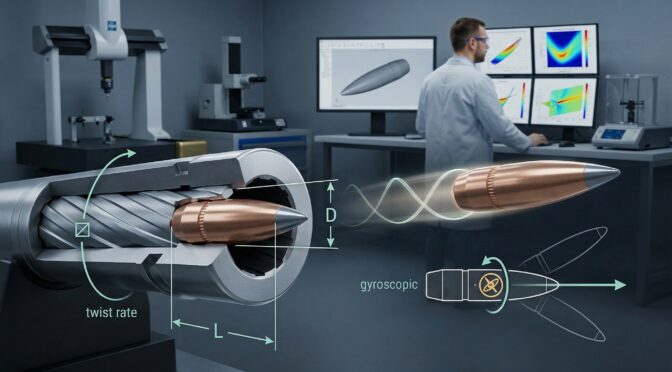
Finding the most accurate ammunition for the Staccato XC requires finding a load that provides enough gas volume to effectively work the compensator, enough kinetic energy to reliably cycle the 8-pound spring, and a bullet mass that maintains gyroscopic stability out of a 1:10 twist rate barrel.

3. Projectile Mass Analysis and Community Consensus

To determine the most accurate commercial loads for the Staccato XC, it is vital to analyze the empirical experiences of thousands of high-volume shooters. By aggregating range reports, competitive match results, and technical discussions from platforms like Reddit (r/2011, r/Staccato_STI) and the Brian Enos competition forums, distinct trends emerge regarding how different bullet weights perform in the XC.

3.1 115-Grain Ammunition: The High-Velocity Baseline

The 115-grain Full Metal Jacket (FMJ) is the most ubiquitous and economically accessible 9mm load on the commercial market. Due to its light weight, it achieves high velocities, frequently exceeding 1,150 fps.

In the context of the Staccato XC, 115-grain ammunition produces a unique kinematic signature. Because these loads utilize generous powder charges, they generate an immense volume of gas at the muzzle.11 This high gas volume effectively “turns on” the compensator, venting aggressively and locking the muzzle down. Shooters frequently note that the XC exhibits virtually zero muzzle rise when firing 115-grain ammunition.15

However, there is a distinct trade-off. The high velocity of the 115-grain bullet combined with the large powder charge results in an extremely fast slide velocity. The slide rockets to the rear and slams back into battery with intense speed. While the muzzle remains flat, the overall feeling in the hands is often described by experienced shooters as “snappy,” “harsh,” or “buzzy”.15

From an accuracy standpoint, premium 115-grain loads perform adequately at close range. However, standard 115-grain range ammunition is rarely utilized by professionals attempting to shoot sub-MOA groups at 25 yards or beyond. The light projectile is more susceptible to environmental factors like wind drift, and the snappy cyclic rate can disrupt the shooter’s physical grip over long strings of fire. While users like “ShadowSRO” on Reddit note firing over 6,000 rounds of SuperVel 115-grain with excellent reliability 17, the general consensus is that 115-grain is best reserved for close-range bay work rather than precision bullseye shooting.

3.2 124-Grain and 125-Grain Ammunition: The Optimal Harmonic Balance

Across all analyzed social media platforms and professional reviews, the 124-grain and 125-grain projectile weights are universally recognized as the optimal choice for the Staccato XC. This weight class represents the perfect intersection of gas volume, slide velocity, and projectile mass.17

A 124-grain bullet requires a moderate powder charge. This charge produces sufficient gas volume to effectively actuate the XC’s compensator, providing the necessary downward thrust to keep the dot in the optical window. Simultaneously, the slightly heavier mass of the 124-grain bullet slows the cyclic velocity of the slide compared to a 115-grain round.

This creates a harmonic balance that is highly prized by competitive shooters. The recoil impulse feels soft and manageable, yet the slide cycles fast enough to keep up with the world’s fastest trigger fingers. When firing 124-grain ammunition, the Staccato XC exhibits a perfectly predictable cyclic rhythm. The red dot lifts slightly, tracks in a clean, vertical loop, and returns exactly to the point of origin. Shooters reporting on r/2011 explicitly note that 124-grain loads provide “the smoothest and most consistent” feel.17

Because the gun is not fighting a snappy slide velocity, the shooter can maintain a highly consistent grip pressure, which directly translates to superior mechanical accuracy on paper. Premium 124-grain and 125-grain loads consistently dominate accuracy testing in the XC platform, delivering precise, repeatable hits at 25 yards and beyond.

3.3 147-Grain Ammunition: The Heavy Subsonic Dilemma

The 147-grain projectile sits at the heavy end of the traditional 9mm spectrum. Traveling at subsonic velocities (typically below 1,000 fps), these long, heavy bullets are historically favored by tactical units utilizing suppressors, as they do not produce a supersonic ballistic crack.13 In uncompensated firearms, 147-grain ammunition is beloved for its incredibly soft, rolling recoil impulse.15

However, introducing a 147-grain load into the Staccato XC yields complex and polarizing results. Because the 147-grain cartridge utilizes a very small charge of fast-burning powder, the volume of gas exiting the muzzle is drastically reduced.11 Consequently, the XC’s compensator is starved of the pneumatic pressure it needs to function. The downward thrust generated by the compensator is minimal.11

When shooting 147-grain loads, the operator relies almost entirely on the 37.56-ounce physical weight of the steel gun to absorb the recoil.16 While the initial physical impulse to the hands is undeniably soft, the lack of compensator actuation means the muzzle will flip higher than it would with a 124-grain load.11 Furthermore, because the slide is cycling slowly, the 8-pound recoil spring can feel overly heavy as it returns the slide to battery, sometimes causing the muzzle to “dip” below the point of aim upon return.

Despite these cyclic quirks, high-quality 147-grain ammunition is inherently very accurate. The long bearing surface of the heavy bullet engages the rifling effectively, and the subsonic velocity means the bullet does not experience the aerodynamic turbulence associated with crossing the transonic barrier during flight. Precision shooters firing from supported bench rests have reported exceptional accuracy with 147-grain loads in the XC. However, for dynamic, rapid-fire applications, the sluggish dot tracking often leads shooters to revert to the more balanced 124-grain options.

3.4 150-Grain Polymer Coated Anomalies

A modern development in the competitive shooting sphere is the introduction of ultra-heavy, polymer-coated lead bullets, exemplified by the Federal Syntech Action Pistol 150-grain load.14 These cartridges feature a distinct red polymer coating that entirely encapsulates the lead core, eliminating metal-on-metal friction within the barrel and drastically reducing barrel heat and fouling.14

These 150-grain loads are specifically engineered to barely meet the 125 Power Factor threshold required for USPSA Minor divisions, utilizing minuscule powder charges to create an impossibly soft recoil impulse in heavy, steel-framed, uncompensated competition guns.14

When utilized in the Staccato XC, however, severe ballistic anomalies have been documented. The XC utilizes a relatively fast 1:10 barrel twist rate (one full rotation every 10 inches).18 While a 1:10 twist is generally excellent for stabilizing heavy 9mm projectiles, the extreme physical length of the 150-grain bullet, combined with the low-friction nature of the slick polymer coating, occasionally results in a failure of the bullet to properly engage and grip the rifling.

Numerous competitive shooters on platforms like Brian Enos and Reddit have submitted range reports indicating that the 150-grain Federal Syntech load can become gyroscopically unstable when fired from the Staccato XC. Users report the bullets “tumbling” or “keyholing”—striking the paper target completely sideways—at distances as close as 15 to 25 yards.8

A tumbling bullet possesses no aerodynamic stability, completely obliterating any semblance of mechanical accuracy. While some users report satisfactory results 19, the prevalence of these keyholing reports strongly indicates that the 150-grain Syntech load sits squarely on the ragged edge of the XC’s stabilization envelope. For operators demanding uncompromising, guaranteed accuracy at 25 yards, industry analysts uniformly recommend avoiding ultra-heavy polymer loads in favor of traditional jacketed ammunition in the 124-grain to 136-grain window.

4. The Engineering Hazard of Plated Ammunition

Beyond bullet weight, the physical construction of the projectile’s outer layer is a critical variable when operating a compensated firearm like the Staccato XC. In the commercial 9mm market, bullets are generally manufactured in three ways: Full Metal Jacket (FMJ), Jacketed Hollow Point (JHP), and Copper-Plated (often branded as Total Metal Jacket or TMJ, though the processes vary).

An FMJ or JHP bullet is constructed by taking a thick, pre-formed copper cup (the jacket) and mechanically swaging a lead core into it under immense pressure. The resulting copper jacket is highly durable, structurally rigid, and deeply integrated with the lead core.

Conversely, a copper-plated bullet (such as the highly popular, budget-tier CCI Blazer Brass or various re-manufactured “extreme plated” brands) is created using an entirely different process. A raw lead core is submerged in an electrochemical bath, and a micro-thin layer of copper is electroplated onto the surface of the lead.17 This process is highly cost-effective, making plated ammunition the dominant choice for cheap range practice.

However, firing thinly plated ammunition through the Staccato XC presents severe mechanical hazards. As the bullet travels down the bore and reaches the island compensator, it crosses the open void of the expansion chamber.7 In this fraction of a millisecond, the micro-thin copper plating is subjected to the sudden, violent release of super-heated propellant gas expanding at over 30,000 PSI.

This extreme thermodynamic and kinetic shock can cause the thin copper plating to tear, shear, or completely strip away from the lead core as it bridges the gap of the compensator port.7 This catastrophic jacket separation results in three distinct and highly detrimental outcomes:

  1. Immediate Accuracy Degradation: If even a tiny flake of the copper plating shears off, the bullet’s center of gravity and aerodynamic profile are instantaneously altered at the exact moment it leaves the muzzle. This induces immediate yaw and pitch, causing the bullet to fly erratically and drastically opening up group sizes. A load that should shoot 1.5 inches at 25 yards may suddenly print 5-inch, scattered patterns.
  2. Compensator Baffle Fouling: The fragments of sheared copper and the newly exposed molten lead atomize and fuse directly to the internal walls of the expansion chamber and the face of the compensator baffle.7 Over the course of just a few hundred rounds, this metal accumulation physically alters the volumetric space of the chamber, degrading the compensator’s ability to redirect gas effectively.7 Furthermore, if lead builds up heavily on the exit crown of the compensator, it can physically physically strike the base of subsequent bullets as they exit, completely destroying accuracy.
  3. Spalling Hazards: The sheared fragments of copper plating do not simply disappear; they are frequently ejected forcefully upward through the compensator port.7 This “spalling” acts as miniature shrapnel, presenting a legitimate safety hazard to the shooter’s face and hands, as well as to adjacent bystanders on the firing line.

Due to these severe engineering incompatibilities, ammunition manufacturers explicitly warn against using plated rounds in compensated firearms.7 Analysts and experienced Staccato XC operators universally agree that to maintain the platform’s legendary accuracy and safety, shooters must strictly utilize true Full Metal Jacket (FMJ) or Jacketed Hollow Point (JHP) ammunition.

5. Empirical Accuracy Data: Premium Match and Defensive Loads

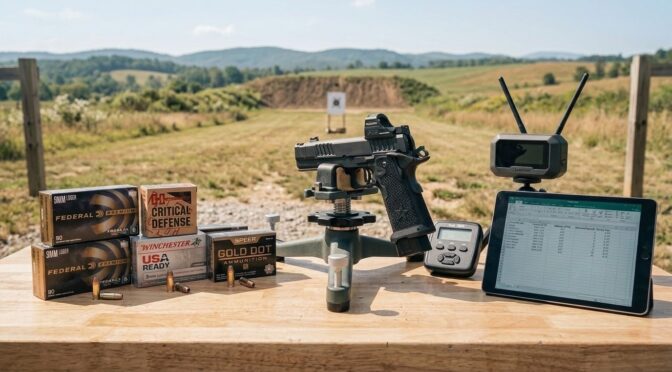
When establishing the absolute upper limits of a firearm’s mechanical accuracy, analysts discount subjective human factors and look to data gathered via stabilized, mechanically fixed platforms. Testing conducted using Ransom Rests (heavy, mechanical vices that completely eliminate human muscular tremors and trigger pull errors) or highly stabilized sandbag supports at standardized distances—almost universally 25 yards—provides the ultimate truth regarding a barrel’s capability.

When the Staccato XC is fed premium, true-jacketed ammunition in the optimal weight classes, the empirical results are nothing short of extraordinary, consistently rivaling or exceeding the accuracy guarantees of custom-built, bolt-action rifles.

5.1 Staccato Proprietary Match Ammunition

Recognizing the highly specific kinematic requirements of their proprietary 2011 pistols, Staccato engineers took the unprecedented step of developing their own in-house ammunition lines, specifically designed to maximize the harmonic potential of platforms like the XC.

The Staccato 136-Grain SMP Match Load To replace their legacy 125-grain match offering, Staccato introduced the 136-grain Special Match Projectile (SMP). This load represents a masterclass in ballistic tuning for a compensated platform.18 Clocking at an average muzzle velocity of 990 fps, the load creates a highly specific Power Factor of 134.6.18

The engineering intent behind this load was to provide the soft, “pushing” recoil impulse generally associated with a heavy 147-grain subsonic bullet, while utilizing a proprietary propellant blend that generates enough sustained gas volume to fully actuate the XC’s compensator and maintain the proper reciprocation speed of the slide.18

The accuracy results achieved with the 136-grain SMP are statistically exceptional. Fired from a universal test receiver (a one-ton mechanical barrel vice that totally isolates ammunition performance) in a climate-controlled indoor facility, Staccato guarantees that this ammunition will produce 1-inch or smaller groups at 25 yards.6

Independent testing by ballistic analysts completely corroborates these lofty corporate claims. Utilizing Garmin Xero C1 Pro radar chronographs to verify incredibly tight extreme velocity spreads (a mere 32.2 fps variance across multiple strings, indicating flawless powder drop consistency at the factory), testers firing from Ransom Multi-Caliber Steady Rests documented an average five-shot group size of just 0.93 inches at 25 yards.6 The best single group recorded during this independent testing shrank to an astonishing 0.76 inches center-to-center.6 Additional independent reviews noted consistent average groups of 1.27 inches at 25 yards under less strictly controlled field conditions.20 This level of precision firmly establishes the Staccato 136-grain Match load as one of the most accurate commercial 9mm cartridges available globally.

The Staccato 124-Grain Range Load Designed to serve as a high-volume training counterpart to the elite Match load, the Staccato 124-grain FMJ travels at an advertised 1,130 fps, yielding a robust 140 Power Factor.21 While marketed strictly as “Range” ammo, its manufacturing tolerances mirror those of premium defensive loads. The brass casing and boxer primers ensure consistent ignition, and the true copper full metal jacket safely traverses the compensator without spalling. Independent testing from a mechanical rest at 25 yards yielded a three-group average of 1.77 inches 6, comfortably meeting Staccato’s internal factory guarantee of consistent sub-2-inch precision.21

5.2 Premium Law Enforcement Defensive Ammunition

For duty carry, self-defense, and high-stakes practical applications, the Staccato XC demonstrates remarkable mechanical synergy with top-tier jacketed hollow-point (JHP) ammunition. The stringent governmental quality control requirements, consistent proprietary powder drops, and highly uniform skived bullet jackets inherent to premium defensive rounds translate directly to extreme precision on paper.

Hornady Critical Duty 135-Grain FlexLock

Hornady’s Critical Duty line, specifically the 135-grain FlexLock projectile, offers a highly unique and effective ballistic profile for the Staccato XC. Sitting precisely between the standard 124-grain and 147-grain weight classes, the 135-grain projectile provides a flawless balance of slide momentum and gas generation. Furthermore, the bullet utilizes a high-antimony lead core locked to a heavy-duty jacket, combined with a patented Flex Tip polymer insert in the hollow point cavity. This polymer insert not only aids in terminal expansion through heavy clothing but also creates a highly uniform, aerodynamic meplat that prevents flight drag inconsistencies.

During rigorous 25-yard bench rest testing comparing the absolute finest custom 2011 pistols on the market, the Hornady 135-grain Critical Duty load achieved the single tightest group of the entire evaluation, printing an extraordinary 0.89-inch 5-shot cluster.5 This data point confirms that the 135-grain weight is a mechanical sweet spot for the XC’s 1:10 barrel twist rate.

Federal Premium HST (124-Grain and 147-Grain) The Federal Premium HST line is widely regarded by law enforcement agencies and ballistic analysts as the absolute benchmark for modern 9mm terminal performance. Both the 124-grain and 147-grain variants are highly favored by Staccato XC operators for concealed carry and duty use.22

The 124-grain variants, particularly the +P (over-pressure) loadings, provide an ideal, massive volume of high-pressure gas to aggressively actuate the XC’s compensator.23 The heavy, electro-chemically bonded and structurally skived copper jacket of the HST maintains perfect structural integrity as it crosses the violent environment of the compensator port, ensuring the bullet’s center of gravity remains perfectly intact upon exiting the crown. Users consistently report repeatable sub-2-inch precision with this load at 25 yards, combined with flawlessly flat dot tracking during rapid-fire strings.23

Speer Gold Dot Operating in the exact same elite tier as the Federal HST, the Speer Gold Dot (specifically the 124-grain +P and the 147-grain G2 variants) is a proven, battle-tested performer. The defining characteristic of the Gold Dot is its proprietary electrochemical bonding process, which molecularly fuses the copper jacket to the lead core one atom at a time. This ensures that the jacket absolutely cannot separate from the core, making it an exceptionally safe and mechanically sound choice for a compensated barrel. In comprehensive aggregate tests evaluating high-end 2011 platforms, the 147-grain Speer Gold Dot produced average 5-shot group sizes of 1.16 inches at 25 yards.5

6. Bulk and Training Ammunition: Analyzing Social Media Sentiment

While premium match and defensive loads showcase the theoretical maximum mechanical accuracy of the Staccato XC, the economic realities of high-volume competition and tactical training dictate that the vast majority of operators will utilize bulk, commercial Full Metal Jacket (FMJ) ammunition. Range reports aggregated from social media platforms—specifically the highly active r/2011 and r/Staccato_STI subreddits, alongside the Brian Enos competition forums—provide an invaluable wealth of qualitative data regarding how these bulk loads perform over tens of thousands of rounds.

6.1 The Standard Bearers: Sellier & Bellot and PMC Bronze

Across all monitored digital communities, a fierce and overwhelming consensus exists regarding the superior performance of two specific bulk ammunition lines in the Staccato XC. The undisputed favorite among high-volume users is Sellier & Bellot (S&B) 124-grain FMJ.3

Users consistently note that the S&B 124-grain load is loaded slightly “hotter” than domestic bulk competitors, providing an excellent Power Factor (often calculated around 130-135 when fired from the XC’s 5.0-inch barrel).3 This robust pressure curve smoothly and authoritatively cycles the 8-pound factory recoil spring while generating a high enough gas volume to effectively actuate the compensator.3 Furthermore, S&B is universally lauded within the community for utilizing incredibly clean-burning propellant formulations. This is a critical functional factor for compensated pistols, as dirty powders rapidly accelerate carbon fouling within the expansion chamber, requiring tedious mid-range-session scraping to maintain accuracy.

PMC Bronze 124-grain FMJ stands as the second most highly recommended bulk option.17 While slightly lower in velocity than S&B, it serves as a highly reliable, exceptionally consistent practice round that closely mimics the recoil impulse and point-of-impact (POI) zero of premium 124-grain defensive loads.

Crucially, both Sellier & Bellot and PMC manufacture their projectiles using true copper jackets swaged over lead cores, completely avoiding the catastrophic jacket shearing issues associated with cheap electroplated ammunition.17 For operators seeking domestic options, SuperVel 115-grain and 124-grain FMJ loads are also frequently cited by serious competitive shooters as highly accurate, clean-running bulk options that are specifically tailored by the manufacturer to suit the dynamic requirements of the 2011 platform.17

6.2 NATO Specification Ammunition

Another highly favored category among Staccato XC owners is 124-grain NATO specification ammunition (frequently manufactured by Winchester or Winchester White Box).24 The 9mm NATO specification mandates higher chamber pressures than standard commercial 9mm Luger, closely mirroring modern +P specifications.

When fired through the Staccato XC, these high-pressure NATO loads generate an enormous volume of gas that drives the compensator to its absolute maximum efficiency. Users on the r/2011 subreddit report that the XC “hammers” with NATO loads, noting that the red dot sight returns to zero faster and more decisively than with almost any other commercial offering.24 While the slide velocity is intensely fast, the massive downward pressure exerted by the compensator keeps the muzzle pinned flat, allowing for blisteringly fast split times during competitive drills.

7. Operator Interface and Mechanical Variables Impacting Accuracy

It is a fundamental tenet of ballistics analysis that the mechanical accuracy of any specific commercial load cannot be fully isolated from the human interface elements and the physical maintenance state of the host firearm. The Staccato XC is a highly tuned, tightly toleranced machine engineered with specific features designed to extract maximum precision; however, failing to respect these tolerances will rapidly degrade the accuracy of even the finest ammunition.

7.1 The Optical Sighting Interface

While the Staccato XC is capable of utilizing traditional iron sights via the Dawson Precision Tactical Optic System, the overwhelming majority of users deploy the platform with a slide-mounted miniature red dot sight (MRDS), such as the Trijicon RMR/SRO or the Holosun 507/508 series.1

The transition from iron sights to a red dot fundamentally changes the operator’s perception of accuracy. Because the red dot presents a single focal plane superimposed over the target, it completely eliminates the optical alignment errors inherent in trying to align a rear notch, a front post, and a distant target simultaneously. When utilizing high-quality red dot optics, shooters are much more capable of realizing the sub-inch grouping capabilities of loads like the Hornady Critical Duty and Staccato Match, as the optic removes the physical limitations of the human eye’s depth of field.6 Range reports explicitly note that the combination of the non-reciprocating island compensator and a high-refresh-rate red dot makes tracking the bullet’s impact point almost effortless.25

7.2 Maintenance Protocols and Lubrication Regimens

The Staccato XC’s integrated compensator and tightly fitted steel frame introduce rigid maintenance requirements that directly and immediately impact long-term accuracy. As high-pressure gas violently vents through the compensator port, carbon, vaporized lead, and unburnt powder granules are aggressively deposited inside the walls of the expansion chamber and blasted onto the face of the baffle.

If this carbon matrix is permitted to accumulate unchecked over hundreds of rounds, it begins to physically alter the precisely machined volumetric space of the chamber. This carbon build-up drastically changes the internal pressure dynamics and fluid flow of the venting gas. As the chamber fills with carbon, less gas is caught by the baffle, and the downward force exerted on the muzzle is reduced, allowing the gun to rise increasingly higher under recoil. Furthermore, severe, hardened carbon build-up on the exit crown of the compensator can physically scrape against the base of the bullet as it exits the firearm, instantly inducing yaw and destroying the bullet’s gyroscopic stability.

Experienced operators and industry analysts recommend a rigorous, proactive maintenance schedule for the XC’s compensator.7 Utilizing true jacketed ammunition (like S&B or PMC) significantly delays this build-up compared to plated or exposed lead rounds. However, periodic soaking of the compensator chamber in specialized, aggressive carbon solvents (such as Hoppe’s No. 9) and physical mechanical scraping of the baffle face with specialized tools are strictly required to maintain the pristine gas dynamics necessary for extreme 25-yard precision.26

Additionally, the exactingly tight tolerances of the 4140 steel billet frame and forged steel slide require a consistent, heavy lubrication regimen. The 2011 platform operates via intense metal-on-metal friction along full-length steel frame rails. While the factory DLC (Diamond-Like Carbon) coating provides exceptional surface hardness and some inherent lubricity, the platform will physically decelerate and begin to bind if run completely dry.3 A dry gun slows slide velocity, which alters the timing of the recoil spring and changes the harmonic rhythm of the pistol, ultimately degrading the shooter’s ability to track the sights accurately during rapid fire. A properly and heavily lubricated Staccato XC ensures that the 8-pound recoil spring functions precisely at its intended velocity, keeping the kinematic rhythm of the pistol perfectly timed with the chosen ammunition’s specific power factor.

8. Conclusion

The Staccato XC represents a watershed achievement in modern defensive and competitive handgun engineering. By seamlessly integrating a single-port expansion chamber directly into a 5.0-inch island barrel, and housing it within a heavyweight, precision-machined steel 2011 frame, the platform offers unprecedented recoil mitigation. However, this complex kinematic system relies heavily on the internal ballistics, gas volume, and physical construction of the chosen commercial ammunition to achieve its legendary flat-shooting characteristics and extreme mechanical precision.

An exhaustive synthesis of empirical ballistic data, controlled machine-rest testing, and extensive qualitative range reports from the professional shooting community yields definitive conclusions regarding commercial ammunition efficacy in this specific platform.

For the absolute maximum mechanical accuracy, premium mid-weight projectiles operating at a standard or +P power factor are demonstrably unequaled. The Staccato 136-grain SMP Match, the Hornady Critical Duty 135-grain FlexLock, and the Federal Premium HST 124-grain load consistently deliver the highest levels of precision, mathematically capable of maintaining sub-MOA to 1.5-inch groups at 25 yards when the human error variable is removed. These highly engineered loads provide the exact requisite gas volume to actuate the compensator effectively while maintaining impeccable gyroscopic stability as they interface with the XC’s 1:10 twist rate barrel.

For high-volume, economical training applications, 124-grain true-jacketed ammunition from respected manufacturers like Sellier & Bellot and PMC Bronze offers the closest ballistic and cyclic mimicry to premium defense loads, reliably generating the necessary power factor to cycle the 8-pound factory spring without inducing undue wear.

Crucially, operators must strictly avoid utilizing thinly plated ammunition (such as standard CCI Blazer Brass) to prevent catastrophic jacket separation, compensator baffle strikes, and immediate accuracy degradation. Furthermore, while heavy 147-grain subsonic loads and ultra-heavy 150-grain polymer-coated loads offer remarkably soft initial recoil impulses, their lack of sufficient gas volume fails to leverage the integrated compensator’s full potential, and these ultra-heavy projectiles run the distinct risk of aerodynamic destabilization and keyholing at distance.

Ultimately, paring the Staccato XC with high-quality, true-jacketed, 124-grain to 136-grain commercial ammunition ensures the operator fully harnesses the geometric, thermodynamic, and kinematic advantages painstakingly engineered into this elite platform.


Please share the link on Facebook, Forums, with colleagues, etc. Your support is much appreciated and if you have any feedback, please email us in**@*********ps.com. If you’d like to request a report or order a reprint, please click here for the corresponding page to open in new tab.


Sources Used

  1. Staccato XC, accessed February 22, 2026, https://staccato2011.com/products/staccato-xc
  2. Staccato XC Review: Bespoke Enhanced Performance, accessed February 22, 2026, https://smallarmsreview.com/staccato-xc-review-bespoke-enhanced-performance/
  3. Staccato XC and Ammo : r/2011 – Reddit, accessed February 22, 2026, https://www.reddit.com/r/2011/comments/z6g52q/staccato_xc_and_ammo/
  4. What Bullet weights are you running for you compensated Staccatos? : r/2011 – Reddit, accessed February 22, 2026, https://www.reddit.com/r/2011/comments/wzcn30/what_bullet_weights_are_you_running_for_you/
  5. The Best 2011 Pistols of 2025, Tested and Reviewed – Outdoor Life, accessed February 22, 2026, https://www.outdoorlife.com/guns/best-2011-pistols/
  6. Ammo Testing: Staccato Range and Match 9mm – American Handgunner, accessed February 22, 2026, https://americanhandgunner.com/ammo/ammo-testing-staccato-range-and-match-9mm/
  7. What range ammo are you running in your ported / comp’d pistols? : r/2011 – Reddit, accessed February 22, 2026, https://www.reddit.com/r/2011/comments/1eqnqqt/what_range_ammo_are_you_running_in_your_ported/
  8. Syntech 150 gr tumbling. – 9mm/38 Caliber – Brian Enos’s Forums… Maku mozo!, accessed February 22, 2026, https://forums.brianenos.com/topic/267463-syntech-150-gr-tumbling/
  9. Staccato – Rainier Arms Firearms Academy, accessed February 22, 2026, https://www.rainierarmsfa.com/staccato/
  10. [Video+Review] Staccato XC & XL: Worth the Cost?, accessed February 22, 2026, https://www.pewpewtactical.com/staccato-xc-xl-2021-review/
  11. 147gr +P (1135 fps) for a Staccato XC = 166 Power Factor, correct? – Reddit, accessed February 22, 2026, https://www.reddit.com/r/CompetitionShooting/comments/18853qs/147gr_p_1135_fps_for_a_staccato_xc_166_power/
  12. DILLON PRECISION PRESENTS, accessed February 22, 2026, https://dilloncdn.com/magento/bluepress/2024/oct-2024.pdf
  13. 115gr vs 124gr vs 147gr 9mm? Why the different bullet weights? If the bullet weighs more, does that mean it’s actually bigger and would that mean there’s less room for gunpowder in the case, so it’s slower? – Reddit, accessed February 22, 2026, https://www.reddit.com/r/armedsocialists/comments/1jdj80h/115gr_vs_124gr_vs_147gr_9mm_why_the_different/
  14. 9mm ammo. 115, 124, or 147? : r/CompetitionShooting – Reddit, accessed February 22, 2026, https://www.reddit.com/r/CompetitionShooting/comments/xp213l/9mm_ammo_115_124_or_147/
  15. 115gr vs 124gr vs 147gr…. – 9mm/38 Caliber – Brian Enos’s Forums… Maku mozo!, accessed February 22, 2026, https://forums.brianenos.com/topic/79387-115gr-vs-124gr-vs-147gr/
  16. Sidearms & Scatterguns – Staccato accuracy | Sniper’s Hide Forum, accessed February 22, 2026, https://www.snipershide.com/shooting/threads/staccato-accuracy.7033397/
  17. What ammo should I use for the staccato XC (and my other pistols with compensators)?, accessed February 22, 2026, https://www.reddit.com/r/2011/comments/1lr9l7z/what_ammo_should_i_use_for_the_staccato_xc_and_my/
  18. Staccato Ammunition, accessed February 22, 2026, https://staccato2011.com/blog/staccato-ammunition
  19. Thoughts on Federal Syntech? : r/CompetitionShooting – Reddit, accessed February 22, 2026, https://www.reddit.com/r/CompetitionShooting/comments/1jvl9p0/thoughts_on_federal_syntech/
  20. Best Ammo. Fair Price. Always Available. – Staccato 2011, accessed February 22, 2026, https://staccato2011.com/ammo
  21. Staccato Range 9mm Ammo 124 Grain Full Metal Jacket – LHA124FMJ-STAC, accessed February 22, 2026, https://www.targetsportsusa.com/staccato-range-9mm-luger-ammo-124-grain-fmj-lha124fmj-stac-p-113532.aspx
  22. Staccato C2 and P Personal Defense Ammo : r/2011 – Reddit, accessed February 22, 2026, https://www.reddit.com/r/2011/comments/vqek77/staccato_c2_and_p_personal_defense_ammo/
  23. Practice shooting with 9mm 115 grain v. 124 grain : r/Shooting – Reddit, accessed February 22, 2026, https://www.reddit.com/r/Shooting/comments/1jxaclv/practice_shooting_with_9mm_115_grain_v_124_grain/
  24. Best Factory Ammo for Staccato XC? : r/2011 – Reddit, accessed February 22, 2026, https://www.reddit.com/r/2011/comments/166oed0/best_factory_ammo_for_staccato_xc/
  25. Range Fun Report – Staccato XC | Sig P226 | CZ Shadow 2 : r/2011 – Reddit, accessed February 22, 2026, https://www.reddit.com/r/2011/comments/1fyq8ge/range_fun_report_staccato_xc_sig_p226_cz_shadow_2/
  26. Coated bullets in a Staccato XC – General Reloading – Enos Forums, accessed February 22, 2026, https://forums.brianenos.com/topic/301100-coated-bullets-in-a-staccato-xc/
  27. Ben Stoeger – Staccato XC Duty Gun/Ammo Challenge – XC has about 2K rounds on it – Fully clean and lube (with Rem Oil) and then run 2K rounds of Winchester Ranger 147 gr. and see what happens. 7# recoil spring is stupid but will be used since it is what comes with pistol. Done – Reddit, accessed February 22, 2026, https://www.reddit.com/r/2011/comments/1cbo1c9/ben_stoeger_staccato_xc_duty_gunammo_challenge_xc/
Understanding the Greenhill Formula in Ballistics

1.0 Executive Summary

The science of projectile ballistics relies heavily on the principles of gyroscopic stabilization to ensure precision, aerodynamic efficiency, and terminal effectiveness. At the core of early ballistic engineering is the Greenhill formula, developed in 1879 by Sir Alfred George Greenhill. For well over a century, this elegant mathematical heuristic provided a foundational rule of thumb for determining the optimal barrel twist rate required to stabilize a bullet based primarily on its physical dimensions. In the domain of small arms engineering, achieving the perfect rate of spin is paramount; a twist rate that is too slow will fail to stabilize the projectile, resulting in catastrophic tumbling and loss of accuracy, while an excessively fast twist rate can magnify microscopic projectile imperfections, induce aerodynamic drag, and compromise terminal ballistic performance in soft tissue.

This exhaustive research report analyzes the Greenhill formula from the perspective of small arms engineering and applied exterior ballistics. It explores the historical creation of the formula during the global military transition from spherical musket balls to elongated conoidal projectiles. Furthermore, it details the Newtonian physics that allow the formula to work, breaking down the critical dynamic relationship between a projectile’s center of gravity, its center of pressure, and the resultant aerodynamic overturning moments that threaten stable flight. The mathematical derivations that define Greenhill’s constants are explored in depth, mapping the shift from the original constant of 150 to the modern high-velocity constant of 180, as well as the specific gravity modifiers required for contemporary composite bullets.

To bridge theoretical mathematics with applied engineering, this report practically applies the Greenhill formula to modern ammunition. It specifically analyzes the most popular projectile weights across three ubiquitous military and civilian calibers: 5.56x45mm NATO, .308 Winchester (7.62x51mm NATO), and 9x19mm Parabellum. Comprehensive calculations are presented for 5.56 NATO projectiles (55-grain M193, 62-grain M855, and 77-grain MatchKing), .308 Winchester projectiles (147-grain M80, 168-grain MatchKing, and 175-grain MatchKing), and 9mm Luger projectiles (115-grain, 124-grain, and 147-grain variants).

By comparing these calculated theoretical twist rates against empirical evidence and modern industry manufacturing standards, the analysis reveals significant nuances and inherent limitations in Greenhill’s nineteenth-century mathematics. While the Greenhill formula remains surprisingly accurate for traditional, homogeneous lead-core, flat-based rifle bullets operating at predictable supersonic velocities, it demonstrates severe predictive failures when applied to composite military projectiles featuring low-density steel penetrators. More catastrophically, the formula completely breaks down when applied to the short, obtuse geometry and transonic velocities of pistol calibers. Consequently, the report details the modern ballistic shift toward Don Miller’s Twist Rule, evaluating why contemporary engineering requires complex algorithms that account for specific gravity, boattail aerodynamics, atmospheric conditions, and precise gyroscopic stability factors to ensure optimal performance.

2.0 The Evolution of Rifling and Projectile Stabilization

To understand the engineering necessity of the Greenhill formula, one must first understand the historical and physical evolution of the firearm barrel. The modern firearm barrel is defined by its rifling, which consists of a series of helical lands and grooves machined into the internal surface of the bore. These grooves are explicitly designed to grip the outer jacket or bearing surface of a projectile, forcing it to rotate on its longitudinal axis as it is driven forward by rapidly expanding high-pressure propellant gases.1 This mechanical process transforms a ballistic projectile from a chaotic, unstable object highly susceptible to atmospheric buffeting into a precision instrument stabilized by gyroscopic forces.

2.1 The Limitations of Smoothbore Ballistics

Before the widespread adoption and manufacturing standardization of rifling, early firearms such as muskets relied entirely on smoothbore technology. These weapons fired spherical lead balls. Because a perfect sphere presents the exact same aerodynamic profile to the oncoming air regardless of its physical orientation, gyroscopic stabilization was not strictly necessary to prevent it from tumbling end-over-end. A sphere cannot tumble because it has no ends. However, smoothbore accuracy was severely limited by unpredictable aerodynamic behaviors, including the Magnus effect, where slight, unintentional spins imparted by the barrel would cause the spherical ball to curve erratically in flight.

As ballistic engineering evolved throughout the nineteenth century to demand greater effective range, better velocity retention, and higher terminal kinetic energy, projectiles evolved from spheres to elongated cylinders with ogival or spitzer (pointed) noses.3 The elongated profile dramatically improved the ballistic coefficient of the projectile, allowing it to slip through the air with far less drag. However, this aerodynamic efficiency introduced a fatal flaw: elongated bullets are inherently unstable in flight. If an elongated, conical bullet is fired from a smoothbore barrel, the complex atmospheric pressures acting upon the nose will cause the bullet to rapidly yaw, meaning it will deviate horizontally and vertically from the axis of flight, and ultimately tumble wildly end-over-end.1 Tumbling exponentially increases aerodynamic drag, utterly destroys the predictable ballistic trajectory, bleeds off kinetic energy, and ruins accuracy. Imparting a rapid axial spin creates angular momentum, generating a gyroscopic stiffness that forces the elongated bullet to maintain a nose-forward orientation throughout its entire flight path.6

2.2 The Engineering Challenge of Twist Rates

The precise rate at which a barrel imparts spin to a bullet is universally known as the “twist rate.” In ballistic engineering and firearms manufacturing, this is expressed as a ratio representing the linear distance a bullet must travel down the barrel to complete exactly one full 360-degree revolution.1 For example, a twist rate denoted as “1:7” indicates that the rifling completes one full rotation every seven inches of barrel length.8 It is important to note that barrel length has no bearing on the actual twist rate itself; a rate of 1:10 remains a 1:10 twist whether the barrel is five inches long or thirty inches long, though the final exit velocity and overall rotations per minute (RPM) will differ.2

Finding the optimal twist rate is one of the most critical engineering challenges in weapon design. If the selected twist rate is too slow, a condition known as under-stabilization occurs. An under-stabilized bullet will not generate sufficient angular momentum to overcome aerodynamic resistance. It will yaw excessively, tumble in flight, and print elongated, keyhole-shaped impacts on targets, demonstrating a complete failure of accuracy.5

Conversely, if the twist rate is excessively fast, the bullet experiences a state of over-stabilization. While over-stabilization effectively prevents tumbling, it introduces a host of secondary problems. Excess spin exacerbates tiny manufacturing imperfections in the bullet’s jacket or lead core, causing the bullet to wobble off its true center axis due to amplified centrifugal forces. Furthermore, extreme over-stabilization causes the bullet’s nose to remain artificially elevated during the downward arc of its trajectory. Instead of smoothly tracking the parabolic arc of flight, the nose remains pointed upward, exposing the belly of the bullet to the oncoming wind, which drastically increases drag and degrades the ballistic coefficient. In extreme cases, hyper-spin can generate centrifugal forces so massive that they physically tear thin-jacketed bullets apart mid-flight, turning the projectile into a cloud of shrapnel before it ever reaches the target.5

3.0 The Physics of Gyroscopic Stabilization

To comprehend why the Greenhill formula was developed, why it works under specific conditions, and why it eventually fails under modern parameters, it is necessary to conduct a deep examination of the underlying Newtonian physics of ballistics. The stability of a projectile in atmospheric flight is dictated by a complex, dynamic interplay of physical forces: gyroscopic stability, the center of pressure, the center of gravity, and the moments of inertia.6

3.1 Center of Gravity Versus Center of Pressure

When a bullet travels through the Earth’s atmosphere at supersonic speeds, it physically displaces air molecules. The cumulative force of this aerodynamic drag pushes aggressively against the front and sides of the bullet. The theoretical median point where all these combined aerodynamic pressure forces act upon the projectile is mathematically known as the Center of Pressure (CP).6

Conversely, the bullet’s physical mass is not evenly distributed. The point of perfect balance is known as the Center of Gravity (CG).6 In modern, elongated rifle bullets, the aerodynamic nose is usually hollow, extremely pointed, or composed of lightweight polymer materials to reduce drag. Meanwhile, the heavier core materials, such as lead or dense copper, are concentrated heavily in the base or shank of the bullet. Because the heavy mass is concentrated at the rear while the lightweight volume is concentrated at the front, the Center of Gravity is inherently located behind the Center of Pressure.6

When a projectile flies, aerodynamic drag acts upon the Center of Pressure, which is located ahead of the heavier Center of Gravity. This creates a dangerous physical dynamic. Because the aerodynamic drag pushes against a point located forward of the bullet’s anchoring mass, the air pressure continuously attempts to push the nose of the bullet upward and backward over its own base.6 The Center of Gravity acts as a physical fulcrum for this action. This highly destabilizing aerodynamic phenomenon is known in ballistics as the “pitching moment” or the “aerodynamic overturning moment”.6 If this overturning moment is left unchecked by mechanical means, it will immediately cause the bullet to flip end-over-end as soon as it exits the muzzle.

3.2 Counteracting the Overturning Moment

To counteract the devastating effects of the overturning moment, the rifling in the barrel imparts rapid spin to the bullet. Utilizing the principles of Newtonian physics and the right-hand rule of angular momentum, this intense spin creates a gyroscopic stabilizing force.6 Just as a child’s spinning top resists falling over due to the pull of gravity, a rapidly spinning bullet develops a rigid angular momentum that resists being flipped over by atmospheric pressure.

The precise requirement for this rotational force is dictated by the bullet’s specific Moments of Inertia.11 In physics, inertia is the resistance of any physical object to any change in its velocity. For a bullet, there are two critical moments to consider. The transverse moment of inertia is the bullet’s resistance to tumbling end-over-end.11 The polar moment of inertia is the bullet’s resistance to spinning along its longitudinal axis.11

The primary insight derived from these physics—and the foundational truth that underpins the entirety of the Greenhill formula—is that a longer bullet possesses a significantly greater transverse moment of inertia.6 Because a longer bullet stretches further from its center of gravity, it provides vastly more leverage for the aerodynamic drag to exploit. It operates exactly like a long lever prying against a fulcrum. Therefore, the longer the bullet, the greater the angular momentum, and thus, the faster the barrel twist rate required to stabilize it.5

Interestingly, bullet weight itself is a secondary, and sometimes inverse, factor. A heavier, denser bullet is actually easier to stabilize than a lighter, longer bullet of the exact same length.5 This is because the denser mass increases the polar moment of inertia, giving the bullet more stabilizing “flywheel” effect without simultaneously increasing the aerodynamic profile that the wind can push against.5

4.0 The Genesis and Architecture of the Greenhill Formula

In the late nineteenth century, the world’s militaries were rapidly abandoning spherical musket balls in favor of elongated, conoidal bullets fired from rifled barrels. This transition presented a massive logistical and engineering hurdle: how could military engineers quickly and reliably calculate the necessary barrel rifling twist rates for an endless variety of new prototype projectiles without relying on expensive, time-consuming trial and error?

4.1 Historical Context and Creation

Enter Sir Alfred George Greenhill. In 1879, Greenhill, serving as a distinguished professor of mathematics at the British Royal Military Academy at Woolwich in London, was officially tasked with establishing a reliable mathematical method for determining the proper rifling twist rates for the British Empire’s rapidly changing arsenal of small arms and artillery.2

Professor Greenhill recognized that the complex physics of overturning moments and aerodynamic drag coefficients were too cumbersome for rapid field calculations and industrial application. He sought to develop a highly functional, easily calculated rule of thumb for determining the optimal twist rate for lead-core bullets. Remarkably, Greenhill’s brilliant simplification relied almost entirely on the bullet’s physical dimensions—specifically its overall length and its diameter—eschewing the immediate need to deeply calculate the bullet’s overall mass, specific weight, or the exact aerodynamic curvature of its nose.13 He correctly theorized that for the relatively uniform, solid lead projectiles of the 1870s, length and diameter were the dominant variables controlling the transverse moment of inertia.

4.2 The Mathematical Expression

The eponymous Greenhill Formula, which is still widely referenced in amateur and professional ballistics today, is traditionally expressed in plain text format as follows:

T = (C * D^2) / L

Where the variables in the equation are strictly defined as:

  • T = The required barrel twist rate (expressed in inches per turn).
  • C = A specific numerical constant intricately correlated to the projectile’s anticipated muzzle velocity.
  • D = The physical diameter of the bullet (measured in inches).
  • L = The overall physical length of the bullet (measured in inches).

4.2.1 The Velocity Constants: 150 and 180

The functional heart of the Greenhill formula relies entirely on the proper selection of the constant, represented by the variable “C”. In his original 1879 mathematical formulation, Professor Greenhill established the baseline value of C as 150.2 This specific constant was calculated based on the standard black powder and early transitional smokeless powder velocities of the Victorian era. The constant of 150 worked exceptionally well for lead-core projectiles traveling at velocities up to approximately 2,800 feet per second (fps), which roughly equates to 840 meters per second (m/s).8

However, as advanced smokeless powders completely revolutionized small arms ammunition in the early 20th century, muzzle velocities increased dramatically. Ballisticians and engineers recognized through empirical observation that higher velocities inherently imparted vastly more rotational velocity (measured in total RPM) to the bullet for any given twist rate. To accommodate this massive leap in velocity, the Greenhill constant required adjustment.

For modern, high-velocity rifle cartridges producing muzzle velocities exceeding 2,800 fps, a revised constant of 180 is utilized.6 Using a higher numerical constant in the numerator yields a larger numerical result for the required twist rate “T”. This mathematically accommodates the physical reality that high-velocity projectiles spin much faster upon exiting the barrel and therefore can be adequately stabilized with a slower, numerically higher twist rate.

4.2.2 The Specific Gravity Modifier

Greenhill’s original 1879 formula was meticulously modeled on the behavior of solid lead-alloy projectiles.14 Lead is a heavy, dense metal with a Specific Gravity (SG) of approximately 10.9.8 Because the original military projectiles of Greenhill’s era were homogeneous lead cores wrapped in early jackets, the density variable essentially canceled out of Greenhill’s simplified equation, allowing him to focus solely on length and diameter.13

However, the landscape of modern ammunition is defined by composite bullet designs. Today’s projectiles frequently feature thick copper jackets (which possess an SG of roughly 8.9), hardened steel core penetrators (which possess an SG of only 7.8), or aerodynamically efficient polymer ballistic tips (which possess an extremely low SG of approximately 1.0).15 When a modern bullet’s overall density diverges significantly from the baseline of solid lead, the complete, unmodified, and expanded Greenhill formula must be utilized to maintain any semblance of mathematical accuracy. The expanded formula is expressed as:

TR = * sqrt(SG / 10.9)

In this expanded, rigorous format, if a bullet has a lower specific gravity than traditional lead, the mathematical modifier consisting of the square root of the bullet’s actual SG divided by 10.9 results in a fraction that is less than 1. Multiplying the standard formula’s result by this fraction effectively reduces the final twist rate number “T”. This indicates a vital principle of modern ballistics: lighter, less dense composite bullets of the exact same physical length require a faster, tighter twist rate to remain stable in flight.8

5.0 Parameters of Ballistic Evaluation

To rigorously test the efficacy and modern relevance of the Greenhill formula, we must transition from theoretical physics to applied engineering by testing it against real-world ammunition. This report will analyze the most popular and historically significant projectile weights across three distinct, globally adopted calibers: the high-velocity 5.56x45mm NATO intermediate rifle cartridge, the full-power .308 Winchester (7.62x51mm NATO) battle rifle cartridge, and the 9x19mm Luger (Parabellum) pistol cartridge.

By calculating the theoretical twist rates using Greenhill’s mathematics and subsequently comparing those results against modern empirical evidence, we can determine precisely where the 1879 formula succeeds and where it suffers catastrophic predictive failure. The formula relies heavily on the length-to-diameter ratio. A 5.56mm 77-grain bullet is exceptionally long relative to its narrow diameter, necessitating a very fast twist rate. Conversely, a 9mm bullet is short and wide, yielding an obtuse geometry that breaks the formula’s aerodynamic assumptions.

During the execution of these calculations, a strict adherence to Greenhill’s velocity threshold will be maintained. When a projectile’s anticipated muzzle velocity explicitly exceeds 2,800 feet per second, the high-velocity constant of C = 180 will be utilized. For velocities falling below the 2,800 fps threshold, the standard historical constant of C = 150 will be applied.8

6.0 Analytical Application: 5.56x45mm NATO (.224 Caliber)

The 5.56x45mm NATO is a high-velocity intermediate rifle cartridge that forms the backbone of Western military small arms. Standard 5.56mm projectiles feature a nominal physical diameter of 0.224 inches.16 Over the extensive lifespan of the cartridge, both the military and civilian sectors have heavily utilized three distinct bullet weights, each presenting unique stabilization challenges: the lightweight 55-grain, the steel-core 62-grain, and the heavy 77-grain match projectile.19

6.1 The 55-Grain FMJ (M193)

The original military loading adopted for the early M16 rifle platform during the Vietnam era was the M193 cartridge. This load fires a 55-grain Full Metal Jacket (FMJ) boat-tail projectile with a traditional lead core and copper jacket.

  • Diameter (D): 0.224 inches 18
  • Length (L): Approximately 0.740 inches 2
  • Velocity: Approximately 3,100 to 3,200 fps (This high velocity strictly requires the application of C = 180) 13

To calculate the required twist rate for the 55-grain M193 projectile, we first determine the square of the diameter. Multiplying 0.224 inches by itself yields a value of 0.050176. Because the muzzle velocity of this cartridge significantly exceeds the 2,800 feet per second threshold, we must apply the high-velocity constant of 180. Multiplying the squared diameter of 0.050176 by 180 gives us a dividend of 9.03168. Finally, to isolate the necessary twist rate, we divide this dividend by the projectile’s overall length of 0.740 inches. This mathematical operation results in a required twist rate of one complete revolution every 12.20 inches.

6.2 The 62-Grain FMJ (M855 / SS109)

Adopted by NATO forces in the 1980s to improve barrier penetration, the M855 cartridge features a 62-grain bullet. Unlike the homogeneous lead core of the M193, the M855 is a complex composite constructed with a copper jacket, a lead core in the base, and a mild steel penetrator located in the tip.22 Because steel is significantly lighter and less dense than lead, the bullet must be physically manufactured to be noticeably longer to achieve its target mass of 62 grains.

  • Diameter (D): 0.224 inches 18
  • Length (L): Approximately 0.907 inches 24
  • Velocity: Approximately 3,020 fps (Requires C = 180) 22

Following the Greenhill protocol for the 62-grain M855 projectile, we utilize the previously calculated squared diameter of 0.050176. Applying the high-velocity constant of 180 due to the 3,020 fps muzzle velocity yields the identical dividend of 9.03168. We then divide this dividend by the new, extended overall length of 0.907 inches. The result predicts a required twist rate of one turn in 9.95 inches.

6.3 The 77-Grain Sierra MatchKing (Mk262 / OTM)

Designed specifically for extended range engagements and enhanced terminal ballistics, the 77-grain Open Tip Match (OTM) bullet, primarily manufactured as the Sierra MatchKing, is heavily utilized in Special Purpose Rifles (SPRs). It is an exceptionally dense, extremely long lead-core bullet designed to maximize aerodynamic efficiency.25

  • Diameter (D): 0.224 inches 18
  • Length (L): 0.994 inches 26
  • Velocity: Approximately 2,750 fps (Because this heavy bullet drops below the 2,800 fps threshold, it requires the historical constant of C = 150) 13

For the 77-grain MatchKing, we again start with the squared diameter of 0.050176. However, due to the lower muzzle velocity of 2,750 fps, we must switch the constant to 150. Multiplying 0.050176 by 150 yields a smaller dividend of 7.5264. Dividing this dividend by the massive bullet length of 0.994 inches predicts a required twist rate of one turn in 7.57 inches.

Table 1: 5.56x45mm NATO Greenhill Predictions

Bullet WeightLength (in)Velocity Constant (C)Predicted Twist Rate
55-grain (M193)0.7401801:12.2″
62-grain (M855)0.9071801:9.95″
77-grain (SMK)0.9941501:7.57″

7.0 Analytical Application: .308 Winchester / 7.62x51mm NATO

The .308 Winchester is a legendary medium-to-large game cartridge and serves as the direct civilian counterpart to the military 7.62x51mm NATO battle rifle cartridge.27 Projectiles in this family feature a standard diameter of 0 .308 inches.28 For this analysis, we will examine three of the most historically significant and widely deployed projectile weights: the 147-grain standard ball, the 168-grain precision match, and the 175-grain long-range match.29

7.1 The 147-Grain FMJ (M80 Ball)

This projectile serves as the standard NATO machine gun and general-purpose infantry rifle load. It utilizes a relatively short, flat-base or minimal boattail full metal jacket bullet constructed with a dense lead core.30

  • Diameter (D): 0 .308 inches 31
  • Length (L): Approximately 1.10 inches
  • Velocity: Approximately 2,800 fps. Because operational velocities routinely test just at or slightly below the strict 2,801+ fps cutoff depending on barrel length, we will conservatively apply C = 150.31

To evaluate the 147-grain M80 ball projectile, we square the larger diameter of 0 .308 inches, which yields 0.094864. Multiplying this value by the standard constant of 150 results in a dividend of 14.2296. Dividing this sum by the overall length of 1.10 inches predicts a required twist rate of one turn in 12.93 inches.

7.2 The 168-Grain Sierra MatchKing (BTHP)

Serving as the quintessential precision target and police sniper bullet for several decades, the 168-grain Hollow Point Boat Tail (HPBT) is highly aerodynamic, featuring a prominent boattail base to reduce drag.30

  • Diameter (D): 0 .308 inches
  • Length (L): 1.220 inches 32
  • Velocity: Approximately 2,650 fps (Requires C = 150) 32

For the 168-grain MatchKing, we utilize the squared diameter dividend of 14.2296 (0.094864 multiplied by the 150 constant). Dividing this number by the longer bullet length of 1.220 inches predicts a tighter required twist rate of one turn in 11.66 inches.

7.3 The 175-Grain Sierra MatchKing (BTHP / M118LR)

Developed specifically to surpass the transonic instability issues that plagued the 168-grain bullet at distances approaching 1,000 yards, the 175-grain bullet forms the heavy backbone of the M118 Long Range sniper cartridge.31 It requires an even longer aerodynamic profile to accommodate the increased mass.

  • Diameter (D): 0 .308 inches
  • Length (L): 1.242 inches 34
  • Velocity: Approximately 2,600 fps (Requires C = 150) 31

Executing the Greenhill formula for the 175-grain MatchKing, we divide the constant-adjusted dividend of 14.2296 by the maximum overall length of 1.242 inches. This calculation predicts a required twist rate of one turn in 11.45 inches.

Table 2: .308 Winchester Greenhill Predictions

Bullet WeightLength (in)Velocity Constant (C)Predicted Twist Rate
147-grain (M80)1.1001501:12.9″
168-grain (SMK)1.2201501:11.6″
175-grain (SMK)1.2421501:11.4″

8.0 Analytical Application: 9x19mm Luger / Parabellum (.355 Caliber)

Transitioning to handguns, the 9mm Luger is the preeminent pistol and submachine gun cartridge globally.35 It operates under vastly different ballistic paradigms than rifle cartridges. It utilizes short, relatively wide projectiles with a diameter of 0.355 inches.17 Standard projectile weights available commercially and to law enforcement are 115-grain, 124-grain, and 147-grain.37 Because pistol velocities are universally well below the 2,800 fps threshold, the standard Greenhill constant of C = 150 is strictly applied.13

8.1 The 115-Grain FMJ

This is the standard high-velocity training round, featuring a short, rounded nose profile.37

  • Diameter (D): 0.355 inches 36
  • Length (L): Approximately 0.550 inches (industry standard proxy)
  • Velocity: Approximately 1,180 fps 36

To apply Greenhill to the 115-grain pistol projectile, we square the wide 0.355-inch diameter, resulting in 0.126025. Multiplying this by the 150 constant yields a dividend of 18.90375. Dividing this value by the extremely short length of 0.550 inches generates a predicted required twist rate of one turn in 34.37 inches.38

8.2 The 124-Grain FMJ/JHP

The ubiquitous NATO standard weight, favored for balancing muzzle velocity and terminal penetration depth.39

  • Diameter (D): 0.355 inches
  • Length (L): Approximately 0.600 inches (industry standard proxy)
  • Velocity: Approximately 1,100 fps

For the 124-grain projectile, we divide the base dividend of 18.90375 by the slightly increased length of 0.600 inches. The formula predicts a required twist rate of one turn in 31.50 inches.

8.3 The 147-Grain JHP

This is a heavy, subsonic projectile heavily favored by law enforcement for superior barrier penetration and for use in suppressed weapon systems.37 Because the design must cram 147 grains of lead into a restrictive 9mm diameter, the bullet resembles a long, blunt cylindrical plug rather than a pointed rifle bullet.10

  • Diameter (D): 0.355 inches
  • Length (L): Approximately 0.660 inches (industry standard proxy)
  • Velocity: Approximately 975 fps (Subsonic) 36

Applying the final Greenhill calculation to the 147-grain subsonic projectile, we divide 18.90375 by the 0.660-inch length. This results in a predicted required twist rate of one turn in 28.64 inches.38

Table 3: 9mm Luger Greenhill Predictions

Bullet WeightLength (in)Velocity Constant (C)Predicted Twist Rate
115-grain0.5501501:34.3″
124-grain0.6001501:31.5″
147-grain0.6601501:28.6″

9.0 Empirical Validation: Theoretical vs. Applied Twist Rates

Having generated the theoretical twist rates using the 1879 formula, the critical engineering step is to benchmark these mathematical results against the actual, empirical twist rates utilized by the modern firearms industry. Analyzing the delta between theoretical math and real-world manufacturing reality reveals profound insights into the limitations of early ballistic heuristics.

9.1 Evaluating the 5.56 NATO Predictions

The original M16 rifles deployed in the 1960s, designed to fire the 55-grain M193 projectile, were famously fielded with a 1:12 twist rate barrel.9 Our Greenhill calculation predicted a twist rate of 1:12.2 inches. In this specific instance, the 1879 formula operates flawlessly.9 The M193 is a classic lead-core, relatively short spitzer bullet—precisely the type of homogeneous projectile Greenhill’s constants were meticulously calibrated for over a century ago.

However, the mathematical model begins to violently fracture when analyzing the 62-grain M855. Our Greenhill calculation predicted a 1:9.95 twist requirement. In reality, while a 1:9 twist can marginally stabilize an M855 under ideal conditions, the military universally adopted a rapid 1:7 twist for the M4 carbine and M16A2 specifically to stabilize this exact bullet (alongside the even longer L110 tracer).18

Why does the formula fail the M855 so thoroughly? The baseline Greenhill formula inherently assumes a uniform specific gravity of 10.9, representing solid lead.13 The M855, however, contains a massive mild steel penetrator in its nose.22 Steel has a specific gravity of just 7.8. Therefore, the overall specific gravity of the M855 bullet is substantially lower than the formula assumes. According to the expanded Greenhill physics, a lighter overall density requires a faster twist rate because there is less mass driving the polar moment of inertia.8 Because we did not manually apply the complex sqrt(SG / 10.9) specific gravity modifier in the base calculation, the simplified Greenhill formula dangerously under-calculated the required twist for composite bullets.

Conversely, the calculation for the 77-grain Sierra MatchKing yielded a 1:7.57 twist requirement. This perfectly aligns with modern industry empirical evidence. Modern precision AR-15 rifles dedicated to firing 77-grain match ammunition are routinely outfitted from the factory with 1:8 or 1:7.7 twist barrels.1 Because the 77-grain SMK is a traditional heavy lead-core bullet, its specific gravity perfectly aligns with the formula’s baseline assumptions, allowing Greenhill to succeed once again.

9.2 Evaluating the .308 Winchester Predictions

Industry standard barrel twist rates for .308 Winchester precision and hunting rifles range strictly between 1:10 and 1:12, with 1:10 being highly favored for heavier projectiles.31

  • Our calculation for the 147-grain yielded 1:12.9
  • Our calculation for the 168-grain yielded 1:11.6
  • Our calculation for the 175-grain yielded 1:11.4

The Greenhill formula proves to be remarkably accurate and empirically sound for the.30-caliber family.31 It correctly predicts that a 1:12 twist is entirely sufficient for lighter, shorter training loads, while heavier, longer match loads require twists creeping closer to the 1:11 or 1:10 mark. The .308 Winchester cartridge relies almost exclusively on traditional cup-and-core (copper jacket, lead core) projectiles. Because the internal geometry and material density directly mirror the late nineteenth-century artillery and small arms models that Greenhill studied at Woolwich, his 150 constant translates perfectly to this specific caliber.15

9.3 Evaluating the 9mm Luger Predictions

The application of the Greenhill formula to pistol calibers is an unmitigated engineering failure. Industry-standard twist rates for 9mm Luger barrels—such as those found in Glock pistols, the Colt 9mm SMG, and high-end precision aftermarket barrels—are almost universally 1:10, with some reaching 1:16.9

Our rigorous Greenhill calculations predicted that a 115-grain bullet requires a staggering 1:34 twist, and a 147-grain bullet requires a 1:28 twist.9 The formula confidently predicts a twist rate that is roughly 300% slower than what is actually required and manufactured by the modern firearms industry.

The catastrophic breakdown of the formula in the realm of handguns is due to fundamental aerodynamic differences that the 1879 math cannot process:

  1. Projectile Geometry: Greenhill’s formula assumes an elongated, highly aerodynamic “spitzer” profile where the Center of Pressure is located far forward of the Center of Gravity.44 Pistol bullets are short, fat, and blunt-nosed (obtuse).4 The length-to-diameter ratios are wildly different. The aerodynamic overturning moment on a blunt pistol bullet behaves entirely differently than the moment acting upon an elongated rifle bullet.
  2. Transonic Ballistics: Greenhill’s foundational 150 constant breaks down entirely when projectile velocities fall below 1,500 fps. The 9mm Parabellum operates almost exclusively in the transonic and subsonic velocity spectrums (typically ranging from 950 fps to 1,200 fps).36 Air density behaves radically differently at transonic boundaries, generating unpredictable shockwaves. The Greenhill formula completely lacks the complex variables necessary to account for subsonic shockwave detachment and blunt-force drag.47

In summary, while the Greenhill formula retains historical and practical value for traditional rifle bullets, it is entirely worthless for calculating or predicting pistol barrel twist rates.44

10.0 The Modern Era: Don Miller’s Twist Rule and Advanced Ballistics

Because the Greenhill formula relies on massive, static assumptions regarding physical bullet profiles, environmental conditions, and homogeneous bullet density, modern ballisticians have largely abandoned it for precision engineering.45 As bullet technology advanced to include extreme low-drag (ELD) profiles, long polymer tips, and complex boattails, a more sophisticated mathematical model was required.

The contemporary standard across the firearms industry is the Miller Twist Rule, developed by the American physical chemist and ballistician Don Miller.11 Where Greenhill simply looked at a bullet’s length and diameter as crude proxies for its aerodynamic profile, the Miller formula is a comprehensive, multi-variable algorithm that incorporates:

  • Actual Bullet Mass: It uses exact bullet mass in grains, rather than assuming weight based on a length-to-diameter ratio.49
  • Gyroscopic Stability Factor (Sg): The Miller rule allows engineers to design toward an explicit Gyroscopic Stability Factor target. A factor of 1.0 is considered marginally stable, but modern ballisticians target an Sg of 1.5 for precision long-range accuracy.45
  • Environmental Variables: Unlike Greenhill, which assumes standard sea-level atmospheric pressure, Miller’s rule accounts for air density, altitude, and temperature, recognizing that thin air at high altitudes requires less twist to stabilize a bullet than dense, cold air at sea level.44
  • Profile Corrections: The rule features distinct mathematical corrections for polymer ballistic tips. A plastic tip adds significant physical length to a bullet, which would confuse the Greenhill formula into demanding a faster twist, but because the tip adds almost zero mass, the Miller rule correctly adjusts the stabilization requirement.15

The Miller Twist Rule dictates a critical reality of modern ballistics: if the Gyroscopic Stability Factor (Sg) falls below 1.5, the bullet will experience a measurable degradation in its Ballistic Coefficient (BC).49 This means that even if a bullet does not outright tumble, marginal stability will cause it to lose velocity faster, suffer greater wind drift, and strike lower on the target. For competitive shooters, military snipers, and extreme long-range hunters, maintaining an Sg above 1.5 is paramount to maintaining the bullet’s aerodynamic efficiency, and the rudimentary mathematics of 1879 simply cannot provide that required level of engineering granularity.45

11.0 The Impact of Over-Stabilization on Terminal Ballistics

An often-overlooked consequence of relying purely on theoretical rotational mathematics is the profound impact of gyroscopic stability on terminal ballistics—which is defined as the behavior of the projectile once it actually strikes soft tissue or a target medium.3

For standard military projectiles like the 5.56 NATO M193, lethality is not derived from simple tissue expansion (as seen with hollow point pistol bullets), but from the bullet’s propensity to undergo rapid yawing and subsequent fragmentation.41 When the 55-grain FMJ enters soft tissue, the dense, fluid medium acts like incredibly thick air. This density radically amplifies the aerodynamic overturning moment acting upon the Center of Pressure. Because the Center of Gravity is at the rear, the fluid dynamics cause the bullet to tumble violently, turning sideways and breaking apart at its weakest point, the cannelure.41

The twist rate plays a critical role in this terminal behavior. If an M193 bullet is fired from an older 1:12 twist barrel, it is only marginally stabilized in flight. Upon impacting soft tissue, it rapidly loses its gyroscopic stability and yaws almost immediately upon entry, creating a massive, devastating permanent wound cavity.4

However, if that exact same 55-grain bullet is fired from a modern M4 carbine equipped with a rapid 1:7 twist barrel, the bullet is massively over-stabilized (as our Greenhill calculations proved, only a 1:12 twist is mathematically needed for stabilization). Because the bullet possesses vastly more angular momentum than is required to keep it pointing forward, the over-stabilized bullet fiercely resists tumbling upon striking tissue. It may travel straight through a soft target like a solid icepick, failing to fragment and drastically reducing terminal incapacitation.4 Therefore, while engineering a universally fast twist rate ensures flight stability across a wide variety of mixed ammunition types, it can inadvertently compromise the terminal ballistic performance of lightweight bullets by providing them with too much gyroscopic rigidity.

12.0 Conclusion

Sir Alfred George Greenhill’s 1879 formula remains one of the most elegant, enduring, and historically significant pieces of ballistic mathematics ever devised. By relying almost exclusively on bullet diameter, overall length, and a simple velocity constant, it provided a highly functional, easily calculated blueprint for small arms development that successfully guided the firearms industry for over a century.

However, as demonstrated by the theoretical predictions and comparative empirical analysis generated in this report, the formula’s utility is highly situational and bounded by strict technological limitations. It flawlessly predicts the 1:12 twist requirement for traditional 55-grain 5.56mm bullets and effectively maps the standard 1:11 and 1:12 twist rates required for the .308 Winchester family of projectiles. Yet, it fails spectacularly when confronted with the complex density variations of modern composite penetrators like the 5.56mm M855 steel-core bullet. Most notably, the 1879 formula is fundamentally broken when applied to the transonic velocities and obtuse geometries of pistol cartridges like the 9mm Luger, where its predictions miss the mark by a massive margin.

For modern ballistic engineering, the Greenhill formula serves as an excellent foundational educational tool for understanding the core tenets of length-to-diameter stabilization requirements and the principles of angular momentum. However, to account for critical modern variables—including atmospheric pressure variations, non-homogeneous bullet core densities, polymer tips, and the strict preservation of ballistic coefficients at extreme supersonic ranges—the modern firearms industry has rightfully and permanently transitioned to the complex, highly granular algorithms of the Miller Twist Rule.

13.0 Appendix: Acronyms and Abbreviations

  • BC: Ballistic Coefficient. A mathematical measurement of a bullet’s ability to overcome air resistance in flight and maintain velocity.
  • BTHP: Boat Tail Hollow Point. A precision bullet design featuring a tapered base to reduce aerodynamic drag and a hollow tip, heavily utilized for match-grade accuracy.
  • CG: Center of Gravity. The physical balance point of the bullet’s mass.
  • CP: Center of Pressure. The theoretical focal point where aerodynamic drag and atmospheric pressure act upon the bullet in flight.
  • FMJ: Full Metal Jacket. A bullet consisting of a soft core (usually lead) completely encased in a shell of harder metal (usually copper or a copper-zinc alloy).
  • JHP: Jacketed Hollow Point. A bullet specifically designed to expand uniformly upon impacting soft tissue, maximizing terminal energy transfer.
  • NATO: North Atlantic Treaty Organization. Often used in ballistics to denote standardized military cartridge specifications (e.g., 5.56 NATO).
  • OTM: Open Tip Match. A military and precision shooting designation for hollow point bullets where the cavity is a byproduct of the manufacturing process (drawing the jacket from the base up) rather than designed for tissue expansion.
  • SG: Specific Gravity. The ratio of the density of a substance to the density of a reference substance (usually water). Lead has a standard SG of approximately 10.9.
  • Sg: Gyroscopic Stability Factor. A calculated, unitless mathematical number indicating flight stability; an Sg > 1.5 is universally considered fully stable for long-range precision.
  • SMK: Sierra MatchKing. A highly regarded line of precision rifle bullets manufactured by Sierra Bullets, widely used in military sniper ammunition.
  • SPR: Special Purpose Rifle. A heavily modified precision rifle system originally developed by US Special Operations Command to maximize the effective range of the 5.56mm cartridge.

Please share the link on Facebook, Forums, with colleagues, etc. Your support is much appreciated and if you have any feedback, please email us in**@*********ps.com. If you’d like to request a report or order a reprint, please click here for the corresponding page to open in new tab.


Sources Used

  1. What Are The Best AR-15 Barrel Twist Rates? – Firearms News, accessed March 8, 2026, https://www.firearmsnews.com/editorial/best-ar-15-rifle-barrel-twist-rates/510620
  2. How To Calculate Rifling Twist Rates For Stabilizing Bullets – Shooting Sports USA, accessed March 8, 2026, https://www.ssusa.org/content/how-to-calculate-rifling-twist-rates-for-stabilizing-bullets/
  3. Terminal ballistics – Wikipedia, accessed March 8, 2026, https://en.wikipedia.org/wiki/Terminal_ballistics
  4. TERMINAL BALLISTICS – Denver Health, accessed March 8, 2026, https://www.denverhealth.org/-/media/files/departments-services/trauma/2022-trauma-conference/terminal-ballistics-pres.pdf
  5. Twist Rate | PDF | Projectiles | Firearms – Scribd, accessed March 8, 2026, https://www.scribd.com/document/266077830/Twist-Rate
  6. TiL about the Greenhill Formula (1879) for estimating optimal twist rate : r/Firearms – Reddit, accessed March 8, 2026, https://www.reddit.com/r/Firearms/comments/1bnisj6/til_about_the_greenhill_formula_1879_for/
  7. Twist Rate Calculator, accessed March 8, 2026, https://www.omnicalculator.com/physics/twist-rate
  8. Greenhill Rifling Formula – vCalc, accessed March 8, 2026, https://www.vcalc.com/wiki/Greenhill-Formula
  9. Need To Know: Calculating Barrel Twist Rate – Gun Digest, accessed March 8, 2026, https://gundigest.com/more/how-to/need-to-know-calculating-barrel-twist-rate
  10. 115gr vs 124gr vs 147gr 9mm? Why the different bullet weights? If the bullet weighs more, does that mean it’s actually bigger and would that mean there’s less room for gunpowder in the case, so it’s slower? : r/armedsocialists – Reddit, accessed March 8, 2026, https://www.reddit.com/r/armedsocialists/comments/1jdj80h/115gr_vs_124gr_vs_147gr_9mm_why_the_different/
  11. Miller twist rule – Wikipedia, accessed March 8, 2026, https://en.wikipedia.org/wiki/Miller_twist_rule
  12. accessed March 8, 2026, https://www.ssusa.org/content/how-to-calculate-rifling-twist-rates-for-stabilizing-bullets/#:~:text=Enter%20Professor%20Sir%20Alfred%20George,2)%20%C3%B7%20L%20%3D%20T.
  13. Rifling – Wikipedia, accessed March 8, 2026, https://en.wikipedia.org/wiki/Rifling
  14. Lee Precision, Inc. – Greenhill formula – Support Portal, accessed March 8, 2026, https://support.leeprecision.net/en/knowledgebase/article/greenhill-formula
  15. A Stability Formula for Plastic-Tipped Bullets Part 1: Motivation and Development of New Formula – ResearchGate, accessed March 8, 2026, https://www.researchgate.net/publication/267157150_A_Stability_Formula_for_Plastic-Tipped_Bullets_Part_1_Motivation_and_Development_of_New_Formula
  16. A Complete Guide to 5.56 vs 9mm Bullets – Faxon Firearms, accessed March 8, 2026, https://faxonfirearms.com/blog/a-complete-guide-to-five-point-five-six-versus-9-millimeter-bullets
  17. 5.56 vs. 9mm: Which Carbine Cartridge Is Better For You? – Ammo.com, accessed March 8, 2026, https://ammo.com/comparison/556-vs-9mm
  18. 5.56×45mm NATO – Wikipedia, accessed March 8, 2026, https://en.wikipedia.org/wiki/5.56%C3%9745mm_NATO
  19. 5.56 Ballistics Charts From Every Major Ammunition Manufacturer, accessed March 8, 2026, https://ammo.com/ballistics/5.56-ballistics
  20. 5.56 Twist Rate Chart – Bullet Weights & Twist Rates – AmmoMan.com, accessed March 8, 2026, https://www.ammoman.com/blog/5-56-twist-rate-chart/
  21. Between 55 grain 62 grain and 77 grain what would you guys recommend : r/ar15 – Reddit, accessed March 8, 2026, https://www.reddit.com/r/ar15/comments/wovz2e/between_55_grain_62_grain_and_77_grain_what_would/
  22. 5.56 x 45 M855 – Ammo and Bullet, accessed March 8, 2026, https://www.ammoandbullet.com/5-56-x-45-m855-data/
  23. M855 – Ballistics – 80 Percent Arms, accessed March 8, 2026, https://www.80percentarms.com/blog/m855-ballistics/
  24. 62 gr M855 bullet length? | Sniper’s Hide Forum, accessed March 8, 2026, https://www.snipershide.com/shooting/threads/62-gr-m855-bullet-length.198204/
  25. Pairing Barrel Twist Rates with Bullet Weights for .223 and 5.56 NATO – Guns and Ammo, accessed March 8, 2026, https://www.gunsandammo.com/editorial/pair-barrel-twist-rates-ammo/249744
  26. Sierra MatchKing 22 Cal (224 Diameter) Bullets 77 Grain Jacketed – MidwayUSA, accessed March 8, 2026, https://www.midwayusa.com/product/1482129185
  27.  .308 Ballistics – Ballistic Tables & Info for the  .308 Winchester – The Broad Side – Target Barn, accessed March 8, 2026, https://www.targetbarn.com/broad-side/308-ballistics/
  28. Ammo Caliber Size Chart – Sportsman’s Warehouse, accessed March 8, 2026, https://www.sportsmans.com/ammo-caliber-size-chart
  29. 308 Ballistics – Chart with Velocity, Energy and Bullet Drop, accessed March 8, 2026, https://www.ammunitiontogo.com/lodge/308-ballistics/
  30. 308 Grain Weights and Ballistics – Ammunition Depot, accessed March 8, 2026, https://www.ammunitiondepot.com/blog/308-winchester-how-to-pick-the-right-bullet-weight
  31. 7.62×51mm NATO – Wikipedia, accessed March 8, 2026, https://en.wikipedia.org/wiki/7.62%C3%9751mm_NATO
  32. Buy Gold Medal Sierra MatchKing 308 Win Ammo | 168 Grain, 2650 FPS – Federal Ammunition, accessed March 8, 2026, https://www.federalpremium.com/rifle/gold-medal/gold-medal-sierra-matchking/11-GM308M.html
  33. 30 CAL 175 GR HPBT MATCHKING (SMK) – Sierra Bullets, accessed March 8, 2026, https://sierrabullets.com/30-cal-175-gr-hpbt-matchking-smk/
  34. Buy Gold Medal Sierra MatchKing 308 Win Ammo | 175 Grain, 2600 FPS | Federal, accessed March 8, 2026, https://www.federalpremium.com/rifle/gold-medal/gold-medal-sierra-matchking/11-GM308M2.html
  35. 9mm Ballistics – Velocity, Energy & Drop Data – Ammo To Go, accessed March 8, 2026, https://www.ammunitiontogo.com/lodge/9mm-ballistics/
  36. 9×19mm Parabellum – Wikipedia, accessed March 8, 2026, https://en.wikipedia.org/wiki/9%C3%9719mm_Parabellum
  37. 115 vs 124 vs 147 Grain 9mm Ammo | A Detailed Comparison – Velocity Ammunition, accessed March 8, 2026, https://www.velocityammosales.com/blog/115-vs-124-vs-147-grain-9mm-ammo-a-detailed-comparison/
  38. Twist rates for NOWLIN 9mm bbl. – 9mm/38 Caliber – Brian Enos’s Forums… Maku mozo!, accessed March 8, 2026, https://forums.brianenos.com/topic/12477-twist-rates-for-nowlin-9mm-bbl/
  39. Understanding 9mm Bullet Grains: 115gr vs 124gr vs 147gr – Bravo Concealment, accessed March 8, 2026, https://www.bravoconcealment.com/blogs/training/understanding-9mm-bullet-grains-115gr-vs-124gr-vs-147gr
  40. 124 vs 147 Grain – 9mm Bullet Weights Compared – The Lodge at AmmoToGo.com, accessed March 8, 2026, https://www.ammunitiontogo.com/lodge/124-vs-147-grain/
  41. M193 vs M855 – 5.56 Cartridge Comparison by Ammo.com, accessed March 8, 2026, https://ammo.com/comparison/m193-vs-m855
  42. All About Twist Rates | True Shot Ammo, accessed March 8, 2026, https://trueshotammo.com/blogs/true-shot-academy/all-about-twist-rates
  43. 147 Grain FMJBT in 1 in 10 twist | Sniper’s Hide Forum, accessed March 8, 2026, https://www.snipershide.com/shooting/threads/147-grain-fmjbt-in-1-in-10-twist.55920/
  44. Choosing a bullet with the Greenhill formula | Sniper’s Hide Forum, accessed March 8, 2026, https://www.snipershide.com/shooting/threads/choosing-a-bullet-with-the-greenhill-formula.131573/
  45. Understanding Rifle Barrel Twist Rate and Bullet Stability – Phoenix Rifle Club, accessed March 8, 2026, https://www.phoenixrifleclub.com/2025/09/22/rifle-barrel-twist-rate-understanding-bullet-stability/
  46. Why is the Miller twist rule better than the Greenhill rifling formula? – Berger Bullets, accessed March 8, 2026, https://bergerbullets.com/shoot-better/shooting-knowledge/why-is-the-miller-twist-rule-better-than-the-greenhill-rifling-formula/
  47. Greenhill Formula – Airgun Nation, accessed March 8, 2026, https://www.airgunnation.com/threads/greenhill-formula.1326123/
  48. Gyroscopic Stability of Open Tipped Match Style Rifle Bullets – arXiv, accessed March 8, 2026, https://arxiv.org/pdf/1401.4187
  49. How To Find the Ideal Twist Rate for Your Rifle – The Everyday Marksman, accessed March 8, 2026, https://www.everydaymarksman.co/equipment/rifling-twist-rate/
  50. Twist Rate-Stability-Accuracy-Confusion – Shooters’ Forum, accessed March 8, 2026, https://forum.accurateshooter.com/threads/twist-rate-stability-accuracy-confusion.4092527/
  51. Hunt for Truth – Ammunition – Michel & Associates, P.C., accessed March 8, 2026, https://michellawyers.com/hunt-for-truth-ammunition/

Holosun 509T X2 MRDS Optic: Performance, Durability, and Value

Executive Summary

The miniaturized red dot sight (MRDS) market for handgun applications has undergone a rapid evolutionary shift over the past half-decade, pivoting aggressively from traditional open-emitter designs to fully enclosed-emitter architectures. This transition is driven by the operational necessity to mitigate environmental occlusion, wherein rain, mud, snow, or particulate debris blocks the light-emitting diode (LED) from projecting its reticle onto the objective lens. At the vanguard of this architectural shift is the Holosun HE509T-RD X2, a professional-grade, enclosed-emitter reflex optic characterized by its robust Grade 5 Titanium housing, proprietary cross-bolt clamping interface, and highly redundant dual-power electro-optical system.

This report provides an exhaustive, multi-disciplinary analysis of the Holosun 509T X2, evaluating its viability as a duty-grade sidearm optic, a primary carbine sight, and a concealed-carry solution. Through rigorous examination of its mechanical specifications, metallurgical properties, optical physics, and real-world performance data, the 509T X2 emerges as a highly capable platform that directly challenges the market dominance of legacy western manufacturers.

Its reliance on Ti-6Al-4V (Grade 5 Titanium) grants it a vastly superior tensile strength-to-weight ratio compared to the industry-standard 7075-T6 aluminum used by its primary competitors. This material advantage allows the optic to survive catastrophic drop testing and the relentless 5000G reciprocating forces of a handgun slide with minimal risk of permanent housing deformation. Optically, the X2 generation represents a measurable improvement over its predecessor (the V1) in edge-to-edge clarity and glass quality, although it still exhibits minor spherical aberration due to the physical limitations of its canted objective lens. Electronically, the integration of a photovoltaic solar array linked to an internal electric double-layer capacitor (EDLC) provides a unique layer of operational redundancy, allowing the optic to function even in the event of primary battery failure or physical ejection of the battery tray.

Despite its exceptional track record in independent professional testing, the platform is not devoid of engineering vulnerabilities. Longitudinal analysis of customer and law enforcement armorer sentiment reveals highly specific points of failure. Insufficient torque application and the use of inadequate thread-locking compounds on the clamping mechanism frequently lead to the optic loosening under heavy recoil. Furthermore, the proprietary mounting footprint necessitates an adapter plate for standard RMR-cut slides, which inherently introduces an additional mechanical failure point, increases tolerance stacking, and raises the optical deck height, thereby complicating iron-sight co-witnessing.

Ultimately, the Holosun 509T X2 represents a superior balance of extreme physical durability, technological feature density, and cost-effectiveness. It is highly recommended for overt duty use, harsh environmental deployments, and high-volume training applications. However, users seeking the absolute lowest possible deck height or a perfectly distortion-free image may find alternatives within Holosun’s own ecosystem or from competing manufacturers more suitable to their specific operational requirements.

  1. Introduction to the Enclosed MRDS Paradigm

The adoption of pistol-mounted optics has fundamentally altered the paradigm of small arms employment, training, and operational doctrine. The physiological advantage of remaining threat-focused, combined with the mechanical precision of a superimposed illuminated reticle, has driven law enforcement agencies, elite military units, and the civilian self-defense market to rapidly embrace the MRDS.

However, the first several generations of these optics universally utilized open-emitter designs. In an open-emitter architecture, the LED diode sits exposed at the base of the optic and projects a laser beam forward onto the rear concave surface of an exposed glass lens. While highly effective in sterile environments or climate-controlled ranges, open emitters possess a critical structural vulnerability: the projection pathway is entirely unprotected. Should a drop of water, a fleck of mud, a layer of snow, or even heavy garment lint fall into the “valley” between the emitter and the lens, the light pathway is refracted, blocked, or scattered, instantly rendering the sighting system useless.1

To solve this operational liability, the optics industry introduced enclosed-emitter designs. By adding a secondary rear window and sealing the entire LED and reflective lens assembly inside a nitrogen-purged, airtight chamber, the internal projection pathway is completely protected from external environmental ingress. If mud or water obscures the outer lenses of an enclosed optic, the operator can quickly wipe it away with a thumb or garment, immediately restoring the reticle, a remedial action that is physically impossible to perform quickly on an open-emitter sight where debris is lodged deep inside the emitter pocket.2

The Holosun 509T series, introduced shortly after the groundbreaking Aimpoint ACRO, pioneered the mainstream adoption of this enclosed space. The HE509T-RD X2 represents the second generation of Holosun’s flagship enclosed titanium optic. The “X2” nomenclature denotes several critical engineering updates implemented over the original V1 release. These updates include significantly upgraded glass clarity and proprietary optical coatings to reduce peripheral edge distortion, the addition of a software “Lock Mode” to prevent inadvertent button presses during concealed carry, and the refinement of the Multi-Reticle System (MRS) programming to allow for more seamless transitions between aiming parameters.4

This report dissects the 509T X2 through a rigorous engineering and analytical lens, moving beyond surface-level feature lists to analyze its material construction, optical physics, electronic architecture, and mechanical mounting solutions. It further synthesizes extensive independent field testing and aggregate end-user sentiment to provide a definitive, data-driven assessment of its overall reliability and market positioning.

  1. Technical Specifications and System Architecture

The Holosun 509T X2 is engineered as a hardened, closed-system optical device designed to withstand extreme kinetic and environmental stress. To fully understand its performance envelope, it is necessary to establish and deconstruct its primary technical specifications.

2.1 Baseline Specifications

The following summary table outlines the core technical, physical, and environmental specifications of the HE509T-RD X2, derived from manufacturer engineering documents and technical manuals.4

Specification ParameterTechnical Detail
Housing MaterialCNC-Machined Grade 5 Titanium (Ti-6Al-4V)
Surface FinishHard Anodized Titanium
Mounting FootprintProprietary 509T Cross-Bolt Clamp
Included HardwareRMR-to-509T Steel Adapter Plate
Dimensions (L x W x H)1.61 x 1.21 x 1.35 inches
Window Dimensions0.66 x 0.90 inches
Weight (Optic Only)1.72 oz (48.7 grams)
Weight (With RMR Plate)2.20 oz to 3.4 oz (depending on specific plate mass)
Reticle System (MRS)2 MOA Dot, 32 MOA Circle, or 32 MOA Circle with 2 MOA Dot
Illumination Wavelength650nm Red Super LED (Green available via HE509T-GR X2)
Brightness Adjustments12 Settings (10 Daylight, 2 Night Vision Compatible)
Power SourceCR1632 Lithium Coin Battery (Side-loading tray)
Maximum Battery LifeUp to 50,000 hours (Dot only, Setting 6)
Windage & Elevation Travel+/- 30 MOA
Adjustment per Click1 MOA
Environmental IngressIP67 (Submersible to 1 meter for 30 minutes, dust-tight)
Kinetic Shock Rating5000G Vibration Resistance
Operating Temperature-30°C to 60°C (-22°F to 140°F)
Storage Temperature-40°C to 70°C (-40°F to 158°F)
Proprietary TechnologySolar Failsafe™, Shake Awake™, Lock Mode

2.2 Dimensional Analysis and Form Factor

The physical dimensions of an enclosed emitter optic dictate its compatibility with holsters, its propensity to snag on garments during a concealed draw stroke, and its visual footprint when mounted on a slide. At 1.61 inches in length, 1.21 inches in width, and 1.35 inches in height, the 509T X2 maintains a surprisingly compact profile despite its enclosed nature.7

When compared to traditional open-emitter optics like the Trijicon RMR, the 509T X2 presents a larger overall volume, describing a rectangular “mailbox” shape rather than the scooped, open-top design of legacy dots. However, Holosun’s engineers successfully optimized the internal volume to maximize the optical window. The window measures 0.66 inches tall by 0.90 inches wide.7 This creates a rectangular field of view that is significantly wider than it is tall. In the biomechanics of pistol shooting, horizontal tracking is critical; shooters typically lose the dot horizontally during recoil recovery or when transitioning between multiple lateral targets. The wider 0.90-inch window provides superior peripheral optical data, aiding in faster dot acquisition during suboptimal presentations.3

Furthermore, the 1.72-ounce baseline weight of the optic itself is exceptionally light for an enclosed system.7 This low mass is critical for reliable handgun cycling. Handgun slides operate on a delicate balance of spring tension and reciprocating mass. Adding excessive weight to a slide can slow slide velocity, leading to failure-to-feed (FTF) or failure-to-eject (FTE) malfunctions. By keeping the optic under 2 ounces, the 509T X2 rarely requires users to alter their factory recoil spring assemblies to maintain weapon reliability.

  1. Metallurgical Engineering: Grade 5 Titanium vs. 7075-T6 Aluminum

The most defining mechanical characteristic of the 509T X2, and its primary marketing differentiator, is its CNC-machined Grade 5 Titanium housing.11 In the aerospace, defense, and small arms industries, the standard benchmark for durable, lightweight structural materials is 7075-T6 aluminum (an aluminum-zinc-magnesium-copper alloy). The vast majority of competing optics, including the Aimpoint ACRO P-2, Trijicon RCR, and Holosun’s own EPS line, utilize 7075-T6 aluminum.2

To objectively understand why titanium offers a superior protective envelope for delicate electro-optics, a deep-dive metallurgical comparison is required. The alloy utilized in the 509T is Ti-6Al-4V, which consists of approximately 90% titanium alloyed with 6% aluminum and 4% vanadium.13

3.1 Tensile Strength, Yield Strength, and Deformation Resistance

The primary job of an optic housing is to protect the internal glass lenses and delicate electronic traces from catastrophic kinetic impacts, such as being dropped onto concrete or being racked against a barrier during single-handed weapon manipulations.

Aluminum 7075-T6 is an exceptional material, achieving an ultimate tensile strength (UTS) of approximately 560 to 572 Megapascals (MPa) and a yield strength (the point at which the material permanently deforms) of 480 to 503 MPa.12 It is incredibly strong for its weight, but it remains somewhat brittle compared to harder metals.

Grade 5 Titanium drastically exceeds these metrics. Ti-6Al-4V offers a UTS ranging from 950 to 1190 MPa and an immense yield strength of 880 to 1110 MPa.12 This means the 509T housing can withstand nearly double the localized impact force of an aluminum optic before the chassis physically bends, dents, or fractures. In practical terms, when an aluminum optic is dropped directly onto its hood, the metal often deforms inward, transferring that kinetic energy into the glass lens and shattering it. The titanium housing of the 509T acts as a rigid, unyielding cage, absorbing and redirecting the impact energy away from the fragile optical components.

Data extracted from the material science parameters demonstrates that Ti-6Al-4V provides an exceptional specific strength (strength-to-weight ratio) of approximately 200 MPa·cm³/g, compared to 7075-T6 aluminum’s 116 MPa·cm³/g.14 This allows the optic to absorb severe trauma without translating the force into the nitrogen-purged internal cavity.

3.2 Density, Weight Mitigation, and Machining Challenges

The engineering trade-off for titanium’s immense strength is mass. Aluminum 7075 has a relatively low density of 2.7 g/cm³, whereas Ti-6Al-4V is roughly 60% denser at 4.43 g/cm³.16 If an optic were machined to the exact same volumetric dimensions using both materials, the titanium version would be significantly heavier, potentially disrupting the cycling of the host firearm.

Holosun engineers compensated for this density penalty by utilizing the extreme yield strength of the titanium to machine significantly thinner walls around the objective and ocular lenses. By removing excess material volume that would otherwise be required for structural integrity in an aluminum design, the overall weight of the 509T optic remains a highly competitive 1.72 ounces.10

This manufacturing process is not trivial. Titanium is notoriously difficult to machine. It suffers from a phenomenon known as “heat stacking.” Because titanium has poor thermal conductivity, the heat generated by the friction of CNC cutting tools does not dissipate into the metal chips as it does with aluminum; instead, the heat transfers directly into the cutting tool itself, causing rapid tool wear and significantly increasing manufacturing time and costs.17 This complex, high-cost manufacturing process directly contributes to the 509T’s premium price point relative to aluminum alternatives.

3.3 Fatigue Strength and Kinetic Vibration

A handgun slide reciprocating backward and forward generates severe cyclic stress, creating harmonic resonance and intense vibration. The 509T X2 is rated to withstand an immense 5000G of kinetic vibration.7

In material science, fatigue strength is a measure of the highest stress that a material can withstand for a given number of cycles without breaking. Grade 5 Titanium possesses a fatigue strength of roughly 530 to 630 MPa, compared to the 110 to 160 MPa fatigue strength of 7075-T6 aluminum.12 This indicates that the 509T can endure millions of violent recoil cycles without suffering microscopic stress fractures in the structural chassis, ensuring a service life that will almost certainly outlast the barrel of the host firearm.

3.4 Thermal Dynamics and Gasket Integrity

The thermal properties of the housing material play a hidden but critical role in the longevity of an enclosed emitter optic. Reflex sights are purged with dry nitrogen gas to prevent internal fogging and condensation, and they rely on rubberized gaskets to maintain this airtight seal.4

Titanium has a coefficient of thermal expansion (8.9 µm/m-K) that is nearly a third of aluminum’s (23 µm/m-K).12 Under rapid, extreme temperature shifts, such as a law enforcement officer moving from an air-conditioned patrol vehicle into a 100-degree, highly humid outdoor environment, or vice versa, an aluminum housing will expand and contract significantly more than a titanium housing.

This rapid expansion and contraction places immense physical shear stress on the microscopic seals and adhesives holding the glass lenses to the chassis. Over time, the higher thermal expansion of aluminum can degrade gasket integrity, leading to broken seals and subsequent internal fogging. The dimensional stability of the 509T’s titanium housing vastly reduces this thermodynamic stress, theoretically extending the lifespan of the nitrogen-purged environment.12

Table 2: Material Properties – Titanium Grade 5 vs. Aluminum 7075-T6

PropertyGrade 5 Titanium (Ti-6Al-4V)Aluminum 7075-T6Advantage
Density4.43 g/cm³2.70 g/cm³Aluminum (Lighter)
Tensile Strength (Ultimate)~950 – 1190 MPa~560 – 572 MPaTitanium (Stronger)
Yield Strength~880 – 1110 MPa~480 – 503 MPaTitanium (Resists Deformation)
Fatigue Strength530 – 630 MPa110 – 160 MPaTitanium (Recoil Durability)
Thermal Expansion8.9 µm/m-K23.0 µm/m-KTitanium (Dimensional Stability)
Thermal Conductivity6.8 W/m-K130 W/m-KAluminum (Dissipates Heat)
  1. Optical Physics, Lens Geometry, and Distortion Analysis

The optical performance of a reflex sight is dictated by the geometry of its lenses, the specific wavelength of its LED emitter, and the quality of its multilayer reflective coatings. The 509T X2 utilizes a completely enclosed optical pathway, transmitting a 650nm red light wavelength to superimpose the reticle on the user’s focal plane.9

4.1 Spherical Aberration and Objective Lens Cant

All miniaturized reflex sights operate on the same fundamental optical principles. An LED emitter, located at the base of the housing near the mounting deck, projects a beam of light forward. This light strikes the inside surface of the objective (front) lens and is reflected straight back into the shooter’s eye. Because the LED is positioned off-axis (at the bottom rather than directly behind the center of the lens), the objective lens cannot be mounted perfectly vertically. It must be slightly canted or angled backward toward the emitter to reflect the light along the correct geometric plane.21

Furthermore, to focus the diverging light from the LED into a crisp, collimated dot that appears at infinity, the lens must have a specific curvature. The 509T X2, like the vast majority of pistol optics (including the Aimpoint ACRO and Trijicon RCR), uses a standard spherical lens.

The Physics of Optical Distortion: The combination of a spherical lens curvature and a severe cant angle introduces an optical phenomenon known as spherical aberration. Because a spherical lens has a uniform curve across its entire surface, light rays entering near the edges of the lens travel through a slightly different thickness of glass and focus at different points compared to light rays entering the center.22

This optical path difference causes a slight “fisheye” effect, minor edge distortion, and a very slight magnification factor (estimated at approximately 1.1x) when looking through the periphery of the 509T X2’s window.10 During dynamic movement or when tracking a target horizontally, this can make the background environment appear to warp or “swim” slightly at the edges of the frame.

During the lifecycle of the original 509T (V1), users and analysts reported significant and distracting optical distortion. Holosun addressed this critical flaw in the X2 generation. The X2 utilizes upgraded, higher-quality optical glass and improved multi-layer reflective coatings, which drastically improved light transmission and noticeably reduced the severity of the edge distortion.5

However, independent reviews and competitive shooters note that minor distortion and magnification remain perceptible in the X2 model.5 While perfectly acceptable for high-speed defensive, duty, and close-quarters applications where target focus dominates visual processing, users with severe astigmatism or a demand for absolute optical purity may find it distracting.

4.2 The Aspheric Alternative: Comparing the 509T to the EPS

To fully understand the optical limitations of the 509T X2, it must be compared to the technology utilized in Holosun’s newer EPS (Enclosed Pistol Sight) line. The EPS replaces the traditional spherical lens with an aspheric lens.

An aspheric lens features a highly complex, non-spherical curve that is specifically calculated and polished to guide every ray of light, regardless of where it enters the lens, to the exact same focal point.22 This physically compensates for the different optical paths, effectively eliminating spherical aberration. As a result, the Holosun EPS presents a perfectly flat, distortion-free image with true 1x magnification, completely eliminating the edge-warping seen in the 509T.24

While the 509T X2 utilizes superior materials (Titanium vs. Aluminum) and a superior mounting clamp, the EPS is strictly superior in terms of pure optical clarity due to this advanced aspheric geometry.

4.3 Reticle Options and Wavelength Coatings

The objective lens of the 509T X2 features specialized multi-layer dichroic coatings. These coatings act as a notch filter; they are highly reflective to the specific 650nm red wavelength emitted by the LED, bouncing the reticle back to the shooter, while allowing ambient light from the environment to pass through the lens.9 This creates a slight bluish-red tint when looking through the optic, which is a necessary physical byproduct of maximizing reticle brightness and battery efficiency.

The 509T X2 employs Holosun’s proprietary Multi-Reticle System (MRS). The user can electronically toggle between three reticle configurations:

  1. 2 MOA Dot Only: Ideal for precise, longer-range engagements.
  2. 32 MOA Circle Only: Functions similarly to a shotgun bead, allowing for incredibly fast, coarse sight pictures at close distances.26
  3. 32 MOA Circle with 2 MOA Center Dot: Provides a balance of rapid acquisition (the large ring guides the eye) and precision capability.4

The optic features 12 total brightness settings: 10 dedicated to daylight and 2 specifically calibrated for use with passive night vision devices (NVDs).4

  1. Power Delivery Architecture and System Redundancy

The electronic architecture and power delivery systems of the 509T X2 represent a significant technological leap over legacy optics, introducing critical redundancies designed to keep the weapon system operational under catastrophic failure conditions.

5.1 Primary Power and Power Management Software

The 509T X2 is powered by a single, side-loading CR1632 lithium coin-cell battery. The side-loading tray design is a massive operational advantage, as it allows the user to replace a depleted battery without removing the optic from the pistol slide, thereby maintaining zero.1

Due to the extreme efficiency of the “Super LED” emitter, the 509T boasts an exceptional runtime. On setting 6, utilizing only the 2 MOA dot, the optic is rated for up to 50,000 hours (roughly 5.7 years) of continuous use. If the more power-intensive 32 MOA Circle-Dot combination reticle is active, battery life drops to approximately 20,000 hours.7

To further optimize this lifespan, the optic utilizes a micro-accelerometer to govern a “Shake Awake” function. If the onboard sensor detects zero kinetic movement for a user-programmable duration (the default is 10 minutes), the microprocessor automatically severs power to the LED, placing the unit in sleep mode. The slightest kinetic shift, such as picking up the firearm or unholstering, instantaneously wakes the optic and recalls the last saved brightness setting. This software ensures that the optic is only consuming power when practically deployed, theoretically extending the functional life of the battery far beyond the stated continuous runtime.21

5.2 Solar Failsafe and EDLC Supercapacitor Integration

The defining technological feature of the 509T X2 is the integration of Holosun’s “Solar Failsafe” system, which utilizes a photovoltaic panel embedded seamlessly into the top of the titanium chassis.

In its most basic application, when the optic is placed in “Auto Mode,” the solar panel acts as an ambient light sensor, dynamically adjusting the intensity of the reticle to match the lighting conditions of the environment.4 However, its critical function lies in its integration with an internal Electric Double-Layer Capacitor (EDLC), commonly known as a supercapacitor.

The Physics of the Supercapacitor Redundancy: Standard lithium batteries, like the CR1632, store energy chemically and release it via electrochemical reactions. They possess high energy density but can fail due to extreme temperature shifts, age, or physical disconnection. An EDLC supercapacitor, conversely, stores energy through electrostatic charge separation at the interface between an electrode and an electrolytic solution. While supercapacitors have a vastly lower overall energy density than lithium batteries, they can charge and discharge energy incredibly rapidly, function reliably in extreme cold, and possess a nearly infinite cycle life.29

In the 509T X2 circuit design, the solar panel continuously trickles a charge into the internal supercapacitor. If the primary CR1632 battery catastrophically fails, dies, or if the physical battery tray is violently ejected from the optic during a firefight, the microprocessor instantly switches power draw to the supercapacitor.4

The solar panel and the charged capacitor complete the electrical circuit entirely independent of the lithium battery. The optic will continue to function indefinitely as long as the photovoltaic cell receives sufficient ambient or artificial light. In total darkness, the residual electrostatic charge stored in the supercapacitor provides a limited operational window (estimated between 30 minutes to a few hours depending on reticle intensity).32 This multi-tiered redundancy architecture makes the 509T X2 uniquely suited for duty applications where a dead optic can result in a loss of life.

  1. Mechanical Interface, Footprint, and Co-Witnessing Dynamics

The mechanical interface between an optic and the reciprocating mass of a firearm slide is the single most common point of failure in modern MRDS systems. The traditional standard for open emitters is the Trijicon RMR footprint, which relies on two vertical screws threaded downward directly through the optic body into the slide. During the violent cycling of the slide, these two vertical screws are subjected to massive shear forces, frequently resulting in stripped threads, sheared screw heads, and catastrophic optic detachment.

6.1 The Proprietary Cross-Bolt Clamping System

To permanently eliminate this vulnerability, the 509T X2 eschews vertical screws entirely, utilizing a proprietary transverse clamping mechanism heavily inspired by the Aimpoint ACRO design.1

The interface relies on a machined dovetail rail and a prominent transverse recoil lug cut into the mounting surface. The titanium chassis of the 509T slides horizontally over this rail, and a heavy-duty cross-bolt is driven laterally through the base of the optic, clamping the chassis tightly against the rail.21

This architecture fundamentally redirects kinetic energy. Under recoil, the forward and rearward inertia of the optic is arrested by the massive steel recoil lug abutting the titanium chassis, completely isolating the transverse cross-bolt from sheer stress. The bolt only serves to provide clamping tension, rather than acting as a load-bearing physical stop. This results in a practically indestructible mechanical bond.

6.2 Adapter Plates, Tolerance Stacking, and Deck Height Penalties

While the 509T clamping footprint is mechanically superior to screw-down designs, its proprietary nature presents integration challenges. To ensure broad market compatibility, Holosun includes a steel RMR-to-509T adapter plate with every unit.28 This plate screws down into any standard RMR slide cut, presenting the necessary rail and recoil lug on its top surface for the 509T to clamp onto.

From an engineering perspective, relying on this adapter plate introduces significant structural and ergonomic compromises:

  1. Tolerance Stacking and Failure Points: Introducing a middle adapter layer re-introduces the very vertical screws the 509T was designed to eliminate. The plate must be screwed to the slide, and the optic clamped to the plate. This creates two distinct mechanical interfaces that can vibrate loose or fail under cyclic stress, negating much of the clamp’s inherent advantage.34
  2. Deck Height Penalty and Co-Witness Occlusion: The vertical thickness of the RMR adapter plate, combined with the physical height of the 509T’s internal clamping mechanism, significantly raises the “deck height” of the optic (the distance from the base to the bottom edge of the glass window). The 509T has a base deck height of 9.86mm; adding the plate pushes this higher.7

Consequently, when mounted via an adapter plate on a standard optics-ready pistol (such as the Glock MOS system using a factory plate), the deck of the optic sits so high that it completely occludes standard-height iron sights. Even aftermarket “suppressor-height” iron sights frequently fail to clear the deck, rendering backup iron sights useless.36

To achieve optimal performance, minimize points of failure, and allow for a lower 1/3 co-witness with iron sights, industry armorers highly recommend bypassing the adapter plate entirely. Sending the pistol slide to a specialized machine shop to be milled specifically and exclusively for the proprietary 509T footprint results in an incredibly low, rugged, and streamlined interface.24

  1. Professional Durability Testing and Law Enforcement Adoption

Theoretical material science and specified G-force ratings must be validated by rigorous, empirical kinetic testing. The 509T X2’s position as a premium duty optic is largely founded upon its performance in standardized independent evaluations.

7.1 The Sage Dynamics Evaluation Protocol

The most authoritative and punishing independent testing of pistol optics is conducted by Aaron Cowan of Sage Dynamics. The Sage Dynamics testing protocol, detailed in the white paper “Miniaturized Red Dot Systems for Duty Handgun Use,” serves as the de facto standard for law enforcement duty certification across the United States.

The protocol requires an optic to survive a minimum of 10,000 rounds of live fire. Crucially, every 500 rounds, the firearm is held at shoulder height and dropped directly onto the optic housing onto a concrete surface. This dynamic test evaluates zero retention, internal electronic durability, and the structural integrity of the housing under sudden, catastrophic impact.39

In these longitudinal evaluations, the Holosun 509T has demonstrated extraordinary resilience. During the initial testing of pre-production models, a violent drop cracked the rear ocular lens; remarkably, the enclosed emitter continued to project a usable red dot, the nitrogen purge was compromised but functional, and the optic maintained its structural zero, allowing the weapon to remain in the fight.39

Subsequent production models of the 509T and the updated X2 have routinely surpassed the 10,000-round threshold without loss of zero, mounting failure, or electronic degradation.10 The X2 model specifically demonstrated a 1.3 MOA average accuracy hold across its lifespan, with zero point-of-impact shift after 1,200 rounds of high-pressure +P ammunition.10 Alongside the Aimpoint ACRO P-2 and the Trijicon RMR/RCR, the 509T remains on Sage Dynamics’ highly exclusive list of MRDS optics definitively cleared for overt professional duty use.41

7.2 Municipal and Federal Agency Adoption

This empirical validation has directly translated to widespread institutional adoption. The HE509T X2 is explicitly codified as an approved, authorized duty optic in the operational policy manuals of major departments, including the Bay Area Rapid Transit (BART) Police Department and the Laurel Police Department.42

Furthermore, the Woonsocket Police Department issues the Glock 47 MOS specifically equipped with the Holosun 509T green dot directly from the armory as its primary duty weapon system, citing “research, testing, superior quality, proven durability, and ease of operation” as the deciding factors over competing brands.44

To service this specialized sector, Holosun created a distinct Law Enforcement Model (LEM) variant of the 509T X2. The LEM variants (e.g., HE509T-RD X2 LEM) utilize the exact same titanium architecture but undergo a vastly more stringent, individualized quality control and testing protocol at the factory, and are supported by an advanced replacement warranty designed to minimize officer downtime.45

  1. Competitive Market Landscape and Comparative Analysis

The enclosed emitter market is currently the most intensely competitive sector in the firearms accessory industry. To fully evaluate the value proposition and operational capability of the 509T X2, it must be directly benchmarked against its primary market rivals: the Aimpoint ACRO P-2, the Trijicon RCR, and Holosun’s own EPS line.

Table 3: Enclosed Emitter Competitive Specification Matrix

MetricHolosun 509T X2Aimpoint ACRO P-2Trijicon RCRHolosun EPS (Full Size)
Street Price (Approx)$429 – $470$599 – $649$649 – $699$329 – $399
Housing MaterialTitanium Grade 57075-T6 Aluminum7075-T6 Aluminum7075-T6 Aluminum
Mounting Footprint509T ClampACRO ClampRMR (Capstan Screws)K-Series (Modified Shield)
Window Size (Inches)0.66 x 0.900.63 x 0.630.64 x 0.880.63 x 0.91
Window Area0.594 sq in0.396 sq in0.563 sq in0.573 sq in
Weight (oz)1.72 (Optic only)2.11.951.4
Battery Life50,000 Hours50,000 Hours30,000+ Hours50,000 Hours
Battery TypeCR1632CR2032CR2032CR1620
Reticle OptionsMulti-Reticle System3.5 MOA Dot Only3.25 MOA Dot OnlyMulti-Reticle System
System RedundancySolar Panel / SupercapNoneNoneNone (Unless MRS model)
Lens GeometrySpherical (Canted)SphericalSphericalAspheric (Distortion-Free)

8.1 The 509T vs. Aimpoint ACRO P-2

The Aimpoint ACRO P-2 is universally considered the gold standard for enclosed emitter durability, drawing heavily upon Aimpoint’s decades of dominance in military rifle optics. The ACRO utilizes a thick, boxy 7075-T6 aluminum housing and is powered by a larger CR2032 battery, offering renowned reliability.2

However, mathematical analysis reveals that the 509T outperforms the ACRO in several key spatial and economic metrics. The 509T offers a profoundly larger optical window (0.594 square inches of viewing area versus the ACRO’s perfectly square 0.396 square inches), providing the shooter with approximately 50% more visual data and spatial awareness through the glass.3 The Grade 5 titanium construction allows the 509T to achieve this larger window while remaining physically smaller, sleeker, and nearly 20% lighter than the ACRO. Furthermore, the 509T provides advanced technological features, such as selectable reticles, solar redundancy, and automatic sleep/wake accelerometers, that the spartan ACRO completely lacks, all at a street price roughly $150 less.1

8.2 The 509T vs. Trijicon RCR

Released significantly later than the 509T, the Trijicon RCR represents a highly conservative evolution in enclosed design. Its primary selling point is that it maintains the legacy Trijicon RMR mounting footprint. This allows the RCR to be bolted directly to millions of existing RMR-cut slides without the need for adapter plates, utilizing proprietary, lateral capstan screws to secure the housing.48

While the RCR possesses legendary Trijicon durability, it is technologically stagnant. It lacks Shake Awake, a multi-reticle system, and any form of solar failsafe, relying purely on manual buttons and constant-on LED technology.48 The 509T offers a vastly superior software package and an easily accessible side-loading battery tray, for roughly $200 less than the RCR’s premium MSRP.49

8.3 The 509T vs. Holosun EPS

The most intense competition for the 509T comes from within Holosun’s own product ecosystem. The EPS (Enclosed Pistol Sight) utilizes an aluminum housing and a modified RMSc/K-series footprint designed to mount incredibly low on a slide.

As analyzed in Section 4.2, the EPS is strictly superior to the 509T in terms of optical clarity due to its aspheric lens, which eliminates edge distortion.24 Furthermore, the EPS sits so low on the slide that it allows for easy co-witnessing with standard-height factory iron sights without the need for custom milling or suppressor sights.24

However, the EPS’s aluminum housing and smaller vertical screw-based mounting interface render it theoretically less robust for heavy, overt duty use when compared to the 509T’s crush-resistant titanium chassis and massive cross-bolt clamping system.24 For military and heavy law enforcement applications, the 509T remains the superior physical structure; for civilian concealed carry, the EPS dominates.

  1. Customer Sentiment and Real-World Failure Diagnostics

While highly controlled, independent testing by experts like Sage Dynamics proves the optic’s baseline durability, crowdsourced data aggregated from thousands of civilian, competitive, and law enforcement end-users on technical forums (e.g., Reddit, M4Carbine, Pistol-Forum) reveals the practical, real-world failure points of the system.

Longitudinal analysis of this user sentiment indicates that while the optic is overwhelmingly praised for its value and toughness, it suffers from a few highly specific mechanical vulnerabilities, largely related to hardware and installation procedures rather than fundamental design flaws.

9.1 Fastener Loosening and Torque Protocol Deficiencies

The most frequently cited issue with the 509T X2 across all forums is the optic losing zero, shifting, or physically detaching from the adapter plate after moderate round counts (200 to 500 rounds).51

Engineering analysis of this failure point reveals it is almost entirely related to improper installation protocol by the end-user rather than an inherent defect in the clamp itself. The reciprocating mass of a handgun slide creates intense harmonic resonance and immense shear forces. Users relying on standard, low-heat “Blue” threadlocker (like Loctite 242) and under-torquing the cross-bolt will inevitably experience loosening due to thermodynamic heating of the slide and vibrational unspooling.

Law enforcement armorer consensus establishes a strict, mandatory protocol to mitigate this failure: The adapter plate must be mated to the slide using high-temperature threadlocker (such as Loctite 246) and torqued precisely to 15 inch-pounds. The 509T clamp must then be secured to the plate or milled dovetail using a high-strength, high-temperature, removable gel compound (such as Permatex Orange) and torqued heavily to 20 to 25 inch-pounds.51 When this specific protocol is followed, clamp failure rates drop to near absolute zero.

9.2 Battery Tray Ejection

A secondary, highly troubling mechanical failure point involves the side-loading battery tray. During high-volume, high-cadence firing (such as USPSA or IDPA competitive matches), the tiny retaining screw securing the battery tray can vibrate loose, causing the tray and the CR1632 battery to violently eject from the optic housing under recoil.33

While Holosun provides extra trays in newer inventory batches, the underlying engineering issue is the lack of a captive screw design or sufficient thread friction on the microscopic fastener. Notably, when this specific failure occurs during active use, the 509T’s Solar Failsafe supercapacitor architecture takes over instantly. Users report the optic continuing to function perfectly without the battery or the tray for up to 40 minutes under ambient sunlight conditions.33 This real-world, accidental validation of the EDLC capacitor system proves its immense tactical value and validates Holosun’s engineering claims.

9.3 Electronic Sensor Failure and Gasket Degradation

A very small, mathematically insignificant percentage of high-volume users report the “Shake Awake” motion sensor failing after extended use (e.g., 10,000+ rounds over multiple years of daily carry). This failure mode results in an optic that powers down during movement or refuses to wake upon the draw stroke.53 This represents a critical hardware failure for a defensive optic, necessitating immediate factory warranty replacement.

Additionally, while the optic is rated IP67 (submersible to 1 meter), a small subset of users report internal condensation fogging the glass from the inside during extreme humidity and rapid temperature shifts.19 This phenomenon indicates a failure of the internal nitrogen purge seal. Even with a rigid titanium housing, the extreme violence of a reciprocating slide can induce microscopic chassis flex, which slowly stresses and compromises the rubber optical gaskets over thousands of rounds, eventually allowing atmospheric moisture to infiltrate. While statistically less common in the rigid titanium 509T than in cheaper aluminum optics, it remains an inherent, unavoidable risk of all enclosed emitter technologies.19

  1. Conclusion and Operational Recommendations

The Holosun HE509T-RD X2 represents a significant milestone in the evolution of small arms electro-optics. By encasing a highly complex, feature-rich, dual-power redundant LED system inside a crush-resistant Grade 5 titanium chassis, Holosun has engineered an optic that achieves, and in many metrics, exceeds, the strict duty-grade durability standards established by legacy western manufacturers, doing so at a highly accessible price point.

Its utilization of the Ti-6Al-4V titanium alloy provides a massive structural advantage over 7075-T6 aluminum competitors, ensuring survival in violent force-on-force environments, extreme temperature fluctuations, and severe drop scenarios. Furthermore, the integration of the photovoltaic panel and internal supercapacitor is proven to not merely be a marketing gimmick, but a functional, mathematically validated failsafe that keeps the weapon system actively operational during catastrophic primary battery failures.

Is it worth buying?

Unquestionably, yes. The 509T X2 represents one of the highest value-to-performance ratios in the tactical optics market. However, its utility is deeply application-specific.

Optimal Use Cases:

  • Law Enforcement and Military Duty: The 509T excels in environments where the weapon is overtly exposed to the elements (rain, mud, snow) and absolute structural resilience is prioritized over concealability or absolute optical perfection.
  • Overt Tactical and Range Applications: It is an exceptional choice for outside-the-waistband (OWB) duty holsters, SWAT applications, and high-volume tactical training.
  • PCCs and Submachine Guns: The 509T serves as an excellent primary optic or a canted offset optic for rifles and Pistol Caliber Carbines (PCCs), where its slightly larger footprint and height are easily accommodated by Picatinny rail space.

Sub-Optimal Use Cases:

  • Deep Concealed Carry: Users prioritizing deep concealment on sub-compact or micro-compact pistols (like the Glock 43X, Sig P365, or Springfield Hellcat) will find the 509T overly bulky, prone to printing, and mechanically incompatible without heavy modification. The Holosun EPS Carry is vastly superior for this specific role.
  • Shooters Requiring Optical Purity: Users with severe astigmatism who are highly sensitive to minor edge distortion, slight peripheral magnification, or the mild bluish-red notch-filter tinting should bypass the 509T in favor of the flat, aspheric lenses found in the Holosun EPS line.
  • Users Reliant on Factory Adapter Plates: If a user intends to rely solely on a factory optics-ready slide (e.g., Glock MOS) and the included adapter plates, the 509T will sit exceedingly high, making iron sight co-witness nearly impossible and altering presentation mechanics. The optic reaches its true potential only when mounted to a slide custom-milled specifically for the 509T’s proprietary dovetail cut.

The Holosun 509T X2 decisively proves that professional-grade, enclosed-emitter optics are no longer the exclusive domain of high-priced legacy brands. It is a rugged, deeply engineered piece of equipment that, provided the user rigorously respects its mounting torque requirements and threadlocker protocols, will easily outlast the service life of the barrel it sits above.

Appendix: Analytical Methodology

To synthesize this exhaustive technical report, a rigorous, aggregate analysis of primary technical data, metallurgical science, independent kinetic testing, and qualitative user sentiment was employed. The methodology consisted of four primary analytical pillars:

  1. Technical and Metallurgical Specification Parsing: Manufacturer engineering schematics, technical manuals, and material science databases were analyzed to establish baseline performance metrics. A specific focus was placed on comparative metallurgy, evaluating the exact ultimate tensile strength, yield strength, density, and thermal expansion coefficients of Ti-6Al-4V (Grade 5 Titanium) versus 7075-T6 aerospace aluminum to mathematically validate durability claims.
  2. Independent Performance Validation: Empirical kinetic data was extracted from the highly regarded Sage Dynamics “Miniaturized Red Dot Systems for Duty Handgun Use” white paper. This data relies on a strict, standardized 10,000-round live-fire testing protocol involving cyclic recoil impulse, extreme temperature exposure, and physical drop testing from shoulder height onto concrete surfaces to validate absolute zero retention and structural integrity.
  3. Qualitative Sentiment and Failure Diagnostics: To identify real-world, practical failure points not captured in sterile or highly controlled testing, sentiment analysis was conducted across major tactical, law enforcement, and competitive shooting communities (including Reddit, Pistol-Forum, and M4Carbine). Thematic failures were clustered, categorized, and analyzed, specifically focusing on mechanical failures (clamp loosening, battery tray ejection), optical limitations (distortion and magnification complaints), and electronic reliability (supercapacitor validation and motion sensor failure).
  4. Comparative Matrix Modeling: The 509T X2 was continuously benchmarked against the current tier-one market leaders (Aimpoint ACRO P-2, Trijicon RCR, Steiner MPS, and Holosun EPS). This was achieved by utilizing cross-referenced dimensional area calculations, weight metrics, electronic feature sets, and pricing data to ascertain exact market positioning and determine the ultimate value proposition for the end-user.

Please share the link on Facebook, Forums, with colleagues, etc. Your support is much appreciated and if you have any feedback, please email us in**@*********ps.com. If you’d like to request a report or order a reprint, please click here for the corresponding page to open in new tab.


Sources Used

  1. Aimpoint Acro vs Holosun 509T Sealed MRDS – Recoil Magazine, accessed March 8, 2026, https://www.recoilweb.com/aimpoint-acro-vs-holosun-509t-sealed-mrds-170066.html
  2. Enclosed MRDS Buyer’s Guide [2026] – Recoil Magazine, accessed March 8, 2026, https://www.recoilweb.com/enclosed-mrds-buyers-guide-183551.html
  3. Acro vs. 509T – Battle of The Enclosed Emitters – The Mag Life – GunMag Warehouse, accessed March 8, 2026, https://gunmagwarehouse.com/blog/acro-vs-509t-battle-of-the-enclosed-emitters/
  4. HE509T-RD X2-Holosun, accessed March 8, 2026, https://www.holosun.com/index.php/products/pistol-sights/509/he509t-rd-x2.html
  5. Holosun 509t – Version 1 vs Version 2 – YouTube, accessed March 8, 2026, https://www.youtube.com/watch?v=e_Lr2bqjTvk
  6. Holosun HE509T 2x 0.66 x 0.9 in Reflex Red Dot Sight | 4.6 Star Rating w – OpticsPlanet, accessed March 8, 2026, https://www.opticsplanet.com/holosun-he509t-x2-enclosed-reflex-optical-sight.html
  7. Holosun 509T X2, Red Dot, MRS Reticle, Closed Emitter, Titanium, Solar – Freedom Gorilla, accessed March 8, 2026, https://freedomgorilla.com/products/holosun-509t-x2-red-dot-32-moa-circle-and-2-moa-dot-solar-failsafe-shake-awake-titanium-includes-rmr-adapter-plate-not-compatible-with-zev-or-shadow-systems
  8. Holosun 509T X2 Review – The Most Durable Enclosed Emitter Pistol Red – Freedom Gorilla, accessed March 8, 2026, https://freedomgorilla.com/blogs/news/holosun-509t-x2-review-the-most-durable-enclosed-emitter-pistol-red-dot
  9. Appendix A. Specifications RFQ PR2211711 New Holosun 509 Open Reflex Sights, P/N: HE509T-RD X2 OPTICAL – omwbe, accessed March 8, 2026, https://omwbe.wa.gov/sites/default/files/bids/Appendix%20A%20-%20PR2211711.pdf
  10. Holosun 509T Review: Titanium Enclosed Emitter Tested – Scopes Field, accessed March 8, 2026, https://scopesfield.com/holosun-509t-review/
  11. HE509T-GD-X2 – HOLOSUN, accessed March 8, 2026, https://www.holosun.com/products/pistol-sights/509/he509t-gd-x2.html
  12. 7075-T6 Aluminum vs. Grade 5 Titanium – MakeItFrom.com, accessed March 8, 2026, https://www.makeitfrom.com/compare/7075-T6-Aluminum/Grade-5-Ti-6Al-4V-3.7165-R56400-Titanium
  13. Titanium vs Aluminum: Workhorse Metals for Machining, 3D Printing – Protolabs, accessed March 8, 2026, https://www.protolabs.com/resources/blog/titanium-vs-aluminum-workhorse-metals-for-machining-and-3d-printing/
  14. Aluminum vs. Titanium: Which Lightweight Metal Wins? – LangHe Industry Co., Ltd., accessed March 8, 2026, https://langhe-industry.com/aluminum-vs-titanium/
  15. Aluminum vs. Titanium: Which Metal Is Best for Your Project? – custom CNC machining parts, accessed March 8, 2026, https://www.machining-custom.com/blog/aluminum-vs-titanium.html
  16. 7075 Aluminum vs. Grade 5 Titanium – MakeItFrom.com, accessed March 8, 2026, https://www.makeitfrom.com/compare/7075-AlZn5.5MgCu-3.4365-2L95-A97075-Aluminum/Grade-5-Ti-6Al-4V-3.7165-R56400-Titanium
  17. Titanium vs. Aluminum: The 2025 Engineering Guide – HonTitan, accessed March 8, 2026, https://hontitan.com/titanium-vs-aluminum-engineering-guide/
  18. Titanium vs Aluminum vs Steel: Weight, Strength, and Best Applications – Chinalcometal, accessed March 8, 2026, https://www.chinalcometal.com/blog/titanium-vs-aluminum-weight-strength-and-best-applications/?utm_source=www.afiparts.com&hmsr=www.afiparts.com
  19. 509T with condensation under glass? : r/HOLOSUN – Reddit, accessed March 8, 2026, https://www.reddit.com/r/HOLOSUN/comments/w6akd8/509t_with_condensation_under_glass/
  20. Holosun HE509T-RD X2 – Tier 1 Concealed, accessed March 8, 2026, https://www.tier1concealed.com/products/holosun-509t
  21. HE509T-GR/RD X2 – Reflex Sight – User’s Manual – HOLOSUN, accessed March 8, 2026, https://www.holosun.com/uploads/20210624/1719a73663c65fd152a0170cd0994ba1.pdf
  22. What Are The Advantages And Disadvantages Of Aspheric Lenses?, accessed March 8, 2026, https://www.hobbite.net/news/what-are-the-advantages-and-disadvantages-of-aspheric-lenses/
  23. Aspheric Lenses | MEETOPTICS Academy, accessed March 8, 2026, https://www.meetoptics.com/academy/aspheric-lenses
  24. My review of the Holosun 509TX2-GR vs Holosun EPS Green MRS vs Trijicon RMR Type 2 RM06 – Reddit, accessed March 8, 2026, https://www.reddit.com/r/HOLOSUN/comments/17b3u4u/my_review_of_the_holosun_509tx2gr_vs_holosun_eps/
  25. 509t vs eps for edc : r/HOLOSUN – Reddit, accessed March 8, 2026, https://www.reddit.com/r/HOLOSUN/comments/1hx0ujs/509t_vs_eps_for_edc/
  26. Holosun 509T X2 – Better Now, Better Now – YouTube, accessed March 8, 2026, https://www.youtube.com/watch?v=cphcc8b4rtc
  27. Holosun HE509T-RD X2 – CORE Rifle Systems, accessed March 8, 2026, https://core15rifles.com/holosun-he509t-rd-x2/
  28. HE509T-GR X2 – HOLOSUN, accessed March 8, 2026, https://holosun.com/products/pistol-sights/509/he509t-gr-x2.html
  29. Supercapacitors vs batteries: not even close – YouTube, accessed March 8, 2026, https://www.youtube.com/shorts/ac_DL79QHt8
  30. Key differences between supercapacitors and batteries – Eaton, accessed March 8, 2026, https://www.eaton.com/us/en-us/products/electronic-components/topics/supercapacitors-vs-batteries.html
  31. Supercapacitor vs Battery: The Truth Engineers Need to Know – Long Sing Technology, accessed March 8, 2026, https://www.longsingtechnology.com/supercapacitor-vs-battery/
  32. AEMS and other red dot sights conflicting information : r/HOLOSUN – Reddit, accessed March 8, 2026, https://www.reddit.com/r/HOLOSUN/comments/1m2twkn/aems_and_other_red_dot_sights_conflicting/
  33. Holosun fail! (ish) – details in comments. : r/CCW – Reddit, accessed March 8, 2026, https://www.reddit.com/r/CCW/comments/1ddmm02/holosun_fail_ish_details_in_comments/
  34. Holosun 509T Red Dot Mounting Guide – Optics Force, accessed March 8, 2026, https://opticsforce.com/blogs/news/holosun-509t-red-dot-mounting-guide
  35. Which Holosun Has The RMR Footprint? – Optics Force, accessed March 8, 2026, https://opticsforce.com/blogs/news/which-holosun-has-the-rmr-footprint
  36. Iron sights are a mile high to co-witness with the 509t. : r/Glocks – Reddit, accessed March 8, 2026, https://www.reddit.com/r/Glocks/comments/of7bxq/iron_sights_are_a_mile_high_to_cowitness_with_the/
  37. How Each Holosun Optic Co-Witnesses on the Glock MOS – Freedom Gorilla, accessed March 8, 2026, https://freedomgorilla.com/blogs/news/how-each-holosun-optic-co-witnesses-on-the-glock-mos
  38. Buy once cry once. What dot are you buying? : r/Glocks – Reddit, accessed March 8, 2026, https://www.reddit.com/r/Glocks/comments/163mtqq/buy_once_cry_once_what_dot_are_you_buying/
  39. Sage Dynamics Review of preproduction Holosun 509T, a closed emitter pistol red dot, accessed March 8, 2026, https://www.reddit.com/r/CCW/comments/et4tve/sage_dynamics_review_of_preproduction_holosun/
  40. 3 Best Red Dot Sights for Pistols (2021): 160,000 Round Torture Test – Tier Three Tactical, accessed March 8, 2026, https://www.tierthreetactical.com/3-best-red-dot-sights-for-pistols-2021-160000-round-torture-test/
  41. Sage Dynamics has released his updated white page. : r/tacticalgear – Reddit, accessed March 8, 2026, https://www.reddit.com/r/tacticalgear/comments/11eu9vw/sage_dynamics_has_released_his_updated_white_page/
  42. Policy 312 Firearms Draft – bart.legistar.com., accessed March 8, 2026, https://bart.legistar.com/View.ashx?M=F&ID=13205615&GUID=AE8852B0-EA0F-4A5A-B1F5-A28E10DBF63B
  43. Laurel Police Department, accessed March 8, 2026, https://www.cityoflaurel.org/DocumentCenter/View/3362/Laurel_Police_Department_Policy_Manual-06-17-2025
  44. 310.04 Department Issued Handguns – WOONSOCKET POLICE DEPARTMENT, accessed March 8, 2026, https://public.powerdms.com/WoonsocketPD/documents/1295542
  45. Holosun – AAA Police Supply, accessed March 8, 2026, https://aaapolicesupply.com/holosun/
  46. 2024 PROFESSIONAL CATALOG – HOLOSUN, accessed March 8, 2026, https://holosun.com/uploads/20240716/a0fe13c983dbcd4a9063a0a8330dac57.pdf
  47. Aimpoint ACRO P-2 vs Steiner MPS: A Red Dot Comparison – The Mag Life, accessed March 8, 2026, https://gunmagwarehouse.com/blog/aimpoint-acro-p-2-vs-steiner-mps-a-red-dot-comparison/
  48. [REVIEW] Trijicon RCR: One Year Later – taskernetwork.com, accessed March 8, 2026, https://taskernetwork.com/review-trijicon-rcr-one-year-later/
  49. Can’t make up my mind… Trijicon RMR or Holosun 509T on my G19 Gen 5 MOS. I want to run my suppressor on it most of the time as well…. : r/Glocks – Reddit, accessed March 8, 2026, https://www.reddit.com/r/Glocks/comments/1iccxvi/cant_make_up_my_mind_trijicon_rmr_or_holosun_509t/
  50. Holosun 509T X2 vs Acro P2 vs EPS full size vs Trijicon RCR? : r/Glocks – Reddit, accessed March 8, 2026, https://www.reddit.com/r/Glocks/comments/1kqxacy/holosun_509t_x2_vs_acro_p2_vs_eps_full_size_vs/
  51. Is this why my 509t keep coming loose every 200 rounds? : r/HOLOSUN – Reddit, accessed March 8, 2026, https://www.reddit.com/r/HOLOSUN/comments/1brpnci/is_this_why_my_509t_keep_coming_loose_every_200/
  52. Ditched my Holosun : r/Glocks – Reddit, accessed March 8, 2026, https://www.reddit.com/r/Glocks/comments/1le5ez4/ditched_my_holosun/
  53. Holosun 509t died. Replaced it with an RCR. : r/CCW – Reddit, accessed March 8, 2026, https://www.reddit.com/r/CCW/comments/1nrent4/holosun_509t_died_replaced_it_with_an_rcr/

The Best 9mm Loads for Staccato P Pistols: A Detailed Analysis

Executive Summary

The evolution of the 2011 pistol platform has fundamentally altered the landscape of duty and competitive sidearms, successfully bridging the historical gap between highly tuned, temperamental race-gun performance and rugged service-pistol reliability. At the very center of this paradigm shift is the Staccato P, a precision-engineered firearm equipped with a 4.4-inch bull barrel and a heavily milled billet steel frame. This comprehensive research report provides an exhaustive, engineer-level analysis of the most accurate 9mm Luger commercial loads fired from the Staccato P. By synthesizing empirical Ransom Rest machine-testing data, complex metallurgical and kinetic firearm specifications, and vast aggregations of social media range reports from competitive shooters and duty personnel, this document establishes a definitive hierarchy of ammunition performance.

The ensuing analysis reveals a distinct hierarchy in commercial ammunition accuracy, driven directly by projectile geometry, extreme spread consistency, and power factor tuning relative to the firearm’s reciprocating mass. The empirical data dictates that the absolute highest degree of mechanical accuracy in the Staccato P is achieved using match-grade ammunition featuring 125-grain to 147-grain projectiles with flat point or hollow point geometries. The Hornady Action Pistol bullet and the Federal Gold Medal Action Pistol load stand out as the apex of mechanical precision. Furthermore, qualitative and quantitative data from end-user range reports strongly indicate a preference for heavy, subsonic projectiles in the 147-grain to 150-grain weight class. This preference is dictated by their optimal integration with the slide’s reciprocating mass and the resulting reduction in muzzle flip.

The “practical accuracy” of the Staccato P—defined as the ease with which a human operator can extract the firearm’s innate mechanical potential during freehand shooting—is maximized when firing loads tuned to a power factor of approximately 130 to 135. This specific ballistic window matches the harmonic resonance of the factory 13-to-14-pound recoil spring. This report dissects the internal, external, and terminal ballistics of these top-performing loads, the kinematic lockup of the Staccato P’s bull barrel, and the profound biomechanical advantages observed by users across the tactical and competitive shooting communities.

1. The Staccato P Platform Architecture and Kinematic Lockup

To accurately assess why specific commercial 9mm loads perform with extreme, sub-minute-of-angle precision in the Staccato P, it is absolutely necessary to first deconstruct the mechanical architecture of the firearm itself. The Staccato P is not a traditional 1911 in the classic sense; it is a modernized, double-stack 2011 hybrid with geometric and metallurgical enhancements specifically engineered for modern 9x19mm operating pressures.1

1.1 Bull Barrel Dynamics and Lockup Geometry

The Staccato P features a 4.4-inch stainless steel bull barrel, which represents a critical and highly functional departure from the traditional John Moses Browning 1911 design.1 Traditional 1911 pistols utilize a thin-profile barrel paired with a barrel bushing to center the muzzle within the reciprocating slide. The Staccato P completely eliminates this bushing mechanism. Instead, the bull barrel flares outward at the muzzle, locking directly into the precisely machined internal dimensions of the slide itself.3

This direct barrel-to-slide lockup eliminates the tolerance stacking inherent in a three-piece system comprising the slide, the bushing, and the barrel. The elimination of this tolerance stacking results in highly repeatable lockup consistency, which is the foundational requirement for repeatable mechanical accuracy. When the firearm returns to battery after discharging a cartridge, the barrel lugs engage the slide with immense precision, ensuring that the chamber and the bore axis are in the exact same spatial orientation for every subsequent shot. Range reports from professional evaluators and end-users consistently note that out-of-the-box accuracy is exceptional, with 1-inch groups at 25 yards being easily achievable from a stabilized rest using high-quality ammunition.2

Furthermore, the increased external diameter of the bull barrel adds significant non-reciprocating mass directly to the front of the firearm. This forward-biased weight distribution shifts the center of gravity toward the muzzle, effectively dampening the upward rotational torque generated by the recoil impulse. Because the barrel does not reciprocate rearward with the slide, its mass acts as a permanent forward anchor, reducing the total amplitude of muzzle rise and allowing the optical or iron sights to return to zero faster.4 This mass distribution is highly synergistic with specific types of ammunition, particularly those that generate a softer, more prolonged recoil impulse.

1.2 Frame Metallurgy and Recoil Mitigation

The frame of the standard Staccato P is milled from billet 4140 steel, bringing the unloaded weight of the firearm to approximately 33 ounces when empty and devoid of a magazine.1 In the realm of physics, and specifically in firearms design, mass is the primary adversary of recoil. The kinetic energy generated by the combustion of the 9mm cartridge is transferred into the reciprocating slide, which subsequently bottoms out against the steel frame.

According to the principles of conservation of momentum, a 33-ounce steel-framed pistol will exhibit substantially lower slide velocity and felt recoil compared to a traditional 22-ounce polymer-framed striker-fired pistol when firing the exact same commercial load.5 The heavier 2011 platform absorbs the recoil energy efficiently, converting what would be a sharp, disruptive “snap” in a polymer handgun into a smoother, elongated “push.” This structural rigidity not only reduces cumulative shooter fatigue during long training sessions but also significantly enhances practical accuracy during rapid strings of fire. Users frequently report achieving split times of 0.18 seconds between shots while effortlessly maintaining tight combat groupings, a feat that requires substantially more effort on lighter platforms.5

1.3 Trigger Interface and Human Biomechanics

Mechanical accuracy—defined as the inherent, absolute precision of the barrel and ammunition combination fired from a machine rest—is rendered largely useless if the human interface disrupts the firearm during the firing sequence. The Staccato P utilizes a finely tuned single-action-only trigger system with a factory break weight consistently measured between 4 and 4.5 pounds.1

To truly understand the practical accuracy of the Staccato P, one must evaluate the mathematical ratio of the trigger pull weight to the overall weight of the firearm. Quantitative analysis of the biomechanical interface reveals a significant advantage for the Staccato P. When evaluating the trigger force as a percentage of overall firearm mass, the 33-ounce steel-framed Staccato P with a 4.0-pound trigger requires the shooter to exert a force equal to only 12.1 percent of the weapon’s total weight. In stark contrast, a standard polymer-framed duty pistol weighing 22 ounces with a typical 5.5-pound trigger requires a force equal to 25.0 percent of its mass. This massive discrepancy means that the polymer pistol is substantially more susceptible to lateral and vertical displacement during the sear break, directly degrading practical, freehand accuracy.1

The lighter, crisper break of the 2011 sear essentially guarantees that the shooter is far less likely to introduce lateral or downward disruption to the muzzle at the exact moment of ignition.6 This directly correlates with an overwhelming volume of social media reports where shooters describe the firearm as having the ability to “make them a better shooter,” allowing for rapid, highly precise sub-2-inch groups at 15 yards freehand.7

2. Internal Ballistics and Rotational Dynamics

The interaction between the bullet and the barrel’s internal rifling determines the initial gyroscopic stability of the projectile as it transitions from internal to external ballistics. The Staccato P’s 9mm barrel dynamics heavily influence which commercial loads will perform optimally, particularly regarding projectile weight and bearing surface.

2.1 The 1:10 vs. 1:16 Twist Rate Shift

Historically, 1911-style pistols chambered in the traditional.45 ACP utilized a 1:16 twist rate, meaning the rifling makes one complete rotation every 16 inches. As the 2011 platform evolved and rapidly expanded into the 9mm space, many manufacturers initially carried over these slower twist rates. However, modern ballistics engineering has demonstrated that faster twist rates, specifically 1:10 right-hand twists, are vastly superior for stabilizing the heavier 9mm projectiles—such as the 147-grain and 150-grain variants—that have become immensely popular in competitive and law enforcement duty spheres.9

The Greenhill formula, while originally designed for estimating the optimal twist rate for lead-core artillery shells, provides the foundational physics dictating that longer projectiles require a faster rate of spin to maintain gyroscopic stability during flight. Assuming an identical caliber, a 147-grain 9mm bullet is physically longer than a 115-grain bullet. By utilizing faster twist rates, often standardized at 1:10 in modern 9mm bull barrels, the Staccato P imparts an optimal rotational velocity to these elongated projectiles. This rapid spin rate prevents aerodynamic yaw and ensures the bullet enters the target perfectly point-forward, maximizing both accuracy and terminal ballistic performance.9 This structural synergy explains why social media range reports frequently cite heavy, subsonic ammunition as the most accurate option available for the Staccato platform.13

2.2 Barrel Harmonics and Thermal Mass

As a pistol barrel heats up during rapid strings of fire, thermal expansion can cause minute shifts in the point of impact, degrading accuracy over the course of a long range session or competition stage. The 4.4-inch bull barrel of the Staccato P acts as a massive thermal heat sink.3 The increased wall thickness relative to a standard profile barrel slows the rate of thermal saturation significantly. Range reports indicate that even after hundreds of rounds are fired in highly compressed timeframes, the Staccato P maintains its inherent 1.5 to 2-inch group capability without exhibiting severe thermal wandering.5

Furthermore, the stiffness of the bull barrel alters its harmonic vibration during the firing sequence. When a cartridge ignites, the barrel oscillates. Thicker, shorter barrels oscillate with a higher frequency but a much lower amplitude than thinner barrels. This low-amplitude vibration means the muzzle is subject to far less spatial deviation as the bullet exits the crown, ensuring that point of impact shifts are minimized regardless of the specific pressure curve of the commercial load being fired.

3. Projectile Geometries and Aerodynamic Stability

It is a well-established fact in ballistic science that not all 9mm bullets are created equal. The physical shape of the projectile—encompassing its ogive, meplat (the flat or pointed tip), and base—plays a massive role in determining its mechanical accuracy. Based on aggregated test data from Ransom Rests and highly skilled shooters, standard Round Nose Full Metal Jacket bullets are consistently outperformed by Hollow Point, Flat Point, and specific specialized Action Pistol designs.

3.1 The Failure of the Standard Round Nose Profile

Standard 115-grain and 124-grain Round Nose Full Metal Jacket ammunition is designed primarily for mass production, reliable feeding across a wide spectrum of firearm actions, and cost-efficiency. The manufacturing process for these bulk projectiles often leaves the base of the bullet with an exposed lead core. Upon the ignition of the powder charge, the extreme heat and pressure can cause this exposed lead to vaporize or deform slightly, leading to microscopic weight imbalances and an uneven base. When a bullet exits the muzzle, any asymmetry at the base allows the high-pressure gases to escape unevenly around the circumference of the projectile. This uneven gas venting induces immediate aerodynamic yaw and heavily degrades long-range accuracy. While the Staccato P is certainly capable of respectable accuracy with bulk Round Nose ammunition, it simply cannot achieve its maximum mechanical potential when handicapped by these loads.

3.2 The Dominance of the Flat Point and Hollow Point Designs

The most accurate loads identified in this exhaustive research feature highly specialized geometries that address the inherent flaws of standard round nose bullets.

The Hornady Action Pistol projectile, famously utilized in the Staccato Match 9mm and the Wilson Combat Signature Match lines, is an absolute engineering marvel for competitive and precision shooting.15 The Hornady Action Pistol bullet is essentially a modified Hornady eXtreme Terminal Performance hollow point, but specifically manufactured without the internal skives or cuts that are designed to aid in expansion upon impact.17 By completely removing the expansion skives, Hornady ensures a perfectly uniform, symmetrical copper jacket around the nose. Furthermore, the swaged lead core is fully encapsulated at the base by the copper jacket, completely preventing gas cutting and base deformation upon ignition.

Crucially, the hollow point design shifts the center of gravity slightly rearward toward the base of the bullet. A rearward center of gravity significantly enhances gyroscopic stability during flight, resulting in an excellent ballistic coefficient of 0.158 and a sectional density of 0.141.18

Similarly, Flat Point designs, such as the widely praised Federal Gold Medal Action Pistol 147-grain, utilize a distinctively flat meplat.20 This flat nose serves a dual purpose. First, it cuts perfectly clean, easily scorable holes in paper targets. Second, and more importantly for accuracy, it alters the aerodynamics of the projectile by moving the center of mass rearward much like a hollow point. Social media reports and rigorous competitive data consistently confirm that Flat Point and Hornady Action Pistol geometries are the undisputed kings of accuracy in the 2011 platform.15

4. Empirical Ransom Rest Data and Maximum Mechanical Precision

Through an exhaustive review of Ransom Rest machine-testing data, chronographed velocity strings, and aggregated social media range reports, several specific commercial 9mm loads emerge as the elite choices for maximizing the mechanical precision of the Staccato P.

4.1 Staccato Match 9mm (125-Grain Hornady HAP)

Staccato explicitly commissioned this specific load to extract the absolute maximum mechanical accuracy from their 2011 pistol lineup.22 Loaded with the highly regarded 125-grain Hornady Action Pistol projectile, this ammunition is factory-rated by Staccato to produce groups of 1 inch or smaller at 25 yards.15

Independent machine-rest testing has thoroughly verified and even exceeded these bold manufacturer claims. Fired from a 4.4-inch Staccato P heavily secured in a Ransom Multi-Caliber Steady Rest, the Staccato Match 9mm produced an average five-shot group size of 0.93 inches at 25 yards.15 The tightest recorded group in this extensive testing sequence measured an astounding 0.76 inches center-to-center.15

The secret to this phenomenal accuracy lies in its extreme consistency. A highly precise chronograph analysis utilizing a Garmin Xero C1 Pro radar unit revealed an average muzzle velocity of 1,077.9 feet per second.15 More importantly, the Extreme Spread—defined as the difference between the absolute fastest and slowest rounds in a given string of fire—was a mere 32.2 feet per second.15 In the realm of external ballistics, incredibly low extreme spreads are absolutely critical to preventing vertical stringing on the target, as variations in velocity directly translate to variations in bullet drop over distance.

4.2 Federal Premium Gold Medal Action Pistol 147-Grain FP

Federal Premium engineered this specific load explicitly for the competitive action-shooting circuit, utilizing a specialized flat-nose profile and their proprietary Catalyst lead-free primer.20 The flat meplat is specifically designed to transfer maximum kinetic energy to steel targets, ensuring rapid and reliable knockdowns on reactive arrays, while the Catalyst primer ensures a highly uniform ignition sequence.

From an accuracy standpoint, the Gold Medal Action Pistol load is extraordinary. Testing data demonstrates it printing 0.8 to 1.0-inch groups at 20 yards from high-end 2011 platforms, achieving an average velocity of 885 to 910 feet per second.21 When pushed back to 25 yards, it consistently prints sub-2-inch groups, typically hovering around 1.8 inches.20 Because this heavy round travels at roughly 900 feet per second, it is comfortably subsonic. The distinct lack of a supersonic crack upon exiting the muzzle heavily reduces the sonic disruption at the bullet’s base, further aiding in long-range flight stability.

4.3 Staccato Range 9mm (124-Grain FMJ)

While not quite as surgically precise as the Match variant, the Staccato Range ammunition provides an excellent baseline for what the pistol can achieve with standard Full Metal Jacket profiles. Utilizing a 124-grain bullet, this ammunition is rated by the factory to hold 2-inch groups at 25 yards.22 Independent testing confirms an average of 1.77-inch groups at that distance.15 With an average velocity of 1,131.2 feet per second and a remarkably tight extreme spread of only 29.3 feet per second, it represents one of the most consistent training loads available on the commercial market.15

5. Duty and Defensive Ammunition Efficacy

For law enforcement officers and civilian concealed carriers utilizing the Staccato P, mechanical precision must be perfectly balanced with terminal ballistics. The ammunition must be capable of striking a small target at distance while simultaneously expanding reliably and defeating intermediate barriers.

5.1 Speer Gold Dot 147-Grain JHP

Widely considered the ultimate gold standard for modern law enforcement duty ammunition, the Speer Gold Dot 147-grain Jacketed Hollow Point proves decisively that massive terminal ballistics do not have to come at the expense of mechanical precision.26

Testing of the 147-grain Gold Dot through Staccato platforms yielded highly consistent 15-yard group sizes ranging tightly from 1.28 to 1.3 inches.7 When the distance was pushed back to 25 yards, the horizontal spread opened slightly to 2.3 inches; however, expert evaluators explicitly noted this deviation was heavily influenced by 10-14 mph crosswinds pushing the projectile rather than inherent inaccuracy.7 In heavily controlled testing utilizing the architecturally similar Atlas Athena 2011 platform, the 147-grain Gold Dot produced a stunning 1.16-inch 5-shot group at 25 yards.27 This conclusive data solidifies the 147-grain Gold Dot as the premier choice for Staccato P owners requiring a duty-grade, barrier-blind defensive round that compromises nothing in terms of absolute accuracy.

5.2 Hornady Custom and Critical Duty Lines

For shooters prioritizing defensive capability alongside match-grade accuracy, the Hornady Custom 147-grain eXtreme Terminal Performance load is a dominant force.28 The bullet utilizes precise expansion skives but miraculously maintains the strict jacket concentricity of the HAP line. Range reports from experienced marksmen demonstrate exceptional precision with this load. Firing freehand, users have reported tight groups measuring between 0.75 and 1.0 inches at 15 yards.7 Even more impressive, when tested at a staggering 50 yards, the 147-grain Custom maintained a group size of 1.56 to 1.58 inches, discounting wind variables.8 This level of 50-yard precision confirms that the 1:10 twist rate of modern Staccato barrels imparts perfect stabilization to the elongated 147-grain projectile.

Furthermore, the Hornady Critical Duty 135-grain FlexLock load, boasting a ballistic coefficient of 0.195 and a muzzle velocity of 1010 feet per second, provides an exceptional alternative for those seeking slightly higher velocity while retaining extreme accuracy.30 The Flex Tip design ensures consistent expansion through heavy clothing and intermediate barriers without clogging, while the heavy-duty jacket-to-core locking band prevents separation, resulting in a load that is as devastatingly effective as it is accurate.33

6. Action Shooting, Power Factor, and Recoil Harmonics

In the highly competitive arenas of United States Practical Shooting Association (USPSA) and 3-Gun matches, the primary objective is balancing accuracy with raw speed. This requires ammunition loaded to exactly meet the specific “Minor Power Factor” floor while minimizing reciprocating slide violence to ensure the sights never leave the target.

6.1 The Mathematics of Power Factor Tuning

The power factor formula utilized in practical shooting is relatively simple:

Power Factor = (Bullet Weight in grains * Velocity in fps) / 1000.

To legally compete in Minor Power Factor divisions, a shooter must achieve a score of 125. To achieve a power factor of 130 (providing a safe margin above the floor), a lightweight 115-grain bullet must travel at a blistering 1,130 feet per second, creating a sharp, high-velocity recoil impulse that causes the muzzle to snap upward aggressively. However, a massive 150-grain bullet only needs to travel at 866 feet per second to achieve the exact same power factor.

6.2 Federal Syntech Action Pistol 150-Grain TSJ

The Federal Syntech Action Pistol 150-grain load is custom-built specifically for this mathematical advantage. Boasting a Total Synthetic Jacket that heavily reduces barrel friction, heat generation, and copper fouling, it travels at an average of 890 feet per second out of mid-to-full-size barrels, yielding a very comfortable power factor of roughly 133.5.35

Social media and forum analysts explicitly prefer this specific load for the Staccato P because the recoil is universally described as a gentle, rolling “push” rather than a violent “snap”.37 While its absolute mechanical accuracy (roughly 2.5 inches at 25 yards) 39 is slightly wider than the match-grade Hornady Action Pistol loads, its practical accuracy during high-speed, dynamic movement is absolutely unparalleled. Because the recoil impulse is so soft, the sights never leave the target array, allowing the shooter to string together highly accurate shots at a pace that would be impossible with high-velocity ammunition.

6.3 Super Vel and Excaliber Competition Loads

Similarly, specialized competition loads like Super Vel’s 147-grain Competition and Excaliber’s 147-grain offerings utterly dominate Reddit and forum recommendations for the 2011 platform.40 Analysts on these platforms astutely note that these 147-grain loads provide the “softest” recoil impulse, specifically pairing exceptionally well with the Staccato P’s factory 13-pound recoil spring.41

When competitive shooters are executing split times of 0.18 seconds between shots, the consistency of these subsonic loads ensures the 4.4-inch bull barrel drops exactly back to the center of the A-zone on the target. One evaluator, conducting an exhaustive side-by-side test, boldly declared the 147-grain Excaliber load the “clear winner” for providing “holes in holes” accuracy while feeling remarkably soft and controllable.40

7. Social Media Consensus and Qualitative Analytics

While Ransom Rest data dictates theoretical maximums, a comprehensive analysis requires evaluating how these loads perform in the hands of end-users under varied conditions. Social media and specialized firearms forums provide a massive, invaluable dataset of qualitative and quantitative range reports regarding the Staccato P’s accuracy.5

7.1 The “Hand Rack” Flyer Phenomenon

A highly documented anomaly across multiple accuracy tests, particularly those recorded on video and heavily analyzed in sniper and tactical forums, is the persistent “hand rack” flyer.7 Across various premium ammunition types—including the highly accurate Speer Gold Dot and Federal American Eagle—shooters consistently observe that the very first round chambered manually via racking the slide or dropping the slide release strikes a measurably different point of impact (usually lower) than the subsequent rounds fired via the weapon’s natural cyclic recoil.7

This is a well-known, inherent kinematic trait of the 1911/2011 locked-breech system. When a firearm is discharged, the expanding gases drive the slide rearward with tremendous, unyielding velocity, fully compressing the 13-pound recoil spring. As the slide returns to battery under full spring tension, it slams the barrel into the locking lugs with violent, consistent force, ensuring maximum lockup pressure. Conversely, when a user manually drops the slide on a fresh magazine, the slide velocity is often marginally slower, resulting in a slightly different lockup tension on the barrel link. This minute variance in barrel alignment manifests as a first-round flyer. For precision data collection, seasoned analysts correctly exclude this initial “hand-racked” shot from the core group measurement to find the true mechanical accuracy of the load.8

7.2 The Law of Diminishing Returns and Platform Comparisons

A prevailing and heavily debated theme in social media analysis is the price-to-performance ratio of the Staccato P relative to other platforms.5 Retailing between $2,100 and $2,500 2, the Staccato P sits in a very unique middle ground within the firearms industry. It is vastly more expensive than a mass-produced polymer striker-fired duty gun (such as a Glock 17 at $600) but notably less expensive than bespoke, hand-fit race guns like the Atlas Athena or Staccato XC, which range from $4,300 to over $5,600.27

Analysts evaluating the Staccato P carefully note that while its mechanical accuracy (highly capable of sub-1-inch groups) is objectively superior to a standard Glock 17, an average shooter may not actually possess the fundamental skill necessary to extract that performance freehand. Many users report finding their slow-fire groups to be “about on par” with their heavily modified polymer pistols.5 For instance, one detailed Reddit review comparing the Staccato P to a Glock 17 found that at 25 yards, the Staccato produced a 4.27-inch group compared to the Glock’s 4.17-inch group.5

However, the consensus shifts dramatically when evaluating rapid fire and speed dynamics. The crisp, 4-pound trigger and heavy, recoil-absorbing frame allow shooters to achieve split times and target transitions that are vastly superior to what they can achieve with a polymer duty pistol.5 The Staccato P is frequently and affectionately described as a “workhorse,” delivering 90 percent of the performance of a $5,000 custom race gun at half the price, making it the premier choice for law enforcement duty deployment and entry-level competitive shooting.6

8. Comprehensive Ballistics and Performance Data

To provide a highly structured and easily referenced overview of the loads analyzed in this exhaustive report, the following table details the internal and external ballistics of the premier 9mm ammunition utilized in the Staccato P platform.

Ammunition TypeProjectile WeightProfileAvg. Muzzle Velocity (fps)Power FactorOptimal ApplicationExtreme Spread (fps)
Staccato Match 9mm125 GrainHAP1,077.9134.7Precision Target / Rest32.2
Hornady Custom147 GrainXTP (JHP)~990.0145.5Defense / PrecisionN/A
Speer Gold Dot147 GrainJHP985.0144.7Law Enforcement DutyN/A
Federal Gold Medal AP147 GrainFP903.0 – 936.0132.7 – 137.5Action Pistol / Steel11 – 12
Super Vel Excaliber147 GrainFMJ~890.0130.8USPSA CompetitionN/A
Federal Syntech AP150 GrainTSJ (FP)890.0133.5Training / Fast Splits15.06
Staccato Range 9mm124 GrainFMJ (RN)1,131.2140.2General Training29.3

Note: Velocities and Extreme Spreads are aggregated from multi-source empirical chronographic data fired from 4.0″ to 5.0″ barrels, adjusted to represent expected baseline performance in the 4.4″ Staccato P.15

The compiled data clearly demonstrates a distinct clustering of performance metrics. The loads designed specifically for extreme precision (Staccato Match, Federal Gold Medal) possess incredibly tight extreme velocity spreads, effectively minimizing vertical stringing on the target. Conversely, the loads designed for maximum speed and recoil mitigation (Syntech 150-grain, Super Vel 147-grain) sit perfectly inside the 130 to 135 power factor range, ensuring perfectly reliable slide cycling without inducing severe muzzle flip.

9. Conclusions and Operational Recommendations

Based on an exhaustive, engineer-level analysis of mechanical specifications, independent Ransom Rest machine testing, and vast aggregations of qualitative user data, the determination of the absolute “most accurate” 9mm commercial load for the Staccato P is heavily dependent on the specific definition of accuracy required by the end-user. The data supports several definitive conclusions.

For Absolute Mechanical Precision, such as firing from a static bench or Ransom Rest, the Staccato Match 9mm loaded with the 125-grain Hornady Action Pistol projectile is mathematically the most accurate commercial load available for this platform. Specifically tuned to the Staccato barrel’s harmonics, the skive-less hollow point design, rearward center of gravity, and ultra-low extreme spread of 32.2 feet per second allow it to reliably print sub-1-inch groups at 25 yards.15 It represents the absolute ceiling of the platform’s mechanical capabilities.

For Duty and Defensive Applications where terminal ballistics are equally as important as mechanical precision, the Speer Gold Dot 147-grain Jacketed Hollow Point and the Hornady Custom 147-grain eXtreme Terminal Performance loads dominate the category. Both of these premium loads exploit the 1:10 twist rate of modern 2011 barrels to perfectly stabilize their heavy projectiles, delivering 1.16 to 1.5-inch groups at 25 yards 8 while providing devastating, barrier-blind terminal performance. They are the premier, uncompromising choices for law enforcement deployment in the Staccato P.

Finally, for Practical, High-Speed Accuracy in environments like Action Pistol Competition, mechanical precision is largely irrelevant if the shooter cannot track the sights during rapid fire. For these dynamic environments, heavy, subsonic projectiles are absolutely mandatory. The Federal Syntech Action Pistol 150-grain and Super Vel Excaliber 147-grain loads are universally celebrated across forums and social media for their incredibly soft, “pushing” recoil impulse. By expertly tuning the power factor to approximately 130 to 133, these loads interface perfectly with the Staccato P’s 33-ounce frame and 13-pound recoil spring, allowing shooters to maintain blistering 0.18-second split times without ever leaving the A-zone.5

The Staccato P is an exceedingly capable platform. Its 4.4-inch bull barrel, heavy steel frame, and precision-engineered kinematic lockup ensure that it can extract the absolute maximum potential from any premium 9mm load. By moving away from bulk 115-grain round-nose ammunition and transitioning exclusively to 125-grain Action Pistol profiles or 147-grain to 150-grain flat/hollow points, operators can fully leverage the profound harmonic and ballistic advantages of the 2011 platform.


Please share the link on Facebook, Forums, with colleagues, etc. Your support is much appreciated and if you have any feedback, please email us in**@*********ps.com. If you’d like to request a report or order a reprint, please click here for the corresponding page to open in new tab.


Sources Used

  1. Staccato P, accessed February 22, 2026, https://staccato2011.com/products/staccato-p
  2. Long Term Review of Staccato P Pistol | thefirearmblog.com, accessed February 22, 2026, https://www.thefirearmblog.com/blog/long-term-review-of-staccato-p-pistol-44816275
  3. Staccato P Optic Ready 9mm Pistol w/ 4.4″ Stainless Barrel: MGW – Midwest Gun Works, accessed February 22, 2026, https://www.midwestgunworks.com/page/mgwi/prod/12-1200-000003
  4. Staccato P Endurance Report: 20,000 Round Long-Term Test | Outdoor Life, accessed February 22, 2026, https://www.outdoorlife.com/guns/staccato-p-endurance/
  5. My honest review of the Staccato P DPO after ~500 rounds – Reddit, accessed February 22, 2026, https://www.reddit.com/r/2011/comments/112rfk5/my_honest_review_of_the_staccato_p_dpo_after_500/
  6. Staccato P Review: The Full-Size 2011 That Defines Duty-Grade Performance, accessed February 22, 2026, https://aliengearholsters.com/blogs/news/staccato-p-review
  7. Staccato HD Accuracy, Repeatability, 15, 25, and 50 yards. Ammo test high winds, zero red dot. – YouTube, accessed February 22, 2026, https://www.youtube.com/watch?v=5EohvLfDsGs
  8. Sidearms & Scatterguns – Staccato accuracy | Sniper’s Hide Forum, accessed February 22, 2026, https://www.snipershide.com/shooting/threads/staccato-accuracy.7033397/
  9. The Truth Behind Twist Rates – Let’s Go Shooting, accessed February 22, 2026, https://letsgoshooting.org/resources/articles/firearms/the-truth-behind-twist-rates/
  10. pistols Archives – Coldboremiracle, accessed February 22, 2026, https://coldboremiracle.com/category/pistols/
  11. Firearm Parts for Sale – Upgrade your Firearm – Rainier Arms, accessed February 22, 2026, https://www.rainierarms.com/parts/
  12. Review of the New Kimber 2K11 Double Stack 1911 – Guns.com, accessed February 22, 2026, https://www.guns.com/news/reviews/review-of-the-new-kimber-2k11-double-stack-2011
  13. USPSA Nationals CO division most popular 9mm bullet weight was 147gr? Wow. What do you all use? – Reddit, accessed February 22, 2026, https://www.reddit.com/r/CompetitionShooting/comments/11kp4mx/uspsa_nationals_co_division_most_popular_9mm/
  14. Staccato CS & Holosun 507 Comp | 1000 Round Range Review, accessed February 22, 2026, https://qvoreviews.com/staccato-cs-holosun-507-comp-1000-round-range-review/
  15. Ammo Testing: Staccato Range and Match 9mm – American Handgunner, accessed February 22, 2026, https://americanhandgunner.com/ammo/ammo-testing-staccato-range-and-match-9mm/
  16. Wilson Combat Hornady HAP Bill Wilson Signature Match 9mm Luger 125 Grain Grain Brass Cased Pistol Ammunition Up to 13% Off – OpticsPlanet, accessed February 22, 2026, https://www.opticsplanet.com/wilson-combat-hornady-hap-bill-wilson-signature-match-9mm-luger-125-grain-grain.html
  17. 9mm .356 125 gr HAP® ‑ Hornady Manufacturing, Inc, accessed February 22, 2026, https://www.hornady.com/bullets/handgun/9mm-356-125-gr-hap-3000
  18. Hornady Bullets 9mm (.356″) 125 Gr. HAP (Bulk Bag of 100) – Precision Reloading, accessed February 22, 2026, https://www.precisionreloading.com/cart.php#!l=HN&i=35572B
  19. HORNADY 9MM (.356) 125gr HAP BULLET 500/BX – Graf & Sons, accessed February 22, 2026, https://www.grafs.com/catalog/product/productId/22786
  20. Handguns – July 2024 USA – AWS, accessed February 22, 2026, https://bzglfiles.s3.ca-central-1.amazonaws.com/u/565466/465a2657be27f3a6fff2cf8d0ce13717ae9b6bcd/original/handguns-july-2024-usa.pdf?response-content-type=application%2Fpdf&X-Amz-Algorithm=AWS4-HMAC-SHA256&X-Amz-Credential=AKIA2AEJH4L52D74HMMF%2F20260211%2Fca-central-1%2Fs3%2Faws4_request&X-Amz-Date=20260211T182850Z&X-Amz-Expires=604800&X-Amz-SignedHeaders=host&X-Amz-Signature=6a22091050af3af33af0b2c076e7aafde74605ccfbdf87b156ca8c2fd2a25d93
  21. Kimber 2K11: Double-Stack Race Gun – Recoil Magazine, accessed February 22, 2026, https://www.recoilweb.com/kimber-2k11-double-stack-race-gun-188516.html
  22. Staccato 2011 Handguns, Pistols, & Accessories. Built For Heroes. – Staccato 2011, accessed February 22, 2026, https://staccato2011.com/
  23. Staccato Announcements 2024 – New Products & Exciting Experiences, accessed February 22, 2026, https://staccato2011.com/announcements-2024
  24. Review: Glock G47 MOS | An NRA Shooting Sports Journal, accessed February 22, 2026, https://www.ssusa.org/content/review-glock-g47-mos/
  25. Nighthawk Custom Updates a Springfield Mil-Spec Classic 1911 – 45 ACP, accessed February 22, 2026, https://defense3193.rssing.com/chan-58585101/latest.php
  26. Buy Gold Dot Handgun Personal Protection 9mm Luger Ammo | 147 Grain, 985 FPS | Speer, accessed February 22, 2026, https://www.speer.com/ammunition/gold-dot/gold-dot-handgun-personal-protection/19-23619GD.html
  27. The Best 2011 Pistols of 2025, Tested and Reviewed – Outdoor Life, accessed February 22, 2026, https://www.outdoorlife.com/guns/best-2011-pistols/
  28. 9mm Ballistics From Every Major Ammo Maker, accessed February 22, 2026, https://ammo.com/ballistics/9mm-ballistics
  29. 9mm Luger 147 gr XTP® ‑ Hornady Manufacturing, Inc, accessed February 22, 2026, https://www.hornady.com/ammunition/handgun/9mm-luger-147-gr-xtp
  30. 9mm Luger+P 135 gr FlexLock – Hornady Law Enforcement, accessed February 22, 2026, https://www.hornadyle.com/handgun-ammunition/9mm-lugerp-135-gr-flexlock
  31. 9mm Luger (9×19) Ammo – 25 Rounds of 135 Grain Flex Tip (FTX) by Hornady, accessed February 22, 2026, https://www.ammunitiontogo.com/25rds-9mm-hornady-critical-duty-135gr-flexlock-hp-ammo
  32. Hornady Critical Duty 9mm Ammo Review: Stop the Threat, accessed February 22, 2026, https://ammo.com/ammo-review/hornady-critical-duty-9mm-review
  33. 9MM Luger +P 135 gr FlexLock® Critical Duty® ‑ Hornady Manufacturing, Inc, accessed February 22, 2026, https://www.hornady.com/ammunition/handgun/9mm-luger-p-135-gr-flexlock-critical-duty
  34. 9MM Luger 135 gr FlexLock® Critical Duty – Hornady Manufacturing, accessed February 22, 2026, https://www.hornady.com/ammunition/handgun/9mm-135-gr-flexlock-critical-duty
  35. Federal 9mm Luger Syntech Action Pistol 150gr Flat Nose Ammo – Black Basin Outdoors, accessed February 22, 2026, https://blackbasin.com/american-eagle-ae9sjap1-syntech-action-pistol-flat-nose-150-grain-9mm-luger-parabellum/
  36. Federal Syntech 9mm Ammo 150 Grain Total Synthetic Jacket Flat Nose – AE9SJAP1, accessed February 22, 2026, https://www.targetsportsusa.com/federal-syntech-9mm-luger-ammo-150-grain-tsj-ae9sjap1-p-83051.aspx
  37. A Review of Federal Syntech 150gr. 9mm Action Pistol Ammunition | ThruMyLens, accessed February 22, 2026, https://thrumylens.org/featured/a-review-of-federal-syntech-150gr-9mm-action-pistol-ammunition/
  38. Federal Syntech Action Pistol 150gr : r/NFA – Reddit, accessed February 22, 2026, https://www.reddit.com/r/NFA/comments/zl49o7/federal_syntech_action_pistol_150gr/
  39. Springfield Prodigy Review: A 2011 Wunderkind or More of the Same? – American Firearms, accessed February 22, 2026, https://www.americanfirearms.org/springfield-prodigy-review/
  40. The Ammo Debate : r/2011 – Reddit, accessed February 22, 2026, https://www.reddit.com/r/2011/comments/1fnx63p/the_ammo_debate/
  41. Heavier Bullets and Spring Rate (Staccato P) – 9mm/38 Caliber – Enos’s Forums, accessed February 22, 2026, https://forums.brianenos.com/topic/313222-heavier-bullets-and-spring-rate-staccato-p/
  42. Sidearms & Scatterguns – anyone NOT like the staccato p? | Sniper’s Hide Forum, accessed February 22, 2026, https://www.snipershide.com/shooting/threads/anyone-not-like-the-staccato-p.7150728/
  43. “Is it (the Staccato) worth the money?” | The Armory Life Forum, accessed February 22, 2026, https://www.thearmorylife.com/forum/threads/is-it-the-staccato-worth-the-money.21253/
  44. Staccato P – Uncle Zo, accessed February 22, 2026, https://unclezo.com/2022/07/18/staccato-p/
  45. Staccato P v Atlas Athena : r/2011 – Reddit, accessed February 22, 2026, https://www.reddit.com/r/2011/comments/1fcyklr/staccato_p_v_atlas_athena/
  46. Staccato P threaded vs Staccato P limited w/ comp vs Staccato XC – Reddit, accessed February 22, 2026, https://www.reddit.com/r/2011/comments/129n85a/staccato_p_threaded_vs_staccato_p_limited_w_comp/
  47. Unpopular Opinion – Full size carry is more comfy than micros : r/CCW – Reddit, accessed February 22, 2026, https://www.reddit.com/r/CCW/comments/1c5pzqh/unpopular_opinion_full_size_carry_is_more_comfy/
  48. Speer® LE Gold Dot® Duty Ammunition 9mm Luger, accessed February 22, 2026, https://le.vistaoutdoor.com/ammunition/speer/handgun/details.aspx?id=53619

Understanding the U.S. Space Force and Command

Introduction: The Collapse of the Orbital Sanctuary

For over half a century, the space domain provided the United States with a vital, uncontested strategic advantage that underpinned nearly every facet of its national power.1 From the earliest days of the Cold War through the unipolar moment of the late 20th century, space-based architecture functioned as the invisible, invincible backbone of the modern global economy and the digital nervous system of the joint military force.2 Satellite networks enable precision-guided munitions, facilitate secure over-the-horizon communications, synchronize global financial transactions, and optimize global logistics.2 However, the fundamental paradigm that governed the cosmos—the assumption of space as a peaceful, benign sanctuary—has permanently collapsed. The orbital environment is now recognized by military strategists and national security apparatuses worldwide as a highly contested, congested, and fiercely competitive warfighting domain.6

In response to rapid, asymmetric advancements by strategic competitors—namely the People’s Republic of China (PRC) and the Russian Federation—the United States executed a historic, structural reorganization of its national security and defense enterprise. This massive realignment resulted in the re-establishment of the United States Space Command (USSPACECOM) as the 11th unified combatant command and the creation of the United States Space Force (USSF) as the sixth independent branch of the armed forces.4

Despite these monumental shifts in strategic posture, domestic public perception has frequently lagged far behind the geopolitical reality. Plagued initially by intense political polarization, partisan media narratives, and pop-culture caricatures, the military space apparatus has battled a persistent, corrosive narrative that it is a bureaucratic “joke”.9 Yet, behind the veil of public misunderstanding and satirical television shows lies a highly sophisticated, rapidly maturing warfighting enterprise tasked with securing the most critical high ground of the 21st century. This comprehensive assessment evaluates the structural dichotomy of the U.S. space apparatus, the existential threats that necessitated its creation, its daily operational posture, the ongoing cultural overhaul designed to secure its legitimacy, and the future doctrines—including the multi-billion-dollar “Golden Dome” initiative—that will define U.S. space superiority through the end of the decade.

Architectural Distinction: Decoupling Force Presentation from Operational Command

A persistent point of confusion among both the American public and the broader policymaking community is the precise operational and administrative distinction between the U.S. Space Force and U.S. Space Command.1 Understanding this separation is absolutely critical to grasping how the United States projects power into the cosmos. The division strictly adheres to the established Goldwater-Nichols framework, which deliberately separates the administrative responsibility of preparing military forces from the operational responsibility of employing them in combat scenarios.14

The Foundational Role of the U.S. Space Force (USSF)

The U.S. Space Force, established in December 2019 and nested administratively within the Department of the Air Force (analogous to the Marine Corps’ placement within the Department of the Navy), is a distinct military service branch.4 Its primary, Title 10 statutory responsibility is strictly administrative and preparatory: it is mandated to organize, train, and equip space professionals—officially designated as Guardians—and to acquire, develop, and maintain space-based hardware, software, and launch infrastructure.1

The USSF acts exclusively as a force provider. It does not independently launch wars, direct kinetic strikes, or conduct active combat operations.1 Instead, it builds the institutional foundation, develops overarching service doctrine, manages the multi-billion-dollar procurement of advanced satellite constellations, and cultivates the highly specialized human capital required for orbital warfare.1 Once these forces are fully trained, technologically equipped, and deemed combat-ready, they are officially “presented” to combatant commanders across the globe for operational use.1

Uzi bolt blocking latch assembly: bolt carrier, pin, and firing pin

The Warfighting Mandate of U.S. Space Command (USSPACECOM)

Conversely, U.S. Space Command, formally re-established in August 2019 and headquartered in Colorado Springs, Colorado, serves as the nation’s 11th unified combatant command.1 It is the operational, warfighting entity responsible for conducting and directing military operations within the space domain. Its vast astrographic area of responsibility begins at the Kármán Line—the internationally recognized boundary of space approximately 62 miles (100 km) above mean sea level—and extends outward to the moon and beyond into cislunar space.1

USSPACECOM actively employs the joint forces presented to it to deter external aggression, defend vital national interests, and deliver devastating space combat power to terrestrial commanders worldwide.1 Crucially, while the Space Force provides the bulk of space-centric personnel, USSPACECOM is a joint command that integrates specialized warfighting units from across the entire Department of Defense. The commander of USSPACECOM answers directly to the Secretary of Defense, bypassing the administrative structures of the individual service branches entirely.1

Feature / ResponsibilityU.S. Space Force (USSF)U.S. Space Command (USSPACECOM)
Organizational TypeMilitary Service Branch (Title 10)Unified Combatant Command
Primary MandateOrganize, Train, Equip, and Present ForcesEmploy Forces, Plan and Execute Operations
Departmental ChainDepartment of the Air ForceDirect to Secretary of Defense / President
Personnel DesignationGuardians (Military), Civilian StaffJoint Force (Army, Navy, Marines, Air Force, USSF)
Core FunctionsCapability Acquisition, Talent Management, Doctrine DevelopmentWarfighting, Space Control, Missile Defense Integration

To execute its complex, multi-domain mission, USSPACECOM integrates several specific warfighting component commands from sister branches. U.S. Space Forces – Space (S4S) exercises operational control over USSF assets to protect and defend orbital networks.1 The Army Space and Missile Defense Command (SMDC) provides vital ground-based global space, missile defense, and high-altitude capabilities to the joint force.1 The Navy Space Command (NavSpace) manages naval information network operations, signals intelligence, and cyberspace operations that intersect with the space domain.1 Meanwhile, Marine Corps Forces Space Command (MARFORSPACE) delivers highly tactical space operational support directly to the Fleet Marine Force, focusing on increasing the lethality of expeditionary warfighters.1 Finally, Air Forces Space provides legacy airpower expertise and advocacy to support operations traversing the atmospheric and space boundaries.1 Furthermore, USSPACECOM exercises authority over the Joint Functional Component Command for Missile Defense (JFCC IMD), synchronizing global missile defense planning against rapidly evolving ballistic and hypersonic threats.1

The Strategic Imperative: Why the Independent Space Apparatus Exists

The creation of an independent space service and the resurrection of a dedicated combatant command was not an exercise in frivolous bureaucratic expansion, nor was it a mere political vanity project as some domestic critics have alleged. It was an urgent, existential strategic imperative driven by the rapidly evolving counterspace capabilities of near-peer adversaries.16 For decades following the Cold War, the U.S. military operated under the complacent assumption that space was a secure sanctuary. Consequently, space operations were largely managed by the Air Force.16 However, the Air Force was naturally, and understandably, focused on its primary, institutional domain: atmospheric air dominance.9 This terrestrial and atmospheric focus inadvertently marginalized space procurement, leading to a scenario where adversaries recognized the U.S. over-reliance on space and actively developed the means to sever that dependency.9

The Pacing Threat: The People’s Republic of China (PRC)

Within the corridors of the Pentagon, China is explicitly identified as the “pacing challenge” for the United States in the space domain.18 The Chinese Communist Party (CCP) and the People’s Liberation Army (PLA) view space superiority not merely as an advantage, but as an absolute prerequisite for winning modern, “informatized” wars against a technologically superior foe like the United States.18

The scale, speed, and sophistication of China’s orbital expansion over the last decade are unprecedented in human history. By late 2025, China had placed over 1,301 satellites into orbit—a staggering growth of approximately 667% since the end of 2015.18 This is not merely a quantitative increase; it represents a profound qualitative leap in military capability. More than 510 of these satellites belong to the PLA’s Intelligence, Surveillance, and Reconnaissance (ISR) network. These platforms are equipped with advanced optical, multispectral, radar, and radiofrequency sensors specifically designed to track, target, and hold at risk U.S. aircraft carriers, expeditionary air wings, and forward operating bases across the Indo-Pacific.18

Furthermore, China has systematically developed and deployed a robust suite of counterspace weapons designed specifically to negate U.S. advantages:

  • Kinetic Anti-Satellite (ASAT) Missiles: The PRC possesses fully operational ground-based ASAT missiles capable of destroying satellites in Low Earth Orbit (LEO) and is actively developing interceptors capable of reaching Geosynchronous Earth Orbit (GEO) at an altitude of 36,000 kilometers.18
  • On-Orbit Grappling and Manipulation: China has deployed “inspection and repair” systems, most notably the Shijian-21 (SJ-21) satellite, which demonstrated the ability to approach, grapple, and physically move a derelict satellite into a graveyard orbit in 2022.18 While Beijing claims this is for debris mitigation, this dual-use technology functions as a highly effective, non-kinetic co-orbital weapon capable of disabling critical U.S. national security assets without generating a debris field.18
  • Directed Energy and Cyber Warfare: The PLA regularly exercises ground-based laser weapons intended to blind, dazzle, or permanently damage U.S. optical sensors. Additionally, China has integrated sophisticated electronic warfare systems into its military exercises, routinely practicing the jamming of GPS signals, early warning radars, and heavily protected U.S. military extremely-high-frequency (EHF) satellite communications.18
  • Advanced Computational Networks: In May 2025, China launched the first elements of its “Three-Body Computing Constellation,” an artificial intelligence supercomputer array designed to process massive amounts of targeting data directly in orbit, vastly reducing the kill-chain timeline against U.S. terrestrial forces.18

The Acute Threat: The Russian Federation

While the Russian Federation faces systemic technological, economic, and demographic declines—exacerbated by international isolation and protracted terrestrial conflicts—it remains a highly capable and dangerous actor that views space denial as a primary asymmetric counter to U.S. aerospace superiority.18 Russian military doctrine posits that future wars will be decided almost entirely by advanced aerospace weapons enabled by satellite navigation and targeting.19 Fearing that U.S. precision-guided munitions could effectively decapitate their nuclear and conventional forces, Russian strategists prioritize counterspace systems as a means to restore perceived strategic stability.19

Russia’s willingness to create lasting environmental hazards to achieve its military objectives was vividly demonstrated on November 15, 2021.18 Russia conducted a direct-ascent hit-to-kill ASAT test against its own defunct Cosmos-1408 satellite using a Nudol missile.18 This reckless and globally condemned test generated over 1,500 pieces of trackable orbital debris, directly threatening the safety of astronauts aboard the International Space Station and endangering commercial constellations vital to the global economy.18 U.S. Space Command categorically condemned the act, noting that Russia’s actions fundamentally undermine strategic stability.19

Beyond kinetic strikes, Russia persistently employs a spectrum of gray-zone counterspace tactics:

  • Directed Energy Systems: Since 2018, Russia has deployed Peresvet ground-based laser weapons to mask the movement of its mobile ICBM launchers by blinding U.S. overhead surveillance satellites.18
  • Electronic Warfare: Russia routinely utilizes widespread electronic jamming against GPS and SATCOM signals across Europe.18 During the initial phases of the 2022 invasion of Ukraine, Russian cyber and electronic warfare severely hampered Ukrainian command and control until commercial space assets intervened.22
  • Proximity Operations: Russian satellites have repeatedly conducted highly provocative maneuvers. In February 2025, Russian spacecraft executed close approaches of under one kilometer to Western assets, a tactic clearly designed to demonstrate the ability to threaten U.S. satellites at will.18
  • The Nuclear ASAT Threat: Most alarmingly, intelligence revealed in 2024 and 2025 indicates Russia is developing an orbital ASAT capability designed to carry a nuclear weapon.18 If detonated in space, the resulting electromagnetic pulse (EMP) would indiscriminately destroy vast swaths of LEO satellites, effectively shutting down the global economy and erasing the U.S. technological edge in a single, catastrophic stroke.18

The Nightmare Scenario: A “Day Without Space”

The fundamental justification for the existence of USSPACECOM and the Space Force—and the driving force behind their rapid budgetary expansion—is the absolute necessity to prevent a “Day Without Space”.2 Modern American society, commerce, and military operations are intrinsically tied to, and entirely dependent upon, orbital assets.5

Economically, the impact of losing space capabilities would be immediate and devastating. The loss of the Global Positioning System (GPS)—which provides the precisely timed signals crucial for global telecommunications routing, power grid synchronization, and international financial transactions—would trigger immediate economic chaos.2 The U.S. commercial sector, which heavily relies on space-based remote sensing for agriculture, maritime logistics, and disaster response, would be virtually paralyzed.5 Even daily conveniences, from ATM withdrawals to cellular navigation and live sports broadcasting, rely entirely on the invisible infrastructure maintained by the Space Force.4

Militarily, a Day Without Space would strip the joint force of its most critical operational advantages. Two decades of counter-insurgency operations in the Middle East made the U.S. military dangerously reliant on “big-pipe,” high-bandwidth space-based systems.7 Without satellite links, forward-deployed expeditionary units instantly lose long-haul command and control connectivity, isolating them in the battlespace.2 Without GPS, precision-guided munitions degrade into inaccurate unguided iron bombs, drone operations cease, and complex logistics networks collapse.2 As adversaries clearly recognize this critical U.S. dependency, they actively develop tactics to sever this “digital nervous system,” making an independent military branch dedicated solely to defending these assets a matter of national survival.3 Military doctrine now explicitly requires terrestrial forces to train for degraded environments using line-of-sight radios and high-frequency terrestrial networks, anticipating the very real possibility that adversaries will succeed in temporarily blinding U.S. space assets.7

Operational Execution: What U.S. Space Command Actually Does

While the specter of catastrophic orbital warfare drives long-term strategic planning, the daily, relentless operations of U.S. Space Command are deeply grounded in deterrence, domain awareness, commercial integration, and complex multinational coordination.27

Space Domain Awareness (SDA) and Command & Control

The bedrock of all space operations is Space Domain Awareness (SDA)—the ability to continuously track, characterize, and attribute the actions of tens of thousands of active satellites and pieces of lethal debris orbiting the Earth at hypersonic speeds.18 Utilizing a global network of ground-based phased-array radars, optical telescopes, and space-based infrared sensors, USSPACECOM maintains the definitive catalog of space objects.28 This is not merely a military function; USSPACECOM provides vital collision avoidance warnings and orbital data to all spacefaring nations, including strategic competitors like China and Russia, serving as the de facto traffic controller for the increasingly congested global commons.29

The Commercial Integration Strategy (CIS)

A defining characteristic of the modern space era is the explosive growth and innovation of the commercial space sector. Companies such as SpaceX, United Launch Alliance, and Blue Origin have drastically reduced the cost of mass-to-orbit, giving the United States a massive, asymmetric launch advantage over its state-run rivals.30 Vandenberg Space Force Base in California exemplifies this synergy, serving as a dual-use hub for highly classified national security payloads and rapid-cadence commercial launches.30

Recognizing that the military cannot outpace private sector innovation, USSPACECOM released its finalized Commercial Integration Strategy in March 2025.25 This strategy formalizes a deep public-private partnership through three primary avenues:

  1. Identify & Advocate: USSPACECOM actively uses Integrated Priority Lists to request that the military services accelerate the fielding of specific commercial capabilities. There is a particular focus on leveraging commercial Artificial Intelligence and Machine Learning (AI/ML) to automate routine space tasks and rapid decision-making.25
  2. Incorporate & Operationalize: The command utilizes the Commercial Integration Cell (CIC) and the Joint Commercial Operations (JCO) Cell to ingest unclassified, commercial vendor data directly into military space domain awareness networks, thickening the U.S. defensive architecture.25
  3. Inform & Protect: The strategy establishes vital two-way information-sharing protocols to alert commercial entities of hostile cyber or kinetic threats. Crucially, it directs USSPACECOM to actively utilize military assets to protect “critical commercial space operational capabilities” during times of conflict.25

This deep integration proved absolutely instrumental during the ongoing Russia-Ukraine conflict, where commercial satellite constellations maintained vital communication channels and provided high-resolution, unclassified battlefield intelligence to the Ukrainian military, despite relentless Russian cyber and electronic warfare attacks.22

Multinational Integration: Operation Olympic Defender

Because the space domain is vastly too large and complex for any single nation to control unilaterally, USSPACECOM heavily prioritizes coalition warfare and interoperability. The premier, strategic framework for this effort is Multinational Force Operation Olympic Defender (MNF OOD).31

Originally established in 2013 as a U.S.-only effort under Strategic Command, OOD has rapidly expanded into a robust multinational coalition dedicated to optimizing space operations, enhancing the resilience of space-based systems, and synchronizing efforts to deter hostile actors.32 By late 2025, the coalition had grown to include seven core nations: the United States, the United Kingdom, Australia, Canada, France, Germany, and New Zealand.31

NationYear Joined Operation Olympic DefenderStrategic Contribution Focus
United States2013 (Founder)Command & Control, Launch, Global SDA, Interceptors
United Kingdom2020SDA, Secure Communications, Cyber Integration
Australia2020Southern Hemisphere Radar Tracking, SDA
Canada2020Space-Based Monitoring, Arctic Early Warning
France2024Dynamic Orbital Maneuvering, Proximity Operations
Germany2024Space Situational Awareness, NATO Integration
New Zealand2025Regional Pacific Monitoring, Policy Alignment

The multinational force achieved Initial Operating Capability (IOC) in April 2025, successfully establishing collective concepts of operations for space domain awareness and highly synchronized communication networks.31 The operational reality of this coalition is already evident. Recent bilateral exercises, such as the joint rendezvous and proximity operations (RPOs) conducted by U.S. and French military satellites in orbit, vividly demonstrate the coalition’s growing capacity to maneuver dynamically, inspect orbital anomalies, and respond to adversary threats in real-time.34

Wargaming and Interagency Defense

USSPACECOM also partners intimately with the U.S. Intelligence Community to ensure the survivability of highly classified assets. Through rigorous initiatives like the Schriever Wargame, USSPACECOM works alongside the National Reconnaissance Office (NRO) to test and refine joint defensive “playbooks”.36 A landmark doctrinal agreement established that when an imminent threat is detected in orbit, the NRO will execute defensive maneuvers and countermeasures based on direct guidance from U.S. Space Command, ensuring that critical national intelligence collection satellites survive deep into a high-end conflict.36

The Public Perception Dilemma: Confronting the “Joke” Narrative

Despite its highly technical, critical national security mission, the U.S. Space Force has struggled since its inception with a severe, pervasive public perception problem. When asked, a significant portion of the American public—and even elements within the broader defense community—have viewed the newest military branch as a political farce, a bureaucratic punchline, or an unnecessary vanity project.9

The Anatomy of the Narrative

This detrimental public perception is not an accident; it stems from a confluence of specific political, cultural, and aesthetic factors:

  1. Extreme Political Polarization: Championed and formally established during the administration of President Donald Trump, the Space Force immediately became entangled in America’s intense partisan politics. Critics viewed the creation of the branch as an unnecessary disruption driven by presidential ego rather than military necessity. Consequently, early domestic resistance was driven largely by political affiliation rather than an objective analysis of strategic merit.9
  2. Pop Culture Parody and Satire: The launch of the service unfortunately coincided with the release of the high-profile Netflix comedy series Space Force, starring Steve Carell. The show depicted the branch’s leadership as deeply incompetent, embroiled in petty interagency squabbles with the Air Force, obsessed with Twitter, and mistakenly sending astronauts into physical combat on the moon.10 While intended as a biting satire of the military-industrial complex, it successfully cemented a farcical, bumbling image of the branch in the mainstream public consciousness.10
  3. Aesthetic Missteps and Sci-Fi Comparisons: Early branding and aesthetic decisions severely exacerbated the issue. The adoption of the “Delta” logo and the official service title “Guardians” drew immediate, viral accusations of plagiarizing the pop-culture franchises Star Trek and Guardians of the Galaxy.9 This narrative persisted despite the historical fact that the U.S. Air Force utilized the delta as a space symbol in 1962—four full years before Star Trek ever aired on television.37 Furthermore, the initial unveiling of a “futuristic-looking” service dress uniform prototype drew widespread mockery online, with commentators comparing it to costumes from Battlestar Galactica.37 The decision to use terrestrial camouflage for space operators also became a recurring internet joke, despite the reality that Guardians frequently deploy to terrestrial combat zones alongside the rest of the joint force.10

Strategic Impacts of Poor Perception

In the realm of national security, public perception is not merely a matter of public relations; it is a matter of hard power. A military branch cannot survive, secure funding, or execute its mission if it is not taken seriously by the public it serves and the Congress that funds it. Poor public perception directly impacts recruitment, retention, and congressional appropriations.38

The Space Force operates in an intensely competitive, highly technical domain, requiring personnel with advanced degrees in astrodynamics, cybersecurity, quantum physics, and systems engineering.3 If top-tier American talent views the branch as a joke, they will invariably choose highly lucrative, prestigious careers at commercial entities like SpaceX, Palantir, or Lockheed Martin rather than committing to military service.38 Furthermore, poor public perception fundamentally erodes internal morale. In the early years of the branch, some Guardians admitted to feeling actively embarrassed to wear the uniform in public or identify their service branch to civilians.11

Reversing the Narrative: The 2025-2026 Cultural Overhaul

Recognizing that a strong, distinct organizational culture is the bedrock of military effectiveness, USSF leadership initiated a sweeping, highly calculated cultural and aesthetic overhaul across 2025 and 2026. This effort was designed explicitly to legitimize the force, erase the sci-fi stigma, and forge a distinct “warrior ethos”.40

Aesthetic Identity and Heritage: To finally shed the pop-culture stigma, the Space Force finalized a bespoke, historically grounded service dress uniform that clearly visually distinguishes them from the Air Force. Featuring a dark blue jacket, a diagonal line of silver buttons, and matching trousers or skirts, the uniform represents a maturation of the force.42 The new uniform officially debuted at a Basic Military Training graduation at Joint Base San Antonio-Lackland on December 18, 2025, marking the first time newly minted Guardians stood visually distinct from their Air Force peers.42 A mandatory wear date will be enforced force-wide by early 2026.42 Furthermore, the service aggressively leaned into the ancient military traditions of medieval heraldry, designing unique, highly symbolic uniform patches to build unit cohesion, eschewing futuristic designs for deeply traditional military aesthetics.47

Operational Identity and Naming Conventions: To elevate the identity of its hardware and connect it to the operators, Chief of Space Operations Gen. Chance Saltzman initiated a force-wide program in late 2025 to officially name Space Force weapon systems. By crowdsourcing input directly from enlisted Guardians, the service unveiled powerful, mythologically grounded names like Ursa Major and Bifrost.48 This deliberate use of language cements the operational identity of the highly technical systems, moving them away from sterile acronyms toward a recognized combat nomenclature.48

Talent Management and Physical Readiness: To attract and retain the highly specific talent required for orbital operations, the Space Force completely revolutionized its personnel management system. Utilizing an advanced algorithm-based assignment system and an order-of-merit promotion board, the service now actively matches officers’ specific technical skills to highly specialized assignments, vastly reducing subjective bias and maximizing operational readiness.40

Crucially, the USSF broke away from legacy physical fitness paradigms by implementing the Holistic Health Approach, culminating in the release of the comprehensive Human Performance and Readiness Manual in early 2026.50 Transitioning away from standard Air Force fitness tests, Guardians now complete a specialized, rigorous Human Performance Assessment (HPA). This assessment evaluates cardiorespiratory fitness, muscular strength, and endurance through metrics like the 20-meter High Aerobic Multi-Shuttle Run, tempo push-ups, and timed forearm planks.50 This shift proves the service is serious about building a physically and mentally resilient force prepared for the intense, grueling cognitive demands of orbital warfare.51

The results of this aggressive cultural pivot are highly tangible. Combined with a growing, sobering public awareness of Chinese and Russian space threats, military recruitment in this sector has surged. By mid-2025, the Department of the Air Force and the Space Force had successfully achieved 100% of their annual recruitment goals months ahead of schedule, proving definitively that the negative narrative is rapidly dissolving and that young Americans are eager to serve in the newly legitimized branch.52

Strategic Critique: Should the Independent Branch Exist?

Despite the successful rebranding and the undeniable reality of orbital threats, foundational, highly academic debates regarding the absolute necessity of a separate, independent space service branch persist in defense circles and think tanks.

The Case Against Independence (The Bureaucratic Critique)

Critics of the Space Force’s establishment, most notably defense analysts from institutions like the Cato Institute, argue that the creation of the Space Force was “dreadfully premature”.54 They ground their critique in historical precedent. When the U.S. Air Force achieved independence from the Army in 1947, it boasted hundreds of thousands of personnel, years of brutal, transformative battle experience from World War II, and a highly coherent, mature body of strategic doctrine.54

In stark contrast, the Space Force was born with a micro-sized personnel footprint, no established foundation of strategic orbital theory, and a massive reliance on the Department of the Air Force for basic logistical, legal, and administrative support.54 Critics argue that extracting space professionals from the Air Force, Army, and Navy creates unnecessary, costly bureaucratic overhead, disrupts established joint-force relationships, and risks isolating vital space capabilities from the terrestrial warfighters who actually rely on them to fight and win ground wars.14 Many of these analysts suggest that resurrecting the unified combatant command (USSPACECOM) was sufficient to handle the operational threat, and that creating a separate service branch only distorts defense procurement pathways and fuels interservice rivalries.6

The Case For Independence (The Strategic Imperative)

Conversely, proponents of the Space Force argue that maintaining the space enterprise entirely under the purview of the Air Force would be strategically fatal for the United States. The Air Force, inherently and structurally focused on its core mission of atmospheric air dominance, historically treated space as a secondary, supporting function.9 Space procurement funding was routinely cannibalized to pay for legacy terrestrial platforms like fighter jets and bombers, leading to a dangerous stagnation of U.S. space capabilities while China rapidly advanced its asymmetric counterspace arsenal.9

Advocates frequently draw parallels to the interwar period of aviation (1920s-1930s). Just as airpower fundamentally altered the geometry of terrestrial warfare in the 20th century, spacepower will absolutely dictate the outcomes of 21st-century conflicts.17 Developing unique, effective space warfare doctrine requires an organization whose sole, undivided focus is the orbital domain.15 As one strategic analysis starkly noted, waiting for the force to organically mature before granting it organizational independence risks facing a devastating “Pearl Harbor” in space—a surprise attack that cripples the U.S. before it can mobilize.17 The consensus among current defense leadership is clear and unwavering: rolling the Space Force back into the Air Force would be a catastrophic, generational mistake; competition in space is far too critical to be relegated to a secondary mission spread across multiple distracted military services.6

Doctrinal Maturation and Financial Realities

As the Space Force matures past its foundational, bureaucratic years, it is aggressively and publicly pivoting its posture from providing passive, back-end support to conducting active, lethal combat operations.

SFDD-1: The Warfighting Pivot

This profound ideological and operational shift was formally codified in April 2025 with the highly anticipated release of the revised Space Force Doctrine Document 1 (SFDD-1).28 The new doctrine explicitly abandons the legacy mindset of the force acting merely as a utility provider of GPS and communications. Instead, SFDD-1 formally designates “space control” as a core, primary function of the military branch. It defines the ultimate objective of the Space Force as “space superiority”—the absolute capability to operate freely in space at a time and place of the military’s choosing, while simultaneously denying that same freedom of maneuver to adversaries.28

The doctrine boldly dictates that the Space Force must be prepared to protect friendly infrastructure through aggressive defensive counterspace operations, and compel adversaries to cease aggression by actively disrupting, degrading, or completely destroying the space capabilities they rely upon to achieve their military objectives.60 Chief of Space Operations Gen. Chance Saltzman stated plainly that the Space Force “will do whatever it takes to achieve Space Superiority,” marking the official maturation of the branch into a lethal, combat-oriented service ready to execute offensive operations.28

Budgetary Trajectories and the Reconciliation Complexities

Realizing this highly aggressive doctrine requires immense, sustained financial resources, creating significant friction on Capitol Hill regarding defense appropriations. On paper, the base budget request for the Space Force in Fiscal Year 2026 stands at $26.3 billion.61 This figure seemingly represents a concerning 13% decrease from the Biden administration’s 2025 request of $29.4 billion, and a drop from the actually appropriated 2024 total of $29 billion.61 Space Force leadership warned Congress that this reduced baseline budget is wholly insufficient to build out the newly codified “space superiority” missions or deter China effectively.61

However, analyzing the baseline budget alone is deeply misleading. The administration intends to offset this baseline cut through the passage of a massive, comprehensive reconciliation act.61 This “One Big Beautiful Bill” injects an additional $13.8 billion specifically designated as mandatory FY2026 spending for the Space Force.62 When combined with the discretionary request, the total effective budget skyrockets, resulting in a nearly 40% functional increase for the Space Force over the FY2025 enacted budget.62 The vast majority of this unprecedented supplementary funding is explicitly earmarked for a highly controversial, administration-defining homeland defense project: The Golden Dome.63

The “Golden Dome” Initiative and the Orbital Arms Race

Announced with grand fanfare by President Trump in May 2025, the “Golden Dome for America” is a highly ambitious, $175 billion, multi-layer missile defense initiative designed to create an impenetrable shield over the U.S. homeland against ballistic, hypersonic, and advanced cruise missiles.65 Spearheaded by U.S. Space Force Gen. Michael Guetlein, the project aims to rapidly mobilize the American defense industrial base—partnering legacy giants like Lockheed Martin with agile tech firms like Palantir, Anduril, and SpaceX—to integrate existing terrestrial interceptors with a revolutionary, highly controversial space-based architecture.66

The architecture of the Golden Dome represents a massive paradigm shift in strategic defense, relying on several interconnected components:

  • Space-Based Sensors: Massive deployment of the Hypersonic and Ballistic Tracking Space Sensor (HBTSS) layer. These LEO and MEO satellites are designed to detect the heat signatures of incoming missiles immediately upon launch, providing vital early warning.66
  • C2BMC: The Command, Control, Battle Management, and Communications system acts as the digital brain of the Dome, synchronizing targeting data globally in fractions of a second to guide interceptors across multiple domains.67
  • Space-Based Interceptors (SBI): The most radical, legally complex aspect of the plan calls for proliferated space-based effectors. These orbital weapons are designed to destroy enemy missiles during their highly vulnerable boost phase—while they are still slow, full of volatile fuel, and before they can exit the atmosphere to deploy multiple independent reentry vehicles (MIRVs) or decoys.66
  • Terrestrial Interceptors: Deep integration of combat-proven ground and sea-based systems, including the Next Generation Interceptor (NGI), PAC-3 MSE, and THAAD, to handle midcourse and terminal phase defense should the space-layer fail.67

Geopolitical Fallout and the Acceleration of the Arms Race

The explicit proposal to deploy active, kinetic weapons permanently in orbit has triggered severe, immediate international backlash and threatens to unravel the last vestiges of global arms control.69 Both China and Russia issued highly aggressive joint statements condemning the Golden Dome project as “deeply destabilizing in nature.” They argue that the deployment of space-based interceptors represents a complete rejection of the principles of strategic stability and constitutes an explicit, unacceptable weaponization of outer space.70

From a purely strategic, game-theory perspective, the deployment of highly effective space-based interceptors fundamentally alters the calculus of nuclear deterrence. The doctrine of Mutually Assured Destruction relies on both sides possessing an unstoppable second-strike capability. By threatening to effectively neutralize Russia and China’s retaliatory missile forces in their boost phase, the U.S. inadvertently corners its adversaries, incentivizing them to pursue massive, asymmetric countermeasures.71

Russian analysts and officials have publicly expressed deep skepticism regarding the Golden Dome’s technical feasibility while simultaneously boasting that novel, unconventional delivery systems will simply bypass the architecture.71 Specifically, they cite the Burevestnik nuclear-powered cruise missile (which can fly indefinitely at low altitudes to avoid radar) and the Poseidon nuclear-armed autonomous torpedo (which travels entirely underwater) as evidence that U.S. defenses are ultimately futile.71 Furthermore, North Korea vehemently condemned the project as an arrogant attempt at “uni-polar domination” and signaled its intent to continue expanding its ICBM arsenal to overwhelm any potential shield.70 Consequently, many defense analysts warn that rather than establishing absolute security, the Golden Dome is highly likely to accelerate a dangerous, expensive horizontal escalation in unconventional delivery systems and offensive counterspace weapons.71

Future Trajectories: Expanding the Mission Space and the Force

To successfully execute the highly ambitious, aggressive mandates outlined in SFDD-1 and manage the sprawling architecture of the Golden Dome, the Space Force must look far beyond its current operational paradigms. Strategic analysts at institutions like the Center for Strategic and International Studies (CSIS) emphasize that the future of U.S. military space power lies not just in acquiring better sensors, but in conceptualizing and executing entirely new military missions.73

Unimagined Missions of the 2030s

These emerging, highly futuristic missions, which the Space Force is actively exploring, include:

  • Space Mobility and Logistics: Moving beyond simply launching assets into orbit, the military is exploring active movement and logistics within the domain. This includes utilizing commercial reusable rockets (such as SpaceX’s Starship) for “Rocket Cargo”—delivering critical military supplies or even combat personnel point-to-point anywhere on Earth in under 90 minutes.73 It also involves caching vast supplies in orbital warehouses for rapid deployment during crises.73
  • Orbital Global Strike: Perhaps the most controversial emerging mission is the exploration of space-to-Earth fires. Often referred to conceptually as “rods from God,” this involves deploying satellite constellations capable of launching dense kinetic projectiles or air-breathing missiles directly from space to terrestrial targets.73 Such strikes could reach anywhere on the globe in mere minutes, rendering current terrestrial air defenses completely obsolete and providing the U.S. with prompt global lethality.73
  • Guardians in Orbit: Planners are actively laying the theoretical and logistical groundwork for deploying active-duty Guardians directly to space. With China aiming to establish a lunar research station by 2035 utilizing PLA personnel, U.S. military leaders argue that the Space Force cannot cede human presence in Low Earth Orbit and the cislunar domain entirely to a strategic competitor.74

The Human Capital Deficit

However, acquiring advanced hardware and conceptualizing new missions is vastly insufficient; systems do not win wars, highly trained people do.3 The Space Force Association (SFA) has issued an urgent, blunt warning to Congress that the service is currently operating under a severe, unsustainable structural personnel deficit.3

Tasked with managing increasingly complex AI-driven constellations, defending against relentless and sophisticated cyber-attacks, and preparing to operate the new space-based interceptors of the Golden Dome, the current personnel footprint of roughly 10,400 military authorizations is deemed wildly inadequate.3 The SFA argues that the Space Force is currently forced to defend the modern battlespace using “yesterday’s force structure”.3 To effectively counter China’s massive orbital expansion and sustain the grueling, “always-on” tempo of modern orbital warfare, advocacy groups and senior military leaders argue that doubling the size of the Space Force—particularly the enlisted cadre who serve as the primary operators for space control and cyber missions—is no longer an option, but an immediate, non-negotiable national security necessity.3

Conclusion

The United States Space Command and the United States Space Force are neither redundant bureaucratic exercises nor the punchlines of political jokes. They represent a mandatory, critical evolutionary step in U.S. military architecture, born from the undeniable reality that the space domain is now highly contested, lethally competitive, and absolutely vital to the survival of the nation.

While the apparatus faced severe initial domestic headwinds regarding public perception, rigorous, calculated efforts to completely overhaul its organizational culture, enforce rigorous physical standards, define its unique heraldry, and deploy distinct uniforms have successfully legitimized the branch in the eyes of the public and new recruits. Operationally, the shift from providing passive, back-end support to conducting active, lethal warfighting—doctrinally codified in SFDD-1 and physically manifested in the staggering scope of the Golden Dome initiative—signals to the world that the United States is fully prepared to aggressively defend its orbital hegemony.

Moving forward into a highly volatile decade, the ultimate success of the U.S. space enterprise will depend entirely on its ability to secure the massive budgetary outlays required for space-based interceptors, navigate the resulting, highly dangerous geopolitical arms race with Beijing and Moscow, and rapidly expand its specialized human capital to meet the mission. The space domain is undeniably the new ultimate high ground of human conflict; failure to secure it guarantees the rapid collapse of the terrestrial advantages upon which the modern American military—and the global economy—rely.


Please share the link on Facebook, Forums, with colleagues, etc. Your support is much appreciated and if you have any feedback, please email us in**@*********ps.com. If you’d like to request a report or order a reprint, please click here for the corresponding page to open in new tab.


Sources Used

  1. Frequently Asked Questions – Spacecom, accessed March 14, 2026, https://www.spacecom.mil/About/Frequently-asked-questions/
  2. A Day Without Space: Ensuring It Doesn’t Happen – DTIC, accessed March 14, 2026, https://apps.dtic.mil/sti/tr/pdf/ADA525866.pdf
  3. The Space Force Must Grow. America’s Future Depends on It …, accessed March 14, 2026, https://ussfa.org/the-space-force-must-grow-americas-future-depends-on-it/
  4. Space Command chief explains need for vigilance to protect assets in orbit, accessed March 14, 2026, https://eng.auburn.edu/news/2021/07/space-command-chief-explains-need-for-vigilance-in-space.html
  5. SECURITY IN SPACE – Defense Intelligence Agency, accessed March 14, 2026, https://www.dia.mil/Portals/110/Documents/News/Military_Power_Publications/Challenges_Security_Space_2022.pdf
  6. The Debate Papers: Is the US Space Force a good idea? | United States Studies Centre, accessed March 14, 2026, https://www.ussc.edu.au/is-the-us-space-force-a-good-idea
  7. U.S. Forces Prepare for a ‘Day Without Space’ – National Defense Magazine, accessed March 14, 2026, https://www.nationaldefensemagazine.org/articles/2014/2/1/2014february-us-forces-prepare-for-a-day-without-space
  8. Space Force or Space Command: What’s the difference? – KRDO, accessed March 14, 2026, https://krdo.com/news/2020/08/31/space-force-or-space-command-whats-the-difference/
  9. I got the impression that the Space Force is a joke. Is that still true? : r/Military – Reddit, accessed March 14, 2026, https://www.reddit.com/r/Military/comments/1d7j1xc/i_got_the_impression_that_the_space_force_is_a/
  10. The Space Force sounds like a joke thanks to pop culture. That could be a problem for an important military branch., accessed March 14, 2026, https://www.space.com/space-force-sounds-like-a-joke-military-problem
  11. How have you personally seen the general public react to us? : r/SpaceForce – Reddit, accessed March 14, 2026, https://www.reddit.com/r/SpaceForce/comments/qgwbkx/how_have_you_personally_seen_the_general_public/
  12. [Review] “Space Force” Forces Politics on Viewers and Disappoints from Launch to Landing, accessed March 14, 2026, https://theculturednerd.org/2020/06/space-force-forces-politics-on-viewers-and-disappoints-from-launch-to-landing/
  13. The Reviews Be Damned: ‘Space Force’ Is Awesome | Lawfare, accessed March 14, 2026, https://www.lawfaremedia.org/article/reviews-be-damned-space-force-awesome
  14. Space Force is More Important than Space Command – War on the Rocks, accessed March 14, 2026, https://warontherocks.com/2019/07/space-force-is-more-important-than-space-command/
  15. Bad Idea: Disestablishing the Space Force – Defense360, accessed March 14, 2026, https://defense360.csis.org/bad-idea-disestablishing-the-space-force/
  16. The Space Force’s Critical Role in National Security – United States Department of State, accessed March 14, 2026, https://2021-2025.state.gov/briefings-foreign-press-centers/the-space-forces-critical-role-in-national-security/
  17. Why We Need a Space Force – CSIS Aerospace Security, accessed March 14, 2026, https://aerospace.csis.org/why-we-need-a-space-force/
  18. Space Threat Fact Sheet > United States Space Force > Fact Sheet …, accessed March 14, 2026, https://www.spaceforce.mil/About-Us/Fact-Sheets/Fact-Sheet-Display/Article/4297159/space-threat-fact-sheet/
  19. Russia’s Anti-Satellite Weapons: An Asymmetric Response to U.S. Aerospace Superiority, accessed March 14, 2026, https://www.armscontrol.org/act/2022-03/features/russias-anti-satellite-weapons-asymmetric-response-us-aerospace-superiority
  20. Russia Conducts Destructive Anti-Satellite Missile Test – United States Department of State, accessed March 14, 2026, https://2021-2025.state.gov/russia-conducts-destructive-anti-satellite-missile-test/
  21. Russian direct-ascent anti-satellite missile test creates significant, long-lasting space debris, accessed March 14, 2026, https://www.spacecom.mil/Newsroom/News/Article-Display/Article/2842957/russian-direct-ascent-anti-satellite-missile-test-creates-significant-long-last/
  22. SPACE COMMAND AND CONTROL IN A CONTESTED ENVIRONMENT: IS USSPACECOM GETTING IT RIGHT?, accessed March 14, 2026, https://www.spacecom.mil/Portals/57/Lombardo%20GCPME%202024%20Space%20C2%20in%20a%20Contested%20Environment.pdf
  23. White House Order Underlines Space Force’s Counterspace Mission, accessed March 14, 2026, https://www.airandspaceforces.com/white-house-order-space-force-counterspace-mission/
  24. NEVER A DAY WITHOUT SPACE: SPACECOM – War Room – U.S. Army War College, accessed March 14, 2026, https://warroom.armywarcollege.edu/podcasts/spacecom/
  25. Commercial Integration Strategy – U.S. Space Command, accessed March 14, 2026, https://www.spacecom.mil/Portals/57/Commercial%20Integration%20Strategy%20Final%2025%20Mar%202025.pdf
  26. A Day Without Space and a Call for Greater Positioning, Navigation, and Timing Resiliency in the United States | wireless, accessed March 14, 2026, https://wireless.vt.edu/news/a-day-without-space-simpson.html
  27. One year later, US Space Command is protecting, defending the space domain, accessed March 14, 2026, https://www.spacecom.mil/Newsroom/News/Article-Display/Article/2330633/one-year-later-us-space-command-is-protecting-defending-the-space-domain/
  28. Space Force Updates Policy Doctrine Prioritizing Superiority – MeriTalk, accessed March 14, 2026, https://www.meritalk.com/articles/space-force-updates-policy-doctrine-prioritizing-superiority/
  29. U.S. Response to Russian Anti-Satellite Test – Office of Space Commerce, accessed March 14, 2026, https://space.commerce.gov/u-s-response-to-russian-anti-satellite-test/
  30. US space operations in the ‘gray zone’ – Daily Journal, accessed March 14, 2026, https://www.dailyjournal.com/mcle/1722-us-space-operations-in-the-gray-zone
  31. Multinational Force Operation Olympic Defender – U.S. Space Command, accessed March 14, 2026, https://www.spacecom.mil/About/Multinational-Force-Operation-Olympic-Defender/
  32. Whiting declares Multinational Force – Operation OLYMPIC DEFENDER Initial Operational Capability, signs campaign plan – Spacecom, accessed March 14, 2026, https://www.spacecom.mil/Newsroom/News/Article-Display/Article/4153319/whiting-declares-multinational-force-operation-olympic-defender-initial-operati/
  33. France joins Space Multinational Force-Operation Olympic Defender, accessed March 14, 2026, https://www.spaceforce.mil/News/Article-Display/Article/3935846/france-joins-space-multinational-force-operation-olympic-defender/
  34. France, US practice satellite moves under joint space war plan – Breaking Defense, accessed March 14, 2026, https://breakingdefense.com/2025/12/france-us-military-space-satellites-operation-olympic-defender/
  35. United in Defense, accessed March 14, 2026, https://ipdefenseforum.com/2025/07/united-in-defense/
  36. NRO, USSPACECOM exercise the protection and defense of space assets, accessed March 14, 2026, https://www.spacecom.mil/Newsroom/News/Article-Display/Article/1960663/nro-usspacecom-exercise-the-protection-and-defense-of-space-assets/
  37. United States Space Force – Wikipedia, accessed March 14, 2026, https://en.wikipedia.org/wiki/United_States_Space_Force
  38. Developing U.S. Space Force Organizational Culture with Future-Facing Intention – Defense Management Institute, accessed March 14, 2026, https://www.dmi-ida.org/download-pdf/pdf/AD1216582_Developing%20U.S.%20Space%20Force%20Organizational%20Culture%20with%20Future-Facing%20.pdf
  39. Military Recruiting Shortfalls—A Recurring Challenge – Hoover Institution, accessed March 14, 2026, https://www.hoover.org/research/military-recruiting-shortfalls-recurring-challenge
  40. Optimizing Officer Retention in the US Space Force … – Air University, accessed March 14, 2026, https://www.airuniversity.af.edu/Portals/10/AEtherJournal/Journals/Volume-4_Number-1/Eans.pdf
  41. Space Force releases Vector 2025 – AFLCMC, accessed March 14, 2026, https://www.aflcmc.af.mil/NEWS/Article/4332228/space-force-releases-vector-2025/
  42. US Space Force defines new service dress uniform, sets transition policies, accessed March 14, 2026, https://www.spaceforce.mil/News/Article-Display/Article/4377540/us-space-force-defines-new-service-dress-uniform-sets-transition-policies/
  43. Latest class of guardians first to don new dress uniform at graduation – Military Times, accessed March 14, 2026, https://www.militarytimes.com/news/your-military/2025/12/26/latest-class-of-guardians-first-to-don-new-dress-uniform-at-graduation/
  44. Guardians wear new Space Force dress uniforms for first-time at basic training graduation ceremony – DLA, accessed March 14, 2026, https://www.dla.mil/About-DLA/News/News-Article-View/Article/4367140/guardians-wear-new-space-force-dress-uniforms-for-first-time-at-basic-training/
  45. US Space Force unveils service dress uniform implementation plan, accessed March 14, 2026, https://www.spaceforce.mil/news/article-display/article/4299727/us-space-force-unveils-service-dress-uniform-implementation-plan/
  46. Space Force Guardians show off shiny new duds photo of the day for Dec. 26, 2025, accessed March 14, 2026, https://www.space.com/space-exploration/space-force-guardians-show-off-shiny-new-duds-space-photo-of-the-day-for-dec-26-2025
  47. The design of culture: US Space Force emblems, accessed March 14, 2026, https://www.spaceforce.com/news-events/the-design-of-culture-us-space-force-emblems
  48. Space Force unveils new themes for weapon systems to boost identity – Military Times, accessed March 14, 2026, https://www.militarytimes.com/news/your-military/2025/12/12/space-force-unveils-new-themes-for-weapon-systems-to-boost-identity/
  49. Saltzman lauds Guardians, Space Force progress at Spacepower 2025, accessed March 14, 2026, https://www.spaceforce.mil/News/Article-Display/Article/4357645/saltzman-lauds-guardians-space-force-progress-at-spacepower-2025/
  50. Space Force publishes further guidance on physical fitness, accessed March 14, 2026, https://www.spaceforce.mil/News/Article-Display/Article/4371955/space-force-publishes-further-guidance-on-physical-fitness/
  51. US Space Force releases new Human Performance and Readiness manual, accessed March 14, 2026, https://www.spaceforce.mil/News/Article-Display/Article/4316219/us-space-force-releases-new-human-performance-and-readiness-manual/
  52. Air Force and Space Force exceed annual recruiting goals, demonstrating Americans’ desire, accessed March 14, 2026, https://www.spaceforce.mil/News/Article-Display/Article/4230425/air-force-and-space-force-exceed-annual-recruiting-goals-demonstrating-american/
  53. Air Force and Space Force exceed annual recruiting goals, demonstrating Americans’ desire, accessed March 14, 2026, https://www.af.mil/News/Article-Display/Article/4230414/air-force-and-space-force-exceed-annual-recruiting-goals-demonstrating-american/
  54. Space Force: Ahead of Its Time, or Dreadfully Premature? – Cato Institute, accessed March 14, 2026, https://www.cato.org/policy-analysis/space-force-ahead-its-time-or-dreadfully-premature
  55. Space Force or Space Corps? – CSIS, accessed March 14, 2026, https://www.csis.org/analysis/space-force-or-space-corps
  56. The Creation of a U.S. Space Force: It’s Only the End of the Beginning – War on the Rocks, accessed March 14, 2026, https://warontherocks.com/2020/01/the-creation-of-a-u-s-space-force-its-only-the-end-of-the-beginning/
  57. The Future of Military Power Is Space Power – Aerospace Security – CSIS, accessed March 14, 2026, https://aerospace.csis.org/the-future-of-military-power-is-space-power/
  58. U.S. Space Force releases new capstone doctrine, accessed March 14, 2026, https://www.starcom.spaceforce.mil/news/article-display/article/4134288/us-space-force-releases-new-capstone-doctrine/
  59. USSF defines path to space superiority in first Warfighting framework, accessed March 14, 2026, https://www.spaceforce.mil/news/article-display/article/4156245/ussf-defines-path-to-space-superiority-in-first-warfighting-framework/
  60. From support to ‘warfighting’: Space Force releases first ‘capstone’ operations doctrine, accessed March 14, 2026, https://breakingdefense.com/2025/04/from-support-to-warfighting-space-force-releases-first-capstone-operations-doctrine/
  61. Despite Golden Dome, Space Force budget would shrink again under 2026 spending plan, accessed March 14, 2026, https://www.defenseone.com/policy/2025/06/despite-golden-dome-space-force-budget-would-shrink-again-under-2026-spending-plan/405764/
  62. FY 2026 DEFENSE SPACE BUDGET: EMERGENCE OF GOLDEN DOME – Aerospace CSPS, accessed March 14, 2026, https://csps.aerospace.org/sites/default/files/2025-08/FY26BudgetBrief_20250805.pdf
  63. Space Force’s funding boost detailed in new budget analysis | The Aerospace Corporation, accessed March 14, 2026, https://aerospace.org/kickstage/space-forces-funding-boost-detailed-new-budget-analysis
  64. Budget – Air Force Financial Management, accessed March 14, 2026, https://www.saffm.hq.af.mil/FM-Resources/Budget/
  65. accessed March 14, 2026, https://en.wikipedia.org/wiki/Golden_Dome_(missile_defense_system)#:~:text=The%20Golden%20Dome%20is%20a,launch%20or%20during%20their%20flight.
  66. Golden Dome (missile defense system) – Wikipedia, accessed March 14, 2026, https://en.wikipedia.org/wiki/Golden_Dome_(missile_defense_system)
  67. Golden Dome for America | Lockheed Martin, accessed March 14, 2026, https://www.lockheedmartin.com/en-us/capabilities/missile-defense/golden-dome-missile-defense.html
  68. Space Force wraps up preliminary design review for Epoch 2 MEO missile-warning sats, accessed March 14, 2026, https://defensescoop.com/2026/03/11/space-force-bae-systems-epoch-2-meo-preliminary-design-review/
  69. New START might be dead, but legally binding arms control isn’t – Atlantic Council, accessed March 14, 2026, https://www.atlanticcouncil.org/in-depth-research-reports/issue-brief/new-start-might-be-dead-but-legally-binding-arms-control-isnt/
  70. China, North Korea, and Russia’s Response to Trump’s ‘Golden Dome’ Proposal – TIME, accessed March 14, 2026, https://time.com/7288728/golden-dome-trump-north-korea-russia-china-response-space-militarization/
  71. Golden Dome for America: Assessing Chinese and Russian Reactions – CSIS, accessed March 14, 2026, https://www.csis.org/analysis/golden-dome-america-assessing-chinese-and-russian-reactions
  72. What is the “Golden Dome”? Here’s what to know about Trump’s missile defense plans, accessed March 14, 2026, https://www.cbsnews.com/news/golden-dome-for-america-trump-missile-defense-plan/
  73. The Future of Military Power Is Space Power – CSIS, accessed March 14, 2026, https://www.csis.org/analysis/future-military-power-space-power
  74. USSF Eyes Ways to Boost Space Superiority, Prep for Guardians in Orbit, accessed March 14, 2026, https://www.airandspaceforces.com/space-force-groundwork-guardians-in-orbit/

M&P 15 Sport III: Modern Features for Entry-Level AR-15

Executive Summary

The modern sporting rifle market is defined by intense competition, rapid feature modernization, and a highly discerning consumer base. Since its initial release in 2006, the Smith & Wesson M&P 15 line has served as a benchmark for entry-level AR-15 pattern rifles. The introduction of the M&P 15 Sport III marks a significant evolutionary leap in this lineage. This report delivers an exhaustive technical, ballistic, and market analysis of the Smith & Wesson M&P 15 Sport III, chambered in 5.56x45mm NATO, to determine its engineering viability, performance metrics, and overall value proposition.

The analysis reveals that the Sport III departs from the antiquated military-specification configurations of its predecessors—namely, the carbine-length gas system and polymer drop-in handguards—in favor of features typically reserved for higher-tier platforms. The integration of a mid-length gas system drastically improves the kinematic functioning of the rifle, yielding a softer recoil impulse and reduced component wear.1 Furthermore, the inclusion of a 15-inch M-LOK free-floating handguard and a 16-inch barrel featuring a 1:8 twist rate with 5R rifling elevates the platform’s mechanical accuracy well beyond standard budget-tier expectations.1 Ballistic testing indicates the rifle is capable of sub-MOA (Minute of Angle) precision with premium ammunition, a remarkable feat for a rifle with a Manufacturer’s Suggested Retail Price (MSRP) ranging from $799 to $829.4

Consumer sentiment analysis indicates widespread market approval, with the rifle frequently categorized as the premier entry-level AR-15, largely due to Smith & Wesson’s stringent quality control and lifetime service policy.3 While purists and advanced builders raise valid engineering critiques regarding the factory-installed clamp-on gas block and the heavy, standard-issue trigger 4, the aggregate performance data heavily outweighs these minor detractions.

Ultimately, the Smith & Wesson M&P 15 Sport III represents a highly efficient allocation of engineering resources. It successfully bridges the gap between budget-friendly pricing and mid-tier performance capability, making it an exceptionally compelling acquisition for first-time buyers, home defense practitioners, and shooters seeking a reliable foundation for extensive aftermarket customization.

1. Introduction and Macro-Market Dynamics

The AR-15 platform is the most ubiquitous centerfire rifle architecture in the United States, driving a multi-billion dollar segment of the small arms industry. For over a decade, manufacturers have engaged in a highly competitive race regarding pricing, often sacrificing quality control, metallurgical standards, and modernized features to capture the entry-level demographic. To understand the significance of the M&P 15 Sport III, one must first examine the historical context of its predecessors and the evolving expectations of the modern American shooter.

Smith & Wesson initially entered the AR-15 market in 2006 with the standard M&P 15.10 Recognizing the demand for a more affordable, mass-market option, the company introduced the original M&P 15 Sport in 2010. This rifle stripped away features traditionally deemed necessary by military purists—specifically the forward assist and the ejection port dust cover—to reduce manufacturing costs while maintaining core operational reliability.10 While successful, consumer feedback heavily favored the return of these traditional features. This feedback led to the 2017 introduction of the Sport II, which reinstated the forward assist and dust cover, effectively cementing its status as the default recommendation for new shooters seeking a reliable, low-cost defensive and recreational tool.10

However, the period between 2017 and 2024 witnessed a paradigm shift in the baseline expectations of the firearms community. The tactical, defensive, and competitive shooting sectors broadly adopted the mid-length gas system and the M-LOK free-floating handguard as mandatory standard features rather than expensive aftermarket upgrades. Competitors such as Palmetto State Armory (PSA) and Israel Weapon Industries (IWI) capitalized on this shift, offering modernized features at highly competitive price points, thereby threatening Smith & Wesson’s market dominance in the sub-$1000 category.11

The launch of the M&P 15 Sport III in 2024 represents a calculated, strategic response to this shifting landscape. Priced at a base MSRP of $799, the Sport III is engineered to reclaim the crown of the premier value-tier modern sporting rifle.10 By standardizing the exact features consumers were previously forced to purchase via the aftermarket, Smith & Wesson has repositioned the Sport line. This report dissects the anatomical construction, functional performance, and commercial success of this modernization strategy.

2. Anatomical and Metallurgical Engineering Analysis

To evaluate the M&P 15 Sport III with rigorous analytical objectivity, one must deconstruct its primary operating mechanisms, metallurgical composition, and ergonomic architecture. An AR-15 is a sum of its tolerances, and the materials selected dictate its longevity under stress.

2.1 Receiver Architecture and Forging Metallurgy

The skeletal framework of the M&P 15 Sport III consists of the upper and lower receivers. Both components are manufactured from 7075-T6 aluminum alloy forgings.3 7075-T6 is the gold standard for aerospace and firearm applications due to its exceptional strength-to-weight ratio, which rivals many steel alloys while weighing significantly less. The forging process, as opposed to machining from a solid billet, aligns the grain structure of the aluminum to follow the shape of the part, substantially increasing its structural integrity and resistance to impact fracturing.

Following the machining of the forgings, the receivers are treated with a Mil-Spec hard-coat black anodized finish.3 This Type III anodization penetrates the surface of the aluminum, creating an aluminum oxide layer that provides extreme resistance to abrasion, corrosion, and chemical degradation. Independent testing and physical inspections reveal a tight fitment between the upper and lower receivers on the Sport III, with evaluators noting “no wobble” or play, an indicator of precise machining tolerances that contributes to overall mechanical consistency.4

A notable ergonomic enhancement carried over from the Sport II generation is the integral, forged trigger guard.10 Standard military-specification AR-15 lower receivers utilize a separate, pinned trigger guard. This traditional design often leaves a small, sharp gap near the pistol grip, which famously chafes the shooter’s middle finger during extended firing sessions. The integral forging eliminates this flaw, enhances comfort, and slightly increases the structural rigidity of the magazine well and fire control pocket area.10

2.2 The Bolt Carrier Group (BCG) and Core Operating Mechanics

The Bolt Carrier Group (BCG) serves as the engine of the direct impingement rifle. It contains the reciprocating mass that extracts, ejects, and chambers ammunition while containing the immense pressures of the detonating cartridge. The metallurgical choices within the Sport III’s BCG denote serious attention to longevity and safety, contrasting sharply with the cost-cutting measures often seen in entry-level firearms.

The bolt carrier itself is machined from 8620 steel, an alloy known for its excellent core toughness and case-hardening properties, making it ideal for the repetitive impacts inherent in the cycling process.3 The bolt, the component that directly interfaces with the cartridge base and locks into the barrel extension, is machined from Carpenter 158 steel.3 Carpenter 158 is a proprietary alloy that represents the rigid military specification for bolts, known for exceptional tensile strength and resistance to the shearing forces applied to the bolt lugs under 55,000 psi of chamber pressure.

Furthermore, the firing pin is machined from AISI 8640 steel and is chrome-plated for increased lubricity and ease of cleaning, preventing carbon fouling from seizing the pin within the bolt channel.3

Critically, Smith & Wesson subjects the bolt to High Pressure Testing (HPT) and Magnetic Particle Inspection (MPI).3 HPT involves firing a specialized “proof” cartridge that generates pressures significantly higher than standard ammunition, testing the physical limits of the steel. Following this, MPI utilizes a magnetic field and a specialized fluid to detect microscopic, subsurface stress fractures or flaws in the metal structure. This rigorous quality assurance step ensures that the bolt will not suffer a catastrophic failure during standard operation. Additionally, the gas key—which receives the pressurized gas from the gas tube—is properly staked, meaning the metal of the key is physically displaced into the fastener heads to prevent the retaining screws from backing out under severe vibration.3 These engineering details confirm that the Sport III’s BCG is designed for duty-level reliability, not merely recreational plinking.15

3. Barrel Architecture, Rifling Dynamics, and Internal Ballistics

The barrel dictates the mechanical accuracy potential of the rifle. The Sport III introduces several significant upgrades to its barrel architecture, optimizing it for modern ammunition trends.

3.1 Metallurgical Profile: 4140 Chrome Molybdenum vs. 4150 CMV

The Sport III utilizes a 16-inch barrel manufactured from 4140 Chrome Molybdenum (CM) steel.2 In the broader industry, there is a perpetual and often misunderstood debate regarding 4140 steel versus 4150 Chrome Moly Vanadium (CMV) steel, the latter being the military specification used in fully automatic M4 carbines.

4150 CMV offers superior heat resistance during sustained, fully automatic suppressive fire due to its slightly higher carbon and vanadium content. However, 4140 steel is structurally optimal and exceptionally durable for semi-automatic civilian applications.3 For the average shooter, the thermal degradation point of 4140 steel will never be reached in practical, semi-automatic use. The selection of 4140 steel helps maintain the Sport III’s aggressive price point without compromising its functional lifespan for its intended demographic. To mitigate weight, the barrel features a medium-light contour, specifically a lightened 0.630-inch profile ahead of the gas block.2

3.2 Surface Treatments: The Armornite Ferritic Nitrocarburizing Process

To protect the 4140 steel from corrosion and erosion, Smith & Wesson employs its proprietary “Armornite” finish on both the interior bore and the exterior of the barrel.3 Armornite is a ferritic nitrocarburizing process, often referred to in the industry generically as nitride, Melonite, or QPQ (Quench Polish Quench).

Unlike traditional military hard chrome lining, which adds a microscopic layer of material to the bore and can slightly alter precise rifling dimensions, nitriding is a thermochemical diffusion process. It diffuses nitrogen and carbon directly into the surface of the steel. This chemically hardens the surface to an extremely high Rockwell hardness rating, providing exceptional corrosion resistance and increasing lubricity, all without compromising the dimensional integrity of the rifling grooves.3 The Armornite finish ensures that the barrel will withstand exposure to moisture and corrosive primers while extending the overall throat life of the chamber.

3.3 Gyroscopic Stability and the 1:8 Twist Rate

A defining upgrade in the barrel architecture of the Sport III is the implementation of a 1:8 inch twist rate, replacing the 1:9 twist rate utilized in the previous Sport II model.1 The twist rate indicates the distance required for the rifling to impart one full revolution on the projectile; thus, a 1:8 twist rotates the bullet once every eight inches.

The twist rate is the primary factor in determining gyroscopic stability. A 1:9 twist rate is excellent for stabilizing lighter 55-grain projectiles but lacks the rotational velocity required to stabilize longer, heavier 77-grain match projectiles, often resulting in keyholing (the bullet tumbling end-over-end) and severe accuracy degradation. Conversely, a 1:7 twist rate—the current military standard—excels with heavy projectiles but can over-stabilize or even disintegrate lighter, thin-jacketed 55-grain varmint rounds due to excessive centrifugal force.

The 1:8 twist rate is widely recognized by ballisticians as the optimal mathematical middle ground for the 5.56 NATO cartridge. It provides sufficient gyroscopic stability for the widest possible array of commercial ammunition, ensuring peak performance across bullet weights ranging from 55 grains up to 77 grains.1 This versatility is paramount for an entry-level rifle, as users will likely feed the platform a diverse diet of ammunition based on availability and cost.

3.4 5R Rifling Geometry and Projectile Integrity

Complementing the 1:8 twist rate is the integration of 5R rifling.1 Traditional AR-15 barrels feature six symmetrical grooves with 90-degree squared-off lands (the raised portions of the rifling). 5R rifling utilizes an odd number of lands and grooves (five), with the sides of the lands sloped at an obtuse, gentler angle.16

Because there are an odd number of lands, no two lands are directly opposite each other across the diameter of the bore. Engineering data suggests that this specific geometry prevents the bullet jacket from being violently swaged, pinched, and deformed on opposing sides as it is forced down the barrel.17 While elite barrel manufacturers note that the theoretical accuracy advantages of 5R over a perfectly machined 6-groove barrel are difficult to measure in real-world applications, there are distinct mechanical benefits.16 The sloped lands significantly reduce the accumulation of copper and carbon fouling, as there are no sharp 90-degree corners for the residue to pack into.4 Consequently, 5R barrels are mechanically easier to clean and maintain their accuracy standard over longer strings of fire before requiring maintenance.4

4. Gas System Kinematics and Dwell Time Dynamics

The Smith & Wesson M&P 15 operates on the Stoner direct-gas impingement (DI) system. In this architecture, expanding gases from the fired cartridge are tapped through a port in the barrel, channeled backward through a stainless steel gas tube, and directed into the bolt carrier key to cycle the action. The timing and pressure of this system are hyper-critical to the rifle’s reliability and longevity.

4.1 Carbine-Length vs. Mid-Length Pressure Curves

The most profound functional improvement in the Sport III is the transition from a carbine-length gas system to a mid-length gas system on a 16-inch barrel.3

The spatial geometry of the AR-15 barrel dictates its kinematic behavior. In a standard carbine-length gas system on a 16-inch barrel, the gas port is drilled approximately seven inches from the chamber. This leaves roughly nine inches of barrel length ahead of the gas port. This distance is referred to as “dwell time”—the duration the projectile travels while highly pressurized expanding gases are tapped into the system. This long dwell time forces the bolt to unlock while residual chamber pressure remains immensely high. The brass casing is still actively expanding against the chamber walls while the extractor claw attempts to rip it backward, resulting in violent extraction, a sharp recoil impulse, and accelerated component fatigue on the bolt lugs, extractor spring, and buffer assembly.2

Conversely, the mid-length gas system integrated into the Sport III positions the gas port further forward, approximately nine inches from the chamber, reducing the dwell time ahead of the port to seven inches.2 This seemingly minor geometric adjustment fundamentally alters the pressure curve. The projectile exits the muzzle sooner relative to the gas entering the receiver, allowing the bullet to uncork and chamber pressures to drop significantly before the bolt carrier begins its rearward travel. The mechanical result is a smoother, slower bolt carrier velocity, drastically reduced felt recoil, reliable but gentle extraction, and extended longevity of the internal components.2 The industry consensus has favored the mid-length system for 16-inch barrels for over a decade, and S&W’s adoption of it represents a critical modernization.3

4.2 The Gas Block Mounting Controversy: Clamp-On vs. Pinned

To accommodate the new free-floating handguard, Smith & Wesson abandoned the traditional A2 fixed front sight post (which doubled as the gas block on previous models) in favor of a low-profile gas block that sits underneath the aluminum rail.10 However, an examination of the component reveals that S&W opted for a clamp-on style gas block, secured by set screws clamping onto a dimpled barrel, rather than a taper-pinned gas block.8

From an engineering and professional armorer’s perspective, this is a point of contention. A pinned gas block involves drilling a channel through the bottom of the gas block and slightly through the bottom edge of the barrel, then driving a solid steel taper pin through it. This creates a “bomb-proof” mechanical lock that cannot shift under impact or extreme thermal expansion.19

A clamp-on block relies entirely on friction and the torque of tiny set screws seating into dimples on the barrel. While clamp-on blocks rarely fail in civilian recreational use, they are theoretically more susceptible to shifting if the rifle is dropped violently or subjected to heavy, continuous fire. If the block shifts even slightly, the gas port in the block misaligns with the port in the barrel, causing a catastrophic failure to cycle.20

Engineering counter-arguments assert that the mechanical force required to deform the barrel or shift a properly torqued set screw is immense, often exceeding the yield strength of the screws themselves, meaning the screws would strip before the block shifted.20 Nonetheless, some user reports have indicated minor gas leakage (felt as hot gas on the support hand) originating from the roll pin area of these factory clamp-on blocks during initial break-in periods.9 While not a dealbreaker given the rifle’s aggressive price point, the clamp-on gas block represents a minor manufacturing compromise in favor of cost-efficiency and ease of assembly.9

5. Buffer System Mechanics and Recoil Mitigation

The recoil buffer and action spring work in concert with the gas system to absorb the kinetic energy of the rearward-traveling bolt carrier and propel it forward with enough force to strip a new round from the magazine and lock the bolt into battery. Tuning this reciprocating mass is essential for optimal performance.

5.1 Recoil Kinematics and Factory Specifications

The AR-15 platform utilizes various buffer weights to tune the action speed. Buffer weights typically consist of an aluminum body housing a combination of steel and tungsten weights separated by rubber pads.22 Standard industry configurations include:

  • Carbine Buffer: 3.0 ounces (Three steel weights) 24
  • H (Heavy) Buffer: 3.8 ounces (One tungsten, two steel weights) 24
  • H2 Buffer: 4.6 ounces (Two tungsten, one steel weight) 24
  • H3 Buffer: 5.4 ounces (Three tungsten weights) 24

The M&P 15 Sport III utilizes a standard carbine-weight buffer, weighing approximately 3.0 ounces.24

In the modern tuning meta of the AR-15, many analysts and competitive shooters advocate for heavier buffers (H1 or H2) in 16-inch rifles to further slow the action, delay unlocking, and reduce the perceived recoil impulse.23 However, Smith & Wesson’s choice of a standard 3.0-ounce buffer is a highly calculated mass-market decision based on ammunition variables.26

Commercial, low-cost steel-cased ammunition and generic.223 Remington loads generate significantly lower chamber pressures than full-power 5.56x45mm NATO military loads. By utilizing a lighter buffer and a slightly generous gas port, S&W ensures the rifle will reliably cycle underpowered ammunition even in adverse, dirty, or cold weather conditions.23 For an entry-level rifle, where the user is highly likely to purchase the cheapest available ammunition, prioritizing absolute cyclic reliability over a perfectly tuned, flat-shooting recoil impulse is the correct engineering philosophy.

5.2 Ammunition Tuning and Suppressor Usage

While the factory 3.0-ounce buffer is optimal for general-purpose, unsuppressed firing, it may present limitations for advanced users. Consumers intending to run the Sport III exclusively with a sound suppressor will experience significantly increased backpressure.28 This backpressure accelerates the bolt carrier, leading to over-gassing, evidenced by brass casings ejecting sharply forward at the 1 o’clock or 2 o’clock positions.28

In such highly specific use cases, or when firing exclusively high-pressure 5.56 NATO loads, an aftermarket upgrade to an H2 or H3 buffer is analytically recommended.22 Increasing the reciprocating mass will slow the unlocking sequence, optimize the ejection pattern to the desired 3 o’clock to 4 o’clock position, and preserve the internal mechanics by preventing the carrier from violently impacting the rear of the receiver extension tube.23

6. Ergonomics, Furniture, and Modularity

The human-machine interface of the Sport III dictates how effectively the shooter can manipulate, control, and accessorize the platform. The modernization of these elements is a primary selling point for the third generation of the Sport line.

6.1 The Free-Floating Handguard Paradigm

The most immediately visible and functionally impactful upgrade is the 15-inch free-floating M-LOK handguard.1 Traditional military-style drop-in handguards consist of two plastic halves held in place by tension between a delta ring at the receiver and a handguard cap secured behind the gas block. Because the handguard cap touches the barrel, any pressure applied to the handguard—such as resting it on a barricade, loading a bipod, or pulling tightly on a sling—transfers directly to the barrel. This pressure induces microscopic deflections and alters barrel harmonics (the whip-like motion of the barrel during firing), which dramatically shifts the projectile’s point of impact downrange.4

The Sport III’s handguard is “free-floating,” meaning it attaches exclusively to the upper receiver via a proprietary barrel nut and makes absolutely zero contact with the barrel itself. This design isolates the barrel from external pressures, allowing it to vibrate consistently shot after shot, thereby unlocking the true mechanical accuracy potential of the 4140 steel and 5R rifling.4

The handguard is manufactured for Smith & Wesson by Midwest Industries, a highly respected Original Equipment Manufacturer (OEM) in the tactical space.30 It features a continuous Picatinny rail along the 12 o’clock position for mounting optics and laser aiming modules, and M-LOK slots at the 3, 6, and 9 o’clock positions.3 M-LOK (Modular Lock) is the current industry standard for accessory attachment, allowing users to bolt flashlights, vertical grips, and sling mounts directly to the rail without the added weight and bulk of traditional quad-rails. To ensure rigidity, the Midwest Industries handguard incorporates anti-rotation tabs that interface precisely with the upper receiver, preventing the rail from twisting or rotating out of alignment under heavy torque or impact.31

6.2 Legacy Ergonomic Components

While the handguard is highly modernized, Smith & Wesson continues to ship the Sport III with legacy, standard-issue furniture components to suppress the final retail cost. The rifle features the standard A2-style pistol grip, complete with the notorious finger groove that many shooters find unergonomic, and a standard M4-style 6-position telescoping buttstock.3

These components are entirely functional and durable, but they lack the enhanced cheek-weld geometry, rubberized textures, and steeper grip angles found on modern offerings from companies like Magpul, B5 Systems, or BCM.3 For many consumers, replacing the stock and grip is the first modification made to the rifle, adding an additional $60 to $100 to the true cost of the firearm. Furthermore, the rifle ships entirely “optics ready” without any iron sights included.3 While this reduces the MSRP, it mandates that the consumer immediately purchase a red dot optic or backup iron sights before the rifle can be effectively fired.3

7. Empirical Performance Metrics and Ballistic Evaluation

A theoretical engineering analysis must be corroborated by empirical range data. The M&P 15 Sport III was subjected to rigorous evaluation regarding its precision, reliability, and functional handling under controlled testing environments.

7.1 Precision and Accuracy Benchmarks

Budget-tier AR-15s typically yield accuracy in the realm of 2.0 to 3.0 MOA, meaning they will shoot a 2-inch to 3-inch group at 100 yards. This is perfectly acceptable for combat effectiveness and general target shooting. However, the combination of the free-floating handguard and the 1:8 twist 5R barrel elevates the Sport III’s performance well beyond this rudimentary standard.

In standardized 100-yard testing utilizing a magnified optic (Sightron S6 1-6x24mm) from a stable Caldwell Precision Turret rest, the rifle demonstrated phenomenal capabilities.3 Testing with premium defensive and varmint ammunition produced extraordinary results. Specifically, Hornady Critical Defense 55-grain loads produced an average five-shot group of 0.61 inches, and Hornady Varmint Express 55-grain loads produced a 0.66-inch group.4 Sub-MOA performance from a factory $799 rifle with a chrome-moly barrel is exceptionally rare and serves as empirical proof of the efficacy of the 5R rifling profile and the free-float system.

When fed heavier match-grade ammunition (e.g., Black Hills 77-grain OTM) and standard bulk full-metal jacket (FMJ) training ammunition, the groups naturally expanded but remained highly respectable, averaging between 1.5 inches and 2.5 inches.2 The 1:8 twist proved fully capable of stabilizing the heavy 77-grain projectiles without keyholing or erratic dispersion.2

Yugo M85/M92 dust cover quick takedown pin set with ring

The following table summarizes the documented accuracy testing results across various ammunition profiles.

Ammunition Type / Grain WeightBullet ProfileAverage 5-Shot Group at 100 Yards (MOA)
Hornady Critical Defense 55-gr.FTX Defensive0.61″
Hornady Varmint Express 55-gr.V-MAX0.66″
ADI 55-gr. BlitzkingPolymer Tip1.50″
Winchester 55-gr. FMJFull Metal Jacket1.80″
Federal American Eagle 62-gr.Full Metal Jacket2.20″
ADI 69-gr. MatchkingOpen Tip Match2.40″
Hornady Frontier 75-gr.Hollow Point2.50″

(Data compiled from independent empirical testing 2)

7.2 Reliability, Endurance, and Fire Control Interface

During comprehensive function testing involving multiple loads, bullet weights, and rapid-fire strings, the Sport III yielded a malfunction rate of zero percent.4 The rifle cycled flawlessly across a spectrum of pressures. Historical data from high-volume evaluations of the preceding Sport II model—which shares the identical bolt carrier group, receiver architecture, and buffer spring—demonstrates extreme durability, with rifles easily surviving 1,000-plus round endurance tests involving environmental contaminants like sand and dirt with minimal lubrication.6 The transition to the mid-length gas system on the Sport III further enhances this reliability matrix by significantly reducing the stress exerted on the extractor during the unlocking phase.2

The only significant mechanical detraction noted during ballistic evaluation is the trigger interface. The Sport III utilizes a standard military-specification fire control group. The trigger pull weight was measured at 5 pounds 10 ounces, characterized by noticeable creep and a gritty take-up before the break.4 While this heavy, predictable trigger is entirely adequate—and arguably safer—for duty, home defense, or basic recreational applications, precision marksmanship at extended ranges would be significantly enhanced by upgrading to an aftermarket drop-in trigger cassette.

8. Consumer Sentiment and Behavioral Market Analysis

A product’s engineering specifications are irrelevant if the market rejects it. An analysis of consumer sentiment—aggregated from retail reviews, dedicated firearm forums, and industry commentary—paints a clear picture of the Sport III’s standing and perception within the firearms community.

8.1 Aggregate User Feedback and Perceived Reliability

Consumer response to the M&P 15 Sport III is overwhelmingly positive. On major retail platforms such as GrabAGun and Sportsman’s Warehouse, the rifle consistently secures 5-out-of-5-star ratings.7 Buyers frequently cite its “out of the box” reliability, lightweight profile (weighing in at a nimble 6.5 lbs unloaded), and exceptional dollar-to-performance value.7

Furthermore, the Smith & Wesson lifetime service policy serves as a major psychological safety net for first-time buyers.3 The assurance of robust factory support mitigates the inherent risk of purchasing a mechanical tool that relies on explosive pressures. Among more experienced users on platforms like Reddit (specifically the r/ar15 community), the rifle is largely respected. It is frequently dubbed a “tank” and heavily recommended as the safest, most reliable option for users with a budget hovering around $700 to $800.11 The upgrade to the mid-length gas system and free-floating rail effectively neutralized the primary criticisms previously leveled against the older Sport II model, aligning the Sport III with modern tactical sensibilities.33

8.2 Market Elitism vs. Utilitarian Value

The AR-15 community features a distinct and highly vocal hierarchy of brand perception. High-end, “Gucci-tier” manufacturers command thousands of dollars, while budget brands are often treated with intense skepticism and derision. The Smith & Wesson M&P 15 line occupies a unique transitional space within this ecosystem.

While some firearm purists attempt to group the Sport III with the lowest-tier, unreliable builds, the vast majority of practical shooters and professional armorers vigorously defend the platform’s integrity.34 The presence of proper HPT/MPI testing on the bolt, proper staking on the gas key, and the 5R barrel elevates the Sport III far above “parts bin” competitors. Consumers recognize that they are purchasing a tool that functions reliably for life preservation and sport, rather than a status symbol.6

Despite the overwhelming praise, the market has generated a few consistent critiques:

  1. Absence of Iron Sights: The previous Sport II included a robust A2 front sight and a folding rear sight. The Sport III ships entirely bare.3 Consumers must factor the cost of optics or iron sights into their initial budget.
  2. Clamp-on Gas Block: As detailed in the engineering section, home-builders view the clamp-on gas block as a potential weak link in an otherwise robust system, heavily preferring pinned gas blocks.8
  3. Outdated Furniture: The inclusion of the standard A2 grip and M4 stock is universally viewed as a cost-saving measure that slightly detracts from the rifle’s modernized feel.3

9. Competitive Landscape and Comparative Analytics

To truly assess the Sport III’s market viability, it must be evaluated directly against its primary competitors in the sub-$1000 price bracket. The entry-level market is fiercely contested, primarily by Palmetto State Armory, Ruger, and Israel Weapon Industries.

Yugo M85/M92 dust cover quick takedown pin set with ring

9.1 S&W M&P 15 Sport III vs. Palmetto State Armory PA-15

Palmetto State Armory (PSA) is the undisputed volume leader in the extreme budget tier. A standard PSA PA-15 can often be acquired for $500 to $600.11 PSA typically utilizes 4150 CMV steel barrels, which is technically closer to a true military specification than S&W’s 4140 steel.3 However, the PA-15’s accuracy generally hovers around the 2.0 to 3.0 MOA range 39, failing to match the sub-MOA precision capabilities of S&W’s 5R rifling.4 Furthermore, PSA’s quality control is highly variable; while they produce excellent rifles that democratize firearm ownership, factory defects and out-of-spec components are statistically more frequent than with Smith & Wesson.15 S&W’s historical brand cachet, superior quality assurance processes, and lifetime warranty easily justify the $200 price premium for most buyers seeking peace of mind.

9.2 S&W M&P 15 Sport III vs. Ruger AR-556

The Ruger AR-556 has traditionally been the Sport line’s closest retail rival. The baseline Ruger AR-556 continues to utilize a carbine-length gas system and a heavy, non-free-floated polymer handguard.41 In a direct technological comparison, the Sport III is objectively superior due to its modernized mid-length gas system and the M-LOK rail.41 While Ruger offers the MPR (Multi-Purpose Rifle) model—which features an 18-inch barrel, rifle-length gas, and an upgraded two-stage trigger—the MPR is engineered as a dedicated precision or competition rifle.44 For a general-purpose, 16-inch defensive carbine, the Sport III holds a distinct engineering advantage over the standard AR-556.44

9.3 S&W M&P 15 Sport III vs. IWI Zion-15

The IWI Zion-15 is widely regarded by industry professionals as the absolute best AR-15 available under the $1,000 threshold, typically retailing around $899.13 Manufactured in Pennsylvania by the civilian arm of Israel Weapon Industries, the Zion-15 includes premium B5 Systems furniture (grip and SOPMOD stock), a 4150 CMV barrel, and a properly pinned gas block.13 It is manufactured with incredibly strict, military-grade tolerances.

Conversely, the Sport III is generally $100 cheaper and features the 5R rifling profile, which empirical testing indicates provides slightly better mechanical accuracy potential with match-grade ammunition.4 The release of the Sport III has significantly closed the technological gap between Smith & Wesson and IWI. The choice between the two no longer relies on a disparity in core performance, but rather on consumer budget constraints and a preference for out-of-the-box furniture versus future aftermarket customization.

9.4 Technical and Financial Specification Matrix

The following table synthesizes the critical engineering specifications and pricing data across the primary competitors, illustrating the market positioning of each platform.

Specification FeatureS&W M&P 15 Sport IIIIWI Zion-15PSA PA-15 (Mid-Length)Ruger AR-556 (Standard)
Approx. Street Price$750 – $800$850 – $900$500 – $600$700 – $750
Gas System LengthMid-LengthMid-LengthMid-LengthCarbine-Length
Handguard Architecture15″ Free-Float M-LOK15″ Free-Float M-LOK13.5″ Free-Float M-LOKDrop-in Polymer
Barrel Steel & Finish4140 CM, Armornite4150 CMV, Nitride4150 CMV, Nitride4140 CM, Cold Hammer Forged
Rifling Profile1:8 Twist, 5R1:8 Twist, 6-Groove1:7 Twist, 6-Groove1:8 Twist, 6-Groove
Gas Block MountingClamp-on (Set Screws)PinnedPinned (varies by sku)Pinned (A2 FSP)
Bolt Carrier HPT/MPIYes, Individually TestedYes, Individually TestedVariable / Batch TestedYes, Individually Tested
Furniture ProfileStandard A2 / M4B5 Systems Sopmod/Type 23Magpul MOE / StandardStandard / Ruger OEM

10. Overall Conclusion and Purchasing Directives

10.1 Final Analytical Verdict

The Smith & Wesson M&P 15 Sport III is a triumph of market-driven engineering. By shedding the obsolete constraints of the early 2000s M4-clone era and fully embracing the mid-length gas system and the free-floating M-LOK handguard rail, Smith & Wesson has successfully revitalized its flagship entry-level platform. The implementation of a 1:8 twist barrel with 5R rifling yields mechanical accuracy that borders on astonishing for a mass-produced, sub-$800 rifle, demonstrating sub-MOA capabilities that punch well above its weight class.

While minor engineering compromises exist—specifically the clamp-on gas block, dated polymer furniture, and a heavy, gritty trigger—these are acceptable tradeoffs required to maintain the aggressive price point. Crucially, these compromises do not critically inhibit the rifle’s primary function: providing absolute reliability and durability when firing standard commercial ammunition. The Sport III is a serious, duty-capable tool disguised at an entry-level price.

10.2 Strategic Acquisition Scenarios

Based on this comprehensive analysis, the M&P 15 Sport III is highly recommended under the following parameters:

  • First-Time Buyers and Novices: It serves as the optimal entry point into the AR-15 ecosystem. It provides modernized features out of the box, mitigating the need for immediate, expensive aftermarket rail and gas system upgrades. The lifetime warranty ensures consumer confidence and educational safety.
  • The “One Rifle” Civilian: For individuals seeking a single, reliable rifle for home defense, property management, and recreational range use, the Sport III is perfectly gassed for standard ammunition and light enough (6.5 lbs) for extended carry and maneuverability in confined spaces.
  • The Customization Foundation: Because the core components (forged receivers, Carpenter 158 BCG, 5R barrel, and Midwest Industries handguard) are of exceptionally high quality, the rifle serves as an excellent blank canvas. A user can incrementally upgrade the trigger, stock, grip, and buffer system over time, ultimately creating a top-tier customized rifle without a massive initial capital outlay.

Counter-Recommendations:

Shooters intending to run exclusively suppressed systems with heavy firing schedules, or those requiring sustained, fully-automatic rates of fire (via legally acquired sears), should seek specialized platforms. Such use cases necessitate adjustable gas blocks, heavier 4150 CMV barrels, and appropriately tuned buffer weights (H2/H3). Furthermore, users who desire a complete, out-of-the-box duty rifle with premium ergonomic furniture and a pinned gas block—and who do not wish to perform any aftermarket modifications—may find the slightly more expensive IWI Zion-15 to be a more efficient initial purchase.

Appendix: Analytical Methodology

The findings and conclusions presented in this report were generated through a multi-faceted analytical framework designed to mitigate individual reviewer bias and provide a holistic, objective assessment of the firearm.

  1. Engineering Blueprint and Metallurgical Analysis: Technical specifications provided directly by the manufacturer (Smith & Wesson) were cross-referenced against established industry standards (such as the Technical Data Package for the M4 carbine) to evaluate the structural and metallurgical viability of the components. This included analyzing the tensile strength of 4140 steel versus 4150 CMV, the yield strength of Carpenter 158 bolt steel versus 9310 steel, and the fluid dynamics and pressure curves associated with Direct Impingement gas system lengths.
  2. Aggregate Ballistic Data Review: Accuracy (MOA) and reliability metrics were sourced from independent, third-party functional evaluations and range tests. Data points were normalized to account for ammunition variability (e.g., separating data from 55-grain bulk FMJ versus 77-grain Match ammunition) and environmental testing conditions. Anomalous data—both excessively positive marketing claims and excessively negative user errors—was contextualized against the statistical median to determine true mechanical performance.
  3. Consumer Sentiment Indexing: Qualitative data was scraped and aggregated from primary enthusiast forums, online retailer review aggregators, and industry-specific technical analyses. This approach captures both the rigorous, micro-analytical scrutiny of advanced armorers and the pragmatic, macro-level satisfaction of the general consumer base.
  4. Comparative Value Matrix Development: The M&P 15 Sport III was plotted against its highest-volume market competitors. The evaluation parameters prioritized functional reliability, modern ergonomic features, and rigorous quality assurance processes (such as HPT/MPI testing) relative to the current retail price, generating an objective measure of the platform’s true market value.

Please share the link on Facebook, Forums, with colleagues, etc. Your support is much appreciated and if you have any feedback, please email us in**@*********ps.com. If you’d like to request a report or order a reprint, please click here for the corresponding page to open in new tab.


Sources Used

  1. M&P®15 SPORT™ III WITH CT RED DOT | Smith & Wesson, accessed February 21, 2026, https://www.smith-wesson.com/product/mp-15-sport-iii-with-ct-red-dot
  2. The S&W M&P-15 Sport III – A Review Of This Entry Level AR, accessed February 21, 2026, https://athlonoutdoors.com/article/smith-wesson-mp-sportiii/
  3. Hits and Misses: The New Smith & Wesson M&P 15 Sport III – GunsAmerica, accessed February 21, 2026, https://gunsamerica.com/digest/hits-and-misses-with-the-new-smith-amp-wesson-mampp-15-sport-iii/
  4. Smith & Wesson M&P15 Sport III – On Target Magazine, accessed February 21, 2026, https://www.ontargetmagazine.com/2026/01/smith-wesson-mp15-sport-iii/
  5. M&P 15 SPORT III | Smith & Wesson, accessed February 21, 2026, https://www.smith-wesson.com/products/mp-15-sport-iii
  6. S&W M&P15 Sport AR15, a Review in Depth, Part 1… – Agile/Training & Consulting, accessed February 21, 2026, https://agiletactical.com/sw-mp15-sport-ar15-a-review-in-depth-part-1/
  7. Smith and Wesson M&P15 Sport III 5.56 / .223 Rem 16″ Barrel 30-Rounds – GrabAGun, accessed February 21, 2026, https://grabagun.com/smith-and-wesson-m-p15-sport-iii-5-56-223-rem-16-barrel-30-rounds.html
  8. Smith Wesson M&P 15 Sport gen 1 vs 2 vs 3? : r/ar15 – Reddit, accessed February 21, 2026, https://www.reddit.com/r/ar15/comments/1b3waho/smith_wesson_mp_15_sport_gen_1_vs_2_vs_3/
  9. S&W M&P sport III question : r/ar15 – Reddit, accessed February 21, 2026, https://www.reddit.com/r/ar15/comments/1g511p0/sw_mp_sport_iii_question/
  10. NEW: Smith & Wesson® M&P®15 SPORT III, accessed February 21, 2026, https://www.smith-wesson.com/article/new-smith-wesson-m-p-15-sport-iii
  11. Why is the smith & Wesson sport 3 700-800$? What makes it worth 150-200$ over a PA-15?, accessed February 21, 2026, https://www.reddit.com/r/ar15/comments/1e050am/why_is_the_smith_wesson_sport_3_700800_what_makes/
  12. PSA BLEM VS M&P 15 SPORT III : r/Firearms – Reddit, accessed February 21, 2026, https://www.reddit.com/r/Firearms/comments/1bu4ya0/psa_blem_vs_mp_15_sport_iii/
  13. IWI Zion-15 Review – Our Rifle of the Year Award Winner – shwat, accessed February 21, 2026, https://shwat.com/iwi-zion-15-review/
  14. M&P®15 SPORT III | Smith & Wesson, accessed February 21, 2026, https://www.smith-wesson.com/product/mp-15-sport-iii
  15. IWI Zion 15 vs M&p sport 3 : r/ar15 – Reddit, accessed February 21, 2026, https://www.reddit.com/r/ar15/comments/1gjfblg/iwi_zion_15_vs_mp_sport_3/
  16. Is 5R barrel rifling more accurate than 4 or 6 groove rifling?, accessed February 21, 2026, https://outdoors.stackexchange.com/questions/20933/is-5r-barrel-rifling-more-accurate-than-4-or-6-groove-rifling
  17. Gunsmithing – 5R or 6 groove barrel | Sniper’s Hide Forum, accessed February 21, 2026, https://www.snipershide.com/shooting/threads/5r-or-6-groove-barrel.104748/
  18. Test results – 5 groove vs 6 groove barrels | Bartlein Barrels – YouTube, accessed February 21, 2026, https://www.youtube.com/watch?v=-cTWyz9hqs0
  19. Smyth Busters: Do You Have To Pin an AR-15 Gas Block? – YouTube, accessed February 21, 2026, https://www.youtube.com/watch?v=qmLjTKNTq_k
  20. Clamp on vs set screw Ar-15 gas blocks : r/longrange – Reddit, accessed February 21, 2026, https://www.reddit.com/r/longrange/comments/py16jb/clamp_on_vs_set_screw_ar15_gas_blocks/
  21. Clamp on Vs Set screw Gas block? | Sniper’s Hide Forum, accessed February 21, 2026, https://www.snipershide.com/shooting/threads/clamp-on-vs-set-screw-gas-block.7176872/
  22. AR-15 Buffer Weights Explained: Carbine vs H/H2/H3, Ejection Clues, and When to Go Heavier – GrabAGun Blog, accessed February 21, 2026, https://grabagun.com/blog/2026/02/ar-15-buffer-weights-explained-carbine-vs-h-h2-h3-ejection-clues-and-when-to-go-heavier/
  23. How and Why to Change Buffer Weight on AR-15 Rifles – RifleShooter, accessed February 21, 2026, https://www.rifleshootermag.com/editorial/changing-buffer-weight-on-ar15s/83752
  24. AR-15 Buffer Weights: Difference Is, and How to Choose – 80 Percent Arms, accessed February 21, 2026, https://www.80percentarms.com/blog/ar15-buffer-weights-difference-is-and-how-to-choose/
  25. buyer’s guide for ar-15 buffers & buffer springs – Wing Tactical, accessed February 21, 2026, https://www.wingtactical.com/buyers-guide-for-buffers-buffer-springs/
  26. How To Choose Your AR-15 Buffer Weight – 5D Tactical, accessed February 21, 2026, https://www.5dtactical.com/blog/how-to-choose-your-ar15-buffer-weight/
  27. AR-15 Buffer Weights & Why They Matter (2026 Update) – AT3 Tactical, accessed February 21, 2026, https://www.at3tactical.com/blogs/news/ar-15-buffer-weight-why-it-matters
  28. S&W M&P15 16″ – choosing a buffer for suppressed and unsuppressed : r/ar15 – Reddit, accessed February 21, 2026, https://www.reddit.com/r/ar15/comments/136jwpl/sw_mp15_16_choosing_a_buffer_for_suppressed_and/
  29. How to Install an AR-15 Free Float Handguard – AT3 Tactical, accessed February 21, 2026, https://www.at3tactical.com/blogs/news/how-to-install-an-ar-15-free-float-handguard
  30. What handguard is on the M&P Sport V3 : r/ar15 – Reddit, accessed February 21, 2026, https://www.reddit.com/r/ar15/comments/1e548m4/what_handguard_is_on_the_mp_sport_v3/
  31. Best AR-15 Handguards [Hands-On]: Free-Float & Drop-In, accessed February 21, 2026, https://www.pewpewtactical.com/best-ar-15-handguards/
  32. Handguard Anti-Rotation Tabs: Why They Matter and How to Confirm Alignment, accessed February 21, 2026, https://www.tyrantcnc.com/blog/handguard-anti-rotation-tabs-why-they-matter-and-how-to-confirm-alignment
  33. Opinions on Sport II vs Sport III : r/liberalgunowners – Reddit, accessed February 21, 2026, https://www.reddit.com/r/liberalgunowners/comments/1jrtlpe/opinions_on_sport_ii_vs_sport_iii/
  34. Thoughts on Smith&Wesson M&P Sport 3? : r/ar15 – Reddit, accessed February 21, 2026, https://www.reddit.com/r/ar15/comments/1b1v9d7/thoughts_on_smithwesson_mp_sport_3/
  35. Smith & Wesson M&P 15 Sport III Review: Is This Entry Level AR-15 Worth It? – YouTube, accessed February 21, 2026, https://www.youtube.com/watch?v=lJM2kFl-WL8
  36. Smith & Wesson M&P 15 Sport III Series 5.56mm NATO 16in Black Semi Automatic Modern Sporting Rifle – 30+1 Rounds | Sportsman’s Warehouse, accessed February 21, 2026, https://www.sportsmans.com/shooting-gear-gun-supplies/modern-sporting-rifles/smith-wesson-mp-15-sport-iii-series-556mm-nato-16in-black-semi-automatic-modern-sporting-rifle-301-rounds/p/1872172
  37. Smith & Wesson M&P15 Sport III 5.56mm NATO Black Semi-Automatic Sporting Rifle -16in, accessed February 21, 2026, https://www.sportsmans.com/shooting-gear-gun-supplies/modern-sporting-rifles/smith-wesson-mp15-sport-iii-556mm-nato-black-semi-automatic-sporting-rifle-16in/p/1956334
  38. How does everyone feel about the s&w m&p sport 3? : r/ar15 – Reddit, accessed February 21, 2026, https://www.reddit.com/r/ar15/comments/1k97z4t/how_does_everyone_feel_about_the_sw_mp_sport_3/
  39. A Long Term Review of the PSA PA-15 – American Firearms, accessed February 21, 2026, https://www.americanfirearms.org/psa-pa-15-review/
  40. PSA AR15 Upper 16″ Accuracy Test/Ammo Test Results – Reddit, accessed February 21, 2026, https://www.reddit.com/r/ar15/comments/dy6up4/psa_ar15_upper_16_accuracy_testammo_test_results/
  41. This may be splitting hairs. But Ruger AR 556 MPR versus Smith & Wesson Sport III? : r/liberalgunowners – Reddit, accessed February 21, 2026, https://www.reddit.com/r/liberalgunowners/comments/1qmybzw/this_may_be_splitting_hairs_but_ruger_ar_556_mpr/
  42. Ruger AR556 vs S&W MP Sport III – what are the major differences? : r/ar15 – Reddit, accessed February 21, 2026, https://www.reddit.com/r/ar15/comments/1bapuff/ruger_ar556_vs_sw_mp_sport_iii_what_are_the_major/
  43. Ruger AR-556 vs Smith and Wesson M&P 15 Rifle Comparison – Green Top Sporting Goods, accessed February 21, 2026, https://www.greentop.com/blog/ruger-ar-556-vs-smith-and-wesson-mp-15-rifle-comparison/
  44. S&W Sport 3, Ruger 556 MPR, or PSA? : r/ar15 – Reddit, accessed February 21, 2026, https://www.reddit.com/r/ar15/comments/1hpt5tt/sw_sport_3_ruger_556_mpr_or_psa/
  45. RUGER AR-556 (8529) vs M&P15 Sport III AR-15 : r/Firearms – Reddit, accessed February 21, 2026, https://www.reddit.com/r/Firearms/comments/1kw0r2e/ruger_ar556_8529_vs_mp15_sport_iii_ar15/
  46. Top Six AR-15s For Under A Grand – IWI Zion-15 ($899) PART 2 – On Target Magazine, accessed February 21, 2026, https://www.ontargetmagazine.com/2020/12/top-six-ar-15s-for-under-a-grand-iwi-zion-15-899-part-2/
  47. IWI ZION-15 Special Purpose Rifle (SPR): Great Ideas Never Fade Away, accessed February 21, 2026, https://smallarmsreview.com/iwi-zion-15-special-purpose-rifle-spr-great-ideas-never-fade-away/

Comprehensive Engineering and Market Analysis of the Aimpoint Acro P-2

Executive Summary

The widespread adoption of the miniaturized red dot sight on duty and concealed carry handguns represents the most significant shift in small arms employment since the transition from service revolvers to semi-automatic pistols. At the vanguard of this paradigm shift is the enclosed-emitter optical architecture, designed to completely isolate the internal light-emitting diode and the reflective lens from environmental contaminants such as rain, snow, mud, and lint. Aimpoint, a historically dominant and pioneering force in reflex collimator sights for military rifles, established this specific handgun category with the release of the Advanced Compact Reflex Optic P-1. However, critical shortcomings in power management and battery life led to the rapid development and release of its successor, the Acro P-2.

This report provides an exhaustive engineering and market analysis of the Aimpoint Acro P-2. By synthesizing raw technical specifications, rigorous professional endurance testing data, competitive market positioning, and aggregate consumer sentiment, this document evaluates the true field viability of the optic. The analysis indicates that the Acro P-2 boasts superior opto-mechanical design, exceptional battery life rated at 50,000 hours via a standard CR2032 cell, and an exceptionally secure cross-bolt mounting footprint that mitigates the shear forces known to destroy traditional top-mounted optics.

Despite stellar reviews from professional trainers, extensive independent drop-testing, and broad adoption by prominent law enforcement agencies, commercial consumer data reveals a highly polarized market reality. The Acro P-2 is currently experiencing significant turbulence regarding quality control anomalies. These issues primarily manifest as internal moisture intrusion, commonly referred to as fogging, due to compromised nitrogen seals. Furthermore, users frequently report the ingress of debris or flaking adhesives within the sealed optical channel after initial live-fire strings.

Consequently, while the Acro P-2 remains a top-tier duty optic on paper and performs flawlessly when manufactured to specification, prospective buyers must weigh its premium pricing against the statistical probability of requiring warranty service. The report concludes with specific use-case recommendations, determining that the optic is highly recommended for institutional buyers who can vet batches and for use as a secondary rifle optic, but warrants a cautious approach for individual civilian defenders who lack backup systems. Furthermore, an in-depth analysis of how the Acro P-2 compares to immediate rivals such as the Trijicon RCR, Steiner MPS, and Holosun EPS illustrates a highly competitive landscape where Aimpoint’s legacy dominance is being actively challenged.

1. Introduction to the Enclosed Emitter Ecosystem

1.1 The Evolution of the Slide-Mounted Optic

The integration of electronic optics onto the reciprocating slide of a semi-automatic handgun presents one of the most hostile and violent environments for circuitry in the modern military, law enforcement, and civilian small arms arsenal. Unlike rifle-mounted optics, which absorb linear recoil that is buffered by the mass of the weapon system and the shoulder of the operator, a slide-mounted miniaturized red dot sight is subjected to severe, bidirectional acceleration and deceleration.

During the standard firing cycle, the handgun slide accelerates rapidly rearward, halts abruptly against the frame upon extracting and ejecting the spent casing, and is then driven violently forward by the recoil spring to strip a new round and return to battery. Engineering data suggests that standard duty calibers like the 9x19mm Parabellum generate thousands of units of G-force. Higher-pressure cartridges, such as the.40 S&W, can generate upwards of 7,400 Gs of force during this reciprocating cycle.1 This physical reality dictates that the internal components of a pistol optic—specifically the battery contacts, the light-emitting diode housing, the glass lenses, and the internal circuitry—must be over-engineered to survive continuous shock.

Early designs in the pistol optic space were predominantly “open-emitter” systems. In these systems, the light-emitting diode sits exposed at the rear base of the optic and projects the reticle forward onto an exposed piece of glass. While effective in sterile range environments, open emitters possess a critical vulnerability for duty use: the optical pathway between the diode and the lens can be easily obstructed. A drop of rain, a smear of mud, snow, or even heavy lint from a concealed carry garment can block the light beam, instantly rendering the sight useless and forcing the operator to transition to backup iron sights.2

1.2 The Enclosed Emitter Paradigm

To mitigate the inherent vulnerabilities of open-emitter designs, the industry shifted toward enclosed-emitter architectures. By placing a sacrificial piece of clear glass at the rear of the optic and sealing the internal cavity, the light-emitting diode is entirely protected from external ingress. Water, dirt, and debris may land on the outer lenses, but the projection pathway remains clear. A simple wipe with a thumb clears the external glass, whereas cleaning an open emitter requires precise swabbing to remove debris from the tiny diode recess.2

Aimpoint commercialized this concept with the introduction of the Acro P-1 in 2019. However, constrained by the physical footprint, the P-1 utilized a critically undersized CR1225 battery. This resulted in an unacceptable battery life that was frequently measured in weeks rather than the multi-year standard that consumers had come to expect from Aimpoint’s rifle optics.5 The short battery life was a significant operational liability, leading to rapid market demands for a revised version.

The Aimpoint Acro P-2 was engineered specifically to rectify this fatal flaw. Maintaining the identical external physical footprint of its predecessor, the P-2 integrated a highly efficient light-emitting diode and completely redesigned circuitry to accommodate a standard, high-capacity CR2032 battery.6 This critical modification successfully elevated the battery life to an industry-standard 50,000 hours, equivalent to over five years of constant-on use at a daylight-bright setting.7 This leap in power management repositioned the Acro series as a viable, long-term duty optic.

2. Opto-Mechanical Engineering and Technical Specifications

2.1 Housing Construction and Material Science

The physical housing of the Acro P-2 is CNC-machined from a solid billet of 7075-T6 aluminum.8 This aerospace-grade alloy is renowned in the firearms industry for its extremely high tensile strength and resistance to material fatigue, making it vastly superior to the 6061 aluminum used in budget-tier optics. The housing dimensions are 47 millimeters in length, 33 millimeters in width, and 31 millimeters in height (1.9 by 1.3 by 1.2 inches), resulting in a rectangular, box-like profile that has affectionately earned the moniker of “the mailbox” among shooting communities.7 Without a mounting plate, the optic weighs a mere 61 grams, or 2.1 to 2.2 ounces, adding negligible reciprocating mass to the pistol slide.7

The exterior is treated with a high-strength hard-anodized finish to resist corrosion and abrasion. Recently, Aimpoint expanded the line to include factory Cerakote finish options in Sniper Grey and Flat Dark Earth.9 Cerakote, a ceramic-based proprietary finish, provides enhanced thermal stability, chemical resistance against harsh weapon solvents, and an ultra-durable barrier against the elements.9

2.2 Optical Array and Lens Architecture

To protect the internal reflective lens and the light-emitting diode, the P-2 utilizes hardened front and rear glass sacrificial lenses.10 The clear aperture of the optical window measures 15 millimeters by 15 millimeters (0.59 by 0.59 inches), providing a square field of view.8 While this aperture features a smaller total surface area than some of its modern competitors, the square geometry provides highly consistent visual tracking of the dot during the recoil cycle.

The lenses feature an advanced Anti-Reflex multi-coating to maximize light transmission and minimize optical distortion or magnification.11 The optic operates as a non-magnifying 1X reflex collimator sight, utilizing a 650 nanometer red light-emitting diode.1

2.3 The 3.5 MOA Reticle

The Acro P-2 projects a 3.5 Minute of Angle dot.1 A Minute of Angle is an angular measurement where 1 MOA roughly equals 1 inch at 100 yards. Therefore, a 3.5 MOA dot will cover approximately 3.5 inches of a target at 100 yards, or roughly 0.875 inches at 25 yards. Aimpoint selected this specific size because it represents an optimal balance for duty handguns.13 The 3.5 MOA size is large enough to allow the human eye to acquire it instantly during the chaotic physiological stress of a lethal force encounter, yet refined enough to permit highly precise shot placement at extended distances, such as 25 to 50 yards.14

Yugo M85/M92 dust cover quick takedown pin installation.

2.4 Environmental Sealing and Shock Resistance

Aimpoint designed the Acro P-2 to operate flawlessly in austere environmental conditions. The internal cavity of the optic is sealed and designed to prevent moisture ingress. The optic is rated for continuous operation in a massive temperature span ranging from -45 degrees Celsius to +71 degrees Celsius (-49 degrees Fahrenheit to +160 degrees Fahrenheit).12 Furthermore, the entire system is fully submersible in water to a depth of 35 meters (115 feet), a maritime rating that far exceeds the operational requirements of standard infantry, law enforcement, and civilian applications.7

To validate the optic’s resistance to reciprocating mass and impact, Aimpoint engineers subjected the Acro P-2 to a 20,000-round live-fire shock test mounted specifically on a.40 S&W caliber pistol slide.7 The physical formula for force, where Force equals mass times acceleration, dictates that a heavy pistol slide moving at extreme velocities generates massive kinetic energy. The.40 S&W cartridge was specifically chosen for this baseline test because its sharp, high-pressure recoil impulse subjects the internal circuitry, glass adhesives, and solder joints to substantially more stress than the softer recoil impulse of standard 9mm NATO duty loads.1 In addition to kinetic shock, the optic is mechanically rated to withstand sinusoidal vibration in a frequency range of 10 to 150 Hz across multiple axes.10

2.5 The Acro Clamp Mounting Architecture

The method by which an optic attaches to a pistol slide is arguably the most critical variable in system reliability. Traditional open-emitter optics, such as the Trijicon RMR or Leupold DeltaPoint Pro, utilize top-down vertical mounting screws. When the slide accelerates, the mass of the optic creates severe shear stress directly on these thin vertical screws. Over thousands of rounds, these screws can fatigue, stretch, and eventually snap, sending the optic flying off the weapon.

The Acro P-2 eliminates this structural vulnerability by utilizing an integrated clamp-style interface known as the Acro footprint. The base of the optic slides horizontally onto a proprietary dovetail rail—either milled directly into the slide or provided via an adapter plate—and is secured laterally via a heavy-duty Torx cross-bolt.10 This cross-bolt is torqued to 3.0 Newton meters (approximately 27 inch-pounds).10 This transverse clamping design distributes the immense G-forces across the entire surface area of the recoil lug and dovetail interface, virtually eliminating the risk of mounting screw shear.5 The optical axis sits at a low 14 millimeters (0.6 inches) measured from the top surface of the mechanical interface, maintaining a low overall profile that facilitates seamless co-witnessing with standard suppressor-height backup iron sights.7

3. Power Management and User Interface

3.1 The CR2032 Integration

The paramount engineering achievement of the Acro P-2 over the P-1 is the integration of the CR2032 battery. Aimpoint engineers faced a daunting physical challenge: incorporating a battery with significantly larger physical dimensions and vastly superior chemical capacity into the exact same exterior footprint as the original optic.6

The battery compartment is located on the left side of the housing. It is a side-loading tray secured by a heavy-duty threaded cap.8 This lateral placement is crucial for duty use, as it allows the end-user to unscrew the cap and replace the battery without having to unmount the entire optic from the pistol slide.8 Removing an optic to change a bottom-mounted battery inherently destroys the mechanical zero, forcing the user to expend time and ammunition to re-zero the weapon. The side-loading Acro P-2 bypasses this logistical hurdle entirely.

3.2 Switchology and Brightness Settings

The digital keypad for intensity adjustment is also located on the left side of the housing, immediately adjacent to the battery cap. Aimpoint optimized these push-button controls to provide distinct tactile feedback, ensuring the user can feel the clicks even when wearing heavy tactical gloves.6 The placement next to the battery compartment is highly intentional; it recesses the buttons slightly to help protect the power adjustments against unintentional changes when the weapon rubs against gear, barricades, or a duty holster.6

The optic features 10 total brightness settings to accommodate a full spectrum of lighting environments.8 The first four settings are specifically calibrated to be compatible with Night Vision Devices, emitting a low-intensity signature that will not bloom or damage image intensifier tubes.8 The remaining six settings are designated for daylight use. When powered on, the optic defaults to setting 7 out of 10.1 At setting 6, which is sufficiently bright for most indoor and overcast outdoor environments, the optic will run continuously for 50,000 hours at room temperature.7 Unlike some competitors, the Acro P-2 does not feature an auto-adjusting brightness sensor or a shake-awake motion sensor. It relies purely on constant-on manual adjustment, adhering to Aimpoint’s philosophy that a duty optic should never be allowed to automatically power down or misread ambient light from behind cover.13

3.3 Battery Cap Tension Nuances

While the power system is fundamentally robust, technical feedback indicates that users must pay careful attention to the tension of the battery cap. If the battery cap is not torqued down with adequate force, the intense vibration of the firing cycle can cause the CR2032 battery to momentarily break contact with the internal terminals.19 This break in contact results in the reticle flickering, dimming, or temporarily dying during recoil.20 Aimpoint technical representatives advise that users ensure the battery compartment is completely sealed with no visible gap between the cap and the housing to maintain constant electrical connectivity.19

4. Professional Endurance Testing and Duty Performance

To establish the viability of the Acro P-2 outside of isolated laboratory environments, one must look to independent, high-volume professional testing. The most widely respected and exhaustive independent metric for pistol optic durability in the United States is the rigorous testing protocol established by Aaron Cowan of Sage Dynamics.

4.1 The Sage Dynamics Evaluation Protocol

For nearly a decade, Sage Dynamics has conducted independent, empirical endurance testing to determine the viability of miniaturized red dot sights for law enforcement duty use, publishing the ongoing findings in a comprehensive white paper.21 The core thesis of the Sage Dynamics research is that an optic must be able to withstand the physical abuse inherent to police work, which includes vehicle accidents, physical struggles with suspects, and environmental exposure.

The Sage Dynamics testing methodology is notoriously punishing. The standardized protocol involves high-volume live-fire burn-downs, exposure to extreme hot and cold temperature shifts, and most notably, a localized physical impact test. Every 500 rounds, the tester drops the handgun—with the optic facing perfectly downward—from shoulder height directly onto a hard concrete surface.23 The purpose of this drop test is to simulate an officer losing physical control of the weapon during an altercation or a high-speed pursuit, resulting in an optic-first impact with the ground.

4.2 10,000-Round Performance Results

During the initial 2,000-round evaluation specific to the Acro P-2, the optic exhibited zero functional failures.7 It maintained its mechanical zero perfectly after multiple shoulder-height drop tests onto concrete.7 Furthermore, a 500-round rapid-fire burn-down test revealed no thermal degradation of the light-emitting diode, and the optic successfully withstood manual manipulation—specifically, racking the pistol slide forcefully using only the face of the optic housing against a wooden barricade.7 The only observable degradation during this phase was superficial cosmetic marring and deep scratches on the 7075-T6 aluminum finish, which is expected and entirely acceptable for a duty-grade tool.7

In longer-term 10,000-round endurance testing parameters applied to the Acro series, the optic has consistently ranked in the highest tier of mechanical reliability, standing alongside the Trijicon RMR and the Holosun 509T as the benchmark for survivability.21 The Sage Dynamics white paper explicitly concludes that the Acro series is thoroughly vetted and officially recommended for duty law enforcement use.21 The housing is proven to protect the internal glass from shattering impacts that would routinely obliterate lesser open-emitter optics.

4.3 Operational Parallax and Threat-Focused Shooting

A critical factor in the Acro P-2’s performance is its optical clarity and lack of parallax shift. Aimpoint states that the Acro P-2 is operationally parallax-free.8 Parallax in a red dot sight occurs when the reticle appears to shift off the true point of aim as the shooter’s eye moves away from the absolute dead-center of the optical window. In practical terms, an operationally parallax-free sight means that as long as the 3.5 MOA dot is visible anywhere within the 15×15 millimeter window—even shoved into the far corners during an awkward shooting position—the point of impact will remain true to the mechanical zero.8

This optical characteristic is foundational to modern tactical pistol doctrine. Traditional iron sight alignment requires the human eye to rapidly shift focus between three distinct planes: the target (which appears blurry), the rear sight (blurry), and the front sight (hard, sharp focus).21 This physiological requirement forces the shooter to shift their visual focus away from the lethal threat.

The Acro P-2 completely alters this dynamic. It allows the officer or civilian defender to maintain a natural, binocular, threat-focused visual plane.21 The shooter simply superimposes the red dot over the threat while keeping both eyes open. This dramatically improves peripheral situational awareness, enhances the visual tracking of moving targets, and significantly reduces the cognitive load during high-stress encounters.21 By eliminating the need to align sights and constantly shift focal planes, the red dot sight mitigates the risk of mistake-of-fact shootings in law enforcement contexts.21

5. Competitive Market Analysis and Benchmarking

The market for enclosed-emitter pistol optics has expanded at a rapid pace over the past three years. To properly contextualize the value proposition, engineering choices, and premium pricing of the Aimpoint Acro P-2, it must be directly compared against its three primary market competitors: the Trijicon RCR, the Steiner MPS, and the Holosun EPS and 509T series.

5.1 Aimpoint Acro P-2 vs. Trijicon RCR

Trijicon, the manufacturer of the legendary open-emitter Ruggedized Miniature Reflex (RMR), recently entered the enclosed market space with the Ruggedized Closed Reflex (RCR). The RCR represents the most direct peer-level competition to the Acro P-2 in terms of institutional pedigree and durability.

  • Mounting Architecture: The RCR’s most significant engineering feat is its ability to mount directly to standard RMR-footprint pistol slides without the need for an adapter plate.5 It achieves this via proprietary capstan screws that drop straight down but are tightened rotationally from the side using an Allen key.25 In contrast, the Acro P-2 requires an Acro-specific dovetail cut or an intermediary adapter plate, which slightly raises the optical axis.
  • Durability and Battery: Both optics are exceptionally durable and feature 7075-T6 aluminum housings. The RCR claims a staggering 52,000-hour battery life (equivalent to six years), slightly edging out the Acro’s 50,000-hour standard.5 However, the RCR requires a top-loading battery configuration, while the Acro utilizes a side-loading tray.25
  • Optical Signature: The RCR features a window that is virtually identical in width to the Acro but is noticeably shorter in height, approximating the view of a standard RMR.25 Furthermore, the RCR is noted for having a distinct, heavy blue reflective tint on the glass, which is a byproduct of Trijicon’s diode reflection coating. The Acro P-2, while still possessing a slight notch filter, offers significantly clearer, more color-neutral light transmission.25
  • Cost: The Acro P-2 retails for approximately $599, whereas the RCR demands a significantly higher premium, often retailing near $849.5

5.2 Aimpoint Acro P-2 vs. Steiner MPS

The Steiner Micro Pistol Sight (MPS) is a direct, aggressive challenge to the Acro, as it utilizes the exact same Acro clamping footprint, allowing users to swap between the two optics seamlessly.27

  • Window and Dot Matrix: The Steiner MPS features a slightly smaller 3.3 MOA dot compared to the Aimpoint’s 3.5 MOA.27 More importantly, the MPS features a larger objective lens and a shorter overall body length. This provides a more forgiving field of view and drastically reduces the “tunneling” or “looking through a pipe” effect that some users complain about with the Acro P-2’s elongated housing.5
  • Power Discrepancy: The Steiner MPS suffers from a drastically inferior power management system. It relies on a smaller CR1632 top-mounted battery and is rated for a maximum of only 13,000 hours of use, compared to the Acro’s robust 50,000 hours on a CR2032.5 This requires the end-user to change the battery four times as often as the Aimpoint.
  • Environmental Survivability: The Acro P-2 dominates in environmental hardiness, being fully submersible to a depth of 35 meters (115 feet). The Steiner MPS is only rated to be waterproof down to 10 meters (33 feet).27
  • Cost: The Steiner MPS is generally positioned as a more affordable alternative, typically retailing for approximately $100 less than the Acro P-2 on the commercial market.27

5.3 Aimpoint Acro P-2 vs. Holosun EPS and 509T

Holosun has aggressively captured massive segments of both the commercial and law enforcement markets with the titanium-housed 509T and the aluminum EPS (Enclosed Pistol Sight) lines.

  • Technological Features: Holosun optics offer significant technological features that Aimpoint strictly omits. These include multiple reticle systems (allowing the user to switch between a 2 MOA dot, a 32 MOA circle, or both combined), green LED options for shooters with astigmatisms, solar failsafe arrays on the roof of the optic, and “shake-awake” auto-on technology that powers down the diode when motionless to conserve battery.17 The Acro P-2 is strictly manual adjust, constant-on, and single-reticle.
  • Form Factor and Window Size: The Holosun EPS series offers a substantially larger window size (0.63 by 0.91 inches for the full-size model) compared to the Acro’s restrictive square aperture (0.59 by 0.59 inches), making it far easier for novice shooters to track the dot during recoil.18 Furthermore, the EPS utilizes the Holosun K / RMSc footprint, which allows it to sit incredibly low on the slide, often permitting co-witness with standard-height iron sights.5
  • Origin and Institutional Stigma: Holosun products are manufactured in China, while Aimpoint products are manufactured in Sweden. For many institutional buyers, federal agencies, and duty-focused civilians, the Swedish origin, NATO pedigree, and decades of combat-proven reliability of Aimpoint command a psychological premium that justifies the higher price tag and the lack of modern, flashy features.29

5.4 Competitive Specifications Summary Matrix

The following table synthesizes the critical engineering data points across the four leading enclosed-emitter optics in the current market space.

SpecificationAimpoint Acro P-2Trijicon RCRSteiner MPSHolosun EPS (Full Size)
Dot Size3.5 MOA3.25 MOA3.3 MOA2 MOA, 6 MOA, or MRS
Battery Life50,000 Hours~52,000 Hours13,000 HoursUp to 50,000 Hours
Battery TypeCR2032 (Side-loading)CR2032 (Top-loading)CR1632 (Top-loading)CR1620 (Side-loading)
Submersion Depth35 meters (115 ft)20 meters (66 ft)10 meters (33 ft)IPX8 Rating
Overall Weight2.1 oz1.98 oz2.05 oz1.4 oz
Mounting FootprintAcro Clamp InterfaceRMR (Capstan Screws)Acro Clamp InterfaceHolosun K / RMSc
Housing Material7075-T6 Aluminum7075-T6 AluminumAluminum7075-T6 Aluminum
MSRP / Street Price~$599~$849~$499~$399

6. Law Enforcement Integration and Operational Ecosystem

6.1 Institutional Adoption and Fleet Vetting

Despite localized controversies within commercial consumer forums regarding quality control, the institutional adoption of the Acro P-2 remains exceptionally strong. Law enforcement agencies do not purchase equipment based on internet reviews; they typically vet optics through exhaustive, independent trial protocols and fleet-wide testing prior to signing procurement contracts. The continued success of the Acro P-2 in this sector suggests that the batches delivered to large agencies perform strictly to specification and bypass many of the commercial market woes.

A highly notable milestone in the P-2’s institutional success was its official selection by the Pennsylvania State Police. The agency adopted the Aimpoint Acro P-2 to be paired with their new official duty weapons, the Walther PDP Compact and Walther PDP F-Series.30 Crucially, these handguns are direct-milled from the factory to accept the Aimpoint Acro P-2 optics natively.30 Direct-milling is highly advantageous from an engineering perspective; it significantly lowers the optical axis to the bore line, completely removes the mechanical failure point of an intermediate adapter plate, and greatly enhances overall structural rigidity.

6.2 Duty Holster Compatibility

The logistical ecosystem surrounding the Acro P-2 is fully matured, which is a massive consideration for institutional buyers. Transitioning an entire patrol force from iron sights to red dot optics requires corresponding duty holsters with Level III active retention to prevent weapon snatches. Safariland currently monopolizes the duty holster market.

Because the Acro P-2 utilizes a closed, box-like structure, it requires specific holster hood clearances. Fortunately, the Acro P-2 integrates seamlessly into the industry-standard Safariland 6360RDS and 6390RDS ALS/SLS duty holsters without requiring end-user modifications.32 The optic’s height clears the rotating hood mechanisms perfectly, facilitating a smooth and cost-effective logistical transition for police departments upgrading their arsenals.

7. Consumer Sentiment and Quality Control Diagnostics

While raw technical specifications and controlled testing by entities like Sage Dynamics paint a picture of an indestructible duty optic, aggregate consumer data tells a significantly more nuanced and highly volatile story. An extensive, qualitative analysis of user sentiment across professional shooting forums (such as SnipersHide) and massive aggregate communities (such as Reddit’s r/tacticalgear and r/Glocks) reveals a troubling dichotomy. The Acro P-2 is highly praised by users when it functions properly, but the product line currently suffers from a statistically anomalous rate of out-of-the-box quality control failures for what is marketed as a tier-one duty optic.

7.1 The “Premium” Reputation Paradox

Aimpoint has built a multi-decade, bulletproof reputation on the legendary durability of its rifle optics, most notably the Comp M4 and the Micro T-2. Consumers expect “boring reliability” and happily pay a premium ($599 to $669) to acquire it.35 However, public sentiment suggests that Aimpoint’s transition to the high-G environment of miniaturized pistol optics has been rough. The overarching sentiment is summarized by users stating they expect an optic priced like an Aimpoint to be utterly flawless out of the box, yet many feel the P-2 does not live up to the Micro T-2’s legendary legacy.37

7.2 Primary Field Failure Modes

Analysis of field reports and warranty claims highlights three distinct, recurring mechanical failure modes plaguing the Acro P-2:

1. Internal Condensation and Fogging (Nitrogen Seal Failure) The most alarming and widespread failure mode reported by users—and corroborated by multiple operational trainers who see hundreds of students a year—is internal fogging. Because the Acro P-2 is a sealed system, it is purged of moisture during assembly. If the rubberized seal surrounding the sacrificial lenses is structurally compromised or improperly glued at the factory, ambient air will breach the cavity.38 When this happens, extreme temperature shifts—such as stepping out of an air-conditioned patrol vehicle into a humid, 100-degree exterior environment, or carrying the weapon concealed against a warm body in a cold climate—will cause condensation to form inside the optical cavity.39

Once fogged internally, the optic becomes completely unusable, as the moisture cannot be wiped away by the user. Multiple users report seal failures occurring rapidly, sometimes within the first few months of use, after exposure to minor rainstorms, or even after a mere 40 rounds of live fire.37

2. Internal Debris and Adhesive Flaking A highly documented quality control issue involves the presence of particulate matter appearing inside the enclosed lens cavity.41 Users frequently report mounting a brand-new optic, taking it to the range for its initial zeroing process, and subsequently discovering black specks, dust particles, or oily smudges suspended on the inside of the glass.41

Investigation into these specific RMA cases indicates that the debris is frequently excess internal glue, black paint, or Teflon that was improperly or excessively applied during the manufacturing process.40 Under the sharp, violent recoil impulse of the pistol slide, this excess material breaks loose and flakes off, floating around the sealed chamber and eventually sticking to the glass, obscuring the reticle.

3. Battery Connector and Housing Irregularities A smaller, yet notable subset of users reports dots flickering, fading, or dying completely despite having fresh batteries installed. While absolute battery drain was a major issue on the older P-1, on the P-2, this is frequently traced to loose internal battery connectors or the external battery cap not being torqued down adequately by the user.19 Furthermore, a non-zero number of users have reported receiving units directly from the factory with visibly crooked internal LED housings, indicating a failure in final visual inspection before shipping.45

7.3 Customer Service Response and “Warranty Fatigue”

To Aimpoint’s credit, consumer sentiment regarding their customer service division is overwhelmingly positive. When users experience internal fogging or debris, Aimpoint routinely processes the Return Merchandise Authorization (RMA) rapidly. They frequently ship a brand-new replacement unit the exact same day the defective unit is received at their facility, often with zero questions asked and sometimes including complimentary mounting hardware or apparel.37

However, excellent customer service does not entirely absolve poor manufacturing quality control. A recurring, prominent theme in consumer data is “warranty fatigue.” Users report being on their third or even fourth replacement unit because the replacements exhibit the exact same internal debris or fogging issues.41 For an optic marketed exclusively toward duty, self-defense, and life-saving applications, a reliance on the warranty department fundamentally undermines the foundational trust in the product.

7.4 The Threat of Counterfeits

A secondary market issue impacting the Acro P-2’s reputation is the influx of highly sophisticated counterfeit units originating from overseas. Because the Acro has become a high-demand status symbol in the tactical community, counterfeiters produce visually identical models using cheap components.46 Consumers purchasing optics from third-party marketplaces often receive these fakes. Authentic P-2 units always ship in standard cardboard boxes with verified serial and UPC codes, whereas counterfeits frequently arrive in plastic “coffin” boxes and feature incorrect bright white fill on the rubber adjustment buttons.46 These fakes fail immediately under recoil, artificially inflating the negative failure statistics on internet forums when users unknowingly complain about their “Aimpoint” breaking.

8. Overall Conclusions and Purchasing Recommendations

The Aimpoint Acro P-2 represents a fascinating paradox in the modern small arms optics market. From a pure engineering and architectural standpoint, it is a masterclass in opto-mechanical design. The transition to the CR2032 battery solved the fatal power management flaw of the preceding generation, and the clamp-style cross-bolt mounting footprint remains arguably the most secure method for attaching an optic to a violently reciprocating pistol slide. Under rigorous, professional testing conditions, it consistently proves itself capable of surviving severe impacts, extreme temperatures, and high-G force firing schedules.

Yet, this theoretical engineering perfection is heavily counterbalanced by highly documented, persistent inconsistencies in manufacturing execution. The unacceptable frequency of internal debris flaking, compromised nitrogen seals, and subsequent internal fogging indicates that Aimpoint’s production quality control has not fully scaled to meet the immense commercial demand for this product.

Is the Aimpoint Acro P-2 worth buying? The answer is highly dependent on the user’s specific application, logistical support, and tolerance for potential warranty processes.

1. For Institutional and Duty Law Enforcement: Recommended.

Large law enforcement agencies have the logistical capability and dedicated armories to rigorously test and vet batches of optics before they are deployed onto the street. Once an Acro P-2 is properly vetted and survives an initial 500 to 1,000 round break-in period without exhibiting fogging or flaking internal debris, it proves to be a phenomenally reliable duty tool. The robust mounting footprint, the enclosed protection against the elements, and the seamless integration into standard Safariland duty holsters make it an ideal choice for uniformed patrol.

2. For the Civilian Concealed Carry Practitioner: Proceed with Caution.

If a civilian relies on a single concealed firearm for the defense of their life, buying an optic with known, documented out-of-the-box quality control issues carries inherent risk. While Aimpoint’s warranty department is rapid and stellar, a warranty cannot save a life in a critical incident if the glass suddenly fogs internally due to a cold-to-hot weather transition. For civilian buyers prioritizing out-of-the-box consistency and smaller form factors without the “mailbox” size constraints, enclosed alternatives like the Trijicon RCR (for maximum durability and RMR footprint compatibility) or the Holosun EPS (for better value, multi-reticle options, and a larger window) may present more pragmatic, lower-risk investments.

3. For the Carbine and Rifle User: Highly Recommended. When utilized outside of the pistol realm—specifically as a secondary, offset, or piggy-backed optic mounted to a magnified LPVO (Low Power Variable Optic) or heavy rifle scope—the Acro P-2 truly shines. The robust housing and cross-bolt mount make it highly resilient against lateral impacts when hung off the side of a rifle. More importantly, mounting it to a rifle completely removes the optic from the violent reciprocating mass of a pistol slide, virtually mitigating all of the stress-induced seal failures and adhesive flaking issues.1 In this role, it is an exceptionally capable and durable aiming solution.

Ultimately, the Aimpoint Acro P-2 remains the benchmark against which all modern enclosed pistol optics are measured. If the end-user is willing to thoroughly test and break-in the specific unit they purchase to ensure it bypassed any manufacturing anomalies, the P-2 delivers unparalleled, duty-grade performance that lives up to the legendary Aimpoint crest.

Appendix: Analytical Methodology

The findings, statistics, and conclusions presented in this report were synthesized using a multi-tiered analytical approach, designed specifically to filter corporate marketing claims through empirical engineering data and aggregate field performance. The methodology encompassed the following four distinct phases:

  1. Technical Specification Aggregation: Baseline engineering data was compiled directly from the manufacturer’s published product sheets 7, official operating manuals 16, and technical schematics. Metrics such as physical housing dimensions, battery capacities, specific material alloys (7075-T6 aluminum), operational temperature ranges, and submersion tolerances were documented to establish the intended mechanical parameters and limitations of the optic.
  2. Professional Endurance Data Review: To assess actual mechanical longevity, the analysis relied heavily on formalized destruction testing data, primarily focusing on the multi-year white paper studies conducted by Aaron Cowan of Sage Dynamics.21 This data provided a vital, unbiased baseline for understanding how the optic survives high-round-count (.40 S&W) firing schedules and brutal physical drop tests on concrete surfaces, removing anecdotal bias.
  3. Consumer Sentiment and Issue Tracking: To effectively counterbalance professional reviews—which often evaluate hand-selected, early-production units provided by the manufacturer—a broad qualitative review of commercial consumer forums was conducted. Data was parsed from dedicated shooting communities including Reddit (specifically r/tacticalgear, r/Glocks, and r/QualityTacticalGear) and SnipersHide.39 This phase successfully isolated recurring failure modes—specifically internal fogging, nitrogen seal compromise, and debris flaking—identifying statistical patterns of Quality Control variance rather than isolated instances of user error.
  4. Competitive Market Benchmarking: The Acro P-2 was evaluated against a strict matrix of its primary market competitors, notably the Trijicon RCR, Steiner MPS, and Holosun EPS/509T. This allowed for an analysis of distinct engineering philosophies, such as top-loading versus side-loading batteries, capstan versus cross-bolt mounts, and overall cost-to-performance ratios, contextualizing the Acro’s position in the current market.5

Please share the link on Facebook, Forums, with colleagues, etc. Your support is much appreciated and if you have any feedback, please email us in**@*********ps.com. If you’d like to request a report or order a reprint, please click here for the corresponding page to open in new tab.


Sources Used

  1. TFB Review: The New Aimpoint Acro P-2 Red Dot Sight | thefirearmblog.com, accessed February 21, 2026, https://www.thefirearmblog.com/blog/2021/09/29/tfb-review-the-new-aimpoint-acro-p-2/
  2. Full Review: Aimpoint ACRO P-2 Handgun Optic – Inside Safariland, accessed February 21, 2026, https://inside.safariland.com/blog/full-review-aimpoint-acro-p-2-handgun-optic/
  3. Buy once cry once. What dot are you buying? : r/Glocks – Reddit, accessed February 21, 2026, https://www.reddit.com/r/Glocks/comments/163mtqq/buy_once_cry_once_what_dot_are_you_buying/
  4. AIMPOINT ACRO P-2 Torture Test! – YouTube, accessed February 21, 2026, https://www.youtube.com/watch?v=0taguOL6Je4
  5. Enclosed MRDS Buyer’s Guide [2026] – Recoil Magazine, accessed February 21, 2026, https://www.recoilweb.com/enclosed-mrds-buyers-guide-183551.html
  6. AIMPOINT LAUNCHES ACRO P-2™ PISTOL MOUNTED OPTIC, accessed February 21, 2026, https://aimpoint.us/news-updates/aimpoint-launches-acro-p2-pistol-mounted-optic/
  7. Acro™ P-2 3.5 MOA – Red dot reflex sight with integrated Acro™ interface – Aimpoint, accessed February 21, 2026, https://www.aimpoint.com/products/acro-p-2-35-moa-red-dot-reflex-sight-with-integrated-acro-interface/
  8. ACRO® P-2 3.5 MOA – Red Dot Reflex Sight – Aimpoint, accessed February 21, 2026, https://aimpoint.us/acro-p-2-red-dot-reflex-sight-3-5-moa-200691/
  9. Aimpoint announces Acro P-2 sight in Sniper Grey and Flat Dark Earth – Police1, accessed February 21, 2026, https://www.police1.com/police-products/firearms/accessories/sights-scopes/aimpoint-announces-acro-p-2-sight-in-sniper-grey-and-flat-dark-earth
  10. ACRO P-2™ – Marhel Hunting, accessed February 21, 2026, https://www.marhelhunting.com/media/c5/f0/a1/1705610781/Aimpoint%20Acro%20P-2%20Produktinfo.pdf
  11. Acro P-2™ User manual – Marhel Hunting, accessed February 21, 2026, https://www.marhelhunting.com/media/35/f5/42/1705610781/Aimpoint%20Acro%20P-2%20Bedienungsanleitung.pdf
  12. ACRO P-2™ – Paramount Tactical, accessed February 21, 2026, https://www.paramounttactical.com/wp-content/uploads/2025/02/aimpoint-acro-p-2-red-dot-reflex-sight__Product-Sheet.pdf
  13. One reviewer’s experience with the Acro P-2 red dot sight – Police1, accessed February 21, 2026, https://www.police1.com/police-products/firearms/accessories/articles/one-reviewers-experience-with-the-acro-p-2-red-dot-sight-Yp8HTlHS0vVnFVs0/
  14. The red dot explained – Aimpoint® US Store, accessed February 21, 2026, https://aimpoint.us/the-red-dot-explained/
  15. Aimpoint ACRO P-2 Review: Rugged Red Dot Sight – The Armory Life, accessed February 21, 2026, https://www.thearmorylife.com/aimpoint-acro-p-2-review/
  16. Acro P-2™ User manual, accessed February 21, 2026, https://img.trex-arms.com/wp/uploads/2022/04/Aimpoint-Acro-P-2-Red-Dot-Sight-User-Manual-04-14-2022.pdf
  17. Aimpoint Acro vs Holosun 509T Sealed MRDS – Recoil Magazine, accessed February 21, 2026, https://www.recoilweb.com/aimpoint-acro-vs-holosun-509t-sealed-mrds-170066.html
  18. Aimpoint Acro vs Holosun EPS: Full 2025 Comparison – Freedom Gorilla, accessed February 21, 2026, https://freedomgorilla.com/blogs/news/aimpoint-acro-vs-holosun-eps-the-ultimate-comparison-guide
  19. Aimpoint Acro P2 Breakdown⁠ – YouTube, accessed February 21, 2026, https://www.youtube.com/watch?v=tuSz_uJ9R5k
  20. Acro P2 dying : r/Glocks – Reddit, accessed February 21, 2026, https://www.reddit.com/r/Glocks/comments/1e0hb3p/acro_p2_dying/
  21. Red Dot Sights For Law Enforcement Use – Scholarly Works @ SHSU, accessed February 21, 2026, https://shsu-ir.tdl.org/bitstreams/3e87cb90-f7da-4d59-999f-d3bffd50cc85/download
  22. Results of a 4 Year Handgun Red Dot Study by Sage Dynamics : r/CCW – Reddit, accessed February 21, 2026, https://www.reddit.com/r/CCW/comments/6uixc5/results_of_a_4_year_handgun_red_dot_study_by_sage/
  23. Aaron Cowan’s Sage Dynamic White Paper on PMO’s (2023.) – Groups.io, accessed February 21, 2026, https://groups.io/g/TheDocGunnGroup/topic/aaron_cowan_s_sage_dynamic/107952265
  24. Miniaturized Red Dot Systems for Duty Handgun Use – Kentucky Tactical Officers Association, accessed February 21, 2026, http://www.kentuckytacticalofficersassociation.org/uploads/4/0/6/1/40615731/sage_dynamics_pistol_red_dot_white_paper.pdf
  25. [REVIEW] Trijicon RCR: One Year Later – taskernetwork.com, accessed February 21, 2026, https://taskernetwork.com/review-trijicon-rcr-one-year-later/
  26. Acro P2 vs Trijicon RCR : r/tacticalgear – Reddit, accessed February 21, 2026, https://www.reddit.com/r/tacticalgear/comments/17n1kao/acro_p2_vs_trijicon_rcr/
  27. Aimpoint ACRO P-2 vs Steiner MPS: A Red Dot Comparison – The Mag Life, accessed February 21, 2026, https://gunmagwarehouse.com/blog/aimpoint-acro-p-2-vs-steiner-mps-a-red-dot-comparison/
  28. A Comparative Look at the HOLOSUN 509T and Aimpoint Acro P2: Which Red Dot Reigns Supreme? – Oreate AI Blog, accessed February 21, 2026, https://www.oreateai.com/blog/a-comparative-look-at-the-holosun-509t-and-aimpoint-acro-p2-which-red-dot-reigns-supreme/3d3d7441d349def0a395dadd07862f7f
  29. ACRO P2 or Holosun 509t? : r/Glocks – Reddit, accessed February 21, 2026, https://www.reddit.com/r/Glocks/comments/tom3ed/acro_p2_or_holosun_509t/
  30. AIMPOINT® ACRO P-2 SELECTED FOR WALTHER PDP PENNSYLVANIA STATE POLICE CONTRACT, accessed February 21, 2026, https://aimpoint.us/news-updates/aimpoint-acro-p-2-selected-for-walther-pdp-pennsylvania-state-police-contract
  31. Check out this exciting news from Aimpoint and the PA State Police. Just click read more below to read the full article!!! – Advanced Arms, accessed February 21, 2026, https://advancedarms.com/check-out-this-exciting-news-from-aimpoint-and-the-pa-state-police-just-click-read-more-below-then-click-the-photo-to-read-the-full-article/
  32. Aimpoint Acro P-2 (Holster Fitment) – YouTube, accessed February 21, 2026, https://www.youtube.com/watch?v=fNN76sPgk84
  33. Anyone found a good duty holster that supports the ACRO or SRO without modification?, accessed February 21, 2026, https://www.reddit.com/r/2011/comments/136uatv/anyone_found_a_good_duty_holster_that_supports/
  34. Safariland 6360RDS Compatibility – YouTube, accessed February 21, 2026, https://www.youtube.com/watch?v=RIMRGas09rg
  35. Aimpoint ACRO P2 – Tactical Night Vision Company, accessed February 21, 2026, https://tnvc.com/shop/aimpoint-acro-p2/
  36. AIMPOINT ACRO P-2 RED DOT REFLEX SIGHT 3.5 MOA – Brownells, accessed February 21, 2026, https://www.brownells.com/optics/reflex-red-dot-sights/red-dot-sights/acro-p-2-3.5-moa-red-dot-sight/
  37. Broke my Acro P-2 : r/tacticalgear – Reddit, accessed February 21, 2026, https://www.reddit.com/r/tacticalgear/comments/1ejvpn1/broke_my_acro_p2/
  38. Hole in the rubber on my P2 : r/QualityTacticalGear – Reddit, accessed February 21, 2026, https://www.reddit.com/r/QualityTacticalGear/comments/16yn84w/hole_in_the_rubber_on_my_p2/
  39. Which one should I choose? : r/tacticalgear – Reddit, accessed February 21, 2026, https://www.reddit.com/r/tacticalgear/comments/1bj1z62/which_one_should_i_choose/
  40. Well that sucks! : r/tacticalgear – Reddit, accessed February 21, 2026, https://www.reddit.com/r/tacticalgear/comments/11xpqtx/well_that_sucks/
  41. Acro P2 issues : r/Glocks – Reddit, accessed February 21, 2026, https://www.reddit.com/r/Glocks/comments/1772rhy/acro_p2_issues/
  42. Is my ACRO compromised? Small “specks”, possibly water spots” : r/Glocks – Reddit, accessed February 21, 2026, https://www.reddit.com/r/Glocks/comments/13qxu5v/is_my_acro_compromised_small_specks_possibly/
  43. Dust/Artifacts Inside ACRO P2 Lens : r/Glocks – Reddit, accessed February 21, 2026, https://www.reddit.com/r/Glocks/comments/1n4br4j/dustartifacts_inside_acro_p2_lens/
  44. I didn’t know the Aimpoint Acro P2 was an open emitter red dot. : r/tacticalgear – Reddit, accessed February 21, 2026, https://www.reddit.com/r/tacticalgear/comments/1giqqjt/i_didnt_know_the_aimpoint_acro_p2_was_an_open/
  45. Aimpoint Acro P2 Crooked? : r/handguns – Reddit, accessed February 21, 2026, https://www.reddit.com/r/handguns/comments/1qxvxe0/aimpoint_acro_p2_crooked/
  46. Aimpoint ACRO: Don’t Get Fooled by a Fake – Small Arms Review, accessed February 21, 2026, https://smallarmsreview.com/aimpoint-acro-dont-get-fooled/
  47. Is the ACRO P2 dependable and durable or not? I’ve seen conflicting experiences – Reddit, accessed February 21, 2026, https://www.reddit.com/r/QualityTacticalGear/comments/1oh09se/is_the_acro_p2_dependable_and_durable_or_not_ive/
  48. Aimpoint Acro P-2 | Sniper’s Hide Forum, accessed February 21, 2026, https://www.snipershide.com/shooting/threads/aimpoint-acro-p-2.7098220/

Advanced Manufacturing Architectures in the Small Arms and Tactical Accessories Sector

1. Executive Summary and Macro-Industrial Context

The small arms and tactical accessories manufacturing sector in 2025 and 2026 is undergoing an unprecedented paradigm shift, driven by the aggressive convergence of simultaneous 5-axis Computer Numerical Control (CNC) machining, sub-micron 3D scanning metrology, and advanced parametric reverse engineering workflows.1 Historically, the production of mission-critical defense components was dominated by tier-one defense contractors possessing massive capital expenditure capabilities and sprawling, highly sequential production lines. However, the contemporary landscape is experiencing a profound democratization of high-precision manufacturing.3 Small-to-Medium Enterprises (SMEs), particularly those clustered within advanced manufacturing hubs such as Michigan’s “Automation Alley,” are aggressively leveraging these highly automated, interconnected technologies to secure, execute, and scale critical defense contracts.5

This comprehensive technical analysis examines the transformative impact of these specific advanced manufacturing technologies on the defense supply chain. The integration of continuous 5-axis kinematics has completely redefined baseline operational efficiency within the sector. Most notably, this technology has facilitated the compression of traditional, highly fragmented multi-step manufacturing sequences into consolidated, two-operation workflows.7 This consolidation drastically lowers prototyping costs, accelerates time-to-market, and virtually eliminates the insidious issue of tolerance stacking that plagues sequential machining methodologies.7 Concurrently, the proliferation of high-resolution 3D metrology hardware and AI-assisted parametric reverse engineering software has unlocked previously impossible capabilities in ergonomic customization, component modernization, and the sustainment of legacy military platforms.10

Furthermore, a fundamental and permanent transition in materials science is occurring directly on the factory floor. To meet the stringent demands of modern combat environments, which dictate extreme weight reduction, thermal management, and structural rigidity, the industry is rapidly adopting high-performance, aerospace-grade aluminum alloys, specifically the 7075-T6 specification.13 This transition is occurring alongside the integration of advanced heat-resistant engineered thermoplastics, such as Polyetheretherketone (PEEK) and its highly abrasive glass-filled variants (PEEK-GF30).15 Processing these disparate materials necessitates entirely new, divergent machining philosophies, emphasizing strict heat control, ultra-rigid fixturing, optimized chip evacuation, and specialized Polycrystalline Diamond (PCD) tooling.17 By analyzing the intricate technical metrics, complex toolpath strategies, machine kinematics, and material behaviors associated with these technologies, this report provides an exhaustive, peer-level blueprint of the modern small arms manufacturing ecosystem.

2. Kinematics, Dynamics, and the 5-Axis Machining Revolution

2.1. The Shift from Sequential to Simultaneous Multi-Axis Machining

The foundational technology driving the current revolution in tactical accessory production is the 5-axis CNC machining center. To understand the magnitude of this shift, one must analyze the kinematic limitations of legacy systems. Traditional 3-axis machines dictate that a cutting tool moves exclusively along three linear planes: the X-axis (left-to-right), the Y-axis (front-to-back), and the Z-axis (up-and-down).18 Consequently, the cutting tool remains perpendicular to the workpiece at all times. A 5-axis machining center, however, introduces two additional rotational axes. Depending on the specific machine architecture, such as a trunnion table configuration (table/table) or a swivel-head configuration (head/head), these rotational axes are typically designated as the A-axis (rotating around the X-axis), the B-axis (rotating around the Y-axis), and the C-axis (rotating around the Z-axis).18

It is absolutely critical to distinguish between 3+2 positional machining and full, simultaneous 5-axis contouring. In 3+2 machining, also known as positional 5-axis machining, the rotational axes are utilized solely to orient the workpiece to a fixed, static position.7 Once locked into place, standard 3-axis milling programs execute the material removal. While this significantly reduces the need for manual refixturing by an operator, it is fundamentally incapable of producing the complex, sweeping organic contours required by modern aerodynamic ballistics or ergonomic tactical components.7

Full simultaneous 5-axis machining, conversely, engages all five axes (three linear, two rotational) concurrently and dynamically.9 The orientation of the cutting tool changes continuously relative to the workpiece throughout the execution of the toolpath.20 This capability allows programmers to utilize significantly shorter, more rigid cutting tools because the tool holder can tilt away from deep cavity walls, avoiding collisions.9 The employment of shorter tools dramatically reduces tool deflection and eliminates harmonic vibration (chatter) during high-speed cutting.22 Consequently, manufacturers achieve superior surface finishes that often eliminate the need for secondary hand-polishing operations, while simultaneously holding dimensional tolerances as tight as ±0.0025mm to ±0.005mm under standardized operations.7

In the context of small arms manufacturing, this continuous kinematic freedom translates directly to the production of monolithic components. Parts that previously required the complex welding, brazing, or mechanical fastening of multiple disparate sub-assemblies can now be carved efficiently from a single solid billet of material.7 This “done-in-one” approach fundamentally eliminates the structural vulnerabilities, stress risers, and failure points inherently associated with mechanical joints and welded seams, significantly enhancing the reliability of firearms subjected to extreme ballistic pressures, thermal shock, and environmental degradation.7

2.2. Machine Architecture and Metrological Stability

The execution of these complex simultaneous movements requires extraordinary mechanical rigidity and metrological stability within the machine tool itself. High-end 5-axis centers, such as those manufactured by Hermle or the GROB Systems G550 universal machining center, are engineered to mitigate the specific challenges introduced by multi-axis motion.23

Key architectural considerations include static rigidity, which dictates the machine’s resistance to deflection under heavy cutting forces, and dynamic stability, which ensures accuracy during rapid, multi-axis accelerations and decelerations.25 Furthermore, thermal stability is a critical metric. As spindles spin at excess of 20,000 RPM and linear drives rapidly actuate, the machine structure absorbs heat, leading to microscopic dimensional drift.25 Modern 5-axis machines employ temperature-controlled structures, chilled ball screws, and advanced vibration damping casting materials (such as polymer concrete or epoxy granite) to maintain absolute precision over extended “lights-out” production runs.25 Backlash, the slight mechanical play or slack in a drive system when reversing direction, is virtually eliminated through the use of high-efficiency, pre-loaded ball screws manufactured from high-performance alloy steels.27

Machining MetricTraditional 3-Axis CapabilitySimultaneous 5-Axis CapabilityOperational Impact on Defense Manufacturing
Kinematic MotionLinear X, Y, Z only. Tool remains perpendicular to part.Concurrent X, Y, Z, A, B/C motion. Tool orientation adapts dynamically.Enables machining of undercuts, complex organic surfaces, and deep internal cavities without collision.
Setup RequirementsRequires up to 9 manual refixturing operations for complex parts.Minimum 1 to 2 setups utilizing dovetail workholding.Drastically reduces machine downtime, labor costs, and cumulative tolerance stacking errors.
Tooling RigidityOften requires long reach tools to access deep features, causing deflection.Allows tilting of the spindle/table, enabling the use of short, highly rigid tools.Eliminates vibration and chatter, resulting in superior surface finishes and extended tool life.
Part ConsolidationComplex assemblies require multiple parts fastened or welded together.“Done-in-one” capability allows monolithic part creation from solid billets.Enhances structural integrity by eliminating weak mechanical joints and failure points.
Achievable TolerancesSubject to error accumulation across multiple setups.High precision maintained across a single setup (±0.0025mm achievable).Ensures strict compliance with aerospace and defense First Article Inspection (FAI) standards.

3. The 9-to-2 Workflow Paradigm and Supply Chain Economics

3.1. Dismantling the Sequential Bottleneck

The most quantifiable metric of operational efficiency in modern 5-axis machining is the radical reduction in setup operations. To appreciate this advancement, one must analyze the severe limitations of traditional 3-axis manufacturing workflows. Producing complex firearm components, such as highly contoured custom receivers or ergonomic anatomical hand grips, historically necessitated up to nine distinct operational steps.8

A traditional workflow dictated facing the raw stock, machining the top profile, and then manually removing the part from the machine. The operator would then have to manually deburr the component, flip it, and re-indicate it into multiple specialized fixtures or custom-machined soft jaws to sequentially access the remaining sides.18 Every single manual intervention and refixturing event forced the machine spindle to stop, resulting in zero value-added production.28 More critically, every setup introduced the risk of human error and the phenomenon of “tolerance stacking.” Tolerance stacking occurs when the minuscule, acceptable dimensional deviations in one setup accumulate and compound in subsequent setups, ultimately pushing the final machined features out of geometric specification, resulting in costly scrap and rework.7

Advanced 5-axis technology has aggressively compressed this convoluted, labor-intensive process into a highly streamlined two-operation workflow, colloquially known within the industrial engineering community as the 9-to-2 paradigm.8 This methodology is perfectly illustrated in the manufacturing of highly complex, contoured hand grips utilizing advanced multi-axis machinery such as the DN Solutions DVF 5000.8

3.2. Execution of the 2-Operation Workflow

The modern 5-axis workflow relies entirely on specialized workholding strategies that maximize workpiece exposure while maintaining extreme rigidity.

Operation 1 (Op 1): Material Preparation and Primary Machining The process begins with critical material preparation. The raw aluminum or high-performance polymer billet is machined to feature a precision dovetail cut at its base.8 This dovetail acts as the primary, and often sole, workholding interface. It is designed to integrate seamlessly with specialized, high-clamping-force 5-axis self-centering vises. The mechanical advantage of the dovetail provides an exceptionally rigid grip on a remarkably minimal surface area, exposing five full sides of the workpiece simultaneously to the cutting spindle.

During programming, CAM engineers mathematically allocate an extra inch of sacrificial stock material at the base to physically lift the primary part geometry away from the vise jaws.8 This extra stock provides the necessary physical clearance for high-speed toolholders and the machine spindle to articulate around the part at extreme angles without risking catastrophic collisions.8 In this single, continuous, highly automated setup, the 5-axis machine roughs and finishes the entire external ergonomic profile, internal cavities, undercuts, and mounting interfaces. The part is completed to its final dimensions on five of its six sides without a single manual intervention.

Operation 2 (Op 2): Conformal Fixturing and Finalization The second operation is strictly required to remove the sacrificial dovetail base and finish the sixth and final side of the component.8 Because the part now features complex, organic exterior contours generated during Op 1, standard flat vise jaws cannot secure it without causing severe surface marring, point-loading, or structural crushing.

Therefore, Op 2 utilizes a custom-machined or 3D-printed conformal fixture that perfectly matches the negative geometric topology of the machined grip.8 This specialized fixture cradles the part securely, distributing clamping forces evenly and protecting the pristine surface finish. This surface protection is especially critical for defense components destined for specialized post-processing, such as Top 3 Hard Ionize Coating or Type III hardcoat anodizing, where surface blemishes are unacceptable.8 Locked in this conformal fixture, the machine rapidly faces off the dovetail base, finalizes any remaining geometry, and ejects a completed, monolithic part.8

Uzi top cover adjustment with feeler gauge during bolt blocking latch repair

3.3. Cost Compression and Supply Chain Economics

While the initial capital expenditure for a simultaneous 5-axis CNC machining center, high-end tooling, and its accompanying computer-aided manufacturing (CAM) software is undeniably substantial, the Total Cost of Ownership (TCO) rapidly undercuts traditional methodologies. Comprehensive industry data from early 2026 indicates that the implementation of 5-axis technology reduces the total cost of producing customized, highly complex parts by approximately 30%.7

This significant cost compression is not achieved through faster raw cutting speeds, but rather is derived from multiple compounding operational efficiencies. First, the total elimination of intermediate setups inherently maximizes overall machine spindle utilization (uptime).7 Manufacturers are no longer paying highly skilled, expensive machinists to spend hours dialing in dial indicators, squaring blocks, and aligning parts; instead, operators are strictly focused on loading raw stock, engaging automatic tool changers (ATC), and monitoring continuous, automated cycles.7

Second, the dramatic reduction in specialized fixture fabrication significantly lowers both material and indirect labor costs.18 Third, and perhaps most economically impactful, completing complex features in a single clamping avoids the cumulative geometric errors that cause parts to fall out of tolerance, thereby slashing scrap rates and drastically improving first-pass yields.7 Ultimately, these combined efficiencies generate a significantly faster Return on Investment (ROI) and grant agile SMEs the ability to quote lower prices with shorter lead times than legacy competitors relying on sequential processing.

4. Unlocking Complex Geometries and Advanced Weaponry Features

The kinematic freedom provided by 5-axis machining, when combined with the data density of high-fidelity digital metrology, has unlocked entirely new design paradigms in small arms manufacturing. Components are no longer constrained by the physical limitations of orthogonal cutting tool approaches. Engineers are now free to design for maximum ballistic, aerodynamic, and ergonomic performance, rather than designing for manufacturability on a 3-axis mill.

4.1. Ergonomic Customization through Sub-Micron Reverse Engineering

The modern tactical accessories market places an absolute premium on hyper-ergonomic interfaces. Historically, standardized, uniformly sized pistol grips, rifle chassis, and foregrips forced operators to adopt biomechanically inefficient gripping methods.29 This lack of anthropometric consideration led to rapid muscle fatigue, reduced fine motor dexterity, and diminished recoil control, particularly for end-users with smaller hands, combat injuries, or physiological limitations such as arthritis.29 To comprehensively address this, manufacturers are leveraging 3D scanning and reverse engineering to create highly customized, user-specific, organic geometries that map perfectly to individual hand contours.

The technical workflow for this extreme customization relies heavily on industrial-grade, non-contact metrology. Traditional methods of reverse engineering legacy firearm components relied on manual measurements using digital calipers, micrometers, or optical comparators, supplemented by photogrammetry with reference scales.11 These archaic methods were notoriously prone to human error, severe error stacking, and required extensive “fitment trial and error” that delayed product development and extended time-to-market.11

In 2026, manufacturers exclusively utilize advanced laser and structured light scanners, such as the Creaform HandySCAN 700 or the HandySCAN Black Elite Plus.8 These devices boast astonishing volumetric accuracies of up to 0.03mm (0.0012 inches).11 These scanners capture millions of discrete data points per second, projecting a laser grid over the object to create a flawless, high-resolution polygonal point cloud mesh of an existing firearm frame, or a custom hand-molded anatomical clay prototype.10

4.2. The Parametric Conversion Pipeline

The preparation for scanning is minimal but absolutely critical to downstream success. If a legacy part features aggressive surface stippling, checkering, or manufacturing defects that are not desired in the final CAD model, engineers will carefully fill and smooth these textures using industrial modeling clay or coat the part in a temporary, washable matte powder.11 This crucial step prevents the scanning software from rendering an overly complex, “noisy” mesh that would computationally bog down the reverse engineering software.11

The captured 3D polygonal mesh is then imported into advanced, specialized reverse engineering software platforms, such as Geomagic Design X or the XTract3D plug-in utilized within the Dassault Systèmes SolidWorks environment.11 Within the software architecture, engineers utilize automated surface-fitting algorithms to convert the static, “dumb,” and non-editable polygonal mesh into a fully parametric CAD model composed of Non-Uniform Rational B-Splines (NURBS) surfaces.10

This conversion is the linchpin of the entire process. Once the geometry exists in a parametric state with a fully populated feature tree, the digital twin can be infinitely and precisely manipulated.10 Design engineers can finely tune grip angles to match optimal wrist biomechanics, optimize overall weapon weight distribution by hollowing internal cavities, and adjust trigger reach geometries. Crucially, while the external ergonomic envelope is modified, the parametric software ensures that the original mechanical mating surfaces, such as the exact dimensions of the interface with a 1911 mainspring housing, an AR-15 lower receiver, or an M-LOK rail slot, remain perfectly mathematically intact, ensuring flawless mechanical function upon assembly.10

Uzi top cover adjustment with feeler gauge during bolt blocking latch repair

4.3. Advanced Toolpaths: Swarf Milling and Integrated Suppressor Baffles

The acoustic suppression, thermal dissipation, and fluid dynamic performance of a modern firearm suppressor are almost entirely dependent on the precise internal geometry of its baffle stack or monolithic core (monocore) design. Modern monocores feature highly intricate, asymmetrical gas expansion chambers, aggressive cross-venting ports, and deep, 60-degree internal cones specifically designed to strip, delay, and disrupt high-pressure, superheated propellant gases.33 Manufacturing these extreme geometries on traditional 2-axis CNC lathes using long, flexible boring bars, or attempting them on 3-axis mills, is exceptionally difficult, if not impossible, due to severe tooling reach limitations, unacceptable tool deflection, and the inability to physically machine deep internal undercuts.33

Simultaneous 5-axis machining solves this manufacturing bottleneck by constantly and dynamically reorienting the cutting tool vector to reach inside deep cavities without toolholder-to-workpiece collisions. More importantly, advanced 5-axis CAM software unlocks a highly specific, complex cutting strategy vital for superior suppressor manufacturing: Swarf Milling (also technically known as flank milling).34

To understand the value of Swarf milling, one must contrast it with standard point-contact milling. In standard 3-axis 3D surfacing, a ball-nose endmill moves across a sloped or curved surface in tiny, incremental step-overs. Because the tool only contacts the material at a single microscopic point, it invariably leaves behind microscopic ridges known as “scallops” or “step-over marks”.36 In a suppressor, these scallops are disastrous; they create turbulent boundary layers in the high-velocity gas flow and provide highly textured surfaces for heavy carbon and vaporized lead fouling to permanently adhere to.

Swarf milling, by stark contrast, utilizes the entire radial cutting edge (the side or flank) of a flat-bottom or bull-nose endmill to remove material.34 The 5-axis machine kinematics simultaneously tilt and drive the tool strictly parallel along the complex, continuously varying tapered wall of the suppressor baffle, maintaining line-contact rather than point-contact.35 This single-pass flank cutting strategy produces a pristine, mirror-like surface finish entirely devoid of step-down marks. This not only drastically reduces overall cycle times by eliminating hundreds of incremental passes, but it also perfectly optimizes the thermodynamic gas flow of the suppressor core, facilitating easier cleaning and enhanced acoustic attenuation.34

Furthermore, continuous 5-axis capabilities allow designers to engineer tactical chassis and receivers with highly integrated, structural undercuts. For tactical accessories, this means integrating Picatinny rail segments, precision M-LOK slots, and QD (Quick Detach) sling swivel sockets directly into the monolithic chassis without requiring secondary, bolt-on components.37 The machine can dynamically pitch the tool exactly 90 degrees to cut horizontal slots, or utilize custom spherical “lollipop” cutters to plunge and reach under overhangs, flawlessly executing operations that physics dictates cannot be achieved on three linear axes.9

5. Material Science Transitions: Aerospace-Grade Aluminum and High-Performance Polymers

As the operational demands for small arms evolve strictly toward lighter weight, higher thermal resistance, and extreme environmental durability, the industry is aggressively moving away from traditional, heavy carbon steels and legacy stainless steels. This permanent transition is defined by the widespread adoption of specific, high-strength aerospace-grade aluminum alloys and advanced, engineered thermoplastics. Integrating these exotic materials into high-volume production requires entirely different, often diametrically opposed, machining philosophies to maintain dimensional stability, surface finish, and economic tool life.15

5.1. The Machining Dynamics of 7075-T6 Aluminum

Aluminum 7075, specifically processed in the T6 temper, has rapidly become the default material specification for high-performance tactical receivers, modular chassis systems, and precision optics mounts.13 Alloyed primarily with heavy concentrations of zinc (5.6% – 6.1%), magnesium (2.1% – 2.9%), and copper, 7075-T6 offers a tensile strength profile that is formidable.38 It boasts an Ultimate Tensile Strength (UTS) of approximately 560 to 570 MPa, and a Yield Strength of roughly 505 MPa, allowing it to rival the strength characteristics of many heavy steel alloys, combined with a dramatically lower density.14 The “T6” designation indicates a specific thermal tempering process involving solution heat treating and artificial aging, which forms microscopic MgZn2 precipitates that lock the crystalline structure, massively increasing hardness and rigidity.38

However, 7075-T6 presents unique and severe machining challenges compared to the softer, highly formable, and more ubiquitous 6061 aluminum alloy.13 While it generally machines cleanly, its extreme strength generates significant cutting forces that stress machine spindles and cutting tools.13 The optimal machining philosophy for 7075-T6 revolves around aggressive high-speed cutting (high surface feet per minute – SFM) combined with heavy chip loads. This strategy purposefully utilizes the material’s excellent thermal conductivity (approximately 130 W/m-K) to evacuate the immense heat generated by friction rapidly through the ejected chip, rather than allowing the thermal energy to soak into the workpiece or degrade the cutting tool edge.15

Absolute rigidity in both the machine spindle and the workholding (such as the aforementioned deep dovetail fixtures) is paramount; any lack of rigidity or micro-vibration during heavy roughing passes will immediately manifest as poor, chattered surface finishes and exponentially accelerate catastrophic tool wear.25 Furthermore, advanced manufacturing facilities are increasingly exploring cryogenic machining techniques. Studies utilizing cryogenic CO2 as a cutting fluid for 7075-T6, guided by Taguchi’s L9 orthogonal array for parameter optimization, have demonstrated superior results compared to traditional flood coolant, significantly reducing built-up edge (BUE) on tools and improving surface roughness to an optimal 0.736 µm.42

5.2. The Integration of Polyetheretherketone (PEEK) and PEEK-GF30

While 7075-T6 aluminum elegantly addresses requirements for structural rigidity and impact resistance, components exposed to extreme, sustained heat, or those requiring absolute electrical and thermal insulation, are transitioning rapidly to high-performance thermoplastics. The undisputed leader in this category is Polyetheretherketone (PEEK).16 PEEK is a semi-crystalline engineering polymer capable of maintaining its exceptional mechanical properties at continuous operating temperatures up to 250°C (482°F), with a melting onset (solidus) pushing near 340°C.15

In tactical applications, unfilled PEEK is extensively utilized for heat shields, suppressor covers, and internal trigger group components. In these roles, it acts as a phenomenal thermal insulator, preventing the extreme heat generated by rapid, sustained weapon fire from transferring to the operator’s hands or permanently damaging sensitive, heat-intolerant electro-optics.16 Furthermore, its inherent chemical resistance allows it to withstand highly corrosive gun cleaning solvents and propellent residues that would rapidly degrade lesser plastics or pit unprotected metals.16

For tactical components requiring stiffness and tensile strength closer to metallic levels, engineers utilize glass-filled or carbon-filled variants, specifically PEEK-GF30 (30% glass fiber reinforcement) or 30% CF PEEK (Carbon Fiber).17 While these specialized reinforcements exponentially increase the material’s elastic modulus and overall strength-to-weight ratio, they create a highly hostile, abrasive environment for CNC cutting tools.15

5.3. Tooling and Feed Strategies for Abrasive Polymers

The machining philosophy for PEEK, and especially PEEK-GF30, is the exact, polar antithesis of the high-speed approach utilized for aluminum. Machining PEEK is defined by strict, unyielding Heat Control.15 PEEK possesses exceptionally low thermal conductivity (ranging from merely 0.25 to 0.93 W/m-K, a fraction of aluminum’s 130 W/m-K).41 Consequently, the extreme heat generated by the mechanical friction of the cutting tool does not evacuate through the plastic chip; instead, it concentrates fiercely at the cutting edge and soaks directly into the workpiece surface.44 If PEEK is machined too aggressively, localized melting, severe micro-cracking, and macroscopic warping caused by the sudden relief of internal material stresses will instantly ruin the dimensional integrity of the part.15

The introduction of 30% glass fibers in PEEK-GF30 drastically exacerbates this thermal issue by acting like a highly abrasive, fine-grit sandpaper against the spinning tool.17 Standard uncoated solid carbide tools are rapidly destroyed in minutes. To machine PEEK-GF30 successfully and economically, engineers must employ specialized Polycrystalline Diamond (PCD) tooling, or at minimum, high-end diamond-coated carbide, which provides unparalleled wear resistance against the glass substrate.17

Furthermore, cutting speeds (SFM) must be drastically reduced by 30% to 50% compared to the speeds used for unfilled PEEK to actively manage and suppress heat generation.17 Feed rates (IPR), however, must be maintained or only slightly reduced to ensure the tool continues to shear the material rather than rubbing against it, which would induce further friction and cause the tool edge to chip.17

Crucially, the use of a high-volume, high-pressure flood coolant system is absolutely non-negotiable.17 In PEEK-GF30 machining, the coolant serves critical dual purposes: it acts as a vital heat sink to extract thermal energy and prevent polymer melting, and more importantly, it aggressively flushes the highly abrasive glass shards away from the cutting zone. Without robust, high-pressure chip evacuation, the microscopic glass fragments become trapped between the tool flank and the workpiece, acting as a destructive grinding paste that pulverizes the tool edge and obliterates the dimensional accuracy and surface finish of the component.17 Additional post-machining annealing processes are often required to relieve induced stresses, particularly in thin-walled components prone to deformation.17

Uzi top cover adjustment with feeler gauge during bolt blocking latch repair
Material SpecificationUltimate Tensile Strength (MPa)Thermal Conductivity (W/m-K)Machining PhilosophyCritical Tooling Requirement
7075-T6 Aluminum~560 – 570~130High-speed cutting, aggressive feed. Evacuate heat through chip.Standard carbide; extreme machine spindle rigidity required.
Unfilled PEEK~97 – 100~0.25Heat control. Prevent localized melting. Moderate SFM.Extremely sharp carbide tools to shear plastic cleanly.
PEEK-GF30 / 30% CF PEEK~200~0.93Extreme heat control. High-pressure flood coolant mandatory to clear abrasive dust.Polycrystalline Diamond (PCD) tooling to survive glass/carbon abrasion.

6. Software Architectures: AI, Digital Twins, and Metrology-Driven QA

The sophisticated physical hardware of 5-axis machining centers and sub-micron 3D scanners is ultimately governed, optimized, and connected by the sophistication of its underlying software architecture. By 2026, the defense manufacturing industry has fully transitioned toward integrated, AI-assisted computer-aided manufacturing (CAM) environments that optimize toolpaths and predict failures long before a physical chip is ever cut.45

6.1. Mastercam 2026.R2 and AI-Enabled Toolpath Optimization

The geometric and mathematical complexity of programming simultaneous 5-axis movements, managing three linear axes and two rotational axes while simultaneously tracking the exact location of the tool tip, the geometry of the tool holder, and the bulk of the machine spindle to prevent catastrophic, high-velocity collisions, historically required months, if not years, of highly specialized programmer training.20 Software platforms like Mastercam 2026.R2 have integrated advanced computational tools to effectively mitigate this high barrier to entry.45

A critical feature in modern programming is GPU-accelerated simulation. Before a G-code program is exported and sent to the physical CNC machine, the entire cutting process, including the exact machine kinematics, workholding, and raw stock, is simulated in a virtual “digital twin” environment.45 Mastercam 2026.R2 utilizes the Graphical Processing Unit (GPU) to deliver these complex simulations up to ten times faster than legacy CPU-based software.45 This immense processing speed allows programmers to rapidly iterate and visually identify microscopic gouges, verify the surface finishes generated by complex Swarf milling algorithms, and confirm that collision avoidance algorithms are operating correctly in high resolution, without sacrificing programming time.45

Furthermore, the introduction of genuine AI-enabled CAM intelligence, such as Mastercam Copilot, has fundamentally streamlined workflow generation.45 These intelligent systems analyze the selected material properties (such as recognizing the highly abrasive nature of PEEK-GF30 versus the thermal dynamics of 7075-T6) alongside the specific geometry of the selected tool. The AI then automatically suggests mathematically optimal feed rates, spindle speeds, and step-over algorithms.45 This ensures that SMEs can safely machine exotic materials and highly complex geometries with optimized parameters on the first attempt, drastically reducing the costly trial-and-error scrap historically associated with multi-axis programming. Additionally, these smart machines are increasingly connected via the Internet of Things (IoT), providing real-time monitoring of spindle health, tool wear, and predictive maintenance schedules, further minimizing unplanned downtime.1

6.2. Metrology-Driven Quality Assurance and Closed-Loop Manufacturing

The production loop between digital design and physical manufacturing is definitively closed by integrated metrology. The exact same point-cloud data principles and hardware utilized in reverse engineering are applied directly to quality assurance through First Article Inspection (FAI).10 Once a 5-axis machine produces the first physical part of a new production run, it is immediately subjected to high-resolution optical scanning or tactile Coordinate Measuring Machine (CMM) probing.10

The resulting, highly accurate digital scan of the manufactured part is then digitally overlaid onto the original parametric CAD model to generate a precision, color-coded deviation map.49 This topological map instantly highlights any microscopic areas where the physical part deviates from the digital engineering intent, deviations that may occur due to tool deflection during a heavy roughing pass, thermal expansion of the aluminum workpiece during machining, or internal stress relief in polymer parts.25

This immediate, highly visual, and data-rich feedback loop allows manufacturing engineers to execute micro-adjustments to the CNC toolpaths or cutter compensation values. This ensures that all subsequent parts in the production run adhere perfectly to the strict Geometric Dimensioning and Tolerancing (GD&T) required by aerospace and defense quality standards, such as AS9100 and ISO 9001, effectively guaranteeing a zero-defect rate.5

7. SME Case Studies: Competing with Tier-One Defense Contractors

The synergistic integration of 5-axis automation, AI-driven CAM software, and sub-micron reverse engineering has fundamentally altered the competitive economic landscape of defense manufacturing. Historically, the immense cost of technological entry, coupled with the burden of strict regulatory compliance, restricted complex defense contracts almost exclusively to massive tier-one prime contractors. However, utilizing commercial-off-the-shelf (COTS) 5-axis centers paired with robust robotic automation, highly agile regional SMEs are successfully capturing significant market share. This trend is highly visible in Michigan’s advanced manufacturing sector, a dense industrial cluster often referred to as “Automation Alley”.6

7.1. Prosper-Tech Machine & Tool: Automation and Defense Integration

Prosper-Tech Machine & Tool, operating out of Richmond, Michigan, exemplifies the capabilities of the modern, highly lethal defense SME.5 Certified to AS9100 and ISO 9001, ITAR registered, and strictly compliant with NIST 800-171 and CMMC Level 2 cybersecurity frameworks, the company has strategically positioned itself to handle highly sensitive, mission-critical government technical data packages.5

To compete effectively on both production volume and unit price against vastly larger entities, Prosper-Tech leverages intensive machine automation. By integrating hardware such as an Erowa Robot Compact 80 with their 5-axis milling centers, the company achieves true “lights-out” manufacturing.5 This advanced robotic pallet-changing system automatically loads raw material billets and unloads finished components without human intervention, allowing the multi-axis machines to run continuously unattended through the night and over weekends.1

This relentless automation drastically increases spindle uptime and amortizes the hourly machine rate over a significantly larger volume of parts. Consequently, this enables SMEs like Prosper-Tech to offer highly competitive pricing and rapid surge support on complex tactical housings, armor components, casted aerospace parts, and brackets for major entities like the U.S. Army DEVCOM-AC Picatinny Arsenal and the Defense Logistics Agency.5 Their strategic joint venture, Mettle Craft Manufacturing, further solidifies their capacity to handle multi-million dollar “Build-to-Print” government contracts.5

7.2. Kimastle and Owens Industries: Cross-Industry Precision Migration

SMEs are also aggressively cross-pollinating their deep technical expertise from ultra-strict, low-tolerance sectors like aerospace to elevate the baseline quality of tactical accessories. Owens Industries, operating out of the broader Michigan aerospace corridor, initially built its formidable reputation by machining micron-tolerance bicep assemblies and robotic joints for NASA’s Robonaut project utilizing specialized 5-axis CNCs.52 They have subsequently translated this high-stakes, zero-failure aerospace discipline directly into the manufacturing of tactical arms components. By applying the exact same rigid thermal stability controls, dynamic toolpath optimization, and strict material traceability required for space-flight hardware, they ensure defense components perform flawlessly in theater.52

Similarly, Kimastle, based in Chesterfield, Michigan, utilizes continuous 5-axis milling, backed by full Coordinate Measuring Machine (CMM) inspection support, to produce complex weaponry and vehicle implements for the U.S. Marine Corps Training and Education Command (TECOM).48 By finishing complex components in significantly fewer setups utilizing the 9-to-2 methodology, Kimastle guarantees the extreme geometric repeatability and absolute zero-defect rates demanded by modern military contracts. This cross-industry migration proves that agility, combined with advanced technology, can consistently outmaneuver the bureaucratic inertia of traditional tier-one contractors.48

Michigan SMECore Technological CapabilityKey Defense / Aerospace ApplicationCertifications / Strategic Advantage
Prosper-Tech Machine & Tool5-Axis Milling paired with Erowa Robot Compact 80 for “lights-out” automation.Precision tactical housings, armor components, casted parts for DEVCOM-AC.AS9100, ISO 9001, ITAR, CMMC Level 2. High-volume surge capacity via Mettle Craft JV.
Owens IndustriesUltra-precision 5-Axis machining with strict thermal and dynamic stability controls.Translated NASA Robonaut micron-tolerance expertise to tactical components.Aerospace-grade precision applied to defense manufacturing.
Kimastle3, 4, and 5-Axis milling with full CMM verification and plastic welding integration.Weaponry and military vehicle implements for USMC TECOM.High repeatability, reduced setups, rapid prototyping to production execution.
Eagle GroupHigh-resolution 3D Laser Scanning and Parametric Reverse Engineering.Rapid recreation of undocumented legacy components (e.g., MiG-17F fuel cap).On-demand sustainment of aging military platforms without OEM blueprints.

7.3. Eagle Group: Rapid Reverse Engineering of Legacy Components

The strategic, logistical advantage of 3D scanning is prominently displayed in the sustainment and modernization of legacy military platforms. Many defense systems currently in operation utilize complex components that were designed decades before the advent of 3D CAD modeling. When a critical spare part is required, there is often no digital blueprint available, and the original casting or machining tooling has long been destroyed or lost.2

The Eagle Group, based in Muskegon, Michigan, vividly demonstrated the sheer power of digital metrology by successfully reverse engineering a highly complex fuel cap for a legacy MiG-17F fighter jet in merely two days.17 Utilizing high-resolution 3D laser scanning, engineering teams entirely bypassed weeks of painstaking manual drafting, caliper measurements, and physical prototyping. The scanner captured the intricate geometries, internal threads, and locking mechanisms of the original physical artifact, generating a pristine digital mesh. This mesh was rapidly converted into a parametric solid model ready for CAM programming and immediate manufacturing.17

This specific capability to resurrect undocumented hardware on-demand is increasingly vital for the tactical accessories sector. It allows highly capable SMEs to rapidly produce modernization kits, precision optics mounts, and ergonomic upgrades for aging small arms inventories without ever needing to rely on Original Equipment Manufacturer (OEM) technical data packages, thereby ensuring supply chain independence and rapid deployment to the warfighter.2

8. Strategic Implications and Future Outlook

The forceful convergence of simultaneous 5-axis CNC machining, high-resolution 3D scanning metrology, and advanced material science is fundamentally and permanently restructuring the small arms and tactical accessories industry in 2026. By condensing historically complex, error-prone 9-step manufacturing sequences into highly automated, continuous 2-step processes utilizing dovetail fixturing, manufacturers have drastically reduced lead times, compressed prototyping costs by upwards of 30%, and structurally eliminated the geometric inaccuracies inherent in manual refixturing. The widespread adoption of complex, continuous toolpaths, such as simultaneous Swarf milling, has perfectly optimized the thermodynamic and acoustic dynamics of integrated suppressor monocores, while sub-micron reverse engineering has enabled unprecedented, biologically optimized levels of ergonomic customization.

Simultaneously, the aggressive transition toward aerospace-grade 7075-T6 aluminum and high-temperature, glass-filled engineering polymers like PEEK-GF30 has yielded tactical components that are drastically lighter, structurally stronger, and immensely more thermally resilient than their steel predecessors. Mastering the highly divergent and technically demanding machining philosophies required by these specific materials, balancing the extreme high-speed roughing capabilities of aluminum against the strict thermal control and abrasive wear mitigation mandatory for reinforced polymers, now definitively separates industry leaders from the rest of the market.

Perhaps most significantly, these interconnected, heavily automated technologies have deeply empowered a new class of agile SMEs to disrupt a sector traditionally controlled by monolithic defense primes. Utilizing lights-out robotic automation, AI-assisted CAM software, and closed-loop metrology, these specialized machine shops operate with vastly lower overhead, higher spindle utilization, and greater adaptive speed. As global supply chains continue to prioritize structural resilience and rapid, localized production capabilities, the advanced manufacturing architectures firmly established in 2026 ensure that the next generation of small arms and tactical accessories will be designed, optimized, and produced with an unprecedented degree of speed, efficiency, and absolute kinematic precision.


Please share the link on Facebook, Forums, with colleagues, etc. Your support is much appreciated and if you have any feedback, please email us in**@*********ps.com. If you’d like to request a report or order a reprint, please click here for the corresponding page to open in new tab.


Sources Used

  1. 5-Axis CNC Machining Trends to Watch at IMTS 2026 – Yamazen, accessed March 13, 2026, https://www.yamazen.com/about/news/post/5-axis-cnc-trends-imts2026
  2. 3D Scanning Enhances Efficiency and Accuracy in Reverse Engineering | Article | FARO, accessed March 13, 2026, https://www.faro.com/en/Resource-Library/Article/3D-Scanning-Efficiency-in-Reverse-Engineering
  3. medc-msf-fiscal-year-2020-annual-report.pdf – Michigan Economic Development Corporation, accessed March 13, 2026, https://www.michiganbusiness.org/4b0274/globalassets/documents/reports/legislative-reports/medc-msf-fiscal-year-2020-annual-report.pdf
  4. Manufacturing in America: A View from the Field – MIT Work of the Future, accessed March 13, 2026, https://workofthefuture-taskforce.mit.edu/document/2020-research-brief-berger-2/
  5. CNC Precision Machining for the Defense Industry – Prosper-Tech.net, accessed March 13, 2026, https://www.prosper-tech.net/defense-machine-shop
  6. “pAndeMoniuM” reignS At nAtionAl roboticS leAgue finAlS, accessed March 13, 2026, https://ntma.org/wp-content/uploads/2019/02/June13-Record-web-compressed.pdf
  7. Upgrading supply chain resilience: How can 5-axis CNC technology …, accessed March 13, 2026, https://www.thisdaylive.com/2026/01/01/upgrading-supply-chain-resilience-how-can-5-axis-cnc-technology-reduce-the-cost-of-customized-parts-by-30/
  8. Reverse-Engineering an Incredibly Difficult to Machine Hand Grip …, accessed March 13, 2026, https://www.youtube.com/watch?v=b1EQoIK76fc
  9. Why 5-Axis CNC Machining is Key for Defense Parts, accessed March 13, 2026, https://staubinc.com/news/why-5-axis-machining-for-defense-components/
  10. Gun Design Solutions: 3D Scanning and Reverse Engineering, accessed March 13, 2026, https://3d-engineering.net/engineering-services/firearms-explosives/gun-design/
  11. 3D Scanning and Reverse Engineering a Handgun Grip …, accessed March 13, 2026, https://3dscanningservices.net/project/3d-scanning-reverse-engineering-handgun-grip/
  12. Additive Manufacturing (AM) in Expeditionary Operations: Current Needs, Technical Challenges, and Opportunities – DTIC, accessed March 13, 2026, https://apps.dtic.mil/sti/tr/pdf/AD1026571.pdf
  13. Best Aluminum for Machining: How To Choose the Right Alloy for CNC Parts, accessed March 13, 2026, https://www.c-hmachine.com/aluminum/best-aluminum-for-machining
  14. 7075 Aluminum Bar in Aerospace & Defense Sector – Zetwerk, accessed March 13, 2026, https://www.zetwerk.com/en-us/resources/knowledge-base/aluminum-extrusions/7075-aluminum-bar-the-aerospace-and-defense-industrys-go-to-material/
  15. When to Choose PEEK Over Aluminum: The Ultimate 2025 Guide, accessed March 13, 2026, https://www.zenithinmfg.com/peek-vs-aluminum-guide/
  16. 5 Advantages of PEEK Versus Metals – AIP Precision Machining, accessed March 13, 2026, https://aipprecision.com/5-advantages-of-peek-versus-metals/
  17. The Ultimate Guide to PEEK Machining Techniques – ptsmake, accessed March 13, 2026, https://www.ptsmake.com/the-ultimate-guide-to-peek-machining-techniques/
  18. Do More With Less: 5-Axis Machining – Productivity Inc, accessed March 13, 2026, https://www.productivity.com/do-more-with-less-5-axis-machining/
  19. CNC Machines: 3- vs. 4- vs. 5-Axis | Prototek, accessed March 13, 2026, https://prototek.com/article/cnc-machines-3-axis-vs-4-axis-vs-5-axis/
  20. Five Axis Machining: Complete Guide to Advanced CNC Tech, accessed March 13, 2026, https://gimbelautomation.com/a/blog/mastering-five-axis-machining-techniques-and-advantages-explained
  21. 5-Axis Glossary: Terms You Need to Know – Okuma, accessed March 13, 2026, https://www.okuma.com/blog/5-axis-glossary
  22. 5 Ways to Improve Productivity with 5-axis Machining – mastercam.com, accessed March 13, 2026, https://www.mastercam.com/community/blog/5-ways-to-improve-productivity-with-5-axis-machining/
  23. 10 Leading cnc machine companies of 2026 | Expert Insights – Mekalite, accessed March 13, 2026, https://mekalite.com/10-must-know-cnc-machine-companies-in-2026-that-define-innovation/
  24. 5-Axis Online GROB-Webinar Series, accessed March 13, 2026, https://www.grobgroup.com/en/5-axis-online-a-grob-webinar-series/
  25. Aerospace CNC Machining: How to Ensure Quality & Reduce Costs? – ptsmake, accessed March 13, 2026, https://www.ptsmake.com/aerospace-cnc-machining-how-to-ensure-quality-reduce-costs/
  26. CNC Machine Tools Market Outlook to 2035 – IndexBox, accessed March 13, 2026, https://www.indexbox.io/blog/cnc-machine-tools-market-to-2035-driven-by-industry-4-0-and-smart-factory-integration-demands/
  27. The Ultimate CNC Machining Glossary | MakerVerse, accessed March 13, 2026, https://www.makerverse.com/resources/cnc-machining-guides/the-ultimate-cnc-machining-glossary/
  28. How 5-Axis Machining Reduces Setups and Improves Accuracy – Norck, accessed March 13, 2026, https://www.norck.com/blogs/news/how-5-axis-machining-reduces-setups-and-improves-accuracy
  29. An Ergonomic Customized-Tool Handle Design for Precision Tools using Additive Manufacturing: A Case Study – MDPI, accessed March 13, 2026, https://www.mdpi.com/2076-3417/8/7/1200
  30. ERGONOMIC GRIP DESIGN CONSIDERATIONS – Avient, accessed March 13, 2026, https://www.avient.com/sites/default/files/2021-11/avient-design-ergonomic-design-guide.pdf
  31. How to Use 3D Scanning and 3D Printing for Reverse Engineering | Formlabs, accessed March 13, 2026, https://formlabs.com/blog/how-to-use-3d-scanning-and-3d-printing-for-reverse-engineering/
  32. Case Study – Reverse Engineering an AR-10 Rifle from Scan Data – Polyga, accessed March 13, 2026, https://www.polyga.com/case-studies/reverse-engineering-ar-10-rifle-scan-data/
  33. Suppressor Baffle Machining – The Hobby-Machinist, accessed March 13, 2026, https://www.hobby-machinist.com/threads/suppressor-baffle-machining.79842/
  34. Generate a swarf toolpath | Autodesk, accessed March 13, 2026, https://www.autodesk.com/learn/ondemand/tutorial/generate-a-swarf-toolpath
  35. Swarf Machining, 5 Axis, accessed March 13, 2026, https://mecsoft.com/OnLineHelp/RhinoCAM%202023/5thaxisswarfmachining.html
  36. Swarf – Mastercam, accessed March 13, 2026, https://www.mastercam.dk/docs/hsmpp/StrategySwarf.html
  37. How CNC Machining is Shaping the Future of Firearms Manufacturing – Mitotec Precision, accessed March 13, 2026, https://www.mitotecprecision.com/how-cnc-machining-is-shaping-the-future-of-firearms-manufacturing/
  38. 7075 Aluminium – The Ultimate Guide – Custom Precision Component Provider | TOPS, accessed March 13, 2026, https://topsbest-precision.com/blog/7075-aluminium-the-ultimate-guide/
  39. 30 CF PEEK vs. 7075-T6 Aluminum – MakeItFrom.com, accessed March 13, 2026, https://www.makeitfrom.com/compare/30-Percent-Carbon-Fiber-30-CF-PEEK/7075-T6-Aluminum
  40. development of cast and heat treated 7075 alloy rifle receiver, accessed March 13, 2026, https://etd.lib.metu.edu.tr/upload/12618726/index.pdf
  41. 7075 Aluminum vs. PEEK – MakeItFrom.com, accessed March 13, 2026, https://www.makeitfrom.com/compare/7075-AlZn5.5MgCu-3.4365-2L95-A97075-Aluminum/Polyetheretherketone-PEEK
  42. Evaluation of Machining Parameters in Turning Al7075-T6 Aluminum Alloy Using Dry, Flooded, and Cryogenic Cutting Fluid Conditions – MDPI, accessed March 13, 2026, https://www.mdpi.com/2504-4494/9/10/328
  43. high-temperature polymers: transforming aerospace engineering – AIP Precision Machining, accessed March 13, 2026, https://aipprecision.com/high-temperature-polymers-transforming-aerospace-engineering/
  44. How to Optimize PEEK CNC Machining with Proper Tools, Parameters and Annealing, accessed March 13, 2026, https://www.peekchina.com/blog/peek-cnc-machining.html
  45. Mastercam 2026.R2: Power, Precision, and Productivity Redefined, accessed March 13, 2026, https://www.mastercam.com/community/blog/mastercam-2026-r2-power-precision-and-productivity-redefined/
  46. Mastercam 2026 Delivers Superior Machining Performance with Advanced Productivity Tools and AI-enabled CAM Intelligence, accessed March 13, 2026, https://www.mastercam.com/about/media/mastercam-2026-delivers-superior-machining-performance/
  47. Future Trends in 5-Axis CNC Machining You Need to Know, accessed March 13, 2026, https://dkeng.com.au/future-trends-5-axis-cnc-machining/
  48. Defense Industry – Kimastle, accessed March 13, 2026, https://www.kimastle.com/defense-industry-michigan/
  49. 3D scanning applications are transforming aerospace manufacturing, accessed March 13, 2026, https://blog.manufacturing.hexagon.com/metrology-measurement/metrology-software/3d-scanning-applications-transforming-aerospace-manufacturing/
  50. KR QUANTEC against electrical waste – International Federation of Robotics, accessed March 13, 2026, https://ifr.org/case-studies/collaborative-robots/stihl-opens-up-new
  51. ACCELERATING INNOVATION VIA INDUSTRY-SCALE OPEN INNOVATION NETWORKS – Clemson OPEN, accessed March 13, 2026, https://open.clemson.edu/cgi/viewcontent.cgi?article=1849&context=all_dissertations
  52. Michigan CNC Machine Shop for Aerospace Parts: Get a Quote | Owens Industries, LLC, accessed March 13, 2026, https://www.owensind.com/MachineShop/Michigan/Aerospace
  53. Miracle in Muskegon: How the Eagle Group Replicated a MiG 17F …, accessed March 13, 2026, https://blog.eaglegroupmanufacturers.com/miracle-in-muskegon-how-the-eagle-group-replicated-a-mig-17f-fighter-jet-fuel-cap-in-two-days