1. Geopolitical Context and the Implementation of the Swiss Arms Embargo
The international defense logistics framework is currently adapting to a significant structural disruption caused by recent policy enforcement actions taken by the Swiss Federal Council. On March 20, 2026, the Swiss government formally announced an indefinite suspension of all new authorizations for the export of war materiel to the United States of America.1 This monumental policy shift represents a direct and strict application of Switzerland’s historic neutrality laws, which were specifically triggered by the rapid escalation of the international armed conflict involving the United States, Israel, and Iran.2 The geopolitical catalyst for this embargo was Operation Epic Fury, an extensive military engagement initiated on February 28, 2026, which fundamentally altered the Swiss government’s legal classification of the United States’ status as a belligerent nation.4
Under the stringent regulations of the Swiss War Materiel Act, specifically Article 22a, Paragraph 2, Letter a, the Swiss government is legally prohibited from authorizing the export of military equipment to any sovereign nation that is actively engaged in an international armed conflict.2 Because the Swiss Federal Council officially recognized the ongoing Middle Eastern operations as an active international conflict, the implementation of the export ban to the United States became a legal inevitability rather than a discretionary diplomatic posture.6 This statutory trigger immediately paralyzed the approval process for all pending and future arms contracts, severing a critical supply line that numerous American defense and law enforcement agencies have relied upon for decades.
The immediate economic and logistical implications for the United States defense market are profound and multi-faceted. In the calendar year preceding the embargo, the United States stood as the second-largest global importer of Swiss defense products, absorbing approximately ten percent of all Swiss arms shipments.1 These high-value exports, totaling 94.2 million Swiss francs, predominantly consisted of specialized aerial systems, advanced defense electronics, high-precision small arms, and premium match-grade ammunition.1 The sudden and total cessation of new export licenses effectively terminates the direct supply of highly coveted Swiss-manufactured munitions to American law enforcement tactical teams, military special operations units, and elite competitive civilian shooters.3
While the Swiss Federal Council initially stated that existing export licenses deemed totally irrelevant to the current Middle Eastern conflict might temporarily continue to be utilized, the regulatory environment remains highly precarious.2 To ensure absolute compliance with neutrality statutes, the Swiss government convened a specialized interdepartmental expert group comprising senior officials from the Federal Department of Economic Affairs, the Federal Department of Foreign Affairs, and the Federal Department of Defence, Civil Protection and Sport.2 This regulatory body is tasked with continuously monitoring the geopolitical landscape and holds the unilateral authority to revisit, arbitrarily suspend, or entirely revoke any existing licenses if circumstances dictate stricter adherence to the neutrality protocols.7
Furthermore, this intensive regulatory scrutiny extends far beyond conventional war materiel. The interdepartmental expert group is actively reviewing exports of dual-use technologies and specific specialized military items regulated under the Swiss Goods Control Act, including training simulators and aviation components.2 The application of these restrictive measures in 2026 is consistent with historical precedents set by the Swiss government. The nation previously enforced similar arms export embargoes against countries participating in the 2003 invasion of Iraq and recently prevented allied European nations from re-exporting Swiss-made armored vehicles and anti-aircraft munitions to Ukraine.1 However, the restriction on direct exports to the United States represents an unprecedented bottleneck for niche precision ammunition markets, particularly concerning the availability of the highly regarded Swiss P line of match-grade cartridges originally manufactured by the state-owned entity RUAG Ammotec.4
2. The Engineering and Ballistic Profile of At-Risk Swiss P Munitions
To accurately quantify the market gap created by the embargoed Swiss P ammunition, it is necessary to thoroughly analyze the exacting engineering standards and uncompromising manufacturing tolerances that define the brand. Swiss P, currently manufactured by SwissP Defence AG at their primary facility in Thun, Switzerland, is universally revered across global law enforcement and military sniper communities for its unparalleled reliability and terminal ballistic performance.10 The manufacturing process at the Thun facility is characterized by a level of rigorous quality assurance rarely seen in commercial ammunition production. Metallurgical engineers continuously monitor every sequential micro-step of the production line, beginning with the initial stamping and extrusion of the raw brass cups, proceeding through proprietary pickling and annealing processes, and culminating in the final seating of the projectile.11
The most significant operational hallmark of the Swiss P line is its concept of matched ballistic performance across diverse projectile types. The ballisticians at SwissP Defence AG have painstakingly designed completely different cartridge variants within a given caliber to share identical points of impact at a distance of one hundred meters.12 This specialized engineering allows a tactical police sniper or military operator to transition seamlessly from a standard full metal jacket training round to an armor-piercing projectile or a glass-penetrating tactical round without ever needing to adjust the optic’s elevation or windage dials.12 This capability is absolutely critical in dynamic, high-stress law enforcement scenarios where target conditions and barrier environments can alter instantaneously.
The product catalog is meticulously divided into several highly specialized categories tailored for specific tactical applications. The Swiss P Target line utilizes a highly uniform hollow point boat tail projectile featuring a proprietary tombac jacket, designed specifically for maximum aerodynamic efficiency and sub-minute-of-angle precision at extended distances.13 For engagements requiring immediate energy transfer, the Styx Action line incorporates a fast-expanding hollow point designed to transfer maximum kinetic energy into soft targets, effectively mitigating the severe risk of over-penetration in crowded urban environments.10 Furthermore, the Armour Piercing and Tactical variants are engineered with specialized tungsten or hardened steel core compositions to defeat hardened barriers and intermittent obstacles, such as automotive windshield glass, without suffering catastrophic bullet deflection or premature jacket separation.10
Because these premium cartridges employ J4 precision jackets with near-perfect concentricity, highly temperature-stable extruded propellants, and benchrest-quality non-corrosive primers, they exhibit incredibly low standard deviations in muzzle velocity.15 Independent chronological testing of the Swiss P Target .308 Winchester 168-grain load routinely demonstrates extreme spreads of less than forty feet per second, yielding accuracy averages that hover near one-quarter of an angular minute when fired through heavy-barreled precision rifles.16 The recent introduction of cutting-edge counter-unmanned aerial systems munitions, such as the Shatter4K anti-drone loads designed to disable hostile quadcopters, further highlights the brand’s innovative trajectory.17 Replacing this exceptional level of consistency and specialized functionality requires American procurement officers to source alternatives from the absolute highest tier of domestic and international match-grade manufacturers.
3. Corporate Restructuring and the Mitigation of Supply Chain Vulnerabilities
A comprehensive understanding of the supply chain dynamics and the potential pathways to circumvent the Swiss export restrictions requires a detailed analysis of the recent corporate restructuring of RUAG Ammotec. Historically, RUAG Holding operated as a massive, state-owned Swiss aerospace and defense conglomerate.18 Its highly profitable small-caliber ammunition division, RUAG Ammotec, was universally recognized as the undisputed European market leader in the production of precision ammunition for military, law enforcement, and civilian applications.19 The division operated an extensive network of manufacturing facilities located in Switzerland, Germany, Sweden, Hungary, and the United States, producing highly respected heritage brands such as Swiss P, RWS, Norma, Geco, and Rottweil.18
In a strategic divestment initiative mandated by the Swiss Federal Council, RUAG International sought to transition entirely away from terrestrial defense manufacturing to focus its resources exclusively on advanced aerospace technologies under the newly formed Beyond Gravity brand.19 Consequently, in the summer of 2022, the prominent Italian family-owned firearms conglomerate Beretta Holding S.A. successfully completed the acquisition of one hundred percent of the shares of the RUAG Ammotec Group.22 This monumental acquisition integrated over 2,700 employees, sixteen distinct companies, and five primary heavy manufacturing sites across twelve different countries into the broader Beretta Holding portfolio.22
Following the finalization of the acquisition, Beretta Holding initiated a comprehensive corporate rebranding and structural reorganization designed to optimize global distribution logistics and align with localized regional defense requirements. The entire ammunition business was consolidated under a newly formed sub-holding company named Ammolux, strategically headquartered in Luxembourg to facilitate international trade.24 The original Swiss manufacturing arm located in Thun, which is responsible for the production of the premium tactical and sniper ammunition, was rebranded as SwissP Defence AG.24 The massive German operations, which account for more than half of the total ammunition workforce, continue to operate under the prestigious RWS name, while the Swedish and American facilities operate under the Norma and Norma Precision brands respectively.24
This highly decentralized manufacturing footprint is the critical mechanism that allows Beretta Holding to mitigate the severe impacts of the 2026 Swiss arms embargo. The Ammolux sub-holding operates specialized manufacturing nodes across Europe and North America, insulating the broader supply chain from localized geopolitical export bans. Because the Swiss neutrality laws and the War Materiel Act apply strictly to goods manufactured within and physically exported from the sovereign territory of Switzerland, Beretta Holding’s offshore facilities remain entirely unaffected by the Federal Council’s restrictive export ban.1 The central corporate node in Luxembourg branches out to manufacturing nodes globally, highlighting how the isolation of the Swiss node in Thun due to the current embargo does not cripple the entire enterprise. The operational nodes in Germany, Sweden, Hungary, and the United States remain fully capable of sustaining production. The acquisition effectively transformed Beretta Holding into a truly global player capable of supplying firearms, advanced optics, and precision ammunition as a cohesive, integrated package, resulting in consolidated net sales revenues exceeding 1.4 billion Euros shortly after the final integration.27 By leveraging this expansive international footprint, the corporate entity possesses the strategic agility to shift production loads across borders and bypass the restrictive export bottlenecks that currently plague Swiss-based manufacturing facilities.
4. The Expansion of Domestic United States Manufacturing Infrastructure
The United States represents the single largest commercial and defense firearms market globally, making the maintenance of a robust, uninterrupted supply chain to this region an absolute paramount concern for Beretta Holding and its Ammolux subsidiaries.24 Recognizing the inherent vulnerabilities associated with trans-Atlantic shipping lanes, fluctuating international tariffs, and the increasingly stringent European export control regimes, the corporate leadership has aggressively invested in establishing vast domestic United States manufacturing capabilities. This strategic foresight is perfectly exemplified by the rapid and massive expansion of Norma Precision Inc., the American subsidiary of the former Ammotec group.
For over a decade, Norma Precision operated a relatively modest manufacturing, assembly, and importation hub located in Tampa, Florida.29 However, the severe logistical challenges and unprecedented consumer demand surges witnessed during recent global disruptions prompted a massive scaling of domestic operations. In April 2022, Georgia Governor Brian P. Kemp officially announced that Norma Precision would relocate its United States headquarters, primary manufacturing operations, and advanced distribution centers to Chatham County, Georgia.30 This initial strategic relocation was subsequently followed by an even larger corporate commitment in November 2022, when Beretta Holding announced a massive sixty-million-dollar capital investment to construct a state-of-the-art, 300,000-square-foot manufacturing facility in Bryan County, Georgia.32
This sprawling new facility is specifically designed and equipped to produce high-end precision ammunition for the commercial hunting, competitive shooting, military, and law enforcement sectors across North America.32 By establishing this massive domestic footprint in the Georgia Lowcountry, Norma Precision drastically reduces its reliance on imported shipping containers from the various European factories. Prior to this massive expansion, the company imported over four hundred shipping containers of finished ammunition annually from RUAG Ammotec facilities in Europe, while only producing roughly thirty million cartridges domestically.31 The operationalization of the new Savannah-area facility fundamentally flips this dynamic, ensuring that a highly significant portion of the premium ammunition required by the United States market is machined, loaded, tested, and distributed entirely within domestic borders.
For the specific Swiss P product lines that are currently blocked by the 2026 embargo, this extensive offshore manufacturing infrastructure provides multiple highly viable alternative supply vectors. Ammunition that was traditionally manufactured at the isolated Thun facility in Switzerland can theoretically be re-allocated to the expansive RWS plant in Germany or the historic Norma plant in Amotfors, Sweden.24 The Swedish Norma facility boasts a rich history spanning over one hundred and twenty years of precision engineering, expertly managing the entire vertical production cycle from the initial brass extrusion to the final seating of the projectile.35 Similarly, the Hungarian Hexagon facility, formerly known as MFS, possesses the advanced tooling and capabilities required to produce high-volume, NATO-standard military and law enforcement ammunition at scale.24 By dynamically utilizing these alternate European facilities, or by rapidly ramping up match-grade production at the newly minted Georgia plant, Beretta Holding can effectively bypass the authority of the Swiss State Secretariat for Economic Affairs and maintain a continuous flow of precision cartridges to American consumers and government agencies.
5. Market Displacement and Top Alternatives for At-Risk Cartridges
With the importation of authentic Swiss P products completely halted by the Federal Council, procurement officers, elite competitive shooters, and tactical law enforcement teams must immediately identify highly viable, drop-in replacements. The following comprehensive subsections detail the top five match-grade alternatives for the primary calibers severely affected by the embargo. The carefully selected alternatives prioritize identical or highly similar projectile weights, advanced boat tail hollow point designs, and strict match-grade manufacturing tolerances to ensure comparable ballistic coefficients, trajectory arcs, and terminal performance.
5.1 .308 Winchester (7.62x51mm NATO) Match Cartridges
The .308 Winchester remains the quintessential law enforcement sniper and medium-game hunting cartridge across the North American continent. It offers an exceptional balance of extended barrel life, manageable recoil impulses, and devastating terminal energy out to distances of eight hundred yards.38 The Swiss P 168-grain and 175-grain Target loads have long served as the ultimate benchmark for this caliber, particularly in urban policing environments.16 The alternatives listed below utilize industry-leading projectiles, such as the legendary Sierra MatchKing and the technologically advanced Hornady ELD Match, to perfectly replicate the aerodynamic stability and precise jacket concentricity required by discerning marksmen.
Federal’s Gold Medal Match, specifically the load utilizing the 175-grain Sierra MatchKing, is widely considered the absolute gold standard for factory-loaded precision ammunition in the United States, and it is routinely used by custom rifle manufacturers to accuracy-test their barrels before shipment.39 Black Hills Ammunition, a highly respected firm that supplies specialized match ammunition to all branches of the United States military, offers a heavily scrutinized open tip match load that guarantees phenomenal lot-to-lot consistency and minimal extreme spreads.41
5.2 .338 Lapua Magnum Match Cartridges
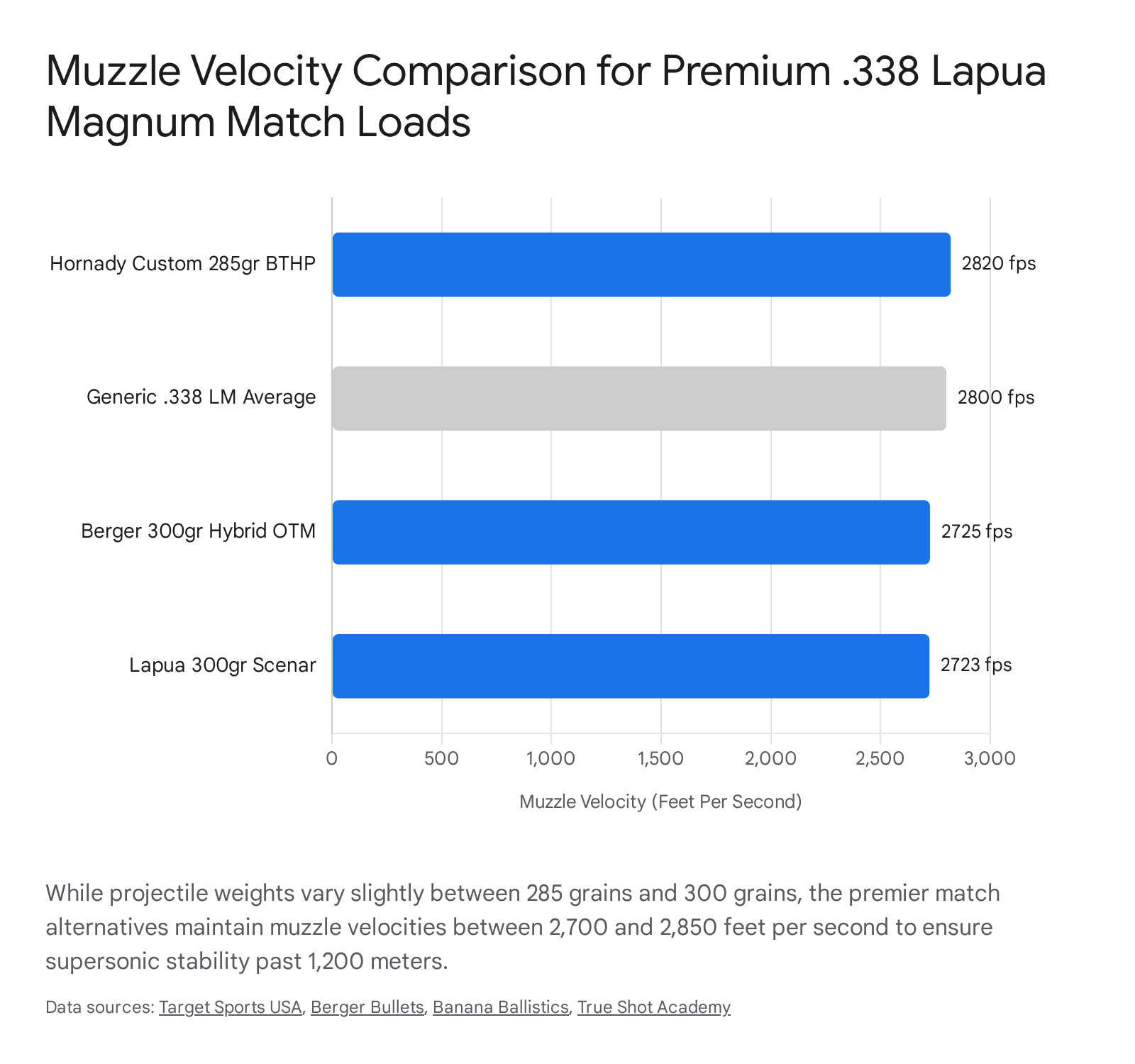
The .338 Lapua Magnum was explicitly engineered in the early 1980s through a highly successful collaboration between Research Armament Industries, Lapua, and Accuracy International, designed specifically to bridge the vast ballistic gap between the .300 Winchester Magnum and the massive .60 BMG.43 Utilizing a heavily modified and necked-down.416 Rigby parent case, the cartridge was designed from its inception to propel a heavy, aerodynamically efficient projectile capable of reliably defeating military-grade body armor at distances exceeding one thousand meters.43 The Swiss P 250-grain and 300-grain Target rounds are deeply integrated into military sniper programs globally, necessitating highly capable and carefully vetted replacements.
The Lapua Scenar open tip match projectile remains the absolute foundational benchmark for this specific caliber, currently holding numerous long-range competitive world records.46 Hornady’s ELD Match projectile incorporates a highly specialized Heat Shield polymer tip that fundamentally prevents aerodynamic deformation caused by extreme frictional heating during supersonic flight, ensuring that the ballistic coefficient remains perfectly constant across the entire trajectory.48
5.3 .300 Winchester Magnum Match Cartridges
Introduced to the commercial market in 1963, the .300 Winchester Magnum utilizes a highly robust, belted magnum case derived directly from the classic.375 H&H Magnum to deliver massive internal powder capacities and exceptionally high muzzle velocities .60 It remains a primary chambering for military sniper systems seeking to push heavy, aerodynamically efficient thirty-caliber projectiles well beyond the transonic boundaries that inherently limit the smaller .308 Winchester.45 The Swiss P Target line in this caliber typically employs heavy 190-grain or 200-grain projectiles specifically designed to maximize wind resistance over vast, open terrain.53
Berger’s acclaimed Classic Hunter and Match projectiles utilize a highly innovative hybrid ogive design, brilliantly blending the high ballistic coefficients of a long secant ogive with the seating depth tolerance and reliable feeding geometry of a traditional tangent ogive.54 This complex geometric engineering makes them exceptionally reliable in both precision bolt-action rifles and high-capacity, magazine-fed semi-automatic weapon systems utilized by modern tactical units.15
5.4 .223 Remington (5.56x45mm NATO) Match Cartridges
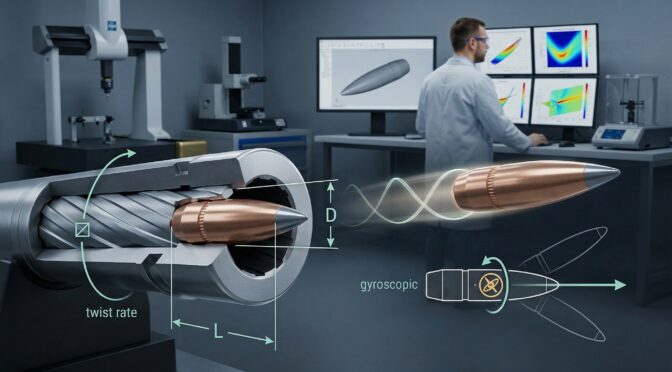
While commonly associated with lightweight 55-grain full metal jacket rounds designed primarily for basic infantry engagements and high-volume training use, the 5.56x45mm NATO cartridge is incredibly capable in dedicated precision roles when loaded with significantly heavier projectiles.57 The historical military transition to much faster barrel twist rates, specifically one-in-seven or one-in-eight inches, allowed for the proper gyroscopic stabilization of long, high-drag projectiles weighing 69 grains and 77 grains.57 The Swiss P Styx Action and Target lines in this specific caliber provided urban tactical police units with a premium round capable of pinpoint accuracy without the severe over-penetration liabilities inherent to larger thirty-caliber systems.13
Black Hills Ammunition is particularly notable and highly dominant in this specific category, having meticulously developed the famous MK262 Mod 1-C load utilized extensively by United States Special Operations Command.41 This exceptional cartridge employs a 77-grain Sierra MatchKing projectile and is universally renowned for extracting the absolute maximum effective range and terminal lethality from the standard AR-15 weapon platform.58
5.5 .60 Browning Machine Gun (BMG) Match and Target Cartridges
Conceived originally by the legendary John Browning in 1918 primarily as an anti-aircraft and heavy water-cooled machine gun round, the immense .60 BMG has slowly evolved into an extreme long-range anti-materiel and precision target cartridge.62 Generating over twelve thousand foot-pounds of kinetic energy at the muzzle, the resultant recoil forces and atmospheric displacement are massive, demanding absolute structural integrity from both the heavy projectile and the massive brass casing.63 Swiss P manufactures highly specialized armor-piercing and match variants of this caliber, providing extreme consistency for heavy, tripod-mounted rifle platforms deployed by military snipers.
When absolute match-grade performance is strictly required to hit targets beyond a mile, Hornady’s 750-grain A-MAX load currently dominates the high-end commercial space.65 For high-volume tactical training and practical field application, the solid brass monolithic projectiles expertly manufactured by PMC, along with the standardized M33 ball configurations from Federal and Barrett, offer highly reliable feeding and predictably stable ballistic arcs without incurring the extreme premium cost associated with specialized match components.67
6. Economic and Logistical Implications for the United States Market
The abrupt cessation of Swiss ammunition imports coincides with a much broader period of severe economic volatility and escalating regulatory complexity within the United States defense manufacturing sector. The domestic ammunition market is inherently highly sensitive to sudden geopolitical shocks, unexpected raw material shortages, and constantly shifting global trade policies.70 As the stringent Swiss embargo artificially constricts the overall supply of premium European cartridges, domestic manufacturers and wholesale distributors face intense pressure to rapidly fill the void, inevitably impacting both retail and wholesale pricing matrices across the entire industry.70
Pricing dynamics for match-grade ammunition are heavily influenced by the raw cost of specialized components, particularly the highly refined copper and lead alloys strictly required for drawing precisely concentric bullet jackets.11 Furthermore, the shifting political landscape in the United States, including anticipated tariff adjustments on imported raw metals and energetic chemicals, continuously threatens to elevate baseline production costs.70 When a massive premium provider like Swiss P is suddenly removed from the commercial ecosystem, competitive shooters and municipal procurement officers are forced to compete aggressively for the remaining finite supply of domestic match loads like Federal Gold Medal and Black Hills MK262.38 This sudden surge in localized demand generally compresses vendor profit margins on bulk orders and simultaneously drives up the per-round cost for the final end consumer, straining department training budgets.28
However, the highly aggressive onshoring strategies enacted by massive corporate entities like Beretta Holding serve as a critical economic counterweight to these inflationary pressures. By intentionally shifting the manufacturing of high-demand Norma and RUAG heritage products to their new sixty-million-dollar Savannah facility, the company effectively removes trans-Atlantic shipping costs and unpredictable European regulatory hurdles from the pricing equation.30 This localized production model, combined with rigorous supplier diversification strategies that limit exposure to any single geographic region, greatly enhances overall supply chain resilience and ensures that critical law enforcement and civilian markets maintain constant access to premium ballistics without suffering from severe price gouging.73 The broader defense industry must actively adopt similar infrastructural agility to successfully weather future international embargoes and geopolitical disruptions.
7. Conclusion and Strategic Recommendations
The sweeping March 2026 application of the War Materiel Act by the Swiss Federal Council prominently highlights the inherent fragility of relying on single-nation imports within the modern defense and tactical supply chain. The strict, unyielding enforcement of Swiss neutrality laws has effectively sidelined one of the world’s premier manufacturers of precision small arms ammunition, abruptly removing the highly esteemed Swiss P product line from the United States market. However, the tremendous foresight demonstrated by Beretta Holding in acquiring RUAG Ammotec and rapidly expanding its manufacturing footprint into North America and other allied European states provides a highly robust, proven blueprint for navigating unpredictable geopolitical embargoes.
Procurement officers, tactical team commanders, and elite competitive marksmen must immediately audit their current ammunition inventories and begin rigorously testing the domestic market alternatives detailed in this comprehensive report. By proactively transitioning to domestically produced match loads or sourcing from entirely unaffected European facilities located in Sweden and Germany, operators can safely maintain the exacting ballistic standards required for their respective operational missions. The defense industry at large must recognize that structural agility, deep supplier diversification, and highly localized manufacturing are no longer mere economic advantages; they are absolute, uncompromised necessities for surviving the unpredictable and rapid shifts of global trade and international conflict.
Works cited
- Swiss Ban Arms Exports to US During Iran War Over Neutrality – SWI swissinfo.ch, accessed March 22, 2026, https://www.swissinfo.ch/eng/swiss-ban-arms-exports-to-us-during-iran-war-over-neutrality/91132763
- Iran conflict: impact on war-relevant exports, accessed March 22, 2026, https://www.news.admin.ch/en/newnsb/eLmLXeiHSswJO0UIAyqb8
- Switzerland halts arms exports to US over Iran war, citing neutrality | Middle East Eye, accessed March 22, 2026, https://www.middleeasteye.net/news/switzerland-halts-arms-exports-us-over-iran-war-citing-neutrality
- Switzerland’s Arms Freeze – Neutrality or Naivety? – One World Outlook, accessed March 22, 2026, https://oneworldoutlook.com/opinion/switzerlands-arms-freeze-neutrality-or-naivety/
- Switzerland Suspends Arms Exports to the USA Due to War with Iran, accessed March 22, 2026, https://militarnyi.com/en/news/switzerland-suspends-exports-usa-war-iran/
- Caught in the crossfire: how Switzerland’s US arms ban threatens its domestic defence sector, accessed March 22, 2026, https://www.suasnews.com/2026/03/caught-in-the-crossfire-how-switzerlands-us-arms-ban-threatens-its-domestic-defence-sector/
- Switzerland halts new arms exports to America – Le News, accessed March 22, 2026, https://lenews.ch/2026/03/20/switzerland-halts-new-arms-exports-to-america/
- Switzerland bans exports of ‘war materiel’ to US citing neutrality – The Cradle, accessed March 22, 2026, https://thecradle.co/articles-id/36647
- Swiss gunmakers lose one-third of exports due to national neutrality, accessed March 22, 2026, https://militarnyi.com/en/news/swiss-gunmakers-lose-one-third-of-exports-due-to-national-neutrality/
- SWISS PREMIUM AMMUNITION FOR THE BEST. – SwissP Defence AG, accessed March 22, 2026, https://www.swisspdefence.com/_Resources/Persistent/5/e/4/1/5e4112e47412407d0cad4d6435c91d7af223763b/Gesamtbroschu%CC%88re%20SWISS%20P.pdf
- Swiss P for Precision Shooting – Small Arms Defense Journal, accessed March 22, 2026, https://sadefensejournal.com/swiss-p-for-precision-shooting/
- .308 Win. SWISS P Target – Perfect for demanding shooting exercises – SwissP, accessed March 22, 2026, https://swiss-p.com/en/sniper/p/308-win-swiss-p-target-10-9-g-168-gr
- RUAG Swiss P sniper ammunition | all4shooters, accessed March 22, 2026, https://www.all4shooters.com/en/shooting/ammunition/ruag-swiss-p-sniper-ammunition-eurosatory-2014/
- Barrier penetration round with similar ballistics to .308 168gr FGMM SMK – Sniper’s Hide, accessed March 22, 2026, https://www.snipershide.com/shooting/threads/barrier-penetration-round-with-similar-ballistics-to-308-168gr-fgmm-smk.7209717/
- BERGER BULLETS 30 Caliber (0 .308″) 175gr Open Tip Match 100/Box SKU: 749013179, accessed March 22, 2026, https://www.brownells.com/reloading/components/bullets/tactical-30-caliber-0 .308-otm-bullets/?sku=749013179
- RUAG Swiss P Target – Test Results – Sniper Central, accessed March 22, 2026, https://snipercentral.com/swiss-p-target-168-test-results/
- Latest Anti-Drone Ammo from Russia, Switzerland and Lithuania | thefirearmblog.com, accessed March 22, 2026, https://www.thefirearmblog.com/blog/latest-anti-drone-ammo-from-russia-switzerland-and-lithuania-44826385
- RUAG – Wikipedia, accessed March 22, 2026, https://en.wikipedia.org/wiki/RUAG
- RUAG International enters into sales agreement with Beretta Holding on Ammotec, accessed March 22, 2026, https://www.ruag.com/en/news/ruag-international-enters-sales-agreement-beretta-holding-ammotec
- ACQUISITION: RUAG Ammotec is taken over by BERETTA – SPARTANAT.com, accessed March 22, 2026, https://spartanat.com/en/uebernahme-ruag-ammotec-geht-an-beretta
- RUAG International | RUAG, accessed March 22, 2026, https://www.ruag.com/en
- In July 2022, Beretta Holding S.A. successfully completed the acquisition of 100% of the shares of the Swiss state-owned RUAG Ammotec Group., accessed March 22, 2026, https://berettaholding.com/in-july-2022-beretta-holding-s-a-successfully-completed-the-acquisition-of-100-of-the-shares-of-the-swiss-state-owned-ruag-ammotec-group-2/
- Beretta Holding signs a binding agreement to acquire RUAG Ammotec, accessed March 22, 2026, https://www.berettadefense.com/beretta-holding-signs-a-binding-agreement-to-acquire-ruag-ammotec/
- Beretta Holding acquires RUAG Ammotec – EDR Magazine, accessed March 22, 2026, https://www.edrmagazine.eu/beretta-holding-adds-ammunition-to-arms-and-optics-the-ceo-view
- International footprint – Beretta Holding, accessed March 22, 2026, https://berettaholding.com/international-footprint/
- SwissP, accessed March 22, 2026, https://swiss-p.com/en
- Beretta Holding: Strategic Investments Boost Financial Results, accessed March 22, 2026, https://berettaholding.com/beretta-holding-strategic-investments-boost-impressive-financial-results/
- Hunters Can’t Find Premium Ammo at Big Box Stores: So DTC Sellers Are Capturing 35% Margins – ShelfTrend, accessed March 22, 2026, https://www.shelftrend.com/sporting-goods/hunting-ammunition-ecommerce-guide-profit-margins-sales-channels-2025
- Norma Will Open Big Ammunition Production Center in Georgia – Daily Bulletin, accessed March 22, 2026, https://bulletin.accurateshooter.com/2022/04/norma-will-open-big-ammunition-production-center-in-georgia/
- Gov. Kemp: Norma Precision Ammunition Relocates its U.S. Headquarters, Manufacturing, Distribution Operations to Georgia, accessed March 22, 2026, https://gov.georgia.gov/press-releases/2022-04-11/gov-kemp-norma-precision-ammunition-relocates-its-us-headquarters
- Norma Precision Ammunition Relocates its U.S. Headquarters, Manufacturing, Distribution Operations to Georgia, accessed March 22, 2026, https://georgia.org/press-release/norma-precision-ammunition-relocates-its-us-headquarters-manufacturing-distribution
- Ammunition maker expanding its Georgia operations in Savannah area | – Capitol Beat, accessed March 22, 2026, https://capitol-beat.org/2022/11/ammunition-maker-expanding-its-georgia-operations-in-savannah-area/
- Norma Precision Inc. to Create 600 Jobs, Invest $60 Million in Bryan County | Georgia.org, accessed March 22, 2026, https://georgia.org/press-release/norma-precision-inc-create-600-jobs-invest-60-million-bryan-county
- Norma Precision Ammunition Moving U.S. Headquarters, Manufacturing, Distribution Operations To Georgia | An NRA Shooting Sports Journal, accessed March 22, 2026, https://www.ssusa.org/content/norma-precision-ammunition-moving-u-s-headquarters-manufacturing-distribution-operations-to-georgia/
- Production Facilities | Norma USA | Ammunition Near Me, accessed March 22, 2026, https://normausa.com/production-facilities/
- 120 years of Nordic ammunition | Norma Precision, accessed March 22, 2026, https://www.norma-ammunition.com/
- About Us – MFS-Ammunition, accessed March 22, 2026, https://mfs-ammunition.com/about-us/
- Best .308 Winchester Ammo [2026 Buyer’s Guide] – Recoil Magazine, accessed March 22, 2026, https://www.recoilweb.com/best-308-winchester-ammo-176541.html
- Best .308 & 7.62×51 Ammo: Target Shooting, Plinking, & Hunting – Pew Pew Tactical, accessed March 22, 2026, https://www.pewpewtactical.com/best-308-ammo/
- Best factory .308? : r/longrange – Reddit, accessed March 22, 2026, https://www.reddit.com/r/longrange/comments/1fq6lgv/best_factory_308/
- Black Hills Ammunition | The Power of Performance, accessed March 22, 2026, https://www.black-hills.com/
- About Us | Black Hills Ammunition, accessed March 22, 2026, https://www.black-hills.com/about-us/
- 338 Lapua vs 308 Win Ammo Comparison – Long Range Shooting, accessed March 22, 2026, https://ammo.com/comparison/338-lapua-vs-308
- 338 Lapua Mag Ammo For Sale – Cheap Ammunition In Stock | SG Ammo, accessed March 22, 2026, https://sgammo.com/catalog/rifle-ammo-sale/338-lapua-mag-ammo/
- .300 Win. Mag. vs. .338 Lapua Mag. – Caliber Battle | MeatEater Hunting, accessed March 22, 2026, https://www.themeateater.com/hunt/firearm-hunting/caliber-battle-300-win-mag-vs-338-lapua-mag
- Lapua 338 Lapua Magnum Ammo 300 Grain Open Tip Match – 4318013, accessed March 22, 2026, https://www.targetsportsusa.com/lapua-scenar-338-lapua-magnum-ammo-300-grain-hp-boat-tail-otm-4318013-p-110476.aspx
- 338 Lapua Mag. / 19.4 g (300 gr) Scenar, accessed March 22, 2026, https://www.lapua.com/product/338-lapua-mag-tactical-target-cartridge-scenar-194g-300gr-4318013/
- 308 Win 168 gr ELD® Match – Hornady Manufacturing, Inc, accessed March 22, 2026, https://www.hornady.com/ammunition/rifle/308-win-168-gr-eld-match
- Hornady Match 300 Win Mag 195gr ELD-M – Box of 20, accessed March 22, 2026, https://www.primaryarms.com/hornady-match-195-gr-eld-m-300-winchester-magnum-ammunition-20-rounds
- 300 Win Mag vs 338 Win Mag vs 338 Lapua Mag by Ammo.com, accessed March 22, 2026, https://ammo.com/comparison/300-win-mag-vs-338-lapua-vs-338-win-mag
- 300 Winchester Magnum Rifle Ammunition Up To 19% Off | Brownells, accessed March 22, 2026, https://www.brownells.com/ammunition/rifle-ammunition/300-winchester-magnum-rifle-ammunition/
- 338 Lapua alternative? | Sniper’s Hide Forum, accessed March 22, 2026, https://www.snipershide.com/shooting/threads/338-lapua-alternative.6713425/
- 300 WM 190gr Ammo Comparison Test – Sniper Central, accessed March 22, 2026, https://snipercentral.com/300-wm-190gr-ammo-comparison-test/
- Lines and Designs – Berger Bullets, accessed March 22, 2026, https://bergerbullets.com/information/lines-and-designs/
- Berger Match Grade 338 Lapua Magnum Ammo 300 Grain Hybrid OTM Tactical, accessed March 22, 2026, https://www.targetsportsusa.com/berger-match-grade-338-lapua-magnum-ammo-300-grain-hybrid-otm-tactical-65-81110-p-109493.aspx
- Berger Bullets Tactical Rifle Ammunition .223 Rem 77gr – Alexanders Store, accessed March 22, 2026, https://alexandersstore.com/product/berger-bullets-23030-tactical-rifle-223rem-77gr-open-tip-match-20-per-box-10-case/
- Best Match Ammo for .223 | Sniper’s Hide Forum, accessed March 22, 2026, https://www.snipershide.com/shooting/threads/best-match-ammo-for-223.7157628/
- The Best 5.56 Ammo of 2025 | Outdoor Life, accessed March 22, 2026, https://www.outdoorlife.com/guns/best-5-56-ammo/
- Best 5.56/ .223 AR-15 Ammo of 2024 -Pew Pew Tactical, accessed March 22, 2026, https://www.pewpewtactical.com/best-ar-15-ammo-range-home-defense/
- Done buying cheap ammo. What are your top 3 5.56 rounds to test in my 1-8 SPR Mock 12, accessed March 22, 2026, https://www.reddit.com/r/longrange/comments/198da2k/done_buying_cheap_ammo_what_are_your_top_3_556/
- Black Hills 5.56mm NATO MK262 Mod 1-C 77 Gr OTM (Military Ammo Can)-460 Rds, accessed March 22, 2026, https://www.bereli.com/mp460556n9/
- 50 BMG Ammo For Sale, accessed March 22, 2026, https://ammo.com/rifle/50-bmg-ammo
- .338 Lapua vs .60 BMG: A Comparison | True Shot Ammo, accessed March 22, 2026, https://trueshotammo.com/blogs/true-shot-academy/338-lapua-vs-50-bmg-comparison
- 50 BMG vs 338 Lapua Magnum: Not Even Close? – YouTube, accessed March 22, 2026, https://www.youtube.com/watch?v=6qJTBqGKKc4
- Best .60 BMG Rifles & Ammo – Pew Pew Tactical, accessed March 22, 2026, https://www.pewpewtactical.com/best-50-bmg-rifles-ammo/
- Hornady Match .60 BMG Ammo 750gr A-Max 10 Rounds – GunMag Warehouse, accessed March 22, 2026, https://gunmagwarehouse.com/hornady-match-50-bmg-ammo-750gr-a-max-10-rounds.html
- Barrett Firearms .60 BMG Match Grade 661gr M33 Ball Ammo – Black Basin Outdoors, accessed March 22, 2026, https://blackbasin.com/barrett-firearms-14671-match-grade-m33-ball-661-grain-50-bmg/
- PMC X-Tac Match .60 BMG Ammo 740gr 10 Rounds – GunMag Warehouse, accessed March 22, 2026, https://gunmagwarehouse.com/pmc-x-tac-50-bmg-ammo-740gr-fmj-10-rounds.html
- Bulk 50 BMG Ammo ~ Buy Online ~ Free Shipping | Bereli, accessed March 22, 2026, https://www.bereli.com/ammunition/rifle-ammo/50-bmg-ammo/
- Trump’s Tariffs Are Driving Up Ammo Prices – The Trace, accessed March 22, 2026, https://www.thetrace.org/2026/03/trump-tariffs-ammunition-prices/
- North America Ammunition Industry Future-Proof Strategies: Market Trends 2026-2034, accessed March 22, 2026, https://www.datainsightsmarket.com/reports/north-america-ammunition-industry-17796
- Ammunition Market Size, Share & Analysis 2035 – Business Research Insights, accessed March 22, 2026, https://www.businessresearchinsights.com/market-reports/ammunition-market-119503
- 5 Trends to Watch in 2025: Georgia’s Manufacturing Sector | Insights, accessed March 22, 2026, https://www.gtlaw.com/en/insights/2025/1/published-articles/5-trends-to-watch-in-georgias-manufacturing-sector
- Purchasing budget 5.56 Ammo at big box stores (a what’s the best/quality ammo purchase question) – Reddit, accessed March 22, 2026, https://www.reddit.com/r/ar15/comments/1jw9z3x/purchasing_budget_556_ammo_at_big_box_stores_a/
- Supply Chain Disruption in 2025: How Georgia’s Technology Manufacturers Are Protecting Their Operations – The Oak Insurance Group, accessed March 22, 2026, https://www.theoakinsurancegroup.com/supply-chain-disruption-in-2025-how-georgias-technology-manufacturers-are-protecting-their-operations/