Tag Archives: MP5

The Lifecycle of the H&K MP5: Engineering, Tactical Evolution, and Market Resurgence

Executive Summary

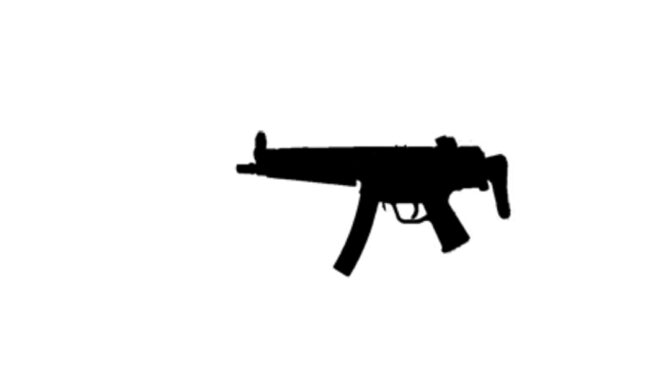
The Heckler & Koch MP5, originally designated as Project 65 by German engineers in the 1960s, evolved into one of the most widely recognized and operationally deployed submachine guns in modern history. Operating on a roller-delayed blowback mechanism derived from mid-century battle rifles and machine guns, the 9x19mm MP5 achieved a rapid rise in global elite military and law enforcement circles. This widespread adoption was largely catalyzed by its highly publicized deployment during the 1980 Iranian Embassy siege in London, which validated the MP5’s utility in modern counter-terrorism operations.1 The weapon provided an unprecedented combination of closed-bolt accuracy, reduced reciprocating mass, and high reliability, effectively rendering competing open-bolt designs obsolete for precision tactical applications requiring hostage rescue capabilities.3

However, by the late 1990s and early 2000s, the MP5 experienced a significant institutional fade. The proliferation of affordable ballistic body armor among criminal elements, dramatically demonstrated during the 1997 North Hollywood shootout, exposed the terminal ballistic limitations of the 9x19mm pistol cartridge.4 Consequently, global tactical doctrines shifted decisively toward 5.56x45mm NATO short-barreled carbines, which offered armor-defeating capabilities and superior terminal ballistics, thereby relegating the 9mm submachine gun to highly specialized or legacy roles.1

Despite its institutional decline in military armories, the MP5 and its modern derivatives have experienced a sustained resurgence in the civilian commercial market through the mid-2020s. This renaissance is driven by a complex convergence of factors: the maturation of the pistol-caliber carbine (PCC) market, the logistical advantages of ammunition commonality, and advancements in modern computer numerical control (CNC) manufacturing that have successfully democratized the historically expensive roller-delayed system.7 Furthermore, recent judicial stabilization regarding the legality of stabilizing braces has unleashed pent-up consumer demand.7 This report provides an exhaustive engineering analysis of the MP5’s roller-delayed mechanism, a historical examination of its tactical lifecycle, and a comprehensive market analysis of the primary manufacturers currently driving its commercial resurgence.

1. Historical Genesis and Engineering Genealogy

To fully comprehend the operational history and the modern commercial appeal of the MP5, one must first trace its engineering lineage. The system was not designed in a vacuum; rather, it represents the culmination of decades of metallurgical and kinematic problem-solving by European engineers seeking to optimize automatic weapon function.8

1.1 The Origins of Roller-Delayed Technology

During the latter stages of the Second World War, German engineers at Mauser were tasked with improving the manufacturing efficiency of infantry weapons while maintaining the ability to fire full-powered rifle cartridges. Traditional gas-operated, locked-breech designs required extensive machining, complex gas ports, pistons, and heavy locking lugs, which were resource-intensive.8 The engineers observed that the roller-locked recoil operation of the MG42 machine gun, while highly effective, could be simplified.

Physicist Dr. Karl Maier, analyzing high-speed firing cycles, noted that bolts in certain automatic weapons experienced “bolt bounce”—a phenomenon where the bolt would slightly rebound out of battery upon slamming forward during automatic fire.2 This observation led to the realization that rollers did not necessarily need to lock the breech rigidly; instead, they could be used to mechanically delay the opening of the breech.2 This concept was first codified in the Mauser Gerät 06H prototype and the StG 45(M) assault rifle.8 Unlike the MG42, which featured a recoiling barrel, the new roller-delayed blowback system utilized a fixed barrel and lacked a gas piston entirely.8

Following the war, many of these engineers relocated to Spain, where they refined the system for the Spanish CETME consortium.9 The CETME rifles successfully utilized sheet metal stamping and the roller-delayed mechanism to fire the 7.62x51mm NATO cartridge reliably.9 The German firm Heckler & Koch subsequently licensed and refined this design, resulting in the G3 battle rifle.9 By the mid-1960s, Heckler & Koch engineers initiated “Project 65,” an endeavor to scale down the G3’s roller-delayed architecture to accommodate the 9x19mm Parabellum pistol cartridge. The resulting firearm, introduced in 1966, was designated the MP5.1

2. Engineering Analysis of the Operating Mechanism

The kinematic physics of the roller-delayed blowback system are highly complex, representing a sophisticated departure from standard blowback operations. An engineering analysis of this system reveals exactly why the MP5 achieved its legendary reputation for accuracy and low recoil.7

2.1 Direct Blowback Constraints vs. Mechanical Delay

In a simple direct blowback firearm, the breech is held closed entirely by the physical mass of the bolt and the forward tension of the recoil spring.9 When a cartridge is ignited, the expanding propellant gases push the projectile forward down the barrel and simultaneously push the cartridge casing backward against the bolt face with equal force. To prevent the breech from opening prematurely—which would result in catastrophic case rupture and injury to the operator—the bolt must possess significant inertia. In a 9x19mm firearm, a direct blowback bolt must be exceptionally heavy. This massive reciprocating weight results in an oscillating recoil impulse as the heavy block of steel slams into the rear of the receiver during extraction and then drives heavily forward into battery.12

The MP5’s roller-delayed system circumvents the requirement for a massive bolt by introducing a mechanical disadvantage into the extraction cycle.9 The mechanism relies on a carefully calculated transfer of kinetic energy. First, upon ignition, expanding gases push the spent cartridge case rearward against the bolt head.9 However, the bolt head is not permitted to move freely rearward. It is mechanically impeded by two hardened steel rollers that are pushed outward into curved locking recesses machined into the barrel trunnion.9

Before the bolt head can retract, the rearward force exerted by the cartridge casing must physically squeeze these steel rollers inward, forcing them out of the trunnion recesses. As the rollers are forced inward, they press against the angled planes of a wedge-shaped internal component known as the locking piece.9 The geometric angles of the locking piece create a physical transmission ratio. For every millimeter the bolt head moves rearward, the locking piece and the attached heavier bolt carrier are driven rearward at a significantly multiplied velocity—often representing a 4:1 transmission ratio. This kinetic transfer drains energy from the bolt head, accelerating the locking piece backward and safely delaying the opening of the breech just long enough for the projectile to exit the muzzle and for internal chamber pressures to drop to safe levels.8

A critical maintenance metric within this mechanical architecture is the “bolt gap”—the specific clearance between the bolt head and the bolt carrier when the weapon is fully in battery, which directly dictates the timing of the roller disengagement. Because this system lacks traditional locking lugs, the bolt gap serves as the primary indicator of system wear. As the rollers and trunnion inevitably degrade over thousands of firing cycles, this gap shrinks, eventually requiring an armorer to install slightly oversized rollers to restore proper geometric engagement and maintain safe operational timing.

2.2 Fluid Dynamics and the Fluted Chamber

Because the mechanical delay system initiates the extraction process while residual pressures within the barrel are still relatively high compared to traditional gas-operated systems, the firearm faces a significant materials challenge regarding the brass cartridge casing. Under high internal pressure, the thin brass walls of a 9mm cartridge case are prone to obturation—a process where the brass expands tightly, forming a seal against the steel chamber walls.8 Attempting to mechanically extract a casing while it is obturated against the chamber wall requires immense force, which frequently results in the extractor claw tearing the rim entirely off the cartridge case, leaving the body of the casing lodged in the chamber and inducing a catastrophic malfunction.9

To solve this friction and pressure dilemma, MP5 engineers incorporated a fluted chamber.8 A series of longitudinal grooves, or flutes, are precisely cut into the interior walls of the chamber, extending from the neck of the chamber down to just above the seating point of the cartridge rim.9 Upon ignition, high-pressure propellant gas is intentionally allowed to flow backward through these flutes, enveloping the front half of the cartridge casing. This fluid dynamic equalizes the pressure on both the inside and the outside of the brass casing. By effectively floating the spent casing on a microscopic layer of high-pressure gas, the system breaks the friction seal, allowing the casing to be drawn out of the chamber smoothly and reliably without structural failure to the brass.8

2.3 Resultant Operational Advantages

This elaborate engineering architecture yields three distinct operational advantages that directly contributed to the MP5’s tactical dominance 7:

Firstly, the system dramatically reduces felt recoil.7 By eliminating the massive reciprocating bolt typical of direct blowback systems, the MP5 delivers a gentle, progressive rearward push rather than a sharp, violent recoil impulse. This allows the operator to maintain sight picture during rapid or fully automatic fire, enabling extremely fast and accurate follow-up shots.12

Secondly, the system enhances inherent mechanical accuracy because it fires from a closed-bolt position.12 When the operator pulls the trigger, the bolt is already fully forward, locked, and stationary. Only the internal hammer and firing pin move. This is in stark contrast to contemporary open-bolt submachine guns, such as the Uzi or the Sterling, where pulling the trigger releases a heavy, spring-loaded bolt that slams forward to strip a round and fire, inherently causing the weapon to dip and disrupting the operator’s precision aim.3

Thirdly, the delayed unlocking of the breech provides superior suppressibility.12 The mechanism keeps the breech sealed for a fraction of a second longer than direct blowback systems, minimizing the amount of unburned powder, concussive blast, and noise that escapes from the ejection port when the MP5 is operated in conjunction with a sound suppressor.12

3. Tactical Adoption and Counter-Terrorism

Despite its engineering brilliance, the MP5 struggled to gain dominant market share immediately upon its introduction in 1966.1 During the late 1960s and early 1970s, the global submachine gun market was saturated with cheaper, stamped-metal, open-bolt designs. Firearms like the Israeli Uzi and the British Sterling were favored by military quartermasters for their exceptionally low unit cost and simplicity of manufacturing.1 For standard infantry troops or vehicle crews requiring a compact weapon, the inherent inaccuracy of the open-bolt system was considered an acceptable trade-off for cost-efficiency.3

3.1 The Geopolitical Shift and Hostage Rescue

The geopolitical landscape of the late 1970s radically altered operational requirements for submachine guns.1 The era witnessed a significant rise in international terrorism, characterized by high-profile hostage-taking incidents in complex, multi-room structures or aboard commercial aircraft.1 Standard military tactics, which relied on overwhelming suppressive fire and fragmentation grenades, were entirely unsuitable for hostage rescue missions where non-combatants were intermingled with hostile actors.

Special operations units required surgical precision. The open-bolt systems lacked the necessary first-round accuracy to engage a hostile target situated immediately adjacent to a hostage.3 The MP5 offered rifle-like accuracy in a compact, pistol-caliber package, perfectly aligning with the emerging requirements of close-quarters battle (CQB).3

3.2 Operation Nimrod: The Catalyst for Global Dominance

The watershed moment that vaulted the MP5 into global ubiquity occurred in May 1980 during the Iranian Embassy Siege in London, known operationally as Operation Nimrod.1 When terrorists seized the embassy, the British government deployed the Special Air Service (SAS) to conduct a dynamic entry and rescue the hostages.

The SAS operators made a deliberate choice to equip themselves with the Heckler & Koch MP5 rather than their domestically produced Sterling submachine guns.3 The operation was highly televised. Photographs and video footage of SAS operators clad in black nomex coveralls and respirators, wielding the compact submachine guns as they rappelled from the roof and breached the embassy windows, were broadcast to a captivated global audience.1 The subsequent success of the mission—neutralizing five terrorists and capturing the sixth with minimal hostage casualties—served as the ultimate validation of the weapon system.2

Following Operation Nimrod, the MP5 experienced an unprecedented surge in procurement. It was rapidly adopted by virtually every Tier 1 special missions unit and elite law enforcement entity in the Western world.1 In the United States, it became the standard issue weapon for the Navy SEALs, Army Delta Force, the FBI Hostage Rescue Team (HRT), and the vast majority of major metropolitan SWAT teams.1 Analysts note that if the SAS had not utilized the weapon during Nimrod, its inherent technical superiority would have inevitably led to its adoption by other elite units, such as the French GIGN or the German KSK, eventually thrusting it into the limelight regardless of the specific historical catalyst.3

3.3 Variant Proliferation and Specialization

To meet the diverse requirements of these elite end-users, Heckler & Koch developed over 100 specialized variants of the MP5, further cementing its tactical indispensability.1 Notable configurations included the MP5K (Kurz), an ultra-compact version featuring a shortened barrel and receiver, designed for concealed carry by executive protection details and clandestine operatives.1 The MP5N (Navy) was developed specifically at the behest of the U.S. Navy SEALs, featuring specialized maritime corrosion resistance and threaded barrels for suppressor attachment.1

Perhaps the most technologically advanced iteration was the MP5SD (Schalldämpfer), which featured an integral sound suppressor.1 Engineers achieved this by porting the barrel—drilling precise holes into the barrel wall ahead of the chamber—which bled off excess propellant gas into the expansion chamber of the suppressor. This drop in pressure intentionally reduced the velocity of standard supersonic 115-grain and 124-grain 9x19mm ammunition, dropping it to subsonic speeds (below 1,125 feet per second) before it exited the muzzle. This eliminated the ballistic sonic boom, rendering the MP5SD astonishingly quiet without requiring logistically burdensome specialized subsonic ammunition shipments.11

4. The Tactical Fade: Shifting Paradigms and Terminal Ballistics

Despite its absolute dominance of the tactical and CQB space throughout the 1980s and 1990s, the MP5 experienced a rapid and permanent decline in institutional adoption as the turn of the millennium approached. This fade was not due to mechanical failure or a decline in manufacturing quality, but rather a fundamental shift in threat paradigms that the 9x19mm cartridge simply could not overcome.4

4.1 The Proliferation of Ballistic Body Armor

The primary catalyst for the MP5’s decline was the terminal ballistic limitation of pistol-caliber ammunition against ballistic body armor.4 As Kevlar, aramid fibers, and early ceramic plate armor became commercially accessible and relatively inexpensive, criminal entities and hostile paramilitary forces began utilizing them.4

The physics of terminal ballistics dictate armor penetration. A standard 9x19mm projectile, even when fired from an optimized carbine-length barrel, travels at roughly 1,100 to 1,300 feet per second. This lacks the requisite velocity to penetrate National Institute of Justice (NIJ) Level II or Level IIIA soft body armor, let alone Level III or IV hard plates.4 When a 9mm projectile impacts a Kevlar vest, the tightly woven fibers catch the bullet, dispersing its kinetic energy laterally across the panel. While the target may experience blunt force trauma—equivalent to a severe punch that may crack a rib or cause deep bruising—the kinetic energy transfer is insufficient to cause incapacitating, lethal trauma to internal organs.13 The kinetic energy transferred to the wearer of the armor is roughly equivalent to the felt recoil experienced by the shooter—a blunt force impact that is easily absorbed by a motivated or chemically altered combatant without causing systemic incapacitation.

4.2 The North Hollywood Shootout

This theoretical vulnerability was exposed in catastrophic fashion on national television during the February 28, 1997, North Hollywood shootout.5 Two heavily armed bank robbers, Larry Phillips Jr. and Emil Mătăsăreanu, entirely clad in custom-sewn, full-body aramid armor, engaged the Los Angeles Police Department in a protracted 44-minute firefight.

The perpetrators absorbed numerous direct hits from 9mm law enforcement sidearms and SWAT-issued MP5 submachine guns without being incapacitated.5 The 9mm projectiles simply failed to penetrate the suspects’ armor. Operating with near-impunity, the two men fired over 1,100 rounds of intermediate rifle ammunition into the surrounding neighborhood, maiming 20 people and pinning down dozens of officers.5 The shootout was only concluded through two distinct tactical responses. First, outgunned patrol officers commandeered higher-powered rifles from a local firearms dealer to lay down suppressive fire, while the first suspect, Larry Phillips Jr., was ultimately neutralized by a combination of a self-inflicted gunshot and precise rifle fire from arriving SWAT officers. Second, responding SWAT operators engaged the remaining suspect, Emil Mătăsăreanu, by deliberately targeting his unprotected lower extremities, striking his legs 29 times to bypass his heavy body armor.

4.3 The Institutional Pivot to 5.56x45mm NATO

The North Hollywood incident fundamentally altered North American police tactics. Law enforcement agencies realized that standard patrol and SWAT units required rifle-caliber platforms to defeat armored threats, as relying on 9mm MP5s constituted a severe tactical liability.4

The obvious solution was the 5.56x45mm NATO cartridge.6Traveling at nearly three times the velocity of a 9mm round (approximately 2,800 to 3,000 feet per second depending on barrel length), the spitzer-shaped 5.56mm projectile easily parts the woven fibers of soft body armor, achieving full penetration.6Furthermore, the formula for kinetic energy (E=1/2(mv^2)) demonstrates that velocity plays a squared role in energy delivery. The high velocity of the 5.56mm round creates a massive temporary stretch cavity within soft tissue, transferring devastating hydrostatic shock and frequently fragmenting upon impact, causing rapid incapacitation.6The obvious solution was the 5.56x45mm NATO cartridge.6Traveling at nearly three times the velocity of a 9mm round (approximately 2,800 to 3,000 feet per second depending on barrel length), the spitzer-shaped 5.56mm projectile easily parts the woven fibers of soft body armor, achieving full penetration.6Furthermore, the formula for kinetic energy () demonstrates that velocity plays a squared role in energy delivery. The high velocity of the 5.56mm round creates a massive temporary stretch cavity within soft tissue, transferring devastating hydrostatic shock and frequently fragmenting upon impact, causing rapid incapacitation.6

Simultaneously, the U.S. military was optimizing the M16 platform into highly reliable, shorter configurations, such as the M4 carbine and the Mk18 Close Quarter Battle Receiver (CQBR). These 5.56mm carbines offered superior terminal ballistics, greater effective range (up to 300 meters compared to the MP5’s effective limit of 50 to 75 meters), and manual-of-arms consistency with standard infantry rifles.6 By the early 2000s, military special operations and domestic SWAT operators were systematically replacing their aging MP5s with 5.56mm carbines.6

4.4 The Personal Defense Weapon (PDW) Gap

Within broader military logistics, the specific niche previously occupied by the MP5—equipping rear-echelon troops, vehicle crews, and aviators—was further encroached upon by the advent of dedicated Personal Defense Weapons (PDWs).1

Firearms manufacturers developed platforms firing high-velocity, small-caliber micro-rifle cartridges, most notably the Belgian FN P90 (firing the 5.7x28mm cartridge) and the German HK MP7 (firing the 4.6x30mm cartridge).1 These advanced weapons provided specific armor penetration capabilities in packages that were even smaller, lighter, and more ergonomic than legacy 9mm systems.14 Consequently, original manufacturing lines for the MP5 in Germany were heavily curtailed in favor of producing these newer-generation PDWs. This shift led to a corresponding lack of institutional spare parts, armorers, and logistical support, which only hastened the MP5’s retirement from active, frontline military service.1

5. The Modern Resurgence: Civilian Market Dynamics

While military and police armories universally transitioned to 5.56x45mm rifles and advanced PDWs, the 2020s have witnessed an unprecedented explosion in the popularity of the MP5 and its civilian clones within the commercial sector.7 This resurgence is not merely the result of historical nostalgia or pop-culture cachet; it is driven by a precise combination of pragmatic economics, home defense ballistics, legal stabilization, and modern manufacturing paradigms.7

5.1 Ammunition Commonality and Economic Efficiency

The modern civilian consumer highly values the logistical convenience of ammunition commonality.7 Modern shooters appreciate the same convenience sought by settlers in the 19th-century American West—the ability to utilize the exact same ammunition in both their primary rifle (or carbine) and their sidearm.7 With 9x19mm serving as the undisputed global standard for defensive handguns, the Pistol Caliber Carbine (PCC) allows users to streamline their logistics, purchasing ammunition in bulk without the financial burden of maintaining diverse, multi-caliber inventories.7

Furthermore, the economics of high-volume training heavily favor 9mm firearms like the MP5. Standard 9mm full-metal-jacket target ammunition is substantially less expensive to manufacture and purchase than 5.56x45mm brass rifle ammunition. This significantly lowers the financial barrier to entry for civilians participating in dynamic shooting sports, such as the United States Practical Shooting Association (USPSA) PCC division, or those conducting intensive defensive training regimens.7 Many modern MP5 clones are also designed to accept ubiquitous handgun magazines or widely available MP5-pattern magazines, reducing overall gear costs and increasing cross-platform versatility.7

5.2 Indoor Ballistics and Acoustic Mitigation

For civilian home defense scenarios, the MP5-pattern platform offers distinct physiological and environmental advantages over the 5.56mm short-barreled rifle.7 While the 5.56mm cartridge is highly lethal, discharging a short-barreled 5.56mm rifle inside a confined residential structure, particularly a hallway or bedroom, produces a deafening concussive overpressure and a blinding muzzle flash.7 The blast from a 10.5-inch 5.56mm barrel indoors is sufficient to cause immediate, permanent acoustic damage and temporary visual blinding in low-light conditions, severely degrading the defender’s situational awareness.

Conversely, the 9x19mm cartridge operates at significantly lower chamber pressures. When a 9mm cartridge is fired from an 8.9-inch MP5 barrel, the gunpowder column is burned almost entirely before the bullet exits the muzzle. This results in negligible muzzle flash and concussive noise compared to a rifle caliber.7 When this dynamic is paired with a sound suppressor and heavy, subsonic 9mm ammunition (such as 147-grain or 150-grain projectiles), the roller-delayed system provides an unparalleled level of acoustic safety.12 The delayed unlocking of the breech ensures that the vast majority of the expanding gases are directed forward into the suppressor baffles rather than venting out the ejection port. This allows civilian defenders to communicate clearly with family members and emergency dispatchers, maintaining critical situational awareness during a home defense incident.7

5.3 Regulatory Stabilization and the ATF Pistol Brace Rulings

The MP5 platform’s accessibility to the average civilian consumer was heavily impacted by shifting regulations established by the Bureau of Alcohol, Tobacco, Firearms and Explosives (ATF) regarding pistol stabilizing braces.7

Under the National Firearms Act (NFA) of 1934, adding a traditional shoulder stock to a firearm with a barrel shorter than 16 inches legally classifies it as a Short-Barreled Rifle (SBR). Acquiring an SBR requires the purchaser to submit fingerprints, pass an enhanced background check, pay a $200 federal tax stamp, and endure wait times that frequently range from six to twelve months.7 This burdensome process artificially suppressed the market for compact MP5-style platforms.

The invention of the stabilizing brace—a device designed to strap to the user’s forearm to stabilize a heavy pistol—allowed manufacturers to sell these compact MP5 platforms legally as “pistols,” completely bypassing the NFA requirements.7 Consumers quickly realized these braces could also be incidentally shouldered, providing carbine-like stability without the associated taxation and registration.7

In 2023, the ATF finalized a controversial rule that effectively banned these braces, attempting to reclassify millions of braced pistols as unregistered SBRs, subjecting owners to felony prosecution if they did not comply or register the weapons.7 However, in 2024 and 2025, major federal court rulings—specifically the Fifth Circuit’s decision in Mock v. Garland and parallel rulings in the Eighth Circuit—ruled that the ATF’s brace ban was “arbitrary and capricious.” The courts issued nationwide injunctions, blocking the enforcement of the rule.7

This massive judicial victory removed the legal ambiguity and fear of prosecution surrounding braced large-format pistols. The confirmation of brace legality unleashed immense pent-up consumer demand for compact, roller-delayed MP5 platforms, driving the current market resurgence as consumers rush to acquire the highly effective platforms in their optimal, short-barreled configurations.7 For consumers wishing to entirely bypass any future regulatory uncertainty regarding braces, the market has also responded with traditional 16-inch barrel configurations that comply with standard rifle laws, offering maximum compactness through folding mechanisms.7

6. Market Analysis: Manufacturer Profiles and Platform Configurations

The most significant structural driver of the current renaissance is the democratization of the complex roller-delayed blowback manufacturing process.7 Historically, purchasing an authentic, German-made semi-automatic MP5 cost several thousands of dollars, making it an elite, niche collector’s item entirely inaccessible to the average shooter.7

However, the expiration of the original Heckler & Koch patents, combined with the global proliferation of highly precise, computer-controlled CNC machining, has allowed domestic and allied international manufacturers to produce highly reliable clones, exact replicas, and radically modernized MP5 variants across a wide spectrum of price tiers.7 The civilian consumer now has unprecedented choice. The following analysis details the primary manufacturers driving this market segment, complete with detailed specifications, pricing structures, and sourcing architectures.

6.1 The Heritage Standard: Heckler & Koch (HK)

As the original architects and primary military suppliers of the MP5, the manufacturer Heckler & Kochremains the absolute gold standard for historical authenticity, metallurgical quality, and long-term collector value. The modern civilian semi-automatic offering, designated the H&K SP5, is manufactured entirely in Heckler & Koch’s primary Oberndorf factory in southwest Germany.17

Crucially, the SP5 is produced utilizing the exact same industrial tooling, the same manufacturing lines, and the same specialized workforce that has been manufacturing the military selective-fire MP5 variants for decades.17 The SP5 retains every critical element of the classic aesthetic and mechanical design. It features a precision cold hammer-forged 8.86-inch “Navy” profile barrel, equipped with both a tri-lug adaptor for rapid suppressor attachment and standard 1/2×28 threads.18 It utilizes the essential fluted chamber, a traditional paddle magazine release, and the iconic, highly precise rotary rear diopter sight system.18

While it commands a premium luxury price point—often exceeding $3,000 depending on import availability—it remains highly sought after by purists for its impeccable fit, finish, and unbroken historical pedigree.16

6.2 The Budget Contender: Century Arms (MKE)

To service the entry-level and budget-conscious tier of the civilian MP5 market, the prominent importer Century Arms brings the AP5 platform to the United States. The AP5 line is manufactured in Turkey by MKE (Makina ve Kimya Endüstrisi Kurumu), a massive state-owned defense contractor that supplies the Turkish military.23

The critical advantage of the MKE AP5 lies in its lineage. Decades ago, MKE originally produced these firearms under an official, direct license from Heckler & Koch, meaning the Turkish factories were set up by German engineers.25 Consequently, the modern AP5 is built on original, legacy HK tooling.25 This results in a firearm that is dimensionally identical to the original German MP5 design, ensuring broad compatibility with a vast global aftermarket of legacy parts, stocks, and accessories.23 The AP5 features a cold hammer-forged Chrome Molybdenum Vanadium barrel, a classic adjustable rear sight, and standard tri-lug mounting options.23 By leveraging lower overseas labor and production costs, Century Arms provides an authentic roller-delayed MP5 experience at an MSRP of $1,359, successfully democratizing the platform for the broader commercial market.7

  • Platform Specifications: 9x19mm Parabellum | 8.9-inch Barrel | 17.9-inch Overall Length | 5.5 lbs. Weight 23
  • Retail Availability:The AP5 is widely distributed in high volumes and can be reliably sourced from major vendors like Atlantic Firearms andMidway USA.

6.3 The Domestic Workhorse: PTR Industries

Representing the strength of domestic American manufacturing, the manufacturerPTR has established a robust reputation within the roller-delayed community with their modernized MP5 clone, thePTR 9C.

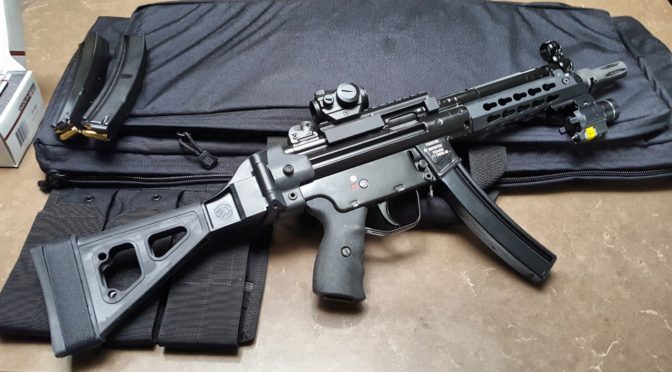
Unlike the legacy imports which strive for historical exactness, PTR actively integrates modern tactical upgrades directly from the factory floor, appealing to shooters focused on practical defense rather than historical reenactment. Foregoing the classic, smooth polymer handguard of the 1980s, the PTR 9C features a MIL-spec anodized aluminum M-LOK handguard.28 This critical upgrade facilitates the immediate, secure attachment of modern weapon lights, laser aiming modules, and foregrips without requiring the user to purchase expensive aftermarket rails.28

Additionally, the PTR 9C features a 4.5-inch steel Picatinny optic rail that is precision-welded directly to the top of the stamped receiver.29 This eliminates the need for the bulky, notoriously finicky aftermarket “claw mounts” required to mount red dot sights on traditional, slick-top German MP5s.29

  • Platform Specifications: 9x19mm Parabellum | 8.86-inch Nitride Barrel | 17.6-inch Overall Length | 5.05 lbs. Weight | MSRP $1,989 28
  • Retail Availability:The heavily modernized PTR 9C is readily available through vendors such as Atlantic Firearms and Sportsmans Warehouse.

6.4 The Premium Domestic Clone: Zenith Firearms

Bridging the market gap between modernized domestic production and absolute legacy authenticity is the manufacturer Zenith Firearms. After previously operating as the primary U.S. importer for Turkish MKE models, Zenith executed a massive logistical pivot, transitioning to producing their own MP5-pattern platform, the ZF-5, entirely in-house at their state-of-the-art facility in Afton, Virginia.32

The Zenith ZF-5 meticulously retains the exact iconic submachine gun aesthetic and operational profile of the original MP5, while applying modern, precision CNC tolerances, improved metallurgy, and highly durable protective surface coatings.34 At its core, it features a cold hammer-forged 4150 CMV (Chrome Moly Vanadium) steel barrel equipped with both a 3-lug adapter and 1/2×28 threading, classic polymer grips, and the highly desirable adjustable rear diopter drum sight.32

Zenith strategically differentiates itself in the crowded market by offering extensive, value-added package tiers. Their “Essentials Package” offers a highly accessible base entry point at an MSRP of $1,599 37, while their top-tier “Premium Package” ($1,999) includes three 30-round magazines, a high-quality hard carrying case, a Picatinny optics rail, a custom two-point tactical sling, a 3-lug flash hider, and a comprehensive limited lifetime warranty.35 This turnkey approach appeals to buyers seeking a complete, high-quality domestic system out of the box.

  • Platform Specifications: 9x19mm Parabellum | 8.9-inch Barrel | 13.4-inch Sight Radius | 5.5 lbs. Weight 35
  • Retail Availability:The premium American-made ZF-5 can be acquired from specialized retailers including Atlantic Firearms and Midway USA.

6.5 The Next-Generation Evolution: Springfield Armory

Rather than producing a strict 1:1 legacy MP5 clone bound by 1960s sheet metal design constraints, the major importerSpringfield Armory aggressively entered the roller-delayed market in 2025 with a radical modernization of the platform, introducing the Kuna.

Manufactured in Croatia by HS Produkt (the same partner firm responsible for Springfield’s XD and Hellcat lines), the Kuna is a significant evolutionary step. The name “Kuna” refers to the European pine marten—a fierce, compact mustelid native to Croatia (and historically featured on their national currency) known for punching significantly above its weight class. It extracts the core mechanical advantage of the MP5’s roller-delayed blowback system—the smooth recoil dynamics and low reciprocating mass—and houses it within a modernized, monolithic aluminum upper receiver.39 This architectural design choice entirely abandons the stamped-sheet-metal construction and complicated welding of the original models, replacing it with a rigid, extruded aluminum structure that inherently supports continuous, perfectly aligned top-mounted Picatinny optic rails and ample M-LOK mounting slots.39

Furthermore, the lower receiver of the Kuna incorporates familiar, ubiquitous AR-15 pattern ergonomics. It features a standard AR-pattern pistol grip, a flat-faced aluminum trigger with a tactile, short, audible reset, and fully ambidextrous safety selectors and magazine releases.39 By marrying the soft-shooting recoil dynamics of the roller-delayed system with the highly trained manual-of-arms of the modern AR-15, the platform provides an evolved personal defense weapon with zero learning curve for modern shooters.39 Furthermore, Springfield strategically priced the unit to disrupt the MP5 clone market, offering a base MSRP of $999, scaling to $1,149 for the braced configuration.41

  • Platform Specifications: 9x19mm Parabellum | 6.0-inch threaded barrel | Monolithic aluminum frame | Fully Ambidextrous 40
  • Retail Availability:Leveraging Springfield’s massive distribution network, the Kuna is widely available at online retailers such as GrabAGun and through secondary market brokers on GunBroker.

6.6 The Boutique Custom Tier: Dakota Tactical

At the absolute highest echelon of the domestic MP5 market sits the bespoke manufacturer Dakota Tactical, which caters strictly to dedicated connoisseurs, collectors, and discerning professionals through meticulously hand-built platforms found on their models page.

Dakota Tactical operates completely outside the paradigm of mass production; each individual D54 model is hand-crafted, rolled, and welded by a highly skilled small team of master gunsmiths, resulting in an estimated lead time of up to 24 months from the date of order.43 The builds utilize a precise, curated blend of authentic German Heckler & Koch internal components and hand-selected U.S.-manufactured parts to ensure absolute legal compliance and mechanical perfection.44

The receivers are properly rolled and TIG welded with obsessive attention to dimensional tolerances, capped with a flawlessly integrated top Picatinny rail, and finished with a base layer of military-spec parkerization under a highly durable HK Black DuraCoat final finish.44 Featuring authentic German tungsten-filled sear-ready bolt groups to ensure highly reliable cyclic rates and prevent bolt bounce, and free-floating cold hammer-forged barrels (often sourced from premium Swiss manufacturers like B&T), the D54 line represents the pinnacle of modern roller-delayed MP5 refinement, commanding base MSRPs of $3,899.44

  • Platform Specifications: 9x19mm Parabellum | 8.85-inch Barrel | 1:10 twist rate | Integral Rail 44
  • Retail Availability:Due to highly limited boutique production rates, D54 variants are exceptionally rare and are typically acquired directly from the manufacturer or through highly specialized NFA dealers such as Capitol Armory and Atlantic Firearms.

Market Specification Matrix

To consolidate the dimensional, metallurgical, and economic variance across the current commercial landscape, the following matrix summarizes the standard configurations and manufacturing origins of the primary 9mm platforms analyzed in this report:

ManufacturerPlatform ModelBarrel LengthOperating MechanismKey Manufacturing Feature / OriginBase MSRP (USD)
Heckler & KochSP58.86″Roller-Delayed BlowbackOEM German Factory Production, Legacy Tooling>$3,000
Dakota TacticalD54-N8.85″Roller-Delayed BlowbackBespoke Hand-Rolled/Welded, German Internals$3,899
Zenith FirearmsZF-58.9″Roller-Delayed BlowbackUSA Manufactured, 4150 CMV Steel Barrel$1,599
PTR IndustriesPTR 9C8.86″Roller-Delayed BlowbackUSA Manufactured, Welded Picatinny, M-LOK Rail$1,989
Century ArmsAP58.9″Roller-Delayed BlowbackTurkish (MKE) Manufactured on Licensed Legacy Tooling$1,359
Springfield ArmoryKuna6.0″Roller-Delayed BlowbackCroatian (HS Produkt) Manufactured, Monolithic Aluminum Upper$999

Conclusion

The lifecycle of the Heckler & Koch MP5 represents a fascinating intersection of mechanical engineering, shifting tactical doctrines, and commercial market dynamics. Born from the remnants of mid-century battle rifle engineering, the system’s ability to mechanically retard the opening of the breech without relying on massive, oscillating bolt weights provided unparalleled accuracy and recoil mitigation.8 This mechanical superiority, thrust into the global spotlight during early counter-terrorism operations like the Iranian Embassy Siege, cemented its legacy as the definitive submachine gun of the late 20th century.1

While the physical realities of modern ballistic body armor and the terminal superiority of the 5.56x45mm cartridge ultimately forced the MP5 out of primary military and law enforcement service 4, the underlying engineering remains highly relevant and deeply respected. In the civilian sector, where military-grade body armor penetration is not a primary operational constraint, and where indoor acoustic mitigation and low recoil are highly prized for home defense and sporting applications, the MP5 architecture has found a powerful second life.7

Supported by recent judicial stabilization regarding the legality of stabilizing braces, and propelled by immense advancements in CNC manufacturing that have dramatically lowered the financial barriers to entry, the MP5 platform has successfully transitioned. It has evolved from an exclusive, highly restricted tactical tool into a vibrant, economically accessible, and dominant force in the modern commercial firearms industry, ensuring its engineering legacy will continue well into the 21st century.

Appendix: Methodology

The analysis presented in this report was generated through a structured synthesis of historical military data, mechanical engineering principles, and current commercial firearms market specifications. The analytical framework was constructed across three primary phases:

  1. Engineering and Kinematic Verification: The mechanical principles underlying the roller-delayed blowback system were extracted from foundational firearms engineering literature, historical patent data, and kinematic schematics. The physical interactions between chamber pressure, bolt mass, locking rollers, trunnion geometries, and fluted chamber gas dynamics were modeled to verify the technical claims regarding reduced reciprocating mass, delayed breech opening, and enhanced extraction reliability.
  2. Historical and Tactical Doctrine Analysis: The platform’s operational lifecycle was mapped by correlating major geopolitical events (e.g., the 1980 Iranian Embassy Siege) with recorded shifts in international military and SWAT procurement.1 The institutional decline was traced by analyzing terminal ballistics data against modern NIJ body armor standards and documenting post-1997 (North Hollywood) alterations in law enforcement tactical doctrine toward 5.56mm carbines and specialized PDWs.
  3. Commercial Market Parameterization: The modern resurgence was quantified by aggregating specification data, MSRP figures, and metallurgical feature sets from the official product documentation of six leading manufacturers (Heckler & Koch, Century Arms, PTR Industries, Zenith Firearms, Springfield Armory, and Dakota Tactical). This data was cross-referenced with major retail distributors to verify civilian market availability, pricing trends, and configuration standardization in the context of recent ATF regulatory injunctions regarding pistol braces. The qualitative assessments of “budget,” “premium,” and “modernized” tiers were derived strictly from the comparative quantitative metrics of MSRP, manufacturing origin, and material composition.

Note: Vendor Sources listed are not an endorsement of any given vendor. It is our software reporting a product page given the direction to list products that are between the minimum and average sales price when last scanned.


Please share the link on Facebook, Forums, with colleagues, etc. Your support is much appreciated and if you have any feedback, please email us in**@*********ps.com. If you’d like to request a report or order a reprint, please click here for the corresponding page to open in new tab.


Sources Used

  1. A Brief History of the MP5 — Zenith Firearms, accessed June 18, 2026, https://zenithfirearms.com/brief-history-mp5/
  2. Ultimate Roller Delayed Guide: Everything You Wanted to Know And Were Too Afraid to Ask, accessed June 18, 2026, https://www.recoilweb.com/ultimate-roller-delayed-guide-191281.html
  3. Was the H&K MP5 really that special of a submachine gun of its time? Or is it special because of the SAS? – Reddit, accessed June 18, 2026, https://www.reddit.com/r/WarCollege/comments/1mt4mgb/was_the_hk_mp5_really_that_special_of_a/
  4. With modern body armor, will 5.56 AR’s go the way of the MP5’s? : r/CQB – Reddit, accessed June 18, 2026, https://www.reddit.com/r/CQB/comments/1hdj8zw/with_modern_body_armor_will_556_ars_go_the_way_of/
  5. The Evolution of Police Long Guns – Heloderm LLC, accessed June 18, 2026, https://heloderm.com/the-evolution-of-police-long-guns
  6. Why every patrol officer should have a rifle – Police1, accessed June 18, 2026, https://www.police1.com/firearms/why-every-patrol-officer-should-have-a-rifle
  7. What Is a Pistol Caliber Carbine? New Info for 2025– Liberty Home …, accessed June 18, 2026, https://libertyhomeconcealment.com/blogs/articles/what-is-a-pcc
  8. Blowback (firearms) – Wikipedia, accessed June 18, 2026, https://en.wikipedia.org/wiki/Blowback_(firearms)
  9. Inside the MP5, the History and Function of Roller-Delay, accessed June 18, 2026, https://sdi.edu/2021/05/20/inside-the-mp5-the-history-and-function-of-roller-delay/
  10. Understanding Blowback Firearm Mechanisms | PDF – Scribd, accessed June 18, 2026, https://www.scribd.com/document/330109281/Blowback
  11. Heckler & Koch MP5 – Wikipedia, accessed June 18, 2026, https://en.wikipedia.org/wiki/Heckler_%26_Koch_MP5
  12. An Analytical Report: The Heckler & Koch MP5 vs. MP7 – A Study in …, accessed June 18, 2026, https://blog.roninsgrips.com/an-analytical-report-the-heckler-koch-mp5-vs-mp7-a-study-in-evolution-and-application/
  13. @ Anyone in this community who is trying to argue that bouncing 10 rounds off of armored suspects is realistic : r/ReadyOrNotGame – Reddit, accessed June 18, 2026, https://www.reddit.com/r/ReadyOrNotGame/comments/vpj5v1/anyone_in_this_community_who_is_trying_to_argue/
  14. FN 5.7x28mm: The Little Cartridge That Could – Free Range American, accessed June 18, 2026, https://freerangeamerican.us/fn-5-7x28mm/
  15. Sitemap – Free Range American, accessed June 18, 2026, https://freerangeamerican.us/sitemap/
  16. The King of Budget Roller Delayed PCCs? The Springfield Kuna – YouTube, accessed June 18, 2026, https://www.youtube.com/watch?v=3IICsflrNRs
  17. SP5K-PDW – HK USA, accessed June 18, 2026, https://hk-usa.com/product/sp5k-pdw/
  18. HK Launches New SP5 Available to U.S. Consumers | An Official Journal Of The NRA, accessed June 18, 2026, https://www.americanrifleman.org/content/hk-launches-new-sp5-available-to-u-s-consumers/
  19. HK SP5 Sporting Pistol – MidwayUSA, accessed June 18, 2026, https://www.midwayusa.com/product/1022425646
  20. SP5 | Heckler & Koch, accessed June 18, 2026, https://www.heckler-koch.com/en/Products/Hunting%20and%20Sport/Semi-automatic%20rifles/SP5
  21. Heckler and Koch SP5 Pistol 9mm 8.86″ 30-Round – GrabAGun, accessed June 18, 2026, https://grabagun.com/heckler-and-koch-sp5-pistol-9mm-8-86-30-round.html
  22. HK SP5 9mm Luger 8.86in Matte Black Modern Sporting Pistol – 30+1 Rounds, accessed June 18, 2026, https://www.sportsmans.com/shooting-gear-gun-supplies/handguns/hk-sp5-9mm-luger-886in-matte-black-modern-sporting-pistol-301-rounds/p/1620587
  23. AP5 – Century Arms, accessed June 18, 2026, https://www.centuryarms.com/ap5-pistol.html
  24. AP5 – Century Arms, accessed June 18, 2026, https://www.centuryarms.com/ap5-hg6034.html
  25. AP Series – Century Arms, accessed June 18, 2026, https://www.centuryarms.com/ap-series
  26. Century Arms AP5 9mm Luger Pistol 9 Barrel 30+1 Round Black – MidwayUSA, accessed June 18, 2026, https://www.midwayusa.com/product/1024870243
  27. Century Arms AP 5 Core Pistol SALE – AtlanticFirearms.com, accessed June 18, 2026, https://atlanticfirearms.com/century-ap5-core-HG6034A-N
  28. Buy PTR 9C – 9X19MM – PISTOL for $1989 at PTR | American-Made & Lifetime Warranty, accessed June 18, 2026, https://www.ptr-us.com/product/9c/
  29. PTR PTR-9C 9mm Luger Pistol 8.86 Barrel 30+1 Round Black – MidwayUSA, accessed June 18, 2026, https://www.midwayusa.com/product/1020257077
  30. PTR Industries 9C 9mm Luger 8.86in Black Parkerized Modern Sporting Pistol – 30+1 Rounds | Sportsman’s Warehouse, accessed June 18, 2026, https://www.sportsmans.com/shooting-gear-gun-supplies/handguns/ptr-industries-9c-9mm-luger-886in-black-parkerized-modern-sporting-pistol-301-rounds/p/1823371
  31. PTR 9C Pistol-PTR 600 – Atlantic Firearms, accessed June 18, 2026, https://atlanticfirearms.com/ptr-9c-9x19mm-pistol-4041
  32. Zenith Firearms: American Made MP5 Manufacturer | MP5 for Sale & HK MP5, accessed June 18, 2026, https://zenithfirearms.com/
  33. ZF-5 – 9mm Roller-Delayed Blowback Firearm, accessed June 18, 2026, https://zenithfirearms.com/zf-5/
  34. Zenith Firearms ZF-5 9mm 8.9″ Barrel 30-Rounds Three Magazines – GrabAGun, accessed June 18, 2026, https://grabagun.com/zenith-firearms-zf-5-9mm-8-9-barrel-30-rounds-3-magazines.html
  35. ZF-5 Premium Package | Zenith Firearms, accessed June 18, 2026, https://zenithfirearms.com/product/zf-5/
  36. Zenith ZF-5 9MM Pistol- ZF50000009BK-PREMIUM PACKAGE – Atlantic Firearms, accessed June 18, 2026, https://atlanticfirearms.com/zenith-zf-5-9mm-pistol-zf50000009bk
  37. ZF-5 Essentials Package – Zenith Firearms, accessed June 18, 2026, https://zenithfirearms.com/product/zf-5-pistol-black-1-magazine/
  38. Zenith ZF-5 9mm Luger Pistol 8.9 Barrel 30+1 Round Black – MidwayUSA, accessed June 18, 2026, https://www.midwayusa.com/product/1025202268
  39. Kuna Pistols – Springfield Armory, accessed June 18, 2026, https://www.springfield-armory.com/kuna-series-pistols/kuna-pistols/
  40. Kuna Series Pistols – Springfield Armory, accessed June 18, 2026, https://www.springfield-armory.com/kuna-series-pistols/
  41. Springfield Armory® Launches Roller-Delayed Kuna™ 9mm Pistol, accessed June 18, 2026, https://www.springfield-armory.com/intel/press-releases/springfield-armory-launches-roller-delayed-kuna-9mm-pistol/
  42. Springfield Kuna – GrabAGun, accessed June 18, 2026, https://grabagun.com/shop/springfield-kuna
  43. Firearms – Dakota Tactical, accessed June 18, 2026, https://www.dakotatactical.com/product-category/firearms/
  44. Dakota tactical D54-N Roller Lock Pistol – Atlantic Firearms, accessed June 18, 2026, https://atlanticfirearms.com/dakota-tactical-d54-n-pistol
  45. Dakota Tactical MP5 D54-N A1 Pistol – Capitol Armory, accessed June 18, 2026, https://www.capitolarmory.com/dakota-tactical-mp5-d54-n-a1-pistol.html
  46. Dakota Tactical D54/10 Semi-Automatic 10mm Pistol, accessed June 18, 2026, https://www.dakotatactical.com/product/dakota-tactical-d54-10-semi-automatic-10mm-pistol/

An Analysis of the Aftermarket Ecosystem and Modernization of the Heckler & Koch MP5

The Heckler & Koch MP5 stands as an undisputed icon in the history of modern small arms. For over half a century, its distinctive silhouette has been synonymous with the world’s most elite counter-terrorism and special operations units.1 Its adoption by over 40 nations and its prominent role in high-stakes operations cemented its reputation as the preeminent submachine gun of the 20th century.2 However, the MP5’s enduring legacy is not solely a product of its revolutionary original design. Its remarkable longevity in the arsenals of these demanding professional users is the direct result of a dynamic and responsive aftermarket ecosystem.

This report will provide a comprehensive technical and tactical analysis of how this ecosystem emerged, not as a matter of simple modernization, but as a critical response to the evolving operational realities that exposed the latent deficiencies of the mid-20th-century platform. The original MP5, a masterpiece of 1960s engineering, was conceived for a world without standardized accessory rails, routine low-light combat, or the widespread use of body armor by operators. As tactical doctrine evolved, these omissions transformed from non-issues into critical capability gaps.

The aftermarket industry did not merely offer cosmetic enhancements; it provided essential engineering solutions that kept the platform viable. This analysis will deconstruct the symbiotic relationship between operator needs and industry innovation, tracing the catalysts for change from the rise of modern counter-terrorism to the paradigm shift in modularity brought about by the USSOCOM SOPMOD program. It will examine the key industry players—SureFire, Knight’s Armament Company, Brügger & Thomet, and others—and their foundational contributions. Ultimately, this report will demonstrate how a dedicated ecosystem of third-party manufacturers transformed the MP5 from a static, albeit brilliant, design into an adaptable and continuously relevant weapons system, ensuring its place in the specialized arsenals of the 21st century.4

Section 1: Foundational Analysis of the Heckler & Koch MP5 Platform

To understand the necessity and nature of the MP5’s aftermarket evolution, one must first conduct a thorough analysis of its foundational design. The platform’s initial success was rooted in a unique combination of advanced mechanical principles that set it apart from all other submachine guns of its era. Yet, within this brilliant design lay inherent limitations that would, decades later, necessitate a comprehensive modernization effort driven by external innovators.

1.1 The Engineering Core: Roller-Delayed Blowback and Closed-Bolt Operation

The heart of the MP5 is its roller-delayed blowback operating system, a direct and scaled-down descendant of the mechanism developed for the Mauser StG 45(M) assault rifle at the end of World War II and later perfected in Heckler & Koch’s own G3 battle rifle.1 This system represents a significant leap in sophistication compared to the simple (or “straight”) blowback mechanisms common to most submachine guns of the period, such as the Uzi or the Ingram MAC-10.1

In a simple blowback system, the breech is held closed only by the mass of the bolt and the pressure of the recoil spring. This requires a very heavy bolt to safely contain the pressures of firing, which in turn leads to a heavy weapon with substantial reciprocating mass, resulting in significant felt recoil and muzzle climb during automatic fire.8 The roller-delayed system circumvents this by using a mechanical disadvantage to slow the bolt’s opening. Upon firing, the cartridge case exerts rearward pressure on the bolt head. However, the bolt head cannot move rearward immediately because two rollers, housed within it, are cammed outwards into recesses in the barrel trunnion. For the bolt head to retract, these rollers must first be pressed inwards. This action is resisted by an angled “locking piece” situated behind the rollers. The rearward force of the cartridge case is thus translated into a much faster rearward movement of the heavier bolt carrier and locking piece assembly, while the bolt head itself is delayed for microseconds.10 This brief delay allows chamber pressures to drop to a safe level before extraction begins, all while using a significantly lighter bolt than a simple blowback design would require.7 The tangible result for the operator is a dramatic reduction in felt recoil and muzzle rise, allowing for exceptionally smooth and controllable automatic fire.7

Complementing this advanced operating system is the MP5’s closed-bolt firing cycle. Most contemporary submachine guns fired from an open bolt, where pulling the trigger releases a heavy bolt that slams forward, strips a round from the magazine, chambers it, and fires it in one continuous motion.14 While mechanically simple and beneficial for cooling during sustained fire, this process introduces significant weapon disturbance just before the shot breaks, making precise single shots difficult. The MP5, by contrast, fires from a closed and locked bolt, much like a rifle.4 The bolt is already forward and the round chambered when the trigger is pulled, meaning the only internal movement is the fall of a small hammer. This minimizes weapon movement and is the primary reason for the MP5’s legendary accuracy, a feature that made it the weapon of choice for surgical applications like hostage rescue, where a precise first shot was paramount.12 This combination of rifle-like accuracy in semi-automatic fire and machine pistol-like controllability in automatic fire made the MP5 a “precision tool” that fundamentally redefined the capabilities of a pistol-caliber firearm.4

1.2 Design Strengths for the Era (1960s-1970s)

When it was introduced in the mid-1960s, the MP5 was a thoroughly modern design that offered significant advantages over its predecessors and many of its contemporaries. Its ergonomics were a marked improvement, with a comfortable pistol grip and intuitive controls that were a scaled version of the G3 rifle, providing a common manual of arms.6 The weapon was relatively lightweight and compact, particularly the MP5A3 variant with its retractable stock, making it highly suitable for use in confined spaces like vehicles and buildings.7

Heckler & Koch engineered the MP5 for uncompromising reliability. The receiver was formed from stamped sheet steel, a robust and efficient manufacturing method, and the barrel was cold hammer-forged for exceptional durability and accuracy.3 To ensure performance in adverse conditions, the metal surfaces were phosphated and then coated with a baked-on lacquer finish, providing high resistance to corrosion and wear.19 The design was validated to function reliably in extreme temperatures, from −40°C to +43°C.7

The sighting system was another area of clear superiority. The MP5 featured a hooded front post and a rotating rear diopter drum, offering four different apertures for varying light conditions and user preference.3 This system was far more precise than the simple open sights found on most submachine guns and contributed greatly to the weapon’s practical accuracy.18 The platform also exhibited a degree of modularity, with interchangeable trigger groups offering different fire control options (e.g., safe/semi/full-auto “SEF” groups or burst-fire variants) and the choice between a fixed polymer stock (A2 models) or a retractable stock (A3 models).1

1.3 Latent Deficiencies: The Seeds of Aftermarket Necessity

Despite its advanced design, the MP5 was a product of its time. The very features that made it successful in the 1960s and 70s contained latent deficiencies that would become significant liabilities as military and law enforcement tactics evolved over the subsequent decades. These were not design flaws in the context of the era, but rather a lack of foresight into the future of tactical operations.

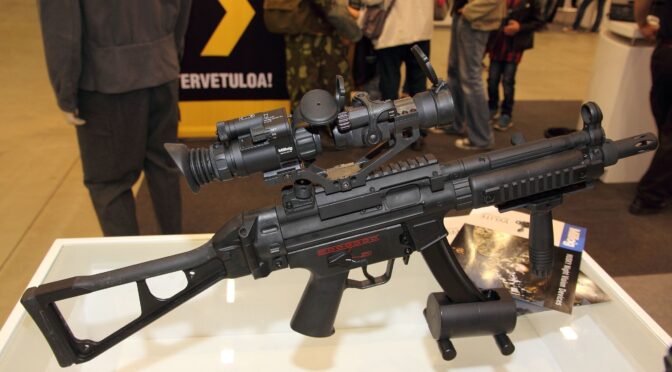
The single greatest deficiency was the complete absence of any native capability for mounting accessories. The MP5’s stamped steel receiver was a smooth, enclosed tube with no integrated rails or standardized attachment points.8 In an era before the proliferation of weapon-mounted optics, lights, and lasers, this was not a consideration. By the 1990s, however, this lack of a universal interface became the platform’s primary handicap, making the addition of mission-essential equipment a complex and non-standardized challenge.22

The weapon’s ergonomics, while excellent for their time, were also a product of a bygone era. The length-of-pull on both the fixed A2 stock and the fully extended A3 retractable stock was designed for an operator wearing little more than a shirt.23 The widespread adoption of ballistic body armor by police SWAT teams and special operations forces in the 1980s and 1990s rendered these stocks too long. Operators wearing bulky vests were forced into an awkward, bladed shooting stance that compromised stability and weapon control, a problem that H&K themselves later acknowledged and addressed in the updated MP5 MLI variant with its multi-position stock.15 Furthermore, early “SEF” trigger groups featured a long, rotating selector lever that was not truly ambidextrous or as ergonomic as later designs.3

Finally, the excellent iron sights, for all their precision, were fundamentally limited. They were optimized for 25-meter engagements and were not designed for field adjustment to other ranges.3 More importantly, their design and the lack of a top rail on the receiver made it impossible to co-witness them with an optic. Adding a red dot sight or other optic required a cumbersome “claw mount” that positioned the optic high above the bore axis, forcing an inconsistent and uncomfortable “chin weld” rather than a solid cheek weld, and offered no backup sighting capability if the optic failed.25 These latent deficiencies, baked into the core design of the MP5, created a clear and compelling need for the aftermarket solutions that would ultimately define its modern identity.

The very engineering brilliance that defined the MP5 also presented its greatest challenge to modernization. The complex, multi-part roller-delayed blowback system, while arguably “overkill” for a pistol-caliber weapon, dictated a receiver design that was fundamentally non-modular.4 Unlike the AR-15 platform, which was conceived with a distinct upper and lower receiver that could be easily separated and modified, the MP5’s receiver is a single, complex, welded and pinned stamped-steel assembly.27 This architectural difference is profound. Upgrading an AR-15’s handguard to a railed version is a simple matter of unscrewing a barrel nut and replacing a component. Modernizing the MP5 required a different philosophy; accessories could not simply replace a part, they had to be added onto the existing structure. This fundamental engineering constraint shaped the entire first generation of MP5 accessories, leading directly to the development of solutions like receiver-gripping claw mounts for optics and full handguard replacements for lights and lasers, a far more complex proposition than the simple bolt-on modularity of its rifle-caliber counterparts.

Section 2: The Catalysts for Change: Evolving Mil/LE Doctrine and Threats

The demand for an MP5 aftermarket ecosystem did not arise in a vacuum. It was driven by a series of seismic shifts in the operational landscape for military special forces and law enforcement tactical units. Three primary catalysts—the rise of modern counter-terrorism, the proliferation of body armor, and a revolutionary new philosophy of weapon modularity—converged in the 1980s and 1990s to create an undeniable imperative for the platform’s evolution.

2.1 The Counter-Terrorism Proving Ground and the Birth of a Need

The 1972 Munich Olympics Massacre was a watershed moment for global security forces. The tragic failure of conventional police to effectively respond to a determined terrorist attack starkly illustrated the need for new, specialized units trained and equipped for high-stakes hostage rescue and counter-terrorism (CT) operations.17 This led to the formation of elite units like Germany’s GSG 9, France’s GIGN, and the proliferation of Special Weapons and Tactics (SWAT) teams in the United States.30 These new organizations required a weapon that was compact, controllable, and precise—a perfect match for the MP5’s capabilities.17

While the MP5 saw quiet adoption by these units throughout the 1970s, it was thrust onto the world stage on May 5, 1980. The live television broadcast of the British Special Air Service (SAS) storming the Iranian Embassy in London during Operation Nimrod had a transformative effect on the weapon’s status.2 Images of the black-clad operators, MP5s at the ready, became iconic overnight.2 This single, highly successful operation created an explosion in global demand. Law enforcement and military units worldwide, seeking to emulate the perceived professionalism and effectiveness of the SAS, made acquiring the MP5 a top priority.5

Crucially, these same iconic images also revealed the platform’s first major deficiency in a modern tactical context. Photographs from Operation Nimrod clearly show SAS operators with large, cylindrical flashlights—likely Maglites or similar models—crudely attached to the top of their MP5s with hose clamps or other improvised mounts.3 This was the first high-profile demonstration of a critical, emerging capability gap: the need for integrated, weapon-mounted illumination for low-light combat. These early, ad-hoc solutions were deeply flawed, often obstructing the weapon’s iron sights and compromising the operator’s ability to aim effectively—a severe tactical trade-off that underscored the urgent need for a professional, purpose-built solution.25

2.2 The Ballistic Imperative and the Rise of Body Armor

While the MP5 was cementing its role in the CT world, a new threat was emerging on the streets and battlefields: the increasing availability of effective body armor. Throughout the 1980s and 1990s, the proliferation of soft body armor capable of defeating standard pistol-caliber rounds began to call into question the terminal effectiveness of the MP5’s 9x19mm Parabellum cartridge.12 For law enforcement, this concern became a brutal reality during the 1997 North Hollywood Shootout. Two heavily armed bank robbers, protected by extensive body armor, engaged Los Angeles police officers in a prolonged firefight, absorbing numerous hits from 9mm pistols and 12-gauge shotguns with little effect.17

The North Hollywood incident was a doctrinal inflection point for American law enforcement. It graphically demonstrated the inadequacy of pistol-caliber weapons against protected threats and triggered a widespread tactical shift within SWAT teams away from submachine guns like the MP5 and towards 5.56x45mm AR-15-based carbines, such as the M4.2 These rifle-caliber weapons could easily defeat soft body armor and offered superior range and barrier penetration capabilities.14

Heckler & Koch was not ignorant of these concerns. In the early 1990s, responding directly to a request from the American FBI, the company developed and released the MP5/10 and MP5/40, chambered in the more powerful 10mm Auto and .40 S&W cartridges, respectively.4 These variants were intended to provide a direct answer to the 9mm’s perceived lack of “stopping power.” However, both were ultimately discontinued by 2000, suggesting that up-calibering the finely tuned roller-delayed blowback system introduced unacceptable trade-offs in reliability, controllability, or parts longevity.16 This failure by the original equipment manufacturer (OEM) to provide a viable ballistic upgrade left the flagship 9mm MP5 increasingly vulnerable to replacement by more powerful platforms.

2.3 The “SOPMOD Effect”: The New Paradigm of Weapon Modularity

The final, and perhaps most significant, catalyst for the MP5’s aftermarket evolution came from the United States Special Operations Command (USSOCOM). In 1989, USSOCOM initiated the Special Operations Peculiar MODification (SOPMOD) program, a project aimed at creating a standardized kit of accessories for the M4A1 carbine.33 This was a revolutionary concept that fundamentally changed how professional end-users viewed their primary weapon. Instead of a fixed tool, the rifle became a modular platform. The SOPMOD kit provided operators with a suite of mission-enhancing accessories—optics, infrared aiming lasers, visible lights, vertical foregrips, and suppressors—that could be easily attached and detached to configure the weapon for any operational requirement.33

The technological heart of the SOPMOD program was the Rail Interface System (RIS), developed by Knight’s Armament Company (KAC).33 The KAC RIS replaced the M4A1’s standard polymer handguard with a quad-rail forearm featuring Mil-Std 1913 Picatinny rails, creating a universal, non-proprietary mounting surface.37 This seemingly simple innovation was transformative. It standardized the interface between the weapon and its accessories, allowing an operator to mount an Aimpoint CompM2 red dot sight, an AN/PEQ-2 infrared laser/illuminator, and a SureFire weaponlight in a secure, repeatable, and ergonomically sound configuration.38

The SOPMOD program created a new professional standard. The immense tactical advantage conferred by a fully accessorized M4A1 became the baseline expectation for any primary weapon system. An operator who had just returned from a mission using a SOPMOD M4 would not accept the limitations of a “slick” MP5 on their next assignment. This created immense institutional pressure from within the world’s most elite units—the MP5’s core user base—to find a way to bring the submachine gun up to the new SOPMOD standard of modularity and capability.

The convergence of these factors created a perfect storm of market demand. The MP5’s very success in the high-profile CT arena, which drove its widespread adoption, also placed it in the hands of the most sophisticated and demanding end-users in the world. These were the same units pioneering new tactics in low-light combat and close-quarters battle, and thus they were the first to experience the platform’s inherent limitations on a large scale. Just as these limitations became undeniable, the SOPMOD program for the M4 provided a clear, tangible template for the solution. The aftermarket industry was not just responding to a vague desire for modernization; it was responding to a specific, well-defined set of capability gaps identified by a highly influential customer base that now knew exactly what it wanted.

Furthermore, the aftermarket thrived precisely where the OEM, Heckler & Koch, appeared to falter. Faced with demands for improved ballistics and enhanced modularity, H&K focused its internal efforts on the former with the short-lived MP5/10 and MP5/40, and ultimately chose platform replacement over adaptation with the introduction of the UMP submachine gun in 1999.3 This strategy left the critical and more immediately solvable problem of accessory integration largely unaddressed by the factory during the crucial decade of the 1990s. This created a market vacuum that innovative third-party companies were perfectly positioned to fill, effectively providing the modernization path that the original manufacturer did not.

Section 3: The Aftermarket Response: Key Players and Foundational Upgrades (The “Classic” Era: ~1985-2005)

The tactical imperatives of the 1980s and 90s created a fertile ground for innovation. A handful of pioneering companies recognized the capability gaps in the factory MP5 and developed foundational products that would define the first generation of its modernization. These were not incremental improvements but transformative solutions that directly addressed the core problems of illumination, modularity, and sighting systems.

3.1 Case Study: SureFire and the Integrated Illumination Solution

The challenge of effectively mounting a light to the MP5 was the first major hurdle to be professionally addressed. The solution came from Laser Products Corporation, founded in 1979 by Dr. John Matthews, a company that would later become synonymous with tactical illumination: SureFire.41 Rather than creating a clamp or mount for an existing handheld flashlight, SureFire developed a truly integrated system: the Dedicated Forend WeaponLight.

The SureFire 628 series (for the full-size MP5) and the more compact 328 series (for the MP5K) were revolutionary products.42 They completely replaced the factory polymer or aluminum handguard with a purpose-built unit that housed a high-intensity incandescent (and later, a far more powerful and durable LED) light source.18 This design was a masterclass in tactical ergonomics. It featured a momentary-on pressure pad switch integrated into the right side of the forend and a constant-on rocker switch on the left.42 This layout allowed the operator to activate the light without altering their normal firing grip, a critical advantage in high-stress situations.48 A patent for this type of integrated forend lighting system was granted in 1989, cementing its innovative status.49 For decades, the SureFire 628 was the gold standard for professional MP5 users, providing the first truly seamless and effective solution for low-light operations.

3.2 Case Study: Knight’s Armament Company and the Rail Adapter System (RAS)

While SureFire solved the illumination problem, the broader issue of modularity remained. The solution to this challenge emerged from the same company that was defining modularity for the US military: Knight’s Armament Company (KAC). Founded by C. Reed Knight Jr., KAC’s work with USSOCOM on the SOPMOD program, born from the observation of troops duct-taping accessories to their rifles, had led to the creation of the M4 Rail Interface System (RIS).50

KAC applied this same philosophy to the MP5, developing the MP5 Rail Adapter System (RAS), part number 97198.52 This product was arguably the single most important development in the history of MP5 modernization. The KAC RAS was a drop-in, two-piece aluminum handguard that provided Mil-Std 1913 Picatinny rails at the 3, 6, 9, and 12 o’clock positions.54 This simple, elegant solution broke the MP5 free from its proprietary, non-modular design. For the first time, an operator could mount the exact same standardized SOPMOD accessories—an AN/PEQ-2 laser, a vertical foregrip, and a separate weaponlight—that they used on their M4A1 carbine.36 This created critical commonality in equipment, training, and logistics for units that employed both weapon systems. The KAC RAS transformed the MP5 from a firearm into a true weapons system, laying the groundwork for all subsequent modular handguards.

3.3 Case Study: Brügger & Thomet, The European Innovator

In Europe, a similar modernization effort was being led by the Swiss firm Brügger & Thomet (B&T). Founded in 1991 by Karl Brügger and Heinrich Thomet, B&T began as a specialized suppressor manufacturer but quickly leveraged its engineering expertise to become a key supplier of tactical accessories for European military and police forces, which were major MP5 users.57

B&T became a one-stop-shop for comprehensive MP5 upgrades. They developed a line of railed handguards, including their well-known Tri-Rail handguard (BT-21174), which served the same function as the KAC RAS and became a direct competitor.59 Recognizing the sighting deficiencies of the platform, B&T also engineered a range of low-profile optic mounts that provided a more stable and lower-height solution for attaching red dot sights than many early claw mounts.58 Their deep familiarity with the platform was so extensive that in 1996, B&T even produced its own semi-automatic variant, the BT96, to navigate restrictive Swiss firearms laws.58 B&T’s extensive catalog of high-quality stocks, mounts, and handguards established them as the premier European source for MP5 modernization, a position they still hold today.

3.4 Enhancing Target Acquisition: The Optics Revolution

The development of reliable, compact, and battery-powered red dot sights, pioneered by the Swedish company Aimpoint in 1975, offered a revolutionary improvement in speed and ease of target acquisition over traditional iron sights.62 For the close-quarters engagements typical of the MP5’s role, the ability to maintain a target-focus with both eyes open and simply place a dot on the threat was a massive tactical advantage.62

US Special Forces began widely adopting red dot sights in the mid-1990s, with early models like the Aimpoint 5000 giving way to the Aimpoint CompM2, which was adopted by the U.S. Army as the M68 Close Combat Optic (CCO) and became a standard issue SOPMOD item by 2000.37 To mount these optics on the MP5, a “claw mount” was required. This type of mount attaches to the small, stamped recesses on the top of the MP5’s receiver. Early designs were often bulky, heavy, and could be knocked out of alignment, failing to hold a consistent zero. This created a demand for more robust solutions, which companies like B&T, and later American firms like Midwest Industries, fulfilled by producing low-profile, lightweight, and rock-solid mounts that clamped securely to the receiver, finally providing a reliable platform for modern optics.26

The following table provides a concise summary of the cause-and-effect relationships that drove the first two decades of MP5 upgrades, linking the evolving tactical problems with the specific engineering solutions and pioneering companies that defined this classic era of modernization.

EraPrimary Tactical DriverIdentified Platform DeficiencyAftermarket Solution CategoryPioneering Products/Manufacturers
1980s–Early 1990sRise of specialized CT/SWAT units; Low-light/night operations become standard doctrine.No native method for mounting illumination tools; ad-hoc solutions obstruct sights.Integrated Weaponlight ForendSureFire 628 Series
Mid-1990s–Early 2000sUSSOCOM SOPMOD program establishes a new standard for modularity; Need for accessory standardization across platforms.No native method for mounting optics; No universal accessory interface.Receiver Claw Mounts for Optics; Railed Handguards (Picatinny)B&T Optic Mounts; Knight’s Armament Company MP5 RAS; B&T Tri-Rail Handguard

Section 4: The Modernized MP5: Maturation and Proliferation of the Ecosystem (c. 2005-Present)

The foundational upgrades of the classic era solved the MP5’s most pressing deficiencies, proving that the half-century-old design could be adapted for modern warfare. The period from the mid-2000s to the present has been characterized by the maturation and proliferation of this aftermarket ecosystem. This new generation of upgrades has focused on refinement, weight reduction, and improved ergonomics, further closing the gap between the MP5 and more contemporary platforms. This phase was also critically enabled by the expansion of the market itself through the availability of high-quality clones.

4.1 Engineering Challenges: Stamped Receivers vs. AR-15 Modularity

Designing accessories for the MP5 presents unique engineering challenges not found in more inherently modular platforms like the AR-15. The MP5’s receiver is its core structural component, manufactured from stamped and welded sheet metal.19 While strong and efficient to produce, this process can result in minor dimensional variations from one firearm to another. Furthermore, the primary mounting surfaces—the claw mount recesses for optics and the handguard attachment points—are less precise and offer less rigidity than the monolithic, machined upper receiver of an AR-15.22 An improperly manufactured or installed AK-style side rail, which shares principles with the MP5 claw mount, can be visibly canted, requiring significant optic adjustment to compensate.68

This stands in stark contrast to the AR-15. The AR platform was designed from the outset for interchangeability. Its architecture, featuring distinct upper and lower receivers joined by two pins, a standardized barrel nut interface for handguards, and a flat-top upper receiver with an integral Picatinny rail, makes it akin to “Legos for adults”.28 This design allows for a vast and competitive market where hundreds of manufacturers can produce components to a common, precise specification, ensuring a high degree of compatibility.27 An AR-15 can be completely reconfigured in minutes with simple tools. The MP5, by contrast, requires more specialized and cleverly designed accessories to work around its fixed, less-precise architecture. This engineering reality means the MP5 aftermarket is, by necessity, smaller and more specialized than the sprawling AR-15 ecosystem.

4.2 Ergonomics for the 21st Century Operator

As the classic era solved the primary mounting problems, the modern era focused on refining the operator’s interface with the weapon. The issue of stock length for users with body armor was a key area of improvement. Companies like B&T and the Swedish firm Spuhr developed multi-position collapsible and folding stocks that offered adjustable length-of-pull, allowing a custom fit for any operator or armor configuration.23 Spuhr’s design also incorporated an adjustable cheek riser, a critical feature for achieving a proper and consistent sight picture when using optics mounted high on claw mounts.23

American manufacturer Magpul Industries, renowned for its ergonomic polymer accessories for the AR-15, eventually turned its attention to the MP5 platform.72 They introduced a comprehensive suite of ergonomic upgrades that brought the weapon’s handling into the 21st century. The Magpul SL Stock provided a modern, adjustable solution, while the SL Grip Module offered a more vertical grip angle, similar to modern carbines, and improved texturing for better control.73 Their Enhanced Selector Kit (ESK) provided an ambidextrous safety selector with improved ergonomics, making manipulation faster and more intuitive.72 These products allowed agencies to significantly upgrade the handling characteristics of their existing MP5 inventories at a relatively low cost.

4.3 Beyond Picatinny: The Advent of M-LOK and Lightweight Systems

By the 2010s, the industry trend in rifle handguards began to shift away from the heavy, cheese-grater-like Picatinny quad-rails of the SOPMOD era. New, lighter, and more user-friendly negative-space attachment systems, primarily Magpul’s M-LOK, became the new standard. These systems provided a smooth, slim handguard surface, with accessories being mounted only where needed via standardized slots.

The MP5 aftermarket quickly adapted to this trend. Companies like Midwest Industries developed lightweight aluminum M-LOK handguards for the MP5.75 These second-generation modular handguards offered significant weight savings and a much more comfortable grip profile compared to the legacy KAC and B&T quad-rails, while still providing ample space for mounting lights, lasers, and grips.65 This evolution mirrored the broader trends in the small arms industry and demonstrated the MP5 aftermarket’s continued ability to keep the platform current.

4.4 Market Expansion and the Role of High-Quality Clones

For much of its history, access to the MP5 platform for smaller law enforcement agencies or civilian purchase was severely restricted by high cost and limited availability from H&K.78 This dynamic began to change dramatically with the emergence of high-quality, reverse-engineered or licensed clones.

Manufacturers such as MKE in Turkey (which produced MP5s under H&K license and whose firearms were imported by companies like Century Arms and, formerly, Zenith), PTR Industries in the United States, and Zenith Firearms’ own US-based production, began offering MP5-pattern firearms at a fraction of the cost of a genuine H&K.2 These clones were not crude copies; many were built on H&K-spec tooling and demonstrated excellent reliability, making the MP5 platform accessible to a vastly larger market.66

This explosion in the number of MP5-pattern firearms in circulation had a profound effect on the aftermarket. It created a larger, more stable, and more diverse customer base. This, in turn, lowered the risk and increased the potential reward for accessory companies to invest in research and development for the platform. The entry of major players like Magpul into the MP5 market was likely enabled by the critical mass of firearms created by the clone manufacturers. This created a powerful, self-reinforcing cycle: the availability of affordable clones created the demand that fueled aftermarket innovation, and the availability of modern, sophisticated accessories made the clones a more viable and attractive purchase for end-users. The clone market and the aftermarket ecosystem thus exist in a symbiotic relationship, with each driving the growth and continued relevance of the other.

Conclusion: A Legacy of Adaptation

The enduring legacy of the Heckler & Koch MP5 is a compelling story of dual excellence. It is, first and foremost, a testament to the initial brilliance of Heckler & Koch’s engineering. The revolutionary roller-delayed blowback mechanism and closed-bolt operation delivered a level of accuracy and controllability that was unmatched in its class for decades, rightfully earning its place as the world’s premier submachine gun.4

However, its continued relevance in the specialized arsenals of the 21st century is a testament to a second, equally important story: the decades-long brilliance of the aftermarket industry’s relentless adaptation. The original MP5 was a product of a tactical environment that no longer exists. Faced with the rise of low-light combat, the proliferation of body armor, and a paradigm shift toward modular weapon systems, the factory-configured MP5 was destined for obsolescence.14

It was the aftermarket ecosystem that saved it. Innovators like SureFire, Knight’s Armament Company, and Brügger & Thomet did not just accessorize the MP5; they re-engineered its capabilities to meet the demands of a new era. They solved the fundamental problems of illumination and modularity. Subsequent generations of manufacturers, from Spuhr to Magpul to Midwest Industries, further refined its ergonomics and brought it in line with contemporary design trends. This constant evolution, driven by direct feedback from the world’s most demanding military and law enforcement users, allowed the platform to remain a viable, specialist tool long after many of its contemporaries were relegated to museums.

While the doctrinal shift towards short-barreled, rifle-caliber carbines for general-purpose tactical use has undoubtedly displaced the MP5 from many frontline roles, its aftermarket-driven evolution has secured its niche. For applications where the unique attributes of a pistol-caliber carbine—namely, exceptionally low recoil, precision, and superior performance with sound suppressors—are paramount, the modernized MP5 remains a premier choice. The MP5 did not simply survive into the 21st century; it was actively and continuously re-imagined by a global ecosystem of innovators who refused to let an iconic design become a historical relic.5 Its story is the ultimate case study in how a symbiotic relationship between a classic platform and a forward-looking industry can create a legacy of enduring adaptation.

Image Source

The main blog image is by MKFI. It was obtained from Wikimedia on 9/21/2025. Description “MP5 submachine gun with both Millog VVLite night vision scope and Aimpoint red dot sight at Millog exhibition stall at Comprehensive security exhibition 2015 in Tampere.”


Please share the link on Facebook, Forums, with colleagues, etc. Your support is much appreciated and if you have any feedback, please email us in**@*********ps.com. If you’d like to request a report or order a reprint, please click here for the corresponding page to open in new tab.


Sources Used

  1. [History] Heckler & Koch MP5: A Pop Culture SMG Icon – Pew Pew Tactical, accessed September 2, 2025, https://www.pewpewtactical.com/hk-mp5-history/
  2. History of the H&K MP5 – BYOAR – Build Your Own AR, accessed September 2, 2025, https://www.byoar.com/2021/06/history-mp5/
  3. Heckler & Koch MP5 – Wikipedia, accessed September 2, 2025, https://en.wikipedia.org/wiki/Heckler_%26_Koch_MP5
  4. A Look Back at the Heckler & Koch MP5 | An Official Journal Of The NRA, accessed September 2, 2025, https://www.americanrifleman.org/content/a-look-back-at-the-heckler-koch-mp5/
  5. A Brief History of the MP5 — Zenith Firearms, accessed September 2, 2025, https://zenithfirearms.com/brief-history-mp5/
  6. MP5 : everything you need to know about this machine pistol – Jean Pierre Fusil, accessed September 2, 2025, https://www.fusil-calais.com/en/content/37-heckler-koh-mp5-et-le-cinema
  7. The HK MP5: A Revolutionary Submachine Gun – Luxus Capital, accessed September 2, 2025, https://luxuscap.com/resources-on-guns/heckler-koch/weapon-for-generations-the-mp5/
  8. Inside the MP5, the History and Function of Roller-Delay, accessed September 2, 2025, https://sdi.edu/2021/05/20/inside-the-mp5-the-history-and-function-of-roller-delay/
  9. Delayed Blowback System And PCC Advantages – Show Low MFG, accessed September 2, 2025, https://showlowmfg.com/the-top-4-undeniable-advantages-of-delayed-blowback-systems/
  10. How Does It Work: Roller Delayed Blowback – YouTube, accessed September 2, 2025, https://www.youtube.com/shorts/QN4aR8RufwI
  11. Blowback (firearms) – Wikipedia, accessed September 2, 2025, https://en.wikipedia.org/wiki/Blowback_(firearms)
  12. What makes Hecker & Koch’s MP5 one of the best submachine guns of its time? – Quora, accessed September 2, 2025, https://www.quora.com/What-makes-Hecker-Kochs-MP5-one-of-the-best-submachine-guns-of-its-time
  13. Understanding the Roller-Delayed Blowback Mechanism: Spotlight on HK P9, Korth PRS, HK MP5, and HK G3 – Korriphila, accessed September 2, 2025, https://korriphila.org/understanding-the-roller-delayed-blowback-mechanism-spotlight-on-hk-p9-korth-prs-hk-mp5-and-hk-g3/
  14. Is the HK MP5 now considered an obsolete weapon for hostage rescue? – Reddit, accessed September 2, 2025, https://www.reddit.com/r/WarCollege/comments/13ws8c6/is_the_hk_mp5_now_considered_an_obsolete_weapon/
  15. MP5 – Heckler & Koch, accessed September 2, 2025, https://www.heckler-koch.com/en/Products/Military%20and%20Law%20Enforcement/Submachine%20guns/MP5
  16. Why is the MP5 such an extremely well respected gun? – Quora, accessed September 2, 2025, https://www.quora.com/Why-is-the-MP5-such-an-extremely-well-respected-gun
  17. History of: H&K MP5 | OutdoorHub, accessed September 2, 2025, https://www.outdoorhub.com/stories/2018/08/29/history-of-hk-mp5/
  18. Freedom of Choice: M4 or MP5? – SWAT Survival | Weapons | Tactics, accessed September 2, 2025, https://www.swatmag.com/article/freedom-choice-m4-mp5/
  19. Heckler & Koch MP5 Manual – Indagini Balistiche, accessed September 2, 2025, http://www.indaginibalistiche.it/utlities/manuali/hk_mp5_EN.pdf
  20. Mp5 Features, Specs, and History – The Range 702, accessed September 2, 2025, https://www.therange702.com/blog/mp5-gun-spotlight/
  21. 8 Major HK MP5 Variants — A History – The Mag Life – GunMag Warehouse, accessed September 2, 2025, https://gunmagwarehouse.com/blog/8-hk-mp5-variants-a-history/
  22. Lights, Sights & Silencers: Modernizing The AK | How To Modify | The Primary Source, accessed September 2, 2025, https://blog.primaryarms.com/guide/lights-sights-silencers-modernizing-the-ak-how-to-modify/
  23. MP5 UPGRADES – The Home of Innovation – Spuhr.biz, accessed September 2, 2025, https://www.spuhr.biz/mp5-upgrades
  24. H&K MP5 .22 LR Review: Ultimate Trainer or Range Toy? – Pew Pew Tactical, accessed September 2, 2025, https://www.pewpewtactical.com/hk-mp5-22-lr-review/
  25. The Evolution of the Rifle-Mounted Flashlight – INFORCE light, accessed September 2, 2025, https://inforcelights.com/blogs/inforce-blog/the-evolution-of-the-rifle-mounted-flashlight
  26. Roundup: Accessories For Your MP5-Pattern Firearm | An Official Journal Of The NRA, accessed September 2, 2025, https://www.shootingillustrated.com/content/roundup-accessories-for-your-mp5-pattern-firearm/
  27. How Interchangeable are AR 15 Accessories? – Bootleg Inc, accessed September 2, 2025, https://bootleginc.com/interchangeable-ar-15-accessories/
  28. The AR-15 | The Most Versatile and Modular Firearms Platform Ever Created (BCM 11.5 / BCM Kino 12.5) – YouTube, accessed September 2, 2025, https://www.youtube.com/watch?v=_p9Bu8FuBA8
  29. History of SWAT | Paulding County, GA, accessed September 2, 2025, https://www.paulding.gov/519/History-of-SWAT
  30. A Multi-Method Study Of Special Weapons And Tactics Teams – Office of Justice Programs, accessed September 2, 2025, https://www.ojp.gov/pdffiles1/nij/grants/223855.pdf
  31. SWAT – Wikipedia, accessed September 2, 2025, https://en.wikipedia.org/wiki/SWAT
  32. MP5 – H&K’s Masterpiece of Submachine Gun Design – YouTube, accessed September 2, 2025, https://www.youtube.com/watch?v=ry9LIA5XFlM
  33. SOPMOD – Wikipedia, accessed September 2, 2025, https://en.wikipedia.org/wiki/SOPMOD
  34. SOPMOD Program Overview: Harnessing Technology for the Warfighter PowerPoint Presentation – ID:9301130 – SlideServe, accessed September 2, 2025, https://www.slideserve.com/wehr/nswc-crane-powerpoint-ppt-presentation
  35. Navy SEAL “Coch’s” Career in SOPMOD – YouTube, accessed September 2, 2025, https://www.youtube.com/watch?v=H6nFcledZN0
  36. Knight’s Armament Company – Wikipedia, accessed September 2, 2025, https://en.wikipedia.org/wiki/Knight%27s_Armament_Company
  37. History of SOPMOD, Part I – SWAT Survival | Weapons | Tactics, accessed September 2, 2025, https://www.swatmag.com/article/history-of-sopmod-part-i/
  38. Special Forces gear that regular troops have now, too, accessed September 2, 2025, https://www.wearethemighty.com/mighty-tactical/special-forces-gear-that-regular-troops-have-too/
  39. History of SOPMOD, Part II – SWAT Survival | Weapons | Tactics, accessed September 2, 2025, https://www.swatmag.com/article/history-of-sopmod-part-ii/
  40. SOPMOD history – Punisher Military Store | Tactical equipment in Ukraine, accessed September 2, 2025, https://punisher.com.ua/en/istoriya-sopmod./
  41. SureFire Story, accessed September 2, 2025, https://www.surefire.com/surefire-story/
  42. 628LMF-B Forend WeaponLight – SureFire, accessed September 2, 2025, https://www.surefire.com/628lmf-b-forend-weaponlight/
  43. Surefire Compact Forend Weapon Light HK MP5, HK53, HK94 Black – MidwayUSA, accessed September 2, 2025, https://www.midwayusa.com/product/1026558484
  44. SureFire Dedicated Forend Weaponlights – EuroOptic.com, accessed September 2, 2025, https://www.eurooptic.com/surefire-dedicated-forend-weaponlights
  45. Surefire – 328LMF – Lighted Forearm – HKPARTS, accessed September 2, 2025, https://hkparts.net/handguards-forearms-foregrips/surefire-328lmf-lighted-forearm/
  46. SureFire 628LMF-B Forend LED Weapon Light for H&K MP5, HK53, HK94 – B&H, accessed September 2, 2025, https://www.bhphotovideo.com/c/product/1456469-REG/surefire_628lmf_b_dedicated_submachine_gun.html
  47. SureFire Classic Series Dedicated Forend Weapon Light for H&K MP5 / 94 / 53 628, accessed September 2, 2025, https://www.opticsplanet.com/surefire-weaponlights-628.html
  48. 328LMF-B – SureFire, accessed September 2, 2025, https://www.surefire.com/328lmf-b/
  49. SureFire 628 Handguard Flashlight Patent | PDF | Screw | Shotgun – Scribd, accessed September 2, 2025, https://www.scribd.com/document/848873653/SureFire-628-handguard-flashlight-patent
  50. A brief history with me and Knight’s Armament Company. – Redback One, accessed September 2, 2025, https://redbackone.com/blogs/news/a-brief-history-with-me-and-knights-armament-company
  51. Military CatalOG – Knight’s Armament, accessed September 2, 2025, https://www.knightarmco.com/pdf/military_catalog_2012.pdf
  52. Knight’s Armament MP5 RAS | Rooftop Defense, accessed September 2, 2025, https://www.rooftopdefense.com/product/knights-armament-mp5-ras-new-in-box/
  53. KNIGHT’S ARMAMENT H&K MP5 RAS HANDGUARD – Brownells, accessed September 2, 2025, https://www.brownells.com/gun-parts/rifle-parts/rifle-handguards-parts/hk-mp5-ras-handguard/
  54. Knights Armament Vero Beach H&K MP5 RAS Rail – Wet Worx Outfitters, accessed September 2, 2025, https://wetworxoutfitters.com/knights-armament-company-vero-beach-h-k-mp5-ras-rail/
  55. Knights Armament MP5 RAS Rail Fits H&K MP5 Black -97198 HK New – Other HK Accessories & Parts at GunBroker.com : 1110671265, accessed September 2, 2025, https://www.gunbroker.com/item/1110671265
  56. Canadian Special Forces MP5 RAS Rail for HK MP5 and clones from Cadex, accessed September 2, 2025, https://charliescustomclones.com/canadian-military-mp5-ras-adapter-for-hk-mp5-and-clones/
  57. B&T – Wikipedia, accessed September 2, 2025, https://en.wikipedia.org/wiki/B%26T
  58. History | B&T USA, accessed September 2, 2025, https://bt-usa.com/support/history/
  59. B&T handguard for HK MP5/MP5SD/MP5K, accessed September 2, 2025, https://bt-ag.ch/en/produkt/bt-handguard-for-hk-mp5-mp5sd-mp5k/
  60. B&T HK MP5, SP5, HK94 Lightweight Tri-Rail Handguard – HKPARTS, accessed September 2, 2025, https://hkparts.net/all-parts/b-t-hk-mp5-sp5-hk94-lightweight-tri-rail-handguard/
  61. How a Swiss MP5 Clone Made History: B&T BT96 – YouTube, accessed September 2, 2025, https://www.youtube.com/watch?v=4G-KL_0xYEo
  62. History – Aimpoint US, accessed September 2, 2025, https://aimpoint.us/history/
  63. Red dot sight – Wikipedia, accessed September 2, 2025, https://en.wikipedia.org/wiki/Red_dot_sight
  64. Evolution of the Combat Optic | RECOIL – Recoil Magazine, accessed September 2, 2025, https://www.recoilweb.com/evolution-of-the-combat-optic-135873.html
  65. Military Arms Corporation MAC 5: Best MP5 Clone Available? – Recoil Magazine, accessed September 2, 2025, https://www.recoilweb.com/military-arms-corporation-mac-5-186073.html
  66. MAC 5 MP5 Clone: You Won’t Stop at Just One (Mag, That Is) – YouTube, accessed September 2, 2025, https://www.youtube.com/watch?v=ZsV6Rg-4cnk
  67. Misc. INFO | AK Master Mount, accessed September 2, 2025, https://akmastermount.com/miscinfo/
  68. Not sure about MI side mount. – GunSite South Africa, accessed September 2, 2025, https://www.gunsite.co.za/forums/showthread.php?81247-Not-sure-about-MI-side-mount
  69. Everything You Want to Know About AR Receivers | U.S. Arms Company, accessed September 2, 2025, https://www.usarmsco.com/everything-you-want-to-know-about-ar-receivers/
  70. Budget vs. Premium AR-15 Accessories: Are High-End Products Worth It?, accessed September 2, 2025, https://blackrifledepot.com/blog/budget-vs-premium-ar15-accessories-are-highend-products-worth-it/
  71. Mp5 Retractable Stock – Stanford EdTech Lab, accessed September 2, 2025, https://edtechdev.stanford.edu/mp5-retractable-stock
  72. Magpul MP5: Accessories & Installation | An Official Journal Of The NRA, accessed September 2, 2025, https://www.americanrifleman.org/content/magpul-mp5-accessories-installation/
  73. Magpul Mp5 Stock – Stanford EdTech Lab, accessed September 2, 2025, https://edtechdev.stanford.edu/magpul-mp5-stock
  74. The best upgrades to any MP5. – YouTube, accessed September 2, 2025, https://www.youtube.com/watch?v=9I3UYOuZnSg
  75. Recoil x HK Parts: MAC 5 Buildout Breakdown – HKPARTS, accessed September 2, 2025, https://hkparts.net/blog/recoil-x-hk-parts-mac-5-buildout-breakdown/
  76. The PTR 9CT Modernization Project – YouTube, accessed September 2, 2025, https://www.youtube.com/watch?v=H6aG4Pv6bvw
  77. Midwest Industries MP5 Rails – YouTube, accessed September 2, 2025, https://www.youtube.com/watch?v=uVoiSUqjj-8
  78. H&K MP5 — History and Function – Firearms News, accessed September 2, 2025, https://www.firearmsnews.com/editorial/the-history-and-function-of-the-hk-mp5-parabellum/77889
  79. H&K MP5 Ultimate Guide (+ Current Clones) – Lynx Defense, accessed September 2, 2025, https://lynxdefense.com/hk-mp5-ultimate-guide/
  80. Snagged one of these today : r/guns – Reddit, accessed September 2, 2025, https://www.reddit.com/r/guns/comments/1frvn5n/snagged_one_of_these_today/

The Arsenal of the Republic: A Strategic Analysis of Turkey’s Makina ve Kimya Endüstrisi (MKE)

In the sprawling narrative of modern nation-states, few entities serve as a more tangible symbol of a country’s industrial and geopolitical journey than its national arsenal. For the Republic of Turkey, that institution is Makina ve Kimya Endüstrisi A.Ş. (MKE). More than a mere defense contractor, MKE is the industrial embodiment of the Turkish Republic’s evolution—a story of transformation from the embers of a fallen empire to an assertive, modern nation-state. Its history is a direct reflection of Turkey’s shifting strategic alignments, its decades-long quest for military self-sufficiency, and its burgeoning ambitions on the world stage. From the cannon foundries of the Ottoman Sultans to the modern production lines churning out NATO-standard rifles and artillery, the story of MKE is the story of Turkey’s sword and shield being forged and reforged across centuries of conflict and change.

This report will conduct a strategic analysis of MKE, charting its transformation from a collection of imperial workshops into a consolidated, state-controlled enterprise, and finally into the diversified, export-focused corporation it is today. Through a detailed examination of its history, corporate structure, and product portfolio—with a particular focus on its small arms development—this analysis will argue that MKE’s trajectory provides a unique and insightful lens through which to understand the broader currents of Turkish national policy. The evolution from licensed production of German rifles to the indigenous development of the MPT-76 service weapon is not simply a matter of engineering; it is a chronicle of a nation methodically building the industrial capacity to assert its own strategic autonomy.

Forging a Nation’s Sword: From the Sultan’s Arsenal to a Modern Republic

The identity of Makina ve Kimya Endüstrisi is inextricably linked to the very foundations of Turkish military power, with an institutional lineage that predates the Republic by nearly five centuries. Its modern form is the result of a deliberate, state-driven effort to consolidate this legacy into a tool of national sovereignty and industrialization, first under the new Republic and later as a key component of the Western alliance during the Cold War.

The Ottoman Legacy: The Tophane-i Amire

The origins of MKE can be traced directly to the Tophane-i Amire, or Imperial Arsenal, established in the 15th century shortly after the conquest of Istanbul by Sultan Mehmed the Conqueror.1 Located strategically on the Bosphorus coast, this vast complex was purpose-built to supply the formidable Ottoman army and navy with the era’s most decisive weaponry: cannons and cannonballs.1 For centuries, the Tophane was the heart of the empire’s military-industrial power, a symbol of its technological prowess and its ability to project force across three continents.

As military technology evolved, so too did the arsenal. In 1832, it was reorganized as the “Arsenal of Ordnance and Artillery Marshalship” (Tophane Müşavirliği), and by 1908, it was formally integrated as a department within the Ottoman Ministry of War (Harbiye Nezareti).3 This continuous line of state-controlled arms production established a deep-seated tradition and a concentration of skilled labor and industrial infrastructure that would prove vital in the turbulent years to come. Following the Ottoman Empire’s defeat in World War I and the subsequent Turkish War of Independence, the nascent Republic under Mustafa Kemal Atatürk recognized the critical need to preserve and control these industrial assets. In 1923, the year the Republic was founded, the remnants of the imperial arms factories were consolidated under a new entity: the “General Directorate of Military Factories”.3 This act was a foundational step in ensuring the new state could arm and defend itself, severing its dependence on the foreign powers that had partitioned its predecessor.

The Birth of MKE: A Cornerstone of the Republic

The geopolitical landscape of the mid-20th century demanded a more centralized and modernized approach. On March 15, 1950, the Turkish government formally established Makina ve Kimya Endüstrisi Kurumu (MKEK) as a State Economic Enterprise (SEE).3 This was not merely an administrative reshuffling but a profound strategic decision rooted in the dual imperatives of nation-building and Cold War alignment. The SEE model, common in developing economies of the era, was designed to place critical industries under direct government control to serve national policy objectives rather than purely commercial ones.4

The creation of MKE in 1950 was a direct response to Turkey’s geopolitical pivot toward the West. With the Cold War intensifying, Turkey was positioning itself as a bulwark against Soviet expansion, a process that would culminate in its accession to NATO in 1952.6 To be an effective member of the alliance, the Turkish Armed Forces (TSK) required standardized equipment that was interoperable with other NATO forces. A centralized, state-controlled industrial conglomerate like MKE was the ideal instrument to achieve this. It could undertake the massive task of re-tooling and standardizing production, ensuring a reliable domestic supply chain for the TSK—one of the largest standing armies in the alliance—and reducing the strategic vulnerability that came with relying on the often-unpredictable flow of foreign military aid.6

Furthermore, this move was deeply aligned with the Kemalist state ideology, which emphasized national self-reliance (millîlik) and a strong, centralized state as the guardian of the Republic’s security and secularism.6 By consolidating the nation’s defense production under a single state-owned entity, the government ensured that this vital sector would serve the state’s strategic interests above all else. MKE’s foundational mandate was thus clear and absolute: to be the primary, comprehensive supplier of weapons, ammunition, and military materiel to the Turkish Armed Forces.3 For the next half-century, it would serve as the undisputed cornerstone of Turkey’s defense industrial base, the state’s own sword-maker.

The Evolution of the Turkish Service Weapon: A Small Arms Chronicle

The history of MKE’s small arms production is a microcosm of its broader corporate journey, charting a clear path from licensed manufacturing of foreign designs to the development of fully indigenous weapon systems. This evolution was not just a technical progression but a strategic one, driven by the changing needs of the Turkish military and the nation’s overarching goal of achieving self-sufficiency in defense technology.

The Early Years: Licensed Production and Foundational Skills

In its nascent years, MKE focused on building its industrial capacity by producing proven, reliable European firearms under license. This pragmatic approach allowed the company to equip the TSK with standard-issue weapons while simultaneously developing its workforce and mastering the fundamentals of mass production. The company continued the long-standing Turkish tradition of using Mauser-pattern bolt-action rifles, producing variants of the globally respected German design.10

A key early product was the “Kırıkkale” pistol, a direct and faithful copy of the German Walther PP.13 Produced in the late 1940s and early 1950s at the Kırıkkale factory, the pistol was chambered in both 7.65mm Browning (

7.65×17mmSR) and 9mm Short (9×17mm).13 Stamped “T.C. Ordusu Subaylarina Mahsus” (For Officers of the Turkish Republic Army), it became a standard sidearm for military officers.13 The simple, straight-blowback design of the Walther PP was ideal for a developing arms industry, allowing MKE to hone its skills in machining, finishing, and assembly on a large scale before tackling more complex designs.14

The Heckler & Koch Revolution: The G3 and MP5

The most transformative moment in MKE’s small arms history arrived with the decision to acquire manufacturing licenses for two of the most iconic firearms of the Cold War: the Heckler & Koch G3 battle rifle and the MP5 submachine gun.16 This was a monumental strategic step. The G3, chambered in the full-power 7.62x51mm NATO cartridge, was one of the era’s preeminent Western service rifles, alongside the FN FAL.16 Its adoption by Turkey as the G3A7 was a definitive move to standardize the TSK’s primary infantry weapon with its NATO allies.

The industrial and military impact of this decision cannot be overstated. The licensed production of the G3 and MP5 represented the single most important technology transfer in the history of the modern Turkish small arms industry. These weapons were not simple designs; they were built around H&K’s sophisticated and proprietary roller-delayed blowback operating system.18 Manufacturing this system on an industrial scale required mastering advanced techniques in sheet metal stamping, precision welding, and metallurgy—processes far more complex than those used for the Kırıkkale pistol.20 By producing hundreds of thousands of these rifles on H&K-supplied tooling, MKE developed a deep and invaluable reservoir of institutional knowledge, creating a generation of engineers and technicians intimately familiar with world-class German firearm design and manufacturing standards.17 This period effectively served as MKE’s industrial apprenticeship, elevating it from a producer of basic copies to a manufacturer of complex, modern military firearms. The expertise gained during the G3 era laid the direct technical groundwork for all of Turkey’s subsequent indigenous small arms projects.

Militarily, the G3 became the defining rifle of the Turkish soldier for nearly 50 years. Its robustness and the long-range effectiveness of the 7.62x51mm cartridge proved well-suited to the mountainous terrain of eastern Turkey, where the TSK has been engaged in counter-insurgency operations for decades. This extensive combat experience cemented a strong institutional preference within the Turkish military for the full-power rifle round, a doctrine that would directly influence the design of its successor.23 Simultaneously, the MKE-produced MP5 became the standard-issue submachine gun for Turkish special forces, police tactical units, and the gendarmerie, mirroring its global status as the premier weapon for close-quarters combat.18

The National Rifle Project: The MPT-76

By the early 2000s, the G3, a design from the 1950s, was showing its age. It lacked the modularity, ergonomics, and accessory-mounting capabilities of modern rifles. This led to the launch of the “Modern Infantry Rifle” (Modern Piyade Tüfeği) project, a national endeavor to develop Turkey’s first truly indigenous service rifle.26

The project’s engineering objectives were ambitious and clearly defined by the TSK’s combat experience. The primary goal was to create a modern, modular platform that could replace the G3 while retaining the 7.62x51mm NATO cartridge its soldiers trusted.22 MKE’s stated aim was to build a rifle that was “as effective as the G-3, reliable as the AK-47 and practical as M-16”.31

The resulting design, the MPT-76, is a pragmatic and intelligent fusion of proven Western concepts. Its architecture is fundamentally based on the American AR-10, adopting its ergonomic layout, rotating bolt, and upper/lower receiver configuration. However, instead of the AR-10’s direct impingement gas system, MKE’s engineers incorporated a short-stroke gas piston system heavily influenced by the German Heckler & Koch HK417.27 This hybrid approach sought the best of both worlds: the familiar handling and modularity of the AR platform combined with the enhanced reliability and cleaner operation of a piston system, a hallmark of the highly respected HK416/417 family.

The development process was not without challenges. An early 5.56x45mm prototype, the “Mehmetçik-1” (based on the HK416), was built in 2008 but was decisively rejected by Turkish troops during trials. They insisted on the superior range and barrier penetration of the 7.62mm round, forcing the program back to the drawing board and underscoring the military’s doctrinal commitment to the full-power cartridge.22 Another significant hurdle was the rifle’s weight. The initial production MPT-76 weighed 4.2 kg (9.3 lbs), drawing criticism from soldiers. In response to this crucial user feedback, MKE undertook a weight-reduction program, resulting in the MPT-76-MH (“Hafif,” or Light), which trimmed over 400 grams, bringing the weight down to a more manageable 3.75 kg (8.3 lbs).35 Before adoption, the rifle was subjected to a grueling series of over 50 NATO-standard reliability and durability tests, including functioning in extreme temperatures (from -40°C to 65°C), sand, mud, and rain, which it successfully passed.35 The program did face delays, with the first production rifles reaching the TSK in January 2017, more than a year behind schedule, suggesting some initial difficulties in ramping up mass production.24

Expanding the Family and Market

Building on the success of the MPT-76, MKE developed a family of related weapons. The MPT-55, chambered in 5.56x45mm NATO, was introduced to replace the aging MKE-made HK33 rifles in service with Turkish commando brigades and special forces units who required a lighter, smaller-caliber platform.21 MKE also continued its practice of producing licensed or derivative sidearms, most notably the Yavuz 16, a clone of the venerable Beretta 92FS, which was widely issued to Turkish military and police forces.38

In a significant recent development, MKE has entered the lucrative U.S. civilian firearms market through an import partnership with Century Arms.41 The flagship product of this venture is the MKE AP5, a semi-automatic pistol clone of the MP5. The AP5 has been largely well-received by American consumers, who praise it for being manufactured on the original H&K-licensed tooling and for offering an authentic roller-delayed shooting experience at a price point significantly lower than an original German-made H&K SP5.42 However, this value proposition is sometimes tempered by criticisms regarding its fit and finish, with some users noting rougher welds or less refined coatings compared to the premium-priced original or other high-end clones.45

FeatureMKE G3A7MKE MPT-76
Caliber7.62x51mm NATO7.62x51mm NATO
ActionRoller-Delayed BlowbackShort-Stroke Gas Piston, Rotating Bolt
Weight (Empty)~4.4 kg~4.2 kg (Standard) / ~3.75 kg (MH)
Barrel Length450 mm406 mm
Overall Length1,025 mm920 mm (Retracted)
Receiver MaterialStamped SteelAluminum Alloy
FurnitureFixed Polymer Stock, Polymer HandguardTelescoping, Adjustable Stock; Railed Handguard
SightsIron Sights (Diopter)Removable Iron Sights, Picatinny Rail for Optics
ModularityLimitedHigh (Picatinny Rails)
OriginLicensed German DesignIndigenous Turkish Design (AR-10/HK417 influenced)

Beyond the Rifle: MKE’s Transformation into a Diversified Defense Powerhouse

While its small arms development provides a compelling narrative of Turkey’s technological journey, MKE’s true strategic importance lies in its transformation into a fully diversified defense conglomerate. The company is far more than a rifle manufacturer; it is a comprehensive arsenal responsible for producing the vast majority of conventional munitions and heavy weapons required by one of NATO’s largest militaries. A recent and profound corporate restructuring has further amplified these capabilities, positioning MKE as a formidable player on the global stage.

A Comprehensive Arsenal

MKE’s production portfolio is staggering in its breadth, covering nearly every aspect of land-based warfare materiel.3 Its capabilities are organized into several core groups, including weapons, ammunition, rockets, and explosives.

  • Ammunition: MKE is the lifeblood of the Turkish Armed Forces’ logistical chain, manufacturing a complete spectrum of ammunition. This ranges from small arms cartridges in every standard NATO caliber (5.56mm, 7.62mm, 9mm, 12.7mm) to medium-caliber rounds for autocannons (25mm, 35mm), a full suite of mortar bombs (60mm, 81mm, 120mm), tank gun ammunition (105mm, 120mm APFSDS-T and HE-T rounds), and heavy artillery shells (155mm).48 Its production also includes aerial ordnance, such as the MK 80 series of general-purpose bombs, hand grenades, and the critical fuzes and propellants required for all of these munitions.48
  • Artillery Systems: In the realm of heavy weapons, MKE is a key producer of modern artillery. Its most significant platform is the T-155 Fırtına (“Storm”), a 155mm self-propelled howitzer.49 The Fırtına is a Turkish variant of the highly regarded South Korean K9 Thunder, demonstrating a successful model of international partnership and technology transfer. While many core components are based on the K9 design, the platform features a Turkish-designed turret and a sophisticated fire control system developed by fellow Turkish defense giant Aselsan, with MKE manufacturing the critical 155mm/52-caliber main gun.49 MKE also produces the 155mm Panter towed howitzer, providing the TSK with a complete suite of modern artillery firepower.52
  • Rockets and Explosives: The MKE Rockets and Explosives Factory produces a wide array of unguided rocket systems and energetic materials. Its portfolio includes 107mm and 122mm multiple-launch rocket systems (MLRS) ammunition, 2.75-inch (70mm) folding-fin aerial rockets (FFAR) for attack helicopters and aircraft, and specialized systems like the TAMGEÇ and TAMKAR mine-clearing line charges.3 The factory is also Turkey’s primary source for military-grade explosives such as TNT and rocket propellants, in addition to producing dynamite and other explosives for the civilian mining and construction sectors.53

The 2021 Restructuring: A Strategic Pivot

A watershed moment in MKE’s modern history occurred on July 3, 2021, when Law No. 7330 officially transformed the organization from a State Economic Enterprise (MKEK) into a joint-stock company (MKE A.Ş.).3 While the Turkish Treasury retains 100% ownership of the company’s capital, the new legal structure fundamentally altered its governance and operational model. All management, voting, and auditing rights were transferred to the Ministry of National Defense, effectively aligning the company’s strategic direction directly with the nation’s defense policy leadership.56

The strategic intent behind this restructuring was to unleash MKE’s commercial and competitive potential. By converting it into a joint-stock company subject to private law, the government unshackled it from the rigid bureaucratic constraints and slow-moving procurement regulations that govern traditional state enterprises.56 This newfound agility was designed to enhance efficiency, foster innovation, and, most importantly, aggressively pursue growth in the international market.

The results of this pivot have been nothing short of explosive and provide clear evidence of the move’s success. The corporate restructuring acted as a direct catalyst for a massive expansion of MKE’s export activities. In 2021, the year of the change, MKE’s exports stood at a modest $40 million. By 2024, that figure had skyrocketed to $639 million—a sixteen-fold increase in just three years. In that same year, international sales accounted for 53% of the company’s total revenue, which surpassed $1.2 billion for the first time in its history.60 This dramatic growth is a direct consequence of the 2021 law. The ability to operate with the speed and flexibility of a private corporation allowed MKE to secure major international contracts, such as a deal to establish a complete ammunition production line for the nation of Jordan, with a speed that would have been impossible under its previous SEE structure.62 The restructuring successfully transformed MKE from a domestically focused state arsenal into a dynamic, revenue-generating global defense exporter.

An Integral Part of the Turkish Defense Ecosystem

MKE does not operate in a vacuum. It is a foundational pillar of a complex and increasingly integrated Turkish defense ecosystem that includes other major state-linked and private firms.63 This collaborative national strategy leverages the specialized expertise of different companies to develop and produce comprehensive, indigenous weapon systems.

This synergy is evident in Turkey’s most ambitious defense projects. For the Altay Main Battle Tank, MKE serves as the subcontractor responsible for the 120mm smoothbore main gun, working alongside partners like Aselsan (fire control, electronics, active protection systems) and Roketsan (armor packages).64 This same collaborative model is seen in the development of Turkey’s national air defense systems, where MKE, Aselsan, and Roketsan are all key partners.65 This deep integration ensures that MKE’s core competencies in ordnance, ammunition, and heavy manufacturing are leveraged across the entire spectrum of national defense platforms, reinforcing its central role in Turkey’s drive for strategic self-sufficiency.

Global Standing: An Analysis of Market Reputation and Competitive Landscape

MKE’s reputation on the global stage is a complex and multifaceted picture, shaped by its deep military roots, its strong association with German engineering, and its recent, aggressive push into international commercial markets. Its products are validated by decades of hard use but are also subject to the intense scrutiny of a competitive global marketplace.

Core Reputation: Battle-Proven and German-Engineered

The foundation of MKE’s global reputation is built on two pillars: its status as the primary arms supplier to the Turkish Armed Forces and its historical connection to German defense technology. For decades, MKE products have been tested and proven in some of the world’s most challenging operational environments. As the arsenal for one of NATO’s largest and most active militaries, its weapons and ammunition carry an implicit seal of approval for robustness and reliability under combat conditions.67

This reputation is significantly bolstered by the company’s long history of producing Heckler & Koch designs. The fact that its most famous small arms—the G3, the MP5, and their modern civilian clones like the AP5—are manufactured on H&K-licensed tooling is a powerful mark of quality and a key selling point in the international market.42 For military and civilian customers alike, this German pedigree implies a baseline of design excellence, proven performance, and adherence to exacting manufacturing standards. This association allows MKE to market its products not as unproven copies, but as authentic, licensed variants of some of the most respected firearms ever made.

Commercial Market Perception: A Nuanced View

In the civilian firearms market, particularly in the United States, MKE’s reputation is more nuanced. Its primary appeal is its exceptional value proposition. Products like the MKE AP5 offer consumers the chance to own a firearm with the authentic look, feel, and roller-delayed blowback operating system of a genuine MP5, but at a price that is often less than half that of H&K’s official civilian model, the SP5.44 For many enthusiasts, the AP5 represents the most accessible entry point into the iconic MP5 platform.

However, this affordability comes with acknowledged trade-offs. While the core functionality and reliability of MKE’s commercial products are generally praised (often after a recommended break-in period), they are frequently subject to criticism regarding their cosmetic fit and finish.43 Reviews and user feedback often point to less refined welds, stiffer controls out of the box, or minor blemishes in the finish when compared to the flawless, premium quality of an H&K or even some other high-end MP5 clones.45

This dynamic reveals a central paradox in MKE’s market positioning. The company’s identity is rooted in being a producer of “military-grade” hardware, a term that acts as a double-edged sword in the commercial sphere. On one hand, it implies durability and a focus on function over form, which is a significant draw for buyers who want a robust, reliable shooter. On the other hand, it can also suggest a lack of the pristine, jewel-like finish and tight tolerances that discerning civilian collectors and enthusiasts have come to expect from high-end firearms. MKE’s products are fundamentally military weapons adapted for the civilian market, not firearms designed from the ground up for commercial sale. This distinguishes them from a company like H&K, which produces the SP5 specifically for the civilian market with a corresponding level of refinement and a premium price tag. This essential difference defines their respective market niches: MKE offers authentic military function and heritage at a value-oriented price, while H&K offers commercial perfection at a premium.

Competitive Analysis: MPT-76 and AP5

To contextualize MKE’s products within the global market, it is essential to compare them directly against their primary competitors and inspirations.

The MPT-76 enters the elite but crowded field of modern 7.62x51mm battle rifles. Its main competitors are its direct design inspiration, the Heckler & Koch HK417, and the other dominant Western platform, the FN SCAR-H. The comparison reveals the engineering trade-offs made by MKE. The MPT-76 is slightly lighter and more compact than the HK417 it emulates, but significantly heavier than the FN SCAR-H, which is renowned for its low weight. Its higher cyclic rate suggests a design potentially tuned for greater suppressive fire capability, a trait that may be valued by the TSK.

FeatureMKE MPT-76 (Standard)Heckler & Koch HK417 (A2 16.5″)FN SCAR-H (Standard)
Caliber7.62x51mm NATO7.62x51mm NATO7.62x51mm NATO
ActionShort-Stroke Gas PistonShort-Stroke Gas PistonShort-Stroke Gas Piston
Weight (Empty)4.2 kg (9.3 lbs)4.4 kg (9.7 lbs)3.58 kg (7.9 lbs)
Barrel Length406 mm (16.0 in)419 mm (16.5 in)400 mm (16.0 in)
Overall Length920 mm (36.2 in)994 mm (39.1 in)965 mm (38.0 in)
Rate of Fire~700 rpm~600 rpm~600 rpm
Feed System20/30-rd Magazine10/20-rd Magazine20-rd Magazine

In the commercial market, the competition between the MKE AP5 and the H&K SP5 is a clear case study in value versus premium quality. The specifications are nearly identical, a testament to MKE’s use of H&K’s own tooling. The primary differentiator is price, with the SP5 often costing more than double the AP5. For that premium, the H&K customer receives the brand prestige and a guarantee of impeccable German fit and finish. The MKE customer, in contrast, receives a functionally identical firearm with a more comprehensive accessory package out of the box, accepting the possibility of minor cosmetic imperfections in exchange for significant cost savings.

FeatureMKE AP5 (Full Size)Heckler & Koch SP5
Caliber9x19mm9x19mm
ActionRoller-Delayed BlowbackRoller-Delayed Blowback
ManufacturingMKE (Turkey) on H&K Licensed ToolingHeckler & Koch (Germany)
Weight (Empty)~2.5 kg (5.5 lbs)~2.5 kg (5.5 lbs)
Barrel Length226 mm (8.9 in)225 mm (8.86 in)
Overall Length455 mm (17.9 in)452 mm (17.8 in)
Included Mags2 x 30-round2 x 30-round
Included Accs.Hard Case, Sling, Cleaning Kit, Optics MountHard Case, Sling, Sight Tool
Market Price (USD)~$1,300 – $1,500~$3,000+
PerceptionHigh value, authentic function, variable finishPremium quality, collector’s item, flawless finish

Conclusion: The Future Trajectory of a Turkish Defense Giant

The journey of Makina ve Kimya Endüstrisi from the imperial foundries of the Ottoman Empire to a modern, agile defense corporation is a powerful reflection of Turkey’s own national evolution. For decades, it served its foundational purpose as the state-controlled arsenal of the Republic, methodically building an industrial base capable of arming and sustaining a large, modern military. Its history of licensed production, particularly of Heckler & Koch systems, was not merely a procurement decision but a strategic investment in technology and human capital that has paid dividends, enabling the eventual rise of an indigenous design and manufacturing capability.

The 2021 restructuring into a joint-stock company marks the beginning of a new chapter, one defined by global ambition. The dramatic surge in exports since this change is a clear indicator of MKE’s future trajectory. Freed from bureaucratic constraints, the company is now aggressively leveraging its reputation for producing robust, NATO-standard hardware at a competitive price point to capture a significant share of the international market. With global defense spending on the rise, particularly for conventional ammunition and proven weapon systems, MKE is exceptionally well-positioned to expand its footprint, with a stated focus on the European market.60

However, this path is not without its challenges. While MKE’s value proposition is strong, it must decide whether to continue competing primarily on cost or to invest in the refinement needed to elevate its commercial products into the premium tier. A more fundamental challenge will be to transition from designs that are heavily influenced by or derived from foreign platforms to truly clean-sheet innovations that can compete with the next generation of global weapon systems.

Ultimately, MKE has become a critical instrument of Turkish statecraft. It is no longer simply the TSK’s armorer but a tool for generating significant export revenue, projecting the nation’s industrial power, and deepening strategic alliances through defense cooperation. As it navigates the opportunities and challenges of the 21st-century global defense landscape, the Arsenal of the Republic is poised to play an increasingly vital role, not just in defending Turkey, but in shaping its influence on the world stage.


Please share the link on Facebook, Forums, with colleagues, etc. Your support is much appreciated and if you have any feedback, please email us in**@*********ps.com. If you’d like to request a report or order a reprint, please click here for the corresponding page to open in new tab.


Sources Used

  1. Tophane-i Amire Culture and Art Center – Sabancı Vakfı, accessed August 30, 2025, https://www.sabancivakfi.org/en/institutions/tophane-i-amire-culture-and-art-center
  2. Tophane-I Amire Culture and Art Center, Istanbul – GPSmyCity, accessed August 30, 2025, https://www.gpsmycity.com/attractions/tophane-i-amire-culture-and-art-center-24966.html
  3. Mechanical and Chemical Industry Corporation – Wikipedia, accessed August 30, 2025, https://en.wikipedia.org/wiki/Mechanical_and_Chemical_Industry_Corporation
  4. State-Owned Enterprises in Developed Market Economies – Cambridge University Press, accessed August 30, 2025, https://www.cambridge.org/core/elements/stateowned-enterprises-in-developed-market-economies/C9254C81F7D8539CDDC4F8B4BCCE3803
  5. STATE-OWNED ENTERPRISES: THE OTHER GOVERNMENT – IMF eLibrary, accessed August 30, 2025, https://www.elibrary.imf.org/downloadpdf/display/book/9781513537511/ch03.pdf
  6. Turkish Armed Forces – Wikipedia, accessed August 30, 2025, https://en.wikipedia.org/wiki/Turkish_Armed_Forces
  7. Türkiye – nato shape, accessed August 30, 2025, https://shape.nato.int/turkey
  8. Transformation of the Turkish Defense Industry: The Story and Rationale of the Great Rise, accessed August 30, 2025, https://www.insightturkey.com/commentaries/transformation-of-the-turkish-defense-industry-the-story-and-rationale-of-the-great-rise
  9. The main principles of the education and training at TMA – Turkish Military Academy, accessed August 30, 2025, https://kho.msu.edu.tr/eng_about_tma/mission.html
  10. Mauser M 98 – Wikipedia, accessed August 30, 2025, https://en.wikipedia.org/wiki/Mauser_M_98
  11. The Mauser 98: The Best Bolt-Action Rifle Ever Made? – Warfare History Network, accessed August 30, 2025, https://warfarehistorynetwork.com/article/mauser-98-the-best-bolt-action-rifle-ever-made/
  12. History of Mauser Firearms – The Shooter’s Log – Cheaper Than Dirt, accessed August 30, 2025, https://blog.cheaperthandirt.com/history-of-mauser-firearms/
  13. Kirikkale pistol | Imperial War Museums, accessed August 30, 2025, https://www.iwm.org.uk/collections/item/object/30035901
  14. Walther PP – Wikipedia, accessed August 30, 2025, https://en.wikipedia.org/wiki/Walther_PP
  15. Kirikkale MKE .32ACP, 8 Rd: – Triple K, accessed August 30, 2025, https://triplek.com/product/kirikkale-mke-32acp-8-rd/
  16. Heckler & Koch G3 – Wikipedia, accessed August 30, 2025, https://en.wikipedia.org/wiki/Heckler_%26_Koch_G3
  17. The Backbone of the Defense Industry, accessed August 30, 2025, https://www.investinkirikkale.com/en/bir-bakista-kirikkale/the-backbone-of-the-defense-industry/
  18. Heckler and Koch History: Precision, Innovation, & Engineering …, accessed August 30, 2025, https://www.wideners.com/blog/heckler-and-koch-history-precision-innovation-engineering/
  19. THE G3 BATTLE RIFLE, accessed August 30, 2025, https://api.pageplace.de/preview/DT0400.9781472828644_A36640976/preview-9781472828644_A36640976.pdf
  20. Transfer of Military Technology to Developing Countries – DTIC, accessed August 30, 2025, https://apps.dtic.mil/sti/tr/pdf/ADA212064.pdf
  21. Standard issue Turkish MKEK MPT-55 rifle, chambered in 5.56x45mm NATO [1536×2048], accessed August 30, 2025, https://www.reddit.com/r/MilitaryPorn/comments/jm1g79/standard_issue_turkish_mkek_mpt55_rifle_chambered/
  22. MKE MPT – Wikipedia, accessed August 30, 2025, https://en.wikipedia.org/wiki/MKE_MPT
  23. Why Turkish army still mainly armed with 7.62×51 ammunition, not the common 5.56×45? For what reason? – Reddit, accessed August 30, 2025, https://www.reddit.com/r/WarCollege/comments/g6pu1z/why_turkish_army_still_mainly_armed_with_762x51/
  24. A Surprising Country Wants to Manufacture Their Own AR-10s – The National Interest, accessed August 30, 2025, https://nationalinterest.org/blog/reboot/surprising-country-wants-manufacture-their-own-ar-10s-199510
  25. Heckler & Koch MP5 – Wikipedia, accessed August 30, 2025, https://en.wikipedia.org/wiki/Heckler_%26_Koch_MP5
  26. MPT-76 Rifle Lore by DBeamer2023 on DeviantArt, accessed August 30, 2025, https://www.deviantart.com/dbeamer2023/art/MPT-76-Rifle-Lore-1089148198
  27. MKEK MPT-76 | Weaponsystems.net, accessed August 30, 2025, https://weaponsystems.net/system/1108-MKEK+MPT-76
  28. National Infantry Rifle MPT-76 at Turkish Armed Forces Inventory, accessed August 30, 2025, https://www.defenceturkey.com/en/content/national-infantry-rifle-mpt-76-at-turkish-armed-forces-inventory-1569
  29. DEFENSE NEWS – Turkish Rifles MPT-76 and Bora-12 by MKE Presented at Eurosatory 2024 – Advantis Conseils, accessed August 30, 2025, https://www.advantisconseils.com/defense-news-turkish-rifles-mpt-76-and-bora-12-by-mke-presented-at-eurosatory-2024
  30. MKE MPT – Wikiwand, accessed August 30, 2025, https://www.wikiwand.com/en/articles/MKE_MPT
  31. Turkey set to use locally produced infantry rifle – Anadolu Ajansı, accessed August 30, 2025, https://www.aa.com.tr/en/turkey/turkey-set-to-use-locally-produced-infantry-rifle/573622
  32. The new Turkish MPT-76 Battle Rifle | Canadian Gun Nutz, accessed August 30, 2025, https://www.canadiangunnutz.com/forum/threads/the-new-turkish-mpt-76-battle-rifle.1267154/
  33. Sarslmaz puts out MPT76 Prototypes, Production to ensue | thefirearmblog.com, accessed August 30, 2025, https://www.thefirearmblog.com/blog/2018/01/18/sarsilmaz-puts-mpt76-prototypes-production-ensue/
  34. Cameroon Acquires Turkish MPT-76 Assault Rifles – Africa Defense Forum, accessed August 30, 2025, https://adf-magazine.com/2025/04/cameroon-acquires-turkish-mpt-76-assault-rifles/
  35. Lighter Version of the National Infantry Rifle MPT-76 Ready for Duty …, accessed August 30, 2025, https://www.defenceturkey.com/en/content/lighter-version-of-the-national-infantry-rifle-mpt-76-ready-for-duty-4470
  36. MPT-55 | MKE USA, accessed August 30, 2025, https://www.mkeusa.com/en-US/catalogue/rifles/mpt-55/37/17
  37. MKEK MPT-55K / MPT-55 – AmmoTerra, accessed August 30, 2025, https://ammoterra.com/product/mpt-55k-mpt-55
  38. Beretta 92 – Wikipedia, accessed August 30, 2025, https://en.wikipedia.org/wiki/Beretta_92
  39. Girsan Yavuz 16 Review HD 1080p Gun Overview – YouTube, accessed August 30, 2025, https://www.youtube.com/watch?v=L5tb4xoetCU
  40. Beretta 92FS, Girsan Yavuz 16, first gun, thoughts? | Page 2 …, accessed August 30, 2025, https://www.canadiangunnutz.com/forum/threads/beretta-92fs-girsan-yavuz-16-first-gun-thoughts.911104/page-2
  41. About Us – MKE USA, accessed August 30, 2025, https://www.mkeusa.com/en-US/about-us/39
  42. High Value Turkish MP5 clone AP5 by MKE – YouTube, accessed August 30, 2025, https://www.youtube.com/watch?v=MtOloQt0ric
  43. Century Arms AP5 Review: A Budget-Friendly MP5 Alternative, accessed August 30, 2025, https://www.gunmade.com/century-arms-ap5-review/
  44. Century Arms AP5 Review | Best HK MP5 Clone on the market? – Lynx Defense, accessed August 30, 2025, https://lynxdefense.com/reviews/century-arms-ap5/
  45. MKE AP5-P review and thoughts – YouTube, accessed August 30, 2025, https://www.youtube.com/watch?v=p9NziMYUxig
  46. MKE AP5SD Review: Better Than The Original? – Gun Digest, accessed August 30, 2025, https://gundigest.com/gun-reviews/ap5sd-review
  47. Century Arms AP5 Review: The Best MP5 Clone? – The Mag Shack, accessed August 30, 2025, https://themagshack.com/century-arms-ap5-review/
  48. www.mke.gov.tr, accessed August 30, 2025, https://mke.gov.tr/Content/D_Dosya/ckResim/Programlar/ingilizce.pdf
  49. T-155 Firtina (2004) – Tank-AFV, accessed August 30, 2025, https://tank-afv.com/modern/Turkey/T-155_firtina.php
  50. T-155 Firtina – Wikipedia, accessed August 30, 2025, https://en.wikipedia.org/wiki/T-155_Firtina
  51. VOLKAN 220/155 – ASELSAN, accessed August 30, 2025, https://www.aselsan.com/en/defence/product/3386/volkan-220155
  52. Panter howitzer – Wikipedia, accessed August 30, 2025, https://en.wikipedia.org/wiki/Panter_howitzer
  53. ROCKETS AND EXPLOSIVES FACTORY – MAKİNE ve KİMYA …, accessed August 30, 2025, https://www.mke.gov.tr/Plants/ROCKETS-AND-EXPLOSIVES-FACTORY/8
  54. 7330 sayılı Makine ve Kimya Endüstrisi Anonim Şirketi Hakkında Kanun – Konsolide metin, accessed August 30, 2025, https://www.lexpera.com.tr/mevzuat/kanunlar/makine-ve-kimya-endustrisi-anonim-sirketi-hakkinda-kanun-7330
  55. Mechanical and Chemical Industry Corporation (MKE) | EPICOS, accessed August 30, 2025, https://www.epicos.com/company/14153/mechanical-and-chemical-industry-corporation-mke
  56. The bill regulating MKE’s becoming a joint stock company is in the …, accessed August 30, 2025, https://www.savturk.com/en/the-bill-regulating-mkes-becoming-a-joint-stock-company-is-in-the-turkish-grand-national-assembly
  57. MKEK is now MKE Joint Stock Company – TURDEF, accessed August 30, 2025, https://turdef.com/article/mkek-is-now-mke-joint-stock-company
  58. MKE’nin anonim şirket olmasını sağlayacak kanun teklifi kabul edildi – İlkha, accessed August 30, 2025, https://ilkha.com/gundem/mke-nin-anonim-sirket-olmasini-saglayacak-kanun-teklifi-kabul-edildi-163568
  59. MKEK to become private company without privatisation – TURDEF, accessed August 30, 2025, https://turdef.com/article/mkek-to-become-private-company-without-privatisation
  60. Turkey leverages foreign wars to boost conventional arms production and profit, accessed August 30, 2025, https://nordicmonitor.com/2025/05/turkey-leverages-foreign-wars-to-boost-conventional-arms-production-and-profit/
  61. MKE Eyes European Market Following Surge in Export Revenues – TURDEF, accessed August 30, 2025, https://turdef.com/article/mke-eyes-european-market-following-surge-in-export-revenues
  62. MKE; First Export with The New Name – TURDEF, accessed August 30, 2025, https://turdef.com/article/mke-first-export-with-the-new-name
  63. Defense industry of Turkey – Wikipedia, accessed August 30, 2025, https://en.wikipedia.org/wiki/Defense_industry_of_Turkey
  64. Turkish Companies Sign over 100 Contracts at IDEF’19 – Defence …, accessed August 30, 2025, https://www.defenceturkey.com/en/content/turkish-companies-sign-over-100-contracts-at-idef-19-3556
  65. Top Turkish defense event sees $6.2B in deals – Anadolu Ajansı, accessed August 30, 2025, https://www.aa.com.tr/en/economy/top-turkish-defense-event-sees-62b-in-deals/3376217
  66. Aselsan Secures $616M to Develop Equipment for Turkey’s ‘Steel Dome’, accessed August 30, 2025, https://thedefensepost.com/2025/03/28/aselsan-equipment-turkey-steel-dome/
  67. About MKE Ammo, accessed August 30, 2025, https://trueshotammo.com/academy/about-mke-ammo/
  68. HK SP5 vs Century AP5-P: A Comparison – The Mag Life – GunMag Warehouse, accessed August 30, 2025, https://gunmagwarehouse.com/blog/hk-sp5-vs-century-ap5-p-a-comparison/

Are the MAC MP5 clones made by the same company that made the iconic MAC-10 and MAC-11 SMGs?

When I saw a MAC MP5 clone listed on a firearm website it immediately caught my eye mainly because of three key letters – “MAC”. When many folks see “MAC”, including me, they think Military Armaments Corporation and the iconic MAC-10 and MAC-11 submachine guns. But where did “MAC” come from? Had someone bought the brand or what? In typical firearm industry fashion, the brands are related by name but not by birth … at least that’s how I’m going to put it and let me explain why.

The Original Military Armaments Corporation (MAC)

The original MAC was founded in 1970 by engineer Gordon Ingram and businessman Mitchell WerBell III. MAC is best known for its iconic submachine guns (SMGs): the MAC-10 and MAC-11 that were featured in countless movies, TV series and video games.

The MAC SMGs were designed for military and law enforcement, these compact firearms quickly gained a reputation for their high rate of fire, affordability, and ease of concealment. While originally intended for professional use, their popularity soon extended to the civilian market.

Let’s sketch out a timeline:

  • 1969: Gordon Ingram joins SIONICS as Chief Engineer.
  • 1970: Ingram designs the original MAC-10 prototype.
  • 1970s: MAC manufactures and markets the MAC-10 and MAC-11, primarily to the military and law enforcement.
  • 1973: Production stopped due to internal politics
  • 1975: Financial problems worsened including failure to pay creditors and filed for brankruptcy
  • 1976: Bankruptcy sale of MAC assets including weapon and parts inventories (with some ATF-prohibited exceptions) and tooling

After that, various companies, including RPB, SWD and Cobray, manufactured versions of the MAC-10 and MAC-11. The MAC brand name kind of faded away and maybe for many reasons despite the iconic SMGs – the company failed, association with criminals, relatively low quality firearms, …. probably some combination but the MAC brand did die.

The Current Fate of the MAC Brand

As I’ve mentioned before, companies come and go but well known brands live on. Now MAC is an interesting case so someone email me if I am wrong because I am trying to string together nuggets of what I can find.

Let’s start with some background on the current owner – SDS Arms was founded in 2017 and is located in Knoxville, TN, and helps bring foreign firearms to the US market. Until October 2024, most us knew them as “SDS Imports” and the name change, according to them, was to better connect with their customers.

SDS Arms has a bevy of brands they import. The list includes: Tisas USA, Tokarev USA, Spandau Arms, Inglis Manufacturing and now, MAC.

In 2017, SDS revived the MAC name. They didn’t buy it from another firm – it would seem the MAC brand had fallen between the cracks in the industry brand ownership fabric and so SDS scooped it up. Well played SDS.

SDS has begun importing a number of firearms under the MAC brand name. The ones that caught my eye and caused me to want to find out more were the MAC-5 (MP5-clone) and the MAC-5K (MP5K-clone).

A quick comment on those two HK clones – they are made in Turkey but I think they are made by Mertsav. Interestingly, Mertsav is a subcontractor to MKE where they probably learned what they needed to know to pull this off.

Now who makes all of the parts that Mertsav is assembling from, that I do not know. There’s a lot of conjecture and not many facts. People seem to think that at least some of the components are from MKE while Mertsav builds up its capabilties.

In terms of MAC overall, they are importing a number of firearms including double stack 1911s, shotguns that look like Benelli M4 clones and more.

Summary

So, the MAC brand lives having been resucitated by SDS Arms. The MP5 and MP5K clones are being made Mertsav in Turkey and imported here. MAC is also selling other firearms as well.

I hope this helps you out.


The MP5 icon was downloaded from Wikimedia.


Note, I have to buy all of my parts – nothing here was paid for by sponsors, etc. I do make a small amount if you click on an ad and buy something but that is it. You’re getting my real opinion on stuff.


Please share the link on Facebook, Forums, with colleagues, etc. Your support is much appreciated and if you have any feedback, please email us in**@*********ps.com. If you’d like to request a report or order a reprint, please click here for the corresponding page to open in new tab.


Why grips converted for MP5Ks have a weirdly shaped rear pin hole

Grips for the MP5/HK33 and HK91/G3 rifles can be converted for use on MP5K-type weapons. As you can see in the photo above, a small circle appears at about 2:30 position on the larger hole for the pin when this is done. I used to wonder why and since I started offering converted grips for sale, I’ve had a few guys also ask me why this is the case.

Well, the short answer is that the steel reinforcing that is cast into the rear of the grip has different holes when an MP5K grip is made vs. the others. This allows the hole for the pin and the countersink for the head to not encounter another hole.

MP5K grip with unusual rear pin hole shape, black polymer.
This is a real German H&K MP5K grip. The top rear hole doesn’t have that telltale circle of conversion because it was purpose built to be mounted on a MP5K.
Close-up of MP5K grip conversion rear pin hole detail.
Not one of my better photos but you can see the pin hole on the far side. The anchor holes to secure the metal strap are to the left and right of it are filled in with plastic during injection molding. Notably at the rear right there are two anchor holes to help compensate and secure the strap.

With the MP5/HK33 and HK91/G3 grips, the designers never planned for a hole to be made in that location and as a result, the newly drilled hole runs right into an anchor hole they have in the metal to allow the injection molding to adequate bond to it.

If you try to drill into one of these grips, the smaller hole will get cut open and then ride the flute of the drill upwards and make a mess. To compensate for this, an end mill must be used to do a plunge cut straight down. There must be careful workholding fixtures to keep the grip from moving. Trust me, I’ve trashed a bunch of grips by not making sure the grip was completely secure.

MP5K grip conversion rear pin hole detail, showing unique shape.
This HK33 contract grip has anchor holes that go evenly across. There isn’t enough spacing between those holes for a new 6mm pin hole and 9.5mm countersink to be milled without hitting the rear anchor hole.
MP5K grip conversion: Close-up of rear pin hole shape.
This is a Malaysian contract grip that has the rear steel “tail” cut off. Both pin holes and countersinks have been milled. Look at the hole on the right. The pin hole ran right into the anchor hole and tore out the plastic that would have filled it. By the way, the orange paint was from me tracking early prototypes. It’s not something someone would normally see.

Despite those rear anchor holes being removed, the steel reinforcing is still held in place. While theoretically weaker, I have not heard of any real world cases where the the steel (it’s folded sheet metal really) has come lose due to separation from the surrounding polymer.

For people using converted grips, just insert your rear pin such that the retaining wire is on the shoulder and not in the hole. That’s really the only difference. Of course, like most grips, some final fitting may be required – by using a circular file to adjust the rear hole, filing the front locking plate or removing a bit of material off the back with a file or by sanding.

Summary

In short, purpose built MP5K grips have enough spacing between the rear metal strap’s anchor holes for the 6mm pin hole and 9.5mm countersink to be drilled. Other HK models do not use that same spacing so the tell tale partial hole appears at the 2:30 position. It’s purely cosmetic and just requires the user to insert the rear pin such that the locking wire rests on the normal shoulder of the hole and not the newly formed void.

I hope this helps you out.

If you are interested, our online store has a number of HK grips available – both converted and not. Click here.


Please share the link on Facebook, Forums, with colleagues, etc. Your support is much appreciated and if you have any feedback, please email us in**@*********ps.com. If you’d like to request a report or order a reprint, please click here for the corresponding page to open in new tab.


So, I have an HK SP5K …

Folks, I have thoroughly enjoyed my POF-5, which is an MP5 pistol clone, this past summer.  We easily put way past 500 rounds through it with zero failures to feed or eject.  All my family members and friends wanted to shoot it and we had a ton of fun.  However, in the back of my head, there was a little voice saying “you need a real HK”.

Finding a Real HK

I’d talked to a few guys and the consensus was that a real HK will just go up in value even after being shot plus there are the bragging right of owning a real HK.  There was one problem – HK stopped making MP5s available for civilian sales.  There are definitely a lot of parts kits out there but then someone needs to pay an HK smith to assemble the subgun.  I thought about doing it but I lack the experience and the tooling.  Given the price $1,600-3,200 price of kits, I wasn’t about to experiment.

It turned out that HK still made a civilian pistol – the SP5K – “Sporting Pistol” 5K – that is a semi-auto version of the short MP5K submachine gun.  The one catch is that it comes to the US market a tad neutered.  Surprisingly, this was done due to strict German export laws and not US import laws.   For me, the sad part is that the barrel is 115mm/4.53 inches long and ends abruptly at the sight block – not only is there no threading or tri-lug attachment point but the abrupt end means you can’t add one either without replacing the barrel.  However, accuracy reports are excellent so at least that and reliability were still there.

Before I seriously considered buying one, I did some research:

There are also some choice articles:

Hard to Find an Affordable SP5K

Of course, these things aren’t cheap and they are really hard to find in stock.  I hunted around online while my FFL, Scott Igert of Modern Antique Firearms, did the same.  After hunting for a few weeks it dawned on me that I would need to use GunBroker.  So, I started by watching auctions and seeing what stuff sold for before I started actually bidding and losing.  I learned a while ago not to chase auctions – set a price and don’t go past that limit.  I finally found a deal after watching and bidding for over a month. 

So, the seller was Town Police Supply, located in Collinsville, VA, who goes by GunTalker on GunBroker.  They had an A+ reputation with over 700 trades.  I always prefer to deal with sellers that have a lot of trades.  At any rate, they were great to deal with.  I won the auction on 9/24/18 and it arrived at Scott’s shop on 9/25.  Literally.

As you can imagine, I picked the SP5K up as soon as I could.  It came in a real cool HK hard case with two 10 round magazines, a sling and a sight adjustment tool as you can see in the featured photo at the top.

Here’s the plain pistol out of the box:

HK SP5K pistol with Tipton Best Gun Vise packaging in background

In summary

So, it was definitely cool but if you know me, you also know what was going through my head – “I can customize this!”  In my next blog post, I’ll talk about what I considered for braces.


Please share the link on Facebook, Forums, with colleagues, etc. Your support is much appreciated and if you have any feedback, please email us in**@*********ps.com. If you’d like to request a report or order a reprint, please click here for the corresponding page to open in new tab.


Amazon product links are at the bottom of the blog.


Customizing and Shooting the Pakistani Ordnance Factory POF-5 Pistol

Having watched one too many TV shows and movies with H&K’s MP5 submachine gun over the years, the sub gun has been on my “I want to have one list” for years but way out of my price range.  While surfing, I read about how Pakistani Ordnance Factory (POF) licensed the design and tooling necessary from H&K Germany to make roller locked weapons including MP5 clones.  In reading about the various Mp5 clones,  it became apparent that the POF-5 units are actually well regarded.  What really tipped the scales was a great post by T. Mark Graham at Arizona Response Systems who really knows his way around MP5s saying they were good to go with details of his analysis provided.

This led me to calling up Chuck at Kelly Enterprises and talking about whether to buy a Zenith (my first choice) or a POF.  Chuck is a very straight forward guy and tells it the way it is.  The Zenith would be hard to get and he had POF-5 pistols in stock plus he gave me a great deal so I ordered one and had it sent to my friend and FFL, Scott Igert, at Modern Antique Firearms.  Chuck sent me all the tracking info and just a few days later, the POF-5 was with Scott waiting for me to pick it up.

On inspection you could tell the receiver paint was a bit glossier than the more satin finish of an HK but other than the action feeling dry and new (that gritty not worn in feeling), it looked good to go.

Ronin's Grips polymer samples showing heat resistance at different temperatures.

Now, I have two personality quirks.  First, I can’t hit the broad side of a barn with a pistol let alone one this big and heavy.  Second, I can’t help but customize any gun I buy and this wasn’t any different.

I did a ton of reading and decided to go with a cool S&B brace, a B&T scope mount, Dakota Tactical handguard, a B&T muzzle brake and ordered a bunch of POF MP5 magazines.  You can buy the brace at PSA and Brownells. By the way, Brownells has a ton of replacement parts and aftermarket parts for the MP5 reflecting it’s long-time use by law enforcement no doubt – click here to see them.

Installing the brace was easy – like any HK, you push out the rear pin, pull off the cap and put on the brace.  I bought one all ready to go.

The handguard is a keymod unit from Dakota Tactical and they use a screw instead of a front pin to hold the unit in place.  It really locks up nice and I like the feel of it.  The rail section holding the Streamlight in the below photo is made by Monoki.

Ronin's Grips polymer samples showing heat resistance at different temperatures.

Now the scope mount is the standard B&T universal rail, the BT-21262-1.  I would caution against you buying a cheap optics mount for an HK-type weapon.  There are tons of stories of cheap ones falling off, not seating properly, etc.  The B&T unit is a mil-grade unit.  You slide it on and then work the little claws or feet into position and then secure them with the supplied screws.

Ronin's Grips polymer samples showing heat resistance at different temperatures.

Next up  was to install the Vortex Crossfire Red Dot optic.  These are the latest red dots from Vortex and come with both low and high mounting options.

Ronin's Grips polymer samples showing heat resistance at different temperatures.

Out of the box it has the high mount installed for the AR enthusiasts but includes the low plate as well.

Ronin's Grips polymer samples showing heat resistance at different temperatures.

As you can see, with the default high riser on it, the optic is way too high.  I prefer optics as low as possible where I can get a good cheek weld.

Ronin's Grips polymer samples showing heat resistance at different temperatures.

It’s real easy to change – there are just four screws that need to be removed on the bottom.  I used a bit from my Weaver driver set vs. the supplied key which would work but is slow compared to a driver.

Ronin's Grips polymer samples showing heat resistance at different temperatures.

I have the Weaver Deluxe Tool Kit and use the drivers all the time.  I use the block and hammer some but not a great deal.

Ronin's Grips polymer samples showing heat resistance at different temperatures.

Notice that Loc-Tite Blue (the medium strength formula) is used to secure the screws.

Here’s the end result.  Note, I will install a quick release mount at a later date.

Ronin's Grips polymer samples showing heat resistance at different temperatures.

One side comment – you may find it funny that the thing that puzzled me most was the B&T brake.  It installs on the tri-lobe fitting on the muzzle. There is a quick release lever that baffled me until I carefully inspected it and saw that one end is open and a cross pin is retaining it.  I then pushed the other way and lever lifted right up.  Duh!  I’d never seen one before!  It is solid and I like it.

Ronin's Grips polymer samples showing heat resistance at different temperatures.

The case you see is a 32″ Blackhawk Homeland Security Weapons Carry Case.  It comes with one internal mag carrier and I added a second pouch.  They are sized for 30 round AR mags and you can get two 30-round MP5 magazines in each pouch pocket.

Ronin's Grips polymer samples showing heat resistance at different temperatures.

Next up, I cleaned the bore and lubricated the weapon – especially the bolt head and trigger pack.  Past experience taught me to go through and make sure it was ready.

Two of my brother-in-laws and I took it to the range.  We used 124 grain S&B FMJ ammo and it functioned great and was accurate.  We had a blast at 15-25 yards shooting it despite it being a brisk day.  I really like how this combination worked out.  We didn’t use the light but the green laser was nice and bright when we tried it out.

Ronin's Grips polymer samples showing heat resistance at different temperatures.

We put probably about 200 rounds through it.  You can now feel the action has really smoothed out and I wouldn’t hesitate using this for home defense if I needed – which is why I put the light on it.

All in all, I’m very pleased and would recommend the POF-5 to anyone looking for a semi-auto MP5-type pistol.

Update 10/6/2018:  We put almost 500 rounds through this pistol this summer without one single failure to feed or eject.  We mainly shot the 124 grain FMJ S&B ammo except for one time, as a test, I shot about 20 rounds of Hornady 135gr Critical Duty ammo with no problem.  All of the magazines used (and I have 10 of them) are POF magazines.  Honestly, this thing is awesome.  I’ve only cleaned and re-lubed it once so far but it is on the to-do list.


12/12/18 Update:  I recently bought an HK SP5K and am documenting my journey with it.  Click here for the first post.


Please share the link on Facebook, Forums, with colleagues, etc. Your support is much appreciated and if you have any feedback, please email us in**@*********ps.com. If you’d like to request a report or order a reprint, please click here for the corresponding page to open in new tab.