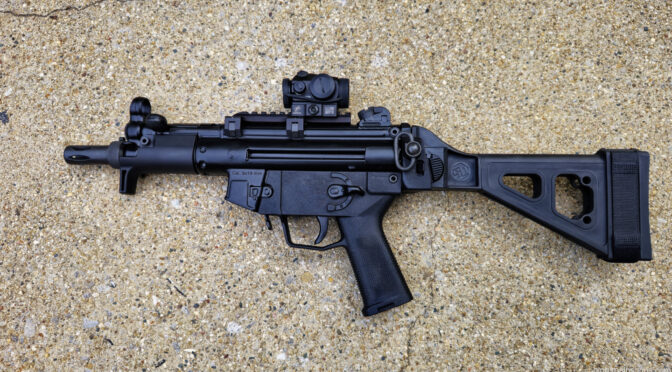
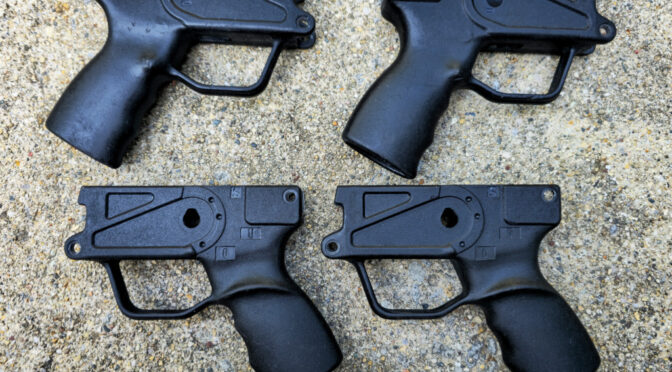
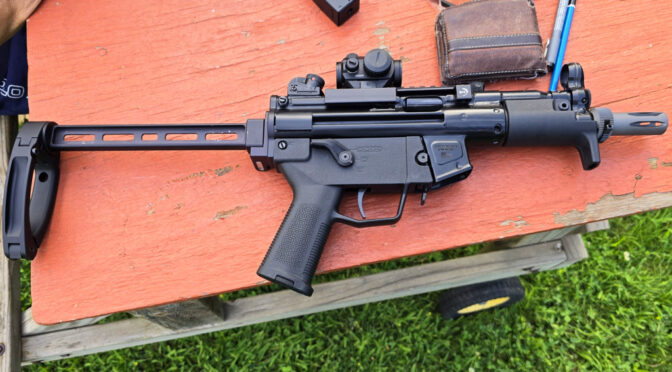
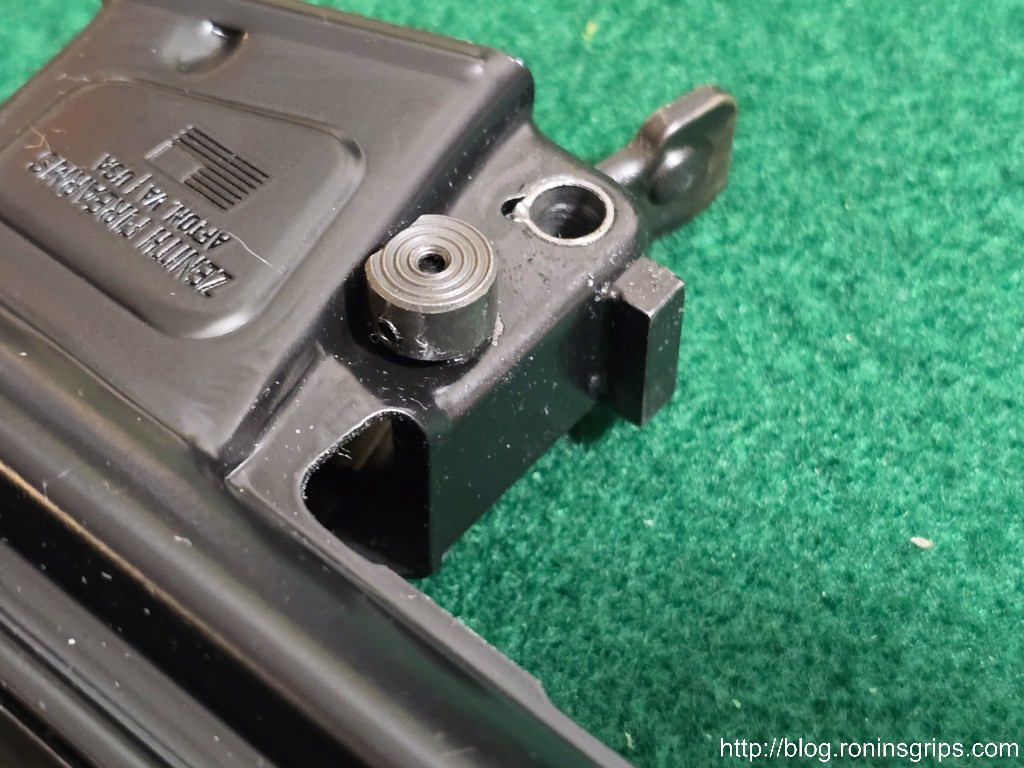
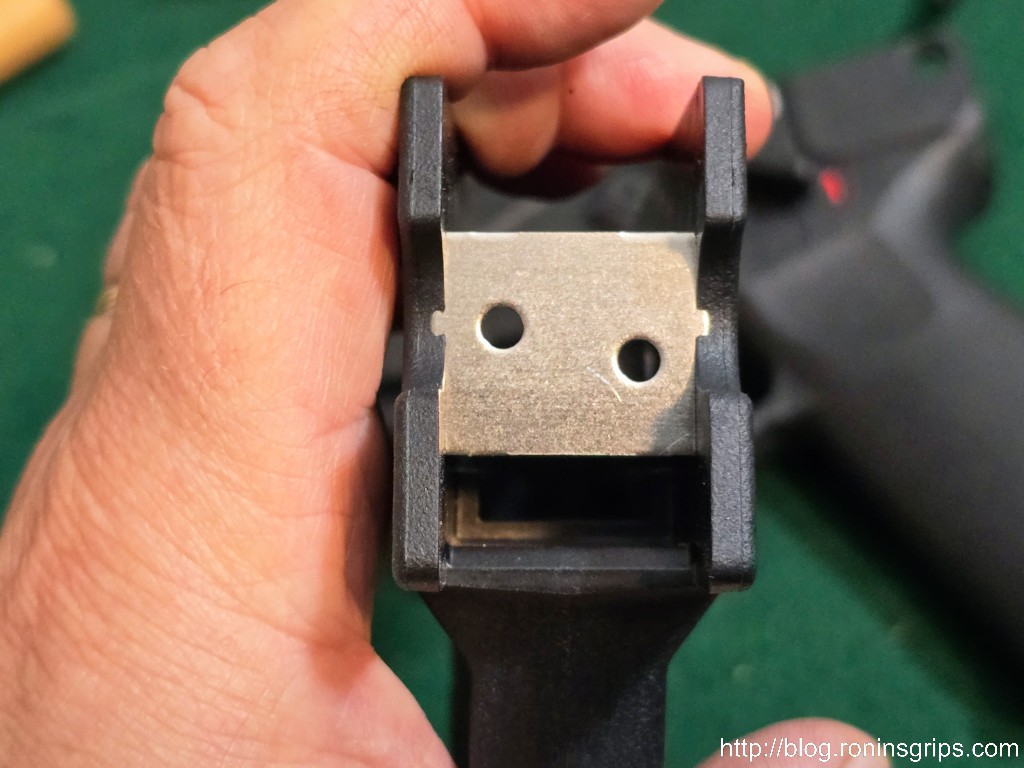
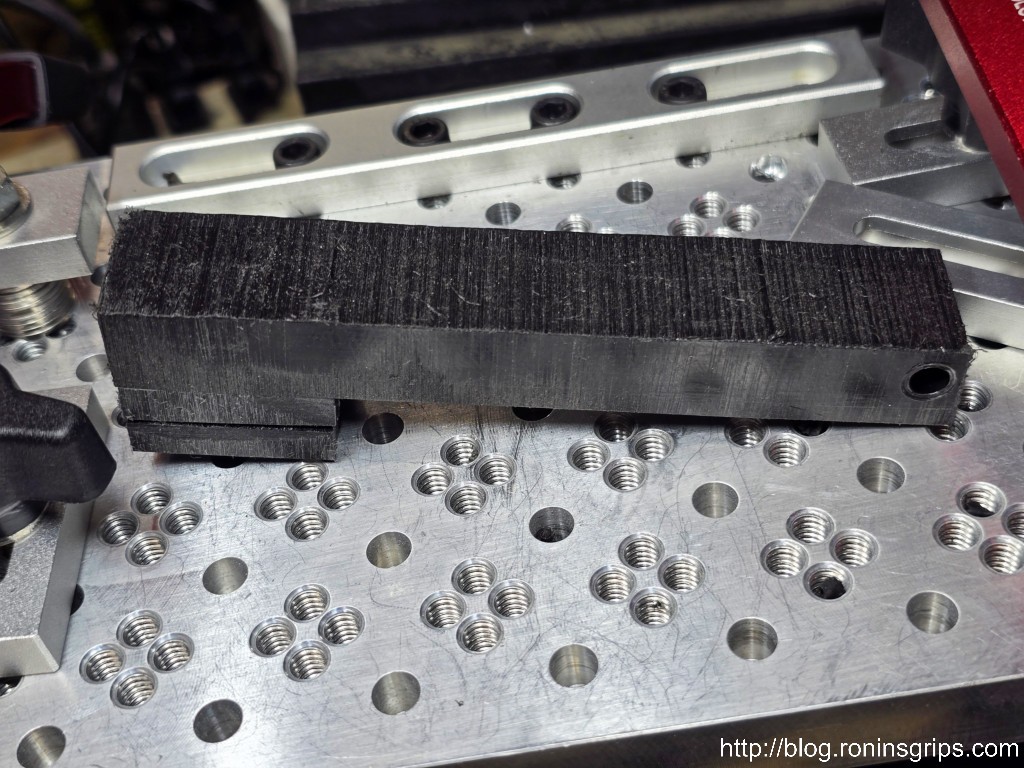
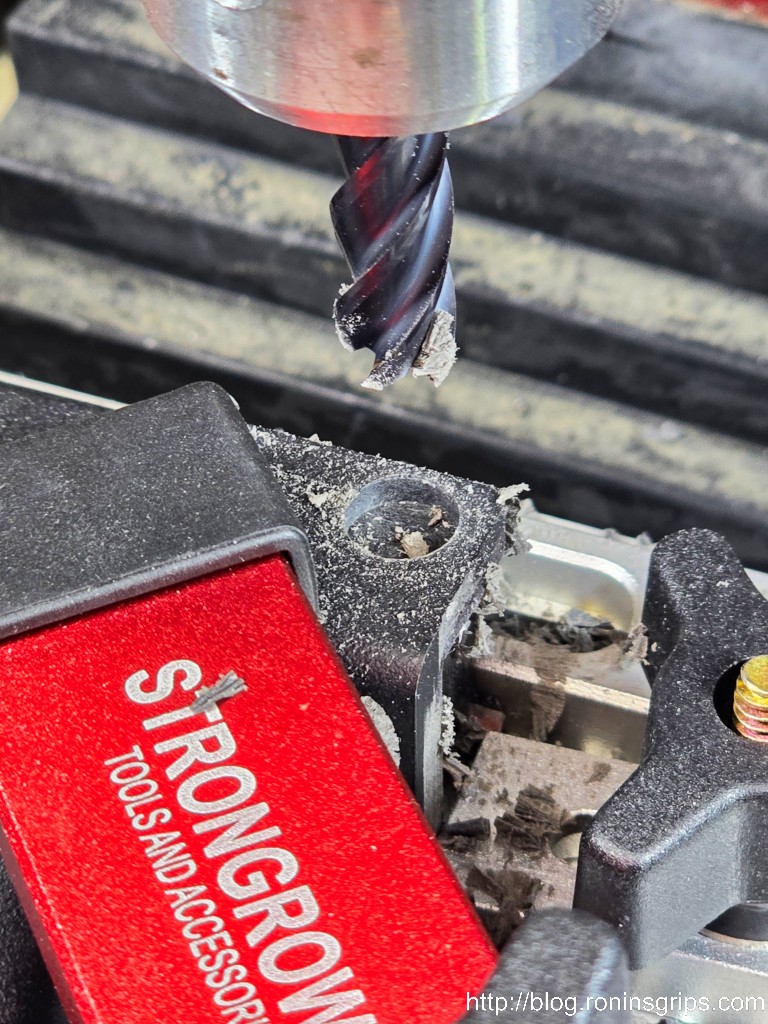
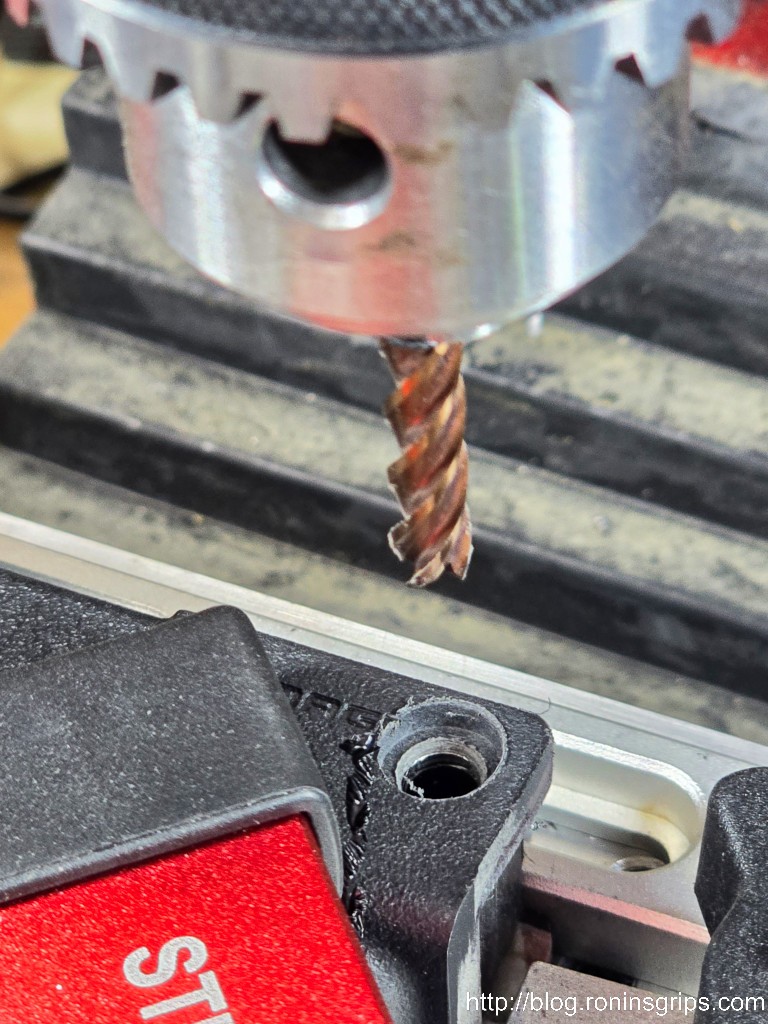
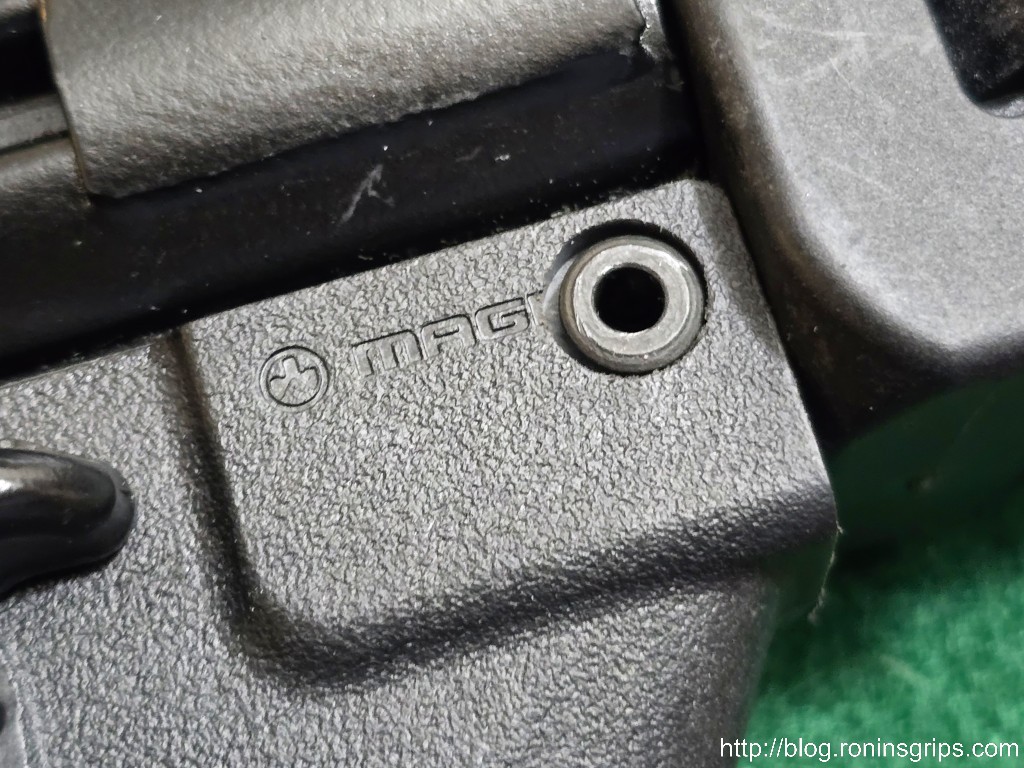
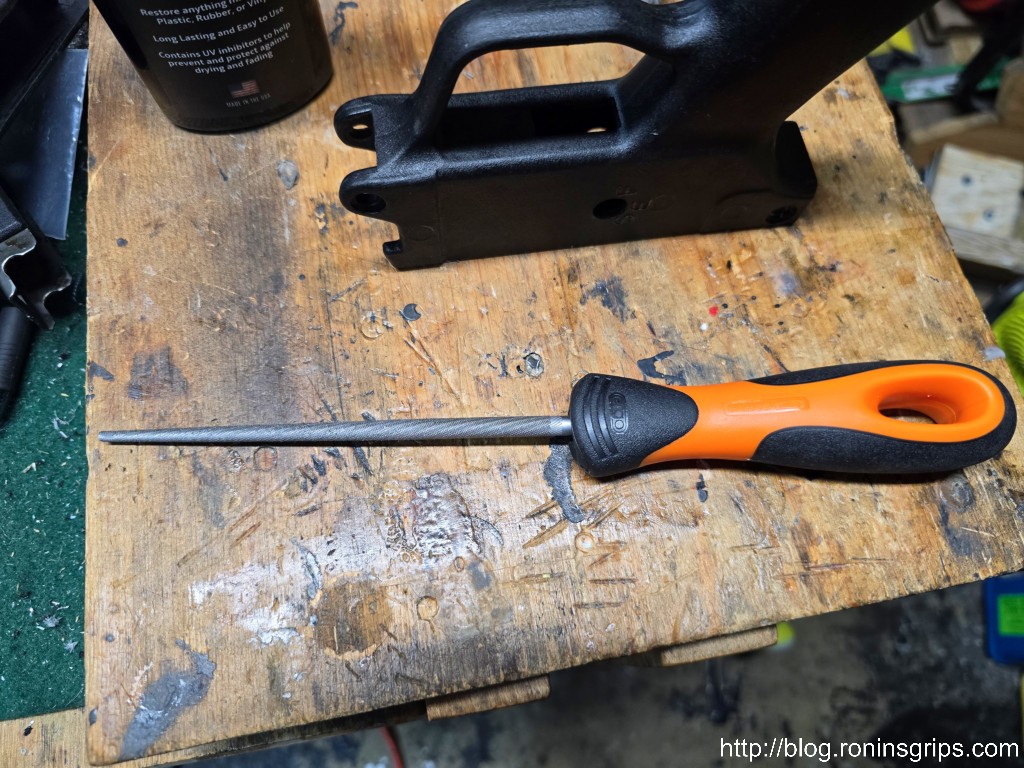
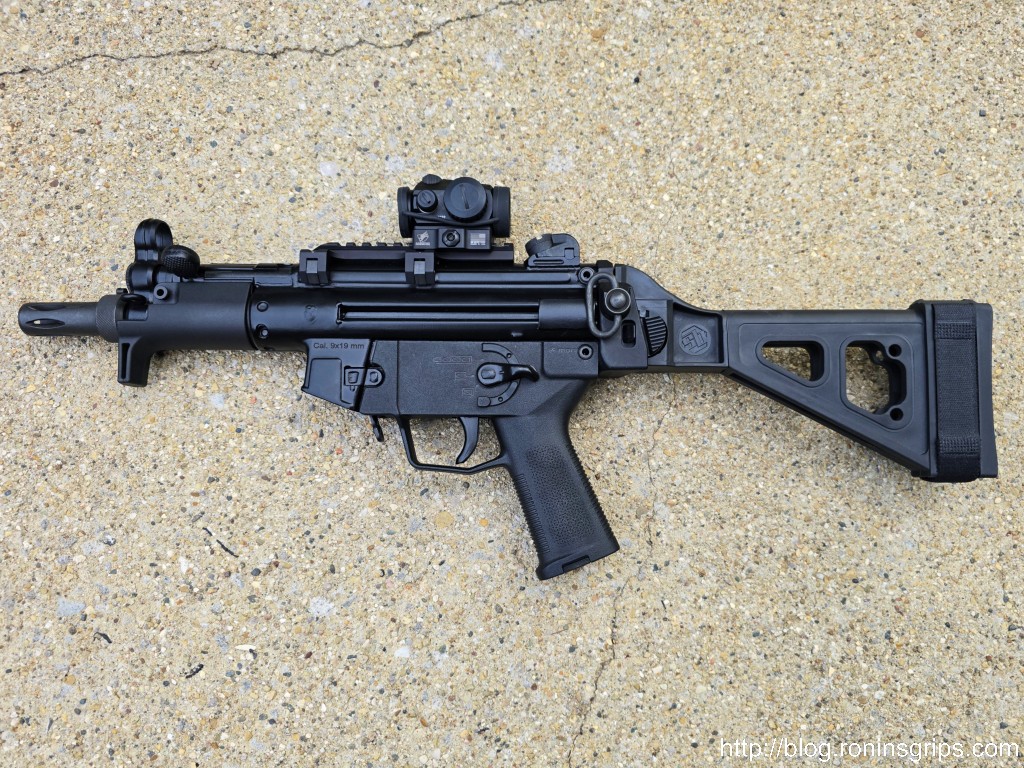
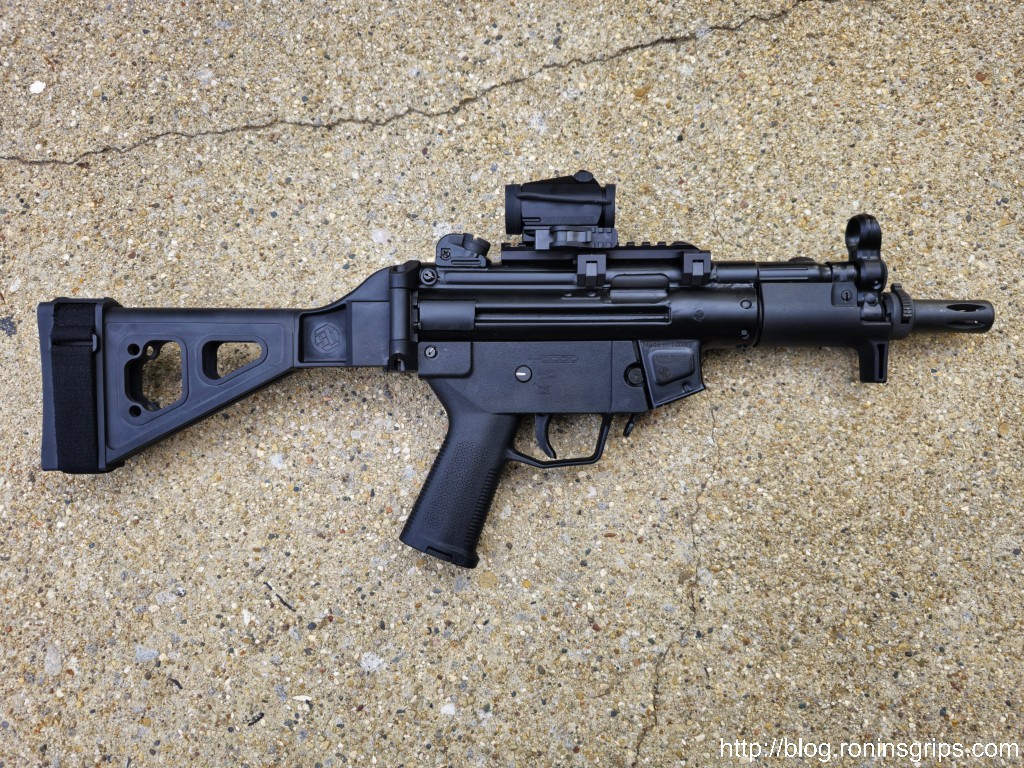
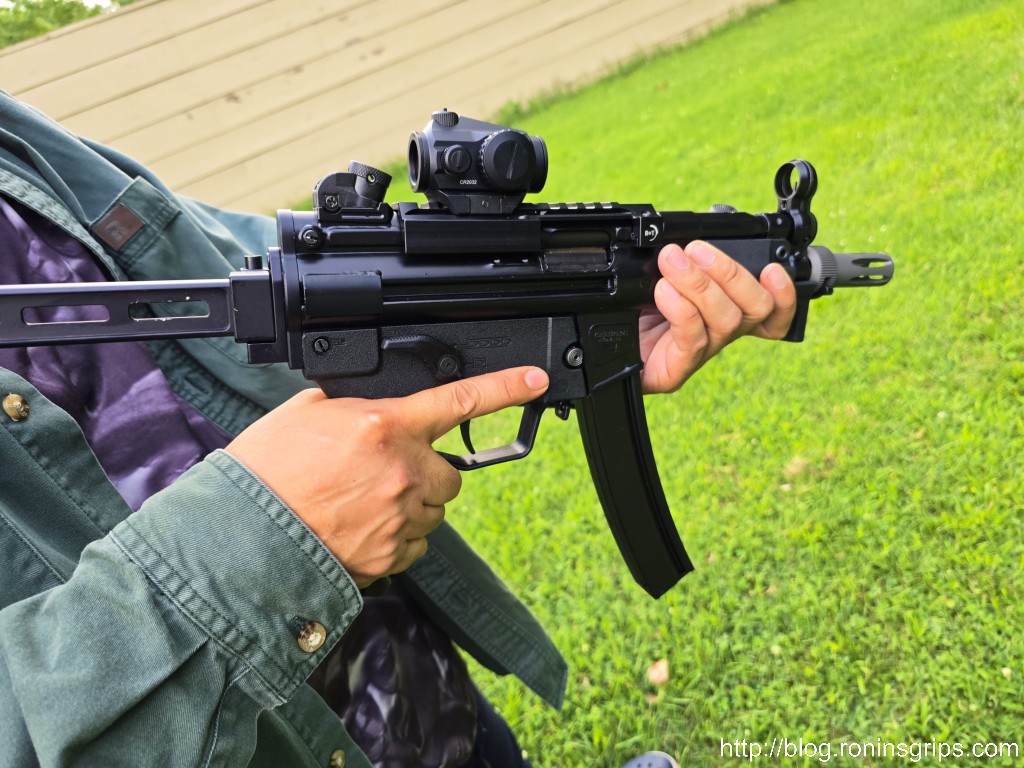
The civilian market for roller-delayed firearms, especially the iconic MP5K and its modern clones, is seeing a major comeback. This resurgence is fueled by high-quality imports, easier access to short-barreled rifle (SBR) registrations, and a healthy dose of pop-culture nostalgia. For many owners, the first step in customizing these firearms is upgrading the pistol grip to fix old-school ergonomics and help meet federal compliance rules.
This report takes a close look at Ronin’s Grips, a specialized manufacturer known for adapting classic firearm furniture for the MP5K platform. By looking at consumer feedback, market prices, and regulatory needs, we can see how the brand has found its place. Even though they only entered the MP5K market about two years ago, Ronin’s Grips has already earned a stellar reputation. This success comes from using high-grade materials, being remarkably transparent with customers, and building genuine trust. The brand has carved out a niche by blending the historical look of military surplus with the comfort and performance of modern tactical grips.
One important aside is that Ronin’s Grips started making replica AK grips beginning with the Yugo M70 in 2006. While they are relatively new to the HK space, they are an old name with an excellent reputation in the AK-world.
2. The Kinematic Evolution of the MP5 Architecture
To understand why these upgrades matter, we have to look at the history of the weapon itself. The MP5 and its compact “Kurz” (K) version were developed by Heckler & Koch in the 1960s under the name “Project 65”1. The design DNA came from Mauser engineers Edmund Heckler, Theodor Koch, and Alex Seidel, who perfected a revolutionary way for the gun to operate2.
The secret to the MP5’s success is the roller-delayed blowback system. Unlike simpler systems that use a heavy bolt and a stiff spring to handle recoil, this mechanism uses mechanical timing1. When a round is fired, the bolt is held in place by two small rollers until the pressure drops to a safe level1.
For the gun to open safely, these rollers must be pushed inward, which accelerates the bolt carrier backward to bleed off energy1. To prevent the brass casing from getting stuck during this process, engineers added tiny grooves—flutes—to the chamber walls. These flutes allow gas to “float” the casing, making extraction smooth and reliable4.
This clever engineering makes the MP5K famous for its smooth shooting. Instead of the sharp kick found in many submachine guns, it provides a gentle push1. Also, because it fires from a closed bolt, it stays much more stable than open-bolt designs like the Uzi. This legendary smoothness is exactly what modern civilian buyers are looking for today.
3. The Stratification of the Civilian Roller-Delayed Market
For a long time, owning an MP5 was out of reach for most people. Original fully automatic models are incredibly rare and cost as much as a luxury car3. Even semi-auto versions from Heckler & Koch, like the SP5K-PDW, are very expensive. These German-made models are the gold standard, but with street prices often exceeding $3,500, they are mostly for serious collectors who want absolute authenticity.
The market has changed recently as more manufacturers have gained access to the original military tooling. Now, there are many affordable MP5K clones available, making the platform accessible to a much wider audience. These clones have created a huge demand for accessories as owners look to upgrade their firearms with better ergonomic parts.
Looking at current pricing and consumer feedback, it’s clear the market is split between high-end originals and high-value clones. The data shows that many of the clones are actually very well-received by owners who appreciate the balance of performance and price.
Rank
Manufacturer & Model
Configuration
Origin
Average Street Price
Positive Consumer Sentiment
1
Heckler & Koch SP5
Full-Size
Germany
$3,100.00
98%
2
Century Arms AP5
Full-Size
Turkey
$1,450.00
95%
3
Zenith ZF-5
Full-Size
USA
$1,700.00
92%
4
Military Armament Corp MAC-5
Full-Size
Turkey
$1,250.00
89%
5
PTR 9CT
Full-Size
USA
$1,750.00
87%
6
Century Arms AP5-P
Compact (K-Style)
Turkey
$1,550.00
85%
7
Heckler & Koch SP5K-PDW
Compact (K-Style)
Germany
$3,300.00
84%
8
Military Armament Corp MAC-5K
Compact (K-Style)
Turkey
$1,150.00
82%
9
PTR 9KT
Compact (K-Style)
USA
$1,770.00
80%
10
Zenith ZF-5T
Compact (K-Style)
USA
$1,400.00
80%
As the table above shows, firearms like the Century Arms AP5-P, Zenith ZF-5T, and MAC-5K offer the authentic shooting experience for a fraction of the cost. Since these are built using original HK specifications, they work perfectly with aftermarket parts. This active, budget-conscious market is the perfect place for companies like Ronin’s Grips to thrive.
4. The Ergonomic Imperative and the Ronin’s Grips Catalog
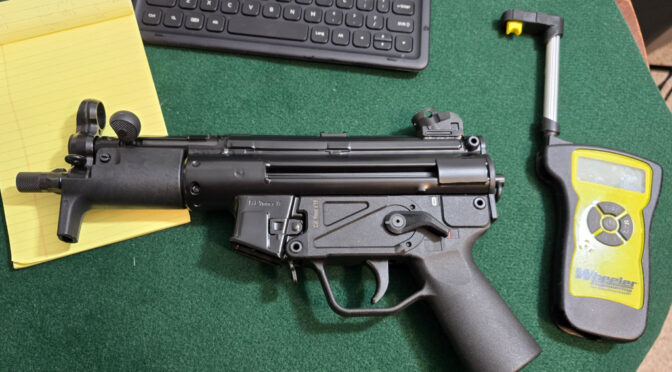
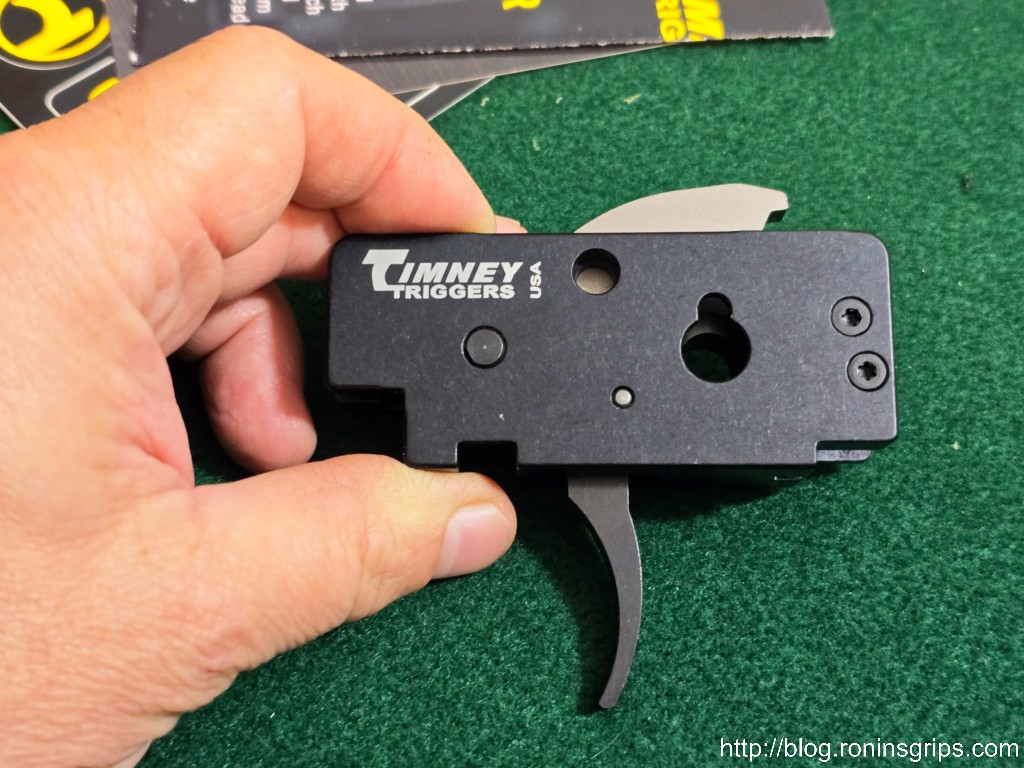
Despite its reputation, the factory grip on the MP5K is often a major complaint. The original 1960s design is fairly straight and blocky, which doesn’t feel natural by today’s standards for comfort or control5. Additionally, many clones have very heavy trigger pulls. While some people install new trigger packs, upgrading the grip itself is one of the best ways to improve how the gun handles.
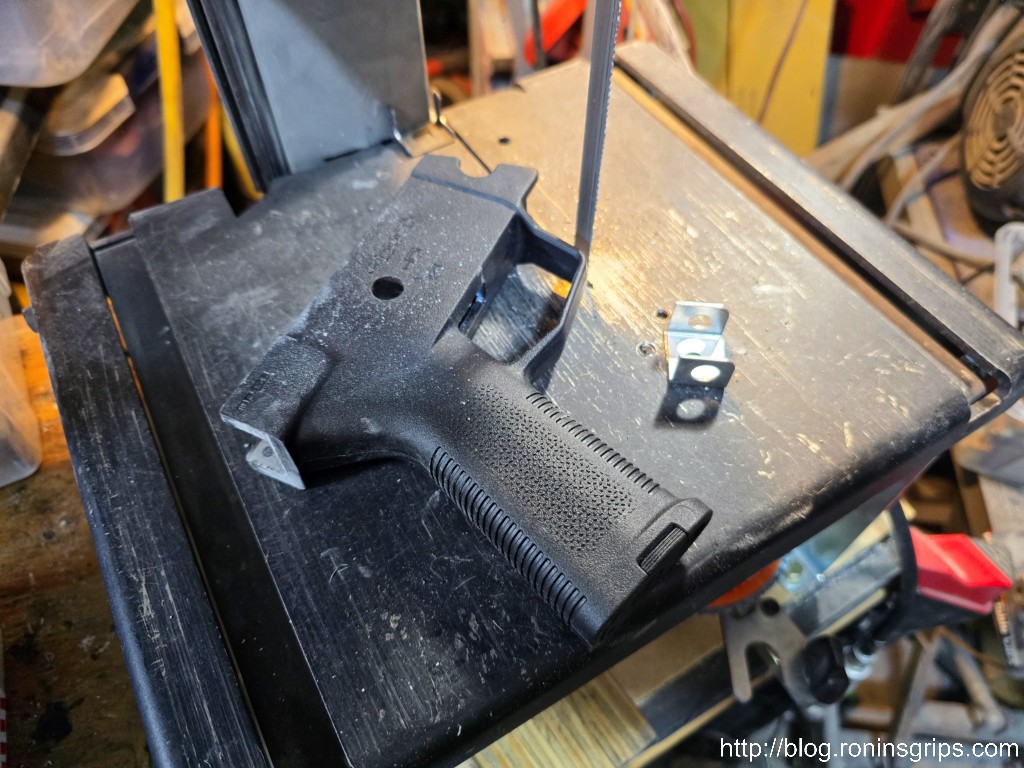
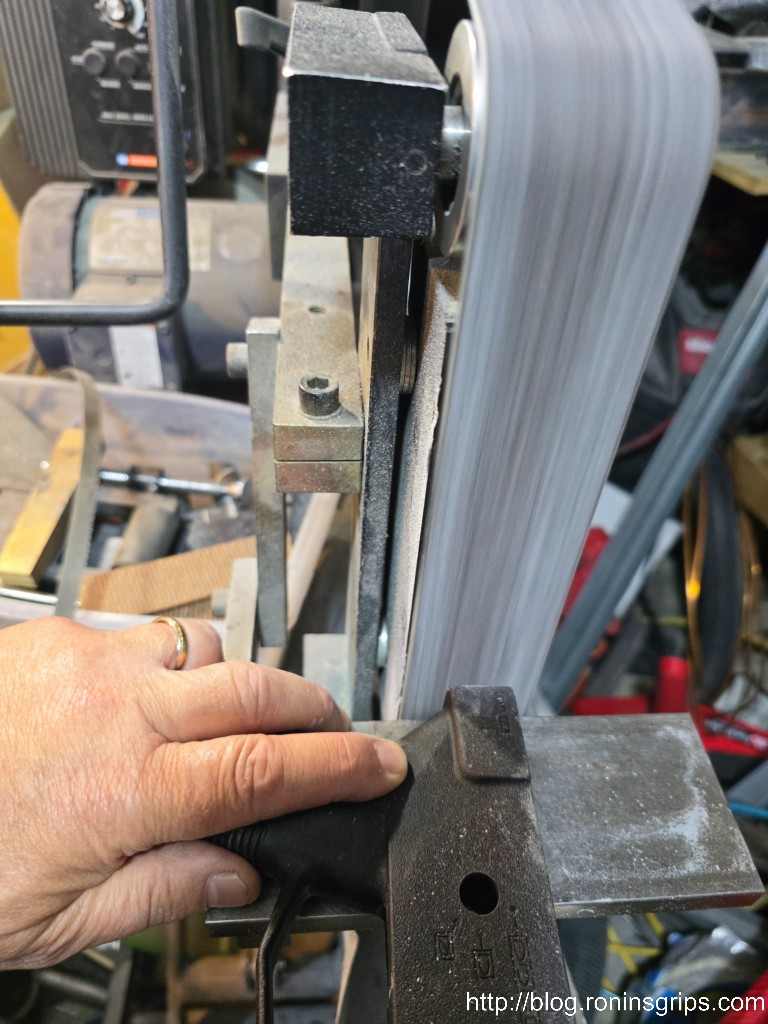
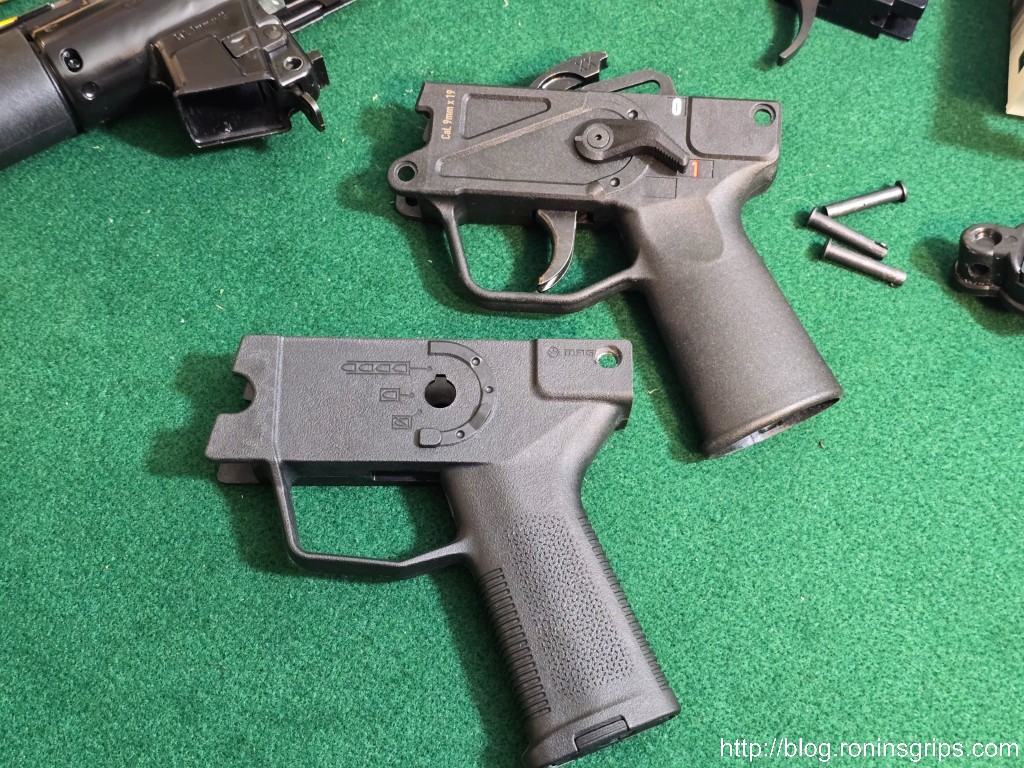
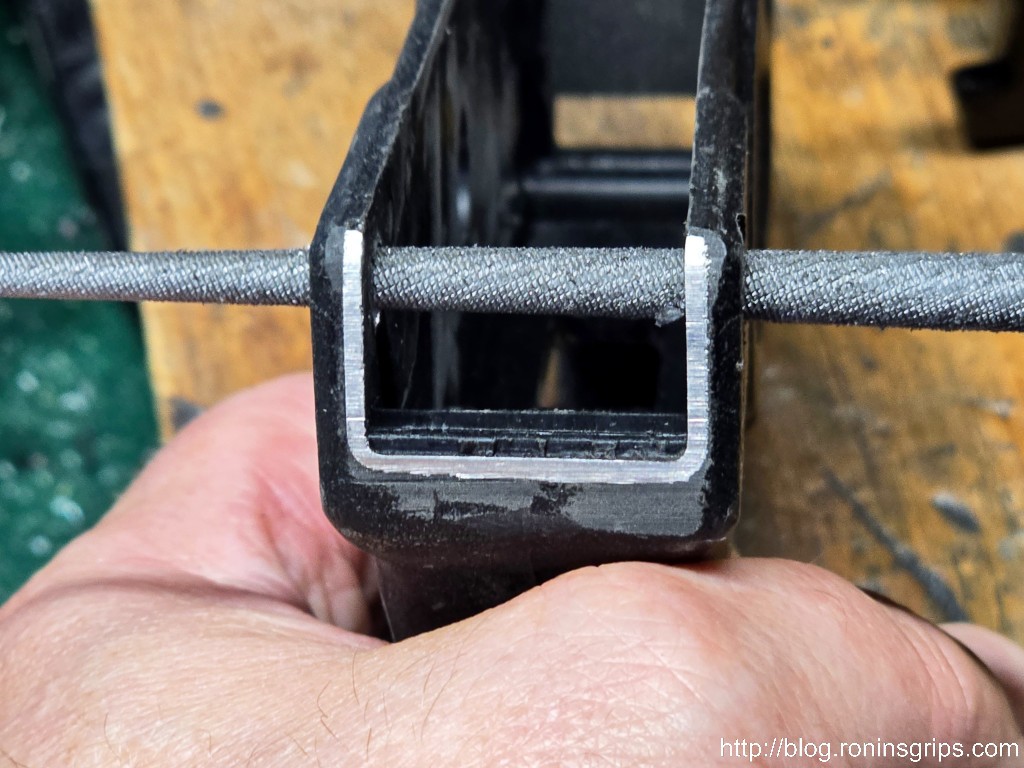
Ronin’s Grips solves this by adapting high-quality grips from other HK platforms to fit the compact MP5K perfectly. Their catalog offers two main paths for owners:
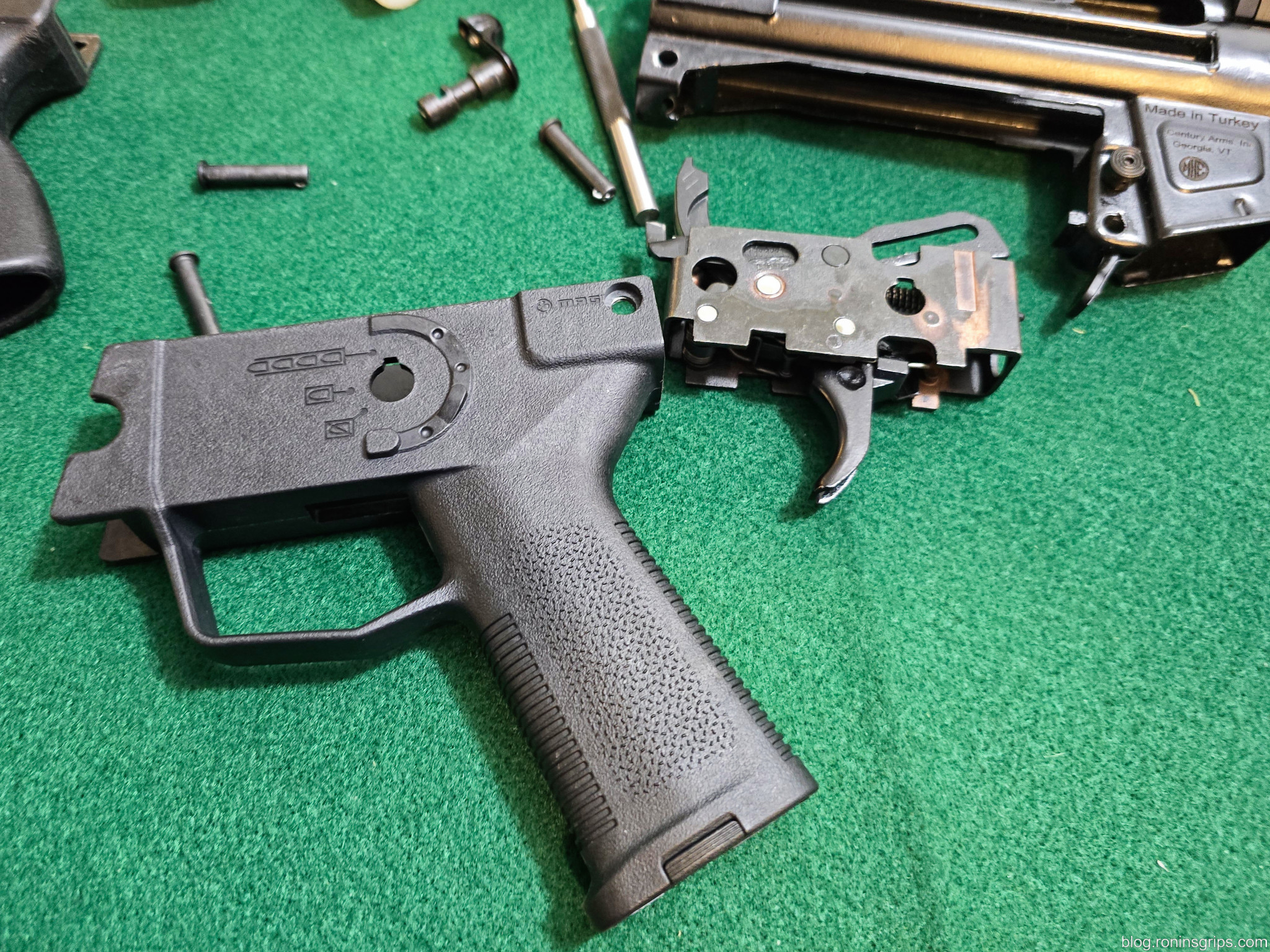
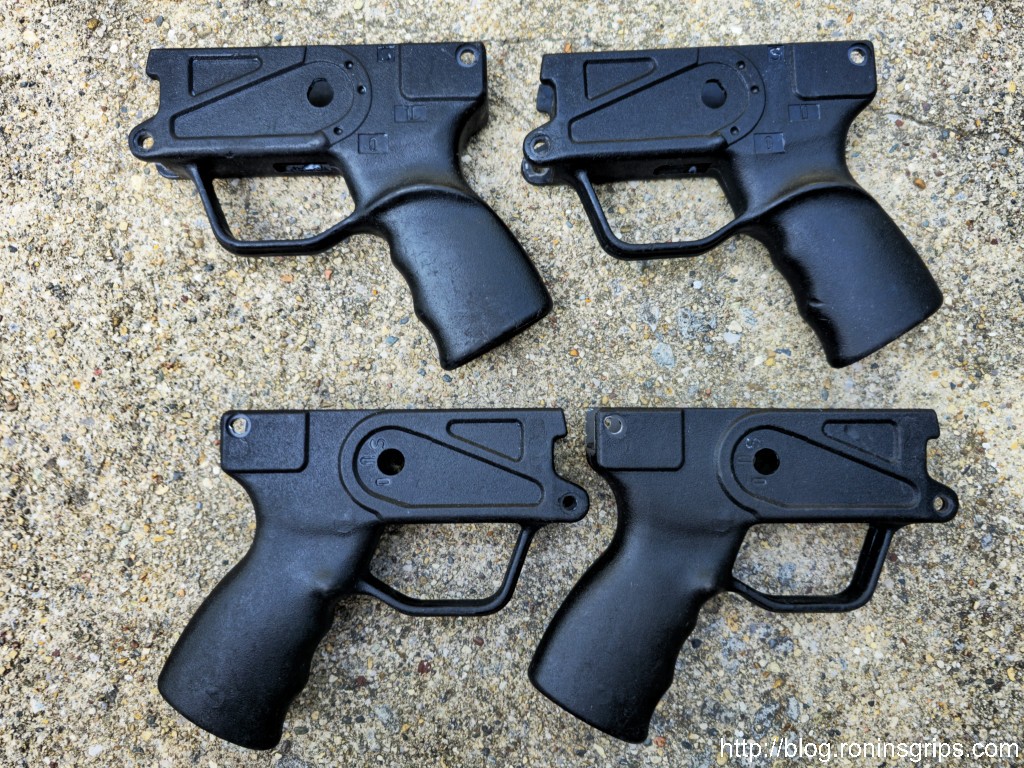
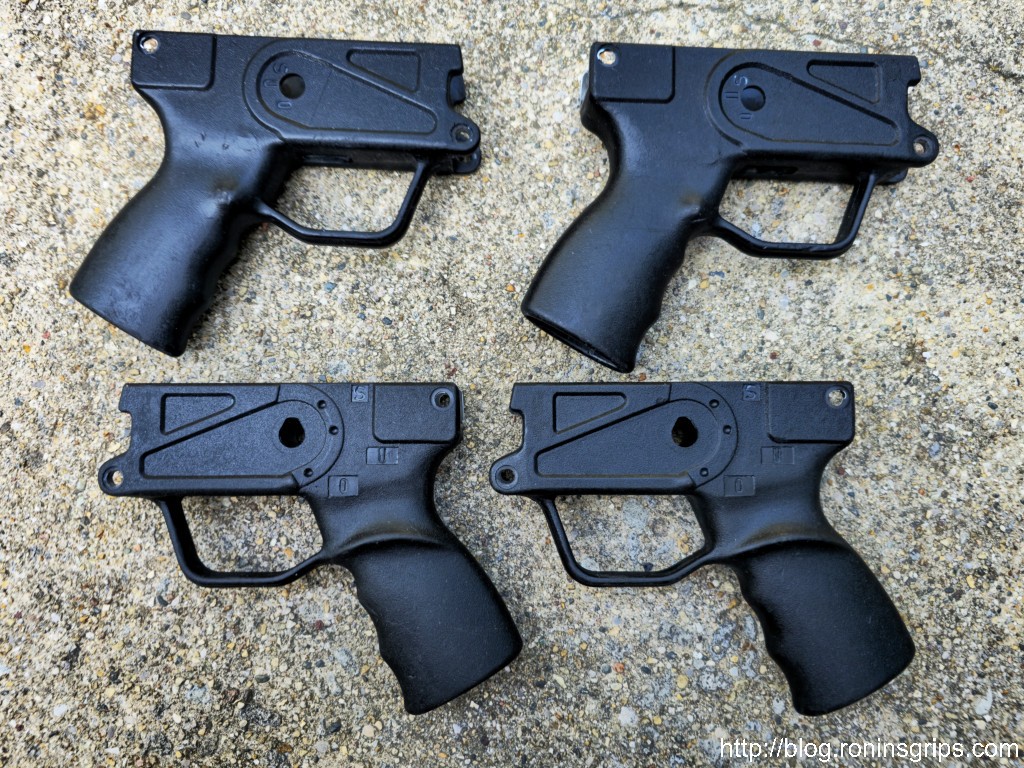
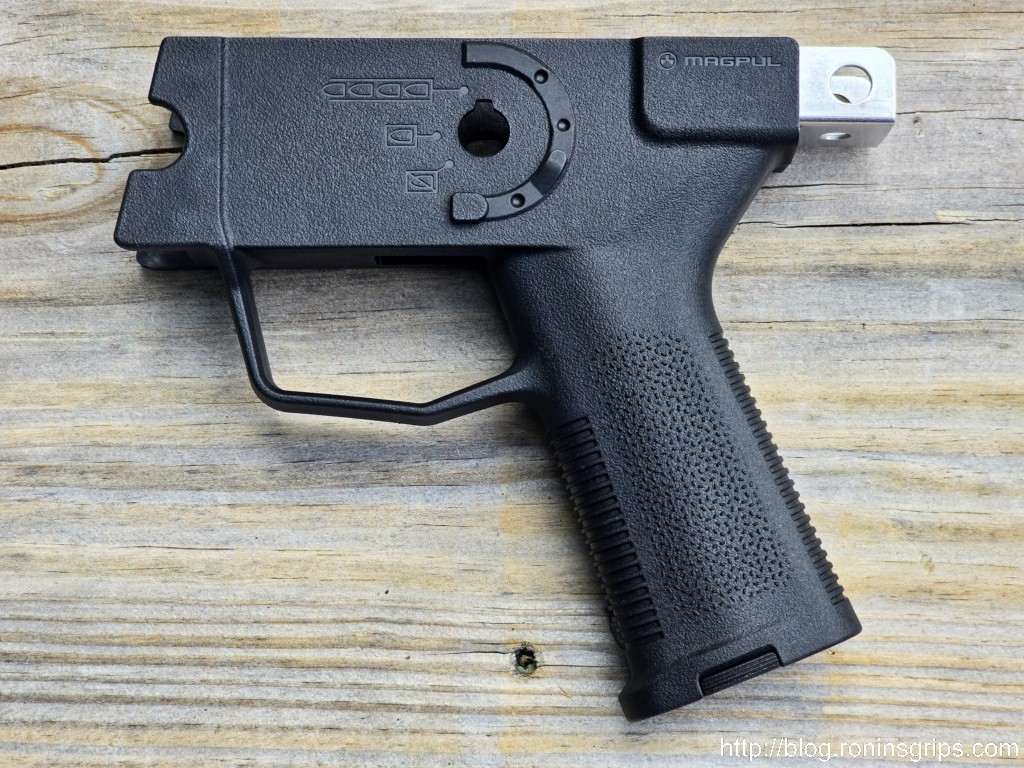
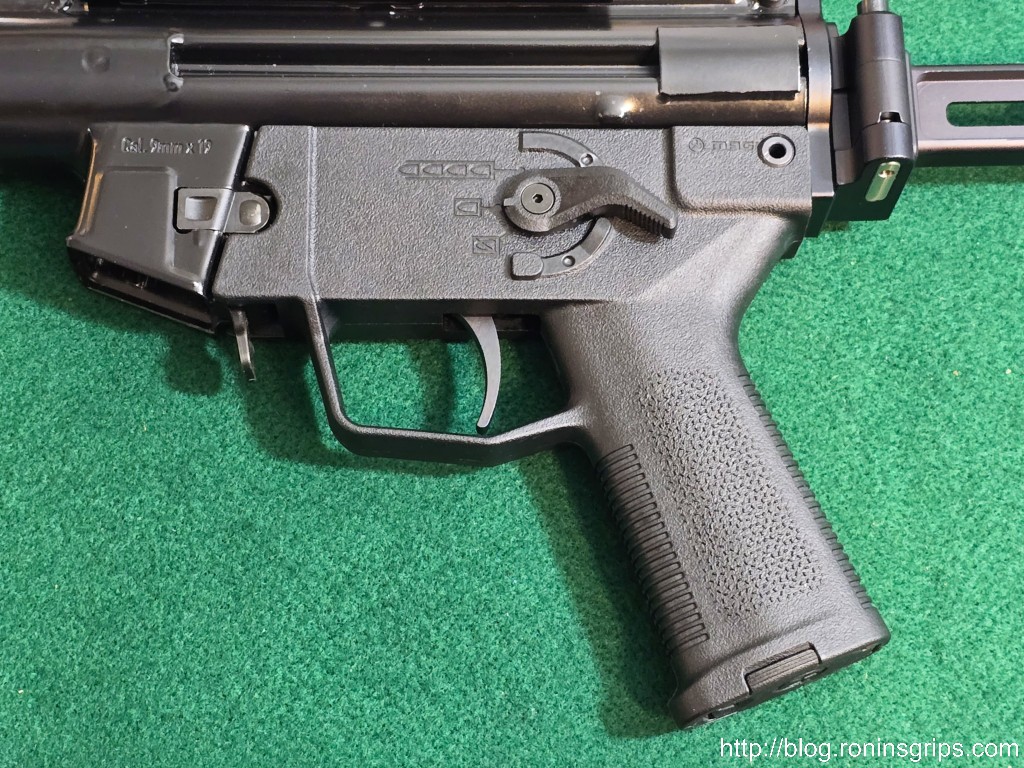
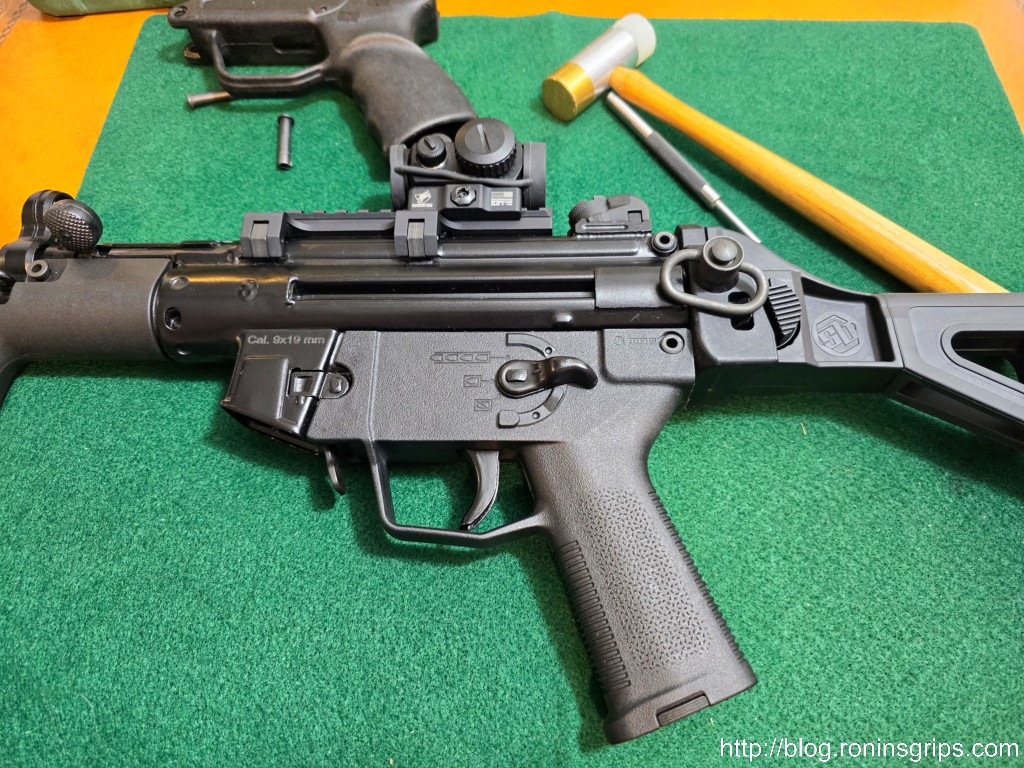
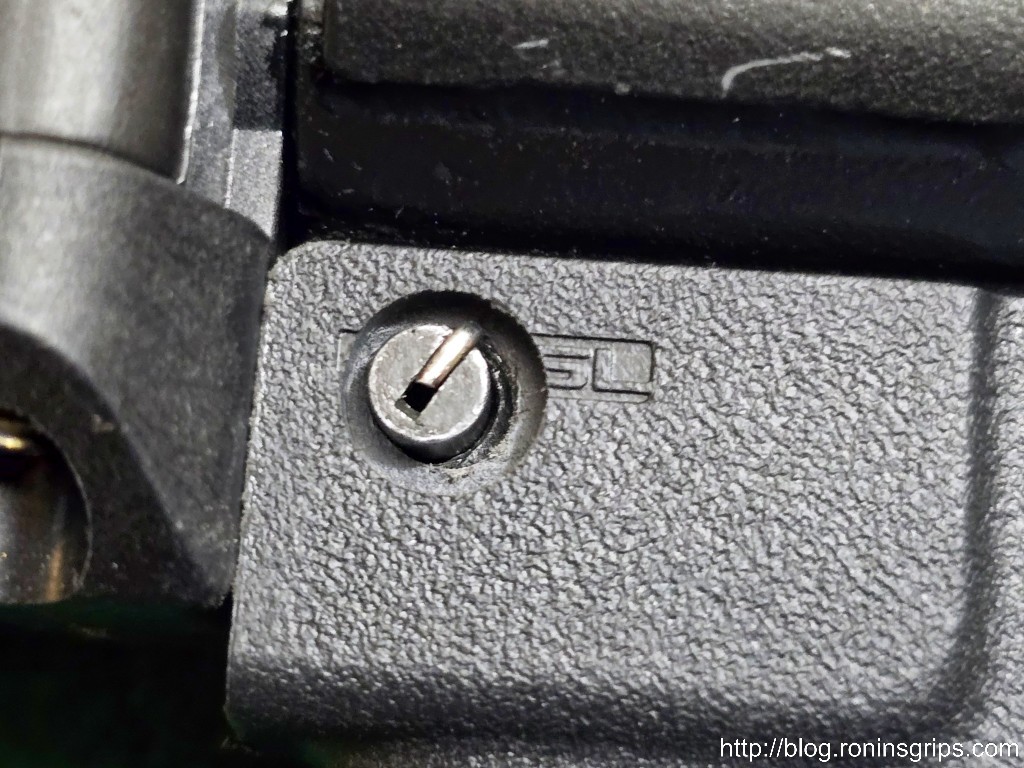
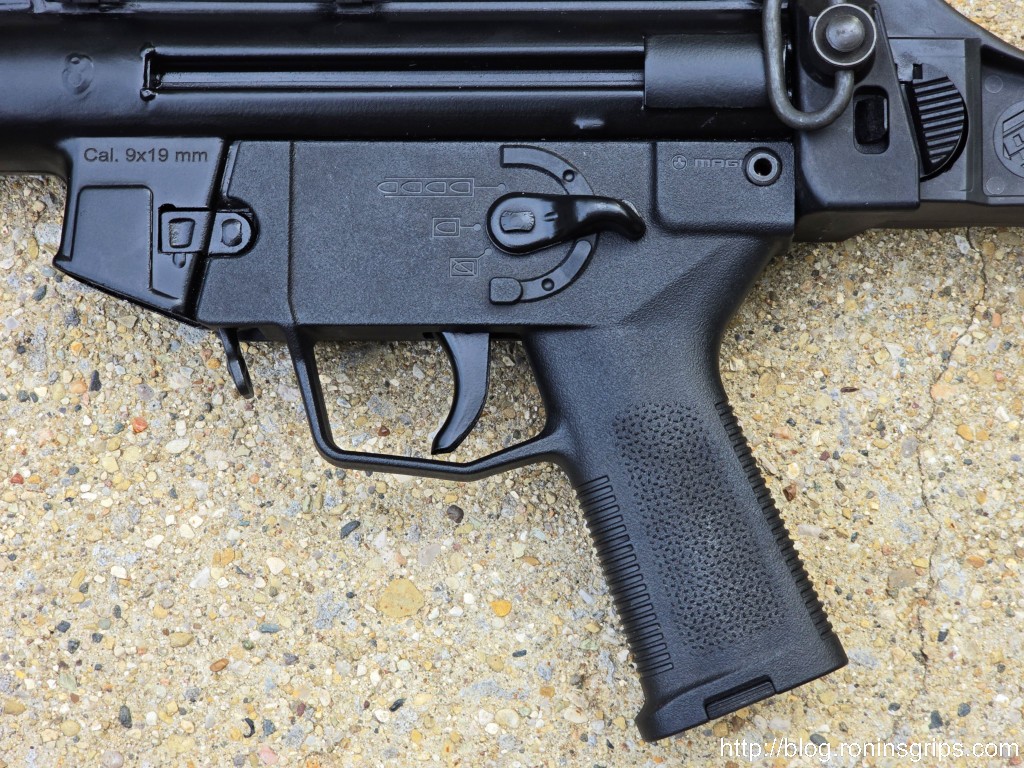
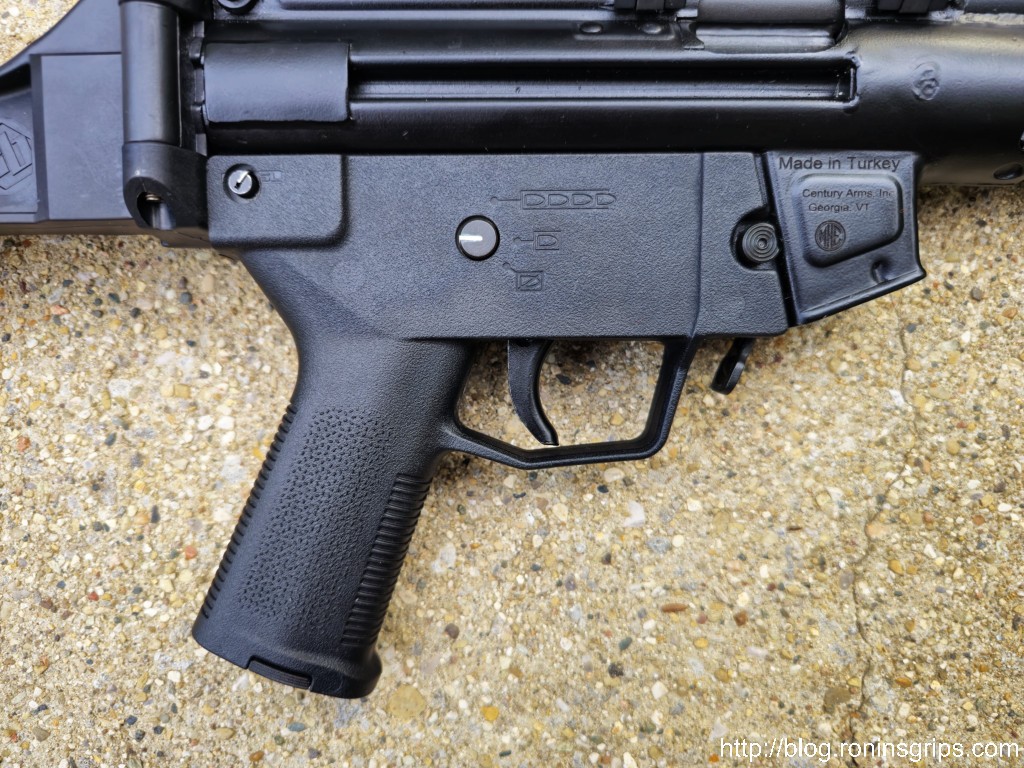
The Magpul SL Adaptation: Ronin’s adapts the Magpul SL grip to work on the MP5K. This is a favorite for those who want a modern feel, better texture, and a more comfortable grip angle.
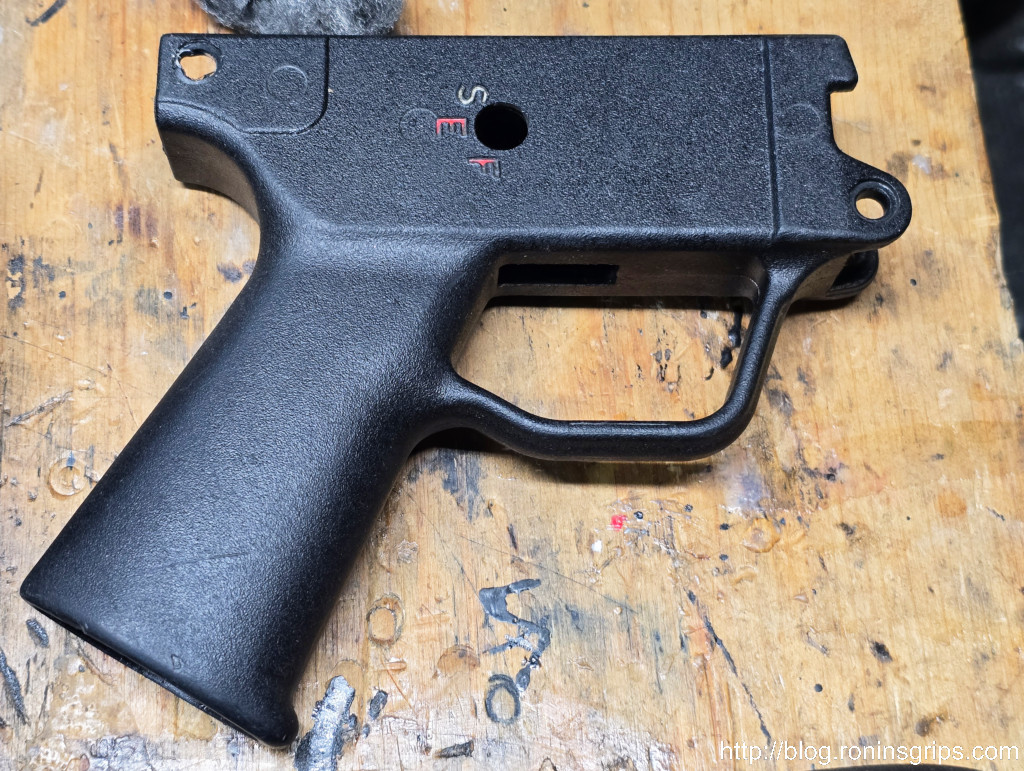
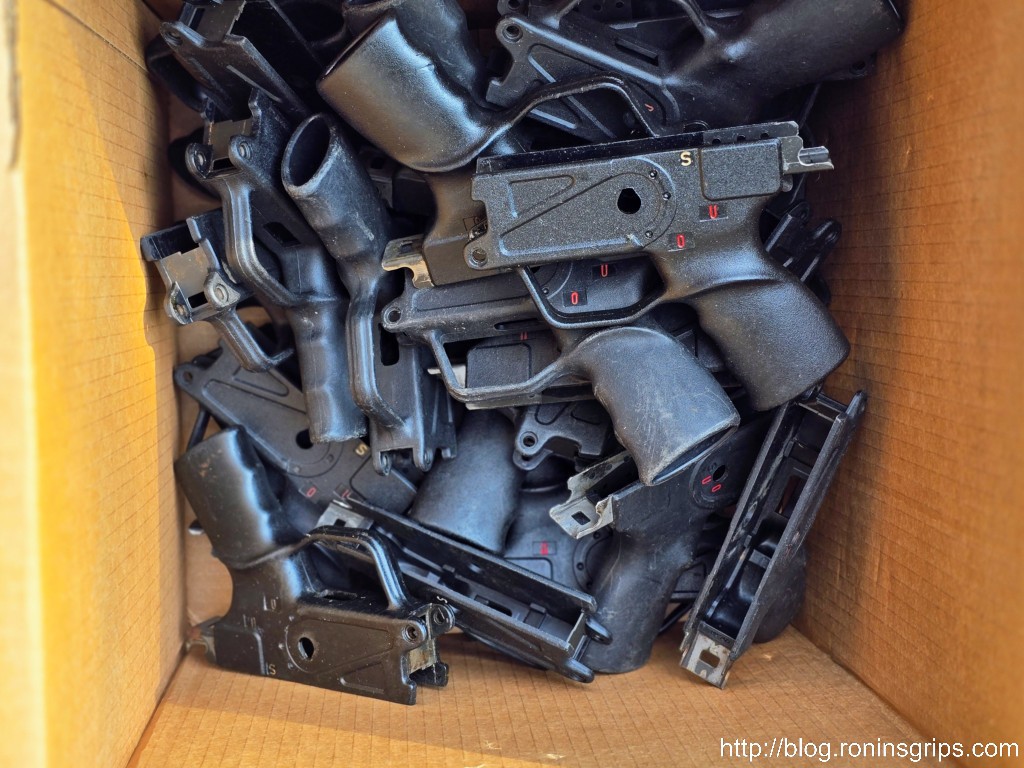
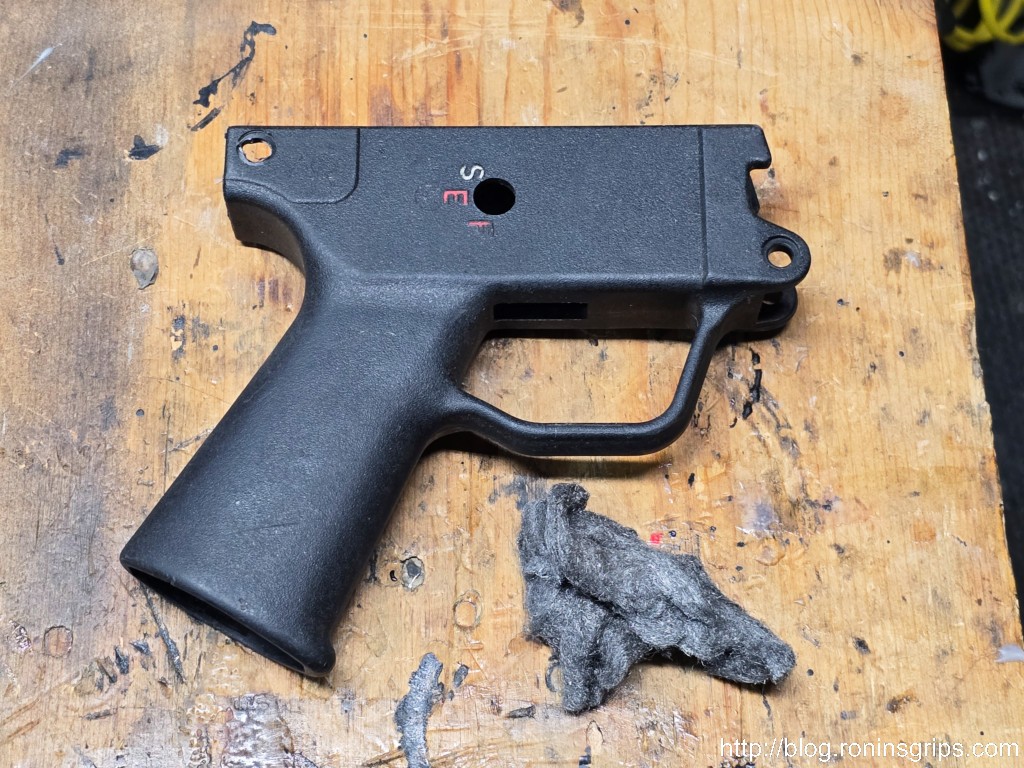
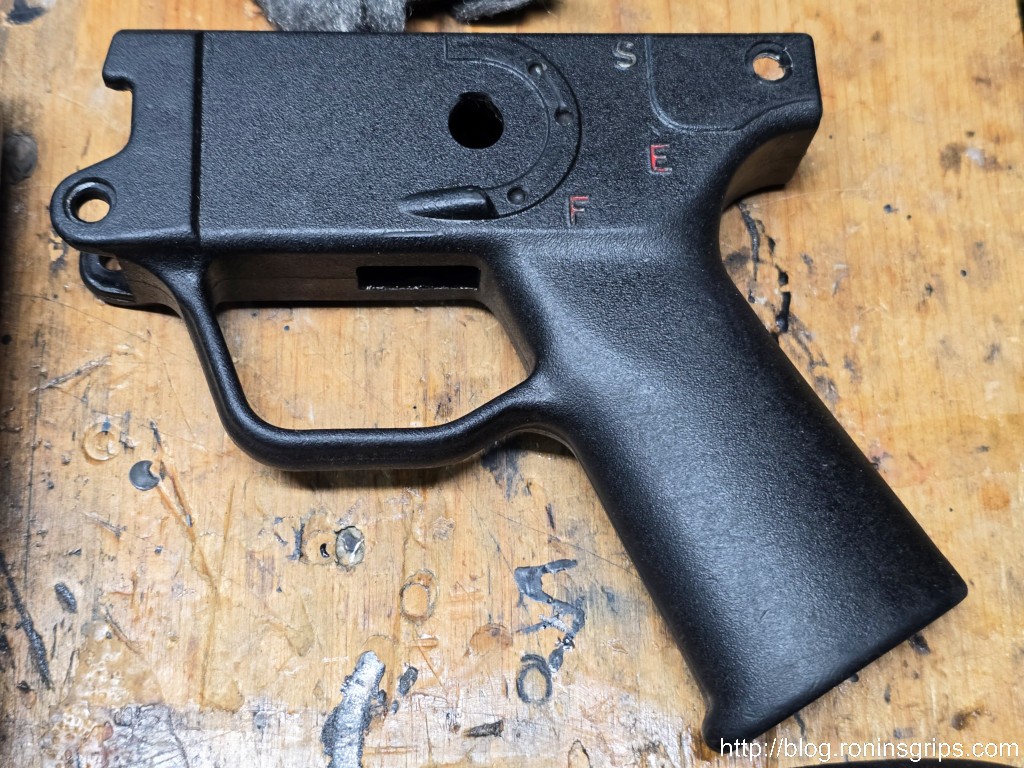
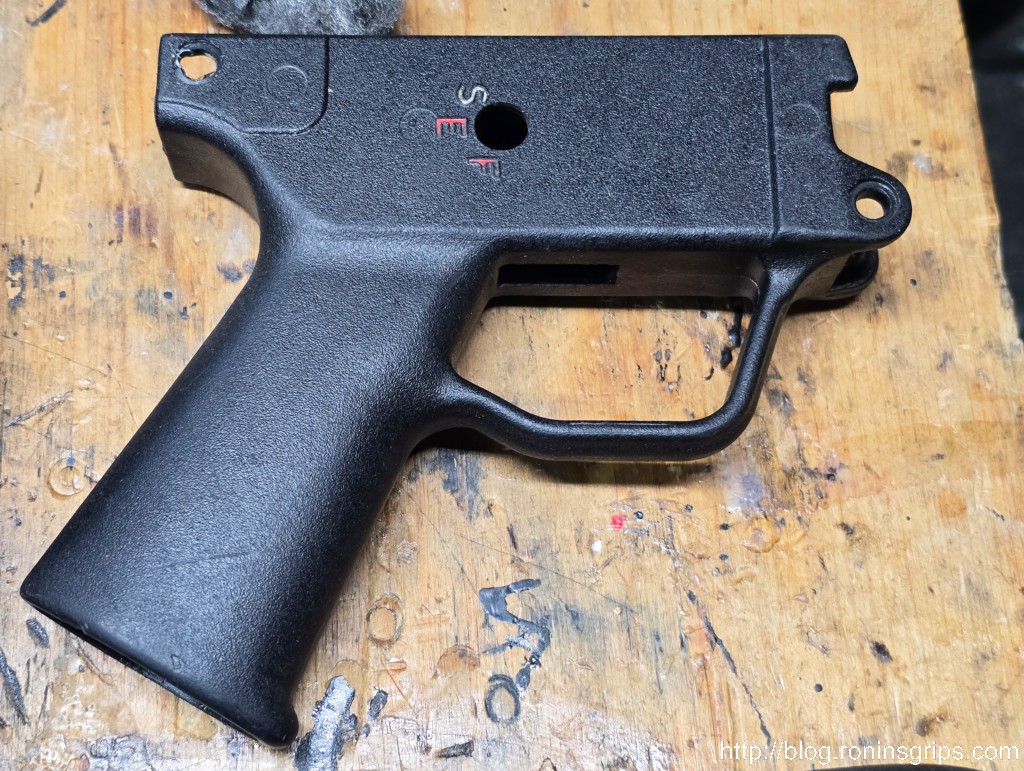
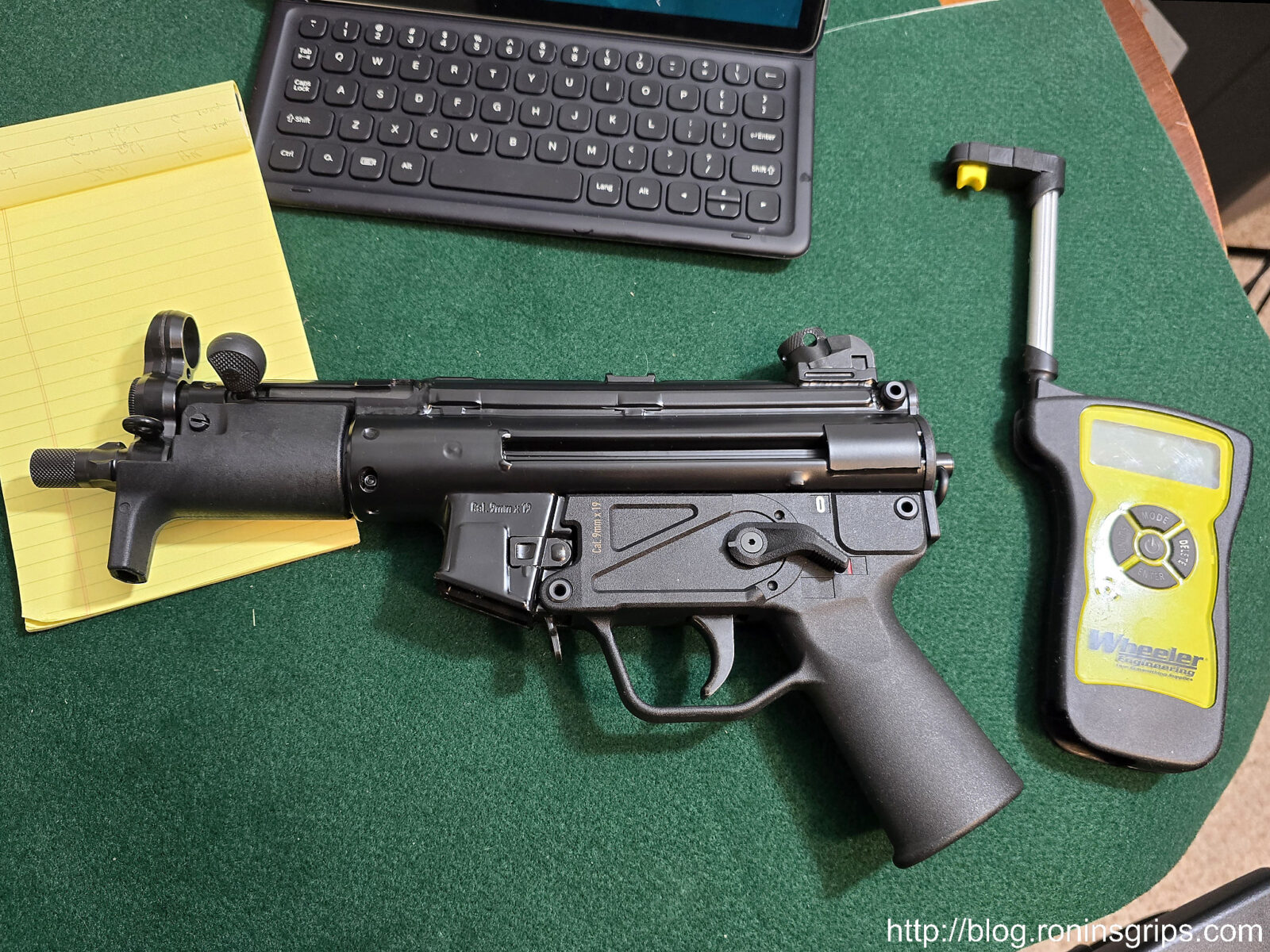
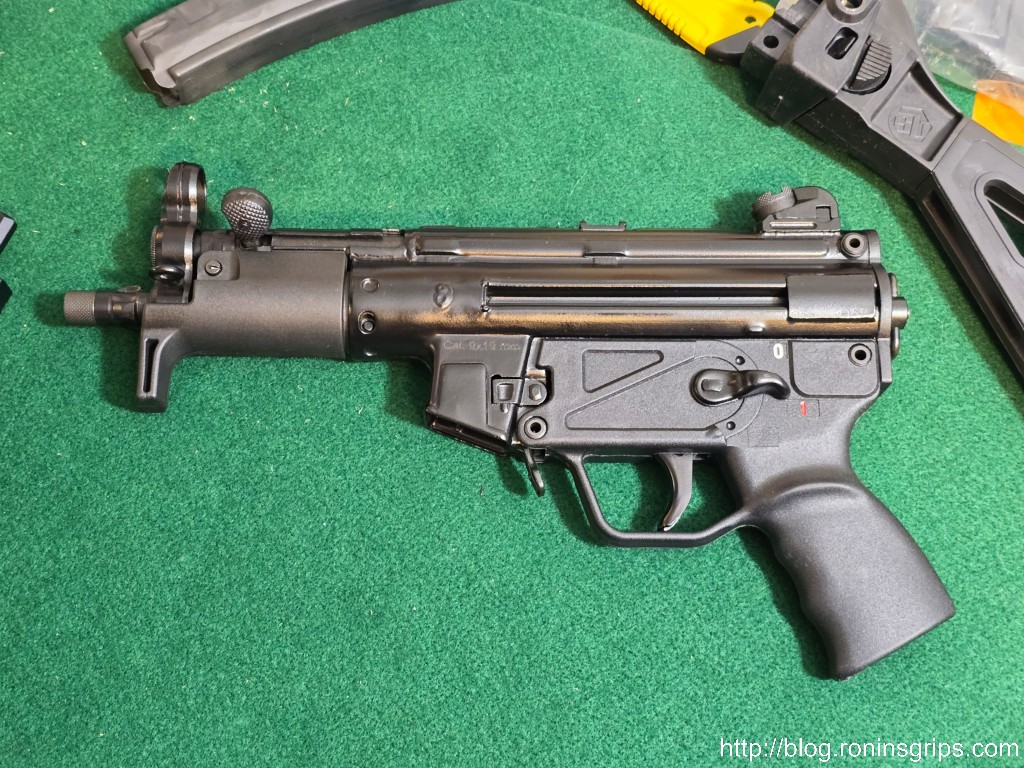
Navy-Style SEF Grips: These are made from authentic military surplus. They provide that classic “special ops” look that collectors and purists love for their replica builds.
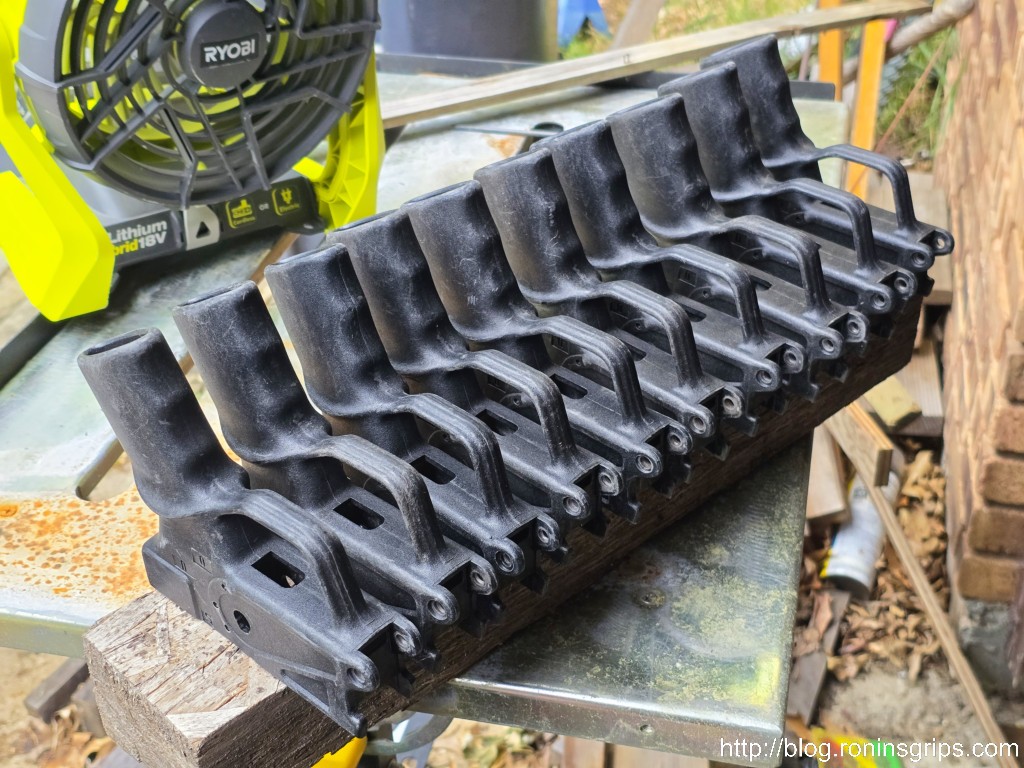
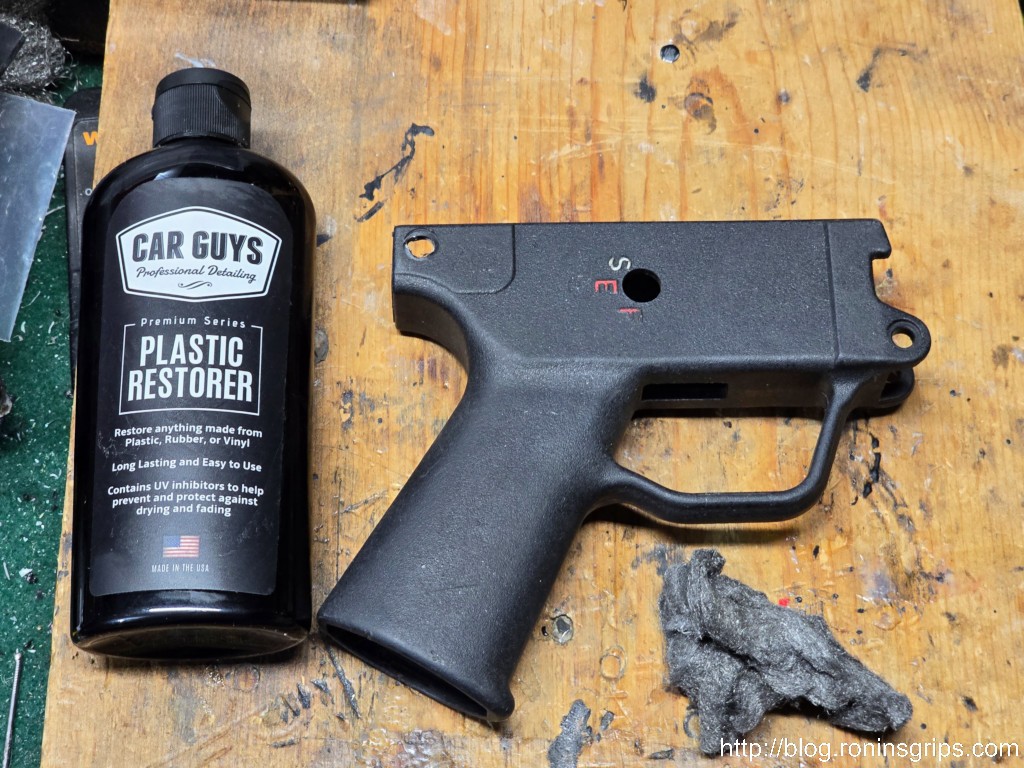
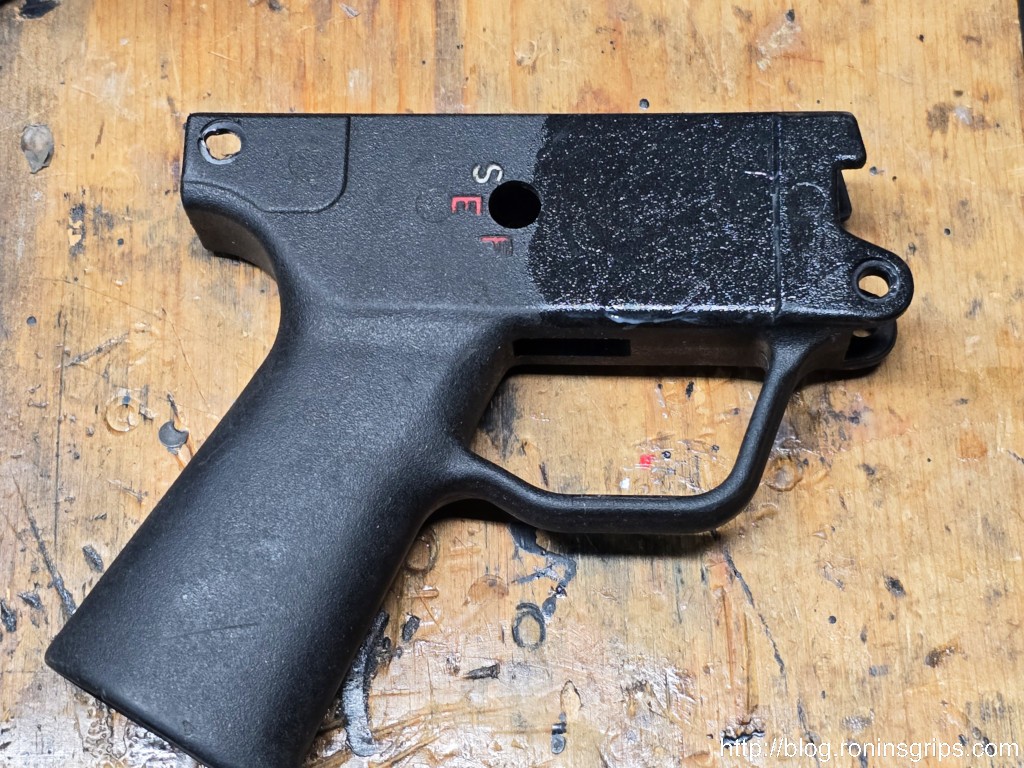
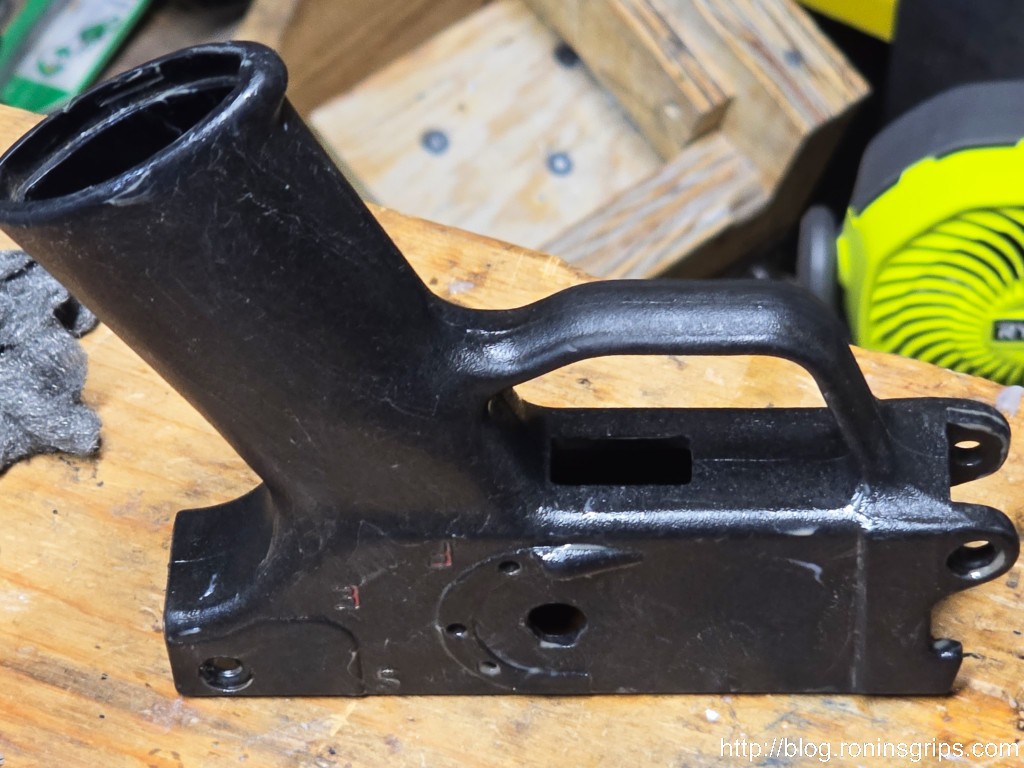
Modified Magpul SL grips. Standard SEF trigger packs will go right in. There is not an “AMBI” model.Restored Navy SEF grip- in “good” condtion.
5. Exhaustive Consumer Sentiment Analysis and Voice of the Customer
In just a short time, Ronin’s Grips has built an incredible amount of trust in a community that is usually very skeptical of new vendors. This rapid success is a direct result of the quality of their work and their dedication to their customers.
The brand has earned a “top-tier” status on specialized forums like the AK Files and various Reddit gun communities6.
Tangible Manufacturing Quality and Reliability
Customers often point out that these grips feel more like a premium tool than a cheap piece of plastic. Some have even compared the texture and weight to the high-end G-10 material used on expensive knives6. Words like “superb” and “best-built” are common in user reviews across the web.
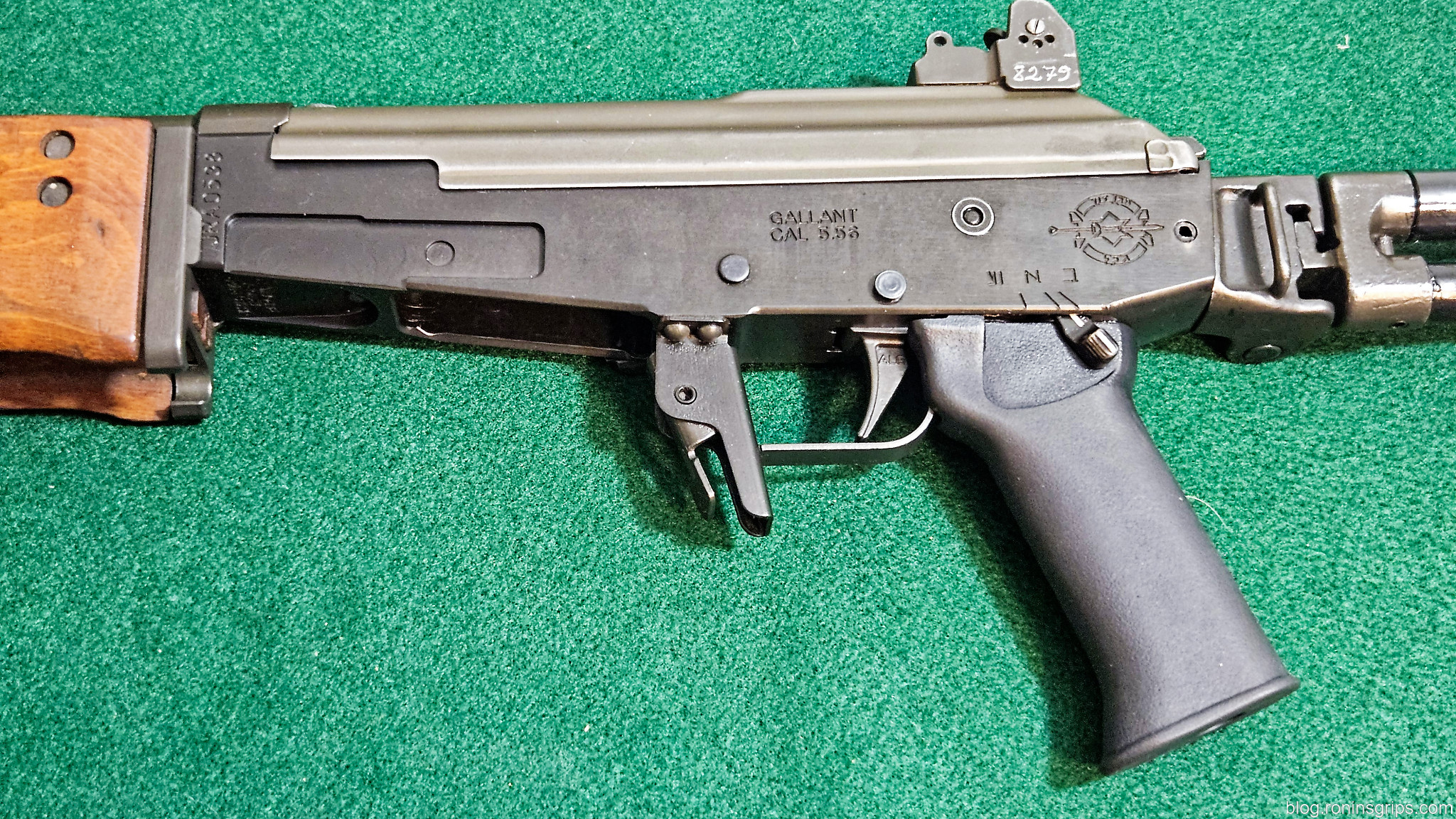
For many, Ronin’s is the “go-to” for fixing poor factory furniture. For instance, owners of JRA Gallant rifles often say that a Ronin’s grip is a mandatory upgrade7. This reputation has easily carried over to the MP5K community, where new owners often order a Ronin’s grip the same day they buy their gun.
A JRA Gallant with one of the Ronin’s Grips IMI Galil grips.
The “George Factor” and Building Rapid Trust
A big part of the brand’s popularity is the founder, George. While many small shops struggle with communication, George is known for being direct and helpful. This personal touch has helped build deep trust very quickly.
There are legendary stories of his customer service. In one case, a customer missed out on a 20% discount by just a few days. George not only applied the discount retroactively but refunded the difference so the customer could “buy some beer,” noting that “beer is good.”
This kind of honesty and community involvement builds massive loyalty. George frequently interacts with his customers and rewards them for sharing their builds. To the community, Ronin’s isn’t just a store—it’s a partner that truly cares about the product.
6. The Regulatory Labyrinth of 18 U.S.C. § 922(r)
You can’t talk about upgrading imported guns without mentioning 18 U.S.C. § 922(r). This is a complex federal law that basically says you can’t have too many imported parts in a rifle assembled in the U.S.
Specifically, if you want to turn an imported pistol (like an AP5-P) into an SBR by adding a stock, you have to make sure it contains no more than ten imported parts from a specific list of twenty regulated components8.
For most MP5K clones, this means you need to replace six foreign parts with U.S.-made equivalents10. People usually swap out things like triggers, hammers, or magazines to hit this number8.
The Strategic Value of the Magpul SL Grip
The pistol grip is one of those regulated parts10. This makes Ronin’s catalog even more important for owners:
If you buy the surplus German Navy SEF grip, it’s still a foreign part, so it doesn’t help with your 922(r) count.
However, if you buy Ronin’s adapted Magpul SL Grip, you’re getting a part made in the USA. This is a huge win: you get much better ergonomics and you get one step closer to legal compliance. For many owners, this makes the Magpul SL grip an incredibly smart buy.
7. Value Proposition and Economic Assessment: Are They “Worth It”?
So, are these grips worth the money? When you look at what you get for the price, the answer is a resounding yes. Ronin’s Grips offers something for every type of owner.
We see two main groups of happy customers:
1. The Modern Shooter: For about $75, the Magpul SL configuration is a total game-changer. It fixes the outdated ergonomics of the original and helps with federal compliance. Compared to the cost of the gun itself, $75 is a small price to pay for a much better shooting experience3.
2. The Historical Purist:
The “Like-New” Navy SEF grips are the most expensive at $120. While it’s a premium price, it’s simply the best way to get that iconic, special ops look. People are happy to pay for Ronin’s expert fit and finish, knowing they are getting a top-quality, historically accurate part from a brand they trust. Note, the “Good” condition Navy SEF grips are $79.99.
8. Conclusion
Our analysis shows that Ronin’s Grips is a perfect example of a brand that cares about both craftsmanship and technical performance. By solving common ergonomic issues with high-quality, perfectly fitted parts, they’ve become an essential part of the MP5K community.
In just one year, the brand has built a powerful reputation. By listening to customers and delivering durable, easy-to-install solutions, Ronin’s Grips has stood out from the crowd. The combination of bomb-proof quality and great customer service has created a very loyal following.
Whether you want a classic look or modern performance and legal compliance, Ronin’s Grips delivers. Given the cost of these firearms, an upgrade from Ronin’s is a smart and worthwhile investment for any MP5K owner.
The contemporary striker-fired polymer handgun market is currently dominated by platforms that prioritize modularity, absolute reliability, and advanced ergonomic integration. Among the top-tier offerings from European defense manufacturers, the Walther Performance Duty Pistol and the Heckler & Koch VP9A1 series represent two of the most refined and capable firearm families available for global deployment today. This comprehensive research report evaluates these two flagship firearm platforms across multiple technical dimensions, including mechanical specifications, ergonomic design, historical reliability, aftermarket ecosystems, and primary tactical use cases. The analysis covers both the full-size duty models and their compact variants, providing an exhaustive comparative assessment to inform procurement decisions for law enforcement agencies, military applications, and civilian defensive deployment.
The Walther Performance Duty Pistol builds upon the proven legacy of the PPQ series, offering a platform distinctly engineered around optic integration and aggressive grip texturing.1 Conversely, the Heckler & Koch VP9A1 represents a modernized and highly tuned evolution of the original VP9, introducing enhanced trigger dynamics, updated ambidextrous controls, and a newly developed compact frame size to bridge the operational gap between overt duty carry and deep concealment applications.3 Through meticulous examination of mechanical tolerances, metallurgical finishes, ergonomic anthropometry, and vendor market pricing, this document establishes the operational strengths and optimal deployment scenarios for each platform. The resulting data provides a definitive framework for understanding how these two dominant designs compete within the modern small arms ecosystem.
2. Introduction and Contextual History of Polymer Platforms
The transition from traditional metal-framed, hammer-fired handguns to striker-fired polymer platforms has fundamentally altered the landscape of modern small arms design and tactical doctrine. German manufacturers Walther Arms and Heckler & Koch have historically been at the absolute forefront of this technological evolution, pioneering materials and mechanisms that have become industry standards. The Walther Performance Duty Pistol and the Heckler & Koch VP9A1 are direct competitors in the premium duty and self-defense market segments, with both platforms predominantly chambered in the ubiquitous 9x19mm Parabellum cartridge.5
Heckler & Koch introduced the world’s first polymer-framed handgun with the VP70, and their legacy continued through the P7 series, the USP, and the P30. The original VP9 was released as a striker-fired alternative to the P30, combining the legendary ergonomic profile of the P30 with a consistent, crisp trigger pull. The recent VP9A1 update signifies a critical refinement phase, addressing modern tactical requirements by improving the trigger interface, expanding modularity, and introducing a dedicated compact frame designated as the “K” model.3
Walther’s journey to the Performance Duty Pistol is similarly rooted in decades of iterative engineering, beginning with the P99 platform and evolving through the PPQ. The PPQ was widely regarded as possessing the finest factory trigger on the market. However, as tactical doctrine shifted heavily toward the mandatory use of slide-mounted optical sights, Walther redesigned the upper assembly and grip frame entirely to create the Performance Duty Pistol.1 The PDP was built from its inception to maximize the efficiency of red dot sights, utilizing unique slide geometry and grip texturing to assist the shooter in rapidly locating the optic dot during presentation.
The scope of this rigorous analysis is restricted to the most current iterations of these platforms. For Walther, the primary focus is the standard PDP Full Size with a 4.5-inch barrel and the PDP Compact with a 4-inch barrel.7 For Heckler & Koch, the analysis centers on the newly introduced VP9A1 F model, denoting the full-size frame, and the VP9A1 K model, denoting the compact variant.4 By dissecting the geometric architecture, internal mechanical safety systems, and the broader commercial ecosystem surrounding these firearms, the subsequent sections provide an objective, data-driven framework for comparing their respective operational merits.
3. Mechanical Architecture and Operating Mechanisms
Before analyzing external dimensions, one must understand the internal mechanical architecture that governs the function of these firearms. Both the Walther Performance Duty Pistol and the Heckler & Koch VP9A1 utilize a modified Browning short-recoil operating system, utilizing a tilting barrel design that locks into the ejection port of the slide. This system is the global standard for modern centerfire handguns due to its inherent reliability and simplified manufacturing process.
3.1 Striker-Fired Mechanisms and Safety Protocols
The term “striker-fired” refers to a system where a spring-loaded firing pin, or striker, is partially or fully tensioned by the rearward movement of the slide. When the operator pulls the trigger, the internal sear drops, releasing the striker to ignite the cartridge primer. This system eliminates the need for an external hammer, streamlining the profile of the firearm and providing a consistent trigger pull weight for every shot.
The Heckler & Koch VP9A1 utilizes a fully pre-cocked striker system. When the slide is cycled, the striker spring is fully compressed. The trigger press merely acts to release the sear block. This mechanical arrangement allows for an exceptionally crisp trigger break, as the shooter’s finger is not performing the mechanical work of compressing the mainspring.3 To ensure absolute safety, the VP9A1 series incorporates a sophisticated multi-axis safety system. The firearm features a trigger safety tab and an internal firing pin block safety that operate at 90 degrees to one another.10 This orthogonal relationship guarantees that the weapon is highly resistant to inertial discharges, protecting the operator against accidental firing if the weapon is dropped or subjected to severe blunt force trauma.10
The Walther Performance Duty Pistol also employs a fully pre-tensioned striker assembly. Walther’s engineering approach emphasizes minimizing the friction between the trigger bar and the sear engagement surface. The PDP includes multiple passive internal safeties, including a firing pin block that remains engaged until the trigger is pulled fully to the rear. The robust nature of these internal components allows both platforms to safely digest high-pressure +P ammunition variants commonly issued by law enforcement agencies.10
4. Detailed Technical Specifications and Dimensional Analysis
A rigorous comparison of physical dimensions, overall weight, and magazine capacity is absolutely essential for understanding how these firearms interface with the end user and perform in varying operational contexts. Minor variations in slide mass, grip length, and barrel profile can significantly alter recoil impulses, presentation speed, and concealment feasibility.6
4.1 Full-Size Duty Models
The full-size variants are engineered for optimal ballistic performance, maximum ammunition capacity, and unrestricted grip acquisition. These dimensions make them ideal for overt overt uniform duty carry, tactical team applications, and home defense scenarios where concealment is not a primary concern.
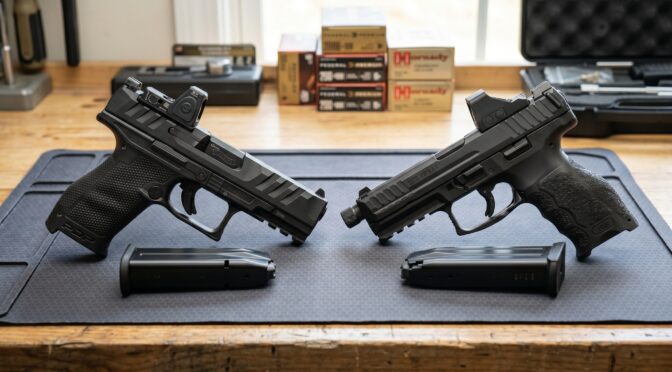
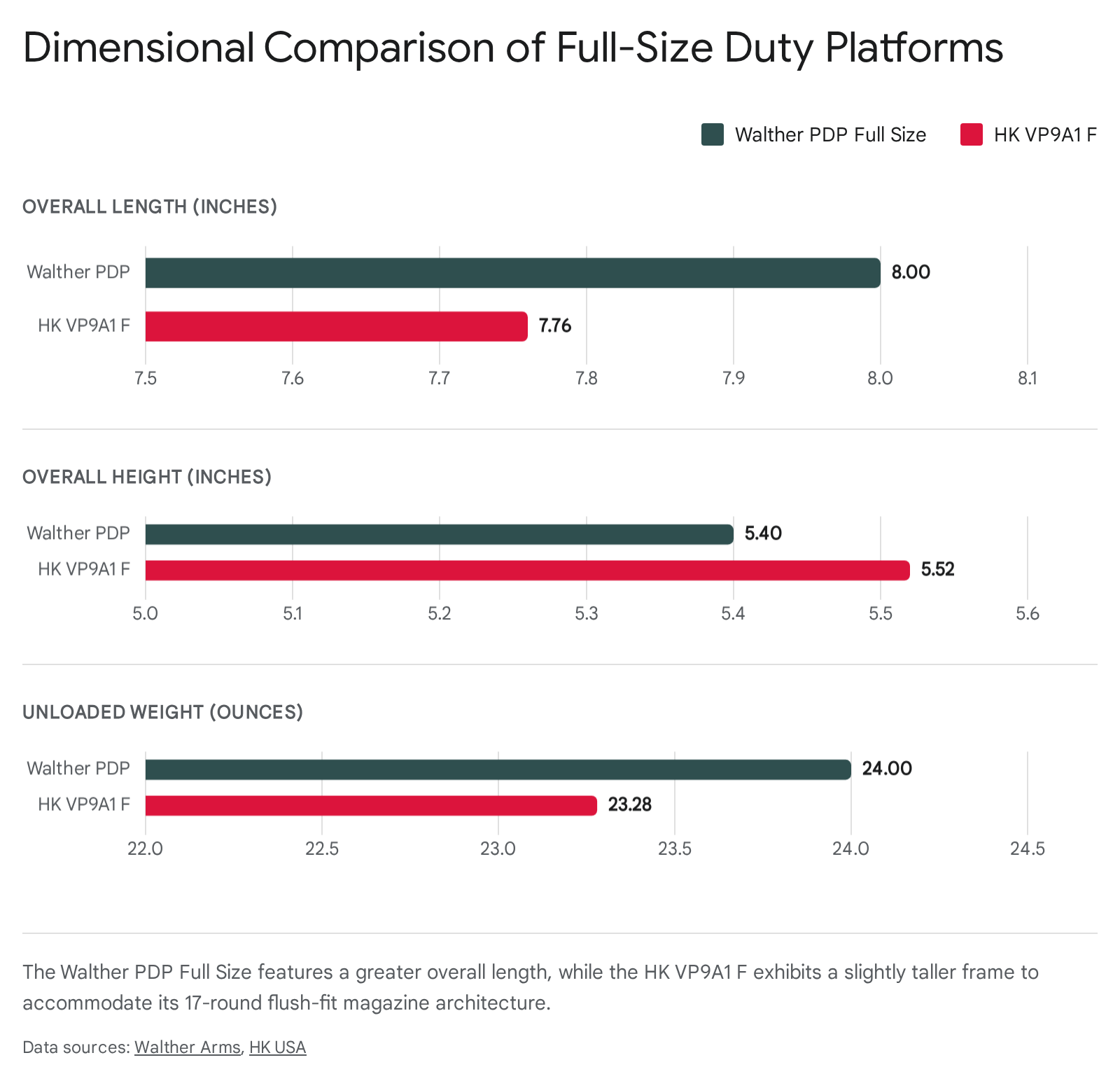
The Walther PDP Full Size 4.5 features a 4.5-inch barrel and an overall longitudinal length of 8.0 inches.7 The platform has a maximum width of 1.34 inches across the controls and an overall height of 5.4 inches from the base of the magazine to the top of the rear sight.7 Unloaded, the PDP Full Size 4.5 weighs exactly 24.0 ounces.7 The standard flush-fit magazine capacity for the full-size grip frame is 18 rounds, yielding an impressive total capacity of 19 rounds when a cartridge is chambered.7 Walther utilizes traditional land-and-groove rifling within its barrel architecture, optimizing the platform for a wide variety of projectile types.
The Heckler & Koch VP9A1 F incorporates a slightly longer 4.53-inch barrel.11 The overall length measures 7.76 inches, making it marginally shorter than the PDP despite the longer barrel.11 This dimensional curiosity indicates a highly efficient slide-to-frame geometric ratio in the Heckler & Koch design. The VP9A1 F has an overall width of 1.30 inches and an overall height of 5.52 inches when a magazine is inserted.11 The weight without a magazine is documented at 23.28 ounces.11 The platform supports multiple factory magazine capacities, including 15-round, 17-round, and extended 20-round configurations designed specifically for high-threat environments.9
Specification Parameter
Walther PDP Full Size 4.5
Heckler & Koch VP9A1 F
Caliber Chambering
9x19mm Parabellum
9x19mm Parabellum
Barrel Length
4.50 inches
4.53 inches
Overall Length
8.00 inches
7.76 inches
Maximum Width
1.34 inches
1.30 inches
Overall Height
5.40 inches
5.52 inches
Unloaded Weight
24.00 ounces
23.28 ounces
Standard Capacity
18+1 Rounds
17+1 or 20+1 Rounds
Sight Radius
6.40 inches (approximate)
6.56 inches
4.2 Compact Concealment Models
Compact models are engineered to meticulously balance the ballistic efficiency required for duty use with the reduced dimensions necessary for covert civilian or plainclothes law enforcement concealed carry.
The Walther PDP Compact 4 features a 4.0-inch barrel and an overall length of 7.5 inches.6 The width remains perfectly consistent with the full-size model at 1.34 inches, ensuring that the manual of arms, control access, and grip circumference feel identical to the operator when transitioning between frame sizes.6 The height is slightly reduced to 5.4 inches, and the unloaded weight registers at approximately 24.4 ounces.12 The compact frame naturally reduces the standard flush-fit magazine capacity to 15 rounds.13
The Heckler & Koch VP9A1 K represents a significant milestone for the manufacturer, acting as the first true compact “K” model within the VP series lineage.3 It features a 4.09-inch barrel and a highly efficient overall length of just 7.32 inches.14 The width is maintained at 1.30 inches, but the height is significantly reduced to 5.12 inches to drastically aid in deep concealment.14 The VP9A1 K weighs 22.57 ounces without a magazine and utilizes a proprietary 15-round flush-fit magazine.10 This height differential of nearly 0.3 inches between the PDP Compact and the VP9A1 K plays a crucial role in preventing the grip from printing through light garments.
Specification Parameter
Walther PDP Compact 4
Heckler & Koch VP9A1 K
Caliber Chambering
9x19mm Parabellum
9x19mm Parabellum
Barrel Length
4.00 inches
4.09 inches
Overall Length
7.50 inches
7.32 inches
Maximum Width
1.34 inches
1.30 inches
Overall Height
5.40 inches
5.12 inches
Unloaded Weight
24.40 ounces
22.57 ounces
Standard Capacity
15+1 Rounds
15+1 Rounds
Sight Radius
6.00 inches (approximate)
6.36 inches
5. Metallurgy, Barrel Dynamics, and Slide Construction
The selection of materials and the specific geometry of the upper assembly significantly impact both ballistic performance and long-term maintenance protocols.
5.1 Barrel Architecture and Rifling Technology
Heckler & Koch utilizes a proprietary cold hammer-forged barrel with a polygonal profile in the VP9A1 series.10 This manufacturing technique replaces traditional sharp lands and grooves with a series of smooth, rounded polygons, featuring six grooves and a right-hand twist rate of 1 in 9.8 inches.10 Polygonal rifling creates a tighter, more efficient gas seal around the projectile as it travels down the bore. This efficient seal minimizes gas blow-by, which can lead to marginal but measurable increases in muzzle velocity and a noticeably extended barrel life due to reduced friction. However, Heckler & Koch explicitly advises against the use of unjacketed cast-lead bullets in these barrels, as lead fouling can accumulate rapidly in the shallow polygonal grooves, potentially causing dangerous internal pressure spikes.10
The Walther Performance Duty Pistol utilizes traditional land-and-groove rifling. While slightly more prone to gas blow-by than a polygonal bore, traditional rifling is exceptionally accurate and broadly compatible with all commercially available projectile types, including the unjacketed lead cast variants often utilized in high-volume, budget-conscious training environments. Furthermore, Walther incorporates a stepped chamber design, which provides a tighter seal around the forward portion of the cartridge casing to improve velocity, while maintaining enough tolerance at the rear for highly reliable extraction when the weapon is fouled with carbon.
5.2 Slide Geometry and Environmental Treatments
Slide mass and exterior geometry differ notably between the two platforms, affecting both recoil impulses and user manipulation. The Walther PDP slide is visibly blockier, featuring increased mass that aids in absorbing the kinetic energy of recoil. The most distinct feature is the inclusion of “SuperTerrain” slide serrations.2 These serrations protrude outward above the surface of the slide rather than being cut deeply into it. This aggressive design choice allows for highly positive manipulation, providing exceptional grip traction when the user’s hands are wet, slick with oil, or encased in heavy tactical gloves.2
The Heckler & Koch VP9A1 slide features an aggressively tapered profile with deep, flat-bottomed serrations.9 At the extreme rear of the slide, HK retains their patented polymer charging supports.9 These polymer ridges extend outward behind the rear serrations, providing significant mechanical leverage for users with reduced grip strength, ensuring positive slide cycling under high stress.9 Furthermore, the A1 update incorporates expanded front and rear maritime serrations to further enhance tactile purchase in adverse environmental conditions.15 The slide is treated with HK’s proprietary “hostile environment” finish, a highly advanced corrosion-resistant nitro-carburized treatment that protects the underlying steel matrix from moisture, acidic sweat, and corrosive salt spray.9
6. Ergonomic Philosophy and Anthropometric Design
Ergonomics dictate how naturally a firearm points, how effectively the human skeletal structure can mitigate recoil, and how intuitively the mechanical controls can be manipulated under the physiological effects of stress. Both manufacturers have invested heavily in anthropometric research, though their approaches diverge significantly in methodology and application.
The fundamental difference in ergonomic philosophy is physically manifested in how the grip is customized. The Walther PDP relies on a traditional interchangeable backstrap system to adjust trigger reach. Conversely, the HK VP9A1 utilizes an advanced three-piece modular design featuring independent left and right side panels along with adjustable length-of-pull backstraps, allowing for 45 specific grip configurations.
6.1 The Walther Approach to Grip Dynamics
The Walther PDP utilizes a highly advanced grip texture engineered specifically for overt performance duty use. The texture consists of microscopic tetrahedron shapes that provide a highly aggressive, non-slip surface in the hand.6 The critical engineering achievement of this texture is its directionality, the tetrahedrons lock securely into the dermal layer of the hand to prevent shifting under recoil, yet they remain non-abrasive against clothing, making the platform highly suitable for concealed carry applications.6
The PDP relies on three interchangeable rear backstraps to alter the trigger reach and overall grip circumference.17 This is a standard industry practice that effectively accommodates a wide spectrum of hand sizes. The grip angle forces a slightly more aggressive forward cant, which aligns naturally with the modern isosceles shooting stance and aids in driving the optical sight back onto the target during rapid shot strings.
6.2 The Heckler & Koch Universal Ergonomic Grip
The Heckler & Koch VP9A1 series takes modularity considerably further through its Universal Ergonomic Grip system.3 The polymer frame allows the user to swap not only the rear backstrap but also the left and right side grip panels completely independently.3 This sophisticated system enables asymmetrical setups, such as utilizing a large right panel to fill the palm swell of a right-handed shooter, while simultaneously using a small left panel to allow maximum trigger finger extension.3
With the recent A1 update, HK introduced extended backstraps that add significant material to the upper portion of the grip, resting directly under the web of the hand. This innovation effectively creates an adjustable length of pull, allowing shooters to perfectly index the pad of their trigger finger on the trigger shoe face.3 The VP9A1 grip angle, carefully contoured front strap, and high rear saddle are widely praised for forcing a natural, anatomically locked-in wrist presentation that intuitively aligns the sights with the dominant eye.3
7. Trigger Dynamics and Fire Control Group Analysis
The fire control group, specifically the trigger mechanism, is arguably the most critical interface on any striker-fired pistol. It dictates the mechanical disruption of the sights during the firing sequence. Both the Walther PDP and the HK VP9A1 feature triggers that define the absolute upper echelon of factory polymer handguns, frequently compared to aftermarket customized components.
7.1 Walther Performance Duty Trigger
The Walther Performance Duty Pistol is equipped with the proprietary Performance Duty Trigger system.1 This mechanism is characterized by a relatively light and smooth take-up, a highly defined rigid wall, and an extremely crisp, glass-like break. Following the ignition of the cartridge, the trigger reset is exceptionally short and highly tactile, providing a distinct mechanical click that can be felt and heard.2 This short reset geometry allows for incredibly rapid follow-up shots during dynamic courses of fire, reducing split times significantly. Many professional competitive shooters and defense analysts consider the PDP factory trigger to be the most refined out-of-the-box option available on the global market.20
7.2 Heckler & Koch VP9A1 Enhanced Trigger
Heckler & Koch responded directly to modern market demands by significantly refining the trigger group in the VP9A1 series. The primary A1 upgrade features a nickel-teflon coated trigger bar.21 This advanced metallurgical enhancement drastically reduces the coefficient of friction between the steel trigger bar and the internal polymer and steel frame components, resulting in a noticeably smoother and lighter pull compared to previous generations.15
The VP9A1 trigger exhibits a short, light take-up followed by a solid, single-action style break, consistently breaking between 4.5 and 5.5 pounds of continuous force.10 The reset is engineered to be short and positive, with a documented forward return travel of merely 0.12 inches before the sear re-engages.10 While subjective shooter preference plays a significant role in evaluation, the VP9A1 trigger is universally celebrated for its smooth, rolling consistency, whereas the PDP trigger is favored for its sharp, definitive break.6
8. Sighting Systems and Optic Integration Paradigms
Optical sights, particularly miniature red dot sights, have rapidly transitioned from competitive novelties to mandatory equipment for contemporary military and law enforcement duty pistols. Both platforms employ advanced, optics-ready architectures directly from the factory.
8.1 Walther PDP Optics Integration
The Walther PDP features a deeply milled slide architecture that accepts proprietary interchangeable adapter plates.22 This deep trench design allows the optic body to sit extremely low on the slide, minimizing the mechanical offset between the bore axis and the illuminated dot.22 A lower optic reduces the learning curve for shooters transitioning from iron sights and minimizes parallax issues at close ranges. Walther’s plate system supports a vast array of robust enclosed emitter optics, such as the Aimpoint ACRO P-2 and the Steiner MPS, which are heavily favored for overt law enforcement use due to their absolute immunity to rain, mud, and debris.22 Depending on the selected adapter plate and optic housing height, the PDP allows for seamless co-witnessing with standard-height metallic iron sights.22
8.2 Heckler & Koch VP9A1 Optics Integration
The Heckler & Koch VP9A1 utilizes a highly versatile adapter plate system covering nine distinct optic footprints, accommodating virtually every popular open and closed red dot sight currently on the market.23 Furthermore, HK offers dedicated optics-equipped models straight from the factory, which feature the Holosun SCS sight system.4 The Holosun SCS is uniquely designed with a multi-directional solar charging system and is milled to mount directly to the VP9 slide without the need for an intervening adapter plate.15 This direct-mount architecture results in the lowest possible mounting profile, securely bolting the optic to the slide and allowing the use of the factory standard-height sights for emergency backup.15
9. Historical Reliability, Testing Protocols, and Duty Adoption
Both Walther Arms and Heckler & Koch possess storied, century-long histories of producing firearms that must endure the most rigorous military and law enforcement testing trials on the planet. Reliability is not merely a feature but the foundational requirement for both platforms.
9.1 Walther PDP Field Performance
The Walther PDP is explicitly designed to withstand harsh environmental conditions, freezing temperatures, and exceptionally high round counts. The robust extractor claw and reinforced polymer frame are specifically engineered to handle continuous diets of high-pressure ammunition without suffering premature component fatigue. The PDP has seen increasing adoption among specialized regional law enforcement units and competitive shooters who demand absolute operational reliability.2 The open architecture of the slide interior allows debris to fall free of the firing mechanism, ensuring continued operation when the weapon is dropped in soil or mud.
9.2 Heckler & Koch VP9A1 Field Performance
The legacy VP9 platform possesses a long and extensively proven track record of extreme durability.3 Heckler & Koch engineered the pistol to function flawlessly in the most adverse environmental conditions, subjecting early prototypes to extensive NATO drop tests, submerged mud tests, and severe temperature variations ranging from arctic freezing to desert heat.3 The VP9 series is widely adopted by numerous European police forces, border patrol units, and various domestic United States law enforcement agencies. Documented post-adoption reports from these agencies indicate significant improvements in officer qualifying scores, directly attributing this success to the ergonomic grip and the enhanced trigger interface.3 The aforementioned hostile environment finish ensures the weapon requires minimal lubrication to resist severe rust and pitting in maritime environments.
10. The Aftermarket Ecosystem and Modularity
The long-term viability and success of a modern tactical handgun are heavily dependent on its aftermarket support network. A robust ecosystem allows individual users, armorers, and agencies to tailor the platform to specific operational requirements through the addition of specialized components. Both the PDP and VP9A1 boast highly developed commercial ecosystems.
10.1 Enhancements for the Walther PDP
The aftermarket for the Walther PDP is exceptionally deep, driven heavily by rapid adoption within the United States competitive shooting community.
The most prominent upgrade available is the Walther Dynamic Performance Trigger assembly, an original equipment manufacturer enhancement that completely replaces the fire control group to further reduce trigger pull weight, initial take-up, and reset distance.25 For those seeking alternative solutions, aftermarket companies like Overwatch Precision produce highly refined machined trigger kits tailored for the PDP platform.26
Recoil management is another major sector of the PDP aftermarket. Companies such as ZR Tactical Solutions manufacture ultra-mass tungsten and stainless steel guide rods, along with custom tuned recoil springs that allow advanced users to finely tune the slide velocity for specific ammunition loads, reducing muzzle flip.27 Herrington Arms produces highly effective muzzle compensators that integrate seamlessly with the PDP slide profile to redirect expanding gases upward, forcing the muzzle down during rapid fire.29 Additionally, numerous vendors offer aluminum magazine extensions, reliably enhancing the already formidable 18-round standard capacity to 22 or 23 rounds for competitive stages.27
10.2 Enhancements for the HK VP9A1
The newly updated VP9A1 benefits immensely from over a decade of aftermarket development dedicated to the legacy VP9 system, as internal dimensional tolerances and magazine geometries remain largely identical across generations.
While the factory trigger is excellent, specialized companies such as Gray Guns offer sophisticated trigger modifications, custom sears, and reset reduction kits that refine the VP9 trigger specifically for the demanding requirements of USPSA and IDPA competitive applications.30
Grip enhancements represent a significant portion of the VP9 aftermarket. Heavy brass backstraps and specialized grip panels are popular modifications utilized to alter the physical balance point of the pistol. By shifting weight lower and further back into the hand, these heavy components help absorb kinetic energy and reduce perceived recoil.30 Tyrant CNC and HK Parts manufacture low-profile everyday carry magwells to assist in concealed reloading, as well as oversized competition funnels for maximum speed.31 Magazine base pad extensions from established companies like Taylor Freelance are widely utilized to increase the standard 17-round capacity to 22 rounds or more.30
11. Market Availability, Pricing Economics, and Vendor Sourcing
Understanding the commercial retail landscape, inherent pricing variance, and general availability of these platforms is crucial for individual procurement and large-scale agency acquisitions. The following economic analysis details the minimum and average observed retail pricing across an array of preferred industry vendors, ensuring a comprehensive view of the current market value.
11.1 Walther PDP Full Size 4.5 Economics
The Walther PDP Full Size 4.5 is a highly accessible and economically viable platform. The Manufacturer’s Suggested Retail Price sits at $699.00.33 However, the actual market clearing price typically ranges between an observed minimum of $597.00 and an average of $625.00, fluctuating based on seasonal sales events and vendor inventory volume.
The Compact model shares the identical $699.00 MSRP of its full-size counterpart but frequently experiences deeper discounts in the broader retail channel. Minimum observed pricing has been documented dropping to $449.00 during major holiday liquidation events, while the average rests near $580.00.34
The VP9A1 F commands a premium price point, reflective of its extensive engineering hours, polygonal barrel manufacturing costs, and included maritime environmental enhancements. Retail prices generally sit around $1049.00, with aggressive market pricing stabilizing between a minimum of $799.99 and an average of $899.00.35
Vendor 5 (Bereli): Provides the lowest observed pricing globally for the VP9A1 F at an astonishing $799.99, an impressive 14 percent below average retail metrics.(https://www.bereli.com/81001064/)
11.4 Heckler & Koch VP9A1 K Economics
The newly released compact VP9A1 K is highly sought after across demographics, maintaining exceptional pricing stability due to immense market demand for premium concealed carry platforms. The minimum observed price rests at $881.99, with the average resting firmly at $899.00.36
Vendor 4 (Midway USA):Frequently stocks the K model in large volumes, displaying an $899.00 price tag down from a significantly higher MSRP.(https://www.midwayusa.com/product/1028076460)
Enhancing these platforms requires reliable access to high-quality OEM and aftermarket components. Pricing for these specific accessories is highly variable based on manufacturing cycles and global steel availability.
Walther Dynamic Performance Trigger Assembly (Black) Considered a virtually mandatory upgrade for serious competitors and elite tactical teams, this OEM assembly retails from Walther for $179.00 25, with market averages hovering around $150.00 and minimums reaching $97.99.
Heckler & Koch VP9 17-Round Steel Magazine OEM Heckler & Koch magazines are globally renowned for their crush-resistant durability, featuring welded steel bodies and high-visibility polymer followers. The market average for these vital components is approximately $40.00, with minimums dipping to $21.99.37
12. Tactical Application and Primary Use Case Synthesis
The optimal selection between the Walther PDP and the Heckler & Koch VP9A1 is heavily dependent on the specific intended application, operational environment, and the physiological attributes of the primary user.
12.1 Law Enforcement and Military Overt Duty
For overt uniform duty applications carried in rigid Level III retention holsters, both the Walther PDP Full Size 4.5 and the HK VP9A1 F are truly exceptional choices. The PDP’s highly aggressive tetrahedron grip texture is phenomenally advantageous when officers are wearing thick tactical gloves, operating in heavy rain, or dealing with biological fluids.17 Its massive 18-round standard capacity provides a significant and mathematically measurable firepower advantage in prolonged engagements.
Conversely, the VP9A1 F is highly regarded in administrative circles for its unparalleled universal grip fitment. In an agency or armory setting, department armorers can quickly configure the VP9A1 to perfectly fit the hands of the smallest female officer or the largest male officer simply by swapping side panels.3 This ensures that every member of the force has a weapon that points naturally. Furthermore, the VP9A1’s optional paddle magazine release is highly favored by some specialized tactical units, as it effectively eliminates the risk of accidental magazine ejections when the pistol is pressed tightly against bulky body armor or chest rigs during confined space dynamic entries.
12.2 Civilian and Plainclothes Concealed Carry
In the demanding realm of civilian concealed carry and plainclothes operations, the compact models truly excel. The dimensional constraints become the overriding factor in selection. The Walther PDP Compact 4 is slightly taller than the VP9A1 K, measuring 5.40 inches versus 5.12 inches.6 This height difference of nearly a third of an inch is critical, as the grip length is the primary factor causing a concealed firearm to “print” visibly through clothing. The VP9A1 K is thus measurably easier to conceal in an appendix inside-the-waistband configuration.
However, the PDP Compact retains a full-size slide width and offers a highly confident, hand-filling grip that many shooters find significantly easier to draw rapidly from deep concealment under extreme stress.6 The choice here relies on a compromise between absolute concealability favoring the HK, and rapid, aggressive presentation favoring the Walther.
12.3 Competitive Shooting Disciplines
The Walther PDP has rapidly become a dominant and highly disruptive force in United States Practical Shooting Association and International Defensive Pistol Association competitive circuits. The thick, heavy slide geometry heavily aids in kinetic recoil absorption, allowing the sights to return to zero rapidly. Furthermore, the factory Performance Duty Trigger requires minimal aftermarket modification to compete at the highest Grand Master levels.1
While the VP9A1 is exceptionally accurate mechanically due to its gas-sealing polygonal barrel, serious competitive shooters utilizing the HK platform often find themselves investing heavily in aftermarket trigger tuning kits and heavy brass grip accessories to achieve the heavy, flat-shooting characteristics that are largely inherent to the stock Walther PDP design.30
13. Final Conclusions
The Walther Performance Duty Pistol and the Heckler & Koch VP9A1 series currently exist at the absolute pinnacle of striker-fired handgun engineering. Neither platform presents a distinct mechanical failure point, and the choice between the two ultimately depends on the highly specific priorities of the end user or the procuring agency.
The Walther PDP is a purpose-built optical integration platform, designed from the ground up to dominate the red dot paradigm. Its thicker slide, deeply milled plate system, and highly aggressive Performance Duty grip texture make it an unyielding, high-traction tool for overt duty, dynamic tactical deployment, and aggressive competitive shooting. The incredibly refined out-of-the-box trigger system ensures that users can achieve extreme levels of practical accuracy with minimal requirement for aftermarket investment.
Conversely, the Heckler & Koch VP9A1 is a masterpiece of ergonomic adaptability and environmental resilience. The universal grip system ensures that literally any shooter can configure the pistol for perfect trigger indexing, fundamentally minimizing sympathetic muscle movement and drastically improving gross accuracy under stress. The recent A1 enhancements, including the friction-reducing nickel-teflon trigger bar, the expanded maritime serrations, and the introduction of the highly concealable “K” model, solidify the platform’s status as a top-tier option for professional security details, sophisticated law enforcement units, and discerning civilian carriers. Both platforms guarantee exceptional mechanical reliability, ensuring optimal operational performance when life and liberty are on the line.
Note: Vendor Sources listed are not an endorsement of any given vendor. It is our software reporting a product page given the direction to list products that are between the minimum and average sales price when last scanned.
The Heckler & Koch MP5 stands as an undisputed icon in the history of modern small arms. For over half a century, its distinctive silhouette has been synonymous with the world’s most elite counter-terrorism and special operations units.1 Its adoption by over 40 nations and its prominent role in high-stakes operations cemented its reputation as the preeminent submachine gun of the 20th century.2 However, the MP5’s enduring legacy is not solely a product of its revolutionary original design. Its remarkable longevity in the arsenals of these demanding professional users is the direct result of a dynamic and responsive aftermarket ecosystem.
This report will provide a comprehensive technical and tactical analysis of how this ecosystem emerged, not as a matter of simple modernization, but as a critical response to the evolving operational realities that exposed the latent deficiencies of the mid-20th-century platform. The original MP5, a masterpiece of 1960s engineering, was conceived for a world without standardized accessory rails, routine low-light combat, or the widespread use of body armor by operators. As tactical doctrine evolved, these omissions transformed from non-issues into critical capability gaps.
The aftermarket industry did not merely offer cosmetic enhancements; it provided essential engineering solutions that kept the platform viable. This analysis will deconstruct the symbiotic relationship between operator needs and industry innovation, tracing the catalysts for change from the rise of modern counter-terrorism to the paradigm shift in modularity brought about by the USSOCOM SOPMOD program. It will examine the key industry players—SureFire, Knight’s Armament Company, Brügger & Thomet, and others—and their foundational contributions. Ultimately, this report will demonstrate how a dedicated ecosystem of third-party manufacturers transformed the MP5 from a static, albeit brilliant, design into an adaptable and continuously relevant weapons system, ensuring its place in the specialized arsenals of the 21st century.4
Section 1: Foundational Analysis of the Heckler & Koch MP5 Platform
To understand the necessity and nature of the MP5’s aftermarket evolution, one must first conduct a thorough analysis of its foundational design. The platform’s initial success was rooted in a unique combination of advanced mechanical principles that set it apart from all other submachine guns of its era. Yet, within this brilliant design lay inherent limitations that would, decades later, necessitate a comprehensive modernization effort driven by external innovators.
1.1 The Engineering Core: Roller-Delayed Blowback and Closed-Bolt Operation
The heart of the MP5 is its roller-delayed blowback operating system, a direct and scaled-down descendant of the mechanism developed for the Mauser StG 45(M) assault rifle at the end of World War II and later perfected in Heckler & Koch’s own G3 battle rifle.1 This system represents a significant leap in sophistication compared to the simple (or “straight”) blowback mechanisms common to most submachine guns of the period, such as the Uzi or the Ingram MAC-10.1
In a simple blowback system, the breech is held closed only by the mass of the bolt and the pressure of the recoil spring. This requires a very heavy bolt to safely contain the pressures of firing, which in turn leads to a heavy weapon with substantial reciprocating mass, resulting in significant felt recoil and muzzle climb during automatic fire.8 The roller-delayed system circumvents this by using a mechanical disadvantage to slow the bolt’s opening. Upon firing, the cartridge case exerts rearward pressure on the bolt head. However, the bolt head cannot move rearward immediately because two rollers, housed within it, are cammed outwards into recesses in the barrel trunnion. For the bolt head to retract, these rollers must first be pressed inwards. This action is resisted by an angled “locking piece” situated behind the rollers. The rearward force of the cartridge case is thus translated into a much faster rearward movement of the heavier bolt carrier and locking piece assembly, while the bolt head itself is delayed for microseconds.10 This brief delay allows chamber pressures to drop to a safe level before extraction begins, all while using a significantly lighter bolt than a simple blowback design would require.7 The tangible result for the operator is a dramatic reduction in felt recoil and muzzle rise, allowing for exceptionally smooth and controllable automatic fire.7
Complementing this advanced operating system is the MP5’s closed-bolt firing cycle. Most contemporary submachine guns fired from an open bolt, where pulling the trigger releases a heavy bolt that slams forward, strips a round from the magazine, chambers it, and fires it in one continuous motion.14 While mechanically simple and beneficial for cooling during sustained fire, this process introduces significant weapon disturbance just before the shot breaks, making precise single shots difficult. The MP5, by contrast, fires from a closed and locked bolt, much like a rifle.4 The bolt is already forward and the round chambered when the trigger is pulled, meaning the only internal movement is the fall of a small hammer. This minimizes weapon movement and is the primary reason for the MP5’s legendary accuracy, a feature that made it the weapon of choice for surgical applications like hostage rescue, where a precise first shot was paramount.12 This combination of rifle-like accuracy in semi-automatic fire and machine pistol-like controllability in automatic fire made the MP5 a “precision tool” that fundamentally redefined the capabilities of a pistol-caliber firearm.4
1.2 Design Strengths for the Era (1960s-1970s)
When it was introduced in the mid-1960s, the MP5 was a thoroughly modern design that offered significant advantages over its predecessors and many of its contemporaries. Its ergonomics were a marked improvement, with a comfortable pistol grip and intuitive controls that were a scaled version of the G3 rifle, providing a common manual of arms.6 The weapon was relatively lightweight and compact, particularly the MP5A3 variant with its retractable stock, making it highly suitable for use in confined spaces like vehicles and buildings.7
Heckler & Koch engineered the MP5 for uncompromising reliability. The receiver was formed from stamped sheet steel, a robust and efficient manufacturing method, and the barrel was cold hammer-forged for exceptional durability and accuracy.3 To ensure performance in adverse conditions, the metal surfaces were phosphated and then coated with a baked-on lacquer finish, providing high resistance to corrosion and wear.19 The design was validated to function reliably in extreme temperatures, from −40°C to +43°C.7
The sighting system was another area of clear superiority. The MP5 featured a hooded front post and a rotating rear diopter drum, offering four different apertures for varying light conditions and user preference.3 This system was far more precise than the simple open sights found on most submachine guns and contributed greatly to the weapon’s practical accuracy.18 The platform also exhibited a degree of modularity, with interchangeable trigger groups offering different fire control options (e.g., safe/semi/full-auto “SEF” groups or burst-fire variants) and the choice between a fixed polymer stock (A2 models) or a retractable stock (A3 models).1
1.3 Latent Deficiencies: The Seeds of Aftermarket Necessity
Despite its advanced design, the MP5 was a product of its time. The very features that made it successful in the 1960s and 70s contained latent deficiencies that would become significant liabilities as military and law enforcement tactics evolved over the subsequent decades. These were not design flaws in the context of the era, but rather a lack of foresight into the future of tactical operations.
The single greatest deficiency was the complete absence of any native capability for mounting accessories. The MP5’s stamped steel receiver was a smooth, enclosed tube with no integrated rails or standardized attachment points.8 In an era before the proliferation of weapon-mounted optics, lights, and lasers, this was not a consideration. By the 1990s, however, this lack of a universal interface became the platform’s primary handicap, making the addition of mission-essential equipment a complex and non-standardized challenge.22
The weapon’s ergonomics, while excellent for their time, were also a product of a bygone era. The length-of-pull on both the fixed A2 stock and the fully extended A3 retractable stock was designed for an operator wearing little more than a shirt.23 The widespread adoption of ballistic body armor by police SWAT teams and special operations forces in the 1980s and 1990s rendered these stocks too long. Operators wearing bulky vests were forced into an awkward, bladed shooting stance that compromised stability and weapon control, a problem that H&K themselves later acknowledged and addressed in the updated MP5 MLI variant with its multi-position stock.15 Furthermore, early “SEF” trigger groups featured a long, rotating selector lever that was not truly ambidextrous or as ergonomic as later designs.3
Finally, the excellent iron sights, for all their precision, were fundamentally limited. They were optimized for 25-meter engagements and were not designed for field adjustment to other ranges.3 More importantly, their design and the lack of a top rail on the receiver made it impossible to co-witness them with an optic. Adding a red dot sight or other optic required a cumbersome “claw mount” that positioned the optic high above the bore axis, forcing an inconsistent and uncomfortable “chin weld” rather than a solid cheek weld, and offered no backup sighting capability if the optic failed.25 These latent deficiencies, baked into the core design of the MP5, created a clear and compelling need for the aftermarket solutions that would ultimately define its modern identity.
The very engineering brilliance that defined the MP5 also presented its greatest challenge to modernization. The complex, multi-part roller-delayed blowback system, while arguably “overkill” for a pistol-caliber weapon, dictated a receiver design that was fundamentally non-modular.4 Unlike the AR-15 platform, which was conceived with a distinct upper and lower receiver that could be easily separated and modified, the MP5’s receiver is a single, complex, welded and pinned stamped-steel assembly.27 This architectural difference is profound. Upgrading an AR-15’s handguard to a railed version is a simple matter of unscrewing a barrel nut and replacing a component. Modernizing the MP5 required a different philosophy; accessories could not simply replace a part, they had to be added onto the existing structure. This fundamental engineering constraint shaped the entire first generation of MP5 accessories, leading directly to the development of solutions like receiver-gripping claw mounts for optics and full handguard replacements for lights and lasers, a far more complex proposition than the simple bolt-on modularity of its rifle-caliber counterparts.
Section 2: The Catalysts for Change: Evolving Mil/LE Doctrine and Threats
The demand for an MP5 aftermarket ecosystem did not arise in a vacuum. It was driven by a series of seismic shifts in the operational landscape for military special forces and law enforcement tactical units. Three primary catalysts—the rise of modern counter-terrorism, the proliferation of body armor, and a revolutionary new philosophy of weapon modularity—converged in the 1980s and 1990s to create an undeniable imperative for the platform’s evolution.
2.1 The Counter-Terrorism Proving Ground and the Birth of a Need
The 1972 Munich Olympics Massacre was a watershed moment for global security forces. The tragic failure of conventional police to effectively respond to a determined terrorist attack starkly illustrated the need for new, specialized units trained and equipped for high-stakes hostage rescue and counter-terrorism (CT) operations.17 This led to the formation of elite units like Germany’s GSG 9, France’s GIGN, and the proliferation of Special Weapons and Tactics (SWAT) teams in the United States.30 These new organizations required a weapon that was compact, controllable, and precise—a perfect match for the MP5’s capabilities.17
While the MP5 saw quiet adoption by these units throughout the 1970s, it was thrust onto the world stage on May 5, 1980. The live television broadcast of the British Special Air Service (SAS) storming the Iranian Embassy in London during Operation Nimrod had a transformative effect on the weapon’s status.2 Images of the black-clad operators, MP5s at the ready, became iconic overnight.2 This single, highly successful operation created an explosion in global demand. Law enforcement and military units worldwide, seeking to emulate the perceived professionalism and effectiveness of the SAS, made acquiring the MP5 a top priority.5
Crucially, these same iconic images also revealed the platform’s first major deficiency in a modern tactical context. Photographs from Operation Nimrod clearly show SAS operators with large, cylindrical flashlights—likely Maglites or similar models—crudely attached to the top of their MP5s with hose clamps or other improvised mounts.3 This was the first high-profile demonstration of a critical, emerging capability gap: the need for integrated, weapon-mounted illumination for low-light combat. These early, ad-hoc solutions were deeply flawed, often obstructing the weapon’s iron sights and compromising the operator’s ability to aim effectively—a severe tactical trade-off that underscored the urgent need for a professional, purpose-built solution.25
2.2 The Ballistic Imperative and the Rise of Body Armor
While the MP5 was cementing its role in the CT world, a new threat was emerging on the streets and battlefields: the increasing availability of effective body armor. Throughout the 1980s and 1990s, the proliferation of soft body armor capable of defeating standard pistol-caliber rounds began to call into question the terminal effectiveness of the MP5’s 9x19mm Parabellum cartridge.12 For law enforcement, this concern became a brutal reality during the 1997 North Hollywood Shootout. Two heavily armed bank robbers, protected by extensive body armor, engaged Los Angeles police officers in a prolonged firefight, absorbing numerous hits from 9mm pistols and 12-gauge shotguns with little effect.17
The North Hollywood incident was a doctrinal inflection point for American law enforcement. It graphically demonstrated the inadequacy of pistol-caliber weapons against protected threats and triggered a widespread tactical shift within SWAT teams away from submachine guns like the MP5 and towards 5.56x45mm AR-15-based carbines, such as the M4.2 These rifle-caliber weapons could easily defeat soft body armor and offered superior range and barrier penetration capabilities.14
Heckler & Koch was not ignorant of these concerns. In the early 1990s, responding directly to a request from the American FBI, the company developed and released the MP5/10 and MP5/40, chambered in the more powerful 10mm Auto and .40 S&W cartridges, respectively.4 These variants were intended to provide a direct answer to the 9mm’s perceived lack of “stopping power.” However, both were ultimately discontinued by 2000, suggesting that up-calibering the finely tuned roller-delayed blowback system introduced unacceptable trade-offs in reliability, controllability, or parts longevity.16 This failure by the original equipment manufacturer (OEM) to provide a viable ballistic upgrade left the flagship 9mm MP5 increasingly vulnerable to replacement by more powerful platforms.
2.3 The “SOPMOD Effect”: The New Paradigm of Weapon Modularity
The final, and perhaps most significant, catalyst for the MP5’s aftermarket evolution came from the United States Special Operations Command (USSOCOM). In 1989, USSOCOM initiated the Special Operations Peculiar MODification (SOPMOD) program, a project aimed at creating a standardized kit of accessories for the M4A1 carbine.33 This was a revolutionary concept that fundamentally changed how professional end-users viewed their primary weapon. Instead of a fixed tool, the rifle became a modular platform. The SOPMOD kit provided operators with a suite of mission-enhancing accessories—optics, infrared aiming lasers, visible lights, vertical foregrips, and suppressors—that could be easily attached and detached to configure the weapon for any operational requirement.33
The technological heart of the SOPMOD program was the Rail Interface System (RIS), developed by Knight’s Armament Company (KAC).33 The KAC RIS replaced the M4A1’s standard polymer handguard with a quad-rail forearm featuring Mil-Std 1913 Picatinny rails, creating a universal, non-proprietary mounting surface.37 This seemingly simple innovation was transformative. It standardized the interface between the weapon and its accessories, allowing an operator to mount an Aimpoint CompM2 red dot sight, an AN/PEQ-2 infrared laser/illuminator, and a SureFire weaponlight in a secure, repeatable, and ergonomically sound configuration.38
The SOPMOD program created a new professional standard. The immense tactical advantage conferred by a fully accessorized M4A1 became the baseline expectation for any primary weapon system. An operator who had just returned from a mission using a SOPMOD M4 would not accept the limitations of a “slick” MP5 on their next assignment. This created immense institutional pressure from within the world’s most elite units—the MP5’s core user base—to find a way to bring the submachine gun up to the new SOPMOD standard of modularity and capability.
The convergence of these factors created a perfect storm of market demand. The MP5’s very success in the high-profile CT arena, which drove its widespread adoption, also placed it in the hands of the most sophisticated and demanding end-users in the world. These were the same units pioneering new tactics in low-light combat and close-quarters battle, and thus they were the first to experience the platform’s inherent limitations on a large scale. Just as these limitations became undeniable, the SOPMOD program for the M4 provided a clear, tangible template for the solution. The aftermarket industry was not just responding to a vague desire for modernization; it was responding to a specific, well-defined set of capability gaps identified by a highly influential customer base that now knew exactly what it wanted.
Furthermore, the aftermarket thrived precisely where the OEM, Heckler & Koch, appeared to falter. Faced with demands for improved ballistics and enhanced modularity, H&K focused its internal efforts on the former with the short-lived MP5/10 and MP5/40, and ultimately chose platform replacement over adaptation with the introduction of the UMP submachine gun in 1999.3 This strategy left the critical and more immediately solvable problem of accessory integration largely unaddressed by the factory during the crucial decade of the 1990s. This created a market vacuum that innovative third-party companies were perfectly positioned to fill, effectively providing the modernization path that the original manufacturer did not.
Section 3: The Aftermarket Response: Key Players and Foundational Upgrades (The “Classic” Era: ~1985-2005)
The tactical imperatives of the 1980s and 90s created a fertile ground for innovation. A handful of pioneering companies recognized the capability gaps in the factory MP5 and developed foundational products that would define the first generation of its modernization. These were not incremental improvements but transformative solutions that directly addressed the core problems of illumination, modularity, and sighting systems.
3.1 Case Study: SureFire and the Integrated Illumination Solution
The challenge of effectively mounting a light to the MP5 was the first major hurdle to be professionally addressed. The solution came from Laser Products Corporation, founded in 1979 by Dr. John Matthews, a company that would later become synonymous with tactical illumination: SureFire.41 Rather than creating a clamp or mount for an existing handheld flashlight, SureFire developed a truly integrated system: the Dedicated Forend WeaponLight.
The SureFire 628 series (for the full-size MP5) and the more compact 328 series (for the MP5K) were revolutionary products.42 They completely replaced the factory polymer or aluminum handguard with a purpose-built unit that housed a high-intensity incandescent (and later, a far more powerful and durable LED) light source.18 This design was a masterclass in tactical ergonomics. It featured a momentary-on pressure pad switch integrated into the right side of the forend and a constant-on rocker switch on the left.42 This layout allowed the operator to activate the light without altering their normal firing grip, a critical advantage in high-stress situations.48 A patent for this type of integrated forend lighting system was granted in 1989, cementing its innovative status.49 For decades, the SureFire 628 was the gold standard for professional MP5 users, providing the first truly seamless and effective solution for low-light operations.
3.2 Case Study: Knight’s Armament Company and the Rail Adapter System (RAS)
While SureFire solved the illumination problem, the broader issue of modularity remained. The solution to this challenge emerged from the same company that was defining modularity for the US military: Knight’s Armament Company (KAC). Founded by C. Reed Knight Jr., KAC’s work with USSOCOM on the SOPMOD program, born from the observation of troops duct-taping accessories to their rifles, had led to the creation of the M4 Rail Interface System (RIS).50
KAC applied this same philosophy to the MP5, developing the MP5 Rail Adapter System (RAS), part number 97198.52 This product was arguably the single most important development in the history of MP5 modernization. The KAC RAS was a drop-in, two-piece aluminum handguard that provided Mil-Std 1913 Picatinny rails at the 3, 6, 9, and 12 o’clock positions.54 This simple, elegant solution broke the MP5 free from its proprietary, non-modular design. For the first time, an operator could mount the exact same standardized SOPMOD accessories—an AN/PEQ-2 laser, a vertical foregrip, and a separate weaponlight—that they used on their M4A1 carbine.36 This created critical commonality in equipment, training, and logistics for units that employed both weapon systems. The KAC RAS transformed the MP5 from a firearm into a true weapons system, laying the groundwork for all subsequent modular handguards.
3.3 Case Study: Brügger & Thomet, The European Innovator
In Europe, a similar modernization effort was being led by the Swiss firm Brügger & Thomet (B&T). Founded in 1991 by Karl Brügger and Heinrich Thomet, B&T began as a specialized suppressor manufacturer but quickly leveraged its engineering expertise to become a key supplier of tactical accessories for European military and police forces, which were major MP5 users.57
B&T became a one-stop-shop for comprehensive MP5 upgrades. They developed a line of railed handguards, including their well-known Tri-Rail handguard (BT-21174), which served the same function as the KAC RAS and became a direct competitor.59 Recognizing the sighting deficiencies of the platform, B&T also engineered a range of low-profile optic mounts that provided a more stable and lower-height solution for attaching red dot sights than many early claw mounts.58 Their deep familiarity with the platform was so extensive that in 1996, B&T even produced its own semi-automatic variant, the BT96, to navigate restrictive Swiss firearms laws.58 B&T’s extensive catalog of high-quality stocks, mounts, and handguards established them as the premier European source for MP5 modernization, a position they still hold today.
3.4 Enhancing Target Acquisition: The Optics Revolution
The development of reliable, compact, and battery-powered red dot sights, pioneered by the Swedish company Aimpoint in 1975, offered a revolutionary improvement in speed and ease of target acquisition over traditional iron sights.62 For the close-quarters engagements typical of the MP5’s role, the ability to maintain a target-focus with both eyes open and simply place a dot on the threat was a massive tactical advantage.62
US Special Forces began widely adopting red dot sights in the mid-1990s, with early models like the Aimpoint 5000 giving way to the Aimpoint CompM2, which was adopted by the U.S. Army as the M68 Close Combat Optic (CCO) and became a standard issue SOPMOD item by 2000.37 To mount these optics on the MP5, a “claw mount” was required. This type of mount attaches to the small, stamped recesses on the top of the MP5’s receiver. Early designs were often bulky, heavy, and could be knocked out of alignment, failing to hold a consistent zero. This created a demand for more robust solutions, which companies like B&T, and later American firms like Midwest Industries, fulfilled by producing low-profile, lightweight, and rock-solid mounts that clamped securely to the receiver, finally providing a reliable platform for modern optics.26
The following table provides a concise summary of the cause-and-effect relationships that drove the first two decades of MP5 upgrades, linking the evolving tactical problems with the specific engineering solutions and pioneering companies that defined this classic era of modernization.
Era
Primary Tactical Driver
Identified Platform Deficiency
Aftermarket Solution Category
Pioneering Products/Manufacturers
1980s–Early 1990s
Rise of specialized CT/SWAT units; Low-light/night operations become standard doctrine.
No native method for mounting illumination tools; ad-hoc solutions obstruct sights.
Integrated Weaponlight Forend
SureFire 628 Series
Mid-1990s–Early 2000s
USSOCOM SOPMOD program establishes a new standard for modularity; Need for accessory standardization across platforms.
No native method for mounting optics; No universal accessory interface.
Receiver Claw Mounts for Optics; Railed Handguards (Picatinny)
Section 4: The Modernized MP5: Maturation and Proliferation of the Ecosystem (c. 2005-Present)
The foundational upgrades of the classic era solved the MP5’s most pressing deficiencies, proving that the half-century-old design could be adapted for modern warfare. The period from the mid-2000s to the present has been characterized by the maturation and proliferation of this aftermarket ecosystem. This new generation of upgrades has focused on refinement, weight reduction, and improved ergonomics, further closing the gap between the MP5 and more contemporary platforms. This phase was also critically enabled by the expansion of the market itself through the availability of high-quality clones.
4.1 Engineering Challenges: Stamped Receivers vs. AR-15 Modularity
Designing accessories for the MP5 presents unique engineering challenges not found in more inherently modular platforms like the AR-15. The MP5’s receiver is its core structural component, manufactured from stamped and welded sheet metal.19 While strong and efficient to produce, this process can result in minor dimensional variations from one firearm to another. Furthermore, the primary mounting surfaces—the claw mount recesses for optics and the handguard attachment points—are less precise and offer less rigidity than the monolithic, machined upper receiver of an AR-15.22 An improperly manufactured or installed AK-style side rail, which shares principles with the MP5 claw mount, can be visibly canted, requiring significant optic adjustment to compensate.68
This stands in stark contrast to the AR-15. The AR platform was designed from the outset for interchangeability. Its architecture, featuring distinct upper and lower receivers joined by two pins, a standardized barrel nut interface for handguards, and a flat-top upper receiver with an integral Picatinny rail, makes it akin to “Legos for adults”.28 This design allows for a vast and competitive market where hundreds of manufacturers can produce components to a common, precise specification, ensuring a high degree of compatibility.27 An AR-15 can be completely reconfigured in minutes with simple tools. The MP5, by contrast, requires more specialized and cleverly designed accessories to work around its fixed, less-precise architecture. This engineering reality means the MP5 aftermarket is, by necessity, smaller and more specialized than the sprawling AR-15 ecosystem.
4.2 Ergonomics for the 21st Century Operator
As the classic era solved the primary mounting problems, the modern era focused on refining the operator’s interface with the weapon. The issue of stock length for users with body armor was a key area of improvement. Companies like B&T and the Swedish firm Spuhr developed multi-position collapsible and folding stocks that offered adjustable length-of-pull, allowing a custom fit for any operator or armor configuration.23 Spuhr’s design also incorporated an adjustable cheek riser, a critical feature for achieving a proper and consistent sight picture when using optics mounted high on claw mounts.23
American manufacturer Magpul Industries, renowned for its ergonomic polymer accessories for the AR-15, eventually turned its attention to the MP5 platform.72 They introduced a comprehensive suite of ergonomic upgrades that brought the weapon’s handling into the 21st century. The Magpul SL Stock provided a modern, adjustable solution, while the SL Grip Module offered a more vertical grip angle, similar to modern carbines, and improved texturing for better control.73 Their Enhanced Selector Kit (ESK) provided an ambidextrous safety selector with improved ergonomics, making manipulation faster and more intuitive.72 These products allowed agencies to significantly upgrade the handling characteristics of their existing MP5 inventories at a relatively low cost.
4.3 Beyond Picatinny: The Advent of M-LOK and Lightweight Systems
By the 2010s, the industry trend in rifle handguards began to shift away from the heavy, cheese-grater-like Picatinny quad-rails of the SOPMOD era. New, lighter, and more user-friendly negative-space attachment systems, primarily Magpul’s M-LOK, became the new standard. These systems provided a smooth, slim handguard surface, with accessories being mounted only where needed via standardized slots.
The MP5 aftermarket quickly adapted to this trend. Companies like Midwest Industries developed lightweight aluminum M-LOK handguards for the MP5.75 These second-generation modular handguards offered significant weight savings and a much more comfortable grip profile compared to the legacy KAC and B&T quad-rails, while still providing ample space for mounting lights, lasers, and grips.65 This evolution mirrored the broader trends in the small arms industry and demonstrated the MP5 aftermarket’s continued ability to keep the platform current.
4.4 Market Expansion and the Role of High-Quality Clones
For much of its history, access to the MP5 platform for smaller law enforcement agencies or civilian purchase was severely restricted by high cost and limited availability from H&K.78 This dynamic began to change dramatically with the emergence of high-quality, reverse-engineered or licensed clones.
Manufacturers such as MKE in Turkey (which produced MP5s under H&K license and whose firearms were imported by companies like Century Arms and, formerly, Zenith), PTR Industries in the United States, and Zenith Firearms’ own US-based production, began offering MP5-pattern firearms at a fraction of the cost of a genuine H&K.2 These clones were not crude copies; many were built on H&K-spec tooling and demonstrated excellent reliability, making the MP5 platform accessible to a vastly larger market.66
This explosion in the number of MP5-pattern firearms in circulation had a profound effect on the aftermarket. It created a larger, more stable, and more diverse customer base. This, in turn, lowered the risk and increased the potential reward for accessory companies to invest in research and development for the platform. The entry of major players like Magpul into the MP5 market was likely enabled by the critical mass of firearms created by the clone manufacturers. This created a powerful, self-reinforcing cycle: the availability of affordable clones created the demand that fueled aftermarket innovation, and the availability of modern, sophisticated accessories made the clones a more viable and attractive purchase for end-users. The clone market and the aftermarket ecosystem thus exist in a symbiotic relationship, with each driving the growth and continued relevance of the other.
Conclusion: A Legacy of Adaptation
The enduring legacy of the Heckler & Koch MP5 is a compelling story of dual excellence. It is, first and foremost, a testament to the initial brilliance of Heckler & Koch’s engineering. The revolutionary roller-delayed blowback mechanism and closed-bolt operation delivered a level of accuracy and controllability that was unmatched in its class for decades, rightfully earning its place as the world’s premier submachine gun.4
However, its continued relevance in the specialized arsenals of the 21st century is a testament to a second, equally important story: the decades-long brilliance of the aftermarket industry’s relentless adaptation. The original MP5 was a product of a tactical environment that no longer exists. Faced with the rise of low-light combat, the proliferation of body armor, and a paradigm shift toward modular weapon systems, the factory-configured MP5 was destined for obsolescence.14
It was the aftermarket ecosystem that saved it. Innovators like SureFire, Knight’s Armament Company, and Brügger & Thomet did not just accessorize the MP5; they re-engineered its capabilities to meet the demands of a new era. They solved the fundamental problems of illumination and modularity. Subsequent generations of manufacturers, from Spuhr to Magpul to Midwest Industries, further refined its ergonomics and brought it in line with contemporary design trends. This constant evolution, driven by direct feedback from the world’s most demanding military and law enforcement users, allowed the platform to remain a viable, specialist tool long after many of its contemporaries were relegated to museums.
While the doctrinal shift towards short-barreled, rifle-caliber carbines for general-purpose tactical use has undoubtedly displaced the MP5 from many frontline roles, its aftermarket-driven evolution has secured its niche. For applications where the unique attributes of a pistol-caliber carbine—namely, exceptionally low recoil, precision, and superior performance with sound suppressors—are paramount, the modernized MP5 remains a premier choice. The MP5 did not simply survive into the 21st century; it was actively and continuously re-imagined by a global ecosystem of innovators who refused to let an iconic design become a historical relic.5 Its story is the ultimate case study in how a symbiotic relationship between a classic platform and a forward-looking industry can create a legacy of enduring adaptation.
Image Source
The main blog image is by MKFI. It was obtained from Wikimedia on 9/21/2025. Description “MP5 submachine gun with both Millog VVLite night vision scope and Aimpoint red dot sight at Millog exhibition stall at Comprehensive security exhibition 2015 in Tampere.”
The AR-15 | The Most Versatile and Modular Firearms Platform Ever Created (BCM 11.5 / BCM Kino 12.5) – YouTube, accessed September 2, 2025, https://www.youtube.com/watch?v=_p9Bu8FuBA8
Knights Armament MP5 RAS Rail Fits H&K MP5 Black -97198 HK New – Other HK Accessories & Parts at GunBroker.com : 1110671265, accessed September 2, 2025, https://www.gunbroker.com/item/1110671265
It seems like roller-locked firearms are having a resurgence as of late with a number of vendors making them. My first roller lock was from a company that is still around and I actually just bought a MP5 clone from them that I need to write about. Before I do that, let’s review how PTR came into existence.
Timeline
Origins (1997-2005): The story begins with Jose Luis Diaz, a Cuban-American entrepreneur with a passion for firearms. In 1997, he established JLD Enterprises in Connecticut, aiming to manufacture American-made versions of the G3 rifle. JLD’s PTR-91 (Precision Tactical Rifle) gained traction among enthusiasts seeking a domestic alternative to imported G3s.
Acquisition of FMP Tooling (2003-2005): A pivotal moment occurred when JLD acquired the original tooling and machinery from Fábrica Militar de Braço de Prata (FMP) of Portugal, a licensed manufacturer of H&K G3 rifles. This acquisition included blueprints, gauges, and thousands of parts, granting JLD the capability to produce rifles using the same equipment that produced the original G3s. To be clear, PTR did not license the designs and what not from H&K – they bought them from FMP.
Formation of PTR Industries (2006-Present): In 2006, Diaz partnered with P. Everett Weed, an experienced manufacturer, to form PTR 91 Inc. This marked a rebranding and expansion of JLD Enterprises who was folded into PTR. Diaz left in late 2010 and the direction of PTR changed from a focus on assembling firearms from surplus parts to one of new designs and innovation. Currently, PTR has the in-house capabilities to make all of the parts of their firearms.
I really like MP5 and MP5K-type weapons, so let’s add key dates in for them:
2017: PTR Industries first announced their plans to produce MP5 clones at the 2017 SHOT Show.
Late 2018 / Early 2019: PTR began shipping their first MP5 clones, the PTR 9CT pistol and the PTR 9KT pistol. These were essentially clones of the HK SP5K, a semi-automatic pistol version of the MP5K.
2020: PTR expanded their MP5 clone lineup with the release of the PTR 9R rifle, a clone of the HK94 carbine.
2021: PTR introduced the 5R rifle, a clone of the HK SP5, a semi-automatic rifle version of the MP5.
Key Individuals
Jose Luis Diaz: Was the founder of JLD Enterprises and the visionary behind bringing G3 rifle production to the United States. He left PTR in 2010.
P. Everett Weed: Instrumental in the formation of PTR 91 Inc. and the company’s growth through his manufacturing expertise and business acumen.
Conclusion:
PTR Industries has carved out a niche around the family of HK-related roller-locked weapons. Given the continued popularity of those types of firearms, they are well positioned. PTR is working on reselling and perhaps later making weapons such as the Archon B and D pistols and both Jack and Reacher shotguns.
So, PTR continues to evolve. I’ve found their products to be well done in the past and own a 9CT (MP5) currently. It will be interesting to see where the firm heads. I’ve owned a few PTR firearms over the years – a 91 clone, a 7.62x51PDWR and now the 9CT – I have no hesitation in recommending them.
Note, I have to buy all of my parts – nothing here was paid for by sponsors, etc. I do make a small amount if you click on an ad and buy something but that is it. You’re getting my real opinion on stuff.
Do you have an old HK grip, or any other plastic item, you want to rejuvenate? Or maybe you bought one of the contract grips, washed it and now it’s a dull grey and all of the scratches stand out and you want to make it look better? It’s easier than you might think.
Clean the grip
I recently boought a bunch of the the surplus HK33 “contract grips” that were made by SME Arms and Ordnance manufacturer, Malaysia under license from HK and most of them really needed cleaning – everything from cosmoline to brown masking tape with numbers were on them.
The first thing is to really clean the grip. I use a Vevor 30L ultrasonic cleaner[click here for a review I did on mine] with Simple Green HD and water in it but you can use any warm-to-hot soapy water and something to scrub with to clean it up. Use compressed air to blow it dry real quick before any exposed steel surfaces rust.
These HK33 grips are a mess. Most are beaten up to some extent. Many were covered in cosmoline – that grip on the top that is shiny is coated in it. Some even had old dry masking tape wrapped around the actual hand-grip portion.
If you aren’t interested in ultrasonic cleaners, you can also have very good luck with hot soapy water. I used to recommend brake cleaner but that has really lost its cleaning power as various regulations have really reduced its strength.
This is a 30 liter Vevor ultrasonic cleaner filled with Simple Green Pro HD heated to 158F (70C). It gets rid of pretty much everything in 15 minutes including most if not all of the paint in the lettering.
Dealing with scratches and small nicks
Major repairs can be a challenge. Filling them with black epoxy or black super glue creates visible repairs. Black super glue to close a clean crack works surprisingly well. Starbond makes a black super glue that is superb at closing cracks plus bonding clean surfaces together in general – click here to see it at Amazon
For minor scrapes and scratches, the best approach I have found is to use 0000 (sometimes called “quadruple ought” or super fine) steel wool and vigorously rub down surfaces to get rid of scratches and any plastic sticking up from getting nicked. The benefit I have found with it vs. sandpaper is that it doesn’t destroy the surface finish as easily.
This is an actual HK German SEF grip converted for use on an MP5K. I used 0000 steel wool to knock over any sticking out plastic and reduce minor scratches. I find careful use of steel wool helps me improve the surface some without destroying the pebbled finish on the plastic.
Restoring the black color
Black plastic fades as the surface layer loses its oil/moisturizers. The trick to try and replace those lost chemicals and bring the color back.
Black plastic that has been ultrasonically cleaned is greyish and you can see all of the scratches. If you don’t know it’s coming you can have a “what just happened” moment.
The treatment I use is made by Car Guys and is called “Plastic Restorer”. Again, make sure the grip is clean and then rub this stuff in. I use nitrile gloves and work it in. You want a thin film there. I let the stuff sit overnight and buff it off with a shop towel the next day. It does a nice job and will last for sometime. I’m not exactly sure how long – I’ve been using it for almost six months and nothing has faded yet.
On this HK SEF grip, it’s been cleaned and I used steel wool to knock down any rough spots. Next up is applying Car Guys Plastic Restorer.The actual cream that comes out is an odd blue grey color. I wear nitrile gloves, put the cream in my glove and then apply enough to leave a film. It does need to have a light film – not super thick but something like this. It has to sit to work, I try to let it sit overnight if I can. They say at least 10 minutes but I find the longer the better. You then wipe it down and remove any residue on the surface,This is the same grip. It sat overnight and then I wiped it down the following day.Same grip – other side.These are four of the grey ashen grips shows above after following this process.Same grips – the other side.
Summary
I did not know why black colored platics fade with time. Now I do and the Car Guys Plastic Restorer works on more colors than just black. Click here for it on Amazon – there’s a reason there are over 31,000 reviews and a score of 4.4. It’s that good. So, whether it’s plastic on firearms, cars or something else, this stuff might really help you bring the color back.
One perk is that it does seal and provide UV protection after it is applied. I’ve been using it for six months and nothing has faded yet but then again, no finish lasts forever so I would bet that some day I will need to touch things up.
Note: This stuff isn’t for headlights and it doesn’t fix physically damaged plastic when there is a thick crust of oxidation or scratches. It’s meant to bring the color back is all.
I hope this helps you out.
Note, I have to buy all of my parts – nothing here was paid for by sponsors, etc. I do make a small amount if you click on an ad and buy something but that is it. You’re getting my real opinion on stuff.
There are some things I like on MP5Ks and some things I don’t. I usually dislike the triggers but my MKE AP5-P has a fairly decent trigger as MP5 and MP5Ks go. My MKE also had a factory contoured grip. Of all the HK grips out there, the contoured is the one I like best but there is one I like even more – the “Magpul SL Grip for HK94, HK93, 91 and Semi Shelf Clones”. That one heck of a long product name – just remember the model – MAG1070-BLK.
This is the Magpul “SL Grip Module for HK94/93/91/MP5 & Semi Shelf HK Clones” – Model MAG1070-BLKZenith ZF5-P. Very nicely made pistol. Relatively bland grip.Century Imports’ MKE AP5-P. It’s excellent. I like the contour grip more but that’s a personal preference.
A few months ago, I installed one on my Zenith ZF5-P and really liked it. Whereas the MKE has a contoured grip, the Zenith has a basic straight grip that is only slightly more ergonomic than a rounded rectangle. I’d read a few posts about guys converting over the Magpul grip, so I did the same. You know what? I realy like it.
Here it is on the Zenith. By the way, that is Magpul’s cool ESK Extended Selector Lever. I have links to them at the bottom of the post.Here’s the second one on my MKE AP5-P.
Doing the Conversion
The Magpul SL grip wasn’t designed for use on a MP5K but what you need to do is pretty straight forward if you have the tools and at least some basic knowledge of locating holes to be drilled.
Let’s go over some basics – first off, the steel “tail” that sticks out of the Magpul will need to be cut off. I’d recommend using something like a hacksaw, reciprocating saw or a bandsaw. I have a metal cutting bandsaw so I used that. Please notice I did not list a Dremel or similar rotary tool with an abrasive wheel. They risk making the steel so hot that the plastic could be damaged.
The first step was to cut off the tail. I did it flush with the end of the plastic and cleaned it up with a belt sander.
Next, sand the tail end smooth. Take off as little material as possible as it will help you get a solid lockup.
Take off as little material as you can until the grip fits and the end cap, brace or stock can fully seat. By the way, I should have cleaned up a bit more before this photo – the dust you see if from me sanding Hungarian Grey-Blue AMD grips that we make. The dust is not from the Magpul grip – it will be black flecks of plastic and a bit of metal from the steel reinforcing channel inside the rear.
As you may have noticed, many MP5K-type weapons, such as those from MKE and Zenith, use two small pins to retain the grip assembly – one in the front at the bottom and one in the top rear. With the semi shelf and a snug fit, you just need the single rear pin to hold the grip’s rear end up and in place.
The front of the grip has a plate that interfaces with the semi shelf on your MP5K. Magpul includes instructions for SP5 owners that they may need to remove a little material for a good fit and I would assume this extends to the SP5K but I don’t know this for sure. With both my MKE and Zenith, no adustment was needed.
That little rectangle welded just to the right of the front grip pin hole is the semi shelf.This is the locking plate for the grip that interfaces with the semi shelf at the bottom slot in the photo (if the weapon were held upside down, it would be the slot at the top .)
In terms of locating the hole, take your current grip and measure backwards from the front locking plate to the center of the hole. Then, measure down from the top of the grip. Use these two measures to locate where you need to do your cutting and then setup your mill accordingly or at least a good drill press because all you are doing is plunge cuts.
Measure the hole from the locking plate to where the center of the hole is on your existing grip – this is the horizontal measure. I’d recommend using calipers to do this. You then need to do the vertical location by measuring from the top of the grip to the center of the existing hole. The more precise you can be, the better your results will be.
Cutting the rear hole.
Critical: You must make an insert from hard wood, plastic, or aluminum. If you don’t, the walls of the grip will flex and your holes are going to be a mess. I learned this the hard way. The width left to right is about 7/8″ and then you can decide how you want to handle the vertical. I’d recommend surrounding the area where you want to make the cut. I run my insert the whole length of the inside top to provide a firm support both for the clamps and the plunge cuts. You don’t wany anything to flex.
If you don’t have an insert to keep the grip open, they will flex as you attempt to cut them and you’ll make a mess. This is 7/8″ left to right. I then made it the length I wanted. The “leg” on the left bottom is to help it stay in position in the grip. The hole on the right shows you where the 6mm end mill plunges into it.
The first step is to cut the reliefs where the pin goes. The head of the takedown pin is about 9-9.1mm wide. A 9.5mm cut doesn’t give you much room to adjust. 10mm is just a tad wider and gives you more room to adjust your cuts later with a circular file and not have the head unable to sit down in the recess. The reliefs need to be cut about 3mm deep.
That is a 10mm end mill and I just finished a 3mm deep cut. A 9.5mm head would give you a tighter fit around the head of the pin but 10mm gives you some adjustment room.
Next is to cut the 6mm holes for the pins. I’d recommend against a drill bit as it might get squirrely on you – both in terms of deflection or the bit getting caught on one of the holes in the steel reinforcement. Get a 6mm carbide end mill, make sure your grip is held securely and do a plunge cut.
A 6mm end mill was used to plunge cut the center hole for the pin.Here is the MKE Pin with an OD head diameter of 9.1mm. The countersink was cut 10mm wide and 3mm deep. This gives a bit more room for adjustments.
If you do use a drill press, check your runout. If you have more than 0.5mm on one side, you risk cutting to big of a hole. You want to be somewhere between 6.0 and 6.1mm. If you go too wide, the retaining wire may not get a good enough hold to keep the pin in place.
Cleaning Up
Use a fine file or diamond abrasive stick to remove all material left over from cutting inside the grip so you have a smooth surface.
It’s time to test fit the grip. It may go in great all by itself or you may need to adjust it just a tad with a circular file. I’d recommend a 6mm tapered circular file so you have a lot of control.
This 6mm tapered Bahco file is great for adjusting holes. Click here to see it on Amazon.Use a circular file to adjust the grip until it fits. Don’t rush – take off a bit and test, take off a bit and test until it fits. That is the Bahco 6mm file I mentioned earlier. It’s great for this kind of work.
Note, test fitting the grip by itself is one thing. Doing it with the stock, brace or endcap in place is another. You may find further adjustments with the circular file are required. Also, you can make things fit sometimes by moving or tapping the grip or whatever is on the end around. The sheet metal of the receiver can flex and sometimes it gives you just enough alignment to push the pin on through. I often tap (not bang) them in with a small hammer with a non-marring head.
You want everything to be snug. You’ll find the front pin doesn’t matter if everything is tight. If you really want a front pin, you would need to make a custom pin given the width of the Magul’s front lower “ears”. It would also only be cosmetic because you would be inserting a steel pin into soft plastic that does not have a reinforcing plate.
The moral of the story is to keep the front-to-back length of the grip long so it is snug – again, don’t cut or sand off more of the black plastic than you must. Also, try to be as close as you can with the pin holes at least vertically. Because of how the grip is sandwiched between the mag well and whatever is on the rear, it’s not going anywhere. The rear pin is the final part to limit movement.
I used the file to slot the hole backward just a bit. Note how tight the grip is up against my SB Tactical brace. It’s not going to wiggle.
The Results
The MKE feels great. I will upgrade the selector the Magpul ESK but even with the stock MKE selector I like the feel more.
Summary
I hope this helps you out if you want to do this yourself. For folks who just want to do the final filing adjustments, we will converted Magpul grips for sale. Please click here to go to our store.
Here are the original Magpul grips in case you are looking for them:
Production Grip Comment
For our production grips. the holes are based on a new unissued German MP5K grip. Depending on a bunch of factors, the exact holes in the grip you get will vary a bit. Fitting will be required – front to back and the hole locations.
I hate bad triggers and the worst triggers I have ever used were on HK MP5 and MP5K weapons. I have no idea of the design intent – maybe a real strong emphasis on avoiding an accidental discharge by having a long spongy pull and then a break somewhere around eight pounds. For someone who likes crisp triggers and a lighter pull, the HK triggers in general can be a rude awakening.
I recently picked up Zenith Firearms ZF5-P, which is a MP5K clone. Zenith Firearms is based in Afton, VA, and make their various rifles and pistols there. They used to import MKE clones from Turkey but severed ties and are actually making them here in the US.
I bought the ZF5-P for a few reasons – First, I got a good deal on it. That always helps. Second, I no longer had any form of an MP5 and kind of wanted to get back in. Third, and the subject of this story, I knew Timney made a well-regarded trigger pack for the MP5/MP5K. Fourth, I had an urge to tinker and needed a test platform.
Now Zenith makes a big deal that they machine their cartridge walls vs. bending sheet metal resulting in a better trigger. I was kind of curious to check that out as well.
For the rest of the article, I’ll just refer to the trigger as an MP5 trigger because the MP5 and MP5K share the same trigger pack. It’s the grip that differs.
The Zenith’s Original Trigger
Well, I was hoping for a good trigger out of the box because of Zenith machining the walls of their trigger pack but to be honest, it was just another MP5 trigger. I bought a new Century MKE AP5-P and its trigger was better than the Zenith’s also. It’s not that the Zenith’s trigger is bad – my point is that the unit I received was no better than any other MP5 trigger I’ve used.
I used a Wheeler “Professional Digital Trigger Pull Gauge” and did 10 pulls of the trigger after lubrication plus I had pulled the trigger maybe two dozen times since I bought it so there was a tad bit of wear in before testing. At any rate, the lightest pull was 7 pounds 5.9oz. The heaviest was 7 pounds 13.5 ounces and the average came in at 7 pounds 11.3 ounces. So, just shy of 7.75 or seven and three quarter pounds. Still long, creepy, spongy … pick the bad discriptor you like.
The Timney MP5 2-Stage Trigger
It’s nicely machined and ready to go. You just need to move the ejector, ejector axle and ejector spring from your old trigger to this one. It’s easy to do.
These triggers are compatible with SEF/ Semi-Auto trigger packs and their style of safety selector levers.
These triggers are NOT compatible with Ambi/Navy/FBI trigger packs or .22 clones, as they are different internally.
Timney provides clear installation instructions in the package plus they have the following video to help with the install.
Folks, that trigger is amazing. Here are pull test results: Minimum pull weight was 3 pounds 2.7 oz. Maximum was 4 pounds 0.1 ounce. The average was 3 pounds 10.3 oz.
I’d call it crisp and clean. Night and day better than the original Zenith trigger.
Range Time
My brother-in-law, nephew and I took the Zenith ZF5-P and a Century MKE AP5-P to the range. For an MP5, the MKE’s trigger is fairly decent but was seriously beaten by the Timney.
My nephew really liked the Timney trigger – we all did. By the way, one thing I really like is that a B&T low profile optics mount enables you to cowitness a Vortex Crossfire red dot with the iron sights.
Summary
I have never hid my dislike of MP5 triggers – I genuinely don’t like them and the only good things I can say are that they are reliable and you’ll probably never have an accidental discharge.
The Timney trigger ranks as one of the best upgrades I have done to a firearm. If you want a better trigger for your MP5/MP5K, or a clone of them, then get the Timney trigger.
Note, I have to buy all of my parts – nothing here was paid for by sponsors, etc. I do make a small amount if you click on an ad and buy something but that is it. You’re getting my real opinion on stuff.
Folks, the HK MR762A1 LR is a heck of a rifle. I’ve been tracking them for a while and am always wishing I could afford one for myself. They are consistent sub-MOA rifles and reliable as well. Check out this great MAC review:
Brownells has a good deal going for the MR762LRPA1 package. These LRP packages are not cheap by any means. List is $7,499.99 and Brownells is selling them for $6,499 and they have them in stock. Click here to go there now. Again, they have them in stock as well!
These MR762A1 LR rifles are really something and I sure hope to own one some day.