Category Archives: Drone Analytics

The Human Capital Crisis in Drone Manufacturing

1. Executive Summary

The United States Department of Defense (DoD) is executing a profound strategic pivot toward the deployment of attritable, autonomous systems, most notably through the Replicator initiative. The objective is to rapidly field multiple thousands of uncrewed systems across all warfighting domains to counter the mass and scale of adversarial forces, specifically addressing the pacing challenge presented by the People’s Republic of China in the Indo-Pacific. However, while capital allocation and technological development—such as artificial intelligence integration, algorithmic autonomy, and advanced sensor payloads—are heavily prioritized, the defense apparatus risks overlooking the foundational physical requirement of this strategy: the specialized human capital required to physically manufacture these systems at scale.

Hardware scales differently than software. The production of reliable, combat-ready uncrewed aerial systems (UAS) relies on a complex network of physical manufacturing facilities and, crucially, a highly specialized blue-collar workforce. The current defense industrial base (DIB) is severely constrained by critical deficits in roles such as composite technicians, precision solderers, computer numerical control (CNC) machinists, and quality assurance (QA) inspectors. Furthermore, the challenge extends beyond initial recruitment; the sector is facing a severe retention crisis, exacerbated by security clearance delays, International Traffic in Arms Regulations (ITAR) constraints, and direct labor competition from other critical defense sectors, such as nuclear shipbuilding and conventional munitions manufacturing.

To successfully enable warfighters and achieve the strategic goals of the Replicator initiative, DoD leadership must recognize that the limiting factor in drone proliferation is no longer solely sensor capability or software architecture, but rather the availability of cleared, skilled technicians capable of physical assembly and rapid manufacturing iteration. This report details the specific workforce deficits constraining drone manufacturing, analyzes the systemic retention and facility scaling challenges, and provides strategic context to fortify the human capital foundation of the American defense industrial base. The analysis demonstrates that without parallel investments in the blue-collar workforce, the United States risks developing advanced drone architectures that it simply lacks the manpower to build in the volumes required for modern deterrence.

2. The Strategic Context: The Paradigm Shift to Attritable Mass

For decades, the United States defense acquisition system has optimized for “exquisite” platforms: highly capable, highly survivable, and extremely expensive systems produced in low volumes, such as fifth-generation fighter aircraft, advanced destroyers, and strategic bombers.1 The national manufacturing infrastructure and workforce training pipelines were built to support this model, prioritizing perfection, decades-long lifecycles, and exacting military specifications over speed and volume. This paradigm, while effective for maintaining qualitative superiority, presents critical vulnerabilities against adversaries capable of generating quantitative mass.2

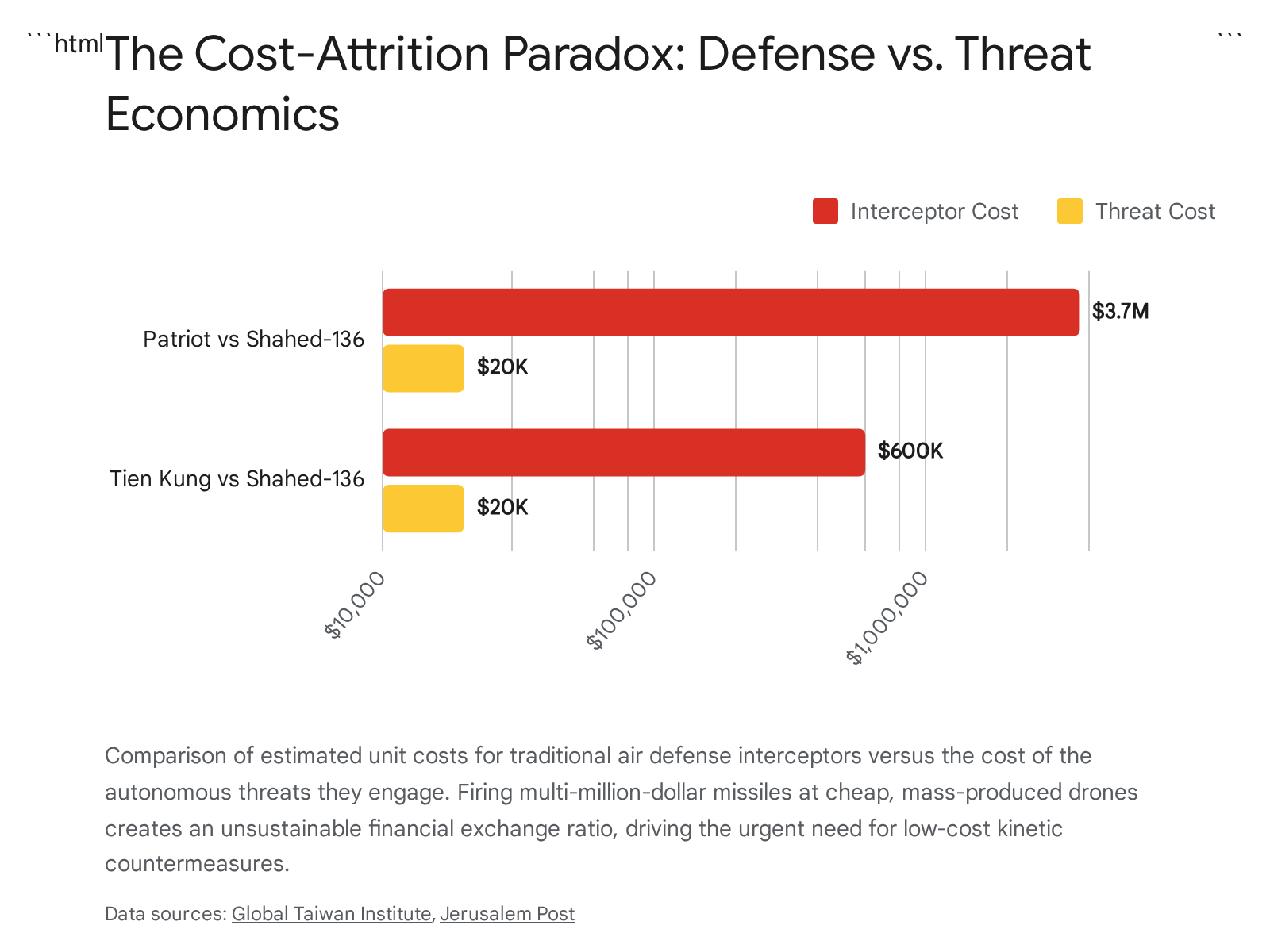
The modern battlefield, particularly as observed in the ongoing conflict in Ukraine, has demonstrated a fundamental shift in the character of war. Uncrewed systems are no longer utilized solely as niche enablers or high-altitude surveillance assets operating in uncontested airspace; they are central instruments of kinetic warfare, functioning as primary reconnaissance networks, artillery spotters, and loitering munitions.1 In this environment, the strategic advantage shifts toward the force capable of deploying large volumes of uncrewed assets. Large fleets of low-cost, attritable drones create operational dilemmas for adversaries, forcing them to exhaust expensive air defense interceptors on inexpensive, easily replaceable targets.2

2.1 The Replicator Initiative and Production Realities

In response to these shifting dynamics, the DoD launched the Replicator initiative in August 2023. Unveiled by Deputy Defense Secretary Kathleen Hicks, Replicator aims to rapidly field thousands of attritable autonomous systems across multiple domains within an aggressive 18-to-24-month timeframe.2 The initiative leverages commercial technology, robotics, and artificial intelligence to offset the mass of the People’s Liberation Army (PLA).2 Executed in phases, Replicator 1.1 and 1.2 have focused on the selection of maritime and aerial drones, alongside associated counter-drone assets, for mass domestic manufacturing.8

However, achieving this goal requires a manufacturing base capable of hyperscaling production. The commercial drone production ecosystem, which naturally underwrites military capability through economies of scale, learning effects, and rapid adaptation, is currently dominated by foreign competitors.1 The domestic U.S. drone industrial base remains fragmented, expensive, and constrained by vulnerable supply chains.1 Transitioning from an “exquisite” to an “attritable mass” paradigm requires fundamental changes in how facilities operate and how labor is deployed. The strategic intent of Replicator is sound, but it operates within an industrial base that is currently poorly suited to the mass production of inexpensive, expendable weapons.1

2.2 Cost Economics: Exquisite versus Attritable Systems

The justification for transitioning toward unmanned systems frequently hinges on cost. Conventional wisdom asserts that UAS platforms are inherently cheaper because they eliminate the need for pilot life-support equipment, cabin pressurization, and ejection systems.10 However, evaluating the actual economics of scaling drone fleets requires a nuanced understanding of acquisition versus life-cycle operations and support (O&S) costs.

When comparing exquisite, large-scale systems, the cost advantages of unmanned platforms narrow significantly when recurring life-cycle costs are factored in.10 Data from the Congressional Budget Office illustrates this dynamic when comparing the unmanned RQ-4 Global Hawk to the manned P-8 Poseidon. While the RQ-4 featured a lower average acquisition cost ($239 million per aircraft compared to $307 million for a P-8), its life-cycle costs per flying hour were calculated at roughly $35,200, compared to $42,300 for the P-8.11 This relatively narrow 17 percent difference in life-cycle costs is driven by the RQ-4’s shorter expected lifespan, intensive maintenance requirements, and higher historical attrition rates, which amortize the initial acquisition cost over fewer total flying hours.11 Similarly, the MQ-9 Reaper, often cited as a cost-effective alternative to manned fighters, carries a total unit cost exceeding $120 million when evaluating a complete, operable Combat Air Patrol consisting of four air vehicles and associated ground control stations.13

These figures demonstrate why the Replicator initiative cannot simply rely on scaling existing legacy uncrewed systems. The economics change drastically only when analyzing “attritable mass” systems. The strategic value of small, highly modular drones is not derived from operating them for decades, but from utilizing them as expendable assets that impose disproportionate costs on adversaries.3 However, the primary bottleneck to achieving this economic advantage remains labor. If the human capital required to build these attritable systems is scarce, labor costs will inevitably rise, eroding the cost-per-unit advantage that makes the swarm strategy economically viable.

3. The Paradigm Shift from Legacy Aerospace to Iterative Manufacturing

The production of modern autonomous systems requires a departure from traditional aerospace manufacturing timelines. Traditional manufacturing relies on tooling-based rigidity, characterized by massive upfront investments in injection molds, dies, and static assembly lines.14 This model is designed for platforms that will remain largely unchanged in their physical geometry for years or decades.

Conversely, drones designed for contested environments must iterate rapidly to overcome adversarial countermeasures. Observations from the conflict in Ukraine indicate that drone technology becomes obsolete roughly every six weeks as adversaries adapt their electronic warfare, jamming, and kinetic interception tactics.15 This intense pressure for continuous, rapid design iteration requires a highly agile workforce capable of adapting to new airframes, payloads, and frequencies on a near-monthly basis.

Close-up of a drilled hole in the receiver of a CNC Warrior M92 folding arm brace

[Image: A comparative workflow diagram showing the linear, multi-year production cycle of traditional aerospace platforms next to the rapid, circular 6-week iterative production loop required for attritable drones.]

To achieve this velocity, hardware manufacturing must evolve from mechanical rigidity to digital-first agility. This evolution leans heavily on additive manufacturing and modular design. Rather than investing up to $50,000 in a single injection mold, manufacturers are utilizing Large Format Additive Manufacturing (LFAM) to process low-cost polymer granulates, enabling the production of diverse drone sizes on the same equipment.15 Companies engaging in the Replicator initiative are demonstrating the ability to print, assemble, and fly long-range uncrewed aircraft with reconfigurable payloads with lead times as short as six weeks.18 This transition significantly alters the human capital requirements; the industry relies less on static assembly line workers and more on technicians who can seamlessly interact with digital warehouses, optimize toolpaths for additive systems, and manage rapid structural bonding processes.14

4. The Blue-Collar Deficit: Critical Bottlenecks in Drone Manufacturing

While artificial intelligence and advanced algorithms dictate the behavior of autonomous systems, the physical platforms must be manufactured, assembled, and inspected by humans. The defense sector is experiencing a massive talent gap in engineering; projections indicate a global shortage of semiconductor engineers exceeding one million by 2030, and the U.S. currently produces only a fraction of the aerospace engineers required to meet demand.19 However, this white-collar engineering deficit cascades downward, heavily impacting the blue-collar trades necessary for physical production. The shortage of specialized manufacturing labor is the most acute constraint on domestic aerospace expansion, directly threatening the ability to meet production targets of 10,000 or more UAS units per month.20

4.1 Composite Technicians and Airframe Fabrication

To maximize flight endurance and payload capacity, drone airframes must achieve an exceptional strength-to-weight ratio. Traditional metal fabrication adds weight that destroys flight efficiency, while small-scale 3D printing often lacks the necessary structural integrity for high-stress maneuvers.17 Consequently, advanced uncrewed systems rely heavily on composite materials, primarily carbon fiber, fiberglass, and Kevlar.22

The fabrication of these materials requires specialized composite technicians. The manufacturing process for composite drone frames is highly complex and manual. Technicians are responsible for preparing molds, performing precise hand layups of carbon fiber sheets, executing vacuum bagging to remove air voids, and managing the thermal curing processes required to solidify the resins.24 Furthermore, post-cure processing involves trimming, sanding, and finishing the parts to meet exacting dimensional tolerances, often involving the integration of metal inserts and couplings for assembly.22

Mistakes in fiber orientation, improper resin ratios, or flawed curing temperatures can lead to structural delamination under the extreme aerodynamic stress of flight.25 Because cured carbon fiber cannot be easily drilled or machined without risking structural compromise or requiring highly specialized milling tools, the initial layup and molding must be executed with near perfection.22 As the industry attempts to scale, the reliance on weeks of skilled manual labor per unit for carbon fiber hand layup becomes a severe production bottleneck.17 Even as the industry adopts Large Format Additive Manufacturing to extrude polymer granulates (such as polypropylene and polyamide compounds) for larger airframes, technicians skilled in managing these advanced robotic systems, optimizing toolpaths, and performing post-processing are essential.17 The talent pipeline for these roles is remarkably narrow, with few vocational programs offering dedicated composite manufacturing training outside of legacy commercial aerospace hubs.26

4.2 Precision Solderers and Electronics Assembly

Drones function fundamentally as highly mobile, flying sensor networks. The integration of flight controllers, electronic speed controllers (ESCs), optical payloads, and radio frequency communication modules relies on intricate printed circuit board (PCB) assembly.28 While high-volume Surface Mount Technology (SMT) handles the automated placement of microchips, hand soldering remains an absolute necessity for through-hole components, heavy-duty battery connectors, mechanical mounts, selective operations, rework, and low-volume rapid prototyping.30

In a combat or tactical environment, an uncrewed system is subjected to massive vibrational forces, rapid thermal cycling, and high-G maneuvers. A single “cold” solder joint or a microscopic fracture in a through-hole connection can result in catastrophic mid-air electrical failure.29 Therefore, precision hand soldering requires far more than basic assembly capability; it requires a mastery of thermodynamics at a micro-scale. Technicians must maintain precise temperature control—often targeting 390°C for smaller joints and up to 450°C for larger battery connections—while managing flux application and dwell time to ensure complete hole fill and strong mechanical bonds without damaging adjacent, sensitive microelectronics.29

The defense standard governing this work is the IPC J-STD-001 certification, which dictates the materials, methods, and stringent verification criteria for producing high-quality solder interconnections, specifically including space and aerospace applications.31 Acquiring and maintaining a workforce of certified precision solderers is exceptionally difficult. The commercial technology and telecommunications sectors heavily recruit individuals with these exact micro-electronics capabilities, often offering superior compensation packages without the restrictive environments, security protocols, or geographic limitations associated with defense contracting.19

4.3 Machinists, Tooling, and Iteration Agility

The rapid, six-week iteration cycle dictated by modern electronic warfare places immense pressure on CNC machinists and tool-and-die makers. In traditional manufacturing, creating an injection mold for a drone chassis component requires metal dies that can cost between $10,000 and $50,000, taking weeks or months to machine.14 If adversarial countermeasures require a change in payload shape, aerodynamic profile, or antenna housing, these expensive tools must be entirely remade.14

To achieve rapid iteration, machinists must transition from traditional long-term tooling to rapid prototyping methodologies. This involves utilizing advanced 5-axis CNC milling, precision sheet metal fabrication, and the creation of temporary molds from high-density milling foam or 3D printed polymers.15 This environment demands a workforce highly proficient in digital-first agility, capable of translating AI-driven Design for Manufacturability (DFM) outputs directly into machine code.14

However, the demographic reality of the machining profession poses a systemic risk. The median age for machinists in the United States is 45.7 years, with over 31 percent of the workforce aged 55 or older.33 This indicates a looming retirement cliff that threatens to hollow out this critical capability precisely as the defense apparatus attempts to scale drone production to multiple thousands of units per month.33

4.4 Quality Assurance and Inspection Personnel

The final critical blue-collar bottleneck resides in Quality Assurance (QA). Defense UAS components must perform reliably, requiring rigorous quality control integrated into every stage of production.32 This necessitates a workforce of trained inspectors capable of identifying microscopic defects in composite materials, utilizing non-destructive testing (NDT) methodologies, conducting electromagnetic interference (EMI) inspections, and verifying the integrity of complex mechanical and electrical assemblies.24

The regulatory framework further complicates this process. DoD acquisitions operate under stringent QA guidelines, such as Federal Acquisition Regulation (FAR) Part 46 and Defense Federal Acquisition Regulation Supplement (DFARS) Part 246.35 These regulations dictate extensive government and contractor inspection systems, ensuring that manufacturing processes, drawings, and engineering changes conform exactly to specified technical requirements.35

While these comprehensive standards are vital for multi-million-dollar, decades-long platforms where human lives are directly at risk, applying the same heavy bureaucratic inspection regimes to $30,000 attritable drones slows production velocity to an unacceptable rate. QA inspectors must be specifically trained to navigate the nuances of verifying “smart and affordable mass.” They must ensure operational reliability without imposing exquisite-level perfectionism and MIL-SPEC rigidity that ultimately ruins the economics of attritability.3

4.5 Material Complexity and Supply Chain Dependencies

The workforce must also navigate highly complex supply chains and specialized raw materials. Drone production relies heavily on specific materials to achieve necessary power-to-weight ratios and endurance limits. For larger uncrewed systems, technicians must work with aluminum-silicon-copper piston alloys, steel or titanium valvetrain parts, and magnesium castings used to save weight.9 On the electronic side, energy storage defines endurance limits; each kilowatt-hour of battery capacity requires substantial amounts of copper, aluminum, graphite, and lithium-ion cells, while advanced radar and communication systems rely heavily on gallium-nitride electronics.9 The ability of the workforce to manage, process, and assemble these highly specific materials is fundamentally linked to the nation’s capacity to scale mass production.9

5. The Systemic Retention Crisis and Demographic Shifts

When defense policymakers and program managers discuss the manufacturing skills gap, the conversation is predominantly focused on recruitment pipelines: the lack of applicants, limited training slots, and poor awareness of manufacturing careers.33 However, systemic federal data reveals that the DIB is suffering from a catastrophic retention problem. Defense manufacturers cannot simply hold onto the talent they spend years recruiting and training.33

5.1 The Collapse of Occupational Tenure

According to Bureau of Labor Statistics (BLS) data, the median tenure in production occupations has suffered a severe decline, falling 21 percent from 5.2 years in 2014 to just 4.1 years in 2024.33 In the specific manufacturing subsectors that feed defense supply chains—such as primary metals, fabricated metal products, and machinery manufacturing—tenure has dropped equally precipitously.33 For machinery manufacturing specifically, median tenure fell from 6.2 years to 5.0 years over the same decade.33

Simultaneously, the demographic distribution of the workforce is dangerously skewed. While over 31.4 percent of the machinist workforce is nearing retirement age, the 25-to-34 age cohort—the demographic essential for mid-career proficiency and transitioning into management or advanced technical roles—accounts for only 16.5 percent of the workforce.33 The defense sector is steadily bleeding its mid-level talent, and data indicates that frontline and middle managers in aerospace and defense are twice as likely to leave their employers as individual contributors.38

Close-up of a drilled hole in the receiver of a CNC Warrior M92 folding arm brace

5.2 Security Clearances and ITAR Restrictions

The retention problem is exponentially more damaging to the defense industrial base than to the commercial sector due to the structural, regulatory barriers to hiring.33 A commercial drone manufacturer facing turnover can replace a departing technician relatively quickly from the open labor market. A defense contractor producing specialized, export-controlled hardware cannot.

The defense labor pool is artificially restricted by the International Traffic in Arms Regulations (ITAR) and the Export Administration Regulations (EAR). Because drones, their software, and their manufacturing schematics frequently fall under the United States Munitions List (USML) or require strict export compliance, manufacturers are largely compelled to employ U.S. persons and restrict foreign national access entirely.39 Losing a single highly skilled worker from this already small, restricted pool creates an immediate production vacuum.33

Furthermore, workers engaged in sensitive defense programs require security clearances. When a cleared technician leaves, the replacement must undergo comprehensive background investigations, adjudication processes, and program read-ins. This bureaucratic process routinely takes six to twelve months, and sometimes longer.33 During this gap, production lines must either slow down significantly or cannibalize cleared personnel from other critical programs. This introduces cascading schedule risks, particularly threatening to initiatives like Replicator that are operating on rigid, politically mandated 18-to-24-month deadlines.7

5.3 The Loss of Accumulated Technical Proficiency

Defense drone production, unlike mass consumer electronics, involves low-volume, high-complexity systems. Workers do not develop proficiency through the mindless, high-volume repetition of a standard commercial assembly line; they develop essential “muscle memory” through years of accumulated experience with specific composite materials, aerospace tolerances, and rigorous QA regimes.33

When a machinist with 15 years of experience leaves the defense sector for the commercial tech sector, their unique expertise in preventing carbon fiber delamination, executing complex multi-axis CNC operations, or maintaining tight thermal controls during soldering is lost. This specialized proficiency cannot be instantly replaced by a recent community college graduate or a four-month accelerated training program.33 The steady decline in median tenure means that the DIB is continuously operating with a workforce that has not yet reached peak technical maturity, resulting in higher defect rates, slower production times, and increased supply chain fragility.19

6. Facility Scaling and the Hyperscale Model

As the DoD demands production scaling from bespoke prototype quantities to multiple thousands of units per month, the physical footprint of the defense industrial base must radically expand. The transition from small-scale engineering laboratories to hyperscale manufacturing facilities introduces complex logistical and infrastructural hurdles.

6.1 The Transition to Hyperscale Infrastructure

Meeting the demands of affordable mass requires a departure from distributed, fragmented supply chains toward consolidated, massive-scale production hubs. The development of “Arsenal-1” by Anduril Industries in Pickaway County, Ohio, serves as a primary case study for this new industrial model. Designed as a hyperscale manufacturing facility specifically for autonomous systems and weapons, Arsenal-1 is planned to encompass over 1.7 million square feet of production space across multiple buildings, representing an investment of nearly $1 billion and expected to create over 4,000 direct jobs.43

The strategic architecture behind Arsenal-1 emphasizes software-driven manufacturing, modular factory layouts, and staggered capacity scaling.43 Rather than opening an entire campus simultaneously, the facility relies on a 10-year staggered buildout, allowing the company to scale intentionally to meet production demands without overextending capital.43 This model deliberately eschews complex, rigid robotics in favor of deploying human capacity rapidly. As noted by industry executives, the intent is to avoid overly complex automation initially, focusing instead on bringing the workforce online to ramp production as fast as possible, standardizing processes to accommodate a rapid increase in output.47 Efficient space utilization is paramount; modern layouts structure production, logistics, assembly, and testing under single, integrated roofs to accommodate multiple drone variants—such as First Person View (FPV) drones, loitering munitions, and cruise systems—on shared infrastructure.48

6.2 The Burden of ITAR-Compliant Production Environments

While commercial drone manufacturers can scale operations relatively easily in standard light-industrial parks, defense drone manufacturing facilities must be built to withstand intense regulatory scrutiny. Creating a manufacturing environment capable of producing ITAR-controlled systems requires millions of dollars in physical and digital overhead that commercial entities do not face.32

Facilities must implement robust physical safeguards to prevent unauthorized access. This includes segmented production areas, sophisticated visitor management systems, escorted access protocols, and advanced continuous surveillance.49 On the digital front, technical data such as CAD drawings, manufacturing instructions, material specifications, and quality procedures must be held on air-gapped or heavily controlled networks featuring encrypted storage and strict need-to-know access validation.49 Furthermore, achieving Cybersecurity Maturity Model Certification (CMMC) Level 2 physical and digital safeguards are often baseline requirements for handling Controlled Unclassified Information (CUI).49

Manufacturing ProcessDefense Control ConstraintImpact on Scaling Speed & Cost
Facility LayoutPhysically segregated work areas; escorted visitor protocols; restricted foreign national access. 49Prevents the use of shared commercial space; requires dedicated, secure real estate footprint.
Component EngineeringEncrypted storage; Computer-Aided Manufacturing (CAM) programming on air-gapped systems. 49Slows cross-team collaboration; requires highly specialized IT infrastructure and cleared IT personnel.
Shop Floor OperationsProcess specifications and instructions require strict document control and physical security. 49Limits the use of wireless tablets/IoT devices common in “smart factories” without extreme encryption.
Supply Chain SourcingExport authorization verification; mandatory supplier ITAR compliance checks. 49Limits the vendor pool; prevents rapid sourcing of commercial off-the-shelf (COTS) parts globally.

These extensive constraints dictate that scaling drone production is not simply a matter of acquiring real estate and installing CNC machines; it requires building highly secure fortresses of compliance. This environment inherently slows operational velocity and creates a massive administrative burden that deters smaller, highly innovative commercial drone startups from transitioning their dual-use technology into the defense sector.32

7. Regulatory Frictions: Airspace, Spectrum, and Testing

Beyond the confines of the factory floor, the workforce is further constrained by domestic regulatory frameworks that complicate the testing and iteration phases of drone development. A drone cannot be effectively iterated every six weeks if the manufacturer cannot rapidly test the integrated systems in real-world conditions.

7.1 Airspace Restrictions and Testing Bottlenecks

The Federal Aviation Administration (FAA) strictly regulates the operation of small uncrewed aircraft systems (weighing less than 55 pounds) under 14 CFR Part 107.51 These regulations stipulate that operators must keep the drone within visual line of sight at all times, limiting the maximum allowable altitude to 400 feet above the ground, and restricting the maximum speed to 100 mph (87 knots).51 Furthermore, operations are generally restricted to daylight or twilight hours, and flights over people not directly participating in the operation are prohibited.51

While these rules are essential for civilian airspace safety, they present massive hurdles for defense manufacturers testing advanced autonomous swarm logic, long-range capabilities, and high-speed maneuvers. Manufacturers must either secure complex waivers from the FAA or transport personnel and equipment to specialized, geographically remote military test ranges. This geographic dislocation separates the engineering and assembly workforce from the testing environment, severely disrupting the rapid feedback loops required for iterative manufacturing.

7.2 Spectrum Allocation Challenges

Compounding the airspace issue is the allocation of radio frequency spectrum. Most domestic drone operations currently rely on unlicensed spectrum—the same frequencies utilized by consumer Wi-Fi routers and other devices, including the 900 MHz band, 2.4 GHz band, and 5.8 GHz band.52 As the DoD seeks to build drone dominance, the Federal Communications Commission (FCC) recognizes that these crowded, unlicensed bands are highly susceptible to interference and may not be viable for the intensive, large-scale UAS operations envisioned by the military.52

The FCC is actively seeking to expand deployment by permitting UAS operations in flexible-use terrestrial bands typically reserved for mobile broadband, such as the 1.4 GHz, 2.3 GHz, and 3.7 GHz bands.52 Concurrently, the emergence of private 5G and LTE networks is providing dedicated connectivity layers for industrial sites, enabling the testing of automated, long-range drone missions with predictable coverage and low latency.53 However, until dedicated spectrum and secure networks are fully integrated and accessible to the defense industrial base, the workforce is limited in its ability to test the electronic resilience of the systems they are assembling.

8. Cross-Sector Competition Within the Defense Industrial Base

A critical oversight in current defense planning is viewing drone workforce deficits in complete isolation. The defense industrial base is a largely closed ecosystem, drawing continuously from the same restricted pool of cleared, U.S. citizen labor. Consequently, the drone sector is engaged in direct, zero-sum competition with other vital national security priorities for the exact same blue-collar workers.54

8.1 The Talent Tug-of-War

The American industrial base is currently strained by massive munitions consumption in Eastern Europe and the strategic imperative to expand the U.S. Navy fleet to maintain deterrence in the Indo-Pacific.54 The scale of this consumption is staggering; at peak intensity, Ukraine’s daily need for 155mm artillery shells could exhaust pre-war U.S. monthly production in just over a day, while their consumption of 10,000 drones per month could deplete the entire U.S. inventory in a matter of weeks.54

To address this, the U.S. government is actively modernizing and expanding its shipyards, armories, and munitions plants.57 However, the production of artillery shells, the construction of Columbia-class nuclear submarines, and the mass manufacturing of attritable UAS all require the exact same core competencies: industrial electricians, master welders, QA inspectors, and CNC machinists.20 When the DoD successfully injects capital to ramp up submarine shipbuilding or warm up munitions production lines, it inadvertently cannibalizes talent from aerospace and drone programs.55 Regional labor markets, particularly in historical manufacturing hubs, cannot organically produce highly skilled tradespeople fast enough to satiate the concurrent, surging demands of all branches of the military.20

8.2 Vocational Pipelines and Accelerated Training

Historical precedents demonstrate that national industrial mobilization requires viewing human capital as a strategic resource. During World War II, the iconic “Rosie the Riveter” campaign was not merely propaganda; it was a deliberate, government-led effort to solve a systemic labor crisis, successfully increasing the proportion of women in the U.S. aircraft industry workforce from 1 percent to 65 percent by 1943.54 The current DIB faces a similar, albeit more technically complex, workforce crisis that requires comparable institutional focus.54

To combat the talent shortage, the DoD has begun investing in accelerated vocational pipelines. The Accelerated Training in Defense Manufacturing (ATDM) pilot project in Danville, Virginia, funded by the DoD’s Industrial Base Analysis and Sustainment (IBAS) program, serves as a vital proof of concept.58 Originally focused on addressing gaps in the submarine shipbuilding sector, the ATDM platform aims to compress traditional 1-to-2-year trade training programs into an intensive 4-month curriculum designed specifically to meet urgent defense maritime production requirements.58

For the uncrewed systems industry to scale, similar regional training centers dedicated specifically to advanced composites, precision soldering, and digital drone fabrication must be established nationwide.26 Educational institutions are beginning to recognize this shift. High school Career and Technical Education (CTE) programs and community colleges are integrating drone operation, maintenance, and composite fabrication into their curricula, utilizing on-campus makerspaces equipped with 3D printers, laser cutters, and CNC machines.27 These programs introduce students to essential skills, from understanding electronic systems to diagnosing circuit faults and interpreting technical documentation.60 However, the scale of these educational initiatives remains vastly inadequate relative to the projected military need for tens of thousands of units per month.21 Furthermore, the DoD’s Human Capital Operating Plan (HCOP) and the newly established Chief Talent Management Officer (CTMO) must ensure that talent acquisition strategies penetrate to the blue-collar, vocational level, rather than focusing solely on white-collar engineering and cyber defense roles.61

9. Strategic Imperatives for DoD Leadership

The tendency to fixate on the technological capabilities of autonomous systems—AI integration, swarm logic, and sensor fidelity—obscures the physical reality that drones are ultimately built by human hands in physical factories. To ensure the success of large-scale manufacturing initiatives like Replicator and maintain strategic deterrence, DoD leadership must address the following imperatives regarding human capital:

  1. Elevate Human Capital to a Strategic Capability: As articulated by defense policy experts, the DoD must view investments in human capital with the same urgency and scale as investments in research and development, software architecture, or plant equipment.58 The establishment of the CTMO is a positive institutional step, but execution must reach the blue-collar factory floor.61 The DIB cannot fulfill its mandates without a deliberate, national-level campaign to recruit, train, and retain skilled tradespeople.
  2. Mitigate the Retention Crisis through Contractual Innovation: The DoD must aggressively address the alarming drop in production tenure. Leadership should explore contractual mechanisms that incentivize prime contractors to invest heavily in employee retention, long-term career pathing, and workplace stability. High turnover in defense facilities directly correlates to schedule delays and quality degradation, which are unacceptable under rapid-deployment mandates.33
  3. Modernize Quality Assurance Regimes for Attritable Mass: Applying exquisite-level FAR and DFARS quality assurance inspection requirements to expendable, attritable drones creates unnecessary labor bottlenecks. The DoD must rapidly establish bifurcated QA standards, allowing for “smart and affordable mass” to be inspected and accepted based on statistical sampling and functional reliability rather than the perfectionist, individual-unit scrutiny historically applied to multi-million-dollar crewed aircraft.3
  4. Scale Accelerated Vocational Training Nationwide: The IBAS program’s successful investment in accelerated training models must be vastly expanded beyond shipbuilding to encompass aerospace composites, precision electronics assembly, and digital manufacturing. Establishing regional training hubs near planned hyperscale facilities—mirroring the ATDM model—will be essential to generating the localized, highly skilled talent pipelines required to build thousands of drones per month.20
  5. Address ITAR, Security Clearance, and Testing Frictions: To widen the talent pool and reduce facility overhead, the DoD should work with the State Department and security agencies to streamline clearance adjudications for essential blue-collar production roles. Furthermore, leadership must evaluate whether certain lower-tier components of attritable drones can be carved out of the most restrictive USML and CMMC requirements without compromising national security.33 Concurrently, inter-agency coordination with the FAA and FCC is required to establish dedicated airspace and spectrum for the rapid testing of mass-produced UAS, closing the iterative feedback loop.51

The ultimate success of the United States’ strategy to counter adversarial mass in future conflicts will not be determined solely by the algorithms guiding its weapons, but by the physical capacity of its industrial workforce to build them. Securing the physical supply chain and the specialized labor force that drives it is the immediate, critical prerequisite for unleashing American drone dominance.


Please share the link on Facebook, Forums, with colleagues, etc. Your support is much appreciated and if you have any feedback, please email us in**@*********ps.com. If you’d like to request a report or order a reprint, please click here for the corresponding page to open in new tab.


Works cited

  1. The Drone Gap: Why the U.S. Industrial Base Continues to Fall …, accessed April 24, 2026, https://www.icitech.org/post/the-drone-gap-why-the-u-s-industrial-base-continues-to-fall-behind-in-a-world-at-war-by-drone
  2. Replicator: A Bold New Path for DoD | Center for Security and Emerging Technology %, accessed April 24, 2026, https://cset.georgetown.edu/article/replicator-a-bold-new-path-for-dod/
  3. Smart and affordable mass | Roland Berger, accessed April 24, 2026, https://www.rolandberger.com/en/Insights/Publications/Smart-and-affordable-mass.html
  4. Drones in Modern Warfare | Australian Army Research Centre (AARC), accessed April 24, 2026, https://researchcentre.army.gov.au/library/occasional-papers/drones-modern-warfare
  5. Why Replicator is critical for the future of defense – Anduril, accessed April 24, 2026, https://www.anduril.com/news/why-replicator-is-critical-for-the-future-of-defense
  6. DOD Innovation Official Discusses Progress on Replicator > Department of Defense Manufacturing Technology Program > News Display, accessed April 24, 2026, https://www.dodmantech.mil/News/News-Display/Article/3999474/dod-innovation-official-discusses-progress-on-replicator/
  7. Scaling the Future: How Replicator Aims to Fast-Track U.S. Defense Capabilities, accessed April 24, 2026, https://warontherocks.com/2023/09/scaling-the-future-how-replicator-aims-to-fast-track-u-s-defense-capabilities/
  8. DOD touts ‘successful transition’ for Replicator initiative — but questions linger, accessed April 24, 2026, https://defensescoop.com/2025/09/03/dod-replicator-drone-tech-transition-fielding-questions-linger/
  9. The Drone Supply Chain War: Identifying the Chokepoints to Making a Drone – CSIS, accessed April 24, 2026, https://www.csis.org/analysis/drone-supply-chain-war-identifying-chokepoints-making-drone
  10. Usage Patterns and Costs of Unmanned Aerial Systems | Congressional Budget Office, accessed April 24, 2026, https://www.cbo.gov/publication/57260
  11. CBO compares cost of UAS and manned ISR aircraft – Acquisition Talk, accessed April 24, 2026, https://acquisitiontalk.com/2021/06/cbo-compares-cost-of-uas-and-manned-isr-aircraft/
  12. Usage Patterns and Costs of Unmanned Aerial Systems – Congressional Budget Office, accessed April 24, 2026, https://www.cbo.gov/system/files/2021-06/57090-UAS.pdf
  13. 2. The MQ-9’s Cost and Performance | TIME.com – U.S., accessed April 24, 2026, https://nation.time.com/2012/02/28/2-the-mq-9s-cost-and-performance/
  14. Why Drone Innovation Depends on Smarter Manufacturing – Shapeways, accessed April 24, 2026, https://www.shapeways.com/blog/why-drone-innovation-depends-on-smarter-manufacturing
  15. Drone Manufacturing: Scaling Production and Cutting Costs with Automated 3D Printing, accessed April 24, 2026, https://dhr.is/blog/drone-manufacturing-scaling-production-and-cutting-costs-with-automated-3d-printing
  16. Unleashing U.S. Military Drone Dominance: What the United States Can Learn from Ukraine, accessed April 24, 2026, https://www.csis.org/analysis/unleashing-us-military-drone-dominance-what-united-states-can-learn-ukraine
  17. Revolutionary Drone Structure Manufacturing: How LFAM Technology is Transforming UAV Production at Scale – Addcomposite, accessed April 24, 2026, https://www.addcomposites.com/post/revolutionary-drone-structure-manufacturing-how-lfam-technology-is-transforming-uav-production-at-scale
  18. RapidFlight Tapped for Pentagon’s Plan to Mass Produce Military Drones, accessed April 24, 2026, https://www.designdevelopmenttoday.com/industries/military/news/22893600/rapidflight-tapped-for-pentagons-plan-to-mass-produce-military-drones
  19. Why the Aerospace and Defense Industry Faces a Million-Person Talent Gap by 2030 – and What It Means for Innovation | ISG, accessed April 24, 2026, https://isg-one.com/articles/why-the-aerospace-and-defense-industry-faces-a-million-person-talent-gap-by-2030—and-what-it-means-for-innovation
  20. Aerospace & Defense Labor Shortage Solutions for 2026 – madicorp, accessed April 24, 2026, https://www.madicorp.com/blog/aerospace-defense-labor-shortages
  21. The Army wants to manufacture 10,000 drones per month by 2026 – FedScoop, accessed April 24, 2026, https://fedscoop.com/radio/the-department-expects-it-can-manufacture-at-least-10000-uas-per-month-once-the-first-site-is-up-and-running/
  22. Carbon Drone Frame Manufacturer – Refitech Composite Solutions, accessed April 24, 2026, https://www.refitech.eu/uav/
  23. Drone Manufacturing – Everything You Should Know – Custom Precision Component Provider | TOPS, accessed April 24, 2026, https://topsbest-precision.com/blog/drone-manufacturing/
  24. Delta Black Aerospace Inc – Composite Manufacturing Technician – UAV/Drone Production, accessed April 24, 2026, https://recruiting.paylocity.com/recruiting/jobs/Details/4014439/Delta-Black-Aerospace-Inc/Composite-Manufacturing-Technician—UAVDrone-Production
  25. CNC Machining Drone Frame Cost Inquiry – Reddit, accessed April 24, 2026, https://www.reddit.com/r/CNC/comments/1sf88k4/cnc_machining_drone_frame_cost_inquiry/
  26. Composites Technician – Career Training Programs from University of Texas at Arlington, accessed April 24, 2026, https://eeccareertraining.uta.edu/training-programs/composites-technician/
  27. Stop thinking small: 5 facts proving modern manufacturing is your next high-tech, high-paying career | Edmonds College, accessed April 24, 2026, https://www.edmonds.edu/about-edmonds/news/tritons-blog/manufacturing-sme.html
  28. Basic Soldering Techniques for Assembling Your Unmanned Aerial Vehicle PCB – ALLPCB, accessed April 24, 2026, https://www.allpcb.com/blog/pcb-knowledge/basic-soldering-techniques-for-assembling-your-unmanned-aerial-vehicle-pcb.html
  29. A Beginner’s Guide to Soldering for FPV Drones – Oscar Liang, accessed April 24, 2026, https://oscarliang.com/soldering-guide/
  30. Hand Soldering Standards and Best Practices in EMS, accessed April 24, 2026, https://foxtronicsems.com/through-hole-assembly/hand-soldering-standards-best-practices-in-ems/
  31. Requirements for Soldered Electrical and Electronic Assemblies IPC Course | MTTC, accessed April 24, 2026, https://mttc.jpl.nasa.gov/catalog/soldered-electrical-and-electronic-assemblies-ipc/
  32. ITAR Certified UAV and Drone Manufacturing | Protolabs, accessed April 24, 2026, https://www.protolabs.com/resources/blog/how-to-accelerate-defense-uav-prototyping-under-itar-constraints/
  33. The Retention Problem Nobody’s Talking About: Why Defense …, accessed April 24, 2026, https://www.manufacturingmomentum.org/insight/the-retention-problem-no-one-is-talking-about-why-defense-manufacturing-cant-keep-the-talent-it-trains/
  34. Composite Technician Jobs, Employment in Texas | Indeed, accessed April 24, 2026, https://www.indeed.com/q-composite-technician-l-texas-jobs.html
  35. Part 46 – Quality Assurance – Acquisition.GOV, accessed April 24, 2026, https://www.acquisition.gov/far/part-46
  36. Part 246 – QUALITY ASSURANCE – Acquisition.GOV, accessed April 24, 2026, https://www.acquisition.gov/dfars/part-246-quality-assurance
  37. The Autonomous Arsenal in Defense of Taiwan: Technology, Law, and Policy of the Replicator Initiative | The Belfer Center for Science and International Affairs, accessed April 24, 2026, https://www.belfercenter.org/replicator-autonomous-weapons-taiwan
  38. Addressing the U.S. Aerospace Engineering Shortage, accessed April 24, 2026, https://aerospaceamerica.aiaa.org/features/addressing-the-u-s-aerospace-engineering-shortage/
  39. ITAR Compliance Guide: Requirements, Checklist, & Violations – PreVeil, accessed April 24, 2026, https://www.preveil.com/blog/itar-compliance/
  40. ITAR Compliance Overview – National Tooling & Machining Association, accessed April 24, 2026, https://ntma.org/wp-content/uploads/2020/03/ITAR-Guidance.pdf
  41. Unmanned Aircraft Vehicles and Systems | FIU Export Control, accessed April 24, 2026, https://exportcontrol.fiu.edu/export/topics/unmanned-and-autonomous-vehicles/
  42. AIA and McKinsey Release New Study on Tackling Talent Gaps in Aerospace and Defense Industry, accessed April 24, 2026, https://www.aia-aerospace.org/news/aia-and-mckinsey-release-new-study-on-tackling-talent-gaps-in-aerospace-and-defense-industry/
  43. Arsenal-1: One Year In – Anduril, accessed April 24, 2026, https://www.anduril.com/news/arsenal-1-one-year-in
  44. Drone maker Anduril to expand in Long Beach, California | Manufacturing Dive, accessed April 24, 2026, https://www.manufacturingdive.com/news/drone-maker-anduril-expansion-long-beach-california-1-billion/810476/
  45. Anduril Building Arsenal-1 Hyperscale Manufacturing Facility in Ohio, accessed April 24, 2026, https://www.anduril.com/news/anduril-building-arsenal-1-hyperscale-manufacturing-facility-in-ohio
  46. Anduril advances Arsenal-1 project in Ohio, confirming planned expansion of U.S. defense production capacity – Defence Industry Europe, accessed April 24, 2026, https://defence-industry.eu/anduril-advances-arsenal-1-project-in-ohio-confirming-planned-expansion-of-u-s-defense-production-capacity/
  47. Look Inside Anduril’s New Factory as CCA Production Begins, accessed April 24, 2026, https://www.airandspaceforces.com/look-anduril-new-factory-cca-production/
  48. Results: Designing a Modular Scalable Drone Factory | EFESO Management Consultants, accessed April 24, 2026, https://www.efeso.com/client-results/designing-modular-scalable-drone-factory/
  49. Defense Radar Manufacturers: ITAR and CMMC Compliance Essentials for Component Suppliers – Modus Advanced, accessed April 24, 2026, https://www.modusadvanced.com/resources/blog/defense-radar-manufacturers
  50. Strengthening the American Drone Industrial Base – Government Contracts Insights, accessed April 24, 2026, https://govcon.mofo.com/topics/strengthening-the-american-drone-industrial-base
  51. Small Unmanned Aircraft Systems (UAS) Regulations (Part 107) | Federal Aviation Administration, accessed April 24, 2026, https://www.faa.gov/newsroom/small-unmanned-aircraft-systems-uas-regulations-part-107
  52. FCC Seeks to Expand Deployment of U.S.-Made Drones and Dedicated Spectrum for Drones – Wiley Rein, accessed April 24, 2026, https://www.wiley.law/alert-FCC-Seeks-to-Expand-Deployment-of-US-Made-Drones-and-Dedicated-Spectrum-for-Drones
  53. The Drone Industry’s Next Bottleneck Isn’t the Aircraft – Dronelife, accessed April 24, 2026, https://dronelife.com/2026/01/29/the-drone-industrys-next-bottleneck-isnt-the-aircraft/
  54. Forging America’s 21st Century Defense Industrial Base: Applying Lessons from the Arsenal of Democracy to Modern Great-Power Competition – U.S. Army, accessed April 24, 2026, https://www.army.mil/article/288967/forging_americas_21st_century_defense_industrial_base_applying_lessons_from_the_arsenal_of_democracy_to_modern_great_power_competition
  55. From Production Lines to Front Lines | CNAS, accessed April 24, 2026, https://www.cnas.org/publications/reports/from-production-lines-to-front-lines
  56. An Era of Global Rearmament and the U.S. Defense Industrial Base – JPMorgan Chase, accessed April 24, 2026, https://www.jpmorganchase.com/content/dam/jpmorganchase/documents/center-for-geopolitics/jpmc-cfg-us-dib-v4-ada-remediated.pdf
  57. National Security Advisor Jake Sullivan on Fortifying the U.S. Defense Industrial Base – CSIS, accessed April 24, 2026, https://www.csis.org/analysis/national-security-advisor-jake-sullivan-fortifying-us-defense-industrial-base
  58. DOD’s Office of Industrial Policy Promotes Defense Industrial Workforce Strategy at Stakeholder Summit – Department of War, accessed April 24, 2026, https://www.war.gov/News/Releases/Release/Article/2753779/dods-office-of-industrial-policy-promotes-defense-industrial-workforce-strategy/
  59. How Drones Are Transforming Career and Technical Education Paths, accessed April 24, 2026, https://www.fromabovedroneworks.com/how-drones-are-transforming-career-and-technical-education-pathways
  60. Drone Technician – AgExplorer | National FFA Organization, accessed April 24, 2026, https://agexplorer.ffa.org/career/drone-technician/
  61. Department of Defense Human Capital Operating Plan FY 2024–2025, accessed April 24, 2026, https://www.dmi-ida.org/knowledge-base-detail/Department-of-Defense-Human-Capital-Operating-Plan-FY-2024%E2%80%932025

UAS Supply Chain Vulnerabilities: A Strategic Analysis

1. Executive Summary

The United States Department of Defense is currently executing a historical pivot in military acquisition, transitioning from an exclusive reliance on exquisite, multi-million-dollar legacy platforms toward the mass deployment of attritable, autonomous Uncrewed Aerial Systems (UAS). Initiatives such as Replicator are designed to field thousands of autonomous systems across multiple warfighting domains within highly compressed timelines, fundamentally altering the calculus of modern deterrence.1 However, the strategic dialogue surrounding this transition consistently fixates on high-level system attributes, prioritizing artificial intelligence integration, swarm autonomy, software architecture, and final airframe assembly. This top-down perspective has inadvertently obscured severe, systemic vulnerabilities rooted deep within the sub-tier supply chain.

A modern military uncrewed aerial system is not merely a software platform; it is a complex physical integration of advanced metallurgy, specialized chemical composites, and precision microelectronics. The ability to sustain the mass production of these kinetic systems relies entirely on the continuous, uninterrupted flow of foundational raw materials and lower-tier electronic components.3 Currently, the United States and its allied partners suffer from profound industrial base deficiencies across these fundamental material categories.3 The domestic drone industrial base remains highly fragmented, chronically constrained by supply chain bottlenecks, and alarmingly entangled with adversary-controlled manufacturing ecosystems.4

This strategic report provides an exhaustive analysis of the structural vulnerabilities inherent in the UAS supply chain. It details the profound reliance on foreign markets, predominantly the People’s Republic of China, for the critical minerals, rare-earth permanent magnets, high-performance micro-motors, and advanced printed circuit board substrates required to mass-produce defense drones.5 These dependencies do not merely represent minor procurement delays; they constitute single points of strategic failure. The disruption of precursor chemicals, specific magnet alloys, or base-level electronic components by an adversarial state has the proven potential to instantly halt the production of entire classes of defense systems.5

Mitigating these vulnerabilities requires an immediate and aggressive shift in strategic perspective from defense leadership. The location of final drone assembly is a demonstrably poor indicator of supply chain security or operational resilience.5 True industrial resilience requires deep sub-tier visibility, targeted capital interventions to correct systemic market incentive failures, and a coordinated, multilateral strategy to develop alternative processing and manufacturing nodes entirely outside of adversarial jurisdiction. Without securing these upstream chokepoints, the Department of Defense risks fielding a modern military force that can be grounded not by kinetic strikes, but by the stroke of an adversarial export control policy.

2. The Geostrategic Context of Attritable Mass

The modern battlefield is undergoing a profound transformation, characterized by the proliferation of inexpensive, highly capable uncrewed systems that actively degrade the utility of traditional, concentrated military assets. The United States defense strategy has recognized that matching adversarial forces, particularly the People’s Liberation Army, requires a radical increase in autonomous mass.1

The Department of Defense launched the Replicator initiative under the direction of the Deputy Secretary of Defense, explicitly aiming to rapidly deploy multiple thousands of cost-effective drones across multiple domains within an aggressive eighteen to twenty-four-month timeframe.1 This initiative serves as a critical test of the defense industrial base’s ability to bridge the persistent gap between developing an innovative concept and deploying a capability at a scale sufficient to alter geopolitical deterrence.2 However, achieving this scale necessitates a departure from bespoke defense manufacturing toward commercial-scale industrial output, an area where the domestic base faces severe structural impediments.

The commercial drone manufacturing sector underwrites military capability through the sheer volume of production. Unprecedented manufacturing scale produces vital learning effects, enabling rapid technological adaptation, enhanced reliability, and dramatic cost reductions.4 The People’s Republic of China currently leverages a massive, globally dominant commercial drone ecosystem that feeds directly into its military and dual-use capabilities.4 This dominance was deliberately cultivated through state-sponsored industrial policies designed to turn the nation into a formidable peer competitor across all areas of leading-edge technology and manufacturing output.7 By contrast, the defense innovation ecosystem in the United States, while highly capable of designing advanced prototypes, lacks the foundational manufacturing capacity required to produce drones in large, attritable numbers without relying heavily on foreign sub-tier inputs.1

The profound consequences of this industrial disparity are currently being demonstrated in the ongoing Russo-Ukrainian conflict. Driven by the brutal arithmetic of attrition warfare, the Ukrainian defense forces are scaling uncrewed mass to unprecedented levels, having manufactured roughly four million drones in a single year and pacing toward an output of seven million systems annually.8 To achieve this staggering volume, Ukraine did not execute a domestic manufacturing miracle; rather, the nation embraced a severe strategic compromise by overwhelmingly procuring Chinese drone components to fuel its assembly lines.8

This dynamic has created a dizzying geopolitical paradox that serves as a masterclass in the circular logic of compromised supply chains.8 Western capital, provided to defend sovereignty, is utilized to purchase critical components from Chinese manufacturers. These funds subsequently flow into the state-managed economy of an adversary that actively supports the opposing belligerent.8 This entanglement explicitly demonstrates that during a high-intensity conflict, volume and immediate availability will inevitably dictate procurement realities, overriding security protocols and geopolitical alliances if domestic supply chains remain incapable of meeting the exponential surge in demand.8

3. The Anatomy of Drone Material Dependencies

The architectural foundation of modern drone warfare is built upon a complex chemistry and metallurgy that is frequently overlooked by policymakers focused on software, autonomy, and ethical artificial intelligence frameworks.3 The material dependency of a modern military drone can be categorized into five distinct strategic vulnerabilities: structural materials, propulsion systems, power storage, semiconductor sensors, and the underlying logistics network.3 Each of these material categories reveals a critical weak link that exposes the broader defense industrial base to systemic risk.3

Structural materials form the kinetic skeleton of the uncrewed system. High-performance military drones rely extensively on Carbon Fiber Reinforced Polymers to provide the necessary strength-to-weight ratios required for extended flight profiles.5 The raw, high-strength carbon fibers utilized in these composites are spun from a highly specialized polyacrylonitrile precursor chemical, the production of which is globally limited.5 The industrial chokepoint for structural materials is fundamentally constrained by time; aerospace-grade carbon fiber capacity is restricted to a small number of firms operating specialized autoclave facilities, making it physically impossible to rapidly surge production during a sudden geopolitical crisis.5 Furthermore, structural integrity often necessitates the use of specialized metals, predominantly advanced aluminum-lithium alloys that provide greater fuel and munition margins, alongside specialized aerospace titanium utilized extensively in landing gear and critical fastener applications.5

The logistics and integration networks that bind these components together represent an equally severe vulnerability due to profound opacity.5 The Department of Defense historically lacks adequate visibility into the procurement networks operating below the prime-contractor tier.5 Because foundational subcomponents cross multiple international borders and regulatory jurisdictions before reaching final assembly, the loss of a single precursor chemical or a specific alloy can easily halt the production of an entire class of uncrewed systems.5 Without rigorous traceability, a final system branded as domestically produced offers a false sense of security if its fundamental components remain reliant on adversary-controlled refineries.3

4. Upstream Bottlenecks: Critical Minerals and Chemical Processing

The true foundation of the drone supply chain resides at the level of critical minerals and the highly specialized metallurgical processes required to refine them for electronic and kinetic applications. Over the past several decades, the United States and its primary allies have systematically shed capacity in domestic mining, mineral refining, and advanced material fabrication.3 Consequently, the defense industrial base has become deeply entangled with supply chains over which adversary states exercise near-absolute monopolies.3

The integration of advanced communications, precision electronics, and automated navigation systems depends entirely on a highly specific set of critical minerals, each possessing unique properties that ensure reliability under the extreme conditions of combat flight.10 The People’s Republic of China dominates the extraction and, more importantly, the midstream chemical processing of these elements.11

Strategic Critical MineralPrimary Defense Drone ApplicationGeostrategic Dependency and Supply Chain Risk
GalliumHigh-frequency Gallium Arsenide and Gallium Nitride power amplifiers for radar, telemetry, and reliable high-frequency communications.China controls approximately 90% of global output and has actively implemented strict export licensing controls on all gallium products.5
GermaniumIndispensable for thermal optics, infrared lenses, and precision inertial navigation systems required for nighttime target identification.China produces roughly 90% of global germanium, creating extreme vulnerabilities for electro-optical targeting supply chains.5
Lithium & GraphiteHigh-performance lithium-polymer batteries essential for power density, extended flight range, and high-draw sensor payloads.China controls 85% of global lithium battery capacity, roughly two-thirds of global lithium processing, and over 70% of graphite anode material processing.5
BerylliumHighly valued for remarkable stiffness and thermal stability; utilized in the physical construction of precision electro-optical gimbal systems.Essential rigidity maintains targeting precision under significant mechanical vibration and thermal stress during combat maneuvers.10
TantalumHigh-capacitance, highly compact capacitors that deliver stable power across extreme temperature fluctuations in flight control modules.Critical for maintaining the functionality of onboard electronics when drones operate in harsh, high-altitude environments.10

The extreme concentration of battery material processing presents a particularly acute geographical risk. While raw lithium or natural graphite may be extracted in regions such as South America, Australia, or Africa, the chemical refining processes necessary to produce battery-grade anode and cathode materials remain heavily bottlenecked in East Asia.5 Even modest export controls or logistical disruptions affecting processed graphite can stall Western drone assembly lines within a matter of weeks, completely neutralizing domestic manufacturing capabilities.5 Market dynamics further complicate this vulnerability, as upstream metal demand is currently undergoing a rapid structural shift toward lithium-iron-phosphate battery chemistries, further cementing reliance on established Asian refining networks.5

5. The Micro-Motor and Propulsion Crisis

Propulsion systems represent one of the most immediate and glaring sub-tier vulnerabilities threatening the deployment of autonomous drone swarms. The standard propulsion mechanism for small-to-medium uncrewed systems is the brushless direct current micro-motor.8 While the physical construction of a brushless motor is not inherently complex—relying on basic electromagnetic principles—the capability to achieve high-volume mass production with extreme quality control rivals the highest tiers of automated commercial manufacturing.14

The performance, efficiency, and thrust capabilities of a defense-grade brushless motor are entirely dictated by the strength and thermal resilience of its permanent magnets.11 These systems require specialized Neodymium-Iron-Boron magnets.14 To ensure these magnets do not demagnetize and fail under the extreme heat generated during continuous high-thrust combat maneuvers, they must be alloyed with heavy rare earth elements, specifically dysprosium or terbium.5 Each individual small drone motor contains between five and fifteen grams of these specialized magnetic alloys; scaling this requirement to equip millions of drones translates to a demand for metric tons of highly processed rare earth materials.5

The United States currently lacks a secure, commercial-scale domestic supply chain for the production of defense-grade permanent magnets.15 The People’s Republic of China acts as the near-absolute supplier of drone motors precisely because it controls approximately 90 to 95 percent of global rare earth processing, refining, and sintered magnet manufacturing.5

This disparity is the result of a long-running, catastrophic failure of domestic industrial policy.18 Prior to 1980, the United States led the world in rare earth production. However, a change in regulations by the Nuclear Regulatory Commission regarding the handling of thorium—a naturally occurring, mildly radioactive byproduct commonly found alongside heavy rare earths—inadvertently imposed massive cost liabilities on domestic extraction.18 To avoid the crippling costs of regulatory compliance, U.S. mining entities ceased processing rare earth byproducts, diverting these critical resources into mine tailings as buried waste.18 This regulatory shift effectively ushered in the wholesale transfer of the rare earth industry, including metallurgy, processing IP, and commercial applications, directly to China, which aggressively capitalized on the market vacuum.18

The Department of Defense must understand that mining raw rare earth ore does not equate to supply chain security. Hundreds of rare earth mining projects have been initiated outside of China, yet these efforts fail to address the true chokepoint.18 A one percent reliance on adversarial states for midstream processing equates to a one hundred percent reliance on those states for the final functional capability.16

The revitalization of domestic drone motor manufacturing is currently blocked by an acute market incentive failure. Private manufacturers operate within strict margin constraints, and the commercial demand for neodymium magnets is heavily skewed toward high-performance electric vehicle drivetrains and large-scale offshore wind turbines.8 These industrial sectors offer vastly superior profit margins compared to the production of small, attritable drone motors.8 Without immense upfront capital expenditure subsidies or guaranteed, long-term procurement contracts from the Department of Defense, domestic startups and legacy manufacturers possess no market motivation to prioritize defense drone propulsion systems.8

Consequently, the cost disparity between domestic and adversarial motor production has become insurmountable without intervention. Benefiting from state subsidies and a complete monopoly on raw materials, Chinese manufacturers have flooded the global market with high-quality brushless motors priced between $12 and $25 per unit.5 A functionally equivalent motor manufactured utilizing exclusively non-Chinese supply chains costs between $100 and $225 per unit.5 Equipping a standard quadcopter with U.S. propulsion systems therefore elevates the motor cost from a negligible $48 to over $400, fundamentally undermining the economic feasibility of the Replicator initiative’s attritable mass goals.5

The geopolitical risks of this dependency were recently laid bare when the United States Department of the Treasury was forced to sanction T-Motor, the world’s largest commercial drone motor manufacturer based in China, for actively supplying kinetic propulsion systems to Russia and Iran.5 While a small contingent of allied manufacturers exists—including Allient and ModalAI in the United States, Evolito in the United Kingdom, and Rotor Lab in Australia—these firms face significant hurdles in scaling production rapidly enough to replace the current dependency on adversarial suppliers without sustained government support.14

6. The Electronic Nervous System: Printed Circuit Boards and Substrates

Printed Circuit Boards function as the central nervous system of any uncrewed aerial system, meticulously routing power and digital data between flight controllers, high-draw sensors, and kinetic propulsion systems. The assumption that the domestic assembly of a final circuit board ensures operational security represents a critical misunderstanding of sub-tier material flows. The advanced laminate materials required to manufacture a defense-grade circuit board rely entirely on a fragile and heavily constrained global supply network.22

The domestic printed circuit board industry is currently experiencing a severe capacity crisis driven by converging geopolitical and commercial pressures. The ongoing conflicts in the Middle East and Eastern Europe have led to a rapid depletion of advanced interceptors and long-range precision munitions.23 As the Department of Defense surges production to replenish these critical stockpiles, domestic electronics suppliers are being overwhelmed with ITAR-restricted procurement requests.23 Under the Defense Production Act, the government issues rated orders (DX or DO designations) that legally compel domestic suppliers to prioritize national defense contracts above all commercial work.23 This dynamic is stretching domestic manufacturing output dangerously thin, resulting in extended lead times, significant cost inflation, and capacity bottlenecks for new UAS acquisition programs.23

Simultaneously, the global electronics supply chain is undergoing an unprecedented structural transformation driven by the explosive proliferation of Artificial Intelligence infrastructure.22 The construction of AI data centers, massive GPU clusters, and high-bandwidth networking equipment requires massive quantities of the exact same ultra-low-loss, high-frequency printed circuit board laminates utilized in military drones, phased-array antennas, and advanced aerospace communications.22 What was once a niche requirement for the defense sector has become the defining demand driver for the global materials ecosystem.22 To capitalize on this high-margin commercial demand, major laminate manufacturers—including primary defense suppliers such as Rogers, Isola, and Taconic—are aggressively reallocating their production lines toward AI server board materials, creating a severe trickle-down shortage that threatens to paralyze the production of standard automotive, industrial, and defense electronics.22

The vulnerabilities of high-frequency circuit boards extend deeply into the raw materials used to construct the laminates themselves. A finished high-frequency substrate is a complex composite of ultra-thin copper foils, specialized glass yarns, and highly stable dielectric resins.27 Each of these sub-tier inputs suffers from distinct geographic and industrial concentration risks:

Sub-Tier PCB MaterialIndustrial Application and Technical RequirementSupply Chain Dominance and Vulnerability
Electrodeposited Copper FoilHigh-frequency signal integrity requires ultra-thin (down to 4.5µm), highly uniform copper foils to prevent signal attenuation and manage extreme thermal loads.29Market control is heavily concentrated in East Asia. Japanese firms (Mitsui Mining & Smelting, Furukawa Electric, JX Nippon) hold a commanding technological monopoly on high-precision foils, with significant secondary production expanding across South Korea (Doosan) and Taiwan.29
Electronic-Grade Glass YarnWoven fiberglass fabrics provide the structural and dielectric stability required for the board. Weave uniformity is critical to prevent signal skew in high-speed data transmission.28While U.S. entities like Owens Corning and AGY maintain critical aerospace capabilities, mainland China commands over half of the global installed capacity through state-backed giants like China Jushi and CPIC, creating massive price disadvantages for domestic sourcing.34
Specialty Laminate ResinsAdvanced epoxy, polyimide, and PTFE composite resins bond the copper and glass, determining the thermal resilience and water absorption rates of the final board.26As global suppliers pivot resin production capacity to meet the thermal requirements of commercial AI infrastructure, high-frequency military resins and standard FR4 materials are experiencing severe structural pricing pressures and restricted market availability.25

Without secured, uninterrupted access to imported precision copper foils and electronic-grade glass yarns, the domestic printed circuit board industry cannot fulfill surging defense orders. Pumping additional procurement capital into domestic final-assembly facilities will yield marginal returns if those facilities lack the raw material substrates required to fabricate the physical boards.

7. Semiconductors, Flight Controllers, and Electro-Optics

The active electronic components mounted to the circuit board—the microprocessors, power regulators, and precision sensors—constitute the intelligence and situational awareness of the uncrewed system. This domain remains heavily reliant on opaque, international semiconductor supply chains that introduce profound cybersecurity and operational availability risks.

The flight controller operates as the central brain of the drone.14 It houses the silicon microprocessors that execute autonomous navigation algorithms, alongside the Inertial Measurement Unit, a critical array of gyroscopes and accelerometers that calculate exact heading and velocity.14 The flight controller interfaces directly with the Electronic Speed Controller, a vital power management module that converts low-voltage digital signals from the processor into the high-amperage, three-phase alternating current required to drive the brushless motors at variable speeds.13

Modern Electronic Speed Controllers rely entirely on advanced power semiconductors, specifically Metal-Oxide-Semiconductor Field-Effect Transistors (MOSFETs) and gate driver integrated circuits.13 While elite Western semiconductor firms such as Infineon manufacture highly capable, defense-grade MOSFETs explicitly designed for high-power drone applications, the global commercial market remains flooded with cheaper alternatives fabricated in Chinese foundries.14 The primary vulnerability in this sector is silicon provenance.14 Due to the profound opacity of global semiconductor packaging and distribution networks, domestic circuit board assemblers frequently struggle to verify the true origin of their components. Recent industry surveys indicate that nearly half of United States circuit board manufacturers cannot definitively determine whether their assembled products contain microprocessors or discrete components manufactured within the People’s Republic of China.14

Sensors represent the sensory apparatus of the drone, and Chinese dominance in this sector is systematically embedded into the nation’s broader military doctrine.5 The People’s Liberation Army has officially prioritized a shift toward “intelligentized warfare,” a doctrine that leverages automation, artificial intelligence, and data-driven decision-making to secure battlefield dominance.5 Central to this doctrine is the mass integration of LiDAR (Light Detection and Ranging) technology, which generates highly precise, three-dimensional spatial data essential for autonomous navigation in environments where GPS signals are actively jammed or degraded.5

Recognizing LiDAR as a strategic chokepoint technology, Beijing aggressively subsidized its domestic industry.5 Today, Chinese firms—including Hesai, Livox, and RoboSense—control nearly eighty percent of the global LiDAR market.5 The integration of these low-cost, high-capability sensors into Western defense platforms presents severe espionage and data exploitation risks, as the hardware is explicitly designed to meticulously map physical surroundings.5

Initial legislative attempts to secure the United States drone fleet against these threats inadvertently created massive security loopholes. In 2020, when the government launched initiatives like the Blue UAS program to purge adversarial components, policymakers fixated almost exclusively on mitigating cybersecurity risks, focusing tightly on cameras, communication links, and data-transmitting microchips.5 Consequently, purely kinetic and mechanical components, such as brushless motors and speed controllers, were entirely excluded from the regulatory prohibitions.5 Because of this profound oversight, the overwhelming majority of uncrewed systems currently cleared for secure government operations continue to rely on kinetic subcomponents manufactured by the adversary.5

8. The Weaponization of the Supply Chain: Export Controls and Coercion

The deep integration of Chinese materials and subcomponents into the global defense architecture grants the People’s Republic of China immense, asymmetric geoeconomic leverage. Beijing has definitively transitioned from passively dominating market share to actively weaponizing its supply chain monopolies through the aggressive implementation of extraterritorial export controls.3

In recent years, the Chinese Ministry of Commerce (MOFCOM) has established a highly restrictive regulatory framework designed to safeguard its national security interests by tightly controlling the flow of defense-critical materials.5 This campaign began with stringent export licensing requirements on gallium, germanium, and specialized graphite.5 However, the most severe escalation occurred with the issuance of Ministry of Commerce Notice 2025 No. 61, which targeted rare earth elements and permanent magnet materials.5

This regulatory mechanism introduces sweeping extraterritorial oversight that directly impacts foreign manufacturers and multinational defense contractors.5 Under Notice 61, any foreign organization must obtain explicit authorization and an export permit from the Chinese government if they attempt to export items manufactured entirely outside of China that happen to contain even trace amounts of Chinese-origin rare earths.5 The legal threshold for requiring this permit is triggered if the value of the Chinese-origin rare earth content comprises a mere 0.1 percent or more of the total value of the final manufactured item.5 Furthermore, the regulations explicitly prohibit the approval of export applications destined for foreign military users or any end-use related to improving potential military capabilities.5

To enforce compliance, both domestic and foreign operators are mandated to provide a formal “Declaration of Compliance” that documents the precise percentage of Chinese-produced rare earth content to downstream recipients and end users.5 While the Ministry of Commerce temporarily suspended several of these specific export restrictions in late 2025—easing immediate logistical bottlenecks—the underlying legal framework remains fully intact and the suspensions are currently scheduled to expire in November 2026.5

This dynamic establishes a persistent, structural vulnerability for the United States defense sector. The Chinese government possesses the established legal and administrative mechanisms to instantly halt the global export of essential drone subcomponents without the need for formal diplomatic announcements or kinetic hostilities.5

Simultaneously, the United States’ own attempts to secure its supply chain through domestic legislation have inadvertently generated severe operational friction. The rigorous enforcement of the Uyghur Forced Labor Prevention Act has systematically disrupted the importation of commercial drones and underlying subcomponents.5 Because supply chains in East Asia are notoriously opaque, domestic manufacturers struggle to definitively prove that their sub-tier inputs are free from forced labor practices, leading to cascading delays in procurement.5 Furthermore, as federal agencies strictly prohibit the certification and utilization of foreign UAS component designs, domestic commercial and defense users are forced to transition to a domestic manufacturing base that simply does not yet possess the capacity to absorb the demand, further threatening the timeline of strategic defense initiatives.39

9. Strategic Mitigation and Comprehensive Supply Chain Resilience

To successfully enable the warfighter and realize the strategic imperatives of initiatives like Replicator, Department of Defense leadership must fundamentally alter its procurement strategy. The traditional approach of optimizing for maximum cost efficiency at the prime-contractor level has actively driven the supply chain into the hands of strategic competitors.3 Efficiency made supply chains global; modern deterrence now requires redundancy to make them resilient.3

Achieving this resilience necessitates a comprehensive, multi-pronged industrial strategy focusing directly on sub-tier nodes:

1. Aggressive Expansion of Defense Production Act Authorities The Defense Production Act Title III must be aggressively transitioned from a tool for emergency wartime intervention into a mechanism for long-term, structural industrial planning.40 The Department must utilize these authorities to forcefully correct the market incentive failures that currently paralyze domestic production.42 Financial support, direct purchase commitments, and early-stage risk mitigation instruments must be deployed to establish domestic rare earth smelting facilities, neodymium magnet sintering plants, and specialized foundries for high-frequency copper foils.42 By providing guaranteed, multi-year demand signals, the government can effectively de-risk the massive capital expenditures required for private industry to establish low-margin component manufacturing, such as drone propulsion systems.5

2. Institutionalizing Economic Corridors and Multilateral “Friendshoring” Total autarky—producing every component entirely within the borders of the United States—is mathematically and economically unfeasible. Therefore, the Department of Defense must closely align its supply chain strategy with broader geoeconomic initiatives aimed at stabilizing trade and reindustrializing allied nations.44 The establishment of secure economic security zones, such as the Pax Silica initiative’s 1,620-hectare Luzon Economic Corridor in the Philippines, provides vital offshore capacity for semiconductor packaging and critical mineral diversification outside of Chinese jurisdiction.45

Furthermore, the United States must rapidly deepen bilateral drone production alliances. Leveraging platforms like the U.S.-India Trade Policy Forum and the Quad Semiconductor Supply Chain Initiative will incentivize the migration of manufacturing nodes to emerging markets like India and Vietnam.46 Advanced manufacturing allies, particularly South Korea and Japan, are already pivoting toward military UAS integration; recent agreements between major U.S. defense contractors and South Korean conglomerates like Hanwha Aerospace to co-produce advanced uncrewed systems demonstrate the immense potential of integrating foreign capital and expertise into the allied defense base.48

Global Drone Component Capability and Alternate Sourcing Hubs
South Korea: Rapidly expanding military UAV production capabilities. Major conglomerates like Hanwha Aerospace are partnering with U.S. prime contractors (e.g., General Atomics) for co-development and co-production of robust military platforms, while startups like Perigee Aerospace are advancing localized AI drone ecosystems.48
India & Vietnam: Targeted as high-priority emerging nodes for rebalancing global trade and diversifying raw material processing away from adversary control, supported by massive state subsidies to attract foreign direct investment in electronics manufacturing.46
United Kingdom & Australia: Developing specialized propulsion and defense alliances. Firms like Evolito (UK) and Rotor Lab (Australia) are pioneering non-Chinese micro-motor designs, supported by initiatives targeting sovereign production capabilities.14
United States Domestic Base: Expanding slowly through heavily subsidized startups and established motion control firms (e.g., ModalAI, Allient) focusing on producing fully NDAA-compliant flight controllers and ruggedized propulsion components, though currently constrained by severe capacity and price disadvantages.5

3. Modernizing Strategic Stockpiles for Intermediate Materials The national strategy for maintaining strategic stockpiles must be urgently modernized to reflect the realities of advanced manufacturing. Historically, the United States has stockpiled raw, unrefined ores.17 This approach is operationally obsolete. In the event of a sudden conflict that severs Pacific supply lines, the United States cannot afford the years required to permit and construct the highly specialized foundries necessary to convert raw lithium or rare earth oxides into functional defense components. The Department must mandate the stockpiling of intermediate, heavily processed materials: pre-impregnated aerospace carbon fiber, sintered neodymium magnet blocks, semiconductor-grade gallium, and ultra-thin copper foils.3

4. Mandating Traceability and Engineering for Modularity The definition of “Made in America” must be strictly redefined to encompass sub-tier provenance. The Department of Defense must establish a comprehensive national database linking top-level acquisition programs directly to the geographic origin of their foundational materials.3 What cannot be traced cannot be protected.5 This deep visibility is the only reliable mechanism to enforce security protocols and prevent the integration of adversary-manufactured logic controllers and LiDAR systems.

Finally, acquisition frameworks must mandate modularity during the earliest stages of the engineering process. Uncrewed systems must be designed with open architectures that permit the rapid, seamless substitution of components.14 If a highly efficient, imported brushless motor becomes unavailable due to an export restriction, the airframe must be capable of immediately integrating a slightly heavier, domestically produced alternative without requiring a total redesign of the flight control software or the physical chassis.50 Furthermore, sustained research and development funding must be directed toward advanced material science to fundamentally engineer away reliance on highly concentrated minerals, exploring alternative magnetic compounds and non-lithium energy storage solutions.

The deployment of autonomous mass is poised to define the future of global security. However, this strategic advantage cannot be realized if the industrial foundation required to build it remains entirely dependent on the adversaries it is designed to deter. Securing these upstream chokepoints is no longer an abstract matter of industrial policy; it is the fundamental prerequisite for sustained military readiness in the modern era.

Works cited

  1. Experts Note Obstacles Facing Pentagon’s New Replicator Initiative, accessed April 24, 2026, https://www.airandspaceforces.com/experts-obstacles-pentagon-replicator/
  2. Replicator Initiative Looks to Swarm Through ‘Valley of Death’ – National Defense Magazine, accessed April 24, 2026, https://www.nationaldefensemagazine.org/articles/2024/1/4/replicator-initiative-looks-to-swarm-through-valley-of-death
  3. The Drone Supply Chain War: Identifying the Chokepoints to Making a Drone – CSIS, accessed April 24, 2026, https://www.csis.org/analysis/drone-supply-chain-war-identifying-chokepoints-making-drone
  4. The Drone Gap: Why the U.S. Industrial Base Continues to Fall Behind in a World at War by Drone, accessed April 24, 2026, https://www.icitech.org/post/the-drone-gap-why-the-u-s-industrial-base-continues-to-fall-behind-in-a-world-at-war-by-drone
  5. Drone supply chains and the China dependency: Why real-time intelligence matters, accessed April 24, 2026, https://www.semantic-visions.com/insights/drone-supply-chains-and-the-china-dependency-why-real-time-intelligence-matters
  6. Hicks Discusses Replicator Initiative – Department of War, accessed April 24, 2026, https://www.war.gov/News/News-Stories/Article/article/3518827/hicks-discusses-replicator-initiative/
  7. Made in China 2025: Evaluating China’s Performance, accessed April 24, 2026, https://www.uscc.gov/research/made-china-2025-evaluating-chinas-performance
  8. America’s Drone Strategy Has a Supply Chain Problem – The Cipher Brief, accessed April 24, 2026, https://www.thecipherbrief.com/americas-drone-strategy-supply-chain
  9. Actions Needed to Address Risks Posed by Dependence on Foreign Suppliers – GAO, accessed April 24, 2026, https://files.gao.gov/reports/GAO-25-107283/index.html
  10. UAVs, Drones and Critical Minerals | SFA (Oxford), accessed April 24, 2026, https://www.sfa-oxford.com/knowledge-and-insights/critical-minerals-in-low-carbon-and-future-technologies/uavs-drones-and-critical-minerals/
  11. Critical Materials Are In High Demand. What is DOD Doing to Secure the Supply Chain and Stockpile These Resources? – GAO, accessed April 24, 2026, https://www.gao.gov/blog/critical-materials-are-high-demand.-what-dod-doing-secure-supply-chain-and-stockpile-these-resources
  12. Enhancing critical minerals supply chain resilience for aerospace and defense – Deloitte, accessed April 24, 2026, https://www.deloitte.com/global/en/industries/energy/blogs/enhancing-critical-minerals-supply-chain-resilience-for-aerospace-and-defense.html
  13. Understanding ESCs for FPV Drones: How to Choose the Best Electronic Speed Controller, accessed April 24, 2026, https://oscarliang.com/esc/
  14. Drones: Decoupling Supply Chains from China | RUSI, accessed April 24, 2026, https://static.rusi.org/rp-drone-supply-chains-china-nov-2025.pdf
  15. China dominates rare earths critical to U.S. defense #shorts – YouTube, accessed April 24, 2026, https://www.youtube.com/shorts/lMsUwqxaZPs
  16. The Drone Revolution’s Dependence on Chinese Rare Earth Processing – OilPrice.com Market Commentary | Morningstar, accessed April 24, 2026, https://www.morningstar.com/news/pr-newswire/20260311ln07828/the-drone-revolutions-dependence-on-chinese-rare-earth-processing-oilpricecom-market-commentary
  17. China dominates the rare earth elements industry, but this American company hopes to challenge China’s grip – CBS News, accessed April 24, 2026, https://www.cbsnews.com/news/china-dominates-rare-earths-american-company-hopes-to-challenge-60-minutes-transcript/
  18. China Solidifies Dominance in Rare Earth Processing – National Defense Magazine, accessed April 24, 2026, https://www.nationaldefensemagazine.org/articles/2019/3/21/viewpoint-china-solidifies-dominance-in-rare-earth-processing
  19. Drone Motor Manufacturers & UAV Motor Suppliers – Unmanned Systems Technology, accessed April 24, 2026, https://www.unmannedsystemstechnology.com/expo/drone-motors/
  20. Drone Capabilities – Allient, Inc., accessed April 24, 2026, https://allient.com/drone-capabilities/
  21. 2025 U.S. Drone Manufacturers – Comprehensive List | ModalAI, Inc., accessed April 24, 2026, https://www.modalai.com/pages/us-drone-manufacturers-comprehensive-list
  22. The Impact of the AI Boom on PCB and Raw Materials Supply Chains – I-Connect007, accessed April 24, 2026, https://iconnect007.com/article/147685/the-impact-of-the-ai-boom-on-pcb-and-raw-materials-supply-chains/147682/pcb
  23. Defense Manufacturing Surge & PCB Supply Chain Risks | MCL, accessed April 24, 2026, https://www.mclpcb.com/blog/defense-manufacturing-surge-protecting-your-pcb-supply-chain/
  24. High-frequency PCBs – NextPCB, accessed April 24, 2026, https://www.nextpcb.com/pcb-type/high-frequency-pcb
  25. The Impact of the AI Boom on PCB & Raw Materials Supply Chains, accessed April 24, 2026, https://www.ventec-group.com/news/the-impact-of-the-ai-boom-on-pcb-raw-materials-supply-chains/
  26. High Frequency PCB Manufacturer USA – RF PCB Design – HF PCB – Rush PCB, accessed April 24, 2026, https://rushpcb.com/high-frequency-pcbs/
  27. High Frequency PCB Substrate | Isola, Rogers, Arlon, Taconic, accessed April 24, 2026, https://www.fastlink-electronics.com/high-frequency-pcb-substrate-isola-rogers-arlon-taconic/
  28. PCB Material Selection: How to Choose the Right Materials in a High-Demand, Supply-Constrained Marke | AdvancedPCB, accessed April 24, 2026, https://www.advancedpcb.com/en-us/resources/blog/pcb-material-selection-how-to-choose-the-right-materials-in-a-high-demand,-supply-constrained-marke/
  29. Top 8 Copper Foil Manufacturers: Market Share & Analyst Report, accessed April 24, 2026, https://www.verifiedmarketresearch.com/blog/best-copper-foil-companies/
  30. Japan Electrodeposited Copper Foils Market Size and Share 2032 – Credence Research, accessed April 24, 2026, https://www.credenceresearch.com/report/japan-electrodeposited-copper-foils-market
  31. Top 10 copper foil Manufacturers in the world – Blog – KAIAN New Material, accessed April 24, 2026, https://www.ksparkmetal.com/blog/top-10-copper-foil-manufacturers-in-the-world-2307935.html
  32. High-End Copper Foil Companies – Mordor Intelligence, accessed April 24, 2026, https://www.mordorintelligence.com/industry-reports/high-end-copper-foil-market/companies
  33. Supply chain analysis and material demand forecast in strategic technologies and sectors in the EU – A foresight study – Internal Market, Industry, Entrepreneurship and SMEs, accessed April 24, 2026, https://single-market-economy.ec.europa.eu/system/files/2023-03/Raw%20Materials%20Foresight%20Study%202023.pdf
  34. AI and Digital Glass Fiber Solutions – Aiken USA #1 Best, accessed April 24, 2026, https://www.agy.com/
  35. Glass Fiber Yarn Market Report 2022-2027 Featuring Owens Corning, China Jushi, Chongqing Polycomp, Saint-Gobain, Nippon Electric Glass, AGY, China Beihai Fiberglass, & Taiwan Glass – PR Newswire, accessed April 24, 2026, https://www.prnewswire.com/news-releases/glass-fiber-yarn-market-report-2022-2027-featuring-owens-corning-china-jushi-chongqing-polycomp-saint-gobain-nippon-electric-glass-agy-china-beihai-fiberglass–taiwan-glass-301642973.html
  36. Top Electronic Grade Fiber Glass Market Companies – Rankings, Profiles, SWOT Analysis & Strategic Outlook – Report Prime, accessed April 24, 2026, https://www.reportprime.com/electronic-grade-fiber-glass-r589/company
  37. Aerospace And Defense Printed Circuit Board Market Size, Share & 2031 Growth Trends Report – Mordor Intelligence, accessed April 24, 2026, https://www.mordorintelligence.com/industry-reports/aerospace-and-defense-printed-circuit-board-market
  38. Simplifying Motor Control for Drones with ESC Reference Design – Power Electronics News, accessed April 24, 2026, https://www.powerelectronicsnews.com/simplifying-motor-control-for-drones-with-esc-reference-design/
  39. Regulatory Changes to Foster US Drone Supply Chains – Capstone DC, accessed April 24, 2026, https://capstonedc.com/insights/regulatory-changes-to-foster-us-drone-supply-chains/
  40. Use of the Defense Production Act Title III Expected to Increase Under President Trump to Support U.S. Defense Industrial Base | Baker Donelson, accessed April 24, 2026, https://www.bakerdonelson.com/use-of-the-defense-production-act-title-iii-expected-to-increase-under-president-trump-to-support-us-defense-industrial-base
  41. DOD Leverages Defense Production Act to Galvanize Critical Supply Chains, accessed April 24, 2026, https://www.war.gov/News/News-Stories/Article/article/3985393/dod-leverages-defense-production-act-to-galvanize-critical-supply-chains/
  42. Presidential Determination Pursuant to Section 303 of the Defense Production Act of 1950, as Amended, on Grid Infrastructure, Equipment, and Supply Chain Capacity – The White House, accessed April 24, 2026, https://www.whitehouse.gov/presidential-actions/2026/04/presidential-determination-pursuant-to-section-303-of-the-defense-production-act-of-1950-as-amended-on-grid-infrastructure-equipment-and-supply-chain-capacity/
  43. Presidential Determination Pursuant to Section 303 of the Defense Production Act of 1950, as Amended, on Development, Manufacturing, and Deployment of Large-Scale Energy and Energy‑Related Infrastructure – The White House, accessed April 24, 2026, https://www.whitehouse.gov/presidential-actions/2026/04/presidential-determination-pursuant-to-section-303-of-the-defense-production-act-of-1950-as-amended-on-development-manufacturing-and-deployment-of-large-scale-energy-and-energy-related-inf/
  44. Outcomes of the Pax Silica Summit – State Department, accessed April 24, 2026, https://www.state.gov/briefings-foreign-press-centers/outcomes-of-the-paxs-silica-summit
  45. ‘Pax Silica’ initiative seen as war production, environment destruction, accessed April 24, 2026, https://www.bulatlat.com/2026/04/21/pax-silica-initiative-seen-as-war-production-environment-destruction/
  46. From Factory to Frontline: Why U.S.–India Drone Collaboration Could Shape the Next Era of Deterrence – DKI APCSS, accessed April 24, 2026, https://dkiapcss.edu/nexus_articles/from-factory-to-frontline-why-u-s-india-drone-collaboration-could-shape-the-next-era-of-deterrence/
  47. Economic Security in Emerging Markets: A Look at India, Vietnam, and Indonesia – CSIS, accessed April 24, 2026, https://www.csis.org/analysis/economic-security-emerging-markets-look-india-vietnam-and-indonesia
  48. Hanwha Aerospace, General Atomics to build unmanned aerial vehicles – KED Global, accessed April 24, 2026, https://www.kedglobal.com/aerospace-defense/newsView/ked202504020009
  49. General Atomics’ Gray Eagle STOL Drone Will Be Made In Korea – The War Zone, accessed April 24, 2026, https://www.twz.com/air/general-atomics-gray-eagle-stol-drone-will-be-made-in-korea
  50. Drones: Decoupling Supply Chains from China | Royal United Services Institute – RUSI, accessed April 24, 2026, https://www.rusi.org/explore-our-research/publications/research-papers/drones-decoupling-supply-chains-china

Shotgun Defense Against Drone Threats: A Tactical Review

Executive Summary

The proliferation of small unmanned aerial systems, particularly first-person view loitering munitions and quadcopters, has fundamentally altered the tactical landscape of modern conflict. Commercial and military-grade drones offer an asymmetric advantage, allowing forces to conduct precision strikes and reconnaissance at a fraction of the cost of traditional airpower. As electronic warfare and signal jamming techniques face diminishing returns due to the advent of fiber-optic control lines and autonomous terminal guidance, military organizations are rapidly re-evaluating kinetic point-defense solutions.

This report provides a detailed analysis of the resurgence of the 12-gauge shotgun as a critical, last-resort hard-kill effector against low-altitude drone threats. By examining current battlefield adaptations from the conflict in Ukraine, the development of purpose-built hardware like the Benelli M4 A.I. Drone Guardian, the engineering of specialized ammunition arrays such as the Norma AD-LER and SkyNet tethered capture nets, and the integration of artificial intelligence fire control systems, this document outlines the capabilities and limitations of small arms in a counter-drone capacity. Furthermore, the report details how training doctrines are evolving, drawing upon traditional clay pigeon shooting disciplines to prepare infantry and vehicle crews for high-speed, unpredictable aerial targets. The analysis concludes that while the shotgun presents a highly effective close-range capability, its integration requires specialized hardware, modernized ammunition, and a complete overhaul of traditional marksmanship training to mitigate its inherent range and capacity limitations.

1.0 Introduction: The Evolution of the Unmanned Aerial Threat

The modern battlefield is currently characterized by the omnipresence of small unmanned aerial systems (sUAS). The history of drone warfare spans over a century, with the first successful tests of remotely controlled aerial platforms conducted by the Royal Flying Corps in 1917.1 However, the integration of high-density lithium polymer batteries, miniaturized gyroscopes, and high-definition commercial optics over the past decade has democratized aerial power, allowing both state and non-state actors to deploy sophisticated airborne capabilities.3 These platforms are utilized for high-resolution reconnaissance, real-time fire control and target location error correction for artillery, and direct kinetic strikes via modified mortar rounds or shaped charges.5

The sheer volume of inexpensive commercial drones deployed in active combat zones, most notably in the ongoing conflict in Ukraine, has saturated the airspace and severely eroded the traditional advantages of armored mobility and static defensive positions.1 By 2025, Ukrainian production objectives alone aimed for the assembly of 4.5 million first-person view (FPV) drones, illustrating the industrial scale of this localized aerial threat.3 With the capability to strike armored vehicles from above, targeting thinly armored engine decks and open personnel hatches, FPV drones have become one of the primary drivers of combat casualties and equipment degradation.1

Historically, the primary defense against sUAS has been electronic warfare (EW). Jamming devices target the radio frequency control links or GPS navigation signals of the drone, forcing the platform into a loss-of-link protocol, which typically results in a controlled descent or an erratic crash.9 However, the drone threat is highly adaptive. The recent introduction of drones controlled via physical fiber-optic cables has completely negated the efficacy of traditional radio frequency jamming, rendering electronic warfare virtually useless against these specific platforms.9 Because the control signals travel through a physical filament rather than the electromagnetic spectrum, the operator maintains uninterrupted, high-definition control of the drone until the moment of impact.11 When electronic countermeasures fail or are bypassed by autonomous, non-transmitting drones utilizing localized optical recognition, military personnel require a physical, kinetic method to neutralize the threat before impact. This operational gap has catalyzed the return of the smoothbore shotgun from a specialized breaching tool to a frontline defensive necessity.12

2.0 The Tactical Utility of the 12-Gauge Shotgun

The core advantage of the 12-gauge shotgun in a counter-drone role lies in the physics of its projectile dispersion. The standard infantry rifle fires a single projectile, requiring precise angular alignment against a target that is small, aerodynamically erratic, and fast-moving. At the terminal stages of an attack, an FPV drone can reach speeds of up to 112 kilometers per hour.9 Hitting such a target with a single 5.56mm or 5.45mm bullet requires a complex estimation of target lead, elevation, and windage, a calculation that is exceptionally difficult for an average soldier to perform under extreme combat stress.13

Conversely, a shotgun fires a dispersed pattern of multiple pellets. This spread significantly increases the probability of a physical strike on the target, creating a localized lethal cloud of kinetic energy that intercepts the flight path of the drone.7 Commercial quadcopters and customized FPV drones are inherently fragile constructs. They rely on delicate plastic or carbon fiber rotors, exposed wiring harnesses, and sensitive optical sensors to maintain stable flight and navigation. A single pellet striking a rotor blade or penetrating a motor housing is often sufficient to cause catastrophic aerodynamic failure, sending the drone into an unrecoverable spin.13

2.1 Efficacy and Ballistic Reality

The primary limitation of the shotgun is its effective range. Standard buckshot or birdshot loads fired from traditional cylinder bore combat shotguns experience rapid velocity decay and pattern spread due to the poor ballistic coefficient of spherical lead or steel pellets. Conventional wisdom and battlefield analytics place the effective range of a standard shotgun against a small aerial target at approximately 30 to 50 meters.5 At distances beyond 50 meters, standard lead or steel pellets lose the kinetic energy required to penetrate ruggedized drone chassis, and the pattern becomes too wide to guarantee a strike on a small cross-section target.5 Therefore, the shotgun is strictly defined as a point-defense weapon, serving as the final, desperate layer in a multi-tiered air defense network.12

Military analysts note that while long-range surface-to-air missiles and high-energy lasers are preferred for base defense, these systems are bulky, expensive, and difficult to deploy with mobile infantry units.6 The shotgun provides a rapidly deployable platform that individual soldiers can use to protect themselves and their immediate surroundings when all other protective envelopes have been breached.8

2.2 Operational Deployment and Field Adaptations

In the Russo-Ukrainian theater, the adoption of shotguns has transitioned from ad-hoc desperation to standardized tactical doctrine. Russian forces, facing constant harassment from Ukrainian FPV quadcopters and loitering munitions, have widely distributed a variety of 12-gauge shotguns to their infantry and mechanized units.5 The deployment encompasses a wide range of hardware, including modern semi-automatic platforms such as the Saiga-12, Vepr-12, MP-133, MP-153, and the KS-K, as well as older civilian-grade double-barrel shotguns like the IZh-43.5

A standard tactical deployment involves assigning a dedicated shotgun-armed rifleman to specific vulnerable assets. The threat posed by UAVs has reached such a scale that military analyses recommend attaching a dedicated shotgun operator to every combat vehicle operating near the front lines, as well as integrating them into every dismounted infantry group.5 For the protection of mechanized assets and logistics convoys, these designated drone guards ride exposed in the open hatches of main battle tanks, infantry fighting vehicles, or in the beds of supply trucks.7

These personnel are tasked with maintaining a constant visual scan of the sky, particularly focusing on the rear quadrant of the vehicle, which tactical data identifies as the most common vector for FPV drone strikes.5 Their sole objective is to detect and destroy incoming munitions in the final 10 to 30 meters of their terminal dive, preventing the drone from striking critical vulnerabilities such as engine compartments or the crew cabin.7 The psychological and physical toll of this duty is immense, requiring intense concentration, leading to rapid operator fatigue and necessitating frequent rotation of personnel to maintain optimal defensive readiness.7

2.3 Layered Detection and Tactical Synergy

Effective drone defense cannot rely on human vision alone. A soldier scanning the sky is highly susceptible to surprise attacks, particularly in poor weather conditions or under the cover of darkness. To mitigate this vulnerability, effective operational doctrine pairs the kinetic effector, the shotgun, with portable early warning sensors.

Reports analyzing Russian frontline adaptations highlight the mandatory pairing of shotgun riflemen with passive drone detectors, specifically the Bulat-3 and Bulat-4 systems.5 These portable, passive radio-frequency scanners detect the control signals and video feeds of approaching drones at distances of up to 1,000 meters without emitting a detectable electromagnetic signature themselves.5 The detector provides the operator with critical early warning, allowing them to ready their weapon, acquire the target visually as it enters the kinetic kill zone, and engage.5

Furthermore, these shotgun teams do not operate in isolation. They are coordinated alongside electronic warfare units. If the active EW jamming systems fail to force the drone down, or if the drone operates via a jamming-resistant fiber-optic link, the shotgun operator serves as the terminal failsafe.5 Russian troops have also been observed monitoring the established approach and departure routes of Ukrainian drones, using this intelligence to set up coordinated ambushes involving multiple shotgun-armed shooters.5

3.0 Hardware and Platform Evolution

To meet the specific ballistic and ergonomic demands of counter-sUAS operations, the defense industry is transitioning away from standard riot control and breaching shotguns toward purpose-built aerial defense platforms engineered to maximize pattern density and range.

3.1 The Benelli M4 A.I. Drone Guardian

The most prominent example of a specialized counter-drone shotgun currently entering the market is the Benelli M4 A.I. Drone Guardian. Developed in collaboration with military shooting instructors and defense contractors, this platform represents a significant evolution of the combat-proven M1014 shotgun currently utilized by the United States Marine Corps and allied forces.18 The weapon utilizes Benelli’s proprietary Auto-Regulating Gas-Operated (A.R.G.O.) dual-piston, short-stroke gas system.18 This mechanism ensures highly reliable semi-automatic cycling across varying environmental conditions and allows the weapon to function flawlessly with both standard and high-pressure magnum payloads.20

The critical innovation within the Drone Guardian variant is the integration of Benelli’s patented “Advanced Impact” (A.I.) barrel technology.16 In standard shotgun designs, the forcing cone, the section of the barrel that transitions the payload from the firing chamber into the main bore, is relatively short and steep. This steep transition can crush and deform the lead or tungsten pellets as they are forced into the narrower bore, leading to erratic flight paths, diminished pattern density, and reduced downrange energy. The Advanced Impact system features a significantly larger and longer forcing cone geometry.16 This extended contouring smooths the transition of the shot payload, reducing pellet deformation and maintaining a tighter, more uniform shot column as it travels down the barrel.22

Benelli reports that this internal ballistic engineering increases overall projectile velocity and delivers up to 50 percent deeper penetration compared to standard barrel profiles.22 When paired with specific high-density ammunition, the Advanced Impact system pushes the effective engagement envelope of the shotgun well beyond traditional limits. While the optimal engagement range remains between zero and 50 meters, the system is capable of reaching targets at 100 meters or more for borderline, last-resort shots.16

The physical platform is optimized for tactical deployment. The Drone Guardian features an 18.5-inch (470mm) barrel, an adjustable technopolymer telescopic stock that collapses to 118mm for tight quarters operations, and a Picatinny rail to support advanced optics or night vision equipment.16 The weapon weighs approximately 3.9 kilograms unloaded and boasts a magazine capacity of 7 standard shells or 6 magnum shells, plus one in the chamber.16 The exterior finish is specifically treated to confer exceptional resistance against extreme environmental conditions, erosion, and corrosion, acknowledging the harsh realities of attritional warfare.16

Close-up of WBP AK receiver with Polish eagle crest and barrel assembly.

3.2 Aftermarket Choke Technology Optimization

For military units or law enforcement agencies unable to procure entirely new weapon systems due to budget constraints or complex procurement cycles, modifying existing inventory shotguns with specialized choke tubes presents a highly viable upgrade path. Choke tubes thread into the muzzle of the shotgun, constricting the exit diameter to alter the spread and density of the shot pattern.

Patternmaster choke tubes represent a notable technology utilized to increase downrange performance. Unlike traditional constriction chokes that physically squeeze the entire shot payload as it exits the barrel, Patternmaster utilizes a patented internal stud ring technology.25 These internal studs are designed to momentarily catch the base of the plastic wad that encases the shot as the payload travels through the muzzle. This momentary delay strips the wad away from the shot column immediately upon exiting the barrel, preventing the aerodynamic drag of the wad from disrupting the flight path of the trailing pellets.25 The ballistic result is a significantly shorter “shot string”, the three-dimensional length of the pellet cloud as it travels through the air. By shortening the shot string, a much higher percentage of the pellets impact the target simultaneously, delivering maximum kinetic energy in a dense cluster. This is particularly advantageous for striking fast-crossing aerial targets like drones, where a long shot string might result in the drone flying through gaps in the pattern.25

Similarly, Carlson’s Choke Tubes produces extended extra-full chokes manufactured from high-strength 17-4 PH stainless steel, specifically designed to handle dense, hard materials like steel and tungsten shot without damaging the host barrel.27 Extended chokes feature a longer parallel section at the muzzle, which stabilizes the shot column before it exits into the atmosphere. This stabilization reduces the number of errant “flyer” pellets and maintains pattern density at extended ranges, reportedly throwing a pattern that is 10 to 15 percent denser than standard flush-mount choke tubes.17 Field reports indicate that pairing extended extra-full chokes with large buckshot or heavy birdshot loads significantly improves the probability of a lethal strike on a drone at ranges up to 50 yards.17

4.0 Ammunition Capabilities and Engineering

The most significant and impactful advancements in shotgun-based drone defense lie in the development of specialized ammunition. The physical realities of standard hunting ammunition make it suboptimal for modern combat. Traditional lead birdshot lacks the individual pellet mass required to penetrate the armored plastic or carbon fiber chassis of purpose-built military drones at extended ranges.5 Standard buckshot, while possessing sufficient mass and penetrating power, contains too few pellets (typically 8 to 15 pellets per shell) to guarantee a hit on a rapidly moving, small-profile target.17 The defense industry has responded to this capability gap with highly engineered kinetic solutions.

4.1 High-Density Tungsten Loads: Norma AD-LER

Swedish ammunition manufacturer Norma, a subsidiary within the Beretta holding group, has spearheaded the development of purpose-built drone ammunition with the Anti-Drone Long Effective Range (AD-LER) cartridge.9 This 12-gauge, 2.75-inch (70mm) shell is designed specifically as a kinetic hard-kill solution for engaging 5-inch and 7-inch FPV drones at extended ranges.9

The AD-LER cartridge abandons traditional lead or steel in favor of a payload utilizing approximately 350 tungsten pellets in a No. 6 shot size.23 Tungsten possesses a specific gravity significantly higher than lead and is exceptionally harder than steel. This high density allows the individual pellets to retain velocity, momentum, and kinetic energy over much longer distances, while the hardness prevents the pellets from deforming upon firing or upon impact with the target.23

Fired at a muzzle velocity of 405 meters per second, the dense tungsten swarm maintains sufficient penetrating power to cleanly rupture carbon fiber housings, aluminum components, and destroy internal electronics at ranges up to 100 meters.23 The total payload weight is 34 grams.28 The ammunition is specifically engineered for high-pressure systems, requiring shotguns that are proof-tested to 1,320 bar to safely handle the chamber pressures generated by the cartridge.28 While specifically optimized to function in tandem with the Benelli M4 A.I. Drone Guardian, the AD-LER can be utilized in any suitably rated 12-gauge platform.28 The manufacturer specifically recommends deploying this ammunition with a cylinder bore or a maximum of a modified half-choke to prevent dangerous over-constriction of the extremely hard tungsten material as it exits the muzzle.28

Close-up of WBP AK receiver with Polish eagle crest and barrel assembly.

4.2 Tethered Capture Nets: SkyNet and DB-5

In environments where collateral damage is a paramount concern, such as dense urban centers, commercial airports, or critical infrastructure facilities, firing hundreds of hard tungsten projectiles into the air presents severe safety risks to civilians and property. To address this complex operational requirement, manufacturers have developed specialized tethered capture net ammunition.

The SkyNet Drone Defense system, produced by ALS (specifically the ALS12SKY-Mi5 variant) and widely distributed by Maverick Drone Systems, utilizes a 12-gauge shell that fires a payload of tethered fragments rather than loose pellets.30 Upon exiting the muzzle and spinning via the application of centrifugal force or the use of rifled shotgun chokes, the shell separates into multiple segments connected by high-strength ballistic fiber cords.31 This separation creates a physical web in the air, typically expanding to 5 or 6 feet in diameter depending on whether the operator deploys the 2.75-inch or the 3-inch magnum shell variants.30

When the expanding web encounters a drone, the tethers instantly wrap around the rapidly spinning rotor blades and motor shafts, causing immediate mechanical failure and forcing the drone to crash.30 The SkyNet system is available with varying fragment materials, predominantly lead or zinc, with the heavier lead variants achieving a maximum effective reach of up to 420 feet under optimal conditions.32 Crucially, for collateral damage mitigation, the system incorporates a soft-land recovery feature. If the net misses the intended target, the segments are designed to deploy a small parachute, allowing the heavy metal components to drift safely back to earth, thereby minimizing the risk of unwanted damage or injury from falling debris.30

A comparable system in this category is the Primetake DB-5 Kinetic Effector.34 This cartridge fires a metal alloy projectile attached to a high-tensile Kevlar corded web.34 Traveling at an initial velocity of approximately 250 meters per second, it maintains an effective range of up to 80 meters.34 The strategic intent behind the DB-5 is not solely destruction, but rather recovery and intelligence gathering. By cleanly entangling the drone and bringing it down relatively intact, law enforcement and military intelligence units can physically recover the device for detailed forensic analysis, extracting valuable data concerning the drone’s point of origin, its pre-programmed flight path, and potentially the location of its operator.34

4.3 Validation of Commercial Availability and Pricing

The specialized nature of these counter-drone platforms and advanced munitions dictates a highly specific procurement landscape, often restricted by military supply chains and regulatory compliance. Below is a validated assessment of current market availability and estimated pricing for key C-sUAS shotgun products based on recent supply data.

Product CategoryManufacturer / ModelSpecific VariantVendor SourceCurrent StatusPrice Estimate
AmmunitionNormaAD-LER (12/70, 34g Tungsten)(https://www.tacdane.dk/en/vare/norma-ad-ler-25-stk/)In Stock (22 units)1,599.00 DKK
AmmunitionALS / MaverickSkyNet 3-inch(https://www.maverickdrone.com/products/skynet-drone-defense-3-round)In Stock$125.00 (5-Pack)
AmmunitionALS / MaverickSkyNet 2.75-inch(https://www.budk.com/12-Gauge-Skynet-Drone-Defense-3-Pack-35975/35975.html)In Stock$29.99 (3-Pack)
HardwareBenelli DefenseM4 A.I. Drone Guardian (18.5″)CanfirearmOut of Stock / Pre-Order$4,155.00
HardwareBenelli DefenseM4 A.I. Drone Guardian (18.5″)(https://botach.com/benelli-m4-a-i-drone-guardian-18-5-combat-shotgun/)Out of StockCall for pricing

Note: Stock statuses represent the most recent available data and are subject to severe defense procurement fluctuations.24 Products such as the Norma AD-LER ammunition and the Benelli M4 A.I. often require verified military or law enforcement credentials for bulk acquisition, and international transfer restrictions heavily regulate cross-border sales.24

5.0 Algorithmic Fire Control and Target Acquisition

While the spread of a shotgun payload vastly increases the probability of a hit compared to a single rifle bullet, engaging a drone measuring less than 30 centimeters across, moving at 90 kilometers per hour, and executing erratic evasive maneuvers remains a highly complex physiological challenge. To bridge the gap between human reaction time, stress-induced inaccuracy, and the speed of modern aerial threats, military organizations are increasingly integrating artificial intelligence-driven fire control systems onto small arms.

The leading technology in this sector is the SMASH 2000L, also marketed internationally as the SMASH 3000, developed by Israeli defense technology firm Smart Shooter.36 This optic mounts securely to any standard MIL-STD-1913 Picatinny rail, allowing it to be easily integrated onto modern combat rifles and tactical shotguns like the Benelli M4.14 The SMASH system functions as a see-through optical sight backed by a powerful dual-core computer running advanced target acquisition and tracking algorithms.14 It weighs approximately 740 grams, measuring roughly six inches in length, and operates for up to 72 hours on a rechargeable lithium-ion battery.14

When the operator views a target through the optic, the system’s dedicated “Drone Mode” software identifies the drone silhouette and locks onto its erratic flight path.14 The fire control system continuously calculates complex ballistics at dozens of computations per second, factoring in target speed, trajectory, distance, and the shooter’s own physical movement.14 Crucially, the SMASH system utilizes a physical interlock integrated into the weapon’s trigger mechanism. Once the operator achieves a visual lock on the target and depresses the trigger, the weapon will not physically discharge until the internal computer confirms that the barrel is perfectly aligned for a guaranteed hit.14 The system holds the firing pin back until the precise millisecond the calculated trajectories converge.

Smart Shooter claims an astonishing 95 percent hit probability against small drones utilizing this system, effectively neutralizing the human factors of physical exhaustion, combat stress, and poor marksmanship fundamentals.14 By transferring the complex ballistic mathematics and lead-calculation requirements out of the hands of a fatigued soldier and into an algorithmic processor, AI optics transform standard infantrymen into highly effective, autonomous point-defense operators.14 Recognizing this capability leap, the United States Army, Marine Corps, and Naval Surface Warfare Center have all acquired variants of the SMASH system for extensive counter-sUAS evaluation, testing, and frontline deployment.39

6.0 Doctrine, Tactics, and Training Methodologies

The introduction of specialized hardware and algorithmic optics requires a parallel and equally aggressive evolution in military training doctrine. Traditional static marksmanship ranges, which focus on engaging stationary paper silhouettes at known distances, are wholly inadequate for preparing soldiers to engage fast, three-dimensional aerial threats. To address this, military forces are looking to the disciplines of civilian sport shooting to bridge the operational knowledge gap.

6.1 Integration of Clay Pigeon Shooting Mechanics

The fundamental physiological skills required to track, lead, and destroy a diving FPV drone with a shotgun are nearly identical to those utilized in competitive clay pigeon shooting. Recognizing this direct operational overlap, European military forces have begun recruiting civilian experts to rewrite their training manuals. Marco Angelelli, an Italian Air Force reserve officer and the President of the Italian Clay Pigeon Shooting Federation (FITAV) Commission for Relations with the Armed Forces, has pioneered a dedicated, comprehensive military training curriculum based on these principles.12

Angelelli’s training methodology utilizes the established sport shooting disciplines of Skeet and Compak Sporting to accurately simulate combat conditions.19 FPV drones commonly approach ground targets at speeds around 90 km/h, which closely mirrors the flight dynamics, speed, and angular velocity of clay targets launched from specific trap houses.19 Trainees in this program practice extensively on Skeet platforms, specifically stations 1, 2, 6, 7, and 8, which provide realistic crossing, incoming, and diving flight paths that mimic drone attack vectors.19 Station 8 is particularly relevant, as it forces the shooter to engage a target passing directly overhead in a highly compressed timeframe, much like a diving loitering munition. The training focuses intensely on rapid target acquisition, maintaining a smooth, uninterrupted weapon swing through the target, and prioritizing targets within a multi-drone swarm scenario.19

This methodology has moved beyond theory and has been rigorously tested in active combat. The Ukrainian Armed Forces’ 413th Separate Raid Battalion incorporated these precise techniques into a dedicated C-sUAS shotgun course, successfully graduating nearly 400 service members in a condensed seven-month period.12 The Ukrainian training regimen deliberately induces environmental stress, forcing soldiers to shoot from unstable platforms, such as the back of moving supply trucks or spring-mounted bases, accurately replicating the turbulent environment of mechanized combat operations.8

6.2 NATO and US Military Doctrinal Adoption

The operational success of these improvised tactics in Eastern Europe has heavily influenced and accelerated Western military doctrine. The United States Marine Corps has actively begun testing and formalizing kinetic drone defense strategies across its logistics and aviation units. In December 2025, during the large-scale Exercise Steel Knight 25, Marines and Sailors assigned to the 1st Marine Logistics Group conducted intensive live-fire C-sUAS shotgun ranges at Marine Corps Base Camp Pendleton, California.41 Utilizing the standard-issue M1014 combat shotgun, the training served as a formal proof-of-concept for new courses designed specifically to protect vulnerable supply lines, logistics hubs, and staging areas from low-altitude drone strikes.42

Similarly, the 2nd Low Altitude Air Defense (LAAD) Battalion executed shotgun familiarization and recreational skeet shooting ranges at Marine Corps Air Station Cherry Point to develop and refine new tactics, techniques, and procedures (TTPs) for counter-drone operations.43 This formal integration indicates a major doctrinal shift within NATO and allied forces. It is a concrete recognition that while multi-million dollar, high-tier air defense networks handle strategic threats, the individual infantry squad requires immediate, localized, and economically sustainable defense tools to survive on the modern battlefield.42

7.0 Analytical Assessment: Pros and Cons of Shotgun Drone Defense

While the shotgun provides a vital and immediately deployable capability, military planners must remain entirely objective regarding its operational limitations. It serves as a highly effective stopgap measure within a specific engagement envelope, but it must not be viewed as a standalone panacea for the drone crisis.12 A rigorous analysis of the platform reveals distinct advantages and significant tactical constraints.

7.1 Operational Advantages

  1. Immunity to Electronic Warfare: The most critical advantage of the kinetic shotgun blast is its absolute immunity to enemy electronic countermeasures. Against drones operating on fiber-optic lines or utilizing autonomous, non-transmitting optical guidance systems, signal jamming is irrelevant.11 The shotgun provides a guaranteed physical intercept mechanism that cannot be spoofed or jammed.
  2. Cost-Efficiency and Asymmetry: The economic asymmetry of the drone war favors the attacker. A $500 commercial quadcopter can destroy a $10 million main battle tank.14 Firing a $100,000 surface-to-air missile at a cheap drone is logistically unsustainable. A reliable combat shotgun paired with a bulk supply of specialized tungsten ammunition costs a fraction of advanced interception systems, restoring a measure of economic balance to point-defense operations.13
  3. Immediate Deployment and Familiarity: Shotguns are ubiquitous in military armories globally.13 They require relatively minimal technical training for basic operational proficiency compared to complex radar-guided missile systems.45 They can be immediately issued to infantry units, logistics drivers, and vehicle crews, instantly upgrading a unit’s localized air defense capacity.

7.2 Tactical Limitations and Constraints

  1. Ammunition Capacity and Reload Speed Vulnerabilities: Tube-fed combat shotguns, such as the Benelli M4, typically hold a maximum of 5 to 7 rounds in the magazine tube.16 In the face of a coordinated, multi-directional drone swarm, the operator will exhaust their ammunition supply in seconds. Furthermore, the fine motor skills and manual dexterity required to individually feed shells into a loading port under direct enemy fire represent a significant tactical vulnerability, leaving the operator defenseless during the reload cycle.
  2. Hard Range Constraints: Even with the integration of advanced tungsten ammunition, long forcing cones, and engineered choke tubes, the absolute hard ceiling for reliable shotgun effectiveness is approximately 100 meters.23 Drones operating at higher altitudes, utilizing high-definition optics to drop munitions vertically, or conducting surveillance from above the 100-meter threshold remain entirely out of reach of shotgun defenses, necessitating complementary medium-range air defense systems.5
  3. Collateral Damage in Populated Environments: Firing traditional lead or heavy tungsten shot into the air creates a deadly hazard. The laws of physics dictate that the payload will eventually fall back to the ground with substantial velocity. In densely populated urban areas, or around fragile infrastructure such as radar arrays and civilian airfields, kinetic shot is highly dangerous.23 This necessitates the procurement, stockpiling, and careful deployment of expensive, specialized tethered net rounds like SkyNet for specific operational theaters, complicating logistical supply chains.23
  4. Severe Operator Fatigue: The psychological and physical toll of acting as a dedicated drone guard is immense. Standing exposed in a vehicle hatch or a trench line, constantly scanning the sky for tiny, lethal objects, leads to rapid cognitive and visual fatigue.7 An exhausted operator suffers from diminished reaction times and degraded situational awareness, requiring commanders to implement frequent, resource-intensive personnel rotations to maintain optimal defensive readiness.7

8.0 Conclusion

The 12-gauge shotgun has re-established itself as an indispensable tool in modern combined arms warfare. Driven by the critical limitations of electronic warfare and the overwhelming volume of commercial and military sUAS deployed on the battlefield, kinetic point defense is now recognized as a strategic necessity. The rapid transition from rudimentary, ad-hoc adaptations in the trenches of Eastern Europe to the formalized procurement of highly specialized platforms like the Benelli M4 A.I. Drone Guardian, dense tungsten AD-LER ammunition, and AI-driven SMASH optics signifies a permanent shift in military thought.

However, the shotgun must be viewed strictly within its operational context: it is the innermost layer of a complex, multi-tiered air defense architecture. Its efficacy relies entirely upon the synergy between advanced hardware, highly engineered ammunition, algorithmic fire control assistance, and rigorous, sport-shooting-derived training doctrines. As the unmanned aerial threat continues to evolve toward greater autonomy, swarm coordination, and terminal speed, the continuous development and refinement of specialized small arms will remain a critical priority for ensuring the survivability of ground forces and mechanized assets in the modern combat environment.


Please share the link on Facebook, Forums, with colleagues, etc. Your support is much appreciated and if you have any feedback, please email us in**@*********ps.com. If you’d like to request a report or order a reprint, please click here for the corresponding page to open in new tab.


Sources Used

  1. The Menace of Misunderstanding: Learning the Wrong Lessons from Ukraine’s Drone-Saturated Battlefields – Modern War Institute, accessed April 18, 2026, https://mwi.westpoint.edu/the-menace-of-misunderstanding-learning-the-wrong-lessons-from-ukraines-drone-saturated-battlefields/
  2. How are Drones Changing Modern Warfare? | Australian Army Research Centre (AARC), accessed April 18, 2026, https://researchcentre.army.gov.au/library/land-power-forum/how-are-drones-changing-modern-warfare
  3. Analysis of the power of drones and limitations of the anti-drone solutions on the Russian-Ukrainian battlefield – Security and Defence Quarterly, accessed April 18, 2026, https://securityanddefence.pl/Analysis-of-the-power-of-drones-and-limitations-of-the-anti-drone-solutions-on-the,208347,0,2.html
  4. Lessons from the Ukraine Conflict: Modern Warfare in the Age of Autonomy, Information, and Resilience – CSIS, accessed April 18, 2026, https://www.csis.org/analysis/lessons-ukraine-conflict-modern-warfare-age-autonomy-information-and-resilience
  5. Ukrainian SOF analyzes Russia’s use of shotguns to protect against …, accessed April 18, 2026, https://militarnyi.com/en/news/ukrainian-sof-analyzes-russia-s-use-of-shotguns-to-protect-against-fpv-drones/
  6. Commercial Drone Threat and the Effectiveness of Military Lasers and Pointers to Counter Them – United States Field Artillery Association, accessed April 18, 2026, https://www.fieldartillery.org/news/commercial-drone-threat-and-the-effectiveness-of-military-lasers-and-pointers-to-counter-them
  7. Russian anti-drone troops armed with various kinds of shotguns. – Reddit, accessed April 18, 2026, https://www.reddit.com/r/ForgottenWeapons/comments/1mcrig4/russian_antidrone_troops_armed_with_various_kinds/
  8. Italy Follows Ukraine’s Lead with Anti-Drone Shotgun Deployment – The National Interest, accessed April 18, 2026, https://nationalinterest.org/blog/buzz/italy-follows-ukraines-lead-with-anti-drone-shotgun-deployment-wl-100725
  9. Countering FPVs: Norma develops 12 gauge cartridge – Calibre Defence, accessed April 18, 2026, https://www.calibredefence.co.uk/norma-develops-counter-fpv-cartridge/
  10. An Old School Solution to a Very Modern Threat: Shotguns vs Drones | thefirearmblog.com, accessed April 18, 2026, https://www.thefirearmblog.com/blog/an-old-school-solution-to-a-very-modern-threat-shotguns-vs-drones-44817970
  11. Countering FPV Drones: Insights from Ukraine’s Combat Experience – Advances in Military Technology, accessed April 18, 2026, https://www.aimt.cz/index.php/aimt/article/download/1998/443/10531
  12. Shotguns return to relevance in drone warfare – The Defence Blog, accessed April 18, 2026, https://defence-blog.com/shotguns-return-to-relevance-in-drone-warfare/
  13. Shotguns and Drones: Modern Warfare – Pew Pew Tactical, accessed April 18, 2026, https://www.pewpewtactical.com/shotguns-drones/
  14. SMASH2000: Finally, an AI-powered optic that turns your AR-15 into a drone hunter, accessed April 18, 2026, https://www.wearethemighty.com/tactical/smash2000-finally-an-ai-powered-optic-that-turns-your-ar-15-into-a-drone-hunter/
  15. Ukraine proves simple weapons can beat high-tech drones – Euromaidan Press, accessed April 18, 2026, https://euromaidanpress.com/2025/10/08/ukraine-proves-simple-weapons-can-beat-high-tech-drones/
  16. M4 A.I. Drone Guardian 18,5 – Benelli Defense, accessed April 18, 2026, https://www.benellidefense.com/product/m4-a-i-drone-guardian-185/
  17. Concept: anti drone shotgun : r/Tacticalshotguns – Reddit, accessed April 18, 2026, https://www.reddit.com/r/Tacticalshotguns/comments/1rrt4zl/concept_anti_drone_shotgun/
  18. M4 Tactical Semi-Auto Shotguns | Benelli Shotguns and Rifles, accessed April 18, 2026, https://www.benelliusa.com/shotguns/m4-tactical-semi-auto-shotguns
  19. Shotguns vs. Drones: A Clay Shooter’s Guide to Defeating Enemy Swarms, accessed April 18, 2026, https://sofmag.com/shotguns-vs-drones-a-clay-shooters-guide-to-defeating-enemy-swarms/
  20. Benelli M4 A.I. Drone Guardian: Semi-Automatic Anti-Drone Shotgun, accessed April 18, 2026, https://benelli.it/en/arma/m4-ai-drone-guardian
  21. Introducing The Benelli Armi S.p.A. M4 A.I. Drone Guardian | Soldier Systems Daily, accessed April 18, 2026, https://soldiersystems.net/2024/08/13/introducing-the-benelli-armi-s-p-a-m4-a-i-drone-guardian/
  22. Advanced Impact | Benelli Shotguns and Rifles, accessed April 18, 2026, https://www.benelliusa.com/family-series/advanced-impact
  23. New frontiers in anti-drone munitions were on display at SHOT …, accessed April 18, 2026, https://www.sandboxx.us/news/new-frontiers-in-anti-drone-munitions-were-on-display-at-shot-show-2026/
  24. BONUS WITH PURCHASE Benelli M4 A1 Guardian Drone, 12 …, accessed April 18, 2026, https://canfirearm.com/shop/brands/benelli/benelli-m4-a1-guardian-drone-12-gauge-18-barrel-pistol-grip-mlock-mps-a0722100/
  25. Selecting the ideal Patternmaster Waterfowl Choke: Code Black Duck ver, accessed April 18, 2026, https://patternmaster.com/blogs/patternmaster/selecting-the-ideal-patternmaster-waterfowl-choke-code-black-duck-versus-goose-versus-timber
  26. Give me your experience with pattern master chokes : r/Waterfowl – Reddit, accessed April 18, 2026, https://www.reddit.com/r/Waterfowl/comments/hud3t9/give_me_your_experience_with_pattern_master_chokes/
  27. Carlson’s Super Steel Waterfowl Choke Tube – MidwayUSA, accessed April 18, 2026, https://www.midwayusa.com/product/2880365022
  28. Norma AD-LER 25 pcs | TacDane, accessed April 18, 2026, https://www.tacdane.dk/en/vare/norma-ad-ler-25-stk/
  29. Enforce Tac 2025: The 12-gauge strikes back: Norma AD-LER and Centanex Breacher ammunition – YouTube, accessed April 18, 2026, https://www.youtube.com/watch?v=YOxe9MqoLCE
  30. SKYNET 12GA Drone Defense – 2 3/4” round – Maverick, accessed April 18, 2026, https://www.maverickdrone.com/products/skynet-drone-defense
  31. ALS SkyNet 12 Gauge Anti-Drone Defense Round Ammunition – 1 Round – Botach, accessed April 18, 2026, https://botach.com/als-skynet-12-gauge-anti-drone-defense-round-ammunition-1-round/
  32. SKYNET 12GA Drone Defense – 3″ round – Maverick, accessed April 18, 2026, https://www.maverickdrone.com/products/skynet-drone-defense-3-round
  33. 12 Gauge Skynet Drone Defense – 3-Pack – BUDK.com, accessed April 18, 2026, https://www.budk.com/12-Gauge-Skynet-Drone-Defense-3-Pack-35975/35975.html
  34. Anti Drone Cartridges – Primetake, accessed April 18, 2026, https://primetake.com/anti-drone-cartridges/
  35. Benelli M4 A.I. Drone Guardian 18.5″ Combat Shotgun – Botach, accessed April 18, 2026, https://botach.com/benelli-m4-a-i-drone-guardian-18-5-combat-shotgun/
  36. Solutions – Smart Shooter, accessed April 18, 2026, https://www.smart-shooter.com/products/
  37. Home – smart-shooter, accessed April 18, 2026, https://www.smart-shooter.com/
  38. Marines on way to Middle East seen using rifles with anti-drone smart scope, accessed April 18, 2026, https://taskandpurpose.com/news/marines-drone-optic-2026/
  39. Marines are testing a new scope that ‘locks on’ target – Task & Purpose, accessed April 18, 2026, https://taskandpurpose.com/news/marines-navy-smart-shooter-smash-2000/
  40. Army Set To Buy Computerized Rifle Sights For Shooting Down Drones – The War Zone, accessed April 18, 2026, https://www.twz.com/army-set-to-buy-computerized-rifle-sights-for-shooting-down-drones
  41. U.S. Marines Conduct Counter-Drone Shotgun Exercise | C-sUAS Range (2025) – YouTube, accessed April 18, 2026, https://www.youtube.com/watch?v=kmi8437AFoQ
  42. Marines Hone Drone Defense with Shotguns at Steel Knight 25 – YouTube, accessed April 18, 2026, https://www.youtube.com/watch?v=3I-AeLZ5BoI
  43. Video – 2nd LAAD conducts shotgun familiarization range … – DVIDS, accessed April 18, 2026, https://www.dvidshub.net/video/916933/2nd-laad-conducts-shotgun-familiarization-range-counter-uas-training-b-roll
  44. Army’s Counter Drone Shotgun is Insane – YouTube, accessed April 18, 2026, https://www.youtube.com/watch?v=qWhYpeLlT-8
  45. Train with Nordic Clays to sharpen your last line of defense, accessed April 18, 2026, https://nordicclays.com/blogs/drone-defence-training/enhance-your-last-line-of-defense-against-uav
  46. Using Small Arms to Defend against Unmanned Aircraft Systems …, accessed April 18, 2026, https://www.thelightningpress.com/using-small-arms-defend-unmanned-aircraft-systems-uas/

The Strategic Evolution of Mosaic Warfare and Distributed Kill Webs: A Guide to Decentralized Lethality

Key Takeaways

  • Philosophical Shift: Traditional military force design is transitioning from a “puzzle” of high-cost, monolithic platforms to a “mosaic” of low-cost, attritable, and modular “tiles” that can be rapidly recomposed for mission-specific effects.1
  • The Kill Web Advantage: The shift from linear “kill chains” to multi-path “kill webs” creates self-healing mesh networks. This ensures that the destruction of a single node—whether a sensor or a shooter—does not collapse the entire mission.4
  • Asymmetric Adaptation: Iran’s “Mosaic Defense” doctrine serves as a masterclass in resilience, decentralizing command into 31 autonomous provincial corps designed to survive decapitation strikes and maintain high-intensity operations without central coordination.6
  • Software-Defined Warfare: Platforms like Anduril’s Lattice and Ukraine’s Delta system utilize AI and edge computing to fuse data from thousands of sensors, effectively compressing the sensor-to-shooter timeline from hours to minutes.8
  • Localized Manufacturing Revolution: Additive manufacturing (3D printing) and Electrochemical Machining (ECM) are enabling “battlefield foraging” and the production of functional firearms (e.g., FGC-9) and munitions in austere environments, bypassing traditional supply chains.11
  • Democratization of OSINT: Tools like ATAK and Meshtastic are empowering civilian and irregular forces with military-grade situational awareness, turning the local populace into a pervasive “sensor mesh” for total defense.13

Table of Contents

  1. The Death of the Monolith: Defining the Mosaic Paradigm
  2. Evolution of the Kill Chain: From Linear Strings to Distributed Webs
  3. The Iranian Doctrine: Regional Autonomy and Survivability
  4. Software as the Primary Weapon: AI Nodes and Command at the Tactical Edge
  5. Engineering the Resistance: 3D Printing, ECM, and Decentralized Armories
  6. The OSINT Revolution: Civilian Tactical Preparedness and Situational Awareness
  7. Technical Specifications: Attritable Platforms and Edge Computing Hardware
  8. Strategic Synthesis: The Future of Global Conflict

The Death of the Monolith: Defining the Mosaic Paradigm

The historical reliance on “exquisite” military platforms—multibillion-dollar aircraft carriers, stealth fighters, and monolithic satellite constellations—has reached a point of diminishing returns. DARPA’s Strategic Technology Office (STO) recognizes that the global proliferation of high-tech components has eroded the traditional technological asymmetric advantage enjoyed by the United States.2 In this new reality, a small number of expensive systems creates a “brittle” force architecture. If an adversary manages to neutralize a few key assets, the entire strategic framework can collapse. Mosaic Warfare is the doctrinal answer to this fragility.1

The fundamental concept, pioneered by former DARPA STO director Tom Burns and Dan Patt, is to treat military capabilities like tiles in a mosaic rather than pieces of a puzzle.1 In a puzzle, each piece is uniquely engineered to fit into a specific slot; if one piece is missing, the picture is incomplete. In a mosaic, thousands of small, interchangeable tiles can be arranged to create an effect. If a few tiles are destroyed, the overall image remains recognizable and functional.1 This shift demands a move away from multi-role, highly integrated platforms toward “attritable” systems—unmanned units that are inexpensive enough to be lost without strategic impact.1

This evolution is not merely about hardware; it is about complexity as a weapon. By flooding the battlespace with a heterogeneous mix of sensors, decoys, and shooters, a commander can impose a level of cognitive load on an adversary that prevents effective decision-making.2 While the Cold War focused on “massing forces,” Mosaic Warfare focuses on “massing effects” through distributed networks.1 This allows a force to be dispersed and difficult to target while remaining lethal and coordinated.1

FeatureMonolithic Warfare (Traditional)Mosaic Warfare (Emerging)
System CostHigh-cost, multi-role platformsLow-cost, specialized “tiles”
IntegratorSingle prime contractorRapid machine-to-machine composition
InteroperabilityRigid, pre-defined standardsJust-in-time, “loose coupling”
ResilienceLow (Single points of failure)High (Redundancy through numbers)
LifecycleDecades to develop and fieldContinuous rapid acquisition
Force Design“Puzzle” pieces (static)“Mosaic” tiles (fluid)

The transition toward Mosaic Warfare also reshapes the acquisition process. Instead of spending decades building a single “exquisite” system, the military can buy mosaic “tiles” at a rapid, continuous pace, adapting to new threats as they emerge.2 This approach leverages the DARPA program CASCADE (Complex Adaptive System Composition And Design Environment) to address how new and legacy systems can be dynamically integrated into mission-specific packages.2

Evolution of the Kill Chain: From Linear Strings to Distributed Webs

The core of all military operations is the “kill chain,” a process formally defined as Find, Fix, Track, Target, Engage, and Assess (F2T2EA).5 For decades, the U.S. military has relied on its ability to close this chain faster than any adversary. However, traditional kill chains are linear and hierarchical. Information flows up from a sensor to a commander, who then sends an order down to a shooter.4 This sequential process is vulnerable to disruption at every link.5

The Fragility of Linearity

In a linear kill chain, the loss of a single node—such as a specific radar site or a command-and-control (C2) vehicle—breaks the entire process.5 Adversaries have exploited this by targeting the “joints” of the chain, using electronic warfare to jam datalinks or precision strikes to eliminate command nodes.5 As the Department of Defense moves toward Combined Joint All-Domain Command and Control (CJADC2), the objective is to transform these brittle chains into “kill webs”.4

A kill web operates as a self-healing mesh network. Instead of a single path from sensor to shooter, a kill web offers hundreds of redundant pathways.4 If one sensor is jammed, another (perhaps on a different domain like a satellite or a submarine) can provide the necessary data. If a primary communications link is severed, the network automatically reroutes the information.5 This is functionally similar to a “self-healing” mesh network found in civilian IT environments, but it is applied to the delivery of kinetic and non-kinetic effects.5

Mathematical Resilience of the Web

The shift to kill webs can be viewed through a mathematical lens. In a linear model, the probability of mission success (Pm) is the product of the reliability of each individual link (Pl):

Pm = P_find * P_fix * P_track * P_target * P_engage * P_assess

If any single Pl is reduced by enemy action, the overall Pm drops precipitously.22 In a kill web, however, we introduce multiple parallel paths (k). The probability of failure for a specific stage becomes the product of the failure rates of all redundant nodes in that stage:

P(success)_stage = 1 – [ (1 – Pl,1) * (1 – Pl,2) *… * (1 – Pl,k) ]

This redundancy ensures that even if individual “tiles” or nodes have relatively low survivability, the collective web maintains a high probability of mission success.2

Programmatic Enablers: ACK and ABMS

The DARPA program “Adapting Cross-Domain Kill-Webs” (ACK) is a primary driver of this evolution.23 ACK acts as a decision aid for mission commanders, helping them identify and select the best assets across the Army, Navy, Air Force, and Space Force to strike a target.23 It functions as a “Capability Marketplace” where providers (suppliers) offer assets in terms of the effects they can provide, without exposing sensitive technical details to every other node.23

Similarly, the Air Force’s Advanced Battle Management System (ABMS) is designed to connect large numbers of distributed nodes into a resilient network.5 ABMS moves beyond proprietary, siloing standards toward open architectures that allow for rapid sensor-to-shooter integration across all domains—land, air, sea, space, and cyber.5

The Iranian Doctrine: Regional Autonomy and Survivability

While DARPA develops high-tech kill webs, the Islamic Revolutionary Guard Corps (IRGC) has spent decades perfecting a low-tech, asymmetric version known as “Mosaic Defense” (دفاع موزاییکی).6 This doctrine was born from the “historical trauma” of the 2003 U.S. invasion of Iraq.7 Iranian strategists observed that Saddam Hussein’s highly centralized command structure collapsed instantly once communication between the central palace and the generals was severed.6

Structural Decentralization

In 2008, under General Mohammad Ali Jafari, the IRGC restructured its command architecture into 31 separate provincial corps.7 The country was literally “divided into defensive mosaics”.7 Each province operates as a self-contained, semi-autonomous military entity with its own:

  • Intelligence and Counter-Intelligence Units: Tasked with local monitoring and threat detection.7
  • Independent Weapon Stockpiles: Thousands of pre-positioned munitions, including ballistic missiles and rockets, often stored in hardened underground facilities.6
  • Logistics Chains: Designed to sustain prolonged guerrilla warfare even if the national infrastructure is destroyed.7
  • Paramilitary Integration: Each corps manages local Basij units, providing deep human infrastructure for surveillance and population control.7

Pre-Delegated Authority and Decapitation Survival

The defining technical feature of the Iranian Mosaic Defense is “pre-delegated authority.” In the event of a total communications blackout or the loss of senior leadership (a “decapitation strike”), provincial commanders have standing orders to act independently.6 They do not need to check with Tehran to launch retaliatory strikes or initiate insurgent-style ambushes.6

This was rigorously tested in early 2026 during “Operation Epic Fury,” which saw the loss of senior Iranian commanders.6 Rather than collapsing, the provincial commands continued to function, launching “mosquito fleet” naval swarms and localized missile strikes based on pre-set instructions.6 The “Fourth Successor” protocol ensures that every critical leadership position has three to seven pre-identified replacements, preventing any vacuum in command.7

IRGC Unit TypeRole in Mosaic DefenseConfiguration
Imam Ali UnitsInternal SecurityFocused on urban control and counter-insurgency 26
Imam Hossein UnitsDefensive MilitaryConventional military tasks within a province 26
Beit al-MoqaddasRapid ResponseHighly mobile units for sudden threat response 26
Ashura / Al-ZahraReserve FormationsLocally recruited men and women for support 26

Geographic and Tactical Advantages

The Iranian doctrine utilizes the natural geography of the country—the Zagros and Alborz mountains—to create “natural fortresses”.27 Provincial units specialize in the terrain of their specific region, using cave systems and narrow passes to lure invaders into protracted ambushes.27 This “Forward Defense” extends to proxies like Hezbollah and the Houthis, who act as external “tiles” in the broader Iranian mosaic, often making decisions based on local regional calculus rather than direct orders from Tehran.6

Software as the Primary Weapon: AI Nodes and Command at the Tactical Edge

The efficacy of a mosaic force relies entirely on its ability to process information at the “tactical edge.” In modern combat, the environment is often Denied, Disconnected, Intermittent, and Limited (D-DIL).28 Relying on a high-bandwidth connection to a centralized cloud server is a recipe for disaster in a near-peer conflict where electronic warfare (EW) is pervasive.28

Edge AI and Autonomous Decisions

To maintain “decision dominance,” militaries are transitioning to a distributed Edge Artificial Intelligence architecture.29 This requires shifting the “brain” of the operation from the rear headquarters to the frontline sensors and shooters.29

Key demands for Tactical Edge AI:

  1. Autonomous Operation: Storage and processing must function independently for days or weeks without connectivity.28
  2. Model Compression: Algorithmic models must be small enough to run on ruggedized hardware with limited Size, Weight, and Power (SWaP).29
  3. Low Latency: Real-time video feeds from drones must be processed locally to identify threats in seconds.28
  4. Resilience: The system must tolerate the loss of individual computing nodes while maintaining the integrity of the local data mesh.9

Anduril Lattice: The Operating System for Autonomy

Anduril Industries has pioneered the “software-defined weapon” with its Lattice platform.9 Lattice is an AI-powered battle management system that integrates thousands of sensors and effectors into a single common operating picture (COP).9 Unlike legacy systems, Lattice is an open architecture that exposes REST and gRPC APIs, allowing third-party sensors and drones to “plug in” to the mesh.31

In field exercises like “Ivy Sting 5,” Lattice Mesh demonstrated its ability to operate in a totally degraded communications environment.10 Even when satellite and commercial links were eliminated, the local mesh allowed a special operations unit to pass target data to a Marine Corps HIMARS unit entirely digitally, reducing targeting timelines from hours to minutes.10

Ukraine’s Delta System

Ukraine’s “Delta” system is a real-world implementation of the mosaic software logic. Developed by the NGO “Aerorozvidka” and the Ukrainian Ministry of Defense, Delta is a cloud-native situational awareness platform that fuses data from drones, satellite imagery, and human intelligence.33

One of Delta’s most significant subsystems is “Vezha,” which aggregates live drone feeds.8 By September 2024, the “Avengers” AI platform was reportedly analyzing these feeds to identify up to 12,000 pieces of enemy equipment per week.8 This allows Ukrainian units to log sightings and share them in near real-time across a user-friendly digital map, enabling small, decentralized teams to achieve massed effects.8

Engineering the Resistance: 3D Printing, ECM, and Decentralized Armories

One of the most disruptive aspects of Mosaic Warfare is the decentralization of manufacturing. Traditionally, if a unit ran out of spare parts or weapons, they were at the mercy of a long, vulnerable supply chain.11 Additive Manufacturing (AM), or 3D printing, is fundamentally changing this dynamic, enabling “battlefield foraging” and local production.11

Battlefield Foraging and Frontline Repair

The U.S. Marine Corps is actively deploying 3D printers and CNC (Computer Numerical Control) mills to the frontline.11 This allows Marines to manufacture mission-critical components, such as repair parts for the Joint Light Tactical Vehicle or medical casts, directly in the combat zone.11 By printing parts on-demand, units can bypass the “iron mountains” of traditional logistics and remain agile in contested environments like the Indo-Pacific.11

Additive manufacturing is also being used for Maintenance, Repair, and Overhaul (MRO) of legacy systems. If an original equipment manufacturer (OEM) no longer produces a part for a 40-year-old howitzer, AM can be used to produce a one-off replacement in situ.35

The FGC-9 and the Rise of “Ghost” Weaponry

In the asymmetric arena, the FGC-9 (Feed Guidance Control 9mm) has become a symbol of decentralized lethality.12Engineered by a designer known as JStark180, the FGC-9 is a semi-automatic carbine that requires zero regulated firearm parts.12This is a massive leap over early “novelty” prints like the Liberator.

The engineering breakthroughs of the FGC-9 ecosystem include:

  • Electrochemical Machining (ECM): Using a 3D-printed jig, a bucket of saltwater, and a simple power source (like a battery), a user can chemically “etch” rifling into a piece of ordinary hydraulic tubing, creating a high-pressure-capable barrel.12
  • Material Science: Modern builds utilize high-strength polymers like Polylactic Acid Plus (PLA+) and carbon fiber blends, which can withstand thousands of rounds of live fire.12
  • Hybrid Design: The firearm uses 3D-printed receivers paired with easily sourced “hardware store” components like bolts, nuts, and springs.12

This technology has been successfully utilized by the People’s Defence Forces in Myanmar, who have established “jungle workshops” to produce these weapons in significant quantities.12 This digital insurgency model ensures that even if traditional arms markets are interdicted, the resistance can continue to arm itself using only a laptop and a consumer-grade 3D printer.12

The OSINT Revolution: Civilian Tactical Preparedness and Situational Awareness

The mosaic logic is not limited to state actors; it is rapidly being adopted by the civilian OSINT (Open-Source Intelligence) and tactical preparedness communities. This has led to a “democratization of situational awareness” that was previously the sole domain of nation-states.13

ATAK-Civ: The Civilian Tactical Operating System

The Android Team Awareness Kit (ATAK), originally developed for Air Force Special Operations, is now available in a civilian-use variant (ATAK-Civ).14 ATAK-Civ transforms an ordinary smartphone into a sophisticated geospatial tool.15

Civilian capabilities of ATAK-Civ include:

  • Position Location Information (PLI): Real-time tracking of team members on a digital map.15
  • Cursor-on-Target (CoT): A standardized data format that allows for the sharing of target markers and situational alerts.14
  • Offline Mapping: High-resolution imagery and topographical maps can be stored locally for use when the internet is unavailable.15
  • Plugin Architecture: Developers can add features like biometric monitoring or integration with thermal sensors.14

Meshtastic: Off-Grid Resilience

One of the most critical developments for the DIY community is the integration of ATAK-Civ with Meshtastic, an open-source mesh networking system built on low-cost LoRa (Long Range) radio modules.15 Meshtastic allows for the creation of an ad-hoc communication network without any dependence on cellular towers or satellites.15

A LoRa-based mesh network provides:

  • Line-of-Sight Range: 5-10 km between nodes, with messages automatically hopping through the network to reach distant teammates.15
  • Low Electronic Signature: LoRa operates at very low power, making it difficult for adversaries to detect using standard electronic warfare tools.15
  • Encryption: End-to-end encryption ensures that all team awareness data remains secure.15

Total Defense: Turning Citizens into Sensors

The war in Ukraine has highlighted the “Total Defense” framework, where the civilian population is integrated into national defense planning.13 By weaponizing smartphones and social media, Ukraine has essentially turned every citizen into a sensor node in their kill web.13 Citizens use digital tools to report Russian troop movements in real-time, which are then geolocated and mapped within systems like Delta to cue military strikes.13 This creates an environment of “near-total transparency” where the adversary’s movements are constantly exposed.13

Technical Specifications: Attritable Platforms and Edge Computing Hardware

The mosaic concept is brought to life through a diverse array of hardware “tiles.” Below are the technical specifications for representative systems in both the US and asymmetric/civilian contexts.

The Raytheon Coyote Family (US Attritable UAS)

The Coyote is the benchmark for modular, tube-launched “tiles” that can be rapidly recomposed for various missions.44

SpecificationCoyote Block 1 (ISR/Strike)Coyote Block 2 (C-UAS)Coyote Block 3 (Swarm Defeat)
PropulsionElectric motor / Pop-out wingsSolid-fuel booster + TurbojetRocket launch / Jet powered
Cruising Speed102 km/h (55 knots)Up to 555 km/h~555 km/h
Endurance> 1 hour~4 minutes (Loiter)Extended / Recoverable
Weight5.9 kg (13 lb)~22 kg(Larger format)
WarheadKinetic / ISR PayloadProximity-fragmentationNon-kinetic (HPM)
Range (Comms)130 km (80 miles)≥ 15 kmMulti-engagement

Edge Computing Nodes (Software-Defined Command)

To power AI-driven platforms like Lattice and Delta, specialized edge hardware is required to process massive amounts of data in the field.28

ModelApplicationCapabilities
Parsons SN 3100Tactical Backpack NodeFlexible edge workloads in a portable case 46
Parsons SN 5100High-Power Edge Server84 cores, PCIe Gen5 for GPU-accelerated AI 46
Parsons GN 7000Analytics NodeOptimized specifically for AI/ML at the edge 46
Anduril VoyagerDistributed Data LayerVehicle-mounted node for Lattice Mesh 10

3D-Printed Firearm Classification (DIY Engineering)

Firearms engineers in the OSINT community classify 3D-printed weaponry based on the percentage of printed vs. commercial components.39

  • Fully 3D-Printed (F3DP): Almost entirely printed, including the barrel (non-rifled). Usually single-shot or limited-use (e.g., Liberator, Washbear).39
  • Hybrid Firearms: Primarily 3D-printed but integrate “hardware store” materials like steel tubing for barrels and bolts for pins. These can be semi-automatic and are highly durable (e.g., FGC-9, Urutau).12
  • Parts-Kit Completions (PKC): Utilize a 3D-printed receiver/frame but use commercial factory-made slides, barrels, and trigger groups. These are indistinguishable from commercial firearms in performance (e.g., 3D-printed Glock-style frames).39

Strategic Synthesis: The Future of Global Conflict

The strategic evolution of Mosaic Warfare and distributed kill webs represents a move toward “emergence” as a military principle. Advantage no longer belongs to the actor with the most powerful single platform, but to the actor who can most rapidly integrate disparate, low-cost nodes into a cohesive, adaptive whole.2

For the modern warfighter and the tactical enthusiast, the lessons are clear:

  1. Redundancy is Resilience: In both network design and hardware, single points of failure must be eliminated. The kill web philosophy should be applied to communications, supply chains, and power systems.5
  2. Software is the Force Multiplier: The ability to fuse data from thousands of sensors—be they military-grade radars or smartphone cameras—is the decisive factor in modern situational awareness.8
  3. Local Manufacturing is Strategic Depth: The ability to produce replacement parts and defense articles in situ, using 3D printing and ECM, reduces vulnerability to interdiction and ensures continuity of operations.11

As we move toward a future of “near-total transparency” and “algorithmic command,” the mosaic approach allows for a fluid, decentralized, and infinitely adaptable form of warfare that is as effective in the hands of a superpower as it is in the hands of a local resistance.12 The traditional “Air-Land Battle” has given way to a multi-domain, software-defined mosaic of lethality.


Please share the link on Facebook, Forums, with colleagues, etc. Your support is much appreciated and if you have any feedback, please email us in**@*********ps.com. If you’d like to request a report or order a reprint, please click here for the corresponding page to open in new tab.


Works cited

  1. DARPA Tiles Together a Vision of Mosaic Warfare, accessed April 18, 2026, https://www.darpa.mil/news/features/mosaic-warfare
  2. Strategic Technology Office Outlines Vision for “Mosaic Warfare” – DARPA, accessed April 18, 2026, https://www.darpa.mil/news/2017/sto-mosaic-warfare
  3. CHIPS Articles: Strategic Technology Office Outlines Vision for “Mosaic Warfare”, accessed April 18, 2026, https://www.doncio.navy.mil/chips/ArticleDetails.aspx?ID=9305
  4. Sensing: Evolving from Kill Chain to Kill Web in Target Engagement – Sumaria Blog, accessed April 18, 2026, https://blog.sumaria.com/sensing
  5. MITCHELL INSTITUTE Policy Paper – Mitchell Institute for …, accessed April 18, 2026, https://www.mitchellaerospacepower.org/app/uploads/2023/05/Scale_Scope_Speed_Survivability_-KillChain_-Policy_Paper_40-New.pdf
  6. Iran’s ‘Mosaic Defense’ Strategy: Decentralization as Resilience Factor – The Soufan Center, accessed April 18, 2026, https://thesoufancenter.org/intelbrief-2026-march-9a/
  7. Iran’s Mosaic Defense Faces Its Real Test, accessed April 18, 2026, https://jiss.org.il/en/grinberg-irans-mosaic-defense-faces-its-real-test/
  8. The Heart of War: Ukraine’s Key Battlefield System – CEPA, accessed April 18, 2026, https://cepa.org/article/the-heart-of-war-ukraines-key-battlefield-system/
  9. Command & Control – Anduril, accessed April 18, 2026, https://www.anduril.com/lattice/command-and-control
  10. Scaling Next-Generation Command and Control from Prototype to Fight – Anduril, accessed April 18, 2026, https://www.anduril.com/news/scaling-next-generation-command-and-control-from-prototype-to-fight
  11. Forging the Future: How Advanced Manufacturing Is Revolutionizing …, accessed April 18, 2026, https://www.marines.mil/News/News-Display/Article/3549430/forging-the-future-how-advanced-manufacturing-is-revolutionizing-marine-corps-l/
  12. From Filament to Firepower: 3D Printing’s Impact on Warfare, accessed April 18, 2026, https://warontherocks.com/from-filament-to-firepower-3d-printings-impact-on-warfare/
  13. Total Defense and OSINT: The Role of Citizens in Modern Warfare – Small Wars Journal, accessed April 18, 2026, https://smallwarsjournal.com/2026/03/26/total-defense-osint-citizens-modern-warfare/
  14. Android Team Awareness Kit – Wikipedia, accessed April 18, 2026, https://en.wikipedia.org/wiki/Android_Team_Awareness_Kit
  15. ATAK & Meshtastic for Next-Generation Field Intelligence – SpecFive LLC, accessed April 18, 2026, https://specfive.com/blogs/whitepapers/atak-meshtastic-for-next-generation-field-intelligence
  16. Acquiring a Mosaic Force: Issues, Options, and Trade-Offs – RAND, accessed April 18, 2026, https://www.rand.org/content/dam/rand/pubs/research_reports/RRA400/RRA458-3/RAND_RRA458-3.pdf
  17. Mosaic Warfare In Ukraine – The Defence Horizon Journal, accessed April 18, 2026, https://tdhj.org/blog/post/mosaic-warfare-ukraine/
  18. Mosaic Warfare: The March Towards Interconnectivity in US, UK and European Air Power, accessed April 18, 2026, http://theairpowerjournal.com/mosaic-warfare-information-interconnectivity-airpower/
  19. Timothy Grayson – Mosaic Warfare – SPIE, accessed April 18, 2026, https://spie.org/news/dcs-plenary—mosaic-warfare
  20. MITCHELL INSTITUTE Policy Paper, accessed April 18, 2026, http://www.yanwuzhiku.com/userfiles/upload/file/80b54bb66c702b976666b29090b6898c.pdf
  21. Greenland and the High Ground of the Kill Web: Why the Arctic Matters for Fighting at the Speed of Light | Defense.info, accessed April 18, 2026, https://defense.info/defense-decisions/2026/02/greenland-and-the-high-ground-of-the-kill-web-why-the-arctic-matters-for-fighting-at-the-speed-of-light/
  22. Probabilistic Models for Military Kill Chains – MDPI, accessed April 18, 2026, https://www.mdpi.com/2079-8954/13/10/924
  23. ACK: Adapting Cross-Domain Kill-Webs – DARPA, accessed April 18, 2026, https://www.darpa.mil/research/programs/adapting-cross-domain-kill-webs
  24. MOSAIC WARFARE AS A NEW ART OF WAR? – The Review of International Affairs, accessed April 18, 2026, https://thereviewofinternationalaffairs.rs/wp-content/uploads/RI/2025/1195/RI-2025-1195-article-3.pdf
  25. accessed April 18, 2026, https://en.wikipedia.org/wiki/IRGC_Provincial_Corps#:~:text=Under%20Iran’s%20concept%20of%20%22mosaic,the%20loss%20of%20senior%20leadership.
  26. IRGC Provincial Corps – Wikipedia, accessed April 18, 2026, https://en.wikipedia.org/wiki/IRGC_Provincial_Corps
  27. (PDF) Iran’s Mosaic Defence: A New Doctrine in Evolving Warfare – ResearchGate, accessed April 18, 2026, https://www.researchgate.net/publication/402975270_Iran’s_Mosaic_Defence_A_New_Doctrine_in_Evolving_Warfare
  28. From Data to Dominance at the Tactical Edge – MinIO, accessed April 18, 2026, https://www.min.io/blog/from-data-to-dominance-at-the-tactical-edge
  29. ‌Operationalizing AI at the Tactical Edge – Line of Departure – U.S. Army, accessed April 18, 2026, https://www.lineofdeparture.army.mil/Journals/Warrant-Officer-Journal/Archive/March-2026/Operationalizing-AI-at-the-Tactical/
  30. Edge AI in Tactical Defense: Empowering the Future of Military and Aerospace Operations, accessed April 18, 2026, https://dedicatedcomputing.com/edge-ai-in-tactical-defense-empowering-the-future-of-military-and-aerospace-operations/
  31. Anduril Industries — Deep Dive – Medium, accessed April 18, 2026, https://medium.com/buvcg-research/anduril-industries-deep-dive-6949c7dd41c7
  32. Lattice for Command & Control Reviews in 2026 – SourceForge, accessed April 18, 2026, https://sourceforge.net/software/product/Lattice-for-Command-Control/
  33. Delta (situational awareness system) – Wikipedia, accessed April 18, 2026, https://en.wikipedia.org/wiki/Delta_(situational_awareness_system)
  34. Network-centric Warfare in Ukraine: The Delta System – Grey Dynamics, accessed April 18, 2026, https://greydynamics.com/network-centric-warfare-in-ukraine-the-delta-system/
  35. Additive Manufacturing in Warfare – CNTR Monitor, accessed April 18, 2026, https://monitor.cntrarmscontrol.org/en/2024/additive-manufacturing-in-warfare/
  36. Force Protection for Distribution Based-Logistics in Asymmetric Warfare – DTIC, accessed April 18, 2026, https://apps.dtic.mil/sti/tr/pdf/ADA436192.pdf
  37. Additive Manufacturing in the Military Technology Sector: Application and Proliferation of an Emerged Technology, accessed April 18, 2026, https://www.prif.org/fileadmin/Daten/Publikationen/Prif_Reports/2025/PRIF_3_2025_barrierefrei.pdf
  38. The Next Frontier of Conflict: Why 3D-Printed Weapons Will Demand Attention in 2026, accessed April 18, 2026, https://www.forumarmstrade.org/blog/the-next-frontier-of-conflict-why-3d-printed-weapons-will-demand-attention-in-2026
  39. 3D-Printed Firearms and Terrorism: Trends and Analysis Pertinent to Far-Right Use – RSIS, accessed April 18, 2026, https://rsis.edu.sg/ctta-newsarticle/3d-printed-firearms-and-terrorism-trends-and-analysis-pertinent-to-far-right-use/
  40. From Tweets to Tactics: The Transformative Impact of Social Media on Modern Warfare Dynamics – Freeman Spogli Institute for International Studies, accessed April 18, 2026, https://fsi.stanford.edu/sipr/tweets-tactics
  41. ATAK-CIV (Civil Use) – Apps on Google Play, accessed April 18, 2026, https://play.google.com/store/apps/details?id=com.atakmap.app.civ
  42. Download – CivTAK / ATAK, accessed April 18, 2026, https://www.civtak.org/download-atak/
  43. ATAK Plugin – Meshtastic, accessed April 18, 2026, https://meshtastic.org/docs/software/integrations/integrations-atak-plugin/
  44. Coyote UAS | Raytheon – RTX, accessed April 18, 2026, https://www.rtx.com/raytheon/lang/ro/capabilities/products/counter-uas/effectors/coyote
  45. Coyote C-UAS | Raytheon – RTX, accessed April 18, 2026, https://www.rtx.com/raytheon/what-we-do/integrated-air-and-missile-defense/coyote
  46. Tactical Edge Computing Nodes – Parsons Corporation, accessed April 18, 2026, https://www.parsons.com/products/tactical-edge-computing/
  47. Investigating the availability of 3D-printed firearm designs on the clear web – PMC, accessed April 18, 2026, https://pmc.ncbi.nlm.nih.gov/articles/PMC10630772/
  48. Printing Violence: Urgent Policy Actions Are Needed to Combat 3D-Printed Guns, accessed April 18, 2026, https://everytownresearch.org/report/printing-violence-urgent-policy-actions-are-needed-to-combat-3d-printed-guns/

Kinetic Munitions Versus Electronic Warfare in Infantry Counter-UAS Operations

1.0 Executive Summary

The rapid proliferation of Unmanned Aerial Systems on the modern battlefield has fundamentally altered the tactical environment for the dismounted infantryman. Small, highly maneuverable First-Person View drones present a persistent, lethal threat that requires organic, squad-level defensive capabilities. Historically, the immediate response to this threat has relied heavily on man-packable Electronic Warfare systems designed to sever the radio frequency and satellite navigation links that control these aircraft. However, adaptations in drone technology, specifically the deployment of autonomous navigation and fiber-optic control tethers, have increasingly neutralized the effectiveness of radio frequency jammers.

This report evaluates the engineering feasibility, tactical effectiveness, and ballistic performance of small-arms kinetic counter-UAS munitions compared to portable Electronic Warfare jammers. It focuses specifically on the Size, Weight, and Power limitations imposed on dismounted infantry. Advanced 5.56mm and 5.45mm fragmentation cartridges, alongside specialized 12-gauge ammunition, offer immediate kinetic interception capabilities without the electromagnetic signature liabilities associated with active jamming. Furthermore, the integration of artificial intelligence-driven fire control systems provides individual soldiers with target acquisition capabilities that previously required heavy, crew-served platforms. The analysis demonstrates that while Electronic Warfare remains a critical component of layered air defense, the physical realities of the infantry loadout and the evolution of electromagnetically silent drones dictate a necessary shift toward lightweight, organic kinetic solutions.

A final validation pass of current market vendors is included to verify the procurement availability and stock status of these emerging technologies for defense professionals.

2.0 Introduction to the Dismounted Counter-UAS Environment

Unmanned Aerial Systems have evolved from strategic reconnaissance platforms into ubiquitous, low-cost precision strike weapons. In recent high-intensity conflicts, particularly the ongoing war in Ukraine, the mass deployment of First-Person View drones has forced military organizations to rapidly field counter-UAS technologies.1 During early 2025, drones were accounting for a staggering sixty to seventy percent of the damage and destruction caused to equipment on the battlefield, reflecting an unprecedented scale of deployment.2

For armored vehicles and fixed installations, air defenses often involve heavy radars, directed energy weapons, or multi-barrel autocannons integrated into a layered defense architecture.2 The United States Marine Corps, for example, utilizes the Marine Air Defense Integrated System mounted on a Joint Light Tactical Vehicle, combining radar, electronic warfare, and a 30mm autocannon.3 However, the dismounted infantry squad lacks the capacity to transport or power these heavy systems.4

The infantry squad requires a counter-UAS solution that operates within strict physical limits. Every piece of equipment issued to a soldier must be carried on their person, competing for space and weight with ammunition, water, body armor, and medical supplies.5 The fundamental problem lies in bridging the gap between the need for reliable aerial defense and the physiological limits of human endurance. Solutions generally fall into two categories: non-kinetic disruption via Electronic Warfare and kinetic destruction via small arms. Each approach presents distinct engineering challenges, tactical tradeoffs, and physical burdens that must be carefully evaluated by defense planners.

3.0 Engineering Feasibility of Small-Arms Kinetic Munitions

Historically, hitting a small, erratically moving quadcopter traveling at speeds up to 112 kilometers per hour with a single 5.56mm rifle bullet has been statistically improbable.7 Standard ball ammunition is designed for point-target engagement. To increase hit probability, munitions engineers have developed multi-projectile rounds and advanced fire control optics that transform standard infantry small arms into effective anti-aircraft weapons without adding significant logistical weight.

3.1 Internal and External Ballistics of the 5.56x45mm NATO Cartridge

The 5.56x45mm NATO cartridge is a rimless bottlenecked centerfire intermediate cartridge standardized under STANAG 4172.9 Standard projectiles, such as the SS109 or M855, rely on the rifling twist of the rifle barrel, which is typically one rotation in seven inches or one rotation in nine inches, to gyroscopically stabilize the bullet in flight.9 This stabilization ensures the bullet travels point-forward to maximize penetration and accuracy against human-sized targets at extended ranges.9

However, this point-target stability becomes a liability when engaging tiny aerial targets. An FPV drone presents a minimal cross-section, and hitting it with a single, stable projectile is often compared to swatting a hummingbird.7 Consequently, munitions developers realized that counter-drone ammunition must intentionally abandon gyroscopic stability in favor of controlled dispersion.

3.2 Mechanisms of In-Flight Destabilization and Fragmentation

Counter-UAS cartridges are engineered to intentionally lose structural integrity or aerodynamic stability shortly after exiting the muzzle, expanding into a dispersion pattern that compensates for aiming errors against erratic targets.10 Testing of specialized 5.56x45mm cartridges has shown that engineering the projectile to lose stability after ten to fifteen meters creates a wide cone of destruction.10 At distances of forty to fifty meters, this cone expands to between sixty and eighty centimeters in diameter, significantly increasing the mathematical probability of a rotor or chassis strike on a small quadcopter.10

3.3 Development and Deployment of the Drone Round Defense Cartridge

The most operationally seamless approach to infantry counter-UAS involves engineering these standard rifle cartridges to behave as multi-projectile interceptors. This concept maintains the soldier’s primary weapon platform while providing specialized capabilities through a simple ammunition swap.7

A prominent manufacturer in this space is(https://dronerounddefense.com/), which produces a 5.56x45mm NATO cartridge engineered to fragment after leaving the barrel.12 This design effectively turns a standard M4 carbine into a high-velocity precision shotgun without requiring weapon modifications, new optics, or specialized magazines.7 The 5.56mm cartridge exits the muzzle at approximately 2,200 feet per second, which is roughly twice the velocity of a standard 12-gauge shotgun shell.7

The Drone Round Defense ammunition is produced in two distinct variants to address different engagement envelopes. The K-variant splits into eight projectiles with an effective range of approximately fifty meters.12 The L-variant splits into five slightly larger projectiles to maintain necessary kinetic energy out to one hundred meters.12

The tactical utility of this ammunition has moved beyond theoretical development. On April 9, 2026, troops assigned to the United States Army XVIII Airborne Corps Signal Detachment conducted live-fire training with the 5.56mm L-variant Drone Round at the Oak Grove Training Center in North Carolina.7 Soldiers, including Staff Sergeant Dwayne Oxley of the Headquarters and Support Company, loaded the specialized rounds into their standard M4 carbines and successfully engaged FPV drones.7 The selection of Signal Detachment personnel for this testing highlights the vulnerability of troops tasked with setting up fixed communications infrastructure, who often become priority targets for enemy drone operators.7

3.4 Ukrainian and Russian 5.56mm and 5.45mm Anti-Drone Innovations

Similar developments are occurring rapidly in Eastern Europe. Ukraine’s Brave1 defense innovation cluster recently fielded a 5.56mm NATO round nicknamed “Horoshok”, which translates to little pea.11 This cartridge is designed to fragment and cover a wider area, operating from any NATO 5.56mm rifle currently carried by Ukrainian soldiers, such as the M4 or the CZ Bren.14 Ukrainian officials announced plans to produce approximately 400,000 of these rounds monthly, demonstrating a massive industrial commitment to kinetic infantry defense.11

Concurrently, Russian manufacturer Kalashnikov Concern is developing a 5.45mm multi-element projectile specifically designed for the standard AK-12 assault rifle.7 Russian developers have engineered the bullet to release multiple elements immediately after leaving the barrel, and testing has been conducted on both hovering and moving drones.11 Prior to this industrial-scale manufacturing, Russian soldiers frequently resorted to modifying 7.62mm ammunition with steel pellets and heat-shrink tubes to create homemade counter-drone rounds, underscoring the urgent frontline demand for this capability.11

4.0 Advanced 12-Gauge Counter-UAS Ammunition Development

The 12-gauge shotgun has historically served as a reliable tool for close-range defense, but standard birdshot lacks the energy retention required for modern drone warfare.10 The United States Army has recognized the utility of this platform by ordering 25,000 Mossberg M590A1 shotguns specifically for the counter-UAS role.10 However, the ammunition fired from these weapons dictates their actual battlefield utility.

4.1 Limitations of Traditional Birdshot Against Military FPV Drones

Civilian drones often feature fragile plastic components, whereas military FPV drones are constructed from highly durable plastics, carbon fiber housings, and densely packed electronics.15 Ammunition developers originally tested standard #8 lead birdshot, which has a pellet diameter of 2.25mm, commonly used against civilian drones.15 However, testing revealed that these smaller lead pellets often fail to deliver sufficient terminal kinetic energy to destroy robust military platforms.15

4.2 Tungsten Payload Integration: The Norma AD-LER 12-Gauge Cartridge

To address this lethality deficiency, Swedish ammunition manufacturer Norma, a subsidiary of the Beretta holding company, developed the AD-LER 12-gauge cartridge, which stands for Anti-Drone Long Effective Range.8 This specialized shell is engineered for use by defense professionals and is loaded with 34 grams of #6 tungsten pellets.16

Tungsten is significantly denser than lead, allowing the slightly larger pellets to retain their velocity and destructive kinetic energy over much greater distances. The AD-LER round exits the muzzle at a velocity of 405 meters per second and provides effective penetration against carbon fiber drone housings at distances up to one hundred meters.16The ammunition is explicitly recommended for use with tactical platforms such as the Benello M4 AI Drone Guardian, a specialized semi-automatic shotgun designed to manage the high pressures of these defensive rounds.16

4.3 Tethered Capture Net Systems: SkyNet Drone Defense Mechanics

An alternative approach to shotgun-based kinetic defense involves tethered net systems designed to physically entangle the drone rather than penetrate its chassis. The SkyNet Drone Defense round, officially designated as the ALS12SKY-MI5, is an advanced 12-gauge system manufactured by Amtec Less Lethal Systems.19

Distributed by vendors such as Maverick Drone and sporting retailers like BUDK, this system utilizes a two and three-quarter inch 12-gauge shell that deploys five tethered projectiles upon firing.21Constructed from materials such as zinc, lead, or tungsten, these weighted anchors, made of Zuerillium alloy, are connected by high-strength ballistic Spectra fiber tethers.19

Upon leaving the barrel, centrifugal force expands the tethers to create a capture net measuring approximately five feet in diameter.19 When the net impacts the drone, the tethers wrap around the rapidly spinning propellers, causing an immediate catastrophic failure of the aircraft’s lift capability.19 Depending on the specific projectile material utilized, the effective engagement range extends from 320 feet for the zinc option to 420 feet for the denser tungsten and lead variants.23

Furthermore, to mitigate collateral damage when employed in populated urban environments or near sensitive equipment, the SkyNet system features an integrated safety measure. Missed rounds are designed to deploy a small parachute, allowing the tethered weights to return to the ground at a slow, non-ballistic trajectory, significantly reducing the risk of falling debris.19

5.0 Smart Optic Integration for Kinetic Hit Probability Enhancement

While specialized multi-projectile ammunition increases hit probability through wide dispersion patterns, advanced optical systems achieve the same goal through precise computational targeting.

5.1 Physiological Limitations of Human Reaction Time

The category of FPV drones that infantrymen must engage are typically five to seven inches in diameter, referencing the size of the propellers.8 These drones can measure roughly thirty centimeters across and are flown by operators wearing virtual reality goggles at speeds reaching 112 kilometers per hour.8 Engaging a target of this size and velocity pushes the extreme boundaries of human reflex and hand-eye coordination. Even highly trained marksmen struggle to calculate the necessary lead distance for a target moving erratically in three dimensions.

5.2 The SMARTSHOOTER SMASH 3000 Fire Control System

To completely eliminate the variable of human error, the defense industry has developed intelligent targeting optics. The SMASH 2000L, which is also heavily marketed as the SMASH 3000, is manufactured by the Israeli defense firm Smart Shooter.24This system represents a fundamental paradigm shift in small arms fire control, transforming a standard rifle into an automated drone-hunting platform.

The device weighs exactly 740 grams and mounts seamlessly to standard MIL-STD-1913 Picatinny rails, replacing the conventional red dot or holographic sight on weapons such as the M4A1 carbine.25 Internally, the SMASH 3000 utilizes a powerful dual-core computer, advanced electro-optical sensors, and artificial intelligence-driven image processing software.25 The unit operates for up to seventy-two hours on a single rechargeable lithium-ion battery.25

5.3 Algorithmic Target Acquisition and Engagement Calculations

The operational mechanics of the SMASH system remove the burden of ballistics calculation from the infantryman. The operator looks through the display, identifies the drone, and marks the target using a button mechanism.26 The proprietary tracking algorithm then instantly calculates the target’s speed, distance, wind vectors, and humidity.25

Crucially, the system features a hardware integration that interrupts the weapon’s firing mechanism.25 The operator depresses the trigger, but the rifle physically will not discharge until the internal computer calculates that the bullet has a ninety-five percent probability of striking the drone.25 Once the target crosses the precise computed trajectory, the system releases the sear and fires the weapon automatically.26 This “lock and track” capability effectively guarantees a hit on erratic aerial targets, allowing a standard 5.56mm ball projectile to achieve the success rate normally reserved for specialized fragmentation ammunition.26

6.0 Technical Evaluation of Portable Electronic Warfare Jammers

Electronic Warfare has historically remained the primary pillar of counter-UAS strategy. EW systems are designed to exploit the communication and navigation vulnerabilities inherent in remote-controlled platforms.28 Portable, man-packable jammers function by broadcasting powerful radio signals that overwhelm the specific radio frequency bands used for operator control, alongside the Global Navigation Satellite System frequencies used for automated navigation.29

6.1 Principles of Radio Frequency and GNSS Signal Disruption

Most commercial and military drones rely on a predictable spectrum of communication frequencies. Control links and video feeds typically operate on 433 MHz, 868 MHz, 900 MHz, 2.4 GHz, 5.2 GHz, and 5.8 GHz bands.29 Navigation relies on GPS L1 (1570-1620 MHz) and GPS L2/L5 (1160-1290 MHz).29 By transmitting white noise or structured interference on these exact frequencies, an EW jammer severs the connection between the drone and the pilot, usually forcing the aircraft to initiate an automatic landing protocol or return to its launch point.30

6.2 Low SWaP Wearable Systems: MyDefence Pitbull Analysis

Man-packable systems range significantly in size, power, and utility. For dismounted troops prioritizing mobility, manufacturers have developed low Size, Weight, and Power profiles. The Pitbull drone jammer, developed by My Defence, is a wearable, hands-free device designed for continuous operation.30

Weighing only 1,330 grams including its NATO-standard military-grade battery, the Pitbull provides targeted mitigation across 1.6 GHz, 2.4 GHz, 5.2 GHz, and 5.8 GHz frequencies.30 It offers a jamming range of up to 1,000 meters and features a coverage angle of sixty degrees horizontally and vertically.30 The device can operate in a standby mode for twenty hours, providing a continuous active jamming duration of two hours.30 Its integration with the Android Team Awareness Kit allows for real-time sharing of jamming data across the squad, improving team coordination.30

6.3 Medium and High-Power Backpack Platforms: DroneShield and Jammers4u

To achieve greater ranges and broader frequency coverage, manufacturers must utilize larger antennas and larger power supplies. The DroneGun Mk4, manufactured by Drone Shield, is a highly regarded handheld tactical jammer weighing 3.37 kilograms with its lithium-ion battery attached.31It provides an aggregate operational time of greater than one hour per charge and disrupts a wide range of Industrial, Scientific, and Medical bands alongside GNSS signals.31

Conversely, high-power systems designed for maximum coverage incur massive weight penalties. The Man Pack series manufactured by Jammers4u delivers extreme disruption capabilities, achieving a jamming radius of 3,000 to 4,000 meters.29 The top-tier model, the CT-4038-UAV, blasts 235 watts of total jamming power across eight independent bands.29 It directs forty watts to GPS L1, thirty watts to 5.8 GHz video links, and forty watts to 433 MHz control links, effectively neutralizing any RF-dependent drone in the airspace.29 However, this massive power output requires an equally massive internal power supply, resulting in a base unit weight of thirteen kilograms, which does not even account for the heavy directional antennas and accessories.29 Furthermore, despite the heavy battery weight, this system only operates for one to two hours.29

7.0 Tactical Effectiveness and Battlefield Adaptations

The operational reality of recent conflicts has repeatedly demonstrated that neither kinetic weapons nor Electronic Warfare can function as an isolated, perfect shield. The contest between drone operators and air defenders is highly dynamic, adaptive, and marked by rapid technological counter-measures.32

7.1 The “EW Dome” Fallacy and Dynamic Countermeasures

Defense analysts initially assumed that projecting a localized Electronic Warfare dome could create a protective bubble, stopping all drones from penetrating the airspace of an infantry unit.20 Battlefield evidence has thoroughly debunked this assumption.32 Electronic Warfare produces localized, temporary, and system-specific effects rather than comprehensive aerial denial.32

When facing successful jamming operations, drone operators rapidly execute frequency-hopping agility protocols, constantly shifting the control bands to create brief windows of operational opportunity.33 It is a continuous cat-and-mouse game, and achieving permanent electromagnetic dominance is nearly impossible against a peer adversary.8

Close-up of WBP AK receiver with Polish eagle crest and barrel assembly.

7.2 The Advent of Fiber-Optic Tethered Drones

The most significant and lethal disruption to established counter-UAS doctrine has been the introduction of fiber-optic guided drones. To completely circumvent heavily contested electromagnetic environments, combatants have deployed FPV drones that trail up to twenty kilometers of physical optical fiber.34

Because these advanced systems transmit high-definition video feeds and receive flight controls via a physical cable rather than radio waves, they emit absolutely no RF signature and are completely immune to traditional EW jamming, including intense GNSS denial operations.32 Both Ukrainian and Russian forces have explicitly employed fiber-optic drones to bypass EW-heavy sectors, demonstrating that electromagnetic dominance does not equate to drone denial.32 The United States Army has acknowledged this significant capability gap, noting that fiber-optic spool-fed drones enjoy relatively unrestricted access to the battlefield despite adversaries’ best efforts to deploy jamming technology.36

7.3 Autonomous Waypoint Navigation and Inertial Guidance

Beyond physical cables, the integration of machine learning and artificial intelligence allows drones to operate autonomously.35 Long-range drones utilizing inertial navigation, terrain-matching cameras, and optical guidance reduce their reliance on external satellite signals.32 Once these drones are locked onto a target visually, they do not require a constant radio link from an operator.32 Consequently, they are incredibly difficult to disrupt through jamming alone.32

7.4 The Shift Back to Kinetic Interception

When a drone is physically shielded from electromagnetic interference by a fiber-optic cable, or when it operates autonomously without needing remote instructions, the tactical equation shifts entirely to physical interception.32 Against these advanced threats, portable EW systems like the DroneGun Mk4 or the Jammers4u backpack are rendered completely tactically ineffective.20 In these critical scenarios, kinetic solutions, such as the 5.56mm Drone Round, the 12-gauge AD-LER cartridge, or a rifle equipped with the SMASH 3000 optic, serve as the indispensable and only viable line of defense for the infantry squad.8

8.0 Electromagnetic Signature Management and Force Protection

The employment of high-power radio frequency jammers introduces a critical and often deadly vulnerability for the dismounted infantry squad: signature management. Modern warfare is characterized by intense, highly capable signals intelligence operations where electromagnetic emissions are constantly monitored.39

8.1 Signals Intelligence and the Triangulation Vulnerability

Tactical FM radios operating on low power can be detected by enemy radio direction finding units at distances exceeding ten kilometers, while high-power signals can be detected at distances up to forty kilometers.41 When an infantry unit activates a 235-watt backpack jammer to protect against a localized drone threat, the system emits a massive spike of electromagnetic energy.29 This emission effectively acts as a highly visible homing beacon for enemy electronic support measures.39

8.2 Artillery Counter-Fire and the EW Activation Dilemma

Once the jammer’s position is triangulated by enemy signals intelligence, the coordinates are immediately relayed to an integrated fires command.42 This creates a severe tactical dilemma for the squad leader. Activating the EW system successfully protects the squad from immediate drone observation and direct FPV strikes, but it simultaneously exposes the unit to devastating, long-range indirect artillery fire.29 The very shield designed to protect the soldiers often becomes the mechanism that ensures their destruction.

8.3 The Zero-Emission Profile of Kinetic Engagements

Conversely, kinetic weapons possess a zero electromagnetic signature prior to the moment of engagement.43 A soldier equipped with a standard rifle loaded with specialized 5.56mm fragmentation rounds remains electromagnetically dark and invisible to enemy signals intelligence until the trigger is pulled.40 This stealth capability drastically reduces the squad’s overall risk profile during covert maneuver operations, allowing them to counter aerial threats without broadcasting their position to enemy artillery batteries.

9.0 Size, Weight, and Power (SWaP) Loadout Burden Analysis

The theoretical benefits of any military technology must survive the harsh realities of dismounted infantry deployment. Size, Weight, and Power limitations dictate what a soldier can actually utilize in combat.

9.1 Historical Context of the Infantry Combat Load

The modern infantryman carries a combat load unlike anything seen in previous generations.5 Rifles, heavy ceramic armor plates, advanced radios, night-vision equipment, and medical supplies all compete for space on a soldier’s frame.5 Historical data indicates that dismounted ground combat troops routinely carry loads ranging from ninety to one hundred and forty pounds.6 The Improved Outer Tactical Vest body armor system alone can weigh twenty-seven pounds.6 Adding heavy specialized equipment to this existing burden severely degrades mobility, increases fatigue, and mathematically reduces the soldier’s shooting response time and overall mission performance.6

9.2 Battery Chemistry, Weight Penalties, and Operational Endurance

Portable Electronic Warfare jammers impose severe SWaP penalties, and the primary contributor to this weight is the battery requirement.44 High-frequency radio transmission requires substantial power generation.

While the DroneGun Mk4 is considered relatively light at 3.37 kilograms, it only provides a single hour of active aggregate jamming.31 In extended forty-eight-hour combat operations without access to supply vehicles, soldiers must carry multiple spare lithium-ion batteries to keep the system operational.44 Standard military ASIP radio batteries weigh roughly three pounds each.44 To sustain continuous EW operations, multiple batteries must be distributed among the squad members, rapidly increasing the gross weight borne by the operators.44 Heavy backpack systems, weighing thirteen kilograms natively, are nearly impossible to sustain in dynamic infantry assaults without severely compromising the operator’s speed and endurance.29

Close-up of WBP AK receiver with Polish eagle crest and barrel assembly.

9.3 Logistical Efficiencies of Ammunition Interoperability

Kinetic counter-UAS solutions offer exceptional SWaP advantages because they utilize the soldier’s existing weapons platform. A standard thirty-round magazine loaded with 5.56mm Drone Round fragmentation cartridges weighs practically the same as a magazine loaded with standard M855 ball ammunition.14 Transitioning the squad into an air defense posture requires zero additional hardware and zero battery power; the operator simply swaps magazines and engages the aerial target.7

Even when employing advanced computational optics like the SMASH 3000, the weight penalty is highly manageable. At 740 grams, it replaces the standard combat optic, resulting in a marginal net weight increase while providing sophisticated ballistic tracking and seventy-two hours of internal battery life.25

The primary logistical drawback of kinetic solutions involves the 12-gauge shotgun approach. While undeniably lethal against carbon fiber drones, carrying a secondary weapon system like a Benelli M4 or Mossberg 590A1 adds substantial weight and bulk to the loadout.10 Furthermore, 12-gauge shotgun shells are significantly heavier and more voluminous than 5.56mm cartridges, heavily restricting the total number of aerial engagements a single soldier can sustain before requiring a resupply from the company trains.34

10.0 Validation of Counter-UAS Vendor Availability and Stock Status

To ensure the actionable utility of this report, a current validation pass of the mentioned vendors and products was conducted. The following data reflects the procurement availability and stock status of these systems for defense professionals as of April 2026.

10.1 Procurement Status of 5.56mm and Smart Optic Systems

The specialized 5.56x45mm and 7.62x51mm anti-drone ammunition manufactured by Drone Round Defense is actively produced within the United States. The company’s fully integrated facility boasts a production capacity of up to 350 million rounds per year.12However, this product is strictly regulated. It is exclusively available to professional organizations, including the United States military, law enforcement agencies, and authorized private security firms, and is not currently available for civilian purchase.12Authorized entities can initiate procurement inquiries directly through their verified website at Drone Ground Defense.12

The SMASH 3000 fire control optic, manufactured by SMARTSHOOTER, is currently fielded and available for procurement.24While specific real-time inventory counts are not publicly listed, military and defense organizations can contact the manufacturer directly via their official portal at Smart Shooter to establish contracts or request technical datasheets.24

10.2 Availability of 12-Gauge Drone Defense Ammunition

The 12-gauge SkyNet Drone Defense tethered rounds are commercially available through multiple vendors. The primary distributor, Maverick Drone Systems, lists the single-shot zinc variant five-packs and twenty-five-packs as currently in stock and ready to ship.22The heavier lead variants are also actively in stock in limited quantities, while bulk orders of five hundred units are accepted on a backorder fulfillment basis.22Customers can purchase these directly at Maverick Drone22Additionally, sporting retailer BUDK currently has the three-pack variant in stock for $29.99, though shipping is legally restricted in several US states, including New York, Illinois, and California.21Their verified portal is BUDK.21

The Norma AD-LER 12-gauge tungsten ammunition is categorized strictly under the company’s governmental applications.15As military-grade ammunition certified by the Commission Internationale Permanente (CIP), it does not feature an open commercial shopping cart.17Procurement officers must route inquiries through the Beretta Defense Technologies network or contact the manufacturer via Norma Governmental.17Similarly, the Benelli M4 A.I. Drone Guardian shotgun requires procurement through authorized law enforcement and military dealers, which can be located using the manufacturer’s official dealer locator at Benelli Italy or the regional branch at Benelli USA.47

10.3 Procurement Lead Times for Electronic Warfare Systems

The procurement of high-end Electronic Warfare systems currently faces high global demand. DroneShield, manufacturer of the DroneGun Mk4, recently established a European manufacturing footprint to advance sovereign counter-UAS capabilities under the ReArm Europe Plan.48Production at this new facility is underway, with broad European deliveries scheduled for mid-2026.48Concurrently, DroneShield has secured multiple Western military contracts, with existing inventory deliveries slated for Q1 2026.50Official procurement details can be found at Drone Shield.31MyDefence products, including the wearable Pitbull jammer, are similarly available for defense procurement via their official portal at My Defence).30

Product NameManufacturerPrimary FunctionVerified Web PortalCurrent Availability Status
5.56mm Drone RoundDrone Round DefenseKinetic Fragmentationdronerounddefense.comMilitary/LE Only, 350M capacity
SMASH 3000 OpticSMARTSHOOTERAI Fire Controlsmart-shooter.comAvailable via Defense Contract
SkyNet 12-GaugeAmtec / MaverickTethered Capture Netmaverickdrone.comIn Stock (Select Variants)
AD-LER 12-GaugeNorma PrecisionTungsten Kineticnorma-ammunition.comGovernmental Procurement Only
DroneGun Mk4DroneShieldRF/GNSS EW Jammerdroneshield.comDeliveries scheduled Q1/Mid-2026

11.0 Conclusions

The modern battlefield demands a layered, technologically diverse approach to countering Unmanned Aerial Systems. While portable Electronic Warfare jammers provide excellent non-kinetic disruption against commercial and military drones utilizing standard radio frequencies and satellite navigation, their severe SWaP limitations and vulnerability to enemy signal triangulation limit their utility for front-line infantry. Most critically, the advent of fiber-optic tethers and fully autonomous drones has created a tactical environment where electromagnetic dominance no longer guarantees airspace denial.

In this environment, small-arms kinetic munitions are no longer a weapon of last resort, but a primary defensive necessity. Engineered 5.56mm fragmentation rounds and dense tungsten 12-gauge cartridges provide immediate, highly lethal, and electromagnetically silent interception capabilities. By leveraging the infantryman’s existing weapons platforms, these kinetic solutions impose virtually no additional weight or power burden, preserving mobility and combat endurance.

Military procurement commands must recognize that while heavy, vehicle-mounted EW systems are vital for protecting operational hubs, the dismounted squad survives on mobility and low observability. Equipping riflemen with specialized multi-projectile ammunition and smart fire control optics provides the most resilient, SWaP-compliant method for neutralizing the persistent threat of low-altitude drone strikes.


Please share the link on Facebook, Forums, with colleagues, etc. Your support is much appreciated and if you have any feedback, please email us in**@*********ps.com. If you’d like to request a report or order a reprint, please click here for the corresponding page to open in new tab.


Sources Used

  1. The Impact of Drones on the Battlefield: Lessons of the Russia-Ukraine War from a French Perspective | Hudson Institute, accessed April 18, 2026, https://www.hudson.org/missile-defense/impact-drones-battlefield-lessons-russian-ukraine-war-french-perspective-tsiporah-fried
  2. Counter-Drone Systems Comparison: C-UAS Technology Assessment – Norsk luftvern, accessed April 18, 2026, https://norskluftvern.com/2025/07/10/counter-drone-systems-comparison-c-uas-technology-assessment/
  3. Counter-Drone Weapons: How Militaries Are Fighting Back Against the Drone Threat, accessed April 18, 2026, https://militarymachine.com/counter-drone-weapons-military
  4. Small Units Need Protection from Drones—But What Capabilities Should a Light, Maneuverable Counter-UAS Platform Include?, accessed April 18, 2026, https://mwi.westpoint.edu/small-units-need-protection-from-drones-but-what-capabilities-should-a-light-maneuverable-counter-uas-platform-include/
  5. Inside the Modern Infantryman’s Full Battle Load – 24/7 Wall St., accessed April 18, 2026, https://247wallst.com/military/2025/12/13/inside-the-modern-infantrymans-full-battle-load/
  6. The Soldier’s Heavy Load | CNAS, accessed April 18, 2026, https://www.cnas.org/publications/reports/the-soldiers-heavy-load-1
  7. Army Troops Test Anti-Drone Bullets For Standard Rifles, accessed April 18, 2026, https://dronexl.co/2026/04/14/army-troops-anti-drone-bullets-rifles/
  8. Countering FPVs: Norma develops 12 gauge cartridge – Calibre Defence, accessed April 18, 2026, https://www.calibredefence.co.uk/norma-develops-counter-fpv-cartridge/
  9. 5.56×45mm NATO – Wikipedia, accessed April 18, 2026, https://en.wikipedia.org/wiki/5.56%C3%9745mm_NATO
  10. Using Small Arms to Defend against Unmanned Aircraft Systems (UAS) – The Last Line of Defense – The Lightning Press, accessed April 18, 2026, https://www.thelightningpress.com/using-small-arms-defend-unmanned-aircraft-systems-uas/
  11. Russia’s AK-47 maker unveils special bullets designed to take down drones mid-air, accessed April 18, 2026, https://m.economictimes.com/news/international/us/russias-ak-47-maker-unveils-special-bullets-designed-to-take-down-drones-mid-air/articleshow/130171020.cms
  12. Anti-Drone Ammunition | 5.56, 7.62×51 | Drone Round, accessed April 18, 2026, https://dronerounddefense.com/product-information/
  13. Anti-Drone Rounds | Counter Drone Technology | Drone Round, accessed April 18, 2026, https://dronerounddefense.com/
  14. Your standard rifle can now be an anti-drone weapon. Seriously. – We Are The Mighty, accessed April 18, 2026, https://www.wearethemighty.com/tactical/your-rifle-can-now-be-an-anti-drone-weapon-seriously/
  15. Swedish Norma Finds the Best Shotgun Round Against FPV Drones: Which # They Chose and Another Key Factor | Defense Express, accessed April 18, 2026, https://en.defence-ua.com/industries/swedish_norma_finds_the_best_shotgun_round_against_fpv_drones_which_they_chose_and_another_key_factor-12760.html
  16. Enforce Tac 2025: The 12-gauge strikes back: Norma AD-LER and Centanex Breacher ammunition – YouTube, accessed April 18, 2026, https://www.youtube.com/watch?v=YOxe9MqoLCE
  17. AD-LER Anti-Drone Ammunition | Norma Precision, accessed April 18, 2026, https://www.norma-ammunition.com/governmental/products/ad-ler
  18. Investor Relations – DroneShield, accessed April 18, 2026, https://www.droneshield.com/investor-relations
  19. SKYNET™ Mi-5 – lesslethal.com, accessed April 18, 2026, https://lesslethal.com/products/skynet-mi-5
  20. Infantry-Portable Anti-Drone Options – European Security & Defence, accessed April 18, 2026, https://euro-sd.com/2026/03/articles/armed-forces/49834/infantry-portable-anti-drone-options/
  21. 12 Gauge Skynet Drone Defense – 3-Pack – BUDK.com, accessed April 18, 2026, https://www.budk.com/12-Gauge-Skynet-Drone-Defense-3-Pack-35975/35975.html
  22. SKYNET 12GA Drone Defense – 2 3/4” round – Maverick, accessed April 18, 2026, https://www.maverickdrone.com/products/skynet-drone-defense
  23. New frontiers in anti-drone munitions were on display at SHOT Show 2026 | Sandboxx, accessed April 18, 2026, https://www.sandboxx.us/news/new-frontiers-in-anti-drone-munitions-were-on-display-at-shot-show-2026/
  24. SMASH 2000L (3000) – smart-shooter, accessed April 18, 2026, https://www.smart-shooter.com/gun/smash-3000/
  25. SMASH2000: Finally, an AI-powered optic that turns your AR-15 into a drone hunter, accessed April 18, 2026, https://www.wearethemighty.com/tactical/smash2000-finally-an-ai-powered-optic-that-turns-your-ar-15-into-a-drone-hunter/
  26. SMASH Handheld – Wikipedia, accessed April 18, 2026, https://en.wikipedia.org/wiki/SMASH_Handheld
  27. Solutions – Smart Shooter, accessed April 18, 2026, https://www.smart-shooter.com/products/
  28. A Comprehensive Approach to Countering Unmanned Aircraft Systems – Joint Air Power Competence Centre, accessed April 18, 2026, https://www.japcc.org/wp-content/uploads/A-Comprehensive-Approach-to-Countering-Unmanned-Aircraft-Systems.pdf
  29. Man Pack Anti-Drone Jammer up to 8 bands Max 235W up to 4000m – Jammers4u, accessed April 18, 2026, https://jammers4u.com/man-pack-anti-drones-uav-jammer
  30. Pitbull Drone Jammer – Wearable, Portable C-UAS Solution, accessed April 18, 2026, https://mydefence.com/products/pitbull-drone-jammer/
  31. Dismounted Counter-UAS System Products | DroneShield, accessed April 18, 2026, https://www.droneshield.com/products-dismounted
  32. Drone Warfare in Ukraine: From Myths to Operational Reality – Part 1, accessed April 18, 2026, https://researchcentre.army.gov.au/library/land-power-forum/drone-warfare-ukraine-myths-operational-reality-part-1
  33. Lessons from the Ukraine Conflict: Modern Warfare in the Age of Autonomy, Information, and Resilience – CSIS, accessed April 18, 2026, https://www.csis.org/analysis/lessons-ukraine-conflict-modern-warfare-age-autonomy-information-and-resilience
  34. An Old School Solution to a Very Modern Threat: Shotguns vs Drones | thefirearmblog.com, accessed April 18, 2026, https://www.thefirearmblog.com/blog/an-old-school-solution-to-a-very-modern-threat-shotguns-vs-drones-44817970
  35. Mapping the MilTech War: Eight Lessons from Ukraine’s Battlefield – Ifri, accessed April 18, 2026, https://www.ifri.org/en/studies/mapping-miltech-war-eight-lessons-ukraines-battlefield
  36. Fiber Optic Drones: Posing a Significant C-UAS Challenge | Article | The United States Army, accessed April 18, 2026, https://www.army.mil/article/287737/fiber_optic_drones_posing_a_significant_c_uas_challenge
  37. KSE_Institute_Report_Harnessin, accessed April 18, 2026, https://kse.ua/wp-content/uploads/2025/11/KSE_Institute_Report_Harnessing_Ukraines_Drone_Innovations_to_Advance.pdf
  38. Russian Drone Innovations are Likely Achieving Effects of Battlefield Air Interdiction in Ukraine – Institute for the Study of War, accessed April 18, 2026, https://understandingwar.org/research/russia-ukraine/russian-drone-innovations-are-likely-achieving-effects-of-battlefield-air-interdiction-in-ukraine/
  39. Dispersed, Disguised, and Degradable: The Implications of the Fighting in Ukraine for Future U.S.-Involved Conflicts – RAND, accessed April 18, 2026, https://www.rand.org/content/dam/rand/pubs/research_reports/RRA3100/RRA3141-2/RAND_RRA3141-2.pdf
  40. Harnessing SIGINT and EW for Tactical Dominance: A Guide for Combat Arms Leaders, accessed April 18, 2026, https://www.army.mil/article/286341/harnessing_sigint_and_ew_for_tactical_dominance_a_guide_for_combat_arms_leaders
  41. FM 6-50: Tactics, Techniques, and Procedures The Field Artillery Cannon Battery – BITS, accessed April 18, 2026, https://www.bits.de/NRANEU/others/amd-us-archive/FM6-50%281996%29.pdf
  42. Army Counter-UAS 2021–2028, accessed April 18, 2026, https://www.armyupress.army.mil/Journals/Military-Review/English-Edition-Archives/March-April-2021/Scott-Counter-UAS/
  43. Breaking the Shield: Countering Drone Defenses – NDU Press, accessed April 18, 2026, https://ndupress.ndu.edu/Media/News/News-Article-View/Article/3838997/breaking-the-shield-countering-drone-defenses/
  44. Was Afghanistan uniquely bad for combat loads for your average infantryman or are 100+ pound rucks normal? – Reddit, accessed April 18, 2026, https://www.reddit.com/r/WarCollege/comments/vaw0p2/was_afghanistan_uniquely_bad_for_combat_loads_for/
  45. Soldier Load: The Art and Science of ‘Fighting Light’ – Fort Benning, accessed April 18, 2026, https://www.benning.army.mil/infantry/magazine/issues/2024/Fall/pdf/7_Childers-Yost_txt.pdf
  46. National Training Center Exercise Operating Procedures (EXOP) – U.S. Army, accessed April 18, 2026, https://home.army.mil/irwin/application/files/1816/9455/6714/FY23_JUNE_2023_NTC_EXSOP_RELEASEABLE.pdf
  47. Benelli M4 A.I. Drone Guardian: Semi-Automatic Anti-Drone Shotgun, accessed April 18, 2026, https://benelli.it/en/arma/m4-ai-drone-guardian
  48. DroneShield Establishes European Manufacturing Footprint to Advance Sovereign Counter-UAS Capability, accessed April 18, 2026, https://www.droneshield.com/media/press-releases/droneshield-establishes-european-manufacturing-footprint-to-advance-sovereign-counter-uas-capability
  49. DroneShield establishes European manufacturing footprint to advance sovereign counter-UAS capability – EDR Magazine, accessed April 18, 2026, https://www.edrmagazine.eu/droneshield-establishes-european-manufacturing-footprint-to-advance-sovereign-counter-uas-capability
  50. DroneShield Secures $21.7M Western Military Contracts, accessed April 18, 2026, https://euro-sd.com/2026/02/news/industry-news/49600/droneshield-secures-21-7m-western-military-contracts/

Unmanned Surface Vessel Warfare

Executive Summary

Asymmetric naval warfare is fundamentally altering the maritime battlespace in the twenty-first century. While traditional naval doctrine centers on capital ships such as aircraft carriers and guided-missile destroyers, modern operational realities reveal a profound vulnerability within symmetric fleet architectures. The rapid maturation of autonomous systems, specifically Unmanned Surface Vessels (USVs), has introduced a new calculus to sea control and sea denial operations. By leveraging low-cost technologies with high-impact potential, smaller actors and nations operating without conventional navies can now challenge advanced fleets. This dynamic effectively rewrites the established balance of global naval power.

This report provides a detailed evaluation of the engineering, tactical deployment, and strategic implications of modern USV warfare. The analysis utilizes the Ukrainian Magura V5 and Sea Baby platforms as primary case studies to illustrate broader technological trends. The evaluation encompasses the hydrodynamic and low-observable properties of their carbon-composite hulls, the integration of commercial off-the-shelf propulsion systems, and the sophisticated software logic governing autonomous transit and terminal guidance. Furthermore, this document examines the role of Open Source Intelligence (OSINT) in facilitating these distributed strikes. It also provides a validated assessment of the commercial supply chain sustaining these maritime platforms, complete with current market availability for critical navigation, propulsion, and optronic subsystems.

1.0 The Strategic Landscape of Asymmetric Naval Warfare

Historically, naval warfare revolved around symmetrical engagements where dominance was achieved through superior tonnage, advanced kinetic firepower, and massive fleet coordination. Capital ships operated within large formations designed to control vital sea lanes and project power across the global commons. However, the contemporary maritime domain is characterized by distributed networks, high-speed automated platforms, and highly evasive low-profile threats.

1.1 The Shift to Distributed Maritime Operations

The emergence of asymmetric tactics subverts the traditional model of naval engagements. Adversaries no longer need to match a dominant navy hull for hull. Instead, they deploy dispersed, highly maneuverable drone swarms that are designed to overwhelm layered fleet defenses.1 The threat of even a single munition reaching its target creates immense uncertainty, requiring advanced fleets to maintain a constant and highly resource-intensive defensive posture.2 This dynamic shifts the cost-benefit ratio heavily in favor of the asymmetric actor. A single uncrewed surface vessel, costing a fraction of a modern interceptor missile, can inflict catastrophic structural damage on a warship valued in the hundreds of millions of dollars.3

This evolution toward maritime drone swarms represents one of the most destabilizing factors in modern fleet operations. A coordinated naval swarm could theoretically overwhelm a carrier strike group’s layered defenses by saturating tracking radars, rapidly depleting missile interceptor magazines, or striking simultaneously from multiple distinct vectors.4 The fundamental advantage of these systems lies in their expendability. Because they do not carry human operators, the vessels can be deployed on one-way attack missions, navigating directly into heavily contested waters where traditional crewed vessels would face unacceptable risks of high casualties.5

1.2 Blue OSINT and the Transparent Ocean

The success of asymmetric USV campaigns relies heavily on the modern intelligence environment. The movements of colossal military vessels can no longer be shrouded in the fog of war. Through a concept known as “Blue OSINT”, the maritime battlespace has become almost entirely transparent.7 A vast and interconnected network of commercial imagery satellites, synthetic-aperture radar platforms, and automated identification system trackers provide continuous data streams to any motivated actor with internet access.7

Open-source intelligence allows operators to monitor the mobilization, transit routes, and port activities of adversary fleets in near real-time. By analyzing these disparate data points, asymmetric forces can predict the exact coordinates of a target vessel, plan a precise intercept trajectory, and deploy USVs to loiter in transit zones until an operational trigger is activated.5 This intelligence democratization means that capabilities previously requiring billions in state investment are now accessible functions available to non-state actors, proxies, and smaller militaries.8 The vast expanse of the world’s oceans is increasingly illuminated by data streams flowing from space to the seabed, rendering traditional surprise naval maneuvers nearly obsolete.7

1.3 Global Parallels in Asymmetric Doctrine

While the Black Sea serves as the primary modern testing ground, the tactical application of USVs is proliferating globally. In the Middle East, the Iranian Islamic Revolutionary Guard Corps Navy (IRGC-N) has developed a long-term strategy built entirely around asymmetric warfare.9 The IRGC-N operates hundreds of small, fast attack craft and has increasingly integrated unmanned surface and underwater vessels into its coastal defense posture in the Persian Gulf and the Strait of Hormuz.9 These Iranian platforms are designed for swarm tactics, mine countermeasures, and intelligence gathering, highlighting a concerted effort to disrupt established maritime orders without directly competing with Western capital ships.9

Similarly, Houthi forces in Yemen, acting as a component of the broader Axis of Resistance, have deployed explosive-laden USVs alongside aerial drones and ballistic missiles in the Red Sea.2 These operations have severely disrupted commercial shipping and forced advanced navies into intense, continuous defensive engagements.2 The ability of non-state actors to utilize pulsed saturation tactics with relatively inexpensive unmanned systems demonstrates the democratizing effect of this technology on global conflict.2

2.0 Operational Analysis of the Black Sea Campaign

The operational deployment of USVs in the Black Sea theater serves as the definitive blueprint for modern asymmetric naval warfare. Without a traditional fleet of large surface combatants, Ukraine successfully eroded the maritime power of the Russian Black Sea Fleet, securing sea denial capabilities and reopening critical commercial shipping lanes for grain exports.6

2.1 The Transition from Coastal Raids to Open Water Intercepts

The integration of explosive-laden USVs into active combat operations began with a multi-pronged attack on the Sevastopol Naval Base in Crimea on October 29, 2022.10 This initial operation utilized early generation USVs and effectively proved the concept of remotely operated swarm attacks against fortified harbors.6 The early vessels, such as the Magura V1, were essentially cut-down fishing boat hulls equipped with explosives and satellite communications.6 These early strikes demonstrated that coordinated USVs could penetrate defended perimeters, damaging vessels like the frigate Admiral Makarov and the minesweeper Ivan Golubets.3

As harbor defenses adapted with the deployment of physical booms, nets, and concentrated machine gun emplacements, the operational strategy shifted geographically. The transition from coastal harbor attacks to deep-water intercepts demonstrates the extended endurance of modern USVs and their ability to leverage OSINT for open-ocean targeting. The attacks moved away from the fortified anchorages of Sevastopol and Novorossiysk, pushing further out into the open waters of the Black Sea, south of Crimea and near the Kerch Strait.

2.2 Decisive Fleet Engagements

In early 2024, the Main Directorate of Intelligence of Ukraine (HUR), operating through a specialized unit designated as “Group 13”, demonstrated the lethal efficacy of the refined Magura V5 platform.11 On January 31, 2024, multiple Magura V5 drones executed a coordinated swarm attack on the Tarantul-class missile corvette Ivanovets, successfully sinking the vessel.13 This operation was characterized by sequential strikes, where subsequent drones targeted the breaches in the hull created by the initial impacts.

This success was followed closely by the destruction of the Ropucha-class landing ship Caesar Kunikov on February 14, 2024, near Yalta.14 In March 2024, the Sergey Kotov patrol vessel was struck and sunk near Feodosia after a prolonged campaign that included several earlier, unsuccessful interception attempts.11 These operations validated a clear tactical evolution. Operators learned to bypass static harbor defenses by targeting vessels while they were underway, exploiting their limited maneuverability and maximizing the element of surprise.17

2.3 The Economics of Asymmetric Deterrence

The strategic value of USV warfare is deeply rooted in its extreme cost-effectiveness. The unit cost of a Magura V5 is publicly estimated at approximately $273,000.12 In stark contrast, the warships they target represent hundreds of millions of dollars in capital investment, carrying advanced vertical launch systems, close-in weapon systems, and highly trained specialized crews.3

This profound asymmetry forces larger navies into an unfavorable defensive posture. To protect their assets, targeted fleets must expend costly surface-to-air missiles, interceptor rounds, and aviation flight hours to defend against relatively inexpensive fiberglass and epoxy craft.4 Ultimately, the mere presence of long-range, weaponized USVs achieves a state of sea denial, restricting adversary fleet movements to port facilities and neutralizing their broader capacity to project power ashore or enforce maritime blockades.6

3.0 Comparative Analysis of Strike Platforms

The rapid iterative development of unmanned maritime systems has resulted in a diverse array of platforms, each optimized for specific mission profiles ranging from long-endurance surveillance to heavy-impact kinetic strikes. A direct comparison of these platforms highlights the engineering compromises required to balance payload capacity, speed, and radar cross-section.

The historical data demonstrates a consistent upward trend in both the physical size and the payload capabilities of subsequent USV generations. The following table provides a comparative breakdown of the primary uncrewed surface vessels utilized in the Black Sea theater.

Platform DesignationPrimary Operating AgencyLength (meters)Max Speed (knots)Operational Range (km)Payload Capacity (kg)Mission Profile Focus
Magura V5HUR (Intelligence)5.542833320High-speed intercept, swarm tactics, surface-to-air engagements
Sea BabySBU (Security Service)6.0491000850Heavy kinetic strike, infrastructure targeting, thermobaric fire
Katran X1Armed Forces / RVC8.0561200150Long-range patrol, FPV drone carrier, remote weapon station platform
Stalker 5.0Unspecified / Commercial5.040600150Cost-effective reconnaissance, logistics transport

Data sourced from documented specifications and OSINT analysis.6

As indicated in the comparative data, the Sea Baby sacrifices a smaller operational profile for a significantly larger explosive payload, making it ideal for targeting hardened infrastructure such as bridge abutments or heavy amphibious transport ships. Conversely, the Magura V5 optimizes for a balance of range and speed, presenting a minimal target profile suitable for engaging active naval combatants in open waters. The Katran X1 represents a shift toward larger, faster patrol vessels designed to act as motherships for smaller aerial drones or remote weapon stations, extending the operational reach of the force.6

3.1 Flooded Versus Dry Hull Architectures

When designing an autonomous surface vehicle, engineers must decide between a flooded hull or a dry hull concept. In a flooded hull design, the internal volume of the craft is allowed to fill with water, relying on rigid foam blocks to maintain buoyancy and make the vessel unsinkable.23 All electronic components, payloads, and actuators must be individually housed in heavily waterproofed enclosures and connected with specialized marine cabling.23 While this ensures survivability in the event of a breach, the flooded volume adds substantial weight, causing the vessel to sit lower in the water and requiring greater propulsive power to maintain speed.

Modern strike USVs like the Magura V5 generally favor a compartmentalized dry hull architecture. This design relies on the structural integrity of the outer skin to keep water out, allowing for a lighter overall displacement and higher maximum speeds. The internal space is divided by bulkheads, ensuring that a partial breach does not immediately result in the loss of the entire vessel. This approach requires rigorous sealing of the engine compartment and electronics bays, but it maximizes the fuel-to-weight ratio critical for extended offshore missions.23

4.0 Hull Architecture and Low-Observable Engineering

The physical engineering of strike USVs is heavily optimized for stealth, speed, and lethality in hostile environments. The Magura V5, developed by the Ukrainian state-owned enterprise SpetsTechnoExport, exemplifies this specific architectural philosophy through its meticulous attention to material science and hydrodynamic design.25

4.1 Dimensions and Hydrodynamic Profile

The Magura V5 features a highly streamlined, semi-planar hull shape that is carefully designed to minimize hydrodynamic drag while maximizing stability at high cruising speeds.27 The vessel measures exactly 5.5 meters in length and 1.5 meters in width, operating with a shallow draft of 0.4 meters.25 Most crucially for its survival, its height above the waterline is restricted to a mere 0.5 meters.19

This extremely low profile provides two distinct operational advantages in a combat scenario. First, it drastically reduces the vessel’s radar cross-section (RCS). Modern naval targeting radars struggle significantly to differentiate a target of this minimal size from ambient sea clutter, especially when operating in elevated sea states with significant wave action.29 The visual and radar signature is further obscured by the natural curvature of the earth and the presence of atmospheric ducting, a refractive phenomenon that can bend radar energy and complicate surface detection.30 Second, the low silhouette physically limits visual detection by lookouts from the deck of an adversary vessel until the drone has entered its final, rapid terminal attack phase, severely reducing the window of time available for defensive counter-fire.

4.2 Advanced Composite Materials

The material composition of the hull is integral to the vessel’s survivability and its stealth characteristics. The Magura V5 is constructed utilizing a complex matrix of carbon fabric and epoxy resin.24 Carbon fiber composites are renowned in aerospace and marine engineering for their exceptionally high strength-to-weight ratios, allowing the vessel to withstand the physical stresses of high-speed transit through rough seas.

Furthermore, these composite materials possess inherent radar-absorbent properties. Unlike traditional steel or aluminum ship hulls, which reflect radar energy efficiently, advanced composites serve to absorb, deflect, and dissipate incoming electromagnetic waves rather than reflecting them directly back to a hostile radar receiver.31 This material choice is a critical component of the platform’s low-observable design, enabling it to penetrate defensive perimeters that would easily detect a conventional metal-hulled craft.

4.3 Thermal Signature Management

To further enhance its stealth profile, engineers implemented rigorous thermal management techniques within the internal structure. Internal combustion engines generate immense heat, which can easily be detected by the sophisticated electro-optical and infrared (EO/IR) targeting pods mounted on enemy patrol helicopters and warships.

To mitigate this vulnerability, the engine compartment of the Magura V5 is constructed from lightweight aluminum and heavily insulated using thick construction-grade polyurethane mounting foam.24 This internal insulation layer effectively traps the intense heat generated by the propulsion system, preventing the outer skin of the carbon-epoxy hull from heating up. By maintaining an external surface temperature that closely matches the surrounding ocean water, the vessel emits a significantly reduced infrared signature, complicating detection and tracking by thermal imaging sensors.24 Furthermore, the electronic equipment is mounted above the engine, further isolating the compartment from the outer skin and reducing surface heating.24

5.0 Propulsion, Power, and Mechanical Engineering

Speed, maneuverability, and mechanical reliability are the primary survival mechanisms for an unarmored surface vessel operating in contested waters. To achieve the necessary performance metrics without inflating research and development costs, USV designers have successfully adapted commercial off-the-shelf (COTS) personal watercraft propulsion systems to military applications.

5.1 Internal Combustion and Waterjet Integration

The Magura V5 utilizes internal combustion engines sourced directly from high-performance commercial jet skis, specifically the three-cylinder Rotax engines manufactured for Sea-Doo recreational watercraft.33 While experimental variants of the Magura series may utilize different power bands, they rely heavily on the proven Rotax 900 ACE platform or the significantly more powerful supercharged Rotax 1630 ACE engines.6 The top-tier Rotax 1630 ACE engine is capable of producing up to 325 horsepower, providing extraordinary acceleration and top speed for a vessel of this displacement.35

These specific engines are selected for their proven durability in harsh marine environments. A critical feature of the Rotax design is its closed-loop cooling system, which utilizes dedicated engine coolant rather than drawing in corrosive seawater to manage internal operating temperatures.35 This engineering choice significantly extends the lifespan of the engine block and prevents internal fouling during prolonged offshore deployments.

The rotational energy from the internal combustion engine drives a specialized waterjet pump assembly. Unlike traditional exposed marine propellers, waterjets completely enclose the impeller within a protective housing.37 This configuration protects the propulsion mechanism from damage caused by floating debris or shallow water obstructions. Furthermore, waterjets mitigate the effects of cavitation at high speeds and provide exceptional directional thrust for aggressive maneuvering. This propulsion configuration grants the Magura V5 a steady cruising speed of 22 knots and a maximum burst speed of 42 knots, allowing the vessel to rapidly close the distance during the terminal attack phase while actively evading kinetic counter-fire.28

5.2 Endurance and Operational Range

Fuel efficiency and extended autonomy are critical requirements for missions originating hundreds of kilometers away from the intended target zone. The Magura V5 boasts an impressive operational range of 450 nautical miles, or approximately 833 kilometers, and can operate continuously for up to 60 hours without refueling.6

To achieve this level of endurance, the fuel system relies on carefully calibrated Electronic Fuel Injection (EFI) modules native to the Rotax architecture. These modules optimize the air-fuel mixture for steady-state cruising, maximizing range while ensuring immediate throttle response when burst speed is required. For extreme long-range strike operations, larger platforms like the Sea Baby can be equipped with external auxiliary fuel tanks, extending their effective reach to an estimated 1000 kilometers.22

6.0 Command, Control, and Communications Networks

Maintaining reliable command and control over a maritime drone operating hundreds of miles offshore in a hostile electronic warfare environment requires a robust, redundant, and highly secure communications architecture. A severed data link or jammed signal immediately degrades a sophisticated USV from a precision-guided weapon to an unguided navigational hazard.

6.1 Redundant Satellite Architecture

The primary command link for modern asymmetric USVs is facilitated by low-earth orbit (LEO) satellite constellations, which offer high bandwidth and low latency across global coverage areas. Physical analysis of captured Magura V5 units has revealed the integration of specialized satellite hardware, specifically dual Starlink flat high-performance antenna arrays.24 These advanced phased array antennas are explicitly designed for demanding maritime environments, offering wide fields of view and maintaining consistent high-bandwidth connectivity despite the aggressive pitch, roll, and yaw experienced by a small craft navigating through rough seas.38

To effectively counter persistent electronic warfare, deliberate signal interference, and localized GPS spoofing, the communication suite is designed with multiple layers of redundancy. Alongside the primary Starlink arrays, the Magura V5 utilizes Kymeta satellite terminals as a resilient secondary backup link.6

6.2 Terrestrial Networks and Cryptographic Security

For operations conducted closer to the coastline, the vessels integrate commercial cellular hardware. Specifically, the Magura V5 employs Teltonika RUT956 cellular routers equipped with dual SIM card slots.24 This configuration allows the drone to seamlessly transition from satellite communications to terrestrial mobile networks when operating within approximately 40 kilometers of the shore, ensuring continuous connectivity even if the satellite link is compromised.24

To protect the integrity of the mission, all data and video streams transmitted between the USV and the remote operators are secured using advanced 256-bit encryption protocols.19 This stringent cryptographic protection prevents adversary electronic warfare units from intercepting the command signals, hacking the video feeds, or attempting to hijack the vessel’s control systems mid-mission.

7.0 Precision Sensors and Navigation Instruments

Precision Navigation and Timing (PNT) is the foundational requirement for autonomous maritime operations. The USV must accurately determine its position in space, calculate its orientation, and navigate safely to the target zone without continuous manual input.

7.1 GNSS and Inertial Navigation Systems

Primary navigation is managed through military-grade Global Navigation Satellite System (GNSS) receivers tightly coupled with Inertial Navigation Systems (INS). Commercial systems frequently utilized in these applications, such as the NovAtel OEM7700, offer multi-frequency, multi-constellation tracking capabilities, allowing the receiver to simultaneously process signals from GPS, GLONASS, Galileo, and BeiDou networks.39

These advanced receivers feature proprietary interference mitigation algorithms and specialized toolkits designed to filter out deliberate jamming and spoofing attempts.41 However, in environments where all GNSS signals are entirely denied or degraded, the vessel must rely on its internal sensors. The Attitude and Heading Reference System (AHRS), utilizing modules such as the Xsens MTi-630, relies on highly sensitive micro-electromechanical systems (MEMS) accelerometers and gyroscopes.43 These sensors constantly measure the vessel’s linear acceleration and angular velocity to calculate dead-reckoning trajectories. This ensures the USV can maintain its general course toward the target zone even when isolated from external positioning data.

7.2 Electro-Optical and Infrared Targeting

For visual targeting and situational awareness, the USV employs highly stabilized electro-optical and infrared (EO/IR) gimbal systems mounted on a small superstructure above the hull.44 Commercial marine thermal cameras, such as the widely available FLIR M232 or the premium FLIR M364C, are commonly integrated into these platforms.45

These sensor suites provide high-resolution thermal imaging and low-light visible spectrum video across 360 degrees of continuous rotation, allowing operators to detect thermal signatures of enemy vessels through fog, total darkness, or atmospheric haze.45 The Magura V5 is capable of transmitting up to three simultaneous high-definition video streams back to the command center.19 This high-fidelity visual data enables human-in-the-loop target verification, precise damage assessment, and meticulous manual control during the critical final moments of a night engagement.

8.0 Software Logic and Terminal Guidance Automation

The most formidable engineering challenge in asymmetric USV warfare is the development of the software logic required to autonomously intercept a highly evasive, fast-moving naval target. While transit from the launch point to the general engagement zone relies on relatively simple waypoint-based autopilot systems, the terminal attack phase demands highly sophisticated guidance algorithms capable of operating in real-time with minimal latency.

8.1 Flight Controllers and Vision-Based Tracking

Modern USVs often leverage robust open-source or heavily modified commercial flight control software architectures, such as ArduPilot or PX4, running on powerful companion computers like the NVIDIA Jetson series.48 These systems process the raw telemetry from the IMU, GNSS, and visual sensors to continuously compute the vessel’s state estimation.

The control architecture is fundamentally divided into two distinct operational modes: a Rapid Approach Phase, where the vessel navigates at maximum speed via predefined GNSS waypoints, and a Terminal Tracking Phase, which initiates immediately once the target is visually acquired by the onboard sensors.50

During the terminal phase, particularly in deeply contested environments where GNSS is actively jammed and satellite communications experience high latency, the USV must rely entirely on autonomous optical guidance. The onboard companion computer utilizes advanced machine learning and computer vision algorithms to process the live video feed. Algorithms such as YOLO (You Only Look Once) are employed for rapid object detection, while more advanced Transformer-based models like SeqTrack excel in maintaining persistent target locks despite dynamic camera movement, interference from water splashes, and low visibility conditions.51

The vision software isolates the target vessel within the video frame, identifies critical structural vulnerabilities such as the engine room exhaust or the waterline near the stern propulsion systems, and continuously calculates a pixel error rate. This error rate represents the deviation between the center of the camera frame and the designated target point. This pixel error is then translated directly into real-time yaw and thrust commands for the steering nozzles.51

Tap Magic cutting fluid can on a metalworking machine

8.2 Advanced Terminal Guidance Laws

To successfully intercept a maneuvering warship, simple pursuit logic where the USV merely points its nose directly at the target is wholly insufficient. A fast-moving target will constantly shift out of the direct path, forcing the pursuing USV into a trailing position where it must fight through the turbulent wake and expose itself to stern-mounted machine gun fire. Instead, the software logic must employ advanced predictive intercept algorithms.

Proportional Navigation (PN) is widely implemented for dynamic target interception.53 The fundamental principle of the PN algorithm dictates that the USV must maneuver such that the rate of rotation of its heading is directly proportional to the rate of rotation of the line-of-sight (LOS) to the target.53 Mathematically, if the bearing to the target remains constant while the physical range decreases, a collision is guaranteed. The flight controller continuously processes the bearing drift and commands the steering nozzles to pull a calculated “lead” on the target, predicting its future position based on its current velocity vector.53

For mitigating the complex effects of crosswinds and aggressive ocean currents that push the light vessel off course, engineers employ Model Predictive Line-of-Sight (PLOS) guidance.50 The PLOS algorithm calculates the desired heading while actively estimating and compensating for the drift angle caused by these environmental disturbances. The outputs of these sophisticated guidance laws are fed into a low-level Proportional-Integral-Derivative (PID) controller or a Linear Quadratic Regulator (LQR).51 These controllers rapidly regulate the physical servos manipulating the waterjet steering nozzle, ensuring smooth, precise, and aggressive maneuvering without inducing hydrodynamic instability or overcorrection.51

9.0 Payload Integration and Multi-Domain Engagements

While the primary, historical function of a strike USV is to deliver a kinetic payload to a surface target, the ongoing conflict has necessitated rapid iterations in payload design. These adaptations are transforming simple explosive boats into complex, multi-domain combat platforms capable of engaging varied threats.

9.1 Impact Detonation and Decoy Swarms

The terminal lethality of the standard Magura V5 relies entirely on its 320-kilogram high-explosive charge.28 Detonation is generally not managed by complex electronic proximity fuses, which are vulnerable to jamming or failure. Instead, it relies on mechanical reliability. The bow of the vessel is fitted with three distinct contact fuses or physical impact sensors that protrude slightly from the hull.6 Upon aggressively ramming the adversary hull, the physical crushing of these sensors triggers the primary detonator. Hitting a warship precisely at the waterline with hundreds of kilograms of explosives causes massive structural trauma, immediate flooding in critical engineering spaces, and frequently leads to catastrophic secondary detonations within the target’s own munition magazines or fuel stores.55

To ensure the primary strike drone successfully navigates the defensive fire and reaches the target, operators have begun integrating sophisticated swarm tactics involving dedicated decoy USVs. These unarmed or lightly armed decoys surge ahead of the main strike package, intentionally triggering enemy radar systems and drawing the concentrated fire of rotary-wing aircraft and CIWS installations.56 By saturating the defensive processing bandwidth and depleting the ready ammunition of the target, the trailing strike drones can slip through the defensive perimeter largely undetected.56 Furthermore, multi-agent swarm logic allows these groups to operate cohesively, adjusting to failures within the swarm and sharing local perception data without centralized control.57

9.2 Surface-to-Air Defense Capabilities

In a significant evolutionary leap, engineers recognized the critical vulnerability of slow-moving USVs to airborne interdiction, particularly from naval aviation helicopters dispatched to hunt them. This realization led to the rapid development of the Magura V7 and specialized modular variants equipped with improvised air-defense systems.

These advanced platforms feature a modified launch apparatus, commonly referred to as the “Sea Dragon” system, capable of firing heat-seeking air-to-air missiles directly from the deck of the surface drone.12 Specifically, these USVs have been armed with dual Soviet-era R-73 (AA-11 Archer) infrared-homing missiles, or Western AIM-9M Sidewinder missiles.6 The launch rails are mounted at a fixed, steep upward angle.59

When the USV’s thermal camera detects the heat bloom of an incoming helicopter, the remote operator maneuvers the entire boat to align the missile’s sensitive seeker head with the aircraft’s engine exhaust. Once a solid thermal tone is achieved, the missile is launched autonomously.56 This exact configuration was successfully utilized to engage and destroy Russian Mi-8 and Mi-24 helicopters operating over the Black Sea, representing a historic and highly unconventional instance of a surface drone downing a manned military aircraft in combat.59

Additionally, larger platforms like the Sea Baby have been outfitted with unguided RPV-16 thermobaric rocket launchers, firing salvos of 122mm rockets.6 Firing these rockets during the final approach serves to violently suppress enemy deck crews manning heavy machine guns, creating a chaotic environment of fire and pressure that masks the final ramming maneuver.6

10.0 Commercial Supply Chain and Vendor Verification

The rapid prototyping, constant iteration, and mass deployment of asymmetric USVs are made possible by the efficiency of the global commercial supply chain. Rather than relying on slow, rigid, and expensive military procurement processes for every custom component, engineers heavily utilize high-end civilian, industrial, and commercial hardware.

The following table outlines key components identified within systems like the Magura V5, providing verified suppliers and active commercial links to demonstrate the accessibility of this technology in the current market.

Subsystem CategoryComponent / TechnologyPrimary Manufacturer / VendorVerified Availability / Source Link
Propulsion (Engine)Rotax 1630 ACE (325 HP, 3-Cylinder)BRP / Sea-Doo(https://sea-doo.brp.com/us/en/discover/technologies/vehicle-technologies/rotax-engines.html)
Propulsion (Spares)Rebuilt Jet Pumps & Wear RingsSBT / Westside Powersports(https://sbt.com/products/sea-doo-jet-pump-assembly-lrv-rx-xp-gsx-gtxgti-gts)
CommunicationsFlat High Performance Maritime KitSpaceX (Starlink)(https://www.starlink.com/business/maritime)
Navigation (GNSS)OEM7700 Multi-Frequency ReceiverNovAtel (Hexagon)NovAtel OEM7700
Navigation (IMU)MTi-630 AHRS / Inertial SensorXsens (Movella)(https://shop.movella.com/us/product-lines/sensor-modules/products/mti-630-ahrs-development-kit)
Electro-Optical (EO/IR)FLIR M232 / M364C Marine CameraTeledyne FLIR(https://marine.flir.com/en-us/marine-cameras/fixed-mount/flir-m232)

The profound reliance on these commercial networks presents a unique and enduring challenge for traditional arms control frameworks and export restrictions. Components like the Starlink maritime terminal, the FLIR thermal camera, and the Rotax recreational engine are explicitly designed and marketed for civilian maritime, leisure, or industrial applications. Their seamless integration into highly lethal autonomous weapon systems highlights the dual-use nature of modern technology. This reality allows state and non-state actors alike to assemble highly capable military platforms entirely outside the purview of traditional defense manufacturing oversight.

11.0 Conclusion

The strategic deployment of asymmetric Unmanned Surface Vessels has fundamentally disrupted the established paradigms of naval warfare. The engineering philosophy behind systems like the Magura V5, which prioritizes low-observable composite materials, modular commercial propulsion systems, and highly sophisticated vision-based terminal guidance, demonstrates that effective sea denial can be achieved without the massive capital investment historically required to field traditional surface fleets.

By leveraging the transparency of the modern maritime environment via open-source intelligence, and combining that data with the lethal precision of autonomous intercept algorithms, asymmetric forces can project disproportionate power against technologically superior adversaries. As these unmanned platforms continue to evolve rapidly, incorporating robust anti-air capabilities and collaborative swarm logic, naval forces worldwide will be compelled to radically adapt their defensive doctrines, vessel architectures, and operational strategies to survive and operate effectively in an increasingly hostile and autonomous littoral environment.


Please share the link on Facebook, Forums, with colleagues, etc. Your support is much appreciated and if you have any feedback, please email us in**@*********ps.com. If you’d like to request a report or order a reprint, please click here for the corresponding page to open in new tab.


Sources Used

  1. Asymmetric Naval Warfare and the Rise of Maritime Drone Threats, accessed April 19, 2026, https://www.tarideal.com/blog/asymmetric-naval-warfare/
  2. 514. Redefining Asymmetric Warfare – Mad Scientist Laboratory – U.S. Army, accessed April 19, 2026, https://madsciblog.tradoc.army.mil/514-redefining-asymmetric-warfare/
  3. Lessons from Ukraine and the Red Sea on Autonomous Systems and the Future of the US Navy, accessed April 19, 2026, https://nps.edu/documents/110773463/156219640/EAG_Lessons+from+Ukraine+and+the+Red+Sea+on+Autonomous+Systems+and+the+Future+of+the+US+Navy.pdf/33b910f4-24a4-98d6-f427-6e1ae9426662?t=1744381910002
  4. The Future of Unmanned Autonomous Vehicles in the Maritime Battlespace – Small Wars Journal, accessed April 19, 2026, https://smallwarsjournal.com/2025/11/27/unmanned-maritime-warfare/
  5. USV: The Critical Role of Guidance, Navigation and Control in Modern Naval Defense, accessed April 19, 2026, https://www.uavnavigation.com/company/blog/usv-critical-role-guidance-navigation-and-control-modern-naval-defense
  6. Overview Of Ukrainian Maritime Drones (USVs) Of The Russo-Ukrainian War | Covert Shores, accessed April 19, 2026, https://www.hisutton.com/Ukrainian-USVs-Russo-Ukraine-War.html
  7. Sailing through the spyglass: The strategic advantages of blue OSINT, ubiquitous sensor networks, and deception – Atlantic Council, accessed April 19, 2026, https://www.atlanticcouncil.org/in-depth-research-reports/issue-brief/sailing-through-the-spyglass-the-strategic-advantages-of-blue-osint-ubiquitous-sensor-networks-and-deception/
  8. Democratized Intelligence: How Open-Source Intelligence is Reshaping Asymmetric Advantage – Irregular Warfare Initiative, accessed April 19, 2026, https://irregularwarfare.org/articles/democratized-intelligence-how-open-source-intelligence-is-reshaping-asymmetric-advantage?action=genpdf&id=25758
  9. The IRGC Navy’s long-term strategy of asymmetrical warfare | Note de la FRS, accessed April 19, 2026, https://www.frstrategie.org/en/publications/notes/irgc-navy-s-long-term-strategy-asymmetrical-warfare-2024
  10. How Ukraine’s Unmanned Surface Vessels Have Reshaped Modern Naval Warfare in the Black Sea – Rabdan Security and Defence Institute, accessed April 19, 2026, https://rsdi.ae/en/publications/how-ukraines-unmanned-surface-vessels-have-reshaped-modern-naval-warfare-in-the-black-sea
  11. Group 13 (Ukraine) – Wikipedia, accessed April 19, 2026, https://en.wikipedia.org/wiki/Group_13_(Ukraine)
  12. MAGURA V5 – Wikipedia, accessed April 19, 2026, https://en.wikipedia.org/wiki/MAGURA_V5
  13. Sea Denial: The Ukrainian Case Study and the Future of Naval Warfare – Digital Commons @ USF – University of South Florida, accessed April 19, 2026, https://digitalcommons.usf.edu/cgi/viewcontent.cgi?article=2564&context=jss
  14. Seen For First Time: Ukraine’s Original Naval Drone, accessed April 19, 2026, https://www.navalnews.com/naval-news/2025/07/under-wraps-no-more-ukraines-original-naval-drone-revealed/
  15. How Ukrainian Sea Drones Destroyed a Russian Ship Caesar Kunikov – YouTube, accessed April 19, 2026, https://www.youtube.com/watch?v=XlBkeJ75j_s
  16. Magura vs. Sea Baby: Closer look at Ukrainian drone warfare against Russian ships, accessed April 19, 2026, https://newsukraine.rbc.ua/news/magura-vs-sea-baby-closer-look-at-ukrainian-1709831518.html
  17. A History and Analysis of Ukrainian Naval Drones – Carnegie Mellon Policy and Law Review, accessed April 19, 2026, https://cmuplr.org/2025/10/07/a-history-and-analysis-of-ukrainian-naval-drones/
  18. Analysis: An Operational View on the USV Attacks in the Black Sea from an Admiral’s Eyes, accessed April 19, 2026, https://www.navalnews.com/naval-news/2024/02/analysis-an-operational-view-on-the-usv-attacks-in-the-black-sea-from-an-admirals-eyes/
  19. Weapons of Ukrainian Victory: MAGURA V5 Maritime Drones – Root-Nation.com, accessed April 19, 2026, https://root-nation.com/en/articles-en/weapons-en/en-magura-v5-ukraine/
  20. Ukraine’s Magura V5: Military innovation washed up on Turkish coast – Daily Sabah, accessed April 19, 2026, https://www.dailysabah.com/opinion/op-ed/ukraines-magura-v5-military-innovation-washed-up-on-turkish-coast
  21. Sea Baby – Wikipedia, accessed April 19, 2026, https://en.wikipedia.org/wiki/Sea_Baby
  22. Ukraine’s Sea Baby Maritime Drone (USV) | Covert Shores, accessed April 19, 2026, https://www.hisutton.com/Ukraine-Sea-Baby-USV.html
  23. How to Build an ASV/USV: Hull Design – Blue Trail Engineering, accessed April 19, 2026, https://www.bluetrailengineering.com/post/how-to-build-an-asv
  24. Russians showed the design of the Ukrainian Magura V5 USV, accessed April 19, 2026, https://militarnyi.com/en/news/russians-showed-the-design-of-the-ukrainian-magura-v5-usv/
  25. MAGURA V5, accessed April 19, 2026, https://docs.tuyap.online/FDOCS/99368.pdf
  26. Media Reveal Magura V5, the Ukrainian Naval Drone: Features and Specifications, accessed April 19, 2026, https://en.defence-ua.com/weapon_and_tech/media_reveal_magura_v5_the_ukrainian_naval_drone_features_and_specifications-7471.html
  27. AUTONOMOUS MARITIME SYSTEMS IN MODERN WARFARE: OPERATIONAL ANALYSIS OF THE MAGURA NAVAL DRONE IN THE UKRAINIAN CONFLICT – AGIR, accessed April 19, 2026, https://www.agir.ro/buletine/3426.pdf
  28. Analysis: The Magura-V5 Sea Drone – Scourge of Russia’s Black Sea Operations, accessed April 19, 2026, https://www.kyivpost.com/analysis/29068
  29. Adaptive Sea Clutter Suppression for Marine Radar Systems to Enhance USV Autonomy, accessed April 19, 2026, https://www.youtube.com/watch?v=LRHGb4-ReuY
  30. Sensors – Navsea – Navy.mil, accessed April 19, 2026, https://www.navsea.navy.mil/Portals/103/Documents/NSWC_Dahlgren/LeadingEdge/Sensors/Sensors03.pdf
  31. How Aerospace Composites Can Reduce Aircraft Radar Signatures – AXIOM Materials, accessed April 19, 2026, https://axiommaterials.com/aircraft-radar-signatures/
  32. How a Tougher Skin Could Change the Shape of Stealth Aircraft | NC State News, accessed April 19, 2026, https://news.ncsu.edu/2021/05/tougher-skin-for-stealth-aircraft/
  33. Ukraine’s Maritime Drones (USV) What You Need To Know – Covert Shores, accessed April 19, 2026, https://www.hisutton.com/Ukraine-Maritime-Drones.html
  34. 2026 Sea-Doo GTI SE 170 ROTAX 1630 ACE | RideNow Forney, accessed April 19, 2026, https://www.ridenowforney.com/New-Inventory-2026-Sea-Doo-Personal-Watercraft-GTI-SE-170-ROTAX-1630-ACE-RideNow-Burleson-TX-18542599
  35. Rotax Engines for Personal Watercraft & Pontoon Boat – Sea-Doo – BRP, accessed April 19, 2026, https://sea-doo.brp.com/us/en/discover/technologies/vehicle-technologies/rotax-engines.html
  36. 2026 Sea-Doo RXP-X 325 w/ Tech Package & BRP Premium Audio – RIVA Motorsports, accessed April 19, 2026, https://www.rivasuperstore.com/–xInventoryDetail?1=1&fr=xnewinventory&oid=18434518&condition=NEW&year=2026&make=Sea%2DDoo&model=RXP%2DX%E2%84%A2+325+Tech%2C+BRP+Premium+A%2C+iBR+Gulfstream+Blue+Premium&vtype=Personal+Watercraft&trimid=25748681&location=RIVA+Motorsports&stockno=54793C&vin=YDV54793C626&format=print
  37. OEM Used SeaDoo Jet Pumps for Sale, accessed April 19, 2026, https://seadoopartsdepot.com/seadoo-jet-pumps/
  38. STARLINK Flat High Performance Kit White 02541705 – Best Buy, accessed April 19, 2026, https://www.bestbuy.com/product/starlink-flat-high-performance-kit-white/J3R8ZC25S4
  39. NovAtel OEM7600 Dual-Frequency GNSS Receiver – Canal Geomatics, accessed April 19, 2026, https://canalgeomatics.com/products/novatel-oem7600-dual-frequency-gnss-receiver/
  40. NovAtel OEM7700 Multi-Frequency GNSS Receiver – Canal Geomatics, accessed April 19, 2026, https://canalgeomatics.com/products/novatel-multi-frequency-oem7700/
  41. NovAtel OEM7 GNSS Receivers – NavtechGPS, accessed April 19, 2026, https://www.navtechgps.com/novatel_oem7_gnss_receivers/
  42. OEM GNSS GPS Receivers – Teleplan Forsberg Ltd., accessed April 19, 2026, https://teleplanforsberg.com/index.php/products/oem-gps-gnss-receivers-novatel-oem7/
  43. Buy MTi-630 AHRS Development Kit – Movella, accessed April 19, 2026, https://shop.movella.com/us/product-lines/sensor-modules/products/mti-630-ahrs-development-kit
  44. Ukrainian military demonstrated the domestic-made naval kamikaze drone, accessed April 19, 2026, https://militarnyi.com/en/news/ukrainian-military-demonstrated-the-domestic-made-naval-kamikaze-drone/
  45. FLIR M232 Marine Thermal Camera System – E70354, accessed April 19, 2026, https://defender.com/en_us/flir-m232-marine-thermal-camera-system-e70354
  46. FLIR M364C – Fixed Mount Marine Cameras, accessed April 19, 2026, https://marine.flir.com/en-us/marine-cameras/fixed-mount/flir-m364c
  47. FLIR Thermal Imaging Cameras | The GPS Store, Inc., accessed April 19, 2026, https://www.thegpsstore.com/Brands/FLIR-Thermal-Cameras
  48. Mapping the MilTech War: Eight Lessons from Ukraine’s Battlefield – Ifri, accessed April 19, 2026, https://www.ifri.org/en/studies/mapping-miltech-war-eight-lessons-ukraines-battlefield
  49. SBU apparently used ardupilot for the recent attacks on russian airbases. – Reddit, accessed April 19, 2026, https://www.reddit.com/r/ardupilot/comments/1l0pdg9/sbu_apparently_used_ardupilot_for_the_recent/
  50. A Salvage Target Tracking Algorithm for Unmanned Surface Vehicles Combining Improved Line-of-Sight and Key Point Guidance – MDPI, accessed April 19, 2026, https://www.mdpi.com/2077-1312/13/6/1158
  51. Benchmarking Vision-Based Object Tracking for USVs in Complex Maritime Environments, accessed April 19, 2026, https://arxiv.org/html/2412.07392v1
  52. [2412.07392] Benchmarking Vision-Based Object Tracking for USVs in Complex Maritime Environments – arXiv, accessed April 19, 2026, https://arxiv.org/abs/2412.07392
  53. Missile Terminal Guidance and Control Against Evasive Targets – DTIC, accessed April 19, 2026, https://apps.dtic.mil/sti/tr/pdf/ADA378653.pdf
  54. Research and Flight Test on the Terminal Guidance Control Technology for Cruising Unmanned Aerial Vehicles – MDPI, accessed April 19, 2026, https://www.mdpi.com/2226-4310/11/12/975
  55. The Age of Uncrewed Surface Vessels – RAND, accessed April 19, 2026, https://www.rand.org/pubs/commentary/2022/11/the-age-of-uncrewed-surface-vessels.html
  56. Ukrainian Magura V5 Sea Drones Get a Swarm of Decoys, Ready to Pounce · TechUkraine, accessed April 19, 2026, https://techukraine.org/2025/03/19/ukrainian-magura-v5-sea-drones-get-a-swarm-of-decoys-ready-to-pounce/
  57. Multi-Agent Swarm in UAV Operations: The Future of Coordinated Drone Missions, accessed April 19, 2026, https://uavnavigation.com/company/blog/multi-agent-swarm-uav-operations-future-coordinated-drone-missions
  58. New variants of Ukraine’s SEA BABY Unmanned Surface Vessel – Future Warfare Magazine, accessed April 19, 2026, https://www.fw-mag.com/shownews/777/new-variants-of-ukraine-rsquo-s-sea-baby-unmanned-surface-vessel
  59. Ukrainian Surface Drone Equipped with R-73 Air-to-Air Missiles Shot Down Russian Mi-8 Helicopter – The Aviationist, accessed April 19, 2026, https://theaviationist.com/2024/12/31/ukrainian-magura-usv-r-73-vs-mi-8-helicopter/
  60. In A ‘Historic First’, Ukrainian Magura V5 Sea Drone “Downs” Russian Mi-8 Chopper Using SeeDragon Missile – EurAsian Times, accessed April 19, 2026, https://www.eurasiantimes.com/in-a-historic-first-ukrainian-magura-v5-sea/

The Evolution of FPV Drone Tactics in Modern High-Intensity Conflicts

Executive Summary

The widespread deployment of first-person view unmanned aerial systems has fundamentally altered the tactical and operational realities of modern warfare. Originally adapted from civilian recreational racing models, first-person view drones have transitioned into highly lethal precision-guided munitions that provide organic close air support to small infantry units. This report provides a detailed analysis of the technological and doctrinal evolutions observed between 2022 and 2026. The analysis tracks the maturation of drone warfare from isolated loitering munition strikes to coordinated systems warfare involving multi-domain unmanned assets.

Significant vulnerabilities in the global hardware supply chain have been exposed, particularly regarding critical dependencies on foreign metallurgy and semiconductor manufacturing. In response, military forces and defense industrial bases have accelerated decentralized manufacturing protocols, utilizing additive manufacturing networks to bypass traditional procurement bottlenecks. Concurrently, the electromagnetic spectrum has become a highly contested domain. To mitigate the effects of advanced electronic warfare, localized software modifications have been engineered to bypass signal jamming, while cutting-edge artificial intelligence and visual inertial odometry facilitate navigation and terminal guidance in environments where satellite navigation is denied.

These technological advancements have catalyzed profound paradigm shifts in global military doctrine. Classical principles of mass maneuver and concentration are collapsing under the persistent surveillance of unmanned aerial systems. Infantry units are being forced to disperse into micro-assault groups to survive. Similarly, the deployment of armored vehicles has been drastically curtailed, requiring tanks to operate several kilometers behind the front lines while engineers race to integrate new active protection systems and counter-drone electronic warfare arrays. The integration of unmanned systems into everyday combat operations represents a systemic transformation in global warfighting strategies.

1.0 Introduction

The proliferation of small, low-cost unmanned aerial systems has initiated a structural transformation in land combat. This shift is not merely the introduction of a new tactical tool but represents a foundational change in battlefield dynamics, force structure, and military methodology.1 Unmanned systems across multiple domains have invalidated traditional assumptions regarding airpower, force protection, and the sustainability of armored maneuver.2 By early 2026, the volume of drone deployment reached unprecedented levels, with some nations planning to supply upward of 10 million first-person view drones to frontline units.3 The sheer scale of this deployment has fundamentally altered the geometry of the battlefield.

This volume of deployment has created a highly contested airspace at low altitudes, effectively establishing the air-ground littoral as an independent combat arena that is deeply intertwined with ground operations.1 The current trajectory of drone warfare suggests a shift toward Tactical Network-Centric Warfare, a decentralized operational model that merges precision, autonomy, and information dominance at the lowest tactical echelons.4 The transition from myth to operational reality occurs not over decades, but within weeks, underscoring the compressed timescale of military innovation in high-intensity conflict.2

The economics of modern warfare have been shattered by these low-cost systems. A first-person view drone costs roughly $400 to $600 to build and deploy.5 Conversely, an M1 Abrams main battle tank costs approximately $8 million, and a Russian T-90M requires close to $4.5 million to manufacture.6 When a $500 drone routinely destroys a multi-million dollar armored vehicle, the cost-exchange ratio heavily favors the drone operator, forcing militaries to reconsider the financial sustainability of traditional heavy armor.6 The following sections analyze the precise mechanisms of this evolution, focusing on tactical methodologies, hardware supply chain resilience, software adaptations for contested electromagnetic environments, and the subsequent rewrites of infantry and armored doctrines.

2.0 The Evolution of Unmanned Tactical Strike Capabilities

The tactical application of first-person view drones has evolved rapidly from improvised nuisance attacks to synchronized, mass-scale strikes integrated into broader combined arms operations. This evolution is characterized by range extension, the introduction of automated terminal guidance, and the transition toward coordinated systems warfare.

2.1 From Isolated Strikes to Systems Warfare

In the initial phases of recent high-intensity conflicts, first-person view drones were primarily utilized as single-use, line-of-sight precision munitions. Operators targeted isolated infantry positions or light vehicles within a limited radius, often relying on the element of surprise.3 By 2026, this approach evolved into a concept defined as systems warfare.3 Combat operations are now planned with the assumption of persistent unmanned aerial presence.3 Small drones are utilized to adjust artillery fire, disrupt logistics networks, conduct counter-battery operations, and provide direct, organic support to infantry assaults.3 Ukrainian forces, for example, report conducting over 11,000 combat drone missions per day, striking over 150,000 verified targets in a single month.7

A critical development in this phase is the integration of unmanned ground vehicles with aerial platforms. Tactical operations increasingly feature ambush scenarios where unmanned ground vehicles serve as remote launch platforms for first-person view drones, delivering the aerial systems deep into defensive lines before launch.3 This multi-domain integration reduces the risk to human operators while projecting unmanned strike capabilities further into contested territory. The operator’s role is shifting toward that of a tactical manager who selects the target and timing of the attack, oversees a group of drones, and manages the broader deployment scenario rather than controlling every micro-movement of a single aircraft.3

These tactical capabilities have also been weaponized for psychological and cognitive warfare. In areas such as the Nikopol district, drone units have been documented striking civilian infrastructure, markets, and vehicles to restrict movement and instill psychological terror.8 This normalization of drone strikes on non-combatants highlights the easily exportable nature of these tactics, raising significant concerns for global counterterrorism efforts as violent extremist organizations observe and adopt these low-cost precision strike methods.10

2.2 Overcoming Line-of-Sight Limitations, Relays and Motherships

A primary limitation of traditional first-person view drones is their reliance on a continuous radio frequency link between the operator and the aircraft. As these drones drop in altitude during the terminal phase of an attack, ground clutter, foliage, and terrain features frequently obstruct the signal, leading to mission failure and loss of the aircraft.11 To overcome this physical limitation, military engineers have developed and deployed aerial relay systems and mothership drones.

Mothership platforms function as airborne carriers and data-link nodes.11 These larger aircraft, such as the Russian Pchelka or modified Orlan and Molniya fixed-wing drones, transport smaller, battery-limited first-person view drones to the edge of their combat radius before deploying them.11 By loitering at high altitudes, the mothership provides a direct, unobstructed line-of-sight relay between the ground controller and the attacking drone, bypassing terrain interference entirely.11

This relay capability extends the effective strike range to upwards of 60 kilometers, allowing forces to target critical logistics routes, command posts, and staging areas deep in the tactical rear.11 Operation Spiderweb, a coordinated strike operation, demonstrated how deep-penetration drones could successfully strike strategic aviation bases far beyond the immediate front lines, yielding high-value disruption across vast ranges.13 These motherships are considered attritable assets, meaning their cost is low enough that losing them during a mission is an acceptable trade-off for the operational advantages they provide.11

WBP AK barrel assembly with rear sight block and pin, part 6

2.3 Fiber-Optic Command Links

In environments saturated by electronic warfare, traditional radio frequency control links are highly vulnerable to jamming and interference. Both sides in modern conflicts deploy advanced jamming techniques that broadcast high-power electromagnetic energy over specific frequency bands to drown out legitimate control signals.14 To ensure absolute control reliability, developers have introduced fiber-optic controlled drones.15

These platforms trail a spool of lightweight, bend-insensitive fiber-optic cable, typically G657A2 single-mode fiber with a diameter of 0.26 mm to 0.45 mm, which physically connects the drone to the operator.16 Because the control signals and high-definition video feeds travel through light pulses within the fiber rather than across the open electromagnetic spectrum, these drones are entirely immune to radio frequency jamming and spoofing.1 Furthermore, the lack of radio emissions prevents adversary electronic intelligence units from detecting the drone’s presence or geolocating the operator’s position via signal triangulation.1

Operational deployments in 2025 and 2026 have demonstrated that fiber-optic drones can maintain stable video feeds and command links at ranges of up to 50 kilometers, giving them operational parity with highly expensive precision-guided artillery munitions such as the M982 Excalibur.15 The attenuation loss of the fiber over these distances is exceptionally low, ensuring high-bandwidth communication is preserved until the moment of impact.16

2.4 Autonomous Swarming and Target Acquisition

The next evolutionary phase involves fully autonomous drone swarms capable of prosecuting targets without continuous human oversight. Russian forces have established the Rubikon Center for Advanced Unmanned Technologies, focusing on artificial intelligence capabilities that allow a single operator to control multiple drones simultaneously.7 By utilizing cruise control modes and autonomous navigation, operators can manage swarms that dynamically adapt to the environment, bypassing GPS jamming and radio interference.12

Western militaries are pursuing similar capabilities. The United States Department of Defense launched the Replicator initiative, aiming to field thousands of autonomous, attritable systems to overcome adversary mass.20 While initial goals faced technical hurdles regarding software integration and command structures, the push toward multi-agent, artificial intelligence-driven swarms remains a critical priority for achieving drone dominance.20 These swarms leverage decentralized swarm intelligence, mirroring biological patterns where individual units communicate with one another to execute complex, coordinated maneuvers without requiring a central ground-based controller.19

3.0 Hardware Supply Chain Vulnerabilities and Improvisations

The rapid scaling of drone warfare has exposed severe vulnerabilities in global military supply chains. The components required to build millions of tactical drones rely heavily on raw materials and manufacturing bases concentrated in specific geopolitical regions, forcing defense sectors to improvise and onshore production.

3.1 Strategic Raw Material Chokepoints

The architecture of modern drone warfare is fundamentally underpinned by specialized chemistry and metallurgy, areas where Western defense industrial bases are dangerously dependent on foreign sources.21 Analysis indicates that the hardware supply chain is constrained by several strategic material chokepoints 21:

First, the production of structural materials relies heavily on composites and specialized alloys. High-strength carbon fiber, essential for lightweight and rigid airframes, requires a polyacrylonitrile precursor.21 Aerospace-grade carbon fiber production cannot be surged quickly and is limited to specific autoclave facilities globally. Furthermore, aluminum-lithium alloys and specialized titanium, such as Ti-6Al-4V, are critical for high-heat zones, fasteners, and landing gear.21

Second, propulsion systems are highly dependent on rare-earth magnets. Neodymium-iron-boron magnets are critical for the lightweight, high-torque brushless motors used in quadcopters.21 Approximately 90 percent of the global output for sintered-magnet processing and magnetization is concentrated in China.21 Even if rare-earth oxides are mined elsewhere, the critical steps of finishing and magnetization represent a severe bottleneck.

Third, power systems rely on specific battery chemistries. The refining capacity for lithium, graphite anode material, nickel, and cobalt presents a heavier bottleneck than the extraction of the raw ores.21 China processes over seventy percent of the world’s graphite anode material, and modest export controls have previously disrupted assembly lines within weeks.21

Fourth, the “brains” and “eyes” of these systems depend on advanced semiconductors. Gallium-Nitride power amplifiers and infrared detectors utilizing indium antimonide are essential for communication arrays and optical sensors.21 The fabrication facilities for these specialty semiconductors require years to expand and cannot easily absorb export shocks or sudden scaling requirements.21 When foreign suppliers impose export restrictions on critical components, the tactical capabilities of reliant nations are immediately degraded, leading to increased costs and severe battlefield attrition.21

3.2 Decentralized Manufacturing and Additive Printing Networks

To circumvent these massive supply chain vulnerabilities, military operators and civilian engineering networks have pioneered decentralized manufacturing protocols. Additive manufacturing, commonly known as 3D printing, has transformed deployed units and civilian basements into localized micro-production hubs.22

By distributing production across hundreds of independent locations, military forces have created resilient supply networks that cannot be disabled by a single strategic strike.23 In Ukraine, volunteer networks utilize consumer-grade fused deposition modeling printers to continuously manufacture airframe components, antenna mounts, and specialized casings that adapt legacy Soviet munitions for aerial delivery.23 These networks operate via secure online marketplaces where military units post specific component requirements, and independent operators fulfill the orders locally.25 Reports indicate that a single 400-operator network successfully produced over 100 tonnes of polymer parts for frontline units.25

This methodology shifts the military logistics model from rigid just-in-time delivery to agile point-of-need sustainment.22 The United States Army’s 173rd Airborne Brigade Hawkeye Platoon demonstrated this capability by assembling quadcopters from 3D-printed parts directly on base, building battlefield-ready drones in roughly four hours.26 This allows forces to rapidly iterate designs based on immediate tactical feedback without waiting for sluggish, multi-year defense procurement cycles.22

3.3 Regulatory Shifts and Domestic Production Initiatives

In the United States, sweeping regulatory changes have accelerated the development of a domestic drone supply chain. Policies such as the National Defense Authorization Act strictly prohibit the use of specific foreign-produced unmanned systems and critical components, driving immense demand for compliant domestic hardware.27 The Federal Communications Commission has actively updated its Covered List to bar foreign-made drones from obtaining the equipment authorizations required for operation in the United States.28

To fill this void, the Department of Defense launched the Drone Dominance Program and the SkyFoundry initiative.29 SkyFoundry, led by the Army Materiel Command, aims to mass-produce 10,000 small drones per month by late 2026 by establishing high-tech manufacturing hubs, such as the proposed facility at the Red River Army Depot in Texas.30 The goal is to strengthen supply chains and manufacturing capacity to a point where military services can affordably procure the necessary volume of attritable systems through regular budgeting.31 Private companies, such as Unusual Machines, have rapidly scaled their operations to meet this demand, increasing daily domestic motor production to over 1,500 parts per day to serve the enterprise and defense markets.32

3.4 Active Component Sourcing and Validation

Despite the push for bespoke military systems, commercial off-the-shelf components remain the backbone of tactical drone assembly. A validation sweep of leading component vendors as of April 2026 confirms the availability of critical parts required for long-range, heavy-lift, and electronic warfare-resilient applications. Table 1 details specific components currently in stock, reflecting the localization of parts that meet rigorous operational standards.

Table 1: Verified FPV Component Stock and Specifications (April 2026)

ManufacturerComponent CategorySpecific ModelTechnical SpecificationsPrice (USD)Stock VerificationVerified URL
iFlightCinelifter MotorXING2 28091250KV, N52H Curved Arc Magnets, 5mm Titanium Alloy Shaft$37.99In StockProduct Link
iFlightHeavy-Duty FPV MotorXING2 22071750KV / 2050KV / 2750KV variants, 4S-6S Input Voltage$23.99In StockProduct Link
iFlightFlight ControllerBLITZ H7 ProSTM32H743 MCU, In-built OSD, compatible with high-draw ESCs$75.99In StockProduct Link
BetaFPVRadio ReceiverELRS Micro2.4GHz ISM, ESP8285 MCU, PWM or CRSF Output Protocol$12.99In StockProduct Link
Unusual MachinesDomestic Motor AssemblyUMAC NDAA MotorsScaled to 15,000 units/month, compliant with US defense restrictionsN/A (B2B)Scaling Production(https://www.unusualmachines.com/press-release/)

Data sourced directly from manufacturer inventory systems.32 Certain components feature packing updates, such as the inclusion of heavier M3x10 screws for improved structural integrity during high-torque maneuvers.34

4.0 Localized Software Modifications for GNSS-Denied Environments

The electromagnetic spectrum is constantly contested in modern operations. Electronic warfare units routinely deploy high-power jammers to sever the communication links between operators and drones, and to disrupt Global Navigation Satellite Systems.14 When a drone loses its satellite navigation signal, standard autopilots cannot determine precise location, altitude, or speed, leading to severe drift and eventual mission failure.36

4.1 Adapting Open-Source Firmware to Counter Electronic Warfare

To combat command-link spoofing and broad-spectrum jamming, developers have heavily modified open-source flight software. An overwhelming majority of drones rely on software such as Betaflight to configure flight controllers, and the Express Long Range System to link the radio receiver to the ground station.38 In their standard configuration, these systems operate within fixed frequency ranges dictated by peacetime regulations.38

However, because the source code is openly available, military developers have customized these protocols for combat. One significant adaptation observed in the field is Totalitarian LRS, a highly modified version of the ExpressLRS protocol.38 While standard ExpressLRS utilizes LoRa modulation, Totalitarian LRS expands the frequency-hopping spread spectrum across a significantly wider and unconventional spectrum, ranging from 425 to 970 MHz and 2.2 to 2.7 GHz.38 Furthermore, developers completely rewrote the frequency-hopping algorithm to prevent adversary electronic warfare operators from spoofing the signal or injecting fake data packets into the control stream.38

4.2 Failsafe Disablement and Operational Masking

Complementing the radio link modifications, customized flight controller firmware, known as Totalitarian Betaflight, drastically alters how the drone reacts to signal interference. Standard civilian drones are programmed to execute a strict failsafe protocol, cutting power to the motors and dropping from the sky if the connection to the pilot is lost or if a spoofed disarm command is received.38

In a combat environment where signal loss is guaranteed, this safety feature becomes a critical vulnerability. The modified Totalitarian firmware disables the airborne disarm function entirely, ensuring the motors continue running even under severe electronic attack.38 While this prevents spoofing-based crashes, it also means legitimate operators cannot easily disarm the drone once it is armed, requiring strict handling protocols.38 Additionally, the software includes operational masking capabilities, allowing operators to deactivate on-screen telemetry to hide the launch point’s location from adversaries attempting to track the drone’s path via intercepted video feeds.38

4.3 Visual Inertial Odometry and Zero-Shot Global Localization

While firmware modifications protect the radio link, they do not solve the problem of navigating without satellite signals. To achieve true autonomy in satellite-denied environments, modern drones are being equipped with multi-modal sensor fusion and edge-computing artificial intelligence.36

Advanced software frameworks, such as the OMNInav system, replace traditional satellite inputs by utilizing visual inertial odometry and simultaneous localization and mapping techniques.39 These systems continuously fuse data from onboard inertial measurement units, barometers, and magnetometers to track movement precisely.36 However, inertial sensors inevitably accumulate drift over time. To correct for this drift, the software employs artificial intelligence models trained on extensive datasets of satellite imagery.39

By matching the live, real-time feed from the drone’s optical or thermal cameras against pre-loaded geographical maps, the system can determine its exact absolute position globally, an action known as zero-shot global localization.39 These models are highly trained for cross-modality registration, allowing them to match live infrared camera data against pre-stored visible-light maps, ensuring reliable navigation even in low-light conditions or heavily altered urban environments.39

4.4 Automated Terminal Guidance and Machine Vision

The most critical phase of a precision drone strike is the final approach. As the drone dives toward the target, the line-of-sight signal is frequently lost due to the curvature of the earth and the dense presence of local vehicular electronic warfare jammers.11 To ensure target engagement despite total signal loss, drones are being equipped with machine vision and automated terminal guidance modules.40

Software solutions provided by companies like Spleenlab allow the drone to utilize onboard processors to visually lock onto a target.42 Once the operator designates the target on their screen and the drone enters the terminal phase, the artificial intelligence takes complete control of the flight surfaces.41 The drone autonomously tracks the moving object and adjusts its trajectory to intercept with an approach accuracy of ±0.2 meters, completely independent of GPS or radio links.41 This renders local radio jammers entirely ineffective because the drone no longer requires external commands to process the final kinetic strike.41

5.0 Paradigm Shifts in Global Infantry Doctrine

The pervasive presence of highly lethal, precision-guided drones has initiated a profound crisis for traditional ground force doctrine. Military frameworks established during the Cold War, which rely heavily on the massing of troops and the concentration of overwhelming firepower, are proving critically vulnerable to persistent aerial attrition.1

5.1 The Collapse of Classical Mass Maneuver

Historically, military doctrine dictated that forces must concentrate their combat power at decisive points to break through enemy defensive lines.1 However, the modern battlefield has achieved a state of near-total transparency. The skies are saturated with low-cost reconnaissance drones capable of detecting movement instantly and relaying coordinates to artillery units or strike drone operators within seconds.13

Consequently, forces can no longer assemble above the company echelon without triggering immediate detection and catastrophic engagement by networked sensor-shooter systems.1 Any concentration of vehicles or personnel is rapidly identified and targeted, rendering large-scale mechanized assaults operationally unfeasible under current conditions.1 The era of key strongpoints and traditional fortified trenches is ending, replaced by defensive fronts that are thinner, deeper, and heavily reliant on decoys.1

5.2 Tactical Dispersal and the Micro-Assault Group

To survive under persistent aerial surveillance and the constant threat of first-person view drone strikes, infantry units have been forced to adopt extreme dispersal tactics. The traditional platoon-sized assault formation has been reduced to highly distributed micro-assault groups consisting of merely four to six soldiers.44

Ground movement is severely restricted and heavily managed. Forces rely heavily on pre-positioned, concealed fighting positions, often referred to as spider holes, allowing them to rapidly disappear from aerial observation.44 Movement has shifted almost exclusively to short, rapid bounds of 200 to 400 meters, predominantly conducted under the cover of darkness.44 Furthermore, thermal camouflage netting has transitioned from a specialized reconnaissance asset to mandatory, standard-issue equipment down to the individual squad level.44

WBP AK barrel assembly with rear sight block and pin, part 6

5.3 The Dispersion Paradox and Defensive Vulnerabilities

This extreme tactical dispersal creates a severe operational paradox. While scattering troops across the landscape improves survivability against area-of-effect artillery and drone strikes, it isolates individual squads and strips them of their ability to provide mutually supporting fire.44

When soldiers are dispersed into small groups of four to six, they lack the organic firepower to suppress enemy advances or defend against coordinated drone swarms. This geometric failure of tactical positioning has led to instances where fully autonomous or remotely piloted drones have captured fortified positions without deploying human infantry, as isolated soldiers, unable to receive support from neighboring units, are systematically eliminated or forced to surrender directly to the aerial vehicles.44 The inability to concentrate force for defense represents a critical vulnerability in current land warfare adaptations.

5.4 Institutionalizing Organic Squad-Level Air Support

Recognizing the permanence of this shift, global military institutions are actively rewriting their foundational doctrines. The United States Army, for instance, has fundamentally overhauled its capstone operations manual, Field Manual 3-0, to prioritize drone dominance.45 The traditional, multi-year doctrinal update cycle has been abandoned in favor of iterative, experience-driven updates based on immediate battlefield feedback from active conflict zones.45

New operational imperatives explicitly direct commanders to protect against constant observation and to utilize unmanned systems to make initial contact with the enemy, preserving human elements.45 First-person view drones and loitering munitions are now functioning as organic, expeditionary close air support.46 Rather than relying on higher-echelon assets like fighter jets or attack helicopters, which require complex clearance protocols and safe separation distances, infantry squads can now independently strike fortified positions and armored threats with pinpoint accuracy.1 Doctrinal mandates dictate that unmanned systems must be integrated into every infantry squad, forcing soldiers to train with and treat drones as standard organic weapons equivalent to their primary rifles or communication gear.30

6.0 The Transformation of Armored Vehicle Deployment

The proliferation of cheap, highly maneuverable unmanned aircraft has precipitated a severe crisis for mechanized warfare. Main battle tanks, representing millions of dollars in investment and decades of complex engineering, are routinely neutralized by commercial drones carrying retrofitted anti-tank munitions.

6.1 Top-Attack Profiles and Standoff Range Mandates

Armored vehicle design has historically prioritized heavy frontal armor thickness to survive direct kinetic engagements with opposing tanks and anti-tank guided missiles.48 First-person view drones exploit this legacy design paradigm by utilizing complex, multi-axis maneuverability to strike vehicles where their armor is significantly weaker, specifically the engine deck, the rear compartment, and the turret roof.48

The precision of expert drone operators allows them to target specific vulnerable components, such as optics, tracks, or open crew hatches, immobilizing the vehicle even if the main armor plating is not fully breached.50 Because a single drone can achieve a mobility or catastrophic kill on a high-value asset, military commanders are increasingly withholding heavy armor from frontline assaults. Tanks and infantry fighting vehicles are frequently relegated to indirect fire roles, operating at standoff distances of 5 to 10 kilometers behind the zero line to avoid detection and destruction by loitering drone swarms.50

6.2 Vehicular Electronic Warfare Domes and Signal Jamming

To restore the forward maneuverability of armored columns, defense industries are rapidly integrating counter-unmanned aerial system technologies directly onto vehicular platforms.

Electronic warfare suites are becoming standard equipment on modern tanks to combat the radio frequency links of attacking drones. Russian forces, for example, have attempted to standardize the installation of the Volnorez and Saniya electronic warfare systems on their T-80BVM tanks.41 The Saniya system generates a localized electromagnetic dome designed to detect drones from a distance of 1.5 kilometers and sever their command link within a 1 kilometer range, utilizing a power source capacity of up to 1100 watts.41

However, operational assessments indicate that these localized jammers often suffer from frequency loopholes and limited angles of area coverage.41 This leaves the vehicles highly vulnerable to drone operators who rapidly switch to alternative or non-standard radio frequencies.38 Furthermore, the advent of fiber-optic drones and autonomous terminal guidance completely bypasses these electromagnetic defenses, as the drone no longer relies on a vulnerable external radio signal to complete its terminal dive.1

6.3 Next-Generation Active Protection Systems

Kinetic defense mechanisms are also being aggressively upgraded to handle aerial threats. Advanced Active Protection Systems, such as the Israeli-designed Trophy system utilized on the Leopard 2A8, are being adapted.52 These systems utilize sophisticated radar arrays to detect incoming threats, track their trajectory, and fire explosively formed projectiles to neutralize the munitions before they make physical contact with the hull.52

While these systems are highly effective against traditional, horizontally fired anti-tank guided missiles and rocket-propelled grenades, manufacturers are urgently updating the sensor software and interceptor parameters. The goal is to allow the radar arrays to effectively track and engage small, low-altitude drones executing steep top-attack profiles from unconventional angles, a capability highlighted in recent patent filings for systems like the Russian Arena-M.49

WBP AK barrel assembly with rear sight block and pin, part 6

6.4 Field Expedient Modifications and Passive Armor Upgrades

While waiting for the widespread fielding of next-generation active defense systems, combat troops have relied heavily on localized structural modifications. The deployment of physical barriers, colloquially known as top-attack protection screens or cope cages, has become ubiquitous across the battlefield.55

These metal frameworks, grilles, and netting are welded directly onto the turrets and engine decks to physically intercept incoming drones. Their primary function is to pre-detonate shaped-charge warheads before they strike the vehicle’s primary armor, dissipating the explosive jet.56 Even highly advanced Western platforms, such as the American-supplied M1A1 Abrams tanks operating in Ukraine, have been retrofitted in the field with extensive framework cages and dense layers of Kontakt-1 explosive reactive armor to survive the drone-saturated environment.57 The absolute necessity of these heavy, improvised physical defenses highlights the urgency with which military organizations must rethink future vehicle design, balancing the requirement for heavy armor survivability with the need for mobile platforms integrated directly into a network of counter-drone sensor webs.58

7.0 Conclusion

The evolution of first-person view drone tactics has forced a profound reassessment of modern warfare. What originated as a tactical stopgap measure to mitigate severe artillery shortages has rapidly matured into a sophisticated, highly scalable branch of military capability.59 As human operators and automated systems perfect the art of systems warfare, the physical and electronic landscapes of the battlefield are transforming at an unprecedented pace.

To maintain operational viability, global defense institutions are accelerating the decentralization of their hardware supply chains. By embracing additive manufacturing and localized assembly networks, militaries aim to overcome critical international material chokepoints and build resilience against supply disruptions.22 Simultaneously, the software governing these aircraft is being rapidly iterated to ensure robust resilience against intense electronic warfare. Technologies such as visual inertial odometry and autonomous terminal guidance are enabling precise navigation and targeting in regions entirely devoid of satellite coverage or radio connectivity.39

The compounding effects of these technological leaps have effectively collapsed legacy doctrines regarding massed infantry maneuver and concentrated armored assaults.1 Moving forward, survival and success in high-intensity conflict will demand extreme tactical dispersal, the ubiquitous integration of organic unmanned systems down to the individual squad level, and the continuous, rapid adaptation of both offensive drone logic and multi-layered defensive countermeasures.


Please share the link on Facebook, Forums, with colleagues, etc. Your support is much appreciated and if you have any feedback, please email us in**@*********ps.com. If you’d like to request a report or order a reprint, please click here for the corresponding page to open in new tab.


Sources Used

  1. MCU Insights, vol. 16, no. 4 – Marine Corps University, accessed April 18, 2026, https://www.usmcu.edu/Outreach/Marine-Corps-University-Press/MES-Publications/MES-Insights/MCU-Insights-vol-16-no-4/
  2. Drone Warfare in Ukraine: From Myths to Operational Reality – Part 1, accessed April 18, 2026, https://researchcentre.army.gov.au/library/land-power-forum/drone-warfare-ukraine-myths-operational-reality-part-1
  3. From Quantity to Algorithms: How FPV Warfare Is Changing in 2026 – VGI-9, accessed April 18, 2026, https://vgi.com.ua/en/from-quantity-to-algorithms-how-fpv-warfare-is-changing-in-2026/
  4. (PDF) Tactical Network-Centric Warfare in Practice: FPV Drones and the Architecture of a New RMA – ResearchGate, accessed April 18, 2026, https://www.researchgate.net/publication/393440325_Tactical_Network-Centric_Warfare_in_Practice_FPV_Drones_and_the_Architecture_of_a_New_RMA
  5. Ukraine Drone Industry: Data Reports 2026 – WifiTalents, accessed April 18, 2026, https://wifitalents.com/ukraine-drone-industry-statistics/
  6. How $400 FPV Drones Are Destroying Tanks and Rewriting the Rules of War, accessed April 18, 2026, https://militarymachine.com/fpv-drones-destroying-tanks
  7. Russian Offensive Campaign Assessment, April 9, 2026 | ISW, accessed April 18, 2026, https://understandingwar.org/research/russia-ukraine/russian-offensive-campaign-assessment-april-9-2026/
  8. Ukraine Conflict Monitor: Russia-Ukraine war map | ACLED, accessed April 18, 2026, https://acleddata.com/monitor/ukraine-conflict-monitor
  9. Russia’s FPV drone campaign in Ukraine institutionalizes intentional civilian harm as a tool of war – Institute for the Study of War, accessed April 18, 2026, https://understandingwar.org/research/russia-ukraine/russias-fpv-drone-campaign-in-ukraine-institutionalizes-intentional-civilian-harm-as-a-tool-of-war/
  10. Moving Targets: Implications of the Russo-Ukrainian War for Drone Terrorism, accessed April 18, 2026, https://ctc.westpoint.edu/moving-targets-implications-of-the-russo-ukrainian-war-for-drone-terrorism/
  11. FPV Drone Motherships That Also Relay Their Signals Offer Huge …, accessed April 18, 2026, https://www.twz.com/air/fpv-drone-motherships-that-also-relay-their-signals-offer-huge-advantages
  12. Russian Force Generation & Technological Adaptations Update, October 9, 2025, accessed April 18, 2026, https://understandingwar.org/research/russia-ukraine/russian-force-generation-technological-adaptations-update-october-9-2025/
  13. How are Drones Changing War? The Future of the Battlefield – CEPA, accessed April 18, 2026, https://cepa.org/article/how-are-drones-changing-war-the-future-of-the-battlefield/
  14. Ukraine’s Future Vision and Current Capabilities for Waging AI-Enabled Autonomous Warfare – CSIS, accessed April 18, 2026, https://www.csis.org/analysis/ukraines-future-vision-and-current-capabilities-waging-ai-enabled-autonomous-warfare
  15. Russian Fiber-Optic FPV Drones: Operational Scale and Operator Training – RuAviation, accessed April 18, 2026, https://ruavia.su/russian-fiber-optic-fpv-drones-operational-scale-and-operator-training/
  16. Fibre Optics FPV Drone, accessed April 18, 2026, https://5.imimg.com/data5/SELLER/Doc/2026/1/577229561/JX/PC/CX/81615670/fibre-optics-drone.pdf
  17. Ukraine FPV Drone Explained! – YouTube, accessed April 18, 2026, https://www.youtube.com/watch?v=3VfYvVw8sMw
  18. Ptashka Drones Achieves 50 km Range with Successful Fiber Optic Drone Use, accessed April 18, 2026, https://militarnyi.com/en/news/ptashka-drones-achieves-50-km-range-with-successful-fiber-optic-drone-use/
  19. Drone Wars: Developments in Drone Swarm Technology – Defense Security Monitor, accessed April 18, 2026, https://dsm.forecastinternational.com/2025/01/21/drone-wars-developments-in-drone-swarm-technology/
  20. DoD promised a ‘swarm’ of attack drones. We’re still waiting. – Responsible Statecraft, accessed April 18, 2026, https://responsiblestatecraft.org/replicator/
  21. The Drone Supply Chain War: Identifying the Chokepoints to Making a Drone – CSIS, accessed April 18, 2026, https://www.csis.org/analysis/drone-supply-chain-war-identifying-chokepoints-making-drone
  22. Additive Manufacturing and the Land Forces Supply Chain: a Revolution Within a … – Eurosatory, accessed April 18, 2026, https://www.eurosatory.com/en/additive-manufacturing-and-the-land-forces-supply-chain-a-revolution-within-a-revolution/
  23. Not Just “Game of Lego”: How Ukraine Turned 3D-Printing into Decentralized Military Conveyor Belt | Defense Express, accessed April 18, 2026, https://en.defence-ua.com/events/not_just_a_game_of_lego_how_ukraine_turned_3d_printing_into_a_decentralized_military_conveyor_belt-18078.html
  24. Drone Manufacturing: Scaling Production and Cutting Costs with Automated 3D Printing, accessed April 18, 2026, https://dhr.is/blog/drone-manufacturing-scaling-production-and-cutting-costs-with-automated-3d-printing
  25. Secret Decentralized 3D Printing Networks Supply Drone Parts to Ukraine at Scale, accessed April 18, 2026, https://www.fabbaloo.com/news/secret-decentralized-3d-printing-networks-supply-drone-parts-to-ukraine-at-scale
  26. How Ukraine Turned DIY Drones into a Powerful War Force — and What Europe Can Learn, accessed April 18, 2026, https://orbitaltoday.com/2026/04/16/how-ukraine-turned-diy-drones-into-a-powerful-war-force-and-what-europe-can-learn/
  27. Regulatory Changes to Foster US Drone Supply Chains – Capstone DC, accessed April 18, 2026, https://capstonedc.com/insights/regulatory-changes-to-foster-us-drone-supply-chains/
  28. FCC Announces Wide-Ranging New Controls on Drones and Drone Components | HUB, accessed April 18, 2026, https://www.klgates.com/FCC-Announces-Wide-Ranging-New-Controls-on-Drones-and-Drone-Components-1-16-2026
  29. Pentagon must consider force structure in mass drone rollout – Army Technology, accessed April 18, 2026, https://www.army-technology.com/news/pentagon-must-consider-force-structure-in-mass-drone-rollout/
  30. Army aims to manufacture 10,000 drones per month by 2026 …, accessed April 18, 2026, https://defensescoop.com/2025/10/14/army-small-drones-skyfoundry/
  31. As Promised, War Department Moving Out Fast on Drone Dominance, accessed April 18, 2026, https://www.war.gov/News/News-Stories/Article/Article/4399192/as-promised-war-department-moving-out-fast-on-drone-dominance/
  32. Press Release – Unusual Machines, accessed April 18, 2026, https://www.unusualmachines.com/press-release/
  33. U.S. Maker of Drone Parts Now at Key Inflection Point – Streetwise Reports, accessed April 18, 2026, https://www.streetwisereports.com/article/2025/08/29/u-s-maker-of-drone-parts-now-at-key-inflection-point-1.html
  34. FPV Motors – iFlight, accessed April 18, 2026, https://shop.iflight.com/motors-cat88
  35. ELRS Micro Receiver – BETAFPV, accessed April 18, 2026, https://betafpv.com/products/elrs-micro-receiver
  36. AI-Based Navigation in GNSS-Denied Areas, accessed April 18, 2026, https://www.uavnavigation.com/company/blog/ai-based-navigation-gnss-denied-areas
  37. Navigating GPS-Denied Environments: Solutions and Challenges – GNSS Jamming, accessed April 18, 2026, https://www.gnssjamming.com/post/gps-denied-environments
  38. How software modifications affect drone warfare – The Russian …, accessed April 18, 2026, https://en.kkrva.se/how-software-modifications-affects-drone-warfare-the-russian-example/
  39. OMNInav: A Breakthrough in GPS-Denied Navigation for UAS – OKSI, accessed April 18, 2026, https://oksi.ai/omninav-gps-denied-navigation/
  40. Ukrainian Armor Upgrades Its Drone Line with New Warheads and Terminal Guidance, accessed April 18, 2026, https://en.defence-ua.com/industries/ukrainian_armor_upgrades_its_drone_line_with_new_warheads_and_terminal_guidance-18179.html
  41. ​New Saniya EW System Seeks to Protect russian Tanks From FPV Drones, But Where’s Overhyped Volnorez? | Defense Express, accessed April 18, 2026, https://en.defence-ua.com/weapon_and_tech/new_saniya_ew_system_seeks_to_protect_russian_tanks_from_fpv_drones_but_wheres_overhyped_volnorez-9181.html
  42. Terminal Guidance | Spleenlab, accessed April 18, 2026, https://www.spleenlab.ai/product-terminal-guidance
  43. I Fought in Ukraine and Here’s Why FPV Drones Kind of Suck – War on the Rocks, accessed April 18, 2026, https://warontherocks.com/2025/06/i-fought-in-ukraine-and-heres-why-fpv-drones-kind-of-suck/
  44. The Dispersion Paradox: When Sound Tactics Become a Death Sentence, accessed April 18, 2026, https://smallwarsjournal.com/2026/02/13/the-dispersion-paradox/
  45. Army Rewrites Drone Doctrine Force-Wide as “Drone Dominance …, accessed April 18, 2026, https://insideunmannedsystems.com/army-rewrites-drone-doctrine-force-wide-as-drone-dominance-becomes-priority/
  46. Emerging Counter-Drone Technologies and Asymmetric Defence Responses – CeSCube, accessed April 18, 2026, https://www.cescube.com/vp-emerging-counter-drone-technologies-and-asymmetric-defence-responses
  47. How Ukraine’s Drone War Is Forcing the U.S. Army to Rewrite Its Battle Doctrine, accessed April 18, 2026, https://www.military.com/feature/2025/10/19/how-ukraines-drone-war-forcing-us-army-rewrite-its-battle-doctrine.html
  48. Russia’s Changes in the Conduct of War Based on Lessons from Ukraine, accessed April 18, 2026, https://www.armyupress.army.mil/Journals/Military-Review/English-Edition-Archives/September-October-2025/Lessons-from-Ukraine/
  49. Russian Tanks Getting Anti-Drone Protection – New APS Upgrades Revealed – YouTube, accessed April 18, 2026, https://www.youtube.com/watch?v=1n5jfDrQIC8
  50. The New Arms Race: Global Drone Dominance and America’s Tactical Wake-Up Call, accessed April 18, 2026, https://smallwarsjournal.com/2025/12/16/the-new-arms-race/
  51. Russian Offensive Campaign Assessment, March 19, 2026 | ISW, accessed April 18, 2026, https://understandingwar.org/research/russia-ukraine/russian-offensive-campaign-assessment-march-19-2026/
  52. combat proven – Leonardo – Electronics, accessed April 18, 2026, https://electronics.leonardo.com/documents/16277707/18411670/trophy_datasheet.pdf?t=1563282195884
  53. The 5 Best Tanks in the World for 2026: Advanced Armor Redefining Ground Combat, accessed April 18, 2026, https://thedefensewatch.com/military-ordnance/the-5-best-tanks-in-the-world-for-2026/
  54. Do you think drones will eventually render tanks obsolete, just as cannons did with castles in the 16th century? : r/Military – Reddit, accessed April 18, 2026, https://www.reddit.com/r/Military/comments/1pmq9od/do_you_think_drones_will_eventually_render_tanks/
  55. How are Drones Changing Modern Warfare? | Australian Army Research Centre (AARC), accessed April 18, 2026, https://researchcentre.army.gov.au/library/land-power-forum/how-are-drones-changing-modern-warfare
  56. United States Plans to Equip its Tanks With Anti-Drone Grilles, accessed April 18, 2026, https://militarnyi.com/en/news/united-states-plans-to-equip-its-tanks-with-anti-drone-grilles/
  57. Ukraine’s Abrams Tanks Are Being Reinvented for Drone Warfare on the Front Line, accessed April 18, 2026, https://united24media.com/latest-news/ukraines-abrams-tanks-are-being-reinvented-for-drone-warfare-on-the-front-line-17480
  58. Armor in 2025: Getting Armored Brigades Back into the Fight – Line of Departure, accessed April 18, 2026, https://www.lineofdeparture.army.mil/Journals/Air-Defense-Artillery/ADA-Archive/2026-E-Edition/Armor-in-2025/
  59. Results of Ukraine’s Defense Industry in 2025: FPV Drones, accessed April 18, 2026, https://www.rnbo.gov.ua/en/Diialnist/7370.html

Redefining Military Strategy in the Age of Asymmetrical Warfare

1. Executive Summary

The fundamental calculus of global military supremacy is undergoing a structural realignment, signaling the definitive end of an era dominated by exquisite, capital-intensive weapons systems. For decades, the United States military has relied on a strategy of conventional overmatch derived from the “Second Offset”—a paradigm defined by stealth, advanced sensing, and highly capable, expensive precision-guided munitions.1 However, the democratization of technology, driven by commercial electronics, artificial intelligence (AI), and satellite navigation, has flattened the precision advantage that the United States once uniquely held.2 Precision is no longer a scarce or expensive commodity; it can now be delivered at massive scale through low-cost, intelligent autonomous systems.2 This rapid transition from “exquisite precision” to “precise mass” introduces an era of extreme asymmetric threats, fundamentally threatening traditional U.S. force posture, base defense, and procurement doctrines.2

This comprehensive report provides a detailed analysis of the strategic, operational, and industrial adaptations required for the U.S. military to counter these extreme asymmetric threats. While the necessity of producing lower-cost weapons is widely acknowledged within the defense establishment, this analysis focuses on the frequently overlooked dimensions of the conflict paradigm. These include the architectural vulnerability of true distributed swarms, the cognitive limitations of human operators in autonomous environments, the fragility of software-defined forces operating in contested electromagnetic spectrums, and the deep logistical and supply chain vulnerabilities inherent in attempting to scale an attritable force.4

Key findings indicate that the current defense architecture is highly vulnerable to adverse cost-exchange ratios, where multimillion-dollar interceptors are routinely expended against inexpensive loitering munitions, creating an unsustainable trajectory of economic and manufacturing attrition.2 Furthermore, while the Department of Defense (DoD) is attempting to pivot toward mass through rapid fielding initiatives like Project Replicator, the defense industrial base (DIB) remains structurally constrained by legacy acquisition models, bureaucratic friction, and a critical, high-risk dependency on foreign adversaries for the foundational elements of modern warfare, particularly microelectronics and rare earth elements.6

To regain and sustain dominance, the U.S. military must look far beyond simply acquiring cheaper platforms. It must systematically invest in multi-layered, non-kinetic defensive architectures—specifically high-power microwave (HPM) and directed energy weapons (DEW)—to neutralize the severe cost-exchange disadvantage.11 Simultaneously, the joint force must redesign its command and control (C2) networks to operate effectively in denied, degraded, intermittent, and limited (DDIL) bandwidth environments, shifting from cloud-dependent software models to resilient edge-computing architectures.7 Finally, military doctrine must evolve to address the “Mind-Tech Nexus,” optimizing the human-machine interface to manage the inevitable cognitive overload of modern combat, and radically rethinking restrictive human-in-the-loop policies that fail to match the speed and scale of machine-driven warfare.14

2. The Strategic Context: The End of Sanctuary and the Economics of Mass

2.1 The Erosion of the Second Offset Strategy

To understand the depth of the current strategic vulnerability, it is necessary to trace the evolution of U.S. military dominance. In the 1970s and 1980s, facing the numerical superiority and rapid nuclear expansion of the Soviet Union, U.S. defense planners recognized that traditional attrition warfare was untenable.1 They subsequently pursued what became known as the “Second Offset” strategy.1 This approach leveraged emerging advancements in microelectronics, precision-guided munitions (PGMs), stealth technology, and highly capable intelligence, surveillance, and reconnaissance (ISR) networks to achieve conventional overmatch.1 The underlying assumption of the Second Offset was that highly sophisticated, highly survivable, and highly expensive platforms could defeat massed, less sophisticated adversary forces through the precise and surgical application of force.1

Today, that foundational assumption has become a strategic liability. The technological barriers to entry for precision guidance have totally collapsed. Adversaries, ranging from near-peer competitors like China and Russia to non-state actors and proxy militias in the Middle East, have unfettered access to commercially derived technologies that replicate the kinetic effects of exquisite PGMs at a fraction of the cost.2 The proliferation of small unmanned aircraft systems (sUAS), loitering munitions, and cheap ballistic missiles has created an environment where precision is ubiquitous. This has led to the emergence of “precise mass”—the high-volume use of low-cost drones—as a defining and permanent feature of modern warfare.2

2.2 The Death of Sanctuary and the Vulnerability of Capital Platforms

The ubiquity of low-cost, pervasive lethality has effectively ended the concept of sanctuary for U.S. forces and their allies.17 Miniaturization, extended battery and fuel endurance, and pervasive connectivity allow autonomous systems to detect, track, and attack combatants, non-combatants, and capital-intensive military assets deep within previously secure, rear-echelon zones.17

In the Indo-Pacific theater, this dynamic is particularly acute and presents the most significant challenge to U.S. operational planning. China’s anti-access/area-denial (A2/AD) strategy utilizes the immense depth of its landmass to posture air, missile, and antisatellite forces, effectively creating robust sanctuaries for the People’s Liberation Army (PLA) while denying the same operational depth to the United States and its regional allies.18 If the PLA is permitted to operate from these defended interiors without the threat of sanctuary denial, they possess the capacity to generate massive air and missile salvos that will severely attrit U.S. forces and completely undermine distributed warfighting strategies.18 Without deep magazines of substantially enhanced counter-drone capabilities, the United States risks having its forces overwhelmed by massed Chinese drone attacks, which could decisively tip the balance in a conflict over Taiwan or operations within the First Island Chain.19

This dynamic forces a profound re-evaluation of the future role of large surface combatants (LSCs) and apex platforms like aircraft carriers. The U.S. Navy operates 11 highly complex aircraft carriers, each representing an investment of tens of billions of dollars when accounting for the ship, the embarked air wing, and the massive logistics infrastructure required to sustain them.20 In an era where adversaries can deploy inexpensive DF-21D “carrier killer” ballistic missiles and next-generation AI-powered cruise missiles in massive salvos, the survivability of a $35 billion carrier strike group is increasingly questionable.22 Similarly, the role of heavy armor and main battle tanks is being rapidly degraded by the proliferation of highly accurate, low-cost first-person view (FPV) drones, which have been used effectively in recent conflicts to destroy multimillion-dollar armored vehicles with strikes costing only a few hundred dollars.10

2.3 The Structural Imbalance of the Cost-Exchange Ratio

The most immediate, severe, and mathematically unforgiving vulnerability facing the U.S. military today is economic attrition via the cost-exchange ratio.8 Modern conflicts, ranging from the defense of shipping lanes in the Red Sea to the ongoing war in Ukraine, repeatedly demonstrate that adversaries are utilizing cheap munitions to impose disproportionate financial and logistical costs on advanced Western militaries.2

Adversarial systems like the Iranian Shahed-136 loitering munition represent a deliberate design philosophy centered entirely on affordability, simplicity, and rapid scalability.23 Unlike exquisite U.S. UAVs equipped with proprietary sensors, these drones rely on basic commercial GPS guidance and simple piston engines, resulting in an estimated unit cost of approximately $20,000 to $50,000.2 In stark contrast, U.S. and allied air defense architectures rely heavily on highly sophisticated kinetic interceptors designed for a previous era of warfare. For example, a single Patriot missile interceptor costs roughly $4 million, a Standard Missile-2 (SM-2) utilized by the U.S. Navy costs approximately $2 million, and a Terminal High Altitude Area Defense (THAAD) interceptor ranges from $12 million to $15 million.2 Even against the relatively rudimentary ballistic missiles these systems are designed to defeat, such as the Iranian Fateh-110 series (estimated at a few hundred thousand dollars each), the financial imbalance is staggering.2

Threat System (Offensive)Estimated Unit CostDefensive InterceptorEstimated Unit CostCost-Exchange Ratio
Commercial Quadcopter~$500Stinger Missile~$100,0001:200
Houthi Attack Drone~$2,000Standard Missile-2 (SM-2)~$2,000,0001:1,000
Shahed-136 Loitering Munition$20,000 – $50,000Patriot Missile Interceptor~$4,000,0001:80 to 1:200
Fateh-110 Class Ballistic Missile~$300,000THAAD Interceptor$12,000,000 – $15,000,0001:40 to 1:50

This profound asymmetry extends well beyond the munitions themselves. The sensor networks required to detect and track these cheap threats are exorbitant capital investments. For instance, the AN/TPY-2 radar system that supports the THAAD network can cost upwards of $1 billion.2 Intelligence reports indicate that two such highly advanced radar systems were recently disabled by Iranian drones costing roughly $30,000 each, resulting in an adverse cost-exchange ratio of greater than 30,000 to one.2

This economic paradigm allows adversaries to employ a strategy of intentional exhaustion. By launching large numbers of relatively cheap drones and missiles in mixed, pulsed salvos, attackers stretch defensive systems to their absolute limits and rapidly consume interceptor inventories.2 Even when these attacks are successfully intercepted with a 100% success rate, they still impose a heavy strategic cost. Every interceptor fired must be replaced via complex, slow-moving supply chains that can take years to replenish, whereas the attacker can rapidly produce additional drones using commercial components and simple manufacturing processes.2 Relying on traditional kinetic interception as the primary means of defense is mathematically and industrially unsustainable against a peer adversary capable of generating millions of attritable systems.19

M92 PAP muzzle cap removal with detent pin installation

3. Beyond “Cheap Weapons”: The Overlooked Dimensions of Asymmetric Threat

The prevailing discourse surrounding military modernization often concludes with the simplistic recommendation that the U.S. must produce lower-cost weapons in greater quantities. This is a severe oversimplification of the threat matrix. While mass is undoubtedly required, focusing solely on the physical platform ignores the underlying architecture, the human element, and the cognitive constraints of future warfare.

3.1 The Architectural Illusion: We Are Not Yet Seeing True Swarms

A critical oversight in current threat assessments is the pervasive mischaracterization of existing drone operations as true “swarms.” What defense observers and analysts frequently witness—whether it is choreographed drone light shows in China, leader-follower autonomous teaming experiments, or massed first-person view (FPV) drone deployments in Ukraine and the Middle East—is merely robotic maneuver en masse.4 One hundred drones operated by a single person, or dozens of loitering munitions pre-programmed to strike specific fixed coordinates, do not constitute a swarm.4

A genuine swarm is, by definition, a distributed system.4 It operates as a singular entity rather than a plural collection of platforms. It is overwhelming not just in its scale, but in its unity, resilience, and capacity to adapt intelligently to changing circumstances at machine speed without a single point of failure.4 In a true swarm, if a percentage of the drones are destroyed by kinetic interceptors, the remaining entities instantly reallocate targeting priorities, share decentralized sensor data, and optimize their attack vectors autonomously. The defense industry has largely failed to deliver the distributed systems infrastructure required for this resilient, collaborative swarming behavior, instead focusing predominantly on platform capability inputs like hardware, manufacturing volume, and GPS integration.4 By labeling groups of remotely piloted products as “swarms,” the defense establishment has robbed the concept of its strategic meaning and blunted the demand signal for true distributed autonomy.4 The transformative strategic leap that analysts are overlooking is the imminent arrival of collaborative autonomy. When adversaries achieve true distributed swarming, current linear defense mechanisms will be instantly paralyzed by the swarm’s non-linear, self-healing adaptability.4

From a publishing perspective, this report was authored before the late-March 2026 Kupiansk strike by Ukraine on a Russian armored column that involved a true swarm. Click here to read a dedicated report on that event.

3.2 The Mind-Tech Nexus and the Threat of Cognitive Overload

As the U.S. military actively integrates more autonomous systems into its ranks, a severe vulnerability emerges regarding human cognitive capacity. The development of Human-Machine Integrated Formations (HMIF) requires human operators to interact with and manage multiple interdependent autonomous systems simultaneously.5 This dynamic convergence of human factors (such as perception, the will to fight, and decision-making capabilities) with advanced technology is formally termed the “Mind-Tech Nexus”.14

However, current user interfaces and command structures are fundamentally ill-equipped to handle the resulting information overload.5 The dynamic interplay of managing multiple uncrewed assets—monitoring sensor feeds, approving targeting data, and coordinating maneuver—rapidly scales cognitive demands beyond the physiological limits of individual human operators.5 This overload extends beyond the individual, impacting wider team and unit-level operational effectiveness.5

Adversaries are acutely aware of this vulnerability. China, through its expansive “China Brain Project,” and Russia, through its pioneering use of AI to exploit cognitive vulnerabilities, are deeply focused on the intersection of neuroscience and artificial intelligence to enhance their own performance while seeking to suppress the cognitive capabilities of U.S. forces.14 If U.S. procurement does not prioritize AI-driven swarm control systems that filter immense datasets and present intuitive, tactical autonomy contracts, operators will be paralyzed by decision fatigue in the heat of battle.26 Future capabilities must lean on intelligent agents that ease the cognitive load, allowing the human tactical leader to concentrate on the broader design of the maneuver and its execution, rather than micro-managing the flight paths of individual drones.26 Additionally, research into Brain-Computer Interfaces (BCI) presents a disruptive, albeit ethically complex, future pathway for direct man-machine neural communication to alleviate these cognitive bottlenecks during high-stress tactical operations.27

3.3 Doctrinal Paralysis: The Human-in-the-Loop Fallacy

Compounding the critical issue of cognitive overload is a widely misunderstood doctrinal limitation regarding lethal autonomous weapons systems. A pervasive myth within defense circles and the broader public is that Department of Defense Directive 3000.09 prohibits fully autonomous weapon systems or strictly mandates that a “human must be in the tactical loop” for all lethal engagements.16 In reality, the directive does not categorically prohibit autonomous engagement, nor does it mandate a human in the loop for every system.16

Robotic weapons are generally categorized by human involvement:

  • Human-in-the-Loop: Robots that can select targets and deliver force only with an explicit human command.28
  • Human-on-the-Loop: Robots that can select targets and deliver force under the active oversight of a human operator who retains the ability to override the machine’s actions.28
  • Human-out-of-the-Loop: Robots capable of selecting targets and delivering force entirely without human input or interaction.28

Maintaining a strict human-in-the-loop or even human-on-the-loop posture creates an artificial and potentially fatal operational bottleneck. Against a true AI-driven adversary swarm executing complex, coordinated decisions at machine speed, human-dependent systems will be vastly outpaced and decisively defeated.4 The ethical, legal, and policy debates surrounding human-out-of-the-loop weapons must rapidly reconcile with the operational reality of the modern battlefield.29 In high-intensity, drone-saturated environments, removing humans from the micro-decision cycle is not a moral failing; it is a baseline requirement for force survival.

Consider a historical counterfactual: During the 1991 Gulf War, General Norman Schwarzkopf directed his air component to degrade Iraqi armor units by 50% prior to ground engagement.15 If, instead of manned aircraft, Schwarzkopf possessed a swarm of AI-enabled lethal autonomous weapons, requiring a human operator to individually validate and approve every single strike against thousands of tanks would negate the speed and shock value of the swarm.15 The failure to prepare command structures and legal frameworks for this inevitable transition toward delegated lethal autonomy represents a critical strategic blind spot that adversaries will exploit.29

4. Software-Defined Warfare and Its Strategic Vulnerabilities

To effectively counter intelligent mass, the DoD is currently undertaking a profound digital transformation, attempting to pivot away from a hardware-centric, industrial-age organization toward a software-centric, digital-age force.31 This transition is absolute essential; rigid, linear, long-lead-time hardware procurement programs are inherently incompatible with the rapid iterations required to field AI capabilities at scale and counter fast-evolving, commercially driven drone threats.33

4.1 Transitioning the Architecture: Open DAGIR and Interoperability

The traditional military procurement model deeply embeds custom software within proprietary hardware solutions (such as those found in legacy fighter jets and the Aegis Weapons System), creating severe vendor lock-in and stifling interoperability.33 Modernization requires forcefully decoupling the two.

Initiatives like the Chief Digital and Artificial Intelligence Office’s (CDAO) “Open DAGIR” blueprint emphasize a transition to data-centric architectures based on the principles of interoperability and replaceability.33 The goal is to function akin to a smartphone app store, where the DoD owns the underlying infrastructure and can rapidly buy, retain, or remove individual software applications from an AI marketplace, deploying them across various existing hardware platforms.33 This modular, capability-driven approach ensures that a radar system or combat vehicle procured today remains operationally relevant for decades via continuous, non-disruptive digital reconfiguration, shifting the focus from buying static platforms to acquiring evolving mission capabilities.34 Furthermore, the bureaucratic Authority to Operate (ATO) process, which has historically hobbled rapid deployment, must shift toward continuous ATOs integrated directly into DevSecOps pipelines, ensuring predictable and secure pathways to deployment.33

4.2 The Testing Dilemma of Non-Deterministic Systems

While software-defined arsenals promise unprecedented agility, they introduce severe validation and testing challenges. The Pentagon’s Office of the Director of Operational Test and Evaluation has historically relied on deterministic testing methodologies, verifying that a specific input always yields a specific, predictable output.35 However, AI and machine learning models are inherently non-deterministic; their outputs change and evolve based on dynamic, unpredictable environmental inputs and continuous learning.35 Racing ahead with software innovation while simultaneously cutting back on rigorous, tech-augmented oversight risks fielding brittle, unproven systems that fail unexpectedly when subjected to the chaos of combat.35 Procurement strategies must pivot to invest heavily in modernized test enterprises, utilizing digital twins, distributed synthetic simulation environments, and continuous combat-data-loop testing to ensure reliability without sacrificing deployment speed.34

4.3 Friction, Fog, and Failure: The DDIL Vulnerability

Perhaps the most profound, yet frequently overlooked, vulnerability of a software-defined force is its absolute reliance on pristine networked connectivity. The military’s overarching vision of Joint All-Domain Command and Control (JADC2)—where sensors seamlessly pass data to effectors via cloud-connected architectures across all domains—assumes an uncontested electromagnetic spectrum.7

In a peer conflict, this assumption is a dangerous illusion. The electromagnetic spectrum (EMS) and cyber domains are now contested key terrain.37 The deep integration of cyber warfare and electronic warfare (EW) down to the tactical level means that sophisticated adversaries will actively target U.S. networks, spoof sensors, poison AI training datasets, and aggressively jam communications.37 In Denied, Degraded, Intermittent, and Limited (DDIL) bandwidth environments, cloud-dependent software architectures will experience catastrophic failure.7 If hardware platforms rely entirely on centralized software algorithms that cannot be reached due to localized communication denial, units will be functionally paralyzed, returning to a state of uncoordinated, blind operations.7 A truly resilient software-defined force must prioritize edge computing—localized AI processing power situated directly on the tactical platform that does not require reach-back to the cloud—and autonomous fallback operations capable of functioning through complete spectrum isolation.7

5. Architectural Shifts in Defense Systems: The Multi-Layered Approach

It must be explicitly understood that there is no single “silver bullet” technology capable of defeating the asymmetric threat of autonomous swarms.24 Exclusively relying on traditional kinetic air and missile defense leaves the joint force highly vulnerable to both physical saturation and economic exhaustion.41 Therefore, military strategy must decisively pivot toward a deep-magazine, multi-layered defensive architecture that seamlessly integrates cyber, electronic warfare (EW), directed energy weapons (DEW), and short-range kinetic interceptors.12

5.1 Reconstituting Short-Range Air Defense (SHORAD)

Decades of unrivaled air dominance following the Cold War led the U.S. Army to largely divest from its organic short-range air defenses, creating a massive, highly exploitable vulnerability at the tactical level.41 Defending forward operating bases and maneuvering forces requires the immediate reconstitution of SHORAD units. These units must be equipped with large stockpiles of high-volume, cost-effective kinetic interceptors.19 A reformed shot doctrine must dictate that these short-range interceptors are reserved explicitly for engagements against low-tier drones, rigorously preserving exquisite, multimillion-dollar missiles for high-value threats like cruise missiles and manned aircraft.19

5.2 Electronic Warfare (EW) as the Invisible Shield

EW represents the crucial first non-kinetic layer of the defensive architecture. By actively dominating the electromagnetic spectrum, defenders can intercept, analyze, and disrupt the navigation, communication, and command links of incoming drone swarms.25 Militaries are developing advanced capabilities, such as the conceptual Modular Electromagnetic Spectrum Deception Suite (MEDS), designed to create intense electromagnetic noise, reproduce the signatures of friendly units for deception, and saturate adversarial sensors and processing capabilities.38 Because EW effectors emit electromagnetic energy rather than expending physical munitions, they offer an infinite magazine depth and highly favorable cost-exchange ratios, crucial for neutralizing or “thinning the herd” of a massive, coordinated attack before it reaches kinetic range.44 However, analysts must recognize that as drones become fully autonomous, relying increasingly on machine vision and internal inertial navigation rather than external GPS or operator RF links, the efficacy of traditional EW jamming will naturally degrade, necessitating the activation of the next defensive layer.12

5.3 Directed Energy Weapons (DEW) and High-Power Microwave (HPM)

The most vital technological investment required to decisively counter the swarm threat is the rapid operationalization and fielding of directed energy capabilities. These systems provide near-instantaneous, light-speed engagement with a virtually unlimited magazine capacity (constrained only by power generation), dropping the cost of engagement to mere pennies or dollars per shot.12

Laser-Based DEWs: High-energy laser systems are highly effective for the precise, sequential targeting of individual drones, loitering munitions, and rocket artillery. They operate by thermally degrading the target’s structural integrity or blinding its optics, typically engaging effectively at ranges of 1 to 5 kilometers.12

High-Power Microwave (HPM): While lasers must engage targets one at a time, HPM systems represent the true counter-swarm capability. Weapons like the Epirus Leonidas and the Marine Corps’ newly delivered Expeditionary Directed Energy Counter-Swarm (ExDECS) do not rely on precision tracking of single targets. Instead, they emit broad, directed bursts of electromagnetic energy capable of instantly disabling the sensitive electronics of massive drone swarms across a wide area in a single engagement.11 Unlike kinetic fragmentation, modern HPM is heavily software-defined; its waveforms can be dynamically adjusted via AI to counter evolving adversarial shielding tactics, and it offers a low-to-no collateral damage profile, allowing intercepted drones to drop safely within pre-identified zones.11 Moving these HPM systems from prototype testing into formalized programs of record is an urgent strategic imperative that cannot be delayed.19

M92 PAP muzzle cap removal with detent pin installation

6. Procurement, the Defense Industrial Base, and the Reality of Scaling

The U.S. Defense Industrial Base (DIB) is fundamentally misaligned with the rapid production requirements of the modern threat environment. Following the Cold War, deep industrial consolidation and a commercial pivot toward just-in-time supply chains optimized the DIB for peacetime efficiency and the low-volume production of highly complex platforms. It was not optimized for the wartime mass, redundancy, or rapid surge capacity required today.48

6.1 The Friction of Transitioning to Attritable Systems

The strategic paradigm is shifting violently from procuring a small number of exquisite, heavily armored, multi-decade platforms to fielding thousands of attritable, autonomous systems designed to be expendable and rapidly replaceable.10 The DoD’s Project Replicator exemplifies this necessary ambition, aiming to field “multiple thousands” of all-domain attritable autonomous (ADA2) systems within an aggressive 18 to 24-month timeframe to directly counter Chinese military mass.50 A second iteration, Replicator 2, has already expanded the initiative to focus urgently on counter-UAS capabilities to protect critical installations.50

However, the bureaucratic “immune system” of defense procurement remains a formidable obstacle to this vision. Independent analysis of Replicator-related contract awards indicates that the average timeline from solicitation to first-article delivery remains approximately 19 months.10 While this technically falls within the original 24-month objective, it is only marginally faster than traditional, sluggish acquisition programs, indicating that Replicator may have met the letter of its mandate while failing to deliver the spirit of deep institutional transformation.10 In stark contrast, Ukrainian drone developers actively iterate and field entirely new systems within weeks based on real-time combat feedback.2 The U.S. acquisition apparatus, burdened by rigid capability requirements, extensive congressional oversight, and an aversion to risk, struggles immensely to adopt the commercial-first, iterative software-development pace necessary to dominate the low-cost autonomy space.10

6.2 Private Capital and the Valley of Death

Venture capital and private equity recognize the shifting paradigm and are pouring record funds into the defense sector. In 2025, venture capital investments exceeding $10 million in defense-focused companies grew dramatically, reaching more than $16 billion annually.54 Investors are placing massive bets on new entrants promising faster timelines, lower costs, and significant capability gains in AI and autonomous systems.54

Yet, this massive influx of private capital alone does not produce military readiness. The protracted defense development cycles and the notoriously treacherous path from successful prototype to scaled production—often referred to as the “Valley of Death”—threaten to stall this wave of innovation.54 Financial backers demand rapid, predictable returns, while the government relies on slow, episodic budgeting cycles and thin supplier networks.49 Without structural reforms to align acquisition pathways with commercial production realities, streamline Authority to Operate (ATO) processes, and provide sustained, multiyear demand signals, private investment will inevitably dry up before it translates into fielded capability at meaningful scale.49

6.3 Additive Manufacturing as a Scaling Mechanism

To achieve industrial speed and resilience, the DIB must embrace decentralized production methodologies. Additive manufacturing (industrial 3D printing) is emerging as a critical, strategic asset.55 With the U.S. Department of Defense’s FY 2026 budget request allocating $3.3 billion specifically for AM-related projects (an 83% increase from the previous year), the technology is moving from the periphery to the core of defense production.55 Additive manufacturing allows the military to bypass delinquent traditional product contracts, enabling the rapid, localized production of quick, limited-use components, munitions, and drone chassis directly at the point of need.55 It facilitates the critical transition from vulnerable, centralized mass production to resilient, point-of-origin manufacturing, significantly mitigating supply chain disruption risks.55

6.4 The Fragility of the Supply Chain: The Rare Earth Dilemma

A profound, systemic vulnerability underpinning the entire U.S. pivot to intelligent mass is the extreme fragility of the sub-tier supply chain, specifically regarding critical minerals and microelectronics. High-performance combat capabilities, drone propulsion motors, advanced optical sensors, and precision munitions all depend absolutely on a reliable supply of Rare Earth Elements (REEs), including gallium, antimony, and germanium.6

Currently, the United States is dangerously dependent on its primary strategic competitor for these materials. China controls approximately 95% of the global output of heavy rare earths.6 The U.S. imports almost 100% of the rare earths it consumes, with nearly three-quarters of those imports originating directly from China.6 This near-monopoly grants Beijing the unchecked capability to weaponize the supply chain, threatening to paralyze the U.S. defense industrial base and compromise military readiness instantly during a geopolitical crisis.6

While the DoD is taking steps to mitigate this by utilizing direct government intervention and public-private partnerships—such as a $400 million equity stake and $150 million debt investment in MP Materials to establish price floors and onshore refinement capabilities, alongside investments in Lithium Americas and Trilogy Metals—these efforts take years to mature.57 The immediate reality remains that scaling to millions of attritable drones requires foundational materials that the U.S. currently does not domestically control.9

M92 PAP muzzle cap removal with detent pin installation

7. The Logistical Realities of Million-Drone Armies

The stated ambition of the U.S. military to acquire millions of unmanned systems—marking a historic expansion of the drone force—forces a fundamental, ground-up redesign of strategic military logistics.58 The agility of modern warfare dictates that low-cost platforms should be moved quickly through R&D, procured rapidly, and then unhesitatingly discarded or expended as superior technologies emerge, closely mirroring the rapid evolution seen in early military aviation.59

This new “attritable mindset” fundamentally changes the logistical equation.58 The military logistics enterprise must forcefully pivot away from a sustainment model based on the complex, long-term maintenance of exquisite platforms. Exquisite sustainment requires deep, expensive inventories of proprietary spare parts, highly specialized mechanics, and secure, rear-echelon repair depots.58 Conversely, the new model must be optimized for rapid throughput, modular component replacement in the field, and the continuous delivery of high-volume consumables (such as drone batteries, commercial motors, and simple munitions).58

Sustaining a million-drone force without collapsing the supply lines requires automating the logistics tail itself. Initiatives like the Autonomous Transport Vehicle Systems (ATV-S), which aims to field heavy HEMTT PLS2 trucks equipped with built-in autonomy suites and collision avoidance, are vital.59 Projections indicate that automating these medium and heavy logistics trucks could increase sustainment throughput by up to 50%, ensuring that the insatiable material demands of a drone-saturated battlefield are met.59 Furthermore, the logistics network must be tightly integrated into a data-centric command and control structure. By leveraging advanced analytics and artificial intelligence, the Army Sustainment Enterprise (ASE) can utilize predictive logistics to preemptively manage the massive flow of attritable assets directly to the tactical edge, preventing human logisticians from being overwhelmed by the sheer scale of the resupply requirements.60

8. Strategic Recommendations for the Post-Exquisite Era

The transition to an era defined by extreme asymmetric threats and intelligent mass requires the Department of Defense to move aggressively beyond incremental modernization. A wholesale, structural restructuring of operational strategy, acquisition culture, and force design is imperative to maintain parity, let alone overmatch.

  1. Rebalance Force Structure Away from Capital Concentration: The U.S. military must critically and objectively assess the survivability and utility of its most capital-intensive platforms in a precise-mass environment. While aircraft carriers and heavy armor will retain specific, highly protected roles in global power projection, their inherent vulnerability to cheap, swarming munitions dictates that future budget allocations must heavily favor distributed, autonomous, and unmanned systems.20 Programs like the Air Force’s Collaborative Combat Aircraft (CCA)—which pairs relatively inexpensive autonomous drones with manned fighters for intelligence gathering and strike missions—must be accelerated and scaled, absorbing combat attrition without resulting in catastrophic strategic or financial failure.62
  2. Mandate Multi-Layered, Non-Kinetic Defense Deployments: The DoD must rapidly transition high-power microwave (HPM) and directed energy weapons (DEW) from the experimental testing phase to scaled, fully funded programs of record.19 Base defense, maritime protection, and mobile force protection must rely primarily on these non-kinetic systems to defeat massive drone swarms economically. Exquisite, multimillion-dollar kinetic interceptors must be strictly reserved, by updated doctrine, for high-tier threats like hypersonic glide vehicles, advanced ballistic missiles, and manned aircraft.19
  3. Restructure the Acquisition Bureaucracy for Software and Attritability: The monolithic acquisition process must be formally decoupled into separate, specialized tracks for hardware and software. Software procurement must be permitted to operate on commercial DevSecOps timelines, utilizing continuous Authorities to Operate (ATO) and adhering to Open DAGIR principles to ensure rapid iteration and cross-platform interoperability.33 For attritable hardware, the DoD must provide sustained, legally binding multiyear demand signals to private capital markets. Furthermore, procurement must prioritize manufacturers capable of modular design and point-of-origin additive manufacturing, aggressively reducing reliance on vulnerable, trans-Pacific rare earth supply chains.49
  4. Harden the Software-Defined Force Against DDIL Environments: The ambitious pursuit of JADC2 and cloud-enabled algorithmic warfare must be aggressively balanced with investments in edge computing capabilities.7 Weapon systems and autonomous platforms must be fundamentally designed to function semi-autonomously, seamlessly transitioning to localized processing and independent engagement protocols when the electromagnetic spectrum is denied by advanced cyber or electronic warfare.7
  5. Adapt Doctrine to the Mind-Tech Nexus: Military leadership must urgently update ethical and operational doctrines regarding delegated autonomous lethality. In true high-speed swarm environments, human-in-the-loop policies will result in operational paralysis and defeat.15 Doctrine must shift to permit human-on-the-loop or fully autonomous localized engagements governed by strict, pre-programmed rules of engagement (tactical autonomy contracts).26 Simultaneously, AI must be utilized to filter battlespace data, preventing debilitating cognitive overload in human commanders and ensuring they remain focused on broader strategic maneuver rather than micro-tactical execution.5

The United States military cannot out-spend the severe economic asymmetry of the modern battlefield, nor can it rely on the historical sanctuary of geographic distance. Victory in future conflicts will be determined not by the exquisite sophistication or unit cost of an individual weapon platform, but by the architectural resilience, software agility, and cognitive integration of a deeply distributed, logistically sustainable, massed force.


Please share the link on Facebook, Forums, with colleagues, etc. Your support is much appreciated and if you have any feedback, please email us in**@*********ps.com. If you’d like to request a report or order a reprint, please click here for the corresponding page to open in new tab.


Sources Used

  1. On Optimism About New Military Technologies – Texas National Security Review, accessed April 8, 2026, https://tnsr.org/roundtable/on-optimism-about-new-military-technologies/
  2. The new economics of warfare – European Policy Centre (EPC), accessed April 8, 2026, https://www.epc.eu/publication/the-new-economics-of-warfare/
  3. First Ukraine, Now Iran: A New Era of Drone Warfare Takes Hold, accessed April 8, 2026, https://www.cfr.org/articles/the-new-era-of-drone-warfare-takes-root-in-iran
  4. Drones Aren’t Swarming Yet — But They Could – War on the Rocks, accessed April 8, 2026, https://warontherocks.com/2025/08/drones-arent-swarming-yet-but-they-could/
  5. (PDF) Cognitive Workload Considerations for Human-Machine Integrated Formations, accessed April 8, 2026, https://www.researchgate.net/publication/390799258_Cognitive_Workload_Considerations_for_Human-Machine_Integrated_Formations
  6. Securing Rare Earth Elements a National Security Imperative, Official Says – Department of War, accessed April 8, 2026, https://www.war.gov/News/News-Stories/Article/Article/4413490/securing-rare-earth-elements-a-national-security-imperative-official-says/
  7. Friction, Fog, and Failure in a Software-Defined Force – War on the Rocks, accessed April 8, 2026, https://warontherocks.com/2025/07/friction-fog-and-failure-in-a-software-defined-force/
  8. Cost and Value in Air and Missile Defense Intercepts – CSIS, accessed April 8, 2026, https://www.csis.org/analysis/cost-and-value-air-and-missile-defense-intercepts
  9. Critical Materials: Action Needed to Implement Requirements That Reduce Supply Chain Risks | U.S. GAO, accessed April 8, 2026, https://www.gao.gov/products/gao-24-107176
  10. The Pentagon’s Replicator Initiatives’ Real Challenge Is Cultural, Not Technical, accessed April 8, 2026, https://www.gotechinsights.com/blog/replicator
  11. A Counter to Drone Swarms: High-Power Microwave Weapons – DroneShield, accessed April 8, 2026, https://www.droneshield.com/blog/a-counter-to-drone-swarms-high-power-microwave-weapons
  12. DEFENCE SCIENCE REVIEW, accessed April 8, 2026, https://www.defencesciencereview.com.pl/pdf-216776-135052?filename=Laser-Based-Directed-Ener.pdf
  13. The Future of Defense Tech – Booz Allen, accessed April 8, 2026, https://www.boozallen.com/insights/defense/the-future-of-defense-tech.html
  14. Human, Machine, War: How the Mind-Tech Nexus will Win Future Wars – Department of War, accessed April 8, 2026, https://media.defense.gov/2025/Apr/18/2003694020/-1/-1/1/B-188%20HMW%20FINAL%204.8.25%20-%20WITH%20508%20CHECK.PDF
  15. Please Stop Saying ‘Human-In-The-Loop’ – Institute for Future Conflict (IFC), accessed April 8, 2026, https://ifc.usafa.edu/articles/please-stop-saying-human-in-the-loop
  16. Autonomous Weapon Systems: No Human-in-the-Loop Required, and Other Myths Dispelled – War on the Rocks, accessed April 8, 2026, https://warontherocks.com/2025/05/autonomous-weapon-systems-no-human-in-the-loop-required-and-other-myths-dispelled/
  17. Killing Sanctuary: The Coming Era of Small, Smart, Pervasive Lethality – War on the Rocks, accessed April 8, 2026, https://warontherocks.com/2017/09/killing-sanctuary-the-coming-era-of-small-smart-pervasive-lethality/
  18. MITCHELL INSTITUTE Policy Paper, accessed April 8, 2026, https://www.mitchellaerospacepower.org/app/uploads/2026/02/Strategic_Attack_Denying_Sanctuary_Policy_Paper_64.pdf
  19. CNAS Report Finds U.S. Military Unprepared for Drone Threat | CNAS, accessed April 8, 2026, https://www.cnas.org/press/press-release/cnas-report-finds-u-s-military-unprepared-for-drone-threat
  20. The Future of Seapower – CSIS, accessed April 8, 2026, https://www.csis.org/analysis/chapter-11-future-seapower
  21. The Future of The Future of Aircraft Carriers – U.S. Naval War College Digital Commons, accessed April 8, 2026, https://digital-commons.usnwc.edu/cgi/viewcontent.cgi?article=1551&context=nwc-review
  22. AI is Shaping the Future of War – NDU Press, accessed April 8, 2026, https://ndupress.ndu.edu/Media/News/News-Article-View/Article/2846375/ai-is-shaping-the-future-of-war/
  23. The Economics of Modern Warfare: Cost–Benefit Dynamics Between Shahed drone and Air Defense Interceptors – Fatuma’s Voice, accessed April 8, 2026, https://fatumasvoice.org/283364/
  24. COUNTERING THE SWARM – Amazon S3, accessed April 8, 2026, https://s3.us-east-1.amazonaws.com/files.cnas.org/documents/Report_CUAS_Defense_Sep-2025_final.pdf
  25. Electronic Warfare vs. Directed Energy: Which C-UAS Approach Wins the Scaling War?, accessed April 8, 2026, https://www.dronesense.ai/electronic-warfare-vs-directed-energy-which-c-uas-approach-wins-the-scaling-war-2/
  26. AI-Driven Swarm Control: The future of drone warfare | Thales Group, accessed April 8, 2026, https://www.thalesgroup.com/en/news-centre/insights/defence/land/ai-driven-swarm-control-future-drone-warfare
  27. Brain-Computer Interfaces: U.S. Military Applications and Implications, An Initial Assessment – RAND, accessed April 8, 2026, https://www.rand.org/content/dam/rand/pubs/research_reports/RR2900/RR2996/RAND_RR2996.pdf
  28. Reality in Autonomous Systems: It starts the Loop | The Cove – Australian Army, accessed April 8, 2026, https://cove.army.gov.au/article/reality-autonomous-systems-it-starts-loop
  29. Cheap Drones, Expensive Lessons: Ethics, Innovation, and Regulation of Autonomous Weapon Systems – The Henry M. Jackson School of International Studies, accessed April 8, 2026, https://jsis.washington.edu/news/cheap-drones-expensive-lessons-ethics-innovation-and-regulation-of-autonomous-weapon-systems/
  30. Unleashing Drone Dominance: Rethinking Department of Defense Weapons Reviews, accessed April 8, 2026, https://lieber.westpoint.edu/unleashing-drone-dominance-rethinking-department-defense-weapons-reviews/
  31. Atlantic Council Commission on Software-Defined Warfare: Final …, accessed April 8, 2026, https://www.atlanticcouncil.org/in-depth-research-reports/report/atlantic-council-commission-on-software-defined-warfare/
  32. DOD Needs to Modernize its Software Architecture for Next-Gen Warfare, Report Says, accessed April 8, 2026, https://www.nextgov.com/modernization/2022/09/dod-needs-modernize-its-software-architecture-next-gen-warfare-report-says/376893/
  33. A Blueprint for Digital Transformation at the Department of Defense, accessed April 8, 2026, https://warontherocks.com/2025/01/a-blueprint-for-digital-transformation-at-the-department-of-defense/
  34. Shaping the future of defence through software | HENSOLDT, accessed April 8, 2026, https://www.hensoldt.net/insights/shaping-the-future-of-defence-through-software-interview-with-sven-heursch
  35. The Pentagon’s Software Revolution and Its Testing Dilemma – War on the Rocks, accessed April 8, 2026, https://warontherocks.com/2025/09/the-pentagons-software-revolution-and-its-testing-dilemma/
  36. Achieving Spectrum Dominance by Defeating the EW Kill Chain: Sponsored Content, accessed April 8, 2026, https://www.afcea.org/signal-media/achieving-spectrum-dominance-defeating-ew-kill-chain-sponsored-content
  37. Reimagining Contested Communications – Modern War Institute -, accessed April 8, 2026, https://mwi.westpoint.edu/reimagining-contested-communications/
  38. Modern Electromagnetic Spectrum Battlefield – NDU Press – National Defense University, accessed April 8, 2026, https://ndupress.ndu.edu/Media/News/News-Article-View/Article/2846737/modern-electromagnetic-spectrum-battlefield/
  39. How NATO can integrate AI to prevail in future algorithmic warfare – Atlantic Council, accessed April 8, 2026, https://www.atlanticcouncil.org/in-depth-research-reports/report/how-nato-can-integrate-ai-to-prevail-in-future-algorithmic-warfare/
  40. What Are Asymmetric Strategies? D O C U M E N T E D B R I E F I N G – RAND, accessed April 8, 2026, https://www.rand.org/content/dam/rand/pubs/documented_briefings/2005/DB246.pdf
  41. CNAS Insights | America Isn’t Ready for a Drone War, accessed April 8, 2026, https://smallwarsjournal.com/2026/02/23/cnas-insights-america-isnt-ready-drone-war/
  42. Counter UAS for Drone Defense and National Security – Lockheed Martin, accessed April 8, 2026, https://www.lockheedmartin.com/en-us/capabilities/counter-unmanned-aerial-systems.html
  43. Spectrum superiority: Electronic warfare and future conflict – TRENDS Research & Advisory, accessed April 8, 2026, https://trendsresearch.org/insight/spectrum-superiority-electronic-warfare-and-future-conflict/
  44. DoD Electromagnetic Spectrum Superiority Strategy 2020 – Department of War, accessed April 8, 2026, https://media.defense.gov/2020/Oct/29/2002525927/-1/-1/0/electromagnetic_spectrum_superiority_strategy.pdf
  45. GOVERNMENT PERSPECTIVE: Directed Energy in Air Base Defense Can Save the Arsenal, accessed April 8, 2026, https://www.nationaldefensemagazine.org/articles/2025/8/11/government-perspective-directed-energy-in-air-base-defense-can-save-the-arsenal
  46. Marines Get Their First High Power Microwave Weapon For Taking On Drone Swarms, accessed April 8, 2026, https://www.twz.com/land/marines-get-their-first-high-power-microwave-weapon-for-taking-on-drone-swarms
  47. Epirus’ Leonidas High-Power Microwave Defeats 49-Drone Swarm, 100% of Drones Flown at Live-Fire Demonstration, accessed April 8, 2026, https://www.epirusinc.com/press-releases/epirus-leonidas-high-power-microwave-defeats-49-drone-swarm-100-of-drones-flown-at-live-fire-demonstration
  48. Rogers: Revitalizing the Defense Industrial Base Is Our Top Priority This Year, accessed April 8, 2026, https://armedservices.house.gov/news/documentsingle.aspx?DocumentID=6411
  49. An Era of Global Rearmament and the U.S. Defense Industrial Base – JPMorgan Chase, accessed April 8, 2026, https://www.jpmorganchase.com/content/dam/jpmorganchase/documents/center-for-geopolitics/jpmc-cfg-us-dib-v4-ada-remediated.pdf
  50. Pentagon’s Replicator Initiative Sets Sights on Counter-UAS – National Defense Magazine, accessed April 8, 2026, https://www.nationaldefensemagazine.org/articles/2024/12/16/pentagons-replicator-initiative-sets-sights-on-counteruas
  51. Is Replicator Replicable? | The Belfer Center for Science and International Affairs, accessed April 8, 2026, https://www.belfercenter.org/research-analysis/replicator-replicable
  52. Joint Interagency Task Force Announces First Replicator 2 Purchase to Counter Homeland Drone Threats – Department of War, accessed April 8, 2026, https://www.war.gov/News/News-Stories/Article/Article/4377021/joint-interagency-task-force-announces-first-replicator-2-purchase-to-counter-h/
  53. Pentagon Efforts to Boost Industrial Base Not Moving Needle Yet, accessed April 8, 2026, https://www.airandspaceforces.com/pentagon-industrial-base-reforms-report/
  54. Will private capital and disruption reshape the defense industrial base?, accessed April 8, 2026, https://breakingdefense.com/2026/04/will-private-capital-and-disruption-reshape-the-defense-industrial-base/
  55. The Expanding Role of Additive Manufacturing in the Defense Industrial Base, accessed April 8, 2026, https://www.rapid3devent.com/event/news/the-expanding-role-of-additive-manufacturing-in-the-defense-industrial-base/
  56. Air Force Global Futures Report, accessed April 8, 2026, https://www.af.mil/Portals/1/documents/2023SAF/Air_Force_Global_Futures_Report.pdf
  57. Washington Goes Shopping: Investing Its Way Out of the Rare Earth Crisis – Defense Security Monitor, accessed April 8, 2026, https://dsm.forecastinternational.com/2025/10/14/washington-goes-shopping-investing-its-way-out-of-the-rare-earth-crisis/
  58. US Army Plans to Acquire One Million Drones, Marking a Historic Expansion – Dronelife, accessed April 8, 2026, https://dronelife.com/2025/11/08/us-army-plans-to-acquire-one-million-drones-marking-a-historic-expansion/
  59. Report: What Unmanned Systems is America’s Military Buying in 2026?, accessed April 8, 2026, https://insideunmannedsystems.com/report-what-unmanned-systems-is-americas-military-buying-in-2026/
  60. currentissue.pdf – Army Sustainment University, accessed April 8, 2026, https://alu.army.mil/alog/currentissue.pdf
  61. Artificial Intelligence and Future Warfare | Hudson Institute, accessed April 8, 2026, https://www.hudson.org/defense-strategy/artificial-intelligence-future-warfare
  62. Air Force wants almost $1B to buy first CCA drones in 2027 | DefenseScoop, accessed April 8, 2026, https://defensescoop.com/2026/04/06/air-force-wants-to-procure-first-cca-drones-in-2027/