This report provides a comprehensive analysis of the current market standing and consumer sentiment surrounding firearms manufactured by Palmetto State Armory (PSA). The central finding of this analysis is that PSA has successfully established itself as a dominant and disruptive force within the U.S. consumer firearms market. This has been achieved through a high-volume, vertically integrated manufacturing model that delivers a product portfolio at price points largely unmatched by competitors.1 However, this aggressive value-based strategy is predicated on a consumer base that has demonstrated a willingness to accept a measurable degree of risk regarding initial quality control. This phenomenon, widely discussed among consumers, is colloquially known as the “PSA Lottery,” where the end-user may receive a perfectly functional firearm or one that requires immediate attention or warranty service.
Key findings from this analysis reveal a distinct correlation between the price tier of a PSA product and its perceived quality and reliability. The company’s premium Sabre line, which strategically incorporates high-end components from respected third-party manufacturers, garners near-universal praise for its performance and build quality.2 Conversely, entry-level platforms such as the Dagger pistol and the PA-15 rifle exhibit the most significant polarization in consumer sentiment, with praise for value often tempered by reports of quality control lapses.3 Among the diverse portfolio, the AK-V 9mm pistol-caliber carbine and the Sabre rifle series emerge as PSA’s most successful platforms from a consumer sentiment perspective, consistently demonstrating high reliability and user satisfaction.2
Despite these successes, two persistent challenges represent the most significant detractors from the PSA brand and pose strategic risks: inconsistent quality control across its budget-tier lines and a deeply fractured customer service experience.6 The company’s lifetime warranty serves as a crucial, albeit reactive, countermeasure that underpins its business model by mitigating the financial risk to consumers who receive a substandard product.10
The strategic outlook for Palmetto State Armory is one of continued market influence. However, long-term brand elevation and expansion into higher-margin market segments will be contingent upon the company’s ability to translate the manufacturing excellence and stringent quality standards of its Sabre line into improved consistency across its entire product portfolio.
Analysis of PSA Handgun Platforms
Palmetto State Armory’s entry into the handgun market has been characterized by the same disruptive pricing and feature-rich value proposition that defined its rifle offerings. The analysis of the Dagger and Rock platforms reveals a strategy focused on cloning popular, proven designs while adding ergonomic enhancements and offering extensive modularity at a fraction of the cost of the original.
The PSA Dagger Series (Compact, Full-Size, Micro)
Technical Profile
The PSA Dagger platform is an unabashed clone of the 3rd Generation Glock 19, designed to leverage the vast aftermarket support for that ecosystem.1 The series is built around three primary frame sizes: the
Dagger Compact, which mirrors the Glock 19’s dimensions with a 3.9-inch barrel and a 15+1 round capacity 1; the
Dagger Micro, which is dimensionally similar to the Glock 43X, featuring a 3.41-inch barrel and a proprietary 15-round magazine 12; and the
Dagger Full-Size S, a “mullet” configuration that pairs a Glock 17-sized grip frame with a Compact/Glock 19-sized slide.1
Key to the platform’s appeal is its broad compatibility with Glock Gen 3 components, including triggers and, for the Compact model, magazines and holsters.14 PSA has also incorporated ergonomic upgrades over the original Glock design, such as a more aggressive grip texture and the removal of finger grooves, which many users find more comfortable.1 The company offers an extensive catalog of Dagger configurations from the factory, including various slide cuts for optics (RMR, Shield footprints), threaded barrels, suppressor-height sights, and a wide array of Cerakote color options.1
Market Perception Summary
The Dagger is overwhelmingly perceived as the preeminent value proposition in the modern striker-fired handgun market.10 Online discussions are replete with praise for its comfortable ergonomics, with some describing the grip as having a “Glock feel with a SIG texture”.16 This positive sentiment, however, is heavily caveated by consistent concerns over the quality of internal components. The trigger is a frequent point of criticism, often described as “mushy” or having a break point that is too far to the rear of the trigger guard.12
The most significant and recurring negative trend is the reported failure of Metal Injection Molded (MIM) parts, specifically the firing pin (striker) and trigger pins.3 Multiple users have reported these critical components breaking after several hundred rounds of live fire or extensive dry fire practice.3 This has led to a widely circulated and accepted recommendation within the user community to proactively replace the factory PSA striker with an OEM Glock part, particularly if the pistol is intended for defensive or duty use.3 This single issue is the primary driver of negative sentiment and quality concerns for the Dagger platform.
The Dagger’s market positioning is more complex than simply being a low-cost alternative. Social media analysis reveals that a significant portion of the user base does not purchase the Dagger as a complete, ready-to-use firearm. Instead, they leverage PSA’s pricing strategy to acquire the frame separately, often for as little as $50 during promotional periods, and then build a custom pistol using higher-quality aftermarket slides, barrels, and internal components from other manufacturers.10 This behavior indicates that the Dagger frame itself is perceived as a high-quality, ergonomic, and affordable foundation, while the factory slide and internal parts are often viewed as secondary or even disposable. This has allowed PSA to create not just a product, but an entire ecosystem. It effectively positions the Dagger frame as the “Anderson lower” of the Glock-clone world, capturing a market segment that prioritizes customization and modularity over out-of-the-box perfection. This strategy drives high-volume sales of a core component (the frame) while simultaneously creating a secondary revenue stream from users who do opt to purchase PSA’s own diverse slide assemblies and parts kits.
The PSA 5.7 Rock
Technical Profile
The PSA 5.7 Rock is the company’s entry into the niche but growing market for firearms chambered in 5.7x28mm, serving as a direct competitor to the FN Five-seveN and the Ruger-57.21 The Rock is a full-sized, striker-fired pistol featuring a polymer frame and a 416 stainless steel slide.21 Standard specifications include a 4.7-inch barrel (though some sources refer to a 5.25-inch barrel), an overall weight of 25 ounces, and a class-leading standard magazine capacity of 23+1 rounds.21 The design incorporates a Picatinny accessory rail and compatibility with Glock-pattern iron sights, enhancing its modularity.21 A compact version with a 4.1-inch barrel and 21-round magazine is also available.24
Market Perception Summary
The Rock is widely praised for its exceptional ergonomics, which are frequently cited as being superior to its direct competitors. Users often describe the grip as feeling as though it was “made for the human hand,” a notable achievement for a cartridge that necessitates a large grip circumference.23 Its combination of very low recoil, minimal muzzle flip, and high magazine capacity makes it an extremely enjoyable firearm to shoot, often labeled simply as a “fun gun”.25
Despite the positive reception, initial impressions are commonly marred by two key issues that appear to be characteristic of the platform. First, the trigger is consistently described as having a significant “wall” and being uncomfortably heavy out of the box. However, it is just as consistently reported that the trigger feel improves dramatically after a “break-in” period consisting of several hundred rounds or extensive dry-firing.23 Second, early reliability issues, particularly failures to eject when using a suppressor, are noted. These malfunctions are often attributed to overly stiff magazine springs that, like the trigger, require a break-in period to function reliably.26
This recurring theme of a required “break-in” period reveals a core tenet of PSA’s business model. For a premium firearm, such initial flaws would be considered unacceptable defects. For a PSA product, it appears to be an implicit part of the value proposition. The low entry price grants the consumer access to an otherwise expensive firearm platform, and in return, the consumer is expected to perform the final “smoothing” and refinement of the action—a process that would typically be completed at the factory for a higher-priced competitor. This approach allows PSA to offload the final, and often time-consuming, stages of quality assurance and refinement directly onto the end-user, thereby reducing manufacturing costs and passing those savings on. This strategy remains viable only because the identified issues are correctable through normal use and are not indicative of fundamental design or manufacturing flaws.
Analysis of PSA Rifle & Large Format Pistol Platforms
Palmetto State Armory built its brand on the AR-15 platform and has since expanded into a wide array of rifle-caliber firearms. This analysis covers the foundational AR-pattern rifles, the increasingly respected AK-pattern firearms, and the innovative hybrid JAKL platform.
AR-Pattern Firearms: PA-15, PA-10, and Sabre
The PA-15 Platform
Technical Profile
The PA-15 is PSA’s foundational product line and its interpretation of the mil-spec AR-15.29 A representative “classic” model features a 16-inch, 1:7 twist, M4-profile barrel made from Chrome Moly Vanadium steel, a carbine-length gas system, and a full-auto profile bolt carrier group with a shot-peened, Carpenter 158 steel bolt.29 The platform is offered in an almost inexhaustible array of configurations, including various barrel lengths, calibers, gas systems, and furniture options, making it one of the most versatile product lines on the market.30
Market Perception Summary
The PA-15 is widely regarded as the undisputed leader in the entry-level AR-15 market.4 It is the most frequently recommended option for first-time AR-15 buyers, primarily due to its exceptionally low price point combined with functional reliability.4 The prevailing sentiment is that while it will not match the refinement or material quality of premium brands like Daniel Defense or Knight’s Armament, it offers incredible performance for its cost.4 Negative sentiment is almost exclusively focused on inconsistent assembly quality. Common user-reported issues include improperly torqued barrel nuts, non-staked castle nuts, and misaligned or canted gas blocks.4 This has led to a common piece of advice in the community for new owners to inspect the rifle thoroughly and “retorque everything just to be on the safe side” upon purchase.4
The PA-10 Platform
Technical Profile
The PA-10 is PSA’s AR-10 pattern rifle, most commonly chambered in.308 Winchester and 6.5 Creedmoor.35 Key technical features include forged 7075-T6 aluminum receivers, barrel lengths typically ranging from 18 to 20 inches made from 416R stainless steel, and, critically, a low-profile adjustable gas block included on many models.35 This adjustable gas block is essential for tuning the rifle to various ammunition types and for use with suppressors.
Market Perception Summary
Much like its smaller-caliber sibling, the PA-10 is praised for its exceptional value within the.308 AR market.36 Overall reliability is generally reported as good, but with a significant caveat: performance is highly dependent on the end-user’s ability and willingness to properly tune the adjustable gas block.38 Users who correctly adjust the gas system for their chosen ammunition report flawless function and a smooth recoil impulse.38 Conversely, users who are unfamiliar with this process may experience cycling issues. This requirement places a higher technical burden on the PA-10 owner compared to the more “plug-and-play” nature of the PA-15. Accuracy is considered acceptable for the price but may require ammunition experimentation to achieve optimal results, with reports suggesting it may not be a “tack driver” out of the box.39
The Sabre Line
Technical Profile
The Sabre line represents PSA’s premium, “duty-grade” tier of AR-pattern firearms, designed to compete with more established mid-to-high-tier manufacturers.2 The defining characteristic of the Sabre line is its integration of high-end, third-party components sourced from well-respected brands. A representative Sabre-15 model, for example, is built with an FN Cold Hammer Forged barrel, a Geissele handguard and gas block, a Radian Raptor charging handle and Talon safety selector, a Hiperfire trigger, and a SilencerCo muzzle device.2 This “best-of” component approach is applied to both AR-15 and AR-10 configurations.40
Market Perception Summary
Consumer sentiment for the Sabre line is overwhelmingly positive.2 It is widely perceived as offering a “huge return on value,” providing the performance and features of a high-end rifle for a mid-tier price.2 Professional reviewers and users alike report zero malfunctions after extensive testing, including in harsh, dusty environments that caused other rifles to fail.2 Accuracy is also highly praised, with reports of 1.3 MOA groups using match-grade ammunition.2 The Sabre is seen as PSA’s direct and successful answer to critics of its budget-tier quality control.
The Sabre line serves a purpose beyond being just a premium product; it functions as a strategic tool for brand elevation. By building rifles with components from highly respected brands like FN, Geissele, and Radian, PSA effectively “borrows” the credibility and positive reputation of these manufacturers.2 This creates a “halo effect” that elevates the perception of the entire Palmetto State Armory brand. The existence of a demonstrably high-quality, “duty-grade” Sabre rifle makes the budget-tier PA-15 seem more palatable to skeptical buyers, as it proves that PSA possesses the capability to produce top-tier firearms. This represents a potential pivot in PSA’s long-term strategy. While the high-volume, low-margin budget market remains their foundation, the success of the Sabre line proves there is a significant market for a “PSA Premium” product. This allows them to capture a higher-margin customer segment and compete more directly with established brands like Bravo Company Manufacturing (BCM) and Daniel Defense, but from a more aggressive price point.
AK-Pattern Firearms: PSAK-47 and AK-V
The PSAK-47 (GF3 & GF5)
Technical Profile
The PSAK-47 series is PSA’s line of American-made AK-47 rifles. The primary differentiator between the generations lies in the quality of critical, high-wear components. The GF3 model is considered the modern baseline, featuring a gas nitride 4150 steel barrel and, most importantly, a hammer-forged bolt, carrier, and front trunnion—a significant upgrade that addressed the durability issues of earlier generations.45 The premium
GF5 model elevates the platform further by incorporating a highly desirable, chrome-lined, Cold Hammer-Forged barrel manufactured by FN Herstal, and often includes an upgraded ALG Defense trigger.47
Market Perception Summary
The introduction of the GF3 marked a turning point for PSA’s AK line, transforming its reputation from problematic to respectable. It is now considered a solid, reliable entry point into the U.S.-made AK market.45 The GF5, however, is praised in much stronger terms and is widely seen as a top-tier American AK. The inclusion of the FN barrel is a major selling point, providing a level of durability, longevity, and performance that consumers equate with respected European imports.47 Sentiment for the GF5 is exceptionally positive, with users reporting flawless function and excellent build quality through thousands of rounds.52
The AK-V
Technical Profile
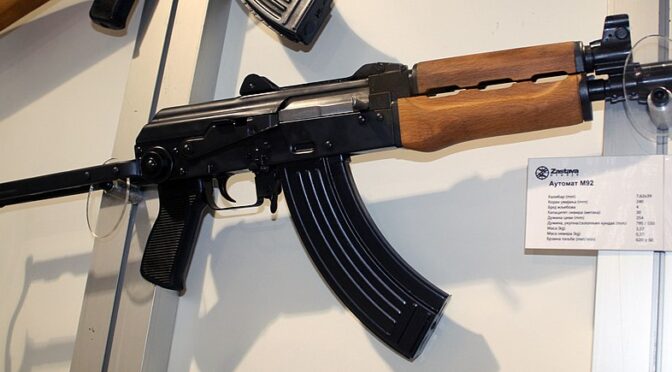
The AK-V is a 9mm pistol-caliber carbine (PCC) based on the Russian Vityaz-SN submachine gun.56 It is built on a stamped receiver and typically features a 10.5-inch barrel.5 Its two most significant design features are the inclusion of a last-round bolt hold-open mechanism—a feature absent on most AK-pattern firearms—and its use of magazines patterned after the CZ Scorpion EVO. This magazine choice provides a reliable, affordable, and readily available feeding device that also maintains the classic curved AK magazine aesthetic.5
Market Perception Summary
The AK-V is one of Palmetto State Armory’s most celebrated and successful products. It is lauded for its exceptional reliability, with users reporting it functions flawlessly with a wide variety of ammunition.5 For a direct blowback operating system, it is noted for having a surprisingly soft and manageable recoil impulse.56 The decision to use Scorpion-pattern magazines is universally praised as an intelligent design choice that avoids the pitfalls of proprietary or unreliable magazines that plague many other PCCs.5 It is frequently described as an extremely “fun gun” to shoot and receives exceptionally high marks for overall customer satisfaction, with negative comments being minimal and typically focused on its weight relative to other PCCs on the market.56
Hybrid Platforms: The JAKL
Technical Profile
The JAKL is an innovative hybrid platform that merges design elements from the AR-15 and AK-47. It utilizes a standard, mil-spec AR-15 lower receiver but pairs it with a proprietary monolithic upper receiver that houses a long-stroke gas piston operating system.63 This self-contained upper eliminates the need for the AR-15’s traditional buffer tube assembly, allowing the use of a side-folding stock or brace, which dramatically reduces the firearm’s overall length for transport and storage.63 The platform is available in various calibers, including 5.56x45mm,.300 BLK, and a larger-frame.308 Winchester version known as the JAKL-10.63 PSA has also announced a forthcoming JAKL 2.0, which will feature improved ergonomics and a simplified barrel-swap system for enhanced modularity.67
Market Perception Summary
The JAKL is generally praised for its high degree of reliability and its low-recoil shooting impulse, which users describe as feeling more like an AK than a traditional AR.63 The adjustable gas system is a key feature that is highly valued for allowing users to tune the rifle for use with suppressors.63 The primary drawback cited in nearly all discussions is its weight. At over 8 pounds for the 5.56 model, it is significantly heavier than a comparable direct impingement AR-15, which affects its handling and balance.63 Accuracy is considered acceptable for its intended role but not exceptional, with reports of approximately 3 MOA performance.64 Overall, the JAKL is viewed as a reliable, robust, and interesting alternative platform for enthusiasts who already own a standard AR-15 and are seeking something different.68
Cross-Platform Analysis & Strategic Insights
An analysis across Palmetto State Armory’s entire product portfolio reveals several overarching strategic themes that define the brand’s market position, strengths, and vulnerabilities. These themes include a clear value-to-quality hierarchy, a business model enabled by a robust warranty program, and a customer service apparatus that represents the company’s most significant liability.
Comparative Performance Summary
The following table synthesizes social media sentiment and performance ratings for each major PSA platform. The scores are derived from a qualitative analysis of the available data, providing a standardized metric for comparison across the product lines. The analysis clearly shows that PSA’s higher-priced, premium offerings like the Sabre and PSAK-47 GF5 consistently outperform their budget-tier counterparts in metrics related to quality, durability, and finish. Conversely, platforms like the AK-V achieve exceptionally high customer satisfaction scores, indicating a product that has perfectly met a market need with minimal perceived compromises, even at a moderate price point. The brand-wide score for Customer Service reflects a deeply polarized experience, with a high volume of negative reports pulling the average down significantly.
Table 1: Social media scores summary
Firearm Model
TMI (1-10)
% Positive
% Negative
Reliability (1-10)
Accuracy (1-10)
Durability (1-10)
Quality (1-10)
Cust. Sat. (1-10)
Cust. Svc. (1-10)
Fit (1-10)
Finish (1-10)
Price Min ($)
Price Max ($)
Dagger Series
9
75%
25%
6
7
5
5
7
4
8
7
269.99
629.99
5.7 Rock
7
80%
20%
7
8
7
6
8
4
9
7
399.99
699.99
PA-15
8
85%
15%
7
7
7
6
8
4
6
7
299.99
849.99
Sabre
7
98%
2%
10
9
9
9
10
4
9
9
799.99
1699.99
JAKL
7
90%
10%
9
6
8
7
8
4
7
8
1050.99
1500.00
PSAK-47 GF3
6
90%
10%
8
7
8
7
8
4
7
7
789.99
1100.99
PSAK-47 GF5
6
95%
5%
9
8
9
8
9
4
8
8
1029.99
1499.99
AK-V
8
98%
2%
10
7
9
8
10
4
9
8
799.99
1249.99
PA-10
6
85%
15%
8
8
8
7
8
4
8
8
829.99
1499.99
Click on the following to download an Excel file with the data from the above table.
The “PSA Lottery”: Quantifying the Value vs. Quality Dilemma
The recurring theme of inconsistent quality control, particularly in PSA’s high-volume, budget-priced products, is central to its brand identity. This analysis uses data points such as the Dagger’s MIM part failures 3, the PA-15’s final assembly issues 4, and the Rock’s required break-in period 23 as evidence of this phenomenon. A company cannot sustain a business model that knowingly ships products with such a high variance in initial quality without a robust safety net. For PSA, that safety net is its lifetime warranty.10
While the customer service experience for executing that warranty is inconsistent, the existence of the warranty itself is a critical enabler of PSA’s entire business model. It creates a crucial feedback loop and risk-mitigation strategy. The financial cost of warranty repairs and replacements for the percentage of “lemon” products is subsidized by the extremely high volume of sales and the lower manufacturing costs across the entire product line. In essence, the warranty is not merely a customer benefit; it is an integral, calculated component of PSA’s financial and operational strategy. It allows the company to push products to market faster and at a lower cost by accepting a higher-than-average initial failure rate, with the knowledge that the cost of remediation is already factored into the overall model. This is a high-risk, high-reward approach that legacy manufacturers, with their higher price points and established reputations to protect, cannot easily replicate.
Customer Service as a Brand Detractor
The data on Palmetto State Armory’s customer service is deeply polarized and represents the brand’s greatest vulnerability. Positive experiences often highlight quick, no-questions-asked resolutions and a company that ultimately stands behind its product.7 However, the volume and severity of negative experiences are significant. These reports cite unresponsive agents, extremely long wait times for resolutions, refusal to refund shipping costs even on company errors, and a frustrating inability to reach knowledgeable staff who understand the products.6
The sheer volume of PSA’s sales, combined with the “lottery” nature of its quality control, likely creates a volume of customer service inquiries that the company’s current infrastructure struggles to handle consistently. The documented presence of dedicated PSA employees on public forums who intervene to resolve issues that have stalled in primary channels is evidence of a reactive, rather than proactive, support system.72 This suggests the main customer service channels are frequently overwhelmed. This inconsistency is a significant brand liability. While low prices are effective at attracting new customers, a negative customer service experience on a faulty product can permanently damage a customer’s perception of the brand, negating the initial value proposition.
Conclusion & Market Outlook
Palmetto State Armory has fundamentally reshaped the American consumer firearms market by successfully executing a strategy of vertical integration and aggressive pricing. Its dominance in the budget sector, particularly with the PA-15 platform, is secure and unlikely to be challenged in the near term. Furthermore, its strategic expansion into the mid-to-premium tier with the Sabre line has been a resounding success, proving the company’s capability to produce high-quality, duty-grade firearms by leveraging respected third-party components. Platforms like the AK-V and the PSAK-47 GF5 demonstrate a mature manufacturing capability and a keen understanding of enthusiast market demands.
However, the company’s growth is not without significant challenges. The brand’s reputation remains tethered to the “PSA Lottery”—the perception that while the value is high, so is the risk of receiving a product with quality control issues. This issue is compounded by a customer service department that, according to a large volume of user reports, is inconsistent and often unable to meet the demands placed upon it.
The future growth of Palmetto State Armory and its ability to compete directly with more established, premium brands will hinge on its capacity to address these systemic issues. The success of the Sabre program provides a clear roadmap. If PSA can apply the quality control standards, assembly practices, and component-sourcing philosophies from the Sabre line to its high-volume budget products, it could transition from being a disruptive value brand to an undisputed market leader across multiple price tiers. Failure to address these core issues will likely relegate the brand to the budget sector, limiting its long-term growth and profitability potential.
The data for this analysis was drawn from a curated sample of publicly available online discussions and reviews. Sources included major social media platforms like Reddit (e.g., r/guns, r/ar15, r/CCW) and YouTube, as well as specialized online firearms forums and review publications. The research material provided for this report served as the foundational dataset for all quantitative and qualitative assessments.
Metric Definitions
TMI (The Mention Index): A proprietary score, on a scale of 1 to 10, assigned to each firearm platform to quantify its prominence within the dataset. The score is calculated based on the volume of distinct discussions, the number of sources in which the platform is mentioned, and the overall depth of the conversation. A higher TMI indicates greater market conversation and consumer interest.
Sentiment Analysis (% Positive / % Negative): Each relevant user comment, post, or review within the dataset was manually coded as having a primarily positive, negative, or neutral sentiment regarding the specific firearm model. Mentions that were purely factual or neutral were excluded from the calculation. The percentages represent the ratio of positive or negative mentions to the total number of sentiment-coded mentions for that firearm.
Performance Scores (1-10): A qualitative scoring system was used to translate subjective user feedback into standardized, comparable metrics across nine performance categories. The rubric for each score is based on the prevalence and severity of reported experiences:
A score of 1-3 indicates widespread, consistent reports of significant failures or dissatisfaction.
A score of 4-6 indicates mixed reports, common but often correctable issues (e.g., required break-in, minor parts replacement), or a polarized user base.
A score of 7-8 indicates general satisfaction and reliability, with only isolated or minor issues reported.
A score of 9-10 indicates near-universal praise for performance, with virtually no significant negative reports.
This rubric was applied consistently across all nine performance categories (Reliability, Accuracy, Durability, Quality, Customer Satisfaction, Customer Service, Fit, and Finish) for each firearm platform.
Limitations
It is important to acknowledge the limitations of this methodology. The analysis is based on a representative sample of online discussions and does not constitute a comprehensive, real-time scrape of all social media data. The resulting scores and percentages are qualitative indicators designed to reflect market sentiment trends and should not be interpreted as statistically absolute figures derived from a controlled survey. The nature of online discussions can also favor the amplification of negative experiences. This report synthesizes the available data to provide an expert assessment, acknowledging these inherent limitations.
This report provides a comprehensive operational and strategic assessment of the United States Drug Enforcement Administration’s (DEA) Special Response Team (SRT). The SRT program, formally standardized in 2016, represents the DEA’s primary domestic tactical capability, designed to resolve high-risk enforcement situations that exceed the capacity of standard field agents. Organized under a decentralized model, each of the DEA’s 23 domestic Field Divisions maintains its own SRT, ensuring a rapid and regionally proficient response to threats anywhere in the Continental United States (CONUS).
The SRT’s doctrinal and operational DNA is directly inherited from its predecessor, the elite Foreign-deployed Advisory and Support Team (FAST) program. From 2005 to 2017, FAST teams operated in active combat zones, primarily Afghanistan, alongside U.S. Special Operations Forces, forging a cadre of DEA agents with unparalleled experience in high-threat tactics and small-unit operations. The formal establishment of the SRT program in 2016 marks a strategic pivot by the DEA, repurposing this combat-honed expertise to confront a rapidly escalating domestic threat: the opioid crisis and the increasingly violent, sophisticated, and heavily armed Drug Trafficking Organizations (DTOs) fueling it.
The core mission of the SRT is the proactive execution of high-risk law enforcement operations, most notably the service of arrest and search warrants on dangerous subjects and fortified locations. The unit’s capabilities extend across a full spectrum of tactical operations, including vehicle assaults, specialized surveillance, advanced breaching, fugitive apprehension, and dignitary protection. Selection for the SRT is highly competitive, requiring experienced Special Agents to pass a grueling physical and tactical screening process. Training is rigorous and continuous, adhering to national standards and ensuring operators are proficient with a range of specialized weapons and equipment, from Rock River Arms LAR-15 rifles and Glock pistols to armored vehicles and advanced surveillance technology.
As the nature of the drug trade evolves, the SRT’s strategic importance to the DEA’s mission will continue to grow. The unit is on the front line of emerging threats, including the extreme hazards posed by clandestine fentanyl labs and the challenge of confronting transnational criminal networks that leverage advanced technology and military-style tactics. The SRT provides the DEA with an indispensable tool to project force, mitigate risk, and safely execute its mandate to enforce the nation’s controlled substances laws against the most formidable criminal adversaries.
Section 2: Genesis and Doctrinal Evolution: From Ad-Hoc Teams to a Standardized National Capability
The existence of the DEA Special Response Team is the product of a long evolutionary process, both within the broader landscape of American law enforcement and within the specific operational history of the Drug Enforcement Administration. Its modern form is not a sudden invention but the culmination of decades of tactical necessity, lessons learned in domestic confrontations, and hard-won experience in overseas combat zones. Understanding this lineage is critical to appreciating the unit’s current capabilities and strategic purpose.
2.1 The Pre-SWAT Environment and the Rise of Tactical Policing
Prior to the 1960s, American law enforcement agencies were generally ill-equipped and doctrinally unprepared for large-scale civil unrest or violent, prolonged confrontations with heavily armed criminals. The concept of a specialized tactical unit was born from a series of crises that exposed the limitations of traditional policing. The first units designated “Special Weapons and Tactics” (SWAT) emerged in the mid-1960s as a direct response to this new reality.1
The Philadelphia Police Department formed a 100-man unit in 1964 to counter a surge in violent bank robberies, designed to react with overwhelming and decisive force.1 In Los Angeles, the impetus was multifaceted. The racially charged Watts riots of 1965 demonstrated the need for disciplined units capable of operating in chaotic urban environments. Concurrently, incidents like the 1966 University of Texas tower shooting by Charles Whitman highlighted the danger posed by a single, well-armed and barricaded gunman who could outmatch conventionally trained officers.1
These events, combined with violent standoffs against militant political groups like the Black Panthers in 1969 and the Symbionese Liberation Army (SLA) in 1974, solidified the necessity for SWAT teams. The SLA shootout, in particular, was a watershed moment; the group’s heavy armament forced a tactical evolution, leading to the widespread adoption of body armor, semi-automatic rifles, and organized team structures within SWAT units across the country.1 This broader trend established the foundational doctrine for specialized law enforcement tactical units, creating the strategic context for a federal agency like the DEA to eventually develop its own organic capability.
2.2 Early DEA Tactical Elements and Foreign Operations
The Drug Enforcement Administration was established on July 1, 1973, by President Richard Nixon’s Reorganization Plan No. 2, which consolidated several disparate federal drug law enforcement offices into a single agency under the Department of Justice.2 From its inception, the DEA’s mission to confront major DTOs operating at interstate and international levels meant its agents faced significant threats.5
In its early years, the DEA utilized a variety of ad-hoc and specialized teams to address specific threats. These included units like the High-risk Entry Apprehension Teams (HEAT) in certain Field Divisions, as well as Mobile Enforcement Teams (MET) and Regional Enforcement Teams (RET), which were mobile investigative units designed to assist state, local, or other DEA offices.6 While these teams provided enhanced capabilities, they were not part of a standardized, agency-wide tactical program.
The agency’s first foray into developing a more militarized tactical capability came in the foreign arena. In 1987, the DEA initiated “Operation Snowcap,” a program that deployed Special Agents with military training to Latin America. These agents worked alongside local police forces to conduct interdiction operations, disrupt trafficking routes, and destroy cocaine processing facilities.8 Operation Snowcap was a direct precursor to the agency’s later, more sophisticated foreign special operations units, establishing a precedent for deploying DEA agents in high-threat, semi-permissive international environments.
2.3 The FAST Program: Forging a Capability in a Combat Zone
The most significant step in the evolution of the DEA’s tactical capabilities was the creation of the Foreign-deployed Advisory and Support Team (FAST) program. Established in 2005, the FAST program was a direct response to the post-9/11 national security environment. Intelligence revealed that heroin production in Afghanistan was a primary funding source for Taliban terrorism, creating a clear nexus between drug trafficking and insurgency.9
The mission of FAST was “counter narco-terrorism.” Teams were deployed to Afghanistan to build criminal cases and conduct interdiction operations against insurgency-linked drug traffickers.8 This was a radical departure from traditional law enforcement. For the first time, DEA agents were operating on the frontlines of an active war zone, facing combat-like conditions including IEDs, ambushes, and harsh terrain.10
To meet this challenge, the DEA created an exceptionally elite selection and training pipeline. The seven-week FAST Assessment and Indoctrination Course (FAIC) was a grueling program that pushed candidates to their physical and mental limits, with a pass rate of only 30%.11 Those who passed received advanced tactical training from U.S. military special operations forces, including the Army’s Green Berets and the Navy SEALs.11 FAST teams forged deep operational partnerships with these elite units, as well as with international special forces from the UK, Australia, and New Zealand.12
The FAST program, which grew to five teams before its eventual disbandment, created a unique cadre of DEA Special Agents. They possessed not only advanced law enforcement investigative skills but also extensive experience in small-unit tactics, close-quarters combat, tactical combat casualty care, and operating in hostile, non-permissive environments.11 This combat-honed expertise would prove to be the critical foundation upon which the modern SRT program was built.
2.4 The 2016 Pivot: Standardization of the Special Response Team
In 2016, the DEA officially created and standardized its Special Response Team (SRT) program, creating a uniform tactical capability across all its domestic divisions.6 This decision was not a simple administrative reorganization; it was a profound strategic pivot driven by a confluence of critical factors that reshaped the domestic security landscape.
First, the timing was directly linked to the severity of the domestic drug crisis. The DEA’s own 2016 National Drug Threat Assessment identified the opioid threat—driven by prescription drugs, heroin, and illicit fentanyl—as having risen to epidemic levels, representing the most significant drug threat to the United States.14 DTOs were becoming more violent and entrenched, requiring a more robust tactical response from law enforcement.
Second, at the very height of this crisis, the DEA’s ability to combat the problem at its source was legislatively constrained. In April 2016, a law passed by Congress, heavily lobbied for by the pharmaceutical industry, effectively stripped the DEA of its most powerful administrative tool: the ability to immediately freeze suspicious shipments of narcotics from large-scale drug distributors.15 This change made it virtually impossible for the agency to stanch the flow of pills from the wholesale level, forcing a greater reliance on street-level enforcement against traffickers. The logical progression of these events suggests a direct connection: with its primary regulatory weapon weakened by legislative action, the DEA was compelled to sharpen its primary tactical weapon.
Third, the strategic environment overseas was changing. As major U.S. military operations in Iraq and Afghanistan began to wind down, the DEA shifted its priorities toward non-battlefield missions, leading to the decision to disband the FAST program in 2017.16 This created an invaluable opportunity. The agency now had a pool of the most highly trained and combat-experienced tactical operators in its history. Many of these former FAST agents applied their skills directly to the newly formalized SRTs, transferring a wealth of institutional knowledge and tactical expertise from the battlefields of Afghanistan to the domestic front of the war on drugs.16
The creation of the SRT program in 2016, therefore, represents a deliberate doctrinal shift. It was a strategic reallocation of the agency’s most elite tactical assets, moving them from a foreign counter narco-terrorism mission to a domestic high-risk law enforcement mission to confront the most urgent and deadly drug crisis in American history.
Attribute
Foreign-deployed Advisory and Support Team (FAST)
Special Response Team (SRT)
Primary Mission
Counter narco-terrorism; building cases against insurgency-linked traffickers in active war zones.8
High-risk domestic law enforcement; serving high-risk warrants and supporting DEA criminal investigations.7
Area of Operations
Primarily Afghanistan, with deployments to Central America, the Caribbean, and other foreign locales.8
Continental United States (CONUS), operating within the jurisdiction of DEA’s domestic Field Divisions.13
Key Partners
U.S. and allied Special Operations Forces (e.g., Navy SEALs, Army Green Berets), Central Intelligence Agency (CIA).10
Federal, state, and local law enforcement agencies; DEA investigative groups.18
Operational Environment
Active combat zones; austere, hostile, and non-permissive environments characterized by combat-like conditions.10
Urban and rural domestic settings; operations conducted under U.S. law and constitutional constraints.7
Legacy/Relationship
FAST provided the foundational tactical doctrine, advanced training standards, and experienced cadre of operators for the formation of the SRTs.16
The SRT is the direct domestic successor to the FAST program’s tactical capability, adapting combat-honed skills for law enforcement.
Section 3: Mission Mandate and Operational Scope
The DEA SRT was designed with a specific purpose: to serve as the agency’s primary tool for resolving high-risk situations that fall outside the capabilities of its regular Special Agents. Its mission mandate is fundamentally proactive, providing the tactical edge necessary to execute the most dangerous phases of the DEA’s core mission to dismantle complex and violent drug trafficking organizations.
3.1 Core Mission: Bridging the Tactical Gap
The SRT’s official purpose is to act as a “stop-gap between tactical operations conducted by field agents and those necessitating specialized tactics as a result of elevated risks”.7 In practical terms, the unit exists to safely and professionally handle incidents where the threat level—due to factors like known suspect violence, the presence of firearms, fortified locations, or the sheer number of subjects—is too high for non-specialized personnel.17 The core mission is to leverage specialized training, equipment, and tactics to maximize the safety of the public, law enforcement officers, and the subjects of the investigation during these critical encounters.20
While SRTs possess the training to respond to a range of critical incidents, including natural disasters 21, their primary function is distinct from that of a purely crisis-response unit like the FBI’s Hostage Rescue Team (HRT), which is principally oriented toward “hostage situations” and “barricaded suspects”.22 The SRT’s operational mandate is more offensively focused. It is not a team that waits for a crisis to unfold; rather, it is the instrument used to initiate the tactical resolution of a pre-planned law enforcement operation. This proactive posture is a direct reflection of the DEA’s overarching mission to investigate and dismantle DTOs, with the SRT serving as the agency’s sharpest enforcement tool.
3.2 Spectrum of Capabilities
The SRT is a multi-mission unit trained to execute a wide spectrum of complex tactical operations. Its capabilities are designed to provide DEA field divisions with a comprehensive solution for any high-risk scenario they may encounter. This mission set includes:
High-Risk Warrant Service: This is the foundational and most frequent mission for the SRT.17 It involves the planning and execution of court-authorized search and arrest warrants on subjects or locations deemed to be high-risk due to intelligence indicating the presence of weapons, a history of violence, or fortified structures. This is a core function in nearly every major drug takedown.23
Vehicle Operations: The teams are trained to conduct high-risk vehicle assaults and interdictions, stopping and securing vehicles believed to be transporting narcotics, currency, or armed traffickers.13
Infiltration and Exfiltration: Leveraging the assets of the DEA’s Aviation Division, SRTs can conduct air assault and other infiltration techniques to approach a target covertly or with speed and surprise.6 This capability is essential for operations in remote or difficult-to-access areas.
Specialized Surveillance: SRTs conduct tactical surveillance and interdiction in situations where there is a high potential for a violent confrontation, providing a layer of security and a rapid-response capability that standard surveillance teams lack.7
Protective Services: The teams are tasked with providing close protection for VIPs, witnesses, and other protected persons, as well as maintaining secure custody of high-profile prisoners who may be targets for rescue or assassination.13
Advanced Breaching: SRT operators are proficient in various methods of entry, including mechanical (ram, halligan), ballistic (shotgun breaching), and potentially explosive techniques to defeat fortified doors, walls, and other obstacles.13
Fugitive Apprehension: The unit is tasked with locating and apprehending dangerous fugitives in both urban and rural environments, missions that often involve extensive searches and a high probability of confrontation.17
Force Multiplier: Drawing on their advanced training and operational experience, SRTs provide tactical training to other federal, state, and local law enforcement units, enhancing the capabilities of partner agencies and promoting interoperability.13
Section 4: Organizational Framework and Command Structure
The organizational structure of the DEA SRT program is a direct reflection of the agency’s nationwide mission and the need for a rapidly deployable, regionally proficient tactical capability. The program eschews a single, centralized national team in favor of a decentralized model that embeds tactical assets within each of the DEA’s primary domestic commands, ensuring speed, accessibility, and local expertise.
4.1 National Oversight and Decentralized Structure
The SRT is a national program with standardized training and certification, but its operational assets are decentralized. Each of the DEA’s 23 major domestic Field Divisions, from New England to Los Angeles, maintains its own organic SRT capability.6 This structure ensures that every major operational theater within the United States has immediate access to a dedicated tactical team, capable of responding to incidents within their geographic area with little to no advance notification.13
National-level policy, training standards, and general oversight for the SRT program likely reside within the Operations Division at DEA Headquarters in Arlington, Virginia.3 This central office, led by the Chief of Operations, is responsible for the agency’s global enforcement mission and would logically provide the strategic direction for its primary tactical units.
This decentralized framework is a key strategic advantage. The DEA’s fight against DTOs is not confined to a single city or region; it is a nationwide effort, with cartels like Sinaloa having a presence in communities large and small across the country.29 The operational tempo required to serve high-risk warrants and conduct takedowns across 23 different divisions simultaneously would be impossible for a single national team to support. By embedding an SRT within each division, the DEA ensures that its tactical assets are familiar with the local threat landscape, criminal organizations, geography, and partner agencies, allowing for more efficient planning and more effective operational execution. This structure treats tactical capability not as an extraordinary resource for a rare crisis, but as an essential, day-to-day component of modern drug enforcement.
4.2 Field-Level Command and Control
At the field level, the SRT operates under a clear and direct chain of command. The ultimate authority for the deployment and use of a Field Division’s SRT rests with the Special Agent in Charge (SAC) of that division.28 The SAC, as the senior DEA official in their region, is responsible for all enforcement operations and administrative functions. The decision to activate the SRT for a high-risk warrant or other tactical mission is made at this level, based on a thorough risk assessment of the planned operation.30
The day-to-day management, training, and operational readiness of the team are the responsibility of a dedicated Tactical Supervisor.20 This position is typically held by a Supervisory Special Agent with extensive tactical experience. The Tactical Supervisor oversees the team’s training schedule, ensures all operators maintain their required certifications and proficiencies, manages team equipment, and is the primary planner for all tactical operations. During a deployment, the Tactical Supervisor or a designated Team Leader exercises on-scene command and control of the SRT, executing the operational plan and making critical decisions in a dynamic environment.30
4.3 Team Composition and Specialized Roles
While the exact size of each SRT is not public information, federal tactical teams are typically comprised of at least 12 operators to ensure sufficient manpower for complex operations.30 All members are fully qualified and experienced DEA Special Agents who volunteer for SRT duty. Depending on the division’s size and operational needs, these agents may serve on the SRT as a full-time assignment or as a part-time, collateral duty in addition to their regular investigative responsibilities.31
Within the team, operators are trained in a variety of specialized roles to enhance the unit’s overall capability. Drawing parallels from similar federal units like the ATF’s SRT, these roles likely include 31:
Team Leader: An experienced operator responsible for leading the team during missions, executing the tactical plan, and maintaining communication with the command post.
Tactical Operators (Assaulters): The core of the team, responsible for making entry, clearing rooms, and securing subjects.
Snipers/Observers: Highly skilled marksmen who provide overwatch, gather intelligence on the target location from a concealed position, and are capable of delivering precise long-range fire if necessary.
Breachers: Specialists trained in using mechanical, ballistic, and other tools to defeat locked doors, fortified entryways, and other obstacles.
Tactical Medics: Operators with advanced medical training (equivalent to EMT or paramedic) who are equipped to provide immediate, life-saving care at the point of injury in a high-threat environment.
Section 5: Personnel: Operator Selection, Training, and Specialized Roles
The effectiveness of any elite tactical unit is determined by the quality of its personnel. The DEA SRT is comprised of carefully selected, highly trained, and physically fit Special Agents who volunteer for one of the agency’s most demanding assignments. The pipeline to become an SRT operator is a multi-stage process designed to identify agents with the right combination of physical prowess, mental resilience, sound judgment, and tactical aptitude.
5.1 Selection Criteria
The foundation for becoming an SRT operator is first becoming a DEA Special Agent. The eligibility requirements for this role are stringent and serve as the initial screening gate 32:
Must be a U.S. citizen.
Must be between 21 and 36 years of age at the time of appointment.
Must be able to obtain and retain a Top Secret security clearance.
Must be in excellent physical and medical condition.
Must possess a valid driver’s license and be willing to relocate anywhere in the U.S.
Beyond these basic requirements, candidates for Special Agent positions are evaluated on a set of core competencies, including integrity, judgment, decision-making, teamwork, and self-discipline—all of which are essential traits for a tactical operator.18 Once an agent has gained field experience, they can volunteer for the SRT selection process within their assigned division.
5.2 The Training Pipeline
The journey to becoming a certified SRT operator involves a rigorous and sequential training pipeline that builds upon foundational agent skills with advanced tactical instruction.
Basic Agent Training Program (BATP): Every SRT candidate must first be a graduate of the DEA’s 16 to 20-week BATP, held at the DEA Academy in Quantico, Virginia.32 This intensive program provides all new agents with the fundamental skills of the profession, including firearms proficiency, defensive tactics, legal instruction, report writing, and practical exercises in surveillance and undercover operations.32
Physical Task Assessment (PTA): Physical fitness is a non-negotiable requirement. The PTA is the agency’s standard fitness test and serves as a critical gateway for SRT selection. It is also the annual fitness requirement that active SRT members must pass to remain on the team. The assessment consists of four events: maximum sit-ups in one minute, a timed 300-meter sprint, maximum continuous-motion push-ups, and a timed 1.5-mile run. Candidates must achieve a minimum cumulative score of 12 points, with at least one point in each of the four events, to pass.35
SRT Certification Course (SCC): Agents who pass the initial screening and PTA are sent to the formal SRT Certification Course. This specialized training is conducted at U.S. Army Base Fort A.P. Hill in Virginia and consists of an 11-day basic course followed by a 5-day advanced course.6 The curriculum is developed in accordance with the standards of the National Tactical Officers Association (NTOA), ensuring that DEA’s training is consistent with national best practices for law enforcement tactical teams.23
Advanced and Ongoing Training: The SCC provides the core certification, but training is continuous. Drawing on the legacy of the FAST program, the training regimen includes advanced skills such as close-quarters combat (CQC), advanced marksmanship with multiple weapon systems, tactical medicine, mechanical and ballistic breaching, small-unit tactics, and operations involving helicopters and armored vehicles.11 SRTs conduct regular in-service training, typically a minimum of 8 hours per month, to maintain and enhance these perishable skills.30
5.3 Manning and Specialized Roles
SRT operators are all sworn DEA Special Agents who perform their tactical duties on either a full-time or part-time collateral basis, depending on the needs and resources of their Field Division.31 This structure ensures that even when not actively engaged in tactical operations, team members are still functioning as investigators, maintaining their core law enforcement skills and contributing to the cases they may later be called upon to resolve tactically. The DEA also employs a wide range of professional and administrative staff, from intelligence analysts to attorneys and budget officers, who provide the essential support structure that enables SRT operations.36 The synergy between the tactical operators, the case agents, the intelligence analysts, and the support staff is crucial for the success of any complex law enforcement mission.
Section 6: Armament, Technology, and Resources
The DEA Special Response Team is equipped with specialized weapons, vehicles, and technology that provide a significant tactical advantage over both standard law enforcement personnel and the heavily armed criminals they confront. This advanced equipment, combined with dedicated funding streams, allows the SRT to effectively execute its high-risk mission mandate.
6.1 Standard Issue Small Arms
Unlike regular field agents, SRT operators are issued a suite of specialized firearms designed for tactical operations.1
Primary Rifle: The standard-issue rifle for the SRT is the Rock River Arms LAR-15.6 This is a select-fire assault rifle based on the AR-15/M4 platform, chambered in 5.56x45mm NATO. These rifles are the primary weapon system for entry teams and are likely outfitted with modern accessories such as holographic or red-dot optics, weapon lights, infrared lasers for use with night vision, and vertical foregrips to enhance control.
Sidearms: SRT operators carry Glock 17 (full-size) and Glock 19 (compact) semi-automatic pistols as their secondary weapon system.6 Chambered in 9mm, these pistols are renowned for their reliability and are a standard among elite law enforcement and military units worldwide.
Specialized Weapons: In addition to their primary and secondary firearms, teams have access to a range of specialized weapons for specific roles. This includes 12-gauge shotguns specifically designed for ballistic breaching (destroying locks and hinges on doors) and high-caliber, precision sniper rifles for long-range observation and engagement.1
6.2 Tactical Equipment and Vehicles
An SRT’s operational capability is significantly enhanced by its specialized equipment.
Personal Protective Equipment: Operators are equipped with advanced personal protective gear, including ballistic helmets, tactical body armor with hard armor plates capable of stopping rifle rounds, and handheld ballistic shields for additional protection during entries and approaches.1
Technology: To operate effectively in all conditions, SRTs utilize advanced technology such as night-vision and thermal-imaging devices for surveillance and movement in low-light environments.1 They may also employ tactical robots to conduct reconnaissance in areas too dangerous for an agent to enter safely.24
Breaching Tools: Teams are equipped with a variety of manual breaching tools, including battering rams, pry bars (halligans), and bolt cutters, to gain entry into structures.30
Armored Vehicles: A critical asset for the SRT program is the Lenco BearCat armored vehicle. The use of these vehicles was a tactical lesson brought back from the FAST program. BearCats provide operators with ballistic protection during movement to and from a target location and can serve as mobile cover during a standoff, significantly enhancing officer safety.16
Aviation Support: SRTs work closely with the DEA’s own Aviation Division, which operates a fleet of over 100 aircraft.3 This partnership provides SRTs with critical capabilities, including aerial surveillance, photographic reconnaissance, and personnel transport for air assault operations, often using military helicopters like the UH-60 Black Hawk.6
6.3 Funding and Budget Allocation
The SRT program does not have a separate, publicly disclosed line-item in the Department of Justice budget. Its funding is drawn from the DEA’s overall annual budget, which totaled approximately $3.28 billion in Fiscal Year 2021 and was requested at $3.3 billion for FY 2025.40 The majority of funding for personnel, equipment, and training would come from the agency’s “Salaries and Expenses” appropriation, specifically falling under the “Domestic Enforcement” spending category.42
A significant and unique source of supplemental funding for the SRTs comes from the DEA’s Asset Forfeiture Program. Under federal law, assets derived from or used in illicit drug trafficking can be seized by the government.44 These funds and property can then be used to support law enforcement operations. This creates a powerful mechanism where the profits of criminal enterprises are directly reinvested into enhancing the tactical capabilities—such as purchasing armored vehicles, advanced weapons, and funding specialized training—used to dismantle those same organizations.
Category
Item/System
Description/Purpose
Primary Rifle
Rock River Arms LAR-15 6
A 5.56mm select-fire carbine used for entry, room clearing, and general tactical operations.
Sidearm
Glock 17 / Glock 19 6
A 9mm semi-automatic pistol for personal defense, close-quarters engagement, and as a backup weapon.
Specialized Firearms
Breaching Shotguns, Precision Sniper Rifles 1
For defeating fortified entry points and for long-range precision engagement, observation, and overwatch.
Protective Gear
Ballistic Helmets, Rifle-Rated Body Armor, Ballistic Shields 1
To provide operators with maximum protection from gunfire and fragmentation during high-risk operations.
Vehicles
Lenco BearCat Armored Vehicle 16
Provides ballistically protected transport for the team and serves as mobile cover on-scene.
Aviation
DEA Aviation Division Assets (e.g., UH-60) 6
For air assault insertions, extractions, and aerial surveillance in support of ground operations.
Enables effective operations in low-light conditions and provides remote reconnaissance capabilities to enhance officer safety.
Section 7: Tactical Doctrine and Procedures
The operational effectiveness of the DEA SRT is rooted in a disciplined adherence to sound tactical doctrine. Every mission is built upon a foundation of meticulous, intelligence-led planning and executed using standardized procedures designed to maximize success while minimizing risk. The unit’s doctrine is also highly adaptive, evolving to meet the specific challenges posed by new and emerging threats, most notably the extreme dangers of clandestine fentanyl laboratories.
7.1 Intelligence-Led Operations Planning
SRT deployments are not impulsive actions. They are the tactical culmination of what are often lengthy and complex criminal investigations conducted by DEA Special Agents and Intelligence Research Specialists.45 The decision to activate an SRT is made only after a thorough risk analysis and threat assessment determines that the planned operation poses a high level of danger.30
The planning process is comprehensive. A detailed operations plan is created for every mission, outlining objectives, personnel assignments, contingency plans, and rules of engagement.47 This process includes event deconfliction with other federal, state, and local law enforcement agencies to prevent “blue-on-blue” incidents and ensure operational awareness across jurisdictions.47 This intelligence-driven approach ensures that the SRT is deployed with the maximum possible understanding of the target, the location, and the potential threats they will face.
7.2 High-Risk Warrant Service Procedures
The service of a high-risk search or arrest warrant is the SRT’s most common and fundamental operation. While the specifics of each mission vary, the tactical execution generally follows a set of established procedures based on national best practices 25:
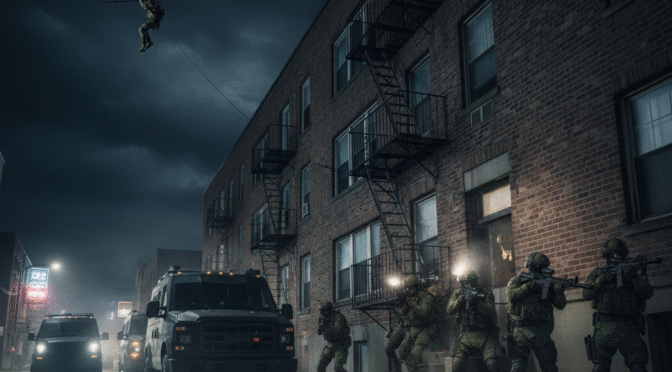
Approach: The team moves to the target location. This can be a slow and stealthy approach on foot or a dynamic approach using vehicles, including armored vehicles like the BearCat, to provide protection and rapidly close the distance to the entry point.
Knock and Announce: Unless a specific “no-knock” provision has been authorized by a judge, the team is legally required to announce its identity and purpose (e.g., “Police! Search warrant!”). This is done verbally and by physically knocking on the entry door. A reasonable amount of time must be given for occupants to comply before a forced entry is made.
Breach: If the door is not opened, or if exigent circumstances arise, the breacher will defeat the entry point swiftly and decisively using the appropriate tool—be it a ram, a pry bar, or a breaching shotgun.
Entry and Clearing: Immediately following the breach, the entry team flows into the structure in a rapid and coordinated manner. Their objective is to move through the location, clearing it room by room, and quickly gain control of any occupants. The principles of speed, surprise, and violence of action are used to dominate the environment and overwhelm any potential resistance.
Securing and Backflush: Once the location is under control and all subjects are secured, the team conducts a methodical secondary search, known as a “backflush.” This ensures that no hidden subjects or immediate threats were missed during the initial dynamic entry. After the backflush is complete, the scene is declared secure and turned over to the case investigators to conduct the search for evidence.
Among the most hazardous operations a law enforcement tactical team can undertake is a raid on a clandestine drug laboratory.48 These labs are frequently booby-trapped and contain a volatile cocktail of flammable, explosive, and toxic chemicals, earning them the moniker “chemical time bombs”.48 The DEA has long recognized this threat and provides specialized training at its dedicated Clandestine Laboratory training facility in Quantico, Virginia, for both its own personnel and state and local partners.33
The rise of fentanyl has fundamentally altered the threat calculus for these operations, forcing a significant evolution in tactical doctrine. The primary danger in older methamphetamine labs was often fire and explosion from volatile solvents.48 While those risks remain, labs used to process illicit fentanyl present an even more insidious threat: acute toxicological exposure. Microscopic, airborne particles of fentanyl or its analogues can be lethal if inhaled or absorbed through the skin.14
This paradigm shift from a primarily explosive threat to a contamination threat necessitates a major adaptation in SRT tactics. A dynamic breach that might be acceptable in a different scenario could be catastrophic in a fentanyl lab, as the explosive force could aerosolize the deadly powder and contaminate the entire entry team. Consequently, modern clandestine lab raid doctrine must place a greater emphasis on:
Pre-operational Intelligence: Determining, if possible, what specific substances are being manufactured is critical for threat assessment.
Methodical Entry: Slower, more deliberate entry techniques may be required to minimize the disturbance of hazardous materials.
Advanced Personal Protective Equipment (PPE): Operators must be equipped with respirators and chemical-resistant gear to prevent exposure.
Integrated Hazmat and Medical Support: Close coordination with hazardous materials teams and tactical medics trained to treat opioid exposure is essential.
The SRT’s tactical procedures must constantly evolve to stay ahead of the changing chemistry of the illicit drug trade, where the operational environment can be as dangerous as any armed adversary.
Section 8: Operational Profile and Case Studies
Assessing the full operational scope of the DEA SRT is challenging due to the clandestine nature of its work. For reasons of operational security and to protect sensitive intelligence, the DEA often does not publicize the specific involvement of its tactical teams in enforcement actions.7 Official after-action reports are internal documents and are not released to the public.52 However, by analyzing official press releases and news reports from major operations, it is possible to identify instances where SRTs were utilized and to understand their critical role in the DEA’s enforcement strategy.
8.1 The Challenge of Operational Secrecy
The DEA SRT is considered one of the most covert tactical units in federal law enforcement.7 This secrecy is intentional. Publicizing the unit’s specific tactics, techniques, and procedures could provide adversaries with information that could be used to counter them. Furthermore, many SRT operations are the culmination of long-term investigations involving confidential sources and sensitive intelligence methods. Highlighting the SRT’s role could inadvertently compromise these ongoing efforts. As a result, the public and even other law enforcement professionals often have limited visibility into the full extent of the SRT’s activities, leading to the perception that “not much is known about what they do”.17
8.2 Case Study 1: Operation Crystal Shield, Los Angeles (November 2021)
An official DEA press release from November 17, 2021, provides a clear example of the SRT’s core mission. The release details the culmination of “Operation Crystal Shield,” a major investigation into a large-scale drug trafficking organization with ties to the Sinaloa Cartel and the Jalisco New Generation Cartel (CJNG).55
Context: The investigation targeted a network responsible for transporting and distributing massive quantities of methamphetamine, cocaine, and heroin throughout the Los Angeles and Riverside Counties.
SRT Role: The press release explicitly states that the “DEA Los Angeles Field Division Special Response Team (SRT)” was involved in serving nine arrest warrants at multiple locations. Accompanying photographs show SRT operators in full tactical gear briefing before the operation and taking a suspect into custody.55
Analysis: This case is a textbook example of the SRT’s function. It demonstrates the unit acting as the tactical enforcement arm for a major Field Division at the conclusion of a complex, long-term investigation. The ability of the SRT to plan and execute simultaneous raids on multiple targets is a critical capability. It prevents suspects at one location from being tipped off by action at another, allowing the entire network to be dismantled in a single, coordinated blow. The operation also involved collaboration with numerous local police departments, highlighting the SRT’s role in multi-agency task force environments.55
8.3 Case Study 2: Nationwide Sinaloa Cartel Surge (August 2025)
In September 2025, the DEA announced the results of a massive, week-long, coordinated enforcement action targeting the Sinaloa Cartel.29 This nationwide “surge” was unprecedented in its scale and scope.
Context: The operation was carried out across 23 domestic DEA Field Divisions and resulted in the arrest of 617 individuals with ties to the cartel. It also led to the seizure of enormous quantities of fentanyl, methamphetamine, cocaine, firearms, and over $11 million in cash.29
SRT Role: While the national press release does not specifically name the SRTs, the nature of the operation—a coordinated takedown of members of one of the world’s most violent and powerful criminal organizations—necessitates the use of tactical teams for the safety of the arresting agents. News coverage of one of the raids in Franklin, New Hampshire, part of the New England Division’s contribution to the surge, shows heavily armed officers in tactical gear detaining suspects, a visual consistent with an SRT deployment.29 One of the largest coordinated takedowns in the region occurred on August 27 in Franklin, where 27 people were arrested after a three-month investigation into fentanyl and methamphetamine trafficking from Lawrence, Massachusetts.29
Analysis: This nationwide operation perfectly illustrates the strategic value of the SRT’s decentralized organizational structure. A simultaneous, nationwide tactical operation of this magnitude would be physically impossible for a single, centralized national team to execute. The existence of a dedicated, trained, and equipped SRT within each of the 23 participating Field Divisions is what made such a coordinated surge feasible. This structure allowed the DEA to project tactical force across the entire country at the same time, maximizing the operation’s impact and demonstrating the agency’s ability to confront transnational criminal threats on a national scale.
Section 9: Assessment and Future Outlook
The DEA Special Response Team has matured into a highly capable and indispensable asset within the Department of Justice. As the tactical arm of the nation’s premier drug law enforcement agency, the SRT provides a critical capability to safely and effectively resolve high-risk situations inherent in confronting violent, well-funded, and sophisticated transnational criminal organizations. Its strategic value is undeniable in the current security environment, and its importance is poised to grow as the threats posed by the illicit drug trade continue to evolve in complexity and lethality.
9.1 Current Effectiveness and Strategic Value
The SRT program provides the DEA with an essential tool to mitigate the significant risks faced by its personnel. In an era where DTOs are frequently armed with military-grade weapons and are increasingly willing to use violence to protect their operations, sending standard Special Agents to execute high-risk warrants would be unacceptably dangerous. The SRT, with its advanced training, specialized weaponry, and armored vehicles, allows the DEA to execute its core enforcement mission with a significantly higher degree of safety for its agents, the public, and even the subjects of the investigations.
The unit’s decentralized structure is a key force multiplier, enabling the agency to conduct large-scale, simultaneous operations across multiple jurisdictions, as demonstrated by the 2025 nationwide surge against the Sinaloa Cartel. This ability to project tactical power across the country simultaneously is a strategic capability that few other law enforcement agencies possess. By successfully executing thousands of high-risk missions annually, the SRT directly contributes to the dismantling of violent drug gangs and the seizure of vast quantities of deadly narcotics, thereby enhancing public safety and national security.
9.2 Emerging Threats and Future Evolution
The future operational environment for the SRT will be shaped by several key emerging threats, requiring continuous adaptation in tactics, training, and technology.
The Synthetic Drug Threat: The proliferation of highly potent synthetic opioids like fentanyl and its analogues, as well as other novel psychoactive substances, will continue to define the tactical landscape. The extreme toxicological hazard posed by these substances will require the SRT to further refine its clandestine lab raid protocols. This will likely involve greater investment in advanced PPE, remote detection and reconnaissance tools (such as tactical robots with chemical sensors), and enhanced tactical medical training focused on treating mass casualty chemical exposures.
Cyber-Facilitated Trafficking: DTOs are increasingly leveraging the dark web, encrypted communications, and cryptocurrency to conduct their business.23 As DEA investigations become more reliant on cyber and financial intelligence to unmask these anonymous networks, SRTs will be called upon to execute warrants on targets who may be highly skilled in digital operational security. This will demand closer integration between tactical planners and the agency’s technical and financial investigators to ensure that digital evidence is captured effectively during raids.
Increased DTO Sophistication: Transnational criminal organizations continue to evolve, adopting military-style tactics, using counter-surveillance techniques, and employing advanced weaponry. To maintain its tactical edge, the SRT will need to engage in continuous, advanced training that simulates these evolving threats. This includes maintaining close relationships with military special operations counterparts to stay abreast of the latest tactics and technologies.
Expected Capabilities: Looking forward, the SRT will likely need to enhance its capabilities in several key areas. Counter-Unmanned Aerial System (C-UAS) technology will become increasingly important as DTOs use cheap commercial drones for surveillance and counter-surveillance. Investment in the agency’s organic intelligence, surveillance, and reconnaissance (ISR) platforms to provide real-time aerial overwatch for tactical operations will be crucial. Furthermore, the continued expansion of the DEA’s data-driven, intelligence-led initiatives, such as Operation Overdrive, will rely on the SRTs to provide the tactical follow-through needed to dismantle the violent networks identified through that analysis.41
Concluding Assessment
The DEA Special Response Team is a mature, professional, and highly effective tactical unit that is central to the DEA’s ability to confront the most dangerous domestic security threats facing the United States. Its evolution from the combat zones of Afghanistan to the urban and rural landscapes of America is a testament to the DEA’s adaptability and a stark indicator of the changing nature of the war on drugs. The continued success of the SRT will be paramount to the safety of DEA personnel and the nation’s security. This will require sustained investment in advanced training, cutting-edge technology, and a doctrinal framework that remains agile and responsive to the ever-evolving tactics of the world’s most formidable criminal organizations.
Review of the Drug Enforcement Administration’s Regulatory and Enforcement Efforts to Control the Diversion of Opioids, accessed September 14, 2025, https://oig.justice.gov/reports/2019/e1905.pdf
Management of clandestine drug laboratories: need for evidence-based environmental health policies – PMC – PubMed Central, accessed September 14, 2025, https://pmc.ncbi.nlm.nih.gov/articles/PMC3890076/
The iron sights of the Kalashnikov series of rifles are one of its most recognizable and, in Western circles, most frequently criticized features. Often dismissed as crude or archaic, this perception fundamentally misunderstands the engineering philosophy and military doctrine that gave them form. The Kalashnikov’s sight system was not a flaw or a primitive compromise, but a masterfully pragmatic engineering solution perfectly aligned with the Soviet Union’s post-World War II strategic realities. It was a system designed not for the idealized conditions of a firing range, but for the brutal, chaotic, and unforgiving nature of modern, mechanized warfare as envisioned by Soviet military planners.
This report will deconstruct the design of the Kalashnikov’s sights from a Soviet and Russian engineering and historical perspective, relying on technical documentation and archival analysis. The sights—a robust tangent leaf rear sight and a protected front post—serve as a microcosm of the entire AK design philosophy: a system that prioritizes absolute reliability, simplicity of training for a massive conscript army, and battlefield effectiveness under the most adverse conditions. The analysis will explore the foundational requirements that dictated this design, the alternatives considered during its conception, its evolution over seven decades, and its strengths and weaknesses when viewed through the proper doctrinal lens. The story of the AK’s sights is the story of a deliberate choice, where uncompromising durability was consciously elevated above theoretical precision.
Section 1: The Post-War Mandate and the 1946 Automaton Trials
To understand the Kalashnikov’s sights, one must first understand the crucible in which the rifle itself was forged: the aftermath of the Great Patriotic War and the stringent requirements of the 1946 automaton trials. The experience of total war against a technologically advanced adversary had seared into the Soviet military consciousness the need for equipment that was not just effective, but also simple to manufacture, easy to maintain, and utterly reliable in the hands of hastily trained soldiers.
The GAU’s Tactical-Technical Requirements (Тактико-технические требования)
In 1946, the Main Artillery Directorate (Главное артиллерийское управление, or GAU) issued a set of tactical-technical requirements for a new automatic weapon to be chambered in the revolutionary 7.62x39mm intermediate cartridge. These requirements were not merely a list of desired performance metrics; they were a codified philosophy of war. The primary criteria for the new weapon were “maneuverability, скорострельность (rate of fire), убойное действие пули (lethality of the bullet) and меткость стрельбы (accuracy of fire)”.1 While accuracy was a factor, it was listed alongside, not above, other battlefield-centric attributes.
Critically, the GAU mandate included specific constraints on the weapon’s physical profile. A crucial but often overlooked requirement stipulated that the rifle “should not have protruding parts” that could interfere with its use in confined spaces or snag on a soldier’s equipment.2 The weapon had to be convenient and effective whether fired from “on the move, standing, from the knee, lying down, from a tree, from an attic, from a tank and so on”.2 This single requirement had profound implications for the design of the sighting system. It immediately placed a premium on a low-profile, robust design that was integral to the weapon’s frame and resistant to the shocks and impacts of combat. Delicate, complex, or large aperture sights, which might be easily damaged or knocked out of alignment, were effectively disqualified from consideration before the first blueprint was even drawn. The mandate was for a system that would not compromise the soldier’s mobility or the weapon’s fundamental durability.
The GAU’s requirements thus acted as a powerful design filter. The Soviet military leadership, shaped by the immense human and materiel losses of WWII, envisioned a future conflict fought by a massive, rapidly mobilized conscript army. This army would operate in diverse and difficult environments, from the rubble of cities to the dense forests of Eastern Europe, and would be heavily supported by armored personnel carriers and tanks. In this context, the primary attribute of an individual soldier’s rifle was its ability to function, always. A sight system that was fragile, prone to snagging, or easily clogged with mud or debris would render the entire weapon useless. Therefore, the design of the sights was necessarily subordinate to the overarching principles of reliability and battlefield utility. This logic led directly to the selection of a system with minimal protruding parts and maximum resilience—a description that perfectly fits the classic tangent-and-post configuration that would come to define the Kalashnikov.
Section 2: Engineering the AK-47 Sight System: Form Follows Function
The sight system chosen for the AK-47 is a direct reflection of the GAU’s mandate. It is a simple, robust, and mechanically sound design that prioritizes function over form and durability over delicacy. Its components are few, its operation is intuitive, and its construction is designed to withstand the rigors of the battlefield.
Mechanical Breakdown of the Sighting Apparatus
The AK’s iron sights consist of two primary assemblies: the rear sight and the front sight.
The rear sight, known in Russian technical literature as a “секторный прицел” (sector sight), is a tangent leaf design.3 It is composed of the “колодки прицела” (sight base), which is permanently affixed to the barrel just forward of the receiver; a “пластинчатая пружина” (leaf spring) that provides upward tension on the sight leaf; the “прицельная планка” (sight leaf) itself, which is a long, curved bar with a U-shaped notch at the rear; and a “хомутик” (slider) that moves along the leaf.4 The top of the sight leaf is graduated with markings from ‘1’ to ‘8’, representing range settings in hundreds of meters (100 m to 800 m).5 By depressing the buttons on the slider and moving it along the leaf, the soldier can quickly adjust for bullet drop at different ranges without any tools.
Rear sight leaf of a Bulgarian SAM7SF. It’s not identical to a Russian AK-47 but you can get an idea of what it looks like,
The front sight, or “мушка,” is a simple threaded post protected by two thick, stamped steel “wings.” These wings are not merely for protection; they also aid in rapid sight alignment. The post itself is adjustable for elevation by screwing it in or out of its base, and for windage by drifting the entire base left or right within its dovetail on the gas block.6 Crucially, these adjustments are not intended to be made by the soldier in the field. They are performed by a unit armorer or NCO using special tools during the initial zeroing process, a procedure known as “приведение к нормальному бою” (bringing to normal combat).6 This design choice deliberately prevents an untrained conscript from incorrectly adjusting the weapon’s zero.
The front sight of a Bulgarian SAM7SF.
The Engineering Trade-Off: Sight Radius vs. Maintainability
A common critique of the AK platform is its “короткая прицельная линия” (short sight line), which is the distance between the rear sight and the front sight.7 A shorter sight radius magnifies any aiming error, inherently limiting the weapon’s potential for high-precision shooting at longer ranges. For comparison, the contemporary SKS carbine had a sight radius of 480 mm, while the AK-47’s was only slightly longer at 520 mm.8 Many Western rifles, such as the M16, achieve a significantly longer sight radius by placing the rear sight at the rearmost point of the receiver.
The AK’s shorter sight radius was not an oversight or a design flaw; it was a deliberately accepted consequence of a higher-priority design decision. The core of the Kalashnikov’s legendary reliability is its ease of maintenance, which is enabled by its simple disassembly. A soldier can field-strip the rifle in seconds without tools, primarily by removing the large, stamped receiver cover to gain immediate access to the bolt carrier group and the interior of the action. This receiver cover is a non-stressed part, meaning it does not bear the forces of firing, and as such, it cannot provide a stable platform for mounting a sight. Any sight mounted on the removable cover would lose its zero every time the weapon was cleaned.
This reality forced the design team to mount the rear sight on the most stable, fixed point available forward of the receiver cover: the rear sight block, which is pinned securely to the barrel trunnion. This placement, by definition, resulted in a shorter sight radius. The Kalashnikov team consciously and correctly traded the potential for higher theoretical precision (which would come from a longer sight radius) for the absolute certainty of higher reliability and vastly superior ease of maintenance in the field. This decision reveals the clear and logical hierarchy of their design priorities: a rifle that works and can be easily maintained by a conscript in the mud is superior to a hyper-accurate rifle that is difficult to service or has been rendered useless by a faulty sight.
Section 3: The Competitive Landscape: Assessing Alternative Designs
The selection of the tangent-and-post sight system for the AK-47 was not an isolated or idiosyncratic choice made by Mikhail Kalashnikov’s team alone. An examination of the competing designs from the 1946 trials reveals a powerful case of design convergence, where multiple independent engineering teams, faced with the same set of doctrinal and technical requirements, arrived at the same fundamental solution. This consensus validates the design as the optimal choice for its time and purpose.
The Bulkin AB-46 (TKB-415): The Primary Competitor
The main rival to Kalashnikov’s entry during the trials was the AB-46, designed by Alexei Bulkin at the Tula-based TsKB-14 design bureau.9 The AB-46 was a formidable contender, and in some early stages of the competition, it was considered superior to the Kalashnikov prototype. An analysis of its features provides a crucial point of comparison.
The AB-46’s sight system was described in technical documents as consisting of a “мушки регулируемого типа с кольцевой защитой” (adjustable front sight with a protective ring) and a “прицела секторного типа” (sector-type rear sight).9 Like the AK-47, its rear tangent sight was graduated for a maximum effective range of 800 meters.10 The configuration was, for all practical purposes, identical to that of the Kalashnikov. This is a monumental finding. It demonstrates that the open tangent leaf rear sight and protected post front sight was not a unique Kalashnikov feature but was, in fact, the prevailing Soviet engineering consensus on how to best meet the GAU’s requirements for a durable, simple, and effective sighting system for a modern assault rifle.
The Simonov SKS-45 Carbine
Further evidence for this design consensus can be found in the SKS-45 self-loading carbine, designed by Sergei Simonov. Although it was chambered for the same 7.62x39mm cartridge, the SKS was a more traditional design and was adopted shortly before the AK-47. Its sighting system was, once again, the same fundamental pattern. The SKS featured a “секторный прицел” (sector sight) graduated to 1000 meters and a front post protected by a sturdy hood.12 The widespread use of this sight style on the SKS, the AK-47, and the AB-46 proves that it was the established and accepted standard for Soviet infantry small arms of the period, valued above all for its robustness, simplicity, and reliability. The notion that the AK’s sights were somehow “primitive” is refuted by the fact that the top arms designers in the Soviet Union all converged on the same solution when tasked with creating a weapon for the common soldier.
Section 4: A Critical Analysis: Strengths and Weaknesses in Doctrinal Context
When evaluated in isolation, the AK-47’s sight system has clear strengths and weaknesses. However, a truly insightful analysis requires placing these characteristics within the framework of Soviet military doctrine, which prioritized massed fire and maneuver over individual marksmanship.
Strengths: Optimized for the Conscript and Close Combat
The primary strength of the Kalashnikov’s sights is their phenomenal durability. The entire assembly is made of steel, with the front post heavily protected and the rear sight base milled as part of a solid block of steel pinned to the barrel. The system can withstand significant abuse in the field without losing its zero or breaking—a critical advantage for a weapon intended for a conscript army.7
Secondly, the open nature of the U-notch and post sight picture offers a significant advantage in rapid target acquisition and engagement of moving targets. Unlike aperture (or “peep”) sights, which can feel constricting, the open sight provides a wide, unobstructed field of view, allowing the soldier to maintain better situational awareness of the battlefield.3 This is particularly valuable in the close-quarters, chaotic engagements at ranges under 300 meters, which Soviet doctrine considered the most likely scenario for infantry combat.7
Finally, the relatively coarse sight picture is an asset in low-light conditions. The wide U-notch and thick front post are easier for the human eye to align during dawn, dusk, or in poor weather than a small aperture and a fine needle-like post, which can become difficult or impossible to see.
Weaknesses: The Price of Pragmatism
The most cited weakness of the AK sight system is its inherent limitation on precision. The combination of the short sight radius and the coarse sight picture makes consistent, long-range accuracy challenging.7 Russian sources, comparing the AK-47 to its American rival, note that while an M16 can achieve groupings of 2-3.5 inches at 100 yards, a standard AK-47 produces groupings of 6-7 inches.14 This is a significant difference in mechanical accuracy.
Another perceived weakness is the method of adjustment. While elevation can be changed quickly by the user, windage adjustment requires a special tool (a “мушковод” or front sight adjustment tool) or a clamp and is not intended to be performed in the field.6 This was a deliberate choice to prevent soldiers from tampering with their zero, but it means that a soldier cannot easily compensate for factors like wind drift on their own.
However, it is a profound analytical error to label these characteristics as simple “weaknesses.” They are better understood as calculated trade-offs made in service of a specific military doctrine. Soviet doctrine did not envision its soldiers as individual marksmen engaging point targets at long range. Instead, it emphasized the squad as the primary fire unit, tasked with delivering a high volume of suppressive fire on an area target. The goal was to fix the enemy in place, allowing for flanking maneuvers or assault by other elements. For this role, the ability to quickly bring the weapon to bear, maintain situational awareness, and fire reliably in any condition is far more important than the ability to place a single, precise shot at 500 meters. The “weakness” of lower precision was an acceptable price to pay for the doctrinal “strength” of a simple, fast, and unbelievably rugged weapon system optimized for the 300-meter fight.
Section 5: In Practice: Doctrine, Zeroing, and Field Use
The practical application of the Kalashnikov’s sights reveals a sophisticated system designed to be simple for the end-user but precise in its setup. This dichotomy between user simplicity and armorer precision is key to understanding its effectiveness.
“Приведение к нормальному бою” (Bringing to Normal Combat): The Science of Zeroing
The Soviet military did not treat the AK as an inaccurate weapon; on the contrary, it developed a highly standardized and scientific procedure for zeroing it, known as “Приведение к нормальному бою”.6 This process refutes any notion that the sights are crude or imprecise. The procedure, detailed in official manuals, is methodical: the weapon is fired from a stable, supported position at a distance of 100 meters at a specific verification target. The rear sight leaf is set to “3” (for 300 meters), and a group of four shots is fired.15
The armorer then measures the deviation of the group’s center from the point of aim. The required adjustment is not guesswork; it is calculated using a precise formula:
adjustment(mm) = shooting distance,mm x (sight line length,mm×deviation,mm)
This formula ensures that small, precise changes are made to the front sight to perfectly align the point of impact with the point of aim.6 The values for these adjustments are well-defined. For an AKM, one full 360-degree rotation of the front sight post will shift the mean point of impact (MPI) vertically by 20 cm at a distance of 100 meters. A 1 mm lateral shift of the front sight base will move the MPI horizontally by 26 cm at 100 meters.16 This rigorous, mathematically-driven process 17 ensures that once the rifle is “brought to normal combat,” it is a precisely calibrated tool.
The “П” Setting: The Conscript’s Battle Zero
The true genius of the system for the common soldier lies in the “П” setting found on the rear sight of the AKM and later models. “П” stands for “Постоянная,” or “Constant,” and represents the weapon’s battle sight zero. This setting is calibrated to take maximum advantage of the cartridge’s trajectory.
For an AKM chambered in 7.62x39mm, setting the sight to “П” (equivalent to the 300m setting on the AK-47) allows a soldier to aim at the center of mass of a man-sized target and be confident of a hit at any range out to the “дальность прямого выстрела” (direct fire range) of 350 meters.18 The bullet will rise slightly above the line of sight at intermediate ranges and fall back through it at the zeroed distance, but it will never travel outside the vertical dimensions of a human torso. For the flatter-shooting 5.45x39mm cartridge of the AK-74, this point-blank range extends to 440 meters for a chest-sized target.5
This feature is a brilliant solution to a human-factors problem. It removes the need for a stressed, frightened conscript to estimate range and make sight adjustments in the heat of battle. The soldier is trained to simply leave the sight on “П,” aim center-mass, and fire. This approach—a complex, precise setup by a trained armorer followed by an incredibly simple combat application for the user—perfectly encapsulates the Soviet understanding of its soldiers’ capabilities and limitations under fire.
Section 6: An Evolutionary Trajectory: From the AKM to the AK-12
The evolution of the Kalashnikov’s sights over more than 70 years is a story of remarkable stability followed by radical change. This trajectory directly mirrors the transformation of the Russian military itself.
The Era of Stability: AKM and AK-74
From the adoption of the original AK-47 through the modernized AKM in the late 1950s and the AK-74 in the 1970s, the fundamental sight design remained unchanged. The AKM’s sight leaf was extended to a 1000-meter maximum setting and incorporated the “П” battle zero, and some models began to feature a “dovetail” side rail for mounting night vision optics, but the core system of a forward-mounted tangent leaf and protected front post was untouched.18 When the AK-74 was introduced with the new 5.45x39mm cartridge, the sight leaf was simply recalibrated for the new round’s flatter trajectory; the mechanical design was identical.5
This nearly half-century of design stasis is not evidence of stagnation. It is a testament to the system’s perceived adequacy for its mission. For a mass-mobilization army based on conscription, the simple, rugged, and “good enough” sight system was the correct solution. It worked, it was reliable, and it was easy to train.
The Paradigm Shift: The AK-12
The introduction of the AK-12 in the 2010s represents the most significant evolution in the Kalashnikov’s sighting philosophy since 1947. The new rifle signals a complete paradigm shift. The traditional tangent leaf sight is gone. In its place is a rear-mounted, rotary diopter (aperture) sight, described as “Закрытый/диоптрический” (Closed/diopter).20 This sight is located at the rearmost part of the receiver, mounted on a redesigned, more stable, and hinged receiver cover that is integrated with a full-length Picatinny rail.21
This change is revolutionary for several reasons. First, moving the sight to the rear of the receiver dramatically increases the sight radius, significantly enhancing the weapon’s potential for mechanical accuracy. Second, the switch from an open U-notch to a diopter aperture sight prioritizes a precise sight picture over the wider field of view of the old system. Third, and most importantly, the integral Picatinny rail acknowledges that for a modern army, optical sights are now the primary sighting method, and iron sights serve as a backup. The AK-12’s rear sight is a simple rotating drum with settings for 100, 300, and other ranges, designed for quick use when a primary optic fails.20
This evolution in hardware is a direct reflection of an evolution in doctrine and personnel. The sight system of the AK-47 was designed for the Soviet conscript. The sight system of the AK-12 is designed for the modern Russian professional soldier (the “контрактник”). This new type of soldier is better trained, expected to operate with greater individual precision, and equipped with advanced optics. The change in sights is not merely a technical upgrade; it is a physical manifestation of the Russian military’s transformation from a mass-mobilization force to a smaller, more professional, and more technologically advanced fighting force.
Conclusion: A Legacy of Pragmatism
The iron sights of the Kalashnikov rifle are not an afterthought or a flaw; they are a product of brilliant, context-aware engineering. The design team, guided by the harsh lessons of the Second World War and the stringent requirements of the GAU, created a system that was purpose-built for a specific time, a specific doctrine, and a specific user. It was a system born of deliberate compromise, where the unassailable requirements of absolute reliability, manufacturing simplicity, and ease of use for a vast conscript army rightly took precedence over the theoretical benefits of maximum precision.
The long stasis of the design, from the AK-47 through the AK-74, is the ultimate testament to its success in fulfilling that demanding role for half a century. The recent, radical evolution seen in the AK-12 is not a repudiation of that legacy but its logical continuation. It is a necessary adaptation to the new realities of 21st-century warfare and the fundamental transformation of the Russian soldier from a component of a massed force to a more precise and lethal individual warrior. The legacy of the Kalashnikov’s sights, from the simple sector sight of 1947 to the railed diopter of today, is one of profound and uncompromising pragmatism.
This report presents a comprehensive analysis of the global online sentiment surrounding the current production firearms of JSC Kalashnikov Concern. The analysis reveals a significant divergence in perception between the company’s legacy-derived platforms and its flagship modern military offerings. Firearms that adhere to the classic Kalashnikov design principles, such as the Saiga series of shotguns and carbines, continue to enjoy an overwhelmingly positive reputation for reliability and effectiveness. This perception is actively reinforced in Western markets by a robust “soft power” ecosystem of video games and high-quality airsoft replicas, which maintain brand equity in regions where the actual firearms are unavailable due to sanctions.
In stark contrast, the Concern’s premier modernization project, the AK-12 assault rifle, is the subject of deeply divided and predominantly negative sentiment among informed online communities. Widespread reports of critical design flaws and quality control issues, particularly from its use in the conflict in Ukraine, have severely damaged its reputation. It is frequently characterized as a failed attempt to graft Western-style modularity onto the AK platform, resulting in a product that compromises the brand’s core value of simplicity without successfully delivering modern capabilities.
The geopolitical landscape, defined by comprehensive international sanctions, has created a bifurcated global conversation. Discourse in Russia and allied nations is more likely to be based on direct, hands-on use, while discussions in North America and Western Europe are almost entirely speculative, shaped by combat footage, journalism, and virtual representations. This dynamic underscores a strategic challenge for Kalashnikov Concern: its brand narrative in key international markets is no longer under its control. The analysis concludes that while the core Kalashnikov brand remains potent, its attempts at fundamental innovation are viewed with significant skepticism, posing a long-term risk to its reputation for robust and reliable engineering.
2.0 Market Landscape & Sanctions Environment
To accurately assess the online sentiment surrounding Kalashnikov Concern’s products, it is essential to first understand the corporate and geopolitical context in which the company operates. JSC Kalashnikov Concern is the flagship of Russia’s small arms industry, producing approximately 95% of all small arms in the country and exporting to more than 27 nations.1 It is a key subsidiary of Rostec, a Russian state-owned defense conglomerate, positioning it as an instrument of state policy and a critical component of the nation’s military-industrial complex.1
This state affiliation has placed the company at the center of a comprehensive international sanctions regime. Following the full-scale invasion of Ukraine, the United States, European Union, United Kingdom, Switzerland, and other nations have imposed severe financial and trade restrictions on Kalashnikov Concern.3 These sanctions explicitly cite the company’s material support for actions that undermine the sovereignty of Ukraine, noting the use of its products, such as the AK-12 assault rifle, in the conflict.3 These measures effectively prohibit the legal importation and sale of Kalashnikov Concern products in Western civilian markets, fundamentally altering the nature of public discourse in these regions.
It is also critical to distinguish JSC Kalashnikov Concern, headquartered in Russia, from Kalashnikov USA, an independently owned and operated American company.4 Kalashnikov USA manufactures its own line of AK-pattern firearms domestically and is not affiliated with the Russian entity nor subject to the same sanctions. This distinction is vital for filtering North American online discussions to ensure the sentiment analysis is focused solely on the products of the Russian concern.
The sanctions environment creates a crucial analytical filter. For newer products like the updated AK-12, AK-19, or RPL-20, Western consumers and enthusiasts have no access to the actual firearms. Consequently, online discussions in North America and Europe are not based on ownership, field testing, or direct experience. Instead, this discourse is shaped entirely by secondary information sources: analysis of combat footage, military journalism, and, significantly, representations in popular media such as video games and the high-fidelity airsoft market.6 This results in a global conversation that is split into two distinct spheres. The Russian-language discourse is more likely to contain feedback grounded in real-world military or civilian use, while the Western, English-language discourse is inherently more speculative and media-influenced. This bifurcation must be considered when evaluating the sentiment for each firearm model.
3.0 Analysis of Military & Law Enforcement Firearms
The core of Kalashnikov Concern’s portfolio consists of weapons designed for military and security forces. The online perception of these firearms is heavily influenced by their performance in active conflicts, their portrayal in media, and their perceived technological standing relative to global competitors.
3.1 AK-12 Assault Rifle
The AK-12 is the Russian military’s current standard-issue service rifle and represents the Concern’s most significant attempt to modernize the Kalashnikov platform for 21st-century warfare. Chambered in 5.45x39mm, it was designed to evolve from the AK-74M by incorporating features such as a full-length Picatinny rail on a hinged dust cover for mounting optics, an adjustable and folding stock, and improved ergonomics.9 The design has been subject to multiple revisions since its introduction, most notably a 2023 update that was a direct result of combat feedback from Ukraine. This update included a new muzzle device, a strengthened handguard, and the notable removal of the two-round burst fire mode.12
Online sentiment regarding the AK-12 is sharply divided and trends significantly negative among technically informed communities. While it is often viewed by casual observers and video game players as a competent, “jack-of-all-trades” weapon, this perception is not shared by those who analyze its real-world performance.6 A large volume of critical discourse focuses on what are perceived as fundamental design failures. The most frequently cited flaw is the instability of the hinged top cover rail, which reportedly fails to maintain a consistent zero for mounted optics, thereby negating the primary advantage of the modernization effort.13 Other widely reported issues include a flimsy handguard, a poorly designed fire selector, and general concerns about quality control.13
In forums and social media threads, the rifle is often derisively described as a “boondoggle” and little more than a “glorified AK-74 with some shit plastic furniture”.13 There are numerous anecdotal reports that elite Russian military units prefer to use older, proven AK-74Ms upgraded with aftermarket components from companies like Zenitco, which are seen as providing a more stable and reliable solution.13 Positive commentary is limited and tends to focus on its improved ergonomics over legacy AKs, its low recoil impulse, or its effectiveness within the context of video games.8 The 2023 model’s ability to mount a quick-detach suppressor is acknowledged as a modern feature, but even this is tempered by the understanding that a captured AK-12, if it can be properly zeroed, is still an improvement over a bare-bones legacy AK with no accessory options.15
The troubled reception of the AK-12 highlights a fundamental challenge for Kalashnikov Concern. The core value proposition of the AK platform has always been its unparalleled reliability and simplicity, often achieved at the expense of modularity and precision.17 The AK-12 project attempted to graft modern features onto this legacy foundation to meet the demands of contemporary warfare, which requires the stable use of optics and other accessories. However, the execution of these modern features, particularly the optics rail, appears to have been deeply flawed. This created a weapon that compromised the elegant simplicity of the original design without successfully delivering the reliable modularity of its Western competitors. The result is a public perception of a product caught in a “modernization trap,” damaging the brand’s long-standing reputation for robust, infallible engineering.
3.2 AK-15 Assault Rifle
Developed in parallel with the AK-12, the AK-15 is functionally its twin, sharing the same chassis, ergonomic updates, adjustable stock, and Picatinny rail system. The defining difference is its chambering in the legacy 7.62x39mm cartridge, the same round used by the original AK-47.19 This model is intended for units within the Russian military and special operations forces who prefer the terminal ballistics and barrier penetration capabilities of the larger, heavier projectile.
Discourse surrounding the AK-15 is far less voluminous than that of the AK-12 but is generally more neutral in tone. Its public perception is almost entirely framed by the choice of caliber. Proponents praise the rifle for its “hard-hitting” nature, connecting it to the legendary stopping power of the original Kalashnikovs.22 This sentiment is particularly strong in communities that value performance in close-to-medium range engagements. Conversely, critics view the 7.62x39mm round as a step backward from modern intermediate cartridges, citing its more pronounced recoil and arcing trajectory, which make it less effective at extended ranges.17 In gaming communities, the AK-15 is often a popular choice, valued for its high damage-per-shot statistic, which makes it a formidable weapon in virtual combat.23 Because it shares the same platform as the AK-12, it is assumed to suffer from the same potential quality control and ergonomic issues, though these are mentioned less frequently in discussions specific to the AK-15.25
3.3 AK-19 & AK-308 Export Rifles
The AK-19 and AK-308 are explicit attempts by Kalashnikov Concern to penetrate the international arms market by adapting the AK-12/15 platform to NATO-standard calibers. The AK-19 is chambered in 5.56x45mm NATO, while the AK-308 is a more powerful battle rifle chambered in 7.62x51mm NATO (.308 Winchester).26 These rifles are marketed towards foreign military clients who operate within NATO supply chains but desire the AK platform’s reputation for reliability in harsh conditions.30
Due to sanctions and their export-oriented nature, online discussion of these firearms is almost entirely speculative and strategic. Commentators frequently question the market viability of a Russian-made 5.56mm rifle in a global landscape saturated with highly refined and proven AR-15-style platforms.31 The AK-19 is often seen as a logical, if perhaps commercially challenged, attempt to compete for contracts in Asia, the Middle East, and South America.32
The AK-308 is viewed with greater skepticism. The challenge of controlling a relatively lightweight, gas-operated rifle firing a full-power 7.62x51mm cartridge in automatic fire is a significant concern. This is reflected in discussions within gaming communities, where the AK-308’s high recoil is a primary complaint and a major balancing factor.33 The lack of available suppressors for these models in video games is also a frequent point of negative feedback, indicating that the target audience expects a full suite of modern tactical features.33 While some users see the appeal of an AK that fires ubiquitous NATO ammunition, the general sentiment is that these rifles face an uphill battle for market acceptance.25
3.4 Other Military Firearms
Beyond the main rifle platforms, Kalashnikov Concern produces a range of specialized military and law enforcement weapons, each with its own distinct online reputation.
RPL-20 Light Machine Gun: A prototype 5.45mm belt-fed machine gun intended as a potential replacement for the magazine-fed RPK-16.36 The design has generated significant interest due to its novel bottom-feed mechanism, where the entire trigger group and pistol grip assembly hinges downward to access the feed tray.38 This feature is the primary focus of online discussion. While some see it as an innovative way to maintain a continuous top rail for optics, many express serious concerns about its practicality in the field. Critics worry that the design is overly complex and creates a large opening for mud, dirt, and debris to enter the weapon’s action during a reload, especially when prone.38 Sentiment is therefore mixed, blending curiosity about the new design with considerable skepticism about its real-world robustness.
PPK-20 Submachine Gun: Based on the earlier Vityaz-SN, the PPK-20 is a 9x19mm submachine gun that incorporates the ergonomic and modular upgrades of the AK-12 line, such as the adjustable stock and Picatinny rails.41 Online commentary is generally positive. The PPK-20 is viewed as a successful and logical modernization of a proven platform, resulting in a compact, controllable, and effective weapon for close-quarters use. Its popularity in the airsoft market further indicates strong enthusiast interest in its modern aesthetics and tactical features.44
SVCh Sniper Rifle: The Chukavin Sniper Rifle (SVCh) is designed as the eventual replacement for the legendary SVD Dragunov.46 Online perception of the SVCh is overwhelmingly positive. Commentators praise its thoroughly modern design, which breaks from the traditional stamped-steel AK receiver. Its upper receiver is a single, rigid chassis that incorporates a monolithic Picatinny rail, providing a stable platform for mounting high-power optics.48 This feature is often highlighted as a direct and successful solution to the very problem that plagues the AK-12. The SVCh is widely seen as a competent, well-engineered, and much-needed modernization of Russia’s designated marksman rifle capability, demonstrating that the Concern is capable of producing advanced, modern designs.
MPL/PLK Pistol: The Lebedev pistol series (MPL for full-size, PLK for compact) is Kalashnikov’s entry into the modern service pistol market, intended to replace the antiquated Makarov PM.49 The design adopts features that are standard in Western handguns, such as a striker-fired action, a polymer or aluminum frame, and an under-barrel accessory rail.50 Online discussion is limited but generally neutral to positive. It is not seen as a groundbreaking design, but rather as a necessary and functional step for Kalashnikov to field a modern sidearm that is on par with global standards.
4.0 Analysis of Civilian Firearms
Kalashnikov Concern’s civilian offerings are marketed under both the “Kalashnikov” and “Baikal” brands and are aimed at the hunting and sport shooting communities.1 The perception of these firearms is driven less by geopolitical considerations and more by factors such as reliability, value, and performance in their respective sporting roles.
4.1 Saiga Series (Shotguns and Carbines)
The Saiga line of semi-automatic firearms is built on the classic Kalashnikov action and is one of the Concern’s most recognizable civilian product families. The flagship of the series is the Saiga-12, a magazine-fed, 12-gauge shotgun renowned for its reliability and high rate of fire.53 Alongside the shotgun, the Saiga series includes a variety of carbines chambered in popular Russian and commercial cartridges, including 5.45x39mm, 7.62x39mm, and.223 Remington, which are widely used in practical shooting competitions and for general recreational use.56
Across all geographic regions and online communities, sentiment for the Saiga line is overwhelmingly positive. A Russian-language review of a recent Saiga-12K model praises its significant improvement in quality, noting its smooth operation and describing it as “something very cool” and rating it a “10/10”.61 In the West, where new imports are banned by sanctions, the Saiga-12 has achieved legendary status. Its reputation is massively amplified by its frequent and powerful depiction in video games and by the immense popularity of a high-fidelity gas blowback airsoft replica produced by the Japanese company Tokyo Marui.
The influence of this airsoft replica on the Saiga-12’s brand perception cannot be overstated. Airsoft forums are replete with glowing reviews that praise the replica’s innovative design, powerful performance, and overall “fun factor”.62 This creates a powerful feedback loop. Due to sanctions, the airsoft version has become the primary means for a new generation of Western enthusiasts to interact with the Saiga-12 platform. The highly positive experience with this replica is then projected onto the real firearm, reinforcing its reputation for excellence. In effect, Kalashnikov Concern is the beneficiary of a multi-million-dollar marketing and brand-building campaign conducted by a third-party company in markets the Concern itself cannot access. This “soft power halo effect” demonstrates that a product’s cultural footprint can be as influential as its real-world performance in shaping global perception. Negative comments are exceptionally rare and almost exclusively focus on minor technical issues with the airsoft replicas rather than any fault with the actual firearm’s design.66
4.2 TR3 Carbine
A comprehensive review of the available online discourse revealed a significant data gap for the Kalashnikov TR3 carbine. All targeted searches for reviews, forum discussions, or user feedback were confounded by two unrelated subjects with the same designation: the classic Triumph TR3 automobile and the video game Tomb Raider 3.68 As a result, no relevant data could be collected, and no sentiment analysis can be performed for this model. This will be reflected in the summary tables.
4.3 Tigr, Baikal, and other Civilian Models
Tigr Series: The Tigr is the civilian version of the SVD military sniper rifle, offered in 7.62x54R and.308 Winchester.71 It is well-regarded by enthusiasts who appreciate its direct lineage to the legendary military rifle. It is perceived as a robust, reliable, and accurate semi-automatic rifle for precision shooting and hunting, and discussions are generally positive, focusing on its classic design and performance.73
Baikal Series: The Baikal brand encompasses Kalashnikov Concern’s more traditional hunting and sporting firearms. This includes the Baikal 145 Los, a bolt-action hunting rifle seen as a solid and functional, if unremarkable, choice for hunters.75 The Baikal line also includes a range of pump-action (MP-135) and semi-automatic (MP-155) shotguns, as well as classic over/under models (MP-27).77 These firearms are consistently viewed as affordable, reliable “workhorse” guns. The sentiment is broadly neutral to positive, with praise centered on their utility and value for money rather than on high performance or cutting-edge innovation.
5.0 Summary Tables
5.1 Table 1: Technical Specifications of Current Production Models
Model
Brand
Type
Caliber
Action
Weight (kg)
Overall Length (mm)
Barrel Length (mm)
Capacity
Military & Law Enforcement
AK-12
Kalashnikov
Assault Rifle
5.45x39mm
Gas-operated, long-stroke piston
3.5 – 3.7
875 – 940
415
30
AK-15
Kalashnikov
Assault Rifle
7.62x39mm
Gas-operated, long-stroke piston
3.5 – 3.75
880 – 940
415
30
AK-19
Kalashnikov
Assault Rifle
5.56x45mm NATO
Gas-operated, long-stroke piston
3.5 – 3.8
875 – 935
415
30
AK-308
Kalashnikov
Battle Rifle
7.62x51mm NATO
Gas-operated, long-stroke piston
4.3
885 – 945
415
20
RPL-20
Kalashnikov
Light Machine Gun
5.45x39mm
Gas-operated, open bolt
5.5
950 – 1145
415 or 590
100/200 (belt)
PPK-20
Kalashnikov
Submachine Gun
9x19mm
Blowback
2.6 – 3.65
600 – 700
182 – 233
30
SVCh
Kalashnikov
Sniper/DMR
7.62x54R
Gas-operated, short-stroke piston
4.8
960 – 1170
620
10
MPL / MPL-1
Kalashnikov
Pistol
9x19mm
Recoil-operated, locked breech
0.8 – 0.815
205 – 220
112 – 127
16
PLK
Kalashnikov
Pistol
9x19mm
Recoil-operated, locked breech
0.74
185
92
14
18.5 KS-K
Kalashnikov
Combat Shotgun
12 Gauge
Gas-operated
N/A
N/A
N/A
N/A
Civilian
Saiga-12K (ver. 030/033)
Kalashnikov
Shotgun
12 Gauge
Gas-operated
3.7 – 3.9
N/A
330 – 430
8
Saiga-MK (Carbine)
Kalashnikov
Carbine
5.45x39mm
Gas-operated
3.2
830
341
10
Saiga-MK (Carbine)
Kalashnikov
Carbine
7.62x39mm
Gas-operated
3.2 – 3.6
830 – 945
341 – 415
10
Saiga-MK (Carbine)
Kalashnikov
Carbine
.223 Rem
Gas-operated
3.2 – 3.6
830 – 945
341 – 415
10
Tigr (SVD Civilian)
Kalashnikov
Carbine
7.62x54R
Gas-operated
3.9 – 4.1
1100 – 1225
530 – 620
10
Tigr (SVD Civilian)
Kalashnikov
Carbine
.308 Win
Gas-operated
4.0
1175 – 1210
565 – 620
10
Baikal 145 Los
Baikal
Carbine
.223 Rem /.308 Win
Bolt-action
3.4
1060
550
3-4
MP-155 (Profi/Tactical)
Baikal
Shotgun
12 Gauge
Gas-operated
3.15 – 3.8
841 – 1285
710 – 750
4-6
MP-27EM-1C
Baikal
Shotgun
12/16/20 Gauge
Break-action
3.3 – 3.6
N/A
610 – 750
2
Baikal 442 (PM)
Baikal
Pistol
9x18mm
Blowback
0.73
161
93.5
8-12
MP-446C Viking
Baikal
Pistol
9x19mm
Recoil-operated, locked breech
0.83 – 1.2
196 – 206
112.8 – 120
10-18
Baikal PLK
Baikal
Pistol
9x19mm
Recoil-operated, locked breech
0.74
185
92
16
Note: Specifications are aggregated from multiple sources and may vary slightly between specific production runs or sub-variants.9
5.2 Table 2: Social Media Sentiment Analysis Summary
Model
Total Mentions Index (TMI)
Positive Sentiment (%)
Negative Sentiment (%)
Saiga-12K
100
80%
20%
AK-12
87
23%
77%
RPL-20
53
38%
62%
PPK-20
53
75%
25%
AK-15
47
71%
29%
AK-19
47
57%
43%
AK-308
47
14%
86%
SVCh
Insufficient Data
Insufficient Data
Insufficient Data
MPL / PLK
Insufficient Data
Insufficient Data
Insufficient Data
TR3
N/A
N/A
N/A
Tigr Series
Insufficient Data
Insufficient Data
Insufficient Data
Baikal Series
Insufficient Data
Insufficient Data
Insufficient Data
Note: TMI is a relative score indexed against the most-mentioned firearm (Saiga-12K = 100). Sentiment percentages are calculated from mentions expressing a clear positive or negative opinion. See Appendix for full methodology.
6.0 Strategic Insights & Conclusion
The global online discourse surrounding Kalashnikov Concern reveals a brand grappling with a divided identity. This analysis yields several key strategic conclusions regarding the company’s current market position and future challenges.
First, the brand is experiencing a form of schizophrenia. On one hand, the “classic” Kalashnikov brand, defined by absolute reliability and rugged simplicity, remains incredibly strong. Products that embody these values, like the Saiga-12 and the Tigr, are held in high esteem. The new SVCh sniper rifle, which applies modern design principles to achieve the classic goal of robust performance, is also viewed as a success. On the other hand, the “modern” Kalashnikov brand, as represented by the flagship AK-12, is perceived as having failed in its execution. The attempt to innovate by adding complex, Western-style features resulted in a product that reportedly compromises the very reliability the brand is built on. This suggests a significant internal challenge in evolving beyond the legacy of Mikhail Kalashnikov’s original design without losing its essence.
Second, the modern battlefield for brand perception is undeniably online, and Kalashnikov Concern has largely lost control of the narrative. In sanctioned markets, the company’s reputation is now being shaped more by video game developers and Japanese airsoft manufacturers than by its own marketing or the performance of its real products. The Saiga-12’s positive “halo effect” from its airsoft counterpart is a powerful, albeit accidental, strategic asset. Conversely, the AK-12’s failures have been amplified globally through combat footage and critical online analysis, creating a negative narrative that will be difficult to overcome. This demonstrates a critical vulnerability: in the absence of direct market access, the brand’s image is at the mercy of a decentralized and uncontrollable digital ecosystem.
Finally, the analysis of the NATO-caliber export rifles suggests a struggle to define a compelling value proposition for markets outside of its traditional sphere of influence. The AK platform’s historical advantage was often tied to a logistical ecosystem built around Warsaw Pact ammunition. When chambered in NATO standard calibers, these rifles must compete on merit alone against highly refined, mature, and market-dominant platforms like the AR-15. The online discourse indicates that, in this direct comparison, the Kalashnikov offerings are often perceived as lacking in accuracy, modularity, and refinement. Without a clear advantage in either cost or performance, their path to significant market penetration appears limited.
In conclusion, while the Kalashnikov name still commands respect, its equity is primarily vested in its legacy designs. The company’s future success will depend on its ability to either successfully innovate in a way that is perceived as authentic and reliable—as with the SVCh—or risk diluting its legendary brand with products like the AK-12 that are seen as failing to live up to their namesake.
7.0 Appendix: Sentiment Analysis Methodology
This appendix details the methodology used to collect, classify, and quantify online sentiment for Kalashnikov Concern’s firearms. The process was designed to provide a systematic and transparent framework for the analysis presented in this report.
Data Sourcing: The analysis was conducted on a curated set of data from publicly available online sources. The primary platforms reviewed were Reddit (including subreddits such as r/guns, r/airsoft, r/ForgottenWeapons, and various gaming communities), YouTube comments, and a selection of North American, Russian, and European firearms forums identified in the initial research phase. The data set is inherently weighted towards English-language sources due to their prevalence and accessibility, with Russian-language sources incorporated where available.
Mention Counting: For each firearm model in Kalashnikov Concern’s current production portfolio, individual user posts and comments were reviewed. A “mention” was counted if a user explicitly named the firearm and offered an opinion, critique, or substantive comment about it. Simple photographic posts without commentary or passing references were not counted.
Sentiment Classification: Each counted mention was manually classified into one of three categories based on the user’s expressed sentiment.
Positive: A mention was classified as positive if it included explicit praise for the firearm’s reliability, performance, accuracy, ergonomics, aesthetics, or value. Statements of strong purchase intent or satisfaction with the product were also classified as positive.
Negative: A mention was classified as negative if it included explicit criticism of the firearm’s reliability, performance, or design. This includes reports of malfunctions, poor quality control, flawed ergonomics, inaccuracy, failure to meet expectations, or poor value for cost.
Neutral: Mentions that did not express a clear opinion were classified as neutral and excluded from the final percentage calculations. This category includes technical questions, simple statements of fact (e.g., “The AK-12 is chambered in 5.45mm”), and discussions that were purely speculative without offering a judgment.
War is a chameleon, its character ever-changing with the technological, social, and political context of its age. The chariot gave way to the phalanx, the legion to the knight, the mounted archer to the musketeer, and the line infantry to the combined-arms division. Yet, beneath the shifting surface of warfare’s conduct, its fundamental nature remains stubbornly constant. The principles that govern success in conflict—speed, deception, intelligence, logistics, and adaptability—are timeless. The study of history’s greatest military commanders is therefore not merely an academic exercise in biography, but a vital strategic analysis of how these enduring principles have been mastered and applied by archetypes of genius across millennia.
This report undertakes a comparative strategic analysis of five such commanders, each a titan who not only dominated the battlefields of his era but whose methods continue to inform strategic thought today: Sun Tzu, the cerebral philosopher of indirect warfare; Alexander the Great, the master of combined arms; Julius Caesar, the architect of empire through engineering and discipline; Genghis Khan, the unifier of the steppe who weaponized mobility and terror; and Napoleon Bonaparte, the emperor of battles who codified modern operational art. Their selection is not arbitrary; each represents a distinct and highly evolved model of strategic excellence, a unique solution to the eternal problem of imposing one’s will upon a resisting foe.
To assess these commanders, this analysis will move beyond a simple tally of battlefield victories. True strategic excellence is a more holistic quality. It is measured by the clarity of one’s political objectives and the successful integration of military action to achieve them. It is found in the design of campaigns that create advantage before the first arrow is loosed or shot fired. It is evident in the logistical mastery that sustains armies deep in hostile territory, in the organizational innovation that unlocks new tactical and operational possibilities, and in the psychological acumen that shatters an enemy’s will to fight. By evaluating these five commanders against this broader framework, we can distill their core strategies, identify the convergent and divergent paths of their genius, and derive enduring lessons that transcend their specific historical contexts to speak to the modern strategist.
Part I: The Cerebral Strategist – Sun Tzu and the Philosophy of Indirect Warfare
Sun Tzu’s The Art of War, composed in China roughly 2,400 years ago, stands as the foundational text of strategic thought.1 More than a mere tactical handbook, it is a profound meditation on the relationship between conflict, statecraft, and power. Its author—whether a single historical general or a composite of generations of strategic wisdom—approached war not as a glorious contest of arms, but as a grave and costly undertaking of “vital importance to the State”.2 This perspective informs the entire work, shaping a strategic philosophy that prioritizes intellect over brute force and dislocation over annihilation.
Core Philosophy: Victory Without Battle
The central thesis of Sun Tzu’s philosophy is captured in his most famous aphorism: “to fight and conquer in all your battles is not supreme excellence; supreme excellence consists in breaking the enemy’s resistance without fighting”.2 This is arguably the most misunderstood concept in strategic literature. It is not a call for pacifism or an abstract moral preference for peace. Rather, it is the ultimate expression of strategic pragmatism, rooted in a deep understanding of the economics of conflict and the preservation of national power.
Sun Tzu viewed war as a holistic enterprise where military action was but one tool among many, intertwined with economics, politics, and diplomacy.1 Every battle fought, even a victorious one, consumes resources, depletes the treasury, dulls weapons, and exhausts the spirit of the army and the people.2 A victory that leaves the state shattered is no victory at all. Therefore, the ideal outcome is to achieve the political objective—to make the enemy submit to one’s will—while preserving one’s own strength (li) and, if possible, capturing the enemy’s state, army, and resources intact.2 The highest form of generalship is thus not to win on the battlefield, but to render the battlefield irrelevant by “balk[ing] the enemy’s plans” or preventing the junction of his forces before they can become a threat.2 This is the essence of the indirect approach: victory achieved through superior wisdom and calculation, not through the direct, costly application of force.1
The Trinity of Indirect Strategy
To achieve this ideal of a bloodless victory, Sun Tzu outlines a powerful trinity of interconnected principles: deception, intelligence, and the exploitation of weakness. These are not separate tactics but a unified system designed to manipulate the enemy’s perception and paralyze their decision-making process.
Deception as the Foundation
For Sun Tzu, “All warfare is based on deception”.1 Deception is not a mere battlefield ruse but the fundamental basis of all military action. The goal is to create a false reality for the enemy, to make them see what you want them to see and believe what you want them to believe. This involves a constant projection of misleading indicators: “When capable of attacking, feign incapacity; when active in moving troops, feign inactivity. When near the enemy, make it seem that you are far away; when far away, make it seem that you are near”.1 By manipulating the enemy’s perception of one’s strength, location, and intentions, a commander can lure them into traps, cause them to disperse their forces, or provoke them into rash and ill-considered actions.2 This mental dislocation of the enemy commander is the essential prerequisite for their physical defeat.
Intelligence as the Enabler
Deception, however, is impossible without its counterpart: superior intelligence. A commander cannot effectively mislead an enemy without first understanding their reality—their strengths, weaknesses, dispositions, and plans. Sun Tzu places a supreme value on foreknowledge, which he states can only be acquired through the “use of spies”.1 His chapter on espionage is one of the most detailed in the text, outlining the necessity of a sophisticated intelligence network to gather critical information.5 He concludes that “Spy operations are essential in war; upon them the army relies to make its every move”.1 This intelligence is the raw material from which effective strategy is forged. It allows the commander to “know the enemy and know yourself,” a condition that Sun Tzu claims will ensure that one “need not fear the result of a hundred battles”.6 Without this knowledge, a commander is blind, and any attempt at deception is merely a gamble.
Exploiting Weakness
The synthesis of deception and intelligence culminates in the final principle: the precise and overwhelming exploitation of weakness. The indirect approach does not eschew force entirely; it seeks to apply it with maximum efficiency and minimal resistance. Intelligence reveals the enemy’s vulnerabilities—their disorder, their lack of preparation, their psychological state—and deception creates the opportunity to strike at these points.1 Sun Tzu advises commanders to “Attack the enemy where he is unprepared, and appear where you are not expected”.1 This is the physical manifestation of the intellectual victory already won. By avoiding the enemy’s strengths (shi) and striking their weaknesses (xu), even a smaller, weaker force can defeat a larger, more powerful one.1 The element of surprise, created through deception and enabled by intelligence, acts as a force multiplier, shattering the enemy’s cohesion and morale before they can mount an effective defense.
The Economics of Conflict
Underpinning Sun Tzu’s entire strategic framework is a profound awareness of the economic realities of war. He begins his second chapter not with tactics, but with a detailed accounting of the immense cost of raising and maintaining an army in the field.2 He warns that protracted campaigns are ruinous to the state. “If victory is long in coming,” he writes, “then men’s weapons will grow dull and their ardor will be damped… the resources of the State will not be equal to the strain”.2 This economic exhaustion creates a strategic vulnerability, as “other chieftains will spring up to take advantage of your extremity”.2
His solution to this logistical problem is characteristically pragmatic: “Bring war material with you from home, but forage on the enemy”.2 He calculates that “One cartload of the enemy’s provisions is equivalent to twenty of one’s own,” making logistics not just a matter of supply, but an offensive weapon that sustains one’s own army while depleting the enemy’s.2 This focus on limiting the economic cost of conflict is a primary driver of his preference for swift, decisive campaigns and his ideal of winning without fighting. A long, attritional war, even if ultimately won, could cost the state more than the victory was worth.6
A Modern Reassessment: The Pragmatic Realist, Not the Peaceful Philosopher
The popular modern interpretation of Sun Tzu often casts him as an enlightened, almost pacifist philosopher who sought to minimize violence. However, a more critical analysis, particularly from institutions like the U.S. Army War College, reveals a far more complex and ruthless figure.3 This reassessment suggests that Sun Tzu’s emphasis on avoiding battle was not born of humanitarian concern, but of a deep-seated and realistic fear of the inherent unreliability of his own conscript army.
The historical context of the Warring States period was one of armies composed largely of conscripts with questionable morale and loyalty. Sun Tzu’s writings betray a profound anxiety about their performance under the stress of combat. He expresses fear that his soldiers will desert, particularly when fighting close to home, which is why he advises driving them “deep into the enemy’s domain to forestall desertion”.3 He laments that his troops might not even possess the basic camaraderie to reinforce one another in battle, forcing him to rely on crude measures like “tethered horses and buried chariot wheels” to prevent them from fleeing.3
Seen through this lens, his strategic system appears less like a philosophical ideal and more like a brutally pragmatic solution to a command problem. His use of deception extends to his own troops, whom he leads “like a flock of sheep being dragged to-and-fro without being aware of their final destination”.3 This manipulation is necessary to maneuver them onto what he calls “death ground”—terrain from which there is no escape.3 It is only in this desperate, inescapable position, where they must fight ferociously to survive, that Sun Tzu believes his army can be relied upon to be effective. He compares his soldiers to “infants” and “beloved sons” who must be led into the deepest valleys to ensure they will die with him, a paternalistic view that tacitly acknowledges their weakness.3
Therefore, his conservation of strength (li) is not for the purpose of avoiding violence, but for applying it with maximum, desperate ferocity at the most opportune moment, when his own forces are psychologically cornered and have no alternative but to fight.3 This re-frames Sun Tzu not as a strategist who sought to avoid conflict, but as a master of psychological manipulation who engineered the precise conditions for a brutal, decisive victory when battle was ultimately unavoidable. He was a realist who understood the flawed human material he had to work with and designed a system to compensate for its deficiencies through intellect, deception, and, when necessary, callous coercion.
Part II: The Master of Combined Arms – Alexander the Great and the Hammer of Macedon
Alexander the Great’s conquest of the Persian Empire in a mere decade stands as one of the most remarkable military achievements in history. While his personal charisma and battlefield courage are legendary, his success was not the product of heroic impetuousness alone. Alexander was the inheritor and perfecter of a revolutionary military system, a master of combined arms tactics, and a logistical genius whose strategic vision was matched by his meticulous planning. He represents the archetype of the commander who achieves victory through the flawless integration of diverse military capabilities.
The Inheritance of Genius: The Reforms of Philip II
It is impossible to understand Alexander’s strategic prowess without first acknowledging the foundation laid by his father, Philip II of Macedon. Before Philip, the Macedonian army was a semi-feudal levy, and Greek warfare was dominated by the ponderous, head-on clashes of citizen-hoplite phalanxes.7 Philip transformed this paradigm. He created a truly professional, national army of paid, full-time soldiers, instilling a level of discipline and training previously unseen.8
His key tactical innovations were twofold. First, he re-engineered the phalanx, equipping his infantry with the sarissa, an enormous 18-foot pike that outreached the traditional hoplite spear by a factor of two.10 This turned the phalanx into a defensive juggernaut, an impenetrable hedge of spear points. Second, and more importantly, he elevated the status and capability of his cavalry. He recruited from the Macedonian aristocracy to form the elite “Companion Cavalry,” training them to act as a decisive shock force.7
Crucially, Philip also revolutionized military logistics. Recognizing that the massive baggage trains of traditional Greek armies—often swollen with servants, carts, and camp followers—were a crippling impediment to speed, he made radical changes.7 He forbade the use of wagons, made soldiers carry their own equipment and provisions (a practice that would later be emulated by the Romans), and prioritized horses over slow-moving oxen as pack animals.9 The result was the “fastest, lightest, and most mobile army of its time,” an instrument of war designed for speed, sustainability, and rapid, deep penetration into enemy territory.12 Alexander did not create this machine; he inherited it, but he would wield it with a genius that even his father might not have imagined.
Perfecting the “Hammer and Anvil”
At the heart of Alexander’s tactical system was the “hammer and anvil,” a devastatingly effective application of combined arms warfare that became his signature on the battlefield.10 This system relied on the seamless coordination of his two primary combat arms: the infantry phalanx and the heavy cavalry.
The Anvil (Phalanx)
The Macedonian phalanx, with its bristling sarissas, was not intended to be the primary killing force or the arm of decision. Its role was strategic and defensive: to act as the “anvil”.10 Deployed in the center of the battle line, its objective was to advance inexorably, fix the enemy’s main infantry body in place, and absorb their attack without breaking.14 Its immense reach and disciplined ranks made it nearly impervious to a frontal assault, pinning the enemy and preventing them from maneuvering.8 It created the tactical problem that Alexander’s cavalry would then solve.
The Hammer (Companion Cavalry)
The decisive arm of the Macedonian army was the Companion Cavalry, the “hammer” of the system.10 These elite, heavily armored horsemen, fighting in a highly maneuverable wedge formation, were the ultimate shock troops of the ancient world.11 Typically positioned on the right flank and often led personally by Alexander, their mission was to exploit the situation created by the phalanx. Once the enemy was fully engaged and pinned frontally by the infantry anvil, the Companions would execute a sweeping charge into the enemy’s now-exposed flank or rear.14 This charge, delivered with precision and overwhelming momentum, would shatter the enemy’s formation, break their morale, and trigger a general rout.10 The harmonious integration of the phalanx’s holding power with the cavalry’s striking power was the pinnacle of combined arms tactics in its day and the key to Alexander’s victories at Granicus, Issus, and Gaugamela.10
Logistics as a Strategic Weapon
Alexander’s campaigns, which took him thousands of miles from his home base in Macedon, would have been impossible without a sophisticated and meticulously planned logistical system. His logistical prowess is often overshadowed by his battlefield exploits, but it was the essential enabler of his entire strategy. For Alexander, logistics was not a mere support function; it was a strategic weapon that granted him freedom of movement and the initiative in his campaigns.13
Leveraging the mobile army created by his father, Alexander demonstrated a remarkable foresight in his planning. He launched his invasion of Asia Minor with only 30 days of rations but timed his arrival to coincide with the local harvest, ensuring a seamless resupply.17 Throughout his campaigns, he consistently planned his movements around agricultural calendars and established forward supply depots at strategic locations, such as Herat in modern Afghanistan, to support his advances into new territories.13 He also made extensive use of diplomacy and alliances with conquered or friendly local populations to secure provisions, turning potential liabilities into logistical assets.17 This logistical foresight freed his army from the “short leash” of a fixed supply base, allowing for the kind of deep, rapid, and unexpected strategic penetrations that consistently caught his enemies off guard.11 The one catastrophic exception to his logistical mastery—the disastrous crossing of the Gedrosian Desert, where a delayed fleet rendezvous led to the death of an estimated 75% of his force, mostly non-combatants—serves only to highlight how critical and otherwise flawless his logistical planning was.19
Adaptability and Decisive Leadership
While the hammer and anvil was his preferred tactical solution, Alexander’s genius is also evident in his ability to adapt his methods to novel and diverse threats. He was not a formulaic general. At the Battle of Gaugamela, facing Darius III’s scythed chariots, he created gaps in his frontline to harmlessly channel the chariots through, where they were dealt with by reserve infantry.10 At the Battle of the Hydaspes, confronted with the terrifying war elephants of the Indian King Porus, he adapted his tactics again. He used his agile light infantry to target the elephants and their mahouts with javelins, causing the panicked beasts to run amok and disrupt the Indian lines, creating the openings his cavalry then exploited.10 He also proved to be a master of siege warfare, as demonstrated by the legendary seven-month Siege of Tyre, where he constructed a massive causeway to the island fortress and employed sophisticated siege engines to overcome its formidable defenses.10
This tactical flexibility was complemented by his unique style of personal leadership. Alexander consistently led from the front, taking his place at the apex of the Companion Cavalry’s wedge.14 This was not mere bravado; it was a form of psychological warfare. His primary objective in major battles was often to target the enemy’s command and control by launching a direct assault on the opposing commander. At both Issus and Gaugamela, his decisive charge was aimed squarely at Darius III.10 By forcing the Persian king to flee, he decapitated the enemy army’s leadership, triggering a systemic collapse in morale and cohesion that rippled through the Persian ranks and turned a potential battle into a rout.18 This combination of tactical adaptability and a focus on shattering the enemy’s psychological center of gravity marks Alexander as a truly comprehensive military commander.
Part III: The Architect of Empire – Julius Caesar and the Roman Way of War
Julius Caesar’s campaigns, most notably his conquest of Gaul and his victory in the subsequent Roman civil war, cemented his reputation as one of history’s foremost military commanders. Caesar was not a radical innovator in the mold of Philip II or Napoleon; he did not fundamentally reinvent the tools of war. Instead, his genius lay in his masterful, audacious, and ruthlessly efficient application of the existing Roman military system. He combined the traditional strengths of the Roman legion with unparalleled speed, adaptability, and, most distinctively, the elevation of military engineering from a supporting art to a primary instrument of strategic victory.
Engineering as a Primary Strategic Tool
While all Roman generals were proficient in constructing fortified camps (castra), Caesar employed military engineering on a scale and with a strategic purpose that was unprecedented. For him, engineering was not just about defense or siege support; it was a decisive weapon used to control the battlefield, solve operational dilemmas, and impose his will on the enemy.
This is exemplified by his 10-day construction of a timber bridge across the Rhine River in 55 BC. The feat was not just a logistical marvel but a profound strategic statement. It demonstrated the reach and power of Rome to the Germanic tribes, allowing Caesar to project force into a previously inaccessible region and then withdraw, leaving behind an unmistakable message of Roman capability.20
Case Study: The Siege of Alesia (52 BC)
Caesar’s engineering masterpiece, and the ultimate expression of his strategic thought, was the Siege of Alesia.21 The situation was dire: Caesar’s army of roughly 60,000 men had cornered a Gallic army of 80,000 under the charismatic chieftain Vercingetorix inside the hilltop fortress of Alesia. However, a massive Gallic relief army, estimated at a quarter of a million strong, was marching to trap the Romans.22 Caesar was not the besieger; he was about to be besieged himself, caught between two vastly superior forces.
A lesser general might have retreated. Caesar’s audacious solution was to fight both armies simultaneously by transforming the landscape itself. He ordered his legions to construct two massive lines of fortifications. The first, an 11-mile inner wall known as a contravallation, faced Alesia to keep Vercingetorix’s army penned in. The second, a 13-mile outer wall called a circumvallation, faced outward to defend against the approaching relief force.21 These were not simple walls. They were complex defensive systems, incorporating trenches, ramparts, watchtowers, hidden pits with sharpened stakes (lilia or “lilies”), and caltrops.22 In a matter of weeks, Caesar’s legions, working under constant threat, had engineered a battlespace of their own design. This allowed his outnumbered force to use interior lines to shuttle reserves to threatened points along either wall, ultimately repelling the relief army’s attacks and starving Vercingetorix into surrender.22 Alesia was not won by tactical maneuver in the open field; it was won by strategic engineering of the highest order, a testament to Caesar’s ability to solve an impossible military problem with shovels and saws as much as with swords and shields.
The Legion: Forging an Instrument of Personal Power
The Roman legion was the finest infantry fighting force of its time, but under Caesar, it became something more: an instrument of personal ambition and power. He understood that the loyalty of his soldiers was his most critical asset, and he cultivated it assiduously over his decade-long command in Gaul.
Discipline and Loyalty
Caesar forged an unbreakable bond with his men. He shared their hardships on the march, ate the same rations, and famously fought in the front ranks during moments of crisis, inspiring them with his personal courage.20 He was known to address his soldiers by name and rewarded them generously with the spoils of war, promising them land and pensions upon retirement.20 This fostered a deep and personal loyalty that was directed not toward the abstract concept of the Roman Senate or Republic, but to Caesar himself.27
This transformation of loyalty from the state to a single commander was a pivotal and ultimately dangerous development in Roman history. The so-called “Marian reforms” of the late 2nd century BC had already begun this process by professionalizing the army and making soldiers dependent on their generals for their post-service welfare.29 Caesar perfected this system. Many of his legionaries were not traditional Italian citizens but provincials from Cisalpine Gaul, men with a weaker Roman identity who viewed Caesar as their patron and benefactor.26 This intensely personal bond, forged in the crucible of countless battles and shared victories, gave Caesar the political and military capital to make his fateful decision in 49 BC. When the Senate demanded he disband his army, he crossed the Rubicon River into Italy, initiating a civil war. His legions followed him without hesitation, not because they were rebelling against Rome, but because their fate, their fortunes, and their futures were inextricably linked to his.20 The loyalty he had cultivated as a military tool became the engine of political revolution.
Adaptive and Rapid Campaigning
Caesar’s strategic brilliance was most evident in his execution. He took the established Roman way of war—centered on the disciplined, flexible legionary formation (acies triplex)—and infused it with a relentless tempo and audacity.30 He lived by the maxim that “rapidity of movement” and the element of surprise were his greatest strategic advantages.25 His forced marches were legendary, often arriving at a location so quickly that his enemies were caught completely off guard, morally half-beaten before the battle began.25
He was also a master of adaptation. Throughout the Gallic Wars, he constantly modified his tactics to suit the specific enemy and terrain. He learned to counter the massed charges of the Belgic tribes, devised methods for his legions to fight from ships against the naval-oriented Veneti, and developed strategies for his first-ever Roman invasions of Britain.31 He was not above learning from his enemies, incorporating Gallic and Germanic cavalry as auxiliaries because he recognized their superiority to his own Roman horsemen.30 This tactical flexibility was combined with a shrewd use of diplomacy and political manipulation. He expertly exploited the rivalries between the fractious Gallic tribes, using a “divide and conquer” strategy to form alliances, isolate his enemies, and defeat them piecemeal.33 Caesar’s campaigns demonstrate a holistic approach to war, where speed, engineering, legionary discipline, and political acumen were all seamlessly integrated to achieve his strategic objectives.
Part IV: The Scourge of God – Genghis Khan and the Mongol Art of War
The rise of the Mongol Empire under Genghis Khan in the 13th century represents one of the most explosive military expansions in human history. In a few decades, a collection of feuding nomadic tribes from the steppes of Central Asia was forged into a disciplined, unstoppable military machine that created the largest contiguous land empire the world has ever seen.36 The Mongol art of war was a unique and terrifyingly effective synthesis of unparalleled mobility, sophisticated psychological warfare, and, most crucially, a remarkable capacity for strategic adaptation.
The Primacy of Mobility and Firepower
The Mongol military system was a direct product of the harsh environment of the Eurasian steppe. It was built upon the perfect synergy of its two core components: the hardy steppe pony and the expert mounted archer armed with a powerful composite bow.38
The Horse Archer
Every Mongol warrior was a master horseman from childhood, capable of maneuvering his mount with his legs alone, freeing both hands to wield his bow.38 Each soldier maintained a string of three or four horses, allowing him to switch mounts and cover vast distances at incredible speed without exhausting his animals.40 Their primary weapon, the composite reflex bow, was a marvel of engineering, constructed of laminated wood, sinew, and horn. It was capable of launching arrows with tremendous force and accuracy over long distances.41 This combination gave the Mongol army a unique and decisive advantage: the ability to project devastating firepower while remaining constantly in motion. They could engage, disengage, and maneuver at will, dictating the terms of battle against slower, heavier infantry-based armies.38
Signature Tactics
Mongol tactics were designed to maximize this advantage of mobile firepower and avoid the risks of close-quarters combat until the enemy was already broken. Their most famous tactic was the feigned retreat (tulughma). A portion of the Mongol force would engage the enemy and then pretend to break and flee in disarray.43 This would lure the often overconfident and less disciplined enemy into a reckless pursuit, stretching and disordering their formations. Once the trap was sprung, the fleeing Mongols would suddenly turn on their pursuers, showering them with arrows, while other Mongol forces, hidden in ambush, would emerge to strike the enemy’s flanks and rear, leading to their encirclement and annihilation.39 Other tactics included wide envelopments (nerge), a technique adapted from traditional steppe hunts, and swarming attacks by small, dispersed groups (“Crow Soldiers and Scattered Stars”) that would harass the enemy from all directions, wearing them down before delivering a final, decisive charge.39
Psychological Warfare and Intelligence
Genghis Khan was a master psychologist who understood that an enemy’s will to resist was as critical a target as their army in the field. He systematically employed psychological warfare as a primary instrument of grand strategy.
Calculated Terror
The Mongols’ reputation for brutality was not a byproduct of undisciplined savagery; it was a deliberate and calculated policy of terror.37 Their ultimatum to cities was simple and stark: “surrender or die”.38 Cities that submitted without a fight were typically spared and incorporated into the empire. However, any city that dared to resist faced utter annihilation. The Mongols would systematically slaughter the entire population, sparing only artisans and engineers whose skills they could exploit.45 The horrific massacres at cities like Nishapur, Samarkand, and Bukhara were not acts of random cruelty but terrifyingly effective messages sent to other cities in their path, making it clear that the cost of resistance was total destruction.36 This policy of calculated terror broke the morale of entire regions, encouraging widespread submission and minimizing the need for costly sieges.
Deception and Espionage
Complementing this terror was a sophisticated use of deception and intelligence. Before any campaign, the Mongols would dispatch an extensive network of spies and merchants to gather detailed information on the enemy’s political situation, military strength, and geography.36 On the battlefield, they were masters of illusion. They would frequently use tactics to make their armies appear much larger than they actually were, such as ordering each soldier to light multiple campfires at night, mounting dummies on their spare horses, or having cavalry units drag branches behind their mounts to kick up enormous clouds of dust, suggesting the arrival of massive reinforcements.39 These deceptions preyed on enemy fears, sowed confusion, and often led to panicked decisions that the Mongols could then exploit.
The Great Adaptation: Mastering Siegecraft
While their steppe tactics made them supreme in open-field battles, the Mongols’ greatest strategic innovation was arguably their ability to overcome their own inherent weakness: siege warfare. Initially, the fortified cities of sedentary civilizations in China and Persia posed a significant obstacle to their purely cavalry-based armies.36
Genghis Khan, a supreme pragmatist and a brilliant organizer, did not allow this weakness to persist.40 He systematically and ruthlessly adapted. He conscripted captured Chinese and Persian engineers, who were the world’s leading experts in siegecraft, and forced them to build and operate an arsenal of sophisticated siege engines for his army.40 The Mongol military quickly became masters of trebuchets, catapults, battering rams, and even early forms of gunpowder weapons.42 They employed advanced siege techniques, such as diverting rivers to flood cities or undermine their walls.42
This rapid assimilation of foreign technology and expertise created a revolutionary military synthesis. The Mongols combined their unmatched strategic mobility with the most advanced siege technology of the day. They could use their cavalry to ride circles around an entire kingdom, isolating its cities and preventing any relief armies from forming. Then, at their leisure, they could bring up their corps of engineers to systematically reduce each fortress with overwhelming technological force.46 This fusion of nomadic mobility and sedentary siegecraft was a combination that no contemporary power could withstand. It demonstrates the hallmark of an enduring military power: the institutional capacity to identify a critical vulnerability and aggressively adapt by incorporating the strengths of one’s enemies.
Part V: The Emperor of Battles – Napoleon Bonaparte and the Dawn of Modern Warfare
Napoleon Bonaparte emerged from the turmoil of the French Revolution to dominate European warfare for nearly two decades. His genius lay in his ability to synthesize the military, social, and political energies unleashed by the Revolution into a new and devastatingly effective way of war. Building on the work of pre-revolutionary theorists, he created a system of organization and operational maneuver that allowed him to move his armies with a speed and decisiveness that consistently bewildered and overwhelmed his opponents. Napoleon represents the transition from the limited, aristocratic warfare of the 18th century to the modern era’s relentless pursuit of total victory through the annihilation of the enemy’s armed forces.
The Revolution in Organization: The Corps d’Armée
The fundamental enabler of Napoleon’s strategic genius was his perfection of the corps d’armée (army corps) system.48 Prior to Napoleon, European armies typically moved and fought as a single, monolithic entity, tethered to slow-moving supply depots and cumbersome baggage trains.48 Drawing on the ideas of theorists like Jacques de Guibert, Napoleon permanently organized his Grande Armée into self-contained, combined-arms formations of 20,000 to 40,000 men.49
Operational Flexibility
Each corps was, in essence, a miniature army. It possessed its own infantry divisions, cavalry brigade, artillery batteries, and a dedicated command and staff element.48 This structure gave it the ability to perform multiple functions. It could march independently along its own route, greatly increasing the army’s overall speed of advance and reducing congestion on limited road networks. It could “live off the land,” foraging for its own supplies, which freed the Grande Armée from the logistical constraints that paralyzed its enemies.48 Most importantly, a corps was strong enough to engage a significant enemy force and hold its own for at least 24 hours, giving time for other, nearby corps to march “to the sound of the guns” and converge on the battlefield.48 This organizational revolution was the key that unlocked Napoleon’s unparalleled operational flexibility and tempo.
The Trinity of Maneuver
The corps d’armée system was the tool that allowed Napoleon to execute his three signature strategic maneuvers, each designed to concentrate superior force at the decisive point to achieve a crushing victory.
Le Bataillon Carré (The Battalion Square)
When advancing in uncertain territory, Napoleon often moved his corps in a flexible “battalion square” formation.48 The corps would advance on a broad front, spread out across multiple parallel roads but remaining within a day’s march of one another. This formation, which could include an advance guard, flank guards, and a central reserve, provided all-around security and immense flexibility.48 Like a vast net, the bataillon carré could move across the countryside, find the enemy, and then instantly pivot in any direction to concentrate its full power. If the enemy was encountered on the left flank, the entire formation would wheel left, with the leftmost corps fixing the enemy while the others converged to deliver the decisive blow. This system made it nearly impossible for an opponent to evade battle and allowed Napoleon to force an engagement on his own terms.48
La Stratégie de la Position Centrale (The Strategy of the Central Position)
When faced with two or more enemy armies converging on him from different directions, Napoleon would often employ the strategy of the central position, a brilliant method for using a smaller force to defeat a larger one in detail.51 Instead of waiting to be encircled, he would rapidly march his army to position itself between the enemy forces, seizing the central position.51 From there, he would use a small detachment or a single corps as an economy of force to mask and delay one enemy army. Simultaneously, he would concentrate the bulk of his forces against the other enemy army, seeking to overwhelm and defeat it quickly.53 Having disposed of the first opponent, he would then turn his main body to confront and destroy the second.51 This strategy required bold leadership, precise timing, and rapid movement, as seen in the opening of his Waterloo campaign at the Battles of Ligny and Quatre Bras.
La Manœuvre Sur les Derrières (The Maneuver on the Rear)
This was Napoleon’s preferred and most devastating strategic maneuver, the one he considered the hallmark of his genius.55 The goal of the manœuvre sur les derrières was to achieve the complete encirclement and annihilation of the enemy army. The maneuver typically began with a portion of his army—a cavalry screen or a single corps—fixing the enemy’s attention frontally, convincing them that the main attack was coming from that direction.50 While the enemy was thus pinned, Napoleon would lead the main body of his army on a wide, rapid, and concealed flanking march. This strategic envelopment aimed to swing around the enemy’s flank and seize their rear, cutting their lines of communication and supply to their home base.56 This placed the enemy in an impossible position: their strategic rear had become their new tactical front. They were forced to turn and fight on ground not of their own choosing, with their backs to the wall and no hope of retreat or reinforcement. The classic example of this maneuver was the Ulm Campaign of 1805, where Napoleon’s great wheeling movement completely enveloped an entire Austrian army under General Mack, forcing its surrender without a major battle.55
The Decisive Battle (Bataille Décisive)
Underlying all of Napoleon’s operational art was a fundamental shift in the philosophical objective of war. The limited, maneuver-focused warfare of the 18th century often aimed to capture fortresses or territory while preserving the strength of one’s own army. Campaigns were frequently attritional and indecisive. Napoleon rejected this model entirely. He was a product of the French Revolution’s concept of total war, and he believed in seeking a singular, cataclysmic victory that would not just defeat the enemy army but utterly destroy it.48
For Napoleon, the enemy’s main field army was their strategic center of gravity. He believed that its annihilation would shatter the enemy nation’s political will to continue the war. His entire military system—the rapid marches of the corps, the principle of concentrating overwhelming force at the decisive point (le point principal), and his brilliant maneuvers—was designed for one ultimate purpose: to force the enemy into a single, decisive battle (bataille décisive) and annihilate them. This concept, which the Prussian theorist Carl von Clausewitz would later codify in his seminal work On War, was practiced by Napoleon on a grand scale. He fundamentally changed the purpose and intensity of warfare in Europe, ushering in an era where the goal was no longer to outmaneuver the enemy but to obliterate them.
Part VI: A Comparative Analysis – Convergent Evolution in the Art of War
A comparative analysis of these five strategic masters reveals a fascinating pattern of convergent evolution. Despite operating in vastly different technological and cultural contexts, they independently arrived at a set of common principles that form the bedrock of military genius. However, their unique historical circumstances and personal philosophies also led them down divergent paths, resulting in distinct and sometimes contradictory strategic paradigms.
Common Pillars of Genius (Similarities)
Across two millennia, from the battlefields of ancient China to Napoleonic Europe, certain fundamental truths of warfare remained constant, and each of our five commanders mastered them.
Emphasis on Speed and Mobility: All five understood that operational tempo is a weapon in itself. Speed creates opportunities, disrupts an enemy’s plans, and induces a psychological paralysis from which it is difficult to recover. Alexander achieved this by radically lightening his army’s baggage train.12 Caesar was legendary for his forced marches, which repeatedly allowed him to achieve surprise.25 Genghis Khan built his entire military system on the unparalleled strategic mobility of his horsemen.39 Napoleon’s corps d’armée system was designed to allow his army to move faster and with greater flexibility than any of his coalition opponents.48 Even Sun Tzu, the philosopher of non-battle, emphasized swiftness when action was required, warning against the ruinous costs of protracted conflict.2
The Centrality of Deception and Intelligence: Every master strategist is a master of illusion. They understood that war is fought in the minds of the opposing commanders as much as it is on the physical battlefield. For Sun Tzu, deception was the very foundation of warfare, the primary tool for achieving victory before a battle was ever fought.1 Genghis Khan’s battlefield ruses—creating dust clouds to feign reinforcements or lighting excess fires to exaggerate his numbers—were standard operational procedure.39 Napoleon used his cavalry not just for reconnaissance but as a mobile screen to conceal the true direction and objective of his main force’s advance.55 Alexander and Caesar both relied on intelligence to understand the terrain and enemy dispositions, and used feints to fix their opponents before delivering the decisive blow.10
Discipline and Morale: A brilliant plan is worthless without a military instrument capable of executing it. Each commander forged a fighting force with exceptional discipline and high morale, though their methods for achieving this varied. Caesar cultivated an intense personal loyalty, fighting alongside his men and ensuring their welfare, binding them to his personal fortunes.20 The Mongols were bound by Genghis Khan’s iron law, the Yassa, which enforced absolute obedience through the harshest of penalties, creating a level of unit cohesion that was unbreakable.39 Alexander inspired his men through shared glory and personal heroism, leading from the front 18, while Napoleon’s soldiers were animated by the revolutionary ideals of glory and meritocracy.
Adaptability: Perhaps the ultimate hallmark of strategic genius is the ability to adapt. None of these commanders were slaves to a single formula. Alexander modified his hammer-and-anvil tactic to defeat Indian war elephants.10 Caesar adapted Roman legionary tactics for amphibious assaults in Britain and massive engineering projects in Gaul.31 Napoleon constantly altered his operational approach based on the strategic situation. But the supreme example is Genghis Khan. Faced with the challenge of fortified cities that neutralized his mobile cavalry, he did not abandon his campaign; he adapted, incorporating foreign engineers and technology to become the most effective siege master of his age.42
Divergent Strategic Philosophies (Differences)
While they shared common principles, these commanders also represent fundamentally different approaches to the application of military force, shaped by their goals, their tools, and their strategic cultures.
The Objective of War: Dislocation vs. Annihilation: The most profound difference lies in their ultimate strategic objective. Sun Tzu represents the philosophy of dislocation. His ideal is to win by outmaneuvering the enemy, attacking their strategy, disrupting their alliances, and breaking their will to fight, all while avoiding the costly clash of armies.2 His goal is to make the enemy’s army irrelevant without having to destroy it. Napoleon stands at the opposite end of the spectrum, representing the philosophy of annihilation. For him, the enemy’s army is the primary target, and its utter destruction in a single, decisive battle is the supreme goal of strategy.48 This represents a fundamental dichotomy in strategic thought that persists to this day.
Source of Military Power: Each commander derived their primary military advantage from a different source. For Alexander, it was the perfect synergy of his combined arms—the infantry anvil and the cavalry hammer.10 For Caesar, it was the unparalleled discipline of his legions combined with his strategic use of military engineering.22 For Genghis Khan, it was the extreme mobility and firepower of his horse archers, amplified by psychological terror.38 For Napoleon, it was his revolutionary organizational structure—the corps d’armée—which enabled a new level of operational maneuver.48 Their genius lay in recognizing their unique source of strength and building their entire strategic system around maximizing its effect.
Approach to Conquered Peoples and Grand Strategy: Their methods for consolidating victory and managing conquered territories also differed significantly, reflecting their broader grand strategic aims. Caesar’s approach in Gaul was one of co-option and integration. After defeating a tribe, he would often incorporate its warriors into his own army as auxiliaries and forge political alliances, gradually Romanizing the territory.34 This was a strategy of empire-building through assimilation. The Mongols, in contrast, practiced a grand strategy of terror and subjugation. Their brutal “submit or die” policy was designed to ensure the absolute security of the Mongol heartland and the trade routes they controlled, not to integrate conquered peoples culturally.36 This highlights the crucial link between how one fights and the ultimate political objective one seeks to achieve.
Part VII: Enduring Lessons for the Modern Strategist
The study of these five commanders is not an exercise in historical reverence but a source of timeless and actionable lessons for leaders and strategists in any competitive field, from the military to business and politics. Their combined experiences distill the enduring grammar of strategy.
Lesson 1: Organization Precedes Genius
A recurring theme is that strategic brilliance requires the right organizational tool. Napoleon’s operational art was impossible without the corps d’armée. Alexander’s hammer and anvil tactic was predicated on the professional, combined-arms army forged by his father, Philip II. Genghis Khan first had to break down old tribal loyalties and reorganize his people into a disciplined, meritocratic, decimal-based military structure before he could conquer the world. This demonstrates that innovation in how forces are structured, trained, and deployed is often the essential prerequisite for victory. A brilliant strategist with a flawed or outdated instrument will likely fail. The structure of an organization must be designed to enable its strategy.
Lesson 2: Logistics is the Ballast of Strategy
The campaigns of Alexander and the writings of Sun Tzu provide a stark reminder that strategic ambition must be anchored by logistical reality. Alexander’s meticulous planning—timing his campaigns to harvests, establishing forward depots, and securing local supply lines—was the invisible foundation of his lightning conquests.13 His one major failure, in the Gedrosian desert, was a logistical one, and it was nearly fatal.19 Sun Tzu dedicated an entire chapter to the ruinous economic costs of war, arguing that a brilliant plan without a sustainable supply chain is merely a fantasy that will bankrupt the state.2 Logistics is not a secondary concern to be addressed after the plan is made; it is the science of the possible, and it dictates the scope and duration of any strategic endeavor.
Lesson 3: War is Fought in the Human Mind
The physical destruction of enemy forces is only one aspect of conflict. The most effective strategists understand that the psychological dimension is equally, if not more, important. Sun Tzu’s entire philosophy is based on attacking the mind of the enemy commander through deception and manipulation.1 Genghis Khan’s use of calculated terror was a grand strategic psychological operation designed to make entire nations surrender without a fight.36 Caesar’s engineering feats, like the bridge over the Rhine, were as much about psychological intimidation as they were about military utility.20 Attacking an enemy’s morale, their cohesion, and their leader’s decision-making ability is a timeless principle for achieving victory with maximum efficiency.
Lesson 4: Adapt or Perish
The ability to adapt to new challenges, environments, and enemy tactics is the ultimate arbiter of strategic success. The Mongols provide the definitive case study: a nomadic cavalry force that, upon encountering the problem of fortified cities, rapidly learned, assimilated, and mastered the art of siege warfare, turning a critical weakness into a decisive strength.42 Caesar constantly adjusted his legionary tactics to deal with the unique challenges posed by the Gauls, the Britons, and his Roman rivals.35 The strategist who is dogmatically attached to a single method or doctrine is doomed to obsolescence. The victor is often the one who can learn and evolve faster than the opponent.
Lesson 5: The Asymmetric Application of Strength
None of these masters won by playing their opponent’s game. They achieved success by creating and exploiting asymmetry—applying their unique strengths against their enemies’ most critical weaknesses. Alexander pitted his superior combined-arms tactics and elite cavalry against the unwieldy, infantry-centric Persian armies.10 Caesar used his legions’ engineering prowess to neutralize the Gauls’ numerical superiority and defensive advantages at Alesia.22 Genghis Khan leveraged the mobility of his horse archers against the slow, static armies of sedentary empires.38 Napoleon used the superior speed and organizational flexibility of his corps system to defeat the ponderous, slow-reacting coalition armies arrayed against him.48 Lasting victory is rarely found in a symmetric, force-on-force contest. It is found by identifying or creating a decisive asymmetry and ruthlessly exploiting it.
Conclusion: The Pantheon of Command
Sun Tzu, Alexander the Great, Julius Caesar, Genghis Khan, and Napoleon Bonaparte occupy the highest echelons of the pantheon of military command. They were more than just successful generals; they were strategic archetypes who fundamentally shaped the art of war. Sun Tzu codified the intellectual framework of indirect strategy, teaching that the mind is the primary battlespace. Alexander perfected the symphony of combined arms, demonstrating the decisive power of integrating diverse capabilities. Caesar showed how engineering and discipline could become strategic weapons, capable of solving seemingly impossible operational problems and forging an empire. Genghis Khan unleashed the power of mobility and psychological warfare on a continental scale, proving that a relentless capacity for adaptation is the ultimate force multiplier. And Napoleon synthesized the energies of his age to create modern operational art, redefining the purpose of war as the pursuit of a single, annihilating, and decisive battle.
Though their methods were products of their time—of the sarissa, the legion, the composite bow, and the musket—the core principles they mastered remain eternal. Speed, deception, logistics, adaptation, and psychology are the immutable elements in the grammar of war. Their careers serve as an enduring testament that while the character of conflict may change, the art of strategic thinking is timeless. The study of their campaigns is not merely a look into the past, but a vital education for any leader who seeks to navigate the complex and unforgiving landscape of conflict and competition in the present and the future.
Appendix: Summary Table of Strategic Principles
Strategist
Core Strategic Philosophy
Key Organizational Innovation
Signature Tactic/Maneuver
Primary Use of Intelligence & Deception
Approach to Logistics
Defining Characteristic as a Commander
Sun Tzu
Victory through indirect means and psychological dislocation; breaking the enemy’s will without battle is the ideal. 2
Advocated for a disciplined, hierarchical command structure responsive to a single, calculating commander. 2
“Attacking the enemy’s plans”; using deception to strike at weaknesses and unpreparedness. 1
Strategic deception to shape enemy plans before battle; espionage as the primary source of foreknowledge. 1
Avoiding protracted war to conserve state resources; foraging on the enemy to sustain the army and deplete the foe. 2
The Cerebral Strategist
Alexander the Great
Victory through a decisive, combined-arms battle that shatters the enemy’s main force and decapitates its leadership. 10
Professionalization of the army (inherited from Philip II); integration of diverse unit types (heavy/light infantry, cavalry, siege engineers). 8
“Hammer and Anvil”: using the phalanx (anvil) to pin the enemy center while heavy cavalry (hammer) strikes the flank or rear. 10
Tactical use of scouts for battlefield reconnaissance; use of feints to fix the enemy before the main cavalry charge. 10
Emphasis on speed and mobility by minimizing the baggage train; meticulous pre-planning around harvests; establishing forward supply depots. 12
The Master of Combined Arms
Julius Caesar
Victory through relentless operational tempo, legionary superiority, and the strategic application of military engineering to solve tactical problems. 25
Masterful use of the existing Roman Legion structure; cultivation of intense personal loyalty from soldiers to the commander, not the state. 20
The Siege of Alesia’s double-fortification; rapid, audacious forced marches to achieve strategic surprise. 22
Use of scouts (exploratores); political intelligence to exploit divisions among Gallic tribes (“divide and conquer”). 30
Standard Roman system of organized supply trains, supplemented by foraging and capturing enemy supplies. 30
The Engineer-Strategist
Genghis Khan
Victory through overwhelming mobility, psychological terror, and the complete destruction of any who resist. 39
Meritocratic, decimal-based organization (Tumen) that superseded tribal loyalties; integration of captured foreign engineers into the army. 40
“Feigned Retreat” (tulughma) to lure enemies into ambush and encirclement. 39
Extensive spy networks for pre-campaign intelligence; battlefield deception to exaggerate army size and create panic. 36
Unmatched strategic mobility based on each warrior having multiple horses; highly organized logistical support system (Ortoo). 40
The Master of Psychological Warfare
Napoleon Bonaparte
Victory through the annihilation of the enemy’s main army in a single, decisive battle (bataille décisive). 48
The Corps d’Armée system: permanent, self-contained, combined-arms “mini-armies” for operational flexibility. 48
“Manœuvre Sur les Derrières” (Maneuver on the Rear) to encircle the enemy; “Strategy of the Central Position” to defeat a larger force in detail. 51
Operational deception via cavalry screens to conceal the main army’s movements and objectives. 48
Living off the land to increase speed and operational freedom; abandonment of the slow-moving depot system of the 18th century. 48
TIL in the 52 BCE Battle of Alesia, Julius Caesar’s troops built 25 miles of earthen walls in a few weeks, including spiked trenches, hidden pits, water-filled moats, wooden walls, stakes with iron hooks, and hundreds of lookout towers. The Gauls lost 290,000 troops, to Caesar’s 12,800 casualties. : r/ – Reddit, accessed August 22, 2025, https://www.reddit.com/r/todayilearned/comments/1iw24wn/til_in_the_52_bce_battle_of_alesia_julius_caesars/
The Kalashnikov assault rifle, in all its iterations from the original AK-47 to the modern AK-12, is a global icon of military hardware. While its reputation is built on unparalleled reliability, simplicity, and mass-producibility, a critical and often overlooked aspect of its design is the protective finish applied to its surfaces. The evolution of these finishes is not a story of aesthetics but a direct and pragmatic chronicle of the Soviet and later Russian industrial and military philosophies. Each change in coating technology was a calculated response to evolving manufacturing methods, advancements in material science, and the unyielding doctrinal demand for a weapon that could be produced in the millions and function flawlessly in the harshest environments on Earth.1 The finish is not merely a cosmetic layer; it is an integral and functional component of the weapon system.
This report will detail the chronological progression of these protective coatings. It begins with the hot salt bluing of the early milled-receiver AK-47s, a process suited to the post-war industrial base. It then examines the revolutionary shift to a phosphate-and-paint system, an essential enabling technology for the cost-effective stamped-receiver AKM. The analysis continues through the refinement of this system into the highly resilient “phosphate varnish” of the AK-74 era, and culminates in the modern, incrementally improved coatings of the Russian Federation’s AK-100 series and the current-issue AK-12. By examining the technical specifications, application processes, and the strategic rationale behind each change, a clear picture emerges of a design philosophy where function dictates form, down to the microscopic layers protecting the steel.
Phosphate Base + BF-4 Lacquer (“Phosphate Varnish”)
Glass-Filled Polyamide (Plum, later Black)
AK-100 Series
c. 1994–Present
Stamped Steel
Refined “Phosphate Varnish” (Black)
Black Glass-Filled Polyamide
AK-12
2018–Present
Stamped Steel
Modern Phosphate-Based Coating System
Black Glass-Filled Polyamide
Section 1: The Foundation of Durability – Finishes of the Milled-Receiver AK-47 (1949-1959)
1.1 Post-War Industrial Imperatives and Material Choices
The design of the original AK-47 was forged in the industrial reality of the post-World War II Soviet Union. The primary requirements were for a simple, robust rifle that could be manufactured quickly and cheaply using mass-production methods.1 While the initial Type 1 prototypes (1948-1949) featured a stamped sheet metal receiver, the manufacturing technology of the time struggled to produce them with sufficient rigidity and consistency.2 Consequently, from 1951, production shifted to the Type 2 and subsequent Type 3 models, which utilized a receiver machined from a solid forging of steel.1 This process was slower and more wasteful of raw material, but it leveraged the USSR’s existing capabilities in machining and produced an exceptionally strong and rigid receiver that was inherently more resistant to corrosion and damage than thin sheet metal.4
1.2 The Primary Finish: Hot Salt Bluing (Оксидирование)
The standard finish for the major external steel components of the milled-receiver AK-47, such as the receiver and dust cover, was hot salt bluing. In Russian technical literature, this process is referred to as оксидирование (oksidirovaniye), or oxidation.5 It is a chemical conversion process that creates a protective layer of black iron oxide, specifically magnetite (Fe3O4), on the surface of the steel.
The application process, consistent with Soviet-era industrial practices for firearms, involved several key steps. First, parts underwent mechanical polishing followed by rigorous degreasing in a hot alkaline solution, typically heated to 60-70°C, to ensure a chemically pure surface necessary for a uniform finish.5 Next, the clean parts were submerged in a boiling aqueous bath of strong oxidizing agents and alkalis, such as sodium hydroxide and sodium nitrate. This caustic solution rapidly formed the desired black oxide layer. This method was chosen over slower, more labor-intensive techniques like “rust bluing” because its speed and simplicity were perfectly suited to the demands of mass military production.7 After a set time in the bath, parts were removed, rinsed thoroughly in boiling water to eliminate any residual corrosive salts, and finally immersed in oil. The oil displaced any remaining moisture and sealed the microscopic pores of the oxide layer, deepening the black color and significantly enhancing its corrosion resistance.8
1.3 Internal Protection: The Critical Role of Chrome Lining
Beginning with the Type 2 AK-47 in 1951, a critical, non-cosmetic feature was introduced: the barrel bore and chamber were hard-chrome plated.1 Later models extended this protection to the gas piston head. This decision was driven purely by the need for functional reliability. Soviet military ammunition of the era used corrosive primers, which left behind potassium chlorate salt residues that would aggressively attack and pit unprotected steel, especially in humid conditions. The hard chrome layer provided an exceptionally durable, corrosion-proof, and low-friction surface. This not only prevented rust and pitting from corrosive ammunition but also reduced wear from the passage of bullets and eased the extraction of spent casings, directly contributing to the Kalashnikov’s legendary ability to function despite fouling and neglect.4
1.4 Wood Furniture: The Iconic Reddish-Brown Shellac
The stock, pistol grip, and handguards of the early milled-receiver AK-47s were typically made of solid birch wood.10 To protect the wood from moisture, handling wear, and the harsh conditions of military service, a simple and inexpensive reddish-brown shellac was applied. This finish gave the early AKs their distinctive, often glossy, appearance. The significant variation in color and hue observed in surviving historical examples can be attributed to inconsistencies in shellac batches, differences in application thickness between production runs, and the natural wear and aging of the finish over decades of service.10
The finishing strategy for the milled AK-47 was thus a pragmatic, multi-layered system tailored to the specific vulnerabilities of each component. It was not a monolithic “blued” finish. The external steel parts, being thick and robust, received a rapid and cost-effective hot salt blue that was deemed “good enough” for external protection. In contrast, the internal components subjected to the most extreme conditions of heat, pressure, and corrosive ammunition residue received a far superior and more expensive treatment—hard chrome plating. This demonstrates a core principle of Soviet design: allocate advanced processes and resources only where they are functionally indispensable for reliability and service life. The result was a rifle that was economical to produce in vast quantities yet possessed targeted, high-technology protection in its most critical areas.
Section 2: The Stamped-Receiver Revolution – The AKM and the Phosphate-Paint System (1959-1970s)
2.1 A New Manufacturing Philosophy
The introduction of the AKM (Avtomat Kalashnikova Modernizirovannyi) in 1959 marked a fundamental paradigm shift in Kalashnikov production. It successfully returned to the stamped sheet steel receiver concept (designated Type 4) that had been attempted with the Type 1 AK-47.1 The driving factors were overwhelmingly economic and strategic: stamping a receiver from a 1 mm-thick sheet of steel and riveting it to milled front and rear trunnions was vastly cheaper, faster, and less wasteful of material than machining a solid 4-pound block of steel.3 This manufacturing revolution enabled a massive increase in production volume, allowing the Soviet Union to equip its own vast military and liberally supply its Warsaw Pact allies and client states around the world.
2.2 The Two-Layer System: A Necessary Evolution
This shift in manufacturing necessitated a corresponding evolution in the rifle’s protective finish. A thin, 1 mm stamped steel receiver is far more susceptible to rust, dents, and damage than a thick, milled one. The simple hot bluing finish used on the AK-47 was no longer sufficient to provide the required level of durability and corrosion resistance. The solution was the adoption of a more robust, two-part coating system: a phosphate base coat with a protective paint topcoat.3
The heart of this new system’s protective capability was the phosphate base coat, a process known in Russian as фосфатирование (fosfatirovaniye). During this process, steel parts were immersed in a hot, acidic solution containing manganese or zinc phosphate salts.5 This triggered a chemical reaction that etched the surface of the steel and deposited a thin, uniform, microcrystalline layer of insoluble metal phosphates. This phosphate layer, chemically bonded to the steel, served two critical functions. First, it acted as an excellent corrosion inhibitor on its own. Second, its slightly porous, crystalline structure provided an ideal anchor for paint to adhere to, mechanically locking the topcoat to the metal and preventing the chipping and flaking that would occur if paint were applied to a smooth, unprepared surface.13 The resulting phosphate layer had a characteristic matte gray to dark gray appearance.14 Over this base, a non-reflective, matte-black enamel paint was applied, providing the final color, an additional physical barrier against abrasion and moisture, and a low-visibility finish suitable for the battlefield.3
2.3 Technical Deep Dive: The Phosphating Process (Based on GOST Standards)
Soviet industrial processes were rigorously controlled by a set of state standards known as GOST. While the specific internal technical manuals for the Izhmash or Tula arms factories are not publicly available, the GOST standards for metal finishing from the era provide authoritative technical data on how these processes were conducted. GOST 9.305-84, “Metallic and non-metallic inorganic coatings. Operations of technological processes for obtaining coatings,” details the specific chemical compositions and operating parameters for military-grade phosphating.16 These specifications reveal a sophisticated and tightly controlled chemical process.
Table 2: Technical Specifications for Soviet Military Phosphating (per GOST 9.305-84, Table 70)
2.4 Furniture in Transition: Laminated Wood and Bakelite
The AKM also saw significant changes in its furniture. The solid wood stock and handguards were replaced with components made from birch plywood laminate.4 This material was stronger, far more resistant to warping from moisture and temperature changes, and cheaper to mass-produce than solid wood stocks. The finish applied to this laminated wood was a VK-1 nitrocellulose lacquer, which was more utilitarian and less glossy than the shellac used on the AK-47.3 A major innovation was the introduction of the pistol grip made from AG-4S Bakelite, a thermosetting phenol formaldehyde resin. Its distinctive reddish-orange or brownish color became an iconic and instantly recognizable feature of the AKM platform.10
The development of the AKM’s finish demonstrates that the coating was not an independent upgrade but an essential enabling technology. The primary goal was to make the rifle cheaper and faster to produce via a stamped receiver. However, this new receiver was inherently more vulnerable to corrosion. Therefore, a more complex and protective finish—the phosphate and paint system—had to be developed and implemented in parallel. The finish was a direct and necessary consequence of the manufacturing revolution, critical to ensuring the new, lighter rifle met the same stringent standards of durability as its milled predecessor.
Section 3: Refinement and the Rise of Polymers – The AK-74 and Late-Soviet Era (1974-1991)
3.1 The “Phosphate Varnish” System (Фосфатный Лак)
With the introduction of the 5.45x39mm AK-74 in 1974, the two-part coating system pioneered on the AKM had become mature and standardized. Russian technical sources refer to this refined system as “фосфатный лак” or “phosphate varnish”.17 It is crucial to understand that this is not a single product but the system of a phosphate base coat sealed with a specialized, high-performance lacquer topcoat.18 Information from a Ural defense enterprise indicates that this type of coating became the standard for all Russian-made small arms starting in 1954, though its widespread implementation on the Kalashnikov platform began in earnest with the AKM and was perfected on the AK-74.17
3.2 The Definitive Topcoat: BF-4 Lacquer (Лак БФ-4)
A key finding from Russian-language technical sources is the identification of the specific topcoat used in this system as BF-4 lacquer.18 This was applied over the phosphated steel surface. Analysis of the relevant state standard, GOST 12172, reveals that BF-4 is not a “paint” in the conventional sense but is technically classified as a phenol-polyvinyl acetal adhesive (клей фенолополивинилацетальный).19 The choice of an industrial adhesive as a firearm coating was a deliberate and sophisticated engineering decision based on its unique properties, which were ideally suited to the stresses a military rifle endures.
The properties defined by GOST 12172 explain its selection:
High Elasticity and Vibration Resistance: The adhesive was specifically designed for bonding materials subjected to significant vibration loads.21 This is critical for a finish on a stamped receiver, which flexes during firing and is subject to constant shock and impact. A brittle paint would quickly crack and flake off under these conditions.
Wide Operating Temperature Range: BF-4 is rated for continuous operation in temperatures ranging from -60°C to +60°C, a range that perfectly matches the extreme climates, from arctic cold to desert heat, in which the Soviet military was expected to fight.21
Superior Adhesion and Sealing: As an adhesive, it forms an exceptionally tough, chemically bonded barrier. It impregnates the porous phosphate layer beneath it, effectively sealing the steel from moisture, cleaning solvents, and oils. The application process involved phosphating the parts, applying a thin layer of the BF-4 lacquer, and then heat-curing the finish (sources suggest a thermal resistance of up to 300°C), creating a thin, tough, and exceptionally durable protective system.18
Table 3: Key Properties of BF-4 Lacquer/Adhesive (per GOST 12172)
Property
Specification
Rationale for Firearm Application
Chemical Base
Phenol-polyvinyl acetal adhesive 19
Provides superior bonding and sealing compared to standard paint.
Operating Temperature
-60°C to +60°C 21
Ensures finish integrity in all potential combat environments.
Key Feature
High elasticity for vibration loads 21
Prevents cracking and flaking on a flexing, high-impact stamped receiver.
GOST Standard
GOST 12172 19
Indicates a standardized, quality-controlled industrial product.
3.3 The Polymer Age: The End of Wood
The AK-74 program marked the definitive transition away from organic materials for rifle furniture. While early AK-74s retained the laminated wood stock of the AKM, they soon adopted furniture made from modern polymers.9 The now-famous “plum” colored stocks, handguards, pistol grips, and even magazines were made from a durable, glass-filled polyamide. This material was impervious to moisture, highly resistant to impact, and stable across a wide temperature range. In the late 1980s, coinciding with the development of the modernized AK-74M, the color of this polymer furniture was standardized to a non-reflective matte or semi-gloss black, which has remained the signature of Russian Kalashnikovs ever since.
The adoption of BF-4 lacquer represents the peak of Soviet-era chemical engineering applied to small arms finishing. It was a significant technological leap from a simple paint barrier to a scientifically chosen industrial coating system designed for maximum resilience. This “phosphate varnish” system was not a minor paint change; it was a fundamental upgrade in the coating itself, reflecting a deep understanding of materials science and an unwavering commitment to maximizing the service life and battlefield durability of the weapon.
Section 4: The Modern Era – Finishes of the Russian Federation (1991-Present)
4.1 The AK-100 Series: A Standardized Platform
Developed in the 1990s after the dissolution of the Soviet Union, the AK-100 series (including the AK-101 through AK-105) represents an effort to modernize and standardize the platform for a new era.2 These rifles are essentially variants of the AK-74M, offered in different calibers (5.56x45mm, 7.62x39mm, and 5.45x39mm) and barrel lengths, and are uniformly clad in the black polymer furniture standardized on that model. The metal finish on the AK-100 series is the fully mature and refined black “phosphate varnish” system—a phosphate base coat sealed with a durable lacquer topcoat. This finish represents the culmination and standardization of the late-Soviet era coating technology, providing a robust, reliable, and cost-effective solution.
4.2 The AK-12 and Beyond: Incremental Improvements and New Frontiers
The current-issue assault rifle of the Russian military, the AK-12 (GRAU index 6P70), continues to build upon this proven foundation.24 The core protective system remains unchanged in principle: major steel components are protected by a phosphate-based coating, and critical internal parts like the barrel bore, chamber, and gas piston remain hard-chrome lined for maximum corrosion resistance and durability.26 This latter feature has been a constant in Kalashnikov design for over 70 years, a testament to its unmatched effectiveness against corrosive ammunition and wear.
The topcoat on the AK-12 is likely a modern evolution of the BF-4 lacquer concept, a specialized polymer or ceramic-reinforced coating optimized for modern, automated application techniques and offering incremental improvements in wear resistance and adhesion. It is important to note and discard irrelevant information found during research; commercial products like “Kompozit AK-12,” an acrylic paint for swimming pools, have no relation to the military firearm’s finish.27
Looking to the future, the Kalashnikov Concern is actively exploring next-generation technologies. Reports from the development phase of the AK-12 mentioned the testing of an experimental self-lubricating nano-composite coating.29 While this technology was not adopted for the final mass-produced version, its investigation indicates a clear interest in advanced coatings that could reduce or eliminate the need for liquid lubricants. Such a finish would further enhance the rifle’s legendary reliability, particularly in environments with high levels of sand and dust where traditional wet lubricants can attract grit and cause malfunctions.
The modern Russian approach to small arms finishing demonstrates a philosophy of “if it isn’t broken, don’t fix it—but do improve it.” The core phosphate-and-chrome system remains because it is a proven, economical, and exceptionally effective solution that is well-understood by the Russian industrial base. There is no compelling performance or cost reason to abandon it for standard-issue rifles. Innovation is therefore focused on refining the topcoat chemistry for better durability and exploring next-generation technologies like nano-coatings for future weapon systems, rather than radically altering the proven foundation. This dual-track approach—conservative adherence to a proven system for mass production coupled with advanced R&D—is the hallmark of a mature and pragmatic military-industrial complex.
Conclusion: A Legacy of Pragmatic Protection
The evolution of the finishes applied to the Kalashnikov family of rifles is a clear and logical progression driven by tangible engineering and economic requirements. The journey began with the simple, rapid hot salt bluing of the early milled-receiver AK-47, a process sufficient for the robust construction of the time. The shift to a thinner, stamped-steel receiver for the AKM was a manufacturing revolution that necessitated a corresponding revolution in protection, giving rise to the robust two-part phosphate-and-paint system. This system was further refined during the AK-74 era with the adoption of a highly resilient “phosphate varnish” system, which used a specialized industrial adhesive, BF-4 lacquer, as a topcoat to create a finish of exceptional durability. This culminated in the modern, incrementally improved phosphate-based coatings used on the AK-12 and AK-100 series today.
Throughout this 70-year history, the finish was never an aesthetic choice. It was a critical, functional component in the relentless pursuit of a weapon that was cheap to build, easy to maintain, and would not fail the soldier, regardless of the conditions. The history of the AK’s finish is a microcosm of the Soviet and Russian design philosophy: a pragmatic, function-over-form approach where every layer of protection was added for a specific, calculated reason. This is the enduring legacy of the Kalashnikov’s protective coatings.
The Zastava M92 compact assault rifle, a weapon that entered production at the precise moment its parent nation was violently disintegrating, cannot be understood merely as a shortened Kalashnikov variant. Its existence is a direct and tangible consequence of the unique geopolitical and military-strategic environment of the Socialist Federal Republic of Yugoslavia (SFRY). To comprehend the M92’s design, purpose, and legacy, one must first analyze the decades of strategic thought that created the specific operational requirement it was built to fulfill. The weapon was not an imitation of a foreign trend but a bespoke solution to a long-standing Yugoslav military problem, forged by a doctrine of national survival that was unique in Cold War Europe.
Yugoslavia’s Unique Strategic Posture: The “All-People’s Defense” Doctrine
Unlike the clearly defined blocs of NATO and the Warsaw Pact, Yugoslavia under Marshal Josip Broz Tito charted a fiercely independent, non-aligned course. This strategic independence, however, came at the cost of strategic isolation. Yugoslav military planners had to prepare for a potential invasion from either the West or the East, often against a technologically and numerically superior aggressor.1 The national memory of the successful, yet brutal, partisan struggle against Axis occupation during the Second World War provided the foundational blueprint for the nation’s defense strategy.2 This experience was codified into the doctrine of “Total National Defense” or “All-People’s Defense” (Opštenarodna odbrana, or ONO).3
The core concept of ONO was to make the price of occupying Yugoslavia unacceptably high for any invader. It was a strategy of deterrence through attrition, envisioning a whole-of-society resistance where, as the doctrine stated, any citizen resisting an aggressor was considered a member of the armed forces.1 This philosophy created a unique dual-force structure. The first tier was the Yugoslav People’s Army (Jugoslovenska Narodna Armija, or JNA), a professional, conventional military force tasked with meeting an invasion with a short, sharp conventional defense. Its role was not to defeat a superpower but to blunt the initial assault, inflict heavy casualties, and buy time for the second tier to mobilize.4
The second, and arguably more critical, tier was the Territorial Defense (Teritorijalna odbrana, or TO). The TO was a massive, decentralized, partisan-style force composed of reservists and citizen-soldiers organized at the republic, municipal, and even factory level.1 Similar in concept to a national guard, each of Yugoslavia’s constituent republics maintained its own TO formations, with caches of weapons and equipment distributed locally.1 In the event of an occupation, the TO was designed to melt away into the familiar local terrain and wage a protracted guerrilla war, harassing enemy supply lines, conducting sabotage, and bleeding the occupying force dry.2 This two-tiered system, with the JNA as the “solid core” and the TO as the vast, irregular mass, was the bedrock of Yugoslav defense planning.2
This doctrine had profound implications for armament. The JNA required modern, sophisticated weapon systems for its conventional role, but the overall system demanded simplicity, ruggedness, and logistical commonality. The weapons of the TO needed to be robust, easy to maintain, and chambered in calibers that were already stockpiled in vast quantities across the country. This created an institutional preference for standardized platforms that could be used effectively by both a professional JNA soldier and a hastily mobilized TO reservist with minimal cross-training.1
The Zastava M70, chambered in the ubiquitous 7.62x39mm cartridge, was the perfect embodiment of this philosophy for the standard infantry rifle. However, as the JNA evolved, it became clear that the full-length M70 could not meet the needs of all its soldiers.
The Evolving Needs of the JNA and the “Jedinstvo” Reforms
By the mid-1980s, the JNA was undergoing a significant modernization effort under a top-secret strategic plan named “Jedinstvo” (Unity).4 Spanning from 1987 with a planned completion in 1995, the Jedinstvo reforms aimed to transform the JNA from a large, somewhat rigid force based on infantry divisions into a more modern, flexible, and hard-hitting military structured around combined-arms brigades.4 Ten of the twelve existing infantry divisions were to be converted into twenty-nine tank, mechanized, and mountain infantry brigades, each with integral artillery, air defense, and anti-tank assets.4 This shift was designed to increase operational flexibility, maneuverability, and tactical initiative, moving away from a model that risked large units being destroyed in set-piece battles.4
This doctrinal evolution created and amplified a significant capability gap in the JNA’s small arms inventory. The standard-issue Zastava M70, while an excellent and robust assault rifle, was too long and unwieldy for the increasingly specialized roles within these new brigade structures. Several key units were particularly affected:
Armored and Mechanized Vehicle Crews: The JNA’s mechanized brigades were built around infantry fighting vehicles like the domestically produced BVP M-80.9 The crews of these vehicles—drivers, gunners, and commanders—required a compact personal defense weapon for self-defense in the event of a bailout and for operating in the cramped confines of their vehicles. A full-length M70 was simply impractical. The need for a compact, rifle-caliber weapon for vehicle crews was a recognized issue in armies worldwide, and Yugoslavia was no exception.11
Airborne Forces: The JNA’s premier special operations unit was the 63rd Parachute Brigade, based in Niš.12 As an elite airborne force, its primary mission involved vertical envelopment, reconnaissance, and sabotage deep in the enemy’s rear.12 For these soldiers, a compact, lightweight weapon with a folding stock was not a luxury but an operational necessity. The standard M70, particularly the fixed-stock M70B1, was ill-suited for parachute operations. Definitive evidence of this long-standing requirement gap is the fact that the 63rd Parachute Brigade continued to use WWII-era German Sturmgewehr 44 (StG 44) assault rifles for training and potentially as a reserve weapon well into the 1980s.13 While some of this may have been for distinctiveness or to save wear on primary rifles during training, the StG 44’s continued presence points to a clear and unfulfilled need for a modern, intermediate-caliber compact assault rifle that did not yet exist in the JNA’s arsenal.13
Special Forces and Security Units: Mirroring global trends in the 1970s and 1980s, the JNA and Yugoslav security services developed specialized counter-terrorist and special operations units, such as the precursor to the modern “Cobras”.16 These units required weapons optimized for Close Quarters Battle (CQB), where a shorter barrel and overall length provide a decisive advantage in maneuverability inside buildings, aircraft, and vehicles.11
The “Jedinstvo” reforms, by creating more of these specialized units and emphasizing mobility and maneuver, brought this capability gap into sharp focus. The JNA needed a domestic equivalent to the types of compact carbines that were becoming increasingly prevalent in other modern armies.
The Global Context: The Rise of the Compact Carbine and PDW
The JNA’s search for a compact assault rifle did not occur in a strategic vacuum. The 1970s and 1980s saw a global trend towards shortening the standard infantry rifle to create more specialized carbine variants. This trend was driven by the changing nature of warfare, which increasingly involved mechanized infantry, urban combat, and special operations.
The most direct conceptual parallel to the future M92 was the Soviet AKS-74U, colloquially known as the “Krinkov.” Developed in the late 1970s, the AKS-74U was a drastically shortened version of the AK-74, designed specifically for vehicle crews, artillerymen, and Spetsnaz special forces who needed more firepower than a pistol but could not be encumbered by a full-length rifle.17 Its development established a clear precedent within the Warsaw Pact for a rifle-caliber sub-compact weapon.
Simultaneously, in the United States, the experiences of the Vietnam War and the needs of special operations forces led to the development of carbine versions of the M16, starting with the CAR-15 family and culminating in the M4 Carbine program in the 1980s.19 The U.S. military recognized that for many soldiers, particularly those operating in and out of vehicles or in close quarters, a shorter, handier weapon was more effective than a long infantry rifle.19
This era also saw the birth of the Personal Defense Weapon (PDW) concept, formalized by a NATO request in the late 1980s.20 The goal was to develop a new class of firearm for rear-echelon and support troops that was compact like a submachine gun but could defeat Soviet body armor, a capability standard pistol-caliber submachine guns lacked.22 This effort would eventually lead to weapons like the FN P90 and H&K MP7.21
While the Yugoslavs were undoubtedly aware of these international developments, their motivation for creating the M92 was primarily rooted in their own established doctrine. The need for a compact weapon for paratroopers, vehicle crews, and special forces was a direct result of the “All-People’s Defense” concept and the JNA’s “Jedinstvo” modernization. The global trend simply confirmed the validity of their requirement and provided conceptual models, like the AKS-74U, for a potential solution. The development of the Zastava M92 was Yugoslavia’s indigenous, pragmatic answer to a question that modern militaries around the world were asking at the same time.
Engineering and Evolution: The Path to the M92
The Zastava M92 was not a revolutionary design created from a blank slate. Instead, it was the culmination of an evolutionary process, a logical and pragmatic adaptation of Zastava Arms’ existing, well-proven Kalashnikov-pattern rifle family. Its development history reveals a characteristically Yugoslav approach to arms manufacturing: leveraging a robust domestic design base, prioritizing logistical simplicity, and making deliberate engineering choices based on ballistic realities. The path to the M92 began with its full-sized progenitor, the M70, and took a crucial detour through a NATO-caliber variant before arriving at its final, domestically-optimized form.
The Foundation: The Zastava M70 Family
The bedrock of Yugoslav small arms production from 1970 onward was the Zastava M70 assault rifle.24 While externally resembling the Soviet AKM, the M70 was not a licensed copy. Due to the political split between Tito and Stalin in 1948, Yugoslavia was outside the Soviet sphere of influence and did not receive technical data packages for Soviet weaponry.24 Zastava’s engineers developed the M70 by reverse-engineering early pattern, milled-receiver AK-47s that had been acquired covertly.24 This independent development process resulted in a rifle with several distinct features that set it apart from its Warsaw Pact counterparts and established a unique “Yugo” design philosophy.
Key among these features was an emphasis on ruggedness and multi-functionality. Later stamped-receiver versions of the M70, such as the M70B1, utilized a receiver made from 1.5mm thick steel, compared to the standard 1.0mm receiver of the Soviet AKM.26 This was complemented by the use of a bulged front trunnion, similar to that found on the RPK light machine gun, which provided a more robust lockup for the barrel and enhanced the weapon’s overall durability.24 This “overbuilt” construction was a hallmark of Zastava’s military rifles, designed to withstand the rigors of sustained combat and, crucially, the stress of launching rifle grenades.26
The M70’s integrated rifle grenade capability was its most unique feature. It included a flip-up ladder sight mounted on the gas block. When raised into the firing position, the sight arm also functioned as a gas cut-off, blocking the gas port to prevent the action from cycling when firing a grenade.24 This allowed the rifle to safely project anti-personnel and anti-tank grenades without a separate launcher, a capability deeply aligned with the self-sufficient, partisan-style warfare envisioned by the ONO doctrine. Other distinctive features included a non-chrome-lined, cold-hammer-forged barrel, which some analysts suggest may offer a slight accuracy advantage over chrome-lined barrels at the cost of requiring more diligent cleaning, and proprietary magazines with a follower that held the bolt open after the last round was fired.24 This family of robust, multi-functional rifles, with its emphasis on durability, formed the engineering and manufacturing foundation from which the M92 would spring.
The M85 Carbine: A Flirtation with 5.56mm
Before the M92 was finalized, Zastava first developed its direct predecessor: the M85 carbine.15 The M85 is, for all practical purposes, an M92 chambered for the 5.56x45mm NATO cartridge.28 It shares the same compact layout, 10-inch barrel, underfolding stock, and distinctive three-vent handguard.28 The development of a NATO-caliber carbine first might seem counterintuitive for a military that exclusively used Warsaw Pact-style ammunition, but it reveals a key aspect of Yugoslavia’s strategy: arms exports.
As a non-aligned nation, Yugoslavia was not restricted to supplying only one side of the Cold War. Zastava Arms actively sought to export its products to a global market to generate hard currency for the state.30 The 5.56x45mm cartridge was the standard for NATO and a popular choice for many non-aligned nations worldwide. Developing the M85 provided Zastava with a modern, compact carbine that was highly attractive on the international arms market.28 It was an outward-facing product, designed for geopolitical and commercial flexibility. This development also gave Zastava’s engineers valuable experience in adapting the Kalashnikov operating system to a smaller, higher-pressure cartridge, and it provided the JNA with a potential pathway to NATO ammunition interoperability should the strategic situation ever demand it. The M85 was thus a logical first step, establishing the core design of the compact carbine platform while targeting the lucrative export market.
The M92: A Pragmatic Return to 7.62x39mm
While the M85 was a sensible export product, it was a logistical non-starter for domestic use by the JNA. The Yugoslav military’s entire small arms ecosystem—from ammunition factories in places like Igman to the vast, distributed stockpiles for the TO—was built around the 7.62x39mm M43 cartridge.25 Introducing a new caliber, 5.56x45mm, solely for specialized units would have created an immense and unnecessary logistical burden. It would have required separate supply chains, separate magazines, and separate training, all of which ran counter to the ONO doctrine’s emphasis on simplicity and interoperability between JNA and TO forces.
Furthermore, as will be explored in the next section, there were compelling ballistic reasons to prefer the $7.62x39mm round for a short-barreled weapon. The cartridge’s design allows it to retain a significantly higher percentage of its velocity and energy when fired from a short barrel compared to high-velocity small-caliber rounds.11 For the intended role of a compact carbine with an effective range of 200-400 meters, the older cartridge was, in fact, the technically superior choice.
Consequently, Zastava adapted the existing M85 design to the JNA’s standard rifle cartridge, creating the M92. Development and testing were completed, and batch production began in 1992.11 The M92 was the final, pragmatic synthesis of this development process. It combined the compact form factor inspired by global trends and pioneered in the M85 with the robust, overbuilt mechanics of the M70 family, all chambered in the JNA’s logistically sound and ballistically optimal cartridge. This dual-track development of the M85 for export and the M92 for domestic use demonstrates the efficiency of a state-run arms industry. Zastava designed the platform once and then chambered it for two distinct strategic purposes, maximizing their engineering investment while perfectly tailoring the final products to their intended end-users.
Technical and Ballistic Analysis
A detailed technical examination of the Zastava M92 reveals a weapon that is more than a simple copy of the Soviet AKS-74U. It is a distinct design that reflects a different set of engineering priorities, heavily influenced by the manufacturing traditions of Zastava Arms and the specific performance requirements of the JNA. The M92’s features, particularly its sighting system and its choice of caliber, represent deliberate improvements and pragmatic choices that distinguish it from its conceptual counterparts and contribute to its reputation for robustness and effectiveness.
Zastava M92: A Detailed Examination
The Zastava M92 is a gas-operated, selective-fire carbine utilizing the long-stroke piston and rotating bolt action of the Kalashnikov family.11 While it shares this fundamental operating principle, several of its components and design features are uniquely Yugoslav.
Receiver and Trunnion: The original military-issue M92 carbines were built on a stamped receiver derived from the standard Zastava M70, typically using 1.0mm sheet steel. This differs from the later civilian export models (ZPAP92) which often feature the heavier 1.5mm receiver and bulged RPK-style front trunnion that have become a trademark of modern Zastava AKs.26 Even without the heavier construction of the civilian models, the military M92 was built to Zastava’s high standards of durability.
Hinged Dust Cover and Sights: Perhaps the most significant design departure from the Soviet AKS-74U is the M92’s sighting system. The rear sight is not located on the rear sight block in the traditional Kalashnikov position. Instead, it is mounted on the rear of the dust cover.37 To make this viable, the M92 employs a sturdy hinged dust cover that locks securely to the rear sight block, providing a stable platform that is capable of retaining zero.36 This design accomplishes two things: it moves the rear aperture closer to the shooter’s eye for a more intuitive sight picture, and it dramatically increases the sight radius compared to the AKS-74U. A longer sight radius inherently allows for greater practical accuracy. The sight itself is a simple, robust L-shaped flip sight with two apertures, typically set for 200 and 400 meters.38 Many military versions were also fitted with flip-up tritium inserts for low-light aiming.
Handguard: The M92 features the longer, three-vent wooden handguard that is a signature of the Zastava M70 family.11 This provides the user with more surface area for a secure grip compared to the very short handguard of the AKS-74U and is believed to offer superior heat dissipation during sustained automatic fire.40
Muzzle Device: The barrel is capped with a distinctive conical muzzle device. This device functions both as a flash hider, reducing the significant muzzle flash from the short barrel, and as a gas booster.39 By trapping a portion of the expanding gases at the muzzle, it creates a small expansion chamber that increases the pressure acting on the gas piston, ensuring reliable cycling of the action despite the short dwell time of the 10-inch barrel.
Stock: The M92 utilizes the same robust and proven underfolding steel stock found on the M70AB2 variant of the standard assault rifle.11 While perhaps less comfortable than some side-folding designs, it is exceptionally durable and creates a very compact package when folded.
Feature
Specification
Source(s)
Caliber
7.62x39mm
11
Action
Gas-operated, long-stroke piston, rotating bolt
11
Mass
3.57 kg (with empty magazine)
11
Length (Extended)
795 mm
11
Length (Folded)
550 mm
11
Barrel Length
254 mm (10.0 in)
11
Rate of Fire (Cyclic)
620 rounds/min
11
Muzzle Velocity
678 m/s
11
Effective Range
200 – 400 m
11
Feed System
Standard AK-pattern 30-round box magazines; also compatible with 5, 10, 40-round box and 75, 100-round drum magazines
11
Sights
Hinged top cover with flip-up rear aperture (200/400m), post front sight
39
Comparative Analysis: M92 vs. AKS-74U
When placed alongside its Soviet conceptual equivalent, the AKS-74U, the differing design philosophies of the Yugoslav and Soviet arms industries become apparent. While both weapons were created to fill the same tactical niche, they arrived at different solutions with distinct trade-offs. The M92 prioritizes shooter ergonomics and practical accuracy, while the AKS-74U prioritizes absolute compactness and light weight.
The most fundamental difference is the caliber. The M92’s use of 7.62x39mm results in a heavier weapon with more felt recoil, but it offers superior performance from a short barrel, as will be discussed below. The AKS-74U’s 5.45x39mm round provides a flatter trajectory and lighter recoil, but its effectiveness is more sensitive to velocity loss from its short barrel.17
The sighting systems represent a major philosophical divergence. The M92’s hinged top cover and rear-mounted sight provide a sight radius of approximately 14 inches, comparable to some full-size rifles. The AKS-74U, with its rear sight in the standard position, has a sight radius of only about 9.5 inches. This nearly 50% increase in sight radius gives the M92 a significant advantage in potential precision.
Ergonomically, the M92’s longer handguard offers a more comfortable and stable grip for the support hand, while the AKS-74U’s extremely short handguard can be awkward for many shooters. The M92’s underfolding stock is famously durable, whereas the AKS-74U’s triangular side-folder is lighter and arguably more comfortable against the shoulder. These differences illustrate that Yugoslav engineers were willing to accept a slight increase in weight and folded length to deliver a weapon that was more user-friendly and arguably more effective as a fighting tool.
Feature
Zastava M92
Kalashnikov AKS-74U
Caliber
7.62x39mm
5.45x39mm
Muzzle Velocity
678 m/s
735 m/s
Barrel Length
254 mm (10.0 in)
210 mm (8.3 in)
Length (Extended)
795 mm
735 mm
Length (Folded)
550 mm
490 mm
Weight (Empty)
3.2 kg
2.5 kg
Sighting System
Hinged top cover, flip-up rear
Standard rear sight block, flip-up rear
Stock Type
Underfolding, steel
Side-folding, steel (triangular)
Handguard Design
Long, 3-vent wood
Short, 2-vent wood
Sources: 11
The Caliber Question: The Merits of 7.62x39mm in a Short Barrel
The decision to chamber the M92 in 7.62x39mm was not merely one of logistical convenience; it was a sound ballistic choice. The performance of a rifle cartridge is directly related to barrel length, but not all cartridges are affected equally. High-velocity, small-caliber (SCHV) rounds like 5.56x45mm NATO and 5.45x39mm depend on high velocity for their terminal effectiveness, which is primarily achieved through the fragmentation or rapid yawing of the projectile upon impact.43 This effect is highly velocity-dependent. When fired from a very short barrel, these rounds suffer a significant loss in velocity, which can drop them below the threshold required for reliable fragmentation or yaw, drastically reducing their lethality.45
The 7.62x39mm cartridge, by contrast, is ballistically more efficient in shorter barrels.11 It uses a heavier projectile at a more moderate velocity, and its powder is designed to burn effectively in a shorter length. While it does lose velocity when moving from a 16-inch barrel to a 10-inch barrel, the percentage of loss is less dramatic, and its terminal effectiveness is less dependent on achieving a specific velocity threshold.45 The M92’s muzzle velocity of approximately 678 m/s is only about 10% less than the 735 m/s of a full-length M70, a negligible difference at the carbine’s intended engagement ranges.11
Furthermore, the heavier 7.62mm projectile retains more kinetic energy at close to medium ranges and offers substantially better performance against intermediate barriers.42 In the urban and complex terrain where a compact carbine is most likely to be used, the ability to effectively penetrate car doors, wooden structures, and masonry is a significant tactical advantage.33 Tests have shown that the M92’s 7.62x39mm round penetrates barriers like cinder blocks much more effectively than the 5.45x39mm round from an AKS-74U.47 Therefore, for the specific roles envisioned for the M92—arming paratroopers, vehicle crews, and special forces operating in potentially dense environments—the choice of the 7.62x39mm cartridge was not a compromise but an optimization, providing reliable terminal performance and superior barrier penetration in a compact platform.
Operational History and Assessment of Success
The success of a military firearm can be measured by several metrics: its effectiveness in fulfilling its intended doctrinal role, its longevity in service, its commercial success on the export market, and its enduring reputation. By these measures, the Zastava M92 has proven to be a resounding, albeit paradoxical, success. It was a weapon designed for a specific army and a specific national defense scenario that ceased to exist almost at the moment of its birth. Yet, the M92’s inherent qualities allowed it to thrive in the brutal conflict that followed its introduction, become a valuable export for the Serbian state, and achieve an iconic status in the world’s largest civilian firearms market.
Trial by Fire: The M92 in the Yugoslav Wars
The Zastava M92 entered batch production in 1992, a year after the outbreak of the Yugoslav Wars.11 This timing is critical to understanding its operational history. The M92 was never fielded by the unified, multi-ethnic JNA for which it was designed. Instead, its first combat use was with the successor armies that emerged from the JNA’s dissolution, most notably the armed forces of the new Federal Republic of Yugoslavia (Serbia and Montenegro) and the Army of Republika Srpska (VRS) in Bosnia.40
Despite this chaotic introduction, the M92 was issued precisely to the types of units for which it was originally intended: special forces, airborne units, military police, and the crews of armored vehicles.11 The nature of the Yugoslav Wars, characterized by brutal urban combat, ambushes in complex terrain, and close-quarters fighting, created an environment where the M92’s attributes were highly valued. Its compact size and folding stock made it far more maneuverable inside buildings and vehicles than the full-length M70.40 The potent 7.62x39mm cartridge provided excellent firepower and the ability to penetrate the light cover—walls, vehicles, and barricades—that defined these engagements.33
While detailed, official after-action reports from the conflict are not readily available in open-source materials, anecdotal accounts from veterans and the weapon’s continued use by all sides attest to its effectiveness.49 The M92 was built on the legendarily reliable Kalashnikov action and manufactured to Zastava’s robust standards, ensuring it functioned dependably in the harsh conditions of the war.49 In this sense, the M92 was a tactical success. It effectively filled the doctrinal niche for a compact carbine and proved to be a formidable weapon in the very types of close-range, high-intensity conflicts it was designed for, even if the conflict itself was a civil war rather than the national defense scenario originally envisioned.
A Global Footprint: Export and Proliferation
In the aftermath of the Yugoslav Wars, the Zastava Arms factory, a cornerstone of the Serbian defense industry, resumed its role as a major global arms exporter.34 The M92 carbine, having been proven in combat, became a key product in its portfolio. Its appeal was straightforward: it was a robust, reliable, and relatively inexpensive compact assault rifle chambered in one of the most common and widely available military cartridges in the world.
The M92 has been officially exported to numerous countries, finding favor with military and security forces, particularly in the Middle East and Africa.39 Notable state users include Iraq, which also produced copies under license, Jordan, North Macedonia, and the Democratic Republic of the Congo.11 One of the largest single export deals was a sale of 80,000 M92 carbines to Libya in the 2008-2009 timeframe, prior to the country’s civil war.11 The production numbers are substantial, with well over 100,000 units manufactured since 1992, making it a significant commercial success for Zastava.39
However, this success has a darker side. The immense quantity of weapons present in the former Yugoslavia at the end of the wars, including countless M70s and M92s, fueled a thriving black market.52 These military-grade weapons flowed out of the Balkans and into the hands of organized crime groups and terrorist cells across Europe. Tragically, Zastava rifles originating from these stockpiles were used in the horrific 2015 terrorist attacks in Paris, including the attack on the Charlie Hebdo offices and the Bataclan theatre massacre.52 This illicit proliferation, while not a reflection on the weapon’s design, is an undeniable part of its complex legacy.
The American Enthusiast: The ZPAP92’s Civilian Legacy
Perhaps the most remarkable chapter in the M92’s history is its second life in the United States civilian market. To comply with U.S. firearms laws, which regulate barrel length and forbid the importation of certain semi-automatic rifles, the M92 was imported as a “pistol” variant, lacking a shoulder stock.36 Initially brought in by importers like Century Arms under the name “PAP M92,” the platform later became a flagship product for Zastava Arms USA, the company’s own American subsidiary, under the “ZPAP92” designation.30
The ZPAP92 quickly earned an exceptional reputation among American firearms enthusiasts, collectors, and shooters.35 It is widely praised for its high-quality construction, durability, and reliability—attributes directly inherited from its military-grade origins.26 Civilian reviewers consistently note the “overbuilt” nature of the modern ZPAP92, which often includes the heavy-duty 1.5mm receiver and bulged RPK trunnion, making it one of the most robust AK-pattern firearms available on the market.26
Its configuration as a pistol has made it an extremely popular host for conversion into a legal Short-Barreled Rifle (SBR) through the addition of a stock, a process regulated by the National Firearms Act.50 This allows civilian owners to create a firearm that closely replicates the handling and performance of the original military M92 carbine. The platform’s reliability, robust build, and authentic military heritage have made the ZPAP92 a perennial favorite and a benchmark for quality in the imported AK market.56
Final Verdict: A Multi-Faceted Success
Assessing the Zastava M92 requires a nuanced perspective.
Military Success: From a purely tactical and doctrinal standpoint, the M92 was a success. It successfully addressed a clear capability gap within the JNA’s force structure, providing a powerful and compact weapon for specialized units. It performed reliably and effectively in the brutal conflicts in which it was used, validating its core design principles. However, its strategic purpose—to help defend a unified Yugoslavia—was rendered moot by history.
Commercial Success: As an export product, the M92 has been an undeniable success for Zastava and the Serbian state. It has been sold in large quantities to state actors around the world and remains in production decades after its introduction, a testament to the enduring appeal of its design.34
Civilian Success: In the highly competitive U.S. civilian market, the semi-automatic ZPAP92 is not just successful; it is an icon. It is regarded as one of the highest-quality and most desirable AK-pattern firearms available, cementing the M92’s legacy far beyond its Balkan origins.56
The M92’s journey is a paradox. It was a weapon conceived for a country that vanished as it was being born. Its greatest legacy was not in the defense of that nation, but in its performance during the nation’s violent demise, and more profoundly, in its subsequent, long-lasting career as a sought-after commodity on both state-sponsored and civilian arms markets.
Conclusion: The M92 as a Symbol of Yugoslav Pragmatism
The Zastava M92 carbine stands as a powerful testament to the unique military-industrial philosophy of the former Yugoslavia. It is a weapon born not of imitation, but of a deeply considered and long-standing doctrinal need. Its development was a direct response to the requirements of the “Total National Defense” strategy and the late-stage modernization of the Yugoslav People’s Army, which demanded a compact yet powerful firearm for its increasingly specialized mechanized, airborne, and special forces units. The anachronistic use of German StG 44s by elite paratroopers into the 1980s serves as the most compelling evidence of this long-unfilled capability gap.
The engineering path to the M92 showcases a remarkable pragmatism. Zastava’s engineers did not reinvent the wheel; they refined and adapted their existing, combat-proven M70 platform. The decision to chamber the domestic-use M92 in 7.62x39mm, despite having already developed the 5.56x45mm M85 for export, was a masterstroke of logistical and ballistic reasoning. It maintained absolute ammunition commonality within the Yugoslav armed forces, a critical consideration for a doctrine reliant on a mobilized citizenry, while simultaneously leveraging the superior performance of the 7.62x39mm cartridge in a short-barreled platform. Design choices, such as the robust hinged top cover that allowed for a longer sight radius, demonstrate a clear focus on creating a more practical and effective fighting weapon, even at the cost of slightly more weight and size compared to its Soviet counterpart.
The M92’s legacy is one of ironic and multifaceted success. Conceived to defend a unified nation, it was instead baptized in the fires of that nation’s collapse, where it proved its tactical worth in the brutal close-quarters combat of the Yugoslav Wars. In the decades since, the carbine’s inherent qualities of ruggedness, reliability, and potent firepower have made it a highly successful export for the Serbian defense industry and, most remarkably, an esteemed icon in the American civilian firearms market. It has outlived the country, the army, and the doctrine that created it. The Zastava M92 is, therefore, more than just a shortened AK. It is a symbol of Yugoslav independence and pragmatism, a thoughtfully designed tool of war whose robust construction and sound engineering have earned it a deserved and enduring place as one of the most effective compact Kalashnikov-pattern carbines ever produced.
Image Source
The main blog photo of a M92 was obtained from Wikimedia on October 12, 2025. The original photo was taken by Srđan Popović in 2015.
This report provides a comprehensive analysis of the transformative impact of Artificial Intelligence (AI) on the design and capabilities of military drone systems. The integration of AI is not merely an incremental enhancement but represents a fundamental paradigm shift in the character of modern warfare. This analysis concludes that AI is the central catalyst driving the evolution of unmanned aerial systems (UAS) from remotely piloted tools into “AI-native” autonomous assets, a transition with profound strategic consequences for national security.
The report’s findings are structured around six key areas. First, it examines the redesign of the drone airframe itself, arguing that the operational necessity for onboard data processing—or edge computing—in contested environments is forcing a new design philosophy. This philosophy is governed by the stringent constraints of Size, Weight, Power, and Cost (SWaP-C), creating a strategic imperative for the development of hyper-efficient, specialized AI hardware. The nation-states that master the design and mass production of these low-SWaP AI accelerators will gain a decisive advantage.
Second, the report details how AI is revolutionizing the core capabilities of drones. Autonomous navigation, untethered from GPS, provides unprecedented resilience against electronic warfare. AI-powered sensor fusion synthesizes data from multiple sources to create a rich, contextual understanding of the battlefield that surpasses human analytical capacity. Concurrently, Automated Target Recognition (ATR) is evolving from simple object detection to flexible, language-based identification, allowing drones to find novel targets on the fly.
Third, these enhanced core functions are enabling entirely new operational paradigms. AI-driven swarm intelligence allows hundreds of drones to act as a single, collaborative, and resilient entity, capable of overwhelming traditional defenses through saturation attacks. Simultaneously, cognitive electronic warfare (EW) equips these systems to dominate the electromagnetic spectrum, autonomously detecting and countering novel threats in real time. The fusion of these capabilities creates self-protecting, intelligent networks that are redefining force projection.
Fourth, the report analyzes the crisis of control this technological shift precipitates. The traditional models of human-in-the-loop (HITL) command are becoming untenable in the face of machine-speed combat. Operational necessity is forcing a move toward human-on-the-loop (HOTL) supervision, which, due to cognitive limitations and the sheer velocity of events, functionally approaches a human-out-of-the-loop (HOOTL) reality. The concept of “Meaningful Human Control” (MHC) is consequently shifting from a real-time action to a pre-mission process of design, testing, and constraint-setting, creating a significant “accountability gap.”
Fifth, the strategic implications for the 21st-century battlefield are examined. AI is compressing the military kill chain to machine speeds, creating a dynamic of hyper-fast warfare that risks inadvertent escalation. Concurrently, the proliferation of low-cost, AI-enabled drones is democratizing lethal capabilities, empowering non-state actors and altering the global balance of power. This has ignited an AI-versus-AI arms race in counter-drone technologies, forcing a doctrinal shift away from exquisite, high-cost platforms toward attritable, mass-produced intelligent systems.
Finally, the report addresses the profound ethical and legal challenges posed by these systems, focusing on the international debate surrounding Lethal Autonomous Weapon Systems (LAWS). The slow pace of international lawmaking stands in stark contrast to the rapid pace of technological development, suggesting that de facto norms established on the battlefield will likely precede any formal treaty, creating a complex and volatile regulatory environment.
In conclusion, the nation-states that successfully navigate this transformation—by prioritizing investment in attritable AI-native platforms, adapting military doctrine to machine-speed warfare, cultivating a new generation of tech-savvy warfighters, and proactively shaping international norms—will hold a decisive strategic advantage in the conflicts of the 21st century.
Section 1: The AI-Native Airframe: Redesigning Drones for Autonomous Operations
The most fundamental impact of Artificial Intelligence on drone systems begins not with abstract algorithms but with the physical and digital architecture of the platform itself. The strategic shift from remotely piloted aircraft, which function as extensions of a human operator, to truly autonomous systems necessitates a radical rethinking of drone design. This evolution is driven by the primacy of onboard data processing, a capability that enables mission execution in the face of sophisticated electronic warfare. However, this demand for onboard computational power creates a critical and defining tension with the inherent physical constraints of unmanned platforms, a tension governed by the imperatives of Size, Weight, Power, and Cost (SWaP-C). The resolution of this tension is leading to the emergence of the “AI-native” airframe, a new class of drone designed from the ground up for autonomous warfare.
1.1 The Primacy of Onboard Processing: The Shift from Remote Piloting to Edge AI
The defining characteristic that separates a modern AI-enabled drone from its predecessors is its capacity to perform complex computations locally, a concept known as edge computing or “AI at the edge”.1 This capability is the bedrock of true autonomy, as it untethers the drone from the need for a continuous, high-bandwidth data link to a human operator or a remote cloud server.3 In the context of modern peer-level conflict, where the electromagnetic spectrum is a fiercely contested domain, this independence is not a luxury but a mission-critical necessity. The ability of a drone to continue its mission—to navigate, identify targets, and even engage them—after its communication link has been severed by enemy jamming is a revolutionary leap in operational resilience.2
This paradigm shift is enabled by the integration of highly specialized hardware designed specifically to handle the computational demands of AI and machine learning (ML) tasks. While traditional drones rely on basic microcontrollers for flight stability, AI-native platforms incorporate a suite of powerful processors. These include general-purpose graphics processing units (GPGPUs), which excel at the parallel processing required by many ML algorithms, and increasingly, more efficient and specialized hardware such as application-specific integrated circuits (ASICs) and systems-on-a-chip (SoCs).2 These components are optimized to run the complex neural network models that underpin modern AI capabilities like computer vision and real-time data analysis. Industry leaders in the semiconductor space, such as NVIDIA, have become central players in the defense ecosystem, with their compact, powerful computing modules like the Jetson series (e.g., Xavier NX, Orin Nano, Orin NX) being explicitly designed into the autopilots of advanced military and commercial drones.7
The operational imperative for this onboard processing power is clear. It reduces decision latency to near-zero, enabling instantaneous responses that are impossible when data must be transmitted to a ground station for analysis and then have commands sent back. This is crucial for time-sensitive tasks such as terminal guidance for a kinetic strike, dynamic obstacle avoidance in a cluttered urban environment, or real-time threat analysis and countermeasures against an incoming missile.4 By processing sensor data locally, the drone can make its own decisions, transforming it from a remote-controlled puppet into a self-reliant agent capable of adapting to changing battlefield conditions.9
1.2 Redefining Design Under SWaP-C Imperatives
While the demand for onboard AI processing is theoretically limitless, its practical implementation is governed by the ironclad constraints of Size, Weight, Power, and Cost—collectively known as SWaP-C. This set of interdependent variables represents the central design challenge for unmanned systems, particularly for the smaller, more numerous, and often expendable drones that are proving so decisive in modern conflicts.5 Every component added to an airframe must be justified across all four dimensions, as an increase in one often negatively impacts the others.
This creates a fundamental design trade-off. Advanced AI algorithms require immense processing power, which translates directly into larger, heavier processing units that consume more electrical power and generate significant heat, which in turn may require additional weight for cooling systems. These factors directly diminish the drone’s operational effectiveness by reducing its flight endurance (by drawing more from the battery) and its payload capacity (by taking up a larger portion of the allowable weight).2 Furthermore, the cost of these high-performance components can be substantial, challenging the strategic utility of deploying them on attritable platforms designed to be lost in combat. The financial calculus is stark: for military UAS, a reduction of just one pound in platform weight can save an estimated $30,000 in operational costs for an ISR platform and up to $60,000 for a combat platform over its lifecycle.12
The solution to this complex optimization problem is the development of “AI-native” drone platforms. In contrast to legacy airframes that have been retrofitted with AI capabilities, these systems are engineered from their inception for autonomous operation.1 This holistic design philosophy influences every aspect of the drone’s construction. Airframes are built from advanced lightweight composite materials to maximize strength while minimizing weight. Power systems are meticulously engineered for efficiency, with some designs even incorporating AI-driven energy management algorithms to optimize power distribution during different phases of a mission.6 Most critically, the electronics architecture is built around highly integrated, low-power SoCs and ASICs that are custom-designed to provide the maximum computational performance within the smallest possible SWaP-C footprint.13 The intense focus on this area is evidenced by significant military research and development efforts aimed at creating miniaturized, low SWaP-C payloads, such as compact radar and multi-band antenna systems, that can be integrated onto small UAS without compromising their core performance characteristics.16
The SWaP-C constraint, therefore, acts as the primary forcing function in the design of modern tactical AI-powered drones. It is no longer sufficient to simply write more advanced software; the central challenge is creating the hardware that can execute that software efficiently within the unforgiving physical limits of an unmanned airframe. This reality elevates the design and mass production of specialized, hyper-efficient, low-power AI accelerator chips from a mere engineering problem to a primary strategic concern. The competitive advantage in 21st-century drone warfare is rapidly shifting away from nations that can build the largest and most expensive platforms to those that can design and mass-produce the most computationally powerful microelectronics within the tightest SWaP-C budget.
This hardware-centric paradigm, born from the immutable laws of physics governing flight, introduces a new and critical strategic vulnerability. An adversary’s ability to disrupt the highly specialized and globally distributed supply chains for these low-SWaP AI chips could effectively ground an opponent’s entire autonomous drone fleet. A future conflict, therefore, will not be waged solely on the physical battlefield but also within the intricate ecosystem of the global semiconductor industry. Actions such as targeted sanctions, cyberattacks on fabrication plants, or control over the supply of rare earth materials necessary for chip production become potent acts of industrial warfare. This reality compels nation-states to pursue self-sufficiency in the design and manufacturing of these critical components, fundamentally transforming the concept of a “defense industrial base” to include what were once considered purely commercial entities: semiconductor foundries and microchip design firms.
Section 2: Revolutionizing Core Capabilities: From Enhanced to Emergent Functions
The integration of AI into the drone’s core architecture is not merely about improving existing functions; it is about creating entirely new capabilities that transform the drone from a simple sensor-shooter platform into an intelligent agent. This revolution is most apparent in three key areas: autonomous navigation, which grants resilience in contested environments; advanced perception through sensor fusion, which enables a deep, contextual understanding of the battlefield; and automated target recognition, which accelerates the process of identifying and acting upon threats. Together, these AI-driven functions represent a qualitative leap in the operational potential of unmanned systems.
2.1 Autonomous Navigation and Mission Execution
For decades, the effectiveness of unmanned systems has been tethered to the availability of the Global Positioning System (GPS). In a modern conflict against a peer adversary, however, the electromagnetic spectrum is a primary battleground, and GPS signals are a prime target for jamming and spoofing. AI provides the critical solution to this vulnerability. By employing advanced techniques such as Visual-Inertial Odometry (VIO) and Simultaneous Localization and Mapping (SLAM), an AI-powered drone can navigate by observing and mapping its physical surroundings.4 Using onboard cameras and other sensors, it can recognize landmarks, build a 3D model of its environment, and determine its position and trajectory relative to that model, all without a single signal from a satellite.19 This capability to operate effectively in a GPS-denied environment represents a quantum leap in mission survivability and operational freedom.
The impact of this resilience is dramatically amplified by AI’s ability to enhance mission success rates. The conflict in Ukraine has served as a proving ground for this technology, where the integration of AI for terminal guidance on first-person view (FPV) drones has reportedly boosted strike accuracy from a baseline of 10-20% to as high as 70-80%.5 This remarkable improvement stems from the AI’s ability to take over the final, critical phase of the attack, homing in on the target even if the communication link to the human operator is lost due to jamming or terrain masking. Beyond terminal guidance, AI algorithms can optimize entire mission profiles in real time. They can dynamically plan flight paths to avoid newly detected air defense threats, reroute to account for changing weather conditions, or adapt the mission plan based on new intelligence, all without direct human input.10
Looking forward, the role of AI in mission planning is set to expand even further. Emerging applications of generative AI, the same technology that powers models like ChatGPT, are being explored for highly complex cognitive tasks. These include the automated planning of intricate, multi-stage mission routes through hostile territory and even the automatic generation of draft operation orders (OPORDs), a task that is traditionally a time-consuming and mentally taxing process for human staff officers.23 By automating these functions, AI promises to significantly reduce the cognitive load on human planners and accelerate the entire operational planning cycle.
2.2 Advanced Perception through AI-Powered Sensor Fusion
A single sensor provides a limited, one-dimensional view of the world. A modern military drone, however, is a multi-sensory platform, equipped with a diverse suite of instruments including high-resolution electro-optical (EO) cameras, infrared (IR) thermal imagers, radar, Light Detection and Ranging (LiDAR), and acoustic sensors.1 The true power of this array is unlocked by AI-driven sensor fusion, the process of intelligently combining data from these disparate sources into a single, coherent, and comprehensive model of the operational environment. This fused picture provides a degree of situational awareness that is impossible for a human operator to achieve by attempting to mentally synthesize multiple, separate data feeds in real time.25
The core benefit of sensor fusion is its ability to overcome the inherent limitations of any single sensor. For instance, an optical camera is ineffective in fog or darkness, but a thermal imager can see heat signatures and radar can penetrate obscurants. An AI algorithm can synthesize the data from all three, correlating a radar track with a thermal signature and, if conditions permit, a visual identification, thereby producing a high-confidence assessment of a potential target.10 This multi-modal approach is critical for all aspects of the drone’s operation, from robust navigation and obstacle avoidance to reliable targeting and threat detection.27 The field is advancing so rapidly that researchers are even exploring the use of novel quantum sensors, with AI being the essential tool to filter the noise and extract meaningful signals from these highly sensitive but complex instruments.28
This capability is having a revolutionary impact on the field of Intelligence, Surveillance, and Reconnaissance (ISR). Traditionally, ISR platforms would collect vast amounts of raw data—terabytes of video footage, for example—which would then be transmitted back to a ground station for painstaking analysis by teams of humans. This process is slow, bandwidth-intensive, and prone to human error and fatigue. AI-powered drones are upending this model. By performing analysis at the edge, the drone’s onboard AI can sift through the raw data as it is collected, automatically filtering out irrelevant information, classifying objects of interest, and prioritizing the most critical intelligence for immediate transmission to human analysts.1 This dramatically reduces the bandwidth required for data exfiltration and, more importantly, accelerates the entire intelligence cycle from days or hours to minutes. The effectiveness of this approach has been demonstrated in Ukraine, where integrated systems like Delta and Griselda use AI to process battlefield reports and drone footage in near real-time, providing frontline units with an unparalleled operational picture.20
2.3 Automated Target Recognition (ATR): See, Understand, Act
Building upon the foundation of advanced perception, AI is enabling a dramatic leap in the speed and accuracy of targeting through Automated Target Recognition (ATR). Using sophisticated machine learning and computer vision algorithms, ATR systems can automatically detect, classify, and identify potential targets within the drone’s sensor feeds.32 This goes beyond simply detecting an object; it involves classifying it (e.g., vehicle, person) and, with increasing fidelity, identifying it (e.g., T-90 main battle tank vs. a civilian tractor). This capability has been shown to be effective at significant ranges, with some systems able to lock onto targets up to 2 kilometers away.20 By automating this critical function, ATR drastically reduces the cognitive burden on human operators, allowing them to focus on higher-level tactical decisions and accelerating the engagement cycle.33
Furthermore, advanced ATR systems are proving adept at countering traditional methods of military deception. Where a human eye might be fooled by camouflage, netting, or even sophisticated inflatable decoys, an AI algorithm can analyze data from across the electromagnetic spectrum. By fusing thermal, radar, and multi-spectral imagery, the ATR system can identify tell-tale signatures—such as the heat from a recently run engine or the specific radar reflectivity of armored steel—that betray the true nature of the target.20
The primary bottleneck in developing more powerful ATR systems is the immense amount of high-quality, accurately labeled data required to train the machine learning models.34 An algorithm can only learn to identify a T-90 tank if it has been shown thousands of images of T-90 tanks in various conditions—different angles, lighting, weather, and states of damage. Recognizing this challenge, military organizations are now focusing heavily on standardizing the curation and labeling of military datasets and developing more efficient training methodologies, such as building smaller, specialized AI models tailored for specific, narrow tasks.20
A revolutionary development on the horizon promises to mitigate this data dependency: Open Vocabulary Object Detection (OVOD) powered by Vision Language Models (VLMs).35 Unlike traditional ATR, which can only find what it has been explicitly trained to see, an OVOD system connects language with imagery. This allows an operator to task the drone using natural language to find novel or uniquely described targets. For example, a commander could instruct the system to “find the command vehicle in that convoy; it’s a truck with a large satellite dish on the roof.” Even if the VLM has never been specifically trained on that exact vehicle configuration, it can use its semantic understanding of “truck,” “satellite dish,” and “roof” to correlate the text description with the visual data from the drone’s sensors and identify the correct target.35 This capability transforms ATR from a rigid, pre-programmed function into a flexible, dynamic, and instantly adaptable tool for battlefield intelligence.
The convergence of these three AI-driven capabilities—resilient navigation, multi-sensor fusion, and advanced ATR—is creating an emergent property that is far greater than the sum of its parts: contextual battlefield understanding. The drone is evolving from a mere tool that sees a target into an intelligent agent that understands the target in its operational context. The logical progression is clear: AI-powered navigation allows the drone to position itself optimally in the battlespace, even under heavy electronic attack. Once in position, AI-driven sensor fusion provides a rich, multi-layered, and continuous stream of data about that environment. Within that data stream, advanced ATR algorithms can pinpoint and identify specific objects of interest.
When these functions are integrated, the system can perform sophisticated correlations at machine speed. It does not just see a “tank” as a traditional ATR system might. Instead, it perceives a “T-72 main battle tank” (a specific ATR identification), located at precise coordinates despite GPS jamming (a function of AI navigation), whose thermal signature indicates its engine was running within the last 15 minutes (an inference from sensor fusion), and which is positioned in a concealed revetment next to a building whose signals intelligence signature matches that of a known command post (a correlation with wider ISR data). This is no longer simple targeting; it is automated, real-time tactical intelligence generation at the tactical edge. This emergent capability of contextual understanding is the primary enabler of what some analysts have termed “Minotaur Warfare,” a future form of conflict where AI systems assume greater control over tactical operations.5 As a drone’s comprehension of the battlefield begins to approach, and in some cases exceed, that of a human platoon leader, the doctrinal and ethical justifications for maintaining a human “in-the-loop” for every discrete tactical decision will inevitably begin to erode. This creates immense pressure on military organizations to redefine their command and control structures and to place greater trust in AI systems to execute progressively more complex and lethal decisions, thereby accelerating the trend toward greater autonomy in warfare.
Section 3: New Paradigms in Unmanned Warfare
The integration of artificial intelligence is not only enhancing the individual capabilities of drones but is also enabling entirely new operational concepts that were previously confined to the realm of science fiction. These emerging paradigms, principally swarm intelligence and cognitive electronic warfare, represent a fundamental change in how military force can be organized, projected, and sustained on the modern battlefield. They are not incremental improvements on existing tactics but are instead the building blocks of a new form of high-tempo, algorithmically-driven conflict.
3.1 Swarm Intelligence and Collaborative Autonomy
A drone swarm is not simply a large number of drones flying in the same area; it is a group of unmanned systems that utilize artificial intelligence to communicate, collaborate, and act as a single, cohesive, and intelligent entity.1 Unlike traditionally controlled assets, a swarm does not rely on a central human operator directing the actions of each individual unit. Instead, its collective behavior is an “emergent” property that arises from individual drones following a simple set of rules—such as maintaining separation from their neighbors, aligning their flight path with the group, and maintaining cohesion with the overall swarm—inspired by the flocking of birds or schooling of fish.37 This allows for complex group actions to be performed with a remarkable degree of coordination and adaptability.
The tactical applications of this technology are profound. Swarms are particularly well-suited for conducting saturation attacks, where the sheer number of inexpensive, coordinated drones can overwhelm and exhaust the magazines of even the most sophisticated and expensive air defense systems.1 A single billion-dollar Aegis destroyer may be able to intercept dozens of incoming threats, but it may not be able to counter a coordinated attack by a thousand AI-guided drones costing only a few thousand dollars each. Beyond saturation attacks, swarms are ideal for executing complex reconnaissance missions over a wide area, establishing persistent area denial, or conducting multi-axis, synchronized strikes on multiple targets simultaneously.39
The key to a swarm’s operational effectiveness and resilience lies in its decentralized command and control (C2) architecture. In a centralized system, the loss of the single command node can paralyze the entire force. In a swarm, each drone makes decisions based on its own sensor data and peer-to-peer communication with its immediate neighbors.37 This distributed intelligence means that the loss of individual units, or even entire sub-groups, does not compromise the overall mission. The swarm can autonomously adapt, reallocating tasks and reconfiguring its formation to compensate for losses and continue its objective.41 This inherent resilience makes swarms exceptionally difficult to defeat with traditional attrition-based tactics.
Recognizing this transformative potential, the United States military has been aggressively pursuing swarm capabilities. The Defense Advanced Research Projects Agency’s (DARPA) OFFensive Swarm-Enabled Tactics (OFFSET) program, for example, aimed to develop and demonstrate tactics for heterogeneous swarms of up to 250 air and ground robots operating in complex urban environments.42 While large-scale swarm combat has yet to be seen, the first uses of autonomous swarms have been reported in conflicts in Libya and Gaza, signaling that this technology is rapidly moving from the laboratory to the battlefield.42
3.2 Cognitive Electronic Warfare (EW): Dominating the Spectrum
The modern battlefield is an invisible storm of electromagnetic energy. Communications, navigation, sensing, and targeting all depend on the ability to successfully transmit and receive signals across the radio frequency (RF) spectrum. Consequently, electronic warfare—the art of controlling that spectrum—is central to modern conflict. However, traditional EW systems, which rely on pre-programmed libraries of known enemy signals, are becoming increasingly obsolete. Adversaries are fielding agile, software-defined radios and radars that can change their frequencies, waveforms, and pulse patterns on the fly, creating novel signatures that a library-based system cannot recognize or counter.5
Cognitive electronic warfare is the AI-driven solution to this dynamic threat. Instead of relying on a static threat library, a cognitive EW system uses machine learning to sense and analyze the electromagnetic environment in real time.47 An AI-enabled drone can autonomously detect an unfamiliar jamming signal, use ML algorithms to classify its key parameters, and then generate a tailored countermeasure—such as a precisely configured jamming waveform or a rapid frequency hop—all within milliseconds and without requiring any input from a human operator.49
This capability is fundamentally dual-use, encompassing both defensive and offensive applications. Defensively, it provides a powerful form of Electronic Protection (EP), allowing a drone or a swarm to dynamically protect itself from enemy jamming and GPS spoofing attempts. This ensures that the drones can maintain their communication links and navigational accuracy, and ultimately complete their mission even in a highly contested EW environment.1 Offensively, the same AI techniques can be used for Electronic Attack (EA). An AI-powered system can more effectively probe an adversary’s network to find vulnerabilities, and then deploy optimized jamming or spoofing signals to disrupt their radar, neutralize their air defenses, or sever their command and control links.22 The ultimate goal is to achieve adaptive counter-jamming, where AI agents conceptualized for the task can proactively perceive the electromagnetic environment and autonomously execute complex anti-jamming strategies, which can include not only adjusting their own communication parameters but also physically maneuvering the drone or the entire swarm to find clearer signal paths or to better triangulate and neutralize an enemy jammer.52
The fusion of swarm intelligence with cognitive electronic warfare creates a powerful, emergent capability: a self-protecting, resilient, and intelligent force projection network. A swarm is no longer just a collection of individual sensor-shooter platforms; it becomes a mobile, adaptive, and distributed system for seizing and maintaining control of the battlespace. The logic of this combination is compelling. A swarm is composed of numerous, geographically distributed nodes (the individual drones). Each of these nodes can be equipped with cognitive EW payloads. Through the swarm’s collaborative AI, these nodes can be dynamically tasked in real time.
For instance, in a swarm of fifty drones, ten might be assigned to sense the RF environment, fifteen might be tasked with providing protective jamming (EA) for the entire group, and the remaining twenty-five could be dedicated to the primary ISR or strike mission. The swarm’s AI-driven logic can reallocate these roles instantaneously based on the evolving tactical situation. If a jammer drone is shot down, another drone can be autonomously re-tasked to take its place. If a new, unknown enemy radar frequency is detected, the entire swarm can adapt its own communication protocols and jamming profiles to counter it. This creates a system that is orders of magnitude more resilient, adaptable, and survivable than a single, high-value asset attempting to perform the same mission.
This new paradigm will inevitably lead to a future battlefield characterized by “swarm versus swarm” combat.55 In such a conflict, victory will not be determined by the side with the most powerful individual platform, but by the side whose swarm algorithms can out-think, out-maneuver, and out-adapt the enemy’s algorithms. This reality signals a profound shift in military research and development priorities, moving away from a traditional focus on platform-centric hardware engineering and toward an emphasis on algorithm-centric software development and AI superiority. It also carries the sobering implication that future conflicts could witness massive, automated engagements between opposing swarms, playing out at machine speeds with little to no direct human intervention. Such a scenario would result in an unprecedented rate of attrition and herald the arrival of a new, terrifyingly fast form of high-tech, mechanized warfare.
Section 4: The Human-Machine Interface: Command, Control, and the Crisis of Control
As artificial intelligence grants drone systems escalating levels of autonomy, the role of the human warfighter is undergoing a profound and contentious transformation. The traditional relationship, in which a human directly controls a machine, is being replaced by a spectrum of more complex human-machine teaming arrangements. This evolution is forcing a critical re-examination of military command and control structures and has ignited an intense global debate over the appropriate level of human judgment in the use of lethal force. At the heart of this debate is the concept of “Meaningful Human Control” (MHC), a principle that is proving to be as difficult to define and implement as it is ethically essential.
4.1 The Spectrum of Autonomy: Defining the Human Role
The relationship between a human operator and an autonomous weapon system is not a binary choice between manual control and full autonomy. Rather, it exists along a spectrum, commonly defined by three distinct levels of human involvement in the decision to use lethal force. Understanding these classifications is essential to grasping the nuances of the current policy and ethical debates.
Table 1: The Spectrum of Autonomy in Unmanned Systems
Level of Control
Definition
Operational Example
Implications for Command & Control (C2)
Primary Legal/Ethical Challenge
Human-in-the-Loop (HITL)
The system can perform functions like searching for, detecting, and tracking a target, but a human operator must provide the final authorization before lethal force is applied. The human is an integral and required part of the decision-making process.42
An operator of an MQ-9 Reaper drone positively identifies a target and receives clearance before manually firing a Hellfire missile.
C2 process is deliberate but can be slow. High cognitive load on the operator. Vulnerable to communication link disruption. Can be too slow for high-tempo or swarm-vs-swarm engagements.57
Latency and Speed: The time required for human approval can be a fatal liability in rapidly evolving combat scenarios, such as defending against a hypersonic missile or a drone swarm.
Human-on-the-Loop (HOTL)
The system is authorized to autonomously search for, detect, track, target, and engage threats based on pre-defined parameters (Rules of Engagement). A human supervisor monitors the system’s operations and has the ability to intervene and override or abort an action.42
An automated air defense system (e.g., C-RAM) is authorized to automatically engage incoming rockets and mortars. A human supervisor monitors the system and can issue a “cease fire” command if needed.
C2 is supervisory, enabling machine-speed engagements. Reduces operator cognitive load for routine tasks. Allows for management of large-scale systems like swarms.
Automation Bias and Effective Veto: Operators may become complacent and overly trust the system’s judgment, failing to intervene when necessary. The speed of the engagement may make a human veto practically impossible.60
Human-out-of-the-Loop (HOOTL)
The system, once activated, makes all combat decisions—including searching, targeting, and engaging—without any further human interaction or supervision. The human is removed from the individual engagement decision cycle entirely.42
A “fire-and-forget” loitering munition is launched into a designated area with instructions to autonomously find and destroy any vehicle emitting a specific type of radar signal.
C2 is limited to the initial activation and mission programming. Enables operations in completely communications-denied environments. Represents true autonomy.
The Accountability Gap and IHL Compliance: If the system makes an error and commits a war crime, it is unclear who is legally and morally responsible. The system’s inability to apply human judgment raises serious doubts about its capacity to comply with the laws of war.63
Currently, U.S. Department of Defense policy for systems that use lethal force mandates a human-in-the-loop approach, requiring that commanders and operators exercise “appropriate levels of human judgment over the use of force”.42 However, the relentless pace of technological advancement and the operational realities of modern warfare are placing this policy under immense pressure.
4.2 The Challenge of Meaningful Human Control (MHC)
In response to the ethical and legal dilemmas posed by increasing autonomy, the concept of “Meaningful Human Control” (MHC) has become the central pillar of international regulatory discussions.67 The principle, while intuitively appealing, posits that humans—not machines—must retain ultimate control over and moral responsibility for any use of lethal force.70 While there is broad agreement on this general principle, implementing it in practice is fraught with profound technical, operational, and philosophical challenges.
First, there are significant technical and operational challenges. The very nature of advanced AI creates barriers to human understanding and control. Many powerful machine learning models function as “black boxes,” meaning that even their designers cannot fully explain the specific logic behind a particular output. This lack of explainability, or epistemic limitation, makes it impossible for a human operator to truly understand why a system has decided a particular object is a legitimate target, fundamentally undermining the basis for meaningful control.71 Furthermore, an AI system, no matter how sophisticated, lacks genuine human judgment, empathy, and contextual understanding. It cannot comprehend the value of a human life or interpret the subtle, non-verbal cues that might signal surrender or civilian status, all of which are critical for making lawful and ethical targeting decisions in the complex fog of war.71
Second, there are cognitive limitations inherent in the human-machine interface itself. A large body of research in cognitive psychology has identified a phenomenon known as “automation bias,” which is the tendency for humans to over-trust the suggestions of an automated system, even when those suggestions are incorrect.60 An operator supervising a highly reliable autonomous system may become complacent, failing to maintain the situational awareness needed to detect an error and intervene in time. This is compounded by the
temporal limitations imposed by machine-speed warfare. An AI can process data and cycle through an engagement decision in milliseconds, a speed at which a human’s ability to deliberate, decide, and physically execute an override becomes practically impossible.60
Finally, there is no internationally accepted definition of what constitutes “meaningful” control. Interpretations vary wildly among nations. Some argue it requires direct, positive human authorization for every single engagement (a strict HITL model). Others contend that it is satisfied by a human setting the initial rules of engagement, target parameters, and geographical boundaries for the system, which would permit a HOTL or even HOOTL operational posture.68 This fundamental ambiguity remains a primary obstacle to the formation of any international treaty or binding regulation.
The intense debate over which “loop” a human should occupy is, in many ways, becoming a false choice that is being rendered moot by operational necessity. In a future high-tempo conflict, particularly one involving swarm-versus-swarm engagements, the decision cycle will be compressed to a timescale where a human simply cannot remain in the loop for every individual lethal action. A human operator cannot physically or cognitively process and approve hundreds of distinct targeting decisions in the few seconds it might take for an enemy swarm to close in. This operational reality will inevitably force militaries to adopt a human-on-the-loop supervisory posture as the default for defensive systems.
However, given the powerful effects of automation bias and the sheer velocity of events, the human supervisor’s practical ability to meaningfully assess the tactical situation, identify a potential error in the system’s judgment, and execute a timely veto will be severely constrained. The “veto” option, while theoretically present, becomes functionally impossible to exercise in many critical scenarios. Thus, the operational demand for machine-speed defense is pushing systems toward a state of de facto autonomy, regardless of stated policies that emphasize retaining human control.
This leads to a fundamental re-conceptualization of Meaningful Human Control itself. MHC is evolving from a technical standard to be engineered into a real-time interface into a broader legal and ethical framework for managing risk and assigning accountability prior to a system’s deployment. The most “meaningful” control a human will exercise over a future autonomous weapon will not be in the split-second decision to fire, but in the months and years of rigorous design, extensive testing and validation in diverse environments, meticulous curation of training data to minimize bias, and the careful, deliberate definition of operational constraints. This includes setting clear geographical boundaries, defining permissible target classes, and programming explicit, unambiguous rules of engagement. This evolution effectively shifts the locus of responsibility away from the frontline operator and diffuses it across a wide array of actors: the system designers, the software programmers, the data scientists who curated the training sets, and the senior commanders who formally certified and deployed the system. This diffusion creates the widely feared “accountability gap,” a scenario where a machine commits an act that would constitute a war crime if done by a human, yet responsibility is so fragmented across the long chain of human agents that no single individual can be held morally or legally culpable for the machine’s actions.63
Section 5: Strategic Implications for the 21st Century Battlefield
The proliferation of AI-powered drone systems is not merely a tactical development; it is a strategic event that is fundamentally reshaping the character of conflict, altering the global balance of power, and creating new and dangerous dynamics of escalation. The core impacts can be understood through three interrelated trends: the radical compression of the military kill chain, the democratization of lethal air power, and the emergence of a new, high-speed arms race in counter-drone technologies.
5.1 Compressing the Kill Chain: Warfare at Machine Speed
The traditional military targeting process, often conceptualized as the “F2T2EA” cycle—Find, Fix, Track, Target, Engage, and Assess—is a deliberate, often time-consuming, and human-intensive endeavor.74 Artificial intelligence is injecting unprecedented speed and efficiency into every stage of this process, compressing a cycle that once took hours or days into a matter of minutes, or even seconds.23
Table 2: AI’s Impact Across the F2T2EA Kill Chain
Kill Chain Phase
Traditional Method (Human-Centric)
AI-Enabled Method (Machine-Centric)
Impact/Acceleration
Find
Human analysts manually review hours or days of ISR video and signals intelligence to detect potential targets.
AI algorithms continuously scan multi-source ISR data (video, SIGINT, satellite imagery) in real-time, automatically flagging anomalies and potential targets.29
Reduces target discovery time from hours/days to seconds/minutes. Drastically reduces analyst cognitive load.23
Fix
An operator manually maneuvers a sensor to get a positive identification and precise location of the target.
An autonomous drone, using AI-powered navigation, maneuvers to fix the target’s location, even in GPS-denied environments.20
Increases accuracy of location data and enables operations in contested airspace.
Track
A dedicated team of operators continuously monitors the target’s movement, a process prone to human error or loss of line-of-sight.
AI-powered ATR and sensor fusion algorithms autonomously track the target, predicting its movement and maintaining a persistent track file even with intermittent sensor contact.32
Improves tracking persistence and accuracy, freeing human operators for other tasks.
Target
A commander, often with legal and intelligence advisors, reviews a “target packet” of information to authorize engagement based on Rules of Engagement (ROE).
An AI decision-support system automatically correlates the track file with pre-programmed ROE, classifies the target, assesses collateral damage risk, and recommends engagement options to the commander.76
Reduces decision time from minutes to seconds. Provides data-driven recommendations to support human judgment.
Engage
A human operator manually guides a weapon to the target or designates the target for a guided munition.
An autonomous drone or loitering munition executes the engagement, using onboard AI for terminal guidance to ensure precision, even against moving targets or in jammed environments.5
Increases probability of kill (Pk) from ~30-50% to ~80% in some cases. Reduces reliance on vulnerable communication links.5
Assess
Analysts review post-strike imagery to conduct Battle Damage Assessment (BDA), a process that can be slow and subjective.
AI algorithms automatically analyze post-strike imagery, comparing it to pre-strike data to provide instantaneous, quantitative BDA and recommend re-attack if necessary.
Accelerates BDA from hours/minutes to seconds, enabling rapid re-engagement of missed targets.
The strategic goal of this radical acceleration is to achieve “decision advantage” over an adversary. By cycling through the OODA loop (Observe, Orient, Decide, Act) faster than an opponent, a military force can seize the initiative, dictate the tempo of battle, and achieve objectives before the enemy can effectively react.74 However, this pursuit of machine-speed warfare introduces a profound and dangerous risk of unintended escalation. An automated system, operating at a tempo that precludes human deliberation, could engage a misidentified target or act on flawed intelligence, triggering a catastrophic crisis that spirals out of control before human leaders can intervene.78 In a future conflict between two AI-enabled military powers, the immense pressure to delegate engagement authority to machines to avoid being outpaced could create highly unstable “use-them-or-lose-them” scenarios, where the first side to unleash its autonomous systems gains a potentially decisive, and irreversible, advantage.78
5.2 The Proliferation of Asymmetric Power: Democratizing Lethality
For most of military history, the projection of air power—the ability to conduct persistent surveillance and precision strikes from the sky—was the exclusive domain of wealthy, technologically advanced nation-states. The convergence of low-cost commercial drone technology with increasingly accessible and powerful open-source AI software has shattered this monopoly, fundamentally altering the global balance of power between states and non-state actors (NSAs).39
For the cost of a few hundred or thousand dollars, insurgent groups, terrorist organizations, and transnational criminal cartels can now acquire and weaponize capabilities that were, just a decade ago, available only to major militaries.81 These groups can now field their own “miniature air forces,” allowing them to conduct persistent ISR on government forces, execute precise standoff attacks with modified munitions, and generate powerful propaganda, all while dramatically reducing the risk to their own personnel.83 This “democratization of lethality” provides a potent asymmetric advantage, allowing technologically inferior groups to inflict significant damage on and impose high costs against far more powerful conventional forces.
The historical record demonstrates a clear and accelerating trend. State-supported groups like Hezbollah have a long and sophisticated history of using drones for ISR, famously hacking into the unencrypted video feeds of Israeli drones as early as the 1990s to gain a tactical advantage.84 The Islamic State took this a step further, becoming the first non-state actor to weaponize commercial drones at scale, using them for reconnaissance and to drop small mortar-like munitions on Iraqi and Syrian forces.83 More recently, Houthi rebels in Yemen have employed increasingly sophisticated, Iranian-supplied kamikaze drones and anti-ship missiles to significant strategic effect, disrupting global shipping and challenging naval powers.82 The war in Ukraine has served as a global laboratory and showcase for this new reality, where both sides have deployed millions of low-cost FPV drones, demonstrating their ability to decimate armored columns, artillery positions, and logistics lines, and proving that mass can be a quality all its own.5
5.3 The Counter-Drone Arms Race: AI vs. AI
The inevitable strategic response to the proliferation of offensive AI-powered drones has been the rapid emergence of an arms race in AI-powered Counter-Unmanned Aircraft Systems (C-UAS).85 Defending against small, fast, and numerous autonomous threats is a complex challenge that cannot be solved by any single technology. Effective C-UAS requires a layered, integrated defense-in-depth approach that combines multiple sensor modalities—such as RF detectors, radar, EO/IR cameras, and acoustic sensors—to reliably detect, track, classify, and ultimately neutralize incoming drone threats.86
Artificial intelligence is the critical enabling technology that weaves these layers together. AI algorithms are essential for fusing the data from disparate sensors, distinguishing the faint radar signature or unique RF signal of a hostile drone from the clutter of non-threats like birds, civilian aircraft, or background noise. This AI-driven classification drastically reduces false alarm rates and provides human operators with high-confidence, actionable intelligence.36
Once a threat is identified, AI also plays a crucial role in the neutralization phase. Countermeasures range from non-kinetic “soft kill” options, such as electronic warfare to jam a drone’s control link or spoof its GPS navigation, to kinetic “hard kill” solutions, including interceptor drones, high-energy lasers, and high-powered microwave weapons.86 For a given threat, an AI-powered C2 system can autonomously select the most appropriate and efficient countermeasure—for example, choosing to jam a single reconnaissance drone but launching a kinetic interceptor against an incoming attack drone—and can direct the engagement at machine speed. This automated response is absolutely essential for countering the threat of a drone swarm, where dozens or hundreds of targets may need to be engaged simultaneously.92
This dynamic creates an escalating, high-speed, cat-and-mouse game on the battlefield. Offensive drones will be designed with AI to autonomously navigate, communicate on encrypted, frequency-hopping data links, and use deceptive tactics to evade detection. In response, defensive C-UAS systems will use their own AI to detect those subtle signatures, predict their flight paths, and coordinate a multi-layered defense. This will inevitably lead to a future of “swarm versus swarm” combat, where autonomous offensive swarms are met by autonomous defensive swarms, and victory is determined not by the quality of the airframe, but by the superiority of the underlying algorithms and their ability to learn and adapt in real time.55
The convergence of the compressed kill chain and the proliferation of low-cost, asymmetric drone capabilities is forcing a fundamental doctrinal shift in modern militaries. The focus is moving away from the procurement of exquisite, expensive, and highly survivable individual platforms and toward a new model emphasizing system resilience and attritability. The era of the “unsinkable” aircraft carrier or the “invincible” main battle tank is being challenged by the stark reality that these multi-billion-dollar assets can be disabled or destroyed by a coordinated network of thousand-dollar drones. The logical chain of this strategic shift is clear: AI accelerates the kill chain, making every asset on the battlefield more vulnerable and more easily targeted. Simultaneously, cheap, AI-enabled drones are becoming available to virtually any actor, state or non-state. Therefore, even the most technologically advanced and heavily defended platforms are at constant risk of being overwhelmed and destroyed by a numerically superior, low-cost, and intelligent force.
This new reality renders the traditional military procurement model—which invests immense resources in a small number of highly capable platforms—strategically untenable. The logical response is to pivot investment toward concepts like the Pentagon’s Replicator initiative, which prioritizes the mass production of thousands of cheaper, “attritable” (i.e., expendable) autonomous systems.17 These systems are designed with the expectation that many will be lost in combat, but their low cost and high numbers allow them to absorb these losses and still achieve the mission. This shift toward attritable mass has profound implications for the global defense industry and military force structures. It favors nations with agile, commercial-style advanced manufacturing capabilities over those with slow, bureaucratic, and expensive traditional defense procurement pipelines. The ability to rapidly iterate designs, 3D-print components, and mass-produce intelligent, autonomous drones will become a key metric of national military power. This could also lead to a “hollowing out” of traditional military formations, as investment, prestige, and personnel are redirected from legacy platforms like tanks and fighter jets to new unmanned systems units that require entirely different skill sets, such as data science, AI programming, and robotics engineering.31
Section 6: The Regulatory and Ethical Horizon: Navigating the LAWS Debate
The rapid integration of artificial intelligence into drone systems, particularly those capable of employing lethal force, has created profound legal and ethical challenges that are outpacing the ability of international law and normative frameworks to adapt. The prospect of Lethal Autonomous Weapon Systems (LAWS)—machines that can independently select and engage targets without direct human control—has ignited a global debate that strikes at the core principles of the law of armed conflict and raises fundamental questions about accountability, human dignity, and the future of warfare.
6.1 International Humanitarian Law (IHL) and the Accountability Gap
The use of any weapon in armed conflict is governed by a long-standing body of international law known as International Humanitarian Law (IHL), or the law of armed conflict. The core principles of IHL are designed to limit the effects of war, particularly on civilians. These foundational rules include: the principle of Distinction, which requires combatants to distinguish between military objectives and civilians or civilian objects at all times; the principle of Proportionality, which prohibits attacks that may be expected to cause incidental loss of civilian life, injury to civilians, or damage to civilian objects that would be excessive in relation to the concrete and direct military advantage anticipated; and the principle of Precaution, which obligates commanders to take all feasible precautions to avoid and minimize harm to civilians.93
There are grave and well-founded doubts as to whether a fully autonomous weapon system, powered by AI, could ever be capable of making the complex, nuanced, and context-dependent judgments required to comply with these principles.73 An AI system, no matter how well-trained, lacks uniquely human qualities such as empathy, common-sense reasoning, and a true understanding of the value of human life. It cannot interpret the subtle behavioral cues that might indicate a person is surrendering (
hors de combat) or is a civilian under distress. Furthermore, AI systems are vulnerable to acting on biased or incomplete data; a facial recognition algorithm trained on a non-diverse dataset, for example, could be more likely to misidentify individuals from certain ethnic groups, with potentially tragic consequences on the battlefield.71
This leads to the central legal and ethical dilemma of LAWS: the accountability gap.63 In traditional warfare, if a war crime is committed, legal responsibility can be assigned to the soldier who pulled the trigger and/or the commander who gave the unlawful order. When an autonomous system makes a mistake and unlawfully kills civilians, it is not at all clear who should be held responsible. Is it the fault of the software programmer who wrote the faulty code? The manufacturer who built the system? The data scientist who curated the biased training dataset? The commander who deployed the system without fully understanding its limitations? Or the machine itself, which has no legal personality and cannot be put on trial? This diffusion of responsibility across a complex chain of human and non-human actors creates the very real possibility of a legal and moral vacuum, where atrocities could be committed with no one being held legally accountable for them.64
6.2 Global Efforts at Regulation: The UN and Beyond
The international community has been grappling with the challenge of LAWS for over a decade. The primary forum for these discussions has been the Group of Governmental Experts (GGE) on LAWS, operating under the auspices of the United Nations Convention on Certain Conventional Weapons (CCW) in Geneva.42
However, progress within the CCW GGE has been painstakingly slow, largely due to a lack of consensus among member states.99 The debate is characterized by deeply divergent positions. On one side, a large and growing coalition of states, supported by the International Committee of the Red Cross (ICRC) and a broad civil society movement known as the “Campaign to Stop Killer Robots,” advocates for the negotiation of a new, legally binding international treaty. Such a treaty would prohibit systems that cannot be used with meaningful human control and strictly regulate all other forms of autonomous weapons.71 On the other side, a number of major military powers, including the United States, Russia, and Israel, have so far resisted calls for a new treaty. Their position is generally that existing IHL is sufficient to govern the use of any new weapon system, and they favor the development of non-binding codes of conduct, best practices, and national-level review processes rather than a prohibitive international ban.100
The official policy of the United States is articulated in Department of Defense Directive 3000.09, “Autonomy in Weapon Systems.” This directive states that all autonomous and semi-autonomous weapon systems “shall be designed to allow commanders and operators to exercise appropriate levels of human judgment over the use of force”.42 It establishes a rigorous senior-level review and certification process that any new autonomous weapon system must pass before it can be fielded, but it does not ban such systems outright.
Frustrated by the slow, consensus-bound process at the CCW, proponents of regulation have begun to seek alternative venues. In a significant development, the UN General Assembly passed a resolution on LAWS in December 2024 with overwhelming support. This resolution calls for the UN Secretary-General to seek the views of states on LAWS and to hold new consultations, a move widely seen as an attempt to shift the debate to a forum where a single state cannot veto progress. This suggests that momentum toward some form of new international legal instrument is building, even if its final form and forum remain uncertain.93
The international debate on LAWS can be understood as a fundamental clash between two irreconcilable philosophical viewpoints: a human-centric view of law and ethics versus a techno-utilitarian view of military effectiveness. The human-centric perspective, advanced by organizations like the ICRC and the Campaign to Stop Killer Robots, is largely deontological. It argues that the act of a machine making a life-or-death decision over a human being is inherently immoral and unlawful, regardless of the outcome. This view holds that such a decision requires uniquely human capacities like moral reasoning, empathy, and the ability to show mercy, which a machine can never possess. Allowing a machine to kill, therefore, represents a fundamental affront to human dignity and a “digital dehumanization” that must be prohibited.71 The focus of this argument is on the process of the decision.
In contrast, the techno-utilitarian viewpoint, often implicitly held by proponents of autonomous systems and states resisting a ban, is consequentialist. It argues that the primary moral and legal goal in warfare is to achieve legitimate military objectives while minimizing unnecessary suffering and collateral damage. If an AI-powered system can be empirically proven to be more precise, more reliable, and less prone to error, fatigue, or emotion than a human soldier, then its use is not only legally permissible but may even be morally preferable.101 The focus of this argument is on the
outcome of the decision. These two starting points—one prioritizing the moral nature of the decision-making process, the other prioritizing the empirical outcome—are in fundamental conflict, which helps to explain the deep divisions and lack of progress in international forums like the CCW. The debate is not merely a technical one about defining levels of autonomy; it is a profound disagreement about the very source of moral authority in the conduct of war.
This deep philosophical divide, combined with the slow, deliberate pace of international diplomacy and treaty-making, stands in stark contrast to the blistering speed of technological development. This creates a dangerous dynamic where operational facts on the ground are likely to establish de facto norms of behavior long before any formal international law can be agreed upon. The widespread and effective use of semi-autonomous loitering munitions and AI-targeted drones in conflicts like the one in Ukraine is already normalizing their presence on the battlefield and demonstrating their military utility. This creates a “new reality” to which international law will likely be forced to adapt, rather than a future condition that it can preemptively shape. Consequently, any future regulations may be compelled to “grandfather in” the highly autonomous systems that are already in service, leading to a potential treaty that bans hypothetical, future “killer robots” while implicitly permitting the very real and increasingly autonomous systems that are already being deployed in conflicts around the world.
Conclusion and Strategic Recommendations
The integration of Artificial Intelligence into unmanned systems is not an incremental evolution; it is a disruptive and revolutionary transformation of military technology and the character of war itself. AI is fundamentally reshaping drone design, creating a new class of “AI-native” platforms constrained by the physics of SWaP-C and dependent on advanced microelectronics. It is enabling a suite of revolutionary capabilities, from resilient navigation in denied environments to the collaborative intelligence of swarms and the adaptive dominance of cognitive electronic warfare. These capabilities are, in turn, compressing the military kill chain to machine speeds, democratizing access to sophisticated air power for non-state actors, and forcing a crisis in traditional models of command and control.
The strategic landscape is being remade by these technologies. The battlefield is becoming a transparent, hyper-lethal environment where survivability depends less on armor and more on algorithms. The logic of military procurement is shifting from a focus on exquisite, high-cost platforms to a new paradigm of attritable, intelligent mass. And the very nature of human control over the use of force is being challenged, creating profound legal and ethical dilemmas that the international community is struggling to address. Navigating this new era of algorithmic warfare requires a clear-eyed assessment of these changes and a deliberate, forward-looking national strategy.
Based on the analysis contained in this report, the following strategic recommendations are offered for policymakers and defense leaders:
Prioritize Investment in Attritable Mass and Sovereign AI Hardware. The strategic focus of research, development, and procurement must shift. The era of prioritizing small numbers of expensive, “survivable” platforms is ending. The future lies in the ability to field large numbers of intelligent, autonomous, and attritable systems that can be lost without catastrophic strategic impact. This requires a fundamental overhaul of defense acquisition processes to favor speed, agility, and commercial-style innovation. Critically, this strategy is entirely dependent on assured access to the specialized, low-SWaP AI hardware that powers these systems. Therefore, it is a national security imperative to treat the semiconductor supply chain as a strategic asset, investing heavily in domestic chip design and fabrication capabilities to ensure sovereign control over these foundational components of modern military power.
Drive Urgent and Radical Doctrinal Adaptation. The technologies discussed in this report render many existing military doctrines obsolete. Concepts of command and control must be radically rethought to accommodate human-machine teaming and machine-speed decision-making. Force structures must be reorganized, moving away from platform-centric formations (e.g., armored brigades, carrier strike groups) and toward integrated, multi-domain networks of manned and unmanned systems. Logistics and sustainment models must adapt to a battlefield characterized by extremely high attrition rates for unmanned systems. This doctrinal evolution must be driven from the highest levels of military leadership and must be pursued with a sense of urgency, as adversaries are already adapting to this new reality.
Cultivate a New Generation of Human Capital. The warfighter of the future will require a fundamentally different skillset. While traditional martial skills will remain relevant, they must be augmented by expertise in data science, AI/ML programming, robotics, and systems engineering. The military must aggressively recruit, train, and retain talent in these critical fields, creating new career paths and promotion incentives for a tech-savvy force. This includes not only uniformed personnel but also a deeper integration of civilian experts and partnerships with academia and the private technology sector.
Lead Proactively in Shaping International Norms. The United States should not adopt a passive or obstructionist posture in the international debate on autonomous weapons. The slow pace of the CCW process provides an opportunity for the United States and its allies to proactively lead the development of international norms and standards for the responsible military use of AI. Rather than focusing on all-or-nothing bans on hypothetical future systems, this effort should prioritize achievable, concrete regulations that can build a broad consensus. This could include establishing international standards for the testing, validation, and verification of autonomous systems; promoting transparency in data curation and algorithm design to mitigate bias; and developing common frameworks for ensuring legal review and accountability. By leading this effort, the United States can shape the normative environment in a way that aligns with its interests and values, before that environment is irrevocably set by the chaotic realities of the next conflict.
AI-ENABLED DRONE AUTONOMOUS NAVIGATION AND DECISION MAKING FOR DEFENCE SECURITY | ENVIRONMENT. TECHNOLOGY. RESOURCES. Proceedings of the International Scientific and Practical Conference, accessed September 26, 2025, https://journals.rta.lv/index.php/ETR/article/view/8237
Agent-Based Anti-Jamming Techniques for UAV Communications in Adversarial Environments: A Comprehensive Survey – arXiv, accessed September 26, 2025, https://arxiv.org/html/2508.11687v1
[2508.11687] Agent-Based Anti-Jamming Techniques for UAV Communications in Adversarial Environments: A Comprehensive Survey – arXiv, accessed September 26, 2025, https://www.arxiv.org/abs/2508.11687
Lethal Autonomous Weapons Systems & International Law: Growing Momentum Towards a New International Treaty | ASIL, accessed September 26, 2025, https://www.asil.org/insights/volume/29/issue/1