Category Archives: Military Analytics

SITREP Russia-Ukraine Conflict – April 25 – May 2, 2026

1. Executive Summary

During the reporting period of April 25 to May 2, 2026, the geopolitical and operational landscape of the Russia-Ukraine conflict experienced a profound recalibration. Characterized by a transition into a theater of extreme technological attrition, the conflict has seen territorial control in the eastern provinces remain largely static while the depth, intensity, and collateral impact of the battlefield have expanded exponentially. At the macro level, the diplomatic frameworks previously guiding international mediation have deteriorated significantly, forcing strategic realignments across all operational domains.

At the strategic level, U.S. mediation efforts have executed a pronounced pivot toward a framework that Russian officials refer to as the “Anchorage understanding,” a shift that has severely eroded Ukrainian and European confidence in Western diplomatic reliability.1 Consequently, the Ukrainian government has accelerated the integration of its domestic Defense Industrial Base (DIB) with European partners, seeking sovereign technological overmatch to compensate for the volatility of external financial and material support.2

Militarily, the terrestrial frontline remains a heavily fortified, attritional stalemate. Russian forces continue to control approximately 75% of the Donetsk province, executing localized tactical assaults that yield only marginal gains, such as the occupation of Sukha Balka.1 Unable to achieve rapid operational breakthroughs through mechanized maneuver, both combatants have intensified deep-rear precision strike campaigns. The Russian Federation has fundamentally altered its aerial bombardment doctrine, significantly increasing the volume of daytime unmanned aerial vehicle (UAV) attacks—launching a record 6,583 drones in April alone—to maximize civilian psychological attrition and economic disruption.5

Conversely, the Armed Forces of Ukraine (AFU) have extended their strike radius deep into the Russian Urals, targeting critical aerospace infrastructure over 1,600 kilometers from the international border, while systematically dismantling the Russian hydrocarbon export sector through persistent UAV interdiction.7 This asymmetric capability has simultaneously transformed the maritime domain. Ukrainian naval operations have successfully reduced Russian operational freedom in the Black Sea to a mere 25% of the total battlespace, effectively confining the remnants of the Black Sea Fleet to a narrow coastal corridor.9

The escalation in precision targeting has precipitated severe ecological and infrastructural crises. Repeated Ukrainian UAV strikes on the Tuapse oil refinery have triggered a catastrophic environmental disaster, resulting in massive petroleum spills and toxic atmospheric contamination along the Black Sea coastline.10 Concurrently, Russian flight paths for hypersonic munitions have introduced acute risks of radiological incidents near Ukrainian nuclear facilities.13

Furthermore, the operational environment is rapidly adapting to the weaponization of artificial intelligence in cyberspace. The deployment of advanced large language models capable of autonomously converting software vulnerabilities into weaponized exploits has effectively collapsed the capability gap between state-sponsored advanced persistent threats (APTs) and deniable proxy groups, granting the Russian cyber apparatus a distinct asymmetric advantage in its digital sabotage campaigns against Ukrainian and allied networks.14

2. Strategic and Diplomatic Developments

The reporting period witnessed an accelerated degradation of the established diplomatic structures surrounding the conflict, driven primarily by shifts in United States foreign policy and mediation tactics. The strategic posture of the United States has moved definitively away from the foundational principle of “nothing about Ukraine without Ukraine,” fundamentally altering the risk calculus in Kyiv.1

2.1 The “Anchorage Understanding” and Shifting U.S. Mediation

Diplomatic momentum is increasingly influenced by the “Anchorage understanding,” a tentative framework established during an August 2025 meeting in Alaska between U.S. President Donald Trump and Russian President Vladimir Putin.1 Russian officials have heavily leveraged this understanding as the baseline for their current maximalist demands. While the precise details remain undisclosed, the framework has fostered competing internal U.S. peace proposals. In November 2025, a 28-point plan circulated that would formally recognize Crimea, Luhansk, and Donetsk as de facto Russian territory, alongside a less concessionary 20-point alternative spearheaded by Secretary of State Marco Rubio.1

The operationalization of this new diplomatic approach is evidenced by the travel itinerary of the chief U.S. negotiator, Steve Witkoff, who has traveled to Moscow on eight separate occasions since March 2025 without conducting a single visit to Kyiv.1 This asymmetry in diplomatic engagement has exacerbated tensions. In late March 2026, Ukrainian President Volodymyr Zelenskyy publicly accused U.S. officials of conditioning future security guarantees on Ukraine’s willingness to formally cede the entirety of the Donetsk province.1

These anxieties were compounded in April 2026 when U.S. Vice President JD Vance publicly criticized Ukrainian leadership for “haggling over a few square kilometers,” a statement interpreted broadly as overt U.S. pressure on Ukraine to yield sovereign territory.1 On April 14, 2026, Vance further noted his pride in the administration’s successful termination of direct U.S. financial support for Ukraine, signaling a hardline pivot in material assistance.1 Despite these constraints, the U.S. Department of State did submit a proposed license for defense exports to Ukraine to the U.S. Congress on April 29, and authorized the release of a previously secured $400 million in military funds on April 30, highlighting internal administrative complexities regarding continued aid.15

2.2 Russian Strategic Rhetoric and Cognitive Warfare

The Russian Federation continues to project unwavering commitment to its maximalist objectives, utilizing diplomatic channels and domestic media to wage cognitive warfare aimed at fracturing Western resolve. On April 29, 2026, during a phone call with President Trump, President Putin reiterated his commitment to Russia’s original war aims.17 Intelligence assessments indicate Putin used this engagement to falsely portray Ukrainian defensive lines as collapsing and to frame a Russian military victory as an inevitability, despite overwhelming evidence of a tactical stalemate on the ground.17 Notably, the Kremlin also utilized the call to reprimand the U.S. administration regarding recent U.S.-Israeli operations against Iran, demonstrating Moscow’s intent to link the European and Middle Eastern theaters strategically.17

This diplomatic posturing was amplified domestically on April 30, when Russian Security Council Deputy Chairperson Dmitry Medvedev delivered a highly aggressive address at the Znanie Pervye (Education First) federal educational marathon.19 Medvedev explicitly labeled the United States as Russia’s primary geopolitical adversary and framed the ongoing war in Ukraine as an existential conflict with the West that will persist “within a generation”.19 By rejecting the legitimacy of U.S. mediation efforts, Medvedev’s rhetoric—often utilized to represent the extreme spectrum of Kremlin thought—serves to domesticate the narrative that the war is a necessary, long-term struggle for Russian survival, thereby justifying ongoing economic and human sacrifices.19

2.3 Erosion of Allied Confidence

The confluence of shifting U.S. mediation tactics and aggressive Russian diplomatic posturing has resulted in a severe erosion of trust among international allies. As of late April 2026, polling data indicates a profound collapse in Ukrainian confidence regarding U.S. reliability. Approximately 70% of the Ukrainian populace currently expects U.S.-brokered peace negotiations to fail, and only 28% view the United States as a reliable strategic partner.1

This sentiment is mirrored across the broader European continent. Only 30% of Polish citizens currently consider America a reliable ally, while 51% of the broader European public now views the United States as an “unfriendly country”.1 Within the Ukrainian government, frustration has reached critical levels. Senior diplomatic sources in Kyiv indicate an emerging consensus that Ukraine must operate under the assumption that it is effectively “losing” the United States as a reliable strategic anchor, expecting little future assistance beyond localized intelligence sharing and hoping to avoid coerced participation in an unacceptable territorial settlement.1

3. Military Events and Battles

The operational environment remains deeply fractured across the terrestrial, aerial, and maritime domains. While the ground war is characterized by bloody, localized attrition, the aerial and maritime spaces have seen significant expansions in the range and lethality of automated strike platforms.

3.1 Ground Operations and Territorial Realignments

The terrestrial frontline has solidified into a highly engineered network of trenches, minefields, and fortified urban centers, drastically limiting the operational mobility of mechanized forces. The primary geographic focal point remains the Donetsk province, where the Russian military currently occupies approximately 75% of the territory but faces extreme difficulties in seizing the remaining 5,000 square kilometers.1

This remaining Ukrainian-held sector in Donetsk houses roughly 200,000 civilians and functions as a critical “fortress belt” that has successfully absorbed continuous Russian assaults for years.1 Russian tactical gains in this sector have been agonizingly slow and resource-intensive. For instance, in the week of April 22 to April 29, Russian forces gained a total of only 14 square miles across the entire theater—a significant deceleration from the 40 square miles gained during the previous week.4 The most notable territorial shift in this sector occurred on April 29, when open-source intelligence groups and interactive mapping platforms confirmed that Russian armed forces had successfully occupied the settlement of Sukha Balka.4

Despite this grueling reality, the Russian military command continues to disseminate highly exaggerated reports of success. On April 21, Russian Chief of the General Staff Army General Valery Gerasimov claimed that Russian forces had seized over 1,700 square kilometers and 80 settlements since the beginning of 2026, including the entirety of the Luhansk Oblast.20 Independent battle damage assessments wholly contradict these assertions, indicating that Russian forces have only advanced 381.5 square kilometers and secured 13 settlements in that timeframe, and have actually suffered a net loss of 59.79 square kilometers across the broader theater since March 1.20

In the northern sectors of Sumy and Kharkiv, combat operations are characterized by infiltration attempts and the establishment of gray zones. On April 30, the Russian Ministry of Defense prematurely claimed the seizure of Korchakivka, a settlement situated north of Sumy City.19 The Ukrainian Kursk Grouping of Forces subsequently refuted this claim on May 1, revealing that Russian forward officers had fabricated the operational report out of desperation to demonstrate progress ahead of the May 1 holiday schedule.8

The tactical reality on the ground is far more severe than official Kremlin reports suggest. In the Kupyansk direction, Ukrainian Joint Forces Task Force Spokesperson Colonel Viktor Trehubov reported on April 30 that Russian infantry elements have been reduced to utilizing subterranean gas pipelines running from Holubivka to infiltrate northern Kupyansk.19 These subterranean assaults reflect the extreme lethality of the surface environment, with Russian units reportedly sustaining up to 70 percent casualties during such desperate infiltration maneuvers.19

3.2 Aerial and Missile Strike Campaigns

The reporting period was defined by a massive, sustained escalation in Russian aerial bombardments, demonstrating a tactical evolution aimed at systematically dismantling Ukrainian air defenses and civilian infrastructure. The Russian aerospace forces have refined their strike packages, utilizing highly coordinated waves of long-range drones to exhaust interceptor magazines before deploying difficult-to-intercept ballistic munitions.7

This tactic was brutally demonstrated between the night of April 24 and the morning of April 25, when the Russian military executed one of the most operationally dense bombardments of the conflict, launching a combined package of 666 drones and missiles.7 The primary target of this overwhelming barrage was Dnipro City, alongside targets in Chernihiv, Odesa, and Kharkiv. The strike package was highly complex, consisting of 619 loitering munitions (predominantly Shahed, Gerbera, and Italmas variants) designed to saturate radar arrays, followed by 29 Kh-101 cruise missiles, five Kalibr cruise missiles, one Iskander-K, and 12 Iskander-M or S-300 ballistic missiles.7

Ukrainian air defense networks managed to intercept 30 missiles and 580 drones, demonstrating an 88% interception rate, yet the sheer volume of the attack ensured that 13 missiles and 36 drones successfully struck 23 distinct locations.5 In Dnipro City, the bombardment lasted for over 20 hours. According to Mayor Borys Filatov, Russian forces deliberately employed illegal “double-tap” tactics, intentionally striking residential infrastructure and subsequently targeting the first responders and municipal officials who arrived to assist the wounded.7 This massive strike resulted in at least six civilian fatalities and 47 injuries in Dnipro alone.7

This event followed a devastating strike on the capital city of Kyiv on April 24, where Russian forces utilized North Korean-supplied Hwasong-11A (KN-23) ballistic missiles.21 The attack severely damaged the Sviatoshynskyi District, trapping residents under the rubble of five-story buildings and resulting in 13 fatalities and over 90 injuries, making it one of the deadliest single attacks on the capital since the summer of the previous year.21

A critical operational shift observed throughout April 2026 is the Russian transition from nighttime bombardments to high-volume daytime drone strikes. In April, Russia launched a record-breaking 6,583 long-range drones.5 The explicit pivot to daytime operations—which continued aggressively on May 2 with a daylight attack involving 410 drones striking industrial facilities in Ternopil—is assessed by intelligence analysts as a deliberate strategy to maximize civilian psychological trauma, disrupt economic productivity, and exploit public spaces during peak civilian activity hours.5

3.3 Ukrainian Deep-Rear Asymmetric Strike Campaign

To offset Russian numerical superiority and disrupt the logistical apparatus fueling the invasion, the Armed Forces of Ukraine have executed an unprecedented deep-rear strike campaign, demonstrating the capacity to hold strategic Russian military and energy assets at risk at extreme ranges.

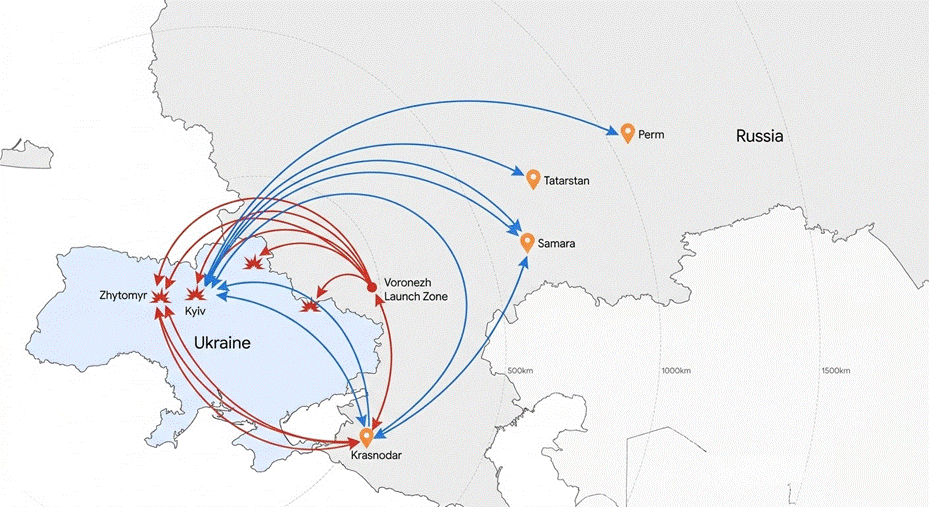
On April 25, Ukrainian Unmanned Systems Forces executed a highly sophisticated strike against the Shagol Airfield in Chelyabinsk Oblast, located a staggering 1,676 kilometers from the international border.8 Satellite battle damage assessments published on May 1 confirmed severe damage to several advanced Su-57 stealth fighters and Su-34 fighter-bombers stationed at the facility.8 Concurrent UAV strikes targeted military-industrial assets in Yekaterinburg and Chelyabinsk, fundamentally altering the strategic depth of the conflict by proving that the Russian Urals—previously considered a secure rear area—are now highly vulnerable to Ukrainian interdiction.7

Map showing Ukrainian drone strikes deep into Russia, including Urals targets.

In conjunction with targeting military aviation, Ukraine maintained a relentless operational tempo against Russia’s hydrocarbon export sector. Between April 28 and May 1, Ukrainian UAVs systematically struck the Transeft Perm Linear Production Dispatch Station in Perm Oblast, the Orsknefteorgsintez Oil Refinery in Orenburg Oblast, and the Tuapse Oil Refinery in Krasnodar Krai.8 The strikes on the Perm dispatch station—a strategic hub for Russia’s oil pipeline system—ignited fires across almost all local storage tanks, severely degrading distribution capabilities.18 Cumulatively, these strikes have successfully driven the average output of Russian oil refineries down to 4.69 million barrels a day, marking their lowest daily processing average since December 2009.8

3.4 Maritime Operations and the Contraction of the Black Sea Fleet

The maritime domain in the Black Sea continues to undergo a profound transformation characterized by asymmetric denial. The Russian Black Sea Fleet, historically the dominant power projecting force in the region, has been relegated to a defensive preservation posture. As of early 2026, cumulative Ukrainian strikes have destroyed or critically damaged approximately 30% of the fleet’s combat assets, severely degrading Russia’s amphibious assault potential and long-range naval missile capabilities.9

During this reporting period, analysts assessed that the Armed Forces of Ukraine now dictate the operational tempo across more than 60% of the Black Sea battlespace.9 Conversely, Russian operational freedom has contracted drastically to a mere 25% of the total maritime area, effectively confining the fleet to a narrow, 25-kilometer-wide strip along the Caucasus coast near Novorossiysk.9

Ukrainian intelligence and naval units actively exploit this vulnerability. On the night of April 25 to April 26, the Ukrainian Security Service (SBU) executed a highly coordinated, multi-vector strike on the Sevastopol Naval Base and Belbek Airfield in occupied Crimea.26 Utilizing an estimated 71 drones, this operation successfully inflicted critical damage on two large landing ships—the Yamal (Ropucha-class) and the Filchenkov (Tapir-class)—as well as the Ivan Khurs reconnaissance ship.26 The strike also degraded vital onshore infrastructure, hitting the Lukomka Black Sea Fleet Training Center, a MR-10M1 Mys-M1 coastal radar station, and a MiG-31 interceptor aircraft.26

Expanding their maritime interdiction beyond military vessels, the Ukrainian Navy utilized unmanned surface vehicles (USVs) on April 28 to strike the Marquise, a sanctioned oil tanker operating under a Cameroonian flag.18 The vessel, boasting a carrying capacity of over 37,000 tons, was intercepted 210 kilometers southeast of Tuapse.18 This signifies a strategic expansion of Ukrainian naval targeting to include the shadow fleet and maritime logistics vessels supporting the Russian hydrocarbon export economy, further politicizing and weaponizing global shipping lanes.18

3.5 Major Accidents: Ecological Crisis and Nuclear Near-Misses

The collateral consequences of the precision strike campaigns have precipitated major civilian and ecological hazards. The most severe incident of the reporting period is the catastrophic environmental disaster unfolding in the Russian Black Sea port of Tuapse.

Successive Ukrainian UAV strikes on the Rosneft-operated Tuapse oil terminal—which processes around 12 million metric tons of crude annually—occurred on April 16, April 20, April 28, and May 1.10 These strikes ignited massive fuel storage fires that required over 160 firefighters and dozens of emergency vehicles to contain.11 The structural destruction of the containment infrastructure, compounded by heavy regional rainfall, resulted in a catastrophic overflow of petroleum products into the Tuapse River, which subsequently drained rapidly into the Black Sea.12

The resulting ecological impact has been devastating. The region experienced toxic atmospheric phenomena described by local residents as “black rain,” with airborne benzene, xylene, and soot concentrations radically exceeding safe human exposure levels.29 An immense oil slick extending up to 77 kilometers along the coastline has decimated local marine life and avifauna, effectively ruining the beaches of the popular resort region near Anapa and Sochi.12 By May 2, emergency authorities reported removing over 13,300 cubic meters of contaminated soil and fuel oil, with Russian President Vladimir Putin publicly acknowledging the spill as one of the most serious environmental challenges Russia has faced in recent years.6

Simultaneously, the risk of a radiological disaster has escalated dramatically. Ukrainian intelligence and the Prosecutor General detailed previously unreported Russian military activity, confirming that the Russian military has repeatedly routed drones and hypersonic Kinzhal missiles directly through the airspace over the disused Chernobyl nuclear plant and the active Khmelnytskyi nuclear facility.13 Specifically, tracking data indicates that 35 Kinzhal missiles have been detected within 20 kilometers of these highly sensitive sites, with 18 passing near both sites on a single flight path.13 This routing introduces an extreme, unmitigated risk of a major nuclear accident stemming from navigational failures, mechanical malfunctions, or localized air-defense interceptions.13

3.6 Chronological Timeline of Military Events (April 25 – May 2, 2026)

DatePrimary CountryDescription of Military Event / Battle
April 25RussiaExecuted a massive coordinated strike utilizing 666 drones and missiles, heavily targeting Dnipro City with illegal “double-tap” tactics, resulting in multiple civilian casualties. 7
April 25UkraineConducted ultra-long-range UAV strikes deep into the Russian Urals, heavily damaging Su-57 and Su-34 aircraft at the Shagol Airfield in Chelyabinsk Oblast. 8
April 26RussiaContinued the active militarization of the Zaporizhzhia Nuclear Power Plant (ZNPP), utilizing the facility’s perimeter to store military hardware and stage drone launches. 27
April 26UkraineSBU operatives executed a multi-vector strike on the Sevastopol Naval Base, critically damaging the Yamal and Filchenkov landing ships, and the Ivan Khurs reconnaissance vessel. 26
April 27RussiaMaintained limited ground assaults in the Kherson direction, specifically targeting the islands within the Dnipro River Delta, without securing territorial gains. 27
April 27UkraineConducted mid-range interdiction strikes against Russian troop concentrations near the occupied settlement of Velyka Novosilka in the Donetsk Oblast. 32
April 28RussiaSustained intense aerial bombardment pressure, launching a localized wave of 123 UAVs into Ukrainian airspace overnight. 32
April 28UkraineAdvanced tactical positions in the Kharkiv and Orikhiv directions; naval forces successfully struck the sanctioned oil tanker Marquise in the Black Sea. 18
April 29RussiaOccupied the settlement of Sukha Balka in the eastern theater; launched an additional 171 drones across Ukraine. 4
April 29UkraineSeverely degraded Russian oil logistics by striking the Transeft Perm Dispatch Station and the Orsk Oil Refinery, while also destroying Mi-28 helicopters in Voronezh Oblast. 8
April 30RussiaFalsely claimed the seizure of Korchakivka in Sumy Oblast; Security Council Deputy Chairperson Dmitry Medvedev delivered a highly aggressive speech reaffirming existential war aims. 8
April 30United StatesAuthorized the release of $400 million in previously secured military funding to support the Ukrainian armed forces amidst broader strategic diplomatic shifts. 16
May 1RussiaDeployed 409 drones overnight targeting Ukrainian municipal and energy infrastructure. 8
May 1UkraineExecuted the fourth precision strike in two weeks against the Tuapse Oil Refinery, triggering a massive, uncontrolled environmental disaster along the Black Sea coast. 8
May 2RussiaShifted to intensive daytime bombardment, launching nearly 410 drones that struck industrial facilities and injured civilians in the western city of Ternopil. 6

4. Weapon Systems, Technologies, and DIB Shifts

The attritional nature of the conflict has necessitated massive structural shifts in how both nations source, manufacture, and deploy military hardware. The reporting period provided deep technical insights into new munition deployments, sovereign industrial capacity, and the weaponization of commercial space and cyber architecture.

4.1 Ukraine’s Defense Industrial Base (DIB) Integration

The Ukrainian Defense Industrial Base (DIB) is undergoing a rapid metamorphosis from an improvised, survival-oriented network into a highly integrated, export-oriented European security pillar.3 Driven by the systematic destruction of domestic infrastructure—including Russian strikes that have damaged 9 gigawatts of power generation capacity, of which only 3.5 gigawatts have been restored—and fluctuating confidence in U.S. supply chains, Kyiv has prioritized deep European defense integration.1 Further exacerbating this urgency are severe delays in the delivery of U.S. material; for instance, Javelin anti-armor missiles ordered in May 2022 are now not expected to be delivered until mid-2026.34

In response, Ukraine is directing up to 40% of its GDP toward defense and domestic innovation.35 A recent comprehensive survey of the Ukrainian DIB sector revealed that 90% of defense firms received inquiries from foreign nations regarding cooperation during the first quarter of 2026.2 The most significant interest originated from the United States (36%), Germany (29%), and Denmark (21%).2 The strategic focus of the Ukrainian DIB has shifted away from mere raw material acquisition toward the establishment of international joint ventures (supported by 64% of surveyed firms) and the direct export of finished, battle-tested technologies (supported by 79%).2 Ukrainian firms are pioneering a distributed, bottom-up innovation model where research and development are embedded directly within combat formations, allowing for the iterative, real-time refinement of autonomous navigation software and electronic warfare countermeasures at a pace traditional defense contractors cannot match.36

4.2 Aerospace and Missile Systems: The S-71K and FP-9

The reporting period unveiled critical technical intelligence regarding two highly consequential weapon systems recently introduced to the battlefield: the Russian S-71K “Kovyor” and the Ukrainian FP-9 ballistic system.

The Russian S-71K “Kovyor” Cruise Missile Detailed intelligence published by Ukraine’s Main Directorate of Intelligence (HUR) revealed the architecture of the S-71K, a new air-launched cruise missile developed by Russia’s United Aircraft Corporation.24 Designed for seamless integration with the advanced Su-57 stealth fighter (and adaptable for the Su-34), the S-71K represents a strategic shift in Russian munitions manufacturing toward simplified, mass-producible strike assets.24 The missile is explicitly designed to bridge the capability gap between cheap, low-payload Shahed drones and highly expensive, sophisticated traditional cruise missiles like the Kh-101 and Kalibr.24

Constructed from multilayer composite fiberglass and internal aluminum alloys, the missile carries a 250-kilogram OFAB-250-270 high-explosive fragmentation warhead.24 It is powered by an R500 turbojet engine and relies on a relatively basic flight controller and inertial navigation system, allowing it to accurately saturate air defense networks at ranges up to 300 kilometers.24

Crucially, the HUR analysis exposed the systemic failure of international export controls. Despite heavy sanctions, the S-71K is overwhelmingly reliant on foreign-sourced microelectronics. The missile incorporates approximately 40 distinct foreign components—including DC-DC converters (XL6009E1), high-current inductors, MOSFETs, and PWM controllers—manufactured by companies such as Analog Devices, Infineon Technologies, ON Semiconductor, and Shanghai Xinlong Semiconductor.24 These critical components are illicitly procured through complex civilian supply chains utilizing intermediary shell companies in China, the United Arab Emirates, and various former Soviet states, demonstrating Russia’s sustained capacity to bypass Western sanctions to fuel its military-industrial complex.24

Russian S-71K missile foreign components: DC/DC converter, MOSFETs, CPU, battery charger.

The Ukrainian FP-9 Ballistic System In a parallel technological leap, Ukraine publicly showcased the FP-9 ballistic system for the first time during this reporting period. The FP-9 represents a massive expansion in sovereign Ukrainian long-range precision strike capabilities, boasting a confirmed operational range of 800 to 850 kilometers.35 Equipped with a heavy, high-speed warhead explicitly designed to penetrate and bypass advanced Russian air defense networks, the FP-9 drastically complicates Russian theater logistics.35 By placing virtually all rear-area staging grounds, strategic command nodes, and Ural-based industrial centers within direct, sovereign strike range, the FP-9 reduces Ukraine’s reliance on Western-supplied long-range munitions, which are frequently subject to restrictive engagement rules.35

4.3 Cyber and Space Domain Escalations

The cyber and space domains have become equally vital to the prosecution of the war, characterized by the rapid weaponization of artificial intelligence and high-stakes infrastructure targeting.

In the space domain, the operational integrity of Russian military satellite communications was severely compromised. Following an initial breach on April 22, the full extent of a highly sophisticated cyberattack executed by pro-Ukrainian hacker units against Russia’s Gonets satellite system became publicly apparent.37 The breach successfully exposed highly sensitive internal communications, intelligence data routing, and infrastructure schematics linked directly to Russian state and military users.37 The Gonets system, functioning similarly to Western commercial satellite constellations, is critical for Russian remote communication and command orchestration; its compromise significantly degrades Russian situational awareness and secure data transmission capabilities across the theater.

In the cyber domain, a paradigm-shifting threat emerged with the full integration of advanced Artificial Intelligence into offensive hacking operations. In early April 2026, the AI firm Anthropic released the Claude Mythos Preview model.14 This model demonstrated an unprecedented capability to autonomously convert software vulnerabilities into fully functional, ready-to-deploy digital exploits, achieving a 72.4% success rate in the Firefox JS shell testbed.14 Cybersecurity analysts assess that this development acts as a “nuclear-analog moment” for cyberspace, effectively collapsing the capability gap between elite state-sponsored hackers and lower-tier criminal proxies.14

The Russian Federation is uniquely positioned to maximize the utility of this AI proliferation. Russian cyber doctrine heavily relies on a “privateer model,” wherein the state outsources aggressive offensive operations to deniable criminal proxies operating under the tacit tolerance and direct tasking of Russian intelligence services.14 By leveraging AI tools like Mythos, these proxy groups can now scale their attacks and weaponize vulnerabilities at an unprecedented volume, directing highly sophisticated ransomware and disruption campaigns against Ukrainian critical infrastructure, as well as penetrating Fortune 500 companies and medical infrastructure within allied Western nations.14 Further evidencing the breadth of Russian digital operations, German intelligence recently attributed a highly sophisticated global cyber campaign targeting Signal and WhatsApp messaging services directly to Russian state actors, who successfully accessed chat histories and internal files to map allied communications networks.40

4.4 Chronological Timeline of DIB and Technological Developments (April 25 – May 2, 2026)

DatePrimary CountryDescription of Technological / DIB Development
April 25RussiaThe structural and architectural details of the S-71K “Kovyor” missile were exposed by intelligence agencies, revealing a strategy to mass-produce simplified, low-cost cruise missiles heavily reliant on smuggled Western microelectronics. 24
April 25UkrainePublicly showcased the new indigenous FP-9 ballistic system, successfully extending sovereign precision strike capabilities to operational distances of up to 850 kilometers. 35
April 26RussiaOperational details regarding the structural compromise of the Gonets satellite communication system were publicized, highlighting deep vulnerabilities in Russian space-based command and data routing. 37
April 27UkraineComprehensive DIB reports indicated that 90% of domestic defense firms are now engaged in joint venture and export negotiations with Western partners, marking a transition toward deep structural integration with European defense markets. 2
April 29United StatesDiplomatic frameworks shifted explicitly as U.S. negotiators signaled reliance on the “Anchorage understanding,” diverging from prior methodologies that prioritized Ukrainian sovereign consent in security arrangements. 1
May 1UkraineReached a critical milestone in combat aviation readiness with the receipt and operational integration of the first mobile F-16 fighter jet flight simulators. 16

5. Russian Occupation and Sociopolitical Control

Within the occupied territories of Ukraine, the Russian Federation continues to execute a systematic campaign of sociopolitical assimilation, economic extraction, and demographic engineering, aimed at permanently integrating these regions into the Russian state apparatus.

A primary pillar of this strategy is the systematic militarization and indoctrination of Ukrainian youth. Occupation authorities, particularly those operating within the Zaporizhzhia Nuclear Power Plant (ZNPP) administration in Enerhodar, have established extensive military-patriotic youth programs.41 These programs are designed not only to indoctrinate children with Russian state narratives but to actively train them in combat skills, including the operation of first-person-view (FPV) drones.41 Furthermore, authorities are actively channeling Ukrainian youth into Russia’s domestic nuclear sector to address long-term labor shortages.41 In a more severe violation of international law, Russian officials continue the practice of temporarily deporting Ukrainian children from occupied cities such as Mariupol to St. Petersburg under the guise of “cultural indoctrination” programs.41

Economically, the occupation is characterized by aggressive resource extraction and financial instability. Israeli and Ukrainian media corroborated reports during this period that the Russian Federation is actively exporting vast quantities of grain stolen from occupied Ukrainian agricultural hubs to international buyers, including Israel, to circumvent sanctions and fund the occupation administration.41 Meanwhile, the internal economic management of these territories remains highly volatile; a major Russian-operated mine in the occupied Luhansk Oblast recently withheld wages and initiated mass layoffs, underscoring the instability of Russia’s extractive projects.41 To solidify long-term demographic shifts, Russian state-owned entities like VTB Bank are heavily expanding investments in residential construction within occupied Crimea, incentivizing the relocation of Russian citizens to the peninsula.41

6. Lessons Learned

The rapid evolution of combat tactics, autonomous technologies, and geopolitical postures over the past week has generated profound lessons for the future of modern warfare, spanning the strategic, operational, and tactical levels.

6.1 Strategic Lessons

The primary strategic lesson derived from this reporting period revolves around the extreme fragility of international alliance structures and the absolute necessity of sovereign industrial capability in attritional conflicts. The dramatic erosion of Ukrainian confidence in U.S. mediation—plummeting to a mere 28%—and the willingness of U.S. negotiators to consider territorial concessions directly with Moscow over the “Anchorage understanding” demonstrate that client states cannot indefinitely rely on the continuity of external security guarantees.1

Consequently, Ukraine’s rapid strategic pivot to scale its domestic Defense Industrial Base (DIB) and secure co-production agreements with European partners proves that long-term survival requires sovereign technological generation.2 Furthermore, the exposure of the Russian S-71K missile’s supply chain—which utilizes over 40 distinct Western components despite stringent sanctions—underscores the fundamental inadequacy of current global export control regimes.24 The strategic lesson is clear: border-based economic sanctions are highly porous in a globalized, digitized economy. Effective economic warfare requires deep, systemic auditing of corporate supply chains, rigorous enforcement against dual-use technologies, and aggressive interdiction of intermediary trading hubs.

6.2 Operational Lessons

Operationally, the reporting period conclusively solidified the concept of “asymmetric maritime denial.” Ukraine, a nation completely lacking a conventional blue-water navy, has successfully neutralized a significant portion of the Russian Black Sea Fleet, driving it out of the western and central Black Sea and permanently restricting its operations to a 25-kilometer coastal strip.9 The operational lesson is that the rapid proliferation of low-cost, highly maneuverable unmanned surface vehicles (USVs), when integrated with shore-based precision anti-ship missiles and robust ISR (Intelligence, Surveillance, and Reconnaissance), can successfully deny maritime supremacy to a traditionally superior, heavily capitalized naval force.9

Additionally, the sustained campaign against Russian refineries demonstrates the high operational value of targeting dual-use economic infrastructure to degrade enemy combat power. Ukrainian long-range strikes not only constrain the refined fuel supplies available to the Russian military logistics chain but also systematically dismantle the hydrocarbon export revenue required by the state to finance the war.8 However, the catastrophic ecological fallout resulting from the Tuapse refinery strikes serves as a stark operational lesson regarding the severe collateral risks of striking massive industrial complexes, where secondary environmental damage (such as massive marine oil slicks and toxic atmospheric plumes) can quickly spiral out of control and threaten civilian populations.10

6.3 Tactical Lessons

At the tactical level, the total saturation of the airspace by unmanned systems has forced a continuous, grueling cycle of adaptation. The Russian tactical evolution of utilizing massive, highly coordinated swarms of inexpensive loitering munitions (up to 666 in a single night) ahead of ballistic missiles has proven highly successful at intentionally exhausting localized surface-to-air interceptor stockpiles.7 The explicit tactical shift to daytime drone swarms further indicates that unmanned systems are increasingly utilized not just for kinetic destruction, but for psychological attrition and economic paralysis—forcing civilian populations and industrial workers into shelters during peak productive hours.5

On the ground, the extreme lethality of the surface environment has necessitated desperate tactical innovations. The Russian infantry’s reliance on subterranean gas pipelines to infiltrate the heavily defended settlement of Kupyansk, despite suffering casualty rates of up to 70 percent, highlights the impossibility of traditional mechanized maneuver in environments saturated by ISR and FPV drones, forcing combat into highly attritional, close-quarters subterranean and urban domains.19

Finally, the democratization of offensive cyber capabilities via Artificial Intelligence represents a critical, paradigm-shifting tactical lesson. The deployment of generative models like Claude Mythos allows relatively unskilled proxy actors to weaponize software vulnerabilities rapidly and autonomously.14 Cyber defense infrastructure can no longer rely on patching known vulnerabilities at a human pace; to survive, it must rapidly evolve to utilize AI-driven autonomous defense systems capable of matching the speed, volume, and ingenuity of AI-generated attacks.14

6.4 Chronological List of Lessons Learned (April 25 – May 2, 2026)

DatePrimary CountryDescription of Lesson Learned
April 25RussiaDemonstrated the tactical efficacy of massive, mixed-munition drone waves to intentionally exhaust sophisticated surface-to-air interceptors prior to ballistic missile deployment. 7
April 25UkraineValidated the operational necessity and psychological impact of executing ultra-long-range UAS strikes against high-value aerospace assets deep within adversarial territory (e.g., the Urals). 7
April 28RussiaConfirmed the extreme vulnerability of critical maritime logistics and shadow fleet vessels to autonomous surface vehicle interdiction in contested, asymmetric waters. 18
April 28UkraineEstablished that asymmetric maritime denial utilizing USVs and shore-based precision fires can effectively and permanently displace a numerically and technologically superior conventional naval fleet. 9
April 29United StatesHighlighted the volatility of strategic mediation, demonstrating that shifts in domestic political leadership directly alter the geopolitical risk calculus for allied nations fighting attritional wars. 1
April 30RussiaDemonstrated that the lethality of modern ISR-saturated surface combat forces infantry to utilize highly dangerous subterranean infiltration routes (e.g., gas pipelines), accepting massive casualty rates to achieve minor tactical positioning. 19
May 1RussiaHighlighted the strategic advantage of integrating advanced LLM Artificial Intelligence into state-sponsored proxy cyber operations, allowing for the rapid, automated weaponization of zero-day vulnerabilities. 14
May 1UkraineDemonstrated the severe, uncontainable collateral ecological risks associated with kinetic strikes on massive coastal hydrocarbon infrastructure, as evidenced by the devastating Tuapse disaster. 11

Please share the link on Facebook, Forums, with colleagues, etc. Your support is much appreciated and if you have any feedback, please email us in**@*********ps.com. If you’d like to request a report or order a reprint, please click here for the corresponding page to open in new tab.


Sources Used

  1. Ukraine’s falling confidence in US mediation | Brookings, accessed May 2, 2026, https://www.brookings.edu/articles/ukraines-falling-confidence-in-us-mediation/
  2. Ukrainian defense sector sees surge in international demand for partnerships in 2026, accessed May 2, 2026, https://odessa-journal.com/ukrainian-defense-sector-sees-surge-in-international-demand-for-partnerships-in-2026
  3. Securing Ukraine’s Future in Europe: Ukraine’s Defense Industrial Base—An Anchor for Economic Renewal and European Security | Council on Foreign Relations, accessed May 2, 2026, https://www.cfr.org/articles/securing-ukraines-future-in-europe-ukraines-defense-industrial-base-an-anchor-for-economic-renewal-and-european-security
  4. Russia in Review, April 25-May 2, 2025, accessed May 2, 2026, https://www.russiamatters.org/news/russia-review/russia-review-april-25-may-2-2025
  5. Russia Fired Record Number of Drones at Ukraine in April – AFP Analysis, accessed May 2, 2026, https://www.themoscowtimes.com/2026/05/01/russia-fired-record-number-of-drones-at-ukraine-in-april-afp-analysis-a92664
  6. Ukraine war briefing: Russian oil hub of Tuapse hit for fourth time as environmental disaster mounts – The Guardian, accessed May 2, 2026, https://www.theguardian.com/world/2026/may/02/ukraine-war-briefing-russian-oil-hub-of-tuapse-hit-for-fourth-time-as-environmental-disaster-mounts
  7. Russian Offensive Campaign Assessment, April 25, 2026 | ISW, accessed May 2, 2026, https://understandingwar.org/research/russia-ukraine/russian-offensive-campaign-assessment-april-25-2026/
  8. Russian Offensive Campaign Assessment, May 1, 2026 | ISW, accessed May 2, 2026, https://understandingwar.org/research/russia-ukraine/russian-offensive-campaign-assessment-may-1-2026/
  9. The Changing Military Balance in the Black Sea: A Ukrainian Perspective, accessed May 2, 2026, https://carnegieendowment.org/research/2026/04/the-changing-military-balance-in-the-black-sea-a-ukrainian-perspective
  10. accessed May 2, 2026, https://en.wikipedia.org/wiki/2026_Tuapse_oil_terminal_disaster#:~:text=On%2016%20April%202026%2C%20Ukrainian,storage%20areas%20and%20port%20infrastructure.
  11. 2026 Tuapse oil terminal disaster – Wikipedia, accessed May 2, 2026, https://en.wikipedia.org/wiki/2026_Tuapse_oil_terminal_disaster
  12. Black Rain, Toxic Air and Bird Deaths: Russian Black Sea Town Reels From Refinery Strike, accessed May 2, 2026, https://www.themoscowtimes.com/2026/04/24/black-rain-toxic-air-and-bird-deaths-russian-black-sea-town-reels-from-refinery-strike-a92581
  13. Russia accused of risking major accident by flying missiles near Chernobyl, accessed May 2, 2026, https://www.independent.co.uk/bulletin/news/russia-missiles-chernobyl-ukraine-accident-b2962634.html
  14. Mythos in Moscow: Why Russia Will be the Relative Winner of AI Cyber Proliferation, accessed May 2, 2026, https://www.russiamatters.org/analysis/mythos-moscow-why-russia-will-be-relative-winner-ai-cyber-proliferation
  15. Russian Offensive Campaign Assessment, May 2, 2025 | ISW, accessed May 2, 2026, https://understandingwar.org/research/russia-ukraine/russian-offensive-campaign-assessment-may-2-2025/
  16. ISW Russian Offensive Campaign Assessment, April 30, 2026 – Kyiv Post, accessed May 2, 2026, https://www.kyivpost.com/post/75144
  17. ISW Russian Offensive Campaign Assessment, April 29, 2026, accessed May 2, 2026, https://www.kyivpost.com/post/75060
  18. Russian Offensive Campaign Assessment, April 29, 2026, accessed May 2, 2026, https://understandingwar.org/research/russia-ukraine/russian-offensive-campaign-assessment-april-29-2026/
  19. Russian Offensive Campaign Assessment, April 30, 2026, accessed May 2, 2026, https://understandingwar.org/research/russia-ukraine/russian-offensive-campaign-assessment-april-30-2026/
  20. Russian Offensive Campaign Assessment, April 21, 2026, accessed May 2, 2026, https://understandingwar.org/research/russia-ukraine/russian-offensive-campaign-assessment-april-21-2026/
  21. April 2025 Russian attack on Kyiv – Wikipedia, accessed May 2, 2026, https://en.wikipedia.org/wiki/April_2025_Russian_attack_on_Kyiv
  22. Ukraine war situation update 19 – 25 April 2025 – ACLED, accessed May 2, 2026, https://acleddata.com/update/ukraine-war-situation-update-19-25-april-2025
  23. Ukraine says a strike hit Russian Black Sea oil terminal in Tuapse, accessed May 2, 2026, https://apnews.com/article/russia-ukraine-war-tuapse-strike-2efb9ac87f60bd4ef7f2646240922192
  24. Russia has a new missile — here’s what we know about the S-71K, accessed May 2, 2026, https://kyivindependent.com/ukraine-reveals-design-foreign-components-of-russias-new-s-71k-missile/
  25. A sinking fleet: russia’s largest losses in the Black Sea and the Sea of Azov during the war, accessed May 2, 2026, https://mod.gov.ua/en/news/a-sinking-fleet-russia-s-largest-losses-in-the-black-sea-and-the-sea-of-azov-during-the-war
  26. Russian Offensive Campaign Assessment, April 26, 2026 | ISW, accessed May 2, 2026, https://understandingwar.org/research/russia-ukraine/russian-offensive-campaign-assessment-april-26-2026/
  27. Russian Offensive Campaign Assessment, April 27, 2026, accessed May 2, 2026, https://understandingwar.org/research/russia-ukraine/russian-offensive-campaign-assessment-april-27-2026/
  28. ‘Turbulent and dangerous’: How shipping is the new global battleground, accessed May 2, 2026, https://www.aljazeera.com/news/2026/5/1/turbulent-and-dangerous-how-shipping-is-the-new-global-battleground
  29. Environmental disaster fears follow Ukrainian drone strikes on Russian oil refineries, accessed May 2, 2026, https://www.commonspace.eu/news/environmental-disaster-fears-follow-ukrainian-drone-strikes-russian-oil-refineries
  30. Fourth Strike in Two Weeks: Tuapse Oil Terminal Hit Again, Fires Reignite – Kyiv Post, accessed May 2, 2026, https://www.kyivpost.com/post/75149
  31. Ukrainian Drones Hit Tuapse Port Again, Environmental Crisis Deepens, accessed May 2, 2026, https://www.marinelink.com/news/ukrainian-drones-hit-tuapse-port-again-538706
  32. Russian Offensive Campaign Assessment, April 28, 2026 | ISW, accessed May 2, 2026, https://understandingwar.org/research/russia-ukraine/russian-offensive-campaign-assessment-april-28-2026/
  33. The Russia-Ukraine War Report Card, April 29, 2026, accessed May 2, 2026, https://www.russiamatters.org/news/russia-ukraine-war-report-card/russia-ukraine-war-report-card-april-29-2026
  34. Ukraine, the U.S. Defense Industrial Base, and the Elusive Crisis-Era Munitions Production Surge, accessed May 2, 2026, https://www.ndu.edu/News/Article-View/Article/4445408/ukraine-the-us-defense-industrial-base-and-the-elusive-crisis-era-munitions-pro/
  35. Secret of FP‑9: the mystery of Ukraine’s new strategic weapon is revealed – YouTube, accessed May 2, 2026, https://www.youtube.com/watch?v=Ckl5E0Zil94
  36. The New Revolution in Military Affairs, accessed May 2, 2026, https://carnegieendowment.org/research/2026/04/ukraine-russia-war-changing-warfare-practice-military-strategy
  37. Major Cyber Attacks, Data Breaches, Ransomware Attacks in April 2026, accessed May 2, 2026, https://www.cm-alliance.com/cybersecurity-blog/major-cyber-attacks-data-breaches-ransomware-attacks-in-april-2026
  38. Data Centers, Telecommunications Networks, and Space-Based Systems – FDD, accessed May 2, 2026, https://www.fdd.org/analysis/2026/04/29/data-centers-telecommunications-networks-and-space-based-systems/
  39. Russian cyberattacks against Ukraine may be considered war crimes – CCD | УНН, accessed May 2, 2026, https://unn.ua/en/amp/russian-cyberattacks-against-ukraine-may-be-considered-war-crimes-ccd
  40. Germany believes Russia responsible for global cyber campaign on Signal, WhatsApp, media reports – The Kyiv Independent, accessed May 2, 2026, https://kyivindependent.com/germany-believes-russia-responsible-for-global-cyber-campaign-on-signal-whatsapp-media-reports/
  41. Russian Occupation Update, April 30, 2026 | ISW, accessed May 2, 2026, https://understandingwar.org/research/russia-ukraine/russian-occupation-update-april-30-2026/
  42. NATO Tech in Russian Missile? Ukraine Shocked As Putin Unveils New S-71K With Western Components, accessed May 2, 2026, https://www.youtube.com/watch?v=sYiCXwF4oPo

SITREP Drones in the Russia:Ukraine Conflict – April 25 – May 1, 2026

1. Executive Summary

The reporting period spanning April 25 through May 1, 2026, represents a critical inflection point in the technological and operational trajectories of the ongoing Russia-Ukraine conflict. Across the air, land, sea, and space domains, both belligerents have radically accelerated the deployment of autonomous systems, effectively shifting the paradigm of engagement from exquisite scarcity to intelligent mass.1 This transition is characterized by the widespread integration of artificial intelligence (AI) targeting, the scaling of unmanned ground vehicles (UGVs) for frontline combat and logistics, and the unprecedented extension of unmanned aerial vehicle (UAV) strike ranges.2

In the air domain, the conflict witnessed a significant escalation in theater-wide battlefield air interdiction (BAI) campaigns. Ukrainian forces successfully executed complex, deep-rear strikes reaching up to 1,700 kilometers into the Russian Federation, heavily degrading strategic aviation assets, including fifth-generation stealth fighters, and systematically dismantling energy infrastructure.4 Conversely, Russian forces executed record-breaking volumes of UAV attacks, launching over 6,500 long-range strike drones throughout April. Russian operators have increasingly shifted toward daytime swarm operations to maximize systemic disruption, psychological pressure, and civilian infrastructure degradation.7

Simultaneously, the land domain has experienced a definitive robotic revolution. The proliferation of first-person view (FPV) drones has created highly lethal “kill zones” spanning 10 to 15 kilometers from the zero line, rendering traditional infantry and vehicular movement largely untenable.3 This operational reality has catalyzed the rapid deployment of UGVs by both sides, transitioning these systems from experimental prototypes to serial-produced assets essential for logistics, casualty evacuation, and direct fire support.9

In the maritime and space domains, the integration of unmanned surface vessels (USVs) as launch platforms for aerial interceptors and the weaponization of satellite communication networks highlight the increasingly multi-domain nature of autonomous warfare.11 The ensuing sections detail these events, technological developments, and the resulting tactical doctrines, strictly ordered by chronology and the primary executing nation.

2. Military Events, Battles, and Strikes

The following combat operations, strikes, and military events involving unmanned systems are organized chronologically by date, and subsequently sorted alphabetically by the primary acting state.

April 25, 2026

Russia Russian aerospace and missile forces executed a massive combined strike against Ukrainian territory overnight from April 24 into April 25. The operation utilized an estimated 666 drones and missiles, with a primary focus on Dnipro City and the broader Dnipropetrovsk Oblast.13 The strike package relied heavily on Iranian-designed Shahed-type loitering munitions to saturate and exhaust Ukrainian air defense networks ahead of ballistic missile trajectories.13 The attacks resulted in significant civilian casualties, killing at least ten individuals and injuring 67 across the targeted regions.14 Local authorities reported that the strikes ignited fires across Dnipro, partially destroying apartment buildings, commercial enterprises, and private residences.15 Furthermore, Russian forces continued their “human safari” drone strike campaign targeting civilians in the Kherson direction, demonstrating a continued reliance on FPVs for localized terror tactics.13

Ukraine Ukraine’s Unmanned Systems Forces executed a historic deep-strike operation targeting the Shagol military airfield in Russia’s Chelyabinsk Oblast, located approximately 1,700 kilometers from the Ukrainian border.4 Utilizing long-range Liutyi strike drones equipped with substantial payloads, Ukrainian forces successfully penetrated deep into the Urals—an area previously considered a safe sanctuary beyond the reach of conventional Ukrainian assets.16 The strike successfully hit two Su-57 fifth-generation stealth fighters, one Su-34 fighter-bomber, and an additional unidentified Sukhoi-series aircraft.5 The neutralization of the Su-57, Russia’s most advanced fighter capable of launching Kh-59 and Kh-69 missiles and valued at over $100 million per unit, represents a critical degradation of Russian aerospace capabilities.4

On the same day, Ukrainian forces continued mid-range interdiction efforts in occupied Donetsk Oblast, deploying a drone strike against a Russian locomotive pulling a train laden with fuel and lubricants on the Donetska Railway north of Menchuhove, roughly 71 kilometers from the frontline.18 Furthermore, a Ukrainian drone strike hit a Russian logistics hub in occupied northern Voznesenivka, underscoring a systematic effort to sever tactical supply lines.18 Ukrainian drone activity was also recorded in Sverdlovsk Oblast, where a drone strike damaged an apartment building in Yekaterinburg, marking one of the deepest penetrations into Russian airspace to date.13

April 26, 2026

Russia Russian forces maintained their aerial pressure campaign, launching drone strikes targeting the Sumy and Dnipro regions, resulting in additional civilian casualties.20 During the night of April 26 to 27, Russian forces launched 94 UAVs, primarily Shahed variants, from multiple directions including Kursk, Oryol, and occupied Crimea.21 One notable strike targeted port infrastructure in Chornomorsk, Odesa Oblast, destroying a storage tank containing 6,000 tonnes of sunflower oil and causing a massive spill in the port’s water area.21 The attack severely disrupted port operations and highlighted Russia’s ongoing strategy of targeting Ukraine’s agricultural export capacity.

Ukraine Ukrainian special operations units mounted a highly coordinated multi-axis drone assault on Russian naval and aviation infrastructure in occupied Crimea. From 21:00 on April 25 to 05:30 on April 26, waves of Ukrainian drones targeted the Belbek Airfield and the Sevastopol Naval Base.24 The operation severely damaged the Yamal (Ropucha-class) and Filchenkov (Tapir-class) large landing ships, the Ivan Khurs reconnaissance vessel, and a MiG-31 interceptor aircraft.25 Furthermore, the strikes neutralized critical command and control nodes, including the Lukomka Black Sea Fleet Training Center, an Air Defense Forces radio technical headquarters, and an MR-10M1 coastal radar station.25

Simultaneously, Ukrainian long-range drones struck the Yaroslavl Oil Refinery in Russia, damaging the ELOU-AT-4 installation—a key unit for raw materials primary processing—and triggering significant fires at the facility, which processes 15 million tons of oil annually.25

April 27, 2026

Russia Russian drone operations continued to focus on attrition and infrastructure degradation. While maintaining a steady tempo of strikes along the line of contact, Russian operators focused heavily on the Odesa region, where drone debris and direct hits damaged residential and port infrastructure, injuring 14 civilians, including two children.21 Furthermore, the Russian military escalated its drone strikes against Nikopol Raion in the Dnipropetrovsk Oblast, launching roughly 2,000 FPV and drop-munition strikes since March, doubling the previous monthly average in a deliberate campaign to render the area uninhabitable for civilians.21

Ukraine Ukrainian forces maintained pressure on Russian troop concentrations in the near-rear. A targeted drone strike was executed against a Russian troop assembly area near occupied Velyka Novosilka, roughly 24 kilometers from the frontline, demonstrating the persistent threat of tactical UAVs against staging areas.18 Furthermore, Ukrainian forces targeted a Russian Tornado-S multiple launch rocket system north of occupied Dolynske, utilizing long-range reconnaissance drones to provide terminal guidance for counter-battery fire.21

April 28, 2026

Russia Russian forces launched an overnight barrage of 123 Shahed, Gerbera, and Italmas drones aimed at the Ukrainian rear.18 In a rare tactical deviation, Russia also executed a daytime drone attack on Kyiv. Ukrainian air defenses intercepted the incoming threats; however, falling debris damaged an unfinished building in the Shevchenkivskyi district and ignited a fire within a cemetery in the Solomianskyi district, resulting in two civilian injuries.27 The shift to daytime attacks is assessed as an effort to maximize psychological terror, disrupt economic activity, and exploit windows where air defense readiness may be transitioning.7

Ukraine Ukraine’s drone forces executed a highly successful overnight strike against the Rosneft-operated Tuapse Oil Refinery in Krasnodar Krai. This marked the third attack on this specific facility in April alone. The strike caused multiple fires, heavily damaging the refinery’s infrastructure and forcing the suspension of its primary refining unit.18 Satellite imagery confirmed the destruction of at least four large fuel storage tanks and severe damage to adjacent infrastructure.

In the occupied territories, Ukrainian Special Operations Forces utilized drones to orchestrate a strike on a Russian Iskander-M ballistic missile storage site near Ovrazhky, Crimea, located roughly 215 kilometers from the frontline.18 Fire Information for Resource Management System (FIRMS) data confirmed heat anomalies at the site, corroborating the destruction of the high-value munitions.18

April 29, 2026

Russia Russian forces continued persistent near-rear interdiction efforts. A Russian Geran-2 drone strike reportedly targeted a train car on the Pivdenna-Zakhidna railway line near the Tereshchenska station in southeastern Voronizh, demonstrating Russia’s ongoing focus on disrupting Ukrainian logistics and troop movements via targeted battlefield air interdiction.28

Ukraine Ukrainian forces expanded their long-range operational campaign across multiple vectors. In a massive reach into Russian territory, Ukrainian drones struck the Transneft Perm Linear Production Dispatch Station in Perm Oblast, approximately 1,400 kilometers from the border. The strike ignited almost all oil storage tanks at the site, which serves as a strategic hub for Russia’s oil pipeline system.6 Concurrently, a separate drone operation targeted the Orsknefteorgsintez Oil Refinery in Orenburg Oblast, located roughly 1,300 kilometers away.29

In the air domain, Ukrainian drones struck a field landing site in Voronezh Oblast, heavily damaging two Russian Mi-28 attack helicopters and two Mi-17 transport helicopters while they were refueling.6 In the maritime domain, the Ukrainian Navy successfully deployed an explosive USV to strike the sanctioned Marquise oil tanker in the Black Sea, 210 kilometers southeast of Tuapse.6

Target LocationAsset Destroyed/DamagedDistance from BorderStrategic Impact
Shagol Airfield, Chelyabinsk2x Su-57, 1x Su-341,700 kmDegradation of advanced stealth aviation
Perm Dispatch StationTransneft Oil Storage1,400 kmDisruption of pipeline logistics
Orsknefteorgsintez RefineryRefining Units1,300 kmReduction in national fuel output
Tuapse Oil Refinery24+ Fuel Tanks450 kmLocalized environmental crisis, fuel denial
Voronezh Landing Site2x Mi-28, 2x Mi-17150 kmTactical aviation attrition

April 30, 2026

Russia Overnight, Russian forces launched a massive wave of 206 drones, including 140 Shahed variants (some featuring jet-powered modifications), supported by an Iskander-M ballistic missile.30 Ukrainian air defenses successfully intercepted 172 of the incoming UAVs, though several successfully impacted energy and administrative infrastructure across the Chernihiv, Dnipropetrovsk, Kharkiv, and Odesa oblasts.30 The barrage resulted in significant power outages and injured at least 20 civilians in Odesa.30

Ukraine Ukrainian USVs continued to assert dominance in the Black Sea. Operations near the Kerch Strait resulted in successful strikes against two Russian Federal Security Service (FSB) vessels: a Project 12150 Mangust-class patrol boat and a Project 21980 Grachonok-class patrol boat.30 In the land domain, a Ukrainian National Guard unit, the “Lava” regiment of the 2nd Corps “Khartiia,” executed a fully robotized assault near Kupyansk. Utilizing a combination of strike UAVs, explosive-laden attack drones, and armed UGVs equipped with thermobaric TOR-800 munitions, the unit eliminated approximately ten Russian soldiers and cleared a fortified position without deploying a single human infantryman onto the battlefield.29

May 1, 2026

Russia Russian military forces continued to weaponize daytime drone swarms, launching 409 drones targeting regions across Ukraine.29 Notably, the western city of Ternopil was hit by dozens of drones during the afternoon, resulting in widespread power outages, infrastructure damage, and at least 12 civilian injuries.31 Official Ukrainian Air Force statistics released on this day confirmed that Russia launched a record 6,583 long-range drones throughout the month of April, a two percent increase from the previous record set in March.7

Ukraine Ukrainian forces conducted a fourth strike on the Tuapse port and oil refinery in Krasnodar Krai, igniting massive fires that required 128 emergency personnel and 41 appliances to contain.36 The compounding damage from successive strikes has resulted in critical environmental crises, including “oil rain” and massive coastal slicks stretching 77 kilometers along the Black Sea.36 Concurrently, Ukrainian forces utilized tactical drones to target air defense assets, successfully striking a Nebo-M radar system in Ukolovo, Belgorod Oblast, to further degrade Russian aerial surveillance networks.29

3. New Product Developments and Technological Modifications

The accelerated pace of the conflict has driven both nations to rapidly innovate, modify existing platforms, and integrate advanced autonomous technologies to maintain parity.

April 25, 2026

Russia The Russian Ministry of Defense continued efforts to formalize the Unmanned Systems Forces (USF) as a distinct branch of the military, initiating a recruitment drive intended to fill quotas with university students.21 This institutionalization reflects a broader effort to standardize drone operations, moving away from ad-hoc volunteer units toward a cohesive, state-directed capability boasting over 100 tactical UAS crews per regiment.39

Ukraine Although not a new product launch, the successful 1,700-kilometer strike on the Shagol airfield demonstrated critical, unannounced technological modifications to Ukraine’s Liutyi long-range strike drones.4 Achieving this extreme range with a 100-kilogram payload capable of destroying armored combat aircraft indicates substantial advancements in fuel efficiency, autonomous navigation algorithms capable of operating in heavily jammed environments, and precision terminal guidance systems.16

April 26, 2026

Russia In a significant regulatory and technological maneuver impacting the space and cyber domains, the Russian government officially implemented a six-month ban on the importation of foreign satellite communication devices, specifically targeting Starlink terminals.40 Previously, Russian forces had illicitly acquired Starlink terminals through third-party countries and integrated them onto Shahed UAVs to establish highly resilient, real-time command links.42 This ban follows countermeasures enacted by SpaceX and the US Department of Defense to geofence and disable unauthorized terminals, which reportedly caused the collapse of Russian command channels on the frontline, forcing Russian engineers to seek alternative communication architectures.40

Ukraine Ukrainian defense contractor Fire Point publicly displayed a mockup of the FP-9 ballistic system at an exhibition in Poland.44 Designed to carry an 800-kilogram warhead over 850 kilometers, the FP-9 blurs the line between traditional ballistic missiles and autonomous heavy drone delivery systems.44 Measuring larger than the American ATACMS and the Russian Iskander, the FP-9 signifies a massive leap in Ukraine’s indigenous deep-strike architecture, intended to strike deep-rear objectives such as Moscow without relying on Western-supplied munitions.44

April 27, 2026

Russia Ukrainian electronic warfare specialists identified a critical modification in Russian drone deployment: the integration of mesh modems onto long-range UAVs.18 By utilizing mesh networks, a cluster of incoming drones can maintain a decentralized communication signal amongst themselves, allowing operators to bypass traditional satellite navigation jamming.18 This modification extends the manually guided range of Russian drones to over 220 kilometers, enabling precise terminal control of loitering munitions deep into the Ukrainian rear.18

Ukraine Ukrainian drone manufacturer General Chereshnya reported a massive scale-up in domestic interceptor drone capabilities, noting that their systems were used in 11,473 interceptions in March 2026, an increase of 5,800 over the previous month.21 This surge highlights the industrial mobilization within Ukraine to produce low-cost kinetic interceptors capable of neutralizing the overwhelming volume of Russian Molniya and Shahed drones.21

April 28, 2026

Russia To circumvent ubiquitous Ukrainian radio frequency (RF) jamming, Russian developers significantly scaled the deployment of fiber-optic sleeper drones.39 These FPVs spool a physical fiber-optic cable, rendering them immune to EW suppression while transmitting high-definition video back to the operator. Furthermore, these drones are being pre-positioned in a dormant state by reconnaissance groups and activated days later via cellular network triggers, creating persistent, unpredictable threats behind Ukrainian lines.39

Ukraine Ukrainian defense tech firm General Cherry unveiled the Khmarynka (Cloud), a mid-range strike drone engineered specifically to saturate and exhaust Russian air defenses.47 Heavily inspired by Russia’s “Molniya” drone, the low-cost (approx. $1,000) Khmarynka boasts a 50-kilometer range, a 196-centimeter wingspan, and operates across a broad, unpredictable frequency spectrum (150 MHz to 2800 MHz).47 This multi-frequency capability renders traditional EW spoofing highly energy-intensive and largely ineffective, allowing Ukraine to strike armored vehicles and bunkers in the Russian near-rear.47

April 29, 2026

Russia Russian forces began systematically deploying fixed-wing Orlan and Molniya UAVs as “motherships” to carry and launch FPV drones closer to their targets.48 This modification drastically increases the operational range of cheap, tactical FPVs, allowing them to interdict Ukrainian logistics routes up to 60 kilometers behind the line of contact, effectively expanding the lethal “kill zone”.48

Ukraine Ukrainian defense firm Roboneers unveiled the Lynx+, an extensively upgraded version of their prior UGV systems.49 While precise technical specifications remain classified, the platform builds upon the legacy of the “Ironclad” UGV, which featured a payload capacity of 350 kilograms and has undergone rigorous combat testing.51 The Lynx+ reflects a broader Ukrainian initiative to integrate more heavily armored and capable UGVs into active frontline infantry support roles.

April 30, 2026

Russia Footage emerged of the Russian Kuryer UGV integrated with an eight-tube North Korean 107mm rocket launcher.52 This marks the third weaponized configuration for the modular Kuryer platform, following previous thermobaric and mortar setups.52 The adoption of this rocket system balances payload constraints with mobility, allowing remote operators to conduct rapid saturation fire missions at ranges up to 8.5 kilometers and immediately reposition, thereby minimizing vulnerability to counter-battery fire.52

Ukraine The Ukrainian Ministry of Defense formally codified the Bizon-L UGV, clearing it for immediate operational use across the armed forces.9 The Bizon-L is a versatile, tracked logistics robot capable of carrying up to 300 kilograms at speeds of 12 km/h over a 50-kilometer range.53 Crucially, it incorporates six redundant communication channels (including LTE, Wi-Fi, and Starlink) to maintain control in severe EW environments, alongside a negligible thermal signature to evade infrared detection.53

Additionally, Ukrainian firm Ratel Robotics began state testing of net launchers mounted on their Ratel H and Ratel M UGV platforms.55 This represents a novel, ground-based kinetic counter-UAS capability, where the UGV autonomously identifies aerial targets and fires a physical net to entangle and neutralize enemy attack drones.50

May 1, 2026

Russia A comprehensive intelligence report released by the Kyiv-based think tank StateWatch detailed the massive scale of Russia’s rapidly evolving UGV industry. The report identified 32 distinct Russian ground robotic models currently in production, with at least 20 variants actively utilized in combat.8 The industry relies heavily on Chinese-imported components, including DC motors, ball screw assemblies, and Arduino microcontrollers, often disguised in customs declarations as “quadcopter spare parts”.8 The rapid scaling of these platforms is backed by a 300 billion ruble national robotics program aimed at automating frontline operations.8

UGV ModelManufacturerPrimary RoleStatus
KuryerLLC NRTK CapsMulti-role / KineticSerial Production (100s deployed)
Impulse-MLLC Gumich-RTKLogisticsSerial Production
VaranLLC Agency of Digital Dev.LogisticsSerial Production
OmichLLC RENGLogistics / SupportActive Combat Use
Uran-9RostecHeavy CombatWithdrawn / Experimental

Ukraine In the maritime domain, Ukraine showcased the M.A.K. unmanned surface vessel at the World Defense Show. Boasting a fiberglass hull with an ultra-low 30-centimeter profile above the waterline, the M.A.K. operates as both a direct suicide drone capable of carrying a 60-kilogram warhead, and a “drone mothership”.57 In the latter configuration, the vessel can autonomously deploy secondary FPV drones at sea, effectively extending the operational reach of aerial drones far beyond the coastline while utilizing Starlink and mesh radio networks for command.57

4. Strategic, Operational, and Tactical Lessons Learned

The rapid iteration of unmanned technology over the past week has forced profound shifts in military doctrine and operational strategy, rendering traditional paradigms of warfare obsolete.

April 25, 2026

Russia Strategic Depth is an Illusion. The successful Ukrainian strike on the Shagol airfield, located 1,700 kilometers into the Russian interior, has nullified the concept of a safe sanctuary for strategic aviation.4 The operational lesson for the Russian military command is that traditional air defense geometries, which heavily concentrate assets near the frontline and capital, are vastly insufficient against low-observable, long-range Ukrainian drones. This forces a dilemma: either stretch air defense assets impossibly thin across the continental interior, or accept continuous attrition of high-value targets like the Su-57 and vital energy infrastructure.

Ukraine Economic Attrition via Deep Strikes. The persistent targeting of Russian oil refineries (Tuapse, Yaroslavl, Perm, Orsk) has yielded severe economic consequences, dropping Russia’s average oil output to 4.69 million barrels a day—the lowest level since December 2009.29 The strategic lesson is that relatively inexpensive, domestically produced long-range drones can inflict asymmetric economic damage, disrupting the financial engine of the Russian war effort while simultaneously straining local emergency services and triggering environmental crises.36

April 26, 2026

Russia Space Domain Vulnerabilities. The reliance on satellite communications for uncrewed operations has transformed orbit into an active warfighting domain.58 The Russian government’s ban on foreign satellite terminals acknowledges the tactical disadvantage posed by Western-controlled constellations like Starlink.40 Furthermore, operations by Russian satellites Luch-1 and Luch-2—intercepting signals from European geostationary satellites—highlight a critical lesson: unencrypted command links on older satellites are highly vulnerable to proximity signals intelligence operations, necessitating immediate upgrades to space-based encryption architectures.12

Ukraine The Fleet in Being and Asymmetric Sea Denial. Following successive catastrophic losses to Ukrainian USV strikes, the Russian Black Sea Fleet has been functionally degraded from a power projection asset to a “fleet in being” confined largely to Novorossiysk.60 The strategic lesson learned by the Ukrainian Navy is that absolute sea control is not required to achieve sea denial. By utilizing continuous swarms of asymmetric, low-cost autonomous surface vessels, a nation without a conventional navy can paralyze a superior naval force, forcing the adversary into a defensive crouch and reopening vital commercial maritime corridors.62

April 27, 2026

Russia Integration of Battlefield Air Interdiction (BAI). Russian forces have recognized the necessity of severing Ukrainian supply lines in the near-rear to facilitate frontline advances. The lesson learned is that long-range tactical drones, directed by specialized units like the Rubikon Center, can effectively execute BAI missions against moving targets, such as trains and logistics convoys, isolating the battlespace without risking manned aviation.28

Ukraine Cross-Domain Interception. During the reporting period, Ukraine’s 412th Brigade Nemesis successfully destroyed a Russian Shahed UAV using an interceptor drone launched from a USV.11 This establishes a profound tactical lesson: the integration of maritime and aerial unmanned systems creates a forward-deployed, highly mobile air defense screen. By intercepting incoming drones over the water before they reach the coastline, Ukraine minimizes collateral damage from debris and extends its interception envelope beyond the range of static ground-based air defenses.11

April 28, 2026

Russia Cognitive and Economic Disruption via Daytime Swarms. Traditionally reliant on nocturnal strikes to evade visual detection, Russian forces shifted heavily toward daytime drone swarms in April, launching over 6,500 drones throughout the month.7 The operational lesson learned is that while interception rates remain high (approx. 88%), daytime attacks force nationwide air raid alerts during peak operational hours. This paralyzes commercial business, disrupts logistics, and inflicts persistent psychological stress on the civilian populace, achieving strategic economic degradation independent of kinetic damage.7

Ukraine AI Targeting Overcoming GNSS Jamming. As Russian EW systems increasingly spoof or block GPS signals, traditional precision-guided munitions suffer reduced efficacy. The lesson learned by Ukrainian developers is the absolute necessity of integrating AI-driven optical terminal guidance. By allowing the drone’s onboard processor (such as those integrated into the Khmarynka or software by Palantir) to lock onto a target visually, the system remains lethal even in GNSS-denied environments or if the operator’s connection is severed during the terminal dive.2

April 29, 2026

Russia Decentralized Command Challenges. The Russian military’s attempt to scale its “Drone Line” initiative has revealed significant friction regarding the command-and-control relationship between independent drone units and ground commanders.68 The lesson is that bolting advanced technology onto rigid, traditional hierarchical structures creates bottlenecks; true operational fluidity requires delegating strike authority to lower echelons and integrating drone operators directly into maneuver brigades rather than siloing them in separate regiments.68

Ukraine The Collapse of the Medical Golden Hour. The proliferation of persistent, low-cost aerial surveillance and FPV strike capabilities has rendered traditional assumptions regarding medical evacuation obsolete.69 The tactical lesson learned by Ukrainian combat medics is that helicopter or vehicular evacuation from the immediate front is no longer viable due to immediate FPV targeting. This has caused the collapse of the medical “golden hour,” forcing a doctrine of extended forward casualty retention and driving an urgent requirement for armored, autonomous medical evacuation UGVs to navigate the contested space.69

April 30, 2026

Russia Adaptation to Electronic Warfare. Acknowledging the vulnerability of standard radio frequencies, Russian forces have learned to bypass EW through hardware adaptation. The deployment of fiber-optic cables for FPVs ensures an unjammable, high-bandwidth connection.48 Furthermore, the use of mesh networking modems on Shahed variants allows drones to act as relays for one another, maintaining a resilient, self-healing communication web over 220 kilometers deep into hostile territory.18

Ukraine Validation of Autonomous Infantry Assaults. The successful assault on a Russian position in Kupyansk by the Ukrainian National Guard’s “Khartiia” unit fundamentally alters infantry doctrine.33 The lesson learned is that coordinated swarms of UAVs and UGVs can entirely replace human infantry in high-risk clearance operations. By utilizing robotic systems to breach fortifications and eliminate personnel, commanders can achieve tactical objectives with zero risk to friendly forces, heralding a new era of bloodless maneuver warfare.29

May 1, 2026

Russia Intelligent Mass Over Exquisite Scarcity. The overarching strategic lesson internalised by the Russian defense industrial base is the triumph of scale. Rather than relying on small numbers of highly advanced, expensive platforms (such as the sidelined Uran-9 UGV), the battlefield dictates the necessity of “intelligent mass”.1 By producing thousands of cheap, attritable systems like the Kuryer UGV and Shahed drones, utilizing off-the-shelf Chinese components, Russia seeks to overwhelm qualitative defenses through sheer volume and relentless attrition.1

Ukraine Decentralized Innovation Scaling. Ukraine’s success in drone warfare has been built on a distributed, bottom-up innovation model characterized by hundreds of agile firms (e.g., General Cherry, Ratel Robotics, Roboneers) working directly with frontline units.2 The lesson learned is that this decentralized ecosystem allows for rapid iteration and adaptation—such as the creation of the Khmarynka or USV-launched interceptors—outpacing the sluggish, centralized procurement systems of traditional state-run defense industries.2 As the conflict persists, institutionalizing this rapid feedback loop remains Ukraine’s primary asymmetric advantage.


Please share the link on Facebook, Forums, with colleagues, etc. Your support is much appreciated and if you have any feedback, please email us in**@*********ps.com. If you’d like to request a report or order a reprint, please click here for the corresponding page to open in new tab.


Sources Used

  1. From Exquisite Scarcity to Intelligent Mass: How Drone Wars Are Rewriting the Grammar of Warfare | Defense.info, accessed May 2, 2026, https://defense.info/highlight-of-the-week/from-exquisite-scarcity-to-intelligent-mass-how-drone-wars-are-rewriting-the-grammar-of-warfare/
  2. The New Revolution in Military Affairs | Carnegie Endowment for International Peace, accessed May 2, 2026, https://carnegieendowment.org/research/2026/04/ukraine-russia-war-changing-warfare-practice-military-strategy
  3. Russia Floods Front Lines in Ukraine With 20+ Types of Ground Robots, accessed May 2, 2026, https://united24media.com/war-in-ukraine/russia-floods-front-lines-in-ukraine-with-20-types-of-ground-robots-18422
  4. Ukraine strikes Su-57, Su-34 jets at Russian air base / The New …, accessed May 2, 2026, https://english.nv.ua/nation/ukraine-strikes-su-57-su-34-jets-at-russian-air-base-50604693.html
  5. Ukraine strikes Russian airfield nearly 1,700 kilometers away, damages 4 fighter jets, military confirms, accessed May 2, 2026, https://kyivindependent.com/ukraine-strikes-russian-airfield-damaging-2-fighter-jets/
  6. Russian Offensive Campaign Assessment, April 29, 2026, accessed May 2, 2026, https://understandingwar.org/research/russia-ukraine/russian-offensive-campaign-assessment-april-29-2026/
  7. Russia Fired Record Number of Drones at Ukraine in April – AFP Analysis, accessed May 2, 2026, https://www.themoscowtimes.com/2026/05/01/russia-fired-record-number-of-drones-at-ukraine-in-april-afp-analysis-a92664
  8. New report tracks Russia’s growing combat ground robot fleet – The Defence Blog, accessed May 2, 2026, https://defence-blog.com/new-report-tracks-russias-growing-combat-ground-robot-fleet/
  9. Ukraine to field 25,000 ground robots in push to replace soldiers for frontline logistics, accessed May 2, 2026, https://www.defensenews.com/unmanned/2026/04/24/ukraine-to-field-25000-ground-robots-in-push-to-replace-soldiers-for-frontline-logistics/
  10. Russian multi-purpose assault robots Kurier conquer the front line – Militär Aktuell, accessed May 2, 2026, https://militaeraktuell.at/en/russian-multi-purpose-assault-robots-kurier-conquer-the-front-line/
  11. In a first, Ukraine’s drone force launches interceptor drone from USV to destroy Shahed, accessed May 2, 2026, https://breakingdefense.com/2026/04/in-a-first-ukraines-drone-force-launches-interceptor-drone-from-usv-to-destroy-shahed/
  12. Russian Satellite Activity Exposes Gaps in Satellite Communications Security – Military.com, accessed May 2, 2026, https://www.military.com/feature/2026/02/09/russian-satellite-activity-exposes-gaps-satellite-communications-security.html
  13. Russian Offensive Campaign Assessment, April 25, 2026 | ISW, accessed May 2, 2026, https://understandingwar.org/research/russia-ukraine/russian-offensive-campaign-assessment-april-25-2026/
  14. 10 killed, 67 injured as Russia launches mass strike on Dnipro, other cities across Ukraine, accessed May 2, 2026, https://kyivindependent.com/russian-attack-april-25/
  15. Russian attacks kill 5 and wound more than 40 in Ukraine’s Dnipro as 1 dies in Russia, accessed May 2, 2026, https://www.washingtonexaminer.com/news/world/4543100/russian-attacks-kill-five-wound-more-than-40-ukraines-dnipro/
  16. Satellite images show aftermath of drone strike deep in Russia – The New Voice of Ukraine, accessed May 2, 2026, https://english.nv.ua/nation/satellite-images-show-drone-strike-at-shagol-air-base-50604725.html
  17. New Satellite Proof Shows Four Russian Jets Damaged in Chelyabinsk Airbase Strike, Including Su-57, accessed May 2, 2026, https://united24media.com/war-in-ukraine/new-satellite-proof-shows-four-russian-jets-damaged-in-chelyabinsk-airbase-strike-including-su-57-18407
  18. Russian Offensive Campaign Assessment, April 28, 2026 | ISW, accessed May 2, 2026, https://understandingwar.org/research/russia-ukraine/russian-offensive-campaign-assessment-april-28-2026/
  19. Russian Strikes Kill 6 Across Ukraine – The Moscow Times, accessed May 2, 2026, https://www.themoscowtimes.com/2026/04/25/russian-strikes-kill-6-across-ukraine-a92603
  20. Russia in Review, April 24–May 1, 2026, accessed May 2, 2026, https://www.russiamatters.org/news/russia-review/russia-review-april-24-may-1-2026
  21. Russian Offensive Campaign Assessment, April 27, 2026, accessed May 2, 2026, https://understandingwar.org/research/russia-ukraine/russian-offensive-campaign-assessment-april-27-2026/
  22. Port of Chornomorsk sees sunflower oil spill after attack – Odessa Journal, accessed May 2, 2026, https://odessa-journal.com/port-of-chornomorsk-sees-sunflower-oil-spill-after-attack
  23. Oil spill reported in Odesa Oblast port after Russian attack, damage being assessed – photos | Ukrainska Pravda, accessed May 2, 2026, https://www.pravda.com.ua/eng/news/2026/04/27/8032003/
  24. Ukrainian drones attacked occupied Crimea, under strike “Belbek”, “Kacha” and Saky district – partisans, accessed May 2, 2026, https://unn.ua/en/news/ukrainian-drones-attacked-occupied-crimea-under-strike-belbek-kacha-and-saky-district-partisans
  25. Russian Offensive Campaign Assessment, April 26, 2026 | ISW, accessed May 2, 2026, https://understandingwar.org/research/russia-ukraine/russian-offensive-campaign-assessment-april-26-2026/
  26. Ukraine Waited for Russian Commanders to Enter—Then Drones Meet Naval Base in Crimea – YouTube, accessed May 2, 2026, https://www.youtube.com/watch?v=FnyIaC7MVPE&vl=en-US
  27. At least 2 people injured in Kyiv as daytime Russian drone attack hits building, cemetery grounds, accessed May 2, 2026, https://kyivindependent.com/daytime-russian-drone-attack-on-kyiv-damages-building-cemeterys-territory/
  28. Russia’s Quest to Intensify The Theater-Wide Battlefield Air Interdiction Campaign Against Ukraine’s Logistics – ISW, accessed May 2, 2026, https://understandingwar.org/research/russia-ukraine/russias-quest-to-intensify-the-theater-wide-battlefield-air-interdiction-campaign-against-ukraines-logistics/
  29. Russian Offensive Campaign Assessment, May 1, 2026, accessed May 2, 2026, https://understandingwar.org/research/russia-ukraine/russian-offensive-campaign-assessment-may-1-2026/
  30. Russian Offensive Campaign Assessment, April 30, 2026, accessed May 2, 2026, https://understandingwar.org/research/russia-ukraine/russian-offensive-campaign-assessment-april-30-2026/
  31. Explosions in Ternopil as Russian Drone Swarm Reaches Western Ukraine – Kyiv Post, accessed May 2, 2026, https://www.kyivpost.com/post/75200
  32. ISW Russian Offensive Campaign Assessment, May 1, 2026 – Kyiv Post, accessed May 2, 2026, https://www.kyivpost.com/post/75239
  33. Ukraine Clears Russian Position Near Kupiansk Using Only Robots, Video, accessed May 2, 2026, https://united24media.com/war-in-ukraine/ukraine-clears-russian-position-near-kupiansk-using-only-robots-video-18417
  34. Ukrainian Forces Captured A Russian Position Using ONLY Unmanned Ground Robotic Systems – YouTube, accessed May 2, 2026, https://www.youtube.com/shorts/qUlRM3KyByk
  35. Russia pounds Ukraine with drones in daytime attack, accessed May 2, 2026, https://wincountry.com/2026/05/01/russia-pounds-ukraine-with-drones-in-daytime-attack/
  36. Ukraine strikes Tuapse refinery for the fourth time in two weeks – Odessa Journal, accessed May 2, 2026, https://odessa-journal.com/ukraine-strikes-tuapse-refinery-for-the-fourth-time-in-two-weeks
  37. Maritime terminal in Russia’s Tuapse attacked by drones again | Ukrainska Pravda, accessed May 2, 2026, https://www.pravda.com.ua/eng/news/2026/05/01/8032610/
  38. Ukrainian Drones Hit Tuapse Port Again, Environmental Crisis Deepens, accessed May 2, 2026, https://www.marinelink.com/news/ukrainian-drones-hit-tuapse-port-again-538706
  39. Red Skies Ahead: Russia Planning for Its Drone-Driven Army of Tomorrow, accessed May 2, 2026, https://www.armyupress.army.mil/Journals/Military-Review/English-Edition-Archives/January-February-2026/Red-Skies-Ahead/
  40. Russia banned the import of “Starlink” terminals for six months, accessed May 2, 2026, https://babel.ua/en/amp/news/126652-russia-banned-the-import-of-starlink-terminals-for-six-months
  41. Russia bans imports of foreign satellite terminals, including Starlink – Meduza, accessed May 2, 2026, https://meduza.io/amp/en/news/2026/05/01/russia-bans-imports-of-foreign-satellite-terminals-including-starlink
  42. Russia bans imports of satellite terminals, including Starlink, for six months, accessed May 2, 2026, https://www.pravda.com.ua/eng/news/2026/05/01/8032664/
  43. What Iran’s Starlink Shutdown and Ukraine’s Drone War Reveal About the Next Conflict Domain – Military.com, accessed May 2, 2026, https://www.military.com/feature/2026/01/30/what-irans-starlink-shutdown-and-ukraines-drone-war-reveal-about-next-conflict-domain.html
  44. Designed to Reach moscow: FP-9 Turns Out Larger Than Iskander | Defense Express, accessed May 2, 2026, https://en.defence-ua.com/weapon_and_tech/designed_to_reach_moscow_fp_9_turns_out_larger_than_iskander_hrim_2_and_even_scud-18306.html
  45. Secret of FP‑9: the mystery of Ukraine’s new strategic weapon is revealed – YouTube, accessed May 2, 2026, https://www.youtube.com/watch?v=Ckl5E0Zil94
  46. Moscow is the target of Ukraine’s new missiles: the Russian capital awaits devastating blows, accessed May 2, 2026, https://www.youtube.com/watch?v=KFWHSwseWfw
  47. Ukrainian company unveils new mid-range drone designed to exhaust Russian air defenses, accessed May 2, 2026, https://kyivindependent.com/lightweight-but-most-importantly-cheap-ukraines-new-midrange-drone-designed-to-exhaust-russian-airdefence/
  48. Russian Force Generation & Technological Adaptations Update, October 9, 2025, accessed May 2, 2026, https://understandingwar.org/research/russia-ukraine/russian-force-generation-technological-adaptations-update-october-9-2025/
  49. Roboneers Unveils Upgraded Lynx+ Ground Robotic System, accessed May 2, 2026, https://militarnyi.com/en/news/roboneers-unveils-upgraded-lynx-ground-robotic-system/
  50. Unmanned Ground Vehicle (UGV) – Militarnyi, accessed May 2, 2026, https://militarnyi.com/en/tag/ugv/
  51. Ground Combat Platforms: New Battlefield Player, accessed May 2, 2026, https://militarnyi.com/en/articles/ground-combat-platforms-new-battlefield-player/
  52. Russia Integrates North Korean 107 mm Rockets into Courier UGV Advancing Its Multi-Layer Fire Support Role – Army Recognition, accessed May 2, 2026, https://www.armyrecognition.com/news/army-news/2026/russia-integrates-north-korean-107-mm-rockets-into-courier-ugv-advancing-its-multi-layer-fire-support-role
  53. “Bizon” enters the battlefield: Defence Forces receive a UGV capable of carrying up to 300 kg | MoD News, accessed May 2, 2026, https://mod.gov.ua/en/news/bizon-enters-the-battlefield-defence-forces-receive-a-ugv-capable-of-carrying-up-to-300-kg
  54. Ukraine opts for new UGV beast of burden Bizon-L, accessed May 2, 2026, https://militaeraktuell.at/en/ukraine-opts-for-new-ugv-beast-of-burden-bizon-l/
  55. Militarnyi, accessed May 2, 2026, https://militarnyi.com/en/
  56. Ratel Robotics Begins Testing Net Launchers on UGVs, accessed May 2, 2026, https://militarnyi.com/en/news/ratel-robotics-testing-net-launchers-ugvs/
  57. Ukraine Unveils New Low-Profile Naval Drone With Strike and Mothership Capabilities, accessed May 2, 2026, https://united24media.com/latest-news/ukraine-unveils-new-low-profile-naval-drone-with-strike-and-mothership-capabilities-15754
  58. Extending the Battlespace to Space – CSIS, accessed May 2, 2026, https://www.csis.org/analysis/chapter-8-extending-battlespace-space
  59. What 2026 May Bring To Space Battlefield – the sign.media, accessed May 2, 2026, https://www.thesign.media/blog/what-2026-may-bring-to-space-battlefield
  60. Russia’s Black Sea Fleet once fired missiles from the Mediterranean. Now it can barely leave Novorossiysk. – Euromaidan Press, accessed May 2, 2026, https://euromaidanpress.com/2026/04/17/russian-black-sea-fleet-now-only-supports-land-operation-after-ukrainian-strikes/
  61. Russia’s massive Black Sea problem is worse than it looks – Naval News, accessed May 2, 2026, https://www.navalnews.com/naval-news/2026/04/russias-massive-black-sea-problem-is-worse-than-it-looks/
  62. The Changing Military Balance in the Black Sea: A Ukrainian Perspective, accessed May 2, 2026, https://carnegieendowment.org/research/2026/04/the-changing-military-balance-in-the-black-sea-a-ukrainian-perspective
  63. Russia’s FPV drone campaign in Ukraine institutionalizes intentional civilian harm as a tool of war – Institute for the Study of War, accessed May 2, 2026, https://understandingwar.org/research/russia-ukraine/russias-fpv-drone-campaign-in-ukraine-institutionalizes-intentional-civilian-harm-as-a-tool-of-war/
  64. Ukraine becomes first to intercept Shahed using naval drone launch – The Defence Blog, accessed May 2, 2026, https://defence-blog.com/ukraine-becomes-first-to-intercept-shahed-using-naval-drone-launch/
  65. Russia unleashed record number of attack drones on Ukraine in April – TVP World, accessed May 2, 2026, https://tvpworld.com/93027125/russia-fired-record-6583-drones-at-ukraine-in-april
  66. New Ukrainian drone technologies will bypass Russia’s ENTIRE air defense! – YouTube, accessed May 2, 2026, https://www.youtube.com/watch?v=JTVR6bs5Jcg
  67. Ukrainian Military Offers Lessons Learned To NATO (Part III) – Analysis, accessed May 2, 2026, https://www.eurasiareview.com/30042026-ukrainian-military-offers-lessons-learned-to-nato-part-iii-analysis/
  68. Russia’s Drone Line Experiment – Foreign Policy Research Institute, accessed May 2, 2026, https://www.fpri.org/article/2026/04/russias-drone-line-experiment/
  69. Monthly Drone Report – April 2026, accessed May 2, 2026, https://sof.news/drones/20260430/
  70. EYES ON – Soldier magazine, accessed May 2, 2026, https://soldier.army.mod.uk/media/ltknskcq/soldier-mag-jan-26-edition.pdf
  71. Lessons from the Drone Wars: Maritime Autonomous Systems and Maritime Operations, accessed May 2, 2026, https://defense.info/re-shaping-defense-security/2026/03/lessons-from-the-drone-wars-maritime-autonomous-systems-and-maritime-operations/

RCA17: Advancements in Military Special Operations Technology

1. Executive Summary

The 17th Rapid Capability Assessment (RCA17), convened in Chantilly, Virginia, from April 20 through April 24, 2026, represents a critical inflection point in the convergence of military special operations and intelligence community acquisition strategies.1 Hosted collaboratively by(https://events.sofwerx.org/rca17) and ICWERX, in direct partnership with the U.S. Special Operations Command (USSOCOM) Directorate of Science & Technology (S&T) and the Central Intelligence Agency’s (CIA) Directorate of Science & Technology (DS&T), the assessment targeted the specific technological requirements necessary for global forward operations in the 2035 timeframe.1 The strategic theme of the event, “Field-Forward Operations – Future Challenges for SOF and the IC in Data-Dense Environments,” underscored a growing operational imperative: mitigating the vulnerabilities inherent in real-time intelligence collection, processing, and dissemination at the tactical edge while operating within highly contested electromagnetic spectrums.3

This report provides a comprehensive analysis of the products, strategic architectures, and doctrinal lessons that emerged during the April 2026 evaluation period. The assessment yielded significant developments in both tactical hardware and networking architecture, fundamentally altering the trajectory of squad-level equipment and command-and-control (C2) infrastructure. Two primary commercial product announcements emerged as focal points of the assessment period. First, the launch of VIASAT introduces a comprehensive edge-to-cloud networking overlay designed to assure multi-path connectivity, provide software-defined network orchestration, and support artificial intelligence (AI) processing in degraded or denied environments.6Second, the procurement of the DraganFly for U.S. Air Force Special Operations Command (AFSOC) units signals a doctrinal shift in small arms and tactical robotics, transitioning operators from heavy, ground-based robotic platforms to modular, high-speed aerial assets capable of executing kinetic and reconnaissance missions with unprecedented agility.9

Beyond hardware and software unveilings, RCA17 and its concurrently analyzed adjacent initiatives produced vital lessons learned regarding human-machine teaming at the command level. Data derived from the Decision Advantage Sprint for Human-Machine Teaming (DASH 3) experiment demonstrated that while algorithmic systems can generate complex military Courses of Action (COAs) 90% faster than human staffs, they remain acutely susceptible to subtle contextual errors and tactical hallucinations.11 Consequently, a primary conclusion drawn from the April 2026 assessments is that the integration of a human-in-the-loop remains a non-negotiable requirement for forward-deployed AI systems to ensure tactical viability and mitigate the risks of machine error in kinetic combat environments.12 This report synthesizes these findings, detailing the technological specifications, tactical implications, and future acquisition pathways shaping the 2035 special operations landscape.

2. Strategic Context: Field-Forward Operations in 2035

The operational premise driving the RCA17 event is rooted in the anticipation of highly contested, data-dense environments in the year 2035.14 Military intelligence analysts and special operations planners project that future conflicts will not mirror the permissive airspace and uncontested communications networks that characterized the Global War on Terror. Instead, adversaries are actively deploying sophisticated electronic warfare (EW) capabilities, dense anti-access/area denial (A2/AD) networks, and cyber-offensive tools designed specifically to sever the data links between forward-deployed operators and their centralized command and control nodes.

2.1 The Convergence of Special Operations and Intelligence Requirements

The joint execution of RCA17 acknowledges that the traditional operational boundaries separating Title 10 (military operations) and Title 50 (intelligence operations) are increasingly blurring at the tactical edge.1 USSOCOM and the CIA frequently operate in parallel, and despite differing ultimate authorities, both organizations face identical physical and electronic vulnerabilities when deployed to austere, globally distributed areas.1 The strategic alignment between SOFWERX and ICWERX demonstrates a concerted effort to eliminate duplicative research and development pipelines, focusing instead on shared innovation cycles that benefit both warfighters and intelligence officers.1

Both organizations require robust “field-forward” capabilities. During the assessment, officials explicitly defined field-forward operations as the real-time or near-real-time collection, processing, analysis, and dissemination of intelligence information directly at the source, designed to support immediate mission planning and tactical decision-making.5 This represents a departure from legacy intelligence cycles, which historically relied on transmitting raw data from the field back to a centralized facility for processing, analysis, and subsequent transmission back to the operator—a cycle that introduces unacceptable latency in modern, high-speed warfare.

2.2 The Paradox of the Tactical Edge and Data Density

While diverse sensors, smart systems, and distributed networks offer significant asymmetric advantages to U.S. forces, they simultaneously introduce critical attack surfaces and logistical burdens.3 The RCA17 problem statement highlighted the paradox of modern tactical technology: the very tools that provide actionable insights also generate vulnerabilities that peer adversaries can exploit.3

The assessment documentation explicitly identified four primary operational risks that must be mitigated by the 2035 timeframe to ensure mission success. The first is data reliability and accuracy, addressing the severe risk of adversaries injecting false data into sensor networks through spoofing, or AI models hallucinating intelligence, which could lead to catastrophic tactical miscalculations.3 The second risk centers on cybersecurity, recognizing the threat of network intrusion via low-power, globally dispersed edge devices that serve as entry points into broader secure networks.3 The third challenge involves processing speed; the latency incurred when transmitting vast amounts of raw, uncompressed data back to centralized cloud servers is tactically unviable, necessitating localized processing.3 Finally, energy efficiency presents a persistent logistical burden, as powering advanced compute capabilities, sensors, and communications suites in off-grid, low-profile, or austere installations remains a limiting factor for operational duration.3

3. The Innovation Cycle and Acquisition Architecture

The execution of RCA17 is not an isolated exhibition, but rather a functional component of USSOCOM’s broader, highly structured “Innovation Cycle,” a methodology specifically designed to discover, evaluate, and rapidly onboard disruptive technologies.1 Traditional Department of Defense acquisition processes are notoriously slow, often taking years or decades to move a concept from a requirement to a fielded system. The Innovation Cycle attempts to circumvent this delay by fostering direct collaboration between end-users, industry pioneers, academia, and national laboratories.1

3.1 Transition from IF17 to RCA17

RCA17 serves as the second phase of this established cycle.4 It directly inherited the conceptual ideas and raw data generated during the preceding Innovation Foundry 17 (IF17) event.4 While IF17 was focused purely on unconstrained idea generation and exploring the “art of the possible” regarding data-dense intelligence operations, RCA17 was designed to rigorously decompose those IF17 outputs through facilitated exercises utilizing strict systems engineering frameworks.4 The objective was to transition abstract operational concepts into tangible, assessable capability architectures.

3.2 Required Outputs and Structural Deliverables

Participants at RCA17 were not merely presenting marketing collateral; they were required to engage in collaborative design thinking sessions to produce highly specific, actionable deliverables that the government could immediately evaluate for procurement.19 The structural deliverables mandated by the event organizers required participants to produce a comprehensive subsystem-level architectural breakdown of the capabilities developed during the event.3 This required engineers and tacticians to map out exactly how a proposed system would interface with existing military networks, power supplies, and operational doctrines.

Furthermore, teams were required to conduct a rigorous analysis of identified risks, constraints, policies, and regulations impacting the capability, ensuring that proposed solutions were legally and operationally deployable.3 They also had to provide an analysis of the specific ways and means through which the capability would achieve the desired tactical effects, supported by initial market research identifying potential technology performers with the appropriate expertise.3 Finally, participants delivered a concrete technology development roadmap to identify potential paths forward to physical implementation by the 2035 deadline.3

3.3 Procurement Pathways and Technology Sprints

Following the conclusion of RCA17, the S&T directorates of both USSOCOM and the CIA bear the responsibility of prioritizing the evaluated capability concepts. Successful architectures that demonstrate tactical viability and technical maturity will transition into the next phase of the Innovation Cycle: Integrated Technology Sprints and Evaluation (TSE).3 During TSE, vendors will be expected to produce working prototypes or software demonstrations of the capabilities theorized during the RCA event.

To ensure that successful prototypes can be rapidly procured and fielded, USSOCOM and the CIA outlined specific, expedited contracting mechanisms. Following the event or subsequent sprints, the government may contact participating organizations to negotiate awards utilizing Other Transaction Authority (OTA) agreements for research or prototype projects, specifically citing 10 U.S.C §§ 4021, 4022, and 50 U.S.C. § 3024.3 Alternatively, they may utilize business-to-business research and development agreements structured as sub-awards through the SOFWERX or ICWERX Partnership Intermediary Agreement (PIA) under 15 U.S.C. § 3715.3 These aggressive procurement timelines and flexible contracting vehicles are expressly designed to outpace traditional, multi-year acquisition cycles, ensuring that capabilities are delivered to the warfighter before the threat landscape shifts.

4. Core Technological Focus Areas of RCA17

To systematically address the vulnerabilities of field-forward operations, RCA17 structured its collaborative exercises and evaluations around five specific technological pillars. These focus areas represent the critical components necessary to build a resilient, decentralized tactical network capable of supporting special operations and intelligence missions in contested environments.14

4.1 Advanced Analytics and Intelligence Filtering

The first focus area, Advanced Analytics, explored the deployment of highly sophisticated algorithms designed to process the overwhelming volume of data collected in modern battlespaces. Specifically, the event examined how “Artificial General Intelligence (AGI)-like” systems and “Mixture of Experts” models could be leveraged to assist intelligence analysts.16 In a data-dense environment, human operators are quickly saturated by the sheer quantity of video feeds, signals intelligence intercepts, and sensor readouts. The objective of this focus area is to utilize AI to filter this noise, allowing algorithms to highlight anomalies, track pattern-of-life deviations, and cue human analysts only when actionable intelligence is detected. A critical constraint identified within this domain was the absolute necessity of ensuring ethical and secure deployment, safeguarding these models against adversarial data poisoning and algorithmic bias.16

4.2 Edge Device Optimization and Distributed Processing

Rather than relying entirely on centralized cloud servers—which require high-bandwidth, vulnerable communication links—the intelligence community and special operations forces are pivoting heavily toward edge computing. The Edge Device Optimization focus area concentrated on maximizing the processing efficiency of low-power edge sensors that are globally dispersed.16 By processing raw data directly at the source, these sensors can operate independently, reducing their electromagnetic signature. They are designed to only transmit critical alerts, thereby triggering more complex systems through tipping, cueing, and ranging without congesting limited tactical bandwidth.16 This localized processing is vital for maintaining operational security when long-haul communications are degraded by enemy action.

4.3 Data Communications and Secure Exfiltration

Operating effectively in both fixed and mobile environments requires secure, high-throughput, and low-signature data transmission.16 If a special operations team or an intelligence asset’s transmission signature is detected by enemy electronic support measures, it immediately exposes their physical position to adversarial kinetic fires. Solutions explored in this domain sought to develop communication architectures that mask data exfiltration within ambient electromagnetic noise, utilize non-traditional spectrum bands, or employ burst-transmission techniques that are difficult to geolocate. This focus area is intricately linked with edge device optimization, as the combination of low-power sensors operating independently and low-signature data exfiltration provides a holistic approach to surviving in contested spectrums.18

4.4 Novel Energy Sources and Power Management

The proliferation of edge devices, advanced optical systems, tactical radios, and localized compute modules drastically increases the power demands placed on small units and clandestine installations. RCA17 examined methods for efficiently generating, storing, and managing power in confined, off-grid environments and low-profile installations.16 Without persistent, lightweight, and resilient energy solutions, the tactical utility of advanced command, control, communications, computers, cyber, intelligence, surveillance, and reconnaissance (C5ISR) equipment is severely limited. Concepts evaluated included advanced energy harvesting, micro-nuclear batteries, high-density fuel cells, and intelligent power management software that dynamically allocates energy based on mission priority.

4.5 Mapping Building Infrastructure and Urban Integration

As global demographics shift and military operations increasingly occur in dense urban littorals and megacities, operators require the ability to interface with intelligent, interconnected civilian building systems. This focus area examined methods of integrating tactical networks with existing commercial infrastructure.16 By exploiting commercial smart lighting, fire suppression, HVAC systems, and closed-circuit television networks, forward-deployed units can gain immediate situational awareness of a subterranean or complex urban environment without needing to deploy organic sensors. This integration allows operators to map building interiors, track occupant movements, and potentially control access points by overriding centralized building management systems.16

RCA17 tech focus areas: Austere environment, edge sensors, novel energy, low-signature exfiltration, advanced analytics, AGI-like systems, actionable intelligence.

5. Tactical Network Modernization: Viasat Tactical Mission Fabric (TMF)

A major commercial development aligning directly with the stringent RCA17 requirements for secure communications and advanced analytics was the launch of the Viasat Tactical Mission Fabric (TMF) on April 23, 2026.6 Demonstrated at the Modern Day Marine exposition in Washington, D.C., alongside industry partners Amazon Web Services (AWS) and Accelint, TMF functions as a comprehensive, highly resilient edge-to-cloud networking overlay.21 The introduction of TMF represents a significant evolution in how military networks manage data routing in contested environments, moving away from fragmented communication paths toward a unified, software-defined architecture.

5.1 Architectural Design and Network-as-a-Service

The engineering philosophy underpinning TMF is designed to augment and enhance existing military tactical networks rather than requiring a costly, time-consuming “rip and replace” of legacy hardware modernization cycles.7 Operating as a fully managed Infrastructure-as-a-Service (IaaS) and Network-as-a-Service (NaaS) capability, TMF provides an open, interoperable architecture that bridges the gap between disparate communication systems.23

By seamlessly linking diverse transport layers—including Link 16 next-generation tactical data links, Mobile Ad Hoc Networks (MANETs), Free Space Optics (FSO), commercial and military satellite communications (SATCOM) constellations, Bluetooth, Wi-Fi, and 4G/5G cellular networks—TMF provides a unified, multi-path communication mesh.8 This architectural approach directly addresses the historical vulnerability of “stovepiped” military communications, where networks and devices were designed exclusively for individual military services (e.g., Army radios unable to natively pass data to Navy targeting systems) rather than supporting joint, multi-domain warfare.24

By serving as a secure tactical orchestration layer, TMF directly supports and accelerates the Department of Defense’s Joint All-Domain Command and Control (JADC2) initiative.25 JADC2 aims to connect sensors and shooters across air, land, sea, space, and cyber domains into a singular, unified network.25 TMF provides the technological “glue” necessary to realize this vision, allowing operators to access, normalize, and share mission-critical data in real time, regardless of the underlying hardware transmitting the signal.25

5.2 Electronic Warfare Resilience and NetAgility

In the highly contested electromagnetic environments anticipated by the 2035 timeframe, communication links will be actively tracked, degraded, and jammed by sophisticated adversaries. To counter this, TMF integrates a proprietary software-defined routing capability termed “NetAgility,” which provides automated network orchestration and intelligent pathfinding.24

During a live demonstration at the April 2026 Modern Day Marine event, TMF simulated a severe, contested network attack. The system demonstrated the ability to execute seamless, automated failover, preserving active AI-targeting sessions within Accelint’s mission command interface without interruption.21 As primary communication paths were jammed, TMF instantaneously rerouted data through alternative spectrums, continuously synchronizing tactical edge data with secure government cloud infrastructure hosted on AWS.21 This capability ensures that forward-deployed units maintain persistent connectivity and command-and-control capabilities through sustained Electronic Warfare (EW) and kinetic cyber-attacks.22

5.3 Zero-Trust Security and Distributed Edge Compute

To satisfy the stringent cybersecurity demands inherent in special operations and intelligence missions, TMF incorporates dual-layer encryption designed to support federal zero-trust objectives.22 Within a zero-trust architecture, no entity—whether inside or outside the network—is automatically trusted; every access request across the dispersed tactical network is continuously authenticated and verified before access is granted.22 This severely limits the blast radius of any potential localized breach.

Furthermore, the TMF system is engineered to push distributed cloud compute capabilities down directly to the tactical edge.6 By enabling low-latency Artificial Intelligence and Machine Learning (AI/ML) processing alongside the warfighter, TMF reduces the operational necessity to transmit high-bandwidth, raw sensor data back to a centralized command post.22 Operators can analyze drone feeds, signals intelligence, and biometric data locally, extracting actionable insights at machine speed, and subsequently securely transmitting only the vital conclusions to IL5/IL6 certified government clouds.22 This paradigm shift drastically lowers the unit’s electromagnetic signature and accelerates the kill chain in dynamic mission profiles.

6. Tactical Robotics and Small Arms Integration: Draganfly Flex FPV

Coinciding with the strategic priorities of field-forward operations and the demand for highly agile, low-signature edge devices, Draganfly Inc., in partnership with DelMar Aerospace Corporation, announced a significant contract award in early 2026 to provide the Flex First Person View (FPV) Drone System and associated tactical training to U.S. Air Force Special Operations Command (AFSOC) units.9 This procurement represents a substantial evolution in small unit tactics and the integration of autonomous systems at the squad level.

6.1 Doctrinal Shift in Explosive Ordnance Disposal and Reconnaissance

The integration of the Flex FPV drone system into AFSOC elements represents a profound doctrinal shift in how specialized units, particularly Explosive Ordnance Disposal (EOD) teams and close-target reconnaissance elements, conduct hazard mitigation and target prosecution. Historically, EOD teams and combat engineers have relied heavily on large, slow-moving, track-based ground robotic platforms to inspect potential explosive threats, improvised explosive devices (IEDs), or unexploded ordnance (UXO).9

While these legacy ground systems provide necessary standoff capabilities and heavy manipulation tools, they require substantial vehicle support for transport, are heavily restricted by complex terrain, and lack the speed necessary for dynamic, fast-paced operations.9 The adoption of backpack-sized, high-speed FPV drones allows operators to deploy an aerial asset that can bypass ground obstacles, navigate through windows or dense foliage, and reach a target site within seconds.9 From an aerial vantage point, the drone streams high-definition video of the threat scene before a traditional ground robot could even traverse halfway to the objective, bringing speed, precision, and enhanced safety to every mission.9

6.2 Technical Specifications and Modular Architecture

The Draganfly Flex FPV is an NDAA-compliant platform built upon a highly modular architecture, designed specifically for rapid field adaptability and austere sustainment.10 Utilizing an innovative quick-swap arm mechanism, operators can rapidly transition the drone through four distinct frame sizes—5-inch, 7-inch, 10-inch, and 13-inch configurations—utilizing a single, common core processing and power unit.10 This modularity enables widespread adoption across diverse tactical elements by providing a standardized training and sustainment baseline, while offering highly varied flight characteristics tailored to specific mission dictates.9

The system’s core is driven by an Orqa F405 flight controller paired with a MAD 70A 4-in-1 Electronic Speed Controller (ESC), providing precise motor synchronization.10 For navigation in GPS-denied environments, the system utilizes the ARK SAM GPS Mini.10 Crucially for operations in contested electromagnetic spectrums, the Flex FPV supports both 5.8GHz analog video links—which often degrade gracefully rather than freezing under EW jamming—and a robust 915MHz RFD900ux telemetry link that provides penetration through dense urban structures or foliage.10 Operating via the MAVLink protocol, the system permits operators to upload complex autonomous mission plans while retaining the ability to execute aggressive, manual first-person piloting maneuvers for dynamic targeting.10

6.3 Payload Capacities and Performance Metrics

The performance characteristics of the Flex FPV variants are explicitly tailored for the kinetic realities of near-peer conflict. The platform supports a standardized Picatinny Rail payload attachment system, allowing operators to rapidly exchange diverse payloads, including specialized sensors, emergency medical kits, breaching charges, or direct-action kinetic payloads.10

The technical specifications across the four distinct variants indicate a highly scalable capability profile suitable for a wide range of mission sets:

ConfigurationAssembled Mass (w/ Battery)Max PayloadHover Endurance (No Payload)Hover Endurance (Max Payload)Max Range (No Payload)Max SpeedBattery
Flex FPV 51,550g450g15 min3 min10 km120 km/h6S 7000mAh
Flex FPV 71,800g1.0 kg20 min8 min20 km150 km/h6S 7000mAh
Flex FPV 103,100g2.0 kg30 min10 min30 km150 km/h12S 7000mAh
Flex FPV 135,800g3.0 kg40 min15 min40 km150 km/h12S 14000mAh
Data derived from the Draganfly Flex FPV Specification Sheet, January 2026.10

The tactical implications of these metrics are substantial for small arms analysts and squad leaders. The ability to organically transport up to 3 kilograms (approximately 6.6 lbs) of payload at speeds reaching 150 km/h (90 mph) provides ground commanders with an agile mechanism for precision payload delivery.10 This capability allows a small tactical element to conduct rapid overwatch, deliver critical resupply to forward positions, or execute kinetic strikes on defiladed targets that traditional small arms fire cannot reach, thereby altering the geometry of squad-level engagements.30

7. Operational Lessons Learned: Human-Machine Teaming

A critical parallel effort to the hardware evaluations conducted at RCA17 was the ongoing, intensive analysis of algorithmic decision-making and human-machine teaming at the command level. The viability of integrating AI at the tactical edge was rigorously pressure-tested through the Decision Advantage Sprint for Human-Machine Teaming (DASH 3) experiment, a collaborative effort involving industry partners and military personnel conducted at the Shadow Operations Center – Nellis (ShOC-N) in Nevada.12

7.1 Algorithmic Efficiency in Course of Action (COA) Generation

The DASH 3 experiment tasked competing industry teams with building custom AI planning tools designed to rapidly generate complex, multi-domain battle plans in response to simulated crisis scenarios.12 The quantitative results generated during this sprint were highly disruptive to traditional military command staff procedures. AI systems successfully generated comprehensive Courses of Action (COAs)—intricately factoring in acceptable risk parameters, fuel consumption rates, time constraints, force packaging matrices, and optimal geospatial routing—in under one minute.11

These machine-generated operational recommendations were measured to be up to 90% faster than the traditional, manual generation methods executed by highly trained human staffs.11 Furthermore, the best-in-class algorithms evaluated during DASH 3 achieved an astonishing 97% viability and tactical validity rate.11 This transition from requiring minutes or hours of meticulous planning to producing viable options in mere seconds provides a radical decision advantage in combat scenarios, fundamentally compressing the time required to execute the Observe, Orient, Decide, Act (OODA) loop.11

DASH 3 experiment: AI vs. Human COA generation. AI 10x faster than humans.

7.2 The “Hallucination” Vulnerability and Subtle Errors

Despite the overwhelming speed advantage demonstrated by the systems, DASH 3 exposed a critical vulnerability inherent in current Large Language Models (LLMs) when applied to the complexities of warfare: the manifestation of subtle, non-obvious errors.12

Unlike early, rudimentary AI models that might output blatant hallucinations or nonsensical plans (e.g., attempting to route a heavily armored tank unit on an air mission, or deploying naval vessels over land), the advanced AI platforms evaluated in DASH 3 produced highly coherent but tactically flawed plans.12 For example, an algorithm might seamlessly generate a complex flight path and logistical support plan, but assign a specific intelligence sensor that is fundamentally incompatible with the forecasted meteorological conditions for that theater of operations.12 Because the output appears highly professional, grammatically perfect, and statistically authoritative, these subtle errors are significantly harder to detect and require deep, specialized subject matter expertise to recognize and correct.12 Furthermore, LLMs frequently struggle with the highly specific, rapidly evolving lexicon of military acronyms, brevity codes, and technical jargon, leading to misinterpretations of operational intent.11

7.3 The Imperative of the Human-in-the-Loop

The primary doctrinal conclusion drawn from the DASH 3 experiment—and echoed in the requirements of RCA17—is that granting full autonomy to AI systems in command-level planning or kinetic targeting remains a severe, unacceptable operational risk. While AI serves as an extraordinarily powerful accelerator for data processing and option generation, a “human-in-the-loop” will be strictly required for the foreseeable future.12

Human oversight is doctrinally essential to verify the viability of machine-generated COAs, catch subtle hallucinations, and retain ultimate moral and legal decision-making authority regarding the application of force.12 Evaluators noted that future iterations of tactical AI will require significantly longer coding and training periods—far beyond the rapid two-week sprints utilized in the DASH parameters—to build the intricate algorithmic checks, balances, and ethical constraints suitable for real-world combat deployment.12

8. Capability Gaps: The Resilient Communications Imperative

While advanced networking overlays like the Viasat TMF and aerial robotics like the Draganfly FPV address significant operational needs in the digital battlespace, the RCA17 evaluation timeframe also highlighted persistent, critical gaps in basic tactical communication architectures. The assumption that high-bandwidth, digital networks will always be available is tactically unsound against near-peer adversaries capable of destroying or severely degrading orbital satellite infrastructure.

In parallel to the Chantilly event, USSOCOM’s Program Executive Office for Tactical Information Systems (PEO-TIS) issued an urgent capability request via SOFWERX seeking information on modernized Handheld High Frequency (HF) radios.9 As adversaries demonstrate the capability to deny or degrade standard Ultra High Frequency (UHF), Very High Frequency (VHF), and commercial satellite communications (SATCOM), SOF units operating deep behind enemy lines require resilient, autonomous solutions for long-range voice and data transmission.9

High Frequency radio waves possess the unique physical property of reflecting off the Earth’s ionosphere, allowing for beyond-line-of-sight communication over thousands of miles without the need for satellite relays. Current capability requests indicate a strong demand for HF radios that are lightweight, ruggedized, and equipped with advanced, modernized features to enhance communications in contested environments.9 This requirement underscores a broader, fundamental lesson from the April 2026 capability assessments: high-end, AI-driven networking concepts like JADC2 must be underpinned by ruggedized, low-tech, self-healing redundancies (such as modernized HF radio) to guarantee mission success when sophisticated digital networks are compromised or entirely denied by peer adversaries.

9. Conclusion and Strategic Outlook

The findings derived from the 17th Rapid Capability Assessment and the concurrent military evaluations conducted in April 2026 outline a clear, aggressive trajectory for future force modernization within the special operations and intelligence communities. To maintain decisive overmatch in the highly contested 2035 operating environment, defense organizations must skillfully navigate the inherent friction between deep technological integration and the reality of electronic vulnerability.

The successful introduction and demonstration of systems like the Viasat Tactical Mission Fabric indicates that the military is effectively transitioning away from fragile, siloed networks toward highly resilient, software-defined, edge-to-cloud architectures capable of autonomously sustaining operations through aggressive cyber and electronic warfare.24 Simultaneously, the strategic procurement of the Draganfly Flex FPV illustrates a vital tactical transition toward expendable, high-speed, and modular unmanned systems that enhance squad lethality while keeping human operators outside the immediate kinetic threat radius.9

However, the most vital strategic lesson extracted from this assessment period is the absolute necessity of rigorous human oversight in the era of algorithmic warfare. The DASH 3 experiment definitively proved that while machine speed is a requisite capability for survival in data-dense environments, machine logic remains flawed, particularly in the nuanced, high-stakes application of lethal force and complex tactical planning.11 As USSOCOM and the CIA continue to co-develop field-forward capabilities through rapid acquisition frameworks like OTA and PIA, the strategic priority must remain centered on cultivating true human-machine teaming. The future force must leverage AI to aggressively filter the noise of the battlefield and accelerate the OODA loop, while steadfastly relying on the trained, ethical human operator to make the final, critical determination in the prosecution of the mission.


Please share the link on Facebook, Forums, with colleagues, etc. Your support is much appreciated and if you have any feedback, please email us in**@*********ps.com. If you’d like to request a report or order a reprint, please click here for the corresponding page to open in new tab.


Sources Used

  1. The 17th Rapid Capability Assessment (RCA17): Advancing Future Operational Capabilities, accessed May 1, 2026, https://spotterup.com/the-17th-rapid-capability-assessment-rca17-advancing-future-operational-capabilities/
  2. Special Operations News – Feb 17, 2026 – SOF News, accessed May 1, 2026, https://sof.news/update/20260217/
  3. USSOCOM Rapid Capability Assessment (RCA17) Event – SOFWERX Events, accessed May 1, 2026, https://events.sofwerx.org/rca17
  4. USSOCOM invites RCA 17 submissions – Intelligence Community News, accessed May 1, 2026, https://intelligencecommunitynews.com/ussocom-invites-rca-17-submissions/
  5. USSOCOM, CIA Set April Event to Tackle Future ‘Field-Forward’ Challenges – SOFX Report, accessed May 1, 2026, https://www.sofx.com/ussocom-cia-set-april-event-to-tackle-future-field-forward-challenges/
  6. Viasat Transforms Tactical Defense Networks through New Assured Edge-to-Cloud Connectivity Service, accessed May 1, 2026, https://www.barchart.com/story/news/1474340/viasat-transforms-tactical-defense-networks-through-new-assured-edge-to-cloud-connectivity-service
  7. Viasat Transforms Tactical Defense Networks through New Assured Edge-to-Cloud Connectivity Service, accessed May 1, 2026, https://www.viasat.com/news/latest-news/government/2026/viasat-tactical-mission-fabric-edge-to-cloud-connectivity/
  8. Tactical Networking | Viasat, accessed May 1, 2026, https://www.viasat.com/government/security/tactical-networking/
  9. Archive for the ‘SOF’ Category – Soldier Systems, accessed May 1, 2026, https://soldiersystems.net/category/sof/page/3/
  10. Draganfly Flex FPV, accessed May 1, 2026, https://draganfly.com/wp-content/uploads/2026/01/Flex-FPV-Spec-Sheet-Jan-2026-1.pdf
  11. Human-machine teaming in battle management: A collaborative effort across borders > Nellis Air Force Base > Article Display, accessed May 1, 2026, https://www.nellis.af.mil/News/Article-Display/Article/4370792/human-machine-teaming-in-battle-management-a-collaborative-effort-across-borders/
  12. Air Force AI writes battle plans faster than humans can — but some of them are wrong, accessed May 1, 2026, https://breakingdefense.com/2025/09/air-force-ai-writes-battle-plans-faster-than-humans-can-but-some-of-them-are-wrong/
  13. Air Force AI Targeting Tests Show Promise, Despite Hallucinations – The War Zone, accessed May 1, 2026, https://www.twz.com/news-features/air-force-ai-teaming-tests-show-promise-despite-hallucinations
  14. USSOCOM RCA 17 Event | Bid Banana, accessed May 1, 2026, https://bidbanana.thebidlab.com/bid/phKTOgNTTBp86n6SkQa9
  15. Soldier Systems Daily Soldier Systems Daily, accessed May 1, 2026, https://soldiersystems.net/page/53/
  16. CIA, SOCOM gearing up for rapid capability assessment with an eye toward ‘field-forward’ ops | DefenseScoop, accessed May 1, 2026, https://defensescoop.com/2026/02/10/cia-military-special-operations-forces-capability-assessment/
  17. Innovation Foundry (IF17) Event – SAM.gov, accessed May 1, 2026, https://sam.gov/opp/4c1f4ea9847e46c095d53a01117d836e/view
  18. USSOCOM RCA 17 Event 2026_RCA_17 – HigherGov, accessed May 1, 2026, https://www.highergov.com/contract-opportunity/ussocom-rca-17-event-2026-rca-17-s-0eb8d/
  19. Collaborative Event Design Thinking for Strategic Innovation – SOFWERX, accessed May 1, 2026, https://sofwerx.org/categories/collaboration-event
  20. USSOCOM Rapid Capability Assessment Event 20-24 April 2026 | Soldier Systems Daily, accessed May 1, 2026, https://soldiersystems.net/2026/02/10/ussocom-rapid-capability-assessment-event-20-24-april-2026/
  21. Viasat Transforms Tactical Defense Networks through New Assured Edge-to-Cloud Connectivity Service, accessed May 1, 2026, https://www.globenewswire.com/news-release/2026/04/23/3279813/0/en/viasat-transforms-tactical-defense-networks-through-new-assured-edge-to-cloud-connectivity-service.html
  22. Viasat launches military network designed to keep AI links running, accessed May 1, 2026, https://www.stocktitan.net/news/VSAT/viasat-transforms-tactical-defense-networks-through-new-assured-edge-qlccz6pyn8va.html
  23. Viasat Transforms Tactical Defense Networks through New Assured Edge-to-Cloud Connectivity Service, accessed May 1, 2026, https://investors.viasat.com/news-releases/news-release-details/viasat-transforms-tactical-defense-networks-through-new-assured
  24. Viasat Unveils Tactical Mission Fabric Edge-to-Cloud Network to Support AI-Enabled Military Missions, accessed May 1, 2026, https://www.executivebiz.com/articles/viasat-tactical-mission-fabric-dow-ai-edge
  25. Interoperability – Viasat, accessed May 1, 2026, https://www.viasat.com/government/connectivity/interoperability/
  26. Viasat Tactical Mission Fabric™ (TMF), accessed May 1, 2026, https://www.viasat.com/government/connectivity/interoperability/tmf/
  27. Flex FPV System – Draganfly Innovations, accessed May 1, 2026, https://draganfly.com/flex-fpv-system/
  28. Draganfly Announces Delivery of Flex FPV Systems to Major U.S. Prime Defense Contractor, accessed May 1, 2026, https://www.youtube.com/watch?v=OCx3SS5BjJI
  29. Draganfly – Flex FPV, accessed May 1, 2026, https://draganfly.com/wp-content/uploads/2026/02/Flex-Pager-Jan-2026-1.pdf
  30. Draganfly Delivers Modular Flex FPV Drone Systems to Major U.S. Defense Contractor, accessed May 1, 2026, https://dronelife.com/2025/06/03/draganfly-flex-fpv-drone/
  31. Navigating ‘Human-in-the-Loop’ and ‘Human-on-the-Loop’ | AFCEA International, accessed May 1, 2026, https://www.afcea.org/signal-media/navigating-human-loop-and-human-loop
  32. Combined US-ROK training strengthens Osan security – Pacific Air Forces, accessed May 1, 2026, https://www.pacaf.af.mil/Portals/6/CS%2025-01-16%20DigitalCopy.pdf

Operation Epic Fury Weekly SITREP – May 02, 2026

1.0 Executive Summary

The operational environment for the week ending May 2, 2026, marks a critical strategic inflection point in the multifaceted conflict encompassing the United States, the State of Israel, and the Islamic Republic of Iran. While the direct kinetic exchange of aerial bombardments between the United States and Iran remains suspended under a fragile, conditional ceasefire extension brokered by Pakistani mediators, the theater of conflict has metastasized. The primary domains of engagement have definitively shifted from direct territorial strikes to systemic economic warfare, maritime interdiction, and an intense escalation of hostilities in the Levantine theater. The military campaigns, designated as Operation Epic Fury by the United States and Operation Roaring Lion by Israel, have evolved from decapitation and suppression strikes into a protracted war of economic attrition and regional realignment.1

The most profound systemic shift observed this week occurred within the global economic and diplomatic spheres, specifically concerning maritime commerce and energy markets. The United States Central Command (CENTCOM) has successfully operationalized a comprehensive, global naval blockade against Iranian shipping interests. This maritime interdiction campaign, initially limited to the Persian Gulf and the Gulf of Oman, has expanded to global choke points, fundamentally suffocating the Iranian export economy.5 Assessments indicate this blockade has already inflicted an estimated $4.8 billion in lost oil revenue for Tehran, effectively trapping dozens of heavy tankers within the region and forcing operators to seek highly inefficient, longer routes to Asian markets to evade United States maritime interdiction forces.6 In a direct countermeasure designed to circumvent this physical blockade, the Iranian regime has attempted to impose extortionate “safe passage tolls” on international commercial shipping vessels transiting the Strait of Hormuz. In response, the United States Department of the Treasury’s Office of Foreign Assets Control (OFAC) issued a severe, comprehensive alert on May 1. This directive expands the scope of secondary sanctions to any maritime entity, financial institution, or insurance provider facilitating these toll payments, explicitly including payments disguised as charitable contributions to Iranian organizations.8 This development ensures that the economic strangulation of the Iranian state will continue unabated, regardless of the physical ceasefire.

Simultaneously, the geopolitical architecture of the Gulf Cooperation Council (GCC) has sustained a historic fracture. The United Arab Emirates (UAE) formally executed its withdrawal from the Organization of the Petroleum Exporting Countries (OPEC) and the broader OPEC+ alliance, a decision that took effect on May 1, 2026.11 This unprecedented departure, catalyzed by the effective closure of the Strait of Hormuz and sharply diverging national security threat perceptions compared to Saudi Arabia, signals a profound and likely permanent realignment of global energy production strategies.13 The UAE has calculated that its economic future, heavily reliant on its sovereign wealth fund and global market integration, is better served outside the production constraints mandated by Riyadh, especially as the ongoing conflict has forced the shut-in of nearly two million barrels per day of Emirati offshore production.12

In the diplomatic arena, bilateral attempts to forge a permanent cessation of hostilities have completely stalled. A revised Iranian negotiating framework, transmitted via the Pakistani diplomatic backchannel, was summarily rejected by United States President Donald Trump on May 1, with the executive branch expressing deep dissatisfaction with the proposed terms.16 Concurrently, the United States executive branch initiated a highly consequential domestic legal maneuver regarding the continuation of the military campaign. With the statutory 60-day deadline imposed by the War Powers Resolution of 1973 approaching on May 2, President Trump formally notified congressional leadership that direct hostilities had “terminated” as of April 7. The administration’s legal framework asserts that the current ceasefire effectively pauses the legislative clock, thereby bypassing the constitutional requirement to secure explicit congressional authorization to maintain the vast regional military deployment and the ongoing naval blockade.18

Militarily, both the United States and Iran are leveraging the operational pause to rapidly reconstitute their degraded forces. Open-source intelligence (OSINT) and commercial satellite imagery confirm that the Islamic Revolutionary Guard Corps (IRGC) is actively engaged in excavation operations, clearing debris from subterranean missile complexes to recover surviving launch platforms and munitions buried during the initial weeks of Operation Epic Fury.21 To offset the loss of 39 aircraft during the initial 39-day bombing campaign, the United States Department of Defense has surged additional tactical assets to regional bases. This includes the deployment of A-10 Thunderbolt II attack aircraft optimized for maritime interdiction and close air support, alongside advanced EA-37B Compass Call electronic warfare platforms.1 Concurrently, the Israel Defense Forces (IDF) have dramatically escalated kinetic operations in southern Lebanon. Israel has issued expansive mandatory evacuation orders across dozens of Lebanese villages and conducted intensive, sustained airstrikes against Hezbollah infrastructure. This aggressive northern posture demonstrates unequivocally that while the skies over Tehran remain temporarily quiet, the broader regional war shows no signs of comprehensive de-escalation.22

2.0 Chronological Timeline of Key Events (Last 7 Days)

The following timeline details the critical escalations, diplomatic maneuvers, and military actions recorded over the past seven days. All events are logged using Coordinated Universal Time (UTC).

  • April 26, 2026, 08:00 UTC: Kuwait International Airport achieves a partial reopening for limited commercial aviation operations. The facility begins servicing Kuwait Airways flights exclusively through Terminal 4, concluding a comprehensive two-month airspace closure mandated by the initial outbreak of hostilities.25
  • April 26, 2026, 14:00 UTC: Iranian Foreign Affairs Minister Abbas Araghchi arrives in Muscat, Oman. He engages in high-level strategic discussions with Omani Sultan Haitham al Tariq, focusing heavily on maritime security protocols within the Strait of Hormuz and potential de-escalation frameworks.27
  • April 27, 2026, 12:00 UTC: United States Special Envoy to the Middle East Steve Witkoff formally submits significant amendments to the Pakistani-brokered ceasefire proposal. These amendments specifically reintroduce stringent parameters regarding the dismantlement of the Iranian nuclear program.28
  • April 28, 2026, 09:00 UTC: The government of the United Arab Emirates issues a historic declaration announcing its complete withdrawal from the OPEC cartel and the affiliated OPEC+ alliance. The exit is scheduled to take effect on May 1, with officials citing long-term strategic economic realignments and the severe constraints imposed by the ongoing maritime conflict.11
  • April 28, 2026, 15:00 UTC: Approximately 150 soldiers assigned to the 192nd Military Police Battalion of the Connecticut Army National Guard depart Bradley Air National Guard Base. The unit is deployed to the United States Central Command area of responsibility to provide critical support for the logistical and security requirements of Operation Epic Fury.29
  • April 29, 2026, 07:00 UTC: The Iranian economy experiences a catastrophic currency shock. The Iranian rial collapses to an unprecedented all-time low on the open market, trading at 1,800,000 rials to one United States Dollar. United States Treasury Secretary Scott Bessent publicly highlights the collapse as evidence of the regime’s failure.28
  • April 30, 2026, 14:00 UTC: CENTCOM Commander Admiral Brad Cooper arrives at the White House to deliver a classified briefing to President Trump. The briefing details contingency plans for a renewed campaign of kinetic strikes targeting Iranian energy infrastructure and potential special operations to physically secure maritime transit routes in the Strait of Hormuz.30
  • April 30, 2026, 15:30 UTC: The Israel Defense Forces release urgent, mandatory evacuation warnings for residents across 15 specific villages located in southern Lebanon, signaling an imminent expansion of the aerial bombardment campaign against Hezbollah positions north of the established security zone.24
  • May 1, 2026, 10:00 UTC: The United Arab Emirates’ withdrawal from OPEC becomes officially effective, marking a permanent shift in Gulf energy politics.12
  • May 1, 2026, 14:00 UTC: The United States Treasury Department’s Office of Foreign Assets Control (OFAC) issues a sweeping, global alert to the maritime industry. The directive explicitly warns that compliance with Iranian demands for safe passage tolls in the Strait of Hormuz constitutes a severe violation of United States sanctions, threatening secondary penalties for any involved entity.8
  • May 1, 2026, 18:00 UTC: President Donald Trump submits a formal notification letter to congressional leadership. The document asserts that direct hostilities with Iran “terminated” as of April 7, a legal interpretation designed to preempt the expiration of the 60-day authorization window mandated by the War Powers Resolution of 1973.18
  • May 1, 2026, 21:52 UTC: Iran’s Permanent Representative to the United Nations, Amir Saeid Iravani, issues a formal diplomatic letter demanding comprehensive financial reparations from Saudi Arabia, the UAE, Bahrain, Qatar, Kuwait, and Jordan. Iran alleges these states facilitated United States and Israeli military aggression.32
  • May 2, 2026, 06:00 UTC: Iranian judicial authorities execute two individuals, Yaghoub Karimpour and Nasser Bekrzadeh, by hanging in Urmia Central Prison. The men were convicted in fast-tracked trials of conducting espionage and transmitting sensitive intelligence regarding nuclear facilities to the Israeli Mossad.34
  • May 2, 2026, 08:28 UTC: The IDF issues a secondary wave of urgent evacuation orders targeting nine additional villages in southern Lebanon, including Jibshit and Habboush, immediately preceding intense artillery and aerial bombardments.22

3.0 Situation by Primary Country

3.1 Iran

3.1.1 Military Actions & Posture

The Islamic Republic of Iran is aggressively exploiting the current operational pause to reconstitute its heavily degraded conventional military apparatus. Following weeks of intense bombardment during the opening phases of Operation Epic Fury and Operation Roaring Lion, Iranian strategic forces are prioritizing the recovery of offensive assets. Intelligence assessments, corroborated by commercial satellite reconnaissance, indicate that engineering units affiliated with the Islamic Revolutionary Guard Corps are actively engaged in widespread excavation operations. These units are clearing massive debris fields from the entrances of subterranean ballistic missile bases to recover surviving launch platforms and munitions that were buried to avoid destruction by United States and Israeli bunker-penetrating ordnance.21 This activity strongly suggests an intent to rapidly restore a second-strike capability should the ceasefire architecture collapse.

In the domestic airspace domain, the Iranian integrated air defense network remains at a heightened state of readiness. On April 30, state-affiliated media reported the widespread activation of air defense systems across multiple sectors of Tehran Province, reportedly to intercept suspected hostile reconnaissance drones.21 The Iranian military command publicly anticipates that any resumption of hostilities by the United States would be characterized by short, intensive suppression of enemy air defenses strikes, designed to clear corridors for subsequent Israeli kinetic action.21

In the maritime domain, the IRGC Navy continues to assert nominal territorial control over approximately 2,000 kilometers of the Iranian coastline and the highly contested waters of the Strait of Hormuz.17 However, the physical projection of this sovereign control is severely curtailed by the dominant presence of the United States naval blockade. Unable to freely navigate commercial or military vessels, Iran has resorted to unconventional economic warfare tactics. Reports indicate the regime is attempting to levy safe passage tolls on international commercial shipping vessels attempting to transit the Strait, a coercive tactic that the United States has publicly likened to state-sponsored piracy.8

3.1.2 Policy & Diplomacy

The Iranian diplomatic corps is currently operating under severe internal friction and external pressure. Externally, the diplomatic track has hit a significant impasse. Over the weekend of April 25, Tehran submitted a revised negotiating framework via Pakistani mediators, hoping to secure a permanent cessation of hostilities. However, this proposal was summarily rejected by President Trump on May 1, who publicly stated his dissatisfaction with the terms and expressed doubt regarding the viability of a final agreement.16

In a highly aggressive lawfare maneuver designed to isolate regional adversaries, Iran’s Permanent Representative to the United Nations, Amir Saeid Iravani, submitted a formal diplomatic letter to the UN Secretary-General on May 1. The document demands comprehensive material and moral financial compensation from six regional states, specifically Saudi Arabia, the UAE, Qatar, Bahrain, Kuwait, and Jordan. Iravani alleged that these nations breached their international obligations by actively facilitating United States and Israeli military operations, either through the provision of airspace corridors or logistical support from hosted military installations.32

Internally, the Iranian political establishment is experiencing a profound schism that threatens to undermine its negotiating posture. Intelligence reporting indicates a growing rift between the elected government, led by President Masoud Pezeshkian and Parliament Speaker Mohammad Bagher Ghalibaf, and the diplomatic apparatus led by Foreign Minister Abbas Araghchi.28 Pezeshkian and Ghalibaf are reportedly maneuvering to oust Araghchi, accusing him of insubordination, bypassing civilian oversight, and taking direct strategic directives from the IRGC leadership regarding the parameters of the nuclear negotiations.28 This civil-military divide vastly complicates the peace process, as international mediators struggle to ascertain which Iranian faction holds ultimate negotiating authority in the power vacuum left by the assassination of former Supreme Leader Ali Khamenei.

3.1.3 Civilian Impact

The humanitarian, structural, and economic toll inside the Islamic Republic is catastrophic and compounding daily. To date, independent human rights organizations and state media reports indicate that at least 3,636 individuals have been killed in Iran since the conflict commenced on February 28.39 This figure includes over 1,221 military personnel and members of the IRGC, as well as thousands of civilians.39 Civilian infrastructure has suffered extensive collateral damage, with critical medical facilities in major metropolitan areas, including Tehran, Isfahan, Shiraz, and Mashhad, overwhelmed by mass casualty events stemming from the sustained bombing campaigns.41

Economically, the nation is facing total systemic collapse. The national currency, the rial, plummeted to a historic, devastating low of 1,800,000 rials to one United States Dollar by late April.28 The United States naval blockade is paralyzing the export sector, costing the Iranian state an estimated $500 million daily, with cumulative lost oil revenues reaching an estimated $4.8 billion.6

Amidst this external pressure, the domestic security apparatus has violently intensified its crackdown on internal dissent and perceived espionage. On May 2, Iranian judicial authorities executed two men, Yaghoub Karimpour and Nasser Bekrzadeh, by hanging in Urmia Central Prison.34 Both men, belonging to the minority Yarsan and Kurdish communities respectively, were convicted in fast-tracked, opaque judicial proceedings of conducting espionage and transmitting sensitive intelligence regarding the Natanz nuclear facility to the Israeli intelligence service, Mossad.34

3.2 Israel

3.2.1 Military Actions & Posture

While the deep-strike elements of Operation Roaring Lion targeting Iranian sovereign territory are currently suspended under the ceasefire parameters, the Israel Defense Forces have aggressively and decisively pivoted their combat power toward the northern front. The Israeli political and military establishment has definitively decoupled the Levantine theater from the Iranian ceasefire agreement. Leadership maintains that the total disarmament of Hezbollah and the restoration of security along the northern border require sustained, uninhibited military action, regardless of the status of negotiations with Tehran.1

Throughout the week ending May 2, the IDF executed an intense, systematic campaign of aerial and artillery bombardments across southern Lebanon and the Bekaa Valley. On April 30, the IDF issued expansive, mandatory evacuation orders for 15 villages situated north of the historically established security zone, warning civilians to relocate at least one kilometer away from targeted areas.24 This was followed by a secondary wave of urgent evacuation warnings on May 2 for nine additional municipalities, including Jibshit, Habboush, and Kfar Jouz.22 The subsequent kinetic strikes resulted in severe infrastructural devastation, including the total destruction of the historic Husayniyya gathering hall in the town of Doueir, alongside multiple reported fatalities in the villages of Kfar Dajjal and Al-Louaizeh.23

To sustain this exceptionally high-tempo operational environment, the Israeli military logistics network has relied on a massive influx of United States support. Reporting indicates that the United States successfully delivered 6,500 tons of advanced munitions and military materiel to Israel within a highly compressed 24-hour window, utilizing a combination of heavy sea vessels and strategic cargo airlift operations.45 Tactically, the IDF is rapidly adapting to emerging battlefield threats. Frontline units have begun deploying specialized protective netting on Merkava main battle tanks and armored personnel carriers to specifically counter the proliferation of fiber-optic guided First-Person View drones currently utilized by Hezbollah operatives.1

In a profound regional security development that underscores the evolving geopolitical landscape, Israel deployed a highly advanced Iron Dome air defense battery, complete with accompanying IDF operational personnel, to the United Arab Emirates.27 This deployment, authorized directly by Prime Minister Benjamin Netanyahu following urgent consultations with Emirati President Mohammed bin Zayed, represents a historic, tangible deepening of the Abraham Accords security architecture. It demonstrates a shared commitment to mutual defense against the Iranian ballistic missile and drone threat.27

3.2.2 Policy & Diplomacy

The Israeli security cabinet maintains a highly aggressive and uncompromising diplomatic posture, actively preparing the domestic public and international allies for the high probability of a resumption of direct hostilities with the Iranian state. Defense Minister Israel Katz delivered a forceful public address on April 30, stating unequivocally that Israel is prepared to act unilaterally to ensure Iran is permanently stripped of its capability to threaten the Israeli state.28 He expressed deep skepticism regarding the efficacy of the current diplomatic track brokered by Pakistan.28 Classified Israeli intelligence assessments shared with the cabinet indicate a strong belief that the United States-Iran negotiations could collapse entirely within the coming days. In such an eventuality, Israeli officials anticipate that the United States military will be required to escalate pressure by initiating kinetic strikes against Iranian gas and energy infrastructure to break the diplomatic deadlock.28

3.2.3 Civilian Impact

The domestic situation within Israel remains deeply impacted by the ongoing conflict, operating under a legally declared “special state of emergency on the home front,” a status the government recently extended through the spring of 2026.47 The human cost of the war is significant, with official statistics recording the deaths of 28 Israeli civilians and 19 military personnel, alongside over 8,500 individuals who have sustained injuries from incoming Iranian ballistic missiles and drone attacks since the conflict’s inception.48

The macroeconomic damage to the Israeli state is severe, with current estimates placing the direct economic toll at approximately $50 billion.48 Despite these massive systemic disruptions and financial costs, domestic public support for the war effort remains remarkably robust. Internal polling data compiled by the Institute for National Security Studies indicates that 78.5 percent of the Israeli public firmly supports the joint military strikes on Iran.49 Furthermore, 60 percent of respondents expressed high satisfaction with the military achievements secured thus far. However, the data also reveals a pragmatic shift in expectations, with the percentage of the public believing the war will result in the total collapse of the Ayatollah regime declining from 69 percent at the onset of operations to 58 percent.49

3.3 United States

3.3.1 Military Actions & Posture

United States Central Command is currently executing and managing one of the most complex, multi-domain logistical and operational campaigns in modern military history. Operation Epic Fury has transitioned significantly from its initial phase of deep-strike aerial bombardment into a massive, sustained maritime interdiction effort. The United States Navy’s blockade of the Iranian coastline, the Gulf of Oman, and the Strait of Hormuz is fully operational and expanding its global reach.5 To date, United States naval forces have successfully intercepted and turned around at least 45 commercial vessels attempting to violate the blockade parameters.9 This enforcement relies heavily on Visit, Board, Search, and Seizure operations conducted by specialized Marine Expeditionary Units supported by MH-60 Sea Hawk helicopters operating from guided-missile destroyers.1 To counter the persistent asymmetric threat of Iranian mine-laying operations designed to close the Strait of Hormuz, the Navy recently awarded a $100 million contract to the artificial intelligence firm Domino to rapidly deploy advanced underwater mine-detection drone swarms.28

Confirmed U.S. Aircraft Attrition (Feb 28 - May 2, 2026) table

The aerial component of the operation is undergoing continuous reinforcement to replace significant combat losses and maintain air superiority. According to comprehensive open-source tracking and internal reporting, the United States suffered the loss of 39 aircraft during the initial 39 days of the conflict.1 This substantial attrition includes up to 24 high-value MQ-9 Reaper drones, four F-15E Strike Eagles, one A-10 Warthog, and the total destruction of a highly prized E-3G Sentry AWACS surveillance aircraft.1 To immediately replenish combat power and adapt to the shifting mission parameters, CENTCOM has initiated the deployment of dozens of A-10 Thunderbolt II attack aircraft from Air National Guard units to the regional theater.1 These platforms are specifically tasked with providing close air support for maritime interdiction operations and potential future strikes against fortified Iranian energy hubs such as Kharg Island.1 Furthermore, advanced EA-37B Compass Call electronic warfare jets have been forward-deployed to provide critical stand-off jamming capabilities against sophisticated Iranian radar and communication networks.1

A highly somber operational update was provided this week when CENTCOM officially confirmed the deaths of all six United States Air Force crew members aboard a KC-135 Stratotanker.1 The refueling aircraft crashed in western Iraq on March 12 during a routine support sortie for Operation Epic Fury, underscoring the intense strain the high-tempo operations are placing on the logistical and aerial refueling fleets.1

3.3.2 Policy & Diplomacy

The executive branch executed a highly controversial and legally consequential policy maneuver regarding domestic war authorization protocols. Under the stipulations of the War Powers Resolution of 1973, the President is constitutionally required to seek formal congressional authorization within 60 days of initiating unprovoked military hostilities abroad.18 With the critical 60-day deadline falling on May 2, 2026, President Trump submitted a formal letter to congressional leadership on May 1. The document explicitly stated that direct exchanges of fire had ceased on April 7 due to the implementation of the ceasefire agreement.18 The administration’s novel legal position asserts that this operational pause effectively “terminated” the hostilities, thereby freezing the 60-day statutory clock and negating the immediate legal requirement for a highly contentious congressional vote to authorize the continuation of the blockade and regional deployment.19

On the economic warfare front, the Department of the Treasury dramatically escalated its global pressure campaign against the Iranian state. OFAC released a highly detailed, comprehensive alert on May 1 specifically targeting the global maritime shipping and insurance industry. The alert explicitly warned that any shipping company, regardless of national origin, that pays safe passage tolls to the Iranian regime to secure transit through the Strait of Hormuz will be subject to severe secondary sanctions. These penalties include potential exclusion from the United States financial system.8 OFAC specifically noted that Iranian entities have increasingly attempted to disguise these extortionate payments as benign charitable donations routed through organizations such as the Iranian Red Crescent Society or the Bonyad Mostazafan.8 The directive makes clear that the United States views any transfer of value to the Iranian state in exchange for maritime passage as a sanctionable offense.

3.3.3 Civilian Impact

While the continental United States has not experienced direct, kinetic military impacts from the conflict, the financial and logistical burden of the war is compounding at a rapid pace. Internal Pentagon financial assessments, recently leaked to the press, indicate that the true monetary cost of Operation Epic Fury is rapidly approaching $50 billion. This figure is double the $25 billion estimate publicly stated by Defense Department officials during recent congressional testimony.56 This massive discrepancy is largely attributed to the rapid, unanticipated depletion of highly expensive precision-guided munitions stockpiles, such as Tomahawk Land Attack Missiles, and the immense replacement costs required for the 39 destroyed aircraft, which includes the $30 million per unit MQ-9 Reaper drones.1

Domestically, the conflict has resulted in heightened security postures across the homeland. Major military installations have implemented elevated force protection protocols following a series of highly concerning, unauthorized drone incursions detected over critical infrastructure sites, including Barksdale Air Force Base, highlighting vulnerabilities in domestic airspace defense during overseas engagements.1

4.0 Regional and Gulf State Impacts

The geopolitical and security landscape of the Gulf states has been fundamentally and violently altered by the Iranian conflict. What began as a localized kinetic exchange has rapidly metastasized into a region-wide security and economic crisis, forcing allied nations to rapidly reassess their strategic postures, economic alliances, and airspace sovereignty.

CountryCivilian/Military CasualtiesStrategic Developments & Security Posture
Lebanon~2,521 killed, 7,804 injured 48Massive IDF airstrikes ongoing. Mass evacuations ordered in the south. Infrastructure heavily decimated.
UAE2 soldiers, 11 civilians killed 48Exited OPEC. Received Israeli Iron Dome system. Banned citizen travel to conflict zones. Sustained $2B in defense costs.
Saudi Arabia3 killed, 23 injured 48Issued ultimatum to Iran regarding US bases. Forcefully rejected Iranian compensation demands.
Kuwait4 soldiers, 6 civilians killed 48Airspace partially reopened. Fuel tanks previously damaged at Kuwait International Airport by Iranian drones.
Bahrain3 killed, 42 injured 48Airspace open strictly on approval basis. Condemned Iranian strikes. Targeted in UN compensation letter.
Qatar20 injured 48Condemned Iranian strikes. Airspace highly restricted. Targeted in UN compensation letter.
Oman3 killed, 15 injured 48Serving as primary diplomatic backchannel. Ports outside Hormuz seeing 117% export boom.
Jordan19 injured 48Air defense heavily active against Iranian projectiles. Targeted in UN compensation letter.

4.1 United Arab Emirates (UAE)

The most consequential regional economic development of the week was the UAE’s formal execution of its exit from OPEC and the broader OPEC+ alliance, which became officially effective on May 1, 2026.11 While Emirati officials publicly cited long-term domestic energy investment strategies and the desire to maximize production capacity, intelligence assessments point directly to the ongoing war as the primary catalyst for the departure.11 The effective closure of the Strait of Hormuz has forced the UAE to involuntarily shut in nearly two million barrels per day of highly lucrative offshore production.12 Bound by restrictive OPEC production quotas that historically favored Saudi Arabian market dominance, and bearing the massive brunt of the economic fallout from the maritime blockade, Abu Dhabi calculated that its national security and economic interests had irreparably diverged from Riyadh’s leadership.14 This historic move officially fractures the longstanding UAE-Saudi energy alliance that has dictated global oil policy for decades.

Militarily, the UAE has borne a staggering defensive burden. Since the outbreak of hostilities, Emirati air defense networks have tracked over 174 incoming Iranian ballistic missiles and intercepted 689 hostile drone incursions, resulting in a defensive financial expenditure approaching $2 billion.57 To rapidly bolster its heavily degraded air defense architecture, the UAE accepted the emergency deployment of an Israeli Iron Dome battery, marking an unprecedented level of overt military cooperation and integration between the two nations under the Abraham Accords framework.27 Concurrently, the UAE Ministry of Foreign Affairs issued an emergency directive banning all Emirati citizens from traveling to Iran, Iraq, and Lebanon due to the acute security risks.58

4.2 Saudi Arabia

Riyadh finds itself executing a highly delicate balancing act, attempting to manage diplomatic de-escalation while projecting credible military deterrence against Iranian aggression. Saudi Foreign Minister Prince Faisal bin Farhan delivered a stark, unambiguous ultimatum to his Iranian counterpart, Abbas Araghchi. The Saudi leadership warned that if Iranian attacks on critical Saudi energy infrastructure and civilian centers persist, the Kingdom will abandon its neutral defensive posture and explicitly permit the United States military to launch offensive kinetic strikes directly from sovereign Saudi bases.59 Furthermore, Saudi Arabia forcefully and publicly rejected the formal letter submitted by Iran to the United Nations demanding financial compensation. Riyadh labeled the Iranian claims as entirely baseless and held the regime in Tehran solely responsible for the ongoing regional destabilization.33

4.3 Qatar and Oman

Qatar, which hosts the massive Al Udeid Air Base utilized by CENTCOM as a primary regional command node, remains in a highly precarious diplomatic position. While officially condemning the Iranian strikes that impacted its sovereign territory, Doha faces intense internal and regional pressure regarding its historical relationship with militant groups and its broader utility as a mediating power.61 Qatari airspace remains heavily restricted, with all commercial flight operations managed strictly through predetermined, fixed entry and exit corridors to mitigate the risk of accidental targeting.62

Conversely, Oman has masterfully leveraged its unique geographic position outside the contested waters of the Strait of Hormuz to realize massive economic windfalls. Omani shipping ports have reported an astounding 117 percent increase in exports as global maritime logistics companies bypass the dangerous Persian Gulf entirely.63 Diplomatically, Muscat has solidified its role as the primary, indispensable conduit for direct negotiations, hosting Iranian Foreign Minister Araghchi earlier in the week to facilitate dialogue with Western powers.27 However, neighboring Gulf states view Oman’s increasingly close and lucrative relationship with Tehran with deep, growing suspicion, further straining the cohesion of the GCC.63

4.4 Regional Airspace Security

The civilian aviation sector across the entire Middle East remains severely crippled by the conflict. The European Union Aviation Safety Agency (EASA) formally extended its stringent Conflict Zone Information Bulletin through the first week of May. The directive strictly advises all European operators to entirely avoid the airspace of Bahrain, Iran, Iraq, Israel, Jordan, Kuwait, Lebanon, Oman, Qatar, the UAE, and Saudi Arabia due to the extreme risk of misidentification and crossfire.64 The primary, highly lucrative commercial aviation routing connecting Europe and Asia has been forced to detour entirely around the central Middle East corridor. Airlines are now utilizing extreme southern routes through Egyptian and lower Omani airspace, significantly increasing flight times and fuel costs.62 While Kuwait International Airport achieved a limited, heavily regulated reopening on April 26 for flagship carrier operations, the overall regional airspace environment remains defined by the constant threat of short-notice closures, intense military traffic, and pervasive GPS spoofing and electronic warfare interference.25

5.0 Appendices

Appendix A: Methodology

This Situation Report was generated utilizing a deep, comprehensive sweep of real-time open-source intelligence, official state broadcasts, military press releases, and global financial market data covering the seven-day period ending May 2, 2026. The methodology strictly prioritized primary source documentation, including official operational releases from United States Central Command, the Israel Defense Forces, the United States Department of the Treasury (OFAC), and statements issued by the White House. These primary sources were rigorously cross-referenced with independent geopolitical risk monitors, aviation safety bulletins (such as those from EASA), and established regional press syndicates to ensure factual accuracy. Casualty figures, aircraft attrition rates, and financial damage estimates were triangulated from multiple independent tracking agencies and leaked internal assessments to mitigate the influence of state-sponsored propaganda or inflated claims. Conflicting reports regarding the scope and enforcement mechanisms of the United States naval blockade were resolved by prioritizing official OFAC regulatory alerts and Department of Defense operational briefings over unverified regional reporting.

Appendix B: Glossary of Acronyms

  • AWACS: Airborne Warning and Control System
  • CAS: Close Air Support
  • CENTCOM: United States Central Command
  • EASA: European Union Aviation Safety Agency
  • FPV: First-Person View (commonly referring to guided drone systems)
  • GCC: Gulf Cooperation Council
  • IADS: Integrated Air Defense System
  • IDF: Israel Defense Forces
  • INSS: Institute for National Security Studies
  • IRGC: Islamic Revolutionary Guard Corps
  • OPEC: Organization of the Petroleum Exporting Countries
  • OFAC: Office of Foreign Assets Control (United States Department of the Treasury)
  • OSINT: Open-Source Intelligence
  • SEAD: Suppression of Enemy Air Defenses
  • VBSS: Visit, Board, Search, and Seizure

Appendix C: Glossary of Foreign Words

  • Basij: A voluntary paramilitary militia established in Iran following the 1979 revolution, operating subordinate to the command structure of the IRGC.
  • Husayniyya: A congregation hall utilized by Shia Muslims for commemoration ceremonies, particularly those associated with the Mourning of Muharram.
  • Khamenei: Refers to the Supreme Leader of Iran. Ali Khamenei was assassinated at the onset of the current war; his son, Mojtaba Khamenei, succeeded him in the role.
  • Majlis: The Islamic Consultative Assembly, serving as the national legislative body of the Islamic Republic of Iran.
  • Rial: The official fiat currency of the Islamic Republic of Iran, currently experiencing severe hyperinflation.
  • Wilayat al-Faqih: Translated as “Guardianship of the Islamic Jurist,” this is the foundational political and religious doctrine of the Iranian regime, which grants absolute, unchecked religious and political authority to the Supreme Leader.

Please share the link on Facebook, Forums, with colleagues, etc. Your support is much appreciated and if you have any feedback, please email us in**@*********ps.com. If you’d like to request a report or order a reprint, please click here for the corresponding page to open in new tab.


Sources Used

  1. Operation Epic Fury U.S. Aircraft Losses Visualized – The War Zone, accessed May 2, 2026, https://www.twz.com/air/operation-epic-fury-u-s-aircraft-losses-visualized
  2. The US–Israel and Iran War: Implications for the Horn of Africa, accessed May 2, 2026, https://www.ifa.gov.et/2026/05/01/the-us-israel-and-iran-war-implications-for-the-horn-of-africa/
  3. Peace Through Strength: Operation Epic Fury Crushes Iranian Threat as Ceasefire Takes Hold – The White House, accessed May 2, 2026, https://www.whitehouse.gov/releases/2026/04/peace-through-strength-operation-epic-fury-crushes-iranian-threat-as-ceasefire-takes-hold/
  4. Interim Assessment: Evaluating the Strategic Damage Caused to Iran in Operation “Roaring Lion” (Week 3 – March 21), accessed May 2, 2026, https://israel-alma.org/interim-assessment-evaluating-the-strategic-damage-caused-to-iran-in-operation-roaring-lion-week-3-march-21/
  5. Joint Force Enforces Maritime Blockade in Gulf of Oman, Globally – Department of War, accessed May 2, 2026, https://www.war.gov/News/News-Stories/Article/Article/4470128/joint-force-enforces-maritime-blockade-in-gulf-of-oman-globally/
  6. US believes Iran has lost $4.8 billion in oil earnings due to blockade — report, accessed May 2, 2026, https://www.timesofisrael.com/liveblog_entry/us-believes-iran-has-lost-4-8-billion-in-oil-earnings-due-to-blockade-report/
  7. US believes naval blockade costs Iran $4.8 billion in oil revenue: Report, accessed May 2, 2026, https://ddnews.gov.in/en/us-believes-naval-blockade-costs-iran-4-8-billion-in-oil-revenue-report/
  8. U.S. Treasury Expands Hormuz ‘Toll’ Warning, Puts Maritime Industry on Notice, accessed May 2, 2026, https://gcaptain.com/u-s-treasury-expands-hormuz-toll-warning-puts-maritime-industry-on-notice/
  9. US warns shipping firms they could face sanctions over paying Iranian tolls in the Strait of Hormuz, accessed May 2, 2026, https://apnews.com/article/iran-us-war-ceasefire-negotiations-strait-9317c11e51ba8dfa527b424f931fe04b
  10. US Treasury Advises Shippers to Not Pay Tolls for Hormuz Passage, accessed May 2, 2026, https://www.marinelink.com/news/us-treasury-advises-shippers-not-pay-538704
  11. Explained: The UAE’s exit from OPEC, and its possible impact on global oil prices, accessed May 2, 2026, https://indianexpress.com/article/explained/explained-global/uae-exits-opec-oil-prices-impact-india-significance-10660880/
  12. UAE’s exit rattles OPEC’s grip on the oil market | Wood Mackenzie, accessed May 2, 2026, https://www.woodmac.com/blogs/the-edge/uaes-exit-rattles-opecs-grip-on-the-oil-market/
  13. Why is the UAE leaving OPEC? – Atlantic Council, accessed May 2, 2026, https://www.atlanticcouncil.org/content-series/fastthinking/why-is-the-uae-leaving-opec/
  14. Why the UAE Walked Out on OPEC—and What It Means for the Cartel | Council on Foreign Relations, accessed May 2, 2026, https://www.cfr.org/articles/why-the-uae-walked-out-on-opec-and-what-it-means-for-the-cartel
  15. Why UAE stepped away from OPEC amid Iran war and soaring crude oil prices, accessed May 2, 2026, https://m.economictimes.com/markets/stocks/news/why-uae-stepped-away-from-opec-amid-iran-war-and-soaring-crude-oil-prices/articleshow/130629426.cms
  16. Israel-Iran war LIVE: Iran military official says renewed war with U.S. …, accessed May 2, 2026, https://www.thehindu.com/news/international/iran-israel-us-war-ceasefire-news-strait-of-hormuz-live-updates-may-2-2026/article70930695.ece
  17. US-Israel war on Iran updates: Trump ‘not satisfied’ with Tehran’s …, accessed May 2, 2026, https://www.aljazeera.com/news/liveblog/2026/5/1/iran-war-live-tehran-says-us-ports-siege-intolerable-trump-mulls-action
  18. Trump Declares End to Combat Operations Against Iran as War Powers Deadline Passes, accessed May 2, 2026, https://www.kyivpost.com/post/75246
  19. Epic Fury Update – May 1, 2026, accessed May 2, 2026, https://sof.news/middle-east/epic-fury-update-2/
  20. Trump claims hostilities have ended in Iran in letter to congressional leaders, accessed May 2, 2026, https://www.theguardian.com/world/2026/may/01/trump-iran-war-hostilities-letter
  21. Iran Update Special Report, May 1, 2026 | ISW, accessed May 2, 2026, https://understandingwar.org/research/middle-east/iran-update-special-report-may-1-2026/
  22. IDF issues evacuation warnings for 9 villages in south Lebanon ahead of Hezbollah airstrikes | The Times of Israel, accessed May 2, 2026, https://www.timesofisrael.com/liveblog_entry/idf-issues-evacuation-warnings-for-9-villages-in-south-lebanon-ahead-of-hezbollah-airstrikes/
  23. More killed, displaced as Israel strikes south Lebanon villages, accessed May 2, 2026, https://www.newarab.com/news/more-killed-displaced-israel-strikes-south-lebanon-villages
  24. IDF issues evacuation warnings for another 15 south Lebanon villages, accessed May 2, 2026, https://www.timesofisrael.com/liveblog_entry/idf-issues-evacuation-warnings-for-another-15-south-lebanon-villages/
  25. Which Countries Have Reopened Airspace After the US-Iran Ceasefire? (April 2026), accessed May 2, 2026, https://blog.wego.com/which-countries-have-reopened-airspace-after-the-us-iran-ceasefire/
  26. Middle East flight updates: Emirates up to 80 per cent of pre-war operation capacity, accessed May 2, 2026, https://www.thenationalnews.com/travel/2026/04/30/iran-war-middle-east-flight-status/
  27. Iran Update Special Report, April 26, 2026 – Institute for the Study of War, accessed May 2, 2026, https://understandingwar.org/research/middle-east/iran-update-special-report-april-26-2026/
  28. Operations Epic Fury and Roaring Lion: 5/1/26 Update – JINSA, accessed May 2, 2026, https://jinsa.org/wp-content/uploads/2026/05/Operations-Epic-Fury-and-Roaring-Lion-05.01.26.pdf
  29. National Guard Military Police Battalion Deploys in Support of Operation Epic Fury, accessed May 2, 2026, https://www.war.gov/News/News-Stories/Article/Article/4473393/national-guard-military-police-battalion-deploys-in-support-of-operation-epic-f/
  30. Israel said bracing for Iran fighting to resume soon, as Trump briefed on military options, accessed May 2, 2026, https://www.timesofisrael.com/israel-said-bracing-for-iran-fighting-to-resume-soon-as-trump-briefed-on-military-options/
  31. CENTCOM chief to brief Trump on new plans for military action against Iran — report, accessed May 2, 2026, https://www.timesofisrael.com/centcom-chief-to-brief-trump-on-new-plans-for-military-action-against-iran-report/
  32. Iran demands compensation from Gulf states, accessed May 2, 2026, https://www.azernews.az/region/257828.html
  33. Iran Demands Accountability for Regional Nations Aiding U.S.-Israeli Aggression, accessed May 2, 2026, https://wanaen.com/iran-demands-accountability-for-regional-nations-aiding-u-s-israeli-aggression/
  34. Two more men hanged in Iran as authorities ramp up executions, accessed May 2, 2026, https://www.iranintl.com/en/202605024526
  35. Live Updates: Trump “not satisfied” with new peace deal offered by Iran as standoff’s costs multiply, accessed May 2, 2026, https://www.cbsnews.com/live-updates/iran-war-trump-strait-of-hormuz-israel-lebanon-ceasefire/
  36. US-Israel-Iran War News Live Updates: ‘On way back from Iran, will take Cuba,’ says Trump, shares his ‘war-ending’ plan – The Times of India, accessed May 2, 2026, https://timesofindia.indiatimes.com/world/middle-east/us-israel-iran-war-news-live-updates-ceasefire-donald-trump-iran-talks-strait-of-hormuz-blockade-impact-oil-crisis-latest-updates/liveblog/130708687.cms
  37. Iran demands compensation from 5 Arab states over alleged participation in US-Israeli strikes – Anadolu Ajansı, accessed May 2, 2026, https://www.aa.com.tr/en/middle-east/iran-demands-compensation-from-5-arab-states-over-alleged-participation-in-us-israeli-strikes/3904666
  38. Iran demands compensation from five regional states over conflict damages, accessed May 2, 2026, https://qazinform.com/news/iran-demands-compensation-from-five-regional-states-over-conflict-damages-39f6b4
  39. Operations Epic Fury and Roaring Lion: 4/30/26 Update – JINSA, accessed May 2, 2026, https://jinsa.org/wp-content/uploads/2026/04/Operations-Epic-Fury-and-Roaring-Lion-04.30.26.pdf
  40. These Are the Civilians Who Have Been Killed in the Iran War – TIME, accessed May 2, 2026, https://time.com/article/2026/04/21/iran-war-civilians-killed/
  41. More of the same. Epic Fury’s impact on global health and humanitarian actions, accessed May 2, 2026, https://www.kcl.ac.uk/epic-furys-impact-on-global-health-and-humanitarian-actions
  42. 2026 United States naval blockade of Iran – Wikipedia, accessed May 2, 2026, https://en.wikipedia.org/wiki/2026_United_States_naval_blockade_of_Iran
  43. 2026 Iran war | Explained, United States, Israel, Strait of Hormuz, Map, & Conflict | Britannica, accessed May 2, 2026, https://www.britannica.com/event/2026-Iran-war
  44. 2026 Lebanon war – Wikipedia, accessed May 2, 2026, https://en.wikipedia.org/wiki/2026_Lebanon_war
  45. May 1, 2026 – FDD, accessed May 2, 2026, https://www.fdd.org/overnight-brief/may-1-2026/
  46. Iran Update Special Report, April 29, 2026, accessed May 2, 2026, https://understandingwar.org/research/middle-east/iran-update-special-report-april-29-2026/
  47. Operation Roaring Lion: A Special Home Front Situation – The Israel Democracy Institute, accessed May 2, 2026, https://en.idi.org.il/articles/63607
  48. 2026 Iran war – Wikipedia, accessed May 2, 2026, https://en.wikipedia.org/wiki/2026_Iran_war
  49. Findings of a Flash Survey—Two Weeks into Operation Roaring Lion | INSS, accessed May 2, 2026, https://www.inss.org.il/publication/survey-lions-roar-2/
  50. US warns shipping firms they could face sanctions over paying Iranian tolls in the Strait of Hormuz – KVUE, accessed May 2, 2026, https://www.kvue.com/article/syndication/associatedpress/us-warns-shipping-firms-they-could-face-sanctions-over-paying-iranian-tolls-in-the-strait-of-hormuz/616-d790f5b0-60a9-4ff5-926c-b1d74754325c
  51. The Strait of Hormuz is ‘open,’ but the US blockade remains in place. Here’s what that means., accessed May 2, 2026, https://www.atlanticcouncil.org/dispatches/the-strait-of-hormuz-is-open-but-the-us-blockade-remains-in-place-heres-what-that-means/
  52. Operation Epic Fury – U.S. Central Command, accessed May 2, 2026, https://www.centcom.mil/OPERATIONS-AND-EXERCISES/EPIC-FURY/
  53. U.S. Central Command (CENTCOM) Official Website Homepage, accessed May 2, 2026, https://www.centcom.mil/
  54. Operation Epic Fury: Unilateral Power and the War Powers Resolution, accessed May 2, 2026, https://www.devdiscourse.com/article/law-order/3893967-operation-epic-fury-unilateral-power-and-the-war-powers-resolution
  55. At the 60-Day Mark, the Iran War is Triply Illegal – Just Security, accessed May 2, 2026, https://www.justsecurity.org/137669/60-day-mark-iran-war-triply-illegal/
  56. Iran war’s true cost closer to $50 billion, not $25 billion, U.S. officials say, accessed May 2, 2026, https://www.cbsnews.com/news/iran-war-cost-closer-50-billion-us-officials/
  57. Gulf states on verge of acting against Iran over ‘reckless’ strikes across region, accessed May 2, 2026, https://www.theguardian.com/world/2026/mar/02/gulf-states-iran-strikes-response
  58. Iran warns of ‘long and painful strikes’ if US resumes attacks, accessed May 2, 2026, https://indianexpress.com/article/world/us-news/iran-warns-of-long-and-painful-strikes-if-us-resumes-attacks-10665044/
  59. Saudi Arabia has told Iran to stop attacks, warned of possible retaliation, sources say, accessed May 2, 2026, https://www.timesofisrael.com/saudi-arabia-has-told-iran-to-stop-attacks-warned-of-possible-retaliation-sources-say/
  60. Saudi fury grows as Iran attacks push Gulf to respond | The Jerusalem Post, accessed May 2, 2026, https://www.jpost.com/middle-east/article-889358
  61. Fractures rock Gulf alliance as UAE quits OPEC during Iran war – analysis, accessed May 2, 2026, https://www.jpost.com/middle-east/article-894853
  62. Middle East Airspace – Current Operational Picture – International Ops 2025 – OpsGroup, accessed May 2, 2026, https://ops.group/blog/middle-east-airspace-current-operational-picture/
  63. Can the Gulf Cooperation Council Survive the Oman Rift over the Iran War?, accessed May 2, 2026, https://www.meforum.org/mef-observer/can-the-gulf-cooperation-council-survive-the-oman-rift-over-the-iran-war
  64. Middle East Escalation 2026: Severe Airspace Restrictions Impact Flights to Asia and Africa, accessed May 2, 2026, https://eurami.org/middle-east-escalation-2026-severe-airspace-restrictions-impact-flights-to-asia-and-africa/
  65. Airspace of the Middle East and Persian Gulf – EASA – European Union, accessed May 2, 2026, https://www.easa.europa.eu/en/domains/air-operations/czibs/2026-03-r8
  66. Summary – Safe Airspace, accessed May 2, 2026, https://safeairspace.net/summary/
  67. Safe Airspace – Conflict Zone and Risk Database, accessed May 2, 2026, https://safeairspace.net/

Modifying Commercial Drones for Tactical Warfare

1.0 Executive Summary

The rapid adaptation of commercial off-the-shelf unmanned aerial systems for tactical deployment represents a profound shift in modern military operations and asymmetrical engagements. The period between 2022 and 2026 has provided empirical evidence that the integration of relatively inexpensive platforms, such as First Person View quadcopters and modified consumer drones, has fundamentally compressed the decision cycle of small tactical units.1 This report investigates the complete lifecycle of these modifications, focusing on the sophisticated firmware reverse engineering required to bypass manufacturer restrictions and the physical engineering required to integrate secondary optical payloads and kinetic release mechanisms.

The first phase of this lifecycle involves defeating digital restrictions imposed by manufacturers, specifically geo-fencing algorithms and Remote Identification broadcast protocols. Analysis of open-source intelligence reveals a mature ecosystem of software tools capable of decrypting proprietary firmware containers, modifying flight controller parameters, and spoofing identification beacons.2 These software modifications are an absolute prerequisite for operating commercial hardware in contested airspace, where factory-coded safety limits and tracking beacons would otherwise compromise the platform and its operator.

The second phase of the lifecycle involves hardware augmentation. Commercial platforms are frequently upgraded with secondary thermal optics, such as the FLIR Boson 640 and FLIR Lepton 3.5, utilizing independent analog video transmission links operating on the 5.8GHz frequency band.4 This allows operators to maintain operational security and bypass encrypted digital downlinks. Furthermore, operators have developed robust, servo-actuated payload release mechanisms that interface directly with open-source flight controllers or rely on external optical sensors to trigger kinetic deployments without altering the host drone’s internal wiring.6

This document details the technical mechanics, software methodologies, and hardware configurations that enable these tactical modifications. A final validation section provides current market availability and verified sourcing links for the commercial components utilized in these integrations, confirming the accessibility of this technology in the current market landscape.

2.0 The Strategic and Economic Paradigm Shift in Unmanned Aerial Warfare

The strategic landscape of localized and theater-level conflicts has been permanently altered by the proliferation of heavily modified consumer drones. These systems have transitioned from passive intelligence gathering tools utilized primarily by hobbyists and videographers into active, precision-strike assets.

2.1 Tactical Network-Centric Warfare and Asymmetrical Economics

The widespread deployment of commercial drones during the Ukraine conflict has been identified by researchers as a catalyst for a new Revolution in Military Affairs.1 This evolution is characterized by the implementation of Tactical Network-Centric Warfare. In this operational model, small infantry units leverage decentralized networks of low-cost drones to achieve real-time information dominance and immediate strike capabilities.1 This architecture compresses the traditional Intelligence, Surveillance, and Reconnaissance to strike loop, allowing operators to detect and engage targets in a matter of minutes rather than hours or days. The sheer mass deployment of these modified platforms has rendered traditional ground-based defense systems increasingly vulnerable.1

The economic asymmetry of this warfare model is highly pronounced and heavily favors the deploying force over the defending force. Traditional air defense economics are actively collapsing under the strain of low-cost unmanned systems.8 For example, a defensive posture may require the launch of a four million dollar Patriot missile interceptor to defeat a drone manufactured for merely twenty thousand dollars, such as the Shahed series.8 This unsustainable cost disparity forces military organizations to rethink their detection, tracking, and interception paradigms. The economic advantage is even more dramatic when analyzing Do-It-Yourself modifications, where a consumer platform costing less than two thousand dollars can deliver ordnance capable of destroying multi-million dollar armored vehicles.

2.2 The Migration Toward RF-Silent and Custom Platforms

Recent intelligence data highlights a significant shift in the types of drones utilized in tactical scenarios. While proprietary platforms manufactured by industry leaders like DJI historically dominated the airspace, accounting for 95 percent of all detections globally in 2024, this figure experienced a meaningful drop to 83 percent by early 2025.8 Concurrently, airspace security networks recorded a 4.3x increase in the detection of custom, Do-It-Yourself drone platforms.8

This statistical trend indicates a calculated tactical pivot toward systems that are intentionally designed to be radio-frequency silent or to operate on non-standard frequencies, thereby blinding existing commercial sensor networks.8 Operators are actively moving away from closed-ecosystem platforms that enforce compliance and toward open-source flight controllers that offer unrestricted control over radio emissions. Furthermore, tactical operations are increasingly conducted in adverse environmental conditions, with 37.5 percent of drone detections in early 2025 occurring in low-visibility environments.8 This underscores the critical operational requirement for secondary thermal optics, which allow tactical modified drones to function effectively at night or through atmospheric obscurants.

Tap Magic cutting fluid can on a metalworking machine

2.3 Broader Strategic Adaptations and State-Sponsored Systems

The principles driving the modification of commercial off-the-shelf drones have also influenced the development of larger, state-sponsored unmanned systems designed for strategic depth. The engineering philosophy of utilizing widely available commercial components to build inexpensive, long-range platforms is evident in systems like the Ukrainian AN-196 Liutyi drone, frequently referred to as the “Ukrainian Shahed”.9 Similar strategic platforms, including the UJ-26 Bober and the AQ 400 Scythe, demonstrate how the cost-efficiency of commercial drone technology has scaled upward to deliver precision munitions over strategic ranges.9

These larger platforms operate on the same fundamental principles as their smaller tactical counterparts, utilizing commercial global positioning systems, standard flight controllers, and commercially available internal combustion engines to achieve ranges that challenge traditional air defense networks. This structural overlap means that breakthroughs in firmware reverse engineering and hardware integration for small quadcopters directly inform the development of larger, more lethal systems.

3.0 Embedded Systems and Firmware Architecture Analysis

A critical requirement for the tactical deployment of consumer drones is the removal of software-level restrictions imposed by the manufacturer. Companies implement geo-fencing to prevent flights in restricted airspace and enforce altitude limits to comply with civilian aviation authorities.10 Tactical operators must bypass these limitations to ensure uninterrupted functionality in contested environments. To achieve this, operators must first understand and deconstruct the drone’s underlying firmware architecture.

3.1 Hardware Modules and Serial Communication Protocols

Modern commercial drones operate as complex embedded systems, relying on an architecture of interconnected programmable modules.2 These modules include central processing microcontrollers, Field Programmable Gate Arrays, and dedicated media processors for video encoding.2 The physical architecture features specialized printed circuit boards for distinct functions. For example, the main flight controller board handles core navigation and stabilization algorithms, while separate encoder boards manage live video streams, and individual electronic speed controllers route modulated power to the brushless motors.2

These internal modules primarily communicate using a binary packet protocol transmitted over serial interfaces like Universal Asynchronous Receiver-Transmitter connections.2 In the DJI ecosystem, this proprietary communication standard is known as the DUML protocol.2 In some instances, a Controller Area Network bus or a Serial Peripheral Interface is utilized for high-speed data transfer between sensors and the central processor.2 Researchers mapping this architecture have found that while the physical design of the printed circuit boards changes between drone generations, the fundamental module identifiers and communication protocols remain highly consistent across product lines.2

3.2 The MAVLink Protocol and Control Vulnerabilities

For open-source platforms, communication between the Ground Control Station and the Unmanned Aerial Vehicle is typically facilitated by the Micro Air Vehicle Link protocol, widely known as MAVLink.11 The MAVLink protocol operates over a telemetry transmitter and receiver, sending structured messages to the drone’s flight controller hardware, which is frequently a Pixhawk unit running ArduPilot firmware.11

The flight controller uses data from internal sensors, including accelerometers, gyroscopes, and barometers, combined with external Global Positioning System data, to maintain stable flight.11 During the system boot process, the ArduPilot firmware loads configuration parameters and performs critical arming checks to ensure all sensors are functioning correctly before allowing the motors to spin.11

However, the MAVLink protocol has been identified as a significant entry point for exploiting unmanned aerial systems.11 Because MAVLink messages are frequently transmitted without robust cryptographic authentication, malicious actors or tactical operators can inject fabricated commands into the telemetry stream. By understanding the controller models implemented in ArduPilot and manipulating the exception-handling mechanisms, operators can override factory safety parameters, force the drone to execute unauthorized maneuvers, or bypass pre-flight arming checks entirely.11

3.3 Dynamic Analysis of Drone Firmware

Because these platforms function as standard embedded systems, reverse engineering their firmware does not require novel computer science techniques. Instead, standard dynamic and static analysis tools utilized for auditing Internet of Things devices are highly effective for analyzing drone code.12

Security researchers and tactical operators routinely utilize the Ghidra software reverse engineering framework to perform disassembly, decompilation, and script-based analysis of the compiled drone binaries.13 Ghidra, originally created and maintained by the National Security Agency Research Directorate, includes a suite of high-end software analysis tools that enable users to analyze compiled code on a variety of architectures, particularly the ARM instruction sets commonly found in drone microcontrollers.13

Additionally, tools like binwalk are heavily utilized to analyze binary files, identify embedded file systems, and extract executable code from compressed firmware images.15 However, researchers have noted that because drones utilize intricate firmware architectures that do not operate on a singular monolithic binary system, full system emulation is challenging, and the absence of publicly available source code renders many automated fuzzing tools ineffective.12 Therefore, manual static analysis and targeted dynamic analysis remain the primary methods for discovering firmware vulnerabilities.12

4.0 The Firmware Decryption and Parameter Modification Pipeline

To permanently modify flight parameters and disable restrictions, operators must unpack, decrypt, and alter the manufacturer’s firmware updates before flashing them onto the drone. The open-source community has developed specialized Python toolchains, such as the dji-firmware-tools repository, to execute this highly technical process.2

4.1 Multi-Layer Decryption Mechanics

The decryption pipeline follows a structured, multi-layer approach designed to strip away the manufacturer’s cryptographic protections layer by layer.

The first step is container extraction. Firmware packages often utilize proprietary container formats to bundle multiple module updates into a single file. Scripts such as dji_xv4_fwcon.py are executed from the command line to extract individual hardware modules from package files wrapped in specific headers, such as the xV4 container format.2

The second step is signature removal and decryption. Many critical modules are protected by asymmetric cryptography and digitally signed to prevent tampering. Tools like dji_imah_fwsig.py are designed to decrypt and un-sign modules utilizing known public encryption keys extracted from the drone’s file system, such as PRAK-2017-01 or PUEK-2017-07.2 It is important to note that re-signing these modules is generally impossible without possessing the manufacturer’s private key. Consequently, operators must root the host drone to bypass the operating system’s internal signature verification checks before flashing the modified, unsigned code back to the hardware.2

The third step involves defeating second-layer encryption. On advanced platforms like the Mavic Pro, Spark, and Inspire 2, the flight controller firmware features an additional layer of obfuscation. This secondary encryption is systematically stripped using the dji_mvfc_fwpak.py utility, yielding the raw binary executable.2 For older drones utilizing Ambarella chipsets, such as the Phantom 3 Professional, operators utilize specific scripts like amba_fwpak.py to extract partitions and amba_romfs.py to manipulate the read-only file system, while amba_ubifs.sh is used to mount Unsorted Block Image File System partitions for direct file modification.2

Decryption Tool NameTarget ApplicationPrimary Function
dji_xv4_fwcon.pyFirmware PackagesExtracts modules from standard xV4 container files.
dji_imah_fwsig.pySigned ModulesDecrypts and un-signs firmware using known public keys.
dji_mvfc_fwpak.pyAdvanced Flight ControllersRemoves second-layer encryption on specific DJI models.
amba_fwpak.pyAmbarella ChipsetsExtracts partitions from older drone architectures.
arm_bin2elf.pyRaw ARM BinariesWraps raw binaries in ELF headers for Ghidra analysis.

4.2 Binary Preparation and Memory Mapping

Once the raw ARM binary images are extracted and decrypted, they must be formatted for analysis. Raw binaries lack the structural metadata required by standard disassemblers to distinguish between executable code and static data. To solve this, operators utilize the arm_bin2elf.py tool, which wraps the raw ARM binary with an Executable and Linkable Format header.2

This tool performs a critical optimization process. It algorithmically analyzes the binary file to detect the boundary between the code section, known as .text, and the data section, known as .data. It frequently utilizes the .ARM.exidx index table as a separator if it exists within the file.2 Users must define specific base memory addresses, often found in the microcontroller’s technical programming guides, and establish .bss sections. This optimization is absolutely vital to avoid massive memory consumption and prevent disassemblers like Ghidra from crashing during the analysis of large firmware files.2

Tap Magic cutting fluid can on a metalworking machine

4.3 Direct Parameter Manipulation

With the architecture mapped and the firmware decrypted, operators can modify the drone’s behavioral parameters. This is primarily achieved through command-line interfaces. Scripts like comm_og_service_tool.py act as a powerful alternative to official manufacturer software, allowing users to interface directly with the drone via serial or Inter-Integrated Circuit connections.2

Using this tool, operators can send specific commands to the flight controller to modify hundreds of parameters that dictate flight behavior. For example, an operator can command the script to query the g_config.flying_limit.max_height_0 parameter and overwrite it with a new integer, effectively lifting the hard-coded altitude ceiling permanently.2

If the required modifications exceed the acceptable ranges hard-coded into the standard flight controller logic, operators must utilize dji_flyc_param_ed.py to edit the parameter definitions directly within the extracted binary modules, repackage the firmware, and flash it back to the rooted drone.2 This invasive level of modification allows operators to completely disable hardware pairing restrictions, enabling the integration of unauthorized third-party batteries or aftermarket camera gimbals.

5.0 Defeating Geographic Restrictions and Remote Identification

The ability to manipulate firmware parameters is most frequently applied to defeat two specific safety mechanisms: geo-fencing and Remote Identification. In a tactical context, these civilian safety features are severe liabilities that can ground a drone during a critical mission or broadcast the operator’s precise physical location to enemy forces.

5.1 Geo-Fencing Bypass Tactics and Signal Amplification

Geo-fencing is a software feature that forces a drone to land or prevents its motors from arming if the onboard Global Positioning System registers a location within a restricted zone, such as an airport or military installation.10 Historically, users could disable this restriction simply by rolling back the drone’s firmware to an earlier version released before the geo-fencing algorithms were implemented.10 Applications like No Limit Dronez provide simple, user-friendly interfaces to execute these downgrades via a Universal Serial Bus connection.10 Other manufacturers, such as Yuneec and Parrot, historically allowed users to disable geo-fencing directly within their native mobile applications without requiring third-party software hacks.10

In addition to removing geographic limits, operators frequently modify parameters to boost radio frequency power output, artificially extending the drone’s operational range. Drones and their controllers are restricted by Federal Communications Commission regulations, which limit the transmission power to prevent interference.10 Tactical operators bypass these limits by hacking the controller firmware to force the hardware into high-power modes, upgrading the standard 2-decibel stock antennas to 4-decibel directional antennas, and adding inline power boosters to the radio controller.10 The Drone-Tweaks application is commonly used to force DJI drones from the restricted European CE mode into the higher-powered FCC mode without modifying the drone’s internal firmware, relying instead on a modified mobile application to send the configuration commands.16

5.2 The Remote ID Protocol and AeroScope Encryption

Remote Identification is a regulatory protocol designed to act as an electronic license plate for drones.17 Dictated by international standards such as ASTM F3411-19/22, this protocol mandates that drones broadcast their identity, precise geographic location, altitude, and the pilot’s control station position to ground receivers using Wi-Fi or Bluetooth signals.17

In tactical environments, broadcasting this telemetry is highly dangerous. Opposing electronic warfare teams utilize sophisticated counter-unmanned aerial systems, such as the DJI AeroScope platform, to intercept these broadcasts and triangulate operator positions for immediate artillery targeting.3 Security firms reverse-engineering the AeroScope platform have discovered that it utilizes a specific protocol structure.20 Recent hardware upgrades to the AeroScope system implemented a layer of encryption over the existing Drone ID protocol, utilizing CRYP packets to encode the aircraft serial number and GPS position.20 This ensures that only authorized AeroScope receivers connected to the manufacturer’s servers can successfully decrypt and process the telemetry packages.20

5.3 Privacy Flag Manipulation via CIAJeepDoors

Disabling Remote ID on modern platforms is intentionally difficult, as manufacturers design the system to be mandatory for flight initiation.17 For example, the FAA Remote ID function is automatically enabled on platforms like the DJI Mini 4 Pro when flown with specific high-capacity batteries and cannot be disabled through standard user interfaces.17

However, operators utilize specific vulnerabilities to halt the transmission of usable data. One prominent method involves a Python utility known as CIAJeepDoors, an anagram for DJI AeroScope.3 This software leverages the proprietary DUML packet protocol to manipulate specific privacy flags residing within the drone’s memory structure.3 By executing a complex command string via a serial connection, such as ./comm_serialtalk.py /dev/ttyACM0 -a 2 -t 1000 -r 0300 -s 3 -i 218 -x 0500000000, the operator alters an internal eight-bit privacy mask.3

Within this specific bitmask, individual bits control distinct telemetry fields.3 Bit 1 controls the broadcasting of the hardware serial number. Bit 2 dictates the transmission of the state matrix, which includes spatial position, roll angle, yaw angle, and raw inertial measurement unit data. Bit 3 hides the Return-to-Home coordinate, while Bit 4 controls the core DroneID broadcast beacon itself. Bit 7 is particularly critical, as it controls the transmission of the pilot’s physical location.3

Setting the entire bitmask string to 00000000 commands the hardware to cease populating these fields.3 It is critical to understand the technical nuance of this exploit: this method does not completely silence the radio frequency emissions. Instead, it forces the drone to transmit validly formatted location packets that contain null data or a fabricated serial number.3 Because the drone’s radio is still emitting an active RF signal to communicate with the controller, electronic warfare specialists can still locate the drone via traditional radio direction-finding techniques, commonly referred to as foxhunting.3 Furthermore, if an operator connects the drone to the manufacturer’s mobile application on an iOS device, the software is known to automatically detect the discrepancy, overwrite the privacy bits, and re-enable the tracking beacons, rendering the modification useless.3

Drone ModelRemote ID SupportDisablement Capability
DJI Avata 2Supported NativelyMandatory; cannot be disabled natively.
DJI Mini 4 ProSupported NativelyMandatory when using high-capacity battery.
DJI Mini 3 ProFirmware V01.00.04.00+Automatically enabled regardless of battery type.
DJI Mavic 2 EnterpriseFirmware V01.00.06.21+Supported via firmware update.
DJI Mini 2 SE / 4KNot SupportedRequires third-party external broadcast module.

5.4 Remote ID Spoofing and Signal Flooding

To actively counter tracking mechanisms rather than just hiding from them, tactical operators deploy Remote ID spoofers. Because the ASTM F3411 protocol standard lacks cryptographic authentication or data integrity verification, it is inherently vulnerable to message injection and impersonation attacks in uncontrolled environments.18

Security researchers have developed open-source tools, such as the RemoteIDSpoofer repository by developer jjshoots, that run on inexpensive ESP32 microcontrollers to broadcast fabricated Remote ID packets.18 The process requires downloading the Arduino Integrated Development Environment, installing the specific ESP32 board manager packages, and uploading the compiled C-code library at a baud rate of 460800.24

These software tools utilize libraries like scapy to generate raw 802.11 Wi-Fi beacon frames and Bluetooth Low Energy advertisements containing perfectly formatted ASTM F3411 message payloads.18 The opendroneid-core-c library provides the critical functions for encoding and packing these messages accurately.25 By hiding a small ESP32 board in an operational area and flooding the airspace with dozens of simulated drones, each transmitting unique serial numbers and randomized flight paths, operators can completely overwhelm detection networks.18 This tactic effectively blinds the enemy’s AeroScope receivers, burying the true physical location of the actual drone and its pilot beneath a massive volume of phantom radar signatures.

6.0 Hardware Augmentation: Secondary Thermal Optics

While firmware modifications enable a drone to fly in contested airspace without broadcasting its location, physical hardware modifications dictate its actual tactical utility. The integration of secondary thermal imaging payloads is one of the most critical and prevalent modifications, allowing commercial platforms to conduct surveillance, targeting, and battle damage assessment in total darkness, heavy fog, or through dense vegetation.26

6.1 Thermal Sensor Specifications and Trade-offs

Commercial thermal camera cores have evolved significantly over the past decade, transitioning from bulky military hardware into highly miniaturized Original Equipment Manufacturer components offering high-resolution imaging with minimal power consumption.5 When selecting a thermal core for integration onto a tactical drone, operators must carefully balance Size, Weight, and Power against the required optical performance.

The FLIR Boson series is a widely utilized professional-grade module in the tactical community. The Boson 640 model utilizes a 12-micrometer pitch Vanadium Oxide uncooled microbolometer detector to deliver a crisp 640×512 pixel thermal resolution.5 The module achieves this impressive performance with a core body weight as low as 7.5 grams and a compact physical footprint measuring just 21 by 21 by 11 millimeters.5 Depending on the specific mission profile, operators configure these cores with varying lenses. For wide-area surveillance, a 4.9-millimeter lens provides a 95-degree field of view. For high-altitude reconnaissance or targeting, a heavier 55-millimeter lens provides a narrow 8-degree field of view, though this lens increases the total weight of the module significantly.5

For lighter payload requirements, or on drone platforms with strict weight limitations like the DJI Mini series, the FLIR Lepton 3.5 provides a viable alternative. While its resolution is substantially lower at 160×120 pixels, it includes radiometric capabilities, allowing it to measure exact temperatures rather than just displaying relative thermal gradients.29 The Lepton interfaces easily with breakout boards via a standard Serial Peripheral Interface, making it highly adaptable for custom Arduino or Raspberry Pi-based payload integration.29

Thermal Core ModelResolutionDetector PitchFOV OptionsBase WeightInterface
FLIR Boson 640640 x 51212 µm VOx8° to 95°~7.5gCMOS / USB
FLIR Boson 320320 x 25612 µm VOxVarious~7.5gCMOS / USB
FLIR Lepton 3.5160 x 120N/A57°< 1.0gSPI

6.2 Mechanical Integration and Vibration Isolation

Integrating a secondary thermal camera onto a sophisticated commercial platform like the DJI Mavic 3 requires precise mechanical engineering to avoid interfering with the drone’s aerodynamics, primary optical gimbal, and sensitive vision positioning sensors.

Commercial adaptation kits, such as those manufactured by Copterlab, utilize lightweight Carbon ABS components to create precision snap-on mounts that secure to the drone chassis without requiring drilling, permanent adhesives, or screws.4 These comprehensive mounting kits weigh approximately 100 grams and include an independent, video-stabilized two-axis gimbal.4

Vibration isolation is critical for thermal optics, as micro-vibrations from the drone’s high-RPM brushless motors cause a visual distortion known as the jello effect. The Copterlab mounts mitigate this by suspending the thermal core on four specially tuned silicone damper balls.4 This approach mirrors the advanced passive vibration isolation technologies, such as floating wire-rope isolators and Kevlar mounts, utilized in higher-end aerospace applications.31 The mounts can be positioned either below the frame, which is standard, or on top of the drone fuselage to avoid the need for extended landing gear, depending on the operator’s clearance requirements.4

6.3 Power Distribution Architecture

Power management presents a significant engineering challenge during hardware integration. Drawing excessive current from the drone’s internal flight controller or primary power rail to run secondary optics and gimbals can cause severe voltage drops, leading to in-flight processor resets and subsequent catastrophic crashes. Furthermore, splicing into internal wiring instantly voids manufacturer warranties and risks damaging delicate circuitry.

To safely power the thermal payload, operators utilize two primary distribution architectures. The first method involves installing an external 18650 lithium-ion battery holder mounted directly to the carbon fiber payload rig.4 This approach completely isolates the thermal system’s power draw from the host drone, ensuring absolute flight stability at the cost of adding the significant weight of an additional battery cell. The second method involves installing an ultra-lightweight 5-Volt Battery Eliminator Circuit voltage regulator.4 This component safely taps into the drone’s primary high-voltage lithium-polymer battery, stepping the voltage down and providing a clean, stable 3-Amp current directly to the thermal core and video transmitter, adding only about 5 grams of total payload weight.4

6.4 Analog Video Transmission for Latency Reduction

Modern commercial drones utilize highly encrypted, proprietary digital video transmission protocols, such as Orthogonal Frequency-Division Multiplexing, to relay high-definition footage back to the operator’s controller.32 Injecting a secondary video feed from a thermal camera into this closed digital system is exceptionally difficult, requires heavy processing hardware, and introduces unacceptable latency for tactical operations.

Therefore, operators bypass the digital system entirely by integrating independent, analog video transmitters operating on the 5.8GHz Industrial, Scientific, and Medical frequency band.33 By wiring the analog phase alternating line composite video output of the FLIR core directly to a 5.8GHz video transmitter, the drone broadcasts a secondary, unencrypted video signal.34 This signal can be intercepted and viewed by any standard analog First-Person View goggle or ground station monitor.32

This analog approach offers critical tactical advantages over digital systems. First, analog signals degrade gracefully with static as the drone reaches the edge of its transmission range, giving the pilot clear visual feedback of the signal limit. In contrast, digital signals tend to freeze abruptly or drop out entirely, often resulting in a lost aircraft. Second, analog transmission features ultra-low latency, effectively transmitting frames at the speed of light without processing delays, which is an absolute necessity for real-time targeting and high-speed maneuvers.32 An operator might configure the drone with a standard 5.8GHz transmitter, which adds roughly 7 grams of weight, or deploy a higher-powered Full High-Definition 5.8GHz link to achieve a robust transmission range exceeding one mile.4

7.0 Kinetic Payload Release Mechanisms and Tactical Deployment

The final stage of tactical drone modification involves the integration of kinetic payload release mechanisms. These mechanical systems transform a passive surveillance platform into an active delivery vehicle capable of precisely dropping medical supplies, covert communication nodes, or explosive ordnance over a target area.

7.1 Structural Design of DIY Payload Delivery Systems

Operators frequently construct Do-It-Yourself payload release systems utilizing basic, inexpensive hobbyist electronic components.6 While complex electromagnet releases and 3D-printed mechanical grippers exist, the most reliable and widely implemented design in tactical scenarios is the servo-based latch release.6 In this configuration, a standard rotary servo motor actuates a steel pin or a latch arm that secures a payload cradle.6

The mechanical construction begins with the fabrication of a U-shaped or hook-shaped bracket. This cradle is typically manufactured from 3D-printed Polyethylene Terephthalate Glycol, bent 2-millimeter aluminum, or rigid carbon fiber sheet.6 This cradle is meticulously mounted on the underside of the drone’s center plate to align perfectly with the aircraft’s center of gravity.6 Proper placement is critical; suspending heavy loads off-center induces severe aerodynamic instability, causing the flight controller’s PID loops to overcompensate and potentially flip the drone during flight.

A servo motor is mounted adjacent to the cradle. For light payloads, operators utilize small micro-servos such as the SG90 or MG90S.6 For heavier payloads approaching 500 grams, high-torque metal-gear servos like the MG996R are strictly required to prevent the mechanical gears from stripping under load.6 A short length of rigid 0.8-millimeter stainless steel wire connects the servo horn directly to the latch pin.6 In the default, unpowered position, the pin secures a metal ring or carabiner attached to the payload. When the servo receives a signal to rotate ninety degrees, the pin physically retracts, and gravity instantly releases the payload from the cradle.6

Tap Magic cutting fluid can on a metalworking machine

7.2 Flight Controller Integration and Automation

For custom drones built on open-source architectures like ArduPilot or PX4, the payload release mechanism is integrated directly into the flight controller’s logic board.6 The servo’s standard three-wire extension cable, comprising power, ground, and signal wires, connects to a spare auxiliary port on the flight controller, such as AUX1.6

Software configuration requires assigning the specific pin a passthrough function to read the pilot’s radio inputs. In the Mission Planner software interface, an operator navigates to the full parameter list and sets the relevant function, such as SERVO9_FUNCTION, to zero.6 The pulse-width modulation limits are then established to define the servo’s physical travel range. Typically, setting the SERVO9_MIN value to 1000 microseconds represents the locked, closed position, while setting the SERVO9_MAX value to 2000 microseconds represents the fully open, released position.6

Once configured, the release can be triggered manually via a physical switch on the operator’s radio transmitter. More importantly, this deep integration allows for fully automated, network-centric deployments. Operators can program autonomous flight paths utilizing DO_SET_SERVO commands at specific global coordinates within the mission plan, ensuring the payload drops precisely on target without requiring manual pilot input or radio line-of-sight.6

7.3 Commercial Drop Systems and Optical Sensor Triggers

For proprietary consumer drones where internal flight controller wiring is closed, encrypted, and physically inaccessible, operators utilize external, commercially manufactured drop systems. Devices such as the Drone Sky Hook are designed as non-invasive, connect-and-fly attachments that strap onto the exterior fuselage of platforms like the DJI Mavic 3 or Mavic Air series.35

Because these external systems cannot receive electronic signals from the drone’s closed internal network, they employ an ingenious engineering workaround utilizing optical sensors.7 The drop device features a small external light sensor connected to its main processing unit via a dedicated input port.7 During installation, this sensor is physically positioned directly over one of the drone’s auxiliary LED lights, typically located on the bottom of the aircraft’s landing gear.7

During flight, the operator uses the manufacturer’s standard remote controller to remotely toggle the drone’s landing lights or auxiliary LEDs. The external sensor detects this rapid change in illumination and interprets it as a trigger signal, instantly activating the servo and releasing the payload.7 If the mechanism fails to trigger, operators must troubleshoot the physical connection, ensuring the sensor plug is seated securely in the SENS port and verifying that dirt or debris is not blocking the optical sensing hole.7

This optical bridging technique is highly effective, as it allows operators to control third-party mechanical hardware from miles away using the drone’s native, highly encrypted communication link without modifying any code. Advanced versions of these drop kits, such as the Drone Sky Hook PLUS, also include auxiliary power channels and high-intensity LED searchlights capable of projecting 12,000 Lux up to 100 meters away.36 This allows the searchlight to act as a dual-purpose tool, providing visibility while simultaneously controlling payload release sequences in dark environments.37

8.0 Vendor Validation and Equipment Availability

A critical component of this technical research involves verifying the current commercial availability, pricing structures, and active sourcing URLs for the specific hardware modifications discussed in this report. A validation pass conducted on the provided open-source intelligence confirms the following market data for the year 2026.

Thermal Imaging Cores The FLIR Lepton 3.5 thermal camera module is actively stocked and readily available through major international electronic component distributors. Validation confirms that DigiKey currently holds 6,360 units of the Lepton 3.5, identifiable by Part Number 500-0771-01, in bulk stock. The module is priced at 164.00 USD per unit.29 URL:(https://www.digikey.com/en/products/detail/flir-lepton/500-0771-01/7606616)

The higher-resolution FLIR Boson 640 core is available through specialized optics vendors such as GroupGets and Infrared Cameras. However, due to its specialized nature and complex manufacturing process, standard lead times of four to twenty-four weeks apply depending on the specific lens configuration and field of view requested.5 URL:(https://groupgets.com/products/flir-boson-640)

Thermal Gimbal Mounting Kits The custom thermal integration mount kit for the DJI Mavic 3 Pro, which includes the necessary Carbon ABS brackets and a 2-axis stabilized gimbal, is actively produced by Copterlab. Validation confirms the product, tracked under SKU SLLTRIC31319, is available for purchase starting at a base price of 1,034.82 USD.39 The vendor does not maintain off-the-shelf inventory for this complex assembly; the kit is manufactured per order request with a standard dispatch lead time of two weeks from the factory in France.39 URL:(https://copterlab.com/2-axis-thermal-gimbal-kit-for-dji-mavic-3-pro)

Commercial Payload Release Systems The optical-sensor-triggered payload release mechanisms manufactured by Drone Sky Hook remain fully available and actively supported. Validation confirms that the advanced Drone-Sky-Hook Release & Drop PLUS model engineered specifically for the DJI Mavic 3, tracked under SKU DSH-SRDP1-M3, is currently in stock. It is presently offered at a promotional price of 319.00 USD, discounted from its regular retail price of 420.00 USD, and includes free international shipping.36 URL:(https://www.droneskyhook.com/product-page/drone-sky-hook-release-drop-plus-for-dji-mavic-3)

9.0 Conclusion

The lifecycle of Do-It-Yourself commercial drone modifications demonstrates a rapid, highly sophisticated adaptation to modern tactical requirements, fundamentally altering the economics of modern conflict. Operators at the tactical edge are no longer constrained by the safety limitations, geographic restrictions, and proprietary software architectures engineered by original equipment manufacturers. By leveraging advanced open-source decryption tools, manipulating binary packet protocols, and executing precise memory address edits, users can successfully strip geographic restrictions, elevate hard-coded altitude limits, and mask identifying telemetry data.

Concurrently, the physical engineering of these platforms has matured into a standardized science. The mechanical integration of compact, professional-grade thermal optics via 5.8GHz analog transmission links allows consumer drones to operate effectively in low-visibility combat environments without compromising their primary control signals or suffering from digital latency. Furthermore, the development of both hardwired flight controller integrations and optically-triggered kinetic drop systems proves that standard commercial chassis can be reliably and cheaply converted into precise delivery or strike mechanisms.

The widespread commercial availability of the underlying physical components, from high-torque servos and microcontrollers to advanced Vanadium Oxide thermal microbolometers, ensures that the barrier to entry for modifying these systems remains exceptionally low. As commercial drone technology continues to advance, the open-source techniques utilized to reverse engineer, secure, and weaponize these platforms will undoubtedly scale in parallel, permanently establishing modified commercial drones as a foundational element of tactical warfare.


Please share the link on Facebook, Forums, with colleagues, etc. Your support is much appreciated and if you have any feedback, please email us in**@*********ps.com. If you’d like to request a report or order a reprint, please click here for the corresponding page to open in new tab.


Sources Used

  1. (PDF) Tactical Network-Centric Warfare in Practice: FPV Drones and the Architecture of a New RMA – ResearchGate, accessed April 19, 2026, https://www.researchgate.net/publication/393440325_Tactical_Network-Centric_Warfare_in_Practice_FPV_Drones_and_the_Architecture_of_a_New_RMA
  2. o-gs/dji-firmware-tools: Tools for handling firmwares of DJI … – GitHub, accessed April 19, 2026, https://github.com/o-gs/dji-firmware-tools
  3. How to disable DroneID on DJI drones (for free) inc. Mini 2, Mini 3 …, accessed April 19, 2026, https://greyarro.ws/t/how-to-disable-droneid-on-dji-drones-for-free-inc-mini-2-mini-3-mavic-air-2s-etc-using-cia-jeep-doors/52073
  4. Flir Boson+ Mount Kit For Dji Mavic 3 Classic – Ndaa Compliant, accessed April 19, 2026, https://copterlab.com/flir-boson-integration-mount-kit-for-dji-mavic-3
  5. FLIR Boson 640 | GroupGets, accessed April 19, 2026, https://groupgets.com/products/flir-boson-640
  6. DIY Drone Payload Release Mechanism: Step-by-Step Build – Zbotic, accessed April 19, 2026, https://zbotic.in/diy-drone-payload-release-mechanism-step-by-step-build/
  7. How to Fix Common Payload Release Issue? – Drone Sky Hook, accessed April 19, 2026, https://www.droneskyhook.com/post/how-to-fix-common-payload-release-issue
  8. Dedrone’s intelligence report shows evolving drone tactics based on 2025 detection data across their Europe, Middle East, and Asia networks, accessed April 19, 2026, https://www.dedrone.com/blog/intelligence-report-2025
  9. Moving Targets: Implications of the Russo-Ukrainian War for Drone Terrorism, accessed April 19, 2026, https://ctc.westpoint.edu/moving-targets-implications-of-the-russo-ukrainian-war-for-drone-terrorism/
  10. How to unlock your drone and why we should not rely on UAS manufacturers for safety, accessed April 19, 2026, https://www.airsight.com/blog/how-to-unlock-your-drone-and-why-we-should-not-rely-on-uas-manufacturers-for-safety
  11. Reverse Engineering and Control-Aware Security Analysis of the ArduPilot UAV Framework, accessed April 19, 2026, https://arxiv.org/html/2512.01164v1
  12. Challenges in Drone Firmware Analyses of Drone Firmware and Its Solutions – arXiv, accessed April 19, 2026, https://arxiv.org/html/2312.16818v4
  13. Ghidra is a software reverse engineering (SRE) framework · GitHub, accessed April 19, 2026, https://github.com/nationalsecurityagency/ghidra
  14. ghidra_scripts/binwalk.py at master – GitHub, accessed April 19, 2026, https://github.com/ghidraninja/ghidra_scripts/blob/master/binwalk.py
  15. ReFirmLabs/binwalk: Firmware Analysis Tool – GitHub, accessed April 19, 2026, https://github.com/refirmlabs/binwalk
  16. How to Unlock FCC Mode on ALL DJI Drones & FIX Bad Signal on DJI RC / RC2 / RC Pro Controllers too! – YouTube, accessed April 19, 2026, https://www.youtube.com/watch?v=RlEdi8eKkvg
  17. FAQs about FAA Remote ID Compliance – Support, accessed April 19, 2026, https://support.dji.com/help/content?customId=en-us03400007747&spaceId=34&re=US&lang=en
  18. cyber-defence-campus/droneRemoteIDSpoofer: Bluetooth and Wi-Fi based Drone Remote ID spoofer (ASD-STAN) demonstrating protocol security limitations. Tests unauthenticated broadcast vulnerability. – GitHub, accessed April 19, 2026, https://github.com/cyber-defence-campus/droneRemoteIDSpoofer
  19. How to disable DroneID on DJI drones (for free) inc. Mini 2, Mini 3, Mavic, Air, 2S, etc – using CIA Jeep Doors, accessed April 19, 2026, https://greyarro.ws/t/how-to-disable-droneid-on-dji-drones-for-free-inc-mini-2-mini-3-mavic-air-2s-etc-using-cia-jeep-doors/52073?page=7
  20. Reverse Engineering the Security Risks of the AeroScope Drone Detection Module, accessed April 19, 2026, https://www.mobilityengineeringtech.com/component/content/article/52998-reverse-engineering-the-security-risks-of-the-aeroscope-drone-detection-module
  21. accessed April 19, 2026, https://support.dji.com/help/content?customId=en-us03400007747&spaceId=34&re=US&lang=en#:~:text=No.,ID%20system%20cannot%20be%20disabled.
  22. jjshoots/RemoteIDSpoofer: NodeMCU RemoteID Spoofer – GitHub, accessed April 19, 2026, https://github.com/jjshoots/RemoteIDSpoofer
  23. RemoteID Cloaking Device How-To! Spoofer generates fake RemoteID signatures! – YouTube, accessed April 19, 2026, https://www.youtube.com/watch?v=Q8jn_6EmYxE
  24. GitHub – adamhrv/skylift: Wi-Fi Geolocation Spoofing with ESP8266 / ESP32, accessed April 19, 2026, https://github.com/adamhrv/skylift
  25. opendroneid/opendroneid-core-c: Open Drone ID Core C Library – GitHub, accessed April 19, 2026, https://github.com/opendroneid/opendroneid-core-c
  26. Thermal & Optical Scopes: Master Dual Systems for Precision Shooting, accessed April 19, 2026, https://www.rixoptics.com/thermal-optical-scope-dual-system-guide/
  27. Commercial Thermal Camera Systems: OEM Integration Guide – LightPath Technologies, accessed April 19, 2026, https://www.lightpath.com/blog/commercial-thermal-camera-systems-oem-integration-guide
  28. TELEDYNE FLIR Boson with Shutter 640 Thermal Resolution, Wide Lens, 95° FOV, 4.9mm Fast Frame Rate Industrial Grade – Infrared Cameras, Inc., accessed April 19, 2026, https://buy.infraredcameras.com/products/flir-boson-with-shutter-640-thermal-resolution-wide-lens-95-fov-4-9mm-fast-frame-rate-industrial-grade-1
  29. 500-0771-01 FLIR Lepton | Camera Modules – DigiKey, accessed April 19, 2026, https://www.digikey.com/en/products/detail/flir-lepton/500-0771-01/7606616
  30. Teledyne FLIR Distributor | DigiKey, accessed April 19, 2026, https://www.digikey.com/en/supplier-centers/flir-lepton
  31. 7.0 Thermal Control – NASA, accessed April 19, 2026, https://www.nasa.gov/smallsat-institute/sst-soa/thermal-control/
  32. Choose the Best FPV Camera For FPV Drones: Comprehensive Guide and Product Recommendations – Oscar Liang, accessed April 19, 2026, https://oscarliang.com/fpv-camera/
  33. Drone Parts List for Building a Drone – Complete Guide – Robocraze, accessed April 19, 2026, https://robocraze.com/blogs/post/drone-part-list
  34. Design and Implementation of a 5.8 GHz superheterodyne FM Video Receiver – DiVA portal, accessed April 19, 2026, https://www.diva-portal.org/smash/get/diva2:1375795/FULLTEXT01.pdf
  35. accessed January 1, 1970, https://www.droneskyhook.com/mavic-3-release-drop-plus
  36. Drone-Sky-Hook Release & Drop PLUS for DJI Mavic 3, accessed April 19, 2026, https://www.droneskyhook.com/product-page/drone-sky-hook-release-drop-plus-for-dji-mavic-3
  37. Integrating DJI Drone Searchlight Systems & Payload Devices, accessed April 19, 2026, https://www.droneskyhook.com/post/integrating-dji-drone-searchlight-systems-payload-devices
  38. Drone-Sky-Hook Bundle Release & Drop PLUS with Searchlight for DJI Mavic 3, accessed April 19, 2026, https://www.droneskyhook.com/product-page/drone-sky-hook-bundle-release-drop-plus-with-searchlight-for-dji-mavic-3
  39. Dji Mavic 3 Pro Thermal Camera Kit (noN-Ndaa) – copterlab.com, accessed April 19, 2026, https://copterlab.com/2-axis-thermal-gimbal-kit-for-dji-mavic-3-pro

DSA 2026: Key Insights on Southeast Asia’s Defense Evolution

1. Executive Summary

The 19th edition of the Defence Services Asia (DSA) and National Security (NATSEC) Asia exhibition, held at the Malaysia International Trade and Exhibition Centre (MITEC) in Kuala Lumpur from April 20 to 23, 2026, represented a vital barometer for the evolving security architecture of the Indo-Pacific region. Operating under the theme “Enhancing Capabilities and Resilience Through Technology,” the event convened 1,456 exhibiting companies from 63 countries and featured 37 national pavilions.1 This scale, which surpassed the previous 2024 edition, reflects a region undergoing rapid military modernization and force structure realignment in response to intensifying geopolitical friction and global supply chain vulnerabilities.2

An analysis of the technological platforms, strategic partnerships, and doctrinal shifts demonstrated at the exhibition reveals several dominant trends shaping Southeast Asian defense procurement. Foremost is a structural pivot away from total reliance on imported, off-the-shelf weapon systems toward sovereign industrial capacity and localized manufacturing. The enforcement of Malaysia’s National Defence Industry Policy (DIPN), which mandates a minimum of 30% local component integration in new defense acquisitions, catalyzed a surge in joint ventures and technology transfer agreements, heavily promoted by the newly formed Coalition of Defence Industry Malaysia (CDIM).1

Operationally, regional ground forces are prioritizing distributed lethality, high mobility, and electronic warfare (EW) resilience. The proliferation of autonomous systems has moved from experimental concepts to deeply integrated doctrinal assets. This shift is evidenced by the debut of artillery-launched loitering munition swarms, low-cost tactical strike drones, and multimission unmanned ground vehicles (UGVs) designed for complex urban terrain.6 Furthermore, traditional mechanized infantry and light cavalry formations are undergoing targeted modernization. Rather than exclusively procuring entirely new heavy armored fleets, militaries are focusing on pragmatic life-extension programs for legacy tracked vehicles and integrating heavy anti-armor capabilities onto highly mobile, domestically produced 4×4 platforms.8

This report provides an in-depth technical and strategic analysis of the products, partnerships, and lessons learned from DSA 2026, categorizing developments across the defense industrial base, infantry and small arms, armored mobility, unmanned systems, maritime defense, and command and control architectures.

2. Geopolitical Security Environment and Threat Calculus

The technological acquisitions and force posture adjustments showcased at DSA 2026 must be contextualized within the broader macro-security environment of the Indo-Pacific and neighboring regions. Defense procurement in Southeast Asia is currently driven by a confluence of rising maritime tensions, the economic shockwaves of the West Asia crisis, and the operational lessons observed in contemporary Eastern European and Middle Eastern conflicts.2

2.1 Maritime Security and the Strait of Malacca

The strategic importance of the Strait of Malacca continues to dictate naval and coastal defense priorities. At the 10th Bettonation Forum held concurrently with the exhibition timeline, Malaysian Foreign Minister Datuk Seri Mohamad Hasan emphasized that the security of the Strait must remain an ASEAN-consensus issue, managed collectively by littoral states including Malaysia, Indonesia, Singapore, and Thailand.10 This diplomatic stance was a direct response to external naval maneuvers, such as the reported transit of the United States warship USS Miguel Keith through the strait on April 18, acting under the US 7th Fleet operations.10

The requirement to monitor, deter, and manage incidents in these congested waterways is driving a regional demand for enhanced maritime domain awareness (MDA) sensors, coastal defense missile batteries, and rapid-intervention littoral vessels. Consequently, Southeast Asian nations are actively seeking platforms that can enforce sovereignty without unnecessarily escalating regional tensions.

2.2 Regional Defense Cooperation and Military Drills

To counter the potential for unilateral actions by external powers, regional defense networks are intensifying their cooperative frameworks. The Five Power Defence Arrangements (FPDA)—comprising Malaysia, Singapore, Australia, New Zealand, and the United Kingdom—announced plans to organize larger and more sophisticated multi-domain military drills in Southeast Asia.11 This commitment to complex, interoperable training exercises directly influences procurement demands, as member states require standardized communication architectures, compatible data links, and shared logistical nodes to effectively operate within a coalition environment.

2.3 The Shift Toward Asymmetric and Hybrid Threats

The overarching theme of DSA 2026 underscored a shift from preparing for conventional, peer-to-peer, set-piece battles toward countering asymmetric and hybrid security threats.3 Modern adversaries are increasingly employing irregular tactics, utilizing commercially available drone technology, cyber intrusions, and localized proxy engagements. In response, regional ministries of defense are recalibrating their budgets to prioritize smart systems, electronic warfare countermeasures, and rapid-response capabilities over massive investments in legacy heavy armor or deep-water capital ships.3

3. Defense Industrial Base Realignment and Sovereign Capacity

A central lesson learned from recent global supply chain disruptions is the strategic peril of relying entirely on foreign original equipment manufacturers (OEMs) for critical munitions, spare parts, and platform maintenance. DSA 2026 served as the launchpad for a highly coordinated effort to insulate the regional defense industrial base.

3.1 The National Defence Industry Policy (DIPN) and Local Content Mandates

Malaysia utilized its position as the host nation to aggressively promote its National Defence Industry Policy (DIPN). A cornerstone of this policy is the mandate that new defense platforms and systems must incorporate at least 30% local component integration.1 This threshold is designed to force foreign defense contractors into establishing local supply chains, facilitating technology transfers, and upskilling the domestic workforce. The economic impact of this policy was immediately visible at the exhibition, with the Malaysian Ministry of Defence sealing contracts and Industrial Collaboration Programme (ICP) agreements valued at approximately RM 3.54 billion, contributing to a total of RM 9.4 billion in contracts signed over the course of the event.2

3.2 The Coalition of Defence Industry Malaysia (CDIM)

To organize and amplify the capabilities of domestic manufacturers, the government facilitated the establishment of the Coalition of Defence Industry Malaysia (CDIM). Preceding the exhibition, a pro tem meeting chaired by Secretary General Datuk Seri Isham Ishak gathered 85 representatives from 30 defense companies to outline the coalition’s strategic direction.13 Ultimately, 156 companies engaged with the CDIM framework.14

At DSA 2026, the dedicated CDIM Pavilion served as a centralized hub for 368 exhibiting Malaysian companies to demonstrate their readiness to compete on the global stage.1 The pavilion highlighted the domestic defense sector’s transition from low-level assembly and maintenance tasks to complex systems integration, proprietary software development, and the manufacture of high-tolerance military components.5 By unifying the fragmented domestic industry, CDIM provides foreign OEMs with a streamlined interface for identifying capable local partners to satisfy the 30% ICP requirements.

3.3 Sovereign Ammunition and Propellant Production

One of the most critical vulnerabilities addressed at the exhibition was the supply of small arms ammunition and the raw materials required for its production. The global surge in demand for defense materials has caused the price of imported propellants to increase by three to four times, placing severe budgetary strain on military training and operational readiness.16

To mitigate this risk, Malaysia’s Ketech Asia showcased the output of the country’s first highly automated ammunition manufacturing facility, located on a 40.4-hectare site in Lipis, Pahang.16 The RM 150 million facility has achieved full-scale operations and is currently capable of producing up to 130 million rounds of 9mm and 5.56mm ammunition annually, effectively meeting the base requirements of domestic security and law enforcement agencies.16

Furthermore, Ketech Asia announced strategic expansion plans. By 2027, the company intends to expand its product line to include two additional ammunition calibers.16 More significantly, the firm is actively collaborating with researchers from the National Defence University of Malaysia (UPNM) to achieve sovereign propellant production. Following successful laboratory testing, Ketech Asia is providing technical assistance and utilizing its factory for live-fire testing to scale the UPNM research into a viable mass-production capability.16

Concurrently, legacy manufacturer SME Ordnance sought to expand its regional footprint by signing a strategic Memorandum of Understanding (MoU) with Indonesia’s PT. Dwimitra Pasifik Internasional.11 As a licensed distributor based in Jakarta, PT. Dwimitra’s partnership with SME Ordnance illustrates a growing trend of intra-ASEAN defense trade, aiming to establish localized, resilient supply networks that are insulated from Western or Eastern European production bottlenecks.

4. Strategic Alliances, Technology Transfers, and Joint Ventures

The operational requirement to meet local content mandates has fundamentally altered the behavior of foreign defense contractors operating in Southeast Asia. The exhibition floor at MITEC demonstrated that traditional direct commercial sales are being replaced by complex joint ventures, co-production agreements, and extensive technology transfers.

4.1 The Strategic Penetration of the Turkish Defense Ecosystem

A defining characteristic of DSA 2026 was the outsized and highly integrated presence of the defense industry of the Republic of Türkiye. Turkish firms have successfully positioned themselves not merely as vendors, but as foundational partners willing to offer the deep technological integration that Western contractors have historically restricted.1

This strategic penetration is evidenced by a dense web of bilateral agreements spanning multiple operational domains. The following table illustrates the key technology transfer and joint venture relationships established between Turkish original equipment manufacturers and Malaysian domestic industries:

Turkish ContractorMalaysian Partner / PlatformTechnological Domain & Capability IntegrationStrategic Implication
ASELSANBousteadSatellite Communication (SATCOM)Teaming agreement to develop SATCOM capabilities across ground and space segments, targeting Malaysia’s potential GEO satellite program. Includes localization and MAF training.18
RoketsanMILDEF (Tarantula 4×4)Anti-Tank Guided Missiles (ATGM)Integration of the OMTAS medium-range ATGM system directly onto locally manufactured armored platforms, bypassing the need for imported launch vehicles.8
Turkish Aerospace Industries (TAI) & ASFATAIRODAerospace MRO and Advanced Jet TrainingAgreements to collaborate on aerospace manufacturing, maintenance, and the potential localization of platforms like the Hürjet advanced jet trainer and ANKA drones.11
STMRoyal Malaysian Navy (LMS)Naval ShipbuildingConstruction of Littoral Mission Ships (LMS) serving as the hull platform for the integration of third-party weapon systems, such as South Korean missiles.20

These partnerships reflect a deliberate strategy by Ankara to expand its export market by accommodating the sovereign industrial ambitions of client states. By offering unrestrictive technology transfers, Türkiye is rapidly capturing market share in Southeast Asia’s defense modernization programs.

4.2 Russian Export Strategies Amidst Sanctions

Despite heavy international sanctions and the operational demands of ongoing conflicts, the Russian Federation maintained a notable presence at DSA 2026. Hosted by the state corporation JSC Rosoboronexport, the Russian pavilion aimed to leverage historical ties and existing platform commonality to sustain its export revenues in the Asia-Pacific.21

Rosoboronexport Director General Alexander Mikheev explicitly positioned the Su-57E fifth-generation multirole fighter as the centerpiece of their export pitch to the Royal Malaysian Air Force (RMAF).21 The marketing strategy for the Su-57E centers on its operational combat experience and, crucially, its logistical compatibility with Malaysia’s existing fleet. Because the Su-57E shares a significant number of subsystems, weapons interfaces, and maintenance protocols with the RMAF’s active Su-30MKM fleet, Rosoboronexport argues that it presents a highly cost-effective modernization pathway requiring minimal infrastructural overhaul.21 Additionally, Russia highlighted its latest loitering munitions and tactical UAVs, attempting to capitalize on the region’s intense interest in uncrewed combat systems.21

4.3 Western and South Korean Industrial Positioning

Western European and United States contractors maintained a substantial footprint, focusing on high-end electronics, command and control architectures, and interoperability.1 The UK defense sector, organized through the ADS Group, emphasized funding for innovation and NATO-aligned interoperability, promoting a long-term partnership model.22

South Korea continues to aggressively expand its influence, positioning its defense conglomerate, Hanwha Aerospace, and LIG Defense & Aerospace as highly reliable suppliers of artillery systems, precision-guided munitions, and armored vehicle upgrades.1 The South Korean approach mirrors the Turkish model, showing high flexibility in localizing production and integrating systems with domestic Malaysian prime contractors.

5. Infantry Modernization, Small Arms, and Soldier Systems

The modernization of dismounted infantry forces remains a persistent priority for ASEAN militaries facing the distinct challenges of triple-canopy jungles, complex littoral zones, and expanding urban centers. DSA 2026 highlighted a comprehensive approach to soldier lethality, focusing on weight reduction, modularity, and the integration of advanced optics into the small arms ecosystem.

5.1 Next-Generation Small Arms and Ergonomics

Global small arms manufacturers, including Beretta, Sig Sauer, and Glock, exhibited their latest platforms, reflecting a broad industry shift toward modular, polymer-framed, striker-fired handguns and highly customizable assault rifles.23 The presence of Beretta’s APX, PMX, and ARX platforms, alongside Sig Sauer’s MHS-winning designs, underscored a regional demand for weapons that offer interchangeable calibers and modular grip modules to accommodate diverse operator profiles.24

The underlying trend in small arms procurement is the optimization of soldier mobility through the utilization of advanced composite materials. Militaries are demanding reductions in weapon weight to mitigate fatigue during prolonged dismounted patrols, while simultaneously requiring enhanced recoil management and the capability to seamlessly integrate networked Internet of Things (IoT) sensors and digital shot counters into the weapon’s chassis.23

5.2 Enhancing Organic Anti-Armor Capabilities

A major tactical lesson absorbed by regional commanders is the necessity of providing light infantry squads with organic, highly lethal anti-armor capabilities that do not rely on external fire support.

At DSA 2026, Spain’s Instalaza debuted the C90 Reusable in the Asian market.6 Originally introduced as the single-use “Hispano,” this 90mm shoulder-fired weapon has been re-engineered with a highly robust, reusable launch tube. Weighing a mere 3.9 kilograms (excluding ammunition), it is currently one of the lightest reusable launchers in its class.6 This design evolution directly addresses the logistical constraints of light intervention forces; by shedding the weight of disposable firing mechanisms, a single operator can carry a higher volume of specialized munitions tailored to the immediate tactical environment.

The C90 Reusable features a “point and shoot” recoilless architecture, engaging point targets at 350 meters and area targets up to 800 meters.6 Tactical flexibility is achieved through a diverse ammunition family, encompassing shaped-charge anti-armor rounds, dual-purpose blast-fragmentation warheads for fortified positions, anti-bunker variants for reinforced concrete, and specialized enhanced-blast munitions designed to generate massive overpressure within enclosed urban spaces.6

To maximize the efficacy of these munitions, the system integrates the advanced e-IVISION electro-optic sight. This battery-powered unit replaces traditional optical sights with a high-resolution electronic display, featuring dynamic brightness control and selectable ballistic reticles optimized for the loaded munition type.6 This optical advantage drastically improves target acquisition speeds and first-round hit probabilities in degraded visual environments, such as dusk, dawn, or the interior of unlit structures.

Furthermore, the Malaysian Army is actively modernizing its medium-range anti-tank guided weapon (ATGW-MR) inventory. Roketsan confirmed that Malaysia will be the launch export customer for the KARAOK man-portable, fire-and-forget ATGM system. The initial procurement covers 18 launchers and 108 missiles (six per launcher), with deliveries scheduled by early 2026.26 Crucially, the contract includes an extensive simulation package featuring one indoor and three outdoor simulator platforms, ensuring operators attain high proficiency before expending live ordnance.26

5.3 Future Soldier Systems and Situational Awareness

Under the umbrella of the Future Soldier System (FSS) program, the Malaysian Army is systematically upgrading personal protection equipment (PPE) and individual sensor suites. The program encompasses the widespread distribution of Kevlar helmets, advanced body armor, protective eyewear, and the integration of SOPMOD (Special Operations Peculiar Modification) kits onto standard-issue M4 carbines.28

Night vision and thermal imaging capabilities are central to this modernization effort. Systems comparable to the AIM HuntIR thermal sight—which provides cooled thermal imaging for superior range performance, deep depth of focus, and target classification capabilities equivalent to armored vehicle gunner sights—are becoming baseline requirements for infantry combat.29 The tactical imperative is to enable dismounted squads to achieve target identification and execute precision engagements deep into the battlespace, irrespective of obscurants or zero-illumination conditions.29

6. Armored Mobility and Mechanized Infantry Evolution

The terrain of Southeast Asia presents severe limitations for traditional heavy Main Battle Tanks (MBTs). Consequently, regional land forces are seeking a careful equilibrium between the high mobility required for rapid deployment and the ballistic protection necessary for high-intensity conflict. DSA 2026 showcased both pragmatic upgrades to existing tracked fleets and the rapid evolution of wheeled tactical platforms.

6.1 Pragmatic Modernization: The MIFV-CH25 Program

Recognizing the prohibitive cost of replacing its entire mechanized infantry fleet, the Malaysian Army has partnered with domestic firm Cendana Auto and South Korea’s Hanwha Aerospace to execute a comprehensive life-extension program for its aging K200 Infantry Fighting Vehicles (IFVs). The result of this collaboration, the MIFV-CH25, was unveiled as a live-fire prototype at the exhibition.9

The modernization package addresses three decades of operational wear across all primary vehicle domains. Mobility is restored via the installation of a new MAN-Doosan D2848T V-8 powerplant, generating 350 horsepower, coupled with a highly reliable Allison X200-5K automatic transmission.9 Lethality and crew protection are fundamentally transformed through the removal of manned pintle mounts in favor of a Hanwha remote-controlled weapon station (RCWS). Configured for a 12.7mm heavy machine gun, the RCWS features advanced image stabilization, an automatic tracking lock, and a remote auto-reload mechanism, allowing the gunner to maintain continuous suppressive fire while remaining fully under armor.9

Survivability in modern threat environments is enhanced by the integration of the Pilar V acoustic gunshot detection system, which rapidly triangulates the origin of incoming fire. This is paired with a 360-degree sensor network of thermal and infrared cameras, significantly expanding the vehicle crew’s situational awareness.9 Furthermore, the refurbishment includes the installation of a modern cabin cooling system—an absolute necessity for crew endurance during extended operations in tropical climates—and a hydraulic assist ramp door to accelerate infantry dismount speeds under fire.9 This upgrade strategy ensures the tactical relevance of the 111-vehicle fleet for the foreseeable future.

6.2 The Proliferation of Specialized 4×4 Tactical Vehicles

MILDEF International Technologies dominated the wheeled mobility segment by presenting a suite of 4×4 platforms engineered for highly specific mission profiles, moving away from the concept of a generalized armored personnel carrier.

The integration of heavy anti-armor systems onto light, high-mobility chassis was a defining trend. MILDEF displayed its mine-resistant Tarantula 4×4 High Mobility Armoured Vehicle outfitted with a Turkish Roketsan remote weapon station. This specific turret configuration features a central 12.7mm machine gun flanked by twin launchers for the OMTAS medium-range ATGM.6 This integration effectively transforms the Tarantula from a troop transport into a mobile, anti-armor strike node. It allows light motorized cavalry units to engage enemy mechanized formations at stand-off ranges up to 4 kilometers, executing “shoot-and-scoot” tactics that maximize survivability in contested environments.6

For domestic security, counter-terrorism, and specialized urban interventions, MILDEF debuted a unique configuration of the Ribat 4×4 High Mobility Light Tactical Vehicle.6 Unlike standard military variants, this law enforcement model intentionally omits the installation of an RCWS to maintain a low visual silhouette.6 Instead, the vehicle is optimized for dynamic entry, featuring a flat roof platform and an angled frontal ramp system. This geometry permits a tactical assault team to position themselves securely while the vehicle is in motion, facilitating near-instantaneous breaches of elevated entry points, such as second-story windows or hijacked aircraft doors, drastically reducing the time terrorists have to react.6

Additionally, MILDEF unveiled the Mirsad 4×4 Infantry Support Vehicle (ISV), designed specifically for rapid reconnaissance and initial assault operations in restrictive terrain.32 The Mirsad explicitly trades heavy modular armor for superior speed, agility, and maneuverability. It utilizes run-flat tire technology that permits the vehicle to continue movement for up to 50 kilometers after sustaining severe ballistic damage.32 Featuring front and rear mounts for 12.7mm weapon systems, the Mirsad provides light infantry units with mobile fire support suited for dense jungle patrols or border security missions where heavier MRAPs cannot operate effectively. The vehicle is currently undergoing internal prototype testing, with formal Malaysian Army evaluations expected to commence following June 2026.32

Vehicle PlatformManufacturer / OriginPrimary Mission ProfileKey Technological Enhancements & Weapon Systems
MIFV-CH25Cendana Auto & Hanwha AerospaceMechanized Infantry Support (Tracked)350hp MAN-Doosan V-8, Allison transmission, Hanwha 12.7mm RCWS, Pilar V acoustic detection, thermal/IR sensor network.9
Tarantula 4×4MILDEF (Malaysia)Anti-Armor Strike / Protected MobilityMine-resistant hull, Roketsan RCWS integrating twin OMTAS ATGM launchers (4km engagement range).6
Ribat 4×4MILDEF (Malaysia)Counter-Terrorism / Hostage RescueFrontal assault ramp, flat roof staging platform, ultra-low visual silhouette (RCWS omitted).6
Mirsad 4×4 ISVMILDEF (Malaysia)Light Reconnaissance / Rapid AssaultHigh agility configuration, run-flat tires (50km post-damage range), dual 12.7mm weapon mounts.32

For lighter platforms requiring augmented firepower without the weight of heavy turrets, Belgium’s FN Herstal presented the deFNder Medium RWS. This system optimizes mission flexibility by accommodating a wide spectrum of weaponry, ranging from standard 7.62mm general-purpose machine guns up to 30mm cannons.19 This scalability allows commanders to tailor the lethality of their light vehicle fleets based on specific mission requirements, ensuring that even unarmored utility vehicles can project significant suppressive fire while keeping operators protected under armor.19

7. Artillery, Autonomous Swarms, and Tactical Aerial Systems

The decisive operational impact of unmanned aerial systems (UAS) and loitering munitions in the conflicts of the mid-2020s has catalyzed a rapid shift in Asian military doctrine. DSA 2026 demonstrated that drones are no longer relegated solely to intelligence, surveillance, and reconnaissance (ISR) roles; they are now primary strike assets deeply integrated into artillery and infantry architectures.

7.1 Deep Precision Fires: The Autonomous “Thinking Swarm”

The most significant doctrinal disruption in the artillery domain was presented by China’s Norinco with the debut of the Feilong-60A (FL-60A), colloquially known as the “Flying Dragon”.6 The FL-60A fundamentally redefines multiple launch rocket systems (MLRS) by converting them into networked, semi-autonomous precision-strike platforms. Designed to pair with the existing SR-5 MLRS, the system acts as a direct capability upgrade. A single SR-5 launcher can accommodate two six-tube canisters, enabling the rapid deployment of up to twelve FL-60A loitering munitions in a single salvo, which can be intermixed with conventional guided rockets.6

The physical and aerodynamic design of the munition is optimized for volumetric efficiency. Measuring under three meters in length with a rectangular fuselage, the FL-60A utilizes an interlocking, twin-panel wing arrangement that remains folded during storage and deploys fractions of a second post-launch to achieve a wingspan of 2.1 meters.6 The propulsion system is a sophisticated hybrid design: a solid-fuel booster provides the initial high-subsonic to supersonic acceleration required to rapidly clear the launch area and transit to the operational zone, after which the munition transitions to a quiet, high-endurance electric motor equipped with a two-blade propeller for extended loitering.6 This dual-stage propulsion yields an operational radius of approximately 100 kilometers.

The defining technological leap of the Feilong-60A is its onboard autonomy and “Thinking Swarm” intelligence.6 Unlike portable tactical drones that rely on a constant “man-in-the-loop” data link, the FL-60A features a multi-layered guidance suite combining inertial/GNSS navigation with a millimeter-wave radar for autonomous target detection and recognition in the terminal phase.6 Once a swarm of FL-60A rounds is deployed, the munitions communicate autonomously to allocate targets among themselves. This allocation matrix is based on proximity to the target, remaining flight endurance, and pre-programmed weapon-to-target pairing rules.6

This high degree of onboard processing allows the swarm to operate effectively even in heavily contested electromagnetic environments where external data links and GPS are degraded or entirely denied by enemy electronic warfare. By acting as autonomous forward scouts that can either independently strike targets using their shaped-charge fragmentation warheads or cue follow-on mass fires from conventional rockets, the Feilong-60A allows artillery batteries to transition from traditional static “shoot-on-grid” missions to dynamic, deep-strike target hunting.6

Artillery evolution: Feilong-60A vs. traditional MLRS capabilities

7.2 Tactical Strike and Persistent Surveillance Drones

At the tactical echelon, Malaysian domestic industry demonstrated its ambition to establish sovereign strike-drone manufacturing capabilities. HeiTech unveiled the HDS-NSS, a locally developed, fixed-wing loitering munition optimized for battalion-level tactical operations.7 With an operational range of 20 kilometers, the HDS-NSS provides ground commanders with a low-cost, organic precision-strike option that circumvents the need to request high-value close air support or utilize expensive guided missile inventories.7 While the system is not yet tied to a public production contract, its development signals a strategic intent by Malaysia to master the guidance stacks, data links, and networking architectures required to dominate the lower-tier airspace.7

In the realm of persistent surveillance, the Aerodyne Group, a Kuala Lumpur-based analytics firm, showcased specialized long-duration surveillance drones engineered specifically for continuous operation in severe tropical conditions.33 These platforms are critical for maintaining continuous overwatch of porous borders and dense jungle canopies. Complementing this, DefTech highlighted its DT UAV, designed explicitly for military reconnaissance and the interdiction of illegal border incursions, enabling real-time detection and tracking in environments where ground patrols face severe mobility constraints.33 The strategic integration of these sovereign surveillance platforms aligns with the Ministry of Defence’s plan to deploy an advanced network of ISR drones by 2026 to monitor the critical border zones near Kalimantan and Thailand.34

8. Robotic Combat Systems and Ground Autonomy

The drive to remove human operators from the most hazardous threat vectors has accelerated the development of highly capable Unmanned Ground Vehicles (UGVs) and the resilient communication networks required to command them.

8.1 Multimission Ground Robotics

Spain’s EM&E Group introduced the aunav.BEST, a medium-class, teleoperated combat UGV, marking its debut in the Asian market.6 Weighing less than 390 kilograms and capable of operating at a radius of up to 20 kilometers, the fully electric vehicle is built around a highly adaptable chassis featuring four tracked flippers.6

A critical engineering feature of the aunav.BEST is its variable geometry; the platform can actively adjust its height from 685 mm to 950 mm.6 This allows operators to dynamically shift the vehicle’s center of gravity to optimize ground clearance based on the immediate terrain, facilitating the navigation of complex urban obstacles such as steep stairs, rubble, or structural ramps.6 To alleviate the cognitive burden on the remote operator, the UGV incorporates advanced automation algorithms that manage real-time driving aids and automatic platform stabilization.6

The aunav.BEST is a truly multimission platform. While it can be configured with specialized toolkits for explosive ordnance disposal (EOD) or CBRN reconnaissance, its combat configuration displayed at DSA 2026 integrated an EM&E Guardian Aspis RCWS armed with a 7.62mm machine gun.6 Uniquely, the platform also features the capacity to deploy a tethered unmanned aerial system (UAV). This tethered drone operates as an elevated electro-optical mast, creating a localized, low-altitude ISR “bubble” that provides the remote UGV operator with superior situational awareness and target acquisition capabilities within dense, line-of-sight restricted urban canyons.6

8.2 Software-Defined Communication Architectures

The operational viability of robotic combat systems like the aunav.BEST is entirely dependent on the resilience of their communication links. To address the vulnerability of these links to deliberate jamming, European defense conglomerate KNDS unveiled the Phorio tactical radio.6

Engineered specifically for autonomous vehicles and teleoperated weapons across land, sea, and air domains, Phorio is a new-generation software-defined tactical radio (SDR).6 Unlike legacy voice communication networks, Phorio is designed as a high-throughput, multi-purpose digital node capable of simultaneously processing command and control (C2) directives, platform telemetry, and high-definition video feeds from multiple thermal and daytime sensors without experiencing latency.6

Its most critical capability is its operational resilience in heavily contested electromagnetic environments. Phorio utilizes advanced transmission-security protocols and dynamic frequency-hopping techniques to sustain an unbroken data link despite active electronic warfare (EW) interference or severe signal degradation caused by urban clutter.6 Because it operates on a software-defined architecture, militaries can continuously upgrade the radio’s anti-jamming algorithms and introduce new, secure waveforms via software patches, extending the system’s operational lifespan without requiring expensive hardware replacements.6

9. Maritime Defense and Coastal Security

As naval tensions in the Indo-Pacific rise, regional navies are modernizing their fleets to protect exclusive economic zones (EEZs) and ensure the security of vital shipping lanes. DSA 2026 served as a platform for significant announcements regarding naval air defense and rapid maritime intervention capabilities.

9.1 Advanced Ship-Based Air Defense

In a major milestone for South Korean defense exports, LIG Defense & Aerospace (formerly LIG Nex1) finalized a $94 million USD contract with the Malaysian Ministry of Defence for the procurement of the Haegung (K-SAAM) surface-to-air missile system.20 This agreement marks the first successful overseas export of the K-SAAM platform.20

Developed indigenously by South Korea, the K-SAAM is a highly sophisticated defensive interceptor designed to neutralize a complex spectrum of aerial threats, ranging from high-altitude hostile aircraft to low-flying, sea-skimming anti-ship cruise missiles.20 The missile achieves its high intercept probability through the utilization of an advanced dual-mode seeker. By combining a radio frequency (RF) radar sensor with an imaging infrared (IIR) terminal guidance system, the K-SAAM can effectively distinguish true threats from intense background clutter and electronic countermeasures commonly deployed in littoral combat environments.20

In a prime example of the emerging trend of cross-national platform integration, the K-SAAM batteries are scheduled to be installed aboard the Royal Malaysian Navy’s new fleet of Littoral Mission Ships (LMS). Notably, these vessels are currently under construction by the Turkish defense engineering firm STM.20 This tripartite integration—a Turkish hull armed with South Korean effectors operated by a Southeast Asian navy—highlights the highly collaborative and diversified nature of modern defense procurement.

9.2 Rapid Intervention and Coastal Patrol

For operations below the threshold of high-intensity missile combat, naval and coast guard forces require highly durable, high-speed platforms for interdiction and coastal patrol. ASIS Boats utilized the exhibition to demonstrate their advanced maritime vessels, engineered specifically for mission-critical reliability in demanding littoral operations.35 The focus on customized, high-performance maritime solutions reflects the operational necessity for rapid-response units capable of boarding operations, counter-smuggling patrols, and the protection of offshore energy infrastructure.35

10. Cybersecurity, C4ISR, and Electromagnetic Warfare

The digitization of the battlefield dictates that physical weapon systems are only as effective as the sensor networks that guide them and the cyber defenses that protect their data links. Regional militaries are heavily investing in Command, Control, Communications, Computers, Intelligence, Surveillance, and Reconnaissance (C4ISR) architectures.

10.1 Multi-Layered Air Defense and Sensor Networks

Turkish defense giant ASELSAN presented a comprehensive suite of integrated C4ISR and radar systems aimed at “rewiring the battlespace”.6 A focal point of their exhibit was the “Steel Dome” multi-layered air defense concept, designed to integrate various sensor feeds and effectors into a unified, impenetrable defensive network.18

To counter the specific and pervasive threat of commercial and military drones, ASELSAN showcased the KORKUT Anti-Drone System and the EJDERHA Electromagnetic Counter-UAV (C-UAV) System.18 These platforms utilize directed electromagnetic energy and rapid-fire kinetic interception to disable hostile drone swarms before they can penetrate critical airspace. Furthermore, ASELSAN highlighted advanced aerial payloads, including the ASELFLIR 500 Electro-Optical Reconnaissance system, the TOLUN Guided Munition, and the ANTIDOT Electronic Warfare Pod, providing regional air forces with turn-key solutions for precision strike and electronic attack.18

The integration of advanced radar technology was a concurrent theme across the exhibition. Defense Advancement highlighted the integration of Echodyne’s advanced EchoShield radar technology, which provides critical detection and tracking capabilities for sophisticated air defense and counter-UAS programs.36 Similarly, the ongoing integration of systems like the Thales GM400 Alpha radars into Malaysia’s national air defense network illustrates a commitment to achieving total volumetric airspace awareness.37

10.2 Sovereign Cyber Defense Capabilities

Recognizing that national security is increasingly dependent on the integrity of digital infrastructure, Malaysian firms demonstrated significant advancements in sovereign cybersecurity.

BitRanger Sdn. Bhd., a commercial spin-off from the Universiti Sains Malaysia (USM) Cybersecurity Research Centre (CYRES), debuted the OwlSight platform.38 Operating as a Security Operations Centre (SOC)-as-a-Service, OwlSight represents a maturation of domestic cyber defense capabilities. Rather than relying entirely on automated algorithms that can be bypassed by novel zero-day exploits, OwlSight champions a “human-in-the-loop” operational model.38 By seamlessly integrating state-of-the-art heuristic threat detection technology with the cognitive analysis of expert cyber operators, the platform is designed to identify, isolate, and neutralize complex, state-sponsored cyber intrusions targeting military networks and critical civilian infrastructure.38

11. Human Capital, Training, and Simulation

The acquisition of highly advanced, multi-domain weapon systems generates a corresponding requirement for sophisticated training regimes. Without highly proficient operators, the technological advantages of fifth-generation fighters or autonomous swarms are nullified.

Recognizing this critical gap, the School of Information Operations (SOIO) and the Malaysian engineering and consulting firm Grayline Sdn Bhd formalized a Memorandum of Understanding (MoU) during the exhibition.39 This strategic partnership aims to design, develop, and deliver operationally focused, multi-domain training courses exclusively for the Malaysian Armed Forces.39 The curriculum will specifically target contemporary operational concepts that are difficult to simulate in traditional field exercises, including cyber defense, complex electromagnetic activities, information operations, and advanced electronic warfare.39

This emphasis on simulation and cognitive training is mirrored in hardware procurement contracts. As noted previously, the acquisition of the Roketsan KARAOK ATGM system includes a heavy emphasis on simulated training, providing the end-user with multiple indoor and outdoor digital simulators to build muscle memory and tactical proficiency prior to live-fire engagements.27

12. Strategic Conclusions and Future Trajectory

The announcements, technological debuts, and strategic partnerships forged at the 2026 Defence Services Asia exhibition clearly delineate the future trajectory of Southeast Asian military doctrine and procurement.

The region has decisively moved away from a model of purely transactional platform acquisition. Driven by the vulnerabilities exposed by global conflicts and enforced by policies like Malaysia’s 30% local content mandate, regional militaries are demanding—and securing—deep industrial partnerships that guarantee technology transfer and sovereign manufacturing capabilities.1 The success of the Coalition of Defence Industry Malaysia (CDIM) and the operationalization of sovereign ammunition facilities like Ketech Asia demonstrate that this transition is well underway.5

Tactically, ground forces are embracing distributed lethality and high mobility. The integration of medium-range anti-tank guided missiles onto domestically produced 4×4 vehicles, such as the MILDEF Tarantula, provides light cavalry units with unprecedented organic firepower, reducing their reliance on vulnerable heavy armor.6 Simultaneously, the rapid integration of autonomous systems—most notably the Feilong-60A loitering swarm and the HDS-NSS tactical strike drone—indicates a doctrinal shift toward stand-off engagement, allowing commanders to project precise lethal force while minimizing the physical exposure of their personnel.6

Ultimately, the effectiveness of this modernized, highly distributed force posture relies entirely on the resilience of the digital networks connecting the sensors to the shooters. As demonstrated by the proliferation of software-defined radios, advanced EW pods, and domestic cybersecurity platforms like OwlSight, mastering the electromagnetic spectrum and the cyber domain will be the decisive factor in any future Indo-Pacific conflict.18


Please share the link on Facebook, Forums, with colleagues, etc. Your support is much appreciated and if you have any feedback, please email us in**@*********ps.com. If you’d like to request a report or order a reprint, please click here for the corresponding page to open in new tab.


Sources Used

  1. Inside DSA 2026 Malaysia: New Weapons, Drones and Combat Systems Revealed, accessed May 1, 2026, https://www.youtube.com/watch?v=1TDwPTWlVZU
  2. DSA & NATSEC Asia 2026 Kicks Off in KL Showcasing Global Defence Power and Innovation – YouTube, accessed May 1, 2026, https://www.youtube.com/watch?v=teOgbIhASh4
  3. Ministry of Defence Boosts National Resilience with Cutting-Edge Technology at DSA 2026, accessed May 1, 2026, https://www.nabalunews.com/post/ministry-of-defence-boosts-national-resilience-with-cutting-edge-technology-at-dsa-2026
  4. DSA 2026 Expands Military Capability Showcase In Malaysia As Regional Security Pressure Grows – The Defense Watch, accessed May 1, 2026, https://thedefensewatch.com/asian-defense-security/dsa-2026-malaysia-showcases-advanced-military-capability-and-security-systems/
  5. DSA & NATSEC Asia 2026 Returns Amid Global Tensions – Asian Defence Journal, accessed May 1, 2026, https://adj.com.my/2026/04/17/dsa-natsec-asia-2026-returns-amid-global-tensions/
  6. DSA 2026 – EDR Magazine, accessed May 1, 2026, https://www.edrmagazine.eu/dsa-2026
  7. Malaysia Introduces HDS NSS Low-Cost Strike Drone for 20 km Tactical Operations, accessed May 1, 2026, https://www.armyrecognition.com/archives/archives-defense-exhibitions/2026-archives-news-defense-exhibitions/dsa-2026/malaysia-introduces-hds-nss-low-cost-strike-drone-for-20-km-tactical-operations
  8. “Precision Firepower Surge: ROKETSAN OMTAS Missile Integration into MILDEF Vehicles Elevates Malaysia’s Anti-Tank Strike Capability” – Defence Security Asia, accessed May 1, 2026, https://defencesecurityasia.com/en/roketsan-omtas-missile-mildef-vehicle-malaysia-anti-tank-capability/
  9. Malaysia tests upgraded K200 fighting vehicle – The Defence Blog, accessed May 1, 2026, https://defence-blog.com/malaysia-tests-upgraded-k200-fighting-vehicle/
  10. DSA & NATSEC Asia 2026 highlights strength of local defence industry – YouTube, accessed May 1, 2026, https://www.youtube.com/watch?v=q2X7r-W5HEo
  11. Tag: malaysia – Asian Defence Journal, accessed May 1, 2026, https://adj.com.my/tag/malaysia/
  12. Defence Ministry Seals RM3.54 Billion Contracts At DSA 2026 – Business Today, accessed May 1, 2026, https://www.businesstoday.com.my/2026/04/23/defence-ministry-seals-rm3-54-billion-contracts-at-dsa-2026/
  13. PRO TEM COALITION OF DEFENCE INDUSTRY MALAYSIA (CDIM) MEETING – Kementerian Pertahanan, accessed May 1, 2026, https://www.mod.gov.my/index.php/en/media3/news/pro-tem-coalition-of-defence-industry-malaysia-cdim-meeting
  14. SECRETARY GENERAL’S ENGAGEMENT SESSION WITH DEFENCE INDUSTRY PLAYERS – Kementerian Pertahanan, accessed May 1, 2026, https://www.mod.gov.my/index.php/en/media3/news/secretary-generals-engagement-session-with-defence-industry-players
  15. Show Features – DSA 2026, accessed May 1, 2026, https://www.dsaexhibition.com/show-features
  16. Local Ammunition Sector Explores Oil Palm Biomass For Propellant To Boost Resilience, accessed May 1, 2026, https://bernama.com/en/news.php//politics/news.php?id=2548400
  17. Ketech Asia Achieves Full Scale Ammunition Production – GBP Aerospace & Defence, accessed May 1, 2026, https://gbp.com.sg/stories/ketech-asia-achieves-full-scale-ammunition-production/
  18. ASELSAN Leads with Broad Portfolio and Local Partnerships at DSA 2026 | Al Defaiya, accessed May 1, 2026, https://www.defaiya.com/news/Defense%20News/Asia/2026/04/21/aselsan-leads-with-broad-portfolio-and-local-partnerships-at-dsa-2026
  19. DSA 2026 Official Online Daily News | Army Recognition, accessed May 1, 2026, https://www.armyrecognition.com/archives/archives-defense-exhibitions/2026-archives-news-defense-exhibitions/dsa-2026
  20. LIG Signs First Export Deal for K-SAAM with Malaysia – Naval News, accessed May 1, 2026, https://www.navalnews.com/naval-news/2026/04/lig-signs-first-export-deal-for-k-saam-with-malaysia/
  21. ROSOBORONEXPORT to showcase latest Russian weapons at DSA 2026 exhibition in Malaysia, accessed May 1, 2026, https://roe.ru/en/media/posts/kategoriya-1/rosoboroneksport-pokazhet-noveyshie-rossiyskie-vooruzheniya-na-vystavke-dsa-2026-v-malayzii/
  22. The World Leading Defence and Security Event – ADS Group, accessed May 1, 2026, https://www.adsgroup.org.uk/wp-content/uploads/2025/09/DSEI-Brochure-2025-online.pdf
  23. Asia-Pacific Small Arms & Light Weapons Market 2026 Industry Updates, Future Growth, Business Prospects, Forecast to 2033 · Apiary, accessed May 1, 2026, https://asiapacificsmallarmslightweaponsmarket2.docs.apiary.io/
  24. A New Handgun for the U.S. Army and the People – Small Arms Defense Journal, accessed May 1, 2026, https://sadefensejournal.com/a-new-handgun-for-the-u-s-army-and-the-people/
  25. DEFENCE SERVICES ASIA 2018: A Tour With Pew Doodles – Part 1 | thefirearmblog.com, accessed May 1, 2026, https://www.thefirearmblog.com/blog/2018/06/08/defence-services-asia/
  26. FPDA to be More Relevant for Future RMAF at 66 – LIMA 2025, accessed May 1, 2026, https://lima2025.com/img/in-the-news/adj-may-june2024.pdf
  27. List of equipment of the Malaysian Army – Wikipedia, accessed May 1, 2026, https://en.wikipedia.org/wiki/List_of_equipment_of_the_Malaysian_Army
  28. Malaysian Army – Wikipedia, accessed May 1, 2026, https://en.wikipedia.org/wiki/Malaysian_Army
  29. AIM HuntIR – Small Arms Defense Journal, accessed May 1, 2026, https://sadefensejournal.com/aim-huntir/
  30. Mildef Ribat HMLTV – Wikipedia, accessed May 1, 2026, https://en.wikipedia.org/wiki/Mildef_Ribat_HMLTV
  31. Mildef Unveils Ribat Hostage Rescue Vehicle – GBP Aerospace & Defence, accessed May 1, 2026, https://gbp.com.sg/stories/mildef-unveils-ribat-hostage-rescue-vehicle/
  32. Mildef Unveils Mirsad 4×4 Vehicle To Expand Malaysia Infantry Mobility, accessed May 1, 2026, https://thedefensewatch.com/military-ordnance/mildef-unveils-mirsad-4×4-military-vehicle-at-dsa-2026-in-malaysia/
  33. Ukraine Could Open Its Drone Export Market to Malaysia for First Time – DSA 2026, accessed May 1, 2026, https://www.dsaexhibition.com/ukraine-could-open-its-drone-export-market-to-malaysia-for-first-time
  34. Trade report for the Ministry of Foreign Affairs of Republic of Estonia – Opportunities in Malaysia, accessed May 1, 2026, https://www.vm.ee/sites/default/files/documents/2025-03/Malaysia%20Strategy_Defence.pdf
  35. DSA 2026 Recap: A Successful Wrap in Malaysia – ASIS Boats, accessed May 1, 2026, https://asisboats.com/news/dsa-2026-recap/
  36. DSA 2026 | Defence Services Asia Exhibition and Conference | April 20-23, accessed May 1, 2026, https://www.defenseadvancement.com/events/dsa-defence-services-asia/
  37. DSA 2026, accessed May 1, 2026, https://www.dsaexhibition.com/
  38. usm selected to showcase at defence services asia (dsa) 2026 and national security (natsec) asia 2026 – Public Technologies (PUBT), accessed May 1, 2026, https://www.publicnow.com/view/E7E5DDF3A8FCC8E9D4D64B0EA7ECBFCDEE40BCBD?1776678866
  39. Soio and Grayline sing MOU at DSA 2026 | AIDN – Australian Industry and Defence Network, accessed May 1, 2026, https://aidn.org.au/soio-and-grayline-sing-mou-at-dsa-2026/

2026 Defense Strategy: Autonomous Systems and Modern Warfare

I. Macro-Strategic Overview: The Transparent Battlefield and the 2026 Paradigm

The global operational environment in April 2026 is defined by a fundamental and irreversible restructuring of United States military doctrine, procurement strategies, and forward force posture. The assumptions that governed the post-Cold War era—specifically the reliance on exquisite, highly expensive, and centralized weapons platforms—have been systematically dismantled by the realities of modern multi-domain combat. In their place, the Department of Defense (DoD), guided by the sweeping mandates of the 2025 National Security Strategy (NSS), has codified a pivot toward high-mass, attritable autonomous systems and a radically forward-leaning deterrence posture, primarily focused on the Indo-Pacific theater.1

The conventional realities of warfare have been inexorably altered by what military analysts term the “transparent battlefield.” The ubiquity of multi-domain sensor networks, commercial high-frequency satellite imaging, and the rapid deployment of artificial intelligence-enabled munitions have functionally eliminated the concept of hidden maneuver. In contemporary combat scenarios, any significant massing of traditional armored formations, surface naval vessels, or concentrated troop deployments is highly vulnerable to immediate detection and subsequent destruction. The modern operational theater is saturated with persistent surveillance, rendering the electromagnetic emissions of complex platforms and the physical signatures of large command posts highly visible targets.

To survive and operate lethally within this environment, the U.S. military apparatus is undergoing a systemic cultural and industrial overhaul. Under the leadership of Secretary of Defense Pete Hegseth and Secretary of the Army Daniel P. Driscoll, the DoD is executing a strategy designed to replace institutional risk aversion with rapid modernization.1 This transition is not merely technological but is deeply intertwined with a mandated reindustrialization of the defense base, designed to field the world’s most lethal force while simultaneously rooting out bureaucratic inefficiencies and legacy defense paradigms.1

However, this critical transition is occurring against a backdrop of severe and compounding industrial base constraints. Despite a defense budget exceeding $1 trillion for Fiscal Year 2026, and an urgent supplementary injection of $150 billion, the Defense Industrial Base (DIB) continues to struggle with modernization pacing.4 The sector is characterized by a persistent, systemic talent deficit and a precarious reliance on a highly concentrated nexus of venture-backed technology firms that operate outside the traditional defense prime contractor ecosystem.4 Consequently, the immediate strategic imperative for the U.S. Armed Forces involves a delicate balancing act: rapidly reconstituting precision munitions expended during recent Middle Eastern contingencies while urgently deploying an asymmetric, automated “Democratic Shield” across the First Island Chain to deter near-peer aggression.1

II. Operational Validation and the Attrition Crucible: Analyzing Operation Epic Fury

The most immediate catalyst driving the current acceleration in U.S. military modernization is the recent execution of Operation Epic Fury. Spanning 38 days from February 28 to a negotiated ceasefire on April 8, 2026, the campaign serves as a definitive, high-intensity proof-of-concept for the current administration’s “Peace Through Strength” doctrine.5 Ordered directly by the Commander-in-Chief to systematically dismantle the Iranian military and defense industrial base, the joint force achieved a near-total systemic collapse of the target state’s conventional power projection capabilities.5

Strategic Execution and Decisive Capability Degradation

Operating in conjunction with Israeli partners, the U.S. military executed a precision campaign that fundamentally altered the balance of power in the Middle East. Secretary of War Pete Hegseth and Chairman of the Joint Chiefs of Staff Gen. Dan Caine reported that the operation met every predefined objective.5 The Iranian naval apparatus was entirely neutralized, its comprehensive air defense network was systematically wiped out granting U.S. forces total air supremacy, and the regime’s ballistic missile infrastructure suffered catastrophic degradation.6 Intelligence assessments confirm the destruction of more than 80% of Iran’s missile facilities, crucially including its solid rocket motor production capabilities, thereby preventing near-term reconstitution.6

The campaign definitively validated the necessity for high-volume, high-mass strike warfare. During merely the first five weeks of the conflict, United States forces struck more than 13,000 discrete targets.7 While operationally decisive, the sheer volume of high-end munitions expended to achieve this objective has forced a fundamental recalculation within the Pentagon regarding baseline inventory requirements for a peer-level conflict. Military analysts and strategic planners project that a Pacific contingency involving the People’s Republic of China would require the capacity to strike upwards of 100,000 targets.7 The current traditional munitions industrial base cannot independently sustain this required scale of production, laying bare a critical vulnerability in the U.S. strategic posture.

The Human Toll and Post-Conflict Posture

The transparent and lethal nature of modern combat operations was further underscored by the loss of U.S. personnel during the campaign. On March 12, 2026, a U.S. KC-135 aerial refueling aircraft was lost over Iraq, resulting in the confirmed deaths of four crew members.8 This incident highlights the extreme operational risks inherent in deploying manned support assets within contested airspace, further driving the doctrinal mandate to replace manned support and strike assets with uncrewed alternatives wherever feasible.

Despite the April 8 ceasefire and Iran’s subsequent agreement to reopen the strategic maritime choke point of the Strait of Hormuz, the United States maintains a highly aggressive deterrence posture in the region.5 Secretary Hegseth has confirmed that the maritime blockade against Iran will persist indefinitely, asserting that it will remain in place “for as long as it takes”.10 Furthermore, he cautioned that U.S. forces have retooled and re-armed with greater power projection capabilities than before the conflict, standing ready to restart military strikes should Tehran deviate from the terms of the potential broader peace agreement.10

Table 1: Operation Epic Fury Battle Damage Assessment and Munitions Implications

Operational Metric Epic Fury (Middle East Contingency) Projected Indo-Pacific Peer Contingency Strategic Implication
Duration 38 Days (Major Combat Operations) Unknown (Projected Multi-Year) Requires shift from exquisite stockpiles to continuous mass production.
Strike Volume 13,000+ Targets Struck 100,000+ Targets Projected Legacy DIB cannot scale to meet a 10x target increase using traditional PGMs.
Adversary Degradation Navy (100%), Air Defense (Critical), Missiles (80%) High resilience, deep territorial depth Peer adversaries require distributed, autonomous swarms to penetrate integrated air defenses.

III. The Doctrine of Mass: Autonomous Systems and the Compression of the Kill Chain

The central technological realization of the 2026 strategic landscape is that warfare in the late 2020s will be heavily dictated by the calculus of attrition versus precision. While precision-guided munitions remain critical for high-value targets, the ability to out-manufacture an adversary in autonomous, expendable systems is now viewed as the primary deterrent and warfighting advantage. This marks a definitive departure from previous eras where technological superiority alone was relied upon to offset numerical disadvantages.

Real-Time Inference and the End of Electromagnetic Reliance

Advances in onboard artificial intelligence inference hardware have fundamentally transformed the capabilities of uncrewed systems. These systems are now capable of real-time target classification without the need for constant cloud connectivity or continuous human-in-the-loop oversight.11 This development removes critical operational constraints, making autonomous systems highly viable and lethal even in severely degraded environments where the Global Positioning System (GPS) is denied and communications are heavily jammed by adversarial electronic warfare.11 This autonomy compresses the “kill chain”—the process of identifying, targeting, and engaging an adversary—to mere minutes, drastically reducing the window for enemy evasion or counter-maneuver.

The Replicator Initiative and Collaborative Combat Aircraft

To actualize this doctrine of mass, the DoD is accelerating multiple high-profile procurement vehicles. The Replicator Initiative, initially seeded with $200 million in the 2024 National Defense Authorization Act, is a DoD strategy explicitly designed to counter the rapid military buildup of peer adversaries.12 Its core objective is to rapidly scale the domestic industrial capacity to field thousands of multidomain autonomous systems across land, sea, and air.13 The initiative targets low-cost, less exquisite, “attritable” systems that provide commanders with the ability to generate overwhelming capabilities with volume and velocity, creating complex dilemmas for enemy air defense networks.13

Parallel to Replicator is the Air Force’s massive Collaborative Combat Aircraft (CCA) program. The DoD forecasts allocating $8.9 billion toward this program between 2025 and 2029.15 The CCA aims to deploy fleets of AI-enabled drones designed to operate in tandem with manned fighter squadrons. These autonomous wingmen will perform high-risk surveillance, intelligence gathering, and strike missions, effectively acting as an attritable buffer for human pilots and extending the sensory reach of the combat formation.15 Furthermore, the rapid development of modular, open-architecture weapons like the Extended Range Attack Munition (ERAM) is being prioritized to give field commanders the immediate ability to generate asymmetric mass in a conflict scenario.7

The AI-Powered Defense Market Explosion

The urgent demand signal from the Pentagon, heavily influenced by the lessons of recent global conflicts demonstrating that cheap loitering munitions can achieve strategic effects at a fraction of the cost of manned aircraft, has catalyzed an explosion in the private sector. The global Defense Autonomous Systems (AI-powered) market reached a base valuation of $18.5 billion in 2025.11 Driven by escalating near-peer military competition, this market is projected to scale dramatically to $62.4 billion by 2034, operating at a compound annual growth rate (CAGR) of 14.7%.11 This massive influx of capital represents a historic shift in how national defense is commodified and procured, relying increasingly on rapid commercial iteration rather than decades-long military development cycles.

IV. Structural Fragility within the Defense Industrial Base

While the doctrinal shift toward autonomous mass is conceptually sound, its execution is currently bottlenecked by the severe realities of the U.S. Defense Industrial Base (DIB). The 2026 National Security Innovation Base (NSIB) Report Card outlines a deeply concerning structural and economic landscape that threatens to undermine the DoD’s modernization timeline.4

Budgetary Disconnects and the Crisis of Scale

For Fiscal Year 2026, the U.S. defense budget exceeds the staggering $1 trillion mark, following the passage of a reconciliation and defense bill.4 This represents roughly 3.3% of the projected Gross Domestic Product (GDP)—a figure consistent with 2025 levels but significantly lower than the 9-11% range maintained during the height of the Cold War era.4 However, the raw topline budget obscures a massive misallocation of resources regarding future warfare capabilities.

Despite high-level rhetoric emphasizing technological transformation, actual funding for defense technology remains less than 1% of total contract dollars. In Fiscal Year 2025, out of a total of $506.2 billion in DoD obligated dollars, a mere $4.3 billion (0.8%) was dedicated to defense technology.4 This fractional allocation highlights a severe institutional inertia, wherein the vast majority of the defense budget is consumed by the sustainment of legacy platforms, personnel costs, and traditional prime contractor programs that do not align with the urgent need for autonomous mass.

Consequently, the NSIB graded the overall pace of defense modernization a dismal “D”.4 The data indicates that the defense apparatus is actually slowing down in its ability to field new capabilities; the average timeframe to deliver major defense programs has increased by 18 months since 2024, now averaging an unacceptable 12 years from conception to deployment.4 This acquisition timeline is fundamentally incompatible with the “Industrial Warp Speed” required to counter adversaries who iterate commercial drone technology in a matter of months.

To temporarily bridge this gap, the administration passed a significant legislative package colloquially known as the “Big Beautiful Bill,” injecting $150 billion across core NSIB priorities over a two-year period.4 This funding targeted critical vulnerabilities, yielding a 24% growth in autonomous systems funding and a 72% growth in hypersonics development.4 However, capital alone cannot solve the systemic physical constraints of the industrial base.

The Talent Deficit and the Concentration of Innovation

The most pressing constraint on U.S. military modernization is not capital, but human labor. The defense manufacturing sector is facing a catastrophic talent gap, with an estimated 1.9 million manufacturing jobs in the Aerospace and Defense (A&D) sector projected to go unfilled through 2033.4 The inability to staff traditional assembly lines forces the DoD to increasingly rely on software-defined hardware and advanced robotics that require fewer manual assembly steps—a capability primarily resident in Silicon Valley rather than traditional industrial heartlands.

This labor shortage has accelerated the DoD’s reliance on alternative contracting mechanisms, which have surged from less than $5 billion to over $17 billion over the past five years.4 Consequently, defense technology funding has become dangerously concentrated. In FY25, a staggering 84% of the $4.3 billion defense tech allocation ($3.7 billion) flowed to just three companies: SpaceX, Palantir, and Anduril.4 These three entities now possess a combined market capitalization greater than the top five traditional defense primes combined, despite receiving only 0.7% of total Pentagon obligated dollars.4

While these venture-backed firms are successfully fielding capabilities at a fraction of the cost of legacy systems—the report notes that commercial drones utilized in recent European conflicts are 16 to 160 times less expensive than U.S. military alternatives 4—this extreme consolidation presents a massive single-point-of-failure risk. If any of these three firms suffer severe supply chain disruptions, cyber-intrusions, or leadership crises, the U.S. military’s entire next-generation technological modernization pipeline could stall.

Table 2: 2026 National Security Innovation Base (NSIB) Diagnostics

NSIB Metric Current Status / Valuation Strategic Implication
Topline FY26 Budget >$1 Trillion (~3.3% GDP) Massive raw capital, but historically low GDP percentage limits generational overhauls.
Tech Funding Percentage 0.8% of Obligated Dollars ($4.3B) Severe misalignment between stated modernization goals and actual fiscal outlays.
Vendor Concentration 84% to SpaceX, Palantir, Anduril Heavy reliance on non-traditional primes creates potential supply chain and market monopolies.
Procurement Timeline 12 Years (Average) Bureaucratic sclerosis prevents the rapid iteration needed for autonomous warfare.
Labor Shortfall 1.9 Million Manufacturing Jobs Limits the ability to scale domestic production of attritable mass in a wartime scenario.

V. Re-architecting the Indo-Pacific: The “Single Theater” and the Democratic Shield

While the Middle East commands immediate operational resources, the paramount focus of U.S. grand strategy remains the Indo-Pacific. Recognizing the existential threat posed by authoritarian expansionism, the strategic geometry of the region is being radically redrawn.

The “Single Theater” Doctrine

In April 2026, Taiwanese Minister of Foreign Affairs Lin Chia-lung forcefully advocated during the “Shield of Democracy” forum for reconceptualizing the First Island Chain as a “single theater” rather than disparate maritime domains.1 This integrated strategic framework encompasses the Taiwan Strait, the East and South China Seas, the Miyako Strait, the Bashi Channel, and all surrounding sea and air spaces.1 This doctrine explicitly abandons the notion that allied nations can rely on independent, compartmentalized defense systems against a peer adversary proficient in multi-domain coercion.

The strategy aims to counter a full spectrum of threats, ranging from direct military intimidation to gray-zone tactics, electromagnetic disruption, and cognitive warfare.1 The operational end-state of this doctrine requires regional allies to jointly monitor the strategic environment, issue synchronized early warnings, and conduct integrated deployments to maintain societal and military resilience.

A critical vulnerability driving Taiwan’s urgent diplomacy is its demographic trajectory. A National Development Council report projects that Taiwan’s population will plummet below 12 million by 2065, driven by a record-low total fertility rate of 0.69.1 With a shrinking pool of available military manpower, Taiwan cannot sustain a traditional standing army capable of repelling a massed amphibious assault. Consequently, autonomous defense is an existential requirement. Minister Lin described low-cost, high-endurance uncrewed systems as the essential “nervous system” of this democratic shield, necessary for asymmetrical warfare, maritime protection, and peacetime governance.1 The Ministry of Foreign Affairs’ Drone Diplomacy Task Force is actively working to establish Taiwan as an Indo-Pacific hub for uncrewed systems, collaborating with the U.S., Japan, South Korea, and the Philippines to build secure, “non-red” supply chains.1

U.S. Forward Posture: Batanes, Mavulis, and the Bashi Channel

In direct alignment with the Single Theater strategy, the U.S. military has executed a highly aggressive forward positioning of forces in the Northern Philippines, transforming isolated geography into heavily fortified strategic choke points. The Philippine military has shifted its strategic focus away from internal counterinsurgency operations toward external territorial defense, a pivot explicitly designed to prepare for a Taiwan contingency.1 This shift is further complicated by the presence of approximately 250,000 Overseas Filipino Workers (OFWs) currently residing in Taiwan, making Noncombatant Evacuation Operations (NEO) a primary planning task for the Philippine Northern Luzon Command.1

The U.S. Army’s 1st Multi-Domain Task Force (MDTF), operating in conjunction with the 3d Marine Littoral Regiment (3d MLR) and the Armed Forces of the Philippines, has established continuous rotational deployments on the Batanes and Babuyan Islands, directly flanking the Luzon Strait.1 A forward operating base (FOB) was activated in Mahatao on Batan Island to serve as a platform for maritime domain awareness and territorial defense.1

Mavulis Island, the uninhabited northernmost territory of the Philippines, has been transformed into a central node for this contingency planning.1 Situated directly in the Bashi Channel—a crucial waterway linking the South China Sea to the Pacific Ocean—Mavulis serves as an early warning outpost. Military strategists assess that control of the Bashi Channel could determine the outcome of a potential invasion of Taiwan, as adversarial naval forces would likely attempt to blockade this passage to isolate Taiwan from U.S. and allied intervention.1

To counter this, Key Terrain Security Operations (MKTSO) conducted during recent Balikatan 25 and KAMANDAG 9 exercises saw U.S. and Philippine forces establish commercial radar systems on high ground across Batan and Mavulis islands.1 Crucially, U.S. Marines have deployed advanced, highly mobile weapon systems to the island chain, specifically the Navy-Marine Expeditionary Ship Interdiction System (NMESIS)—a robotic anti-ship missile launcher—and the Marines Air Defense Integrated System (MADIS).1

The ultimate operational goal of these combined efforts is the creation of an impenetrable maritime shield that restricts the freedom of maneuver for adversarial naval elements in the East China Sea and completely denies passage through the Bashi Channel.1 This is reinforced by broader allied integration, including the upgrading of Japan’s JGSDF 15th Brigade into a full division, the designation of dual civil-military “Specific Use” bases in the Nansei region for logistical support, and the establishment of a coordinating center for the Philippines, Australia, the U.S., and Japan (the “Squad”).1

VI. Institutional Realignment: The Restoration of the Warrior Ethos and Command Purges

The radical shifts in doctrine, procurement, and geographic deployment are mirrored by an equally aggressive and highly controversial restructuring of the military’s internal culture and senior leadership framework. The implementation of the “moneyball military” concept requires agile, non-bureaucratic leadership, prompting civilian leaders to execute unprecedented personnel actions.

The Eradication of DEI and Cultural Reforms

The 2025 National Security Strategy explicitly mandated the rooting out of discriminatory Diversity, Equity, and Inclusion (DEI) practices to restore a culture based strictly on competence and merit.1 Secretary of Defense Hegseth has publicly declared that “DEI is dead at DOD,” initiating rapid, force-wide reviews to ensure that fitness, training, and physical standards for combat roles remain uniformly high, unwavering, and gender-neutral.1

This cultural realignment extends significantly to personnel policies and retention. In a highly publicized move, the DoD has actively welcomed back over 8,700 service members who were involuntarily separated for refusing the COVID-19 vaccine, alongside ending the “low productivity telework” and remote work culture within the civilian workforce, mandating a return to in-person operations.1 Command climates are also undergoing intense scrutiny; Inspector General and Equal Opportunity processes are being reviewed following civilian leadership assessments that these mechanisms had been weaponized against commanders, resulting in a culture of excessive risk aversion.1

According to the DoD, these reforms have yielded immediate dividends in force generation, described by leadership as a “recruiting renaissance.” By prioritizing clear warfighting standards over what leadership termed “wokeness,” the Army reportedly achieved its best recruiting numbers since 2010, while the Navy is projected to reach its highest recruitment levels since 2002.1

The Decapitation of Legacy Command Structures

To ensure these cultural and doctrinal reforms take permanent root, the civilian leadership has demonstrated an uncompromising willingness to forcefully reorganize the highest echelons of military command. In early April 2026, Secretary Hegseth abruptly forced the retirement of Gen. Randy George, the Army Chief of Staff.3 This drastic move, which reportedly surprised even Army Secretary Driscoll’s office, was accompanied by the simultaneous firing of Gen. David M. Hodne, head of the Army’s Transformation and Training Command, and Maj. Gen. William Green Jr., the Army’s top chaplain.3

The removal of highly decorated senior officers with decades of institutional knowledge—such as Gen. George, a Purple Heart recipient with 42 years of service—signals a zero-tolerance administrative approach for command elements that do not align seamlessly with the new pace of modernization. The rapid elevation of figures like Gen. Christopher LaNeve, the Vice Chief of the Army and acting Chief of Staff, underscores a clear preference for agile leadership unburdened by legacy bureaucratic thinking.3 Despite the internal friction generated by these purges, Secretary Driscoll has publicly reaffirmed his commitment to the administration’s goals, explicitly stating he has no plans to resign and remains focused on providing the strongest land fighting force possible.3

VII. The Technological Cold War: Adversary Capabilities and Supply Chain Vulnerabilities

While the United States attempts to rapidly scale its autonomous systems and re-architect its procurement models, peer adversaries are executing highly sophisticated technological advancements designed to undermine Western technological monopolies.

China’s Extreme Ultraviolet (EUV) Lithography Breakthrough

Intelligence reports have confirmed a massive leap in adversarial manufacturing capabilities. Chinese engineers, operating out of a high-security laboratory in Shenzhen, have successfully built a working prototype of an Extreme Ultraviolet (EUV) lithography machine.16 Built by a team of former engineers from the Dutch semiconductor giant ASML who reverse-engineered the complex technology, the machine represents a critical threat to Western military dominance.16

EUV machines are the linchpin of advanced semiconductor manufacturing, using beams of extreme ultraviolet light to etch microscopic circuits onto silicon wafers. These advanced chips are the fundamental building blocks of the artificial intelligence systems, smart munitions, and autonomous drone swarms that both the U.S. and China are racing to deploy. Prior to this development, the capability to produce EUV machines was entirely monopolized by the West.16 While intelligence indicates that the Chinese prototype is operational and successfully generating extreme ultraviolet light, it has not yet produced working chips, and Beijing still faces significant hurdles in replicating the precision optical systems required for mass production.16

Nevertheless, the existence of this prototype suggests that China may be years closer to semiconductor independence than previously assessed by Western intelligence agencies. In response to the rapid militarization of China’s commercial tech sector, U.S. lawmakers are aggressively lobbying the Pentagon to expand economic countermeasures. A bipartisan group of lawmakers has formally urged Secretary Hegseth to add major Chinese technology firms—including the AI firm DeepSeek, smartphone manufacturer Xiaomi, and electronic display maker BOE Technology Group (an Apple supplier)—to the Section 1260H list.17 While inclusion on the 1260H list does not constitute formal sanctions, it legally identifies these entities as assisting the Chinese military, effectively barring them from DoD supply chains and signaling to allied nations the inherent security risks of their hardware.17

VIII. Homeland Defense and the Rejection of the Globalist Paradigm

The strategic reorientation of the U.S. military is fundamentally rooted in the political and economic philosophies outlined in the 2025 National Security Strategy. The strategy explicitly describes itself as a correction to post-Cold War foreign policy, which it criticizes for having misguidedly prioritized globalism and “free trade” at the profound expense of the American middle class and the domestic industrial base.1

The Golden Dome and Energetic Dominance

The NSS emphasizes that overseas force projection is irrelevant without an impregnable homeland. To that end, the DoD is advancing the implementation of a next-generation nationwide missile defense network, dubbed the “Golden Dome,” designed to protect the continental United States from the full spectrum of nuclear, hypersonic, and conventional strikes.1 This defensive posture is coupled with the rapid development of the newly announced F-47 Fighter Jet, intended to restore unquestioned air superiority over both domestic and contested overseas airspace.1

Furthermore, the strategy recognizes that military supremacy is ultimately downstream of economic and energetic dominance. The current administration has aggressively rejected “Net Zero” climate ideologies, pivoting toward maximizing the domestic output of oil, gas, coal, and nuclear energy.1 This energy policy is not merely economic; it is viewed as a primary weapon of national security, aimed at fueling the reindustrialization of the defense sector and expanding exports to allied nations to break their reliance on adversarial energy vectors.1 Taiwan’s recent move to secure 8 million barrels of crude oil shipped via the Red Sea to bypass the vulnerable Strait of Hormuz exemplifies the critical interplay between energy security and military resilience in the current geopolitical climate.1

IX. Analytical Conclusions and Strategic Projections

Based on an exhaustive synthesis of confirmed intelligence, operational deployments, budgetary allocations, and geopolitical maneuvering as of April 2026, the following analytical conclusions are rendered:

  1. The Era of the Exquisite Platform is Sunset: The U.S. military has unequivocally accepted that massing large formations of traditional armor or deploying singular, multi-billion-dollar maritime assets without an overwhelming, attritable autonomous screen is tactically non-viable. The transparent battlefield ensures that high-value assets are instantly targeted. Future conflicts will be decided by the industrial capacity to mass-produce cheap, interconnected sensor and strike drones. The $18.5 billion AI-defense market is the new industrial center of gravity.
  2. The First Island Chain is Functionally a Single Battlefield: The deployment of the 1st Multi-Domain Task Force to Batanes and the establishment of radar facilities on Mavulis Island indicate that the U.S. no longer views a Taiwan contingency as an isolated event. The Bashi Channel is the critical geographic choke point of the decade. The integration of robotic anti-ship missiles (NMESIS) on these islands represents a permanent shift from reactive defense to active, forward sea denial.
  3. Industrial Base Fragility is the Primary Strategic Risk: The tactical successes of Operation Epic Fury mask a severe, systemic vulnerability in munitions stockpiles. The inability of the legacy Defense Industrial Base to scale rapidly—stymied by a 1.9 million labor shortfall and a 12-year procurement cycle—forces an uncomfortable and highly risky reliance on a handful of venture-backed tech firms (SpaceX, Palantir, Anduril). If these commercial entities experience supply chain disruptions—particularly in semiconductor sourcing, given China’s recent EUV breakthroughs—the U.S. autonomous modernization strategy could stall catastrophically.
  4. Cultural Homogenization for Lethality: The unprecedented purges at the top echelons of the Army and the aggressive eradication of DEI initiatives represent a calculated, high-stakes gamble by the civilian leadership. The administration is intentionally trading institutional continuity for strict ideological and operational alignment. While this has resulted in short-term recruiting spikes by clarifying the warfighting mission, the long-term impact of removing highly experienced senior officers on complex logistical and strategic planning remains a significant operational variable.

In summation, the United States Armed Forces have forcefully transitioned from a state of theoretical modernization to urgent, active deployment. The transparent battlefield is an established, lethal reality, and the United States has staked its strategic future on the ability to out-innovate, out-manufacture, and autonomously out-maneuver its adversaries across the Indo-Pacific theater. Ensuring that the domestic industrial base can physically support this doctrine is the paramount national security challenge of the remainder of the decade.


Please share the link on Facebook, Forums, with colleagues, etc. Your support is much appreciated and if you have any feedback, please email us in**@*********ps.com. If you’d like to request a report or order a reprint, please click here for the corresponding page to open in new tab.


Sources Used

  1. 在第一島鏈建單一戰區, 進行區域集體聯防 – Google Groups, accessed April 22, 2026, https://groups.google.com/g/bay-area-taiwanese-american/c/N5azMyfnRTk
  2. accessed April 22, 2026, https://en.wikipedia.org/wiki/Daniel_P._Driscoll#:~:text=On%20February%2025%2C%202025%2C%20the,by%20a%2066%E2%80%9328%20vote.
  3. Army Secretary Dan Driscoll praises ousted senior leader: ‘I, too, love General George’, accessed April 22, 2026, https://www.washingtonexaminer.com/policy/defense/4531963/army-secretary-driscoll-praises-ousted-senior-leader/
  4. NSIB Report Card Team, accessed April 22, 2026, https://www.reaganfoundation.org/cms/assets/1773175563-final-nsibreportcard-2026-web.pdf
  5. Peace Through Strength: Operation Epic Fury Crushes Iranian Threat as Ceasefire Takes Hold, accessed April 22, 2026, https://www.whitehouse.gov/releases/2026/04/peace-through-strength-operation-epic-fury-crushes-iranian-threat-as-ceasefire-takes-hold/
  6. Epic Fury Quelled for Now, Objectives Accomplished, U.S. Forces Remain Ready, accessed April 22, 2026, https://www.war.gov/News/News-Stories/Article/Article/4454276/epic-fury-quelled-for-now-objectives-accomplished-us-forces-remain-ready/
  7. F-16 Tests ‘Rusty Dagger’ Extended-Range Missile | Air & Space …, accessed April 22, 2026, https://www.airandspaceforces.com/f-16-tests-rusty-dagger-extended-range-missile/
  8. Operation Epic Fury – U.S. Central Command, accessed April 22, 2026, https://www.centcom.mil/OPERATIONS-AND-EXERCISES/EPIC-FURY/videoid/997831/dvpmoduleid/41413/
  9. Operation Epic Fury – U.S. Central Command, accessed April 22, 2026, https://www.centcom.mil/OPERATIONS-AND-EXERCISES/EPIC-FURY/
  10. Op Epic Fury: CENTCOM Commander says military ‘re-arming, retooling, adjusting techniques’ during ceasefire, accessed April 22, 2026, https://www.aninews.in/news/world/us/op-epic-fury-centcom-commander-says-military-re-arming-retooling-adjusting-techniques-during-ceasefire20260416203726
  11. Defense Autonomous Systems (AI-Powered) Market Research Report 2034, accessed April 22, 2026, https://marketintelo.com/report/defense-autonomous-systems-ai-powered-market
  12. NDIS Implementation Plan ii – GovInfo, accessed April 22, 2026, https://www.govinfo.gov/content/pkg/GOVPUB-D-PURL-gpo234260/pdf/GOVPUB-D-PURL-gpo234260.pdf
  13. Export Controls on Artificial Intelligence and Uncrewed Aircraft Systems: Interagency Challenges – RAND, accessed April 22, 2026, https://www.rand.org/content/dam/rand/pubs/research_reports/RRA3200/RRA3296-1/RAND_RRA3296-1.pdf
  14. Robotics & Autonomous Systems | Unlock Robotics Funding Opportunities – BW&CO, accessed April 22, 2026, https://www.bwcoconsulting.com/funding/robotics-autonomous-systems
  15. The Business of Military AI – Brennan Center for Justice, accessed April 22, 2026, https://www.brennancenter.org/media/15340/download/bcj-167_business_of_military_ai_final.pdf?inline=1
  16. How China built its ‘Manhattan Project’ to rival the West in AI chips – The Economic Times, accessed April 22, 2026, https://m.economictimes.com/tech/technology/how-china-built-its-manhattan-project-to-rival-the-west-in-ai-chips/articleshow/126058560.cms
  17. US lawmakers urge Pentagon to add DeepSeek, Xiaomi to list of firms allegedly aiding Chinese military – The Economic Times, accessed April 22, 2026, https://m.economictimes.com/tech/technology/us-lawmakers-urge-pentagon-to-add-deepseek-xiaomi-to-list-of-firms-allegedly-aiding-chinese-military/articleshow/126080337.cms

Japan’s Shift to Drones: A New Era in Defense Strategy

1. Introduction and the Paradigm Shift in Japanese Defense

In what can only be described as a watershed moment for Indo-Pacific military architecture, the enactment of Japan’s fiscal year 2026 defense budget on April 7 has codified a fundamental structural shift within the Japan Ground Self-Defense Force (JGSDF).1 This transition mandates the total operational liquidation of the JGSDF’s traditional manned rotary-wing combat aviation assets—specifically the U.S.-supplied Boeing AH-64D Apache and Bell AH-1S Cobra attack helicopters, alongside the Kawasaki OH-1 observation fleet—in favor of a comprehensive “Operational Pivot” toward multi-role unmanned aerial vehicles (UAVs).1 This evolution formally concludes the era of the “Flying Tank” within Japanese military doctrine, replacing it with the overarching strategic concept of “Expendable Mass” and the deployment of highly distributed sensor networks across the maritime domain.

The reallocation of more than ¥280 billion (approximately $1.76 billion) away from legacy attack helicopters toward unmanned strike and reconnaissance systems represents far more than a routine procurement update or budgetary realignment; it is a stark acknowledgment of the “Iron Reality” of 21st-century ground combat.2 Observations drawn from recent high-intensity conflicts in the Ukrainian theater and the Middle East have irrefutably demonstrated that high-end, heavily armored attack helicopters are increasingly vulnerable to sophisticated man-portable air defense systems (MANPADS), low-cost loitering munitions, and expansive electronic warfare (EW) disruptions.2 The modern airspace, stretching from the surface to 10,000 feet, is now so thoroughly saturated with precision-guided interceptors that the deployment of traditional close air support via rotary assets is viewed as tactically obsolete against a peer adversary.

By adopting a “Full-Stack” autonomous posture, Tokyo intends to fundamentally alter the risk calculus of its maritime and littoral defense strategy. The removal of human pilots from the Weapon Engagement Zone (WEZ) permits the JGSDF to accept localized tactical losses of hardware—termed “High-Mass” attrition—that would be politically, demographically, and operationally catastrophic if it involved manned aircraft.1 Concurrently, this transition directly addresses acute demographic and recruitment constraints within Japan. The strategic retirement of approximately 50 AH-1S Cobras, 12 AH-64D Apaches, and 37 Kawasaki OH-1s is projected to free up roughly 1,000 highly trained personnel.1 In an organization facing persistent recruitment headwinds driven by a rapidly aging population, reassigning these personnel to emergent cyber, space, and drone-control domains is not merely an option, but a demographic necessity.1

2. Geopolitical Foundations: The Takaichi Doctrine and Regional Assertion

The catalyst for this accelerated defense modernization is the sweeping political mandate secured by Prime Minister Sanae Takaichi following a landslide electoral victory in February 2026, which granted her Liberal Democratic Party (LDP) a two-thirds supermajority of 316 out of 465 seats in the parliament.5 This unprecedented legislative power has enabled the rapid implementation of a policy framework widely characterized as the “Takaichi Doctrine”.7 This doctrine represents a profound departure from Japan’s historically passive “Basic Defense Force Concept,” pushing the nation entirely into a posture of “Active Deterrence” and proactive strategic autonomy.8

At the core of the Takaichi Doctrine is the unapologetic fusion of military capability with economic security and technological sovereignty. The doctrine operates on the premise that national security begins in supply chains, data centers, and advanced manufacturing capabilities long before it manifests on the kinetic battlefield.11 Furthermore, Takaichi’s approach is marked by a moral and historical revisionism that seeks to overwrite decades of post-war national self-doubt, embracing traditional values and projecting a vision of interpreted sovereignty that refuses to apologize for Japan’s necessity to defend its modern geopolitical interests.7 This stands in stark contrast to historical artifacts like the Hakko Ichiu monument, an emblem of 1930s militarist expansion built from plundered stones; the Takaichi Doctrine, while assertive, focuses on robust defensive deterrence and the preservation of the democratic global commons rather than imperial conquest.8

2.1 The Taiwan Contingency and the “Digital Fence”

The most geopolitically significant aspect of the Takaichi Doctrine is the establishment of rigid, formal red lines regarding the Taiwan Strait. Prime Minister Takaichi has explicitly elevated the late Shinzo Abe’s assertion that “a Taiwan contingency is a Japanese contingency” into official state policy, unambiguously placing Taiwan within Japan’s strategic sphere of influence.13 Under this framework, a Chinese blockade or armed assault on Taiwan is legally and doctrinally defined as an “existential crisis” for Japan, potentially triggering the exercise of collective self-defense rights.13

The geographic and economic realities driving this policy are acute. Taiwan sits a mere 110 kilometers from Japan’s outlying southwestern islands.13 More critically, Japan imports 85% of its total energy requirements, contrasting sharply with regional rival China, which generates 85% of its energy internally from coal, nuclear, and renewables.5 With 90% of Japan’s vital energy imports traversing the maritime chokepoints adjacent to Taiwan, any disruption to these sea lanes poses an immediate, catastrophic threat to the Japanese economy and state survival.5 Japan possesses a strategic crude oil reserve capable of covering approximately 150 days of consumption, but in a prolonged contingency, this stockpile is insufficient without open sea lanes.5

Consequently, the Takaichi Doctrine necessitates the creation of a “Digital Fence” across the Ryukyu island chain—a forward-deployed, “Zero-Latency” surveillance and strike web sustained entirely by long-endurance autonomous assets.13 This digital fortification is designed to raise the costs of adversarial adventurism, ensuring that any hostile movement toward Taiwan or the First Island Chain is immediately detected and held at risk by standoff munitions.13

2.2 Navigating the “Tiger and the Wolf”

Japan’s aggressive defense posture is further necessitated by the complexities of its alliance with the United States. Analysts in Tokyo frequently summarize Japan’s current geopolitical precariousness using the proverb Zenmon no tora, kōmon no ōkami (“A tiger at the front gate, a wolf at the back gate”).8 In this paradigm, China represents the tiger—a powerful, aggressive, and fundamental revisionist threat to Japan’s sovereignty and regional stability. The United States, particularly under the administration of President Donald Trump in 2026, represents the wolf—essential for ultimate survival and extended nuclear deterrence, but simultaneously predatory, transactional, and demanding.8

This transactional pressure is evidenced by U.S. requests for Japanese naval deployments to the Strait of Hormuz to counter Iranian blockades, alongside the looming threat of 25% tariffs on nations continuing to trade with Iran.14 To navigate between the tiger and the wolf, the Takaichi Doctrine pursues “armed coexistence” and strategic autonomy.8 By drastically increasing defense spending and securing its own autonomous strike capabilities, Japan aims to prove it is an independent actor capable of defending its core interests, thereby reducing its vulnerability to both Chinese coercion and American extortion.8

3. The Demise of the Air Cavalry and the ‘Iron Reality’

The doctrinal shift away from manned rotary-wing assets reflects a systemic, data-driven reevaluation of cost-benefit dominance within modern anti-access/area denial (A2/AD) environments. The traditional concept of the “Air Cavalry”—utilizing heavily armed helicopters to conduct close air support, anti-armor strikes, and forward reconnaissance—has been rendered largely untenable by the proliferation of cheap, highly capable countermeasures.2

The warning signs for rotary aviation have been accumulating globally. A pivotal indicator occurred in January 2026, when the United States Army formally deactivated its 5th Air Cavalry Squadron, 17th Cavalry Regiment.2 This reconnaissance and attack helicopter squadron, heavily equipped with AH-64E Apaches, had been stationed in South Korea as a premier deterrent force for over three years.2 Military analysts widely interpreted this deactivation as a direct strategic response to the demonstrated vulnerability of such airframes to drone strikes and advanced air defense networks observed in the Ukrainian theater.2 Following suit, the South Korean Defense Ministry drastically reduced its own outstanding orders for Apache attack helicopters, signaling a region-wide loss of confidence in the platform’s survivability.2

3.1 The Cost-Benefit Asymmetry

The vulnerabilities of the AH-64D Apache and AH-1S Cobra platforms are multifold in the current threat landscape. Exposing a $40 million aviation asset—flown by two highly trained, irreplicable aviators—to asymmetric interception by a $100,000 loitering munition or a shoulder-fired missile represents an unacceptable and unsustainable operational imbalance.1 In the high-stakes landscape of 2026, Japan has determined that the procurement economics heavily favor the drone. For the price of a single AH-64D, the JGSDF can procure up to eight Bayraktar TB2S unmanned aerial vehicles, achieving a “Massive Multiplier” effect that significantly expands battlefield presence and distributed lethality.1

Furthermore, the operational endurance of manned helicopters is biologically and mechanically restricted. A standard Apache sortie window rarely exceeds three to four hours before requiring refueling and crew rotation.3 In stark contrast, securing the vast, 6,800-island geography of the Japanese archipelago—spanning thousands of square miles of open ocean—requires persistent, multi-day loiter capabilities to maintain an unbroken chain of situational awareness.3 Unmanned systems provide this endurance, operating for 27 to 45 hours continuously, thus outlasting the legacy helicopter fleet by ratios approaching 15:1.3

Installing CNC Warrior M92 folding brace: Hand with bandaged finger on grip

The JGSDF is therefore liquidating its traditional “Air Cavalry” in favor of a “Distributed Sensor” model.3 This model relies on deploying a high volume of cheaper, unmanned nodes that provide superior intelligence gathering and beyond-line-of-sight (BLOS) kinetic strike capabilities, entirely circumventing the logistical footprint and risk profile associated with heavy aviation battalions.3

4. Procurement Profiles: The Vanguard of the Unmanned Fleet

To rapidly operationalize this doctrinal pivot, the fiscal year 2026 defense budget has explicitly allocated ¥11.1 billion (approximately $69.7 million) for the immediate acquisition of five “wide-area UAVs” specifically for the JGSDF.1 Crucially, the Ministry of Defense has intentionally refrained from restricting this procurement to unarmed platforms. The strategic requirement dictates that these new systems must not only detect surface vessels at extreme ranges but also gather real-time intelligence, coordinate multi-domain responses, and directly execute kinetic firepower when authorized.1

Two primary platforms, having successfully completed exhaustive testing and evaluation by the Japanese government throughout FY2024 and FY2025, have emerged as the definitive leading candidates for the JGSDF’s wide-area UAV requirement: the Bayraktar TB2S and the Heron Mk II.1

Platform DesignationManufacturer & OriginEstimated Unit CostMax EndurancePropulsion SystemPrimary Operational Role in JGSDF Doctrine
Bayraktar TB2SBaykar (Turkey)~$5 Million27 Hours100-hp Rotax 912BLOS Kinetic Strike, Maritime Monitoring
Heron Mk IIIAI (Israel)~$10 Million45 Hours141-hp Rotax 915 iSDeep ISTAR, ELINT/COMINT, Electronic Warfare
AH-64D ApacheBoeing (USA)~$40 Million~3 HoursTwin-turboshaftLegacy Close Air Support (Phased Out)

4.1 The Bayraktar TB2S (Baykar, Turkey)

The Bayraktar TB2S represents an advanced, satellite-equipped iteration of the tactical UAV platform that gained immense international prominence during the conflicts in Nagorno-Karabakh and the early phases of the Russo-Ukrainian war.1 For Japan, the critical technological enhancement of the TB2S over the baseline model is the integration of a robust Satellite Communications (SATCOM) link. This addition fundamentally enables Beyond-Line-of-Sight (BLOS) operations, which are absolutely mandatory given Japan’s expansive maritime geography and the strategic necessity to monitor the vast Ryukyu chain continuously without relying on vulnerable ground-based relay stations.1

Powered by a highly reliable 100-horsepower Rotax 912 reciprocating engine, the TB2S can remain airborne for approximately 27 hours per sortie.1 From a lethality perspective, the airframe features four underwing hardpoints capable of carrying up to 150 kilograms (roughly 330 lbs) of laser-guided munitions, effectively fulfilling the “Kinetic Strike” role that was previously the sole purview of the Apache.1 During government testing, completed in fiscal year 2025, the platform demonstrated its ability to operate from austere airstrips that would be entirely inaccessible to the heavy logistical tail required by traditional attack helicopters.1

4.2 The Heron Mk II (Israel Aerospace Industries)

Serving as the heavier, more sensor-dense complement to the TB2S is the Medium-Altitude Long-Endurance (MALE) Heron Mk II, produced by Israel Aerospace Industries (IAI).1 While the TB2S excels in cost-effective kinetic strikes, the Heron Mk II is exquisitely optimized for persistent Intelligence, Surveillance, Target Acquisition, and Reconnaissance (ISTAR) missions.19 Equipped with a more powerful 141-horsepower Rotax 915 iS engine, the Heron Mk II boasts a remarkable operational endurance of 45 hours, capable of operating at speeds up to 278 kilometers per hour and altitudes reaching 35,000 feet.1

The immense strategic value of the Heron Mk II lies in its substantial payload capacity of roughly 1,035 lbs.1 This expanded capacity accommodates advanced electronic warfare (EW) suites, long-range maritime AESA radars, high-fidelity Electro-Optical/Infrared (EO/IR) sensors, and sophisticated signals intelligence components capable of both Electronic Intelligence (ELINT) and Communications Intelligence (COMINT).1 During evaluations at Shirahama Airport in Wakayama Prefecture—overseen by Kawasaki Heavy Industries acting as the domestic handling company—the platform demonstrated its ability to maintain a wide-area surveillance umbrella, peering deeply into contested environments to intercept adversary communications without the necessity of physically penetrating hostile or politically sensitive airspace.17 This aligns perfectly with Japan’s legal frameworks for Self-Defense Force operations, allowing for aggressive intelligence gathering while maintaining a defensive posture.17

4.3 Supplementary Platforms and Multi-Tiered Sourcing

While the TB2S and Heron Mk II represent the vanguard of the JGSDF’s specific replacement program, Tokyo is executing a heavily diversified, multi-sourced unmanned strategy across all its military branches to ensure redundancy and operational flexibility:

  • MQ-9B SkyGuardian / SeaGuardian: The Japan Coast Guard and the Japan Maritime Self-Defense Force (JMSDF) are rapidly expanding their fleets of U.S.-made MQ-9B drones for high-end maritime patrol. The JMSDF secured a massive $489.4 million appropriation in the FY2026 budget to acquire four additional units, with a strategic goal of fielding a total fleet of 23 aircraft by 2032 for persistent surveillance of surface vessels and submarines.21
  • Shield AI V-BAT: Emphasizing ship-based vertical take-off and landing (VTOL) capabilities, the JMSDF has allocated ¥4 billion for the procurement of six V-BAT UAV systems to be integrated onto the new Sakura-class offshore patrol vessels.22 Furthermore, the platform is undergoing evaluation for integration onto the heavily upgraded Mogami-class frigates (the “New FFM”).22
  • Gray Eagle 25M (General Atomics): Currently under secondary consideration by the JGSDF, the Gray Eagle 25M is a modernized variant of the MQ-1C featuring a 200-horsepower heavy-fuel engine and over 40 hours of endurance.17 Its primary advantage is its utilization of a Modular Open Systems Approach (MOSA) architecture, allowing for the rapid, plug-and-play reconfiguration of electronic warfare pods or alternative sensor packages based on immediate mission parameters.17

5. The SHIELD Concept: Asymmetric Littoral Architecture

The tactical application of these diverse unmanned platforms is synthesized under the recently funded, highly ambitious “SHIELD” framework. Formally designated as Synchronised, Hybrid, Integrated and Enhanced Littoral Defense, the SHIELD initiative received a robust $640.6 million appropriation in the FY2026 defense budget.6 This program is specifically designed to operationalize Japan’s unique geographic asymmetries, leveraging the Ryukyu island chain’s natural chokepoints to create an impenetrable, multi-domain defense matrix against adversarial maritime incursions.

SHIELD fundamentally departs from traditional, linear defense models centered on capital ships and manned aircraft by establishing a layered, autonomous kill-web. The architecture seamlessly integrates the aerial, surface, and underwater branches of the Japanese military, focusing heavily on the rapid deployment of swarming, replicable, and largely expendable systems.6

The architectural layout of SHIELD forms a comprehensive cross-domain matrix. Operationally, this functions as an interlocking sensor and strike web stretching from the ocean depths to the upper atmosphere. High-altitude MALE UAVs, such as the Heron Mk II or TB2S, operate in the upper airspace, transmitting persistent telemetry and targeting data signals down to the surface environment. On the ocean surface, Unmanned Surface Vessels (USVs) patrol in tandem with legacy Japanese frigates, which themselves act as forward deployment nodes launching smaller, tactical ship-based UAVs into the immediate engagement zone. Beneath the surface, Unmanned Underwater Vehicles (UUVs) patrol the depths to detect the acoustic signatures of adversarial submarines. Crucially, multi-directional data links connect all these disparate assets in real-time to a central command and control node located on a fortified coastal island, creating a decentralized but highly synchronized littoral barrier.

This intricate system is supported by specific funding line items, including a $14.1 million allocation in FY2026 dedicated solely to conducting demonstration tests for the simultaneous algorithmic control of large swarms of these varied unmanned assets.22 By deploying the SHIELD matrix primarily in the southern islands adjacent to Taiwan, the Ministry of Defense is actively establishing a stand-off disruption zone. If an adversary attempts to breach the First Island Chain, they will not face concentrated formations of vulnerable destroyers or manned helicopters; rather, they will face a decentralized, AI-coordinated swarm of drones capable of autonomous target designation and kinetic interception.6

6. Economic Statecraft, Cyber Defense, and the “Silicon Ceiling”

The transition to autonomous warfare is occurring against the backdrop of profound global macroeconomic and technological shifts. The Takaichi Doctrine recognizes that the nature of deterrence has expanded beyond kinetics into the realm of computational supremacy and energy resilience. Analysts assessing the 2026 threat landscape frequently cite the emergence of the “Silicon Ceiling” and the “Kinetic Bomb”.23

The “Kinetic Bomb” represents a state of extreme systemic vulnerability where the complexity of modern digital economies exceeds the resilience of the physical networks supporting them.23 Concurrently, the “Silicon Ceiling” dictates that the exponential growth of advanced technologies, particularly Artificial Intelligence, is increasingly capped by the physical reality of energy availability and the vulnerability of power grids to simple kinetic strikes.23 The defense of physical infrastructure against cheap drone attacks is paramount because the destruction of a single critical node can cripple a nation’s computational architecture.

To mitigate these vulnerabilities, Japan has enacted the Economic Security Promotion Act, which legally frameworks economic resilience as an explicit extension of national defense.10 This legislation deconstructs Japan’s technological strategy into three critical pillars to maximize the cost of adversarial action:

  1. Semiconductor Sovereignty: Japan views domestic microchip production not merely as an industrial or commercial policy, but as a dire survival mechanism.10 By heavily subsidizing domestic manufacturing consortiums like Rapidus, Japan aims to reverse industrial fragmentation and establish itself as an indispensable, heavily fortified node in the global semiconductor network, eliminating single points of failure in supply chains historically reliant on Chinese manufacturing.10
  2. Artificial Intelligence Governance: The strategy moves beyond the rapid development of AI to its strict governance, focusing on establishing guardrails to prevent AI from being weaponized for disinformation or devastating cyber-attacks against critical civilian and military infrastructure.10
  3. Active Cyber Defense: In perhaps the most controversial shift for a historically pacifist nation, Takaichi has mandated a transition to “active cyber defence”.10 Recognizing that passive firewalls are wholly insufficient against state-sponsored actors, this model implements “slashable safety resilience,” granting the state the authority to conduct preemptive or retaliatory cyber counter-strikes to neutralize threats before they actualize, thereby creating effective, tangible deterrence.10

This approach to economic statecraft actively embraces the concept of “friend-shoring”—aligning supply chains exclusively with trusted allies like the United States and Australia to secure industrial resilience against the weaponization of interdependence and geopolitical coercion.10 It represents a “hard fork” in the regional economy, where Tokyo accepts short-term commercial efficiency losses in exchange for long-term sovereign security.10

7. Industrial Warp Speed: Domestic Sourcing and Technological Sovereignty

A core tenet of this economic security pillar is the absolute requirement to domesticate critical defense supply chains. While the initial procurement of wide-area UAVs relies on proven foreign airframes from Turkey and Israel to rapidly fill the capability gap left by the Apache retirement, the Ministry of Defense is aggressively structuring these acquisitions to ensure “Industrial Warp Speed” integration by Japan’s legacy heavy industries.24

7.1 Licensing and Local Manufacturing

Kawasaki Heavy Industries (KHI) has rapidly established itself as a central player in this industrial transition. KHI is currently designated as the domestic handling company for the Heron Mk II, overseeing rigorous flight testing and payload integration.17 However, military diplomatic engagements—such as visits by Japanese Navy delegations to Baykar facilities in Turkey and vice versa—indicate that this relationship is expected to evolve from mere importation to comprehensive licensed local manufacturing, assembly, and lifecycle maintenance.19

Simultaneously, Subaru—traditionally recognized for its automotive footprint but possessing a highly robust aerospace division—is deeply involved in localizing the unmanned ecosystem. Under a ¥660 million contract awarded by the Acquisition, Technology & Logistics Agency (ATLA) in late 2023, Subaru is spearheading a complex concept-demonstration study for a domestic multi-purpose vertical-takeoff-and-landing (VTOL) UAV.1 By localizing the production and intellectual property of these platforms, Japan ensures “National Security Endurance,” effectively insulating its future drone fleet from external supply shocks, international embargoes, or logistical severing during a regional crisis.24

Corporate EntityPrimary DomainKey Defense Initiatives & Unmanned Contracts
Kawasaki Heavy Industries (KHI)Aerospace/Heavy IndustryDomestic handling for Heron Mk II; ¥3.9 billion contract for autonomous combat support drone enhancement; potential localized manufacturing.
SubaruAutomotive/Aerospace¥660 million ATLA contract for VTOL multi-purpose UAV concept study; cost reduction research for drone systems.
Mitsubishi Heavy Industries (MHI)Defense/ShipbuildingDevelopment of ARMDC-20X AI combat support drones (Loyal Wingmen); lead contractor for GCAP next-gen fighter.

7.2 The GCAP Fighter and AI Integration

The domestication of drone technology feeds directly into Japan’s most ambitious aerospace project: the Global Combat Air Programme (GCAP). This collaborative initiative with the UK and Italy aims to field a next-generation fighter aircraft by 2035.25 Japanese firms are explicitly tasked with developing autonomous “loyal wingmen” to fly alongside the piloted GCAP fighter. Mitsubishi Heavy Industries (MHI) has already showcased the ARMDC-20X, an AI-equipped combat support drone, while Kawasaki was awarded a ¥3.9 billion ($26 million) contract to research the performance enhancement of these autonomous support assets.26 Subaru is concurrently focused on reducing the systemic costs of these accompanying drone systems.26

The success of this sweeping domestic integration relies heavily on the mandatory adoption of a Modular Open Systems Approach (MOSA) across all procurement lines.17 By utilizing standardized, open-source architectural frameworks rather than vendor-locked proprietary software, Japanese industries can rapidly reconfigure standard drone platforms.28 A MOSA framework allows the JGSDF to seamlessly swap in indigenous electronic warfare pods, advanced optical sensors, or updated AI-driven decision-support software as the threat environment dictates, without requiring expensive or delayed intervention from the original foreign manufacturer.17 This agility ensures that as the electromagnetic spectrum evolves, Japan can update its autonomous capabilities in real-time.

8. Fiscal Realignments, Tax Policies, and “Zero-Latency” Projections

The scale and scope of Japan’s unmanned modernization are financially unprecedented in the nation’s post-war history. The April 7 enactment of the FY2026 defense budget explicitly funds the initial transition away from helicopters, but it serves only as the baseline for a vastly larger fiscal trajectory.1 To execute the Takaichi Doctrine, Japan is systematically driving its overall defense spending toward 2% of GDP by 2027, definitively breaking the historical political precedent that capped military expenditures at roughly 1%.29

For FY2026, the approved defense spending reached a record $58 billion (approximately 9.04 trillion yen), marking the 12th consecutive year of increases and firmly establishing Japan as the world’s third-largest defense spender behind the United States and China.22 To finance this massive ¥9 to ¥10 trillion annual defense baseline without catastrophically exacerbating the national debt, the Takaichi administration is navigating highly complex domestic fiscal waters. The government has proposed a controversial mix of revenue-generating measures, including corporate tax adjustments, increased tobacco taxes, and a planned 1% income tax surtax scheduled to begin in 2027.4

Within this rapidly expanding macro-budget, the specific funding allocated for uncrewed defense capabilities is experiencing an exponential surge. Under the current five-year defense projection mapped out by the National Defense Strategy, direct investment in drone procurement and associated research and development is programmed to increase tenfold—scaling from an initial baseline of ¥100 billion to a staggering ¥1 trillion ($6.3 billion) by 2027.6

Installing CNC Warrior M92 folding brace: Hand with bandaged finger on grip

A significant portion of this ¥1 trillion investment is directed toward achieving “Zero-Latency” operational environments.34 In drone-centric warfare, the speed of the sensor-to-shooter loop dictates ultimate battlefield superiority. Zero latency refers to the technological aspiration of compressing the time between target identification and kinetic interception to near-instantaneous levels, eliminating the processing delays inherent in human-in-the-loop systems.34 By investing heavily in AI-enabled decision support, multi-domain sensing, and general-purpose computing platforms, the JGSDF aims to fully automate the tactical environment.6 When a TB2S or Heron Mk II identifies an anomalous radar signature traversing the Ryukyu chain, advanced AI algorithms will instantly fuse that data with satellite imagery, verify the threat profile, and authorize a kinetic strike from a SHIELD surface vessel or the drone itself—executing the kill chain faster than a human operator could traditionally process the telemetry.

9. Strategic Conclusions

The liquidation of the Japan Ground Self-Defense Force’s manned attack helicopter fleet in April 2026 is not merely an isolated procurement decision dictated by budget constraints; it is the physical manifestation of a profound national strategic awakening. By systematically replacing the venerable but vulnerable AH-64D Apache and AH-1S Cobra with long-endurance, multi-role autonomous platforms like the Bayraktar TB2S and the Heron Mk II, Tokyo has decisively aligned its tactical capabilities with the brutal, attrition-heavy realities of modern, sensor-dense combat environments.1

Under the robust political mandate and historical revisionism of the Takaichi Doctrine, Japan is now treating economic security, domestic industrial capacity, and military modernization as indistinguishable elements of national survival.10 The aggressive deployment of the SHIELD coastal defense architecture across the Ryukyu island chain effectively establishes a high-attrition, autonomous barrier that fundamentally alters the risk calculus and complicates the operational planning of any revisionist state attempting to project power into the Western Pacific or threaten Taiwan.6

By committing an unprecedented ¥1 trillion to unmanned systems by 2027, embracing active cyber defense, and actively fostering domestic aerospace production hubs through entities like Kawasaki Heavy Industries, Subaru, and Mitsubishi Heavy Industries, Japan has engineered a resilient, “Full-Spectrum” defense apparatus.6 In substituting the exquisite vulnerability of the legacy “Flying Tank” with the persistent, networked lethality of “Expendable Mass,” Tokyo has not merely adapted to the future of warfare—it has positioned itself at the absolute vanguard of Indo-Pacific deterrence, ensuring that it remains an autonomous powerhouse capable of keeping the tigers of the region permanently at bay.


Please share the link on Facebook, Forums, with colleagues, etc. Your support is much appreciated and if you have any feedback, please email us in**@*********ps.com. If you’d like to request a report or order a reprint, please click here for the corresponding page to open in new tab.


Sources Used

  1. Japan Drops Apaches, Bets $70M On Drones Instead, accessed April 22, 2026, https://dronexl.co/2026/04/14/japan-apaches-70m-drones/
  2. Japan Replacing Apache Attack Helicopters with Unmanned Strike …, accessed April 22, 2026, https://militarywatchmagazine.com/article/japan-responds-drone-warfare-apache
  3. Drones instead of Apache helicopters. Japan chooses UAVs, accessed April 22, 2026, https://defence24.com/armed-forces/drones-instead-of-apache-helicopters-japan-chooses-uavs
  4. Progress and Budget in Fundamental Reinforcement of Defense …, accessed April 22, 2026, https://www.mod.go.jp/en/d_act/d_budget/pdf/fy2026_20251226a.pdf
  5. Japan Builds Up its Defense Posture Through Investments and Alliances, accessed April 22, 2026, https://maritime-executive.com/article/japan-builds-up-its-defense-posture-through-investments-and-alliances
  6. Japan Is Pushing Hard on Autonomous Weapons | RealClearDefense, accessed April 22, 2026, https://www.realcleardefense.com/articles/2026/04/08/japan_is_pushing_hard_on_autonomous_weapons_1175307.html
  7. Japan’s Female Prime Minister | YIP Institute Foreign Policy, accessed April 22, 2026, https://yipinstitute.org/policy/japans-female-prime-minister
  8. Keeping the Chinese ‘tiger’ and U.S. ‘wolf’ at bay – The Japan Times, accessed April 22, 2026, https://www.japantimes.co.jp/commentary/2026/02/27/japan/keeping-china-us-wolf-at-bay/
  9. Full article: “All Politics is local”: the U.S.–China balance in the First Island Chain and Japan’s defense transformation – Taylor & Francis, accessed April 22, 2026, https://www.tandfonline.com/doi/full/10.1080/14799855.2025.2580672
  10. Sanae Takaichi and Japan’s New Technological Strategy: Economic …, accessed April 22, 2026, https://dras.in/sanae-takaichi-and-japans-new-technological-strategy-economic-security-regional-competition-and-geopolitical-assertion/
  11. Takaichi Marks Japan’s Turn Toward Strategic Maturity – Modern …, accessed April 22, 2026, https://moderndiplomacy.eu/2025/11/12/takaichi-marks-japans-turn-toward-strategic-maturity/
  12. How Japan rebrands monument of aggression as ‘cultural heritage’, accessed April 22, 2026, http://en.people.cn/n3/2026/0421/c98649-20448653.html
  13. The CSPC Dispatch – Nov 14, 2025 — Center for the Study of the …, accessed April 22, 2026, https://www.thepresidency.org/the-dispatch/the-cspc-dispatch-nov-14-2025
  14. Takaichi’s Security Agenda After the Landslide Election | Carnegie …, accessed April 22, 2026, https://carnegieendowment.org/research/2026/03/takaichis-security-agenda-after-the-landslide-election
  15. imbex – National Maritime Foundation, accessed April 22, 2026, https://maritimeindia.org/wp-content/uploads/2026/01/Making-Waves-16-31-December-2025.pdf
  16. Politics is local”: the U.S.–China balance in the First Island Chain and Japan’s defense transformation – Taylor & Francis, accessed April 22, 2026, https://www.tandfonline.com/doi/pdf/10.1080/14799855.2025.2580672
  17. Japan buys drones to replace Apache fleet – The Defence Blog, accessed April 22, 2026, https://defence-blog.com/japan-buys-drones-to-replace-apache-fleet/
  18. Swarms over the Strait – Amazon S3, accessed April 22, 2026, https://s3.us-east-1.amazonaws.com/files.cnas.org/documents/Indo-Pacific-Drones_DEFENSE_2024-final.pdf
  19. Israel’s Heron-2 vs Türkiye’s Bayraktar TB2: The High-Stakes Drone Race for Japan’s Skies, accessed April 22, 2026, https://defencesecurityasia.com/en/israel-heron2-vs-turkiye-bayraktar-tb2-drone-race-japan-skies/
  20. Battle over Tokyo: Israeli and Turkish Drones Compete for Japan’s Defense, accessed April 22, 2026, https://www.israeldefense.co.il/en/node/68617
  21. Japan tests Israeli Heron MK II amid drone fleet build-up – TURDEF, accessed April 22, 2026, https://turdef.com/article/japan-tests-israeli-heron-mk-ii-amid-drone-fleet-build-up
  22. Japan Approves Record Defense Budget for Fiscal Year 2026 …, accessed April 22, 2026, https://www.navalnews.com/naval-news/2025/12/japan-approves-record-defense-budget-for-fiscal-year-2026/
  23. (PDF) The Kinetic Bomb: Reevaluating Ehrlich’s Malthusian Trap Amidst the 2026 Global Energy and AI Crisis – ResearchGate, accessed April 22, 2026, https://www.researchgate.net/publication/402796852_The_Kinetic_Bomb_Reevaluating_Ehrlich’s_Malthusian_Trap_Amidst_the_2026_Global_Energy_and_AI_Crisis
  24. Japan plans major drone deployment, considers Turkish, Israeli UAVs – Türkiye Today, accessed April 22, 2026, https://www.turkiyetoday.com/world/japan-plans-major-drone-deployment-considers-turkish-israeli-uavs-3205441
  25. Japan to Develop Successor to Kawasaki T-4 Trainer, accessed April 22, 2026, https://militarnyi.com/en/news/japan-to-develop-successor-to-kawasaki-t-4-trainer/
  26. Japan unveils AI combat support drones at Tokyo Aerospace Exhibition | Caliber.Az, accessed April 22, 2026, https://caliber.az/en/post/japan-unveils-ai-combat-support-drones-at-tokyo-aerospace-exhibition
  27. E SD – Security & Defence European, accessed April 22, 2026, https://euro-sd.com/wp-content/uploads/2024/10/ESD_10_2024_WEB.pdf
  28. Building a Mutually Complementary Supply Chain between Japan and the United States, accessed April 22, 2026, https://csis-website-prod.s3.amazonaws.com/s3fs-public/2024-08/240815_Johnstone_Complementary_Chain.pdf?VersionId=D0Ekoby3TcgDj14daUZ94fOHwaFoe7RN
  29. Japan’s Defence Budget Surge: A New Security Paradigm – RUSI, accessed April 22, 2026, https://www.rusi.org/explore-our-research/publications/commentary/japans-defence-budget-surge-new-security-paradigm
  30. Japan’s Present and Future National Security Strategy: Five Key Challenges to Watch, accessed April 22, 2026, https://www.csis.org/analysis/japans-present-and-future-national-security-strategy-five-key-challenges-watch
  31. Japan’s Cabinet approves record defense budget aiming to deter China as tensions grow, accessed April 22, 2026, https://www.pbs.org/newshour/world/japans-cabinet-approves-record-defense-budget-aiming-to-deter-china-as-tensions-grow
  32. Japan is pushing hard on autonomous weapons | The Strategist, accessed April 22, 2026, https://www.aspistrategist.org.au/japan-is-pushing-hard-on-autonomous-weapons/
  33. Japan looks to build drone ‘shield’ in record defense budget request – The Japan Times, accessed April 22, 2026, https://www.japantimes.co.jp/news/2025/08/29/japan/japan-defense-budget-drones/
  34. (PDF) P o l i t i c s • A r m e d F o r c e s • P r o c u r e m e n t • Te c h n o l o g – Academia.edu, accessed April 22, 2026, https://www.academia.edu/96275997/P_o_l_i_t_i_c_s_A_r_m_e_d_F_o_r_c_e_s_P_r_o_c_u_r_e_m_e_n_t_Te_c_h_n_o_l_o_g
  35. Security & Defence European, accessed April 22, 2026, https://euro-sd.com/wp-content/uploads/2023/01/ESD_1_2023.pdf
  36. Department of Defense Fiscal Year (FY) 2026 Budget Estimates – Justification Book – U.S. Army, accessed April 22, 2026, https://www.asafm.army.mil/Portals/72/Documents/BudgetMaterial/2026/Discretionary%20Budget/rdte/RDTE%20-%20Vol%203%20-%20Budget%20Activity%205A.pdf