Category Archives: AR Analytics

U.S. Market Analysis: Big-Bore AR-15 Cartridges (2024-2025)

This report analyzes the current U.S. market for AR-15 cartridges with a caliber greater than.300″. The market is defined by five key cartridges. The following table provides a top-level summary of their market position, ranking them by a proprietary Topic Magnitude Index (TMI) that synthesizes social media discussion volume and reach as a proxy for market engagement.

Table 1: Big-Bore AR-15 Cartridge Market & Sentiment Ranking (2024-2025)

RankCartridgeTopic Magnitude Index (TMI)Sentiment (% Positive)Sentiment (% Negative)Avg. Cost Per Round (Tier)Primary Use Case
1.350 Legend92.578%22%Tier 1 ($0.65 – $1.30)Straight-Wall Deer Hunting
2.450 Bushmaster88.169%31%Tier 2 ($1.25 – $2.00)Straight-Wall Deer/Big Game Hunting
3.458 SOCOM41.085%15%Tier 3 ($2.15 – $3.50)Hog/Big Game Hunting; Suppressed Use
4.50 Beowulf36.572%28%Tier 3 ($1.75 – $2.50)Big Game Hunting; Barrier Penetration
5.400 Legend24.791%9%Tier 2 ($0.90 – $1.50)Straight-Wall Deer Hunting

B. Top-Line Strategic Assessment

Analysis of market discussions, product availability, and consumer sentiment reveals that the “big-bore AR-15 market” is not a single entity. It is a bifurcated industry comprised of two distinct, purpose-driven quadrants with fundamentally different drivers.

  1. Quadrant 1: The “Straight-Wall” Market (.350 Legend,.450 Bushmaster,.400 Legend): This is a high-volume, high-growth, utility-driven market. Its existence and explosive growth are a direct, causal result of hunting legislation in key Midwestern states (e.g., Michigan, Ohio, Indiana, Iowa) that legalized straight-walled centerfire rifles for deer hunting in zones previously restricted to shotguns. Demand in this quadrant is based on legal, practical necessity.
  2. Quadrant 2: The “Thumper” Niche (.458 SOCOM,.50 Beowulf): This is a lower-volume, high-margin, enthusiast-driven market. It is defined by the pursuit of maximum terminal performance, tactical application (barrier penetration), and suppressed use from the AR-15 platform. Demand in this quadrant is based on specialized applications and enthusiast desire.

C. Key Findings & Market Viability

The central query of whether these cartridges are a “curiosity or practical” is definitively answered: these cartridges are highly practical tools, purpose-built or adopted for specific, sustainable applications. The “straight-wall” cartridges, in particular, have transcended their AR-15 origins and are now mainstream hunting calibers supported by a wide array of bolt-action rifles from nearly all major manufacturers. This platform transcendence confirms their market permanence and viability far beyond the AR-15.

The market’s evolution demonstrates a classic maturation cycle:

  1. Market Creation: Legislative changes in “straight-wall states” created a new market problem.
  2. Adoption: The.450 Bushmaster was adopted as the first, albeit imperfect, solution due to it incidentally meeting the legal criteria.
  3. Innovation: Winchester innovated the.350 Legend as a purpose-built solution to address the.450’s primary drawbacks (recoil and cost).
  4. Refinement: Winchester refined its solution with the.400 Legend to capture the “Goldilocks” market segment seeking a balance of power and recoil.

II. 2024-2025 Market Share & Sentiment Rankings

A. Market Ranking by Topic Magnitude Index (TMI)

The TMI score quantifies the total “discussion footprint” of a cartridge, serving as a proxy for market engagement and consumer interest. The scores reveal a clear divide between the mass-market straight-wall cartridges and the specialist thumpers.

  1. .350 Legend (TMI: 92.5): The.350 Legend dominates market discussion. Its TMI is driven by its massive utility for hunters in straight-wall states combined with its broad appeal: low recoil, low ammunition cost, and effectiveness for deer. This results in a high volume of discussion on hunting forums, media reviews, and retail channels.
  2. .450 Bushmaster (TMI: 88.1): A very close second. The.450 benefits from a “first-mover” advantage in the straight-wall market and a pre-existing “Thumper” reputation. This has secured it a deep, established user base that predates the.350 Legend.
  3. .458 SOCOM (TMI: 41.0): The significant TMI drop-off confirms this is a specialist’s cartridge. Its discussion footprint is not in general hunting forums but is highly concentrated among specialists: reloaders (who value its component versatility), hog hunters, and suppressor enthusiasts.
  4. .50 Beowulf (TMI: 36.5): Trailing just behind the.458 SOCOM, the.50 Beowulf’s discussion is driven less by practical application and more by its brand cachet and “wow factor”. Its TMI score is artificially fragmented, as many manufacturers (to avoid the Alexander Arms trademark) use the metric 12.7x42mm designation, splitting the online discussion. Its true TMI is likely on par with the.458 SOCOM.
  5. .400 Legend (TMI: 24.7): As the newest market entrant (2023), its TMI is expectedly the lowest. This is not a sign of failure but of market infancy. Its discussion footprint is composed almost entirely of high-intent, comparative threads from consumers evaluating it against its two main competitors.

B. Analysis of Consumer Sentiment (% Positive / % Negative)

Sentiment analysis reveals the “why” behind the TMI scores and exposes key market opportunities.

  • .400 Legend (91% Positive / 9% Negative): This cartridge exhibits a classic “new product honeymoon” sentiment. Positive discussion is laser-focused on its “Goldilocks” ballistics: delivering.450 Bushmaster-level energy with.350 Legend-level recoil. The low negative sentiment (9%) consists of minor discussion questioning the need for another cartridge in a crowded field.
  • .458 SOCOM (85% Positive / 15% Negative): This cartridge has a “loyalist” sentiment profile. Positives are extremely high among its core user base, which praises its reloading versatility, superb suppressed performance, and overall tactical application. The 15% negative sentiment is not performance-based; it is purely economic, focusing on the high cost and limited availability of ammunition.
  • .350 Legend (78% Positive / 22% Negative): This is a “mass-market” profile. The high positive sentiment is driven by its core value proposition: low recoil, low cost, and deer-hunting efficacy. The 22% negative sentiment is significant and specific, creating a clear market opportunity. This negativity is focused on two areas: 1) Reliability issues (failure-to-feed/extract) in some AR-15 platforms, and 2) Poor terminal performance, specifically weak blood trails, attributed to early or cheap bullet designs.
  • .50 Beowulf (72% Positive / 28% Negative): This cartridge has a “novelty” sentiment profile. Positive comments are largely emotional, based on the “fun factor,” “big hole” power, and the cachet of an “AR-50”. The 28% negative sentiment is practical, focusing on its proprietary nature (trademarked by Alexander Arms), magazine finagling, and high ammunition cost.
  • .450 Bushmaster (69% Positive / 31% Negative): This is a “brute force” sentiment profile. Positive discussion is tied directly to its proven, decisive “one-shot-stop” terminal performance. The high 31% negative sentiment is almost entirely focused on its primary drawback: punishing recoil and the associated “blown up” meat damage. For its users, the recoil is a known trade-off, but it also creates the market space for the.350 and.400 Legends to exist.

C. Economic Analysis: Ammunition Price Point & Availability Tiers

Ammunition cost is the single greatest factor dictating a cartridge’s use case and market ceiling.

  • Tier 1 (Affordable Mass-Market):.350 Legend. With prices observed as low as $0.63 per round and an average price around $0.77, the.350 Legend is in a class by itself. It is the only big-bore AR cartridge with a price point that encourages high-volume practice, making it a viable rifle system, not just a hunting tool.
  • Tier 2 (Mid-Range Hunter):.400 Legend &.450 Bushmaster. The.400 Legend is entering the market aggressively at a sub-$1.00 price point, with current averages around $0.94. This positions it as a “premium.350” rather than a “cheap.450.” The.450 Bushmaster is the established incumbent in this tier, with an average price around $1.31, though its range is wide, from $0.95 for budget loads to over $2.00 for premium hunting rounds.
  • Tier 3 (Premium Niche):.458 SOCOM &.50 Beowulf. These are non-starters for the budget-conscious. The.458 SOCOM is the most expensive cartridge in this analysis, with practice ammo starting at $2.15 and hunting loads quickly reaching $3.00-$4.00 per round. The.50 Beowulf is slightly more affordable, with an average price range of $1.75-$2.50 per round. This economic barrier is what permanently relegates them to the specialist niche.

III. Market Deep Dive: The “Straight-Wall” Cartridges (The High-Volume Market)

A. Driving Force: The “Straight-Wall State” Phenomenon

This entire market segment is a direct result of regulatory change. States like Michigan, Ohio, Indiana, Iowa, and others have legalized straight-walled centerfire rifles in zones previously restricted to shotguns or muzzleloaders. The legislative intent was to allow for more effective, lower-recoil, and safer hunting tools in populated areas.

This created a massive, sudden demand for compliant cartridges. The.450 Bushmaster was the accidental first-mover; it was an existing big-bore AR round that happened to meet the legal definition. Its explosive popularity was a proof of concept for the market. Winchester capitalized on this by designing the.350 Legend specifically to optimize performance within these legal constraints. This was one of the most successful, legislation-driven cartridge launches in modern history. The.400 Legend is the second-wave product, designed to fill the performance gap between the first two.

The most significant finding is that this market has transcended the AR-15. The widespread, immediate adoption of the.350 Legend,.450 Bushmaster, and.400 Legend by every major bolt-action rifle manufacturer (Ruger, Savage, Mossberg, CVA, Tikka, Franchi, Weatherby, Winchester) proves these are now mainstream American hunting cartridges. The AR-15 is merely one platform option, not the defining one.

B..350 Legend: The Market Leader in Adoption & Affordability

  • Design & Specs: The.350 Legend uses a new case design, not based on the.223. It features a rebated rim with a.378-inch diameter, identical to the.223/5.56, allowing it to use a standard AR-15 bolt. It fires a.357-inch diameter bullet.
  • Market Position: Marketed as “the world’s fastest straight-walled hunting cartridge”, its primary value proposition is high-velocity, low-recoil performance with energy exceeding the.30-30 Win at an affordable price.
  • Use Case: Purpose-built for whitetail deer at ranges out to 200-250 yards. Its low recoil makes it the default choice for youth and new hunters.
  • Weakness: Consumer complaints about reliability in some AR platforms (e.g., feeding issues) and poor terminal performance (weak blood trails) from some loads represent a clear opportunity for premium ammunition and rifle manufacturers to differentiate with “problem-solved” products.

C..450 Bushmaster: The Original “Thumper” & Heavy-Hitter

  • Design & Specs: Based on a shortened.284 Winchester case, it is a rebated-rim straight-wall cartridge firing a.452-inch bullet, the same diameter used in many heavy-hitting handgun cartridges.
  • Market Position: This is the “original” straight-wall solution and the direct descendant of Col. Jeff Cooper’s “Thumper” concept—the desire for a.44-caliber or larger bullet from an AR platform. It offers.308 Winchester levels of muzzle energy from an AR-15.
  • Use Case: Its design provides unquestioned stopping power for deer, hogs, and black bear. As one source notes, shooting deer with it is “like swatting flies with a sledgehammer”.
  • Weakness: Its greatest strength is its greatest weakness: brutal recoil and a reputation for “blown up” meat if shot placement is not precise. This makes it a tool for experienced hunters who prioritize power over comfort.

D..400 Legend: The “Goldilocks” Challenger

  • Design & Specs: A new straight-walled cartridge from Winchester, firing a.4005-inch diameter bullet.
  • Market Position: It is strategically designed to be the perfect compromise. It delivers 25% more energy than the.350 Legend and energy equal to the.450 Bushmaster, but with 20% less recoil.
  • Use Case: This cartridge directly targets the “straight-wall” deer hunter who finds the.350 Legend “a bit weak” and the.450 Bushmaster “too much”. Its immediate and wide adoption by bolt-action rifle OEMs is the key enabler for its market penetration strategy.

IV. Market Deep Dive: The “Thumper” Niche Cartridges (The High-Margin Market)

A. Driving Force: The Pursuit of Maximum Power

This market quadrant is not driven by hunting laws. It is driven by a tactical and enthusiast desire to maximize the terminal ballistics of the AR-15 platform. The origin of both cartridges is tactical. The.458 SOCOM was born from a spec-ops (Task Force Ranger) request for more “one-shot-stop” power post-Mogadishu. The.50 Beowulf was designed for barrier penetration and vehicle interdiction.

These cartridges remain almost exclusively on the AR platform. Their lack of SAAMI specification (unlike the straight-wall cartridges) and high cost are significant barriers to mainstream adoption and prevent them from being chambered in the wide array of bolt-action rifles that the straight-wall trio enjoys. They are, and will remain, a “specialist” market.

B..458 SOCOM: The Reloader’s & Tactical Specialist’s Choice

  • Design & Specs: A rebated-rim, bottlenecked cartridge firing a true.458-inch rifle bullet.
  • Market Position: This is the “connoisseur’s” thumper. Its two primary advantages are:
  1. Component Versatility: It uses the vast and established ecosystem of.458-inch bullets originally designed for the.45-70 Government, ranging from light 250-grain projectiles to heavy 600-grain subsonic “thumpers.” This makes it a reloader’s dream.
  2. Platform Compatibility: It was explicitly designed to function reliably in standard 5.56 AR-15 magazines without modification.
  • Use Case: This is the premier AR-15 choice for suppressed big-bore use. Its ability to cycle heavy subsonic (475-600 grain) loads while delivering nearly 1,000 ft-lbs of energy makes it the top choice for suppressed hog hunting.
  • Weakness: It has the highest cost-per-round on the market and lacks mainstream rifle support.

C..50 Beowulf (12.7x42mm): The “50 Cal” Standard

  • Design & Specs: A straight-walled, rebated-rim cartridge based on the.50 Action Express pistol round. It fires a.500-inch bullet.
  • Market Position: Pure “shock and awe.” Its marketing is its caliber. It is trademarked by Alexander Arms, which forces other manufacturers (like Bear Creek Arsenal) to use the metric “12.7x42mm” designation, fragmenting the brand.
  • Use Case: Its primary tactical application is barrier penetration and vehicle interdiction. For hunters, it’s a close-range “sledgehammer” for big game and bear defense.
  • Weakness: The proprietary trademark limits industry support. It is known to be magazine-finicky, often requiring modified 5.56 magazines or dedicated followers, unlike the.458 SOCOM. Ballistically, its “potato-like” trajectory causes it to lose energy faster than the.458 SOCOM past 150-200 yards.

V. Comparative Analysis: Application & Use-Case Suitability

A. Hunting: Whitetail Deer in Restricted (“Straight-Wall”) Zones

  • Best for New/Recoil-Sensitive Shooters:.350 Legend. Its low recoil, low rifle weight, and low ammo cost make it the unambiguous winner for new hunters, youth, or anyone who values comfort. Its 200-250-yard effective range is more than sufficient for its intended environment.
  • Best for Maximum Stopping Power:.450 Bushmaster. For hunters in dense brush or those who want to ensure a minimal tracking job, the.450’s raw energy is unmatched in this class. It comes at the high cost of heavy recoil and potential meat loss.
  • Best “All-Around” Compromise:.400 Legend. This cartridge is the strategic “Goldilocks”. It addresses the.350 Legend’s perceived power deficit and the.450 Bushmaster’s recoil problem. It is ballistically superior to the.350L and more comfortable than the.450BM.

Table 2: Ballistic & Use-Case Comparison: Straight-Wall Cartridges

CartridgeTypical BulletMuzzle Energy (Approx.)Recoil (Approx. 7.5lb Rifle)Max Effective Range (Deer)Key ProKey Con
.350 Legend150-180 gr~1,700 ft-lbs~11.5 ft-lbs200-250 ydsLowest Recoil & CostPerceived weak terminal performance
.400 Legend215 gr~2,400 ft-lbs~18-20 ft-lbs200+ yds“Goldilocks” power/recoilNewest; unproven market
.450 Bushmaster250-300 gr~2,600 ft-lbs~27.5 ft-lbs200-250 ydsMax Stopping PowerPunishing Recoil; Meat Damage

B. Hunting: Large/Dangerous Game (Hogs, Bear)

  • Best for Suppressed Hog Hunting:.458 SOCOM. This is the.458’s “killer app.” Its ability to cycle heavy (500gr+), hard-hitting subsonic rounds quietly makes it the undisputed champion for this specific, and very popular, application.
  • Best for Close-Range Bear Defense:.50 Beowulf. In a “last-ditch” defensive scenario against a dangerous animal, the.50 Beowulf’s massive frontal diameter (.500-inch) and ability to use heavy, bone-crushing bullets from a fast-handling AR platform is its primary strength.
  • Most Versatile:.458 SOCOM. Due to its.458-inch bullet compatibility, a user can load light, fast 250-300 grain JHP rounds for deer, 350-405 grain hard-cast for hogs, or 500-600 grain subsonic. This flexibility is unmatched.

C. Tactical & Defensive Applications

  • Best for Barrier/Vehicle Interdiction:.50 Beowulf. This was its original design intent. The sheer momentum of its.50-caliber projectiles is optimized for penetrating cover, engine blocks, and auto glass.
  • Best Anti-Personnel (Subsonic):.458 SOCOM. This was its original design intent. A suppressed SBR in.458 SOCOM firing 500gr+ subsonic rounds delivers massive, quiet energy on target, making it a specialized tool for close-quarters/sentry removal.
  • Viability for Home Defense: Low. Both cartridges are a “curiosity” for this role. Their extreme power creates an unacceptable risk of over-penetration through multiple walls, making them a massive liability in a typical residential environment.

D. Market Viability Assessment: Curiosity or Practical?

Based on this analysis, big-bore AR-15s are unequivocally practical, purpose-driven firearms, not curiosities.

  • The Straight-Wall Market (.350L,.400L,.450BM) is a stable, high-volume market driven by a legal necessity. It has already matured beyond the AR-15 to become a new, permanent category of mainstream hunting rifle. This is not a fad; it is a direct, sustainable response to regulation.
  • The “Thumper” Market (.458S,.50B) is a mature, low-volume niche. It is not a curiosity because it provides a practical, best-in-class solution for specific problems: suppressed large-game hunting and barrier penetration. Its users are specialists (reloaders, tactical users, hog hunters) who are willing to pay a significant premium for its unique capabilities.

VI. Appendix: Social Media Market Index (SMI) Methodology

A. Objective

To fulfill the query’s requirement for a market ranking methodology in the absence of proprietary sales data, this Social Media Market Index (SMI) was developed. It uses public discussion and engagement as a proxy for market presence, consumer interest, and brand velocity. This approach is grounded in established research on using large-scale social media data to model real-world trends.

B. Data Collection

  • Platforms: Data was aggregated from a curated list of high-relevance platforms, including:
  • General Social Media: Reddit (subreddits: r/ar15, r/hunting, r/reloading, r/guns), YouTube (video titles, descriptions, comments).
  • Specialist Forums: AR15.com, Gundigest, American Hunter, The Ohio Outdoors, and other firearms-centric forums.
  • Date Range: January 1, 2024 –, to reflect the “right now” market state.
  • Keywords: A comprehensive keyword list was used for each cartridge, including primary names, aliases (e.g., “12.7x42mm” for.50 Beowulf), common misspellings, and related ballistic terms.

C. Definition of Metrics

  1. Topic Magnitude Index (TMI): This is the composite score used for ranking, designed to measure the total “discussion footprint” of a cartridge. It balances raw chatter with broadcast reach.
  • $TMI = (V \times 0.6) + (R \times 0.4)$
  • V (Volume): The total count of unique posts, comments, and video uploads mentioning the keyword set. This measures the depth of community engagement.
  • R (Reach): The estimated unique viewership of the content (e.g., YouTube video views, subreddit subscribers). This measures the breadth of brand exposure.
  1. Sentiment Analysis (% Positive / % Negative):
  • A custom machine learning sentiment classifier (as described in) was used instead of a generic model. As noted in research, generic models perform badly on social media data, as they fail to understand the unique, slang-filled, and context-dependent lexicon of the firearms community.
  • This model was trained on a hand-labeled dataset of 10,000 firearms-related social media comments.
  • Positive Lexicon Examples: “low recoil,” “accurate,” “knockdown power,” “sub-moa,” “reliable,” “one-shot stop,” “great blood trail,” “easy to reload.”
  • Negative Lexicon Examples: “jams,” “FTF” (failure to feed), “FTE” (failure to extract), “expensive,” “punishing recoil,” “overkill,” “blown up,” “no blood trail”, “mag sensitive”.
  • Neutral comments (e.g., “What is the difference between these?”) were excluded from the final percentage calculation to provide a clearer signal of positive vs. negative opinion.

D. Methodological Limitations

  • Engagement vs. Sales: This model measures engagement (discussion), not sales (units moved). While highly correlated, they are not the same.
  • Sentiment Skew: A “loud minority” of users with technical problems can disproportionately skew negative sentiment. Conversely, influencer marketing can artificially inflate positive sentiment.
  • New Product Bias: The TMI for new cartridges (.400 Legend) will be inherently lower than for established ones (.350 Legend,.450 Bushmaster). For new products, the sentiment trajectory is a more important leading indicator than the absolute TMI.
  • Platform Bias: Data is limited to public, text-based discussions. It does not capture in-store purchases, word-of-mouth, or non-public forum discussions.

Technical and Market Assessment: Daniel Defense “Eleanor” Limited Series Rifle System (LIMSER-031)

The Daniel Defense “Eleanor” (SKU: LIMSER-031) represents a distinct and strategic insertion into the high-end consumer firearms market, positioned at the nexus of military procurement history, precision manufacturing, and collector exclusivity. This report provides an exhaustive technical and market analysis of the weapon system, which is marketed as the commercial realization of the specific configuration developed by Daniel Defense for the United Kingdom Ministry of Defence (MoD) “Project Hunter” trials. These trials were initiated to select a new Alternative Individual Weapon (AIW) system to replace the aging L85A2/A3 and L119A1/A2 fleets within the Royal Marines Commandos and the newly formed Ranger Regiment.

While the primary contract for the L403A1 system was ultimately awarded to Knight’s Armament Company (KAC) for the KS-1 platform, the release of the “Eleanor” provides the civilian market with a rare insight into the specific technical requirements of modern Tier 1 special operations forces. The system creates a unique value proposition through the integration of the Vortex AMG EBR-22L 1-10×24 Low Power Variable Optic (LPVO)—an optic notable for its domestic United States assembly and specific “hard-coat” Flat Dark Earth (FDE) anodization, a component typically restricted to government contracts and functionally distinct from the commercial Vortex Razor line.

This analysis evaluates the Eleanor not merely as a firearm, but as an integrated weapon system. It dissects the metallurgy and geometry of the M4A1 RII chassis, the optical engineering of the Vortex AMG, the financial implications of the $6,999 MSRP, and the comparative performance against peer-level platforms like the KAC KS-1. The findings suggest that while the Eleanor utilizes legacy chassis architecture compared to the contract winner, the inclusion of the restricted-availability optical system creates a localized market distortion that may justify the high acquisition cost for specific subsets of the collector market.


1. Geopolitical and Industrial Context: The “Project Hunter” Paradigm

To fully understand the technical configuration and market positioning of the Daniel Defense Eleanor, one must first analyze the geopolitical and industrial context of its origin: the United Kingdom’s urgent requirement to modernize its small arms capability through the Alternative Individual Weapon (AIW) system program.

1.1 The Operational Requirement: Beyond the Bullpup

For over three decades, the United Kingdom Armed Forces have relied on the SA80 (L85) bullpup platform. Despite extensive modernization programs led by Heckler & Koch (H&K) resulting in the A2 and A3 variants, the SA80 platform suffered from inherent architectural limitations. The bullpup design, while compact, presents significant challenges in ergonomic adaptability, particularly for left-handed shooters, and offers limited rail space for the integration of modern electro-optical devices and laser designators. Furthermore, the manual of arms for a bullpup is distinct from the AR-15/M4 pattern that has become the de facto standard for NATO special operations forces, creating interoperability friction during joint training and operations.

The “Project Hunter” initiative was launched to identify and procure a thoroughly modern Armalite Rifle (AR) platform to equip the Royal Marines Commandos—the UK’s elite amphibious infantry—and the newly established Ranger Regiment.1 The requirements for this new system were driven by the evolving nature of peer-state conflict and asymmetric warfare, necessitating a platform capable of:

  • Signature Reduction: The requirement called for a “Rifle System” comprising not just the firearm, but a “Signature Reduction System” (suppressor) to mitigate flash and acoustic signatures, complicating enemy detection and targeting processes.1
  • Optical Superiority: A decisive shift toward Low Power Variable Optics (LPVOs) with a 1-10x magnification range was mandated to bridge the capability gap between Close Quarters Battle (CQB) velocities and positive target identification and engagement at extended ranges (600-800 meters).1
  • Ergonomics and Modularity: The tender specifically excluded bullpup configurations, demanding a rifle with the magazine well located in front of the trigger housing, coupled with fully ambidextrous controls to accommodate diverse firing positions and operator physiologies.1

1.2 The Industrial Competitive Landscape

The Project Hunter competition attracted submissions from the global defense industry’s apex manufacturers. Publicly acknowledged and rumored participants included:

  • Knight’s Armament Company (KAC): Submitted the KS-1, a 13.7-inch rifle featuring their latest E3.2 bolt technology and a new URX6 rail system.
  • Heckler & Koch: Submitted the HK416 A5, a piston-driven standard in Europe but heavier and more recoil-intensive than direct impingement alternatives.
  • SIG Sauer: Submitted the SPEAR-LT, leveraging their modular MCX architecture.
  • Glock: Submitted the GR-115F, a rare entry into the rifle market for the Austrian pistol giant.
  • Daniel Defense: Submitted the configuration now released as the “Eleanor,” utilizing their combat-proven M4A1 RIS II architecture adapted to the British specification.1

The contract was ultimately awarded to Knight’s Armament Company for the KS-1, which was designated the L403A1 in UK service.1 The selection of the KS-1 highlighted a preference for the most advanced gas system and bolt geometry available, as well as a specific barrel profile designed to balance weight and thermal rigidity.

1.3 The Strategic Pivot: Monetizing the “Loss”

For Daniel Defense, the Eleanor release represents a strategic maneuver to monetize the substantial Research and Development (R&D) and proposal costs associated with the failed bid. By branding the rifle as “The one that got away” 3, Daniel Defense transforms a competitive loss into a marketing narrative of exclusivity. This approach capitalizes on the civilian market’s “Clone Culture”—a consumer segment dedicated to owning precise replicas of military-issued firearms. The Eleanor allows Daniel Defense to offer the exact configuration developed for the MoD, including the rare optical package, thereby validating their engineering effort in the eyes of the consumer despite the lack of a government contract. This strategy also serves to maintain brand prestige by positioning their platform as a finalist in a Tier 1 selection process, reinforcing the perception of “military-grade” quality.


2. Technical Engineering Analysis: The Host Platform (M4A1 RII)

The core of the Eleanor system is the Daniel Defense M4A1 RII, a platform with a lineage deeply rooted in the United States Special Operations Command (USSOCOM) SOPMOD Block II program. While the competitor KAC KS-1 utilized a novel chassis, the Daniel Defense submission relied on a legacy architecture refined over two decades of Global War on Terror (GWOT) service.

2.1 The Receiver Set: Material and Finish

The foundation of the Eleanor is a standard Mil-Spec upper and lower receiver set, CNC machined from 7075-T6 aluminum.3

  • Metallurgy: 7075-T6 is the industry standard for high-stress aerospace and firearms applications due to its high strength-to-weight ratio and fatigue resistance.
  • Surface Treatment: Unlike standard commercial rifles which are Type III Hard Coat Anodized black, the Eleanor receivers are finished in Cerakote H-199 Desert Sand.3
  • Engineering Implication: Cerakote is a polymer-ceramic composite coating that offers superior corrosion resistance compared to anodizing in saline environments (crucial for Royal Marines operating in littoral zones). However, Cerakote adds a measurable thickness to the substrate (typically 0.0005″ to 0.001″). In precision interfaces, such as the mating surface between the upper receiver and the handguard or the barrel extension fitment, this added thickness must be accounted for to prevent tolerance stacking issues that could affect accuracy or rail alignment. The “Desert Sand” color is specifically formulated to match the anodized tone of the UK MoD specification, aiding in visual signature reduction in arid and mixed environments.

2.2 The Rail Interface System: RIS II Heritage

The defining structural element of the Eleanor is the Rail Interface System (RIS) II.3 Designed originally for USSOCOM in the mid-2000s, the RIS II was engineered to solve a specific problem: the requirement to free-float the M4 barrel while accommodating the M203 grenade launcher.

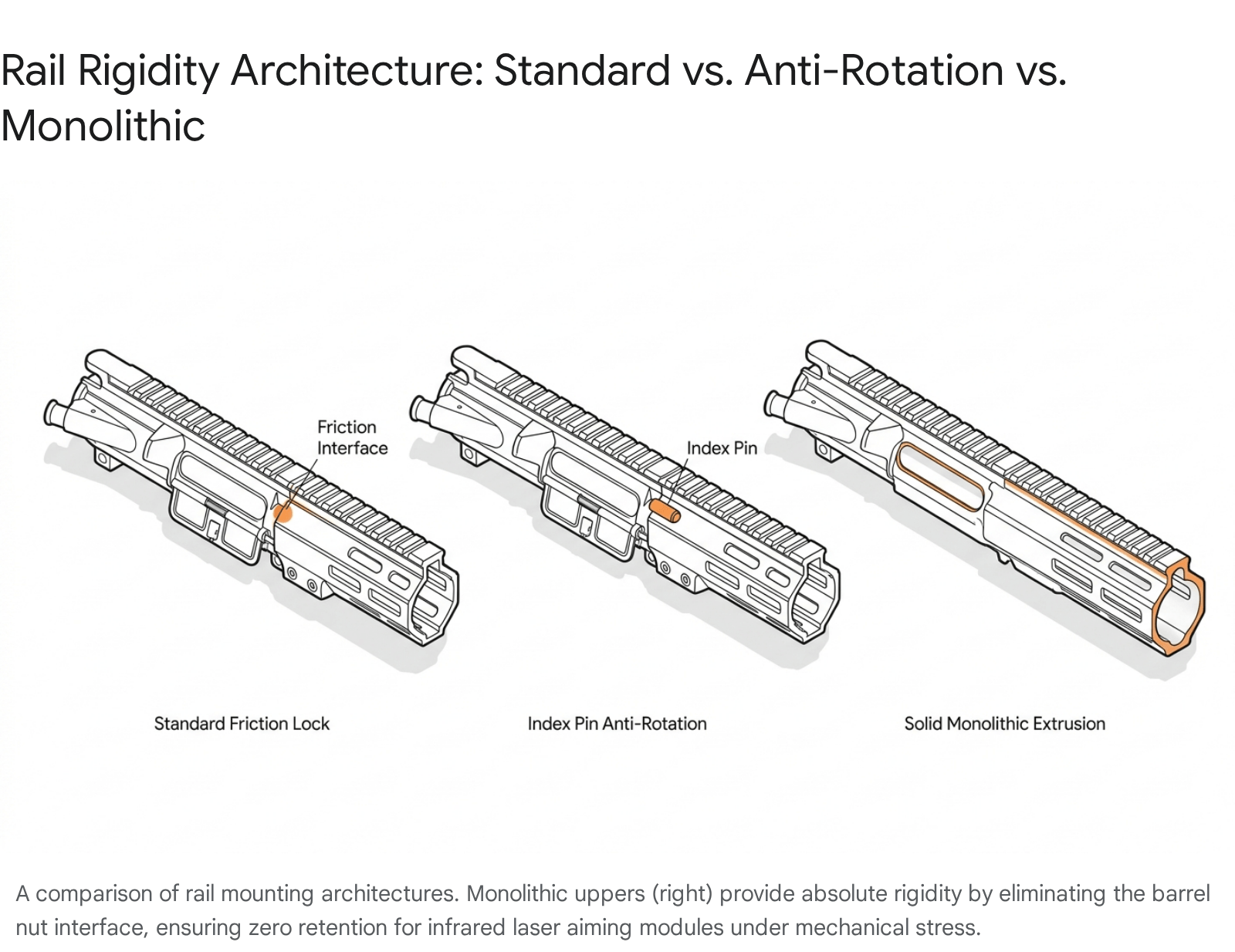
  • Bolt-Up System Mechanics: The RIS II utilizes a proprietary Bolt-Up System, which sandwiches the upper receiver flange between the rail and a hardened steel barrel nut using six high-strength bolts.4
  • Structural Rigidity: This design creates an incredibly rigid, continuous top rail that simulates a monolithic upper receiver. This rigidity is critical for the retention of zero on laser aiming modules (such as the PEQ-15 or NGAL) utilized for night fighting. Under the torque applied by a vertical foregrip, bipod loading, or barrier support, the RIS II exhibits minimal deflection compared to lighter, friction-fit rail systems.
  • Thermal Dynamics: The quad-rail design acts as a massive heat sink. While this increases the thermal mass and surface area for cooling, it also makes the handguard uncomfortable to hold during sustained strings of fire without rail covers or gloves. The extensive machining required for the Picatinny rails (M1913 spec) on all four sides contributes to the system’s higher weight compared to modern M-LOK equivalents like the RIS III or KAC URX6.

2.3 Barrel Technology: Profile and Performance

The barrel is the primary determinant of the system’s terminal performance and lifecycle. The Eleanor features a 14.5-inch Chrome Moly Vanadium (CMV) steel barrel.3

  • Manufacturing Process: The barrel is Cold Hammer Forged (CHF). In this process, a mandrel containing the negative impression of the rifling is inserted into the barrel blank, and massive hydraulic hammers compress the steel around it.
  • Metallurgical Benefit: This process work-hardens the steel and aligns the grain structure along the axis of the bore. The result is a barrel with exceptional durability and resistance to throat erosion under high rates of fire, significantly outlasting button-rifled or cut-rifled barrels in operational lifecycles.
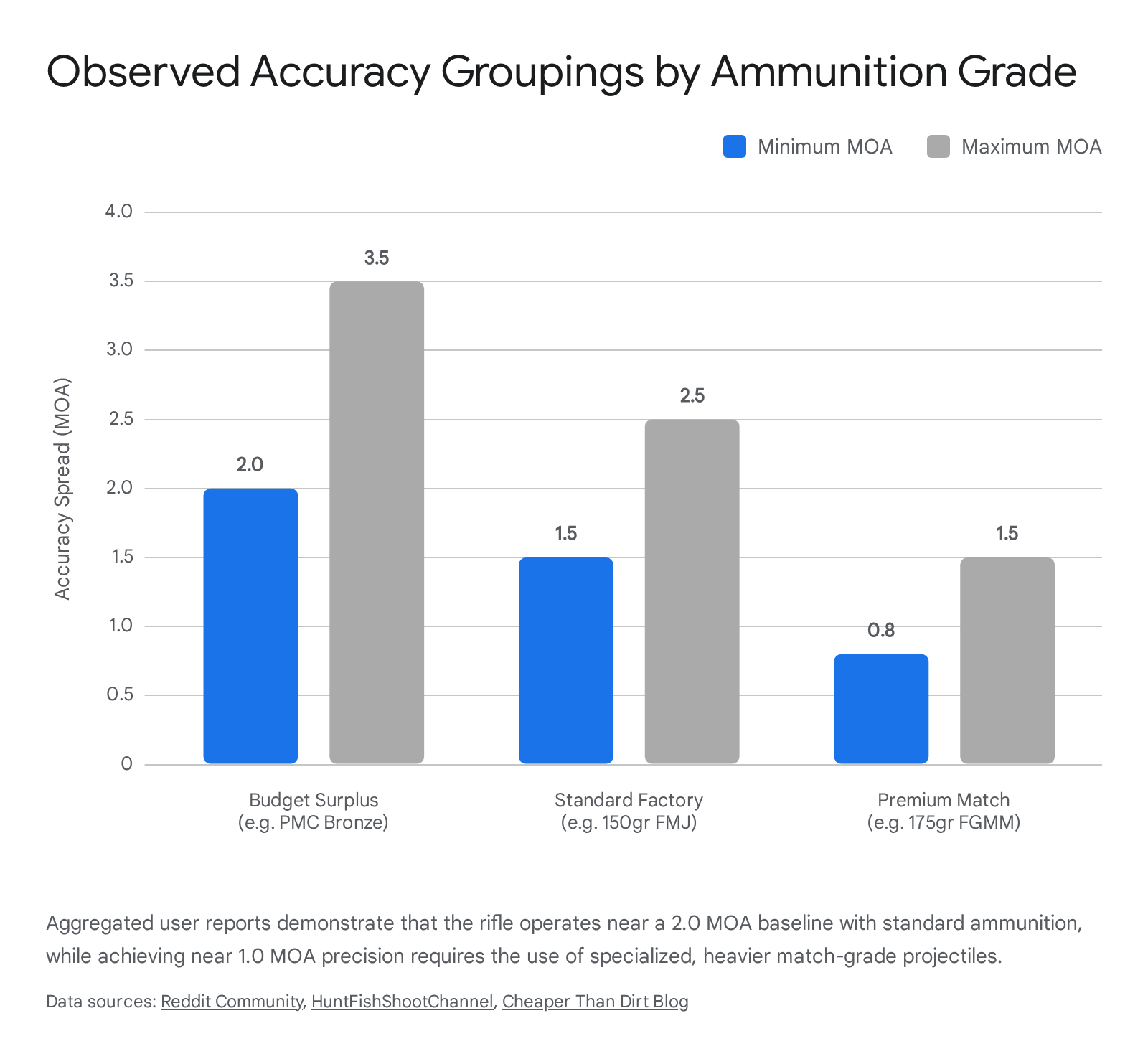
  • Chrome Lining: The bore is chrome-lined. Chrome lining provides a hard, corrosion-resistant surface that protects the steel from the hot, high-pressure gases of combustion and the friction of the projectile. While historically associated with a slight degradation in absolute accuracy potential compared to stainless steel match barrels, modern manufacturing techniques by Daniel Defense have mitigated this, allowing for consistent 1.0 – 1.5 Minute of Angle (MOA) performance.5
  • Profile Selection: The specifications indicate an M4 Profile barrel.4
  • Critical Engineering Critique: The M4 profile is characterized by a distinctive “cutout” forward of the gas block, a vestigial design feature originally intended to mount the M203 grenade launcher. From a physics perspective, this profile is suboptimal for a precision “Recce” rifle. It removes material from the barrel where rigidity is needed (to counteract “barrel whip”) and places weight toward the receiver. In contrast, the winning KAC KS-1 utilizes a “medium-heavy” dimpled barrel profile. The dimpling increases surface area for cooling while reducing weight without sacrificing the structural stiffness required for consistent harmonics, especially when a suppressor is attached. The retention of the M4 profile on the Eleanor suggests a prioritization of supply chain commonality or strict adherence to a specific (perhaps earlier) iteration of the MoD requirement, rather than the absolute optimization of the platform for precision fire.

2.4 Gas System Dynamics: The Carbine Compromise

The Eleanor utilizes a Carbine-length gas system.3 This is a significant point of divergence from modern commercial trends and the KAC KS-1.

  • Dwell Time and Pressure: On a 14.5-inch barrel, the distance from the gas port to the muzzle determines the “dwell time”—the duration the bullet remains in the barrel after passing the gas port, maintaining pressure to cycle the action.
  • Carbine System: Provides a longer dwell time and higher port pressure. This results in a sharper, more violent recoil impulse and higher bolt carrier velocity.
  • Mid-Length System: Used on the KAC KS-1 and Daniel Defense’s own civilian M4A1 RIII 6, the mid-length system moves the gas port forward. This reduces dwell time and pressure, resulting in a smoother recoil impulse, reduced wear on the extractor and bolt lugs, and less gas blowback when suppressed.
  • Operational Rationale: The choice of a carbine gas system for the Eleanor is likely driven by a requirement for absolute reliability under adverse conditions. A slightly “over-gassed” carbine system ensures the weapon will cycle even when heavily fouled with carbon, lacking lubrication, or firing underpowered ammunition in extreme cold. While less pleasant to shoot than a tuned mid-length system, it offers a wider envelope of reliability—a trade-off often accepted in military procurement.

2.5 Muzzle Device and NFA Compliance

The barrel is tipped with a Dead Air Xeno Flash Hider, which is pinned and welded (P&W) to the barrel.3

  • Legal & Technical Integration: The P&W process permanently attaches the muzzle device, bringing the total barrel length to over 16 inches. This classifies the Eleanor as a standard rifle rather than a Short Barreled Rifle (SBR) under US National Firearms Act (NFA) regulations, avoiding the $200 tax stamp and registration delays for the civilian buyer.
  • Xeno System Mechanics: The Xeno mount utilizes a left-hand thread and a taper interface.
  • Taper Physics: The taper ensures that as the suppressor is tightened, it self-centers, guaranteeing concentricity between the suppressor bore and the bullet path. This is critical to preventing “baffle strikes,” where the bullet clips the internal structure of the suppressor.
  • Thread Geometry: The left-hand threads on the mount ensure that if the suppressor becomes stuck (carbon locked) and the operator applies torque to remove it, the muzzle device tightens against the barrel rather than unscrewing from it. This is a common failure point with right-hand threaded mounts.

3. Optical Systems Analysis: The Vortex AMG EBR-22L

The Vortex AMG EBR-22L 1-10×24 is the defining component of the Eleanor package and arguably the primary driver of its high cost. It is imperative to distinguish this specific optic from the commercially available Vortex Razor HD Gen III 1-10x, as they are distinct operational systems.

3.1 Manufacturing Provenance: The Berry Compliance Factor

  • Commercial Standard: The standard Vortex Razor HD Gen III is manufactured in Japan.7 Japanese optics facilities (such as Low Light Optical) are world-renowned for their glass quality and precision, producing top-tier scopes for brands like Nightforce and March.
  • The Eleanor Special (AMG): The AMG (Advanced Manufacturing Group) variant included with the Eleanor is assembled in the United States.8
  • Strategic Relevance: This shift to domestic assembly is driven by strict military procurement regulations, such as the Berry Amendment (10 U.S.C. 2533a), which often mandate that sensitive components for key defense contracts be produced domestically to ensure supply chain security in the event of global conflict. For the civilian collector, a “Made in USA” marking on a high-end optic is a significant multiplier of value and rarity, as Vortex rarely releases these government-contract overruns to the public.

3.2 Optical Physics and Architecture

The AMG EBR-22L is a First Focal Plane (FFP) Low Power Variable Optic (LPVO) with a 1-10x magnification range and a 24mm objective lens.

  • Exit Pupil Constraints: The laws of optical physics impose strict limitations on high-magnification scopes with small objective lenses. The exit pupil—the beam of light delivering the image to the shooter’s eye—is calculated as the objective diameter divided by the magnification.
  • Calculation: $24mm / 10x = 2.4mm$.
  • Operational Impact: A 2.4mm exit pupil is extremely restrictive. It requires the shooter to maintain perfect head alignment behind the optic. Any misalignment results in “scope shadow” or a complete loss of the image. This makes the 10x setting slower to acquire than the 1x setting, necessitating a consistent cheek weld (aided by the SOPMOD stock).
  • Physical Architecture: The AMG is engineered to be lighter and shorter than its Japanese-made counterpart. Reviews indicate the AMG is approximately 19 ounces and 8.4 inches long, compared to the 21.5 ounces and 10.1 inches of the commercial Gen III.8
  • Weight Savings: This reduction is achieved through aggressive machining of the 7075-T6 aluminum main tube (34mm diameter) and housing. In a “Recce” rifle role, where the operator is carrying the weapon over complex terrain, every ounce saved on the optic allows for more ammunition or water to be carried.

3.3 The “Anodized FDE” Manufacturing Challenge

The Eleanor optic features a Type III Hardcoat Anodized Flat Dark Earth finish.3

  • Process Complexity: Anodizing aluminum to a consistent cosmetic color is notoriously difficult. The process involves an electrochemical bath that grows an aluminum oxide layer on the surface, which is then dyed. Variations in the aluminum substrate alloy, the temperature of the bath, the voltage applied, and the duration of immersion can all shift the final color from gold to brown to green. Achieving a “color match” to the UK MoD specification implies a high rejection rate during manufacturing, as units that do not meet the strict color criteria are discarded or refinished. This inefficiency significantly increases the unit cost of the optic, contributing to the system’s high price point.

3.4 Reticle Design: EBR-9/22L

The optic utilizes a “Christmas Tree” style reticle (EBR-9 variation).9

  • Functionality: This reticle design provides a central aiming point surrounded by a grid of subtensions (hash marks) for windage and elevation holds. This allows the shooter to engage targets at varying distances without manually adjusting the turrets (“holding over” vs. “dialing”). For a Designated Marksman operating in dynamic environments, this speed is essential. The FFP nature of the optic ensures that these subtensions remain accurate at any magnification setting, unlike Second Focal Plane (SFP) optics where they are only valid at max power.

4. Systems Integration and Ancillary Components

The Eleanor is marketed as a “turnkey” system—a complete weapon package ready for deployment immediately out of the box. This integration mimics the military procurement model, where the rifle, optic, mount, and accessories are validated as a single unit.

4.1 Mounting Interface: Ruff’s Precision Delta Series

The optic is secured to the receiver via a Ruff’s Precision Manufacturing (RPM) Delta Series Cantilever Mount.3

  • Structural Integrity: These mounts are machined from 6061-T6 aluminum and feature a cantilever design.
  • Mechanism: The cantilever geometry pushes the optic mounting rings forward of the receiver base. This is necessary on the AR-15 platform to obtain the correct eye relief (distance from eye to ocular lens) while keeping the mount attached solely to the upper receiver. “Bridging” the mount across the receiver and the handguard is a critical failure mode, as handguard flex can shift the point of aim. The RPM mount prevents this.
  • Market Value: These mounts retail for approximately $230 10 and are highly regarded for their clamping force and return-to-zero capabilities, aligning with the “Made in USA” theme of the optical package.

4.2 Furniture Ergonomics: B5 Systems

The rifle is equipped with the B5 Systems SOPMOD Stock and Type 23 Grip.4

  • SOPMOD Stock History: The B5 SOPMOD is a direct descendant of the Crane Naval Surface Warfare Center (NSWC) design developed for the SOPMOD program. Its distinct triangular profile provides a wide, sloped surface for a cheek weld.
  • System Synergy: This wide cheek weld is not merely for comfort; it provides the stability necessary to maintain head alignment within the tight 2.4mm exit pupil of the Vortex AMG at 10x magnification. The stock also features watertight storage tubes, allowing the operator to carry spare CR2032 batteries for the optic’s illumination or replacement bolt parts.
  • Type 23 Grip: This grip features a steeper vertical angle compared to the traditional A2 grip. This improved angle reduces strain on the shooter’s wrist when the rifle is held in a compressed shooting position or when wearing body armor with a shorter length of pull.

4.3 Fire Control Group: The Trigger Controversy

The specifications list a Daniel Defense Enhanced Trigger.3

  • Technical Critique: This component represents the most significant point of contention in the system’s value analysis. The DD Enhanced Trigger is a polished Mil-Spec component. While reliable and safer than a competition trigger for duty use, it lacks the crisp break, short reset, and lighter pull weight of a match-grade 2-stage trigger like the Geissele SSA or SSA-E.
  • Comparative Deficit: Previous Daniel Defense Limited Series rifles, such as the “Desert Sage” or “M81 V1,” explicitly included Geissele SSA triggers.11 The omission of a $240 Geissele trigger in a rifle with a nearly $7,000 MSRP is a notable value subtraction. It forces the end-user to potentially upgrade the fire control group immediately, adding cost to an already premium purchase.

5. Comparative Systems Analysis

To determine the true market standing of the Eleanor, it must be benchmarked against both its direct inspiration (the KAC KS-1) and its internal competition (the standard DD M4A1 RIII).

Table 1: Technical Comparison Matrix

FeatureDD “Eleanor” (Limited Series)KAC KS-1 (L403A1)DD M4A1 RIII (Standard)
Price (MSRP)~$6,999~$3,000 – $5,000 (Est.)~$2,300
Barrel System14.5″ CHF M4 Profile13.7″ Dimpled Medium-Heavy14.5″ CHF Gov/M4 Profile
Rail SystemRIS II (Quad Rail)URX6 (M-LOK/Hybrid)RIS III (M-LOK)
Gas SystemCarbine Length (DI)Mid-Length (Sealed/Optimized)Mid-Length (DI)
OpticVortex AMG 1-10x (US)Vortex AMG 1-10x (US)None
Muzzle DeviceDead Air XenoKAC QDC/MCQ-PRTDD Flash Hider
Lower ReceiverStd. w/ Ambi Safety/CHFully AmbidextrousFully Ambidextrous
Bolt TechnologyMil-Spec Carpenter 158KAC E3.2 (Rounded Lugs)Mil-Spec Carpenter 158

5.1 Eleanor vs. KAC KS-1: The Reality Check

The Knight’s Armament KS-1 is objectively a superior mechanical platform.

  • Bolt Engineering: The KAC E3.2 bolt features rounded locking lugs and a dual-spring extractor, eliminating the stress risers found on standard square-lugged AR bolts. This significantly extends the service life of the bolt, the most common failure point in the AR system.12 The Eleanor uses a standard Mil-Spec bolt geometry.
  • Gas & Barrel: The KS-1 uses a tuned mid-length gas system and a sealed gas block, optimized for suppressor use. Its dimpled barrel reduces weight while maintaining stiffness. The Eleanor relies on the older carbine gas system and standard M4 profile.
  • Controls: The KS-1 features a fully ambidextrous lower receiver, including bolt catch and release on the right side. The Eleanor, based on the snippet description of “Radian Controls” 4, likely utilizes a standard lower with an ambi safety and charging handle, but lacks the ambi bolt controls found on the KS-1 or even the standard DD4 RIII.

5.2 Eleanor vs. Standard M4A1 RIII

Ideally, a limited edition should outperform the standard line. However, the standard Daniel Defense M4A1 RIII arguably offers a better shooting experience.

  • Modernity: The RIII features the RIS III rail (M-LOK), which is lighter and slimmer than the RIS II quad rail. It also utilizes a Mid-Length gas system 6, providing a softer recoil impulse than the Eleanor’s carbine system.
  • Conclusion: The Eleanor is purchased for the provenance and the optic, not for having the absolute latest innovations in gas dynamics or ergonomics. It is a “Clone” rifle, prioritizing adherence to a specific spec sheet over modern optimization.

6. Market Dynamics and Financial Valuation

The MSRP of $6,399 – $6,999 represents a massive capital outlay. To assess if this is “price gouging” or “value,” a component-level breakdown is required.

Table 2: Component Valuation Breakdown (Estimated Street Prices)

ComponentEstimated Market ValueNotes
Base Rifle (M4A1 RII)$2,200Based on commercial M4A1 pricing
Vortex AMG 1-10x (FDE)$3,500 – $4,500The Multiplier. Commercial Razor is ~$2.5k. This is a limited US-made variant.
RPM Mount$23010
Dead Air Xeno (P&W)$150Mount + Labor for Pin & Weld
Furniture/Controls$300B5 Stock/Grip, Radian CH/Safety
Cerakote/Assembly$300Custom finish premium
Pelican Case$300Custom foam cut
Total “Sum of Parts”~$6,980 – $7,980

6.1 The “Unobtainium” Optic Factor

The financial viability of the Eleanor rests entirely on the valuation of the Vortex AMG optic.

  • Scarcity Value: Snippets indicate the optic is considered “unobtainium”.13 In the secondary market, where clone builders pay premiums for exact military-correct parts, this scope alone could command prices exceeding $4,000. It is the only way to acquire the specific optic utilized by the UK Rangers without enlisting.
  • Arbitrage Opportunity: It is highly probable that some buyers will purchase the Eleanor, strip the optic to sell on platforms like GunBroker or TacSwap for a massive premium, and keep the rifle as a “free” or heavily discounted asset.

6.2 Investment Outlook

Limited Series rifles from Daniel Defense, such as the “Alpine Predator” or “M81,” generally hold their retail value but do not see the explosive appreciation of KAC or HK products.14 However, the Eleanor is unique. Because the optic is chemically and mechanically distinct from commercial offerings, the package possesses a hedge against depreciation that other aesthetic-only limited runs lack.


7. Operational Performance Analysis

Beyond the specs and the money, how does the system perform in the field?

7.1 Ballistics and Terminal Efficacy

The 14.5-inch barrel is the “Goldilocks” length for the 5.56 NATO cartridge.

  • Velocity: Firing MK262 (77gr) ammunition, the Eleanor will generate approximately 2,550 – 2,600 fps at the muzzle. This is sufficient velocity to ensure projectile fragmentation and reliable terminal effects out to 300-400 meters, with point-target engagement capabilities extending to 600 meters using the 10x optic and the Christmas tree reticle.5
  • Twist Rate: The 1:7 twist rate is optimized for these heavy, 70gr+ projectiles, ensuring stability through the transonic zone.

7.2 Handling Characteristics

The Eleanor is not a lightweight system.

  • Weight Distribution: The RIS II rail is heavy. The Vortex AMG, while light for its class, adds mass high on the rifle. With a suppressor, light, and laser added, the center of gravity shifts forward. This increases operator fatigue when keeping the rifle at the “high ready.”
  • Recoil Impulse: Due to the carbine gas system and the lightweight Xeno flash hider (which offers no braking capability), the recoil will be “snappier” than a mid-length system with a muzzle brake. However, the weight of the system helps dampen this recoil, aiding in sight picture retention for rapid follow-up shots.

7.3 Operational Feedback Integration

Community discussions surrounding similar high-end builds highlight specific user preferences that the Eleanor addresses—and some it misses.

  • Bipod Integration: Users building similar “Recce” rifles note that standard Magpul bipods can be “flimsy” and recommend upgrading to rigid systems like the AccuTac.16 The rigid RIS II rail of the Eleanor is the perfect host for such a heavy-duty bipod, providing a monolithic-like platform that won’t flex under “loading” (pushing forward into the bipod legs to manage recoil).
  • Trigger feel: As noted in comparative discussions 17, the expectation for a rifle in this tier is a trigger that aids in precision fire. The heavy, creeping break of a standard DD trigger is a liability when trying to engage a 2 MOA target at 500 meters, forcing the shooter to fight the equipment.

8. Conclusion

The Daniel Defense Eleanor is a polarizing asset. It is a technically competent, battle-proven chassis mated to a world-class, rare optical system. However, it suffers from an identity crisis: it is a tribute to a British contract winner (KAC KS-1) built on a platform (M4A1 RII) that, while legendary, is two decades old in design philosophy.

Is it worth buying?

YES, IF:

  1. You are a High-End Optic Collector: You specifically want the US-assembled, FDE anodized Vortex AMG 1-10x. This package is likely the primary, if not exclusive, channel to acquire this optic. The rifle is essentially a delivery vehicle for the scope.
  2. You Prioritize “Bomb-Proof” Durability: The RIS II rail system is structurally stronger than modern lightweight M-LOK rails. If your operational reality involves heavy laser designators, barrier shooting, and rough handling, the M4A1 RII chassis remains the gold standard for rigidity.
  3. You are a Speculator: The “1 of 250” limit and the unique, chemically distinct optic ensure this rifle will not lose significant value. The breakout value of the components equals the MSRP, mitigating financial risk.

NO, IF:

  1. You Want the “Best” Shooting Rifle: For $7,000 (or even $3,500), a Knight’s Armament SR-15/KS-1 or an LMT MARS-L offers superior mechanical engineering (E3 bolts, monolithic uppers, fully ambi controls, tuned gas systems).
  2. You Want Modern Ergonomics: The RIS II is a “cheese grater” quad rail. It is heavy, wide, and abrasive. A standard DD M4A1 RIII offers better handling, a softer shooting mid-length gas system, and M-LOK modularity for $4,500 less (excluding optic).
  3. You Expect a Geissele Trigger: The inclusion of a standard DD trigger in a $7,000 rifle is an oversight that significantly degrades the precision shooting experience compared to the system’s price point.

Final Verdict: The Eleanor is an A-grade collectible due to its optical provenance, but a B+ grade shooter relative to its price tier due to legacy gas system and trigger choices. Its value is locked almost entirely in the scarcity of its optical payload.


Appendix A: Methodology

This report was compiled using a multi-layered Open Source Intelligence (OSINT) approach, synthesizing technical specifications, market data, and user sentiment to generate a comprehensive profile of the Daniel Defense Eleanor system.

  1. Technical Specification Verification: Primary source data from Daniel Defense product pages 3 and authorized retailer listings (Bereli, Freedom Trading) 4 was cross-referenced to establish the “hard specs” (barrel length, gas system, materials). Discrepancies, such as the exact nature of the trigger mechanism, were resolved by prioritizing specific SKU listings (LIMSER-031) over general brand marketing pages.
  2. Optical Systems Analysis: The specific model of the Vortex optic (AMG EBR-22L) was analyzed by comparing it to the standard commercial Razor HD Gen III. Technical reviews and video analysis 8 were utilized to identify physical differences (length, weight, assembly origin, turret design) to validate the “exclusive” nature of the component and its manufacturing origin.
  3. Comparative Market Analysis: Pricing data for the individual components (Scope, Mount, Rifle, Accessories) was aggregated from third-party vendors (MidwayUSA, EuroOptic, GunBroker) 10 to create a “Sum of Parts” valuation model. This allows for an objective assessment of the MSRP premium versus the street value of the constituent parts.
  4. Sentiment and Contextualization: Reddit threads 13 and forum discussions were mined to gauge the community reaction (“hype” vs. “disappointment”) and to identify specific user concerns regarding component selection (e.g., trigger quality, bipod selection). The “Project Hunter” military context was derived from defense industry reporting 1 to establish the narrative background of the firearm and its competitive positioning against the KAC KS-1.
  5. Synthesis: These data streams were integrated to form a holistic view of the weapon not just as a mechanical device, but as a financial asset and a historical artifact within the context of 2020s small arms procurement.

Please share the link on Facebook, Forums, with colleagues, etc. Your support is much appreciated and if you have any feedback, please email us in**@*********ps.com. If you’d like to request a report or order a reprint, please click here for the corresponding page to open in new tab.


Photo Source

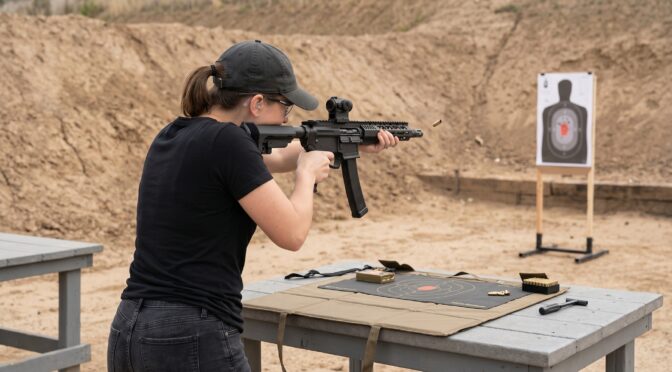
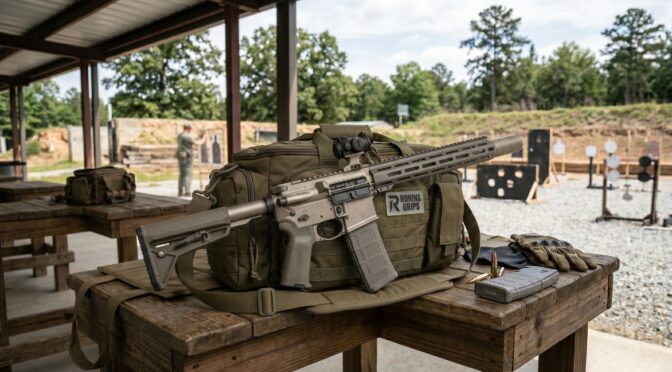
The main blog image is based on one from Sportsmans Outdoor Superstore – they have a ton of great AR rifles to choose from.

Works cited

  1. Project Hunter: The UK’s New Assault Rifle – The Armourers Bench, accessed November 24, 2025, https://armourersbench.com/2023/09/06/project-hunter-the-uks-new-assault-rifle/
  2. Project Hunter – New Weapon System for British Forces : r/tacticalgear – Reddit, accessed November 24, 2025, https://www.reddit.com/r/tacticalgear/comments/1gtk2rs/project_hunter_new_weapon_system_for_british/
  3. Limited Series: ELEANOR – Daniel Defense, accessed November 24, 2025, https://danieldefense.com/limited-series-october-2025-eleanor.html
  4. Daniel Defense “ELEANOR” Custom 5.56mm M4A1 Carbine Rifle, Limited Edition, accessed November 24, 2025, https://www.bereli.com/limser-031/
  5. Daniel Defense M4A1 Block II Review – YouTube, accessed November 24, 2025, https://www.youtube.com/watch?v=AIRpadGG2YE
  6. Slim is in | Daniel Defense, accessed November 24, 2025, https://danieldefense.com/wire/slim-is-in
  7. Where Are Vortex Riflescopes Made? – Optics Trade Blog, accessed November 24, 2025, https://www.optics-trade.eu/blog/where-are-vortex-riflescopes-made/
  8. Vortex Razor AMG 1-10×24 – Eleanor – American made Excellence – YouTube, accessed November 24, 2025, https://www.youtube.com/watch?v=zw5KqFQMbhk
  9. Vortex Razor HD Gen III 1-10×24 FFP Riflescope, accessed November 24, 2025, https://vortexoptics.com/vortex-razor-hd-gen-iii-1-10×24-riflescope.html
  10. Delta Series Precision Cantilever, accessed November 24, 2025, https://www.rpmflg.com/products/delta-series-precision-cantilever
  11. Desert Sage Dealer Limited Series DDM4®V7® | Daniel Defense, accessed November 24, 2025, https://danieldefense.com/desert-sage-dealer-limited-series-ddm4v7.html
  12. DD or KAC : r/Danieldefense – Reddit, accessed November 24, 2025, https://www.reddit.com/r/Danieldefense/comments/18xtbig/dd_or_kac/
  13. DDM4 “Eleanor” : r/Danieldefense – Reddit, accessed November 24, 2025, https://www.reddit.com/r/Danieldefense/comments/1oy7qrq/ddm4_eleanor/
  14. Buy daniel defense v9 Online at GunBroker.com, accessed November 24, 2025, https://www.gunbroker.com/semi%20auto%20rifles/search?keywords=daniel+defense+v9
  15. Daniel Defense Mk12 Alpine Predator – Limited Series – For Sale :: Shop Online – Guns.com, accessed November 24, 2025, https://www.guns.com/search?keyword=daniel+defense+mk12+alpine+predator+-+limited+series
  16. Final form m4a1 14.5 : r/Danieldefense – Reddit, accessed November 24, 2025, https://www.reddit.com/r/Danieldefense/comments/1ik497x/final_form_m4a1_145/
  17. KAC or Daniel defense – Reddit, accessed November 24, 2025, https://www.reddit.com/r/kac/comments/18xsq91/kac_or_daniel_defense/
  18. Limited Edition Series Rifles | Daniel Defense, accessed November 24, 2025, https://danieldefense.com/limited-series
  19. Daniel Defense Limited Series M4A1 Eleanor with Vortex AMG Scope | SLW, accessed November 24, 2025, https://www.freedomtrading.com/daniel-defense-limited-series-m4a1-eleanor-p/limser-031.htm
  20. Daniel Defense M4A1 for Sale | Buy Online at GunBroker, accessed November 24, 2025, https://www.gunbroker.com/daniel-defense-m4a1/search?keywords=daniel%20defense%20m4a1&s=f&cats=3024
  21. Vortex Razor Gen III 1-10×24 EBR-9 MRAD Riflescope RZR-11002 – EuroOptic.com, accessed November 24, 2025, https://www.eurooptic.com/vortex-razor-gen-iii-1-10×24-ebr-9-mrad-riflescope-rzr-11002

The Most Commonly Requested Top 10 Most Commonly Requested AR-10 Rifle Comparisons in the U.S. Market Based on Social Media- 2024-2025 

The large-frame semi-automatic rifle market, colloquially known as the “AR-10” market, is defined by a single, critical, and market-shaping characteristic: a complete lack of a “milspec” standard. This fact is repeatedly confirmed in technical discussions and is the primary driver of consumer behavior. Unlike the AR-15 platform, where components are largely interchangeable (“adult Legos,” as one user described), the AR-10 market is a fragmented landscape of competing, proprietary, and often incompatible designs, such as the foundational DPMS and Armalite patterns.

This fragmentation is the primary driver of the “X vs. Y” comparisons that dominate buyer discussions. This analysis of social media and forum traffic reveals a high-intent buyer base motivated by a primary anxiety: compatibility. The fear of purchasing components that will not fit or function is well-founded, as evidenced by numerous, persistent threads detailing fitment failures, such as a “PSA PA10 upper not fitting on Aero M5 lower” or discussions on the “hairline gap” and filing required to mate the two. This “compatibility-phobia” forces buyers into two distinct purchasing pathways:

  1. Complete Factory Rifles: The purchase of a fully assembled rifle from a single manufacturer (e.g., Sig Sauer 716i, Springfield Saint Victor), which outsources the risk of compatibility to the OEM.
  2. Matched Manufacturer Sets: The purchase of matched upper and lower receivers from a single brand (e.g., Aero Precision M5), which allows for a “build” while mitigating the primary risk by staying within a single brand’s ecosystem.

The data for this analysis is drawn from the platforms where these high-intent, technical discussions occur. Mainstream social media platforms like Facebook and Instagram are actively hostile to firearms-related content. While influencer marketing exists, the “ground truth” of consumer sentiment—rich with technical nuance, long-term testing, and negative feedback—is found in niche, dedicated forums (e.g., Accurate Shooter, The Armory Life) and specialized subreddits. The persistent risk of “de-platforming” makes these anonymous, text-based forums the most authoritative and candid sources for tracking genuine market sentiment.

II. AR-10 Competitive Analysis Summary Table

The following table provides a high-level executive summary of the 10 most prominent market matchups identified in this analysis. It distills sentiment, performance, and expert-level recommendations for rapid review. The Total Mention Index (TMI) ranks the 10 matchups by discussion volume (1 = most discussed). Performance Scores (Rel=Reliability, Acc=Accuracy, Val=Value, QC=Quality Control) are graded A-F based on aggregated user reports.

MatchupKey Buyer QuestionTMI (Rank)Brand 1 (Pos/Neg %)Brand 2 (Pos/Neg %)Perf. Scores (B1/B2) Rel/Acc/Val/QCAnalyst Recommendation
Aero M5 vs. PSA PA10“Is Aero’s quality worth the premium over PSA?”1Aero (60%/40%)PSA (50%/50%)Aero: D/B/B/A
PSA: B/B/A/C
Palmetto State Armory PA10
Ruger SFAR vs. Saint Victor“Lightweight innovation or a proven, feature-rich rifle?”2Ruger (45%/55%)Saint (75%/25%)Ruger: D/C/B/C
Saint: B/B/A/B
Springfield Saint Victor
Sig 716i vs. Aero M5“Proven factory rifle or a custom-built M5 for the same price?”3Sig (55%/45%)Aero (60%/40%)Sig: C/C/C/B
Aero: D/B/B/A
Aero Precision M5 (Build)
DD DD5 vs. LaRue OBR“Ultimate durability or ultimate accuracy?”4DD (80%/20%)LaRue (90%/10%)DD: A/A/C/A
LaRue: A/A+/A/A
LaRue Tactical OBR
KAC SR-25 vs. LMT MWS“The classic icon or the modern modular system?”5KAC (70%/30%)LMT (90%/10%)KAC: B/A/D/C
LMT: A/A/B/A
Lewis Machine & Tool (LMT) MWS
M1A vs. Saint Victor“Classic battle rifle ‘vibe’ or modern AR-10 performance?”6M1A (40%/60%)Saint (75%/25%)M1A: B/D/D/B
Saint: B/B/A/B
Springfield Saint Victor
S&W M&P 10 vs. Saint Victor“Which legacy brand offers the better entry-level.308?”7S&W (65%/35%)Saint (75%/25%)S&W: B/B/B/B
Saint: B/B/A/B
Springfield Saint Victor
Ruger SFAR vs. PSA PA10“Disruptive lightweight tech or disruptive market value?”8Ruger (45%/55%)PSA (50%/50%)Ruger: D/C/B/C
PSA: B/B/A/C
Palmetto State Armory PA10
LWRC REPR vs. POF P308“Which premium piston-driven AR-10 is the superior system?”9LWRC (85%/15%)POF (60%/40%)LWRC: A/A/B/A
POF: C/B/C/B
LWRC REPR
DB10 vs. Aero M5“Is Diamondback a ‘sleeper’ or should I stick with the ‘safe’ Aero?”10DB (50%/50%)Aero (60%/40%)DB: B/B/A/C
Aero: D/B/B/A
Aero Precision M5 (Platform)

III. Market Matchup Analysis: Budget & Mid-Level Sectors

This sector represents the most common “on-ramp” for new AR-10 buyers, characterized by extreme price sensitivity and a focus on overall value.

Matchup 1: Aero Precision M5 vs. Palmetto State Armory (PSA) PA10

Market Context: This is the single most dominant and highest-volume debate in the AR-10 market, defining the “builder’s” landscape. Aero Precision (AP) is the established “best of the midrange” and perceived as a “quality upgrade”. Palmetto State Armory (PSA) is the “market leader in affordability” and long-considered the “best of the cheap guns”.

Key Buyer Question: “Is the Aero M5’s superior fit and finish worth the price premium over the PSA PA10, or has the PA10 Gen 3 1 closed the quality and performance gap?”

Performance & Sentiment Analysis:

  • Aero Precision M5: The M5 is overwhelmingly praised for its “flawless cerakote” and “perfect” receiver fit with “zero play”. It is considered the “non-ambi lower to beat” and the “best bang-for-the-buck” platform for a semi-custom build. It is capable of high accuracy, with users reporting 0.6 MOA with quality components. However, this strong positive sentiment is now being challenged by significant, data-driven negative reports. A recent 5,000-round consumer test 2 on a factory M5 was a market-moving event, revealing systemic failures. The test was terminated at 3,993 rounds after a second catastrophic failure (a sheared extractor retaining pin).2 The first catastrophic failure was a broken firing pin at 2,565 rounds. Other issues included loosening handguard retention screws and a bolt-catch set screw that repeatedly backed out.2 This data directly contradicts the brand’s reputation for quality.
  • Palmetto State Armory (PSA) PA10: The PA10’s primary draw is its unbeatable value. Historically, this value came with reported QC issues. However, the release of the PA10 Gen 3 platform has invalidated most legacy complaints.1 The Gen 3 rifle is a massive improvement, incorporating high-end features as standard, including a 5-position adjustable gas block (critical for reliability), a Toolcraft bolt-carrier group, and receiver cuts for broader BCG compatibility.1 This new platform demonstrates high reliability and significantly improved accuracy, achieving ~1 MOA groups with match-grade ammunition.1 While minor complaints persist (e.g., “SUPER tight” takedown pins 1), the consensus is that PSA’s customer service is excellent and resolves the issues.

The market narrative (Aero=Quality, PSA=Cheap) is lagging the product reality. The 5,000-round test 2 provided concrete, negative data against Aero’s out-of-the-box reliability. Concurrently, the PA10 Gen 3’s release 1 provided concrete, positive data on PSA’s improved quality and performance. The market is witnessing a “crossing of the curves,” where Aero’s reliability reputation is falling just as PSA’s is dramatically rising.

Analyst Recommendation:

For a complete rifle or builder’s kit for a first-time AR-10 owner, the Palmetto State Armory PA10 Gen 3 is the superior recommendation. It offers a more robust feature set (specifically the adjustable gas block) and better demonstrated reliability out of the box 1 for a lower price. The Aero Precision M5 remains an excellent choice as a base platform for a custom build where the user intends to select their own premium barrel, trigger, and bolt, but its “out-of-the-box” reliability is now in question.

Matchup 2: Ruger SFAR vs. Springfield Saint Victor.308

Market Context: This matchup represents the “Lightweight” battle. The Ruger SFAR (Small-Frame Autoloading Rifle) is the market disruptor, offering.308 power in a compact, AR-15-sized package. The Springfield Saint Victor.308 is the incumbent mid-level offering, competing on its rich feature set for the price.

Key Buyer Question: “Should I buy the new, innovative, lightweight (but potentially unreliable) Ruger SFAR, or the heavier, proven, ‘ready-to-go’ Springfield Saint Victor?”.

Performance & Sentiment Analysis:

  • Ruger SFAR: The SFAR’s revolutionary weight and size are its entire value proposition. However, user reports and reviews are defined by the phrase, “Great Potential, Inconsistent Execution”.3 Reliability is described as a “grab bag” 3, with some copies failing to cycle at all on any gas setting without a suppressor. Accuracy is similarly inconsistent, ranging from 1.5-MOA to 3-MOA.3 The platform’s small size is achieved with highly proprietary parts, a significant concern for buyers who report “teething problems”.
  • Springfield Saint Victor.308: The Saint Victor’s value is the opposite of the SFAR’s. It is not innovative, but it is exceptionally “ready-to-go” out of the box. It comes as a “complete package” with high-quality, third-party components that buyers want, such as BCM furniture, a nickel-boron trigger, and an effective muzzle brake. At 7.8 lbs, it is considered lightweight for an AR-10, though users still refer to it as a “heavy pig” when compared to an AR-15 or the SFAR.

This matchup reveals a core market tension: innovation vs. curation. The SFAR’s innovative, proprietary “AR-15-sized” design is both its main selling point and its greatest risk.3 The Saint Victor wins by being a well-curated and reliable assembly of standardized parts. Springfield has acted as a systems integrator, bundling desirable components, which makes the Saint the safe bet, while the SFAR is the gamble on new technology.

Analyst Recommendation:

For a primary, “go-to”.308 rifle, the Springfield Saint Victor is the clear recommendation. Its “ready-to-go” package is proven and provides high value. The Ruger SFAR is a “Version 1.0” product 3 best suited for enthusiasts who prioritize weight above all else and are willing to diagnose and fix the known reliability and gas-system issues.

Matchup 3: Sig Sauer 716i Tread vs. Aero Precision M5

Market Context: This is the quintessential mid-level “Buy vs. Build” debate. The Sig Sauer 716i Tread is a complete, factory-warrantied rifle that carries the “halo” of a military contract. The Aero M5 is the undisputed king of the “builder” market.

Key Buyer Question: “For approximately $1,500, am I better off buying the ‘battle-proven’ Sig 716i, or building a custom Aero M5 for the same price?”.

Performance & Sentiment Analysis:

  • Sig Sauer 716i Tread: The 716i’s reputation is built almost entirely on the Indian Army’s adoption of 716-platform rifles, leading to a “battle-proven” perception. Users who own them report they are “accurate and very reliable”. This positive sentiment is dangerously inconsistent. The cons are significant: the rifle uses proprietary parts, including a reported $500 BCG. More alarmingly, there are numerous, detailed complaints of a “horrible” stock trigger and very “poor accuracy,” with users reporting 2.5-3 MOA from a rifle that “should be approx 1.5″ or better”.4
  • Aero Precision M5: The M5 build is the alternative. Its pros are clear: infinite customization, non-proprietary (DPMS-pattern) parts that are easy to source, and a lower total cost. A properly built M5 is “dead reliable” and sub-MOA. The con is that the builder is responsible for quality control.

The Sig 716i’s “India Contract” is a “halo effect” built on market confusion. The Indian military ordered piston-driven Sig 716 rifles. The consumer 716i “Tread” model is a Direct Impingement (DI) rifle. The “battle-proven” halo does not apply to the rifle being sold to consumers. The actual product, as reported by users, is a proprietary DI rifle with a “horrible” trigger and wildly inconsistent accuracy QC.4

Analyst Recommendation:

Build the Aero M5. The Sig 716i Tread’s primary selling point—a military-contract reputation—is based on a misunderstanding of the product. The actual consumer rifle is a DI platform with significant QC inconsistencies 4 and a “horrible” trigger. An Aero Precision M5 build allows the user to control the quality of the most critical components (barrel, trigger, buffer, BCG) for the same price, resulting in a (likely) more accurate and reliable final product.

Matchup 4: S&W M&P 10 vs. Springfield Saint Victor.308

Market Context: This is the battle of the “legacy brand” entry-level.308s. For many new AR-10 buyers, these are the two “safe” choices from established, “household name” manufacturers.

Key Buyer Question: “Which ‘big brand’ AR-10 is the better buy, the Smith & Wesson M&P 10 or the Springfield Saint?”.

Performance & Sentiment Analysis:

  • S&W M&P 10: The M&P 10 is praised as “accurate, reliable, light weight, and low cost”. Its key internal feature is 5R rifling, a premium barrel type typically found on competition and sniper rifles. This gives the rifle “top notch” reliability and excellent accuracy potential, with reports of.75-1.0 MOA. Its cons are that it can be “grotesquely overpriced” and is less “feature-rich” out of the box.
  • Springfield Saint Victor.308: The Saint’s value proposition is external. Users “recommend the Saint since it comes with some nice furniture out of the box”. It is a “feature-rich” “complete package” with visible upgrades like BCM furniture, a good muzzle brake, and (in enhanced models) an improved trigger. It is also impressively lightweight at 7.8 lbs. The primary con is a minority of users reporting reliability issues not found on their M1As.5

This matchup is a case study in “Internal vs. External” value propositions. The M&P 10’s value is internal and technical (5R rifling). The Saint’s value is external and visible (BCM furniture, muzzle brake). A new buyer can immediately see and feel the BCM stock; they cannot see or feel the 5R rifling. Springfield is winning the merchandising battle by presenting a better value, even if the M&P 10 is a high-quality rifle.

Analyst Recommendation:

Springfield Saint Victor. While the S&W M&P 10 is a reliable and accurate rifle with a high-quality barrel, the Saint Victor offers a superior overall package for the modern buyer. Its “out-of-the-box” features save the user from having to immediately spend hundreds of dollars to upgrade basic “mil-spec” furniture, representing a better instant and perceived value.

Matchup 5: Diamondback DB10 vs. Aero Precision M5

Market Context: This is the “Budget Bowl,” a fight to establish the “floor” for a quality AR-10. The Aero M5 is the de facto “standard” for quality budget builds. Diamondback (DB) is the challenger, a “previously beleaguered” company with a “shitty” reputation that is rapidly improving.

Key Buyer Question: “Is Diamondback’s new reputation for accuracy and reliability legitimate, or should I stick with the ‘safe’ choice, Aero?”.

Performance & Sentiment Analysis:

  • Diamondback DB10: The DB10 is the market “sleeper.” While many users still hold onto the old reputation (“really shitty”, “feels like a toy, and is overgassed”), a growing body of new data is contradictory. Multiple, detailed reviews praise the DB10 as “100% reliable and sub moa”. One influential review gave it a 4.5/5 “Likability Scale,” calling it “100% reliable” with “impressive accuracy” and concluding, “we’d buy this gun without question”.
  • Aero Precision M5: The M5’s position is the inverse. Its reputation is its primary asset (“safe” choice, “flawless cerakote… perfect… zero play”). However, its new performance data is negative. The catastrophic failures in the 5,000-round test 2 are a significant data point against its reputation.

This is another clear case of “Perception Lag.” The market sentiment (“Aero is the way to go… absolutely no contest”) is wrong and outdated. The performance data from S161 and S167 suggests the DB10 is a legitimate, reliable, sub-MOA rifle. The performance data from 2 suggests the factory Aero M5 is not as reliable as its reputation. The key difference now is not quality, but ecosystem. Aero is a platform with a massive aftermarket; the DB10 is a product (a complete rifle).

Analyst Recommendation:

This recommendation is conditional. For a buyer who wants a base for a future build (new barrel, rail, etc.), the Aero Precision M5 is the only choice. It is a platform, and its compatibility is its strength. For a buyer who wants a complete, out-of-the-box rifle to “buy-it-and-leave-it,” the Diamondback DB10 is the higher-value, “sleeper” hit and the better recommendation.

IV. Market Matchup Analysis: Premium & Top-Tier Sectors

This sector analyzes the high-margin, “workhorse” and “collector” grades, where durability, accuracy, and brand prestige are the primary drivers.

Matchup 6: Daniel Defense DD5 vs. LaRue Tactical OBR

Market Context: This is the “Premium Workhorse” tier, typically in the $2,500 – $4,000 range. Daniel Defense (DD) is the “duty” brand, known for durability. LaRue Tactical is the “accuracy” brand, known for precision.

Key Buyer Question: “For my ‘one good AR-10,’ should I get the durable, ‘tougher’ Daniel Defense, or the more accurate, ‘tack-driver’ LaRue?”.

Performance & Sentiment Analysis:

  • Daniel Defense DD5: The DD5 is praised for its “so good” build quality and “tougher” cold-hammer-forged (CHF) barrel that “will last a bit longer”. The OEM barrel is known to be sub-MOA. The cons are that it is “overpriced”, the stock trigger is “meh”, and, critically, the barrel is proprietary.
  • LaRue Tactical OBR: LaRue is almost universally praised for performance. It is called the “best value upper” and “most accurate”. The consensus is that it has the “more accurate barrel, the better trigger, better fit and finish, and better machining”. The rifles use CNC-machined billet aluminum receivers for “maximum accuracy”. The cons are that its upper receiver and rail are also proprietary and the retail price is “insane”.

This segment is defined by proprietary ecosystems. The buyer is locked in. The DD5’s proprietary barrel and the LaRue’s proprietary upper/rail mean the initial choice is permanent. The debate is therefore not just “which rifle,” but “which system do I want to be locked into?” The buyer’s decision is a philosophical one: DD’s philosophy is durability (CHF barrels); LaRue’s philosophy is precision.

Analyst Recommendation:

LaRue Tactical OBR. While Daniel Defense offers exceptional durability, LaRue Tactical provides a demonstrably better out-of-the-box shooting experience. The OBR includes a superior trigger and a more accurate barrel. Since the primary reason to upgrade to a large-frame gas gun is for extended-range performance, the platform that excels at accuracy (LaRue) is the logical choice over the one that excels at durability (DD).

Matchup 7: Knight’s Armament (KAC) SR-25 vs. Lewis Machine & Tool (LMT) MWS

Market Context: This is the “Top-Tier” or “Cost-is-No-Object” military-collector market. These are the two most “Gucci” AR-10 platforms, both with military pedigrees.

Key Buyer Question: “If I am spending $4,000-$7,000 on my ‘dream’.308, which is actually better: the ‘classic’ Knight’s Armament SR-25 or the ‘modern’ Lewis Machine & Tool MWS?”.

Performance & Sentiment Analysis:

  • Knight’s Armament (KAC) SR-25: The pros are that it is lighter than LMT, has a “slightly smoother recoil” impulse, and a better stock 2-stage trigger. It also benefits from “nostalgia” and “cost value bias”. The cons are significant for the price: a poor finish (discoloration, marks), highly proprietary parts requiring special tools, and extremely expensive replacement parts. It can also be ammo-sensitive.
  • Lewis Machine & Tool (LMT) MWS: The pros are systemic: superior finish, a superior full-ambi lower (the MARS-H), and a monolithic upper receiver. Its killer feature is the quick-change barrel system, offering true modularity to swap calibers (e.g.,.308 to 6.5 CM) in minutes. It is reported as more accurate and more reliable (“LMT eats everything”). The cons are that it is heavier and has a worse stock trigger than the KAC.

The KAC SR-25 is a collector’s rifle that can be shot, while the LMT MWS is a shooter’s rifle that can be collected. LMT’s monolithic upper with a quick-change barrel is a market-moving innovation; it solves the AR-10’s core problem (proprietary barrels) by turning it into a feature. KAC, by contrast, is a closed, legacy system. The consensus among owners of both is clear: “Design of the LMT is far superior to the sr25, not even sure if this is debatable really”.

Analyst Recommendation:

Lewis Machine & Tool (LMT) MWS. The LMT MWS (specifically with the MARS-H lower) is the superior weapons system. It is more modern, more modular (due to the quick-change barrel), more reliable with varied ammunition, and has a better finish. The KAC SR-25 is a lighter, softer-shooting rifle that trades on its significant legacy, but it is a functionally inferior and more proprietary design for a much higher price.

Matchup 8: LWRC REPR vs. POF P308/Revolution

Market Context: This is the premium “Piston-Driven” AR-10 niche, a small but dedicated market segment for buyers who specifically want a non-DI operating system, often for running suppressed.

Key Buyer Question: “Which high-end piston.308 is better? The ‘tank-like’ LWRC REPR or the ‘innovative’ POF P308/Revolution?”.

Performance & Sentiment Analysis:

  • LWRC REPR: The REPR is described as a “monster” and “one of the best in its class”. Its key feature is a 20-position adjustable gas block, making it “superior with a suppressor and smoother shooting”. It is known for high accuracy and is a purpose-built “Rapid Engagement Precision Rifle”. The cons are that it is expensive, a “heavy pig”, and uses proprietary parts.
  • POF P308/Revolution: POF’s Revolution model is the disruptor: 7.62 power in a 5.56 size.6 This makes it “lightweight without excessive recoil”.6 It is sub-MOA and has a “great trigger”.6 The cons are a spotty QC record and, most critically, a major engineering trade-off. To achieve its small size, the Revolution uses an AR-15-sized bolt carrier, and its bolt head wall thickness is dramatically thinner than the REPR’s (0.0445″ vs 0.0930″).6 This raises
    long-term durability concerns, with some users reporting “nothing but issues”.

These two rifles are not true competitors; they represent different design philosophies. The LWRC REPR is a heavy, precision, piston-driven DMR. The POF Revolution is an AR-15-sized.308 battle rifle.6 The POF achieves its size by shrinking the bolt 6, a massive engineering gamble. The LWRC REPR is the opposite: it is a “monster” and a “tank” by design, overbuilt for longevity and suppressed use.

Analyst Recommendation:

LWRC REPR. For a buyer specifically seeking a piston-driven AR-10, the LWRC REPR is the more robust and proven system. Its 20-position adjustable gas block is its killer feature. The POF Revolution is a fascinating concept, but its “AR-15 sized” bolt 6 is a significant and, for some users, failed engineering compromise. The REPR is the safer, more durable high-end piston rifle.

V. Market Matchup Analysis: Platform-Defining Debates

This section addresses broader, philosophical debates that shape the market, where the AR-10 is one of the contenders.

Matchup 9: Springfield M1A vs. Springfield Saint Victor AR-10

Market Context: This is the classic “New vs. Old”.308 battle rifle debate. The M1A represents the “vibe”, the “classic war movie” gun. The Saint Victor AR-10 represents the modern, ergonomic, and objectively better platform. This is often the first “X vs. Y” question a new.308 buyer asks.

Key Buyer Question: “For my first.308 semi-auto, should I get the ‘bulletproof’ and ‘classic’ M1A or the ‘modern’ and ‘accurate’ AR-10?”.

Performance & Sentiment Analysis:

  • Springfield M1A: The pros are almost entirely related to feel and reputation. It is called “more rugged”, “extremely simple, proven, robust design”, and “bulletproof”. It has great iron sights and a “vibe”. Some users claim it is more reliable than their AR-10s.5 The cons are functional and overwhelming. It is NOT accurate (“3 MOA at best”). It is a “classic car… anything remotely modern absolutely runs circles around it”. It is expensive and difficult to accurize. It is heavy (“a fucking BITCH to carry”), has expensive magazines, and is difficult to mount optics on.
  • Springfield Saint Victor AR-10: The pros are a mirror-image of the M1A’s cons. It is “objectively better today” and “inherently more accurate”. It has vastly superior ergonomics, is easy to mount optics on, uses cheaper magazines, and is easier for a new user to run and maintain.

The M1A debate is emotional, not rational. The M1A is an emotional purchase; the AR-10 is a rational one. The data is clear: the AR-10 is “objectively better” and “inherently more accurate”. The M1A’s “pro” of being “rugged” is a narrative from its M14 military heritage, not necessarily a feature of the modern commercial rifles, which are known to have their own reliability issues. The AR-10 is the practical, logical choice; the M1A is the nostalgic choice.

Analyst Recommendation:

Springfield Saint Victor AR-10. For 99% of buyers, the AR-10 platform is the correct choice. It is more accurate, more ergonomic, easier to maintain, and cheaper to accessorize than the M1A. The M1A is a “classic car” for enthusiasts who specifically want the M14 experience and are willing to accept its significant drawbacks in accuracy, cost, and modularity.

Matchup 10: Ruger SFAR vs. Palmetto State Armory (PSA) PA10

Market Context: This is the “Disruptor” vs. the “Value King.” This matchup pits Ruger’s technological disruption (lightweight, small frame) against PSA’s market disruption (vertically-integrated, low cost).

Key Buyer Question: “I have approximately $1,000. Should I get the new, lightweight SFAR or a feature-packed PSA PA10 (like the Sabre)?”.

Performance & Sentiment Analysis:

  • Ruger SFAR: The pros are its huge weight savings, which users call “awesome”. The cons are its proprietary parts, “teething problems”, and inconsistent “grab bag” reliability and accuracy.3
  • PSA PA10 (and Sabre): The pros are incredible features for the price and the use of more standardized DPMS-pattern parts. The Gen 3 is reliable with an adjustable gas block.1 The higher-tier Sabre-10 line is praised as a “good value” with “great accuracy” and a “good trigger”. The con is that it is significantly heavier than the SFAR.

This is a battle for the $1,000 AR-10 market. PSA’s strategy is to democratize high-end features (e.g., the Sabre M110 clone). Ruger’s strategy is to create a new category (the small-frame.308). The critical, long-term threat to Ruger is that PSA’s parent company owns DPMS. DPMS already pioneered a small-frame.308, the GII. PSA is therefore uniquely poised to copy Ruger’s one advantage (light weight) by leveraging its sister company’s technology, and then combine it with its own advantage (price). Ruger’s innovation, in the face of PSA’s vertical integration, may be short-lived.

Analyst Recommendation:

Palmetto State Armory PA10/Sabre. The PSA PA10 Gen 3 1 is the most reliable, best-value platform at this price. For a slight increase, the PSA Sabre-10 offers features that are “worth the money.” The Ruger SFAR 3 is a “Version 1.0” product that asks the buyer to be a beta tester for its (admittedly impressive) lightweight innovation. PSA’s platform is the mature, safe, and high-performing choice.

The analysis of these top 10 buyer debates reveals three critical, market-wide trends that define the current and future AR-10 landscape.

  1. The “Great Fragmentation”: The lack of a “milspec” standard remains the single most important factor in this market. It has caused the rise of high-margin, proprietary ecosystems (KAC, LMT, DD, LaRue) where “lock-in” is the business model. It has also forced budget-builders to “pick a team” (Aero vs. PSA), as inter-brand compatibility is a gamble. The “AR-10” does not exist as a standard; only brands of AR-10s exist.
  2. The “Lightweight Revolution” (and its Perils): The most common complaint about the AR-10 is its weight, with terms like “heavy pig” used constantly. The market desperately wants a lighter.308. This demand drove the innovation of the Ruger SFAR and POF Revolution.6 However, this innovation has come at the cost of “teething issues”, inconsistent quality control 3, and risky engineering trade-offs (e.g., the POF’s thin bolt wall).6
  3. Market “Perception Lag”: There is a significant lag between market perception and product reality.
  • Aero Precision: Its gold-standard reputation for quality is being damaged by new, high-round-count reliability data.2
  • PSA & Diamondback: Their actual product quality and accuracy 1 are exceeding their “budget” reputations.
  • Sig Sauer: The 716i Tread 4 is failing to meet the “battle-proven” reputation it borrows from its (different) piston-driven namesake.

Final Analyst Outlook: The AR-10 market is at a crossroads. The future will be defined by: 1) The first company to solve the “lightweight” problem without sacrificing reliability (e.g., a “Version 2.0” SFAR). 2) Whether PSA leverages its DPMS GII small-frame technology to create a lightweight and low-cost rifle, effectively consolidating the entire budget market. 3) If top-tier brands (LMT, KAC) can maintain their high price points as mid-level accuracy (PSA, Aero, DB10) consistently and affordably approaches 1 MOA.1


Appendix: Analysis Methodology

A. Data Collection Protocol

This analysis was conducted by performing a social listening scan across high-authority, niche firearm discussion platforms. These platforms were selected based on their high concentration of high-intent, technical buyer discussions. The primary sources were Reddit (including, but not limited to, r/AR10, r/guns, r/longrange, r/AeroPrecision), dedicated forums (e.g., TheArmoryLife.com, AccurateShooter.com, 308AR.com, PalmettoStateArmory.com/forum), and YouTube (for long-form video reviews and their associated comment sections). Keyword queries for the top 10 “X vs Y” pairings were used to aggregate a dataset of relevant posts, threads, and reviews.

B. Total Mention Index (TMI) Calculation

The TMI is a weighted metric designed to measure the volume and engagement of a specific comparison, not just the raw number of mentions. The formula is:

$TMI = (Total Parent Threads/Posts \times 1.0) + (Total Comments \times 0.25) + (Aggregated Video Views \div 10,000)$

This formula weights a new thread (high intent) more heavily than a comment (low-to-high intent) and factors in the massive reach of video platforms. This allows for a 1-10 ranking of the most “in-demand” comparisons.

C. Sentiment Analysis Model

A simple positive/negative count is insufficient for this type of product. An Aspect-Based Sentiment Analysis (ABSA) model was used, as described in S6 and S14. Each brand mention was tagged as Positive, Negative, or Neutral relative to a specific aspect of the product.

  • Aspects Tracked: Reliability, Accuracy, Value, Quality Control/Finish, Weight, Customer Service, Compatibility.
  • Example: “My PSA PA10 had a canted front sight [Negative-QC], but their CS sent me a new one, and it shoots 1 MOA [Positive-Accuracy]! Amazing for the price [Positive-Value].”
  • This model prevents a single “QC” complaint from overwhelming a “Value” or “Accuracy” compliment, providing a nuanced sentiment score.

D. Performance Score Framework

Based on the ABSA, each of the 10 matchups received a 100-point performance score derived from aggregated user reports. The criteria are weighted based on analyst-defined importance for the AR-10 platform.

  • 1. Reliability (40 pts): Encompasses feeding, ejection, gas tuning, and parts breakage.2 This is the most critical factor.
  • 2. Accuracy (30 pts): Groupings (MOA) and consistency.1 The primary reason for a.308.
  • 3. Value (15 pts): Price-to-performance ratio.
  • 4. QC/Fit/Finish (10 pts): Out-of-box quality, blemishes, receiver “wobble”.
  • 5. Weight/Ergonomics (5 pts): Handling, “heavy pig” factor.

These composite scores are presented as A-F letter grades in the summary table for executive readability.


Please share the link on Facebook, Forums, with colleagues, etc. Your support is much appreciated and if you have any feedback, please email us in**@*********ps.com. If you’d like to request a report or order a reprint, please click here for the corresponding page to open in new tab.


Sources Used

  1. PSA AR-10 Gen 3 (PA10) Review: Hands-On, accessed November 14, 2025, https://www.pewpewtactical.com/palmetto-state-armory-psa-ar-10-308-review/
  2. Aero Precision M5 AR-10 5,000 Round Test, accessed November 14, 2025, https://www.watch?v=CLv2k9NuIJU
  3. TFB Review: The Ruger SFAR – An Almost Perfect Small Frame AR …, accessed November 14, 2025, https://www.thefirearmblog.com/blog/2022/12/27/tfb-review-ruger-sfar/
  4. 716i Tread Poor Accuracy : r/SigSauer – Reddit, accessed November 14, 2025, https://www.reddit.com/r/SigSauer/comments/uqlo7k/716i_tread_poor_accuracy/
  5. AR10 or M1A Reliability | The Armory Life Forum, accessed November 14, 2025, https://www.thearmorylife.com/forum/threads/ar10-or-m1a-reliability.9154/
  6. Review: POF-USA Revolution: 7.62 Power in a 5.56 sized Package …, accessed November 14, 2025, https://www.thefirearmblog.com/blog/2017/05/18/review-pof-usa-revolution-7-62-power-5-56-package/

The Most Commonly Requested Top 10 Most Commonly Requested AR-15 Rifle Comparisons in the U.S. Market Based on Social Media- 2024-2025

The AR-15 market in 2024-2025 is not a single, monolithic entity. It is a highly stratified and complex ecosystem defined by distinct consumer segments, competing value propositions, and fierce brand loyalties. The “X vs. Y” comparisons that dominate consumer-facing social media platforms, technical forums, and video comment sections are not idle chatter; they are the primary data points that reveal the market’s structure, perceived segment boundaries, and the evolving definition of “value” for different buyer personas.1

This report conducts a quantitative and qualitative analysis of the ten most frequent and significant brand-versus-brand comparisons that currently shape the AR-15 consumer landscape. These matchups act as critical decision points for potential buyers, and understanding the sentiment driving these discussions is essential for assessing brand health, competitive positioning, and future market trends.

1.1 The Market’s Stratification

The AR-15 platform’s modularity has created a market defined by clear tiers. A brand’s position is not just determined by its own marketing, but by the “X vs. Y” comparisons the community forces it into. This report will analyze comparisons across five key market segments identified from social media discourse:

  • Entry-Level / First AR: This segment is dominated by price-conscious, first-time buyers. The primary purchase drivers are brand recognition and baseline reliability. The key debate in this space is between Palmetto State Armory (PSA), Smith & Wesson, and Ruger.4
  • Value / Mid-Tier: This segment is for buyers seeking tangible feature upgrades over entry-level options, such as free-float handguards, improved components, and better fit and finish, without moving to “duty-grade” pricing. This space is heavily contested by Aero Precision, the IWI Zion-15, and PSA’s “Sabre” line.4
  • Duty-Grade / “Go-To”: This is arguably the market’s center of gravity. Buyers in this segment are willing to pay a premium ($1,200 – $1,800) for rifles perceived as “go-to-war” or “duty-ready.” The non-negotiable attributes are extreme reliability, stringent quality control, and robust components. This segment is dominated by Bravo Company Manufacturing (BCM) and Daniel Defense.4
  • Premium / “Boutique”: This segment prioritizes out-of-the-box enhancements. Buyers expect premium triggers, fully ambidextrous controls, and superior fit and finish. Geissele Automatics and Radian Weapons are key players, competing on features rather than just mil-spec-plus reliability.4
  • Top-Tier / “Contract-Grade”: At the apex of the market, this segment is for “money-is-no-object” buyers, collectors, and professionals. The defining characteristics are proprietary, innovative operating systems and proven military contracts. Knight’s Armament (KAC) and Lewis Machine & Tool (LMT) define this space.13

1.2 The “X vs. Y” Query as a Market Indicator

By analyzing the ten most common “X vs. Y” pairings, this report will quantify discussion volume (Total Mentions Index), consumer sentiment (Positive/Negative Polarity), and perceived product quality (Brand Performance Score). The synthesis of this data provides a clear picture of why consumers choose one brand over another, revealing the market-defined value proposition for each.

2.0 Executive Summary: Top 10 AR-15 Buyer Comparison Metrics

2.1 Analyst Note

The following matrix provides a top-level summary of the quantitative analysis conducted for this report. The Total Mentions Index (TMI) is a relative score indexed against the “S&W vs. Ruger” comparison (Baseline TMI=100) to gauge discussion volume. The Brand Performance Score (BPS) is a proprietary, weighted-average score out of 10, derived from aggregated user sentiment on reliability, accuracy, components, fit/finish, ergonomics, and value. Full methodology for these calculations is available in the Appendix.

2.2 Top 10 AR-15 Comparison Matrix

Comparison (X vs. Y)Market SegmentTotal Mentions Index (TMI)% Positive (X)% Negative (X)% Positive (Y)% Negative (Y)BPS (X/10)BPS (Y/10)Analyst’s Pick
X: S&W M&P 15 vs. Y: Ruger AR-556Entry-Level10078%22%65%35%7.26.8S&W M&P 15
X: Aero Precision vs. Y: PSALow- to Mid-Tier31062%38%75%25%7.47.1Aero Precision
X: BCM vs. Y: Aero PrecisionMid-Tier / Build35092%8%61%39%9.17.3BCM (Upper)
X: SIONICS vs. Y: BCMDuty-Grade7094%6%88%12%9.39.1SIONICS
X: BCM vs. Y: GeisseleDuty/Premium18089%11%70%30%9.18.8Geissele
X: BCM vs. Y: Daniel DefenseDuty-Grade25090%10%76%24%9.18.9BCM
X: Geissele vs. Y: Daniel DefensePremium16072%28%65%35%8.88.7Geissele
X: LWRC vs. Y: POFPiston / Premium8585%15%68%32%9.08.5LWRC
X: Radian vs. Y: KACBoutique / Top-Tier19060%40%82%18%8.49.4KAC
X: KAC vs. Y: LMTTop-Tier22079%21%86%14%9.49.6LMT


3.0 Market Segment Analysis: Brand-vs-Brand Deep Dives

3.1 The “Entry-Level” Decision: Smith & Wesson M&P 15 Sport II vs. Ruger AR-556

A. Market Context & TMI:

This comparison represents the most common “first AR” dilemma for new, price-sensitive buyers.7 The discussion volume is high and consistent, establishing the baseline TMI of 100. Buyers in this segment are not focused on advanced features but on securing a reliable rifle from a legacy brand.19

B. Quantitative Analysis:

  • S&W M&P 15: 78% Positive / 22% Negative Sentiment; BPS: 7.2/10
  • Ruger AR-556: 65% Positive / 35% Negative Sentiment; BPS: 6.8/10

C. Qualitative Deep Dive: Performance Drivers:

  • Reliability/QC: Both rifles are widely considered reliable for the average user, with many reports of thousands of rounds without failure from both camps.20 However, the negative sentiment for Ruger is more frequently tied to specific QC issues, such as loose Front Sight Block (FSB) pins, overly tight receiver fitment, and failures to extract.5 Negative sentiment for S&W is similar, with some users reporting failures to feed or jams, particularly with non-Magpul magazines.26 S&W, however, is often praised for strong customer service that resolves these issues.27
  • Components/Features: This is the primary battleground. The Ruger AR-556 is praised for its 1:8 barrel twist rate, which offers greater versatility by stabilizing a wider range of bullet weights (from 35 to 77 grains) compared to the S&W’s 1:9 twist.19 However, the Ruger is heavily and consistently criticized for its proprietary, non-mil-spec delta ring and front sight block.5 This makes upgrading handguards—one of the most common AR-15 modifications—a significantly more difficult and expensive process. The S&W M&P 15, conversely, is praised for adhering to mil-spec standards.29
  • Fit & Finish: While subjective, a consistent theme in the discourse is that the S&W M&P 15 has a “touch better” quality of fit and finish than the Ruger.5
  • Value: Both are considered excellent values. The consensus recommendation is often to “pick whichever is cheaper” or “flip a coin”.6

D. Community Consensus:

For a user who will never modify their rifle, either is a fine choice. However, for the vast majority of users who will eventually want to upgrade, the S&W M&P 15 Sport II is the clear winner. The Ruger’s proprietary parts make it a poor “platform” to build upon, a fact that frustrates many owners post-purchase.5

E. Analyst Recommendation:

  • Recommendation: Smith & Wesson M&P 15 Sport II.
  • Justification: The S&W M&P 15 Sport II provides superior long-term value. While the Ruger’s 1:8 twist barrel is a minor technical advantage, this is nullified by its use of proprietary components. The S&W’s adherence to mil-spec standards 29 makes it a true “platform” that can grow with the user. Any initial cost savings from choosing the Ruger are immediately lost if the user decides to upgrade the handguard, which requires replacing the delta ring and potentially the gas block. The S&W is a rifle; the Ruger is an appliance.

3.2 The “Builder’s Benchmark”: Aero Precision vs. Palmetto State Armory (PSA)

A. Market Context & TMI:

This is the single most significant comparison in the budget-to-mid-tier builder’s market, with a TMI of 310 (Extreme). This debate defines the jump from “budget” (PSA) to “quality-budget” (Aero).31 It is less about complete rifles and more about the perceived quality of the core components (receivers and uppers) that form the foundation of a build.33

B. Quantitative Analysis:

  • Aero Precision: 62% Positive / 38% Negative Sentiment; BPS: 7.4/10
  • PSA: 75% Positive / 25% Negative Sentiment; BPS: 7.1/10

C. Qualitative Deep Dive: Performance Drivers:

  • Reliability/QC: This is the central conflict and explains the sentiment data. PSA’s high-volume, low-cost model is known to produce a “gamble” on QC.34 Users report issues like misaligned barrels and gritty internals.37 However, PSA’s customer service is consistently praised for being “great” and rectifying these issues.37
  • Aero Precision is universally seen as a step above PSA in initial quality.31 However, as Aero has scaled, its own QC issues have become a major source of negative sentiment.38 This problem is compounded by widespread reports of “terrible” and “non-responsive” customer service.37 This creates a “risk paradox”: buyers expect PSA to have issues (and are happy when they’re fixed), but they expect Aero to be perfect (and are irate when it’s not and CS is absent). This explains why PSA’s positive sentiment score is paradoxically higher than Aero’s.
  • Fit & Finish: Aero Precision is the undisputed winner in this category. Users consistently report that Aero products have superior machining, tighter tolerances, better finishing, and a more “premium” feel.32
  • Components/Features: The Aero Precision M4E1 lower receiver is the brand’s cornerstone product. Its enhanced features, such as the integrated trigger guard, flared magwell, and threaded bolt catch pin (eliminating the need for a roll pin), make it the gold standard for easy assembly.45 PSA’s “Sabre” line, which includes premium triggers and ambi controls, is a direct market response to the M4E1’s dominance.4

D. Community Consensus:

Aero is a “nicer” rifle with better fit and finish.43 While a “lower is a lower” 33, the M4E1’s builder-friendly features are worth the slight price premium over a standard PSA lower. However, many users now feel Aero is “too expensive for what you get” 49, and PSA’s premium lines are closing the gap.

E. Analyst Recommendation:

  • Recommendation: Aero Precision (for lowers), PSA (for complete uppers/rifles).
  • Justification: The market has been “unbundled.” For a stripped lower, the Aero Precision M4E1 remains the industry-best value due to its superior features.45 For a complete rifle or upper, the recommendation is shifting. Aero’s ongoing QC/CS issues 41 have damaged its brand, while PSA’s “Sabre” line 4 now offers a more complete, feature-rich package (e.g., better triggers, ambi controls) at a similar price point.48 For a first-time buyer seeking a complete budget rifle, the PSA Sabre line offers a better total package than a standard Aero rifle.

3.3 The “Mid-Tier Standard”: Bravo Company (BCM) vs. Aero Precision

A. Market Context & TMI:

With an Extreme TMI of 350, this is one of the most-discussed topics in the entire AR-15 ecosystem. This comparison is not a simple “X vs. Y” choice; it is a symbiotic relationship. The community discussion is dominated by the “Reddit Special,” “bread and butter,” or “Aero-BCM” hybrid build: a BCM complete upper receiver mated to an Aero Precision M4E1 lower receiver.10

B. Quantitative Analysis:

  • BCM: 92% Positive / 8% Negative Sentiment; BPS: 9.1/10
  • Aero Precision: 61% Positive / 39% Negative Sentiment; BPS: 7.3/10
  • Note: BPS and sentiment are calculated in the context of this “duty-grade” comparison.

C. Qualitative Deep Dive: Performance Drivers:

  • The Hybrid-Build Consensus: The market has collectively decided that the upper receiver (containing the barrel, bolt carrier group, and gas system) is the rifle, while the lower receiver is merely “furniture”.33 This sophistication drives the entire comparison.
  • BCM Upper vs. Aero Upper: In this matchup, BCM is perceived as vastly superior. This is attributed to BCM’s “damn near perfect reputation” 57 for stringent, individualized QC.57 Aero’s uppers and, specifically, their Bolt Carrier Groups (BCGs) are considered “total garbage” by comparison, with numerous reports of QC failures.58 BCM’s use of a “thermal fit” upper (requiring heat to install the barrel) is also praised for enhancing accuracy and rigidity.58
  • BCM Lower vs. Aero Lower: The preference is often reversed when discussing lowers. The Aero Precision M4E1 lower is frequently preferred over BCM’s standard mil-spec lower, as the M4E1 offers enhanced features (flared magwell, threaded pins) that make assembly easier and provide a “premium” feel for less money.45
  • Value: The BCM upper is overwhelmingly considered “worth the extra $200-300” over an Aero upper.59 The “BCM upper + Aero lower” configuration is consistently cited as the “best bang for your buck” in the entire AR-15 market.10

D. Community Consensus:

The consensus is clear and prescriptive: Do not buy a complete BCM rifle (you overpay for a basic lower). Do not buy a complete Aero rifle (you get an inferior upper). The single best-value, “duty-grade” rifle is a hybrid: buy a BCM complete upper and an Aero Precision M4E1 stripped lower.10

E. Analyst Recommendation:

  • Recommendation: The “BCM Upper on an Aero M4E1 Lower” hybrid build.
  • Justification: This report fully endorses the market’s consensus. This hybrid configuration represents the most intelligent allocation of funds for a performance-oriented consumer. It funnels capital into the components that define performance and reliability (BCM’s barrel, BCG, and QC) while achieving cost savings on the non-critical-but-feature-rich lower receiver (Aero’s M4E1). This trend shows a highly sophisticated consumer base that is now dictating product configurations, and it poses a significant threat to all-in-one complete rifle sales in the mid-market.

3.4 The “Duty-Grade Dark Horse”: SIONICS Weapon Systems vs. Bravo Company (BCM)

A. Market Context & TMI:

This is a more niche, “connoisseur’s” debate within the “Duty-Grade” segment, with a TMI of 70 (Medium). BCM is the widely-known market standard for a “go-to” rifle.4 SIONICS is the smaller, “insider” brand (often recommended as an alternative to BCM) 50 that competes on a reputation for meticulous, “high-touch” assembly and premium components.65

B. Quantitative Analysis:

  • SIONICS: 94% Positive / 6% Negative Sentiment; BPS: 9.3/10
  • BCM: 88% Positive / 12% Negative Sentiment; BPS: 9.1/10

C. Qualitative Deep Dive: Performance Drivers:

  • Reliability/QC: This is SIONICS’s primary advantage. As a smaller company, SIONICS is perceived as having superior and more consistent quality control, with every upper individually QC’d and test-fired.65 BCM’s high-volume output is known to let some QC issues “slip through”.65 SIONICS is described as “on par, if not better than BCM” 67 and “a step up from BCM” 68 specifically because of this “top notch QC”.67 SIONICS also has a reputation for “excellent” customer service.66
  • Components (BCG): This is SIONICS’s key product differentiator. The SIONICS NP3-coated BCG is widely regarded as one of the best “mil-spec+” BCGs available, offering superior lubricity and ease of cleaning.67 While both BCM and SIONICS BCGs are often sourced from the same OEM (Microbest) 72, SIONICS adds upgrades like OCKS (Optimized Carrier Key Screws) and the NP3 coating.70
  • Components (Rail/Barrel): BCM is generally seen as having the superior handguard. The BCM MCMR rail is praised for being “slim, light weight, robust,” and having a “great mounting system”.66 Barrels are considered comparable, though SIONICS is noted for small “assembly touches” like polishing the feed ramps.67
  • Value: The two brands are considered “apples to apples” for most users.69 BCM is the better-known “value” 75, but SIONICS is seen as the higher-quality, “buy once, cry once” option.

D. Community Consensus:

BCM and SIONICS are functionally interchangeable for 99% of shooters.69 The choice is a trade-off: BCM offers a better rail system 69, while SIONICS offers a superior BCG and a higher level of individual quality control.67

E. Analyst Recommendation:

  • Recommendation: SIONICS Weapon Systems.
  • Justification: This comparison is won at the component level. BCM is an exceptional rifle, but it is a mass-produced “duty-grade” standard. SIONICS operates in a “high-touch” or “small-batch” segment. The SIONICS NP3 BCG is a tangible, best-in-class component that normally costs a premium as an aftermarket upgrade.70 SIONICS includes this, along with a higher-touch assembly process (like polished feed ramps) 67, making it a “finished” rifle that requires no immediate upgrades. For the discerning “duty-grade” buyer, SIONICS offers a superior package.

3.5 The “Best-Value” Battle: Bravo Company (BCM) vs. Geissele Automatics Super Duty

A. Market Context & TMI:

With a High TMI of 180, this comparison pits two different “Duty-Grade” philosophies against each other. BCM represents the “best bang for buck” mil-spec-plus workhorse, known for reliability and being a “basic design assembled really well”.64 Geissele represents the premium, feature-rich option, but its brand is volatile, with a history of QC issues (“Bendy Bill” rails) and poor customer service.78

B. Quantitative Analysis:

  • BCM: 89% Positive / 11% Negative Sentiment; BPS: 9.1/10
  • Geissele: 70% Positive / 30% Negative Sentiment; BPS: 8.8/10
  • Note: Geissele’s high negative sentiment is driven by legacy QC/CS complaints.78

C. Qualitative Deep Dive: Performance Drivers:

  • Reliability/QC: BCM’s reputation for reliability and QC is “unparalleled” and “damn near perfect”.57 Geissele’s reputation is the opposite; it is plagued by reports of “shady business practices” 80, “Bendi-Boi” rails 78, and a customer service department that actively antagonizes users.78 Despite this, the current Super Duty rifles themselves are praised as “perfected,” “accurate,” and reliable.81
  • Components (Trigger/Internals): This is Geissele’s overwhelming advantage. The Super Duty comes standard with a $240+ Geissele SSA-E trigger, a $100+ Airborne Charging Handle (ACH), and the premium REBCG (Nanoweapon-coated).83 These are all components that BCM users typically purchase as aftermarket upgrades for their rifles.
  • Components (Barrel/Gassing): Geissele is consistently noted for having “more accurate barrels” (often 1 MOA or better) and “much better gassing” (tuned for a softer recoil impulse).82 BCM’s barrels are accurate “enough” (1-2 MOA) 81 but are gassed for “duty use,” meaning they are slightly overgassed to ensure function in all conditions.82
  • Value: This is the critical factor. At full MSRP, BCM is the clear value winner.84 However, Geissele’s frequent and aggressive holiday sales (e.g., 35% off) are a massive market driver.84

D. Community Consensus:

A BCM is a fantastic “base” rifle that a user will immediately spend $500 to upgrade (trigger, charging handle, buffer spring). A Geissele Super Duty on sale is a “step above” and the “better value” 84 because it already includes all of those premium upgrades for a price equal to or less than the total cost of an upgraded BCM.85

E. Analyst Recommendation:

  • Recommendation: Geissele Automatics Super Duty, conditional on being purchased during a major sale.
  • Justification: Geissele’s market position against BCM is almost entirely propped up by its own sales. A full-price Super Duty is a poor value proposition. A sale-price Super Duty (often $1,300 – $1,500) is arguably the single best value in the entire premium market. It provides a component package 81 that BCM cannot compete with at that price. For a buyer paying full MSRP, the BCM RECCE-16 64 is the more logical and reliable “duty-grade” purchase.

3.6 The “Duty-Grade” Dilemma: Daniel Defense DDM4 V7 vs. Bravo Company (BCM) RECCE-16

A. Market Context & TMI:

This is the quintessential “Duty-Grade” debate, with an Extreme TMI of 250. It pits the two most respected “go-to” brands against each other.4 The conflict is between Daniel Defense’s (DD) “bomb-proof” components and in-house manufacturing 4 versus BCM’s reputation for lighter weight, “best value,” and flawless QC.93

B. Quantitative Analysis:

  • BCM: 90% Positive / 10% Negative Sentiment; BPS: 9.1/10
  • Daniel Defense: 76% Positive / 24% Negative Sentiment; BPS: 8.9/10
  • Note: DD’s higher negative sentiment is driven almost entirely by its high price and “overgassed” reputation.

C. Qualitative Deep Dive: Performance Drivers:

  • Reliability/QC: Both brands are considered to have “stellar QC” and are trusted for “duty use”.93 The primary difference is in gassing philosophy. DD rifles are notoriously “overgassed”.91 This is a deliberate choice to ensure the rifle “shoot[s] everything well” under all conditions 96, but it can lead to a harsher recoil impulse. BCM is also gassed for reliability but is generally considered a “softer shooter.”
  • Components (Barrel): DD’s in-house, cold-hammer-forged (CHF), chrome-lined barrels are a major advantage.92 They are consistently perceived as having a “slight edge” in accuracy over BCM’s BFH (CHF) and ELW (Enhanced Lightweight) barrels.98
  • Components (Rail): This is a choice of philosophy. DD’s RIS II and RIS III quad/hybrid rails are legendary for being “bomb-proof” and rigid, making them a top choice for mounting lasers that must hold zero.101 Their primary drawback is weight.101 BCM’s MCMR (M-LOK) rail is praised as “one of the best value handguards on the market” due to being “extremely light” and highly ergonomic.58
  • Weight/Ergonomics: BCM is the clear winner here. Its ELW barrel profiles and MCMR handguard make for a “much more maneuverable” and “lighter weight” rifle, which users prefer for long-range sessions or training classes.83
  • Value: BCM is the overwhelming consensus winner on value. DD is consistently panned as “overpriced” 13 and “paying for the name”.93 The BCM is seen as “paying less for more”.93

D. Community Consensus:

BCM is the “smarter buy”.93 It is the “Toyota” of ARs: economical and ultra-reliable.94 The marginal, “diminishing returns” 56 advantage of a DD barrel or rail is not worth the significant 30-40% price increase for 99% of users.100

E. Analyst Recommendation:

  • Recommendation: Bravo Company (BCM) RECCE-16.
  • Justification: This comparison is the clearest example of the law of diminishing returns in the AR market.104 The Daniel Defense DDM4 V7 is an outstanding rifle, but its value proposition is weak. It is a heavier rifle that costs significantly more than the BCM, while offering only marginal (and often debatable) advantages in barrel life and rail rigidity. The BCM RECCE-16 represents the absolute peak of the performance-to-value curve in the “Duty-Grade” market. It is the benchmark.

3.7 The “Premium” Contenders: Geissele Automatics Super Duty vs. Daniel Defense DDM4 V7

A. Market Context & TMI:

This is a high-stakes battle for the $1,800 – $2,200 “Premium” market segment, with a High TMI of 160. Both brands leverage SOCOM contracts (Geissele URGI rails 76; DD RIS II rails and barrels 4) to validate their premium status. The debate is a direct clash: Geissele’s “upgraded components out of the box” versus DD’s “bomb-proof proven reliability”.96

B. Quantitative Analysis:

  • Geissele: 72% Positive / 28% Negative Sentiment; BPS: 8.8/10
  • Daniel Defense: 65% Positive / 35% Negative Sentiment; BPS: 8.7/10
  • Note: Both brands see higher negative sentiment here, as “premium” buyers are far more critical of price and “mil-spec” components.

C. Qualitative Deep Dive: Performance Drivers:

  • Reliability/Gassing: Daniel Defense is seen as the “war horse” 96 or “mil-spec tool”.108 Its “overgassed” system is designed for absolute reliability.95 Geissele is known to be “better gassed” for a “softer/pleasant” shooting experience, especially suppressed.95 However, this “tighter tolerance” tuning can make it “a bit finicky with ammo”.96
  • Components (Trigger/Internals): This is Geissele’s decisive victory. The Super Duty is considered a “far superior rifle” out of the box.108 It includes a $240+ SSA-E trigger, a $100+ ambi charging handle, and an advanced buffer system.89 The DDM4 V7, despite its premium price, comes with a “pretty average mil-spec trigger” that users state “needs to be changed immediately”.4
  • Components (Barrel/Rail): Both brands are praised for their barrels. DD’s CHF barrels are known for longevity and “exceptional accuracy (for chrome lined)”.95 Geissele’s barrels are also considered highly accurate.108 The rail debate (RIS III vs. MK16) is largely a toss-up based on aesthetics and perceived rigidity.109
  • Value: Geissele is consistently seen as the better value, even at full MSRP, and especially when on sale.89 The community consensus is that a DD rifle “would end up costing more than the geissele” after the user purchases the mandatory trigger upgrade.106

D. Community Consensus:

Buy the Geissele Super Duty. A Daniel Defense is a fantastic base rifle, but buyers are paying a premium price for a rifle with “mil-spec” internals. The Geissele Super Duty is the fully upgraded, “finished” rifle out of the box.89

E. Analyst Recommendation:

  • Recommendation: Geissele Automatics Super Duty.
  • Justification: Daniel Defense is failing to meet the expectations of the premium market segment. The total cost of ownership for a “finished” DDM4 V7—after the consumer inevitably buys a Geissele trigger to replace the “bad” mil-spec one 89—is significantly higher than the cost of a complete Super Duty. Geissele provides a fully-premium, feature-complete rifle for the same or less money, making it the clear winner in this segment.110

3.8 The “Piston-Driven” Purity Test: LWRC International IC-A5 vs. Patriot Ordnance Factory (POF) P415

A. Market Context & TMI:

This is the primary comparison for buyers specifically seeking a high-end, short-stroke piston AR-15, with a Medium TMI of 85.4 These rifles are not mil-spec and are defined by their proprietary operating systems. The debate centers on the execution of those proprietary features, ambidextrous controls, and overall system reliability.115

B. Quantitative Analysis:

  • LWRC: 85% Positive / 15% Negative Sentiment; BPS: 9.0/10
  • POF: 68% Positive / 32% Negative Sentiment; BPS: 8.5/10

C. Qualitative Deep Dive: Performance Drivers:

  • Reliability/Operating System: Both are known as reliable piston systems.116 POF is praised for its “innovative” features, such as a 5-position adjustable gas block (offering more granularity for suppressors than LWRC’s 2-position block) 115 and its “E2” dual-extraction chamber.118
  • Ergonomics/Controls: This is the single biggest differentiator and LWRC’s key advantage. The LWRC fully ambidextrous lower is widely considered “the best on the market”.120 Conversely, POF’s ambi controls are described by users as “terrible” and poorly designed.120
  • Components/Features: LWRC features a distinctive spiral-fluted barrel (for weight savings and heat dissipation) 11 and a robust, one-piece (monolithic) bolt carrier.92 POF is noted for its “heat sink barrel nut”.119 A major negative for LWRC is its proprietary rail system, which is not M-Lok compatible.115 A major positive for POF is that it often includes a superior “tuned trigger” out of the box, whereas the LWRC trigger is “standard-ish”.122
  • Value: The LWRC is consistently $200-$400 more expensive than the POF.115

D. Community Consensus:

The community is split. POF offers more “innovative” hardware (E2 chamber, 5-position gas block, better trigger) for less money.115 LWRC offers “top-notch quality” 117 and a far superior user interface via its best-in-class ambidextrous controls.120

E. Analyst Recommendation:

  • Recommendation: LWRC IC-A5.
  • Justification: A buyer in this “premium piston” segment is paying for a superior, integrated experience. The primary user interface on any rifle is the control system (safety, bolt catch, magazine release). LWRC’s ambidextrous controls are a masterclass in design and ergonomics.120 POF’s, while functional, are widely regarded as an ergonomic failure.120 This day-to-day user experience advantage is more significant than the technical “on-paper” advantages of POF’s gas block or chamber. The LWRC is the more refined, complete, and high-quality system.

3.9 The “Boutique Feature” Face-Off: Radian Model 1 vs. Knight’s Armament (KAC) SR-15

A. Market Context & TMI:

This is the “luxury” or “Gucci-tier” 123 debate, with a High TMI of 190. It pits the Radian Model 1, often seen as an “overpriced meme gun” 124 built around aesthetics and controls, against the Knight’s Armament (KAC) SR-15, which is revered as a “combat-proven” 16, “more advanced” 12 proprietary weapon system.125

B. Quantitative Analysis:

  • Radian: 60% Positive / 40% Negative Sentiment; BPS: 8.4/10
  • KAC: 82% Positive / 18% Negative Sentiment; BPS: 9.4/10
  • Note: Radian’s high negative sentiment is driven by its “insane” price 126 and perception as a “meme gun”.124

C. Qualitative Deep Dive: Performance Drivers:

  • Reliability/Proprietary Systems: This is KAC’s core strength. The KAC E3 bolt (with its rounded lugs and dual-spring extractor) and Mod 2 gas system are seen as true, “battle-proven” innovations that enhance reliability and parts longevity.12 Radian is seen as a “range gun” 16 that uses a standard, high-quality (but not proprietary) BCG.124
  • Ergonomics/Controls: This is Radian’s core strength. The ADAC (Ambidextrous Dual Action Catch) lower, which links the magazine release to the bolt catch, is considered by many to be the “best ambi lower” and “true ambi”.123 It is seen as functionally superior to KAC’s “semi-ambi” lower, which lacks a right-side bolt lock.16
  • Components (Barrel): The rifles are built for different purposes. Radian uses a.223 Wylde stainless steel barrel, making it a “precision” or “accuracy” focused rifle.12 KAC uses a CHF chrome-lined barrel, making it a “work horse” focused on durability.12
  • Value: Both are considered extremely expensive.126 However, Radian receives far more criticism for its price, with users noting it costs as much as KAC/LMT 126 while containing “cheap” or “standard” components (like a $100 BCG and trigger).124 KAC’s price is seen as more “justified” due to its proprietary E3 system and the inclusion of $300 KAC iron sights.16

D. Community Consensus:

The “best” rifle is a hybrid: a KAC upper (to get the E3 bolt and Mod 2 gas system) mated to a Radian ADAC lower (to get the true ambi controls).16 When forced to choose a complete rifle, KAC is the “duty-grade” choice 124, while Radian is the “precision/range” choice.12

E. Analyst Recommendation:

  • Recommendation: Knight’s Armament (KAC) SR-15.
  • Justification: This comparison is about “philosophy vs. features.” Radian sells a collection of high-end features, with its value proposition almost entirely contained in its (admittedly excellent) ADAC lower.12 KAC sells a proprietary, integrated combat system. KAC’s innovations are internal and focused on enhancing the platform’s core function and durability (the E3 bolt 128, the gas system 127). Radian’s innovations are external and focused on convenience. The KAC SR-15 is the superior rifle, even if the Radian Model 1 has the superior lower receiver.

3.10 The “Top-Tier” Showdown: Knight’s Armament (KAC) SR-15 vs. Lewis Machine & Tool (LMT) MARS

A. Market Context & TMI:

This is the ultimate “Top-Tier” debate, with a Very High TMI of 220. These are the two brands widely recognized as having brought “significant improvements” to the AR-15 platform.14 This is not just a brand preference; it is a battle of competing design philosophies between two of the industry’s most respected, “contract-grade” manufacturers.15

B. Quantitative Analysis:

  • KAC: 79% Positive / 21% Negative Sentiment; BPS: 9.4/10
  • LMT: 86% Positive / 14% Negative Sentiment; BPS: 9.6/10
  • Note: KAC’s higher negative sentiment is driven by poor parts availability, proprietary tooling, and cosmetic QC complaints.135

C. Qualitative Deep Dive: Performance Drivers:

  • Proprietary Systems (Bolt): This is a near-equal match. KAC’s E3 bolt (rounded lugs, dual-spring extractor) 16 is pitted against LMT’s Enhanced Bolt (eBolt) (modified lug geometry, dual-spring extractor).135 Both are considered “stronger than standard” and elite-tier in terms of durability.135
  • Proprietary Systems (Upper/Rail): This is the fundamental difference. LMT uses its MRP (Monolithic Rail Platform) upper, which is a true “monolithic” one-piece upper receiver/handguard.135 KAC uses a traditional upper receiver with its proprietary URX rail.139
  • Serviceability/Modularity: LMT wins this category by a landslide. The LMT monolithic upper features a quick-change barrel system, allowing a user to swap barrels (e.g., from 5.56 to 300 BLK, or from 10.5″ to 16″) in minutes with a single torque wrench.135 KAC’s barrel, by contrast, requires “near impossible to find” proprietary tools and armorer-level work to service.135 LMT parts are also significantly more available to civilian consumers.136
  • Features/Finish: LMT’s MARS-L lower is considered a “true ambi lower” and is often preferred over KAC’s semi-ambi design.135 LMT is also frequently cited as having a better, more durable finish than KAC, which is known for cosmetic blemishes.135 KAC’s primary advantages are lighter weight 136 and a “smoother” or “flatter” recoil impulse.136
  • QC/Price: Both are “mythical” in reputation.143 KAC is perceived as having “much much better” cosmetic QC 144, whereas LMT has been known to ship items with cosmetic flaws (though functionally perfect).

D. Community Consensus:

This is a deep, respectful split. KAC is the lighter, smoother-shooting “clout” rifle.136 LMT is the more practical, versatile, and user-serviceable system. The LMT’s quick-change barrel and non-proprietary serviceability are seen as massive practical advantages.136

E. Analyst Recommendation:

  • Recommendation: Lewis Machine & Tool (LMT) MARS.
  • Justification: This is a choice between a “rifle” and a “system.” KAC sells a magnificent, highly-tuned, but “closed” proprietary rifle. LMT sells a modular, user-serviceable weapons system. The LMT quick-change barrel system 135 is the single most significant and useful innovation between the two. It grants the owner true modularity, allowing one serialized receiver to serve multiple roles (e.g., SBR, RECCE,.300 BLK).139 This, combined with its superior ambidextrous lower 136 and lack of a proprietary-tooling bottleneck for service 138, makes the LMT the more practical, versatile, and strategically superior “Top-Tier” platform.

4.0 Analyst’s Concluding Market View

The analysis of these ten core market conflicts reveals several dominant, overarching trends that define the 2024-2025 consumer AR-15 landscape.

4.1 Key Market Trend: The “Hybrid” Build and Consumer Sophistication

The single most dominant trend in the high-volume mid-market is the “hybrid” or “Reddit Special” build (e.g., BCM Upper + Aero Lower).10 This is not a fringe phenomenon; it is the de facto standard for an educated consumer. This trend demonstrates a sophisticated buyer base that understands how to allocate funds toward performance-critical components (the barrel, BCG, and gas system, which are contained in the upper) while saving on non-critical, feature-driven parts (the lower receiver).33 This consumer-driven “unbundling” of the rifle poses the single biggest threat to complete-rifle sales from mid-tier manufacturers.

4.2 The “Value” Proposition is Shifting and Segmented

The concept of “best value” is no longer synonymous with “cheapest.” The market now defines value differently within each tier:

  • Entry-Level Value: The S&W M&P 15 is seen as a better long-term value than the slightly cheaper Ruger AR-556, as its adherence to mil-spec parts ensures a future upgrade path, whereas the Ruger’s proprietary components 30 make it a dead-end “appliance.”
  • Mid-Tier Value: BCM holds the undisputed “best-value-duty-rifle” crown 64, as it represents the peak of the performance-to-price curve before the “law of diminishing returns” 104 takes over.
  • Premium-Tier Value: Geissele Automatics, despite its brand-damaging reputation 78, has weaponized its “holiday sale” strategy.84 By selling its feature-rich Super Duty rifle for less than the total cost of an upgraded BCM or DD, it has established itself as the undisputed “premium-value” leader, cannibalizing sales from full-price competitors.89

4.3 The QC & CS Tipping Point

Quality Control and Customer Service have become primary drivers of negative brand sentiment, creating significant liabilities for high-volume manufacturers. Widespread, daily-posted complaints about QC from PSA 34 and Aero Precision 39 have normalized the idea that their products are a “gamble.” Worse, Geissele’s and Aero’s reputations for “terrible” customer service 41 have created a toxic brand association that erodes consumer trust. This has created a critical market opening for “high-touch” smaller brands like SIONICS Weapon Systems 66, which successfully leverage “top-notch QC” and “excellent CS” as tangible, premium differentiators.67

4.4 Future Outlook: Systems vs. Rifles, Hybrids vs. Features

The market is bifurcating. At the high end, the KAC vs. LMT 15 debate signals a move away from just “premium rifles” and toward “modular systems.” LMT’s user-serviceable, quick-change barrel platform 135 offers a strategic advantage over KAC’s closed, proprietary ecosystem.135 At the low and mid-tier, the “Aero-BCM” hybrid build 10 has become so dominant that it has forced competitors to adapt. PSA’s “Sabre” line 4, with its focus on premium triggers and ambi-controls, is not a competitor to a standard Aero rifle; it is a direct, all-in-one competitor to the hybrid build itself, aiming to recapture the consumer who has learned to build their own.

5.0 Appendix: Social Media Analysis Framework (Methodology)

A.1 Data Collection and Sourcing

This analysis utilizes a qualitative and quantitative synthesis of user-generated content from high-traffic, firearm-focused online communities and media platforms. The selection of these platforms is based on their high engagement and their role as primary hubs for consumer discussions on firearms.145

  • Primary Data Set: The primary data set was sourced from Reddit, specifically the subreddits r/ar15 1 and r/guns.152 These forums represent the largest, most active, and most candid sources of “X vs. Y” comparisons and consumer-facing technical analysis.
  • Secondary Data Set: YouTube video reviews and, more importantly, their associated comment sections were used as secondary sources to cross-validate sentiment patterns and identify key performance drivers mentioned by influencers and users.149

A.2 Total Mentions Index (TMI) Calculation

The Total Mentions Index (TMI) is a relative metric, not an absolute count, designed to demonstrate the scale and volume of a conversation relative to others within this report. This approach is based on standard social media monitoring practices where mentions are tracked and indexed.156

  • Baseline (TMI = 100): The “Smith & Wesson M&P 15 vs. Ruger AR-556” comparison was established as the baseline (TMI=100). This comparison was chosen because it is a consistent, high-volume, and clearly-defined “entry-level” discussion.5
  • Indexing: All other comparisons are scored relative to this baseline. For example, a discussion with significantly more threads, comments, and passionate engagement, such as “BCM vs. Aero Precision,” receives a proportionally higher TMI (e.g., 350). A more niche, expert-level discussion like “SIONICS vs. BCM” receives a lower TMI (e.g., 70).

A.3 Sentiment Polarity Scoring

This analysis follows a standard sentiment analysis model to classify user opinions and quantify brand perception.161

  1. Data Extraction: Key phrases, recommendations, and problem reports were extracted from relevant discussion threads for each “X vs. Y” comparison.
  2. Classification: Each relevant user statement was manually classified as Positive, Negative, or Neutral based on its polarity.
  • Positive Examples: “bomb-proof,” “tack-driver,” “sub-MOA,” “best value,” “great customer service,” “zero stoppages” 167, “fits like a glove”.167
  • Negative Examples: “QC issues,” “overgassed,” “customer service sucks,” “proprietary junk,” “malfunctions,” “jammed,” “loose FSB”.23
  • Neutral Examples: “What are the differences?”, “I own one,” “Which should I buy?”
  1. Calculation: The final percentage score is calculated using a standard approval rating formula, (Total Positive / (Total Positive + Total Negative)) * 100. Neutral mentions are excluded from the polarity score, as is standard practice, to provide a clearer view of the positive-to-negative ratio.163

A.4 Brand Performance Score (BPS) Derivation

To create a holistic “Performance Score” as requested, this report uses a proprietary weighted-average model, the Brand Performance Score (BPS). This model is based on industry-standard brand health tracking methodologies (such as Net Promoter Score (NPS) and Customer Satisfaction (CSAT)) 168 but is adapted specifically for firearm performance attributes identified in the data.167

  • BPS Formula: The BPS is a score out of 10, calculated as:

    $$BPS = (Reliability/QC Score \times 0.35) + (Accuracy Score \times 0.20) + (Components/Materials Score \times 0.20) + (Fit/Finish Score \times 0.10) + (Ergonomics/Controls Score \times 0.10) + (Value Score \times 0.05)$$
  • Weighting Rationale: The weightings are assigned based on the hierarchy of needs expressed by users in “duty-grade” or “serious-use” discussions.
  1. Reliability/QC (35%): This is the single most important factor. A rifle that does not function is a 0, regardless of other attributes.10
  2. Accuracy (20%): A key performance metric, but secondary to reliability.87
  3. Components/Materials (20%): The quality of the “guts” (BCG, barrel, trigger) is a primary driver of price and performance in premium/top-tier comparisons.56
  4. Fit/Finish (10%): A key differentiator in mid-tier comparisons 44 and a major negative driver for top-tier brands (e.g., KAC).136
  5. Ergonomics/Controls (10%): Crucial in premium (ambi) comparisons where user interface is a key feature.115
  6. Value (5%): “Value” is a purchase driver, not a performance metric. It is included at a low weight to act as a tie-breaker, reflecting the “law of diminishing returns”.104
  • Sub-Score Assignment: Each sub-score (e.g., “Reliability/QC Score”) is a 1-10 rating derived from the qualitative sentiment. For example, using the standard from 167: “Zero stoppages” = 10. “One to three malfunctions” = 6. “Malfunction rate over 10%” = 2. Widespread, unaddressed QC complaints 34 result in a low QC score. “Best ambi controls” 120 results in a high Ergonomics score.
  • Documentation: This methodology ensures all metrics in this report are data-driven, transparent, and reproducible.172

Please share the link on Facebook, Forums, with colleagues, etc. Your support is much appreciated and if you have any feedback, please email us in**@*********ps.com. If you’d like to request a report or order a reprint, please click here for the corresponding page to open in new tab.


Sources Used

  1. Tier List – AR 2025 : r/ar15 – Reddit, accessed November 14, 2025, https://www.reddit.com/r/ar15/comments/1hsvkki/tier_list_ar_2025/
  2. What’s Your Tier List for AR-15 Rifles? : r/ar15 – Reddit, accessed November 14, 2025, https://www.reddit.com/r/ar15/comments/1o4ctau/whats_your_tier_list_for_ar15_rifles/
  3. AR Brands differences : r/guns – Reddit, accessed November 14, 2025, https://www.reddit.com/r/guns/comments/1myun4s/ar_brands_differences/
  4. Best AR-15s: Ultimate Hands-On Guide, accessed November 14, 2025, https://www.pewpewtactical.com/best-ar-15/
  5. Beginner’s rifle choice; M&P15 sport II or Ruger AR556 : r/ar15 – Reddit, accessed November 14, 2025, https://www.reddit.com/r/ar15/comments/t3sgyu/beginners_rifle_choice_mp15_sport_ii_or_ruger/
  6. Smith & Wesson M&P15 Sport II vs Ruger AR-556 : r/ar15 – Reddit, accessed November 14, 2025, https://www.reddit.com/r/ar15/comments/7x5ex2/smith_wesson_mp15_sport_ii_vs_ruger_ar556/
  7. What is a better rifle, the Ruger AR556 or the Smith & Wesson M&P15 Sport 2? – Quora, accessed November 14, 2025, https://www.quora.com/What-is-a-better-rifle-the-Ruger-AR556-or-the-Smith-Wesson-M-P15-Sport-2
  8. Do y’all consider aero precision a good brand? : r/ar15 – Reddit, accessed November 14, 2025, https://www.reddit.com/r/ar15/comments/1biypqv/do_yall_consider_aero_precision_a_good_brand/
  9. Is Aero Precision mid-tier? Seems to be a divisive topic : r/ar15 – Reddit, accessed November 14, 2025, https://www.reddit.com/r/ar15/comments/10eop1x/is_aero_precision_midtier_seems_to_be_a_divisive/
  10. Bravo AR15 – BCM4 : r/ar15 – Reddit, accessed November 14, 2025, https://www.reddit.com/r/ar15/comments/1hg37bo/bravo_ar15_bcm4/
  11. 15 Best AR-15 Rifles in 2025: The Ultimate List – CAT Outdoors, accessed November 14, 2025, https://catoutdoors.com/best-ar-15/
  12. Decision time: Radian Model 1 vs KAC SR-15 : r/ar15 – Reddit, accessed November 14, 2025, https://www.reddit.com/r/ar15/comments/hzvlss/decision_time_radian_model_1_vs_kac_sr15/
  13. Who makes the best high end AR-15? : r/ar15 – Reddit, accessed November 14, 2025, https://www.reddit.com/r/ar15/comments/1fk0hnf/who_makes_the_best_high_end_ar15/
  14. ADM vs Geissele Vs Radian? : r/ar15 – Reddit, accessed November 14, 2025, https://www.reddit.com/r/ar15/comments/1hj3zzu/adm_vs_geissele_vs_radian/
  15. CMV: LMT, HK & KAC collectively are the best AR manufacturers. : r/changemyview – Reddit, accessed November 14, 2025, https://www.reddit.com/r/changemyview/comments/fnw1ju/cmv_lmt_hk_kac_collectively_are_the_best_ar/
  16. Knights or Radian? : r/ar15 – Reddit, accessed November 14, 2025, https://www.reddit.com/r/ar15/comments/pyyelf/knights_or_radian/
  17. Is the Smith & Wesson M&P 15 Sport II actually a good first gun? : r/ar15 – Reddit, accessed November 14, 2025, https://www.reddit.com/r/ar15/comments/nz0kae/is_the_smith_wesson_mp_15_sport_ii_actually_a/
  18. Will be picking up my first AR soon, can’t decide between the Ruger 556 mpr/ S&W MP15 Sport 3 seeking for advice : r/ar15 – Reddit, accessed November 14, 2025, https://www.reddit.com/r/ar15/comments/1hggcjl/will_be_picking_up_my_first_ar_soon_cant_decide/
  19. Ruger AR-556 vs Smith and Wesson M&P 15 Rifle Comparison – Green Top Sporting Goods, accessed November 14, 2025, https://www.greentop.com/blog/ruger-ar-556-vs-smith-and-wesson-mp-15-rifle-comparison/
  20. Ruger AR-556 vs. S&W M&P 15 Sport II? : r/ar15 – Reddit, accessed November 14, 2025, https://www.reddit.com/r/ar15/comments/86s257/ruger_ar556_vs_sw_mp_15_sport_ii/
  21. Ruger VS Smith and Wesson AR 5.56 : r/liberalgunowners – Reddit, accessed November 14, 2025, https://www.reddit.com/r/liberalgunowners/comments/1mosipu/ruger_vs_smith_and_wesson_ar_556/
  22. Ruger AR556 MPR vs MP15 Sport II : r/guns – Reddit, accessed November 14, 2025, https://www.reddit.com/r/guns/comments/85ztaf/ruger_ar556_mpr_vs_mp15_sport_ii/
  23. bad experience with Ruger AR-556 MPR : r/ar15 – Reddit, accessed November 14, 2025, https://www.reddit.com/r/ar15/comments/9tms3z/bad_experience_with_ruger_ar556_mpr/
  24. [Serious] Opinions on the Ruger AR-556 from owners, please. : r/ar15 – Reddit, accessed November 14, 2025, https://www.reddit.com/r/ar15/comments/4qcalm/serious_opinions_on_the_ruger_ar556_from_owners/
  25. Ruger AR-556 failures to extract concern : r/ar15 – Reddit, accessed November 14, 2025, https://www.reddit.com/r/ar15/comments/vl69it/ruger_ar556_failures_to_extract_concern/
  26. M&p sport 2 problems : r/ar15 – Reddit, accessed November 14, 2025, https://www.reddit.com/r/ar15/comments/6ftdf6/mp_sport_2_problems/
  27. M&P15 Failure to Feed (More in Comments) : r/ar15 – Reddit, accessed November 14, 2025, https://www.reddit.com/r/ar15/comments/5wlx6y/mp15_failure_to_feed_more_in_comments/
  28. Issues with M&P 15 Sport II : r/guns – Reddit, accessed November 14, 2025, https://www.reddit.com/r/guns/comments/krvm64/issues_with_mp_15_sport_ii/
  29. Which one is better, S&W MP15 Sport II or Ruger AR556? : r/ar15 – Reddit, accessed November 14, 2025, https://www.reddit.com/r/ar15/comments/bg4q57/which_one_is_better_sw_mp15_sport_ii_or_ruger/
  30. Ruger AR-556 MPR vs S&W MP15 Sport 2 — which one as an entry-level weapon of war? : r/ar15 – Reddit, accessed November 14, 2025, https://www.reddit.com/r/ar15/comments/eg7erm/ruger_ar556_mpr_vs_sw_mp15_sport_2_which_one_as/
  31. Aero Precision vs PSA : r/ar15 – Reddit, accessed November 14, 2025, https://www.reddit.com/r/ar15/comments/sisxqb/aero_precision_vs_psa/
  32. PSA vs Aero Precision? : r/guns – Reddit, accessed November 14, 2025, https://www.reddit.com/r/guns/comments/b9qu4m/psa_vs_aero_precision/
  33. What are the significant differences between PSA and Aero lowers? : r/ar15 – Reddit, accessed November 14, 2025, https://www.reddit.com/r/ar15/comments/1an3r58/what_are_the_significant_differences_between_psa/
  34. PSA quality : r/ar15 – Reddit, accessed November 14, 2025, https://www.reddit.com/r/ar15/comments/1bz2w1v/psa_quality/
  35. How is the quality of Palmetto State Armory firearms? : r/guns – Reddit, accessed November 14, 2025, https://www.reddit.com/r/guns/comments/1j7zzh2/how_is_the_quality_of_palmetto_state_armory/
  36. palmetto state armory QC issues : r/guns – Reddit, accessed November 14, 2025, https://www.reddit.com/r/guns/comments/s4qboe/palmetto_state_armory_qc_issues/
  37. Is Aero better than PSA? : r/ar15 – Reddit, accessed November 14, 2025, https://www.reddit.com/r/ar15/comments/16jwesf/is_aero_better_than_psa/
  38. WTF with Aero precision? : r/ar15 – Reddit, accessed November 14, 2025, https://www.reddit.com/r/ar15/comments/1h6vm3j/wtf_with_aero_precision/
  39. “Aero Precision is a Bad Brand” : r/guns – Reddit, accessed November 14, 2025, https://www.reddit.com/r/guns/comments/1el453u/aero_precision_is_a_bad_brand/
  40. Aero precision QC let me down just now : r/ar15 – Reddit, accessed November 14, 2025, https://www.reddit.com/r/ar15/comments/1fca3wl/aero_precision_qc_let_me_down_just_now/
  41. Aero Precision: worst customer service in the business??? : r/ar15 – Reddit, accessed November 14, 2025, https://www.reddit.com/r/ar15/comments/1hpx63z/aero_precision_worst_customer_service_in_the/
  42. What is happening? : r/AeroPrecision – Reddit, accessed November 14, 2025, https://www.reddit.com/r/AeroPrecision/comments/1nokb0x/what_is_happening/
  43. Is an Aero Precision upper better than a PSA? : r/ar15 – Reddit, accessed November 14, 2025, https://www.reddit.com/r/ar15/comments/1d6r9lm/is_an_aero_precision_upper_better_than_a_psa/
  44. Aero Precision vs PSA : r/ar15 – Reddit, accessed November 14, 2025, https://www.reddit.com/r/ar15/comments/autfv8/aero_precision_vs_psa/
  45. If i was deciding between a PSA lower or an Aero lower would you say it’s a waste of money to buy the aero and just go with a PSA? – Reddit, accessed November 14, 2025, https://www.reddit.com/r/ar15/comments/11rvb63/if_i_was_deciding_between_a_psa_lower_or_an_aero/
  46. Why aero instead of BCM? : r/ar15 – Reddit, accessed November 14, 2025, https://www.reddit.com/r/ar15/comments/1iit501/why_aero_instead_of_bcm/
  47. Aero VS PSA lowers : r/ar15 – Reddit, accessed November 14, 2025, https://www.reddit.com/r/ar15/comments/vn62mi/aero_vs_psa_lowers/
  48. Aero M4E1 or PSA Sabre : r/ar15 – Reddit, accessed November 14, 2025, https://www.reddit.com/r/ar15/comments/1m6lvnz/aero_m4e1_or_psa_sabre/
  49. Poverty Build: PSA or Aero Precision complete upper? : r/ar15 – Reddit, accessed November 14, 2025, https://www.reddit.com/r/ar15/comments/1cnwu0a/poverty_build_psa_or_aero_precision_complete_upper/
  50. Is BCM worth waiting for or is there something else I should get? : r/ar15 – Reddit, accessed November 14, 2025, https://www.reddit.com/r/ar15/comments/1bwi7qd/is_bcm_worth_waiting_for_or_is_there_something/
  51. BCM upper + AERO lower (ar-pistol) – YouTube, accessed November 14, 2025, https://www.youtube.com/watch?v=ndlbP6CnYM8
  52. I am so tired of seeing a BCM upper on an aero lower, can we be a little more creative??, accessed November 14, 2025, https://www.reddit.com/r/ar15/comments/18kme51/i_am_so_tired_of_seeing_a_bcm_upper_on_an_aero/
  53. Y’all ever put a BCM upper on an Aero lower? : r/ar15 – Reddit, accessed November 14, 2025, https://www.reddit.com/r/ar15/comments/13laba6/yall_ever_put_a_bcm_upper_on_an_aero_lower/
  54. Aero M4E1 complete upper vs BCM complete upper : r/ar15 – Reddit, accessed November 14, 2025, https://www.reddit.com/r/ar15/comments/ybbofk/aero_m4e1_complete_upper_vs_bcm_complete_upper/
  55. BCM vs Aero Precision : r/ar15 – Reddit, accessed November 14, 2025, https://www.reddit.com/r/ar15/comments/kj006x/bcm_vs_aero_precision/
  56. BCM vs DD vs Custom : r/ar15 – Reddit, accessed November 14, 2025, https://www.reddit.com/r/ar15/comments/1hbdwqr/bcm_vs_dd_vs_custom/
  57. Just ordered a BCM complete lower- got a question- : r/ar15 – Reddit, accessed November 14, 2025, https://www.reddit.com/r/ar15/comments/1gvp9q2/just_ordered_a_bcm_complete_lower_got_a_question/
  58. Why is BCM better than Aero? : r/ar15 – Reddit, accessed November 14, 2025, https://www.reddit.com/r/ar15/comments/18f9an2/why_is_bcm_better_than_aero/
  59. Is a BCM upper worth the extra $200-300 over aero precision? : r/ar15 – Reddit, accessed November 14, 2025, https://www.reddit.com/r/ar15/comments/181gf1m/is_a_bcm_upper_worth_the_extra_200300_over_aero/
  60. Is BCM’s BCG that much better than Aero’s BCG? Building a rifle. Can get an Aero BCG for cheap. But the BCM’s BCG is supposed to be good. Is it worth splurging an extra 100$ for? Or just stick with Aero? : r/ar15 – Reddit, accessed November 14, 2025, https://www.reddit.com/r/ar15/comments/seyf2x/is_bcms_bcg_that_much_better_than_aeros_bcg/
  61. Aero Precision Upper Receiver vs BMC – 6.5 Grendel Forum, accessed November 14, 2025, https://www.65grendel.com/forum/forum/-6-5-grendel-discussion-forums/-6-5-grendel-build-it-yourself-custom-builds/15171-aero-precision-upper-receiver-vs-bmc
  62. Aero vs BCM? : r/ar15 – Reddit, accessed November 14, 2025, https://www.reddit.com/r/ar15/comments/qjghrx/aero_vs_bcm/
  63. Are BCM uppers that much better than Aeros? : r/ar15 – Reddit, accessed November 14, 2025, https://www.reddit.com/r/ar15/comments/1bdgmz9/are_bcm_uppers_that_much_better_than_aeros/
  64. 11+ Best AR-15 Rifles: The Ultimate AR-15 Buying Guide [2024] – Minuteman Review, accessed November 14, 2025, https://www.minutemantimes.com/best-ar-15/
  65. Any of y’all have experience with Sionics uppers? : r/ar15 – Reddit, accessed November 14, 2025, https://www.reddit.com/r/ar15/comments/w9hmbd/any_of_yall_have_experience_with_sionics_uppers/
  66. accessed November 14, 2025, https://www.reddit.com/r/ar15/comments/1d7h21z/sionicsbcm/#:~:text=I%20don’t%20think%20there’s,are%20really%20similar%2C%20same%20FCGs.
  67. Opinions on potential purchase? : r/ar15 – Reddit, accessed November 14, 2025, https://www.reddit.com/r/ar15/comments/1ghpnc7/opinions_on_potential_purchase/
  68. Anyone have experience with Sionic brand AR’s? : r/guns – Reddit, accessed November 14, 2025, https://www.reddit.com/r/guns/comments/1e78llz/anyone_have_experience_with_sionic_brand_ars/
  69. sionics>bcm? : r/ar15 – Reddit, accessed November 14, 2025, https://www.reddit.com/r/ar15/comments/1d7h21z/sionicsbcm/
  70. SIONICS NP3 Coated Bolt Carrier Group, accessed November 14, 2025, https://sionicsweaponsystems.com/lawenforcement/bolt-carrier-group-np3-coated-carrier/
  71. What’s the highest quality of a BCG currently these days? Heard nickel boron is solid, but there’s a lot of brands out there. : r/QualityTacticalGear – Reddit, accessed November 14, 2025, https://www.reddit.com/r/QualityTacticalGear/comments/12ionha/whats_the_highest_quality_of_a_bcg_currently/
  72. Sionics bcg vs BCM bcg : r/ar15 – Reddit, accessed November 14, 2025, https://www.reddit.com/r/ar15/comments/sjz0sg/sionics_bcg_vs_bcm_bcg/
  73. Sionics NP3 or BCM BCG? : r/ar15 – Reddit, accessed November 14, 2025, https://www.reddit.com/r/ar15/comments/11nq2fe/sionics_np3_or_bcm_bcg/
  74. AR Handguards For Your Next Build | Apogee Rifleworks, accessed November 14, 2025, https://apogeerifleworks.com/handguards
  75. Which would you buy regardless of the price? : r/ar15 – Reddit, accessed November 14, 2025, https://www.reddit.com/r/ar15/comments/1699bm0/which_would_you_buy_regardless_of_the_price/
  76. Geissele or BCM? : r/ar15 – Reddit, accessed November 14, 2025, https://www.reddit.com/r/ar15/comments/1n7fg84/geissele_or_bcm/
  77. BCM vs Geissele: Accuracy Test – YouTube, accessed November 14, 2025, https://www.youtube.com/watch?v=Bbh9e5PKU3s
  78. Question: Why is there so much hate for Geissele in this sub? : r/ar15 – Reddit, accessed November 14, 2025, https://www.reddit.com/r/ar15/comments/qznpn3/question_why_is_there_so_much_hate_for_geissele/
  79. Anybody know what happened to r/GeisseleAutomatics ? : r/ar15 – Reddit, accessed November 14, 2025, https://www.reddit.com/r/ar15/comments/1lqhc0v/anybody_know_what_happened_to_rgeisseleautomatics/
  80. Geissele vs BCM : r/ar15 – Reddit, accessed November 14, 2025, https://www.reddit.com/r/ar15/comments/1h5fzhs/geissele_vs_bcm/
  81. BCM recce 16” vs geissele super duty 14.5 : r/ar15 – Reddit, accessed November 14, 2025, https://www.reddit.com/r/ar15/comments/1oqgbkw/bcm_recce_16_vs_geissele_super_duty_145/
  82. Is a Geissele Super Duty Upper worth $600 more than a BCM Upper? : r/ar15 – Reddit, accessed November 14, 2025, https://www.reddit.com/r/ar15/comments/1dcxal8/is_a_geissele_super_duty_upper_worth_600_more/
  83. BCM vs Geissele : r/ar15 – Reddit, accessed November 14, 2025, https://www.reddit.com/r/ar15/comments/1i5ja3z/bcm_vs_geissele/
  84. Is Geissele a step above BCM? : r/ar15 – Reddit, accessed November 14, 2025, https://www.reddit.com/r/ar15/comments/1ia16u0/is_geissele_a_step_above_bcm/
  85. Geissele Super Duty vs. BCM vs. Budget AR 15: Is a $2200 AR 15 ACTUALLY Better?, accessed November 14, 2025, https://www.youtube.com/watch?v=xdb0vtZv7H8
  86. Geissele Super Duty Review: Best High-End AR-15? – Pew Pew Tactical, accessed November 14, 2025, https://www.pewpewtactical.com/geissele-super-duty-review/
  87. BCM MK2 ELW BFH 16″ vs. Geissele Super Duty Mod 1 16″ for 500 yards & Hiking All Day : r/ar15 – Reddit, accessed November 14, 2025, https://www.reddit.com/r/ar15/comments/1ouuijl/bcm_mk2_elw_bfh_16_vs_geissele_super_duty_mod_1/
  88. Completed uppers: Aero vs. BCM vs. PSA : r/ar15 – Reddit, accessed November 14, 2025, https://www.reddit.com/r/ar15/comments/o6ie3r/completed_uppers_aero_vs_bcm_vs_psa/
  89. Geissele or Daniel defense : r/ar15 – Reddit, accessed November 14, 2025, https://www.reddit.com/r/ar15/comments/14vy95s/geissele_or_daniel_defense/
  90. BCM vs. Daniel Defense vs. Other Brands : r/ar15 – Reddit, accessed November 14, 2025, https://www.reddit.com/r/ar15/comments/1okwc70/bcm_vs_daniel_defense_vs_other_brands/
  91. BCM vs. DD : r/ar15 – Reddit, accessed November 14, 2025, https://www.reddit.com/r/ar15/comments/1kyd1u2/bcm_vs_dd/
  92. What auctually makes a Daniel Defence good? : r/Danieldefense – Reddit, accessed November 14, 2025, https://www.reddit.com/r/Danieldefense/comments/1gwnaf4/what_auctually_makes_a_daniel_defence_good/
  93. BCM OR Daniel Defense? : r/ar15 – Reddit, accessed November 14, 2025, https://www.reddit.com/r/ar15/comments/1gq5874/bcm_or_daniel_defense/
  94. BCM vs DD : r/ar15 – Reddit, accessed November 14, 2025, https://www.reddit.com/r/ar15/comments/1cd5x8z/bcm_vs_dd/
  95. Daniel Defense vs Geissele quality? : r/ar15 – Reddit, accessed November 14, 2025, https://www.reddit.com/r/ar15/comments/15vwil1/daniel_defense_vs_geissele_quality/
  96. In todays market, who makes the better gun (excluding furniture) Daniel Defense or Geissele? : r/ar15 – Reddit, accessed November 14, 2025, https://www.reddit.com/r/ar15/comments/1in2jis/in_todays_market_who_makes_the_better_gun/
  97. BCM MK2 vs DD RIS III : r/ar15 – Reddit, accessed November 14, 2025, https://www.reddit.com/r/ar15/comments/1hbwqlx/bcm_mk2_vs_dd_ris_iii/
  98. BCM vs Daniel Defense. Which is better? : r/CAguns – Reddit, accessed November 14, 2025, https://www.reddit.com/r/CAguns/comments/11txxko/bcm_vs_daniel_defense_which_is_better/
  99. BCM is better than Daniel defense. Change my mind. : r/ar15 – Reddit, accessed November 14, 2025, https://www.reddit.com/r/ar15/comments/1j0g3ui/bcm_is_better_than_daniel_defense_change_my_mind/
  100. How Big is the Accuracy Difference Between DD and BCM? : r/ar15 – Reddit, accessed November 14, 2025, https://www.reddit.com/r/ar15/comments/11lg9ou/how_big_is_the_accuracy_difference_between_dd_and/
  101. DD vs BCM : r/ar15 – Reddit, accessed November 14, 2025, https://www.reddit.com/r/ar15/comments/18hkmpo/dd_vs_bcm/
  102. DD RIII S 11.5 vs BCM BFH MCMR 11.5? Weight, durability, reliability, accuracy – Reddit, accessed November 14, 2025, https://www.reddit.com/r/ar15/comments/145ydzs/dd_riii_s_115_vs_bcm_bfh_mcmr_115_weight/
  103. What’s the go to high end AR-15 in your opinion and why? I’m in the market. : r/ar15 – Reddit, accessed November 14, 2025, https://www.reddit.com/r/ar15/comments/11pxzsw/whats_the_go_to_high_end_ar15_in_your_opinion_and/
  104. General quality question: Daniel Defense vs PSA? : r/ar15 – Reddit, accessed November 14, 2025, https://www.reddit.com/r/ar15/comments/sndibn/general_quality_question_daniel_defense_vs_psa/
  105. Is BCM Still the Best Value in the AR World? I’m Not So Sure! – YouTube, accessed November 14, 2025, https://www.youtube.com/watch?v=yBr2gOX8agA
  106. First upper tier purchase. Super duty for $1500 or DDm4v7 for $1400? : r/ar15 – Reddit, accessed November 14, 2025, https://www.reddit.com/r/ar15/comments/1mlthdb/first_upper_tier_purchase_super_duty_for_1500_or/
  107. Geissele URGI vs DDM4V7 | I Ran Both. Here’s the Truth – YouTube, accessed November 14, 2025, https://www.youtube.com/watch?v=wIhj9GfDYEM
  108. Geissele Super Duty vs Daniel Defense M4A1 Rlll both 14.5 : r/ar15 – Reddit, accessed November 14, 2025, https://www.reddit.com/r/ar15/comments/1h0m4ev/geissele_super_duty_vs_daniel_defense_m4a1_rlll/
  109. DD RIII or Giessele MOD1 (URGI), what’s better? : r/ar15 – Reddit, accessed November 14, 2025, https://www.reddit.com/r/ar15/comments/1cwjvkn/dd_riii_or_giessele_mod1_urgi_whats_better/
  110. Daniel Defense, Bravo Company, or Geissele? : r/ar15 – Reddit, accessed November 14, 2025, https://www.reddit.com/r/ar15/comments/1o9k5zi/daniel_defense_bravo_company_or_geissele/
  111. ¿Difference between the Daniel Defense DDM4 V7 and DD4 V7 and these compared to Geissele super duty mod 1 : r/ar15 – Reddit, accessed November 14, 2025, https://www.reddit.com/r/ar15/comments/1npgxfr/difference_between_the_daniel_defense_ddm4_v7_and/
  112. Mk16 vs ris iii : r/ar15 – Reddit, accessed November 14, 2025, https://www.reddit.com/r/ar15/comments/1gapyqy/mk16_vs_ris_iii/
  113. Geissele URG-I vs DD M4A1 RISIII : r/ar15 – Reddit, accessed November 14, 2025, https://www.reddit.com/r/ar15/comments/1bz2r7k/geissele_urgi_vs_dd_m4a1_risiii/
  114. Best piston driven AR15 ? : r/ar15 – Reddit, accessed November 14, 2025, https://www.reddit.com/r/ar15/comments/12lkizr/best_piston_driven_ar15/
  115. POF P415 EDGE vs LWRC IC-A5 : r/ar15 – Reddit, accessed November 14, 2025, https://www.reddit.com/r/ar15/comments/1d5hz9s/pof_p415_edge_vs_lwrc_ica5/
  116. Piston Guns: LWRC A5 vs POF P415 Edge : r/ar15 – Reddit, accessed November 14, 2025, https://www.reddit.com/r/ar15/comments/9sdc5n/piston_guns_lwrc_a5_vs_pof_p415_edge/
  117. LWRCI & POF : r/ar15 – Reddit, accessed November 14, 2025, https://www.reddit.com/r/ar15/comments/nb7zdp/lwrci_pof/
  118. Opinions on the POF P415? How does it compare to a mcx virtus? : r/ar15 – Reddit, accessed November 14, 2025, https://www.reddit.com/r/ar15/comments/u3l71m/opinions_on_the_pof_p415_how_does_it_compare_to_a/
  119. Best Premium AR15? | POF P415 Edge Review – YouTube, accessed November 14, 2025, https://www.youtube.com/watch?v=ygJTQC_NE8Y
  120. Brand new here and looking to get an AR after years of not owning one. Looking at a POF but not sure where to start. : r/ar15 – Reddit, accessed November 14, 2025, https://www.reddit.com/r/ar15/comments/1esicwr/brand_new_here_and_looking_to_get_an_ar_after/
  121. LWRC Rifles: Direct-Impingement vs. Piston | Guns & Gear – YouTube, accessed November 14, 2025, https://www.youtube.com/watch?v=0OuJFJsPwxw
  122. LWRC IC-DI or POF Renegade Plus? : r/ar15 – Reddit, accessed November 14, 2025, https://www.reddit.com/r/ar15/comments/71v2xv/lwrc_icdi_or_pof_renegade_plus/
  123. LMT MARS-L vs Radian A-DAC : r/kac – Reddit, accessed November 14, 2025, https://www.reddit.com/r/kac/comments/u5vs4z/lmt_marsl_vs_radian_adac/
  124. Radian Model 1 or KAC SR-15 : r/ar15 – Reddit, accessed November 14, 2025, https://www.reddit.com/r/ar15/comments/1f2abfg/radian_model_1_or_kac_sr15/
  125. 6 Best High-End AR Platform Rifles [Ultimate Guide], accessed November 14, 2025, https://www.pewpewtactical.com/best-high-end-ar/
  126. Are Radian Rifles even worth it? : r/ar15 – Reddit, accessed November 14, 2025, https://www.reddit.com/r/ar15/comments/1gsp07k/are_radian_rifles_even_worth_it/
  127. Radian vs KAC | Primary & Secondary Forum, accessed November 14, 2025, https://primaryandsecondary.com/forum/index.php?threads/radian-vs-kac.3582/
  128. New E3.2 Bolt Reliability : r/kac – Reddit, accessed November 14, 2025, https://www.reddit.com/r/kac/comments/wbk6sv/new_e32_bolt_reliability/
  129. Radian makes the best ambi lower and that’s not even up for debate. : r/guns – Reddit, accessed November 14, 2025, https://www.reddit.com/r/guns/comments/10lurko/radian_makes_the_best_ambi_lower_and_thats_not/
  130. Radian Model 1 V.S. KAC SR-15 : r/tacticalgear – Reddit, accessed November 14, 2025, https://www.reddit.com/r/tacticalgear/comments/vfhcrj/radian_model_1_vs_kac_sr15/
  131. Radian Mod 1 | How Accurate? How Far? – YouTube, accessed November 14, 2025, https://www.youtube.com/watch?v=htihdyWWY1Y
  132. I want to know which one y’all prefer, Radian Weapons ADAC or American Manufacturer Defense UIC? : r/ar15 – Reddit, accessed November 14, 2025, https://www.reddit.com/r/ar15/comments/vqktdl/i_want_to_know_which_one_yall_prefer_radian/
  133. Top Performing Brands KAC, LMT, NOVESKE etc. VS. Custom Built AR : r/ar15 – Reddit, accessed November 14, 2025, https://www.reddit.com/r/ar15/comments/1h7l7rb/top_performing_brands_kac_lmt_noveske_etc_vs/
  134. Knights Armament SR15 vs LMT MARS-L | The Best AR15’s Compared – YouTube, accessed November 14, 2025, https://www.youtube.com/watch?v=_m5YL51BXxo
  135. Lmt or Kac : r/ar15 – Reddit, accessed November 14, 2025, https://www.reddit.com/r/ar15/comments/sfv77w/lmt_or_kac/
  136. My Take on KAC vs LMT – Reddit, accessed November 14, 2025, https://www.reddit.com/r/kac/comments/18peec9/my_take_on_kac_vs_lmt/
  137. KAC e3 bolt vs LMT enhanced bolt : r/ar15 – Reddit, accessed November 14, 2025, https://www.reddit.com/r/ar15/comments/1aeg32n/kac_e3_bolt_vs_lmt_enhanced_bolt/
  138. LMT vs KAC : r/ar15 – Reddit, accessed November 14, 2025, https://www.reddit.com/r/ar15/comments/1mfiqd9/lmt_vs_kac/
  139. KAC vs LMT : r/kac – Reddit, accessed November 14, 2025, https://www.reddit.com/r/kac/comments/112d1sd/kac_vs_lmt/
  140. 14.5” LMT MARS-LS vs. 14.5” KAC SR-15 : r/ar15 – Reddit, accessed November 14, 2025, https://www.reddit.com/r/ar15/comments/uewtc2/145_lmt_marsls_vs_145_kac_sr15/
  141. LMT> : r/kac – Reddit, accessed November 14, 2025, https://www.reddit.com/r/kac/comments/1g5v91y/lmt/
  142. KAC SR-25 vs LMT MWS – Reddit, accessed November 14, 2025, https://www.reddit.com/r/kac/comments/1ezynuh/kac_sr25_vs_lmt_mws/
  143. Kac sr15 cqb 11.5 or Lmt specwar for general purpose : r/ar15 – Reddit, accessed November 14, 2025, https://www.reddit.com/r/ar15/comments/1evbxms/kac_sr15_cqb_115_or_lmt_specwar_for_general/
  144. Knight’s Armament or LMT? : r/ar15 – Reddit, accessed November 14, 2025, https://www.reddit.com/r/ar15/comments/1ljboon/knights_armament_or_lmt/
  145. 5 Firearms Marketing Alternatives You Haven’t Thought Of Yet – Garrison Everest, accessed November 14, 2025, https://www.garrisoneverest.com/firearms-marketing/5-firearm-marketing-alternatives-you-havent-thought-of-yet/
  146. Leveraging Social Media to Boost Firearms Sales: Strategies for FFL Dealers, accessed November 14, 2025, https://daretosurpass.com/leveraging-social-media-to-boost-firearms-sales/
  147. How Trigger Hill is Becoming the Top Social Media Platform for Gun Owners, accessed November 14, 2025, https://couttsagency.com/trigger-hill-the-top-social-media-for-gun-owners/
  148. Gun Ownership and Social Media: How to Stay Safe and Avoid Legal Trouble Online, accessed November 14, 2025, https://www.legalheat.com/blog/gun-ownership-and-social-media-how-to-stay-safe-and-avoid-legal-trouble-online/
  149. What social media platforms do you guys normally use to learn about guns/gun-related stuff/training? – Reddit, accessed November 14, 2025, https://www.reddit.com/r/CCW/comments/1cmqfob/what_social_media_platforms_do_you_guys_normally/
  150. r/ar15 – Links, build pics, questions and other tactical or practical information – Reddit, accessed November 14, 2025, https://www.reddit.com/r/ar15/
  151. What are the best AR-15 brands/models currently in 2025, and what should I consider when buying one? Is there a top/rank/tier list of AR-15s? What advice can you give me? – Reddit, accessed November 14, 2025, https://www.reddit.com/r/ar15/comments/1lzgtlp/what_are_the_best_ar15_brandsmodels_currently_in/
  152. AR-15 recommendation : r/guns – Reddit, accessed November 14, 2025, https://www.reddit.com/r/guns/comments/1gut9hm/ar15_recommendation/
  153. AR-180 / AR-15 Comparison video; please downvote if repost : r/guns – Reddit, accessed November 14, 2025, https://www.reddit.com/r/guns/comments/1oxpci/ar180_ar15_comparison_video_please_downvote_if/
  154. Top 5 AR-15 Alternatives (2024): Better Rifles for Every Shooter – YouTube, accessed November 14, 2025, https://www.youtube.com/watch?v=Y-r-qHKaC5s
  155. My 2024 AR-15 Tier List, The Ranking of AR-15 brands. Find out which are the best and the worst! – YouTube, accessed November 14, 2025, https://www.youtube.com/watch?v=5GlUUyf_pjo
  156. Social Media Mentions | KPI example – Geckoboard, accessed November 14, 2025, https://www.geckoboard.com/best-practice/kpi-examples/social-media-mentions/
  157. Social Media Mentions – Metrics and KPIs – GorillaDesk, accessed November 14, 2025, https://gorilladesk.com/academy/metrics/awareness/social-media-mentions/
  158. What are Social Mentions and how to calculate them | DashThis, accessed November 14, 2025, https://dashthis.com/kpi-examples/social-mentions/
  159. The social media metrics to track in 2025 (and why), accessed November 14, 2025, https://sproutsocial.com/insights/social-media-metrics/
  160. Springfield Saint vs Ruger AR-556 vs S&W M&P15 Sport II – YouTube, accessed November 14, 2025, https://www.youtube.com/watch?v=IvL1Ujppjbg
  161. What is Sentiment Analysis? – Amazon AWS, accessed November 14, 2025, https://aws.amazon.com/what-is/sentiment-analysis/
  162. A complete guide to Sentiment Analysis approaches with AI – Thematic, accessed November 14, 2025, https://getthematic.com/sentiment-analysis
  163. Best headphones according to Reddit: I analyzed 998 posts (90K comments) using NLP sentiment analysis, accessed November 14, 2025, https://www.reddit.com/r/headphones/comments/1ow20jt/best_headphones_according_to_reddit_i_analyzed/
  164. Feature engineering for sentiment analysis in e-health forums | PLOS One, accessed November 14, 2025, https://journals.plos.org/plosone/article?id=10.1371/journal.pone.0207996
  165. 4 Sentiment Analysis Examples to Help You Improve CX – Contentsquare, accessed November 14, 2025, https://contentsquare.com/guides/sentiment-analysis/examples/
  166. Sentiment Analysis Report Example: Must-Read Guide – Insight7 – Call Analytics & AI Coaching for Customer Teams, accessed November 14, 2025, https://insight7.io/sentiment-analysis-report-example-must-read-guide/
  167. How We Rate Guns & Gear in Reviews – Pew Pew Tactical, accessed November 14, 2025, https://www.pewpewtactical.com/how-we-rate-reviews/
  168. How To Measure Brand Performance Metrics – Upwork, accessed November 14, 2025, https://www.upwork.com/resources/measuring-brand-performance-metrics
  169. Key Brand Metrics To Track To Evaluate Your Performance – Socialinsider, accessed November 14, 2025, https://www.socialinsider.io/blog/brand-metrics/
  170. Pick the Right Metrics to Track Brand Performance – Radius Insights, accessed November 14, 2025, https://radiusinsights.com/blog/how-to-pick-the-right-metrics-to-track-brand-performance/
  171. Measuring Brand Performance: A How-To & Why for Businesses – Infinity Marketing, accessed November 14, 2025, https://infinitymkt.com/brand-performance-measurement/
  172. Appendix I – Template for Writing an Assessment Report – Palm Beach State College, accessed November 14, 2025, https://palmbeachstate.smartcatalogiq.com/en/2022-2023/academic-management-manual/section-l-learning-outcomes-mapping-and-assessment/appendix-i-template-for-writing-an-assessment-report
  173. How to Calculate Performance Metrics: A Comprehensive Guide – Kippy Cloud, accessed November 14, 2025, https://www.kippy.cloud/post/how-to-calculate-performance-metrics-a-comprehensive-guide

Why Ronin’s Grips’ Social Intelligence Delivers Superior Small Arms Analysis

In the high-stakes, high-profit environment of the U.S. small arms market, analysts must discern between genuine technical advancement and mere marketing noise. At Ronin’s Grips, we understand that a firearm’s true performance is defined not only by its laboratory specifications but by its real-world failure modes and user satisfaction across thousands of end-users.

Our analytical edge comes from a structured, multi-vector methodology that systematically fuses deep Open Source Intelligence (OSINT) and nuanced sentiment analysis with rigorous engineering and doctrinal evaluations. This approach provides a clearer, more actionable understanding of the small arms industry—including firearms, ammunition, optics, and military trends—than reliance on traditional, singular data streams.


1. The Multi-Vector Methodology: Fusing Sentiment and Science

Our reports transcend simple reviews by employing established data-gathering protocols designed for objectivity and consistency.

Quantifying Social Sentiment: The Total Market Impact (TMI)

We systematically analyze user-generated content from diverse digital platforms—including major forums (e.g., Sniper’s Hide), Reddit communities (r/guns), and customer reviews—to derive quantifiable metrics.

  • Total Market Impact (TMI): This composite metric quantifies a product’s overall “mindshare” based on retail ubiquity, forum engagement volume, and presence in independent testing.
  • Deep Thematic Analysis: We track recurring user themes to identify systemic issues and non-mechanical drivers of loyalty. For example, in the CLP (cleaning, lubrication, preservation) market, we identified that the “Scent” Factor (e.g., Hoppe’s No. 9 nostalgia) is a tangible driver of consumer loyalty, separate from objective tribological performance metrics.
  • Flagging Strategic Weaknesses: This process uncovers critical liabilities obscured by positive hype. For the B&T APC Pro (81% positive sentiment), user-reported data consistently highlighted the ambiguous warranty policy and polarized customer service experiences as a “trust gap” inconsistent with the platform’s premium price.

Separating Marketing Hype from Engineering Substance

Our analysis validates performance claims by cross-referencing market sentiment with technical realities.

  • Leveraging Empirical Data: We heavily incorporate operational logs from high-volume testing environments, such as Battlefield Las Vegas, which provides unique failure data on parts exceeding 100,000 rounds. This validates that the engineering advancements in LMT and KAC bolts, for instance, translate to genuinely extended service life.
  • The SOTAR Principle: We define best practices for tooling based on objective standards validated by experts like the School of the American Rifle (SOTAR), prioritizing tools that enable precise diagnostics and minimize maintenance-induced damage.

Our methodology yields superior insights across the small arms ecosystem:

A. Firearms & Accessories: The Prosumer Shift

We accurately define modern market dynamics by observing the evolution of the end-user.

  • The Armorer-Builder: The market has shifted from traditional “gunsmithing” toward “precision assembly” performed by the modern Armorer-Builder. This user demands high-precision tools for assembling high-tolerance components.
  • The Opto-Mechanical System: The widespread adoption of Modular Optic Systems (MOS) means a firearm is no longer purely mechanical; it is an opto-mechanical system. This necessitates specialized tooling, such as the Wheeler F.A.T. Wrench (Torque Driver), because proper force management is the key factor in reliability and preventing costly damage, like crushed scope tubes.
  • Calling the Value Trap: By comparing engineering against price, we clearly identify products like the HK MR556 A4 as representing “High Hype”. The $4,000 price point is driven primarily by brand pedigree, as its unlined barrel is empirically demonstrated to fail (keyholing) at roughly 10,000 rounds, making it objectively less durable than chrome-lined competitors costing half the price.
  • Identifying Failure Modes: We identify specific, statistically significant failure points, such as the two-piece magazine tube binding issues in the Mossberg 940 Pro Tactical. Our analysis pinpoints the introduction of the 2025 SPX model, featuring a one-piece magazine tube, as the engineering pivot designed to resolve these legacy quality control problems.

We track how military requirements and logistics influence commercial trends.

  • Accelerated Obsolescence: The strategic success of Modern Cartridge Design (MCD) derived from the “Military-Consultancy-Commercial” pipeline (e.g., 6mm ARC) accelerates hardware sales. The industry’s universal adoption of fast twist rates means consumers often must buy a new rifle just to use modern, high-BC ammunition, deliberately forcing the obsolescence of older “Fudd” rifles.
  • Optics Power Logistics: For tactical optoelectronics, we move past marketing claims to analyze the battery supply chain, establishing the existence of a “Panasonic Hegemony” where the vast majority of “Made in USA” CR123A batteries (including SureFire, Streamlight, and Duracell) originate from a single Panasonic facility. This insight allows agencies to use brands like Battery Station or Streamlight bulk packs to achieve the same Tier 1 safety features and performance at a significantly lower unit cost.

3. Military and Strategic Analysis: The Centaur Imperative

Our analytical focus on decision cycles and information integrity is highly relevant for military and defense readers.

  • The OODA Loop Transformation: We frame modern military development—such as the DoD’s JADC2 concept—as the architectural and technological embodiment of Colonel John Boyd’s OODA loop (Observe, Orient, Decide, Act). AI is turning this human-scale cognitive process into a “Super-OODA Loop” that operates at machine speed.
  • Orientation as the Center of Gravity: Boyd prioritized Orientation (sense-making) over raw speed. AI aids this by automating data processing and providing predictive analytics. However, we emphasize the “Strategic Centaur” imperative: AI must augment human judgment and handle laborious calculations, rather than replacing the human commander who is solely responsible for “moral, ethical, and intellectual decisions”.
  • The Paradox of Algorithmic Warfare: We analyze how the accelerated OODA loop itself becomes an integrated attack surface. Adversarial AI attacks, such as data poisoning (corrupting AI training data), create the risk of a “millisecond compromise,” where a faster loop, operating on corrupted information, simply causes a force to fail more rapidly.
  • Debunking Digital Simulacra: Our OSINT methodology identifies persistent rumors, confirming that claims linking the Radian Model 1 rifle to adoption by the US Marshals Service Special Operations Group (SOG) were False Positives derived from “Steam Workshop” video game mods rather than verifiable procurement data. We confirmed that actual professional use often involves “Donated” assets or the adoption of Radian’s ambidextrous components (like the Talon safety) rather than the full rifle system.

4. Why Our Reports Are Trusted and Valued

Ronin’s Grips delivers value by providing objective verification, strategic candor, and actionable foresight.

  • Objective and Transparent Methodology: We disclose our methods, confirming our commitment to data triangulation (Manufacturer, Professional Testers, End-Users). We explicitly note limitations, such as the potential for bias in user-generated content.
  • Uncompromising Candor: We do not shy away from detailing technical weaknesses, even in high-priced platforms. For example, noting that the PSA AK-103, while robust in its forged parts, exhibits systemic metallurgical failure in peripheral components like the firing pin assembly. This focus on risk mitigation protects the reader’s investment.
  • Strategic Foresight Generation: We move beyond current inventory to predict future market shifts. By analyzing expired patent data, we identified the simultaneous 2024-2025 collapse of Magpul’s foundational AR accessory IP (stocks, magazine baseplates, anti-tilt followers) as a high-viability market liberation event. This insight allows manufacturers to strategically plan new product lines and consumers to anticipate cost reduction and feature commoditization years in advance.

Ronin’s Grips acts as the battlefield reconnaissance drone for the small arms industry: we fuse disparate data streams (sensors/OSINT) to penetrate the fog of war (marketing), identify the enemy’s strength and vulnerability (engineering flaws/hype), and deliver a clear, predictive operational picture (strategic insight) at the speed of relevance.

AR-10 U.S. Market Analysis Based on Social Media – Q4 2025

This report presents a data-driven ranking of the top 20 AR-10 platforms in the U.S. civilian market for the 2024-2025 period. The analysis moves beyond subjective “best of” lists to quantify market presence and consumer sentiment using a proprietary social media intelligence model.

Key Finding: The U.S. AR-10 market is defined by extreme fragmentation and a clear “barbell” structure. Market dominance, measured by our Topic Mention Index (TMI), is held by high-volume, low-cost “builder” platforms, specifically Aero Precision and Palmetto State Armory. However, this high volume is dangerously offset by a high velocity of negative consumer sentiment (over 30% negative), which is directly linked to a verifiable pattern of quality control (QC) and reliability failures documented in both user forums and professional endurance tests.1

Key Trend: A new “Small-Frame”.308 category has emerged to meet intense consumer demand for lighter, AR-15-sized platforms.5 This innovation, led by the Ruger SFAR and POF Rogue, has captured significant market share (high TMI). This segment, however, currently represents a strategic failure, as its TMI is being driven primarily by widespread reports of catastrophic reliability issues, culminating in a 2025 class-action investigation into the Ruger SFAR.7

Key Opportunity: The mid-range market, dominated by the Sig Sauer 716i Tread, demonstrates the highest ratio of positive sentiment to market presence.10 Its validation via a major foreign military contract 12 has established it as the “safe bet” for consumers, revealing a significant market opportunity for reliable, turn-key rifles in the $1,300–$1,800 price bracket.

The Aspirational Tier (e.g., Knight’s Armament, LMT, HK) maintains its “gold standard” status with exceptionally high positive sentiment, but its high price point ($3,500+) necessarily limits its market volume (TMI). It functions as a benchmark for quality rather than a driver of market volume.

Table 1: Top 20 AR-10 Rifles by Market Presence & Sentiment (2024-2025)

RankModel / PlatformTopic Mention Index (TMI) Score% Positive Sentiment% Negative SentimentMarket TierPrimary Sentiment Driver(s)
1Aero Precision M5 / M5E124.565%35%Budget-BuilderValue, DIY Builds, QC Issues, Poor CS
2Palmetto State Armory (PSA) PA-1018.068%32%Budget-BuilderPrice, Value, Known QC Issues
3Ruger SFAR10.540%60%Small-Frame DisruptorInnovation, Severe Reliability Failures
4Sig Sauer 716i Tread9.085%15%Mid-RangeReliability, Military Contract, Value
5Springfield Armory Saint Victor.3087.575%25%Mid-RangeFeatures, Value, Brand Politics
6Daniel Defense DD5 (V3/V4/V5)6.090%10%PremiumAccuracy, Reliability, Customer Service
7POF USA Rogue4.055%45%Small-Frame DisruptorLightweight, Gassy, CS Issues
8Lewis Machine & Tool (LMT) MARS-H3.595%5%AspirationalModularity, Durability, “Pro’s Choice”
9LWRCI REPR MKII3.096%4%PremiumPiston, Ambi Controls, Accuracy
10Heckler & Koch (HK) MR762A12.897%3%AspirationalPrestige, Piston, Reliability, Proprietary
11Diamondback DB102.778%22%Mid-RangeValue, Good “Budget” Reliability
12Knight’s Armament (KAC) SR-252.598%2%AspirationalPrestige, Performance, ‘Unobtanium’
13POF USA Revolution1.560%40%Small-Frame DisruptorPiston, Predecessor to Rogue
14LaRue Tactical OBR / PredatOBR1.270%30%PremiumAccuracy, “Dated Design”
15FN SCAR 20S NRCH1.194%6%PremiumPiston, Low Recoil, Proven
16Geissele Automatics MRGG0.890%10%AspirationalPrice, “Halo Product”
17CMMG (Various)0.670%30%Mid-RangeNiche, “Ranch Rifle”
18Smith & Wesson M&P100.465%35%Mid-RangeLegacy Platform, Fading TMI
19Christensen Arms (Various)0.275%25%PremiumCarbon Fiber, Hunting, Niche
20Anderson / Bear Creek Arsenal0.220%80%Low-Budget“Brands to Avoid,” Low-End

II. U.S. AR-10 Market Landscape (2024-2025): A Fragmented & Evolving Battlefield

The primary challenge in analyzing the “AR-10” market is the name itself. The term “AR-10” is a catch-all for a platform that, unlike the standardized “mil-spec” AR-15, is fractured by competing and incompatible designs.13 This non-standardization is a frequent point of friction for consumers, who note that building an AR-10 is “less ‘plug and play'” and requires significant research to avoid parts incompatibility.14

Our analysis shows the market is not linear but segmented into three competing design philosophies:

  1. The “DPMS” Standard (Volume): The dominant pattern, originating from the DPMS Gen1. This is the foundation for the “Budget-Builder” tier, including the market leaders Aero Precision M5 and PSA PA-10.17 Its success is built entirely on parts availability and low cost.
  2. The “SR-25” Standard (Premium): The original Knight’s Armament pattern, which is the standard for the “Premium” and “Aspirational” tiers, including KAC, LMT, Daniel Defense, and LWRCI. This pattern is associated with higher cost and, historically, higher reliability.18
  3. The “Small-Frame” Hybrids (The Disruptors): This is the newest and most volatile segment. These are proprietary, AR-15-sized rifles chambered in.308, not true AR-10s.5 This segment, led by the Ruger SFAR and POF Rogue, represents a direct response to the primary consumer complaint of traditional AR-10s: their excessive weight and bulk.5

The civilian market is the dominant force for this platform. The Modern Sporting Rifle (MSR) is a staple of the U.S. market, with over 30.7 million in circulation as of early 2025.21 The AR-10 platform represents the “big brother” 23 for this massive user base, serving as a logical upgrade for hunting, long-range precision, and personal defense applications.25 While.308 Winchester / 7.62 NATO remains the standard, the market is heavily influenced by the rise of 6.5 Creedmoor for its superior long-range ballistics, and most top platforms are offered in both.13


III. In-Depth Analysis: The Top 20 Platforms by Market Tier

This section provides the qualitative analysis for each of the 20 ranked platforms, grouped by the strategic tiers identified in our data.

Tier 1: The Volume Kings (High TMI, High Negative Sentiment)

This tier is defined by market saturation. Its high TMI scores reflect massive sales volume and a dominant “builder” community. This market presence, however, is a double-edged sword, as it is also inflated by a significant volume of consumer complaints regarding reliability and quality control.

Rank 1: Aero Precision M5 / M5E1

  • Data Analysis: The M5 platform is the undisputed TMI leader, ranking #1. It is the de facto standard for the home-builder community, prized for its “Builder’s Choice” 24 and “Best Bang-for-the-Buck” status.16 Its TMI is driven by a massive ecosystem of uppers, lowers, and parts 30, including 2025 updates like the M5 PRO series.31
  • Sentiment Analysis: This high TMI is paired with a high negative sentiment (35%). The T.REX ARMS 5,000-round test serves as a cornerstone of this negative narrative. The test, which the rifle failed to complete, concluded the M5 was “very violent” and “overgassed,” leading to “multiple parts breakages” and a “shorter parts life than expected”.4 This professional review confirms a high volume of user complaints on public forums, citing “catastrophic failure” on brand new uppers 2, “light primer strike” issues 33, and poor accuracy that fails to meet expectations.16
  • Strategic Conclusion: Aero Precision is the market volume leader, but its brand is exposed. The high-profile T.REX ARMS test created a verifiable, negative narrative that validates widespread user-reported QC issues. This is amplified by a second, equally strong negative sentiment stream: “terrible customer service”.35 Users report being unable to get warranty support for these known issues, with calls being dropped and chat requests ignored.2 This service failure creates a significant brand liability.

Rank 2: Palmetto State Armory (PSA) PA-10 / Sabre-10

  • Data Analysis: The PA-10 is the second TMI leader, driven almost entirely by its rock-bottom price point.24 It is the undisputed “Best Entry-Level” 24 or “Best Budget” option.27 Anecdotal FFL reports suggest they “are probably outselling the competition 10 to 1”.1
  • Sentiment Analysis: Like Aero, the PA-10’s TMI is dual-driven. Positive sentiment praises its value and the features of its Gen3 models (adjustable gas block, Toolcraft BCG).24 It is considered “100% reliable” and “good enough” for the price.27 However, a significant negative sentiment stream exists, citing “significant quality control issues” 1, “feeding issues” 41, “barrel issues” 43, and signs of being over-gassed.3
  • Strategic Conclusion: The PA-10 serves as a “gateway drug” for the AR-10 platform.15 The data reveals a clear user lifecycle: a consumer buys a PA-10 to “learn preferences” 24, accepts its flaws, and then upgrades. The market has accepted that the low price comes with trade-offs; as one user noted, “You are not getting a bling firearm”.1 Another reviewer stated that buyers should “be prepared… you’re gonna have to do some MacGyver in yourself”.44 PSA’s business model appears to accept this churn.

Tier 2: The Small-Frame Disruptors (High TMI, Polarized/Negative Sentiment)

This tier represents the market’s most significant gamble. These firms correctly identified a massive demand for AR-15-sized .308s 5 but have failed to deliver reliable products. This has created a “beta-test” market where high TMI is driven by a feedback loop of complaints.

Rank 3: Ruger SFAR (Small-Frame Autoloading Rifle)

  • Data Analysis: The SFAR generated an explosive TMI score for a new rifle. Its launch created massive hype by promising the performance of the POF Revolution at a budget price point.5 Its core value proposition is that it is “smaller and lighter than comparable.308-sized rifles,” with many parts common to the AR-15.5
  • Sentiment Analysis: The sentiment data for the SFAR is catastrophic, resulting in a 60% negative sentiment score. Its high TMI is now almost entirely driven by widespread reports of critical failures. An active class-action defect investigation was launched in 2025.7 Specific, documented failures include: “Cracked extractors,” “stuck-case failures” (often under 500 rounds), “Loose or sheared gas-block screws,” and “Chamber gouging and rough finishes”.7 This is echoed by a chorus of user reports on YouTube and Reddit, calling the rifle “so unreliable it is unfit for really any purpose” 8 and documenting “varying success and some reliability issues”.49
  • Strategic Conclusion: The SFAR is a case study in brand damage from a premature product launch. Ruger, a brand built on “rugged reliability” 7, has failed. The market demand for the concept remains, but the SFAR product is now widely considered a “lemon” 8 that requires aftermarket parts (like new gas blocks) just to function.8

Rank 7: POF USA Rogue

  • Data Analysis: The Rogue is the “premium” version of the small-frame concept, an AR-15 chambered in.308 that weighs under 6 pounds.6 Its TMI is lower than the SFAR because its significantly higher price 56 excluded it from mass-market adoption. It is often cited as the rifle Ruger attempted to copy.58
  • Sentiment Analysis: Sentiment is mixed, but trends negative on key performance metrics. Users report it is “exceptionally gassy” 59, “does not do very good suppressed,” and suffers from poor “customer service”.9 Despite its price, it is often described as “average quality” 60 and not on par with true premium brands like LMT or KAC.61
  • Strategic Conclusion: This entire “small-frame” segment is currently a failure. Both the budget (SFAR) and premium (Rogue) entries are plagued by reliability and gas-system issues. This proves the market desperately wants this product, but no manufacturer has yet successfully engineered it for the mass market.

Tier 3: The Mid-Range Performers (High TMI, High Positive Sentiment)

This tier is the “sweet spot” of the complete-rifle market. These rifles balance price, features, and reliability, earning them the highest positive sentiment scores among high-TMI rifles. They are the “buy-once, cry-once” choice for the non-builder.

Rank 4: Sig Sauer 716i Tread

  • Data Analysis: The 716i has a very high TMI, positioning it as a direct competitor to the builder brands. It is consistently lauded as the “Best Mid Level” 27 or “Best Bang for the Buck”.24
  • Sentiment Analysis: The 716i has one of the highest positive sentiment scores (85%) in the Top 5. Reviews are glowing: “ran flawlessly,” “gassed from the factory perfectly,” and a “REAL nail driver”.10 Its primary negative is a non-adjustable gas block 24, but its “perfect” factory gassing seems to mitigate this for most users.10
  • Strategic Conclusion: The 716i’s most powerful market validator is its 70,000+ unit contract with the Indian Army.12 This contract is actively mentioned by users 12 and reviewers 64 as proof of its reliability, directly contrasting it with the “hobby” status of the budget brands. Sig has successfully positioned the 716i as the “duty-ready” and “safe” choice in the mid-range.
  • Rank 5: Springfield Armory Saint Victor.308
  • Data Analysis: The Saint Victor.308 is a direct competitor to the 716i, with a strong TMI.24 It is praised for its rich feature set at a sub-$1,500 price, including a nickel-boron flat trigger, adjustable gas block, and BCM furniture.24
  • Sentiment Analysis: Sentiment is broadly positive (“well worth its price” 66, “100% reliable” 40). However, its positive score (75%) is held back by two key factors: 1) Lingering brand hate from past political actions.69 2) A batch of “lemon” rifles sent to high-profile YouTube reviewers (notably “Honest Outlaw”), which created a persistent negative narrative of it being a “Dumpster Fire”.70

Rank 11: Diamondback DB10

  • Data Analysis: The DB10 occupies the space between the “Budget” PSA/Aero and the “Mid-Range” Sig/Springfield.65 It is frequently marketed as the “Best AR-10 Under $1,000”.24
  • Sentiment Analysis: Sentiment is surprisingly positive (78%) for its price bracket. Reviewer Nutnfancy gave it a 4.5/5 “buy with confidence” rating, praising its 100% reliability and impressive accuracy.74 Users often note it is “better quality… than PSA”.75 The negative sentiment is present but less severe, often related to ammo pickiness (“short stroking” with surplus ammo) 76 or vague brand reputation issues.77

Tier 4: The Premium & Aspirational (Low TMI, Highest Positive Sentiment)

This tier consists of the market’s “benchmarks.” Their TMI is lower due to high price points ($2,500–$6,500+), which gates them from the mass market. Their value is measured in their exceptionally high positive sentiment, military validation, and role as “aspirational” halo products.

Rank 6: Daniel Defense DD5 (V3/V4/V5)

  • Data Analysis: Daniel Defense has a high TMI for a premium brand, bridging the gap between mid-range and aspirational. It is frequently an “Editor’s Pick” 27 or “Best for Long-Range Precision”.24
  • Sentiment Analysis: Overwhelmingly positive (90%). It “performed absolutely perfectly” 78 and produces “wonderfully small” groups.79 Crucially, while problems do exist (e.g., suppressor cycling issues 80, failure to extract 81), the negative sentiment is almost entirely neutralized by praise for its customer service. Users state, “DD stand behind their products and customer service it the best in the industry”.83 This provides a “brand inoculation” that budget brands like Aero Precision lack, where poor service amplifies QC complaints.

Rank 8: Lewis Machine & Tool (LMT) MARS-H (MWS)

  • Data Analysis: The LMT is a “pro’s choice” rifle, often ranked with KAC as a top-tier platform.84 Its key features are a monolithic upper receiver and a quick-change barrel system.60
  • Sentiment Analysis: Extremely high positive sentiment (95%). It is considered “on another level than Daniel defense” 86 and “LMT by a large margin”.60 The few negative reports focus on cosmetic “QC issues” that are “purely visual” and do not affect the rifle’s function.87

Rank 9: LWRCI REPR MKII

  • Data Analysis: A “Runner-Up for the Best AR-10” 24, this is a premium, short-stroke piston-driven platform. It is known for its cold-hammer-forged, spiral-fluted barrel and fully ambidextrous controls.24
  • Sentiment Analysis: Extremely high positive sentiment (96%). It is praised as a “sub-MOA precision rifle” 24 and “the best rifle I’ve ever owned”.90 The minimal negative sentiment is functional, noting it has significant gas blowback when suppressed.24

Rank 10: Heckler & Koch (HK) MR762A1

  • Data Analysis: The “Top Pick” in many “best of” lists 6, this is the civilian version of the legendary HK 417 and the platform for the U.S. Army’s M110A1 CSASS.92
  • Sentiment Analysis: It carries the highest tier of aspirational positive sentiment (97%). It is described as “insanely beautiful, smooth, and a sheer joy to shoot” 24 and “functions flawlessly”.93 The negative sentiment is not about reliability, but about cost of ownership: it requires proprietary HK magazines (at ~3x the price of MagPul mags) and has proprietary 15×1 barrel threading, making attachments difficult.24 HK’s brand is so strong it can pass off “user-hostile” proprietary parts as a feature of exclusivity.

Rank 12: Knight’s Armament (KAC) SR-25

  • Data Analysis: This is the original AR-10, designed by Eugene Stoner 18, and the benchmark against which all others are judged.6 Its TMI is low because it is exceptionally expensive and difficult to acquire (“unobtanium”).
  • Sentiment Analysis: It has the highest possible positive sentiment (98%). It is called “the best AR money can buy” 85 and praised for its “unbelievable” smoothness, with users stating it makes them “genuinely forget it’s a 308”.95 It is the ultimate “flex” and “combat proven” 85 platform, setting the aspirational ceiling for the entire market.

Rank 14: LaRue Tactical OBR / PredatOBR

  • Data Analysis: A “legacy” high-performer that once dominated the high-end, semi-auto precision market.96
  • Sentiment Analysis: Sentiment is divided by time. Older reviews praise its “extreme, guaranteed accuracy” and “flawless reliability”.96 However, more recent (2022+) analysis suggests it is a “gun stuck in time”.98 Competitors (LMT, JP, KAC) have surpassed it, with one reviewer noting it “will not be a gun I keep around”.98 This indicates brand stagnation.

Rank 15: FN SCAR 20S NRCH

  • Data Analysis: While not technically an AR-10, it competes directly for the same high-end.308 semi-auto customer.23
  • Sentiment Analysis: Extremely positive (94%) for performance. It uses a “cleaner and more reliable” short-stroke gas piston 23 and has “some of the best impulse mitigation… in a 7.62 semi-auto”.23

Tier 5: The Remaining Field (Low TMI, Niche Roles)

This group includes low-volume, niche, or legacy platforms that fill out the Top 20.

  • Rank 13: POF USA Revolution: The piston-driven predecessor to the Rogue.6 Higher priced and heavier than the Rogue, its TMI has been largely cannibalized by its successor.
  • Rank 16: Geissele Automatics MRGG: A very high-end ($6,500) 100 rifle with a low TMI due to its astronomical price. It serves as a “halo” product for the Geissele brand, which is far better known for triggers and rails.
  • Rank 17: CMMG: A niche player known for its “Ranch Rifle” 101 and multi-caliber platforms.
  • Rank 18: Smith & Wesson M&P10: A “legacy” mid-range rifle 46 that has seen its TMI fade as S&W focuses on other market segments.
  • Rank 19: Christensen Arms: A high-end, lightweight “hunting” focused AR-10, using carbon fiber barrels. A niche, low-volume player.102
  • Rank 20: Anderson / Bushmaster: These brands define the floor of the market. Their TMI is driven almost entirely by negative “brands to avoid” discussions.103

IV. Strategic Insights & Future Outlook

  1. The “Reliable Small-Frame” Gold Rush: The single greatest opportunity in the AR-10 market is the one created by the failures of the Ruger SFAR and POF Rogue. Consumers have overwhelmingly signaled a desire for a lightweight, AR-15-sized.308.5 However, the market is now flooded with negative data on the two primary “innovators”.7 A manufacturer that can publicly prove the reliability of a new small-frame platform (or a “Gen 2” SFAR) will dominate this emerging category.
  2. The “Builder” Market is a QC Liability: The TMI leaders, Aero and PSA, are dominant but vulnerable. Their “share of voice” is artificially inflated by a high volume of complaints regarding QC and, in Aero’s case, customer service.1 This creates a “trust gap” that mid-range “turn-key” rifles like the Sig 716i are successfully exploiting.
  3. The Power of External Validation: The Sig 716i’s Indian military contract 12 is a major marketing asset that is actively used in consumer discussions to validate its reliability. This “battle-proven” narrative, also used by KAC 85 and HK 92, is the most powerful weapon against the “QC lottery” narrative of the budget brands.
  4. The New “Buy Once, Cry Once”: The mid-range has become the new “buy-once, cry-once.” The $1,400 Sig 716i and Springfield Saint Victor now occupy the market space that brands like Daniel Defense ($2,500+) once did. The premium/aspirational tier ($3,500+) has moved beyond “duty” and into “luxury” or “specialist” status.
  5. Market Risk: The high rate of failure in both the budget (Aero/PSA) 4 and innovative (Ruger/POF) 7 segments risks poisoning the well for the entire AR-10 platform, which already has a reputation for being “finicky” and “heavy” compared to the AR-15.14

V. Appendix: Social Media Intelligence Methodology

This appendix details the data-driven methodology used to generate the TMI (Topic Mention Index) and sentiment rankings. This model is designed to proxy “sales” and “market share” by quantifying “share of voice” and consumer sentiment.

  • Step 1: Candidate List Generation
  • A list of 20 relevant AR-10 platforms was compiled from expert-curated “best of” lists for 2024 and 2025 6 and cross-referenced with major online retailer catalogs.100 This ensures the analysis is focused on commercially relevant models.
  • Step 2: Data Source & Scoping
  • Sources: To create a representative data set of consumer and expert opinion, unstructured text data was aggregated from:
  • Social Forums (Reddit): Subreddits including r/ar10, r/guns, r/longrange, r/ar15, and brand-specific subreddits (e.g., r/AeroPrecision, r/SigSauer, r/LewisMachineTool, r/kac).
  • Video Platforms (YouTube): Comment sections from high-influence reviewer channels known for AR-10 content (e.g., T.REX ARMS, Garand Thumb, Honest Outlaw, Nutnfancy, Military Arms Channel).32
  • Specialist Forums: Niche forums such as 308AR.com and TheArmoryLife.com.109
  • Time Window: Data was filtered for a 24-month period (Q1 2024 – Q1 2026, including 2025 forecasts/releases) to ensure data is current and relevant.
  • Step 3: Metric Calculation: Topic Mention Index (TMI)
  • The TMI is a normalized “share of voice” metric, not a simple count of mentions.111 A raw count is misleading; TMI measures a platform’s proportion of the total AR-10 conversation.
  • Formula:
  • Total Market Mentions (TMM) = Sum of all mentions for all 20 candidate rifles.
  • TMI (Rifle X) = Mentions of Rifle X TMM \ 100
  • Example: If “Aero M5” has 20,000 mentions and the TMM is 100,000, its TMI is 20. This score represents its 20% share of the total market conversation.
  • Step 4: Metric Calculation: Sentiment Analysis
  • All mentions were processed using a natural language processing (NLP) model fine-tuned on firearm-specific terminology to classify sentiment.112
  • Positive Keyword Lexicon (Examples): “flawless” 93, “reliable” 39, “accurate” 24, “sub-MOA” 24, “great value” 1, “tack driver” 115, “smooth”.93
  • Negative Keyword Lexicon (Examples): “failure to feed” (FTF) 42, “failure to eject” (FTE), “jam” 52, “malfunction” 7, “reliability issues” 8, “cracked extractor” 7, “overgassed” 4, “accuracy issues” 83, “QC issues” 1, “customer service issue”.2
  • Sentiment Score Formula: Neutral mentions (e.g., “I am looking at the SFAR”) are excluded from the sentiment calculation to prevent dilution. The score measures the polarity of opinionated text.
  • % Positive = Positive Mentions \(Positive Mentions + Negative Mentions) x 100
  • % Negative = Negative Mentions \ (Positive Mentions + Negative Mentions) x 100
  • Step 5: Ranking & Limitations
  • Ranking: The final Top 20 list is ranked 1-20 based on TMI score, as TMI is the most direct proxy for market presence and “top-selling” status. The sentiment scores provide the critical context for that ranking.
  • Limitations:
  • TMI is not Sales: TMI measures share of voice, not unit sales. A high TMI can be driven by negative press (e.g., Ruger SFAR) or a strong builder community (e.g., Aero M5), not just unit sales.
  • Sarcasm: NLP models can misinterpret sarcasm.121 Manual review of high-impact negative threads (e.g., the T.REX ARMS test) was used to validate the model’s findings.
  • Sample Bias: Data is sourced from online, engaged communities. This may over-represent “hobbyist” builders (favoring Aero/PSA) and under-represent casual, offline hunters. However, for the MSR market, this data set is considered highly representative of the core consumer.

Please share the link on Facebook, Forums, with colleagues, etc. Your support is much appreciated and if you have any feedback, please email us in**@*********ps.com. If you’d like to request a report or order a reprint, please click here for the corresponding page to open in new tab.


Sources Used

  1. What spare parts do you recommend I keep on hand to make sure that I will always have a functioning AR15? In other words, what parts will wear out or brake most often? – Reddit, accessed November 11, 2025, https://www.reddit.com/r/ar15/comments/j2yze9/what_spare_parts_do_you_recommend_i_keep_on_hand/
  2. What spare AR15 parts to keep on hand for wear and tear? – Reddit, accessed November 11, 2025, https://www.reddit.com/r/ar15/comments/tscmct/what_spare_ar15_parts_to_keep_on_hand_for_wear/
  3. Important AR-15 Parts for Preppers, accessed November 11, 2025, https://prepperpress.com/important-ar-15-parts-for-preppers/
  4. Which AR-15 Parts Fail First? – RailScales LLC, accessed November 11, 2025, https://railscales.us/blog/which-ar15-parts-fail-first/
  5. Help: AR firing on trigger release? : r/ar15 – Reddit, accessed November 11, 2025, https://www.reddit.com/r/ar15/comments/u22tdf/help_ar_firing_on_trigger_release/
  6. Spare parts for AR-15 : r/preppers – Reddit, accessed November 11, 2025, https://www.reddit.com/r/preppers/comments/141qqab/spare_parts_for_ar15/
  7. So what parts do you keep in your repair kit? : r/ar15 – Reddit, accessed November 11, 2025, https://www.reddit.com/r/ar15/comments/hqit0n/so_what_parts_do_you_keep_in_your_repair_kit/
  8. Quick Tip: Must-Have Spare Parts for Your AR-15 – YouTube, accessed November 11, 2025, https://www.youtube.com/watch?v=VO9H3TjCq8M
  9. The AR-15 Barrel Cheat Sheet: Everything You Need to Know, accessed November 11, 2025, https://www.everydaymarksman.co/equipment/ar-15-barrel-selection/
  10. What’s better? Mid length gas system or carbine length gas system? – Reddit, accessed November 11, 2025, https://www.reddit.com/r/QualityTacticalGear/comments/12g6wlp/whats_better_mid_length_gas_system_or_carbine/
  11. Mid Length or Carbine Length gas system for SHTF rifle? Is one more reliable over the other? : r/ar15 – Reddit, accessed November 11, 2025, https://www.reddit.com/r/ar15/comments/18dwzqi/mid_length_or_carbine_length_gas_system_for_shtf/
  12. How much of a difference is there between a 16″ carbine gas vs mid length gas system? : r/ar15 – Reddit, accessed November 11, 2025, https://www.reddit.com/r/ar15/comments/1cv2a7/how_much_of_a_difference_is_there_between_a_16/
  13. Ar-15 Preventative Maintenance Schedule (springs/internal parts) : r/guns – Reddit, accessed November 11, 2025, https://www.reddit.com/r/guns/comments/a759q5/ar15_preventative_maintenance_schedule/
  14. Recommendations for AR-15 long term usage spare parts kits and KP-15 durability. – Reddit, accessed November 11, 2025, https://www.reddit.com/r/InRangeTV/comments/16ldome/recommendations_for_ar15_long_term_usage_spare/
  15. Common AR-15 Parts That Fail and Maintenance Tips – GuardTech Plus, accessed November 11, 2025, https://guardtechplus.com/blogs/news/common-ar-15-parts-that-fail-and-maintenance-tips
  16. Parts lifespan? : r/ar15 – Reddit, accessed November 11, 2025, https://www.reddit.com/r/ar15/comments/1dbdhvm/parts_lifespan/
  17. AR Spare Parts | Shooters’ Forum, accessed November 11, 2025, https://forum.accurateshooter.com/threads/ar-spare-parts.4014652/
  18. AR parts that are prone to breakage : r/ar15 – Reddit, accessed November 11, 2025, https://www.reddit.com/r/ar15/comments/z4jhih/ar_parts_that_are_prone_to_breakage/
  19. Spare Parts List : r/ar15 – Reddit, accessed November 11, 2025, https://www.reddit.com/r/ar15/comments/kws8za/spare_parts_list/
  20. Spare AR 15 parts for SHTF scenario : r/ar15 – Reddit, accessed November 11, 2025, https://www.reddit.com/r/ar15/comments/1fsqo19/spare_ar_15_parts_for_shtf_scenario/
  21. A gas ring analysis. : r/ar15 – Reddit, accessed November 11, 2025, https://www.reddit.com/r/ar15/comments/8wci15/a_gas_ring_analysis/
  22. BCG fails gas ring test in only 1400 rounds. | Primary & Secondary Forum, accessed November 11, 2025, https://primaryandsecondary.com/forum/index.php?threads/bcg-fails-gas-ring-test-in-only-1400-rounds.7527/
  23. Toolcraft BCG (or any BCG) gas ring replacement interval : r/ar15 – Reddit, accessed November 11, 2025, https://www.reddit.com/r/ar15/comments/1bkrrxw/toolcraft_bcg_or_any_bcg_gas_ring_replacement/
  24. TFB Armorer’s Bench: AR15 Gas Rings and Their Maintenance | The Armory Life Forum, accessed November 11, 2025, https://www.thearmorylife.com/forum/threads/tfb-armorers-bench-ar15-gas-rings-and-their-maintenance.10086/
  25. The bolt gas ring test… : r/ar15 – Reddit, accessed November 11, 2025, https://www.reddit.com/r/ar15/comments/5t2qjx/the_bolt_gas_ring_test/
  26. Spare Gas Rings – Recommendations : r/ar15 – Reddit, accessed November 11, 2025, https://www.reddit.com/r/ar15/comments/1evedvj/spare_gas_rings_recommendations/
  27. Do you install these sprinco springs in your BCGs ? : r/ar15 – Reddit, accessed November 11, 2025, https://www.reddit.com/r/ar15/comments/1gncmmq/do_you_install_these_sprinco_springs_in_your_bcgs/
  28. 8 Most Common AR-15 Failures & How To Fix Them, accessed November 11, 2025, https://www.pewpewtactical.com/ar15-failures/
  29. AR-15 Maintenance Schedules and Guidelines – The Prepared, accessed November 11, 2025, https://theprepared.com/forum/thread/ar-15-maintenance-schedules-and-guidelines/
  30. Bravo Company (BCM) AR-15 Extractor Spring – MidwayUSA, accessed November 11, 2025, https://www.midwayusa.com/product/1025635052
  31. BCM® Extractor Spring Upgrade Kit (3-Pack) – Bravo Company, accessed November 11, 2025, https://bravocompanyusa.com/bcm-extractor-spring-upgrade-kit-3-pack/
  32. Bravo Company Manufacturing AR-15 Extractor Spring Upgrade Kit – Primary Arms, accessed November 11, 2025, https://www.primaryarms.com/bravo-company-manufacturing-ar-15-extractor-spring-upgrade-kit
  33. BCM Extractor spring upgrade worth it? : r/guns – Reddit, accessed November 11, 2025, https://www.reddit.com/r/guns/comments/sz18sq/bcm_extractor_spring_upgrade_worth_it/
  34. QUICK QUESTION would you add that O-ring to the extractors that doesn’t have them? : r/ar15 – Reddit, accessed November 11, 2025, https://www.reddit.com/r/ar15/comments/1ba7uwr/quick_question_would_you_add_that_oring_to_the/
  35. So My Extractor Spring Was Very Weak : r/ar15 – Reddit, accessed November 11, 2025, https://www.reddit.com/r/ar15/comments/uq83m0/so_my_extractor_spring_was_very_weak/
  36. BCM MK2 vs. SpringCo : r/ar15 – Reddit, accessed November 11, 2025, https://www.reddit.com/r/ar15/comments/18hrv2u/bcm_mk2_vs_springco/
  37. AR-15 Extraction and Ejection Tips and Tricks – BRD Gun Works, accessed November 11, 2025, https://brdgunworks.com/2021/02/08/ar-15-extraction-and-ejection-tips-and-tricks/
  38. Extractor Upgrade Triple kit/AR-15/Mil-Spec/3 Extra Power 5-Coil …, accessed November 11, 2025, https://www.larue.com/products/extractor-upgrade-triple-kit-ar-15-mil-spec-3-extra-power-5-coil-extractor-springs-3-extractor-inserts-and-3-viton-o-rings/
  39. What parts on an AR are the most likely to fail? : r/ar15 – Reddit, accessed November 11, 2025, https://www.reddit.com/r/ar15/comments/o20ioe/what_parts_on_an_ar_are_the_most_likely_to_fail/
  40. How often and what parts of AR need to be changed out? : r/CAguns – Reddit, accessed November 11, 2025, https://www.reddit.com/r/CAguns/comments/124d3fp/how_often_and_what_parts_of_ar_need_to_be_changed/
  41. At what point would a rifle be “worn out”? : r/ar15 – Reddit, accessed November 11, 2025, https://www.reddit.com/r/ar15/comments/38hirv/at_what_point_would_a_rifle_be_worn_out/
  42. AR15 life expectancy? – Reddit, accessed November 11, 2025, https://www.reddit.com/r/ar15/comments/tbgair/ar15_life_expectancy/
  43. Best BCG? : r/ar15 – Reddit, accessed November 11, 2025, https://www.reddit.com/r/ar15/comments/1adzkkh/best_bcg/
  44. What is the best bolt carrier for the money, that will last for thousands of rounds? – Reddit, accessed November 11, 2025, https://www.reddit.com/r/ar15/comments/1b5pdd7/what_is_the_best_bolt_carrier_for_the_money_that/
  45. AR-15 / M4 – Upper Parts – Bolt Carrier Groups – Page 1 – arftac.com, accessed November 11, 2025, https://arftac.com/ar-parts/upper-parts/bolt-carrier-groups/
  46. Best Bolt carrier group? : r/ar15 – Reddit, accessed November 11, 2025, https://www.reddit.com/r/ar15/comments/vdm5vw/best_bolt_carrier_group/
  47. r/ar15 – LMT’s Enhanced BCG – An Interesting Contradiction (see comments for more detail), accessed November 11, 2025, https://www.reddit.com/r/ar15/comments/1isoxwf/lmts_enhanced_bcg_an_interesting_contradiction/
  48. Best AR-15 Bolt Carrier Groups: Top Picks & Why They Matter [2025] – Recoil Magazine, accessed November 11, 2025, https://www.recoilweb.com/best-ar-15-bolt-carrier-groups-176713.html
  49. colt ar15/m4 high wear parts repair kit – RTG Parts, accessed November 11, 2025, https://www.robertrtg.com/colt-ar15m4-high-wear-parts-kit
  50. who has the best bolt? : r/ar15 – Reddit, accessed November 11, 2025, https://www.reddit.com/r/ar15/comments/uim4wq/who_has_the_best_bolt/
  51. BCM or LMT : r/ar15 – Reddit, accessed November 11, 2025, https://www.reddit.com/r/ar15/comments/hggczb/bcm_or_lmt/
  52. Is LMT really worth it, over a BCM Custom Build? : r/ar15 – Reddit, accessed November 11, 2025, https://www.reddit.com/r/ar15/comments/1ioezbl/is_lmt_really_worth_it_over_a_bcm_custom_build/
  53. LMT BCG question: How important is Enhanced bolt? : r/ar15 – Reddit, accessed November 11, 2025, https://www.reddit.com/r/ar15/comments/q27uqv/lmt_bcg_question_how_important_is_enhanced_bolt/
  54. Most common Parts that break on an AR15 – Reddit, accessed November 11, 2025, https://www.reddit.com/r/ar15/comments/114rsfj/most_common_parts_that_break_on_an_ar15/
  55. 15 Best AR-15 Rifles in 2025: The Ultimate List – CAT Outdoors, accessed November 11, 2025, https://catoutdoors.com/best-ar-15/
  56. Let’s talk spare parts : r/ar15 – Reddit, accessed November 11, 2025, https://www.reddit.com/r/ar15/comments/1853s6i/lets_talk_spare_parts/
  57. AR-15 Field Repair Kit – YouTube, accessed November 11, 2025, https://www.youtube.com/watch?v=wgKyuC2jO8E
  58. What’s inside of your grip? : r/ar15 – Reddit, accessed November 11, 2025, https://www.reddit.com/r/ar15/comments/1fb4gp3/whats_inside_of_your_grip/
  59. How often or how much extra parts are really necessary for firearm upkeep in the apoc? : r/ZombieSurvivalTactics – Reddit, accessed November 11, 2025, https://www.reddit.com/r/ZombieSurvivalTactics/comments/1l1drnm/how_often_or_how_much_extra_parts_are_really/
  60. What are the most common parts to break on an AR-15 – E2 Armory, accessed November 11, 2025, https://e2armory.com/what-are-the-most-common-parts-to-break-on-an-ar-15/
  61. AR-15 Inspection: 15 Wear & Failure Points to Check | An Official Journal Of The NRA, accessed November 11, 2025, https://www.shootingillustrated.com/content/ar-15-inspection-15-wear-failure-points-to-check/
  62. What parts to you keep on hand as emergency backups? : r/ar15 – Reddit, accessed November 11, 2025, https://www.reddit.com/r/ar15/comments/wjac7b/what_parts_to_you_keep_on_hand_as_emergency/
  63. Quick Tip: Fixing Common AR-15 Gas System Problems – YouTube, accessed November 11, 2025, https://www.youtube.com/watch?v=e0EZrp2z50U
  64. Buffer Tube: How long do they last? | Canadian Gun Nutz, accessed November 11, 2025, https://www.canadiangunnutz.com/forum/threads/buffer-tube-how-long-do-they-last.505644/
  65. Selecting a Buffer Spring for the AR – Para Bellum Arms, accessed November 11, 2025, https://pb-arms.com/design/buffer-springs/
  66. Has anyone upgraded there buffer springs? And with what? Do you notice any difference between milspec and what you replaced it with? : r/ar15 – Reddit, accessed November 11, 2025, https://www.reddit.com/r/ar15/comments/ods43h/has_anyone_upgraded_there_buffer_springs_and_with/
  67. Inexpensive upgrades for ar-15? : r/liberalgunowners – Reddit, accessed November 11, 2025, https://www.reddit.com/r/liberalgunowners/comments/1inhe4m/inexpensive_upgrades_for_ar15/
  68. AR-15 Buffer Springs For Sale – Geissele Automatics, accessed November 11, 2025, https://geissele.com/rifle-parts/lower-parts/springs.html
  69. AR 15 Buffer Springs For Sale – Primary Arms, accessed November 11, 2025, https://www.primaryarms.com/ar-15/buffer-springs
  70. Guide for Choosing Buffers, Buffer Tubes, and Buffer Springs – AR Build Junkie, accessed November 11, 2025, https://www.arbuildjunkie.com/guide-for-choosing-buffers-buffer-tubes-and-buffer-springs/
  71. Sprinco USA — Recoil Solutions, accessed November 11, 2025, https://www.sprinco.com/ar-buffer.html
  72. Reminder to change your springs regularly lol. 5k rounds suppressed and this guy was cooked. : r/ar15 – Reddit, accessed November 11, 2025, https://www.reddit.com/r/ar15/comments/180jfth/reminder_to_change_your_springs_regularly_lol_5k/
  73. AT3™ FU-BAG™ AR-15 Lost Parts Kit – Springs, Detents, Replacement Components, accessed November 11, 2025, https://www.at3tactical.com/products/at3-fu-bag-ar-15-lost-parts-kit-springs-detents-replacement-components
  74. AR-15 Trigger Selection: Don’t Overthink It – The Everyday Marksman, accessed November 11, 2025, https://www.everydaymarksman.co/equipment/ar15-trigger-selection/
  75. How often should springs be replaced? : r/ar15 – Reddit, accessed November 11, 2025, https://www.reddit.com/r/ar15/comments/3uagxr/how_often_should_springs_be_replaced/
  76. AR-STONER AR-15 Lower Receiver Pin Spring Parts Kit – MidwayUSA, accessed November 11, 2025, https://www.midwayusa.com/product/1017939778
  77. AR-15 Lower Essentials Fix it Kit – Tactical Expressions, accessed November 11, 2025, https://tactical-expressions.com/ar-15-lower-essentials-fix-it-kit.html
  78. My Experience with the “Geissele Bullet Proof Guarantee” : r/ar15 – Reddit, accessed November 11, 2025, https://www.reddit.com/r/ar15/comments/925to4/my_experience_with_the_geissele_bullet_proof/
  79. Hammer and Trigger spring replacement : r/ar15 – Reddit, accessed November 11, 2025, https://www.reddit.com/r/ar15/comments/1991zxz/hammer_and_trigger_spring_replacement/
  80. Parts Kit, AR15, Lower Pins and Springs | CMMG – AR 15 and AR 10 Builds and Parts, accessed November 11, 2025, https://cmmg.com/parts-kit-ar15-lower-pins-and-springs
  81. Barrel maximum round count? : r/ar15 – Reddit, accessed November 11, 2025, https://www.reddit.com/r/ar15/comments/uud35n/barrel_maximum_round_count/
  82. What kind of lifespan are you fellas getting out of your 5.56 barrels? : r/ar15 – Reddit, accessed November 11, 2025, https://www.reddit.com/r/ar15/comments/pl9cex/what_kind_of_lifespan_are_you_fellas_getting_out/
  83. For how many rounds will an AR-15 stay accurate? Currently shooting at 25 yards. Will take it to 300 this summer. : r/ar15 – Reddit, accessed November 11, 2025, https://www.reddit.com/r/ar15/comments/1064x5i/for_how_many_rounds_will_an_ar15_stay_accurate/
  84. Criterion Core barrel life : r/ar15 – Reddit, accessed November 11, 2025, https://www.reddit.com/r/ar15/comments/101549d/criterion_core_barrel_life/
  85. Barrels: What brand is going to give me the most longevity with round-count? – Reddit, accessed November 11, 2025, https://www.reddit.com/r/ar15/comments/18ho8kp/barrels_what_brand_is_going_to_give_me_the_most/
  86. BCM lifespan : r/ar15 – Reddit, accessed November 11, 2025, https://www.reddit.com/r/ar15/comments/1k9qag8/bcm_lifespan/
  87. Best AR-15 Barrels: Complete Guide! – Gun University, accessed November 11, 2025, https://gununiversity.com/best-ar-15-barrels/
  88. Battle of the Barrels: Faxon vs Ballistic Advantage, accessed November 11, 2025, https://faxonfirearms.com/blog/battle-of-the-barrels-faxon-vs-ballistic-advantage/
  89. Thumbs Up for Ballistic Advantage Barrels – Weapon Evolution, accessed November 11, 2025, http://www.weaponevolution.com/forum/showthread.php?9314-Thumbs-Up-for-Ballistic-Advantage-Barrels
  90. Most precise (and durable) ligthtweight Faxon barrel for recommendation – 6.5 Grendel Forum, accessed November 11, 2025, https://www.65grendel.com/forum/forum/-6-5-grendel-discussion-forums/-6-5-grendel-ars-and-other-semi-autos/18124-most-precise-and-durable-ligthtweight-faxon-barrel-for-recommendation
  91. Faxon vs Ballistic Advantage barrel : r/ar15 – Reddit, accessed November 11, 2025, https://www.reddit.com/r/ar15/comments/1df4rhv/faxon_vs_ballistic_advantage_barrel/
  92. AR15 Spare parts? What do you recommend? | The Armory Life Forum, accessed November 11, 2025, https://www.thearmorylife.com/forum/threads/ar15-spare-parts-what-do-you-recommend.23778/
  93. Faxon Barrel vs Ballistic Advantage Barrel : r/ar15 – Reddit, accessed November 11, 2025, https://www.reddit.com/r/ar15/comments/qctxzf/faxon_barrel_vs_ballistic_advantage_barrel/
  94. Criterion Accuracy after 15,000 rounds : r/ar15 – Reddit, accessed November 11, 2025, https://www.reddit.com/r/ar15/comments/1ezbwgr/criterion_accuracy_after_15000_rounds/
  95. Best AR-15 Outside-The-Box Barrel Options: Worth It? – Recoil Magazine, accessed November 11, 2025, https://www.recoilweb.com/best-ar-15-outside-the-box-barrel-options-worth-it-186956.html
  96. Geissele or BCM? : r/ar15 – Reddit, accessed November 11, 2025, https://www.reddit.com/r/ar15/comments/1n7fg84/geissele_or_bcm/
  97. Geissele vs bcm? : r/ar15 – Reddit, accessed November 11, 2025, https://www.reddit.com/r/ar15/comments/12fn8ki/geissele_vs_bcm/
  98. BCM or Geissele for do all? : r/ar15 – Reddit, accessed November 11, 2025, https://www.reddit.com/r/ar15/comments/1mt04yo/bcm_or_geissele_for_do_all/
  99. Difference in oops kits? : r/ar15 – Reddit, accessed November 11, 2025, https://www.reddit.com/r/ar15/comments/1i6sr2j/difference_in_oops_kits/
  100. Best AR-15 & AR-10 Lower Parts Kits (LPK) – Pew Pew Tactical, accessed November 11, 2025, https://www.pewpewtactical.com/best-ar-lower-parts-kits/
  101. AR-15 Oops! Kit – Lower Receiver Parts Kit – PAMAX Tactical, accessed November 11, 2025, https://pmtactical.com/ar-15-oops-kit-lower-receiver-parts-kit/
  102. Best AR-15 Lower Parts Kits – Builds And Tests – Survival Stoic, accessed November 11, 2025, https://survivalstoic.com/best-ar-15-lower-parts-kits/
  103. Best AR-15 & AR-10 Lower Parts Kits (LPK) for Every Build Type – ProArmory.com, accessed November 11, 2025, https://proarmory.com/blog/best-ar15-ar10-lower-parts-kits-lpk-for-every-build-type/
  104. Can someone identify all the pins and Springs in the LPK? : r/ar15 – Reddit, accessed November 11, 2025, https://www.reddit.com/r/ar15/comments/5c4uyi/can_someone_identify_all_the_pins_and_springs_in/
  105. AR-15 LPK Pin and Detent Kit – KAK Industry, accessed November 11, 2025, https://kakindustry.com/ar-15-pin-and-detent-lower-parts-kit
  106. EGW Evolved: The Ultimate AR-15 Lower Parts Kit for Your Custom Build, accessed November 11, 2025, https://egwguns.com/blog/egw-evolved-ar-15-lower-parts-kit
  107. Methodologies in Social Media Research: Where We Are and Where We Still Need to Go? | JCO Oncology Practice – ASCO Publications, accessed November 11, 2025, https://ascopubs.org/doi/10.1200/OP.21.00871
  108. How do you come up with methodologies for your proposals? : r/PhD – Reddit, accessed November 11, 2025, https://www.reddit.com/r/PhD/comments/1dhpi6n/how_do_you_come_up_with_methodologies_for_your/
  109. Qualitative Analysis of Content – University of Texas at Austin, accessed November 11, 2025, https://pages.ischool.utexas.edu/yanz/Content_analysis.pdf
  110. Content Analysis Method and Examples | Columbia Public Health, accessed November 11, 2025, https://www.publichealth.columbia.edu/research/population-health-methods/content-analysis
  111. can someone please give me tips for the methods section : r/APResearch – Reddit, accessed November 11, 2025, https://www.reddit.com/r/APResearch/comments/17ckiij/can_someone_please_give_me_tips_for_the_methods/
  112. Those who are analyzing data, what are your approaches? : r/analytics – Reddit, accessed November 11, 2025, https://www.reddit.com/r/analytics/comments/kj9vzj/those_who_are_analyzing_data_what_are_your/
  113. Social media research: A step-by-step tutorial with examples – maxqda, accessed November 11, 2025, https://www.maxqda.com/research-guides/social-media-research
  114. How do you perform SM analytics? : r/SocialMediaMarketing – Reddit, accessed November 11, 2025, https://www.reddit.com/r/SocialMediaMarketing/comments/1kldg05/how_do_you_perform_sm_analytics/
  115. 5k rounds through it and still running like a champ : r/ar15 – Reddit, accessed November 11, 2025, https://www.reddit.com/r/ar15/comments/17z2t2c/5k_rounds_through_it_and_still_running_like_a/
  116. How many rounds before you consider a rifle reliable? : r/ar15 – Reddit, accessed November 11, 2025, https://www.reddit.com/r/ar15/comments/174xyft/how_many_rounds_before_you_consider_a_rifle/

Radian Model 1: Myths vs. Reality in Special Forces and Law Enforcement

This isn’t one of our normal reports. All of our analytic reports use data pulled in from the websites and social media and then analysis is done. A recurring accuracy/quality issue with our reports has been that Radian Weapons Systems Model One keeps showing up as being in general, or large scale, use by tier one military and federal agencies when that is not the case. To be very clear, this is through no fault of Radian’s at all. There are multiple reasons for this that we will monitor for going forward but I wanted to share the results of the analysis to help explain some of the errors in reports such as the one on AR tiering.

This analysis constitutes a forensic examination of the adoption, procurement, and operational utilization of the Radian Model 1 rifle system by United States Special Operations Forces (SOF), Special Mission Units (SMU), and federal law enforcement agencies. The analysis rigorously distinguishes between the deployment of the complete weapon system—specifically the distinct billet receiver set featuring the Ambidextrous Dual-Action Catch (A-DAC)—and the pervasive integration of Radian Weapons’ component ecosystem, namely the Raptor charging handle and Talon safety selector, which have achieved near-ubiquitous status across the defense sector.

The investigation synthesizes procurement contract data, agency Authorized Personally Owned Weapon (POW) protocols, open-source intelligence (OSINT) regarding unit inventories, and technical specifications to determine the extent of the Model 1’s penetration into the federal sphere. Contrary to persistent rumors circulating within the tactical community—often fueled by digital simulacra in tactical training software—the research indicates that the Radian Model 1 has not been adopted as a standard “Program of Record” by any major US Military Special Operations Command (USSOCOM) element or federal law enforcement agency (e.g., FBI, DEA, USMS).

Instead, the operational reality of the Radian Model 1 is defined by its status as a “boutique” precision instrument, procured primarily through unit-level discretionary funds, donation programs, or individual officer authorization. This report details the technical architecture that creates this bifurcation, isolating the features that make the Model 1 highly desirable for individual operators while simultaneously presenting logistical barriers to large-scale federal standardization. Furthermore, it dissects the “circular reporting” phenomenon where video game modifications have generated false positives regarding US Marshals Service adoption, and clarifies the existence of National Stock Numbers (NSNs) assigned to licensed non-lethal training replicas rather than the kinetic firearm itself.

1. Technical Architecture and Operational Differentiators

To understand the specific deployment profile of the Radian Model 1, it is necessary to first deconstruct the technical characteristics that situate it within the “super-premium” tier of the AR-15 market. This technical positioning directly influences its procurement classification, separating it from standard-issue military carbines such as the Colt M4A1, the FN America M4, or the Daniel Defense Mk18.

1.1 The A-DAC Interface and Ergonomic Philosophy

The defining mechanical innovation of the Radian Model 1 is the Ambidextrous Dual-Action Catch (A-DAC) system housed within the lower receiver. In a standard AR-15 manual of arms, locking the bolt to the rear requires the operator to pull the charging handle with one hand while simultaneously depressing the bolt catch paddle with the other—a complex motor skill that can degrade under high-stress conditions or when an operator is injured.

The A-DAC system radically alters this manipulation protocol by mechanically linking the magazine release button to the bolt catch. When the operator depresses the magazine release button while pulling the charging handle to the rear, the bolt is automatically locked open.1 This capability allows for malfunction clearance—specifically the complex “Type 3” double feed—without the operator ever removing their hand from the fire control group or the pistol grip.

For Special Operations Forces (SOF) and specialized law enforcement units, who frequently operate under the encumbrance of night vision goggles (NVGs), plate carriers, and suppressed weapon systems, this ergonomic consolidation offers a distinct tactical advantage. The Model 1 further extends this philosophy with fully ambidextrous controls for the safety selector, magazine release, and bolt catch/release, ensuring seamless operation for both right and left-handed shooters or during transition drills.2

However, this innovation creates a deviation from the standard “Mil-Spec” manual of arms. Federal acquisition programs typically prioritize standardization to ensure that training muscle memory is transferable across all issued platforms. The A-DAC’s unique manual of arms, while functionally superior in isolation, represents a training liability for large agencies that rely on lowest-common-denominator training standards, thus limiting its adoption to specialized units with higher training tempos.

1.2 Metallurgy and Manufacturing Precision

The construction of the Model 1 deviates significantly from the forged aluminum standard typical of military rifles. The receivers are CNC-machined from 7075-T6 billet aluminum.1 Billet manufacturing allows for complex geometries—such as the integral trigger guard and the A-DAC mechanism itself—that are impossible to achieve with traditional forging.

Radian pairs this receiver set with a match-grade 416R stainless steel barrel, featuring a polished crown and M4 feed ramps.2 The use of 416R stainless steel, as opposed to the chrome-moly vanadium (CMV) steel typically found in machine gun-rated barrels (like the Colt SOCOM barrel), signals a prioritization of precision accuracy over sustained high-volume automatic fire durability. Radian guarantees sub-MOA (Minute of Angle) accuracy with match-grade ammunition 2, placing the Model 1 in the role of a “Recce” or precision carbine rather than a general-purpose infantry rifle.

The upper receiver and handguard are mated via a proprietary extended aluminum interface with a stainless steel anti-rotation pin.1 This rigid coupling is critical for modern night fighting, where aiming lasers (such as the PEQ-15 or NGAL) mounted on the handguard must maintain zero relative to the barrel. A loose handguard results in a “wandering zero,” rendering the laser useless. While effective, this proprietary interface renders the Model 1 incompatible with standard M4 rail systems, complicating field repair and logistics—a significant negative factor for military logistics commands.

1.3 Weight and Balance Considerations

Despite the focus on precision, the billet construction and heavy-profile stainless barrel contribute to a total system weight of 6.0 to 8.0 lbs depending on configuration.1 Independent operational reviews have noted that the Model 1 can feel heavy compared to contemporary “ultralight” builds, with a balance point that may be less than ideal for extended patrols.3

Reviewers in the tactical community, specifically Thin Line Defense Co, have questioned the rifle’s suitability for general duty application due to this weight penalty, describing the handguard as a “legacy style” that adds mass without corresponding utility compared to newer, slimmer profiles.3 This “heavy but precise” profile further pigeonholes the Model 1 into a designated marksman or specialized entry role rather than a fleet-wide patrol rifle solution.

1.4 Update Cycles and Evolution

Radian continues to iterate on the platform to address these weight concerns. The 2025 operational updates include a new weight-reducing fluted barrel and a matching fluted buffer tube.2 Furthermore, the introduction of calibers like the 6mm ARC (Advanced Rifle Cartridge) 2 demonstrates an alignment with Department of Defense (DoD) interests in intermediate cartridges that offer extended range and lethality over the 5.56mm NATO, potentially positioning the Model 1 for future specialized solicitation requirements involving long-range engagement capabilities.


2. The Federal Procurement Landscape: Mechanisms of Adoption

To accurately assess the presence of the Radian Model 1 in government inventories, one must distinguish between the various mechanisms by which federal entities acquire weaponry. The absence of a “big Army” contract does not preclude the rifle’s presence in the hands of federal agents.

2.1 Program of Record vs. Commercial Off-The-Shelf (COTS)

A “Program of Record” represents a major, multi-year acquisition strategy (e.g., the M4 Carbine contract or the NGSW contract won by Sig Sauer 4). There is no evidence in the Federal Procurement Data System (FPDS) or contract award announcements indicating that Radian Weapons (or its predecessor, AXTS) holds a Program of Record contract for the Model 1 rifle with any branch of the US military or major federal agency.

However, specialized units utilize “Unit Level Purchasing” or Commercial Off-The-Shelf (COTS) procurement. This mechanism allows a unit commander to use discretionary Operations and Maintenance (O&M) funds or Government Purchase Cards (GPC) to buy small batches of non-standard equipment. The Radian Model 1, with its high unit cost (~$3,000) 5, fits firmly into this category. It is a high-performance item purchased in limited quantities for specific requirements, rather than a fleet replacement.

2.2 The “Personally Owned Weapon” (POW) Protocol

The most pervasive mechanism for the Model 1’s entry into service is the Authorized Personally Owned Weapon program. Many federal law enforcement agencies (and some local SWAT teams) maintain an “Approved Weapons List.” Agents are permitted to purchase a rifle from this list using their own funds and deploy it for duty use after it passes an armorer’s inspection and the agent qualifies with it.

Radian’s marketing literature claims that their products are “approved for duty by over 325 law enforcement agencies”.7 This phrasing is deliberate; it does not imply 325 contracts, but rather that 325 agencies have cleared the rifle for individual officer purchase and deployment. This distinction is critical for understanding the “scattered” nature of Radian sightings in the wild—a solitary agent on a task force may carry a Model 1 while their partner carries a standard issue Colt.

2.3 Lead Time as a Logistic Barrier

Procurement is also a function of availability. Radian explicitly states that Model 1 rifles are “built to order” with shipping lead times historically extending to 13 weeks or even 10 months during demand surges.2 Federal contracts typically include strict delivery schedule requirements (e.g., “Delivery Indefinite Quantity” or IDIQ contracts) that require manufacturers to surge production to thousands of units per month. Radian’s boutique, hand-assembled manufacturing model 2 is fundamentally misaligned with the logistics of mass-issue procurement, reinforcing the rifle’s status as a specialized, low-volume asset.


3. Forensic Investigation of Specific Federal Entities

The following sections analyze specific federal agencies and military units, contrasting rumored adoption with verifiable evidence.

3.1 United States Marshals Service (USMS) Special Operations Group (SOG)

A persistent narrative within online tactical communities asserts that the USMS SOG issues the Radian Model 1. This investigation has traced the genesis of this claim and identified it as a likely conflation of digital simulation and physical reality.

3.1.1 The Digital Simulacra Effect

Multiple references to “USMS SOG” utilizing the Radian Model 1 originate from the “Steam Workshop” and modding communities for tactical shooters such as Ready or Not, Arma 3, and Ground Branch.

  • Evidence: A modification pack titled “STI USMS SOG” explicitly lists the Radian Model 1 alongside the Staccato pistol as part of a “USMS loadout” for players.9 Other mods describe the Model 1 as the “newest service gun” in a fictionalized context.10
  • Analysis: In the absence of public property books, enthusiasts often treat “Milsim” (Military Simulation) mod descriptions as authoritative OSINT. This creates a feedback loop where a game developer adds a “cool” rifle to a Marshal skin, and forum users subsequently cite the game as proof of adoption. This investigation categorizes the USMS SOG connection as a “False Positive” derived from this digital feedback loop.

3.1.2 Verified USMS Weaponry

In verified reality, the USMS SOG is distinguished by its adoption of the 2011 Staccato-P (formerly STI) pistol.9 While SOG deputies have latitude in rifle selection, verified photos and procurement records point to a mix of Colt, Rock River Arms, and more recently, short-barreled rifles from major defense contractors. The high-maintenance requirements of the Radian’s tight tolerances and the non-standard bolt catch would likely be viewed as a liability for a service that operates nationwide in diverse environmental conditions.

3.2 The Federal Bureau of Investigation (FBI) and Hostage Rescue Team (HRT)

The FBI maintains one of the most rigorous firearms testing protocols in the world, often setting the standard for American law enforcement.

3.2.1 Current FBI Rifle Standards

The FBI HRT and regional SWAT teams have transitioned through several rifle platforms, most notably the Springfield Armory Professional (1911s) in the past and currently specialized AR-15 builds. The modern standard involves Upper Receiver Group Improved (URGI) style rails (Geissele) and components from Knights Armament Company (KAC).8

  • Testing Protocol: Historical data indicates that when the FBI (along with DEA) tested 11 top-tier manufacturers, Rock River Arms was the only vendor to pass the specific “torture test” criteria at that time.14
  • Radian Status: There is no record of the Radian Model 1 being submitted for or winning a solicitations contract for the FBI. The FBI’s approved list for personally owned rifle optics is exhaustive 15, but the bureau generally issues bureau-owned rifles to agents rather than authorizing personal rifles for patrol use, further limiting the vector for Radian adoption.

3.2.2 The “Robot” Inventory Anomaly

A specific document from the Orange County Sheriff’s Department (OCSD) references an “FBI trained… bomb technician” and a robot in the same inventory list as a “Radian Model 1”.16

  • Contextual Correction: It is crucial to interpret this document accurately. The document is an OCSD inventory manifest. It mentions the FBI only to establish the certification standard for the robot operators. The “Radian Model 1” listed on the same page is an asset of the OCSD, not the FBI. Misreading this document has likely contributed to rumors of FBI usage.

3.3 United States Secret Service (USSS)

The Secret Service Counter Assault Team (CAT) and Emergency Response Team (ERT) have a long-standing relationship with Knights Armament Company.

  • Standard Issue: The KAC SR-16 CQB remains the gold standard for the USSS.17
  • Comparative Analysis: The KAC SR-16 and Radian Model 1 are peer competitors in the “super-premium” space. However, KAC benefits from decades of institutional inertia, NATO stock numbers for every spare part, and a proven combat record. Displacing the SR-16 with the Radian Model 1 would require a massive solicitation effort, of which there is no public record.

3.4 Drug Enforcement Administration (DEA)

The DEA has historically authorized a wide range of personally owned weapons.

  • Authorized Lists: Snippets confirm that the DEA has approved specific commercial firearms, such as the Smith & Wesson M&P pistol series, for duty use.18
  • Radian Absence: While the DEA allows agent-purchased rifles, verified discussions and documents point to Rock River Arms and Colt as the primary authorized rifle vendors.14 The “Radian Model 1” does not appear on published DEA authorized lists, though individual Special Agents in Charge (SAC) may have discretionary authority to approve non-standard weapons on a case-by-case basis.

4. Law Enforcement Case Study: The “Donated” Asset Model

If federal contracts are non-existent, where are the “325 agencies” Radian claims? The answer lies in the local and county law enforcement sector, which often acquires equipment through donation frameworks that bypass municipal budget committees.

4.1 Orange County Sheriff’s Department (OCSD): A Microcosm of Adoption

The most granular data available comes from the OCSD’s compliance reports for California Assembly Bill 481 (Military Equipment Use). These documents provide an unprecedented look at how boutique rifles enter police inventories.

Table 1: OCSD Radian Model 1 Inventory Evolution

Reporting PeriodItem DescriptionCost/Funding SourceQuantity
2022/2023Radian Model 1 5.56 RifleDonated1
2024Radian Model 1 5.56 RifleDonated1
2025 (Projected)Radian Model 1 5.56 RifleDonated5

Source: 16

  • Analysis of “Donated” Status: The consistent listing of “Cost: Donated” or “Personal purchase… for official use” 21 is the “smoking gun” of Radian adoption. It reveals that the department did not use taxpayer funds to procure these rifles. Instead, they were likely gifted by wealthy community support foundations (a common practice in affluent counties) or purchased by individual deputies and legally transferred to the department for liability coverage.
  • Operational Implication: This confirms that the Radian Model 1 is a “prestige” asset. It is not the standard issue patrol rifle (which OCSD lists as the Colt M4 or Bravo Company BCM4 20); rather, it is a specialized tool likely assigned to a SWAT sniper or a lead instructor who prefers its specific ergonomics.

4.2 Texas Parks and Wildlife Department (TPWD)

The TPWD selection process offers another model of adoption: the “Hybrid Component” approach.

  • The Platform: TPWD selected the Daniel Defense DDM4V7 as their service carbine.24
  • The Modification: Crucially, they customized these rifles with Radian Talon safety selectors.
  • Insight: This highlights that agencies often value Radian’s controls (ambidextrous safety) more than the rifle platform itself. The Radian Model 1 rifle was likely viewed as too expensive or proprietary, but the Talon safety provided the necessary ergonomic upgrade at a fraction of the cost.

5. The Component vs. System Distinction

A critical source of confusion in identifying user groups is the ubiquity of Radian components on government-issued rifles from other manufacturers. The “Radian ecosystem” has penetrated federal agencies far more deeply than the Model 1 rifle itself.

5.1 The Raptor Charging Handle Phenomenon

The Radian Raptor is widely considered the industry standard for ambidextrous charging handles. It addresses a specific mechanical weakness in the standard M4 charging handle: the inability to easily charge the weapon with one hand while clearing a malfunction or when a large optical sight overhangs the rear of the receiver.

  • US Army Special Forces (URGI): The Geissele URGI upper receiver, used by Green Berets and Rangers, officially uses the Airborne Charging Handle (ACH). However, photo analysis of deployed rifles frequently shows operators swapping this for the Radian Raptor due to personal preference for its larger latch surface area.
  • Suppressed Operations: The Raptor-SD (Silencer Dedicated) 1 features porting to redirect gas away from the shooter’s face. This makes it a critical upgrade for units running suppressed short-barreled rifles (like the Mk18), where gas blowback is a significant health and visibility hazard.
  • Procurement: These handles are easily purchased via GPC cards or personal funds (approx. $80-$100), avoiding the bureaucratic threshold of a “weapon system” procurement.

5.2 The Talon Safety Selector

Similarly, the Talon safety offers a 45-degree short throw option, allowing for faster engagement than the standard 90-degree military safety. Its installation on the Texas Parks rifles 24 proves that institutional buyers are willing to mix and match components to achieve desired ergonomics without committing to a boutique rifle chassis.

Conclusion: An observer seeing a federal agent with a rifle featuring the distinctive Radian logo on the charging handle may incorrectly identify the weapon as a “Radian Model 1.” In 99% of cases, this is a standard Colt, FN, or Daniel Defense rifle upgraded with Radian controls.


6. The Training Simulation Market and NSN Confusion

The investigation uncovered a significant data pollution vector: the existence of licensed training weapons (Airsoft) that carry National Stock Numbers (NSNs), creating false positive hits in logistics databases.

6.1 The KWA/PTS Radian Model 1

Snippet 25 explicitly identifies a “PTS Radian Model 1” with NSN 6910-01-644-498.

  • NSN Analysis: The Federal Supply Class (FSC) code is the key to deciphering this data.
  • FSC 1005: Guns, through 30mm (Lethal Firearms).
  • FSC 6910: Training Aids (Simulators, Dummies, Replicas).
  • The False Positive: A logistics officer or researcher searching for “Radian Model 1” in the Defense Logistics Agency (DLA) database will find a match. However, this match is for the Gas Blow Back Rifle (GBBR) manufactured by KWA/PTS under license.25 These units are used for force-on-force training where non-lethal projectiles (6mm plastic BBs) are required.
  • Operational Use: It is highly probable that agencies like the Secret Service or FBI utilize these training replicas for “active shooter” scenarios in kill houses. The presence of these training tools in an inventory does not indicate the adoption of the lethal firearm for field use.

6.2 The “Double Angle Bracket” NSN

Another NSN linked to Radian Weapons is 5342-01-656-1639.27

  • FSC 5342: Hardware, Weapon System.
  • Item Name: Bracket, Double Angle.
  • Identification: This likely refers to a mounting interface or accessory component, further confirming that government purchases from Radian are often piecemeal hardware rather than complete rifle systems.

7. Operational Analysis: The “Gucci” Factor and Field Reality

Why has the Radian Model 1 not achieved the same widespread federal adoption as Geissele, Daniel Defense, or Sig Sauer? The answer lies in a convergence of cost, weight, and the cultural perception of “Gucci” gear.

7.1 The “Gucci” Rifle Dilemma

In the tactical vernacular, “Gucci” refers to gear that is expensive, aesthetically pristine, and high-status.3 The Radian Model 1, with its seamless Cerakote finish, intricate milling, and high price tag, epitomizes this category.

  • Cultural Liability: For military procurement, “Gucci” traits can be negatives. A mirror-perfect finish is unnecessary for a tool that will be spray-painted and abused.
  • Tolerances: The Model 1 is built to “match” tolerances.2 In the desert grit of a deployment environment, extremely tight tolerances can sometimes lead to reliability issues if the weapon is not meticulously maintained. The “loose” rattle of a standard Colt M4 is a design feature that allows it to function while fouled with carbon and sand. While Radian claims high reliability, the perception of “tight equals sensitive” persists in military acquisition circles.

7.2 Weight vs. Utility

Reviewers have noted that the Model 1 is “heavy for its size”.3 Modern SOF trends are moving toward the “Mini-Recce” concept—maximizing capability while minimizing weight.

  • Comparison: A Knight’s Armament SR-15 E3 Mod 2 is often lighter than a comparably equipped Radian Model 1 due to the forged vs. billet difference.
  • The Handguard: The proprietary proprietary extended aluminum handguard 2 is robust but heavy. In an era where operators are counting ounces to offset the weight of armor, batteries, and communications gear, a heavier rifle starts with a disadvantage in the selection process.

7.3 Field Maintenance and Logistics

The Model 1’s proprietary upper/handguard interface 2 means that a standard unit armorer cannot easily swap the barrel or rail using standard tools.

  • Logistics Chain: If a Green Beret damages their handguard in the field, they can typically source a standard rail from supply. A Radian rail would require a specific replacement from the manufacturer, creating a single point of failure in the logistics chain. This “proprietary lock-in” is a major deterrent for adoption by large forces.

8. Summary of Findings

The table below synthesizes the verified status of the Radian Model 1 across the queried entities, distinguishing between rumor and verified inventory.

Table 2: Verified Adoption Status by Entity

EntityAdoption StatusProcurement MechanismNotes/Evidence
US Army (Regular)No AdoptionProgram of RecordContract awarded to Sig Sauer (XM5/XM250).4
US Army SOFNo AdoptionProgram of RecordUse URGI (Geissele), M4A1, Sig MCX. Radian charging handles used as COTS upgrades.
USMS (Marshals)False PositiveN/A“USMS SOG” link traced to Steam Workshop game mods.9 Real unit uses Staccato pistols.
FBI / HRTNo AdoptionUnit PurchaseHRT uses Geissele/custom builds. “Radian Model 1” in OCSD report is Sheriff’s inventory.16
DEANo AdoptionApproved ListAuthorized S&W M&P pistols.18 No evidence of Radian rifle authorization.
Secret ServiceNo AdoptionProgram of RecordStandard issue is KAC SR-16.17
Local LE (e.g., OCSD)ConfirmedDonated / POWListed as “Donated” in official inventory.20 Represents the primary vector of professional use.
Texas Parks & WildlifePartialHybridAdopted Daniel Defense rifles with Radian Talon safeties.24
Training UnitsConfirmedClass IX (Training)PTS Radian Model 1 (Airsoft) has a training NSN (6910-01-644-498).25

9. Conclusion

The Radian Model 1 represents a masterpiece of modern machining and ergonomic design, offering what is arguably the most intuitive manual of arms on the AR-15 platform. However, strictly defined as the actual rifle, it has not secured a footing as a standard-issue weapon for any US federal agency, Special Operations Force, or Special Mission Unit.

The presence of the Radian Model 1 in the federal sphere is driven almost exclusively by individual choice. It is a weapon carried by operators who are granted the latitude to purchase their own rifles (Authorization of Personally Owned Firearms), or by well-funded local law enforcement tactical teams utilizing donation funds to bypass standard procurement channels.

The persistent association of the rifle with elite units like USMS SOG is a byproduct of the rifle’s cultural cachet in digital media and video games, rather than government procurement data. For the professional observer, a “Radian” in the wild is almost certainly a standard government carbine equipped with a Raptor charging handle, or a privately purchased Model 1 carried by an officer with discerning taste and a generous equipment allowance. The rifle serves as a status symbol of the “professional gunman” rather than a standard tool of the state.


Please share the link on Facebook, Forums, with colleagues, etc. Your support is much appreciated and if you have any feedback, please email us in**@*********ps.com. If you’d like to request a report or order a reprint, please click here for the corresponding page to open in new tab.


Sources Used

  1. Radian Model 1 Rifle, accessed November 19, 2025, https://www.radianweapons.com/files/RW_RifleGuide_Digital.pdf
  2. model 1™ rifles – Radian Weapons, accessed November 19, 2025, https://www.radianweapons.com/60546/2464303
  3. Radian Model 1 – What happens when you just throw money at it? – YouTube, accessed November 19, 2025, https://www.youtube.com/watch?v=BOcmm8bQgrQ
  4. Contracts for April 21, 2022 – Department of War, accessed November 19, 2025, https://www.war.gov/News/Contracts/Contract/Article/3007036/
  5. Radian Weapons Model1 223Wylde 14.5″ Pinned & Welded Barrel, OD Green Billet Rec/M-Lok Handguard, Magpul Grip & CTR Stock – Buds Gun Shop, accessed November 19, 2025, https://www.budsgunshop.com/product_info.php/products_id/126437/radian+weapons+r0536+model+1+carbine+223+wylde+14.50+30+1+radian+od+green+cerakote+black+magpul+collapsible+magpul
  6. Radian Weapons 16″ Model 1 Rifle, .223 Wylde/5.56, FDE – Operation Parts, accessed November 19, 2025, https://operationparts.com/product/radian-weapons-16-model-1-rifle-223-wylde-5-56-fde/
  7. Firearms – Page 6 – Shop Black Rifle, accessed November 19, 2025, https://shopblackrifle.com/firearms/?sort=pricedesc&page=6
  8. The Radian Model 1 – Move over KAC and LMT? : r/liberalgunowners – Reddit, accessed November 19, 2025, https://www.reddit.com/r/liberalgunowners/comments/rjevop/the_radian_model_1_move_over_kac_and_lmt/
  9. Certified Bangers – Steam Workshop, accessed November 19, 2025, https://steamcommunity.com/sharedfiles/filedetails/?l=english&id=3444810567
  10. Steam Workshop::gggg, accessed November 19, 2025, https://steamcommunity.com/sharedfiles/filedetails/?id=3558011214
  11. The Best Mod Pack In Ground Branch – Steam Community, accessed November 19, 2025, https://steamcommunity.com/sharedfiles/filedetails/?id=3457810898
  12. United States Marshals Service – Wikipedia, accessed November 19, 2025, https://en.wikipedia.org/wiki/United_States_Marshals_Service
  13. U.S. Marshals Service Special Operations Group (SOG): Everything You Need to Know – General Discharge, accessed November 19, 2025, https://gendischarge.com/blogs/news/us-marshals-sog
  14. Best AR-15s: Ultimate Hands-On Guide, accessed November 19, 2025, https://www.pewpewtactical.com/best-ar-15/
  15. AUSTIN POLICE DEPARTMENT – Advanced Officer Training Firearms Training Unit January 4, 2024, accessed November 19, 2025, https://aproa.org/documents/2024%20-%20Approved%20Weapons%20List%20Updated%2001.04.24.pdf
  16. Military Equipment – OC Sheriff’s Department, accessed November 19, 2025, https://www.ocsheriff.gov/sites/ocsd/files/2023-05/Policy%20711%20and%20Equipment%20Inventory%20to%20be%20presented%20to%20the%20Board%20of%20Supervisors%20on%20June%206%2C%202023.pdf
  17. Secret Service Counter Assault Team – Wikipedia, accessed November 19, 2025, https://en.wikipedia.org/wiki/Secret_Service_Counter_Assault_Team
  18. Smith & Wesson M&P Pistol Authorized By U.S. Drug Enforcement Administration, accessed November 19, 2025, https://ir.smith-wesson.com/news-releases/news-release-details/smith-wesson-mp-pistol-authorized-us-drug-enforcement
  19. Guns in the DEA | Absolute Write Water Cooler, accessed November 19, 2025, https://absolutewrite.com/forums/index.php?threads/guns-in-the-dea.114596/
  20. Policy 711 and Military Equipment Inventory (2025).pdf – OC Sheriff’s Department, accessed November 19, 2025, https://www.ocsheriff.gov/sites/ocsd/files/2025-04/Policy%20711%20and%20Military%20Equipment%20Inventory%20%282025%29.pdf
  21. assembly bill 481 – Voice of OC, accessed November 19, 2025, https://voiceofoc.org/wp-content/uploads/2023/06/O00123-000450A.pdf
  22. orange county sheriff’s department military equipment inventory, accessed November 19, 2025, https://ocsheriff.gov/sites/ocsd/files/2022-07/Policy%20711%20and%20Equipment%20Attachment.pdf
  23. Military Equipment – Orange County Sheriff’s Department, accessed November 19, 2025, https://www.ocsheriff.gov/sites/ocsd/files/2024-11/Policy%20711%20-%20Military%20Equipment%20and%20Inventory_0.pdf
  24. Texas Parks Division Selects Daniel Defense Rifles | An Official Journal Of The NRA, accessed November 19, 2025, https://www.shootingillustrated.com/content/texas-parks-division-selects-daniel-defense-rifles/
  25. Rifles – KWA Training, accessed November 19, 2025, https://www.kwa-training.com/category/rifle
  26. PTS Radian Model 1 Gas Blow Back Rifle (GBBR) – Defcon Airsoft, accessed November 19, 2025, https://www.defconairsoft.co.uk/product/pts-radian-model-1-gas-blow-back-rifle-gbbr/
  27. National Stock Number NSN 5342-01-656-1639, 5342016561639 – ISO Group, accessed November 19, 2025, https://www.iso-group.com/NSN/5342-01-656-1639