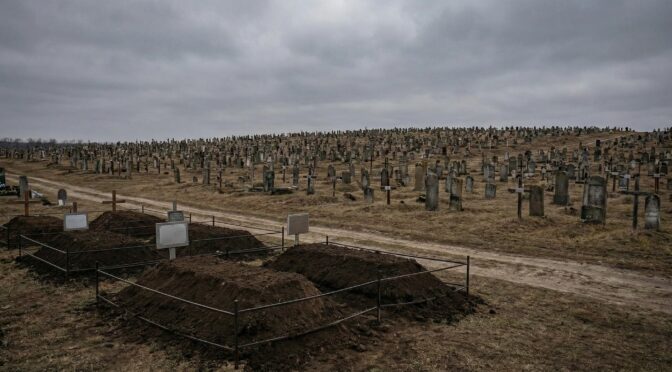
The assessment of mortality as a metric of governance provides a harrowing window into the structural mechanics of authoritarian survival and ideological pursuit. When a cross-functional team of analysts examines the record of the twentieth and twenty-first centuries, a clear distinction emerges between “democide”—the murder of any person or people by their government, including genocide, politicide, and mass murder—and the casualties of interstate war.1 Historically, the state has proven far more lethal to its own citizens than foreign adversaries, with democide accounting for nearly six times more deaths than combat in all foreign and internal wars of the twentieth century combined.2 This report evaluates the most significant instances of leader-driven domestic mortality in the modern era, focusing on the ideological justifications and the profound lack of empathy that characterized these regimes.
The Ideological Architecture of Mass Mortality: The Hegemons
The scale of mortality under the totalizing regimes of the mid-twentieth century remains the standard against which all other humanitarian catastrophes are measured. These leaders did not merely oversee incidental deaths; they engineered social and economic environments that necessitated mass mortality as a byproduct of state transformation. Their rationalizations often involved sacrificing the individual for a “sacred social task” or the perceived survival of the state.
Mao Zedong and the Chinese Industrialization Famine
The leadership of Mao Zedong, specifically during the Great Leap Forward (1958–1962), represents the most significant instance of leader-induced mortality in recorded history. Scholarly estimates of the death toll range from a conservative 15 million to as high as 55 million.3 This catastrophe was primarily a “man-made disaster” rooted in a combination of radical agricultural policies, social pressure, and a total collapse of the informational feedback loop within the Chinese Communist Party (CCP).4
The mechanism of this mortality was the forced collectivization of the peasantry into People’s Communes. This transition involved the mandatory diversion of millions of farmers from agricultural labor to “backyard steel production” and the use of discredited agricultural techniques, such as “close planting” and “deep plowing,” based on the Lysenkoist theories prevalent in the Soviet bloc.4 These techniques disrupted soil health and plant competition, leading to stunted growth and failed harvests. Furthermore, the “Eliminate Sparrows” campaign, a component of the Four Pests initiative, removed a natural predator of crop-destroying insects, resulting in an explosion of locust populations that decimate remaining yields.4
The intelligence and foreign affairs failure of the Maoist era was the “Illusion of Superabundance” (浮夸风). Local officials, fearing purges and seeking to demonstrate political loyalty, reported Spectularly inflated grain production figures. The central government, believing these reports, increased state grain procurement and accelerated exports to the Soviet Union to pay off debts, effectively stripping the rural population of its survival rations.4
| Province | Estimated Mortality Rate | Governance Factor |
| Anhui | 18% | Radical adherence to GLF; total suppression of dissent.4 |
| Chongqing | 15% | High urban procurement demands.4 |
| Sichuan | 13% | Inflexible procurement targets despite production drop.4 |
| Guizhou | 11% | Geographic isolation compounded by policy failure.4 |
| Hunan | 8% | Intense local political competition.4 |
The cultural and psychological impacts were profound. Reports of cannibalism and the total breakdown of the family unit were widespread. Mao’s personal outlook was marked by a cold pragmatism; he reportedly justified the human cost by suggesting it was “better to let half of the people die so that the other half can eat their fill,” prioritizing the completion of industrial plans over individual survival. When compared to historical tyrants like Qin Shihuang, Mao boasted that he had surpassed him a hundredfold in burying scholars alive, demonstrating a pride in his capacity for mass repression.
Joseph Stalin and the Institutionalization of Terror
The tenure of Joseph Stalin is defined by a multi-modal approach to domestic mortality, integrating engineered famine, mass executions, and a vast system of forced labor. Following the declassification of Soviet archives in 1991, the consensus on “purposive” deaths under Stalin settled between 6 million and 9 million, though broader estimates including foreseeable policy-driven deaths reach 20 million.6
The Holodomor (1932–1933) serves as the primary example of Stalin’s weaponization of food. By engineering a man-made famine in Ukraine, Stalin sought to subjugate a resistant peasantry and crush Ukrainian national identity.8 At the height of the famine in June 1933, Ukrainians were dying at a rate of 28,000 people per day.8 Simultaneously, the Soviet state exported over 4 million tons of grain—enough to feed 12 million people for a year—to fund industrialization.8
Beyond the famine, the Gulag system functioned as both a tool of political repression and a source of slave labor for infrastructure projects in Siberia and the Arctic. Approximately 18 million people passed through the Gulag during Stalin’s rule, with deaths occurring due to exposure, malnutrition, and exhaustion.9
| Category of Stalinist Mortality | Estimated Deaths | Primary Mechanism |
| Holodomor (Ukraine) | 3.5 – 3.9 Million | Engineered famine/State procurement.8 |
| Gulag System | 1.5 – 1.7 Million | Forced labor and exposure.6 |
| Great Purge Executions | ~800,000 | Judicial murder for “political crimes”.6 |
| Dekulakization | ~390,000 | Forced resettlement of “Kulaks”. |
| Ethnic Operations | ~350,000 | Targeted deportations of Poles/Balts.6 |
Stalin rationalized these deaths through the prism of “class war” in the countryside, identifying prosperous peasants (“kulaks”) as implacable enemies of socialism who required “liquidation as a class”. The Great Purge was justified as the elimination of a mythical “fifth column of wreckers and spies” in the lead-up to war. Personally, Stalin exhibited a profound emotional detachment; following the death of his first wife, Kato, he claimed his “last warm feelings for humanity died,” a state of emotional numbness that became a central feature of his character during the Red Terror and the Gulags.
The Proportional Devastation of Small-State Autocrats
While the absolute numbers of the Chinese and Soviet tragedies are larger, leaders of smaller nations have often caused the death of a much higher percentage of their total populations. This proportional loss has a devastating long-term effect on a nation’s demographic health and economic potential.
Pol Pot and the Khmer Rouge “Year Zero”
The Cambodian genocide (1975–1979) remains the most lethal regime in modern history when measured as a percentage of the total population. Under Pol Pot, an estimated 1.5 million to 2 million people died—nearly 25% of Cambodia’s 1975 population of 7.8 million.16
The Khmer Rouge sought to reset history to “Year Zero,” abolishing currency and religion, and forcibly relocating the entire urban population to agrarian labor camps. This “classicide” targeted anyone perceived as an intellectual or connected to the capitalist West. Years later, Pol Pot showed no remorse, stating in a 1997 interview, “My conscience is clear,” and rationalizing the genocide as a “struggle” to save the country from annexation by Vietnam, confusingly adding that he “came to carry out the struggle, not to kill people.”
Mengistu Haile Mariam and the Ethiopian Red Terror
Colonel Mengistu Haile Mariam, leader of the Derg junta, oversaw a period of violence and famine that killed between 500,000 and 2,000,000 Ethiopians.10 His “Red Terror” (1976–1978) was a brutal crackdown on opposition groups, resulting in tens of thousands of executions.10
The most significant mortality occurred during the 1983–1985 famine, which was exacerbated by the regime’s agricultural policies and its use of food as a weapon against insurgent regions like Tigray and Eritrea.12 While the famine was triggered by drought, the Derg’s decision to allocate 46% of the national budget to military spending while the health budget plummeted to 3% ensured that the population remained vulnerable.12 The resettlement programs, which forcibly moved millions to less fertile regions as a counter-insurgency measure, further increased the death toll.12
Blockades and Civil Attrition: Nigeria and Syria
In cases of civil war, national leaders often oversee the deaths of their countrymen through the imposition of blockades and the systematic destruction of infrastructure.
Yakubu Gowon and the Nigerian Civil War
General Yakubu Gowon led Nigeria during the secession of the Republic of Biafra (1967–1970). While combat deaths were estimated at 100,000, the naval blockade caused a famine that killed between 500,000 and 3,000,000 Biafran civilians.17 Gowon rationalized the blockade and the resulting starvation as a necessary measure predicated on “loyalty to the country” to maintain national sovereignty, later downplaying the casualties as not numbering in the millions.
Bashar al-Assad and the Syrian Civil War
The Syrian Civil War (2011–Present) has resulted in an estimated 656,493 deaths as of early 2026.18 The Assad regime is responsible for roughly 91% of total civilian casualties through the use of barrel bombs, chemical weapons, and a vast archipelago of secret prisons.18 The regime’s strategy has been one of “starve or surrender,” treating opposition-held neighborhoods as biological threats to be “cleansed,” mirroring the dehumanizing language of earlier twentieth-century hegemons.19
A distinguishing feature of the Syrian mortality is the system of “forced disappearances.” More than 100,000 people have been detained by intelligence services and never seen again, with at least 130 suspected mass graves identified across the country.14 The regime’s strategy has been one of “starve or surrender,” where opposition-held neighborhoods were besieged and denied food and medicine for years.15
Adolf Hitler and the “Life Unworthy of Life”
While primarily known for the Holocaust, Hitler’s domestic democide included the systematic murder of approximately 762,000 German citizens.20 This was justified through the pseudo-scientific concept of “racial hygiene,” where the disabled, mentally ill, and “asocial” elements were categorized as lebensunwertes Leben (“life unworthy of life”). The T4 Euthanasia program rationalized these murders as a “mercy death” for “useless eaters” who represented a financial and genetic burden on the “healthy body” of the German Volk.
Analysis of Leader-Driven Death Tolls: Summary Comparison
The following table provides a comprehensive comparison of national leaders in the modern era who have caused the largest number of deaths among their own countrymen.
| Leader | Primary Mechanism | Domestic Deaths (Estimate) | Rationale / Justification |
| Mao Zedong | Industrial Famine / GLF | 15,000,000 – 55,000,000 | Sacred social task / Mass mobilization. |
| Joseph Stalin | Famine / Gulag / Purges | 6,000,000 – 20,000,000 | Liquidation of class enemies / Fifth column. |
| Pol Pot | Genocide / Classicide | 1,500,000 – 2,000,000 | Cultural reset (Year Zero) / Defense of nation. |
| Kim Il-sung | Famine / Purges | 710,000 – 3,500,000 | Self-sufficiency (Juche) / Political purity.21 |
| Yakubu Gowon | Blockade / Famine | 500,000 – 3,000,000 | Loyalty to national sovereignty. |
| Mengistu H.M. | Famine / Red Terror | 500,000 – 2,000,000 | Revolutionary consolidation / Anti-insurgency.10 |
| Saddam Hussein | Repression / War | 250,000 – 2,000,000 | Suppression of uprisings / Regional hegemony.22 |
| Adolf Hitler | Domestic Democide | ~762,000 (Domestic) | Racial hygiene / “Life unworthy of life”. |
| Bashar al-Assad | Civil War / Detention | ~650,000 | Sovereignty / Removal of “biological threats”.19 |
Visualizing the Scale of Mortality (Absolute Figures)
The following chart visualizes the magnitude of deaths caused by these leaders. Note the significant jump between the mid-tier autocrats and the ideological hegemons (Mao and Stalin).

Visualizing Proportional Impact (% of Population)
While absolute numbers are dominated by the largest nations, the proportional impact highlights the catastrophic severity of the Khmer Rouge and the Ethiopian Derg in relation to their population size.

Obfuscation and the Ethics of Power
From an intelligence analyst’s perspective, the ability of these leaders to cause such massive loss of life depends heavily on their control of information and the dehumanization of their victims.
Historical Methods: The “Maskirovka” of Famine
Both Mao and Stalin utilized a total control of movement and information to prevent the world—and their own citizens—from understanding the scale of the tragedies they oversaw. In 1933, Stalin and Molotov issued directives preventing Ukrainian farmers from leaving their villages, effectively sealing the borders of the famine zone.8 Similarly, during the Great Leap Forward, the Chinese government unpublicized the famine entirely, reporting “spectacular success” while millions starved.23
The Psychopathology of the Autocrat
A common thread among these leaders is a documented lack of personal empathy for the human cost of their policies. Research into Stalin’s character notes an “emotional numbness” following personal trauma, which translated into a detached “historian-like” humor when discussing the deaths of associates during the purges. Similarly, Pol Pot’s confusing “confusion” when asked if he wanted to apologize for the suffering he caused indicates a psychological insulation where ideological “struggle” completely supersedes individual life.
Casualty Sensitivity and Regime Durability
A critical question for foreign affairs and military analysts is why some regimes prove willing to incur significant casualties. Research suggests that personalist regimes—those where power is concentrated in a single individual—tend to sustain the highest casualties because they can distribute the “public bad” of death among the general population while insulating their key supporters.24 This diminishes their “casualty sensitivity” compared to democratic leaders who are accountable to a voting public.
Synthesis and Implications
The cross-functional analysis of leader-driven mortality reveals that the most dangerous threat to a nation’s biological and social survival is often not an external enemy, but a leadership that views its own population as an expendable resource. Whether through engineered famine, racial “cleansing,” or wars of survival, these leaders share a “Calculus of Attrition” that treats human life as a secondary variable to ideological or personalist power.
Ultimately, the monstrous bloodletting of these figures constitutes a “Hall of Infamy” that serves as a permanent warning of the deadly potential of absolute power. The demographic ripple effects—loss of productivity, long-term social instability, and generational trauma—suggest that the high price claimed by such leadership eventually exceeds the state’s capacity to pay, leading to eventual collapse or long-term national decline.
Please share the link on Facebook, Forums, with colleagues, etc. Your support is much appreciated and if you have any feedback, please email us in**@*********ps.com. If you’d like to request a report or order a reprint, please click here for the corresponding page to open in new tab.
Sources Used
- DEATH BY GOVERNMENT: GENOCIDE AND MASS MURDER, accessed February 8, 2026, https://www.hawaii.edu/powerkills/NOTE1.HTM
- Statistics of Democide – University of Hawaii System, accessed February 8, 2026, https://www.hawaii.edu/powerkills/NOTE5.HTM
- Great Leap Forward – Wikipedia, accessed February 8, 2026, https://en.wikipedia.org/wiki/Great_Leap_Forward
- Great Chinese Famine – Wikipedia, accessed February 8, 2026, https://en.wikipedia.org/wiki/Great_Chinese_Famine
- China’s great famine: 40 years later – PMC – NIH, accessed February 8, 2026, https://pmc.ncbi.nlm.nih.gov/articles/PMC1127087/
- Excess mortality under Joseph Stalin – Wikipedia, accessed February 8, 2026, https://en.wikipedia.org/wiki/Excess_mortality_under_Joseph_Stalin
- How many people did Stalin actually KILL? : r/history – Reddit, accessed February 8, 2026, https://www.reddit.com/r/history/comments/ezpp8k/how_many_people_did_stalin_actually_kill/
- Holodomor | Holocaust and Genocide Studies | College of Liberal Arts, accessed February 8, 2026, https://cla.umn.edu/chgs/holocaust-genocide-education/resource-guides/holodomor
- Gulag | History | Research Starters – EBSCO, accessed February 8, 2026, https://www.ebsco.com/research-starters/history/gulag
- Mengistu Haile Mariam – Wikipedia, accessed February 8, 2026, https://en.wikipedia.org/wiki/Mengistu_Haile_Mariam
- Red Terror in Ethiopia | History | Research Starters – EBSCO, accessed February 8, 2026, https://www.ebsco.com/research-starters/history/red-terror-ethiopia
- 1983–1985 famine in Ethiopia – Wikipedia, accessed February 8, 2026, https://en.wikipedia.org/wiki/1983%E2%80%931985_famine_in_Ethiopia
- EVIL DAYS – Human Rights Watch, accessed February 8, 2026, https://www.hrw.org/reports/Ethiopia919.pdf
- ‘What They Left Behind’: A Look at the Human Toll of the Syrian War – PBS, accessed February 8, 2026, https://www.pbs.org/wgbh/frontline/article/syrian-war-human-toll-deaths-disappearances-mass-graves-displacement/
- Syrian civil war – Wikipedia, accessed February 8, 2026, https://en.wikipedia.org/wiki/Syrian_civil_war
- Cambodian genocide – Wikipedia, accessed February 8, 2026, https://en.wikipedia.org/wiki/Cambodian_genocide
- Nigerian Civil War – Wikipedia, accessed February 8, 2026, https://en.wikipedia.org/wiki/Nigerian_Civil_War
- Casualties of the Syrian civil war – Wikipedia, accessed February 8, 2026, https://en.wikipedia.org/wiki/Casualties_of_the_Syrian_civil_war
- Russia’s War on Ukraine: Six Months of Lies, Implemented – State Department Home, accessed February 8, 2026, https://2021-2025.state.gov/disarming-disinformation/russias-war-on-ukraine-six-months-of-lies-implemented/
- NAZI GENOCIDE AND MASS MURDER, accessed February 8, 2026, https://www.hawaii.edu/powerkills/NAZIS.CHAP1.HTM
- Statistics Of North Korean Democide Estimates, Calculations, And Sources * By RJ Rummel – University of Hawaii System, accessed February 8, 2026, https://www.hawaii.edu/powerkills/SOD.CHAP10.HTM
- Human rights in Ba’athist Iraq – Wikipedia, accessed February 8, 2026, https://en.wikipedia.org/wiki/Human_rights_in_Saddam_Hussein%27s_Iraq
- Great Leap Forward famine | History | Research Starters – EBSCO, accessed February 8, 2026, https://www.ebsco.com/research-starters/history/great-leap-forward-famine
- Dictators and Death: Casualty Sensitivity of Autocracies in Militarized Interstate Disputes – ScholarWorks@UTEP, accessed February 8, 2026, https://scholarworks.utep.edu/cgi/viewcontent.cgi?article=1091&context=pol_sci_papers