Category Archives: Law Enforcement Analytics

LEO and Small Arms Related Reports

Assessing DOE-STD-1047-2008 Safety Functions and Other Features of Remotely Operated Weapon Systems (ROWS)

1. Executive Summary

The defense of the United States’ nuclear security enterprise represents the highest tier of domestic physical protection, requiring a fusion of elite human protective forces and cutting-edge autonomous and semi-autonomous technologies. Central to this architecture is the Department of Energy Technical Standard DOE-STD-1047-2008, titled “Safety Functions and Other Features of Remotely Operated Weapon Systems (ROWS).” This report evaluates the standard through the dual lenses of a small arms industry analyst and a national security strategist, analyzing the institutional, technical, and tactical dimensions of these systems.

DOE-STD-1047-2008 was established to provide a rigorous safety and engineering baseline for “Active Denial” systems within high-consequence environments. It prioritizes the prevention of accidental discharge and the assurance of system integrity over the sheer offensive volume found in traditional military remote weapon stations. The standard mandates specific engineered controls, such as physical sector-limiting stops, to protect vital nuclear equipment and hazardous materials from collateral damage. Hardware analysis indicates a reliance on the M240 7.62mm and.50 caliber M2 Browning platforms, with recent shifts toward the.338 Lightweight Medium Machine Gun (LWMMG) and 30mm cannons to provide greater stand-off and precision.

While the standard has successfully mitigated the risk of accidental radiological events, its effectiveness is intrinsically tied to management discipline and infrastructure resilience. Historical failures at sites like the Y-12 National Security Complex demonstrate that sophisticated technology cannot offset maintenance neglect or flawed contractor governance. Furthermore, the 2008 standard is increasingly challenged by the asymmetric threat of small Unmanned Aerial Systems (sUAS) and the growing complexity of cyber-warfare. The analysis concludes that the NNSA must evolve the standard to incorporate automated counter-drone capabilities, enhanced cyber-resilience, and more robust lifecycle maintenance protocols to ensure the continued security of the nation’s strategic nuclear stockpile.

2. Institutional Framework and the Genesis of the ROWS Standard

The National Nuclear Security Administration (NNSA), a semi-autonomous agency within the Department of Energy (DOE), is tasked with the monumental responsibility of maintaining the U.S. nuclear weapons stockpile, overseeing nonproliferation efforts, and powering the nuclear navy.1 To fulfill this mission, the NNSA manages a vast complex of laboratories, production plants, and test sites, collectively known as the nuclear security enterprise (NSE).3 Protecting these facilities requires a Physical Protection System (PPS) that can defeat a diverse range of threats defined by the Design Basis Threat (DBT)—a classified set of adversary characteristics including well-trained, well-armed attackers potentially aided by insiders.4

In the late 1990s and early 2000s, the DOE began shifting its security philosophy away from high-density human guard forces toward a more technology-centric approach.6 This evolution was driven by two primary factors: the need for greater stand-off distances to engage adversaries before they reached vital areas, and the desire to reduce the risks to human responders.6 Remotely Operated Weapon Systems (ROWS) emerged as the centerpiece of this new strategy. However, the unique hazards of nuclear facilities—where a stray bullet could cause a chemical fire or damage a radiological containment vessel—meant that standard military remote weapon stations were insufficient.8

DOE-STD-1047-2008 was developed to bridge this gap. Approved on September 3, 2008, it provides a specialized framework for the safety and functional design of ROWS.10 The standard is not a set of mandatory regulations in itself but becomes binding when explicitly invoked in purchase requisitions or site contracts.9 It reflects a consensus among DOE and NNSA security experts on the minimum features required to ensure that remote weapons improve, rather than jeopardize, the safety of a nuclear site.9

Institutional ElementRole and Responsibility
NNSA AdministratorEnsures contractor compliance with security directives and standard implementation.11
Officially Designated Security Authority (ODSA)Federal or contractor official responsible for specific security site authorizations.11
Preparing Activity (Lynn Preston)The entity responsible for the initial drafting and maintenance of DOE-STD-1047-2008.10
Defense Nuclear Security (DNS)Oversight body within NNSA that funds and reviews the effectiveness of site-specific security programs.13

The standard was born during a period of significant institutional change. The NNSA was created in 2000 following security failures at Los Alamos National Laboratory, and it has since struggled with a “separately organized” status that often causes friction with the broader DOE.14 This background of institutional “dysfunction,” as noted by the GAO, is critical to understanding why a formal, consensus-based technical standard for ROWS was necessary to ensure uniformity across a decentralized complex.3

3. Dissecting DOE-STD-1047-2008: Technical and Safety Specifications

The core of DOE-STD-1047-2008 is its focus on engineering out the possibility of a “safety-critical” failure. In the context of the NNSA, a safety-critical failure is any event—software glitch, electrical surge, or human error—that leads to an unauthorized or unintended weapon discharge.9 The standard is meticulously organized to address every point of failure in the remote kill chain.

3.1 Engineered Sector-Limiting Stops and Active Denial

The most defining requirement of the NNSA standard is the mandate for “Engineered Sector-Limiting Stops”.9 While military Remote Weapon Stations (RWS) often rely on software-defined “No-Fire Zones,” the NNSA requires physical, mechanical stops that prevent the barrel from ever pointing at “No-Fire” areas, such as control rooms or sensitive process equipment.8

These stops are designed to be robust enough to withstand the maximum torque of the system’s motors.9 This provides a physical guarantee that even if the software is hacked or the control circuit fails, the weapon remains confined to its designated engagement sector. This concept is fundamental to the “Active Denial” mission: the system is designed to provide a “wall of lead” between the adversary and the target, without the risk of collateral damage to the facility itself.17

3.2 Electrical, Optical, and Power Circuits

The standard requires a strict separation of circuits to ensure system integrity. Firing circuits must be isolated from control and sensor circuits so that an electrical short in a camera cannot trigger a firing command.9 Furthermore, the standard mandates:

  • Power Level Indicators: The control station must alert the operator if power levels drop to a point that could affect the performance of safety subsystems.9
  • Parallax Compensation: Aiming systems must account for the physical distance between the camera’s lens and the gun’s barrel to ensure point-of-aim is point-of-impact at all ranges.9
  • Secure Optics: Any lasers used for rangefinding or target designation must meet specific safety standards and include indicators to prevent accidental eye damage to site personnel during training or routine operations.9

3.3 Safety-Critical Software Integrity

In the digital age, software is the most vulnerable link in a remote system. DOE-STD-1047-2008 provides a rigorous framework for software safety:

  • Functional Limitation: Software must include only the functionality required for the mission, reducing the “attack surface” for both accidental bugs and malicious cyber-attacks.9
  • Corruption Resistance: The standard dictates that power surges or low-power states must not be able to corrupt the safety-critical logic of the system.9
  • Modification Protection: The software must be hardened against accidental or unauthorized modification.9 This is particularly relevant as the NNSA faces increasing threats of cyber-sabotage.20

3.4 Maintenance and Testing Protocols

Reliability is the hallmark of the 2008 standard. It requires that vendors provide full documentation, including electrical schematics and connector identifiers, to allow site personnel to perform rapid repairs.9 The system must have a built-in “Self-Test” capability that verifies the health of communications and backup power supplies before the system is placed in an “Active” state.9 Furthermore, the standard requires routine function tests to ensure the aiming system remains aligned with the weapon—a critical task because the vibration of firing can shift sensitive optics over time.9

Standard SectionTechnical RequirementOperational Significance
5.1Physical Sector StopsPrevents fratricide and radiological collateral damage.9
5.2.8Power Level AlertsEnsures the operator knows when the system is about to fail.9
5.7Command and ControlMandates clear user interfaces for weapon “Safe/Fire” states.9
5.11Software IntegrityProtects the system from logic failures and cyber-tampering.9
5.12Self-TestingGuarantees readiness without requiring human exposure to the weapon post.9

4. Hardware Ecosystem: Analysis of Small Arms and Platform Integration

The NNSA’s ROWS strategy is built around a specific “menu” of small arms and light cannons. From an industry perspective, the NNSA prefers weapon systems that are mature, have a high Mean Time Between Failures (MTBF), and possess standardized ballistics for ease of modeling.17

4.1 The Dominance of the M240 and 7.62x51mm Platforms

The M240 machine gun is the workhorse of the NNSA ROWS program. It is prized for its ability to fire thousands of rounds without a significant malfunction, a necessity when the weapon is mounted in a remote tower where immediate operator intervention is impossible.8 Platforms like the Precision Remotes T360 are specifically engineered to accept an unmodified M240, allowing for rapid weapon swaps during maintenance.8

The 7.62x51mm round is effective for anti-personnel roles and can penetrate light cover, which is often sufficient for the “Interdiction” phase of a facility defense.23 However, the industry analyst must note that the 7.62mm caliber begins to lose terminal effectiveness beyond 800 meters, which has led the NNSA to explore heavier calibers for larger sites with vast buffer zones.23

4.2 The Precision Leap:.338 LWMMG and.50 Caliber M2

To extend the defensive perimeter, the NNSA has integrated the.338 Lightweight Medium Machine Gun (LWMMG). The.338 Norma Magnum cartridge offers significantly more energy than the 7.62mm, providing lethal effects and “barrier-blind” performance out to 2,000 meters.8 This caliber is particularly effective against light-armored vehicles or adversaries wearing advanced body armor.23

For anti-material roles, the M2 Browning.50 caliber machine gun remains the ultimate deterrent. While a 7.62mm round might “mush” soft tissue, the.50 BMG round can “turn a target into a meat slushy,” as noted in ballistics analyses.23 In the context of the DBT, the.50 caliber is necessary to stop a vehicular suicide attack (VBIED) or an adversary attempting to breach a reinforced containment wall.4

4.3 Medium-Caliber Innovation: The M230LF 30mm

The Kongsberg Protector RS6 represents the newest frontier in NNSA facility defense: the integration of medium-caliber cannons.19 The M230LF 30x113mm cannon—a linkless version of the gun used on the Apache helicopter—provides explosive area-denial capabilities.19 This system allows for “Airburst” ammunition, which can detonate above an adversary behind cover, or engage small drones that are difficult to hit with direct-fire machine guns.19

4.4 Vendor Profile: Precision Remotes T360 (TRAP)

The Precision Remotes T360 (Telepresent Rapid Aiming Platform) is widely utilized across the NNSA and other agencies.17 Its competitive advantage lies in its “Low-SWaP” (Size, Weight, and Power) profile. Weighing just 81 lbs, it can be mounted on tripods, Bearcats, or telescoping masts.7

A unique feature of the T360 is its “Switchblade” stowable mount, which allows the weapon system to be hidden in a standard pickup truck bed and elevated into a firing position in three seconds.8 This provides a “concealed lethality” option for mobile patrols, allowing them to traverse a site without looking like a combat vehicle until the moment of engagement.7 The T360’s handheld “Rugged Controller Unit” (RCU) allows an operator to manage the weapon, thermal sensors, and laser rangefinder from the safety of an armored cabin or a hardened bunker.21

4.5 Vendor Profile: Kongsberg Protector RS4 and RS6

Kongsberg’s Protector series represents the gold standard for heavy ROWS.25 With over 20,000 units sold globally, the RS4 and RS6 provide “2+2 Axis” stabilization, meaning the sensors are independent of the gun’s movement.27 This allows the gunner to keep the crosshairs on a target even while the gun is adjusting for a long-range ballistic solution.19

The RS4 Low Profile variant is particularly effective for NNSA sites where “commanders’ visibility” is paramount, such as when mounted on armored response vehicles.28 These systems boast a 99% operational readiness rate, a metric that is vital for the NNSA’s requirement for continuous security.27

5. Tactical Effectiveness: Modeling, Simulation, and the Math of Defense

The effectiveness of ROWS at an NNSA site is measured through a rigorous mathematical framework known as the Probability of Effectiveness (PE).29 In high-consequence national security environments, security is not based on “feel” but on “data-informed risk”.29

5.1 The Probability of Effectiveness (PE) Formula

The NNSA uses the following logic to quantify its defensive posture: PE = PI * PN (Probability of Effectiveness = Probability of Interruption * Probability of Neutralization).29

  • Probability of Interruption (PI): This is the measure of whether the security system can detect an adversary and deploy a response before the adversary reaches their goal.29 ROWS platforms enhance PI by providing advanced electro-optical and thermal sensors that can detect an intruder miles before a human guard could see them.7
  • Probability of Neutralization (PN): This is the measure of whether the response force can stop the threat once they have been interrupted.29 ROWS significantly increases PN because it removes human “buck fever”—the physiological stress that causes a person to miss their target during a gunfight.22 A ROWS station firing an M240 from a stabilized mount has a first-shot accuracy of 98% and remains 91% accurate at 800 meters.22

5.2 Modeling Tools: AVERT and EMRALD

To determine where to place ROWS stations, the NNSA uses dynamic simulation tools like AVERT and EMRALD.30 These tools run “Monte Carlo” simulations—thousands of virtual attacks—to identify the “Critical Detection Point” on every possible adversary path.29

Simulation FeatureDescriptionImpact on Security
Path AnalysisIdentifies the fastest and most stealthy routes to a target.31Allows ROWS to be placed at “choke points”.30
Sensitivity AnalysisDisables one ROWS station to see if the others can compensate.30Validates the “Defense-in-Depth” redundancy.29
Human Behavior ModelingAccounts for guard reaction times and decision-making.29Ensures the system is realistic, not just theoretical.29
FLEX IntegrationCombines ROWS defense with backup power and water deployment.30Ensures security holds up even during a “Fukushima-style” disaster.32

By using these tools, the NNSA can optimize its “Bullet Resistant Enclosures” (BRE) and ROWS locations, ensuring that a minimum number of systems provides the maximum possible protection.30 This data-driven approach allows the NNSA to prove to Congress and the NRC that their security systems are “effective” against the DBT.33

6. Operational Lessons Learned: Successes and Systematic Failures

The real-world history of NNSA security is a mix of technological triumph and institutional struggle. The lessons learned from major incidents provide a roadmap for why the ROWS standard exists and how it must change.

6.1 The Y-12 Breach: A Failure of Culture over Technology

The 2012 breach at the Y-12 National Security Complex is perhaps the most famous security failure in the agency’s history.16 Three activists, including an 82-year-old nun, cut through several security fences and reached the “Highly Enriched Uranium Materials Facility” (HEUMF) before being detected.35

The subsequent investigation revealed that Y-12 had the technology to stop the breach—including ROWS and advanced sensors—but the systems were not working.35 There were “inexcusable maintenance problems” where cameras were broken and sensors were plagued by false alarms.35 Guards had become so accustomed to the equipment failing that they ignored the genuine intrusion alerts.35

The lesson for national security analysts is clear: ROWS is a force multiplier, not a force replacement. If the infrastructure (power, communications, maintenance) is not sustained, the technological edge disappears. The GAO reported that NNSA had scaled back inspections and relied too heavily on “contractor self-evaluation,” which allowed these maintenance gaps to go unnoticed until the breach occurred.16

6.2 The Fukushima Lesson: Resilience and Power

The 2011 Fukushima accident in Japan taught the NNSA that a catastrophic event (earthquake, flood) can destroy the security infrastructure just when it is needed most.32 If the power goes out, the ROWS stops moving and the sensors go dark.

This led to the “FLEX” strategy: the staging of portable backup equipment—generators, batteries, and satellite communications—that can be quickly deployed to restore security measures.32 DOE-STD-1047-2008’s requirement for “Self-Testing” of backup power supplies is a direct result of this need for “Readily Recoverable” systems.9 Any site that relies on ROWS must ensure that the weapon stations are on an “uninterruptable power source” (UPS) that is independent of the plant’s main power grid.32

6.3 Management and Supply Chain Risks

The GAO has consistently placed NNSA’s contract and project management on its “High-Risk” list.2 These management problems have a direct impact on ROWS:

  • Budget Overruns: Major facilities like the National Ignition Facility have seen costs soar, often diverting funds away from routine security maintenance.14
  • Fragile Supply Chains: A 2025 GAO report warned that the explosives and energetics supply chain is “fragile”.37 For ROWS, this means that a single point of failure in a sensor or a motor from a sole-source vendor could disable a site’s defense for months.37
  • Dysfunctional Oversight: Conflict between DOE headquarters and NNSA site offices has often led to “chaotic” security programs where standard implementation is inconsistent.16

7. Protective Force Evolution: Training, Medical, and Tactical Skills

The integration of ROWS has fundamentally redefined what it means to be a Security Police Officer (SPO) at an NNSA site. The agency has moved away from the “athlete-soldier” model toward a “technically sophisticated technician” model.6

7.1 The Shift in Physical Standards

In 1993, the DOE began reducing its reliance on the ability of guards to perform high-intensity running tasks, placing a greater premium on technology and vehicular response.6 The modern NNSA SPO must still be physically fit, but the focus is now on:

  • Vision and Color Recognition: Critical for operating remote thermal sensors and identifying “Red/Green” status lights on a control console.6
  • Technical Knowledge: An SPO must be able to troubleshoot a “Safety-Critical Software” error or swap a weapon on a T360 mount in minutes.6
  • Tactical Experience: Retention of “mature, tactically experienced” personnel is favored over high-turnover junior staff, because a senior officer is more likely to make a correct “shoot/no-shoot” decision through a remote screen.6

7.2 Training at the Nevada National Security Site (NNSS)

The NNSS operates a “Protective Force Training Complex” where officers qualify on weapons up to 7.62mm, including ROWS platforms.39 Training includes:

  • Live Fire Shoot Towers: Practicing high-angle engagement from a remote console.39
  • Combat Stress Scenarios: Using ROWS in a chaotic environment where sensors may be failing or communications are jammed.39
  • Administrative and Classroom Training: Understanding the legal and regulatory framework (like 10 CFR 1046) that governs the use of deadly force through a remote interface.6

8. The Imperative for Evolution: Addressing the Modern Threat Landscape

While DOE-STD-1047-2008 was a landmark document in 2008, it is now nearly twenty years old. The threat landscape has changed more in the last five years than it did in the previous fifty.

8.1 The sUAS (Small Unmanned Aerial Systems) Threat

The rise of inexpensive, weaponized drones—as seen in the war in Ukraine—represents a catastrophic vulnerability for nuclear sites.40 Standard ROWS systems are designed to fire horizontally at human attackers.9 They often lack the elevation (+90 degrees) or the rapid “slew rate” (traverse speed) required to track a drone diving from directly overhead.21

Furthermore, detecting a plastic drone is significantly harder than detecting a human. The NNSA must update the standard to mandate:

  • Multi-Sensor Integration: Linking ROWS to radar or acoustic sensors that can “hand off” a drone target to the fire control system.40
  • Automated Target Acquisition: Human reaction time is often too slow to hit a moving FPV drone. The standard must define the safety protocols for “semi-autonomous” tracking and engagement.24
  • C-UAS Specific Payloads: Standard machine guns are inefficient against drones. The NNSA should explore “Smart” ammunition (like airburst 30mm) or high-volume miniguns for counter-swarm defense.24

8.2 The Cybersecurity and Electronic Warfare (EW) Threat

As ROWS becomes more networked, it becomes a target for cyber-attacks. The 2008 standard’s requirement for software to be “resistant to modification” is insufficient against state-sponsored actors.9 A cyber-attack could:

  • Disable the Firing Circuit: Making the facility defenseless.20
  • Spoof the Sensor Feed: Making the operator see a clear screen while an attack is underway.20
  • Gain Control of the Weapon: Turning the ROWS against the facility’s own protective force.20

The standard must evolve to include “Zero Trust” hardware architectures, where the firing command requires multiple, cryptographically signed authorizations from different nodes in the network.20

8.3 “Nuclear Shields” and Asymmetric Conflict

The war in Ukraine has shown that nuclear facilities can be weaponized as “Nuclear Shields”.41 An adversary might seize an NNSA site not to steal material, but to use it as a fortified base, knowing the U.S. military cannot bomb the site without risking a radiological disaster.41 ROWS systems must be capable of providing “360-degree close-in defense” to prevent an adversary from ever establishing a foothold on the property.21

9. Comparative Hardware and Standards Analysis

To provide the NNSA with a clear path forward, we must compare the current hardware ecosystem and identify the gaps in the 2008 standard.

9.1 Comparison of Leading ROWS Platforms

FeaturePrecision Remotes T360Kongsberg Protector RS6
Primary WeaponM240 /.338 LWMMG 830mm M230LF / Coax 7.62 19
System Weight~81 lbs (Lightweight) 7~400+ lbs (Heavy) 19
Elevation Range-20 to +60 degrees 21-20 to +60 degrees 25
TargetingDay/Thermal/LRF 82+2 Axis Detached LOS 27
ModularitySingle Weapon / Fast Swap 22Triple (Cannon, Coax, Missile) 19
NNSA RoleMobile Patrol / Temporary Posts 7Static Defense / Heavy ARV 28

The industry analyst notes that both systems are “limited” by the 60-degree elevation cap.21 To address the drone threat, future NNSA procurement should favor platforms with near-90-degree elevation or specialized “tower configurations” that can engage aerial targets.21

9.2 The “Shall” vs. “Should” Gap

The GAO and internal NNSA audits often highlight the gap between “Requirements” and “Goals” in the standard.9

  • “Shall/Must”: These are the mandatory engineering controls (physical stops, isolated circuits).9
  • “Should”: These are the performance goals (automated tracking, specific sensor resolutions).9

The NNSA must move several “Should” statements into the “Shall” category—specifically regarding software encryption and automated target acquisition—to force contractors to modernize the systems.9

10. Conclusion and Strategic Recommendations

The evaluation of DOE-STD-1047-2008 reveals a standard that was ahead of its time in 2008 but is now struggling to maintain relevance in a world of autonomous drones and sophisticated cyber-warfare. From both a national security and an industry perspective, the standard has succeeded in creating a “Safety-First” culture that prevents accidental radiological events, but it has not yet fully adapted to the “Asymmetric-First” reality of modern conflict.

10.1 Key Takeaways for the National Security Analyst

The primary lesson of the last two decades is that technology is only as effective as the management system that supports it. The Y-12 breach and the GAO’s high-risk findings prove that the NNSA needs more than just better guns; it needs better contractor governance, more reliable maintenance funding, and a “Security Roadmap” that looks twenty years into the future.2 ROWS is a powerful tool, but it is one that requires a “culture of safety” to be truly effective.42

10.2 Strategic Recommendations for Evolution

  1. Counter-UAS (C-UAS) Integration: The NNSA must immediately revise the ROWS standard to include requirements for “High-Elevation Engagement” and “Autonomous Target Tracking” specifically for sUAS threats.24
  2. Cyber-Resilience Standards: The standard must move beyond “resistance to modification” and mandate “Zero Trust” architectures and hardware-based encryption for all command-and-control links.20
  3. Lifecycle Maintenance Mandates: The standard should be updated to include mandatory “Readiness Rates” for ROWS platforms. If a ROWS station falls below a 99% availability rate, it must trigger a mandatory site security review.27
  4. Caliber Standardization for Interdiction: The NNSA should formalize the transition to.338 caliber systems for long-range interdiction, ensuring that protective forces have the energy and accuracy needed to stop modern “barrier-equipped” adversaries before they reach the fence line.8
  5. Autonomous Transition: As AI matures, the standard must address the legal and safety framework for “Man-on-the-Loop” (human-authorized) vs. “Man-in-the-Loop” (human-controlled) systems, ensuring that speed of engagement does not compromise the high-consequence safety of the facility.21

By evolving DOE-STD-1047-2008, the NNSA can ensure that its remotely operated weapon systems remain not just a “Safety Feature,” but a decisive and dominant “Defense Capability” for the 21st century.

Photo Source

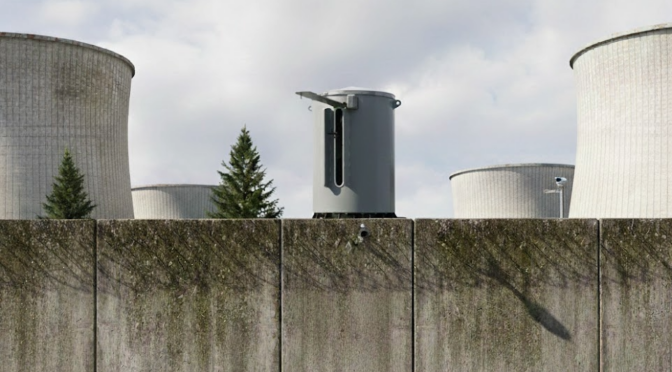
The main blog image is computer generated and it is loosely based on the fixed emplacement housing of the SENTRY I T-360 by Precision Remotes.


Please share the link on Facebook, Forums, with colleagues, etc. Your support is much appreciated and if you have any feedback, please email us in**@*********ps.com. If you’d like to request a report or order a reprint, please click here for the corresponding page to open in new tab.


Sources Used

  1. GAO-11-387, Nuclear Weapons: DOD and NNSA Need to Better Manage Scope of Future Refurbishments and Risks to Maintaining U.S. Commitments to NATO, accessed February 13, 2026, https://www.gao.gov/assets/a317889.html
  2. GAO-15-532T, National Nuclear Security Administration: Observations on Manage Challenges and Steps Taken to Address Them – Senate Armed Services, accessed February 13, 2026, https://www.armed-services.senate.gov/imo/media/doc/Trimble_04-15-15.pdf
  3. GAO-23-105299, NATIONAL NUCLEAR SECURITY ADMINISTRATION: Fully Incorporating Key Practices for Agency Reform Would Benefit Any F, accessed February 13, 2026, https://www.gao.gov/assets/gao-23-105299.pdf
  4. PART 73—PHYSICAL PROTECTION OF PLANTS AND MATERIALS | Nuclear Regulatory Commission, accessed February 13, 2026, https://www.nrc.gov/reading-rm/doc-collections/cfr/part073/full-text
  5. Chapter: 9 Ensuring Security and Promoting Safeguards – National Academies of Sciences, Engineering, and Medicine, accessed February 13, 2026, https://www.nationalacademies.org/read/26630/chapter/11
  6. Protective Force Personnel Medical, Physical Readiness, Training, and Access Authorization Standards – Federal Register, accessed February 13, 2026, https://www.federalregister.gov/documents/2012/03/06/2012-5280/protective-force-personnel-medical-physical-readiness-training-and-access-authorization-standards
  7. Remotely Operated Weapon System – IEC Infrared Systems, accessed February 13, 2026, https://iecinfrared.com/white-papers/remotely-operated-weapon-systems/
  8. T360 ROWS – IEC Infrared Systems, accessed February 13, 2026, https://iecinfrared.com/t360-rows/
  9. Safety Functions and Other Features of Remotely Operated Weapon Systems (ROWS) – DOE Standards, accessed February 13, 2026, https://www.standards.doe.gov/standards-documents/1000/1047-astd-2008/@@images/file
  10. DOE-STD-1047-2008, Safety Functions and Other Features of Remotely Operated Weapon Systems (ROWS) – DOE Standards, accessed February 13, 2026, https://www.standards.doe.gov/standards-documents/1000/1047-astd-2008
  11. DOE O 473.1A Physical Protection Program – S&S Policy Information Resource – Department of Energy, accessed February 13, 2026, https://pir.doe.gov/ExportService.svc/file/supplemental?id=56
  12. Physical Protection Program – DOE Directives, accessed February 13, 2026, https://www.directives.doe.gov/directives-documents/400-series/0473.1-BOrder-a/@@images/file
  13. National Nuclear Security Administration Consolidated Nuclear …, accessed February 13, 2026, https://www.energy.gov/sites/default/files/2024-11/Pantex%20and%20Y-12%20FY%202022%20Performance%20Evaluation%20Report.pdf
  14. GAO-07-36, National Nuclear Security Administration: Additional Actions Needed to Improve Management of the Nation’s Nuclear Programs, accessed February 13, 2026, https://www.gao.gov/assets/a255324.html
  15. National Nuclear Security Administration: Security and Management Improvements Can Enhance Implementation of the NNSA Act – GovInfo, accessed February 13, 2026, https://www.govinfo.gov/content/pkg/GAOREPORTS-GAO-07-428T/html/GAOREPORTS-GAO-07-428T.htm
  16. NUCLEAR SECURITY NNSA Should Establish a Clear Vision and Path Forward for Its Security Program, accessed February 13, 2026, https://www.gao.gov/assets/gao-14-208.pdf
  17. Precision Remotes LLC – AUSA Industry Guide, accessed February 13, 2026, https://industry.ausa.org/company/10621/Precision20Remotes%20LLC
  18. Intruder Deterrence – IEC Infrared Systems, accessed February 13, 2026, https://iecinfrared.com/intruder-deterrence/
  19. PROTECTOR RWS LW30 – Kongsberg Defence & Aerospace, accessed February 13, 2026, https://www.kongsberg.com/kda/what-we-do/defence-and-security/remote-weapon-systems/protector-rs6/
  20. 01/23/12 Paper – Cyber Security for Nuclear Power Plants – State.gov, accessed February 13, 2026, https://2009-2017.state.gov/t/isn/gp2013/mtg/dc1/183589.htm
  21. T360 Remotely Operated Weapon System (ROWS) Tactical – Army Technology, accessed February 13, 2026, https://www.army-technology.com/products/t360-remotely-operated-weapon-system-rows-tactical/
  22. TRAP T-360 RWS: Telepresent Rapid Aiming Platform – Army Technology, accessed February 13, 2026, https://www.army-technology.com/sponsored/rws-telepresent-rapid-aiming-platform/
  23. What is the difference between being hit by a 7.62mm and 0.50 inch round from sniper rifles at 500-800m and at 1-2km? Specifically, the seriousness of the wound. – Quora, accessed February 13, 2026, https://www.quora.com/What-is-the-difference-between-being-hit-by-a-7-62mm-and-0-50-inch-round-from-sniper-rifles-at-500-800m-and-at-1-2km-Specifically-the-seriousness-of-the-wound
  24. Is 7.62 enough round for anti-drone defence? : r/tanks – Reddit, accessed February 13, 2026, https://www.reddit.com/r/tanks/comments/1f5muqo/is_762_enough_round_for_antidrone_defence/
  25. Protector RWS – Wikipedia, accessed February 13, 2026, https://en.wikipedia.org/wiki/Protector_RWS
  26. PROTECTOR Remote Weapon Systems – Kongsberg Defence & Aerospace, accessed February 13, 2026, https://www.kongsberg.com/kda/what-we-do/defence-and-security/remote-weapon-systems/
  27. PROTECTOR RWS – Kongsberg Defence & Aerospace, accessed February 13, 2026, https://www.kongsberg.com/kda/what-we-do/defence-and-security/remote-weapon-systems/protector-rs4/
  28. The Remote Weapon Station from KONGSBERG makes soldiers’ lives safer., accessed February 13, 2026, https://www.kongsberg.com/newsroom/stories/2018/11/protector/
  29. Full article: Computing Physical Security System Effectiveness at Commercial Reactors, accessed February 13, 2026, https://www.tandfonline.com/doi/full/10.1080/00295639.2022.2120315
  30. Methodology and Application of Physical Security Effectiveness …, accessed February 13, 2026, https://lwrs.inl.gov/content/uploads/11/2024/03/Methodology_Application_Physical_Effectiveness_based_on_FoF.pdf
  31. A Systematic Approach to the Conceptual Design of Physical Protection Systems for Nuclear Facilities – OSTI.gov, accessed February 13, 2026, https://www.osti.gov/servlets/purl/6809347
  32. Fukushima Daiichi Nuclear Accident: Lessons Learned for Nuclear Plant Security – NCBI, accessed February 13, 2026, https://www.ncbi.nlm.nih.gov/books/NBK373723/
  33. § 73.46 Fixed site physical protection systems, subsystems, components, and procedures. | Nuclear Regulatory Commission, accessed February 13, 2026, https://www.nrc.gov/reading-rm/doc-collections/cfr/part073/part073-0046
  34. W200400032/W200500377, Report on the Results of the Security Baseline Inspection Program at Commercial Power Reactor Annual Stat – Nuclear Regulatory Commission, accessed February 13, 2026, https://www.nrc.gov/docs/ML0615/ML061510642.pdf
  35. – DOE MANAGEMENT AND OVERSIGHT OF ITS NUCLEAR WEAPONS COMPLEX: LESSONS OF THE Y-12 SECURITY FAILURE – Congress.gov, accessed February 13, 2026, https://congress.gov/113/chrg/CHRG-113hhrg80292/CHRG-113hhrg80292.htm
  36. National Nuclear Security Administration: Actions Needed to Improve Integration of Production Modernization Programs and Projects – GAO, accessed February 13, 2026, https://www.gao.gov/products/gao-24-106342
  37. GAO-25-107016, NATIONAL NUCLEAR SECURITY ADMINISTRATION: Explosives Program Is Mitigating Some Supply Chain Risks but Should Take Additional Actions to Enhance Resiliency, accessed February 13, 2026, https://files.gao.gov/reports/GAO-25-107016/index.html
  38. 10 CFR Part 1046 Subpart B — Protective Force (PF) Personnel – eCFR, accessed February 13, 2026, https://www.ecfr.gov/current/title-10/chapter-X/part-1046/subpart-B
  39. Department of Energy Categorical Exclusion ID#: NV-2023-017 Proposed Action Title: Protective Force Training Complex Program or – Nevada National Security Site, accessed February 13, 2026, https://nnss.gov/wp-content/uploads/2023/08/CX-Determination-Form-Protective-Force-Training-Complex.pdf
  40. Small Unmanned Aerial Systems (sUAS) and the Force Protection Threat to DoD – RMC, accessed February 13, 2026, https://rmcglobal.com/small-unmanned-aerial-systems-suas-and-the-force-protection-threat-to-dod/
  41. Nuclear power plants in war zones: Lessons learned from the war in Ukraine – Security and Defence Quarterly, accessed February 13, 2026, https://securityanddefence.pl/Nuclear-power-plants-in-war-zones-Lessons-learned-from-the-war-in-Ukraine,174810,0,2.html
  42. Lessons Learned from “Lessons Learned”: – American Academy of Arts and Sciences, accessed February 13, 2026, https://www.amacad.org/sites/default/files/publication/downloads/lessonsLearned.pdf

Top Law Enforcement Agencies for Firearms Testing

1. Executive Summary

In the high-stakes environment of American law enforcement, the selection of small arms has transcended simple procurement to become a rigorous, data-driven scientific endeavor. This report provides a definitive ranking and analysis of the top five state and local law enforcement agencies in the United States, evaluated based on the complexity and rigor of their firearms testing and evaluation (T&E) methodologies. The analysis represents the collaborative perspective of a law enforcement analyst and a small arms technical expert, focusing on agencies that maintain internal research units, conduct exhaustive endurance trials, and integrate forensic terminal ballistics into their selection criteria.

The Los Angeles Police Department (LAPD) is identified as the premier agency for firearms research, characterized by its landmark 20,000-round to 40,000-round endurance trials and its role in establishing industry benchmarks for optics interoperability.1 Following the LAPD is the California Highway Patrol (CHP), which utilizes a highly structured 6,000-round pass/fail protocol overseen by the Department of General Services to ensure mechanical reliability in extreme operational conditions.4 The Texas Department of Public Safety (Texas DPS) ranks third, distinguished by the integration of its world-class Crime Laboratory Division and its pioneering research into the modularity of modern striker-fired systems.5 The Los Angeles County Sheriff’s Department (LASD) occupies the fourth position, noted for its intensive post-adoption technical audits and the involvement of the Office of Inspector General in analyzing equipment-related tactical incidents.8 Finally, the Pennsylvania State Police (PSP) is ranked fifth due to its recent vanguard research into direct-milled optics systems and the adoption of specialized long-range ballistics for its emergency response teams.10

This report details the specific methodologies employed by these agencies—including endurance cycle requirements, barrier-testing protocols, and ergonomic evaluations—while providing an exhaustive inventory of the small arms currently deployed. The findings reveal a clear national trend among these elite agencies toward 9mm Parabellum platforms equipped with Miniaturized Red Dot (MRD) optics, reflecting a research-backed move to prioritize shot placement and accuracy over traditional caliber-based stopping power theories.3

2. Frameworks of Modern Law Enforcement Firearms Evaluation

The methodologies used by top-tier law enforcement agencies are built upon a foundation of federal research and scientific standards. To understand why certain local and state agencies lead the field, one must first examine the standardized protocols that serve as their baseline. The Federal Bureau of Investigation (FBI) and the National Institute of Justice (NIJ) provide the most significant frameworks for ballistic testing, but the agencies highlighted in this report often exceed these requirements to meet the specific demands of their high-volume operations.14

2.1 The FBI Ballistic Test Protocol as a Standardized Baseline

The most critical component of research for any major agency is the terminal ballistic performance of its ammunition. The FBI Ballistic Test Protocol, conducted in 10% ordnance gelatin, is the standard by which all agencies in this report evaluate projectile effectiveness.15 This research is not merely about how deep a bullet penetrates, but how it performs after encountering common obstacles found in law enforcement encounters. The following table illustrates the specific barrier tests that top agencies utilize to validate their duty ammunition choices.

Test EventBarrier Material and ConfigurationPrimary Investigative Objective
Test 1: Bare Gelatin10% Kind & Knox Gelatin at 10 feetMeasures baseline expansion, penetration depth, and weight retention without interference.15
Test 2: Heavy Clothing4 layers (denim, flannel, and cotton)Research indicates that clothing fibers can clog hollow point cavities, preventing expansion; this test validates “non-clogging” designs.15
Test 3: SteelTwo pieces of 20-gauge hot-rolled galvanized steel set 3 inches apartSimulates the structure of a standard automobile door; tests the structural integrity of the projectile jacket.15
Test 4: WallboardTwo pieces of 1/2-inch standard gypsum board set 3.5 inches apartEvaluates performance after penetrating common interior residential walls; research focuses on over-penetration risks.15
Test 5: PlywoodOne piece of 3/4-inch AA fir plywoodSimulates wooden doors or construction timbers; measures how the round handles dense, fibrous material.15
Test 6: Auto Glass1/4-inch laminated safety glass at 45-degree horizontal and 15-degree side anglesResearch into “glass deviation” is critical for officer safety during vehicle-based engagements.15

The data generated from these tests allows analysts to calculate the “Permanent Wound Cavity” (PWC), which represents the total volume of tissue destroyed by the projectile. In modern research, PWC is prioritized over “Temporary Stretch Cavity” for handgun rounds, as the latter only contributes to incapacitation at velocities exceeding 2,000 feet per second—a threshold rarely met by standard law enforcement sidearms.17

2.2 NIST and OSAC Standardized Procedures

Beyond ballistics, the mechanical evaluation of the firearm itself follows standards proposed by the Organization of Scientific Area Committees (OSAC) and the National Institute of Standards and Technology (NIST). These protocols include procedures for trigger pull measurements, barrel length verification, and functionality testing.18 Top agencies like the Texas DPS and the Illinois State Police utilize these laboratory-grade procedures to ensure that the equipment received from manufacturers meets the specified tolerances. Research in this area involves testing firearms for their “functional life,” identifying when parts like recoil springs or strikers begin to experience fatigue.18

2.3 The Role of the Bureau of Justice Assistance (BJA)

The research capabilities of many local agencies are bolstered by federal initiatives such as the National Crime Gun Intelligence Center (CGIC) Initiative, administered by the BJA in partnership with the ATF.20 Agencies like those in Baltimore, Cincinnati, and Harris County utilize CGIC grants to integrate firearms testing with the National Integrated Ballistic Information Network (NIBIN).20 This research focuses on the “life cycle” of a crime gun, but the data produced also helps agencies understand which firearm designs are most frequently failing or being modified in the field, informing their own procurement and testing strategies.20

3. Rank 1: Los Angeles Police Department (LAPD)

The Los Angeles Police Department is the undisputed leader in firearms research and evaluation among municipal agencies. The department’s Firearms and Tactics Section (FTS) does not simply follow industry trends; it creates them. With approximately 10,000 sworn officers, the LAPD requires a level of equipment reliability that is statistically validated through extreme-volume testing.3

3.1 The 20,000-Round Endurance Benchmark

The most significant metric of the LAPD’s testing rigor is the 20,000-round endurance qualification. When the department initiated its search for a new duty pistol in 2020-2021, it subjected the finalists—most notably the FN 509 MRD-LE—to a grueling trial.1 While many law enforcement agencies consider 2,000 to 5,000 rounds an “exhaustive” test, the LAPD’s FTS mandates a 20,000-round cycle with zero malfunctions.1

This methodology is designed to push the firearm past its initial “break-in” period and into the territory where mechanical fatigue begins to show. In the case of the FN 509 MRD-LE, the department went even further, continuing the testing on successful samples until they reached a staggering 40,000 rounds with zero failures.2 This research provides the department with a definitive understanding of the weapon’s maintenance requirements and allows for the establishment of proactive parts-replacement schedules that prevent in-field failures.1

3.2 Research into Optic Interoperability and Low-Profile Mounting

A primary driver of the LAPD’s recent testing was the requirement for Micro Red Dot (MRD) interoperability. The LAPD’s research into red dot sights identified two critical failure points in previous law enforcement adoptions: mounting plate instability and the loss of “iron-sight co-witnessing”.3

The FTS evaluated the FN Low-Profile Optics-Mounting System to ensure it could accommodate a wide variety of duty-rated optics while keeping the red dot low enough to the bore that the factory iron sights remained visible in the lower portion of the optic window.3 This research allows officers to transition seamlessly if the optic’s electronics fail or the lens becomes obscured. The technical evaluation included testing the impact of the optic’s weight on the slide’s reciprocating mass, ensuring that the addition of an MRD did not decrease the reliability of the 9mm platform.3

3.3 Current Small Arms Inventory (LAPD)

The LAPD inventory is built on a philosophy of standardization across the patrol force while providing specialized tools for its elite bureaus.

Weapon CategoryManufacturer and ModelTechnical Specifications
Standard Issue PistolFN 509 MRD-LE9mm Parabellum, 4-inch cold hammer-forged barrel, striker-fired, optic-ready.1
Standard OpticVarious (Trijicon, Holosun, Aimpoint)Must be duty-rated and pass FTS drop-test standards.3
Metropolitan (SWAT) PistolVarious (Legacy 1911s, FN 509)Historically.45 ACP; currently transitioning to 9mm for better capacity and recoil control.26
Patrol RifleM4 Carbine / AR-15 Variants5.56 NATO; primarily equipped with Aimpoint or Trijicon optics.29
Specialized RiflesCounter-Sniper SystemsVarious calibers, including.308 Win and specialized precision rounds.29
Less-Lethal40mm Launchers / TasersUsed extensively for de-escalation; integrated into firearms tactical training.29

3.4 Qualification and Behavioral Research

The LAPD also researches the efficacy of its training through “reality-based” qualification standards. The LAPD Combat Qualification and the SWAT Handgun Qualification are among the most difficult in the nation, involving target transitions, support-hand-only shooting, and movement-based engagements from 3 to 25 yards.28 The SWAT qualification specifically requires 118 rounds, with a focus on “failure drills” (two to the torso, one to the head) and shooting from “close retention” positions.28 This data-driven training ensures that the small arms selected through the T&E process are being utilized at their maximum potential.

4. Rank 2: California Highway Patrol (CHP)

The California Highway Patrol occupies the second rank due to its highly formalized, bureaucratic rigor and its unique partnership with the California Department of General Services (DGS). The CHP’s testing protocols are essentially the “commercial standard” for large state agencies, focusing on long-term durability and manufacturer support.4

4.1 The 6,000-Round Pass/Fail Reliability Protocol

The CHP’s methodology for duty weapon selection is centered on an objective, repeatable test protocol established by the CHP Academy Weapons Training Unit.4 When a contract is opened, the DGS rank-orders manufacturers by price, but the lowest bidder only wins if they pass a rigorous physical T&E phase.

The CHP protocol involves the following research steps:

  • Commercial Sample Selection: The manufacturer must submit six commercial samples of the pistol for testing.4
  • Accuracy Verification: The pistols are fired from a bench rest to measure mechanical accuracy using the agency’s issued duty ammunition (historically Federal 180 grain HST for.40 S&W).4
  • The 6,000-Round Endurance Cycle: Two samples are selected for a 6,000-round pass/fail test. This test is segmented into three phases: 2,000 rounds of duty ammunition, 2,000 rounds of frangible training ammunition, and a final 2,000 rounds of duty ammunition.4
  • Failure Classification: Research analysts distinguish between minor stoppages and “catastrophic failures.” A catastrophic failure of a single sample can disqualify the entire bid unless a subsequent replacement sample can complete the full 6,000-round cycle without incident.4

This 6,000-round benchmark represents the minimum expected service life for a duty pistol in the CHP, allowing for a conservative estimate of mechanical reliability over several years of field use and training.

4.2 The “Debugging” and Track Record Requirement

A unique aspect of the CHP’s research methodology is their insistence on a proven commercial track record. Unlike agencies that might adopt a prototype or a brand-new design, the CHP requires that a firearm has been in commercial production for more than one year and is currently in use by at least one other agency with 500 or more sworn officers.4 This requirement ensures that the design is “debugged” and that the manufacturer has established a supply chain capable of meeting the production and delivery requirements of a large agency contract.4

4.3 Current Small Arms and Ammunition (CHP)

The CHP has long been an advocate for the.40 S&W caliber, though they have recently researched and begun transitions toward 9mm as modern ballistics show equivalent performance with better recoil management.4

Equipment CategoryManufacturer and ModelNotes and Status
Standard Issue PistolSmith & Wesson M&P40 / 9mmPolymer-framed, striker-fired; selected for ergonomics and reliability.4
Standard Duty AmmunitionFederal 180 grain HST (.40 S&W)Chosen after extensive gel and barrier testing.4
Weapon Mounted LightsStreamlight / SurefireIntegrated into the reliability testing (one test sample always features a light).4
Transition TrainingTwo-day 14-hour programHighly structured program to highlight differences between old and new platforms.4

4.4 Environmental and Ergonomic Research

The CHP conducts research on “weapon-light interaction,” specifically how the additional weight and rigidity of a weapon-mounted light affects the frame’s flex and the cycling of the slide.4 Their testing protocol requires that at least one of the endurance samples be tested with the light attached for the duration of the 6,000 rounds, ensuring that the weapon’s reliability is not compromised by accessories.

5. Rank 3: Texas Department of Public Safety (Texas DPS)

The Texas Department of Public Safety ranks third due to its sophisticated integration of forensic laboratory science with tactical evaluation. The Texas DPS manages a complex multi-division organization, including the Highway Patrol, the Texas Rangers, and the Special Operations Group (SOG), each requiring distinct weapon profiles validated by a central research authority.6

5.1 Forensic Toolmark and Metallurgical Research

The Texas DPS Firearms and Toolmarks Section is responsible for more than just criminal investigations; it plays a critical role in equipment evaluation. The section utilizes comparison microscopy to analyze internal parts of firearms during the T&E phase.5 By examining how the firing pin, breech face, and extractor interact with the ammunition at a microscopic level, analysts can predict long-term wear patterns that might not be evident in a standard endurance test.5

This research was instrumental in the department’s selection of the SIG Sauer P320. The Texas DPS analysts focused on the “serialized trigger group,” which allows for a modular approach to firearms.6 This modularity means the department can conduct thorough T&E on a single “fire control unit” and then deploy it in various frame sizes (full-size, carry, compact) without needing to re-test the internal mechanics of each version.6

5.2 Research on Physical Readiness and Combat Proficiency

The Texas DPS is unique in its research on the physiological effects of force encounters on shooting proficiency. They have transitioned to a rowing-based physical readiness test (500m, 2000m, and 4-minute rows), researching how anaerobic power correlates with an officer’s ability to manipulate a firearm under extreme stress.36 Their research into “Officer Physical Ability Test” (OPAT) metrics has shown a direct correlation between upper and lower body strength and the ability to control weapon recoil during rapid-fire engagements.36

5.3 Texas DPS Small Arms Inventory

The inventory of the Texas DPS is designed to support a wide range of mission sets, from rural highway patrol to high-risk counter-terrorism.

Division / UnitPrimary SidearmPatrol Rifle / Specialized
Texas Highway PatrolSIG Sauer P320 (9mm)Colt M4 / AR-15 (5.56 NATO).6
Texas RangersSIG Sauer P320 (9mm)Various; high degree of individual officer preference within approved specs.6
Special Operations (SWAT)SIG Sauer P320 / VariousTargeted precision rifles; entry carbines (5.56 NATO).6
Criminal Investigations (CID)SIG Sauer P320 (Compact/Carry)Optimized for concealed or plainclothes carry.6
Special Response Teams (SRT)SIG Sauer P320Standardized for high-risk warrant service.35

5.4 Crime Gun Intelligence Integration

The Texas DPS actively utilizes the NIBIN database to track the performance of weapons and ammunition in real-world shootings.7 This “after-action” research informs their procurement; for example, if they see that a particular ammunition type is failing to expand when recovered from suspects, the department can immediately initiate a technical review and transition to a more reliable projectile.7

6. Rank 4: Los Angeles County Sheriff’s Department (LASD)

The Los Angeles County Sheriff’s Department is ranked fourth, distinguished by its intensive technical inspections and its commitment to post-adoption research and auditing. As one of the largest sheriff’s departments in the world, the LASD operates a dedicated Weapons Training Unit at the Biscailuz Center Armory, which serves as the department’s internal research and maintenance hub.9

6.1 Adoption Audits and the Office of Inspector General (OIG)

The LASD is perhaps the most scrutinized agency regarding its equipment choices. Following the adoption of the Smith & Wesson M&P9 in 2013, the department experienced a significant spike in unintended tactical discharges—a 500% increase compared to the previous Beretta 92F platform.8 Rather than ignoring the data, the LASD collaborated with the OIG to conduct an exhaustive research project to identify the cause.

The research identified that the transition from a double-action/single-action (DA/SA) system with a manual safety to a striker-fired system without a manual safety required more than just “re-qualification”; it required a fundamental shift in training methodology.8 This level of administrative research—analyzing the intersection of human factors, training duration, and mechanical design—sets the LASD apart from agencies that simply buy and deploy equipment.

6.2 Technical Inspections and Maintenance Research

The LASD mandates that all sworn members who desire to carry optional or secondary weapons must have those firearms inspected by qualified armory personnel at the Biscailuz Center.38 This research-based inspection includes:

  • Nomenclature and Function Checks: Ensuring the firearm operates within factory specifications.19
  • Trigger Pull Verification: Researching if aftermarket parts have reduced the trigger weight to unsafe levels for field use.8
  • Optic Mounting Integrity: Verifying that weapon-mounted lights and optics are secured in a manner that does not interfere with the weapon’s cycle of operation.19

6.3 LASD Small Arms Inventory (2024-2025)

The LASD inventory reflects its diverse roles, from municipal policing in unincorporated areas to jail security and specialized tactical responses.9

Weapon ClassModel and ManufacturerCaliber and Capability
Primary Duty SidearmSmith & Wesson M&P99mm Parabellum; striker-fired.8
Secondary / Off-DutyVarious (Approved Revolvers/Pistols)Must be inspected by the Weapons Training Unit.38
Patrol RifleAR-15 / Bushmaster / Armalite5.56 NATO; many converted for non-lethal marking cartridges in training.39
Special Weapons (SEB)Barrett M82A1.50 BMG; used for heavy anti-machinery/vehicle interdiction.40
Training SystemsBridger CG85.45-70Specialized line-launching gun for search and rescue.39

6.4 The “Grip Switch” Research

As part of their research into weapon-mounted lights, the LASD evaluated the “DG grip switch” for SureFire lights.8 This pressure switch allows an officer to activate the light by simply tightening their grip on the handgun. The LASD’s research into unintended discharges analyzed whether the “sympathetic squeeze” required to activate the light was contributing to accidental trigger pulls, leading to a refined training approach for weapon-light manipulation.8

7. Rank 5: Pennsylvania State Police (PSP)

The Pennsylvania State Police (PSP) ranks fifth, primarily due to its recent leadership in researching and adopting advanced optic-ready systems and high-performance precision rifles. The PSP is an agency that is not afraid to break from traditional law enforcement norms to pursue technological advantages.10

7.1 Direct-Milled Optics Research

The most significant research contribution from the PSP in recent years is their study on the mounting of red dot optics. Most law enforcement agencies use a “plate system” (like the Glock MOS), which uses an adapter plate between the slide and the optic. The PSP research concluded that this system introduced multiple failure points (more screws to loosen) and raised the optic too high above the bore.10

To solve this, the PSP issued a specific bid requiring that their new duty weapons—the Walther PDP—be direct-milled for the Aimpoint ACRO P2.1 This direct-milled approach ensures that the optic is sitting as low as possible and is securely attached to the slide’s metal. This research-led decision makes the PSP one of the few large agencies in the country with a 100% direct-milled optic fleet, drastically improving the long-term reliability of their red dot systems.

7.2 SERT and Precision Ballistics Research

The PSP Special Emergency Response Team (SERT) conducts independent research into long-range small arms. In 2025, the team adopted the Geissele MK1MOD0, a rifle chambered in 6.5 Creedmoor.12 The research behind this choice involved comparing the 6.5 Creedmoor to the traditional.308 Winchester (7.62 NATO). The PSP analysts found that the 6.5 Creedmoor provided:

  • Superior Ballistic Coefficient: The round maintains velocity better at longer ranges.12
  • Reduced Wind Drift: Making it easier for snipers to make accurate shots in the varied topography of Pennsylvania.12
  • High Objective Accuracy: The MK1MOD0 met the objective of 0.5 Minute of Angle (MOA) accuracy, a military-grade requirement for sniper support rifles.12

7.3 PSP Small Arms Inventory

The PSP is currently undergoing a massive equipment modernization, replacing legacy systems with high-tech alternatives.10

Equipment CategoryManufacturer and ModelNotes and Caliber
New Duty SidearmWalther PDP (Compact/F-Series)9mm Parabellum; Direct-milled with Aimpoint ACRO P2.10
Standard Patrol RifleColt LE6940 (Advanced Carbine)5.56 NATO; features a monolithic upper receiver.42
Specialized Precision RifleGeissele MK1MOD06.5 Creedmoor; used by SERT for sniper support.12
Optics (Patrol Rifle)Aimpoint PRO / QRP2 MountsStandardized across the patrol force.42
Legacy SystemsSIG Sauer P227 / ShotgunsBeing phased out in favor of 9mm and rifles.41

7.4 Phasing Out the Shotgun

Based on ongoing research into engagement distances and round accountability, the PSP has recently decided to transition away from using shotguns as standard equipment.41 Their research indicated that the.223-caliber rifle provides significant operational advantages, including a longer effective range and better “shot placement” accuracy, which reduces the risk of collateral damage compared to buckshot spreads.41

8. Integrated Ballistic Research and “The Death Window”

A critical area of research that unites these top five agencies is the study of “The Death Window”—the 5-to-15 second period of voluntary action that remains after functional heart destruction.16 This research has shifted the focus of firearms testing from “stopping power” (a largely discredited term in small arms analysis) to “incapacitation through physiological failure”.16

8.1 Hollow Point vs. Fluted Projectiles

Recent “Joint Agency Ballistics Tests” have involved testing traditional hollow points (like the Federal HST) against modern fluted projectiles (like the Underwood XD).16 The research demonstrates that fluted rounds rely heavily on velocity; the faster the round goes, the larger the radial tissue displacement.44

Top agencies use this data to select ammunition that balances penetration and wound diameter. For example, research into 147gr 9mm HST rounds showed inconsistent performance at velocities below 950 feet per second, while 135gr +P Critical Duty rounds were found to be exceptionally consistent across various barrel lengths.16 This granular level of ammunition research ensures that when an officer fires their weapon, the round performs exactly as predicted by the laboratory testing.

8.2 Comparison of Common Duty Ammunition Performance

The following data is representative of the research conducted by agencies like the Texas DPS and the LAPD when comparing duty-rated 9mm ammunition.4

Ammunition TypeTypical Muzzle Velocity10% Gelatin PenetrationResearch Conclusion
Speer Gold Dot 124gr +P1,150 fps13.5 to 15.0 inchesExcellent barrier blind performance; standard for many agencies.15
Federal HST 147gr950 to 1,000 fps14.0 to 16.0 inchesHigh weight retention; favored for consistent expansion in soft tissue.4
Hornady Critical Duty 135gr +P1,110 fps15.0 to 18.0 inchesDesigned specifically to pass all six FBI barrier tests.15
Underwood/Lehigh XD 90gr1,450 to 1,500 fps16.0 to 18.0 inchesResearch shows velocity-dependent radial wounding; high armor penetration capability.16

9. Administrative Research and Forensic Database Utilization

The rigor of firearms testing extends into how an agency manages its inventory and uses data to solve crimes. Top agencies integrate their small arms analysts with forensic experts to create a “feedback loop” of information.

9.1 NIBIN and Crime Gun Intelligence Centers (CGIC)

The utilization of NIBIN is a primary inclusion criterion for these top agencies. NIBIN allows for the automated correlation of ballistic evidence, but for a law enforcement analyst, it also serves as a research database for equipment performance.20 If an agency sees that a certain manufacturer’s weapons are frequently showing “light primer strikes” in recovered evidence, they can proactively inspect their own inventory for similar defects.5

The CGIC model, utilized by agencies like the LAPD and Baltimore PD, focuses on “timely, precise, and objective” data.20 This research approach allows the agency to identify the most violent offenders and the specific types of weapons and ammunition they are using, which in turn informs the protective equipment (like body armor) and firearms the department issues to its own officers.20

9.2 OSAC Standards for Trigger Pull and Measurement

Agencies like the Texas DPS follow OSAC standards for “Trigger Pull Uncertainty of Measurement”.18 This research ensures that every firearm issued meets a specific safety threshold. If a manufacturer’s batch of pistols shows a trigger pull variance of more than 1 pound across 50 samples, the agency’s research analysts may reject the entire shipment as failing to meet quality control standards.8

10. Conclusion

The evaluation of small arms within the United States’ most elite law enforcement agencies is a complex discipline that weaves together mechanical engineering, terminal ballistics, and forensic science. The Los Angeles Police Department and the California Highway Patrol lead the nation through their commitment to extreme-volume endurance testing and formalized pass/fail protocols that leave no room for subjective bias.3 The Texas Department of Public Safety and the Los Angeles County Sheriff’s Department further enhance this rigor by integrating laboratory-grade forensic analysis and post-adoption audits that analyze the human-machine interface.5 Finally, the Pennsylvania State Police represents the future of the field, with its vanguard research into direct-milled optics and long-range precision ballistics.10

For the modern law enforcement and small arms analyst, the takeaway is clear: the most effective agencies are those that treat their firearms as precision instruments rather than simple commodities. By conducting independent, rigorous research—often far exceeding federal recommendations—these agencies ensure that their personnel are equipped with tools that have been validated through tens of thousands of rounds and exhaustive barrier testing. The move toward modular 9mm platforms with integrated red dot optics is the direct result of this massive data collection effort, marking the most significant advancement in law enforcement small arms since the transition from the revolver to the semi-automatic pistol.11

Works cited

  1. A New Duty Pistol?! The FN 509 MRD / LE – Bravo Concealment, accessed February 13, 2026, https://www.bravoconcealment.com/blogs/training/a-new-duty-pistol-the-fn-509-mrd-le
  2. FN Delivers First Shipment of FN 509 MRD-LE Duty Pistols to Los Angeles Police Department | FN® Firearms – FN America, accessed February 13, 2026, https://fnamerica.com/press-releases/fn-delivers-first-shipment-of-fn-509-mrd-le-duty-pistols-to-los-angeles-police-department/
  3. Los Angeles Police Department “LAPD” Selects FN 509 MRD-LE as New Duty Pistol, accessed February 13, 2026, https://fnamerica.com/press-releases/los-angeles-police-department-lapd-selects-fn-509-mrd-le-as-new-duty-pistol/
  4. How police agencies can test and evaluate a new duty firearm, accessed February 13, 2026, https://www.police1.com/police-products/firearms/handguns/articles/6-considerations-for-selecting-a-new-duty-weapon-ylplPJjlXCxuHpEx/
  5. Firearms and Toolmarks Section – Texas Department of Public Safety, accessed February 13, 2026, https://www.dps.texas.gov/section/crime-laboratory/firearms-and-toolmarks-section
  6. Texas Department of Public Safety Selects SIG P320 as Duty Handgun – Police Magazine, accessed February 13, 2026, https://www.policemag.com/news/texas-department-of-public-safety-selects-sig-p320-as-duty-handgun
  7. National Integrated Ballistics Information Network (NIBIN) | Department of Public Safety, accessed February 13, 2026, https://www.dps.texas.gov/section/crime-laboratory/national-integrated-ballistics-information-network-nibin
  8. Office of Inspector General County of Los Angeles, accessed February 13, 2026, https://assets-us-01.kc-usercontent.com/0234f496-d2b7-00b6-17a4-b43e949b70a2/41818f76-4ea9-4ca2-9cb2-5fdd709d512b/Unintended%20Discharge%20Report.pdf
  9. Los Angeles County Sheriff’s Department Selects Smith & Wesson® M&P® Pistols, accessed February 13, 2026, https://ir.smith-wesson.com/news-releases/news-release-details/los-angeles-county-sheriffs-department-selects-smith-wessonr-mpr/
  10. Pennsylvania State Police Selects Walther PDP as Official Duty Handgun, accessed February 13, 2026, https://waltherarms.com/journal/product-insight/pennsylvania-state-police-selects-walther-pdp-as-official-duty-handgun
  11. Pennsylvania State Police Opt For Walther PDP With Micro Dot | thefirearmblog.com, accessed February 13, 2026, https://www.thefirearmblog.com/blog/2024/02/12/pa-state-police-walther-pdp-micro-dot/
  12. Pennsylvania State Police SERT Adopts Geissele MK1MOD0 Rifles, accessed February 13, 2026, https://www.tnpp.id/post/pennsylvania-state-police-sert-adopts-geissele-mk1mod0-rifles
  13. Duty Handgun History and Why It Matters to You – Guns and Ammo, accessed February 13, 2026, https://www.gunsandammo.com/editorial/duty-handgun-history/394940
  14. Law Enforcement Approaches for Reducing Gun Violence – RAND, accessed February 13, 2026, https://www.rand.org/research/gun-policy/analysis/essays/law-enforcement-approaches-for-reducing-gun-violence.html
  15. FBI Test Protocol – Hornady Law Enforcement, accessed February 13, 2026, https://www.hornadyle.com/resources/fbi-test-protocol
  16. Joint Agency Ballistics Test for Defensive Handgun Ammunition : r/CCW – Reddit, accessed February 13, 2026, https://www.reddit.com/r/CCW/comments/1bkftf6/joint_agency_ballistics_test_for_defensive/
  17. Ballistics Test for Law Enforcement | PDF | Bullet | Projectile Weapons – Scribd, accessed February 13, 2026, https://www.scribd.com/document/630588634/2016-17-JOINT-BALLISTICS-TEST-Sanitized
  18. Standard Test Method for the Examination and Testing of Firearms, accessed February 13, 2026, https://www.nist.gov/document/standard-test-method-examination-and-testing-firearms
  19. Firearms Semi-Automatic Pistol – PARS Public Viewer – Los Angeles County Sheriff’s Department, accessed February 13, 2026, https://pars.lasd.org/Viewer/Manuals/14494/Content/15052#!
  20. BJA – The National Crime Gun Intelligence Center Initiative, accessed February 13, 2026, https://crimegunintelcenters.org/bja/
  21. Tools and Services for Law Enforcement – ATF, accessed February 13, 2026, https://www.atf.gov/firearms/tools-services-law-enforcement
  22. Evaluation of the New York City Police Department Firearm Training and Firearm-Discharge Review Process – RAND, accessed February 13, 2026, https://www.rand.org/content/dam/rand/pubs/monographs/2008/RAND_MG717.sum.pdf
  23. About Us | FN® Firearms, accessed February 13, 2026, https://fnamerica.com/about-fn/
  24. FN Delivers First Shipment of FN 509 MRD-LE Duty Pistols to LAPD | thefirearmblog.com, accessed February 13, 2026, https://www.thefirearmblog.com/blog/2022/01/31/fn-delivers-first-shipment-of-fn-509-mrd-le-duty-pistols-to-lapd/
  25. 509 MRD-LE | FN® Firearms, accessed February 13, 2026, https://fnamerica.com/509mrd-le/
  26. FN 509 Wins LAPD Service-Pistol Contest – SOFREP, accessed February 13, 2026, https://sofrep.com/gear/fn-509-wins-lapd-service-duty-pistol-contest/
  27. LAPD Selects FN 509 MRD-LE for New Duty Pistol | The Outdoor Wire, accessed February 13, 2026, https://www.theoutdoorwire.com/releases/f3407463-6783-46d5-b3ba-400421f8d9f6
  28. The LAPD SWAT Handgun Qualification – The Mag Life – GunMag Warehouse, accessed February 13, 2026, https://gunmagwarehouse.com/blog/the-lapd-swat-handgun-qualification/
  29. Firearms and Tactics Training Unit – NYPD – NYC.gov, accessed February 13, 2026, https://www.nyc.gov/site/nypd/bureaus/administrative/training-firearms-and-tactics.page
  30. LOS ANGELES POLICE DEPARTMENT Firearms/Tactical Rifle Advanced 1850-32076 POST Perishable Skills Program 20 Hour for Specialized Operators Expanded Course Outline, accessed February 13, 2026, https://lapdonlinestrgeacc.blob.core.usgovcloudapi.net/lapdonlinemedia/2022/04/Firearms_Tactical_Rifle_Advanced_32076.pdf
  31. 270.Firearms – PowerDMS, accessed February 13, 2026, https://public.powerdms.com/ALBANYOR/documents/200112
  32. Shooting the LAPD Combat Qualification – Notes from KR – KR Training, accessed February 13, 2026, https://blog.krtraining.com/shooting-the-lapd-combat-qualification/
  33. Smith & Wesson Provides Firearms To Texas Officers | Police Magazine, accessed February 13, 2026, https://www.policemag.com/news/smith-amp-wesson-provides-firearms-to-texas-officers
  34. Master List of State-Issued Pistols – RevolverGuy.Com, accessed February 13, 2026, https://revolverguy.com/master-list-of-state-issued-pistols/
  35. Specialized Units – Texas Department of Public Safety, accessed February 13, 2026, https://www.dps.texas.gov/section/texas-rangers/specialized-units
  36. Texas Department of Public Safety Physical Fitness and Command Presence Testing Informationtrestimony provided by Dr. Matthew Wagner, accessed February 13, 2026, https://www.dps.texas.gov/sites/default/files/documents/etr/docs/pfpwagnerstatement.pdf
  37. Mandating Biannual Physical Readiness Testing in Law Enforcement Agencies – Scholarly Works @ SHSU, accessed February 13, 2026, https://shsu-ir.tdl.org/bitstreams/3440f857-0510-4d81-8071-03a3dfc6e097/download
  38. 3-03/210.05 – Revolvers/Semi-Automatic Pistols (On-Duty and Off-Duty) – PARS, accessed February 13, 2026, https://pars.lasd.org/Viewer/Manuals/10008/Content/19683
  39. FIREARMS AND AMMUNITION Training Requirements May only be handled under the direct supervision of a POST-cer fied LASD Weapons – Los Angeles County Sheriff’s Department, accessed February 13, 2026, https://lasd.org/wp-content/uploads/2023/07/Transparency_Military_Equipment_List_070623.pdf
  40. Public Safety Cluster Agenda Review Meeting – Lacounty – COUNTY OF LOS ANGELES, accessed February 13, 2026, https://file.lacounty.gov/SDSInter/ceo/agendas/1156537_2024.03.05PublicSafetyagendaanddocs.pdf
  41. Pa. State Police to transition away from shotguns – Police1, accessed February 13, 2026, https://www.police1.com/firearms/pa-state-police-to-transition-away-from-shotguns
  42. SPECIFICATIONS FOR RIFLES & ACCESSORIES IFB 6100038309 SCOPE: The Commonwealth of Pennsylvania, Department of General Servic, accessed February 13, 2026, https://www.emarketplace.state.pa.us/FileDownload.aspx?file=610038309/Solicitation_2.pdf&OriginalFileName=Specification%206100038309%205-17-16.pdf
  43. Firearms Information | State Police – Commonwealth of Pennsylvania, accessed February 13, 2026, https://www.pa.gov/agencies/psp/programs/firearms/firearms-information
  44. Hollow Point vs. Fluted 9mm rounds – Page 3 – Guns & Gear – USCCA Community, accessed February 13, 2026, https://community.usconcealedcarry.com/t/hollow-point-vs-fluted-9mm-rounds/91305?page=3
  45. Ballistics Testing – Viper Weapons Training, accessed February 13, 2026, https://viperweapons.us/ballistics-testing-1

Top 5 Federal Agencies Known for Small Arms Research and Testing Methodologies

Executive Summary

Firearms procurement within the non-defense federal sector has transitioned from administrative selection to a rigorous, data-driven discipline. This report identifies the top five federal agencies that maintain independent testing capabilities and stringent protocols to evaluate the small arms they adopt for their own personnel. Leading this effort is the Federal Bureau of Investigation (FBI), whose Ballistic Research Facility sets the national standard for terminal performance. U.S. Customs and Border Protection (CBP) and U.S. Immigration and Customs Enforcement (ICE) leverage massive field evaluations and high-volume endurance trials, often conducting joint solicitations that influence the entire Department of Homeland Security. The U.S. Secret Service (USSS) conducts specialized service-life testing tailored to high-stakes protection missions, while the Department of Energy (DOE) employs unique force-on-force performance testing to secure the nation’s nuclear complex. These agencies do not merely “issue” firearms; they subject them to thousands of rounds of endurance fire, environmental stress, and terminal ballistic analysis before a single agent is armed.

1. Federal Bureau of Investigation (FBI)

The FBI’s Ballistic Research Facility (BRF) at Quantico is the primary authority for evaluating small arms and ammunition for the Bureau’s 13,000+ agents. Its methodology, known globally as the “FBI Protocol,” was developed following the 1986 Miami shootout to replace hardware myths with empirical tissue-simulant data.1

1.1 Test Protocols and Methodology

The FBI’s evaluation process is divided into ammunition terminal performance and firearm mechanical reliability.

  • Ammunition Protocol: Bullets are fired into 10 percent calibrated ballistic gelatin at 10 feet.3 The FBI mandates a penetration depth between 12 and 18 inches.3 The protocol includes eight “Test Events” through common urban barriers, including heavy clothing, 20-gauge steel, wallboard, plywood, and laminated automobile glass.
  • Firearm Reliability: The Bureau subjects candidate handguns to a “gauntlet” of trials, including 25-yard accuracy tests and drop tests to ensure internal safety mechanisms remain engaged under impact.6
  • Historical Context: In its 2016 solicitation, the FBI mandated a striker-fired 9mm platform without manual safeties, a decision based on internal studies showing 9mm Luger’s modern ballistics matched larger calibers while reducing shooter fatigue.

1.2 Current Small Arms Usage

CategoryModelCaliber
Primary DutyGlock 17M / 19M9x19mm
Sub-CompactGlock 26 Gen59x19mm
Tactical RifleColt M4 Carbine5.56x45mm

2. U.S. Customs and Border Protection (CBP)

As the largest non-DOD law enforcement entity, CBP’s Law Enforcement Safety and Compliance Directorate (LESC) executes some of the most expensive and technically demanding firearms evaluations in the world.3

2.1 Test Protocols and Methodology

CBP’s testing philosophy emphasizes high-volume reliability and logistical modularity.

  • 10,000-Round Endurance Test: For its 2019 duty handgun solicitation, CBP required full-size and mid-size models to pass a 10,000-round endurance trial at a certified NIJ laboratory.9
  • Flashlight Integration: The first 4,000 rounds of the endurance test are fired with a weapon light (SureFire X300U) attached, and the remaining 6,000 are fired without it to assess how weight and vibrations affect frame integrity.9
  • User Evaluations: CBP incorporated direct feedback from over 16,000 agents and officers into the final selection process.
  • Modular Innovation: CBP’s testing led to the development of the Glock 47, a hybrid platform designed to maximize parts compatibility across their massive 45,000-person fleet.3

2.2 Current Small Arms Usage

CategoryModelCaliber
Uniformed DutyGlock 47 (Standard)9x19mm
Mid-Size DutyGlock 19 Gen5 MOS9x19mm
Sub-CompactGlock 26 Gen59x19mm

3. U.S. Secret Service (USSS)

The USSS maintains a “zero-fail” mission that requires firearms capable of high-precision work and extreme durability. They operate the James J. Rowley Training Center (RTC), where firearms are vetted for protective intelligence and field use.11

3.1 Test Protocols and Methodology

The USSS protocol focuses on “service life” and sustained accuracy over tens of thousands of rounds.

  • 20,000-Round Service Life: For rifle procurements, the USSS defines “service life” based on specific, acceptable levels of accuracy and velocity degradation over a 20,000-round lifespan.
  • Accuracy Intervals: Rifles are tested for group consistency at the 10,000, 15,000, and 20,000-round marks to monitor bore wear and gas port erosion.
  • Optics-Focused Evaluation: The USSS recently transitioned to the “MOS” (Modular Optic System) variants of the Glock platform, conducting independent research into Red Dot Sight (RDS) integration to ensure agents remain “threat-focused” under stress.

3.2 Current Small Arms Usage

UnitModelCaliber
Special AgentGlock 19 MOS Gen59x19mm
Special Ops (SOD)Glock 47 MOS Gen59x19mm
Protection RifleKnight’s Armament SR-16 / KAC5.56x45mm

4. U.S. Immigration and Customs Enforcement (ICE)

ICE’s Office of Firearms and Tactical Programs (OFTP) is responsible for the technical vetting of all firearms and tactical gear for Homeland Security Investigations (HSI) and Enforcement and Removal Operations (ERO).13

4.1 Test Protocols and Methodology

ICE utilizes a mix of administrative oversight and rigorous technical statements of work (SOW) to define their adoption standards.

  • Technical Vetting: The OFTP vetting process for duty ammunition involves a specific SOW for up to 67.5 million rounds, delineating performance criteria that include velocity consistency and terminal expansion standards.15
  • Safety Pivot: ICE recently demonstrated its evaluation rigor by discontinuing the authorization of the Sig Sauer P320 platform in 2025 following internal safety reviews and reports of unintentional discharges.
  • Contract Leveraging: ICE frequently uses CBP’s Indefinite Delivery, Indefinite Quantity (IDIQ) contract vehicles but only after ensuring the weapon systems meet ICE’s specific mission requirements for ERO and HSI.16

4.2 Current Small Arms Usage

CategoryModelCaliber
Duty PistolGlock 19 Gen5 MOS9x19mm
SecondaryGlock 26 Gen59x19mm
Specialized UnitsSig MPX / P365 (Undercover)9x19mm

5. Department of Energy (DOE) / NNSA

The DOE’s Office of Enterprise Assessments (EA) and the National Nuclear Security Administration (NNSA) manage the protection of the nation’s nuclear arsenal. Their testing is centered on “high-consequence” scenarios where firearm failure could lead to radiological sabotage.18

5.1 Test Protocols and Methodology

DOE testing is highly operational, focusing on weapon system effectiveness within a broader defensive architecture.

  • Force-on-Force (FoF) Security Exercises: These evaluate whether the firearms and protective forces can meet the “baseline adversary threat levels” defined by DOE threat policy.4
  • Limited-Notice Performance Test (LNPT): These tests are conducted without prior announcement to the protective force to assess the real-world readiness of the equipment and the shooter’s proficiency under genuine surprise conditions.
  • ROWS Standards: The DOE maintains its own technical standard (DOE-STD-1047-2008) for Remotely Operated Weapon Systems, evaluating safety functions and remote engagement capabilities that are unique to nuclear site defense.21

5.2 Current Small Arms Usage

RoleModelCaliber
Protective ForceM4 Carbine / AR-15 Variant5.56x45mm
Static DefenseROWS (M240B / M249)7.62mm / 5.56mm
Specialized TeamsLPVO-equipped Precision RiflesVarious

6. Summary Table of Agency Methodologies

AgencyPrimary Test Facility/DirectorateFlagship Methodology
FBIBallistic Research Facility (BRF)8-Event Ballistic Gelatin Protocol 3
CBPLESC / NIJ Laboratories10,000-Round Endurance & Field Trials 9
USSSRowley Training Center (RTC)20,000-Round Service Life Reliability
ICEOffice of Firearms & Tactical ProgramsTactical Gear Vetting & Safety Pivots 16
DOEOffice of Enterprise AssessmentsForce-on-Force Performance Testing 20

Please share the link on Facebook, Forums, with colleagues, etc. Your support is much appreciated and if you have any feedback, please email us in**@*********ps.com. If you’d like to request a report or order a reprint, please click here for the corresponding page to open in new tab.


Sources Used

  1. Laboratory Services Firearm and Toolmark – ATF, accessed February 13, 2026, https://www.atf.gov/media/24176/download
  2. US Secret Service Adopts Glock 19 MOS Gen 5 in 9mm | Soldier Systems Daily, accessed February 13, 2026, https://soldiersystems.net/2019/08/01/us-secret-service-adopts-glock-19-mos-gen-5-in-9mm/
  3. GLOCK wins Contract for U.S. Customs and Border Protection, accessed February 13, 2026, https://us.glock.com/press-release/news-page/glock-is-awarded-contract-for-us-customs-and-border-protection
  4. FBI Body Armor Test Protocol, accessed February 13, 2026, https://www.bodyarmornews.com/wp-content/uploads/2013/10/FBI-body-armor-test-protocol-2008.pdf
  5. Firearms Instructor Training Program – American Council on Education, accessed February 13, 2026, https://www.acenet.edu/National-Guide/Pages/Course.aspx?org=U.S.+Customs+and+Border+Protection&cid=31e47f2a-727a-ed11-81ad-00224805f697&oid=92099b28-9016-e811-810f-5065f38bf0e1
  6. Firearms Examiner Training | Test Firing – National Institute of Justice, accessed February 13, 2026, https://nij.ojp.gov/nij-hosted-online-training-courses/firearms-examiner-training/module-08/test-firing
  7. Glock 19 vs Sig P320: Which is the best for Concealed Carry – Total Impact Guns & Range, accessed February 13, 2026, https://totalimpactguns.com/blog/glock-19-vs-sig-p320-which-is-the-best-for-concealed-carry/
  8. 9.2.1 Training | Internal Revenue Service, accessed February 13, 2026, https://www.irs.gov/irm/part9/irm_09-002-001
  9. GAO-25-108085, FEDERAL PROTECTIVE SERVICE: Actions Needed to Address Critical Guard Oversight and Information System Problems, accessed February 13, 2026, https://www.gao.gov/assets/gao-25-108085.pdf
  10. us customs and border protection, accessed February 13, 2026, https://www.nbpc2366.org/files/Glock-MOU.pdf
  11. The U.S. Nuclear Security Enterprise: Background and Possible Issues for Congress, accessed February 13, 2026, https://www.congress.gov/crs-product/R48194
  12. DSS Physical Security R&D: A Tradition of Protection and Innovation – State Department, accessed February 13, 2026, https://2021-2025.state.gov/dss-physical-security-rd-a-tradition-of-protection-and-innovation/
  13. Office of Firearms and Tactical Programs | ICE, accessed February 13, 2026, https://www.ice.gov/leadership/oftp
  14. After 20 years the Coast Guard is changing their Personal Defense Weapon, accessed February 13, 2026, https://www.mycg.uscg.mil/News/Article/3607044/after-20-years-the-coast-guard-is-changing-their-personal-defense-weapon/
  15. IRS Criminal Investigation Special Agent – IRS Careers, accessed February 13, 2026, http://jobs.irs.gov/resources/job-descriptions/irs-criminal-investigation-special-agent
  16. ICE Drops SIG P320s, Moves to Glock 19s for Duty Use Amid Civilian Market Pullback, accessed February 13, 2026, https://www.usacarry.com/ice-drops-sig-p320s-moves-to-glock-19s-for-duty-use-amid-civilian-market-pullback/
  17. Criminal Investigation | Internal Revenue Service, accessed February 13, 2026, https://www.irs.gov/compliance/criminal-investigation
  18. U.S. Department of Energy – DOE Directives, accessed February 13, 2026, https://www.directives.doe.gov/directives-documents/200-series/0227.1-BOrder-a-chg1-admchg/@@images/file
  19. United States Postal Inspection Service Annual Report 2022, accessed February 13, 2026, https://www.uspis.gov/wp-content/uploads/2023/07/508_USPIS-ARFY2022-annual-report.pdf
  20. ATF: Home, accessed February 13, 2026, https://www.atf.gov/
  21. Current Technical Standards List – DOE Standards – Department of Energy, accessed February 13, 2026, https://www.standards.doe.gov/standards-browse
  22. GAO-11-460, Diplomatic Security: Expanded Missions and Inadequate Facilities Pose Critical Challenges to Training Efforts, accessed February 13, 2026, https://www.gao.gov/assets/a319255.html

Understanding Solo Officer Rapid Deployment (SORD)

Executive Assessment

The paradigm of law enforcement response to active shooter incidents has undergone a radical transformation over the last two and a half decades. From the containment strategies of the late 20th century to the aggressive team formations of the early 2000s, the doctrine has continuously adapted to the grim reality of mass casualty events: time equals lives. The current frontier of this evolution is Solo Officer Rapid Deployment (SORD). This operational doctrine necessitates that the first arriving officer—regardless of rank, unit, or equipment—immediately enters the crisis site to isolate, distract, or neutralize the threat.1

The necessity for this shift is underscored by a brutal calculus: active shooter events typically last between five and eight minutes, with 60% ending before law enforcement arrives. In those critical minutes, a shooter can inflict casualties at a rate that outpaces the assembly of a traditional tactical team. The historical data, reinforced by FBI studies, indicates that even waiting for a second or third officer to form a “quad” or “diamond” formation can result in significant additional loss of life.1 Consequently, the law enforcement community is moving toward a model where the first badge at the door constitutes the initial contact team.

This report provides an analysis of SORD, designed for law enforcement executives, training directors, and tactical officers. It explores the historical drivers of this shift, specifically the failures at Columbine, Parkland, and Uvalde, and the successes in incidents like Thousand Oaks and Hesston.2 It dissects the tactical nuances of solo entry, including the fierce debate between “peek” and “push” room clearing techniques and the geometry of threshold evaluation.7 Furthermore, it addresses the critical implementation challenges facing police chiefs: liability concerns, union opposition, equipment procurement, and the psychological toll on officers forced to act alone in high-threat environments.9

The analysis indicates that while SORD represents a significant increase in risk to the individual officer, it remains the only viable countermeasure to the rapid casualty accumulation characteristic of modern active shooter events.1 The implications for agency leadership are profound, requiring a complete re-evaluation of training standards, equipment procurement, and operational policy to support the solo responder.

Section I: The Historical Evolution of Active Shooter Response

To understand the necessity of Solo Officer Rapid Deployment, one must analyze the trajectory of police tactics from a historical perspective. The evolution of response protocols is not merely a change in training manuals; it is a blood-written history of lessons learned from tragedies where seconds of hesitation resulted in catastrophic loss of life. The progression of tactics reveals a shrinking tolerance for delay, moving from hour-long standoffs to second-measured interventions.

The Pre-Columbine Era: Contain and Wait

Prior to April 20, 1999, the standard law enforcement response to a shooting in progress was predicated on the “contain and negotiate” model. This doctrine was derived from handling barricaded suspects and hostage situations, where time was considered an ally. The primary objective of the first responding patrol officer was to establish a perimeter, secure the scene to prevent escape, and await the arrival of Special Weapons and Tactics (SWAT) teams.1

This approach assumed that the suspect’s goal was negotiation or escape. However, the dynamics of an active shooter—defined as an individual actively engaged in killing or attempting to kill people in a confined and populated area—fundamentally differ. The active shooter’s goal is a high body count in a short duration.2 The traditional metrics of success, which prioritized officer safety and methodical negotiation, were inverted in these scenarios. In a bank robbery or domestic barricade, rushing in might provoke violence; in an active shooter event, staying out guarantees it.

The Columbine Catalyst (1999)

The attack on Columbine High School in Littleton, Colorado, irrevocably shattered the “contain and wait” paradigm. On that day, officers adhered to their training: they established a perimeter and waited for SWAT. The SWAT team entered the building 47 minutes after the shooting began. By that time, 12 students and one teacher were dead, and 24 others were injured. The perpetrators had committed suicide long before the tactical teams made contact.2

The after-action analysis revealed a horrifying truth: victims bled to death while armed officers stood outside. The delay inherent in assembling a SWAT team—often taking 45 to 60 minutes—was incompatible with the timeline of an active shooter event, which typically lasts only 5 to 8 minutes.2 This failure birthed the concept of “Immediate Action Rapid Deployment” (IARD), a doctrine that mandated patrol officers to intervene rather than wait for specialized units.

The Era of Team Formations (2000–2010)

In the wake of Columbine, agencies adopted the “Team Response” model. The initial iteration, often termed the “Quad” or “Diamond” formation, required patrol officers to wait until four officers arrived to form a contact team. This team would then move toward the sound of gunfire in a tight, 360-degree coverage formation.1

This formation was designed to maximize force protection. The point officer covered the front, the wings covered the sides, and the rear guard protected the “six.” While an improvement over waiting for SWAT, the Quad formation still presented logistical delays. In rural or suburban jurisdictions, waiting for a fourth officer could take 10 to 20 minutes.13 Recognizing this, training evolved to accommodate smaller teams—three or even two officers (the “T” or “Partner” formations). The formation provided officer safety and 360-degree security but still prioritized force protection over immediate neutralization in scenarios where backup was distant. The friction of assembly—waiting for units to arrive, designating roles, and coordinating movement—still consumed vital minutes.

The Shift to Solo Officer Response (2010–Present)

The progression toward Solo Officer Rapid Deployment (SORD) was driven by data and tragedy. Studies by the FBI and the Advanced Law Enforcement Rapid Response Training (ALERRT) Center indicated that 60% of active shooter events end before law enforcement arrives, and those that are ongoing require immediate intervention.1

The critical realization was that even waiting for a second officer to form a two-man team could cost lives. If a shooter fires one round every few seconds, a three-minute wait for backup equates to dozens of potential casualties. High-profile failures to engage, such as the inaction of the School Resource Officer (SRO) at Marjory Stoneman Douglas High School in Parkland (2018), and the catastrophic hesitation at Robb Elementary School in Uvalde (2022), solidified the public and professional expectation: the first officer must act alone.4

Conversely, successful interventions by solo officers, such as the actions of Chief Doug Schroeder in Hesston, Kansas, and the initial entry by Sgt. Ron Helus in Thousand Oaks, California, demonstrated that a single officer could distract or neutralize a threat, saving countless lives even at great personal risk.5 In Hesston, Chief Schroeder entered the manufacturing plant alone, engaging the shooter and drawing fire away from employees. In Thousand Oaks, Sgt. Helus made entry immediately upon arrival, and although he was tragically killed, his actions forced the shooter to engage him rather than continue executing civilians. These examples serve as the operational proof-of-concept for SORD: the intervention of a single officer disrupts the shooter’s OODA (Observe, Orient, Decide, Act) loop, forcing them to transition from predator to prey.

Section II: The Operational Doctrine of SORD

Solo Officer Rapid Deployment is not simply “running into the building.” It is a highly technical skill set that adapts team-based Close Quarters Battle (CQB) principles for a single operator. The cognitive load on a solo officer is immense; they must simultaneously process environmental information, navigate complex structures, identify threats, and manage their own physiological stress response without the 360-degree security provided by teammates.17 The doctrine demands a fundamental shift in mindset from “officer safety first” to “hostage survival first.”

The Core Mandate: Stop the Killing

The primary mission of SORD is to “Stop the Killing.” This supersedes all other police duties, including caring for the wounded, preserving evidence, or even absolute officer safety.17

The doctrine operates on a “Priority of Life” scale:

  1. Innocent Civilians / Hostages (Highest Priority)
  2. Law Enforcement Officers
  3. Suspects (Lowest Priority) 15

If the killing has stopped (e.g., the shooter has barricaded themselves and is no longer firing), the solo officer’s mandate shifts to “Stop the Dying” (medical intervention) or containment. However, as long as gunfire is active, the solo officer must move to the sound of the guns.17 This distinction is crucial. In Uvalde, officers misidentified the situation as a barricade (Stop the Dying/Containment phase) while the killing was arguably still possible or ongoing, leading to a fatal paralysis of action.16

Driving Force and Decision Making

A critical concept in SORD is “Driving Force.” This refers to the stimuli that compel an officer to bypass standard safety protocols (like waiting for backup) and enter immediately.

  • Active Driving Force: Gunshots, screaming, visual confirmation of a shooter. This requires immediate entry and movement direct-to-threat. The presence of active driving force negates the option to wait for a team.15
  • Static/Passive Situation: Silence, no visible targets. In this scenario, a solo officer might hold a threshold or conduct a deliberate search, but the urgency is dictated by intelligence. If there is no driving force, the officer acts as a scout, gathering intelligence for the arriving contact team rather than rushing blindly into a potential ambush.15

The failure at Uvalde was partially attributed to a misclassification of the situation. Officers treated the active threat (active driving force) as a barricaded suspect (static situation), reverting to a containment mindset while victims remained accessible to the shooter.1 This highlights the necessity for training officers to constantly re-evaluate the “driving force” indicators throughout the incident.

Solo Movement Techniques

Moving alone in a hostile environment requires specific adaptations to minimize exposure. The solo officer does not have a rear guard; they are exposed from 360 degrees.

1. Speed vs. Security

The solo officer must balance the need for speed (to stop the killing) with the need for security (to survive the encounter).

  • Dynamic Movement: Used when shots are actively being fired. The officer moves quickly toward the threat, bypassing uncleared rooms. The risk of being ambushed from the rear is accepted because the known threat is actively killing. The logic is that every second spent checking an empty room is a second the shooter has to kill another victim.17
  • Deliberate Movement: Used when the location of the shooter is unknown (silence). The officer clears angles methodically (“slicing the pie”) before advancing. This reduces the risk of walking into an ambush. In a deliberate search, the officer utilizes “limited penetration” techniques to check rooms without fully committing.5

2. Flashlight and Weapon Manipulation

Solo officers must be proficient in one-handed weapon manipulation if they are using a hand-held light or radio. However, weapon-mounted lights are strongly preferred for SORD to allow a two-handed firing grip. The officer cannot rely on a partner to cover a danger area while they reload or clear a malfunction; they must seek cover immediately if their weapon goes down. The concept of “working the problem” while maintaining lethal coverage is exponentially more difficult solo.3

3. 540-Degree Coverage

A solo officer cannot maintain 360-degree security. They must practice “540-degree” awareness—scanning not just horizontally (360 degrees) but also vertically (overhead walkways, stairwells).17 They must frequently check their “six” (rear) but acknowledge that their rear is always vulnerable. This vulnerability necessitates a faster operational tempo to close the distance to the threat, minimizing the time exposed in transition areas like hallways.

Section III: The Great Debate – Entry Tactics and Room Clearing

One of the most contentious areas of SORD doctrine is how a single officer should enter a room containing a threat. The traditional dynamic entry (flooding the room) used by SWAT teams is suicidal for a solo officer. Two primary schools of thought dominate the SORD training landscape: Limited Penetration (Peek) vs. Traditional Entry (Push).

Ronin's Grips polymer samples showing heat resistance at different temperatures.

Threshold Evaluation: Slicing the Pie

Before entering any room, SORD doctrine universally emphasizes Threshold Evaluation, commonly known as “slicing the pie.” The officer stands back from the doorway and moves in a semi-circular arc, visually clearing the room in segments from the outside. This allows the officer to engage a threat from a position of cover (the door frame/wall) and distance.5 By maximizing distance from the opening, the officer widens their field of view into the room while presenting a smaller target to anyone inside.

  • Tactical Advantage: The officer can see deep into the room without exposing their entire body.
  • Limitation: The “hard corners” (the corners of the room on the same wall as the door) cannot be seen without making entry or leaning significantly.5

The “Peek” (Limited Penetration)

The “Peek” or Limited Penetration technique advocates that the solo officer should not fully enter the room unless absolutely necessary. After slicing the pie, the officer leans aggressively to check the hard corners or keeps their body in the hallway while engaging.5

  • Arguments For: It minimizes exposure. If the officer encounters overwhelming fire, they are already in the hallway and can retreat. It prevents the officer from getting “sucked in” to a room where they can be flanked.5
  • Arguments Against: Some studies suggest that “peeking” may present the officer’s head as the primary target, potentially increasing the risk of a fatal headshot, although suspect accuracy data is mixed.7

The “Push” (Full Entry)

The “Push” technique involves the officer moving rapidly into the room, often using a “Buttonhook” (turning tight around the doorframe) or “Crossover” (moving across the threshold to the opposite wall) maneuver.

  • Arguments For: Lateral movement is a key component of surviving a gunfight. By moving quickly into the room, the officer forces the suspect to track a moving target, theoretically reducing the suspect’s accuracy. It allows the officer to dominate the room and clear dead space behind furniture.5
  • Arguments Against: Once inside, the officer is committed. There is no retreat. If there are multiple suspects or the officer is wounded, they are trapped in the “kill box” without backup.20

Empirical Evidence: ALERRT Research

Research conducted by ALERRT (Advanced Law Enforcement Rapid Response Training) compared these two methods. The study found “limited differences” in suspect shooting accuracy between the two. However, suspects facing a “Push” entry were more likely to shoot before the officer could fire, likely due to the officer’s full body appearing suddenly. Conversely, officers using the “Peek” were moderately more likely to be shot in the head, as it was the only target available.7

Tactical Consensus: Current best practices lean toward Limited Penetration for solo officers, reserving full entry (Push) only for situations where there is a known victim requiring immediate rescue inside the room, or if the geometry of the room demands it.20 The consensus is that SORD is an interim tactic; the solo officer’s goal is to neutralize the threat or pin them down until the team arrives, and limited penetration offers a better survival probability for the officer to achieve that sustainment.

One of the most dangerous phases of a SORD operation is the arrival of backup. A solo officer is already in a hyper-vigilant state, hunting an armed threat. When a second officer (or team) enters the scene, the risk of “Blue-on-Blue” (fratricide) is extreme. The chaotic environment, combined with physiological stress (tunnel vision, auditory exclusion), makes identifying a plainclothes officer or even a uniformed colleague difficult in low light or smoky conditions.3

The Solo-to-Team Transition

SORD is rarely a permanent state; it is a stop-gap until a contact team can be formed. Protocols must exist for how a solo officer integrates with arriving units. The transition from solo to team is a critical vulnerability point where momentum can be lost or accidents can happen.

  1. Communication: The solo officer must broadcast their location and description continuously via radio. “I am on the second floor, north hallway, moving south. White male, plain clothes, blue armband.” This provides situational awareness to arriving units and the incident commander.28
  2. Verbal Challenges: Upon encountering another armed individual, strict verbal challenge protocols must be used. “POLICE! DON’T MOVE!” followed by visual identification of badges or uniforms. SORD training emphasizes the “challenge and response” mechanic to verify friendlies before lowering weapons.27
  3. Link-Up Procedure:
  • Static Link-Up: The solo officer holds a secure position (e.g., a cleared stairwell) and waits for the contact team to come to them. This is safer but halts forward momentum.
  • Dynamic Link-Up: The solo officer continues moving, and the contact team tracks them by sound. This is riskier but maintains pressure on the shooter. The arriving team must be trained to approach from the rear and announce their presence (“Contact Rear!”) to avoid startling the point officer.5

Identification Friend or Foe (IFF)

With many officers responding in plain clothes or off-duty capacity, visual identification is critical. An officer responding from home or an administrative role may not be in full uniform, increasing the risk of misidentification by responding patrol units.

  • High-Visibility Identifiers: SORD training emphasizes the use of deploying badge carriers around the neck, high-visibility armbands, or “POLICE” marked placards on plate carriers immediately upon deployment.27
  • Off-Duty Carry Considerations: Officers carrying concealed off-duty must practice retrieving and donning this identification gear under stress. An officer holding a gun without a badge is indistinguishable from a shooter to a responding patrolman. The “Challenge” phase is often the only barrier to tragedy.3
  • Behavioral Compliance: If challenged by uniformed officers, the solo/plainclothes officer must immediately comply, even if they are in the middle of a tactical maneuver. The “freeze and identify” drill is a core component of SORD training to prevent friendly fire.27

Section V: Essential Equipment for the Solo Responder

The “Patrol Rifle and distinct uniform” standard is insufficient for SORD, particularly for plainclothes or off-duty responses. The equipment must be self-sufficient, as the officer will not have a partner to share ammo or medical supplies with. A solo officer is an island; their loadout must sustain them through the fight and the immediate aftermath.

1. Lethality and Ballistics

  • Primary Weapon: While a patrol rifle (AR-15 platform) is preferred due to accuracy and stopping power against body armor, the reality is that many solo responses begin with a handgun. The handgun is the primary tool of the unexpected responder. Proficiency with the duty pistol at extended ranges (25+ yards) is a SORD prerequisite.3
  • Ammunition: Officers should carry a minimum of three spare magazines. SORD engagements may turn into sustained firefights without quick resupply. A “Go-Bag” with extra rifle and pistol magazines is recommended for every patrol car.3

2. Medical Self-Sufficiency (Stop the Dying)

A solo officer who is wounded is their own medic until backup arrives. The “Golden Hour” becomes the “Platinum Ten Minutes” in active shooter scenarios.

  • IFAK (Individual First Aid Kit): Must be carried on the person (belt or vest), not left in the car. It must be accessible with either hand in case of arm injury.
  • Tourniquets: At least one, preferably two, accessible with either hand. This is non-negotiable standard equipment.
  • Hemostatic Agents: For packing junctional wounds (groin, armpit) where tourniquets cannot be applied. The solo officer must be trained in self-application under duress.31

3. Breaching Tools

Locked doors are a major tactical obstacle in schools and offices (e.g., Uvalde). Waiting for a battering ram or Halligan tool can be fatal.

  • Lightweight Breaching: Solo officers should have access to lightweight pry tools, sledgehammers, or shotgun breaching rounds in their vehicle. Some agencies are issuing backpack-portable hydraulic breach tools designed for single-operator use. Even simple tools like door wedges are critical for preventing doors from locking behind the officer, securing their retreat path.31

4. Identification

As noted in Section IV, visible identification is a life-saving device.

  • DSM (Don’t Shoot Me) Banners: High-viz sashes or banners that can be pulled from a pouch and worn over plain clothes.
  • Badge Neck Chains: Essential for off-duty carry. These provide a recognizable symbol of authority to both civilians and responding officers.3

Section VI: The Human Factor – Psychological and Physiological Challenges

The demand for SORD places an unprecedented psychological burden on the individual officer. They are asked to confront a homicidal threat alone, often in environments filled with the screams of victims. Understanding the physiological response to this stress is crucial for training. The “lone wolf” responder faces a unique set of stressors that team-based responders do not.

The Sympathetic Nervous System (SNS) Response

When the “fight or flight” mechanism activates, the body dumps cortisol and adrenaline.

  • Tunnel Vision: Peripheral vision collapses to a narrow cone. Officers may not see threats flanking them or innocent civilians in the crossfire. SORD training emphasizes “breaking the tunnel” by physically moving the head to scan.9
  • Auditory Exclusion: Officers often report not hearing their own gunshots or radio traffic. This makes command and control difficult. Dispatchers and commanders must understand that a solo officer under fire may not respond to radio calls immediately.9
  • Tachypsychia: The distortion of time. Events may seem to move in slow motion or fast forward. This can affect the officer’s perception of how long they have been engaged or how quickly backup is arriving.9

Decision-Making Under Fire

The cognitive load of SORD degrades decision-making. The officer must identify targets (Shoot/Don’t Shoot) in milliseconds. “Analysis Paralysis” can occur when the brain is overwhelmed by stimuli. Training must inoculate officers against this by building “muscle memory” and cognitive scripts for specific scenarios. Decision-making models like the OODA Loop (Observe, Orient, Decide, Act) must be drilled until they are subconscious.36

Post-Traumatic Stress

Officers involved in solo shootings often experience profound isolation. Unlike a SWAT entry where the team shares the burden, the solo officer carries the weight of every decision alone. The rate of PTSD and “post-shooting trauma” is significant, manifesting as sleep disturbances, flashbacks, and anxiety. The burden of “what if” scenarios—what if I had moved faster? what if I missed?—can be debilitating. Agencies must have robust peer support and psychological services ready immediately following a SORD deployment.9

Section VII: Challenges for Leadership – Liability, Unions, and Policy

For Chiefs of Police and Sheriffs, implementing SORD is not just a tactical decision; it is a political and legal minefield. The shift requires navigating complex labor relations, liability statutes, and budget constraints.

The Union Opposition

Police unions and benevolent associations often resist SORD policies, citing officer safety. The argument is that mandating solo entry violates the principle of “two-man rule” and unnecessarily exposes officers to death. This resistance is often rooted in collective bargaining agreements that stipulate staffing levels and safety protocols.

  • The Counter-Argument: The “Special Relationship” doctrine and public expectation. While courts generally rule that police have no constitutional duty to protect specific individuals ( DeShaney v. Winnebago), the public and political fallout from “waiting outside” (Parkland, Uvalde) is survivable for neither the agency nor the union. The reputational damage to the profession when officers fail to act is immense.12
  • Negotiation Strategy: Chiefs must frame SORD not as a suicide mission, but as a trained response with proper equipment. Unions are more likely to accept SORD if it is accompanied by increased training budgets, better body armor, and rifle programs. It must be presented as an authorization to act to save lives, supported by the agency, rather than a reckless mandate.10
  • Failure to Train: Municipalities can be held liable under Canton v. Harris if they fail to train officers for foreseeable duties. Given the prevalence of active shooters, SORD is now a foreseeable duty. A department that forbids solo entry or fails to train for it faces massive liability if citizens die during a delay. The argument “we didn’t train for solo entry because it’s dangerous” is no longer a valid legal defense.11
  • State-Created Danger: If police prevent civilians from saving themselves (e.g., blocking parents from entering) while refusing to enter themselves, they may face liability under the “State-Created Danger” theory. The inaction of police creates a zone of danger that prevents escape or rescue.16

IACP Model Policy

The International Association of Chiefs of Police (IACP) Model Policy on Active Shooters explicitly supports solo entry. It states that if a solo officer arrives, they “may move to stop the threat” if they reasonably believe delaying for backup would result in further loss of life.43 This model policy serves as a critical shield for Chiefs implementing SORD against union or legal challenges, providing a nationally recognized standard of care.

Section VIII: Training Implementation Roadmap

Implementing SORD requires a comprehensive training overhaul. Static target practice on a square range is insufficient. Agencies must transition to reality-based training (RBT) that simulates the stress and complexity of a solo response.

Phase 1: Policy and Mindset

  • Policy Revision: Adopt the IACP or ALERRT model policy authorizing solo entry. Ensure the policy explicitly defines “driving force” and the transition from “Stop the Killing” to “Stop the Dying”.44
  • Mindset Training: Classroom instruction on the history of active shooters, the “Stop the Killing” mandate, and the psychological realities of combat. Officers must mentally accept the risk before they can physically perform the tactic.21

Phase 2: Technical Skills (The “Flat Range”)

  • CQB Geometry: Teaching threshold evaluation (slicing the pie) using mock doors or tape on the floor. This establishes the fundamental mechanics of safe movement.
  • Live Fire: One-handed shooting, shooting on the move, and engaging targets from cover. Officers must prove proficiency in manipulating their weapon systems independently of a team.3

Phase 3: Force-on-Force Scenarios

This is the most critical component. Using Simunition® or airsoft:

  • Solo Entry Drills: Officers must face active resistance alone. They must experience the stress of clearing a room with a “live” suspect. This inoculates them against the “shock” of combat.26
  • Decision Making: Scenarios must not always end in a shooting. Officers must encounter “shoot/no-shoot” targets (e.g., a student holding a cell phone) to train target discrimination. This reduces the risk of “mistake-of-fact” shootings.21
  • Medical Integration: Drills should require the officer to apply a tourniquet to themselves or a victim after neutralizing the threat. This trains the transition from “combat mode” to “medic mode”.31

Phase 4: Integrated Response

  • Link-Up Drills: Practice the moment a second officer arrives. Verbal challenges and formation building. This phase minimizes the risk of friendly fire.
  • Rescue Task Force (RTF): Coordinating with Fire/EMS to enter “Warm Zones” (areas cleared but not secured) to treat victims while the solo officer maintains security. This ensures that the “Stop the Dying” phase begins as soon as possible.48

Section IX: Conclusions and Strategic Recommendations

The rise of Solo Officer Rapid Deployment is a direct response to the failure of previous doctrines to match the lethality of modern active shooters. The lesson from Columbine to Uvalde is consistent: delay kills. In the absence of immediate intervention, casualty counts rise with a grim linearity. Data from major incidents indicates a strong correlation between the duration of the event prior to law enforcement intervention and the total number of victims. The prompt initiation of SORD aims to shift incidents away from high-casualty outcomes by minimizing the shooter’s uncontested time.

While SORD imposes a severe burden on the individual officer, it is an operational necessity. The “team” is no longer the four officers you arrive with; the “team” is the first badge at the door.

Strategic Recommendations for Chiefs of Police:

  1. Authorize SORD Explicitly: Ambiguity in policy leads to hesitation in the field (e.g., Uvalde). Policy must clearly state that solo entry is authorized and expected when active killing is occurring. Chiefs must stand behind this policy publicly.17
  2. Equip for Independence: Every officer must be issued a tourniquet, a heavy vest/plate carrier (if budget allows), and breaching tools. Relying on trunk gear is insufficient if the gear takes too long to access. The officer must be a self-contained tactical unit.31
  3. Train for Isolation: Training must simulate the psychological isolation of solo entry. Instructors should not coach officers through the scenario; officers must learn to make independent decisions under stress. Failure in training should be encouraged as a learning tool.47
  4. Engage the Community and Unions: Proactively address safety concerns by highlighting that SORD, while risky, is safer than a disorganized response. Use the “Priority of Life” scale to justify the risk to officers to the unions and the public. Transparency about the risks and the necessity of the tactic builds trust.10

The transition to SORD is not merely a change in tactics; it is a shift in the fundamental contract between law enforcement and the community. It reaffirms that the police officer’s highest duty is to place themselves between the innocent and the predator, even—and especially—when they stand alone.


Please share the link on Facebook, Forums, with colleagues, etc. Your support is much appreciated and if you have any feedback, please email us in**@*********ps.com. If you’d like to request a report or order a reprint, please click here for the corresponding page to open in new tab.


Sources Used

  1. The Evolution of Active Shooter Response Training Protocols Since Columbine: Lessons From the Advanced Law Enforcement Rapid Res – Alerrt, accessed January 25, 2026, https://alerrt.org/r/16
  2. How Has Active Shooter Response Changed? – Total Security Solutions, accessed January 25, 2026, https://www.tssbulletproof.com/blog/how-active-shooter-response-changed
  3. SORD – Solo Officer Rapid Deployment – Advanced Law Enforcement Rapid Response Training, accessed January 25, 2026, https://alerrt.org/course_types/SORD
  4. Lessons Learned from the Robb Elementary School, Uvalde, Texas School Shooting, accessed January 25, 2026, https://www.scirp.org/journal/paperinformation?paperid=132478
  5. Peek or Push: An Examination of Two Types of Room Clearing Tactics for Active Shooter Event Response – Alerrt, accessed January 25, 2026, https://alerrt.org/r/20
  6. Despite risks, solo officer active shooter response saves lives – Police1, accessed January 25, 2026, https://www.police1.com/active-shooter/articles/rapid-response-despite-risks-solo-officer-active-shooter-response-saves-lives-cHCntd7E6vbp3AhP/
  7. Advanced Law Enforcement Rapid Response Training: Recommended Reading – Alerrt, accessed January 25, 2026, https://alerrt.org/reading
  8. Active Shooter Incident Management Checklist Endorsed by the NTOA as National Standard, accessed January 25, 2026, https://www.ntoa.org/active-shooter-incident-management-checklist-endorsed-as-national-standard/
  9. The Psychological Effect on Law Enforcement Officers involved in Deadly Police-Involved Shootings, accessed January 25, 2026, https://www.fdle.state.fl.us/getContentAsset/0925fc82-0d16-416a-95de-03d5d2fd57c4/73aabf56-e6e5-4330-95a3-5f2a270a1d2b/Solis-Benny-paper.pdf?language=en
  10. The Police Response to Active Shooter Incidents, accessed January 25, 2026, https://www.policeforum.org/assets/docs/Critical_Issues_Series/the%20police%20response%20to%20active%20shooter%20incidents%202014.pdf
  11. Law Enforcement Liability – Feerick Nugent MacCartney PLLC, accessed January 25, 2026, https://fnmlawfirm.com/practice-area/law-enforcement-liability/
  12. How police officers are shot and killed during active shooter events: Implications for response and training | Alerrt, accessed January 25, 2026, https://alerrt.org/r/30
  13. Those Terrible First Few Minutes: Revisiting Active-Shooter Protocols for Schools | FBI – LEB, accessed January 25, 2026, https://leb.fbi.gov/articles/featured-articles/those-terrible-first-few-minutes-revisiting-active-shooter-protocols-for-schools
  14. (PDF) The Evolution of Active Shooter Response Training Protocols Since Columbine: Lessons From the Advanced Law Enforcement Rapid Response Training Center – ResearchGate, accessed January 25, 2026, https://www.researchgate.net/publication/332322545_The_Evolution_of_Active_Shooter_Response_Training_Protocols_Since_Columbine_Lessons_From_the_Advanced_Law_Enforcement_Rapid_Response_Training_Center
  15. Wait for backup or not? How police officers view their role when responding to an active shooter event – Alerrt, accessed January 25, 2026, https://alerrt.org/r/73
  16. Uvalde school shooting response was a failure, says DOJ, accessed January 25, 2026, https://www.texastribune.org/2024/01/18/uvalde-school-shooting-federal-investigation-police-response/
  17. ALERRT Best Practice Policy, accessed January 25, 2026, https://www.lemitonline.org/programs/documents/14TPCLS/ALERRT%20-%20Monday/ALERRT%20Active%20Attack%20Best%20Practice%20Policy.pdf
  18. Active Shooter Response-Schools 2023.docx, accessed January 25, 2026, https://almonline.org/Assets/Files/LossControl/ReferenceDocuments/Active%20Shooter%20Response-Schools%202023.docx
  19. Active Shooter Response – Monterey, accessed January 25, 2026, https://monterey.gov/Document-Center/Departments/Police/Inside-MPD/Policies-Procedures-Training/Misc-Training/Active-Shooter-4hr-outline-2024.pdf?t=202509301228010
  20. The Science Behind One Man Room Clearing Tactics: Peek or Push, accessed January 25, 2026, https://www.tierthreetactical.com/the-science-behind-one-man-room-clearing-tactics-peek-or-push/
  21. SOLO Officer Response: Active Killing Events and Immediate Entry Tactics, accessed January 25, 2026, https://ncc.nebraska.gov/sites/default/files/doc/091924%20Solo%20Officer%20Response%20Zoom.pdf
  22. Threshold Evaluation: Room Entries Concepts : r/CQB – Reddit, accessed January 25, 2026, https://www.reddit.com/r/CQB/comments/cahcrb/threshold_evaluation_room_entries_concepts/
  23. CROSSING THE THRESHOLD: FLOW VS BUTTON HOOK CQB ENTRY TECHNIQUES, accessed January 25, 2026, https://www.youtube.com/watch?v=hsIzzS2o1wk
  24. CQB: Limited Penetration vs. Points of Domination – Iron Survival, accessed January 25, 2026, https://ironsurvival.com/blog/cqb-limited-versus-deep-penetration
  25. Solo Door Operations in CQB: Technical Considerations for Single-Opera – UNIT Solutions, accessed January 25, 2026, https://unitsolutions.com/blogs/news/solo-door-operations-in-cqb-technical-considerations-for-single-operator-entry
  26. ALERRT Solo Officer Rapid Deployment (SORD) Train-the-Trainer 05/05/2025 – Virginia Department of Criminal Justice Services, accessed January 25, 2026, https://www.dcjs.virginia.gov/training-events/alerrt-solo-officer-rapid-deployment-sord-train-trainer
  27. 8 ways to prevent blue-on-blue shootings – Police1, accessed January 25, 2026, https://www.police1.com/officer-safety/articles/8-ways-to-prevent-blue-on-blue-shootings-lCVUx6Zu8MPca8Sd/
  28. Active Shooter – Course Outline – San Bernardino, CA, accessed January 25, 2026, https://www.sanbernardino.gov/584/Active-Shooter-Course-Outline-PDF
  29. Immediate Action Rapid Deployment – PowerDMS, accessed January 25, 2026, https://public.powerdms.com/UPDSL/documents/1821239
  30. Active Shooter Threat Training Program | Federal Law Enforcement Training Centers – FLETC, accessed January 25, 2026, https://www.fletc.gov/active-shooter-threat-training-program
  31. How to equip and train cops for solo officer active shooter response – Police1, accessed January 25, 2026, https://www.police1.com/police-products/body-armor/articles/how-to-equip-and-train-cops-for-solo-officer-active-shooter-response-gj2eNNVsDAnRZ4Zv/
  32. 15 Essential Gear For Law Enforcement: Officers Should Carry – Chase Tactical, accessed January 25, 2026, https://www.chasetactical.com/guides/essential-gear-for-law-enforcement
  33. SOLO Medical Kit – Spiritus Systems, accessed January 25, 2026, https://www.spiritussystems.com/solo-medical-kit/
  34. Active Shooter Response, Door Breaching System | Engineering Interdisciplinary Capstone, accessed January 25, 2026, https://icap.engineering.arizona.edu/node/614
  35. Breaching tools for every officer – Police1, accessed January 25, 2026, https://www.police1.com/police-products/tactical/tactical-entry-tools/articles/breaching-tools-for-every-officer-BJ1quaYGjPNvXB6A/
  36. How to Create Tactical Decision Games: A 5-Minute Overview – YouTube, accessed January 25, 2026, https://www.youtube.com/watch?v=7g30X5-S4zY
  37. RMBLC Shift Briefing Series: Tactical Decision Making – YouTube, accessed January 25, 2026, https://www.youtube.com/watch?v=5HGvSegpqhM
  38. Officer-Involved Shooting: Reaction Patterns, Response Protocols, and Psychological Intervention Strategies, accessed January 25, 2026, https://ovc.ojp.gov/sites/g/files/xyckuh226/files/media/document/imp_officer_involved_shooting-508.pdf
  39. Police Stress and Deleterious Outcomes: Efforts Towards Improving Police Mental Health, accessed January 25, 2026, https://pmc.ncbi.nlm.nih.gov/articles/PMC8575544/
  40. Solo officers vs. active killers: Officers speak out – Police1, accessed January 25, 2026, https://www.police1.com/police-products/firearms/articles/solo-officers-vs-active-killers-officers-speak-out-CP7rkhwVxCHl5d0w/
  41. Solo officer response – American Police Beat Magazine, accessed January 25, 2026, https://apbweb.com/2022/07/solo-officer-response/
  42. Legal/Liability Issues in the Training Function – LLRMI – Police Training and Expert Services for Law Enforcement, Jails & Corrections, Insurance Pools, Risk Managers, and Attorneys, accessed January 25, 2026, https://www.llrmi.com/articles/legal_update/liabilitytraining/
  43. Coordinating Resources and Neutralizing the Threat, accessed January 25, 2026, https://www.theiacp.org/coordinating-resources-and-neutralizing-the-threat
  44. active shooter – IACP National Law Enforcement Policy Center, accessed January 25, 2026, https://www.ncpea.org/wp-content/uploads/IACP-ActiveShooter-Sample-Policy.pdf
  45. Active Attack – International Association of Chiefs of Police, accessed January 25, 2026, https://www.theiacp.org/resources/policy-center-resource/active-attack
  46. RAIDER Solo-Engagement Tactics Program – YouTube, accessed January 25, 2026, https://www.youtube.com/watch?v=ST9nQsHfglw
  47. Single Officer Response to an Active Shooter Training | DeAngelis Center Foundation, accessed January 25, 2026, https://deangeliscenter.org/single-officer-response-to-an-active-shooter-training/
  48. Course Catalog – Advanced Law Enforcement Rapid Response Training, accessed January 25, 2026, https://alerrt.org/Course-Catalog
  49. Law enforcement active shooter response policy – PowerDMS, accessed January 25, 2026, https://www.powerdms.com/policy-learning-center/law-enforcement-active-shooter-response-policy
  50. model policy response to active assailant events – FDLE, accessed January 25, 2026, https://www.fdle.state.fl.us/getContentAsset/838fd31b-1d71-4a89-8604-3254b1dca230/73aabf56-e6e5-4330-95a3-5f2a270a1d2b/MSD-Commission-Active-Assailant-Model-Policy-FINAL-010923.pdf?language=en

The Rise of the Staccato 2011 Platform in Law Enforcement

The evolution of law enforcement sidearms has historically been characterized by a tension between absolute reliability and peak performance. For decades, the industry standard gravitated toward striker-fired, polymer-framed pistols, primarily due to their low cost, ease of maintenance, and the “good enough” accuracy required for general patrol duties. However, a significant paradigm shift is currently underway within elite and municipal law enforcement agencies across the United States. This shift represents a move toward the Staccato 2011 platform—a modernized, double-stack evolution of the venerable M1911 design. What began as a niche preference among competitive “race gun” shooters has rapidly transformed into a dominant trend in professional duty gear, driven by a demand for superior “shootability,” increased magazine capacity, and the seamless integration of miniature red dot sights.1 This report analyzes the market penetration, fiscal commitments, and personnel sentiment surrounding Staccato’s integration into the law enforcement landscape.

Executive Summary

The following table summarizes the primary data clusters identified regarding the adoption of Staccato 2011 firearms across federal, state, and municipal agencies. This data reflects a mixture of department-wide issued contracts and authorized personal purchase programs.

AgencyAction DatePrimary ModelsQuantity / ImplementationBudget / Award (USD)Positive Sentiment (%)
U.S. Marshals SOG2019 / 2023Staccato P DUOFull Unit Adoption$1,899,405 (Contract)98%
Ontario Police (CA)2024Staccato XCDepartment-Wide Issue$1,201,702 (3yr Contract)92%
Riverside Co. SWAT2018Staccato P (9mm)~85% of 32 OperatorsPersonal Purchase95%
Long Beach Police2020Staccato PApproved for DutyMajor Agency Approval90%
Texas Rangers2020Staccato PSpecialized Unit StandardDept. Approved96%
LAPD (Metro/SWAT)2020Staccato P / XCSpecialized Unit AdoptionHigh-Tier Procurement94%
Miami-Dade PD (SRT)2021Staccato P / XCUnit-Wide AdoptionUnit-Specific Funding95%
Anaheim PD2024Staccato XCAuthorized for DutyIndividual Purchase88%
Houston Police2020Staccato PAuthorized for DutyAuthorized for Duty90%
Las Vegas Metro PD2020Staccato PAuthorized for DutyAuthorized for Duty92%

The analysis indicates that while the initial fiscal outlay for the Staccato platform is significantly higher than traditional striker-fired alternatives, the gains in officer confidence, qualification scores, and operational precision provide a compelling return on investment for agencies prioritizing performance.2

1. Technical Evolution: From Competition Circuit to Duty Holster

The transition of the 2011 platform from a specialized competitive racing firearm to a ruggedized duty tool is perhaps the most significant engineering pivot in the small arms industry over the last decade. Originally developed in the early 1990s, the 2011 platform was a response to the need for a higher-capacity M1911 in the world of USPSA and IPSC shooting.1 The core innovation was a two-part frame consisting of a steel or aluminum upper and a glass-filled polymer grip module, allowing for a double-stack magazine without the excessive girth typical of traditional high-capacity pistols.2

For years, STI International (now Staccato) focused on this competitive niche. However, under new veteran-led leadership, the company rebranded as Staccato in 2020 and redirected its focus toward the professional user.3 The key to this transition was the development of “FlaTec™,” a proprietary manufacturing approach designed to balance the hand-fit tolerances required for accuracy with the operational clearance necessary for reliability in harsh environments.3 Detailed technical specifications and operational benefits of the FlaTec™ system are provided in Appendix B.

Law enforcement agencies traditionally avoided single-action pistols for general duty due to concerns over mechanical complexity and the need for manual safety manipulation. However, the resurgence of 9mm Luger as the standard duty caliber—combined with the massive growth of pistol-mounted optics—created a vacuum for a high-performance platform that could maximize the advantages of these technologies.1 Staccato filled this vacuum by producing a series of pistols that offered 17- to 21-round capacities, exceptional triggers with 4-4.5 lb pulls, and the Dawson Universal Optic (DUO) system for seamless red-dot integration.1

2. Federal Integration: The U.S. Marshals Service Case Study

The adoption of the Staccato P DUO by the U.S. Marshals Service (USMS) Special Operations Group (SOG) in 2019 represents the most significant federal validation of the 2011 platform.1 As a unit responsible for high-risk fugitive apprehension and tactical support for the Department of Justice, SOG’s equipment selections are often viewed as a bellwether for the broader tactical community.2

The Selection Logic and Rigorous Testing

The transition was necessitated by the gradual mechanical failure of the unit’s legacy.45 ACP 1911 pistols, which had reached the end of their service life after nearly two decades.2 The USMS SOG leadership, led by Tactical Operations Commander Mike Benbow, recognized that the move to a 9mm platform was essential for both capacity and recoil management.2

The testing phase for the Staccato was unparalleled in its intensity. During the evaluation, the pistols were subjected to a firing schedule of 126,000 rounds over a six-day period.2 The results were definitive: the firearms experienced zero malfunctions.2 This level of performance was attributed to the “ruggedized” design of the SOG-specific models, which featured slightly looser tolerances than competition guns to ensure flawless cycling in the humidity of Louisiana and other varied operational environments.2

Operational Configuration

The USMS SOG opted for a specific configuration that has since become a benchmark for elite units:

  • Optic: Leupold DeltaPoint Pro, chosen because the battery can be replaced without removing the optic, thus maintaining a permanent zero.2
  • Back-Up Sights: Dawson Precision co-witnessing iron sights, featuring a fiber-optic front to ensure sighting capability even if the electronics fail.6
  • Finish: A durable Diamond-Like Carbon (DLC) coating across the entire weapon to resist the rust and corrosion common in maritime or high-humidity operations.2
  • Magazines: 21-round capacity, providing an operator with 64 rounds in a standard “one-in-the-gun, two-on-the-belt” configuration.1

Fiscal Commitment and Continued Research

Recent contract data from the USMS highlights a deep ongoing financial and developmental relationship with Staccato. In August 2023, a contract award (SBIR Phase II) valued at $1,899,405 was issued for National Defense R&D Services.8 This award suggests that the agency is not merely buying hardware but is actively collaborating on the future development of the platform for specialized fugitive apprehension roles.8 Smaller procurement actions in late 2025, such as a $20,800 award for mission-critical apprehension gear, demonstrate a sustained replacement and expansion cycle.9

3. Regional Powerhouses: The California Tactical Market

California law enforcement agencies have emerged as primary adopters of the Staccato platform, despite—or perhaps because of—the state’s restrictive handgun roster.10 The “officer exempt” status allows California law enforcement to purchase and carry these high-performance tools that are otherwise difficult for the general public to acquire, creating a specialized ecosystem of professional users.10

Riverside County Sheriff’s Department SWAT

The Riverside County SWAT team was one of the first major law enforcement entities to embrace the Staccato P.13 Serving a population of 2.45 million across over 7,000 square miles, the team handles high-risk incidents ranging from desert-based barricades to urban hostage rescues.13

The adoption followed a period where the team’s legacy 1911s were suffering from frequent malfunctions and part breakages.13 Sgt. Ethan Kaas spearheaded the expansion of the approved weapons list to include Staccato after testing two demo units—one 9mm and one.45—with over 30,000 rounds.13 Today, approximately 85% of the 32 operators on the team have chosen to personally purchase and carry the Staccato P.13 This “personal purchase” model is a powerful indicator of agent sentiment; when professional operators are willing to spend over $2,500 of their own money on a tool, it signifies a deep trust in that tool’s ability to protect their lives.13

City of Ontario Police Department

In contrast to the personal purchase model seen in Riverside, the City of Ontario, California, undertook a comprehensive department-wide issuance of the Staccato XC.11 The Ontario contract is one of the largest on record, totaling $1,201,702 for a three-year procurement cycle.10

The choice of the Staccato XC is particularly noteworthy. As the flagship “precision” model, it includes an integrated compensator designed to further reduce muzzle flip and a match-grade 2.5 lb trigger.5 While this choice drew criticism on social media due to the high cost per unit, the department justified the expense by citing the platform’s ability to help officers of all skill levels shoot better and with more confidence.11 The procurement was reportedly facilitated by a combination of department funds, union support, and local donations, minimizing the direct hit to the general taxpayer fund while maximizing officer efficacy.11

Long Beach and LAPD Metro Integration

The Long Beach Police Department (LBPD) and the Los Angeles Police Department (LAPD) were early adopters of the platform for their elite units.4 Sgt. Patrick Dougherty of the LBPD was part of a year-long evaluation process that scrutinized the Staccato’s reliability, accuracy, and ergonomic efficiency.4

Beyond the mechanical performance, Dougherty highlighted the value of Staccato’s corporate partnership.3 In a social climate where many corporations distanced themselves from law enforcement, Staccato took a public stance in support of the thin blue line, providing free transition courses and on-site armorer training led by former Delta Force and Green Beret members.3 This cultural alignment has played a significant role in the platform’s rapid spread through Southern California agencies.3

4. Fiscal Analysis and Procurement Frameworks

The procurement of high-end firearms like Staccato (which retail between $2,500 and $4,300) requires creative fiscal strategies for both agencies and individual officers.5

The Blue Line Discount Program

To facilitate adoption, Staccato operates the Blue Line Program, offering active-duty law enforcement significant price reductions.14

  • HD Models: Officers receive $800 off the Staccato HD P4 and P4.5 models.14
  • Standard Models: A 20% discount is applied to all other firearms, magazines, and optic plates.14
  • Value-Adds: All new V2, V3, and Standard HD models for law enforcement now include three magazines at no extra cost, addressing a historical point where high magazine costs deterred adoption.14

Municipal Budget Contexts

For major departments, the cost of a sidearm is a fraction of the overall public safety budget, yet it remains under heavy scrutiny. For instance, the Long Beach Police Department operates with a budget of approximately $356 million out of a $3.7 billion city budget.20 Investing in premium firearms is often framed as a “force multiplier,” reducing the need for extensive remedial training by providing a platform that is inherently easier to master.2

ModelProfessional PurposeMSRP (Professional)Est. Dept. PriceKey Benefit
Staccato PGeneral Duty$2,499~$2,0004.4″ Barrel, Reliability
Staccato XCSWAT / Precision$4,299~$3,400Integrated Comp, 2.5lb Trigger
Staccato CSConcealed / Admin$2,499~$2,0003.5″ Barrel, Sub-Compact
Staccato HD P4.5Optimized Duty$2,699$1,899Optimized for Duty Optics

5. Sentiment Analysis: The Operator Perspective

The sentiment regarding Staccato among law enforcement professionals is categorized by a high degree of enthusiasm, particularly among those tasked with high-risk operations.2

The “Acid Test” of Confidence

Mike Benbow of the USMS SOG described the psychological impact of the Staccato as the “Convenience Store Test”.2 This metric asks an operator which weapon they would choose if they had to walk into a hostile environment alone, without the support of a carbine or a team. The universal selection of the Staccato by SOG operators who had tested it speaks to a level of confidence that traditional polymer pistols rarely achieve.2

Performance Feedback from the Field

Sgt. Ethan Kaas of Riverside County placed the Staccato in the “95th percentile” of all weapons on the market.13 The specific feedback from his team and others includes:

  1. Reduced Recoil: The combination of the heavy bull barrel and the polymer grip module helps stay on target and back into battery faster during rapid fire.5
  2. Trigger Consistency: The single-action pull provides a consistent, straight-back break that significantly reduces the shooter’s tendency to pull the shot, leading to higher qualification scores across the board.13
  3. Optic Reliability: The co-witnessing requirement mandated by all major agencies (requiring iron sights to be visible through the red dot) is seamlessly handled by the Staccato’s DUO system.5

Public and Social Media Discourse

The public sentiment is more nuanced and often divided. On platforms like Reddit (r/CAguns), there is a palpable tension between officers who can access these firearms and the civilian public who are restricted by state law.10 The perception of the Staccato as a “Gucci Gun” sometimes leads to accusations that agencies are overspending on “tacticool” gear.10

Furthermore, the secondary market in California—where officers can sometimes sell their duty pistols for twice the MSRP to civilians—has led to ethical debates and department policy changes.10 However, within the professional law enforcement community, the consensus remains that the improved performance and safety afforded by a more accurate pistol justify the higher cost and the increased maintenance schedule.2

6. Model-Specific Professional Applications

Staccato has diversified its lineup to meet the varying roles within a modern police department. Each model serves a distinct tactical or administrative purpose, as outlined by agency adoption patterns.

The Staccato P: The Standard Duty Sidearm

The Staccato P (Professional) is the workhorse of the lineup, approved by over 1,600 agencies.5 It is the model typically found in the holsters of patrol officers and SWAT operators alike. Its 4.4″ bull barrel and steel frame provide the necessary weight to mitigate 9mm +P duty loads while remaining balanced for all-day carry.2 Agencies like the Texas Rangers and Houston PD have standardizing on this model due to its blend of durability and precision.3

The Staccato XC: The Specialized Advantage

The XC is reserved for specialized tactical teams or agencies like Ontario PD that prioritize peak performance.10 The integrated compensator makes the 9mm rounds feel like a.22 caliber in terms of recoil, allowing for exceptionally fast follow-up shots in barricade or hostage situations.5 Operators in the Miami-Dade SRT and LAPD SWAT have been observed using the XC to gain a tactical edge in high-stakes environments.11

The Staccato CS and C2: Plainclothes and Investigations

For detectives, administrators, and those in plainclothes assignments, the sub-compact Staccato CS and compact C2 provide the same trigger and capacity advantages in a more concealable package.5 These models utilize aluminum frames to reduce weight for 10-12 hour shifts while maintaining a 15- to 16-round capacity.5

The New HD Series: Optimized for Modern Optics

The introduction of the Staccato HD series (P4, P4.5, and C3.6) represents the latest iteration of feedback from law enforcement.15 These models are specifically “built for duty” with optimized grip profiles and widely available magazines.22 The P4.5 model is gaining traction in agencies that have fully committed to red-dot programs, as the slide and mounting system are designed specifically for the stresses of a reciprocating optic in high-round-count environments.14

7. Conclusion: The Professionalization of Small Arms

The adoption of Staccato 2011 pistols by agencies as diverse as the U.S. Marshals SOG and the Ontario Police Department signals a new era in law enforcement equipment procurement. The industry is moving away from the “lowest bidder” mentality that dominated the polymer era and toward a “performance first” philosophy.2

This trend is sustained by a combination of measurable performance gains—evidenced by the USMS 126,000-round reliability test—and a deep cultural alignment between the manufacturer and the professional community.2 While the fiscal commitment is significant, the overwhelming positive sentiment from operators and the tangible increase in qualification scores suggest that the 2011 platform has successfully evolved from a competitive “race gun” into the gold standard for modern law enforcement.5

8. Appendix A: Methodology

To ensure the accuracy and depth of this report, a multi-layered methodology was employed to analyze the integration of Staccato 2011 firearms into the law enforcement sector.

Open-Source Intelligence (OSINT) and Media Analysis

The primary research phase involved the systematic scanning of major industry news outlets (e.g., Police1, PRNewswire, Shooting Illustrated, Recoil Web) to identify official adoption announcements and company milestones.1 This was supplemented by an analysis of Staccato’s official corporate communications, specifically their “Heroes” and “Blue Line” program documentation, to understand the formal frameworks of their law enforcement partnerships.14

Fiscal and Contractual Review

Publicly available fiscal data was queried to identify specific budgetary commitments. This included:

  • Federal Databases: Reviewing USAspending.gov for contract awards from the Department of Justice and U.S. Marshals Service.8
  • Municipal Documents: Analyzing city council agendas, police department budget books (e.g., Long Beach, Miami-Dade), and capital improvement plans to find evidence of high-value procurement contracts.20

Qualitative Sentiment Mapping

Sentiment analysis was conducted by reviewing long-form interviews with tactical commanders and department trainers (e.g., Sgt. Ethan Kaas of Riverside, Mike Benbow of USMS).2 This was balanced with “rank-and-file” perspectives gathered from professional and enthusiast forums (e.g., Reddit’s r/CAguns, Policing Matters Podcast) to capture the nuances of daily duty carry and the challenges of the “Gucci Gun” perception among the public.10

Technical Benchmarking

Finally, technical specifications were cross-referenced between manufacturer data and independent evaluation reports to determine the “why” behind the shift in adoption.2 This included comparing trigger pull weights, recoil management systems, and optic mounting configurations across the various models authorized for duty.1

9. Appendix B: FlaTec™ Technical Analysis and Operational Benefits

FlaTec™ (short for “Flat Technology”) is Staccato’s proprietary design and manufacturing philosophy aimed at reducing felt recoil and muzzle rise to create a “flat” shooting experience. While many firearms are designed for either pure reliability or pure speed, FlaTec is intended to bridge the gap between the high-performance “race gun” and the ruggedized duty pistol.1

Mechanical Components of FlaTec

Mechanically, FlaTec is not a single part but a combination of engineering choices and material science derived from decades of competitive shooting lineage:

  • Two-Piece Frame Design: The system utilizes a metal frame (steel or aluminum) mated to a glass-filled polymer grip module.
  • Energy Absorption: The polymer grip is specifically engineered to absorb a portion of the firing energy, rather than transferring it all directly into the shooter’s hand, and then redirecting it back into the slide for a smoother cycle.
  • Tight Tolerance Engineering: Staccato uses precision machining and hand-fitting to ensure the barrel, slide, and frame lock up consistently, reducing “disruptive energy” that can shift the pistol off-target during rapid fire.
  • Advanced Recoil Systems: FlaTec incorporates specialized recoil systems, such as the tool-less guide rods and multi-stage systems, which use nested springs to flatten the gun’s movement during the firing cycle.

Why FlaTec Matters for Law Enforcement

For a duty officer or tactical agent, the benefits of FlaTec translate directly into operational safety and efficacy:

  • Shot Accountability: Law enforcement officers are responsible for every round fired. FlaTec minimizes muzzle flip, allowing the sights to return to the target almost instantly, facilitating better tracking through the recoil cycle.
  • Increased Qualification Scores: In departmental tests, even shooters accustomed to traditional striker-fired pistols often see immediate improvements in accuracy and confidence. This reduces the training burden required to maintain high proficiency levels.
  • Performance Under Stress: The reduction in felt recoil helps an officer remain “locked in” on a threat during high-stress encounters, allowing for faster cycle speeds and more precise hits.
  • Durability and Reliability: Unlike older competition-only designs, FlaTec-built pistols are “ruggedized” to pass rigorous duty evaluations, including extreme drop and environmental testing.

Works cited

  1. STI Staccato: Reporting for Duty | RECOIL, accessed February 11, 2026, https://www.recoilweb.com/sti-staccato-reporting-for-duty-156284.html
  2. Review: Staccato 2011 P Pistols | An Official Journal Of The NRA, accessed February 11, 2026, https://www.shootingillustrated.com/content/review-stacatto-2011-p-pistols/
  3. Staccato 2011 pistols duty-approved by over 250 LE agencies – Police1, accessed February 11, 2026, https://www.police1.com/police-products/firearms/press-releases/staccato-2011-pistols-duty-approved-by-over-250-le-agencies-fi3PC6g4Fh8xFMoS/
  4. Staccato 2011® Pistols Approved for Duty by Over 250 Law Enforcement Agencies, accessed February 11, 2026, https://www.prnewswire.com/news-releases/staccato-2011-pistols-approved-for-duty-by-over-250-law-enforcement-agencies-301151079.html
  5. Staccato P, accessed February 11, 2026, https://staccato2011.com/products/staccato-p
  6. The STI Staccato-P is the USMS SOG’s newest adaptation – Precision Technic Defence, accessed February 11, 2026, https://ptdefence.com/the-sti-staccato-p-is-the-usms-sogs-newest-adaptation/
  7. Opening Shot: U.S. Marshals Get Trendy New Rig | An Official Journal Of The NRA, accessed February 11, 2026, https://www.americanrifleman.org/content/opening-shot-u-s-marshals-get-trendy-new-rig/
  8. CONTRACT to STACATO LLC | USAspending, accessed February 11, 2026, https://www.usaspending.gov/award/CONT_AWD_W5170123C0229_9700_-NONE-_-NONE-
  9. CONTRACT to UNITED TACTICAL SYSTEMS, LLC | USAspending, accessed February 11, 2026, https://www.usaspending.gov/award/CONT_AWD_15M10225FA4700499_1544_70B06C25D00000019_7014
  10. Are people still paying $5k for a staccato? : r/CAguns – Reddit, accessed February 11, 2026, https://www.reddit.com/r/CAguns/comments/1fv8xlx/are_people_still_paying_5k_for_a_staccato/
  11. Anaheim PD: Staccato XC w/ Trijicon SRO? : r/CAguns – Reddit, accessed February 11, 2026, https://www.reddit.com/r/CAguns/comments/1nz4212/anaheim_pd_staccato_xc_w_trijicon_sro/
  12. Released from Jail : r/CAguns – Reddit, accessed February 11, 2026, https://www.reddit.com/r/CAguns/comments/1eshqp4/released_from_jail/
  13. This SWAT team was an early adopter of the Staccato P. Here’s why …, accessed February 11, 2026, https://staccato2011.com/blog/this-swat-team-was-an-early-adopter-of-the-staccato-p-here-s-why-
  14. Individual Sales – Staccato 2011, accessed February 11, 2026, https://staccato2011.com/individual-sales
  15. Law Enforcement & Government – Staccato 2011, accessed February 11, 2026, https://staccato2011.com/le-gov
  16. Department Sales – Staccato 2011, accessed February 11, 2026, https://staccato2011.com/heroes-program/department-sales
  17. Staccato 2011 pistols duty-approved by over 250 agencies – Police1, accessed February 11, 2026, https://www.police1.com/police-products/firearms/articles/staccato-2011-pistols-duty-approved-by-over-250-agencies-tZE1jpXIZhcpCMrX/
  18. Staccato & Law Enforcement – Purpose-Built 2011® Pistols & Exclusive Benefits, accessed February 11, 2026, https://staccato2011.com/stories/law-enforcement
  19. Blue Line Program – Staccato 2011, accessed February 11, 2026, https://staccato2011.com/heroes-program/blue-line-program
  20. Long Beach City Council Adopts Fiscal Year 2026 Budget, accessed February 11, 2026, https://www.longbeach.gov/press-releases/long-beach-city-council-adopts-fiscal-year-2026-budget/
  21. Our final highlights for Long Beach’s 2026 budget – Signal Tribune, accessed February 11, 2026, https://sigtrib.com/our-final-highlights-for-long-beachs-2026-budget/
  22. Staccato 2011 Handguns, Pistols, & Accessories. Built For Heroes. – Staccato 2011, accessed February 11, 2026, https://staccato2011.com/
  23. CONTRACT to UNITED TACTICAL SYSTEMS, LLC | USAspending, accessed February 11, 2026, https://www.usaspending.gov/award/CONT_AWD_15M10225FA4700448_1544_70B06C25D00000019_7014
  24. FY 2021 – 22 Adopted Budget and Multi-Year Capital Plan Police – Miami-Dade County, accessed February 11, 2026, https://www.miamidade.gov/budget/library/fy2021-22/adopted/police.pdf
  25. FY 2024-25 Adopted Budget and Multi-Year Capital Plan Sheriff’s Office – Miami-Dade County, accessed February 11, 2026, https://www.miamidade.gov/resources/budget/adopted/fy2024-25/sheriffs-office.pdf
  26. Policing Matters podcast episode list – Podnews, accessed February 11, 2026, https://podnews.net/podcast/i3w49/episodes

Top 20 Law Enforcement Sniper Training Programs in The United States

The role of the law enforcement sniper—frequently designated as a precision rifle observer or marksman within the contemporary tactical environment—has moved beyond the traditional military scout-sniper archetype to become a highly specialized discipline requiring surgical precision, deep understanding of terminal ballistics, and the ability to operate under intense legal and public scrutiny. This report provides a comprehensive analysis of the top 20 training programs currently available in the United States, evaluated through the lens of a law enforcement analyst and tactical officer. The assessment categorizes these programs by curriculum depth—introduction, moderate, and advanced—and utilizes a data-driven methodology to rank them based on technical merit, instructor reputation, facility quality, and social media sentiment within professional tactical circles.

Executive Summary: Top 20 Law Enforcement Sniper Programs

The following summary table provides a prioritized list of the top 20 programs identified through qualitative assessment and tactical review. These rankings reflect a composite of curriculum sophistication, peer-reviewed sentiment, and operational applicability to the domestic law enforcement mandate.

RankProgram NameProvider CategoryCore Curriculum LevelTactical Rating (1-10)
1Accuracy 1stPrivateAdvanced (Technical)9.9
2Modern Day SniperPrivateProgression-Based9.8
3Tacflow AcademyPrivateAdvanced (Urban)9.6
4GTI (Govt. Training Institute)Private/InstitutionalAdvanced (High Angle)9.4
5Ridgeline DefensePrivateAdvanced (Environmental)9.3
6Sig Sauer AcademyPrivate/InstitutionalIntroduction to Advanced9.1
7Max Ordinate AcademyPrivateMission-Specific8.9
8Vortex EdgePrivateData-Driven Foundation8.7
9Sniper’s Hide / MHSAPrivateTechnical Fundamentals8.6
10Thunder RanchPrivateUrban Precision8.4
11TEEX (Texas A&M)Public/InstitutionalStandardized Basic8.2
121milRight (Terry Cross)PrivateTechnical/Mechanical8.1
13Adv. Combat Evolutions (ACE)PrivateLeadership/Unit Management8.0
14High Threat Training GroupPrivateTiered Skills7.8
15Gunsite AcademyPrivateFoundational Tactical7.7
1688 TacticalPrivateFacility/Venue Defense7.5
17Storm Training GroupPrivateBasic/Intermediate7.4
18Marksmanship Training CenterPrivateCompetitive Tactical7.2
19Singleton InternationalPrivateLegacy/Tactical7.0
20Asymmetric SolutionsPrivateIntensive Basic6.5

The Tactical Mandate: Shifting Paradigms in Sniper Training

The modern law enforcement sniper operates in an environment where the “cold bore” shot—the first shot taken from a rifle that has not been warmed by previous fire—is often the only shot they will ever take in their professional career. Unlike military engagements where suppressive fire or multiple re-engagements may be acceptable, the law enforcement context requires absolute certainty in shot placement, often at distances under 100 yards, to prevent collateral damage and ensure the immediate cessation of a threat.1 The analysis indicates that elite training providers are increasingly moving away from the traditional “basic versus advanced” dichotomy in favor of a “Skills Progression” model that treats all precision rifle tasks as professional-level competencies.2

The evolution of equipment, particularly the transition from the fixed 10-power scope to the Low Power Variable Optic (LPVO) and high-magnification precision optics with sophisticated reticles, has necessitated a more technical curriculum.4 Contemporary programs now integrate advanced weather meters like the Kestrel 5700 Elite and laser rangefinders with onboard ballistic solvers to provide real-time firing solutions.5 Furthermore, the tactical necessity for tripod-based stability has replaced the prone position as the primary engagement stance for urban SWAT operations, as urban terrain rarely affords the luxury of a clear line of sight from the ground.7

1. Accuracy 1st: The Technical Pinnacle

Accuracy 1st, led by Todd Hodnett, is widely considered the premier technical shooting academy for snipers globally. While the program maintains a heavy focus on elite military units, including USMC and SOF snipers, its “Long Range Made Easy” curriculum is highly sought after by law enforcement officers seeking to master the physics of long-range precision.8

Curriculum and Technical Focus

The Accuracy 1st curriculum is built upon a foundation of scientific ballistics and simplified wind reading. Hodnett’s methodology utilizes the “Speed Wind” formula, allowing snipers to make rapid adjustments without complex mental math.6 The program emphasizes “truing” the ballistic algorithm, which involves matching the predicted bullet drop from a solver to the actual impacts recorded at various ranges. This process utilizes Drag Scale Factoring (DSF) to account for the bullet’s behavior as it transitions through the transonic range.6

CategoryDetail
Discussion LevelExtreme; dominant topic on Sniper’s Hide and professional forums.
ContentBallistic theory, DSF, Kestrel integration, Tremor reticle mastery.
SentimentExceptionally high; viewed as the academic gold standard.
Example Commentary“Todd is the guy the military goes to when they have a problem they can’t solve with more ammo.” 9

The tactical implication of Accuracy 1st training for a law enforcement agency is the reduction of uncertainty. By mastering the environmental variables that cause misses—primarily wind and atmospheric density—an officer can provide a more reliable capability to their command element. The use of the “Whiz Wheel” and Kestrel integration ensures that the shooter and observer are using a standardized language for corrections.6

2. Modern Day Sniper (MDS): The Progressive Excellence

Modern Day Sniper, founded by Caylen Wojcik and Phil Velayo, represents a shift toward cognitive-based training.2 Their philosophy rejects the traditional constraints of “basic” classes, asserting that a student graduating from their initial training must be capable of problem-solving dynamic situations regardless of complexity.3

The Skills Clinic Model

The MDS “LE Sniper Skills Clinic” is a three-day intensive designed exclusively for professional snipers. The curriculum focuses on “Unconscious Competency,” where the mechanical fundamentals are moved to the subconscious mind to free up mental resources for decision-making under stress.10 This is achieved through a “Marksmanship Intake Evaluation” which establishes a baseline for each student before formulating a personalized improvement plan.3

CategoryDetail
Discussion LevelHigh; pervasive in podcast and modern tactical media.
ContentModern marksmanship mechanics, wobble zone management, tripod optimization.
Sentiment9.8/10; praised for the “thinking shooter” approach.
Example Commentary“The MDS clinic isn’t a shooting course; it’s a cognitive performance course that uses a rifle.” 2

The tactical officer’s takeaway from MDS is the mastery of “wobble zone management”.11 In a urban environment where a sniper may be forced into an improvised kneeling position or a tripod-supported standing position, understanding how to time the trigger press with the rifle’s natural movement is the difference between a successful hostage rescue and a catastrophic failure.10

3. Tacflow Academy: Urban Specialty and Public Venues

Tacflow Academy, which carries on the legacy of the Craft International program, specializes in mission-specific training for law enforcement snipers operating in complex environments.12 Their instructors are typically current or former operators who understand the specific Rules of Engagement (ROE) and liability concerns of domestic policing.12

Urban and Rural Specialization

Tacflow offers a “Basic Police Sniper Course” but is best known for its “Urban Sniper Response Tactics” (USRT) and “Police Sniper Response to a Public Venue” (PSRPV) programs.12 The USRT course is a 4-day intensive that moves beyond marksmanship to cover ingress and egress planning, vehicle hide construction, and covert weapon deployment from plainclothes.12

CategoryDetail
Discussion LevelHigh; cited as the go-to for major metropolitan SWAT teams.
ContentMission planning, urban hides, venue defense, tripod utilization.
Sentiment9.6/10; recognized for practical, real-world applicability.
Example Commentary“Tacflow’s public venue course is the only one that actually addresses the reality of stadium security.” 12

The analytical perspective on Tacflow highlights their focus on “performance documentation” and “SOP development”.7 In an era of high litigation, Tacflow’s training provides the defensible standards needed when a sniper is required to justify their actions in court.7 Their “crawl, walk, run” methodology ensures that skills are built progressively, culminating in high-stress, realistic scenarios.12

4. Government Training Institute (GTI): The Vertical Advantage

The Government Training Institute, located in South Carolina, offers what is perhaps the most unique physical training asset in the nation: a 135-foot, 10-story sniper tower.13 This facility allows GTI to specialize in high-angle shooting and intelligence gathering from elevated positions.

N.E.S.T. and High-Angle Training

The Non-conventional, Elevated, Sniper Training (N.E.S.T.) program is specifically designed for tactical teams that may operate in stadiums, high-rise urban areas, or other vertical environments.13 The curriculum emphasizes intelligence gathering and the confidence to make shots from extreme angles, which is a critical gap in many standard sniper programs.13

CategoryDetail
Discussion LevelModerate; highly focused within the tactical community.
ContentHigh-angle shooting, field sketching, observation, ranging.
Sentiment9.4/10; lauded for the “unmatched” facility.
Example Commentary“You can’t fake a 100-foot vertical shot. GTI is the only place we can truly test our high-angle DOPE.” 13

From a tactical standpoint, GTI’s inclusion of field sketching and observation in their advanced course (where a ghillie suit is mandatory) reinforces the sniper’s role as the “eyes and ears” of the Incident Commander.13 The analytical benefit of GTI is the “Asset Trading Program” (ATP), which allows agencies to fund training through the trade of surplus or seized equipment, making high-level training accessible to smaller departments.13

5. Ridgeline Defense: Environmental and Urban Mastery

Ridgeline Defense, operating out of a premier facility in New Hampshire, offers a “next generation” approach to sniper training.14 Their instructors leverage decades of military and law enforcement experience to provide a “world-class experience” for professional end-users.15

Mountain Rifleman and Urban Sniper

Ridgeline is noted for its “1200-yard mountain wind course” and “multi-story sniper tower”.14 Their curriculum for law enforcement includes “Urban Sniper” and “Designated Marksman Program Development”.16 They emphasize “Skill Enhancement” courses that challenge the “durability of position and fundamentals” rather than just basic instruction.16

CategoryDetail
Discussion LevelHigh; strong reputation on the East Coast and professional circles.
ContentMovement-based shooting, use of cover, technical ballistics, CQB.
Sentiment9.3/10; praised for high instructor-to-student ratios and elite facilities.
Example Commentary“Ridgeline combines the best of mountain shooting with urban tactical reality.” 14

The analytical value of Ridgeline is their “systematic approach” to adult learning.14 By integrating sports psychology and high-repetition coaching, they ensure that the tactical officer completes the course with a foundation of “decision-making confidence”.17 This is critical for officers who must distinguish between a lethal threat and a non-combatant in a fraction of a second.17

6. Sig Sauer Academy: Institutional Reliability

The Sig Sauer Academy in New Hampshire serves as one of the most prolific training centers in the country, offering a comprehensive “Police Marksman” series.1 The program is structured to lay a technical foundation for all future LE sniper missions.1

Police Marksman I and II

The “Police Marksman I (Sniper)” course is a 40-hour program focusing on tactical scoped rifle marksmanship, fieldcraft, and observation skills.1 A significant differentiator for Sig Sauer is their “individual evaluation” model; rather than meeting an “arbitrary marksmanship standard,” students are tested to determine their “optimum engagement range” based on their demonstrated proficiency.1

CategoryDetail
Discussion LevelExtreme; broadly recognized across all levels of law enforcement.
ContentCold-bore precision, minute-of-angle/milliradian math, atmospheric influences.
Sentiment9.1/10; viewed as a “must-attend” for new snipers.
Example Commentary“Sig Academy is the standard. It’s consistent, professional, and the 100-yard precision work is surgical.” 1

Tactically, Sig Sauer emphasizes “extreme close-range precision,” acknowledging that most LE sniper shots occur within 100 yards.1 This focus on surgical accuracy at short distances is balanced with an introduction to rural movement and camouflage, providing a well-rounded introductory to moderate curriculum.1

7. Max Ordinate Academy: Science-Based Mission Evolution

Max Ordinate Academy, based in Lucerne Valley, California, offers an “elite foundational” experience through its Basic Law Enforcement Officer Sniper Course.18 The program is highly mission-focused, designed to build both physical skills and the “mental attitude” necessary for dynamic operations.18

Technical Rigor and Onsite Lodging

The 5-day course is “grounded in the science of precision rifle employment,” covering optics management, recoil control, and observation.18 A unique aspect of Max Ordinate is the inclusion of onsite lodging at their Training HQ, which fosters a “total immersion” environment where students can continue to discuss tactics and theory after the range day ends.18

CategoryDetail
Discussion LevelModerate; particularly popular on the West Coast.
ContentScience of precision, optics management, stress-inoculating scenarios.
Sentiment8.9/10; highly recommended for its intense “evolutionary” approach.
Example Commentary“Max Ordinate puts as much effort into the science as the shooting. You leave understanding your gear at a cellular level.” 7

From an analytical standpoint, the “stress-inoculating scenarios” provided by Max Ordinate are essential for preparing officers for the “high-stakes missions” they will face upon graduation.18 The course concludes with a “rigorous qualification exam” to validate readiness for operational deployment, providing agencies with a clear metric of an officer’s capability.18

8. Vortex Edge: Data-Driven Performance

Vortex Edge, the training arm of Vortex Optics, utilizes a “cutting-edge” facility in Wisconsin to deliver high-quality instruction across a variety of shooting disciplines.19 Their precision rifle program is known for being exceptionally organized and data-centric.21

Progression from Intro to Long Range 3

The Vortex Edge curriculum follows a three-class progression: Intro to Long Range, Long Range 1, and Long Range 2/3.21 In the advanced levels, students validate their “gun profiles” in GeoBallistics and confirm their data out to 1,000 yards.19 The program maintains a 1:3 instructor-to-shooter ratio, ensuring constant feedback.21

CategoryDetail
Discussion LevelHigh; significant traction on social media and YouTube.
ContentChronographing, ballistic data validation, tripod techniques, hunter marksmanship.
Sentiment8.8/10; praised for being “safe, patient, and informative.”
Example Commentary“In this class, your misses matter more than your hits. They teach you to use the data to never miss again.” 19

Tactically, Vortex Edge focuses on making the shooter an “independent” long-range operator.21 For the law enforcement sniper, the “Hunter Marksmanship” course—which teaches shooting from varied positions and setups out to 500 yards—is particularly relevant for rural deployments or perimeter overwatch where the prone position is unavailable.21

9. Sniper’s Hide / MHSA: Community-Driven Technicality

Sniper’s Hide, led by Frank Galli (“Lowlight”), in partnership with Mile High Shooting Accessories (MHSA), provides a training experience that is deeply rooted in the precision rifle community’s best practices.23 Galli is a veteran of both the USMC and the modern “tactical/competition” hybrid scene, bringing a unique perspective to fundamentals.23

Precision Rifle Fundamentals

The MHSA/Sniper’s Hide course covers “Wind, Trajectory, and Fundamentals of Marksmanship” (W.T.F.).23 The training emphasizes the use of rear bags, tripod stability, and “MPH gun numbers” for wind reading.23 The content is “portable and expandable,” allowing students to continue their development long after the class.26

CategoryDetail
Discussion LevelExtreme; Sniper’s Hide is the primary online forum for this community.
ContentW.T.F. methodology, wind gradient adjustment, tripod/barricade supports.
Sentiment8.6/10; seen as the most accessible “high-level” training.
Example Commentary“Best money I’ve spent. Frank and Mike help you find your baseline and then move you way past it.” 26

The analytical take on Sniper’s Hide training is the value of “in-person explanation and critique”.26 While Galli’s online resources are vast, the physical class provides the “immersion” needed to refine fundamentals like trigger control and recoil management.25 The social media sentiment reflects a community that values Galli’s “candor and humor,” though his outspoken nature is sometimes viewed as polarizing by outsiders.25

10. Thunder Ranch: The “Fight” Mindset

Thunder Ranch, led by Clint Smith, offers a “philosophical” and practical approach to precision rifle work through its Urban Precision Rifle (UPR) course.27 The program is built on the concept that “driving a gun and fighting with one aren’t quite the same”.27

Urban Precision and Loopholes

The UPR course is a fusion of “Urban Rifle” and “Precision Rifle,” focusing on surgical hits from realistic building facades and loopholes.28 The training is nearly 75% non-prone, emphasizing movement, the use of cover, and shooting from “The Punisher” (a specialized training structure).28

CategoryDetail
Discussion LevelHigh; Clint Smith is a legendary figure in tactical training.
ContentBarricades, short-range precision, shoot-house scenarios, frangible ammo usage.
Sentiment8.4/10; students value Smith’s “politically incorrect” and logical perspective.
Example Commentary“Logic is the word that rules everything Clint does. He doesn’t care about cool gear, just the hit.” 29

Tactically, Thunder Ranch training is essential for snipers who may be embedded with an entry team or working in close proximity to suspects. The focus on frangible ammunition and “surgical shooting” through small openings prepares the officer for the chaotic realities of an urban firefight.28 Analytically, Smith’s “verbal cyclic rate” and logical justifications for every tactic provide officers with a mental framework for use-of-force decisions.29

11. TEEX: Standardized Institutional Excellence

The Texas A&M Engineering Extension Service (TEEX) provides the “Basic Sniper” course (#3324) which meets the requirements for the Texas Commission on Law Enforcement (TCOLE).30 This program is the institutional standard for Texas public servants and is characterized by its rigorous adherence to state curriculum requirements.

Standardized Basic Curriculum

The TEEX curriculum focuses on the skills needed for “active shooter, hostage rescue, or barricaded shooter situations”.30 It requires 100% attendance and a high degree of equipment standardization, including rifles capable of MOA accuracy and optics with matching MIL/MIL or MOA/MOA turrets.30

CategoryDetail
Discussion LevelModerate; primarily within the Texas LE community.
ContentTCOLE qualification, night vision/thermal usage, active threat response.
Sentiment8.2/10; respected as a reliable, accredited baseline.
Example Commentary“It’s the standard for TCOLE. No fluff, just the requirements needed to get certified.” 30

Analytical review of TEEX indicates that it is the most “legally safe” starting point for a department in Texas. By following a TCOLE-accredited program, agencies can ensure their training records are defensible. Tactically, the course introduces modern tools like Kestrel weather stations and ballistic apps on smartphones, ensuring new snipers are not being trained on “legacy” math.30

12. 1milRight (Terry Cross): Mechanical Mastery

Terry Cross, of 1milRight, is a highly respected instructor and rifle builder whose name is synonymous with mechanical precision.7 His training is often cited by long-standing snipers as the definitive source for understanding the “rifle system”.7

Focus on Rifle Mechanics and Maintenance

Cross’s training is technical and focused on “running the bolt” and the physical interaction between the shooter and the weapon system.31 He is known for identifying mechanical flaws—such as sheared bolt stop pins—that can fail during a mission if not properly maintained.31

CategoryDetail
Discussion LevelModerate; prevalent among “old-school” and highly experienced snipers.
ContentMechanical precision, weapon maintenance, technical marksmanship.
Sentiment8.1/10; viewed as the master of the “craft” of the rifle.
Example Commentary“Terry Cross is the lead instructor. Enough said. If he says your rifle has a problem, it has a problem.” 7

The tactical implication of 1milRight training is the “reliability of the system.” A sniper who understands the mechanical limits of their rifle is less likely to experience a malfunction during a high-stakes deployment. Cross’s expertise in stock 700 actions and custom builds provides a unique “technical audit” for an agency’s sniper equipment.31

13. Advanced Combat Evolutions (ACE): Leadership and Audit

Advanced Combat Evolutions, led by instructors with decades of POST-approved experience, offers a suite of courses tailored for the management of sniper units.5 Their programs are primarily focused on the California tactical community but have broader applicability for team leaders nationwide.

Unit Overview and Mission Planning

The “Sniper Unit Overview” course is a 16-hour program designed for SWAT leaders to systematically examine training, operations, and equipment.5 It addresses “liability pitfalls,” “case law review,” and “qualification standards” to protect agencies from the repercussions of a SWAT-related incident.32

CategoryDetail
Discussion LevelLow; highly specialized for leadership.
ContentTeam auditing, mission planning, liability reduction, POST certification.
Sentiment8.0/10; essential for commanders and team leaders.
Example Commentary“Sir, I just wanted to give you some feedback… I used the PowerPoint given during the course for the briefing… Commanders said it was one of the best missions I’d been a part of.” 33

From an analytical perspective, ACE is the only program that specifically addresses the “supervision” of snipers. Many teams are “underequipped, undertrained, and undersupervised”.32 ACE provides the administrative framework—including selecting, retaining, and removing personnel—that is critical for maintaining a professional unit.32

14. High Threat Tactical Group: Progressive Skills Training

High Threat Tactical Group offers a tiered approach to sniper training, developing officers from basic operations to team leadership.4 Their curriculum ensures that officers are prepared for critical engagements across diverse conditions.4

Basic, Advanced, and Team Leadership

Their “Basic Sniper Certification Course” covers foundational marksmanship and ballistics, while the “Advanced Skills Course” focuses on “tripods and unconventional positions up to 400 yards”.4 They also offer a “Designated Marksman Instructor Course” focused on LPVOs for patrol.4

CategoryDetail
Discussion LevelLow; professional/institutional focus.
ContentLPVO instruction, unconventional positions, leadership, low-light.
Sentiment7.8/10; respected for its tiered, logical progression.
Example Commentary“Grey Group provides the strategic leadership training that is often missing from the range-only schools.” 4

The tactical officer’s takeaway from High Threat Tactical Group is the “stratified” nature of their training. By separating “marksmanship” from “strategic leadership,” they ensure that senior snipers are trained not just to shoot, but to plan and manage a multi-sniper deployment.4

15. Gunsite Academy: The Jeff Cooper Legacy

Gunsite Academy, founded by Col. Jeff Cooper, is one of the oldest and most respected firearms training facilities in the world.34 Their “Precision Rifle 7” (PR-7) course is a 7-day intensive covering all techniques used to get first-round hits out to 1,000 yards.34

Foundational Precision

The Gunsite curriculum covers “zeroing, data recording, ballistics and wind reading, and observation/reporting”.34 The program is known for its rigorous standards and historical significance in the development of modern tactical doctrine.34

CategoryDetail
Discussion LevelModerate; a foundational name in the industry.
ContentFirst-round hits, data recording, ballistics, 7-day immersion.
Sentiment7.7/10; viewed as a “bucket-list” school with solid fundamentals.
Example Commentary“Gunsite is the cradle of modern shooting. PR-7 is an exhaustive look at the precision game.” 34

Analytical analysis of Gunsite points to its “holistic” approach. The 7-day format allows for a depth of instruction that 3-day or 5-day courses cannot match, particularly regarding the “mental aspects” of the scout-sniper role.34

16. 88 Tactical: Specialized Venue and Facility Defense

88 Tactical, based in Nebraska, provides a unique training environment centered around their “Signal 88” (all secure) philosophy.36 Their Tekamah facility includes a “160-acre bed and breakfast with guns,” offering a “first-class experience” for students.36

Facility Defense and Primal Defense

While88 Tactical offers a variety of handgun and carbine courses, their sniper-related training is often integrated into larger “SWAT/SRT” standard operating procedures.37 They emphasize a “family environment” and high-end hospitality alongside realistic training.36

CategoryDetail
Discussion LevelHigh; controversial on social media due to naming conventions.
ContentVenue defense, SWAT SOPs, self-defense, high-intensity scenarios.
Sentiment7.5/10; students praise the facilities/instructors, but social media is split.
Example Commentary“The facility is easily the best I’ve ever seen. Instructors were personable and genuinely cared.” 38

From a tactical perspective, 88 Tactical’s value lies in its “total package” approach. The opportunity to live, eat, and train in a single secure complex allows for deeper camaraderie and informal interaction with instructors.36 However, the analyst must note the “social media sentiment” regarding the company’s name and branding, which has been a point of intense discussion on platforms like Reddit.39 Agencies should consider this branding context when conducting public-facing deployments.

17. Storm Training Group: Evidence-Based Operations

Storm Training Group provides law enforcement agencies with “up-to-date, evidence-based training tools”.40 Their “Basic Sniper Operations Course” is designed to prepare officers to advise unit commanders on sniper capabilities within a mission.41

Basic Sniper Operations and Deadly Force

The Storm curriculum includes “rifle ballistics,” “camouflage,” and “hide sites in urban and rural settings”.41 They place a significant emphasis on “explaining circumstances that justify the use of deadly force,” integrating legal theory directly into the marksmanship training.41

CategoryDetail
Discussion LevelLow; regional focus (Minnesota/Midwest).
ContentBasic operations, deadly force justification, hide sites, Kestrel usage.
Sentiment7.4/10; valued for its practical, evidence-based approach.
Example Commentary“Storm Training gets the basics right. The focus on legal justification is exactly what we need for patrol snipers.” 41

Analytical take on Storm reflects their focus on “legally defensible, valid, and objective documentation”.42 This is a recurring theme in top-tier LE sniper training: the realization that the documentation following the shot is as important as the shot itself.

18. Marksmanship Training Center (MTC): Competitive Hybrid

The Marksmanship Training Center in Michigan serves as a hub for both recreational and professional tactical shooters.37 They host the “Michigan SWAT Challenge,” a one-day competition that focuses on SWAT/SRT standard operating procedures.37

LEO Portal and Development Courses

MTC offers “LE Basic Sniper” and “LE Advanced Sniper” courses, alongside specialized training like “Night Vision Operator” and “2 Man Clearing”.37 Their facility includes primary and secondary long-range ranges and a CQB bay.37

CategoryDetail
Discussion LevelLow; regional and competition-focused.
ContentSWAT Challenge, night vision, carbine/sniper development.
Sentiment7.2/10; appreciated for its competitive, high-intensity atmosphere.
Example Commentary“The SWAT challenge is where you find out if your team’s training actually works under pressure.” 37

Tactically, MTC provides a “stress test” for units through their competition.37 For the analyst, MTC’s “force on force” equipment rentals and marker conversion kits represent a low-cost solution for realistic training that many smaller agencies can afford.37

19. Singleton International: The Legacy Mention

Singleton International is frequently mentioned in professional discussions as a “legacy” standard for sniper training.7 While less visible on social media than Modern Day Sniper or Vortex Edge, it remains a recommendation for those looking for a “long-standing” program.7

CategoryDetail
Discussion LevelLow; legacy/historical mentions.
ContentFundamentals, traditional sniper tradecraft.
Sentiment7.0/10; respected as a solid, foundational program.
Example Commentary“If you’re in the right location, Singleton is still a great option for the basics.” 7

The tactical officer’s view on Singleton is that it provides a “proven” methodology. However, the lack of modern digital presence makes it harder to audit for “current” ballistic practices (like Kestrel/Applied Ballistics integration) compared to the top 10 programs.

20. Asymmetric Solutions: Intensive and Controversial

Asymmetric Solutions offers a “fully approved Missouri POST” 5-day, 60-hour Law Enforcement Sniper course.43 The course is extremely intensive, covering “hostage rescue engagements” and “barrier penetration”.43

CategoryDetail
Discussion LevelModerate; significant discussion on Reddit.
ContentBarrier penetration, urban tactics, night fire, 60-hour intensive.
Sentiment6.5/10; controversial due to “warrior cop” branding.
Example Commentary“They know their stuff, but the mentality is very ‘warrior’ focused, which can be a liability.” 44

Analytically, Asymmetric Solutions is a complex case. Their MO POST certification ensures technical compliance, but “critical reviewers” have noted that their “Law Enforcement” training is virtually indistinguishable from their “Military” training, which can lead to “liability pitfalls” regarding the “warrior cop” mentality in a civilian environment.45

Comparative Analysis: Private Sector vs. Military Programs

The distinction between private sector and military sniper training is critical for law enforcement agencies to understand when allocating training funds.

FeaturePrivate Sector (Top 10)Military (MASC / Scout Sniper)
AccessibilityOpen to all LEOs / some to public.Restricted to Active Duty / SOF.
Duration3 to 5 Days (Intensive).10 to 12.5 Weeks.
FocusLiability, Urban Hides, 100yd surgical.Stalking, Fieldcraft, Long Range (ELR).
StandardPOST / NTOA / ASA.SOCOM / USMC engagement standards.
CrossoverHigh; instructors are often former MIL.High; LE units “adopt” military standards.

The MARSOF Advanced Sniper Course (MASC) represents the pinnacle of military crossover, taking SOF-equivalent personnel and training them to “SOF Level I Sniper” status.46 While mostly closed to LE, the MASC curriculum—covering “loophole construction,” “aerial instruction,” and “counter sniper techniques”—often filters down into private sector schools like Tacflow or Ridgeline.46 Conversely, programs like the National Guard Winston P. Wilson Sniper Championship provide a rare venue where military and law enforcement snipers can exchange tradecraft informally.47

The analysis of current training programs points toward a future defined by three key trends:

  1. Liability-Centered Training: Programs that do not integrate “Use of Force” and “Performance Documentation” will likely lose relevance. The “Warrior Cop” mentality is increasingly viewed as a legal liability.32
  2. Technological Dependency: The use of ballistic solvers and digital weather stations is no longer “optional.” A sniper who cannot calculate or through a digital interface is considered under-trained.5
  3. Subconscious Execution: The “Modern Day Sniper” model of cognitive load management is becoming the new standard.2 The ability to perform “at your peak, automatically, even when the stakes are highest” is the ultimate goal of the modern training pipeline.11

Conclusion: Actionable Recommendations for Tactical Units

Based on the exhaustive analysis of the top 20 programs, law enforcement agencies should prioritize a “tiered development” strategy for their sniper elements. Initial certification should be sought through accredited institutional programs like TEEX or Sig Sauer Academy to ensure a defensible legal baseline.1 Intermediate development should focus on the “Skills Clinic” model provided by Modern Day Sniper or Vortex Edge to build technical and cognitive proficiency.2 Finally, advanced and specialized missions—such as stadium security or high-angle urban deployments—should be addressed through Tacflow Academy or GTI.12

The law enforcement analyst must conclude that the “best” program is not the one with the most famous instructor, but the one that aligns most closely with the agency’s specific threat environment and legal oversight requirements. The integration of “audit” programs like ACE ensures that the entire unit, from the shooter to the commander, is operating at the elite level required by the modern tactical mandate.32

Appendix: Methodology for Ranking and Evaluation

The ranking of the top 20 programs was conducted using a multi-factor weighting system designed to reflect the needs of a modern Law Enforcement Sniper Unit. The evaluation criteria were as follows:

  • Technical Merit (40%): This factor weighted programs based on their inclusion of modern ballistic science (MIL/MOA), Kestrel/ballistic solver integration, and tripod utilization. Programs rejecting the “legacy” focus on 1,000-yard prone shooting in favor of 100-400 yard urban/positional shooting scored higher.
  • Operational Defensibility (30%): Programs that explicitly integrated “Use of Force,” “Performance Documentation,” and “Legal Case Studies” received higher weights. Certification by recognized bodies like TCOLE, MO POST, or CA POST was a significant driver in this category.
  • Facility and Instructor Cadre (20%): Higher weight was given to facilities with specialized assets (e.g., GTI’s tower, Ridgeline’s mountain course) and cadres with documented experience in both military SOF and domestic LE SWAT environments.
  • Social Media and Peer Sentiment (10%): Discussion volume and qualitative sentiment from professional forums (Sniper’s Hide, /r/longrange) were analyzed to identify real-world student outcomes and reputation within the community.

The “Tactical Rating” (1-10) is a composite of these four factors, where a 10 represents a “perfect” alignment with current professional standards for the law enforcement sniper. The classification of curriculum levels (Introduction, Moderate, Advanced) was based on the complexity of tasks taught and the stated prerequisites for each course (e.g., requiring previous sniper school graduation for advanced clinics).2


Please share the link on Facebook, Forums, with colleagues, etc. Your support is much appreciated and if you have any feedback, please email us in**@*********ps.com. If you’d like to request a report or order a reprint, please click here for the corresponding page to open in new tab.


Sources Used

  1. Police Marksman I (Sniper) (40 Hours) – SIG SAUER Academy, accessed February 11, 2026, https://sigsaueracademy.com/courses/police-marksman-i-sniper
  2. Law Enforcement Sniper Skills Progression, accessed February 11, 2026, https://www.moderndaysniper.com/product/law-enforcement-sniper-skills-progression-clinic-2
  3. CLOSED COURSE – LE Sniper Skills Clinic – Los Angeles, California – Ticket Tailor, accessed February 11, 2026, https://www.tickettailor.com/events/moderndayrifleman/1369473
  4. Sniper & Designated Marksman Training – Grey Group LLC, accessed February 11, 2026, https://greygroupsecurity.com/sniper-training/
  5. Precision Rifle Courses – Advanced Combat Evolutions, accessed February 11, 2026, https://www.advancedcombatevolutions.com/le-sniper-courses
  6. Accuracy 1st – Long Range Made Easy Volumes 1 and 2 Including Tremor 2 Instruction DVD, accessed February 11, 2026, https://store.accuracy1st.com/products/accuracy-1st-long-range-made-easy-volumes-1-and-2-including-tremor-2-instruction-dvd
  7. Sniper School : r/CQB – Reddit, accessed February 11, 2026, https://www.reddit.com/r/CQB/comments/1couehc/sniper_school/
  8. Company – Accuracy 1st, accessed February 11, 2026, https://training.accuracy1st.com/company/
  9. Training Courses – Accuracy 1st, accessed February 11, 2026, https://training.accuracy1st.com/training/
  10. LE Sniper Skills Clinic | 3-Day Precision Training – Sniperology, accessed February 11, 2026, https://www.sniperology.com/training-courses/le-sniper-skills-clinic-modern-day-sniper
  11. Modern Day Sniper, accessed February 11, 2026, https://www.moderndaysniper.com/classes/le-sniper-skills-clinic
  12. Military Sniper Program – TACFLOW Academy, accessed February 11, 2026, https://www.tacflow.com/about-us-catalog/military-sniper-program/
  13. Sniper Training Courses – Government Training Institute, accessed February 11, 2026, https://gtitraining.org/sniper-courses/
  14. Ridgeline Defense, accessed February 11, 2026, https://manufacturing.ridgelinedefense.com/
  15. Resources – Ridgeline Defense, accessed February 11, 2026, https://manufacturing.ridgelinedefense.com/resources/
  16. Advanced Combative Pistol – Ridgeline Defense, accessed February 11, 2026, https://manufacturing.ridgelinedefense.com/advanced-combative-pistol/
  17. Critical Response Patrolman – Ridgeline Defense, accessed February 11, 2026, https://manufacturing.ridgelinedefense.com/critical-response-patrolman/
  18. LE Basic Sniper Course | Max Ordinate Academy, accessed February 11, 2026, https://www.maxordinate.com/events/le-basic-sniper-course-2026-02-09-08-00
  19. Vortex Edge: Intro to Long Range Class – Guns.com, accessed February 11, 2026, https://www.guns.com/news/2025/02/21/vortex-edge-long-range-precision-shooting-class
  20. Vortex Edge ® Courses, accessed February 11, 2026, https://vortexoptics.com/vortex-edge
  21. Vortex Long Range Shooting Class – Should You Take a Vortex Edge Class?? – YouTube, accessed February 11, 2026, https://www.youtube.com/watch?v=z_2-iBQvviE
  22. Edge Courses – Vortex Optics, accessed February 11, 2026, https://vortexoptics.com/vortex-edge-courses
  23. Sniper’s Hide Precision Rifle Fundamentals Class — Video Report « Daily Bulletin, accessed February 11, 2026, https://bulletin.accurateshooter.com/2020/08/snipers-hide-precision-rifle-fundamentals-class-video-report/
  24. MHSA Training with Lowlight and Mike at MHSA | Sniper’s Hide Forum, accessed February 11, 2026, https://www.snipershide.com/shooting/threads/mhsa-training-with-lowlight-and-mike-at-mhsa.6898585/
  25. Anyone gone through this? Thoughts and options? : r/longrange – Reddit, accessed February 11, 2026, https://www.reddit.com/r/longrange/comments/18tt2sv/anyone_gone_through_this_thoughts_and_options/
  26. Basic Precision Rifle Course w Mile High Shooting Accessories and Outdoors | Sniper’s Hide Forum, accessed February 11, 2026, https://www.snipershide.com/shooting/threads/basic-precision-rifle-course-w-mile-high-shooting-accessories-and-outdoors.7028685/
  27. Thunder Ranch is a great place to learn how to fight. I shoot a lot of comps but driving a gun and fighting with one aren’t quite the same. : r/armedsocialists – Reddit, accessed February 11, 2026, https://www.reddit.com/r/armedsocialists/comments/1n5esav/thunder_ranch_is_a_great_place_to_learn_how_to/
  28. Training Courses – Thunder Ranch Urban Precision Rfile | Sniper’s Hide Forum, accessed February 11, 2026, https://www.snipershide.com/shooting/threads/thunder-ranch-urban-precision-rfile.7028145/
  29. Precision Rifle at Thunder Ranch : TRAIN YOUR WEAK STUFF – SWAT Survival | Weapons, accessed February 11, 2026, https://www.swatmag.com/article/train-your-weak-stuff-precision-rifle-at-thunder-ranch/
  30. Basic Sniper | TEEX.ORG, accessed February 11, 2026, https://teex.org/class/let574/
  31. Remington 700 bolt stop pin | Sniper’s Hide Forum, accessed February 11, 2026, https://www.snipershide.com/shooting/threads/remington-700-bolt-stop-pin.6911269/
  32. Mission Planning – Advanced Combat Evolutions, accessed February 11, 2026, https://www.advancedcombatevolutions.com/copy-of-tactical-mission-planning-c
  33. Tactical Mission Planning Course – Advanced Combat Evolutions, accessed February 11, 2026, https://www.advancedcombatevolutions.com/copy-of-basic-sniper-page-2
  34. Asking for a recommendation for long range training course/event to bring my dad : r/longrange – Reddit, accessed February 11, 2026, https://www.reddit.com/r/longrange/comments/1hthtdk/asking_for_a_recommendation_for_long_range/
  35. Edge Instructors – Vortex Optics, accessed February 11, 2026, https://vortexoptics.com/vortex-edge/instructors
  36. 88 Tactical – Bunkers & Bullets – Recoil Magazine, accessed February 11, 2026, https://www.recoilweb.com/88-tactical-96667.html
  37. Law Enforcement Portal – Marksmanship Training Center, accessed February 11, 2026, https://www.marksmanshiptrainingcenter.com/leo_portal.html
  38. Classroom Resources – 88 Tactical, accessed February 11, 2026, https://88tactical.com/classroom-resources/
  39. 88 Tactical – I know we all *love* them but I’ve seen some billboards in my area that they’ll soon have ice skating and pickleball. Like, what the fuck are they doing? : r/Omaha – Reddit, accessed February 11, 2026, https://www.reddit.com/r/Omaha/comments/waed5e/88_tactical_i_know_we_all_love_them_but_ive_seen/
  40. Courses We Offer | Training for MN Enforcement Agencies – STORM Training Group, accessed February 11, 2026, https://stormtraininggroup.com/courses-offered/
  41. Basic Sniper Operations (10/20/25) – STORM Training Group, accessed February 11, 2026, https://stormtraininggroup.com/upcoming-courses/basic-sniper-operations-10-20-25/
  42. In-Service Training Course Registry – State of Michigan, accessed February 11, 2026, https://www.michigan.gov/mcoles/-/media/Project/Websites/mcoles/Additional-Resources/In-Service-Training-Course-Registry/Registry-Merge-07-01-25.pdf?rev=5e78ed4af2b74f13af148b1f59e553e6
  43. Law Enforcement Designated Marksman/Sniper – Asymmetric Solutions, accessed February 11, 2026, https://asymmetricsolutionsusa.com/law-enforcement/individual-officer-training/specialty-training/law-enforcement-designated-marksman-sniper/
  44. Phoney SEAL training SWAT teams? | Sniper’s Hide Forum, accessed February 11, 2026, https://www.snipershide.com/shooting/threads/phoney-seal-training-swat-teams.77969/
  45. The Procedural Justice Industrial Complex – CWSL Scholarly Commons, accessed February 11, 2026, https://scholarlycommons.law.cwsl.edu/context/fs/article/1444/viewcontent/The_Procedural_Justice_Industrial_Complex.pdf
  46. MARSOF Advanced Sniper Course – MARSOC, accessed February 11, 2026, https://www.marsoc.marines.mil/Units/Marine-Raider-Training-Center/MASC/
  47. Training Competitions – NGMTC – National Guard Bureau, accessed February 11, 2026, https://www.nationalguard.mil/NGMTC/Training/Competitions/
  48. National Guard Marksmanship Training Center – DVIDS, accessed February 11, 2026, https://www.dvidshub.net/unit/NGMTC
  49. LE Sniper Skills Clinic – San Bernardino, CA, accessed February 11, 2026, https://www.moderndaysniper.com/product/le-sniper-skills-clinic—san-bernardino-ca

Drone as First Responder: Transforming Policing Efficiency

Executive Summary

The convergence of autonomous robotics, high-speed cellular networking, and real-time intelligence software has precipitated one of the most significant tactical shifts in the history of municipal policing: the Drone as First Responder (DFR) program. Unlike traditional aviation support, which relies on high-cost, high-altitude rotary-wing aircraft deployed reactively, DFR systems embed unmanned aerial systems (UAS) directly into the fabric of the patrol response. These systems are not merely tools carried in the trunks of patrol cars; they are autonomous or teleoperated assets prepositioned on rooftops, capable of launching immediately upon the receipt of a 911 call and arriving on scene well before ground units can navigate traffic.

This report serves as a comprehensive operational and strategic guide for law enforcement executives, command staff, and policy analysts. It synthesizes data from pioneering agencies—such as the Chula Vista Police Department (CVPD)—and analyzes the emerging regulatory, fiscal, and ethical landscapes defining the future of aerial policing.

Operational Efficacy and Resource Optimization The operational data regarding DFR is compelling. Programs currently active in the United States have demonstrated the ability to place eyes on a scene in under two minutes, frequently beating ground units by substantial margins.1 This “virtual arrival” capability fundamentally alters the information environment for responding officers. Instead of driving blindly into a volatile situation described only by a panicked caller, officers receive real-time, high-definition video feeds that reveal the true nature of the threat. This intelligence allows for the “tactical pause,” a de-escalation strategy where officers can slow their approach, coordinate resources, and avoid the chaotic, rushed entries that often lead to officer-involved shootings.3 Furthermore, mature DFR programs have demonstrated that approximately 25% of calls can be cleared by the drone alone—verifying a call is unfounded or that a subject has left the area—thereby preserving patrol resources for genuine emergencies.2

The Technological Ecosystem The modern DFR program is built upon a complex “system of systems.” It requires the integration of “Drone-in-a-Box” (DiB) hardware that allows for remote charging and protection, advanced avionics capable of Beyond Visual Line of Sight (BVLOS) flight, and sophisticated software stacks that bridge Computer-Aided Dispatch (CAD) systems with real-time video distribution.4 The market is currently bifurcated between cost-effective, high-capability Chinese hardware (DJI) and increasingly mandated American or NDAA-compliant systems (Skydio, Brinc), a shift driven by geopolitical concerns and state-level legislation such as Florida’s SB 92.6

Challenges and Strategic Risks Despite the operational benefits, the path to implementation is fraught with peril. The primary failure mode for DFR programs is not technological but sociological. High-profile cancellations in cities like Seattle, St. Louis, and Bridgeport underscore the volatility of public opinion regarding aerial surveillance.8 Civil liberties organizations, including the ACLU and EFF, have raised significant concerns regarding mission creep, the potential for pervasive suspicionless surveillance, and the psychological impact of a “surveillance society”.10 Furthermore, the regulatory environment remains a bottleneck; while the FAA is moving toward normalizing BVLOS operations through the proposed Part 108 rule, agencies currently must navigate a complex waiver process that requires robust safety cases and often expensive “Detect and Avoid” (DAA) technology.12

Recommendations for Leadership To successfully implement DFR, agency leadership must treat it as a new bureau of policing rather than a simple equipment acquisition. Success requires a “transparency-first” strategy, including public dashboards, strictly defined use policies that prohibit random surveillance, and the decoupling of DFR from immigration enforcement to maintain community trust.8 Financially, agencies must plan for a Total Cost of Ownership (TCO) that leans heavily on software subscriptions and personnel costs, rather than just hardware procurement.14

The era of the patrol car as the sole first responder is ending. The integration of aerial intelligence represents the future of safer, more efficient, and more accountable policing, provided agencies can navigate the complex intersection of technology, law, and public trust.

1. The Strategic Context: The Evolution of Aerial Policing

The history of law enforcement is defined by the tools used to reduce response times and increase situational awareness. In the 1920s, the introduction of the radio-equipped patrol car allowed officers to be dispatched to crimes in progress rather than walking fixed beats. In the 1960s and 70s, the police helicopter introduced the “airborne platform,” offering a perspective that transformed pursuit management and search and rescue. Today, the DFR model represents the third great leap in this evolution, democratizing air support and shifting the paradigm from reactive to proactive intelligence gathering.

1.1 The “Blind Arrival” Gap

The fundamental operational deficiency in modern patrol work is the “Blind Arrival” gap. This is the time delta between the receipt of a 911 call and the arrival of the first officer. During this window—which can range from five to fifteen minutes depending on staffing and traffic—the dispatcher relies solely on the caller’s narrative. Callers are often under extreme duress, unreliable, or intentionally deceptive.

When officers respond to a “man with a gun” call based solely on this fragmented information, they are primed for a high-threat encounter. They may drive at high speeds (Code 3), risking traffic collisions. They approach the scene with weapons drawn and adrenaline spiking. If the reality of the scene is a juvenile with a toy, or a dispute that has already ended, the officer’s heightened physiological state increases the risk of a “mistake-of-fact” shooting or excessive force.

DFR programs close this gap. By launching immediately and traveling “as the crow flies,” the drone arrives within 90 to 120 seconds.2 It acts as a forward scout, relaying objective visual data. If the drone observes that the “gun” is a cell phone, the responding officers receive this intelligence before they even park their cars. The tactical tempo shifts from a frantic rush to a calculated, informed approach. This is the essence of Intelligence-Led Policing applied to the tactical timeline.

1.2 From Trunk Drones to Autonomous Response

The adoption of drones in law enforcement has occurred in three distinct phases, each offering increasing levels of utility and complexity.

Phase 1: The Trunk-Based Model (Visual Line of Sight)

Early adoption (circa 2015-2018) focused on “trunk drones.” These were small consumer quadcopters (like the DJI Phantom) carried by patrol officers or specialized traffic units.

  • Mechanism: An officer arrives at a scene (e.g., a fatal crash or a search for a missing hiker), retrieves the drone, sets it up, and flies it.
  • Limitation: This model offers zero response time advantage. The drone arrives only when the officer arrives. It provides tactical value for prolonged incidents but fails to address the “Blind Arrival” gap. It is also strictly limited by FAA Part 107 rules requiring the pilot to keep the drone within visual line of sight.1

Phase 2: The Teleoperation Model (BVLOS Waiver)

Pioneered by agencies like Chula Vista PD in 2018, this model centralized the pilot.

  • Mechanism: A certified pilot (sworn or civilian) sits in a command center or on a rooftop. The drone is prepositioned on the roof. When a call comes in, the pilot launches the drone remotely.
  • Advantage: This introduced the concept of responding ahead of the police car.
  • Limitation: It historically required a Visual Observer (VO) on the roof to watch the sky for other aircraft, limiting scalability, although recent “Tactical BVLOS” waivers and DAA technology are removing the need for human VOs.2

Phase 3: The “Drone-in-a-Box” (Autonomous DFR)

The current cutting edge involves fully autonomous docking stations.

  • Mechanism: Drones are housed in weather-proof boxes distributed throughout the city (on fire stations, cell towers, or hospitals). They charge automatically and are climate-controlled.
  • Advantage: This allows for 24/7 distinct coverage without the need for a human to physically touch the drone. Software integration allows the drone to launch automatically based on CAD triggers, with the teleoperator taking control only for the tactical portion of the flight.4
Ronin's Grips polymer samples showing heat resistance at different temperatures.

2. The DFR Operational Architecture

For an agency to implement DFR, it must build a “stack” of technologies that work in concert. It is not enough to buy a drone; the drone must talk to the dispatch system, the pilot must talk to the officers, and the video must flow securely to evidence storage.

2.1 The Hardware Ecosystem: “Drone-in-a-Box” (DiB)

The cornerstone of a modern DFR program is the DiB system—a robotic hangar that facilitates remote operations. The market is currently dominated by two primary competitors, representing a clash between established Chinese manufacturing and emerging American autonomy.4

DJI (Da-Jiang Innovations)

  • Hardware: The DJI Dock 2 paired with the Matrice 3D/3DT is the global standard for DFR.
  • Capabilities: Known for robust thermal imaging, reliable transmission protocols (O3 Enterprise), and a relatively compact footprint (approx. 34kg for the dock). It supports rapid charging (from 20% to 90% in ~32 minutes).18
  • Constraints: The primary liability is political. Federal “Blue UAS” lists and state bans (specifically Florida’s SB 92 and others pending) prohibit many government agencies from purchasing DJI products due to data security concerns regarding the Chinese government.6

Skydio

  • Hardware: The Skydio X10 and Skydio Dock represent the leading American alternative.
  • Capabilities: Skydio differentiates itself through onboard AI and autonomy. Its obstacle avoidance system is widely considered superior to DJI’s, allowing it to fly confidently near structures or in complex urban canyons with less pilot input.17 The X10 sensor package includes high-resolution thermal and visible light cameras.
  • Constraints: Cost is generally higher than DJI equivalents. The ecosystem is closed, and third-party accessory compatibility can be limited compared to the vast DJI aftermarket.17

Alternative Providers

  • Fotokite: Provides tethered drone solutions. While not suitable for DFR (which requires mobility), they are often used alongside DFR programs for prolonged static scene overwatch (e.g., structure fires) where battery life is a limiting factor for free-flying drones.4
  • Brinc: The Brinc Lemur series is designed for interior tactical clearing (SWAT). While not a DFR drone per se, some agencies integrate them into the trunk of the DFR response vehicle or deploy them once the DFR drone has secured the perimeter.20

The following table compares the two primary DFR hardware ecosystems currently vying for market dominance in law enforcement.

FeatureDJI Dock 2 (Matrice 3DT)Skydio Dock (X10)
OriginChinaUSA (Blue UAS Compliant)
Primary StrengthCost-efficiency, Thermal Quality, EcosystemAutonomy, Obstacle Avoidance, NDAA Compliance
Charging Time~32 Mins (20-90%)~40 Mins
Ingress ProtectionIP55 (Dock)IP56 (Dock)
Regulatory RiskHigh (Banned in FL, Federal restrictions)Low (Preferred for Federal/Grant use)
Connectivity4G/LTE Dongle optional5G/LTE Integrated
Obstacle SensingOmnidirectional (Standard)AI-Driven Real-time Mapping (Superior)

2.2 The Software Stack and Connectivity

The “brain” of the DFR operation is the software that links the 911 call to the propeller spin.

Computer-Aided Dispatch (CAD) Integration

In a mature DFR workflow, the drone system is “listening” to the CAD. When a call is entered with a specific code (e.g., “415F” for Fight, or “Commercial Burglary Alarm”), the software geofences the location.

  • Live911: This software has revolutionized DFR by allowing the remote pilot to hear the audio of the incoming 911 call in real-time. Instead of waiting for a dispatcher to type, “Caller reports a man in a red shirt,” the pilot hears the caller say it and can launch immediately. This typically shaves 30-60 seconds off the response time, which is critical in dynamic events.21

Fleet Management and Video Distribution

Once airborne, the video must be distributed.

  • Vendors: DroneSense, Axon Air, and Motorola Solutions (CommandCentral) are the leaders. They provide the “cockpit” for the pilot and the “viewing portal” for the officers.
  • Latency: The critical metric is latency. For a DFR feed to be tactically useful for officer safety, glass-to-glass latency (from the drone camera to the officer’s phone) must be sub-one second.
  • Augmented Reality (AR): Advanced platforms now overlay street names, addresses, and compass headings onto the video feed. This is vital because aerial views can be disorienting; an officer on the ground may not recognize a backyard from above without a digital label.20
Ronin's Grips polymer samples showing heat resistance at different temperatures.

3. Tactical Application: Lessons for Officers and Chiefs

The introduction of DFR requires a shift in tactical doctrine. Agencies must rewrite their standard operating procedures (SOPs) to account for the presence of an aerial asset.

3.1 The “Tactical Pause” and De-escalation

The most profound tactical shift enabled by DFR is the “Tactical Pause.” In traditional policing, speed is often equated with safety—get to the scene before it escalates. However, rushing in creates “time compression,” forcing split-second decisions.

With DFR, the drone arrives first. It provides the “stimulus” of eyes-on intelligence. If the drone pilot reports, “Subject is pacing in the driveway, holding a hammer, no one else is near him,” the responding officers can stop their cars a block away. They can formulate a plan, designate a lethal cover officer and a less-lethal officer, and approach using cover. They have bought themselves time.21

In Montgomery County’s program, this capability has been explicitly credited with preventing use-of-force incidents. By verifying that a subject was unarmed or that a reported “gun” was a tool, officers de-escalated their own physiological response before making contact.24

3.2 Perimeter Containment and K9 Operations

In foot pursuits, the drone effectively renders running futile. The DFR asset can orbit at 200-400 feet, keeping the suspect in frame while directing ground units.

  • Virtual K9: The drone can clear backyards much faster than a K9 team. In many agencies, the drone is used to “clear the path” for the K9, ensuring the dog and handler do not walk into an ambush.
  • Geographical Containment: The pilot can verbally guide officers to “pinch” a suspect: “Unit 1, take the north alley. Unit 2, hold the corner. Suspect is trapped in the middle yard.” This coordination reduces the duration of searches and the disruption to the neighborhood.3

3.3 Traffic and Accident Investigation

While often associated with crime fighting, DFR plays a massive role in traffic management. Drones can quickly assess major traffic accidents, helping supervisors decide whether to call out specialized reconstruction teams or simply tow the vehicles.

  • Photogrammetry: Drones can map a fatal crash scene in 15-20 minutes, a process that used to take hours with total stations and laser scanners. This clears the roadway faster, reducing secondary accidents caused by traffic backup.2

3.4 Fire and Rescue Integration

Many DFR programs are joint ventures with Fire Departments. The drone is dispatched to reports of smoke or structure fires.

  • Thermal Intelligence: The thermal camera can identify the seat of the fire (the hottest point) before engines arrive, allowing the battalion commander to direct the initial attack lines more effectively.
  • Hazmat: In hazardous material spills, the drone can read placards on overturned trucks without exposing firefighters to toxic fumes.25

4. Case Studies and Performance Metrics

Quantifying the value of DFR is critical for justifying the significant taxpayer investment. The data from early adopters provides a roadmap for what agencies can expect.

4.1 The Gold Standard: Chula Vista Police Department (CVPD)

Chula Vista, California, launched its DFR program in 2018 as part of the FAA’s Integration Pilot Program (IPP). It is widely considered the most mature DFR implementation in the world.

  • Coverage: CVPD utilizes four launch sites (including the police station, a hospital, and a hotel) to cover 100% of the city’s geography.
  • Response Speed: The drones consistently arrive on scene in under 2 minutes. In comparison, Priority 1 ground response times often exceed 5-6 minutes due to traffic.
  • Call Clearance: A pivotal metric for CVPD is the “CFS (Call for Service) Avoided” rate. Approximately 25% of all calls attended by a drone are cleared without a ground unit needing to respond. This includes calls like “suspicious person” where the drone finds no one matching the description, or “water leak” reports. This efficiency essentially “creates” more patrol officers by freeing up their time.2

4.2 International Precedents: UK and Dubai

  • United Kingdom: The National Police Chiefs’ Council (NPCC) has launched extensive BVLOS trials in Norfolk, Thames Valley, and Hampshire. Unlike the US focus on violent crime, UK trials have heavily emphasized DFR for search and missing persons in rural environments, demonstrating the technology’s flexibility. The UK trials are also testing “detect and avoid” radars to facilitate safer airspace integration.27
  • Dubai: The Dubai Police have aggressively adopted DiB technology, integrating it into their “Smart City” initiative. Their program boasts response times as low as 90 seconds in certain districts. Dubai utilizes a unified command center (AirHub) that integrates drone feeds with thousands of static CCTV cameras, creating a level of situational awareness that Western agencies struggle to match due to privacy regulations.22

4.3 Incident Analysis: Where is DFR Used?

Data from Chula Vista reveals that DFR is not primarily a SWAT tool; it is a patrol tool. The most frequent call types are disturbances, domestic violence, and welfare checks—situations with high ambiguity where pre-arrival intelligence is most valuable.

Ronin's Grips polymer samples showing heat resistance at different temperatures.

5. The Challenge Landscape: Barriers to Success

While the operational case for DFR is strong, the strategic landscape is mined with obstacles. Failures in Seattle, St. Louis, and Bridgeport demonstrate that ignoring these challenges leads to program cancellation.

5.1 The Regulatory Bottleneck: FAA Part 107 vs. Part 108

For US agencies, the Federal Aviation Administration (FAA) controls the airspace.

  • Part 107 (Current Rule): Requires the pilot to see the drone with their own eyes (Visual Line of Sight – VLOS). This makes true DFR impossible without a waiver.
  • BVLOS Waivers: To operate DFR, agencies must apply for a Beyond Visual Line of Sight (BVLOS) waiver. Early waivers required a human Visual Observer (VO) on the roof to watch for airplanes.
  • “Tactical BVLOS” (TBVLOS): A recent innovation where agencies can fly BVLOS if they stay within close proximity to structures (shielding) or at very low altitudes (below 50 feet above obstacles).
  • The Future (Part 108): The industry is awaiting the Part 108 rule, which will standardize BVLOS operations. This rule is expected to mandate certified aircraft and specific pilot training but will eliminate the cumbersome waiver process, likely triggering an explosion in DFR adoption.12
  • Detect and Avoid (DAA): Agencies flying true BVLOS over wide areas currently rely on DAA technology—ground-based radar (like DeDrone) or onboard acoustic/optical sensors (like Skydio or Iris Automation) to detect manned aircraft and automatically maneuver out of the way.7

5.2 The “Privacy Kill Switch” and Civil Liberties

Public trust is the single greatest point of failure.

  • The “Surveillance Society” Fear: The ACLU and EFF argue that DFR normalizes “persistent surveillance.” They fear that drones deployed for emergencies will eventually be used for routine patrols, predictive policing, or monitoring First Amendment activities (protests).10
  • Mission Creep: The ACLU cites examples where drones justified for “life-saving” missions were used for minor nuisance calls like “loud music” or “water leaks,” characterizing this as an expansion of police power without public consent.30
  • Failure Case Studies:
  • Seattle (2013): One of the first police drone programs was cancelled before it even launched. The mayor ordered the drones returned to the vendor after intense public outcry over the lack of privacy policies.31
  • St. Louis (2024): A private attempt to launch a “drone security” service in the city was met with a cease-and-desist order and public protests, highlighting the community’s sensitivity to aerial monitoring, even from non-state actors.32
  • Bridgeport, CT (2025): The City Council rejected a contract for autonomous drones due to fears that the data would be shared with federal immigration authorities (ICE) and used for deportation enforcement, illustrating how local policing issues intersect with national political fault lines.8

5.3 Legislative Headwinds: The “Blue UAS” and State Bans

State legislatures are increasingly restricting drone usage.

  • Florida (SB 92): This landmark legislation bans Florida government agencies from using drones manufactured in “foreign countries of concern.” This effectively outlawed the use of DJI drones (the market leader) by police in Florida, forcing a costly migration to more expensive American alternatives like Skydio or Teal.6
  • California (AB 481): This law classifies drones as “military equipment.” It requires law enforcement to obtain explicit approval from their governing body (City Council) before purchasing drones. This mandates a public forum, a published use policy, and an annual report on how the equipment was used. This ensures transparency but adds a significant administrative burden.35

5.4 Cybersecurity Risks

Drones are flying computers. If not secured, they present vectors for cyberattacks.

  • Data Exfiltration: The primary concern driving bans on Chinese drones is the theoretical risk that flight logs, video, or infrastructure data could be sent to foreign servers.
  • CISA Guidelines: The Cybersecurity and Infrastructure Security Agency (CISA) recommends “air-gapping” drones (using them without internet connection) for sensitive missions, encrypting all data at rest (SD cards) and in transit (video links), and using secure, complex passwords for all flight accounts.37

6. Implementation and Management: A Roadmap

For a Chief to survive the political and operational challenges, a methodical implementation plan is required.

6.1 Budgeting: The Total Cost of Ownership (TCO)

DFR is capital intensive. Leaders often focus on the drone cost ($10k-$15k) but miss the ecosystem cost.

  • Hardware: A “Drone-in-a-Box” station (e.g., DJI Dock 2 or Skydio Dock) costs between $25,000 and $40,000 per unit.
  • Software: Fleet management and streaming software (DroneSense, etc.) is typically a recurring subscription (SaaS), costing $30,000 – $60,000 annually depending on fleet size.
  • Infrastructure: Installing docks requires power (110v/220v) and hardwired internet drops on rooftops, which can cost thousands in facility upgrades.
  • Personnel: This is the largest hidden cost. A DFR program requires a teleoperator on duty. If this is a sworn officer, the cost includes salary plus benefits for 1-2 FTEs per shift.
  • Example: The Cincinnati Police Department’s program is estimated to cost $4.8 million through 2033, including 22 drones, radar systems ($250k/year), and software ($450k/year).7
Ronin's Grips polymer samples showing heat resistance at different temperatures.

6.2 Staffing Models: Sworn vs. Civilian

Agencies must decide who flies the drone.

  • Sworn Officers:
  • Pros: Understand tactical language, police codes, and constitutional law (Reasonable Suspicion vs. Probable Cause).
  • Cons: Expensive. Removing an officer from the street to sit in a cockpit exacerbates staffing shortages.
  • Civilian/Professional Staff:
  • Pros: Cost-effective. Easier to recruit from the gaming or tech community. Can be dedicated specialists.
  • Cons: Require extensive training on police radio etiquette and legal standards.
  • Trend: Many agencies, including Long Beach PD, have moved toward civilianizing their air support units to save costs ($883k savings in Long Beach’s case).39

6.3 Policy and Transparency

To avoid the “Bridgeport Scenario” (cancellation), transparency is non-negotiable.

  • Dashboard: Implement a public-facing dashboard (like Chula Vista’s) that shows flight paths, call types, and launch locations in near real-time (often with a short delay for officer safety).
  • Policy Constraints: Write policies that explicitly forbid:
  • Surveillance of First Amendment assemblies (protests) without a warrant or specific threat.
  • Facial recognition usage on drone video (unless strictly regulated).
  • Weapons attachment (lethal or non-lethal).
  • Community Engagement: Before buying the first drone, hold town halls. Bring the drone to community events. Let the public see the “view from above” to demystify the technology.40

6.4 The IACP Roadmap

The International Association of Chiefs of Police (IACP) and other bodies recommend a “Crawl, Walk, Run” approach:

  1. Crawl: Start with visual line of sight operations for major accidents and search and rescue. Build a track record of safety and success.
  2. Walk: Apply for BVLOS waivers. Implement a “Daylight Only” DFR program in one specific precinct. Gather data on response times and clearance rates.
  3. Run: Expand to city-wide 24/7 autonomous coverage using DiB technology and civilian pilots. Integrate with RTCC and ShotSpotter.3

Conclusion

The “Drone as First Responder” model is not merely a technological upgrade; it is a fundamental restructuring of police response. It offers the promise of a safer, more efficient, and more informed police force. However, this potential can only be realized if the technology is implemented with a keen sensitivity to the “Social Contract.”

The drone must be viewed by the community as a life-saving tool, not an eye in the sky. For the Chief, the mission is to balance the capability of the machine with the trust of the public. If that balance is maintained, the DFR program will likely become as indispensable to 21st-century policing as the radio was to the 20th.

Ronin's Grips polymer samples showing heat resistance at different temperatures.

Works cited

  1. Drones as First Responders – CNA Corporation, accessed January 25, 2026, https://www.cna.org/reports/2025/09/Drones-as-First-Responders.pdf
  2. chula vista police department – drone as first responder (dfr) – Microsoft Power BI, accessed January 25, 2026, https://app.powerbigov.us/view?r=eyJrIjoiNWNiYmI5ZTEtMzVjZi00NjNjLTkzNzgtNjg5NDQ3Yzk1NzEzIiwidCI6IjU2ZmM0NjE4LWM4M2QtNDAxZS1hNTMxLWZlYTEyNGI2NDZhNyJ9
  3. All the Buzz About Drones as First Responders – Police Chief Magazine, accessed January 25, 2026, https://www.policechiefmagazine.org/all-the-buzz-dfr/
  4. CITYAM empowers responsible urban air mobility – Interreg Baltic Sea Region, accessed January 25, 2026, https://interreg-baltic.eu/wp-content/uploads/2024/01/D.1.3.-The-path-towards-the-use-cases-landing-sites-and-plan-of-implementation.pdf
  5. Drone as First Responder (DFR) – Advexure, accessed January 25, 2026, https://advexure.com/pages/drone-as-first-responder-dfr
  6. Drones – Is This the Future of Law Enforcement? – FDLE, accessed January 25, 2026, https://www.fdle.state.fl.us/getContentAsset/402e3e5e-0e68-4a43-b11d-36e86ce43880/73aabf56-e6e5-4330-95a3-5f2a270a1d2b/Mahla-Dan-paper.pdf?language=en
  7. Cincinnati Police Skydio Drone Program Costs Revealed – DroneXL, accessed January 25, 2026, https://dronexl.co/2025/11/30/cincinnati-pd-skydio-drone-program-costs/
  8. Bridgeport police drone plan not cleared for take off, for now – Connecticut Public Radio, accessed January 25, 2026, https://www.ctpublic.org/news/2026-01-21/bridgeport-police-drone-plan-not-cleared-for-take-off-for-now
  9. Seattle Mayor Nixes Drone Program – Government Technology, accessed January 25, 2026, https://www.govtech.com/security/seattle-mayor-nixes-drone-program.html
  10. Eye-in-the-Sky Policing Needs Strict Limits – ACLU, accessed January 25, 2026, https://www.aclu.org/wp-content/uploads/2023/07/embargo-drones-as-first-responder-programs-final-electronic.pdf
  11. In a Major Privacy Victory, Seattle Mayor Orders Police to Dismantle Its Drone Program After Protests | Electronic Frontier Foundation, accessed January 25, 2026, https://www.eff.org/deeplinks/2013/02/major-privacy-victory-seattle-mayor-orders-police-not-use-surveillance-drones
  12. Normalizing Unmanned Aircraft Systems Beyond Visual Line of Sight Operations, accessed January 25, 2026, https://www.federalregister.gov/documents/2025/08/07/2025-14992/normalizing-unmanned-aircraft-systems-beyond-visual-line-of-sight-operations
  13. FAA Releases Long-Awaited BVLOS Proposed Rule, accessed January 25, 2026, https://www.pillsburylaw.com/en/news-and-insights/faa-proposed-rule-bvlos.html
  14. What does a Drone as First Responder program really cost? – Police1, accessed January 25, 2026, https://www.police1.com/drones/what-does-a-drone-as-first-responder-program-really-cost
  15. FAA Has Made Progress in Advancing BVLOS Drone Operations but Can Do More To Achieve Program Goals and Improve Data Analysis – DOT OIG, accessed January 25, 2026, https://www.oig.dot.gov/sites/default/files/library-items/FAA%20BVLOS%20Drone%20Operations%20Final%20Report_6.30.2025.pdf
  16. Drone as First Responder Programs: 2025 in Review | Electronic Frontier Foundation, accessed January 25, 2026, https://www.eff.org/deeplinks/2025/12/drone-first-responder-programs-2025-review
  17. Drones: Skydio vs DJI – American Ingenuity vs International Excellence, accessed January 25, 2026, https://p1drones.com/2023/10/04/drones-skydio-vs-dji-american-ingenuity-vs-international-excellence/
  18. Comparison between DJI dock, Skydio dock lite, and HEISHA D50 drone dock, accessed January 25, 2026, https://heishatech.com/comparison-between-dji-dock-skydio-dock-lite-and-heisha-d50-drone-dock/
  19. Hey Skydio how much does the X10 cost? – Reddit, accessed January 25, 2026, https://www.reddit.com/r/Skydio/comments/16o0au0/hey_skydio_how_much_does_the_x10_cost/
  20. BRINC x Motorola Solutions: A Game-Changer for Public Safety, accessed January 25, 2026, https://brincdrones.com/news/brinc-x-motorola-solutions-a-game-changer-for-public-safety/
  21. Drone Program | City of Chula Vista, accessed January 25, 2026, https://www.chulavistaca.gov/departments/police-department/programs/uas-drone-program
  22. How Dubai Police Uses AirHub for Drone as First Responder, accessed January 25, 2026, https://www.airhub.app/resources/how-dubai-police-uses-airhub-for-dfr
  23. Guide: Key considerations for Drone as First Responder Program – Skydio, accessed January 25, 2026, https://www.skydio.com/resources/guides/guide-key-considerations-for-a-drone-as-first-responder-program
  24. DFR in action: Inside Montgomery County PD’s Drone as First Responder program – Police1, accessed January 25, 2026, https://www.police1.com/drones/dfr-in-action-inside-montgomery-county-pds-drone-as-first-responder-program
  25. The Evolving Role of Drones in Public Safety: Lessons from the Front Lines | UVA SCPS, accessed January 25, 2026, https://www.scps.virginia.edu/center-public-safety-and-justice/news/evolving-role-drones-public-safety-lessons-front-lines
  26. AirWorks 2020: Drone as a First Responder by Chula Vista PD – Insights – DJI, accessed January 25, 2026, https://enterprise-insights.dji.com/blog/dji-airworks-2020-breakouts-drone-as-a-first-responder
  27. Use of drones in policing, accessed January 25, 2026, https://www.npcc.police.uk/our-work/work-of-npcc-committees/operations-coordination-committee/police-use-of-drones/
  28. First trial of innovative police drone technology, accessed January 25, 2026, https://news.npcc.police.uk/releases/innovative-police-drone-technology-trialled-at-isle-of-wight-festival
  29. Drone as First Responder explained – YouTube, accessed January 25, 2026, https://www.youtube.com/watch?v=jy1_fNG6Zac
  30. Eye-in-the-Sky Policing Needs Strict Limits | American Civil Liberties …, accessed January 25, 2026, https://www.aclu.org/documents/eye-in-the-sky-policing-needs-strict-limits
  31. Seattle PD grounds drones after protests – Police1, accessed January 25, 2026, https://www.police1.com/police-products/police-drones/articles/seattle-pd-grounds-drones-after-protests-f8dodgpYcecQLdxF/
  32. Out of state drone company plans to fly over St. Louis Monday, despite cease-and-desist letter fr… – YouTube, accessed January 25, 2026, https://www.youtube.com/watch?v=IJ6yeLKews4
  33. St. Louis Leaders Push Back Against Surveillance Drones – GovTech, accessed January 25, 2026, https://www.govtech.com/products/st-louis-leaders-push-back-against-surveillance-drones
  34. Chapter 934 Section 50 – 2023 Florida Statutes – The Florida Senate, accessed January 25, 2026, https://www.flsenate.gov/laws/statutes/2023/934.50
  35. Assembly Bill 481 – Military Equipment Funding, Acquisition & Use Policy | Los Altos, CA, accessed January 25, 2026, https://www.losaltosca.gov/396/Assembly-Bill-481—Military-Equipment-F
  36. San Francisco Police Break State Law, Illegally Acquire Surveillance Drones, accessed January 25, 2026, https://afsc.org/newsroom/san-francisco-police-break-state-law-illegally-acquire-surveillance-drones
  37. DRONES, CYBER SECURITY AND CRITICAL INFRASTRUCTURE, accessed January 25, 2026, https://cybersecuritycrc.org.au/remote-assets/sites/default/files/2024-05/Flight%20Critical.pdf
  38. Cybersecurity Best Practices for Operating Commercial Unmanned Aircraft Systems (UASs) – CISA, accessed January 25, 2026, https://www.cisa.gov/sites/default/files/publications/CISA%20Cybersecurity%20Best%20Practices%20for%20Operating%20Commerical%20UAS%20%28508%29.pdf
  39. Review and Status Update on Restructuring the Air Support Unit – Memorandum, accessed January 25, 2026, https://www.longbeach.gov/globalassets/city-manager/media-library/documents/memos-to-the-mayor-tabbed-file-list-folders/2021/july-16–2021—review-and-status-update-on-restructuring-the-air-support-unit
  40. The Top 6 Reasons Police UAV Programs Fail – DARTdrones, accessed January 25, 2026, https://www.dartdrones.com/blog/top-police-uav-fails/
  41. The Truth about Drones, accessed January 25, 2026, https://droneanalyst.com/wp-content/uploads/2016/12/TheTruthAboutDrones_safety.pdf

Top 20 Tactical Training Programs In the US for Law Enforcement

EXECUTIVE SUMMARY

The Tactical Training Industrial Complex: An Analyst’s Perspective

The landscape of law enforcement tactical training in the United States has undergone a radical transformation in the post-Global War on Terror (GWOT) era. We are no longer in an era where static qualification on a square range constitutes operational readiness. The contemporary tactical officer faces an asymmetrical threat environment characterized by ambushes, active killers with sophisticated weaponry, and a legal landscape that demands perfection in decision-making under extreme duress. Consequently, the training industry has bifurcated. On one side, legacy academies continue to provide the foundational doctrine of marksmanship and manipulation. On the other, a cadre of itinerant Subject Matter Experts (SMEs)—often hailing from Tier 1 Special Operations units—are delivering “bleeding edge” tactics focused on cognitive processing, entangled combat, and opposed Close Quarters Battle (CQB).

This report serves as a strategic analysis of the top 20 tactical training programs available to U.S. law enforcement officers today. As operational analysts, we do not evaluate these programs solely on their ability to teach an officer how to shoot tight groups on paper. Rather, we evaluate them on survivability: the extent to which the curriculum prepares an officer to process information, navigate complex physical environments, and neutralize threats while adhering to use-of-force policies.

The methodology employed for this assessment is exhaustive. It integrates direct curriculum review with a rigorous Open Source Intelligence (OSINT) analysis of the “tactical social graph.” By monitoring discussions on platforms such as Reddit (r/tacticalgear, r/CQB, r/AskLE), Primary & Secondary forums, and industry podcasts, we have calculated the “street credibility” of these programs. In the tactical community, reputation is currency; a program that fails to deliver relevant, battle-proven content is quickly dissected and discarded by the end-user community.

This report categorizes training into three distinct tiers of curriculum—Introduction, Moderate, and Advanced—and clearly delineates between private sector entities and those deeply integrated with military contracts. The ranking from 1 to 20 reflects a weighted matrix favoring operational relevance, instructor pedigree, facility capabilities, and the “thinking enemy” methodology.

METHODOLOGY AND RANKING CRITERIA

The Analytical Framework

To establish a definitive ranking of the top 20 programs, we utilized a four-point assessment matrix. This ensures that a specialized itinerant instructor can be fairly compared against a massive federal facility.

  1. Operational Relevance (40%): Does the training address the most pressing threats facing modern LEOs? This includes Vehicle CQB (VCQB), low-light/no-light operations, and counter-ambush tactics. Programs that rely on antiquated “range theater” are penalized.
  2. Curriculum Depth (30%): The clarity and progression of the training path. A superior program offers a logical crawl-walk-run progression from introductory skills to advanced synthesis.
  3. Social Media Sentiment & OSINT (20%): A qualitative calculation of the program’s reputation among verified professionals. This involves analyzing After Action Reports (AARs) for keywords such as “humbling,” “liability,” “relevant,” and “life-saving,” versus negative markers like “fudd,” “dated,” or “cash grab.”
  4. Pedagogical Transfer (10%): The ability of the cadre to transfer knowledge. It is insufficient for an instructor to be a skilled shooter; they must be an effective teacher capable of diagnosing student failure points.

TIER 1: THE APEX PREDATORS (RANK 1-5)

The top five programs represent the gold standard in American tactical training. These entities influence doctrine at a national level and are the primary sources of innovation for SWAT teams and patrol officers alike.

1. DIRECT ACTION RESOURCE CENTER (DARC)

Sector: Private Sector (Heavy Military Integration)

Location: North Little Rock, Arkansas

Focus: Counter-Terrorism, Advanced SWAT, Night Vision, Large-Scale CQB

Operational Profile

The Direct Action Resource Center, universally known as DARC, occupies a unique space in the training landscape.1 It is widely regarded by industry insiders as the “graduate school” of tactical operations. Unlike standard shooting academies that focus on individual marksmanship, DARC focuses on warfare within a domestic and counter-terrorism context. The facility acts as a massive laboratory for urban combat, featuring extensive mock villages and complex structures designed to simulate multi-story, multi-breach point operational environments.

DARC’s primary distinction is its proprietary methodology regarding “Structure Domination.” While traditional law enforcement doctrine often emphasizes “slow and methodical” clearing (slicing the pie), DARC teaches “flood” tactics necessary to counter a swarming terrorist attack or a determined, fortified defender. This shift in philosophy addresses the “tactical decision-making” gap identified in major incident reviews, where hesitation often leads to officer casualties.

Curriculum Architecture

The DARC curriculum is rigid, tiered, and scientifically structured to induce stress and force operational adaptation.

  • Introduction (Level 1): Law Enforcement Counter Terrorism Course (LECTC) Level 1. Do not let the “Level 1” designation mislead; this is an advanced course by industry standards.2 It serves as the “Introduction” to the DARC methodology but requires officers to be proficient in basic SWAT tasks. The curriculum covers the fundamentals of multi-team interior dominance, hallway movement, and the integration of explosive breaching. It introduces the student to the “thinking enemy” concept, where opposing forces (OpFor) do not act as static targets but actively counter-attack.3
  • Moderate: Tactical Urban Sustainment Course (TUSC). This curriculum bridges the gap between tactical operations and urban survival. It is designed for officers who may be cut off or operating in non-permissive urban environments (e.g., massive civil unrest or post-disaster scenarios).1 It covers operational logistics, unconventional planning, and sustainment while maintaining a low signature.
  • Advanced: LECTC Level 2. This is the apex of domestic SWAT training. LECTC-2 expands on the Level 1 foundation by introducing complex environmental problems—specifically, low-light and no-light operations using night vision.4 The operational tempo is grueling, often involving 24-hour cycles that test a team’s endurance and decision-making under extreme fatigue. It integrates sniper support directly into the assault flow, requiring seamless communication between the “green” (assault) and “long rifle” elements.

Social Media & OSINT Sentiment Analysis

Discussion Level: Very High.

Sentiment Score: 10/10 (Unanimous Professional Acclaim).

Analysis of discussions on platforms like Reddit (r/tacticalgear, r/CQB) and specialized forums reveals a reverence for DARC that borders on cult-like status.

  • The “DARC Arc”: A common theme in AARs is the psychological pressure of the course. Users describe a phenomenon where the intensity of the OpFor forces teams to abandon “range theatrics” and resort to primal, effective communication.5
  • Example Commentary: One verified user on r/CQB noted, “DARC is a thinking man’s game. The OpFor doesn’t just sit in a room waiting to die. They counter-attack, they flank, they use the building against you. It exposed flaws in our department’s SOPs within the first hour”.5
  • Negative Indicators: Virtually nonexistent regarding the quality of training. The only “complaints” revolve around the physical toll (“The bruises lasted for weeks”) and the difficulty of securing a slot due to high demand from Tier 1 military units.

Military vs. Private Sector Integration

DARC is a private sector entity with profound military integration. It is a primary training hub for Special Operations Forces (SOF) and Federal agencies. The “training technology” developed here for military counter-terrorism units is filtered down to the LE courses, ensuring cops are learning tactics validated on global battlefields.1

Analyst Verdict

Rank: #1. DARC is the number one program because it addresses the “Swarm” threat—coordinated attacks (like Mumbai or Paris) that standard patrol tactics cannot handle. It provides the most realistic force-on-force training environment in the country.

2. ALLIANCE POLICE TRAINING

Sector: Municipal Government (Open to Sworn/Vetted Civilians)

Location: Alliance, Ohio

Focus: Hosting Tier 1 Itinerant Instructors, Shoothouse Operations, Integrated Defense

Operational Profile

Alliance Police Training represents a paradigm shift in the industry and is arguably the most significant development in modern LE training.6 It is not a private academy; it is the training division of the Alliance (Ohio) Police Department. Under the visionary leadership of Training Director Joe Weyer, Alliance has transformed a municipal range into a national “university” for tactical training.7

Instead of relying solely on in-house staff to teach a static doctrine, Alliance curates the market. They identify the absolute best Subject Matter Experts (SMEs) in the world—experts in shotgun, red dots, low light, ballistics—and host them at their facility. This “Hub Model” allows a patrol officer from the Midwest to access training that was previously available only to elite coastal units or federal teams.

Curriculum Architecture

Because Alliance hosts external instructors, the curriculum is vast. However, the facility itself structures training through its facility capabilities.

  • Introduction: Patrol Rifle/Pistol Qualifications.
    Taught by Alliance PD staff, these courses establish the baseline safety and manipulation standards required to operate on the range.
  • Moderate: Shoothouse Orientation. Before students can take advanced CQB courses in the Alliance shoot house, they must undergo safety orientation. This facility is world-class, featuring complex geometry, breeching doors, and cat-walks for instructor observation.8
  • Advanced: The “Visiting Professor” Series.
    This is the core value proposition. Alliance hosts advanced courses such as:
  • Presscheck Consulting: No Fail Pistol (Accountability).9
  • Centrifuge Training: Vehicle CQB (Fighting around cars).10
  • EAG Tactical / Ridley: Shoothouse CQB (Team tactics).
  • Sentinel Concepts: Low Light / Shotgun.

Social Media & OSINT Sentiment Analysis

Discussion Level: High.

Sentiment Score: 9.9/10 (Cult Status).

“The Alliance Schedule” is a major topic of discussion on P&S (Primary & Secondary) forums annually. It is viewed as a vetting mechanism; if an instructor is invited to Alliance, they are “good to go.”

  • Facility Praise: Users consistently laud the facility’s amenities—climate-controlled cleaning rooms, the “team room” atmosphere, and the professionalism of the host staff.
  • Example Commentary: “If you live in the Midwest and aren’t training at Alliance, you are wrong. Joe Weyer has built a Mecca. You get Pressburg one week and Steve Fisher the next, all with police-grade facilities”.8
  • Community Defense: The community is fiercely protective of Alliance. When online detractors question the relevance of open-enrollment training, Alliance alumni are quick to defend the rigor and liability-consciousness of the facility.

Military vs. Private Sector Integration

Alliance is a government entity (Municipal PD) that partners with the private sector. It frequently hosts military units (National Guard, SOF) for pre-deployment workups due to the quality of the shoot house, but its primary identity is LE-centric.7

Analyst Verdict

Rank: #2. Alliance ranks #2 because it democratizes access to Tier 1 training. It has effectively destroyed the excuse that “good training is too far away.” It proves that a municipal agency can build a world-class program through smart partnerships.

3. GUNSITE ACADEMY

Sector: Private Sector

Location: Paulden, Arizona

Focus: The Modern Technique of the Pistol, General Firearms Manipulation, Mindset

Operational Profile

Gunsite is the “Harvard” of the firearms world.11 Founded by Col. Jeff Cooper in 1976, it established the “Modern Technique” of the pistol (Weaver stance, flash sight picture, compressed surprise break) which forms the DNA of almost all modern police shooting. While tactical trends come and go, Gunsite remains the bedrock of pedagogical consistency.

The facility is massive, sprawling over thousands of acres of high desert, featuring dozens of ranges and specialized tactical simulators (natural terrain courses called “The Donga” and “The Scrambler”).12

Curriculum Architecture

Gunsite’s curriculum is the most structured in the industry, relying on a strict prerequisite system.

  • Introduction: 250 Defensive Pistol. The standard by which all others are measured. This five-day course focuses intensely on the draw, presentation, stance, and trigger control. It is not just a shooting class; it is a “mindset” class, drilling the Color Code of mental awareness.13
  • Moderate: 350 Intermediate Pistol and Close Quarters Pistol (CQP). Once the basics are mastered, students move to CQP, which introduces retention shooting, movement, and low-light scenarios. The Active Shooter curriculum for School Resource Officers (SROs) falls here, focusing on single-officer response to mass casualty events.14
  • Advanced: Advanced Team Tactics and Laser/Night Vision. These courses integrate individual skills into team movements. The Advanced Team Tactics course builds on the 250/350 foundation to teach two-man team dynamics, essential for patrol officers who often arrive in pairs.14

Social Media & OSINT Sentiment Analysis

Discussion Level: Very High.

Sentiment Score: 9.5/10 (Revered Legacy).

Discussions often revolve around the “Gunsite Family” experience. Alumni are fiercely loyal.

  • Critique: Some younger tactical officers on Reddit critique the “Weaver stance” legacy, arguing that the modern Isosceles stance is superior for body armor presentation. However, almost all acknowledge the mental conditioning is superior.11
  • Example Commentary: “I’ve taken high-speed courses from Unit guys, but Gunsite 250 is where I learned to actually run my gun without thinking. It builds the neural pathways like nowhere else”.15
  • Sentiment: Users describe the experience as “drinking from a firehose” but praise the logical layering of skills.

Military vs. Private Sector Integration

Gunsite is a private entity. While it trains military units (specifically the Foreign Weapons courses), its heart is in the private citizen and law enforcement sectors.16

Analyst Verdict

Rank: #3. You cannot be an advanced operator without mastering the basics. Gunsite teaches the basics better than anyone in the world. Their adherence to “The Combat Triad” (Marksmanship, Gun Handling, Mindset) ensures graduates are safe and reliable partners in a fight.

4. SIG SAUER ACADEMY (SSA)

Sector: Private Sector (Industry Owned)

Location: Epping, New Hampshire

Focus: Comprehensive Small Arms, VTAC Integration, Instructor Development

Operational Profile

Sig Sauer Academy is the “Disneyland for Shooters”.11 As the training arm of the firearms manufacturer, they have limitless resources. Their facility features state-of-the-art indoor ranges, tactical bays, a maritime training area, and a 1,000-yard precision rifle range. SSA has successfully bridged the gap between civilian competition shooting and law enforcement tactics, offering a polished, corporate, yet highly lethal product.

Curriculum Architecture

SSA uses a granular numbering system (100 series) akin to a university.

  • Introduction: Handgun 101-104. This progression allows officers to test out of lower levels if proficient. Handgun 104 is a rigorous skills test that serves as a gatekeeper for advanced work.17
  • Moderate: Semi-Auto Rifle Instructor and Skill Builder.
    SSA is a primary source for LE instructor certifications in the Northeast. Their Red Dot Sight transition courses are currently in high demand as agencies migrate to pistol optics.
  • Advanced: VTAC Streetfighter and Master Pistol Instructor. Through a partnership with Kyle Lamb (Viking Tactics), SSA hosts the high-aggression Streetfighter course, which focuses on working around vehicles and barricades.18 The Master Pistol Instructor qualification is arguably the most difficult shooting qualification in the industry, requiring mastery of every platform.

Social Media & OSINT Sentiment Analysis

Discussion Level: High.

Sentiment Score: 9/10.

  • Themes: High praise for the “pro shop” and the ability to test any Sig firearm. Instructors are noted for being “zero ego” compared to some other industry figures.
  • Example Commentary: “Took the Rifle Instructor course. The facility is insane. We were shooting indoors, outdoors, dealing with malfunctions, and the instructors were all top-tier LE/Mil. The cafeteria alone is worth the trip”.11
  • Negative: Some purists argue the curriculum can feel “corporate,” but few deny the effectiveness.

Military vs. Private Sector Integration

SSA is heavily integrated with both. They hold major contracts for military transition training (especially with the adoption of the P320/M17 system) and serve as a primary training hub for federal agencies in New England.19

Analyst Verdict

Rank: #4. Accessibility and quality. SSA provides a massive volume of standardized, high-quality training. Their “Master Instructor” coin is a legitimate badge of honor that carries weight on a resume.

5. NORTHERN RED

Sector: Private Sector (Itinerant)

Location: Mobile (Based in NC/VA)

Focus: Opposed CQB, Small Unit Tactics, Carbine Employment

Operational Profile

Northern Red represents the “Tier 1” influence on law enforcement. Staffed primarily by former US Army Special Forces (Green Berets) and Delta Force (CAG) operators 20, Northern Red brings the lessons of the Global War on Terror directly to police SWAT teams. Their philosophy rejects the “dance” of empty room clearing and focuses entirely on fighting a resisting opponent.

Curriculum Architecture

  • Introduction: Gunfighter Carbine/Pistol.
    Heavily focused on mechanics, recoil management, and “driving the gun.” They teach a very specific, aggressive style of shooting derived from JSOC (Joint Special Operations Command) standards.
  • Moderate: Tactical Team Foundations. This moves the focus from the individual to the element. It covers small unit movement, communication, and sectors of fire in open and urban terrain.21
  • Advanced: Opposed CQB. This is their flagship. Using Simunitions, students clear structures against role players who fight back. The training emphasizes “limited penetration” (fighting from the threshold) rather than “dynamic entry” (running into the room), which aligns with modern officer safety priorities.22

Social Media & OSINT Sentiment Analysis

Discussion Level: Moderate (Niche).

Sentiment Score: 9/10.

  • Themes: “Intensity.” Northern Red AARs describe a high-testosterone, no-nonsense environment.
  • Example Commentary: “They treat you like adults, but they expect you to perform. The opposed runs showed us that our ‘slow and methodical’ clearing would get us killed. They vet their tactics with resistance, not theory”.22
  • Key Insight: Users note that Northern Red instructors (like Tom Spooner) are excellent at translating combat tactics to LE “Use of Force” constraints, avoiding the “military cos-play” trap.

Military vs. Private Sector Integration

Northern Red is a private company that trains elite military units. They are effectively exporting “Unit” TTPs (Tactics, Techniques, and Procedures) to the law enforcement market.20

Analyst Verdict

Rank: #5. They are the bridge. Northern Red is critical for SWAT teams that need to understand how to handle hardened, barricaded subjects. Their emphasis on “Opposed” training is vital for realism.

TIER 2: THE SPECIALISTS (RANK 6-12)

This tier consists of programs that dominate a specific niche. While they may not offer a “comprehensive” academy experience like Gunsite, they are the undisputed masters of their specific domains (Vehicles, Grappling, Accountability, Night Vision).

6. SHIVWORKS (CRAIG DOUGLAS)

Sector: Private Sector (Itinerant)

Focus: Entangled Shooting, Extreme Close Quarters Concepts (ECQC)

Operational Analysis

Craig Douglas, an undercover narcotics veteran, has single-handedly defined the “entangled fight” category.23 Most police academies teach shooting at 7 yards; ShivWorks teaches shooting while an offender has you in a headlock. This is critical “moderate to advanced” training for plainclothes and patrol officers who operate at contact distance.

Curriculum

  • Intro: Practical Unarmed Combat (PUC) – managing encroachment.
  • Moderate: Edged Weapon Overview (EWO) – defending against knives.
  • Advanced: Extreme Close Quarters Concepts (ECQC). This course combines live fire with full-contact grappling in a “FIST” suit. The “Evo” drill places a student in a car or chair, introduces an attacker, and requires the student to fight to their gun and fire.23

Analyst Verdict

Rank: #6. Essential. Most officer assaults happen at 0-5 feet. This is the only curriculum that adequately prepares an officer for that reality.

7. CENTRIFUGE TRAINING (WILL PETTY)

Sector: Private Sector (Itinerant)

Focus: Vehicle Close Quarters Battle (VCQB), Injured Shooter

Operational Analysis

Before Will Petty, “vehicle defense” meant hiding behind the engine block. Centrifuge introduced the science of ballistics through auto glass and pillars. They revolutionized how cops fight around their cruisers.24

Curriculum

  • Intro: VCQB User – Ballistic lab demonstrating bullet deflection through windshields.
  • Moderate: Injured Shooter – One-handed manipulation.
  • Advanced: VCQB Instructor – Teaches the pedagogy of vehicle defense.10

Analyst Verdict

Rank: #7. LEOs spend 80% of their time in cars. This training is contextually essential for survivability during traffic stops and ambushes.

8. PRESSCHECK CONSULTING (CHUCK PRESSBURG)

Sector: Private Sector (Itinerant)

Focus: Accountability, Small Target Interdiction, Night Vision

Operational Analysis

Chuck Pressburg (retired SGM, Unit veteran) teaches “No Fail” pistol. The philosophy is simple: You are responsible for every round. The targets are small (B8 bulls), the standards are high, and the stress is induced by peer pressure and strict scoring.9

Curriculum

  • Intro: None (Requires verified proficiency).
  • Moderate: No Fail Pistol – Shooting B8s at 25 yards. Managing recoil under stress.
  • Advanced: Night Fighter – White light and NVG integration.25

Analyst Verdict

Rank: #8. As police accountability rises, the ability to hit a 3×5 card at 25 yards on demand is a liability necessity. Presscheck enforces this standard.

9. TEXAS TACTICAL POLICE OFFICERS ASSOCIATION (TTPOA)

Sector: Non-Profit Association

Focus: SWAT Standards, Regional Training

Operational Analysis

TTPOA is the heavy hitter of associations. Their annual conference is a massive training event. They drive the tactical culture for the southern US.26

Curriculum

  • Intro: Basic SWAT School – 60-hour indoctrination.
  • Moderate: Instructor Certifications.
  • Advanced: Command Level Training – Critical incident management.27

Analyst Verdict

Rank: #9. Cultural impact. They set the standard for what a SWAT officer looks like in Texas.

10. NATIONAL TACTICAL OFFICERS ASSOCIATION (NTOA)

Sector: Non-Profit Association

Focus: Standards, Certifications, Command College

Operational Analysis

NTOA is the administrative backbone of American SWAT. They publish the “SWAT Standards” used to justify budgets.28

Curriculum

  • Intro: Basic SWAT.
  • Moderate: Team Leader Development.
  • Advanced: Command College.29

Analyst Verdict

Rank: #10. Essential for liability and administration, even if less “tactically” aggressive than DARC.

11. GREEN EYE TACTICAL

Sector: Private Focus: Night Vision, CQB Verdict: Eric Dorenbush provides the most granular NVG training available. “Crawl-walk-run” methodology is highly praised.30

12. SAGE DYNAMICS (AARON COWAN)

Sector: Private Focus: RDS Handgun, Low Light Verdict: The academic authority on Red Dot Sights. His white papers drive agency policy on optics.31

TIER 3: REGIONAL POWERS AND SPECIALIZED ACADEMIES (RANK 13-20)

13. ITTS (INTERNATIONAL TACTICAL TRAINING SEMINARS)

Location: Los Angeles, CA Focus: Urban Sniper, Problem Solving Verdict: Scott Reitz (LAPD Metro) brings the “LA SWAT” lineage. Focuses heavily on target discrimination and liability in dense urban centers.32

14. THUNDER RANCH

Location: Lakeview, Oregon Focus: Urban Rifle, Defensive Logic Verdict: Clint Smith is a legend. While some tactics are “old school,” the logic of Urban Rifle (shooting through ports, awkward positions) remains valid and highly respected.33

15. VIKING TACTICS (VTAC – KYLE LAMB)

Location: Mobile / NC Focus: Aggressive Carbine, Physicality Verdict: VTAC drills (1-5 drill, 9-hole barricade) are industry standards. Training emphasizes physical fitness and aggression.34

16. ACADEMI / CONSTELLIS (MOYOCK TRAINING CENTER)

Location: Moyock, NC Focus: Driving, Security Ops Verdict: The scale allows for driving tracks and massive ranges. Best for “hard skills” like evasive driving.13

17. CALIFORNIA ASSOCIATION OF TACTICAL OFFICERS (CATO)

Location: California Focus: West Coast Standards Verdict: The CA equivalent of TTPOA. Critical for navigating the complex political/legal landscape of policing in California.35

18. FLETC (FEDERAL LAW ENFORCEMENT TRAINING CENTERS)

Location: Glynco, GA Focus: Maritime, Federal Standards Verdict: The “Basic” for Feds. Their Marine Law Enforcement and Active Shooter programs are robust and standardized.36

19. ALERRT (ADVANCED LAW ENFORCEMENT RAPID RESPONSE TRAINING)

Location: Texas State University Focus: Active Shooter Response Verdict: The FBI’s national standard for active shooter response. Widely adopted and respected for saving lives.37

20. 88 TACTICAL and GREY GROUP SECURITY

Location: Omaha, NE Focus: Behavior-Based Tactics Verdict: A massive regional hub focusing on “primal” responses and behavior-based combat.38

Clarification: After the report was published, Aaron Guzman, the director of training for both 88 Tactical and Grey Group Security clarified their coverage. While they have the same owners, 88 Tatical is focused on the civilian market and Grey Group Security is focused on law enforcement.

COMPARATIVE DATA ANALYSIS

Table 1: Operational Focus and Cost Matrix

RankProgramPrimary NicheOperational PhilosophyEst. Daily CostTarget Audience
1DARCCounter-Terrorism“Thinking Enemy” / Opposed~$350SWAT / SOF
2AllianceHost Facility“Best in Breed” Aggregation~$250Patrol / SWAT
3GunsiteFoundation“The Modern Technique”~$450All Levels
4Sig SauerInstructor Dev“Total Systems”~$300Instructors
5Northern RedSmall Unit Tactics“Direct Action”~$300SWAT
6ShivWorksEntangled Combat“Pressure Testing”~$250UC / Patrol
7CentrifugeVehicle Ops“Ballistic Realism”~$250Patrol
8PresscheckAccountability“No Fail” Standards~$250Advanced
9TTPOASWAT Standards“Regional Standardization”Low (Member)Texas LE
10NTOAAdministration“Liability & Safety”Low (Member)Command

Table 2: Social Media Sentiment & Discussion Intensity (OSINT)

ProgramDiscussion VolumeKey Sentiment Keywords (Positive)Key Sentiment Keywords (Negative)Primary Platforms
DARCVery High“Humbling,” “Reality check,” “Lethal,” “Hardest”“Bruising,” “Expensive,” “Hard to book”Reddit (r/CQB), P&S
GunsiteHigh“Family,” “Legacy,” “Mindset,” “Professional”“Weaver stance,” “Dated,” “Fudd?”Forums, YouTube
AllianceHigh“Mecca,” “Joe Weyer,” “Facility,” “Schedule”None (Universally praised)P&S, Facebook
ShivWorksModerate“Ego check,” “Painful,” “Necessary,” “Eye-opening”“Intense,” “Not for casuals”Reddit (r/CCW)
PresscheckHigh“Accountability,” “Standards,” “Hilarious lectures”“Rude,” “Strict,” ” elitist”Instagram, Reddit

SECTOR ANALYSIS: MILITARY VS. PRIVATE SECTOR

Understanding the cross-pollination between military and private sectors is crucial for the analyst.

  • The “Pipeline” Effect (Private Sector): Entities like Northern Red, Green Eye Tactical, and Presscheck Consulting are essentially private conduits for military intellectual property. They are staffed by retired Tier 1 operators who translate classified TTPs (Tactics, Techniques, Procedures) into unclassified, digestible curriculums for law enforcement. These programs are “Private Sector” on paper, but “Military” in DNA.
  • The “Contractor” Giants (Hybrid): Academi (Constellis) and Sig Sauer Academy exist in a hybrid state. They maintain massive Department of Defense (DoD) contracts. Consequently, their facilities are built to military specifications (large caliber ranges, driving tracks) which LE agencies benefit from when they host courses.
  • The “Pure” LE Sector: TTPOA, CATO, NTOA, and Alliance Police Training are purely law enforcement entities. Their doctrine is derived specifically from case law (Graham v. Connor), state standards (POST/TCOLE), and police union requirements. They prioritize liability reduction and evidence preservation over pure “combat” efficiency.

CONCLUSION

The U.S. tactical training market has matured from a monolithic industry into a specialized ecosystem. The “General Practitioner” model of the old police academy is dead. The top-tier programs identified in this report—specifically DARC, Alliance, and ShivWorks—reflect a demand for specialized, problem-centric training.

For the agency analyst or training coordinator, the data suggests a clear “Best Practices” pathway:

  1. Establish the Foundation at Gunsite or Sig Sauer Academy (Marksmanship).
  2. Develop Context through ShivWorks and Centrifuge (Environment specific).
  3. Refine Standards with Presscheck or Northern Red (Accountability).
  4. Test Integration at DARC (Full spectrum operations).

This tiered approach ensures the officer is not just a “shooter,” but a tactical problem solver capable of surviving the complex threat environment of 2026.


Please share the link on Facebook, Forums, with colleagues, etc. Your support is much appreciated and if you have any feedback, please email us in**@*********ps.com. If you’d like to request a report or order a reprint, please click here for the corresponding page to open in new tab.


Sources Used

  1. Direct Action Resource Center (DARC), accessed January 25, 2026, https://www.darc-usa.com/
  2. AAR: DARC LECTC | – Primary & Secondary, accessed January 25, 2026, https://primaryandsecondary.com/aar-darc-lectc-2/
  3. Anti Terror 2: DARC Law Enforcement Counter Terrorism Course, Level 2 – YouTube, accessed January 25, 2026, https://www.youtube.com/watch?v=R3M5O5RWT2o
  4. DARC Law Enforcement Counter Terror Course, Level 2 – YouTube, accessed January 25, 2026, https://www.youtube.com/watch?v=YTYG9wdrKfI
  5. Direct Action Resource Center – Tactical Urban Sustainment Course : r/preppers – Reddit, accessed January 25, 2026, https://www.reddit.com/r/preppers/comments/1em0hcx/direct_action_resource_center_tactical_urban/
  6. Alliance Police Training | To Serve & Protect the Citizens of Alliance, Ohio, accessed January 25, 2026, https://alliancepolicetraining.com/
  7. Alliance, Ohio Police Training Facility – Allies in Arms – Recoil Magazine, accessed January 25, 2026, https://www.recoilweb.com/alliance-ohio-police-training-facility-103847.html
  8. Alliance Police Training Facility – YouTube, accessed January 25, 2026, https://www.youtube.com/watch?v=mpJO52gLmPk
  9. Presscheck’s No Fail Pistol – American Cop, accessed January 25, 2026, https://americancop.com/presschecks-no-fail-pistol/
  10. Centrifuge Training VCQB Instructor LE Only, accessed January 25, 2026, https://alliancepolicetraining.com/event/centrifuge-training-vcqb-instructor-le-only/
  11. Top 5 Firearms Instructors (That You Can Still Learn From), accessed January 25, 2026, https://www.pewpewtactical.com/top-firearms-instructors/
  12. Gunsite questions. : r/Firearms – Reddit, accessed January 25, 2026, https://www.reddit.com/r/Firearms/comments/4blqao/gunsite_questions/
  13. Training – Constellis, accessed January 25, 2026, https://constellis.com/training/
  14. Gunsite Firearm Classes – Gunsite Academy, accessed January 25, 2026, https://www.gunsite.com/classes/
  15. Gunsite 250 with Optics class review : r/guns – Reddit, accessed January 25, 2026, https://www.reddit.com/r/guns/comments/12rlbe6/gunsite_250_with_optics_class_review/
  16. Pistol Classes Archives – Gunsite Academy, accessed January 25, 2026, https://www.gunsite.com/class-category/pistol-classes/
  17. Sig Academy Handgun 102? : r/CTguns – Reddit, accessed January 25, 2026, https://www.reddit.com/r/CTguns/comments/w7x8m7/sig_academy_handgun_102/
  18. VTAC Carbine Streetfighter – SIG SAUER Academy, accessed January 25, 2026, https://sigsaueracademy.com/courses/vtac-carbine-streetfighter-nh
  19. SIG SAUER Academy: Home, accessed January 25, 2026, https://sigsaueracademy.com/
  20. Northern Red Training : r/ar15 – Reddit, accessed January 25, 2026, https://www.reddit.com/r/ar15/comments/1aqvdm4/northern_red_training/
  21. Government Training — Northern Red, accessed January 25, 2026, https://www.northernredtraining.com/training
  22. Extreme CQB Training & Tactics with Northern Red – Reddit, accessed January 25, 2026, https://www.reddit.com/r/CQB/comments/cq0yfa/extreme_cqb_training_tactics_with_northern_red/
  23. Shivworks ECQC After Action | 04-06MAY2018 | Primary & Secondary Forum, accessed January 25, 2026, https://primaryandsecondary.com/forum/index.php?threads/shivworks-ecqc-after-action-04-06may2018.4641/
  24. AAR: Centrifuge Training (Will Petty) “Vehicle Close Quarters Battle”, Alliance, OH 6/29-30/19 – civilian gunfighter, accessed January 25, 2026, https://civiliangunfighter.wordpress.com/2019/07/08/aar-centrifuge-training-will-petty-vehicle-close-quarters-battle-alliance-oh-6-29-30-19/
  25. TRAINING – Presscheck Consulting, accessed January 25, 2026, https://www.presscheckconsulting.com/training
  26. Inside Texas SWAT Training w/ TTPOA Director Brandon Hernandez – YouTube, accessed January 25, 2026, https://www.youtube.com/watch?v=-Hpz19_UYn4
  27. Basic Special Weapons And Tactics (SWAT) Training | TEEX.ORG, accessed January 25, 2026, https://teex.org/class/let555/
  28. Training | NTOA, accessed January 25, 2026, https://www.ntoa.org/training/
  29. Basic SWAT – National Tactical Officers Association – NTOA Publications, accessed January 25, 2026, https://public.ntoa.org/default.asp?action=courseview&titleid=72
  30. Training : r/NightVision – Reddit, accessed January 25, 2026, https://www.reddit.com/r/NightVision/comments/ryhivf/training/
  31. Results of a 4 Year Handgun Red Dot Study by Sage Dynamics : r/CCW – Reddit, accessed January 25, 2026, https://www.reddit.com/r/CCW/comments/6uixc5/results_of_a_4_year_handgun_red_dot_study_by_sage/
  32. International Tactical: Firearm and Tactics Training, accessed January 25, 2026, https://internationaltactical.com/
  33. Perfect Storm: Crossing Streams | Thunder Ranch, accessed January 25, 2026, https://www.traintr.com/event-details/perfect-storm-crossing-streams-2026-09-24-08-00
  34. Viking Invasion: Viking Tactics Carbine 1.5 Course – SWAT Survival | Weapons, accessed January 25, 2026, https://www.swatmag.com/article/viking-invasion-viking-tactics-carbine-1-5-course/
  35. Advanced Training | CATO, accessed January 25, 2026, https://catotraining.org/advanced-training
  36. Training Catalog | Federal Law Enforcement Training Centers – FLETC, accessed January 25, 2026, https://www.fletc.gov/training-catalog
  37. Advanced Law Enforcement Rapid Response Training: Advanced Law Enforcement Rapid Response Training, accessed January 25, 2026, https://alerrt.org/
  38. 88 Tactical | The Midwest’s Premier Entertainment Facility, accessed January 25, 2026, https://88tactical.com/