1. Executive Summary
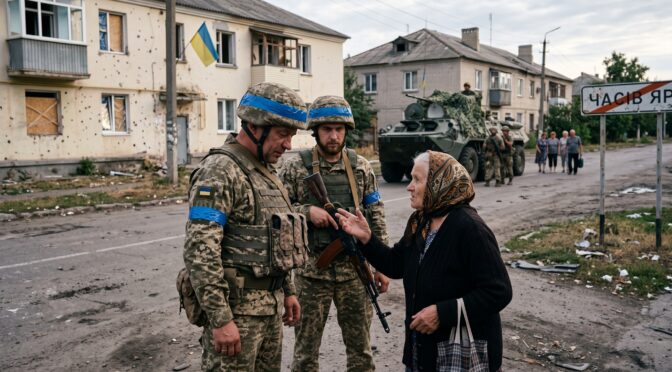
Between August 15 and August 21, 2026, the Russo-Ukrainian conflict entered a new phase marked by intensified deep-strike missions, a rapid evolution in drone technology, and visible strain on the Russian economy1. This escalation follows the patterns detailed in our previous SITREP: Russian-Ukraine Conflict (August 8 – 14, 2026)4. While frontline combat resulted in very few territorial shifts, the war has pivoted toward strategic attrition, targeting logistics, and aggressive information warfare2.
Ukraine’s “Hell-2” campaign has been systematically striking Russia’s defense industrial base, strategic airfields, and energy hubs2. These operations are causing significant ripple effects across the Russian economy, leading to widespread fuel shortages and forcing the Kremlin to deploy paramilitary units just to guard energy sites1. Furthermore, the firing of a top state economist for providing a grim—yet accurate—forecast highlights Moscow’s struggle to hide the war’s true financial cost from its citizens6.
The air war has now shifted toward high-speed, jet-powered drones. As Russia deploys its new Geran-4 and Geran-5 models to bypass traditional defenses, Ukraine has responded with the Alexa Spatium. This is the first domestic jet-powered interceptor built specifically to hunt down these fast-moving aerial threats3.
Geopolitically, the war’s impact is reaching further. Frequent Russian drone incursions into NATO and neighboring airspace suggest a deliberate attempt to test Western responses3. Meanwhile, foreign involvement is growing; confirmed reports show thousands of North Korean troops have arrived in the Kursk region to bolster Russian forces and address their manpower shortage3.
2. Detailed Operational and Diplomatic Developments
Bilateral Interactions & Diplomatic Posture
Diplomatic talks between Russia and Ukraine have effectively stalled because both sides hold incompatible goals. On August 21, Russian Deputy Foreign Minister Sergei Ryabkov stated that Moscow would only consider peace deals that accept “current realities” and meet their original, expansive war aims. These demands include the surrender of the Ukrainian government, heavy military restrictions, and a total ban on NATO membership. This unyielding stance was echoed by Presidential Aide Yuriy Ushakov, who ruled out any freezing of the current frontlines, signaling that the Kremlin is prepared for a long-term conflict5. Conversely, President Zelensky continues to call for negotiations that protect Ukraine’s sovereignty and borders, an approach aimed at keeping Russia diplomatically isolated. The global divide was also noted in the Global Intelligence Sweep and Weekly Situation Report (SITREP)4.
Despite the overarching diplomatic deadlock, bilateral mechanisms for prisoner-of-war (POW) exchanges remain intermittently functional. On August 19, Ukraine and Russia executed a 103-for-103 POW exchange. Ukraine received 103 servicemembers, the overwhelming majority of whom were reported by medical authorities to be wounded or seriously ill. Russian servicemembers returned in the exchange were immediately transported to the Republic of Belarus to receive medical and psychological processing. This maneuver highlights the ongoing, deep logistical and medical integration between Russian military structures and Belarusian state infrastructure, further implicating Minsk as an active logistical node for the Russian Ministry of Defense.
Domestically, the Ukrainian government formalized key defense leadership transitions to stabilize long-term strategic planning. The Verkhovna Rada officially confirmed the appointment of Yevheniy Khmara as the Ukrainian Defense Minister on August 19, finalizing his transition from the interim role he assumed on July 16, 2026. The Ukrainian parliament concurrently confirmed the reappointment of Andriy Sybiha as the Minister of Foreign Affairs, signaling continuity in Kyiv’s international coalition-building efforts.
Frontline Combat Updates
Frontline combat throughout the reporting period was characterized by localized, high-intensity positional engagements with no operationally significant shifts in the line of contact2. Recognizing a lack of kinetic momentum, the Russian Ministry of Defense (MoD) and Kremlin-affiliated milbloggers initiated a highly coordinated cognitive warfare campaign aimed at projecting the illusion of expansive territorial gains, particularly in the southern theater.
The most prominent example of this information operation occurred in the Oleksandrivka and Hulyaipole directions (Southern Axis). On August 15, following an inspection by Russian Defense Minister Andrey Belousov of the Eastern Grouping of Forces (GoF), a prominent Russian milblogger designated as Voin DV disseminated a massive volume of footage depicting Russian forces raising flags in over two dozen settlements across Dnipropetrovsk, Donetsk, and Zaporizhia oblasts. Open-source intelligence and geolocation verification assessed this footage to be highly coordinated cognitive warfare. The campaign utilized older video feeds, AI-altered media, and specialized infiltration teams operating briefly in contested “gray zones” to falsely claim the seizure of 19 settlements, including Rybalske, Voskresenka, and Verbove. Intelligence assessments indicate this was a direct informational counteroffensive designed to obscure the reality that Ukrainian forces, utilizing tactical mechanized maneuvers and drone integration, successfully liberated and continue to hold 26 settlements in this specific vector since January 2026. The Russian command’s reliance on artificial intelligence to generate false flag-raising footage demonstrates a strategic prioritization of domestic propaganda over accurate operational reporting.
In the western Zaporizhia sector, combat operations focused heavily on the approaches to Orikhiv. Russian milbloggers claimed the seizure of Mala Tokmachka; however, objective analysis of the terrain reveals that Russian forces failed to secure the high ground north of the Konka River. Without control of this geographic feature, Russian assault groups belonging to the 42nd Motorized Division are unable to consolidate positions or attempt a tactical envelopment of Orikhiv.
Along the Northern Axis, encompassing Sumy and Kharkiv Oblasts, Russian forces maintained offensive pressure but struggled with severe infantry attrition. Ukrainian forces successfully executed counterattacks near Ternova, repelling Russian mechanized advances. In response to depleted combat effectiveness, the Russian command transferred elements of the Chechen Akhmat Spetsnaz to reinforce the heavily degraded 3rd Battalion of the 34th Separate Motorized Rifle Brigade near Turya, Sumy Oblast. This cross-theater redeployment of specialized units to fill standard infantry roles indicates significant localized manpower constraints. In Vovchansk, the civilian situation remains dire; approximately 300 residents remain trapped south of the frontline while Russian aerospace elements continually saturate the area with FAB-500 glide bombs3.
Operations along the Oskil River and Donetsk Axes saw intense positional fighting. Russian glide-bomb strikes intensified against Ukrainian ground lines of communication (GLOCs) in the Kupyansk and Borova directions. Ukrainian forces successfully cleared Russian infiltrators from central Lyman and eastern Kostyantynivka, solidifying defensive perimeters. Further south, Russian assaults leveraging small infantry groups continued in the Pokrovsk and Dobropillya directions. While the MoD claimed the seizure of Andriivka, verified geolocation data indicates Russian forces remain up to 15 kilometers away, with only light infiltration elements operating at the 11-kilometer mark.
Table 1: Discrepancies in Territorial Control Claims (August 15–21, 2026)
| Sector / Settlement | Russian MoD / Milblogger Claim | Verified Intelligence Assessment | Strategic Implication |
| Andriivka (Donetsk) | Seized completely (Aug 17) | Russian forces are 15km away; infiltrators at 11km. | MoD projecting premature tactical success to mask operational stagnation. |
| Rybalske & Voskresenka (Zaporizhia/Donetsk) | Seized by Eastern GoF (Aug 15) | Contested; flag-raising footage assessed as AI-altered/staged. | Coordinated cognitive warfare to counter verified Ukrainian counteroffensive successes. |
| Mykolaipillya (Donetsk) | Seized completely (Aug 20) | Geolocated footage of flag-raising shows distinct signs of AI generation. | Ongoing domestic propaganda effort ahead of Russian Duma elections. |
| Mala Tokmachka (Zaporizhia) | Seized completely (Aug 19) | Repelled; lack of high-ground control north of Konka River prevents consolidation. | Russian forces are failing to achieve the tactical conditions necessary for the envelopment of Orikhiv. |
The 40-Day Deep-Strike Campaign & Maritime Security
The Armed Forces of Ukraine have escalated their deep-strike interdiction operations under the auspices of the “Hell-2” campaign. This systematic effort aggressively targets Russian defense industrial base (DIB) nodes, aerospace infrastructure, and critical petrochemical hubs to sever the logistical and economic arteries supporting the Russian frontline.
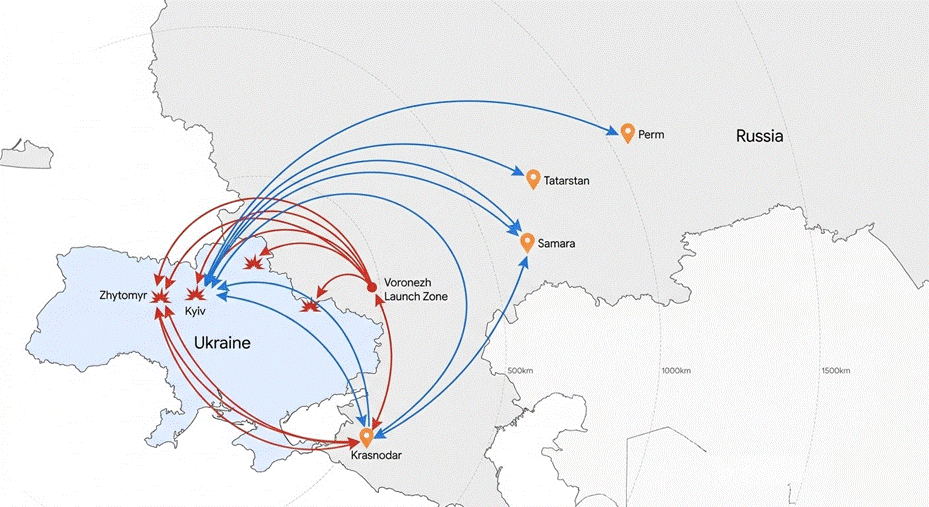
Ukrainian forces demonstrated expanded geographical reach in their interdiction of Russian aerospace and DIB targets. On the night of August 14-15, Ukraine launched an FP-5 Flamingo cruise missile strike against the Progress Space Rocket Center in Samara Oblast, located approximately 1,488 kilometers from the international border. This facility manufactures the Soyuz-type carrier rockets vital to deploying Russia’s Rassvet low-orbit satellite constellation—a system the Kremlin is heavily relying upon for military communications following the restriction of alternative satellite networks. Follow-on strikes targeted the Savasleyka Air Base in Nizhny Novgorod Oblast, a primary hub for MiG-31K fighters capable of launching Kinzhal aeroballistic missiles, and the Akhtubinsk Airfield in Astrakhan Oblast, where a Su-34 multi-role bomber was damaged on August 21.
Simultaneously, the petrochemical and logistics degradation campaign has inflicted significant economic and operational damage. Ukrainian strikes on the Sheshkaris oil terminal in Novorossiysk, Krasnodar Krai, forced Russian authorities to suspend crude oil exports and halt railway cargo loading at the terminal between August 13 and 22, directly impacting state revenue generation. Further inland, Ukrainian strikes successfully ignited the Lukoil Permnefteorgsintez Oil Refinery in Perm (1,600 km from the border), the Ufa Oil Refining Hub in Bashkortostan, and the TANEKO Oil Refinery in Tatarstan, which processes up to 16 million tons of oil annually1. The cyber and kinetic domains also merged during this period; Ukrainian intelligence orchestrated a cyberattack against the Russian e-commerce giant Wildberries, destabilizing its payment networks, which was immediately followed by kinetic strikes that disabled seven of the company’s ten largest logistics centers, heavily disrupting the transport of dual-use navigation and drone components to the Russian military9.
In response to Ukraine’s deep-strike capabilities, Russia launched highly complex, stockpiled strike packages throughout the week, attempting to overwhelm Ukrainian air defenses. The August 19-20 strike package utilized Iskander-M ballistic missiles, North Korean KN-23 variants, cruise missiles, and over 135 drones. While Ukrainian defenses maintained a high interception rate of 88.6 percent for cruise missiles, the sheer volume allowed several munitions to penetrate defenses in Kyiv City, striking a children’s hospital and industrial infrastructure, resulting in 12 fatalities and 40 injuries. The Russian targeting of Naftogaz energy infrastructure was also relentless, with the company reporting 13 missile and drone strikes against its facilities in a single week.
Russian strike vehicles routinely violated neighboring airspace during these saturation attacks, expanding the geographical risk of the conflict. On August 17, a Russian Banderol cruise/loitering munition crashed in Talmaza, Moldova. On August 20, a Shahed-136 entered Moldovan airspace for six minutes, and a naval drone was intercepted and destroyed by a Romanian F-16 near the Neptune Deep natural gas platform in the Black Sea. Moldovan President Maia Sandu explicitly condemned these events, assessing them as intentional violations designed to normalize the breach of NATO and European airspace—a core component of Russia’s psychological “Phase Zero” strategy to test Western red lines.
Role of Third-Party Countries
The internationalization of the conflict deepened significantly over the reporting period, highlighted by direct troop deployments from the Democratic People’s Republic of Korea (DPRK) and substantial financial and materiel scaffolding from European allies. The integration of North Korean personnel into the Russian order of battle represents a major escalation. Approximately 8,500 DPRK troops, including specialized drone operator units of 400 personnel, have been deployed primarily to the Kursk Oblast. This deployment serves a dual purpose: it relieves Russian forces from rear guard and border defense duties, freeing them for frontline assaults, while providing the DPRK military with invaluable, modern combat experience in drone warfare.
Conversely, European allies have accelerated efforts to insulate Ukraine from future geopolitical supply shocks. The European Union adopted the Security Action for Europe (SAFE) instrument under the ReArm Europe plan, committing up to €150 billion in EU-backed loans for defense procurement11. Additionally, the United Kingdom finalized an €865 million package via the Extraordinary Revenue Acceleration (ERA) loan—funded by frozen Russian assets—to directly procure 150,000 domestically produced Ukrainian drones and Lightweight Multirole Missiles (LMM)13.
Table 2: Financial, Military, and Manpower Mechanisms (Updated August 2026)
| Providing Entity | Mechanism / Asset Provided | Volume / Scale | Strategic Impact |
| North Korea (DPRK) | Manpower & Drone Operators | 8,500 troops deployed (mostly Kursk); up to 25,000 rotated. | Relieves Russian manpower shortages in rear guard/border zones; provides DPRK with combat drone experience. |
| North Korea (DPRK) | Ballistic Missiles (KN-23, KN-24, KN-30) | ~50 missiles transferred; 6 launchers deployed in Voronezh. | Augments Russian strike packages; lower accuracy but heavier payloads (up to 2,500kg) increase indiscriminate blast damage. |
| United Kingdom | Extraordinary Revenue Acceleration (ERA) Loan | €865 Million Package | Funded by frozen Russian assets; directly procures 150,000 Ukrainian-made drones and LMM anti-aircraft missiles. |
| Belgium | Fighter Aircraft Provision | 7 F-16 Fighter Jets (by EOY 2026) | 3 allocated for combat operations and 4 allocated for critical spare parts for the Ukrainian Air Force. |
| European Union | ReArm Europe / Readiness 2030 (SAFE Instrument) | Up to €150 Billion in EU-backed loans | Long-term sovereign financing to insulate Ukraine from future geopolitical supply shocks. |
3. Drone Warfare and Unmanned Systems
Tactical & Strategic Deployments
The drone domain has experienced a rapid technological escalation, transitioning from low-speed, piston-engine loitering munitions to high-velocity, jet-powered platforms designed to evade legacy air defense arrays, a shift extensively tracked in recent Drone Analytics and the SITREP Military Drones (August 8 to August 15, 2026)4.
To facilitate a higher volume of strikes, Russia has established 59 new drone-launching rails across 10 sites along its borders with Ukraine and Belarus. Approximately 20 of these rails are heavily reinforced and extended, indicating they are specifically designed to accommodate the heavy thrust of jet-powered Geran-4 and Geran-5 strike drones. By moving these launch sites further into the Russian interior, the MoD seeks to protect the infrastructure from short-range Ukrainian FPVs while leveraging the newly deployed Rassvet satellite constellation for precision terminal guidance2. The shift toward jet-powered munitions directly challenges the capability of conventional surface-to-air missile (SAM) networks to react within a shrinking interception window.
In response to the proliferation of jet-powered Russian threats, the Ukrainian Ministry of Defense codified and deployed the Alexa Spatium jet-powered drone interceptor8. This platform represents a paradigm shift in counter-UAS operations, offering a cost-effective, reusable interception method that preserves highly limited stocks of Western-supplied Patriot and NASAMS interceptors16. Measuring 1.5 by 1.7 meters, constructed from lightweight composites, and equipped with a turbojet engine, the Alexa Spatium achieves speeds exceeding 600 km/h8. The system boasts modular warhead bays (fragmentation, shaped-charge, and thermobaric); automated direct-fire and coordinate-based tracking; and can return to base if an interception fails.
Additionally, Ukraine is actively seeking authorization to integrate Starlink satellite terminals into its own long-range strike drones. Approval would enable zero-latency, high-precision targeting of highly mobile Russian ballistic missile launchers (such as Iskander and KN-23 systems) up to 200 kilometers inside Russian territory, representing a massive leap in Ukrainian counter-battery capabilities.
Technical Profile of Systems
Table 3: Prominent Unmanned and Strike Systems (Updated August 2026)
| System Name | Origin | Estimated Range/Speed | Primary Payload | Operational Role |
| Alexa Spatium | Ukraine | >600 km/h; Low-Medium Altitude | High-explosive fragmentation, shaped-charge, or thermobaric. | Jet-powered C-UAS interceptor; reusable; designed to hunt Geran-3/4/5 and Shahed variants.8 |
| Geran-4 / Geran-5 | Russia | 450–1,000 km | 40kg – 50kg explosive | Jet-powered deep-strike munition; high speed reduces Ukrainian SAM interception windows. |
| FP-5 Flamingo | Ukraine | ~1,500 km | Precision penetrator | Domestic cruise missile utilized for strategic DIB interdiction (e.g., Samara Space Center). |
| Banderol | Russia | Unknown | Loitering Munition | Tactical/operational strike; frequently responsible for airspace incursions in Moldova. |
| Zozulya | Ukraine | Medium Range | High-explosive | Tactical drone utilized against forward logistics (e.g., Crimean rocket depots). |
Targeting Priorities & Countermeasures
At the tactical level, electronic warfare (EW) and physical countermeasures are locked in a continuous evolutionary loop. Russian forces have introduced a novel “waiter” modification for FPV drones operating along the Kupyansk and Kherson axes. Ukrainian forces deliberately fly these drones into the anti-drone netting they have erected over critical GLOCs and highways. Once entangled, the drones enter a standby mode and are programmed to detonate based on operator command, magnetic field alterations caused by passing armored vehicles, or battery depletion. This tactic effectively transforms physical defenses into improvised, motion-activated aerial minefields, complicating Ukrainian logistics.
In response, Ukraine is prioritizing the physical destruction of Russian drone command and control (C2) nodes to sever the link between operators and munitions. Ukrainian intermediate-range strikes successfully neutralized a Russian Orion-type ground control station in occupied Novofedorivka (185 km from the frontline) and destroyed a ground repeater used for guiding Geran and Gerbera drones in occupied Olenivka.
4. Resource Utilization, Constraints, and Sustainability
Manpower Dynamics, Logistics, and Industrial Capacity
The economic friction generated by the protracted war and Ukraine’s sustained deep-strike campaign has surfaced critical vulnerabilities in Russia’s macroeconomic stability and logistics network. The Russian war economy currently suffers from compounding labor shortages, spiraling costs, and severe infrastructural degradation6.
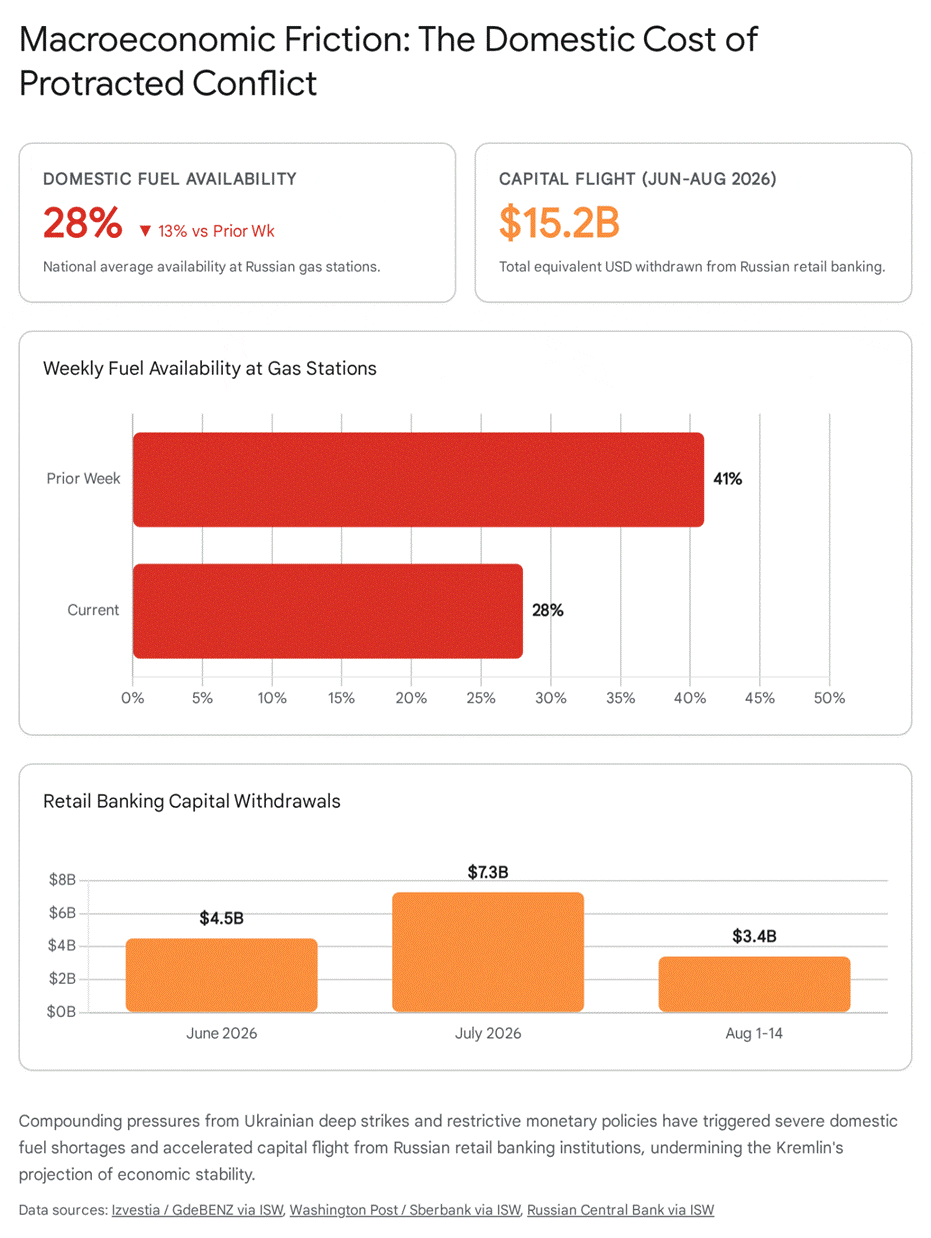
Evidence of the systemic damage is highly visible in the fuel sector. According to crowd-sourced data from GdeBENZ, fuel availability at Russian gas stations plummeted to 28 percent nationwide by August 18, down from 41 percent the week prior. The state-owned Gazprom Neft was forced to institute strict gasoline quotas even in Moscow City, indicating the Kremlin’s failure to shield western urban centers from the economic blowback of the war.
The fuel shortage has triggered secondary industrial crises. Following a July decree, Russian refineries were forced to reallocate aromatic hydrocarbons to produce lower-octane gasoline. Because these specific hydrocarbons are essential inputs for defense-related rubbers, polymers, and synthetics, this reallocation is causing cascading shortages in the broader military-industrial complex and severe motor oil deficits. Logistical costs for road freight transport have subsequently spiked by up to 5.5 percent, straining supply chains between Russia and the People’s Republic of China.
To offset the mounting financial burden of the war, the Kremlin is increasingly extracting capital from the private sector. Russian businesses have transferred 384 billion rubles (approximately $4.5 billion) in “voluntary” contributions to the federal budget in 2026, roughly a 1.5x increase over the total collected in 2025. The civilian population is reacting to the perception of economic decline with increasing alarm; data from the Russian Central Bank reveals massive capital flight, with civilians withdrawing 286.4 billion rubles (about $4.5 billion) in June, $7.3 billion in July, and $3.4 billion in the first two weeks of August alone.
Table 4: Key Russian Economic and Logistical Indicators (August 2026)
| Indicator / Metric | Current Status / Volume | Context & Implications |
| Fuel Availability | 28% nationwide (Down from 41% prior week) | Results from systematic Ukrainian strikes on refineries. Quotas were enacted in Moscow; logistical cargo costs surged by 5.5%. |
| “Voluntary” Business Tax | 384 billion rubles (~$4.5B) extracted in 2026 | Represents a 1.5x increase over 2025. Demonstrates extreme stress on the federal treasury to fund the war. |
| Civilian Capital Flight | 286.4B rubles withdrawn (June); $7.3B (July) | Bank runs driven by inflation fears and lack of confidence in the ruble. Highest withdrawal rates since 2022. |
| Key Interest Rate | 14% (Peaked at 21% in June 2025) | Highly restrictive monetary policy severely constrains civilian industrial investment, projected to fall 2.5%. |
| Petrochemical Inputs | Severe motor oil shortages | Refineries forced to reallocate aromatic hydrocarbons to produce low-octane fuel, starving secondary industries. |
Strategic Sustainability Projection
The Kremlin’s official theory of victory relies entirely on outlasting Western support and sustaining a war of attrition indefinitely. However, internal Russian assessments increasingly indicate profound structural weaknesses that jeopardize this long-term strategy. On August 16, Russian state-owned development corporation Vnesheconombank (VEB.RF) fired its chief economist, Andrey Klepach, following the media circulation of a highly classified economic briefing he delivered on May 21 to the Nikitsky Club. Klepach concluded that the Russian war economy is stagnating, driven by high defense spending and restrictive monetary policy. He warned that while the state could physically sustain the war, it risks an inevitable social crisis and irreversible technological lag, predicting near-zero economic growth and a 2.5 percent decline in investment by 2026. Klepach’s summary dismissal underscores the Kremlin’s absolute reliance on institutional sycophancy (“beautiful reports”) and the systemic purging of realistic strategic assessments that contradict the administration’s narrative.
The threat of social unrest resulting from these economic conditions has prompted immediate, kinetic state intervention. President Putin authorized the deployment of heavily militarized Rosgvardia (internal security) units to patrol gas stations across Moscow Oblast and Crimea to suppress civil disorder stemming from the fuel collapse, demonstrating a lack of confidence in standard police forces to maintain order. Furthermore, the Russian legislature passed a bill authorizing Ministry of Emergency Situations personnel to utilize physical force and firearms, drastically expanding the state’s internal security apparatus ahead of the September 2026 State Duma elections. Intelligence assessments suggest these legislative and paramilitary measures are partially intended to preempt organized unrest should the Kremlin order a large-scale involuntary mobilization following the elections to address critical infantry shortages.
To cement ideological control and domestic stability moving forward, the ruling United Russia party is executing a concerted campaign through the “Time of Heroes” program to elect combat veterans to the State Duma. Projections indicate up to 100 veterans may secure seats, placing them in roughly 22 percent of the legislature. This maneuver aims to establish a hyper-militarized, pro-war political elite wielding “unimpeachable legitimacy” to rubber-stamp future wartime fiscal policies, shield the Kremlin from domestic criticism, and enforce the continuation of the war effort despite mounting socio-economic degradation.
5. Chronological Timeline of Key Events
- August 15, 2026: Russian forces execute a massive cognitive warfare operation falsely claiming the capture of 19 southern settlements. Ukraine debuts the FP-5 Flamingo cruise missile in a deep strike against the Progress Space Rocket Center in Samara Oblast.
- August 16, 2026: VEB.RF Chief Economist Andrey Klepach is dismissed for issuing a fact-based assessment warning of Russian economic stagnation. Ukrainian forces strike the Kamensky DIB Plant in Rostov Oblast.
- August 17, 2026: Russia is reported to have constructed 59 new drone launch rails along its western borders, optimizing for jet-powered platforms. A Russian strike vehicle crashes in Moldovan territory, triggering diplomatic condemnation.
- August 18, 2026: Russian domestic fuel availability drops to 28% nationwide. Moldovan President Maia Sandu publicly accuses Russia of deliberately violating NATO and European airspace. President Zelensky formally nominates Yevheniy Khmara as defense minister.
- August 19, 2026: Russia and Ukraine execute a 103-for-103 POW exchange. Rosgvardia troops are actively deployed to Russian gas stations to manage civilian unrest. Ukraine strikes the Ufa Oil Refining Hub in Bashkortostan.
- August 20, 2026: Russia launches a massed, stockpiled ballistic and drone strike (utilizing over 135 drones), heavily damaging civilian infrastructure in Kyiv and Zhytomyr. North Korean KN-30 missiles are identified in Russian staging areas in Voronezh.
- August 21, 2026: Ukraine officially integrates the Alexa Spatium jet-powered interceptor into its arsenal. The UK finalizes an €865 million package via the ERA loan to supply Ukraine with 150,000 drones. North Korean drone operators are identified as actively deployed in combat zones within Kursk Oblast.
Please share the link on Facebook, Forums, with colleagues, etc. Your support is much appreciated and if you have any feedback, please email us in**@*********ps.com. If you’d like to request a report or order a reprint, please click here for the corresponding page to open in new tab.
Sources Used
- Russian Offensive Campaign Assessment, August 19, 2026 | ISW, https://understandingwar.org/research/russia-ukraine/russian-offensive-campaign-assessment-august-19-2026/
- Russian Offensive Campaign Assessment, August 15, 2026 | ISW, https://understandingwar.org/research/russia-ukraine/russian-offensive-campaign-assessment-august-15-2026/
- https://understandingwar.org/research/russia-ukraine/russian-offensive-campaign-assessment-august-21-2026/
- https://blog.roninsgrips.com/
- https://understandingwar.org/research/russia-ukraine/russian-offensive-campaign-assessment-august-17-2026/
- Russian Offensive Campaign Assessment, August 18, 2026 | ISW, https://understandingwar.org/research/russia-ukraine/russian-offensive-campaign-assessment-august-18-2026/
- Russian chief economist gets fired after saying Moscow cannot win economic ‘war of attrition’ – EUalive, https://eualive.net/russian-chief-economist-gets-fired-after-saying-moscow-cannot-win-economic-war-of-attrition/
- Defence forces receive first Ukrainian jet-powered interceptor, https://www.pravda.com.ua/eng/news/2026/08/21/8049695/
- Russian Offensive Campaign Assessment, August 16, 2026 | ISW, https://understandingwar.org/research/russia-ukraine/russian-offensive-campaign-assessment-august-16-2026/
- Russian Drone Attack Hits Ukrainian Shopping Mall, Killing Or Injuring More Than 100, https://www.rferl.org/a/ukraine-russia-attack-kryviy-rih-drone-war/33835760.html
- European defence readiness – consilium.europa.eu, https://www.consilium.europa.eu/en/policies/european-defence-readiness/
- SEK 2026 0250 SEKdokument Kommissionens forslag til EUs, https://www.eu.dk/samling/20261/kommissionsforslag/SEK(2026)0250/forslag/2213278/3153751.pdf
- United Kingdom To Provide Ukraine with 150,000 Drones and LMM Missiles – Militarnyi, https://militarnyi.com/en/news/united-kingdom-ukraine-150000-uavs-missiles/
- Ukraine has shown its answer to Russia’s most powerful drones for first time. Meet Alexa Spatium, which can carry thermobaric warheads and fly back home, https://euromaidanpress.com/2026/08/22/ukraine-has-shown-its-answer-to-russias-most-powerful-drones-for-first-time-meet-alexa-spatium-which-can-carry-thermobaric-warheads-and-fly-back-home/
- Ukraine’s military receives first jet-powered drone interceptor for Shaheds, https://newsukraine.rbc.ua/news/ukraine-s-military-receives-first-jet-powered-1787317049.html
- The Ukrainian Armed Forces have put the first Ukrainian jet-powered drone interceptor into service – LIGA.net, https://news.liga.net/en/war/news/the-ukrainian-armed-forces-have-put-the-first-ukrainian-jet-powered-drone-interceptor-into-service
- Ukraine’s Defense Ministry unveils first domestic jet-powered drone interceptor Alexa Spatium, https://english.nv.ua/nation/ukraine-adds-first-domestically-produced-jet-drone-interceptor-to-arsenal-50634747.html