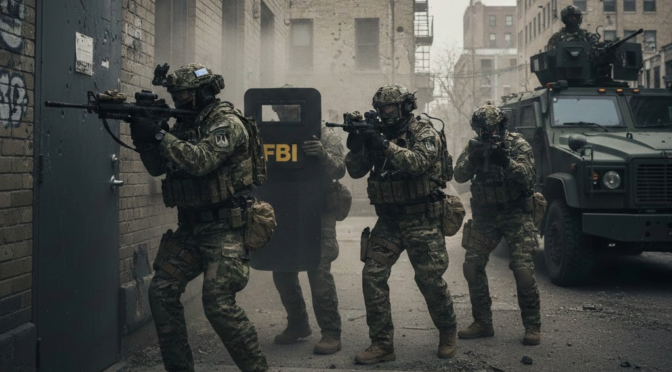
Tag Archives: FBI

Comparative Analysis and Ranking of U.S. Federal Law Enforcement Tactical Teams:  August 2026

Executive Summary

The world of U.S. federal law enforcement tactical operations has seen a massive, multi-generational shift. What began as a niche response model inspired by the municipal SWAT units of the late 1960s has grown significantly over the last 50 years. Today, federal agencies rely on these elite teams to handle challenges that go far beyond the scope of regular police work—including domestic counterterrorism, organized crime, hostage situations, and civil unrest. This 2026 report provides an in-depth look at these teams, evaluating how they are structured, how they use their resources, and how effective they are within a democratic society.

The 2025 edition of this report can be accessed by clicking here.

Public and legal scrutiny of these units intensified following their deployment during the 2020 civil disturbances in cities like Portland and Washington, D.C. Detailed audits by the GAO and the Inspectors General for the DOJ and DHS revealed significant differences in how mature and prepared these various teams actually were. Specifically, the GAO identified 25 distinct tactical teams across 18 different agencies, revealing a fragmented system that lacked central oversight. This report brings that data together, along with modern operational insights, to provide a clear and objective ranking of these specialized units.

To keep this analysis rigorous, we avoid treating all federal tactical work as the same. We have integrated data from Ronin’s Grips Analytics, known for its objective Small Arms Analytics and Market Reporting, to ensure our findings are based on facts rather than opinion. We also recognize that a team protecting nuclear sites has a very different mission than one catching fugitives. To account for these differences, we use a classification system adapted from the National Tactical Officers Association (NTOA) standards. The teams are grouped into the following three tiers:

  • Tier 1 (National/Global Full-Time Assets): These are elite, continuously active units dedicated exclusively to high-threat tactical operations. These teams can deploy quickly, carry out the most complex mission profiles (e.g., advanced hostage rescue, counter-nuclear proliferation, high-threat overseas diplomatic security, and maritime interdiction), and go through long, tough selection and training processes that are similar to military special operations.
  • Tier 2 (Regional/Agency Collateral-Duty Teams): Highly proficient tactical units whose operators perform tactical duties on a part-time or collateral basis while maintaining primary investigative, patrol, or inspection responsibilities. These teams are typically distributed across regional field offices to ensure rapid geographic response to high-risk search and arrest warrants, barricaded subjects, and localized crises.
  • Tier 3 (Specialized/Facility-Constrained Units): Tactical elements whose operations are primarily constrained to specific physical facilities, critical infrastructure, or highly specialized micro-missions (e.g., prison disturbance resolution, specific compound defense, or specific technological asset recovery).
Law enforcement response tiers: Tier 1 (national/global), Tier 2 (regional/collateral), Tier 3 (facility-constrained).

The data shows a major divide between full-time Tier 1 assets and part-time Tier 2 teams. Tier 1 units, such as the FBI’s Hostage Rescue Team (HRT) and CBP’s BORTAC, have budgets and capabilities that often mirror military special operations. In contrast, collateral-duty teams must balance their tactical roles with their primary jobs as investigators or inspectors. This creates “logistical friction” where it becomes difficult to maintain peak tactical proficiency while handling a heavy caseload. Currently, 16 of the 25 identified federal teams operate on this part-time basis. Despite these hurdles, these teams are being sent into increasingly volatile situations, which has highlighted gaps in training for crowd control and interagency coordination.

We also see a “feedback loop” where military equipment and tactics are brought into domestic policing. Through Department of Defense transfer programs, federal teams now use armored vehicles and advanced night-vision optics originally designed for combat. Elite units frequently bring those aggressive tactics back home, as they often work alongside the military overseas. This trend toward militarization makes it even more important to have a clear ranking system to see how these units align with constitutional standards and their original missions.

The Federal Tactical Catalog: Mapping the Verified Units

To conduct a comparative analysis, it is imperative to establish a comprehensive baseline of the entities under review. While the GAO identified 25 highly distinct federal tactical teams across 18 agencies, this catalog specifically isolates the 21 explicitly verified federal tactical teams dispersed across confirmed federal agencies. It filters out unverified units to prevent data inaccuracies and ensure absolute factual fidelity5. They are structurally mapped to their parent departments, operational tiers, and duty statuses to provide immediate context for their subsequent ranking.

Cabinet DepartmentParent AgencyTactical Team DesignationOperational TierDuty Status
DOJFederal Bureau of Investigation (FBI)Hostage Rescue Team (HRT)Tier 1Full-Time
DOJFederal Bureau of Investigation (FBI)Special Weapons and Tactics (SWAT) / Enhanced SWATTier 2Collateral
DOJU.S. Marshals Service (USMS)Special Operations Group (SOG)Tier 1Hybrid (Cadre + Collateral)
DOJBureau of Alcohol, Tobacco, Firearms & Explosives (ATF)Special Response Teams (SRT)Tier 2Collateral
DOJDrug Enforcement Administration (DEA)Special Response Teams (SRT)Tier 2Collateral
DOJFederal Bureau of Prisons (BOP)Special Operations Response Teams (SORT)Tier 3Collateral
DHSCustoms and Border Protection (CBP)Border Patrol Tactical Unit (BORTAC)Tier 1Full-Time
DHSCustoms and Border Protection (CBP)Special Response Team (SRT)Tier 2Collateral
DHSImmigration and Customs Enforcement (ICE)Special Response Team (SRT)Tier 2Collateral
DHSU.S. Secret Service (USSS)Counter Assault Team (CAT)Tier 1Full-Time
DHSU.S. Secret Service (USSS)Counter Sniper Team (CS)Tier 1Full-Time
DHSU.S. Secret Service (USSS)Emergency Response Team (ERT)Tier 3Full-Time
DHSU.S. Coast Guard (USCG)Maritime Security Response Team (MSRT)Tier 1Full-Time
DHSFederal Protective Service (FPS)Rapid Protection Force (RPF)Tier 2Full-Time
DOSDiplomatic Security Service (DSS)Mobile Security Deployments (MSD)Tier 1Full-Time
DOIU.S. Park Police (USPP)Tactical TeamTier 2Collateral
DOEDepartment of Energy (HQ)Special Response Team (SRT)Tier 3Full-Time (Contractor)
DOENational Nuclear Security Administration (NNSA)Special Response Force (SRF)Tier 1Full-Time
DODPentagon Force Protection Agency (PFPA)Tactical TeamTier 3Full-Time
IndependentNational Aeronautics and Space Administration (NASA)Tactical TeamTier 3Full-Time (Contractor)
LegislativeU.S. Capitol Police (USCP)Containment & Emergency Response Team (CERT)Tier 2Full-Time

Note: While the U.S. Capitol Police strictly resides within the Legislative Branch rather than the Executive Branch, it is systematically included in this comparative catalog due to its frequent interagency operability with Executive Branch entities during National Special Security Events (NSSEs) and highly visible civil disturbances within the National Capital Region18.

The Three-Tiered Typological Architecture

Establishing an equitable ranking system demands an acknowledgment of mission specificity. The NTOA TROS provides a tiered capability system for local law enforcement, generally running from Tier 1 (capable of sustained hostage rescue) to Tier 4 (perimeter containment only)12. Adapting this framework to federal entities, this report assesses the strategic placement of each team within three primary federal tiers, examining their historical evolution, selection rigor, and current operational postures.

Tier 1 Architecture: Global and National Strategic Assets

To qualify as a Tier 1 unit, the team must be comprised of full-time tactical operators, or at minimum, a dedicated full-time operational cadre that continuously trains and evaluates a highly responsive reserve. These units must possess a verified rapid-deployment capability to reach domestic locations quickly, as well as an established mandate for international deployment in non-permissive environments for specific teams. They must maintain capabilities for deliberate and crisis-driven hostage rescue, complex linear assaults (e.g., aircraft, trains, ships), and sustained counter-terrorism operations. Broader evaluations of similar high-level military units fall under Special Operations Forces (SOF) / Special Mission Units (SMUs) Analytics10.

FBI Hostage Rescue Team (HRT): Widely considered the apex of civilian law enforcement tactical capabilities, the FBI HRT was founded in 1982 in direct response to the Munich Olympic massacre and the upcoming 1984 Los Angeles Olympics, filling a void left by the Posse Comitatus Act, which restricts the military’s Delta Force from domestic policing21. Based in Quantico, Virginia, HRT is federal law enforcement’s only full-time, dedicated counterterrorism unit22. It boasts extreme operational flexibility, capable of deploying anywhere within the United States within four hours13. HRT operators frequently embed with the U.S. military’s special operations units overseas to gain combat experience and test tactics13. However, the unit is not without historical controversy; its involvement in the tragic sieges at Ruby Ridge and Waco generated significant political and operational debate regarding the militarized rules of engagement and the thresholds for deploying federal lethal force21.

CBP Border Patrol Tactical Unit (BORTAC): Headquartered in El Paso, Texas, alongside the Border Patrol Search, Trauma, and Rescue Unit (BORSTAR) under the Special Operations Group umbrella, BORTAC provides DHS with an immediate-response capability for emergent, high-risk incidents13. Initially established to counter violence along the U.S.-Mexico border, BORTAC’s mission has expanded into a global capacity. They conduct high-risk warrant service, interdict narcotics, and have deployed to countries such as Iraq, Afghanistan, Bolivia (Operation Snowcap), and South Africa to provide tactical capacity-building to foreign security forces13. BORTAC famously executed the high-profile tactical extraction of Elian González in Miami, demonstrating their utility far beyond the physical border21.

USMS Special Operations Group (SOG): The Marshals Service SOG holds the distinction of being the first federal tactical unit of its kind, created in 1971 by Director Wayne Colburn as a flexible response to the violent anti-government protests and civil unrest of the late 1960s13. Operating out of the William E. Degan Tactical Operations Center at Camp Beauregard in Louisiana, SOG maintains a small, full-time operational cadre that trains a larger body of collateral-duty deputies stationed nationwide28. They specialize in apprehending the nation’s most dangerous fugitives, high-threat extraditions, and asset seizures, and they remain on call 24 hours a day.

DSS Mobile Security Deployments (MSD): The Diplomatic Security Service MSD is the State Department’s on-call crisis response element, specifically engineered to operate in high-threat international environments with minimal outside support17. MSD agents—who are fully sworn federal agents with investigatory powers—are tasked with the protection of U.S. personnel at embassies and consulates, executing tactical evacuations from war zones, and defending against terrorist assaults17. Operating in cohesive six-person teams, MSD has a mandate to deploy anywhere globally within 12 hours of notification17.

USSS Counter Assault Team (CAT) & Counter Sniper Team (CS): The Secret Service CAT and CS teams serve highly specific, reactive roles within the protective detail ecosystem of the President and Vice President. CAT provides direct, tactical heavy-weapons support to repel complex ambushes, allowing the close-protection detail to evacuate the protectee34. CS provides advanced long-range observation, intelligence gathering, and precision overwatch at exterior sites35. Both teams operate under grueling travel schedules matching the executive branch’s movements35.

Tier 2 Architecture: Regional and Agency Collateral-Duty Teams

Tier 2 encompasses the vast statistical majority of federal tactical capacity. These teams operate primarily on a collateral-duty basis; operators spend the majority of their time conducting standard agency duties—such as investigating federal crimes, patrolling federal lands, or inspecting regulated industries—and activate as a cohesive tactical element only when a crisis emerges or a high-risk warrant requires execution6. While highly skilled and intensely dedicated, these teams generally do not possess the organic, heavy aviation or expansive logistics support of Tier 1 teams, relying instead on their parent agency’s regional field office budgets and interagency agreements.

FBI Special Weapons and Tactics (SWAT): Following the 1973 Wounded Knee occupation, the FBI established its SWAT program to ensure tactical coverage across the nation38. Today, the FBI maintains a SWAT team at each of its 56 field offices, comprising over 1,073 part-time operators28. In 2022, these teams executed approximately 1,600 callouts, primarily for active shooters, barricaded suspects, and high-risk warrant service28. To bridge the gap between standard SWAT and the HRT, the FBI designates “Enhanced SWAT” teams in larger field offices, providing them with additional personnel, specialized tactical equipment, and advanced breaching methods28.

ATF & DEA Special Response Teams (SRT): The ATF maintains five strategic SRTs located in Detroit, Washington D.C., Dallas, Los Angeles, and Jacksonville37. These teams specialize in high-risk search and arrest warrants targeting the most violent domestic criminals, often operating in complex urban environments heavily fortified by armed suspects37. Their collateral-duty operators serve as crisis negotiators, snipers, and tactical medics37. ATF SRT gained high visibility for their reactive deployment to the Parkland, Florida, high school shooting to assist in building clearing and rescue5. The DEA similarly operates SRTs to execute counter-narcotics warrants, notably formalizing a new specialized tactical team structure in October 201938.

DHS Regional Components (CBP SRT, ICE SRT, FPS RPF): Outside of BORTAC, CBP maintains standard Special Response Teams (SRTs) to execute localized, high-risk operations38. ICE utilizes its SRTs similarly for high-risk apprehensions and deportations38. The Federal Protective Service (FPS), which operates under the authority of 40 U.S.C. 1315 to secure federal facilities, established its Rapid Protection Force (RPF) in 2017 to respond to threats against critical infrastructure and manage large-scale protests targeting federal property39.

The USCP CERT, a full-time tactical unit tasked with securing the Capitol complex, operates uniquely within the legislative branch while frequently integrating with federal executive assets. The unprecedented breach of the Capitol on January 6, 2021, where police lines were rapidly overrun and rioters came perilously close to penetrating inner sanctums, exposed catastrophic vulnerabilities across the agency18. In response, CERT and the broader Capitol Police underwent systemic upgrades, including crucial procurement allocations for new Mobile Command Post Equipment40. This restructuring ensures unimpeded tactical communication with interagency partners and prevents the decapitation of tactical leadership during overwhelming civil disturbances or complex assaults.

Tier 3 Architecture: Specialized and Facility-Constrained Units

Tier 3 units are heavily geographically or mission-constrained. Their standard operating procedures, equipment, and training are tailored to highly specific, localized environments, which inherently limits their flexibility in broader, dynamic tactical operations in the civilian domain.

BOP Special Operations Response Teams (SORT): The Bureau of Prisons operates an extensive network of SORTs, totaling 145 teams and over 2,592 collateral-duty tactical officers1. SORT personnel are uniquely trained to quell large-scale inmate disturbances, riots, and hostage situations within hardened, tightly controlled correctional environments (e.g., the 1988 Oakdale and Atlanta prison riots)41. While highly proficient within the concrete confines of a prison, their deployment to civilian crowd-control situations in 2020 demonstrated severe limitations. The DOJ Office of the Inspector General (OIG) found that BOP personnel were ordered by the Attorney General’s office to deploy to Lafayette Park immediately, but staff received no guidance about their mission or rules of engagement and arrived without needed equipment3. Crucially, BOP deployed personnel without vests or jackets clearly identifying them as law enforcement, exacerbating public panic and violating best practices for public order management3.

DOE / NNSA Special Response Forces: Tasked with the paramount mission of protecting the nation’s Category I special nuclear materials—including nuclear weapons, components, and enriched uranium—the Department of Energy relies on highly specialized tactical forces6. The DOE SRTs are often comprised of private contractor personnel on duty 24/7 at specific nuclear sites, while the NNSA SRF utilizes federal employees to provide heavily armed security for the movement of nuclear materials across the country6. These units undergo intense tactical training, but their mission is purely defensive and asset-centric, rather than investigative or offensive.

As federal tactical teams adapt to evolving threat landscapes, open-source intelligence (OSINT) and procurement data highlight a continuous shift toward advanced technological modernization. This trend is actively tracked through data-focused market studies and Small Arms Analytics and Market Reporting10. This evolution is characterized by the widespread adoption of precision less-lethal capabilities, advanced mechanical breaching, and the integration of sophisticated surveillance technology.

Next-Generation Less-Lethal Platforms Following intense public and congressional scrutiny over the application of force during civil disturbances, federal procurement has heavily pivoted toward specialized 40mm less-lethal platforms. A prominent addition to Tier 1 and Tier 2 armories is the Lewis Machine & Tool (LMT) Defense 40LMTS launcher, manufactured for Defense Technology43. This tactical single-shot launcher is designed to fire chemical agents and spin-stabilized kinetic sponge rounds, which provide operators with a highly accurate, less-lethal option to de-escalate violent confrontations at greater standoff distances43.

Kinetic Mechanical Breaching Traditional mechanical and explosive breaching methods are increasingly being augmented or replaced by advanced kinetic tools. Federal teams have heavily integrated the Aardvark Tactical Kinetic Breaching Tool (KBT) into their standard loadouts45. Utilizing a self-contained, jackhammer-style impact ram driven by a .45 caliber powder-actuated cartridge, the KBT delivers an immense 850 ft/lbs of ram force directly into locking mechanisms, hinges, and doorframes45. This enables rapid, precise forced entry while minimizing the risk of collateral projectiles in confined or specialized environments47.

Standard Hardware and Armament Providers The baseline lethality and protection of federal tactical operators rely heavily on specialized, proven armament, frequently mirroring the FBI SWAT equipment profiles38. For precision pistol capability, the 1911 and 2011 Pistol Analytics and Reporting domain tracks the deployment of weapons such as the specialized Staccato Model P 2011 pistol adopted by the USMS SOG for its superior accuracy in both full-size and concealable variations10. Standard tactical rifle inventories generally rely on platforms like the Colt M4 carbine, which widely replaced legacy submachine guns38. Handgun profiles prominently feature various 9mm and .40 S&W platforms, including the Glock 17 Gen4, 19M, and 2038. Models like the Remington 870 continue to dominate shotgun options for breaching and close-quarters combat. For precision overwatch, elite teams have modernized their sniper capabilities, transitioning to specialized rifles such as the H-S Precision .308 platform38. Operator mobility under fire is maintained through the extensive use of heavily armored deployment vehicles, primarily the Lenco BearCat and the Oshkosh Alpha Mine-Resistant Ambush Protected (MRAP)38.

Advanced Technical Surveillance and Drones Rather than relying purely on biometric algorithms, the most profound capability leap in 2026 involves the synthesis of tactical operations with advanced technical surveillance. Unmanned aerial vehicles (drones) have become heavily integrated into the tactical matrix, particularly by units like CBP BORTAC, allowing for persistent aerial overwatch, target isolation, and real-time intelligence gathering without risking operator safety9. Furthermore, federal entities such as the USMS SOG leverage dedicated surveillance aircraft fleets equipped with advanced International Mobile Subscriber Identity (IMSI) catchers, such as Stingrays or Boeing Dirtboxes28. These platforms allow operators to track fugitives’ cellular signals from the air in real time, granting federal tactical teams unprecedented levels of situational awareness and widening the capability gap between specialized federal assets and traditional municipal law enforcement28.

Master Data Table: 2026 Federal Tactical Team Scoring

Synthesizing the three primary evaluation vectors outlined in Appendix A, the following table lists the 21 explicitly verified federal law enforcement tactical teams alongside their corresponding scores. These scores mathematically reflect team tiering, the rigor of training (40 points), operational deployment spectrums and OIG oversight compliance (35 points), and resource allocations (25 points). A penalty matrix was applied against teams that demonstrated significant oversight or procedural failures during OIG reviews concerning the use of less-lethal force in crowd control environments.

Cabinet Department / BranchParent AgencyTactical Team DesignationTierTraining & Human Capital (Max 40)Operational Effectiveness (Max 35)Resource Allocation (Max 25)Total Score (100)
DOJFBIHostage Rescue Team (HRT)1403525100
DHSCBPBorder Patrol Tactical Unit (BORTAC)138322494
DOSDSSMobile Security Deployments (MSD)139342093
DHSUSCGMaritime Security Response Team (MSRT)138332192
DHSUSSSCounter Sniper Team (CS)138302290
DOJUSMSSpecial Operations Group (SOG)13725*2486
DHSUSSSCounter Assault Team (CAT)13825*2285
DOENNSASpecial Response Force (SRF)135282083
DOJFBISpecial Weapons and Tactics (SWAT)228302280
DOJATFSpecial Response Teams (SRT)226282074
DOJDEASpecial Response Teams (SRT)225281972
LegislativeUSCPContainment & Emergency Response Team (CERT)22820*2169
DHSCBPSpecial Response Team (SRT)22422*1864
DHSICESpecial Response Team (SRT)22420*1862
DHSFPSRapid Protection Force (RPF)224201761
DHSUSSSEmergency Response Team (ERT)325181659
DOIUSPPTactical Team22218*1656
DODPFPATactical Team322151552
IndependentNASATactical Team320151449
DOEDOE (HQ)Special Response Team (SRT)320141448
DOJBOPSpecial Operations Response Teams (SORT)32210*1244

(Asterisks denote penalty deductions applied in the Operational Effectiveness category due to documented oversight, procedural, or tactical deployment failures during major audits, specifically regarding less-lethal force reporting or civil unrest deployments.)

Appendix A: Methodology and Data Sources

The determination of tactical supremacy among federal law enforcement entities cannot rely on anecdotal reputation, Hollywood portrayals, or isolated operational successes. To produce an objective, quantifiable, and reproducible ranking of the identified teams, this report constructs a comprehensive analytical framework. By standardizing diverse variables, the analysis mitigates the inherent biases associated with comparing units that possess vastly different jurisdictional mandates—such as contrasting the maritime counter-terrorism mission of the USCG MSRT with the VIP protection mission of the USSS CAT6.

The evaluative rubric is structured around three primary analytical vectors: Tactical Training and Human Capital; Resource Allocation and Logistics; and Operational Effectiveness and Constitutional Oversight. These vectors align closely with the NTOA’s Tactical Response and Operations Standard (TROS), which serves as the premier, peer-reviewed benchmark for tactical capabilities across domestic law enforcement11.

Analytical Variable I: Tactical Training and Human Capital

The most heavily weighted metric in the evaluation rubric is the rigor of a unit’s selection process, the duration of its initial training pipeline, and the mandated frequency of its ongoing maintenance training. The caliber of human capital, forged through intense preparation, ultimately dictates a team’s ability to execute complex tactical geometries under extreme physical and psychological duress.

Selection and Attrition Rigor: Elite federal teams utilize selection processes designed to induce maximum stress, mirroring the methodologies of military special operations to weed out candidates lacking resilience. For example, CBP’s BORTAC requires candidates to pass an exhaustive physical aptitude test (PAT) merely to qualify for the selection phase. This PAT includes a 300-meter sprint in under 54 seconds, a 1.5-mile run in under 11 minutes, and various calisthenics49. Candidates must then endure an 8-to-10 week selection and certification course that includes a grueling 6-mile road march carrying mission-essential equipment in under 105 minutes, drown-proofing in uniform, and maintaining 90% proficiency with firearms49.

Similarly, the USMS SOG subjects candidates to a relentless 27-day selection course characterized by 15-to-17-hour workdays, severe sleep deprivation, 12-station obstacle courses, and complex leadership reaction scenarios designed to test problem-solving under extreme fatigue31. The USSS CAT demands that agents complete a 1.5-mile run in under nine minutes and demonstrate the ability to execute three pull-ups wearing a 45-pound (20 kg) weighted vest just to be considered competitive34. High attrition rates in these selection phases ensure that only the most capable operators progress to specialized training.

Initial Pipeline Duration: The overall duration of the initial tactical training course is a direct indicator of a unit’s ultimate capability set. The GAO found that initial training across the federal teams ranged from a mere one week for some basic collateral-duty units to 10 months for Tier 1 assets6.

The profound disparities in initial training duration among Tier 1 units are visualized in the following chart, highlighting the extensive pipelines required for full operational status:

Bar chart showing FBI HRT's 40-week training duration vs. other tactical units.

As demonstrated in the data, the FBI HRT pipeline is unparalleled in the civilian sector, spanning exactly 40 weeks (10 months) and incorporating mastery of complex weapon systems, tactical helicopter insertions, technical surveillance, and advanced close-quarters battle (CQB)5. DSS MSD requires its operators—who are already fully sworn Diplomatic Security Service agents with 9 months of initial training—to complete an additional 24-week (six-month) “Green Team” tactical cycle focused on high-threat environment survival, counter-terrorist driving, basic rope operations, and dynamic room entry17. The USSS CAT requires 13 weeks of intensive tactical training at the Federal Law Enforcement Training Center (FLETC) followed by specialized counter-ambush training (ranging from 7 to 22 additional weeks depending on the specific track, averaging 20 weeks) at the James J. Rowley Training Center34. BORTAC agents complete a highly condensed but grueling 10-week pipeline49. Conversely, Tier 2 collateral teams like the ATF SRT require only a 15-day basic SWAT school to initially certify an operator, inherently limiting their early-stage proficiency in highly complex crisis resolution compared to Tier 1 graduates37.

Ongoing Maintenance and NTOA Standards: Sustaining tactical proficiency requires continuous, intensive repetition to build muscle memory. The 2018 NTOA Tactical Response and Operations Standard (TROS) explicitly recommends that full-time tactical teams train for a minimum of 40 hours per month, totaling 480 annual training hours12. In contrast, collateral-duty teams are mandated to achieve a minimum of 16 hours per month, or 192 hours annually12. Heavily specialized or facility-constrained Tier 3 units operate with diminished mission capabilities compared to higher tiers; NTOA principles categorize these closely with Tier 4 perimeter and containment teams, meaning they require highly specific discipline training rather than standardized high-tier operational hours20. The evaluation rubric heavily penalizes Tier 1 and 2 teams that fail to mandate, fund, or execute their Mission Essential Task List (METL) training hours. Tier 1 teams universally exceed the NTOA 480-hour requirement, essentially treating training as their primary daily duty when not actively deployed. BORTAC, for instance, maintains strict yearly METL requirements, conducting firearms qualifications quarterly at 90 percentile standards, with periodic tactical proficiency training occurring weekly or monthly49. In stark contrast, Tier 2 teams frequently struggle to meet the 192-hour minimum threshold, as field agents must prioritize their primary investigative caseloads over range time.

Analytical Variable II: Resource Allocation, Logistics, and Equipment Matrices

A team’s operational capability depends on logistical backing and technological superiority. Modern federal tactical teams leverage highly specialized equipment that vastly exceeds the inventory of traditional patrol law enforcement. Under this variable, the ranking algorithm evaluates organic aviation assets, specialized tactical vehicles, advanced weaponry, and the implementation of less-lethal capability spectrums.

Tactical Mobility and Aviation Assets: True rapid response across the vast geography of the continental United States requires organic, dedicated aviation. The FBI HRT and enhanced FBI SWAT teams possess unparalleled mobility, supported directly by the FBI’s Tactical Helicopter Unit22. These pilots are specially trained to conduct complex fast-rope insertions onto rooftops or moving vessels and execute medical evacuations in severely adverse weather and terrain conditions22. The readiness matrix severely downgrades teams that rely completely on external agency airlift, commercial transit, or standard ground transport due to insertion delays.

Less-Lethal Capability and Internal Review Constraints: The integration of less-lethal weapon systems (LLWs)—including kinetic impact munitions (rubber bullets), chemical irritants (tear gas/pepper spray), and electronic control devices—is a critical component of modern, measured tactical operations52. However, the 2026 evaluation incorporates the alarming findings of GAO-22-104470, which exposed severe, systemic deficiencies in how federal teams document, deploy, and review less-lethal force16.

During the volatile 2020 deployments to protests in Portland, Oregon, and Washington, D.C., major tactical entities, including the USMS, ICE, USSS, CBP, FPS, and USPP, systematically failed to document basic use-of-force data properly16. Reports lacked elementary information such as the specific time, location, type of munition used, or the precise justification for its deployment16. Alarmingly, the USMS, ICE, and USSS did not even document whether the force used was actually in accordance with their agency policies16. A team’s ranking is impacted by its demonstrated adherence to strict use-of-force policies and the presence of rigorous internal review mechanisms. The unrestrained or undocumented application of less-lethal munitions indicates systemic command-and-control degradation that disqualifies a team from top-tier status3.

Analytical Variable III: Operational Effectiveness, Tempo, and Mission Complexity

The final, and most heavily scrutinized, dimension of the evaluation is a team’s actual operational footprint. A unit’s theoretical capability on the training range or its budget size must translate into real-world effectiveness. Operational effectiveness is measured by deployment frequency, mission spectrum diversity, and the ability to execute high-risk operations safely within the bounds of constitutional policing.

Deployment Volume and Tempo: GAO data from Fiscal Years 2015 through 2019 reveals immense disparities in operational tempo across the federal spectrum. The number of deployments per team ranged from zero to over 5,0005. Collateral-duty teams, such as the 56 combined FBI SWAT teams, reported approximately 1,600 callouts in a single year (2022). These operations primarily consisted of executing high-risk search and arrest warrants, which remain the statistical bulk of domestic federal tactical operations9.

Conversely, specialized Tier 1 units like the Secret Service CAT maintain an exhaustive, non-stop operational tempo characterized by relentless global travel. They provide immediate, direct tactical support to the President and Vice President, sometimes sitting for 12-hour shifts in fully loaded tactical vehicles or waiting in stairwells ready to repel an ambush36.

Mission Complexity and Global Reach: Tier 1 status demands a capability spectrum that completely transcends domestic warrant service. The DSS MSD is tasked with fortifying U.S. embassies under immediate threat of terrorist attack, conducting tactical evacuations of diplomatic personnel in active war zones, and training foreign host-nation security forces17.

Similarly, CBP’s BORTAC operates globally, with a mission that combines law enforcement and military action. BORTAC operators have deployed to Iraq and Afghanistan to support military operations and to South America to conduct intense counter-narcotics and capacity-building missions alongside the Ecuadorian Army and U.S. military Special Forces14.

The FBI HRT remains the premier domestic tactical asset due to its unique mandate as the nation’s primary civilian counter-terrorism unit21. HRT operators are trained to conduct opposed maritime boardings, complex linear assaults on hijacked aircraft or trains, and hostage rescues53. The ability to seamlessly embed with the U.S. military during overseas deployments provides HRT and BORTAC with unparalleled, real-world combat experience. This experience acts as a massive force multiplier, enhancing their tactical acumen upon their return to domestic jurisdictions14.

The Civil Unrest Paradox: This methodology critically evaluates the performance of these teams during mass civil disturbances. The NTOA Priority of Life (POL) matrix dictates that the safety of hostages and innocent civilians fundamentally supersedes that of law enforcement and fleeing suspects12. However, deploying highly militarized, Tier 1 and Tier 2 counter-terrorism assets—who are trained primarily in aggressive dynamic entry and lethal-force neutralization—into constitutionally protected protest environments creates profound operational and political friction54.

During the 2020 unrest in Portland and Lafayette Park, and the later 2025 “Operation Midway Blitz” in Chicago, BORTAC and ICE SRT operators were heavily criticized for utilizing aggressive crowd control tactics, deploying tear gas against non-violent demonstrators, conducting unconstitutional vehicle stops, and detaining individuals without probable cause7. The DOJ OIG found that DOJ leadership deployed elite tactical units to situations for which they were improperly equipped and fundamentally untrained, resulting in chaotic command structures and the abandonment of standard interagency practices3. A separate DHS OIG report investigating excessive force by CBP was met with disbelief by former officials due to its lack of thoroughness, highlighting the fractured oversight of these units56. Consequently, the ranking algorithm heavily discounts teams that demonstrate an inability to dynamically scale their force posture to match the threat environment, severely penalizing units that apply Tier 1 CQB aggression to Tier 3 public order management scenarios.

Deep Dive: Tier 1 vs. Tier 2 Capability Disparities

The capability chasm between full-time Tier 1 units and collateral-duty Tier 2 teams is most evident in their operational domains, interagency interoperability, and physical gating requirements.

Tier 1 Multi-Domain Operations and Interoperability: The FBI HRT operates uniquely as the nation’s premier domestic counter-terrorism asset, possessing a mandate that ensures they can deploy anywhere within the United States in just four hours13. This rapid mobility is coupled with the HRT’s ability to seamlessly embed with U.S. military special operations units overseas, providing operators with unparalleled combat experience that directly translates to domestic tactical supremacy23. Similarly, CBP’s BORTAC conducts complex multi-domain operations globally, frequently engaging in joint training exercises with the U.S. Army30. A prime example of this interagency tactical integration is BORTAC’s use of the Fast Rope Insertion and Extraction System (FRIES) alongside Army aviation units57. FRIES capabilities allow BORTAC operators to rapidly deploy into hostile or geographically restricted environments where traditional aircraft landings are impossible57. BORTAC further enhances its operational footprint by integrating unmanned aerial vehicles (drones) into its surveillance matrix, enabling advanced monitoring and overwatch during high-risk missions14.

Contrasting Tier 2 Constraints and Physical Gating: When compared to the full-time operational tempo of Tier 1 units, collateral-duty Tier 2 teams face distinct limitations. While units like FBI SWAT are highly proficient in localized high-risk warrant service and barricaded suspect resolution, they lack the immediate rapid-deployment mobility and heavy military-integrated logistics of the HRT21. The physical and psychological gating requirements also reflect this divide. Elite full-time units, such as the Secret Service CAT, utilize extreme physical assessments to filter candidates, famously requiring operators to execute three strict pull-ups while wearing a 45-pound (20 kg) weighted vest alongside a sub-nine-minute 1.5-mile run34. These relentless physical standards guarantee peak performance during complex counter-ambush scenarios. Conversely, while Tier 2 collateral operators are undoubtedly fit, balancing daily investigative casework with tactical readiness inherently prevents the standardized, extreme physical conditioning and 40-hour monthly training minimums sustained by their full-time counterparts. Furthermore, deployment thresholds drastically differ; Tier 2 teams are typically activated for specific, regionally isolated criminal events, whereas Tier 1 units and specialized entities are deployed proactively for prolonged National Special Security Events, international crises, and large-scale domestic civil unrest17.


Please share the link on Facebook, Forums, with colleagues, etc. Your support is much appreciated and if you have any feedback, please email us in**@*********ps.com. If you’d like to request a report or order a reprint, please click here for the corresponding page to open in new tab.


Sources Used

  1. Federal Tactical Teams – EveryCRSReport.com, https://www.everycrsreport.com/reports/R44179.html
  2. Federal Tactical Teams – Every CRS Report, https://www.everycrsreport.com/files/20150903_R44179_52db0d4c5d31822f0b40a4aee23986658c728c47.pdf
  3. DOJ OIG Releases Report on DOJ’s Response to Protest Activity and Civil Unrest in Washington, D.C. in Late May and Early June 2020, Including at Lafayette Park – U.S. Department of Justice Office of the Inspector General, https://oig.justice.gov/news/doj-oig-releases-report-dojs-response-protest-activity-and-civil-unrest-washington-dc-late-may
  4. – OVERSIGHT OF DHS PERSONNEL DEPLOYMENTS TO RECENT PROTESTS – GovInfo, https://www.govinfo.gov/content/pkg/CHRG-116shrg42869/html/CHRG-116shrg42869.htm
  5. Federal Tactical Teams: Characteristics, Training, Deployments, and Inventory | U.S. GAO, https://www.gao.gov/products/gao-20-710
  6. FEDERAL TACTICAL TEAMS Characteristics, Training, Deployments, and Inventory – GAO, https://www.gao.gov/assets/710/709368.pdf
  7. Duckworth Calls for Investigation into Federal Agents’ Excessive Use of Force in Chicago, https://www.duckworth.senate.gov/news/press-releases/duckworth-calls-for-investigation-into-federal-agents-excessive-use-of-force-in-chicago
  8. Letter to DOJ-OIG and DHS OIG Requesting Investigative Task Force on Operation Midway Blitz Use of Force Incidents – Senator Tammy Duckworth, https://www.duckworth.senate.gov/imo/media/doc/letter_to_doj-oig_and_dhs_oig_requesting_investigative_task_force_on_operation_midway_blitz_use_of_force_incidents.pdf
  9. GAO-20-710 Highlights, FEDERAL TACTICAL TEAMS: Characteristics, Training, Deployments, and Inventory, https://www.gao.gov/assets/gao-20-710-highlights.pdf
  10. Ronin’s Grips Analytics – Ronin’s Grips, https://blog.roninsgrips.com/
  11. Tactical Response and Operations Standard – Kentucky Tactical Officers Association, http://www.kentuckytacticalofficersassociation.org/uploads/4/0/6/1/40615731/revised_swat_standards.pdf
  12. ntoa tactical response and operations standard, https://www.ntoa.org/tros/
  13. Federal Law Enforcement Tactical Units – Why Are There So Many? – General Discharge, https://gendischarge.com/blogs/news/law-enforcement-spec-ops
  14. THE ECONOMICS OF PEACE AND SECURITY JOURNAL, https://www.epsjournal.org.uk/index.php/EPSJ/issue/download/33/42
  15. Review of U.S. Park Police Actions at Lafayette Park – Inspector General, https://www.doioig.gov/sites/default/files/media/document/2021-09/SpecialReview_USPPActionsAtLafayettePark_FOIAReadingRoom.pdf
  16. GAO-22-104470, Law Enforcement: Federal Agencies Should Improve Reporting and Review of Less-Lethal Force, https://www.gao.gov/assets/gao-22-104470.pdf
  17. Mobile Security Deployments – Wikipedia, https://en.wikipedia.org/wiki/Mobile_Security_Deployments
  18. The Washington Post | The Pulitzer Prizes, https://www.pulitzer.org/winners/washington-post-3
  19. Improving SWAT Operations – Police Magazine, https://www.policemag.com/articles/improving-swat-operations
  20. researching public perceptions and swat – Scholars Crossing, https://digitalcommons.liberty.edu/cgi/viewcontent.cgi?article=7830&context=doctoral
  21. The HRT: A Small Unit With Large Responsibilities – Domestic Preparedness, https://domprep.com/emergency-management/the-hrt-a-small-unit-with-large-responsibilities/
  22. Tactics – FBI, https://www.fbi.gov/how-we-investigate/tactics
  23. A Review of the FBI’s Involvement in and Observations of Detainee Interrogations in Guantanamo Bay, Afghanistan, and Iraq – National Security Archive, https://nsarchive2.gwu.edu/torture_archive/docs/Document%2009.pdf
  24. House Report 104-874 – ACTIVITIES OF THE HOUSE COMMITTEE ON GOVERNMENT REFORM AND OVERSIGHT ONE HUNDRED FOURTH CONGRESS FIRST AND SECOND SESSIONS 1995-1996 (Pursuant to House Rule XI, 1(d)) – GovInfo, https://www.govinfo.gov/content/pkg/CRPT-104hrpt874/html/CRPT-104hrpt874.htm
  25. Federal Bureau of Investigation (FBI) – Influence Watch, https://www.influencewatch.org/government-agency/federal-bureau-of-investigation-fbi/
  26. Leadership – Federal Law Enforcement Training Centers, https://www.fletc.gov/leadership
  27. FLETC Welcomes Benjamine C. Huffman as New Director, https://www.fletc.gov/fletc-welcomes-benjamine-c-huffman-new-director
  28. United States Marshals Service – Wikipedia, https://en.wikipedia.org/wiki/United_States_Marshals_Service
  29. United States Marshals Service | Ultimate Pop Culture Wiki – Fandom, https://ultimatepopculture.fandom.com/wiki/United_States_Marshals_Service
  30. Usms sog. : r/SpecOpsArchive – Reddit, https://www.reddit.com/r/SpecOpsArchive/comments/e4j7wa/usms_sog/
  31. U.S. Marshals Service Special Operations Group (SOG): Everything You Need to Know – General Discharge, https://gendischarge.com/blogs/news/us-marshals-sog
  32. Diplomatic Security Service: What Do They Do? – General Discharge, https://gendischarge.com/blogs/news/diplomatic-security-service
  33. The Role of DSS in Securing U.S. Diplomatic Missions – Police Chief Magazine, https://www.policechiefmagazine.org/elite-crisis-response-dss/
  34. Secret Service Counter Assault Team – Wikipedia, https://en.wikipedia.org/wiki/Secret_Service_Counter_Assault_Team
  35. Special Operations Division – Secret Service, https://www.secretservice.gov/protection/specialoperations
  36. Secret Service : r/1811 – Reddit, https://www.reddit.com/r/1811/comments/1gz7si8/secret_service/
  37. Special Response Teams | ATF, https://www.atf.gov/careers/rapid-response-teams/special-response-teams
  38. FBI Special Weapons and Tactics Teams – Wikipedia, https://en.wikipedia.org/wiki/FBI_Special_Weapons_and_Tactics_Teams
  39. United States Federal Protective Service – Wikipedia, https://en.wikipedia.org/wiki/United_States_Federal_Protective_Service
  40. Commerce, Justice, Science, and Related Agencies – R E P O R T, https://docs.house.gov/meetings/AP/AP00/20220628/114966/HMKP-117-AP00-20220628-SD004.PDF
  41. THE DIRECTOR’S REPORT: A REVIEW OF THE UNITED STATES MARSHALS SERVICE IN FY 1988 – Office of Justice Programs, https://www.ojp.gov/pdffiles1/Digitization/118862NCJRS.pdf
  42. Safeguards and Security at Domestic Nuclear Weapons Facilities, https://sgp.fas.org/news/snsrpt.html
  43. Military Equipment – Anaheim.net, https://www.anaheim.net/DocumentCenter/View/44283/Military-Equipment-Policy-May-2022
  44. MILITARY EQUIPMENT ANNUAL REPORT | 2024 – Anaheim Police Department, https://pd.anaheim.net/DocumentCenter/View/370/2024-Military-Equipment-Annual-Report-PDF
  45. San Leandro Police Department Military Use Equipment Inventory Updated on 2/12/2025 and reflected in RED – Sanleandro.org, https://www.sanleandro.org/DocumentCenter/View/12028/Draft-Proposed-Military-Equipment-Inventory-List-2025-CPRB-02122025?bidId
  46. December 31, 2025 Santa Rosa Police Department, https://www.srcity.org/DocumentCenter/View/48527/SRPD_Annual_Military_Equipment_Report_2025
  47. CITY COUNCIL AGENDA MONDAY, APRIL 13, 2026 REGULAR MEETING – 7:00 PM, https://d3n9y02raazwpg.cloudfront.net/livermore/700f0697-8db1-11f0-a766-005056a89546-56f8d3ad-798a-46fd-809a-185221d02021-1779210263.pdf
  48. CITY COUNCIL AGENDA MONDAY, APRIL 15, 2024 REGULAR MEETING – 7:00 PM, https://d3n9y02raazwpg.cloudfront.net/livermore/a3815bc6-bee5-11ee-8fe8-0050569183fa-56f8d3ad-798a-46fd-809a-185221d02021-1713407209.pdf
  49. BORTAC: Shedding Light on America’s Little-Known Elite Fighting Force – Athlon Outdoors, https://athlonoutdoors.com/article/bortac-elite-fighting-force/
  50. Special Agent – Counter Assault Team – USAJOBS – Job Announcement, https://www.usajobs.gov/job/859172400
  51. Special Agent, Counter Assault Team, $75000 Recruitment Incentive – Federal Law Enforcement Jobs | US Secret Service Careers, https://www.joinsecretservice.com/job/1182/special-agent-counter-assault-team-75-000-recruitment-incentive-65-435-158-322-per-year-us-dc-washington/
  52. Law Enforcement Use of Less-than-Lethal Weapons: Considerations for Congress, https://www.everycrsreport.com/reports/R48365.html
  53. Articles – National Tactical Officers Association – NTOA Publications, https://public.ntoa.org/default.asp?action=articles
  54. Section Head – Wisconsin International Law Journal, https://wilj.law.wisc.edu/wp-content/uploads/sites/662/2023/08/451-490-Byrne_Proof_-Final.pdf
  55. The Border Zone Next Door, and Its Out-of-Control Police Force, https://www.pogo.org/reports/the-border-zone-next-door-and-its-out-of-control-police-force
  56. 210127 Additional Observations on Merits Case 14042 – Cloudfront.net, https://d3n8a8pro7vhmx.cloudfront.net/alliancesandiego/pages/3138/attachments/original/1612382784/210127_Additional_Observations_on_Merits_Case_14042.pdf?1612382784
  57. 1AD CAB conducts FRIES training with BORTAC in preparation of U.S. southern border support [Image 3 of 6] – DVIDS, https://www.dvidshub.net/image/9850230/1ad-cab-conducts-fries-training-with-bortac-preparation-us-southern-border-support
  58. Technologies – Fast Rope Insertion Extraction System – AIR TEAM Intel, https://intel.airteam.eu/fast-rope-insertion-extraction-system

The FBI’s Hostage Rescue Team: Small Arms Overview For 2024-2025

1. Executive Summary

The Federal Bureau of Investigation (FBI) Hostage Rescue Team (HRT) represents the United States’ primary domestic counterterrorism and high-risk tactical unit. Operating under the Critical Incident Response Group (CIRG), the HRT maintains a capability set that mirrors Tier 1 military special operations units, necessitating an arsenal that is both technologically advanced and mission-adaptable. This report provides a comprehensive examination of the small arms currently fielded by the HRT as of the 2024-2025 operational cycle.

Current procurement trends within the HRT signify a paradigm shift toward modularity, signature management, and enhanced terminal ballistics. The team has moved away from legacy.45 ACP and.40 S&W handguns in favor of the 9x19mm Glock “M” series, a decision rooted in exhaustive testing that validated the performance of modern 147-grain jacketed hollow-point ammunition. In the primary weapon category, the HRT has standardized an 11.5-inch barreled carbine utilizing the Geissele MK4 Federal rail system, optimizing for a balance of maneuverability and mechanical dwell time.

Furthermore, the HRT is leading a transition from traditional submachine guns to Personal Defense Weapons (PDWs) like the SIG Sauer MCX Rattler, which offers rifle-caliber lethality in a concealable package. Precision marksman elements are evolving through the adoption of 6.5 Creedmoor semi-automatic systems to augment their traditional bolt-action inventory, provided by GA Precision. This report details the technical specifications of these systems, the ballistic rationale for their selection, and the integration of secondary systems such as HUXWRX and SureFire suppressors, Nightforce and Aimpoint optics, and advanced laser aiming modules. Each selection is a calculated response to the evolving domestic threat landscape, where the proliferation of body armor and high-capacity weaponry among adversaries requires the HRT to maintain an absolute margin of superiority.

2. Institutional Framework and Procurement Philosophy

The selection of small arms for the FBI Hostage Rescue Team is governed by the Bureau’s Defensive Systems Unit (DSU) and the Firearms Training Unit (FTU), often in collaboration with the Ballistics Research Facility (BRF).1 Unlike standard law enforcement procurement, which may prioritize cost and ease of maintenance, the HRT’s requirements are driven by the “National Mission Force” status of the team. This status requires that the weaponry perform across disparate environments, from the high-humidity maritime domains of the Gold Squadron to the extreme cold of high-altitude operations.2

The procurement philosophy is currently defined by three core pillars:

  1. Reliability under Volume: Systems must withstand firing schedules that far exceed standard law enforcement duty cycles. For instance, handgun testing protocols involved 120,000 rounds without a single mechanical failure.1
  2. Signature Management: As the HRT operates extensively under night vision (NODs), the suppression of muzzle flash and the reduction of gas blowback are prioritized to protect the operator’s vision and long-term health.3
  3. Modular Integration: Weapons are no longer viewed as standalone items but as “chassis” for an integrated system of optics, lasers, and suppressors. The adoption of the M-LOK standard and specialized rail systems like the Geissele MK4 Federal allows for this seamless integration.5

3. Sidearm Systems: The Glock “M” Series Transition

The HRT has completed a transition to the Glock 17M and Glock 19M as its primary sidearms.1 This shift represents a departure from the.45 ACP Springfield Armory 1911s that were a hallmark of the team for decades. The “M” series was the precursor to the civilian Generation 5 Glock, incorporating specific features requested by the FBI to address high-stress operational needs.1

3.1 Technical Specifications of the Glock 17M and 19M

The Glock 17M (Full Size) and 19M (Compact) are striker-fired, polymer-framed pistols chambered in 9x19mm Parabellum.1 The “M” designation identifies several internal and external modifications. Externally, the pistols lack the finger grooves found on previous generations, allowing for a more universal grip across different hand sizes and glove types.1 The magazine well is flared to facilitate rapid reloads, and the slide stop/release is ambidextrous and shielded to prevent accidental activation.1

AttributeGlock 17MGlock 19M
Caliber9x19mm Parabellum9x19mm Parabellum
ActionStriker-Fired, Safe ActionStriker-Fired, Safe Action
Barrel Length4.49 inches (114 mm)4.02 inches (102 mm)
Barrel TypeGlock Marksman Barrel (GMB)Glock Marksman Barrel (GMB)
Capacity17+1 Rounds15+1 Rounds
Sight Radius6.50 inches6.02 inches
Trigger Pull4.5 – 6.0 lbs4.75 – 5.0 lbs [Actual]
Weight (Loaded)33.33 oz32.50 oz

The Glock Marksman Barrel (GMB) features a modified polygonal rifling and a crowned muzzle, which significantly improves accuracy over legacy Glock barrels.1 In testing, the GMB consistently produced groups under 2 inches at 25 yards, meeting the HRT’s requirement for surgical secondary fire.1

3.2 Selection Rationale: The 9mm Ballistic Study

The primary driver for the switch to 9mm was a 2014 study by the FBI Training Division which concluded that modern 9mm projectiles are as effective as.40 S&W or.45 ACP in terminal performance while offering numerous operational advantages.7 The HRT currently utilizes the Speer 147-grain G2 Gold Dot JHP.1

The rationale for this selection includes:

  • Terminal Performance: The G2 Gold Dot features an internal elastomer in the hollow point cavity, which ensures consistent expansion even after passing through barriers like plywood, heavy clothing, or automotive glass.1
  • Magazine Capacity: Moving to 9mm allows operators to carry 15-17 rounds per magazine compared to the 7-8 rounds in a 1911. A standard HRT loadout includes four 15-round magazines with orange followers, totaling 61 rounds of carry potential.1
  • Recoil and Recovery: The lower recoil impulse of the 9mm Parabellum allows for faster split times between shots, which is critical in the CQB (Close Quarters Battle) environments typical of hostage rescue missions.1

4. The Primary Service Carbine: 11.5-inch HRT Configuration

The HRT’s primary long gun is a highly customized M4-variant carbine, often called the “FBI HRT Carbine” in enthusiast and industry circles.9 While the Bureau utilizes various manufacturers for lower receivers, including Colt and Rock River Arms, the upper receiver groups are built to a very specific technical standard.9

4.1 The 11.5-inch Barrel and Gas System

Unlike the 10.3-inch barrel used in the US military’s Mk18, the HRT has standardized the 11.5-inch barrel.11 This decision is based on the physics of the AR-15 gas system. An 11.5-inch barrel provides approximately 40% more “dwell time” than a 10.3-inch barrel when using a carbine-length gas system.13 Dwell time is the duration the gas system remains pressurized after the bullet passes the gas port but before it exits the muzzle.

The increased dwell time in the 11.5-inch system leads to:

  • Enhanced Reliability: More consistent bolt carrier velocity across different ammunition types and environmental conditions.13
  • Reduced Parts Wear: The gas port can be sized more conservatively (approximately.070″), reducing the “violent” nature of the cycling action and extending the life of the bolt and extractor.14
  • Improved Velocity: The extra 1.2 inches provides a significant boost in muzzle velocity, which is vital for the terminal expansion of 5.56mm duty rounds at distances beyond 100 yards.12
ComponentTechnical DetailRationale
Barrel ManufacturerDaniel Defense / Colt 9Cold Hammer Forged (CHF) for durability.
Twist Rate1:7″ 11To stabilize heavy 77gr OTM duty rounds.
Chamber5.56x45mm NATO 15Accommodates higher-pressure service ammo.
Muzzle DeviceSureFire 3-Prong SOCOM 11Optimized for suppressor attachment.
BCG CoatingNanoweapon / DLC 16Reduced friction and increased wear resistance.

4.2 The Geissele MK4 Federal Rail System

The most recognizable component of the HRT carbine is the Geissele 10-inch MK4 Federal Super Modular Rail (SMR) in Olive Drab Green.5 This rail was purpose-built for the FBI and features integrated M1913 Picatinny sections at the 3, 6, and 9 o’clock positions at the forward end of the rail.5

The MK4 Federal rail was selected for its structural rigidity. In tactical operations involving night vision, operators utilize infrared (IR) lasers for aiming. Any “flex” in a handguard can cause the laser to shift its point of aim relative to the barrel. The 7000-series aluminum construction and the long barrel nut design of the Geissele rail ensure that even when an operator is bracing the weapon against a barricade, the laser remains zeroed.5 The OD Green color is a specific HRT requirement, though black and gray versions are used by other regional FBI SWAT teams.6

5. Personal Defense Weapons: The Transition from 9mm to.300 Blackout

The HRT has long relied on the Heckler & Koch MP5 submachine gun for specialized roles.2 However, the 9mm Parabellum round’s inability to defeat modern body armor and its limited effective range have led the HRT to transition toward Personal Defense Weapons (PDWs) chambered in.300 Blackout, specifically the SIG Sauer MCX Rattler.19

5.1 The Legacy and Limitations of the MP5

The HRT still maintains an inventory of the MP5SD6 (integrally suppressed) and the MP5/10A3 (chambered in 10mm Auto).2 The MP5/10 was a unique Bureau requirement to provide greater stopping power than 9mm, but the platform is “long in the tooth”.20 The roller-delayed system is smooth, but it lacks the modularity for modern optics and lasers, and the 10mm round still suffers from the trajectory limitations of a pistol cartridge.22

5.2 SIG Sauer MCX Rattler and.300 Blackout Integration

The SIG Sauer MCX Rattler is a short-stroke gas piston system that allows for a folding stock—an impossibility for the standard AR-15 due to the buffer tube requirement.19 This makes the Rattler extremely concealable, fitting into discrete bags for low-profile operations.19

The.300 Blackout (.300 BLK) cartridge is the primary driver for this transition. It allows the HRT to achieve two distinct mission profiles with a single weapon:

  1. Subsonic Stealth: Using 220-grain projectiles, the Rattler is as quiet as an MP5SD but with significantly more terminal mass.25
  2. Supersonic Potency: Using 110-grain projectiles, the Rattler achieves the muzzle energy of a 5.56mm carbine from a barrel as short as 5.5 inches.20
FeatureSIG MCX Rattler SpecOperational Advantage
Barrel Length5.5 to 6.75 inches 23Optimal for CQB and concealment.
ActionShort-Stroke Piston 23Cleaner running, especially suppressed.
Caliber.300 Blackout 24Dual-role (Supersonic/Subsonic).
Weight~5.7 lbs 23Highly maneuverable.
SuppressorSIG SLH/SLX Ready 26Direct integration with signature reduction.

6. Precision Rifle Inventory: GA Precision and KAC SR-25

The HRT sniper element operates a two-tier system: bolt-action rifles for maximum surgical precision and semi-automatic rifles for rapid engagement of multiple targets.2

6.1 The GA Precision FBI HRT Bolt-Action Rifle

The primary bolt-action rifle is custom-built by GA Precision.29 This rifle is built on the Templar V3 action, a robust short-action design featuring a one-piece fluted bolt.29

Technical Build Specs:

  • Barrel: 22-inch Bartlein Stainless Steel with a 1:11.25 twist and 5R rifling.30 The 5R rifling profile has non-opposing lands, which reduces bullet deformation and is widely believed to result in higher velocities and easier cleaning.15
  • Stock: McMillan A3-5 adjustable stock in OD Green.29 The stock is pillar-bedded with Marine Tex, ensuring that environmental factors like humidity do not affect the rifle’s zero.30
  • Trigger: Timney or TriggerTech Primary, set to a 2.5 lb break.29
  • Performance: The rifle is guaranteed to provide 3/8 MOA accuracy with match-grade ammunition.29

6.2 The Semi-Automatic Sniper Role: KAC SR-25 and M110

The HRT utilizes the Knight’s Armament Company (KAC) SR-25, often in the M110 configuration.2 This semi-automatic platform allows snipers to provide rapid follow-up shots in scenarios such as vehicle interdictions or multiple-hostage situations where a bolt-action rifle would be too slow.28

Current Technical Configuration: The SR-25 Enhanced Match (EM) utilizes the URX II rail system and a 16-inch or 20-inch barrel.27 The SR-25’s barrel was originally manufactured by Remington Arms with 5R rifling, mirroring the rifling profile found in the HRT’s bolt guns to ensure consistent ballistic performance across the sniper element.27

6.3 Strategic Shift to 6.5 Creedmoor

In 2024-2025, the HRT is actively evaluating a shift from 7.62x51mm NATO to 6.5 Creedmoor for its semi-automatic precision platforms.34 The 6.5 Creedmoor offers a 20-30% improvement in wind-bucking capability and stays supersonic for several hundred yards longer than the.308 Winchester.34 This caliber change allows HRT marksmen to maintain a smaller, more agile 16-inch rifle while achieving the ballistic performance of a much heavier 22-inch.308 rifle.34

7. Breaching and Specialized Shotguns

The HRT uses shotguns primarily as tactical tools rather than primary engagement weapons.2 The inventory consists of the Benelli M4 and the Remington 870.2

7.1 Benelli M4 Tactical

The Benelli M4 is a semi-automatic 12-gauge utilizing the A.R.G.O. (Auto-Regulating Gas-Operated) system.35 This dual-piston design is self-cleaning and exceptionally reliable with various ammunition types, including heavy buckshot and slugs.35

HRT Configuration:

  • Barrel: 14-inch “Entry” barrel to reduce length during building entries.36
  • Sights: Ghost-ring night sights for low-light acquisition.36
  • Stock: Telescoping tactical stock that allows the operator to adjust the length of pull when wearing heavy body armor.35

7.2 Remington 870 Breaching Shotgun

The pump-action Remington 870 is favored for “breaching” operations where specialized frangible rounds are used to destroy door hinges and locks.17 The manual operation of the 870 ensures it can fire low-pressure breaching rounds that lack the energy to cycle a semi-automatic shotgun.37 These are often configured with “pistol grip only” or very short stocks and “stand-off” muzzle devices that allow the operator to press the muzzle directly against a hinge without bursting the barrel.37

8. Machine Guns and Heavy Support

The HRT’s mission set includes force protection for FBI personnel in high-threat overseas environments, necessitating the use of crew-served weapons.2

  • M249 SAW: A light machine gun chambered in 5.56 NATO. It provides a high volume of fire in a package that can still be carried by a single operator.2
  • M240B/G: A general-purpose machine gun chambered in 7.62 NATO. Used primarily as a vehicle-mounted weapon or for sustained overwatch in rural manhunts.2
  • Barrett M82: A semi-automatic.50 BMG rifle used as an anti-materiel tool, capable of stopping vehicles or penetrating heavy reinforced structures.2

9. Signature Management: Suppressor Technology

Suppressors are mandatory for the HRT to ensure communication and stealth. The team utilizes two primary manufacturers: SureFire and HUXWRX.4

9.1 SureFire SOCOM556-RC2

The SOCOM556-RC2 is the long-standing standard for the HRT’s 5.56mm carbines.11 Constructed from high-temperature Inconel alloys and stainless steel, it is designed to withstand the heat of rapid-fire strings.40 The RC2 is particularly valued for its “Total Signature Reduction,” which virtually eliminates the first-round muzzle flash that can bloom night vision tubes and give away an operator’s position.3

9.2 HUXWRX FLOW 556k: The 3D-Printed Revolution

In a landmark 2022-2023 procurement, the FBI awarded HUXWRX a contract for the FLOW 556k suppressor.4 This suppressor uses “Flow-Through” technology, which allows expanding gasses to exit through the front of the suppressor via helical paths rather than trapping them.4

The selection of the FLOW 556k was driven by:

  • Gas Blowback Mitigation: Traditional suppressors increase back pressure, blowing carbon and toxic gasses into the shooter’s face. The FLOW 556k results in zero increase in back pressure, significantly improving operator health and safety.4
  • Weight and Size: Being 3D-printed, the FLOW 556k is lighter than traditional baffle-stack suppressors while maintaining superior durability.4
  • Weapon Reliability: Because it doesn’t increase back pressure, it doesn’t accelerate the cyclic rate of the rifle, which means the weapon stays in its “reliability window” longer without needing parts replacement.4

10. Optics, Lasers, and Target Acquisition

The HRT uses a “Mission Specific” approach to optics, selecting the best tool for the engagement distance.

10.1 CQB and General Purpose: Aimpoint T2 and LPVOs

The Aimpoint T2 micro red dot is the standard for short-range work.9 It is prized for its 5-year “always-on” battery life and its ability to withstand extreme shock.44

However, for general-purpose use, the HRT is moving toward the Nightforce ATACR 1-8x24mm Low Power Variable Optic (LPVO).45 The ATACR provides a “true 1x” image for room clearing but allows the operator to instantly magnify to 8x for positive identification (PID) or precision shots at several hundred yards.45

10.2 Sniper Optics: Nightforce ATACR 4-16x and 7-35x

For the sniper squadrons, the Nightforce ATACR 4-16×42 F1 and 7-35×56 F1 are the primary choices.45

  • 4-16×42: Used primarily on the SR-25/M110, this optic is compact and allows for the mounting of night vision or thermal clip-ons in front of the objective lens.48
  • 7-35×56: Used on the GA Precision bolt guns for extreme long-range identification and engagement. The first-focal-plane (FFP) reticles (like the Mil-XT or Tremor3) allow the sniper to make accurate “holds” for wind and elevation at any magnification.45

10.3 Laser Aiming Modules: NGAL and MAWL

The L3Harris Next Generation Aiming Laser (NGAL) has largely replaced the PEQ-15.51 The NGAL is significantly smaller and lighter while providing a more uniform IR illuminator beam, which is critical for clearing buildings in total darkness with night vision.51 The B.E. Meyers MAWL is also utilized by some squadrons for its superior ergonomics and beam intensity at longer ranges.52

11. Ammunition and Ballistic Rationale

The FBI’s procurement of ammunition is as specialized as its weaponry. The Bureau spends millions annually on specific loads designed to maximize the performance of their short-barreled systems.53

Ammunition TypeMission ProfileTactical Rationale
9mm Speer G2 147grPrimary Duty (Pistol)Consistent barrier penetration and expansion.1
5.56mm 77gr OTMPrimary Duty (Carbine)Heavy projectile stabilizes in 1:7 twist; excellent terminal effect.15
.300 BLK 220gr SubStealth / PDWMaximum mass at subsonic speeds for quiet operations.25
.223 FrangibleTraining / CQBDisintegrates on hard surfaces; reduces lead and ricochet risk.53

12. Protective Systems and Specialized Gear

The small arms of the HRT are augmented by protective gear that must integrate with the weapons.

  • Busch PROtective AMP-1X: This helmet is the current standard for HRT, having passed the FBI’s rigorous 2024 ballistic protocol.55 It is designed to stop multi-hit rifle rounds and features a modular rail system for lights and cameras.55
  • Ballistic Shields: The HRT utilizes high-cut ballistic shields that allow the operator to use their sidearm or even a carbine while maintaining full-body protection.17
  • Gas Masks: The Avon FM53 or similar models are standard, featuring “voice box” amplifiers that allow for clear communication while the mask is worn during the deployment of chemical agents.18

13. Summary of Tactical Implications

The small arms inventory of the FBI Hostage Rescue Team in 2024-2025 is a reflection of three decades of lessons learned in both domestic law enforcement and international special operations. The transition to the 9mm Glock platform, the standardization of the 11.5-inch carbine with Geissele rails, and the adoption of.300 Blackout PDWs all point toward a team that is optimizing for high-intensity, short-range engagements where speed, reliability, and signature management are the deciding factors.

The move toward 6.5 Creedmoor for sniper elements further demonstrates an understanding of the modern tactical environment, where the ability to deliver precise fire at extended ranges from a compact platform is increasingly necessary. By integrating 3D-printed suppressor technology and high-end variable optics, the HRT ensures that its operators have every possible mechanical advantage when they are deployed into the country’s most dangerous situations. Each piece of equipment is not merely a tool but a component of a larger system designed to ensure that the HRT maintains its status as the “tip of the spear” for the United States Department of Justice.


Please share the link on Facebook, Forums, with colleagues, etc. Your support is much appreciated and if you have any feedback, please email us in**@*********ps.com. If you’d like to request a report or order a reprint, please click here for the corresponding page to open in new tab.


Sources Used

  1. Glock 19M : FBI Issues New Pistol – SWAT Survival | Weapons | Tactics, accessed February 13, 2026, https://www.swatmag.com/article/fbi-issues-new-pistol-glock-19m/
  2. Hostage Rescue Team – Wikipedia, accessed February 13, 2026, https://en.wikipedia.org/wiki/Hostage_Rescue_Team
  3. SureFire SOCOM556-RC2 Suppressor | 5.56 NATO | Capitol Armory, accessed February 13, 2026, https://www.capitolarmory.com/surefire-socom-556rc2-suppressor.html
  4. FBI Awards HUXWRX Safety Co with HRT Suppressor Contract, accessed February 13, 2026, https://huxwrx.com/fbi-awards-huxwrx-safety-co-with-hrt-suppressor-contract
  5. 10″ Super Modular Rail MK4 l M-LOK® – Geissele Automatics, accessed February 13, 2026, https://geissele.com/10-super-modular-rail-mk4-m-lokr.html
  6. GEISSELE AUTOMATICS LLC AR-15 MK4 FEDERAL SUPER MODULAR RAILS, accessed February 13, 2026, https://www.brownells.com/gun-parts/rifle-parts/rifle-handguards-parts/ar-15-mk4-federal-super-modular-rails/
  7. FBI selects Glock as its next service pistol – GUNSweek.com, accessed February 13, 2026, https://gunsweek.com/en/pistols/news/fbi-selects-glock-its-next-service-pistol
  8. What Glock Does the FBI Use? – Ghost Inc., accessed February 13, 2026, https://ghostinc.com/ghost-inc-blog/what-glock-does-the-fbi-use/
  9. FBI “HRT type” folding 11.5″ Pistol | For sale online, accessed February 13, 2026, https://charliescustomclones.com/fbi-hrt-type-5-56-nato-folding-pistol-11-5/
  10. FBI Hostage Rescue Team (HRT): Domestic Delta – Grey Dynamics, accessed February 13, 2026, https://greydynamics.com/fbi-hostage-rescue-team-hrt-domestic-delta/
  11. FBI HRT Geissele Mk4 Federal Rail and Barrel Kit – 11.5″ Daniel Defense, accessed February 13, 2026, https://charliescustomclones.com/fbi-hrt-geissele-mk4-federal-rail-and-barrel-kit-11-5-daniel-defense/
  12. Is 11.5″ compact enough or do you think 10.3″ is the actual sweet spot in terms maneuverability ? : r/ar15 – Reddit, accessed February 13, 2026, https://www.reddit.com/r/ar15/comments/1f19tmi/is_115_compact_enough_or_do_you_think_103_is_the/
  13. If 11.5″ is so much “better” compared to 10.5″ why does the MK18 utilize a 10.3″? Even the CAR-15 started out as 10.5″ but was subsequently updated to 11.5″? : r/ar15 – Reddit, accessed February 13, 2026, https://www.reddit.com/r/ar15/comments/1gnx11y/if_115_is_so_much_better_compared_to_105_why_does/
  14. It is #shortbarrelsaturday – I’m not much of a “cloner,” but this is my FBI inspired 11.5” SBR. All major components are Colt. A great shooter. – Reddit, accessed February 13, 2026, https://www.reddit.com/r/NFA/comments/dgue41/it_is_shortbarrelsaturday_im_not_much_of_a_cloner/
  15. 11.5in FBI, Hammer Forged Barrel, Carbine – Centurion Arms, accessed February 13, 2026, https://centurionarms.com/barrels/hfb-FBI
  16. Geissele Super Duty Pistol ODG 11.5 Inch 5.56 FBI HRT Clone – Gunprime, accessed February 13, 2026, https://gunprime.com/products/copy-of-super-duty-08-198odgp
  17. FBI Special Weapons and Tactics Teams – Wikipedia, accessed February 13, 2026, https://en.wikipedia.org/wiki/FBI_Special_Weapons_and_Tactics_Teams
  18. Tools of the Trade: FBI SWAT (Text Version), accessed February 13, 2026, https://www.fbi.gov/fun-games/tools_of_the_trade/tools-of-the-trade-fbi-swat-text-version
  19. Sig’s Rattler Will Be U.S. Special Operators’ New Tiny Rifle – The War Zone, accessed February 13, 2026, https://www.twz.com/this-itty-bitty-assault-rifle-will-be-special-operators-new-personal-defense-weapon
  20. This new mini rifle could replace the decades-old MP5 for Delta Force and SEAL Team 6, accessed February 13, 2026, https://www.wearethemighty.com/mighty-trending/this-new-mini-rifle-could-replace-the-decades-old-mp5-for-delta-force-and-seal-team-6/
  21. Meet the SIG Rattler: U.S. Special Forces Now Have a New Personal Defense Gun, accessed February 13, 2026, https://www.19fortyfive.com/2022/06/meet-the-sig-rattler-u-s-special-forces-now-have-a-new-personal-defense-gun/
  22. The Sig MPX challenges MP5s subgun supremacy (VIDEO), accessed February 13, 2026, https://www.guns.com/news/review/the-sig-mpx-challenges-mp5s-subgun-supremacy-video
  23. Sig Sauer MCX Rattler – Virtus .300 Blackout 5″ PDW SBR | For Sale, accessed February 13, 2026, https://charliescustomclones.com/sig-sauer-mcx-rattler-virtus-300-blackout-5-pdw-sbr-nfa-item/
  24. SIG MCX Rattler For Sale – Xtreme Guns And Ammo, accessed February 13, 2026, https://xtremegunsandammo.com/rifles-for-sale/sig-sauer-rifles-for-sale/sig-mcx-rattler/
  25. High Performance 300 Blackout Rifles – Sig Sauer, accessed February 13, 2026, https://www.sigsauer.com/shop/high-performance-300-blackout-rifles
  26. MCX RATTLER LT | More Modular & Capable Package | SIG SAUER, accessed February 13, 2026, https://www.sigsauer.com/mcx-rattler-lt.html
  27. SR-25 – Wikipedia, accessed February 13, 2026, https://en.wikipedia.org/wiki/SR-25
  28. KAC SR25 – Gorilla Machining, accessed February 13, 2026, https://www.gorillamachining.com/kac-sr25
  29. FBI HRT Rifle | G.A.Precision, accessed February 13, 2026, https://www.gaprecision.net/fbi-hrt-rifle.html
  30. GA Precsion FBI HRT Rifle, .308 Win, 22 in Bartlein Stainless BBL, Bolt-Action, OD Green McMillan A3-5 Adj Stock, Timney Trigger O.D. Green Cerakote Finish, 5 Rds – Hinterland Outfitters, accessed February 13, 2026, https://www.hinterlandoutfitters.com/precsion-rifle-bartlein-stainless-bolt-action-green-mcmillan-stock-timney-trigger-green-cerakote-finish-p-50127.html
  31. GA Precision’s FBI HRT Featuring Cerakote Gun Coatings, accessed February 13, 2026, https://www.cerakote.com/news/51/ga-precisions-fbi-hrt-featuring-cerakote-gun-coatings
  32. SR-25 Sniper Rifle – American Special Ops, accessed February 13, 2026, https://www.americanspecialops.com/special-ops-weapons/mk-11-sr25.php
  33. KAC SR-25 EM/M110 SASS (Semi-Automatic Sniper System) 16″ Carbine: 7.62mm NATO/.308 Win. Tactical AR Battle Carbine/Rifle Outfitted with Leupold 1.1-8x CQBSS Tactical Rifle Scope for U.S. Military Special Operations (SPECOPS) Mountain Warfare Ops in Afghanistan: DR Photos from SOFIC 2010! – Defense Review, accessed February 13, 2026, https://defensereview.com/kac-sr-25-em-carbine-for-u-s-military-special-operations-specops-dr-photos-from-sofic-2010/
  34. Beyond the SR-25: Why the US Secret Service Is Eyeing a New Precision Rifle – Oreate AI, accessed February 13, 2026, https://www.oreateai.com/blog/beyond-the-sr25-why-the-us-secret-service-is-eyeing-a-new-precision-rifle/4ace0b6411af3c38947518a33f396e15
  35. M4 Tactical Series | Benelli Shotguns and Rifles, accessed February 13, 2026, https://www.benelliusa.com/family-series/m4-tactical-series
  36. M4 Tactical Shotguns | Benelli Law Enforcement and Defense Tactical Shotguns, accessed February 13, 2026, https://www.benellile.com/shotguns/m4-tactical-shotguns
  37. Are “Breaching Shotguns” Still a Thing? : r/halo – Reddit, accessed February 13, 2026, https://www.reddit.com/r/halo/comments/1qqt4w1/are_breaching_shotguns_still_a_thing/
  38. New Tactical Shotguns for 2025 | An Official Journal Of The NRA, accessed February 13, 2026, https://www.shootingillustrated.com/content/new-tactical-shotguns-for-2025/
  39. Our Products – Knight’s Armament, accessed February 13, 2026, https://www.knightarmco.com/our-products
  40. SUREFIRE SOCOM556 RC2 – Silencer Central, accessed February 13, 2026, https://www.silencercentral.com/products/surefire-socom556-rc2
  41. SureFire SOCOM556-RC2, Black – Black Ankle Munitions, accessed February 13, 2026, https://www.blackanklemunitions.com/products/surefire-socom556-rc2-black/
  42. Surefire Sound Suppressor for AR15 / M4 / M16 Rifles – SOCOM556-RC2 – Atlantic Tactical, accessed February 13, 2026, https://www.atlantictactical.com/surefire-sound-suppressor-for-ar15-m4-m16-rifles-socom556-rc2/
  43. New Suppressors for 2025 | An Official Journal Of The NRA – Shooting Illustrated, accessed February 13, 2026, https://www.shootingillustrated.com/content/new-suppressors-for-2025/
  44. So what rifle optic is everyone running these days? : r/ar15 – Reddit, accessed February 13, 2026, https://www.reddit.com/r/ar15/comments/1l87i2n/so_what_rifle_optic_is_everyone_running_these_days/
  45. ATACR – Nightforce Optics, accessed February 13, 2026, https://www.nightforceoptics.com/riflescopes/atacr
  46. Nightforce ATACR Riflescopes | Scope for Sale – EuroOptic.com, accessed February 13, 2026, https://www.eurooptic.com/nightforce-scopes-atacr
  47. ATACR 1-8 vs mk5 HD 2-10 : r/LewisMachineTool – Reddit, accessed February 13, 2026, https://www.reddit.com/r/LewisMachineTool/comments/1lh9673/atacr_18_vs_mk5_hd_210/
  48. ATACR – 4-16x42mm F1 – Nightforce Optics, accessed February 13, 2026, https://www.nightforceoptics.com/riflescopes/atacr/atacr-4-16×42-f1
  49. Riflescopes | Ultimate Precision – Nightforce Optics, accessed February 13, 2026, https://www.nightforceoptics.com/riflescopes
  50. Shop Nightforce ATACR Rifle Scopes – No Sales Tax! – Scopelist.com, accessed February 13, 2026, https://www.scopelist.com/nightforce-atacr-rifle-scopes.aspx
  51. L3Harris NGAL (Next Generation Aiming Laser) – Own The Night, accessed February 13, 2026, https://ownthenight.com/ngl-000-a1
  52. MFAL/ Lasers Archives – Tactical Night Vision Company, accessed February 13, 2026, https://tnvc.com/shop/category/carbine-rifle-program/mfal-lasers/
  53. Bureau of Investigation Military Equipment Inventory March 2025, accessed February 13, 2026, https://orangecountyda.org/wp-content/uploads/2025/06/Military-Equipment-Inventory-2025.pdf
  54. RFP – 5.56 NATO/223 Remington Ammunition IDIQ – SAM.gov, accessed February 13, 2026, https://sam.gov/opp/1f1cd19ce008420899db21d0b817f91c/view
  55. SHOT Show 2025: Game-changing gear every officer needs to see – Police1, accessed February 13, 2026, https://www.police1.com/shot-show/shot-show-2025-game-changing-gear-every-officer-needs-to-see
  56. Team Wendy vs Ops Core Bump : r/NightVision – Reddit, accessed February 13, 2026, https://www.reddit.com/r/NightVision/comments/1p1i0az/team_wendy_vs_ops_core_bump/