In the rapidly evolving world of small arms, relying on “gut feelings,” manually browsing a handful of websites, or simply asking a few friends for their opinions is no longer enough. This isn’t your grandfather’s gun market. Today, a sophisticated and demanding consumer base, coupled with relentless technological innovation, has transformed the landscape. If you’re looking to make truly informed purchasing decisions, understand market trajectory, or strategically position your brand, it’s time to move beyond anecdotal evidence and embrace data-driven decision making powered by comprehensive social media analytics.
The Limitations of “Traditional Wisdom”
Imagine trying to understand the nuances of a complex ecosystem by observing a single tree. That’s akin to how traditional market research often operates. Manually checking product pages or polling a small group of enthusiasts offers a narrow, often biased, view. It misses the subtle shifts in consumer priorities, the emergence of niche but influential segments, and the early warning signs of an authenticity crisis or a disruptive innovation. Legacy brands, for instance, have historically faced challenges reclaiming market share from agile, boutique manufacturers precisely because they were slow to recognize and cater to enthusiast demand for full-power loads in cartridges like the 10mm Auto, often sticking to underpowered “FBI Lite” offerings. This reluctance, likely stemming from traditional, less dynamic market insights, allowed competitors to capitalize effectively.
The Power of Data-Driven Insights
Our reports leverage a comprehensive sentiment analysis that synthesizes vast amounts of data—from major online retailers, specialized forums like Reddit’s r/10mm and r/longrange, independent review channels, and even professional law enforcement sources. This isn’t just counting mentions; our Total Mentions Index is a weighted metric, prioritizing substantive discussions, detailed performance reviews, and recurring expert recommendations. This rigorous approach allows us to:
Uncover True Consumer Sentiment: We quantify the overall market perception, categorizing comments as Positive, Negative, or Neutral, and even factor in Price-Per-Round (PPR) as a value modifier to understand what truly constitutes “good value” to different buyers. We filter out low-information, high-bias content to focus on verifiable details about performance, round counts, and customer service experiences.
Identify Disruptive Trends Before They Dominate – For Example:
10mm Auto’s Resurgence: We’ve seen how a passionate online following, driven by a demand for genuine Norma-level performance, revitalized the 10mm Auto. Consumers are “power users” who own chronographs and rigorously scrutinize advertised ballistics, rewarding transparent brands and penalizing underperformers. This “authenticity factor” is a primary purchasing driver uncovered through deep analysis.
12 Gauge Buckshot Innovation: The market is overwhelmingly positive for loads featuring flight-control wads, which are considered the “gold standard” for defensive applications due to their elite patterning. This technology was a disruptive innovation that fundamentally shifted the defensive shotgun paradigm.
5.56/.223 Defensive Shifts: Our analysis highlights the “LE Halo Effect,” where law enforcement contracts (like DHS’s choice of Federal’s 64-grain Tactical Bonded ammunition) significantly influence civilian trust. We also track the “SBR Arms Race,” as manufacturers develop specialized ammunition for short-barreled rifles, and the growing importance of flash suppression imperative for low-light conditions.
9mm Pistol Market Maturation: Beyond basic reliability, consumers now prioritize ergonomics, trigger quality, and advanced features. The rise of chassis systems (like SIG’s FCU and Springfield’s COG) and the “Glock Magazine Ecosystem” are defining new strategic directions for the industry, even influencing premium brands like Staccato to adopt Glock-pattern magazines.
Defensive Shotgun Evolution: The market momentum is clearly shifting towards reliable semi-automatic shotguns, driven by reduced recoil and increased user-friendliness. Models like the Beretta A300 Ultima Patrol have redefined the value-premium segment by offering modern features and reliability at an accessible price.
Firearm Suppressor Innovation: The market is moving beyond just “quietness” to prioritize low back-pressure systems for semi-automatic hosts. The adoption of the 1.375×24 “HUB” standard for mounting is empowering consumers, and additive manufacturing (3D printing) is revolutionizing suppressor design.
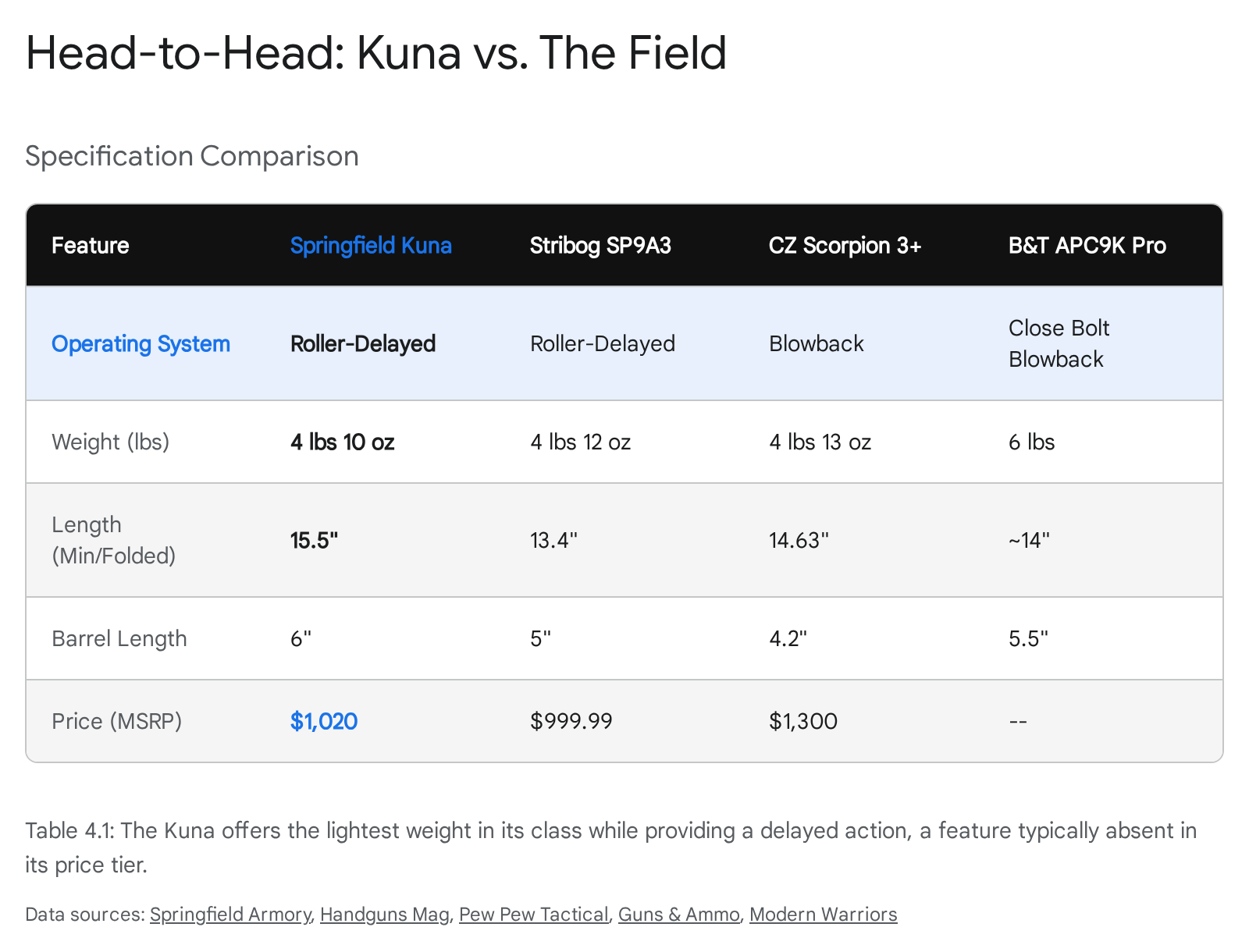
PCC Advancements: The Pistol Caliber Carbine market is seeing the mainstreaming of delayed blowback systems to mitigate harsh recoil, the rise of factory SBRs due to regulatory changes, and the emergence of a PCC-specific optic ecosystem with tailored reticles and taller mounts.
Understand Accelerated Adoption Cycles: Digital platforms have become the primary proving ground and marketing channel for new cartridges. This leads to an Accelerated Adoption Cycle, where cartridges with demonstrable performance advantages, such as the Hornady Precision Rifle Cartridges (PRC) line (7mm PRC, 6.5 PRC, .300 PRC), achieve widespread acceptance in a fraction of the time their predecessors did. Missing this “discussion velocity” means missing future market leaders.
Why YOU Need These Data-Driven Reports
For manufacturers, these insights are crucial for guiding product development, identifying market gaps (like the underserved value-premium segment in shotguns), integrating essential features (like optics mounting as standard), and leveraging aftermarket partnerships. For the Remington 870 Tactical (Express), for example, analysis showed a widespread negative reputation for quality control during a specific era, highlighting the need for transparent campaigns to rebuild trust.
For consumers and enthusiasts, these reports provide the strategic intelligence and data-backed ranking necessary to navigate a complex market with confidence. Whether you’re a “Proven Reliability First” user who prioritizes OEM Glock-level dependability, a “Best Value & Features” seeker looking for optimal performance without breaking the bank (like the Ruger RXM or Lone Wolf Dusk 19, which offer significant upgrades over a stock Glock), or a “Performance-Focused Enthusiast” aiming for the pinnacle of offerings like the Beretta 1301 Tactical Mod 2, our insights are tailored to your needs.
Don’t let outdated information or limited perspectives guide your decisions in the small arms market. The future is here, and it’s data-driven. Invest in understanding these nuanced trends to make superior choices, whether you’re buying, selling, or building the next great firearm.
The United States personal defense firearms market in the third quarter of 2025 remains unequivocally dominated by pistols chambered in 9mm Luger. This cartridge’s balance of manageable recoil, sufficient terminal performance with modern ammunition, and high-capacity potential has solidified its position as the de facto standard for concealed carry (CCW), home defense, and professional duty use. The market has matured significantly, moving beyond foundational debates over caliber and reliability to a more nuanced landscape where consumer sentiment and purchasing decisions are driven by ergonomics, trigger quality, and advanced feature integration.
This report identifies several key technological trends that have transitioned from emerging novelties to established industry standards. Optics-ready slides are now a baseline expectation across all market segments, from deep-concealment micro-compacts to full-size duty pistols. The market is further evolving toward direct-mount optic systems that offer lower sight height and enhanced durability, signaling a new phase of red dot integration.1 Concurrently, factory-integrated compensators have become a prominent feature in the high-capacity micro-compact class, effectively blurring the lines between traditional size categories by offering compact-level shootability in a concealable package.3 Furthermore, the influence of modular, chassis-based firearm systems, pioneered by SIG Sauer and now challenged by competitors like Springfield Armory, is fundamentally reshaping product development and consumer expectations around adaptability and long-term value.4
The competitive landscape is characterized by the entrenched duopoly of SIG Sauer and Glock, who continue to command significant market share through brand loyalty and extensive product ecosystems. However, fierce competition from Smith & Wesson and Springfield Armory, who have demonstrated significant innovation in ergonomics and feature sets, is eroding this dominance. Value-oriented manufacturers such as Canik and Taurus have also secured a substantial foothold by offering feature-rich pistols at highly competitive price points, challenging the traditional price-to-performance ratio.1
The principal findings of this analysis indicate a market that has reached a new level of maturity. While absolute reliability is now a non-negotiable baseline expectation for any serious contender, the key differentiators driving positive consumer sentiment are more refined. Pistols that offer superior ergonomics, best-in-class trigger characteristics, and enhanced shootability are consistently ranked highest in public perception. Premium offerings from Staccato, with their 2011-style single-action triggers, and innovative striker-fired designs like the Walther PDP and the new HK CC9, garner exceptionally high positive sentiment, demonstrating that a growing segment of the market is willing to pay a premium for a superior shooting experience. Conversely, pistols that fail to innovate beyond legacy designs, particularly in ergonomics and trigger quality, face increasingly negative sentiment, regardless of their historical reputation for reliability.
2.0 The Modern 9mm Self-Defense Market: An Analytical Framework
To conduct a meaningful sentiment analysis, it is imperative to first establish a clear and consistent analytical framework. The modern 9mm pistol market is not a monolith; it is a highly segmented and technically nuanced environment. This section defines the key technical classifications, primary use-case segments, and the methodology used to derive the sentiment data presented in this report.
2.1 Defining the Battlefield: Key Technical Distinctions
Consumer and expert discussions are framed by a common lexicon of technical specifications that define a pistol’s intended role and performance characteristics. Understanding these distinctions is fundamental to interpreting market sentiment.
2.1.1 Form Factor & Classification
While manufacturers may use proprietary marketing terms, the market generally adheres to a classification system based on barrel length, overall size, and grip dimensions. These classes directly correlate to a pistol’s concealability and shootability.7
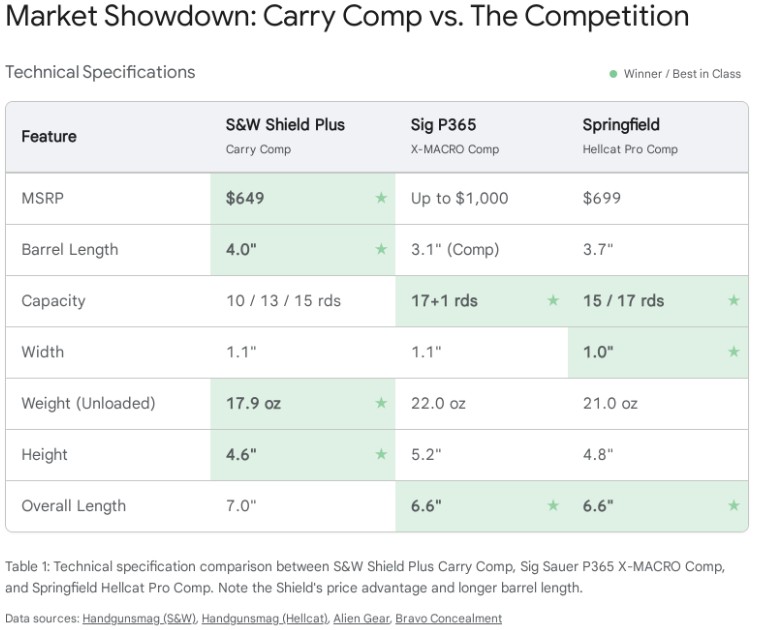
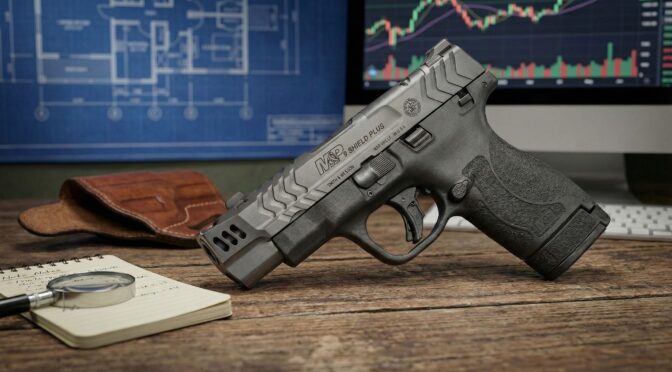
Micro-Compact: This category, largely defined and popularized by the SIG Sauer P365, represents the current pinnacle of concealed carry design. These pistols are characterized by barrel lengths typically under 3.5 inches, a slide width of approximately 1 inch, and a height under 4.5 inches.6 Their defining feature is a “stack-and-a-half” magazine design that allows for capacities of 10+1 rounds or more in a frame that was previously limited to single-stack capacities of 6-8 rounds.10 Key examples include the SIG Sauer P365, Springfield Armory Hellcat, and Smith & Wesson M&P Shield Plus.
Subcompact: This class often overlaps with micro-compacts but traditionally referred to double-stack pistols with a shortened grip frame, such as the Glock 26.7 While still relevant, the term has been somewhat superseded by the more specific “micro-compact” designation for the newest generation of slim, high-capacity pistols. Barrel lengths are typically in the 3 to 3.5-inch range.8
Compact: Widely considered the most versatile size class, compact pistols serve as a benchmark for balancing concealability with shootability. They typically feature barrel lengths between 3.5 and 4.5 inches and a grip that allows for a full, three-finger hold for most users.8 This class is epitomized by the Glock 19, which remains the standard against which all other compact pistols are measured. They are a popular choice for both concealed carry and home defense.15
Full-Size: Also known as “duty” or “service” pistols, this class prioritizes maximum performance over concealability. With barrel lengths exceeding 4.5 inches, full-size frames, and magazine capacities often reaching 17 rounds or more, these pistols offer the highest degree of shootability, recoil control, and sight radius.13 They are the preferred choice for law enforcement, military, competitive shooting, and home defense applications.7 Examples include the Glock 17, Springfield Echelon, and Beretta 92FS.
2.1.2 Operating Mechanisms
The internal action of a pistol is a core technical distinction that profoundly influences trigger feel, manual of arms, and user preference. The market is dominated by two primary systems.18
Striker-Fired: The prevailing mechanism in the modern market, utilized by Glock, SIG Sauer (P320/P365), Smith & Wesson (M&P), Springfield Armory (Hellcat/Echelon), Walther (PDP), and many others. In this system, a spring-loaded firing pin (the “striker”) is partially or fully cocked when the slide is cycled. The trigger pull completes the cocking motion (if necessary) and releases the striker to fire the round.20 This design results in a consistent trigger pull for every shot, simplifies the manual of arms, and is conducive to lightweight polymer frame construction, making it highly popular for defensive use.19
Hammer-Fired: The more traditional design, where an external or internal hammer strikes a separate firing pin. These actions are further subdivided:
Double-Action/Single-Action (DA/SA): Found in pistols like the Beretta 92FS and CZ 75, this system features a long, heavy first trigger pull (the double-action) that both cocks and releases the hammer. Subsequent shots are single-action, with a much shorter, lighter trigger pull, as the slide’s reciprocation cocks the hammer automatically.18 Proponents value the added safety of the heavy first pull, while critics dislike the DA-to-SA transition.
Single-Action Only (SAO): The hammer must be manually cocked for the first shot (typically by racking the slide) and is automatically cocked for subsequent shots. This system, famously used in the 1911 and its modern 2011 derivatives like Staccato pistols, allows for an exceptionally light, crisp, and short trigger pull, which is widely considered the gold standard for pure shootability.22
Double-Action Only (DAO): Every trigger pull is a long, heavy double-action pull. While offering consistency, the heavy pull is often seen as a detriment to accuracy and speed compared to modern striker-fired systems.18 The new FN Reflex notably uses an internal hammer in a single-action configuration, a unique offering in the micro-compact space.25
2.1.3 The New Standard: Core Feature Expectations
By Q3 2025, several features have become so prevalent that their absence is now a notable point of criticism in consumer sentiment. These are no longer premium add-ons but are considered core components of a competitive modern defensive pistol.4
Optics-Ready Slides: The ability to mount a miniature red dot sight (MRDS) is now a default feature on virtually all new self-defense pistol models.4 The market has advanced to the point where the quality of the mounting system is a key differentiator. Systems like Springfield’s Variable Interface System (VIS) and Glock’s collaboration with Aimpoint for the A-CUT direct-mount footprint represent the next evolution, offering a lower sight axis and eliminating the need for failure-prone adapter plates.1
Accessory Rails: A standardized Picatinny-style rail (MIL-STD-1913) on the dust cover is a mandatory feature for any pistol marketed for home defense or duty use, as it allows for the attachment of weapon-mounted lights and lasers.4 The inclusion of rails on an increasing number of compact and even micro-compact pistols reflects a market that values versatility.6
Enhanced Ergonomics: Generic, “one-size-fits-all” grips are no longer acceptable. Market leaders offer a high degree of user customization through features like interchangeable backstraps and side panels (a feature perfected by the HK VP9).4 Furthermore, advanced grip texturing that provides a secure hold without being overly abrasive (such as Springfield’s “Adaptive Grip Texture” on the Hellcat and Echelon) and thoughtfully designed undercuts on the trigger guard are now critical factors that heavily influence perceptions of shootability and overall quality.2
2.2 Primary Use-Case Segmentation
The market can be effectively divided into three primary segments based on the end-user’s intended application. These segments have distinct priorities that shape design choices and consumer preferences.31
Deep Concealment / Everyday Carry (CCW): This segment prioritizes concealability above all else. Key metrics are size, width, weight, and the capacity-to-size ratio.16 The micro-compact class, led by pistols like the SIG P365 family, Springfield Hellcat, and S&W Shield Plus, was created specifically to serve this user, who requires a firearm that can be carried comfortably and discreetly for extended periods under a variety of clothing.1
Home / General Defense: In this scenario, concealability is not a primary concern, allowing the user to prioritize shootability. This segment favors compact and full-size pistols that offer a larger grip for better recoil control, higher magazine capacity, and an accessory rail for mounting a weapon light, which is critical for positive target identification in low-light environments.16 The Glock 19, Walther PDP, and Springfield Echelon are prime examples of pistols that excel in this role.1
Duty / Professional Use: This segment demands the highest standards of reliability, durability, and performance under adverse conditions. It is dominated by full-size and large compact pistols that have a proven track record of performance.17 While historically the domain of pistols like the Glock 17 and Beretta 92FS, this segment is increasingly adopting modular, optics-ready platforms like the SIG P320 and Springfield Echelon, which offer greater adaptability for agencies and individual officers.5
2.3 Sentiment Analysis Methodology
The findings in this report are based on a proprietary sentiment analysis methodology designed to provide a nuanced and accurate representation of market perception.
Data Aggregation: The analysis synthesizes qualitative and quantitative data from a broad spectrum of Q3 2025 sources. These include professional media outlets with structured testing protocols (e.g., Outdoor Life, Gun Tests), high-traffic digital publications known for detailed reviews (e.g., Gun University, Pew Pew Tactical), influential user-generated content (e.g., YouTube reviewers, Reddit and firearm-specific forum discussions), and market indicators such as “best-seller” lists.
Total Mentions Index: To accurately reflect a pistol’s market relevance, this report utilizes a “Total Mentions Index.” This is a weighted metric, not a simple raw count of mentions. A comprehensive, multi-thousand-word review in a major publication is assigned a significantly higher weight than a brief mention in a list or a short forum comment. This approach prioritizes the depth and influence of the discussion, providing a more insightful measure of a firearm’s impact on the market conversation.
Sentiment Scoring: Each substantive mention of a pistol is analyzed and categorized as Positive, Negative, or Neutral.
Positive: Assigned for explicit praise of specific attributes, such as “excellent trigger,” “flawless reliability,” “superb ergonomics,” or “great value.”
Negative: Assigned for explicit criticism, such as “mushy trigger,” “reliability issues,” “uncomfortable grip,” or “overpriced.”
Neutral: Assigned for objective statements of fact, such as specifications (e.g., “barrel length is 4.0 inches”) or feature descriptions without a value judgment. The final sentiment score is presented as a percentage breakdown of these categories, offering a clear, quantitative snapshot of public and expert opinion.
3.0 Segment Leaders & Performance Analysis
Applying the established framework, this section provides a detailed analysis of the leading pistols within each market segment, synthesizing sentiment data to identify key strengths, weaknesses, and competitive positioning.
3.1 Deep Concealment / CCW Segment
The micro-compact category, born from the market’s demand for higher capacity in a concealable package, has become the most dynamic and competitive segment. The initial arms race over round count has given way to a more sophisticated battle over shootability and ergonomics.
SIG Sauer P365 Family (P365, XL, XMacro): The P365 series continues to be the benchmark for the micro-compact class. Its introduction in 2018 fundamentally altered market expectations, and its influence is still felt in 2025.6 Positive sentiment is overwhelmingly centered on its revolutionary capacity-to-size ratio, which remains best-in-class.1 The modularity of its serialized Fire Control Unit (FCU) is another major driver of positive sentiment, allowing users to swap grip modules, slides, and barrels to create customized configurations.4 Ergonomics are frequently praised, with many users finding the grip comfortable and easy to control for its size.35 While early production models were plagued by reliability concerns (e.g., striker drag, trigger spring failures), the consensus is that these issues have been largely resolved in models produced after 2020.37 However, the memory of these early problems persists and contributes to a small but consistent stream of negative sentiment. The P365 XMacro variant has been particularly well-received, with its integrated compensator and 17+1 capacity praised for delivering compact-pistol shootability in a slim, carry-friendly profile.24
Springfield Armory Hellcat & Hellcat Pro: As a direct competitor to the P365, the Hellcat has carved out a significant market share. Highly positive sentiment is directed at its standard features, particularly the excellent “U-Dot” sights, which combine a tritium front dot with a U-notch rear for rapid acquisition.10 The “Adaptive Grip Texture” is another lauded feature, providing a secure hold under recoil without being overly abrasive against skin or clothing during concealed carry.39 The Hellcat’s base capacity of 11+1 is also noted as a competitive advantage over the standard P365’s 10+1.10 The Hellcat Pro model, with its slightly longer slide and grip, is praised for its enhanced balance and shootability, making it a strong contender against the P365 XL and XMacro.24 Negative sentiment, though less frequent, typically focuses on a trigger that is perceived as heavier and less refined than the P365’s, and a subjective feeling of a “snappier” recoil impulse.10
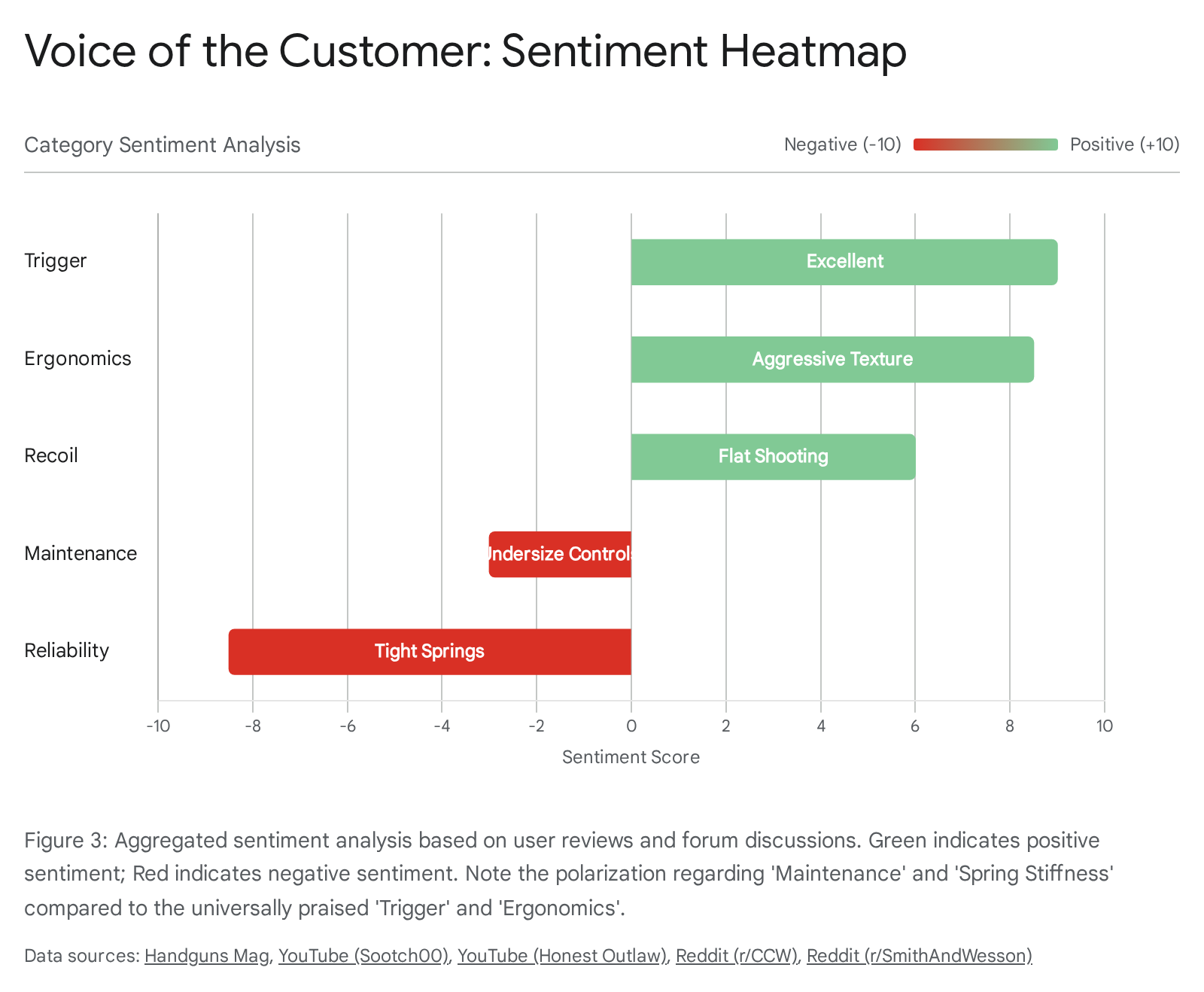
Smith & Wesson M&P Shield Plus: Building on the legacy of the original Shield, the Shield Plus is a dominant force in the segment. Its most lauded feature is its flat-faced trigger, which receives exceptionally high praise across the board as one of the best factory triggers in a micro-compact pistol.6 This, combined with what many users describe as superior ergonomics and a more natural grip angle, results in very high positive sentiment regarding its shootability.45 Its reliability is considered unquestionable, leveraging the proven M&P platform.45 The primary sources of negative sentiment are the lack of a standard accessory rail on most models, which limits options for weapon-mounted lights, and a grip that some users with larger hands find to be too slim, even with the extended magazine.45
Glock 43X MOS: The Glock 43X maintains a strong market position, primarily due to Glock’s unparalleled reputation for reliability and the platform’s simplicity.3 Positive sentiment focuses on its slim, comfortable frame, which many find more ergonomic than Glock’s traditional double-stack designs, and its balanced handling characteristics.3 The vast aftermarket ecosystem for Glock pistols is another significant advantage, allowing for endless customization.50 However, it faces consistent negative sentiment regarding its stock 10+1 capacity, which lags behind the standard set by SIG, Springfield, and S&W (though reliable 15-round aftermarket magazines are available).28 Furthermore, its stock polymer sights and notoriously mediocre trigger are frequent points of criticism when compared to the more refined offerings from competitors.50
The intense competition in this segment, sparked by the P365, has led to a rapid maturation of the product category. What began as a race to maximize round count in the smallest possible package has evolved. By 2025, features like optics cuts, high-visibility night sights, and capacities exceeding 10 rounds are no longer differentiators but baseline requirements. The market has shifted focus toward the nuances of the user experience. Manufacturers are now competing on the quality of the trigger pull, the texture and angle of the grip, and the effectiveness of recoil mitigation systems like integrated compensators. The recent entries of the hammer-fired FN Reflex and the premium HK CC9 into this crowded space underscore that the segment remains highly lucrative.3 However, new products must offer a distinctly superior shooting experience or a unique value proposition to capture market share from the established leaders.
3.2 Home / General Defense Segment
This segment is the heart of the 9mm market, where compact and full-size pistols offer a blend of capacity, shootability, and versatility. Reliability is paramount, but ergonomics and trigger performance are the primary drivers of enthusiast sentiment.
Glock 19 Gen 5 MOS / Glock 45 MOS: The Glock 19 remains the quintessential “do-it-all” pistol, and its sentiment reflects this status. Positive sentiment is overwhelmingly rooted in its legendary, “boring” reliability and the simplicity of its design.50 The vastness of its aftermarket support is unmatched, allowing users to configure the pistol for any conceivable role.51 The Gen 5 updates, specifically the removal of the polarizing finger grooves and the introduction of a slightly improved trigger and the Glock Marksman Barrel, have been well-received and addressed long-standing criticisms.53 Negative sentiment is equally consistent, targeting the “blocky” and uninspired ergonomics, a trigger that, while improved, still lags behind the competition, and the continued use of basic polymer sights on a premium-priced pistol.50 The Glock 45, which pairs a G19 slide with a full-size G17 frame, receives particularly high praise for its excellent balance and enhanced shootability, with many considering it the best-handling pistol in Glock’s lineup.1
Walther PDP / PDP Pro: The Walther PDP has established itself as a top-tier contender, generating exceptionally high positive sentiment, particularly among discerning shooters. The pistol’s “Performance Duty Trigger” is frequently cited as the best factory striker-fired trigger available, praised for its light take-up, crisp break, and short, tactile reset.56 Its ergonomics are also lauded as “superlative,” with a grip texture and angle that users find both comfortable and extremely effective for recoil control.56 The PDP Pro model, which includes a threaded barrel and Walther’s upgraded Dynamic Performance Trigger, further solidifies its position as a premium, performance-oriented option.57 The most common point of negative feedback is a perception of a slightly higher bore axis compared to Glock, which some shooters feel results in marginally more muzzle flip, though this is often dismissed as a non-issue by a majority of users.60
Springfield Armory Echelon: As a recent market entrant, the Echelon has made a significant positive impact. Sentiment is overwhelmingly favorable regarding its two key innovations: the modular Central Operating Group (COG) chassis system and the revolutionary Variable Interface System (VIS) for optics mounting.1 The VIS, which allows for the direct mounting of over 30 different optics without adapter plates, is seen as a major technological advancement and a significant competitive advantage.5 Ergonomics are another strong point, with the interchangeable grip modules and textured “gas pedal” index points receiving high praise for enhancing control.2 The trigger is considered a massive improvement over the previous XD line and is competitive with the best in the striker-fired class.5 The primary source of negative sentiment comes from user reports of a “break-in period” where some pistols experienced initial reliability issues like failures to extract, though these issues appear to resolve after several hundred rounds.62
Heckler & Koch VP9: The VP9 continues to be a fan favorite, with its reputation built on what is widely considered best-in-class ergonomics.1 The ability to customize the grip with three sizes of both backstraps and side panels allows for a near-perfect fit for a wide range of hand sizes, a feature that generates consistently high praise.63 While its trigger was once the benchmark for striker-fired pistols, the market consensus is that it has been surpassed by newer designs like the Walther PDP, though it is still regarded as very good.30 Reliability is held in high esteem, consistent with HK’s duty-grade reputation.64 The paddle-style magazine release remains a polarizing feature; it is beloved by its proponents for its ambidexterity and safety but is a significant point of negative sentiment for those accustomed to a traditional push-button release.30
Beretta 92FS / M9 Series: A classic, all-metal, hammer-fired design with a loyal following. Positive sentiment for the 92FS is rooted in its proven reliability, exceptionally soft-shooting recoil impulse (a result of its weight and rotating block locking system), and smooth DA/SA trigger.66 It is often described as inherently accurate and a pleasure to shoot at the range.67 Negative sentiment is almost entirely directed at its dated design. It is criticized for being excessively large and heavy for its 15-round capacity, and its ergonomics, particularly the wide grip and slide-mounted safety/decocker, are considered cumbersome by modern standards.67
3.3 Duty / Professional Use Segment
This segment, while sharing many top models with the Home Defense category, places an even greater emphasis on proven durability and flawless reliability under extreme conditions.
The Glock 17, 19, and 45 platforms remain the undisputed leaders in this space. Their decades-long service history with law enforcement agencies worldwide provides a level of institutional trust that is difficult for competitors to overcome.17 The platform’s simplicity and robustness are its greatest assets in a duty role.
The Springfield Echelon is strategically positioned to be a major disruptor in this segment. Its design incorporates features directly aimed at the duty market, such as its robust COG chassis, advanced VIS optics system that simplifies armorer duties, and ergonomics built for control during high-stress scenarios.1 It directly competes with the SIG P320 for agency contracts that prioritize modularity.
The Staccato P4 represents a new, premium tier for duty pistols. It generates exceptionally high positive sentiment among expert users for its unparalleled shootability, which combines the speed of a modern pistol with the precision of a 1911-style single-action trigger.3 The decision to engineer the P4 to accept Glock-pattern magazines is a strategic masterstroke, dramatically reducing the logistical and financial barriers for agencies and individual officers to adopt the platform.3 The only significant negative sentiment relates to its substantial price premium over polymer-framed competitors and isolated user reports of the thumb safety being unintentionally engaged with certain grip styles.72
A fundamental shift is occurring in how pistols are designed and procured for professional use. The success of the SIG P320’s modular Fire Control Unit (FCU) demonstrated the value of a “pistol system” over a traditional, monolithic firearm. An agency or individual invests in a serialized chassis, around which they can build multiple configurations by swapping grip modules, slides, and barrels. Springfield’s Echelon, with its Central Operating Group (COG), is a direct and compelling response to this model.2 This trend creates powerful brand ecosystems, encouraging long-term loyalty and offering users unprecedented adaptability. The strong positive sentiment surrounding these modular platforms indicates that this is not a passing fad but a new paradigm in firearm design.4 This development exerts pressure on manufacturers of traditional pistols, forcing them to offer a wider variety of factory configurations (like Glock’s G45 and G49 models) to mimic the flexibility that chassis-based systems provide inherently.
4.0 Comparative Sentiment & Performance Matrix: Top 20 Pistols of Q3 2025
The following table presents a comprehensive data analysis of the top 20 9mm self-defense pistols on the U.S. market as of Q3 2025. The data is synthesized from an extensive review of professional publications, user forums, and market indicators. The table is sorted in descending order by the ‘Sentiment (% Positive)’ metric to highlight the models currently receiving the most favorable market reception.
Rank
Brand
Model
Class/Action
Total Mentions Index
Sentiment (% Pos/Neg/Neu)
Reliability Summary
Ergonomics & Shootability Summary
Primary Use Case
1
Staccato
P4
Full-Size / SAO Hammer-Fired
85
98 / 2 / 0
Considered exceptionally reliable; ran flawlessly in multiple tests. Adopts Glock-pattern magazines, enhancing reliability and compatibility.3
Superlative shootability and ergonomics. Praised for its smooth recoil impulse and world-class 2011 trigger. Some users note the thumb safety can be unintentionally engaged.71
Duty / Home Defense
2
Walther
PDP Pro
Compact / Striker-Fired
88
97 / 3 / 0
Regarded as extremely reliable, with users reporting thousands of rounds without malfunctions. Built to duty-grade standards.56
Best-in-class ergonomics and trigger. The Dynamic Performance Trigger is lauded as the top factory striker trigger. Grip texture is aggressive and effective.57
Home Defense / Duty / Competition
3
HK
CC9
Micro-Compact / Striker-Fired
70
96 / 4 / 0
Praised for traditional HK reliability and meeting NATO standards. No significant issues reported in initial reviews.3
Outstanding ergonomics for its class, with a comfortable and controllable grip. Radiused design minimizes snagging for concealed carry.3
Deep Concealment / CCW
4
Springfield
Echelon
Full-Size / Striker-Fired
92
95 / 5 / 0
Generally reliable, though some users report a “break-in period” with initial malfunctions that resolve after several hundred rounds.61
Excellent ergonomics with modular grips and “gas pedal” texture. Lauded for its flat-shooting characteristics and a top-tier trigger for a striker-fired gun.1
Home Defense / Duty
5
Staccato
C
Compact / SAO Hammer-Fired
78
94 / 6 / 0
Highly reliable with new V3 magazines and external extractor. One early jam noted during break-in, but flawless afterward.75
Excellent 1911/2011 ergonomics in a compact package. Redesigned grip is slimmer and fits more hand sizes. Superb trigger enhances shootability.75
CCW / Home Defense
6
Beretta
PX4 Storm Compact Carry 2
Compact / DA/SA Hammer-Fired
65
93 / 7 / 0
Legendary reliability. Rotating barrel action is known for smooth cycling and functioning under adverse conditions.79
Very soft-shooting due to rotating barrel. LTT-tuned trigger is excellent. Can feel “chunky” or wide for a compact pistol.3
CCW / Home Defense
7
Smith & Wesson
M&P9 Shield Plus
Micro-Compact / Striker-Fired
95
92 / 6 / 2
Considered extremely reliable, building on the proven M&P platform. No significant widespread issues reported.6
Excellent ergonomics and a best-in-class flat-faced trigger make it very shootable. Grip may be too small for large hands; lacks an accessory rail.6
Deep Concealment / CCW
8
Kimber
KDS9c
Compact / SAO Hammer-Fired
60
91 / 9 / 0
Generally reliable, though one failure to feed was noted during a 150-round test, suggesting a potential break-in period is needed.82
Excellent 1911-style ergonomics with a lightweight aluminum frame. Trigger is exceptionally crisp and light (3-4 lbs), enhancing accuracy significantly.23
CCW / Home Defense
9
Staccato
CS
Subcompact / SAO Hammer-Fired
82
90 / 10 / 0
Extremely reliable; designed from the ground up for EDC. No malfunctions reported in extensive testing. New magazine design is robust.85
Excellent ergonomics with a slimmer grip than other 2011s. Recoil is manageable but noticeably “snappier” than larger Staccato models.88
Deep Concealment / CCW
10
HK
VP9
Full-Size / Striker-Fired
89
89 / 9 / 2
Considered extremely reliable, in line with HK’s reputation for building robust, duty-grade firearms.1
Best-in-class ergonomics due to highly customizable grip panels. Trigger is very good but no longer considered the market leader. Paddle mag release is polarizing.4
Home Defense / Duty
11
SIG Sauer
P365 XMacro
Micro-Compact / Striker-Fired
98
88 / 10 / 2
Current models are highly reliable. Early P365 issues are largely resolved but still factor into some negative sentiment.24
Excellent ergonomics. Integrated compensator makes it shoot as well as a larger compact pistol, a major positive. High 17+1 capacity is a key feature.24
CCW / Home Defense
12
CZ
P-10 C
Compact / Striker-Fired
75
87 / 11 / 2
Very reliable; users report flawless performance through thousands of rounds and in competition settings.90
Excellent ergonomics with a natural grip angle. Trigger is better than Glock’s. Aggressive grip texture can be abrasive for concealed carry.91
CCW / Home Defense
13
Springfield
Hellcat Pro
Micro-Compact / Striker-Fired
93
86 / 12 / 2
Highly reliable with no significant widespread issues reported. A proven and trusted platform.24
Excellent “Adaptive Grip Texture” and “U-Dot” sights. Balances concealability and shootability well. Trigger is heavier than some rivals.3
CCW / Home Defense
14
Glock
G45 MOS
Crossover / Striker-Fired
90
85 / 10 / 5
Legendary Glock reliability. Considered a benchmark for dependability in a duty or defensive role.1
Praised for excellent balance and handling (G19 slide/G17 frame). Gen 5 grip without finger grooves is a major plus. Still has “blocky” Glock feel.1
Home Defense / Duty
15
FN
Reflex
Micro-Compact / SAO Hammer-Fired
72
84 / 14 / 2
Generally reliable, though some users report fussiness with 115gr ammunition, preferring 124gr or heavier loads.26
Excellent trigger for a micro-compact (light and crisp SAO). Ergonomics are good, but some find the recoil impulse “snappy”.24
Deep Concealment / CCW
16
SIG Sauer
P365 / P365X
Micro-Compact / Striker-Fired
100
83 / 15 / 2
Current production models are very reliable. The memory of early production issues (2018-2019) still generates negative sentiment.35
Groundbreaking ergonomics and capacity-to-size ratio. Modular FCU allows for extensive customization. Can be “snappy” to shoot.1
Deep Concealment / CCW
17
Glock
G19 Gen 5 MOS
Compact / Striker-Fired
97
82 / 13 / 5
The industry standard for reliability. Will cycle virtually any ammunition under any conditions.50
Ergonomics improved with Gen 5 (no finger grooves), but still considered “blocky.” Trigger is mediocre and sights are plastic, frequent points of criticism.50
CCW / Home Defense / Duty
18
Canik
TP9 Elite SC
Subcompact / Striker-Fired
79
80 / 18 / 2
Generally reliable, though some users report a break-in period is required and potential pickiness with certain ammunition types.97
Excellent trigger, often cited as the best in its price class. Ergonomics are good but the pistol is wider and heavier than direct competitors.24
CCW / Home Defense
19
Beretta
92FS / M9
Full-Size / DA/SA Hammer-Fired
68
78 / 20 / 2
Legendary reliability due to its open-slide design and robust construction. One of the most proven platforms in history.67
Very soft-shooting and accurate. Ergonomics are dated; the grip is large and the slide-mounted safety is widely criticized as being poorly located.66
Home Defense / Duty
20
Taurus
G3C
Compact / SA Striker-Fired
76
75 / 22 / 3
Generally considered reliable for the price, a significant improvement over older Taurus models. Some isolated issues reported.1
Ergonomics are serviceable with decent grip texture. Trigger has a long take-up but a unique restrike capability. Offers incredible value.101
CCW / Budget Home Defense
5.0 Market Trajectory & Strategic Imperatives
The 9mm self-defense pistol market of Q3 2025 is defined by intense competition and a highly educated consumer base. The analysis of market sentiment and technological adoption reveals several key trajectories that will shape the industry’s future, leading to specific strategic recommendations for manufacturers and clear purchasing guidance for consumers.
5.1 Future Outlook: Key Market Trajectories
Maturation of the Micro-Compact Segment: The period of explosive, revolutionary growth in the micro-compact segment has concluded. The market has now entered a phase of refinement and incremental improvement. Having established high capacity (10+ rounds) and an optics-ready slide as the baseline, manufacturers are now competing on the nuances of shootability. The integration of features like compensators (e.g., Springfield Hellcat Pro Comp, SIG P365 XMacro) to tame recoil is a clear indicator of this trend.3 Future success in this segment will be determined not by who can add one more round to a magazine, but by who can deliver the most controllable and ergonomic shooting experience in the slimmest possible package.
Optics Integration as the Universal Standard: The market has moved past the question of if a pistol should be optics-ready to how it should be. The use of multiple adapter plates is increasingly viewed as a cumbersome and potentially less reliable solution. Direct-mount systems, such as Springfield’s VIS on the Echelon and Glock’s A-CUT for the Aimpoint COA, are setting a new standard for excellence.1 These systems allow the optic to sit lower on the slide, facilitating co-witnessing with standard-height iron sights and providing a more robust mounting interface. This technological progression will exert significant pressure on manufacturers to abandon complex plate systems in favor of more elegant, integrated solutions.
The Rise of the Chassis System: The commercial and institutional success of the SIG P320 and P365, built around a removable, serialized Fire Control Unit (FCU), has validated the modular pistol concept. The strong market entry of the Springfield Echelon with its Central Operating Group (COG) confirms that this is a major strategic direction for the industry.4 This approach transforms the purchase from a single firearm into an investment in a versatile “system.” It creates a powerful ecosystem that fosters brand loyalty while offering consumers and agencies unprecedented flexibility to adapt a single serialized firearm to multiple roles. This places immense pressure on manufacturers with traditional, monolithic frame designs to innovate or risk being perceived as technologically dated.
The “Glock Magazine Ecosystem”: The decision by Staccato, a premium 2011 manufacturer, to design its new duty-focused P4 pistol around the ubiquitous Glock magazine pattern is a development with profound market implications.3 This move acknowledges the Glock magazine as a de facto industry standard and drastically lowers the barrier to entry for individuals and agencies already invested in that ecosystem. This may signal a broader trend where other high-end or niche manufacturers adopt common magazine patterns (Glock or SIG P320) to broaden their appeal and leverage the existing market infrastructure, rather than forcing consumers to invest in expensive proprietary magazines.
5.2 Strategic Recommendations for Manufacturers
For Market Leaders (Glock, SIG Sauer): Complacency is the greatest threat. While your market position is strong, competitors are consistently winning on specific points of sentiment. For Glock, the data is unequivocal: the market desires a better factory trigger and non-plastic sights out of the box. While your reputation for reliability is your core strength, the continued reliance on these subpar components is the primary source of negative sentiment and the main driver of the vast aftermarket that exists to “fix” your pistols. For SIG Sauer, continue to leverage the modularity of the FCU as a key strategic advantage. The P365 and P320 ecosystems are powerful tools for customer retention. Focus on refining trigger feel and continuing to innovate with new grip and slide configurations that address emerging market niches.
For Challengers (Smith & Wesson, Springfield Armory): Continue to press your advantages in innovation. For Springfield, the VIS optics system is a significant technical achievement and a key marketing differentiator that should be heavily promoted. The positive ergonomic feedback on the Echelon and Hellcat platforms should be a central part of your brand identity. For Smith & Wesson, the excellent trigger and ergonomics of the M&P Shield Plus have generated immense goodwill. A key strategic imperative should be to integrate an accessory rail into all defensive models of the Shield Plus to address the most significant piece of negative feedback and achieve feature parity with competitors.
For Value Brands (Canik, Taurus): You have successfully captured a significant market share by offering compelling features at an aggressive price point. The next strategic phase is to solidify brand reputation. For Canik, you have already made significant strides; sentiment frequently highlights your excellent triggers and reliability in the same breath as your value proposition.1 Continue this trajectory. For Taurus, the primary challenge remains overcoming a legacy of perceived quality control issues. The positive reception of the G3C and G3X demonstrates a clear path forward.24 The strategic imperative is relentless consistency in manufacturing and quality control to build the institutional trust that turns a budget purchase into a confident recommendation.
5.3 Purchasing Guidance for Consumers
New Shooters: The primary considerations should be ease of use, manageable recoil, and good ergonomics to build a strong foundation of skills. Models specifically designed for ease of operation, like the Smith & Wesson M&P9 Shield EZ, are highly recommended for their easy-to-rack slides.1 The HK VP9 is also an excellent choice due to its supremely comfortable and customizable grip, which can be tailored to fit the user’s hand perfectly.1 A versatile compact pistol like the Glock 19 or Walther PDP Compact provides an ideal platform for learning, with manageable recoil and a size that is effective for both range practice and potential home defense.
Experienced Concealed Carriers: The decision matrix for this user involves a critical trade-off between ultimate concealability and optimal shootability. For those prioritizing deep concealment and minimal printing, the standard SIG Sauer P365, Springfield Hellcat, or S&W M&P Shield Plus remain top-tier choices, offering proven reliability and high capacity in a very small footprint. For carriers willing to accommodate a slightly larger frame in exchange for significantly improved recoil control and handling, the “micro-compact plus” category is the clear winner. The SIG Sauer P365 XMacro and Springfield Hellcat Pro are premier options that offer near-compact performance and are capable of serving double duty as a home defense firearm.24
Home Defense-Focused Individuals: In a home defense scenario, concealability is irrelevant, so the focus should be on maximizing shootability, capacity, and the ability to mount accessories. A full-size or large compact pistol is the ideal choice. The Springfield Echelon, Walther PDP Full-Size, and Glock 45 stand out as premier modern options, all offering high capacity, excellent ergonomics, and integral accessory rails for mounting a high-quality weapon-mounted light—an essential tool for target identification.1 For those who prefer a hammer-fired action and the softest possible recoil impulse, the all-steel Beretta 92FS remains a formidable and proven choice for this role.66
This report provides a data-driven analysis of the top 10 semi-automatic pistols currently in service with United States law enforcement agencies at the federal, state, and local levels. The modern law enforcement sidearm is a critical component of an officer’s equipment, and procurement decisions by agencies are influenced by a complex matrix of factors including reliability, performance, ergonomics, trainability, and total cost of ownership. This analysis identifies and ranks the most prevalent service pistols based on the frequency of agency issuance and officer use, provides detailed technical specifications, examines the core rationale for their adoption, and summarizes operator feedback from the field. The findings are synthesized from a comprehensive review of agency procurement data, industry reports, manufacturer specifications, and qualitative feedback from law enforcement personnel.
The Modern Law Enforcement Sidearm Landscape
The landscape of law enforcement sidearms has undergone a fundamental transformation over the past four decades. The era of the.38 Special and.357 Magnum double-action revolver, which dominated the 20th century, has definitively given way to the high-capacity, semi-automatic pistol.1 This initial transition in the 1980s and 1990s saw the adoption of metal-framed, double-action/single-action (DA/SA) pistols, such as the Beretta 92FS and the SIG Sauer P226. However, a more profound market shift occurred with the widespread adoption of the polymer-framed, striker-fired pistol, a design paradigm pioneered and perfected by Glock.2
This platform’s ascendancy is not accidental but is a result of a superior combination of key attributes that directly address the needs of large law enforcement organizations. Polymer frames significantly reduce the weight of the firearm, lessening the burden on an officer’s already heavy duty belt.3 The striker-fired mechanism, with its consistent trigger pull from the first shot to the last, simplifies the manual of arms compared to the DA/SA transition, which can reduce training costs and improve shooter performance under stress.4 Furthermore, these designs typically feature fewer moving parts, contributing to exceptional mechanical reliability and ease of maintenance—critical factors for agencies that must service thousands of firearms.3 This combination of reliability, operational simplicity, higher ammunition capacity, and a lower total cost of ownership has made the polymer-framed, striker-fired pistol the undisputed standard in modern American law enforcement.2
Prevailing Market Trends
The contemporary law enforcement handgun market is defined by several key technological and doctrinal trends that are shaping procurement decisions and manufacturer offerings.
The Ascendancy of 9mm Luger
Perhaps the most significant trend of the last decade has been the industry-wide migration from the.40 S&W cartridge back to the 9mm Luger (9×19mm Parabellum). This shift was catalyzed by the Federal Bureau of Investigation’s (FBI) influential 2015 decision to return to 9mm for its duty ammunition, a move that reversed its own trend-setting adoption of the 10mm Auto and subsequent.40 S&W in the aftermath of the 1986 Miami shootout.7 The rationale for this change is rooted in significant advancements in projectile technology. Modern 9mm jacketed hollow point (JHP) duty ammunition, such as the Hornady Critical Duty and Federal HST lines, now demonstrates terminal performance in FBI testing protocols that is equivalent to that of larger, heavier calibers.9 With terminal performance equalized, the inherent advantages of the 9mm cartridge become decisive for law enforcement agencies. These advantages include significantly reduced felt recoil, which allows for faster and more accurate follow-up shots; higher magazine capacity within the same firearm dimensions; lower ammunition cost, which enables more frequent and effective training; and reduced wear and tear on the firearms themselves.9
The Rise of Optics-Ready Platforms
A major technological evolution in duty sidearms is the rapidly growing adoption of miniature red dot sights (MRDS). Once the exclusive domain of competition shooters, slide-mounted optics are now being issued or authorized by a growing number of agencies.11 This trend reflects a shift in training doctrine that recognizes the benefits of an MRDS for officer performance. An optic allows the shooter to remain “threat-focused” rather than shifting focus between the target and iron sights, which can lead to faster target acquisition and improved situational awareness under stress.2 Furthermore, optics have been shown to significantly improve accuracy for many shooters, especially at extended engagement distances.2 In response, firearms manufacturers are increasingly offering “optics-ready” models as standard law enforcement configurations, featuring slides that are factory-milled to accept a variety of popular MRDS footprints.2
Modularity and Ergonomics as Key Differentiators
As the core technology of the polymer-framed, striker-fired pistol has matured, the market has become highly competitive. With the baseline for reliability and performance set at an extremely high level by dominant players like Glock, manufacturers are now competing on secondary features to differentiate their products. Modularity has become a key selling point, exemplified by the SIG Sauer P320’s serialized Fire Control Unit (FCU). This internal chassis allows an agency to swap grip modules, slides, and barrels to create different-sized pistols for different roles (e.g., full-size for patrol, compact for detectives) without purchasing a new serialized firearm, offering unprecedented logistical flexibility.13 Similarly, user-configurable ergonomics are now a critical feature. Systems like the Smith & Wesson M&P’s four interchangeable palmswell inserts or the Heckler & Koch VP9’s modular side panels and backstraps allow a single pistol model to be tailored to fit a wide variety of officer hand sizes, improving comfort, control, and performance.15
Market Share and Key Players
The U.S. law enforcement handgun market is dominated by a small number of key manufacturers. Glock, Inc. remains the undisputed market leader, with some estimates suggesting it holds over 65% of the law enforcement market share in the United States.3 Its primary competitors are SIG Sauer and Smith & Wesson, both of which have secured significant contracts with major federal, state, and local agencies.4 Other manufacturers, such as FN Herstal, have also made significant inroads by winning major contracts with large departments like the Los Angeles Police Department (LAPD).11
While market analysis reports indicate that the law enforcement segment is smaller in total value than the military and civilian consumer segments, its influence is disproportionately large.6 Law enforcement adoption serves as a powerful endorsement of a firearm’s reliability and durability, heavily influencing purchasing decisions in the much larger civilian market. An agency’s selection of a particular firearm is often viewed as a “stamp of approval,” making the law enforcement sector a critical battleground for brand prestige and a key driver of consumer trends.3
The Federal Bureau of Investigation’s procurement decisions and ammunition testing protocols, in particular, serve as a powerful catalyst for the entire U.S. law enforcement market. The Bureau’s extensive and highly regarded research and testing capabilities mean its choices often become the de facto industry standard, creating a cascading effect that heavily influences the procurement decisions of thousands of state and local agencies. This was first demonstrated in the late 1980s when the FBI’s search for a more powerful cartridge, following the 1986 Miami shootout, led directly to the development and widespread adoption of the.40 S&W cartridge.7 For nearly two decades, the.40 S&W became the dominant police caliber in the nation, a direct result of the FBI’s lead. The reverse occurred in 2015, when the FBI announced that advancements in 9mm ballistics meant the cartridge once again met its stringent performance requirements. This announcement effectively gave agencies nationwide the technical justification to switch back to 9mm, triggering the current market-wide trend.7 This pattern extends to ammunition itself, where manufacturers explicitly design their products to pass the “FBI Protocol” tests and heavily market this achievement. Winning an FBI ammunition contract, as Hornady has done with its Critical Duty line, is a major marketing coup that validates the product for the entire law enforcement community.19 This history demonstrates that the FBI is not merely another customer; it functions as a national standards-setting body whose technological and ballistic research provides a foundation upon which hundreds of other agencies build their own equipment policies, making its choices a primary driver of market-wide trends.
U.S. Law Enforcement Top 10 Service Pistols: A Ranked Analysis
The following ranking is derived from a synthesized analysis of the frequency of mention in law enforcement publications, official agency adoption announcements, manufacturer reports on law enforcement sales, and the scale and influence of the agencies using each platform.
1. Glock 19 (and its variants, e.g., 19M, Gen5 MOS)
Overview and Market Position
The Glock 19 is ranked number one due to its unparalleled ubiquity across all echelons of U.S. law enforcement. It represents the quintessential modern duty pistol, achieving a near-perfect balance between the operational characteristics of a full-size service weapon and the concealability of a compact firearm. This versatility makes it the default choice for a vast number of agencies, suitable for uniformed patrol, plainclothes detectives, and specialized assignments. Its selection by the Federal Bureau of Investigation as its primary service pistol (in the G19M configuration) has solidified its status as the current industry benchmark, influencing countless other agencies to follow suit.4
Technical Analysis (Gen5 MOS)
The fifth-generation Glock 19 MOS (Modular Optic System) is the current evolution of this platform. It is a polymer-framed, striker-fired semi-automatic pistol operating on the “Safe Action” system, which integrates three passive mechanical safeties. It is chambered in 9x19mm Luger with a standard magazine capacity of 15 rounds, with options for 17, 19, 24, and 33-round magazines.4 Key specifications include a 4.02-inch barrel, an overall length of 7.28 inches, and an unloaded weight of approximately 23.63 ounces with an empty magazine.26 The Gen5 models incorporate several key upgrades over previous generations, including the Glock Marksman Barrel (GMB) with enhanced polygonal rifling for improved accuracy, a flared magazine well for faster reloads, the removal of finger grooves for a more universal grip, fully ambidextrous slide stop levers, and a reversible magazine catch.27 The MOS configuration features a slide that is factory-milled to accept various adapter plates, allowing for the direct mounting of a wide range of miniature red dot sights.29
Key Attributes for Adoption
Agency adoption of the Glock 19 is driven by a trifecta of core attributes:
Reliability: The Glock platform has a legendary, almost proverbial, reputation for functioning under the most adverse conditions with minimal maintenance. This extreme durability is the single most critical factor for law enforcement agencies, as a non-functioning sidearm in a critical incident represents an unacceptable liability.4
Simplicity & Trainability: The consistent trigger pull of the Safe Action system and the lack of an external manual safety simplify the manual of arms. This reduces the complexity of training and can improve an officer’s performance under the extreme stress of a deadly force encounter.3
Cost-Effectiveness: Glock’s aggressive law enforcement pricing structure, known as the “Blue Label Program,” makes its pistols among the most affordable options for agency and individual officer purchase. This low initial cost, combined with low maintenance requirements and widespread parts availability, results in an exceptionally low total cost of ownership for agencies managing large inventories of firearms.3
Caliber and Ammunition Pairings
Caliber: 9x19mm Luger.
Common Duty Loads: Agencies pairing the Glock 19 with modern duty ammunition seek rounds that perform well in the FBI’s ballistic testing protocol. The current FBI-issue round is the Hornady Critical Duty 135gr +P FlexLock.20 Other widely used and highly regarded loads include the Speer Gold Dot 124gr +P JHP and the Federal HST in both 124gr and 147gr weights.31
Adoption Profile (Sample)
The Glock 19’s adoption spans the entire spectrum of American law enforcement.
Federal: Federal Bureau of Investigation (FBI – G19M), Bureau of Alcohol, Tobacco, Firearms and Explosives (ATF – G19M), Drug Enforcement Administration (DEA).24
State/Local: The Glock 19 is authorized or issued by a vast number of the nation’s largest police departments, including the New York Police Department (NYPD), Los Angeles Police Department (LAPD), and Philadelphia Police Department (PPD).23
Operator Feedback Analysis
Analysis of officer discussions on social media and forums reveals a deep respect for the Glock 19’s “do-it-all” versatility and its unquestioned reliability, with many describing it as “near flawless” in operation.30 Common criticisms, however, consistently focus on the pistol’s ergonomics, specifically the grip angle and the potential for “slide bite” on the shooter’s hand, as well as a factory trigger that some operators find to be gritty or less refined compared to competitors.16 A significant source of negative feedback stems from department-mandated modifications, such as the NYPD’s historically required 12-pound “New York” trigger spring, which officers complain makes the pistol difficult to shoot accurately and highlights a frequent disconnect between administrative safety requirements and practical operator preference.38
2. Glock 17
Overview and Market Position
The Glock 17 is the firearm that started the polymer, striker-fired revolution and holds the number two position in this ranking due to its extensive and long-standing service as a primary sidearm for uniformed patrol officers. As Glock’s original, full-size model, its larger frame, longer barrel, and higher standard capacity make it an ideal choice for open-carry duty use where concealability is not a primary concern. For decades, it set the standard for what a modern service pistol should be.4
Technical Analysis (Gen5 MOS)
The Glock 17 Gen5 MOS is a full-size, polymer-framed, striker-fired pistol chambered in 9x19mm Luger.44 It shares the same Gen5 feature set as the Glock 19, including the Glock Marksman Barrel, ambidextrous controls, flared magwell, and MOS optics-mounting capability.45 Its key differentiators are its larger dimensions: it features a 4.49-inch barrel, an overall length of 7.95 inches, and a standard magazine capacity of 17 rounds.46 The longer slide provides an increased sight radius, which can aid in mechanical accuracy, and the larger grip frame can be more comfortable for officers with larger hands.47
Key Attributes for Adoption
The Glock 17’s success is built upon the same foundational pillars as the Glock 19: unparalleled reliability, simplicity of operation, and institutional cost-effectiveness. For uniformed patrol, its full-size frame is often preferred as it provides a more substantial grip for better recoil management and stability, making it a very soft-shooting and controllable platform. Its higher standard capacity of 17 rounds provides an additional advantage in critical situations.45
Caliber and Ammunition Pairings
Caliber: 9x19mm Luger.
Common Duty Loads: The ammunition choices for the Glock 17 are identical to those for the Glock 19, as agencies typically standardize a single duty load across all 9mm platforms. This includes top-tier JHP rounds like Federal HST 147gr, Speer Gold Dot 124gr +P, and Winchester Ranger T-Series 124gr +P.31
Adoption Profile (Sample)
The Glock 17 is a mainstay in police departments across the country, especially for patrol officer issuance.
Federal: Drug Enforcement Administration (DEA), U.S. Marshals Service (USMS – issued to new deputies in training).36
State/Local: The New York Police Department’s (NYPD) current primary issue sidearm is the Glock 17 Gen4.38 The Chicago Police Department (CPD) requires new recruits to purchase either a Glock 17 or a Glock 19.53 It is also an authorized duty weapon for the Philadelphia PD and was provided on loan to SEPTA Police by the PPD as an emergency replacement for their SIG P320s.40
Operator Feedback Analysis
The Glock 17 is widely respected in the law enforcement community as the quintessential “workhorse” duty pistol. It is praised for its soft-shooting characteristics, rugged simplicity, and absolute dependability. For many officers, it is the baseline against which all other full-size duty pistols are measured.
3. SIG Sauer P320 (and M17/M18 variants)
Overview and Market Position
The SIG Sauer P320 holds the number three position, a ranking that reflects its meteoric rise in the law enforcement market, largely propelled by its selection as the U.S. Military’s M17/M18 service pistol under the Modular Handgun System (MHS) contract.13 The P320’s primary technological innovation is its modular design, which centers on a serialized internal Fire Control Unit (FCU) that can be swapped between different grip modules and slide assemblies.14 However, the P320’s market position is uniquely and significantly complicated by a persistent and well-documented controversy surrounding allegations of uncommanded discharges, which has led to numerous lawsuits and the pistol’s withdrawal from several major law enforcement agencies.14
Technical Analysis (P320 Full-Size)
The P320 is a polymer-framed, striker-fired pistol. The full-size model in 9x19mm Luger features a 4.7-inch barrel, an overall length of 8.0 inches, and a standard capacity of 17 rounds.14 The core of the P320 system is its stainless steel internal chassis, which contains the trigger group and serves as the legally serialized firearm.59 This allows the end-user to change the pistol’s size (Full-Size, Carry, Compact, Subcompact), caliber (9mm,.40 S&W,.357 SIG,.45 ACP), and grip circumference by simply swapping non-serialized components, offering a level of modularity unmatched by most competitors.14
Key Attributes for Adoption
Modularity: The P320’s FCU-based system is its chief selling point for institutions. It allows an agency to adapt its handgun fleet to different roles and officer needs with minimal logistical burden and without the expense and paperwork of purchasing new serialized firearms.14
Military Contract Prestige: Winning the highly competitive MHS contract created a powerful “halo effect” for the P320. The perception of being “military-grade” and having bested competitors like Glock in rigorous trials served as a powerful marketing tool and drove significant sales in the law enforcement sector.55
Performance and Ergonomics: Many users praise the P320’s out-of-the-box trigger quality and ergonomics as being superior to many of its competitors, contributing to its initial popularity.61
The adoption of the P320 as the U.S. military’s M17/M18 pistol highlights how a prestigious military contract can be a double-edged sword in the law enforcement market. Initially, the MHS contract win was a monumental marketing victory, positioning the P320 as the “Army’s pistol” and driving a wave of LE sales.60 However, the intense public and media scrutiny that accompanies such a high-profile adoption can magnify any perceived or actual safety failure, leading to a rapid erosion of trust in the more litigious and risk-averse law enforcement and civilian sectors. The military’s operational requirements and risk tolerance differ from those of domestic law enforcement; for instance, the military M17/M18 variants include a manual thumb safety, a feature absent on most law enforcement P320s.55 When numerous incidents of uncommanded discharges surfaced in the LE community, the pistol’s high profile amplified the negative attention and created a stark contrast between its “military-approved” status and the real-world experiences of some police officers.56 This created a significant credibility gap, leading major federal agencies like U.S. Immigration and Customs Enforcement (ICE) to reverse their adoption—a major blow to the pistol’s reputation.57 This demonstrates that military validation alone is insufficient for long-term success in the law enforcement market, which has unique operational contexts—such as constant holstered carry with a chambered round during dynamic physical activity—and a lower institutional tolerance for perceived safety risks.
Caliber and Ammunition Pairings
Caliber: Primarily 9x19mm Luger.
Common Duty Loads: Speer Gold Dot 124gr JHP, Federal HST 124gr/147gr JHP, and other premium JHP loads that meet agency performance standards.
Adoption Profile (Sample)
Federal: U.S. Military (M17/M18). Crucially, U.S. Immigration and Customs Enforcement (ICE) and the U.S. Air Force Global Strike Command have banned or halted the use of the P320 due to safety concerns, with ICE actively replacing them with Glock 19s.14
State/Local: The pistol has been adopted by numerous state agencies, including the Virginia State Police, Texas Department of Public Safety, and the Oklahoma Highway Patrol.4 However, several major municipal departments, including the Chicago PD, Dallas PD (formerly), Houston PD, and Milwaukee PD (formerly), have banned or are actively phasing out the P320 due to safety incidents and officer injuries.14
Operator Feedback Analysis
Discussions surrounding the P320 in law enforcement circles are heavily dominated by the uncommanded discharge controversy. The sworn testimony and public statements of officers like HPD’s Richard Fernandez, who was seriously injured by a discharge from his holstered duty weapon, have severely damaged the pistol’s reputation for safety.65 This has created a deep and contentious schism within the law enforcement community. While some users continue to defend the pistol’s performance and trigger feel, many others express a complete loss of trust in its internal safety mechanisms, viewing it as an unacceptable risk for duty carry.65
The Smith & Wesson Military & Police (M&P) series, particularly in its updated M2.0 iteration, stands as Glock’s most formidable direct competitor, earning the number four position in this analysis. The M&P9 M2.0 has secured numerous major law enforcement contracts by offering a familiar polymer-framed, striker-fired operating system but with ergonomics and a factory trigger that many officers and agencies find superior to the competition.4
Technical Analysis (M&P9 M2.0 Full Size Optics Ready)
The M&P9 M2.0 is a striker-fired, 9x19mm Luger pistol with a standard capacity of 17 rounds.67 Its polymer frame is reinforced with a rigid, extended embedded stainless-steel chassis designed to reduce flex and torque during firing.68 Key features that distinguish the M2.0 include a highly aggressive grip texture for a secure hold, four interchangeable palmswell grip inserts (S, M, ML, L) to customize the fit to an officer’s hand, and an improved M2.0 trigger with a lighter, crisper pull and a more tactile and audible reset.67 The full-size model features a 4.25-inch barrel, and optics-ready versions are available with slides milled for red dot sights.4
Key Attributes for Adoption
Superior Ergonomics: The M&P’s 18-degree grip angle, which mimics that of the classic 1911, and its highly customizable palmswell system are its most lauded features. These allow the pistol to comfortably and securely fit a wider range of hand sizes than many of its competitors, which can directly translate to better shooter performance.16
Improved M2.0 Trigger: The trigger system in the M2.0 series was a significant upgrade over the first generation. It offers a flat-faced option for consistent finger placement and a lighter, crisper pull with a more distinct reset, directly addressing a common criticism leveled against both the original M&P and stock Glock pistols.68
Proven Platform: The M&P line has been in service for over a decade, establishing a strong track record of reliability and durability that gives procurement officers confidence in the platform’s ability to withstand the rigors of duty use.22
Caliber and Ammunition Pairings
Caliber: 9x19mm Luger.
Common Duty Loads: Federal HST 124gr or 147gr JHP, Speer Gold Dot 124gr +P JHP, and Winchester Ranger T-Series 147gr JHP.
Adoption Profile (Sample)
The M&P9 has been adopted by a significant number of large and influential agencies.
Federal: Various components within the Department of Homeland Security.
State/Local: The Los Angeles County Sheriff’s Department (LASD), the nation’s largest sheriff’s department, selected the M&P9 as its issue sidearm.69 The Detroit Police Department also issues the M&P9 M2.0, and the Providence (RI) Police Department issues the M&P in.40 S&W.22
Operator Feedback Analysis
Forum discussions and social media commentary reveal a strong and loyal following for the M&P platform among law enforcement officers, particularly those who prefer its ergonomics, grip texture, and grip angle over Glock’s.16 The M2.0 version is widely regarded as a highly reliable and robust duty pistol that successfully addressed the shortcomings of the first generation, particularly the trigger. It is seen as a top-tier duty pistol that can compete with and, in some respects, exceed the performance of its main rivals.16
For nearly two decades, from the mid-1990s through the early 2010s, the Glock 22 in.40 S&W was arguably the most dominant police pistol in the United States.7 It is ranked at number five because, despite being actively phased out by many agencies in favor of 9mm models, a massive number of G22s remain in service, fill department armories, and are authorized as secondary or personally owned duty weapons. Its legacy and continued, albeit diminishing, presence in the law enforcement ecosystem are substantial.22
The Glock 22 is a full-size, polymer-framed, striker-fired pistol chambered in.40 S&W with a standard capacity of 15 rounds.74 The Gen5 model features a 4.49-inch Glock Marksman Barrel and an overall length of 7.95 inches.75 It shares the core feature set of the Gen5 line, including the lack of finger grooves, a flared magwell, and ambidextrous controls. Notably, the slide of the.40 S&W Gen5 models is slightly wider than that of their 9mm counterparts to accommodate the higher pressures of the cartridge.76
Key Attributes for Adoption
Perceived Stopping Power: The Glock 22 rose to prominence during the height of the.40 S&W’s popularity. The cartridge was developed specifically for law enforcement and was seen as the ideal compromise, offering a significant increase in terminal energy over the 9mm rounds of the era, while providing a higher magazine capacity than the.45 ACP.7
FBI Endorsement: The primary catalyst for the Glock 22’s nationwide success was the FBI’s adoption of Glock pistols chambered in.40 S&W in 1997. As previously discussed, this decision by the nation’s premier law enforcement agency prompted hundreds of state and local departments to follow suit.7
Caliber and Ammunition Pairings
Caliber:.40 S&W.
Common Duty Loads: The most common duty loads for the.40 S&W are typically in the 165gr to 180gr weight range. Highly regarded options include the Speer Gold Dot 180gr JHP, Federal HST 180gr JHP, and Winchester Ranger T-Series 180gr JHP. The former FBI issue round was the Hornady Critical Duty 175gr FlexLock.77
Adoption Profile (Sample)
Federal: The U.S. Capitol Police is one of the federal agencies that has carried the Glock 22.4 It was formerly used by a vast number of other federal agencies before the transition back to 9mm.
State/Local: The Glock 22 was previously issued by countless state police, highway patrol, and municipal departments across the country. Many of these agencies still have the G22 in their inventory or authorize it for duty use. For example, the Detroit Police Department’s policy allows officers who previously qualified with the G22 to continue carrying it as a secondary weapon.70
Operator Feedback Analysis
Officers who carried the Glock 22 often speak of its effectiveness and the confidence they had in the.40 S&W cartridge. However, a common point of discussion is the cartridge’s “snappier” recoil impulse compared to 9mm, which could make qualification more difficult for some shooters and slow down follow-up shots.10 The ongoing departmental shift away from the.40 S&W is a frequent topic, with most officers acknowledging the logistical, financial, and performance advantages of modern 9mm platforms.
6. SIG Sauer P226
Overview and Market Position
The SIG Sauer P226 is a legendary all-metal, hammer-fired DA/SA pistol that holds the number six spot due to its long and distinguished service history with elite federal agencies and special operations units. While it is being supplanted in many general-issue roles by modern striker-fired pistols, it remains a benchmark for accuracy and reliability and is still the trusted sidearm for some of the world’s most elite units, most notably the U.S. Navy SEALs.22
Technical Analysis (P226 MK25)
The P226 is a full-size service pistol with an aluminum alloy frame and a milled stainless steel slide. The standard 9mm version features a 4.4-inch barrel, an overall length of 7.7 inches, and weighs a substantial 34 ounces with an empty magazine.81 It operates on a DA/SA mechanism with an external hammer and a frame-mounted decocking lever, allowing the user to safely lower the hammer on a chambered round.81 Standard capacity in 9mm is 15 rounds, though modern magazines can hold 17 or more.82 The MK25 variant, identical to the pistol carried by the Navy SEALs, features a true MIL-STD-1913 Picatinny rail, special corrosion-resistant coatings on internal parts, and anchor engravings.81
Key Attributes for Adoption
Accuracy and Reliability: The P226 is renowned for its exceptional out-of-the-box mechanical accuracy and rock-solid reliability. It famously was one of two pistols to complete the U.S. military’s rigorous XM9 trials in the 1980s, narrowly losing the contract to the Beretta 92FS on a lower package price.22
DA/SA Action: For many years, the DA/SA trigger system with a decocker was considered an ideal duty action. It provides the safety of a long, heavy double-action trigger pull for the first shot, followed by the precision of a light, crisp single-action pull for all subsequent shots.
Elite Reputation: Its adoption by the Navy SEALs and other premier tactical units, such as the FBI Hostage Rescue Team (HRT), gave the P226 an unparalleled reputation for performing under the most extreme conditions.22
Caliber and Ammunition Pairings
Caliber: The P226 has been widely adopted in 9x19mm Luger,.40 S&W, and.357 SIG.81
Common Duty Loads: Agencies typically issue high-quality JHP ammunition such as Speer Gold Dot or Federal HST in the appropriate caliber.
Adoption Profile (Sample)
Federal: U.S. Navy SEALs (MK25), U.S. Coast Guard, Federal Air Marshals, and formerly the FBI.22
State/Local: The P226 remains in service with numerous state and local agencies. The NYPD authorized it as one of its first semi-automatic duty pistols during the transition from revolvers.38
Operator Feedback Analysis
The P226 is held in extremely high regard by officers who have carried it. It is consistently praised for its superb accuracy, quality of construction, and the way its significant weight mitigates recoil, making it a very pleasant and easy gun to shoot accurately. Modern criticisms center on its weight and bulk compared to modern polymer pistols and the more complex DA/SA manual of arms, which requires more dedicated training to master than a consistent striker-fired trigger.
7. FN 509
Overview and Market Position
The FN 509 is a formidable and rapidly rising challenger in the law enforcement market, earning the number seven spot on this list. Its position is largely secured by its significant adoption by the Los Angeles Police Department (LAPD), one of the nation’s largest and most influential municipal agencies.11 Developed from FN’s entry into the U.S. Military’s MHS trials, the 509’s primary selling point is its military-grade durability and battlefield-proven reliability.83
Technical Analysis (FN 509 MRD-LE)
The FN 509 MRD-LE is a polymer-framed, striker-fired pistol chambered in 9x19mm Luger.85 The standard model features a 4.0-inch cold hammer-forged barrel, an overall length of 7.4 inches, and a standard capacity of 17 rounds.84 Key features include fully ambidextrous controls (both slide stop and magazine release), aggressive slide serrations, and interchangeable backstraps.86 The MRD-LE model is specifically tailored for law enforcement and features FN’s highly regarded Low-Profile Optics-Mounting System, which allows for the secure mounting of various red dot sights and enables a co-witness with suppressor-height iron sights.85
Key Attributes for Adoption
Durability and Reliability: FN Herstal heavily markets the 509 platform’s extensive endurance testing, with claims of testing beyond one million rounds. This reputation for robustness was a key factor in its selection by the LAPD, which subjected the pistol to its own grueling 20,000-round trial, which it passed with superior results.12
Fully Ambidextrous Controls: The FN 509 is one of the few pistols on the market with truly ambidextrous slide stops and magazine releases from the factory, a significant ergonomic and training advantage for agencies with both right- and left-handed officers.86
Superior Optics Integration: The FN factory optics mounting system is widely considered one of the best in the industry. Its design allows for a very secure and low mounting of various red dots, which is critical for maintaining zero and providing a clear sight picture with co-witnessed iron sights.85
Caliber and Ammunition Pairings
Caliber: 9x19mm Luger.
Common Duty Loads: Agencies adopting the FN 509 will issue high-performance 9mm JHP ammunition that meets their terminal ballistic requirements, such as Speer Gold Dot, Federal HST, or Winchester Ranger T-Series.
Adoption Profile (Sample)
State/Local: The most significant adoption to date is by the Los Angeles Police Department (LAPD), which selected the FN 509 MRD-LE as its new standard-issue sidearm for all new officers in 2021.11 The Wake County Sheriff’s Office in North Carolina is another notable agency that has adopted the platform.12
Operator Feedback Analysis
Operator feedback on the FN 509 is generally positive, with most praise centering on its robust, “built-like-a-tank” feel and its flawless reliability. The ergonomics and ambidextrous controls are also frequently commended. The factory trigger is often described as a functional and safe “duty trigger” but is not typically regarded as being as refined as some of its direct competitors like the Walther PDP or H&K VP9.
8. Glock 45
Overview and Market Position
The Glock 45, a “crossover” design featuring a compact Glock 19 slide on a full-size Glock 17 frame, has rapidly become a popular duty choice since its introduction, earning the number eight spot. This model was developed in response to a specific user demand for the handling characteristics and higher capacity of a full-size grip combined with the faster draw and quicker cycling of a compact slide.29
Technical Analysis (G45 MOS)
The Glock 45 MOS is a Gen5 striker-fired pistol chambered in 9x19mm Luger. It combines a full-size frame, affording a 17-round standard capacity, with a compact-length slide and 4.02-inch barrel.87 It incorporates all standard Gen5 features, including the Glock Marksman Barrel, front slide serrations, an ambidextrous slide stop, a flared magwell, and the MOS optics-mounting system.4 This unique configuration results in a pistol with the grip and capacity of a G17 but with the slide length and sight radius of a G19.87
Key Attributes for Adoption
Optimized Handling and Balance: The primary driver for the G45’s adoption is its handling characteristics. The full-size grip provides a secure, complete hold for officers of all hand sizes, enhancing recoil control. Simultaneously, the shorter, lighter slide allows for a faster draw from the holster and quicker sight recovery between shots compared to a full-length G17 slide.
Glock Ecosystem Compatibility: As a member of the Glock family, the G45 leverages the full benefits of the brand’s established ecosystem: proven reliability, operational simplicity, and complete parts and magazine interchangeability with other 9mm double-stack Glocks.
Caliber and Ammunition Pairings
Caliber: 9x19mm Luger.
Common Duty Loads: Same as other 9mm Glocks, including Federal HST, Speer Gold Dot, and Hornady Critical Duty.
Adoption Profile (Sample)
State/Local: The Milwaukee Police Department notably adopted the Glock 45 as a direct replacement for their SIG Sauer P320s following multiple unintended discharge incidents.60 It has been adopted by numerous other agencies seeking a modern Glock duty platform that offers what many consider to be an ideal balance of features.
Operator Feedback Analysis
Operator feedback for the Glock 45 has been overwhelmingly positive. Many officers with extensive experience carrying both the Glock 17 and Glock 19 describe the G45 as the “best of both worlds.” Its balance, feel in the hand, and shooting characteristics are frequently praised, making it one of the most popular and sought-after models in Glock’s current law enforcement lineup.29
9. Beretta 92FS / M9
Overview and Market Position
The iconic Beretta 92FS, known in military service as the M9, was the standard sidearm of the United States Armed Forces for over 30 years. It is ranked at number nine based on this significant legacy status and its continued authorized use by some large and notable police departments. Its all-metal construction and distinctive open-slide design contribute to its reputation for exceptional reliability.22
Technical Analysis (92FS)
The Beretta 92FS is a full-size, DA/SA, hammer-fired semi-automatic pistol. It features an aluminum alloy frame and a steel open-top slide, a design element that greatly enhances feeding and ejection reliability.89 Chambered in 9x19mm Luger, it has a 4.9-inch barrel, an overall length of 8.5 inches, and weighs 33.3 ounces unloaded.91 Standard magazine capacity is 15 rounds.93 A key operational feature is its slide-mounted ambidextrous decocker/safety lever, which allows the hammer to be safely lowered and puts the pistol on safe.93
Key Attributes for Adoption
Exceptional Reliability: The open-slide design is highly resistant to “stovepipe” and other ejection-related malfunctions, as there is no enclosed ejection port for spent casings to get caught in. This was a key factor in its selection by the U.S. military.89
Military Pedigree: Its long and storied service as the M9 gave the platform widespread familiarity and credibility for decades, leading many law enforcement agencies to adopt it during its peak popularity in the 1980s and 1990s.
Caliber and Ammunition Pairings
Caliber: 9x19mm Luger.
Common Duty Loads: Standard 9mm JHP loads such as Federal HST, Speer Gold Dot, or Winchester Ranger.
Adoption Profile (Sample)
Federal: Formerly the standard sidearm for all branches of the U.S. Military.
State/Local: The Beretta 92FS is still an authorized duty weapon for the Los Angeles Police Department (LAPD) and the Los Angeles County Sheriff’s Department (LASD), among other departments that adopted it during its heyday.39
Operator Feedback Analysis
The Beretta 92FS is often praised by those who have used it for its smooth shooting characteristics, low felt recoil (due to its weight), and reliability.94 However, it faces significant criticism by modern standards. Its large grip circumference is difficult for many shooters with smaller hands to manage effectively. The slide-mounted safety/decocker is often cited as being awkwardly placed and difficult to manipulate under stress compared to frame-mounted controls. Finally, its 15-round capacity is considered low for a pistol of its substantial size and weight compared to modern polymer-framed competitors.93 Mounting modern accessories like lights and lasers is also a challenge on older, non-railed models.95
10. Staccato P (2011 Platform)
Overview and Market Position
The Staccato P, a modern evolution of the 1911 platform, secures the number ten spot on this list. It represents a growing and influential high-performance niche within law enforcement, particularly among elite tactical units and as a premium authorized personal-purchase duty weapon. The Staccato (formerly STI) 2011 platform ingeniously combines the highly praised single-action trigger and ergonomics of the classic 1911 with a modern, high-capacity double-stack frame.96
Technical Analysis (Staccato P DPO)
The Staccato P is a hammer-fired, single-action-only (SAO) pistol built on the 2011 platform. It features a 4.4-inch bull barrel, a machined frame (available in steel or aluminum), and a polymer grip module that houses a double-stack magazine.98 Standard capacity in 9x19mm Luger is 17 rounds.100 As an SAO pistol, it is designed to be carried “cocked and locked,” with the hammer cocked and the ambidextrous manual thumb safety engaged. The DPO (Dawson Precision Optic) models feature a factory optics-ready slide cut, utilizing the Dawson Universal Optic system for mounting red dot sights.98
Key Attributes for Adoption
Superior Shootability and Accuracy: The primary driver of the Staccato P’s adoption is its trigger. The light, crisp, and short-travel single-action trigger is far superior to any factory striker-fired trigger and enables a much higher degree of practical accuracy. For highly trained officers, this translates to faster and more precise shooting, a critical advantage in high-stress situations.96
Engineered Reliability: Staccato has invested heavily in engineering and quality control to ensure the 2011 platform can pass numerous demanding law enforcement agency trials for reliability, durability, and endurance, overcoming the reliability issues that plagued some earlier double-stack 1911 designs.97
Adoption by Elite Units: Its selection by prestigious and highly respected units like the U.S. Marshals Service Special Operations Group (SOG), the Texas Rangers, and LAPD SWAT provides powerful third-party validation of its performance and reliability, influencing other agencies to authorize its use.96
Caliber and Ammunition Pairings
Caliber: Primarily 9x19mm Luger.
Common Duty Loads: Any premium 9mm JHP duty load that meets agency performance standards.
Adoption Profile (Sample)
Federal: The U.S. Marshals Service Special Operations Group (SOG) selected a customized version of the Staccato P as its primary duty pistol.96
State/Local: The Texas Rangers, LAPD SWAT, Riverside County (CA) SWAT, Houston PD (authorized), and Las Vegas Metro PD (authorized) are among the notable users. Staccato claims approval for duty use by over 1,800 agencies, though this is often for specialized units or as an authorized personally owned weapon rather than a department-wide general issue.98
Operator Feedback Analysis
Feedback from elite law enforcement users is overwhelmingly positive. Officers consistently praise the Staccato P’s accuracy, flat recoil impulse, and the confidence that its superior trigger provides. The primary barrier to wider, general-issue adoption is its premium price point, which is several times that of a standard polymer duty pistol, making it cost-prohibitive for most large agencies to issue to every officer.
Emerging Contenders and Market Disruptors
While the market is dominated by the pistols listed above, several other high-quality firearms are gaining significant traction and represent emerging challenges to the established leaders.
Walther PDP: The Walther Performance Duty Pistol (PDP) is a major emerging contender, lauded for what many experts and users consider a best-in-class factory trigger and superb ergonomics.103 Its recent, high-profile adoption by the Pennsylvania State Police, one of the nation’s largest state law enforcement agencies, has validated its status as a top-tier duty pistol. This significant contract win may signal a trend of wider adoption by other agencies looking for a platform that prioritizes shooter interface and performance out of the box.42
Heckler & Koch VP9: The H&K VP9 is highly respected for its excellent trigger and uniquely customizable ergonomics, which feature interchangeable side panels in addition to backstraps, allowing for 27 different grip configurations.15 While it has not achieved the massive contract success of its main rivals, it is an authorized option in many departments and is often the personal choice of individual officers who prioritize its superior handling and shootability.108
CZ P-10 C: Often dubbed a “Glock killer” upon its release, the CZ P-10 C was specifically engineered to compete directly with the Glock 19. It offers a similar feature set but with what many users consider a better factory trigger and more comfortable ergonomics.110 It has been gaining traction in the U.S. market and has seen successful adoption by various international police and military units, including the Polish Border Guard and the Czech Army, indicating its potential as a serious contender for U.S. law enforcement contracts.110
Conclusion: Key Findings and Future Outlook
Synthesis of Findings
The analysis of the top 10 service pistols reveals that the U.S. law enforcement handgun market is a mature ecosystem dominated by a few key manufacturers and a specific design philosophy: the polymer-framed, striker-fired pistol. Glock’s long-term strategy of embedding itself within the law enforcement community through aggressive pricing, robust support, and a simple, ultra-reliable product has cemented its position as the clear market leader. Competitors have found success not by reinventing the core concept, but by targeting Glock’s perceived weaknesses, primarily in the areas of ergonomics and trigger feel. The market demonstrates a strong preference for platforms that are reliable, simple to train, and cost-effective for large-scale issuance. However, a growing niche exists for high-performance, premium pistols within specialized tactical units where individual shooter performance is prioritized over institutional cost.
Future Trends
The law enforcement sidearm market will continue to evolve, driven by advancements in technology and training doctrine. Three key trends are expected to shape the future of the duty pistol:
Optics Will Become the Standard: The transition to slide-mounted red dot sights will continue to accelerate. Within the next five to ten years, optics-ready pistols are likely to become the standard for new duty weapon procurements, rather than a specialized option. This will favor manufacturers who offer robust, reliable, and intuitive factory optics mounting systems.2
The Hegemony of 9mm is Secure: The 9mm Luger’s dominance as the primary law enforcement cartridge is secure for the foreseeable future. Its combination of proven terminal ballistic performance with modern ammunition, manageable recoil, high capacity, and lower cost provides a set of advantages that no other common service caliber can currently match.9
Increased Market Segmentation: While the reliable and cost-effective polymer striker-fired pistol will remain the standard for general patrol issue, the market for high-performance, specialized pistols like the Staccato 2011 platform for SWAT and other tactical teams will continue to grow. As the reliability of these platforms is further proven and their significant performance benefits become more widely recognized, more agencies will authorize them for specialized roles where the higher cost is justified by the enhanced capability.
Summary of Top 10 Law Enforcement Service Pistols
The following table provides a high-level summary and comparison of the key attributes of the top 10 ranked service pistols in U.S. law enforcement.
Rank
Pistol Model
Manufacturer
Primary Caliber
Standard Capacity
Action Type
Core Rationale for Adoption
Key User Agencies (Sample)
1
Glock 19
Glock
9x19mm Luger
15+1
Striker-Fired
Unmatched reliability, cost-effectiveness, simple manual of arms, ideal size.
FBI, ATF, DEA, NYPD, LAPD
2
Glock 17
Glock
9x19mm Luger
17+1
Striker-Fired
Full-size duty platform with legendary reliability, simplicity, and high capacity.
NYPD, DEA, USMS, Chicago PD
3
SIG Sauer P320
SIG Sauer
9x19mm Luger
17+1
Striker-Fired
Groundbreaking modularity (FCU), military contract prestige, excellent ergonomics.
U.S. Military (M17/M18), VA State Police, TX DPS
4
M&P9 M2.0
Smith & Wesson
9x19mm Luger
17+1
Striker-Fired
Superior ergonomics, customizable grip, improved M2.0 trigger, proven reliability.
LA County Sheriff, Detroit PD
5
Glock 22
Glock
.40 S&W
15+1
Striker-Fired
Legacy platform with perceived power of.40 S&W; vast numbers still in service.
U.S. Capitol Police, numerous legacy agencies
6
SIG Sauer P226
SIG Sauer
9x19mm Luger
15+1
DA/SA
Legendary accuracy and reliability, all-metal construction, elite unit adoption.
U.S. Navy SEALs, U.S. Coast Guard
7
FN 509
FN Herstal
9x19mm Luger
17+1
Striker-Fired
Military-grade durability, fully ambidextrous controls, superior optics mounting system.
Los Angeles Police Department (LAPD)
8
Glock 45
Glock
9x19mm Luger
17+1
Striker-Fired
“Crossover” design with full-size grip and compact slide for optimized handling.
Milwaukee PD, various local/state agencies
9
Beretta 92FS/M9
Beretta
9x19mm Luger
15+1
DA/SA
Iconic military service history, extremely reliable open-slide design.
LAPD (authorized), legacy agencies
10
Staccato P
Staccato
9x19mm Luger
17+1
Single-Action Only
Superior single-action trigger for enhanced accuracy and shootability, elite unit adoption.
U.S. Marshals SOG, LAPD SWAT, TX Rangers
Appendix: Ranking and Evaluation Methodology
Data-Driven Framework
This report’s ranking and analysis are not based on subjective preference or anecdotal evidence. The conclusions are derived from a qualitative synthesis of quantitative and qualitative data points extracted from the provided research material, which includes a cross-section of official publications, industry reports, and user-generated content. The goal is to produce a defensible analysis grounded in verifiable information.
Primary Data Sources
The analysis was constructed using information from four primary categories of sources:
Official Agency Information: This includes publicly available directives, general orders, and official statements from law enforcement agencies that specify issued and/or authorized firearms for their personnel. These are considered highly reliable sources for confirming a firearm’s official status within an agency.24
Manufacturer & Industry Communications: This category includes press releases, law enforcement-specific program websites, and official announcements from firearms manufacturers detailing the awarding of law enforcement contracts. This data is crucial for identifying new and significant agency adoptions.63
Credible News and Industry Reporting: Articles from established industry publications (e.g., Police1, American Rifleman, Shooting Illustrated) and reputable news outlets that cover agency procurement decisions, firearms testing, and market trends provide essential context and corroboration.2
Qualitative User Data: To understand the real-world performance and perception of these firearms, a systematic analysis was conducted of officer sentiment, praise, and criticism from relevant social media platforms (e.g., Reddit), public forums, and video commentary. This provides an invaluable qualitative layer to the quantitative adoption data.16
Ranking Criteria and Weighting
The ranking from 1 to 10 is based on the frequency of agency and officer use, determined by a weighted evaluation of the following criteria:
Breadth and Depth of Adoption (High Weight): The number and type of agencies (federal, state, large municipal) issuing or authorizing a given pistol is the primary factor. A department-wide, mandatory issuance to all officers is weighted more heavily than an authorization allowing officers to purchase a weapon from an approved list. Adoption by an influential federal agency like the FBI or a large municipal department like the NYPD carries significant weight due to the sheer number of users and the trend-setting impact on smaller agencies.
Market Longevity and Legacy (Medium Weight): The duration a pistol has been in widespread service is considered. Platforms with a long history (e.g., Glock 22, Beretta 92FS) may be in the process of being replaced but still account for a massive number of firearms in circulation and a deep pool of officers trained on the system. This continued presence contributes to their overall frequency of use in the market.
Adoption by Elite/Specialized Units (Low Weight): While adoption by prestigious units such as the U.S. Marshals SOG or LAPD SWAT confers significant credibility and speaks to a firearm’s high-end performance, it represents a smaller total number of users. Therefore, for a ranking based on overall frequency of use, this factor is weighted less than a large-scale patrol adoption.
Limitations
This analysis is based on publicly available information and reporting. Exact, comprehensive data on the number of firearms in service with every one of the nearly 18,000 law enforcement agencies in the United States is not centrally collected or publicly accessible. Therefore, the ranking represents a well-reasoned and data-supported estimation of prevalence rather than a definitive census. The sample of user agencies for each pistol is illustrative and not exhaustive. Finally, the law enforcement market is dynamic, with agencies continually testing and adopting new equipment; this report reflects the state of the market as of the date of the source material.
Global Service Handgun Market By Type(Revolver, Pistol), By Material(Steel, Aluminum, Polymer), By Safety(Grip, Drop, Manual), By Applications(Military and Defense, Law Enforcement), Region and Companies, accessed August 21, 2025, https://market.us/report/service-handgun-market/
For over a century, John Moses Browning’s M1911 pistol has remained an icon of firearm design, celebrated for its ergonomic excellence, unparalleled trigger, and combat-proven reliability.1 Its evolution, from the single-stack.45 ACP to the modern, high-capacity, optics-ready 2011, has spawned a market of unprecedented breadth and complexity. The U.S. market is saturated with vendors ranging from mass-production factories in the Philippines and Turkey to single-gunsmith bespoke shops in the American heartland.3 This saturation has created a significant challenge for consumers, professionals, and enthusiasts alike: the inability to objectively assess quality.
Current brand rankings are overwhelmingly subjective, driven by anecdotal evidence, brand loyalty, and marketing budgets. Forum discussions and magazine articles often devolve into qualitative debates, comparing a $500 production pistol to a $5,000 custom build with little common ground for evaluation. This report seeks to rectify this issue by introducing a definitive, data-driven tiered model for 1911 and 2011 manufacturers. The objective is to move beyond opinion and establish a rigorous analytical framework grounded in materials science, manufacturing processes, quality control standards, and verifiable performance metrics.
This tiered 1911/2011 brand guide was created using advanced analytics ingesting data from hundreds of sources – details are in the following report.
Establishing an Engineering Baseline: The M1911A1 Mil-Spec
To build an objective model, a fixed, quantifiable baseline is required. For this analysis, the foundational baseline is the U.S. Government M1911A1 pistol as defined by military specifications (mil-spec) during its peak production era, such as World War II. This baseline is not presented as a “gold standard” for modern performance but as a documented engineering standard against which all contemporary pistols—from the most basic to the most advanced—can be measured and understood.
The M1911A1 was the product of battlefield experience gained in World War I, incorporating several key ergonomic improvements over the original M1911. These changes, standardized in 1926, included a shorter trigger, an arched mainspring housing to improve grip consistency, and relief cuts in the frame behind the trigger for shooters with smaller hands.5 These were not arbitrary modifications but data-driven enhancements based on feedback from soldiers in the field.
The engineering specifications for these service pistols were exacting and focused on durability and reliability under the harshest conditions:
Materials Science: The original ordnance blueprints specified high-grade carbon steel alloys, such as 4140 or 8650 steel, for major components like the slide and frame.9 The standard finish was Parkerizing, a manganese phosphate coating that provided excellent corrosion and wear resistance, a necessity for a military sidearm.10
Manufacturing Processes: Critically, all major components of a mil-spec M1911A1—the frame and slide—were required to be machined from steel forgings.12 The forging process, which involves shaping metal under immense pressure, creates a continuous grain structure that follows the contour of the part. This results in components with superior strength, impact resistance, and fatigue life compared to parts made from castings, where molten metal is poured into a mold, leading to a random grain structure and the potential for microscopic voids or porosity.14 Small parts were machined from bar stock, ensuring dimensional consistency and strength.
Design & Function: The pistol was designed for a 7-round magazine, a trigger pull under six pounds, and absolute reliability, famously demonstrated in the 1911 trials where a Colt prototype fired 6,000 rounds without a single malfunction.5
Consequently, the M1911A1 baseline serves as a critical litmus test for a manufacturer’s fundamental engineering competence. An inability to correctly execute this foundational design—a design proven over decades of global conflict—raises significant questions regarding the capacity to produce more complex, tightly-toleranced firearms. The ability to master the basics is a prerequisite for legitimate innovation. Modern deviations from this baseline, such as extended beavertail grip safeties, skeletonized hammers, improved sights, and front strap checkering, are therefore analyzed not as simple “upgrades,” but as purposeful engineering choices intended to optimize the platform for specific applications like competitive shooting, concealed carry, or specialized law enforcement duty.17
A Quantifiable Tiering Model for the Modern 1911/2011
To bring order to the market, this report introduces a five-tier system. Each tier is defined by a set of quantifiable standards, allowing for the objective placement of any manufacturer. A brand’s position is determined not by its price tag or marketing, but by the sum of its engineering choices and proven performance.
Tier Definitions
S-Tier (Bespoke / Professional Grade): Represents the apex of the 1911/2011 platform, where cost is secondary to performance and craftsmanship. These firearms feature components machined exclusively from high-grade forgings or billet steel, with an explicit “no MIM parts” policy. Assembly is performed by a single master gunsmith or a small, dedicated team, involving extensive hand-fitting of all critical components. Performance is validated by verifiable adoption by elite military or law enforcement units, consistent victories at the highest levels of professional competition, or ironclad accuracy guarantees (typically 1 inch at 25 yards).
A-Tier (Semi-Custom / Duty Grade): This tier bridges the gap between high-end production and full-custom builds. Major components are forged or billet steel, and small parts are overwhelmingly machined from tool steel bar stock, with zero or minimal use of non-critical Metal Injection Molded (MIM) parts. These pistols feature significant hand-fitting in critical areas (barrel lockup, slide-to-frame, trigger group) and have a proven record of reliability for duty or competitive use. Accuracy guarantees of 1.5 inches at 25 yards are common.
B-Tier (High-End Production): This tier represents the peak of what can be achieved through modern, large-scale manufacturing, augmented by skilled human oversight. Frames and slides are consistently made from high-quality forgings. Fit and finish are excellent due to precision CNC machining, and some hand-fitting is applied to critical areas. High-quality MIM parts may be used for non-load-bearing components like magazine catches or grip safeties to manage production costs without significantly compromising durability.
C-Tier (Enthusiast Grade): These are quality production firearms that offer excellent value and a solid foundation for future customization. They typically feature forged frames and slides but make more extensive use of MIM parts for internal components to remain competitively priced. Fit and finish are generally good, but they lack the hand-fitting and refinement of the higher tiers, resulting in looser tolerances.
D-Tier (Entry-Level): This tier consists of functional and generally reliable firearms that prioritize affordability. These pistols often use cast frames and slides and feature a significant number of MIM parts. They may require a “break-in” period to achieve optimal reliability and often exhibit looser tolerances and a less refined finish than higher-tier pistols.
Core Evaluation Metrics
Placement within this tiered system is determined by a holistic evaluation across four core metrics. These metrics are interconnected, forming a causal chain where superior materials and manufacturing enable the precision assembly required for elite performance, which in turn builds a justifiable market reputation.
1. Materials Science & Manufacturing Processes
The fundamental quality of a firearm begins with the raw materials and the processes used to shape them.
Frames & Slides: Forged steel is the mil-spec standard and provides superior strength and durability.15 Billet steel, machined from a solid block, offers exceptional dimensional precision and is used by top-tier custom shops like Cabot Guns.20 Cast steel is a cost-saving measure that can result in a weaker part with potential for internal voids, making it characteristic of lower-tier offerings.12
Barrels: The distinction between a mass-produced, drop-in barrel and a hand-fit, match-grade barrel (whether forged or machined from bar stock) is a primary driver of mechanical accuracy. Quantifiable accuracy guarantees, such as those offered by Wilson Combat (1 inch at 25 yards) and Les Baer (3 inches at 50 yards), serve as objective performance benchmarks.21
Small Parts (The MIM Litmus Test): Metal Injection Molding (MIM) involves mixing metal powder with a binder, injection molding the shape, and sintering it to create a solid part.23 While modern MIM technology has improved, parts machined from tool steel or bar stock are universally considered superior in strength, wear resistance, and durability. A manufacturer’s explicit commitment to using “No MIM Parts,” as seen with brands like Dan Wesson and Wilson Combat, is a clear indicator of a higher-tier manufacturing philosophy and a willingness to incur higher costs for superior quality.24
2. Quality Control & Assembly
The potential of high-quality components is only realized through meticulous assembly and quality control.
Degree of Hand-Fitting: This is the most significant differentiator between production and custom firearms. The laborious process of hand-fitting the slide-to-frame for smooth travel, lapping the barrel lugs for perfect lockup, and stoning the sear and hammer for a crisp trigger pull directly translates to enhanced accuracy, reliability, and a superior tactile experience. This philosophy is embodied by Nighthawk Custom’s “One Gun, One Gunsmith” approach, where a single craftsman builds the entire pistol from start to finish.26
Internal Geometry & Tuning: Beyond fitting, the proper shaping and polishing of the feed ramp is critical for reliable feeding of modern hollow-point ammunition. The most crucial element, however, is extractor tuning. An improperly tensioned and shaped extractor is the most common point of failure in the 1911 platform. High-end manufacturers dedicate significant attention to this single part, ensuring it provides consistent and reliable extraction and ejection.
3. Provenance & Performance
A firearm’s quality is ultimately validated by its performance in the most demanding environments.
Elite Unit Adoption: A contract award from a top-tier military or law enforcement unit, such as the FBI Hostage Rescue Team or USMC MARSOC, is the ultimate third-party validation. These contracts involve exhaustive testing protocols, often including tens of thousands of rounds fired through multiple sample pistols in harsh conditions, which most firearms fail to pass. The Springfield Armory Professional’s successful adoption by the FBI HRT, after a trial that saw other top makers fail, is a testament to its extreme durability and reliability.27 Similarly, the adoption of the Colt M45A1 by MARSOC and Staccato pistols by over 1,400 law enforcement agencies (including elite units like the U.S. Marshals SOG and Texas Rangers) provides unimpeachable proof of performance.29
Competitive Pedigree: Consistent victories at major national and world championships, such as those in USPSA and IPSC, are a direct measure of a firearm’s speed, accuracy, and reliability under the stress of competition. Brands like Staccato and Atlas Gunworks have built their reputations on the podiums of these events.33
4. Market & Community Consensus
While individual anecdotes are subjective, aggregated long-term data from knowledgeable users provides valuable insight into a brand’s real-world performance, durability, and customer service.
Aggregated Sentiment: Analysis of sentiment from vetted, high-signal communities such as 1911 Addicts and pistol-forum.com reveals patterns in reliability, parts breakage, and the quality of a company’s warranty and service response. Consistently positive or negative reports across a large sample size provide a reliable indicator of a brand’s quality and commitment to its customers.
Tier-by-Tier Brand Analysis
Applying the defined metrics, the following section places 50 prominent 1911 and 2011 manufacturers into the five-tier model. Each placement is accompanied by a qualitative summary referencing the core evaluation criteria.
S-Tier: Bespoke / Professional Grade
Brands in this tier represent the zenith of the platform. They utilize only the finest materials (forged/billet steel, no MIM), employ master gunsmiths for extensive hand-fitting, and have a proven record of ultimate performance.
Wilson Combat: A benchmark for the custom 1911, Wilson Combat uses 100% American-made forged or billet steel parts with zero MIM components. Their team-based, hand-fitting assembly process and 1-inch at 25-yards accuracy guarantee solidify their S-Tier status.
Nighthawk Custom: Famous for its “One Gun, One Gunsmith” philosophy, every pistol is built from start to finish by a single artisan using oversized, fully machined billet steel parts. This results in an unparalleled level of fit, finish, and performance.
Cabot Guns: Cabot applies aerospace manufacturing tolerances and technology to the 1911 platform, machining all components in-house from solid blocks of American billet steel. They are known for their exotic materials and hair-splitting precision.
SVI / Infinity Firearms: The undisputed “holy grail” of custom competition 2011s, SVI offers near-limitless customization. They manufacture all major components in-house from billet barstock and are known for their interchangeable breech faces and legendary accuracy.
Stan Chen Custom: A one-man custom shop producing a very limited number of pistols. Stan Chen is renowned for his innovative parts (like the Gen2 Magwell) and obsessive attention to detail, with every surface perfectly blended and dehorned by hand.
Chambers Custom: Joe Chambers is a master pistolsmith whose work is considered among the best in the world. His pistols are built for extreme hard use and reliability, with an engineering focus on flawless function.
Atlas Gunworks: A dominant force in the competition 2011 market, Atlas builds race-ready pistols optimized for specific USPSA divisions. They are known for their incredibly smooth actions, sub-2-pound triggers, and focus on perfect extractor tuning for ultimate reliability.
A-Tier: Semi-Custom / Duty Grade
These brands offer exceptional quality with extensive hand-fitting and premium materials, representing the point of maximum value before the exponential price increases of the S-Tier.
Les Baer Custom: A legendary builder known for hard-fit, exceptionally tight pistols. Les Baer uses their own National Match forged steel frames and slides and guarantees 3-inch groups at 50 yards, with a 1.5-inch option available.
Ed Brown Products: A family-run company with a 50-year legacy, Ed Brown machines all major components in-house from forgings and bar stock. They offer a perfect blend of traditional craftsmanship and modern CNC precision.
Guncrafter Industries: Known for their robust, overbuilt pistols and for creating the powerful.50 GI cartridge. Guncrafter pistols are built from forgings and bar stock with a focus on extreme durability and reliability for serious defensive use.
Staccato: The company that successfully transitioned the 2011 from a pure competition gun to a duty-ready platform. Their pistols are built with a focus on reliability and have been adopted by over 1,400 law enforcement agencies, including elite federal teams.
Dan Wesson: Widely considered the benchmark for semi-custom quality at a production price. Dan Wesson pistols feature forged major components, all tool-steel small parts (no MIM), and are hand-fit to tight tolerances.
Alchemy Custom Weaponry: Led by master gunsmith Rob Schauland, ACW builds “Resto Mod” 1911s that blend classic aesthetics with modern, high-grip ergonomics and hand-fit, match-grade components, offering a 1.5-inch at 25-yards accuracy guarantee.
B-Tier: High-End Production
This tier is defined by manufacturers who leverage high-end production techniques, primarily using forged major components and some hand-fitting to create firearms that exceed standard production quality.
Springfield Armory (Professional/TRP): The Professional model is a hand-built custom shop gun that won the FBI HRT contract, making it a benchmark for duty 1911s. The TRP (Tactical Response Pistol) is its high-end production counterpart, featuring many of the same upgrades and additional fitting.
Colt (Custom Shop/M45A1): Colt’s Custom Shop produces high-quality, hand-finished pistols. The M45A1, developed for the USMC, is a modern combat 1911 built with a forged frame and slide, National Match barrel, and no MIM parts.
Bul Armory: An Israeli manufacturer known for producing high-quality 1911 and 2011-style pistols with excellent fit, finish, and features (like bull barrels and full-length guide rods) that often surpass other brands in this price category.
C-Tier: Enthusiast Grade
These are solid, reliable production firearms from major manufacturers. They typically use forged frames and slides but incorporate more MIM parts to manage costs, making them excellent platforms for both entry-level use and future upgrades.
Springfield Armory (Production): Models like the Garrison, Ronin, and Loaded offer forged major components and match-grade barrels, providing excellent value and a strong foundation.
Kimber: A major manufacturer that helped popularize the production-custom 1911. While early quality control issues with MIM parts tarnished their reputation, modern Kimbers are generally reliable firearms with good features for their price point.
Ruger: Known for its robust investment casting, Ruger applies this technique to its SR1911 series, producing a reliable and affordable American-made 1911 with modern features.
Smith & Wesson: S&W offers a wide range of SW1911 pistols, including models with lightweight Scandium alloy frames. They are well-machined production guns with a good feature set.
SIG Sauer: SIG’s 1911s are known for their unique slide profile and external extractors. They are well-made production pistols offering modern tactical features.
Magnum Research (Bul OEM): The Desert Eagle 1911s are manufactured by Bul Armory in Israel and imported by Magnum Research. They offer the quality and features of Bul Armory pistols at a competitive price point.
Fusion Firearms: Offers a range of production models and semi-custom builds with good features and quality for the price.
Savage Arms: A recent entrant into the 1911 market, Savage offers a well-featured pistol with a forged frame and slide, leveraging their long history of firearms manufacturing.
Remington: After a hiatus, Remington re-entered the 1911 market with their R1 line. These are solid, American-made production pistols.
D-Tier: Entry-Level
This tier provides accessible entry points into the 1911/2011 world. These brands prioritize value, often manufacturing overseas. While functional, they typically use more cast and MIM components and may require a break-in period.
Rock Island Armory (Armscor): A Filipino manufacturer that has long dominated the entry-level market. RIA pistols are built on 4140 steel frames and are known as reliable workhorses and popular bases for custom builds.
Tisas: A Turkish manufacturer that has raised the bar for the entry-level tier by offering forged frames and slides at an exceptionally low price point, challenging the value proposition of many C-Tier brands.
Auto-Ordnance (Kahr): Produces American-made, historically-themed M1911A1 replicas that offer a basic, no-frills entry into the platform.
Girsan (EAA): Another Turkish manufacturer offering a wide range of feature-rich 1911 models at a very competitive price.
Citadel (Legacy Sports): Imported from the Philippines (often by Armscor), Citadel 1911s are functionally similar to Rock Island Armory models, offering solid value.
Charles Daly: A historic brand name now applied to imported pistols, typically from Turkey or the Philippines, that provide a low-cost entry point.
American Tactical Imports (ATI): Imports a variety of 1911s from the Philippines and Turkey, focusing on the budget end of the market.
Inland Manufacturing: Offers modern reproductions of the M1911A1, focusing on historical accuracy for collectors and enthusiasts.
Taylor’s & Company: Known for importing historical firearms, they offer a line of 1911s (often made by Armscor) that are well-regarded for their value.
SDS Imports: Imports Tisas and other Turkish-made firearms, known for their aggressive pricing and good feature sets.
Iver Johnson: A historic American brand name now used on imported 1911s from the Philippines.
Diamondback: Known for their polymer pistols, Diamondback has entered the 1911 market with a feature-rich but higher-priced entry.
Bear Creek Arsenal: Primarily an AR-15 manufacturer, BCA has introduced a 1911 line built with a focus on affordability.
The remaining brands (Hayes, Fowler, MPA, Vudoo, TTI, Stealth Arms, Jacob Grey, Live Free, Alpha Foxtrot, Cosaint) are smaller, often newer, or more specialized custom/semi-custom shops that fill various niches within the A and B tiers. Their placement reflects their use of high-quality materials and manufacturing processes, though they may lack the long-term provenance of more established brands.
Detailed Brand Data and Justification
This section provides the specific evidence and data points supporting the tier placement of each manufacturer, referencing the core evaluation metrics.
S-Tier Brands
Wilson Combat
Materials & Manufacturing: Explicitly states “100% BulletProof® construction,” meaning all parts are CNC machined from American-made bar stock or forgings with no MIM or cast parts used.24 This is the highest possible standard.
Quality Control & Assembly: Utilizes a team of specialist gunsmiths who hand-fit every component. Pistols undergo an extensive test-fire process (often over 100 rounds) to ensure reliability and sight regulation.24
Provenance & Performance: Offers a 1-inch group guarantee at 25 yards on most models.21 Has a decades-long legacy of use by top competitive shooters and elite tactical trainers.37 Was a finalist in the FBI HRT trials.27
Market Consensus: Overwhelmingly positive reputation for flawless quality, reliability, and industry-leading customer service.
Nighthawk Custom
Materials & Manufacturing: All parts are fully machined from oversized 416 billet steel, allowing for a perfect, gap-free fit.26 No MIM parts are used.
Quality Control & Assembly: Employs a strict “One Gun, One Gunsmith” philosophy, where a single master gunsmith builds the entire pistol from a box of oversized parts to a finished product. This ensures ultimate accountability and consistency.26
Provenance & Performance: While not holding a major government contract, their pistols are used by discerning professionals and are highly sought after for their performance. Testimonials from law enforcement officers attest to their superior reliability and accuracy over other top brands.39
Market Consensus: Regarded as functional art. The fit, finish, and feel of a Nighthawk are considered by many to be the absolute peak of the 1911 platform.
Cabot Guns
Materials & Manufacturing: Unique in its use of “aerospace technology.” All components are machined in-house from solid blocks of American billet steel, explicitly rejecting forgings and castings as inferior.20 Known for using exotic materials like Damascus steel and meteorite.40
Quality Control & Assembly: Utilizes proprietary “Clone Technology,” machining parts to such tight tolerances that hand-fitting is minimized, creating near-perfect interchangeability. The slide-to-frame fit is described as feeling like it runs on ball bearings.20
Provenance & Performance: Cabot pistols have been used to win multiple NRA National Pistol Championships, proving their “out-of-the-box” match-grade accuracy.42
Market Consensus: Viewed as the “Rolls-Royce” of the 1911 world, where precision machining and exotic materials create heirloom-quality firearms.
SVI / Infinity Firearms
Materials & Manufacturing: All major components are manufactured in-house from billet barstock.43 Famous for their modular frame system (metal grip separate from the upper frame) and innovative interchangeable breech face slide, allowing for multi-caliber use.43
Quality Control & Assembly: Each pistol is a full custom build, made to the customer’s exact specifications. The level of precision is legendary within the competition community.
Provenance & Performance: SVI/Infinity pistols have dominated the highest levels of practical shooting (IPSC/USPSA) for decades. They provide accuracy certificates showing groups under 1.5 inches at 50 yards (55 yards), a standard few others can meet.43
Market Consensus: Considered the ultimate, no-compromise race gun. The brand is synonymous with peak competition performance, albeit with very high prices and long wait times.
Atlas Gunworks
Materials & Manufacturing: Utilizes premium materials, including 7075 aluminum for grips and 17-4 steel for beavertails, with a focus on high-quality tool steel for critical internal parts like extractors.45
Quality Control & Assembly: Purpose-builds pistols for competition, with a focus on perfect slide cycling (“like it’s on ball bearings”) and flawless extractor tuning for reliability with a wide range of ammunition.47
Provenance & Performance: A dominant force in modern USPSA competition, with their pistols frequently used by national champions. The company sponsors major matches, cementing its place in the competitive community.35
Market Consensus: Regarded as one of the top choices for a serious competition 2011, offering near-SVI performance with shorter lead times.
Stan Chen Custom / Chambers Custom
Materials & Manufacturing: These represent the pinnacle of individual craftsmanship. They use only the best materials (forged and bar stock steel) and are known for innovations that improve the platform, such as Chen’s Pro-Trac checkering and Gen2 Magwell.
Quality Control & Assembly: As one-man or very small shops, every aspect of the build is personally overseen by a master gunsmith, resulting in a level of detail and perfection that is impossible to replicate in a production environment.
Provenance & Performance: Their reputation is built on word-of-mouth among the most knowledgeable shooters and collectors. Their books are often closed for years due to high demand.
Market Consensus: Considered true “grail guns” by 1911 aficionados. Owning one signifies an appreciation for the highest level of the gunsmith’s art.
A-Tier Brands
Les Baer Custom
Materials & Manufacturing: Uses proprietary National Match forged steel frames and slides. All parts are hand-fit.22
Quality Control & Assembly: Famous for an extremely tight “hard-fit” philosophy, requiring a 500-round break-in period. This results in exceptional accuracy once settled.
Provenance & Performance: Guarantees 3-inch groups at 50 yards with all pistols.22 Had an early, though ultimately unsuccessful, contract with the FBI HRT, which speaks to their initial quality.27
Market Consensus: A benchmark for accuracy in the semi-custom world. Known as a no-frills, exceptionally accurate workhorse.
Ed Brown Products
Materials & Manufacturing: All major components are machined in-house from forgings or pre-heat-treated bar stock steel.51 Barrels are machined from T416 stainless steel bar stock.52
Quality Control & Assembly: Blends state-of-the-art CNC machining with meticulous hand-fitting by master craftsmen, all overseen by the Brown family.51
Provenance & Performance: While not holding major government contracts, they are highly respected and used by law enforcement officers and for personal defense, with a strong reputation for reliability.53
Market Consensus: Known for elegant, understated, and exceptionally well-made pistols. Their customer service and lifetime warranty are highly regarded.
Staccato
Materials & Manufacturing: Utilizes 100% American steel and parts, with a focus on precision manufacturing in their Texas facility.55 Their 2011 design features a modular polymer grip mated to a steel or aluminum upper frame.
Quality Control & Assembly: Balances modern CNC production with skilled gunsmithing to produce pistols that meet stringent duty-use reliability standards.
Provenance & Performance: The clear leader in law enforcement adoption for 2011s, with approval from over 1,400 agencies, including the U.S. Marshals SOG, Texas Rangers, and LAPD SWAT.29 Dominant in the competition world.33
Market Consensus: Has successfully redefined the 2011 as a reliable, accurate, and soft-shooting duty and defense platform, largely setting the standard for the modern double-stack 1911.
Dan Wesson
Materials & Manufacturing: Explicitly advertises “Zero MIM parts,” using forged slides and barrels and billet alloy steel fire-control systems.25 This is a major differentiator from B-Tier brands.
Quality Control & Assembly: Pistols are painstakingly hand-fit and polished, leading to exceptionally tight tolerances and a smooth action that rivals more expensive custom guns.25
Provenance & Performance: The “Specialist” model was designed for law enforcement use and is highly regarded as a duty-grade firearm.59
Market Consensus: Widely praised as offering the best value in the semi-custom market, delivering near-S-Tier material quality and fitment at a significantly lower price point.60
Quantitative Scoring Summary Table
The following table provides a numerical summary of each brand’s evaluation based on the rubric detailed in the Appendix.
Manufacturer
Quality
Durability
Accuracy
Reliability
Cust. Sat.
Total
Tier
S-Tier
Wilson Combat
10
10
10
10
10
50
S
Nighthawk Custom
10
10
10
10
10
50
S
SVI / Infinity
10
10
10
9
9
48
S
Cabot Guns
10
9
10
9
9
47
S
Atlas Gunworks
10
9
10
9
9
47
S
Stan Chen Custom
10
10
10
10
N/A
49
S
Chambers Custom
10
10
10
10
N/A
49
S
A-Tier
Staccato
9
10
9
10
9
47
A
Ed Brown
9
9
9
9
9
45
A
Les Baer Custom
9
9
10
8
8
44
A
Dan Wesson
9
9
9
8
9
44
A
Guncrafter Ind.
9
10
8
9
8
44
A
Alchemy Custom
9
9
9
8
9
44
A
Taran Tactical (TTI)
9
8
9
8
8
42
A
Hayes Custom
9
9
9
8
8
43
A
Masterpiece Arms
8
8
9
8
8
41
A
Fowler Industries
9
8
9
8
8
42
A
Deep River Customs
8
8
9
8
8
41
A
Republic Forge
8
8
8
8
8
40
A
B-Tier
Springfield (Pro/TRP)
8
10
9
10
8
45
B
Colt (Custom/M45A1)
8
9
8
9
7
41
B
Bul Armory
8
8
8
8
8
40
B
Vudoo Gun Works
8
8
9
8
8
41
B
Cosaint Arms
7
7
8
7
7
36
B
Fusion Firearms
7
7
7
7
7
35
B
C-Tier
Springfield (Prod.)
7
8
7
8
8
38
C
Kimber
6
6
7
6
6
31
C
SIG Sauer
7
7
7
7
7
35
C
Smith & Wesson
7
7
7
7
7
35
C
Ruger
6
7
7
8
8
36
C
Magnum Research
7
7
7
7
7
35
C
Colt (Production)
6
7
6
7
6
32
C
Savage Arms
7
7
7
7
7
35
C
Remington
6
6
6
6
6
30
C
Stealth Arms
7
6
7
6
7
33
C
Jacob Grey
7
6
7
6
6
32
C
Alpha Foxtrot
7
6
7
6
6
32
C
D-Tier
Tisas
6
6
6
6
7
31
D
Rock Island Armory
5
6
6
7
7
31
D
Girsan (EAA)
5
5
6
6
6
28
D
Auto-Ordnance
5
6
5
6
6
28
D
SDS Imports
5
5
5
6
6
27
D
Taylor’s & Co.
5
6
6
6
6
29
D
Citadel
5
6
5
6
6
28
D
Charles Daly
4
5
5
5
5
24
D
ATI
4
4
5
5
5
23
D
Iver Johnson
4
5
5
5
5
24
D
Live Free Armory
5
5
6
5
6
27
D
Diamondback
5
5
6
5
5
26
D
Bear Creek Arsenal
4
4
5
4
5
22
D
Note: N/A for Customer Satisfaction on some S-Tier builders indicates that their bespoke nature and limited production make aggregated data less meaningful than for production brands.
Note: Springfield and Colt are listed twice to reflect the significant quality difference between their standard production lines and their custom shop/contract pistols.
Summary & Market Outlook
This analysis has established a quantifiable, data-driven framework to objectively evaluate the crowded and often confusing market for 1911 and 2011 pistols. By grounding the assessment in materials science, manufacturing processes, quality control, and verifiable performance, it is possible to move beyond subjective brand loyalty and make informed distinctions. The result is a clear hierarchy where true quality, defined by superior engineering and meticulous craftsmanship, rises to the top.
Consolidated Tier Ranking Table
Tier
Manufacturers
S-Tier
Atlas Gunworks, Cabot Guns, Chambers Custom, Nighthawk Custom, SVI / Infinity, Stan Chen Custom, Wilson Combat
A-Tier
Alchemy Custom Weaponry, Dan Wesson, Deep River Customs, Ed Brown, Fowler Industries, Guncrafter Industries, Hayes Custom, Les Baer Custom, Masterpiece Arms, Republic Forge, Staccato, Taran Tactical Innovations
B-Tier
Bul Armory, Colt (Custom/M45A1), Cosaint Arms, Fusion Firearms, Springfield Armory (Pro/TRP), Vudoo Gun Works
C-Tier
Alpha Foxtrot, Colt (Production), Jacob Grey, Kimber, Magnum Research, Remington, Ruger, Savage Arms, SIG Sauer, Smith & Wesson, Springfield Armory (Production), Stealth Arms
D-Tier
American Tactical Imports (ATI), Auto-Ordnance, Bear Creek Arsenal, Charles Daly, Citadel, Diamondback, Girsan (EAA), Inland Manufacturing, Iver Johnson, Live Free Armory, Rock Island Armory, SDS Imports, Taylor’s & Company, Tisas
Concluding Analysis & Market Trends
The tiered model reveals several key dynamics within the 1911/2011 market, most notably the powerful principle of diminishing returns.
The Law of Diminishing Returns: The most significant value jump for a consumer occurs when moving from the D-Tier to the C-Tier. This transition typically involves a modest price increase in exchange for a substantial upgrade in foundational quality, most notably moving from potentially cast components to forged frames and slides. The move from C to B-Tier brings better fit, finish, and fewer MIM parts. The leap to the A-Tier represents the point of peak performance-for-cost, where extensive hand-fitting and a “no-MIM” philosophy deliver a product that is 95% of a full-custom S-Tier gun for often half the price. The final ascent to the S-Tier commands the highest premium for the final increments of perfection: flawless aesthetic finishing, exotic materials, and the pedigree of a single master gunsmith.
Market Trends:
The Ascendancy of the 2011: An Evolutionary Leap: The modern high-capacity market is often broadly labeled “2011,” but it’s crucial to understand the distinct evolutionary steps from the original 1911. The first major evolution was the “double-stack 1911” or “widebody,” pioneered by companies like Para-Ordnance in the late 1980s.73 These pistols, like some modern Rock Island Armory models, feature a traditional one-piece steel or alloy frame that is simply widened to accommodate a higher-capacity, staggered magazine.75 The true “2011” represents a more significant design evolution, patented by STI (now Staccato) and SVI in the 1990s.76 The key distinction of a genuine 2011 is its modular, two-piece frame architecture.75 This design consists of a steel or aluminum upper frame (which is the serialized part containing the slide rails and fire control group) mated to a separate polymer or aluminum grip module.76 This modularity allows for greater customization and is credited with a different recoil impulse.79 While the term “2011”—a trademark owned by Staccato—is now often used colloquially for any double-stack 1911, the underlying engineering is distinct.80 The platform’s transition from a niche competition gun to a mainstream duty and defensive firearm, largely driven by Staccato’s success, has triggered a market-wide pivot.73 This has led numerous manufacturers, including Springfield Armory (Prodigy) and Kimber (2K11), to introduce their own double-stack models to capture this growing segment.73
The Optics-Ready Standard: Across all tiers, the inclusion of factory optics-ready slide cuts is rapidly becoming a standard feature rather than a custom upgrade. This reflects a broader market shift in the acceptance of red dot sights as a primary sighting system for handguns.
Pressure from Imports: High-quality Turkish and Filipino manufacturers, particularly Tisas and Rock Island Armory, are applying significant pressure on the lower and middle tiers of the market. By offering features like forged frames and slides at D-Tier prices, they are forcing American C-Tier and B-Tier manufacturers to justify their higher price points through superior fit, finish, and quality control.61
The future of the 1911/2011 market will likely be defined by these trends. The platform’s enduring appeal ensures its survival, but the landscape will continue to shift as manufacturers adapt to the demand for higher capacity, optics integration, and the ever-present pressure to deliver value in a competitive global market.
Appendix: Data Collection and Scoring Methodology
Data Sources
This report synthesizes data from a wide range of sources to ensure a comprehensive and balanced analysis. The sources are categorized as follows:
Manufacturer Direct Specifications: Official websites, product catalogs, and technical manuals were consulted for stated materials, manufacturing processes, and performance guarantees.20
Industry & Technical Publications: Reputable firearms publications (e.g., American Rifleman, Guns & Ammo) and technical gunsmithing manuals (e.g., Kuhnhausen series) were used for professional reviews and mechanical analysis.10
Government & Military Documentation: Original ordnance blueprints and contract award information were referenced to establish the mil-spec baseline and verify performance claims related to elite unit adoption.9
Community Sentiment Analysis: A structured review of long-term owner experiences, reliability reports, and customer service feedback was conducted on high-signal-to-noise online forums, with a primary focus on 1911addicts.com and pistol-forum.com for their knowledgeable user bases.69
Scoring Rubric
Each manufacturer was scored on a 1-10 scale across five core criteria. This rubric provides a transparent and repeatable methodology for assigning these scores.
Quality (Materials & Manufacturing):
1-3: Primarily uses cast major components (frame/slide) and a high percentage of low-quality MIM parts.
4-6: Uses forged major components but with extensive use of MIM for most small parts.
7-8: Uses forged major components, high-quality tool steel or bar stock for critical parts, and minimal/high-quality MIM for non-critical parts. Good CNC machining and some hand-fitting.
9-10: All components are machined from forged or billet steel. Explicit “No MIM Parts” policy. Extensive hand-fitting by master-level gunsmiths.
Durability (Longevity & Resistance to Wear):
1-3: Widespread reports of premature parts failure or breakage.
4-6: Meets expected service life for a recreational firearm with proper maintenance.
7-8: Built with high-quality, durable materials (e.g., forged steel, proper heat treatment) suitable for hard/duty use.
9-10: Has passed a documented, high-round-count military or law enforcement endurance test (e.g., the 50,000-round FBI protocol) or has a proven track record of extreme durability in professional use.
Accuracy (Mechanical Precision):
1-3: Consistently groups larger than 4 inches at 25 yards.
4-6: Standard service-grade accuracy (approx. 3-4 inches at 25 yards).
7-8: Features a match-grade barrel and good component fit, capable of 1.5-2.5 inch groups at 25 yards.
9-10: Sold with an explicit accuracy guarantee of 1.5 inches or less at 25 yards (or a correspondingly tighter group at 50 yards).
Reliability (Function Across Conditions):
1-3: Known to be ammunition-sensitive and require a significant break-in period; frequent malfunctions reported.
4-6: Generally reliable with quality magazines and standard ball ammunition.
7-8: Demonstrates high reliability with a wide range of high-performance defensive ammunition.
9-10: Proven to be exceptionally reliable in extreme conditions through professional adoption or rigorous, documented testing.
4-6: Mixed reviews; some satisfied customers, but a significant number of complaints regarding quality control or service.
7-8: Generally positive market sentiment; brand is considered reliable and customer service is responsive.
9-10: Overwhelmingly positive market sentiment; brand is revered for its quality, and customer service is considered industry-leading.
Tier Assignment by Total Score
The final tier for each manufacturer is determined by their total score out of a possible 50 points. The score ranges are defined to create logical groupings based on the quality levels observed in the market.
In the landscape of the American firearms industry, few companies have ascended with the velocity and disruptive impact of Palmetto State Armory (PSA). Since its inception in 2008, PSA has evolved from a humble e-commerce venture operating out of a garage into one of the largest and most influential firearms manufacturers and retailers in the United States.1sora The company’s trajectory represents more than a simple success story; it is a compelling case study in strategic agility, radical vertical integration, and aggressive market saturation that has fundamentally reshaped the consumer firearms market.
This report will argue that Palmetto State Armory’s success is the product of a unique synthesis of its founder’s dual-identity as a cost-conscious Certified Public Accountant (CPA) and a mission-driven combat veteran, a ruthlessly efficient vertically integrated business model, and a provocative, community-building marketing strategy that legacy brands have been unable or unwilling to replicate. This combination has allowed PSA to not only compete with but also systematically outmaneuver established industry giants, turning the AR-15 platform into an accessible commodity and applying the same disruptive playbook to other market segments, including AK-pattern rifles and polymer handguns.
Today, Palmetto State Armory stands as a titan of the industry. Its production volume has continued to climb, manufacturing 551,448 firearms in 2022 and increasing to 581,769 in 2023, which ranked it as the fifth-largest producer in the nation by volume that year. Its dominance is particularly stark in its home state of South Carolina, a significant hub for firearms manufacturing, where PSA accounted for an astounding 71.7% of all firearms produced that year.2 This industrial might is paired with a sprawling e-commerce platform, often dubbed the “Amazon of the gun world,” and a growing network of large-format retail stores across the Southeast.1
This analysis will trace the company’s chronological evolution, beginning with its ideological and operational origins. It will then dissect the core strategies that form the foundation of its business model, followed by an examination of its product development as a tool for market conquest. The report will also explore the company’s controversial but effective branding and the strategic acquisitions that have fueled its expansion. Finally, it will assess PSA’s market impact and future outlook, providing a comprehensive understanding of how this South Carolina powerhouse has permanently altered the American firearms industry.
The Genesis of an Empire (2008-2012)
The story of Palmetto State Armory is inextricably linked to the biography and ideology of its founder, Jamin McCallum. The company’s DNA—its mission, its business model, and its cultural posture—is a direct reflection of McCallum’s unique background as both a combat veteran and a financial professional. This fusion of mission-driven purpose and fiscal discipline created the perfect conditions for a new kind of firearms company to emerge at a pivotal moment in the market.
Founder’s Profile & The “Why”
Jamin McCallum is not a typical firearms industry executive. Before founding PSA, he served in the U.S. Army and the South Carolina National Guard, including two tours as a small arms expert in Iraq.3 This military service, particularly his time on deployment, instilled in him a deep appreciation for the M16/AR-15 platform and a powerful ideological conviction.5 As he later articulated, “I’ve seen what a society looks like when it falls apart. It’s really, really bad”.5 This experience forged the core mission of his future company: to ensure the widespread availability of firearms for law-abiding citizens.
Upon returning to civilian life, McCallum pursued a career as a Certified Public Accountant (CPA).3 However, he found it difficult to concentrate in the corporate accounting world after his experiences in Iraq.3 This confluence of military passion and financial expertise would become the defining characteristic of Palmetto State Armory. The veteran side provided the “why”—a mission to “maximize freedom, not our profits” by putting as many AR-15 and AK-47 rifles as possible into “common use in America today”.5 The CPA side provided the “how”—the financial acumen and understanding of cost control necessary to make that mission economically viable on a massive scale. While Jamin McCallum is the primary founder and CEO, some records also list his brother, Josiah McCallum, as a co-founder, suggesting a family-run enterprise from its earliest days.7
From Garage E-Commerce to Accidental Opportunity
Palmetto State Armory was officially formed in 2008, starting as a modest online-only business run from Jamin McCallum’s garage in South Carolina.1 The initial business model was simple: selling ammunition and magazines online.1 The timing of the company’s launch was exceptionally fortuitous. The election of President Barack Obama in 2008 triggered a massive surge in demand for firearms and ammunition, a phenomenon often referred to as “panic buying,” driven by fears of potential new gun control legislation.3 PSA was perfectly positioned to capitalize on this high-demand environment.
The company’s strategic direction, however, was solidified by a moment of serendipity. An ammunition dealer accidentally sent McCallum a shipment of AR-15 parts, specifically buffer tubes, instead of the magazines he had ordered.3 When he tried to return the parts, the seller told him to keep them. McCallum listed the components on his website, and they sold out almost instantly.3 This accidental transaction illuminated a vast, underserved market for affordable, individual AR-15 components. It was the catalyst that pivoted PSA’s focus from simply reselling finished goods to becoming a key supplier, and eventually a manufacturer, of the parts needed for individuals to build their own rifles.
Rapid Initial Expansion
Fueled by soaring demand and its new focus on AR-15 components, the business exploded. McCallum, who initially kept his day job as a CPA, saw his side business take over his home. Inventory expanded from the garage to the kitchen, the living room, and a backyard shed.3 The rapid growth quickly necessitated a move to a 30,000-square-foot warehouse in a Columbia industrial park.3
This move marked another critical evolution in the business model. As word spread, customers began showing up at the warehouse, hoping to buy products directly. Recognizing this demand, McCallum opened the first Palmetto State Armory brick-and-mortar retail store in Columbia in 2010.3 This established the hybrid e-commerce and physical retail model that continues to define PSA’s sales channels. The company’s retail footprint expanded quickly, with additional stores opening in Beaufort, Greenville, and Mt. Pleasant over the next few years.3
By 2011, PSA was not only a rapidly growing retailer and manufacturer but was also beginning to cultivate its distinct brand identity. The company released a limited-edition AR-15 lower receiver engraved with the phrase “You Lie”—the words famously shouted by South Carolina Congressman Joe Wilson at President Obama during a 2009 address.3 This move was an early and clear signal of the company’s willingness to engage in provocative, politically charged marketing to connect with its target demographic. It was a strategy that would become a hallmark of the PSA brand.
The Strategic Framework – Vertical Integration and Volume
The engine driving Palmetto State Armory’s disruptive growth is a strategic framework built on two pillars: a quasi-ideological doctrine of market saturation and a ruthlessly efficient, vertically integrated manufacturing model. This framework allows the company to operate with a speed, scale, and cost structure that legacy competitors have struggled to counter.
The “Freedom Over Profits” Doctrine as Market Strategy
At the heart of PSA’s corporate identity is its mission statement, a mantra repeated by founder Jamin McCallum and echoed throughout its marketing: “Our mission is to maximize freedom, not our profits. We want to sell as many AR-15 and AK-47 rifles as we can and put them into common use in America today”.12 This doctrine serves a threefold strategic purpose.
First, it is an ideological driver that provides a powerful, non-financial motivation for the company’s leadership and employees. It frames their work not as mere commerce but as a crusade to uphold Second Amendment rights. Second, it functions as a potent marketing tool. This message fosters a deep sense of alignment and loyalty within its customer base, transforming buyers into brand evangelists who feel they are participating in a shared mission.13
Third, and most critically from a strategic perspective, it is a doctrine of market saturation. By prioritizing volume over high margins, PSA aims to make firearms like the AR-15 so ubiquitous that they become “in common use,” thereby creating a practical and political bulwark against potential future regulations. McCallum has been explicit about this goal, stating his hope that in the future, people will recognize that PSA’s mass production made restrictive laws less effective because “there’s so much of it out there already”.12 This strategy creates a self-perpetuating cycle: the fear of regulation drives sales, and the resulting high volume of sales makes regulation more difficult to implement.
Building the Machine: JJE Capital and Vertical Integration
The operational execution of this doctrine is made possible by PSA’s corporate structure. Palmetto State Armory is a key subsidiary of JJE Capital Holdings, a private equity firm headquartered in Columbia, South Carolina, with Jamin McCallum serving as Owner and CEO.1 JJE Capital is the vehicle through which PSA has achieved a remarkable level of vertical integration. The firm’s portfolio includes a collection of specialized companies that form a self-contained manufacturing ecosystem.15
Key entities within the JJE Capital portfolio include:
Spartan Forge: An aluminum forging facility in North Carolina, giving PSA control over the production of raw AR-15 lower and upper receiver forgings.15
DC Machine: A state-of-the-art, high-volume CNC machining facility responsible for turning raw forgings and bar stock into finished components like receivers and barrels.15
Ferrous Engineering and Tool: An integrated research and design center with prototyping and CNC capabilities, allowing for in-house product development and testing.15
This structure is the primary enabler of PSA’s low-cost model.19 By owning the means of production from raw material to finished product, PSA eliminates the markups and dependencies associated with external suppliers. While legacy manufacturers often rely on a complex network of third-party vendors for forgings, barrels, and small parts, PSA controls its own supply chain. This vertical integration provides more than just cost savings; it grants PSA unparalleled speed and control. New product ideas can be prototyped and iterated upon internally, and production can be scaled up or down rapidly in response to market demand without negotiating with external contractors.16
The “Good Enough” Quality Paradigm and Business Model
This manufacturing prowess is directed toward a specific market segment and business model. PSA consciously targets the budget-conscious buyer who prioritizes function and affordability over pristine cosmetic finishing or match-grade precision.4 The company’s products are frequently described as “good enough” for their intended purpose, catering to the vast majority of gun owners who may not put thousands of rounds through their firearms annually.4 This focus allows PSA to avoid the costs associated with the over-engineering and meticulous finishing of premium brands.
The business model relies on generating profit through massive sales volume on thin margins.13 PSA functions as both a manufacturer and a massive retailer, leveraging its website as the “Amazon of the gun world” to sell its own products alongside those of other brands, often taking a cut of transactions without holding inventory.4 The sheer scale of this operation created significant logistical challenges. The company’s initial reliance on disparate systems like SAP for accounting and Google Docs for inventory tracking became untenable with its rapid growth, leading to order backlogs and data discrepancies.22 To manage this complexity, PSA implemented NetSuite’s enterprise resource planning (ERP) software, creating a unified, cloud-based platform to provide real-time visibility into financials, inventory, and warehouse operations, enabling more accurate planning and decision-making.22
Product Line Development as a Market Conquest Tool
Palmetto State Armory’s product development strategy can be viewed as a series of calculated campaigns designed to enter, disrupt, and ultimately dominate specific segments of the firearms market. The company has repeatedly demonstrated a highly effective, repeatable playbook: identify a market-proven platform, clone it to minimize R&D risk, leverage vertical integration to produce it at a disruptive price point, and then iterate on the design based on direct community feedback to capture market share from established leaders.
The AR-15 Beachhead: Commoditizing America’s Rifle
The foundation of PSA’s empire was built on the AR-15.3 Rather than trying to invent a new rifle, the company focused on making the existing, popular AR-15 platform accessible to a broader audience than ever before. It achieved this by commoditizing the rifle, breaking it down into its constituent parts, and selling them at unprecedentedly low prices. Daily deals featuring items like $150 complete upper receivers or $99 stripped lower receivers became legendary among gun enthusiasts.13
This strategy effectively transformed the AR-15 from a rifle one buys into a rifle one builds. It empowered a generation of consumers to assemble their own firearms, offering near-infinite customization. PSA strategically tiered its offerings to cater to every budget and need. A customer could buy a basic, entry-level kit with a phosphate-coated barrel or upgrade to a “Premium” line featuring a cold-hammer-forged (CHF) barrel made by renowned Belgian manufacturer FN Herstal—the same company that supplies barrels for the U.S. military’s machine guns.1 This tiered approach allowed customers to precisely balance cost and performance, a level of choice that many legacy brands did not offer.
The American Kalashnikov: Building Credibility with the PSAK-47
Having established dominance in the AR-15 market, PSA turned its attention to the AK-47. The company identified a clear market opportunity created by tightening import restrictions on Russian firearms and the dwindling supply of surplus parts kits from former ComBloc nations.23 This created a vacuum for a reliable, domestically produced AK-pattern rifle.
PSA’s initial forays into the AK market were met with criticism regarding quality control and the durability of key components, issues that had plagued other American AK manufacturers. However, true to its model, PSA listened to the market feedback and engaged in a public, iterative development process. This led to the creation of the “GF” (Goon Forged) series, which systematically addressed the weaknesses of earlier models and built significant credibility for the brand.
The key iterations demonstrate this strategic improvement:
PSAK-47 GF3: This generation represented a major leap in quality. It introduced a hammer-forged bolt, carrier, and front trunnion—the critical, high-stress components of the AK action. This directly addressed the primary failure point of many previous US-made AKs, which often used inferior cast or billet parts.23
PSAK-47 GF4: This model further enhanced the rifle by upgrading the barrel to a PSA-made cold-hammer-forged, chrome-lined (CHF CL) version, offering improved durability and barrel life over the GF3’s nitride-treated barrel.25
PSAK-47 GF5: This is PSA’s premium AK offering, designed to compete with high-end imported rifles. The GF5 features a highly respected FN-made CHF CL barrel, often referred to as “machine gun steel,” and typically includes an upgraded ALG Defense trigger.25 With the GF5, PSA was no longer just making a budget AK; it was making a high-feature, American-made AK that could compete on quality while still undercutting competitors on price.
Cloning a Leader: The PSA Dagger and the Pistol Market
In January 2020, at the annual SHOT Show, PSA unveiled its most audacious move yet: the PS9 Dagger.28 The Dagger is an unabashed clone of the 3rd Generation Glock 19, one of the most popular and trusted handguns in the world.1 The strategy was transparent and brilliant: leverage Glock’s proven, reliable design and its massive aftermarket of compatible magazines, sights, and triggers, but offer the pistol at a fraction of the price. The target retail price was announced at or below $300, a figure that sent shockwaves through the industry.28
The launch was not without its challenges. The Dagger’s release was delayed, with the first pistols finally shipping to customers in May 2021.30 Early adopters reported some quality control and reliability issues, including feeding problems with full magazines and breakage of MIM (Metal Injection Molded) parts like the firing pin.29 However, PSA applied its iterative playbook. The company addressed the issues, and the Dagger line has since matured and expanded into a complete family of pistols. This now includes the original Dagger Compact (G19 size), a Dagger Full-Size (G17 size grip), and the highly anticipated
Micro Dagger, a clone of the popular Glock 43X for concealed carry, which began rolling out in 2023.29 The Dagger’s success proves that PSA’s “Clone, Iterate, Dominate” model is transferable beyond long guns.
Proprietary Platforms: The JAKL Initiative and a Move Toward Innovation
The JAKL is a hybrid design, built around a monolithic upper receiver and a long-stroke gas piston operating system.36 This system eliminates the need for an AR-15-style buffer tube, allowing for a true folding stock or brace, making it a compact platform. It consciously borrows elements from several successful designs:
AR-15: It is compatible with any standard mil-spec AR-15 lower receiver, triggers, and magazines.34
AK-47: It uses a robust and reliable long-stroke gas piston system.37
SCAR/ACR: Its monolithic upper and folding stock capability evoke the aesthetics and functionality of more expensive modern military rifles.37
The JAKL is marketed as a highly modular platform, available in multiple calibers like 5.56x45mm and.300 AAC Blackout, and in various configurations from short-barreled pistols to full-length rifles.34 Critically, PSA also sells the JAKL as a complete upper receiver assembly, allowing any of the millions of existing AR-15 owners to convert their standard rifle into a piston-driven, folding-stock platform simply by swapping uppers.34 The continued development of concepts like the lighter JAKL 2.0 and the Olcan bullpup conversion lower demonstrates a clear commitment to evolving the JAKL into a major, long-term product family.39
Branding, Controversy, and Community
Palmetto State Armory’s marketing and branding strategy is as unconventional and disruptive as its business model. The company has eschewed the traditional, conservative marketing of legacy firearms manufacturers in favor of a provocative, politically charged, and deeply community-oriented approach. This strategy, while generating significant controversy, has been instrumental in building a fiercely loyal customer base and a powerful brand identity.
Meme Marketing and Political Provocation
From its early days, PSA demonstrated a willingness to embed political commentary and internet culture directly into its products. This has served to both energize its base and antagonize its critics, generating enormous amounts of publicity in the process.
Key examples of this strategy include:
The “You Lie” Lower (2011): This AR-15 lower receiver, engraved with the words shouted by Rep. Joe Wilson at President Barack Obama, was a defining moment. It signaled that PSA was not a neutral corporate entity but an active participant in the political culture wars. The fact that Rep. Wilson’s son, Julian Wilson, is a co-owner of PSA’s parent company, JJE Capital, adds another layer to this politically-charged branding.3
“Meme” Lowers: PSA created an entire product category for AR-15 lower receivers featuring engravings drawn from right-leaning internet culture and political discourse. Slogans like “Let’s Go Brandon,” “Build the Wall,” and imagery like the Gadsden flag transformed the firearm itself into a medium for political expression.12 This tactic trivializes the seriousness of weapon ownership for critics, but for supporters, it is a powerful statement of shared values.
“Boogaloo” Association (2020): The company courted significant controversy in February 2020 by producing and selling a limited-edition AK-style pistol with a “Big Igloo Aloha” Hawaiian-print paint job. The Hawaiian shirt has been adopted as an unofficial uniform by adherents of the “boogaloo,” a loosely defined anti-government movement that anticipates or seeks to accelerate a second American civil war.11 PSA followed this with T-shirts featuring similar themes. This association drew intense scrutiny and criticism, positioning the company at the extreme edge of firearms marketing.
The Anti-Establishment Dichotomy
While PSA cultivates a hard-edged, anti-government, and grassroots image through its marketing, its parent company, JJE Capital, has demonstrated a pragmatic willingness to engage with the very political establishment its branding often rails against. This dichotomy reveals a sophisticated, multi-faceted approach to protecting its business interests.
In the final quarter of 2020, JJE Capital retained the services of Nelson Mullins Riley & Scarborough, a prominent Washington, D.C. lobbying firm.11 Filings show that the firm was paid $10,000 to lobby the U.S. Senate on behalf of PSA regarding the Bureau of Alcohol, Tobacco, Firearms and Explosives’ (ATF) classifications of firearm accessories.11 This move, coming shortly after the “boogaloo” marketing controversy, illustrates that while the company’s public face is one of defiance, its corporate strategy includes conventional, behind-the-scenes political engagement to influence policy and regulation.
Digital Grassroots and Community Building
A cornerstone of PSA’s branding is its direct and continuous engagement with its customer base. The company actively hosts and manages its own online forums, which serve as a vibrant hub for the PSA community.8 These forums are not merely a marketing channel; they are an integral part of the company’s operations.
This digital platform functions as:
A Direct Customer Service Channel: Customers can post issues and often receive responses directly from PSA representatives or knowledgeable community members.
A Real-Time Feedback Loop: PSA uses the forums to gauge customer sentiment on existing products and float ideas for new ones. The development of many of its products, including the iterative improvements to the AK and Dagger lines, has been heavily influenced by discussions on these forums.
A Community Hub: The forums foster a sense of belonging and shared identity among PSA owners. This direct line to the consumer allows PSA to build a level of brand loyalty and gather market intelligence that is difficult for competitors who rely on traditional, multi-step distribution and retail channels to achieve. Company executives, including CEO Chad Wylie, are known to monitor these online discussions to keep a pulse on the customer base.16
This strategy effectively transforms customers into an extension of the R&D department and a volunteer marketing army. The controversy generated by their provocative products is not a liability but a feature; it solidifies the in-group identity and mobilizes the community to defend the brand against outside criticism, creating a powerful “brand moat” that insulates PSA from mainstream competitive pressures.
Expansion by Acquisition – The JJE Capital Engine
The rapid growth and diversification of Palmetto State Armory have been significantly accelerated by a shrewd acquisition strategy, executed through its parent company, JJE Capital Holdings. JJE Capital acts as the financial engine and holding company, pursuing strategic investments that expand the group’s capabilities, intellectual property, and market reach.1 Its stated mission to “revive the American Dream” through investment provides the philosophical framework for acquiring and revitalizing distressed or legacy American brands.14
The Remington Bankruptcy Opportunity (September 2020)
A pivotal moment in this expansion strategy came in September 2020 with the bankruptcy auction of the historic Remington Outdoor Company. JJE Capital emerged as a key player in the dissolution of the firearms conglomerate, strategically bidding on a bundle of valuable but neglected brands.43 For a reported purchase price between $2.15 million and $2.5 million, JJE Capital successfully acquired the intellectual property and brand names for five distinct entities:
This was not a random shopping spree but a calculated acquisition of heritage, technology, and market position at a steep bankruptcy discount. Each brand offered a unique strategic value that could be integrated into the broader JJE/PSA ecosystem.
A pioneer in the consumer AR-10 market and a well-established, mid-tier AR-15 brand with significant name recognition.48
Acquire an established brand to target a different segment of the AR market, leveraging existing brand loyalty without diluting the core PSA brand.49
Relaunched with a full line of AR-15, AR-10, and AK (“Anvil”) rifles and parts, sold directly through PSA’s e-commerce platform.50
H&R 1871
A historic American firearms brand known for its single-shot rifles, shotguns, and revolvers; also a past manufacturer of M16 rifles for the military.46
Revive a heritage brand to specifically target the growing and passionate niche market for “retro” military clone firearms (e.g., M16A1, XM177).53
Relaunched with a focus on producing historically accurate M16 and CAR-15 style rifles and components, capturing a dedicated enthusiast market.53
Advanced Armament Corp. (AAC)
A pioneering and highly respected manufacturer of firearm suppressors (silencers) and the creator of the.300 AAC Blackout cartridge.55
Gain immediate, credible entry into the highly regulated but lucrative NFA (National Firearms Act) market with an established, premium brand.46
Relaunched with a renewed focus on customer service, a lifetime warranty on new products, and a full line of suppressors. Also launched a parallel AAC Ammunition brand.15
Stormlake Barrels
A manufacturer of aftermarket pistol barrels.46
Acquire additional barrel manufacturing capability and intellectual property to support existing and future handgun projects (like the Dagger).46
Assets and IP likely integrated into JJE’s existing manufacturing operations (e.g., DC Machine) to bolster in-house barrel production.
Parker Shotguns
A legendary American brand known for producing high-end, collectible side-by-side shotguns.46
Acquire a prestigious heritage brand name with potential for future high-end or commemorative product lines.
No significant public relaunch to date; likely holding the brand IP for future strategic use.
Reviving Heritage and Integrating Capabilities
The post-acquisition strategy has been to operate these brands as distinct entities under the JJE Capital umbrella, each targeting a specific market segment while leveraging PSA’s immense manufacturing, logistics, and e-commerce power.
DPMS/Panther Arms was resurrected to appeal to customers with an existing loyalty to the brand. The new DPMS offers a full suite of AR-platform rifles and even an AK variant, the “Anvil,” which appears to be based on the PSAK-47 GF3 platform.49 This allows JJE to capture a different customer demographic without altering the core PSA brand.
H&R (Harrington & Richardson) was masterfully revived to cater to the “clone” building community. Instead of producing modern sporting rifles, the new H&R focuses exclusively on historically accurate reproductions of Vietnam-era and Cold War-era military firearms like the M16A1, M16A2, and various CAR-15 “Commando” models.53 This surgical approach has been met with enthusiasm from this niche but dedicated market segment.
Advanced Armament Corporation (AAC) represented the most significant capability acquisition. It provided JJE with an immediate and credible foothold in the suppressor market. The brand was relaunched with a promise to service legacy products and offer a lifetime warranty on new suppressors, a clear move to rebuild trust after years of neglect under Remington.56 Simultaneously, JJE launched AAC Ammunition, leveraging the respected brand name to market a wide range of ammunition calibers.15 This move further deepens the company’s vertical integration, allowing them to sell not only the firearm and the suppressor but also the ammunition to feed it.
Market Impact, Competitive Position, and Future Outlook
The cumulative effect of Palmetto State Armory’s strategies has been a seismic shift in the American consumer firearms market. By quantifying its production and comparing its business model to that of legacy manufacturers, the scale of its disruption becomes clear. However, this aggressive growth model is not without its challenges and risks, which will shape the company’s future trajectory.
PSA by the Numbers: Quantifying the Disruption
Analyzing the production and financial data of a privately held company like PSA is challenging, with public data being limited and sometimes contradictory. However, available figures paint a clear picture of explosive growth and significant market presence.
Production Volume: According to ATF manufacturing data, PSA’s production of firearms (excluding miscellaneous parts like receivers) has shown explosive growth, rising from approximately 45,000 units in 2019 to nearly 380,000 in 2020, 551,448 in 2022, and 581,769 in 2023. (The company does not appear in the official 2021 manufacturing report).66 This performance in 2023 elevated PSA to the fifth-largest firearms manufacturer in the United States by total volume, placing it firmly in the same league as century-old, publicly-traded companies.
State-Level Dominance: The company’s impact is most visible in its home state. In 2022, PSA’s West Columbia plant produced 71.7% of all firearms manufactured in South Carolina, a state that ranks fifth nationally in total firearm production.2 This concentration of production underscores PSA’s scale and efficiency.
Revenue Estimates: Financial estimates for the private company vary widely. Growjo estimates annual revenue at $195.8 million, while LeadIQ places it as high as $750 million.60 While the exact figure is unknown, both estimates confirm that Palmetto State Armory is a major financial entity with hundreds of millions of dollars in annual sales.
Disruptor vs. Legacy: A New Business Model
Palmetto State Armory’s success can be understood as a classic case of market disruption. The company did not invent a new product but rather introduced a new business model that fundamentally changed the basis of competition. The following table contrasts PSA’s approach with that of a typical legacy manufacturer, such as Smith & Wesson or Sturm, Ruger & Co.
Table 2: Comparative Analysis of Business Models: PSA vs. Legacy Manufacturer
Business Model Component
Palmetto State Armory
Typical Legacy Manufacturer (e.g., Ruger/S&W)
Manufacturing Strategy
Highly vertically integrated; owns forging, machining, and R&D facilities through parent company JJE Capital.15
Primarily assembly-focused, with reliance on a network of external suppliers for key components like forgings, barrels, and small parts.62
Traditional two-step distribution: Sells to a limited number of large distributors, who then sell to thousands of independent firearm dealers (FFLs).63
Pricing Strategy
Low-margin, high-volume, value-focused. Aims to make products as affordable as possible to “maximize freedom” and saturate the market.5
Higher-margin, brand-prestige pricing. Prices must account for distributor and dealer markups.
Marketing Message
Ideological and provocative: “Maximize Freedom,” anti-establishment, culturally aligned with a specific political base through “meme” products.12
Traditional and conservative: Focuses on heritage, reliability, American manufacturing, and endorsements from law enforcement or military contracts.64
Product Development Cycle
Rapid, iterative, and public-facing. Uses direct customer feedback from online forums to quickly improve products and launch new variants.16
Longer, more secretive internal R&D cycle. New products are typically developed over years and launched with major marketing campaigns.
Challenges and Future Outlook
Despite its tremendous success, PSA faces significant challenges and risks that will define its future.
Risks & Challenges:
Long-Term Quality Control: The “good enough” quality paradigm is effective for capturing the budget market, but as the company scales and diversifies into more complex products, maintaining acceptable QC becomes a major challenge. Widespread issues could lead to brand erosion and warranty costs that undermine the low-margin model.4
Regulatory and Political Pressure: PSA’s high-profile, provocative branding and its explicit mission to achieve “common use” of AR-15 and AK-47 platforms make it a prime target for gun control advocates and regulators. Its retail locations have also appeared on ATF lists for selling firearms traced to crimes, increasing scrutiny.12
Market Saturation: The company’s entire model is predicated on high-volume sales. It is an open question whether this growth can be sustained indefinitely, or if the domestic market for affordable AR-15s will eventually become saturated.
Opportunities & Growth Vectors:
Continued Innovation: The successful launch of the JAKL platform shows a path forward beyond cloning. New concepts debuted at SHOT Show 2025, such as the modular 570 shotgun and the JAKL 2.0, indicate a continued investment in proprietary R&D.39
NFA Market Dominance: The acquisition and relaunch of AAC provides a powerful vehicle for deeper penetration into the suppressor market. This could expand to other NFA items, leveraging PSA’s manufacturing scale to potentially lower the cost of entry for consumers.
Ammunition Vertical: The expansion of the AAC ammunition line is a logical next step in vertical integration. Becoming a major ammunition manufacturer would make JJE Capital a self-sufficient ecosystem, from the forge to the finished cartridge.
Further Acquisitions: JJE Capital remains an active private equity firm. It is likely to continue seeking opportunities to acquire other distressed or niche brands that can be bolted onto its powerful manufacturing and e-commerce infrastructure.
Comprehensive Milestone Timeline
The following timeline provides a chronological summary of Palmetto State Armory’s key milestones, charting its course from a garage startup to an industry powerhouse.
Table 3: Palmetto State Armory Key Milestones (2008-Present)
Year/Date
Key Event / Product Launch / Acquisition
Strategic Significance
2008
Jamin McCallum, an Iraq War veteran and CPA, founds Palmetto State Armory. The company begins as an e-commerce website selling ammunition and magazines from his garage.1
Establishes the company’s e-commerce foundation and capitalizes on the 2008 post-election demand surge.
~2009
A “mis-shipment” of AR-15 parts that sell out instantly reveals a massive market for individual components, pivoting the company’s focus from reselling to manufacturing.3
The pivotal moment that defined PSA’s future as a leader in the AR-15 parts and build kit market.
2010
PSA opens its first brick-and-mortar retail store in Columbia, SC, after customers began showing up at its warehouse to buy products directly.3
Establishes the hybrid online/retail business model that allows PSA to serve customers through multiple channels.
2011
The company launches the “You Lie” limited-edition AR-15 lower receiver, capitalizing on a political controversy.3
A foundational event in PSA’s brand strategy, demonstrating its willingness to use provocative, politically charged marketing to connect with its base.
2016
PSA releases its first generation of American-made PSAK-47 rifles, entering the AK market.23
A strategic move to fill the market gap for US-made AKs as import options dwindled. Early models faced quality critiques.
~2019
The PSAK-47 GF3 (Gen 3) is launched, featuring a hammer-forged bolt, carrier, and front trunnion.23
Marks a significant improvement in the quality and durability of PSA’s AK line, building credibility and addressing market concerns.
Jan 2020
At SHOT Show, PSA unveils the PS9 Dagger pistol (a Glock 19 clone) and teases the proprietary JAKL platform for the first time.28
Signals a major expansion into the handgun market and a move toward proprietary platform innovation.
Feb 2020
PSA sells the “Big Igloo Aloha” AK-style pistol, linking the brand to imagery associated with the anti-government “Boogaloo” movement.11
Represents the peak of PSA’s controversial marketing, drawing significant media scrutiny and solidifying its anti-establishment image.
Sep 2020
Parent company JJE Capital Holdings acquires five brands—DPMS, H&R, Stormlake, AAC, and Parker—from the Remington Outdoor Company bankruptcy auction.1
A transformative acquisition that provides JJE/PSA with valuable brand IP, heritage, and immediate entry into new market segments like suppressors and retro rifles.
May 2021
After delays, the first PSA Dagger pistols begin shipping to customers.30
The official entry into the highly competitive polymer striker-fired pistol market, applying the “clone and undercut” strategy to a new category.
2022
The PSAK-47 GF5, featuring a premium FN-made cold-hammer-forged barrel, is launched.27
Solidifies PSA’s position as a serious AK manufacturer, offering a premium, high-feature rifle to compete with top-tier imports.
2022
The PSA JAKL platform is officially released to the public after years of development.34
Marks the successful launch of PSA’s first major proprietary firearm system, a significant step beyond cloning established designs.
2023
The PSA Micro Dagger line (a Glock 43X clone) is launched, expanding the Dagger family into the popular micro-compact concealed carry market.32
Demonstrates the successful application of the Dagger playbook to a new handgun sub-segment, further challenging market leaders.
2023
The relaunched H&R brand gains significant traction with its line of “retro” AR-15s, successfully capturing the niche but passionate clone-builder market.53
Validates the strategy of using acquired heritage brands to target specific enthusiast communities.
2025 (Projected)
PSA debuts new concepts at SHOT Show, including the JAKL 2.0, a modular 570 shotgun, and a.50 BMG rifle, signaling continued investment in R&D and platform expansion.39
Indicates a future focus on continued innovation and entry into new firearm categories beyond their core AR/AK/pistol offerings.