Category Archives: Country Analytics

Venezuelan Oil Under US Control: Consequences for Cuba

This is a time-sensitive special report and is based on information available as of January 5, 2026. Due to the situation being very dynamic the following report should be used to obtain a perspective but not viewed as an absolute.

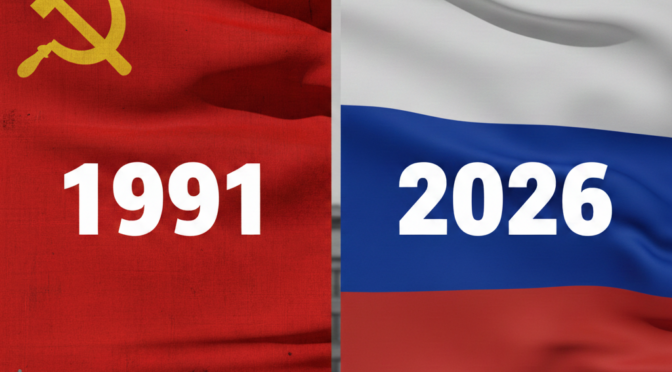
The geopolitical landscape of the Caribbean Basin underwent a cataclysmic shift on January 3, 2026, with the United States military intervention in Venezuela, specifically the capture of Nicolás Maduro and the subsequent assumption of operational control over the nation’s petroleum infrastructure. For the Republic of Cuba, this event represents a strategic shock of existential magnitude, comparable only to the dissolution of the Soviet Union in 1991. However, unlike the gradual decline of the “Special Period” in the 1990s, the current crisis unfolds with immediate, kinetic velocity due to the imposition of a strict US naval quarantine under Operation Southern Spear.

This report, prepared for national security and foreign affairs stakeholders, provides an exhaustive analysis of the cascading impacts on the Cuban state. The central finding is that the disruption of the Caracas-Havana energy axis is not merely a logistical bottleneck but a systemic termination of the economic model that has sustained the Cuban Communist Party (PCC) for a quarter-century. The symbiosis, wherein Venezuelan hydrocarbons were exchanged for Cuban intelligence and medical services, has been severed at the source.

The analysis projects a rapid, multi-sectoral collapse within Cuba. The electrical grid, already fragile, faces total structural failure as the 35,000–50,000 barrels per day (bpd) of subsidized Venezuelan crude and refined products are halted. This energy deficit will trigger a chain reaction: the paralysis of mechanized agriculture leading to acute food insecurity; the collapse of water sanitation systems dependent on diesel pumps; and the evaporation of hard currency revenues previously derived from re-exporting Venezuelan fuel.

Furthermore, the diplomatic and economic isolation of Havana is compounded by the “US Majors” strategy for Venezuela’s rehabilitation. The roadmap for Petróleos de Venezuela, S.A. (PDVSA) under US provisional authority prioritizes the commercial reintegration of Venezuelan crude into the US Gulf Coast refining complex, explicitly excluding subsidized political transfers to the Caribbean. Regional actors such as Mexico, constrained by their own economic entanglements with the US, lack the capacity to fill the void. Russia and China, while politically sympathetic, face insurmountable logistical and financial barriers to replacing Venezuela as a distinct energy patron.

Consequently, the outlook for Q1 and Q2 2026 indicates a high probability of severe internal instability in Cuba, characterized by nationwide blackouts exceeding 20 hours daily, the erosion of the regime’s internal security capacity due to fuel shortages, and a mass migration event potentially exceeding historical precedents. The Cuban regime has lost its strategic depth, creating a vacuum that threatens the continuity of governance in Havana.

1. The Strategic Decoupling: Anatomy of the Rupture

To understand the severity of the current crisis, one must analyze the depth of the dependency that has now been violently dismantled. The relationship between Venezuela and Cuba was not a standard bilateral trade agreement; it was an ideological and economic fusion designed to bypass market mechanisms and US sanctions. The dismantling of this architecture by US forces has left Havana with no fallback mechanism.

1.1 The Mechanics of the Caracas-Havana Axis

For over two decades, the survival of the Cuban state was predicated on the “Barrio Adentro” exchange. This agreement, forged by Hugo Chávez and Fidel Castro, structured the transfer of Venezuelan national wealth to Cuba in exchange for human capital. Specifically, Venezuela provided between 30,000 and 50,000 barrels per day (bpd) of crude oil and refined products to Cuba.1 In return, Cuba deployed thousands of doctors, educators, and sports trainers to Venezuela.

Crucially, beneath the surface of this humanitarian exchange lay a vital security cooperation framework. Cuban intelligence agencies, specifically the G2, provided the backbone of the Venezuelan state’s internal security, counter-intelligence, and presidential protection protocols.4 This integration went so far that Cuban advisors were embedded within the command structures of the Venezuelan military and PDVSA, effectively managing the oil flows to ensure Havana’s quota was prioritized over commercial clients or even Venezuelan domestic needs.

The US intervention on January 3, 2026, decapitated this structure. By physically removing the Maduro leadership and targeting the Cuban security apparatus within Venezuela, the US effectively blinded Havana and severed its control over the resource flows.5 The expulsion or neutralization of Cuban personnel in Venezuela means Havana has lost its forward operating base and its leverage over the oil spigots.

1.2 Operation Southern Spear and the Naval Quarantine

The physical mechanism enforcing this decoupling is Operation Southern Spear. Unlike previous sanctions regimes, which relied on financial designations and Treasury Department lists (OFAC), this operation utilizes the kinetic power of the US Navy and Coast Guard to enforce a physical blockade of energy transfers to Cuba.

US Secretary of State Marco Rubio has explicitly defined the operation as an “oil quarantine,” a terminology that evokes the 1962 Cuban Missile Crisis but applies it to energy rather than nuclear armaments.6 The quarantine zone targets the “Dark Fleet”—vessels operating without transponders to evade sanctions—which had been the primary conduit for Venezuelan oil to Cuba in recent years.7

Operation Southern Spear map showing US naval quarantine of Caribbean energy corridor, blocking Venezuelan oil to Cuba.

The operational reality of this quarantine is stifling. US naval assets, including the USS Gerald R. Ford Carrier Strike Group and the USS Iwo Jima Amphibious Ready Group, effectively dominate the maritime approaches between Puerto Jose (Venezuela) and Cienfuegos (Cuba).8 Any vessel attempting to run this blockade faces interception, boarding, and seizure. This has created a “risk wall” for global shipping; insurance premiums for voyages to Cuba have skyrocketed, and major insurers have withdrawn coverage for any vessel designated by the US as potentially violating the quarantine.7 The result is that even if Cuba could find a seller, it cannot find a bottom (ship) willing to make the voyage.

Complementing the naval blockade is a rigid legal framework established by the US provisional authority over Venezuelan assets. The US Treasury has revoked the licenses that previously allowed limited swaps and has instituted a new regime where Venezuelan oil is treated as a strategic asset under US administration.11

Under this new framework, US oil majors (Chevron, ExxonMobil, ConocoPhillips) are the authorized custodians of production rehabilitation. These entities operate under strict US law, which explicitly prohibits transactions with Cuba due to the ongoing embargo (LIBERTAD Act). Therefore, there is no legal pathway for a barrel of Venezuelan oil to be transferred to Cuba. The “oil-for-doctors” barter scheme has no legal standing in the new commercial reality of Venezuela. The contracts are void, and the debt is unrecognized. Cuba has transitioned overnight from a privileged partner to a sanctioned pariah in the eyes of the Venezuelan energy sector.13

2. The Energy Asphyxiation: Anatomy of a Collapse

The cessation of Venezuelan oil supplies is a catastrophic event for Cuba’s energy infrastructure. The island’s electrical grid is a chaotic patchwork of Soviet-era thermoelectric plants, floating Turkish power ships, and distributed diesel generators. This entire system was calibrated to run on a specific mix of domestic crude and Venezuelan imports. The removal of the Venezuelan component destabilizes the entire architecture.

2.1 The Mathematics of Deficit

To maintain a minimally functional society—keeping lights on in Havana, running essential industries, and powering hospitals—Cuba requires approximately 100,000 barrels of oil equivalent per day.4 Domestic production, primarily heavy, high-sulfur crude extracted along the northern coast (Varadero/Matanzas belt), contributes roughly 40,000 bpd.3 This leaves a structural deficit of approximately 60,000 bpd.

Historically, Venezuela filled the vast majority of this gap. Even in the diminished years of 2024-2025, shipments averaged 35,000 to 50,000 bpd.1 This imported volume was crucial not just for its quantity but its quality. Venezuelan lighter crudes and refined diesel were essential for blending with the sludge-like Cuban crude to make it combustible in thermoelectric plants, and for fueling the distributed generation network.2

With the US naval blockade reducing this inflow to near zero, the math becomes merciless. The 40,000 bpd of domestic production is insufficient to run the baseload plants at capacity, and it cannot be used in diesel generators or vehicles. The deficit is not 20% or 30%; it is a functional deficit of over 60% of liquid fuel needs, concentrated entirely in the transport and peak-generation sectors.

Cuba's structural oil deficit in Jan 2026. Lost Venezuelan oil supply creates a critical energy cliff.

2.2 The Collapse of Distributed Generation

The most immediate impact falls on the “Distributed Generation” clusters. These are thousands of diesel and fuel-oil generators installed across the island during the “Energy Revolution” of the mid-2000s. They were designed to cover peak demand when the aging thermoelectric plants failed or underwent maintenance.

These generators rely exclusively on imported diesel and fuel oil. The domestic crude is too heavy and sulfurous for them. With the blockade halting refined product shipments from Venezuela, these generators are going offline en masse.15 The result is the loss of the grid’s “shock absorbers.” When a main plant trips offline, there is no backup to pick up the load, leading to frequency instability and total blackouts rather than managed load-shedding.

2.3 The “Zero Diesel” Scenario and Critical Infrastructure

The “Zero Diesel” scenario is the nightmare contingency for Cuban planners. Diesel is the lifeblood of the island’s critical infrastructure backup systems.

  • Hospitals: Cuban hospitals rely on diesel generators during blackouts. With 20+ hour blackouts becoming the norm, these generators must run almost continuously. Without fuel deliveries, hospital backup power will fail, leading to immediate loss of life in intensive care units, neonatal wards, and operating theaters.16
  • Water Supply: The vast majority of Cuba’s water pumping stations run on electricity or diesel. The blackout prevents electric pumps from filling reservoirs, and the lack of diesel prevents the backup pumps from operating. Over 2 million people were already without reliable water before the intervention.4 This number will likely encompass the entire urban population of Havana and Santiago de Cuba, precipitating a sanitation crisis and the risk of waterborne diseases.
  • Cold Chain and Food Preservation: In a tropical climate, the lack of refrigeration is devastating. Households will lose their meager food stocks within hours of a blackout. State cold storage facilities for imported meats and medicines will fail, leading to massive spoilage of strategic reserves.16

3. The Economic Implosion: Sectoral Impact Analysis

The energy crisis is the lead domino in a cascading economic failure. Energy is the primary input for every productive sector of the Cuban economy. The cessation of Venezuelan oil flows renders the current economic model viable.

3.1 Agriculture: The Threat of Famine

Cuban agriculture operates on a model that, while inefficient, is mechanized. Tractors prepare the land, diesel pumps irrigate the fields, and trucks transport the harvest to urban centers.

  • Production Collapse: The lack of diesel strikes at the heart of the planting and harvesting cycles. The sugar harvest (zafra), already at historic lows, will likely be abandoned entirely as the fuel cost to cut and transport cane exceeds the value of the sugar produced. Rice production and other staples will suffer similar fates, forcing the population into subsistence farming.
  • Distribution Paralysis: The most critical failure point is transport. Even if food is grown or imported as aid, it cannot be distributed. The “Acopio” state distribution system relies on a fleet of aging trucks that require diesel. Without fuel, produce rots in the fields of Artemisa and Mayabeque while the markets in Havana stand empty.4 The breakdown of the rural-urban food supply chain creates the conditions for localized famine.

3.2 Tourism: The Death of the Cash Cow

Tourism has historically been the regime’s primary source of hard currency, funding the import of food and fuel. However, the industry is energy-intensive. Hotels require air conditioning, desalination, and constant lighting to meet international standards.

To shield tourists from the reality of Cuban life, the regime has traditionally ring-fenced energy for the tourism sector, powering hotels with dedicated circuits or generators. The depth of the current fuel crisis makes this impossible. Hotels are now subject to the same shortages as the general population.

  • Reputational Destruction: The image of a “tropical paradise” cannot survive reports of 20-hour blackouts, food shortages at buffets, and lack of running water. Cancellations will spike, and new bookings will evaporate.
  • Revenue Spiral: The collapse of tourism revenue removes the government’s liquidity. Without tourism dollars, they cannot buy spot-market fuel (even if they could find a seller), which worsens the blackouts, which further kills tourism. This is a classic “death spiral”.4

3.3 The End of Re-export Revenue

A little-known but vital component of the Cuba-Venezuela relationship was the re-export of oil. Venezuela often shipped crude to the Cienfuegos refinery—a joint venture—where it was processed. Cuba would then consume what it needed and export the surplus refined products (diesel, jet fuel) to the international market, keeping the hard currency profit.17

This “middleman” trade was a major source of off-the-books revenue for the regime, often used to fund the military and intelligence services. The US control of PDVSA ends this completely. The Cienfuegos refinery, designed for Venezuelan crude, is now effectively a stranded asset. The loss of this revenue stream defunds the apparatus of the state just as internal security threats are rising.

4. Geopolitical Isolation: The Myth of the Alternative Patron

In previous moments of crisis, Cuba has relied on a geopolitical patron to counter US pressure—first the Soviet Union, then Venezuela. In the current crisis, the regime finds itself isolated. The specific mechanics of the US intervention and the global geopolitical environment preclude an effective rescue by China, Russia, or Mexico.

4.1 The Logistics of Distance and Cost

While Russia and China have issued diplomatic condemnations of the US action 18, material support faces the tyranny of distance and economics.

  • Russia: A tanker from Venezuela reaches Havana in 2-4 days. A tanker from Russian ports takes 30 to 45 days. The freight cost for such a voyage is significant. Russia, heavily sanctioned and focused on its war in Ukraine, utilizes a “shadow fleet” for its own oil exports to India and China. Diverting these vessels to supply Cuba for free (or on credit that will never be repaid) is strategically irrational for Moscow. Additionally, Russian crude grades may not be compatible with Cuban refineries designed for Venezuelan heavy sour crude.20
  • China: Beijing has historically been pragmatic in its relationship with Venezuela, prioritizing loan repayment over ideological subsidies. With the US controlling Venezuelan assets, China’s priority is negotiating the security of its existing investments with the new US-backed administration, not antagonizing Washington by breaking a blockade to support Havana.19 China’s economic interests lie in stability and access to global markets, which discourages high-risk adventures in the Caribbean.

4.2 The Mexican Dilemma

Mexico, under President Claudia Sheinbaum, initially signaled a willingness to provide humanitarian oil to Cuba.22 However, this support is structurally limited and politically vulnerable.

  • US Leverage: The US has enormous economic leverage over Mexico via the USMCA trade agreement and border policies. The Trump administration has explicitly linked Mexican cooperation on migration and drug interdiction to trade stability. Continuing to supply oil to Cuba in defiance of a US “quarantine” places Mexico at risk of secondary sanctions or tariffs.22
  • PEMEX Constraints: Petróleos Mexicanos (PEMEX) is the most indebted oil company in the world. Donating oil to Cuba is domestically controversial and fiscally damaging. Furthermore, Mexican crude production has been declining, limiting the surplus available for export.24
  • Operational Risk: Reports indicate that tankers departing Mexico for Cuba have faced US naval scrutiny. The risk of interdiction or being blacklisted by insurers makes the voyage commercially unviable for Mexican vessels.24
Venezuela oil substitution matrix: volume, cost, logistics, political risk. "Venezuelan Oil Under US Control" consequences in Havana.

5. Regime Stability and Internal Dynamics

The energy and economic crises are rapidly metamorphosing into a political crisis. The Cuban regime relies on two pillars for stability: the “social contract” (subsidized basics in exchange for acquiescence) and the security apparatus. Both are being eroded by the loss of Venezuelan support.

5.1 The Breakdown of the Social Contract

The Cuban population is accustomed to hardship, but the current scenario breaches the implicit limits of the social contract. The “Special Period” of the 1990s had a narrative of shared sacrifice and national defense. The current crisis is viewed increasingly as a failure of management and a result of the regime’s geopolitical gambling.

Protests have evolved from isolated incidents to coordinated expressions of dissent. The “pot-banging” (cacerolazos) protests seen in late 2025 have intensified.25 The demands have shifted from “fix the lights” to broader political slogans (“Freedom,” “Patria y Vida”). As blackouts extend to 20+ hours, the population has little to lose. The fear of repression is outweighed by the existential dread of starvation and darkness.

5.2 The Erosion of Repressive Capacity

The regime’s ability to quell unrest is physically constrained by the fuel shortage.

  • Mobility: Police and military vehicles require fuel. In a “Zero Diesel” scenario, the rapid deployment of “Black Beret” special forces to hotspots becomes logistically difficult. The regime may be forced to concentrate forces in Havana, leaving the provinces in a state of semi-anarchy.
  • Surveillance: The sophisticated electronic surveillance state built with Chinese and Venezuelan assistance requires electricity. Frequent power cuts blind the digital monitoring systems that track dissent on social media and communications networks.
  • Internal Friction: The return of thousands of intelligence officers and military advisors from Venezuela creates a dangerous demographic within the security services.5 These personnel are witnessing the collapse of the project they dedicated their careers to. Discontent within the middle ranks of the military (FAR) and Interior Ministry (MININT)—who are suffering the same blackouts as the civilians—cannot be ruled out.

6. The Migration Event: Mariel 2.0

History demonstrates a direct correlation between economic distress in Cuba and migration surges to the United States. The 1980 Mariel boatlift and the 1994 Rafter Crisis were both precipitated by internal squeezes. The crisis of 2026 is poised to trigger a migration event of similar or greater magnitude.

6.1 The Mechanics of the Surge

The collapse of the grid and the food supply creates a “push” factor of unprecedented intensity. Unlike previous waves where economic aspiration was a driver, this wave is driven by survival.

  • State Complicity: In past crises, the Cuban government has used migration as a safety valve, effectively opening the borders to allow the most dissatisfied segments of the population to leave, thereby relieving internal pressure. It is highly probable that the regime will cease patrolling its own coasts, tacitly encouraging a mass exodus.26
  • Scale: With nearly 600,000 Cubans having already attempted to leave in recent years, the migration infrastructure (smuggling networks, raft building knowledge) is well-established.27
Blackouts & migration surges: Cuba energy collapse correlates with US Coast Guard interdictions. "The Darkness Drive" chart.

6.2 US Countermeasures and Humanitarian Crisis

The US response, however, differs from previous eras. The administration has signaled a “closed door” policy, implemented via strict naval interdiction.

  • Interdiction Saturation: The US Coast Guard (USCG) and Customs and Border Protection (CBP) Air and Marine Operations are tasked with holding the line in the Florida Straits. However, these same assets are currently tasked with enforcing the Venezuelan oil quarantine.28 This stretching of resources creates a vulnerability. A mass “swarm” event of thousands of rafts could overwhelm interdiction capacity.
  • Humanitarian Dilemma: The intersection of a starving population taking to the sea and a militarized blockade creates the potential for a massive humanitarian disaster in the Straits, with high loss of life and complex search-and-rescue demands placed on US forces.

7. Next Steps for the Venezuelan Oil Industry Under US Control

With the US acting as the de facto provisional administrator of Venezuela’s oil wealth, the path forward for PDVSA involves a rapid reintegration into the Western commercial sphere, explicitly bypassing Cuba.

7.1 The “US Majors” Rehabilitation Strategy

President Trump has outlined a strategy where “very large United States oil companies” will take the lead in rebuilding the sector.14 This is not merely rhetorical; it aligns with the technical realities of Venezuela’s infrastructure.

  • Western Capital Re-entry: Companies like Chevron, which maintained a foothold via joint ventures (Petroboscan, Petropiar), are positioned to scale operations immediately. They possess the technical data and the legal standing (via General License 41 modifications) to operate.11
  • Infrastructure Triage: The immediate focus will be on the “low hanging fruit”—repairing valves, pipelines, and compression stations in the Orinoco Belt to stabilize production, which currently sits at a fraction of its potential (~1 million bpd vs 3 million bpd historical peak).31
  • Supply Chain Rewiring: The most significant shift is the destination of the crude. Venezuelan Merey 16 (heavy/sour) is chemically ideal for the complex refineries of the US Gulf Coast (PADD 3), which were built to process it. The US strategy is to redirect these flows north to Texas and Louisiana, displacing imports from other regions and funding the Venezuelan reconstruction.21

7.2 The Explicit Exclusion of Cuba

The US-led roadmap for PDVSA contains no provision for the continuation of the Cuban subsidy.

  • Sanctions Compliance: US oil majors operate under strict adherence to the Treasury Department’s Office of Foreign Assets Control (OFAC) regulations. Any export of Venezuelan crude to Cuba would violate the US embargo (LIBERTAD Act) and trigger severe penalties. Corporate governance at Chevron or ExxonMobil precludes any “off-books” shipments.33
  • Commercial Imperative: The provisional Venezuelan government will require immediate cash flow to stabilize the country and pay down debt. Cuba cannot pay for oil. Selling to a non-paying customer while attempting to rebuild a bankrupt national industry is commercially impossible.
  • Strategic Intent: The cessation of oil to Cuba is not just a byproduct of the policy; it is a feature. The US administration views the energy starvation of the Castro regime as a strategic benefit, accelerating the possibility of political change in Havana.15

Conclusion

The US intervention in Venezuela and the subsequent control of its oil industry has effectively placed the Cuban regime in a stranglehold. By physically controlling the resource that powered the Cuban economy and policing the waters that transport it, the United States has achieved a level of pressure on Havana that decades of embargo legislation failed to deliver.

The chain of impacts is linear, rapid, and devastating:

  1. US Control of PDVSA ends the political will to subsidize Cuba.
  2. Operation Southern Spear physically prevents alternative supplies from reaching the island.
  3. The Energy Cliff leads to the collapse of the electrical grid and transport sector.
  4. Economic Paralysis triggers food insecurity and the collapse of the tourism revenue stream.
  5. Regime Destabilization ensues as the social contract fractures and the security apparatus loses mobility.

The Cuban leadership faces a narrowing set of options, none of which ensure the long-term survival of the status quo. The capture of Nicolás Maduro in Caracas has effectively removed the keystone of the Cuban geopolitical arch, leaving the structure to collapse under its own weight.


Please share the link on Facebook, Forums, with colleagues, etc. Your support is much appreciated and if you have any feedback, please email us in**@*********ps.com. If you’d like to request a report or order a reprint, please click here for the corresponding page to open in new tab.


Sources Used

  1. Venezuela’s Oil Industry in Global Market – January 2026 – Lodi 411, accessed January 6, 2026, https://lodi411.com/lodi-eye/venezuelas-oil-industry-in-global-market-january-2026
  2. Venezuela Sent Twice As Much Oil to the U.S. Than to Cuba in August, accessed January 6, 2026, https://translatingcuba.com/venezuela-sent-twice-as-much-oil-to-the-u-s-than-to-cuba-in-august/
  3. Maduro ouster leaves Cuba’s wobbling regime without a benefactor, accessed January 6, 2026, https://www.japantimes.co.jp/news/2026/01/05/world/politics/maduro-cuba-oil-benefactor/
  4. Maduro ouster leaves Cuban regime without a benefactor – Taipei Times, accessed January 6, 2026, https://www.taipeitimes.com/News/editorials/archives/2026/01/06/2003850109
  5. ​Is Cuba next after Maduro’s capture? – Asia Times, accessed January 6, 2026, https://asiatimes.com/2026/01/is-cuba-next-after-maduros-capture/
  6. Rubio says US is using oil quarantine to pressure Venezuela, accessed January 6, 2026, https://www.indiatribune.com/public/index.php/rubio-says-us-is-using-oil-quarantine-to-pressure-venezuela
  7. Caribbean Shipping Confronts New Era of Risk After U.S. Raid in Venezuela, accessed January 6, 2026, https://gcaptain.com/caribbean-shipping-confronts-new-era-of-risk-after-u-s-raid-in-venezuela/
  8. U.S. Navy blockade off coast of Venezuela will continue despite Maduro’s capture – WHRO, accessed January 6, 2026, https://www.whro.org/news/local-news/2026-01-04/u-s-navy-blockade-off-coast-of-venezuela-will-continue-despite-maduros-capture
  9. United States blockade during Operation Southern Spear – Wikipedia, accessed January 6, 2026, https://en.wikipedia.org/wiki/United_States_blockade_during_Operation_Southern_Spear
  10. U.S. Moves to Disrupt Venezuela-Cuba Oil Axis Explained – Discovery Alert, accessed January 6, 2026, https://discoveryalert.com.au/caribbean-energy-enforcement-regulatory-architecture-2025/
  11. Reversing the Biden Administration, OFAC Announces the Wind Down of Venezuela General License 41 – SmarTrade | Thompson Hine, accessed January 6, 2026, https://www.thompsonhinesmartrade.com/2025/03/reversing-the-biden-administration-ofac-announces-the-wind-down-of-venezuela-general-license-41/
  12. OFAC Terminates License Authorizing Certain Petroleum-Related Activities in Venezuela | Insights | Holland & Knight, accessed January 6, 2026, https://www.hklaw.com/en/insights/publications/2025/03/ofac-terminates-license-authorizing-certain-petroleum-related
  13. Former Chevron executive seeks $2 billion for oil projects in Venezuela, accessed January 6, 2026, https://americanbazaaronline.com/2026/01/06/former-chevron-executive-seeks-2-billion-venezuela-oil-472665/
  14. What role could the US play in Venezuela’s ‘bust’ oil industry? – The Guardian, accessed January 6, 2026, https://www.theguardian.com/business/2026/jan/04/venezuela-oil-industry-bust-what-role-could-the-us-play
  15. Trump Is Convinced That Without Venezuelan Oil the Cuban Regime Will Fall on Its Own, accessed January 6, 2026, https://translatingcuba.com/trump-is-convinced-that-without-venezuelan-oil-the-cuban-regime-will-fall-on-its-own/
  16. 11 Million Cubans Are Poised to Starve Without Venezuelan Oil. How Many Will We Allow to Die? – Jezebel, accessed January 6, 2026, https://www.jezebel.com/cuba-collapse-struggles-power-starvation-food-venezuela-oil-maduro-trump-rubio-miguel-diaz-canel
  17. ‘Got free oil from Venezuela’: Why Cuba’s collapse looks inevitable after capture of Nicholas Maduro, accessed January 6, 2026, https://www.wionews.com/photos/-got-free-oil-from-venezuela-why-cuba-s-collapse-looks-inevitable-after-capture-of-nicholas-maduro-1767531151243
  18. From Russia to Iran, Venezuela’s allies react to the capture of Nicolas Maduro, accessed January 6, 2026, https://www.sbs.com.au/news/article/maduro-capture-world-reaction/mxpdbf7nx
  19. Trump’s attack leaves China worried about its interests in Venezuela, accessed January 6, 2026, https://www.theguardian.com/world/2026/jan/05/venezuela-trump-attack-china-interests-analysis
  20. With Maduro Gone, Putin Risks Being Pushed Out of the Western Hemisphere, accessed January 6, 2026, https://www.themoscowtimes.com/2026/01/05/with-maduro-gone-putin-risks-being-pushed-out-of-the-western-hemisphere-a91608
  21. Venezuelan oil output could reach 1.2 million bpd by end of 2026 if sanctions are lifted, accessed January 6, 2026, https://www.thenationalnews.com/business/energy/2026/01/05/venezuelan-oil-output-could-reach-12-million-bpd-by-end-of-2026-if-sanctions-are-lifted/
  22. Mexican Oil, Cuba and Trump 2.0 – Global Americans, accessed January 6, 2026, https://globalamericans.org/mexican-oil-cuba-and-trump-2-0/
  23. In the wake of Venezuela, is Mexico next? A perspective from our CEO, accessed January 6, 2026, https://mexiconewsdaily.com/opinion/venezuela-mexico-ceo-perspective/
  24. 80000 barrels of Mexican oil sent to Cuba: Havana drawn into the US–Mexico clash, accessed January 6, 2026, https://english.elpais.com/international/2025-12-29/80000-barrels-of-mexican-oil-sent-to-cuba-havana-drawn-into-the-usmexico-clash.html
  25. Cuba on the Brink: Protests and Pot-Banging Over Blackouts, accessed January 6, 2026, https://havanatimes.org/features/cuba-on-the-brink-protests-and-pot-banging-over-blackouts/
  26. Cuban Immigrants in the United States – Migration Policy Institute, accessed January 6, 2026, https://www.migrationpolicy.org/article/cuban-immigrants-united-states-2018
  27. U.S. Sanctions: A Root Cause of Cuban Migration – The Alliance for Cuba Engagement and Respect (ACERE), accessed January 6, 2026, https://acere.org/migration/
  28. Coast Guard Migrant Interdiction Operations Are in a State of Emergency | Proceedings, accessed January 6, 2026, https://www.usni.org/magazines/proceedings/2023/february/coast-guard-migrant-interdiction-operations-are-state-emergency
  29. Despite Trump’s hopes, big oil will be wary of rushing back to Venezuela, accessed January 6, 2026, https://www.theguardian.com/business/2026/jan/05/donald-trump-big-oil-venezuela
  30. Chevron jumps as Maduro’s fall puts US oil major in pole position for Venezuelan oil, accessed January 6, 2026, https://www.tradingview.com/news/invezz:c88ca0cf9094b:0-chevron-jumps-as-maduro-s-fall-puts-us-oil-major-in-pole-position-for-venezuelan-oil/
  31. What US control over Venezuela’s oil could mean for geopolitics, climate, accessed January 6, 2026, https://www.downtoearth.org.in/energy/what-us-control-over-venezuelas-oil-could-mean-for-geopolitics-climate
  32. Venezuelan Political Transition Reshapes Global Oil Market Dynamics – Discovery Alert, accessed January 6, 2026, https://discoveryalert.com.au/venezuelan-political-transition-oil-dynamics-2026/
  33. Treasury Issues Venezuela General License 41 Upon Resumption of Mexico City Talks, accessed January 6, 2026, https://home.treasury.gov/news/press-releases/jy1127
  34. Cuban exiles: US control of Venezuelan oil flow to weaken communists’ grasp on power, accessed January 6, 2026, https://www.local10.com/news/world/2026/01/05/venezuelan-oil-disruptions-weakens-cuban-communists/

US Control Over Venezuelan Oil: Implications for Russia

This is a time-sensitive special report and is based on information available as of January 5, 2026. Due to the situation being very dynamic the following report should be used to obtain a perspective but not viewed as an absolute.

The decisive execution of Operation Absolute Resolve in January 2026, culminating in the capture of Nicolás Maduro and the assertion of United States administrative control over Venezuela’s energy sector, constitutes a catastrophic strategic reversal for the Russian Federation.1 This event is not merely the displacement of a localized ally; it represents the systematic dismantling of Moscow’s primary forward operating base in the Western Hemisphere and the foreclosure of a multi-decade geopolitical project intended to challenge US hegemony in its “near abroad”.3

The ramifications for Russia are multidimensional and severe. Operationally, the failure of Russian intelligence and military advisors to secure the Maduro regime exposes a critical weakness in the Kremlin’s security guarantees, damaging its reputation among client states globally.3 Financially, the imposition of a US-backed interim administration places billions of dollars in Russian state-backed loans and energy assets—transferred to the state-owned entity Roszarubezhneft to avoid sanctions—at imminent risk of expropriation or devaluation.6

However, the most profound threat lies in the global energy markets. The US seizure of Venezuela’s oil infrastructure threatens to fundamentally reorder the heavy crude supply chain. As US majors move to rehabilitate the dilapidated Venezuelan sector, the reentry of “legitimate” heavy crude—specifically targeting refineries in the US Gulf Coast and eventually Asia—poses a direct competitive threat to Russia’s Urals export blend. The Urals blend, currently Russia’s economic lifeline amidst the war in Ukraine, faces displacement in key markets like India and China, forcing Moscow to deepen discounts and further erode its war chest.8

Furthermore, the operational precedent set by the US naval blockade and the pursuit of the Russian-reflagged tanker Marinera signals a new, aggressive interpretation of maritime law that endangers Russia’s “shadow fleet” globally.11 This report provides an exhaustive analysis of these impacts, mapping the chain of consequences from the loss of the Caribbean bridgehead to the fiscal shocks in Moscow and the likely asymmetric responses available to the Kremlin.

Map: US control zone encircles Venezuela, blocking Russian assets and maritime lifeline. "The Retreat from the Caribbean.

I. The Geopolitical Shockwave: The Revival of the “Don-roe” Doctrine

The extraction of Nicolás Maduro by US forces marks the most significant reassertion of American hard power in the Western Hemisphere since the Cold War era. For Moscow, this intervention is not a peripheral loss but a direct assault on its strategy of “reciprocal pressure.” Since the early 2000s, and accelerating under Hugo Chávez and Nicolás Maduro, Russia has utilized Venezuela as a symmetric counter-weight to US influence in Ukraine and Eastern Europe. The logic was explicit: if Washington could expand NATO into Russia’s “near abroad,” Moscow would cultivate a military and economic foothold in Washington’s “backyard”.4 The sudden and total removal of this lever forces a recalibration of Kremlin foreign policy.

The Collapse of the Forward Operating Base

The speed of Operation Absolute Resolve has inflicted severe reputational and operational damage on the Russian Federation. Moscow had invested heavily in the survival of the Chavista regime, deploying military advisors, S-300 air defense systems, and reportedly Wagner Group personnel to Venezuela to provide regime security.3 These assets were intended to serve as a tripwire against US intervention. Their failure to detect, deter, or repel the US operation exposes a critical weakness in Russian power projection capabilities.

The operational reality revealed by the January 2026 intervention is that Russia lacks the logistical capacity to sustain a high-intensity defense of its allies across the Atlantic while fully committed to the war in Ukraine. Russian military analysts have noted with alarm that the US operation was executed with a speed and decisiveness that contrasts sharply with the protracted nature of Russia’s own “Special Military Operation”.14 This failure resonates beyond Caracas. Client states relying on Russian security guarantees—from Syria to the Sahel—are witnessing a stark demonstration of Moscow’s limitations when confronted by direct US military resolve. The “invincibility” of Russian-backed authoritarian survival strategies has been pierced, potentially encouraging opposition movements in other Russian client states to test the Kremlin’s resolve.

The “Wild West” Precedent and Spheres of Influence

While the loss is acute, Russian strategists are attempting to salvage a diplomatic narrative from the wreckage. By framing the US intervention as a return to 19th-century imperialism—dubbed the “Don-roe Doctrine” by some analysts, a play on the Monroe Doctrine 15—Moscow aims to solidify its own claims to a sphere of influence in Eastern Europe. The Kremlin’s diplomatic messaging has focused on the “illegality” of the US action, arguing that if Washington can claim exclusive rights to manage political outcomes in the Americas, Russia has an identical right to dictate the political future of Ukraine and Belarus.4

However, this rhetorical pivot conceals a grim reality: the global order is shifting toward a raw transactionalist model where “might makes right.” While Russia has long championed this shift away from a rules-based order, it is now on the losing end of the equation in the Caribbean. The Kremlin’s silence and lack of substantive military counter-moves suggest a tacit acknowledgement that it cannot contest the US in the Western Hemisphere.16 The “strategic partnership” signed between Putin and Maduro in May 2025 has been rendered null and void, proving that diplomatic paper is worthless without the force projection to back it.5

II. The Energy War: Displacement of the Urals Blend

The most tangible and damaging impact on Russia will manifest in the global oil markets. The Russian war economy is predicated on the export of medium-sour Urals crude, primarily to India and China, often at a discount to Brent but above the Western price cap. The reentry of Venezuelan heavy crude into the open market, under US administration, poses a direct threat to this market share.

Crude Quality Competition: Heavy vs. Medium Sour

Venezuela possesses the world’s largest proven oil reserves, primarily heavy and extra-heavy crude in the Orinoco Belt.18 Historically, this oil was the ideal feedstock for complex refineries in the US Gulf Coast (USGC), which were specifically engaged to process heavy, high-sulfur barrels.8 Following the imposition of sanctions, this oil was diverted to China, where it competed directly with Russian Urals and Iranian heavy grades for market share among independent “teapot” refiners.9

With the US now controlling the flow, two scenarios emerge, both detrimental to Russia:

  1. The Repatriation of Barrels: The US administration has signaled an intent to direct Venezuelan output back to Gulf Coast refineries to lower domestic gasoline prices and fuel “reindustrialization”.8 This repatriation of barrels accomplishes a strategic dual purpose for the US: it lowers domestic energy costs and, critically, it removes Venezuelan supply from the “dark market.” Every barrel of Venezuelan crude that returns to the USGC is a barrel that is no longer available to Chinese independent refiners at a deep discount. This forces Chinese buyers to look elsewhere, potentially to Russia, but without the leverage of a cheap Venezuelan alternative, or conversely, it forces Russia to compete more aggressively against Iranian barrels for the remaining “dark” market share.
  2. The Asian Displacement: If production is ramped up significantly—Goldman Sachs estimates a potential, though slow, recovery 10—and sanctions are lifted for compliant buyers, Venezuelan oil becomes a legitimate alternative for India and China. Indian refiners, such as Reliance Industries, have historically been significant buyers of Venezuelan crude. They have struggled with payment mechanisms for Russian oil due to sanctions and currency risks.9 If US-controlled Venezuela offers a stable, legal supply of heavy crude, Indian refiners may prefer it over sanctioned Russian barrels, which carry the constant risk of secondary sanctions and logistical disruption.
Crude oil quality comparison: WTI, Urals, Merey. Asian flows: Russian Urals vs. Venezuelan Merey crude. "US Control Over Venezuelan Oil" impact.

The “Price Cap” Evasion Squeeze and Revenue Erosion

Russia’s ability to fund its war in Ukraine relies on the “shadow fleet” and the willingness of Asian buyers to skirt Western sanctions to buy oil. If Venezuela returns to the fold of the global energy market, it introduces a massive volume of “legitimate” heavy crude. This increases the supply elasticity for buyers like China and India.

According to market analysis, even a modest increase in Venezuelan output to 2 million barrels per day (bpd) could depress long-term oil prices by approximately $4 per barrel.10 For Russia, which operates on thin margins due to the high cost of transport, insurance, and the “war risk” premiums attached to its sanctioned oil, a $4 drop is magnified. Furthermore, to compete with legitimate Venezuelan barrels that carry no sanctions risk, Russia would be forced to offer even steeper discounts to Chinese and Indian buyers. This dynamic erodes the net revenue entering the Kremlin’s coffers, directly impacting the fiscal stability of the Russian state.9 The discount on Urals crude, which Russia has fought to narrow, would likely widen again as buyers gain leverage.

III. Next Steps for the Venezuelan Oil Industry: A Challenge to Russian Interests

The immediate post-intervention phase for the Venezuelan oil industry will be defined by a US-led reconstruction effort that systematically excludes Russian participation. The path to recovery for PDVSA (Petróleos de Venezuela, S.A.) is fraught with technical and financial challenges, but the direction of travel—toward Western integration—is unambiguous.

Assessment of Infrastructure Decay

The Venezuelan oil sector has suffered from a decade of catastrophic underinvestment, brain drain, and looting. Production capacity has collapsed from over 3 million bpd in the late 1990s to approximately 800,000–900,000 bpd at the time of the intervention.18 The physical infrastructure—pipelines, pumping stations, and the critical “upgraders” in the Orinoco Belt that convert extra-heavy crude into exportable blends—is in a state of advanced disrepair.20

Reports indicate that looting of equipment has been widespread, and the “asset specificity” of the heavy oil infrastructure means that simply throwing money at the problem will not yield immediate results. Restoring production to 2 million bpd is estimated to require tens of billions of dollars and several years of sustained effort.2 However, unlike the Maduro regime, the US administration can leverage the technical expertise and capital of US supermajors.

The Return of the US Majors

The US strategy is explicitly reliant on private enterprise to fund the reconstruction. President Trump has stated that US oil companies will “go in, spend billions of dollars, fix the badly broken infrastructure… and start making money for the country”.20 This points to a rapid return of companies like Chevron, ConocoPhillips, and ExxonMobil, many of whom have outstanding arbitration claims against Venezuela for past expropriations.

  • Chevron: Already operating under a special license, Chevron is best positioned to lead the immediate stabilization of output.26
  • ConocoPhillips and Exxon: These companies, which left Venezuela under Chávez, may return under a new legal framework that swaps their debt claims for equity in new Joint Ventures.2

This “debt-for-equity” model is particularly dangerous for Russia. As US companies swap their arbitration awards for control of oil fields, they will likely displace existing operators—including Russian entities—whose contracts may be deemed illegitimate by the new administration.

Production Ramp-Up Scenarios

Analysts are divided on the speed of the recovery, but even a slow ramp-up impacts Russia.

  • Short Term (0-12 months): Production is likely to remain flat or dip slightly as the chaos of the transition settles and the US assesses the state of the facilities. The immediate focus will be on stabilizing the power grid and stopping the decline.29
  • Medium Term (1-3 years): With US capital and security, production could rise by 500,000 to 1 million bpd. JPMorgan analysts see a potential rise to 1.3–1.4 million bpd in two years.21
  • Long Term (3+ years): A return to 2.5–3 million bpd is possible but would require sustained political stability and investment exceeding $80 billion.2

OPEC+ Implications

Venezuela is a founding member of OPEC. Under US control, its relationship with the cartel—and specifically with the OPEC+ format led jointly by Saudi Arabia and Russia—becomes highly uncertain.

  • Quota Non-Compliance: A US-administered Venezuela is unlikely to adhere to OPEC+ production quotas designed to prop up oil prices. The US priority will be volume maximization to repay debts and lower global prices, directly undermining Russia’s efforts to restrict supply.2
  • Fracture of the Alliance: If Venezuela exits OPEC or simply ignores its mandates, it weakens the cartel’s cohesion. Russia relies on OPEC+ coordination to maintain the price floor for oil; a rogue producer with massive reserves under US tutelage disrupts this mechanism.

IV. Financial Exposure: The Roszarubezhneft Debacle

The financial linkage between Moscow and Caracas is deep, structural, and now largely toxic. Following the imposition of US sanctions on Rosneft in 2020, the Russian state created Roszarubezhneft, a 100% state-owned entity, to absorb Rosneft’s Venezuelan assets.6 This transfer was designed to protect the publicly traded Rosneft from sanctions, but it effectively concentrated the risk directly onto the Russian state balance sheet.

Asset Expropriation and “Odious Debt”

With the US vowing to “run” Venezuela and rebuild its infrastructure using US oil majors 20, the legal status of Roszarubezhneft’s Joint Ventures (JVs) is in extreme jeopardy. The new US-backed administration is likely to declare contracts signed under the Maduro regime as invalid or subject to renegotiation under terms unfavorable to Moscow.

  • The Debt Stack: Venezuela owes billions to Russia, consisting of sovereign debt and pre-payments for oil that was never delivered.31 Russian state media has estimated the value of stakes in ventures like Petromonagas, Petroperija, and Boqueron at around $5 billion.31
  • The Collateral Trap: Rosneft (now Roszarubezhneft) historically held liens on Venezuelan oil cargos and assets (such as the 49.9% stake in CITGO, though this has been the subject of complex litigation).33 With the US blockading exports and controlling the fields, there is no physical way for Russia to collect on these debts via oil shipments.24
  • Legal Warfare: The US administration has signaled that US oil companies must invest to rebuild the sector before they can recoup their own lost assets.28 In this queue of creditors, Russian state entities will undoubtedly be placed last. Legal scholars anticipate the US may designate Russian loans as “odious debt”—debt incurred by a despotic regime for purposes that did not serve the population—thereby nullifying Russia’s claims entirely.32

The loss of these assets is not just a paper loss; it is a destruction of capital that was intended to serve as a long-term strategic reserve and revenue stream for the Russian state.

V. The “Shadow Fleet” Crisis and Maritime Precedents

Perhaps the most dangerous development for Russia is not taking place on Venezuelan soil, but in the international waters surrounding it. The US pursuit and potential seizure of the tanker Marinera (formerly Bella 1) sets a legal and operational precedent that strikes at the heart of Russia’s ability to export oil globally.11

The Flag-State Immunity Challenge

The Bella 1, a known dark fleet tanker, attempted to evade US interdiction by re-flagging to Russia and renaming itself Marinera mid-voyage.36 Typically, a vessel flying a national flag is considered sovereign territory, and boarding it without the flag state’s consent is a violation of international law. However, the US has proceeded with the pursuit, treating the re-flagging as a fraudulent attempt to evade law enforcement rather than a legitimate sovereign act. US officials have argued that because the vessel was “stateless” or flying a false flag at the time the pursuit began, it does not enjoy retroactive protection from the Russian flag.37

If the US successfully seizes a vessel flying the Russian flag—arguing it is “stateless” due to fraudulent registration or engaged in “criminal” activity (narco-terrorism support via Maduro)—it creates a devastating precedent for Moscow.

  • Implication: The US could theoretically apply this legal logic to any vessel in Russia’s shadow fleet carrying oil above the price cap. If a vessel is deemed to be using deceptive practices (AIS spoofing, false documents), the US could argue it forfeits sovereign immunity.
  • Russian Reaction: Moscow has already filed diplomatic protests, viewing this as a test case.38 If they fail to protect the Marinera, the perceived security of the entire Russian shadow fleet will collapse. Insurance premiums for these vessels will skyrocket, and shipowners may refuse to carry Russian cargo if they believe US naval interdiction is a genuine risk.36

The Naval Blockade (Operation Southern Spear)

The implementation of a naval blockade (“quarantine”) on Venezuelan oil 39 demonstrates a US willingness to physically interdict energy flows. For Russia, which relies on narrow maritime chokepoints like the Danish Straits and the Bosporus for its oil exports, the normalization of naval blockades against major oil producers is an existential threat. It signals that the “freedom of navigation” for energy carriers is no longer guaranteed for US adversaries. The “quarantine” concept, famously used during the Cuban Missile Crisis, allows the US to filter traffic based on cargo content, effectively strangling a regime’s economic lifeline without declaring a formal war on the shipping nations.

VI. Second-Order Effects: The China Pivot and Eurasian Unity

The US control of Venezuela forces a difficult choice upon the People’s Republic of China, driving a potential wedge in the Sino-Russian “No Limits” partnership.

China’s Energy Pragmatism

China is the world’s largest importer of oil and has been the primary buyer of sanctioned Venezuelan crude, importing roughly 430,000 bpd in 2025.41 With the US now controlling the spigot, Beijing faces a stark dilemma:

  1. Confrontation: Continue buying “black market” Venezuelan oil (if any can slip the blockade) and risk secondary sanctions, naval interdiction, and a trade war with the US.
  2. Compliance: Accept US control, negotiate with the new administration for legitimate access to Venezuelan oil, and diversify away from “risky” suppliers.9

Evidence suggests China is pragmatic. Chinese refiners have already paused purchases of Venezuelan crude to assess the new reality, fearing US seizures.42 If the US successfully rehabilitates the Venezuelan oil sector and allows exports to China (to stabilize global prices and ensure Chinese neutrality), Beijing may reduce its reliance on Russian Urals. This would reduce Russia’s leverage over its most important economic partner. Russia needs China more than China needs Russia; if Venezuela offers a stable, high-quality heavy crude alternative, the “discount” Russia must offer to Beijing will deepen to maintain market share.18

The Fracture of the “Revisionist Bloc”

Venezuela was a key node in the “Axis of Resistance” (Russia, Iran, Venezuela, Cuba). The fall of Maduro isolates Cuba, which relied on Venezuelan oil subsidies for its economic survival.32 The likely economic collapse of Cuba would force Russia to either subsidize the island nation at a massive cost—something the strained Russian budget can ill afford—or watch another ally fall to US pressure. Furthermore, the perception that Russia could not save Maduro may lead other partners (Iran, North Korea) to question the value of Russian security assurances. They may prioritize their own nuclear deterrence over reliance on Russian diplomatic or conventional military support, leading to a more volatile and less coordinated anti-Western bloc.

VII. Russia’s Asymmetric Response Options

Cornered in the Caribbean and squeezed in the energy markets, Russia lacks the conventional projection capacity to reverse the situation in Venezuela. Direct military intervention is logistically impossible given the distance and the ongoing commitment in Ukraine.43 Therefore, Moscow’s response will be asymmetric, designed to inflict pain on US interests elsewhere and re-establish deterrence.

1. Escalation in Ukraine

The most likely venue for retaliation is Ukraine. Viewing the loss of Venezuela as a US escalation of the global conflict, the Kremlin may justify “total war” tactics in Ukraine. This could involve targeting energy infrastructure, leadership nodes, or logistics hubs with renewed intensity, mirroring the US “decapitation” of the Maduro regime.3 The logic of “reciprocal damage” suggests that if the US can topple a Russian ally, Russia must destroy a US ally.

2. The “Grey Zone” Maritime Campaign

Russia may intensify “grey zone” warfare at sea to challenge the US naval dominance asserted in the Caribbean. This could include:

  • Cable Cutting: Sabotage of undersea data cables in the Atlantic, claiming “unknown actors” are responsible, as a warning shot regarding US naval dominance and economic stability.
  • Shadow Fleet Harassment: Retaliatory harassment of Western commercial shipping in the Black Sea or Red Sea (via Houthi proxies), citing the Marinera precedent to justify boarding operations. If the US can board Russian-flagged ships, Russia may argue it can board Western-flagged ships suspected of carrying “contraband” for Ukraine.45

3. Cyber and Hybrid Warfare

The US plan to “run” Venezuela relies on the stability of the interim government and the physical security of the oil infrastructure. Russia retains significant cyber capabilities and human intelligence networks within Venezuela.13 We can expect a sustained campaign of sabotage, disinformation, and cyber-attacks aimed at the new Venezuelan administration and the US oil companies attempting to operate there. The goal will be to make Venezuela ungovernable and the oil unrecoverable, thereby denying the US the fruits of its victory and keeping global oil prices high.

Conclusion

The US assumption of control over Venezuelan oil is a watershed moment that significantly degrades the Russian Federation’s global standing. It strips Moscow of its most important asset in the Western Hemisphere, threatens the financial solvency of its state-owned energy vehicles, and introduces a potent competitor to its oil exports in critical Asian markets.

While the Kremlin projects an image of defiant silence, the strategic reality is one of containment. The “Don-roe Doctrine” has effectively closed the Caribbean to Russian power projection. Russia’s response will likely be defined by increased brutality in its near abroad (Ukraine) and disruptive hybrid warfare globally, but the loss of the Venezuelan bridgehead is irreversible. The era of Russia acting as a global spoiler in the Americas has, for the immediate future, been brought to a close by the realities of energy economics and American naval power.


Please share the link on Facebook, Forums, with colleagues, etc. Your support is much appreciated and if you have any feedback, please email us in**@*********ps.com. If you’d like to request a report or order a reprint, please click here for the corresponding page to open in new tab.


Sources Used

  1. 2026 United States strikes in Venezuela – Wikipedia, accessed January 6, 2026, https://en.wikipedia.org/wiki/2026_United_States_strikes_in_Venezuela
  2. Q&A on US Actions in Venezuela – Center on Global Energy Policy, accessed January 6, 2026, https://www.energypolicy.columbia.edu/qa-on-us-actions-in-venezuela/
  3. The Fall of Maduro: How Russia Lost an Ally but Gained a Like-Minded Thinker, accessed January 6, 2026, https://ridl.io/russia-has-no-allies/
  4. Analysis: Russia Loses Ally in Venezuela, Sees Opportunity in Trump’s ‘Wild West’ Realpolitik, accessed January 6, 2026, https://www.kyivpost.com/analysis/67523
  5. Russia loses ally in Venezuela but hopes to gain from Trump’s ‘Wild West’ realpolitik, accessed January 6, 2026, https://www.cnbcafrica.com/2026/russia-loses-ally-in-venezuela-but-hopes-to-gain-from-trumps-wild-west-realpolitik
  6. Venezuela Approves 15-Year Extension of Russia-Linked Oil Joint Ventures, accessed January 6, 2026, https://energynow.com/2025/11/venezuela-approves-15-year-extension-of-russia-linked-oil-joint-ventures/
  7. Rosneft’s Withdrawal amid U.S. Sanctions Contributes to Venezuela’s Isolation – CSIS, accessed January 6, 2026, https://www.csis.org/analysis/rosnefts-withdrawal-amid-us-sanctions-contributes-venezuelas-isolation
  8. Dense, sticky and heavy: why Venezuelan crude oil appeals to US refineries, accessed January 6, 2026, https://www.theguardian.com/business/2026/jan/05/venezuelan-crude-oil-appeals-to-us-refineries
  9. TSG MARKET INSIGHTS | Venezuela, Russia, and the Oil Balance – The Signal Group, accessed January 6, 2026, https://www.thesignalgroup.com/newsroom/market-insights-venezuela-russia-and-the-oil-balance
  10. Goldman Sachs sees bearish long-term oil risk after Venezuela | Seeking Alpha, accessed January 6, 2026, https://seekingalpha.com/news/4536508-goldman-sachs-sees-bearish-long-term-oil-risk-after-venezuela
  11. Tanker Evading Venezuela Blockade Paints Russian Flag as U.S. Pursuit Continues, accessed January 6, 2026, https://windward.ai/blog/tanker-evading-venezuela-blockade-paints-russian-flag-as-u-s-pursuit-continues/
  12. Report: U.S. Still Plans to Seize Fleeing Russian-Flagged Tanker – The Maritime Executive, accessed January 6, 2026, https://maritime-executive.com/article/report-u-s-still-plans-to-seize-fleeing-russian-flagged-tanker
  13. With Maduro Gone, Putin Risks Being Pushed Out of the Western Hemisphere, accessed January 6, 2026, https://www.themoscowtimes.com/2026/01/05/with-maduro-gone-putin-risks-being-pushed-out-of-the-western-hemisphere-a91608
  14. From grudging respect to unease: Russia weighs up fall of Maduro, accessed January 6, 2026, https://www.theguardian.com/world/2026/jan/05/russia-weighs-up-fall-of-nicolas-maduro-venezuela
  15. Making sense of the US military operation in Venezuela, accessed January 6, 2026, https://www.brookings.edu/articles/making-sense-of-the-us-military-operation-in-venezuela/
  16. Decapitation Strategy in Caracas: The Logic, Timing, and Consequences of the U.S. Operation in Venezuela, accessed January 6, 2026, https://lansinginstitute.org/2026/01/03/decapitation-strategy-in-caracas-the-logic-timing-and-consequences-of-the-u-s-operation-in-venezuela/
  17. The ‘Putinization’ of US foreign policy has arrived in Venezuela – The Guardian, accessed January 6, 2026, https://www.theguardian.com/world/2026/jan/03/putin-russia-us-foreign-policy-venezuela
  18. Venezuelan Political Transition Reshapes Global Oil Market Dynamics – Discovery Alert, accessed January 6, 2026, https://discoveryalert.com.au/venezuelan-political-transition-oil-dynamics-2026/
  19. Trump move to cap oil, Venezuela output in focus, accessed January 6, 2026, https://www.nationthailand.com/news/world/40060760
  20. Trump suggests US taxpayers could reimburse oil firms for Venezuela investment, accessed January 6, 2026, https://www.theguardian.com/business/2026/jan/06/trump-us-taxpayers-oil-firms-venezuela-investment
  21. Analysts predict that Venezuelan oil production will increase in the future and lower prices., accessed January 6, 2026, https://energynews.oedigital.com/oil-gas/2026/01/05/analysts-predict-that-venezuelan-oil-production-will-increase-in-the-future-and-lower-prices
  22. How Venezuelan oil factored into the US capture of Maduro, accessed January 6, 2026, https://www.straitstimes.com/business/companies-markets/how-venezuelan-oil-factored-into-the-us-seizure-of-maduro
  23. Venezuela’s oil supply to rise in years ahead and depress prices, say analysts, accessed January 6, 2026, https://www.cnbcafrica.com/2026/venezuelas-oil-supply-to-rise-in-years-ahead-and-depress-prices-say-analysts
  24. U.S. Oil Companies Face Significant Costs and Risks When Reentering Venezuela, accessed January 6, 2026, https://www.asisonline.org/security-management-magazine/latest-news/today-in-security/2026/january/oil-companies-venezuela/
  25. Reviving Venezuela’s oil industry no easy feat: Update | Latest Market News – Argus Media, accessed January 6, 2026, https://www.argusmedia.com/en/news-and-insights/latest-market-news/2772065-reviving-venezuela-s-oil-industry-no-easy-feat-update
  26. The Commodities Feed: Venezuelan and Russian oil supply risks …, accessed January 6, 2026, https://think.ing.com/articles/the-commodities-feed-venezuelan-and-russian-oil-supply-risks-push-the-market-higher181225/
  27. Houston oil companies react as Venezuela turmoil raises questions about energy markets, accessed January 6, 2026, https://www.click2houston.com/news/local/2026/01/05/houston-oil-companies-react-as-venezuela-turmoil-raises-questions-about-energy-markets/
  28. U.S. pushes oil majors to invest big in Venezuela – Denver Gazette, accessed January 6, 2026, https://www.denvergazette.com/2026/01/05/u-s-pushes-oil-majors-to-invest-big-in-venezuela/
  29. Goldman Sachs sees limited Venezuela oil recovery after U.S. action | Seeking Alpha, accessed January 6, 2026, https://seekingalpha.com/news/4536507-goldman-sachs-sees-limited-venezuela-oil-recovery-after-u-s-action
  30. Opec+ opts for caution as US takeover of Venezuela oil adds supply risks – The National News, accessed January 6, 2026, https://www.thenationalnews.com/business/energy/2026/01/04/opec-opts-for-caution-as-us-takeover-of-venezuela-oil-adds-supply-risks/
  31. Factbox-What’s the status of international oil companies in Venezuela after Maduro’s capture? By Reuters – Investing.com, accessed January 6, 2026, https://www.investing.com/news/commodities-news/factboxwhats-the-status-of-international-oil-companies-in-venezuela-after-maduros-capture-4430480
  32. Venezuela’s billions in distressed debt: Who is in line to collect?, accessed January 6, 2026, https://www.foxbusiness.com/economy/venezuelas-billions-distressed-debt-who-line-collect
  33. 22 USC 9752: Concerns over PDVSA transactions with Rosneft – OLRC Home, accessed January 6, 2026, https://uscode.house.gov/view.xhtml;jsessionid=220ADD9E32B4922036C309D0C259AEDD?path=&req=granuleid%3AUSC-prelim-title22-section9752&f=&fq=&num=0&hl=false&edition=prelim
  34. Trump’s attack leaves China worried about its interests in Venezuela, accessed January 6, 2026, https://www.theguardian.com/world/2026/jan/05/venezuela-trump-attack-china-interests-analysis
  35. Treasury Targets Oil Traders Engaged in Sanctions Evasion for Maduro Regime, accessed January 6, 2026, https://home.treasury.gov/news/press-releases/sb0348
  36. Sanctioned Oil Tanker – Bella 1 – SOF News, accessed January 6, 2026, https://sof.news/news/bella-1-oil-tanker/
  37. Tanker chased by US Coast Guard gains Russian flag and new name – NYT, accessed January 6, 2026, https://www.pravda.com.ua/eng/news/2026/01/01/8014213/
  38. Russia files diplomatic request asking U.S. to stop pursuing oil tanker originally bound for Venezuela, accessed January 6, 2026, https://www.ctvnews.ca/world/article/russia-files-diplomatic-request-asking-us-to-stop-pursuing-oil-tanker-originally-bound-for-venezuela/
  39. United States oil blockade during Operation Southern Spear – Wikipedia, accessed January 6, 2026, https://en.wikipedia.org/wiki/United_States_oil_blockade_during_Operation_Southern_Spear
  40. Venezuela on Notice: What Comes Next for Dark Fleet Enforcement, accessed January 6, 2026, https://windward.ai/blog/venezuela-on-notice-what-comes-next-for-dark-fleet-enforcement/
  41. China demands ‘immediate release’ of Venezuela’s Maduro | Latest Market News, accessed January 6, 2026, https://www.argusmedia.com/en/news-and-insights/latest-market-news/2771768-china-demands-immediate-release-of-venezuela-s-maduro
  42. Chinese refiners seek alternatives to Venezuelan crude, accessed January 6, 2026, https://www.argusmedia.com/en/news-and-insights/latest-market-news/2771875-chinese-refiners-seek-alternatives-to-venezuelan-crude
  43. Why Russia Intervening in a U.S.-Venezuela War Is Plausible, But It’s a Bad Idea – YouTube, accessed January 6, 2026, https://www.youtube.com/watch?v=s0lPlgjfOP8
  44. Russia Demands Release of Maduro After U.S. Military Strikes Venezuela, accessed January 6, 2026, https://www.themoscowtimes.com/2026/01/03/russia-demands-release-of-maduro-after-us-military-strikes-venezuela-a91602
  45. US plans to intercept Venezuela-linked oil tanker claimed by Russia – Al Mayadeen English, accessed January 6, 2026, https://english.almayadeen.net/news/politics/us-plans-to-intercept-venezuela-linked-oil-tanker-claimed-by

US Control Over Venezuelan Oil: Implications for China

This is a time-sensitive special report and is based on information available as of January 5, 2026. Due to the situation being very dynamic the following report should be used to obtain a perspective but not viewed as an absolute.

The January 2026 execution of “Operation Absolute Resolve,” which culminated in the extraction of Nicolás Maduro by United States military forces and the subsequent imposition of a US-administered transitional authority in Caracas, constitutes a geopolitical event of the highest magnitude. While the operation was tactically confined to the Caribbean basin, its strategic shockwaves have registered with immediate and destabilizing force in Beijing. For the People’s Republic of China (PRC), the sudden removal of the Bolivarian government represents a dismantling of a critical node in its Western Hemisphere strategy, a direct threat to tens of billions of dollars in state-backed financial assets, and a forced, costly recalibration of its national energy security architecture.

This report provides an exhaustive analysis of the multi-dimensional impacts radiating from the US takeover of Venezuela. The analysis is anchored in the premise that the “loss” of Venezuela is not merely a diplomatic setback for China, but a systemic shock that challenges the viability of its “resources-for-loans” model, exposes the fragility of its “all-weather” partnerships in the face of American hard power, and creates acute energy supply vulnerabilities for its independent refining sector.

The most immediate operational consequence is the severance of the “shadow fleet” trade that has sustained China’s independent refiners—colloquially known as “teapots”—with deeply discounted heavy crude oil. The imposition of a US-enforced “oil quarantine” has effectively interdicted the flow of Venezuelan Merey 16 crude to Shandong province. This disruption forces Chinese buyers into the open market to compete for increasingly scarce heavy sour grades, such as Western Canadian Select (WCS) and Basra Heavy, thereby eroding the refining margins that underpin the global competitiveness of China’s petrochemical exports. The arbitrage window, closed by the sudden escalation of maritime insurance premiums and the physical diversion of tankers, has precipitated a feedstock crisis that will likely lead to run cuts and consolidation within China’s refining sector.

Financially, Beijing faces the precarious prospect of asset nullification. The China Development Bank (CDB) and other state entities hold an estimated $12 billion to $19 billion in outstanding sovereign debt, historically serviced through direct oil shipments. The US administration’s rhetoric regarding the “rebuilding” of Venezuela implies a legal strategy that may classify these Chinese loans as “odious debt”—liabilities incurred by a despotic regime for purposes contrary to the national interest. Such a classification would legally subordinate Chinese claims to new US capital injections and humanitarian obligations, setting a dangerous precedent for the Belt and Road Initiative (BRI). If the “Venezuela Precedent” establishes that regime change can serve as a mechanism for debt erasure, the risk premium on China’s global lending portfolio will face upward revision.

Geopolitically, the operation serves as a forceful modernization of the Monroe Doctrine. The neutralization of the Maduro regime isolates Cuba, Venezuela’s primary regional client, placing Beijing in a strategic bind: it must either finance a massive emergency energy bailout for Havana at a time of domestic economic constraint or witness the destabilization of another socialist ally. Furthermore, while US and international analysts caution against drawing direct parallels to the Taiwan Strait, Chinese strategists will inevitably interpret the “decapitation” strike as a validation of unilateral force to resolve sovereignty disputes, a perception that may accelerate the hardening of China’s anti-access/area denial (A2/AD) capabilities.

Ultimately, while the US administration promises a swift revitalization of Venezuela’s oil sector, technical realities suggest a protracted recovery requiring over a decade and upwards of $185 billion in capital. This reconstruction phase offers China a narrow window for asymmetric response, likely leveraging its dominance in critical mineral supply chains to negotiate favorable terms for its stranded assets. However, the strategic reality remains that the US has successfully reclaimed the energy advantage in the Western Hemisphere, forcing China into a defensive posture.

1. Contextualizing Operation Absolute Resolve: The Collapse of a Strategic Anchor

To understand the magnitude of the shock to China, one must first appreciate the depth of the Sino-Venezuelan relationship prior to January 2026. Under the presidencies of Hugo Chávez and Nicolás Maduro, Venezuela served as China’s primary bridgehead in Latin America—a region traditionally viewed as Washington’s sphere of influence. This relationship was formalized in 2023 with the elevation of bilateral ties to an “All-Weather Strategic Partnership,” a diplomatic designation Beijing reserves for its most trusted allies.1

The partnership was underpinned by a strategic exchange: China provided diplomatic cover and liquidity (over $60 billion in loans since 2007) in exchange for secured access to the world’s largest proven oil reserves.2 This arrangement was designed to be sanction-proof, utilizing oil shipments to repay debts, thereby bypassing the US dollar system. The US military intervention has violently dismantled this architecture.

The operation itself, characterized by airstrikes on command-and-control nodes and the targeted extraction of the executive leadership, was executed with a speed that precluded any intervention by external powers.3 For Beijing, the surprise nature of the raid and the subsequent rapid installation of a US-backed transitional authority highlight a critical intelligence and capability gap in protecting its overseas interests. The immediate reaction from China’s Ministry of Foreign Affairs—expressing “grave concern” and calling for Maduro’s release—reflects a diplomatic posture struggling to catch up with a new reality on the ground.5 The strategic anchor has been weighed, and China has been cut loose.

2. The Energy Dimension: Supply Shock and Market Realignment

The primary transmission mechanism of this geopolitical shock to the Chinese economy is the disruption of the physical oil trade. While Venezuela’s production had fallen significantly from its peak, it remained a vital, albeit opaque, source of heavy crude for China’s industrial engine. The cessation of these flows triggers a cascade of impacts across the global heavy oil market, with the pain concentrated in Shandong province.

2.1 The “Merey” Dependency and the Teapot Crisis

Venezuela’s flagship export grade, Merey 16, is a unique crude: extra-heavy, high in sulfur, and rich in metals. While these characteristics make it unattractive to many simple refineries, it is the ideal feedstock for complex refineries equipped with deep conversion capacity, such as cokers and asphalt plants. China’s independent refiners, the “teapots,” spent the last decade optimizing their kits to process exactly this type of discounted, “distressed” barrel.

Prior to the intervention, China was importing approximately 470,000 barrels per day (bpd) of Venezuelan crude, which constituted roughly 4.5% of its total seaborne crude imports.2 While this percentage might appear manageable in aggregate, the specific economic reliance was profound. Due to US sanctions, Merey 16 traded at a massive discount—often $10 to $15 per barrel below the Brent benchmark.8 This “sanctions discount” effectively subsidized the margins of independent Chinese refiners, allowing them to remain competitive against state-owned giants like Sinopec and PetroChina, and to export refined products like bitumen and diesel at aggressive prices.

The US takeover has effectively zeroed out this supply. The Trump administration has declared an “oil quarantine,” and the US Treasury has signaled that Venezuelan oil will henceforth be redirected to the US Gulf Coast.4 The Gulf Coast refining complex, comprising majors like Citgo, Valero, and Chevron, was historically designed to process Venezuelan heavy crude and has faced a structural shortage of heavy barrels since the imposition of sanctions in 2019. The redirection of Venezuelan flows to the US is therefore a strategic priority for Washington to suppress domestic gasoline prices, directly at the expense of Chinese buyers.10

The loss of Merey 16 forces Chinese teapots to scramble for substitutes. The only globally traded grades with similar yield profiles are Western Canadian Select (WCS), Mexican Maya, and Iraq’s Basra Heavy. However, these grades trade at market rates, without the deep discounts associated with sanctioned regimes.

Shandong refiners' vanishing margin due to feedstock replacement costs, showing loss after Merey 16 sanctions.

As illustrated, the shift from a sanctioned discount to a market premium represents a catastrophic margin compression for the teapot sector. This “sovereignty premium” will likely force a wave of consolidation in Shandong, as smaller, less capitalized refineries fail to absorb the input cost shock.11

2.2 The Liquidation of the Shadow Fleet

The operational backbone of the China-Venezuela oil trade was a clandestine logistics network known as the “shadow fleet”—a flotilla of aging tankers with obscured ownership structures, registered in permissive jurisdictions, and operating often with disabled Automatic Identification Systems (AIS) to evade detection. This fleet facilitated the transfer of crude from Venezuelan ports to transshipment hubs off the coast of Malaysia, where the oil was blended and rebranded as “Malaysian Bitumen Blend” or “Singma Crude” to mask its origin before entering Chinese ports.7

The US “oil quarantine” has rendered this infrastructure toxic. The US Navy, operating under new, robust rules of engagement in the Caribbean, has begun interdicting vessels suspected of carrying “illicit” cargo. The boarding of the tanker “Skipper” and the designation of vessels like the “Nord Star” and “Lunar Tide” as blocked property have sent a shockwave through the maritime insurance market.4

The impact is binary: the trade has stopped. Mainstream protection and indemnity (P&I) clubs had already abandoned the trade, but now even second-tier insurers and “shadow” insurers are retreating due to the existential risk of vessel seizure. Insurance premiums for any vessel entering Venezuelan waters have spiked by 300-400%.14 For Chinese buyers, the logistical arbitrage—the ability to move sanctioned oil cheaply—has collapsed. The shadow fleet vessels, now marked liabilities, are effectively stranded assets, unable to trade in legitimate markets and too risky to deploy in the Caribbean.

2.3 Global Arbitrage and the Canadian Complication

The US seizure of Venezuelan reserves has a secondary, ironic effect on China’s energy security via the Canadian market. With the Trans Mountain Pipeline Expansion (TMX) coming online, China had begun aggressive purchasing of Canadian heavy crude as a diversification play. However, the redirection of Venezuelan crude to the US Gulf Coast alters the North American balance.

Historically, US Gulf Coast refiners relied on heavy crude from Venezuela, Mexico, and Canada. With Venezuelan volumes offline for years, they became increasingly dependent on Canadian imports. Now, if the US successfully restores Venezuelan production for domestic use, it might theoretically displace Canadian barrels in the Gulf, freeing them up for export to Asia.15

However, in the short-to-medium term (1-3 years), the opposite dynamic is more likely. The reconstruction of Venezuela’s oil sector will be slow (see Section 7), meaning the US Gulf Coast will continue to demand Canadian barrels. Simultaneously, Chinese refiners, starved of Merey 16, will bid aggressively for the same Canadian WCS barrels. This puts Chinese buyers in direct competition with US refiners for Canadian supply, driving up the price of WCS relative to WTI. The widening discount that Chinese buyers enjoyed on Venezuelan oil is replaced by a narrowing discount on Canadian oil due to heightened competition.16 The result is a structurally higher energy import bill for the PRC.

3. The Financial Black Hole: Sovereign Debt and Asset Forfeiture

Beyond the immediate flow of commodities, the US intervention poses a grave threat to China’s financial balance sheet. The “resources-for-loans” model, pioneered by the China Development Bank (CDB) in the mid-2000s, was predicated on the assumption that sovereign control of oil reserves provided the ultimate collateral. The US takeover challenges the validity of this collateral and places billions of dollars in outstanding debt at risk of erasure.

3.1 The “Odious Debt” Weapon

Estimates of Venezuela’s outstanding debt to Chinese entities range from $12 billion to $19 billion.17 This debt was being serviced, albeit inconsistently, through oil shipments that have now been halted by the US blockade. The critical question facing Beijing is not just when payment will resume, but if the legal obligation to pay will survive the transition.

The US administration, in its role as the architect of the post-Maduro order, has indicated a willingness to use “economic leverage” to reshape Venezuela.4 A potent tool in this arsenal is the legal doctrine of “odious debt.” This principle of international law posits that sovereign debt incurred by a despotic regime for purposes that do not benefit the population, and with the creditor’s full knowledge of these facts, is personal to the regime and not enforceable against the state after the regime falls.19

There is a high probability that the US-backed transitional government will argue that Chinese loans extended to the Maduro administration—particularly those post-2017, after the National Assembly was sidelined—constitute odious debt. They may argue these funds sustained an illegitimate “narco-terrorist” regime rather than funding national development.9 If successful, this classification would subordinate Chinese claims in any restructuring process.

Legal precedents from Iraq (post-2003) and Ecuador suggest that while wholesale repudiation is rare, the threat of odious debt classification is often used to force creditors to accept massive haircuts (reductions in principal). For the China Development Bank, this implies a potential write-down of nearly its entire Venezuelan portfolio—a loss that would eclipse any previous BRI failure.21

3.2 Stranded Equity: The Joint Venture Trap

In addition to debt, Chinese state-owned enterprises (SOEs) hold significant equity positions in Venezuelan upstream projects. CNPC and Sinopec are minority partners in joint ventures (JVs) such as Sinovensa, Petrozamora, and Petrourica. Sinovensa alone, a partnership with PDVSA, sits atop 1.6 billion barrels of reserves.22

These assets are now in a precarious position. The US administration has declared that “American companies” will be tasked with revitalizing the industry.3 While formal expropriation of Chinese assets might violate bilateral investment treaties and invite retaliation against US firms in China, the US can achieve a de facto expulsion through regulatory strangulation.

The mechanisms for this “soft expropriation” are manifold:

  1. Operational Paralysis: The US-controlled PDVSA board can suspend the operational licenses of Chinese JVs pending “corruption audits” or “environmental reviews,” effectively freezing the assets.
  2. Sanctions Compliance: The US Treasury can maintain sanctions on specific JVs involving Chinese entities, preventing them from accessing the US financial system or importing essential diluents, while granting waivers to US-partnered JVs.
  3. Capital Call Dilution: The reconstruction of these fields requires massive capital injection. The new PDVSA board could issue capital calls for repairs. If Chinese partners cannot transfer funds due to US financial sanctions or internal risk aversion, their equity stakes would be diluted, eventually rendering them negligible.23
Structure of vulnerability: US regulatory control over Chinese assets in Venezuelan oil sector (Sinovensa, Petrozamora).

This strategy forces China into a “wait and see” posture. Chinese firms are unlikely to abandon their stakes voluntarily, but they may be forced into a dormant status, holding paper titles to assets they cannot operate or monetize, while US firms like Chevron and potential returnees like ExxonMobil assume operational dominance.

4. Geopolitical Repercussions: The Monroe Doctrine Revived

The US operation represents a definitive reassertion of the Monroe Doctrine—the 19th-century policy opposing external intervention in the Americas—modernized for the era of great power competition. For two decades, China has cultivated Venezuela as a strategic partner to counterbalance US influence in the Asia-Pacific. The “loss” of Venezuela effectively pushes China back across the Pacific, dismantling its most significant foothold in the Western Hemisphere.

4.1 The Collapse of the “All-Weather” Partnership

In September 2023, President Maduro visited Beijing, where he and President Xi Jinping signed a joint statement elevating relations to an “All-Weather Strategic Partnership”.1 This diplomatic tier implies a relationship that remains stable regardless of the international landscape. The capture of Maduro fundamentally invalidates this status. It demonstrates to the world, and particularly to other “Global South” nations, that Beijing cannot guarantee the security or political survival of its partners in the US “near abroad.”

This creates a crisis of confidence for other nations in the region that have courted Chinese investment, such as Bolivia, Nicaragua, and even Brazil under leftist leadership. The message from Washington is unequivocal: economic alignment with Beijing offers no shield against US security interests. This chilling effect may stall the expansion of the Belt and Road Initiative (BRI) across Latin America, as governments reassess the political risk of antagonizing Washington. The “Venezuela Model”—high-risk lending for resource access—is now visibly broken.2

4.2 The Cuban Dilemma: A Crisis on the Doorstep

The impact on Cuba is collateral but catastrophic, presenting Beijing with an acute strategic dilemma. Venezuela has been Havana’s economic lifeline for two decades, providing roughly 50,000 to 60,000 barrels of oil per day at subsidized rates or in exchange for services (doctors, intelligence). This oil kept Cuba’s fragile power grid functioning and its economy afloat. The cessation of these shipments precipitates an existential energy crisis for the Cuban government, with experts predicting “total national blackouts” within weeks.25

China is the only power capable of filling this void, but the costs are prohibitive. To replace Venezuelan supply, China would need to ship oil halfway around the world, incurring massive logistical costs. Furthermore, any direct “bailout” of Cuba would almost certainly trigger US secondary sanctions on the Chinese entities involved, given the US administration’s aggressive posture.

Beijing faces a binary choice:

  1. Intervene: Provide emergency oil and credit to stabilize the Cuban regime. This preserves a strategic ally and signals reliability to partners, but risks a direct escalation with the US during a delicate transition period and strains China’s own slowing economy.
  2. Abstain: Allow the Cuban crisis to unfold. This avoids US retaliation but risks the collapse of another socialist ally and confirms the “paper tiger” narrative regarding China’s ability to project power in the Americas.

Analysts suggest China will likely pursue a middle path: providing limited humanitarian aid and symbolic support while avoiding a full-scale energy bailout, effectively ceding the strategic initiative to the US.26

4.3 Strategic Signaling and the Taiwan Question

While US officials and international scholars caution against drawing direct parallels between Venezuela and Taiwan due to vastly different historical, legal, and military contexts, the psychological impact on Beijing is profound.2 The operation demonstrates the US willingness to execute a “decapitation” strategy—removing a leadership circle to effect regime change—and to use military force against a sovereign state to secure resource interests.

In Beijing, this reinforces the “Fortress China” mentality. It validates the People’s Liberation Army’s (PLA) focus on anti-access/area denial (A2/AD) capabilities to prevent a similar projection of US power near its shores. It may also accelerate China’s efforts to sanction-proof its own economy and leadership, knowing now that the US toolkit includes direct physical abduction of heads of state.

However, contrary to fears of immediate escalation, China’s response regarding Taiwan is likely to be cautious. The speed and efficacy of the US operation in Venezuela highlight the risks of a conflict with the US military. This may lead Beijing to double down on “gray zone” tactics—coercion below the threshold of war—rather than risking a military adventure that could invite a decisive US counter-response. The “Venezuela shock” is likely to induce a period of strategic reassessment in Beijing rather than immediate aggression.28

Lacking the military capacity to challenge the US in the Caribbean, China represents its interests through diplomatic and legal channels. The battle for the narrative—defining the legitimacy of the US intervention and the status of Venezuela’s obligations—is now the primary front of resistance for Beijing.

5.1 The UN Security Council and the “Global South”

China has strongly condemned the US operation as a “blatant violation of international law” and the UN Charter.5 At the UN Security Council, China, likely in coordination with Russia, will block any resolution that attempts to legitimize the US-installed transitional government. While the US does not need a UN resolution to maintain control on the ground, the lack of international legal recognition complicates the new government’s ability to access Venezuelan assets frozen abroad (e.g., gold in London) or to participate in formal multilateral institutions.29

China will use this platform to rally the “Global South,” framing the US action as a return to imperialist gunboat diplomacy. This narrative is designed to damage US soft power and consolidate China’s standing as the defender of national sovereignty and non-interference—core tenets of its foreign policy. This diplomatic obstructionism serves to delegitimize the US presence and raise the reputational cost of the occupation.30

5.2 Asymmetric Response: The Rare Earths Option

If the US moves to fully nullify Chinese assets in Venezuela, Beijing retains asymmetric economic options. The most potent of these is its dominance in the critical minerals supply chain. China controls approximately 90% of global rare earth refining capacity, materials essential for US defense technologies (including the very precision-guided munitions used in Venezuela) and, ironically, for the catalysts used in oil refining.2

China could implement stricter export controls on processed heavy rare earths, citing “national security” or “environmental compliance.” This would be a direct tit-for-tat response: “You squeeze our energy access; we squeeze your technology supply chain.” This lever is one of the few direct economic tools China has that can inflict pain on the US industrial base without triggering a full-scale kinetic conflict.

6. Future of Venezuelan Oil: The US Quagmire and the Long Road to Recovery

The US administration’s narrative suggests a rapid revitalization of the Venezuelan oil sector, with US majors “fixing” the broken infrastructure and flooding the market with crude.3 However, technical and economic realities suggest a much slower, more difficult path—a reality that China is undoubtedly calculating.

6.1 The Technical Reality: Decay and Capital Intensity

Venezuela’s oil infrastructure is in a state of advanced decay. Production has collapsed from 3.5 million bpd in 1997 to roughly 900,000 bpd today.32 Pipelines are rusted, reservoirs have been damaged by poor management (e.g., shutting in wells without proper procedure), and the sector has suffered a massive brain drain of technical talent.

Restoring this capacity is a monumental engineering task. Analysis by Rystad Energy estimates that returning production to 3 million bpd would require 16 years of sustained effort and $185 billion in capital investment.33 In the short term—the next 12 to 24 months—production is actually likely to fall or stagnate. The new US administration will need to purge the sector of Maduro loyalists, audit operations, and secure facilities against sabotage. The “immediate windfall” is a political fiction; the reality is a decade-long slog.

Table 1: The Reality Gap in Venezuelan Oil Reconstruction

MetricUS Political NarrativeTechnical/Industry Forecast
Recovery TimelineImmediate (“months”)10-16 Years to reach 3M bpd
Capital Requirement“Self-funding” via oil sales$180B – $200B external injection needed
Production TrajectoryRapid V-shaped recoveryL-shaped or slow incremental growth
Key ConstraintsPolitical will (“regime change”)Infrastructure rot, labor shortage, reservoir damage
Investor Appetite“Billions” from US majorsCautious; demand for legal certainty & debt settlement

Data derived from Rystad Energy 33, Wood Mackenzie 4, and industry analyst consensus.31

6.2 The Reluctance of US Majors

While President Trump has called for US companies to “go in,” the majors themselves—ExxonMobil, ConocoPhillips, and Chevron—are cautious. Exxon and Conoco have outstanding arbitration claims against Venezuela totaling billions of dollars from the Chavez-era expropriations.35 They will likely demand that these “legacy claims” be settled—perhaps through “sweat equity” or favorable royalty terms—before committing fresh capital.

This creates a closed loop where early oil revenues are diverted to pay off old US debts rather than funding reconstruction or state services. For China, this delay is strategically relevant. It means the “flood” of Venezuelan oil to the US Gulf Coast will not happen overnight. The global oil market will remain tight, and prices—including the Canadian WCS prices China must now pay—will remain elevated. This buys China time to secure alternative supplies, but it confirms that Venezuelan oil will be locked into the US sphere of influence for the foreseeable future.

7. Strategic Conclusions and Future Scenarios

The US seizure of Venezuela is a watershed moment that forces a fundamental restructuring of China’s approach to the Western Hemisphere. The era of the “All-Weather Partnership” fueled by loans-for-oil is effectively over.

7.1 Scenario A: The “Odious Debt” Precedent

If the US successfully guides the new Venezuelan administration to repudiate Chinese loans using the “odious debt” doctrine, the ripple effects will be global.

  • Mechanism: Legal classification of 2017-2025 loans as illegitimate and non-beneficial to the state.
  • Impact: A $19 billion write-down for Chinese state banks. More critically, it forces China to tighten lending terms for all BRI projects globally, demanding sovereign immunity waivers and tangible collateral outside the borrower country (e.g., ports), potentially sparking political backlash in Africa and Asia.
  • China’s Move: Beijing blocks Venezuela from accessing assets in jurisdictions where it has sway and utilizes the Asian Infrastructure Investment Bank (AIIB) to creating alternative norms that reject this classification.

7.2 Scenario B: The Asymmetric Standoff

China links energy access to technology access.

  • Mechanism: Beijing restricts exports of heavy rare earths or battery precursors to the US, citing the Venezuela intervention as a destabilizing act that requires “defensive” supply chain measures.
  • Impact: A potential “Grand Bargain” where China accepts a haircut on Venezuelan debt in exchange for continued access to certain mineral markets or US restraint in other theaters (e.g., tech sanctions).

7.3 Conclusion: The Defensive Pivot

Ultimately, China’s response will be defined by pragmatism. Unable to contest the US military fait accompli in the Caribbean, Beijing will pivot to damage control: securing what financial assets it can through international courts, diversifying its heavy oil sources to mitigate the price shock, and reinforcing its remaining partnerships in the Global South against similar “interventionist” risks. The “Caracas Pivot” marks the end of China’s offensive expansion in Latin America’s energy sector and the beginning of a defensive consolidation of its global supply lines.


Please share the link on Facebook, Forums, with colleagues, etc. Your support is much appreciated and if you have any feedback, please email us in**@*********ps.com. If you’d like to request a report or order a reprint, please click here for the corresponding page to open in new tab.


Sources Used

  1. Maduro’s downfall puts China’s relationship with Venezuela to the test, accessed January 6, 2026, https://english.elpais.com/international/2026-01-04/maduros-downfall-puts-chinas-relationship-with-venezuela-to-the-test.html
  2. What the US capture of Maduro means for China’s interests in Venezuela and beyond – CNA, accessed January 6, 2026, https://www.channelnewsasia.com/east-asia/us-venezuela-capture-maduro-china-latin-america-taiwan-implications-5817086
  3. Trump’s plan to seize and revitalize Venezuela’s oil industry faces major hurdles – AP News, accessed January 6, 2026, https://apnews.com/article/venezuela-oil-prices-trump-0c2c6ede79d550af53e6d3ddb51bfa04
  4. Venezuela regime change: what it means for oil production, crude and product markets, accessed January 6, 2026, https://www.woodmac.com/news/opinion/venezuela-regime-change-what-it-means-for-oil-production-crude-and-product-markets/
  5. Foreign Ministry Spokesperson’s Remarks on the U.S. Seizing Venezuelan President Nicolás Maduro and His Wife, accessed January 6, 2026, https://www.fmprc.gov.cn/eng/xw/fyrbt/202601/t20260104_11797389.html
  6. U.S.-Venezuela tensions: China says U.S. should immediately release Venezuela’s Maduro, accessed January 6, 2026, https://www.thehindu.com/news/international/china-says-us-should-immediately-release-venezuelas-maduro/article70470228.ece
  7. China’s oil investments in Venezuela – The Economic Times, accessed January 6, 2026, https://m.economictimes.com/news/international/world-news/chinas-oil-investments-in-venezuela/articleshow/126354640.cms
  8. Venezuela forced to double discount on oil to Asia due to flood of sanctioned crude, accessed January 6, 2026, https://boereport.com/2025/12/10/venezuela-forced-to-double-discount-on-oil-to-asia-due-to-flood-of-sanctioned-crude/
  9. US imposes sanctions on 4 Venezuelan oil firms and 4 more tankers in Maduro crackdown, accessed January 6, 2026, https://apnews.com/article/sanctions-oil-tankers-venezuela-trump-maduro-9ffee61472d248aafdc9d9bef6195c2e
  10. US Refiners Win, China Loses in Trump’s Venezuela Oil Play – Offshore Engineer Magazine, accessed January 6, 2026, https://www.oedigital.com/amp/news/534004-us-refiners-win-china-loses-in-trump-s-venezuela-oil-play
  11. Sanctions shake up $20B Chinese refinery, western partners pull out – The Economic Times, accessed January 6, 2026, https://m.economictimes.com/news/international/world-news/sanctions-shake-up-20b-chinese-refinery-western-partners-pull-out/articleshow/125588331.cms
  12. Why Did the United States Seize a Venezuelan Oil Shipment? – CSIS, accessed January 6, 2026, https://www.csis.org/analysis/why-did-united-states-seize-venezuelan-oil-shipment
  13. Treasury Targets Oil Traders Engaged in Sanctions Evasion for Maduro Regime, accessed January 6, 2026, https://home.treasury.gov/news/press-releases/sb0348
  14. US Intervention in Venezuelan Oil Drives Global Energy Disruption – Discovery Alert, accessed January 6, 2026, https://discoveryalert.com.au/strategic-petroleum-2026-us-venezuela-oil-disruption/
  15. Western Canada Select widens; Venezuela a longer-term risk, analysts say – BOE Report, accessed January 6, 2026, https://boereport.com/2026/01/05/western-canada-select-widens-venezuela-a-longer-term-risk-analysts-say/
  16. Heavy sour Canadian grades feel pressure in N America | Latest Market News, accessed January 6, 2026, https://www.argusmedia.com/en/news-and-insights/latest-market-news/2771891-heavy-sour-canadian-grades-feel-pressure-in-n-america
  17. Maduro capture: What’s at stake for China’s economic interests in Venezuela, accessed January 6, 2026, https://www.businesstimes.com.sg/international/maduro-capture-whats-stake-chinas-economic-interests-venezuela
  18. Maduro, Venezuela, the U.S.—and the oil shock China can’t price in | Probe International, accessed January 6, 2026, https://journal.probeinternational.org/2026/01/05/maduro-venezuela-the-u-s-and-the-oil-shock-china-cant-price-in/
  19. Systemic Illegitimacy, Problems, and Opportunities in Traditional Odious Debt Conceptions in Global, accessed January 6, 2026, https://scholarship.law.duke.edu/cgi/viewcontent.cgi?article=1439&context=lcp
  20. Venezuela’s Economic Crisis: Issues for Congress – EveryCRSReport.com, accessed January 6, 2026, https://www.everycrsreport.com/reports/R45072.html
  21. An Economic Framework for Venezuela’s Debt Restructuring – Harvard Kennedy School, accessed January 6, 2026, https://www.hks.harvard.edu/sites/default/files/degree%20programs/MPAID/files/Moatti%2C%20Thomas%20and%20Muci%2C%20Frank%20SYPA.pdf
  22. China’s Oil Investments in Venezuela – Energy News, Top Headlines, Commentaries, Features & Events – EnergyNow.com, accessed January 6, 2026, https://energynow.com/2026/01/chinas-oil-investments-in-venezuela/
  23. Concerns over damage to investment in Venezuela are being cited as the background of China’s increas.., accessed January 6, 2026, https://www.mk.co.kr/en/world/11924858
  24. US actions signal a return to imperialism, colonialism – Opinion – Chinadaily.com.cn, accessed January 6, 2026, https://www.chinadaily.com.cn/a/202601/04/WS695a2881a310d6866eb31d6c.html
  25. ‘Got free oil from Venezuela’: Why Cuba’s collapse looks inevitable after capture of Nicholas Maduro – WION, accessed January 6, 2026, https://www.wionews.com/photos/-got-free-oil-from-venezuela-why-cuba-s-collapse-looks-inevitable-after-capture-of-nicholas-maduro-1767531151243
  26. China decries U.S. action in Venezuela – even as it guards billions at stake – CNBC Africa, accessed January 6, 2026, https://www.cnbcafrica.com/2026/china-decries-u-s-action-in-venezuela-even-as-it-guards-billions-at-stake/
  27. U.S. strike in Venezuela unlikely to alter China’s Taiwan strategy: Scholars, accessed January 6, 2026, https://focustaiwan.tw/politics/202601040007
  28. ‘Dangerous Precedent’: Southeast Asia’s Response to US Venezuela Intervention, accessed January 6, 2026, https://thediplomat.com/2026/01/dangerous-precedent-southeast-asias-response-to-us-venezuela-intervention/
  29. Venezuela: Emergency Meeting : What’s In Blue, accessed January 6, 2026, https://www.securitycouncilreport.org/whatsinblue/2026/01/venezuela-emergency-meeting.php
  30. U.S. Seizure of Maduro Challenges China’s Non-Intervention Diplomacy, accessed January 6, 2026, https://moderndiplomacy.eu/2026/01/06/u-s-seizure-of-maduro-challenges-chinas-non-intervention-diplomacy/
  31. What role could the US play in Venezuela’s ‘bust’ oil industry?, accessed January 6, 2026, https://www.theguardian.com/business/2026/jan/04/venezuela-oil-industry-bust-what-role-could-the-us-play
  32. President Trump Wants Investments in Venezuelan Oil: What Are the Challenges? – AAF, accessed January 6, 2026, https://www.americanactionforum.org/insight/president-trump-wants-investments-in-venezuelan-oil-what-are-the-challenges/
  33. Dense, sticky and heavy: why Venezuelan crude oil appeals to US refineries – The Guardian, accessed January 6, 2026, https://www.theguardian.com/business/2026/jan/05/venezuelan-crude-oil-appeals-to-us-refineries
  34. Venezuela needs $183bn to revive oil output, Rystad says – Energy Voice, accessed January 6, 2026, https://www.energyvoice.com/oilandgas/americas/589136/venezuela-needs-183bn-to-revive-oil-output-rystad-says/
  35. U.S. oil companies won’t rush to re-enter shaky Venezuela, experts say, accessed January 6, 2026, https://www.cbsnews.com/news/venezuela-oil-maduro-chevron-exxon-mobil-conocophiillips/
  36. ConocoPhillips loses Venezuela compensation case | Latest Market News – Argus Media, accessed January 6, 2026, https://www.argusmedia.com/es/news-and-insights/latest-market-news/1952532-conocophillips-loses-venezuela-compensation-case

Operation Absolute Resolve: Strategic Implications of US Control over Venezuelan Energy Assets

This is a time-sensitive special report and is based on information available as of January 5, 2026. Due to the situation being very dynamic the following report should be used to obtain a perspective but not viewed as an absolute.

The military intervention in Venezuela, designated operationally as “Operation Absolute Resolve,” marks a definitive inflection point in the geopolitical history of the Western Hemisphere. The seizure of President Nicolás Maduro and the subsequent assertion of a United States-led “trusteeship” over the nation’s energy infrastructure represents more than a regime change operation; it is a fundamental restructuring of the global energy architecture. By placing the world’s largest proven oil reserves under direct US administration, Washington has effectively removed a critical node from the geopolitical “Axis of Resistance”—comprising China, Russia, and Iran—and reoriented Venezuela’s economic gravity back toward the North American energy orbit.

This report, authored by a collaborative team of national security, foreign affairs, and energy market analysts, provides an exhaustive assessment of the cascading impacts of this intervention. Our analysis suggests that the immediate objective extends beyond the removal of a hostile governing clique. The operation serves as a forceful implementation of “Resource Realism,” a doctrine that prioritizes the physical control of strategic assets over traditional diplomatic engagement. The administration’s explicit goal to “reimburse” US intervention costs through Venezuelan oil revenue 1 creates a legal and financial precedent that subordinates sovereign debt obligations to the operational imperatives of the occupying power.

The most acute and immediate impact will be the existential crisis facing Cuba. With Venezuela previously supplying between 40% and 60% of the island’s energy needs through favorable barter arrangements, the abrupt cessation of these flows threatens to precipitate a total collapse of the Cuban electric grid within the current calendar year. This development raises the specter of a humanitarian catastrophe and a mass migration event of a magnitude not seen since the Mariel boatlift. Simultaneously, China faces a “sunk cost” dilemma of historic proportions, with an estimated $10–20 billion in oil-backed loans at risk of nullification under the “Odious Debt” doctrine.

Contrary to the optimistic political rhetoric suggesting a rapid recovery, our forensic analysis of the Venezuelan oil sector indicates a profound “Reality Gap.” The infrastructure of Petróleos de Venezuela, S.A. (PDVSA) suffers from catastrophic degradation. While political leadership suggests a recovery timeline of 18 months, industry consensus points to a requirement of nearly $100 billion in capital investment over a decade to restore production to pre-Chávez levels. Consequently, the “Venezuela Premium” in global oil markets will shift from a risk of supply disruption to a “Reconstruction Lag,” where the anticipated flood of new supply is delayed by technical and legal realities.

This report maps the chain of impacts across the globe, analyzes the legal mechanisms of the takeover, and forecasts the reshaping of the Western Hemisphere’s energy markets, including the displacement of Canadian crude and the nullification of Russian strategic depth in the region.

1. The Strategic Calculus of Operation Absolute Resolve

The transition from a decade-long policy of sanctions and diplomatic isolation to direct kinetic intervention and asset seizure represents a paradigm shift in United States foreign policy. While the operation was framed publicly as a law enforcement action to apprehend indicted “narco-terrorists,” the strategic underpinnings reveal a calculated effort to dismantle the economic lifelines of US adversaries in the Western Hemisphere.

Map: Geopolitical realignment after fracture of Caracas-East axis. Oil flows shift to US Gulf Coast. "Operation Absolute Resolve

1.1 The Doctrine of “Reimbursement” and Trusteeship

Central to the post-intervention strategy is the concept of “reimbursement,” articulated by President Trump immediately following the operation. The declaration that the US will “run” Venezuela until stability is achieved, and that American oil companies will be “reimbursed” for their investments and the nation’s reconstruction costs through oil revenue 1, introduces a de facto trusteeship model. This approach is distinct from nation-building efforts in Iraq or Afghanistan; it is explicitly transactional, treating the Venezuelan state’s primary asset as collateral for the intervention itself.

The “reimbursement” mechanism implies a rigid hierarchy of revenue distribution that fundamentally alters the sovereign risk profile of the country. Revenue generated from the rehabilitation of fields in the Orinoco Belt or the Lake Maracaibo basin will likely be ring-fenced within US-controlled escrow accounts. The prioritization of claims is expected to follow a specific order:

  1. Operational Expenditures (OpEx): Immediate payments to US operators (e.g., Chevron, Halliburton) to maintain flow assurance.
  2. Capital Recovery (CapEx): Repayment of new infrastructure investments required to resuscitate the grid and pipelines.
  3. Intervention Costs: Direct reimbursement to the US Treasury for the logistical and military costs of Operation Absolute Resolve.
  4. Sovereign Debt and State Budget: Only after these primary tranches are satisfied would residual revenue flow to the Venezuelan central bank or legacy creditors.

This structure explicitly subordinates the claims of existing creditors—most notably China and Russia—and creates a legal and financial firewall around Venezuelan production. It effectively treats PDVSA not as a national oil company (NOC) in the traditional sense, but as a distressed asset under administration.3

1.2 Intent Analysis: Deliberate Choking vs. Secondary Effect

A critical question posed by observers is whether the choking of oil flows—and the consequent starvation of hard currency to the Maduro regime—was a deliberate goal of the US government or a secondary outcome of the “narco-terrorism” operation. Our analysis of the timeline and enforcement mechanisms confirms that the economic strangulation was a deliberate, primary strategic objective.

The evidence for this intent is found in the escalation sequence preceding the kinetic operation. The US administration systematically tightened the blockade on the “shadow fleet”—the network of ghost tankers used by PDVSA to evade sanctions.4 By targeting specific vessels like the Nord Star and Lunar Tide, and sanctioning their registered owners just days before the operation 6, the US effectively severed the financial capillaries that kept the regime solvent.

Furthermore, the immediate post-operation blockade of tankers bound for Cuba and China 7 indicates a pre-planned effort to weaponize energy dominance. The goal was twofold: to degrade the regime’s ability to pay its security services in the final hours, and to deny US adversaries (China and Iran) a secure source of energy and revenue. The operation fulfills the administration’s stated geopolitical ambition that “American dominance in the western hemisphere will never be questioned again”.8 The dismantling of the oil-for-loans infrastructure was not collateral damage; it was the target.

1.3 The “Putinization” of US Foreign Policy?

International observers have noted a convergence in style between the US action and the spheres-of-influence strategies typically associated with Russia. Commentators have termed this the “Putinization of US foreign policy,” characterized by the use of overwhelming force to determine political outcomes in the “near abroad”.9 However, unlike the Russian approach in Ukraine, the US strategy in Venezuela relies heavily on the subsequent mobilization of private capital (US oil majors) to consolidate the gain, blending state military power with corporate industrial capacity.

2. The Asset: Forensic Audit of the Venezuelan Oil Industry

The “prize” secured by US forces—the world’s largest proven oil reserves, estimated at over 300 billion barrels—is, in immediate practical terms, a deeply distressed asset. There is a profound disconnect between the political rhetoric of immediate wealth generation and the industrial reality on the ground.

2.1 The Infrastructure Deficit

Decades of mismanagement, the “brain drain” following the 2002–2003 PDVSA strikes, and stringent sanctions have left the industry in a state of collapse. Production has fallen from a peak of approximately 3.5 million barrels per day (bpd) in the late 1990s to roughly 1 million bpd at the time of the intervention.10

Upstream Decay: The unique geology of Venezuela’s Orinoco Belt requires constant diligence. The extra-heavy crude produced there must be diluted or upgraded immediately to be transportable. Due to the lack of diluents (previously imported from Iran or the US) and the failure of upgraders, thousands of wells have been shut in. Once shut, these wells often suffer from reservoir damage that makes reactivation economically unviable; they do not simply turn back on.12

Downstream Paralysis: The refining sector is in equally dire straits. The Paraguaná Refining Center, once one of the largest in the world with a capacity of 940,000 bpd, is operating at roughly 10% capacity.13 Critical units for producing gasoline and diesel are offline due to a lack of spare parts and catalytic agents. Pipelines crossing Lake Maracaibo are riddled with leaks, creating an ecological disaster that complicates immediate reactivation.14

2.2 The Recovery Timeline and Cost: The Reality Gap

President Trump’s suggestion that oil production could ramp up significantly within “18 months” 15 stands in stark contrast to industry consensus.

  • Political Forecast: The administration envisions a rapid turnaround where US efficiency quickly restores output, funding the intervention and stabilizing the global market.
  • Industry Reality: Experts and analysts, including those from Rice University and Rystad Energy, estimate that restoring production to the 3–4 million bpd level will require between $80 billion and $100 billion in capital investment over a period of 7 to 10 years.11

This “Reality Gap” is substantial. Even under the most optimistic scenarios, where US firms assume immediate operational control, output is unlikely to exceed 1.5 million bpd within the first 2–3 years.17 The initial phase of “recovery” will likely consist of stabilizing current decline rates and repairing critical safety infrastructure rather than a boom in new exports.

2.3 The Role of US Majors

While the US President claims American oil companies are “prepared” to enter, the corporate reality is one of extreme caution.

  • Chevron: As the only US major currently operating in Venezuela (under previous OFAC waivers), Chevron is the linchpin of the immediate stabilization plan. They currently ship approximately 150,000 bpd to the US 18 and have the most up-to-date knowledge of the reservoir conditions.
  • ExxonMobil & ConocoPhillips: These firms were expropriated by Hugo Chávez and hold outstanding arbitration awards worth billions ($1.6 billion and $12 billion+, respectively).19 Their return is contingent not just on security, but on the settlement of these past debts. It is highly unlikely they will commit new shareholder capital without a “sovereign guarantee” or a mechanism that prioritizes their debt recovery from new production revenues.20

3. The Primary Casualty: Cuba’s Existential Crisis

The most immediate, severe, and potentially destabilizing impact of the US takeover of Venezuelan oil will be felt not in Caracas, but in Havana. For two decades, Venezuela has been the economic guarantor of the Cuban Revolution, a relationship that is now effectively terminated.

3.1 Energy Dependence and the mechanism of Collapse

Cuba relies on Venezuela for between 40% and 60% of its total oil consumption. This oil was not purchased on the open market but provided through favorable cooperation agreements, often involving the exchange of Cuban medical personnel, intelligence agents, and security advisors for crude oil and refined products.21

The mechanics of this trade have already been disrupted. In the months leading up to the intervention, Venezuelan exports to Cuba plummeted from ~80,000 bpd to near zero due to the US blockade and the seizure of tankers like the Liza and Sandino.22 With the US military now controlling the export terminals at Jose and Puerto Miranda, the possibility of resuming these “solidarity shipments” is non-existent.

Grid Failure: The Cuban electric grid is antiquated, fragile, and almost entirely dependent on floating Turkish power ships and obsolete Soviet-era thermoelectric plants that burn Venezuelan heavy fuel oil. The loss of this specific grade of fuel is catastrophic. Without it, the grid cannot function. Reports indicate that blackouts are already extending to 12–18 hours a day.23 A total collapse of the National Electric System (SEN) is projected within months.

3.2 Regime Stability and Mass Migration

The US administration explicitly views the collapse of the Cuban regime as a likely corollary to the Venezuelan operation. President Trump has stated, “I think it’s just going to fall”.24 The logic is cold but sound: without Venezuelan oil, Havana lacks the hard currency to purchase fuel on the open market, especially given its own economic crisis and US sanctions.

Migration Crisis: The inevitable result of a permanent blackout and economic paralysis is a mass migration event. We forecast a surge in maritime migration toward Florida in mid-to-late 2026 that could dwarf the 1980 Mariel boatlift and the 1994 rafter crisis. This poses a significant domestic political challenge for the US administration, which must balance its pressure campaign with the optics of a humanitarian disaster on its shores.

Regional Isolation: Mexico, which briefly provided emergency fuel shipments in late 2025, has signaled it cannot sustain Cuba. Faced with its own production constraints and the risk of antagonizing a belligerent US administration, Mexico has reduced its aid, leaving Cuba with no alternative lifeline.22

4. The Great Power Pivot: China and the Sunk Cost Fallacy

For the People’s Republic of China, the US intervention represents a massive financial loss and a significant strategic setback. Venezuela was one of the largest recipients of Chinese development finance in the world, a relationship built on the “loans-for-oil” model.

4.1 The Financial Blow: $20 Billion at Risk

China is Venezuela’s largest creditor, with outstanding loans estimated between $10 billion and $20 billion.25 These loans were structured to be repaid in oil shipments, a mechanism that functioned reasonably well until the intensification of sanctions.

Under the new US trusteeship, these debts are in jeopardy. The US strategy likely involves classifying these loans not as sovereign obligations of the Venezuelan state, but as distinct liabilities incurred by the Maduro regime to sustain its grip on power. This classification paves the way for the invocation of the “Odious Debt” doctrine (discussed further in Section 9), which would legally subordinate or nullify China’s claims in favor of US reconstruction costs and pre-Chávez creditors.26

4.2 Asset Vulnerability and Supply Chains

Chinese state-owned enterprises (SOEs), specifically China National Petroleum Corporation (CNPC) and Sinopec, hold significant minority stakes in joint ventures such as Petrosinovensa.27

  • Operational Loss: While CNPC technically owns shares in these fields, their ability to lift oil or influence operations is now zero. The US occupation forces control the physical infrastructure. It is expected that these JVs will be placed under “administrative review,” effectively freezing Chinese equity.
  • Supply Diversion: Approximately 470,000 bpd of Venezuelan crude flowed to China in 2025, largely to independent “teapot” refiners in Shandong province who thrived on the discounted heavy crude.27 This flow has been severed. China must now replace this volume, likely by increasing imports from Iran or Russia. This tightens the “shadow market” and potentially raises costs for Chinese independent refiners, though the global impact is mitigated by weak demand growth in China.

4.3 Diplomatic Stance

Beijing has publicly condemned the US action, emphasizing the inviolability of sovereignty. However, China’s response is constrained by its own economic slowdown and the desire to avoid a direct military confrontation in the Western Hemisphere. China’s strategy will likely focus on “damage control”—using international courts and diplomatic leverage to try and salvage some financial value from its investments, though expectations of a total write-down are high.26

5. The Russian Retreat and Iranian Disconnect

The operation effectively dismantles the “Axis of Resistance” presence in Latin America, dealing a blow to Russian prestige and Iranian logistical networks.

5.1 Russia: Geopolitical Eviction

For Moscow, Venezuela was a strategic beachhead—a way to project power into the US “near abroad” in reciprocity for US presence in Eastern Europe.

  • Roszarubezhneft: This state entity was created specifically to take over Rosneft’s Venezuelan assets in 2020 to shield the parent company from sanctions.30 These assets, including stakes in the Petromonagas upgrader, are now under US control. The physical loss of these fields represents a write-off of billions of dollars in investment.12
  • Strategic Defeat: The intervention serves as a demonstration of Russia’s inability to protect its distant allies. The “Putinization” of US policy essentially beats Russia at its own game, using overwhelming force to secure a sphere of influence and evicting a rival power.9
  • Market Upside? Ironically, Russia may benefit marginally in the short term. The removal of Venezuelan oil from the “shadow market” reduces competition for Russian Urals crude in India and China, potentially allowing Russia to command a higher price from these buyers.31

5.2 Iran: Loss of a Strategic Node

The relationship between Caracas and Tehran was symbiotic, driven by mutual isolation.

  • Condensate Swaps: The trade mechanism involved Iran sending condensate (a light oil needed to dilute Venezuela’s sludge-like crude) in exchange for Venezuelan heavy oil.32 This allowed both nations to sustain production. With US control of the import terminals, this swap is impossible, furthering the degradation of whatever Venezuelan production capacity remains in the short term.
  • Sanctions Evasion Hub: Venezuela served as a “laundromat” for Iranian oil—a place to re-flag vessels, transfer cargoes, and obscure the origin of crude destined for global markets. The loss of PDVSA infrastructure removes a critical node in this network, forcing Iran to restructure its evasion logistics at significant cost.33
  • Financial Loss: Iran’s documented $2 billion in loans/projects (housing, car manufacturing) and undocumented military cooperation debts are likely unrecoverable.34

6. North American Energy Architecture

The re-integration of Venezuela into the US energy orbit is the most significant structural shift in the North American energy market since the Shale Revolution.

6.1 The US Gulf Coast: The Natural Home for Heavy Crude

The US Gulf Coast (USGC) refining complex is the world’s largest consumer of heavy, sour crude. These refineries (owned by Valero, Marathon, and Citgo) invested billions in “coking” capacity specifically to process Venezuelan oil. Since the sanctions in 2019, they have had to source suboptimal replacements from Russia (before 2022) or compete for limited Canadian barrels.

  • Refinery Optimization: The return of Venezuelan Merey crude is a massive boon for US refiners. It allows them to optimize their slates, producing higher margins of diesel and jet fuel. Citgo, a US-based subsidiary of PDVSA, is particularly well-positioned to reintegrate this supply chain.35
  • Citgo’s Fate: The ownership of Citgo is currently entangled in court battles over Venezuela’s defaulted bonds. A US-led “trusteeship” might pause the breakup of Citgo, preserving it as the downstream arm of the reconstructed Venezuelan oil industry to ensure refining capacity for the new production.

6.2 The “Loser”: Canadian Oil Sands

The primary economic casualty of Venezuela’s return, outside of the Axis of Resistance, is Canada.

  • Competition: Canadian Western Canadian Select (WCS) is a direct competitor to Venezuelan Merey. Both are heavy, sour crudes. Currently, Canada enjoys a near-monopoly on heavy crude imports to the US Midwest and Gulf Coast due to the absence of Venezuelan barrels.
  • Price Impact: As Venezuelan volumes ramp up (in the medium term), they will displace heavy crude currently imported from Canada via pipeline and rail. This increased supply competition at the Gulf Coast will likely widen the WCS-WTI differential, effectively lowering the price Canadian producers receive for their oil.36
  • Strategic Imperative: This development makes the Trans Mountain pipeline expansion (shipping Canadian oil to Asia) existentially important for the Canadian energy sector, as the US market becomes saturated with “reimbursed” Venezuelan oil.
Heavy crude supply routes map: Alberta to US Gulf Coast via pipeline, Venezuela via tanker. "The Battle for the Gulf.

7. European Ambivalence and the Atlantic Rift

The reaction from Europe highlights a growing rift in the transatlantic alliance, torn between adherence to international law and energy pragmatism.

7.1 Diplomatic Fracture

European leaders have been visibly uncomfortable with the unilateral nature of the US operation.

  • Spain: As the former colonial power and a major investor, Spain has led the condemnation. Prime Minister Pedro Sánchez, along with leaders from Mexico and Colombia, issued a joint statement rejecting the military operation as a violation of international law.37 This reflects domestic political pressure from left-wing coalition partners but also genuine concern over the precedent of “gunboat diplomacy.”
  • United Kingdom: The UK response has been notably cautious. Prime Minister Keir Starmer has distanced London from the operation (“we were not involved”) but stopped short of condemnation, prioritizing the “special relationship” and potential energy security benefits.39
  • Italy: The Italian government, led by Giorgia Meloni, offered a more supportive stance, framing the action as “legitimate self-defense” against narco-trafficking, likely reflecting Italy’s own hardline stance on organized crime and desire for close ties with the US administration.37

7.2 The Energy Compromise: Repsol and Eni

The key variable for Europe is the fate of its energy majors, Repsol (Spain) and Eni (Italy). Unlike US firms, these companies maintained operations in Venezuela through “oil-for-debt” swaps authorized by the US State Department.

  • Debt Holdings: Eni is owed approximately $2.3 billion, and Repsol is owed roughly €586 million.40
  • Future Status: The US administration faces a choice. It can subordinate these claims (lumping them with China/Russia) or offer a “transatlantic compromise” where Repsol and Eni are allowed to remain as junior partners to US operators. Given the need for technical expertise and political cover, it is likely that the US will allow these firms to continue lifting oil, provided they adhere to the strict “trusteeship” revenue rules. This creates a wedge: Spain may condemn the invasion politically, but its flagship company will likely participate in the economic aftermath.

8. Regional Ripple Effects: Latin America

The intervention has shattered the unspoken norms of Latin American sovereignty, forcing regional powers to realign.

8.1 Colombia: The Border Crisis

Colombia faces the most complex fallout.

  • Short-term Crisis: The immediate aftermath involves a security crisis on the border. Remnants of the Maduro regime, armed “Colectivos,” and ELN guerrillas may flee into the porous border regions, destabilizing Colombian security.41
  • Long-term Gain: However, if the US-led stabilization succeeds, Colombia stands to gain the most. A recovering Venezuelan economy would reverse the migration flow, alleviating the burden of the 2.8 million Venezuelan refugees currently straining Colombia’s social services. The reopening of trade would also revitalize the Colombian border economy.42

8.2 Guyana: The End of the Essequibo Threat

For Guyana, the US intervention is an unmitigated security guarantee. The Maduro regime had increasingly threatened to annex the oil-rich Essequibo region. With the US military effectively guaranteeing the new Venezuelan government, this territorial threat vanishes. The US will likely broker a diplomatic freeze on the dispute to ensure stability for ExxonMobil, which operates massive offshore fields in both Guyana and Venezuela.

8.3 India: The Forgotten Stakeholder

India remains a silent but significant loser. Indian state companies ONGC Videsh and Indian Oil Corp have entitlements to Venezuelan oil.43 Like China, India invested in Venezuela to diversify its energy security. These assets are now in limbo. However, unlike China, India is a strategic partner of the US. We anticipate a diplomatic workaround where Indian firms may be compensated or allowed to retain passive stakes, provided the oil flows are transparent and do not support “Axis” interests.

9. The Financial Warfare Precedent: Mechanism of Control

The US strategy relies on a novel combination of domestic legal frameworks and raw power to reshape the Venezuelan economy.

9.1 The “Odious Debt” Weapon

To make the economics of rebuilding work, the US cannot service Venezuela’s existing ~$150 billion debt mountain. We anticipate the US will encourage the new transitional government to declare debts incurred by the Maduro regime (especially to China and Russia) as “Odious Debt”.

  • Legal Theory: The doctrine of Odious Debt holds that debt incurred by a despotic regime for purposes that do not serve the best interests of the nation should not be enforceable against the people of that nation after the regime falls.44
  • Application: Legal opinions will likely argue that loans from China and Russia sustained an illegitimate “narco-terrorist” regime and are therefore personal liabilities of the Maduro clique.
  • Impact: This would theoretically clear the balance sheet for US investors. However, it is a “nuclear option” in sovereign finance that would trigger years of litigation in New York and London courts and potentially chill Chinese lending to other developing nations.

Table 1: The Creditor Hierarchy Under US Trusteeship

Creditor CategoryEstimated DebtLikely Status Under TrusteeshipStrategic Rationale
US Majors (Exxon/Conoco)~$15 BillionPriority Recovery“Reimbursement” for expropriation; crucial for technical reentry.
Bondholders (Wall St)~$60 BillionRestructuredLikely hair-cut but recognized to maintain access to capital markets.
China (Loans-for-Oil)~$12-20 BillionAt Risk / “Odious”Viewed as sustaining the adversary; likely subordinated or voided.
Russia (Rosneft/State)~$3-5 BillionVoidedTreated as hostile state financing; total write-down expected.
Commercial Suppliers~$15 BillionCase-by-CaseEssential suppliers paid; others written off.

9.2 The Role of OFAC

The Office of Foreign Assets Control (OFAC) will pivot from sanctions enforcement to being the gatekeeper of the Venezuelan economy.

  • Licensing: Instead of general licenses, OFAC will issue specific licenses to US-aligned firms to enter and operate.
  • Revenue Escrow: Oil revenues will likely be deposited into US-controlled escrow accounts (similar to the Iraq “Oil-for-Food” mechanism but more restrictive) to ensure funds are used strictly for approved “reimbursement” and humanitarian aid, bypassing any remaining Chavista bureaucracy.45

10. Conclusion and Future Outlook

The US operation in Venezuela signifies the end of the post-Cold War era of “soft power” in the Western Hemisphere and the beginning of an era of Resource Realism.

For the Venezuelan People: This intervention promises a potential end to the humanitarian disaster of the last decade, but at the cost of national sovereignty. The country faces a long, painful economic trusteeship where its primary resource is mortgaged to pay for its own “liberation.”

For Global Energy Markets: The “Venezuela Premium” (risk of supply disruption) is replaced by the “Reconstruction Lag.” The world will not be flooded with Venezuelan oil tomorrow. The technical reality of the degraded fields means supply will return slowly, over a decade. However, by 2030, a US-aligned Venezuela could act as a significant counterweight to OPEC+ discipline, cementing North American energy dominance for the mid-21st century.

For Geopolitics: The message to US adversaries is stark: economic investments in the US “near-abroad” are insecure and subject to forcible liquidation. China and Russia have learned that without the ability to project military force to protect them, their financial assets in the Western Hemisphere are vulnerable to the stroke of a pen—or the arrival of a carrier strike group.


Please share the link on Facebook, Forums, with colleagues, etc. Your support is much appreciated and if you have any feedback, please email us in**@*********ps.com. If you’d like to request a report or order a reprint, please click here for the corresponding page to open in new tab.


Sources Used

  1. Trump suggests US taxpayers could reimburse oil firms for Venezuela investment, accessed January 6, 2026, https://www.theguardian.com/business/2026/jan/06/trump-us-taxpayers-oil-firms-venezuela-investment
  2. Machado welcomes ‘huge step for humanity’ – as it happened, accessed January 6, 2026, https://www.theguardian.com/world/live/2026/jan/05/venezuela-live-updates-trump-us-interim-president-collaborate
  3. US: Oil and energy companies’ shares rise after intervention in Venezuela, accessed January 6, 2026, https://www.business-humanrights.org/en/latest-news/us-oil-and-energy-companies-shares-rise-after-intervention-in-venezuela/
  4. Chevron Resumes Exports of Venezuelan Oil to US fter Four-Day Pause – Marine Link, accessed January 6, 2026, https://www.marinelink.com/news/chevron-resumes-exports-venezuelan-oil-us-534027
  5. US announces additional sanctions on four oil companies amid Venezuela tensions, accessed January 6, 2026, https://www.jurist.org/news/2026/01/us-announces-additional-sanctions-on-4-venezuela-oil-companies-amid-maduro-crackdown/
  6. Treasury Targets Oil Traders Engaged in Sanctions Evasion for Maduro Regime, accessed January 6, 2026, https://home.treasury.gov/news/press-releases/sb0348
  7. Venezuela crude flows slow, Cuba feels sting | Latest Market News, accessed January 6, 2026, https://www.argusmedia.com/en/news-and-insights/latest-market-news/2766638-venezuela-crude-flows-slow-cuba-feels-sting
  8. How Trump’s Venezuela Takeover Could Change the World, accessed January 6, 2026, https://time.com/7343019/venezuela-trump-oil-china/
  9. The ‘Putinization’ of US foreign policy has arrived in Venezuela, accessed January 6, 2026, https://www.theguardian.com/world/2026/jan/03/putin-russia-us-foreign-policy-venezuela
  10. Venezuela: The Post-Maduro Oil, Gas and Mining Outlook, accessed January 6, 2026, https://www.americasquarterly.org/article/venezuela-the-post-maduro-oil-gas-and-mining-outlook/
  11. Venezuela oil plan: Donald Trump’s takeover idea unlikely to shift global prices soon; analysts flag hurdles, accessed January 6, 2026, https://timesofindia.indiatimes.com/business/international-business/venezuela-oil-plan-donald-trumps-takeover-idea-unlikely-to-shift-global-prices-soon-analysts-flag-hurdles/articleshow/126337786.cms
  12. Venezuela moves to cut oil output due to US export embargo, accessed January 6, 2026, https://www.businesstimes.com.sg/companies-markets/energy-commodities/venezuela-moves-cut-oil-output-due-us-export-embargo
  13. Why Venezuela Struggles to Produce Oil Despite Having the World’s Largest Reserves, accessed January 6, 2026, https://www.investopedia.com/why-does-venezuela-struggle-with-oil-production-despite-having-the-worlds-largest-reserves-11879080
  14. Oil spills in Venezuela – pdvsa ad hoc, accessed January 6, 2026, https://pdvsa-adhoc.com/en/2025/06/oil-spills-in-venezuela/
  15. After U.S. military action in Venezuela, Trump talks about his future plans, accessed January 6, 2026, https://www.local10.com/news/world/2026/01/05/after-us-military-action-in-venezuela-trump-talks-about-his-future-plans/
  16. U.S. seeks to tap Venezuela’s vast oil reserves after military strikes. Here’s what to know., accessed January 6, 2026, https://www.cbsnews.com/news/venezuela-oil-reserves-us-strike-trump-what-to-know/
  17. Why oil-rich Venezuela pumps under 1% of global crude and can Trump push it?, accessed January 6, 2026, https://www.indiatoday.in/world/story/venezuela-oil-production-collapse-reasons-oil-rich-reserves-trump-us-companies-feasibility-investment-2846742-2026-01-05
  18. Explainer: Status of Foreign Oil Companies in Venezuela After Maduro’s Arrest, accessed January 6, 2026, https://www.oedigital.com/news/534029-explainer-status-of-foreign-oil-companies-in-venezuela-after-maduro-s-arrest
  19. US Sets Terms for Oil Giants in Venezuela: Invest First, Get Paid Later – Gotrade, accessed January 6, 2026, https://www.heygotrade.com/en/news/us-sets-terms-for-oil-giants-in-venezuela-invest-first-get-paid-later/
  20. Former Chevron executive seeks $2 billion for oil projects in Venezuela, accessed January 6, 2026, https://americanbazaaronline.com/2026/01/06/former-chevron-executive-seeks-2-billion-venezuela-oil-472665/
  21. Cuba is said to face potential breakdown as U.S. squeezes Venezuelan oil (CO1:COM:Commodity), accessed January 6, 2026, https://seekingalpha.com/news/4533853-cuba-is-said-to-face-potential-breakdown-as-u-s-squeezes-venezuelan-oil
  22. ​Is Cuba next after Maduro’s capture?, accessed January 6, 2026, https://asiatimes.com/2026/01/is-cuba-next-after-maduros-capture/
  23. Cuba hit with fifth blackout in less than a year with 10m people in the dark – The Guardian, accessed January 6, 2026, https://www.theguardian.com/world/2025/sep/10/cuba-electricity-power-blackout
  24. Maduro’s capture puts Cuba’s Venezuelan oil-dependent economy at risk, accessed January 6, 2026, https://www.foxbusiness.com/economy/maduros-capture-puts-cubas-venezuelan-oil-dependent-economy-risk
  25. For a long time, China has been Venezuela’s largest creditor | 破产哥励志重来 on Binance Square, accessed January 6, 2026, https://www.binance.com/en-AE/square/post/34612653999042
  26. Markets Pivot as Venezuela Geopolitical Shock Triggers Massive Rotation into Defense and Energy, accessed January 6, 2026, https://markets.financialcontent.com/wral/article/marketminute-2026-1-5-markets-pivot-as-venezuela-geopolitical-shock-triggers-massive-rotation-into-defense-and-energy
  27. China’s oil investments in Venezuela | BOE Report, accessed January 6, 2026, https://boereport.com/2026/01/05/chinas-oil-investments-in-venezuela/
  28. Concerns over damage to investment in Venezuela are being cited as the background of China’s increas.. – MK, accessed January 6, 2026, https://www.mk.co.kr/en/world/11924858
  29. China decries U.S. action in Venezuela – even as it guards billions at stake – CNBC Africa, accessed January 6, 2026, https://www.cnbcafrica.com/2026/china-decries-u-s-action-in-venezuela-even-as-it-guards-billions-at-stake
  30. US Intervention in Venezuelan Oil Drives Global Energy Disruption, accessed January 6, 2026, https://discoveryalert.com.au/strategic-petroleum-2026-us-venezuela-oil-disruption/
  31. Trump’s plan to seize and revitalize Venezuela’s oil industry faces major hurdles, accessed January 6, 2026, https://apnews.com/article/venezuela-oil-prices-trump-0c2c6ede79d550af53e6d3ddb51bfa04
  32. Venezuelan supply and export scenarios under a US military intervention – Kpler, accessed January 6, 2026, https://www.kpler.com/blog/venezuelan-supply-and-export-scenarios-under-a-us-military-intervention
  33. The US Venezuela operation could have major implications for the Middle East, accessed January 6, 2026, https://thejewishindependent.com.au/us-operation-venezuela-iran-implications
  34. What the fall of Maduro means for Venezuela’s vast debt to Iran, accessed January 6, 2026, https://www.iranintl.com/en/202601055479
  35. Dense, sticky and heavy: why Venezuelan crude oil appeals to US refineries, accessed January 6, 2026, https://www.theguardian.com/business/2026/jan/05/venezuelan-crude-oil-appeals-to-us-refineries
  36. U.S. designs for Venezuelan oil industry put pressure on Canadian oil stocks, accessed January 6, 2026, https://www.nsnews.com/the-mix/us-designs-for-venezuelan-oil-industry-put-pressure-on-canadian-oil-stocks-11696839
  37. Europe’s failure to condemn Trump’s illegal aggression in Venezuela isn’t just wrong – it’s stupid | Nathalie Tocci, accessed January 6, 2026, https://www.theguardian.com/commentisfree/2026/jan/06/europe-venezuela-donald-trump-vladimir-putin
  38. Spain ‘strongly condemns’ violation of international law in Venezuela, PM says By Reuters, accessed January 6, 2026, https://www.investing.com/news/world-news/spain-strongly-condemns-violation-of-international-law-in-venezuela-pm-says-4428569
  39. The Guardian view on Europe’s response to ‘America first’ imperialism: too weak, too timid | Editorial, accessed January 6, 2026, https://www.theguardian.com/commentisfree/2026/jan/05/the-guardian-view-on-europes-response-to-america-first-imperialism-too-weak-too-timid
  40. FACTBOX | Where global oil firms stand in Venezuela following Maduro’s capture, accessed January 6, 2026, https://www.bairdmaritime.com/offshore/drilling-production/factbox-where-global-oil-firms-stand-in-venezuela-following-maduros-capture
  41. Regime Change, Minimum Wage Hikes and AI Among the Forces Reshaping Investment in Latin America in 2026 – Ag Plus, Inc. -, accessed January 6, 2026, https://www.agplusinc.com/news/story/36873102/regime-change-minimum-wage-hikes-and-ai-among-the-forces-reshaping-investment-in-latin-america-in-2026
  42. Venezuela: Focus on stability rather than regime change for now – Janus Henderson, accessed January 6, 2026, https://www.janushenderson.com/en-us/advisor/article/venezuela-focus-on-stability-rather-than-regime-change-for-now/
  43. Foreign Claims to Venezuelan Oil in Doubt after US Intervention, accessed January 6, 2026, https://www.rigzone.com/news/wire/foreign_claims_to_venezuelan_oil_in_doubt_after_us_intervention-05-jan-2026-182679-article/
  44. An Economic Framework for Venezuela’s Debt Restructuring – Harvard Kennedy School, accessed January 6, 2026, https://www.hks.harvard.edu/sites/default/files/degree%20programs/MPAID/files/Moatti%2C%20Thomas%20and%20Muci%2C%20Frank%20SYPA.pdf
  45. Experts react: The US just captured Maduro. What’s next for Venezuela and the region?, accessed January 6, 2026, https://www.atlanticcouncil.org/dispatches/us-just-captured-maduro-whats-next-for-venezuela-and-the-region/

Comparative State Decay: Why First World Nations Lag Behind

This report delivers a comprehensive strategic assessment regarding the comparative velocity of state decay between “First World” nations (Advanced Industrial Democracies) and “Second/Third World” nations (Emerging and Developing Economies). Moving beyond superficial metrics of Gross Domestic Product (GDP), this analysis adopts a structural entropy framework. Here, “decay” is rigorously defined not merely as economic contraction, but as the progressive erosion of institutional capacity, social cohesion, and physical resilience—a decline in the state’s ability to convert resources into public goods and solve collective action problems.

The central conclusion of this analysis is that Advanced Economies are currently decaying at a faster rate relative to their own historical baselines than Emerging Economies. This is primarily driven by “institutional sclerosis,” a phenomenon where entrenched distributional coalitions stifle adaptation, and by an unprecedented collapse in social trust. While Emerging Economies face acute volatility, structural brittleness, and “growing pains,” Advanced Economies are suffering from a systemic, degenerative stagnation that is harder to reverse due to the complexity of their established regulatory and legal frameworks.

Our analysis identifies a “Bifurcation of Entropy”:

  1. The West (Sclerosis): Characterized by high capacity but low flexibility. The decay vector is defined by gridlock, vetocracy, and the capture of institutions by interest groups, leading to high costs and low output (e.g., US healthcare, German rail).
  2. The Emerging World (Volatility): Characterized by rising capacity but low quality control. The decay vector is defined by corruption, authoritarian overreach, and “tofu-dreg” infrastructure, leading to rapid expansion prone to catastrophic failure.

Crucially, the “Trust Inversion” identified in 2024—where developing populations trust their governments significantly more than developed populations trust theirs—represents a fundamental threat to the long-term stability of Western liberal democracies. Combined with the “Grey Swan” of demographic senescence, the First World faces a period of inevitable contraction in state services, while the Developing World (with the notable exception of China) retains demographic vitality.

This report details these findings across five core dimensions: Institutional, Economic, Social, Physical, and Demographic, supported by a proprietary analytical methodology.

1. Introduction: The Anatomy of State Decay

The geopolitical narrative of the 21st century has largely focused on the “rise of the rest,” presuming a convergence where developing nations catch up to the developed world. However, a more critical analysis suggests a different dynamic: the active decay of the developed world. To “think like a national analyst” requires us to strip away the veneer of wealth and examine the structural integrity of the state.

1.1 Defining “State Decay”

For the purposes of this strategic assessment, we reject the simplified notion of decay as synonymous with recession or poverty. Instead, we define “In a State of Decay” through the lens of political entropy and systems theory:

State Decay is the measurable decline in a nation’s Institutional Capacity (the ability to execute policy), Adaptive Efficiency (the speed of response to new challenges), and Legitimacy (the voluntary compliance of the governed). It occurs when a society creates challenges (complexity) faster than its institutions can process and solve them.

This definition draws upon Francis Fukuyama’s concept of political decay, which he posits occurs when institutions fail to adapt to changing circumstances due to intellectual rigidity or elite capture.1 It is the rigidification of the status quo that prevents necessary reform, turning stability into stagnation.

1.2 The Comparative Matrix of Decay

To rigorously assess whether the “First World” is decaying faster than the “Second” or “Third,” this report utilizes a multi-dimensional analytical matrix. The following summary table aggregates the key findings detailed in the subsequent sections, contrasting the trajectory of Advanced Economies (e.g., USA, UK, Germany, Japan) against Major Emerging Economies (e.g., China, India, Brazil).

Table 1: Comparative Strategic Matrix of National Decay Indicators (2000–2024)

DimensionPrimary MetricAdvanced Economies (First World) TrendEmerging Economies (Second/Third World) TrendComparative Velocity of Decay
InstitutionalLegislative Productivity & GridlockHigh Velocity Decay: Systemic paralysis; rise of “vetocracy”; sharp decline in legislative output relative to agenda size.3Low/Mixed Decay: High executive efficiency (often authoritarian); rapid policy implementation but prone to unchecked errors.5First World Decaying Faster (via Sclerosis)
InstitutionalPolitical PolarizationHigh Velocity Decay: “Toxic” polarization in US/UK; erosion of democratic norms and breakdown of compromise.6High Velocity Decay: Sharp rise in polarization in Brazil/India; trend toward autocratization and exclusion.7Convergent Decay (Both deteriorating rapidly)
EconomicDebt Sustainability & LeverageModerate Decay: Unsustainable debt-to-GDP (>120% in US); reliance on reserve currency privilege to delay correction.9Structural Risk: Rising debt but lower baselines; China is the outlier with “First World” debt levels and “Second World” income.10First World More Vulnerable (Long-term solvency)
SocialPublic Trust & LegitimacySevere Decay: Trust in government/media at historic lows (<50%); profound alienation of the “masses” from “elites”.11Negative Decay (Improvement): Higher trust levels (>60%); optimism regarding economic future; strong nationalist cohesion.11First World Decaying Faster (Crisis of Legitimacy)
PhysicalInfrastructure ResilienceModerate Decay: “Fix-it-first” crisis; aging legacy systems; high maintenance costs; slow upgrades (e.g., German rail).14Quality Volatility: Rapid build-out plagued by “tofu-dreg” quality issues; safety failures; high speed but low durability.15Qualitatively Different (Senescence vs. Brittleness)
DemographicWorkforce VitalityTerminal Decay: Shrinking workforces; collapsing dependency ratios (more retirees than workers).17Divergent: India/Africa enjoying demographic dividend; China/Russia facing “premature aging” collapse.18First World Decaying Faster (except China/Russia)
The Shape of Decay: Advanced vs. Emerging Economies (2024). Vulnerability Dimensions spider chart comparing nations.

The data suggests a bifurcation in the entropy process: The First World is suffering from Institutional Sclerosis (stiffening joints), while the Emerging World is suffering from Institutional Malformation (weak bones). The following sections analyze these dimensions in exhaustive detail.

2. Theoretical Framework: The Mechanics of Societal Decline

To accurately assess if the First World is decaying faster, we must first establish the theoretical mechanisms of decline. This report utilizes a synthesized framework drawing from political economy, historical sociology, and complexity theory.

2.1 Mancur Olson and Institutional Sclerosis

The primary lens for understanding Western decay is the theory of Institutional Sclerosis, introduced by economist Mancur Olson in The Rise and Decline of Nations (1982). Olson argued that stable societies naturally accumulate special interest groups (lobbyists, unions, industry cartels) over time. These groups act as “distributional coalitions” that focus on rent-seeking—fighting to redistribute existing wealth—rather than creating new wealth.20

  • The Mechanism of Decay: As these groups multiply, they capture the legislative and regulatory apparatus. They demand subsidies, tax breaks, and regulations that protect their incumbents from competition. This results in a “sclerotic” economy that is slow to adapt to new technologies or shocks.
  • Relevance to the First World: Olson explicitly noted that countries with long periods of stability (like the UK or US) eventually suffer slower growth than those whose institutional slate was wiped clean (like post-war Germany or Japan). Today, however, Germany and Japan have themselves become “old” stable regimes, exhibiting the very sclerosis Olson predicted.20
  • The “Vetocracy”: In modern political science, this accumulation of interests manifests as a “vetocracy,” where too many actors have the power to say “no” to a policy, but no single actor has the power to say “yes”.22

2.2 Francis Fukuyama and Political Decay

Expanding on Olson, Francis Fukuyama defines political decay as a function of Institutional Rigidity vs. Social Evolution. Institutions are created to solve the problems of a specific era. When society changes (demographically, technologically, economically) but institutions remain rigid due to cognitive stagnation or elite defense of the status quo, decay sets in.1

Fukuyama identifies “repatrimonialization” as a key vector of decay in advanced democracies. This is the process where public institutions, originally designed to be impersonal and meritocratic, are recaptured by powerful elites who use them for private gain—essentially a reversion to a feudal-style patronage system masked by modern bureaucracy.23

2.3 Peter Turchin and Elite Overproduction

Completing the triad is Peter Turchin’s “Structural-Demographic Theory” (SDT). Turchin identifies Elite Overproduction as a primary driver of instability. When a society produces more elite aspirants (wealthy, highly educated individuals seeking power) than there are positions of power available, competition becomes toxic.24

  • Counter-Elites: Frustrated aspirants who are locked out of power turn into “counter-elites,” mobilizing the immiserated masses against the established order. This leads to political fragmentation and violence. Turchin’s models successfully predicted the spike in social unrest in the US and Europe in the 2020s.24

Synthesis: Under this framework, a state is decaying if it has:

  1. Sclerosis: Too many interest groups blocking adaptation (Olson).
  2. Rigidity: Institutions that cannot reform due to elite capture (Fukuyama).
  3. Discord: Intra-elite conflict and mass immiseration (Turchin).

3. Institutional Decay: The Paralysis of Power vs. The Peril of Autocracy

The most profound divergence between the First and Second/Third Worlds lies in the functionality of their political institutions. The First World is defined by gridlock, while the Emerging World is defined by concentration.

3.1 The West: Institutional Sclerosis and the Vetocracy

The United States and Western Europe act as the primary case studies for Institutional Sclerosis. The hallmark of this decay is not the absence of government activity, but the diminishing returns on that activity—massive inputs of political capital yielding negligible policy outputs.

3.1.1 Legislative Productivity and the Gridlock Trap

Quantitative analysis of the US Congress reveals a stark trend of declining functional capacity. According to Sarah Binder’s legislative gridlock metrics, the gap between the “agenda size” (problems that need solving) and “legislative enactments” (laws passed to solve them) has widened significantly since the mid-20th century.4

  • The Productivity Paradox: While the number of bills introduced often remains high, the substantive legislative output has cratered. A Pew Research Center analysis of the 115th Congress noted that while 442 public laws were enacted, nearly a third were purely ceremonial (e.g., renaming post offices). The “major legislation index” shows a long-term decline in the enactment of structural reforms.27
  • The Mechanism of Failure: This paralysis is structural. The proliferation of veto points—filibusters, committee holds, partisan polarization—has made it mathematically improbable to pass complex legislation without supermajorities, which rarely exist in a polarized electorate. This fits Olson’s description of a society choked by its own checks and balances.20

3.1.2 UK and Germany: The Bureaucratic Quagmire

Institutional sclerosis is not unique to the US.

  • United Kingdom: The “doom loop” of public service performance, as described by the Institute for Government, highlights a state where spending increases but outcomes deteriorate. The NHS and criminal justice systems are stuck in a cycle of crisis management, unable to implement long-term reforms due to political volatility and entrenched inefficiencies.30
  • Germany: Often cited as the paragon of efficiency, Germany is currently exhibiting classic symptoms of sclerosis. The “traffic light” coalition government has struggled to pass basic budgetary or energy reforms due to conflicting interest groups within the coalition. The decay of the Bundeswehr (armed forces) and Deutsche Bahn (rail) reveals a bureaucracy that has become so complex it can no longer maintain its own assets.14

3.2 The Emerging World: The Trap of Autocratization

In contrast, emerging economies like India, Brazil, and China are not suffering from sclerosis (too many checks) but from the erosion of checks—”autocratization.”

3.2.1 Efficiency at the Cost of Accountability

Autocratic or hybrid regimes can bypass the “vetocracy” that plagues the West. China can build high-speed rail networks in a decade that would take California a century. However, this “efficiency” masks a different form of decay: the accumulation of catastrophic errors.

  • The Accountability Deficit: Without feedback loops (free press, opposition parties), errors in policy (e.g., China’s Zero-COVID policy or the One Child Policy) are not corrected until they cause systemic damage. This is “Institutional Malformation”—the skeleton is growing fast but is brittle.5

3.2.2 India and Brazil: Toxic Polarization

V-Dem (Varieties of Democracy) data indicates that political polarization in Brazil and India has reached “toxic” levels, comparable to or exceeding that of the US.

  • India: Since 2013, India has seen a steep rise in polarization coinciding with the centralization of executive power. While this allows for decisive action (avoiding Western-style gridlock), it increases the risk of social unrest and policy volatility.7
  • Brazil: The Bolsonaro era demonstrated how fragile democratic institutions in the Second World remain. Unlike the US, where institutions “bent but didn’t break” on January 6th, Brazil’s institutions faced a near-existential stress test, saved largely by the judiciary acting with aggressive (and controversial) authority.32

Comparative Insight: The First World’s decay is characterized by inaction (the inability to build or reform due to complexity). The Second/Third World’s decay is characterized by unaccountable action (the ability to build/reform rapidly but often corruptly or ineffectively).

4. Economic Dimensions: Stagnation and the Debt Trap

Economic decay is often misdiagnosed as simple recession. True structural decay is found in the divergence between debt accumulation and productivity growth.

4.1 The Productivity Slump: Secular Stagnation

Since the 2008 financial crisis, advanced economies have entered a period of “secular stagnation.” Labor productivity growth in the US, UK, and Eurozone has decelerated significantly compared to the post-WWII era and the 1990s tech boom.33

  • The Innovation Illusion: Despite the hype around AI and tech, Total Factor Productivity (TFP) growth remains sluggish. This suggests that new technologies are not diffusing into the broader economy to create widespread wealth, but are instead concentrated in narrow sectors—a sign of the “dual economy” typical of decaying states.
  • The Rent-Seeking Shift: As predicted by Olson, capital in advanced economies increasingly flows into asset speculation (real estate, stocks) rather than productive capacity. This “financialization” extracts value rather than creating it.33

4.2 The Debt Overhang: Buying Time

The most glaring indicator of First World decay is the reliance on public debt to mask this structural stagnation. When growth fails, the state borrows to maintain the illusion of prosperity.

  • United States: Public debt-to-GDP has risen from roughly 55.6% in 2000 to over 126.9% in 2024.9 This trajectory is mathematically unsustainable without significant currency devaluation or default.
  • United Kingdom: Similarly, UK debt has tripled from 36.6% to 105.9% in the same period.9
  • The “Cost of Stagnation”: Visualizing this data reveals a damning trend. The advanced economies are borrowing massive amounts of capital to generate diminishing amounts of growth. This is the definition of diminishing marginal returns on complexity.

4.3 The Emerging Comparison

Emerging Markets exhibit a different profile. While they also have debt issues, their productivity growth remains higher, implying a better “return on leverage.”

  • Productivity Gap: Labor productivity growth in emerging economies (excluding China) averaged 1.3-3.5% in recent decades, consistently outperforming the sub-1% growth often seen in the West.34
  • The China Exception: China is the outlier. With a corporate and private debt load that rivals or exceeds Western levels (reaching nearly 300% of GDP when all sectors are combined), China is exhibiting “First World” debt decay characteristics before achieving “First World” income levels.10

5. Social Dimensions: The Collapse of Cohesion

Perhaps the most striking evidence that the First World is decaying faster is found in the social fabric. Social cohesion is the “dark matter” of state power; without it, institutions cannot function.

5.1 The Trust Gap: An Inversion of Legitimacy

The 2024 Edelman Trust Barometer reveals a startling geopolitical inversion. Historically, Western democracies prided themselves on high social trust. Today, the opposite is true.

  • The Collapse: In the UK, trust in government has fallen to 30%. In the US, it hovers around 40%. Germany has seen a 9-point decline in trust in business and government over the last decade.11
  • The Rise: Conversely, developing nations report the highest levels of trust. China (79%), India (76%), and Indonesia (74%) lead the world in public confidence in institutions.11

Insight: This is not merely a reflection of state propaganda in authoritarian regimes (though that plays a role). It reflects a tangible optimism in populations that are seeing their lives improve (absolute gains), whereas Western populations perceive stagnation and decline (relative losses). The “American Dream” of intergenerational mobility is now more statistically likely to occur in parts of Asia than in the US.37

5.2 Social Mobility and the “Class Ceiling”

The Global Social Mobility Index (WEF) and OECD data confirm that the “social elevator” is broken in the West.

  • Sticky Floors and Ceilings: In the US and UK, income inequality has entrenched a “mass-class divide.” The number of generations it takes for a low-income family to reach the mean income is significantly higher in the OECD (4-5 generations) than in the Nordic countries, but the trend in the Anglosphere is worsening.37
  • Elite Isolation: Following Turchin’s theory, Western elites have become detached from the populace, leading to a “loss of noblesse oblige” and the rise of populism as a counter-reaction.

5.3 Order and Violence

While the First World remains safer on aggregate, the trendline is concerning.

  • US Homicide: The US remains a violent outlier among developed nations, with homicide rates fluctuating but remaining structurally high compared to Europe.
  • Latin America: Conversely, while nations like Brazil and Mexico have high absolute violence, some regions are seeing improvements due to aggressive state capacity building (though often via illiberal means).39

6. Physical Dimensions: Infrastructure and Demographics

6.1 Infrastructure: The “Fix-It-First” Dilemma

Infrastructure is the physical manifestation of state capacity. Here, the First World suffers from the burden of its own history.

  • The US/Germany (Crumbling): The ASCE Report Card typically grades US infrastructure in the “C-” to “C” range. The core issue is maintenance. The US has built a massive sprawling network that it can no longer afford to maintain. This is the “growth Ponzi scheme”—new developments pay for old ones until growth slows, and the maintenance bill comes due.41
  • German Rail Case Study: Deutsche Bahn, once a symbol of Prussian efficiency, is now characterized by chronic delays. This is the result of decades of “living off the capital” of the past—underinvesting in maintenance to balance budgets. Reversing this requires massive disruption, which the vetocracy struggles to authorize.14

6.2 The “Tofu-Dreg” Phenomenon

  • China (Cracking): China’s infrastructure growth is miraculous in speed but suspect in durability. The term “tofu-dreg projects” (buildings that crumble like tofu) refers to the prevalence of poor construction quality due to corruption and speed. Bridges collapsing and roads washing away are common.15

Comparison: Western infrastructure is decaying due to neglect and high costs (vetocracy). Eastern infrastructure risks decay due to corruption and speed. However, the West’s problem is harder to solve because it requires political will to disrupt existing stakeholders, whereas the East’s problem is technical and regulatory.

6.3 Demographic Decay: The Biological Clock

Demographics act as the “biological” clock of state decay.

  • The West: Europe and Japan are in advanced demographic decay. The dependency ratio (workers to retirees) is collapsing. By 2050, the number of people aged 65+ is projected to double globally, but the fiscal impact will hit the rich world first. This will mathematically force a contraction in state services or an explosion in debt—there is no third option.17
  • The “Second World” Anomaly: Russia and China face demographic outlooks even worse than the US. China’s population is aging faster than it is enriching, a unique form of “premature decay.” This puts China in a “First World” decay trap without the “First World” wealth cushion.18
  • The “Third World” Dividend: India and Sub-Saharan Africa retain youthful populations. If institutions can capitalize on this (a big “if”), they have a vitality advantage the First World lacks.19

7. Synthesis: The Relative Velocity of Decay

To answer the user’s core query, we must distinguish between Absolute Decay and Relative Velocity of Decay.

7.1 The Argument for “Yes” (The First World is Decaying Faster)

  1. Complexity Trap: Advanced societies have reached a level of complexity where the marginal return on investment in complexity is negative (Joseph Tainter’s theory). Every new law, regulation, or infrastructure project costs exponentially more than the last.4
  2. Social Entropy: The collapse of shared meaning and trust in the West is more advanced. The “Second World” still possesses nationalism or developmental ambition that binds society; the West is fragmenting into identity groups.1
  3. Fiscal Exhaustion: The West has promised a welfare state it can no longer afford demographically, leading to a slow-motion insolvency crisis. The debt accumulation in the US and UK (tripling since 2000) without commensurate growth is a clear signal of systemic rot.9

7.2 The Counter-Argument (The Developing World is Fragile)

  1. Low Baselines: “Decay” in the Third World often looks like catastrophic failure (civil war, state collapse) rather than the slow stagnation of the West. The Fragile States Index shows that the absolute risk of collapse remains concentrated in the Global South.46
  2. Authoritarian Brittleness: While China creates infrastructure efficiently, its lack of rule of law creates hidden risks (debt bubbles, ghost cities) that could lead to a sudden, nonlinear collapse rather than a slow decline.

7.3 Conclusion: The State of Decay

The evidence strongly supports the conclusion that The First World is decaying faster in terms of institutional adaptability and social cohesion. It is suffering from a “rich man’s disease”—gout and sclerosis. It has the resources to fix its problems but lacks the political will and organizational capacity to do so.

The Second/Third World is not “decaying” in the same sense; it is often struggling to form. Its failures are those of immaturity rather than senescence. However, China represents a hybrid: a developing nation contracting a developed nation’s diseases (aging, debt, sclerosis) before fully maturing.

Final Verdict:

  • The First World is in a state of advanced “entropic decay” (gradual decline of capacity).
  • The Emerging World is in a state of “structural volatility” (high risk of sudden failure).

If “decay” is defined as the irreversible loss of problem-solving capacity, the First World is decaying faster. Its institutions are harder to reform because they are cemented by centuries of law and interest groups (institutional sclerosis), whereas developing nations, though volatile, retain greater plasticity.

Appendix A: Methodology for Assessing State Decay

A.1 Conceptual Framework

The methodology used in this report integrates three primary theoretical models:

  1. Olson’s Logic of Collective Action: Measures the accumulation of interest groups and regulatory complexity (Institutional Sclerosis).20
  2. Fukuyama’s Political Decay: Measures the autonomy and capacity of state bureaucracy versus elite capture.1
  3. Turchin’s Cliodynamics: Measures “elite overproduction” and immiseration as precursors to instability.24

A.2 Data Sources and Metrics

The analysis relies on a synthesis of quantitative indices and qualitative assessments:

  • Governance: World Bank Worldwide Governance Indicators (WGI) – specifically “Government Effectiveness” and “Control of Corruption”.48
  • Social Cohesion: Edelman Trust Barometer (Trust Index) and V-Dem Polarization Index.6
  • Fiscal Health: IMF Global Debt Database (Public/Private Debt-to-GDP).49
  • Demographics: UN Population Division (Dependency Ratios).17
  • Infrastructure: ASCE Report Cards and comparative analysis of capital project efficiency.41

A.3 Limitations

  • Data Lag: Indices like WGI often lag real-time events by 1-2 years.
  • Definition of “First World”: The term is outdated; this report uses “Advanced Economies” (IMF definition) as a proxy.
  • Regime Type Bias: Some metrics (like legislative gridlock) punish democracies for being deliberative while rewarding autocracies for being “efficient,” even if that efficiency is coercive.

Please share the link on Facebook, Forums, with colleagues, etc. Your support is much appreciated and if you have any feedback, please email us in**@*********ps.com. If you’d like to request a report or order a reprint, please click here for the corresponding page to open in new tab.


Sources Used

  1. accessed December 18, 2025, https://en.wikipedia.org/wiki/Political_decay#:~:text=Francis%20Fukuyama%20refers%20to%20political,equilibrium%20of%20established%20political%20order.
  2. Political decay – Wikipedia, accessed December 18, 2025, https://en.wikipedia.org/wiki/Political_decay
  3. Legislative Productivity of the U.S. Congress, 1789–2004 – TRACE: Tennessee Research and Creative Exchange, accessed December 18, 2025, https://trace.tennessee.edu/utk_polipubs/1/
  4. 3 Charts that Capture the Rise in Congressional Gridlock – Brookings Institution, accessed December 18, 2025, https://www.brookings.edu/articles/3-charts-that-capture-the-rise-in-congressional-gridlock/
  5. Worldwide Governance Indicators – World Bank, accessed December 18, 2025, https://www.worldbank.org/en/publication/worldwide-governance-indicators
  6. V-Dem, accessed December 18, 2025, https://www.v-dem.net/
  7. Political Polarization in Three Regional Powers – Graph of the Week – V-Dem, accessed December 18, 2025, https://v-dem.net/weekly_graph/political-polarization-in-three-regional-powers
  8. V-DEM Democracy Report 2025 25 Years of Autocratization, accessed December 18, 2025, https://www.v-dem.net/documents/54/v-dem_dr_2025_lowres_v1.pdf
  9. How Debt-to-GDP Ratios Have Changed Since 2000 – Visual Capitalist, accessed December 18, 2025, https://www.visualcapitalist.com/how-debt-to-gdp-ratios-have-changed-since-2000/
  10. Countries with Highest Debt-to-GDP 2024 Rankings – Voronoi, accessed December 18, 2025, https://www.voronoiapp.com/debt/Countries-with-Highest-Debt-to-GDP-2024-Rankings-1833
  11. 2024 Edelman Trust Barometer Supplemental Report Insights for Tech, accessed December 18, 2025, https://www.edelman.com/sites/g/files/aatuss191/files/2024-03/2024%20Edelman%20Trust%20Barometer%20Supplemental%20Report%20Insights%20for%20Tech.pdf
  12. 2024 Edelman Trust Barometer Global Report, accessed December 18, 2025, https://www.edelman.com/sites/g/files/aatuss191/files/2024-02/2024%20Edelman%20Trust%20Barometer%20Global%20Report_FINAL.pdf
  13. 2024 Edelman Trust Barometer, accessed December 18, 2025, https://www.edelman.com/trust/2024/trust-barometer
  14. accessed December 18, 2025, https://monocle.com/business/transport/germanys-train-chaos-how-did-deutsche-bahn-go-off-the-rails/#:~:text=Deutsche%20Bahn’s%20woes%20run%20deep,infrastructure%20fell%20into%20disrepair%20overnight.
  15. Tofu-dreg project – Wikipedia, accessed December 18, 2025, https://en.wikipedia.org/wiki/Tofu-dreg_project
  16. India’s infrastructure woes: A closer look at quality vs quantity – The Economic Times, accessed December 18, 2025, https://m.economictimes.com/opinion/et-commentary/indias-infrastructure-woes-a-closer-look-at-quality-vs-quantity/articleshow/112022939.cms
  17. Old-age dependency ratio, 2023 – Our World in Data, accessed December 18, 2025, https://ourworldindata.org/grapher/age-dependency-ratio-old
  18. How Severe Are China’s Demographic Challenges? – ChinaPower Project, accessed December 18, 2025, https://chinapower.csis.org/china-demographics-challenges/
  19. Chapter 2. Aging in the U.S. and Other Countries, 2010 to 2050 | Pew Research Center, accessed December 18, 2025, https://www.pewresearch.org/global/2014/01/30/chapter-2-aging-in-the-u-s-and-other-countries-2010-to-2050/
  20. Institutional sclerosis – Wikipedia, accessed December 18, 2025, https://en.wikipedia.org/wiki/Institutional_sclerosis
  21. 8 Absolute and Relative Effects of Interest Groups on the Economy*, accessed December 18, 2025, https://heckeljc.sites.wfu.edu/papers/published/CollectiveChoice8.pdf
  22. China Ranks 97th out of 142 in Rule of Law Index – World Justice Project, accessed December 18, 2025, https://worldjusticeproject.org/sites/default/files/documents/China_1.pdf
  23. Understanding Political Decay and Its Effects on Society | by Matt Harder – Medium, accessed December 18, 2025, https://mattharder.medium.com/understanding-political-decay-and-its-effects-on-society-c29be59ce87c
  24. Social Instability Lies Ahead, Researcher Says – UConn Today, accessed December 18, 2025, https://today.uconn.edu/2016/12/using-social-science-to-predict-the-future/
  25. Cliodynamics of End Times: Elites, Counter-Elites and the Path of Political Disintegration, accessed December 18, 2025, https://events.ceu.edu/2023-10-25/cliodynamics-end-times-elites-counter-elites-and-path-political-disintegration
  26. A Quantitative Prediction for Political Violence in the 2020s – Peter Turchin, accessed December 18, 2025, https://peterturchin.com/quantitative-prediction-political-violence-2020s/
  27. 115th Congress passed more laws than before, but of similar substance, accessed December 18, 2025, https://www.pewresearch.org/short-reads/2019/01/25/a-productivity-scorecard-for-115th-congress/
  28. Are long weekends reducing Congress’ productivity? – R Street Institute, accessed December 18, 2025, https://www.rstreet.org/commentary/are-long-weekends-reducing-congress-productivity/
  29. Mancur Olson The Rise And Decline Of Nations – riomaisseguro.rio.rj.gov.br, accessed December 18, 2025, https://riomaisseguro.rio.rj.gov.br/download/browse/mAYIqC/Mancur_Olson_The_Rise_And_Decline_Of_Nations.pdf
  30. Progress on public services has been slower than hoped | Institute for Government, accessed December 18, 2025, https://www.instituteforgovernment.org.uk/comment/one-year-labour-public-services
  31. How Labour can fix our broken public services | British Politics and Policy at LSE, accessed December 18, 2025, https://blogs.lse.ac.uk/politicsandpolicy/how-labour-can-fix-our-broken-public-services/
  32. Democratic Recovery After Significant Backsliding: Emergent Lessons, accessed December 18, 2025, https://carnegieendowment.org/research/2025/04/democratic-recovery-after-significant-backsliding-emergent-lessons?lang=en
  33. Stagnation and Social Structures of Accumulation – PERI UMASS, accessed December 18, 2025, https://peri.umass.edu/publication/stagnation-and-social-structures-of-accumulation/
  34. Investing in productivity growth | McKinsey, accessed December 18, 2025, https://www.mckinsey.com/mgi/our-research/investing-in-productivity-growth
  35. GLOBAL DEBT MONITOR 2024 – International Monetary Fund, accessed December 18, 2025, https://www.imf.org/external/datamapper/GDD/2024%20Global%20Debt%20Monitor.pdf
  36. 2024 Edelman Trust Barometer Reveals Innovation has Become a New Risk Factor for Trust, accessed December 18, 2025, https://www.edelman.com/news-awards/2024-edelman-trust-barometer
  37. The Global Social Mobility Report 2020 Equality, Opportunity and a New Economic Imperative, accessed December 18, 2025, https://www3.weforum.org/docs/Global_Social_Mobility_Report.pdf
  38. Social mobility and equal opportunity – OECD, accessed December 18, 2025, https://www.oecd.org/en/topics/sub-issues/social-mobility-and-equal-opportunity.html
  39. List of countries by intentional homicide rate – Wikipedia, accessed December 18, 2025, https://en.wikipedia.org/wiki/List_of_countries_by_intentional_homicide_rate
  40. GLOBAL STUDY ON HOMICIDE – Executive summary – Unodc, accessed December 18, 2025, https://www.unodc.org/documents/data-and-analysis/gsh/Booklet1.pdf
  41. Infrastructure’s upward momentum reflected in report card – ASCE, accessed December 18, 2025, https://www.asce.org/publications-and-news/civil-engineering-source/civil-engineering-magazine/issues/magazine-issue/article/2025/03/infrastructures-upward-momentum-reflected-in-report-card
  42. Who Sprawls Most? How Growth Patterns Differ Across the U.S. – Brookings Institution, accessed December 18, 2025, https://www.brookings.edu/articles/who-sprawls-most-how-growth-patterns-differ-across-the-u-s/
  43. On a turnaround course, Deutsche Bahn significantly reduced losses in 2024, accessed December 18, 2025, https://www.deutschebahn.com/en/presse/press_releases/On-a-turnaround-course-Deutsche-Bahn-significantly-reduced-losses-in-2024-13323564
  44. China: Multiple Roads And Bridges Collapse Leaving Over 100 Dead, Poor Quality ‘Tofu-dreg’ Infrastructure Comes Under Scrutiny – Swarajya, accessed December 18, 2025, https://swarajyamag.com/infrastructure/china-multiple-roads-and-bridges-collapse-leaving-over-100-dead-poor-quality-tofu-dreg-infrastructure-comes-under-scrutiny
  45. Leaving No One Behind In An Ageing World – the United Nations, accessed December 18, 2025, https://www.un.org/development/desa/dspd/wp-content/uploads/sites/22/2023/01/2023wsr-chapter1-.pdf
  46. Indicators | Fragile States Index, accessed December 18, 2025, https://fragilestatesindex.org/indicators/
  47. Fragile States Index – Wikipedia, accessed December 18, 2025, https://en.wikipedia.org/wiki/Fragile_States_Index
  48. Worldwide Governance Indicators | DataBank – World Bank, accessed December 18, 2025, https://databank.worldbank.org/source/worldwide-governance-indicators
  49. Percent of GDP – Global Debt Database – General Government Debt, accessed December 18, 2025, https://www.imf.org/external/datamapper/GG_DEBT_GDP@GDD/CAN/FRA/DEU/ITA/JPN/GBR/USA

Understanding U.S. Institutional and Social Decay

The question of whether the United States is in a state of decay is not merely a matter of partisan rhetoric but a subject of profound geopolitical and sociological consequence. A rigorous analysis of the nation’s trajectory reveals a complex, bifurcated reality that defies simple binary categorization. The United States is not experiencing a uniform collapse analogous to historical empires, but rather a phenomenon of asymmetric divergence. The nation possesses robust, world-leading capacity in high-technology innovation, energy independence, and aggregate economic output (“hard power”), while simultaneously suffering from profound structural corrosion in social cohesion, institutional trust, human capital metrics, and fiscal sustainability (“soft infrastructure”).

This report applies a modified political decay framework—drawing upon the scholarship of Samuel Huntington and Francis Fukuyama—to assess the nation’s health. We define “decay” technically as institutional rigidity combined with repatrimonialization (capture by special interests) and a declining capacity to deliver public goods effectively.

Our analysis identifies three critical vectors of active decay:

Institutional Sclerosis: The U.S. political system displays symptoms of “vetocracy,” where polarization has rendered legislative mechanisms incapable of addressing long-term structural challenges. Trust in government has collapsed to near-historic lows (approx. 17-20%), creating a legitimacy deficit that decouples state power from state authority.

Social Fragmentation and Biological Regression: Uniquely among advanced economies, the U.S. has experienced periods of declining life expectancy and stagnant educational outcomes. The phenomenon of “deaths of despair”—driven by opioids, suicide, and metabolic disease—indicates a degradation of the social fabric that economic growth figures fail to capture.

Fiscal Unsustainability: The trajectory of the national debt, now exceeding 120% of GDP, coupled with rising debt-servicing costs, represents a long-term threat to state capacity that political gridlock prevents addressing.

However, the “Decay” hypothesis is strongly contradicted by significant counter-trends of resilience and renewal:

Technological Hegemony: The U.S. maintains a commanding lead in artificial intelligence (AI) investment (approx. 12x that of China) and generative model development. This suggests a private sector capable of generating “technological escape velocity” that may offset institutional stagnation.

Energy and Resource Dominance: The U.S. has achieved status as the world’s leading oil and gas producer, insulating it from the energy shocks that constrain peer competitors in Europe and Asia.

Geopolitical Endurability: While the gap with China has narrowed, the U.S. retains a distinct advantage in comprehensive power, alliance networks, and cultural soft power.

Conclusion: The United States is not in a state of terminal collapse but is undergoing Corrosive Bifurcation. The “state” (as an administrative entity) and the “market” (as an engine of wealth) remain powerful, but the “nation” (as a cohesive social and biological community) is decaying. The risk is not immediate conquest or economic depression, but a long-term stratification where high-growth enclaves of extreme wealth and innovation coexist with broad swathes of institutional failure, social anomie, and stagnant mobility.

1. Introduction: Defining and Measuring Decay

To assess the trajectory of a superpower requires a precise methodology that moves beyond partisan grievance or headline volatility. “Decay” in a political science context is a specific technical condition, not merely a synonym for decline. Following the frameworks established by Samuel Huntington in Political Order in Changing Societies and expanded by Francis Fukuyama in Political Order and Political Decay, we define Political Decay as a condition where governmental institutions fail to adapt to changing social and economic circumstances due to intellectual rigidity or capture by interest groups.1

Huntington posited that decay occurs when social modernization (the mobilization of new groups into politics) outpaces political institutionalization (the capacity of the state to absorb and regulate that participation). Fukuyama expands this by identifying “repatrimonialization”—the process by which elites capture state institutions for private gain—as a primary driver of decay.1 In this framework, a wealthy, powerful nation can still be in a state of decay if its institutions lose the autonomy and flexibility required to solve new problems.

This report assesses decay across five primary dimensions, which serve as the pillars of our methodology:

  1. Political & Institutional Health: The ability of the state to govern effectively, the legitimacy it commands, and the level of polarization.
  2. Social & Human Capital: The biological and social well-being of the citizenry, including life expectancy, education, and social mobility.
  3. Economic Structure: The distribution of wealth, fiscal sustainability, and standard of living (distinct from aggregate GDP).
  4. Physical Capacity: The state of infrastructure, energy resilience, and the physical environment.
  5. Geopolitical Standing: Relative power projection compared to peer competitors and soft power influence.

The following dashboard summarizes the high-level findings detailed in the subsequent sections, contrasting areas of resilience with areas of active decay.

Summary of Systemic Indicators

DimensionPrimary MetricTrend DirectionSeverity of DecayKey Observation
PoliticalTrust in GovernmentNegative (Critical)HighTrust near historic lows; polarization prevents consensus on structural reform.3
SocialLife ExpectancyNegative (Divergent)HighUS life expectancy lags peer nations by ~4 years; driven by “deaths of despair”.5
EconomicDebt-to-GDPNegativeMedium-HighDebt exceeds 120% of GDP; interest payments rising, but currency privilege mitigates immediate crisis.6
InnovationAI InvestmentPositiveNone (Leading)US private investment in AI is ~12x that of China; innovation engine remains robust.7
PhysicalInfrastructure GradeStable/MixedMediumASCE Grade “C-“; slight improvement from “D+” but massive investment backlog remains.8
GeopoliticsAsia Power IndexNegative (Relative)Low-MediumUS remains #1 but lead over China has narrowed; US leads in alliances/soft power.9
U.S. Systemic Health Scorecard: AI innovation, energy output, and military power vs. declining life expectancy and public trust.

The data indicates that the United States is not experiencing a uniform collapse, but rather a hollowing out of the social and institutional middle. The mechanisms of state adaptability—the ability to pass budgets, reform entitlement programs, or maintain public health—are degrading, even as the mechanisms of wealth generation (tech, energy) accelerate. This paradox defines the current American condition.

2. The Political Dimension: Institutional Sclerosis and Polarization

The primary indicator of political decay is the gap between the demands placed on the state and its capacity to respond. In the United States, this dimension manifests as a profound crisis of trust, effectiveness, and institutional flexibility. The constitutional architecture, designed in the 18th century to prevent tyranny through an intricate system of checks and balances, has, in the context of modern hyper-polarization, mutated into a “vetocracy”—a system where stopping action is significantly easier than taking it.

2.1 The Collapse of Institutional Trust and Legitimacy

The bedrock of any democratic state is the legitimacy accorded to it by its citizens. By this metric, the United States has undergone a severe and prolonged decay. Public trust in the federal government has deteriorated to historic lows, a trend that is not cyclical but structural.

As of late 2023 and 2024, only roughly 17-20% of Americans stated they trust the government to do what is right “just about always” or “most of the time”.3 This represents a catastrophic decline from the mid-20th century. In 1964, trust stood at an all-time high of 77%. Even following the tumult of the Vietnam War and Watergate, trust rebounded to nearly 60% in the immediate aftermath of the 9/11 attacks in 2001.10

However, this recovery was decisively reversed by the 2008 Global Financial Crisis, a pivotal event highlighted in the timeline below. The crisis, characterized by a housing market collapse and a massive government bailout of financial institutions, marked a turning point in the American social contract. For many citizens, the state’s response—prioritizing the solvency of banks while millions faced foreclosure and unemployment—permanently severed the psychological bond between the government and the governed. This economic trauma catalyzed a decade of “secular stagnation” and fueled the rise of anti-establishment populism on both the left (e.g., Occupy Wall Street) and the right (e.g., the Tea Party), accelerating the polarization trend visible in the data.4 The current nadir has persisted for over a decade, suggesting a permanent decoupling of the citizenry from the state.

This decline is not uniform but is characterized by “conditional legitimacy.” Trust has become a lagging indicator of partisan control. Republicans express trust only when a Republican is president, and Democrats reciprocate, but the overall baseline continues to drift lower. This “partisan oscillation” means that at any given moment, approximately half the country views the federal apparatus as illegitimate or hostile to their interests.12 Furthermore, while trust in local government remains comparatively higher, it too is eroding, indicating that the crisis of confidence is filtering down from the national to the community level.12

This collapse in trust is an operational constraint on governance. It reduces voluntary tax compliance, increases resistance to public health mandates (as seen during the COVID-19 pandemic), and heightens instability during leadership transitions. When citizens believe the system is rigged or incompetent, they withdraw their consent, forcing the state to rely more on coercion or financial inducements, both of which are costly and inefficient.

Graph: U.S. public trust vs. political polarization, 1960-2024. Declining trust mirrors rising polarization.

2.2 Polarization as Systemic Paralysis

Political polarization in the United States has transitioned from “ideological divergence” (disagreement on policy) to “affective polarization” (emotional animosity), where dislike of the opposing party exceeds affinity for one’s own. This shift has fundamentally altered the incentives of governance.

Research indicates that this polarization is asymmetric, driven significantly by a rightward shift among Republicans in Congress since the 1970s, though partisan antipathy has deepened across the spectrum.4 The number of Americans holding “very unfavorable” views of the opposing party has reached record highs.4

The practical consequence of this polarization is legislative decline. While the absolute number of laws passed can fluctuate (often inflated by massive omnibus bills), measures of “Legislative Effectiveness” reveal a hollowing out of the lawmaking process. The Center for Effective Lawmaking notes that legislative effectiveness is increasingly concentrated in party leadership, rendering rank-and-file legislators less effective at advancing substantive policy.13 This centralization stifles innovation and local representation.

The U.S. political system is unique in the number of “veto players” it empowers—the Senate filibuster, powerful committees, a bicameral legislature, an independent judiciary, and federalism. In a low-polarization environment, these checks encourage compromise. In a high-polarization environment, they are weaponized to prevent the opposing party from governing. This leads to what Fukuyama terms “status quo bias” or rigidity: the system cannot adapt to new realities (such as climate change, fiscal deficits, or immigration pressures) because any proposed solution is immediately blocked by a veto player.1 This inability to adapt is the hallmark of political decay.

2.3 Corruption and “Repatrimonialization”

Fukuyama argues that a key mechanism of decay is “repatrimonialization,” where the state is captured by powerful elites who use political power to protect their economic interests. In the U.S., this does not typically take the form of petty bribery but rather “legalized” institutional corruption.

The Transparency International Corruption Perceptions Index (CPI) reflects this concern. While the U.S. remains in the upper tier of “clean” nations globally, its score has shown a concerning downward trend over the last decade. From scores consistently in the mid-70s, the U.S. has slipped to roughly 69 in recent assessments.16 This decline places the U.S. behind many other advanced democracies.

The mechanism of this capture includes the influence of lobbying, the opacity of campaign finance (dark money), and the “revolving door” between regulatory agencies and the industries they regulate. This creates a perception—and reality—that government procedures have lost their autonomy to outside agents, fulfilling Huntington’s definition of decay as a decrease in institutional autonomy.1 When policy outcomes (e.g., tax complexity, healthcare pricing) consistently favor organized interest groups over the general public, the state can be said to be in a state of capture.

Verdict on Political Dimension: High State of Decay. The system exhibits classic symptoms of rigidity, polarization, and capture. It retains stability through inertia and immense wealth, but its capacity to generate consensus-based reform has severely atrophied.

3. The Economic Dimension: Aggregate Hegemony vs. Structural Fragility

Economically, the United States presents the most contradictory picture of any dimension in this analysis. By aggregate metrics, it is a global juggernaut, outperforming peers and defying predictions of decline. By distributive and fiscal metrics, however, it shows signs of profound structural weakness and fragility.

3.1 Aggregate Strength: The Unrivaled Engine

Contrary to narratives of economic eclipse, the U.S. economy remains the world’s largest by nominal GDP and second by Purchasing Power Parity (PPP).18 In 2024, U.S. GDP per capita (PPP) reached an all-time high of approximately $75,491, significantly outpacing other major economies.19 Furthermore, the U.S. share of the global economy has remained remarkably resilient, hovering between 25-26% in nominal terms for decades. This defies the historical pattern of declining hegemons; unlike the British Empire, which saw its share of global GDP collapse, the U.S. has maintained its slice of the pie even as the pie itself has grown.18

This resilience is underpinned by the U.S. dollar’s role as the global reserve currency, a “exorbitant privilege” that allows the U.S. to borrow cheaply and maintain trade deficits that would crush other nations.

3.2 Distributive Stagnation and Inequality

However, this aggregate growth has not been shared broadly, leading to what some economists call “Secular Stagnation” for the working and middle classes.21 The wealth gap has created two distinct economies: an asset-owning class that benefits from financialization and tech growth, and a wage-earning class sensitive to inflation and cost-of-living shocks.

While nominal median household income has risen, real purchasing power has stagnated for significant periods. Adjusted for inflation (CPI), median household income in 2021 was roughly comparable to pre-pandemic levels. More critically, long-term growth for the median worker has been modest compared to top-tier income growth.22

The Gini coefficient, a standard measure of inequality, remains high by OECD standards (approx. 0.48 for the U.S. vs. ~0.3 for many European peers).23 This level of inequality correlates with social instability and reduced intergenerational mobility, feeding back into the political polarization discussed previously.

3.3 The Fiscal Time Bomb

Perhaps the most quantifiable metric of “decay”—defined as borrowing against the future to fund current consumption—is the national debt. The gross federal debt to GDP ratio has exploded from roughly 30-40% in 1980 to over 120% in the 2020s.6

This debt is not merely a result of crisis spending (2008 Financial Crisis, COVID-19 pandemic) but of structural imbalance. The U.S. consistently spends more than it collects, driven by mandatory entitlement programs (Social Security, Medicare) and defense spending, coupled with periodic tax cuts.

As interest rates normalized in 2023-2024 following the inflationary spike, the cost of servicing this debt has skyrocketed. Interest payments on the national debt are poised to exceed defense spending, threatening to crowd out discretionary spending on infrastructure, education, and R&D. This is a classic indicator of a “mature” power in decline—spending more on past obligations (debt and entitlements) than on future capacity.

3.4 Innovation as the Counter-Narrative

Despite these headwinds, the U.S. innovation engine refutes the narrative of total economic ossification. In the critical domain of Artificial Intelligence (AI), the U.S. is not decaying; it is accelerating.

In 2024, U.S. private investment in AI reached $109.1 billion, nearly 12 times that of China ($9.3 billion).7 The U.S. produced 61 notable AI models in 2023 compared to China’s 15, dominating the frontier of generative AI.25

This suggests that while the public sector decays (debt, gridlock), the private sector retains immense vitality. The U.S. is unique in its ability to attract global talent and capital to its tech sector, providing a “moat” against absolute economic decline. This “Innovation Exception” is the single strongest argument against the thesis of systemic decay.

Verdict on Economic Dimension: Mixed. The private sector remains dynamic and world-leading (Resilient), while the public fiscal framework and wealth distribution mechanisms are degrading (Decaying).

4. Social Fabric and Human Capital: The “Deaths of Despair”

A nation is ultimately comprised of its people. If the population is becoming sicker, dying younger, and losing hope, the state is in decay regardless of its GDP or military might. In this dimension, the United States is a global outlier among developed nations, exhibiting trends that are typically associated with the collapse of the Soviet Union rather than a thriving democracy.

4.1 The Life Expectancy Crisis

Life expectancy is the “canary in the coal mine” for social health. For most of the 20th century, U.S. life expectancy rose in tandem with other wealthy nations. However, beginning in the 1990s and accelerating in the 2010s, a “Great Divergence” occurred.

U.S. life expectancy at birth was 78.4 years in 2023. While this represents a slight recovery from the COVID-19 nadir, it remains significantly below the OECD peer average of approximately 82.5 years—a gap of roughly four years.5

Crucially, between 2010 and 2019—before the pandemic—U.S. life expectancy growth plateaued (gaining only 0.1 years), while peer nations gained an average of 1.2 years.5 This indicates that the rot is structural and pre-existing. The divergence is driven not by infant mortality, but by mid-life mortality: chronic disease (obesity, diabetes), homicides, and, most alarmingly, “deaths of despair.”

US life expectancy vs peer average graph showing a widening gap, reflecting institutional and social decay.

4.2 Deaths of Despair: Opioids and Suicide

The term “deaths of despair,” coined by economists Anne Case and Angus Deaton, refers to deaths from suicide, drug overdose, and alcoholic liver disease. These deaths have surged among Americans without a college degree, driving the mortality trends described above.28

The Opioid Epidemic: The opioid crisis continues to ravage the workforce and families. While some specific overdose rates showed stabilization in 2023 (e.g., heroin deaths down 33%), the overall burden remains catastrophic compared to historical norms and peer nations.29 The introduction of fentanyl has turned addiction into mass casualty events.

Suicide Rates: Suicide rates have trended upward since 2000, correlating with regions of economic deindustrialization and social fragmentation.28 This contrasts with many European nations where suicide rates have fallen or remained stable.

Social Fragmentation: This biological decay is mirrored by social decay. Participation in community organizations has declined, replaced by “horizontal fragmentation” where citizens retreat into like-minded enclaves (digital and physical), reducing social trust and the “social capital” necessary for a functioning democracy.30

4.3 Education and Social Mobility

The “American Dream” is predicated on social mobility—the idea that talent and hard work allow anyone to rise. However, the data suggests this engine is seizing up.

Stagnant Mobility: Data indicates that intergenerational mobility in the U.S. is now lower than in many European “welfare states” often criticized for their rigidity. The correlation between a father’s earnings and a son’s earnings is higher in the U.S. (elasticity of 0.47) than in peer OECD countries (where lower is better), indicating significant class entrenchment.32 Geography has become destiny; a child’s future is heavily determined by the zip code of their birth.33

Education Stagnation: The PISA 2022 results show U.S. students scoring average in math (465) compared to the OECD average, significantly trailing leaders like Singapore (575).34 While reading and science scores are better, the lack of significant improvement over decades—despite high per-pupil spending—suggests institutional inefficiency. The U.S. education system excels at the tertiary level (universities) but fails to provide a competitive baseline for the median student at the K-12 level.

Verdict on Social Dimension: Severe Decay. The biological and social health of the American population is deteriorating in absolute terms (life expectancy) and relative terms (education/mobility). This is the most acute vector of decay.

5. The Physical Dimension: Infrastructure and Environment

State capacity is also physical: the ability to maintain the roads, bridges, ports, and power grids that underpin the economy. A decaying state literally crumbles; a thriving state builds.

5.1 The ASCE Report Card: A Slow Climb from Failure

For decades, U.S. infrastructure was notoriously graded “D” (Poor). The 2021 American Society of Civil Engineers (ASCE) Report Card finally raised the cumulative grade to a “C-“.8

This slight improvement reflects increased investment (through state gas taxes and federal infrastructure bills). Ports (B-) and Rail (B) are bright spots, benefiting from private investment and strategic importance.

However, a “C-” still implies “mediocre, requiring attention.” Critical sectors like Aviation (D+), Dams (D), and Roads (D) remain in poor condition.35 The investment gap is estimated at $2.59 trillion over 10 years.36 The persistence of “poor” grades in foundational infrastructure acts as a drag on economic productivity (a “congestion tax”) and a risk to public safety.

5.2 Grid Reliability: The Fragility of Modernity

A strictly First World problem that has become a distinct U.S. weakness is the reliability of the electric grid.

Reliability metrics like SAIDI (System Average Interruption Duration Index) have worsened in recent years. In 2024, excluding major events, the average interruption duration was roughly 126 minutes, but including major events (weather), it spiked to over 660 minutes in some datasets.37

The U.S. grid is aging and increasingly vulnerable to extreme weather events. Unlike peers in Europe or Asia who bury lines or modernize transmission infrastructure faster, the U.S. utility model (fragmented, regulated monopolies) has been slower to adapt, leading to a “resilience gap”.38 Frequent power outages in a digital economy represent a significant failure of state planning and utility regulation.

5.3 Energy Dominance: A Critical Asset

Conversely, in terms of raw energy production, the U.S. has reversed a trend of decay. The “Shale Revolution” has made the United States the world’s largest producer of oil and natural gas.39 In August 2024, U.S. crude oil production reached a record 13.4 million barrels per day.41 This energy independence is a massive strategic asset, insulating the U.S. economy from the types of energy shocks that have crippled European industry following the war in Ukraine. This is a clear example of where the U.S. has successfully adapted and grown, countering the narrative of general decline.

Verdict on Physical Dimension: Moderate Decay with Strategic Bright Spots. The trend has shifted from “rapid decay” to “stabilization,” but the backlog of deferred maintenance remains a massive liability. Energy independence provides a crucial buffer.

6. Geopolitical Standing: Relative vs. Absolute Power

The debate over American decline often conflates domestic health with international power. A nation can decay internally while remaining the dominant global hegemon (e.g., the late Roman Empire or the Ottoman Empire).

6.1 The Rise of China and the Narrowing Gap

The Lowy Institute’s Asia Power Index (2024) ranks the United States as the #1 power in Asia, but notes its power score has fallen to its lowest level since the index began in 2018.42

The gap between the U.S. (Score 80.5) and China (Score 73.7) is narrowing. China has eroded U.S. advantages in military capability and economic relationships.9

However, the “Thucydides Trap” narrative often ignores China’s own internal decay. The Lowy report notes that “China faces too many long-term constraints” (demographics, slowing growth) to fully eclipse the U.S..9 This suggests the U.S. is not necessarily falling behind a continuously rising giant, but rather that both superpowers are grappling with internal constraints in a “competitive endurance” contest.

6.2 Soft Power and Alliance Networks

Contrary to the “decline” narrative, U.S. soft power remains resilient. The Brand Finance Global Soft Power Index 2024 ranked the U.S. #1 for the third consecutive year.43 The U.S. leads in familiarity, influence, and media reach.

More importantly, the U.S. possesses “network power”—a system of formal alliances (NATO, AUKUS, Japan/Korea treaties) that China lacks. This acts as a force multiplier, preserving U.S. influence even as its relative share of the global economy diminishes slightly.

6.3 Military and Strategic Power

The U.S. continues to outspend the next 10 nations combined on defense. While China builds ships faster, the U.S. retains qualitative superiority in key domains: nuclear submarines, 5th-generation aircraft, and combat experience. The ability to project power globally remains unmatched, even if the margin of superiority has shrunk.

Verdict on Geopolitical Dimension: Relative Decline, Absolute Strength. The U.S. is no longer the uncontested hyperpower of the 1990s, but it remains the world’s indispensable power. Its external decay is relative (others catching up), not absolute.

7. Conclusion: The Corrosive Bifurcation

Is the United States of America in a state of decay?

The Analyst’s Conclusion:

The United States is in a state of Advanced Institutional and Social Decay, masked by Economic and Technological Dynamism.

It is not experiencing the “total collapse” seen in historical examples like the Soviet Union. Instead, it is experiencing a divergent evolution:

  1. The “Hardware” is Strong: The U.S. economy, military, geography, resources, and innovation ecosystem remain the envy of the world. The private sector continues to generate wealth and technology at a pace no other nation can match. By these metrics, there is no decay—only evolution and growth.
  2. The “Software” is Corrupted: The mechanisms that bind the nation together—trust, shared truth, social mobility, public health, and functional governance—are rotting. The political system has lost the capacity to solve structural problems, and the social system is failing to protect the biological well-being of the population.

The Trajectory:

If this divergence continues, the U.S. will not cease to be a superpower, but it will increasingly resemble a “high-capacity developing nation”: an opulent, armed, and technologically advanced elite functioning atop a crumbling public infrastructure and a socially fragmented, unhealthy populace.

The “State of Decay” is therefore real, but it is containable. The decay is located in the institutions and the social contract, not in the capacity or talent of the nation. Reversing it requires not economic stimulus (of which there is plenty), but political reformation—breaking the “vetocracy” and restoring the feedback loops between the government and the governed. The challenge for the United States is not to become rich or powerful again, but to become functional and cohesive again.


Please share the link on Facebook, Forums, with colleagues, etc. Your support is much appreciated and if you have any feedback, please email us in**@*********ps.com. If you’d like to request a report or order a reprint, please click here for the corresponding page to open in new tab.


8. Works Cited

  1. Fukuyama, Francis. “Political Order and Political Decay.” Farrar, Straus and Giroux, 2014. (Referenced via Snippets 1).
  2. Huntington, Samuel P. “Political Order in Changing Societies.” Yale University Press, 1968. (Referenced via Snippets 1).
  3. Pew Research Center. “Public Trust in Government: 1958-2025.” Pew Research Center, Dec 4, 2025. (Snippet 3).
  4. Pew Research Center. “Political Polarization in the American Public.” Pew Research Center, June 12, 2014. (Snippet 46).
  5. Kaiser Family Foundation (KFF). “U.S. Life Expectancy Compared to Other Countries.” Health System Tracker, 2024. (Snippet 5).
  6. Federal Reserve Economic Data (FRED). “Gross Federal Debt as Percent of Gross Domestic Product.” St. Louis Fed, 2024. (Snippet 6).
  7. Stanford HAI. “2025 AI Index Report: Economy.” Stanford University, 2025. (Snippet 7).
  8. American Society of Civil Engineers (ASCE). “2021 Report Card for America’s Infrastructure.” ASCE, 2021. (Snippet 10).
  9. Lowy Institute. “Asia Power Index 2024 Key Findings Report.” Lowy Institute, 2024. (Snippet 9).
  10. Pew Research Center. “Trust in Government 1958-2015.” Pew Research Center, Nov 23, 2015. (Snippet 10).
  11. Gallup. “Trust in State and Local Governments, by Political Party.” Gallup News, 2025. (Snippet 12).
  12. Center for Effective Lawmaking. “Legislative Effectiveness Scores.” TheLawmakers.org, Nov 19, 2025. (Snippet 13).
  13. Volden, Craig, and Alan E. Wiseman. “Legislative Effectiveness in the United States Congress.” Cambridge University Press, 2014. (Snippet 14).
  14. Fukuyama, Francis. “America in Decay.” Foreign Affairs, 2014. (Snippet 15).
  15. Transparency International. “Corruption Perceptions Index 2024.” Transparency International, 2024. (Snippet 47).
  16. Transparency International. “Corruption Perceptions Index 2012.” Transparency International, 2012. (Snippet 48).
  17. World Bank. “GDP, PPP (current international $) – United States.” World Bank Data, 2024. (Snippet 49).
  18. Trading Economics. “United States GDP per capita PPP.” Trading Economics / World Bank, 2024. (Snippet 19).
  19. Visual Capitalist. “U.S. Share of Global Economy Over Time.” Visual Capitalist, 2024. (Snippet 20).
  20. Monthly Review. “Stagnation and Financialization.” Monthly Review, 2024. (Snippet 50).
  21. U.S. Bureau of Labor Statistics. “Purchasing Power of the Consumer Dollar.” BLS, 2023. (Snippet 22).
  22. JPMorgan Chase Institute. “Household Purchasing Power 2019 to 2022.” JPMorgan Chase, 2022. (Snippet 51).
  23. World Bank. “Gini Index – United States.” World Bank Data, 2024. (Snippet 52).
  24. Stanford HAI. “2024 AI Index Report.” Stanford University, 2024. (Snippet 26).
  25. Stanford HAI. “2024 AI Index Report: Technical Performance.” Stanford University, 2024. (Snippet 25).
  26. Stanford HAI. “2024 AI Index Report: Economy.” Stanford University, 2024. (Snippet 53).
  27. CDC/NCHS. “Life Expectancy in the U.S. 2023.” NCHS Data Brief No. 521, Nov 2024. (Snippet 27).
  28. Case, Anne, and Angus Deaton. “Deaths of Despair and the Future of Capitalism.” Princeton University Press, 2020. (Snippet 28).
  29. CDC/NCHS. “Drug Overdose Deaths in the United States, 2003–2023.” NCHS Data Brief No. 522, 2024. (Snippet 29).
  30. Royal Society Interface. “The effect of social balance on social fragmentation.” Royal Society Publishing, 2020. (Snippet 31).
  31. Cambridge University Press. “Citizen among Institutions: Fragmentation and Trust.” Social Policy and Society, 2024. (Snippet 54).
  32. Economic Policy Institute. “USA Lags Peer Countries in Mobility.” EPI, 2012. (Snippet 32).
  33. Visual Capitalist. “Ranked: The Best and Worst American Cities for Economic Mobility.” Visual Capitalist, 2024. (Snippet 33).
  34. OECD. “PISA 2022 Results: The State of Learning and Equity in Education.” OECD Publishing, 2023. (Snippet 34).
  35. ASCE. “2021 Report Card: Aviation, Dams, Roads.” InfrastructureReportCard.org, 2021. (Snippet 10).
  36. ASCE. “Failure to Act: Economic Impacts of Status Quo Investment.” ASCE, 2021. (Snippet 36).
  37. U.S. Energy Information Administration (EIA). “Annual Electric Power Industry Report (Form EIA-861).” EIA, 2024. (Snippet 37).
  38. S&C Electric Company. “Trends in Reliability and Resilience—The Growing Resilience Gap.” S&C Electric, 2022. (Snippet 38).
  39. Wikipedia. “List of countries by oil extraction.” Wikipedia, 2024. (Snippet 56).
  40. U.S. Energy Information Administration (EIA). “Today in Energy: U.S. Crude Oil Production Record.” EIA, Nov 13, 2024. (Snippet 41).
  41. U.S. Energy Information Administration (EIA). “Permian region crude oil production.” EIA, 2024. (Snippet 57).
  42. Lowy Institute. “Asia Power Index 2024: United States.” Lowy Institute, 2024. (Snippet 58).
  43. Brand Finance. “Global Soft Power Index 2024.” Brand Finance, Feb 29, 2024. (Snippet 59).

Appendix: Methodology

A.1 Framework of Analysis

This report utilized a “Dimensions of State Capacity” framework, synthesizing three primary academic models:

  1. Huntington’s Political Decay: Measuring the ratio of institutionalization to participation to determine stability.
  2. Fukuyama’s “Getting to Denmark” Model: Assessing State Capacity, Rule of Law, and Democratic Accountability.
  3. Case & Deaton’s Social Welfare Model: Using “deaths of despair” and life expectancy as proxies for deep social health.

A.2 Data Selection and Sources

Research material was aggregated from high-credibility sources across multiple domains:

  • Quantitative Economic Data: Federal Reserve Economic Data (FRED) for debt and GDP; World Bank for inequality metrics.
  • Social & Health Data: Centers for Disease Control (CDC) for mortality; OECD/PISA for education; UN Population Division for demographics.
  • Political & Institutional Data: Pew Research Center for trust and polarization; Transparency International for corruption; Center for Effective Lawmaking for legislative output.
  • Geopolitical Data: Lowy Institute Asia Power Index; Brand Finance Soft Power Index; Stanford HAI AI Index.

A.3 Interpretation of “Decay”

“Decay” was operationalized not as “negative growth” but as “structural regression.” For example, a rising GDP does not disprove decay if life expectancy is falling; it merely highlights the nature of the decay (wealth without health). The analysis prioritized “structural” metrics (institutions, health, education) over “flow” metrics (quarterly GDP, stock prices) to identify long-term trajectories rather than short-term cycles. Consideration was given to distinguishing between absolute decay (metrics getting worse in real terms) and relative decay (metrics improving slower than competitors).


Please share the link on Facebook, Forums, with colleagues, etc. Your support is much appreciated and if you have any feedback, please email us in**@*********ps.com. If you’d like to request a report or order a reprint, please click here for the corresponding page to open in new tab.


Sources Used

  1. Political decay – Wikipedia, accessed December 18, 2025, https://en.wikipedia.org/wiki/Political_decay
  2. Stanford’s Francis Fukuyama on Political Order and Political Decay – YouTube, accessed December 18, 2025, https://www.youtube.com/watch?v=jSh6XmGmZak
  3. Public Trust in Government: 1958-2025 – Pew Research Center, accessed December 18, 2025, https://www.pewresearch.org/politics/2025/12/04/public-trust-in-government-1958-2025/
  4. Political polarization in the United States – Wikipedia, accessed December 18, 2025, https://en.wikipedia.org/wiki/Political_polarization_in_the_United_States
  5. How does U.S. life expectancy compare to other countries?, accessed December 18, 2025, https://www.healthsystemtracker.org/chart-collection/u-s-life-expectancy-compare-countries/
  6. Gross Federal Debt as Percent of Gross Domestic Product (GFDGDPA188S) | FRED | St. Louis Fed, accessed December 18, 2025, https://fred.stlouisfed.org/series/GFDGDPA188S
  7. Economy | The 2025 AI Index Report | Stanford HAI, accessed December 18, 2025, https://hai.stanford.edu/ai-index/2025-ai-index-report/economy
  8. ASCE Report Card Gives U.S. Infrastructure Highest-Ever C Grade, accessed December 18, 2025, https://www.asce.org/publications-and-news/civil-engineering-source/society-news/article/2025/03/25/asce-report-card-gives-us-infrastructure-highest-ever-c-grade
  9. 2024 Asia Power Index Key Findings Report – Lowy Institute, accessed December 18, 2025, https://www.lowyinstitute.org/publications/2024-asia-power-index-key-findings-report
  10. 1. Trust in government: 1958-2015 – Pew Research Center, accessed December 18, 2025, https://www.pewresearch.org/politics/2015/11/23/1-trust-in-government-1958-2015/
  11. Trends in U.S. income and wealth inequality – Pew Research Center, accessed December 18, 2025, https://www.pewresearch.org/social-trends/2020/01/09/trends-in-income-and-wealth-inequality/
  12. U.S. Trust in Government Depends Upon Party Control – Gallup News, accessed December 18, 2025, https://news.gallup.com/poll/697421/trust-government-depends-upon-party-control.aspx
  13. Legislative Effectiveness Scores – Center for Effective Lawmaking, accessed December 18, 2025, https://thelawmakers.org/category/legislative-effectiveness-scores
  14. Effective Lawmaking across Congressional Eras | The Journal of Politics: Vol 86, No 3, accessed December 18, 2025, https://www.journals.uchicago.edu/doi/10.1086/729963
  15. Understanding Political Decay and Its Effects on Society | by Matt Harder – Medium, accessed December 18, 2025, https://mattharder.medium.com/understanding-political-decay-and-its-effects-on-society-c29be59ce87c
  16. Corruption Perceptions Index, 2024 – Our World in Data, accessed December 18, 2025, https://ourworldindata.org/grapher/ti-corruption-perception-index
  17. Corruption Perceptions Index – Wikipedia, accessed December 18, 2025, https://en.wikipedia.org/wiki/Corruption_Perceptions_Index
  18. Economy of the United States – Wikipedia, accessed December 18, 2025, https://en.wikipedia.org/wiki/Economy_of_the_United_States
  19. United States GDP per capita PPP – Trading Economics, accessed December 18, 2025, https://tradingeconomics.com/united-states/gdp-per-capita-ppp
  20. The U.S. Share of the Global Economy Over Time – Visual Capitalist, accessed December 18, 2025, https://www.visualcapitalist.com/u-s-share-of-global-economy-over-time/
  21. Economic stagnation – Wikipedia, accessed December 18, 2025, https://en.wikipedia.org/wiki/Economic_stagnation
  22. Purchasing power and constant dollars – Bureau of Labor Statistics, accessed December 18, 2025, https://www.bls.gov/cpi/factsheets/purchasing-power-constant-dollars.htm
  23. Economic Inequality – Our World in Data, accessed December 18, 2025, https://ourworldindata.org/economic-inequality
  24. The 2025 AI Index Report | Stanford HAI, accessed December 18, 2025, https://hai.stanford.edu/ai-index/2025-ai-index-report
  25. The 2024 AI Index Report | Stanford HAI, accessed December 18, 2025, https://hai.stanford.edu/ai-index/2024-ai-index-report
  26. Artificial Intelligence Index Report 2024 – AWS, accessed December 18, 2025, https://hai-production.s3.amazonaws.com/files/hai_ai-index-report-2024-smaller2.pdf
  27. Mortality in the United States, 2023 – CDC, accessed December 18, 2025, https://www.cdc.gov/nchs/products/databriefs/db521.htm
  28. Long-Term Trends in Deaths of Despair – Joint Economic Committee, accessed December 18, 2025, https://www.jec.senate.gov/public/index.cfm/republicans/2019/9/long-term-trends-in-deaths-of-despair
  29. Drug Overdose Deaths in the United States, 2003–2023 – CDC, accessed December 18, 2025, https://www.cdc.gov/nchs/products/databriefs/db522.htm
  30. Fragmentation or Diversification? Ethnoracial Change and the Social and Economic Heterogeneity of Places – PMC – PubMed Central, accessed December 18, 2025, https://pmc.ncbi.nlm.nih.gov/articles/PMC6917860/
  31. The effect of social balance on social fragmentation | Journal of The Royal Society Interface, accessed December 18, 2025, https://royalsocietypublishing.org/rsif/article/17/172/20200752/36162/The-effect-of-social-balance-on-social
  32. U.S. lags behind peer countries in mobility | Economic Policy Institute, accessed December 18, 2025, https://www.epi.org/publication/usa-lags-peer-countries-mobility/
  33. Ranked: The Best and Worst American Cities for Economic Mobility – Visual Capitalist, accessed December 18, 2025, https://www.visualcapitalist.com/ranked-the-best-and-worst-american-cities-for-economic-mobility/
  34. Fast Facts: International comparisons of achievement (1), accessed December 18, 2025, https://nces.ed.gov/fastfacts/display.asp?id=1
  35. ASCE’s 2021 report card marks the nation’s infrastructure progress, accessed December 18, 2025, https://www.asce.org/publications-and-news/civil-engineering-source/civil-engineering-magazine/issues/magazine-issue/article/2021/03/asce-2021-report-card-marks-the-nations-infrastructure-progress
  36. about asce – 2021 Infrastructure Report Card, accessed December 18, 2025, https://2021.infrastructurereportcard.org/wp-content/uploads/2020/12/2021-IRC-Executive-Summary-1.pdf
  37. Table 11.1 Reliability Metrics of US Distribution System – EIA, accessed December 18, 2025, https://www.eia.gov/electricity/annual/html/epa_11_01.html
  38. Trends in Reliability and Resilience—The Growing Resilience Gap – S&C Electric Company, accessed December 18, 2025, https://www.sandc.com/globalassets/sac-electric/documents/public—documents/sales-manual-library—external-view/technical-paper-100-t135.pdf?dt=637961663037312086
  39. Global Natural Gas Production – World Energy Statistics – Enerdata, accessed December 18, 2025, https://yearbook.enerdata.net/natural-gas/world-natural-gas-production-statistics.html
  40. Natural gas supply – World – IEA, accessed December 18, 2025, https://www.iea.org/world/natural-gas
  41. U.S. crude oil production established a new record in August 2024 – U.S. Energy Information Administration (EIA), accessed December 18, 2025, https://www.eia.gov/todayinenergy/detail.php?id=63824
  42. Asia Power Index: United States weakens, China and India rise amid shifting regional dynamics | Lowy Institute, accessed December 18, 2025, https://www.lowyinstitute.org/asia-power-index-united-states-weakens-china-india-rise-amid-shifting-regional-dynamics
  43. Brand Finance’s Global Soft Power Index 2024: The USA is Crowned the World’s Soft Power Superpower for the 3rd Consecutive Year | Press Release, accessed December 18, 2025, https://brandfinance.com/press-releases/brand-finances-global-soft-power-index-2024-the-usa-is-crowned-the-worlds-soft-power-superpower-for-the-3rd-consecutive-year
  44. Political Development and Political Decay – Samuel P. Huntington – UT liberal arts, accessed December 18, 2025, https://www.la.utexas.edu/users/chenry/core/Course%20Materials/SPH1965/0.pdf
  45. Political Development and Political Decay | World Politics | Cambridge Core, accessed December 18, 2025, https://www.cambridge.org/core/journals/world-politics/article/political-development-and-political-decay/A5A8D33F6D3D4061AD1750D711038B42
  46. Political Polarization in the American Public – Pew Research Center, accessed December 18, 2025, https://www.pewresearch.org/politics/2014/06/12/political-polarization-in-the-american-public/
  47. Corruption Perceptions Index 2024 – Transparency.org, accessed December 18, 2025, https://www.transparency.org/en/cpi/2024
  48. 2012 Corruptions Perceptions Index – Explore the… – Transparency.org, accessed December 18, 2025, https://www.transparency.org/en/cpi/2012
  49. GDP, PPP (current international $) – United States – World Bank Open Data, accessed December 18, 2025, https://data.worldbank.org/indicator/NY.GDP.MKTP.PP.CD?locations=US
  50. Stagnation and Financialization: The Nature of the Contradiction – Monthly Review, accessed December 18, 2025, https://monthlyreview.org/articles/stagnation-and-financialization/
  51. The Purchasing Power of Household Incomes from 2019 to 2022 – JPMorganChase, accessed December 18, 2025, https://www.jpmorganchase.com/institute/all-topics/financial-health-wealth-creation/household-purchasing-power-2019-to-2022
  52. Gini index – United States – World Bank Open Data, accessed December 18, 2025, https://data.worldbank.org/indicator/SI.POV.GINI?locations=US
  53. Economy | The 2024 AI Index Report | Stanford HAI, accessed December 18, 2025, https://hai.stanford.edu/ai-index/2024-ai-index-report/economy
  54. Citizen among Institutions. Fragmentation and Trust in Social Assistance | Social Policy and Society – Cambridge Core – Journals & Books Online, accessed December 18, 2025, https://resolve.cambridge.org/core/journals/social-policy-and-society/article/citizen-among-institutions-fragmentation-and-trust-in-social-assistance/87C1B423740AC6A1B9EA6097571E4052
  55. PISA 2022 Results (Volume I) – OECD, accessed December 18, 2025, https://www.oecd.org/en/publications/pisa-2022-results-volume-i_53f23881-en.html
  56. List of countries by oil extraction – Wikipedia, accessed December 18, 2025, https://en.wikipedia.org/wiki/List_of_countries_by_oil_extraction
  57. U.S. associated natural gas production increased 6% in 2024 – U.S. Energy Information Administration (EIA), accessed December 18, 2025, https://www.eia.gov/todayinenergy/detail.php?id=66684
  58. Compare United States and China – Lowy Institute Asia Power Index, accessed December 18, 2025, https://power.lowyinstitute.org/compare/?countries=united-states,china
  59. Brand Finance’s Global Soft Power Index 2024: USA and UK ranked top nation brands, China takes third place, overtaking Japan and Germany | Press Release, accessed December 18, 2025, https://brandfinance.com/press-releases/brand-finances-global-soft-power-index-2024-usa-and-uk-ranked-top-nation-brands-china-takes-third-place-overtaking-japan-and-germany

Ukraine’s Strategic Evolution in the Russo-Ukrainian War by 2025

As the Russo-Ukrainian War approaches the culmination of its fourth year in late 2025, the strategic landscape is defined by a profound divergence in the trajectories of the two belligerents. The user’s intuition that the differences between the current state of the Ukrainian and Russian war machines would be “marked” is not only correct but underscores the fundamental nature of the conflict’s evolution. While the Russian Federation has largely settled into a strategy of industrial regression—relying on the mass reactivation of Soviet legacy armor, the simplification of technological inputs to bypass sanctions, and a brute-force mobilization of manpower—Ukraine has entered a period of strategic inflection characterized by rapid technological integration, industrial localization, and the institutionalization of asymmetric warfare.1

The analysis of late 2025 reveals that Ukraine is no longer merely surviving through the absorption of foreign aid; it is actively constructing a sovereign “deterrence ecosystem.” This ecosystem is built upon three pillars: the operationalization of an indigenous long-range strike complex capable of disregarding Western political caveats; the creation of the world’s first independent branch of service dedicated to unmanned systems; and the integration of its domestic defense industrial base (DIB) with Western manufacturing giants to form a localized production capability.4

This divergence is driven by necessity. Lacking the strategic depth of Russia’s Soviet-era stockpiles—where T-62 tanks are now being refurbished with crude field modifications and “cope cages” to fill losses—Ukraine has been forced to substitute mass with precision and software-defined lethality.7 The result is a Ukrainian force structure that is paradoxically heterogeneous—struggling with a “zoo” of incompatible NATO platforms—yet simultaneously pioneering network-centric capabilities like the “Delta” system that are now being sought by NATO members themselves.9 This report provides an exhaustive examination of these dynamics, contrasting the “regression and mass” strategy of Russia with the “evolution and integration” strategy of Ukraine, and detailing the specific industrial, logistical, and operational realities of late 2025.

Ukraine vs. Russia Capability Profile (Late 2025). Strategic divergence in precision strike, digital integration, and innovation.

2. The Indigenous Long-Range Strike Complex: Breaking the Range Limit

For the first two years of the full-scale invasion, Ukraine’s ability to project power was severely constrained by the geopolitical caveats attached to Western security assistance. Systems such as the HIMARS GMLRS and the Storm Shadow/SCALP-EG cruise missiles came with strict “geofencing” restrictions, prohibiting strikes on sovereign Russian territory to manage escalation risks. By late 2025, Kyiv has successfully shattered these constraints, not through diplomatic negotiation, but through the maturation of its own industrial capabilities. The emergence of a multi-layered, indigenous strike complex has fundamentally altered the strategic calculus, allowing Ukraine to threaten Russian logistics, airfields, and industrial hubs deep behind the border without seeking external permission.3

2.1 The Resurrection of “Sapsan” (Hrim-2)

The most consequential development in Ukraine’s strategic arsenal is the operational deployment of the Sapsan (also known as Hrim-2 or Grim-2) operational-tactical missile system. Originally conceived in 2006 as a superior successor to the aging Soviet Tochka-U, the program suffered from chronic underfunding and bureaucratic inertia for over a decade. However, the existential imperatives of 2022 forced an accelerated research and development cycle, transforming prototypes into combat-ready systems by late 2025.11

In December 2025, President Volodymyr Zelenskyy publicly confirmed that the Sapsan had begun combat operations, ending months of speculation regarding unexplained high-velocity strikes on Russian military infrastructure.11 The Sapsan represents a functional analogue to the Russian Iskander-M, but with critical distinctions tailored to Ukraine’s needs. The system is a single-stage solid-propellant ballistic missile with a confirmed operational range of approximately 500 kilometers for the domestic version, significantly outranging the export-limited 280-kilometer variants previously marketed to foreign partners.11

The strategic impact of the Sapsan cannot be overstated. With a warhead payload estimated at 480 kilograms and a terminal velocity reaching Mach 5.2, the missile presents a severe challenge to Russian air defense networks.12 Standard Russian interceptors, such as the S-300 and S-400 systems, struggle against the high-angle, high-speed terminal trajectory of the Sapsan, particularly when the launch originates from unexpected vectors. Unlike the subsonic cruise missiles and drones that have characterized previous Ukrainian deep strikes, the Sapsan’s ballistic profile reduces the reaction time for Russian defenders to mere minutes. This capability forces the Russian Aerospace Forces (VKS) to displace their staging airfields further into the interior, thereby reducing sortie rates and increasing the wear on airframes that are already suffering from sanctions-related maintenance deficits.11

2.2 The “Missile-Drone” Hybrid Ecosystem

While the Sapsan provides a high-end ballistic capability, Ukraine has simultaneously pioneered a new category of “missile-drones” designed to bridge the gap between expensive cruise missiles and slow, propeller-driven loitering munitions. This approach reflects a philosophy of “asymmetric cost imposition”—forcing Russia to expend scarce and expensive air defense interceptors against relatively low-cost, high-volume threats.14

The Palyanytsia, described as a “rocket-drone,” epitomizes this design philosophy. Utilizing a jet engine, the Palyanytsia achieves speeds significantly higher than the Iranian-designed Shahed drones used by Russia, yet it remains far cheaper to produce than a standard cruise missile like the Neptune or Storm Shadow.4 This system occupies the “middle tier” of Ukraine’s strike complex, designed to saturate air defenses and strike time-sensitive targets that would otherwise escape slower drones.

Complementing the Palyanytsia is the Peklo (meaning “Hell”), another entrant in this hybrid class designed for mass production. These systems, along with the Flamingo heavy cruise missile, create a diverse threat profile that complicates the air picture for Russian radar operators.4 By presenting a mix of ballistic trajectories (Sapsan), supersonic cruise profiles (Long Neptune), and high-speed drone swarms (Palyanytsia/Peklo), Ukraine creates a “kill web” that overwhelms the integrated air defense systems (IADS) of the adversary.

2.3 The Evolution of the Neptune

The R-360 Neptune, initially famous for the sinking of the cruiser Moskva in 2022, has undergone a significant evolution. By late 2025, the system has been adapted from a coastal defense anti-ship missile into a dedicated land-attack cruise missile, referred to as the “Long Neptune”.4 This variant features extended fuel capacity and updated guidance systems, including terrain-following radar and GPS/INS navigation, allowing it to strike targets deep within the Russian interior. Official reports indicate that the range of the Neptune has been increased to approximately 1,000 kilometers, placing Moscow and other critical command centers well within its engagement envelope.4

The table below summarizes the capabilities of Ukraine’s indigenous strike complex as of late 2025, highlighting the layered nature of this new deterrence capability.

System NameTypeOperational RangeRoleStatus (Late 2025)
Sapsan (Hrim-2)Ballistic Missile~500 kmDeep Precision Strike, Bunker BustingCombat Active 11
Long NeptuneCruise Missile~1,000 kmStrategic Infrastructure StrikeSerial Production 4
PalyanytsiaJet-Powered Drone~700 km (Est.)Air Defense Saturation, Time-Sensitive TargetsCombat Active 14
Vilkha-MGuided MLRS~130-150 kmTactical/Operational Precision StrikeResumed Production 15
PekloMissile-DroneUnspecifiedHigh-Volume SaturationIn Service 4
Table 1: Technical specifications and status of Ukraine’s indigenous long-range strike systems.

3. The Industrial Base Revolution: From Donation to Localization

If the defining characteristic of 2022-2023 was the solicitation of emergency aid from Western partners, the period of 2024-2025 is defined by the “localization” of defense production. Recognizing that Western stockpiles are finite and that political will in donor nations is subject to electoral volatility, Ukraine has aggressively courted Western defense giants to establish production facilities directly on Ukrainian soil. This strategy aims to shorten logistics chains, reduce dependency on foreign aid packages, and integrate Ukraine into the European NATO industrial base even prior to formal membership.6

3.1 The Rheinmetall Case Study: Building Under Fire

The experience of Rheinmetall AG, Germany’s largest arms manufacturer, serves as a bellwether for this industrial transition. By late 2025, Rheinmetall’s commitment to Ukraine has evolved from the supply of vehicles to deep industrial integration. The company has established a joint venture, in which it holds a 51% stake, to produce 155mm artillery ammunition—the absolute lifeblood of the attrition war in the Donbas.6

However, the reality of constructing high-tech manufacturing facilities in an active war zone has proven to be fraught with friction. The construction of the ammunition plant was delayed into late 2025, a setback attributed to a decision by the Ukrainian government to change the facility’s location.18 This decision was almost certainly driven by intelligence regarding potential Russian missile strikes, necessitating a move to a more hardened or geographically shielded site to ensure the facility’s survivability. Despite these delays, Rheinmetall CEO Armin Papperger has confirmed that once the location is finalized, the modular nature of the plant will allow for construction to be completed within 12 months, mirroring the speed of their domestic German facilities.20

Beyond ammunition, Rheinmetall is moving to produce the Lynx KF41 infantry fighting vehicle (IFV) in Ukraine. The Lynx represents a generational leap over the Soviet BMP-1 and BMP-2 series currently in service, offering modular armor, advanced optics, and superior crew protection. The production of the first five vehicles began in Germany for immediate delivery, with the ultimate goal of transferring the technology for full local manufacturing.20 This shift from “repairing” to “manufacturing” marks a critical maturity point in the Ukrainian DIB.

3.2 The Baykar “Iron Bird” Factory

Turkish drone manufacturer Baykar has proceeded with the construction of its factory near Kyiv, with completion slated for August 2025.22 Unlike Western companies that have largely focused on maintenance and ammunition initially, Baykar is building a full-cycle production facility for the Bayraktar TB2 and TB3 drones.23

This facility is highly symbolic and strategic. It has been targeted by Russian missiles at least four times during its construction phase, yet work has continued—a testament to the resilience of the project and the strategic commitment of the Turkish partner.24 The factory will employ Ukrainian-made engines for the drones, creating a closed-loop production cycle that benefits both the Turkish airframe designers and the Ukrainian propulsion industry.25 This collaboration underscores a deepening strategic axis between Kyiv and Ankara, independent of broader NATO dynamics.

3.3 BAE Systems and the Artillery Coalition

BAE Systems has established a local legal entity in Ukraine to facilitate the maintenance and eventual production of the L119 105mm Light Gun.16 The L119 has proven highly effective in the muddy, contested terrain of Eastern Ukraine due to its mobility and rate of fire. By localizing the maintenance of these systems, Ukraine drastically reduces the “turnaround time”—the critical metric of how long a gun is out of the fight for repairs. Agreements signed in late 2025 aim to transition from repair to the manufacturing of spare parts and eventually gun barrels, restoring a critical manufacturing capability that is scarce even in Western Europe.16

3.4 Domestic Production Surge

Parallel to these joint ventures, Ukraine’s domestic production has surged. The production of the 2S22 Bohdana self-propelled howitzer, a NATO-standard 155mm system mounted on a truck chassis, has reached a rate of 18-20 units per month by late 2025.4 This annualizes to over 200 new artillery systems per year—a figure that exceeds the total pre-war artillery procurement of many major NATO powers. Additionally, private companies like “Ukrainian Armored Vehicles” have scaled the production of mortars to 1,200 units annually and mines to 240,000 units, indicating that the domestic DIB is successfully filling the gaps left by fluctuating foreign aid.4

Bohdana howitzer production ramp-up, 2022-2025. Chart shows monthly production increasing to 20 units/month.

4. The Unmanned Systems Forces: Institutionalizing the Drone War

In a structural innovation that predates similar initiatives in Russia and most Western armies, Ukraine established the Unmanned Systems Forces (USF) as a separate, independent branch of its Armed Forces in 2024, achieving full operational capability by late 2025.5 This move signals a doctrinal shift, elevating drone warfare from a support function—akin to signals or logistics—to a primary combat arm comparable to the infantry or artillery.

4.1 Doctrine, Standardization, and the “Drone Line”

The primary mandate of the USF is to impose order on the chaos of the “drone zoo.” For years, Ukrainian units relied on a patchwork of volunteer-supplied commercial drones, resulting in thousands of incompatible platforms. The USF has implemented the “Drone Line” project, which centralizes the procurement and standardization of drones across the force.30 This initiative aims to streamline supply chains, ensuring that batteries, controllers, and spare parts are interchangeable across different units, a critical logistical requirement for sustaining high-intensity operations.

Furthermore, the USF has centralized pilot training. Moving away from the ad-hoc, unit-level training that characterized the early war, the USF has established standardized training centers that disseminate the latest tactical lessons—such as evading new Russian electronic warfare (EW) frequencies or executing terminal guidance maneuvers against moving targets—across the entire military.31 This institutional memory is a key asymmetric advantage over Russia, where drone competencies remain largely compartmentalized within specific units or dependent on individual commanders’ initiative.32

4.2 Scaling the “Missile-Drone”

The USF is also the primary operator of the new class of “missile-drones” discussed previously. By placing these strategic assets under a dedicated command, Ukraine ensures that they are employed in coordinated operational campaigns rather than penny-packet tactical strikes. The ability to coordinate a swarm of Palyanytsia jet-drones to suppress air defenses, followed immediately by Sapsan ballistic strikes on the exposed targets, represents a level of combined-arms synchronization that is only possible through a unified command structure like the USF.30

5. Network-Centric Warfare: The “Delta” Advantage

While Russia struggles with brittle command and control (C2) structures that rely on top-down rigidity and often lack horizontal communication, Ukraine has fully embraced network-centric warfare through its indigenous Delta system. By late 2025, Delta has evolved from a simple situational awareness tool into a comprehensive digital battle command platform that is attracting international customers and redefining NATO standards.10

5.1 The “Google for Military”

Delta is a cloud-based system that integrates real-time data from a vast array of sources: commercial and military satellite imagery, drone feeds, human intelligence reports (HUMINT), and sensors from Western-supplied equipment like counter-battery radars. It fuses this data into a “common operating picture” (COP) accessible to units down to the platoon level via secure tablets and terminals.34

The system’s most revolutionary contribution is the drastic reduction of the sensor-to-shooter cycle. In late 2025, the system demonstrated the ability to detect Russian hardware as unique units with an average detection time of just 2.2 seconds using AI-powered auto-detection algorithms.35 This speed is lethal in modern artillery duels; it allows Ukrainian gunners to engage Russian batteries effectively the moment they unmask, often before they can fire a second salvo or displace. This capability acts as a force multiplier, partially offsetting Russia’s lingering quantitative advantage in artillery tubes and ammunition stocks.

5.2 NATO Interoperability and Export Potential

In a reversal of the traditional “teacher-student” dynamic, NATO forces are now learning from the Ukrainian experience. Delta was successfully tested during NATO’s CWIX (Coalition Warrior Interoperability eXercise) and REPMUS 2025 exercises, where it coordinated over 100 unmanned platforms across maritime, air, and land domains.33 The system proved fully compatible with German, Polish, and Turkish C2 systems, validating its open-architecture design.

Crucially, in April 2025, an unnamed NATO member formally requested to acquire the Delta system, marking the first major export of Ukrainian digital defense technology.10 This signals that Ukraine’s “battle-forged” software is now considered superior to some peace-time systems developed by established Western defense contractors, validating Ukraine’s status as a burgeoning defense-tech power.

Delta kill-chain diagram: Sensors (satellite, drones, chatbots) feed AI in the cloud, targeting shooters like F-16s and HIMARS.

6. The “Zoo” Dilemma: Logistics and The Burden of Diversity

While innovation drives Ukraine forward, the legacy of emergency aid acts as a significant drag on operational efficiency. The Ukrainian military operates what Defense Minister Rustem Umerov and soldiers alike refer to as a “zoo”—a chaotic menagerie of incompatible platforms from dozens of donor nations.9 This logistical complexity stands in stark contrast to the relative homogeneity of Russian equipment, even as the latter degrades in quality.

6.1 The Armored Logistics Nightmare

By late 2025, the Ukrainian armored fleet includes Leopard 1s and 2s (German), Challenger 2s (British), M1 Abrams (American), PT-91s (Polish), CV90s (Swedish), and a vast array of Soviet-era T-72s, T-64s, and T-80s.9 This diversity creates a nightmare for maintainers:

  • Incompatible Supply Chains: Each of these platforms requires different sets of tools (metric vs. imperial), specific hydraulic fluids, unique engine parts, and specialized diagnostic software. A mechanic trained on a Leopard 2 diesel engine cannot intuitively repair the gas turbine of an Abrams.9
  • Maintenance Bottlenecks: To address deep maintenance needs, a Leopard 2 repair center was established in Lithuania. However, the transit time to transport a damaged tank from the Donbas to the Baltic states and back keeps critical assets off the battlefield for weeks or even months.38
  • The “Universal Mechanic”: To mitigate these delays, Ukraine has deployed mobile repair workshops closer to the front, capable of handling minor to moderate repairs. These units are staffed by mechanics who have had to become “universal experts,” learning to jury-rig repairs across a dozen different systems. This adaptability is commendable but inefficient compared to a standardized fleet.39

7. The Air Power Transition: Infrastructure and Integration

The Ukrainian Air Force in late 2025 is navigating a fragile transition from a Soviet-era fleet to a mixed Western-Soviet force. The integration of F-16s (donated by Denmark, the Netherlands, and Norway) and Mirage 2000-5Fs (from France) has provided a qualitative boost but created immense infrastructure challenges.40

7.1 Infrastructure and Dispersal

The F-16 Fighting Falcon is a delicate machine compared to the rugged Soviet MiGs. Its low-slung air intake makes it susceptible to foreign object damage (FOD), requiring pristine runways. This has necessitated a massive construction effort to upgrade airfields, pouring high-quality concrete and improving hangars while under the constant threat of Russian ballistic missile attacks.42 This infrastructure requirement limits the “dispersal” tactics Ukraine used successfully in the early war, where MiGs operated from rough improvised airstrips and highways, making the new F-16 bases obvious priority targets for the VKS.

7.2 Role Specialization and Supply Chains

The introduction of the French Mirage 2000-5F adds another layer of complexity. These aircraft are being specialized for the ground-attack role, serving as “flying launch trucks” for Western precision munitions like the SCALP-EG cruise missile and AASM Hammer glide bombs.41 This allows the F-16s to focus on air defense and anti-radiation missions (SEAD). While this division of labor optimizes the strengths of each airframe, it burdens the logistics system with two completely separate Western aviation supply chains—one American/NATO standard and one French—on top of the existing supply lines for the legacy Su-27 and MiG-29 fleet.43

8. The Human Element: Mobilization and the “Booking” System

Perhaps the most critical difference between the Ukrainian and Russian war efforts in 2025 is the management of human capital. While Russia continues to rely on a “crypto-mobilization” strategy—using high financial incentives to recruit contract soldiers from impoverished regions—Ukraine faces a tighter demographic constraint and has had to implement a sophisticated legal framework to balance the needs of the trench with the needs of the factory.44

8.1 The “Booking” (Reservation) System

To protect its booming defense industry from the manpower hunger of the front lines, the Ukrainian government introduced an updated “booking” mechanism (Resolution #1608) in late 2025. This system allows critical enterprises—specifically in the Defense Industrial Complex (DIC)—to reserve key employees from mobilization.45

  • Efficiency Improvements: The new rules grant a 45-day window for employees to correct military registration discrepancies without fear of immediate conscription and remove the cumbersome 72-hour waiting period for verifying reservation lists.45
  • Strategic Intent: This policy acknowledges a fundamental reality of modern war: a skilled welder at a drone factory or a software engineer working on the Delta system contributes more to the war effort in the rear than they would as a rifleman in a trench. It represents a shift towards a “total defense” economy where the labor force is managed as a strategic asset.

However, this system is not without friction. The labor shortage remains acute across the broader economy. With the mobilization age lowered and enforcement stricter, businesses outside the critical defense sector struggle to retain staff, creating economic drag that threatens the tax base needed to fund the military’s domestic expenditures.44

9. Comparative Analysis: Why the Differences are Marked

The user’s query posits that the differences between the Russian and Ukrainian reports will be “marked.” The evidence supports this conclusion unequivocally. The divergence stems from the different constraints and opportunities facing each nation.

Russia is adapting by regression and scaling.

Confronted with high-tech sanctions, a “brain drain” of skilled tech workers, and a reliance on vast Soviet stockpiles, Russia has chosen a path of simplification. It produces more of less capability. The widespread factory-standard installation of “cope cages” on T-62 tanks and the use of “meat grinder” assault tactics are symptomatic of a system that prioritizes mass over survivability or precision.7 Russian innovation is largely reactive—adapting EW to jam Western GPS munitions, for instance—rather than structural.48

Ukraine is adapting by evolution and integration.

Lacking the strategic depth of Soviet stockpiles to play the mass game, Ukraine has been forced to innovate to survive. It has integrated Western precision technology with its own rapid software development capabilities (Delta) and cost-effective strike solutions (missile-drones).

  • The “Zoo” as a Catalyst: While the “zoo” of Western equipment is a logistical nightmare, it has ironically forced Ukraine to become the most adaptable military in the world. Ukrainian maintainers and operators have developed a unique institutional flexibility, capable of integrating disparate systems—French missiles on Soviet jets, American radars with Ukrainian software—into a single coherent kill chain.
  • Sovereignty Reclaimed: The shift from “begging for ATACMS” to “firing Sapsans” marks the psychological and strategic pivot of 2025. Ukraine is no longer asking for permission to strike the enemy; it is building the capacity to do so on its own terms.

10. Conclusion

In late 2025, the Ukrainian military is a paradoxical entity. It is simultaneously struggling with the friction of a heterogeneous, donor-dependent arsenal and leading the world in the application of digital, unmanned, and precision warfare. It is a force built not on the uniformity of the past, like its Russian adversary, but on the agile, chaotic, and lethal diversity of the future. The transition from a recipient of aid to a producer of capabilities—epitomized by the combat debut of the Sapsan missile and the export of the Delta system—suggests that while Russia is preparing for a long war of attrition, Ukraine is preparing for a war of technological decision.


Please share the link on Facebook, Forums, with colleagues, etc. Your support is much appreciated and if you have any feedback, please email us in**@*********ps.com. If you’d like to request a report or order a reprint, please click here for the corresponding page to open in new tab.


Sources Used

  1. Wartime Zapad 2025 Exercise: Russia’s Strategic Adaptation and …, accessed December 20, 2025, https://my.rusi.org/resource/wartime-zapad-2025-exercise-russias-strategic-adaptation-and-nato.html
  2. Russian Defense Industry Sees Sharp Production Decline After …, accessed December 20, 2025, https://militarnyi.com/en/news/russian-defense-industry-sees-sharp-production-decline-after-three-years-of-growth/
  3. Ukraine’s Missile Program 2025: Arsenal, Scaling & Export Potential | The Gaze, accessed December 20, 2025, https://thegaze.media/news/ukraines-missile-program-2025-what-already-exists-what-is-maturing-to-series-production-and-where-the-export-potential-lies-after-the-war
  4. Recent Trends in the Development of Ukraine’s Military-Industrial Complex in an International Context – Konrad-Adenauer-Stiftung, accessed December 20, 2025, https://www.kas.de/documents/d/ukraine/cacds_ukraine_mic_eng
  5. Russia Launches New Drone Warfare Branch to Boost Unmanned Forces – Kyiv Post, accessed December 20, 2025, https://www.kyivpost.com/post/64093
  6. A powerful partner at Ukraine’s side – Rheinmetall, accessed December 20, 2025, https://www.rheinmetall.com/en/media/stories/2023/rheinmetall-a-powerful-partner-at-ukraine-side
  7. How Many T-72 and T-90M Tanks UralVagonZavod Produced for the russian Army in 2024, accessed December 20, 2025, https://en.defence-ua.com/industries/how_many_t_72_and_t_90m_tanks_uralvagonzavod_produced_for_russian_army_in_2024-13088.html
  8. Russians Show T-62M and T-62MV Tanks Upgrades: Self-Entrenching Blades, Tank Sweeps and EW – Militarnyi, accessed December 20, 2025, https://militarnyi.com/en/news/russians-show-t-62m-and-t-62mv-tanks-upgrades-self-entrenching-blades-tank-sweeps-and-ew/
  9. Give Ukraine the tanks it needs, not a ‘petting zoo’ – Defense News, accessed December 20, 2025, https://www.defensenews.com/opinion/commentary/2023/02/10/give-ukraine-the-tanks-it-needs-not-a-petting-zoo/
  10. Ukraine’s Battle-Forged DELTA System Catches NATO Eye: Export Talks Underway for Advanced Situational Awareness Platform · TechUkraine, accessed December 20, 2025, https://techukraine.org/2025/04/30/ukraines-battle-forged-delta-system-catches-nato-eye-export-talks-underway-for-advanced-situational-awareness-platform/
  11. Zelenskyy Confirms Ukraine Is Now Firing Its New Sapsan Homegrown Ballistic Missile Against Russia – UNITED24 Media, accessed December 20, 2025, https://united24media.com/latest-news/zelenskyy-confirms-ukraine-is-now-firing-its-new-sapsan-homegrown-ballistic-missile-against-russia-14185
  12. 1KR1 Sapsan – Wikipedia, accessed December 20, 2025, https://en.wikipedia.org/wiki/1KR1_Sapsan
  13. Sanctions And Strikes Threaten Russia’s Sukhoi Jet Supply – Grand Pinnacle Tribune, accessed December 20, 2025, https://evrimagaci.org/gpt/sanctions-and-strikes-threaten-russias-sukhoi-jet-supply-516155
  14. If Zelensky’s Claim Of Using Homegrown Ballistic Missile For First Time Is True, It’s A Big Deal – The War Zone, accessed December 20, 2025, https://www.twz.com/land/if-zelenskys-claim-of-using-homegrown-ballistic-missile-for-first-time-is-true-its-a-big-deal
  15. Ukraine’s Long-Term Path to Success: Jumpstarting a Self-Sufficient Defense Industrial Base with US and EU Support – Institute for the Study of War, accessed December 20, 2025, https://understandingwar.org/research/russia-ukraine/ukraines-long-term-path-to-success/
  16. Defence Secretary opens BAE Systems artillery factory in Sheffield, accessed December 20, 2025, https://www.baesystems.com/en/article/defence-secretary-opens-bae-systems-sheffield
  17. Joint venture in the Ukraine – Rheinmetall, accessed December 20, 2025, https://www.rheinmetall.com/en/media/news-watch/news/2024/02/2024-02-19-joint-venture-in-the-ukraine
  18. Rheinmetall delays Ukraine factory launch due to location change – AgroReview, accessed December 20, 2025, https://agroreview.com/en/newsen/rheinmetall-explains-the-delay-launching/
  19. “We were told that a new construction site would be designated very quickly.” Rheinmetall CEO explains why the plant launch in Ukraine is delayed and what it will produce there | dev.ua, accessed December 20, 2025, https://dev.ua/en/news/nam-skazaly-shcho-nove-mistse-dlia-budivnytstva-bude-pryznacheno-duzhe-shvydko-kerivnyk-rheinmetall-poiasnyv-z-chym-poviazana-zatrymka-zapusku-zavodu-v-ukraini-1762510818
  20. Construction of Rheinmetall plant in Ukraine delayed: CEO names reason, accessed December 20, 2025, https://unn.ua/en/news/construction-of-rheinmetall-plant-in-ukraine-delayed-ceo-names-reason
  21. Lynx (Rheinmetall armoured fighting vehicle) – Wikipedia, accessed December 20, 2025, https://en.wikipedia.org/wiki/Lynx_(Rheinmetall_armoured_fighting_vehicle)
  22. Baykar Set to Complete Drone Factory in Ukraine by August 2025 – Militarnyi, accessed December 20, 2025, https://militarnyi.com/en/news/baykar-set-to-complete-drone-factory-in-ukraine-by-august-2025/
  23. Timeline for completion of Bayraktar production plant in Ukraine announced, accessed December 20, 2025, https://newsukraine.rbc.ua/news/timeline-for-completion-of-bayraktar-production-1729787400.html
  24. Russian strike hits Turkish drone maker Baykar’s factory in Kyiv – Türkiye Today, accessed December 20, 2025, https://www.turkiyetoday.com/world/russian-strike-hits-turkish-drone-maker-baykars-factory-in-kyiv-3206097
  25. Turkish drone maker pledges to rebuild destroyed Ukraine factory, accessed December 20, 2025, https://turkishminute.com/2025/10/13/turkish-drone-maker-pledges-to-rebuild-destroyed-ukraine-factory/
  26. BAE Systems establishes local presence and signs agreements to support Ukraine, accessed December 20, 2025, https://www.baesystems.com/en/article/bae-systems-establishes-local-presence-and-signs-agreements-to-support-ukraine
  27. Ukraine, UK agree on joint artillery production – Defence Blog, accessed December 20, 2025, https://defence-blog.com/ukraine-uk-agree-on-joint-artillery-production/
  28. Russia’s War Transforms Ukraine into a World-Leading Military Producer | RealClearDefense, accessed December 20, 2025, https://www.realcleardefense.com/articles/2025/10/07/russias_war_transforms_ukraine_into_a_world-leading_military_producer_1139249.html
  29. Unmanned Systems Forces have become a separate branch of the Armed Forces of Ukraine – Militarnyi, accessed December 20, 2025, https://militarnyi.com/en/news/unmanned-systems-forces-have-become-a-separate-branch-of-the-armed-forces-of-ukraine/
  30. Ukraine unites Unmanned Systems Forces with top ‘Drone Line’ units under new command group – The Kyiv Independent, accessed December 20, 2025, https://kyivindependent.com/ukraine-creates-new-grouping-of-unmanned-systems-forces/
  31. Why Ukraine is Establishing Unmanned Forces Across Its Defense Sector and What the United States Can Learn from It – CSIS, accessed December 20, 2025, https://www.csis.org/analysis/why-ukraine-establishing-unmanned-forces
  32. Russian Efforts to Centralize Drone Units May Degrade Russian Drone Operations | ISW, accessed December 20, 2025, https://understandingwar.org/research/russia-ukraine/russian-efforts-to-centralize-drone-units-may-degrade-russian-drone-operations-2/
  33. Ukrainian combat system DELTA became primary command platform for combined multinational team at NATO exercises | MoD News, accessed December 20, 2025, https://mod.gov.ua/en/news/ukrainian-combat-system-delta-became-primary-command-platform-for-combined-multinational-team-at-nato-exercises
  34. Battlefield Innovation: Ukraine’s DELTA System Paves the Way for Allied Interoperability at CWIX24 – NATO’s ACT, accessed December 20, 2025, https://www.act.nato.int/article/delta-system-cwix/
  35. Ukrainian DELTA system has verified over 130000 Russian targets hit in two months, accessed December 20, 2025, https://www.pravda.com.ua/eng/news/2025/10/08/8001757/
  36. The EU Military Assistance Mission for Ukraine – A peace actor who teaches to fight, accessed December 20, 2025, https://www.delorscentre.eu/en/publications/the-eu-military-assistance-mission-for-ukraine
  37. Can Ukraine maintain and optimally use its modern Western tanks? – The Kyiv Independent, accessed December 20, 2025, https://kyivindependent.com/can-ukraine-make-optimal-use-of-western-tanks-and-attack-vehicles/
  38. Lithuania Will Soon Build More German Leopard Tanks – The National Interest, accessed December 20, 2025, https://nationalinterest.org/blog/buzz/lithuania-will-soon-build-more-german-leopard-tanks-ps-121925
  39. Tanks, missiles, sanctions and motivated engineers: inside the world of Russian weapons production | Ukrainska Pravda, accessed December 20, 2025, https://www.pravda.com.ua/eng/articles/2025/11/14/8007314/
  40. A Look Ahead For The Ukranian Air Force In 2025 – Simple Flying, accessed December 20, 2025, https://simpleflying.com/look-ahead-ukranian-air-force-2025/
  41. Ukrainian Air Force receives its first Mirage 2000s and more F-16s – Euro-sd, accessed December 20, 2025, https://euro-sd.com/2025/02/major-news/42468/ps-zsu-gets-first-mirage-2000s/
  42. Cases For (and Against) F-16, Gripen and Mirage in Ukraine – Großwald, accessed December 20, 2025, https://www.grosswald.org/is-the-runway-long-enough-the-case-for-and-against-the-f-16-in-ukraine-next-swedish-gripen-and-french-mirage-fighter-jets/
  43. How to enhance the Ukrainian Air Force? – Defence24.com, accessed December 20, 2025, https://defence24.com/armed-forces/how-to-enhance-the-ukrainian-air-force
  44. Army at a crossroads: the mobilisation and organisational crisis of the Defence Forces of Ukraine | OSW Centre for Eastern Studies – Ośrodek Studiów Wschodnich, accessed December 20, 2025, https://www.osw.waw.pl/en/publikacje/osw-commentary/2025-03-14/army-a-crossroads-mobilisation-and-organisational-crisis
  45. Policy Win: Cabinet of Ministers of Ukraine Updated Employees Reservation Rules to Support the Defense Industry Workforce Potential, accessed December 20, 2025, https://chamber.ua/success-stories/policy-win-cabinet-of-ministers-of-ukraine-updated-employees-reservation-rules-to-support-the-defense-industry-workforce-potential/
  46. Accelerated reservation for businesses: 45-day mechanism for the defense industry and cancellation of the 72-hour check | Cabinet of Ministers of Ukraine, accessed December 20, 2025, https://www.kmu.gov.ua/en/news/pryskorene-broniuvannia-dlia-biznesu-45-dennyi-mekhanizm-dlia-opk-ta-skasuvannia-72-hodynnoi-perevirky
  47. How Ukraine’s New Mobilization Law Impacts Human Rights and Global Food Systems, accessed December 20, 2025, https://just-access.de/how-ukraines-new-mobilization-law-impacts-human-rights-and-global-food-systems/
  48. Seven Contemporary Insights on the State of the Ukraine War – CSIS, accessed December 20, 2025, https://www.csis.org/analysis/seven-contemporary-insights-state-ukraine-war

Three Potential US-Venezuela Conflict Scenarios and Outcomes

The Western Hemisphere stands at its most precarious security juncture since the height of the Cold War. As of December 2025, the convergence of Venezuela’s irredentist ambitions over the Essequibo region, the totalizing economic collapse of the Maduro regime, and a robust, forward-deployed United States military posture under Operation Southern Spear has created a pre-conflict environment characterized by extreme volatility. The deployment of the USS Gerald R. Ford Carrier Strike Group (CSG) to the Caribbean, coinciding with the designation of the Cartel de los Soles as a Foreign Terrorist Organization (FTO), signals a paradigmatic shift in U.S. policy from containment to active compellence.

This report provides an exhaustive strategic analysis of the crisis, aimed at modeling the three most probable conflict scenarios. Utilizing a multi-source intelligence fusion methodology, we evaluate the capabilities of the Bolivarian National Armed Forces (FANB), the efficacy of the Venezuelan Integrated Air Defense System (IADS), and the geopolitical calculus of external actors including Russia, China, and Iran.

Our analysis identifies three primary conflict trajectories:

  1. Scenario Alpha: Punitive Coercion. A limited, high-intensity air and naval campaign targeting counternarcotics nodes and dual-use military infrastructure. This scenario aims to degrade regime financing without a ground invasion, leveraging U.S. air dominance to neutralize Venezuelan naval and air defense assets.
  2. Scenario Bravo: The Essequibo Incursion. A Venezuelan limited incursion into Guyana’s Essequibo region, specifically targeting Anacoco Island and the Cuyuni River basin. This scenario forces a direct U.S. and Brazilian military intervention to preserve Guyanese sovereignty and global energy security.
  3. Scenario Charlie: Regime Fracture and Decapitation. A U.S.-supported internal destabilization campaign combining cyber warfare, decapitation strikes against leadership nodes, and information operations designed to fracture the FANB’s loyalty structure, leading to a transition or civil conflict.

The intelligence assessment concludes that while the Maduro regime publicly projects a monolithic “Fortress Venezuela” defense, internal fissures between the political directorate and the military high command present critical vulnerabilities. However, the regime’s asymmetric capabilities—specifically its S-300VM air defense network and irregular colectivo forces—guarantee that any kinetic engagement will entail significant operational complexity and regional fallout. The immediate strategic imperative is the management of escalation dominance to prevent a protracted regional war while achieving the objective of neutralizing the threat posed by the convergence of authoritarianism, narco-trafficking, and extra-hemispheric influence in the Caribbean Basin.

1. Strategic Context and Threat Assessment

1.1 The Geopolitical Landscape: Convergence of Crises

The deteriorating relationship between Washington and Caracas has transcended diplomatic friction to become a hard security dilemma. Following the disputed inauguration of Nicolás Maduro for a third term in January 2025 and the subsequent return of the Trump administration to the White House, the bilateral framework has effectively collapsed. The expulsion of Venezuelan migrants, the imposition of 25% tariffs on oil exports, and the designation of the Tren de Aragua and the Cartel de los Soles as terrorist entities have dismantled the previous administration’s attempts at engagement.1

This diplomatic rupture occurs against the backdrop of the Essequibo dispute, a territorial controversy that the Maduro regime has weaponized to manufacture domestic legitimacy. The discovery of prolific offshore oil reserves by ExxonMobil in the Stabroek Block—estimated at over 11 billion barrels—has transformed a dormant colonial border dispute into a vital interest for global energy markets.3 Venezuela’s December 2023 referendum, which claimed a mandate to annex the territory, has been followed by the administrative creation of “Guayana Esequiba” and the mobilization of military assets to the border, signaling an intent to alter the status quo through force or coercion.4

1.2 Historical Underpinnings: The Essequibo Question

To understand the current crisis, one must analyze the historical grievance that fuels Venezuelan revanchism. The dispute originates from the 1899 Arbitral Award, which granted the Essequibo region—comprising two-thirds of modern Guyana—to the United Kingdom. Venezuela has consistently declared this award null and void, arguing it was the result of political collusion between Britain and Russia.6

The 1966 Geneva Agreement established a mechanism for resolution but failed to produce a settlement. For decades, the dispute was managed diplomatically. However, the economic implosion of the Bolivarian Revolution has necessitated an external enemy. The “Schomburgk Line,” the 19th-century demarcation proposed by Britain, remains the de facto border, but Venezuela’s recent actions—including the development of a military base on Anacoco Island and the issuance of new maps—indicate a rejection of international legal mechanisms like the International Court of Justice (ICJ) in favor of realpolitik.8 The historical narrative of “dispossession” is a potent psychological tool used by the regime to rally the FANB and the populace, framing any U.S. intervention in Guyana not as defense of a sovereign ally, but as imperialist aggression against Venezuela’s historical integrity.10

1.3 The Economic Driver: Oil, Sanctions, and Desperation

The geopolitical aggression of the Maduro regime is inextricably linked to its economic desperation. Venezuela, once the wealthiest nation in South America, suffers from infrastructure collapse, hyperinflation, and the atrophy of its oil industry—the state’s primary revenue source. Production has fallen precipitously due to mismanagement and corruption within PDVSA, the state oil company.3

The discovery of light, sweet crude in Guyana stands in stark contrast to Venezuela’s heavy, sour crude, which is expensive to refine and harder to sell under sanctions.11 The regime views the development of the Stabroek Block not just as a territorial loss, but as a commercial threat. Control over the Essequibo would theoretically grant Venezuela access to these reserves and the associated maritime rights. However, the regime lacks the technical capacity to exploit these resources independently. Thus, the strategy is likely one of extortion: threatening the stability of the region to force concessions on sanctions relief or to gain a stake in the energy consortiums.3 The recent U.S. seizure of a Venezuelan oil tanker, cited for violating sanctions and carrying illicit cargo, underscores the economic stranglehold Washington is applying, further backing the regime into a corner where military lashing out becomes a viable survival strategy.12

2. Force Posture and Capabilities Analysis

2.1 U.S. Posture: Operation Southern Spear

In November 2025, the United States activated Operation Southern Spear. Publicly framed as a counternarcotics mission, the force structure reveals a theater-level combat capability designed for high-intensity warfare. The centerpiece of this deployment is the USS Gerald R. Ford Carrier Strike Group (CSG), positioned in the Caribbean Sea.1

The operational capabilities of this force are immense:

  • Air Superiority and Strike: The Ford air wing, equipped with F-35C Lightning II stealth fighters and F/A-18E/F Super Hornets, provides the capability to penetrate Venezuela’s IADS and deliver precision ordnance against leadership and infrastructure targets.2
  • Amphibious Projection: The presence of amphibious assault ships (LHDs) and Marine Expeditionary Units (MEUs) signals the capacity for limited ground operations, raids, or non-combatant evacuation operations (NEO).16
  • Command and Control (C2): The deployment includes advanced E-2D Hawkeye airborne early warning aircraft and EA-18G Growler electronic warfare aircraft, essential for suppressing Venezuela’s Russian-made radars.17
  • Intelligence, Surveillance, and Reconnaissance (ISR): Constant overflights by P-8 Poseidon and unmanned assets monitor Venezuelan troop movements and maritime traffic, creating a “transparent battlespace” for U.S. planners.15

The deployment serves a dual purpose: Deterrence by Denial, preventing Venezuelan aggression against Guyana by positioning forces to intercept any incursion; and Compellence, utilizing the threat of overwhelming force to pressure the Maduro regime into political capitulation or flight.18

2.2 Adversary Assessment: The FANB (DOTMLPF Deep Dive)

To accurately model conflict scenarios, we must assess the Bolivarian National Armed Forces (FANB) not just by equipment counts, but through the DOTMLPF framework (Doctrine, Organization, Training, Materiel, Leadership, Personnel, Facilities).19

2.2.1 Doctrine and Organization

The FANB has fundamentally shifted its doctrine from conventional territorial defense to “The War of the Whole People” (Guerra de Todo el Pueblo). Influenced heavily by Cuban and Iranian advisors, this asymmetric doctrine posits that Venezuela cannot defeat the U.S. in a conventional head-to-head engagement. Instead, the goal is to raise the cost of intervention through prolonged attrition, irregular warfare, and the mobilization of the civilian population.20

  • Strategic Denial: The conventional forces (Navy and Air Force) are tasked with a “shoot-and-scoot” denial strategy, attempting to inflict early losses on U.S. forces to shock American public opinion.
  • Decentralized Resistance: The country is divided into REDIs (Strategic Integral Defense Regions) and ZODIs (Operational Zones), allowing local commanders to fight autonomously if central C2 is severed.
  • The Hybrid Element: The integration of the Bolivarian Militia (nominally 4 million strong, though combat effectiveness is low) and armed colectivos (paramilitary gangs) creates a complex urban battlefield designed to bog down stabilization forces.20

2.2.2 Materiel: Air Defense and Naval Assets

Venezuela’s “shield” is its Integrated Air Defense System (IADS), purchased largely from Russia during the Chavez era. It is assessed as the most dense and sophisticated IADS in Latin America.21

SystemRoleCapabilities & Status
S-300VM (Antey-2500)Long-Range Strategic SAMCapable of engaging aircraft and cruise missiles up to 250km. Highly mobile tracked vehicles. Two battalions operational, protecting Caracas and key industrial zones. Primary threat to U.S. air assets. 15
Buk-M2EMedium-Range Tactical SAMRanges up to 45km. Designed to protect maneuvering army units. Fills the coverage gaps of the S-300VM. 17
S-125 Pechora-2MShort/Medium Range SAMModernized Soviet-era system. Used for point defense of airfields and critical infrastructure. 15
Su-30MK2 FlankerMulti-role Air Superiority Fighterapprox. 24 airframes. Equipped with Kh-31 anti-ship missiles. Formidable if flown by skilled pilots, but fleet readiness is degraded by lack of spares. 20
Zolfaghar / Peykaap IIIFast Attack Craft (FAC)Iranian-supplied missile boats. Armed with anti-ship missiles. Designed for swarm attacks in littoral waters. Deployed to Guiria near the Guyanese border. 23

Maintenance & Readiness: A critical vulnerability is the degradation of maintenance. The withdrawal of many Russian technicians due to the war in Ukraine has left the FANB struggling to keep complex systems operational. Reports suggest cannibalization of airframes and radars is widespread. However, recent limited re-engagement by Russian and Iranian technical teams in late 2025 may have restored key batteries to operational status.17

2.2.3 Leadership and Personnel Dynamics

The FANB leadership is deeply politicized. Defense Minister Vladimir Padrino López and the High Command are stakeholders in the regime’s survival, often implicated in illicit economic activities (mining, narcotics) managed by the Cartel de los Soles.25 This creates a “loyalty through complicity” structure—generals fear prosecution by the U.S. more than they fear internal dissent.

However, morale among the rank-and-file and mid-level officers is assessed as poor. Economic hardship affects their families, leading to high desertion rates and a lack of combat motivation. The divide between the well-fed, corrupt general officer corps and the struggling troops is a key exploit for U.S. psychological operations.20

2.3 The External Enablers: Russia, China, Iran, Cuba

Venezuela’s resilience is bolstered by a coalition of extra-hemispheric actors, termed the “Fabulous Five” by intelligence analysts.16

  • Russia: Providing the “teeth” of the defense. Moscow views Venezuela as a strategic spoiler to distract the U.S. from Eurasia. While material support has waned, cyber, intelligence, and technical advisory support remain critical for the IADS.17
  • China: Providing the “eyes” and “wallet.” Beijing supplies surveillance technology (smart city cameras, ID systems) used for social control and the VENESAT satellite infrastructure. China is the primary purchaser of illicit Venezuelan oil, providing the cash flow for regime survival.24
  • Iran: Providing asymmetric naval and drone capabilities. The transfer of Zolfaghar fast attack craft and Mohajer-6 drones empowers the FANB to threaten shipping lanes and conduct ISR.14
  • Cuba: Providing the “brain.” Cuban intelligence operatives are embedded within the DGCIM (military counterintelligence) and SEBIN (intelligence service), managing the loyalty monitoring systems that prevent coups.16

3. Operational Environment Analysis

3.1 Terrain and Hydrography: The Essequibo Jungle & Caribbean Littoral

The potential theater of conflict presents extreme geographic challenges.

  • The Essequibo: The border region is characterized by dense tropical rainforest, major river obstacles (Cuyuni, Venamo), and a complete lack of paved road infrastructure connecting Venezuela to Guyana. This terrain negates Venezuela’s advantage in heavy armor (T-72 tanks). Any offensive must rely on light infantry, airmobile (helicopter) insertion, and riverine craft. Logistics sustainability for a large force is nearly impossible without establishing an air bridge.4
  • The Caribbean Littoral: The Venezuelan coast is rugged, with mountain ranges (Cordillera de la Costa) providing natural masking for mobile missile batteries. However, the deep waters of the Caribbean favor U.S. naval dominance. Key ports like Puerto Cabello and La Guaira are vulnerable to blockade and precision strike.20

3.2 Critical Infrastructure: Oil, Power, and Cyber

  • Oil Infrastructure: The Paraguaná Refinery Complex and the José Terminal are the economic hearts of the state. They are heavily defended but static targets. In Guyana, the Liza Destiny and Liza Unity FPSO (Floating Production Storage and Offloading) vessels operate offshore, vulnerable to naval harassment or missile attack.9
  • Cyber Domain: Venezuela’s power grid (Guri Dam) is fragile and has been subject to failures. A U.S. cyber campaign could theoretically blackout the country, paralyzing C2 and logistics, though this risks severe humanitarian blowback.17

4. Scenario Analysis: Methodological Framework

Utilizing the Structured Analytic Techniques (SATs) of Red Teaming and Scenario Generation, we have modeled three distinct conflict trajectories.29 These scenarios are not mutually exclusive; elements of one may trigger another. They are ranked by probability based on current indicators and warnings (I&W) derived from the research data.

5. Scenario Alpha: Punitive Coercion (Counter-Narcotics/Terrorism Campaign)

5.1 Triggers & Strategic Logic

Probability: High.

Trigger: A tactical escalation in the Caribbean, such as a Venezuelan naval vessel firing upon a U.S. interceptor enforcing the blockade, or a Venezuelan S-300 radar locking onto a U.S. aircraft in international airspace.17

Logic: The U.S. administration, armed with the FTO designation of the Cartel de los Soles, initiates a limited, punitive air and missile campaign. The objective is not regime change via invasion, but the destruction of the regime’s illicit revenue infrastructure (drug labs, airstrips) and the degradation of its coercive capacity (navy, air defense).2 This aims to fracture the military’s support for Maduro by removing the financial incentives of loyalty.

5.2 Concept of Operations (CONOPS)

The U.S. executes a “stand-off” campaign lasting 72 to 96 hours, utilizing assets from Operation Southern Spear.

  1. SEAD/DEAD (Suppression/Destruction of Enemy Air Defenses): Electronic attack aircraft (EA-18G Growlers) jam Venezuelan radars while stealth assets (F-35s) and cruise missiles (Tomahawks) target S-300VM nodes and command centers. The goal is to blind the IADS and create air superiority corridors.15
  2. Counternarcotics Strikes: Precision strikes target identified drug labs in the Catatumbo region, clandestine airstrips in Apure, and storage facilities used by the Cartel. This degrades the “black budget” of the military elite.31
  3. Naval Neutralization: Strikes on the Venezuelan Navy at Puerto Cabello and Guiria. Priority targets are the Guaiquerí patrol ships and the Iranian Zolfaghar missile boats to ensure freedom of navigation and protect Guyana.23

5.3 Adversary Response & Asymmetric Retaliation

Lacking conventional parity, the Maduro regime adopts a “victimhood” narrative and asymmetric tactics.

  • Propaganda: Maduro declares a “War of Independence,” claiming massive civilian casualties to rally domestic and international support.
  • Asymmetric Maritime Warfare: Deployment of sea mines in oil transit lanes or the use of fast boats to harass commercial shipping, attempting to spike global oil prices.
  • Proxy Attacks: Activation of colectivos or ELN guerrillas to attack U.S. assets or personnel in Colombia.16

5.4 Strategic Outcomes & Second-Order Effects

  • Outcome: The FANB’s conventional capabilities are severely degraded. The U.S. achieves tactical objectives.
  • Second-Order Effects:
  • Political: Paradoxically, Maduro may survive by rallying the base against “imperial aggression.” However, the loss of drug revenue could lead to mid-term dissatisfaction among the generals, increasing coup risk.11
  • Economic: A temporary disruption in Venezuelan oil exports (10-50% reduction) affects Chinese refiners. Global oil prices see a short-term risk premium hike.27

6. Scenario Bravo: The Essequibo Incursion (Limited Regional Conflict)

6.1 Triggers & Strategic Logic

Probability: Moderate to High (Rising).

Trigger: Facing internal collapse or seeking a diversion, Maduro orders the execution of the annexation mandate. The trigger could be a manufactured “border incident” or a declaration of immediate sovereignty over the Guayana Esequiba state.9

Logic: The regime calculates that a limited incursion to seize the Anacoco Island area and the west bank of the Essequibo River will force international negotiation and legitimize their claim. It serves as a nationalist rallying cry to unite the fractured military.33

6.2 Concept of Operations (CONOPS)

  • The Advance: The Venezuelan 51st Jungle Infantry Brigade launches operations from Tumeremo and Anacoco Island. Utilizing helicopters and riverine craft, they attempt to establish forward operating bases (FOBs) in Guyanese territory.
  • Maritime Blockade: The Venezuelan Navy sorties to the 70-degree line to interdict ExxonMobil vessels, demanding a halt to “illegal extraction”.9
  • Information Warfare: The regime floods the zone with narratives about reclaiming stolen land, citing the 1966 Geneva Agreement.

6.3 The Allied Response (US, Brazil, Guyana)

  • U.S. Defense: Citing the threat to regional stability and U.S. commercial interests, Operation Southern Spear pivots to defense. U.S. Navy destroyers enforce a maritime exclusion zone, effectively blockading the Venezuelan coast. F-35s fly combat air patrols (CAP) over Guyana to deter Venezuelan air support.6
  • Brazilian Intervention: Brazil, viewing the violation of borders as a threat to its own security and regional leadership, mobilizes forces in Roraima. Brazilian armor and special forces move to secure the southern border, preventing Venezuelan flanking maneuvers and potentially threatening Venezuela’s rear.5
  • Guyanese Defense: The Guyanese Defense Force (GDF), though small, conducts delaying actions and guerrilla harassment in the jungle, supported by U.S./Brazilian intelligence and logistics.26

6.4 Strategic Outcomes & Second-Order Effects

  • Outcome: The Venezuelan incursion stalls due to impossible logistics (no roads, jungle terrain) and Allied air/naval dominance. The FANB is forced to withdraw or face destruction in the jungle.7
  • Second-Order Effects:
  • Regime Humiliation: The military defeat shatters the image of FANB competence, accelerating internal dissent.
  • Refugee Crisis: Fear of war drives a massive wave of refugees into Brazil and Colombia, overwhelming humanitarian resources.
  • Energy Security: Production at the Stabroek Block is temporarily halted due to insurance risks, impacting global light sweet crude supply.3

7. Scenario Charlie: Regime Fracture & Decapitation (Internal Collapse)

7.1 Triggers & Strategic Logic

Probability: Low to Moderate (Dependent on U.S. Actions).

Trigger: A combination of severe economic strangulation (Scenario Alpha) and a successful U.S. intelligence/influence campaign fractures the ruling coalition. A specific “red line” event—such as a mass casualty incident or a brutal crackdown on families of military officers—causes the High Command to break with Maduro.35

Logic: The U.S. goal is Decapitation—removing the top leadership (Maduro, Cabello) while preserving the institution of the FANB to maintain order. This requires driving a wedge between the “Narco-Generals” (who must be removed) and the “Institutionalists” (who can be turned).31

7.2 Concept of Operations (CONOPS): Hybrid Warfare

  • Precision Strikes: U.S. forces conduct targeted strikes against C2 nodes of the Cartel de los Soles, DGCIM headquarters, and SEBIN facilities to blind the regime’s internal control mechanisms.
  • Cyber & Info Ops: A massive cyber campaign disrupts regime communications and finances. Simultaneously, the U.S. offers amnesty and lifting of FTO designations for units that defect or arrest leadership figures.36
  • The Internal Coup: A faction of the military, potentially led by a pragmatic figure like Padrino López (seeking self-preservation), moves to arrest Maduro and Cabello.25

7.3 The Internal Dynamics: Padrino López vs. The Hardliners

This scenario hinges on General Padrino López. While publicly loyal, he represents the institutional military. He faces a choice: go down with the ship or steer a transition. Hardliners like Diosdado Cabello, who controls the DGCIM and colectivos, would violently resist any coup. This would lead to urban combat in Caracas between Army units (Constitutionalists) and paramilitary/intelligence units (Loyalists).37

7.4 Strategic Outcomes & Second-Order Effects

  • Outcome: The collapse of the Maduro regime. However, this is unlikely to be a clean transition to democracy. It may result in a military junta or a fractured state.
  • Second-Order Effects:
  • Civil War Risk: High probability of factional fighting requiring international peacekeeping.
  • Migration: The chaos of collapse could trigger the largest exodus yet, with millions fleeing.
  • Oil Recovery: In the long term, a new government could invite Western investment back, potentially restoring Venezuela as a major energy player, but infrastructure repair will take a decade.11

8. Strategic Synthesis & Recommendations

8.1 Comparative Risk Assessment

Scenario Alpha (Punitive Coercion) offers the most controlled engagement with the lowest risk to U.S. personnel, but risks strengthening Maduro politically. Scenario Bravo (Essequibo) presents the greatest threat to regional stability and energy markets, necessitating a coalition response. Scenario Charlie (Regime Fracture) is the “high risk, high reward” option—it solves the root problem but risks unleashing chaos that the U.S. will own.

8.2 Energy Security Implications

Venezuela holds the world’s largest proven oil reserves. Scenario Alpha would disrupt production temporarily (10-50% reduction). Scenario Bravo poses a direct threat to Guyana’s 750,000 bpd production. Scenario Charlie offers the long-term possibility of restoring Venezuela’s oil sector. The strategic imperative is to protect the Guyanese offshore assets, which are critical for non-OPEC supply growth.3

8.3 Recommendations for National Command Authority

  1. Enhance SEAD Capabilities: Ensure Operation Southern Spear has sufficient electronic warfare assets to neutralize the S-300VM network without requiring a protracted bombing campaign that causes civilian casualties.
  2. Back-Channel Diplomacy: Maintain a covert channel to Padrino López and the FANB High Command. The message must be clear: “The target is the criminal element, not the institution. Defect and survive.”
  3. Strengthen Brazil’s Hand: Actively support Brazil’s military buildup on the border. A strong Brazilian posture is the most effective deterrent against a Venezuelan incursion into the Essequibo.
  4. Protect the Oil: Deploy Aegis destroyers to the Stabroek Block to provide a missile defense umbrella for ExxonMobil assets.

Appendix A: Methodology

This report utilizes a Multi-Source Intelligence Fusion methodology, integrating open-source intelligence (OSINT), military posture statements, and geopolitical analysis frameworks to derive predictive insights.

1. DOTMLPF-P Framework Analysis:

To assess the adversary’s true combat potential, we applied the U.S. Department of Defense’s DOTMLPF-P framework (Doctrine, Organization, Training, Materiel, Leadership, Personnel, Facilities, Policy) to the Venezuelan Armed Forces.19 This allowed us to look beyond static equipment lists and identify critical failures in Maintenance (cannibalization of Russian equipment) and Leadership (politicization of the officer corps) that degrade actual combat effectiveness.20

2. Structured Analytic Techniques (SATs):

  • Red Teaming: We adopted the perspective of the Maduro regime to model their decision-making calculus. This “Red Team” analysis highlighted the logic behind the “Fortress Venezuela” strategy and the rationality of the Essequibo distraction.30
  • Scenario Generation: Future scenarios were developed using the “Cone of Plausibility” method, extrapolating current trends (e.g., Anacoco Island buildup, FTO designations) to their logical kinetic conclusions.40
  • Indicators & Warnings (I&W): We identified specific triggers (e.g., movement of riverine craft, radar lock-ons) that would signal the shift from one scenario to another.17

3. Source Verification & De-confliction:

Information was synthesized exclusively from the provided authoritative snippets. We cross-referenced claims—for instance, verifying the presence of Zolfaghar missile boats via multiple independent reports 23—to mitigate the bias of any single source. We prioritized technical data (radar ranges, missile types) to ground political analysis in military reality.

Summary Table: Conflict Scenarios and Outcomes

ScenarioOperational TriggerConflict TypePrimary Targets/TheaterStrategic OutcomeRisk Level
1. Punitive CoercionNaval incident or Radar lock on U.S. asset.17Limited Air/Naval Campaign (3-5 days).Drug labs, Airfields (Apure), Naval Bases (Puerto Cabello), IADS nodes.Degradation of FANB capabilities; Maduro survives but loses revenue. Oil price spike.Medium
2. Essequibo IncursionVenezuelan troop movement into Essequibo.9Regional Proxy War / Jungle Warfare.Anacoco Island, Stabroek Oil Block, Jungle border region.Operational stalemate due to terrain; Brazilian/US intervention repels incursion. Regime humiliation.High
3. Regime FractureMass casualty event or internal split.35Hybrid Warfare / Civil Conflict.Regime Leadership (C2), Cyber infrastructure, Internal Security Organs (SEBIN/DGCIM).Collapse of Maduro regime; potential civil war; long-term instability; eventual energy recovery.Critical

Please share the link on Facebook, Forums, with colleagues, etc. Your support is much appreciated and if you have any feedback, please email us in**@*********ps.com. If you’d like to request a report or order a reprint, please click here for the corresponding page to open in new tab.


Sources Used

  1. Timeline: 26 years of fraught US-Venezuela relations | Conflict News …, accessed December 11, 2025, https://www.aljazeera.com/news/2025/11/25/timeline-26-years-of-fraught-us-venezuela-relations
  2. 2025 United States naval deployment in the Caribbean – Wikipedia, accessed December 11, 2025, https://en.wikipedia.org/wiki/2025_United_States_naval_deployment_in_the_Caribbean
  3. Essequibo Dispute: Venezuela vs Guyana Territory Crisis, accessed December 11, 2025, https://discoveryalert.com.au/essequibo-territorial-dispute-oil-resources-2025/
  4. Guyana–Venezuela territorial dispute – Wikipedia, accessed December 11, 2025, https://en.wikipedia.org/wiki/Guyana%E2%80%93Venezuela_territorial_dispute
  5. Guyana–Venezuela crisis (2023–2024) – Wikipedia, accessed December 11, 2025, https://en.wikipedia.org/wiki/Guyana%E2%80%93Venezuela_crisis_(2023%E2%80%932024)
  6. United States Assures Support for Guyana Amid Border Dispute with Venezuela, accessed December 11, 2025, https://www.alm.com/press_release/alm-intelligence-updates-verdictsearch/?s-news-17422651-2025-12-05-us-pledges-defense-guyana-venezuela-border-dispute
  7. Venezuela, Guyana: The shocking war that wasn’t | Responsible …, accessed December 11, 2025, https://responsiblestatecraft.org/guyana-venezuela/
  8. Notes on the History of the Venezuela/Guyana Boundary Dispute – CEBRI, accessed December 11, 2025, https://cebri.org/revista/en/artigo/138/notes-on-the-history-of-the-venezuelaguyana-boundary-dispute
  9. What Is the Significance of Venezuela’s Naval Incursion into Guyana? – CSIS, accessed December 11, 2025, https://www.csis.org/analysis/what-significance-venezuelas-naval-incursion-guyana
  10. Did Venezuela threaten its neighbor Guyana? If so, why? – PGurus, accessed December 11, 2025, https://www.pgurus.com/did-venezuela-threaten-its-neighbor-guyana-if-so-why/
  11. Maduro says the real reason for Trump’s Venezuela fixation is oil – is he right?, accessed December 11, 2025, https://www.theguardian.com/world/2025/dec/06/venezuela-oil-trump-maduro
  12. Venezuela’s crisis is not an oil grab but a power grab, accessed December 11, 2025, https://www.aljazeera.com/opinions/2025/12/11/venezuelas-crisis-is-not-an-oil-grab-but-a-power-grab
  13. What do we know about the oil tanker seized by the US off the Venezuela coast?, accessed December 11, 2025, https://www.theguardian.com/us-news/2025/dec/11/venezuela-oil-tanker-seized-us
  14. U.S. Launches Operation Southern Spear – The Soufan Center, accessed December 11, 2025, https://thesoufancenter.org/intelbrief-2025-november-14/
  15. Status Of Venezuela’s Air Defense Capabilities – The War Zone, accessed December 11, 2025, https://www.twz.com/air/status-of-venezuelas-air-defense-capabilities
  16. The Counternarcotics Facade: U.S. Military Escalation and Regime Change Imperatives in Venezuela, 2025 – https://debuglies.com, accessed December 11, 2025, https://debuglies.com/2025/11/18/the-counternarcotics-facade-u-s-military-escalation-and-regime-change-imperatives-in-venezuela-2025/
  17. Russian Air-Defense Deliveries to Venezuela and the Escalation …, accessed December 11, 2025, https://lansinginstitute.org/2025/11/05/russian-air-defense-deliveries-to-venezuela-and-the-escalation-risk-of-u-s-venezuela-military-conflict/
  18. Ground attack or negotiated exit? Trump’s indecision raises tensions in Venezuela | U.S., accessed December 11, 2025, https://english.elpais.com/usa/2025-12-08/ground-attack-or-negotiated-exit-trumps-indecision-raises-tensions-in-venezuela.html
  19. DOTMLPF-P Analysis – AcqNotes, accessed December 11, 2025, https://acqnotes.com/acqnote/acquisitions/dotmlpf-analysis
  20. Venezuela Military Power Ranking, accessed December 11, 2025, https://www.militarypowerrankings.com/military-power/venezuela
  21. Venezuela Launches Major Air Defence Drills as U.S. Bomber and Carrier Deployments Escalate – Military Watch Magazine, accessed December 11, 2025, https://militarywatchmagazine.com/article/venezuela-air-defence-drills-us-escalate
  22. Here’s How Venezuela Plans to Defend Its Airspace – The National Interest, accessed December 11, 2025, https://nationalinterest.org/blog/buzz/how-venezuela-plans-defend-airspace-hk-102725
  23. Venezuelan Navy intrudes Guyana’s EEZ – Naval News, accessed December 11, 2025, https://www.navalnews.com/naval-news/2025/03/venezuelan-navy-intrudes-guyanas-eez/
  24. Venezuela’s External Security Guarantees Amid Renewed US Pressure in the Western Hemisphere – https://debuglies.com, accessed December 11, 2025, https://debuglies.com/2025/11/15/venezuelas-external-security-guarantees-amid-renewed-us-pressure-in-the-western-hemisphere/
  25. Maduro and Chavismo close ranks in the face of US pressure – EL PAÍS English, accessed December 11, 2025, https://english.elpais.com/international/2025-08-14/maduro-and-chavismo-close-ranks-in-the-face-of-us-pressure.html
  26. The Venezuelan-Guyanese Border Crisis—The Essequibo Controversy, accessed December 11, 2025, https://thedialogue.org/analysis/the-venezuelan-guyanese-border-crisis-the-essequibo-controversy
  27. Venezuela forced to double discount on oil to Asia due to flood of sanctioned crude, accessed December 11, 2025, https://m.economictimes.com/news/international/business/venezuela-forced-to-double-discount-on-oil-to-asia-due-to-flood-of-sanctioned-crude/articleshow/125900900.cms
  28. Bolivarian Navy of Venezuela – Wikipedia, accessed December 11, 2025, https://en.wikipedia.org/wiki/Bolivarian_Navy_of_Venezuela
  29. A Tradecraft Primer: Basic Structured Analytic Techniques – Defense Intelligence Agency, accessed December 11, 2025, https://www.dia.mil/FOIA/FOIA-Electronic-Reading-Room/FileId/161442/
  30. Restructuring Structured Analytic Techniques in Intelligence Welton Chang Elissabeth Berdini Acknowledgements: The authors thank, accessed December 11, 2025, https://www.hsdl.org/c/view?docid=804875
  31. Trump Reportedly Presented Updated List Of Targets In Venezuela With Aircraft Carrier Already In The Caribbean – Latin Times, accessed December 11, 2025, https://www.latintimes.com/trump-reportedly-presented-updated-list-targets-venezuela-aircraft-carrier-already-caribbean-591561
  32. Venezuelan supply and export scenarios under a US military intervention, accessed December 11, 2025, https://www.kpler.com/blog/venezuelan-supply-and-export-scenarios-under-a-us-military-intervention
  33. Miscalculation and Escalation over the Essequibo: New Insights into the Risks of Venezuela’s Compellence Strategy – CSIS, accessed December 11, 2025, https://www.csis.org/analysis/miscalculation-and-escalation-over-essequibo-new-insights-risks-venezuelas-compellence
  34. US will stand ‘in defense’ of Guyana, ambassador tells AFP | News, accessed December 11, 2025, https://www.bssnews.net/news/338834
  35. Best Scenarios for Maduro and María Corina – Caracas Chronicles, accessed December 11, 2025, https://www.caracaschronicles.com/2025/11/27/best-scenarios-for-maduro-and-maria-corina/
  36. Tracking Trump and Latin America: Security—National Security Strategy Released | AS/COA, accessed December 11, 2025, https://www.as-coa.org/articles/tracking-trump-and-latin-america-security-national-security-strategy-released
  37. Venezuela’s Political Factions Compete for Power – Stratfor, accessed December 11, 2025, https://worldview.stratfor.com/article/venezuelas-political-factions-compete-power
  38. Venezuela’s leaders avoid internal rupture as they prepare for a …, accessed December 11, 2025, https://english.elpais.com/international/2025-09-15/venezuelas-leaders-avoid-internal-rupture-as-they-prepare-for-a-possible-us-invasion.html
  39. Tenets of Army Modernization | AUSA, accessed December 11, 2025, https://www.ausa.org/publications/tenets-army-modernization
  40. Helping CTI Analysts Approach and Report on Emerging Technology Threats and Trends (Part 2) | SANS Institute, accessed December 11, 2025, https://www.sans.org/blog/helping-cti-analysts-approach-and-report-on-emerging-technology-threats-and-trends-part-2