Executive Summary
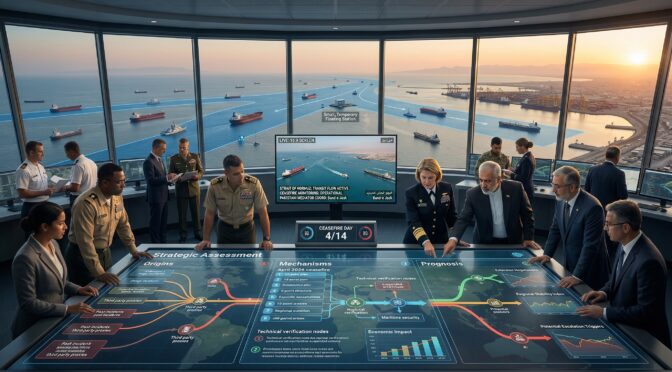
Following approximately forty days of intense, multi-domain conflict between the United States, Israel, and the Islamic Republic of Iran, a highly fragile and heavily conditioned two-week ceasefire went into effect on the evening of April 7, 2026.1 Brokered primarily by the government of Pakistan, the pause in hostilities narrowly averted a threatened United States escalation aimed at the systematic destruction of Iranian civilian and energy infrastructure.3 This operational pause, however, rests upon a foundation of profound strategic disorientation and fundamentally incompatible postwar visions.5 The United States seeks the total dismantlement of Iran’s nuclear enrichment capabilities and the complete severing of its regional proxy networks through a comprehensive 15-point proposal.6 Conversely, Tehran—operating under its own 10-point counter-proposal—demands the formal international recognition of its enrichment rights, sweeping sanctions relief, and the institutionalization of its military control over the Strait of Hormuz.8
The ceasefire is currently characterized by immediate, critical friction that threatens its short-term viability. Most notably, the Israeli government explicitly excluded operations against Hezbollah in Lebanon from the parameters of the truce.10 Within hours of the ceasefire taking effect, Israel launched devastating strikes in Beirut that killed over 180 people, an action the United States implicitly endorsed by asserting that the truce applied only to Iran and US Gulf allies.11 In direct retaliation, Iran has re-restricted maritime traffic through the Strait of Hormuz, violating the core condition upon which the United States predicated the operational pause.11
The forthcoming diplomatic summit in Islamabad, Pakistan, scheduled for April 10, 2026, faces a remarkably low probability of securing a durable, comprehensive settlement.14 The current strategic posture indicates that both Washington and Tehran are utilizing the diplomatic window as a tactical reconstitution phase rather than a genuine off-ramp to sustainable peace.16 Meanwhile, the global economy continues to absorb severe, compounding shocks in the energy and maritime shipping sectors, as the weaponization of maritime chokepoints establishes a dangerous new geopolitical paradigm.16
1. Introduction and The Strategic Context of the Conflict
1.1 The Catalyst: Operation Epic Fury and Decapitation Strikes
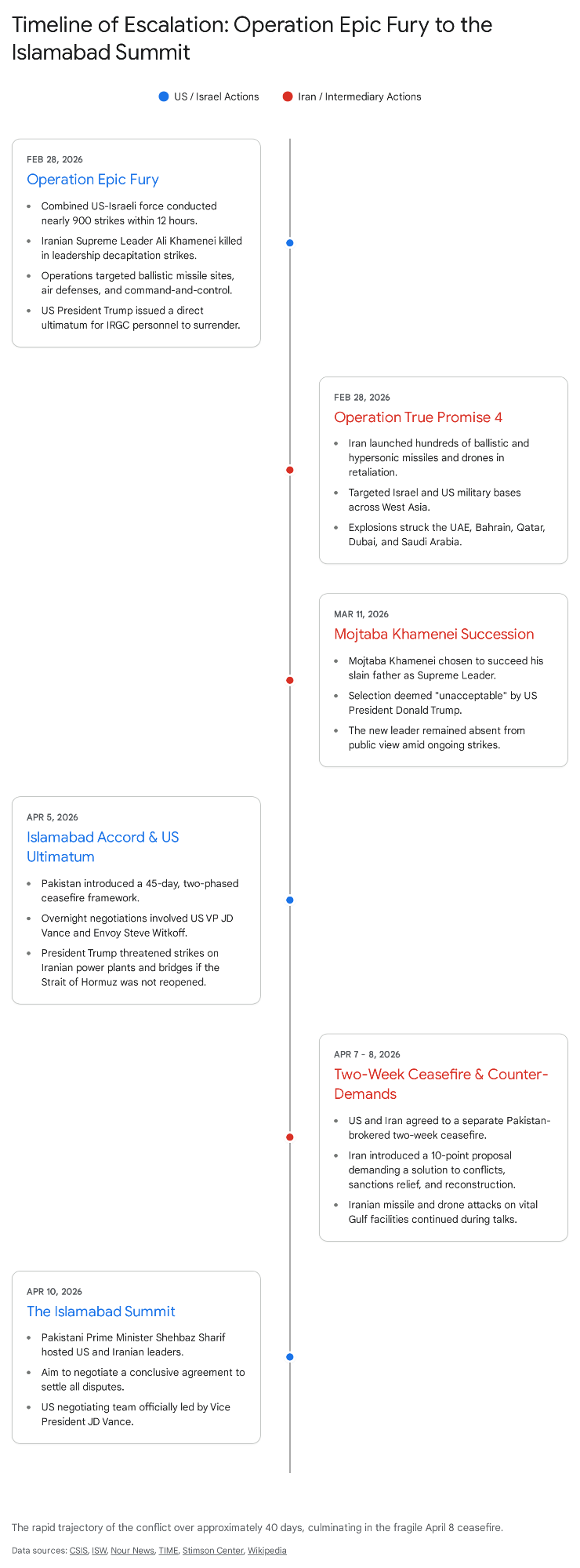
The current conflict, now entering its sixth week, was initiated on February 28, 2026, through a coordinated US-Israeli military campaign designated “Operation Epic Fury”.19 Exploiting a time-sensitive operational window during a high-level defense council meeting in Tehran, the coalition launched nearly 900 strikes within the first twelve hours of the conflict.5 The operation successfully penetrated the compound containing the Office of the Supreme Leader, resulting in the death of Ayatollah Ali Khamenei alongside approximately forty other senior commanders and state officials.5 The explicitly stated objectives of this opening campaign were the suppression of Iranian air defenses, the degradation of its retaliatory strike capabilities, and the complete disruption of strategic command-and-control architectures.21
1.2 The Iranian Retaliation: Operation True Promise 4
Contrary to optimal decapitation models utilized in conventional military doctrine, the elimination of the Supreme Leader did not precipitate a systemic collapse of the Islamic Republic’s command structure.23 Demonstrating unexpected resilience, Iran swiftly launched “Operation True Promise 4,” a massive retaliatory wave consisting of hundreds of ballistic missiles, hypersonic weapons, and unmanned aerial vehicles.19 These strikes targeted Israeli positions and, critically, United States military installations situated within the borders of regional allies, including the United Arab Emirates, Bahrain, Qatar, and Saudi Arabia.19 By executing strikes against Gulf Cooperation Council (GCC) infrastructure—including major aluminum plants and critical energy facilities—Tehran demonstrated a willingness to regionalize the conflict and inflict collateral economic damage to deter further US escalation.12
1.3 The Strategic Stalemate and the Architecture of Repression
The subsequent forty days devolved into a war of attrition characterized by what analysts term “escalation without exit”.5 The United States’ original maximalist objectives—implied regime change and the enforced handover of enriched uranium to the International Atomic Energy Agency (IAEA)—proved unachievable through aerial bombardment alone.17 While Iran’s military and economic infrastructure sustained catastrophic damage, its hardline security apparatus, spearheaded by the Islamic Revolutionary Guard Corps (IRGC), remained fundamentally cohesive.17
Intelligence assessments indicate that the US-Israeli campaign expanded to target the “architecture of domestic repression,” including intelligence compounds, police stations, and Basij bases.26 In response, Iranian military and security forces relocated personnel, weapons, and equipment into at least 70 civilian sites, establishing a nationwide pattern of utilizing public infrastructure to shield military assets.26 This resilient, albeit desperate, posture set the stage for a negotiated pause, driven not by the capitulation of either party, but by the mutual necessity to avoid an unmanageable regional conflagration.
2. Origins and Mechanisms: The Forging of the Ceasefire
2.1 The Failure of the “Islamabad Accord”
The path to the current two-week ceasefire was preceded by the collapse of a more ambitious diplomatic framework. On April 5, 2026, Pakistani, Egyptian, and Turkish mediators introduced a draft proposal dubbed the “Islamabad Accord”.27 This framework called for a 45-day, two-phased ceasefire involving an immediate halt to hostilities, the unconditional reopening of the Strait of Hormuz, and a 15-to-20-day period of negotiations aimed at a broader regional settlement.27 Iran swiftly rejected this proposal, conveying through Pakistani intermediaries that it would not surrender its leverage over the Strait of Hormuz for a mere “temporary ceasefire” that allowed adversarial forces to reconstitute.28 Tehran insisted on a permanent end to the war and guarantees against future attacks as prerequisites for unblocking the waterway.28
2.2 Brinkmanship and the April 7 Ultimatum
Following the rejection of the Islamabad Accord, the diplomatic environment deteriorated rapidly. The immediate catalyst for the successful April 7 ceasefire was an acute escalation in brinkmanship by US President Donald Trump.29 As the conflict threatened to paralyze global energy markets, the United States administration issued a final ultimatum demanding the “complete, immediate, and safe opening” of the Strait of Hormuz by 8:00 PM Eastern Time on Tuesday, April 7, 2026.31 The administration coupled this deadline with severe rhetoric, threatening the systematic obliteration of Iranian power plants, bridges, and civilian infrastructure, warning that “a whole civilization will die tonight” if compliance was not achieved.3
2.3 The Central Role of Pakistan
While regional actors such as Oman and Qatar have historically served as the primary conduits for US-Iran backchannel diplomacy, the government of Pakistan emerged as the indispensable architect of the current truce.4 Facing the imminent deadline, Pakistani Prime Minister Shehbaz Sharif and Chief of Army Staff General Asim Munir engaged in continuous, overnight negotiations.28 The Pakistani military and diplomatic apparatus acted as a discrete, deniable facilitator, relaying messages between US Vice President JD Vance, US Special Envoy Steve Witkoff, and Iranian Foreign Minister Abbas Araghchi.4
Pakistan’s unique strategic positioning enabled this breakthrough. By maintaining a robust defense and economic relationship with the United States while sharing a heavily securitized, volatile border with Iran, Islamabad possessed the requisite trust from both capitals.4 Furthermore, intelligence analysis indicates that Pakistan’s efforts were quietly but firmly supported by the People’s Republic of China, which utilized its considerable economic leverage over Tehran to enforce compliance and protect its own energy supply lines traversing the Persian Gulf.4
3. Anatomy of the Agreement: What the Ceasefire Involves
The agreement reached approximately ninety minutes before the US deadline is not a comprehensive peace treaty, but a highly conditional, double-sided cessation of kinetic operations.2 The ceasefire involves several interconnected military and diplomatic components.
3.1 The Operational Parameters
The core of the agreement is a mandated two-week suspension of offensive military operations by the United States, Israel, and Iran.1 In exchange for the suspension of US aerial bombardment against Iranian civilian and energy infrastructure, Iran agreed to the temporary reopening of the Strait of Hormuz to commercial maritime traffic.9 However, Iran’s compliance was heavily conditioned; the Iranian Supreme National Security Council stipulated that safe passage would only be permitted under the direct military management of the Iranian Armed Forces and subject to undefined “technical limitations”.2
The United States military has halted all offensive operations but maintains a defensive posture, prepared to resume strikes immediately if Iran fails to comply with the maritime conditions.3 Iran has adopted a mirroring posture, stating that the ceasefire does not signify the termination of the war and warning that its armed forces’ “hands remain upon the trigger”.3
3.2 The Islamabad Summit
To transition the temporary pause into a durable framework, the ceasefire mandates direct or proximity negotiations. Both nations have agreed to send high-level delegations to Islamabad, Pakistan, for talks beginning on Friday, April 10, 2026.14 The United States delegation will be led by Vice President JD Vance, accompanied by Special Envoy Steve Witkoff and senior advisor Jared Kushner.10 The Iranian delegation will be led by Parliament Speaker Mohammad Bagher Ghalibaf—a hardline veteran of the IRGC—alongside Foreign Minister Abbas Araghchi.10 The explicit goal of the summit is to address the underlying strategic disputes, though the foundational documents guiding these talks remain fiercely contested.14
4. Strategic Objectives and Gains: What the United States Gets
For the United States, the ceasefire provides a critical tactical pause to stabilize domestic markets, manage fraying international alliances, and attempt to secure the geopolitical capitulation of the Iranian nuclear apparatus.
4.1 The US 15-Point Proposal
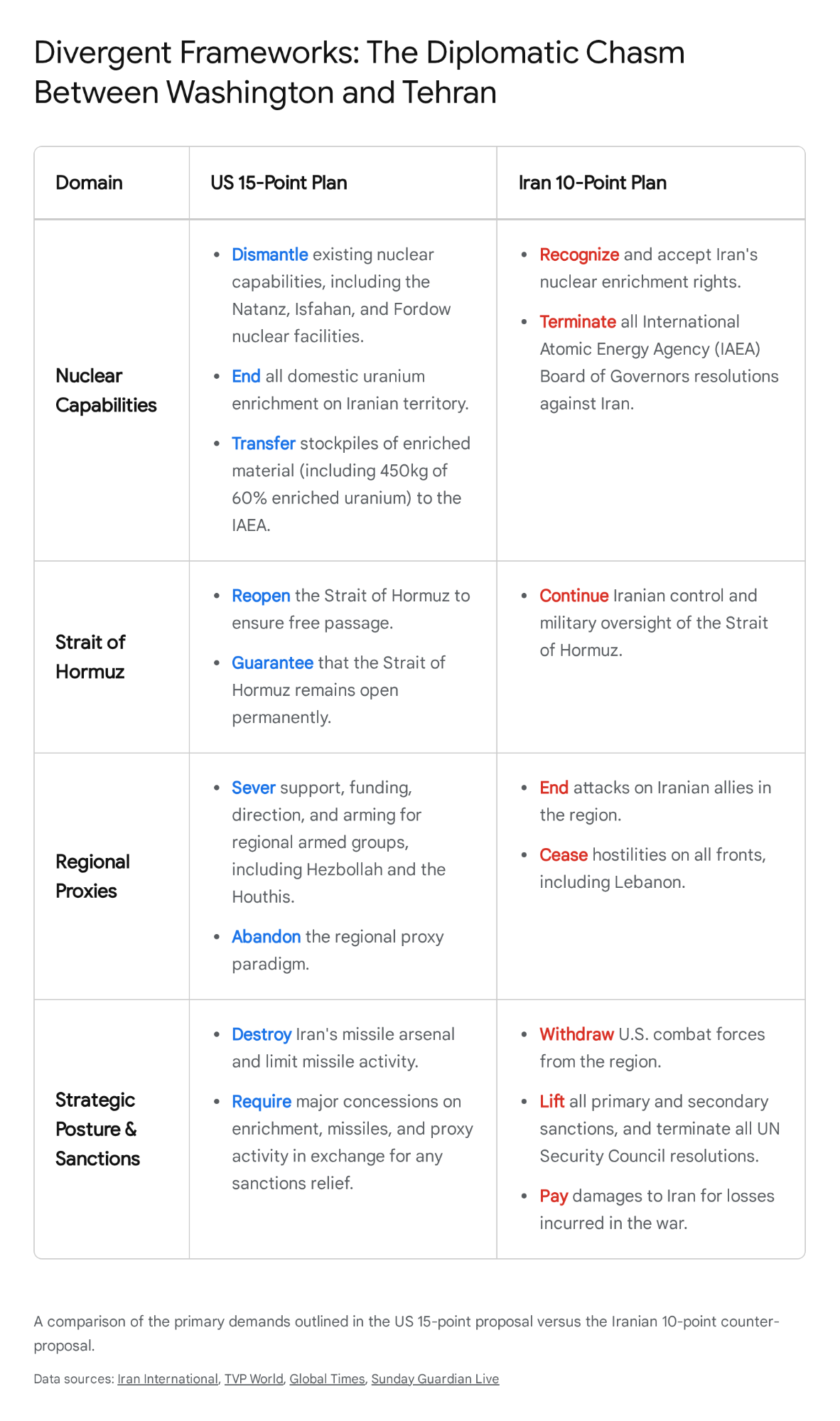
The United States has anchored its negotiating position to a comprehensive 15-point proposal, initially transmitted via Pakistan in late March.6 This plan represents a maximalist approach aimed at permanently dismantling Iran’s asymmetric and nuclear capabilities.7 While Iran previously rejected the plan as “illogical” and “excessive,” US officials assert it remains the baseline for the Islamabad talks.30
| Domain | US 15-Point Plan Objectives and Demands |
| Nuclear Infrastructure | Complete dismantlement of existing nuclear capabilities, including the Natanz, Isfahan, and Fordow facilities.7 |
| Uranium Stockpiles | Mandatory handover of approximately 450 kilograms of uranium enriched to 60% to the International Atomic Energy Agency (IAEA).7 |
| Enrichment Rights | An absolute end to all domestic uranium enrichment on Iranian territory, restricting the program strictly to civilian purposes under full IAEA oversight.7 |
| Ballistic Missiles | Severe, verifiable limits on the research, development, and deployment of Iran’s ballistic and hypersonic missile programs.6 |
| Regional Proxies | The total abandonment of Iran’s “forward defense” paradigm, mandating an end to the funding, direction, and arming of regional proxies (Hezbollah, Houthis, Iraqi militias).7 |
| Maritime Navigation | Unconditional guarantees that the Strait of Hormuz remains open to international commercial and military navigation without Iranian interference.40 |
4.2 Tactical and Domestic Gains
Beyond the structural demands of the 15-point plan, the ceasefire delivers immediate tactical benefits to the United States. Vice President JD Vance has asserted that the forty-day conflict “effectively destroyed” the conventional Iranian military, drastically reducing Iran’s naval capabilities and diminishing its capacity to launch complex, multi-domain attacks.44 This degradation, Washington calculates, provides the US with a superior negotiating position and expanded operational options should talks fail.44
Domestically, the ceasefire announcement provided immediate relief to volatile financial markets. The prospect of an open Strait of Hormuz caused Brent crude oil futures to plummet by 13% to 16%, dropping below $100 a barrel after nearing $120.31 This stabilization is critical for the US administration, as prolonged energy inflation threatened broader economic disruption. Furthermore, intelligence reports indicate that Wall Street investors and predictive markets (such as Polymarket, where 50 wallets placed $950 million in bets anticipating a truce) heavily favored the de-escalation, reflecting intense domestic pressure to avoid a protracted Middle Eastern quagmire.13
4.3 Alliance Management
The pause also affords Washington an opportunity to repair strained international alliances. During the conflict, President Trump engaged in acute friction with NATO partners, expressing anger over their reluctance to participate in military operations to forcibly reopen the Strait of Hormuz.46 Trump went as far as threatening to pull the United States out of the military alliance during meetings with NATO Secretary-General Mark Rutte.46 The ceasefire temporarily defuses this transatlantic crisis while reassuring Gulf allies (Saudi Arabia, UAE) who suffered collateral damage from Iranian retaliatory strikes and feared a wider regional war.17
5. Strategic Objectives and Gains: What Iran Gets
While the United States views the ceasefire as a mechanism to enforce constraint, the Islamic Republic of Iran views it as a strategic vindication. Despite sustaining catastrophic infrastructural damage, Tehran believes it has successfully leveraged its capacity to disrupt global energy markets to force international acquiescence to its core security architecture.16
5.1 The Iranian 10-Point Proposal
Iran has predicated its compliance on a 10-point counter-proposal. President Trump publicly acknowledged this proposal as a “workable basis” for negotiations, granting it unprecedented diplomatic legitimacy.9 The Iranian demands indicate a strategy of leverage capitalization, seeking to normalize its sovereignty over contested programs and waterways.8
| Domain | Iranian 10-Point Plan Objectives and Demands |
| Nuclear Enrichment | Explicit international acceptance and recognition of Iran’s sovereign right to domestic uranium enrichment, rejecting the US demand for dismantlement.8 |
| Maritime Sovereignty | The formalization of Iranian military control and management over the Strait of Hormuz, institutionalizing its right to regulate international traffic.8 |
| Sanctions Relief | The immediate and unconditional lifting of all primary and secondary economic sanctions imposed by the United States and its allies.8 |
| International Law | The termination of all existing UN Security Council resolutions and IAEA Board of Governors resolutions directed against the Islamic Republic.8 |
| Military Posture | The complete withdrawal of United States combat forces from the region, and guarantees against future acts of aggression.8 |
| Regional Ceasefire | A permanent end to the war on all fronts, explicitly demanding a cessation of hostilities against the “heroic Islamic Resistance of Lebanon” (Hezbollah).8 |
| Reparations | Payment of financial compensation to Iran for war damages, potentially funded through maritime transit fees or unfrozen assets.8 |
5.2 Internal Power Consolidation and Regime Survival
Crucially, the ceasefire provides the Iranian regime with the necessary bandwidth to manage a volatile internal transition. The death of Supreme Leader Ali Khamenei on the first day of the war triggered a rapid succession process.49 The Assembly of Experts—despite being targeted by Israeli strikes in Qom—elevated Mojtaba Khamenei, the 56-year-old second son of the late Ayatollah, to the position of Supreme Leader.20 This transition, bearing the hallmarks of dynastic succession, drew domestic criticism but consolidated hardline control over the state apparatus.22
The pause in fighting allows the Islamic Revolutionary Guard Corps (IRGC) to entrench its hegemony over the civilian government.26 President Masoud Pezeshkian is facing fierce backlash from these hardline elements after signaling a conditional willingness to end the conflict, pushing his administration into a state of political deadlock.26 The IRGC is driving the strategic narrative, viewing the survival of its leadership and the maintenance of its proxy network as a victory that outweighs the physical degradation of its infrastructure.17
6. The Maritime Domain: The Status of Shipping in the Strait of Hormuz
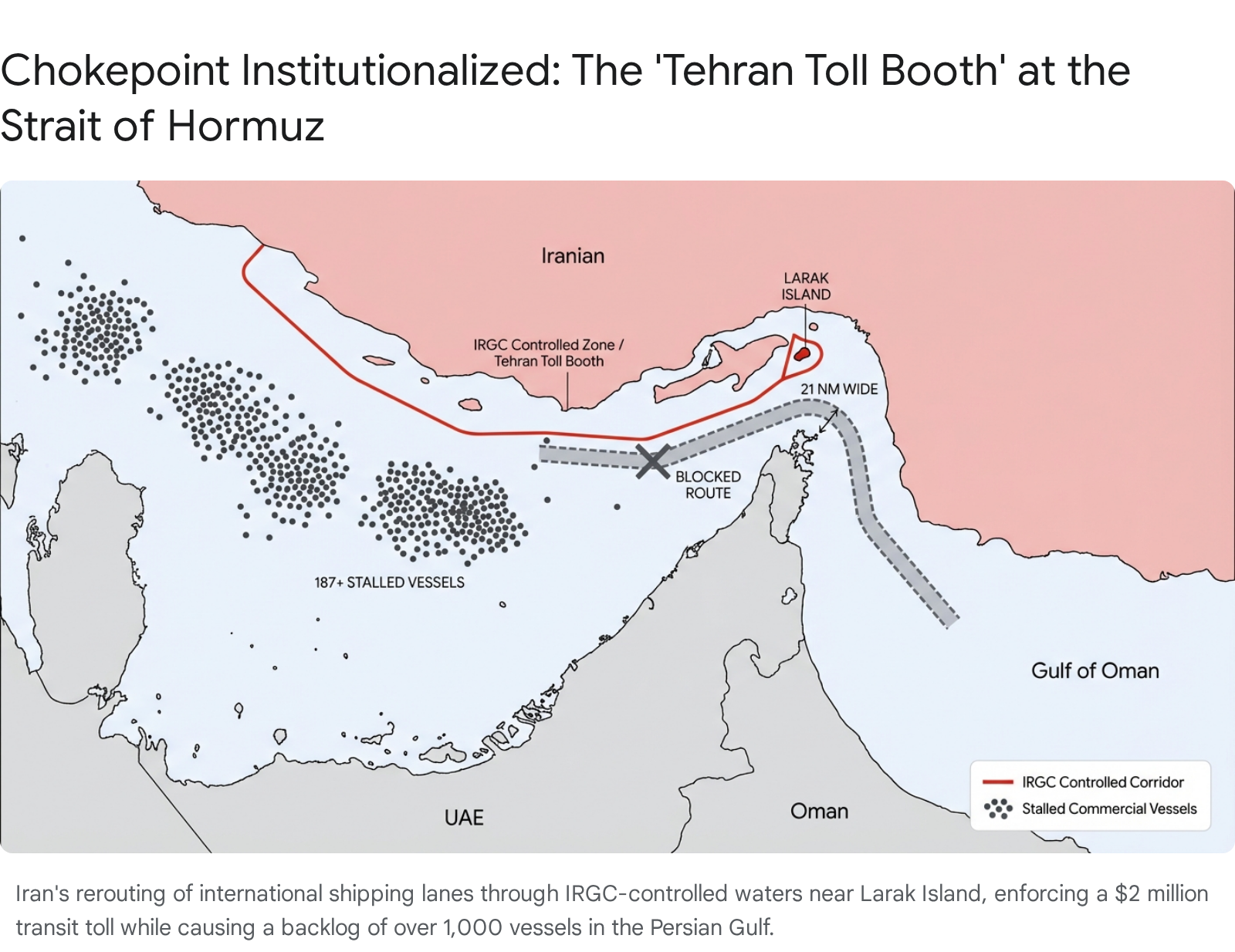
The most significant strategic leverage point in the current conflict—and the primary catalyst for the ceasefire—is the status of the Strait of Hormuz. Through this 21-nautical-mile-wide chokepoint passes approximately 20% of the world’s daily oil supply and significant volumes of liquefied natural gas (LNG).50
6.1 Current Maritime Traffic Status and the Logjam
Despite the formal announcement of the ceasefire and the theoretical reopening of the waterway, shipping traffic through the Strait has not normalized. Intelligence indicates that the waterway is experiencing a massive, protracted logistical bottleneck.18
| Maritime Metric | Current Status Estimate (April 8-9, 2026) |
| Vessels Transiting (24h) | 2 to 3 ships (Approx. 2.2% of the normal 60/day average).18 |
| Stranded/Waiting Vessels | Over 1,000 ocean-going vessels trapped in the Persian Gulf.18 |
| Tanker Backlog | 187 tankers carrying approx. 172 million barrels of crude and refined products.18 |
| Daily Throughput | 620,000 DWT (Approx. 6% of the 10.3M normal average).53 |
| War Risk Insurance Premium | EXTREME: 1% of hull value (A 6.67x increase from the normal 0.15% rate).53 |
While maritime tracking data showed a minor uptick immediately following the ceasefire announcement, volumes remain fundamentally depressed.53 Major blue-chip shipping companies, including the Danish giant Maersk, continue to hold vessels outside the operational zone.18 Industry analysts calculate that the 14-day ceasefire window is entirely insufficient to clear the existing backlog, let alone restore the confidence required to unwind the extreme “uncertainty premium” currently governing marine insurance markets.18 Consequently, shipments of critical commodities, including diesel, fertilizer, aluminum, and helium, remain severely delayed, with Pakistan-bound LNG carriers reportedly turning back rather than risking transit.56
6.2 Institutionalizing Control: The “Tehran Toll Booth”
Iran has utilized the conflict to establish an illegal, de facto transit regime, widely referred to by maritime analysts as the “Tehran Toll Booth”.56 Rather than completely closing the Strait—which would invite overwhelming international military retaliation—the IRGC Navy has rerouted commercial shipping away from standard Traffic Separation Scheme (TSS) lanes and into an Iranian-controlled northern corridor near Larak Island.55
Through this mechanism, Iran has enacted several profound disruptions:
- Monetization of Passage: Iran is charging exorbitant transit fees, reported to be as high as $2 million USD per vessel.56 Economic intelligence estimates suggest that this tolling system, if maintained, could generate upwards of $600 million monthly, or an estimated $70 billion to $80 billion annually.59 This provides Tehran with a massive revenue stream that effectively neutralizes the impact of Western economic sanctions.60
- Selective Access: Iran has weaponized the waterway by selectively granting passage only to “non-hostile” vessels. The Iranian Foreign Ministry announced that ships from China, Russia, India, Iraq, and Pakistan are permitted to transit freely, while blocking any traffic linked to the United States or Israel.18 This favoritism was recently reflected when Russia and China vetoed a UN Security Council Resolution aimed at compelling Iran to open the Strait.56
- Legal Subversion: By demanding that vessels coordinate directly with the IRGC Navy and adhere to undefined “technical limitations,” Iranian lawmakers are moving to formally codify national sovereignty over the international Strait.56
This posture represents a direct violation of international law. The Strait of Hormuz is recognized as a strait used for international navigation. Under Article 37 of the United Nations Convention on the Law of the Sea (UNCLOS)—which is widely accepted as customary international law—the right of “transit passage” shall not be impeded, nor suspended by armed conflict.56 Furthermore, UNCLOS Article 26 explicitly prohibits the levying of charges upon foreign ships solely for passage, rendering the $2 million toll entirely illegal.56
7. Secondary Geopolitical and Operational Developments
The forty-day conflict and subsequent ceasefire have generated secondary operational developments that continue to shape the strategic landscape.
7.1 Proxy Leverage and Hostage Diplomacy
In a development demonstrating the continued operational capacity of Iran’s proxy network despite US strikes, the Iran-backed Iraqi militia Kataib Hezbollah released American freelance journalist Shelly Kittleson on April 7, 2026.61 Kittleson, abducted in Baghdad on March 31, was freed in a prisoner swap coordinated with Iraqi authorities.61 The militia released a purported confession video prior to her release, demanding she leave Iraq immediately.63 While the militia cited “appreciation of the national positions” of outgoing Iraqi Prime Minister Mohammed Shia al-Sudani, the release—occurring precisely as the US-Iran ceasefire was finalized—serves as a clear signal of Tehran’s enduring influence over the Iraqi security apparatus and its willingness to utilize hostage diplomacy as a tactical lever during geopolitical negotiations.61
7.2 United States Military Losses and Operations
The kinetic phase of the war exacted a toll on US military assets. Intelligence confirms that between April 3 and 4, 2026, Iranian forces successfully shot down two US military aircraft: an F-15E Strike Eagle belonging to the 48th Fighter Wing and an A-10 Warthog.64 One of the downed pilots, a colonel, evaded capture in the Iranian mountains while US MQ-9 Reaper drones provided close air support, preventing advancing Iranian forces from capturing the officer before a successful extraction.64 These shootdowns underscore the persistent lethality of Iranian air defense systems, contradicting assertions that the conventional Iranian military was entirely neutralized in the opening salvos of Operation Epic Fury.44 Overall, the conflict has resulted in the deaths of 13 US military personnel.44
7.3 Economic Strain and Monetary Confidence
Within Iran, the conflict has severely damaged public confidence in the domestic economy. The Pezeshkian administration has clashed with military leadership over the war’s damaging impact on civilian livelihoods.26 The Iranian economy is exhibiting structural symptoms of a nation losing faith in its own currency, evidenced by hyperinflation and the emergence of “dollar-pegged” consumer goods in Tehran.26 This domestic economic fragility explains the IRGC’s aggressive push to monetize the Strait of Hormuz, viewing the $2 million transit tolls as a critical lifeline to sustain state operations and fund the military-industrial complex amidst widespread infrastructural ruin.26
8. Prognosis: What Are the Odds That the Ceasefire Will Last?
The durability of the ceasefire rests on highly unstable ground. The fundamental weakness of the agreement was exposed less than twenty-four hours after its implementation, driven by a profound strategic divergence over the scope of the truce regarding regional proxy forces.
8.1 The Lebanese Flashpoint and Immediate Violations
While Pakistani mediators and Iranian officials explicitly stated that the ceasefire applied “everywhere, including Lebanon,” the Israeli government and the United States administration vehemently disagreed.6 Israeli Prime Minister Benjamin Netanyahu announced that the deal did not cover operations against Hezbollah, treating the Lebanese theater as a distinct and separate operational environment.10 Consequently, Israel intensified its air campaign, striking dense commercial and residential sectors in Beirut without warning. This resulted in the deaths of at least 182 people and wounded hundreds more, marking the deadliest single day in the latest iteration of the Israel-Hezbollah conflict.10
US Vice President JD Vance publicly confirmed the American stance, attributing the discrepancy to a “legitimate misunderstanding” by Iranian negotiators, and explicitly stating that the United States did not agree to extend the ceasefire’s protections to Lebanon.12
8.2 Iranian Retaliation and the Collapse of the Core Condition
From Tehran’s strategic perspective, the “Axis of Resistance” is an integrated defense architecture. An attack on Hezbollah is viewed as a direct violation of the ceasefire conditions.11 Iranian Parliament Speaker Mohammad Bagher Ghalibaf immediately accused the United States and Israel of violating three core clauses of the 10-point framework: the continuation of strikes in Lebanon, an unauthorized drone incursion into Iranian airspace following the truce declaration, and public statements from Washington refusing to accept Iranian uranium enrichment.10
In direct retaliation for the strikes on Beirut, Iranian state media and the Ports and Maritime Organization announced that Iran had rescinded its compliance with the maritime truce, effectively re-closing the Strait of Hormuz to general traffic.10 Iranian authorities ordered all vessels to coordinate exclusively with the IRGC Navy, citing the “war situation” and the deployment of potential anti-ship mines in the main traffic zones to justify the blockade.13
8.3 Strategic Assessment of Viability
Given these immediate, systemic violations, the odds that the ceasefire will evolve into a permanent settlement are exceedingly low.15 The situation currently hangs by a thread, with the White House demanding the immediate reopening of the channel while scrambling to preserve the broader diplomatic framework ahead of the Islamabad summit.11
The structural disconnect is unbridgeable under current parameters. The United States and Israel sought to isolate Iran from its regional proxies, attempting to pause the state-to-state war while systematically degrading Hezbollah.11 Iran, recognizing this fragmentation strategy, utilized its ultimate leverage—the Strait of Hormuz—to enforce a holistic interpretation of the truce.16 Because neither side has achieved a decisive military victory that forces capitulation, the current posture indicates that both Washington and Tehran are utilizing the diplomatic window merely to restock arsenals, consolidate internal politics, and prepare for the next phase of escalation.16
9. Conclusion
The April 2026 ceasefire between the United States, Israel, and the Islamic Republic of Iran represents a tactical, temporary pause engineered through extreme economic brinkmanship and international mediation, rather than a genuine stabilization of the Middle East.15 The foundational causes of the conflict—Iran’s nuclear threshold status, the survival of its regional proxy network, and the United States’ maximalist deterrence posture—remain entirely unresolved.15
Furthermore, the forty-day conflict has fundamentally altered the strategic paradigm of the Persian Gulf. By operationalizing the “Tehran Toll Booth” and demonstrating a willingness to absorb massive kinetic punishment to maintain control over the Strait of Hormuz, Iran has transformed a vital international maritime chokepoint into an institutionalized economic and geopolitical weapon.26 The immediate breakdown of the ceasefire’s scope regarding Lebanon and the subsequent re-closure of the Strait highlight the inherent fragility of the current arrangement.11
As delegations prepare to convene in Islamabad, the probability of securing a lasting peace is highly remote. The international community, maritime shipping conglomerates, and energy markets must prepare for a protracted period of high-intensity diplomatic friction, punctuated by episodic military violence and sustained disruption to global supply chains. The war did not achieve the total capitulation of the Iranian state, nor did it result in an unequivocal Iranian victory; instead, it entrenched a dangerous new status quo characterized by institutionalized economic extortion, fragmented alliance structures, and a continuously shifting threshold for regional escalation.15
Please share the link on Facebook, Forums, with colleagues, etc. Your support is much appreciated and if you have any feedback, please email us in**@*********ps.com. If you’d like to request a report or order a reprint, please click here for the corresponding page to open in new tab.
Sources Used
- The Fragile U.S.-Iran Ceasefire: Issues to Watch, accessed April 9, 2026, https://www.csis.org/analysis/fragile-us-iran-ceasefire-issues-watch
- Iran war ceasefire announcement – what we know so far, accessed April 9, 2026, https://www.theguardian.com/world/2026/apr/08/trump-iran-war-ceasefire-deadline-what-we-know-so-far
- Iran’s Supreme National Security Council says it has accepted two-week ceasefire in the war, accessed April 9, 2026, https://www.pbs.org/newshour/world/irans-supreme-national-security-council-says-it-has-accepted-two-week-ceasefire-in-the-war
- How Pakistan Became the Broker of the US-Iran Ceasefire, accessed April 9, 2026, https://themedialine.org/top-stories/how-pakistan-became-the-broker-of-the-us-iran-ceasefire/
- Escalation Without Exit: Strategic Disorientation and Potential Scenarios in the US–Israeli War on Iran | Al Jazeera Centre for Studies, accessed April 9, 2026, https://studies.aljazeera.net/en/analyses/escalation-without-exit-strategic-disorientation-and-potential-scenarios-us%E2%80%93israeli-war
- Explainer-US-Iran ceasefire: what we know – AL-MONITOR: The …, accessed April 9, 2026, https://www.al-monitor.com/originals/2026/04/explainer-us-iran-ceasefire-what-we-know
- What Are the US 15-Point Plan Conditions to End the Iran-US War? Full Breakdown of Trump’s Nuclear, Missile & Strait of Hormuz Demands – The Sunday Guardian, accessed April 9, 2026, https://sundayguardianlive.com/world/what-are-the-us-15-point-plan-conditions-to-end-the-iran-us-war-full-breakdown-of-trumps-nuclear-missile-strait-of-hormuz-demands-179057/
- What’s in Iran’s 10-point proposal in negotiations with US? – Global Times, accessed April 9, 2026, https://www.globaltimes.cn/page/202604/1358418.shtml
- Explainer: What is in Iran’s 10-point ceasefire plan and will the US agree to it?, accessed April 9, 2026, https://www.theguardian.com/world/2026/apr/08/iran-10-point-plan-ceasefire-donald-trump-us
- Live updates: Iran says US ceasefire and negotiations are …, accessed April 9, 2026, https://apnews.com/live/iran-war-israel-trump-04-08-2026
- Ceasefire is threatened as Israel expands Lebanon strikes and Iran closes strait again, accessed April 9, 2026, https://www.pbs.org/newshour/world/ceasefire-is-threatened-as-israel-expands-lebanon-strikes-and-iran-closes-strait-again
- US-Israel-Iran War Live: Vance says US did not agree that ceasefire would cover Lebanon, accessed April 9, 2026, https://www.indiatoday.in/world/story/us-israel-iran-war-live-updates-donald-trump-oil-hub-kharg-island-strait-of-hormuz-irgc-2892961-2026-04-08
- Middle East crisis live: Iran says ceasefire must include Lebanon amid strait of Hormuz impasse, accessed April 9, 2026, https://www.theguardian.com/world/live/2026/apr/08/iran-war-ceasefire-live-updates-trump-deadline-middle-east-crisis-latest-news
- What to Know About Iran’s Ceasefire Proposal as Peace Talks Approach – TIME, accessed April 9, 2026, https://time.com/article/2026/04/08/iran-us-ceasefire-proposal-talks/
- As a Strait of Hormuz Standoff Grows, Will Trump’s Fragile Iran Ceasefire Hold?, accessed April 9, 2026, https://www.cfr.org/articles/as-a-strait-of-hormuz-standoff-grows-will-trumps-fragile-iran-ceasefire-hold
- What Trump’s 39‑day war achieved: A Hormuz trophy for Iran, accessed April 9, 2026, https://m.economictimes.com/news/international/world-news/us-iran-ceasefire-2026-donald-trump-strait-of-hormuz-trophy-for-tehran-10-point-plan-oil-supply-middle-east-west-asia-shipping-crisis/articleshow/130107960.cms
- The 40-day war that changed nothing: How Iran, the US and the Gulf all lost, accessed April 9, 2026, https://www.hindustantimes.com/world-news/the-40-day-war-that-changed-nothing-how-iran-the-us-and-the-gulf-all-lost-101775637690939.html
- No sign Iran ceding control of Strait of Hormuz in ceasefire, with …, accessed April 9, 2026, https://www.cbc.ca/news/world/war-ceasefire-strait-hormuz-outlook-9.7155950
- Operation Epic Fury and the Remnants of Iran’s Nuclear Program – CSIS, accessed April 9, 2026, https://www.csis.org/analysis/operation-epic-fury-and-remnants-irans-nuclear-program
- Mojtaba Khamenei unconscious in Qom, not actually running Iran – report, accessed April 9, 2026, https://www.jpost.com/middle-east/iran-news/article-892289
- Iran Update Evening Special Report, February 28, 2026 | ISW, accessed April 9, 2026, https://understandingwar.org/research/middle-east/iran-update-evening-special-report-february-28-2026/
- How Will Mojtaba Khamenei Rule Iran — and for How Long?, accessed April 9, 2026, https://www.stimson.org/2026/how-will-mojtaba-khamenei-rule-iran-and-for-how-long/
- Mojtaba Khamenei’s rumoured injury or death won’t change Iran’s trajectory, accessed April 9, 2026, https://www.aljazeera.com/opinions/2026/4/1/mojtaba-khameneis-rumoured-injury-or-death-wont-change-irans-trajectory
- IRGC pounded 25+ US-Israeli targets in 100th wave of Operation True Promise 4, accessed April 9, 2026, https://nournews.ir/en/news/308605/IRGC-pounded-25-US-Israeli-targets-in-100th-wave-of-Operation-True-Promise-4
- Pre‑Market Briefing – Cannon Trading, accessed April 9, 2026, https://www.cannontrading.com/tools/daily-updates/briefing-march30-readers
- A pause with opposing terms: What Washington wanted, what …, accessed April 9, 2026, https://www.iranintl.com/en/202604081853
- 2026 Iran war ceasefire – Wikipedia, accessed April 9, 2026, https://en.wikipedia.org/wiki/Islamabad_Accord_proposal_(2026)
- Iran says won’t open Hormuz for temporary truce after Pakistan proposes 45-day ceasefire, accessed April 9, 2026, https://www.timesofisrael.com/iran-says-wont-open-hormuz-for-temporary-truce-after-pakistan-proposes-45-day-ceasefire/
- Here’s what we know about the proposed US-Iran deal, accessed April 9, 2026, https://www.trtworld.com/article/cc9757268234
- Iran rejects ceasefire, demands ‘permanent end to war’ in counter-proposal to US, says IRNA, accessed April 9, 2026, https://m.economictimes.com/news/international/world-news/iran-rejects-ceasefire-demands-permanent-end-to-war-in-counter-proposal-to-us-says-irna/articleshow/130064591.cms
- U.S. and Iran reach 2-week ceasefire ahead of Trump’s deadline, accessed April 9, 2026, https://www.cbsnews.com/live-updates/iran-war-trump-deadline-power-plants-human-chains-israel-train-strikes/
- Iran says talks with US will begin in Pakistan’s Islamabad on Friday – Al Jazeera, accessed April 9, 2026, https://www.aljazeera.com/news/2026/4/8/iran-says-talks-with-us-will-begin-in-pakistans-islamabad-on-friday
- Oil Prices Plunge After Announcement of U.S.-Iran Ceasefire | Democracy Now!, accessed April 9, 2026, https://www.democracynow.org/2026/4/8/headlines/oil_prices_plunge_after_announcement_of_us_iran_ceasefire
- Iran war updates: Trump suspends US attacks, Tehran agrees to ceasefire, accessed April 9, 2026, https://www.aljazeera.com/news/liveblog/2026/4/7/iran-war-live-trump-warns-of-devastating-attacks-as-deal-deadline-nears
- How Pakistan managed to get the US and Iran to a ceasefire, accessed April 9, 2026, https://www.aljazeera.com/features/2026/4/8/how-pakistan-managed-to-get-the-us-and-iran-to-a-ceasefire
- Two-week ceasefire takes effect as US and Iran prepare for talks in Pakistan – MyJoyOnline, accessed April 9, 2026, https://www.myjoyonline.com/two-week-ceasefire-takes-effect-as-us-and-iran-prepare-for-talks-in-pakistan/
- U.S. and Iran agree to 2-week ceasefire | KGOU – Oklahoma’s NPR Source, accessed April 9, 2026, https://www.kgou.org/politics-and-government/2026-04-08/u-s-and-iran-agree-to-2-week-ceasefire
- JD Vance to lead US delegation to Islamabad for Iran talks on Saturday, accessed April 9, 2026, https://www.pakistantoday.com.pk/2026/04/08/vance-to-lead-us-delegation-to-islamabad-for-iran-talks-on-saturday
- Pakistan to Host US-Iran Ceasefire Talks in Islamabad – Pakistan …, accessed April 9, 2026, https://www.pakistantoday.com.pk/2026/04/09/hopes-fears-swirl-as-pakistan-set-to-host-us-iran-ceasefire-talks
- US 15-point plan reaches Tehran as Iran publicly scoffs at diplomacy, accessed April 9, 2026, https://www.iranintl.com/en/202603254350
- Sensex P/E valuations lowest since May ’20 amid FPI selloff – Chronicle Club, accessed April 9, 2026, https://chronicleclub.in/storage/uploads/1774846470-business-standard.pdf
- What is in Iran’s 10-point peace plan? – The National News, accessed April 9, 2026, https://www.thenationalnews.com/news/us/2026/04/08/what-is-in-irans-10-point-peace-plan/
- US and Iran head to Islamabad talks with rival plans and fragile ceasfire – TVP World, accessed April 9, 2026, https://tvpworld.com/92516914/iran-us-peace-talks-friday-whats-in-tehrans-10-point-plan-and-us-15-point-proposal
- Trump tells Iran to ‘get serious’ on negotiations after Tehran dismisses ceasefire proposal, accessed April 9, 2026, https://www.livenowfox.com/news/iran-war-latest-march-26-2026
- Oil prices plunge and stocks jump after Trump announces conditional ceasefire with Iran, accessed April 9, 2026, https://www.theguardian.com/world/2026/apr/08/oil-prices-stock-today-futures-crude-donald-trump-iran-ceasefire
- Iran-Israel war updates: Ceasefire threatened as Israel expands Lebanon strikes, Iran closes strait again, accessed April 9, 2026, https://www.thehindu.com/news/international/iran-israel-us-war-west-asia-conflict-live-updates-on-april-8-2026/article70836852.ece
- Trump again claims US is talking to Iran, this time with the country’s ‘New Regime President’, accessed April 9, 2026, https://www.thejournal.ie/donald-trump-address-us-iran-7000272-Apr2026/
- Both sides claim victory, as 39-day war takes a two-week pause to see if US and Iran can make peace, accessed April 9, 2026, https://www.washingtonexaminer.com/policy/defense/4520151/both-sides-claim-victory-as-39-day-war-takes-a-two-week-pause-to-see-if-us-and-iran-can-make-peace/
- Ali Khamenei’s son Mojtaba chosen as Iran’s new supreme leader – The Guardian, accessed April 9, 2026, https://www.theguardian.com/world/2026/mar/08/ali-khameneis-son-mojtaba-chosen-as-irans-new-supreme-leader
- Iran ceasefire raises hopes for reopening key Strait of Hormuz, accessed April 9, 2026, https://news.un.org/en/story/2026/04/1167270
- Iran rejects latest ceasefire proposal as Trump deadline approaches, accessed April 9, 2026, https://www.pbs.org/newshour/world/israel-hits-key-iranian-petrochemical-plant-in-massive-gas-field-as-mediators-float-ceasefire-proposal
- 2026 Strait of Hormuz crisis – Wikipedia, accessed April 9, 2026, https://en.wikipedia.org/wiki/2026_Strait_of_Hormuz_crisis
- Strait of Hormuz Live Tracker — Real-Time Shipping & Oil Crisis Monitor, accessed April 9, 2026, https://hormuzstraitmonitor.com/
- Facts about Strait of Hormuz since its negotiated reopening – Punch Newspapers, accessed April 9, 2026, https://punchng.com/facts-about-strait-of-hormuz-since-its-negotiated-reopening/
- Iran’s ‘Tehran toll booth’: Legally risky route for shippers through Strait of Hormuz, accessed April 9, 2026, https://www.straitstimes.com/world/middle-east/iran-hormuz-toll-booth-legally-risky-route-for-shippers
- Continuing Crisis in Strait of Hormuz: Why Iran’s Hold is Illegal and U.S. Military Force Alone Fails, accessed April 9, 2026, https://www.justsecurity.org/135899/strait-hormuz-tolls-crisis/
- April 7, 2026: Iran War Maritime Intelligence Daily – Windward, accessed April 9, 2026, https://windward.ai/blog/april-7-maritime-intelligence-daily/
- Facts about the Strait of Hormuz since its negotiated reopening, accessed April 9, 2026, https://www.thestar.com.my/aseanplus/aseanplus-news/2026/04/08/facts-about-the-strait-of-hormuz-since-its-negotiated-reopening?utm_medium=socmed&utm_campaign=tg
- Iran chamber official floats possible $70-$80 billion annual income from Hormuz, accessed April 9, 2026, https://www.iranintl.com/en/202604010078
- Iran turns Strait of Hormuz into high‑stakes toll road for global oil | Wealth Professional, accessed April 9, 2026, https://www.wealthprofessional.ca/news/industry-news/iran-turns-strait-of-hormuz-into-highstakes-toll-road-for-global-oil/391996
- American Freelance Journalist Shelly Kittleson Released by Iran-Backed Iraqi Militia, accessed April 9, 2026, https://www.democracynow.org/2026/4/8/headlines/american_freelance_journalist_shelly_kittleson_released_by_iran_backed_iraqi_militia
- American journalist Shelly Kittleson has been released week after kidnapping in Iraq, Rubio says, accessed April 9, 2026, https://www.ksat.com/news/2026/04/07/iran-backed-iraqi-militia-says-it-will-release-american-journalist-shelly-kittleson/
- Iraqi militants say kidnapped journalist Shelly Kittleson released, accessed April 9, 2026, https://www.thenationalnews.com/news/mena/2026/04/07/iraqi-militants-say-kidnapped-journalist-shelly-kittleson-will-be-freed/
- A timeline of the two US military jets shot down by Iran forces, accessed April 9, 2026, https://www.theguardian.com/world/2026/apr/05/timeline-us-military-jets-shot-down
- As Trump mulls more troops, Iran says hotels housing US soldiers in the region will be targeted, accessed April 9, 2026, https://www.thejournal.ie/iran-says-hotels-housing-us-soldiers-in-region-will-be-targeted-6996284-Mar2026/
- What is in Iran’s 10-point ceasefire agreement plan? – The Jerusalem Post, accessed April 9, 2026, https://www.jpost.com/middle-east/iran-news/article-892384
- Maritime Security, April 2026 Monthly Forecast, accessed April 9, 2026, https://www.securitycouncilreport.org/monthly-forecast/2026-04/maritime-security-4.php
- Ships stranded in Strait of Hormuz as Iran orders coordination with IRGC Navy: Reports, accessed April 9, 2026, https://www.aa.com.tr/en/middle-east/ships-stranded-in-strait-of-hormuz-as-iran-orders-coordination-with-irgc-navy-reports/3898843
- Inside Tehran’s toll booth – Atlantic Council, accessed April 9, 2026, https://www.atlanticcouncil.org/dispatches/inside-tehrans-toll-booth/