1.0 Executive Summary
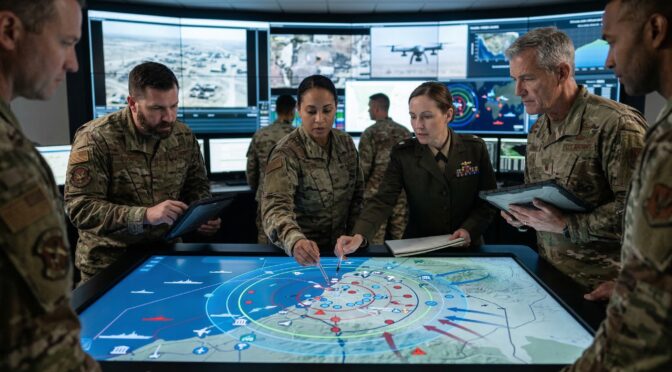
The geopolitical and military landscape of the Middle East has undergone a systemic and irreversible transformation over the past seven days. The ongoing conflict, initiated on February 28, 2026, by the United States and Israel under the operational designations Operation Epic Fury and Operation Roaring Lion, has transitioned from a phase of rapid decapitation strikes into a grueling campaign of infrastructure attrition and proxy containment.1 Over the last 36 hours, the conflict has reached a critical inflection point characterized by the functional defeat of the Iranian ballistic missile production apparatus, the consolidation of a highly distributed Iranian retaliatory command structure, and the unprecedented direct targeting of Gulf Cooperation Council sovereign territories by Iranian state forces.3
The confrontation materialized following the total collapse of the 2025 to 2026 nuclear negotiations held in Geneva and Oman. After diplomacy between United States Special Envoy Steve Witkoff and Iranian Foreign Minister Abbas Araghchi failed to meet an imposed 60-day deadline, the United States and Israel calculated that Iran’s weakened domestic posture presented a strategic window to dismantle its nuclear and ballistic capabilities permanently.1 The opening salvos successfully eliminated Supreme Leader Ali Khamenei and devastated the central command nodes of the Islamic Revolutionary Guard Corps.1
The most profound systemic shift observed in the current reporting period is the degradation of the Iranian Integrated Air Defense System and its offensive launch capabilities. United States and Israeli defense officials assess that the Iranian military has lost approximately 80 percent of its total offensive capability, with between 160 and 190 primary ballistic missile launchers confirmed destroyed and an additional 200 units severely disabled.2 Consequently, the volume of retaliatory missile and drone launches from Iranian territory has plummeted by an estimated 90 to 95 percent compared to the opening days of the war.3 However, this tactical degradation has not yielded strategic capitulation. The Islamic Revolutionary Guard Corps has transitioned to a highly decentralized and distributed command model, allowing surviving localized units to operate autonomously and sustain asymmetrical pressure on maritime choke points and regional American military installations.4
Diplomatically, the strategic isolation of the Islamic Republic of Iran has accelerated dramatically. On March 11, 2026, the United Nations Security Council adopted Resolution 2817 with a 13 to 0 vote, unequivocally condemning Iranian strikes on civilian and energy infrastructure in Bahrain, Kuwait, Oman, Qatar, Saudi Arabia, the United Arab Emirates, and Jordan.5 This resolution signifies a historic and formal alignment between the Gulf Cooperation Council and Western security architectures, fundamentally altering the diplomatic baseline that has governed Gulf relations with Tehran for decades.8 The text of the resolution formally invokes Article 51 of the United Nations Charter, establishing a robust legal framework for collective self-defense against Iranian territorial aggression.7
The economic and civilian fallout continues to expand exponentially across multiple continents. The functional closure of the Strait of Hormuz has paralyzed global maritime trade corridors, driving Brent crude prices above the 100 dollars per barrel threshold.9 This global energy shock has triggered emergency interventions by the United States Treasury, which controversially issued a sanctions waiver for Russian crude oil to stabilize skyrocketing domestic fuel prices.10 Concurrently, the humanitarian crisis inside Iran, Lebanon, and across the wider region is deteriorating rapidly. Strikes on dual-use infrastructure, including water desalination plants and power grids, threaten to unleash cascading public health emergencies, prompting the United Nations human rights office to warn of severe environmental catastrophes.11 The United States Department of State has responded to the escalating regional instability by issuing unprecedented evacuation advisories for 14 Middle Eastern nations, signaling an anticipation of a prolonged and widening theater of conflict that will heavily impact global capital markets and supply chains for the foreseeable future.12
2.0 Chronological Timeline of Key Events (Last 7 Days)
The following timeline details the critical military, diplomatic, and economic developments over the past seven days, with a granular focus on the exact 36-hour window preceding the publication of this report. All timestamps are recorded in Coordinated Universal Time (UTC).
- March 7, 2026:
- 14:00 UTC: United States and Israeli forces formally conclude the first week of Operation Epic Fury, having struck over 6,000 targets cumulatively across the Iranian plateau.2
- 18:30 UTC: Iranian retaliatory strikes begin targeting United States military installations in Iraq and Syria, utilizing surviving drone stockpiles to test localized air defense responses.
- March 9, 2026:
- 04:15 UTC: The Qatari Ministry of Defense successfully intercepts multiple Iranian ballistic and cruise missiles directed toward the capital city of Doha.14
- 11:00 UTC: A joint diplomatic statement is issued by Saudi Arabia, the United Arab Emirates, Bahrain, Kuwait, Qatar, Jordan, and the United States, reaffirming the collective right to self-defense against unprovoked Iranian aggression.15
- March 11, 2026:
- 15:00 UTC: Open-source intelligence analysts confirm combined force strikes on internal security sites in Marivan City, Kurdistan Province, an area known for intense anti-regime sentiment and civilian unrest.17
- 18:00 UTC: The United Nations Security Council successfully passes Resolution 2817, spearheaded by Bahrain, condemning Iranian attacks on Gulf States. The Russian Federation and the People’s Republic of China abstain from the vote.5
- 22:19 UTC: Iranian naval forces strike a Chinese-owned, Liberian-flagged commercial vessel transiting the Strait of Hormuz, marking the last confirmed attack on civilian shipping in the waterway before a tactical shift to selective passage enforcement.3
- March 12, 2026 (Beginning of the 36-Hour Tactical Window):
- 19:00 UTC: Israeli Prime Minister Benjamin Netanyahu holds a comprehensive press conference explicitly stating that the ultimate objective of the military campaign is creating the optimal conditions for toppling the Iranian regime.3
- 20:15 UTC: The United States Department of State issues an urgent travel advisory instructing American citizens to depart from 14 Middle Eastern nations immediately due to severe and rapidly expanding regional safety risks.12
- 22:30 UTC: A United States military KC-135 Stratotanker aerial refueling aircraft crashes in western Iraq during a combat support mission, severely complicating logistics for sustained air patrols.9
- 23:45 UTC: An Iranian drone strike successfully penetrates local air defenses to hit the Address Creek Harbour hotel in Dubai, United Arab Emirates, occurring alongside separate strikes targeting the Kuwait International Airport.18
- March 13, 2026:
- 02:00 UTC: Indian Prime Minister Narendra Modi holds a high-level telephone call with Iranian President Masoud Pezeshkian to discuss the protection of Indian nationals and the essential transit of energy resources through the Gulf.10
- 04:30 UTC: The Israeli Defense Forces issue urgent evacuation warnings for the Villa and Moniriyeh districts of Tehran ahead of impending strategic bombing runs targeting military infrastructure embedded in civilian zones.10
- 05:46 UTC: United States Central Command officially confirms the crash of the KC-135 aircraft, reporting four service members killed and two undergoing active combat search and rescue operations.9
- 08:15 UTC: Multiple heavy explosions are reported in central Tehran by international journalists following a new wave of Israeli airstrikes targeting the Law Enforcement Command facilities in Gharchak.3
- 10:00 UTC: United States Defense Secretary Pete Hegseth holds a press briefing declaring that Iran’s ballistic missile production capacity has been functionally defeated and that the nation’s air defenses have been neutralized.3
- 12:30 UTC: The United States Treasury issues a highly consequential sanctions waiver allowing the sale of Russian crude oil through April 11 to stabilize global energy markets disrupted by the conflict.10
- 15:45 UTC: President Donald Trump publicly announces the total obliteration of all military targets on Iran’s Kharg Island, deliberately sparing the civilian oil infrastructure but threatening its imminent destruction if maritime interference continues.10
- 18:00 UTC: Iranian state media broadcasts the first official statement from the newly elevated Supreme Leader Mojtaba Khamenei, vowing continued retaliation and maintaining a systemic stranglehold on the Strait of Hormuz.9
- 21:00 UTC: The Israeli Defense Forces execute a targeted strike on a primary healthcare center in southern Lebanon, resulting in the deaths of 12 medical personnel amid rapidly expanding ground operations against Hezbollah.10
- March 14, 2026:
- 01:30 UTC: Rescue workers in southern Tehran continue searching through heavy rubble following intense overnight strikes targeting deeply buried Islamic Revolutionary Guard Corps logistics hubs.20
- 05:00 UTC: The United States State Department formally announces a 10 million dollar reward for actionable intelligence regarding the location of Mojtaba Khamenei and surviving senior Iranian military leadership.10
3.0 Situation by Primary Country
3.1 Iran
3.1.1 Military Actions & Posture
The military posture of the Islamic Republic of Iran has transitioned completely from a doctrine of proactive regional deterrence to a desperate stance of acute regime survival and asymmetrical harassment. Prior to the onset of the current reporting period, the Iranian armed forces and the Islamic Revolutionary Guard Corps possessed one of the most formidable and numerically vast ballistic missile and unmanned aerial vehicle arsenals in the Middle East. Deep intelligence assessments from the United States and Israel now indicate that approximately 80 percent of Iran’s total offensive strike capability has been neutralized.3 Precision strikes have successfully destroyed between 160 and 190 primary ballistic missile launchers and disabled a further 200 units.2
The combined force air campaign has systematically dismantled the Iranian defense industrial base. Critical infrastructure has been obliterated. The Shiraz Electronics Industries complex, which is responsible for manufacturing advanced avionics, radar systems, and precision missile guidance technology, was heavily struck on March 12.3 Furthermore, the Hajiabad Industrial Zone, which houses the Pegah Aluminum Arak Company and supports the Iran Centrifuge Technology Company in uranium enrichment efforts, was targeted on March 13.3 This effectively halts Iran’s ability to replenish its depleted munitions stockpiles or advance its nuclear ambitions in the near term. The combined forces also maintained pressure on critical aviation hubs, executing repeat strikes against the Naval Aviation Base in Bandar Abbas, the 4th Tactical Air Base in Dezful, and the 7th Tactical Air Base in Shiraz to prevent any residual Iranian air sorties.18 United States Defense Secretary Pete Hegseth noted on March 13 that Iran’s air defenses have been fundamentally shattered following the dropping of 200 munitions on Tehran Province air defense bases, allowing Israeli and American aircraft to operate with near impunity in previously denied airspace.3
In response to the decapitation of central leadership and the systematic destruction of heavy infrastructure, the Islamic Revolutionary Guard Corps has adopted a highly distributed and fragmented command and control model.4 Surviving tactical commanders are operating under localized autonomy, demonstrating the resilience of the organization’s irregular warfare training. Security personnel, including members of the Basij militia, have completely abandoned fixed garrisons. Intelligence indicates they are currently utilizing civilian infrastructure, such as highway underpasses and bridge networks, to evade persistent aerial surveillance and drone strikes.3 This decentralization ensures that while the IRGC cannot launch coordinated mass barrages, it remains capable of executing localized, lethal attacks.
In the maritime domain, the Iranian Navy and the Islamic Revolutionary Guard Corps Navy have modified their operational approach in the Strait of Hormuz. Recognizing that a total blockade achieved through intensive naval mining would invite the immediate and total destruction of their remaining civilian port facilities by United States forces, Iranian naval commanders are engaging in selective interdiction.3 Commercial vessels flagged to neutral or semi-aligned nations, such as Indian liquefied petroleum gas carriers and Turkish-owned ships, are periodically allowed transit.3 Iraqi oil tankers that can certify they lack American or Israeli financial ownership are also permitted passage.3 However, the implicit threat of drone and missile strikes has successfully terrorized global shipping conglomerates, reducing total maritime traffic through the chokepoint by a staggering 97 percent since the war began.3 Reports further indicate that the Russian Federation has begun sharing advanced drone tactics with Iranian forces to optimize their remaining assets against United States warships, while China continues to provide essential logistical supplies.17
3.1.2 Policy & Diplomacy
The internal political stability of the Iranian regime is under severe, potentially existential, strain. Following the targeted assassination of Supreme Leader Ali Khamenei on February 28 during the opening hours of Operation Epic Fury, the succession of his son, Mojtaba Khamenei, was rushed amid the chaos of the initial bombardment.1 On March 13, state media released the first official statement attributed to Mojtaba Khamenei, which projected a highly uncompromising and defiant stance. The broadcast vowed to maintain the blockade on the Strait of Hormuz and explicitly threatened further strikes against Gulf Arab nations hosting United States military assets, signaling that the new leadership intends to maintain its hardline regional policies despite overwhelming military losses.9
Despite this outward projection of strength and unity, deep and unprecedented fissures are emerging within the highest echelons of the clerical establishment. Intelligence reports indicate that senior, highly influential clerics, including Ali Asghar Hejazi and Alireza Arafi, have circulated internal critiques questioning the health, theological legitimacy, and leadership competence of Mojtaba Khamenei.3 There is a growing, highly secretive movement among the traditionalist elite to bypass the new Supreme Leader entirely and temporarily install a Leadership Council to assume executive duties until the national crisis stabilizes.3 This internal fracturing is profoundly exacerbated by the physical destruction of the Assembly of Experts headquarters in Tehran on March 3.1 The obliteration of this facility severely disrupted the constitutional mechanisms required to formalize leadership transitions, heavily damaging the foundational legitimacy of the Velayat-e Faqih system upon which the entire Islamic Republic rests.22
Diplomatically, the regime remains entirely isolated from Western engagement and is increasingly alienated from its regional neighbors. The United States administration has publicly stated it will only accept the unconditional surrender of the Iranian government, functionally closing any avenues for immediate de-escalation, ceasefire negotiations, or diplomatic off-ramps.23 The diplomatic isolation was codified internationally on March 11 with the passage of United Nations Security Council Resolution 2817, which legally condemned Iranian actions and isolated Tehran on the global stage.5 In an effort to further destabilize the command structure, the United States Department of State announced a 10 million dollar reward for information leading to the capture or elimination of Mojtaba Khamenei and his inner circle.10
3.1.3 Civilian Impact
The civilian toll inside the Islamic Republic of Iran is catastrophic, compounding daily, and rapidly evolving into a generational humanitarian crisis. While exact figures are highly contested in the fog of war, the Iranian Red Crescent has officially confirmed nearly 800 fatalities resulting directly from the recent bombardments, while independent human rights organizations estimate that the true death toll heavily exceeds 2,400 individuals.8 These figures must be contextualized alongside the estimated 32,000 casualties resulting from the brutal state suppression of domestic protests in January 2026, creating a civilian population that is deeply traumatized, economically ruined, and increasingly fractured.2
The strategic targeting of dual-use infrastructure by the combined United States and Israeli forces has triggered severe, localized public health disasters. Precision strikes on vital water desalination plants in Hormozgan Province, particularly on the heavily populated Qeshm Island, have completely severed potable water access for dozens of rural villages, forcing immediate mass migrations to urban centers that are already under heavy bombardment.11 Furthermore, the destruction of massive fuel depots and oil infrastructure has resulted in immense crude oil spills flowing directly into residential street drainage systems.11 The burning of these facilities has heavily contaminated the atmosphere. The Iranian Red Crescent has issued severe, nationwide public health warnings regarding the immediate threat of highly dangerous and acidic rainfall.11 Medical professionals warn that exposure to this precipitation poses extreme risks of chemical burns, widespread respiratory failure, and severe lung damage, disproportionately affecting children and the elderly.
Civilian infrastructure has also suffered direct, devastating kinetic impacts resulting from targeting errors and the embedding of military assets within civilian zones. In one of the most tragic incidents of the conflict to date, a primary school located adjacent to an Islamic Revolutionary Guard Corps complex in Minab was struck by an erroneous United States missile, resulting in the deaths of nearly 170 children between the ages of seven and twelve.8 Mass evacuations are currently underway in strategic border regions. In the Kurdish city of Marivan, residents are fleeing in panic due to anticipated ground clashes, widespread jailbreaks from bombed detention facilities, and ongoing aerial bombardment.8 The social fabric of these border regions is disintegrating as basic municipal services cease to function.
| Iranian Infrastructure Category | Current Operational Status | Primary Cause of Degradation | Estimated Recovery Time |
| Ballistic Missile Production | Functionally Defeated | Targeted strikes on manufacturing lines and assembly hubs | Years (pending sanctions relief) |
| Integrated Air Defense | Severely Degraded | Systematic destruction of radar and surface-to-air sites | Months to Years |
| Maritime Trade (Hormuz) | Severely Restricted | Iranian selective interdiction and global shipping avoidance | Immediate upon cessation of hostilities |
| Potable Water (Southern Provinces) | Critical Shortages | Kinetic damage to regional desalination plants (e.g., Qeshm Island) | Weeks to Months |
| Civilian Aviation | Completely Paralyzed | Nationwide airspace closures and destruction of dual-use tarmac | Weeks |
3.2 Israel
3.2.1 Military Actions & Posture
The Israeli military apparatus is currently executing a highly complex, two-front war of unprecedented scale and intensity. Operation Roaring Lion, the Israeli component of the joint offensive against Iran, represents the largest combat sortie in the history of the Israeli Air Force.2 Having initially struck 500 deep-penetration military targets with over 1,200 heavy munitions in the first 24 hours of the conflict, Israeli forces have achieved total air supremacy and are now conducting continuous, uncontested bombing runs over Iranian skies.2
Recent targeting directives have shifted significantly from strict air defense suppression to the systematic dismantling of Iranian internal security infrastructure.3 The Israeli Air Force has repeatedly targeted Law Enforcement Command sites in Gharchak and Basij militia checkpoints across the Tehran Province.3 This strategic shift is explicitly designed to degrade the Iranian regime’s repressive capabilities, thereby removing the state’s primary mechanism for controlling its population and actively fostering domestic insurrection and regime collapse.3 By eliminating the police and paramilitary forces, Israel aims to weaponize the existing domestic discontent within Iran.
Simultaneously, the Israeli Defense Forces have drastically escalated kinetic operations on the northern front against Hezbollah in Lebanon, seeking to permanently degrade the proxy threat while Iran is incapable of resupplying them. Since February 28, Israeli forces have conducted over 1,100 precision airstrikes in Lebanese territory.3 These operations have resulted in the confirmed deaths of approximately 380 Hezbollah combatants and the destruction of 200 essential missile launchers.3 High-value target assassinations remain a cornerstone of this theater. A recent airstrike in the heart of Beirut successfully eliminated Murtada Hussein Srour, a senior drone manufacturing expert intimately affiliated with Hezbollah’s secretive Unit 127.3
The military posture in the north is highly aggressive and indicates preparations for territorial expansion. The Israeli Defense Forces have deployed the 91st, 36th, and 146th Divisions to the northern border.3 They are actively striking logistical chokepoints, such as the Zrariyeh bridge on the Litani River, to impede Hezbollah troop movements and sever supply lines.3 Defense Minister Israel Katz and Prime Minister Benjamin Netanyahu have reportedly instructed the military command structure to prepare for a significant expansion of ground operations into southern Lebanon.3 Military analysts assess that the objective of this ground incursion would be to advance to the Litani River and establish a permanent, demilitarized buffer zone, thereby securing northern Israeli communities from future anti-tank and short-range rocket fire.3
3.2.2 Policy & Diplomacy
The Israeli government, under the leadership of Prime Minister Benjamin Netanyahu, is maintaining an uncompromising, maximalist policy objective that precludes near-term diplomatic resolution. During a highly publicized press conference on March 12, Netanyahu clearly articulated that the primary strategic goal of the ongoing joint campaign is creating the optimal conditions for the complete and total collapse of the Iranian government.3 This explicit endorsement of regime change represents a massive escalation in declared policy. It functionally eliminates the potential for negotiated settlements or a return to the status quo ante, as the stated goal is now the eradication of the adversary’s political system rather than mere deterrence or capability degradation.
Domestic political support for the continuation of this grueling war remains surprisingly robust. Despite the daily reality of incoming ballistic missile threats from multiple vectors and the extreme necessity of conducting critical government, military, and hospital operations from heavily fortified underground bunkers, public opinion polling consistently shows an overwhelming majority of the Israeli electorate in favor of sustaining the military campaign until all objectives are met.2 The trauma of recent regional conflicts has galvanized the populace. Consequently, the government has entirely rebuffed intense international pressure from the United Nations and European allies to agree to a ceasefire. The Israeli security establishment views the current degradation of Iranian and proxy capabilities as a singular, generational opportunity to reshape the Middle East and secure the state’s borders permanently, regardless of the immediate geopolitical friction it causes.27
3.2.3 Civilian Impact
The civilian impact within the State of Israel, while heavily mitigated by the exceptional performance of the Iron Dome, David’s Sling, and Arrow integrated air defense systems, remains significant and deeply disruptive. According to official government statistics, the conflict has thus far resulted in the deaths of 17 civilians and 2 soldiers, with an additional 2,975 individuals sustaining various injuries requiring medical attention.2
The psychological, logistical, and economic toll of fighting a multi-front war of this magnitude is profound. Major urban centers, including the economic hub of Tel Aviv, are subject to frequent and unpredictable air raid sirens, requiring civilians to seek shelter in fortified safe rooms repeatedly throughout the day and night.26 This constant state of alert has severely impacted commercial productivity and daily life. The national aviation sector has experienced a near-total collapse. Major international carriers, including the entire Lufthansa Group, have extended the suspension of all commercial flights to and from Tel Aviv, effectively isolating the nation from standard global travel networks and stranding tens of thousands of citizens abroad.28 To mitigate this, the government has been forced to coordinate complex rescue flights, bringing citizens back through neighboring nations like Egypt, utilizing the Taba border crossing in the Sinai Peninsula to repatriate stranded Israelis.26 In the northern territories, the intense escalation with Hezbollah has necessitated the continued, indefinite displacement of tens of thousands of residents from border communities, creating a massive, long-term domestic housing crisis and straining municipal support systems.
3.3 United States
3.3.1 Military Actions & Posture
The United States military footprint and operational tempo in the Middle East have rapidly scaled to levels unseen since the initial phases of the 2003 invasion of Iraq.2 Operating under the umbrella of Operation Epic Fury, United States Central Command has coordinated the execution of devastating precision strikes on over 15,000 enemy targets, maintaining an extraordinary average of more than 1,000 strikes per day.9 This relentless operational pace has successfully shattered the Iranian military infrastructure but has also resulted in a severe and alarming depletion of critical American munitions stockpiles. Pentagon officials have noted with deep concern that the military has burned through years of accumulated reserves in just weeks, specifically regarding expensive, long-range Tomahawk cruise missiles utilized to penetrate heavily defended Iranian airspace.10
Tragically, the immense logistical demands of sustaining such a massive air campaign resulted in a fatal aviation incident during the current reporting window. On March 12, a KC-135 Stratotanker aerial refueling aircraft, an asset absolutely vital for maintaining continuous combat air patrols over hostile territory, crashed in western Iraq.9 United States Central Command officially confirmed the deaths of four service members, with active combat search and rescue operations ongoing for two additional crew members in hostile territory.9 Preliminary military investigations strongly indicate the crash was not the result of hostile anti-aircraft fire. Defense officials suggested a potential mid-air collision occurred with a second KC-135 aircraft operating in the same refueling track, which subsequently declared an in-flight emergency but managed to land safely in Tel Aviv.9 This tragic incident brings the total number of American military fatalities in the conflict to 15, alongside 200 wounded personnel across various theaters.2
To maintain overwhelming pressure on Tehran and secure vulnerable regional assets, the United States is continuously surging naval and amphibious forces into the combat theater. The USS Tripoli Amphibious Ready Group and the 31st Marine Expeditionary Unit are currently deploying rapidly to the Middle East to provide critical multi-domain combat capabilities, force projection, and potential non-combatant evacuation operation support.3 Recognizing the severe threat posed by Iranian-backed militias in neighboring nations, the combined forces expanded their target list into Iraq. Precision strikes completely obliterated a Popular Mobilization Forces warehouse in Makhmour, the primary headquarters of Kataib Hezbollah in Fallujah, and the Asaib Ahl al Haq command center in Tikrit.3 These strikes have forced militia units across the Anbar Province to abandon their headquarters and disperse into civilian populations to avoid further annihilation.3 Furthermore, to counter the devastating Iranian interdiction of the Strait of Hormuz, Treasury Secretary Scott Bessent announced that the United States Navy, potentially operating in coordination with a newly formed international maritime coalition, will commence armed escort operations for civilian oil tankers through the strait as soon as militarily feasible.9
3.3.2 Policy & Diplomacy
The diplomatic strategy of the United States administration is characterized by uncompromising deterrence, aggressive economic manipulation, and active preparation for widespread, long-term regional instability. President Donald Trump has consistently maintained a highly hostile rhetorical posture, demanding nothing short of the unconditional surrender of the Iranian regime, publicly stating that the military campaign will continue until the Iranian leadership “cries uncle” or is entirely eliminated.23 On March 13, Trump announced a massive escalation in economic warfare, confirming that United States forces had completely obliterated all military installations on Iran’s Kharg Island, the central and most vital node for Iranian crude oil exports.10 He explicitly stated that while the highly lucrative civilian oil infrastructure on the island was deliberately spared in this wave of strikes, it remains a primary target marked for total destruction if Iran or its proxies continue to disrupt the free passage of international shipping in the Gulf.10
The severe economic ramifications of the conflict have forced the administration into highly complex and contradictory geopolitical maneuvering. With the paralysis of trade in the Gulf pushing Brent crude prices over 100 dollars a barrel and threatening domestic inflation, the United States Treasury Department issued an emergency, highly controversial license permitting the sale of Russian crude oil and petroleum products through April 11.9 This massive policy shift demonstrates that the acute priority placed on stabilizing domestic energy prices and preventing a global market collapse has temporarily superseded the strategic imperative of maintaining strict sanctions enforcement against the Russian Federation.
In a sweeping measure reflecting the intelligence community’s anticipation of a prolonged and deeply unstable security environment, the United States Department of State issued a drastic Level 4 Travel Advisory on March 12. The advisory urged all American citizens to depart immediately from 14 Middle Eastern nations.12 Crucially, this list included traditionally stable, highly allied nations such as the United Arab Emirates, Qatar, Egypt, and Bahrain, indicating that the United States views the entire region as highly susceptible to sudden kinetic escalation or internal collapse.12 Concurrently, utilizing financial incentives to accelerate regime collapse, the State Department established a 10 million dollar bounty for actionable intelligence leading to the capture or elimination of the new Iranian Supreme Leader, Mojtaba Khamenei, and his surviving high command.10
3.3.3 Civilian Impact
The domestic civilian impact within the United States is primarily economic, driven entirely by the sudden, massive spike in global energy costs. The breach of the 100 dollars per barrel threshold for Brent crude has induced significant anxiety within the financial sector, leading to a sharp slide in global stock markets.9 This economic contraction persists despite repeated, public assurances from the executive branch that the conflict will be resolved swiftly and announcements regarding the release of major strategic oil reserves.9
For American citizens residing abroad, the conflict has generated an immediate, terrifying logistical crisis. The State Department estimates that over one million Americans currently reside in the affected region.13 Following the issuance of the sweeping evacuation orders, commercial aviation options vanished almost instantly as airlines halted operations. Consequently, the United States government has been forced to facilitate emergency charter flights from relatively stable staging grounds in the United Arab Emirates, Saudi Arabia, and Jordan to extract its citizens.13 As of the latest reporting, over 1,600 American citizens have officially requested immediate evacuation assistance, while consular hotlines have fielded calls from nearly 3,000 individuals, completely overwhelming regional consular services and requiring the rapid establishment of a dedicated 24-hour crisis response center in Washington.13 All non-emergency government personnel and their families have been fully evacuated from diplomatic posts across the Gulf, Cyprus, and Pakistan, leaving behind only skeleton crews focused entirely on military coordination and citizen extraction.13
4.0 Regional and Gulf State Impacts
The strategic fallout of the Iranian conflict has fundamentally reshaped the security paradigm and diplomatic architecture of the Gulf Cooperation Council. For decades, Gulf nations successfully executed a delicate balancing act: hosting massive United States military bases to guarantee their security while maintaining a diplomatic equilibrium with Tehran to avoid direct kinetic retaliation. This historical equilibrium has collapsed entirely. In response to the joint United States and Israeli strikes, Iranian forces launched an unprecedented wave of ballistic missiles and suicide drones directly targeting civilian, financial, and energy infrastructure across the sovereign territories of United States allied nations.8
United Arab Emirates: The United Arab Emirates, globally recognized as a safe haven for international business, has sustained significant infrastructure targeting that threatens its core economic model. Iranian drones successfully penetrated local defenses to strike the Address Creek Harbour hotel in Dubai and the critical Zayed port in Abu Dhabi.18 Residents in the highly populated central financial district of Dubai reported hearing large explosions on the morning of March 13, indicating the continued penetration of Emirati airspace by hostile munitions.9 The deliberate targeting of Dubai represents an Iranian strategy to inflict maximum economic pain on Western capital markets that rely heavily on the city’s infrastructure.
Kingdom of Saudi Arabia: Saudi Arabian air defense forces have been on high alert and highly active, successfully intercepting at least six Iranian drones attempting to strike the strategic Shaybah Oil Field located in the remote Rub’ al Khali desert.18 While the intercepts were successful, the willingness of Iran to target Saudi energy infrastructure mirrors the devastating Abqaiq-Khurais attacks of 2019 and threatens the core of global energy production. Saudi Arabia has been vital in facilitating the transit of evacuated foreign nationals, opening its airspace for emergency charter flights arranged by the United States and India.13
Kingdom of Bahrain: Bahrain, which strategically hosts the United States Navy’s Fifth Fleet, has faced severe and direct retaliatory strikes. The Bahraini Interior Ministry confirmed that Iranian munitions targeted essential fuel tankers at an installation in the Muharraq Governorate.18 More alarmingly, Iranian strikes severely damaged a critical water desalination plant in the country, directly threatening the freshwater supply for the civilian population in a clear violation of international humanitarian norms regarding the protection of vital civilian infrastructure.11 Despite absorbing these attacks, Bahrain took a highly visible leadership role diplomatically, acting on behalf of the Gulf Cooperation Council to sponsor United Nations Security Council Resolution 2817.5
State of Qatar: Qatar, home to the massive Al Udeid Air Base which serves as the forward headquarters for United States Central Command, reported multiple interceptions of Iranian ballistic and cruise missiles traversing its territory, including the skies over the capital city of Doha.14 The Qatari Prime Minister publicly condemned the attacks as a grave mistake and warned of disastrous regional consequences, highlighting a profound sense of betrayal given Qatar’s historical role as a neutral intermediary and financial conduit between Washington and Tehran.14
State of Kuwait: Kuwait has experienced direct civilian casualties and infrastructure damage as a result of the Iranian barrage. A drone strike hit a residential building in Kuwait City, wounding at least two civilians, while debris from intercepted projectiles severely disrupted six major electricity transmission lines, causing localized blackouts.18 Material damage was also reported at the Kuwait International Airport following a targeted drone attack, disrupting logistical operations.18
Sultanate of Oman: Oman, traditionally the most steadfastly neutral state in the Gulf and a frequent mediator for secret United States-Iran negotiations, was not spared from the regional conflagration. An Iranian strike on the al Awhi Industrial Zone in the city of Sohar resulted in the tragic deaths of two Indian national workers, underscoring the indiscriminate nature of the Iranian retaliatory strategy.3
Hashemite Kingdom of Jordan: Jordan, lacking the vast wealth of the Gulf states but highly strategic in its location, has been forced to close its airspace entirely and actively intercept Iranian projectiles traversing its territory en route to Israel. The kingdom joined the Gulf states in the joint diplomatic condemnation of Iran’s reckless behavior, emphasizing the profound threat to its sovereign borders and civilian populace.15
Diplomatic and Economic Synthesis: The collective response to these unprecedented attacks culminated in the passage of United Nations Security Council Resolution 2817 on March 11. The resolution, which passed with 13 votes in favor and strategic abstentions from the Russian Federation and the People’s Republic of China, vehemently condemned the egregious attacks by Iran and established a definitive legal framework under international law to protect the sovereignty of the Gulf states.5 The Russian ambassador sharply criticized the resolution, arguing it was inherently biased as it ignored the initial United States and Israeli strikes that triggered the crisis, warning that the resolution would completely undo years of effort aimed at restoring good-neighborly relations between the Gulf and Tehran.24
The immediate and most visible economic casualty of this regional expansion is the commercial aviation sector. The airspace over the Middle East has effectively become a heavily contested combat zone. Major international carriers have reported over 1,161 flight delays and 1,014 cancellations, effectively shutting down the critical air corridor connecting European markets to Asia.29 The combination of widespread, indefinite flight cancellations and the severe travel advisories issued by the United States and Germany has trapped thousands of international travelers, forcing nations like India to waive overstay penalties, and has plunged the region’s lucrative tourism and transit industries into an indefinite, highly destructive crisis.10
| Gulf Nation | Strategic Importance | Notable Iranian Strike Incidents | Diplomatic Posture |
| UAE | Global Financial Hub | Address Creek Harbour Hotel, Zayed Port | Co-sponsor UNSC 2817 |
| Saudi Arabia | Global Energy Producer | Shaybah Oil Field (Intercepted) | Co-sponsor UNSC 2817 |
| Bahrain | US Fifth Fleet HQ | Muharraq Fuel Tankers, Desalination Plant | Lead Sponsor UNSC 2817 |
| Qatar | US CENTCOM Forward HQ | Ballistic Missiles Intercepted over Doha | Co-sponsor UNSC 2817 |
| Kuwait | US Logistical Hub | Kuwait Int’l Airport, Residential Buildings | Co-sponsor UNSC 2817 |
| Oman | Historic Diplomatic Mediator | Sohar Industrial Zone (2 Foreign Nationals Dead) | Co-sponsor UNSC 2817 |
5.0 Appendices
Appendix A: Methodology
This Daily Situation Report relies upon a highly structured, comprehensive, real-time aggregation of multi-source intelligence to construct an objective narrative of the 2026 Iranian conflict. The data synthesis rigorously prioritizes open-source intelligence platforms, verified satellite telemetry, official state broadcasting channels (including the Islamic Republic News Agency and formal United States Central Command press releases), and established military monitoring organizations such as the Institute for the Study of War and the Armed Conflict Location and Event Data Project.
To ensure absolute continuity of events and prevent analytical fragmentation, the temporal scope was specifically parameterized to capture the preceding 36 hours (March 12 through March 14, 2026), while deliberately integrating a 7-day retrospective overlap. This methodology contextualizes immediate tactical events within the broader strategic vectors of the campaign. In instances of conflicting casualty figures or battle damage assessments, priority weighting is systematically assigned to independent, third-party humanitarian organizations (such as the United Nations Human Rights Office) and corroborated satellite imagery over unilateral state media claims, which frequently exhibit high statistical variance due to wartime information operations and propaganda efforts.
Appendix B: Glossary of Acronyms
- CENTCOM: United States Central Command. The unified combatant command responsible for United States military operations in the Middle East, Central Asia, and parts of South Asia.
- GCC: Gulf Cooperation Council. A regional, intergovernmental political and economic union comprising Bahrain, Kuwait, Oman, Qatar, Saudi Arabia, and the United Arab Emirates.
- IADS: Integrated Air Defense System. A comprehensive network of sensors, command and control centers, and weapon systems (such as surface-to-air missiles and interceptor aircraft) designed to protect a nation’s airspace from hostile penetration.
- IAF: Israeli Air Force. The aerial warfare branch of the Israeli Defense Forces.
- IDF: Israeli Defense Forces. The combined military forces of the State of Israel.
- IRGC: Islamic Revolutionary Guard Corps. A multi-service primary branch of the Iranian Armed Forces, tasked specifically with protecting the country’s Islamic republic political system and projecting asymmetric power across the region.
- JCPOA: Joint Comprehensive Plan of Action. The historical 2015 agreement regarding the Iranian nuclear program, the collapse of which fundamentally preceded the current conflict.
- MEU: Marine Expeditionary Unit. A highly mobile, rapid-response air-ground task force of the United States Marine Corps, currently deployed to the theater.
- MODAFL: Ministry of Defense and Armed Forces Logistics. The Iranian government department responsible for defense research, development, and military procurement.
- OHCHR: Office of the United Nations High Commissioner for Human Rights. The leading UN entity on human rights, actively monitoring the civilian toll of the conflict.
- OSINT: Open-Source Intelligence. Data collected from publicly available sources, utilized heavily in modern conflict analysis.
- PMF: Popular Mobilization Forces. An Iraqi state-sponsored umbrella organization composed of various armed factions, many of which maintain deep operational and ideological ties to the Iranian IRGC.
- TAB: Tactical Air Base. A designation used by the Iranian military for critical aerial installations.
- UNSC: United Nations Security Council. One of the six principal organs of the United Nations, charged with ensuring international peace and security.
Appendix C: Glossary of Foreign Words
- Artesh: The conventional military forces of the Islamic Republic of Iran, distinct from the IRGC. The Artesh is primarily responsible for defending the territorial integrity of the state against traditional military threats.
- Basij: A paramilitary volunteer militia established in Iran in 1979, operating subordinately to the IRGC. They are frequently utilized for internal security, moral policing, and aggressively suppressing domestic dissent.
- Khamenei: Referring either to Ali Khamenei, the Supreme Leader of Iran from 1989 until his assassination by joint US-Israeli forces in February 2026, or his son, Mojtaba Khamenei, the newly appointed Supreme Leader currently targeted by a US bounty.
- Knesset: The unicameral national legislature of the State of Israel, responsible for passing laws, electing the Prime Minister, and approving the cabinet.
- Majlis: The Islamic Consultative Assembly, which serves as the national legislative body of the Islamic Republic of Iran.
- Velayat-e Faqih: The Guardianship of the Islamic Jurist. A foundational political and theological concept in post-1979 Iran that grants absolute political and religious authority to a highly qualified Islamic cleric, serving as the ideological basis for the position of the Supreme Leader.
Please share the link on Facebook, Forums, with colleagues, etc. Your support is much appreciated and if you have any feedback, please email us in**@*********ps.com. If you’d like to request a report or order a reprint, please click here for the corresponding page to open in new tab.
Sources Used
- 2026 Iran conflict | Explained, United States, Israel, Map, & War | Britannica, accessed March 14, 2026, https://www.britannica.com/event/2026-Iran-Conflict
- 2026 Iran war – Wikipedia, accessed March 14, 2026, https://en.wikipedia.org/wiki/2026_Iran_war
- Iran Update Evening Special Report, March 13, 2026 | ISW, accessed March 14, 2026, https://understandingwar.org/research/middle-east/iran-update-evening-special-report-march-13-2026/
- The IRGC: Understanding America’s Enemy in “Operation Epic Fury” – The National Interest, accessed March 14, 2026, https://nationalinterest.org/blog/buzz/irgc-understanding-americas-enemy-operation-epic-fury-hk-030826
- Security Council Adopts Resolution 2817 (2026) Condemning Iran’s ‘Egregious Attacks’ against Neighbours as Middle East Violence Rapidly Escalates, accessed March 14, 2026, https://press.un.org/en/2026/sc16315.doc.htm
- 2025–2026 Iran–United States negotiations – Wikipedia, accessed March 14, 2026, https://en.wikipedia.org/wiki/2025%E2%80%932026_Iran%E2%80%93United_States_negotiations
- UN Security Council Condemns ‘Egregious Attacks’ by Iran in the Mideast, accessed March 14, 2026, https://passblue.com/2026/03/11/un-security-council-condemns-egregious-attacks-by-iran-in-the-mideast/
- Middle East Special Issue: March 2026, accessed March 14, 2026, https://acleddata.com/update/middle-east-special-issue-march-2026
- Iran war paralyzes oil trade, U.S. military plane crashes in Iraq, accessed March 14, 2026, https://www.cbsnews.com/live-updates/iran-war-us-israel-gulf-allies-strait-of-hormuz-attacks-oil-prices-stocks/
- Iran-Israel war updates: Trump says U.S. ‘obliterated’ military targets on Iran’s Kharg Island, threatens oil infrastructure – The Hindu, accessed March 14, 2026, https://www.thehindu.com/news/international/iran-israel-war-west-asia-conflict-march-13-2026-live-updates/article70737821.ece
- Middle East crisis impact on civilians reverberates across globe – Türk, accessed March 14, 2026, https://www.ohchr.org/en/press-releases/2026/03/middle-east-crisis-impact-civilians-reverberates-across-globe-turk
- Why the U.S. Department of State Told Americans to Flee Egypt, accessed March 14, 2026, https://hornreview.org/2026/03/13/why-the-u-s-department-of-state-told-americans-to-flee-egypt/
- Americans urged to leave 14 Middle East countries amid Iran war “due to serious safety risks” – CBS News, accessed March 14, 2026, https://www.cbsnews.com/news/iran-war-americans-urged-leave-middle-east-countries-safety-risks/
- Iranian Missile Strikes Rattle Gulf States In March Escalation, accessed March 14, 2026, https://evrimagaci.org/gpt/iranian-missile-strikes-rattle-gulf-states-in-march-escalation-532677
- U.S., Bahrain, Jordan, Kuwait, Qatar, Saudi Arabia, and UAE release joint statement, accessed March 14, 2026, https://armenpress.am/en/article/1243430
- A joint statement from Saudi Arabia, the UAE, Bahrain, Kuwait, Qatar, Jordan, and the United States: We reaffirm our right to self-defense against Iranian attacks. Kuwait City, Al Asimah Governate – Iran news on live map in English – War in Iran – Conflict in the Gulf, accessed March 14, 2026, https://iran.liveuamap.com/en/2026/2-march-09-a-joint-statement-from-saudi-arabia-the-uae-bahrain
- Iran Update Evening Special Report, March 11, 2026 | ISW, accessed March 14, 2026, https://understandingwar.org/research/middle-east/iran-update-evening-special-report-march-11-2026/
- Iran Update Morning Special Report, March 12, 2026, accessed March 14, 2026, https://understandingwar.org/research/middle-east/iran-update-morning-special-report-march-12-2026/
- Iran conflict updated factsheet, accessed March 14, 2026, https://www.sajr.co.za/iran-conflict-updated-factsheet/
- The Latest: Trump threatens Iran’s oil infrastructure after US bombs …, accessed March 14, 2026, https://www.ksat.com/news/2026/03/14/the-latest-trump-threatens-irans-oil-infrastructure-after-us-bombs-island-military-sites/
- US military sending 2,500 Marines and one more ship to Middle East as Iran war widens, accessed March 14, 2026, https://www.kare11.com/article/news/nation-world/attack-on-iran/trump-and-irans-new-leader-trade-threats-iran-war/507-6de61aaf-517b-4906-a6ae-26d03776424a
- Iran Update Evening Special Report, March 3, 2026, accessed March 14, 2026, https://understandingwar.org/research/middle-east/iran-update-evening-special-report-march-3-2026/
- US-Israel strikes on Iran: February/March 2026 – UK Parliament, accessed March 14, 2026, https://researchbriefings.files.parliament.uk/documents/CBP-10521/CBP-10521.pdf
- Explanation of Vote by Permanent Representative Vassily Nebenzia after UNSC Vote on Bahraini Draft Resolution on Iran’s Strikes on Gulf Cooperation Council Countries, accessed March 14, 2026, https://russiaun.ru/en/news/411032026
- Operation Epic Fury, Regime Change, and the Collapse of Legal Constraint – CIP, accessed March 14, 2026, https://internationalpolicy.org/publications/epic-fury-international-law/
- Calculus for Israel Is Different: Jewish Nation’s Survival Depends on Reducing Iran’s Lethal Capacity – Middle East Forum, accessed March 14, 2026, https://www.meforum.org/mef-online/calculus-for-israel-is-different-jewish-nations-survival-depends-on-reducing-irans-lethal-capacity
- World Report 2026: Israel and Palestine | Human Rights Watch, accessed March 14, 2026, https://www.hrw.org/world-report/2026/country-chapters/israel-and-palestine
- Dubai Abu Dhabi news highlights: UAE Consulate in Iraq attacked; Trump says war ‘close to end’ | World News, accessed March 14, 2026, https://www.hindustantimes.com/world-news/dubai-abu-dhabi-news-live-updates-uae-saudi-arabia-qatar-iran-us-israel-war-middle-east-airports-flights-latest-news-101773017353495.html
- Essential Travel Intelligence: UAE Unites with Bahrain, Kuwait, Oman, Qatar, Saudi Arabia, and Jordan as Global Powers Demand Halt to Middle East Conflict, accessed March 14, 2026, https://www.travelandtourworld.com/news/article/essential-travel-intelligence-uae-unites-with-bahrain-kuwait-oman-qatar-saudi-arabia-and-jordan-as-global-powers-demand-halt-to-middle-east-conflict/
- UAE Joins Bahrain, Saudi Arabia, Qatar, Jordan, Kuwait, Iraq, And Other Nations As Germany Issues Strict Travel Warning As Security Threats, Airspace Closures For The Sake Of Thousands Of Stranded Travelers Rise In The Middle East, accessed March 14, 2026, https://www.travelandtourworld.com/news/article/uae-joins-bahrain-saudi-arabia-qatar-jordan-kuwait-iraq-and-other-nations-as-germany-issues-strict-travel-warning-as-security-threats-airspace-closures-for-the-sake-of-thousands-of-stranded-tra/