Category Archives: Country Analytics

Modernizing the IDF: Transition to Next-Gen Small Arms

Executive Summary

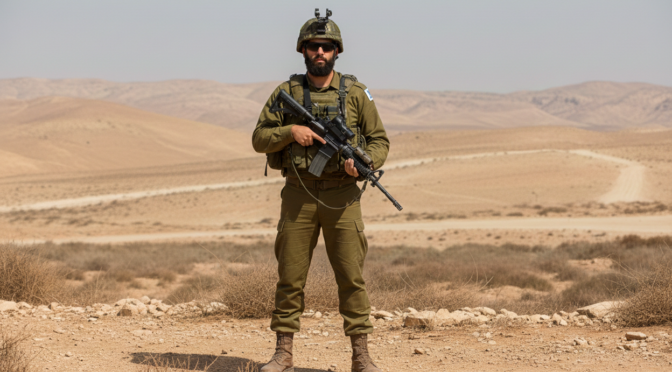
The Israel Defense Forces (IDF) are currently navigating a pivotal era of small arms doctrine, shifting from a decades-long focus on specialized bullpup platforms toward a unified, high-precision AR-15 architecture for its primary infantry and special operations components.1 This transition is anchored by the historical 2024 procurement of the ARI Arms OR-4, a domestically designed assault rifle slated to replace the IWI Tavor and X95 series in frontline brigades.1 This shift is not merely ergonomic but strategic, aiming to close the training and maintenance gap between active duty and reserve units while reducing reliance on foreign-produced small arms through a “Blue and White” (domestic) procurement policy.2

Across the three branches—the Ground Forces, the Navy, and the Air Force—small arms selection is driven by diverse operational requirements. The Ground Forces are prioritizing “tactical overmatch” through the integration of the Sig Sauer M250 light machine gun and the MMG 338 in.338 Norma Magnum, providing long-range suppression and terminal lethality.4 The Israeli Navy continues to maintain highly specialized arsenals for its elite Shayetet 13 commandos, who utilize unique platforms for maritime and underwater warfare, while its Snapir security units focus on port defense.6 The Israeli Air Force’s small arms inventory is concentrated within the Shaldag special operations unit and ground defense forces, which protect high-value aerial and missile defense assets.8

This report provides an exhaustive technical and strategic overview of the IDF’s small arms ecosystem, detailing the transition from legacy systems to next-generation platforms, the industrial base supporting these developments, and the branch-specific nuances of deployment. Through a synthesis of procurement data, technical specifications, and operational history, the following analysis articulates the trajectory of Israeli tactical weaponry in the mid-2020s.

The Industrial Foundation: IMI, IWI, and the Emergence of Domestic Competition

The history of Israeli small arms is inextricably linked to the nation’s survival and its drive for self-reliance. The industrial base began in 1933 with Israel Military Industries (IMI) Ltd., established during the British Mandate to provide a clandestine manufacturing capability for Jewish defense forces.10 Over decades, IMI produced iconic platforms such as the Uzi submachine gun and the Galil assault rifle, which defined the IDF’s tactical profile through the late 20th century.10 The 2005 privatization of IMI’s Small Arms Division into Israel Weapon Industries (IWI) marked a new era of global commercial success and specialized research and development.11

However, the dominance of IWI is currently being challenged by a growing ecosystem of domestic competitors, most notably ARI Arms and Emtan. These companies have leveraged the IDF’s move away from bullpup designs to secure historic contracts.1 The Ministry of Defense (IMOD) has increasingly favored a multi-source procurement strategy to ensure supply chain resilience and foster technical innovation within the “SK Group” and beyond.1

Table 1: Primary Israeli Small Arms Manufacturers and Strategic Roles

ManufacturerCore CompetenciesKey Platforms in IDF ServiceStrategic Role
IWI (Israel Weapon Industries)Bullpup design, LMGs, PistolsTavor X95, Negev NG5/NG7, Arad, Jericho 941, MasadaPrimary supplier of LMGs and legacy infantry rifles.11
ARI ArmsAR-15 Platform variantsOR-4 Assault Rifle, OR-300New standard for unified infantry weaponry.1
EmtanAR-15 and Piston platformsMZ-4, MZ-4P, MZ-15 DMRSupplier of specialized AR variants to police and security forces.14
Rafael Advanced Defense SystemsRemote weapon stationsTyphoon, Samson RCWSIntegration of small arms into naval and armored platforms.6
Elbit SystemsElectro-optics and munitionsMeprolight sights, 5.56mm/7.62mm ammoProviding the “intelligent” layer to standard small arms.10

The IMOD’s International Defense Cooperation Directorate (SIBAT) plays a crucial role in this industrial cycle by managing the marketing and sales of surplus IDF systems.19 As the Ground Forces transition to the OR-4, SIBAT facilitates the sale of retired Tavor TAR-21s and older M16/M4 carbines to international clients, thereby recycling capital into new procurement programs.11

The Israeli Ground Forces: Doctrine of Unification and Maneuver

The Israeli Ground Forces (IGF) represent the primary echelon of small arms deployment. For much of the 2000s and 2010s, the IGF utilized a split-tier system: elite infantry brigades (Golani, Givati, Nahal) were equipped with the IWI Tavor and later the Micro-Tavor (X95), while other infantry units and the reserves utilized American-supplied M4A1s.2 This divergence created significant logistical and training challenges, particularly during the rapid mobilization of reservists who were often unfamiliar with the bullpup’s manual of arms.3

The Shift from Bullpup to Unified AR-Pattern

The decision to phase out the Tavor in favor of the ARI OR-4 and other AR-15 variants stems from detailed operational feedback from recent conflicts in Gaza and Lebanon.1 While the Tavor was praised for its compactness and reliability—utilizing a long-stroke piston system similar to the AK-47—the bullpup configuration presented ergonomic disadvantages in high-intensity urban combat.2 Senior IDF officers noted that the AR-15’s center of gravity and more intuitive magazine release allowed for faster transitions and more effective handling in “closed spaces”.2

Table 2: Ground Forces Infantry Standard Individual Weapons

Weapon ModelTypeCaliberStatusOperational Context
ARI OR-4Assault Rifle5.56x45mm NATOEntering Service (2025)New standard unified rifle for all infantry brigades.1
IWI Tavor X95Bullpup Carbine5.56x45mm NATOBeing Phased OutFormer standard for elite brigades; noted for CQB performance.2
M4A1 CarbineCarbine5.56x45mm NATOStandard IssueWidespread use across active and reserve units; highly modular.6
IWI AradAssault Rifle5.56x45mm /.300 BLKSF / SpecializedShort-stroke piston AR used by Border Police and special units.15
CAR-15 / M16A1Carbine5.56x45mm NATOReserves / TrainingShortened legacy rifles used by rear-echelon and training units.6

The procurement of the OR-4 is a strategic move to create an “all-arms” weapon system.1 The OR-4, based on the AR-15 platform, incorporates modern adaptations to meet current requirements, such as enhanced accuracy for extended-range engagements and modular rail systems for advanced optics.1 This shift also allows the IDF to leverage domestic production for its primary rifle, reducing the “on-again/off-again” uncertainty of foreign military funding (FMF) relationships.20

Machine Gun Modernization: From Negev to Sig Sauer

The IDF’s light machine gun (LMG) doctrine is undergoing a parallel transformation. Since 1997, the IWI Negev has been the standard squad automatic weapon, unique for its dual-feed system that accepts both disintegrating belts and standard assault rifle magazines.23 The Negev’s performance in desert environments was found to be superior to the Belgian Minimi, leading to its widespread adoption.26

However, the need for lighter platforms with greater range has led to the acquisition of Sig Sauer systems. The Sig Sauer M250, chambered in 7.62x51mm NATO, represents a massive leap in weight efficiency.4 Weighing only 13 pounds empty—significantly less than the 17.5-pound Negev NG7—the M250 allows machine gunners to maintain pace with maneuvering infantry while providing the superior terminal effects of the 7.62mm round.4

Table 3: Ground Forces Machine Gun Inventory

Weapon ModelCaliberWeight (Empty)Rate of FireRole
IWI Negev NG55.56x45mm16.5 lbs (approx)850-1150 RPMSquad Automatic Weapon (SAW).27
IWI Negev NG77.62x51mm17.5 lbs600-750 RPMGeneral Purpose / Light Support.27
Sig Sauer M2507.62x51mm13.0 lbsVariableNext-generation lightweight LMG.4
Sig MMG 338.338 Norma Mag21.4 lbs600 RPMOvermatch medium machine gun.5
FN MAG 587.62x51mm26.0 lbs650-1000 RPMStandard General Purpose MG (GPMG).30
M2 Browning.50 BMG84 lbs450-600 RPMHeavy Machine Gun (HMG) / Anti-material.12

The integration of the Sig Sauer MMG 338 is particularly noteworthy for its “overmatch” capabilities. By utilizing the.338 Norma Magnum cartridge, the IDF can engage targets at ranges up to 1,700 meters—nearly twice the effective range of the 7.62mm NATO—with terminal ballistics that can penetrate Level III armor at 1,000 meters.5 This weapon provides the infantry platoon with anti-material capabilities previously reserved for heavy vehicle-mounted weapons.5

The Israeli Navy: Maritime Security and Elite Commando Requirements

The Israeli Navy (IN) operates in a high-threat maritime environment, ranging from the littoral waters of the Gaza Strip to deep-water missions in the Red Sea and Persian Gulf.31 Its small arms requirements are split between the elite Shayetet 13 commando unit and the Snapir naval security units.

Shayetet 13: The Naval Commando Arsenal

Shayetet 13 is one of the world’s most secretive and elite special operations units, often compared to the US Navy SEALs.7 Their weapon selection is dictated by the need for multi-domain reliability—transitioning seamlessly from underwater to land operations.7 This has led to the retention of the AK-47 and AKM assault rifles, which are valued for their extreme tolerance to saltwater and sand ingestion.6

For clandestine maritime operations, the unit utilizes the Heckler & Koch P11 underwater pistol.6 This specialized weapon uses a five-round barrel cluster to fire 7.62x36mm steel darts, allowing operators to engage sentries or harbor security underwater.6 Additionally, the unit has been documented using suppressed MAC-10 machine pistols and suppressed X95 submachine guns for “Visit, Board, Search, and Seizure” (VBSS) operations.6

Table 4: Israeli Navy Small Arms and Boarding Equipment

Weapon ModelTypeCaliberNote
AK-47 / AKMAssault Rifle7.62x39mmPreferred by Shayetet 13 for extreme reliability.6
IWI X95 SMGSubmachine Gun9x19mmCompact bullpup, often suppressed for boarding.6
HK P11Underwater Pistol7.62x36mmDart-firing; specialized for combat divers.6
Glock 19Sidearm9x19mmStandard issue for Snapir and S13.35
Sig Sauer P226Sidearm9x19mmSpecialized SF use.6
M4A1 CarbineCarbine5.56x45mm NATOStandard for Snapir and general naval security.6

Snapir and Port Defense

The Snapir units are responsible for the security of Israeli ports and the inspection of incoming vessels.7 Their role requires a blend of high firepower and compact handling. Operators are typically equipped with the M4A1 or shortened M16 variants, augmented by advanced multi-optic reflex sights that combine visible and infrared lasers.35 These optics allow for rapid target acquisition in the complex, low-light environments of a ship’s interior.35

On patrol boats like the Shaldag and Super Dvora classes, the small arms inventory is supplemented by 12.7mm M2 Browning machine guns and 7.62mm FN MAGs, often mounted on stabilized Typhoon weapon stations that allow for remote operation from within the cabin.17

The Israeli Air Force: Asset Protection and Shaldag Specialization

Small arms in the Israeli Air Force (IAF) are primarily focused on the protection of high-value platforms—such as the F-35I Lightning II and the Arrow missile defense batteries—and the missions of the Shaldag special operations unit.9

Shaldag: Air Force Special Operations

Shaldag is tasked with specialized reconnaissance, laser designation of targets, and combat search and rescue (CSAR).18 Their requirements for precision at range have led to the adoption of the Barrett REC10.38 The REC10 is a semi-automatic, direct-impingement rifle chambered in 7.62x51mm, providing a “battle rifle” capability in a platform that shares the ergonomics of the standard M4 carbine.40 This allows Shaldag operators to maintain high accuracy at mid-to-long ranges without the bulk of a dedicated sniper system.39

Table 5: Israeli Air Force Ground Component Small Arms

UnitPrimary WeaponSecondary WeaponTactical Role
ShaldagBarrett REC10Glock 17/19Special reconnaissance and precision strike.38
Airbase SecurityM4 Carbine / M16A2Glock 19Protection of F-35 and strategic assets.9
Air Defense UnitsCAR-15 / M16Security for Iron Dome/Arrow batteries.6
669 (SAR)IWI X95 / M4A1Glock 19Rescue in hostile environments.23

The IAF’s ground defense units rely on the “M16 Katzar” (short M16) or M4 carbine for perimeter security.6 Given the small strategic depth of Israel, the rapid achievement of air superiority is paramount, and the security of airbases from ground-based threats is a critical component of IAF doctrine.9 These units are increasingly utilizing the IWI Masada pistol as their standard-issue sidearm, benefiting from its modular striker-fired design.10

Advanced Marksmanship and Sniper Systems: Range and Precision

The IDF maintains a sophisticated sniper hierarchy that bridges the gap between the individual infantryman and the specialized long-range operative. This system is increasingly reliant on designated marksman rifles (DMRs) to provide organic precision fire at the squad level.30

The DMR and Semi-Automatic Hierarchy

The Barrett REC10 and the Arad 7 DMR are the flagship platforms for modern Israeli marksmen.15 These rifles provide semi-automatic fire in 7.62x51mm, allowing for rapid follow-up shots that are critical in urban environments.39 The Arad 7 DMR, in particular, offers accuracy of less than 1 MOA and features a quick-change barrel system that allows for rapid transition between 7.62mm and 6.5mm Creedmoor calibers.15

Table 6: IDF Sniper and Designated Marksman Platforms

PlatformCaliberEffective RangeOperating ActionStatus
IWI Galatz7.62x51mm800m – 1,000mSemi-AutomaticStandard Infantry Sniper.11
Barrett REC107.62x51mm600m – 800mSemi-AutomaticSpecialized SF DMR.38
IWI DAN.338.338 Lapua Mag1,200m+Bolt-ActionLong-range precision.11
Barrett MRADMulti-Caliber1,000m – 1,500mBolt-ActionModular elite sniper system.23
McMillan TAC-5012.7x99mm2,000m+Bolt-ActionAnti-material / Extreme range.12
M89SR7.62x51mm800m – 1,000mSemi-AutomaticBullpup sniper (limited use).6

The McMillan TAC-50 serves as the IDF’s primary anti-material rifle, capable of defeating light armor and fortifications from distances exceeding 2,000 meters.12 For “soft” targets at extreme ranges, the IWI DAN.338 and the Barrett MRAD provide the necessary ballistic coefficient to overcome wind and environmental factors that would negate the effectiveness of standard 7.62mm rounds.5

Technical Deep Dive: The Evolution of the Israeli AR-15

The decision to adopt the ARI Arms OR-4 and the IWI Arad represents a significant technical pivot. Unlike the traditional M16 or M4, which utilize a direct impingement (DI) system, many of the next-generation Israeli rifles incorporate short-stroke gas piston systems.15

Direct Impingement vs. Piston Systems

The traditional DI system of the M4 vents gas directly into the bolt carrier, which can lead to fouling and heat buildup during sustained fire—an issue particularly pronounced in the dusty environments of the Levant.3 The IWI Arad and the Emtan MZ-4P utilize a short-stroke piston system, where gas pushes a rod to cycle the action, keeping the bolt assembly clean and cool.15 This is especially advantageous for special forces who frequently utilize suppressors, which increase backpressure and fouling in DI systems.16

Table 7: Technical Comparison of Next-Generation Service Rifles

SpecificationARI Arms OR-4IWI Arad 5Emtan MZ-4P
Operating SystemDirect ImpingementShort-Stroke PistonShort-Stroke Piston.16
Caliber5.56x45mm NATO5.56x45mm /.300 BLK5.56x45mm NATO.14
Barrel Lengths10.3″ / 11.5″ / 14.5″11.5″ / 14.5″7.5″ / 11.5″ / 14.5″.45
Weight (Empty)2.92 Kg2.85 Kg3.1 Kg.16
Accuracy~1 MOA1 MOAMil-Spec
AmbidextrousSelective100%Optional.15

The ARI OR-4’s selection as the standard infantry rifle indicates that the IDF still finds value in the DI system for general infantry due to its lighter weight and reduced recoil impulse, provided the platform is manufactured to modern, tight tolerances.1 The OR-4’s barrel is cold hammer-forged and chrome-lined to extend its lifespan in harsh conditions.25

Sidearms: The Transition to Striker-Fired Platforms

The IDF is currently phasing out its remaining stocks of the Jericho 941, the legendary double-action/single-action pistol that served for three decades.11 The new standard is defined by striker-fired, polymer-framed pistols that offer consistent trigger pulls and higher reliability.10

The Glock and Masada Era

The Glock 19 and 17 are the dominant sidearms for Special Forces and infantry officers, valued for their “safe action” system and widespread aftermarket support.6 Simultaneously, IWI’s Masada has been introduced as a domestic alternative, featuring a low bore axis and modular grip frames to accommodate the diverse range of hand sizes in the conscript-based IDF.10

Table 8: IDF Sidearm and Pistol Inventory

ModelCaliberOperating ActionNotes
Glock 199x19mmStriker-FiredCurrent favorite for SF and officers.6
IWI Masada9x19mmStriker-FiredModern domestic polymer pistol.10
Jericho 9419x19mmDA/SALegacy platform; being phased out.11
Browning Hi-Power9x19mmSingle ActionFound in older reserve stocks.6
BUL M-5 / Storm9x19mmSemi-AutomaticUsed by some specialized security units.6
Sig Sauer P2269x19mmDA/SAPreferred by some Shayetet 13 units.6

The transition to 9x19mm as the universal pistol caliber is total, with only rare exceptions for specialized stopping power or underwater utility.23

Specialized Firepower: Submachine Guns and PDWs

While the assault rifle is the primary weapon of the IDF, submachine guns (SMGs) and Personal Defense Weapons (PDWs) maintain a critical role for vehicle crews, tunnel clearing, and VIP protection.23

The Uzi Legacy and the X95 Conversion

The original Uzi submachine gun netted billions for Israel and remains an icon of military hardware.11 Today, this legacy is carried by the Uzi Pro and the SMG variants of the X95.11 The X95 is particularly valuable because it can be converted from a 5.56mm assault rifle to a 9mm SMG in the field using a simple conversion kit.22 This allows units like Yahalom (Combat Engineering) to maintain caliber commonality during subterranean missions where a full-power rifle round might cause excessive over-penetration or noise.34

ModelCaliberOperating ActionNote
IWI Uzi Pro9x19mmBlowbackModern compact version of the Uzi.11
IWI X95 SMG9x19mmBlowback (converted)Modular bullpup SMG.22
Micro Galil5.56x45mmGas-OperatedExtremely compact assault rifle.6
Hezi SM-15.56x45mmSemi-AutoSpecialized PDW variant.6

Operational Lessons from the Gaza Conflict

The ongoing conflict in Gaza has served as a crucible for the IDF’s small arms policy, leading to several rapid procurement adjustments. The “Negev UX” project is a direct result of this, creating a lighter, more mobile LMG specifically for ground maneuvering in complex, built-up areas.48

The “Urban Warfare” Paradigm

Gaza has emphasized the need for “fire-ready” systems. Unlike older designs that required a stock to be unfolded or a manual safety to be navigated, modern Israeli platforms like the OR-4 and X95 are designed to be “always at the ready”.2 The trend toward suppressors has also accelerated; once the exclusive domain of special forces, suppressors are increasingly issued to standard infantry to preserve unit communication and situational awareness during indoor fighting.4

The conflict also reinforced the importance of unified logistics. The IDF found that significant gaps emerged in reserve battalions composed of soldiers from different units, some of whom were trained on the Tavor and others on the M4.2 This friction led to the current mandate for a “unified weapon system” to reduce the reasons for soldiers to transition between active and reserve status without retraining.2

Future Outlook: Caliber Overmatch and AI Integration

The IDF is already looking beyond the current 5.56mm and 7.62mm NATO standards. The acquisition of.338 Norma Magnum machine guns indicates a growing interest in “intermediate” heavy calibers that provide superior range without the weight of.50 BMG platforms.4

AI-Assisted Small Arms

One of the most innovative developments is the modular AI-controlled Negev NG-7, an Indian-Israeli derivative.27 This system is capable of automatic target detection, friend-foe classification, and autonomous target acquisition at ranges up to 600 meters.27 While currently being tested for perimeter security and convoy protection, the integration of AI sensors into the infantryman’s rifle is the likely next step for the IDF’s Technology and Logistics Directorate.27

Table 9: Future Small Arms Technology and Calibration

TechnologyPlatformStatusObjective
.338 Norma MagnumSig MMG 338Frontline AdoptionTactical overmatch vs. 7.62mm.5
AI EngagementNegev NG-7 (BSS)Testing PhaseAutonomous/Assisted targeting.27
6.5mm CreedmoorArad 7 / MRADProcurementSuperior long-range ballistics.15
Integrated OpticsMeprolight / SigStandard IssueMulti-mode (Day/Night/Laser).4

Strategic Synthesis

The modernization of the Israeli Defense Forces’ small arms inventory is a multifaceted effort that balances domestic industrial capability with the tactical lessons of modern urban warfare. The shift to the ARI OR-4 as the primary infantry rifle signifies the end of the “bullpup era” for Israel’s frontline brigades, prioritizing the ergonomic and logistical advantages of the AR-15 platform. Simultaneously, the adoption of advanced machine guns from Sig Sauer and specialized DMRs from Barrett ensures that the IDF maintains a technological edge over regional adversaries.

Whether in the hands of a Shayetet 13 commando deep underwater or a Shaldag operator designating a target from a rooftop, the IDF’s small arms are characterized by extreme specialization and a rapid feedback loop between the battlefield and the factory floor. As the “Blue and White” policy continues to drive domestic manufacturing, the IDF is poised to achieve unprecedented levels of weapon unification and tactical proficiency in the years to come.


Please share the link on Facebook, Forums, with colleagues, etc. Your support is much appreciated and if you have any feedback, please email us in**@*********ps.com. If you’d like to request a report or order a reprint, please click here for the corresponding page to open in new tab.


Sources Used

  1. IDF Picks ARI’s OR-4 as New Rifle – Raksha Anirveda, accessed February 1, 2026, https://raksha-anirveda.com/significant-shift-israel-defence-forces-selects-ari-arms-or-4-assault-rifle-as-new-standard-infantry-rifle/
  2. IDF gears up for arsenal overhaul with homegrown assault rifles – Ynetnews, accessed February 1, 2026, https://www.ynetnews.com/article/hju8hfrat
  3. What are the reason why the IDF phasing out the Tavor rifle : r/WarCollege – Reddit, accessed February 1, 2026, https://www.reddit.com/r/WarCollege/comments/1bvjo5s/what_are_the_reason_why_the_idf_phasing_out_the/
  4. Israel Buys 7.62x51mm Version Of U.S. Army’s New Sig Sauer M250 Light Machine Gun: Report – The War Zone, accessed February 1, 2026, https://www.twz.com/land/israel-buys-7-62x51mm-version-of-u-s-armys-new-sig-sauer-m250-light-machine-gun-report
  5. SIG Sauer MMG 338 – Wikipedia, accessed February 1, 2026, https://en.wikipedia.org/wiki/SIG_Sauer_MMG_338
  6. List of equipment of the Israel Defense Forces – Wikipedia, accessed February 1, 2026, https://en.wikipedia.org/wiki/List_of_equipment_of_the_Israel_Defense_Forces
  7. Shayetet 13 – Wikipedia, accessed February 1, 2026, https://en.wikipedia.org/wiki/Shayetet_13
  8. Shaldag Unit – Wikipedia, accessed February 1, 2026, https://en.wikipedia.org/wiki/Shaldag_Unit
  9. Air Superiority in the Twenty-First Century: Lessons from Iran and Ukraine – CSIS, accessed February 1, 2026, https://www.csis.org/analysis/air-superiority-twenty-first-century-lessons-iran-and-ukraine
  10. Learn More About IWI US – Our Story, accessed February 1, 2026, https://iwi.us/our-story/
  11. Israel Weapon Industries – Wikipedia, accessed February 1, 2026, https://en.wikipedia.org/wiki/Israel_Weapon_Industries
  12. Longest Reach Rifle in Israeli Service: U.S. TAC-50 Hits Targets 6,561 ft Away – 24/7 Wall St., accessed February 1, 2026, https://247wallst.com/military/2025/07/19/longest-reach-rifle-in-israeli-service-u-s-tac-50-hits-targets-6561-ft-away/
  13. The Storied History of IWI, accessed February 1, 2026, https://iwi.us/blog/the-storied-history-of-iwi/
  14. MZ-4 14.5″ – Emtan, accessed February 1, 2026, https://emtan.co.il/products/mz-4-14-5/
  15. IWI ARAD – Wikipedia, accessed February 1, 2026, https://en.wikipedia.org/wiki/IWI_ARAD
  16. MZ-4P 11.5″ – Emtan, accessed February 1, 2026, https://emtan.co.il/products/mz-4p-11-5/
  17. Israeli Navy – Wikipedia, accessed February 1, 2026, https://en.wikipedia.org/wiki/Israeli_Navy
  18. Structure of the Israel Defense Forces – Wikipedia, accessed February 1, 2026, https://en.wikipedia.org/wiki/Structure_of_the_Israel_Defense_Forces
  19. Defense Inventory Unit | Homepage – משרד הביטחון, accessed February 1, 2026, https://mod.gov.il/en/defense-inventory/defense-inventory-unit
  20. IDF phasing out Tavor and M4, in favor of locally made AR15 platform | Canadian Gun Nutz, accessed February 1, 2026, https://www.canadiangunnutz.com/forum/threads/idf-phasing-out-tavor-and-m4-in-favor-of-locally-made-ar15-platform.2439774/
  21. Why the IDF Chose the TAVOR® Over the M4 – IWI US, accessed February 1, 2026, https://iwi.us/blog/why-the-idf-chose-the-tavor-over-the-m4/
  22. IWI Tavor X95 – Wikipedia, accessed February 1, 2026, https://en.wikipedia.org/wiki/IWI_Tavor_X95
  23. Israel Military Guns: A Comprehensive Overview – Nimc, accessed February 1, 2026, https://vault.nimc.gov.ng/blog/israel-military-guns-a-comprehensive-overview-1764799370
  24. IWI ARAD HIGHLY EFFICIENT & RELIABLE MODULAR BATTLE RIFLE, accessed February 1, 2026, https://iwi.net/arad/
  25. or-4 – automatic rifle – ARI Arms, accessed February 1, 2026, https://www.ari-arms.com/images/Products_leaflets_OR%204.pdf
  26. IMI Negev – Gun Wiki | Fandom, accessed February 1, 2026, https://guns.fandom.com/wiki/IMI_Negev
  27. IWI Negev – Wikipedia, accessed February 1, 2026, https://en.wikipedia.org/wiki/IWI_Negev
  28. 5.56X45mm | 7.62X51mm LMG (Light Machine Gun) – IWI, accessed February 1, 2026, https://iwi.net/wp-content/uploads/2021/03/IWI_negev_brochure_2021_EN.pdf
  29. NEGEV NG7 7.62 NATO – Lightweight Machine Gun | IWI US, accessed February 1, 2026, https://iwi.us/firearms/negev/ng7-lmg/
  30. Israeli Armed Forces (Manpower) – Warpower: Israel, accessed February 1, 2026, https://www.warpowerisrael.com/manpower.php
  31. Victory At Sea? The Israeli Navy’s Gains And Gaps Since October 7 – Hoover Institution, accessed February 1, 2026, https://www.hoover.org/research/victory-sea-israeli-navys-gains-and-gaps-october-7
  32. Shayetet 13 | Israeli Navy Seals – Agilite, accessed February 1, 2026, https://agilitegear.com/blogs/news/shayetet-13
  33. Israeli Special Forces: A Comprehensive Guide – Grey Dynamics, accessed February 1, 2026, https://greydynamics.com/the-israeli-special-forces/
  34. The Tavor X95: An Iconic Israeli Modern Weapon of War – SOFREP, accessed February 1, 2026, https://sofrep.com/gear/tavor-x95-iconic-modern-warfare-weapon/
  35. How an Israeli Navy SEAL sets up his Guns & Gear – YouTube, accessed February 1, 2026, https://www.youtube.com/watch?v=5X1QmBjj7mk
  36. Israeli Navy – Warpower: Israel, accessed February 1, 2026, https://www.warpowerisrael.com/navalpower.php
  37. Units – Draft IDF, accessed February 1, 2026, https://draftidf.co.il/units/
  38. POTD: Israeli Defense Forces – The Shaldag Unit | thefirearmblog.com, accessed February 1, 2026, https://www.thefirearmblog.com/blog/potd-israeli-defense-forces-the-shaldag-unit-44817919
  39. SOFREP Pic of the Day: An IDF Soldier Fires a Suppressed Barrett REC10 in Gaza, accessed February 1, 2026, https://sofrep.com/news/sofrep-pic-of-the-day-an-idf-soldier-fires-a-suppressed-barrett-rec10-in-gaza/
  40. REC10® – Barrett Firearms, accessed February 1, 2026, https://barrett.net/products/firearms/rec10/
  41. Here’s an inside look at the new REC10 battle rifle from Barrett – Military Times, accessed February 1, 2026, https://www.militarytimes.com/off-duty/gearscout/irons/2019/01/04/heres-an-inside-look-at-the-new-rec10-battle-rifle-from-barrett/
  42. Israeli Air Force – Wikipedia, accessed February 1, 2026, https://en.wikipedia.org/wiki/Israeli_Air_Force
  43. IWI ARAD 7 7.62x51mm MULTI CALIBER ASSAULT RIFLE, accessed February 1, 2026, https://iwi.net/arad-7/
  44. IWI Arad – Gun Wiki | Fandom, accessed February 1, 2026, https://guns.fandom.com/wiki/IWI_Arad
  45. MZ-4 7.5″ – Emtan, accessed February 1, 2026, https://emtan.co.il/products/mz-4-7-5/
  46. MZ-4P 14.5″ – Emtan, accessed February 1, 2026, https://emtan.co.il/products/mz-4p-14-5/
  47. MZ-4 Assault Rifle Specifications | PDF | Gun Barrel | Cartridge (Firearms) – Scribd, accessed February 1, 2026, https://es.scribd.com/document/587887159/Emtan-MZ4
  48. Israel MOD to Procure Advanced Negev Machine Guns for Ground Forces in Approximately $20M Deal, accessed February 1, 2026, https://mod.gov.il/en/press-releases/press-room/israel-mod-to-procure-advanced-negev-machine-guns-for-ground-forces-in-approximately-20m-deal
  49. Israel Defense Forces – Wikipedia, accessed February 1, 2026, https://en.wikipedia.org/wiki/Israel_Defense_Forces
Bundeswehr Small Arms Modernization: Key Changes and Implications

Executive Summary

The German Bundeswehr is currently navigating a period of unprecedented structural and technological transformation, catalyzed by the Zeitenwende policy shift. This report provides a detailed examination of the small arms systems utilized across the four primary military branches: the German Army (Heer), the German Navy (Marine), the German Air Force (Luftwaffe), and the Cyber and Information Domain Service (CIR), as well as the Joint Support and Medical Services. The current modernization trajectory is defined by a transition from the legacy G36 assault rifle and P8 pistol to the G95A1 (Heckler & Koch HK416 A8) and P13 (CZ P-10 C) weapon systems respectively.1 This shift represents more than a mere equipment update; it signifies a doctrinal pivot from international crisis management toward high-intensity National and Alliance Defense (LV/BV).3

The Army remains the primary driver of small arms requirements, focusing on the “System of Systems” where small arms are integrated with advanced optics, digital communications, and thermal imaging.5 The Special Operations Forces (KSK and KSM) are pioneering new calibers, such as the.300 Blackout in the G39 carbine, while the Navy emphasizes corrosive-resistant systems for maritime boarding operations.7 As of late 2025, the German defense budget has surged to $127 billion for 2026, facilitating the procurement of up to 250,000 new rifles and 203,000 new pistols.4 This report analyzes the technical mechanisms, procurement history, and tactical roles of these systems within the broader context of European security.

Strategic Architecture and Force Composition

The Federal Ministry of Defence (BMVg), headed by Boris Pistorius, serves as the supreme military command authority, overseeing the most substantial rearmament program in the Federal Republic’s history.4 Under the leadership of Chief of Defence Carsten Breuer, the Bundeswehr is restructuring its active-duty strength of 184,324 personnel to meet the demands of NATO’s eastern flank, specifically focusing on the standing deployment of Panzerbrigade 45 in Lithuania by 2026.4

Small arms procurement is managed by the Federal Office of Bundeswehr Equipment, Information Technology and In-Service Support (BAAINBw), which has navigated complex legal and industrial challenges to standardize modern platforms across the branches.13 The shift in personnel distribution, particularly the growth in the Cyber (CIR) and Logistics sectors, has necessitated a rethink of Personal Defense Weapon (PDW) strategies, favoring compact systems like the MP7 for non-frontline combatants.3

Table 1: Bundeswehr Personnel Distribution and Small Arms Requirements (2025)

Branch / CommandActive Military PersonnelPrimary Small Arms RoleStandard Sidearm Status
Army (Heer)61,332Frontline Combat / Mechanized InfTransitioning to P13 2
Air Force (Luftwaffe)27,741Airbase Security / Pilot SurvivalP8A1 / MP7 3
Navy (Marine)15,437Boarding Ops / Maritime DefenseP9A1 / P14 3
Cyber (CIR)13,925Technical Force ProtectionMP7A1 / P13 3
Joint Support Service23,507Logistics and Guard DutyG36A4 / P8 3
Medical Service20,572Field Trauma SecurityP8 / G36K 3

The German Army (Deutsches Heer): Individual Lethality and Standard Systems

The German Army is the largest organizational element of the Bundeswehr and the primary user of individual small arms.3 Army doctrine emphasizes the “Infanterist der Zukunft” (IdZ) concept, where the individual soldier is equipped with a modular weapon system tailored to mission-specific requirements.5

The Evolution of the Standard Service Rifle: G36 to G95A1

The Heckler & Koch G36 has been the standard assault rifle of the Heer since its introduction in 1997.1 Chambered in 5.56×45mm NATO, the G36 utilized a unique carbon-fiber-reinforced polyamide receiver to minimize weight.1 However, operational experience in high-temperature environments, specifically during long-duration firefights in Afghanistan, led to concerns regarding point-of-aim shifts due to thermal variations in the polymer housing.20 While subsequent investigations by the manufacturer and the Bundeswehr provided nuanced results, the Ministry of Defence prioritized a transition to a metallic-receiver system for increased durability and precision under sustained fire.20

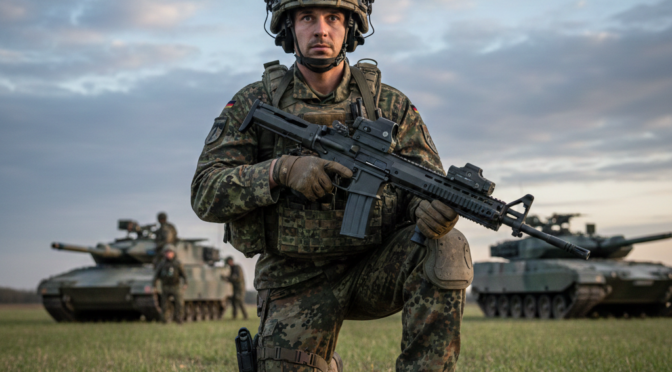
The G95A1, based on the Heckler & Koch HK416 A8, was selected after a rigorous tender process that initially saw the C.G. Haenel MK 556 emerge as the winner before being excluded due to patent litigation.1 The G95A1 features a short-stroke gas piston system and a traditional aluminum receiver, ensuring higher thermal stability.20 Two primary variants are being fielded: the G95A1 with a 16.5-inch barrel for general infantry use, and the G95KA1 with a 14-inch barrel for specialized units and vehicle crews.1 The transition involves the procurement of up to 250,000 units, with initial deliveries starting in late 2025 and 2026 for frontline units like the Panzergrenadier Battalion 122.12

Sidearm Modernization: The P13 Program

For three decades, the Heckler & Koch P8 (a variant of the USP) has served as the standard sidearm.26 While highly reliable, the P8 lacked the modularity and optics-readiness demanded by modern combat scenarios.2 In 2025, the Bundeswehr concluded an international tender by selecting the CZ P-10 C OR (Optics-Ready), designated as the P13.2 This decision was groundbreaking, as it awarded a major small arms contract to a non-domestic manufacturer, Česká zbrojovka, emphasizing cost-effectiveness and technical compliance over traditional industrial favoritism.2 The P13 is a striker-fired, polymer-framed pistol chambered in 9×19mm NATO, featuring Flat Dark Earth (FDE) finishes and a 15-round magazine capacity.2 A framework agreement for up to 203,000 pistols reflects the Bundeswehr’s intent to standardize this sidearm across all services.2

Table 2: Primary Infantry Weapons of the German Army (2025-2026)

DesignationWeapon TypeCaliberFeed SystemStatus
G95A1Assault Rifle5.56×45mm NATO30-round STANAGRolling Out 24
G95KA1Carbine5.56×45mm NATO30-round STANAGRolling Out 24
P13Service Pistol9×19mm NATO15-round DetachableSelected 2
MG4Light Machine Gun5.56×45mm NATOBelt-fed (M27)In Service 29
MG5General Purpose MG7.62×51mm NATOBelt-fed (M13)Standard 30
G28DMR7.62×51mm NATO10/20-round MagIn Service 5
G22A2Sniper Rifle7.62×67mm (.300 WM)5-round InternalUpgraded 5

Machine Gun Doctrine and Squad Support

German machine gun doctrine has shifted significantly with the retirement of the MG3 in the squad support role.33 The MG3, a modernization of the WWII-era MG42, was prized for its psychological impact and 1,200 RPM rate of fire but suffered from excessive ammunition consumption and a lack of integrated optics.34

The introduction of the Heckler & Koch MG5 (HK121) addressed these limitations. The MG5 is a gas-operated, 7.62×51mm NATO weapon with an adjustable rate of fire (640, 720, or 800 RPM), allowing the gunner to conserve ammunition or increase suppression as needed.30 It is substantially more accurate than the MG3 due to its free-floating barrel and integrated Hensoldt 4x30i optics.34 The Heer maintains several variants: the Universal (MG5), the Vehicle-mounted (MG5A1), and the Infantry version (MG5A2) with a shorter barrel and folding stock.34 Complementing the MG5 at the squad level is the MG4, a 5.56mm light machine gun that provides mobile, sustained fire for paratroopers and infantry squads.29

Specialized Units and the KSK Modernization

The Kommando Spezialkräfte (KSK) and Kommando Spezialkräfte Marine (KSM) utilize a specialized tier of small arms designed for unconventional warfare and counter-terrorism.7 These units often lead the Bundeswehr in adopting new calibers and ergonomic standards.

The Rise of the G39 and.300 Blackout

The KSK has recently adopted the G39 (HK437) as a “specialized suppressed SOF weapon”.7 Chambered in 7.62×35mm (.300 AAC Blackout), the G39 replaces the legendary MP5SD for operations requiring stealth combined with high stopping power.7 The.300 Blackout cartridge provides superior energy retention at short-to-medium ranges compared to the 9mm Parabellum, especially when using subsonic loads with a sound suppressor.7 The G39 features a 9-inch barrel and a retractable stock, optimizing it for close-quarters battle (CQB).7

Precision Rifles: G210 and G29

The sniper inventory of the special forces is arguably the most diverse in the Bundeswehr. For short-range sharpshooting (up to 600 meters), the KSK adopted the G210 (MR308 A6), a semi-automatic 7.62mm rifle developed specifically for the SOF requirement of rapid, precise fire in urban terrain.7 The G210 is equipped with a Schmidt & Bender 5-20×50 PM II Ultra Short scope and a side-mounted loading lever for improved ergonomics in the prone position.14

For long-range engagements, the KSK utilizes the G29 (Haenel RS9) in 8.6×70mm (.338 Lapua Magnum).5 This weapon bridges the gap between the 7.62mm DMRs and the.50 BMG anti-materiel rifles, providing a lethal effective range of up to 1,500 meters.5

Table 3: Specialized Small Arms for KSK and KSM (2025-2026)

DesignationModelCaliberPrimary Use
G95KHK416 A75.56×45mm NATOSOF Assault Rifle 5
G39HK4377.62×35mm (.300 BLK)Suppressed Carbine 7
G210MR308 A67.62×51mm NATOSemi-Auto Sniper 7
G29Haenel RS98.6×70mm (.338 LM)Tactical Precision 5
P14 / P14KWalther PDP9×19mm NATOSOF Sidearm 17
P11HK P117.62×36mmUnderwater Combat 5

The German Navy (Marine): Maritime Security and Boarding Operations

The German Navy’s small arms requirement is dictated by the corrosive maritime environment and the specific needs of boarding teams (VBSS) and ship protection.8 Naval forces must defend against asymmetric threats such as fast-attack craft and piracy, leading to a focus on high-rate-of-fire deck weapons and compact personal defense systems.42

The Seebataillon and Combat Swimmers

The Seebataillon is the Navy’s naval infantry branch, containing boarding companies, force protection companies, and mine clearance divers.42 Their primary assault rifle remains the G36K (and eventually the G95KA1), which is valued for its reliable performance in salt-water environments.1 The Navy’s combat swimmers (Kampfschwimmer) have traditionally utilized the Glock 17 (P9A1) and the P11 underwater pistol.5 However, under the SysPi SpezKr Bw program, both the KSK and KSM have adopted the Walther PDP as the P14 and P14K.17 These pistols feature Aimpoint ACRO P2 red-dot sights and are specifically treated for maritime durability.17

Shipboard and Aviation Deck Weapons

Larger naval platforms, such as the Baden-Württemberg-class (F125) frigates and Braunschweig-class (K130) corvettes, utilize a mix of manual and remote-controlled heavy weapons.42 The MLG 27 remote-controlled autocannon serves as the primary close-in defense weapon against surface targets.42 For manually operated positions, the Navy uses the M2 Browning.50 caliber machine gun and the MG5A1.42 Naval aviation, including the NH90 Sea Lion and Sea Tiger, is equipped with the FN Herstal M3M (GAU-21) heavy machine gun in door mounts to provide suppressive fire for boarding teams and search-and-rescue (SAR) operations.42

Table 4: Naval Small Arms and Shipboard Protection Systems

CategorySystemCaliberPlatform / Unit
Heavy Machine GunM2 Browning12.7×99mm NATOManual Pintle Mounts 42
Heavy Machine GunM3M (GAU-21)12.7×99mm NATONH90 / Sea Lynx Door Gun 42
AutocannonMLG 2727×145mmRemote Controlled (F125/K130) 42
SidearmP9A1 (Glock 17)9×19mm NATOCombat Swimmers (Legacy) 5
SidearmP14 (Walther PDP)9×19mm NATONaval Special Forces (New) 17
ShotgunRemington 87012 gaugeBoarding / Breaching 32

The German Air Force (Luftwaffe): Base Defense and Pilot Survival

The Luftwaffe’s small arms utilization is concentrated in the Objektschutzregiment der Luftwaffe (Force Protection Regiment “Friesland”), which is responsible for the ground defense of airbases and modular deployment of anti-aircraft systems.8

Objektschutzregiment “Friesland”

This regiment is essentially a specialized infantry force trained for airfield seizure and defense.10 They utilize the full range of Army small arms, including the G36A3/A4, the MG5, and the MP7A1.8 In high-threat environments, they also deploy the MG6 (Dillon-Aero M134-D minigun), which is mounted on light utility vehicles to provide a massive volume of fire (up to 3,000 RPM) to counter ground-based insurgent attacks.35

Aircrew Survival Weapons

Luftwaffe pilots operating in hostile territory must carry survival weapons that are compact enough to fit within an ejection seat survival kit.15 Traditionally, this was limited to the P8 pistol.26 However, the adoption of the MP7 (Personal Defense Weapon) has changed survival tactics.15 The MP7, chambered in the high-velocity 4.6×30mm NATO cartridge, provides a pilot with the ability to penetrate modern body armor at ranges up to 200 meters, which is impossible with standard 9mm sidearms.15 Its lightweight polymer construction (1.9 kg) and holstering options make it a critical survival asset for fixed-wing and helicopter aircrews.15

Table 5: Air Force Small Arms and Support Systems

Unit / RolePrimary WeaponCaliberTactical Application
Force ProtectionG36A4 / G95A15.56×45mm NATOAirbase Perimeter Security 8
Force ProtectionMG6 (M134-D)7.62×51mm NATOHigh-rate Point Defense 35
Pilot SurvivalMP7A14.6×30mmDowned Pilot E&E 15
Security SquadsMP5A59×19mm NATOGuard / Police Duty 5

Cyber and Information Domain (CIR) and Central Services

The Cyber and Information Domain Command (CIR) is the newest branch of the Bundeswehr, focused on electronic warfare, IT security, and intelligence.3 While primarily a technical force, CIR personnel are soldiers first and must maintain proficiency with self-defense weapons.3

Personal Defense for Technical Personnel

Soldiers in the CIR, as well as those in the Joint Medical Service (Zentraler Sanitätsdienst), are generally issued the MP7A1 or the G36K.5 The MP7 is particularly suited for cyber operators who may need to work in confined server environments or mobile IT containers while maintaining a high degree of personal protection.15 The Medical Service uses the G36K and the P8, focusing on lightweight systems that do not hinder the primary task of casualty care.18

The Wachbataillon: Protocol and Ceremonial Weapons

The Wachbataillon at the Federal Ministry of Defence maintains a unique inventory for ceremonial and protocol duties.50 For state visits and funerals, they utilize the Karabiner 98k (bolt-action) rifle.50 This weapon is chosen for its traditional aesthetic and its superior balance for military drill compared to modern assault rifles.50 For active security missions, however, the Wachbataillon is equipped with the standard G36 and P8.50

Technical Comparison and Ammunition Logistics

The transition between weapon systems involves significant changes in technical mechanisms and logistics. The shift from the MG3 to the MG5, for example, required a new approach to barrel management and fire control.30

The MG5 (HK121) vs. MG3

The MG3 relied on a recoil-operated, roller-locked mechanism, while the MG5 utilizes a gas-operated, rotating bolt system.30 The MG5’s ability to fire from an open bolt with an adjustable gas port allows for greater reliability in adverse conditions.30 Furthermore, the MG5’s barrel can be changed in seconds without the need for protective gloves, a major improvement over the MG3.31

Ammunition and 30mm IFV Integration

Ammunition logistics are currently a top priority, with the Bundeswehr signing framework contracts with Rheinmetall for several hundred million euros worth of 30mm ammunition for the Puma Infantry Fighting Vehicle.51 The Puma’s MK30-2/ABM (Airburst Munition) is capable of engaging targets out to 2,000 meters using programmable rounds that detonate at a specific distance to strike infantry behind cover.51 This integration of small arms technology with heavy vehicle systems is a cornerstone of the “Zeitenwende” modernization effort.10

Table 6: Ammunition and Caliber Standardization (2026)

CaliberTypePrimary PlatformPrimary Use
5.56×45mm NATOSS109 / DM11G95A1 / MG4Standard Infantry Rifle / LMG 24
7.62×51mm NATODM111 / MatchMG5 / G28 / G210General Support / Sharpshooting 14
9×19mm NATOFMJ / APP13 / P8 / MP5Standard Sidearm / SMG 2
4.6×30mm NATODM11 APMP7A1Personal Defense Weapon 15
8.6×70mm (.338 LM)PrecisionG29Long-Range Sniper 5
12.7×99mm NATOM33 / APIM2 / M3M / G82Heavy MG / Anti-Materiel 5
7.62×35mm (.300 BLK)Subsonic/SupersonicG39SOF Suppressed Ops 7

Vehicle-Mounted Weapons and Anti-Tank Systems

The Bundeswehr’s ground mobility units, such as those equipped with the Boxer (GTK), Fuchs (TPz), and Puma (SPz), integrate small arms as part of a multi-layered defense.10

Remote Weapon Stations (FLW)

The Fernbedienbare Leichte Waffenstation (FLW) 100 and 200 series are used across the vehicle fleet.10 The FLW 100 typically mounts the MG3 or MG5, while the FLW 200 can accommodate the M2 Browning.50 caliber heavy machine gun or the 40mm GMG (Granatmaschinenwaffe).10 These systems allow the crew to engage targets from within the safety of the armored hull using high-definition cameras and laser rangefinders.10

Anti-Tank and Anti-Structure Weapons

For infantry-level anti-tank defense, the Bundeswehr relies on the Panzerfaust 3 and the newer RGW 90 (Recoilless Grenade Weapon).32 The Panzerfaust 3, with its 110mm warhead, remains effective against older main battle tanks, while the RGW 90 is optimized for urban warfare, capable of creating breaches in reinforced walls or destroying light armored vehicles.32 For longer-range engagements (up to 4,000 meters), the Heer uses the MELLS (Spike-LR), a man-portable or vehicle-mounted guided missile system.5

Strategic Implications and Geopolitical Context

The re-standardization of the Bundeswehr’s small arms is not just a domestic project; it is a signal of German commitment to European security.4 The deployment of Panzerbrigade 45 to Lithuania is the most visible manifestation of this shift.4 This brigade will be the first to be fully equipped with the G95A1 and P13, serving as a template for the modernization of the rest of the Heer.9

The decision to adopt the HK416 A8 (G95A1) also aligns Germany with other NATO partners such as France, Norway, and the United States Marine Corps, all of whom utilize variants of the HK416.23 This interoperability extends beyond the weapon itself to the ammunition, magazines, and optics, simplifying the logistics of joint NATO operations on the eastern flank.9

Conclusion: A High-Lethality Future

The Bundeswehr of 2026 is a force that has prioritized lethality and durability over the lightweight requirements of previous expeditionary decades.3 The transition to the G95A1 and P13 provides every German soldier with a robust, modular platform capable of performing in the most demanding environments.1 While the procurement process has been marked by industrial competition and legal hurdles, the end result is a suite of small arms that places Germany at the forefront of individual weapon technology within NATO.2

As the €100 billion special fund continues to be allocated, the focus will remain on building “full-spectrum readiness”.3 This includes the continued expansion of the sniper inventory, the modernization of vehicle-mounted weapon stations, and the replenishment of ammunition stockpiles to meet the realities of a potential peer conflict in Europe.9 The small arms of the German military are no longer just tools for international stabilization; they are the bedrock of a reinvigorated National and Alliance Defense.3


Please share the link on Facebook, Forums, with colleagues, etc. Your support is much appreciated and if you have any feedback, please email us in**@*********ps.com. If you’d like to request a report or order a reprint, please click here for the corresponding page to open in new tab.


Sources Used

  1. Heckler & Koch G36 – Wikipedia, accessed February 1, 2026, https://en.wikipedia.org/wiki/Heckler_%26_Koch_G36
  2. The CZ P-10 C is the new German Army service pistol – All4Shooters.com, accessed February 1, 2026, https://www.all4shooters.com/en/shooting/pistols/new-german-army-service-pistol-cz-p-10-c/
  3. Bundeswehr Personnel 2025: Full Breakdown of Germany’s Military and Civilian Force Structure – Großwald, accessed February 1, 2026, https://www.grosswald.org/bundeswehr-personnel-2025-breakdown/
  4. Bundeswehr – Wikipedia, accessed February 1, 2026, https://en.wikipedia.org/wiki/Bundeswehr
  5. List of modern equipment of the German Army – Wikipedia, accessed February 1, 2026, https://en.wikipedia.org/wiki/List_of_modern_equipment_of_the_German_Army
  6. What Will Be the G36 Assault Rifle’s Replacement? – Small Arms Defense Journal, accessed February 1, 2026, https://sadefensejournal.com/what-will-be-the-g36-assault-rifles-replacement/
  7. New tools for special operations forces – Euro-sd, accessed February 1, 2026, https://euro-sd.com/2025/05/articles/43917/new-tools-for-special-operations-forces/
  8. G36 – Heckler & Koch, accessed February 1, 2026, https://www.heckler-koch.com/en/Products/Military%20and%20Law%20Enforcement/Assault%20rifles/G36
  9. New projects bring German 2025 military-equipment spending near $40bn – Defense News, accessed February 1, 2026, https://www.defensenews.com/global/europe/2025/12/04/new-projects-bring-german-2025-military-equipment-spending-near-40bn/
  10. Future equipment of the German Army – Wikipedia, accessed February 1, 2026, https://en.wikipedia.org/wiki/Future_equipment_of_the_German_Army
  11. Organisation of the Federal Ministry of Defence | BMVg.de, accessed February 1, 2026, https://www.bmvg.de/en/organisation
  12. Germany Clears New Assault Rifles, F-35 Missiles, Drones, Heavy Transport Procurement, accessed February 1, 2026, https://defensemirror.com/news/40660
  13. Assault Rifle Bundeswehr: Here we go | SPARTANAT, accessed February 1, 2026, https://spartanat.com/en/sturmgewehr-bundeswehr-es-geht-los
  14. The German Army Selects Heckler & Koch G210 | thefirearmblog.com, accessed February 1, 2026, https://www.thefirearmblog.com/blog/the-german-army-selects-heckler-koch-g210-44815771
  15. MP7 – Heckler & Koch, accessed February 1, 2026, https://www.heckler-koch.com/en/Products/Military%20and%20Law%20Enforcement/Submachine%20guns/MP7
  16. Heckler & Koch MP7 – Wikipedia, accessed February 1, 2026, https://en.wikipedia.org/wiki/Heckler_%26_Koch_MP7
  17. German commandos get an extremely modern new handgun – Sandboxx, accessed February 1, 2026, https://www.sandboxx.us/news/german-commandos-get-an-extremely-progressive-new-handgun/
  18. Joint Medical Service (Germany) – Wikipedia, accessed February 1, 2026, https://en.wikipedia.org/wiki/Joint_Medical_Service_(Germany)
  19. Heckler & Koch G-36 | Military Wiki – Fandom, accessed February 1, 2026, https://military-history.fandom.com/wiki/Heckler_%26_Koch_G-36
  20. The G95A1 Rifle: Germany’s Next-Gen Standard Assault Weapon – Oreate AI Blog, accessed February 1, 2026, https://www.oreateai.com/blog/the-g95a1-rifle-germanys-nextgen-standard-assault-weapon/63dbec5cae6c7b264cc210c57458d4f2
  21. G36 – That’s what Heckler & Koch says | SPARTANAT, accessed February 1, 2026, https://spartanat.com/en/g36-das-sagt-heckler-koch
  22. The Bundeswehr begins delivery of their new standard issue rifle, the G95KA1 / G95A1. It supercedes the G36 after 30 years in service. The new standard optic is a Specter DR1-4x. [1800×1013] : r/MilitaryPorn – Reddit, accessed February 1, 2026, https://www.reddit.com/r/MilitaryPorn/comments/1pet8r8/the_bundeswehr_begins_delivery_of_their_new/
  23. Heckler & Koch HK416 – Wikipedia, accessed February 1, 2026, https://en.wikipedia.org/wiki/Heckler_%26_Koch_HK416
  24. German Army Issues First New Heckler & Koch G95s | thefirearmblog.com, accessed February 1, 2026, https://www.thefirearmblog.com/blog/german-army-issues-first-new-heckler-koch-g95s-44824459
  25. POTD: From G36 to G95 – Germany’s New Service Rifle Arrives – taskernetwork.com, accessed February 1, 2026, https://taskernetwork.com/potd-from-g36-to-g95-germanys-new-service-rifle-arrives/
  26. P8 A1 – HK USA, accessed February 1, 2026, https://hk-usa.com/product/p8-a1/
  27. Czech CZ P-10 Pistol to Become New Bundeswehr Service Weapon – Militarnyi, accessed February 1, 2026, https://militarnyi.com/en/news/czech-cz-p-10-pistol-to-become-new-bundeswehr-service-weapon/
  28. CZ P-10 C – Wikipedia, accessed February 1, 2026, https://en.wikipedia.org/wiki/CZ_P-10_C
  29. H&K MG4: Germany’s New 5.56mm Squad Machine Gun – Forgotten Weapons, accessed February 1, 2026, https://www.forgottenweapons.com/hk-mg4-germanys-new-5-56mm-squad-machine-gun/
  30. Heckler & Koch MG5 – Wikipedia, accessed February 1, 2026, https://en.wikipedia.org/wiki/Heckler_%26_Koch_MG5
  31. MG5 – Heckler & Koch, accessed February 1, 2026, https://www.heckler-koch.com/en/Products/Military%20and%20Law%20Enforcement/Machine%20guns/MG5
  32. List of modern equipment of the German Army – Military Wiki – Fandom, accessed February 1, 2026, https://military-history.fandom.com/wiki/List_of_modern_equipment_of_the_German_Army
  33. MG5 – HK USA, accessed February 1, 2026, https://hk-usa.com/product/mg5/
  34. Lightweight with Full Power Belt- Feds – Small Arms Defense Journal, accessed February 1, 2026, https://sadefensejournal.com/lightweight-with-full-power-belt-feds/
  35. Heckler & Koch MG5 machine gun on the way for the German Army – All4Shooters.com, accessed February 1, 2026, https://www.all4shooters.com/en/shooting/pro-zone/heckler-koch-mg5-machine-gun-german-army/
  36. The German Army Is Getting a New Machine Gun | by Joseph Trevithick – Medium, accessed February 1, 2026, https://medium.com/war-is-boring/the-german-army-is-getting-a-new-machine-gun-509a1d9c0de5
  37. Deutsches Heer | Marshall Wiki | Fandom, accessed February 1, 2026, https://themarshall.fandom.com/wiki/Deutsches_Heer
  38. G210 – new semi-sniper for the Bundeswehr | SPARTANAT, accessed February 1, 2026, https://spartanat.com/en/g210-neuer-semi-sniper-fuer-bundeswehr
  39. New Rifle from HK: Bundeswehr orders HKs G210 – Lowready Magazine, accessed February 1, 2026, https://lowreadymagazine.com/en/articles/new-bundeswehr-sniper-rifle-what-makes-the-g210-so-special-en
  40. U.S. Army Tropic Regions Test Center tests German Bundeswehr’s G95 rifles, accessed February 1, 2026, https://www.army.mil/article/279617/u_s_army_tropic_regions_test_center_tests_german_bundeswehrs_g95_rifles
  41. Walther’s CEO Talks About the Walther PDP Selected by the German KSK | thefirearmblog.com, accessed February 1, 2026, https://www.thefirearmblog.com/blog/walther-s-ceo-talks-about-the-walther-pdp-selected-by-the-german-ksk-44819611
  42. List of active weapons of the German Navy – Wikipedia, accessed February 1, 2026, https://en.wikipedia.org/wiki/List_of_active_weapons_of_the_German_Navy
  43. Naval Guns of Germany – NavWeaps, accessed February 1, 2026, http://www.navweaps.com/Weapons/WNGER_Main.php
  44. T-ACT Navigation Systems for German Navy Small Craft Operations, accessed February 1, 2026, https://www.defenseadvancement.com/news/t-act-navigation-systems-for-german-navy-small-craft-operations/
  45. German Navy – Wikipedia, accessed February 1, 2026, https://en.wikipedia.org/wiki/German_Navy
  46. The HK MP7: A Modern Marvel in Personal Defense Weapons – Oreate AI Blog, accessed February 1, 2026, https://www.oreateai.com/blog/the-hk-mp7-a-modern-marvel-in-personal-defense-weapons/fa4bd00362b9df39a2abc51d3a5156b7
  47. MP7 – Rules of Survival Wiki | Fandom, accessed February 1, 2026, https://rosg.fandom.com/wiki/MP7
  48. Report: Bundeswehr Launches Transition to New G95 Rifles Based on HK416 – M5 Dergi, accessed February 1, 2026, https://defence.m5dergi.com/one-cikan/report-bundeswehr-launches-transition-to-new-g95-rifles-based-on-hk416/
  49. Army Medical Service – Bundeswehr, accessed February 1, 2026, https://www.bundeswehr.de/en/organization/army/organization/branches/army-medical-service
  50. Wachbataillon – Wikipedia, accessed February 1, 2026, https://en.wikipedia.org/wiki/Wachbataillon
  51. Framework Contract Extended: Bundeswehr Orders 30mm Ammunition for Puma IFVs from Rheinmetall – ASDNews, accessed February 1, 2026, https://www.asdnews.com/news/defense/2026/01/05/framework-contract-extended-bundeswehr-orders-30mm-ammunition-puma-ifvs-rheinmetall

Iran’s Small Arms Modernization Trends (2024-2026)

Executive Summary

The small arms architecture of the Islamic Republic of Iran represents a complex, bifurcated system designed to serve two distinct military philosophies: the conventional territorial defense of the Islamic Republic of Iran Army (Artesh) and the ideological, asymmetric power projection of the Islamic Revolutionary Guard Corps (IRGC). Managed under the strategic oversight of the Ministry of Defense and Armed Forces Logistics (MODAFL) and its primary industrial arm, the Defense Industries Organization (DIO), Iran has achieved a high degree of “defensive autarky.” This self-sufficiency is a direct response to decades of international sanctions and the traumatic experience of the Iran-Iraq War, which acted as the foundational catalyst for the country’s domestic military-industrial complex.1

This assessment identifies three primary trends in the Iranian small arms landscape for the 2024-2026 period. First, there is a clear shift toward caliber modernization and modularity, exemplified by the “Masaf” project, which seeks to transition elite units from the aging 7.62x51mm G3 and 7.62x39mm AKM platforms to modern, short-stroke piston-driven systems.3 Second, the “Axis of Resistance” strategy has transformed Iranian small arms production into a regional logistical backbone, with weapons like the AM-50 Sayyad and KL-series rifles serving as standardized equipment for proxy forces in Yemen, Iraq, and the Palestinian territories.5 Third, the elevation of the Law Enforcement Command (Faraja) to a status equal to the Artesh and IRGC has led to a significant professionalization of its tactical inventory, focusing on urban counter-terrorism and high-intensity internal suppression.8

The report provides a branch-by-branch analysis of standard-issue and specialized small arms, detailing technical specifications, manufacturing origins, and the doctrinal implications of their deployment. It concludes that while the Artesh maintains a traditional posture with battle rifles, the IRGC’s rapid adoption of modernized AK-variants and specialized sniper systems reflects a military that is increasingly optimized for decentralized, expeditionary warfare and regime survival in an era of heightened regional instability.11

The Industrial Foundation: Defense Industries Organization (DIO) and the Mandate of Self-Sufficiency

The central nervous system of Iranian small arms is the Defense Industries Organization (DIO), a massive state-owned conglomerate subordinate to MODAFL. Founded in its modern form in 1981, the DIO was born out of the necessity to reorganize the disorganized remnants of the Shah’s Military Industries Organization (MIO) during the Western arms embargo.2 Today, the DIO employs between 35,000 and 45,000 personnel, many of whom are university graduates specializing in metallurgy, chemical engineering, and precision manufacturing.2

The DIO operates through specialized clusters, most notably the Individual Combat Industries Group (ICIG), which is directly responsible for small caliber weapons and light support systems.16 A critical component of Iran’s ability to sustain this industry is its “chemical autarky.” As a major oil producer with a robust petrochemical sector, Iran produces the essential chemical inputs—such as ammonium nitrate, sulfuric acid, nitrocellulose, and toluene—required for the manufacture of powders, primers, and explosives.1 This allows the DIO to bypass international restrictions on the “Dual-Use” technology and precursors necessary for ammunition production, ensuring that the Iranian armed forces have a continuous supply of ball, armor-piercing, and tracer rounds in calibers ranging from 9mm to 12.7mm.16

Table 1: DIO Small Arms Production Capabilities and Calibration

Production GroupPrimary FocusStandard Calibers ProducedNotable Platform
ICIG (Individual Combat)Pistols, Rifles, SMGs9x19mm, 7.62x39mm, 7.62x51mm, 5.56x45mmMasaf, KL-7.62, G3
AMIG (Ammunition & Metallurgy)Ammo, Fuzes, Heavy Support12.7x108mm, 14.5x114mm, 20x102mm, 23mmAM-50 Sayyad, Shaher
Sasadja DepartmentSpecialized Combat GearN/ANight Vision, Thermal Optics
Shahid Sayyad ShiraziHigh-Precision ComponentsPrecision Barrel ForgingSniper Systems

The DIO has transitioned from simple reverse-engineering to “adaptive innovation.” This process begins with the procurement or capture of Western and Eastern platforms, followed by the integration of modern features—such as Picatinny rails and polymer components—to suit the Iranian tactical environment.1 This capability has allowed Iran to become a significant regional exporter, reportedly supplying weapons to 57 countries, many of which are in conflict zones where Iranian small arms provide a low-cost, reliable alternative to major power exports.2

Small Arms Inventory of the Islamic Republic of Iran Army (Artesh)

The Artesh is the conventional bedrock of the Iranian defense posture, maintaining a manpower-heavy structure centered on the Ground Forces (NEZAJA). Its small arms philosophy is historically rooted in the West German influence of the 1970s, emphasizing the “Battle Rifle” concept—weapons chambered in full-power calibers like 7.62x51mm NATO that provide superior range and terminal ballistics in the vast, open topographies of the Iranian plateau.4

Artesh Ground Forces (NEZAJA)

The standard-issue service rifle for the Artesh Ground Forces remains the Heckler & Koch G3, produced under license as the G3A6.4 The Iranian G3A6 is distinguished from the original German A3 by its dark-green slimline handguard and a modified trigger pack.4 While the G3 is often criticized for its weight and heavy recoil, the Artesh continues to favor it because of the high lethality of the 7.62x51mm round against light cover and vehicles, which is a doctrinal requirement for repelling a conventional foreign invasion.11

However, by 2025, the Artesh has begun a phased transition to the “Masaf-2.” This is a domestically designed 7.62x51battle rifle based on a short-stroke piston-driven platform.4 The Masaf-2 was first issued to elite units like the 35th Rapid Reactionary Brigade, signaling an intent to modernize the entire force with a rifle that combines the stopping power of the G3 with modern modularity and reduced recoil.4

For squad-level support, the Artesh relies on the MG3-A3, another licensed German design. The MG3 remains one of the fastest-firing general-purpose machine guns in the world, and its 7.62x51mm chambering ensures logistical commonality with the G3 rifles.16 Sniper and marksman roles are typically filled by the “Nakhjir,” an Iranian version of the Soviet SVD Dragunov chambered in 7.62x54mmR.18

Artesh Navy (NEDAJA) and Takavaran

The Artesh Navy’s special forces, known as the Takavaran-e Daryayi (Marines), maintain an inventory more suited for maritime interdiction and amphibious assault. While the G3 is still used, there is a higher prevalence of AK-variants, particularly the KL-7.62, which is more resistant to the corrosive effects of saltwater.21 The Takavaran are also significant users of the AM-50 Sayyad anti-materiel rifle, using it to disable the engine blocks of small vessels or to penetrate light armor from coastal positions.4

Artesh Air Force (IRIAF)

The Islamic Republic of Iran Air Force (IRIAF) utilizes small arms primarily for base security and pilot survival. Security personnel are frequently seen with the Tondar (MPT9) submachine gun, a licensed copy of the MP5.4 For pilots, survival weapons have historically included compact 9mm pistols such as the PC-9 “Zoaf,” an Iranian version of the SIG P226 platform.4

Table 2: Artesh Small Arms Summary

CategoryPlatformCaliberRoleStatus
Battle RifleG3A67.62x39mmGeneral InfantryStandard Issue
Battle RifleMasaf-27.62x39mmElite InfantryEntering Service
GPMGMG3-A35.56x45mmSquad SupportStandard Issue
Sniper RifleNakhjir (SVD)5.56x45mmMarksmanStandard Issue
PistolPC-9 Zoaf9x19mmSidearmStandard Issue
Anti-MaterielSayyad (AM-50)12.7x99mmAnti-ArmorSpecialized

Small Arms Inventory of the Islamic Revolutionary Guard Corps (IRGC)

The IRGC is a parallel military institution with a distinct mission: the preservation of the Islamic Revolution and the execution of asymmetric warfare.11 This mission requires a more nimble, lightweight, and adaptable small arms suite than the Artesh. The IRGC’s reliance on the AK-platform is not merely a matter of preference but a strategic choice that aligns with its decentralized command structure and its role in coordinating with regional proxies who almost exclusively use the Kalashnikov system.11

IRGC Ground Forces (NEZSA)

The backbone of the IRGC-GF is the KL-7.62, an unlicensed copy of the Chinese Type 56.20 The DIO produces the KL in three primary variants: the KLS (fixed stock), the KLF (under-folding stock), and the KLT (side-folding stock).20 These weapons are characterized by their ruggedness and ability to function in extreme environmental conditions with minimal maintenance.

The most significant recent development in the IRGC arsenal is the large-scale introduction of the KL-103 (AK-133), a licensed version of the Russian AK-103.4 Iran purchased a significant quantity of AK-103s directly from Russia in 2016 for its special forces and subsequently established domestic production lines.4 The KL-103 uses high-strength polymer furniture and modern side-rails for optics, representing a substantial leap in ergonomics over the older KL-7.62 series while retaining the 7.62x39mm caliber.18

The Quds Force (IRGC-QF) and Saberin

The Quds Force and the elite Saberin commandos utilize the most advanced small arms in the Iranian inventory. This includes the S-5.56 (Sayyad-5.56), which is a copy of the Chinese Norinco CQ (itself a clone of the American M16A1).4 The move to 5.56x45mm NATO for these units reflects a desire for high-velocity, low-recoil weapons suited for high-stakes hostage rescue and “black ops” where precision is paramount.4

Furthermore, the Quds Force is the primary conduit for the proliferation of “designer” Iranian small arms to proxies. For example, the AM-50 Sayyad anti-materiel rifle has been smuggled in large numbers to the West Bank and Yemen, where it allows proxy forces to challenge Israeli or Saudi armor without the need for complex anti-tank guided missiles (ATGMs).5

IRGC Navy (NEDSA) and SBS

The IRGC Navy specializes in “swarming” tactics using fast attack craft. Their small arms focus on compactness. The Star Model Z84, an amphibious 9mm submachine gun from Spain, is used by IRGCN frogmen because of its ability to be fired immediately after surfacing.18 They also utilize the “Fajr 224,” an Iranian version of the M4 carbine, which provides a compact 5.56mm platform for boarding parties.4

Table 3: IRGC Small Arms Summary

CategoryPlatformCaliberRoleStatus
Assault RifleKL-7.627.62x39mmGeneral GuardsmanStandard Issue
Assault RifleKL-103 (AK-133)7.62x39mmModernized UnitsStandard Issue
Assault RifleSayyad 5.565.56x45mmSpecial ForcesSpecialized
CarbineFajr 2245.56x45mmNaval OperationsSpecialized
PistolKaveh 179x19mmSidearm (Glock Clone)Elite Units
Anti-MaterielSayyad (AM-50)12.7x99mmAsymmetric Anti-ArmorStandard Issue

Small Arms Inventory of the Law Enforcement Command (Faraja)

The Law Enforcement Command (Faraja), formerly NAJA, has undergone a massive transformation since 2021. Elevated to a General Command status under the direct control of the Supreme Leader, Faraja is now considered the “third pillar” of Iranian security alongside the Artesh and IRGC.8 This elevation has coincided with a modernization of their small arms to facilitate intense urban suppression and counter-terrorism.

Special Units and NOPO

The “Special Units Command” of Faraja is responsible for riot control and high-risk tactical operations.24 Within this command is NOPO (Counter-Terror Special Force), arguably the most highly trained unit in the Iranian security apparatus.10 NOPO’s primary weapon is the T9 (Tondar) submachine gun, which is an Iranian-produced MP5.4 The T9 is often seen in the “K” (Kurz) variant for close-quarters battle (CQB) or with fixed stocks for urban precision.20

Sidearms in Faraja are dominated by the PC-9 “Zoaf” and the “Raad” pistol.18 During the 2022-2023 protests, Faraja units were documented using these automatic and semi-automatic weapons with lethal effect.10 However, their inventory also includes a massive array of “less-lethal” but dangerous weapons, such as the Maher shotgun and various pellet rifles designed to blind or maim protesters.26

Border Guard Command

The Border Guard Command operates as a light infantry force in the volatile border regions with Afghanistan and Pakistan. Their inventory is largely identical to the IRGC-GF, relying on the KL-7.62 and PKM machine guns (locally produced as the T-80) to combat drug smugglers and Baluchi insurgents.16 They also deploy the DShK 12.7mm heavy machine gun on technicals (pickup trucks) for mobile fire support in desert terrain.18

Table 4: Faraja Small Arms Summary

CategoryPlatformCaliberRoleStatus
SMGTondar / T99x19mmNOPO / TacticalStandard Issue
Assault RifleKL-7.627.62x39mmBorder GuardStandard Issue
PistolRaad / Zoaf9x19mmGeneral PoliceStandard Issue
ShotgunMaher12-GaugeRiot ControlStandard Issue
Sniper RifleTaher7.62x51mmCounter-SniperSpecialized
HMGDShK12.7x108mmBorder SupportMobile Units

Technical Assessment: The “Masaf” and the Shift toward Western Design Philosophy

The emergence of the Masaf individual assault rifle represents a pivotal moment in Iranian small arms doctrine. Historically, Iran was forced to choose between the ergonomic but sensitive Western M16/G3 platforms and the rugged but unrefined Eastern AK systems. The Masaf, first unveiled in 2016 and expanded into a family of weapons by 2021, attempts to synthesize these two worlds.3

Mechanical Evolution of the Masaf

The Masaf is a short-stroke piston-driven rifle chambered in 5.56x45mm.3 Unlike the direct-impingement system of the M16, which vents hot gas and carbon directly into the bolt carrier, the Masaf’s piston system keeps the action clean and cool, significantly increasing reliability in the dusty, high-heat environments common in Iran.3

The rifle features a fully modular structure with four Picatinny rails (MIL-STD-1913), allowing for the rapid attachment of optical sights, thermal cameras, and grenade launchers.3 Its telescopic stock and ambidextrous controls reflect a modern understanding of soldier ergonomics that was absent in older Iranian platforms like the Khaybar KH-2002.3

Tactical Specifications of the Masaf Platform

The DIO’s 2023-2024 export literature highlights the following technical performance metrics for the Masaf, which position it as a peer-competitor to modern Western carbines like the HK416 or the FN SCAR.3

  • Weight: 3,070 grams (without magazine), making it significantly lighter than the G3 (4.4 kg) and comparable to the M4 Carbine.3
  • Barrel Life: 6,000 rounds, achieved through modern chrome-lining and heat-treatment processes at the Shahid Sayyad Shirazi plants.3
  • Muzzle Velocity: 900 meters per second, providing a flat trajectory and high accuracy at its 500-meter effective range.3
  • Feed System: Compatible with standard 20, 30, and 40-round STANAG magazines.3

The deployment of the Masaf-2 (the 7.62x51mm version) to the Artesh suggests that Iran intends to move away from the G3’s roller-delayed blowback mechanism in favor of the more reliable and easier-to-manufacture short-stroke piston system.4

The Sniper Doctrine: “Shoulder-Fired Artillery” and Area Denial

A unique feature of the Iranian small arms ecosystem is its obsession with ultra-heavy sniper and anti-materiel rifles. This is a direct consequence of Iran’s asymmetric defense doctrine: if the military cannot match the armored strength of the United States or Israel, it must empower individual soldiers to disable or destroy expensive enemy assets from a distance.11

The AM-50 Sayyad: A Regional Proliferation Phenomenon

The AM-50 Sayyad is an Iranian copy of the Austrian Steyr HS.50.4 It is a single-shot, bolt-action rifle chambered in 12.7x99mm (.50 BMG).20 Its simplicity is its greatest strength; with no complex feeding mechanism, it rarely jams and can be maintained by semi-skilled insurgent forces.4 The Sayyad has an effective range of 1,500 meters and is capable of penetrating light armored vehicles, helicopters, and reinforced concrete walls.18

The Sayyad’s presence across the “Axis of Resistance” is so widespread that it has become a “signature” weapon of Iranian influence.6 Intelligence reports from 2024-2025 show that the IRGC-QF has prioritized the smuggling of these rifles to proxy groups in the West Bank to enable them to engage Israeli IDF armored bulldozers and transport vehicles from urban cover.5

The Shaher and the 14.5mm Capability

For even greater range and penetration, the DIO produces the “Shaher,” a 14.5x114mm anti-materiel rifle.18 The 14.5mm round, originally designed for Soviet heavy machine guns, possesses significantly more kinetic energy than the .50 BMG. The Shaher has an effective range of over 3,000 meters, allowing Iranian marksmen to threaten enemy logistics and command-and-control hubs from outside the range of most conventional infantry weapons.18

Table 5: Sniper and Anti-Materiel Systems Comparison

ModelCaliberOriginEffective RangeWeight
Nakhjir7.62x54mmRUSSR/Iran800 m4.3 kg
Siyavash7.62x51mmIran1,000 m6.5 kg
Taher7.62x51mmIran1,200 m4.4 kg
Sayyad AM-5012.7x99mmAustria/Iran1,500 m12.0 kg
Shaher14.5x114mmIran3,000 m22.0 kg
Arash20x102mmIran2,000 m18.5 kg

Logistics, Maintenance, and the Proxy Smuggling Pipeline

The efficacy of Iran’s small arms program is deeply tied to its clandestine logistical networks. The IRGC Quds Force utilizes “Unit 700,” a secret logistical department responsible for the transfer of military equipment to proxies in Syria and Lebanon.30 These transfers are often disguised through front companies or “Sports Federations” that facilitate the import and export of “hunting” equipment that is actually military-grade hardware.26

Ammunition Standardization and Metallurgy

A major challenge for the Iranian military is the simultaneous use of five different rifle calibers: 7.62x39mm, 7.62x51mm, 7.62xr4mmR, 5.56x45mm, and 5.45x39mm (found in limited amounts of captured or imported AK-74s).4 The DIO’s Ammunition & Metallurgy Industries Group (AMIG) has streamlined production by creating modular assembly lines that can switch between these calibers by changing only the dies and headers for the brass cases.31

Furthermore, the DIO’s metallurgy plants in Yazd and Khorasan produce high-quality steel for rifle barrels and tungsten-copper alloys for armor-piercing projectile cores.32 This ensures that Iranian-made ammunition—such as the 7.62mm AP round—can reliably penetrate NIJ Level III and IV body armor at standard combat distances, a fact that has significant implications for Western forces operating in the region.16

Impact of the 2024-2025 Israel-Iran War on Small Arms Stocks

During the war in June 2025, Israeli airstrikes targeted several planetary mixers and production buildings at the Parchin and Shahroud facilities.33 While these mixers were primarily intended for solid-fuel missile production, the strikes also impacted the broader military-industrial infrastructure, including workshops involved in precision barrel-making for high-end sniper rifles.32

By December 2025, however, reports indicated that Iran was rapidly rebuilding these facilities.34 The “organizational inertia” of the Iranian defense apparatus ensures that even after a major kinetic event, the priority remains the restoration of small arms and missile production to “restore deterrence”.34 The IRGC Aerospace Force, despite losing key commanders in the war, has maintained oversight of the “Smart” missile tunnels, which serve as secure, underground storage depots for vast caches of small arms intended for the defense of the Strait of Hormuz.36

Small Arms Doctrine: Internal Security vs. External Projection

The distribution of small arms in Iran reveals a regime that is as concerned with internal survival as it is with external defense. The small arms utilized by Faraja and the IRGC Ground Forces are optimized for “protest suppression” and “urban defense,” which are the most likely threats to the clerical establishment.10

The “Less-Lethal” Facade

During the 2022 protests, the security forces transitioned from the sporadic use of live ammunition to the widespread deployment of shotguns and paintball guns.26 However, forensic investigations revealed that these were not “less-lethal” in practice. Security forces deliberately targeted the heads and eyes of protesters with 12-gauge birdshot and metal pellets, causing permanent blindness in hundreds of cases.26 The use of the DIO-manufactured “Maher” shotgun allowed the regime to maintain a degree of “plausible deniability” regarding its intent to kill, while still effectively neutralizing the protest movement through terror and mass-injury.9

Asymmetric Interoperability

For external projection, the IRGC’s “Axis of Resistance” doctrine relies on “Asymmetric Interoperability.” This means that an IRGC advisor from the Quds Force can travel to Yemen, pick up a Houthi “Toofan” rifle (which is actually an Iranian KL-7.62 or AK-103), and find that it is functionally identical to the weapon he used in training at the Imam Ali Academy.6 This standardization reduces the training time required for proxies and allows Iran to act as a “force multiplier” across the region.17

Future Outlook: Projections for 2026-2030

The Iranian small arms ecosystem is entering a period of refinement. With the basic requirements of “defensive autarky” met, the DIO is now focusing on the “high-end” segment of the market: precision optics, silenced weapons, and lightweight materials.3

Proliferation of Optical Sights and Night Vision

The most significant force multiplier for Iranian infantry in the next five years will be the widespread issue of the Sasadja-made thermal and night-vision optics.2 Historically, Iranian infantry were outmatched at night by Western forces. However, the integration of Picatinny-compatible thermal scopes onto the Masaf and KL-103 rifles will bridge this gap, allowing IRGC and Artesh units to conduct high-intensity night operations.3

Transition to 5.56mm for Elite Units

While the 7.62x39mm and 7.62x51mm rounds will remain the mainstay for general infantry, the transition to 5.56x45mm NATO for elite units (Saberin, NOPO, and the 65th Airborne) will continue.3 This shift allows these units to benefit from the reduced weight and higher ammunition capacity of the 5.56mm platform, which is critical for the “nimble” and “rapid response” roles the regime has prioritized after the 2024-2025 war.11

Continued Export Orientation

The DIO will likely increase its efforts to export the Masaf and Sayyad platforms to “non-traditional” partners in South America and Africa, as seen in the drone trade with Venezuela.2 By exporting these weapons, Iran not only generates hard currency to bypass sanctions but also builds “security dependencies” with foreign governments, further insulating the regime from diplomatic isolation.1

Strategic Conclusion

For the foreign intelligence analyst, the Iranian small arms inventory is a primary indicator of the regime’s strategic health. Far from being a “museum” of outdated Cold War technology, the Iranian military is now equipped with domestically produced, modernized platforms that reflect a sophisticated understanding of contemporary warfare.1

The bifurcation between the Artesh and IRGC small arms suites is narrowing as both branches adopt the “Masaf” design philosophy, yet their doctrinal differences remain. The Artesh remains a “holding” force, using battle rifles to defend the mountains and deserts.11 The IRGC remains an “active” force, using light, modular assault rifles and heavy anti-materiel systems to project power across the “Ring of Fire” surrounding its regional adversaries.5

The resilience of the DIO, demonstrated by its rapid recovery from the 2025 airstrikes, ensures that Iran will remain a “small arms superpower” in the Middle East.1 Any future conflict involving Iran or its proxies will not be fought against an “obsolete” force, but against a highly standardized, well-equipped infantry equipped with domestic platforms designed specifically to exploit the weaknesses of modern conventional armies. Understanding the technical specifications and doctrinal employment of these weapons—from the T9 submachine gun in the hands of a NOPO operator to the AM-50 Sayyad in the hands of a Houthi militant—is essential for any realistic assessment of regional security in the 21st century.6


Please share the link on Facebook, Forums, with colleagues, etc. Your support is much appreciated and if you have any feedback, please email us in**@*********ps.com. If you’d like to request a report or order a reprint, please click here for the corresponding page to open in new tab.


Sources Used:

  1. Iran’s military-industrial complex: weaponizing constraints, accessed January 31, 2026, https://rsdi.ae/en/publications/irans-military-industrial-complex-weaponizing-constraints
  2. Defense Industries Organization – Wikipedia, accessed January 31, 2026, https://en.wikipedia.org/wiki/Defense_Industries_Organization
  3. Individual Assault Rifle (MASAF) – Mindex, accessed January 31, 2026, https://mindex-center.ir/en/products/individual-assault-rifle-masaf
  4. List of equipment of the Iranian Army – Wikipedia, accessed January 31, 2026, https://en.wikipedia.org/wiki/List_of_equipment_of_the_Iranian_Army
  5. Iran Smuggling Advanced Weaponry to Growing Terrorist Proxy Network in West Bank, accessed January 31, 2026, https://freebeacon.com/israel/iran-smuggling-advanced-weaponry-to-growing-terrorist-proxy-network-in-west-bank/
  6. Iran’s military supply line to Houthi terrorists exposed by dissident group – NCRI-US, accessed January 31, 2026, https://www.ncrius.org/irans-military-supply-line-to-houthi-terrorists-exposed-by-dissident-group.html
  7. The Iranian Regime’s Transfer of Arms to Proxy Groups and Ongoing Missile Development, accessed January 31, 2026, https://2017-2021.state.gov/the-iranian-regimes-transfer-of-arms-to-proxy-groups-and-ongoing-missile-development-2/
  8. Police Command of the Islamic Republic of Iran – Wikipedia, accessed January 31, 2026, https://en.wikipedia.org/wiki/Police_Command_of_the_Islamic_Republic_of_Iran
  9. Institution: The Police (FARAJA) – Faces of Crime, accessed January 31, 2026, https://facesofcrime.org/institution/210/the-police-naja/
  10. Iran’s Counter-Terror Special Forces (NOPO) | UANI, accessed January 31, 2026, https://www.unitedagainstnucleariran.com/sanctioned-person/irans-counter-terror-special-forces-nopo
  11. Explainer: the Iranian Armed Forces | ISW, accessed January 31, 2026, https://understandingwar.org/research/middle-east/explainer-the-iranian-armed-forces/
  12. Order Of Battle Of The Iranian Artesh Ground Forces | Critical Threats, accessed January 31, 2026, https://www.criticalthreats.org/analysis/order-of-battle-of-the-iranian-artesh-ground-forces
  13. Islamic Revolutionary Guard Corps – Wikipedia, accessed January 31, 2026, https://en.wikipedia.org/wiki/Islamic_Revolutionary_Guard_Corps
  14. DIO | Gun Wiki | Fandom, accessed January 31, 2026, https://guns.fandom.com/wiki/DIO
  15. Iran’s Defence Industry, accessed January 31, 2026, https://icds.ee/wp-content/uploads/dlm_uploads/2023/01/ICDS_Brief_Iran%C2%B4s_Defence_Industry_Tato_Kvamladze_January_2023.pdf
  16. defense industries – organization – Military, accessed January 31, 2026, http://military.ddns.net/Iran_weapon_industry/Section1.pdf
  17. How Iran’s Revived Weapons Exports Could Boost Its Proxies | The Washington Institute, accessed January 31, 2026, https://www.washingtoninstitute.org/policy-analysis/how-irans-revived-weapons-exports-could-boost-its-proxies
  18. List of equipment of the Iranian Army – Military Wiki – Fandom, accessed January 31, 2026, https://military-history.fandom.com/wiki/List_of_equipment_of_the_Iranian_Army
  19. Get to Know Iran’s Police Special Units who killed 1,500 people? – Iran Freedom, accessed January 31, 2026, https://iranfreedom.org/en/articles/2020/01/get-to-know-irans-police-special-units-who-killed-1500-people/14689/
  20. KL-7.62 mm Assault Rifle – Mindex, accessed January 31, 2026, https://mindex-center.ir/en/products/kl-762-mm-assault-rifle
  21. Special forces of Iran – Wikipedia, accessed January 31, 2026, https://en.wikipedia.org/wiki/Special_forces_of_Iran
  22. KL-7.62 – Gun Wiki | Fandom, accessed January 31, 2026, https://guns.fandom.com/wiki/KL-7.62
  23. AK-103 – Wikipedia, accessed January 31, 2026, https://en.wikipedia.org/wiki/AK-103
  24. Iranian Police Special Units – Wikipedia, accessed January 31, 2026, https://en.wikipedia.org/wiki/Iranian_Police_Special_Units
  25. Inside Iran’s MP5 Submachine Gun Copy: The Tondar TK9 with firearms expert Jonathan Ferguson – YouTube, accessed January 31, 2026, https://www.youtube.com/watch?v=kdPWZC2ZyHQ
  26. Weapons Without Borders: How Imported Weapons Fuel State Violence in Iran, accessed January 31, 2026, https://iranhrdc.org/weapons-without-borders-how-imported-weapons-fuel-state-violence-in-iran/
  27. Iran Update, December 17, 2025 | ISW, accessed January 31, 2026, https://understandingwar.org/research/middle-east/iran-update-december-17-2025/
  28. Iranian Land Forces – Warpower: Iran, accessed January 31, 2026, https://www.warpoweriran.com/landpower.php
  29. MASAF Small Arms Iran Army Defense Industries Organization Brochure Gun | eBay, accessed January 31, 2026, https://www.ebay.com/itm/387911375291
  30. UK sanctions secret IRGC Quds Force unit arming Iran’s proxies, accessed January 31, 2026, https://www.iranintl.com/en/202409023772
  31. DIO (Defence Industries Organisation) Ammunition Catalogue Iran | PDF – Scribd, accessed January 31, 2026, https://www.scribd.com/doc/237403547/DIO-Defence-Industries-Organisation-ammunition-Catalogue-Iran
  32. Defense Industries Organization (DIO) | Iran Watch, accessed January 31, 2026, https://www.iranwatch.org/iranian-entities/defense-industries-organization-dio
  33. Iran’s Ballistic Missile Programs: Background and Context | Congress.gov, accessed January 31, 2026, https://www.congress.gov/crs-product/IF13035
  34. Iran Update, December 22, 2025 | Critical Threats, accessed January 31, 2026, https://www.criticalthreats.org/analysis/iran-update-december-22-2025
  35. Iran Update, December 1, 2025 | Critical Threats, accessed January 31, 2026, https://www.criticalthreats.org/analysis/iran-update-december-1-2025-692e23c7eb501
  36. US, Iran flaunt military capabilities ahead of possible attacks – The New Arab, accessed January 31, 2026, https://www.newarab.com/news/us-iran-flaunt-military-capabilities-ahead-possible-attacks
  37. Iran Update, June 26, 2025 | Critical Threats, accessed January 31, 2026, https://www.criticalthreats.org/analysis/iran-update-june-26-2025
  38. The Collapse of Iran’s Proxy Strategy and Asymmetric Warfare – SOF Support Foundation, accessed January 31, 2026, https://sofsupport.org/the-collapse-of-irans-proxy-strategy-exposes-the-limits-of-asymmetric-warfare/
  39. Iran’s proxy war paradox: strategic gains, control issues, and operational constraints, accessed January 31, 2026, https://www.tandfonline.com/doi/full/10.1080/09592318.2025.2512807
  40. Treasury Targets Iran-Venezuela Weapons Trade, accessed January 31, 2026, https://home.treasury.gov/news/press-releases/sb0347

Modernizing the Canadian Military’s Small Arms

The defense landscape of Canada is currently undergoing a systemic transformation in its small arms inventory, transitioning from the foundational platforms of the mid-to-late Cold War era into a modern, modular, and technologically integrated suite of tactical systems. This evolution is not merely a replacement of aging hardware but represents a fundamental shift in Canadian defense doctrine, moving toward high-intensity, multi-domain operations. As the Canadian Armed Forces (CAF) recalibrate for a future defined by near-peer competition and the complexities of Arctic sovereignty, the selection, procurement, and deployment of small arms have become primary indicators of the nation’s strategic priorities. This analysis explores the technical specifications, organizational distribution, and intelligence implications of the small arms utilized by the Canadian Army, Royal Canadian Navy, Royal Canadian Air Force, and the specialized elements within the Canadian Special Operations Forces Command.

Executive Summary

The modernization of the Canadian small arms fleet is characterized by three primary strategic pillars: the transition to modular multi-caliber platforms, the universal adoption of suppressed systems, and the preservation of a robust domestic defense industrial base. The core of this transition is evidenced by the “Modular Pistol Project,” which has successfully replaced the venerable Browning Hi-Power with the SIG Sauer P320 (designated C22 for general service and C24 for military police).1 In the precision fire domain, the Canadian Army has bifurcated its requirements into a domestic semi-automatic solution, the Colt Canada C20, and an international bolt-action system, the Sako TRG M10, designated as the C21 Multi-Caliber Sniper Weapon.3

Furthermore, the Canadian Modular Assault Rifle (CMAR) program represents an accelerated effort to replace the C7 and C8 family with a new generation of rifles featuring integrated suppression and advanced optical suites.5 This programmatic shift reflects a move away from the “Maple Twist” modifications of American designs toward a unique Canadian standard that emphasizes ergonomic adaptability for diverse personnel and operational reliability in extreme environments ranging from the high Arctic to urban combat zones. The industrial commitment to Colt Canada as a “strategic source” under the Munitions Supply Program remains a central tenet of Canadian procurement, ensuring sovereign control over small arms maintenance and production while selectively leveraging international innovation for niche capabilities.5

Historical Context and the Strategic Role of Domestic Industry

The history of Canadian small arms is defined by the selective adaptation of global designs to meet the specific rigors of the Canadian theater. In 1955, Canada became the first NATO nation to adopt the FN FAL, designated as the FN C1.8 This decision set a precedent for Canadian small arms procurement: taking a proven international platform and modifying it for extreme cold-weather reliability. The Canadian C1 featured an “Arctic trigger” that allowed the trigger guard to be removed for use with heavy mittens and incorporated the ability to top-load the magazine with five-round charger clips.8

The shift to the 5.56x45mm NATO cartridge in 1985 led to the adoption of the C7 and C8 series, manufactured by Diemaco (now Colt Canada). These weapons, while based on the ArmaLite AR-15 architecture, utilized cold-hammer-forged barrels and reinforced furniture to exceed the durability standards of contemporaneous American M16A2 and M4 platforms.10 The current state of Canadian small arms is thus the result of decades of industrial refinement, where the domestic producer, Colt Canada, serves as a “Center of Excellence” for the small arms fleet.5

Summary of General Service Small Arms

CategoryModelCalibreStatusPrimary Users
Service PistolSIG Sauer P320 (C22)9x19mm NATOIn ServiceArmy, RCN, RCAF
Compact PistolSIG Sauer P320 (C24)9x19mm NATOIn ServiceMilitary Police
Assault RifleColt Canada C7A25.56x45mm NATOIn ServiceArmy (Infantry)
CarbineColt Canada C8A35.56x45mm NATOIn ServiceRCN, RCAF, Army Support
Section SAWFN/Colt Canada C9A25.56x45mm NATOIn ServiceArmy (Infantry)
General Purpose MGFN/Colt Canada C6A17.62x51mm NATOIn ServiceAll Branches
Heavy Machine GunM2HB-QCB12.7x99mm NATOIn ServiceArmy, RCN, CANSOFCOM

The Canadian Army: Land Force Modernization and Lethality

The Canadian Army is the primary stakeholder in the CAF’s small arms fleet, driving the requirements for the majority of standard-issue and specialized weaponry. Current land force doctrine emphasizes high-readiness dismounted infantry capable of operating in complex urban terrain and austere Arctic environments.

The Modular Pistol Project: C22 and C24

The transition from the Browning Hi-Power to the SIG Sauer P320 represents one of the most significant upgrades in individual lethality for the Canadian soldier in nearly eight decades. The legacy Browning platforms, adopted in 1944, suffered from a critical lack of replacement parts and lacked the ergonomics required for modern tactical usage.1 The C22 Full Frame Modular Pistol introduced in 2023 provides a striker-fired mechanism with a 17-round magazine capacity and fully ambidextrous controls.1

One of the most innovative aspects of the C22/C24 procurement is the modularity of the fire control unit (FCU). The serialized portion of the weapon is a removable chassis, allowing the grip module to be changed to suit different hand sizes without requiring new firearm registrations.2 This is particularly relevant given the Army’s focus on inclusivity and ensuring that every member can operate their weapon with maximum efficiency. The C24 variant, specifically issued to the Military Police, is a compact version of the P320, optimized for the diverse duty requirements of security and policing roles.14

The C7 and C8 Ecosystem: Evolution Toward CMAR

While the C7A2 remains the standard infantry rifle, it is reaching the end of its viable service life. The A2 variant was a mid-life upgrade that introduced green furniture, a four-point telescoping stock (standardizing it with the C8), and an ambidextrous suite.15 However, the mounting system—initially a “Canadian Rail” that predated the Picatinny standard—is increasingly incompatible with modern accessories.10

The Canadian Modular Assault Rifle (CMAR) project is intended to replace the nearly 90,000 rifles currently in the inventory.5 Intelligence from internal Department of National Defence briefings suggests a “Two-Tier” approach to the CMAR fleet. The Full Spectrum (CMAR-FS) rifle will be optimized for offensive operations with a longer barrel and advanced optics, while the General Service (CMAR-GS) variant will be issued to support personnel and vehicle crews.16 The likely candidate for this program is an evolution of the Colt Canada Modular Rail Rifle (MRR), featuring a monolithic upper receiver and the M-LOK attachment system.6

Precision Fire and the Sniper System Project

The Canadian Army has historically prided itself on the world-class capability of its snipers. The modern sniper section now operates with a sophisticated mix of semi-automatic and multi-caliber bolt-action systems.

The Colt Canada C20 Semi-Automatic Sniper Weapon (SASW) was adopted to fill the gap for an intermediate sniper weapon that provides rapid follow-up shots.3 Chambered in 7.62x51mm NATO, the C20 replaced the C8 carbines previously used by sniper teams as personal protection weapons.3 In testing, the C20 demonstrated extreme precision, achieving 0.66 MOA over 144 groups of five rounds during endurance trials of 8,000 rounds.19 This rifle uses a direct gas impingement system and a monolithic upper receiver, providing a rigid platform for the Schmidt & Bender 3-20×50 Ultra Short riflescope.3

For primary long-range engagements, the Army selected the Sako TRG M10, designated as the C21 Multi-Caliber Sniper Weapon. This bolt-action system allows the operator to switch calibers in the field between 7.62x51mm and.338 Lapua Magnum.4 This multi-caliber capability allows for cost-effective training with the 7.62mm round while maintaining identical ergonomics when configured for the high-power.338 Magnum for active missions.4

Precision Weaponry Specifications

ModelDesignationCalibreActionEffective Range
Colt Canada C20SASW7.62x51mm NATOSemi-Auto800 m
Sako TRG M10 (C21)MCSW7.62mm /.338 LMBolt-Action1,500 m+
McMillan TAC-50 (C15)LRSW12.7x99mm NATOBolt-Action2,500 m+
Accuracy Intl. AWSniper7.62x51mm NATOBolt-Action800 m

Support and Suppression Systems

Land force lethality is augmented by a range of section-level and platoon-level support weapons. The C9A2 Light Machine Gun is the current standard for the infantry section, based on the FN Minimi. It is unique for its ability to accept both linked ammunition and STANAG rifle magazines in emergency situations.8 The Army is also completing the fielding of the C6A1 FLEX General Purpose Machine Gun. This modernized GPMG replaces the old wooden-stocked C6 with a version featuring a polymer stock, integrated Picatinny rails for optics, and an external gas regulator to control the rate of fire.14

In the domain of heavy support, the M2HB-QCB (Quick Change Barrel) provides sustained fire in 12.7x99mm. The C16 Close Area Suppression Weapon (CASW) is a digitized 40mm automatic grenade launcher based on the Heckler & Koch GMG.25 Produced under license by Rheinmetall Canada, the C16 provides airburst capability, allowing the infantry to engage hidden targets in defilade.25

Royal Canadian Navy: Boarding and Ship Defense

Small arms operations within the Royal Canadian Navy (RCN) are specialized around the needs of Naval Boarding Parties (NBP) and the elite Naval Tactical Operations Group (NTOG). The operating environment is characterized by high humidity, salt-water corrosion, and extremely confined spaces.

Naval Boarding Party (NBP) Weaponry

The NBP is tasked with cooperative boardings and the investigation of vessels of interest. Their standard weapon suite emphasizes compact firepower and rapid target acquisition. The Colt Canada C8 carbine is the primary long gun for boarding parties, often equipped with the Integrated Upper Receiver (IUR) to streamline accessory mounting.28

The RCN was a primary driver for the adoption of the C22 pistol, as the polymer frame of the P320 is far better suited to the maritime environment than the steel-framed SIG P226 or Browning Hi-Power.2 For high-threat close-quarters battle (CQB), the Navy continues to utilize the Heckler & Koch MP5 submachine gun in various configurations (MP5A3, MP5SD), valued for its controllability and the stealth provided by suppressed variants during night operations.14

Ship-Self Defense and Specialized Roles

For shipboard defense, the RCN utilizes the M2HB-QCB and the GAU-21 (a high-rate-of-fire version of the.50 caliber machine gun) mounted on pedestal mounts to counter asymmetric threats such as small boat swarms.14 These weapons are critical for protection during transit through narrow straits and littoral waters.

The NTOG, which performs higher-risk maritime interdiction missions, utilizes a more specialized inventory. While specific details of NTOG’s kit are often classified, they have been observed utilizing advanced variants of the C8 with suppressed upper receivers and specialized optics.14

Maritime Small Arms Inventory

PlatformModelCalibreApplication
Boarding CarbineColt Canada C8A3/IUR5.56x45mm NATOPrimary NBP Weapon
Submachine GunH&K MP59x19mm NATOCQB / Boarding
Service PistolSIG Sauer P320 (C22)9x19mm NATOSidearm
Tactical ShotgunRemington 870P12-gaugeBreaching / Security
Heavy Machine GunM2HB-QCB / GAU-2112.7x99mm NATOShip Defense

Royal Canadian Air Force: Protection and Arctic Survival

The Royal Canadian Air Force (RCAF) manages a unique small arms requirement that encompasses base security (Force Protection) and the specialized survival needs of aircrews operating in the high Arctic.

Force Protection and Base Security

RCAF security forces, often operating alongside Military Police, utilize the standard C7A2 and C8A3 platforms for airfield defense. The introduction of the C24 compact pistol provides security personnel with a more concealable and ergonomic sidearm for duty in the confined spaces of aircraft hangars and command centers.14 These forces are increasingly focused on countering unmanned aerial systems (UAS), leading to a greater integration of optics and electronic sighting systems on their standard rifles.

The SAR Rifle: Ruger M77 in.30-06

The most distinctive firearm in the RCAF inventory is the SAR Rifle, a modified Ruger M77 Mk II chambered in.30-06 Springfield.30 This weapon is not intended for combat against human adversaries but is a survival tool for Search and Rescue Technicians (SAR Techs) and aircrews who may find themselves downed in wilderness environments inhabited by dangerous predators.30

The choice of.30-06 Springfield is deliberate, as it provides the necessary kinetic energy to stop a large grizzly or polar bear, a capability that the standard 5.56mm NATO round lacks.30 The rifle is highly customized: it features a 14.5-inch barrel and an international orange folding buttstock made of fiberglass.30 The folding stock reduces the overall length to approximately 25 inches, allowing it to be stored in seat packs or attached to a parachute harness.30 Furthermore, the buttstock contains a trapdoor that stores six extra rounds, ensuring the user has immediate access to ammunition in a survival scenario.30

SAR Rifle Technical Specifications

MetricDetail
ManufacturerSturm, Ruger & Co. / Diemaco
Calibre.30-06 Springfield (7.62x63mm)
ActionBolt-action (Mauser-style Claw Extractor)
Barrel Length36.83 cm (14.5 in)
Total Length (Folded)64.44 cm (25.37 in)
Capacity5-round integral + 6 in stock
Weight (Loaded)3.34 kg (7.37 lbs)
Visual IdentificationInternational Orange Furniture

CANSOFCOM: Specialized Capability and Advanced Tech

The Canadian Special Operations Forces Command (CANSOFCOM), comprising JTF2 and the Canadian Special Operations Regiment (CSOR), maintains a “vault” of specialized weaponry that reflects its status as a high-readiness, multi-domain force.

CSOR and the C8 IUR

CSOR utilizes the standard Army kit but often augments it with specialized components. The C8 IUR (Integrated Upper Receiver) is the primary platform, featuring a monolithic rail that allows for the permanent mounting of advanced laser designators (like the LA-5) and specialized optics (EOTech) without loss of zero.29 CSOR operators often utilize the SIG Sauer P226R as a secondary weapon, though the transition to the C22 platform is underway to align with broader CAF logistics.29

JTF2: Exclusive Weaponry

As Canada’s primary counter-terrorism unit, Joint Task Force 2 (JTF2) has access to a range of weapons not found in any other branch of the CAF. This includes the FN P90 personal defense weapon (PDW), chambered in 5.7x28mm, which provides high magazine capacity and armor-piercing capability in a compact bullpup design.14 JTF2 also utilizes the Benelli M3 Super 90 shotgun, which offers both pump-action and semi-automatic modes, and the Barrett M82A1 anti-materiel rifle for long-range interdiction and vehicle disablement.14

For precision fire, JTF2 utilizes the Accuracy International AW (Arctic Warfare) in 7.62x51mm, a rifle designed to operate in temperatures as low as -40 degrees Celsius.14 The JTF2 inventory reflects a requirement for absolute reliability in extreme maritime, urban, and Arctic conditions.

CANSOFCOM Specialized Inventory

RoleWeapon SystemCalibreBranch Usage
Personal DefenseFN P905.7x28mmJTF2 Exclusive
Semi-Auto ShotgunBenelli M3 Super 9012-gaugeJTF2 Exclusive
Anti-Materiel RifleBarrett M82A112.7x99mm NATOJTF2 Exclusive
High-Precision RifleAccuracy Intl. AW7.62x51mm NATOJTF2 Exclusive
Special Ops CarbineColt Canada C8 IUR5.56x45mm NATOCSOR / JTF2
Heavy Sniper RifleMcMillan TAC-5012.7x99mm NATOCSOR / JTF2

The Future of Canadian Small Arms: Strategic Modernization

The current procurement cycle represents a fundamental shift in how Canada views small arms—from static tools of the infantry to dynamic, modular systems integrated into a digital battlefield.

The CMAR Program: A Shift to Integrated Suppression

The Canadian Modular Assault Rifle (CMAR) program is not merely a rifle replacement; it is a doctrine-shifting initiative. The likely selection of the Colt Canada C8A4 variant introduces several critical upgrades. First, the move to an 11.6-inch or 14.5-inch barrel with a standard-issue suppressor reflects an understanding of the modern acoustic battlefield.6 Suppressed rifles reduce the noise of a firefight, allowing for better voice command and control, while also mitigating the muzzle flash that can give away a soldier’s position.16

The CMAR project is also evaluating new optics. The ELCAN C79 is being phased out in favor of variable power optics like the SAI 1-6x LPVO or the ELCAN Spectre DR 1/4x.6 This allows the soldier to effectively engage targets from close quarters out to the maximum effective range of the 5.56mm cartridge. Furthermore, there is ongoing research into a 77gr 5.56mm cartridge to replace the current 62gr standard, which would provide better terminal ballistics from the shorter carbine barrels of the CMAR fleet.35

Small Arms Modernization Timeline

PhaseMilestoneExpected Date
C22/C24 DeliveryComplete replacement of Browning Hi-PowerMarch 2024
C20 SASW FieldingIntroduction to sniper sections2021-2022
C21 MCSW DeliveryFull distribution to Army snipersApril 2025
CMAR DefinitionFinalization of FS/GS variantsLate 2022
CMAR ContractInitial tranche order (65,401 rifles)2025-2026
CMAR DeploymentFirst units to receive new modular rifles2026

Industrial Intelligence and the Munitions Supply Program (MSP)

The decision to maintain Colt Canada as a “strategic source” for small arms is a calculated intelligence and economic move. While it might be cheaper to buy off-the-shelf rifles from international manufacturers, the MSP ensures that Canada maintains the technical drawings, tooling, and expert personnel required to maintain and modify its own fleet.7 This sovereign capability proved vital during the Afghan conflict, where rapid modifications to the C8 were required based on frontline feedback.10

However, the procurement of the Sako C21 shows a pragmatic evolution of this policy. When the requirement is for a small quantity of highly specialized bolt-action rifles (only 229 units), the DND determined that it was more cost-effective to compete the contract internationally rather than funding a new production line at Colt Canada.7 This “Hybrid Procurement” model allows Canada to sustain its strategic industrial base for high-volume service rifles while leveraging global innovation for niche, high-precision tools.

Strategic Implications of Small Arms Proliferation

The modernization of Canada’s small arms has broader implications for NATO interoperability and national security. The standardization on the SIG Sauer P320 (already used by the US, Denmark, and others) and the move toward M-LOK and Picatinny rails ensures that Canadian troops can seamlessly integrate with allied logistics and shared tactical equipment.35

Furthermore, the “Assault-Style Firearms Compensation Program” currently underway in Canada’s domestic sector reflects a decoupling of military and civilian small arms standards.37 While the military is moving toward more advanced, suppressed, and modular “assault-style” platforms, the civilian ownership of these same designs is being restricted. This ensures that the CAF maintains a distinct “operational edge” over non-state actors or internal threats, while also standardizing the military’s inventory on platforms that are purpose-built for high-intensity warfare rather than civilian or sporting use.

Technical Conclusion

The Canadian Armed Forces small arms inventory in the 2024-2026 period represents a comprehensive modernization of the “Soldier System.” By transitioning to the C22/C24 modular pistols, the C20/C21 precision rifles, and the upcoming CMAR family, the CAF has addressed nearly a century of cumulative technical debt. The shift toward integrated suppression, multi-caliber capability, and modular ergonomics reflects a sophisticated understanding of the modern combat environment. Whether in the hands of a SAR Tech in the Yukon, a boarding party member in the Persian Gulf, or a dismounted infantryman in an Arctic sovereignty patrol, the small arms of the CAF are increasingly modular, reliable, and tailored to the unique demands of Canadian defense.


Please share the link on Facebook, Forums, with colleagues, etc. Your support is much appreciated and if you have any feedback, please email us in**@*********ps.com. If you’d like to request a report or order a reprint, please click here for the corresponding page to open in new tab.


Sources Used

  1. Canadian Armed Forces Transitions to SIG SAUER P320, accessed January 31, 2026, https://www.sigsauer.com/blog/canadian-armed-forces-transitions-to-sig-sauer-p320
  2. C22 Full Frame Modular Pistol – Canada.ca, accessed January 31, 2026, https://www.canada.ca/en/army/services/equipment/weapons/c22-modular-pistol.html
  3. Colt Canada C20 – Wikipedia, accessed January 31, 2026, https://en.wikipedia.org/wiki/Colt_Canada_C20
  4. Snipers set sights on new rifle | Canadian Army Today, accessed January 31, 2026, https://canadianarmytoday.com/snipers-set-sights-on-new-rifle/
  5. New rifles on the way for Canada’s soldiers as defence spending ramps up | CBC News, accessed January 31, 2026, https://www.cbc.ca/news/politics/colt-modular-assault-rifles-army-9.7011113
  6. Colt Canada Unveils New C8A4 Carbine for Canadian Armed Forces at CANSEC 2024, accessed January 31, 2026, https://militaryleak.com/2024/06/05/colt-canada-unveils-new-c8a4-carbine-for-canadian-armed-forces-at-cansec-2024/
  7. ANALYSIS: Is It Time To Open Canadian Military Small Arms Contracts To Competition?, accessed January 31, 2026, https://www.espritdecorps.ca/feature/analysis-is-it-time-to-open-canadian-military-small-arms-contracts-to-competition
  8. FN C1 Self-Loading Rifle | The Canadian Encyclopedia, accessed January 31, 2026, https://thecanadianencyclopedia.ca/en/article/fn-c1-self-loading-rifle
  9. L1A1 Self-Loading Rifle – Wikipedia, accessed January 31, 2026, https://en.wikipedia.org/wiki/L1A1_Self-Loading_Rifle
  10. Canada’s superior C7 and C8 – Service rifles from around the world | – Sandboxx, accessed January 31, 2026, https://www.sandboxx.us/news/colt-canadas-c7-and-c8-service-rifles-around-the-world/
  11. Colt Canada | RAMPART Canada’s Leading Supplier Of Operational Equipment, accessed January 31, 2026, https://rampartcorp.com/colt-canada/
  12. Canadian Armed Forces Receive New C22 (Sig Sauer P320) Modular Pistols, accessed January 31, 2026, https://militaryleak.com/2023/05/30/canadian-armed-forces-receive-new-c22-sig-sauer-p320-modular-pistols/
  13. SIG Sauer P320 – Wikipedia, accessed January 31, 2026, https://en.wikipedia.org/wiki/SIG_Sauer_P320
  14. List of equipment of the Canadian Armed Forces – Wikipedia, accessed January 31, 2026, https://en.wikipedia.org/wiki/List_of_equipment_of_the_Canadian_Armed_Forces
  15. Colt Canada C7 – Wikipedia, accessed January 31, 2026, https://en.wikipedia.org/wiki/Colt_Canada_C7
  16. What’s replacing the C7 assault rifle? | Canadian Army Today, accessed January 31, 2026, https://canadianarmytoday.com/whats-replacing-the-c7-assault-rifle/
  17. Army has two variants in development for the next modular assault rifle, accessed January 31, 2026, https://canadianarmytoday.com/army-has-two-variants-in-development-for-the-next-modular-assault-rifle/
  18. MRR – Colt Canada, accessed January 31, 2026, https://www.coltcanada.com/mrr/
  19. colt canada, semi-automatic sniper rifle, c20, 7.62x51mm, accessed January 31, 2026, https://www.coltcanada.com/c20/
  20. Van Arty Association and RUSI Van Members News May 19, 2020 World War 2 – 1945 – vancouver gunners, accessed January 31, 2026, https://www.vancouvergunners.ca/uploads/2/5/3/2/25322670/19_may_2020__van_gunners_and_rusi_vancouver_members_news_.pdf
  21. FIRST LOOK: Colt Canada’s C20 Sniper Rifle | thefirearmblog.com, accessed January 31, 2026, https://www.thefirearmblog.com/blog/2019/09/26/first-look-colt-canadas-c20-sniper-rifle/
  22. C20 LE | Rampart Corp, accessed January 31, 2026, https://rampartcorp.com/product/c20-le/
  23. Sako TRG M10, accessed January 31, 2026, https://www.sako.global/rifle/sako-trg-m10
  24. C6 and C6A1 7.62-mm Medium Machine Gun – Canada.ca, accessed January 31, 2026, https://www.canada.ca/en/army/services/equipment/weapons/c6-general-purpose-machine-gun.html
  25. Heckler & Koch GMG – Wikipedia, accessed January 31, 2026, https://en.wikipedia.org/wiki/Heckler_%26_Koch_GMG
  26. Our weapon systems – Rheinmetall Canada Inc., accessed January 31, 2026, https://www.rheinmetall.com/en/company/subsidiaries/rheinmetall-canada/systems-and-products/weapon-systems
  27. GMG – Weapon Systems, accessed January 31, 2026, https://old.weaponsystems.net/weaponsystem/BB02%20-%20GMG.html
  28. Students aim for results – Pacific Navy News – The Lookout Newspaper, accessed January 31, 2026, https://lookoutnewspaper.com/students-aim-for-results/
  29. CSOR: The Canadian Special Operations Regiment – Grey Dynamics, accessed January 31, 2026, https://greydynamics.com/csor-the-canadian-special-operations-regiment/
  30. Interesting Canadian milsurp?, accessed January 31, 2026, https://www.canadiangunnutz.com/forum/threads/interesting-canadian-milsurp.2326770/
  31. Ruger M77 – Wikipedia, accessed January 31, 2026, https://en.wikipedia.org/wiki/Ruger_M77
  32. Ruger M77 | Military Wiki – Fandom, accessed January 31, 2026, https://military-history.fandom.com/wiki/Ruger_M77
  33. The History of the M77 Rifle – RIFLE BASIX, accessed January 31, 2026, https://riflebasix.com/blog/the-history-of-the-m77-rifle/
  34. Cansof Kit Guide | PDF | Cbrn Defense – Scribd, accessed January 31, 2026, https://www.scribd.com/document/820461000/Cansof-Kit-Guide
  35. Any Servicemembers on here able to give a really dumbed down (I mean extremely simplified so an ignorant leftist can understand it) explanation of the Canadian Modular Assault Rifle program, C7 vs C8 features, etc.? Essentially, what was standard and what will be the new normal? – Reddit, accessed January 31, 2026, https://www.reddit.com/r/canadaguns/comments/1pk29lt/any_servicemembers_on_here_able_to_give_a_really/
  36. Tag: C22 – The Armourers Bench, accessed January 31, 2026, https://armourersbench.com/tag/c22/
  37. List of firearms: for individuals – Canada.ca, accessed January 31, 2026, https://www.canada.ca/en/public-safety-canada/campaigns/firearms-buyback/individual-lists-firearms-lower-upper-receivers/list-firearms-individuals.html
  38. Lists of firearms and upper receivers: for individuals – Canada.ca, accessed January 31, 2026, https://www.canada.ca/en/public-safety-canada/campaigns/firearms-buyback/individual-lists-firearms-lower-upper-receivers.html

Ukrainian Military Small Arms: From Legacy to Modernization in 2026

Executive Summary

The military landscape of the Armed Forces of Ukraine (AFU) in early 2026 represents one of the most significant transformations in small arms doctrine and inventory management in modern history. Since the escalation of the full-scale invasion in 2022, the Ukrainian defense establishment has shifted from a force defined by Soviet-era legacy platforms to a hybrid, technologically advanced military that increasingly relies on domestic manufacturing and NATO-standard calibers.1 This report, prepared from the perspective of small arms and foreign intelligence analysis, provides a comprehensive audit of the small arms currently fielded across the various branches of the Ukrainian military, including the Ground Forces, Marine Corps, Air Force, Navy, Air Assault Forces, Special Operations Forces (SOF), and Territorial Defense Forces (TDF).

As of early 2026, Ukraine’s domestic defense industry has achieved a strategic breakthrough, with approximately 76% of centralized procurement spending for weapons and military equipment allocated to Ukrainian manufacturers, a dramatic increase from 46% in 2024.4 The Ministry of Defence (MoD) codified over 1,300 new weapon and equipment models in 2025 alone, reflecting an industrial surge that emphasizes sovereign production of small arms, ammunition, and unmanned systems.5 This surge is supported by an industrial workforce that has grown to over 400,000 personnel, as the state moves toward a goal of 50% domestic inventory across all military branches by mid-2026.3

The current small arms arsenal is characterized by a “mixed-fleet” reality, where units simultaneously manage Soviet-legacy 5.45 mm and 7.62 mm platforms alongside an expanding inventory of 5.56x45mm and 7.62x51mm NATO-standard weapons.9 Intelligence analysts observe a clear prioritization in weapon distribution: elite maneuver units, such as the 30th Marine Corps and various SOF regiments, are almost entirely standardized on Western or high-end domestic platforms like the FN SCAR, SIG MCX, and the localized CZ Bren 2, known as the “Sich”.12 Conversely, the Territorial Defense Forces and reserve components continue to utilize legacy AKM rifles and captured Russian “trophy” weapons like the AK-12, though these are being augmented by new domestic submachine guns like the Fort-230.9

The Macro-Industrial Environment and Standardization Policy

The shift toward a corps-based structure within the AFU—comprising 18 specialized corps across the various branches—has necessitated a more standardized approach to small arms logistics.4 Each corps, generally consisting of five mechanized brigades supported by artillery and specialized unmanned units, requires a reliable and interoperable small arms fleet. In 2025 and 2026, the Ukrainian Council of Defence Industry estimated the domestic production volume at $12 billion, with a target of $50 billion in capacity for late 2026.3 This financial and industrial commitment is primarily directed toward alleviating the dependence on foreign suppliers, particularly for small arms ammunition, which saw a production restart in 2024 for 5.45 mm and 5.56 mm calibers.2

The intelligence community monitors the “Danish model” and other capability coalitions that have provided over $1.4 billion in funding for domestic production in 2025.3 These models allow Ukraine to manufacture Western-designed weapons on home soil, a move that minimizes logistical lag and secures supply lines against Russian strikes on industrial facilities. Despite these strikes, which increased in intensity throughout 2025, the Decentralized production model of the Ukrainian small arms industry has remained resilient.3

Industrial Category2022 Output2024 Output2026 Projected Capacity
Overall Defense Production$1 Billion$9 Billion$50 Billion
Small Arms Types CodifiedLimited~30 Models>50 Models
Domestic Procurement Share<30%46%>76%
Ammunition Types Codified<50~100>270

The codification of 13 new small arms models in 2025 signifies a mature R&D environment where domestic firms like RPC Fort, Zbroyar, and Mayak are increasingly displacing older Soviet-standard equipment.5

Ukrainian Ground Forces (ZSU): Small Arms Doctrine and Distribution

The Ground Forces remain the largest consumer of small arms within the AFU. The transition from a brigade-based to a corps-based structure (thirteen corps as of 2026) has led to a more stratified distribution of weaponry.4 The primary assault rifle for the Ground Forces remains a combination of modernized AK-74 variants and the domestic UAR-15.9

Standard Infantry Rifles and Carbines

The UAR-15, manufactured by Ukrop LLC (the military arm of Zbroyar), has emerged as the definitive modern rifle for mechanized and armored brigades. Produced with American-made components from Daniel Defense—specifically the barrels and trigger mechanisms—the UAR-15 offers superior accuracy and ergonomics compared to the Kalashnikov series.19 Its modular layout allows for the attachment of Western optics, suppressors, and laser aiming devices, which are now standard-issue for front-line Ground Forces units.18

In addition to the UAR-15, the IPI Malyuk, a bullpup conversion of the AK platform, is widely used by Ground Forces personnel who prioritize maneuverability in urban combat or armored vehicle operations.9 The Malyuk is chambered in 5.45 mm, 5.56 mm, and 7.62 mm, allowing it to integrate into various logistical chains as units transition between calibers.9

Support and Suppression Weapons

Ground Forces squads rely heavily on the Fort-401 light machine gun, a licensed variant of the Israeli IWI Negev.23 Its ability to feed from both belts and STANAG magazines provides a tactical flexibility that the Soviet-legacy RPK lacked. For general-purpose roles, the PKM remains prevalent, but it is increasingly augmented or replaced by the FN MAG and MG5, particularly in units equipped with Western-donated armored vehicles.9

Weapon ClassStandard PlatformCaliberOriginStatus
Assault RifleUAR-155.56x45mmUkraine/USAHigh-priority issue
Assault RifleAK-74 / AK-74M5.56x45mmSoviet UnionUbiquitous legacy
Bullpup RifleIPI MalyukVariousUkraineUrban/Mechanized
LMGFort-401 (Negev)5.56x45mmUkraine/IsraelStandard squad support
GPMGPKM / PKP7.52x54mmRSoviet UnionHeavy suppression

The adoption of 40 mm and 84 mm NATO-standard grenade launchers has also revolutionized the Ground Forces’ small-unit tactics. Over 10 models of grenade launchers were codified in 2024, including the Fort-600, which is used for both anti-infantry and specialized anti-drone roles.21

Marine Corps and Naval Infantry: The 30th Marine Corps Inventory

The 30th Marine Corps, commanded by Maj. Gen. Dmytro Delyatsky, represents one of Ukraine’s most elite conventional formations.16 Unlike the broader Ground Forces, the Marine Corps has benefited from a more rapid standardization on Western platforms, largely due to their role in amphibious operations and high-intensity bridgehead defense.

The CZ Bren 2, specifically the “Sich” variant assembled in Ukraine, is the primary rifle for Marine personnel.13 The Marines favor the Bren 2 for its reliability in saline and humid environments, as well as its ambidextrous controls, which are critical for ship-to-shore transitions and close-quarters combat.24 The Bren 2’s modularity allows for the quick change of barrels and calibers, a feature the Marine Corps utilizes to maintain compatibility with NATO partners during riverine and coastal operations.13

In addition to the Bren 2, the Marine Corps utilizes the FN SCAR-L and SCAR-H in significant numbers.9 The SCAR-H, chambered in 7.62x51mm, provides the increased range and terminal ballistics required for coastal defense and long-range engagement on the open terrain of the southern front.

SystemModelCaliberRole
Primary RifleCZ Bren 2 (Sich)5.56x45mmStandard Issue
Battle RifleFN SCAR-H7.62x51mmMarksman/Assault
SidearmGlock 17 / Fort-179x19mmPersonal Defense
Heavy SupportM2 Browning.50 BMG / 12.7x99mmMounted/Fixed Support

Air Assault Forces (DSHV): Rapid Reaction and High Mobility

The Air Assault Forces, organized into two corps as of 2025, have traditionally borne the brunt of offensive operations.1 Their small arms inventory reflects the need for lightweight, high-mobility weaponry. The transition from the AKS-74U “Krinkov” to the domestic Fort-230 submachine gun is a notable trend within this branch.15

The Fort-230 is a 9 mm personal defense weapon (PDW) designed for vehicle crews, drone operators, and paratroopers.15 Weighing only 2.5 kg, it is significantly lighter and more ergonomic than the AKS-74U while offering an 800 RPM cyclic rate.15 For primary combat roles, DSHV units are frequently issued the UAR-15 or captured Russian AK-12s, which they favor for their rail systems and adjustable stocks, allowing for easier use with heavy body armor and specialized paratrooper gear.9

The DSHV also utilizes the FN Minimi (M249) as its primary squad automatic weapon, replacing the heavier RPK-74. The Minimi’s high rate of fire and relative portability align with the branch’s doctrine of rapid, high-intensity assault.9

Special Operations Forces (SSO) and Defense Intelligence (GUR)

The Special Operations Forces and GUR units possess the most specialized small arms inventory in the AFU, often utilizing “contract guns” and high-end Western platforms not seen in general issue. A primary signature weapon for these units in 2026 is the SIG Sauer MCX, typically configured with 11.5-inch barrels and integrated suppressors.14

The MCX platform is chosen for its short-stroke gas piston system, which enhances reliability during the extended use of suppressors.31 These weapons are often equipped with Aimpoint Comp M4 optics and 3x magnifiers, providing a force multiplier in both urban and rural reconnaissance missions.14 For suppressed operations, the SSO also utilizes the SIG MPX and the legacy Soviet PB and APS pistols, though the latter are increasingly being replaced by the Glock 19 and the SIG P320.9

Precision Sniping and Anti-Materiel Roles

SSO sniper teams have standardized the Barrett MRAD, a multi-caliber bolt-action system that can be quickly rechambered for 7.62x51mm, .300 Winchester Magnum, or .338 Lapua Magnum.9 This modularity allows SSO teams to tailor their ballistics to specific mission profiles, ranging from personnel interdiction to long-range anti-materiel tasks.

ModelCaliberOriginPrimary UserNotes
SIG MCX5.56x45mmUSAGUR/SSOSuppressed Assault
Barrett MRADVariousUSASSOTier-1 Precision
Snipex Alligator14.5x114mmUkraineSSOAnti-Materiel 34
FN F20005.56x45mmBelgiumGURLimited Issue Bullpup
SIG P3209x19mmUSASSOStandard Sidearm

For extreme distance and anti-materiel roles, the Snipex Alligator (14.5x114mm) and the Horizon’s Lord (12.7x114mm HL) provide unmatched lethality. The Horizon’s Lord, utilizing polymer-jacketed ammunition developed in 2025, offers a lighter weight-per-round and increased muzzle velocity, allowing for precise engagement of armored targets at distances exceeding 2,000 meters.35

National Guard (NGU) and Territorial Defense Forces (TDF)

The National Guard of Ukraine has undergone a rapid professionalization, forming two army corps based on high-performing units like the 12th Azov Brigade and the 13th Khartia Brigade.16 These units have been among the first to receive large batches of the Fort-230 SMG and the UAR-15.15 The Khartia Brigade specifically reported the transition to the Fort-230 as a replacement for the AKS-74 in 2025.23

The Territorial Defense Forces, while receiving modernized domestic arms where possible, remain the primary operators of the AKM and AKMS (7.62x39mm).9 The TDF also utilizes a wide variety of “second-tier” aid, including the Zastava M70 from Yugoslavia and the vz. 58 from Czechoslovakia.9 These weapons, while effective, create additional logistical strain due to their differing magazine and parts requirements.

BranchPrimary Assault RifleCarbine/SMGDesignated Marksman
NGU (Azov)UAR-15Fort-230UAR-10
NGU (Khartia)UAR-15Fort-230UAR-10
TDFAK-74 / AKMAKS-74USVD

Domestic Small Arms Industry: RPC Fort, Zbroyar, and Mayak Plant

The Resilience of the Ukrainian military is intrinsically tied to its domestic manufacturing base. The year 2025 marked a transition from a reliance on foreign “stockpile” aid to a sustainable industrial model.

RPC Fort: The PDW and Licensed Systems Leader

Located in Vinnytsia, RPC Fort is the primary state-owned manufacturer. After decades of producing pistols based on the CZ-75 design (the Fort-12 and Fort-14 series), the company expanded into the production of IWI-licensed weapons including the Tavor (Fort-221), Galil ACE (Fort-227/228/229), and Negev (Fort-401).22 The 2025 mass production of the Fort-230 SMG represents their most successful original military design to date, filling a critical gap in the AFU’s personal defense weapon requirements.15

Zbroyar (Ukrop LLC): The AR-Concept Specialist

Zbroyar has been instrumental in the AFU’s transition to NATO calibers. The UAR-15 (AR-15 concept) and UAR-10 (AR-10 concept) have largely replaced the AK and SVD in high-priority units.19 The company achieves approximately 85-87% domestic production for its components, although it continues to import specialized barrels and triggers for its most accurate variants.36

The Mayak Plant and Diversified Small Arms

Historically a producer of recording equipment, the Mayak Plant transitioned to firearms in 2014 and by 2025 had codified several AR-10 and AR-15 clones (MZ-10 and MZ-15) as well as the unique GOPAK suppressed sniper rifle, which is an AK-pattern straight-pull bolt-action weapon.38 These systems provide the AFU with a low-cost, domestically supported alternative to high-end Western imports.

Technical Specifications of Primary Small Arms Systems

A granular understanding of the small arms fleet requires an analysis of the technical specifications that define their tactical employment.

Handguns and Sidearms

The AFU is gradually phasing out the 9×18 mm Makarov PM in favor of 9x19mm Parabellum systems. The Fort-14TP and Fort-17 were early efforts to modernize the sidearm inventory, but the Glock 17/19 and SIG P320 are now the preferred platforms for combat personnel.9

ModelCaliberCapacityActionStatus
Makarov PM9x18mm8 rdsDA/SALegacy Standard
Fort-14TP9x18mm14 rdsDA/SAModernized Legacy
Fort-209x19mm16 rdsStrikerSSO Issue 22
Glock 179×19 mm17 rdsStrikerElite Standard
H&K SFP99x19mm15 rdsStrikerGerman Aid (3,500 units)

Submachine Guns and Personal Defense Weapons (PDW)

The requirement for compact, rapid-fire weapons has increased with the proliferation of drone operators and specialized armored vehicle crews.

ModelCaliberRate of FireRangeDetail
Fort-2309x19mm800 RPM200 mProprietary SMG/PDW
Fort-2245.56x45mm and 5.45x39mm750 RPM150 mTavor SMG variant
CZ Scorpion Evo 39x19mm1150 RPM200 mCzech Aid/Licensed 13
AKS-74U5.45x39mm650 RPM200 mLegacy PDW

Assault Rifles and Battle Rifles

The primary battlefield tools are categorized by their cartridge and reliability in extreme conditions.

ModelCaliberOriginEffective RangeNotes
UAR-155.56x45mmUkraine400-500 mPremium Standard
CZ Bren 2 (Sich)5.56x45mmUkraine/CZ500 mLocalized Production
FN SCAR-L5.56x45mmBelgium500 m4,000 units delivered
HK4165.56x45mmGermany500-600 m>4,750 units delivered
MSBS Grot5.56x45mmPoland500 mHigh usage, durability issues
AK-745.45x39mmSoviet Union400 mMain reserve weapon

Logistical Challenges: The Mixed-Fleet Reality

Managing a military with over five primary calibers 5.45x39mm, 5.56x45mm, 7.62x39mm, 7.62x51mm, 7.62x54mmRn 12.7x99mm, 12x108mm and 14.5x114mm presents a significant intelligence and logistical challenge.10 By 2026, the AFU has adopted a “battalion-standardization” policy, where each battalion or regiment attempts to standardize on a single caliber to simplify frontline resupply.10

Ammunition Sustainability

The 2024 production restart was a pivotal moment. Ukraine now produces small-arms cartridges for 5.45 mm and 5.56 mm domestically, mitigating the risk of Western supply delays.2 Furthermore, the introduction of polymer-jacketed ammunition by Horizon’s Lord in 2025 has provided a technological edge, particularly for precision and long-range systems.35 However, the domestic industry remains dependent on foreign components for explosives and certain electronics used in modern small-arms accessories like thermal sights and ballistic computers.2

The “Trophy Weapon” Economy

The AFU has formalized the use of captured Russian weapons, particularly the AK-12 and various high-end sniper rifles like the SV-98 and ASVK Kord.9 These weapons are often refurbished by domestic plants and reissued to units already familiar with Soviet-standard calibers, though the lack of a reliable spare parts chain for the AK-12 has led some units to prefer older AK-74 variants.30

Small Arms for Specialized Roles: Anti-Drone and Unmanned Systems

A significant development in 2024 and 2025 was the codification of small arms specifically designed to counter the drone threat. This includes versatile rifle-shotgun hybrids that can engage both infantry and low-flying UAVs.21 The Fort-500 series of pump-action shotguns has seen a resurgence in use for trench-level drone defense.9

Furthermore, the Unmanned Systems Forces (USF), established as a separate branch in 2024, utilize small arms integrated onto ground robotic platforms.4 Remotely controlled PKT and PKM machine guns are now standard on several domestic robotic systems, allowing for “remote lethality” without risking soldier lives in high-threat sectors.42

Proliferation Risks and National Security Controls

With millions of small arms circulating across active front lines, the risk of illicit proliferation is a primary concern for the Ministry of Internal Affairs (MVD) and foreign partners.43 Seizures of military-grade firearms and grenades from civilians more than doubled between 2022 and 2025.43

In response, Ukraine launched the Unified Register of Weapons (URW) and formalized the “Law on Ensuring the Participation of Civilians in the Defence of Ukraine” in 2024.11 This legal framework allows civilians to possess weapons found during the war for national defense purposes while establishing strict post-conflict disarmament and registration procedures.43 Intelligence analysts track these developments as a bellwether for Ukraine’s long-term democratic resilience and public safety.43

Conclusion: The Future of the Ukrainian Arsenal

The Ukrainian Armed Forces in 2026 have moved beyond the “emergency procurement” phase of the early war and entered a period of strategic industrialization. The successful transition to NATO-caliber rifles like the UAR-15 and Bren 2 (Sich), the mass production of the Fort-230 PDW, and the development of cutting-edge long-range systems like Horizon’s Lord reflect a military that is now a contributor to global small-arms innovation rather than just a consumer of aid.13

The intelligence outlook for 2026-2027 suggests that the AFU will continue to aggressively phase out Soviet legacy systems as domestic capacity reaches its $50 billion target.3 This standardization will alleviate the logistical friction of the “mixed fleet” and ensure that the Ukrainian infantryman is equipped with platforms that are modular, accurate, and interoperable with Western partners. For the foreign intelligence analyst, the Ukrainian model of decentralized, high-tech domestic production serves as a modern template for national defense in the age of high-intensity, peer-to-peer conflict.


Please share the link on Facebook, Forums, with colleagues, etc. Your support is much appreciated and if you have any feedback, please email us in**@*********ps.com. If you’d like to request a report or order a reprint, please click here for the corresponding page to open in new tab.


Sources Used

  1. The Shape of Resistance: The Size and Structure of the Ukrainian Armed Forces, accessed February 1, 2026, https://www.lvivherald.com/post/the-shape-of-resistance-the-size-and-structure-of-the-ukrainian-armed-forces
  2. Defense industry of Ukraine – Wikipedia, accessed February 1, 2026, https://en.wikipedia.org/wiki/Defense_industry_of_Ukraine
  3. Engineers, missile strikes and high technology: can Ukraine produce more weapons in 2026? | Ukrainska Pravda, accessed February 1, 2026, https://www.pravda.com.ua/eng/articles/2026/01/04/8014603/
  4. Weapons, corps-based structure, enhanced protection, digitalization, and more: the Ministry of Defence’s key highlights of 2025 | MoD News, accessed February 1, 2026, https://mod.gov.ua/en/news/weapons-corps-based-structure-enhanced-protection-digitalization-and-more-the-ministry-of-defence-s-key-highlights-of-2025
  5. Over 1,300 new domestic weapons and equipment introduced in AFU in 2025 – Ukrinform, accessed February 1, 2026, https://www.ukrinform.net/rubric-defense/4076803-over-1300-new-domestic-weapons-and-equipment-introduced-in-afu-in-2025.html
  6. In 2025, Ministry of Defence authorized over 1,300 new weapons and military equipment models for operational use | Cabinet of Ministers of Ukraine, accessed February 1, 2026, https://www.kmu.gov.ua/en/news/u-2025-rotsi-minoborony-dopustylo-do-ekspluatatsii-ponad-1300-novykh-zrazkiv-ozbroiennia-ta-viiskovoi-tekhniky-vitchyznianoho-vyrobnytstva
  7. In 2025, Ministry of Defence authorized over 1,300 new weapons and military equipment models for operational use | MoD News, accessed February 1, 2026, https://mod.gov.ua/en/news/in-2025-ministry-of-defence-authorized-over-1-300-new-weapons-and-military-equipment-models-for-operational-use
  8. Ukraine-made weapons to make up 50% of its inventory into 2026 …, accessed February 1, 2026, https://www.army-technology.com/news/ukraine-made-weapons-to-make-up-50-of-its-inventory-into-2026/
  9. List of equipment of the Armed Forces of Ukraine – Wikipedia, accessed February 1, 2026, https://en.wikipedia.org/wiki/List_of_equipment_of_the_Armed_Forces_of_Ukraine
  10. Soldiers from the Azov Assault Brigade of Ukrainian National Guard – at a shooting range, during recent training. : r/UkraineWarVideoReport – Reddit, accessed February 1, 2026, https://www.reddit.com/r/UkraineWarVideoReport/comments/1ccaalp/soldiers_from_the_azov_assault_brigade_of/
  11. Ammo Shortage Looms Over russian Forces: Kremlin Forbids Small Arms Ammunition Export | Defense Express, accessed February 1, 2026, https://en.defence-ua.com/news/ammo_shortage_looms_over_russian_forces_kremlin_forbids_small_arms_ammunition_export-6872.html
  12. List of military aid to Ukraine during the Russo-Ukrainian war – Wikipedia, accessed February 1, 2026, https://en.wikipedia.org/wiki/List_of_military_aid_to_Ukraine_during_the_Russo-Ukrainian_war
  13. The Czech weapons giant replacing the Kalashnikov in Ukraine’s army, accessed February 1, 2026, https://kyivindependent.com/the-czech-weapons-giant-replacing-the-kalashnikov-in-ukraines-army/
  14. Ukrainian SOF MCX Loadout – Help – T.REX ARMS, accessed February 1, 2026, https://help.trex-arms.com/hc/en-us/articles/4585397271959-Ukrainian-SOF-MCX-Loadout
  15. Ukraine’s FORT 230 Submachine Gun – The Armourers Bench, accessed February 1, 2026, https://armourersbench.com/2025/06/29/ukraines-fort-230-submachine-gun/
  16. All known Army Corps as of April 2025 | MilitaryLand.net, accessed February 1, 2026, https://militaryland.net/news/all-known-army-corps-as-of-april-2025/
  17. Ukraine presents new weapons. Day 1280 of the war – Ośrodek Studiów Wschodnich, accessed February 1, 2026, https://www.osw.waw.pl/en/publikacje/analyses/2025-08-26/ukraine-presents-new-weapons-day-1280-war
  18. Ukrainian Special Forces Equip With Advanced UAR-15 Rifle Models – Militarnyi, accessed February 1, 2026, https://militarnyi.com/en/news/ukrainian-special-forces-equip-with-advanced-uar-15-rifle-models/
  19. Go West! New weapons for the National Guard of Ukraine | SPARTANAT, accessed February 1, 2026, https://spartanat.com/en/go-west-neue-waffen-fuer-die-nationalgarde-der-ukraine
  20. UAR-15 ASSAULT RIFLES ALREADY IN SERVICE WITH SPECIAL FORCES OF THE STATE BORDER GUARD SERVICE, accessed February 1, 2026, https://dpsu.gov.ua/en/news/26450-UAR-15-ASSAULT-RIFLES-ALREADY-IN-SERVICE-WITH-SPECIAL-FORCES-OF-THE-STATE-BORDER-GUARD-SERVICE
  21. In 2024, the arsenal of the Defence Forces was expanded with dozens of new models of small arms and grenade launchers | MoD News, accessed February 1, 2026, https://mod.gov.ua/en/news/in-2024-the-arsenal-of-the-defence-forces-was-expanded-with-dozens-of-new-models-of-small-arms-and-grenade-launchers
  22. Ukrainian Arms – Cloudfront.net, accessed February 1, 2026, https://d1vzi28wh99zvq.cloudfront.net/pdf_previews/403114-sample.pdf
  23. RPC Fort – Wikipedia, accessed February 1, 2026, https://en.wikipedia.org/wiki/RPC_Fort
  24. How Bren 2 Became Ukraine’s Rifle of Choice on the Frontline – UNITED24 Media, accessed February 1, 2026, https://united24media.com/latest-news/how-bren-2-became-ukraines-rifle-of-choice-on-the-frontline-9047
  25. CZ Bren 2 Production in Ukraine Confirmed – YouTube, accessed February 1, 2026, https://www.youtube.com/watch?v=NimjqvDbfSs
  26. Ukraine and Czech Republic to Co-Produce Artillery Shells and the BREN 2 Rifles, accessed February 1, 2026, https://en.defence-ua.com/industries/ukraine_and_czech_republic_to_co_produce_artillery_shells_and_the_bren_2_rifles-15312.html
  27. Fort-230 – Gun Wiki | Fandom, accessed February 1, 2026, https://guns.fandom.com/wiki/Fort-230
  28. Ukrainian made FORT-230 sub-machine gun, unveiled in 2021. – Reddit, accessed February 1, 2026, https://www.reddit.com/r/ForgottenWeapons/comments/1m23t1r/ukrainian_made_fort230_submachine_gun_unveiled_in/
  29. FORT-230 sub-machine gun, a new PDW from Ukraine – GUNSweek.com, accessed February 1, 2026, https://gunsweek.com/en/pistols/news/fort-230-sub-machine-gun-new-pdw-ukraine
  30. AK 12 is the newest kalashnikov seeing combat in Ukraine. Any potentiality for Indian defense? : r/IndianDefense – Reddit, accessed February 1, 2026, https://www.reddit.com/r/IndianDefense/comments/1k3e1lo/ak_12_is_the_newest_kalashnikov_seeing_combat_in/
  31. SIG MCX – A Special Forces Rifle of the Ukraine War #shorts – YouTube, accessed February 1, 2026, https://www.youtube.com/shorts/cmUBP_sQ0mc
  32. SIG SAUER Supports SOF Weapon Needs | Defense Media Network, accessed February 1, 2026, https://www.defensemedianetwork.com/stories/sig-sauer-supports-special-operations-weapon-needs/
  33. Sako TRG-42 Technical Dossier | PDF | Projectiles | Weapon Design – Scribd, accessed February 1, 2026, https://www.scribd.com/document/889497170/Sako-TRG-42-Technical-Dossier
  34. Ukraine is using this massive rifle that’s bigger than a Barrett .50 cal – We Are The Mighty, accessed February 1, 2026, https://www.wearethemighty.com/mighty-tactical/ukraine-massive-rifle/
  35. Ukrainian Defense Forces Received Ukrainian Sniper Rifles with Polymer Jacketed Ammunition – Militarnyi, accessed February 1, 2026, https://militarnyi.com/en/news/ukrainian-defense-forces-received-ukrainian-sniper-rifles-with-polymer-jacketed-ammunition/
  36. Zbroyar Z-10 – Wikipedia, accessed February 1, 2026, https://en.wikipedia.org/wiki/Zbroyar_Z-10
  37. UBR-008 – DTO, accessed February 1, 2026, https://dtomega.com/wp-content/uploads/2019/12/katalog-progress-2018-2019_rocket-pa%CC%81ginas-15-20-pa%CC%81ginas-1-35-6.pdf
  38. Mayak – Gun Wiki | Fandom, accessed February 1, 2026, https://guns.fandom.com/wiki/Mayak
  39. Shooting Ukraine in the back: Sniper rifles and ammunition from the EU and U.S. are being supplied to Russia despite sanctions – The Insider, accessed February 1, 2026, https://theins.ru/en/politics/277169
  40. Armed Forces of Ukraine – Wikipedia, accessed February 1, 2026, https://en.wikipedia.org/wiki/Armed_Forces_of_Ukraine
  41. Russian Offensive Campaign Assessment, Dec. 31, 2025 | ISW, accessed February 1, 2026, https://understandingwar.org/research/russia-ukraine/russian-offensive-campaign-assessment-december-31-2025/
  42. PK machine gun – Wikipedia, accessed February 1, 2026, https://en.wikipedia.org/wiki/PK_machine_gun
  43. WEAPONS COMPASS Report – Small Arms Survey, accessed February 1, 2026, https://www.smallarmssurvey.org/sites/default/files/resources/SAS-Report-2025-Ukraine-small-arms-proliferation-final-EN.pdf
  44. Weapons Compass: Proliferation and Control of Arms and Ammunition in Wartime Ukraine, accessed February 1, 2026, https://www.smallarmssurvey.org/resource/weapons-compass-proliferation-and-control-arms-and-ammunition-wartime-ukraine
  45. New Report on small arms proliferation in Ukraine, accessed February 1, 2026, https://www.smallarmssurvey.org/highlight/new-report-small-arms-proliferation-ukraine

SITREP Asia – Week Ending February 14, 2026

Executive Summary

The strategic landscape of the Asia-Pacific region for the week ending February 14, 2026, is defined by a systemic transition from potential conflict to active, managed crisis. The core of this transition resides in the Taiwan Strait, where the People’s Republic of China has successfully operationalized a Paralysis Strategy, shifting the threat profile from a sudden amphibious assault to a sustained, legalistic functional quarantine designed to exploit Taiwan’s extreme energy vulnerabilities.1 This “New Normal” is supported by a significant technological evolution in the People’s Liberation Army Navy, including the deployment of catapult-launched stealth drones and autonomous resupply systems, which aim to overcome traditional logistical barriers to island blockade.2

In Northeast Asia, the Korean Peninsula has entered a phase of high-stakes rhetorical signaling ahead of the quinquennial 9th Party Congress in Pyongyang. The week saw a sharp escalation in threats from Kim Yo Jong regarding alleged drone incursions, which North Korea has utilized to justify an internal hardening of its “two-state” constitutional posture.3 Simultaneously, South Korean domestic politics remain focused on the transition of operational control (OPCON) while balancing a delicate diplomatic outreach to Beijing to act as a regional mediator.5

Southeast Asia has witnessed a consolidation of conservative-nationalist governance, most prominently illustrated by the decisive victory of the Bhumjaithai Party in Thailand’s February 8 general election. This shift, occurring alongside Indonesia’s landmark security treaty with Australia, indicates a broader regional recalibration toward interest-driven security cooperation over traditional, equidistance-based non-alignment.7 Meanwhile, Myanmar remains a failed state as the military junta pursues a bloody counteroffensive against a resilient but resource-strained resistance, utilizing increased air and drone strikes that have pushed conflict fatalities past 90,000 since the 2021 coup.9

South Asia has reached a historic democratic milestone with the landslide victory of the Bangladesh Nationalist Party (BNP) in the February 12 general election. The return of Tarique Rahman to power and the passage of the “July Charter” referendum signal a definitive end to the fifteen-year Awami League era and provide a strategic opportunity for India to reset its neighborhood diplomacy.11

The region’s economic security is currently strained by a global cyber-espionage campaign originating from Asia that has compromised critical infrastructure in 37 countries, specifically targeting rare earth minerals and trade secrets.12 As the region enters the Lunar New Year break, market volatility remains high, driven by the convergence of AI-driven industrial shifts, persistent energy price spikes, and the looming strategic uncertainties of a contested Indo-Pacific order.14

Northeast Asia: The Doctrine of Permanent Kinetic Ambiguity

The strategic situation in the Taiwan Strait for the week of February 8–14, 2026, indicates a fundamental shift in the People’s Republic of China’s approach to the “Taiwan Question.” Intelligence assessments confirm that Beijing has abandoned the pursuit of a decisive, high-intensity military intervention in favor of a strategy characterized as Permanent Kinetic Ambiguity.1 This doctrine seeks to induce a state of paralysis within the Taiwanese government and the international community by maintaining a level of pressure that is consistently high enough to disrupt economic life but low enough to avoid triggering a full-scale kinetic response from the United States Seventh Fleet.1

The Paralysis Strategy and Functional Quarantine

The mechanics of this strategy rely heavily on the integration of the China Coast Guard and the Maritime Safety Administration into the front line of military operations. By framing the encirclement of Taiwan as a domestic law enforcement operation, the Central Military Commission exploits vulnerabilities in the UN Convention on the Law of the Sea.1 When a CCG cutter attempts to board a commercial vessel within the Taiwan Strait, it places the United States Navy in a response dilemma: intervening against a “police action” risks being labeled the aggressor in the international court of public opinion.1

A primary target of this strategy is Taiwan’s energy security. The island imports 98 percent of its liquefied natural gas and maintains only an 11-day reserve.1 During this reporting period, People’s Liberation Army maneuvers were specifically timed to simulate the interruption of LNG carrier routes from Qatar and Australia.1 The strategic logic here is the “Insurance Threshold.” If maritime underwriters such as Lloyd’s of London designate the Taiwan Strait a “War Risk Zone” due to repeated PLA rocket fire into the contiguous zone, commercial traffic will cease effectively without the need for a physical naval cordon.1

Table 1: PRC Gray Zone Activities and Incursions Around Taiwan (Feb 8–14, 2026)

DateMilitary Aircraft DetectedShips Crossing Median Line/ADIZOther Assets Reported
Feb 84 aircraft7 naval vessels1 high-altitude balloon 16
Feb 99 aircraft9 naval vesselsContinuous drone surveillance
Feb 104 aircraft8 naval vesselsGray zone shouldering 17
Feb 1114 aircraft8 naval vessels1 official ship (MSA)
Feb 1217 aircraft7 naval vesselsADIZ incursion (S/W, S/E) 18
Feb 1312 aircraft6 naval vesselsProximity maneuvers
Feb 1415 aircraft9 naval vesselsMedian line breach 19

The data indicates a persistent “Kinetic Drip” designed to wear down the readiness of the Taiwanese Air Force and Navy. So far this month, Taiwan has tracked Chinese military aircraft 71 times and ships 77 times.18 This operational tempo represents a 42 percent increase in the monthly average of naval vessels around the island compared to the 2022–2024 period.20

Technological Evolution in PLA Capabilities

The week saw significant developments in the hardware enabling the Paralysis Strategy. Photos on Chinese social media confirmed that the Sichuan, a Type 076 amphibious assault vessel, is now equipped with the GJ-21 naval stealth drone.2 The Sichuan is the first vessel of its class to feature an electromagnetic catapult launch system, allowing it to launch fixed-wing aircraft and large-scale drones that were previously limited to land-based runways or large aircraft carriers.2

The GJ-21, a naval variant of the GJ-11 “Sharp Sword,” possesses a range of at least 1,500 kilometers and a 2,000-kilogram payload capacity.2 This capability allows the PLA to conduct long-distance reconnaissance and precision strikes, potentially penetrating Taiwan’s air defense networks during the shaping operations of a functional quarantine.2 Furthermore, the maiden test flight of the YH-1000S transport drone on February 2 highlights the PLA’s focus on over-the-beach resupply.2 This hybrid-engine drone, with a 1,000-kilogram cargo capacity, is designed to address logistical vulnerabilities during the occupation of outlying islands or the sustainment of a blockade before major ports are seized.2

Japanese Domestic Politics and Regional Security

In Japan, the geopolitical environment has been influenced by the decisive victory of Prime Minister Sanae Takaichi and the Liberal Democratic Party in the February 8 general election.21 Takaichi’s landslide victory, clinching 316 of 465 seats, provides a mandate for her national security priorities, which include tougher policies on China and efforts to amend the constitution to empower the Self-Defense Forces.2 This electoral outcome signals a rejection of Beijing’s pressure campaigns intended to influence the vote and suggests a more robust Japanese contribution to regional deterrence.2

Takaichi has consistently emphasized the importance of the United States-Japan relationship, a stance that has been met with endorsement from the Trump administration.21 The integration of Japan’s security posture with the defense of Taiwan remains a central concern for Beijing, which has intensified its diplomatic and military posturing around the Senkaku Islands to signal its displeasure.21

The Korean Peninsula: The 9th Party Congress and Strategic Modernization

The situation on the Korean Peninsula for the week ending February 14, 2026, is defined by preparation for the Workers’ Party of Korea’s quinquennial Congress and an escalation in rhetorical hostility toward Seoul.

Rhetorical Escalation and the Drone Incident

On February 13, Kim Yo Jong issued a stern warning to South Korea, stating that any repeat of alleged drone incursions into North Korean airspace would trigger a “terrible response” that goes “beyond proportionality”.3 This follows an incident last month where drones reportedly entered North Korean airspace, an event Pyongyang has utilized to dial up anti-South sentiment ahead of the Party Congress.3

While South Korea’s Unification Minister expressed “deep regret” over the incident, the North Korean leadership has characterized Seoul’s behavior as “sensible but insufficient”.4 Analysts suggest that the drone accusations are being leveraged internally to justify the formal designation of South Korea as a “hostile two-state system” in the party constitution.4 This shift would represent a permanent abandonment of the long-standing goal of ethnic-based national reunification, aligning with Kim Jong Un’s more aggressive and isolated strategic posture.4

Table 2: Status of North Korean Strategic Modernization (2021-2025 Plan)

System CategoryStatusOperational Implication
Solid-Propellant ICBMOperationally DeployedShortened launch times and increased survivability.6
Hypersonic Glide Vehicles (HGV)Undergoing TestingEnhanced ability to penetrate regional missile defenses.6
Submarine-Launched Ballistic MissilesUndergoing TestingDeveloping a credible sea-based second-strike capability.6
Miniaturized Nuclear WarheadsUnknownTransitioning from limited deterrent to survivable arsenal.6
Military Reconnaissance SatellitesOperationalImproved targeting and intelligence gathering.6

Satellite imagery from early February indicates significant preparations for a military parade at Mirim Air Base and Kim Il Sung Square.6 The parade, expected at the conclusion of the 9th Party Congress, is likely to showcase these strategic capabilities, signaling that North Korea has successfully met several key objectives of its 2021–2025 five-year military modernization plan.6

South Korean Diplomatic and Defense Posture

President Lee Jae-myung continues to navigate a complex path between security and diplomacy. Despite pressure from the Ministry of Unification to postpone military drills to preserve the possibility of dialogue, the South Korean government has decided to proceed with the annual “Freedom Shield” (FS) combined exercise from March 9 to 19, 2026.6 This decision highlights the administration’s priority of accelerating the transfer of operational control (OPCON) by 2028, a move that requires demonstrating advanced command and control capabilities.6

On the diplomatic front, President Lee’s recent visit to China saw a request for President Xi Jinping to act as a mediator between the rivals.5 However, this overture has been largely rejected by Pyongyang, which has instead prioritized its relationship with Russia and Russia’s veto of United Nations efforts to enforce sanctions.5 Trade between China and North Korea reportedly reached pre-pandemic levels in 2025, providing the North Korean economy with the resilience needed to ignore Seoul’s diplomatic initiatives.5

Southeast Asia: Nationalist Consolidation and Security Recalibration

Southeast Asia is currently experiencing a profound political realignment, characterized by the rise of conservative-nationalist movements and a strategic shift in regional security architectures.

The Thai General Election: A Mandate for Military Strength

The February 8 general election in Thailand resulted in a decisive victory for the conservative Bhumjaithai Party and caretaker Prime Minister Anutin Charnvirakul.8 Winning approximately 193 seats, Bhumjaithai significantly outperformed the progressive People’s Party, which secured only about 116 seats.8 This outcome is the first clear victory for a conservative party in Thailand in several years and was driven by a wave of nationalism following military clashes with Cambodia over border disputes in late 2025.8

Anutin’s platform focused on “military strength and nationalist sentiment,” including a controversial pledge to build a wall along the border with Cambodia.8 Analysts suggest that this victory will resolve the recurring dilemma in Thai politics where conservative interests have previously intervened to curtail democratic outcomes.8 However, the result also signals that the military will become even more autonomous from civilian control, as the next administration will likely prioritize national security and border integrity over democratic reforms.8

Indonesia’s Quiet Security Pivot

On February 6, Indonesia and Australia signed a landmark security treaty that signals a major recalibration of Jakarta’s traditional policy of non-alignment.7 While Indonesia continues to emphasize its “free and active” (bebas aktif) doctrine, the treaty stretches this principle by institutionalizing cooperation in maritime security, intelligence sharing, and crisis response.7

The strategic logic for Jakarta is driven by the deteriorating maritime balance in the South China Sea. Increased Chinese naval activity and gray-zone operations around the Natuna Sea have forced Indonesia to seek capability upgrades and interoperability benefits without the political cost of joining formal frameworks like AUKUS.7 For Australia, the agreement adds strategic depth by embedding the country more deeply into Southeast Asia’s security fabric, specifically in the sea lanes linking the Indian and Pacific Oceans.7

Myanmar: The Failed State and the Junta’s Counteroffensive

Five years after the military coup, Myanmar remains locked in a brutal civil war that has resulted in over 90,000 conflict-related deaths.9 The military junta (SAC) continues to lose territory to ethnic armed groups and the People’s Defense Force, but it has launched a large-scale counteroffensive supported by Beijing.24 The junta’s strategy involves the use of more than 80,000 forcibly recruited troops and an increased reliance on air and drone strikes against civilian targets.9

In January 2026, a military airstrike on a funeral in Bhamo killed at least 20 civilians, and another attack on an IDP camp in Sagaing killed 11.26 The use of paramotors and gyrocopters to carry out unlawful attacks has created new threats for civilians in opposition-held areas.26 Despite these atrocities, the junta conducted orchestrated elections in late 2025 and early 2026 to gain a veneer of legitimacy, although these elections have been widely rejected by resistance forces and are likely to trigger further violence.9

The Philippines and the 2026 ASEAN Chairmanship

As the 2026 Chair of ASEAN, the Philippines is steering the regional bloc through a period of intense major power competition. Manila’s priorities under the theme “Navigating Our Future, Together” focus on maritime security and the finalization of a South China Sea Code of Conduct.29 However, the Philippines faces significant domestic and regional headwinds, including a 2 billion dollar corruption scandal and trade tensions.29

The Philippine Navy spokesperson recently noted that Chinese maritime and air activities in the West Philippine Sea are expected to persist through 2026, evolving into a more “integrated and deterrence-focused” posture.31 In response, Manila has expanded its Status of Visiting Forces Agreements to five countries, including the United States, Australia, and Japan, while integrating multilateral maritime cooperative activities into its operational design.31

South Asia: The Bangladesh Election and Regional Repercussions

South Asia has witnessed one of the most significant political shifts of the decade with the return of the Bangladesh Nationalist Party to power.

A Landslide for the BNP and Tarique Rahman

The February 12 general election in Bangladesh resulted in a landslide victory for the BNP and its alliance, which secured 212 seats, returning the party to power after twenty years.11 The rival alliance, led by the Islamist party Jamaat-e-Islami, won 77 seats, marking a historic high for the group despite their second-place finish.11 The election was the first truly competitive vote since the 2024 uprising that toppled Sheikh Hasina, whose Awami League party was barred from participating.11

Alongside the election, a referendum was held on the “July Charter,” a set of constitutional reforms designed to prevent future autocratic regimes by introducing a two-term limit for the prime minister and strengthening judicial independence.11 The referendum passed with over 68 percent support, indicating a strong public mandate for structural reform.11

Table 3: Bangladesh 2026 Election Outcome Summary

Alliance / PartySeats WonLeaderPolitical Outlook
BNP Alliance212Tarique RahmanRestoration of democracy; anti-corruption focus.11
Jamaat-e-Islami Alliance77Shafiqur RahmanVigilant opposition; quadrupled parliamentary presence.33
Others / Independent10VariousFragmented representation.11
Awami League0 (Banned)Sheikh Hasina (Exile)Claims election was a “well-planned farce”.32

The analysis indicates that the BNP government faces the uphill task of restoring law and order and stabilizing an economy hit by years of political turmoil.11 For India, the election represents a critical diplomatic opportunity. Prime Minister Narendra Modi was among the first to congratulate Tarique Rahman, signaling a desire to mend relations that had plummeted since the fall of Hasina.11

Indian Diplomacy and Regional Challenges

India is navigating a complex diplomatic calendar in 2026, positioning itself as a “Middle Power” that can bridge the gap between the West and the Global South.34 New Delhi is preparing for a dense schedule of high-profile visits, including the European Union leadership and a potential Quad leaders’ summit in the first quarter of 2026.34

However, the India-China relationship remains strained by territorial disputes. In early February, reports emerged that a woman from Arunachal Pradesh was detained for 18 hours at Shanghai Pudong Airport because Chinese officials refused to recognize her Indian citizenship, claiming the province as part of “South Tibet”.36 Such incidents serve as a reminder of China’s persistent territorial overreach and the fragility of the current de-escalation along the Line of Actual Control.36

Central Asia: Resource Diplomacy and the Z5+1 Framework

Central Asia has emerged as a strategic crossroads where major powers are competing for control over critical minerals and transport connectivity.

The Berlin Declaration and German Engagement

On February 11, 2026, Germany hosted a meeting of the Foreign Ministers of the five Central Asian states and Germany in the “Z5+1” format.37 The meeting resulted in the adoption of the Berlin Declaration, which emphasizes political and economic cooperation, specifically in the areas of energy and resource security.38

The European Union is placing special emphasis on the “Middle Corridor” (the Trans-Caspian International Transport Route), which bypasses Russia to link China and Europe through Central Asia and the Caucasus.37 Germany has announced nearly 80 joint projects in Kazakhstan and Uzbekistan alone, with an investment volume of approximately 4 billion euro.37 This engagement is part of a broader “Team Europe” approach aimed at providing Central Asian states with reliable alternatives to their historical dependencies on Russia and China.37

Table 4: Central Asian Critical Mineral Reserves and Global Positioning (2025-2026)

CountryKey MineralsGlobal ImportancePrimary Export Direction
KazakhstanUranium, CopperWorld’s leading uranium supplier (39% share).40China (27%), Russia (16%).40
UzbekistanTungsten, Lithium, GermaniumNew deposits discovered in 2024; 14 REE sites.40China, Russia, Turkey.40
TajikistanAntimony2nd globally in production (15% share).40Russia.40

The analysis suggests that while Western interest is growing, Central Asia’s mineral exports remain heavily oriented eastward. The upcoming C5+1 summit with the United States in November 2026 is viewed as a “narrow but strategic window” for Washington to translate its minerals dialogue into concrete investment and counter China’s stronghold on these supply chains.40

Domestic Pressures and Civic Space

The region is also witnessing a troubling trend of shrinking civic space. Press freedom has declined notably in Kazakhstan and Kyrgyzstan, where independent media agencies have been classified as “extremist organizations” and banned.42 Kyrgyzstan, once the most democratic country in the region, is experiencing increasing suppression of opposition voices as the government moves toward a more restrictive path.42

This internal hardening is occurring as Central Asian states navigate a “multi-vector” foreign policy, attempting to balance old dependencies with new opportunities.42 Tajikistan, the only regional country to have ratified the Rome Statute, recently faced international criticism for refusing to arrest President Putin during a state visit, highlighting the region’s reluctance to engage with the International Criminal Court in the current geopolitical climate.42

Cyber, Intelligence, and Emerging Technology

Cyber operations have become a core tool of global power in 2026, with state objectives, criminal capability, and private-sector technology increasingly reinforcing one another.43

The TGR-STA-1030 Espionage Campaign

A major report released this week by Palo Alto Networks’ Unit 42 has uncovered a vast cyber-espionage operation targeting dozens of governments worldwide.12 The threat actor, which has ties to an Asian government (likely China), has breached systems in 37 countries and conducted reconnaissance in 155 others.12 The campaign is largely focused on economic espionage, specifically targeting information about rare earth minerals, trade deals, and economic partnerships.12

The hackers utilized a unique rootkit named “ShadowGuard,” which operates within the Linux kernel to manipulate system functions and audit logs before security tools can detect them.12 Victims identified in early February include national telecommunications firms, finance ministries, and police agencies in countries across Europe, South America, and Southeast Asia.12 Notable breaches occurred in Brazil’s Ministry of Mines and Energy and a major supplier in Taiwan’s power equipment industry.12

AI and the Resilience Dilemma

The 2026 State of Security Report warns that artificial intelligence is contributing to global instability by accelerating the scale of deception and uncertainty faster than institutions can adapt.43 In the context of geopolitical volatility, confidence in national cyber preparedness has eroded, with 31 percent of surveyed leaders reporting low confidence in their nation’s ability to respond to major incidents.44

The public sector, despite its central role in safeguarding critical infrastructure, reports markedly lower confidence in preparedness than the private sector.44 Advances in “agentic AI” are being deployed by both attackers and defenders, creating a “double-edged sword” where sensitive intellectual property is increasingly compromised through the use of shadow AI systems.45

Regional Economic and Energy Security

The economic landscape of Asia for the week ending February 14, 2026, is characterized by Lunar New Year volatility and the strategic impact of maritime tensions on energy prices.

Market Volatility and the Lunar New Year

As much of Asia enters the holiday period for the year of the “Fire Horse,” markets are responding to a combination of energy and volatility.46 The Shanghai Composite and the Shenzhen Component both declined by more than 1.2 percent on February 13, paring gains from earlier in the week as investors positioned themselves ahead of the holiday break.15 Sentiment was also weighed down by persistent concerns over the sustainability of elevated AI spending and the potential for disruption in the tech and clean energy sectors.15

Table 5: Key Asian Financial and Energy Indicators (Feb 13, 2026)

IndicatorCurrent ValueWeekly ChangeStrategic Context
Shanghai Composite4,082.07-1.26%Pre-holiday positioning; AI jitters.15
Hang Seng Index26,567.12-0.9%Weakness in tech and financials.47
East Asia LNG Spot10.73 dollars/MMBtu+1.14 dollarsReaction to Taiwan Strait tensions.14
Brent CrudeAbove 67 dollars-3%Glut worries vs. geopolitical risk.47

The analysis indicates that the Beijing Stock Exchange is increasingly being used as an instrument of industrial policy rather than a market-driven platform.48 Designed to fund “little giant” firms in strategic sectors, the exchange prioritizes strategic allocation over trading depth, accepting thin liquidity as a tradeoff for policy-directed capital formation.48

Energy Price Spikes and Maritime Risk

The natural gas market has been significantly impacted by the “Functional Quarantine” strategy in the Taiwan Strait. Weekly average front-month futures for LNG cargoes in East Asia increased to 10.73 dollars per MMBtu, a rise of over 10 percent in a single week.14 This increase is a direct reaction to anticipated changes in 2026 storage balances and the perceived risk to LNG carrier routes from Australia and Qatar.1

Furthermore, gold prices steadied near 4,920 dollars per ounce after a sharp 3.2 percent drop, reflecting a broader market selloff on Wall Street over AI’s impact on corporate earnings.47 This convergence of technological anxiety and geopolitical friction has created a high-risk environment for regional investors as they move into the quietest period of the Asian calendar.

Strategic Forecast and Outlook

The transition of the Taiwan Strait into a state of Permanent Kinetic Ambiguity represents a fundamental challenge to the post-World War II regional order. The success of the PRC’s Paralysis Strategy in early 2026 suggests that traditional deterrence models, which focus on preventing an amphibious landing, are insufficient against incremental, legalistic strangulation.1 Moving forward into Q2 2026, the international community will likely face an escalating series of “Response Dilemmas” as Beijing continues to test the thresholds of intervention.

The consolidation of conservative governance in Thailand and the strategic pivot in Indonesia signal the end of the traditional “ASEAN Centrality” model. Instead, a more fragmented regional security architecture is emerging, defined by “managed proximity” to great powers and interest-driven bilateral treaties.7 This shift provides regional states with greater strategic autonomy but also reduces the effectiveness of multilateral organizations in resolving deep-seated conflicts like the Myanmar civil war.

In the cyber domain, the discovery of the ShadowGuard rootkit and the scale of the TGR-STA-1030 campaign indicate that critical infrastructure is now a permanent theater of espionage and coercion.12 The integration of AI into these operations will likely compress warning timelines and expand the “plausible deniability” of state actors, making the detection and attribution of cyberattacks a defining challenge for national security agencies in 2026 and beyond.43

The victory of the BNP in Bangladesh and the potential for a reset in India-Bangladesh relations provide a rare positive development for regional stability. However, the survival of the new democratic order will depend on the government’s ability to deliver meaningful economic reform and resist the polarising influence of Islamist elements within the opposition.11 Ultimately, the stability of Asia in 2026 will be determined by the ability of regional powers to navigate these fragmented, metamorphic landscapes while preventing tactical escalations from becoming systemic catastrophes.


Please share the link on Facebook, Forums, with colleagues, etc. Your support is much appreciated and if you have any feedback, please email us in**@*********ps.com. If you’d like to request a report or order a reprint, please click here for the corresponding page to open in new tab.


Sources Used

  1. The PRC Paralysis Strategy and the 2025-2026 Taiwan Strait …, accessed February 14, 2026, https://debuglies.com/2026/02/09/the-prc-paralysis-strategy-and-the-2025-2026-taiwan-strait-escalation/
  2. China & Taiwan Update, February 13, 2026 | ISW, accessed February 14, 2026, https://understandingwar.org/research/china-taiwan/china-taiwan-update-february-13-2026/
  3. North Korea warns South of “terrible response” over drone incident, accessed February 14, 2026, https://caliber.az/en/post/north-korea-warns-south-of-terrible-response-over-drone-incident
  4. Sister of North Korea’s leader says South Korea’s drone regret was sensible but insufficient, accessed February 14, 2026, https://www.wsls.com/news/world/2026/02/13/sister-of-north-koreas-leader-says-south-koreas-drone-regret-was-sensible-but-insufficient/
  5. DPRK (North Korea), February 2026 Monthly Forecast – Security Council Report, accessed February 14, 2026, https://www.securitycouncilreport.org/monthly-forecast/2026-02/dprk-north-korea-33.php
  6. Korean Peninsula Update, February 10, 2026 | ISW, accessed February 14, 2026, https://understandingwar.org/research/china-taiwan/korean-peninsula-update-february-10-2026/
  7. Asia on the Horizon | Weekly Indo-Pacific Geopolitical Briefings, accessed February 14, 2026, https://behorizon.org/asia-on-the-horizon/
  8. Thailand’s Anutin Charnivirakul readies for coalition talks after election win, accessed February 14, 2026, https://www.thehindu.com/news/international/thailand-election-results-anutin-charnvirakul-bhumjaithai-party-february-9-2026/article70609451.ece
  9. Myanmar: Five Years Since the Coup and No End in Sight To War – Global Issues, accessed February 14, 2026, https://www.globalissues.org/news/2026/02/04/42259
  10. Myanmar civil war (2021–present) – Wikipedia, accessed February 14, 2026, https://en.wikipedia.org/wiki/Myanmar_civil_war_(2021%E2%80%93present)
  11. Bangladesh election: BNP wins historic first vote since overthrow of Hasina, accessed February 14, 2026, https://www.theguardian.com/world/2026/feb/13/bangladesh-election-bnp-wins
  12. Asian government’s espionage campaign breached critical infrastructure in 37 countries, accessed February 14, 2026, https://www.cybersecuritydive.com/news/asian-governments-espionage-campaign-breached-critical-infrastructure-in-3/811472/
  13. Researchers uncover vast cyberespionage operation targeting dozens of governments worldwide – The Record, accessed February 14, 2026, https://therecord.media/research-cyber-espionage-targeting-dozens-worldwide
  14. Natural Gas Weekly Update – EIA, accessed February 14, 2026, https://www.eia.gov/naturalgas/weekly/
  15. China Shanghai Composite Stock Market Index – Quote – Chart – Historical Data – News, accessed February 14, 2026, https://tradingeconomics.com/china/stock-market
  16. Taiwan tracks 1 Chinese balloon and 7 naval vessels | Taiwan News | Feb. 8, 2026 11:11, accessed February 14, 2026, https://www.taiwannews.com.tw/news/6298513
  17. Taiwan tracks 8 Chinese naval ships, 4 military aircraft | Taiwan News | Feb. 10, 2026 09:46, accessed February 14, 2026, https://www.taiwannews.com.tw/news/6299610
  18. Taiwan tracks 17 Chinese military aircraft, 8 ships | Taiwan News | Feb. 12, 2026 10:41, accessed February 14, 2026, https://taiwannews.com.tw/en/news/6301457
  19. China Escalates Military Activity Around Taiwan, Crossing Median Line, accessed February 14, 2026, https://www.patrika.com/en/world-news/china-escalates-military-activity-around-taiwan-crossing-median-line-20349906
  20. Tracking China’s Increased Military Activities in the Indo-Pacific in 2025, accessed February 14, 2026, https://chinapower.csis.org/china-increased-military-activities-indo-pacific-2025/
  21. Conservative Parties Win in Japan and Thailand | Council on Foreign Relations, accessed February 14, 2026, https://www.cfr.org/articles/conservative-parties-win-in-japan-and-thailand
  22. China to once again dominate the headlines: 2026 preview for the Indo-Pacific, accessed February 14, 2026, https://breakingdefense.com/2026/01/china-to-once-again-dominate-the-headlines-2026-preview-for-the-indo-pacific/
  23. Thailand’s ruling party wins big with nationalist message | DW News, accessed February 14, 2026, https://www.youtube.com/watch?v=myK5l-bs_jE
  24. Inside Myanmar’s five-year armed resistance – a photo essay – The Guardian, accessed February 14, 2026, https://www.theguardian.com/world/2026/feb/01/inside-myanmar-armed-resistance-junta-coup-photo-essay
  25. Myanmar’s Dangerous Drift: Conflict, Elections and Looming Regional Détente, accessed February 14, 2026, https://www.crisisgroup.org/brf/asia/south-east-asia/myanmar/b184-myanmars-dangerous-drift-conflict-elections-and-looming-regional-detente
  26. World Report 2026: Myanmar | Human Rights Watch, accessed February 14, 2026, https://www.hrw.org/world-report/2026/country-chapters/myanmar
  27. Asia-Pacific Overview: February 2026 – ACLED, accessed February 14, 2026, https://acleddata.com/update/asia-pacific-overview-february-2026
  28. Myanmar’s military elections will not lead to peace or improvement in the political crisis, accessed February 14, 2026, https://acleddata.com/report/myanmars-military-elections-will-not-lead-peace-or-improvement-political-crisis
  29. Philippines’ 2026 ASEAN Chairmanship – ASEM InfoBoard, accessed February 14, 2026, https://aseminfoboard.org/community/philippines-2026-asean-chairmanship/
  30. ASEAN 2026 About, accessed February 14, 2026, https://asean2026.gov.ph/about
  31. Chinese activities in the West PH Sea seen to continue in 2026—Navy spox – ABS-CBN, accessed February 14, 2026, https://www.abs-cbn.com/news/nation/2026/1/6/chinese-activities-in-the-west-ph-sea-seen-to-continue-in-2026-navy-spox-1547
  32. BNP set to return to power after 20 years; Jamaat’s bid falls short — Bangladesh election highlights, accessed February 14, 2026, https://timesofindia.indiatimes.com/world/south-asia/landslide-victory-for-bnp-jamaats-push-falls-flat-bangladesh-election-highlights/articleshow/128286020.cms
  33. Bangladesh election results 2026 updates: Tarique Rahman poised to be PM as Jamaat-e-Islami concedes – The Hindu, accessed February 14, 2026, https://www.thehindu.com/news/international/bangladesh-election-results-2026-live-bnp-back-in-power-after-20-years-tarique-rahman-set-to-be-new-pm/article70631308.ece
  34. India’s 2026 diplomatic blitz: EU leaders, Gulf, Quad Summit signal global realignment, accessed February 14, 2026, https://asiapacificinsights.com/indias-2026-diplomatic-blitz/
  35. Albanese Says Quad Leaders Likely to Meet in Early 2026 – Modern Diplomacy, accessed February 14, 2026, https://moderndiplomacy.eu/2025/10/27/albanese-says-quad-leaders-likely-to-meet-in-early-2026/
  36. EDITORIAL: Staying alert to pro-China rhetoric – Taipei Times, accessed February 14, 2026, https://www.taipeitimes.com/News/editorials/archives/2026/02/13/2003852228
  37. Meeting with the Foreign Ministers of the Central Asian states in Berlin – Germany strengthens its partnership with Central Asia, accessed February 14, 2026, https://www.auswaertiges-amt.de/en/aussenpolitik/regionaleschwerpunkte/asien/2755764-2755764
  38. Participation in the First Meeting of the Foreign Ministers of Central …, accessed February 14, 2026, https://www.mfa.tj/en/washington/view/18202/participation-in-the-first-meeting-of-the-foreign-ministers-of-central-asia-and-germany-in-the-c51-format
  39. Central Asia’s Strategic Pivot: Navigating Between Giants While Building From Within, accessed February 14, 2026, https://www.newscentralasia.net/2026/02/05/central-asias-strategic-pivot-navigating-between-giants-while-building-from-within/
  40. Ten Years of C5+1: U.S.–Central Asia Minerals Cooperation – CSIS, accessed February 14, 2026, https://www.csis.org/analysis/ten-years-c51-us-central-asia-minerals-cooperation
  41. Ten-Year Anniversary: Looking Back at the C5+1 – Caspian Policy Center, accessed February 14, 2026, https://www.caspianpolicy.org/research/central-asia/ten-year-anniversary-looking-back-at-the-c51
  42. Central Asia – Things to look out for in 2026 – Platform for Peace and Humanity, accessed February 14, 2026, https://peacehumanity.org/2025/12/19/central-asia-things-to-look-out-for-in-2026/
  43. Recorded Future 2026 State of Security Report Warns Cyber Operations Have Become a Core Tool of Global Power, accessed February 14, 2026, https://www.prnewswire.com/news-releases/recorded-future-2026-state-of-security-report-warns-cyber-operations-have-become-a-core-tool-of-global-power-302686566.html
  44. Global Cybersecurity Outlook 2026 – World Economic Forum, accessed February 14, 2026, https://reports.weforum.org/docs/WEF_Global_Cybersecurity_Outlook_2026.pdf
  45. CyberSecurity Centre of Excellence – IDSA, accessed February 14, 2026, https://idsa.in/wp-content/uploads/2026/02/ICCOE_Report_2025.pdf
  46. 5 world market themes for the week ahead, accessed February 14, 2026, https://m.economictimes.com/markets/us-stocks/news/5-world-market-themes-for-the-week-ahead/articleshow/128333157.cms
  47. Asia Market Quick Take – 13 February 2026 – Singapore – Saxo Bank, accessed February 14, 2026, https://www.home.saxo/en-sg/content/articles/macro/asia-market-quick-take–13-february-2026-13022026
  48. Beijing’s stock exchange values policy over liquidity, accessed February 14, 2026, https://eastasiaforum.org/2026/02/14/beijings-stock-exchange-values-policy-over-liquidity/

SITREP Middle East – Week Ending February 14, 2026

Executive Summary

The Middle East theater is currently traversing a period of profound structural realignment, characterized by the simultaneous collapse of non-state autonomous governance in the Levant and the most significant internal threat to the Iranian clerical establishment since the 1979 revolution. As of the week ending February 14, 2026, the regional security architecture is being forcibly reshaped by a combination of American “Maximum Pressure” 2.0 and localized stabilization initiatives.1

The primary driver of regional instability remains the domestic crisis in the Islamic Republic of Iran. Following the catastrophic state violence of January 8–9, the regime has transitioned from kinetic street suppression to a deep securitization of the industrial and educational sectors.2 The persistent strike at the South Pars Gas Complex, now entering its second week, represents a critical vulnerability in the regime’s economic survival strategy.3 Concurrently, the United States has signaled its readiness for military intervention, deploying the USS Gerald R. Ford to reinforce existing carrier strike groups, while President Trump has established a one-month deadline for a comprehensive deal covering both nuclear and ballistic missile capabilities.5

In the Levant, the “Board of Peace” has operationalized Phase Two of the Gaza stabilization plan, appointing the National Committee for the Administration of Gaza (NCAG) to assume civil governance.8 However, the transition remains stalled by a fundamental security deadlock: Hamas’s refusal to disarm and Israel’s maintenance of the “Yellow Line” security perimeter.1 In northern Syria, the Syrian Democratic Forces (SDF) have effectively ceased to exist as an autonomous entity following a rapid Damascus-led offensive and a subsequent US-brokered integration agreement that restored state sovereignty over 80% of formerly Kurdish-held territory.12

The Gulf states, led by Saudi Arabia, are pursuing a policy of strategic hedging and defense localization. The World Defense Show in Riyadh concluded with over 8.8 billion dollars in contracts, highlighting a shift toward indigenous military production.15 Meanwhile, global energy markets are signaling a bearish outlook for 2026, with the International Energy Agency (IEA) forecasting a record supply glut that could erode the geopolitical leverage of regional oil producers.16

Key Regional IndicatorStatus (Feb 14, 2026)TrendPrimary Driver
Iranian Internal StabilityCritical / LowDeterioratingPost-crackdown strikes and “40-day” memorials
Gaza Governance TransitionPhase 2 (Administrative)StalledDisarmament impasse and funding withholding
Syrian State SovereigntyHigh / ConsolidatingImprovingSDF integration and US policy pivot
Red Sea Maritime FlowModerate / CautiousStabilizingGemini Cooperation return vs. Houthi threats
Global Oil Pricing (WTI)62.50 USD / bblBearishRecord inventory builds and demand cooling
Source: 1

I. Iran: Domestic Fractures and the Geopolitical Siege

The Aftermath of the January Massacres

The reporting period reflects a period of “seething calm” in Iranian urban centers, where the regime’s use of overwhelming lethal force in early January has cleared the streets but deepened the structural illegitimacy of the state. Intelligence assessments confirm that the January 8–9 crackdown was the deadliest episode of state-sponsored violence in the history of the Islamic Republic, with fatalities numbering in the thousands.1 While the Iranian Ministry of Interior has officially acknowledged 3,117 deaths, human rights monitors and UN rapporteurs cite medical source reports suggesting the toll could be as high as 30,000 to 36,500.1

The regime has responded to this crisis by intensifying its “Security Siege” of the educational system. Schools and universities have been transformed into sites of ideological interrogation, where Basij militia and plainclothes agents have replaced or augmented teaching staff to monitor student dissent.2 The official admission that 90% of those arrested during the uprising had no prior criminal record serves as a chilling political confession: the rebellion is not the work of seasoned activists but a spontaneous, cross-sectoral revolt by the nation’s youth.2

Iran Internal Security Metrics (February 2026)Reported FigureImplication
Official Death Toll3,117Floor for casualty count; widely discredited
HRANA / Independent Estimate6,000 to 36,500Indicates scale of state-led extrajudicial killing
Executions (Feb 3 – Feb 10)99 PrisonersUse of capital punishment as a deterrent
Detainees without Criminal Record90%Signals broad-based, non-activist participation
Source: 2

The mourning cycles, specifically the 40th-day memorials (Arba’een) for those killed in January, have become the new focal points for mobilization. Families of “martyrs” like Roozbeh Safari in Isfahan and Somayeh Ghobadi in Hamedan have turned burial sites into arenas of protest, chanting slogans against the dictatorship.4 In response, the security forces have implemented nighttime burials and are reportedly charging families exorbitant “bullet fees” for the release of bodies.2

Industrial Sabotage and the South Pars Strike

The most acute threat to the regime’s immediate operational capacity is the strike at the Asaluyeh Refinery No. 10 within the South Pars Gas Complex. As of February 14, the strike has entered its second week, with workers protesting the manipulation of overtime wages and degrading dormitory conditions.3 Intelligence analysts view this not merely as a labor dispute, but as the beginning of an industrial sabotage campaign.

The Council for Organizing Protests of Contract Oil Workers has issued statements explicitly linking their economic demands to the national uprising, promising that the energy sector will “hear our cry of rage” during the upcoming February 17–19 nationwide actions.21 The South Pars complex provides the majority of Iran’s domestic gas and is the primary source of export revenue. A prolonged shutdown would not only cripple the domestic grid but also deprive the IRGC of the hard currency needed to sustain its patronage networks.

The United States Military Posture and the Carrier Buildup

The geopolitical pressure on Tehran has been augmented by a significant escalation in the American military presence. President Donald Trump, speaking from Ft. Bragg, confirmed the deployment of the USS Gerald R. Ford to the region to reinforce the USS Abraham Lincoln.6 This deployment, which includes a massive contingent of aerial refueling tankers at Prince Sultan Air Base in Saudi Arabia, provides the US with the capability to conduct sustained, theater-wide air operations.22

The US administration has coupled this military buildup with an explicit diplomatic ultimatum. On February 12, President Trump warned that Iran has exactly one month to reach a comprehensive deal.5 Unlike the 2015 JCPOA, the current US demand is for a “Grand Bargain” that includes a total halt to uranium enrichment, the dismantling of the ballistic missile program, and the cessation of support for regional proxies.1

US Naval Assets and Strategic Buildup (Feb 2026)Asset NameStatus / Location
Aircraft CarrierUSS Gerald R. FordTransiting to Red Sea
Aircraft CarrierUSS Abraham LincolnOff Coast of Oman
Support Aircraft23 Aerial Refuelling TankersPrince Sultan Air Base, KSA
Strategic BombersUndisclosedHigh-readiness status
Source: 7

Iranian officials, led by Ali Larijani, have flatly rejected the inclusion of missiles in any talks, arguing that the ballistic program is the core of Iranian deterrence.3 This impasse increases the probability of a kinetic “detailing” operation by the US or Israel should the one-month deadline expire without concessions.

II. Levant Security Architecture: Gaza and Lebanon

The Board of Peace and the NCAG

The governance of the Gaza Strip has entered a transformative, albeit contested, phase. Under the chairmanship of President Trump, the “Board of Peace” has formalized the three-tier governing structure intended to replace Hamas.8

The top tier, the Executive Board, is composed of US and international heavyweights charged with strategy and funding. The second tier, the Gaza Executive Board, includes regional representatives from Turkey, Egypt, and Qatar, serving as the interface with local actors. At the operational level is the National Committee for the Administration of Gaza (NCAG), a 15-member Palestinian technocratic body.8

Board of Peace: Executive LeadershipRole / Focus
Secretary Marco RubioDiplomacy and Security Oversight
Steve WitkoffCeasefire and Operational Strategy
Jared KushnerRegional Normalization and Economic Projects
Sir Tony BlairGovernance Capacity Building
Ajay Banga (World Bank)Reconstruction and Capital Mobilization
Nickolay MladenovHigh Representative / Field Operations
Source: 8

The NCAG, led by Ali Shaath, began formal work in Egypt on January 16.9 The committee’s mission is strictly limited to municipal duties, security control, and service restoration.9 However, as of February 14, the committee has not yet moved its headquarters into Gaza. The reopening of the Rafah Crossing on February 2 was a symbolic step, but “security conditions” have prevented a permanent presence in Gaza City.9

The Disarmament Deadlock and the “Yellow Line”

The transition to NCAG rule is being blocked by the unresolved status of Hamas’s military wing. While a Hamas delegation headed by Khalil al-Hayya is in Cairo for disarmament talks, the group has refused to surrender its heavy weaponry.1 Hamas has instead proposed integrating its “police forces” into the new administration—a proposal that Israel views as a Trojan horse for continued Hamas control.1

In response, the IDF has solidified its control over the “Yellow Line,” a security perimeter that bisects the Strip and restricts Palestinian movement to humanitarian zones.1 IDF Chief of Staff Lt. Gen. Eyal Zamir has briefed the government that the military is prepared to launch a new offensive to “finish off” Hamas’s remaining battalions if the disarmament proposal from the US is not accepted.11

Gaza Conflict and Transition Status (Feb 14, 2026)Metric
Palestinians Killed (Total since Oct 2023)71,667
Palestinians Killed since Oct 2025 Ceasefire492
Active IDF Control Area> 50% of Gaza Strip
PA Funds Withheld by Israel4.4 Billion USD
Source: 11

The financial collapse of the Palestinian Authority (PA) adds another layer of complexity. With Israel withholding 4.4 billion dollars in revenues, the PA is unable to provide the administrative support necessary for the NCAG to succeed.11 This fiscal strangulation is being driven by Finance Minister Bezalel Smotrich, over the objections of Israel’s own security establishment, which fears a total PA collapse will lead to chaos in the West Bank.11

Lebanon: The Second Phase of Hezbollah Disarmament

The Lebanese government, under Prime Minister Nawaf Salam, is attempting to project state sovereignty into areas previously dominated by Hezbollah. Information Minister Paul Morcos announced this week that the cabinet will decide on the “Second Phase” of disarmament, focusing on areas north of the Litani River.25

The Lebanese Army officially took operational control of the area south of the Litani in January, but the transition north is fraught with risk.25 Israel has significantly increased its military activity in Lebanon, with airstrikes rising by 20% in January compared to December 2025.1 Israel argues that Hezbollah is rearming in violation of the 2024 ceasefire.25

On February 9, an Israeli special forces raid in the village of Hebbarieh resulted in the capture of an official from the Sunni Islamist group al-Jamaa al-Islamiya, a Hezbollah ally.26 This raid, coupled with drone strikes that killed a Hezbollah artillery official and several civilians, indicates that Israel is pursuing a “target-rich” environment to pressure the Lebanese state into more aggressive disarmament measures.26

III. The Syrian State Restoration: The Fall of the SDF

The Rapid Offensive and the Jan 30 Agreement

The most significant geopolitical shift of the week is the near-total restoration of Syrian state authority in the northeast. Following months of stalled integration talks, the Syrian transitional government launched a lightning offensive in early January 2026.1 The offensive capitalized on the internal fragmentation of the Syrian Democratic Forces (SDF), as Arab tribal elements—long dissatisfied with Kurdish leadership—defected en masse to the Damascus government.12

By the end of January, the SDF had lost approximately 80% of its territory, including the key cities of Raqqa and Deir ez-Zor.14 On January 30, a US-brokered agreement was signed that formalized the SDF’s capitulation.13

Syrian Territorial Control Shift (Jan – Feb 2026)Controlled by SDF (Dec 2025)Controlled by SDF (Feb 2026)Implication
NE Syria Footprint100% of DAANES~20% (Qamishli/Hasakah)End of Kurdish Autonomy
Oil FieldsFull ControlUnder State ControlLoss of SDF economic leverage
Border CrossingsFull ControlUnder State ControlUnitary sovereign border control
Source: 13

The US Policy Pivot: “Original Purpose Expired”

The collapse of the SDF was accelerated by a fundamental shift in American policy. US Syria envoy Tom Barrack signaled the end of the US-Kurdish partnership by stating that the “original purpose of the SDF… has largely expired”.12 The Trump administration has prioritized the creation of a “stable and unified Syria” under a centralizing authority as a means to counter Iranian influence more effectively than through a fragmented network of local partners.12

The integration protocol allows for a small number of Kurdish-led brigades to remain within the Syrian Army structure, particularly in the border town of Kobani, but the “Autonomous Administration” has been dissolved.12 This move has triggered significant re-traumatization within the Kurdish community, who fear demographic erasure under the new Syrian order.13

Humanitarian Crises in the North

The rapid military transition has left a humanitarian vacuum. Significant displacement is reported around Kobani and the Al-Hol camp, where the security of ISIS detainees is now a shared responsibility between the Syrian state and international monitors.27 The Syrian Network for Human Rights (SNHR) documented several extrajudicial killings in the newly reclaimed areas, raising concerns that the restoration of state power is being accompanied by a wave of retaliatory violence.28

IV. Saudi Arabia: Defense Localization and Regional Leadership

World Defense Show: Vision 2030 in Action

The third edition of the World Defense Show in Riyadh concluded on February 13 with record-breaking results. The exhibition, which hosted 1,486 exhibitors from 89 countries, resulted in over 60 military and defense deals valued at 33 billion SR (8.8 billion USD).15

Ahmad Al-Ohali, governor of the General Authority for Military Industries, noted that localized military spending has risen from just 4% in 2018 to 25% by the end of 2024.15 This trajectory is critical for Saudi Arabia’s goal of reducing its reliance on foreign arms imports and building a self-sustaining defense ecosystem.

Saudi Arabia Defense Statistics (Feb 2026)Value
Total Deals Signed (World Defense Show)8.8 Billion USD
Localization Rate (End of 2024)25%
National Workforce in Defense Sector34,000
Foreign Exhibitors1,486
Source: 15

The agreements focus on high-technology transfers, including unmanned systems (drones), maritime security platforms, and advanced AI-driven surveillance.15 These capabilities are specifically designed to counter the asymmetric threats posed by Iran’s drone and missile arsenal.

The US-Saudi Strategic Partnership

While the World Defense Show highlighted localization, a parallel summit with the United States underscored the enduring strength of the bilateral relationship. The signing of a “Strategic Economic Partnership” covers not only traditional defense but also energy, mining, and space exploration.29

Key agreements include:

  • Defense Modernization: A memorandum between Prince Khalid bin Salman and US Secretary Pete Hegseth to modernize the Saudi Armed Forces.29
  • Space Exploration: An executive agreement with NASA for Saudi cooperation on the Artemis II Mission.29
  • Energy and Mining: MoUs on sustainable energy development and joint exploration of mineral resources.29
  • AI and Tech: Saudi Arabia’s stated ambition to become the world’s largest exporter of AI tokens, supported by US technical collaboration.29

Mediation in the Horn of Africa

Saudi Arabia has also stepped up its role as a regional mediator outside of the immediate Middle East. Foreign Minister Prince Faisal bin Farhan traveled to Ethiopia and Eritrea this week to mediate between the warring parties in the Horn of Africa.30 The Saudi “diplomatic offensive” is aimed at preventing a renewal of conflict that could disrupt Red Sea shipping lanes and threaten the Kingdom’s massive coastal infrastructure projects.30

V. Turkey: The Aegean Normalization and the Iranian Mediator

The Ankara Summit: A “New Era” with Greece

On February 11, Turkish President Recep Tayyip Erdogan and Greek Prime Minister Kyriakos Mitsotakis met in Ankara for the 6th High-Level Cooperation Council.31 The meeting resulted in a “Joint Declaration on Friendly Relations and Good-Neighborliness,” consolidating the thaw in relations that began in late 2023.32

The two nations signed a package of functional agreements designed to build confidence:

  • Maritime Trade: Establishing a Ro-Ro ferry service between İzmir and Thessaloniki.33
  • Disaster Response: Strengthening joint earthquake preparedness through the Ministry of Interior.31
  • Economic Goals: Setting a target to increase bilateral trade from 7 billion to 10 billion USD by 2030.32

Despite these gains, fundamental disputes over the continental shelf and exclusive economic zones (EEZ) remain unresolved. PM Mitsotakis suggested that the issues may eventually require international judicial intervention, but both leaders agreed to keep “communication channels open” to avoid escalation.32

Turkey’s Strategic Hedging on Iran

Turkish Foreign Minister Hakan Fidan has positioned Ankara as a “constructive and effective” mediator in the US-Iran nuclear standoff. Fidan noted this week that both Washington and Tehran are showing a “genuine willingness to compromise,” with the US signaling flexibility on uranium enrichment levels.33

However, Turkey is wary of the domestic instability in Iran. Ankara’s strategic goal is to prevent a full collapse of the Iranian state, which would trigger a refugee crisis and regional chaos, while simultaneously ensuring that Iran remains “constrained” and unable to project its full economic power.35 Ankara is reportedly pitching “creative ideas” to address Iran’s missile program separately from the nuclear file to keep the negotiations alive.33

VI. Maritime Security and Global Energy Markets

Red Sea: The Gemini Cooperation Return

The maritime security environment in the Red Sea is entering a period of “cautious normalization.” Maersk and Hapag-Lloyd, through their Gemini Cooperation, have announced the first structural return of a container service (the ME11) to the Red Sea-Suez route.36 This follows a three-month hiatus in Houthi attacks.37

However, the threat remains “structural.” The Houthis released two new propaganda videos this week—one titled “Soon”—alluding to future attacks.38 Insurance premiums for the Red Sea remain 200–400% higher than pre-crisis levels, and most major carriers continue to route the majority of their Asia-Europe volume around the Cape of Good Hope, adding 10–14 days to transit times.39

Red Sea Shipping Status (Feb 2026)Indicator
Transit Volume60% below normal
Rerouting Impact+10 to 14 days transit time
War Risk Surcharge200% to 400% increase
Return of MajorsMaersk/Hapag-Lloyd (Selective)
Source: 37

Oil Market Collapse: The 2026 Surplus

The geopolitical leverage of regional energy producers is being undermined by a cooling global oil market. Crude prices fell significantly this week, with WTI dropping toward 62.50 dollars per barrel.16 The decline is driven by three factors:

  1. IEA Forecast: The International Energy Agency warned of a “sizeable surplus” in 2026, reaching nearly 3.7 million barrels per day.16
  2. US Inventory Build: US crude stocks rose by 8.5 million barrels last week, far exceeding analyst expectations.16
  3. Venezuelan Return: The return of Venezuelan crude to global markets has effectively eliminated the “shadow fleet” requirements for Iranian oil, leading to an oversupply of tankers and a collapse in shadow fleet VLCC employment.40
Oil Price Comparison (Week Ending Feb 13, 2026)Price (USD / bbl)5-Day Change
WTI Crude (NYMEX)62.50-3.8%
Brent Crude (Europe)67.52-2.7%
Average Spot (Jan 2026)63.65+4.5% (MoM)
Source: 16

The IEA suggests that global inventories rose at the fastest pace since the 2020 pandemic throughout 2025, creating a massive cushion that minimizes the “risk premium” associated with Middle East tensions.16 This economic reality provides the US administration with greater freedom to pursue coercive measures against Iran without fearing a domestic political backlash from rising gasoline prices.

VII. Strategic Outlook and Intelligence Forecast

The Iranian Succession and Continuity

Intelligence suggests that while Supreme Leader Ali Khamenei remains in power, quiet contingency planning for succession is intensifying within the IRGC.42 The focus on the assets of Mojtaba Khamenei, the Supreme Leader’s son, indicates that he is being positioned as a key player in the transition.2 However, an IRGC-dominated regime transition is more likely than a total collapse.42 The Gulf states are preparing for an “embattled but surviving” Iran that may resort to “signaling missteps” or proxy attacks to consolidate power at home.42

The Gaza “Temporary” Solution

The NCAG is likely to become a “permanent temporary” solution in Gaza.43 Without a clear path to Palestinian statehood or a constitutional framework for the NCAG, the committee will operate as an administrative adjunct to Israeli security control.1 The primary risk in the coming weeks is a “delegitimization campaign” by both Hamas and the PA, which may attempt to portray the NCAG as a “collaborator” body, potentially leading to assassinations of committee members.10

Regional Alignment: The “Transactionalist” Era

The Middle East is entering a period of transactional diplomacy. The normalization between Turkey and Greece, the US-Saudi strategic partnership, and the restoration of Syrian state authority all reflect a move away from normative commitments toward interest-driven, short-term bargains.45 In this environment, regional powers are prioritizing “crisis management” and “economic interdependence” as a defense against the volatility of the US-Iran confrontation.42

The week ending February 14, 2026, marks the end of the post-2011 “Arab Spring” order. The non-state actors that defined the last decade—the SDF, Hamas, and the Houthi maritime campaign—are being systematically dismantled or contained by a resurgent state-centric order backed by American naval power and Gulf capital. The success of this new order depends entirely on whether the Iranian regime can be contained through economic strangulation without triggering a final, desperate regional conflict.


Please share the link on Facebook, Forums, with colleagues, etc. Your support is much appreciated and if you have any feedback, please email us in**@*********ps.com. If you’d like to request a report or order a reprint, please click here for the corresponding page to open in new tab.


Sources Used

  1. Middle East Overview: February 2026 – ACLED, accessed February 14, 2026, https://acleddata.com/update/middle-east-overview-february-2026
  2. Iran News in Brief – February 14, 2026 – NCRI, accessed February 14, 2026, https://www.ncr-iran.org/en/news/iran-election/iran-election-brief/iran-news-in-brief-february-14-2026/
  3. Iran Update, February 10, 2026, accessed February 14, 2026, https://understandingwar.org/research/middle-east/iran-update-february-10-2026/
  4. Iran’s Student Uprising in Mashhad, Shiraz, and Tabriz; Sixth Day of Strike at South Pars, accessed February 14, 2026, https://www.ncr-iran.org/en/ncri-statements/statement-iran-protest/irans-student-uprising-in-mashhad-shiraz-and-tabriz-sixth-day-of-strike-at-south-pars/
  5. Iran Update, February 13, 2026 | ISW, accessed February 14, 2026, https://understandingwar.org/research/middle-east/iran-update-february-13-2026/
  6. AP News Summary at 3:00 a.m. EST | National News | wdrb.com, accessed February 14, 2026, https://www.wdrb.com/news/national/ap-news-summary-at-3-00-a-m-est/article_10c5d775-5a88-5d66-808b-edc810480758.html
  7. US President deploys world’s larget aircraft carrier to West Asia region, even as he suggests another round of talks with Iran – Newsonair, accessed February 14, 2026, https://www.newsonair.gov.in/us-president-deploys-worlds-larget-aircraft-carrier-to-west-asia-region-even-as-he-suggests-another-round-of-talks-with-iran/
  8. Statement on President Trump’s Comprehensive Plan to End the Gaza Conflict, accessed February 14, 2026, https://www.whitehouse.gov/briefings-statements/2026/01/statement-on-president-trumps-comprehensive-plan-to-end-the-gaza-conflict/
  9. National Committee for the Administration of Gaza – Wikipedia, accessed February 14, 2026, https://en.wikipedia.org/wiki/National_Committee_for_the_Administration_of_Gaza
  10. Who is part of Trump’s ‘Board of Peace’ for Gaza? – Al Jazeera, accessed February 14, 2026, https://www.aljazeera.com/news/2026/1/18/who-is-part-of-trumps-board-of-peace-for-gaza
  11. Feb. 13: Hamas delegation in Cairo for disarmament talks, as sides …, accessed February 14, 2026, https://www.timesofisrael.com/liveblog-february-13-2026/
  12. What recent developments in Syria mean for the Kurds | Chatham House, accessed February 14, 2026, https://www.chathamhouse.org/2026/02/what-recent-developments-syria-mean-kurds
  13. How Damascus Reclaimed Syria’s Northeast, and What Integration Now Means, accessed February 14, 2026, https://mecouncil.org/blog_posts/syria-sdf-integration-agreement-2026-analysis/
  14. SDF–Syrian transitional government clashes (2025–present) – Wikipedia, accessed February 14, 2026, https://en.wikipedia.org/wiki/SDF%E2%80%93Syrian_transitional_government_clashes_(2025%E2%80%93present)
  15. Saudi Arabia Secures $8bn in Deals at World Defense Show 2026, accessed February 14, 2026, https://thediplomaticinsight.com/saudi-arabia-8bn-deals-world-defense-show/
  16. Crude Oil – Price – Chart – Historical Data – News – Trading Economics, accessed February 14, 2026, https://tradingeconomics.com/commodity/crude-oil
  17. Dire 2026 Demand Warnings Cause Oil To Drop, Further Losses Anticipated, accessed February 14, 2026, https://shipandbunker.com/news/world/128094-dire-2026-demand-warnings-cause-oil-to-drop-further-losses-anticipated
  18. 2026 Ocean Outlook – Xeneta, accessed February 14, 2026, https://www.xeneta.com/hubfs/2026%20Ocean%20Outlook.pdf
  19. Appropriating the death count: Manufacturing consent for an attack on Iran – Al Jazeera, accessed February 14, 2026, https://www.aljazeera.com/opinions/2026/1/31/appropriating-the-death-count-manufacturing-consent-for-an-attack-on-iran
  20. Iran: Strike at Asaluyeh Refinery No. 10 – Internationalist Standpoint, accessed February 14, 2026, https://www.internationaliststandpoint.org/iran-strike-at-asaluyeh-refinery-no-10/
  21. Political protests start up again at funerals, begin to spread across Iran, accessed February 14, 2026, https://themilitant.com/2026/02/13/political-protests-start-up-again-at-funerals-begin-to-spread-across-iran/
  22. Yemen Houthi threaten to resume Red Sea shipping attacks as US-Iran tensions escalate, accessed February 14, 2026, https://www.intellinews.com/yemen-houthi-threaten-to-resume-red-sea-shipping-attacks-as-us-iran-tensions-escalate-422148/
  23. Humanitarian Situation Update #353 | Gaza Strip – occupied Palestinian territory – ReliefWeb, accessed February 14, 2026, https://reliefweb.int/report/occupied-palestinian-territory/humanitarian-situation-update-353-gaza-strip
  24. UNRWA Situation Report #207 on the Humanitarian Crisis in the Gaza Strip and the Occupied West Bank, including East, accessed February 14, 2026, https://www.unrwa.org/resources/reports/unrwa-situation-report-207-situation-gaza-strip-and-west-bank-including-east-jerusalem
  25. Lebanon to decide in coming weeks on 2nd phase of Hezbollah disarmament plan — minister | The Times of Israel, accessed February 14, 2026, https://www.timesofisrael.com/lebanon-to-decide-in-coming-weeks-on-2nd-phase-of-hezbollah-disarmament-plan-minister/
  26. Israeli forces capture a Hamas ally in south Lebanon as an Israeli drone kills 3, including a child | Courthouse News Service, accessed February 14, 2026, https://www.courthousenews.com/israeli-forces-capture-a-hamas-ally-in-south-lebanon-as-an-israeli-drone-kills-3-including-a-child/
  27. The UK welcomes the agreement reached between the Syrian Government and the Syrian Democratic Forces to bring an end to the fighting in North-East Syria: UK statement at the UN Security Council – GOV.UK, accessed February 14, 2026, https://www.gov.uk/government/speeches/the-uk-welcomes-the-agreement-reached-between-the-syrian-government-and-the-syrian-democratic-forces-to-bring-an-end-to-the-fighting-in-north-east-syr
  28. Daily Report on Civilian Casualties in Syria on February 9, 2026 | News, accessed February 14, 2026, https://news.snhr.org/2026/02/10/daily-report-on-civilian-casualties-in-syria-on-february-9-2026/
  29. Saudi-US Summit Ushers in New Era of Strategic Cooperation and …, accessed February 14, 2026, https://gccbusinesswatch.com/news/saudi-us-summit-ushers-in-new-era-of-strategic-cooperation-and-economic-partnership/
  30. A last ditch Saudi attempt to halt war in the Horn? – Martin Plaut, accessed February 14, 2026, https://martinplaut.com/2026/02/13/a-last-ditch-saudi-attempt-to-halt-war-in-the-horn/
  31. Türkiye, Greece sign wide-ranging cooperation agreements, accessed February 14, 2026, https://www.aa.com.tr/en/politics/turkiye-greece-sign-wide-ranging-cooperation-agreements/3827333
  32. Joint Declaration between Türkiye and Greece, accessed February 14, 2026, https://www.greeknewsusa.com/joint-declaration-between-turkiye-and-greece/
  33. Türkiye and Greece seal multiple cooperation deals in Ankara summit, accessed February 14, 2026, https://en.yenisafak.com/turkiye/turkiye-and-greece-seal-multiple-cooperation-deals-in-ankara-summit-3714480
  34. Türkiye, Greece seek to sustain dialogue despite longstanding disputes, accessed February 14, 2026, https://english.news.cn/europe/20260212/873c0b4023da4ba0b456f051b93e5086/c.html
  35. WEEKLY NEWS BULLETIN ON TURKEY FEBRUARY 9, 2026 – Institute for Diplomacy and Economy, accessed February 14, 2026, https://www.institude.org/news-bulletins/weekly-news-bulletin-on-turkey-february-9-2026weekly-news-bulletin-on-turkey-february-9-2026
  36. Maersk Europe Market Update | February 2026, accessed February 14, 2026, https://www.maersk.com/news/articles/2026/02/09/europe-market-update-february
  37. Red Sea Crisis Archives – gCaptain, accessed February 14, 2026, https://gcaptain.com/tag/red-sea-crisis/
  38. Full return to Red Sea route could be paused after new threats from Houthi rebels | ICIS, accessed February 14, 2026, https://www.icis.com/explore/resources/news/2026/01/27/11175226/full-return-to-red-sea-route-could-be-paused-after-new-threats-from-houthi-rebels
  39. Red Sea Shipping Attacks 2025: A Complete Update on the Crisis & Future Outlook, accessed February 14, 2026, https://maritimeducation.com/red-sea-shipping-attacks-2025-a-complete-update-on-the-crisis-future-outlook/
  40. Q1 2026 tanker market outlook: Shadow fleet disruption and mid-size strength | Kpler, accessed February 14, 2026, https://www.kpler.com/blog/q1-2026-tanker-market-outlook-shadow-fleet-disruption-and-mid-size-strength
  41. Average Crude Oil Spot Price (Monthly) – Historical Data & … – YCharts, accessed February 14, 2026, https://ycharts.com/indicators/average_crude_oil_spot_price
  42. Scenarios for Iran’s Future and Implications for GCC Security, accessed February 14, 2026, https://www.stimson.org/2026/scenarios-for-irans-future-and-implications-for-gcc-security/
  43. Speech by Foreign Minister Sergey Lavrov at 15th Middle East Conference, Moscow, February 9, 2026, accessed February 14, 2026, https://mid.ru/en/foreign_policy/news/2078660/
  44. What the New Gaza Administrative Committee Needs to Succeed, accessed February 14, 2026, https://www.washingtoninstitute.org/policy-analysis/what-new-gaza-administrative-committee-needs-succeed
  45. When Ankara and Riyadh Speak the Same Language – Gulf International Forum, accessed February 14, 2026, https://gulfif.org/when-ankara-and-riyadh-speak-the-same-language/
  46. Turkish Foreign Policy in Focus: 2025 in Review and 2026 Outlook – İstanPol, accessed February 14, 2026, https://istanpol.org/en/post-turkish-foreign-policy-in-focus-2025-in-review-and-2026-outlook

Top 10 Nations Facing Problematic Military Staffing Levels Due to Changing Demographics

Executive Summary

The global demographic transition is fundamentally reshaping the strategic landscape, creating a “demographic deficit” that threatens the traditional foundations of national power: manpower, fiscal resources, and societal resilience.1 As birth rates plummet and populations age across both advanced and emerging economies, militaries are facing a “triple blow” of shrinking recruitment pools, rising personnel costs, and a “guns vs. canes” fiscal dilemma where defense spending is increasingly crowded out by healthcare and pension obligations.1

Yugo M85/M92 dust cover pin and washer from Ronin&#039;s Grips
Source: Ronins Grips Analytics 2026

This report identifies ten nations—South Korea, Japan, China, Russia, Ukraine, Poland, Taiwan, Germany, Italy, and Lithuania—where these demographic headwinds are most severe. For instance, Russia faces a projected 20% decrease in eligible male recruits during the 2020s 5, while South Korea’s fertility rate of 0.72 represents an existential threat to its conscription-based model.6 To mitigate these losses, states are pivoting toward “intelligentization”—the integration of AI, robotics, and autonomous systems designed to replace human attrition with technological capital.7 Strategic survival in this new era will require radical shifts, including broadening recruitment to non-citizens, upskilling older cohorts, and deepening regional military integration to achieve economies of scale.

Summary of Demographic Impact on Top 10 Militaries

RankCountryPrimary Demographic ChallengeKey Strategic/Military Response
1South KoreaLowest global TFR (0.72); halving population by 2100.Mass AI/automation; “nuclear offset” deterrence debate.
2JapanRecruitment failure; SDF missing targets by over 50%.Standoff capabilities; raising enlistment age to 32.
3ChinaShrinking workforce; 52% old-age dependency by 2050.“Intelligentization”; shift to high-end tech enablers.
4Russia“Triple demographic blow”; 20% recruit pool drop by 2030.Increased militarization; reliance on nuclear/coercion.
5UkraineBiological survival; wartime exodus and 0.9 fertility rate.Autonomous warfare lab; “total defense” and tech reserves.
6PolandRecruitment-retention gap; record professional exits (9,000).Rapid heavy rearmament; mobile firepower focus.
7TaiwanRecruitable men falling below 75,000 by 2031.“Silicon Shield” leverage; UAV/asymmetric capabilities.
8GermanyRapidly aging society; pacifist culture vs. 2031 goals.New Military Service Act; recruiting EU/non-citizens.
9Italy“Guns vs. Pensions” trap; NATO’s oldest member (median 46+).Creative accounting; 6th-gen fighter/modernization.
10LithuaniaWorld’s fastest depopulation; 15% loss since 1990.Societal resilience; reliance on German Panzer Brigade 45.

A Cross-Functional Assessment of Global Military Attrition and National Power

The contemporary geopolitical landscape is increasingly defined not only by the rapid evolution of technology and the resurgence of great power competition but by a more fundamental and inexorable shift: the global demographic transition. As birth rates plummet and populations age across both advanced and emerging economies, the traditional pillars of military power—manpower, fiscal resources, and societal resilience—are facing unprecedented strain. This cross-functional assessment, integrating perspectives from foreign affairs, intelligence, and military analysis, identifies the top ten nations whose defense capabilities are most severely threatened by these demographic headwinds. The analysis moves beyond mere statistical observations to explore the second- and third-order effects on operational readiness, strategic autonomy, and the very nature of future conflict.

Yugo M85/M92 dust cover pin and washer from Ronin&#039;s Grips
Source: Ronins Grips Analytics 2026

1. South Korea: The Crucible of Demographic Collapse

South Korea represents the most acute example of a military establishment confronting an existential demographic crisis. The nation’s total fertility rate, which dropped to an unprecedented 0.72 in 2023, is the lowest recorded globally, far beneath the 2.1 required for population replacement.6 On its current trajectory, South Korea’s population of 51 million is projected to halve by the year 2100, creating a recruitment deficit that traditional conscription cannot solve.6

The Manpower-Deterrence Paradox

For the Republic of Korea (ROK) Armed Forces, demographics are a matter of immediate national security due to the persistent conventional and nuclear threat from North Korea. The ROK military has historically relied on a robust conscription system, requiring at least 18 months of service.6 However, the shrinking cohort of 18-to-25-year-olds is forcing a radical downsizing of the standing force. Intelligence assessments suggest that the “danger of war” has made families increasingly reluctant to send their only children into service, further complicating recruitment efforts and eroding the traditional social contract that sustained the military.10

MetricCurrent/Projected Value
Total Fertility Rate (2023)0.72 6
Global Replacement Rate2.1 6
Projected Population Decline (by 2100)50% 6
Military Fill Rate (2024)79.2% 12

Strategic and Technological Pivot

To mitigate the loss of human capital, South Korea is leading the world in the integration of automation and artificial intelligence into its defense architecture. Drawing lessons from the conflict in Ukraine, the ROK is prioritizing automation technologies to compensate for the thinning of its front-line units.6 This includes the deployment of unmanned surveillance systems, drone swarms, and autonomous ground vehicles designed to hold territory with minimal personnel. Furthermore, the demographic deficit is intensifying the domestic debate over the acquisition of sovereign nuclear weapons; the logic of the “nuclear offset” suggests that a smaller population requires a more potent, non-conventional deterrent to maintain parity with regional rivals.6

2. Japan: The Aging Vanguard of the Indo-Pacific

Japan has long been the global bellwether for the security implications of an aging society. Its population has been in steady decline since 2011 due to a total fertility rate of 1.2 and a median age that is among the highest in the world.6 By 2050, Japan is projected to lose approximately 18.7 million people, a 15.1% decline that will fundamentally reshape its Self-Defense Forces (SDF).13

Recruitment Failure and Structural Attrition

The SDF operates as a voluntary force, which places it in direct competition with the private sector for a dwindling pool of young talent. In 2022, Japan missed its recruitment target for the SDF by more than half, enlisting fewer than 4,000 personnel.6 The military analyst perspective highlights that an aging workforce typically experiences a “hump-shaped” productivity curve, where the increasing age of service members eventually leads to a decline in physical readiness and higher healthcare costs.14 To counter this, Japan has raised the maximum age for new recruits to 32 and relaxed rules regarding grooming and tattoos, though these measures have yet to reverse the trend.6

Asymmetric Adaptation and Regional Deterrence

Japan’s response centers on a massive increase in defense spending, intended to double the budget to 2% of GDP by 2027.15 This capital is being funneled into standoff capabilities—long-range missiles, unmanned underwater vehicles (UUVs), and space-based surveillance—that allow Japan to project power without a large human footprint. The intelligence community notes that Japan’s demographic weakness is a known factor in Chinese and North Korean strategic calculus, incentivizing Tokyo to leverage its technological depth in robotics and AI to maintain a “silent” but effective deterrent.6

3. China: The Demographic Cliff of a Rising Power

China’s military power has historically been predicated on its vast population and its “demographic dividend”—a large, young, and mobile workforce that fueled both its economy and its massive standing army. This era is ending as China’s population shrinks and ages at a rate faster than almost any other country in history.17

Fiscal and Social Displacement

The People’s Liberation Army (PLA) faces a dual-track demographic crisis. First, the shrinking pool of 18-to-24-year-olds is creating a more competitive labor market, forcing the PLA to increase enlistment ages and offer higher salaries to attract the technical talent required for modern warfare.6 Second, the rapid aging of Chinese society is creating a “tough juggling act” for the central government. Healthcare spending in China soared from 55 billion USD in 2000 to nearly 1.2 trillion USD in 2021, and the old-age dependency ratio—the ratio of people over 65 to the working-age population—is expected to reach nearly 52% by mid-century.17

China Demographic Projections20202050 (Projected)
Old-Age Dependency Ratio17%52% 17
Healthcare Spending1.2 trillion USDSignificant Increase Expected 17
Total Fertility Rateapprox. 1.0 – 1.2Continued Decline 17

The “Intelligentization” Strategy

To compensate for these pressures, the PLA is pursuing a strategy of “intelligentization,” which seeks to bypass traditional manpower requirements through the widespread use of AI-enabled systems, autonomous platforms, and cyber warfare capabilities. Intelligence analysts point to the severe gender imbalance in China—with roughly 30 million more men than women—as a potential driver of both internal social instability and a surplus of frustrated young men who may be more easily mobilized for nationalist causes.17 However, the economic drag of a shrinking workforce may ultimately limit the resources the CCP can project globally, forcing a shift from a “quantity” military to one defined by high-end technological enablers.17

4. Russia: The Attrition of an Empire

Russia is currently experiencing a “triple demographic blow”: low birth rates, high mortality among working-age men, and massive emigration exacerbated by the ongoing invasion of Ukraine.3 The United Nations projects that Russia’s population will shrink from 146 million in 2022 to 135.8 million by 2050, with some worst-case scenarios predicting a drop to 120 million or even lower by the end of the century.18

The Manpower Cost of Attritional Warfare

The Russian military faces a looming demography crisis that predates the current war but has been catastrophically accelerated by it. In 2020, there were approximately 14.25 million men aged 20-34 in Russia; by 2025, that number is expected to fall to 11.55 million, a 20% decrease in the recruiting pool within just five years.5 To maintain its current military strength of approximately 900,000, Russia would need to increase its militarization rate—the percentage of the youth cohort serving in the armed forces—to over 8%, a level that is economically and socially unsustainable for a modern state.5

Adaptation Through Mobilization and Coercion

The Kremlin has resorted to increasingly desperate measures to fill its ranks, including the recruitment of convicts, the use of private military companies (PMCs), and significant financial incentives that are straining the national budget.5 Intelligence reporting indicates a massive “brain drain” of up to 700,000 Russians fleeing mobilization, representing a loss of human capital that will degrade Russia’s technological and military capabilities for decades.3 To survive, the Russian military must either significantly downsize and professionalize its core or increasingly rely on its nuclear arsenal to offset its conventional weakness—a move that increases the risk of global escalation.5

5. Ukraine: The Biological Survival of the Nation

Ukraine faces the most tragic demographic dilemma in modern history. Even before the full-scale invasion in 2022, Ukraine’s population had declined from over 50 million in the early 1990s to around 37 million.19 The war has precipitated a flood of refugees and a sharp increase in mortality, with the fertility rate plummeting to an estimated 0.7-0.9, among the lowest in the world.3

Protecting the 18-25 Cohort

A central feature of the Ukrainian mobilization strategy has been the deliberate protection of the 18-to-25-year-old cohort. Recognizing that this group is essential for the nation’s future reproduction and reconstruction, the government has historically resisted lowering the conscription age to 18, as is common in military history.21 However, as the war of attrition continues, the Armed Forces of Ukraine (AFU) are facing severe manpower shortages, with some frontline units operating at only 30% of their intended strength.19

Ukraine Population/Military DataValue
Population Peak (1990s)50 Million+ 19
Current Population (2024 Est.)37 Million 19
Birth Rate to Death Rate Ratio (2024)1:3 21
Companies Reporting Workforce Deficits71% 24

The Future of High-Tech Resistance

To offset its numerical disadvantage against Russia, Ukraine is rapidly evolving into a global laboratory for autonomous warfare. The AFU is making unprecedented use of drone technology and AI-driven decision support systems to maximize the lethality of its limited personnel.11 For Ukraine, the post-war security environment will require a “total defense” model that integrates its tech-savvy diaspora and leverages high-tech reserves, as it cannot afford to maintain a large, manpower-intensive standing army without risking total demographic collapse.19

6. Poland: The Frontline Fortress vs. Demographic Reality

Poland has set a course for military expansion unprecedented in post-Cold War Europe, aiming to build the continent’s largest land army with a target of 300,000 personnel.25 This ambition, driven by the trauma of the invasion of Ukraine and the perceived threat from Russia, faces profound demographic and economic hurdles.

The Recruitment-Retention Gap

Poland’s population of 38 million is shrinking by 0.5% annually, and the pool of eligible 18-to-25-year-olds is only around 200,000.27 Military analysts point to the “mobilization-voluntarism dilemma”: while most Poles support the military and fear war with Russia, only 23% say they would volunteer for combat if attacked.26 In 2023, the Polish military took in 16,000 new soldiers but saw a record 9,000 professional soldiers leave the service.26 Internal figures suggest that up to 40% of volunteers drop out between registration and enlistment, forcing recruitment officers to relax medical and psychological screening criteria to meet quotas.26

Strategic Pivot to Technological Deterrence

To bridge the gap between its 300,000 target and its current strength of approximately 206,000, Poland is purchasing advanced weaponry at a pace unmatched in Europe, including Abrams tanks, K2 tanks, and HIMARS rocket artillery.25 The strategy is to create a force that outclasses potential adversaries through mobile firepower rather than sheer numbers. However, analysts warn that without a coherent, end-to-end system for recruitment and long-term retention, the Polish military risks overstretch and a decline in quality.25

7. Taiwan: Defending the Silicon Shield with Fewer Men

Taiwan’s security environment is uniquely challenging, as it faces a massive neighbor that seeks “forced, compelled, or coercive change” in its status.16 This threat comes as Taiwan’s recruitment pool is shrinking rapidly; the number of men eligible for military service fell below 100,000 for the first time in 2023 and is projected to drop under 75,000 by 2031.10

Manpower Shortages and Gray Zone Pressures

The Taiwanese military is currently at roughly 80% strength, down from 89% in 2020.29 This personnel deficit is exacerbated by “brain drain” to the commercial sector, particularly in high-demand fields like aviation and cyber security.10 Intelligence analysts highlight that China uses “gray zone” activities—disinformation, hacking, and provocations—to exploit these weaknesses, driving wedges between the Taiwanese people and their government and exhausting the military’s limited human resources through constant high-alert states.11

Taiwan Recruitable Men ProjectionsYear
100,000+Pre-2023
< 100,0002023 12
< 80,0002027 (Projected) 12
< 75,0002031 (Projected) 10

The Foreign Legion and Drone Offset

To address the shortage, Taiwan is exploring radical proposals, including the creation of a “foreign legion” or opening its reserves to the 750,000 foreign migrant workers currently living on the island.29 Additionally, the Ministry of National Defense is focusing on unmanned aerial vehicle (UAV) technology and asymmetric capabilities that pair Taiwan’s high-tech industrial base with battlefield-proven R&D from partners like Poland and Ukraine.30 The “Silicon Shield”—Taiwan’s dominance in semiconductor manufacturing—is being leveraged to anchor international interests and ensure that even with a smaller military, the cost of an invasion remains prohibitively high for Beijing.30

8. Germany: Rebuilding the Bundeswehr in an Aging Society

Germany’s Zeitenwende—a major shift in defense policy following the Russian invasion of Ukraine—is struggling against the reality of a rapidly aging population and a deep-seated culture of pacifism. The Bundeswehr aims to expand to around 203,000 soldiers by 2031, but current strength sits at approximately 184,324.31

The New Military Service Act

Beginning January 1, 2026, Germany will implement a new military service model to address recruitment shortfalls. All young men turning 18 will receive a mandatory questionnaire to assess their health and willingness to serve, creating a database of potential military resources.32 While service remains voluntary in the initial phase, the law allows for “needs-based conscription” (Bedarfswehrpflicht) if the number of volunteers is insufficient.32 This move signals a strategic shift from an all-volunteer professional force back toward a model that enfranchises the nation in its own defense.32

Recruiting Non-Citizens and EU Nationals

A controversial but increasingly discussed proposal within the German Ministry of Defence is the recruitment of non-German EU citizens and even non-citizens generally.35 Proponents argue that a multiethnic military that reflects Germany’s reality as an immigration nation would not only fill manpower gaps but also foster better societal integration.35 This strategy would target the 40-45% of asylum seekers who receive protected status, offering a path to citizenship through military service, similar to the U.S. MAVNI program.35

9. Italy: The Fiscal and Demographic Trap

Italy is NATO’s oldest member country, with a median age of over 46 years and a total fertility rate well below replacement levels.1 This demographic profile creates a critical “guns vs. pensions” dilemma, as rising healthcare and pension costs compete for limited fiscal resources in a nation with high public debt (135% of GDP).1

Creative Accounting and Personnel Reductions

Italy reached the 2% NATO defense spending target in 2025, but economists note that this was largely achieved through the reclassification of existing expenditures, including military pensions and outlays for the tax police and coast guard.36 Since the Reorganization of the Military Instrument Law of 2012, Italy has been actively reducing its total military personnel from 190,000 to 150,000 to control costs and lower the average age of its forces.36

Italy Budget and Demographic StressValue/Trend
Median Age> 46 Years 1
Public Debt135% of GDP 36
GDP Growth (2025 Est.)0.7% 36
Pension Expenditure IncreaseMedian 2.5% of GDP (OECD Proj.) 1

Technological Substitution and European Integration

The Italian military is responding by investing heavily in high-end modernization, including nuclear readiness exercises, new German tanks, and sixth-generation fighter jets (GCAP).39 Some experts argue that Italy’s only viable path to maintaining modern capabilities is through deeper European defense integration and the creation of a “European Army” to achieve economies of scale that an individual, aging state cannot afford.36

10. Lithuania: Depopulation at the Suwałki Gap

Lithuania is one of the world’s fastest-depopulating countries, having lost over 800,000 people—equivalent to its two largest cities—since its independence in 1990.40 With a population of just 2.8 million and over 20% of residents above retirement age, the nation faces an existential threat on NATO’s eastern flank.40

Geographic Vulnerability and Hybrid Attacks

The “Dieveniškės Pocket,” a sparsely populated area in eastern Lithuania, is identified as a prime target for Russian and Belarusian hybrid operations.41 The shrinking rural population makes the territory difficult to monitor and secure, increasing the risk of “gray zone” incursions designed to test NATO’s Article 5 guarantees.16 Intelligence reporting highlights the recruitment of migrants and the use of illegal drone flights as primary tools for such hybrid aggression.41

Societal Resilience and Allied Offsets

Lithuania’s security strategy emphasizes “societal resilience” and the presence of allied troops, such as the German Panzer Brigade 45.41

http://googleusercontent.com/assisted_ui_content/2 Figure 3: Frontier of Attrition—A conceptualization of autonomous surveillance at the Suwałki Gap. As rural populations decline in border “pockets” like Dieveniškės, NATO frontline states are increasingly relying on unmanned “tripwire” technologies to monitor vast, under-populated territories.41

To counter depopulation, the government is debating labor immigration quotas and targeted family incentives, while also strengthening territorial defense units like the Lithuanian Riflemen’s Union to ensure that even with a small standing army, the nation can present a “comprehensive defense”.43

Thematic Synthesis: The Revolution in Military-Demographic Affairs

The collective experience of these ten nations reveals several cross-cutting themes that define the future of conflict in an aging world.

The Human-Machine Substitution

The most visible impact of demographic decline is the acceleration of the military technological revolution. As the cost of training and maintaining a single soldier rises—estimated at 50,000 to 100,000 USD for initial training and 100,000 USD annually thereafter—robots and AI systems become increasingly attractive as “expendable” and cheaper alternatives.7

Figure 1: Comparison of shrinking recruitment cohorts in key theater states Russia and Taiwan, highlighting the 20-25% drop in eligible manpower during the current decade.

Robotics and Autonomous Systems (RAS) are projected to revolutionize logistics, situational awareness, and force protection, allowing commanders to operate with greater standoff distances and reduced risk to human personnel.8

Operational RoleRAS/AI Impact
LogisticsAutonomous convoys and tactical resupply 8
ReconnaissancePersistent surveillance in complex terrain 8
Force ProtectionDrone swarming and robot sentries 39
Decision SupportRapid data processing to avoid “cognitive overload” 8

The Fiscal Crowding-Out Effect

Demographics create a “negative correlation” between national debt and military spending.38 As populations age, governments are forced to choose between “guns and canes”—funding modern defense capabilities or fulfilling social welfare obligations.1

Figure 2: The fiscal squeeze in Italy, where the ambition to reach a 3.5% defense target by 2035 competes directly with an OECD-projected 2.5% GDP increase in pension expenditures.

In many NATO countries, the OECD projects that pension expenditures alone will rise by 2.5% of GDP, potentially offsetting any planned increases in defense spending.1 This fiscal pressure often leads to “creative accounting,” as seen in Italy, or a strategic reliance on foreign military sales (FMS) from the United States, which provides Washington with significant bargaining leverage over European trade and security policies.37

The Intelligence Gap and Grey Zone Exploitation

Intelligence analysts warn that demographic decline creates “strategic vacuums” that adversaries are quick to exploit. Shrinking populations in border regions, brain drain among technical elites, and the widening “cultural gap” between a professionalized military and an aging civilian society all provide opportunities for subversion and hybrid warfare.16 Adversaries like China and Russia view demographic weakness as a targetable vulnerability, using digital disinformation and lawfare to erode the will of aging societies to resist.16

Strategic Recommendations for Aging Militaries

Based on this cross-functional assessment, states facing demographic decline must adopt several radical shifts in their defense planning to remain viable.

1. Shift to “Attritable” Technology

Militaries must move away from a reliance on expensive, manned platforms that require large crews and move toward “attritable” unmanned systems. These platforms are designed to be lost in combat without creating the same political or personnel trauma as the loss of a human soldier. This requires a fundamental redesign of unit structures to integrate RAS and AI as “teammates” rather than just tools.7

2. Broaden the Recruitment and Service Model

The traditional image of the soldier as a young male in peak physical condition must evolve. Upskilling older service members to extend their time in uniform, increasing the participation of women, and recruiting non-citizens or foreign experts are essential steps to capture underutilized human capital.1 Furthermore, the return of some form of universal service—even in non-combat roles—can help bridge the civil-military gap and ensure the nation remains invested in its own defense.32

3. Deepen Regional and Functional Integration

Small or aging states can no longer afford to maintain full-spectrum militaries. Deeper integration within alliances, joint procurement programs, and functional specialization (e.g., one country providing cyber defense, another providing heavy armor) are necessary to achieve the scale required for deterrence.30 Relying on a single provider like the U.S. creates dangerous dependencies; therefore, building a diverse, “China-free” or “non-red” defense industrial base is critical for long-term strategic autonomy.30

4. Prioritize Cognitive and Cyber Readiness

As the physical workforce shrinks, the “cognitive workload” on the remaining personnel increases.8 Investments in AI-driven command and control (C2) systems that filter and prioritize data are essential to prevent leader burnout and ensure fast, effective decision-making in contested environments.8

In conclusion, the demographic transition is not a distant threat but a current reality that is already hollowing out the military structures of the world’s most critical states. Success in the coming decades will depend not on who has the largest population, but on who can most effectively replace human attrition with technological and organizational innovation. Those who fail to adapt to this “new era” of defense will find their national power diminished by a slow-moving, yet inexorable, biological retreat.1

Yugo M85/M92 dust cover pin and washer from Ronin&#039;s Grips
Source: Ronins Grips Analytics 2026

Appendix: The United States Case Study – Strategic Resilience and Chronic Vulnerability

While the United States faces severe demographic and recruitment challenges, cross-functional analysis places it in the “Top 15” of globally impacted nations rather than the immediate Top 10.45 The U.S. possess unique “structural stabilizers” that distinguish its posture from the existential biological retreat seen in East Asian or Eastern European powers.

Structural Stabilizers

  • Demographic Buffer through Immigration: The U.S. is the only large affluent nation projected to see continued growth in its working-age population through mid-century. While the domestic fertility rate is at a record low of 1.6, robust net immigration is projected to prevent the absolute population contraction facing rivals like China or Russia.
  • Recruitment Recovery (FY2025): The U.S. military successfully reversed a multi-year shortfall to reach 103% of its recruiting targets in fiscal year 2025. This was driven by a 14.5% pay raise for junior enlisted personnel and the success of “Future Soldier” preparatory courses that help previously ineligible youth meet physical and academic standards.
  • Technological Leadership: Through U.S. Army Futures Command, the U.S. leads in integrating Robotics and Autonomous Systems (RAS) to offset manpower requirements in high-risk roles like logistics and reconnaissance.

Critical Vulnerabilities (The “Top 15” Risk)

Despite these strengths, three “red zones” keep the U.S. under close demographic monitoring:

  1. The Eligibility Crisis: Currently, only 23% of the 17-25 age cohort is qualified to serve without a waiver due to obesity, drug use, and criminal records.
  2. The 2026 “Birth Dearth”: A sharp recruitment cliff is expected to begin in 2026, as the 10% drop in births following the 2008 financial crisis hits the 18-year-old cohort.
  3. The Fiscal Squeeze: By 2025, Social Security, Medicare, and Medicaid are projected to claim 60% of all federal outlays, creating a structural “guns vs. canes” dilemma that could crowd out future military modernization.24

In summary, while the U.S. faces a “chronic condition” regarding its all-volunteer force, it currently retains the demographic and technological depth to manage its strategic commitments in ways that the Top 10 nations cannot.


Please share the link on Facebook, Forums, with colleagues, etc. Your support is much appreciated and if you have any feedback, please email us in**@*********ps.com. If you’d like to request a report or order a reprint, please click here for the corresponding page to open in new tab.


Sources Used

  1. Older and Wiser: Defining NATO’s Strategy for Global Aging – CSIS, accessed February 8, 2026, https://www.csis.org/analysis/older-and-wiser-defining-natos-strategy-global-aging
  2. Demographics and the Changing National Security Environment | RAND, accessed February 8, 2026, https://www.rand.org/pubs/research_briefs/RB5035.html
  3. Tragedy After Disaster? War in Ukraine and Demography – Institut Montaigne, accessed February 8, 2026, https://www.institutmontaigne.org/en/expressions/tragedy-after-catastrophe-demographic-impact-war-russia-and-ukraine
  4. Europe’s dependence on US foreign military sales and what to do …, accessed February 8, 2026, https://www.bruegel.org/policy-brief/europes-dependence-us-foreign-military-sales-and-what-do-about-it
  5. The Russian Military is Facing a Looming Demography Crisis | Russia Matters, accessed February 8, 2026, https://www.russiamatters.org/analysis/russian-military-facing-looming-demography-crisis
  6. Asia Countries Worried About Plummeting Fertility Rates, Impact on …, accessed February 8, 2026, https://warwick.ac.uk/fac/soc/pais/people/hughes/businessinsider.com-asia_countries_worried_about_plummeting_fertility_rates_impact_on_armies.pdf
  7. The Ethics of Robots in War – Army University Press, accessed February 8, 2026, https://www.armyupress.army.mil/Journals/NCO-Journal/Archives/2024/February/The-Ethics-of-Robots-in-War/
  8. U.S. Ground Forces Robotics and Autonomous Systems (RAS) and Artificial Intelligence (AI): Considerations for Congress – EveryCRSReport.com, accessed February 8, 2026, https://www.everycrsreport.com/reports/R45392.html
  9. U.S. Endorses Responsible AI Measures for Global Militaries – War.gov, accessed February 8, 2026, https://www.war.gov/News/News-Stories/Article/Article/3597093/us-endorses-responsible-ai-measures-for-global-militaries/
  10. Taiwan faces decline in troop numbers, report reveals – VOA, accessed February 8, 2026, https://www.voanews.com/a/taiwan-faces-decline-in-troop-numbers-report-reveals-/7940882.html
  11. EXPLAINED: Taiwan’s military manpower crisis and search for solutions – Radio Free Asia, accessed February 8, 2026, https://www.rfa.org/english/china/2025/03/11/china-taiwan-military-shortage-explained/
  12. Taiwan military sees boost in recruitment | Taiwan News | Nov. 12, 2025 10:44, accessed February 8, 2026, https://www.taiwannews.com.tw/news/6242015
  13. Countries with Declining Population 2026, accessed February 8, 2026, https://worldpopulationreview.com/country-rankings/countries-with-declining-population
  14. DRAFT PAPER Macroeconomic implications of demographic changes in Bulgaria, accessed February 8, 2026, https://www.bde.es/f/webbe/INF/MenuHorizontal/noticias-eventos/conferencias/2025/27_09_IVANOV.pdf
  15. Geopolitical Instability and Escalating Conflicts: The Impact on East Asian Defence Innovation Systems in – Brill, accessed February 8, 2026, https://brill.com/view/journals/veas/15/1/article-p159_8.xml
  16. Taiwan’s Evolving Response to China’s Grey Zone Actions – RUSI, accessed February 8, 2026, https://www.rusi.org/explore-our-research/publications/policy-briefs/taiwans-evolving-response-chinas-grey-zone-actions
  17. How Severe Are China’s Demographic Challenges? | ChinaPower …, accessed February 8, 2026, https://chinapower.csis.org/china-demographics-challenges/
  18. Aging of Russia – Wikipedia, accessed February 8, 2026, https://en.wikipedia.org/wiki/Aging_of_Russia
  19. The Ukrainian Mobilization Challenge: Military and Society During Full-Scale War – Sceeus, accessed February 8, 2026, https://sceeus.se/en/publications/the-ukrainian-mobilization-challenge-military-and-society-during-full-scale-war/
  20. Russia as a military opponent in 2050 — four possible pathways, accessed February 8, 2026, https://www.foi.se/rest-api/report/FOI%20Memo%208609
  21. Ukraine’s Law on Mobilisation, accessed February 8, 2026, https://foi.se/rest-api/report/FOI%20Memo%208786
  22. Why isn’t Zelensky lowering the conscription age to 18 to 24-year-olds? The US and NATO countries are asking him to do this but he’s not doing it. – Quora, accessed February 8, 2026, https://www.quora.com/Why-isnt-Zelensky-lowering-the-conscription-age-to-18-to-24-year-olds-The-US-and-NATO-countries-are-asking-him-to-do-this-but-hes-not-doing-it
  23. Army at a crossroads: the mobilisation and organisational crisis of the Defence Forces of Ukraine | OSW Centre for Eastern Studies, accessed February 8, 2026, https://www.osw.waw.pl/en/publikacje/osw-commentary/2025-03-14/army-a-crossroads-mobilisation-and-organisational-crisis
  24. Ukraine’s youth exodus highlights mounting demographic challenges – Atlantic Council, accessed February 8, 2026, https://www.atlanticcouncil.org/blogs/ukrainealert/ukraines-youth-exodus-highlights-mounting-demographic-challenges/
  25. Poland’s Aspiration to Build Europe’s Largest Land Army – www.lvivherald.com, accessed February 8, 2026, https://www.lvivherald.com/post/poland-s-aspiration-to-build-europe-s-largest-land-army
  26. ANALYSIS: Poland rearming faster than it can find soldiers – TVP World, accessed February 8, 2026, https://tvpworld.com/87513533/analysis-poland-is-rearming-faster-than-it-can-find-soldiers
  27. “Poland’s Strategic Response to the U.S. ‘Deep Reset’ Policy in 2025: Navigating European Security and the Ukrainian Crisis – https://debuglies.com, accessed February 8, 2026, https://debuglies.com/2025/03/07/polands-strategic-response-to-the-u-s-deep-reset-policy-in-2025-navigating-european-security-and-the-ukrainian-crisis/
  28. Polish army copes with recruitment targets – English Section – Polskie Radio, accessed February 8, 2026, https://www.polskieradio.pl/395/7789/artykul/3413020,polish-army-copes-with-recruitment-targets
  29. Taiwan may consider introducing foreign migrants into army – Radio Free Asia, accessed February 8, 2026, https://www.rfa.org/english/china/2025/01/07/taiwan-armed-forces-recruitment-migrants/
  30. Building Bridges in a Challenging Landscape: Taiwan’s Defense Cooperation with Europe, accessed February 8, 2026, https://europeanvalues.cz/en/building-bridges-in-a-challenging-landscape-taiwans-defense-cooperation-with-europe/
  31. Bundeswehr – Wikipedia, accessed February 8, 2026, https://en.wikipedia.org/wiki/Bundeswehr
  32. Germany’s new military service law triggers protests and unease among Ukrainian refugees, accessed February 8, 2026, https://english.nv.ua/opinion/germany-s-new-military-service-law-alarms-youth-and-raises-difficult-questions-for-ukrainian-refugee-50567374.html
  33. ‘Times have changed’: Germany’s military seeks recruits as it confronts new era, accessed February 8, 2026, https://www.theguardian.com/world/2025/dec/28/germany-military-recruits-bundeswehr-new-rules-young-men
  34. Universal Conscription as Technology Policy, accessed February 8, 2026, https://issues.org/brad/
  35. Could Immigrants Serve in the German Military? A New Take on Integration, National Identity, and Achieving Critical Security Objectives, accessed February 8, 2026, https://www.gmfus.org/news/could-immigrants-serve-german-military-new-take-integration-national-identity-and-achieving
  36. NATO’s 5% Defense Pledge and Italy: Can It? Will It? – CEPA, accessed February 8, 2026, https://cepa.org/article/natos-5-defense-pledge-and-italy-can-it-will-it/
  37. Italy’s sudden defense-spending uptick lacks details, economist finds, accessed February 8, 2026, https://www.defensenews.com/global/europe/2025/12/09/italys-sudden-defense-spending-uptick-lacks-details-economist-finds/
  38. Europe’s difficult trade-off between military and welfare spending: the Italian case, accessed February 8, 2026, https://www.brookings.edu/articles/europes-difficult-trade-off-between-military-and-welfare-spending-the-italian-case/
  39. Italy’s New Defence Plan: Nuclear Readiness Exercises, New German Tanks and Billions in Expenditures – Finabel, accessed February 8, 2026, https://finabel.org/italys-new-defence-plan-nuclear-readiness-exercises-new-german-tanks-and-billions-in-expenditures/
  40. Lithuania is losing people without a fight | OSW Centre for Eastern Studies, accessed February 8, 2026, https://www.osw.waw.pl/en/publikacje/osw-commentary/2024-12-03/lithuania-losing-people-without-a-fight
  41. Dieveniškės: A Growing Hybrid Threat to Lithuania, accessed February 8, 2026, https://militarnyi.com/en/blogs/dieveniskes-a-growing-hybrid-threat-to-lithuania/
  42. Lithuania Cracks Down on Foreign Security Threats, Banning 1721 Belarusian and Russian Nationals – UNITED24 Media, accessed February 8, 2026, https://united24media.com/latest-news/lithuania-cracks-down-on-foreign-security-threats-banning-1721-belarusian-and-russian-nationals-15210
  43. Lithuania updates security strategy, emphasizing “existential” threat from Russia – УНН, accessed February 8, 2026, https://unn.ua/en/news/lithuania-updates-security-strategy-emphasizing-existential-threat-from-russia
  44. Lithuania monthly briefing: Migration Policy in Lithuania: Between Economic Necessity.., accessed February 8, 2026, https://china-cee.eu/2025/11/19/lithuania-monthly-briefing-migration-policy-in-lithuania-between-economic-necessity-and-national-preservation/
  45. International Security Strategy and Global Population Aging – Digital Commons @ USF – University of South Florida, accessed February 8, 2026, https://digitalcommons.usf.edu/cgi/viewcontent.cgi?article=1080&context=jss