Executive Summary
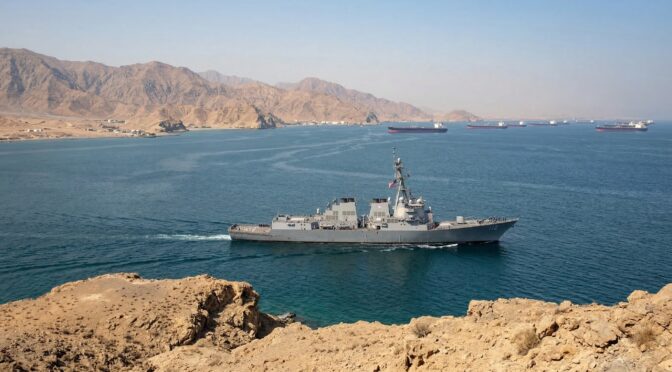
The global maritime and macroeconomic environment is currently undergoing a historic shock driven by the effective closure of the Strait of Hormuz. Following the initiation of high-intensity combined military operations by the United States and Israel against the Islamic Republic of Iran, the Islamic Revolutionary Guard Corps (IRGC) has violently enforced a blockade on the world’s most critical maritime chokepoint. Normal commercial traffic, which typically averages 70 to 80 daily crossings, has plummeted to near zero. An estimated 200 major commercial vessels are currently stranded in the immediate vicinity of the strait, unable to secure the necessary insurance or guarantee the physical safety of their crews to attempt transit.
The kinetic threat to shipping is indiscriminate and highly lethal. At least 16 to 20 commercial vessels have been targeted by suspected Iranian forces since late February, resulting in multiple fatalities, severe structural damage, and at least one confirmed vessel sinking. In response to the crisis, the United States has surged naval and amphibious forces to the region, while the White House has authorized the U.S. Navy to begin escorting commercial tankers and established a $20 billion sovereign insurance backstop. Despite these measures, commercial operators remain highly risk-averse. The economic fallout has expanded far beyond localized energy volatility; while global crude prices have experienced violent whiplash, the most severe, enduring threat is to the global agricultural sector. The Gulf is the primary artery for the world’s fertilizer supply, and the current blockade threatens to trigger a devastating global food inflation cycle just as the critical spring planting season begins.
1. The Maritime Blockade: Transit Status and Stranded Assets
The Strait of Hormuz, a 21-mile-wide geographical chokepoint that normally processes approximately 20 to 25 percent of global petroleum liquids and up to 35 percent of global seaborne liquefied natural gas (LNG), has been functionally severed from the global supply chain. The suppression of legitimate commercial transit is nearly absolute, representing a total failure of the global maritime commons.
As of the end of the reporting period, an estimated 200 large commercial vessels are stranded and loitering in the immediate vicinity of the Strait, awaiting diplomatic stabilization or military escorts. This backlog of trapped capital includes approximately 85 oil tankers, 70 bulk carriers, and 45 other vessels. Additionally, the abrupt closure has precipitated a civilian crisis, effectively trapping 15,000 international passengers aboard at least six commercial cruise liners that cannot safely exit the region.1
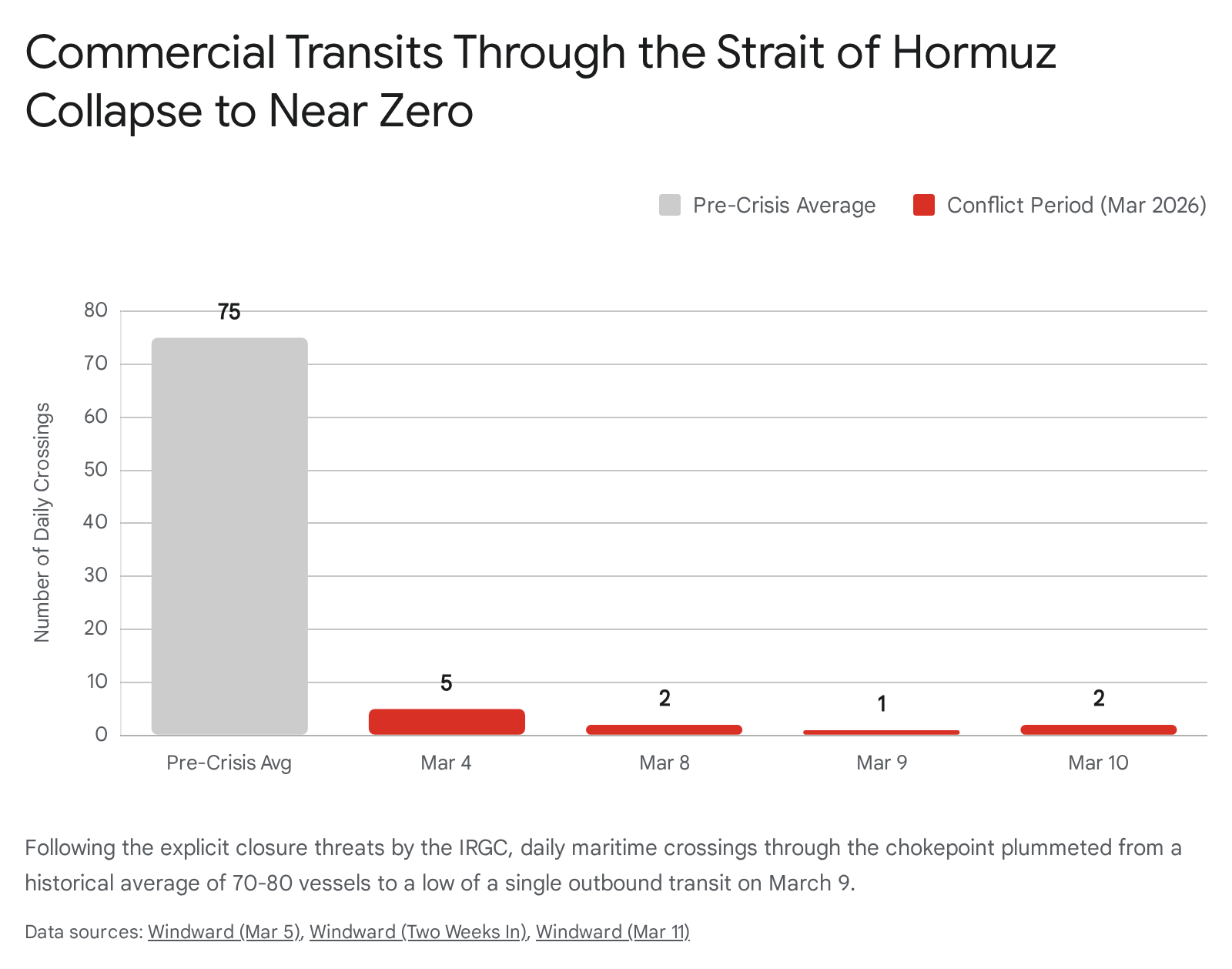
While legitimate international trade has halted, the blockade exhibits a calculated, selective permeability. The IRGC is actively permitting certain vessels to transit based on strict geopolitical criteria designed to fracture international consensus. Intelligence indicates that safe passage has been quietly granted to two Indian-flagged LPG carriers, a Turkish-owned vessel, and specific Iraqi oil tankers, provided the latter can categorically certify they possess no U.S. or Israeli ownership ties.2
Furthermore, a complex shadow logistics network has emerged. Desperate to avoid targeting, at least eight vessels operating in the Gulf of Oman and the Persian Gulf have actively altered their Automatic Identification System (AIS) broadcasts to read “CHINA OWNER” or “CHINA OWNER&CREW”. Because Iran generally avoids targeting Chinese-linked ships due to its reliance on Beijing for economic survival, some of these vessels—along with actual Chinese-flagged ships and domestic Iranian tankers—have successfully managed to complete transits through the contested waterway.
2. Kinetic Engagements: Targeted and Sunken Vessels
The total cessation of Western-linked traffic is the direct result of a highly lethal, indiscriminate campaign of kinetic strikes against civilian maritime infrastructure. Regional maritime security bodies confirm that between 16 and 20 commercial vessels have been successfully struck by suspected Iranian forces since the outbreak of hostilities on February 28.
The human and material toll of these engagements is severe. The most catastrophic incidents include the sinking of an unidentified commercial vessel on March 6, which went down with three crew members reported missing.1 On March 11, the Thai-flagged bulk carrier Mayuree Naree was severely damaged by Iranian fire, set ablaze, and ultimately abandoned, with three of its crew members also reported missing.
Fatalities have been confirmed across multiple other strikes. The oil tanker Skylight (also reported as MT Sky Light) was struck north of Oman, resulting in the deaths of two Indian crew members and injuring three others. Another crew member was killed when a projectile struck the Marshall Islands-flagged tanker MKD VYOM. The threat matrix also extends to emergency responders; the salvage tug Mussafah 2 was targeted and hit while actively attempting to assist a stricken container ship in the Strait.
Other vessels that have sustained confirmed kinetic damage or direct hits during the reporting period include:
- ONE Majesty (Japan-flagged)
- Star Gwyneth (Marshall Islands-flagged)
- Hercules Star (Gibraltar-flagged)
- Stena Imperative (U.S.-flagged)
- Libra Trader, Gold Oak, Safeen Prestige, and Sonangol Namibe
3. Status of Iranian Weapons and Coastal Capabilities
In response to the blockade, the combined U.S.-Israeli air campaign has heavily prioritized the systematic destruction of Iran’s maritime strike capabilities and coastal defense infrastructure.
Iranian asymmetric naval assets have suffered catastrophic losses. U.S. Central Command (CENTCOM) confirmed that American forces have destroyed over 30 Iranian naval vessels since the conflict began. Critically, this includes the targeted destruction of 16 Iranian vessels explicitly designed and equipped for laying naval mines near the Strait of Hormuz. The neutralization of these minelayers is a crucial operational success, as the physical introduction of naval mines into the shallow waters of the strait would transition the waterway from a high-risk zone to a physically impassable barrier requiring months of international mine-sweeping operations to clear.
Furthermore, Iran’s ability to replenish these destroyed weapon systems is severely compromised. U.S. Defense Secretary Pete Hegseth reported that combined strikes have “functionally defeated” Iran’s domestic ballistic missile production capacity, destroying an estimated 80 percent of its total offensive capability and up to 190 mobile and fixed launchers.2 The coalition has also devastated critical defense-industrial nodes, such as the Shiraz Electronics Industries complex, which manufactures missile guidance systems.2
While global intelligence notes that North Korea recently transferred 33,000 containers of weapons to Russia, and that Moscow is providing technical assistance to Pyongyang’s naval programs, there is no public intelligence indicating a massive, immediate external resupply of completed naval or missile systems to the Iranian theater. Consequently, Iran’s forces in the region are currently operating with a finite, rapidly degrading stockpile of missiles, drones, and fast attack craft, though their remaining arsenal is still potent enough to paralyze unarmed commercial shipping.
4. International Military and Diplomatic Response
To break the blockade and restore freedom of navigation, the international community, led by the United States, is executing a massive regional force posture reinforcement alongside unprecedented financial interventions.
The U.S. Department of Defense has ordered a Marine Expeditionary Unit (MEU) consisting of approximately 2,200 Marines, embarked aboard an Amphibious Ready Group led by the USS Tripoli, to rapidly deploy to the Middle East.3 This highly mobile force provides theater commanders with advanced capabilities for opposed infrastructure seizure, over-the-horizon raids against coastal missile batteries, and emergency non-combatant evacuations.
Diplomatically and economically, the U.S. government has taken extraordinary steps to incentivize commercial shipping to return to the strait. President Donald Trump ordered the U.S. International Development Finance Corporation (DFC) to establish a $20 billion sovereign maritime insurance backstop to provide political risk insurance and guarantees for maritime trade. Concurrently, the White House announced that the U.S. Navy is prepared to immediately begin providing armed escorts for commercial tankers transiting the Strait of Hormuz.
However, as of the close of the reporting period, these measures have not successfully restarted trade. Commercial operators and their crews remain unwilling to risk transit through an active free-fire zone, and no commercial vessels have formally accepted the U.S. naval escort offer.5 Recognizing the localized threat, other nations are taking unilateral action to protect their own sovereign interests; Pakistan, for example, has independently launched naval escort operations to protect its merchant shipping.
5. Economic Contagion: Insurance, Energy, and the Fertilizer Crisis
The physical barrier of the Strait of Hormuz is severely compounded by an impenetrable financial barrier: the total collapse of the global marine insurance market in the region. Following the surge in projectile attacks, Protection and Indemnity (P&I) insurance coverage for all Gulf transits was universally canceled by major syndicates. War-risk premiums have skyrocketed to unmanageable levels, rising up to ten times their pre-crisis rates. For a standard Very Large Crude Carrier (VLCC), insurers are now charging between $10 million and $14 million just to cover a single voyage through the Strait, up from roughly $300,000 before the war.
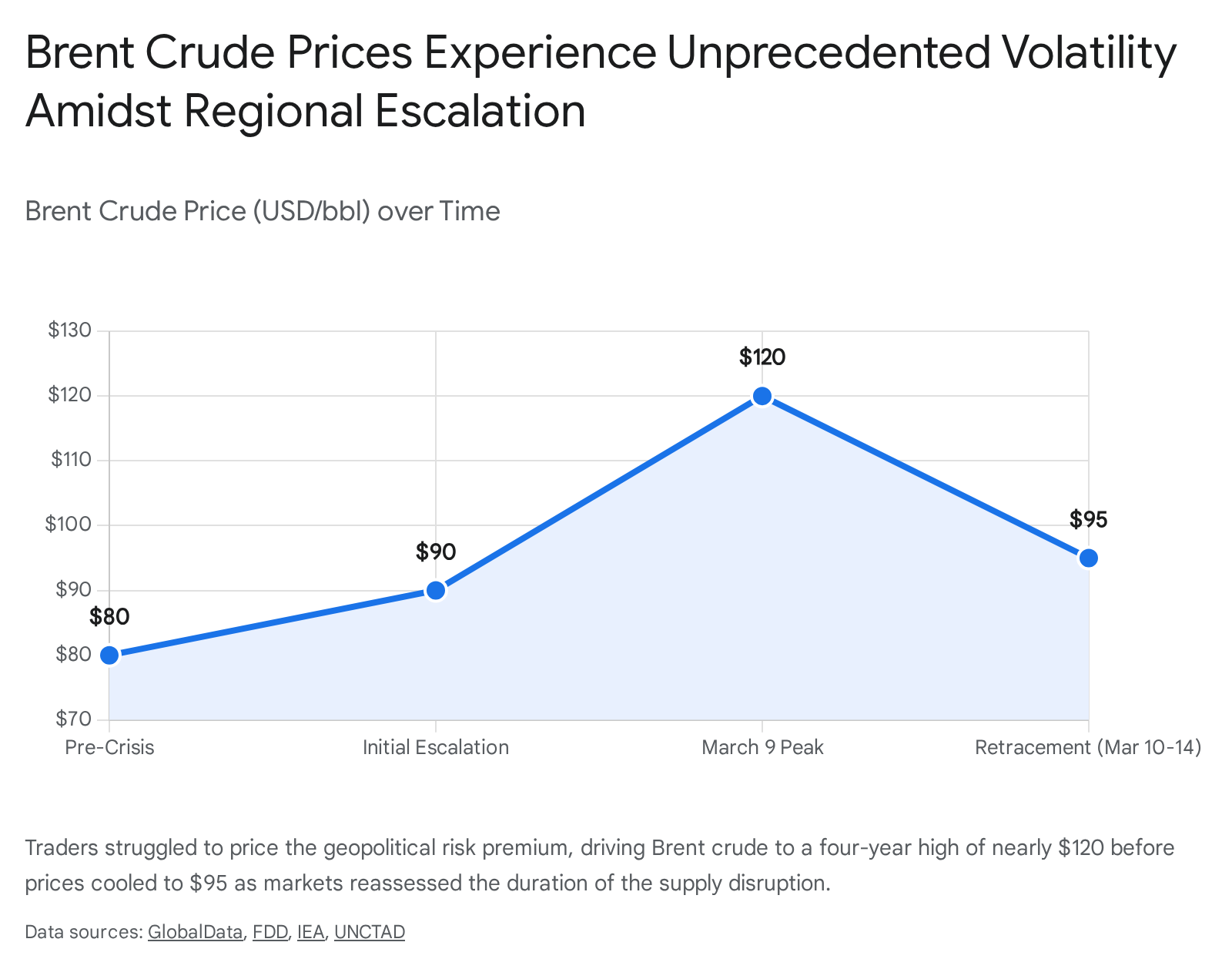
While the energy market shock has been profound—with Brent crude briefly surging to nearly $120 per barrel before stabilizing in the mid-$90s 6—the most severe, enduring threat is to the global agricultural sector.
The Persian Gulf is the absolute nucleus of the world’s fertilizer supply chain. The region accounts for roughly 43 percent of all seaborne urea exports, 44 percent of seaborne sulfur, and approximately 30 percent of globally traded ammonia. The sudden inability to export these critical chemical feedstocks has sent immediate shockwaves through global agriculture. Prices for urea, the world’s most popular synthetic nitrogen fertilizer, have surged by over 30 percent in the past month alone.8
This disruption is exceptionally ill-timed. Farmers in the Northern Hemisphere are currently entering the critical spring planting season, a period when demand and application of nitrogen-based fertilizers peak. U.S. fertilizer markets lack strategic reserves, and domestic production cannot scale quickly enough to offset the loss of Gulf imports. Agricultural economists warn that if these inputs do not reach farmers immediately, it will force massive shifts in planted acreage (e.g., from corn to soybeans) and structurally reduce global crop yields. The ultimate risk is a delayed but severe global food inflation cycle that will outlast the immediate energy shock and heavily strain import-dependent, developing nations.
Please share the link on Facebook, Forums, with colleagues, etc. Your support is much appreciated and if you have any feedback, please email us in**@*********ps.com. If you’d like to request a report or order a reprint, please click here for the corresponding page to open in new tab.
Sources Used
- 2026 Strait of Hormuz crisis – Wikipedia, accessed March 14, 2026, https://en.wikipedia.org/wiki/2026_Strait_of_Hormuz_crisis
- Iran Update Evening Special Report, March 13, 2026 | ISW, accessed March 14, 2026, https://understandingwar.org/research/middle-east/iran-update-evening-special-report-march-13-2026/
- US orders 2,200 Marines on three warships to Middle East, accessed March 14, 2026, https://www.iranintl.com/en/202603131206
- The Latest: US is deploying Marines to Middle East as it pounds Iran, accessed March 14, 2026, https://www.wdrb.com/news/national/the-latest-us-is-deploying-marines-to-middle-east-as-it-pounds-iran/article_c836a7aa-ce80-5232-a484-3bb3c77468b9.html
- Oil Price Whiplash Highlights America’s Enduring Preparedness Gap, accessed March 14, 2026, https://www.fdd.org/analysis/2026/03/11/oil-price-whiplash-highlights-americas-enduring-preparedness-gap/
- Strait of Hormuz disruptions: Implications for global trade and …, accessed March 14, 2026, https://unctad.org/publication/strait-hormuz-disruptions-implications-global-trade-and-development
- Oil price surge signals “new wave of volatility” (GlobalData), accessed March 14, 2026, https://www.oilfieldtechnology.com/special-reports/09032026/oil-price-surge-signals-new-wave-of-volatility-globaldata/
- The global price tag of war in the Middle East, accessed March 14, 2026, https://www.weforum.org/stories/2026/03/the-global-price-tag-of-war-in-the-middle-east/