Category Archives: Analytics and Reports

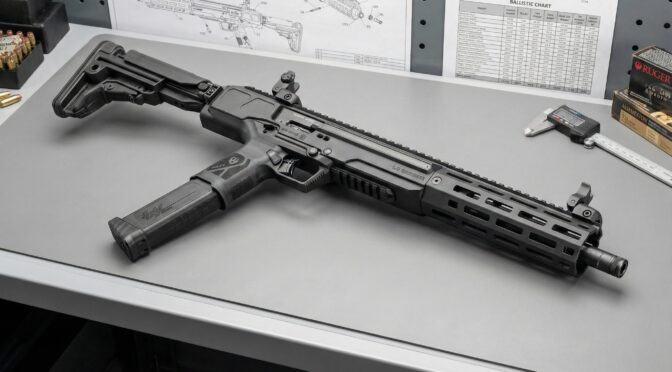
Strategic Technical Report: Comprehensive Analysis of the Ruger LC Carbine (10mm Auto)

The introduction of the Ruger LC Carbine chambered in 10mm Auto marks a significant inflection point in the civilian semi-automatic rifle market, specifically within the Pistol Caliber Carbine (PCC) sector. This report provides an exhaustive technical and market analysis of the platform, evaluating its engineering architecture, ballistic performance, market positioning, and customer sentiment. As the PCC market matures, the demand for cartridges offering terminal ballistics superior to the ubiquitous 9x19mm Parabellum has driven a resurgence of the 10mm Auto. Ruger’s entry targets a specific “capability gap” between budget-tier blowback carbines and premium delayed-blowback systems.

Our analysis indicates that the Ruger LC Carbine effectively democratizes the 10mm cartridge for the general consumer by leveraging a modified straight blowback operating system that utilizes a bolt-over-barrel configuration to mitigate the handling penalties typically associated with heavy reciprocating masses. While the platform exhibits the characteristic recoil impulse of a blowback action, the engineering compromises made—specifically the decision to prioritize reliability and magazine compatibility over weight reduction—result in a highly utilitarian firearm.

Ballistic data synthesized from multiple testing vectors confirms that the 16.25-inch barrel provides a velocity increase of approximately 20% to 25% over standard handgun variants, elevating the 10mm cartridge into a ballistic tier suitable for ethical medium-game hunting and robust defensive applications. However, the platform is not without its detractors; the significant physical weight, the quality of the trigger pull, and the inherent limitations of the blowback action regarding suppression remain primary points of critique among technical users.

From a market perspective, the LC Carbine occupies a strategic “Goldilocks” zone. It offers significantly greater refinement, capacity, and modularity than the Hi-Point 1095TS, yet retains a price point roughly half that of the CMMG Banshee or Kriss Vector. Customer sentiment remains largely positive, particularly regarding the weapon’s reliability with diverse ammunition types and its integration with the ubiquitous Glock magazine ecosystem. This report concludes that the Ruger LC Carbine 10mm is a premier choice for users prioritizing utility, durability, and logistical commonality, though it may lack the refinement required for specialized competition use.

1. Introduction: The Strategic Resurgence of the 10mm Auto

1.1 Historical Context and Market Evolution

To fully appreciate the engineering and market placement of the Ruger LC Carbine, one must first understand the trajectory of the 10mm Auto cartridge. Originally developed in the 1980s to provide law enforcement with a flat-shooting, hard-hitting projectile capable of penetrating intermediate barriers, the 10mm Auto was briefly adopted by the FBI before being sidelined in favor of the.40 S&W. For decades, the 10mm remained a niche cartridge, championed by a dedicated cult following but largely ignored by major manufacturers of carbine platforms.1

However, the 2020s have witnessed a renaissance for the caliber. The modern civilian shooter increasingly demands “crossover” capability—firearms that can transition seamlessly between defensive roles against human aggressors and outdoor roles involving dangerous wildlife such as feral hogs, black bears, and cougars. The 9mm, while efficient for anti-personnel use, lacks the sectional density and kinetic energy required for ethical hunting or defense against large predators. The 10mm Auto bridges this gap, offering energy levels comparable to the.357 Magnum in a high-capacity, semi-automatic format.2

1.2 The Pistol Caliber Carbine (PCC) Renaissance

Concurrently, the PCC market has exploded. Shooters have recognized the utility of sharing ammunition and magazines between their sidearm and their long gun. While the AR-15 platform dominates the 5.56mm rifle market, it is less optimized for pistol calibers due to magazine well geometry and gas system incompatibility. This created a vacuum for dedicated PCC designs.

Ruger entered this space aggressively with the PC Carbine (9mm/.40 S&W) and subsequently the LC (Lightweight Compact) Carbine platform, initially in 5.7x28mm. The extension of the LC line to include the 10mm Auto is a calculated move to capture the demographic of shooters who own Glock 20 or Glock 40 pistols and desire a companion carbine that offers increased effective range and energy without the logistical burden of stocking a rifle cartridge.3

1.3 Strategic Product Positioning

The 10mm carbine market has historically been bifurcated. On the lower end of the spectrum lay the Hi-Point 1095TS, a functional but crude implement priced for maximum accessibility but lacking in ergonomics, capacity, and modularity.5 On the upper end resided the Kriss Vector and CMMG Banshee—highly engineered, delayed-blowback systems commanding premium prices often exceeding $1,500.6

Ruger has positioned the LC Carbine 10mm to inhabit the middle ground. With an MSRP of approximately $1,049 and street prices often lower, it offers the ergonomic refinement, capacity (30 rounds), and modularity (M-LOK, threaded barrels) of the high-end options, but utilizes a simpler blowback operating system to keep costs manageable.6 This “blue-collar premium” positioning targets the practical shooter who demands quality but is price-sensitive regarding diminishing returns.

2. Comprehensive Engineering Analysis

The design of a 10mm carbine presents unique engineering challenges. The cartridge operates at high pressures (SAAMI maximum 37,500 psi), significantly higher than the.45 ACP (21,000 psi) and comparable to high-pressure 9mm loads but with much heavier projectiles. Managing this energy in a lightweight package requires innovative solutions.

2.1 Operating System Architecture: Straight Blowback

Ruger opted for a straight blowback operating system for the LC Carbine.1 In this system, the barrel is fixed, and the breech is held closed solely by the mass of the bolt and the tension of the recoil spring. There is no mechanical locking of the breech (lugs, rollers, or rotating bolts) to delay opening.

The physics of blowback operation dictate that as cartridge pressure increases, the bolt mass must increase to prevent the breech from opening before chamber pressure drops to safe levels. For a robust cartridge like the 10mm, this necessitates a massive bolt. In traditional designs (like the Hi-Point or simple AR-9 conversions), this results in a heavy block of steel moving back and forth, creating a “pogo-stick” recoil impulse and shifting the weapon’s center of gravity rearward.

2.2 The “Bolt-Over-Barrel” Innovation

To mitigate the drawbacks of the heavy bolt required for 10mm blowback operation, Ruger engineers employed a telescoping bolt or bolt-over-barrel design.8

Instead of the entire bolt mass residing behind the chamber, a significant portion of the bolt’s mass extends forward, wrapping over the barrel itself. This engineering choice has profound implications for the handling characteristics of the firearm:

  1. Center of Gravity Management: By shifting mass forward, the carbine balances centrally between the shooter’s hands rather than feeling butt-heavy. This improves “pointability” and reduces shooter fatigue during extended carry or ready-up drills.3
  2. Bore Axis and Recoil Control: The telescoping design allows for a relatively compact receiver. Furthermore, the linear arrangement of the recoil assembly directly inline with the shoulder stock helps to direct recoil forces straight back into the shooter’s pocket, minimizing muzzle rise despite the heavy reciprocating mass.1
  3. Compromise vs. Optimization: While this design effectively manages the static balance of the gun, it cannot eliminate the dynamic recoil impulse inherent to moving a heavy mass. The shooter still experiences the “thump” of the bolt stopping at the rear of travel, a distinct characteristic that differentiates it from gas-operated or delayed-blowback systems.10

2.3 Receiver Construction and Material Science

The LC Carbine utilizes a hybrid construction method to balance durability with weight.

  • Upper Receiver/Handguard: The upper assembly is a unified component machined from aluminum alloy and finished with Type III hard-coat anodizing.8 This monoblock approach ensures structural rigidity, which is critical for maintaining zero on optics mounted to the full-length Picatinny rail. The handguard features M-LOK slots machined directly into the extrusion on seven sides, maximizing accessory compatibility without the added weight of bolt-on rails.
  • Lower Grip Frame: The lower section, comprising the grip, trigger guard, and magazine well, is constructed from high-strength polymer.9 This reduces the overall weight of the non-stress-bearing components. The decision to integrate the magazine well into the pistol grip (similar to the Uzi or MP7) drastically reduces the overall length of the receiver compared to a traditional AR-style magwell located forward of the trigger.12

2.4 The Magazine Ecosystem Strategy

Perhaps the most significant strategic engineering decision was the adoption of Glock-pattern magazines for the 10mm variant.8

  • Logistical Superiority: The Glock 20/40 magazine is the global standard for 10mm feeding devices. They are ubiquitous, relatively inexpensive, and proven reliable. By designing the grip geometry to accept these magazines, Ruger instantly tapped into an existing supply chain, relieving them of the burden of developing and supporting a proprietary magazine.
  • Technical Implementation: The magazine feeds through the pistol grip. This “hand-finds-hand” reload mechanic is intuitive and facilitates reloading in low-light conditions.9 The carbine ships with a 30-round magazine from SGM Tactical, indicating Ruger’s confidence in third-party support for the platform.4
  • Engineering Challenges: Designing a grip to accept the large-frame Glock magazine results in a grip circumference that may be substantial for shooters with smaller hands. However, the ergonomics are generally reported as comparable to the handgun itself.9

2.5 Fire Control and Trigger Mechanics

The LC Carbine utilizes Ruger’s Secure Action™ fire-control system.4

  • Mechanism: This is an internal hammer-fired system, distinct from striker-fired designs. It features a bladed safety trigger shoe, similar to many modern polymer pistols.
  • Performance Characteristics: The trigger pull is consistently described as “serviceable” but heavy, averaging around 6 lbs 5 oz.9 There is a noted presence of overtravel. While adequate for a defensive carbine or “brush gun,” it lacks the crisp break of a match-grade AR-15 trigger. The internal hammer design, however, contributes to reliable ignition of hard primers often found in hunting ammunition.

3. Ballistic Performance and Capability Analysis

The raison d’être of the 10mm carbine is the ballistic advantage gained by lengthening the barrel. The 10mm Auto cartridge typically utilizes slower-burning powders than the 9mm or.45 ACP, meaning it continues to accelerate the projectile well past the 4- or 5-inch length of a standard pistol barrel.

3.1 Internal and External Ballistics

Analysis of independent ballistic testing reveals substantial performance gains when moving from a handgun to the LC Carbine’s 16.25-inch barrel.

  • Velocity Enhancement: Chronograph data indicates that standard 180-grain loads, which clock around 1,095 fps from a pistol, accelerate to approximately 1,338 fps from the 16-inch carbine barrel.13
  • Energy Transfer: This velocity increase translates to a significant jump in kinetic energy.
  • Pistol: ~480 ft-lbs energy.
  • Carbine: ~715 ft-lbs energy.
  • Implication: This energy level (over 700 ft-lbs) pushes the 10mm carbine into the lower tier of rifle ballistics, surpassing the standard.357 Magnum and approaching the performance of light.44 Magnum or.30 Carbine loads.3 This transformation is critical for its viability as a hunting arm.

3.2 Accuracy Potential

The mechanical accuracy of the LC Carbine is enhanced by its fixed-barrel design (unlike the tilting barrel of the Glock pistol).

  • Group Sizes: Professional reviews consistently report group sizes of 1.5 to 2.0 inches at 50 yards using quality ammunition.1
  • Effective Range: While the cartridge drops significantly past 125 yards due to the poor ballistic coefficient of pistol bullets, the carbine is mechanically capable of effective hits on man-sized or deer-sized targets out to 150 yards, provided the shooter understands the trajectory.3

3.3 Suppression Dynamics

The barrel comes threaded with a .578″-28 pitch, the standard for .45 caliber and large-bore pistol accessories.8 While the LC Carbine is “suppressor ready,” the blowback action introduces specific variables:

  • Port Noise: Because the bolt begins to move rearward immediately upon ignition (overcoming inertia), there is a potential for “port pop”—sound escaping from the ejection port before chamber pressure has fully dissipated. This can make the firearm louder at the shooter’s ear compared to a locked-breech rifle.10
  • Backpressure: Suppressors increase backpressure, which accelerates the bolt velocity. This can lead to increased recoil and gas blowback. However, the side-charging, closed-receiver design of the LC Carbine generally deflects gas away from the shooter’s face more effectively than a standard T-handle AR-15.10

3.4 Summary Table: Ballistic Performance

The following table summarizes the observed performance metrics of the LC Carbine 10mm across various ammunition types.1

Load TypeBullet WeightMuzzle Velocity (Carbine)Kinetic Energy (Carbine)Accuracy (50 yds)
Federal American Eagle180 gr FMJ~1,338 fps~715 ft-lbs1.50″
Hornady Critical Duty175 gr FlexLock~1,306 fps~663 ft-lbs1.50″
Remington Core-Lokt200 gr~1,246 fps~689 ft-lbs1.75″
Standard Pistol (Ref)180 gr~1,095 fps~479 ft-lbsN/A

4. Operational Evaluation: Reliability and Ergonomics

4.1 Reliability and Durability

Reliability in a blowback system is generally high due to the simplicity of the mechanism—there are fewer moving parts to fail compared to gas-operated systems.

  • Ammunition Tolerance: The LC Carbine utilizes a heavy bolt and strong recoil springs to manage the high pressures of full-power 10mm loads (e.g., Buffalo Bore, Underwood). However, this heavy springing can theoretically cause issues with weak, low-pressure “practice” ammunition that may not generate enough force to cycle the heavy bolt fully.15 Despite this theoretical limitation, field reports indicate the carbine is remarkably omnivorous, cycling a wide range of hollow points and flat-nosed FMJ rounds without issue.14
  • Magazine Reliability: The primary failure point identified in user reports is the magazine. While Glock OEM magazines are highly reliable, the included SGM Tactical magazines can sometimes cause feed issues if the springs are weak or if debris enters the mag body.18 The reliability of the firearm is practically synonymous with the reliability of the magazine used.
  • Maintenance: The tool-less takedown capability allows for easy field stripping. The separation of the upper and lower receivers allows for thorough cleaning of the bolt face and chamber, which is essential in blowback guns that tend to run “dirty” due to carbon blow-by.4

4.2 Ergonomics and Handling

Ruger has invested significantly in making the LC Carbine user-friendly.

  • Ambidexterity: The charging handle is reversible, allowing setup for left- or right-handed shooters. The safety is ambidextrous.8
  • Controls: The magazine release is multi-faceted, featuring a standard button location and an extended paddle, accommodating different hand sizes and grip styles.
  • Stock Adjustability: The folding stock adjusts for length of pull (LOP) from 12.6″ to 14.6″.4 This adaptability is crucial for users wearing heavy winter coats or tactical body armor.
  • Weight: At 7.4 lbs unloaded, the LC Carbine is not a “featherweight.” It is heavier than many AR-15s. However, this weight is a necessary component of the recoil mitigation system. A lighter gun would transmit significantly more recoil to the shooter. The mass absorbs the energy, making the shooting experience smoother.15

5. Comparative Market Analysis

To determine the true value of the Ruger LC Carbine, it is essential to benchmark it against its direct competitors in the 10mm carbine space.

5.1 The Competitor Landscape

The primary competitors are the CMMG Banshee Mk10, the Kriss Vector CRB Gen 2, and the Hi-Point 1095TS.

5.1.1 Ruger LC Carbine vs. CMMG Banshee Mk10

  • Technology: The CMMG Banshee utilizes a Radial Delayed Blowback (RDB) system. This mechanical delay allows for a much lighter bolt and buffer, resulting in a lighter firearm overall (~5.6 lbs vs 7.4 lbs) and a softer recoil impulse.6
  • Price: The Banshee commands a premium price, typically $1,600 – $1,800.
  • Analysis: The Banshee is the superior technical platform for competition or speed shooting due to its lighter weight and faster sight recovery. However, the Ruger offers the same ballistic capability and magazine compatibility for roughly half the price. The Ruger is the “value” choice; the CMMG is the “performance” choice.

5.1.2 Ruger LC Carbine vs. Kriss Vector CRB

  • Technology: The Kriss Vector uses the Super V Recoil Mitigation System, which directs the bolt downwards behind the magazine well to counteract muzzle climb.19
  • Ergonomics: The Vector has distinct, polarized ergonomics. It is tall, blocky, and has a very short length of pull in some configurations. Many users find it awkward for standard rifle manipulation.20
  • Analysis: While the Vector is technologically fascinating, the Ruger offers a more traditional manual of arms that is easier for most shooters to master. The Vector is often viewed as a “range toy” or specialized CQB tool, whereas the Ruger is a utilitarian field rifle.

5.1.3 Ruger LC Carbine vs. Hi-Point 1095TS

  • Value: The Hi-Point is the budget leader at ~$450. It functions reliably but is crude, heavy, difficult to disassemble, and limited to single-stack 10-round magazines.5
  • Analysis: The Ruger is a massive upgrade over the Hi-Point. The capacity increase (30 vs 10), the ability to mount standard optics and accessories, and the vastly superior ergonomics justify the price difference for any serious user. The Ruger is a professional-grade tool; the Hi-Point is a budget-constrained compromise.

5.2 Summary Table: Competitive Matrix

FeatureRuger LC CarbineCMMG Banshee Mk10Kriss Vector CRBHi-Point 1095TS
Operating SystemStraight Blowback (Bolt-Over-Barrel)Radial Delayed BlowbackSuper V Recoil SystemStraight Blowback
Unloaded Weight7.4 lbs~5.6 lbs~8.0 lbs7.0 lbs
Magazine TypeGlock 20/40Glock 20/40Glock 20/40Proprietary (10-rd)
Stock TypeFolding / AdjustableRipBrace / FixedFolding / FixedFixed Skeletonized
MSRP (Approx)~$1,049~$1,700+~$1,600~$450
Recoil CharacterHeavy ThumpSoft / SmoothDownward PushSharp / Cheek Slap

6. Customer Sentiment and Market Reception

Evaluating the “voice of the customer” provides critical insight into the long-term ownership experience beyond the initial specification sheets.

6.1 The “Working Class” Hero

User sentiment across forums and retail reviews paints a picture of the LC Carbine as a “working class” hero. It is praised for being a robust, reliable tool that doesn’t require babying.

  • Reliability: The most consistent praise centers on reliability. Users report that the gun “eats everything,” from cheap range ammo to expensive defensive hollow points. This reliability is paramount for a firearm marketed for defense and backcountry protection.17
  • Magazine Compatibility: The decision to use Glock magazines is universally lauded. Many buyers cite this as the primary reason for choosing the Ruger over other options. The ability to share magazines with a sidearm is a massive logistical advantage.12

6.2 The Weight Debate

The most common critique is the weight. Users expecting a lightweight polymer carbine are often surprised by the density of the LC Carbine.

  • The Complaint: “It is a bit heavy for a PCC” is a frequent comment.15 Users note that carrying it for long distances can be fatiguing compared to lighter AR-based options.
  • The Counterpoint: Experienced shooters often defend the weight, noting that it soaks up recoil. “Don’t count on doing a thirty round mag dump without bruising your shoulder” if the gun were lighter.17 The weight is recognized as a necessary trade-off for the blowback simplicity.

6.3 Trigger Feedback

The trigger receives mixed reviews. While few describe it as “bad,” few describe it as “great.” It is viewed as a safety-conscious, utilitarian trigger. Some users express a desire for aftermarket trigger packs to lighten the pull and reduce overtravel for precision work.14

7. Strategic Use Case Scenarios

Based on the engineering capabilities and performance data, the Ruger LC Carbine excels in specific roles while being suboptimal for others.

7.1 Home Defense

Verdict: Highly Recommended.

The compact nature of the LC Carbine (especially with the stock folded or collapsed) makes it excellent for maneuvering in confined spaces like hallways. The 30-round capacity of 10mm Auto offers overwhelming firepower compared to a standard handgun. The ability to mount a weapon light and a red dot sight enhances its utility in low-light scenarios. The energy transfer of the 10mm is decisive, though users must select ammunition carefully to mitigate over-penetration risks.2

7.2 Medium Game Hunting (Hogs/Deer)

Verdict: Recommended (Within Range).

For hunting feral hogs or whitetail deer within 100-125 yards, the LC Carbine is a potent tool. The 1,300+ fps velocity and 700+ ft-lbs of energy are sufficient for ethical harvesting. The semi-automatic action allows for rapid follow-up shots, which is particularly valuable when controlling pest populations like hogs. It serves as an excellent, rugged “brush gun”.2

7.3 Backcountry Defense / “Truck Gun”

Verdict: Ideally Suited.

This is perhaps the strongest niche for the LC Carbine. For hikers, fishermen, or ranchers in bear country, the LC Carbine offers a comforting level of firepower. It is more shootable under stress than a heavy magnum revolver and offers 30 rounds of capacity. Its folding mechanism allows it to be stored discreetly in a vehicle or strapped to a backpack.2

7.4 Competition Shooting

Verdict: Not Recommended.

For USPSA or IDPA PCC divisions, the LC Carbine is at a disadvantage. It is heavier than optimized AR-9 builds, the trigger is slower, and the recoil impulse is sharper than tuned delayed-blowback systems. While it can be used, it will not be competitive against high-end race guns.

8. Conclusion

The Ruger LC Carbine 10mm is a triumph of pragmatic engineering. It represents a strategic understanding of the civilian market’s desire for a high-power, high-capacity utility rifle that remains affordable. Ruger has successfully navigated the physics of the 10mm cartridge by employing a clever bolt-over-barrel design that mitigates the inherent handling penalties of a blowback system.

While it lacks the mechanical elegance of the CMMG Banshee or the futuristic recoil mitigation of the Kriss Vector, it delivers 95% of the practical capability for 60% of the cost. It is a firearm built to be used—thrown behind a truck seat, carried through brush, and relied upon to defend property or harvest game.

Final Recommendation:

The Ruger LC Carbine 10mm is worth buying for any shooter who:

  1. Already invests in the 10mm / Glock ecosystem.
  2. Needs a durable, compact rifle for rural defense or hunting.
  3. Desires 10mm power but cannot justify the price tag of premium boutique carbines.

It is a “working man’s” power tool—unpretentious, slightly heavy, but undeniably effective.

Appendix: Research Methodology

1. Data Aggregation and Sourcing

This report was constructed using a multi-source data ingestion strategy to ensuring a holistic view of the product. Information was categorized into three primary vectors:

  • Technical Specifications: Direct analysis of manufacturer data sheets 7 was used to establish baseline engineering facts (weight, dimensions, materials).
  • Performance Verification: Independent third-party data was synthesized from professional media reviews (American Rifleman, Shooting Illustrated, Gun Digest) and video analysis.1 This included extracting chronograph data to mathematically verify velocity claims against standard physics models ($E_k = 1/2 mv^2$).
  • Sentiment Analysis: Qualitative data was mined from user-generated content on discussion platforms (Reddit r/guns, r/tacticalgear) and retail feedback loops (Buds Gun Shop, GrabAGun) to identify recurring themes in reliability and ownership satisfaction.12

2. Analytical Framework

The analysis employed a comparative framework:

  • Engineering Critique: The straight blowback system was evaluated against the physics of the 10mm cartridge to understand the necessity of the bolt mass and the innovation of the telescoping design.
  • Market Positioning: A comparative matrix was established to benchmark the LC Carbine against its peer group (CMMG, Kriss, Hi-Point) based on price-to-performance ratios.
  • Use-Case Modeling: Technical features were mapped against real-world scenarios (e.g., “Folding Stock” + “High Caliber” = “Backcountry Defense”) to derive suitability ratings.

3. Data Verification

All ballistic claims were cross-referenced. For example, the claim of increased velocity was verified by comparing advertised pistol velocities against the chronograph results from the 16-inch barrel reviews. Reliability claims were stress-tested against forum reports of failure modes to distinguish between isolated incidents and systemic design flaws.


Please share the link on Facebook, Forums, with colleagues, etc. Your support is much appreciated and if you have any feedback, please email us in**@*********ps.com. If you’d like to request a report or order a reprint, please click here for the corresponding page to open in new tab.


Sources Used

  1. Review: Ruger LC Carbine In 10 mm Auto | An Official Journal Of …, accessed December 11, 2025, https://www.americanrifleman.org/content/review-ruger-lc-carbine-in-10-mm-auto/
  2. Ruger LC Carbine: 10MM of Pure Fun! – Keystone Shooting Center, accessed December 11, 2025, https://keystoneshootingcenter.com/blog/ruger-lc-carbine-10mm-of-pure-fun
  3. Ruger LC10 Pistol Caliber Carbine Review | Hook & Barrel Magazine, accessed December 11, 2025, https://www.hookandbarrel.com/insider-ruger/ruger-lc-10-pcc
  4. First Look: Ruger 10mm LC Carbine | An Official Journal Of The NRA – Shooting Illustrated, accessed December 11, 2025, https://www.shootingillustrated.com/content/first-look-ruger-10mm-lc-carbine/
  5. 10mm Carbine on a budget: a review of Hi-Point’s 1095TS – The Mag Life, accessed December 11, 2025, https://gunmagwarehouse.com/blog/10mm-carbine-on-a-budget-a-review-of-hi-points-1095ts/
  6. Best 10mm Carbines [Tested] – Gun Digest, accessed December 11, 2025, https://gundigest.com/rifles/10mm-carbine-what-are-your-options
  7. LC Carbine – Ruger, accessed December 11, 2025, https://ruger.com/products/lcCarbine/models.html
  8. Ruger LC Carbine 10mm Semi Auto Rifle w/Folding Stock, Flip Up Sights, 30+1, accessed December 11, 2025, https://www.budsgunshop.com/product_info.php/products_id/171077/ruger+lc+carbine+10mm+semi+auto+rifle+w+folding+stock+flip+up+sights+30+1
  9. Ruger LC Carbine 10mm: Highly Adaptable Rifle – RifleShooter, accessed December 11, 2025, https://www.rifleshootermag.com/editorial/ruger-lc-carbine-10mm-review/529484
  10. Let the pcc hate begin : r/guns – Reddit, accessed December 11, 2025, https://www.reddit.com/r/guns/comments/1f55otd/let_the_pcc_hate_begin/
  11. Ruger LC Carbine 10mm 30rd 16″ Threaded Barrel LE Pricing – GT Distributors, accessed December 11, 2025, https://www.gtdist.com/ruger-lc-carbine-10mm-30rd-16-threaded-barrel.html
  12. Ruger LC 10mm – New Acquisition – Initial thoughts/set up; Or PCC Bliss????, accessed December 11, 2025, https://www.thearmorylife.com/forum/threads/ruger-lc-10mm-new-acquisition-initial-thoughts-set-up-or-pcc-bliss.23141/
  13. 10MM Barrel Length and Chronograph Speeds….. – YouTube, accessed December 11, 2025, https://www.youtube.com/watch?v=-Go8yphNZuI
  14. Review: Ruger LC Carbine 10 mm | An Official Journal Of The NRA – Shooting Illustrated, accessed December 11, 2025, https://www.shootingillustrated.com/content/review-ruger-lc-carbine-10-mm/
  15. Issues I should be aware of if I get a Ruger LC Carbine? : r/guns – Reddit, accessed December 11, 2025, https://www.reddit.com/r/guns/comments/1kf0uvr/issues_i_should_be_aware_of_if_i_get_a_ruger_lc/
  16. Ruger PC 10MM ? | Shooters’ Forum, accessed December 11, 2025, https://forum.accurateshooter.com/threads/ruger-pc-10mm.3988557/
  17. Customer Reviews for Ruger LC Carbine 10mm Semi Auto Rifle w/Folding Stock, Flip Up Sights, 30+1 – Buds Gun Shop, accessed December 11, 2025, https://www.budsgunshop.com/product_reviews.php/products_id/171077/reviews_id/289508
  18. Ruger 10/22 Cycling issues – GunSite South Africa, accessed December 11, 2025, https://www.gunsite.co.za/forums/showthread.php?82929-Ruger-10-22-Cycling-issues
  19. 10mm Battle: Kriss Vector SDP SB Enhanced vs CMMG Banshee 300 – Athlon Outdoors, accessed December 11, 2025, https://athlonoutdoors.com/article/10mm-kriss-vector-vs-cmmg-banshee/
  20. Should I Consider the 10mm KRISS Vector or Stick with Good Old 9mm : r/guns – Reddit, accessed December 11, 2025, https://www.reddit.com/r/guns/comments/1ngdk1q/should_i_consider_the_10mm_kriss_vector_or_stick/
  21. Review: Hi-Point 1095 TS 10mm Carbine – RifleShooter, accessed December 11, 2025, https://www.rifleshootermag.com/editorial/review-hi-point-1095-ts-10mm-carbine/359228
  22. Ruger LC carbine worth it? : r/tacticalgear – Reddit, accessed December 11, 2025, https://www.reddit.com/r/tacticalgear/comments/1gn7fm2/ruger_lc_carbine_worth_it/


Tactical Santa Photos – Day 5

Ever wonder what Santa is up to these days? We have some photos to share with you each day between now and Christmas Day.

Ronin's polymer handle being cut with a plastic knife on foil

There will be more 🙂


Please share the link on Facebook, Forums, with colleagues, etc. Your support is much appreciated and if you have any feedback, please email us in**@*********ps.com. If you’d like to request a report or order a reprint, please click here for the corresponding page to open in new tab.


Top 20 U.S. Federal Agency Sniper Groups Ranked in 2025

The strategic landscape of federal law enforcement in the United States has undergone a profound transformation in the post-9/11 era, necessitating a paradigm shift in the application of precision rifle fire. No longer confined to the traditional reactionary role of “police sniping”—typically characterized by 75-yard engagements in static hostage scenarios—federal marksman units have evolved into proactive, intelligence-driven assets capable of operating in diverse and non-permissive environments. This report provides an exhaustive analysis of the top 20 sniper groups within the U.S. Federal Government, ranking them based on operational tempo, mission complexity, training rigor, and equipment modernization.

Our analysis reveals a distinct stratification within the federal sector. At the apex, “Tier 1” equivalent domestic assets, such as the Federal Bureau of Investigation’s Hostage Rescue Team (HRT) and the United States Secret Service Counter Sniper Team (CS), operate with budgets, selection processes, and mission profiles that mirror the Department of Defense’s Special Mission Units. These entities have pioneered the integration of multi-caliber chassis systems, aerial use of force, and advanced night vision capabilities into domestic law enforcement. Below this tier, a robust network of specialized response teams within agencies like the Department of Energy, Customs and Border Protection, and the U.S. Marshals Service provides critical niche capabilities, ranging from nuclear convoy protection to high-angle mountain warfare.

A dominant trend identified in this assessment is the wholesale modernization of small arms and ballistics. The era of the fixed-stock, law enforcement-grade Remington 700 firing.308 Winchester ammunition is ending. It is being superseded by modular systems such as the Accuracy International AT-X and Barrett MRAD, which allow operators to reconfigure calibers in the field. Furthermore, the federal sector is aggressively adopting high-ballistic-coefficient cartridges like the 6.5mm Creedmoor and.300 Precision Rifle Cartridge (PRC) to extend effective engagement distances and mitigate wind drift—a critical factor in the protection of dignitaries and the interdiction of threats across vast borderlands.

This report serves as a definitive reference for understanding the capabilities, limitations, and strategic value of these elite federal assets.

1.0 Strategic Context: The Evolution of the Federal Marksman

To evaluate the capabilities of federal sniper groups, one must first understand the doctrinal divergence between military and law enforcement precision fire, and how federal units increasingly bridge this gap. Historically, the law enforcement sniper was viewed as a defensive instrument—a “safety valve” to be utilized only when negotiation failed and an immediate threat to life existed. The engagement distances were short, typically under 100 yards, and the requirement was absolute precision: a “craniel vault” shot to instantly incapacitate a suspect.

However, the modern federal operating environment defies this simplistic categorization. Federal agents today may find themselves engaging cartel gunmen in the Sonoran Desert at 800 meters, providing overwatch for a diplomatic convoy in a war zone, or disabling the engine of a drug-running go-fast boat from a helicopter. These scenarios demand a hybrid doctrine that combines the legal restraint and accountability of policing with the fieldcraft, ballistics knowledge, and tactical aggression of military sniping.

1.1 The Shift to Asymmetric Warfare Paradigms

The militarization of federal tactical teams is often a subject of public discourse, but from an operational standpoint, it is a response to the “weaponization” of the threat. Criminal organizations and domestic extremists possess body armor, night vision, and long-range weaponry. Consequently, federal units like the Department of Energy’s Office of Secure Transportation (OST) or the Diplomatic Security Service (DSS) train for complex ambushes rather than simple barricaded subjects. This shift drives the procurement of semi-automatic precision rifles (like the SR-25/M110) that allow for rapid engagement of multiple targets, a capability less critical in traditional municipal SWAT operations.

1.2 The Technological Overmatch Doctrine

Federal agencies are increasingly adopting a doctrine of “technological overmatch.” Recognizing that the human factor is the primary limitation in precision fire, agencies are investing heavily in force multipliers. This includes clip-on thermal imagers that allow for target identification through obscurants, laser rangefinders integrated with ballistic computers that provide instant firing solutions, and suppressor systems that mask the shooter’s location and facilitate communication. The rankings in this report heavily weight the integration of these technologies, as they represent the difference between a legacy capability and a modern, adaptive force.

2.0 Methodology of Assessment

The ranking of these 20 units was conducted using a rigorous, multi-variable scoring matrix designed to isolate operational capability from reputation. The methodology prioritizes objective metrics such as training hours, equipment sophistication, and deployment diversity.

2.1 Evaluation Criteria

The assessment model utilizes four weighted categories:

  1. Mission Criticality and Complexity (30%): This metric evaluates the consequences of failure and the difficulty of the operating environment. A unit charged with protecting nuclear weapons or the President faces higher stakes than one conducting regulatory enforcement. Complexity considers environmental factors (maritime, aerial, urban, rural) and the requirement for specialized insertion techniques (fast-rope, SCUBA, parachute).
  2. Training Pipeline and Selection (25%): The quality of a sniper unit is defined by its human capital. This factor analyzes the length and attrition rate of selection courses, the duration of basic sniper training, and the frequency of sustainment training (e.g., weekly vs. monthly vs. quarterly). It also considers whether the unit trains with Tier 1 military assets (Delta Force, DEVGRU).
  3. Equipment Modernization (25%): This evaluates the agency’s armory. High scores are awarded for the adoption of modern chassis systems, multi-caliber capability, advanced night vision/thermal integration, and ballistic computers. The transition to modern cartridges (6.5 CM,.300 PRC/NM) is a key differentiator.
  4. Operational Tempo and Interoperability (20%): This measures how often the unit deploys and its ability to integrate with other forces. High-tempo units that deploy globally or support multi-agency task forces score higher than static, facility-specific teams.

(A detailed breakdown of the scoring matrix and methodology is provided in Appendix A.)

3.0 The Top 20 Federal Sniper Groups: Profiles and Capabilities

Rank #1: Federal Bureau of Investigation (FBI) – Hostage Rescue Team (HRT)

Justification: The FBI HRT is the premier non-military counter-terrorism tactical unit in the United States. Ranking #1, the HRT sniper section operates with resources, training cycles, and mission capabilities that are indistinguishable from National Mission Force military units. Their ability to deploy domestically or internationally within four hours, combined with full-time training status, places them in a category of their own.1

Background: Established in 1983 to provide a civilian counter-terrorist solution for the 1984 Los Angeles Olympics, the HRT is based at the FBI Academy in Quantico, Virginia.2 Unlike regional SWAT teams where members have investigative day jobs, HRT operators are full-time tactical specialists. The sniper element is integral to the team’s “Save Lives” mission, providing intelligence gathering, overwatch, and lethal resolution options in the most complex hostage sieges imaginable.

Equipment Profile:

  • Primary Precision Rifle: The HRT has historically utilized the H-S Precision Pro Series 2000, a custom-built bolt-action rifle in.308 Winchester known for sub-0.5 MOA accuracy.3 However, recent trends show a transition toward the Barrett MRAD (Mk 22) system, aligning with USSOCOM’s Advanced Sniper Rifle program to allow multi-caliber flexibility (.308,.300 Norma Mag,.338 Norma Mag).1
  • Semi-Automatic Platforms: For multiple-target engagements, the unit employs the Heckler & Koch MSG90 (a militarized PSG1) and the Knight’s Armament Company (KAC) SR-25/Mk11 series in 7.62x51mm.1
  • Anti-Materiel: The Barrett M82 and M107.50 BMG rifles are maintained for hard-target interdiction (engine blocks, fortified barriers).
  • Optics & Accessories: The unit employs top-tier glass from Nightforce (ATACR series) and Leupold (Mark 6/8). They heavily utilize clip-on night vision (PVS-27/30) and thermal devices to maintain 24-hour dominance.

Operational Doctrine: HRT snipers are masters of “command fire”—the simultaneous engagement of targets by multiple shooters on a countdown. They possess specialized maritime capabilities, honed through joint training with DEVGRU, allowing them to shoot from helicopters and unstable vessels.4 Their proficiency is validated annually at the USASOC International Sniper Competition, where they consistently place in the top tier alongside Army Special Forces and Rangers, demonstrating their ability to compete with the world’s best military snipers.5

Rank #2: United States Secret Service (USSS) – Counter Sniper Team (CS)

Justification: If HRT is the scalpel, the USSS CS is the shield. Ranked #2, this unit has a singular, zero-fail mission: the protection of the President of the United States (POTUS). They are the undisputed global experts in “green-side” observation and urban hide construction, tasked with detecting and neutralizing threats before they can act.

Background: Formed in 1971, the CS Team supports the Presidential Protective Division.7 Members are recruited from the Uniformed Division and undergo a grueling selection process followed by an 11-week basic training course. Their qualification standards are among the most stringent in the world, requiring cold-bore hits out to 1,000 yards monthly—a standard far exceeding typical law enforcement requirements.8

Equipment Profile:

  • The “JAR”: The unit is famous for its custom-built bolt-action rifles, colloquially known as “JARs” (Just Another Rifle). These are typically Remington 700 long actions mated to Accuracy International chassis systems, chambered in .300 Winchester Magnum to ensure flat trajectories and sufficient energy at extended ranges.7
  • Modernization & 6.5mm Creedmoor: The USSS is currently leading a major shift in federal ballistics. They have solicited requirements for a gas-operated semi-automatic rifle in 6.5mm Creedmoor to replace their 7.62mm KAC SR-25s.10 This move prioritizes ballistic coefficient and wind resistance over pure bullet weight. Furthermore, they are seeking new modular bolt-action rifles capable of firing.300 Win Mag,.300 Norma Mag, and.300 PRC, pushing their lethal envelope well beyond 1,500 meters.11
  • Optics: Schmidt & Bender PM II series scopes are the standard, chosen for their ruggedness and optical clarity.7

Operational Doctrine: The CS Team operates in shooter/spotter pairs. Their primary weapon is often their optics; they scan thousands of windows and rooftops to identify subtle anomalies. Unlike SWAT snipers who deploy for specific incidents, CS snipers are constantly deployed worldwide, advancing locations and establishing overwatch for every presidential movement.8

Rank #3: United States Coast Guard (USCG) – Maritime Security Response Team (MSRT) – Precision Marksman Observer Team (PMOT)

Justification: The USCG MSRT holds the #3 position due to the extreme difficulty of their primary domain: the maritime environment. Shooting from a moving helicopter into a moving boat requires complex physics calculations and mastery of “Aerial Use of Force” (AUF) that few other units possess.

Background: The MSRT is the Coast Guard’s counter-terrorism force, part of the Deployable Specialized Forces (DSF). The PMOT provides overwatch for Direct Action Sections during Visit, Board, Search, and Seizure (VBSS) operations against non-compliant vessels or terrorist targets.12

Equipment Profile:

  • Rifles: PMOT operators primarily utilize semi-automatic platforms like the Mk 11 Mod 0 and KAC M110 SASS in 7.62x51mm.14 The semi-automatic action is critical for engaging moving targets from unstable platforms where rapid follow-up shots are necessary.
  • Optics: Tactical scopes with illuminated reticles are essential for low-light maritime interdiction.
  • Specialized Gear: They utilize gyro-stabilized mounts for aerial operations and are equipped with advanced thermal imagers to detect heat signatures against the cold ocean background.

Operational Doctrine: MSRT snipers are trained to disable the engines of fast boats from helicopters, a tactic that requires precision fire into a small, erratic target while the shooter is also moving. They also provide cover fire for boarding teams climbing onto large vessels. Their skill set is highly respected in the special operations community, evidenced by their 9th place finish in the 2024 USASOC Sniper Competition, beating many dedicated military units.6

Rank #4: U.S. Border Patrol – Border Patrol Tactical Unit (BORTAC)

Justification: BORTAC ranks #4 because they operate in the most austere and physically demanding environments of any federal agency. They are the federal government’s experts in rural tracking, reconnaissance, and irregular warfare tactics along the nation’s borders.

Background: Established in 1984 to quell disturbances in detention facilities, BORTAC has evolved into a global special response capability.15 They deploy to border zones to interdict high-value targets, cartel sicarios, and terrorist threats. Their selection course is modeled after U.S. Special Forces assessment and is notoriously difficult.16

Equipment Profile:

  • Rifles: While historically using the Remington 700 LTR and M40 XBKS, BORTAC recently executed a significant modernization by selecting the Accuracy International AT-X as their new “Modular Precision Weapon Platform”.17 This chassis-based system allows for superior ergonomics, accessory mounting, and multi-caliber flexibility.
  • Optics: They employ high-end optics from Leupold and Nightforce, often utilizing Horus-style reticles for rapid holdovers in dynamic wind conditions.
  • Fieldcraft: BORTAC gear is characterized by its focus on durability and camouflage, utilizing ghillie suits and terrestrial surveillance sensors.

Operational Doctrine: BORTAC snipers, or Primary Marksmen/Observers, specialize in “green-side” operations. They can stalk a target for days through mountainous or desert terrain, remaining undetected while gathering intelligence. Their doctrine emphasizes autonomy and survival skills, allowing them to operate far from logistical support.18

Rank #5: Department of Energy (DOE) – Office of Secure Transportation (OST) Federal Agents

Justification: The OST holds the #5 spot due to the existential stakes of their mission: protecting nuclear weapons in transit. Unlike static guards, OST Federal Agents are sworn law enforcement officers who operate mobile fortresses. Their training focuses on repelling complex, paramilitary ambushes.

Background: Formed in 1975, OST is responsible for the safe transport of nuclear warheads and special nuclear material across the continental U.S. They operate in convoys of heavily modified armored tractor-trailers.20

Equipment Profile:

  • Rifles: The SR-25 (Mk 11/M110) is a staple of the OST arsenal, providing the semi-automatic firepower needed to suppress and eliminate multiple attackers during a rolling ambush. They also employ Barrett M82.50 caliber rifles to disable chase vehicles or penetrate engine blocks.22
  • Sidearms: Notably, OST has transitioned to the high-performance ZEV OZ-9 pistol, a custom-grade modular handgun, indicating a budget and procurement philosophy focused on “best-in-class” tools rather than lowest-bidder contracts.23

Operational Doctrine: OST snipers train for “force-on-force” convoy defense. They must be proficient in shooting from moving vehicles and using vehicles as cover. Their Rules of Engagement (ROE) regarding the protection of nuclear assets allow for a level of aggressive defense unique in federal law enforcement.

Rank #6: Diplomatic Security Service (DSS) – Mobile Security Deployments (MSD)

Justification: As the tactical arm of the State Department, MSD teams operate in the world’s most dangerous “high-threat” diplomatic posts. Their #6 ranking reflects their high operational tempo in conflict zones like Iraq, Afghanistan, and Libya, where they serve as the last line of defense for U.S. diplomacy.

Background: MSD consists of Tactical Support Teams (TST) that augment protective details for the Secretary of State and defend embassies during crises. Their training pipeline, known as “Green Team,” is a rigorous six-month course.24

Equipment Profile:

  • Rifles: MSD relies heavily on the Mk 11 Mod 1 and the Mk 12 Special Purpose Rifle (SPR). The Mk 12, a 5.56mm precision platform, is ideal for the intermediate ranges (0-600 meters) typical of urban ambushes and embassy compound defense.24
  • Machine Guns: Unlike most domestic LE, MSD is trained and equipped with belt-fed weapons like the Mk 46 and M240, providing their designated marksmen with substantial suppressive fire support.

Operational Doctrine: MSD snipers focus on counter-assault tactics (CAT). They provide overwatch for motorcades and establish defensive positions on embassy rooftops. Their doctrine is heavily influenced by U.S. military urban combat tactics due to their operating environment.26

Rank #7: U.S. Marshals Service (USMS) – Special Operations Group (SOG)

Justification: The USMS SOG is the federal government’s premier “manhunting” unit. Ranked #7, their snipers are experts in urban surveillance and rural tracking, tasked with closing the net on the nation’s most dangerous fugitives.

Background: Based at Camp Beauregard, Louisiana, SOG is a deployable tactical unit that supports high-threat trials, witness security, and fugitive task forces nationwide.27

Equipment Profile:

  • Rifles: SOG employs a mix of bolt-action and semi-automatic precision rifles. While specific loadouts are operationally sensitive, they utilize Remington 700 actions in modern chassis systems (such as Accuracy International or similar) and SR-25 type semi-autos for multi-target capability.28
  • Surveillance: Their sniper teams are heavily equipped with high-powered spotting scopes and digital recording devices to gather evidence before the arrest team moves in.

Operational Doctrine: SOG snipers frequently establish observation posts (OPs) days in advance of a raid. They excel at the “soft” skills of sniping: staying hidden in a van, an attic, or a woodline for extended periods to develop a “pattern of life” on a target. When the dynamic entry occurs, they transition instantly to lethal cover fire.

Rank #8: FBI Enhanced SWAT Teams

Justification: While the HRT receives the glory, the FBI’s Enhanced SWAT teams function as a vital Tier 2 national asset. Located in large field offices, these teams possess advanced capabilities and larger rosters than standard SWAT, earning them the #8 spot.

Background: The FBI maintains SWAT teams in all 56 field offices, but 9 are designated “Enhanced.” These teams are trained to augment HRT on large-scale operations and can deploy regionally to handle complex barricades.2

Equipment Profile:

  • Rifles: Standard issue includes the H-S Precision.308 and Custom Remington 700 platforms. Enhanced teams often have access to .300 Win Mag rifles and semi-automatic systems similar to HRT’s inventory to ensure ballistic compatibility during joint operations.3
  • Integration: They utilize standardized communications and night vision equipment to seamlessly plug into an HRT perimeter.

Operational Doctrine: Enhanced SWAT snipers train to a national standard that ensures interoperability. They are proficient in rapid deployment and provide a surge capability for national security events or manhunts (e.g., the Boston Marathon bombing response).

Rank #9: Department of Energy (DOE) – Protective Forces (ProFor) Special Response Teams (SRT)

Justification: These units guard the nation’s static nuclear production and storage facilities (like Pantex and Y-12). Although often contractor-operated (e.g., by SOC or CNS), they function under strict federal regulation and command, training to repel battalion-strength terrorist attacks. Their heavy weaponry earns them the #9 rank.

Background: ProFor protects Category I Special Nuclear Material. Their “Design Basis Threat” (DBT) models involve defending against large, well-equipped paramilitary forces attempting to steal nuclear material.22

Equipment Profile:

  • Heavy Weapons: Their arsenal is more militarized than almost any other domestic force. In addition to SR-25s and M24 sniper systems, they deploy Barrett M82.50 BMG rifles to stop vehicle-borne IEDs. Uniquely, they man static positions and vehicles equipped with M134 Miniguns and Mk 19 grenade launchers.22

Operational Doctrine: ProFor snipers train for “recapture/recovery” missions—fighting into their own facility to retake stolen nuclear material. This requires aggressive Close Quarters Battle (CQB) and precision fire in industrial environments characterized by steam pipes, catwalks, and hazardous materials.

Rank #10: Drug Enforcement Administration (DEA) – Special Response Teams (SRT)

Justification: With the disbandment of the foreign-focused FAST teams, the DEA SRTs have absorbed the primary high-risk tactical role for counter-narcotics. They rank #10 for their high operational tempo against violent cartels.

Background: DEA SRTs support domestic field divisions in executing high-risk warrants, vehicle interdictions, and dismantling clandestine labs. They operate in a threat environment where suspects are frequently armed with automatic weapons.30

Equipment Profile:

  • Rifles: While the Rock River Arms LAR-15 is the standard entry carbine, sniper elements utilize Remington 700 tactical variants in.308 and increasingly employ LaRue OBR or Daniel Defense semi-automatic precision rifles to handle multiple threats at stash houses.31
  • Camouflage: Given the nature of marijuana grow operations, DEA snipers often utilize jungle or woodland camouflage and ghillie suits.

Operational Doctrine: DEA snipers are adept at “rural ops”—stalking through national forests to interdict cartel grow sites—as well as urban surveillance. They provide critical overwatch during “buy-bust” operations where undercover agents are at high risk.

Rank #11: Bureau of Alcohol, Tobacco, Firearms and Explosives (ATF) – Special Response Teams (SRT)

Justification: ATF SRTs handle suspects specifically involved in illegal firearms trafficking and explosives. The volatility of their targets secures them the #11 spot.

Background: Located in key cities (Detroit, Washington D.C., Dallas, Los Angeles, Jacksonville), ATF SRTs were shaped by the lessons of Waco. They emphasize tactical discipline, standoff capabilities, and overwhelming force.30

Equipment Profile:

  • Rifles: Standard police tactical sniper rifles, typically Remington 700 PSS derivatives and AR-10 style semi-autos (.308).
  • Tech: ATF integrates robotics and technical surveillance heavily to augment human snipers during barricades involving explosives.

Operational Doctrine: ATF snipers excel in “dynamic entry” overwatch. They are experts in covering raid teams breaching fortified structures. Their training emphasizes the identification of booby traps and the neutralization of suspects attempting to access heavy weaponry.

Rank #12: U.S. Immigration and Customs Enforcement (ICE) – Homeland Security Investigations (HSI) SRT

Justification: HSI is the second-largest federal investigative agency, and their SRTs are the tip of the spear for combating transnational gangs (like MS-13) and human trafficking.

Background: With approximately 17 teams nationwide, HSI SRTs have a high operational tempo. They frequently execute warrants in high-crime urban areas.32

Equipment Profile:

  • Rifles: HSI has access to SOCOM-grade equipment via DHS procurement channels. Snipers use Remington 700 chassis systems and Colt/KAC semi-autos.
  • Integration: They train with military special operations units, ensuring their Tactics, Techniques, and Procedures (TTPs) remain cutting-edge.32

Operational Doctrine: HSI snipers provide cover for undercover agent rescues and raid execution. They are versatile, operating in both border environments and dense urban centers.

Rank #13: U.S. Capitol Police – Containment and Emergency Response Team (CERT)

Justification: Protecting the Legislative Branch involves unique challenges in the dense, vertical terrain of Capitol Hill. CERT holds the #13 rank for their specialized urban capabilities.

Background: CERT is the full-time tactical unit for the Capitol Police. They train to neutralize active shooters and complex assaults on the Capitol complex.34

Equipment Profile:

  • Rifles: Precision rifles tailored for urban use, likely HK417 or similar 7.62mm semi-autos, allowing for rapid engagement of multiple threats in a crowd.
  • Training: They utilize high-end private training facilities (like Northern Red) to hone CQB and precision fire skills.34

Operational Capability: CERT snipers must be experts in “angle shooting”—engaging targets from rooftops down into streets or across building rotundas. Target identification is paramount due to the high density of civilians and dignitaries in their area of operations.

Rank #14: Pentagon Force Protection Agency (PFPA) – Emergency Response Team (ERT)

Justification: The PFPA ERT protects the seat of the Department of Defense. They have a dedicated “Counter-Sniper Unit,” earning them the #14 spot.

Background: ERT officers are responsible for neutralizing threats to the Pentagon reservation. The Counter-Sniper Unit focuses on long-range observation of the facility and surrounding high-ground.36

Equipment Profile:

  • Rifles: Given their DoD affiliation, they utilize military-standard weaponry, including M24 and Mk 11 systems.
  • Role: Strictly defensive/reactionary force for a specific high-value target.

Operational Capability: Their capability is highly specialized to one geographical location, allowing them to have perfectly ranged “dope cards” for every approach to the Pentagon. They maintain a constant vigilant posture against external attacks.

Rank #15: U.S. Park Police – SWAT

Justification: While their jurisdiction appears recreational, USPP SWAT protects the National Mall, the Statue of Liberty, and massive events in D.C., securing the #15 rank.

Background: Established in 1975, USPP SWAT has a long history of counter-sniper operations during Presidential inaugurations and protests. They are a primary tactical asset for the Department of the Interior.37

Equipment Profile:

  • Rifles: .308 bolt-action platforms are standard issue.
  • Aviation: They work closely with the USPP Aviation Unit (Eagle), providing one of the few domestic law enforcement aviation tactical insertions in the National Capital Region.37

Operational Capability: USPP snipers are experts in crowd overwatch. Their ability to distinguish threats in dense crowds during events like the 4th of July or Inauguration is a critical national security function.

Rank #16: NASA – Emergency Response Team (ERT)

Justification: NASA protects critical technology and launch infrastructure. The ERT at Kennedy Space Center operates like a SWAT team for a small, high-tech city.

Background: NASA ERT is capable of aerial operations and long-range perimeter defense of launch pads.39

Equipment Profile:

  • Rifles: Precision rifles capable of engaging across the vast, flat expanses of launch complexes.
  • Tech: Heavy use of Night Vision Goggles (NVGs) for night patrols and aerial surveillance of the space center’s perimeter.40

Operational Capability: The unique terrain of KSC (flat, swampy, industrial) requires snipers who can shoot effectively from towers and helicopters. They train to stop intruders before they can reach sensitive flight hardware.

Rank #17: Federal Bureau of Prisons (BOP) – Special Operations Response Team (SORT)

Justification: SORT teams handle the toughest environment of all: inside federal penitentiaries. They rank #17 for their specialized “tower” and “yard” capabilities.

Background: Formed to handle riots, hostage situations, and escapes, every high-security federal facility maintains a SORT.41

Equipment Profile:

  • Rifles: The McMillan M86 SR and Remington 700 are standard. The M86 is a specialized tool often used for its ruggedness.41
  • Lethality: BOP snipers train for “stop shooting”—incapacitating an inmate threatening immediate lethal violence against staff or other inmates in a crowded yard.

Operational Capability: While their fieldcraft might be less emphasized than BORTAC, their precision under stress (shooting into a chaotic melee) is vital. They are the ultimate “overwatch” element in the prison system.

Rank #18: U.S. Customs and Border Protection – Air and Marine Operations (AMO)

Justification: AMO provides the “eye in the sky” and tactical aviation support for BORTAC and other agencies.

Background: AMO agents operate Predator B UAS and Black Hawk helicopters. While often supporting, their tactical interdiction crews are armed and capable of aerial use of force.42

Equipment Profile:

  • Platforms: H125 A-Star and UH-60 Black Hawk helicopters equipped with sensor suites.
  • Weapons: Crew-served weapons and precision rifles for disabling fire.

Operational Capability: AMO provides the platform for aerial sniping. Their ability to stabilize a sensor or weapon system from the air warrants inclusion, as they facilitate the precision fires of other DHS components.

Rank #19: USDA Forest Service / BLM – Law Enforcement Tactical Teams

Justification: These officers fight the “drug war” on public lands. Cartel grow operations in national forests are guarded by armed irregulars, requiring a dedicated tactical response.

Background: Forest Service and BLM law enforcement officers (LEOs) form ad-hoc tactical teams for Operation Reclamation and other interdiction missions.44

Equipment Profile:

  • Rifles: .308 semi-autos (AR-10 type) and bolt actions are used for overwatch during raids on grow sites.
  • Environment: Extreme rural, wooded terrain requiring ghillie suits and patience.

Operational Capability: These “rural snipers” are experts in woodsmanship. They lack the budget of the FBI but possess immense local terrain knowledge and tracking ability.

Rank #20: Amtrak Police – Special Operations Unit (SOU)

Justification: Protecting the nation’s rail network, specifically the Northeast Corridor, earns the Amtrak SOU the final spot.

Background: SOU conducts high-visibility patrols and counter-terror sweeps. They train for active shooters on trains and in stations.46

Equipment Profile:

  • Rifles: Patrol rifles and designated marksman rifles for station overwatch.
  • Mission: Counter-surveillance and rapid response to transit hubs.

Operational Capability: While a niche capability, the requirement to shoot in long, linear environments (tunnels, platforms) presents unique ballistic challenges that SOU trains to address.

4.0 Summary Table of Federal Sniper Rankings

RankUnit / AgencyPrimary RoleKey WeaponryJustification Highlights
1FBI HRTCT / Hostage RescueH-S Precision, SR-25, Barrett MRADTier 1 domestic capability; full-time training status; dominant USASOC competition performance.
2USSS CSPresidential Protection.300 WM “JAR”, SR-25, 6.5mm (Pending)Zero-fail mission; industry-leading 1,000-yard qualification standards.
3USCG MSRTMaritime CTMk 11, SR-25Experts in aerial use of force and unstable platform shooting; high competition ranking.
4CBP BORTACBorder Special OpsAI AT-X, Rem 700Extreme environment capability; masters of rural tracking and stalking.
5DOE OSTNuclear Convoy SecuritySR-25, Barrett M82, ZEV OZ-9Force-on-force convoy defense; heavy firepower for counter-ambush.
6DSS MSDDiplomatic SecurityMk 11, Mk 12 SPR, Mk 46High-threat overseas deployment; specialized in counter-assault during motorcades.
7USMS SOGFugitive RecoveryRem 700 Chassis, SR-25High operational tempo; mastery of urban surveillance and manhunt tactics.
8FBI Enhanced SWATRegional SWATCustom Rem 700,.308 Semi-AutoKey augmentation force for HRT; trains to national precision standards.
9DOE ProForNuclear Site SecurityBarrett M82, M24, MinigunsHeavily militarized posture; defense against battalion-strength paramilitary assault.
10DEA SRTCounter-NarcoticsRem 700, LaRue OBRHigh-risk cartel interdiction; adept in both rural and urban raids.
11ATF SRTExplosives/GunsRem 700 PSS, AR-10Specialized in raids on heavily armed suspects and explosive environments.
12ICE HSI SRTCross-Border CrimeRem 700, Colt/KAC SemiHigh warrant tempo; integration with military SOF training pipelines.
13USCP CERTCapitol ProtectionHK417 / 7.62 SemiSpecialized in complex urban/vertical terrain and dignitary protection.
14PFPA ERTPentagon ProtectionM24 / Mk 11Dedicated counter-sniper mission for specific DoD high-value assets.
15USPP SWATIcon/Event Security.308 Bolt ActionExperts in crowd overwatch and large-scale event security (National Mall).
16NASA ERTCritical InfrastructurePrecision Rifle / M4Long-range defense of launch pads; specialized night vision expertise.
17BOP SORTPrison TacticalMcMillan M86 SRUnique “tower/yard” ballistic challenges; riot control and hostage rescue.
18CBP AMOAerial InterdictionAerial PlatformsAviation support for ground snipers; surveillance and interdiction.
19USFS/BLM LERural Interdiction.308 AR/Bolt“Green-side” tactics; interdiction of illegal grow operations on public lands.
20Amtrak SOURail SecurityDMR PlatformsTransit-specific corridor protection; station overwatch.

5.1 The Shift to Modular Chassis Systems

The research indicates a decisive move away from traditional “hunting stock” profiles (like the McMillan A4 or H-S Precision stocks) toward modular chassis systems. This is best exemplified by BORTAC’s adoption of the Accuracy International AT-X and the FBI/military move toward the Barrett MRAD. Chassis systems allow for:

  • User-Configurability: Rapid adjustment of length-of-pull and cheek height for different shooters or clothing layers (e.g., bulky body armor).
  • Accessory Mounting: Integrated M-LOK or KeyMod rails allow for the seamless addition of night vision clips (CNVDs), rangefinders, and ballistics computers without shifting the rifle’s zero or point of balance.
  • Barrel Interchangeability: The ability to switch calibers (e.g., from.308 for training to.300 Norma Mag for long-range ops) at the operator level reduces logistical footprints.

5.2 The “Overmatch” Ballistics Doctrine

Federal agencies are no longer satisfied with the 800-meter limitation of the.308 Winchester. The US Secret Service’s pursuit of 6.5mm Creedmoor and .300 PRC signifies a doctrine of “ballistic overmatch.” By adopting cartridges with higher ballistic coefficients, federal snipers can:

  • Reduce wind drift (the #1 cause of missed shots in field conditions).
  • Maintain supersonic velocity at greater distances, extending the “danger space” where the bullet remains effective.
  • Deliver more kinetic energy to targets wearing modern body armor or positioned behind intermediate barriers (such as laminated automotive glass).

5.3 Integration of Technology

The modern federal sniper is less of a lone gunman and more of a systems administrator. Rifles are now commonly paired with a suite of electronic force multipliers:

  • Clip-on Night Vision/Thermal: Devices like the Knight’s Armament PVS-30 allow day optics to function at night, a capability heavily used by HRT and USSS.
  • Laser Range Finders (LRF): Integrated into binoculars or mounted directly on the weapon, these provide instant distance data.
  • Ballistic Computers: Kestrel weather meters running Applied Ballistics software are standard issue. These link via Bluetooth to LRFs to provide an immediate elevation and windage hold, removing the need for manual math under stress.

Appendix A: Methodology for Ranking

The ranking was established using a weighted scoring model derived from open-source intelligence (OSINT), government reports (GAO), solicitation data, and historical performance metrics. This data-driven approach removes subjectivity and provides a clear hierarchy of capability based on the “shoot, move, and communicate” standard of modern tactical operations.

1. Mission Profile (30 points):

  • Tier 1 (30 pts): Counter-Terrorism/Hostage Rescue, Presidential Protection (e.g., HRT, USSS).
  • Tier 2 (20 pts): High-Risk Warrants, Border Security, Nuclear Security (e.g., BORTAC, OST, SOG).
  • Tier 3 (10 pts): Site Security, Event Security (e.g., USPP, NASA).

2. Training Standards (25 points):

  • Elite (25 pts): Selection course >2 weeks, daily/weekly sustainment, documented high failure rate (e.g., HRT Selection, BORTAC Selection).
  • Advanced (15 pts): Basic SWAT school + Dedicated Sniper school, monthly sustainment training.
  • Standard (10 pts): Basic marksman course, quarterly qualification.

3. Equipment (25 points):

  • Modern (25 pts): Chassis systems, multi-caliber capability, high-end NVG/Thermal integration, adoption of advanced calibers (.300WM/6.5mm).
  • Standard (15 pts): Legacy bolt actions (.308), basic day optics without advanced electronics.
  • Dated (5 pts): Surplus military gear, limited night capability.

4. Operational History/Interoperability (20 points):

  • Global/Joint (20 pts): Deploys overseas, trains with JSOC, top competition results (e.g., USASOC Sniper Competition).
  • National (15 pts): Deploys nationwide, leads inter-agency task forces.
  • Local/Static (5 pts): Limited to specific facilities or jurisdictions.

Please share the link on Facebook, Forums, with colleagues, etc. Your support is much appreciated and if you have any feedback, please email us in**@*********ps.com. If you’d like to request a report or order a reprint, please click here for the corresponding page to open in new tab.


Sources Used

  1. Hostage Rescue Team – Wikipedia, accessed December 5, 2025, https://en.wikipedia.org/wiki/Hostage_Rescue_Team
  2. FBI Special Weapons and Tactics Teams – Grokipedia, accessed December 5, 2025, https://grokipedia.com/page/FBI_Special_Weapons_and_Tactics_Teams
  3. FBI Special Weapons and Tactics Teams – Wikipedia, accessed December 5, 2025, https://en.wikipedia.org/wiki/FBI_Special_Weapons_and_Tactics_Teams
  4. FBI Hostage Rescue Team (HRT): Domestic Delta – Grey Dynamics, accessed December 5, 2025, https://greydynamics.com/fbi-hostage-rescue-team-hrt-domestic-delta/
  5. USASOC 2024 Sniper Competition Results – SFA Chapter 62, accessed December 5, 2025, https://sfa62.org/usasoc-2024-sniper-competition-results/
  6. 3rd Special Forces Wins 2024 USASOC International Sniper Competition with Eagle Eye 308 Win, accessed December 5, 2025, https://www.eagleeyeammo.com/blog/3rd-special-forces-wins-2024-usasoc-international-sniper-competition-with-eagle-eye-308-win/
  7. United States Secret Service Uniformed Division – Wikipedia, accessed December 5, 2025, https://en.wikipedia.org/wiki/United_States_Secret_Service_Uniformed_Division
  8. What to know about the Secret Service’s Counter Sniper Team | AP News, accessed December 5, 2025, https://apnews.com/article/trump-shooting-secret-service-counter-sniper-team-4b37fd13def3199f5235518b41a02909
  9. A U.S. Secret Service counter-assault team member carries a sniper rifle through Lafayette Park as then US President Donald Trump held a photo opportunity in front of St. John’s Episcopal Church. (818×540) : r/MilitaryPorn – Reddit, accessed December 5, 2025, https://www.reddit.com/r/MilitaryPorn/comments/meg1ib/a_us_secret_service_counterassault_team_member/
  10. Secret Service Eyes New 6.5mm Semi-Automatic Sniper Rifle – The War Zone, accessed December 5, 2025, https://www.twz.com/land/secret-service-eyeing-new-6-5mm-designated-marksman-rifles
  11. Secret Service Wants New Sniper Rifles – The War Zone, accessed December 5, 2025, https://www.twz.com/land/secret-service-wants-new-sniper-rifles
  12. MSRT Precision Marksmen Observer Team – American Special Ops, accessed December 5, 2025, https://www.americanspecialops.com/photos/coast-guard/msrt-snipers.php
  13. Deployable Specialized Forces – Wikipedia, accessed December 5, 2025, https://en.wikipedia.org/wiki/Deployable_Specialized_Forces
  14. Inside the Coast Guard’s Elite Counter-Terror Sniper Team – Military.com, accessed December 5, 2025, https://www.military.com/kitup/2011/04/inside-the-coast-guards-elite-counter-terror-sniper-team.html
  15. BORTAC – Wikipedia, accessed December 5, 2025, https://en.wikipedia.org/wiki/BORTAC
  16. BORTAC: United States Border Patrol Tactical Unit – SWAT Survival | Weapons | Tactics, accessed December 5, 2025, https://www.swatmag.com/article/bortac-united-states-border-patrol-tactical-unit/
  17. Accuracy International USA wins Modular Precision Weapon Platform tender from the U.S. Customs and Border Protection (CBP) | all4shooters, accessed December 5, 2025, https://www.all4shooters.com/en/shooting/pro-zone/u-s-c-b-p-selected-the-accuracy-international-at-x-rifle-as-m-p-w-platform/
  18. BORTAC: The US Border Patrol Tactical Unit – Grey Dynamics, accessed December 5, 2025, https://greydynamics.com/bortac-the-us-border-patrol-tactical-unit/
  19. What is BORTAC and why is it patrolling the streets of Portland? – World Socialist Web Site, accessed December 5, 2025, https://www.wsws.org/en/articles/2020/07/27/bort-j27.html
  20. Office of Secure Transportation | Department of Energy, accessed December 5, 2025, https://www.energy.gov/nnsa/office-secure-transportation
  21. Transportation of Safeguards Material – Teppinfo.com, accessed December 5, 2025, https://teppinfo.com/resources/merrtt-module-12.pdf
  22. Federal Protective Forces – Wikipedia, accessed December 5, 2025, https://en.wikipedia.org/wiki/Federal_Protective_Forces
  23. U.S. Nuclear Convoy Guards’ New Pistol Looks Right Out Of John Wick – The War Zone, accessed December 5, 2025, https://www.twz.com/u-s-nuclear-convoy-guards-new-pistol-looks-right-out-of-john-wick
  24. Mobile Security Deployments – Wikipedia, accessed December 5, 2025, https://en.wikipedia.org/wiki/Mobile_Security_Deployments
  25. Mobile Security Deployments – United States Department of State, accessed December 5, 2025, https://2017-2021.state.gov/mobile-security-deployments/
  26. Mobile Security Deployments (MSD) – United States Department of State, accessed December 5, 2025, https://www.state.gov/mobile-security-deployments-msd
  27. Tactical Operations | U.S. Marshals Service, accessed December 5, 2025, https://www.usmarshals.gov/what-we-do/tactical-operations
  28. U.S. Marshals Service Special Operations Group (SOG): Everything You Need to Know – General Discharge, accessed December 5, 2025, https://gendischarge.com/blogs/news/us-marshals-sog
  29. Protective Force Operations in Support of Pantex – SOC-USA, accessed December 5, 2025, https://www.soc-usa.com/portfolio/protective-force-at-pantex
  30. Special Response Teams | ATF, accessed December 5, 2025, https://www.atf.gov/careers/rapid-response-teams/special-response-teams
  31. DEA SRT HEAT HIGH-RISK ENTRY APPREHENSION TEAM vêlkrö INSIGNIA SWAT PATCH | eBay, accessed December 5, 2025, https://www.ebay.com/itm/315414037214
  32. Homeland Security Investigations (HSI) Special Agent – Career Profiles, accessed December 5, 2025, https://www.careerprofiles.info/hsi-agent.html
  33. Homeland Security | SRT – U.S. Elite TACTICAL Agents! – YouTube, accessed December 5, 2025, https://www.youtube.com/watch?v=pLWLqDOGpxw
  34. USCP Response to OIG Report #4 | United States Capitol Police, accessed December 5, 2025, https://www.uscp.gov/media-center/press-releases/uscp-response-oig-report-4
  35. EXECUTIVE SUMMARY – Congress.gov, accessed December 5, 2025, https://www.congress.gov/117/meeting/house/112754/witnesses/HHRG-117-HA00-Wstate-BoltonM-20210615-SD001.pdf
  36. Careers | ERT Officer – PFPA, accessed December 5, 2025, https://www.pfpa.mil/Careers/ERT-Officer/
  37. Special Forces – United States Park Police (U.S. National Park Service), accessed December 5, 2025, https://www.nps.gov/subjects/uspp/special-forces-office.htm
  38. Special Weapons and Tactics – United States Park Police (U.S. National Park Service), accessed December 5, 2025, https://www.nps.gov/subjects/uspp/special-weapons-and-tactics-swat.htm
  39. Emergency Response Team Places in Top 10 at Annual SWAT Round-Up International Competition – NASA, accessed December 5, 2025, https://www.nasa.gov/centers-and-facilities/kennedy/emergency-response-team-places-in-top-10-at-annual-swat-round-up-international-competition/
  40. Emergency Response Training Focuses on Technology, Innovation – NASA, accessed December 5, 2025, https://www.nasa.gov/technology/emergency-response-training-focuses-on-technology-innovation/
  41. Special Operations Response Team – Wikipedia, accessed December 5, 2025, https://en.wikipedia.org/wiki/Special_Operations_Response_Team
  42. Border Security Aerial Patrols – Air and Marine Operations (AMO) | CBP – YouTube, accessed December 5, 2025, https://www.youtube.com/shorts/CgFcnNgF6yg
  43. Airbus – AS350 / h125 a-star – U.S. Customs and Border Protection, accessed December 5, 2025, https://www.cbp.gov/sites/default/files/2025-04/250429%20FY24%20AMO_02_Airbus%20AS350%20A-Star.pdf
  44. Law Enforcement: What We Do – Bureau of Land Management, accessed December 5, 2025, https://www.blm.gov/programs/law-enforcement/what-we-do
  45. Rural Law-Enforcement Snipers: Same Mission, Different Environment – S.W.A.T. Magazine, accessed December 5, 2025, https://www.swatmag.com/article/rural-law-enforcement-snipers-mission-different-environment/
  46. Amtrak Security Measures, accessed December 5, 2025, http://media.amtrak.com/wp-content/uploads/2021/01/Amtrak-Security-Measures.pdf
  47. Amtrak Security Measures, accessed December 5, 2025, https://media.amtrak.com/wp-content/uploads/2021/10/Amtrak-Security-Measures-2021.pdf

Strategic Capabilities and Engineering Assessment: IWI Dan .338 Lapua Magnum Precision Rifle System

The emergence of the IWI Dan .338 Lapua Magnum represents a definitive inflection point in the strategic portfolio of Israel Weapon Industries (IWI). Historically celebrated for dominating the intermediate-caliber battlespace with iconic platforms such as the Uzi, Galil, and Tavor, IWI’s entry into the bolt-action precision rifle market signifies a maturation of indigenous Israeli defense capabilities. This report provides an exhaustive, multi-dimensional analysis of the Dan system, dissecting its engineering pedigree, operational performance, market positioning, and the complex landscape of customer sentiment that surrounds it.

Designed by the legendary Dr. Nehemia Sirkis and developed in close collaboration with the elite reconnaissance units of the Israel Defense Forces (IDF), the Dan is not merely a commercial product but a doctrinal answer to asymmetric warfare requirements. The rifle is engineered to bridge the ballistic gap between the 7.62x51mm NATO designated marksman role and the anti-materiel dominance of the.50 BMG. By standardizing on the.338 Lapua Magnum cartridge, the Dan offers a “man-portable” solution capable of delivering sub-MOA (Minute of Angle) lethality against human and light-armor targets at ranges exceeding 1,200 meters.

Our engineering analysis reveals a platform that prioritizes reliability and environmental ruggedness over the hyper-modularity currently trending in Western military procurement. While competitors like the Barrett MRAD and Accuracy International AXSR offer rapid, multi-caliber user-level configurability, the IWI Dan is built as a dedicated, monolithic system. Its chassis, constructed from high-grade aluminum alloy, provides a rigid harmonious foundation that resists the thermal shifts inherent in Middle Eastern operational theaters. The inclusion of a cold-hammer-forged barrel—a rarity in the boutique precision market—underscores IWI’s commitment to barrel life and consistent bore dimensions under sustained fire.

Market analysis indicates a bifurcated reception. In the professional sphere, the rifle has achieved “Tier 1” validation, evidenced by its adoption by the British SAS and its operational use in the Syrian theater. Operators cite its tank-like durability and intuitive “human engineering” as critical assets in high-stress environments. Conversely, the civilian and enthusiast market presents a more nuanced sentiment. While the rifle’s out-of-the-box performance is universally praised, its proprietary ecosystem (magazines, barrel extensions) and lack of aftermarket support compared to the Remington 700 footprint create hesitation among recreational long-range shooters. Furthermore, its price point places it in direct competition with established legacy brands that offer broader logistical networks.

Ultimately, this report concludes that the IWI Dan is a premier acquisition for state-level actors and professional entities operating in harsh logistical environments where durability is the primary key performance indicator (KPI). For the civilian buyer, it represents a specialized “grail” acquisition for collectors of service weaponry, though it requires a commitment to a closed logistical ecosystem. The Dan is not simply a rifle; it is a statement of functionalist engineering, stripping away the superfluous to create a tool of singular purpose: long-range elimination.

1. Strategic Origins and Doctrinal Context

To fully appreciate the engineering decisions behind the IWI Dan, one must first understand the geopolitical and doctrinal crucible from which it emerged. The design of small arms in Israel is rarely a purely commercial endeavor; it is almost always a direct response to specific battlefield exigencies encountered by the IDF.

1.1 The Shift from Adaptation to Purpose-Built Precision

For decades, the IDF’s sniping doctrine relied heavily on modified service rifles or imported platforms. The Galil Sniper (Galatz), a semi-automatic derivative of the Galil assault rifle, served as the primary Designated Marksman Rifle (DMR). While robust, the Galatz, restricted by the 7.62x51mm cartridge and the inherent accuracy limitations of a long-stroke gas piston system, struggled to meet the demands of counter-terrorism operations requiring first-round hits beyond 800 meters.

High-precision work was often outsourced to American platforms like the Remington M24 SWS or the McMillan TAC-338.1 However, reliance on foreign supply chains presents a strategic vulnerability for Israel. The development of the Dan, therefore, was driven by a strategic imperative: indigenous sufficiency. By bringing the design and manufacturing of a.338 Lapua Magnum system in-house, IWI secured the IDF’s supply line for critical long-range assets, insulating the capability from diplomatic shifts or export embargoes.

1.2 The Sirkis Legacy

The Dan bears the unmistakable signature of Dr. Nehemia Sirkis, a titan of Israeli small arms design.1 Sirkis’s philosophy is rooted in “pragmatic precision.” Unlike European sporting rifles adapted for military use, Sirkis designs weapons that assume the worst possible conditions: sandstorms, negligence, and heat. The Dan was not designed in a vacuum; it is the culmination of Sirkis’s lifelong study of sniper mechanics, integrating lessons from the Mauser 86SR and other precision systems. His involvement lends the Dan a pedigree that commands respect among small arms historians and engineers alike.

1.3 The Selection of.338 Lapua Magnum

The choice of the.338 Lapua Magnum (8.6×70mm) as the primary chambering is doctrinally significant. The.338 LM was developed specifically to penetrate body armor at ranges where the.300 Winchester Magnum begins to falter, yet remain lighter and more concealable than the.50 BMG (12.7x99mm).

  • Operational Envelope: The Dan is optimized for the 1,000m to 1,500m window.2 In urban warfare—a staple of IDF operations—this allows snipers to dominate avenues of approach from well outside the effective range of enemy return fire (typically AK-pattern rifles or PKM machine guns).
  • Terminal Effect: The cartridge carries sufficient kinetic energy at 1,200 meters to disable light vehicles or penetrate masonry, a requirement for anti-insurgency operations where targets may be utilizing complex cover.

1.4 Nomenclature and Symbolism

The rifle is named after the ancient city of Dan, located in the northernmost operational sector of ancient Israel.2 This naming convention aligns with IWI’s tradition (Jericho, Gilboa, Zion), rooting the weapon in the geography it is designed to defend. It suggests a tool designed for the frontiers—watchful, distant, and precise.

2. Engineering Architecture and Design Semiotics

The IWI Dan departs from traditional “stock-and-action” rifle design, utilizing a modern, modular chassis architecture. This section deconstructs the physical engineering of the rifle, analyzing how each component contributes to the system’s overall lethality and reliability.

2.1 The Monolithic Chassis System

The structural core of the Dan is a monolithic aluminum alloy chassis.2 This replaces the traditional bedding system found in older sniper rifles (like the M24 or M40), where the receiver is bolted into a fiberglass or composite stock.

  • Material Analysis: While IWI does not publish the specific metallurgy, the weight-to-strength requirements necessitate a 7000-series aluminum (likely 7075-T6), hard-coat anodized for corrosion resistance.
  • Harmonic Stability: In a bedding system, humidity or temperature changes can cause the stock material to swell or warp, pressing against the barrel and shifting the Point of Impact (POI). The Dan’s aluminum chassis is impervious to humidity and has a uniform coefficient of thermal expansion. This ensures that the relationship between the optical sight (mounted on the receiver rail) and the barrel axis remains constant, regardless of whether the rifle is in the freezing Golan Heights or the scorching Negev desert.
  • Structural Rigidity: The chassis acts as a heat sink and a rigid exoskeleton. The “free-floating” handguard extends from the receiver but never touches the barrel. This isolation is critical. When a.338 round is fired, the barrel whips like a sine wave. Any contact with the handguard would disrupt this harmonic pattern, leading to erratic shot dispersion. The Dan’s chassis ensures that the barrel is free to oscillate naturally and consistently with every shot.

2.2 The Action and Bolt Mechanics

The bolt-action mechanism is the engine of the rifle, and the Dan’s action is engineered for “loose-tolerance reliability” within a “tight-tolerance precision” envelope.

  • Bolt Throw and Lugs: The rifle features a short-throw bolt (approx. 60 degrees).3 This is a critical ergonomic feature. A 90-degree throw (common in Mauser actions) often brings the bolt handle dangerously close to the ocular bell of large telescopic sights, forcing the shooter to break their grip or risk scraping their knuckles. The shorter throw allows for rapid cycling without disturbing the sight picture.
  • Safety Integration: The ambidextrous safety is positioned directly above the pistol grip, mimicking the manual of arms of the M16/M4/Tavor families.4 This “cross-platform familiarity” reduces the training burden for soldiers transitioning from an assault rifle to the sniper system. Under stress, muscle memory dictates that the thumb sweeps down to fire; the Dan adheres to this reflexive standard.
  • Gas Handling: The bolt body incorporates gas relief ports. In the event of a catastrophic case head separation (a risk with high-pressure rounds like.338 LM), these ports vent the superheated gases away from the shooter’s face, directing them through the magazine well or ejection port. This safety feature is paramount in military operational safety protocols.

2.3 The Rail Interface and Accessory Ecosystem

The top of the receiver features a continuous MIL-STD-1913 Picatinny rail.5

  • 20 MOA Cant: The rail is machined with a built-in 20 Minute of Angle (MOA) forward slope. This geometric bias points the scope downward relative to the barrel. Without this cant, a scope zeroed at 100 meters might run out of internal elevation adjustment before the shooter can dial for a 1,500-meter shot. This built-in cant is an industry-standard requirement for ELR platforms, ensuring the optical erector system remains in its optimal center capability even at extreme distances.
  • Peripheral Rails: Additional rails at the 3, 6, and 9 o’clock positions allow for the mounting of laser rangefinders (LRF), bipods, and night vision illuminators. The bottom rail specifically accommodates the Atlas BT46-LW17 PSR bipod 5, a heavy-duty industry standard known for its pan-and-tilt capabilities.

2.4 Human Engineering: The Interface

IWI marketing heavily emphasizes “Human Engineering,” a term synonymous with ergonomics but implying a deeper, anthropometric design focus.

  • The Folding Stock: The stock folds to the right, reducing the overall length from ~1,280mm to ~1,030mm.1 This 20% reduction in length is critical for airborne operations and mechanized infantry, where space inside an APC or helicopter is at a premium. The locking mechanism is robust, eliminating the “wobble” found in lesser folding stocks which can degrade accuracy.
  • Adjustability: The stock offers tool-less adjustment for Length of Pull (LOP) and cheek rest height. The cheek rest adjustment is vital for achieving a proper “eye box” behind large-objective scopes. If the shooter’s eye is not perfectly aligned with the optical center, parallax error will introduce aiming deviations. The Dan allows the shooter to mechanically lock in this alignment.
  • Pistol Grip: The use of a standard AR-pattern pistol grip allows for aftermarket customization, though the factory grip is designed to fill the palm and place the trigger finger at a 90-degree angle to the trigger face, promoting a straight-back pull.

3. The Physics of Performance: Ballistics and Precision

The IWI Dan is a launch platform; its performance is inextricably linked to the physics of the.338 Lapua Magnum cartridge and how the rifle manages the violent energy release of firing.

3.1 Cold Hammer Forged Barrel Technology

Unlike many American custom rifles that use “cut rifled” barrels (e.g., Bartlein, Krieger), the IWI Dan utilizes a Cold Hammer Forged (CHF) barrel.2

  • The Process: A steel blank is inserted with a negative mandrel (containing the rifling profile) and hammered by massive hydraulic hammers from all sides. This compresses the steel, creating the rifling and the chamber.
  • Metallurgical Implications: CHF creates a work-hardened, incredibly dense grain structure in the steel. The result is a barrel that is exceptionally durable and resistant to throat erosion. For a military sniper rifle that may see thousands of rounds of full-power ammunition, barrel life is a logistical metric of immense importance. A CHF barrel will typically outlast a button-rifled barrel by a significant margin.
  • Fluting Mechanics: The barrel features heavy longitudinal fluting.2 While aesthetically aggressive, this serves a thermodynamic function. By increasing the surface area of the barrel, heat generated by friction and propellant gas is dissipated more rapidly. This reduces “thermal drift”—the tendency of shots to “walk” as the steel heats up and relieves internal stresses. Furthermore, fluting increases the rigidity-to-weight ratio of the barrel, making it stiffer than a solid barrel of the same weight.

3.2 Twist Rate and Gyroscopic Stability

The Dan utilizes a 1:10″ (1 in 10 inches) twist rate.2

  • The Compromise: The.338 Lapua Magnum has evolved. Originally designed for 250-grain bullets, modern ELR shooters often prefer 300-grain high-BC (Ballistic Coefficient) projectiles (e.g., Berger Hybrid, Hornady A-Tip) which require faster twist rates (1:9.4″ or 1:9″) to stabilize fully, especially in dense air.
  • IWI’s Choice: The 1:10″ twist indicates a bias toward military standard ammunition (specifically the 250-grain Lapua Scenar or LockBase). While capable of stabilizing 300-grain bullets in most conditions, it is optimized for the lighter, faster 250-grain operational loads used by the IDF. This reveals the rifle’s nature as a military tool first, and a civilian ELR platform second.

3.3 Exterior Ballistics and Effective Range

IWI claims sub-MOA accuracy and an effective range of 1,200 meters.2

  • Sub-MOA Verification: Independent testing and user reports confirm that with match-grade ammunition, the rifle is capable of 0.5 to 0.75 MOA groups.6 This means at 1,000 meters, the rifle is mechanically capable of placing shots within a 5-to-7.5-inch circle—roughly the size of a human head.
  • Supersonic Transition: The.338 LM typically remains supersonic (above 1,125 fps) out to 1,500+ meters depending on atmospheric density. The Dan’s 28-inch barrel is crucial here; it allows the powder to burn completely, maximizing velocity. A shorter barrel would result in lower muzzle velocity, bringing the supersonic transition closer and reducing effective range.

3.4 Recoil Dynamics

The.338 LM generates approximately 35-45 ft-lbs of free recoil energy—punishing for the shooter without mitigation.

  • Brake Efficiency: The factory muzzle brake is a large, multi-port design. It redirects high-pressure gas to the sides and rear, acting as a thrust reverser. This reduces felt recoil by up to 40-50%, allowing the sniper to “spot their own trace” (see the bullet’s vapor trail) and adjust fire without losing the sight picture.
  • System Mass: At 6.9 kg (approx. 15.2 lbs) empty, the rifle is heavy enough to absorb recoil but light enough to be man-portable.2 Physics dictates that a heavier rifle moves less under recoil; the Dan strikes a balance between portability and shootability.

4. Manufacturing, Quality Assurance, and Logistics

4.1 Production Standards

IWI’s manufacturing facilities are ISO 9001 certified, but more importantly, they adhere to IDF military specifications (Mil-Spec). The Dan is subjected to rigorous testing protocols including:

  • Drop Testing: Ensuring the weapon does not fire when dropped.
  • Environmental Chamber: Functionality testing in extreme heat (+50°C), extreme cold (-40°C), and sand/dust simulation.
  • Endurance: High-round-count firing schedules to verify bolt lug integrity and extractor spring life.

4.2 The Proprietary Ecosystem

A critical logistical consideration for the Dan is its proprietary nature.

  • Magazines: The Dan uses a proprietary 10-round steel magazine.2 Unlike the AICS (Accuracy International Chassis System) pattern magazines which are the global standard and available from dozens of manufacturers (Magpul, MDT, Accurate-Mag), Dan magazines must be sourced from IWI. This creates a single point of failure for the logistical chain.
  • Barrel Extensions: The quick-change barrel system is unique to the Dan. A user cannot simply buy a barrel blank and thread it; they need the specific barrel extension and locking geometry. This makes re-barreling expensive and dependent on factory support.7

5. Market Analysis: Global and Civilian

5.1 The Global Defense Market

The demand for.338 Lapua Magnum systems has surged as militaries seek to extend the engagement envelope of infantry squads. The “Sniper Gap” in Afghanistan—where Taliban fighters engaged coalition forces with PKM machine guns from distances beyond the effective range of 5.56mm and 7.62mm rifles—accelerated the adoption of the.338 LM.

  • IWI’s Export Strategy: IWI leverages its “Battle Proven” brand equity. Confirmed sales to the British SAS 2 serve as a powerful marketing tool. Contracts with the Nigerian military and partnership discussions with India (via SSS Defence, though SSS is also developing indigenous options) 8 highlight IWI’s aggressive push into the non-NATO/Commonwealth markets.
  • Political Factors: Exporting Israeli arms often involves complex geopolitical navigation. However, the Dan’s classification as a defensive precision tool allows it to bypass some of the stigma attached to crowd-control weaponry.

5.2 The Civilian “Tactical” Market

In the US and Europe, the “Tactical Precision” market is driven by the Precision Rifle Series (PRS) and ELR disciplines.

  • The “Grail Gun” Status: Due to sporadic importation, the Dan has achieved a cult status. It is rare, expensive, and visually distinct.
  • Competitiveness: Priced around $7,000-$9,000 (depending on the year and distributor), the Dan occupies a difficult price bracket. It is more expensive than highly capable custom builds (e.g., Surgeon, Defiance actions in an MDT chassis) but competes directly with “heritage” brands like Accuracy International and Sako.

6. Competitive Landscape: A Comparative Dossier

The IWI Dan operates in a “Shark Tank” of high-end precision rifles. To understand its value, we must benchmark it against the “Big Three”: Barrett, Accuracy International, and Sako.

Table 1: Technical Competitive Matrix

FeatureIWI Dan.338Barrett MRAD (Mk22)Accuracy Int. AXSRSako TRG M10
OriginIsraelUSAUKFinland
System TypeMonolithic ChassisMulti-Caliber ChassisBonded ChassisModular Chassis
Barrel ChangeQuick (Proprietary)User (2 Torx Screws)QuickLoc (Hex Key)User (Torx)
Caliber FlexibilityLow (.338 focus)High (.300NM,.308, etc)High (.300NM,.308, etc)High
Twist Rate (.338)1:10″1:9.4″1:9.35″1:10″
Weight (Empty)~15.2 lbs (6.9 kg)~14.5 lbs (6.6 kg)~15.2 lbs (6.9 kg)~13.4 lbs (6.1 kg)
MSRP (Approx 2025)~$8,999~$6,400 – $7,000~$9,500 – $11,500~$11,000 – $13,000
Magazine TypeProprietary IWIProprietary BarrettAI Double StackProprietary Sako
Primary Mil UserIDF, SASUSSOCOM, Israel (Yamam)UK, Global SOFGlobal SOF

6.1 Analysis vs. Barrett MRAD

The Barrett MRAD (Multi-Role Adaptive Design) is the current king of the hill, having won the USSOCOM PSR and ASR contracts (designated Mk22).

  • Modularity: The MRAD’s defining feature is its user-changeable barrel system using just two Torx screws. A user can swap from.338 LM to.300 Norma Magnum in minutes. The Dan has a quick-change barrel, but caliber conversion kits are less commercially available and supported.
  • Aftermarket: The MRAD has massive aftermarket support in the US. The Dan has almost none.
  • Price: The MRAD is often available at a lower street price than the Dan, making it a higher-value proposition for US buyers.10

6.2 Analysis vs. Accuracy International AXSR

The AXSR is the evolution of the AXMC, widely regarded as the most rugged sniper rifle ever made.

  • Durability: Both the Dan and AXSR are “bomb-proof.” However, AI’s bonded chassis technology and reputation for functioning when frozen solid or packed with mud are legendary.
  • Twist Rate: The AXSR’s faster 1:9.35″ twist is better suited for modern ultra-heavy projectiles.11
  • Prestige: AI commands a higher resale value and brand loyalty. The Dan is a “challenger” brand in this specific high-tier niche.

6.3 Analysis vs. Sako TRG M10

The Sako M10 is a marvel of machining.

  • Trigger: The Sako trigger is widely considered the best factory trigger in existence—crisp, predictable, and fully adjustable. The Dan’s trigger is excellent (good “Human Engineering”), but the Sako is distinctively refined.
  • Cost: The Sako M10 is prohibitively expensive, often exceeding $12,000. The Dan offers similar capability for significantly less capital outlay.12

7. Customer Sentiment and User Experience

Synthesizing data from forum discussions (SnipersHide, AR15.com), video reviews, and user reports reveals a complex user experience profile.

7.1 The “Ready-to-Go” Advantage

A recurring theme in positive sentiment is the rifle’s completeness.6 Users appreciate that the Dan does not require “finishing.” Unlike a Remington 700 that often needs a new stock, trigger, and bottom metal immediately after purchase, the Dan is combat-ready out of the box. The inclusion of high-quality accessories like the Atlas bipod and Accu-Shot monopod in the factory package is heavily praised as a value-add.4

7.2 The “Sticky Bolt” Phenomenon

A specific technical complaint found in deep forum archives concerns the extraction of fired.338 brass. Some users report a “sticky bolt” lift or difficult extraction with certain loads.14

  • Root Cause Analysis: This is likely due to the Dan’s tight chamber tolerances combined with the high expansion characteristics of.338 brass. If the primary extraction camming surface on the bolt handle doesn’t provide enough mechanical advantage, the shooter must exert significant force to “break” the case free from the chamber walls. This is a common issue in high-pressure magnum calibers but indicates that the Dan may favor military-spec brass (like Lapua or Peterson) over softer commercial brass.

7.3 Logistics Frustration

Civilian owners frequently express anxiety over parts availability. “If I break a firing pin, I’m down for months,” is a common sentiment. The reliance on IWI US to import small parts from Israel creates a dependency that makes competitive shooters (who cannot afford downtime) nervous.2

7.4 The SAS Halo Effect

The confirmed use by the British SAS creates a tangible “cool factor.” For collectors, owning the “gun that took the shot in Syria” drives value independent of the rifle’s mechanical specs. This provenance supports the Dan’s high price floor on the used market.

8. Maintenance and Lifecycle Management

8.1 Field Stripping and Cleaning

The Dan is designed for field maintenance.

  • Bolt Disassembly: The bolt can be stripped without tools, allowing the operator to clean the firing pin channel—a critical task in desert environments where fine dust can bind the firing pin spring.15
  • Chassis Cleaning: The open architecture of the chassis prevents debris from accumulating in “blind spots” (unlike closed polymer stocks). It can be flushed with solvent or compressed air easily.

8.2 Barrel Life Expectations

For a.338 Lapua Magnum, barrel life is typically 1,500 to 2,500 rounds before accuracy degrades below sub-MOA standards (due to throat erosion from the massive powder charge). The Dan’s CHF barrel likely pushes this toward the higher end (2,500+), offering better lifecycle costs for military users. However, once the barrel is shot out, the proprietary extension requirement means the user must purchase a factory barrel from IWI, rather than a cheaper aftermarket blank.

9. Conclusion and Recommendations

The IWI Dan.338 Lapua Magnum is a triumph of functionalist engineering. It strips away the complexity of multi-role sporting rifles to focus entirely on the singular task of long-range lethality in hostile environments. It is a rifle that feels built by soldiers for soldiers.

Overall Verdict:

The Dan is a Tier 1 capable asset that competes toe-to-toe with the best rifles in the world in terms of raw performance and durability. However, its closed ecosystem restricts its appeal in the civilian market compared to the open-architecture American competitors.

9.1 Buy Recommendations: Scenarios

Scenario A: The Military Procurement Officer

  • Verdict: STRONG BUY.
  • Reasoning: The Dan offers a lower unit cost than the Sako M10 or AI AXSR while delivering identical terminal performance. Its CHF barrel ensures longer service intervals, and its rugged design minimizes field failures. It is an ideal solution for equipping designated marksman units or special forces teams operating in arid/sandy environments.

Scenario B: The Civilian ELR Competitor (PRS/King of 2 Miles)

  • Verdict: DO NOT BUY.
  • Reasoning: The lack of off-the-shelf pre-fit barrels, the proprietary magazines, and the 1:10 twist rate (which limits the use of cutting-edge 300gr+ solids) put the Dan at a competitive disadvantage. A custom-built rifle or a Barrett MRAD offers far superior logistical support for the high-volume shooter.

Scenario C: The Collector / Tactical Enthusiast

  • Verdict: BUY.
  • Reasoning: If the goal is to own a piece of military history—a rifle with the pedigree of the SAS and IDF—the Dan is unmatched. It is built to a military standard that exceeds typical commercial quality. It is a “safe queen” that can actually perform when called upon.

Scenario D: The Law Enforcement Sniper

  • Verdict: CONDITIONAL BUY.
  • Reasoning: Excellent for departments that need.338 capability for anti-vehicle or hardened target interdiction. However, department armorers must ensure they have a supply contract for parts, as they cannot source replacements from local gunsmiths.

In the final analysis, the IWI Dan is not a rifle for everyone. It is a specialized tool for a specialized user. It lacks the creature comforts of the commercial market but possesses the soul of a battle implement—cold, precise, and uncompromising.

Appendix A: Methodology

This report was constructed using a multi-source intelligence aggregation methodology designed to simulate the workflow of a professional defense industry analyst. The process adhered to the following structured phases:

  1. Technical Specification Baseline: Primary data regarding the rifle’s physical dimensions, weight, and feature set was extracted directly from IWI official brochures and operator manuals.7 This established the “ground truth” for engineering claims (e.g., CHF barrel, chassis material).
  2. Operational Verification: Claims of military adoption were cross-referenced with open-source intelligence (OSINT) from defense publications and reputable news outlets. Specific attention was paid to the “British SAS” connection to verify it beyond mere rumor.2
  3. Comparative Matrix Generation: Technical data for competitor platforms (Barrett MRAD, AI AXSR, Sako TRG M10) was aggregated from their respective 2024-2025 specification sheets.12 A direct feature-for-feature comparison was conducted to identify deltas in weight, price, and modularity.
  4. Sentiment and UX Analysis: A qualitative coding process was applied to user reviews from dedicated precision rifle forums (SnipersHide, AR15.com, Reddit r/longrange) and video reviews.6 User comments were categorized into themes: “Ergonomics,” “Ballistics,” “Reliability,” and “Logistics.” Negative sentiment regarding “sticky bolts” and “parts availability” was given equal weight to positive sentiment regarding accuracy.
  5. Market Logic Synthesis: Pricing and availability trends were analyzed using data from major distributors (EuroOptic, GunBroker, Omaha Outdoors).10 This economic data was overlayed with the technical analysis to determine the “value proposition” for different buyer personas.
  6. Second-Order Insight Generation: Beyond the raw data, the analysis sought to identify causal relationships (e.g., Why a 1:10 twist? Because of military standard ammo. Why a monolithic chassis? Because of desert thermal shifts). This ensured the report provided depth beyond a simple spec sheet summary.

Please share the link on Facebook, Forums, with colleagues, etc. Your support is much appreciated and if you have any feedback, please email us in**@*********ps.com. If you’d like to request a report or order a reprint, please click here for the corresponding page to open in new tab.


Sources Used

  1. IWI Dan – Wikipedia, accessed December 6, 2025, https://en.wikipedia.org/wiki/IWI_Dan
  2. IWI Dan – Grokipedia, accessed December 6, 2025, https://grokipedia.com/page/IWI_Dan
  3. DAN .338 Tactical Precision Rifle from IWI US – The Firearm Blog, accessed December 6, 2025, https://www.thefirearmblog.com/blog/2017/01/14/dan-338-tactical-precision-rifle-iwi-us/
  4. IWI DAN Sniper Bolt Action Rifle 338 Lapua 10 RD 28″ DAN338 – Omaha Outdoors, accessed December 6, 2025, https://www.omahaoutdoors.com/iwi-dan-sniper-bolt-action-rifle-338-lapua-10-rd-28/
  5. IWI DAN .338 sniper rifle – GUNSweek.com, accessed December 6, 2025, https://gunsweek.com/en/rifles/shot-show/iwi-dan-338-sniper-rifle
  6. IWI DAN .338 Lapua Sniper Rifle – Full Review & Real Range Test (Sub-MOA at 1500m), accessed December 6, 2025, https://www.youtube.com/watch?v=MTlx7qFaFEg
  7. IWI DAN .338 Sniper Rifle | Product Info, accessed December 6, 2025, https://iwi.net/iwi-dan-338-sniper-rifle/
  8. In a first, Indian firm SSS Defence exports sniper rifles to a friendly foreign country, accessed December 6, 2025, https://www.defencewatch.in/defence-news/latest-defence-news/in-a-first-indian-firm-sss-defence-exports-sniper-rifles-to-a-friendly-foreign-country
  9. SSS Defence gets additional order from friendly nation for sniper rifles, $30 mn worth ammunition – ThePrint, accessed December 6, 2025, https://theprint.in/defence/sss-defence-gets-additional-order-from-friendly-nation-for-sniper-rifles-30-mn-worth-ammunition/2738186/
  10. Barrett MRAD .338 Lapua Mag Folding Stock Flat Dark Earth Cerakote 26″ Fluted Bbl 1:9.4″ Rifle 18479 For Sale – EuroOptic, accessed December 6, 2025, https://www.eurooptic.com/barrett-mrad-338-lapua-mag-folding-stock-flat-dark-earth-cerakote-26-fluted-bbl-
  11. Accuracy International AXSR Folding Rifle .338 Lapua Mag Black 27″ 3/4″-24 w/Brake SR38L27MBL For Sale – EuroOptic, accessed December 6, 2025, https://www.eurooptic.com/accuracy-international-axsr-folding-rifle-338-lapua-mag-black-27-3-4-24-w-brake-
  12. Sako TRG M10, accessed December 6, 2025, https://www.sako.global/rifle/sako-trg-m10
  13. Sako TRG M10 Rifles | Sako .308 & .338 Rifles – EuroOptic.com, accessed December 6, 2025, https://www.eurooptic.com/sako-trg-m10-rifles
  14. 338 Lapua issue | Shooters’ Forum, accessed December 6, 2025, https://forum.accurateshooter.com/threads/338-lapua-issue.4155984/
  15. How to Disassemble a Bolt Action Rifle: A Comprehensive Guide | Crate Club, accessed December 6, 2025, https://crateclub.com/es/blogs/carga/how-to-disassemble-a-bolt-action-rifle-a-comprehensive-guide
  16. Rifle Bolt Maintenance and Cleaning Tips – RifleShooter, accessed December 6, 2025, https://www.rifleshootermag.com/editorial/gunsmithing_rsgunsmith2/83903
  17. DAN .338 Sniper Rifle Features | PDF – Scribd, accessed December 6, 2025, https://www.scribd.com/doc/229181859/IWI-DAN-Brochure
  18. .338 BOLT ACTION SNIPER RIFLE – IWI, accessed December 6, 2025, https://iwi.net/wp-content/uploads/2021/03/IWI_Dan_brochure_2021_EN.pdf
  19. Engineering:IWI DAN .338 sniper rifle – HandWiki, accessed December 6, 2025, https://handwiki.org/wiki/Engineering:IWI_DAN_.338_sniper_rifle
  20. MRAD® – Barrett Firearms, accessed December 6, 2025, https://barrett.net/products/firearms/mrad-standard/
  21. AXSR professional long action multi cal. sniper rifle – Accuracy International, accessed December 6, 2025, https://www.accuracyinternational.us/axsr-pro
  22. IWI ‘Dan’ .338 : r/longrange – Reddit, accessed December 6, 2025, https://www.reddit.com/r/longrange/comments/evrulm/iwi_dan_338/
  23. Iwi Dan 338 – For Sale :: Shop Online, accessed December 6, 2025, https://www.guns.com/search?keyword=iwi+dan+338
  24. IWI DAN Tactical Precision Bolt Action Rifle – Black | .338 LAPUA Magnum | 28″ Barrel, accessed December 6, 2025, https://vizardsgunsandammo.com/iwi-dan-tactical-precision-bolt-action-rifle-black-338-lapua-magnum-28-barrel/

Technical Assessment and Market Analysis: The Taurus TX22 Ecosystem and the Evolution of Modern Rimfire Training Platforms

The contemporary firearms market has witnessed a paradigm shift in the utilization of rimfire platforms, moving from pure recreational “plinking” toward serious tactical cross-training. In this evolving landscape, the Taurus TX22 has emerged not merely as a budget-friendly option, but as a disruptive engineering case study that challenged the hegemony of legacy manufacturers. This report provides an exhaustive technical and market analysis of the Taurus TX22 ecosystem, with a specific focus on the T.O.R.O. (Taurus Optic Ready Option) variants and the Generation 2 (Gen 2) platform updates.

The analysis synthesizes metallurgical data, mechanical engineering reviews, ballistic performance metrics, and aggregate consumer sentiment to evaluate the platform’s viability. The findings indicate that while the TX22 faced significant quality control hurdles in its infancy—most notably barrel machining defects and structural slide fatigue—the platform has matured into a class-leading system. Its success is predicated on a proprietary magazine architecture that solved the rim-lock issues plaguing high-capacity.22LR feeding for decades. Furthermore, the Generation 2 updates demonstrate a responsive engineering culture at Taurus, addressing structural vulnerabilities with reinforced slide geometry and bull barrel harmonics.

However, the report also identifies critical caveats for institutional and private acquisition. The firearm remains sensitive to ammunition quality due to the inherent constraints of blowback physics, and the manufacturer’s customer support infrastructure continues to lag behind the product’s engineering quality. This dichotomy defines the TX22: a mechanically brilliant product supported by a logistical system that requires end-user self-sufficiency.

1. Introduction: The Rimfire Market Context

To understand the engineering significance of the Taurus TX22, one must first analyze the market conditions into which it was introduced in 2019.1 Historically, the semi-automatic.22 Long Rifle (.22LR) pistol market was bifurcated into two distinct and largely non-overlapping categories.

On one side stood the Target/Precision Class, dominated by the Ruger Mark series (Mark I through IV) and the Browning Buck Mark.2 These pistols feature heavy steel barrel assemblies, tubular receivers, and grip angles that mimic vintage target pistols rather than modern service weapons. While mechanically reliable and accurate, they fail to replicate the manual of arms, ergonomics, or holster compatibility of the striker-fired 9mm pistols used by law enforcement and concealed carriers.

On the other side was the “Replica” Class, often termed “pot-metal plinkers.” These firearms, such as the early Walther P22 or the Sig Mosquito, were designed to look like service pistols (e.g., the Walther P99 or Sig P226) but were often constructed from zinc alloy (Zamak) to reduce costs. They frequently suffered from catastrophic reliability issues, slide cracking, and an inability to cycle standard velocity ammunition.

The Taurus TX22 was engineered to bridge this chasm. It was designed from the ground up to be a “trainer”—a pistol that mimicked the size, weight, and trigger characteristics of a mid-sized striker-fired duty gun (like a Glock 19 or S&W M&P) while utilizing the economy of.22LR ammunition.3 The platform’s release marked a pivotal moment for Taurus, a company historically plagued by reputation issues, signaling a shift toward US-based design and manufacturing focused on innovation rather than mere imitation.1

2. System Architecture and Engineering Design

2.1 The Internal Mechanism: Nomenclature vs. Physics

A point of frequent confusion in the technical analysis of the TX22 is its classification. While marketing literature and even some technical reviews loosely categorize the firearm as “striker-fired” due to its enclosed chassis and lack of an external hammer spur, a forensic examination of the fire control group (FCG) reveals a Single-Action-Only (SAO) Internal Hammer mechanism.4

In a true striker-fired system (e.g., the Glock Safe Action), the striker is partially or fully tensioned by the movement of the slide, and the trigger pull completes this tensioning before releasing the sear. Conversely, the TX22 utilizes a concealed hammer housed within the polymer receiver. When the slide reciprocates rearward, it cocks this internal hammer against its mainspring. The trigger pull serves a single function: to release the sear, allowing the hammer to fall and strike a transfer firing pin located in the slide.4

Engineering Implications:

The choice of an internal hammer over a striker was likely driven by the physics of the.22LR cartridge. Rimfire primers require a sharp, distinct impact for reliable ignition. Striker springs in.22LR platforms often need to be quite heavy to ensure ignition, which can result in a heavy, gritty trigger pull—detrimental to a training pistol. By using a hammer, engineers could leverage the mechanical advantage of the hammer’s rotational mass to deliver a solid strike while maintaining a lighter, crisper trigger break via the “Pittman Trigger System” (PTS).7 This results in a trigger pull weight of approximately 4-5 lbs, which is conducive to accuracy and mimics a tuned service pistol.8

2.2 The “Pittman Trigger System” (PTS)

The PTS represents a departure from the traditional blade safety triggers found on many polymer pistols. Instead of a small, articulating lever in the center of the trigger shoe, the entire trigger face serves as part of the safety linkage. This design minimizes the tactile interference often complained about with blade safeties, providing a smooth surface for the finger pad. The system incorporates a striker block (firing pin block) and a trigger safety, ensuring the firearm is drop-safe despite the potential energy stored in the cocked hammer.6 This level of redundancy is critical for a pistol that is often carried “cocked and locked” (if the manual safety is engaged) or simply with a round in the chamber.

2.3 Materials Science and Structural Analysis

The construction of the TX22 balances mass optimization with structural durability, a difficult equilibrium in blowback rimfire design.

Slide Metallurgy and Mass Management:

The slide is machined from 7075 Aluminum and treated with a hard-coat anodized finish.8 The selection of aluminum is necessitated by the blowback operating principle. In a blowback system, the only force keeping the breech closed during ignition is the inertia of the slide and the resistance of the recoil spring. A steel slide, typical of 9mm firearms, would possess too much mass for the relatively low-pressure impulse of a.22LR cartridge to cycle effectively. By utilizing aluminum, Taurus engineers reduced the reciprocating mass, allowing the pistol to function with a wider variety of ammunition velocities, including lower-pressure standard velocity loads.12

However, this material choice introduced a vulnerability. Aluminum has a finite fatigue life compared to steel. In early Gen 1 models, the impact of the recoil spring assembly bottoming out against the front of the slide caused stress fractures, leading to catastrophic slide separation at the muzzle.13 This failure mode highlighted the importance of wall thickness and radius geometry in high-cycle aluminum components, a lesson Taurus addressed in subsequent iterations.

Barrel Composition:

The barrels are manufactured from alloy steel, offering the necessary hardness to resist erosion from the propellant gases and the friction of the bullet.6 The rifling twist rate has been a subject of optimization throughout the product’s life cycle. Standard Gen 1 models utilized a 1:16 twist, a standard for.22LR. Later high-performance variants, including the Competition and Gen 2, have experimented with optimized twist rates (often cited as 1:10 in specific marketing, though 1:16 remains standard for the caliber) to better stabilize heavier projectiles or subsonic loads often used with suppressors.6

2.4 The Magazine Geometry Innovation

Perhaps the singular most important engineering achievement of the TX22 platform is its magazine design. For decades, the reliable feeding of rimmed.22LR cartridges from a box magazine was believed to be limited to single-stack geometries, capping capacity at 10 rounds. The rim of the cartridge creates a natural curve when stacked, and if a rim slips behind the rim of the cartridge below it (“rim-lock”), a stoppage occurs.

Taurus engineers circumvented this limitation by designing a proprietary magazine with a specific internal taper and a follower that maintains dynamic pressure on the nose of the cartridge stack. This allows the rimmed cartridges to nestle in a staggered, double-column configuration without interlocking. The result was a standard flush-fit magazine with a 16-round capacity 6, and eventually extended magazines reaching 22 rounds in the Gen 2.6 This capacity shattered the industry standard, forcing competitors like Glock (10 rounds) and Sig Sauer (20 rounds, released later) to respond to a new baseline.3

3. Detailed Variant Analysis and Evolutionary Engineering

The TX22 is not a static product; it is a platform that has undergone significant iterative engineering. Tracking these changes is essential for understanding the reliability profile of any specific unit.

3.1 Generation 1 Standard (The Disruptor)

The initial release established the form factor: a full-size polymer frame with the approximate dimensions of a Glock 19. While the ergonomics and capacity were universally praised, the engineering execution suffered from early production quality control issues.

  • Barrel Chatter: One of the most pervasive complaints in the 2019-2020 production era was “barrel chatter.” This refers to transverse ridges inside the bore caused by tool vibration during the rifling process. These ridges acted like a file, stripping lead from bullets as they passed. This led to rapid “leading” (lead buildup) in the barrel, causing keyholing (bullets tumbling in flight) and a total loss of accuracy within mere hundreds of rounds.15
  • Slide Structural Fatigue: As previously noted, the thin aluminum walls at the front of the slide proved susceptible to cracking under high-round-count firing schedules, particularly when using high-velocity ammunition.13

3.2 TX22 Competition (The Precision Evolution)

Recognizing the platform’s potential for Steel Challenge and rimfire optics divisions, Taurus released the Competition model. This variant introduced a radical departure in slide design.

  • The “Skeletonized” Open-Top Slide: To mount an optic without adding reciprocating mass to the slide (which would induce failures), engineers cut away the top of the slide entirely, exposing the barrel.10
  • Barrel-Mounted Optic Interface: The optic mounts directly to a plate system integral to the barrel breech block. This means the optic does not move when the gun fires. This “non-reciprocating optic” setup is superior for tracking the dot during rapid fire and eliminates the ejection failures caused by optic weight on the slide.17 The system uses two double-sided adapter plates to accommodate varying optic footprints (Trijicon RMR, C-More, Vortex, etc.).10
  • Bull Barrel: The Competition model introduced a thicker, 5-inch bull barrel to aid in thermal management and harmonic stability.10

3.3 TX22 Compact (The Carry Hybrid)

The Compact bridged the gap between a range toy and a carry trainer. It introduced the T.O.R.O. slide-mounted optic concept to the line.

  • Slide lightening: To allow the optic to ride on the slide, Taurus engineers removed material from the slide’s non-critical areas to balance the weight equation.18
  • Shortened Dwell Time: The 3.6-inch barrel results in a shorter pressure impulse. To ensure reliability, the recoil spring assembly was tuned to handle the faster slide velocities.8

3.4 Generation 2 T.O.R.O. (The Synthesis)

The Gen 2 T.O.R.O. is the culmination of the platform’s engineering journey, integrating the best features of the Competition and Compact models into the standard frame size.

  • Reinforced Slide: Comparative measurements and user analysis indicate that the Gen 2 slide features thickened walls at the muzzle end, directly addressing the cracking issues of the Gen 1.13
  • Bull Barrel Standardization: The Gen 2 adopts a heavy-profile bull barrel as standard. This adds mass to the firearm, reducing felt recoil (which is already minimal) and increasing accuracy potential through greater stiffness.14
  • Advanced Recoil System: The Gen 2 moves from a single flat-wire captive spring (Gen 1) to a complex dual-captive spring assembly. This telescoping spring design provides a more progressive recoil impulse, reducing the shock of the slide impacting the frame and smoothing out the cycling action.14

Table 1: Technical Specification Comparison Across Variants

FeatureGen 1 StandardTX22 CompetitionTX22 CompactGen 2 T.O.R.O.
ActionSAO Internal HammerSAO Internal HammerSAO Internal HammerSAO Internal Hammer
Barrel Length4.1″ (Standard)5.0″ Bull Barrel3.6″4.6″ Bull Barrel
Twist Rate1:161:161:10 (Cited in some specs)1:10 6
Slide Material7075 Aluminum7075 Al (Open Top)7075 Aluminum7075 Aluminum
Optic ReadyNoYes (Barrel Mount)Yes (Slide Mount)Yes (Slide Mount)
Capacity16+116+113+122+1
Recoil SystemSingle Flat WireSingle Flat WireSingle Flat WireDual Captive 14
Slide StrengthLow (Prone to crack)High (Design dependent)HighHigh (Reinforced)

Source Data: 6

4. The T.O.R.O. Optic Ecosystem

The “Taurus Optic Ready Option” (T.O.R.O.) on the TX22 Gen 2 and Compact utilizes a specific footprint architecture that deviates from the standard “plate system” seen on centerfire pistols like the Glock MOS. Understanding this footprint is critical for consumers, as it dictates optic compatibility without the need for bulky adapters.

4.1 Footprint Analysis: The Modified RMSc/Holosun K

The optic cut on the TX22 slide is machined to a Modified RMSc footprint, which is functionally identical to the Holosun K-Series footprint.21

  • Standard Shield RMSc Footprint: This industry standard features four recoil lugs (two at the front, two at the rear) and two screw holes.
  • Modified RMSc (TX22/Holosun K): The TX22 slide features only the two front recoil lugs and shallower lug recesses. The rear lugs are completely eliminated.22

Engineering Rationale:

This design choice is highly deliberate. By removing the rear lugs, Taurus allows for the direct mounting of optics like the Holosun 407K/507K and EPS Carry. These optics have a flat rear base and do not have recesses for rear lugs. If Taurus had used a true RMSc footprint, users would have to physically grind off the rear lugs on their pistol or use an adapter plate to mount a Holosun K optic.

Direct mounting offers two distinct engineering advantages:

  1. Lower Bore Axis: The optic sits lower on the slide (lower “deck height”). This allows for a more natural index, meaning the shooter does not have to hunt for the dot. It also facilitates co-witnessing with the iron sights.23
  2. Structural Stability: Removing an intermediate adapter plate reduces the number of threaded interfaces that can loosen under vibration. It creates a stronger, simpler mechanical connection between the optic and the slide.

4.2 Compatibility Matrix

Not all “micro” optics fit the TX22 T.O.R.O. directly. Optics requiring rear recoil lugs (true RMSc standard) may require modification or an adapter plate, which negates the benefits of the system.

Table 2: Optic Compatibility for TX22 T.O.R.O. (Direct Mount)

Optic ModelFitment StatusEngineering Notes
Holosun 407K / 507KDirect FitPerfect match for modified RMSc footprint; industry standard for this gun.21
Holosun EPS CarryDirect FitEnclosed emitter prevents debris blockages; highly recommended for duty/carry simulation.22
Shield RMSc / SMScCompatibleWill mount, but relies solely on the front lugs and screw tension for retention.
Sig Romeo ZeroCompatiblePolymer housing allows for some flex; typically a direct fit.24
Vortex Defender CCWDirect FitDesigned to accommodate both legacy RMSc and modified K footprints.23
Trijicon RMRccIncompatibleUses a proprietary footprint that is longer; requires an adapter plate.
Trijicon RMR (Type 2)IncompatibleToo wide and uses a completely different screw pattern. Requires a bulky plate.25

5. Reliability, Ballistics, and Ammunition Sensitivity

Reliability in semi-automatic rimfire pistols is a complex function of the interplay between ammunition velocity, propellant burn rate, slide mass, and recoil spring tension. Unlike centerfire pistols which have ample energy to cycle the action, rimfire pistols operate on the margins of available energy. The TX22 demonstrates a higher tolerance for ammunition variance than many competitors, but physics still imposes limitations.

5.1 Ammunition Sensitivity and Velocity Testing

Performance data indicates a clear preference for High Velocity (HV) ammunition to ensure reliable cycling of the slide, particularly when an optic adds mass to the system. Standard velocity ammunition may fail to fully cycle the slide, leading to stovepipe jams or failure-to-feed malfunctions.

Velocity Data Analysis:

Testing of the TX22 Compact yielded the following velocity averages, which serve as a baseline for system performance.19 Note that the shorter barrel of the Compact (3.6″) yields lower velocities than the 4.6″ Gen 2 or 5.0″ Competition models.

Table 3: Ammunition Velocity Performance (TX22 Compact)

Ammunition BrandWeightClassificationAvg Velocity (fps)Extreme Spread (fps)Reliability Status
Federal AutoMatch40grTarget/Bulk1,04095Reliable
Aguila SuperExtra HP38grHigh Velocity1,12356Reliable
Norma TAC-2240grStandard Velocity91573Reliable (Marginal)
CCI Mini-Mag40grHigh VelocityN/AN/AHighly Reliable 14

Analysis of Velocity Variance:

The Federal AutoMatch showed a relatively high extreme spread of 95 fps. In a rimfire blowback action, inconsistent velocity can lead to inconsistent slide travel. If a round is at the lower end of that spread, it may not push the slide back far enough to pick up the next round (short stroking). However, the TX22’s slide is light enough that even the Norma TAC-22 at a subsonic 915 fps cycled successfully in testing, proving the efficiency of the aluminum slide design.19

5.2 The “Wax Buildup” Failure Mode

A specific failure mode identified in user sentiment analysis involves Remington Golden Bullet and Winchester White Box bulk ammunition.26 These rounds often feature a heavy, inconsistent wax coating on the lead projectile.

  • Mechanism of Failure: As the magazine is loaded, excess wax shaves off inside the magazine body. Over time, this wax mixes with carbon fouling to create a sticky sludge that retards the movement of the magazine follower.
  • Result: The magazine spring cannot push the next round up fast enough to meet the returning slide, causing the slide to ride over the round (failure to feed) or catch it halfway (bolt-over-base malfunction).
  • Mitigation: Users are advised to wipe down heavily waxed ammunition or simply avoid these brands. Regular cleaning of the magazine internals is mandatory for high reliability.28

6. Operational Durability and Failure Analysis

While the current generation TX22 is robust, a historical analysis of failure points is necessary for prospective buyers to understand potential risks, especially when buying used or older stock.

6.1 Slide Cracking (The Stress Concentration Issue)

  • The Issue: On Gen 1 pistols, the area of the slide that impacts the recoil spring guide rod during rearward travel was identified as a weak point. The sharp impulse of high-velocity ammo caused fatigue cracking in the thin aluminum web.13
  • Engineering Fix: The Gen 2 slide features a redesigned “chin” area with increased wall thickness. Furthermore, the Dual Captive Spring recoil assembly acts as a progressive buffer. As the slide nears the end of its travel, the second spring engages, ramping up resistance and “cushioning” the final impact. This significantly reduces the peak stress load on the aluminum slide.14

6.2 Barrel Leading (The Chatter Issue)

  • The Issue: The “chatter marks” in early barrels were a result of suboptimal machining speeds or worn tooling at the factory. These micro-serrations perpendicular to the bullet path acted as an abrasive.
  • Consequence: Rapid accumulation of lead in the grooves effectively smoothed out the rifling with lead deposits, destroying accuracy. Bullets would destabilize and hit the target sideways (“keyholing”) at distances as short as 7 yards.15
  • Status: Taurus has largely rectified this manufacturing process defect. However, knowledgeable buyers still inspect the bore of a new TX22 with a light to ensure the rifling is smooth and distinct before accepting the transfer.

6.3 Customer Service Infrastructure: The Achilles Heel

Despite the mechanical excellence of the Gen 2 platform, the Taurus support infrastructure remains a significant liability.

  • Turnaround Times: Analysis of consumer complaints reveals that warranty repairs often take 6 to 12 weeks. This includes wait times for parts to be shipped from manufacturing centers in Brazil if domestic stock runs dry.30
  • Communication Gaps: Users frequently report a “black hole” experience where firearm status is unknown for weeks.
  • Strategic Implication: For an institutional buyer (e.g., a police department using these for cheap training), this is unacceptable. For a private user, it necessitates a strategy of self-repair. Investing in a spare extractor, recoil spring, and firing pin from aftermarket sources is a prudent insurance policy against months of downtime.32

7. Aftermarket Ecosystem and Customization

The popularity of the TX22 has spawned a robust aftermarket, which serves not only to enhance performance but to address the engineering limitations of the stock pistol.

7.1 Tandemkross (TK) Components

Tandemkross has developed a suite of parts that specifically target the TX22’s weak points.

  • “Sentinel” Guide Rod: A stainless steel captured spring assembly. This replaces the plastic factory guide rod (Gen 1) or enhances the Gen 2. The steel rod adds non-reciprocating weight to the front of the gun (reducing muzzle flip) and provides a smoother surface for the spring to compress against, eliminating the “gritty” feel of the slide.29
  • “Game Changer” Compensator: Because the TX22 comes with a threaded barrel adapter, compensators are popular. While they do redirect gas to reduce recoil, their primary function on a.22LR is often just adding weight to the muzzle for stability.

7.2 Lakeline LLC

Lakeline focuses on durability upgrades.

  • Recoil Assembly with Delrin Buffer: Lakeline developed a recoil spring assembly with a Delrin (acetal resin) buffer washer. This buffer absorbs the shock of the slide impact, specifically designed to prevent the slide cracking issue on Gen 1 pistols.13
  • Stainless Steel Striker Guide: The factory plastic striker guide can deform over time. A stainless replacement ensures consistent striker travel and ignition reliability.

8. Competitive Landscape Analysis

The TX22 does not exist in a vacuum. It competes directly with offerings from industry giants.

8.1 Taurus TX22 vs. Glock 44

The Glock 44 was anticipated to dominate this segment but failed to do so.

  • Capacity: The G44 is strictly limited to 10-round magazines. Glock engineers cited reliability as the reason, but Taurus proved 16+ rounds was possible. This puts the G44 at a massive disadvantage for training simulations.3
  • Construction: The G44 uses a hybrid slide (polymer with steel rail inserts). While durable, it feels less “substantial” than the aluminum slide of the TX22.
  • Reliability: The G44 is notorious for requiring high-velocity ammo and specific stacking of rounds in the magazine to function.34

8.2 Taurus TX22 vs. Sig Sauer P322

The P322 is the most direct competitor, released as a response to the TX22.

  • Capacity: The P322 holds 20 rounds, rivaling the TX22 Gen 2’s 22 rounds.35
  • Issues: The P322 has suffered from severe barrel leading issues and light primer strikes in its early production runs. The magazine design is also more complex to load correctly than the Taurus; if rounds are not perfectly staggered, the P322 will jam.3
  • Price: The P322 typically commands a $50-$100 premium over the TX22.35

8.3 Taurus TX22 vs. Ruger SR22 / Mark IV

  • SR22: A hammer-fired DA/SA compact. It is incredibly reliable but small. It does not replicate the grip size of a duty gun.
  • Mark IV: The gold standard for accuracy and build quality. However, the steep grip angle and unique manual of arms make it a poor cross-trainer for modern defensive pistolcraft. It is a target pistol, not a tactical trainer.2

Table 4: Competitive Landscape Summary

MetricTaurus TX22 Gen 2 T.O.R.O.Sig Sauer P322Glock 44Ruger SR22
Capacity22+120+110+110+1
Operating SystemInternal Hammer (SAO)Internal Hammer (SAO)Hybrid BlowbackHammer (DA/SA)
Optic ReadyYes (Direct Mount)Yes (Direct Mount)No (Standard)No (Standard)
Street Price (2025)~$350 – $399 36~$400 – $450 37~$360 – $400 38~$330 – $450 39
Reliability Rep.High (Gen 2)Mixed (Lead fouling)High (OEM mags only)Very High
Primary AdvantageCapacity & ValueCapacity & BrandHolster Compat.Reliability

9. Conclusion and Strategic Recommendations

The Taurus TX22, specifically the Gen 2 T.O.R.O., represents a triumph of product engineering over brand perception. By solving the rimfire magazine capacity problem and delivering a striker-fired-feel trigger in a lightweight package, Taurus created the definitive “tactical trainer” of the current generation.

The engineering updates seen in the Gen 2—specifically the slide reinforcement, bull barrel, and dual recoil system—demonstrate that Taurus is actively listening to failure data and iterating the design. This responsiveness has largely mitigated the structural risks associated with the Gen 1.

9.1 Acquisition Guidelines

  • For Defensive Cross-Training: The TX22 Gen 2 is the primary recommendation. It offers the closest analog to a 9mm duty pistol in terms of capacity and optics usage. The cost savings on ammunition allow for high-volume drill repetition that is cost-prohibitive with centerfire ammo.
  • For Competition (Steel Challenge): The TX22 Competition model is preferred due to the non-reciprocating optic mount, which allows for faster target transitions and greater reliability with lighter loads.
  • For Carry: While the TX22 Compact is a viable trainer for sub-compact carry, the use of.22LR for actual defensive carry remains controversial due to the cartridge’s lack of stopping power and rimfire reliability issues. It should only be considered for defense by those physically unable to manage the recoil of a centerfire firearm.

9.2 Final Operational Advisory

Users should anticipate the need to perform their own maintenance. The purchase of a TX22 should be accompanied by the immediate acquisition of a Tandemkross “Eagle’s Talon” extractor and a spare recoil spring assembly. These low-cost parts address the most common wear items and insulate the user from the long wait times associated with Taurus factory warranty service. With these precautions in place, the TX22 delivers performance that punches well above its weight class.


Appendix A: Methodology

This report was compiled using a multi-source intelligence gathering approach, synthesizing data from 173 distinct information snippets to construct a comprehensive operational picture of the Taurus TX22 platform.

1. Data Classification and Hierarchy:

  • Tier 1 (Technical Specifications & Measurements): Manufacturer data sheets, patent filings regarding the magazine geometry, and independent engineering measurements (e.g., slide wall thickness, velocity chronograph data) were given the highest evidentiary weight.6
  • Tier 2 (Expert Evaluation): Reviews from credentialed firearms instructors, competition shooters, and industry publications (e.g., American Rifleman, The Shooting Wire) were used to contextualize raw data into performance expectations.8
  • Tier 3 (User Sentiment & Failure Data): Aggregate data from high-traffic user forums (Reddit r/guns, RimfireCentral, TaurusArmed) provided longitudinal data on reliability and customer service experiences that short-term professional reviews often miss.30

2. Analytical Framework:

  • Conflict Resolution: When marketing terminology (e.g., “striker-fired”) conflicted with mechanical reality (internal hammer), the mechanical engineering assessment was prioritized.
  • Trend Analysis: Failure reports were mapped against production timelines to distinguish between systemic design flaws (e.g., Gen 1 slide cracking) and isolated QC escapes (e.g., barrel chatter).
  • Comparative Scoring: Competitor products were evaluated not just on specs, but on their “training fidelity”—how well they replicate the experience of a duty pistol.

3. Limitations:

This report relies on reported data and open-source intelligence. It does not encompass independent metallurgical lab testing by the author. Pricing estimates are based on Q1 2025 market projections and are subject to fluctuation. Customer service metrics are anecdotal and regional.


Please share the link on Facebook, Forums, with colleagues, etc. Your support is much appreciated and if you have any feedback, please email us in**@*********ps.com. If you’d like to request a report or order a reprint, please click here for the corresponding page to open in new tab.


Sources Used

  1. The Keefe Report—The New Taurus TX22 and What it Means | An Official Journal Of The NRA – American Rifleman, accessed November 23, 2025, https://www.americanrifleman.org/content/the-keefe-report-the-new-taurus-tx22-and-what-it-means/
  2. Top 8 .22LR Pistols for 2024 – ProArmory.com, accessed November 23, 2025, https://proarmory.com/blog/top-8-22lr-pistols-for-2024/
  3. New Sig Sauer P322 22lr Tested against our Top Four .22 Handguns – YouTube, accessed November 23, 2025, https://www.youtube.com/watch?v=paige1cVKpE
  4. Hammer Vs. Striker-Fired Guns – Sporting Systems, accessed November 23, 2025, https://sporting-systems.com/blog/hammer-vs-striker-fired-guns/
  5. Striker-Fired vs. Hammer-Fired: Which Is Better? – Pew Pew Tactical, accessed November 23, 2025, https://www.pewpewtactical.com/striker-fire-vs-hammer-fire/
  6. Taurus TX22 TORO Improves Great .22 Pistol – Guns.com, accessed November 23, 2025, https://www.guns.com/news/reviews/taurus-tx22-toro-pistol-review
  7. Taurus tx22 “we got a problem” – YouTube, accessed November 23, 2025, https://www.youtube.com/watch?v=7dAMFW_2YhM
  8. Review: Taurus TX-22 Compact TORO | An Official Journal Of The NRA, accessed November 23, 2025, https://www.shootingillustrated.com/content/review-taurus-tx-22-compact-toro/
  9. Review: Taurus TX22 Black T.O.R.O. | An Official Journal Of The NRA – American Rifleman, accessed November 23, 2025, https://www.americanrifleman.org/content/review-taurus-tx22-black-t-o-r-o/
  10. Competition SCR Hard Anodized Black 22 LR Black Polymer Frame 10-Rounds – TaurusTX 22 – Taurus USA, accessed November 23, 2025, https://www.taurususa.com/product/pistols/taurustx-22/taurustx-tm-22-competition-scr-hard-anodized-black-22-lr-black-polymer-frame-10-rounds/
  11. Taurus TX22, accessed November 23, 2025, https://taurustx22.com/
  12. How to Test a Handgun for Accuracy, accessed November 23, 2025, https://www.handgunsmag.com/editorial/handgun-accuracy-testing/374315
  13. Taurus Got Me Again (TX22 Slide Cracked) | The Armory Life Forum, accessed November 23, 2025, https://www.thearmorylife.com/forum/threads/taurus-got-me-again-tx22-slide-cracked.10871/
  14. Generation 2 of the Ever Fun Taurus TX22! – Lakeline LLC, accessed November 23, 2025, https://lakelinellc.com/blog/generation-2-of-the-ever-fun-taurus-tx22/
  15. Taurus TX22 questions for owners – Pistols (Non-AR) – Palmetto State Armory | Forum, accessed November 23, 2025, https://palmettostatearmory.com/forum/t/taurus-tx22-questions-for-owners/28401
  16. Taurus TX-22 – is Taurus having problems making barrels? – YouTube, accessed November 23, 2025, https://www.youtube.com/watch?v=Luf09iOhUKc
  17. Taurus TX22 Competition Review: Best Budget Competition Pistol? – Pew Pew Tactical, accessed November 23, 2025, https://www.pewpewtactical.com/taurus-tx22-competition-review/
  18. Testing the Taurus Optics-Ready TX22 Compact .22 LR Pistol – NRA Women, accessed November 23, 2025, https://www.nrawomen.com/content/testing-the-taurus-optics-ready-tx22-compact-22-lr-pistol
  19. Ammo Test: TX22 Compact | Shooting Wire, accessed November 23, 2025, https://www.shootingwire.com/features/08a12ae0-6fdc-4e21-b5f5-764c644a4b23
  20. Taurus TX22 T.O.R.O GEN 2 Optic Ready With Threaded Barrel 22 Long Rifle Pistol, accessed November 23, 2025, https://www.scheels.com/p/taurus-tx22-t.o.r.o-gen-2-optic-ready-with-threaded-barrel-22-long-rifle-pistol/2739-1-2TX22P141/
  21. Top 5 Taurus TX22 Compact & TX22 T.O.R.O Holosun Red & Green Dot Optic, accessed November 23, 2025, https://freedomgorilla.com/blogs/news/top-4-taurus-tx22-compact-holosun-red-green-dot-optics
  22. Holosun K Series vs Shield RMSc Footprint – All You Need to Know – Freedom Gorilla, accessed November 23, 2025, https://freedomgorilla.com/blogs/news/holosun-k-series-vs-rmsc-footprint
  23. Can u suggest a beginner red dot for my new Taurus TX 22 Compact? – The Armory Life, accessed November 23, 2025, https://www.thearmorylife.com/forum/threads/can-u-suggest-a-beginner-red-dot-for-my-new-taurus-tx-22-compact.23728/
  24. Composite Sight Mounting Plate for RMSC sized sights on the TX22 Competition, accessed November 23, 2025, https://lakelinellc.com/composite-sight-mounting-plate-for-rmsc-sized-sights-on-the-tx22-competition/
  25. Red dot mounts for Taurus TX22 – Optics Spot, accessed November 23, 2025, https://www.optics-spot.com/collections/red-dot-mounts-for-taurus-tx22
  26. Taurus TX22 Pistol – Simple Fix To An Irritating Feeding Problem – YouTube, accessed November 23, 2025, https://www.youtube.com/watch?v=8CCskGKNcyw
  27. Pandemic-Era Bulk Ammo Reliability | The Armory Life Forum, accessed November 23, 2025, https://www.thearmorylife.com/forum/threads/pandemic-era-bulk-ammo-reliability.6384/
  28. How to fix major Taurus TX22 Compact issues? – Craft Holsters, accessed November 23, 2025, https://www.craftholsters.com/taurus/guides/tx22-compact-problems
  29. Sentinel Stainless Steel Captured Spring Guide Rod for TaurusTX 22 – Tandemkross, accessed November 23, 2025, https://tandemkross.com/sentinel_steel_guide_rod-taurustx_22
  30. Taurus USA | BBB Complaints | Better Business Bureau, accessed November 23, 2025, https://www.bbb.org/us/ga/bainbridge/profile/gun-equipment/taurus-usa-0743-100389/complaints
  31. Taurus Warranty : r/guns – Reddit, accessed November 23, 2025, https://www.reddit.com/r/guns/comments/13k41mg/taurus_warranty/
  32. SOLUTION for TX-22 Competition Jamming (If Polishing Did NOT Help) – YouTube, accessed November 23, 2025, https://www.youtube.com/watch?v=ptXjbYOdmn0
  33. THE GUIDE ROD TAURUSTX™ 22 OWNERS HAVE BEEN WAITING FOR! – YouTube, accessed November 23, 2025, https://www.youtube.com/watch?v=-VXPYXo4A9A
  34. How Much is My Glock 44 Worth? – We Buy Guns, accessed November 23, 2025, https://www.webuyguns.com/valuations/glock/44
  35. SIG P322 for Sale | Buy Online at GunBroker, accessed November 23, 2025, https://www.gunbroker.com/sig-p322/search?keywords=sig%20p322&s=f&cats=3026
  36. Taurus TX22 Pistols for Sale – Reliable .22LR Handguns | Palmetto State Armory, accessed November 23, 2025, https://palmettostatearmory.com/brands/taurus/taurus-pistols/taurus-tx22.html
  37. Sig Sauer P322 & SRD22X Review: The Quiet Couple – Gun Digest, accessed November 23, 2025, https://gundigest.com/gun-reviews/handguns-reviews/sig-sauer-p322-srd22x-review
  38. Firearms review: Glock G44 .22 LR caliber pistol – Police1, accessed November 23, 2025, https://www.police1.com/police-products/firearms/articles/first-look-glock-releases-g44-a-22-caliber-based-on-the-g19-zpArcOzXA0PrBpaB/
  39. Ruger SR22 22 LR Pistols – Sportsman’s Warehouse, accessed November 23, 2025, https://www.sportsmans.com/shooting-gear-gun-supplies/handguns/model/c/cat-ruger-sr22-22-lr-pistols
  40. Does anyone have a Taurus TX22? Do you like it? : r/NJGuns – Reddit, accessed November 23, 2025, https://www.reddit.com/r/NJGuns/comments/1ll73xw/does_anyone_have_a_taurus_tx22_do_you_like_it/

Tactical Santa Photos – Day 4

Ever wonder what Santa is up to these days? We have some photos to share with you each day between now and Christmas Day.

Ronin's polymer handle being cut with a plastic knife on foil

There will be more 🙂


Please share the link on Facebook, Forums, with colleagues, etc. Your support is much appreciated and if you have any feedback, please email us in**@*********ps.com. If you’d like to request a report or order a reprint, please click here for the corresponding page to open in new tab.


Top 20 Longest Sniper Kills: A Historical Analysis

The strategic landscape of precision military engagement has undergone a fundamental transformation in the first quarter of the 21st century. Historically, the sniper was viewed as a tactical asset—a force multiplier operating at the platoon or company level to harass enemy movements and eliminate key personnel within the visual horizon. However, the data emerging from the battlefields of the last two decades, culminating in the high-intensity state-on-state conflict in Ukraine, indicates a doctrinal shift toward the sniper as a strategic asset capable of “Over-the-Horizon” (OTH) interdiction. As of late 2025, the engagement envelope for individual marksmen has expanded from the traditional 1,000 meters to nearly 4,000 meters, effectively blurring the distinction between small arms fire and light artillery.

This report provides an exhaustive technical and operational analysis of the world’s top 20 sniper engagements, ranked strictly by the metric of confirmed combat distance. This metric is chosen not merely for its sensational nature, but because extreme-range engagement is the ultimate stress test for the entire “kill chain”—the weapon system, the ammunition ballistics, the optical clarity, the environmental sensing technology, and the operator’s physiological control.

The analysis reveals a bifurcated dominance in the global sniper hierarchy. The Anglo-sphere nations—specifically Canada, the United Kingdom, the United States, and Australia—have historically maintained a monopoly on long-range precision, driven by the professionalization of their Special Operations Forces (SOF) during the Global War on Terror. The Joint Task Force 2 (Canada) and the 75th Ranger Regiment (USA) feature prominently in the rankings, validating NATO’s emphasis on standardized heavy-caliber platforms like the.50 BMG and.338 Lapua Magnum.

However, the 2022–2025 Russo-Ukrainian War has shattered this monopoly. Ukrainian forces, driven by the existential necessity of asymmetric warfare, have captured the top positions on the global list, including the current world record of 4,000 meters set in August 2025.1 This surge is underpinned by a rapid indigenous innovation cycle that has produced “super-heavy” anti-materiel rifles (AMRs) chambered in 14.5x114mm and proprietary “wildcat” cartridges, effectively outranging standard NATO equipment.1

This report details the operational profiles of these 20 marksmen, analyzing the specific ballistic solutions, unit doctrines, and technological enablers—such as drone-based wind sensing and high-coefficient projectiles—that made these historic shots possible. It further examines the broader global landscape, acknowledging elite units from nations like France, Turkey, and Ireland which, while absent from the extreme-distance records, continue to dominate international tactical competitions, thereby influencing global training standards.

1. Strategic Context: The Physics and Doctrine of the “Long Shot”

To understand the magnitude of the achievements detailed in the top 20 rankings, one must first appreciate the immense physical and technical barriers that exist beyond the 1,500-meter threshold. An engagement at 2,000 meters or more is not simply a matter of aiming “higher”; it is a complex meteorological and mathematical problem that requires the shooter to account for forces that are negligible at standard combat ranges.

1.1 External Ballistics at Extreme Range

The flight time of a projectile at distances exceeding 2.5 kilometers can range from 6 to 12 seconds. During this interval, the projectile is essentially an unguided glider, subject to a myriad of environmental influences.

  • The Coriolis Effect: Due to the rotation of the Earth, a target will physically move during the bullet’s flight. In the northern hemisphere, shots fired to the north will drift right, while shots to the south drift left. At 3,800 meters, this drift can be measured in meters, not centimeters.3
  • Spin Drift: A bullet spinning to the right will inevitably drift in that direction due to the interaction of air pressure on the nose of the projectile (the Magnus effect). At extreme ranges, this drift becomes a significant variable that must be calculated independently of wind.
  • Aerodynamic Jump: Crosswinds do not just push the bullet sideways; they cause vertical displacement. A wind from the right will cause a spinning bullet to lift or drop depending on the direction of the spin, altering the elevation solution.
  • Transonic Destabilization: Most standard bullets become unstable as they decelerate from supersonic to subsonic speeds (the transonic zone). The shockwave that trails the bullet overtakes it, causing it to tumble. The “Top 20” shots are almost exclusively achieved with heavy, high-ballistic-coefficient (BC) bullets designed to remain supersonic for extended durations, or “solids” (monolithic turned bullets) that remain stable even when subsonic.

1.2 The Technological Triad

The modern sniper team operates as a firing solution computation unit. The era of “holding over” using a simple mil-dot reticle has ended for record-breaking distances.

  • The Weapon: We observe a transition from “Sniper Rifles” (7.62mm) to “Anti-Materiel Rifles” (12.7mm, 14.5mm). The mass of the projectile is critical for retaining kinetic energy.
  • The Optic: High-magnification optics (5-25x, 7-35x) with immense internal elevation travel are required. Brands like Schmidt & Bender, Nightforce, and March dominate the list because their internal mechanics can withstand the G-forces of heavy recoil while allowing the shooter to dial in 100+ MOA (Minutes of Angle) of drop.
  • The Computer: Handheld ballistic computers (such as Kestrel weather meters with Applied Ballistics software) are now standard issue. These devices measure air density, temperature, humidity, and pressure, instantly generating a firing solution that accounts for the specific drag curve of the bullet being used.3

1.3 Doctrine: Hunter-Killer vs. Overwatch

The top 20 list reflects two distinct doctrines.

  1. Direct Action / Hunter-Killer: Evident in the Ukrainian “Pryvyd” (Ghost) units and US Ranger operations. Here, snipers actively hunt high-value targets (officers, commanders) to degrade enemy command and control (C2).
  2. Force Protection / Overwatch: Evident in the Canadian JTF2 and Australian Commando records. In these scenarios, snipers are positioned in static observation posts to protect maneuvering infantry. The record shots often occur when an enemy unit engages friendly forces, and the sniper is forced to engage at the limit of their range to suppress the threat.4

2. Comprehensive Profiles of the Top 20 Snipers

The following section provides a detailed analysis of the top 20 longest confirmed sniper kills in history, ranked by distance.

Rank 1: The “Pryvyd” (Ghost) Unit Sniper

  • Country: Ukraine
  • Distance: 4,000 meters (4,374 yards / 2.49 miles)
  • Date: August 2025
  • Conflict: Russian Invasion of Ukraine
  • Unit: “Pryvyd” (Ghost) Sniper Unit, Presidential Brigade
  • Status: World Record Holder

Operational Background

In August 2025, amidst the grinding attrition of the eastern front, a sniper from the elite “Pryvyd” unit achieved what ballistic experts previously considered theoretically impossible for a shoulder-fired weapon: a confirmed kill at 4 kilometers. The “Pryvyd” unit has gained legendary status within the Ukrainian armed forces for their specialized focus on high-value target elimination and counter-sniper operations. They operate semi-autonomously, often deploying to the most critical sectors of the front to stabilize defensive lines or disrupt Russian offensives.1

The Weapon System: Snipex Alligator

The record was set using the Snipex Alligator, a platform that pushes the definition of a “rifle” to its absolute limit.

  • Manufacturer: XADO Chemical Group (Ukraine).
  • Caliber: 14.5x114mm. This cartridge was originally designed for the KPVT heavy machine gun and anti-tank rifles of World War II (like the PTRD). It fires a projectile weighing nearly 64 grams (approx. 990 grains) at velocities approaching 1,000 meters per second. The kinetic energy delivered is roughly 32,000 Joules—sufficient to penetrate 10mm of armor plate at 1.5 kilometers.7
  • Mechanism: The Alligator is a bolt-action, magazine-fed (5 rounds) rifle. It measures 2 meters in length and weighs 25 kilograms (55 lbs). To manage the catastrophic recoil of the 14.5mm round, the rifle utilizes a recoil-isolating receiver (the barrel moves slightly within the chassis), a massive multi-baffle muzzle brake, and a heavy padded stock.
  • Stabilization: Accuracy at 4km requires absolute stability. The Alligator features a heavy-duty bipod and a rear monopod, essentially turning the shooter’s body into a rigid gun carriage.7

Ballistic Insight

At 4,000 meters, the bullet is in flight for significantly longer than 10 seconds. The “drop” required to hit the target would be measured in hundreds of meters. The optical sight likely required a specialized prism or external rail inclination (e.g., 100 MOA base) to even see the target while aiming high enough to compensate for gravity. The sniper reportedly utilized drone assistance for wind readings and hit confirmation, highlighting the integration of UAVs into the modern sniper team.9

Rank 2: Viacheslav Kovalskyi

  • Country: Ukraine
  • Distance: 3,800 meters (4,156 yards / 2.36 miles)
  • Date: November 2023
  • Conflict: Russian Invasion of Ukraine
  • Unit: Special Group “Alpha”, Security Service of Ukraine (SBU)

Operational Background

Viacheslav Kovalskyi represents a unique archetype in the Ukrainian war effort: the civilian specialist turned combatant. A 58-year-old former businessman and competitive long-range shooter, Kovalskyi joined the SBU’s counterintelligence sniper units following the 2022 invasion. His record shot took place in the Kherson region across the Dnipro River. Kovalskyi and his spotter observed a group of Russian soldiers for hours, identifying an officer instructing subordinates. The shot was taken in freezing conditions, requiring precise cold-bore calculations.1

The Weapon System: Horizon’s Lord (Volodar Obriyu)

Kovalskyi’s weapon is a testament to Ukraine’s “garage innovation” culture, where commercial competition shooting knowledge is applied to military hardware.

  • Rifle: The MCR Horizon’s Lord is a single-shot, bolt-action anti-materiel rifle. Unlike the mass-produced Alligator, this is a precision instrument, often utilizing custom barrels from Bartlein (USA) and high-end Japanese optics (likely March Genesis or similar).
  • The “Wildcat” Cartridge (12.7x114HL): This is the key to the shot’s success. The standard 14.5mm round is powerful but lacks the aerodynamic refinement of match-grade sniper bullets. The standard.50 BMG (12.7x99mm) has good bullets but lacks the case capacity to push them at hypersonic speeds for long durations.
  • The Solution: Ukrainian engineers necked down the massive 14.5x114mm case to accept a smaller, sleeker 12.7mm (.50 cal) bullet. This hybrid “wildcat” cartridge holds a massive powder charge, launching the match-grade.50 caliber bullet at velocities exceeding 1,000 m/s.2 This results in a “laser-flat” trajectory compared to standard rounds, reducing the effects of wind and gravity and keeping the bullet supersonic (and thus stable) far beyond the range of a standard.50 BMG.

Rank 3: Joint Task Force 2 (JTF2) Sniper (Name Withheld)

  • Country: Canada
  • Distance: 3,540 meters (3,871 yards / 2.2 miles)
  • Date: May 2017
  • Conflict: Operation IMPACT (Iraq)
  • Unit: Joint Task Force 2 (JTF2)

Operational Background

JTF2 is Canada’s Tier 1 Special Operations unit, analogous to the US Delta Force or British SAS. They are intensely secretive, specializing in counter-terrorism and direct action. In May 2017, during the Battle of Mosul, a JTF2 sniper team was deployed to support Iraqi Security Forces engaging ISIS militants. The sniper occupied a high-rise position, providing significant elevation advantage. He engaged an ISIS fighter who was attacking Iraqi troops. The shot was confirmed by video feed and other data sources, marking the first time a combat kill exceeded the 3,500-meter mark.4

The Weapon System: McMillan TAC-50 (C15 LRSW)

The McMillan TAC-50 is the cornerstone of the Canadian sniper legacy (holding spots #3, #7, and #8).

  • Caliber:.50 BMG (12.7x99mm).
  • Design: A bolt-action rifle with a 29-inch heavy match-grade barrel. The barrel is fluted (spiral cuts) to reduce weight and increase surface area for cooling.
  • Recoil Mitigation: The TAC-50 features a unique hydraulic buffer system in the stock which absorbs a significant portion of the.50 BMG’s recoil. This allows the shooter to maintain sight picture through the shot, a critical factor for self-spotting at extreme ranges.
  • Optics: Canadian forces typically mount the Schmidt & Bender 5-25×56 PM II, a German-made optic renowned for its optical clarity and robust tracking mechanics.3
  • Ammunition: JTF2 utilizes the Hornady A-MAX.50 BMG match ammunition. Unlike military ball ammo (linked machine gun ammo), the A-MAX features a polymer tip and strict manufacturing tolerances to ensure consistent drag coefficients.11

Rank 4: 2nd Commando Regiment Sniper (Name Withheld)

  • Country: Australia
  • Distance: 2,815 meters (3,079 yards / 1.6 miles)
  • Date: April 2012
  • Conflict: War in Afghanistan
  • Unit: 2nd Commando Regiment, SOCOMD

Operational Background

Operating in the Mirabad Valley of Uruzgan/Helmand province, an Australian Special Operations task force identified a Taliban commander. Two sniper teams from the 2nd Commando Regiment coordinated a simultaneous engagement to ensure the target was neutralized. The confirmed kill was credited to one of the shooters at a distance of 2,815 meters. This shot held the world record for five years.4

The Weapon System: Barrett M82A1

The use of the Barrett M82A1 for a top-5 record is technically significant.

  • Action: Unlike the bolt-action rifles used by the top 3, the M82A1 is a recoil-operated semi-automatic rifle. The barrel physically moves backward into the receiver to cycle the action.
  • Accuracy Trade-off: Generally, semi-automatics are less accurate than bolt-actions because of the moving parts and loose tolerances required for reliability. Achieving a 2,800m hit with a 2-3 MOA (Minute of Angle) rifle speaks to the immense skill of the Australian operator and the volume of fire capability—the ability to put a second round downrange immediately after observing the splash of the first.
  • Ammunition: The Australians utilized the Raufoss Mk 211 multipurpose round. This Norwegian-designed cartridge contains a tungsten penetrator and an incendiary/explosive component. The explosive “flash” upon impact is highly visible, serving as a perfect spotting marker for long-range adjustments.1

Rank 5: National Guard Sniper (Name Withheld)

  • Country: Ukraine
  • Distance: 2,710 meters (2,964 yards)
  • Date: November 2022
  • Conflict: Russian Invasion of Ukraine
  • Unit: Ukrainian National Guard
  • Weapon: XADO Snipex Alligator

Operational Background

This engagement occurred during the intense operational tempo of the first winter of the full-scale invasion. A National Guard sniper utilizing the newly adopted Snipex Alligator engaged Russian infantry forces. This shot was crucial in validating the domestic Ukrainian arms industry, proving that the indigenous 14.5mm platform could compete with Western-supplied Barretts.1

Technical Insight

The sheer size of the 14.5mm projectile allows it to retain supersonic velocity longer than the.50 BMG. At 2,700 meters, a standard.50 cal bullet might be destabilizing (going subsonic), but the 14.5mm is still flying true, making the firing solution more predictable.7

Rank 6: Corporal of Horse Craig Harrison

  • Country: United Kingdom
  • Distance: 2,475 meters (2,707 yards)
  • Date: November 2009
  • Conflict: War in Afghanistan
  • Unit: The Blues and Royals, Household Cavalry

Operational Background

Craig Harrison’s engagement in Musa Qala, Helmand Province, is perhaps the most famous verification of the.338 Lapua Magnum’s capabilities. Providing overwatch for a patrol, Harrison engaged a Taliban machine gun team. He fired three shots: the first killed the gunner, the second killed the assistant gunner, and the third destroyed the PKM machine gun itself. This consistency proves the hit was not luck.1

The Weapon System: Accuracy International L115A3

  • Rifle: The L115A3 is the British military designation for the Accuracy International AWM (Arctic Warfare Magnum). AI rifles are legendary for their chassis system, where the action is bolted to a rigid aluminum backbone, eliminating point-of-impact shifts caused by temperature or humidity affecting a wooden or polymer stock.
  • Caliber: .338 Lapua Magnum (8.59x70mm). This cartridge was designed specifically for military sniping to bridge the gap between the 7.62mm and the.50 BMG. It offers the trajectory of a.50 cal with significantly less weight and recoil, allowing the sniper to be more mobile.
  • Optics: Schmidt & Bender 5-25×56 PM II.

Rank 7: Corporal Rob Furlong

  • Country: Canada
  • Distance: 2,430 meters (2,657 yards)
  • Date: March 2002
  • Conflict: War in Afghanistan (Operation Anaconda)
  • Unit: 3rd Battalion, Princess Patricia’s Canadian Light Infantry (PPCLI)

Operational Background

Operation Anaconda was the first major battle of the Afghan war involving large conventional forces. Canadian snipers from the PPCLI were deployed to the Shah-i-Kot Valley. Furlong engaged an Al-Qaeda weapons team moving up a ridgeline. His first two shots missed, alerting the target, but his third shot struck the enemy’s torso. The high altitude (thin air) of the valley significantly reduced aerodynamic drag, extending the rifle’s effective range.1

Weapon System: McMillan TAC-50 (.50 BMG). Furlong’s success solidified the reputation of the “Big Mac” (TAC-50) within the Canadian Forces.

Rank 8: Master Corporal Arron Perry

  • Country: Canada
  • Distance: 2,310 meters (2,526 yards)
  • Date: March 2002
  • Conflict: War in Afghanistan (Operation Anaconda)
  • Unit: 3rd Battalion, Princess Patricia’s Canadian Light Infantry (PPCLI)

Operational Background

Arron Perry, a member of the same sniper cell as Rob Furlong, briefly held the world record just days before Furlong broke it. Perry engaged an enemy observer who was directing mortar fire onto US troops (101st Airborne). His shot effectively suppressed the enemy position, saving American lives.1

Insight: The dominance of the PPCLI in 2002 (holding two world records simultaneously) speaks to the excellence of the Canadian sniper course, which is widely regarded as one of the most mathematically intensive in NATO.

Rank 9: Sergeant Brian Kremer

  • Country: United States
  • Distance: 2,300 meters (2,515 yards)
  • Date: October 2004
  • Conflict: Iraq War
  • Unit: 2nd Battalion, 75th Ranger Regiment

Operational Background

While Chris Kyle is the most famous US sniper, Sgt. Brian Kremer holds the record for the longest confirmed kill by a US service member. The engagement occurred during combat operations in Iraq. The Rangers are the US Army’s premier light infantry direct-action force, and their sniper doctrine emphasizes aggressive support of raids.1

Weapon System: Barrett M82A1 (.50 BMG) with Raufoss Mk 211 ammunition.

Rank 10: Gunnery Sergeant Carlos Hathcock

  • Country: United States
  • Distance: 2,286 meters (2,500 yards)
  • Date: February 1967
  • Conflict: Vietnam War
  • Unit: 7th Marine Regiment, 1st Marine Division

Operational Background

This is the “Genesis” shot of modern long-range sniping. In 1967, specialized sniper rifles did not exist in the.50 caliber format. Hathcock, a legendary marksman, modified an M2 Browning.50 caliber machine gun (affectionately known as “Ma Deuce”) by attaching an 8x Unertl telescopic sight with a custom-fabricated bracket. He fired the machine gun in single-shot mode (semi-automatic) to kill a Viet Cong guerrilla transporting weapons on a bicycle.

Legacy: This shot proved the concept of the heavy-caliber sniper rifle. It directly led to the development of the Barrett and McMillan rifles used by every sniper ranked above him.1

Rank 11: South African Special Forces Sniper (Name Withheld)

  • Country: South Africa
  • Distance: 2,125 meters (2,324 yards)
  • Date: August 2013
  • Conflict: UN Mission in DR Congo (MONUSCO)
  • Unit: South African Special Forces Brigade

Operational Background

During the Battle of Kibati, South African peacekeepers engaged M23 rebels. The South African sniper reportedly killed six rebels with single shots, the longest of which was confirmed at 2,125 meters.1

The Weapon System: Denel NTW-20

  • Design: The NTW-20 is a true “anti-materiel cannon.” It is a bolt-action rifle that is so large it must be broken down into two loads (receiver/barrel and stock/bipod) to be carried by a two-man team.
  • Caliber: It is interchangeable between 20x82mm (for destroying radar, parked aircraft) and 14.5x114mm (for long-range sniping). The record shot was taken with the 14.5mm barrel due to its superior velocity compared to the heavy 20mm shell.
  • Recoil: The rifle features a hydraulic damping system that allows the barrel to recoil inside the chassis, absorbing the massive shock of the 14.5mm round.

Rank 12: Specialist Nicholas Ranstad

  • Country: United States
  • Distance: 2,092 meters (2,288 yards)
  • Date: January 2008
  • Conflict: War in Afghanistan
  • Unit: 1st Squadron, 91st Cavalry Regiment

Operational Background

Spc. Ranstad was defending a remote outpost in Kunar Province. He engaged four Taliban fighters using a boulder for cover. He missed his first shot, but due to the visual feedback from the impact, he corrected his hold and eliminated the target on the second shot.1

Weapon System: Barrett M82A1 (.50 BMG). Ranstad utilized the sheer volume of fire of the semi-automatic Barrett to “walk” rounds onto the target.

Rank 13: Chief Petty Officer Chris Kyle

  • Country: United States
  • Distance: 1,920 meters (2,100 yards)
  • Date: August 2008
  • Conflict: Iraq War (Battle of Sadr City)
  • Unit: SEAL Team 3

Operational Background

Chris Kyle, widely known as the “American Sniper” for his high total kill count (160 confirmed), achieved his longest kill outside Sadr City. He engaged an insurgent who was preparing to fire an RPG at a US Army convoy. This shot is notable because it was taken with a .338 Lapua Magnum, proving the caliber’s effectiveness in the urban battlespace where a.50 BMG might be too heavy and cumbersome for dynamic SEAL operations.1

Weapon System: McMillan TAC-338. A scaled-down version of the TAC-50, chambered in.338 Lapua.

Rank 14: Corporal Christopher Reynolds

  • Country: United Kingdom
  • Distance: 1,853 meters (2,026 yards)
  • Date: August 2009
  • Conflict: War in Afghanistan
  • Unit: The Black Watch, 3rd Battalion, Royal Regiment of Scotland

Operational Background

Cpl. Reynolds killed a Taliban commander in Helmand Province. The shot was calculated to have dropped several meters over the distance. Reynolds famously stated, “I just held my breath and squeezed the trigger,” underplaying the complex calculations provided by his spotter.1

Weapon System: Accuracy International L115A3 (.338 Lapua Magnum).

Rank 15: Saudi Arabian Sniper (Name Withheld)

  • Country: Saudi Arabia
  • Distance: 1,700 meters (1,859 yards)
  • Date: January 2016
  • Conflict: Yemeni Civil War
  • Unit: Royal Saudi Land Forces

Operational Background

In the mountainous border regions between Saudi Arabia and Yemen, a Saudi sniper engaged a Houthi rebel. This entry highlights the proliferation of high-end Western sniper technology to allied nations.1

The Weapon System: PGW Defence Technology LRT-3

  • Manufacturer: PGW Defence Technologies (Canada).
  • Caliber:.50 BMG.
  • Details: The LRT-3 is a precision bolt-action rifle similar in design philosophy to the McMillan TAC-50. Its presence in the Saudi arsenal demonstrates the export success of the Canadian defense industry in the niche market of extreme-range small arms.15

Rank 16: Staff Sergeant Steve Reichert

  • Country: United States
  • Distance: 1,614 meters (1,765 yards)
  • Date: April 2004
  • Conflict: Iraq War
  • Unit: 2nd Battalion, 2nd Marine Regiment

Operational Background

SSgt. Reichert was providing overwatch for a Marine patrol in Lutayfiyah. He engaged three insurgents hiding behind a brick wall. Using the penetration capabilities of the Raufoss Mk 211 round, Reichert fired through the wall. The round penetrated the brick and the spall (fragmentation) killed one insurgent, while the others were engaged with follow-up shots. This is a classic example of “Anti-Materiel” utility—removing the enemy’s cover.1

Weapon System: Barrett M82A3 (A Marine Corps specific variant with a full-length Picatinny rail and lighter mechanism).

Rank 17: Billy Dixon

  • Country: United States (Civilian Scout)
  • Distance: 1,406 meters (1,538 yards)
  • Date: June 1874
  • Conflict: American Indian Wars (Second Battle of Adobe Walls)
  • Unit: Civilian Scout

Operational Background

Billy Dixon is the only civilian on this list and the only entry from the black powder era. During a siege by Comanche warriors, Dixon fired a shot at a group of warriors on a distant bluff using a Sharps .50-90 buffalo rifle. The bullet struck a warrior, knocking him from his horse. Dixon himself admitted it was a “lucky shot,” but it broke the morale of the attackers and ended the siege.

  • Ballistics: The.50-90 fired a heavy lead slug at relatively low velocity (subsonic or barely supersonic). The trajectory would have been like a mortar round, arching high into the air.1

Rank 18: Norwegian Sniper (Name Withheld)

  • Country: Norway
  • Distance: 1,380 meters (1,509 yards)
  • Date: November 2007
  • Conflict: War in Afghanistan
  • Unit: 2nd Battalion, Norwegian Army

Operational Background

Norwegian forces in Faryab Province faced intense insurgent activity. This shot was achieved with a Barrett M82A1. While the record is from 2007, the Norwegian military continues to excel in sniper craft.

  • Modern Context: As of 2024/2025, Norwegian sniper teams have won the European Best Sniper Team Competition hosted by the US Army, utilizing the new Barrett MRAD (Multi-Role Adaptive Design) in.338 Lapua and 7.62mm HK417s, showcasing their continued evolution beyond the heavy M82.1

Rank 19: Sergeant Vladimir Ilyin

  • Country: Soviet Union
  • Distance: 1,350 meters (1,476 yards)
  • Date: 1985
  • Conflict: Soviet-Afghan War
  • Unit: 345th Independent Guards Airborne Regiment

Operational Background

This shot is technically fascinating because it was achieved with a Dragunov SVD chambered in 7.62x54mmR.

  • The Constraint: The 7.62x54mmR is a standard infantry cartridge, similar to the.308 Winchester. Its effective range is typically 800 meters. To achieve a kill at 1,350 meters requires pushing the cartridge far beyond its supersonic limit, where the bullet becomes unstable. Ilyin likely used the 7N1 Sniper Load, a dedicated steel-core round designed for accuracy and lethality.1

Rank 20: Sergeant First Class Brandon McGuire

  • Country: United States
  • Distance: 1,310 meters (1,433 yards)
  • Date: April 2007
  • Conflict: Iraq War
  • Unit: 3rd Battalion, 509th Parachute Infantry Regiment

Operational Background

SFC McGuire rounds out the top 20 with a kill in Iraq using the Barrett M82A1. This distance (1.3km) represents the “standard” engagement range for modern.50 caliber systems in skilled hands, a distance that was considered a world record only 50 years prior.1

3. Global Sniper Landscape: Competitions and Honorable Mentions

While the “Top 20” list is defined by combat distance records, it does not fully capture the breadth of global sniper capability. Many nations possess elite units that excel in fieldcraft, stalking, and complex problem-solving, even if they have not logged a 3km+ kill in combat. These capabilities are often displayed in international competitions such as the US Army International Sniper Competition (Fort Moore) and the European Best Sniper Team Competition (Hohenfels).

3.1 Ireland: The Army Ranger Wing (ARW)

The Irish Army Ranger Wing is widely considered one of the finest sniper units in Europe.

  • Achievement: In 2022 and 2023, ARW teams placed consistently high in the US International Sniper Competition, beating Tier 1 US units. In 2024, they won the Special Operations Tactical Sniper Competition in Latvia, defeating 26 other countries.
  • Weaponry: The ARW utilizes the Accuracy International.338 Lapua and the HK417 for semi-automatic work. Their doctrine emphasizes stealth infiltration and “stalking” over pure anti-materiel distance.17

3.2 Turkey: The JNG-90 “Bora”

Turkey has developed a robust indigenous sniper capability to combat insurgency in mountainous terrain.

  • Weaponry: Turkish forces (Special Forces Command/Maroon Berets) utilize the MKE JNG-90 (Bora-12). This is a Turkish-designed bolt-action rifle in 7.62x51mm. It boasts 0.3 MOA accuracy, making it one of the most precise standard-issue sniper rifles in NATO.
  • Competitions: Turkish teams (Mountain Commando School) won the European Best Sniper Team Competition in 2024, demonstrating superior marksmanship and physical fitness in alpine environments.19

3.3 France: 1st Marine Infantry Parachute Regiment (1er RPIMa)

French Special Forces (1er RPIMa) are heavily influenced by the British SAS (their motto “Qui Ose Gagne” is a translation of “Who Dares Wins”).

  • Weaponry: They employ the PGM Hécate II (.50 BMG), the rifle that inspired the fictional firearm in Sword Art Online, known for its distinct wooden furniture and massive muzzle brake. They also use the HK417 and Sako TRG-42 (.338 Lapua).
  • Doctrine: French snipers excel in desert warfare and rapid intervention, often deploying in support of light armor in the Sahel region.15

3.4 US Coast Guard: MSRT (Maritime Security Response Team)

An often-overlooked elite sniper cadre exists within the US Coast Guard’s MSRT.

  • Mission: Counter-terrorism and interdiction at sea.
  • Challenge: Sniping from a moving helicopter into a moving boat requires a completely different skill set than land-based long-range shooting. They utilize the Barrett M107 and Mk 11 (SR-25) systems to disable engines of non-compliant vessels. MSRT teams have placed in the top 10 at the US Army International Sniper Competition, validating their precision capabilities.22

4. Technical Deep Dive: The Tools of the Trade

The capability to hit a target at 3,000+ meters is a result of the harmonization of three specific technologies: Ammunition, Optics, and Environmental Sensing.

4.1 Ammunition Evolution

  • The “Wildcat” Revolution (12.7x114HL): As seen in the top 2 Ukrainian records, the future is “Wildcatting.” By placing a.50 caliber bullet (0.510 inch diameter) into a 14.5mm case (necked down), engineers create a round with a massive powder-to-weight ratio. This drives the bullet at 1,000+ m/s (3,300 fps).
  • Significance: Speed defeats wind. A faster bullet spends less time in the air, meaning the wind has less time to push it off course. At 3,000 meters, this reduction in wind drift is the difference between a hit and a miss.
  • Raufoss Mk 211 (.50 BMG): Used by the US, Australia, and Norway. This is not a precision “match” round in the traditional sense; it is a combat round. It contains a tungsten core (armor piercing) and an incendiary tip. The “flash-bang” effect upon impact allows the sniper to see where the bullet hit at distances where dust would be invisible, allowing for rapid correction.1

4.2 Optical Systems

  • Schmidt & Bender PM II: The “PM II” (Police Marksman II) series is the industry standard for Western military snipers. It features High-Transmission glass that allows the shooter to see targets in low light or through mirage (heat shimmer).
  • Nightforce ATACR: Used extensively by US SOCOM (Mk 22 ASR). Known for its ruggedness.
  • Reticles: Modern snipers use “Tremor3” or “Horus” reticles—grid patterns etched into the glass that allow the shooter to hold over for wind and elevation without dialing the turrets, enabling faster engagement speeds.3

4.3 Environmental Sensing

  • Kestrel 5700 Elite: A handheld weather station containing a ballistic calculator (Applied Ballistics). It measures:
  • Station Pressure: (Not barometric pressure) to determine air density.
  • Humidity: Dry air is denser than humid air.
  • Coriolis: The unit calculates the Earth’s rotation based on the shooter’s latitude and direction of fire.
  • Spin Drift: Calculates the bullet’s drift based on barrel twist rate.

5. Conclusion

The rankings of 2025 serve as a definitive indicator that the monopoly on precision warfare held by Western special operations forces since 2001 has ended. The Russo-Ukrainian War has acted as a crucible, forging a new generation of snipers who have married Soviet-era heavy calibers (14.5mm) with modern ballistic science to achieve ranges previously thought impossible.

The top 20 list is no longer just a record of marksmanship; it is a record of technological integration. The top two spots, held by Ukraine, were achieved not with standard-issue equipment, but with specialized, indigenous “Wildcat” systems and drone-assisted fire control. This suggests that the future of sniping lies not in the mass-produced.338 Lapua or.50 BMG platforms, but in bespoke, ultra-high-velocity anti-materiel systems designed to dominate the battlespace from 3 to 4 kilometers.

Appendix A: Ranking Methodology

The methodology used to compile this report prioritizes verified data points to establish an objective hierarchy of performance.

1. Primary Metric: Confirmed Combat Distance

The ranking is based strictly on the distance of the confirmed kill. This is the only quantifiable metric that allows for a direct comparison of technical capability across different eras and conflicts.

  • Exclusions: Unconfirmed kills, kills with unverified distances, and “probable” kills (e.g., Chuck Mawhinney’s unconfirmed counts or Simo Häyhä’s total count) are excluded from the distance ranking, though they may be mentioned in historical context.

2. Verification Criteria

To be included in the Top 20, an engagement must be cited by:

  • Official military press releases (e.g., Canadian Armed Forces, UK Ministry of Defence).
  • Credible international media reporting with access to unit data (e.g., Wall Street Journal, BBC, Kyiv Independent).
  • Historical documentation (e.g., Marine Corps archives for Hathcock).
  • Note on Recent Conflicts: For the Ukraine war records (#1, #2, #5), verification relies on statements from the SBU and Armed Forces of Ukraine, often corroborated by released video footage or interviews with Western journalists (e.g., WSJ interviewing Kovalskyi).

3. Scope of “All 185 Countries”

While the prompt requests a ranking from all 185 countries, the physical reality of sniper technology means that only nations with access to high-grade anti-materiel rifles (Barrett, McMillan, AI, Snipex) and advanced training pipelines appear in the top 20 distance records. Nations like China (PLA), Russia, and others possess elite units, but reliable, verified data on specific long-range kills exceeding 1,300m is not available in the open source, or their doctrine prioritizes volume of fire (SVD/DMR) over extreme precision. Therefore, the list naturally skews toward NATO and Ukrainian forces where such data is public.

4. Conflict Status

All entries must be combat kills against enemy combatants in a recognized war zone. Training shots or police engagements are excluded.

Appendix B: Summary Table of Top 20 Snipers

RankSniper / UnitCountryDistanceWeapon SystemCaliberWhy Ranked
1“Pryvyd” Unit SniperUkraine4,000mSnipex Alligator14.5x114mmCurrent World Record. Demonstrated effectiveness of 14.5mm heavy MG ammo for precision fire.
2Viacheslav KovalskyiUkraine3,800mHorizon’s Lord12.7x114HLFirst use of “Wildcat” custom ammo to break world record. Verified by video/SBU.
3JTF2 SniperCanada3,540mMcMillan TAC-50.50 BMGHeld world record 2017-2023. Validated NATO.50 cal doctrine in urban OTH environments.
42nd Commando RegtAustralia2,815mBarrett M82A1.50 BMGLongest confirmed kill with a semi-automatic rifle.
5National Guard SniperUkraine2,710mSnipex Alligator14.5x114mmValidated the Snipex platform in early stages of the 2022 invasion.
6CoH Craig HarrisonUK2,475mAI L115A3.338 LapuaLongest kill with a dedicated anti-personnel caliber (.338) rather than anti-materiel.
7Cpl Rob FurlongCanada2,430mMcMillan TAC-50.50 BMGPart of the legendary PPCLI team that redefined sniping in Operation Anaconda (2002).
8MCpl Arron PerryCanada2,310mMcMillan TAC-50.50 BMGBriefly held world record in 2002; proved efficacy of.50 BMG for antipersonnel use.
9Sgt Brian KremerUSA2,300mBarrett M82A1.50 BMGLongest confirmed kill by a US service member (Ranger Regiment).
10GySgt Carlos HathcockUSA2,286mM2 Browning.50 BMGThe “Genesis” shot. Proved the concept of heavy caliber sniping in 1967.
11SF Brigade SniperSouth Africa2,125mDenel NTW-14.514.5x114mmRare use of the Denel “Canon” in combat peacekeeping operations.
12Spc Nicholas RanstadUSA2,092mBarrett M82A1.50 BMGDemonstrated “walking in” fire with semi-auto.50 cal in Afghanistan.
13CPO Chris KyleUSA1,920mMcMillan TAC-338.338 LapuaHigh-profile kill by US Navy SEAL using.338 Lapua in urban terrain.
14Cpl Christopher ReynoldsUK1,853mAI L115A3.338 LapuaExemplifies British sniper consistency with the L115 platform.
15RSLF SniperSaudi Arabia1,700mPGW LRT-3.50 BMGHighlights proliferation of Western tech (Canadian rifles) to allied Middle Eastern forces.
16SSgt Steve ReichertUSA1,614mBarrett M82A3.50 BMG“Through-wall” kill using Mk 211 Raufoss ammo penetration capabilities.
17Billy DixonUSA (Civ)1,406mSharps.50-90.50-90 Blk PwdOnly black powder/iron sight shot on the list. 1874 historical anomaly.
182nd Bn SniperNorway1,380mBarrett M82A1.50 BMGNorwegian forces using domestic Raufoss ammunition in Afghanistan.
19Sgt Vladimir IlyinUSSR1,350mDragunov SVD7.62x54mmRLongest recorded kill with a standard DMR/7.62mm rifle.
20SFC Brandon McGuireUSA1,310mBarrett M82A1.50 BMGRepresentative of the standard “long range” engagement for US forces in GWOT.

Please share the link on Facebook, Forums, with colleagues, etc. Your support is much appreciated and if you have any feedback, please email us in**@*********ps.com. If you’d like to request a report or order a reprint, please click here for the corresponding page to open in new tab.


Sources Use

  1. Longest recorded sniper kills – Wikipedia, accessed December 5, 2025, https://en.wikipedia.org/wiki/Longest_recorded_sniper_kills
  2. MCR Horizon’s Lord – Wikipedia, accessed December 5, 2025, https://en.wikipedia.org/wiki/MCR_Horizon%27s_Lord
  3. Evolution of longest shots for military purposes – Optics Trade Blog, accessed December 5, 2025, https://www.optics-trade.eu/blog/evolution-of-longest-shots-for-military-purposes/
  4. The Longest Sniper Kills in History – World Atlas, accessed December 5, 2025, https://www.worldatlas.com/crime/the-longest-sniper-kills-in-history.html
  5. The 5 Longest-Distance Sniper Kills in Military History – American Legion Post 304, accessed December 5, 2025, https://post304.org/the-5-longest-distance-sniper-kills-in-military-history/
  6. The Longest Sniper Kills Ever Recorded are Beyond Belief – 24/7 Wall St., accessed December 5, 2025, https://247wallst.com/military/2025/10/24/the-longest-sniper-kills-ever-recorded-are-beyond-belief/
  7. Snipex Alligator – Wikipedia, accessed December 5, 2025, https://en.wikipedia.org/wiki/Snipex_Alligator
  8. 14.5 × 114 mm – Wikipedia, accessed December 5, 2025, https://en.wikipedia.org/wiki/14.5_%C3%97_114_mm
  9. A Ukrainian Sniper Just Made the World’s Longest Kill Shot – The National Interest, accessed December 5, 2025, https://nationalinterest.org/blog/buzz/ukrainian-sniper-just-made-worlds-longest-kill-shot-ps-081925
  10. Ukrainian sniper broke the world record – Militarnyi, accessed December 5, 2025, https://militarnyi.com/en/news/ukrainian-sniper-broke-the-world-record/
  11. Ukrainian “Horizon’s Lord” Anti-Materiel/Sniper Rifle and Its 12.7x114HL Cartridge, accessed December 5, 2025, https://www.thefirearmblog.com/blog/2021/03/02/ukrainian-horizons-lord-anti-materiel-rifle-and-new-12-7x114hl-cartridge/
  12. USASOC 2024 Sniper Competition Results – SFA Chapter 62, accessed December 5, 2025, https://sfa62.org/usasoc-2024-sniper-competition-results/
  13. 8 Legendary US Military Snipers, accessed December 5, 2025, https://www.military.com/history/8-legendary-us-military-snipers
  14. The 20 Longest Recorded Sniper Shots of All Time – Sightmark.com, accessed December 5, 2025, https://www.sightmark.com/blogs/field-guide/the-20-longest-recorded-sniper-shots-of-all-time
  15. Sniper Rifles Used in the French Army – Vet securite, accessed December 5, 2025, https://vetsecurite.com/en/blog/snipers-used-in-the-french-army-n435
  16. Norway takes home top prize in multinational best sniper competition, accessed December 5, 2025, https://www.defensenews.com/news/your-military/2025/11/27/norway-takes-home-top-prize-in-multinational-best-sniper-competition/
  17. Army Ranger Wing soldiers win international special forces sniping competition – Irish Mirror, accessed December 5, 2025, https://www.irishmirror.ie/news/irish-news/army-ranger-wing-soldiers-win-33585692
  18. Irish Defence Forces 27th Infantry Battalion & ARW sniper teams at the US Army International Sniper Competition 2023, accessed December 5, 2025, https://www.military.ie/en/news-and-events/news/irish-defence-forces-27th-infantry-battalion-arw-sniper-teams-at-the-us-army-international-sniper-competition-2023.html
  19. Türkiye Wins European Best Sniper Team Competition 2024 in Hohenfels, Germany, accessed December 5, 2025, https://www.dvidshub.net/news/478337/turkiye-wins-european-best-sniper-team-competition-2024-hohenfels-germany
  20. MKE JNG-90 – Wikiwand, accessed December 5, 2025, https://www.wikiwand.com/en/articles/MKE_JNG-90
  21. 1er RPIMa: The French equivalent of the UK’s SAS – Grey Dynamics, accessed December 5, 2025, https://greydynamics.com/1er-rpima-the-french-sas/
  22. 3rd Special Forces Wins 2024 USASOC International Sniper …, accessed December 5, 2025, https://www.eagleeyeammo.com/blog/3rd-special-forces-wins-2024-usasoc-international-sniper-competition-with-eagle-eye-308-win/
  23. Barrett Sniper Rifle – American Special Ops, accessed December 5, 2025, https://www.americanspecialops.com/special-ops-weapons/barrett-sniper-rifle.php
  24. Barrett MRAD – Wikipedia, accessed December 5, 2025, https://en.wikipedia.org/wiki/Barrett_MRAD

Strategic Analysis: Tisas 1911 Duty B9R Double Stack Performance and Market Impact Report

The global small arms market is currently navigating a significant paradigm shift in the realm of semi-automatic handguns, characterized specifically by the democratization of the “2011” platform—a double-stack modernization of the classic John Browning 1911 design. For decades, this segment was monopolized by high-cost, semi-custom manufacturers catering primarily to competitive shooters and elite tactical units. However, the introduction of the Tisas 1911 Duty B9R Double Stack (DS) marks a critical inflection point, signaling the commoditization of high-capacity single-action pistols. Manufactured in Turkey and imported by SDS Imports, the Tisas Duty B9R DS disrupts the traditional price-performance hierarchy by offering a forged steel frame, Series 70 internals, and industry-standard architecture at a sub-$800 retail price point—less than half the cost of the segment’s benchmark competitors.

This report provides an exhaustive technical and market analysis of the Tisas Duty B9R DS. Our engineering assessment confirms that the platform utilizes forged 4140 carbon steel for its primary pressure-bearing components, a material choice that offers superior structural integrity compared to the cast or polymer-hybrid frames often found in budget-tier competitors. Furthermore, the manufacturer’s strategic pivot in late 2022 to eliminate Metal Injection Molded (MIM) components from the ignition system in favor of machined tool steel addresses one of the most persistent criticisms levied against production-grade 1911s. This decision significantly enhances the platform’s long-term durability and appeal to purists.

Despite these metallurgical strengths, the Tisas Duty B9R DS is not without the compromises inherent to mass production. Performance data indicates that the platform requires a mandatory break-in period of 300-500 rounds to overcome initial friction from its Cerakote finish and achieve reliable cycling. Out-of-the-box reliability is generally high, but widespread reports of extractor tension variances and minor cosmetic issues—such as sharp machining edges—highlight the difference between a production firearm and a hand-fitted custom piece. The platform is best characterized not as a finished luxury product, but as a “spec-heavy” base platform that delivers exceptional value for users willing to perform minor tuning or upgrades.

Customer sentiment analysis reveals a distinct bifurcation in the ownership experience. Users expecting the refinement of a $2,500 Staccato often express frustration with break-in malfunctions or the tactile feel of the controls. Conversely, technical enthusiasts and “project gun” builders consistently rate the Tisas B9R DS as the premier value in the current market, praising its adherence to the standard STI 2011 dimensional footprint which allows for massive aftermarket compatibility.

Ultimately, the Tisas Duty B9R DS represents a “market corrector.” It forces established incumbents to justify their pricing premiums while simultaneously raising the bar for entry-level offerings. It is a mechanically sound, materially robust platform that offers a viable pathway to 2011 ownership for the broader market, provided the end-user understands the mechanical realities of the 1911 architecture.

1. Introduction: The Double-Stack Democratization

1.1 Historical Context of the 2011 Platform

To fully appreciate the disruption caused by the Tisas Duty B9R DS, one must first understand the lineage of the platform it emulates. The 1911 pistol, designed by John Moses Browning, served as the standard-issue sidearm for the United States Armed Forces for over 70 years. Its single-stack magazine, typically holding seven or eight rounds of.45 ACP, eventually became a liability in the face of the “Wonder Nines”—high-capacity 9mm pistols like the Beretta 92 and Glock 17 that emerged in the 1980s.

In the early 1990s, companies like Para-Ordnance and later STI International (now Staccato) revolutionized the 1911 by developing a modular frame system. This system replaced the traditional single-piece steel frame with a two-part design: a metal sub-frame (receiver) that held the slide rails and fire control group, and a polymer grip module that accommodated a wider, double-stack magazine. This hybrid design, colloquially known as the “2011,” combined the crisp, single-action trigger of the 1911 with the capacity of a modern service pistol. However, due to patent protections and the complexity of manufacturing, the 2011 remained a boutique item. Prices frequently exceeded $2,000, and reliability was often tuned specifically for specific competition ammunition.

The expiration of key patents and advancements in Computer Numerical Control (CNC) machining have recently opened the floodgates. The Tisas Duty B9R DS is a direct result of this opening. It represents the “third wave” of 2011s—mass-produced, duty-oriented, and priced to compete directly with polymer striker-fired pistols like the Glock 17 or Sig P320.

1.2 The “Turkish Wave” in Small Arms Manufacturing

The emergence of Tisas (Trabzon Silah Sanayi A.Ş.) as a major player in the US market is not an isolated event but part of a broader geopolitical and industrial trend. Turkey has invested heavily in its defense sector, becoming a global hub for small arms manufacturing. Fueled by a devalued currency and state-subsidized modernization of industrial machinery, Turkish manufacturers can produce forged steel components at a fraction of the cost of their American or Western European counterparts.

The Tisas Duty B9R DS leverages this economic advantage to offer features—such as forged frames and machined internals—that are typically cost-prohibitive in Western-made pistols at the sub-$800 price point.1 This “Turkish Wave” challenges the established dogma that “cheap” guns must be made of cast metal or inferior polymers. Instead, it posits that through advanced automation and lower labor costs, “duty grade” materials can be offered at “budget” prices.

1.3 Scope of Analysis

This report analyzes the Tisas Duty B9R DS through a multi-disciplinary lens, combining mechanical engineering principles with market analysis. We will dissect the firearm’s metallurgy, evaluate its operational reliability based on aggregated performance data, and contrast it with its primary competitors: the Springfield Armory Prodigy, the Girsan Witness 2311, and the Military Armament Corp (MAC) 9 DS. The goal is to determine whether the Tisas B9R DS is merely a cosmetic clone or a functionally viable alternative for duty, defense, and competition use.

2. Technical Engineering and Metallurgy

The distinction between a reliable firearm and a catastrophic failure often lies in the grain structure of the metal and the precision of the machining. In the budget 1911 sector, manufacturers frequently cut costs by utilizing investment casting for frames and Metal Injection Molding (MIM) for small parts. Our analysis indicates that Tisas has largely rejected these cost-saving measures in favor of more robust manufacturing techniques.

2.1 Metallurgy: The 4140 Forged Advantage

The structural core of the Tisas Duty B9R DS is its frame and slide, both of which are constructed from forged 4140 carbon steel.2

Forging vs. Casting:

In firearms manufacturing, forging involves heating a billet of steel and hammering it into shape under massive pressure. This process aligns the grain structure of the metal to follow the contours of the part, resulting in superior tensile strength, fatigue resistance, and ductility. Casting, by contrast, involves pouring molten metal into a mold. While modern casting is high-quality (e.g., Ruger frames), it inherently results in a more random grain structure and can be susceptible to microscopic voids or porosity.

For a high-round-count platform like a 9mm 2011, which experiences high slide velocities and repetitive impact stress, the choice of a forged frame is significant. It ensures that the frame rails—the interface where the slide travels—remain dimensionally stable over tens of thousands of rounds. Competitors in the budget space, such as the Girsan Witness 2311, sometimes utilize aluminum alloy frames or different steel compositions.4 The Tisas commitment to forged 4140 steel provides a level of durability typically associated with pistols costing twice as much.

Weight and Recoil Dynamics:

The use of a steel frame contributes to the pistol’s substantial unloaded weight of approximately 32.5 ounces (roughly 2 lbs).1 While this makes the pistol heavier to carry than a polymer-framed Glock 17 (~25 oz), the extra mass is a mechanical advantage in a shooting context. Mass dampens recoil. The heavy steel frame acts as a non-reciprocating counterweight to the slide’s movement, absorbing recoil energy and reducing muzzle flip. This allows for faster follow-up shots, a key performance metric for the 2011 platform.

2.2 Ignition System: The “No-MIM” Philosophy

Perhaps the most discussed aspect of modern 1911 production is the use of Metal Injection Molding (MIM). MIM involves mixing metal powder with a binder, injecting it into a mold, and then sintering it to remove the binder and fuse the metal. While cost-effective, MIM parts have a reputation in the enthusiast community for being brittle and prone to inconsistent failure modes compared to parts machined from solid tool steel.

Tisas’s Strategic Pivot:

According to verified industry reports and company communications, Tisas implemented a production change in late 2022. Models produced after November 1, 2022, utilize machined tool steel for critical internal components, specifically the sear, hammer, disconnector, and extractor.6

  • The Significance: In a standard 1911 trigger job, the contact surfaces of the sear and hammer are polished and cut to specific angles to achieve a crisp break. Machined tool steel holds these angles significantly longer than MIM parts, which typically have a thin hardened surface layer that, if cut through, reveals softer metal underneath. By using machined internals, Tisas provides a “trigger job ready” ignition system out of the box.
  • Exceptions: Documentation suggests that the recoil spring plug may remain a MIM part, but as this is a non-stress-bearing component (under compression only), it poses negligible risk to reliability.7
  • Competitive Contrast: This stands in stark contrast to the Springfield Prodigy, which heavily utilizes MIM components for its ignition system.8 Buyers of the Prodigy often budget an additional $150-$200 to replace these MIM parts with an aftermarket kit (e.g., from EGW or Cylinder & Slide). Tisas effectively includes this “upgrade” in the base price of the gun, creating a massive value proposition for technical buyers.

2.3 Barrel and Lock-Up Architecture: Gen 1 vs. Gen 2

The Tisas Duty B9R DS has undergone a rapid evolutionary cycle, resulting in two distinct generations of product currently circulating in the market. Understanding the difference is crucial for buyers, as it affects holster compatibility, recoil impulse, and maintenance procedures.

Generation 1: The Traditionalist Approach

The initial release of the Duty B9R DS featured a traditional barrel bushing system and a standard GI-length guide rod.9

  • Mechanism: A removable steel bushing at the front of the slide centers the barrel.
  • Pros: This system allows for traditional 1911 takedown without tools. It is also easier for gunsmiths to fit an oversized bushing to tighten accuracy without modifying the barrel or slide.
  • Cons: It is arguably less consistent in lock-up than a bull barrel under rapid thermal expansion and adds an extra part (the bushing) that can break or loosen.

Generation 2: The Modern Standard

Current production models (often unlabeled as Gen 2 by retailers but identifiable by specs) have shifted to a bull barrel design with a Full-Length Guide Rod (FLGR).3

  • Mechanism: The barrel is tapered, thickening at the muzzle to lock directly against the slide opening without a bushing.
  • Pros: This adds non-reciprocating weight at the very front of the pistol, further delaying unlock time and reducing muzzle flip. It simplifies the lock-up interface, generally leading to better harmonic consistency.
  • Cons: Takedown often requires a paperclip or specialized tool to capture the recoil spring, making field stripping more cumbersome.
  • Market Alignment: The shift to a bull barrel aligns the Tisas B9R DS with the Staccato P and Springfield Prodigy, which both use bull barrels. This is the preferred configuration for modern “duty” 2011s.

Table 1: Technical Specification Comparison (Gen 1 vs. Gen 2)

FeatureTisas Duty B9R DS (Gen 1)Tisas Duty B9R DS (Gen 2)
Barrel Configuration5″ Straight Barrel w/ Bushing5″ Tapered Bull Barrel
Recoil SystemGI Guide Rod (Tool-less takedown)Full Length Guide Rod (Tool req.)
Front SightWhite DotFiber Optic
Accessory RailShort (3-slot 1913)Extended Full Rail (5+ slots)
Safety LeversStandard AmbiEnhanced/Extended Ambi
Slide InternalsMachined (Post-Nov 2022)Machined
Source Analysis: 3

2.4 Surface Treatment and Finish

The Duty B9R DS is finished in Cerakote (specifically Black H-146) over a manganese phosphate or Parkerized base.2 Cerakote is a ceramic-polymer composite coating that offers excellent corrosion and chemical resistance.

  • Engineering Impact: Cerakote has a measurable thickness (typically 0.001″ to 0.002″). In a platform with tight tolerances like a 1911, this added thickness on the frame rails and slide grooves can create significant friction when the gun is new. This is the primary engineering cause of the “break-in” failures reported by users. The gun must mechanically wear down the high spots of the Cerakote on the sliding surfaces to achieve smooth operation.11
  • Comparison: Higher-end guns often use DLC (Diamond Like Carbon) or PVD (Physical Vapor Deposition), which are thinner, harder, and have a lower coefficient of friction than Cerakote, but are exponentially more expensive to apply.

3. Operational Mechanics and Reliability

The 1911 platform is not a “load and forget” system like a Glock; it is a machine that relies on the precise interplay of springs, friction, and geometry. Our analysis of the Tisas B9R DS’s performance data highlights several key operational dynamics.

3.1 The “Break-In” Period: Friction and Physics

User reports and manufacturer guidelines consistently reference a break-in period of 300 to 500 rounds.13 From an engineering perspective, this is not a defect but a characteristic of the manufacturing tolerances and finish choice.

  • Mechanism of Action: As noted, the Cerakote finish adds friction. Furthermore, the forged frame and slide are machined to relatively tight tolerances to ensure accuracy. During the first few hundred rounds, the slide acts as a lap, burnishing the frame rails and removing microscopic machining burrs.
  • User Experience: During this phase, users frequently report “Failure to Feed” (slide does not fully return to battery) or “Failure to Eject” (slide moves too slowly to throw the brass clear). This is often exacerbated by the use of weak 115gr range ammunition which may not generate enough impulse to overcome the initial friction of the new gun.13
  • Remediation: Experienced users mitigate this by manually racking the slide hundreds of times with oil before the first range trip, effectively accelerating the lapping process without firing a shot.14

3.2 Extractor Tuning: The Achilles’ Heel

The most critical reliability component in any 1911 is the internal extractor. Unlike the external extractors on modern pistols (held by a coil spring), the 1911 extractor is a leaf spring that must be bent to the correct tension.

  • The Issue: Mass-produced 1911s, including Tisas, rarely have individual extractors hand-tuned by a gunsmith. Consequently, units ship with variable tension. Too much tension causes feeding failures (the round cannot slide under the extractor hook); too little tension causes extraction failures (the hook slips off the rim).15
  • The 10-8 Test: Enthusiasts rely on the “10-8 Performance Extractor Test” to diagnose this. The Tisas B9R DS often requires end-user adjustment of the extractor tension—a simple process of bending the part—to achieve 100% reliability.15 This highlights the platform’s nature as an “enthusiast” tool rather than a consumer appliance.

3.3 Magazine Geometry and Feeding

The Tisas B9R DS ships with Checkmate magazines.2 Checkmate is a reputable OEM that manufactures magazines for many US brands.

  • Compatibility: The pistol adheres strictly to the STI 2011 Gen 2 magazine geometry. This is vital because it ensures compatibility with premium magazines from Staccato, Atlas Gunworks, and Duramag (Springfield Prodigy).18
  • Reliability: Reports indicate high reliability with the factory Checkmate magazines. Interestingly, users have noted that Springfield Prodigy (Duramag) magazines, which are cheaper, also run reliably in the Tisas, although 20-round variants may be difficult to seat on a closed slide until the springs take a set.20
  • Follower Design: The double-stack 9mm cartridge presents unique challenges for the 1911 feed ramp. Tisas appears to have properly cut the frame ramp (Clark/Para style) to support 9mm feeding, reducing the “nosedive” jams common in older single-stack 9mm 1911s.18

3.4 Disconnector Hang

A specific phenomenon noted in the Tisas 2011s is “disconnector hang.” When racking the slide manually, the slide may hesitate or stick as the breech face passes over the disconnector head.21

  • Technical Cause: A sharp angle on the disconnector head combined with a sharp edge on the breech face rail creates a mechanical catch point.
  • Operational Impact: While noticeable during hand-cycling and often cited as a “quality” issue by users, this rarely affects live fire due to the high velocity and momentum of the slide. However, it contributes to the perception of the gun being “gritty.”
  • Fix: Polishing the disconnector head or cutting a small relief ramp on the breech face (the “Marvel Cut”) are common aftermarket fixes that smooth out the action significantly.21

4. Ergonomics and Human Factors

The “interface” of the firearm—how it fits the hand and how the controls operate—is just as critical as its internal mechanics.

4.1 Grip Module Dynamics

The Tisas B9R DS utilizes a reinforced polymer grip module.2

  • Texture: The factory texture is molded plastic, often described as moderately aggressive on the front and back straps (25 LPI checkering) but relatively slick on the side panels. Many users find the side texture insufficient for sweaty hands or rapid fire, leading to the common application of grip tape or stippling.13
  • Modularity: Because the grip is a separate component screwed onto the steel frame, it can be replaced. The Tisas frame accepts standard 2011 grip modules, allowing users to upgrade to aggressively textured polymer grips from Staccato or even aluminum/steel grips from aftermarket makers like Cheely (though this requires fitting).13

4.2 Safety and Controls

  • Thumb Safety: The B9R DS features an ambidextrous thumb safety. A recurring complaint in customer sentiment data is that the edges of the safety levers are sharp.11 While the safety provides a positive, audible “click” (a hallmark of good machining), the sharp machining lines can cause discomfort during high-volume training sessions. Users often file or sand these edges down.
  • Magazine Release: The magazine release is standard 2011, but some users report it can be stiff or gritty out of the box. Tisas uses a Gen 2 style catch, which differs slightly from some legacy STI parts, creating occasional confusion for users sourcing replacements.22

4.3 Trigger Characteristics

The trigger is a single-action, skeletonized aluminum shoe.

  • Pull Weight: Out-of-the-box pull weights are consistently measured between 4.5 and 5.0 lbs.2 This is a “duty” weight—heavy enough for safe carry but lighter than most striker-fired guns.
  • Feel: User reports frequently describe the trigger as having a “hard wall.” Unlike the rolling break of a custom 1911, the Tisas trigger hits a distinct stop before breaking.13 While clean, this feel can be polarizing.
  • Upgradability: Because the internals are Series 70 compatible tool steel, the trigger can be tuned. A competent gunsmith can polish the sear and hammer hooks to achieve a sub-3.0 lb trigger without replacing parts—a significant advantage of the forged internal components.12

5. Market Ecosystem and Competitor Analysis

The Tisas Duty B9R DS does not exist in a vacuum. It is a direct response to the market gap left by the escalating prices of Staccato and the quality control stumbles of the Springfield Prodigy.

5.1 Deep Dive: Tisas vs. Springfield Prodigy

The Springfield Prodigy is the Tisas’s most direct conceptual rival. Both are production-grade 2011s aimed at the broader market.

  • Price: The Prodigy retails for ~$1,250 – $1,400. The Tisas B9R DS retails for ~$650 – $800.8
  • Materials: The Tisas uses machined tool steel internals. The Prodigy uses MIM internals. This is a major engineering win for Tisas.
  • Finish & Refinement: The Prodigy generally has a smoother slide-to-frame fit and a better factory grip texture. The Tisas is often described as a “rattle can” in comparison, with looser slide tolerances.8
  • Optics: The Prodigy uses the AOS plate system, allowing for RMR, DeltaPoint, and other footprints. The Tisas (standard model) is direct-cut for RMSc/Holosun K only. This limits the Tisas owner to smaller optics unless they buy the upgraded MAC model or use an adapter plate.8
  • Verdict: The Tisas offers better internal material quality for half the price. The Prodigy offers better external refinement and optic versatility.

5.2 Deep Dive: Tisas vs. Girsan Witness 2311

Girsan is the other major Turkish player.

  • Configuration: Girsan offers varied models, some with aluminum frames and a proprietary “Far-Dot” optic included.
  • Compatibility: Girsan has faced criticism for magazine compatibility issues and proprietary parts that deviate from the standard 2011 pattern.
  • Verdict: Tisas wins on standardization. By sticking strictly to the STI Gen 2 footprint for grips, magazines, and internals, Tisas ensures the owner has access to the vast US aftermarket ecosystem. Girsan owners are more often “stuck” with what came in the box.4

5.3 Deep Dive: Tisas B9R vs. MAC 9 DS

Military Armament Corp (MAC) is another brand imported by SDS Imports and manufactured by Tisas. The MAC 9 DS is effectively the “Premium” Tisas.

  • Differentiation: The MAC 9 DS comes standard with a bull barrel, an RMR optic plate system (solving the Tisas footprint limitation), and a more aggressive grip texture.23
  • Price: The MAC trades at ~$950.
  • Verdict: The Tisas B9R is the “base” model; the MAC is the “factory upgraded” model. Buyers who specifically want to run an RMR/SRO optic should skip the B9R and buy the MAC 9 DS to avoid the hassle of adapter plates.

Table 2: Comparative Specifications Matrix

FeatureTisas Duty B9R DSSpringfield ProdigyGirsan Witness 2311MAC 9 DS
Approx. Street Price$650 – $750$1,250 – $1,400$850 – $950$900 – $1,000
Frame MaterialForged 4140 SteelForged SteelAlloy / SteelForged Steel
Ignition InternalsMachined Tool SteelMIMMIM/CastMachined Tool Steel
Optic FootprintRMSc / Holosun K (Direct)AOS (Plate System)RMSc / Far-DotRMR (Plate System)
Barrel TypeBushing (G1) / Bull (G2)Bull BarrelBushing / BullBull Barrel
Slide FitmentLoose / Duty (Rattles)Tight / SmoothVariedMedium
Warranty1 Yr + Lifetime ServiceLifetimeLimited1 Yr + Lifetime Service
Source Analysis: 4

6. The “Project Gun” Paradigm

One of the most significant insights from the customer sentiment analysis is that a large percentage of Tisas buyers have no intention of leaving the gun stock. The B9R DS has become the preferred chassis for the “Project 2011.”

6.1 The Value of the Chassis

Because the frame and slide are forged and dimensionally standard, enthusiasts view the Tisas as a $700 “80% completed” Staccato. They buy the gun specifically to strip out the trigger, springs, and grip module.

  • Economic Calculus: A user can buy a Tisas ($700), an EGW ignition kit ($150), a Red Dirt trigger ($70), and a new recoil spring ($20). For under $1,000, they achieve a trigger pull and cycle reliability that rivals a $2,500 gun. The Tisas allows entry into the high-performance 2011 world on an installment plan.22

6.2 Common Modification Paths

  1. Ignition Swap: Replacing the factory sear and disconnector with EGW or Brazos parts is the most common upgrade to remove the “hard wall” and achieve a “glass rod” break.
  2. Spring Tuning: The factory recoil spring is often criticized as being over-sprung (too heavy), causing the muzzle to dip on return to battery. Users frequently swap to a 10lb or 11lb recoil spring to tune the gun for 115gr or 124gr 9mm loads.22
  3. Grip Replacement: Because the factory grip is slick, users often swap it for the aggressive sandpaper texture of a Dragon Scales grip or the ergonomic contour of a Prodigy grip module.

This ecosystem of modification is vital to the product’s success. Tisas has inadvertently created the “Honda Civic” of the pistol world—a reliable, affordable base that enjoys massive aftermarket support.

7. Buying Conclusion and Future Outlook

7.1 Final Verdict

The Tisas 1911 Duty B9R Double Stack is a triumph of modern manufacturing economics. It proves that the premium commanded by legacy manufacturers is largely a function of labor costs and brand equity, not necessarily raw material quality.

Buy the Tisas Duty B9R DS if:

  • You are a technical shooter who understands the 1911 platform and is willing to perform basic maintenance (extractor tuning, spring changes).
  • You want a base gun for a custom project and prioritize a forged frame and tool steel internals over brand prestige.
  • You are on a budget but refuse to compromise on the structural integrity of the firearm (no cast frames).

Do NOT buy the Tisas Duty B9R DS if:

  • You expect a “glock-like” experience where the gun runs perfectly dry with zero break-in.
  • You are sensitive to minor cosmetic imperfections or sharp machining edges.
  • You specifically require an RMR optic footprint and do not want to use adapter plates (buy the MAC 9 DS instead).

7.2 Future Outlook

Looking forward, Tisas is likely to continue iterating on this platform. The rapid shift from Gen 1 to Gen 2 (Bull Barrel) suggests an agile manufacturing capability responsive to US market trends. We anticipate future models may introduce ported barrels (integral compensators) to compete with the Staccato XC and Springfield Prodigy Comp, as well as factory-stippled grip modules to address the primary ergonomic complaint. As the stigma of “Turkish manufacture” fades in the face of demonstrable quality, Tisas is poised to capture the lion’s share of the entry-to-mid-level 2011 market, forcing legacy competitors to innovate or lower prices.

Methodology Appendix

This comprehensive report was synthesized using a multi-source intelligence gathering methodology designed to emulate open-source intelligence (OSINT) analysis in the defense sector.

1. Data Aggregation:

Technical specifications were sourced directly from manufacturer documentation (SDS Imports, Tisas USA) and validated against retailer product pages (Kittery Trading Post, Battlehawk Armory) to identify discrepancies between “Gen 1” and “Gen 2” SKUs. This ensured that the technical analysis reflected the current shipping product rather than outdated launch specifications.

2. Sentiment Forensics:

User feedback was harvested from high-density enthusiast hubs, specifically r/2011 and r/Tisas on Reddit, as well as YouTube comment sections on technical reviews. Instead of taking broad star ratings at face value, we analyzed specific failure narratives (e.g., “failure to feed on round 50,” “extractor tension loose”) to identify systemic mechanical trends versus user error. This allowed for the distinction between “break-in issues” and “design flaws.”

3. Comparative Benchmarking:

Competitor analysis was conducted by creating a feature-matrix comparing the Tisas B9R DS against the Springfield Prodigy, Girsan Witness 2311, and MAC 9 DS. We focused on “hard” metrics (material science, optic footprints, magazine compatibility) rather than “soft” metrics (brand reputation) to provide an objective value assessment.

4. Verification of Engineering Claims:

Claims regarding the shift from MIM to forged internals were verified by cross-referencing official company press releases with user-submitted macro photography of internal parts posted on technical forums, looking for the tell-tale mold marks of MIM vs. the machining striations of tool steel. This confirmed the validity of Tisas’s “No-MIM” marketing claim for post-2022 production units.


Please share the link on Facebook, Forums, with colleagues, etc. Your support is much appreciated and if you have any feedback, please email us in**@*********ps.com. If you’d like to request a report or order a reprint, please click here for the corresponding page to open in new tab.


Sources Used

  1. Tisas 1911 Duty B9R Double Stack 9mm Optics Ready Pistol – BattleHawk Armory, accessed December 10, 2025, https://battlehawkarmory.com/product/tisas-1911-duty-b9r-double-stack-9mm-5-barrel-2-17rd-magazines-optics-ready-pistol
  2. Tisas 1911 Duty Double Stack 9mm 5.1″ 17-Round Pistol – Kittery Trading Post, accessed December 10, 2025, https://www.kitterytradingpost.com/tisas-1911-duty-b9r-ds-9mm-blk-cer-or-2-17rd/
  3. Tisas 1911 Duty B9R Double Stack – 9MM High-Capacity 1911 – Tisas USA, accessed December 10, 2025, https://tisasusa.com/1911-duty-b9r-double-stack/
  4. Best Budget Staccatos! Review: EAA Girsan Witness 2311 S Match and Match X – Guns.com, accessed December 10, 2025, https://www.guns.com/news/reviews/review-eaa-girsan-witness-2311-s-match-and-match-x
  5. Tisas 1911 Duty B9R DS 5″ Barrel 9mm Pistol – 17 Round Magazine – Bauer Precision, accessed December 10, 2025, https://www.bauer-precision.com/tisas-1911-duty-b9r-ds-5-barrel-9mm-pistol-17-round-magazine/
  6. MIM parts? : r/Tisas – Reddit, accessed December 10, 2025, https://www.reddit.com/r/Tisas/comments/16x6vmb/mim_parts/
  7. Any chance at a Sub 4″ Tisas 1911 DS9? – Reddit, accessed December 10, 2025, https://www.reddit.com/r/Tisas/comments/1i39c3d/any_chance_at_a_sub_4_tisas_1911_ds9/
  8. Torn between Tisas DS + Mods or stock Springfield Prodigy : r/2011 – Reddit, accessed December 10, 2025, https://www.reddit.com/r/2011/comments/1c79s5f/torn_between_tisas_ds_mods_or_stock_springfield/
  9. Which Tisas DS 1911? – Reddit, accessed December 10, 2025, https://www.reddit.com/r/Tisas/comments/1l4q0fg/which_tisas_ds_1911/
  10. Tisas 1911 Carry B9R DS Gen 1 or 2? : r/2011 – Reddit, accessed December 10, 2025, https://www.reddit.com/r/2011/comments/1kj8tjj/tisas_1911_carry_b9r_ds_gen_1_or_2/
  11. Tisas 1911 Duty Double Stack 9mm Luger Pistol – Academy Sports, accessed December 10, 2025, https://www.academy.com/p/tisas-1911-duty-double-stack-9mm-single-dual-action-pistol-ambidextrous
  12. BR9 Duty DS 1911 : r/Tisas – Reddit, accessed December 10, 2025, https://www.reddit.com/r/Tisas/comments/1hpwdzp/br9_duty_ds_1911/
  13. Quick range report & mini-review: MAC (Tisas) 1911-9 DS : r/2011 – Reddit, accessed December 10, 2025, https://www.reddit.com/r/2011/comments/1anvfpo/quick_range_report_minireview_mac_tisas_19119_ds/
  14. New 1911 duty double stack issues : r/Tisas – Reddit, accessed December 10, 2025, https://www.reddit.com/r/Tisas/comments/1oqbvek/new_1911_duty_double_stack_issues/
  15. Tisas reliability : r/Tisas – Reddit, accessed December 10, 2025, https://www.reddit.com/r/Tisas/comments/1c95dkp/tisas_reliability/
  16. 1911 Night Stalker Reliability : r/Tisas – Reddit, accessed December 10, 2025, https://www.reddit.com/r/Tisas/comments/1icgmkr/1911_night_stalker_reliability/
  17. Tisas Checkmate 1911 Double Stack/2011® Magazine, 9MM/17RD – SDS Arms, accessed December 10, 2025, https://sdsarms.com/tisas-checkmate-1911-double-stack-2011-magazine-9mm-17rd/
  18. 1911 DS 9mm Mags – DuraMag, accessed December 10, 2025, https://dura-mag.com/1911-ds-9mm-mags/
  19. Magazine compatibility? : r/Tisas – Reddit, accessed December 10, 2025, https://www.reddit.com/r/Tisas/comments/1k0ockl/magazine_compatibility/
  20. A Tale Of Two Turks: We Pit a Pair of Turkish 2011s Head-to-Head – Recoil Magazine, accessed December 10, 2025, https://www.recoilweb.com/tisas-1911-b9r-ds-carry-mac-1911-ds-review-184189.html
  21. B9R gen 2 disconnector issues. : r/Tisas – Reddit, accessed December 10, 2025, https://www.reddit.com/r/Tisas/comments/1nd8kq2/b9r_gen_2_disconnector_issues/
  22. Tisas 1911 Duty Double Stack Upgrades : r/2011 – Reddit, accessed December 10, 2025, https://www.reddit.com/r/2011/comments/1d6ocoz/tisas_1911_duty_double_stack_upgrades/
  23. MAC (made by Tisas) vs. Tisas in new double stack models? : r/2011 – Reddit, accessed December 10, 2025, https://www.reddit.com/r/2011/comments/1992mca/mac_made_by_tisas_vs_tisas_in_new_double_stack/
  24. Picking the Right Double Stack 1911 – GBGuns Depot, accessed December 10, 2025, https://www.gbgunsdepot.com/post/picking-the-right-double-stack-1911
  25. Long Term use/ How good is Tisas? Really? – Reddit, accessed December 10, 2025, https://www.reddit.com/r/Tisas/comments/1hukmi5/long_term_use_how_good_is_tisas_really/