When you buy a scope/optic and mount it on your rifle or pistol, it may relatively be close to where the actual bullet will hit the target or it may be a mile off. This applies just as much to dot optics as well as scopes with magnification. First off, this is why you need to sight in any type of optic before you use it. Second, unless you want to waste a ton of ammo, this is why you want to bore sight an optic before you do the final adjustments.
“Bore Sighting” refers to looking down the bore, seeing the target and roughly dialing on the elevation and windage of the optic. This was never perfect but it at least got you on the paper at 25-50 yards you could then start dialing in the scope and backing up to whatever range you wanted to dial the scope in for. This method worked fine if you could actually remove the bolt and look down the scope, such as a bolt action rifle. It doesn’t work for semi-autos where you typically have a closed rear receiver and can’t look down the bore. It also doesn’t work for folks like me who can’t see the broad side of a bright red barn when trying to look down a bore.
The industry responded with all kinds of gizmos to help improve the process ranging from calibrated collimeters that let you roughly sight in by pointing at some target held up from the end of the barrel. That lasted for a few years until lasers started getting affordable and then models started popping up that either went in the muzzle with some form of collet to help center the shaft in the barrel or there were ones that approximated the shape of a given round and went in the chamber. The accuracy of either one greatly depended on the quality control of the manufacturer. In general, they worked and were really simple – put the laser in, turn it on and then dial in your scope to where the red dot was showing.
Pros: Simple, cheap, did the job Cons: acccuracy was highly dependent on how well the manufacturer made the unit, they are impacted by how well the inside of the muzzle device aligns with the barrel and the red laser faded out quickly in bright light and because they all use button cells of varying sizes the battery life might be short – especially the fake cartridge units. Note, a number of the muzzle end manufacturers do offer green lasers and that helps. Bottom line, they do the job and I do favor the muzzle end devices more provided they are from a quality manufacturer.
Then along came Wheeler Engineering with relatively large green laser unit with a strong magnet that sticks on the face of the muzzle (the end of the barrel). This got away from issues with the muzzle end units not centering and the frequent poor quality of the imported fake cartridge units. The green laser is powered by a relatively large CR123A battery that is the same used in many tactical lights. I should point out that they make a red laser version too but if I had to pick I would go with the green laser as your eye can see it easier and it reflects from further away.
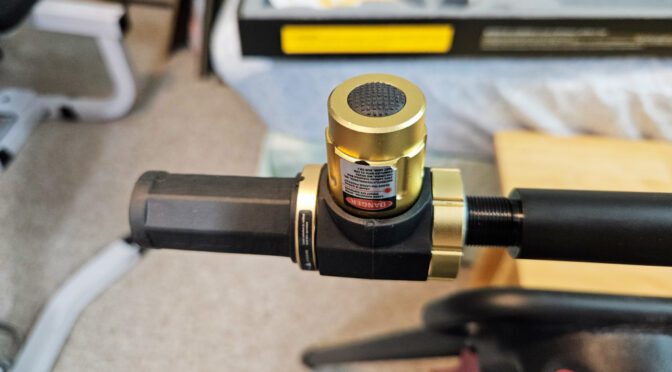
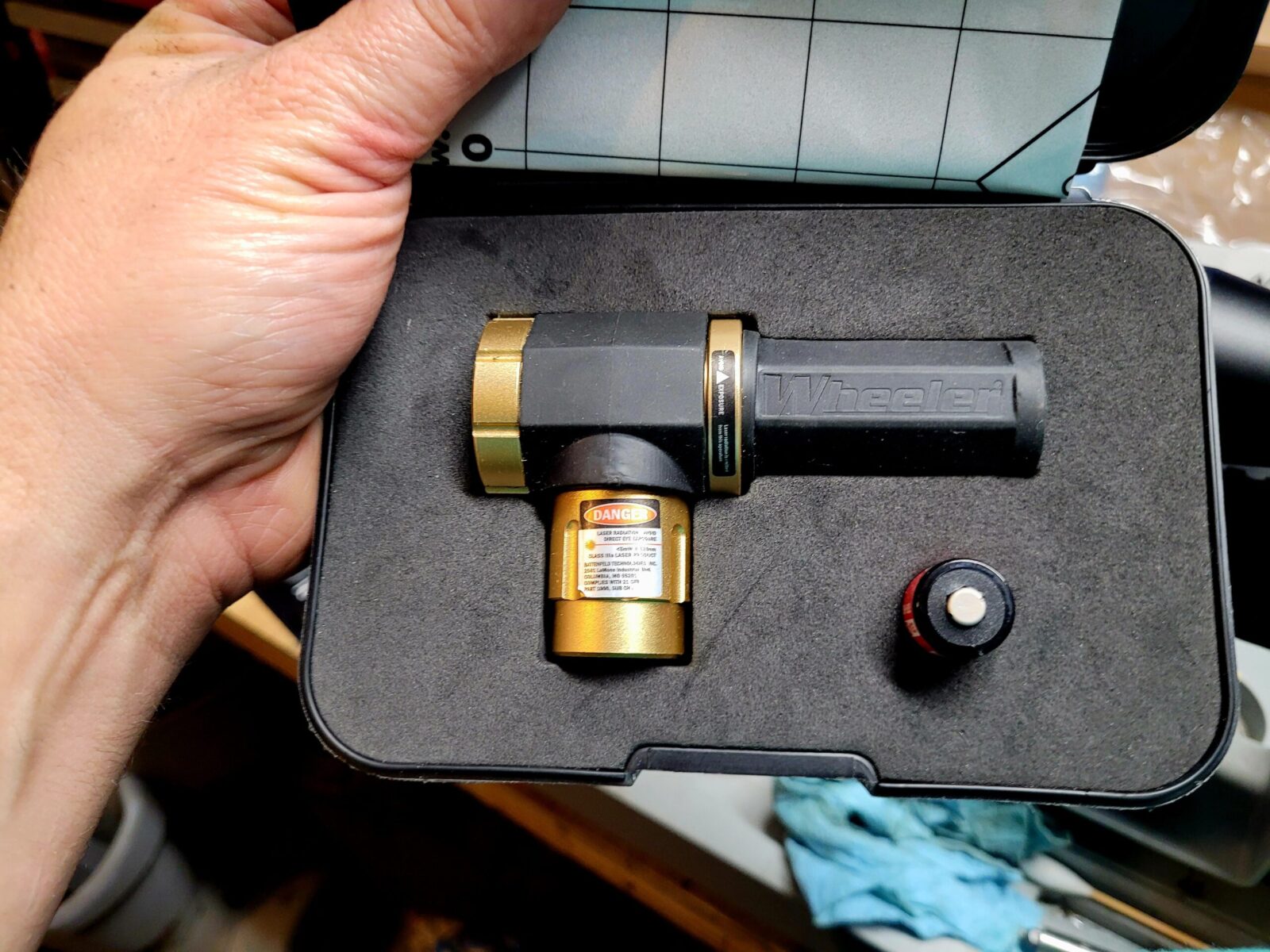
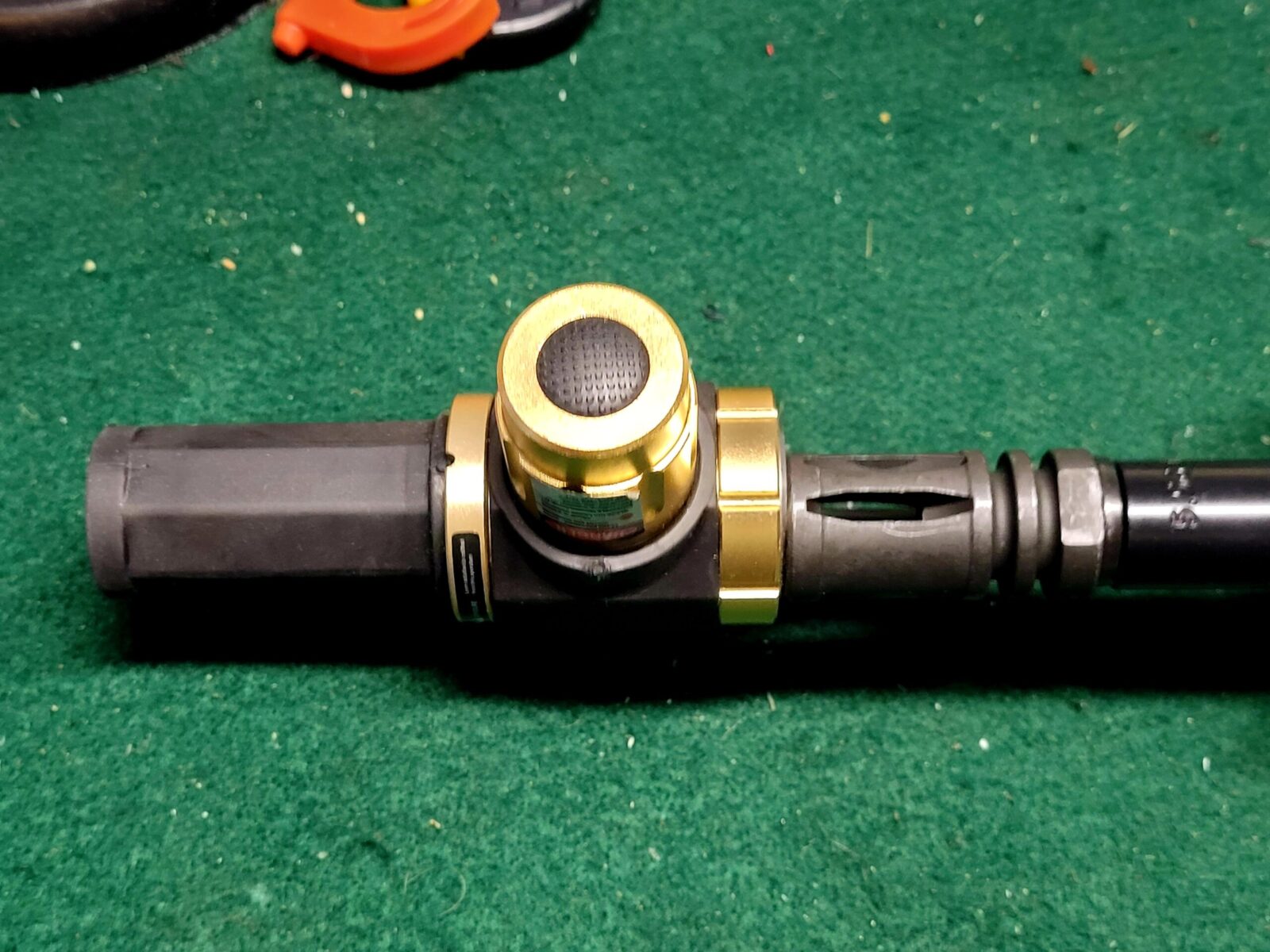
This is the Wheeler laser bore sighter and it is the green laser unit. Note, I have a bettery in the unit and a spare Surefire CR123A in the holder. Steer clear of no-name cheap CR123A units as they have had issues in the past and caught fire, burst, etc.
I’ve used it for a few years now (I bought it in 2019) and have found two issues that affect it. First, the end of the barrel or your muzzle device (flash hider, muzzle brake, and so forth must be steel for the magnet to stick to it. By the way, I am not impressed by how aluminum muzzle devices hold up over time and just buy steel whenever I can.
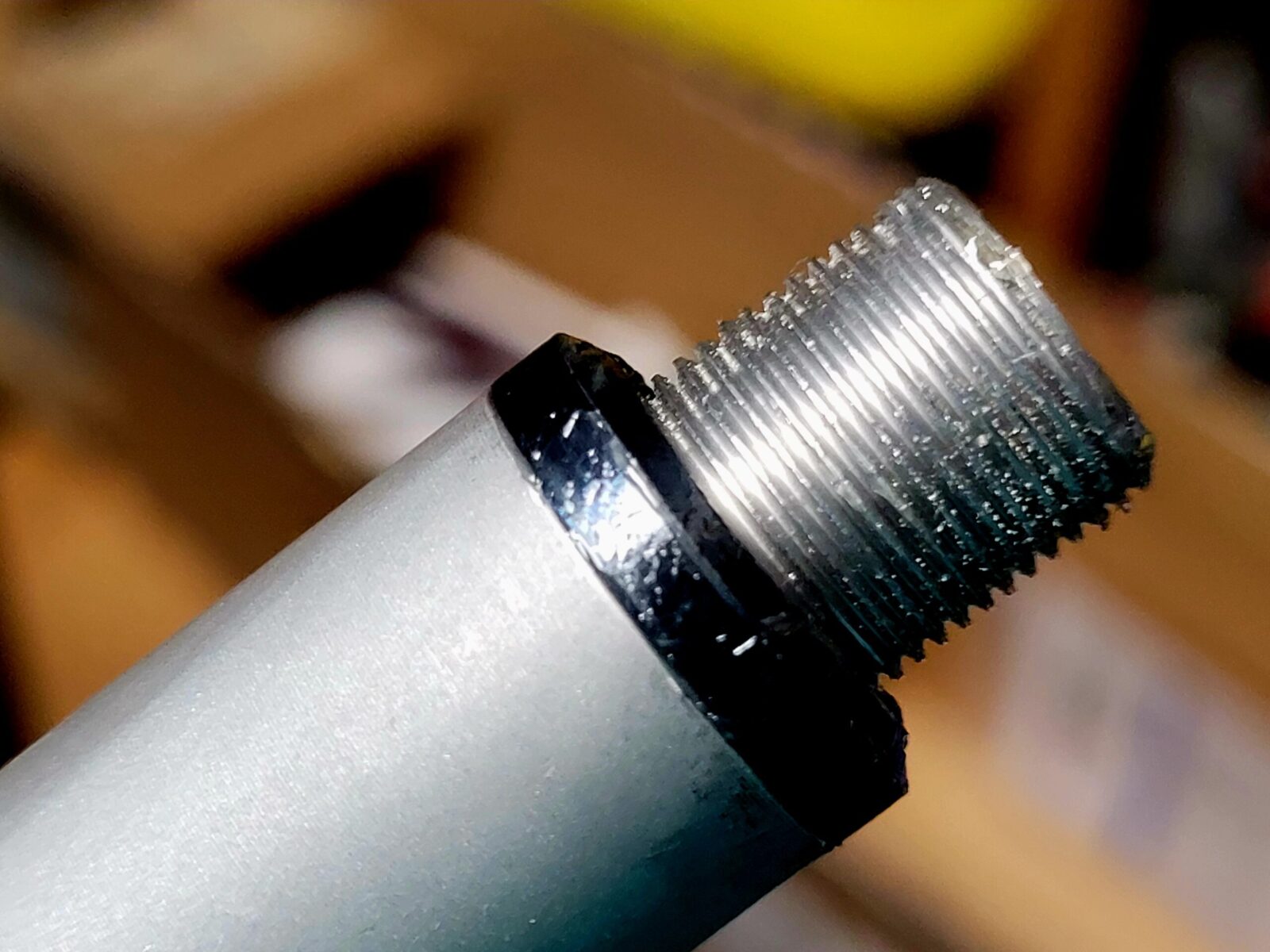
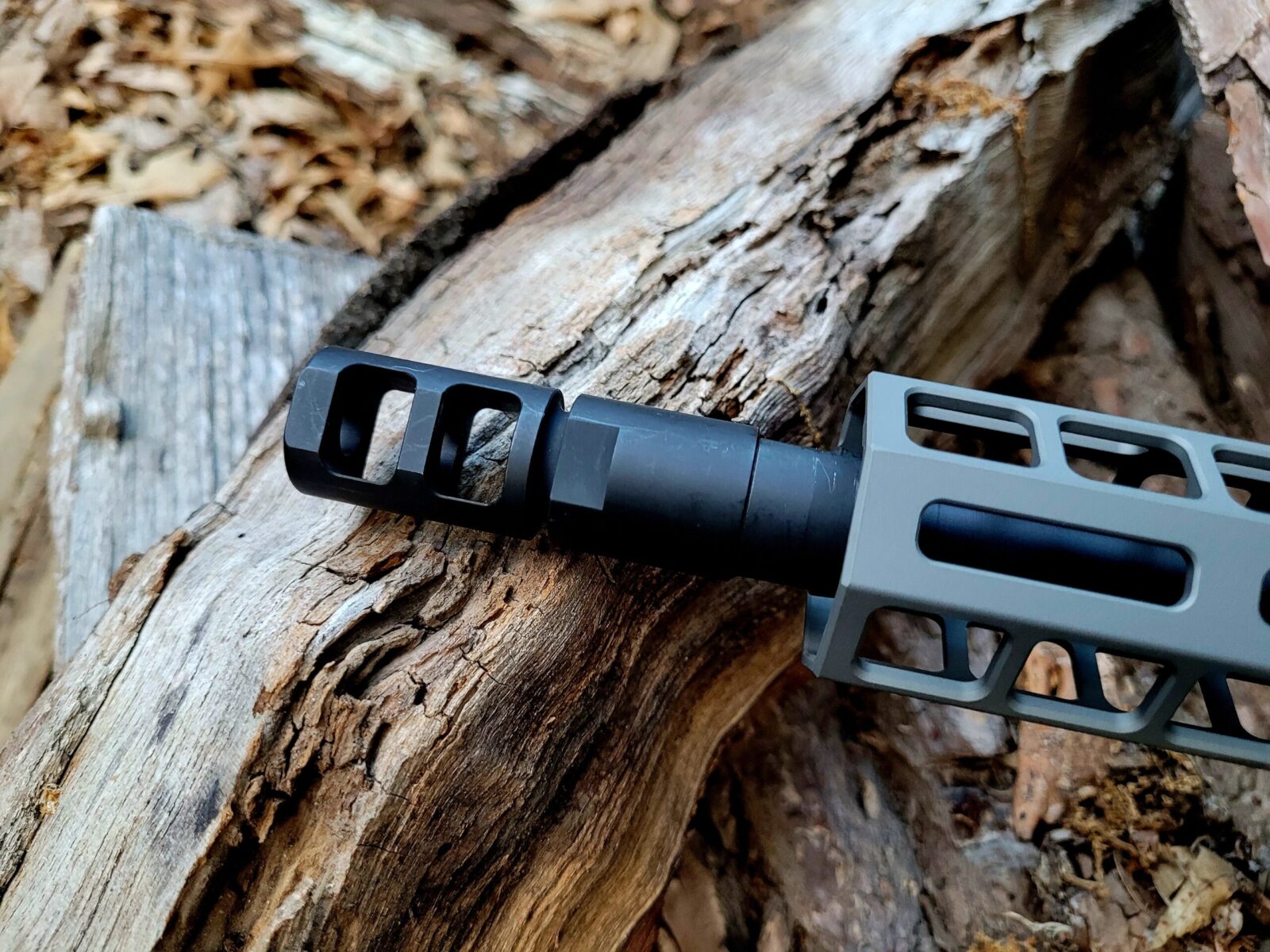
The second shortcoming is that the manufacturer of the muzzle device and/or the barrel must have created a true end meaning the end of the barrel, the thread, the muzzle device – they must all result in an end of the barrel/muzzle device that is perpendicular to the barrel. The worst offenders in my experience are the muzzle devices because their positioning depends both on how well the threads were but on the barrel plus how well the device was made. Some combinations are better than others. If I were to make a generalization, unthreaded barrel muzzle faces from a quality manufacturer tend to be pretty true.
This is a quality Ballistic Advantage 20″ 5.56 DMR barrel. I’d expect its threads to be cut properly. The next variable would be how well the muzzle device engages the threads and how square the end of it is.
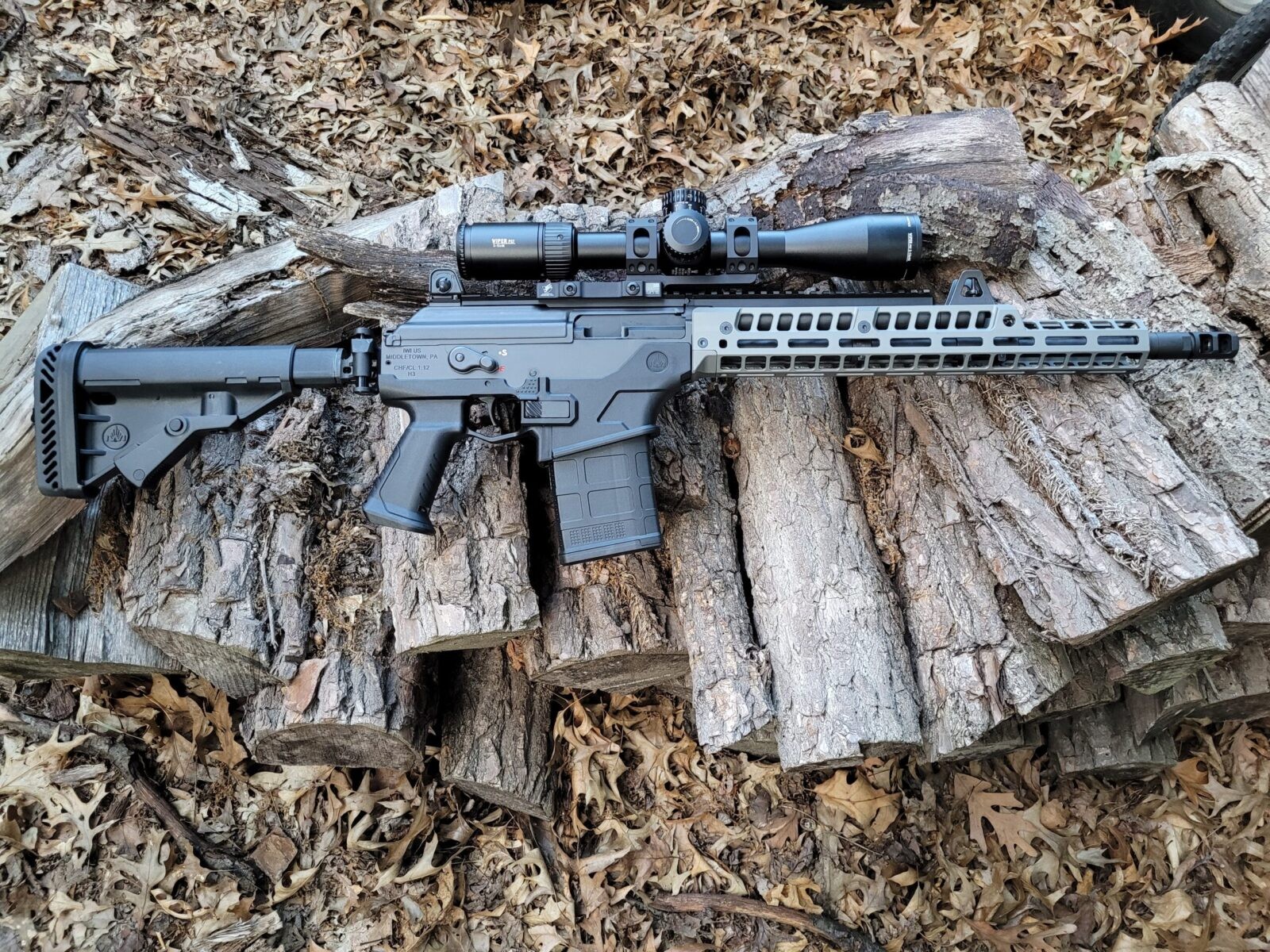
This is a IWI Galil Ace in .308. In a favorable nod to their manufacturing the factory barrel and brake yielded a remarkably close test pattern at 25 yards. I’m always amazed when boresighting is within inches and then going to range yields initial rounds within a6 inches of the expected center and this one did.
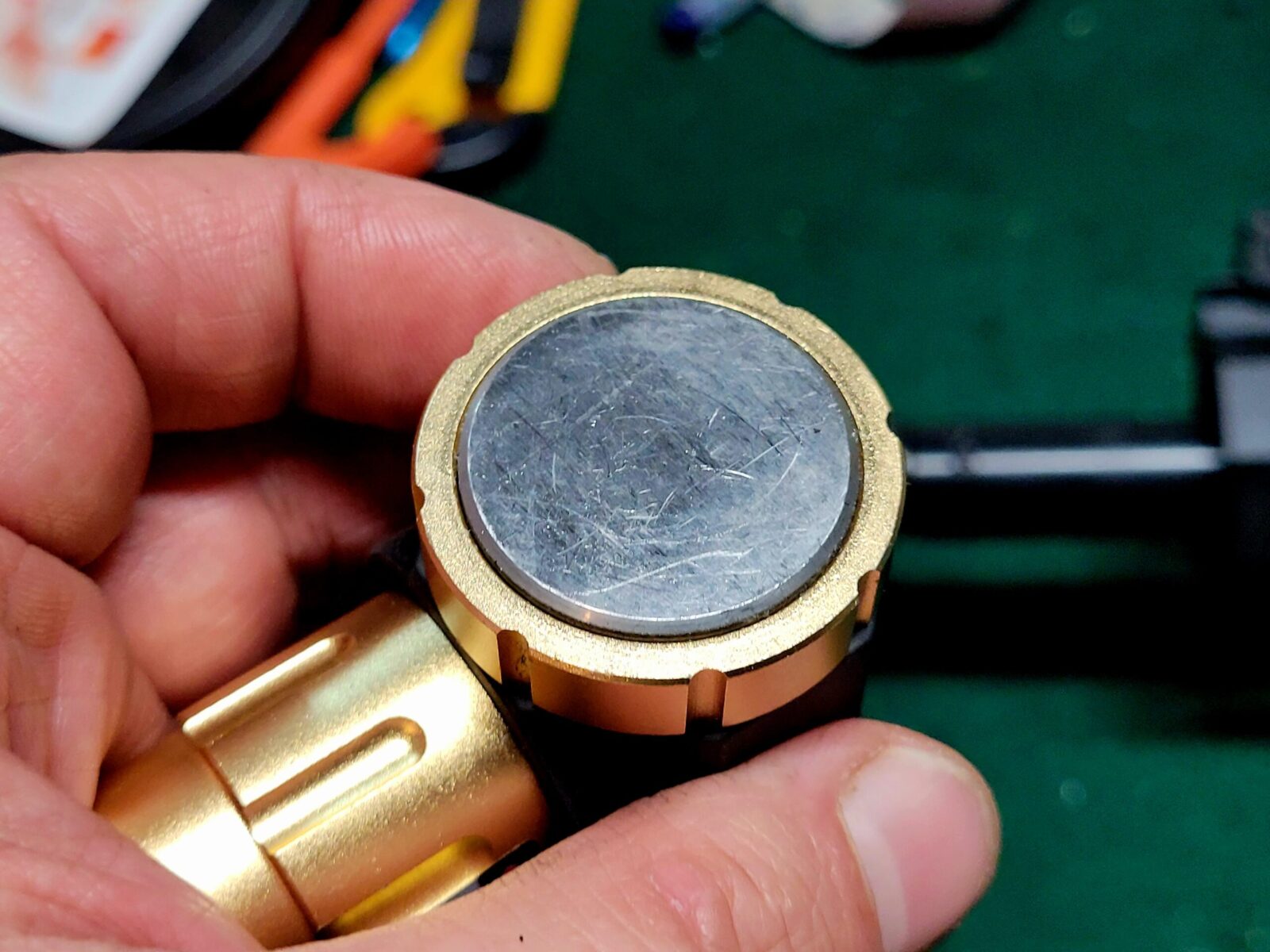
This is the strong magnet that secures the laser boresight to the end of the barrel or muzzle device. It’s also why either end would need to be steel for it to magnetically attach.
Here’s the unit secured to the end of a PSA barrel and PSA bird cage brake. It did the basic job of getting the rifle on paper with it’s Vortex UH-1 optic.
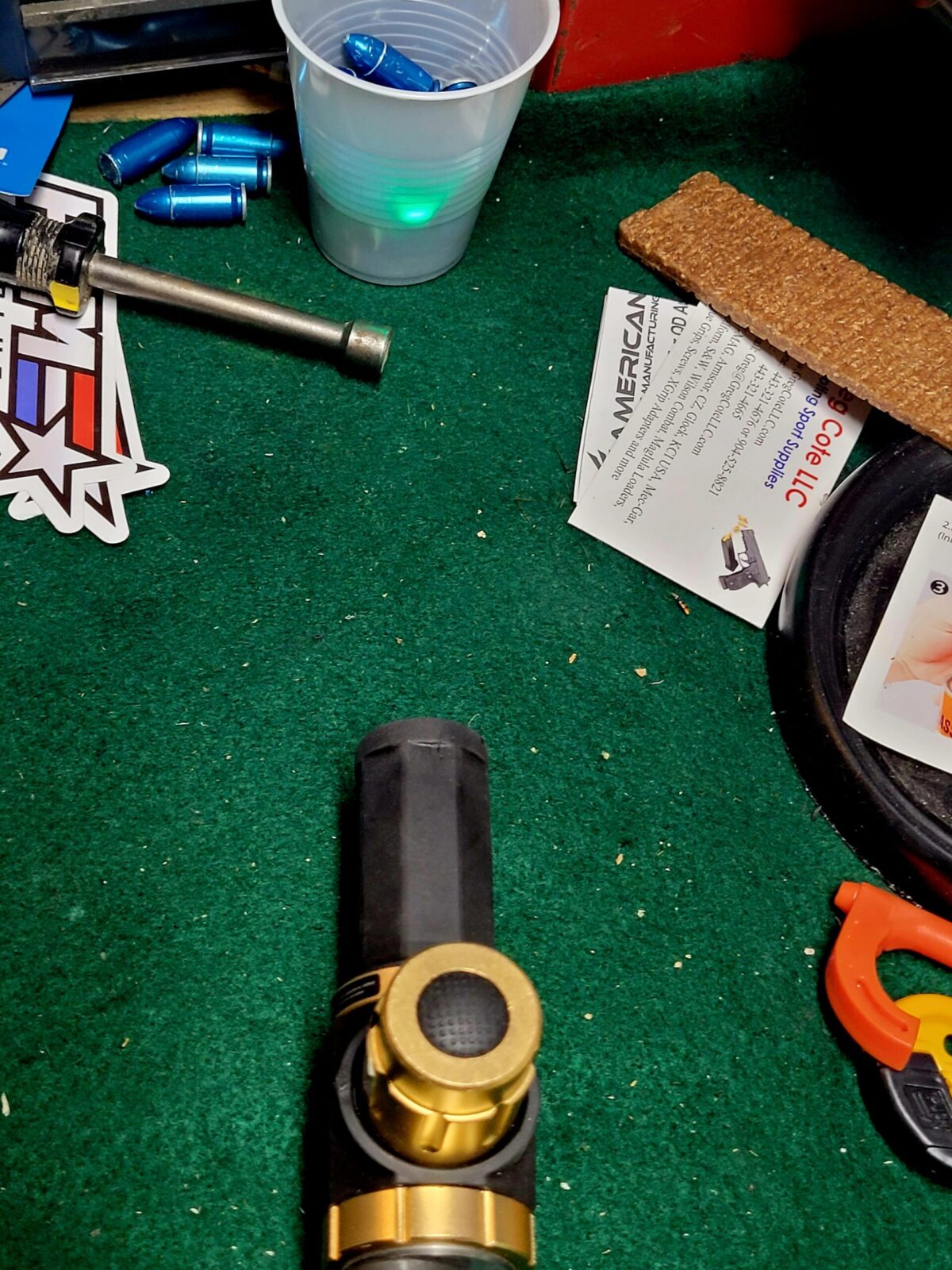
The power button is on top of the battery compartment and you can see the green laser hitting the off-white plastic cup. I like to sight in when the sun isn’t bright so I can get out 25-50 yards.
As with the other bore sighting devices, this unit will get you in the ballpark. Because of the factors above, you might be on the paper at 100 yards but you are better starting off at 50 and working things out from there.
By the way, one tip of any of them is to do your boresighting early in the morning or at dusk but not in the bright light of day. You can reach out 25-50+ yards and see the dot enough to do the initial sighting.
As a closing comment – none of them are perfect because they were all designed to be approximations. The final sighting must be done by you with the rounds you expect to use because a ton of variable will affect where you bullet actuall hits – your cheek weld, your trigger pull, factors with the bolt and barrel, how consistent the ammo is, the weight of the bullets, etc. My goal is to save some ammo and at least hit the target so I don’t have to shoot so many rounds to dial in the final settings and then begin working out firing solutions for different ranges.
In Conclusion
There actually isn’t a perfect solution – I mainly use the Wheeler Pro Green Laser Boresighter when I can but I still have a couple of good muzzle end units that I use when the muzzle device is aluminum. I know one unit is from LaserLyte and I really do not recall who the other is from. I do not use the dummy cartridge units after a few disappointing tries.
So, if you haven’t tried a Wheeler Pro boresighter and are in the market, I like mine.
Note, I have to buy all of my parts – nothing here was paid for by sponsors, etc. I do make a small amount if you click on an ad and buy something but that is it. You’re getting my real opinion on stuff.
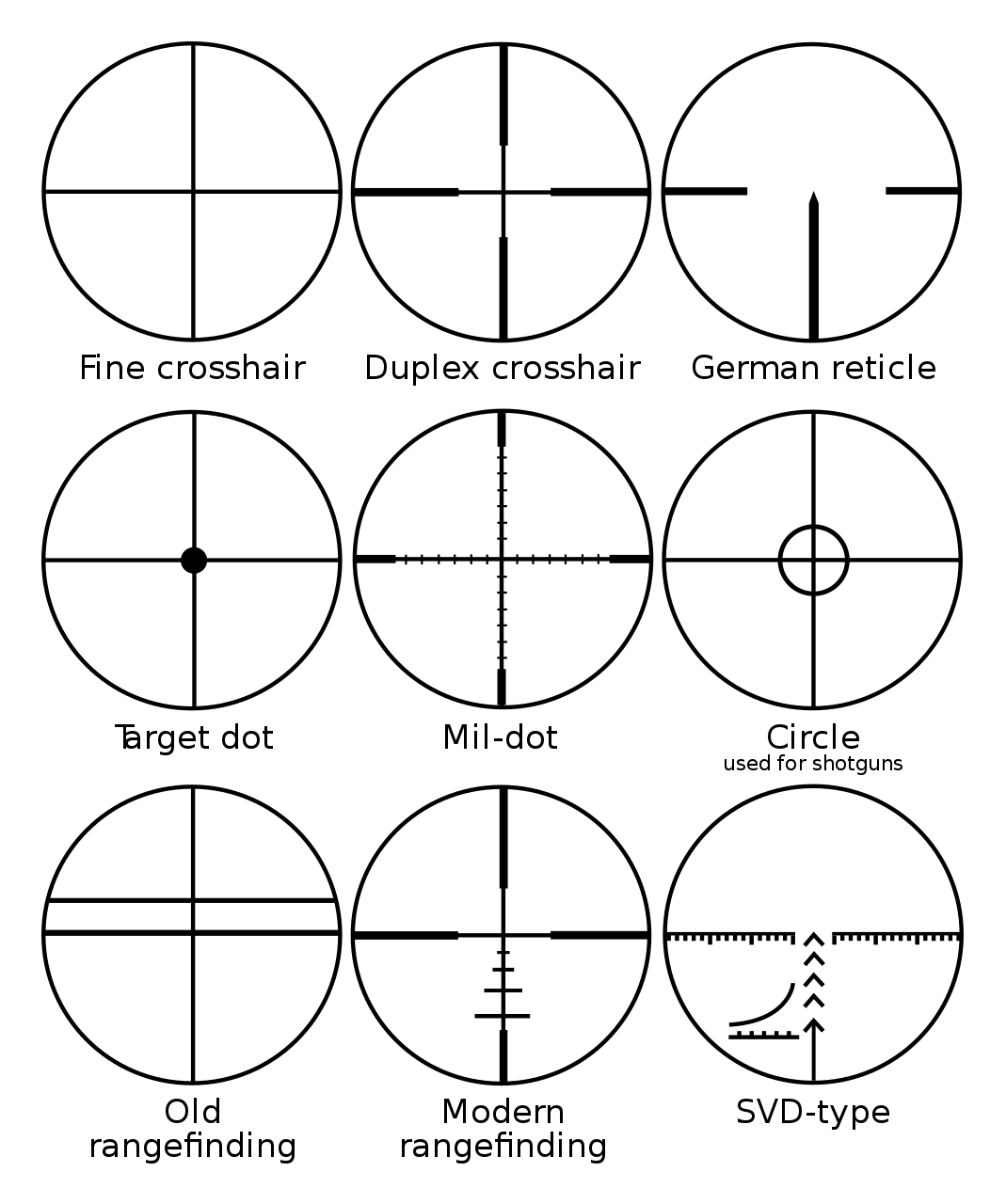
First off, I better explain that a recticle is the formal name for the cross-hairs or series of fine lines that are inside a scope that you use to aim with. There are a ton of different ones out there and one thing you want to do is to get them level with the rifle.
Let’s start with why this matters
The reason for this doesn’t affect the old traditional cross-hair designs but it does the ones that have additional marks to help you better determine the range and the necessary hold based on Mil-Radians (Mils) or Minutes of Angle (MOA).
If you search, there are tons and tons of posts about different types of reticles and how to use them. The important point I want to make is that for any of these more modern reticles with additional lines to help you accurately, the horizontal lines must be parallel with the rifle.
How do you level a reticle?
The first way is the old fashioned “eyeball” method. Hold the rifle and make sure the top of the receiver is as level as possible (meaning the rifle is not tilted left or right), look through the scope and adjust it in the rings until it is true to the top of the receiver and then start tightening down the rings while confirming nothing shifts. It’s not the most precise method but it does work, I’ve done a ton of rifles that way, but there is another approach using levels.
In it’s most form, you put a small level on the top rail or flat spot of your recever, tilt it until it is level and then put the level on the top turret and adjust the scope until it matches. Having something to hold the rifle in place while you work really helps as does having a second level so you can both confirm the receiver and scope are level as you work. You can often find single vial levels at hardware stores or through industrial supply houses. The one negative to this approach is that the levels can slide off if you don’t have things secure. I like to use a Tipton Pro Rifle Vise to hold the rifle in place while working.
Wheeler Engineering does offer a basic level set that works. I don’t use it though because it’s rear receiver piece has a magnet to secure it and that will not work in an AR or other weapon that is made from aluminum and not steel. For this reason, it wasn’t something I could use.
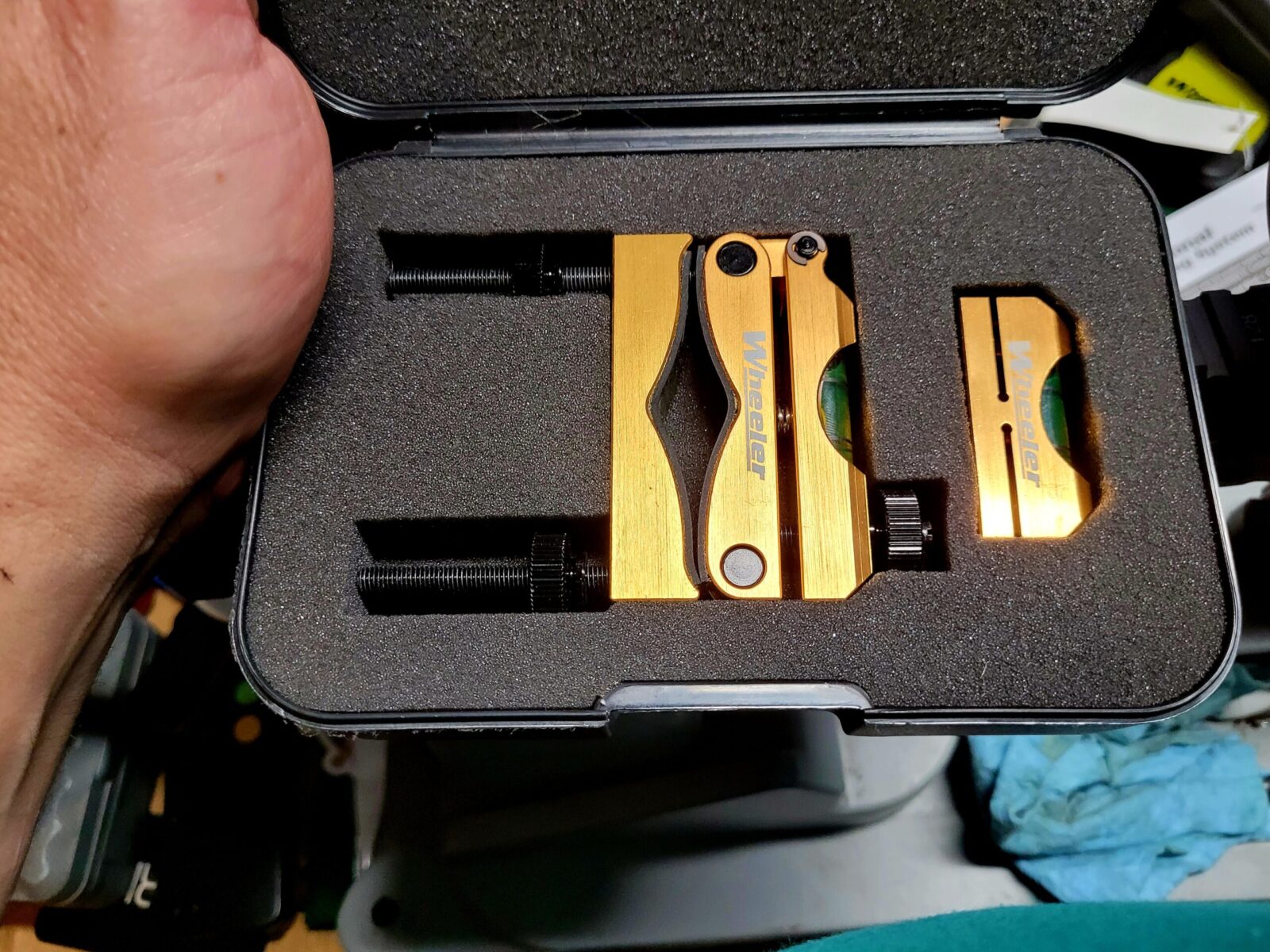
These days, when I have time and I want to try and get the scope as accurately positioned as I can on the first try, I use a Wheeler Engineering Profession Reticle Leveling System. It’s easy and fast.
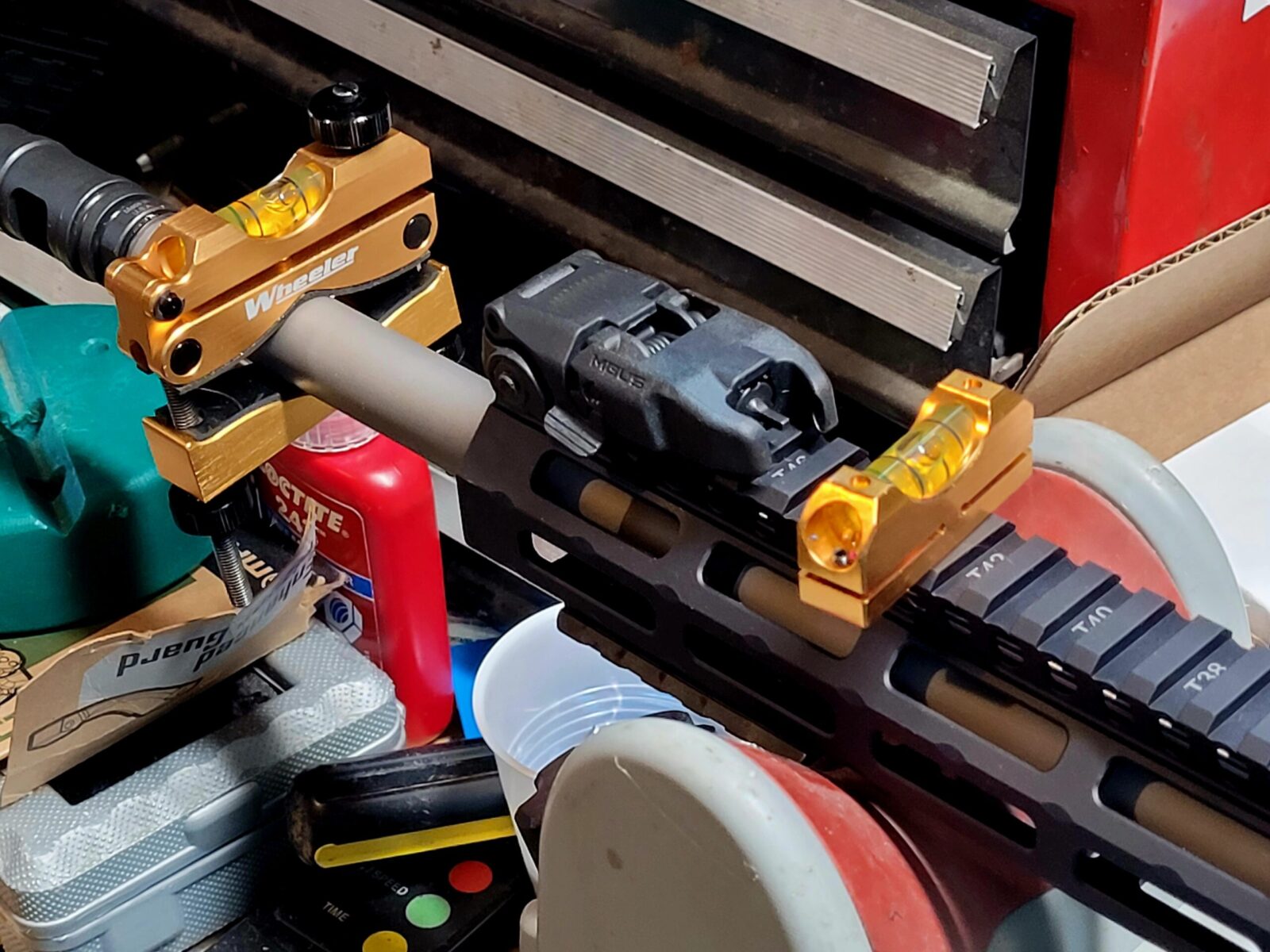
First, you put the level on your receiver/rail and level the receiver. Then you put the clamp on the barrel and level it – I compare both the receiver and the barrel bubble levels before I move the receiver level to the top scope turret. Once the level is on the top turret, I adjust the scope until the bubbles match and it’s done. I’ve used this for a number of years now and am very happy with it.
The professional leveling system has two parts – the barrel clamp and the separate level you use on the receiver and then the scope turret. The two parts are made from aluminum and come in a nice protective case. If it weren’t for the case, mine would look much more beat up. Protecting the parts makes sense for another reason – you don’t want things to get bent, gouged, dented or whatever and then throw off the readings or mar the finish of your weapon.
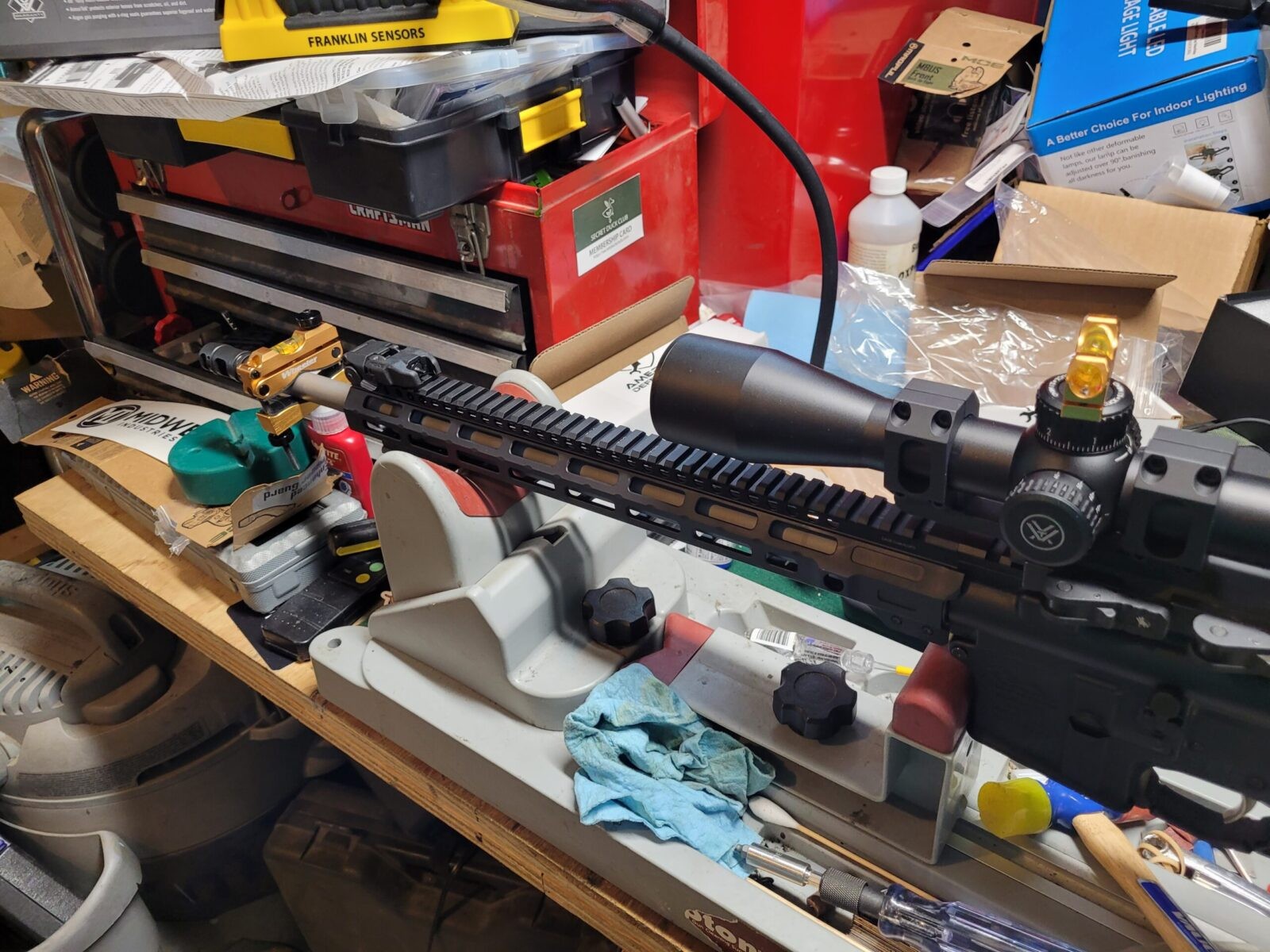
The first thing you do is to use the small level (shown behind the backuop sight) to true the receiver. Then you adjust the barrel clamp until it is level also. Just visible under the handguard is the front of my Tipton vise.
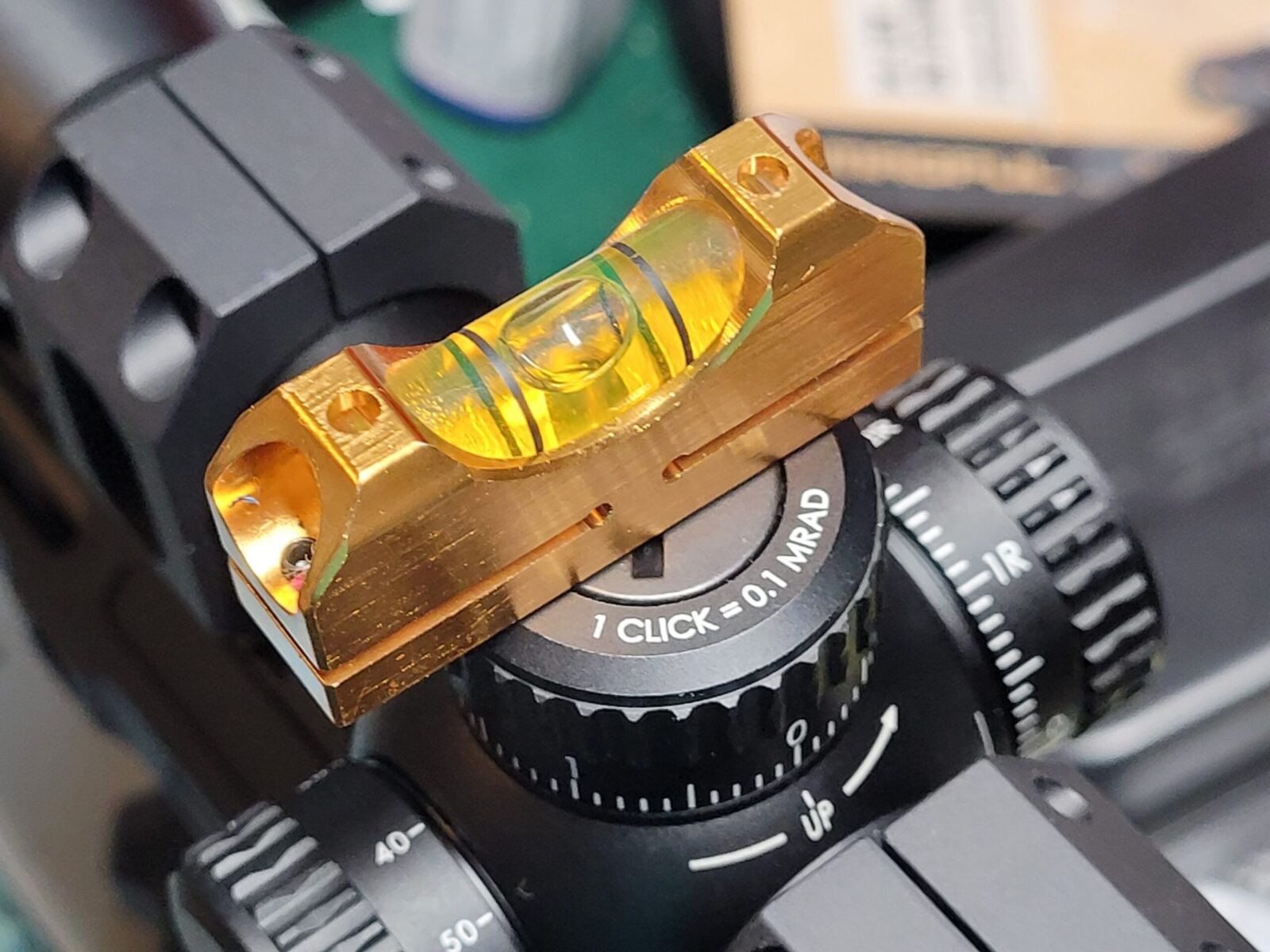
After the barrel clamp has been levelled, you move the small level to the flat top turret and then rotate the scope however you need to get it flat also. Compare this level to the barrel clamp level to make sure they agree. The more care you take to get the bubbles centered and matching, the better.
I do use a Vortex torquing screw driver to tighten the scope ring screws and am careful to confirm the scopes levelling does not shift in the process. Vortex scopes say not to torque them past 18 inch/pounds (please note that is inch pounds and not foot pounds just to be very clear – you don’t want to damage your scope but at the same time, you do want it secure).
Again, with any of these methods, it really helps to secure the rifle in a vise where you can adjust and then secure the rifle so the top is horizontally true.
Yeah, this is my real work bench. It was worse than normal as I still had all of the packing from the scope,rings and upper on the bench. The Tipton gun vise has served me very well over the years. By the way, notice the level on the turret – you reall want that perpendicular to the rifle. In this photo it is slightly crooked and no longer perpendicular and risk the scope not bein accurately levelled to the rifle.
Conclusion
The Wheeler Engineering Professional Leveling System has served me well and I have used it on a number of projects over the years. I have no hesitations in recommending it to you as well.
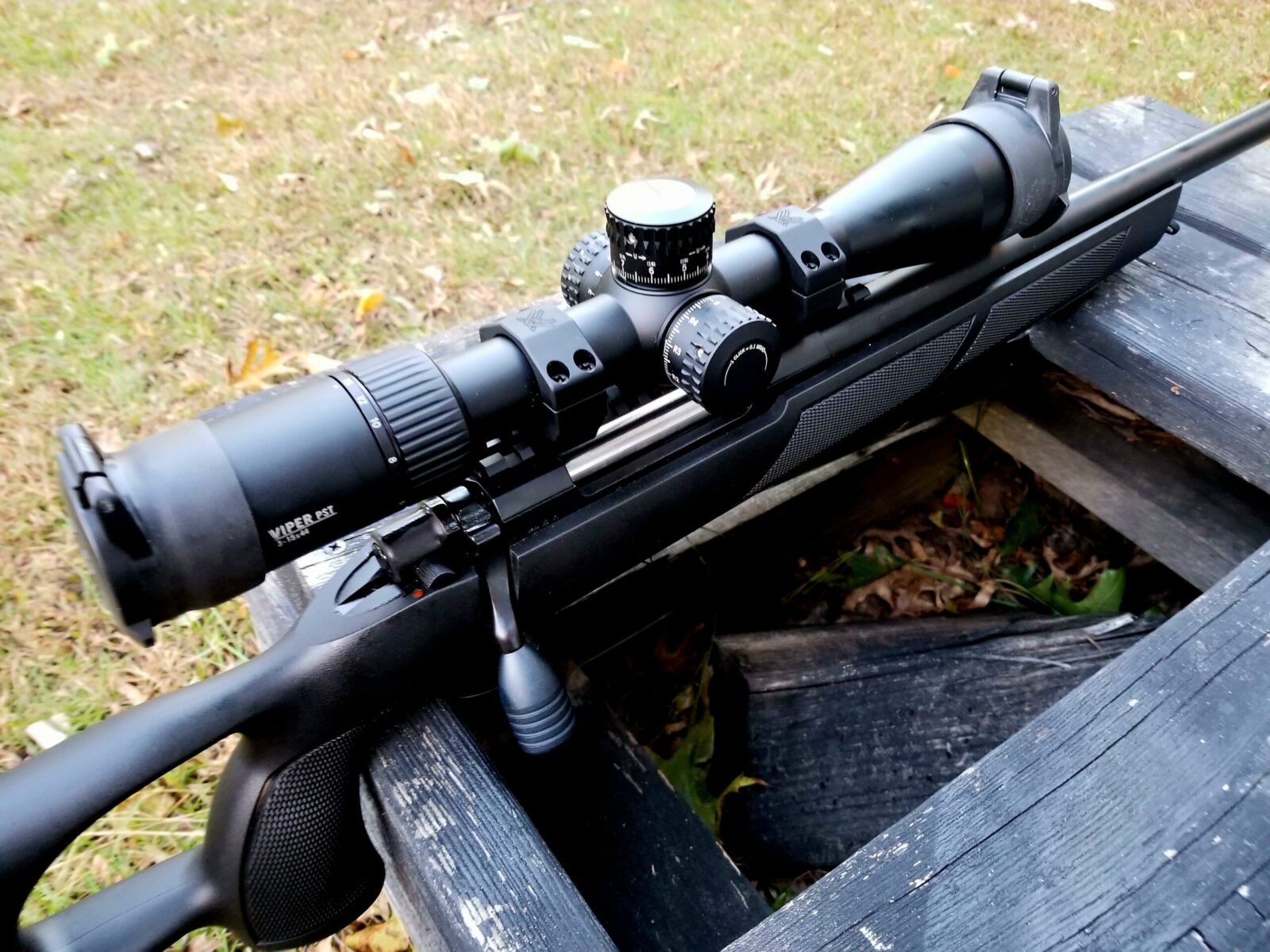
Sabatti Urban Sniper with a Vortex PST scope.
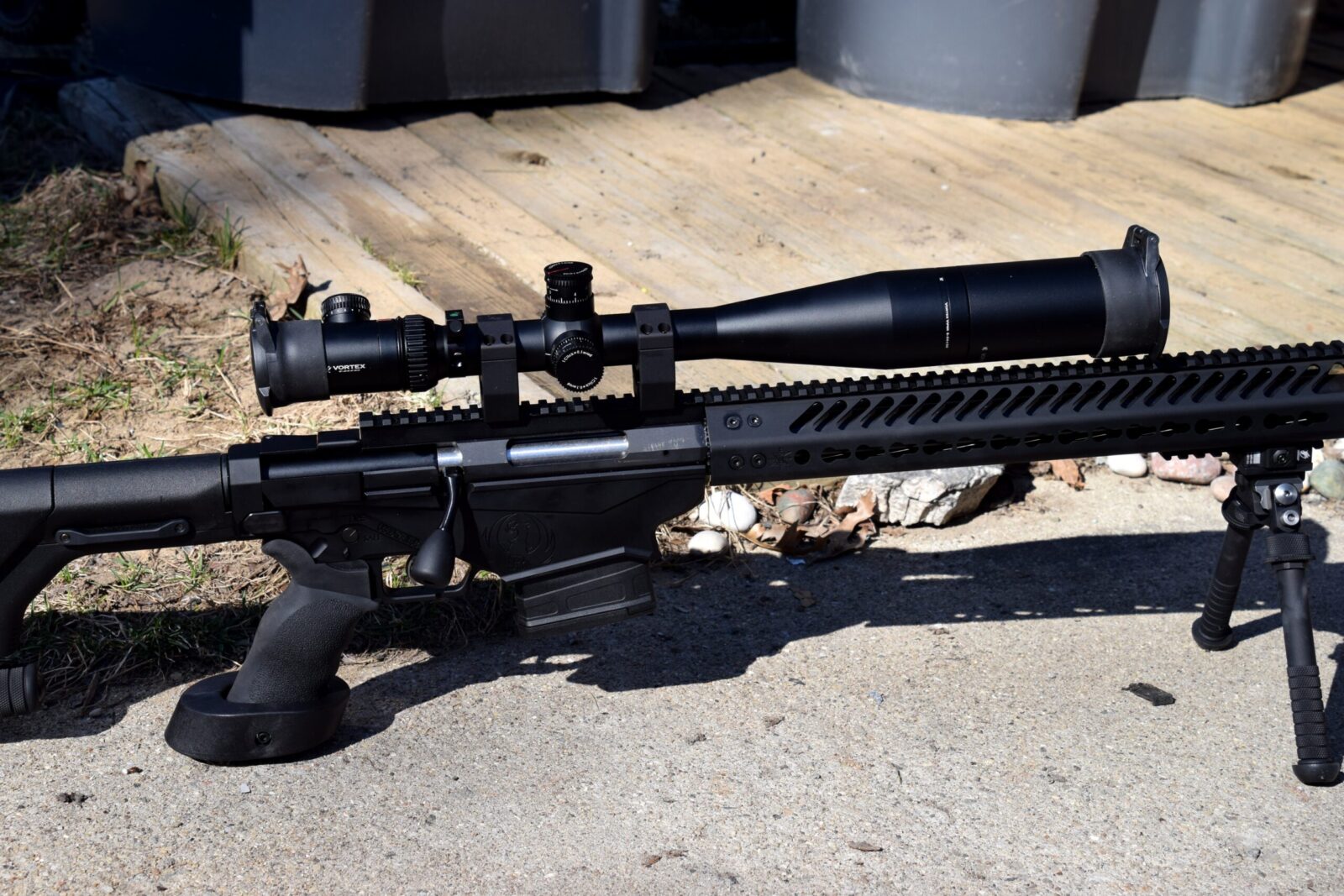
Ruger RPR with Vortex PST optic sporting its sun shade.
Note, I have to buy all of my parts – nothing here was paid for by sponsors, etc. I do make a small amount if you click on an ad and buy something but that is it. You’re getting my real opinion on stuff.
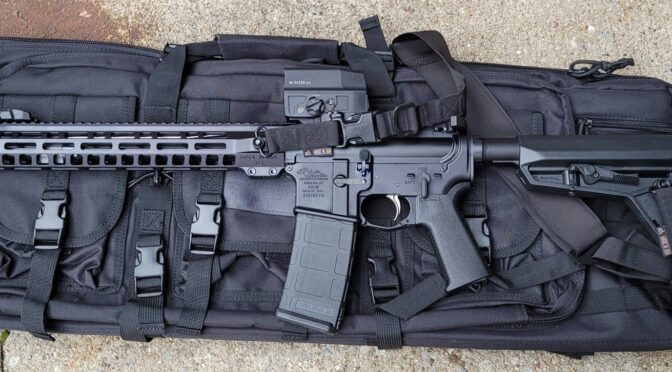
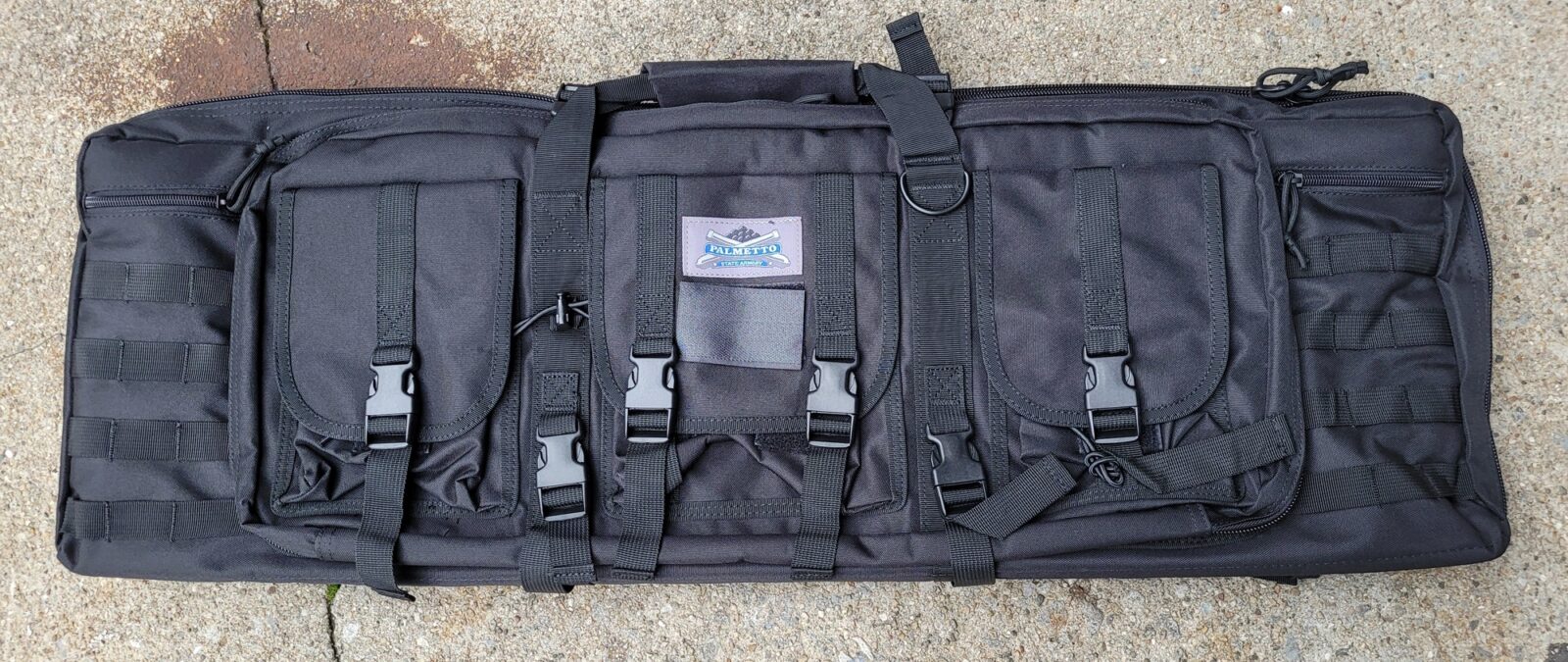
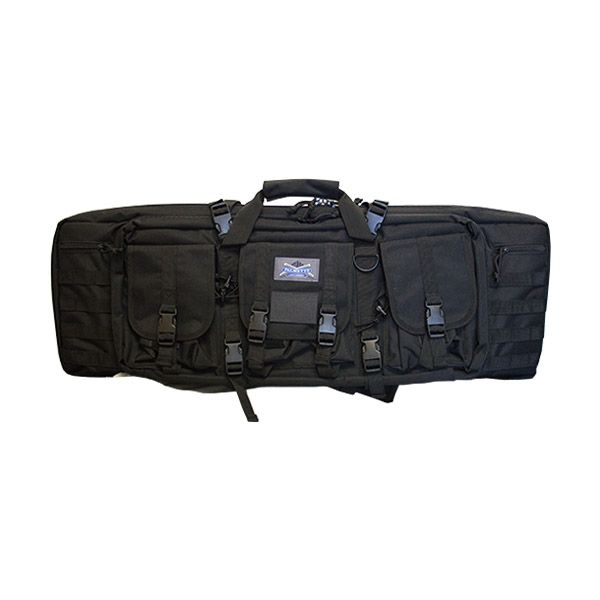
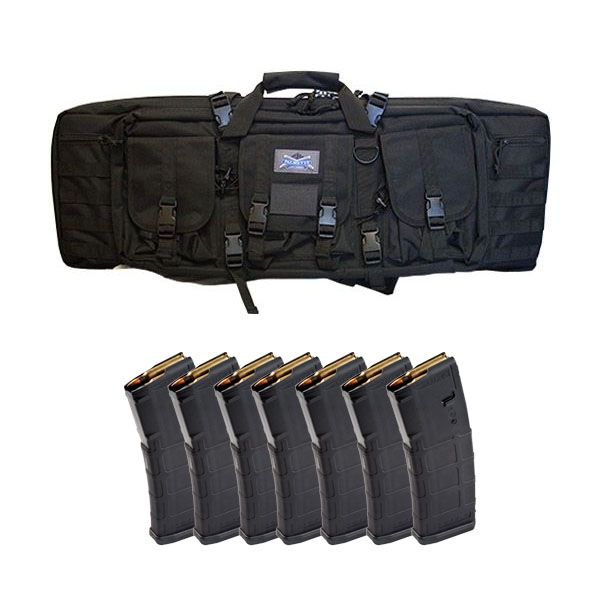
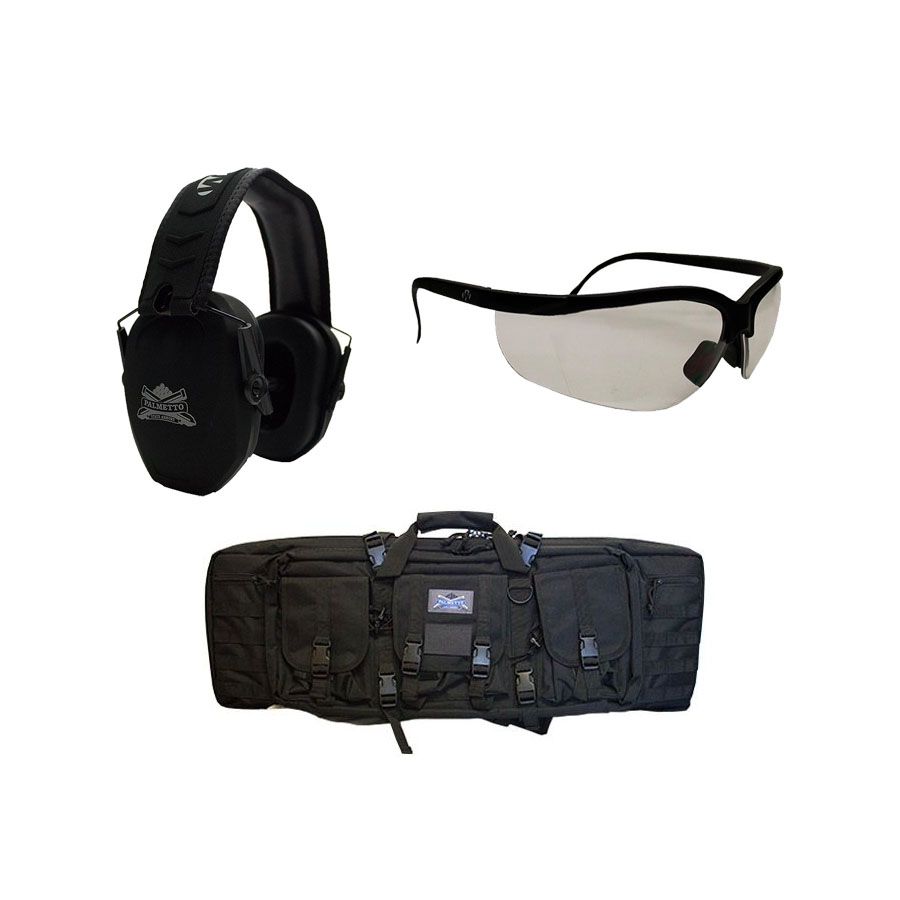
Palmetto State Armory has a lot of good deals on a variety of firearms and accessories. One that I like is their 36″ rifle soft sided rifle case. It follows the trend of tactical bags having a million pockets, straps and even shoulder straps. I have a few of them and use them for AKs and ARs primarily – they are well made and very affordable.
The nylon used seems solid – I’ve loaded them down with a lot of weight from whatever rifle is in the bag plus a bunch of loaded mags, bipod and any accessories such as flashlights, etc. Neither the nylong fabric nor the zipper has let go. When you look at the stitching, it’s pretty good as well – certainly for the price point.
One side of the bag has pouches where you can fit at least 8-30 round mags plus there is a big pouch behind the mags where you can put a bipod, light, etc.
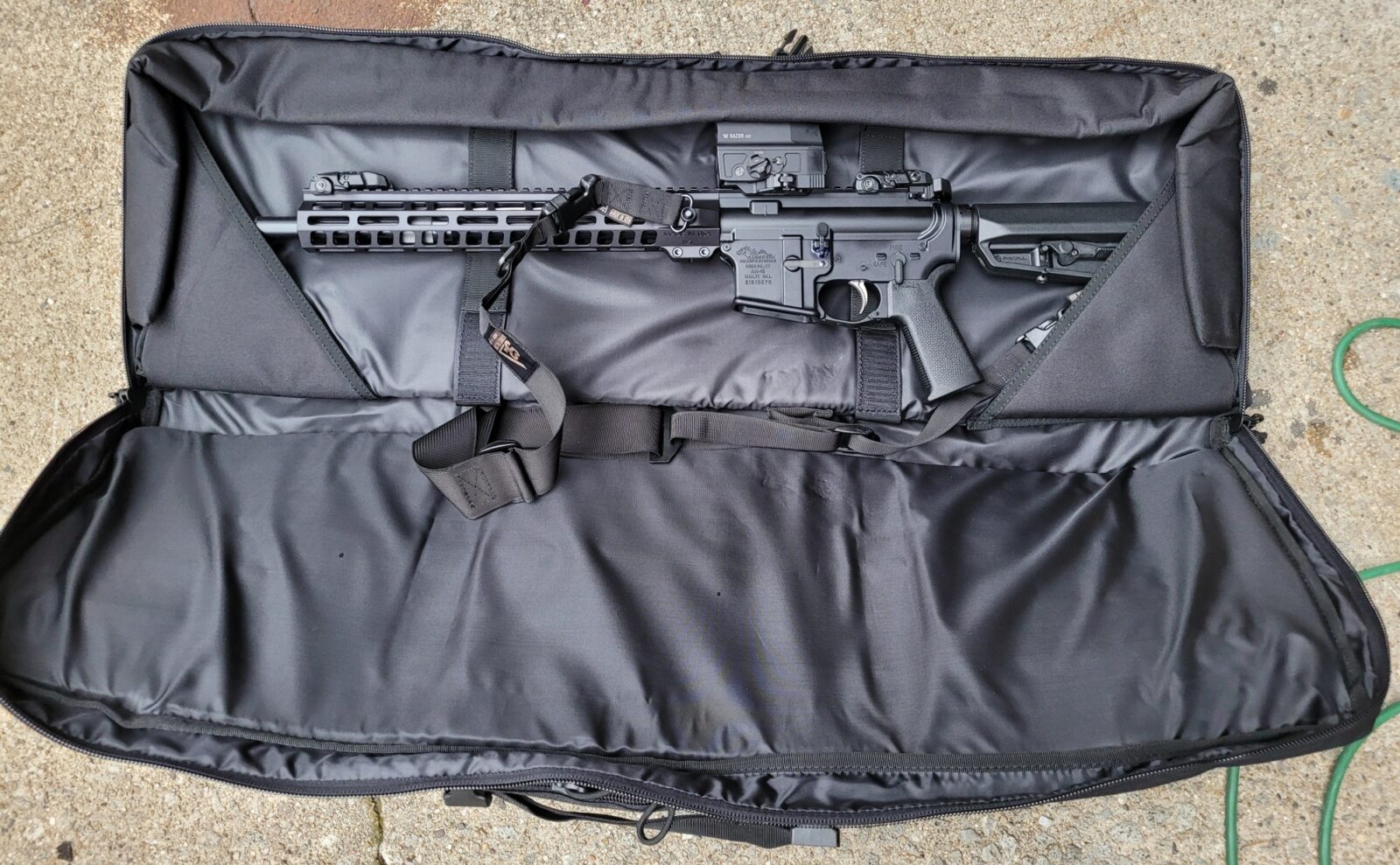
The main compartment protects your rifle very well. What you see is a 16″ AR that I built using a PSA kit and Anderson receiver with a standard bird cage muzzle device and Vortex UH-1 optic. There are straps there if you want to secure your weapon even further.
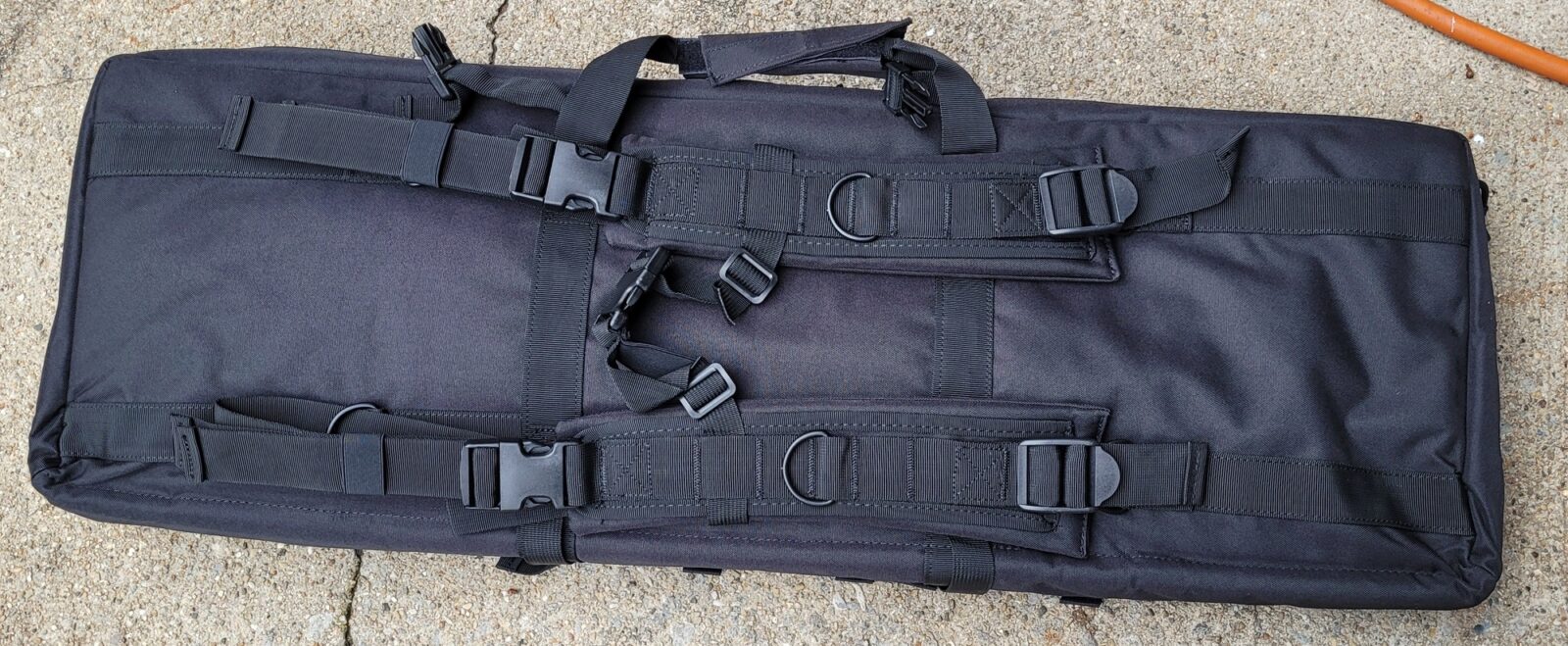
Like many tactical bags, these have the backpack should straps on the side opposite the mag carrier should you need them. The most I ever do is throw one strap over my shoulder and carry it but the option is there. You can also see all of the stitching that goes into the bag.
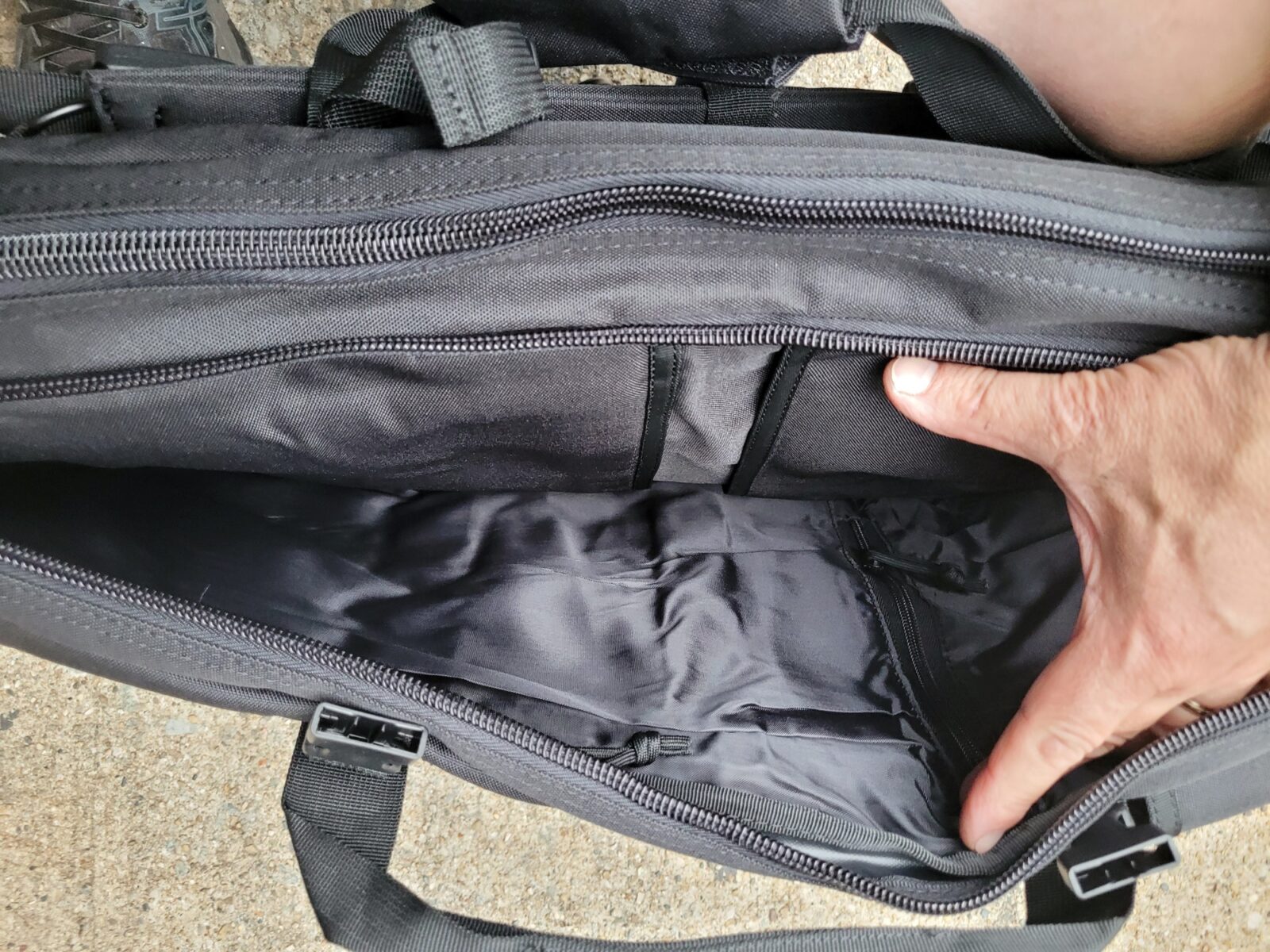
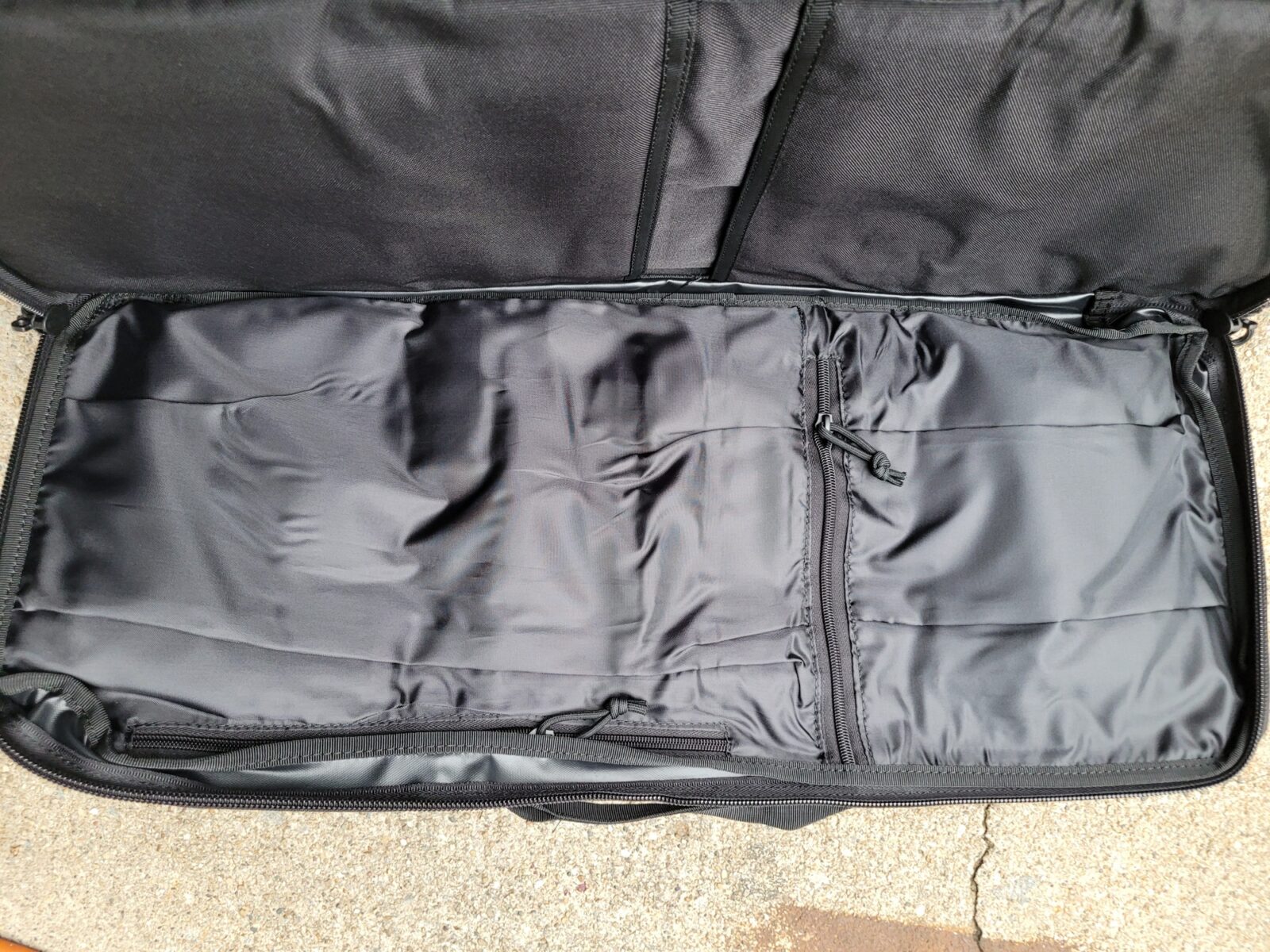
This is the compartment behind the mags and you can see even more pockets to hold paperwork / maps / notes on the rear wall where my thumb is.
Look – more pouches! I am sure some of you are way more organized than I am. There is a zippered pouch directly behind the mag carrier. I have never used it – ever on any of my bags but it’s there 🙂
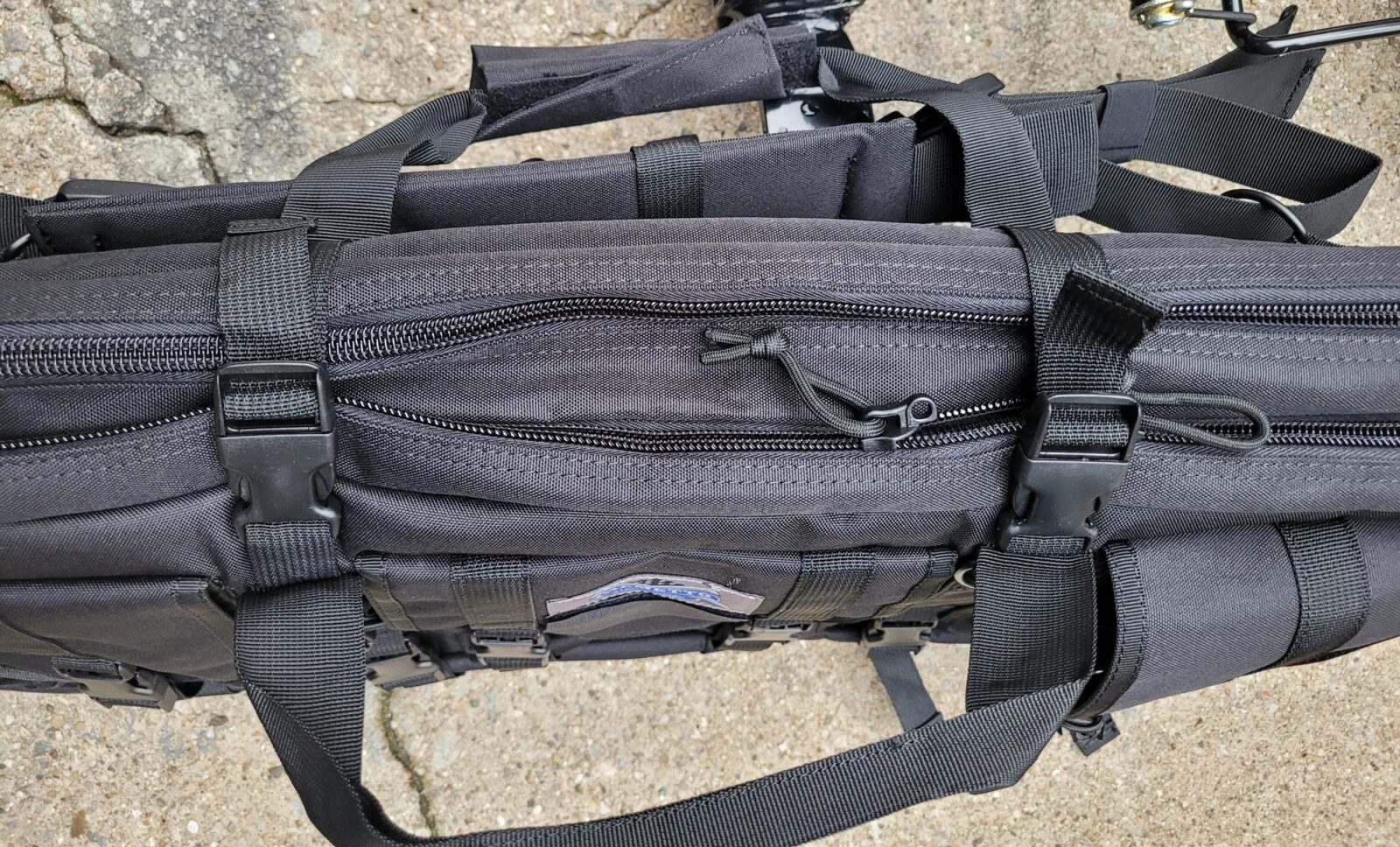
A weak spot in cases can be the zipper. On one hand, they do give you a very robust zipper but they also give you straps to compress the bag and take the load off the zippers if you really load the case down and are worried about straining them. I’ve not loaded a bag to that extent but I think it’s cool that they include them just in case. Also note the double stitching on the zippers. Really cheap cases will both use a junk zipper and single line of stitching.
Click on a photo to open the PSA listing in a new tab:
There are three 36″ case options that PSA currently offers on their website.
In summary
What I am trying to tell you is that if you have a rifle, pistol caliber carbine, shotgun or whatever that will fit in a 36″ case, you can’t beat the combination of price and quality. My normal go-to for soft-sided cases these days is Survivor Equipment brand on Amazon but when I need a black 36″ tactical case, I go with PSA because you often can score some great deals on them.
Note, I have to buy all of my parts – nothing here was paid for by sponsors, etc. I do make a small amount if you click on an ad and buy something but that is it. You’re getting my real opinion on stuff.
I appreciate a good trigger – in firearms in general and definitely in ARs. To me, this usually means a two-stage trigger that doesn’t have a heavy pull and I can feel the second stage starting to engage with a relatively clean break. I can tolerate military heavy triggers (5-8 pounds usually with long pulls) but they are not my first choice and I really don’t like them in any form of rifle where I am trying to get a degree of precision.
I’ve tried many different triggers over the years and have typically gone in two directions – living with the stock trigger in the rifle / the trigger that came with the kit if it was for self-defense or I went with a Geissele SSA-E. That is an amazing trigger but is expensive even on sale.
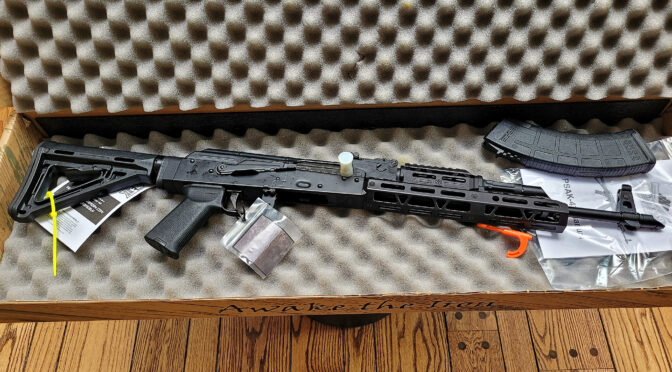
I recently noticed that Palmetto State Armory (PSA) is now selling their own two-stage trigger and the reviews were very favorable so I ordered one in as an experiment to go in an AR DMR I was building using a mix of parts – the barrel was a 20″ model by Ballistic Advantage on an Aero Precision upper with a MI Combat rail handguard. I wanted a decent trigger for the rifle but really didn’t have the budget for a SSA-E but didn’t want to use a Mil-Spec-ish trigger either. Guess what I paid? $64.99 with free shipping!
I’ve read in several places that Schmid is making the trigger for them. It has a Nickel Boron finish to enhance lubricity, the first stage breaks at 2.0lbs. The second is 2.5 pounds and the total comes in at 4.5 pounds. The trigger isn’t adjustable.
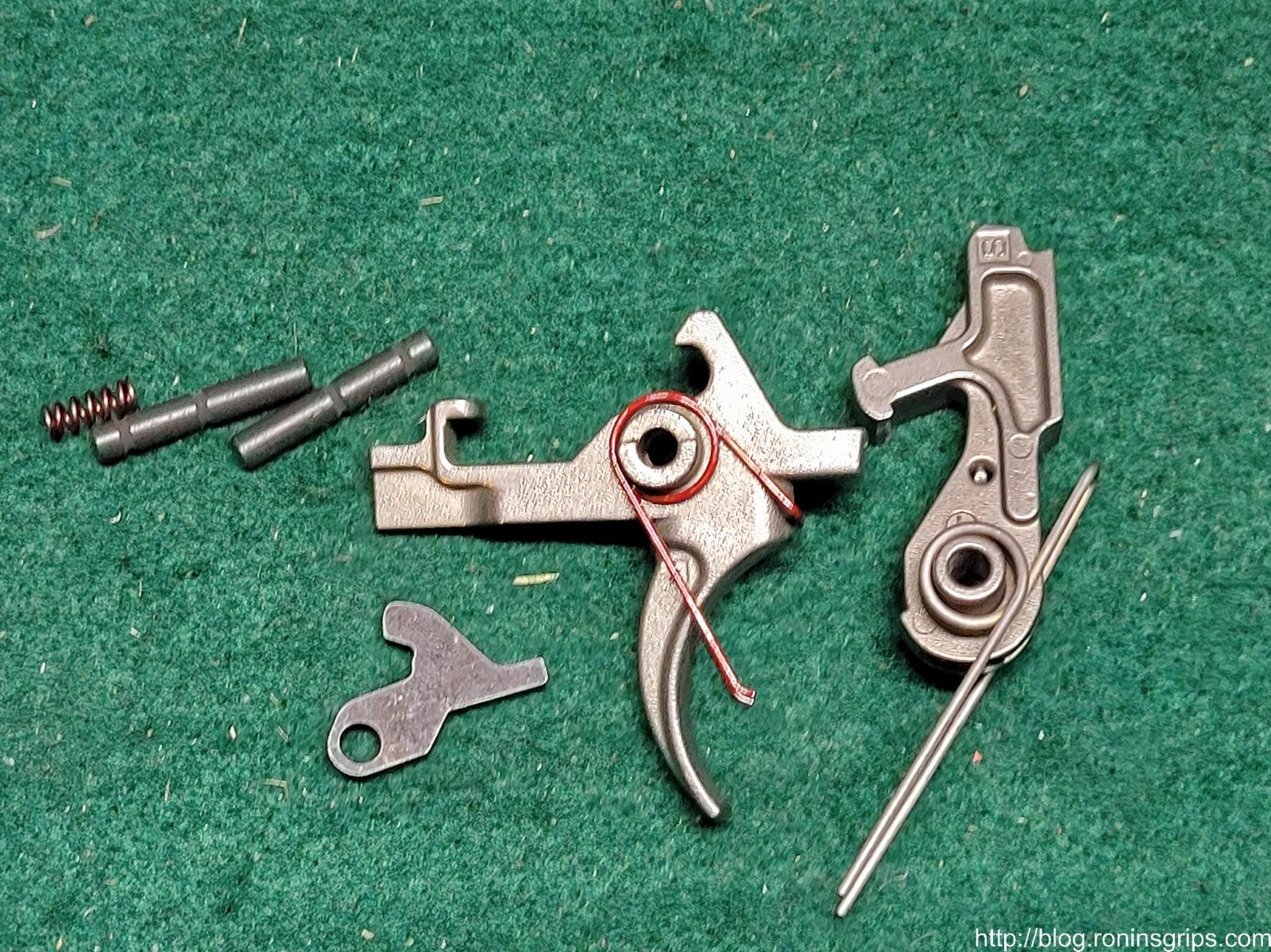
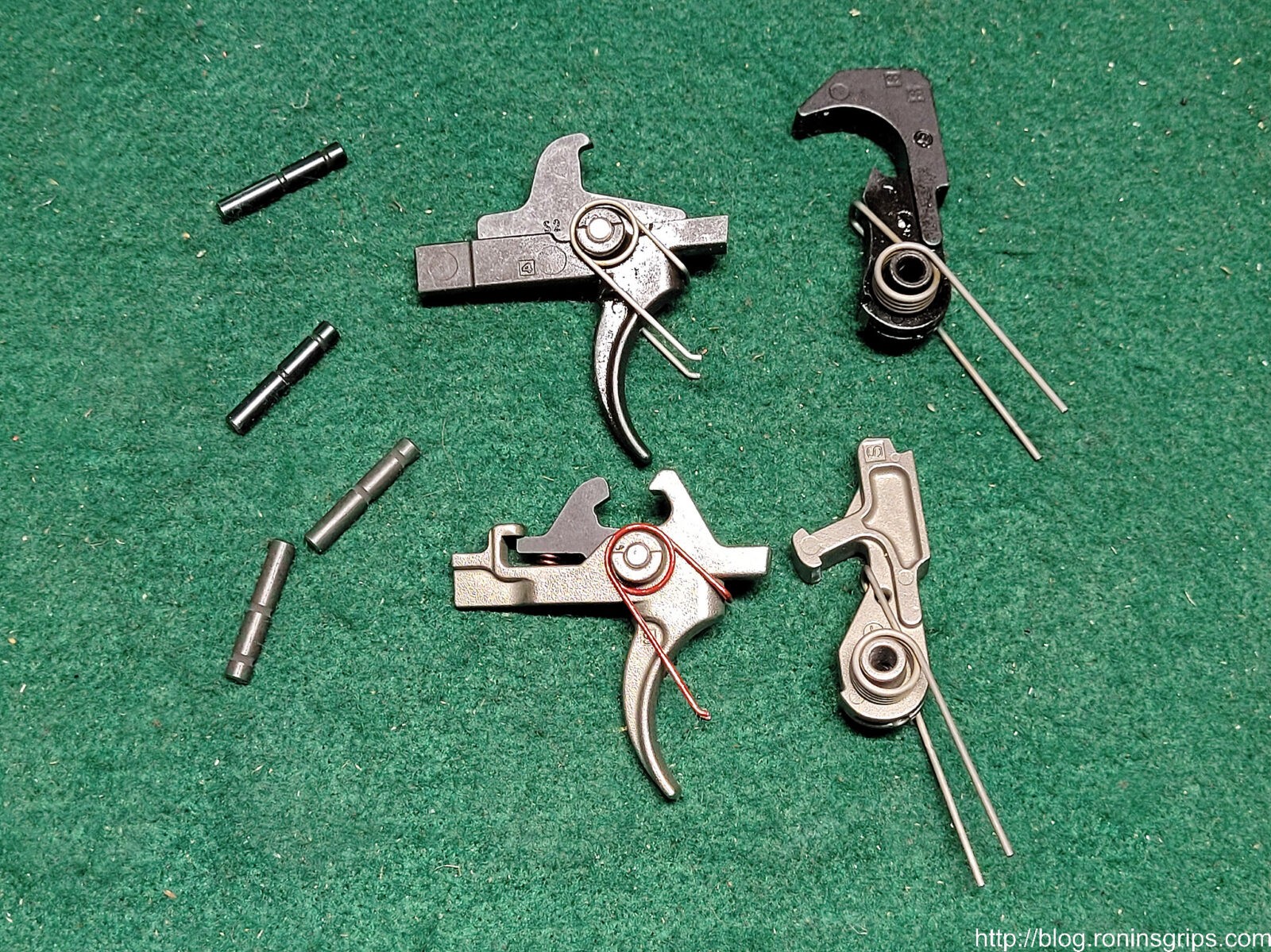
The trigger comes with everything you see – the trigger, hammer, disconnector, pins and springs.
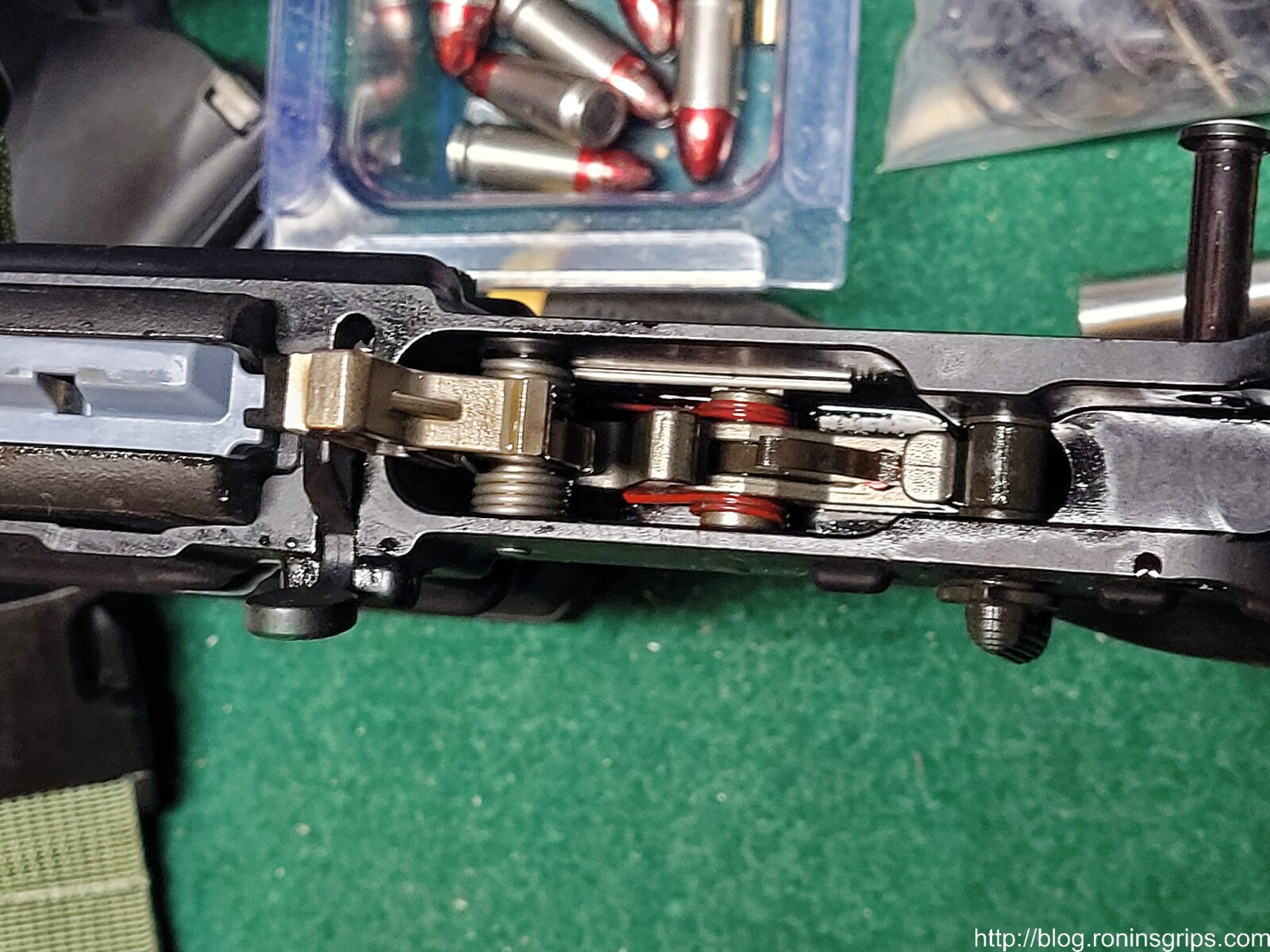
When you are done it will look something like this:
Comparisons
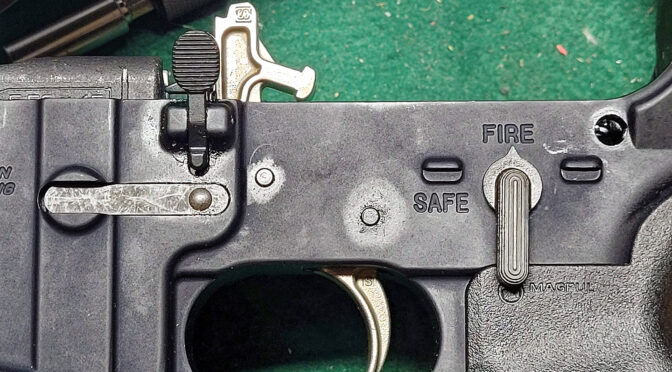
On top is an Aero Precision Mil-Spec fire control group. I’m using one of our AR trigger slave pins to pre-assemble the trigger, disconnector and the disconnector spring.
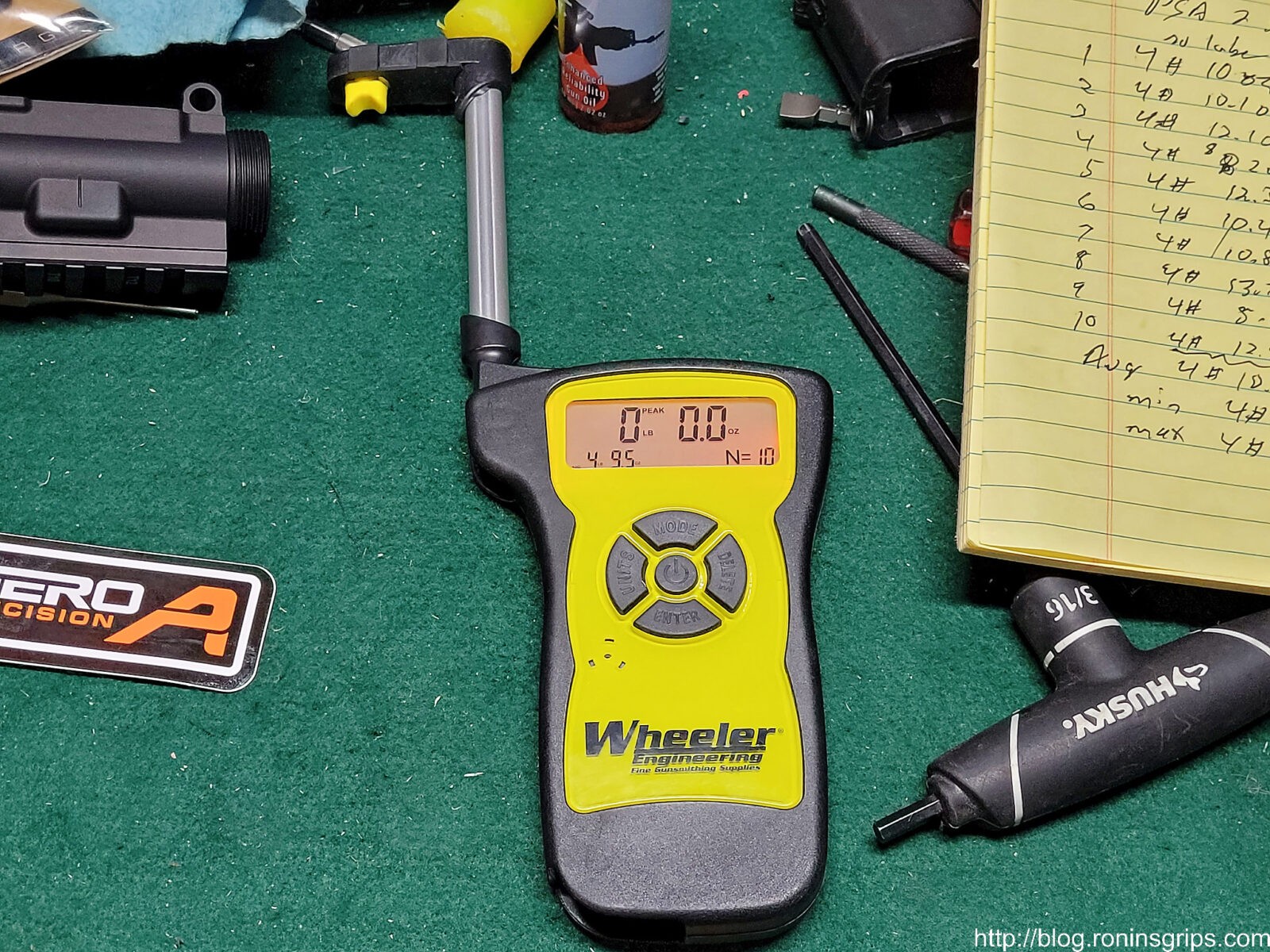
Okay, I had a couple of triggers that I could do pull tests on to give you some comparisons. Testing was done with a Wheeler trigger pull gauge that I really like.
This is my Wheeler Professional Digital Trigger Pull Gauge.
I created the following table by using the Wheeler gauge to do 10 test pulls of each trigger so you could see the average, minimum and maximum pull.
Minimum, Maximum and Average Trigger Pull in Pounds and Ounces Per Trigger
Conclusion
How did it feel? Well, there was a bit of pre-travel slack to pick up but then it broke pretty nicely. For $64, I was impressed! It’s kind of a no-brainer for me now that the next time I build a basic AR, I will use this trigger.
Maybe some day when I have time I’ll compare it to a Geiselle SSA-E side by side but for now, I’ll tell you that you can’t go wrong for the price. I actually ordered in another to replace the EPT trigger I have in another basic 16″ PSA AR that I have.
I hope this helps you out.
Note, I have to buy all of my parts – nothing here was paid for by sponsors, etc. I do make a small amount if you click on an ad and buy something but that is it. You’re getting my real opinion on stuff.
When I first started buying from Palmetto State Armory (PSA) maybe 10+ years ago, they were a source for cheap but decent AR parts plus other brands of parts, like Magpul, and ammunition. If you compare what PSA is today to way back when, they have achieved a lot – most folks don’t know that PSA is part of a large portfolio of companies under JJE Capital.
Palmetto State Armory (PSA) has a stunning array of Kalashnikov firearms now. AK-47s, AK74s, 100 series, rifles, pistols … it’s impressive. Click here to go to their main AK menu.
The barrel is cold hammer forged chrome moly vanadium steel with a chrome lining and made by Fabrique Nationale Herstal (FN for short) – these are top notch barrels.
Hammer forged front trunnion – US makers tried to do castings originally and they just do not hold up
Hammer forged bolt and carrier – not everyone forges their carriers and you see photos online of them cracking/snapping where the gas piston goes into the body of the carrier.
The trigger is an ALG AKT enhanced model – these are excellent AK triggers and I really think it was a good idea that PSA went with them
They have a lifetime warranty.
Now PSA says they have torture tested the rifles to 10,000 rounds with no problem. A number of folks on the Internet have posted videos blowing through tons of ammo, in the case of JMAC they did it at full auto and the rifles have held up admirably.
Yeah, I ordered one
The fit and finish of parts was excellent. Rivets were formed very nicely and the tooling marks were reduced in my opinion. In short, it looked pretty good.
Now let’s get into some photos – click on one to see it full size or to then move around and look:
Note, I have to buy all of my parts – nothing here was paid for by sponsors, etc. I do make a small amount if you click on an ad and buy something but that is it. You’re getting my real opinion on stuff.
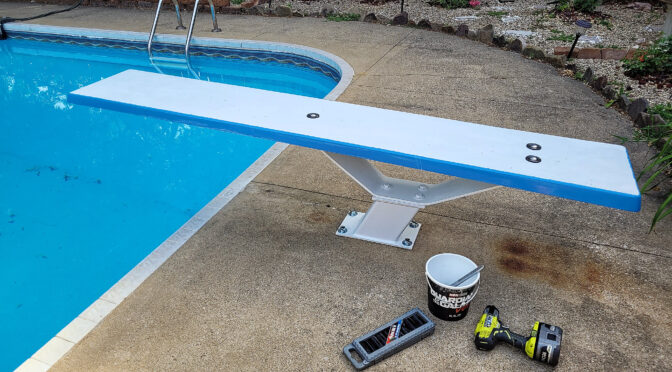
Have you ever been stuck between a rock and a hard place because you need to get something done but a vendor fumbles the ball … badly? That happened to me recently. We have a home made in the 70s and the pool is the same. While we have replaced the liner a number of times over the years, it was the original slowly falling apart diving board. We actually bought our home in 98 and the previous owner had put a 2x8x6 between the board and the spring to keep it alive.
Let’s fast forward to about a month ago. We were getting ready for a family reunion to be held at our place so I got the pool ready for the summer and decided I better check the diving board. Oh man, it was shot. The fiberglass underneath had torn around the board it encased and there was just no way it was safe.
One thing I have learned about pools over the years is that you can usually find parts. So, I new it was an 8′ residential diving board and the hole pattern for mounting it was 4.5″ on centers in the back and the front single hole was 36″. I did some digging and the hole pattern and distances from the back and sides corresponded with the SR Smith 8′ Frontier II board.
A number of vendors carried it online and the problem was that I needed it with only about a two week lead time before people started arriving for the party. InTheSwim said they had it and it would arrive in time. I used my wife’s card on the website and it wouldn’t go through so the website gave me an 800# to call. I did, the lady told me it was a fraud screen, I approved a text message sent to my wife’s phone and the InTheSwim operator told me it was all set and I should get an email shortly. She never said she resubmitted it … About an hour later, still no email so I called and I am pretty sure the same lady answered and said the order was fine …. in fact it was not.
After a week of no updates, I called and after confusion on their part, they found the order in limbo, fixed it and told me it would probably still make it in time. Okay… I kept tabs on it and finally called and said I needed the board. They told me it would not even ship until after the party. I asked that they expedite it, that I would even pay for it and they said they had no way to do that. I then told them in no uncertain terms to cancel the order. If that reads like a rant, it should. I hate it when a vendor fumbles the ball and literally does nothing to make it right.
I was left with two options – disappoint a bunch of relatives or figure out how to fix the board. I decided to do the latter and I suspect this is the part of the post you really care about.
What went wrong with the board?
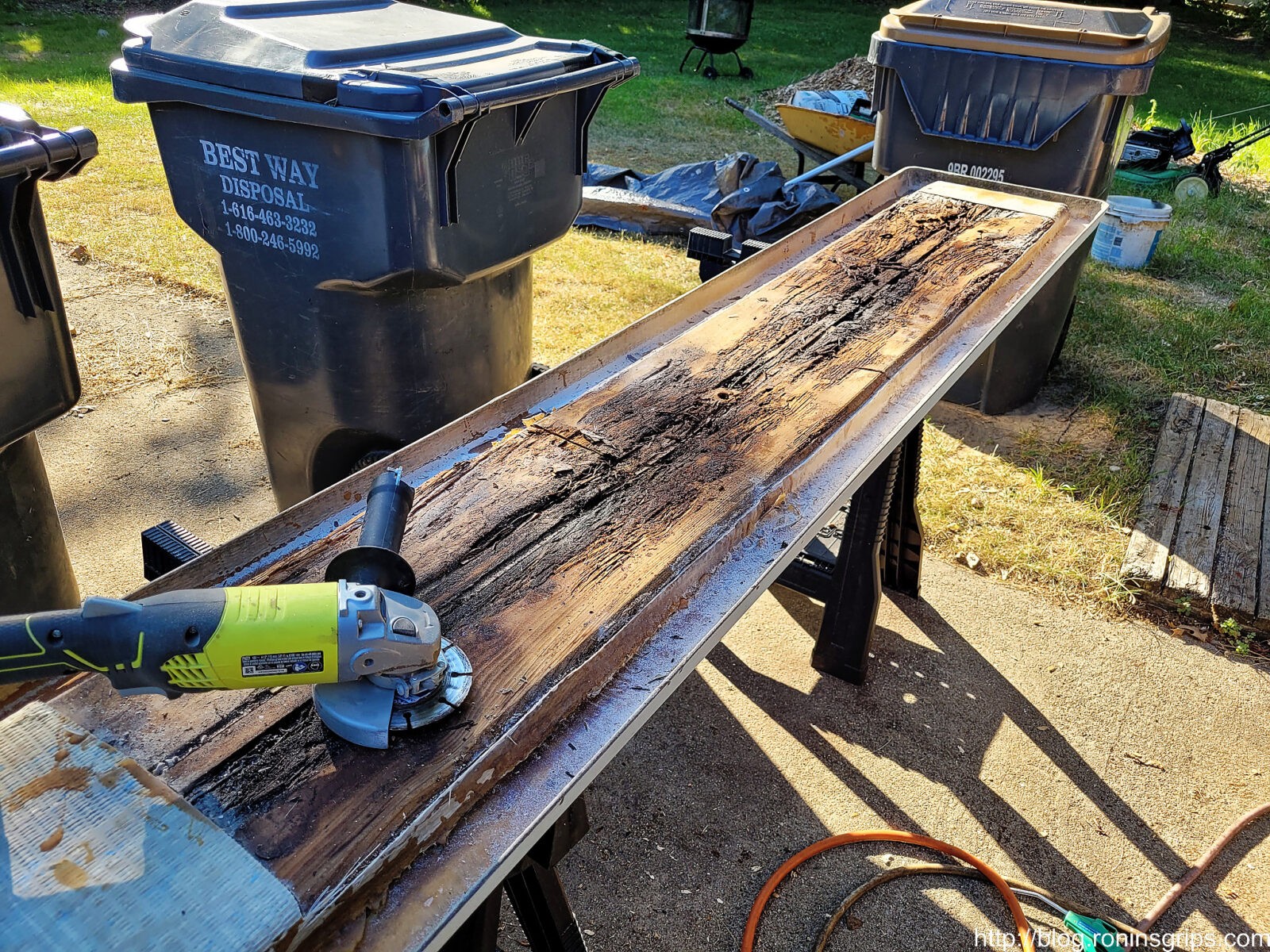
Many, if not most, residential diving boards have a fiberglass top, sides and bottom but the core is wood. Through the in the fiberglass rotting wood was plainly visible. I put the board on sawhorses, put the old supporting board underneath it and flipped the diving board over to access the bottom. Again, the diving board was resting on the old supporting board – I new that if I didn’t support it, the odds were high that it might snap. Once supported, I used a diamond masonry cutting wheel in my 4.5″ Ryobi cordless grinder to slice off the torn fiberglass to see what was going on. I had a hunch that If I could salvage the top of the board, I could fix the bottom and I was right.
Important Safety Comment: Wear eye protection and a quality face mask (N95 or better) when you are cutting or sanding on fiberglass. You don’t want stuff getting in your eyes or lungs. I also wear gloves to protect my hands.
I used a masonry cut off wheel – in this case a diamond coated one – because the glass fibers can dull saw blades, etc. Just about anything can cut open fiberglass – it just depends on whether you care about what is happening to the blade.
Once I cut open the bottom that held the wood, I could see it needed to be replaced. What was there were three pieces of wood and there was a cap on each end with nails that held it together. Over the years as holes and cracks opened up, water got in and slowly rotted the wood. I really wasn’t surprised when I went to lift the board off the spring – it weighed a ton due to the waterlogged wood.
The wood wouldn’t lift right out so I would prop it up and cut it with a small hand held Ryobi circular saw into thirds. I used a small pry bar and lifted the sections out. I didn’t cut all of the fiberglass out yet thinking that I might use some of it to make things stronger. In hindsight, I’d now tell you to remove all of the hold fiberglass wrapping on the bottom -there was no need to save it.
Wood and Fiberglass
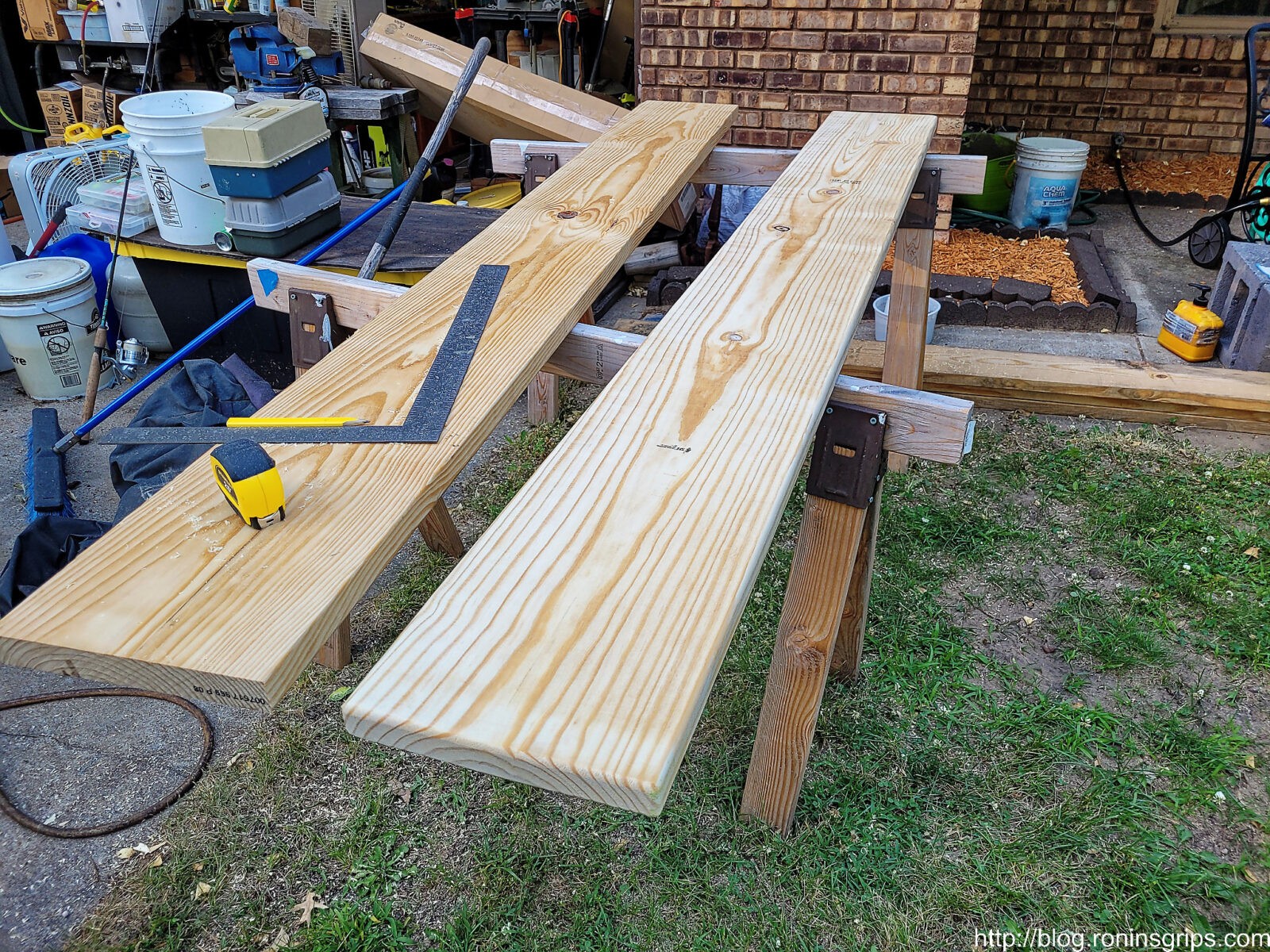
In a perfect world, I would have the exact same size of wood and better yet, treated wood, to replace the rotten wood. I didn’t have time for wet treated wood to dry so I went to Home Depot and bought two 2x12x8 pieces of dry pine lumber. One to go in the board and one to still support it even though it probably wasn’t needed.
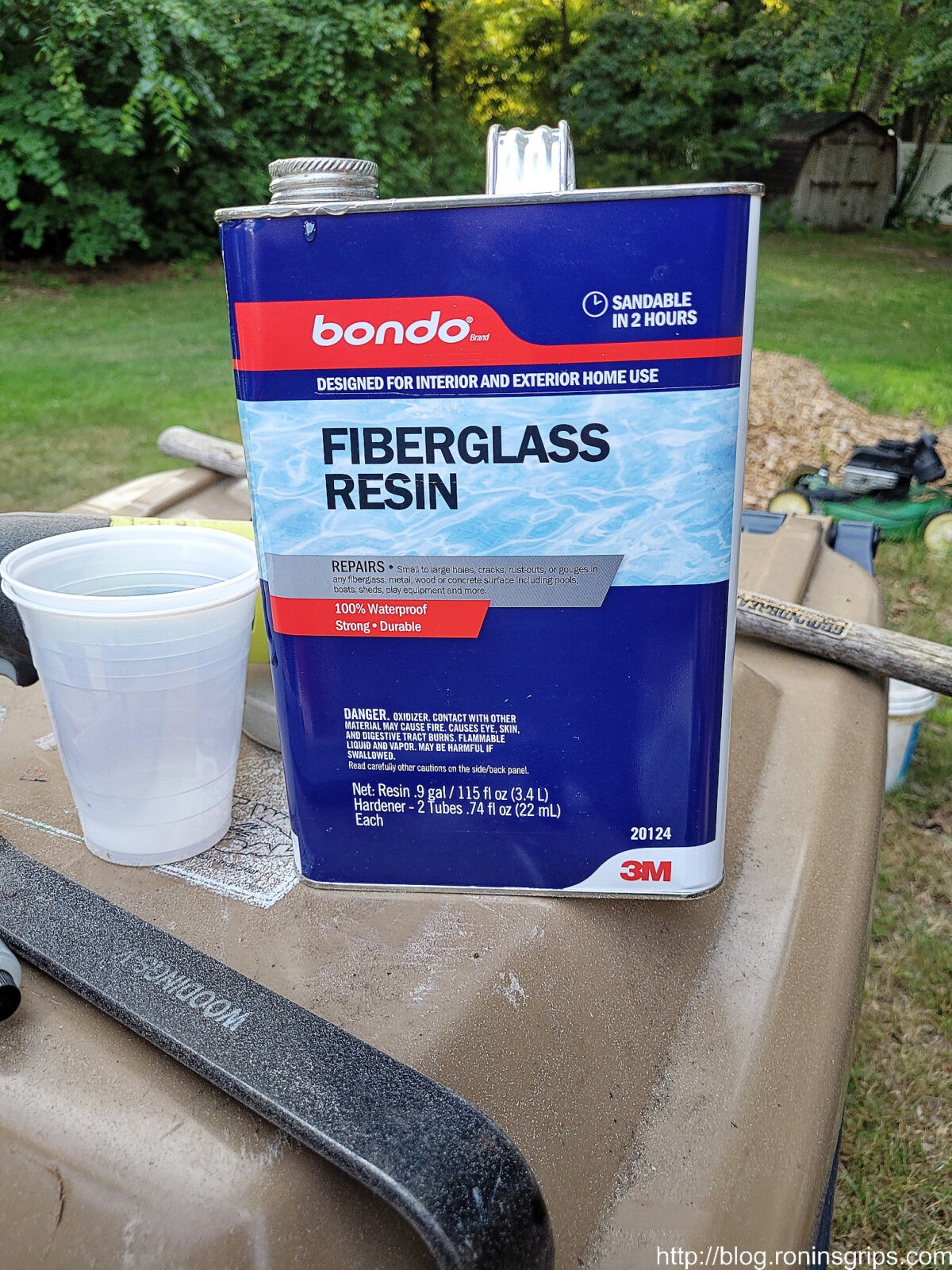
I also stopped by the adhesives section of Home Depot and picked up two 1-gallon jugs of Bondo fiberglass resin and three packages of fiberglass cloth – if I had it to do over, I would have bought a couple more for complete overkill in terms of strength. I knew I had a spare cloth at home so I had four fiberglass cloths total. I also bought a spare package of hardener just in case.
Here’s one of the jugs of resin. Because I work with plastics, I had a large selection of mixing cups and stir sticks. I used 32 oz cups and a half tube of hardener at a time. I would mix them and then pour the contents into a second 32oz cup. This is known as a double pour and reduces the odds of you pouring unmixed contents and making a mess.
Note: The Bondo fiberglass system uses a polyester resin vs. true epoxy. Polyester is cheaper than epoxy but not as strong. I’m pretty sure it will hold up and we’ll see over time. I’m writing this post a week after our reunion and the board looks just fine – no cracks.
Cleaning Up The Board and Preparing It
With the wood out, I then removed all of the debris to get a better look at what was going on. I removed almost all of the old fiberglass that was holding the old board – I now know I could have removed all of it.
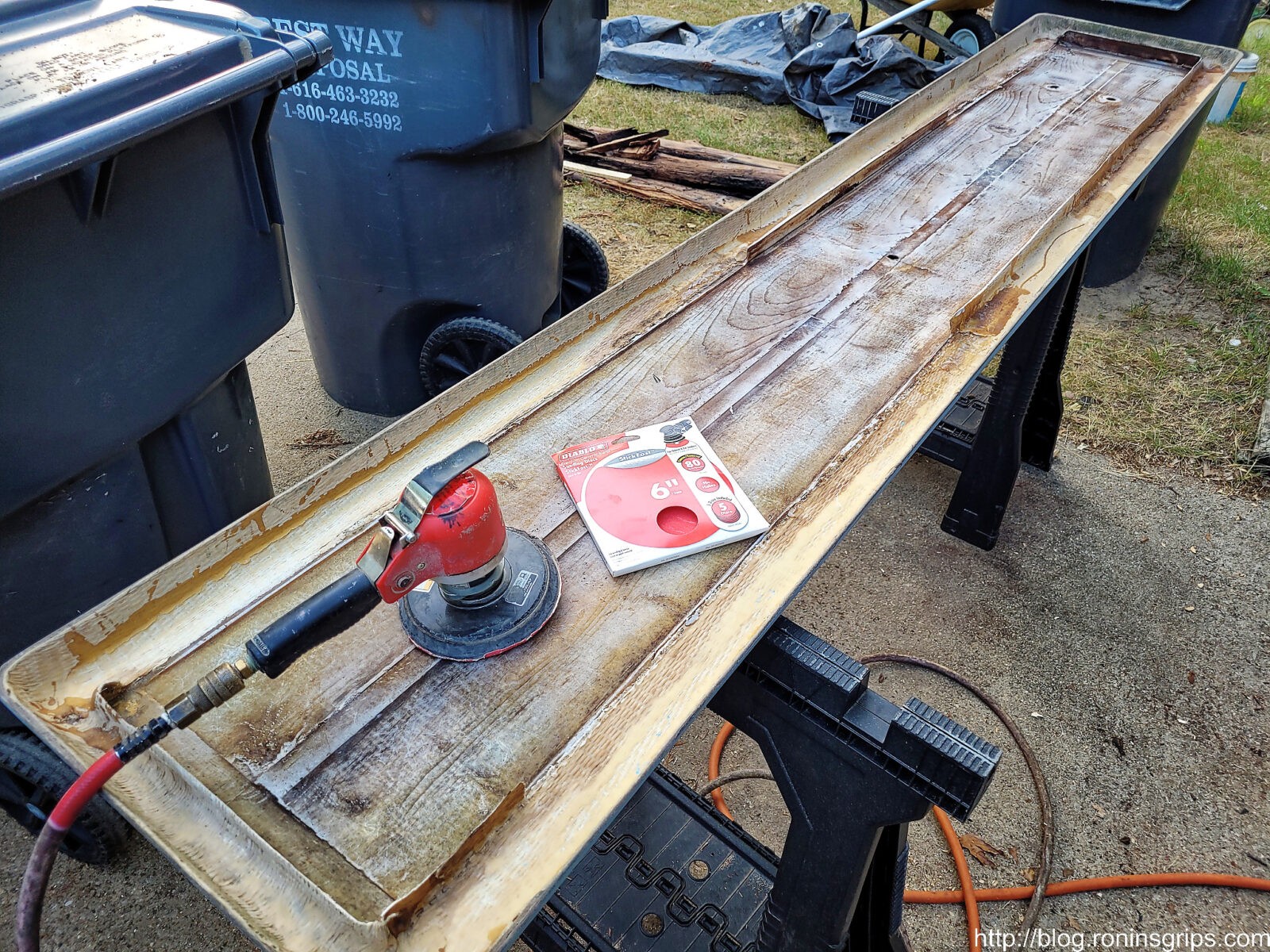
Here I am scuffing up everything really good with 80 grit sand paper in my orbital IR 6″ sander. If you want the fiberglass to bind really well, the surface must be abraded. Just remember, if the surface is smooth and shiny, your adhesion is going to be bad. A very abraded clean surface is ideal.
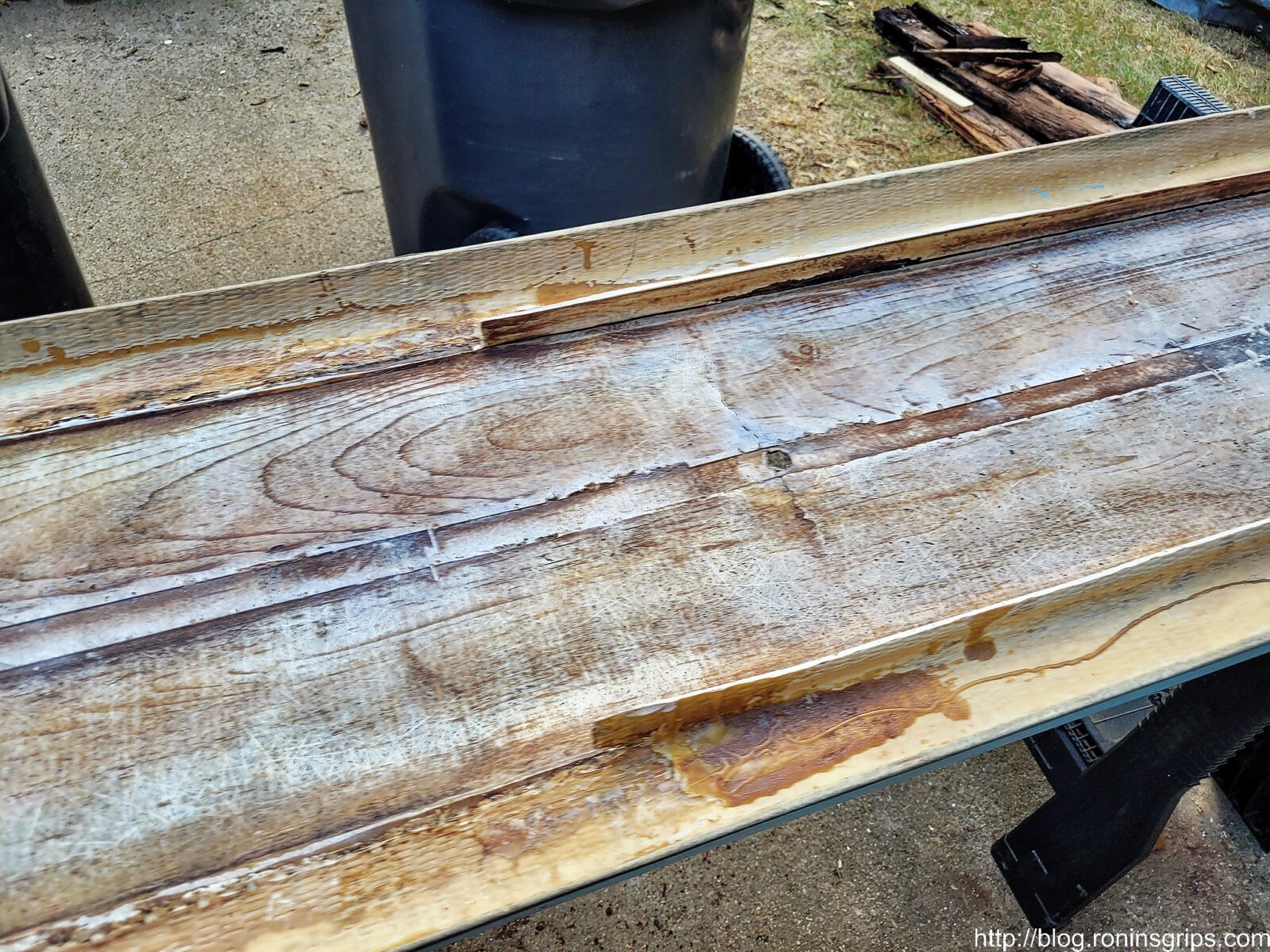
Here’s a better view of the center front hole and the big crack that went completely through the fiberglass top. Note, after sanding, cleaning and degreasing, I closed all holes with black Gorilla tape before I started apply resin. Once again, I would remove all the old fiberglass that surrounded the board. Those vertical pieces you see would be gone.
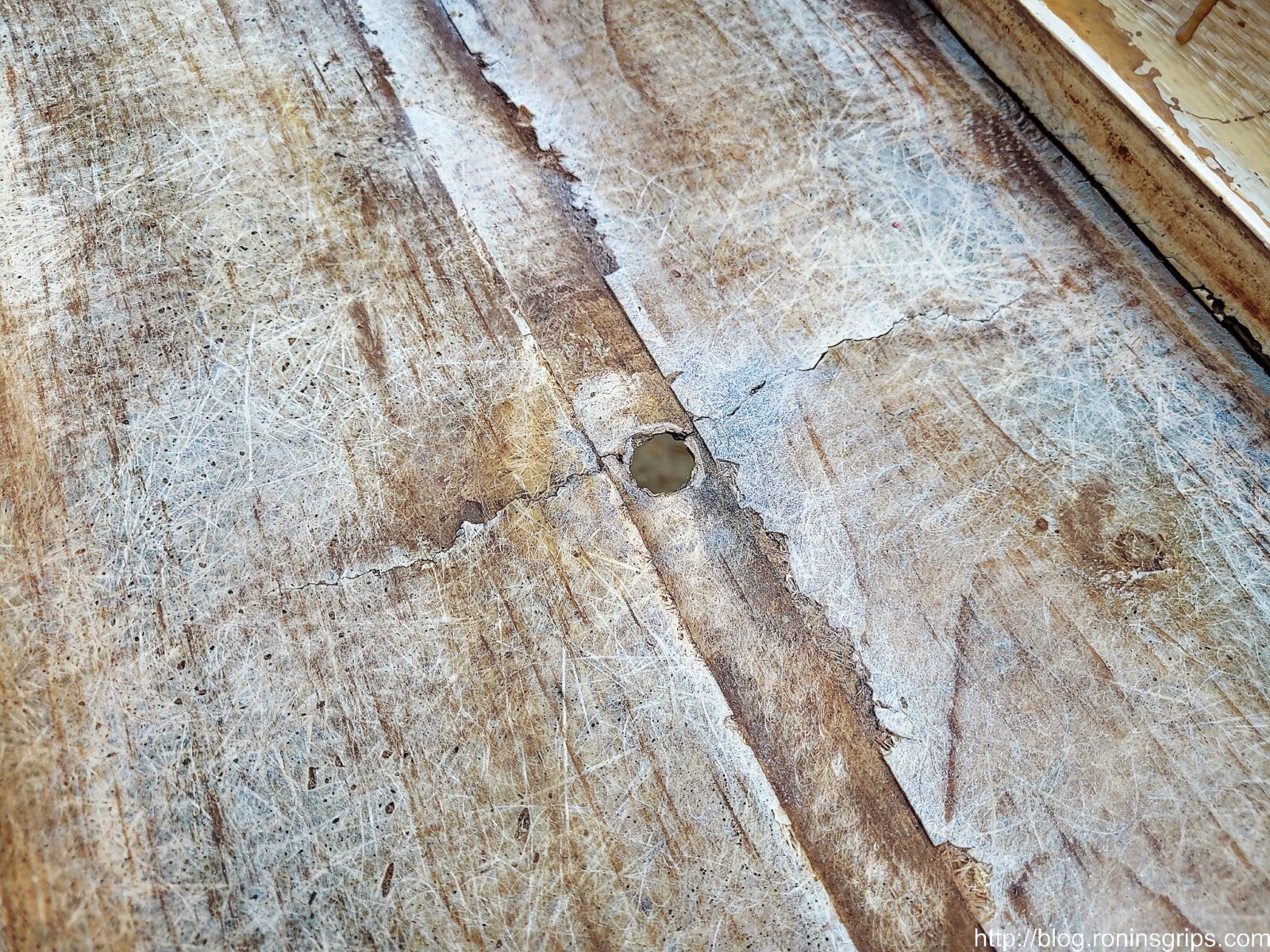
Here’s a close up of the back two holes – they are worn open and stress cracking around them.
One more view of the big crack at the center. I sanded the heck out of everything with 80 grit, sprayed down the inside with brake cleaner thoroughly to degrease it and then stuck big pieces of gorilla tape over each hole. The diving board surface was ready.
Preparing The Wood
The wood was completely dry – let me stress that. If you seal in wet wood, it will rot so make sure your wood is dry.
One thing I noticed with the rotted wood that I pulled out was that they had rounded over all of the corners/edges of the wood to not stress the fiberglass. That made a lot of sense to me. I put a 3/8″ carbide tipped round over bit in my trim router and rounded over the new board too and then sanded it with 80 grit sandpaper to prepare the surface for maximum adhesion.
The 2x12x8 boards were longer than the original so I trimmed them down. I then used a round over bit on both and sanded them. My plan was to embed one in the fiberglass but still have a support/buddy board underneath. Note, I did not drill any holes. My plan was to center the new pine board insert and drill the holes later.
I did test fit everything before I went to the next step. You don’t want to mix up resin and get part way in only to find our boards are the wrong length.
Gluing The Board In Place
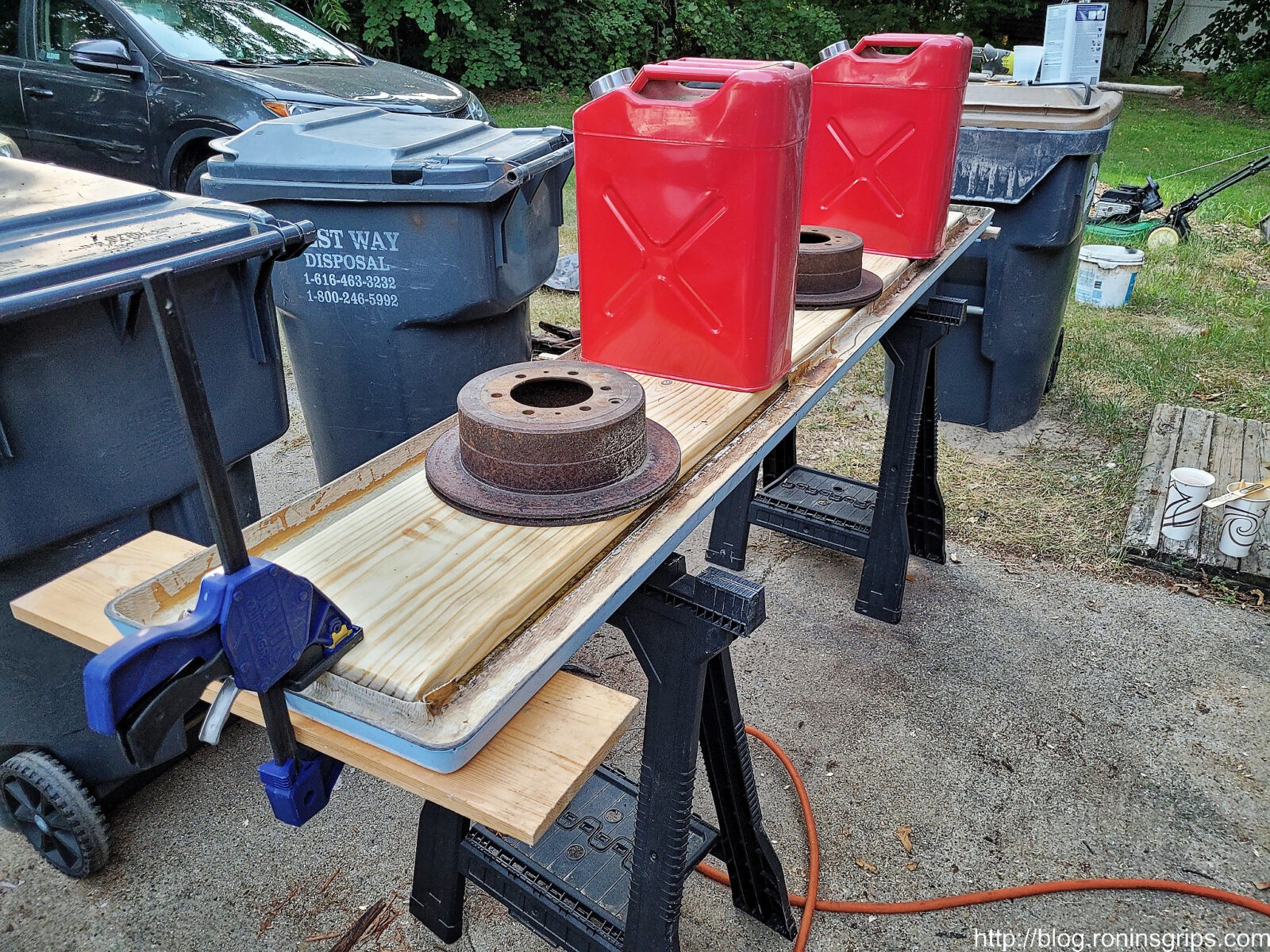
Okay, to close the bottom back up, I did it in steps. For the first one, I mixed up 32oz of resin, liberally brushed it in the bottom of the board really thick. I then clamped the ends and put weights in the middle to keep everything pushed together. You need to have this planned out because once the resin sets, it’s game over. I had the clamps and everything ready to go.
This falls under the “make do with what you have” category. The blue clamps are really strong and are on both ends. In the middle we have two brake calipers from a 96 Landcruiser and two full 5-gallon cans of gas. The more pressure pushing the parts together and the adhesive into as many spaces as possible is what you want.
The next step was to put down the first layer of fiberglass cloth. I laid the cloth on top of the board and trimmed it to fit inside and just up the sides. I then mixed up a 32 oz container [don’t forget to do a double pour and use the right amount of hardener] and rapidly brushed it on very thick to the front area I was working on, applied the cloth and then another coat of Bondo on top. If you’ve not done fiberglass before, start with one section and learn. You want to get the cloth in place and wetted down with the liquid before it all sets. Also, have a bunch of nitrile gloves near by or you will get this stuff all over your hands no matter how hard you try. I wear gloves and have at it. I use my hands to rub the liquid into the cloth.
I did the front, the back and then the middle. If you need to stop, just sand the surface, blow it off and continue.
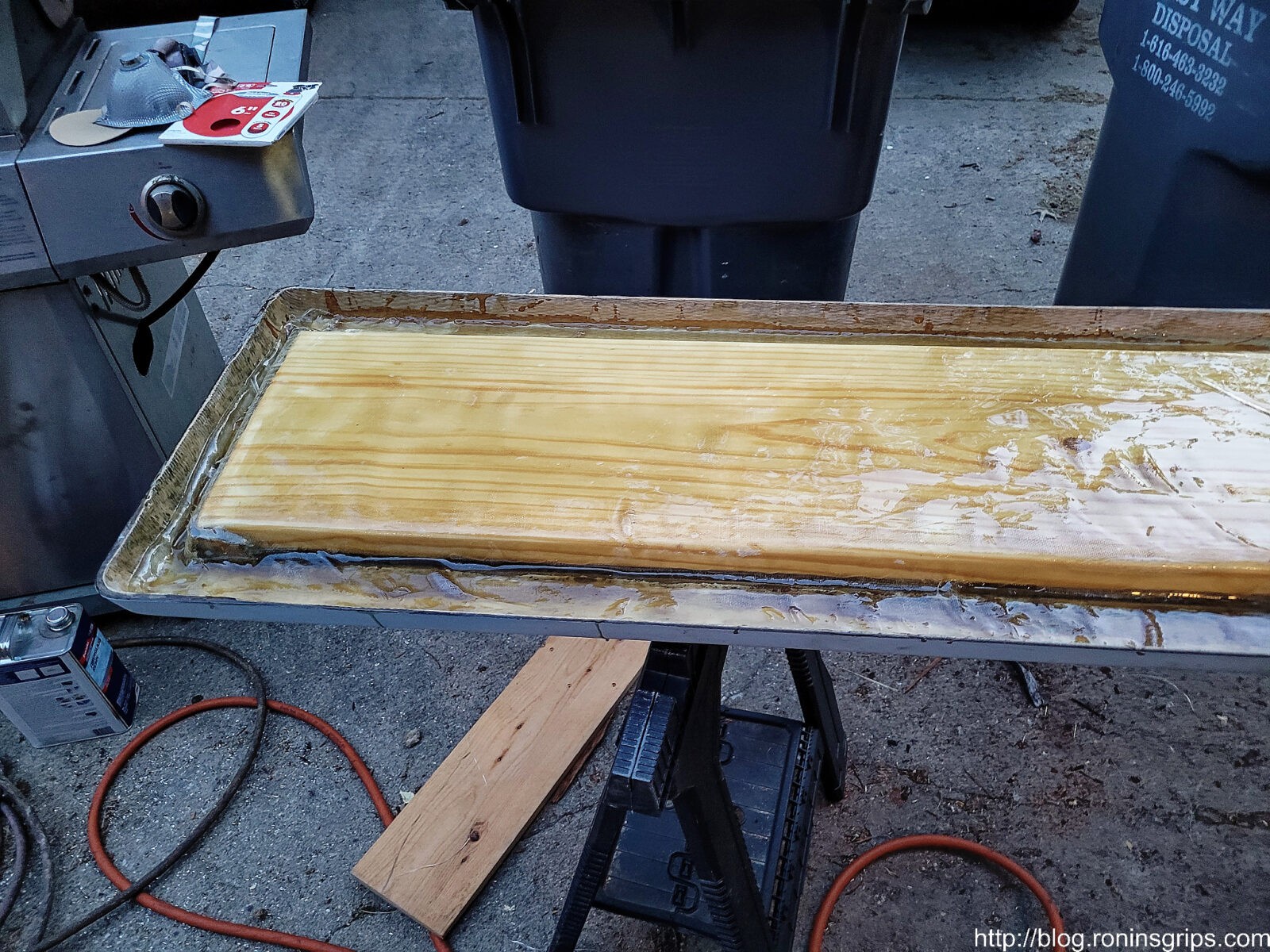
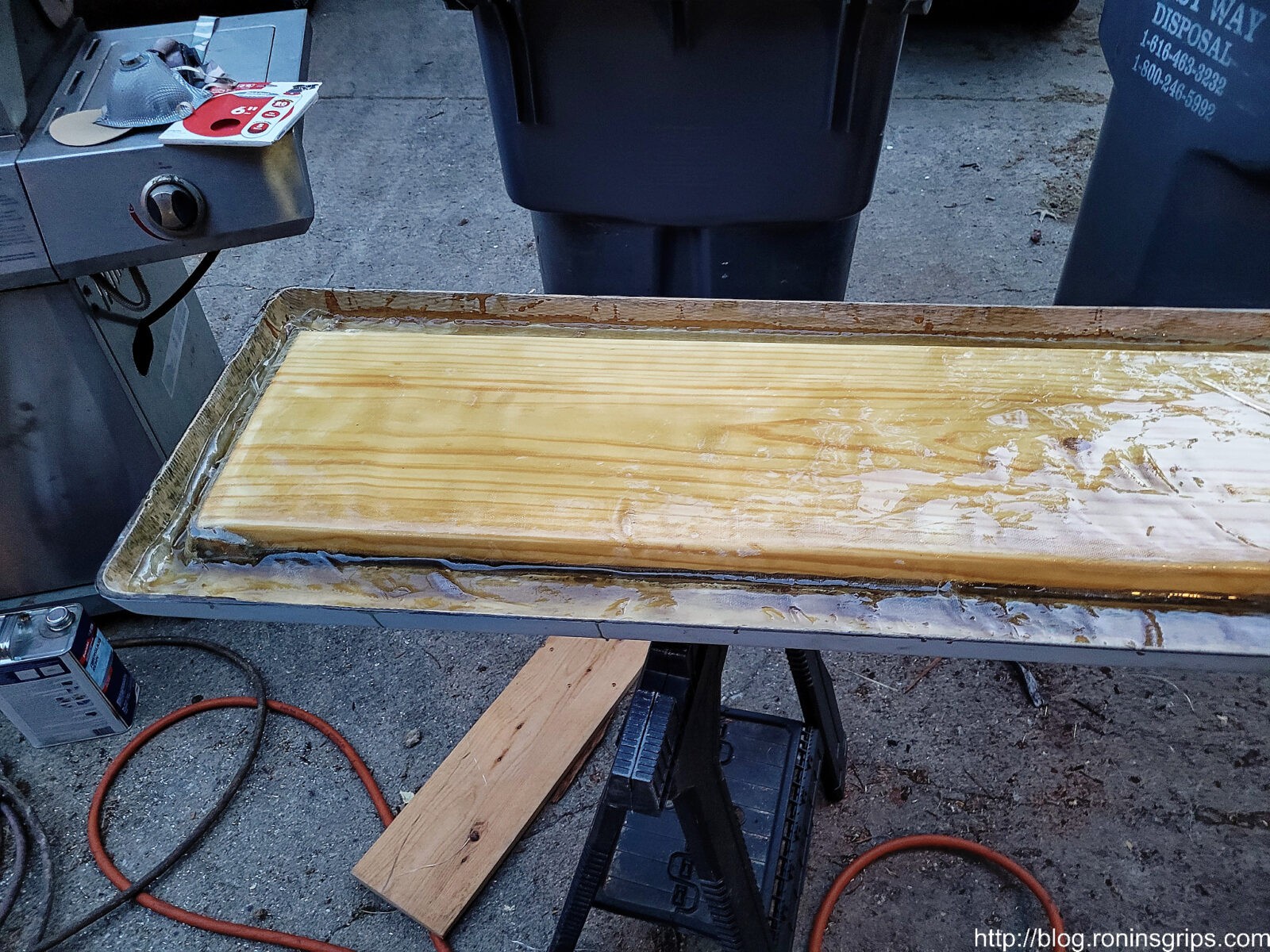
This is about the first half of the board. I let it cure and then sanded it before I applied more.
So I did the front, the back, then the middle. I used the full length of the cloths and overlapped at the middle. At this point, it was rock hard and I really wished I had just cut out all of the old fiberglass walls that surrounded the old wood. I thought it might make it stronger but then realized this wasn’t the case. I sanded again and cut my fourth and last cloth down the middle. I applied one length on the left and one on the right to strengthen those areas that still had the remnant walls that I should have removed.
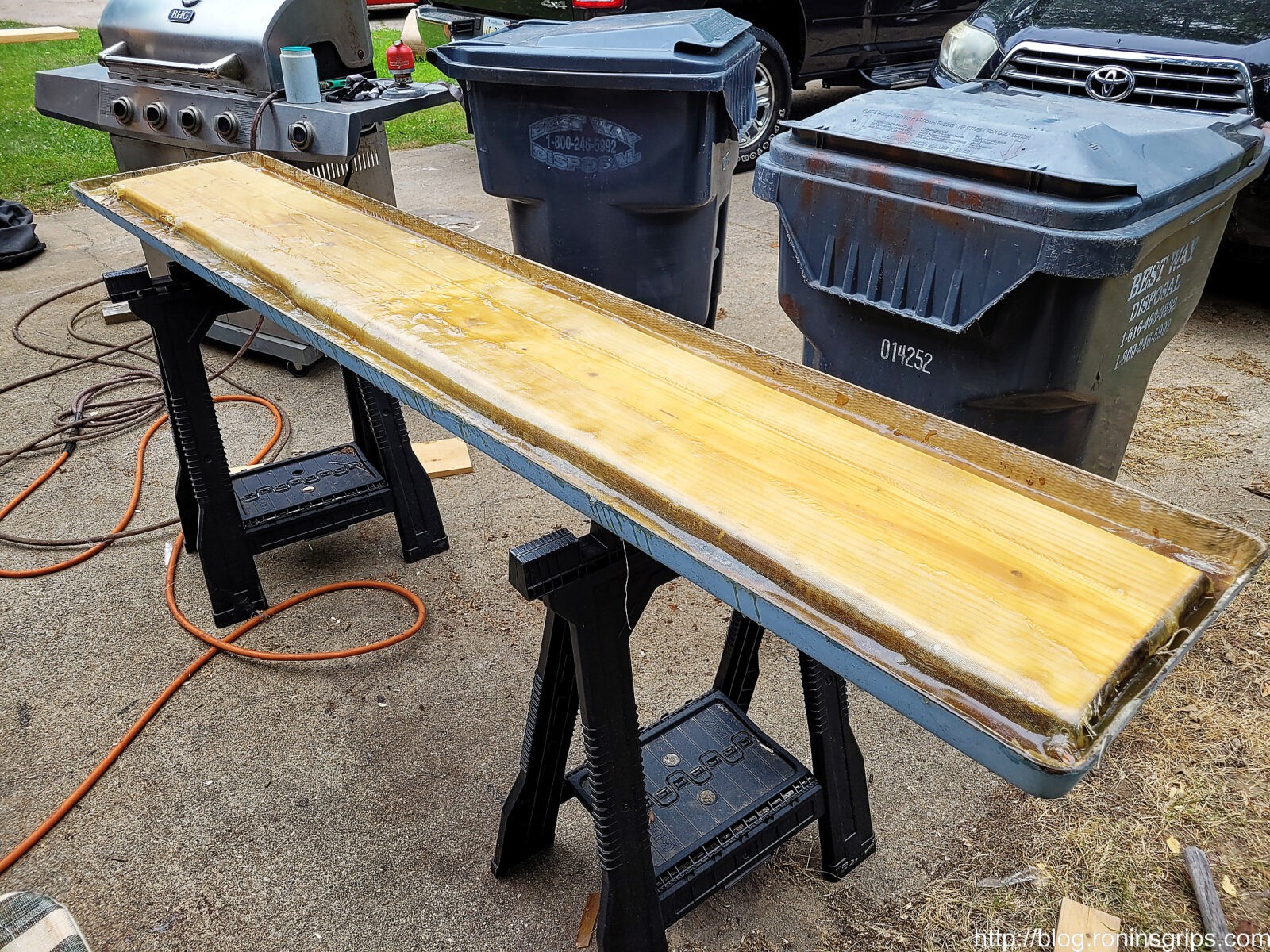
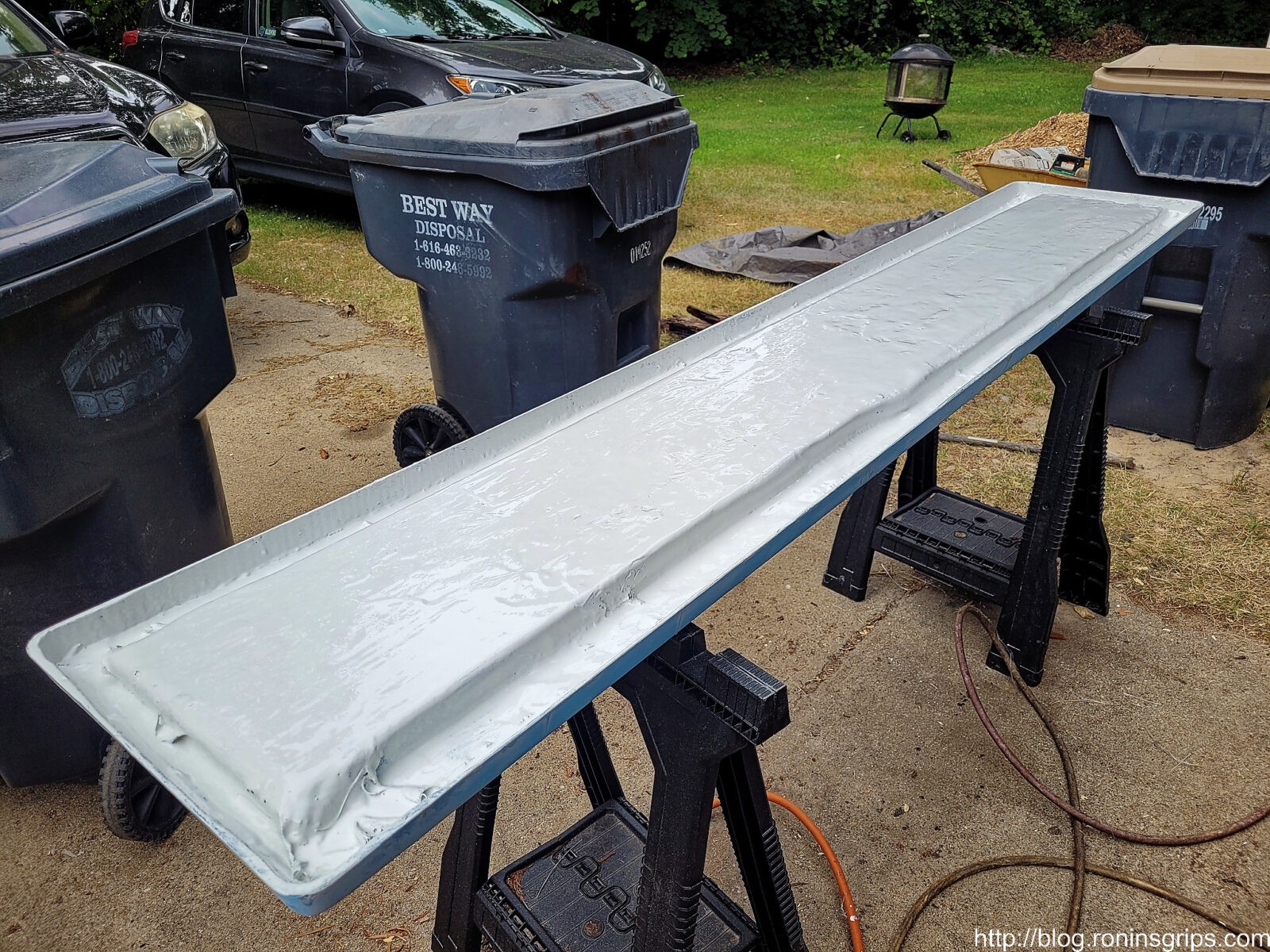
Here it is with all of the layers applied. My next move was to sand and then paint it.
Drilled The Holes
Before painting, I flipped the board over, removed the Gorilla tape. The brownish color of the Bondo clearly showed me the old hole positions and drilled two 1/2″ holes in the rear and one in the front using the clearly visible filled in holes. I carefully pushed the support board under, clamped it in place and drilled it as well.
Painting The Board
To paint the board whatever color you want, use boat paint – what they call the top coat or deck paint. Years and years ago, I painted our board because it looked really tough and found out you had to add non slip grit to the paint or people would slide off. Yeah, there’s a story there about a teenager falling off so make sure you get the non-slip additive for whatever paint you buy.
I used Rust-Oleum’s Topside White for the board and a Ocean Blue paint made by Pettit for the trim. The only reason I went with the Pettit paint was that the local boat store carried it and Lowes didn’t have the blue colored Topside paint.
So, when you are applying this, do it in a well ventilated area, make sure it isn’t going to rain if you are outside (I was in my driveway) and follow the guidance carefully. One thin coat a day. If you try and do a thick coat or too many coats, the paint will not cure to a hard finish and stay in an odd tacky/smudgy state. I had this happen to me years ago because I’m not patient but I sure hard to learn patience with some of the specialty paints.
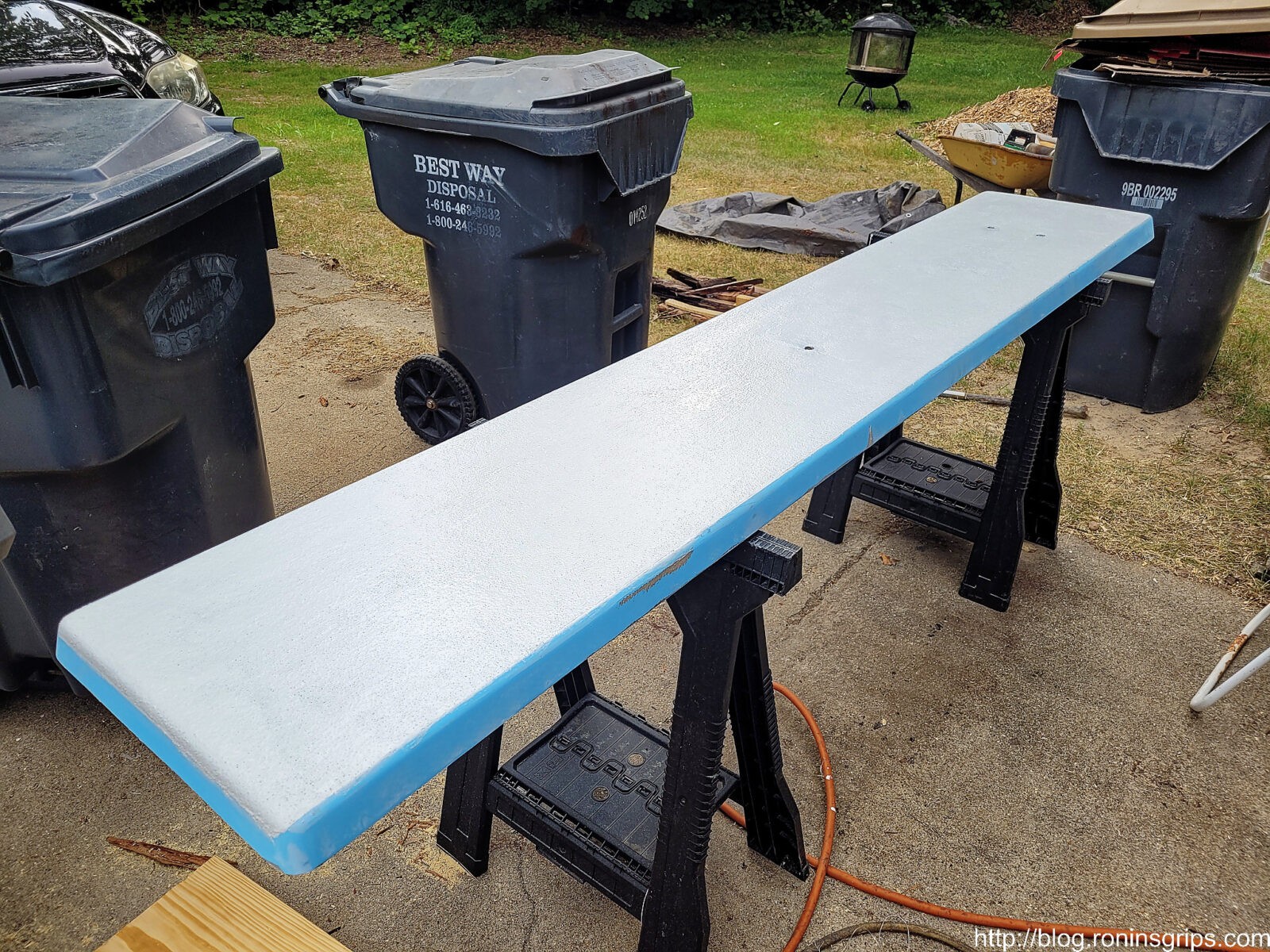
I did two coats of regular white Topside paint on the bottom to protect the fiberglass from UV rays (they really mess up plastics, epoxies and what not unless they are designed for them) and I applied two coats of the white with the grit mixed in on the top.
That’s two coats of white TopSide Paint on the bottom. I did NOT use the non-slip there.
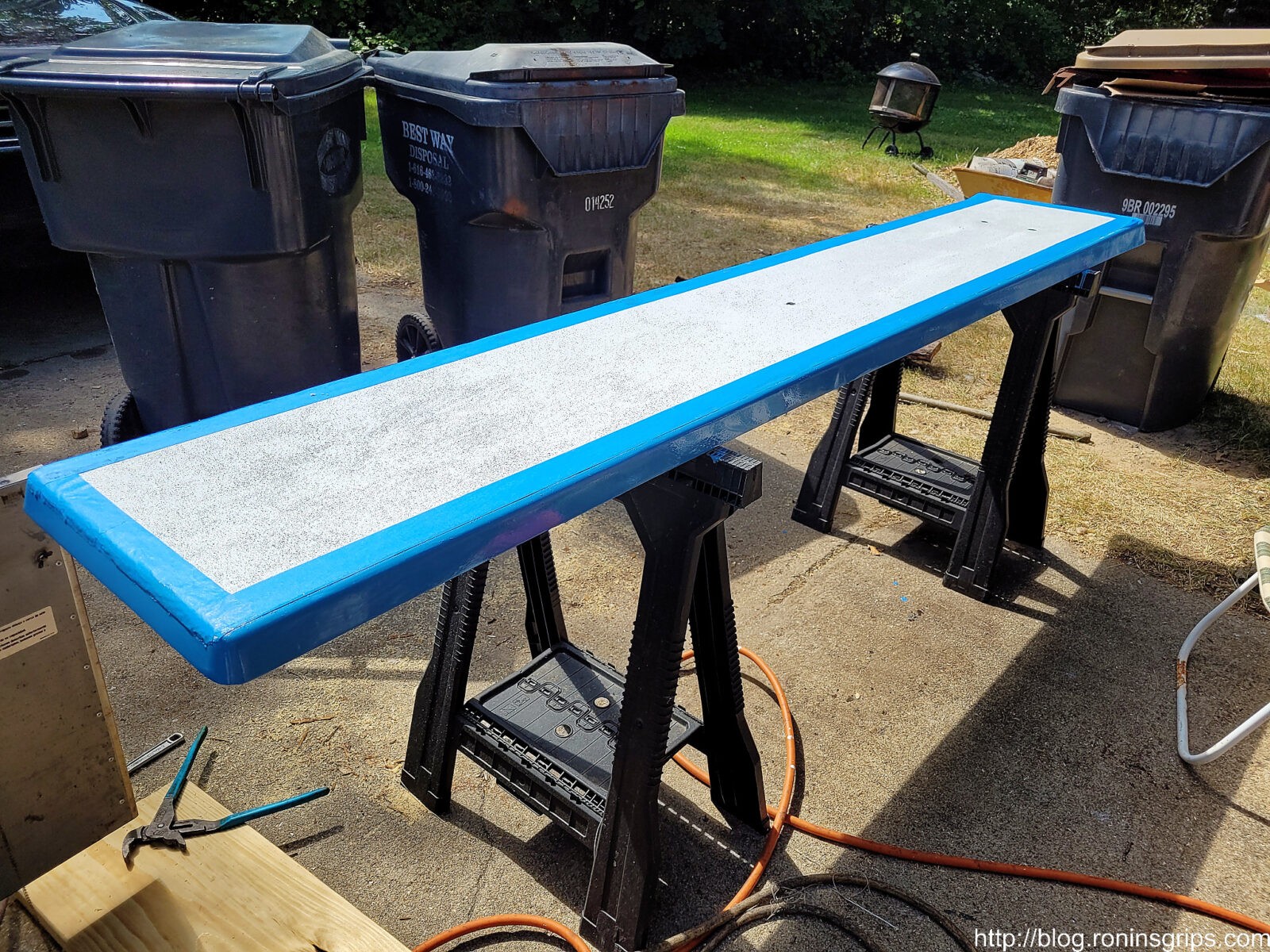
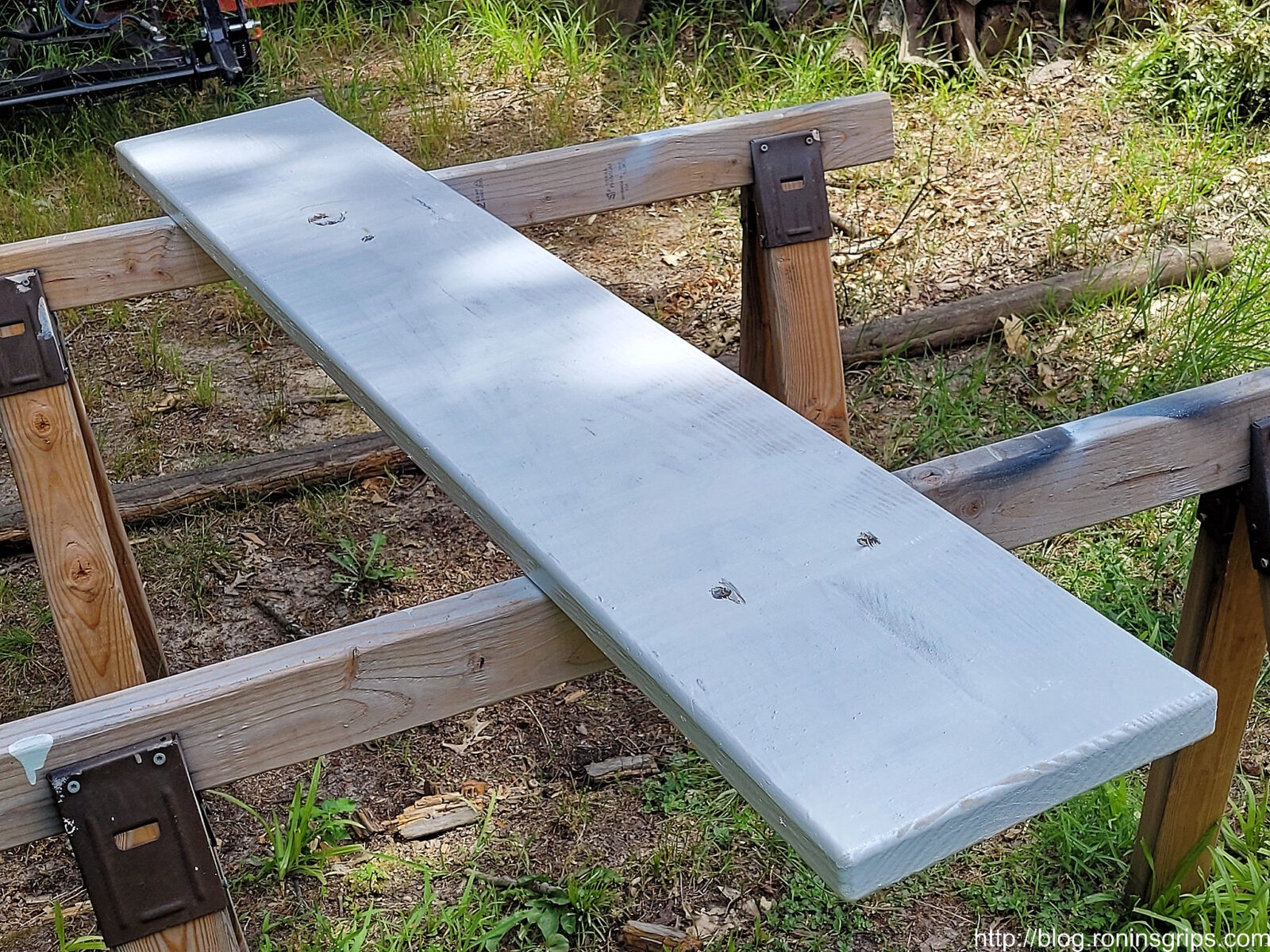
I painted the top with the non-slip additive and didn’t worry about the old blue colored side paint.
It was hot out and even so, I let the top cure for a day before I applied blue painter’s tape to protect the top while I painted the side trim blue.
Painting The Pedestal and Support Board
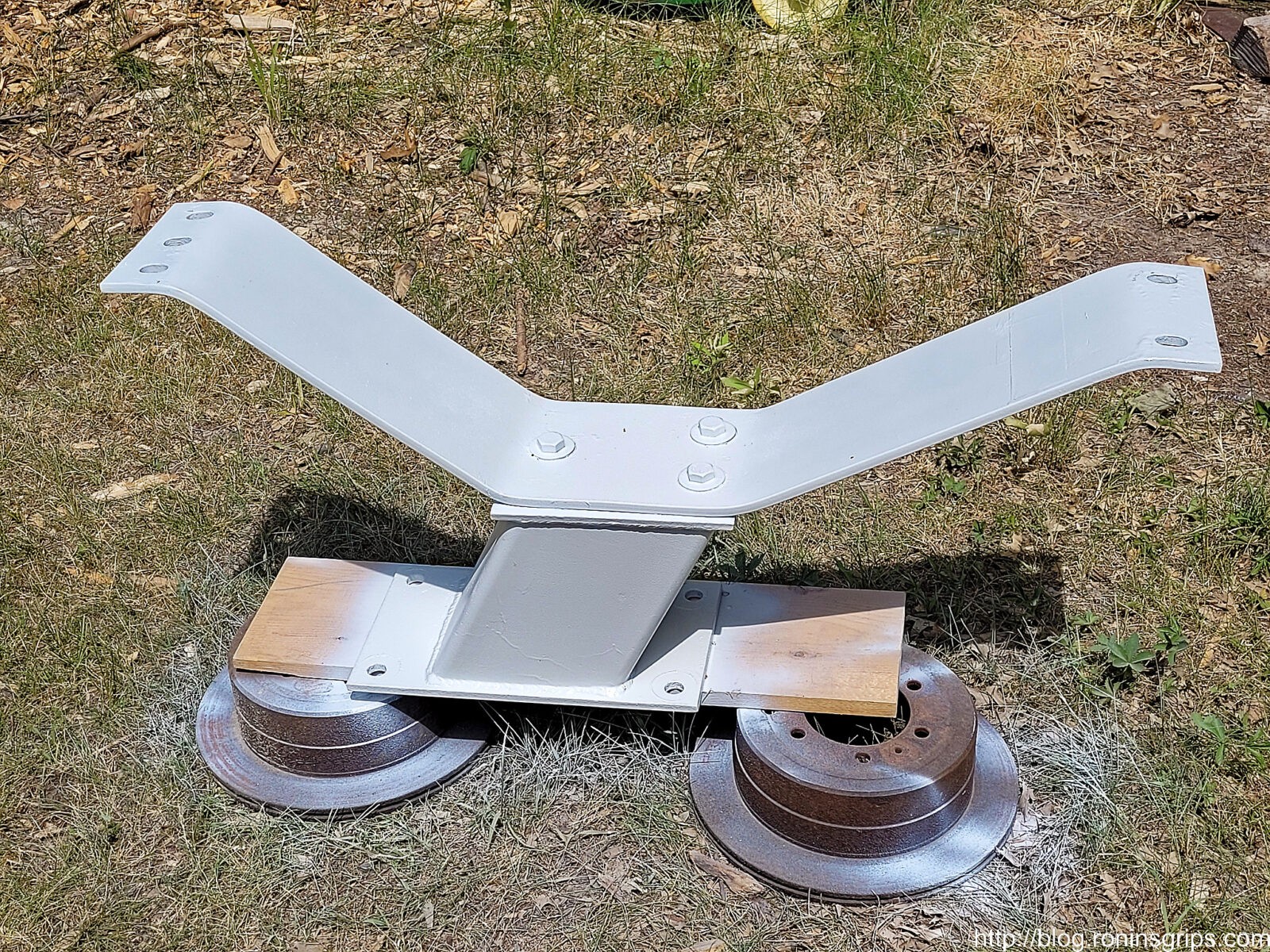
While waiting for coats of paint to cure on the board, we removed the pedestal and spring unit, wire brushed it, sprayed it down with brake cleaner and sprayed on three coats of white Rustoleum spray paint.
We cleaned it and applied three coats of gloss white Rustoleum spray paint.
We painted the support board too. All I had was white spray Rustoleum at that point so that’s what I used.
Wrapping Up
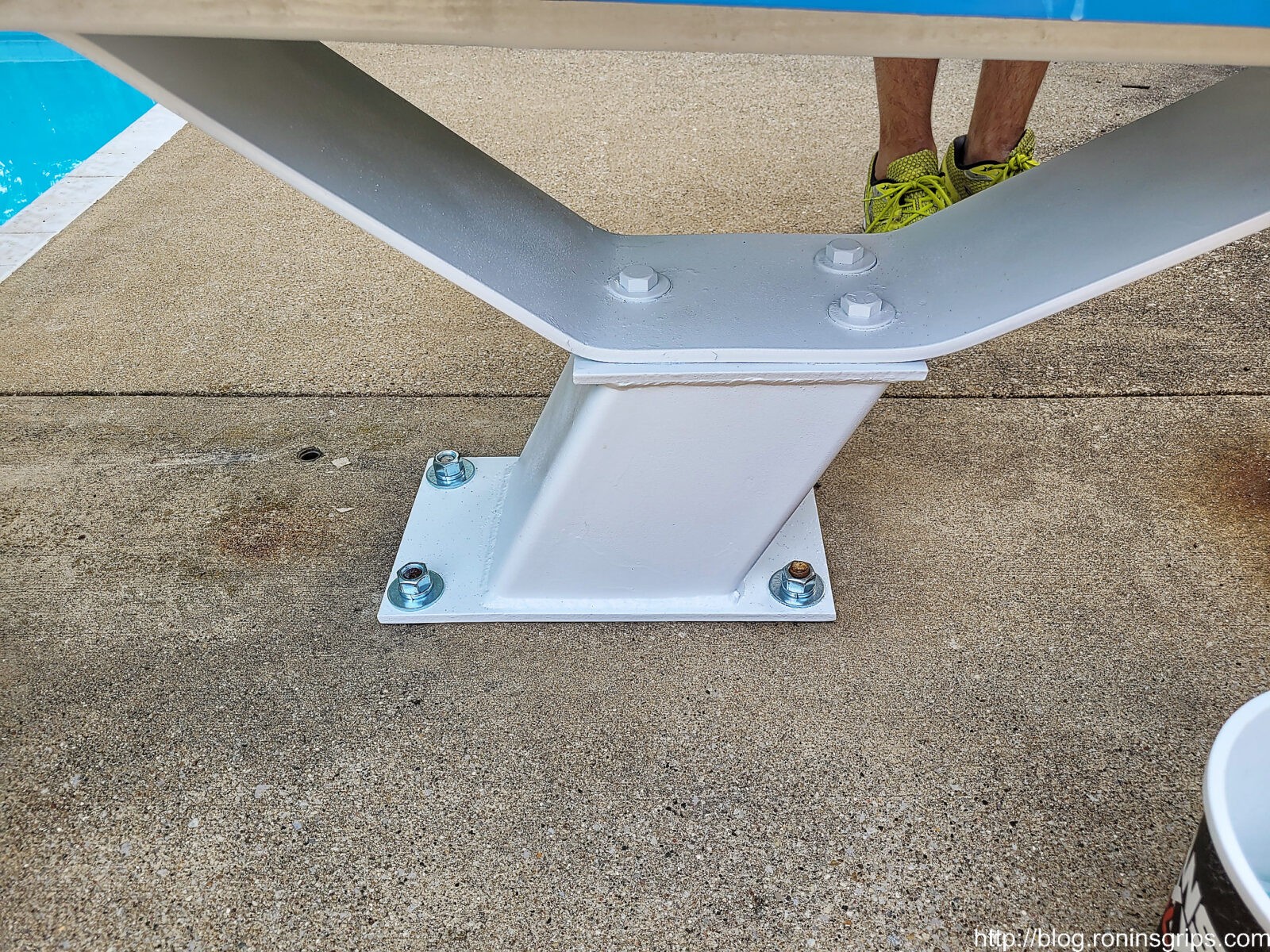
We reinstalled the pedestal and spring unit first. I bought new stainless nuts and washers so it looked better.
We installed the pedestal and spring assembly first before the diving board. Have a solid surface to put the support board and diving board really helped. They are too heavy to move all at once … at least for me. My son helped – those are his feet 🙂
The board is held in place by stainless hardware” 6″ carriage bolts, 2″ fender washers, rubber gasket washers under the fenders on the top. On the bottom are regular washers , lock washers and nuts. Your hardware will depend on your board’s configuration and how thick it is. We salvaged the carriage bolts and I wire brushed the tops so they looked better but I bought everything else at Ace Hardware.
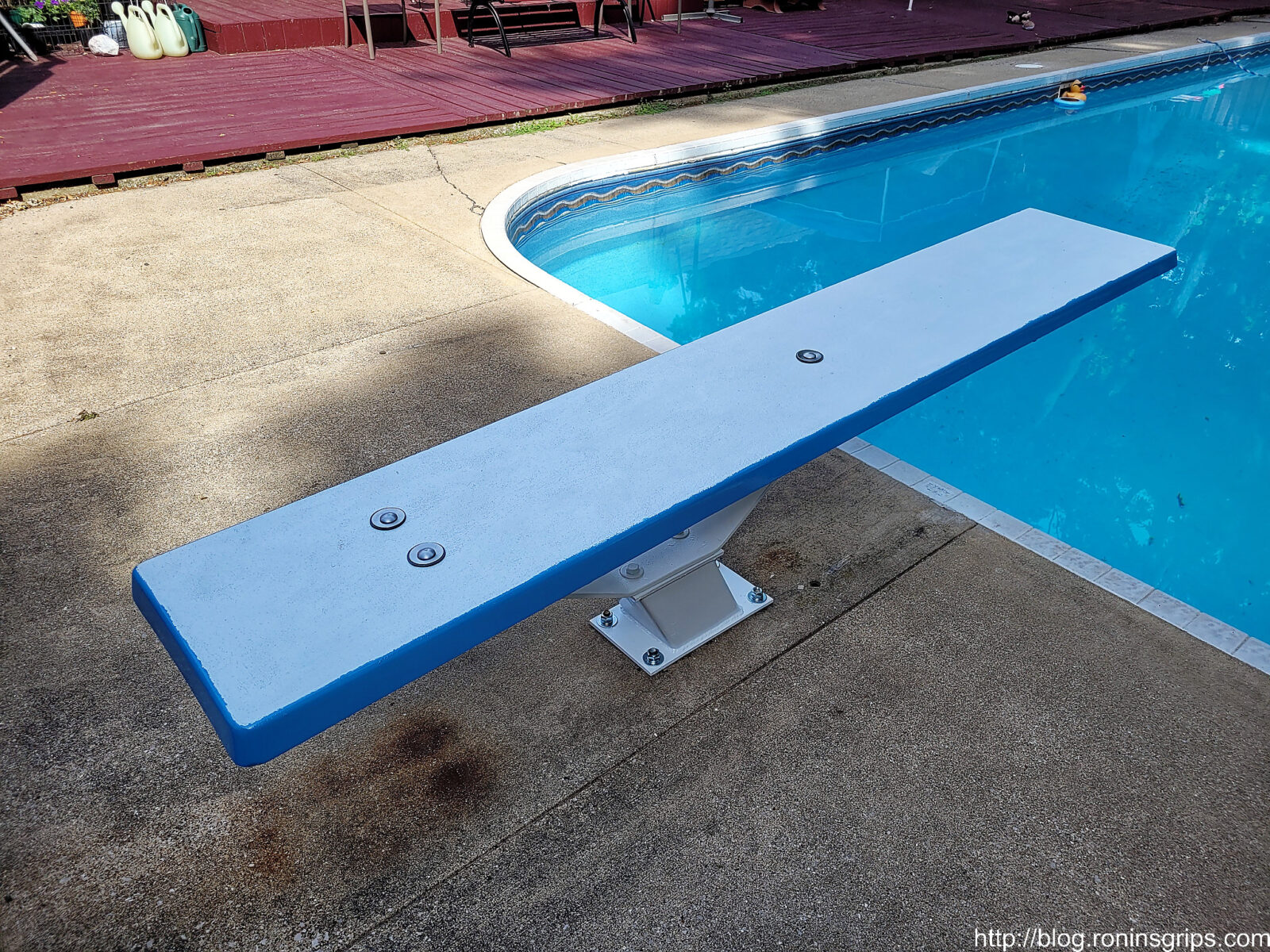
Another view.
In Closing
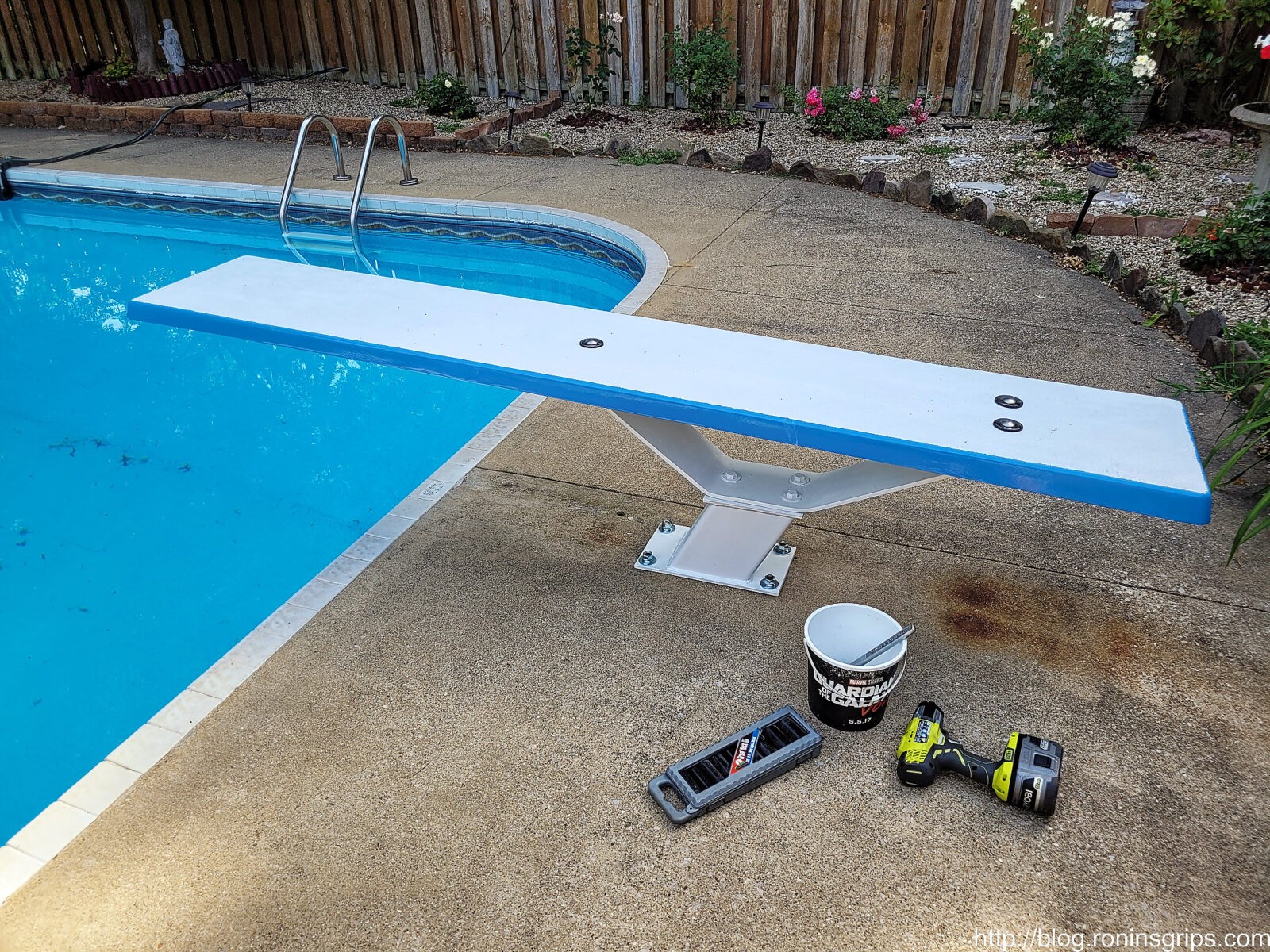
InTheSwim really damaged their reputation with me. On the other hand, this was done in a matter of days, cost us about $300 vs $800 (for the wood boards, hardware & paint) and all the kids at the reunion had a blast. So, problem solved — it worked out to our advantage actually. I’m curious to see how it holds up over time and I have high hopes given how it turned out and performed at the reunion.
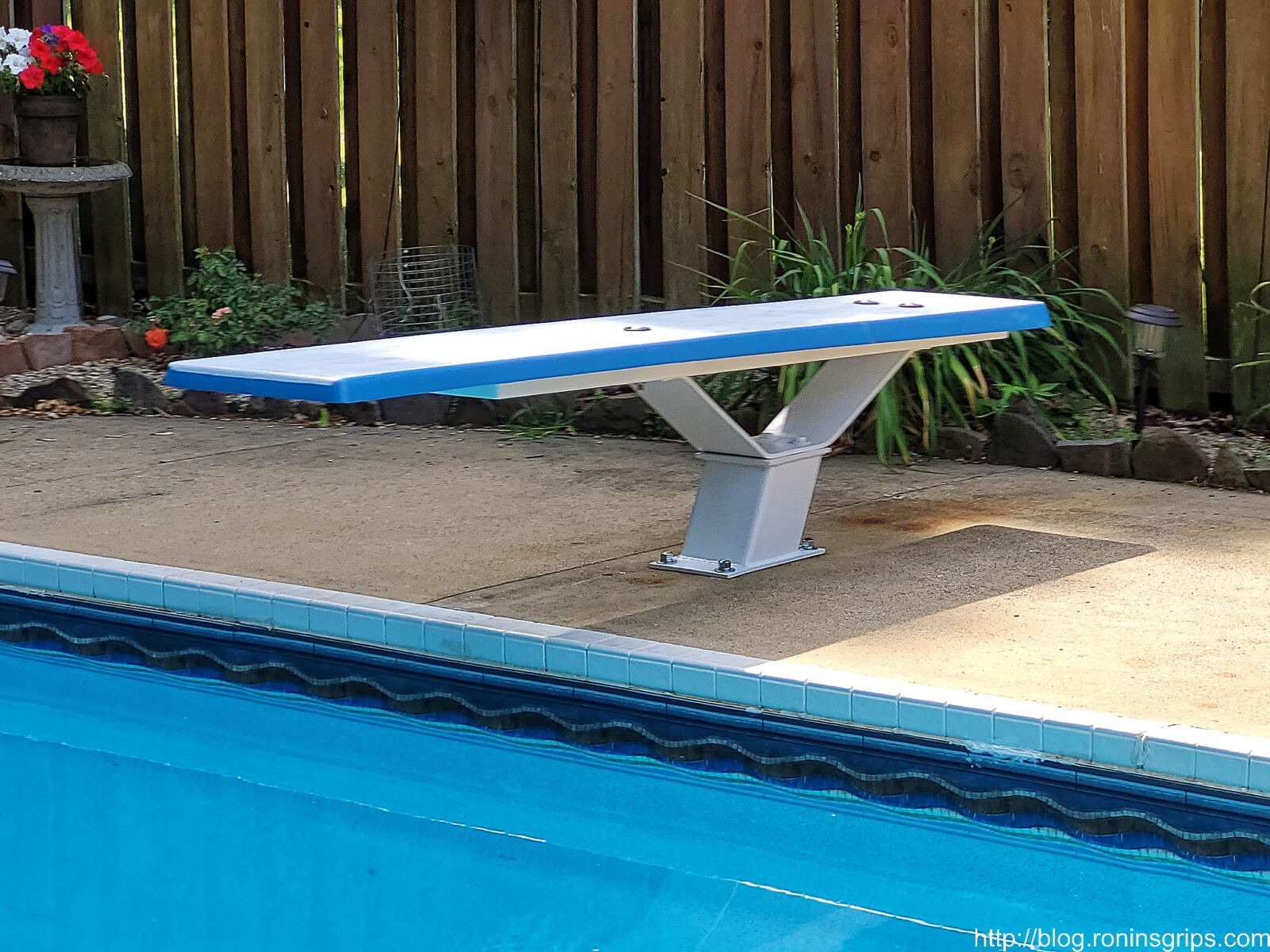
One last parting shot.
If you have a diving board, I’d bet you could do the same and save time and money as well. I hope this gives you some food for thought.
7/23/2024 Update: where a number of kids used the diving board and it held up just fine.
6/15/24 Update: Just finishing opening the pool for the summer. The board is holding up just fine.
5/23/23 Update: Board is holding up great and we’re getting ready for another summer. I just inspected it yesterday – no cracks or any signs of issues.
Note, I have to buy all of my parts – nothing here was paid for by sponsors, etc. I do make a small amount if you click on an ad and buy something but that is it. You’re getting my real opinion on stuff.
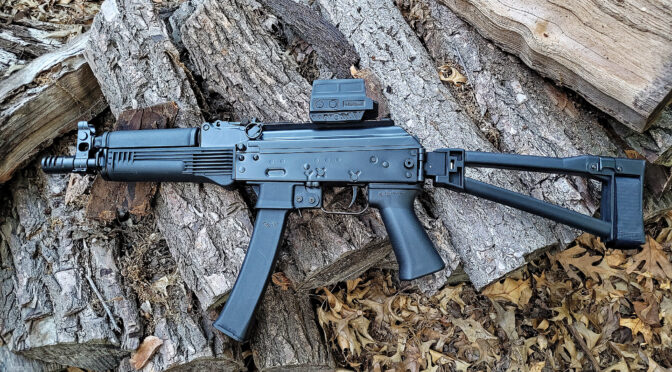
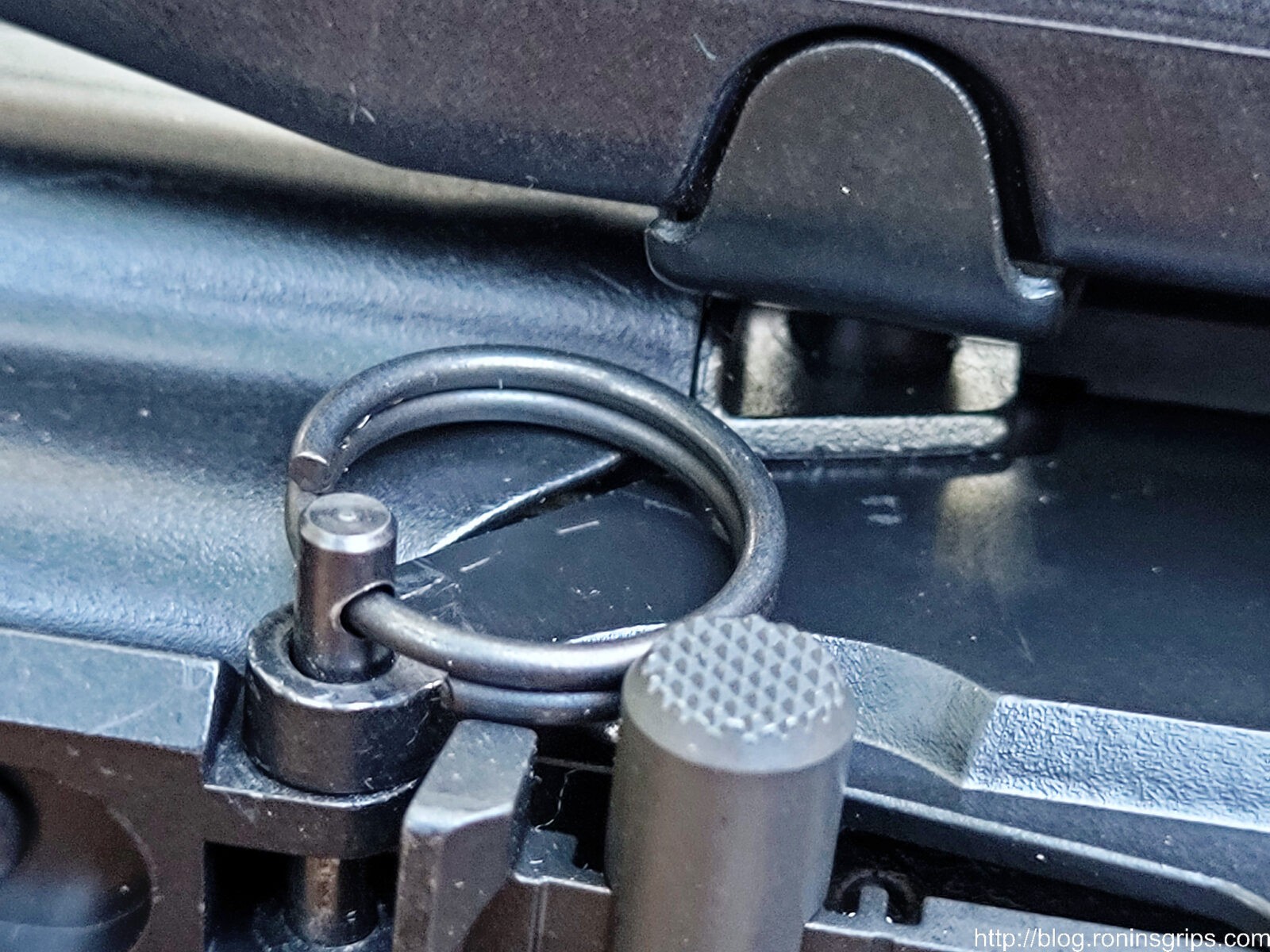
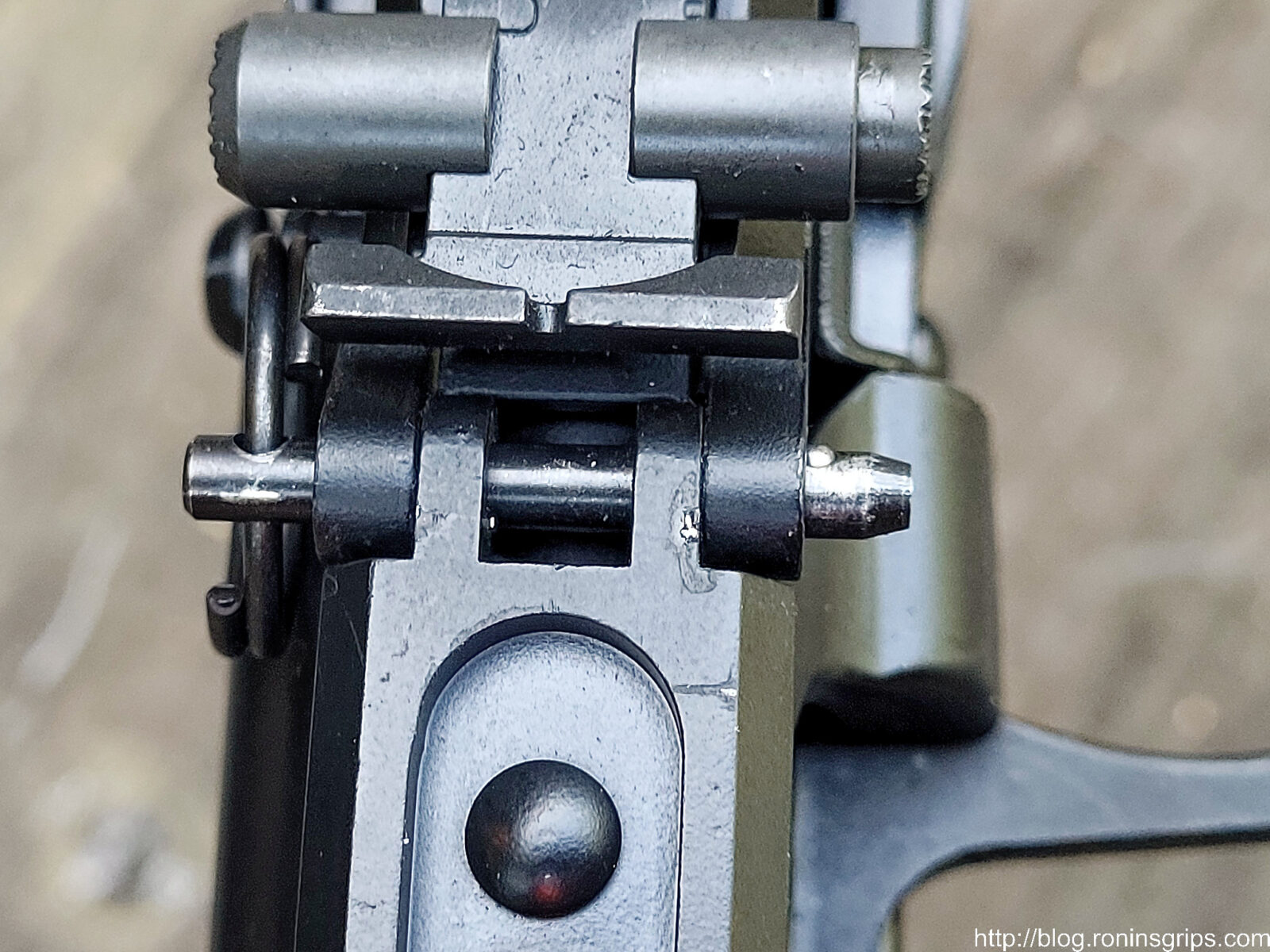
Since Kalashinkov USA introduced the KP-9, I’ve had a handful of guys ask me to make a quick takedown pin for it. Well, it turns out it is a unique size and the hinge pin would need to be around 3.75mm – smaller than what any of my vendors could reliably hit. My existing pins all have a diameter of .156″ or about 3.96mm so they would not work.
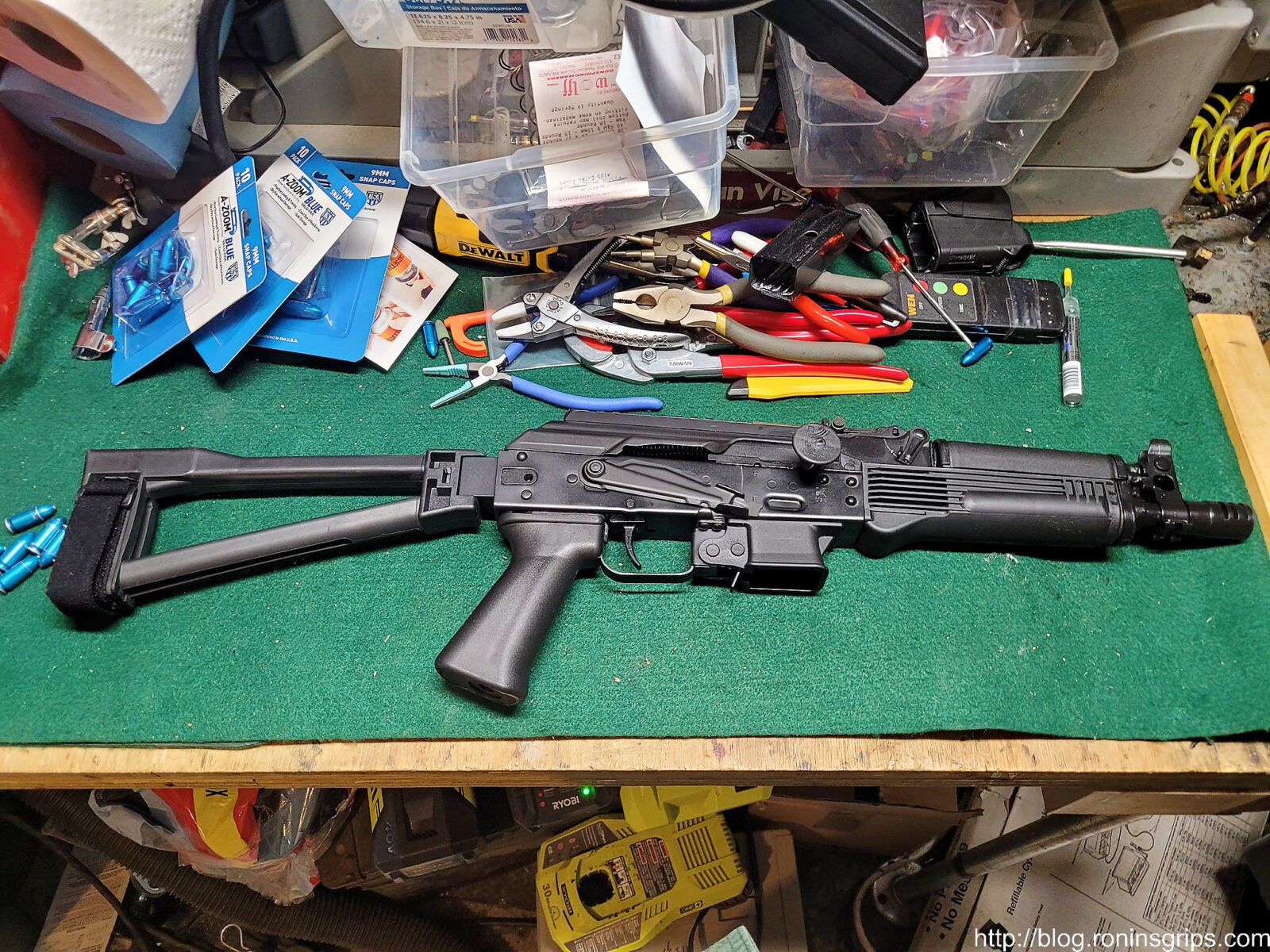
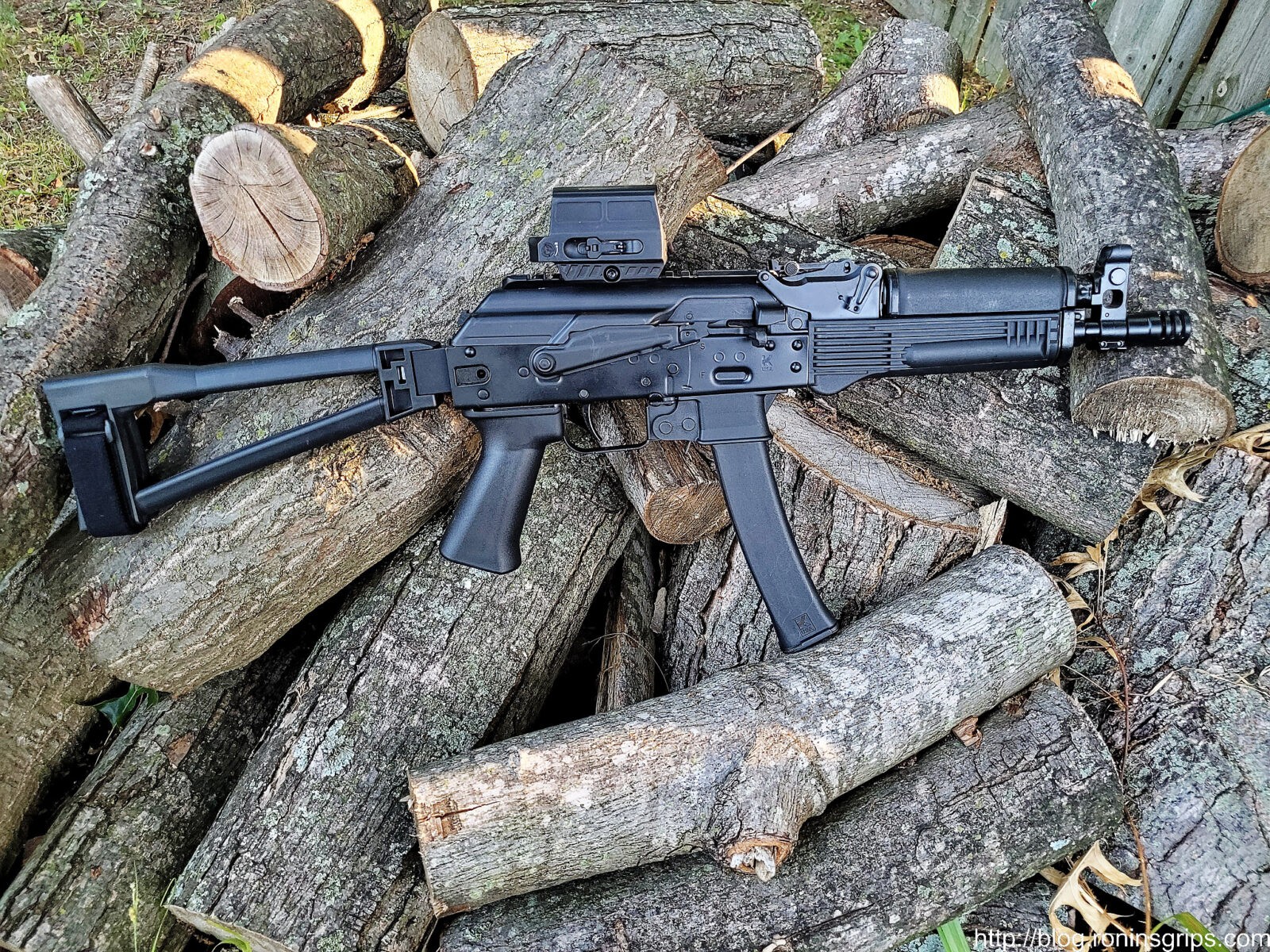
So, what to do? I’d bought a KP-9 with their brace and it was a nice weapon in terms of fit, finish, and operation. I’d pressed out the unique hinge pin and saved it so I could have replaced it but I decided to go another route. By the way, the original pin was swollen at the ends from being set but the middle measure 3.75 so that’s the number I was going with.
KP-9 right out of the box.
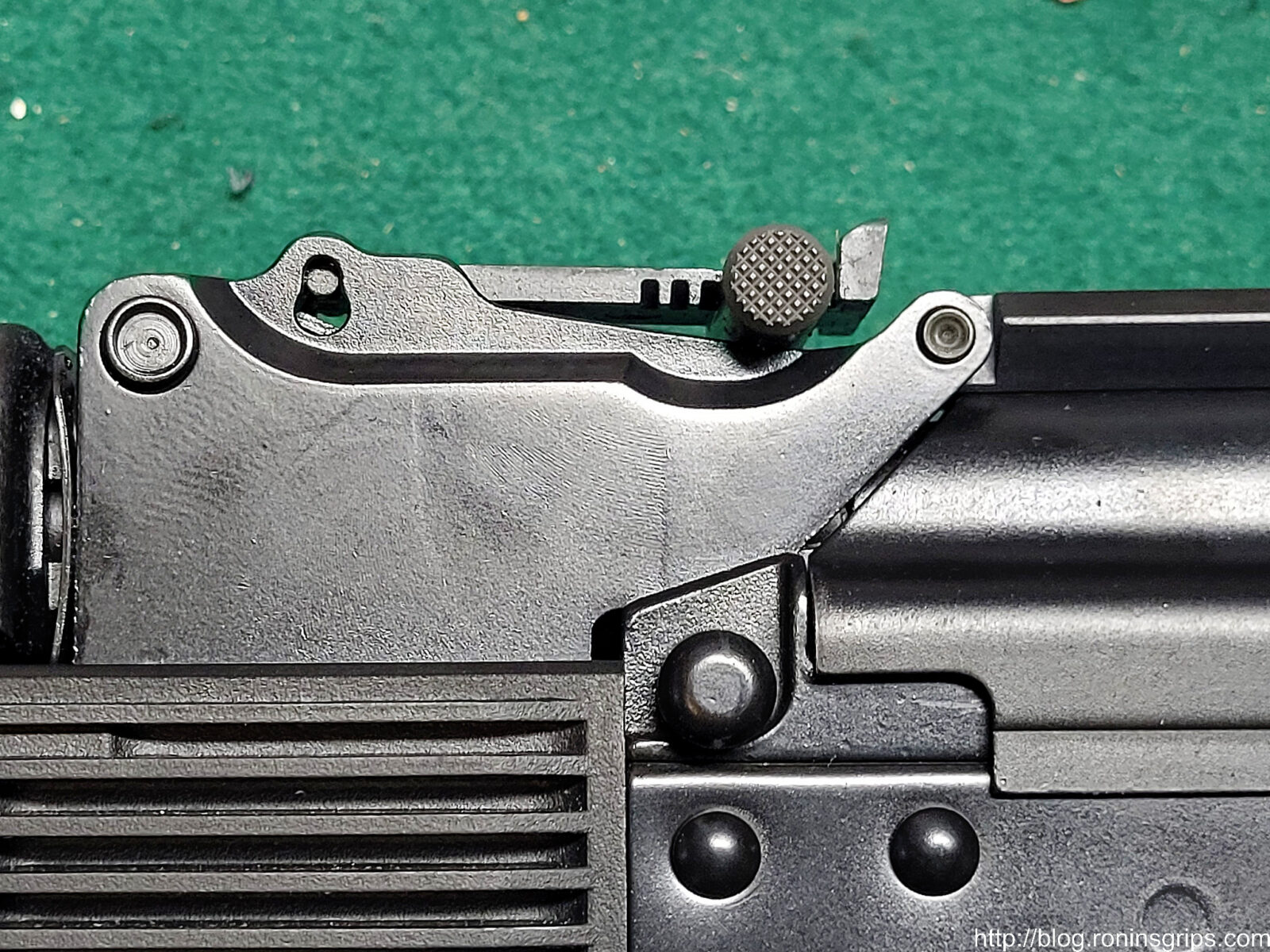
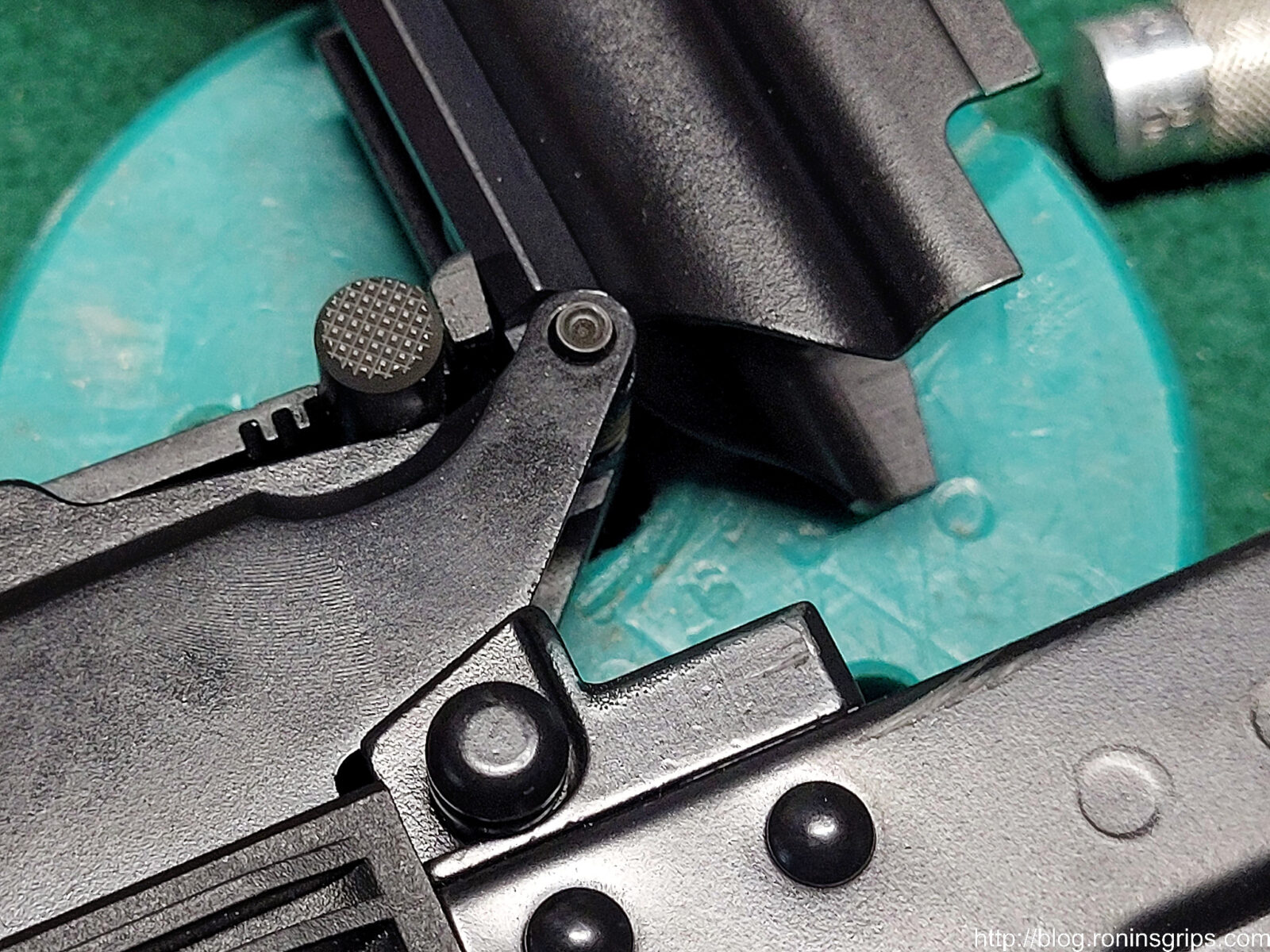
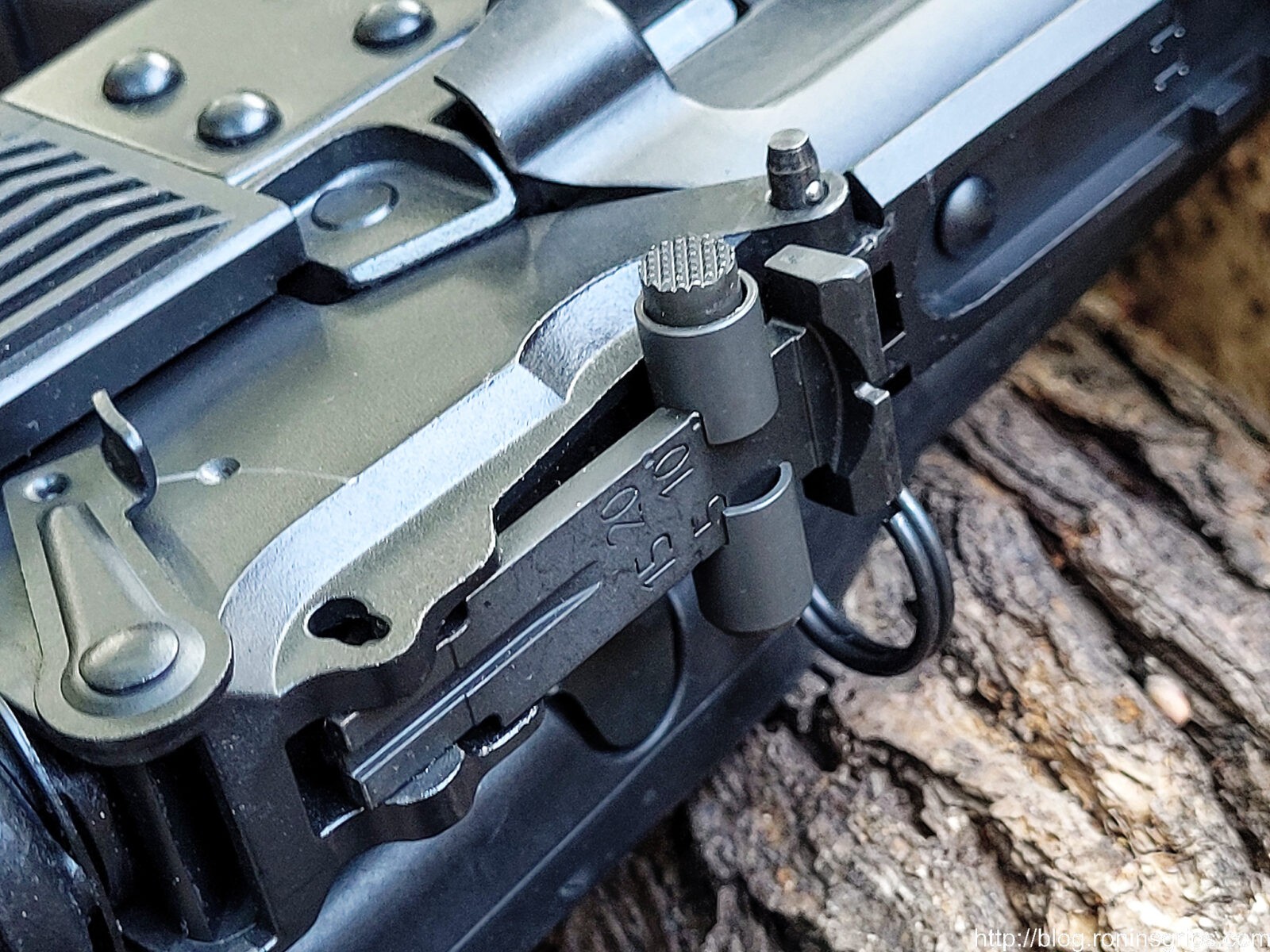
There’s the hinge pin between the rear sight and the start of the dust cover rail.
There is a spring on the pin to help the dust cover pop up when the recoil rod is pushed in. Note, the fitment of the cover to the rear sight block and rear trunnion is very good. If it weren’t for the spring, the cover would stay down. By the way, the big black round thing you see on top of the barrel pin has a groove behind it. When the brace is swung into the folded position, a tab on the brace goes into the groove and holds it in the folded position.
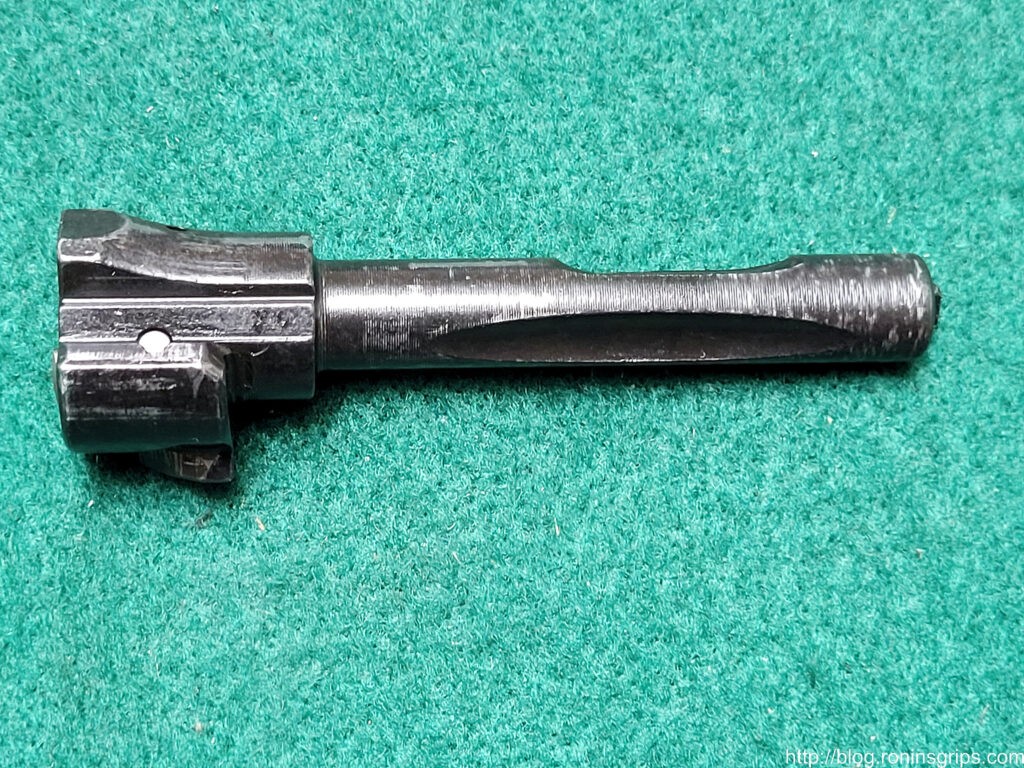
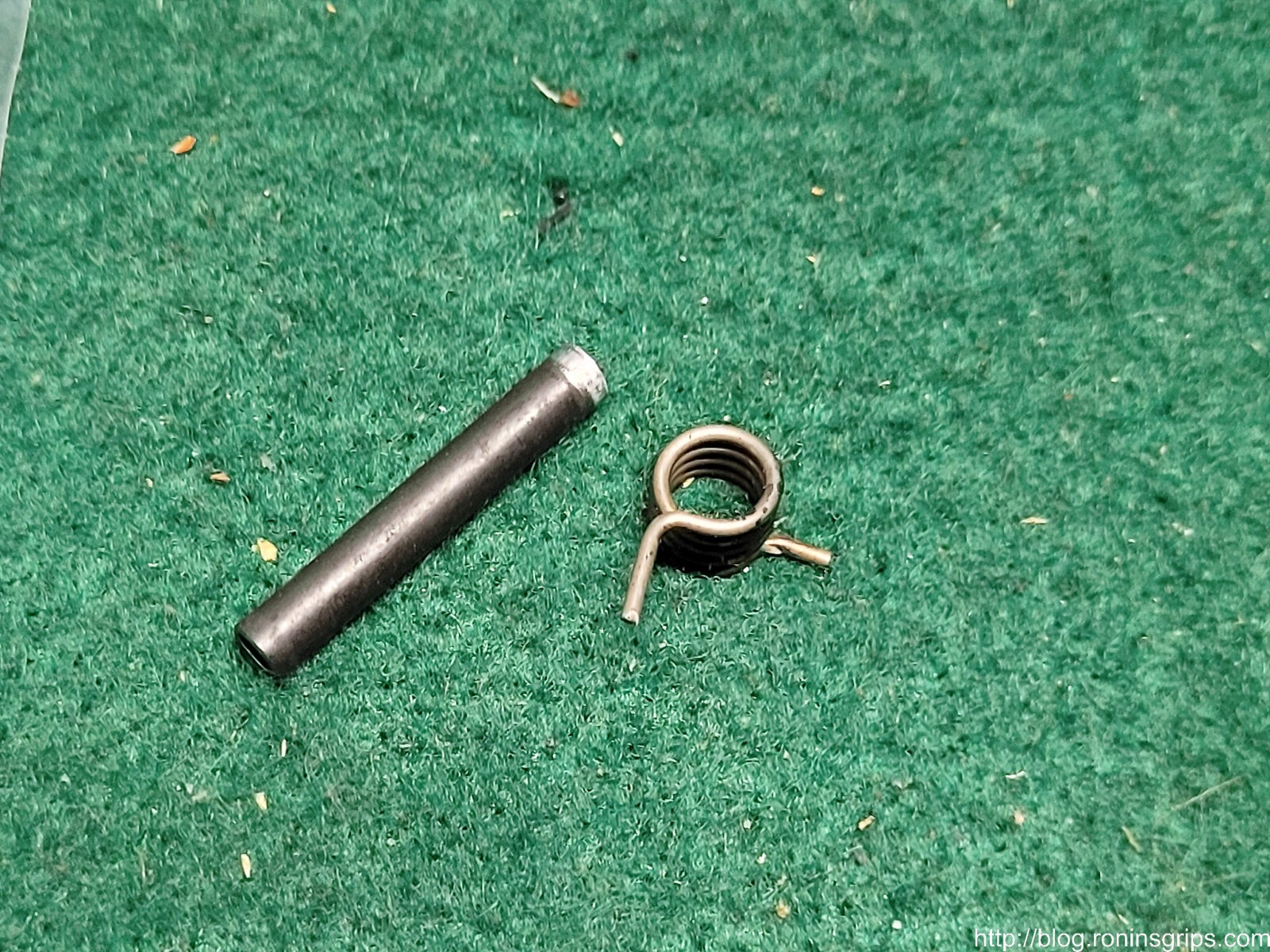
This is the original hinge pin and the spring that pops the dust cover up. The pin is 2.75mm wide and about 24-25mm long – mine measured 24.31mm after I pressed it out. Some deformation would have occurred when it was pressed in and the ends flared open.
How To Remove The Original Pin
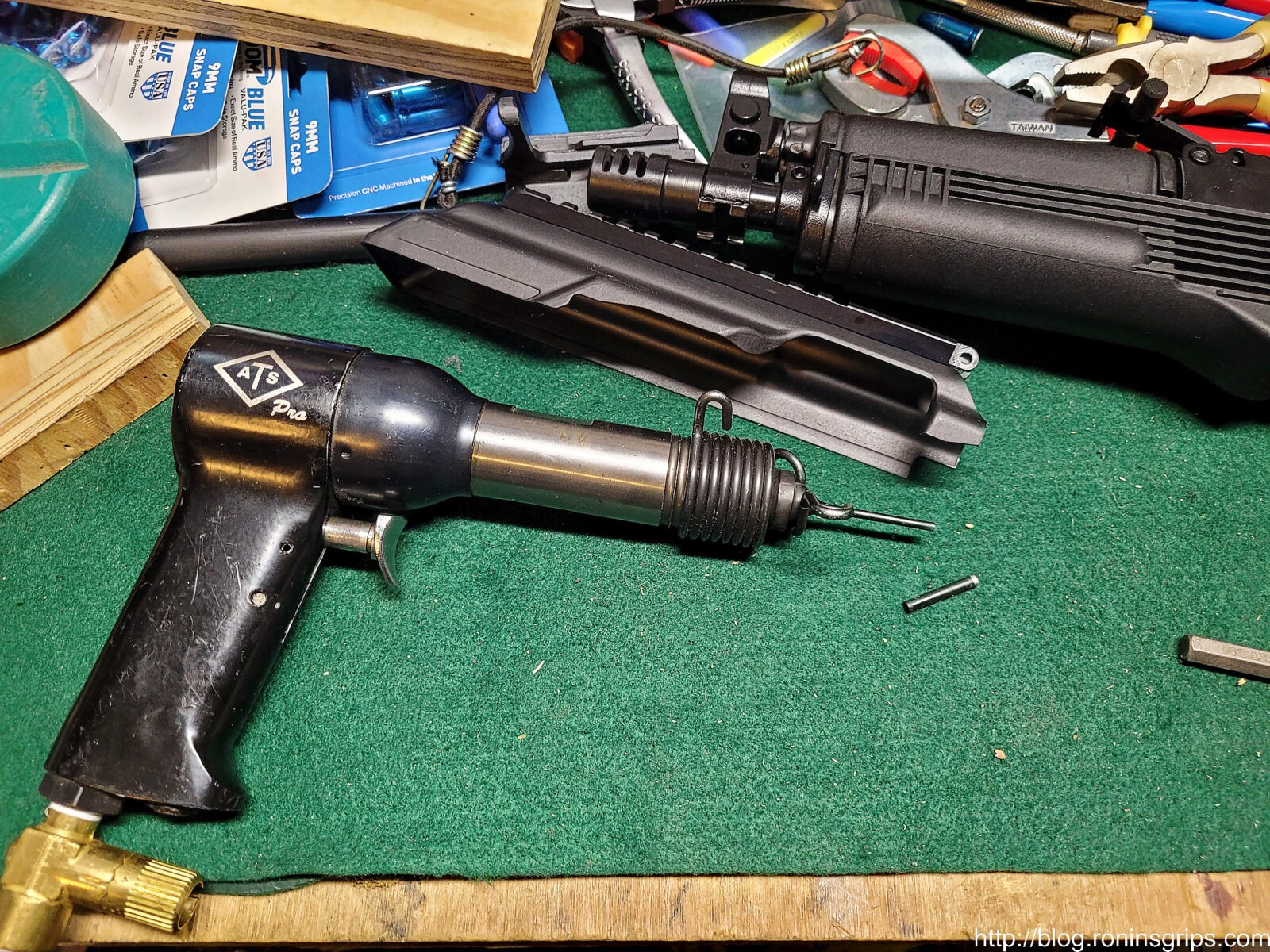
I used a punch on my air hammer to pop the old pin out. You could also press it out or drill it out.
I used my ATS air riveter to pop out the pin in a matter of seconds. You could press or drill out your pin.
Reaming the Hinge Hole
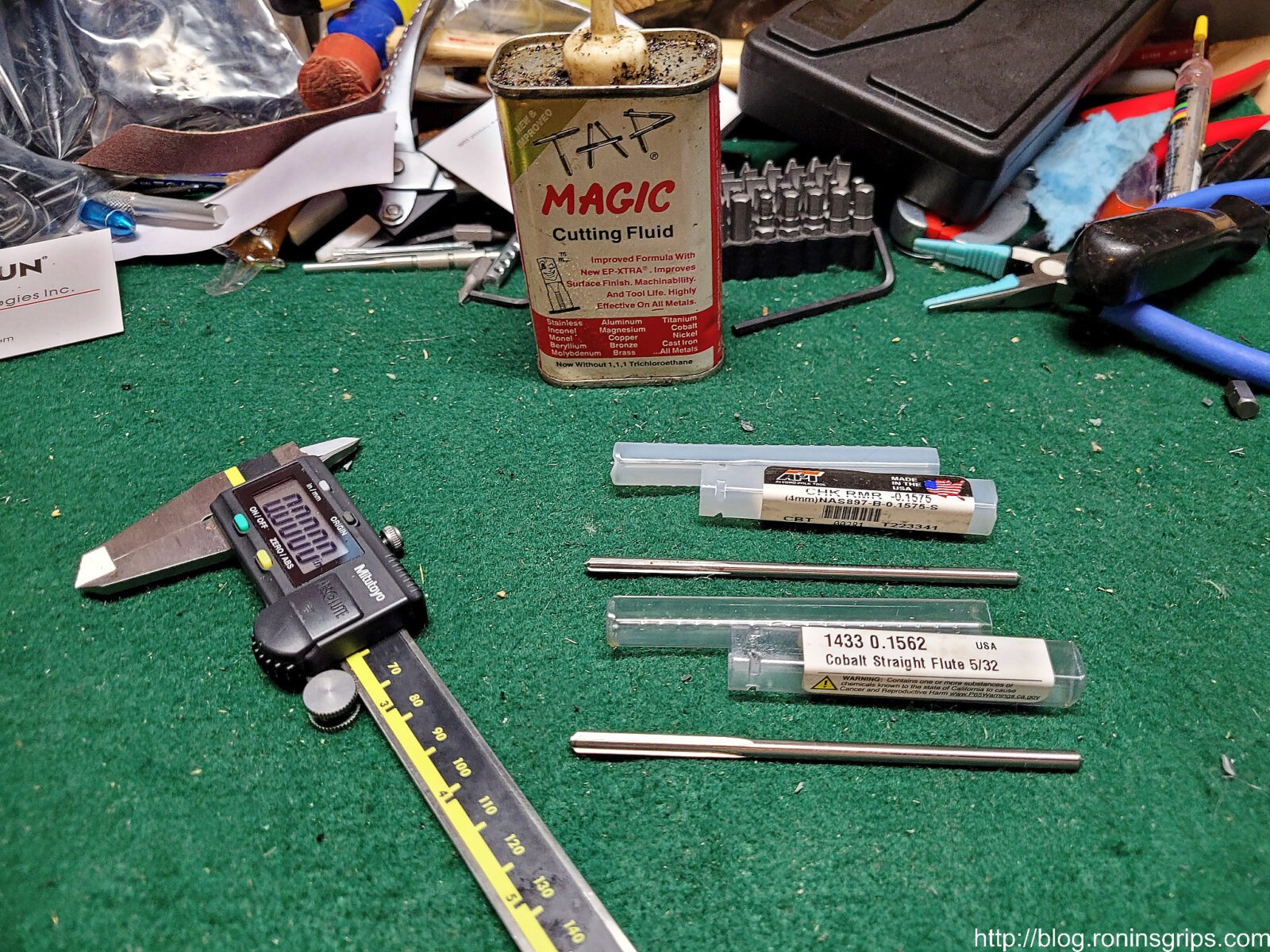
If you look at the hinge, there is enough material around the hinge pin material to ream it out a bit. I decided to get a 0.1563″ (3.97mm) cobalt reamer and a 4mm cobalt reamer. My thinking was to first try the smaller reamer and if that proved to be too small, I’d step up to the 4mm (0.1575″). I bought mine from McMaster-Carr but you can get them from any reputable vendor.
Reamers are cool – they make perfectly round holes and you can do them in a hand drill if you are so inclined, which I was. Secure your weapon in a vise so it can’t move, use a drill bit or other pin to align the hinge parts from the other direction. As you ream, this slave pin, or alignment pin, will be pushed out of the way as a reamer’s head is blunt.
Put your reamer in your drill chuck and coat it with cutting oil, then slowly insert the reamer into hole – let it cut – don’t force it. You’re not taking off a ton of material so I reamed the hole out in one go.
The slave pin did it’s job and I had a true hole in the end. Okay, the .1563″ reamer’s hole worked but was too tight – If you don’t intend to pull the pin much, it would work but it was not what I wanted. I then did the same thing by inserting a slave pin but this time used the 4mm reamer and it worked great.
You see, getting the hole size right matters a great deal compared to some weapons such as the M92 and Krinks – they want to cam the cover up so there is tension that locks everything in place. With the KP-9, the fit of the dustcover relative to the rear sight block is so good that there isn’t tension so you need the quick takedown pin to fit snugly and the detent ball to do its job.
Here’s the full view of the hinge. Note the detent ball on the pin that keeps it from accidentally sliding out of the hole.
The way a quick release pin that has a ball bearing detent works is that a spring is behind the ball bearing pushing it up but it is captured in the hole. By sticking up, the ball bearing limits travel. Having a circular surface if you pull hard enough during extraction then the ball bearing is pushed down, the pin pulls free and then the spring pushes the ball bearing detent back up once it is clear.. Insertion is just the reverse.
In closing
I really like how it turned out. For folks who want to add a quick takedown pin, just order the AK-V pin [click here to open that page in a new tab] and then ream your hinge open. Note, you might want to get the same size reamers and see which you prefer – start with the smaller one first of course.
The pins make removing the dust cover really easy.
Note, I have to buy all of my parts – nothing here was paid for by sponsors, etc. I do make a small amount if you click on an ad and buy something but that is it. You’re getting my real opinion on stuff.
We have an expensive Whirlpool fridge that had (past tense) an ice maker built into the door. It managed to work until its warranty expired and then it stopped. It turns out those things are a known problem and expensive to replace (over $1,000). Well, the chilled filter water still worked so I wondered about other options.
Yes, good old fashioned ice trays are an option but we rarely have room in the freezer section for them, we forget to fill them and they are slow to make ice. It was an option but not realistic in our family.
What I really wanted to do was to find a counter top ice maker. We stayed at a cabin with one last year and it did a pretty good job. I had no recollection of the make or model of it so I turned to Amazon and started reading.
First off, there are tons and tons of options ranging from relatively small counter top ice makers all the way up to commercial units on Amazon. I wanted something that wouldn’t take up a ton of space, had a refillable water supply tank (not plumbed in other words) and could crank out ice quickly.
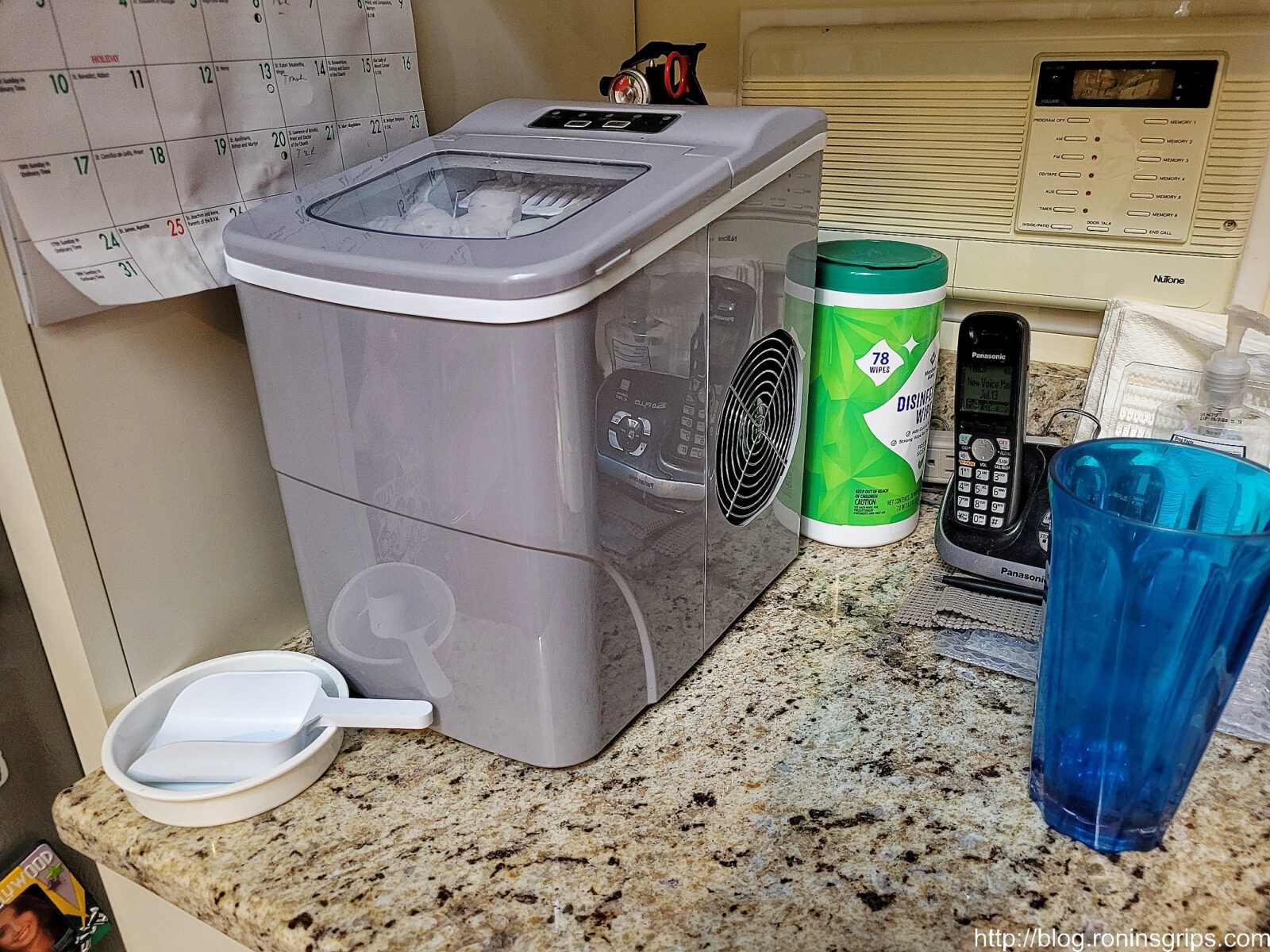
The good news is that there are a number of units to choose from. I read reviews and went for a combination of great reviews and price to select the AgLucky HZB-12/B. When we bought it, the price was $119.99 and there was a coupon for $10 off. When I checked the price just now, it was $129.99 and no coupon but this gives you an idea of the price.
It scores 4.4 stores with 14,024 reviews and to be honest, I can see why. It does the job very well with some small issues but for the price, I’d buy it again. We’ve used it a ton for a month now and am quite happy.
The units is 12.6″ tall, 8.7″ wide and 12.3″ deep. It is not large and there are color options. We went with grey and there is also black and red.
Setting Up The Unit
It comes completely assembled in a sturdy box. You do need to go through the top of the unit and remove the tape they installed to secure everything at the factory. I washed it with mild soap and rinsed it thoroughly. I then ran a couple of containers of test water through the unit to make ice that we tossed out.
It took less than an hour from when I got it out of the box, cleaned and tested it to when we were then cranking out ice. Not bad at all.
Ice Volume
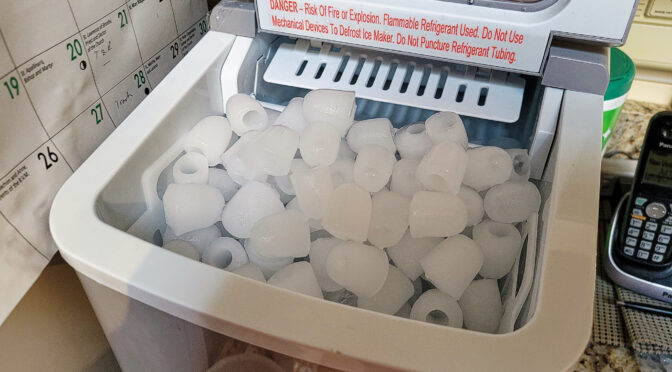
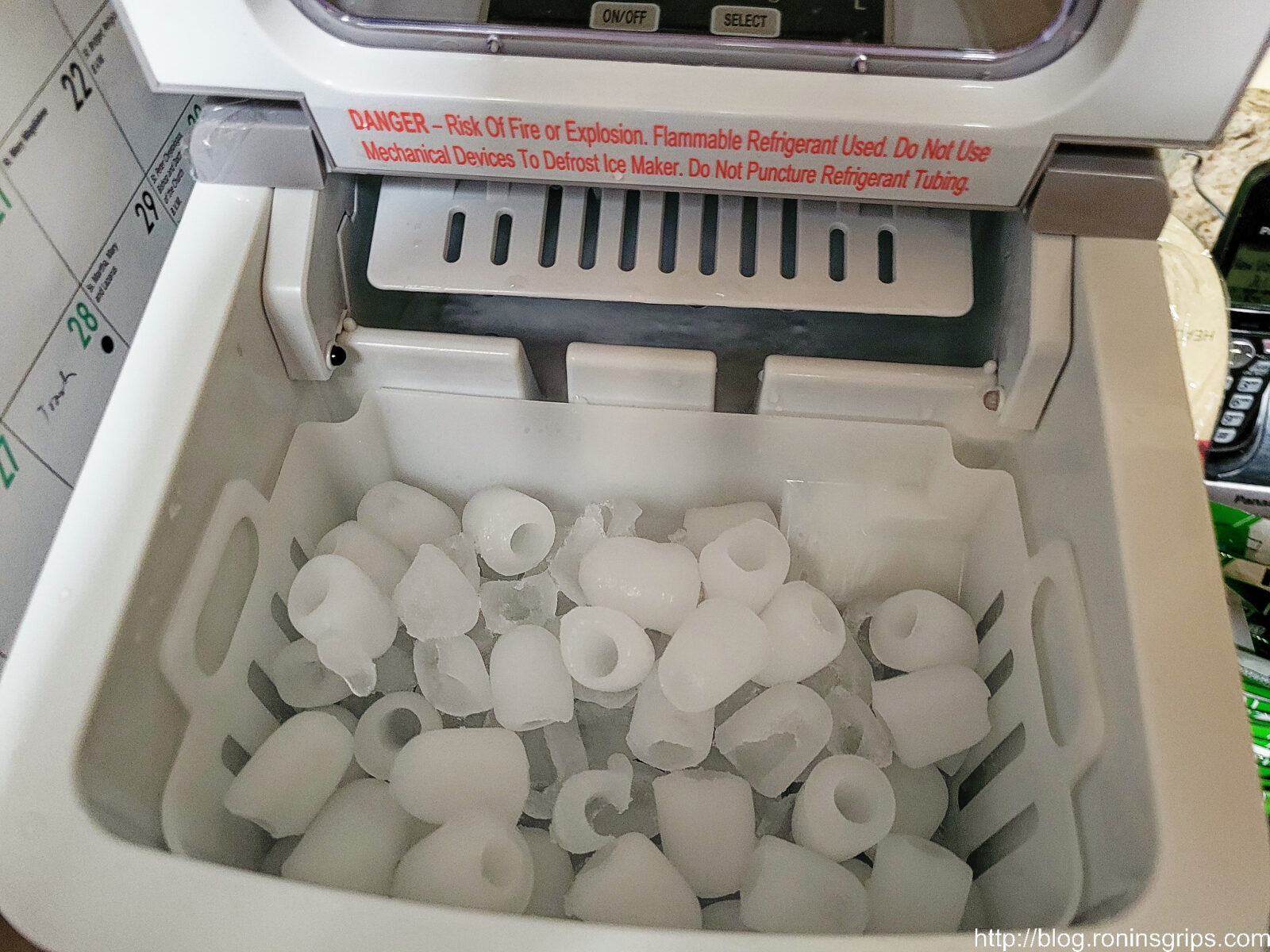
They say it makes cubes every 6-8 minutes and that is about right – it really does. It can crank out 9 ice cubes with each batch at that pace – it’s surprisingly quick especially compared to old fashioned ice trays. By the way, the ice produced is shaped more like a cylinder that is hollow at one end – they are not really “cubes”. I think it can crank the ice out so fast because it focuses on cooling extended metal rods to make the ice.
Definitely use filtered water. We keep a large plastic cup near the unit to refill the unit with filtered water. Yes, there are much more expensive units you can tap into your water line with but we wanted portability
The Basket
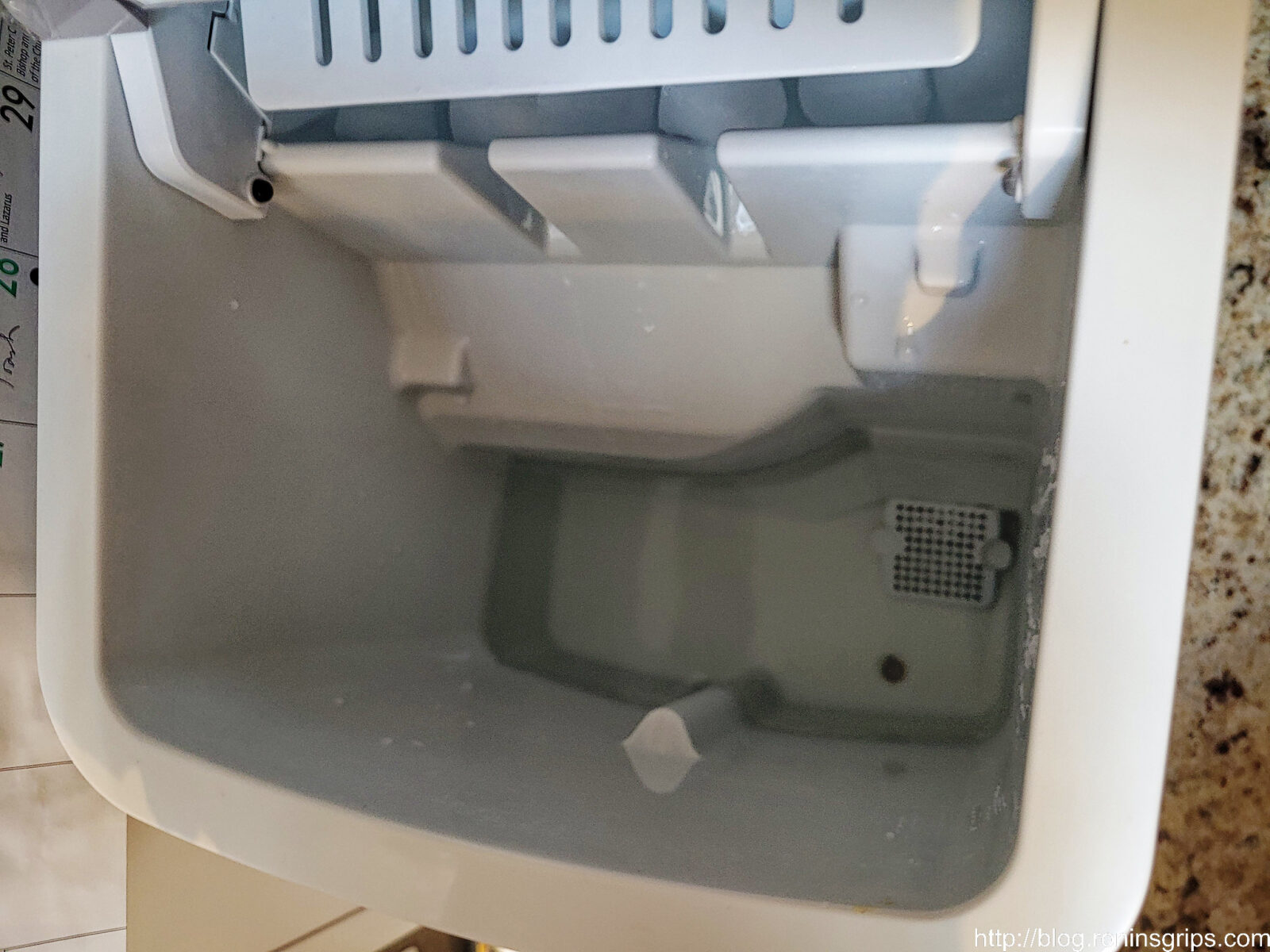
The ice basket is in the front of the unit and is not refrigerated. Why, I am not sure – maybe to keep costs down. As the ice melts, it drips and goes into the water tank directly below the ice tray.
The basket sits in the angled surface and the small column you see at the bottom of the photo. The bottom is actually the front of the machine. You fill the unit with water up to the top of that column or any existing ice will be sitting in water. So, you both get ice out of the top and add water as well.
The basket is also relatively small – the whole unit is small. We keep the provided ice scoop by the unit. If more ice will be needed in the future, we would dump the ice from the bin into a plastic bag and freeze it. To be honest, it works but if you need a bunch of ice fast for a party, you may still want to buy ice.
There is an infrared sensor at the back edge of the ice bin – just above the rear of the basket. If a cube gets in front of it, the unit will assume the bin is full and stop making ice even though the bin has room. I just got in the habit of looking when I walked by and would use the scoop to move the cube out of the way.
Just above the back edge of the basket, find the black dot on the left side and somewhat clear dot on the right side. When ice breaks the infrared beam between the two units, the machine stops making ice. That could be when the basket is legitimately full or if an ice cube happens to be stuck in the way. This is a trivial issue really.
Sound Level Is Acceptable
When the fan kicks in to make ice, it is about 60-62 db at about a 6″ distance according to a sound level app on my phone. This puts it at the level of normal conversation or background noise. 70db, for comparison, is the sound level inside a car or an office. Our house is relatively quiet but we got used to the sound and the sound it makes when the ice drops off the fingers and is pushed into the bin. Sure, I wish it was quieter but for the price, I will happily live with it.
In Conclusion
The AgLucky unit is a work horse. It does its job and is totally worth the price for us — it’s nice to have a ready supply of ice again.
Note, I have to buy all of my parts – nothing here was paid for by sponsors, etc. I do make a small amount if you click on an ad and buy something but that is it. You’re getting my real opinion on stuff.