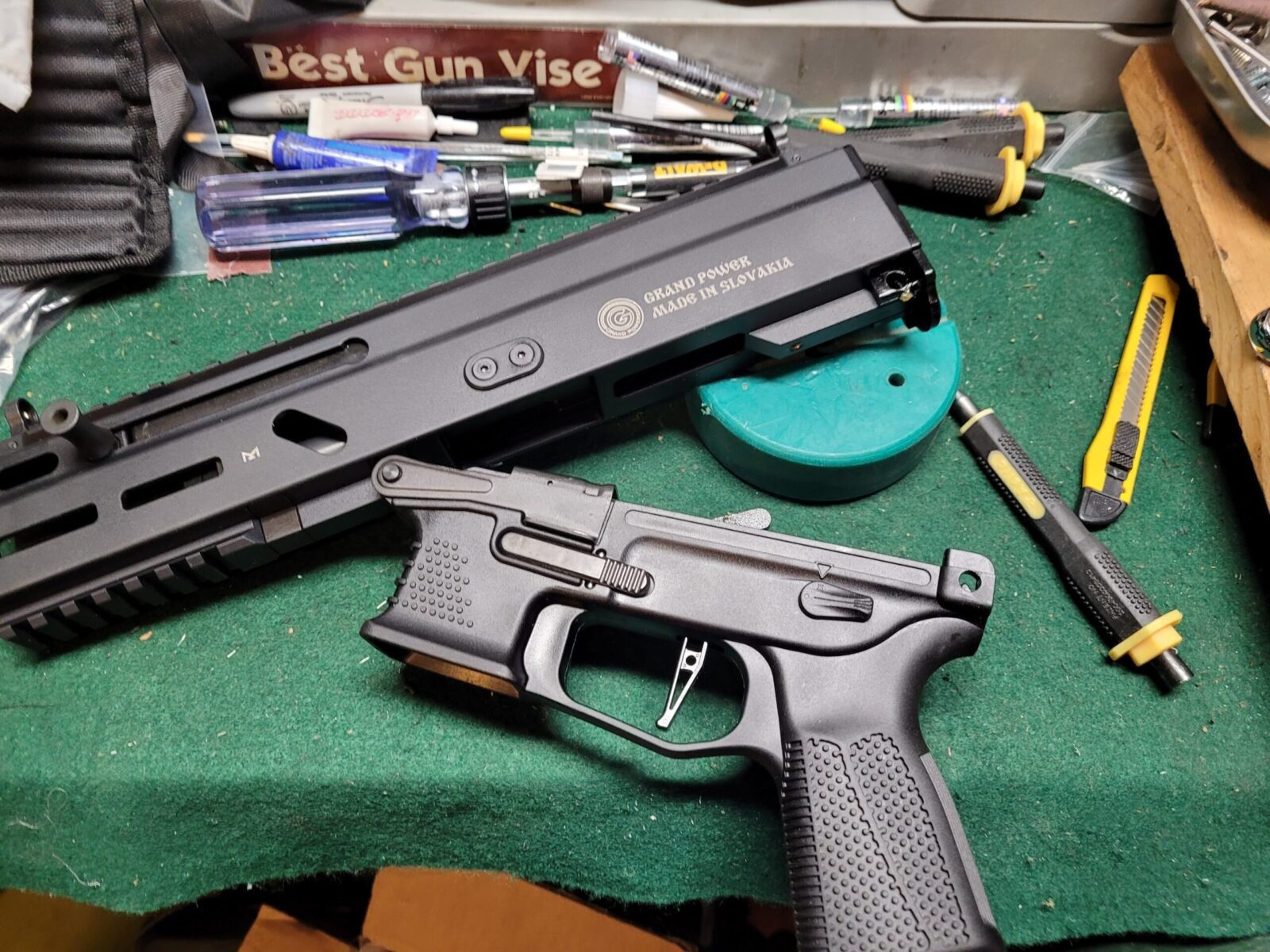
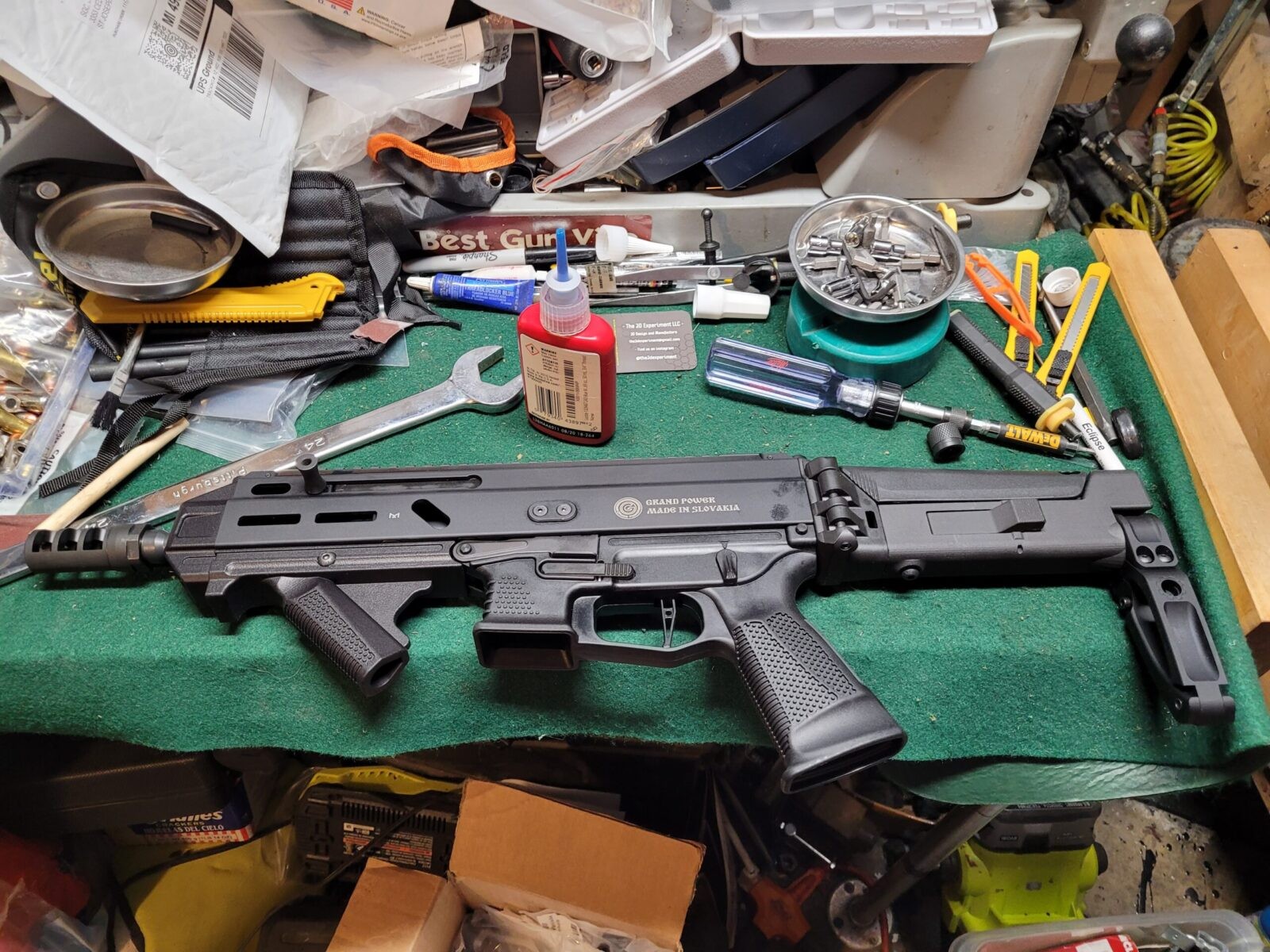
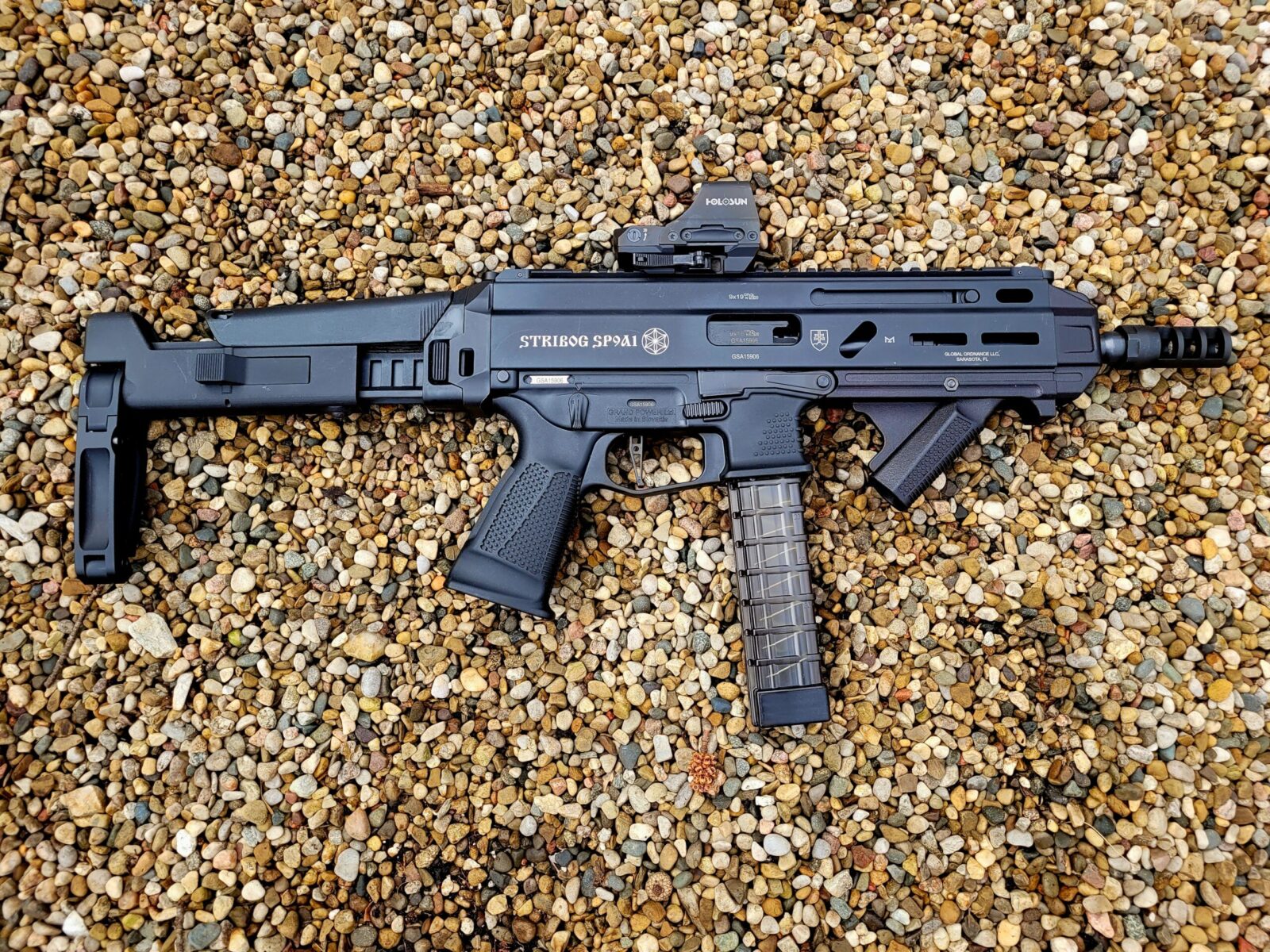
I do a lot of reading and a few years ago I read about a new pistol caliber carbine (PCC) called a “Stribog” by Grand Power. It was a blocky looking thing but it was getting good reviews. The more I read, the more positive real-world reviews I encountered. Finally, in a fit of obsessive compulsive behavior, I ordered one in and now it’s my favorite PCC. Well, that would be too short of a post so let me back up a bit and give you some background.
Where did the name “Stribog” come from?
First off, “Stribog” is pronounced “Stry-Bog” and refers to an anicent Slavic diety that can be interpeted as the god of wind or, depending on the translation, the god of annihilation or war. Others say he was the gold of the cold but regardless, that’s what it was in centuries long past. [If you want to read more, click here for a cool post on Wikipedia].
Who makes it?
The Stribog is made by Grand Power, a relatively new company located in Banská Bystrica – Slovenská Ľupča (Slovakia). Mr. Jaroslav Kuracina started the company just before 2012 when he then got funding from friends and the rest is history. They now are producing 2,000 firearms per month on CNC machines based on Jaroslav’s designs.
By the way, Jaroslav’s patented design is how the barrel locks into the slide by rotating. This matters for two reasons – first, it reduces barrel rise meaning you can get back on target faster. Second, it reduces felt recoil – enabling the shooter to better stay on target also.
In 2008 they started exporting to the US and today, Global Ordnance of Sarasota, FL, is their US distributor. In a relatively short amount of time, they have not only entered the US market but created a good reputation in the process. You can now find the Stribog being sold by many different vendors including Global Ordnance directly, Palmetto State Armory, GrabAGun and many others.
Which model did I get?
I bought a SP9A1 with a folding SB Tactical brace in November 2021. It is my understanding that at some time prior to that the charging handle was of the reciprocating type – meaning it would travel forward and backward as the bolt cycled. One thing I made sure of was that it did have a non-reciprocating handle and it did. I would bet by the time you read this you will only find new firearms for sale with the non-reciprocating handle but buying one used might be a different story.
Chambered for 9×19 NATO (9mm Luger) and fire +P loads. 9mm NATO tends to be hotter than 9mm Luger so +P ammo is not a challenge for it.
8″ barrel with 1/2″x28 threads – this thread is commonly used for 9mm muzzle devices so you can readily add compensators, suppressors, etc.
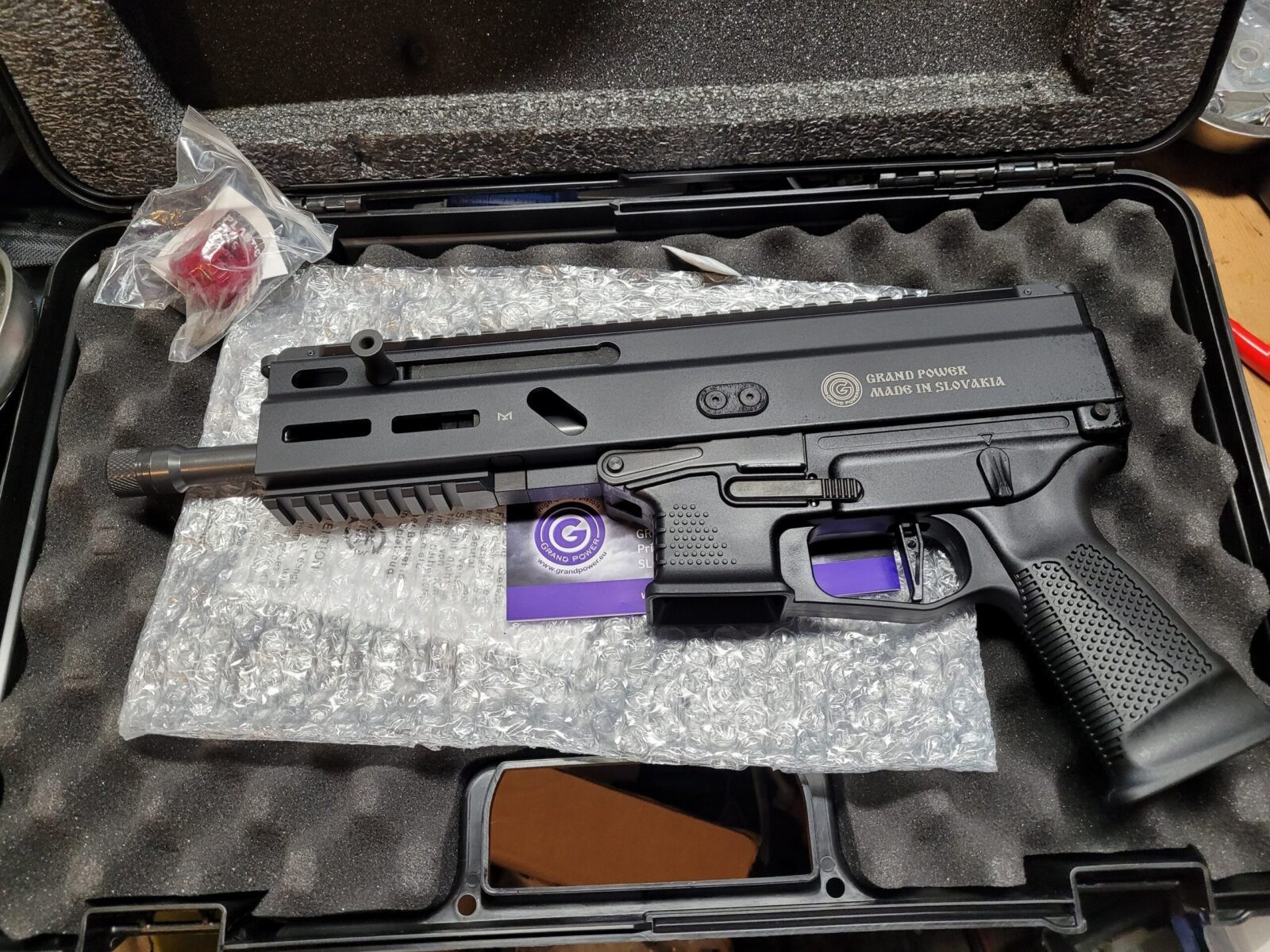
The Stribog arrived nicely packed in a hard case.
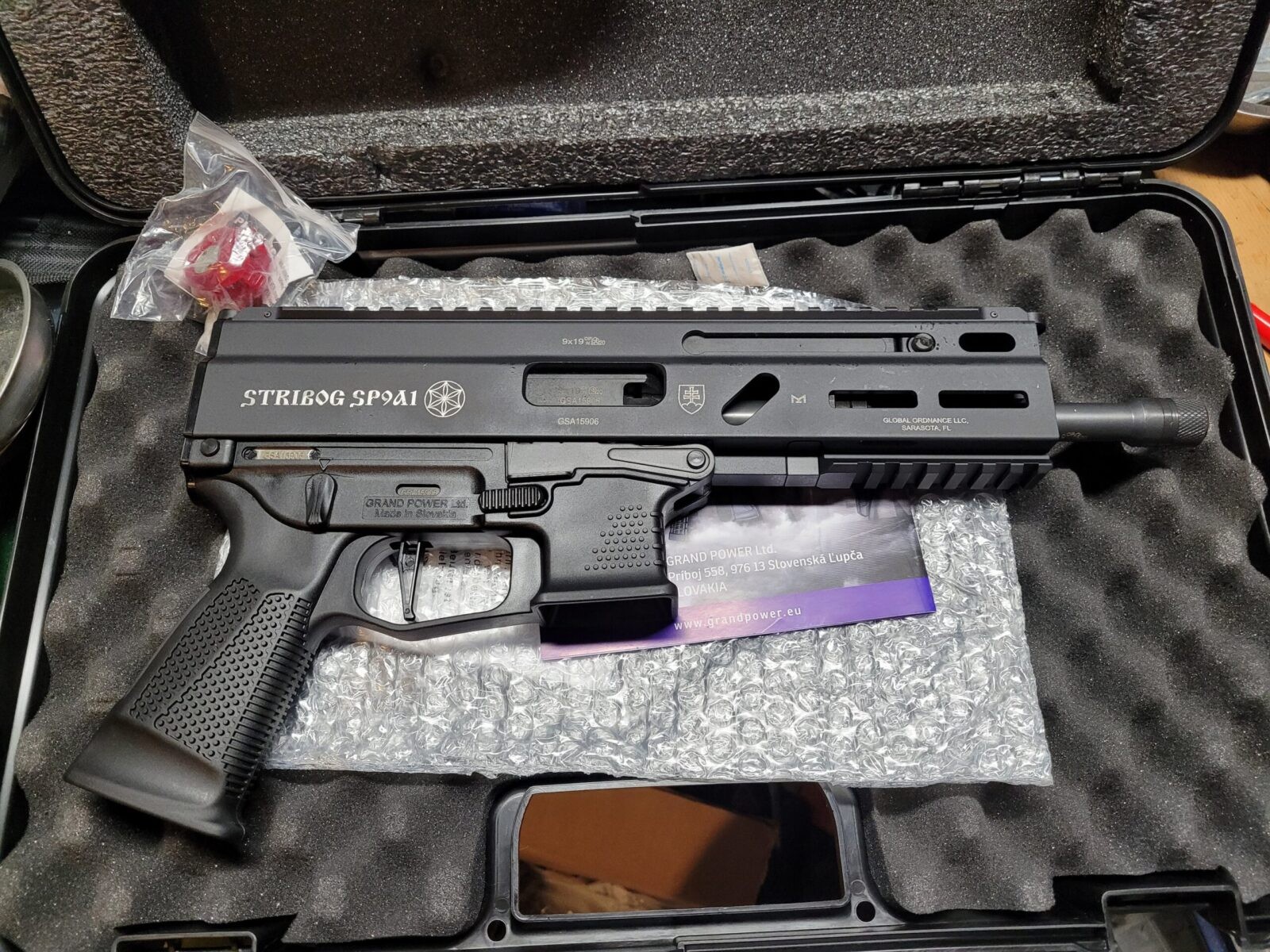
Here;s looking at it from another angle. Honestly, I can do without the screen printed white text and graphics.
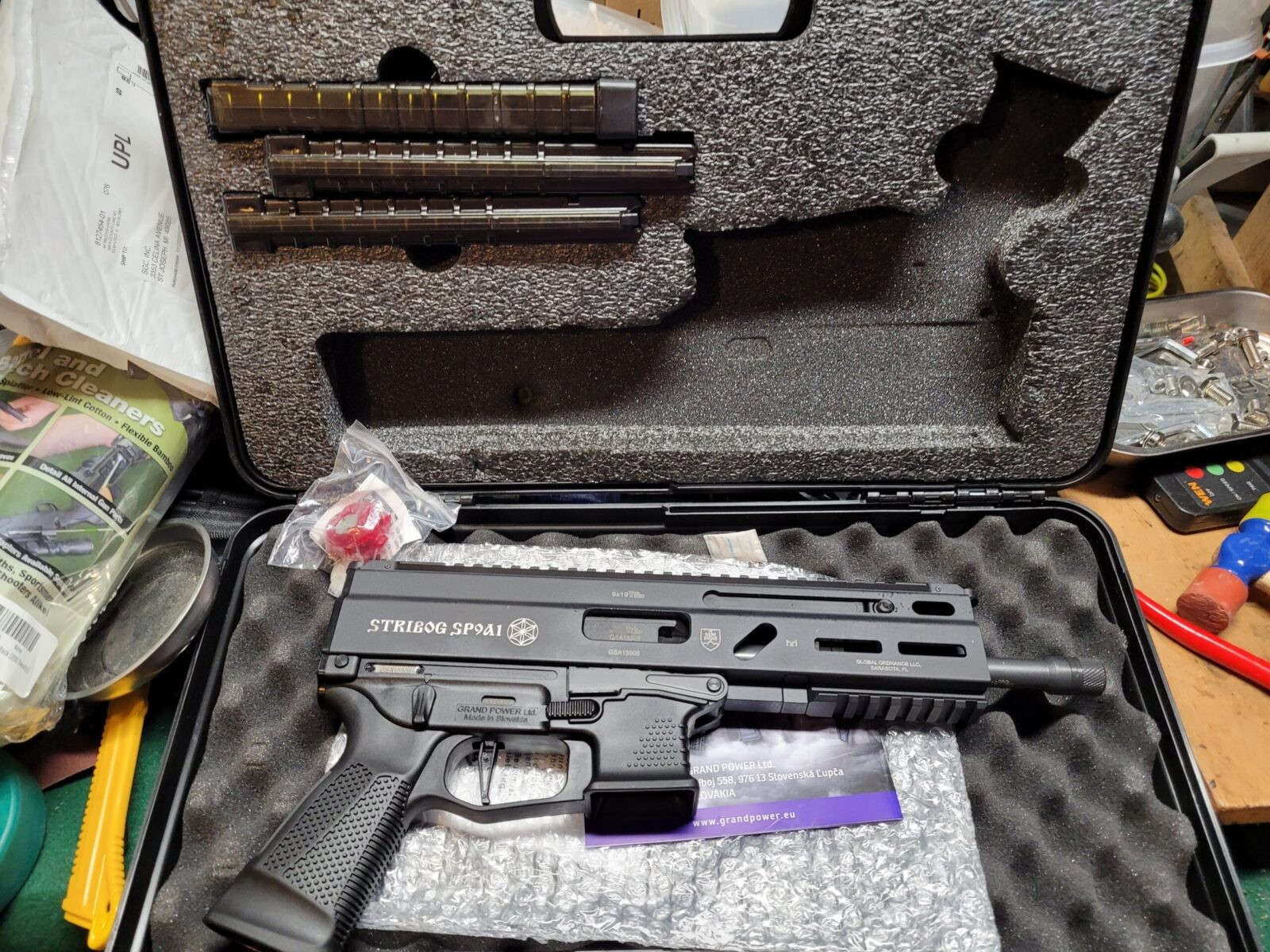
It took me a minute before I looked at the lid and noticed the three magazines tucked in there.
In looking the pistol over, there were a few areas for improvement. First, I do not like the trangular SB Tactical brace. It works but doesn’t suit my taste. I also wanted to do something with that 8″ barrel poking out the front of the handguard, install a muzzle brake and a reflect optic.
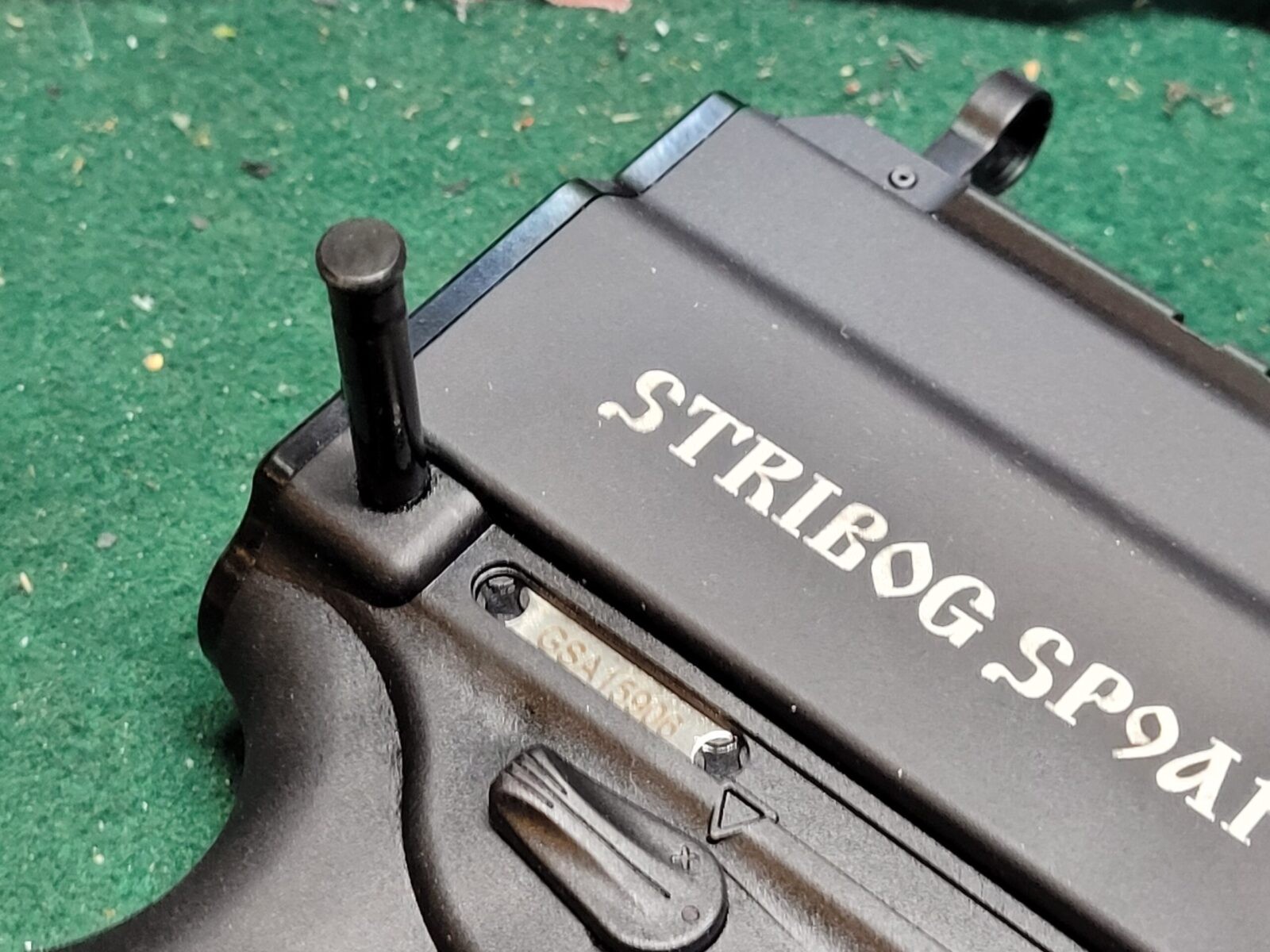
Pop out the back lower pin and you can then change the rear plate in the top half. The pin is captive meaning it will push through but will not exit the other side so don’t force it.
This is as far as the pin will push out. You do need to push it until it stops so you can remove the back plate but don’t force it out.
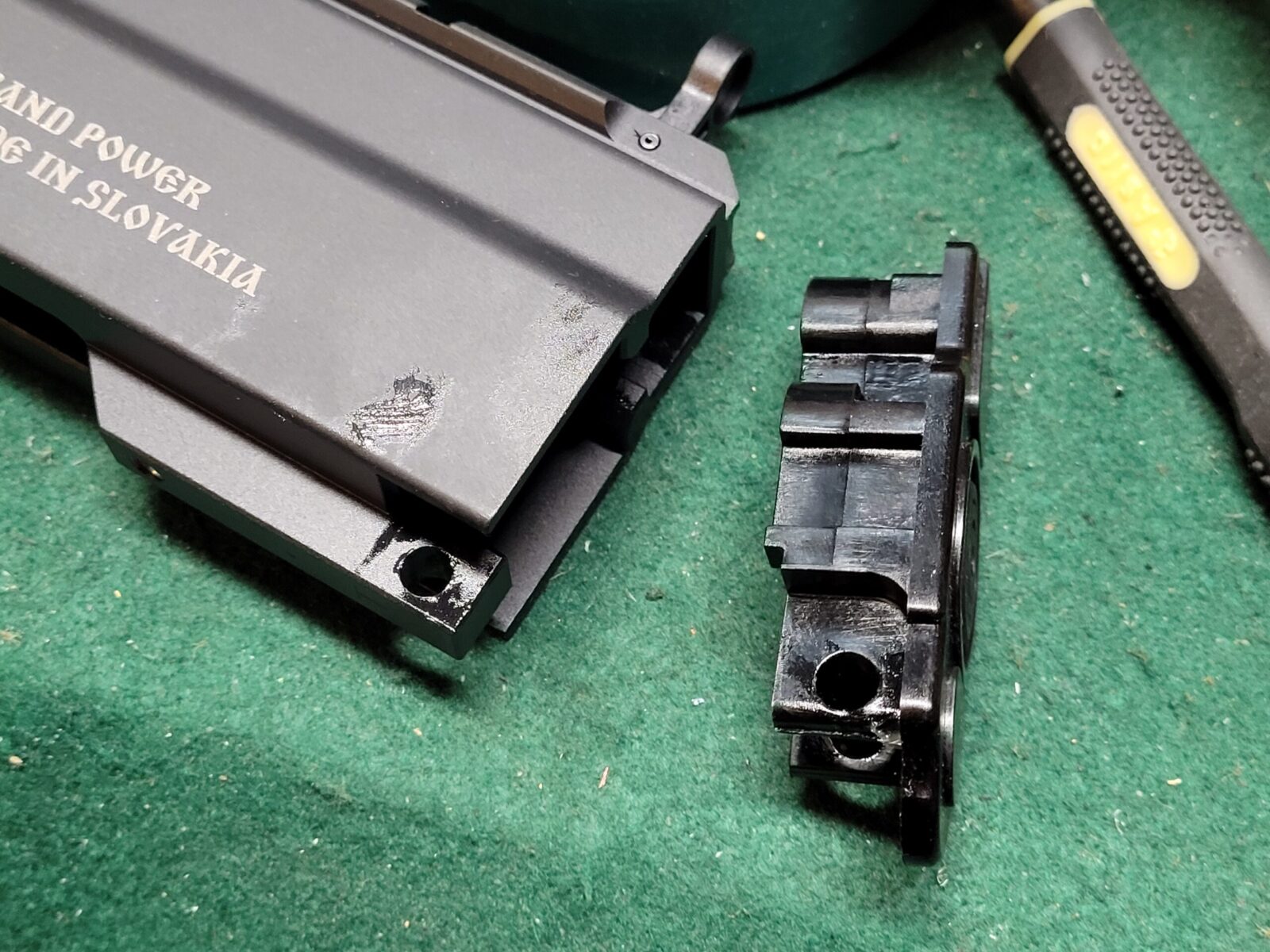
Push the plate down slightly and then it will pull out.
The F5 literally slides right back in place of the plate. It’s very nicely done – my unit did not require any fitting.
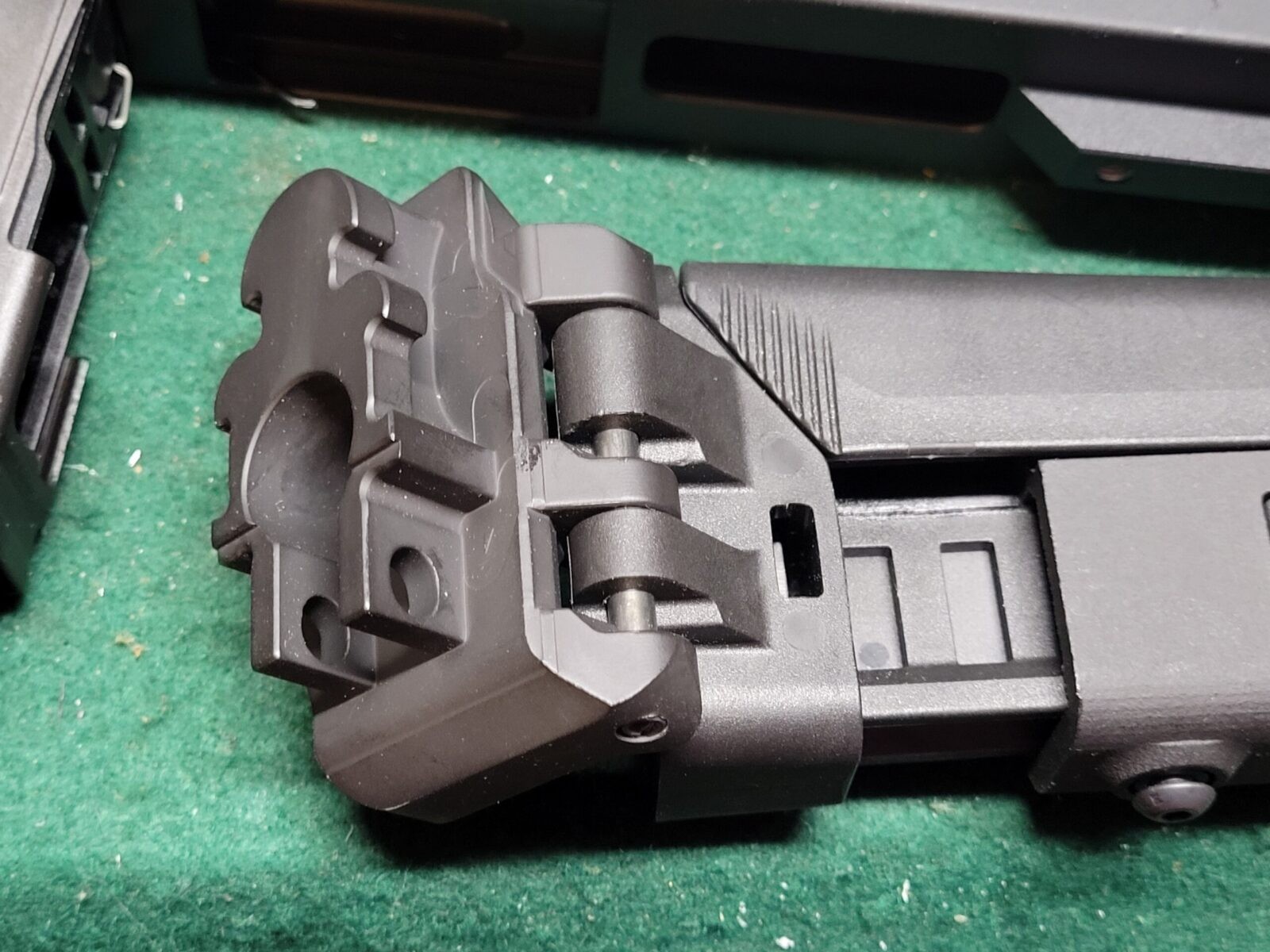
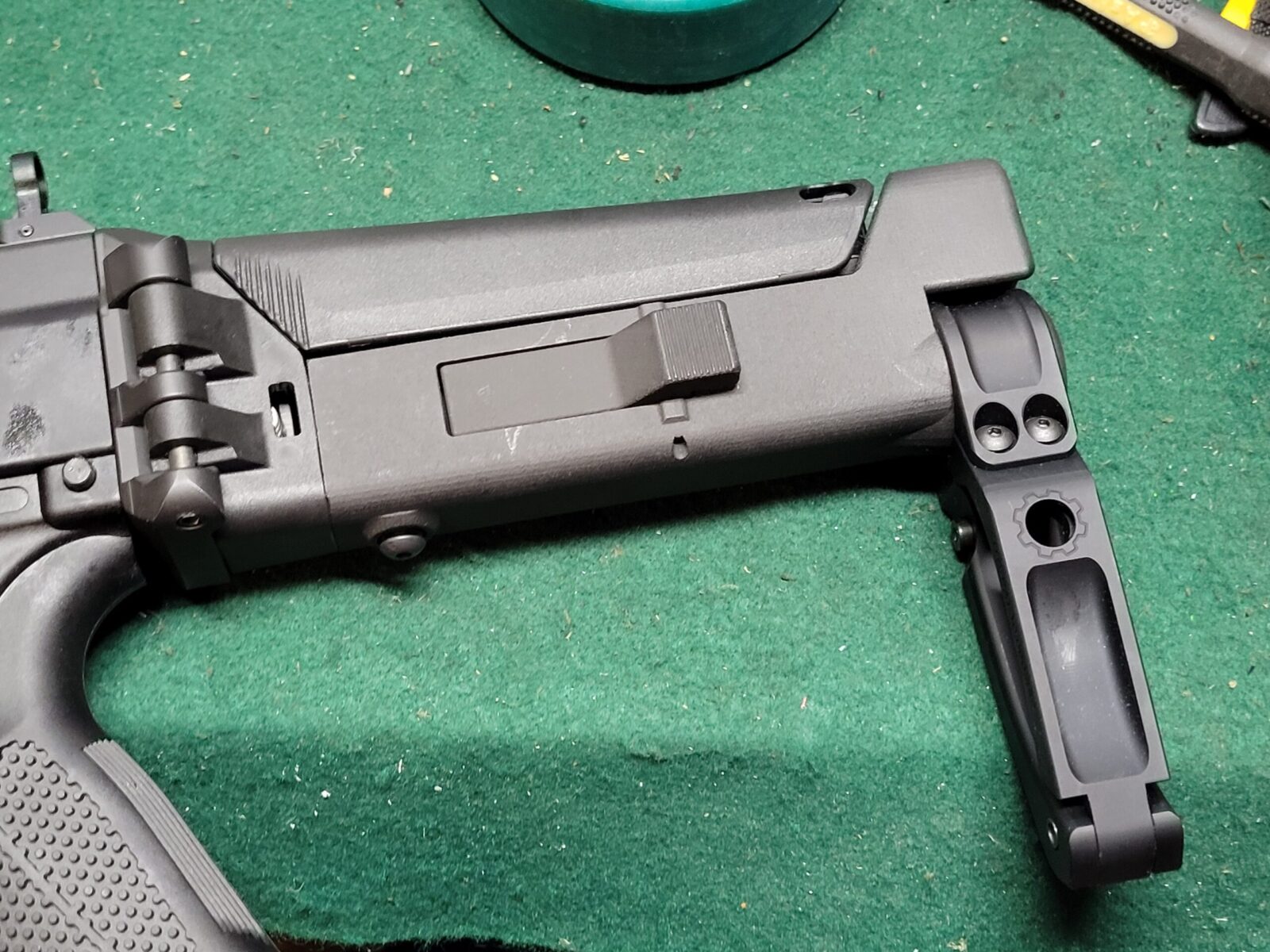
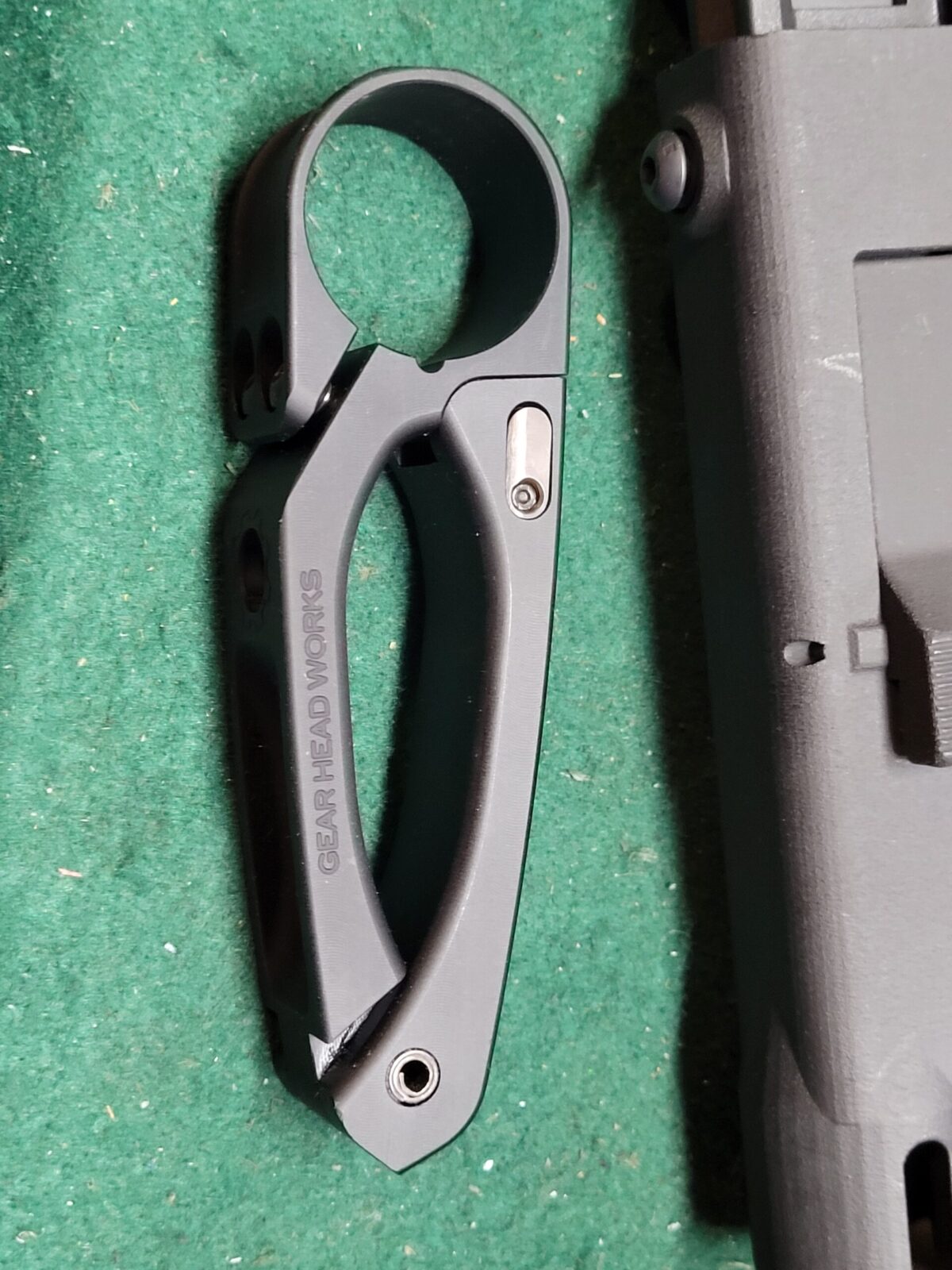
For the brace, I switched over to the cool F5 Manufacturing’s modular brace system that then holds a Tailhook brace. I like the modular system because it is adjustable and reminds me of a SCAR.
The GearHeadWorks Tailhook is one of the slickest braces in my opinion. It’s made from aluminum and the hook is deployed by pushing a button and folding the it outwards.
The Dragon Snout
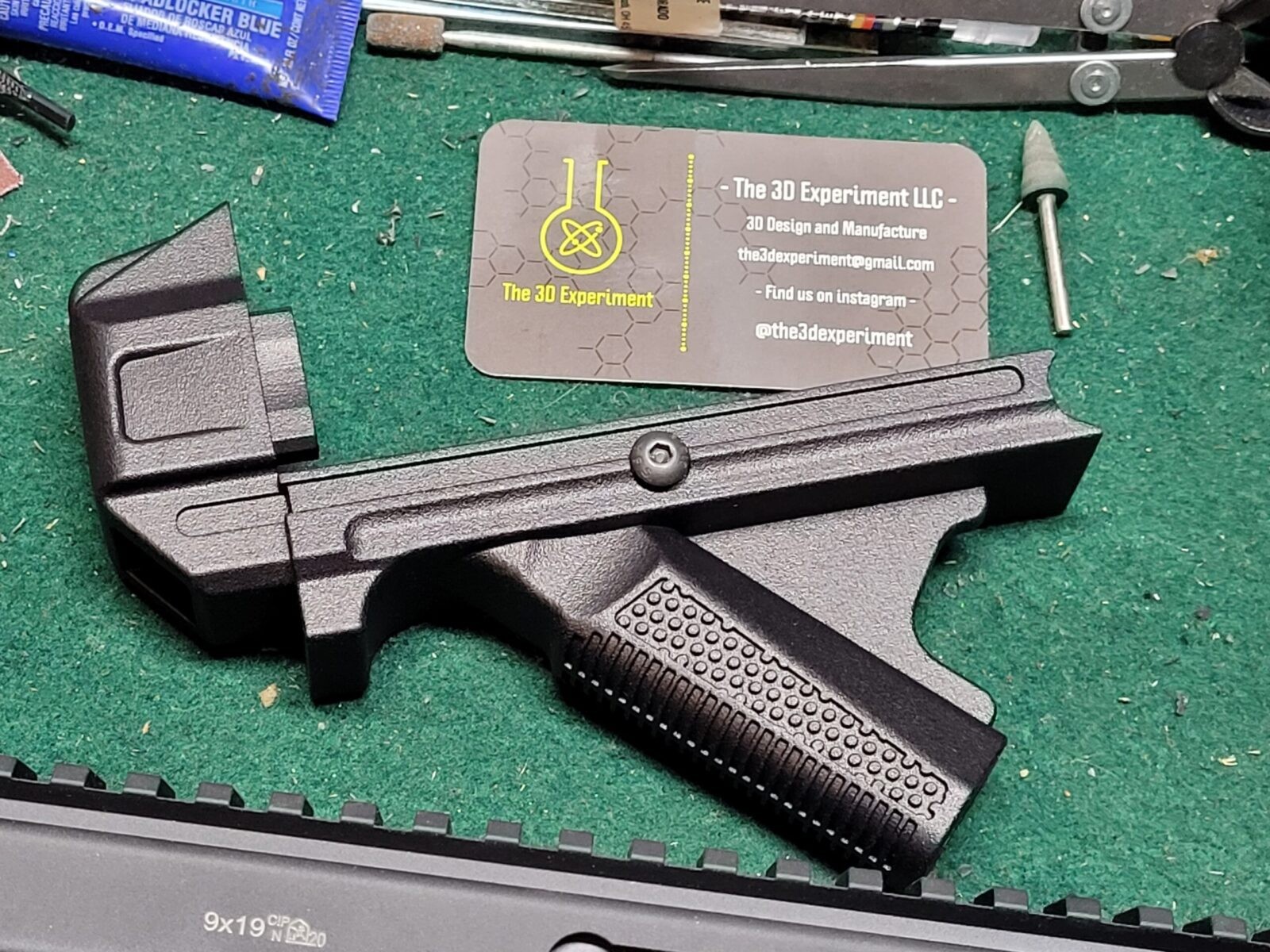
There is actually a neat 3D printed angled forearm extension made for the Stribog known as “the Dragon Snout”. It’s made by 3D Experiment and is sold by Global Ordnance.. It fits and feels great plus aesthetically I like covering up the approximate 3″ of barrel that stick out of the factory handguard.
First off, it’s a great name! It’s also very well done.
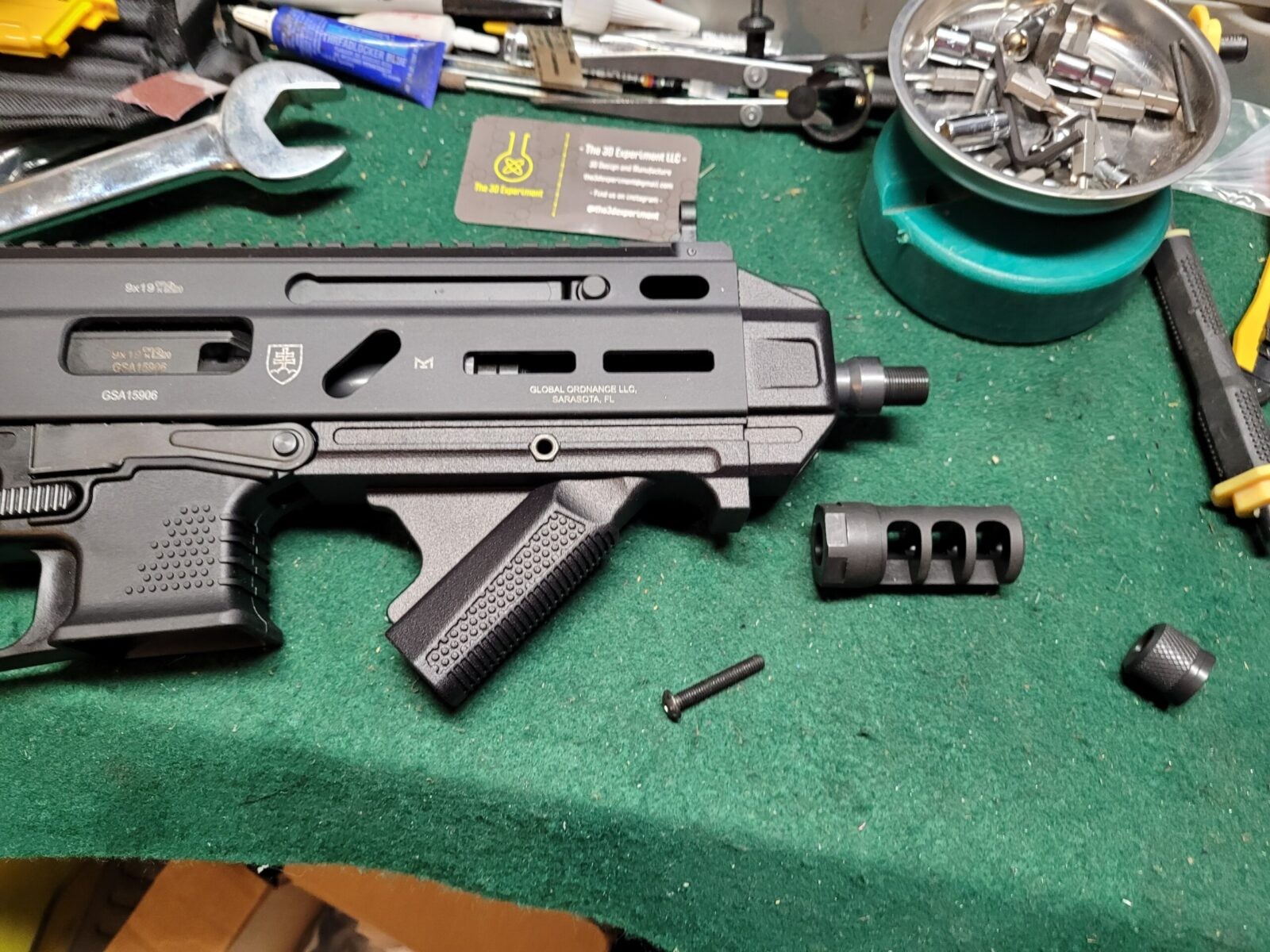
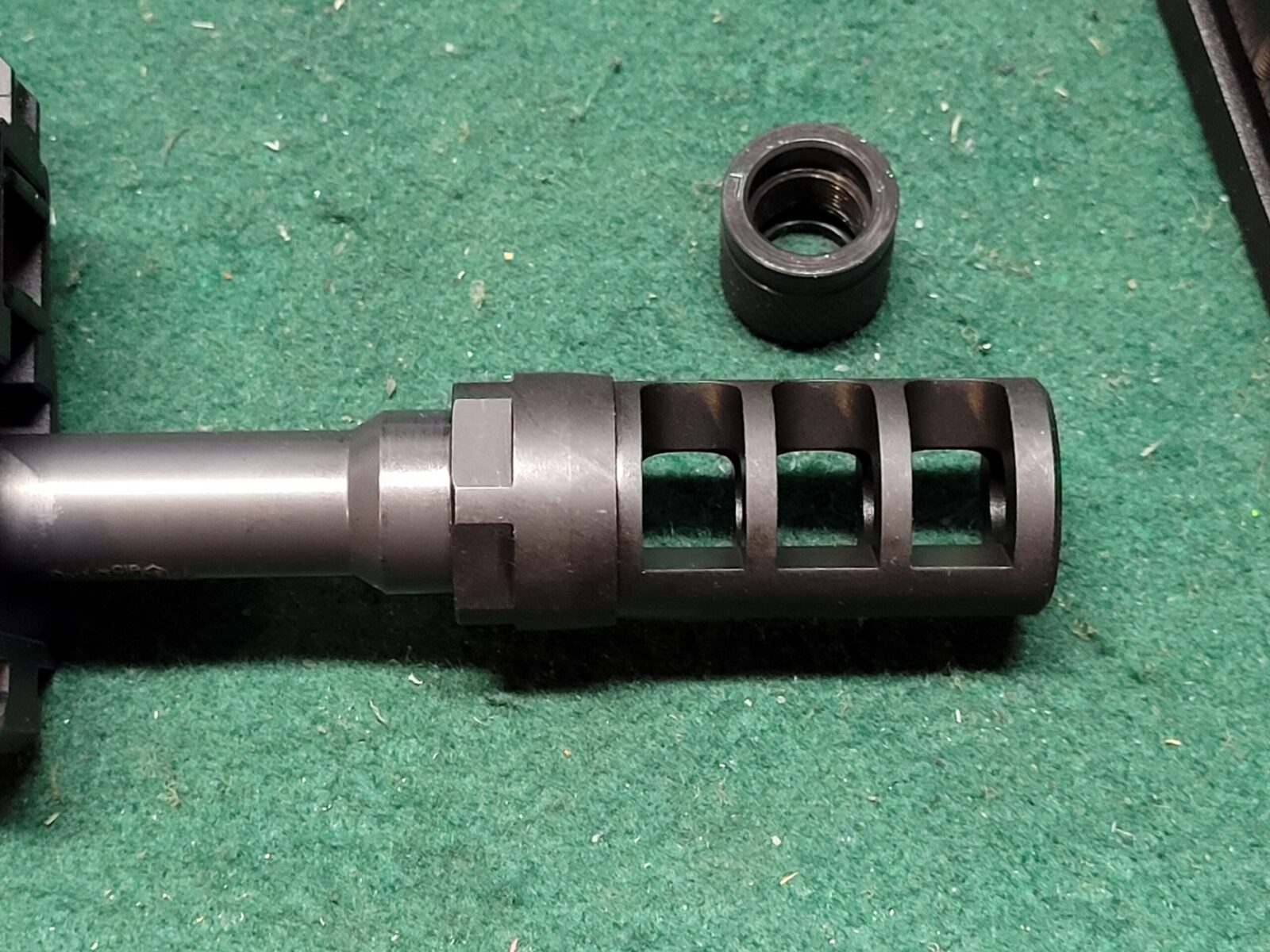
The Dragon Snout mounts by sliding it onto the existing 1913 Picatinny Rail on the bottom of the pistol’s handguard. One minor detqail – the Dragon Snout will likely need to go on before your muzzle device. For the Grand Power S9 shown, it did need to be mounted after the Dragon Snout.
Grand Power S9 Muzzle Brake
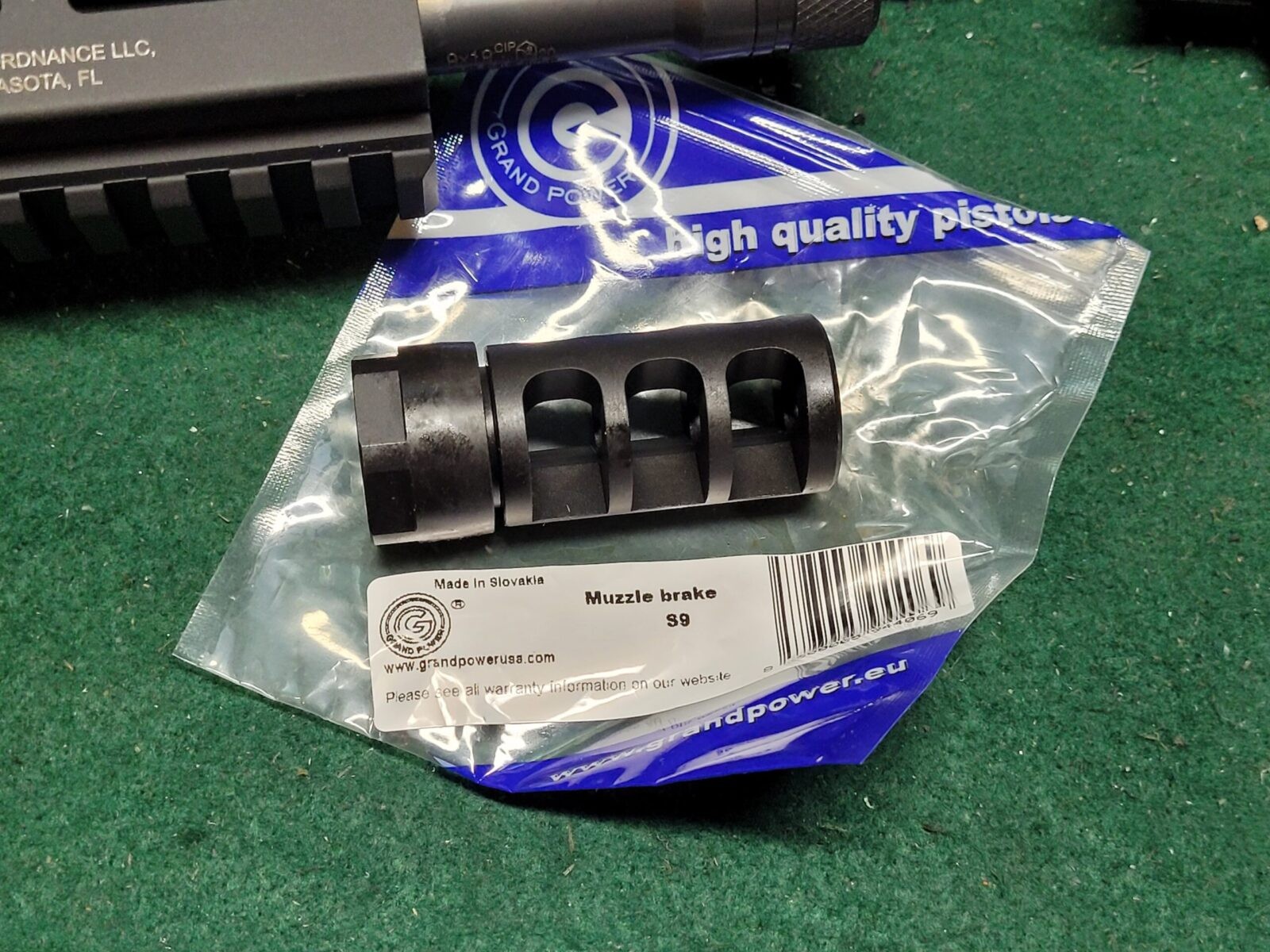
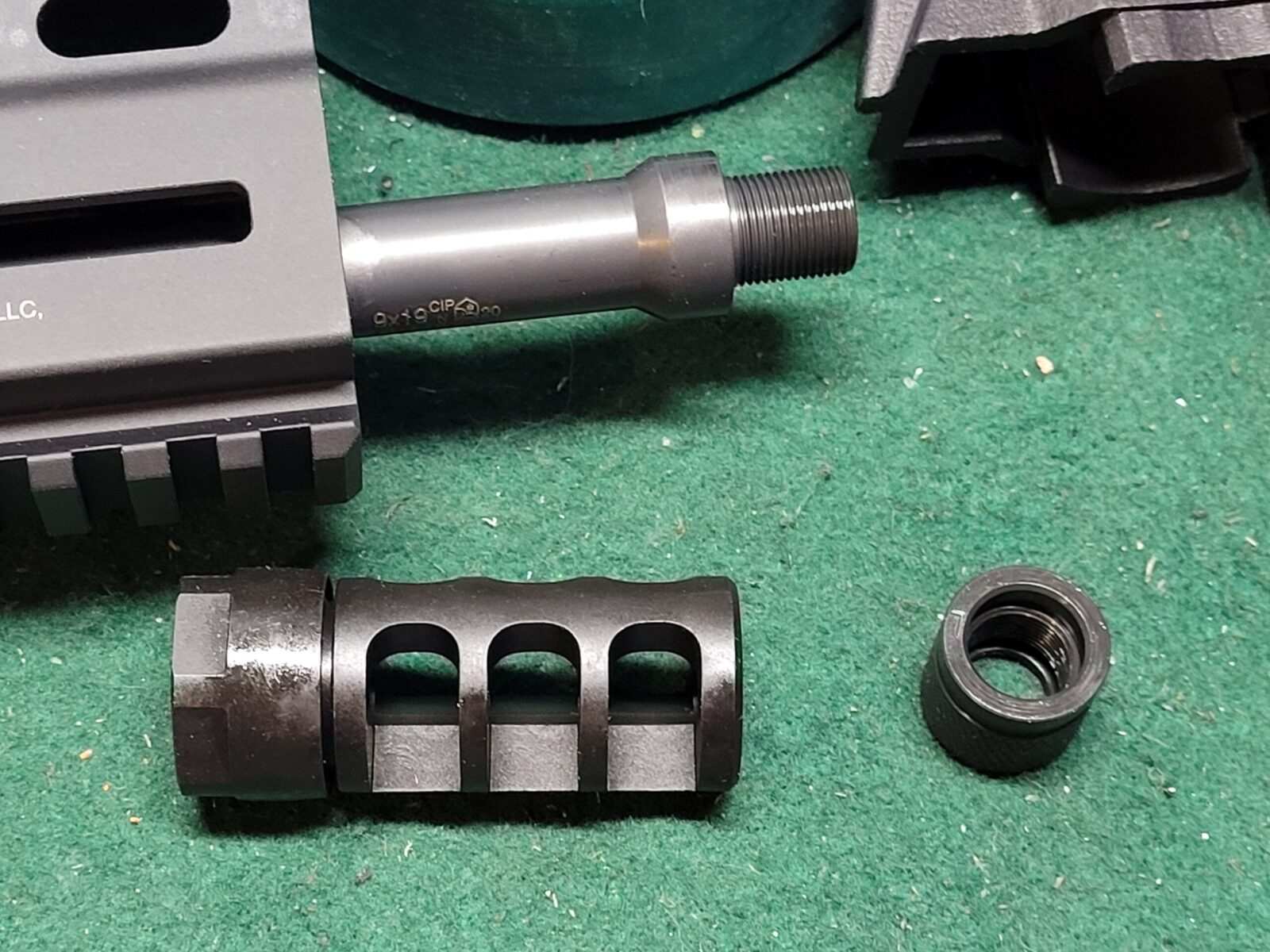
I went with a Grand Power 9mm brake that has an integral locking nut. Unfortunately, I do not see it for sale right now anywhere so I can’t link to it. Here are some photos of it.
The S9 brake is seems to work quite well and it was easy to install.
The threads are protected by a barrel nut so you remove it and thread on the new brake. It’s interesting to note the proof mark on the barrel 9×19 CIP – CIP is a European standards group that does the work of SAAMI there. CIP and SAAMI standards are often close but not exactly the same due to differences in where they collect pressure data. SAAMI also has +P and +P+ whereas CIP does not.
When installing a brake, thread it on as far as you can and then back it off only as much as you need to “clock” it (align it) and then tighted the locking nut.
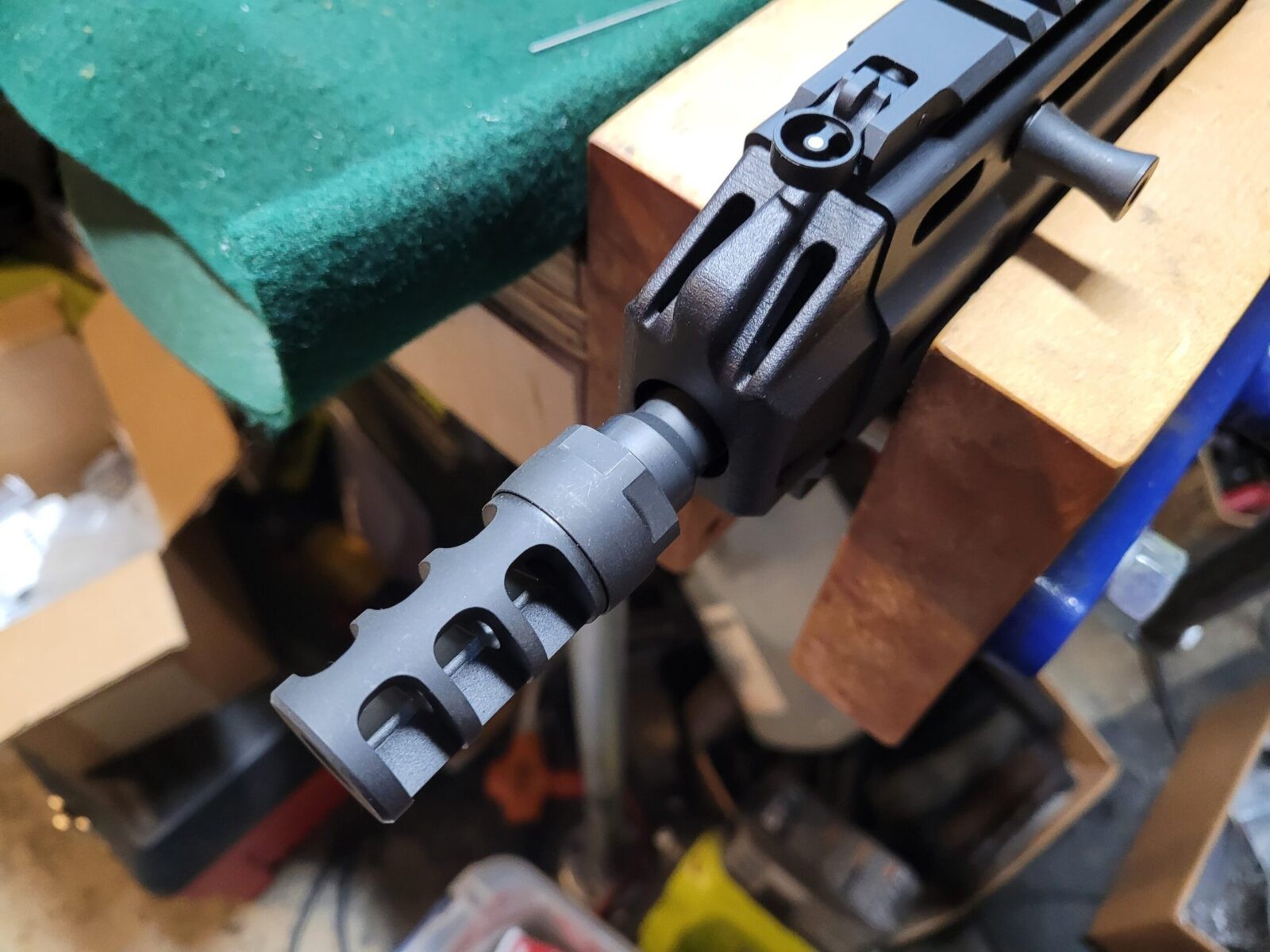
Here’s a good photo of the brake and how it is larger than the Dragon Snout’s front hole. You can also see the integral iron front sight and charging handle.
The Stribog was really shaping up and I liked both the balance and the way it felt when I brought it up.
Adding a Holosun HE510C-GR Green Reflex Sight
My opinion of Holosun optics has improved quite a bit over the last two years – mainly because I started using the versus just reading about them. My go-to holographic sight is the Vortex UH-1 when I can afford it. When I can’t, I have found the Holosun optics to be very decent affordable choices. I especially like the HE510C-GR.
In general, I like Holosun’s use of two power sources – battery and solar plus you can either manually shut off the optic or use the shake awake feature that turns the unit and then off after a period of inactivity.
I find the green colored reticle super easy to find. Bringing the Stribog up and acquiring the target is both very straight forward and fast.
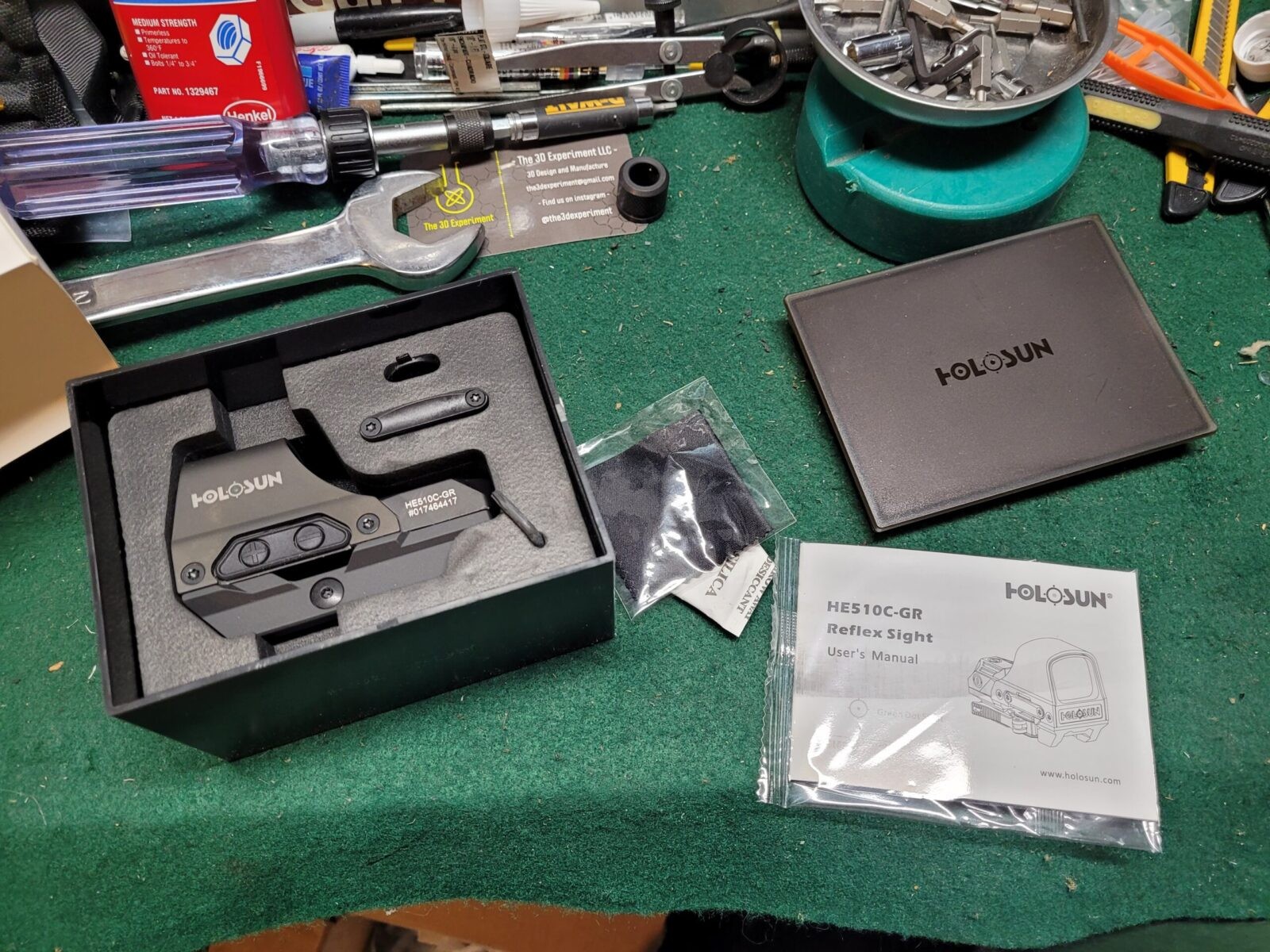
The HE510C-GR arrives well protected in its box ready for you to install the battery and mount it.
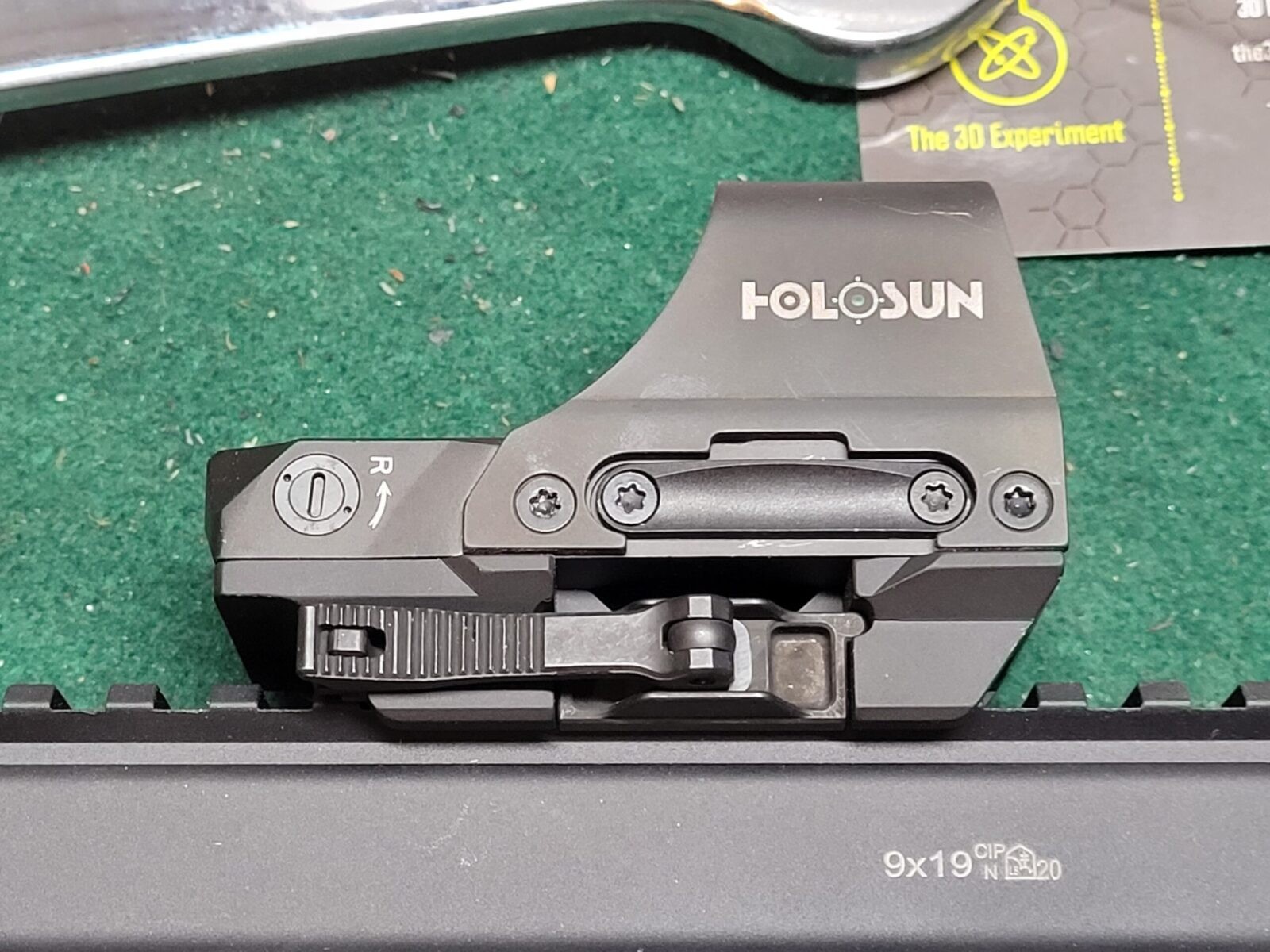
The unit has a quick release lever so you can remove the optic quickly either for cleaning or if you need to get it out of the way. I really prefer optics with quick release levers because there are any number of reasons why you may need to get it out of the way in a hurry. For example, if this Holosun were to fail, I’d remove it and quickly fail over to using the integral backup iron sights that are built into the Stribog’s top rail. Those sights flip up but are too short to use with the Holosun so I just leave them folded down.
The Final Result
I was very happy with the weapon – it all came together in a nice package:
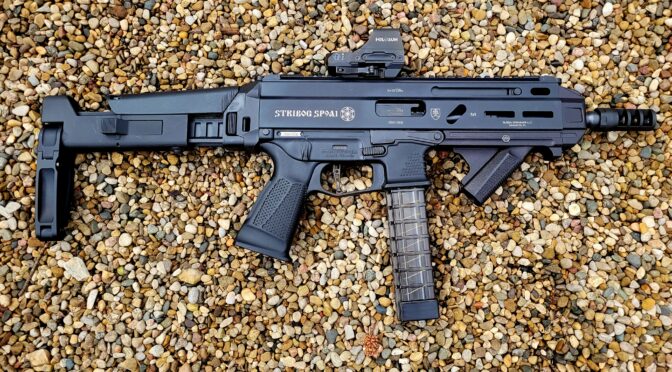
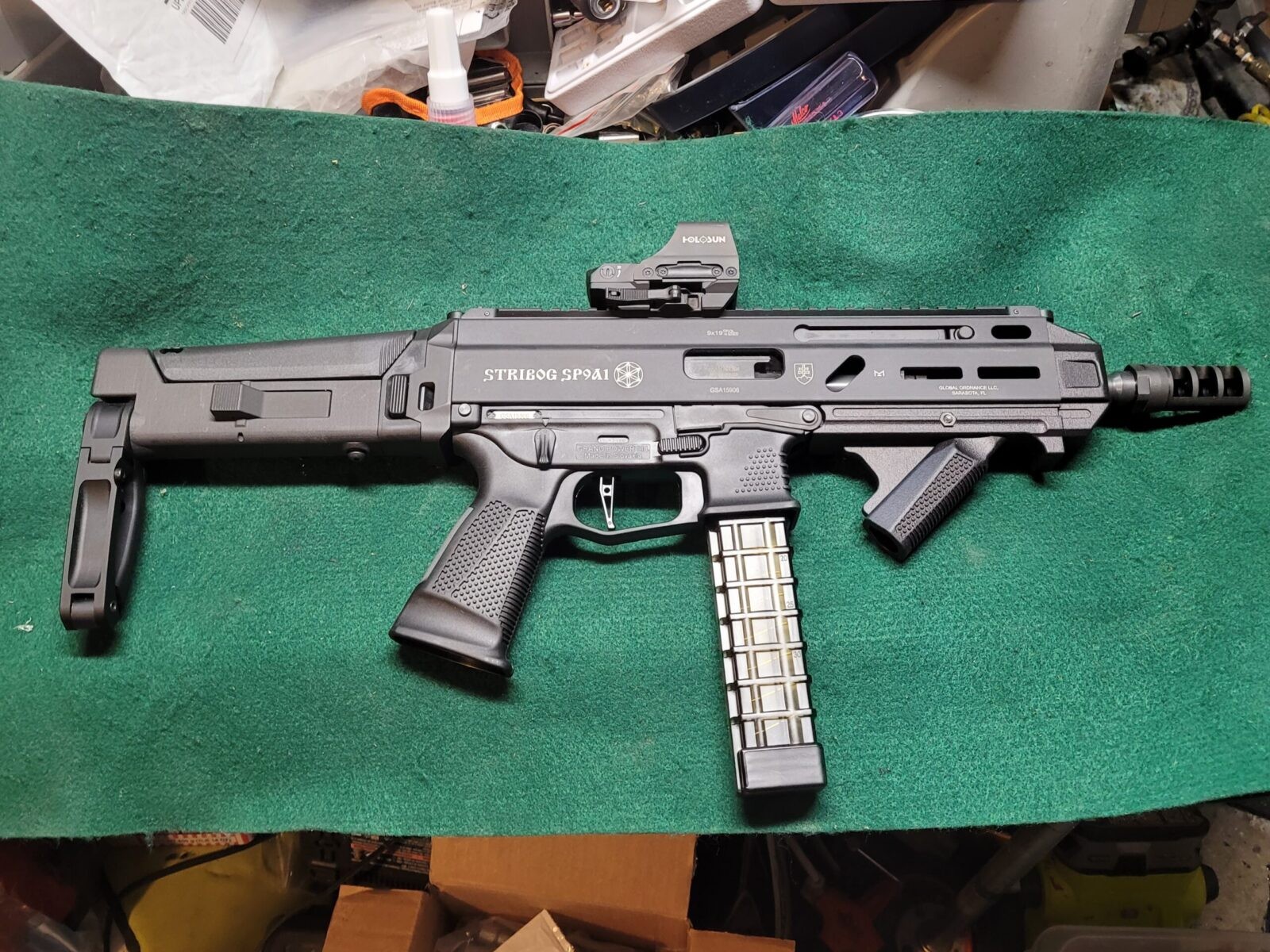
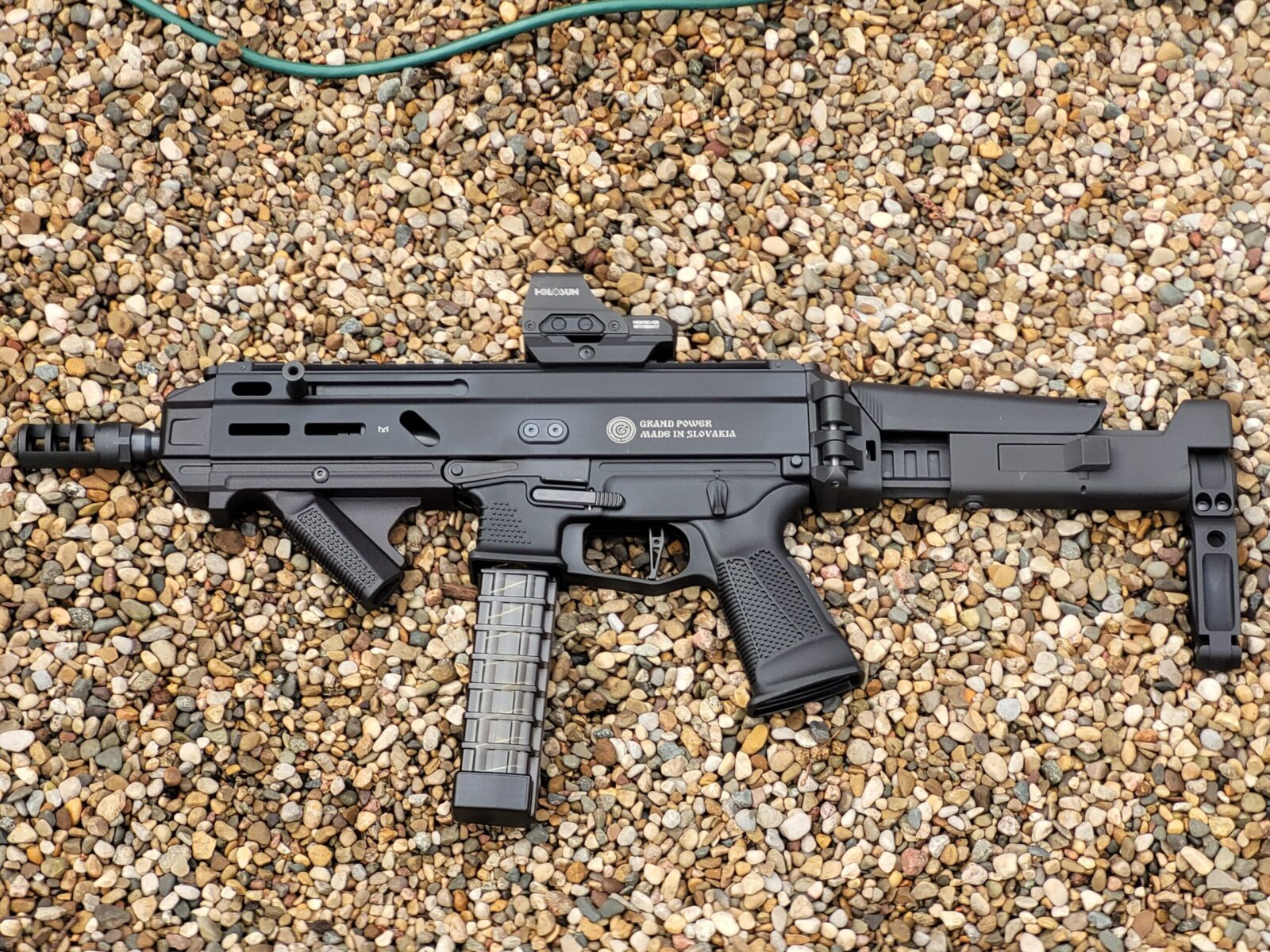
Here’s the finished unit – A Stribog SP9A1 with the F5 modular brace, Dragon Snout forearm, S9 brake and a Holosun HE510C-GR optic on top. That is one of the straight 30 round magazines,
Quick Comment on Magazines
The magazine design is unique. While there are now options for the lowers that let you use Glock mags, the native magazine is a proprietary double stack design.
You have a number of options for magazines – 20 and 30 round plus there are ones that are straight, with and without metal reinforced tops and a curved model. Right now, I have a combination of straight 30 round magazines both with and without the reinforced metal feed lips.
I’d recommend you have 4-8 magazines at least for your Stribog. Why? It’s so much fun to shoot you will go through 30 rounds fast. A number of places sell Stribog magazines and I bought a few of my spares from GunMag Warehouse. I bought a couple of the steel reinforced lipped models from Global Ordnance but everyone seems to be sold out of them at the moment. I haven’t had any problems with the all polymer units but if we make a broad generalization, steel reinforced mag lips of any design tend to last longer.
Summary
Ok, the Stribog was assembled and ready for the range! For a change, I am writing this after taking it to the range twice, having a blast and will talk about my experiences with the weapon in my next post.
Here’s one view of the completed Stribog.
And another.
I hope this post gives you some ideas and I definitely like the Stribog.
Note, I have to buy all of my parts – nothing here was paid for by sponsors, etc. I do make a small amount if you click on an ad and buy something but that is it. You’re getting my real opinion on stuff.
Ok, quick post today. I’m getting ready for Winter here in Michigan and that includes getting my 2021 Ram 2500 Tradesman and 8′ Western Pro Plow 2 ready. Which, by the way, is why you are seeing a bunch of truck posts vs. firearm posts right now. At any rate, last year was my first year plowing with the truck and plow and knew I needed a better solution for holding the ballast weight. That’s the topic for today’s blog post.
What is ballast for a snow plow and why does it need it?
Simply put, ballast is weight that you add at the far back of your truck to balance the weight of the plow in the front and improve traction. Now I like Western plows but if you want a really good explanation of what ballast is and how to use with graphics, click on this link to Boss Plows. Western has one but it’s not as good in my honest opinion.
The important thing that the Boss page explains very well with the diagram is that ballast goes all the way to the rear behind the rear axle and not in front of it or on top of it. Just imagine a long lever arm – by adding weight to the far back, you are levering up the front and offsetting the weight of the entire plow bolted on to the front of your truck.
It does help to understand how much ballast you need and it’s not necessarily the same weight as the plow. A lot of factors go into the calculation. Again, I use a Western plow so I use their Quick Match web page to calculate how much ballast I need and it’s 240 pounds. I do add a bit for more weight to improve traction as well but that is the minimum I need.
What material to use for ballast? I like sand
When I bought my RAM, I looked in the bed and there are very shallow pressed indents on the left and right side to secure the ballast. Ideally they would be deeper so you could drop a 2×6 or 2×8 in there to hold your ballast. I like to use the 60 pound tubes of sand that you can buy. First off they are a great source of dense weight – meaning you get a lot of weight for the volume they take up and second, if I get stuck on ice or need more traction on ice pulling something, I can cut open a tube and use the sand for traction. This is why I don’t use something like steel or lead back there. Back in the day, my dad used clay cat litter bags for the weight and in case traction was needed. He’d use the bags over the summer for our cats’ litter boxes and then buy any new bags he needed in the fall. He pulled my sister’s Tercel out of a lake after spreading the cat litter all over the icy road behind the tires of his 81 Bronco — it definitely works but we don’t have cats so I just use sand.
By the way, a Quickrete 60 pound tube of sand is $5.37 as of my writing this. It’s definitely affordable. By the way, I like Quikrete because they know guys are using this for weight and put it in a durable woven bag that holds up.
One word of caution – some guys use rock salt for balast. I highly recommend against that. It’s going to leak salty water at some point and cause accelerated rusting. Sand or cat litter will not. Some guys fill specialized balast water containers – that’s fine too. If you want your truck to last longer, just don’t use salt is my heart felt recommendation.
Why build a box?
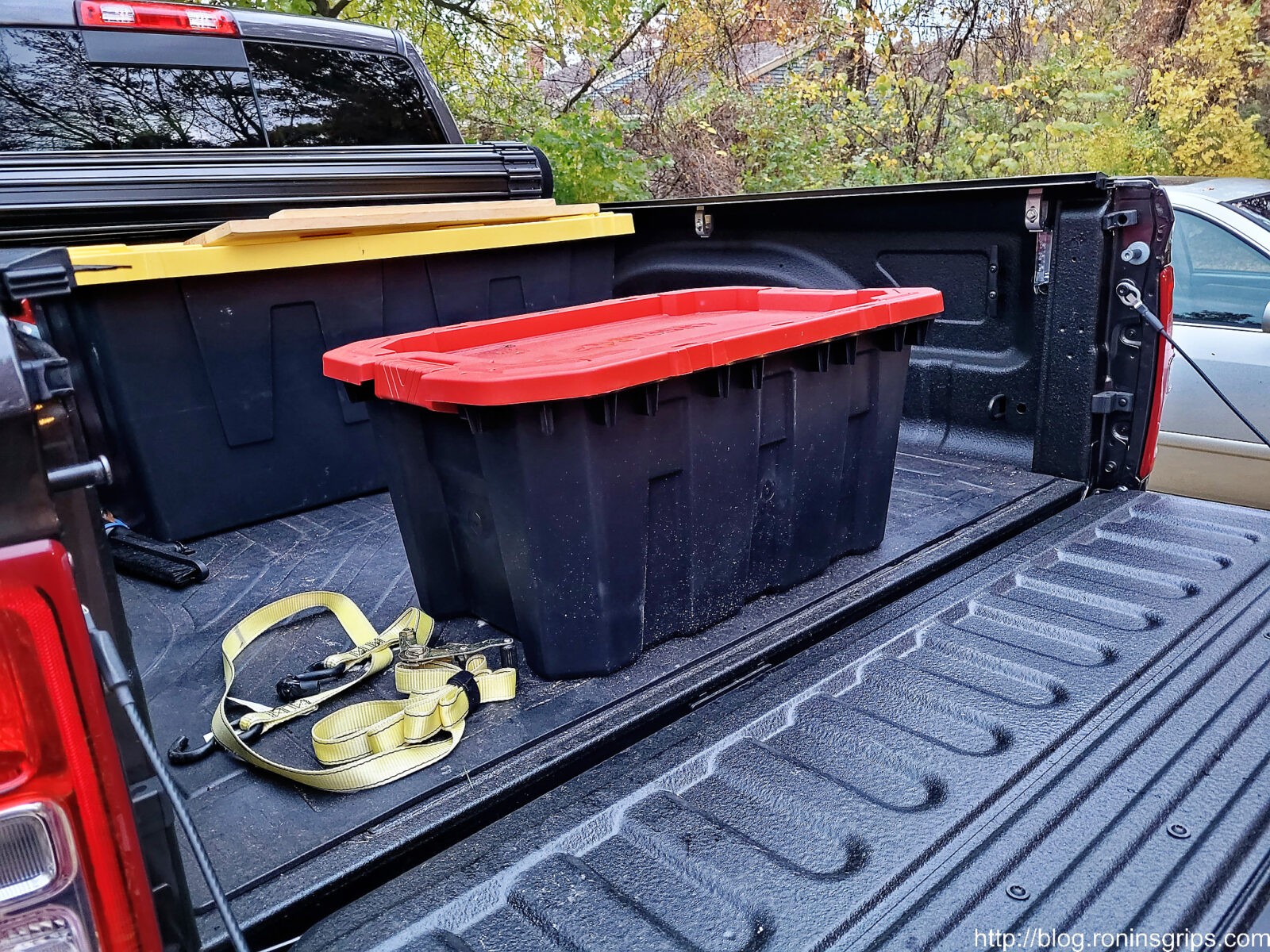
Simply put ballast is in the way and can be a pain in the butt to work around. Last year, I put the four tubes of sand and 100 pounds of old weight lifting plates in a way too tall plastic tote. That turned out to be a mistake. First off, the tote was way too tall and made getting things into and out of the bed a headache. Second, even though I strapped it to the tie downs using a ratchet strap and a board on top, there are limits to how tight you can strap down the load. I had a couple of times last Winter where I stopped fast and the very heavy ballast tote slid forward – that is not good. You certainly do not want a ballast to come flying at the cab during an accident. Bottom like, the plastic tote box was a bad idea.
This was a very bad idea. The plastic wasn’t strong enough and a few times it still slid forward last year. Also, it was way too high and in the way. I was in a rush and bought this tote at Home Depot. It’s a fine tote but don’t try to use it to hold heavy balast – it will move on you. Mine shot forward and slammed into my toolboxes. I regretted ever doing it and immediately started figuring out how to secure the tubes of sand.
Solution: Make a box out of 3/4″ plywood
I did some digging and there really weren’t any ballast solutions out there that I cared for because I wanted something very strong, with minimal height that could also be walked on, stacked on, etc.
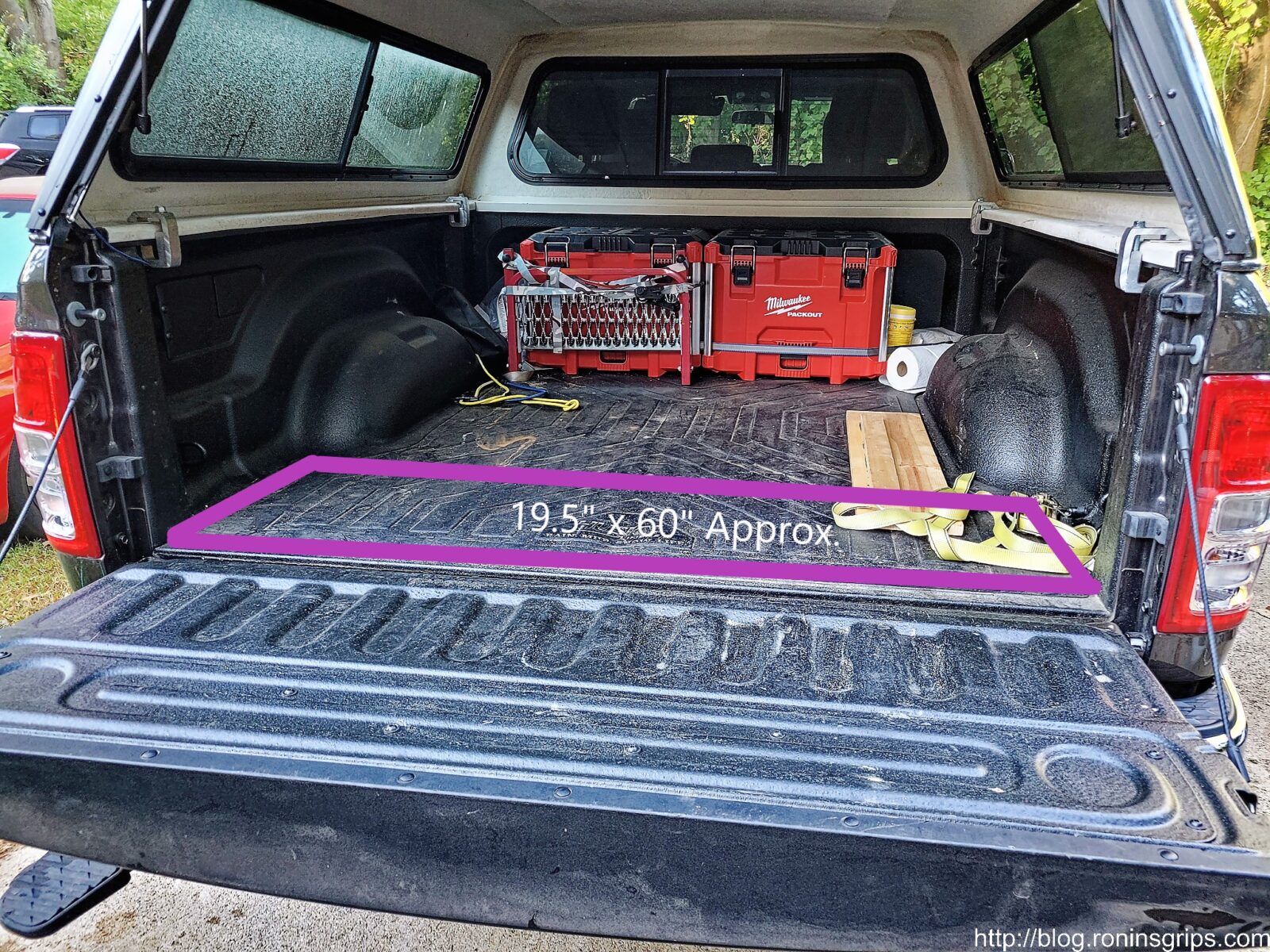
I decided to make a very stout box and it all started with understanding the dimensions I had to work with.
This is about 19.5×60 – I only went back as far as my floor mat plus didn’t want any box latches to hit the tailgate. I decided to only do 19″ deep and about 57-59″ wide. The box would be held down by a ratchet strap.
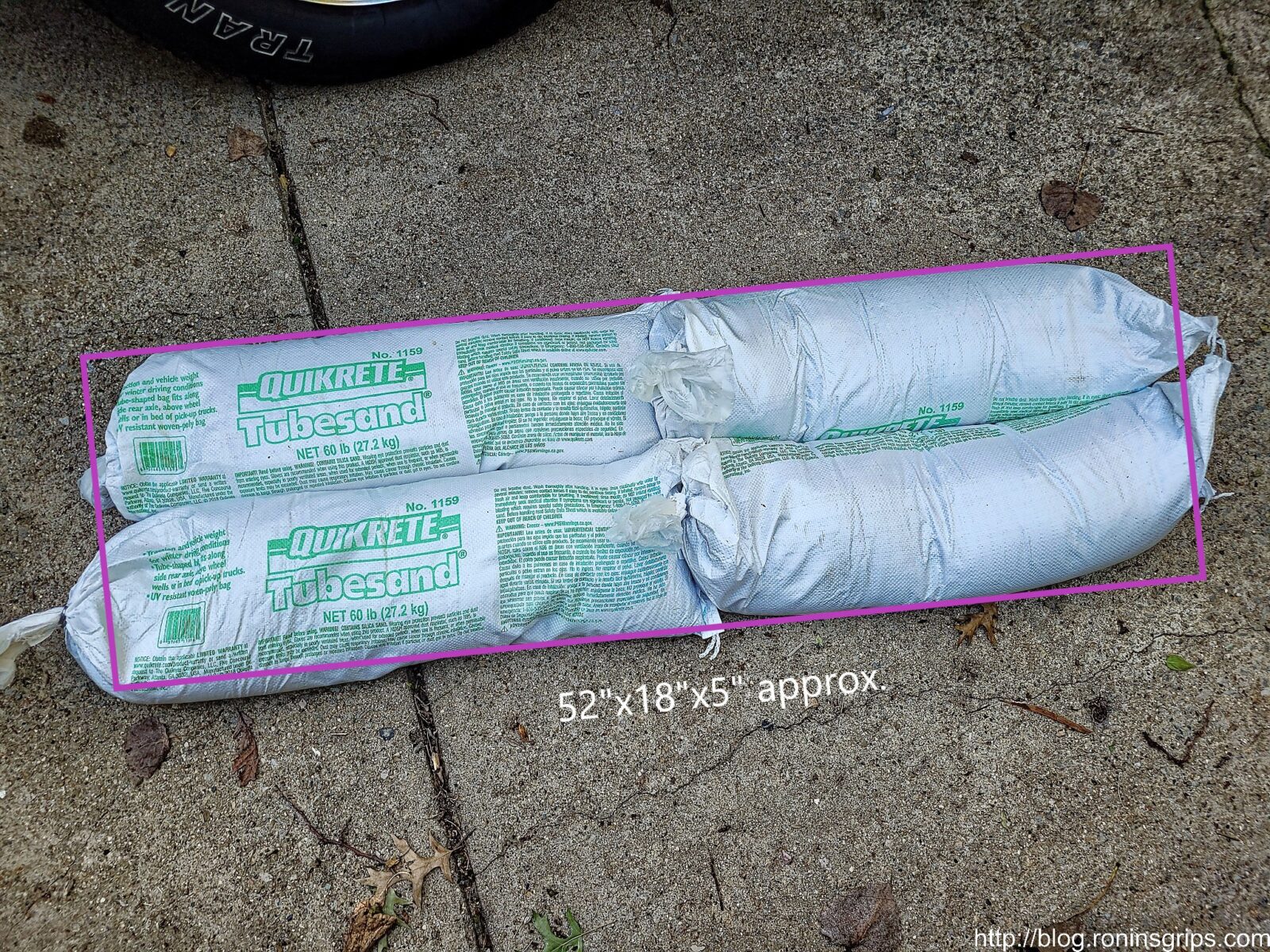
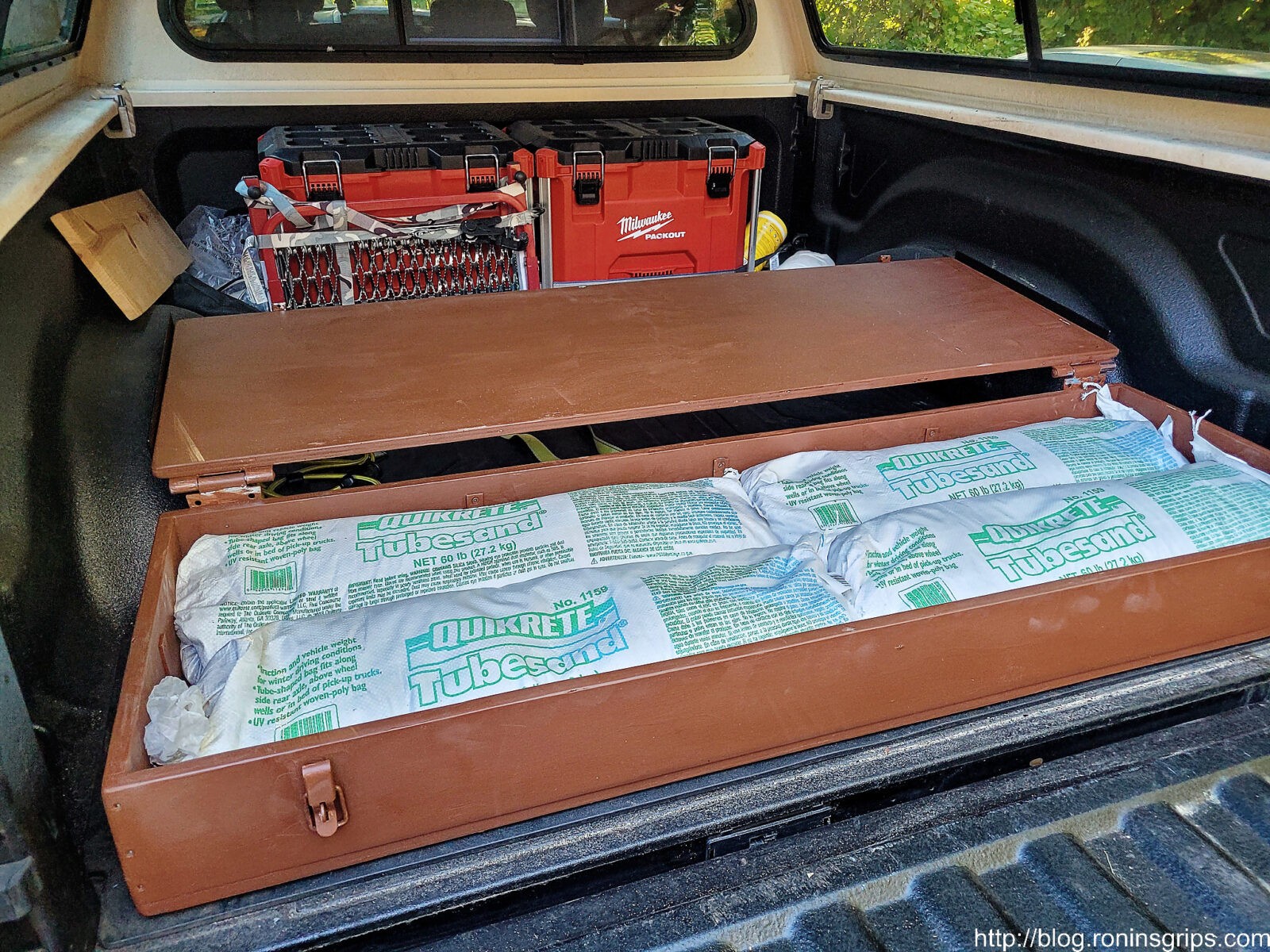
240 pounds is four 60# tubes of sand. Laying them out on the ground and doing some measurements that worked out to 18″ deep, 52″ wide and right around 4″ tall. Now this was some guesswork because the tubes are somewhat malleable – you can push the sand around some and make them shorter, longer, thinner, or fatter.
Given the above dimensions, I knew a box with an internal dimension of 18x52x5 would work. The question then became what wood to use. I have had very good luck with 3/4″ plywood. That stuff is remarkably strong. I then considered whether to do framing around it or not with 2x4s or make the walls out of 2x6s but finally just decided to do it all with 3/4″ lumber. The good news is that you can make the entire box from one 4×8 sheet – the top, bottom and four walls.
To hold it together would use #8 1-5/8″ treated deck screws – the new ones with some serious coating and Torx heads. Given they would be in the bed of the truck, I wanted to reduce the odds of rusting plus wanted their strength – both in terms of shear strength and how well the threads would bite into the plywood. I thought about gluing things together as well but changed my mind. If I ever needed to replace a damaged board, then I could with just screws but not so if I glue was used as well.
I wanted the top to have a strong hinge so I could access the sand inside if I needed to cut open a bag and use the sand for traction. I also wanted a strong hinge that wouldn’t bend easy so I went with 4″ gate hinges from Ace and used #10 wood screws. To hold the front down, I used draw clasps from Home Depot. I used the screws in the package and they looked to be about a #6.
To further reinforce the plywood I would use eight 4″ inside angle braces. The intent was to spread out the support and fastening duties without taking up a ton of space. Three braces on each long wall and one on each short wall. I used #10 wood screws.
Lastly, I wanted the wood to be protected so I went with a deck stain. We’ve had very good luck with Home Depot’s Behr deck stain so I just grabbed a can of Russet. It’s a decent medium brown but in hindsight I wish I had gone darker.
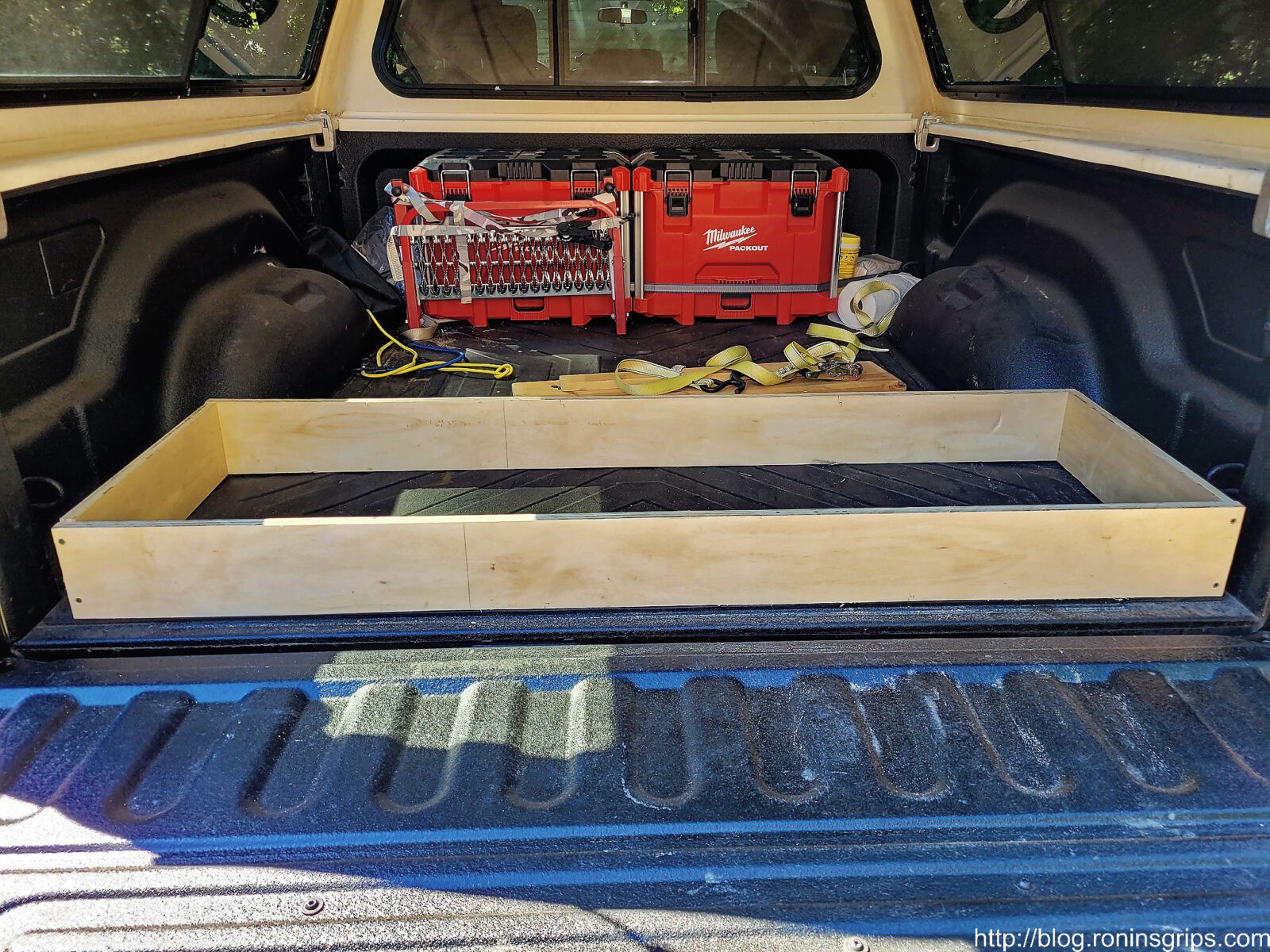
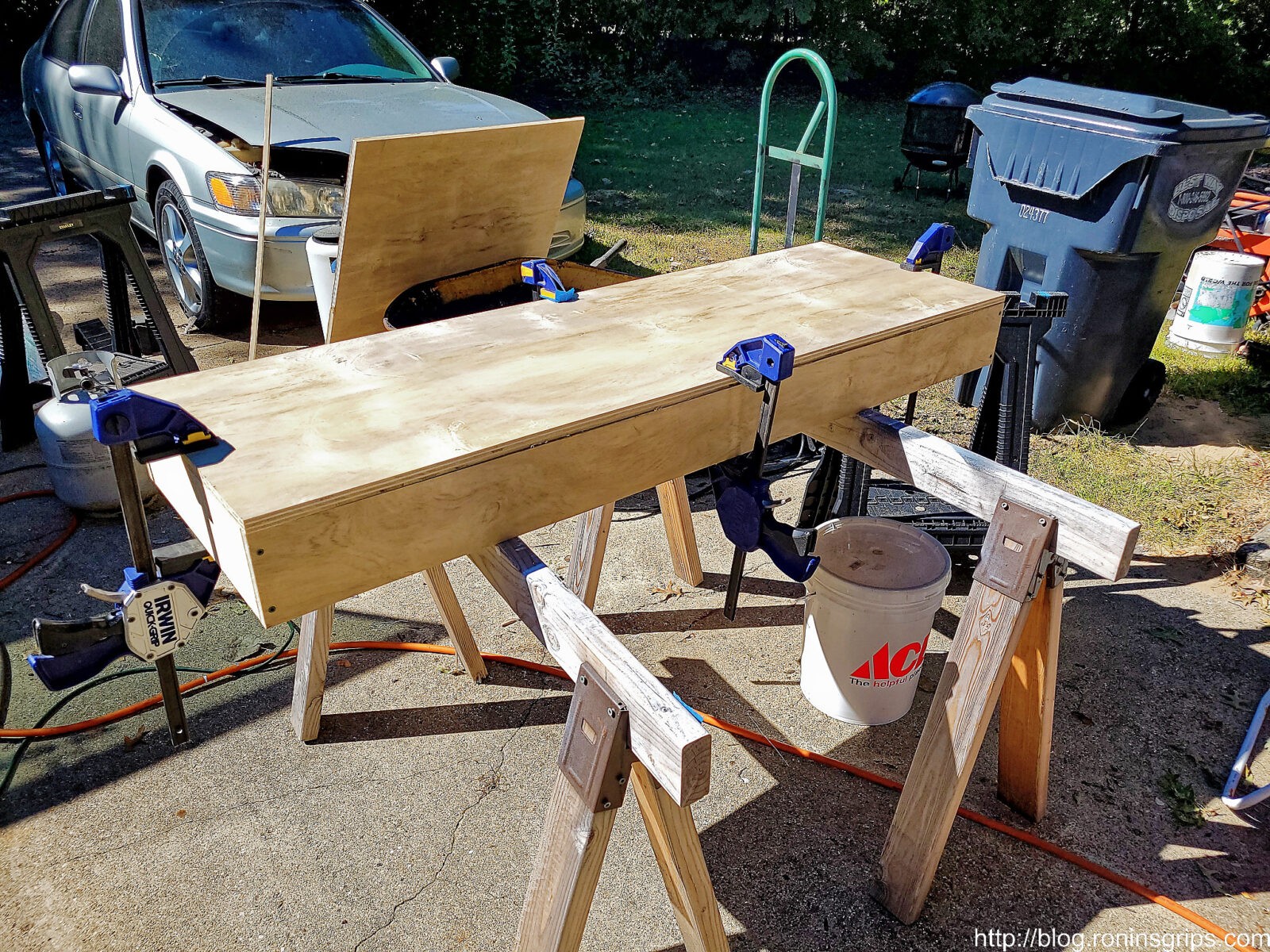
Here’s the frame. The long pieces are 57.5″ long x 5″ wide. The short sides are 17.5″ long x 5″ tall. That gives an outside diameter of 57.5″ wide x 9″ long for the frame. I could have made it maybe 0.5-1″ shorter but wanted to make sure I had enough room.
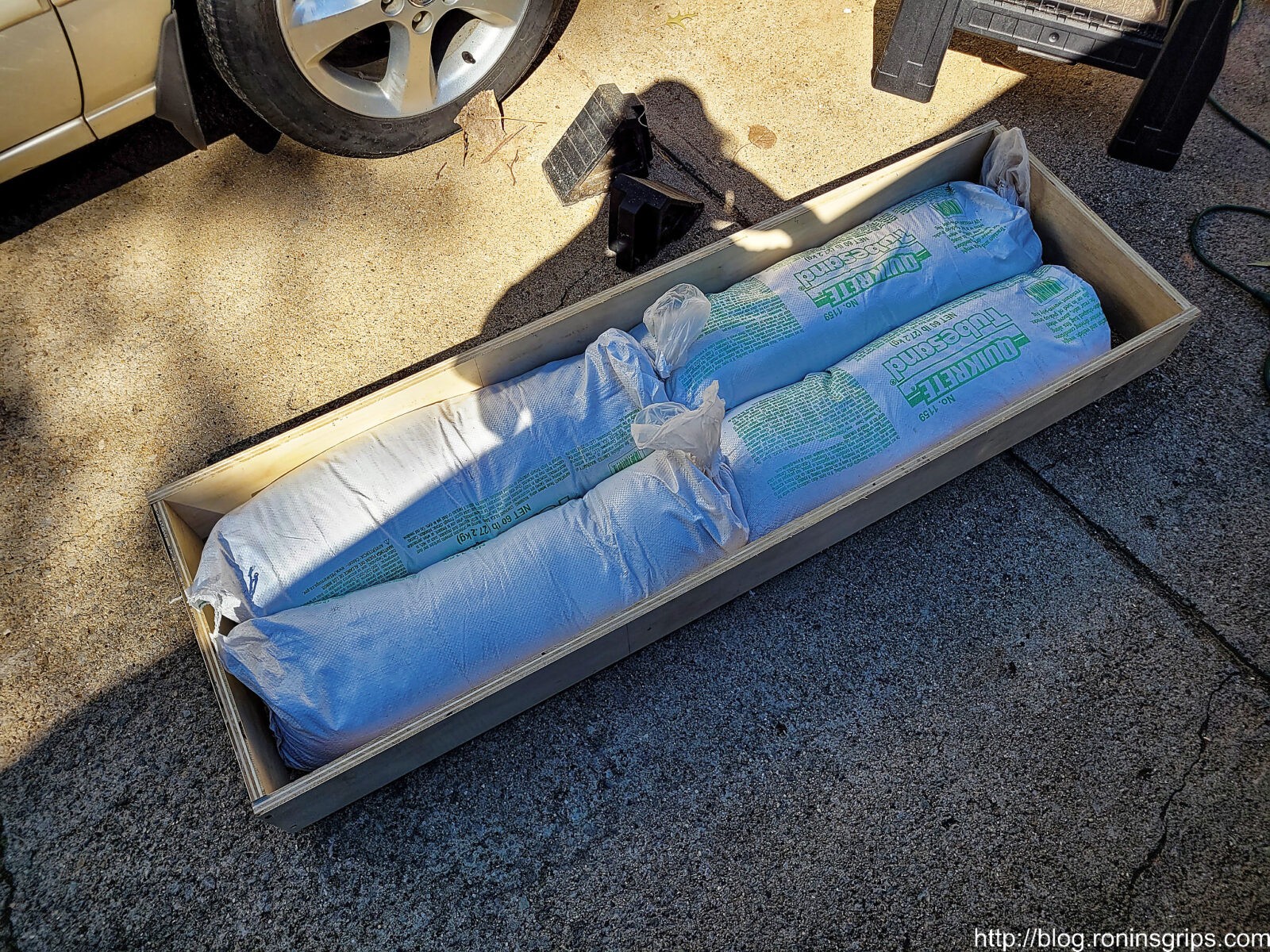
I test fit it around the sand tubes and I was good to go. I was a bit higher than needed but decided to slip a couple of 25 pound steel barbell waits in the top. To be clear, there will be a bottom piece of plywood too along with the hinged top.
The top and bottom pieces of 3/4″ plywood are 57.5″x19″. I repeatedly did test fittings to make sure I didn’t mess up a cut.
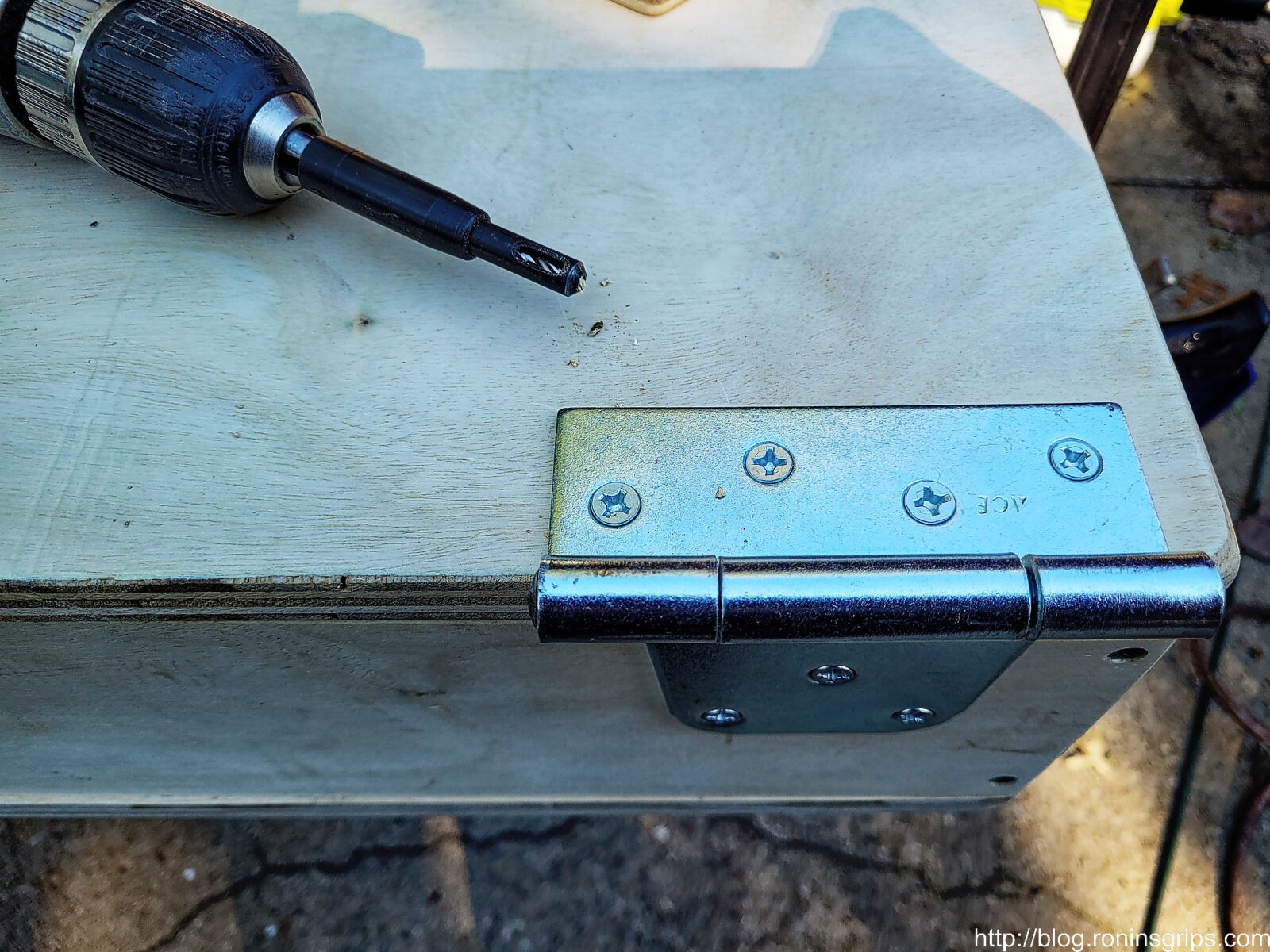
I installed the Ace Hardware brand 4″ gate hinges with #10×3/4″ wood screws. Self-centering drill bits are worth their weight in gold when you are installing hinges and brackets. I’m using a Bosch set now – the cheap import models fall apart too easy.
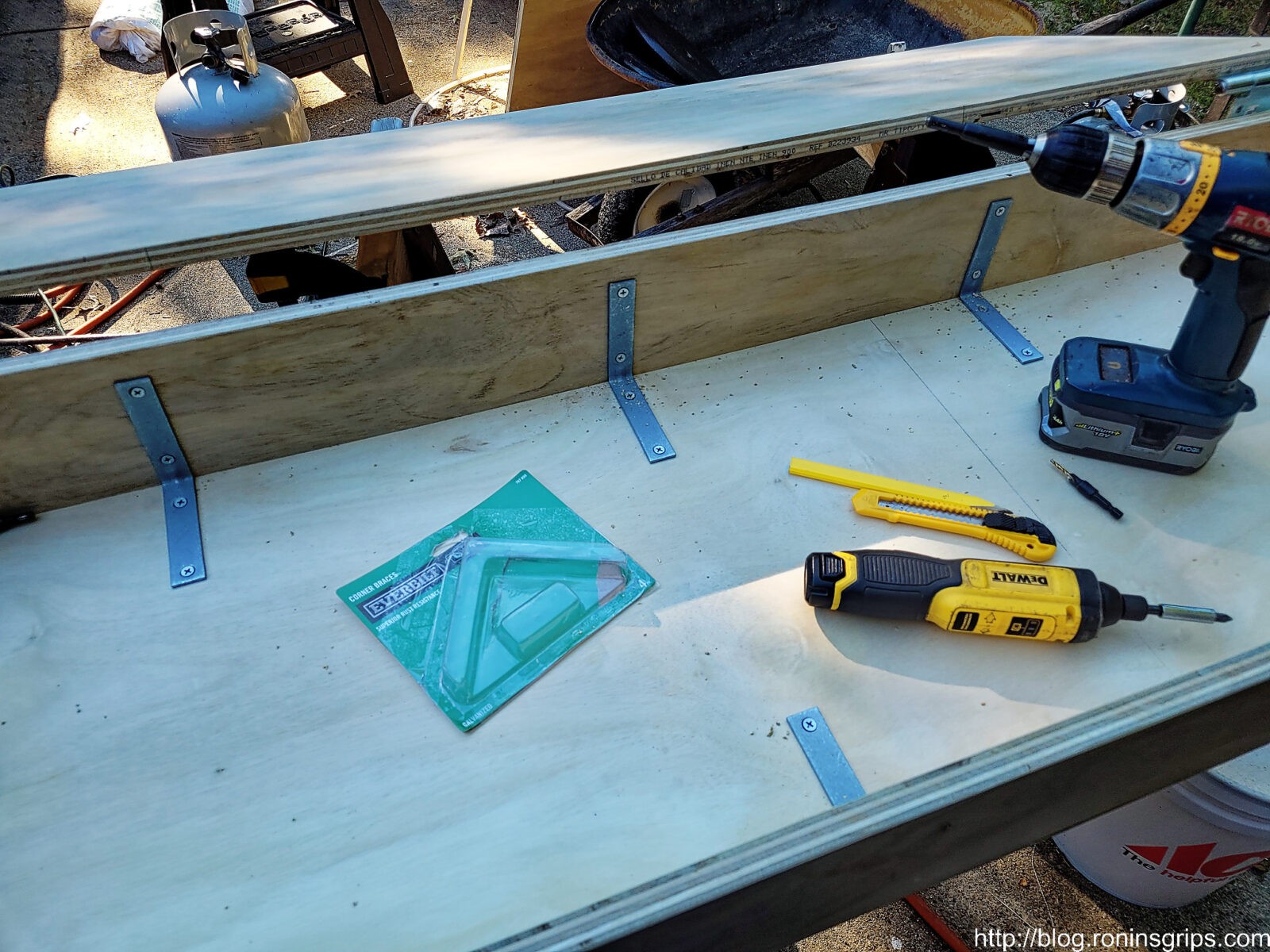
Installed eight of the 4″ inside angle braces with #10×3/4″ wood screws.
One recommendation I would tell you is to use a sander and round over all of the edges so reduce splintering in the future. It also reduces the “ow!” factor if you run into it while moving things around.
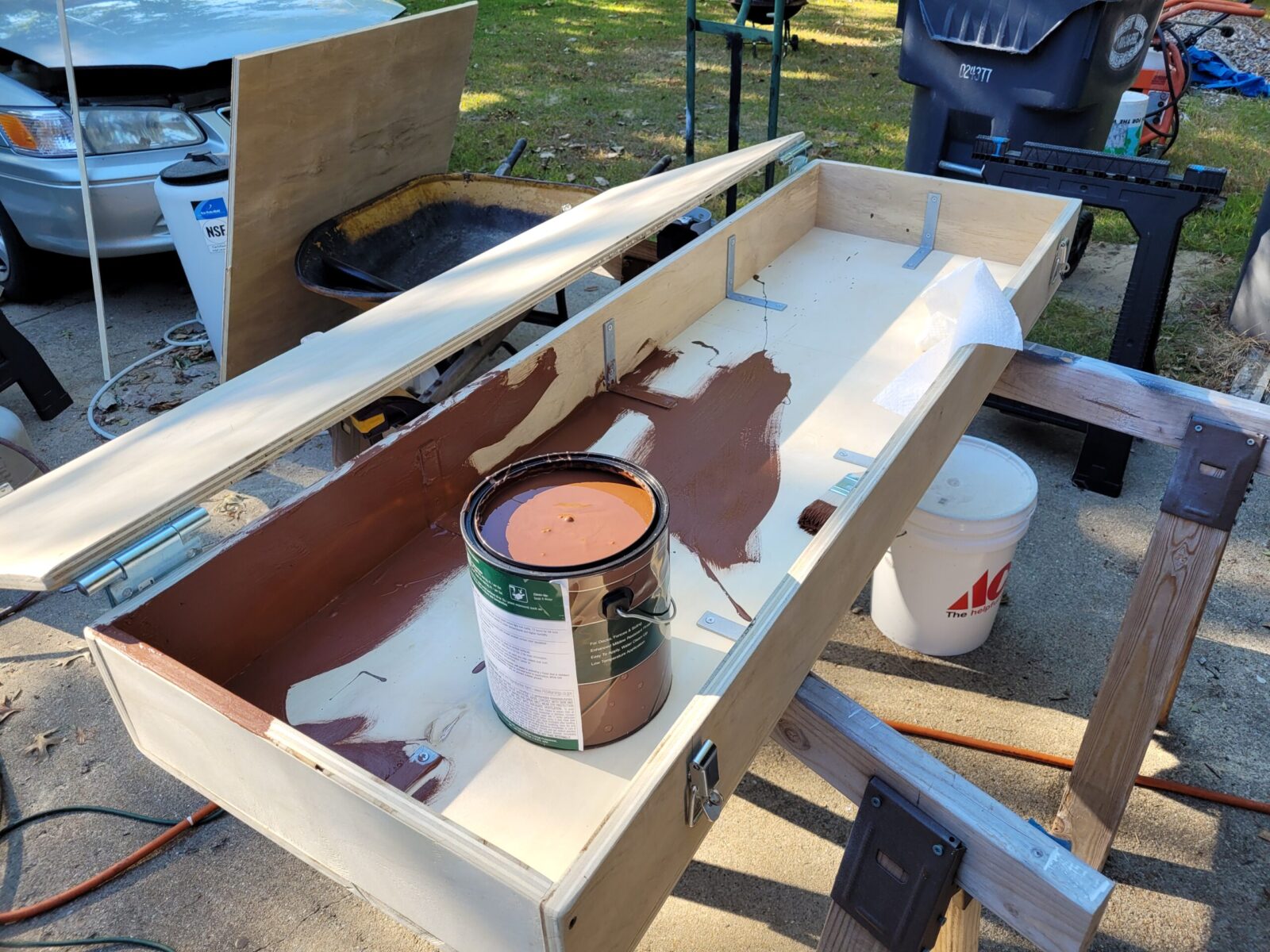
I bought pre-tinted Behr deck stain. I like it because it does have an opaque pigment and ran over the steel parts to as I was in a rush. I’m not a huge “it’s gotta look perfect” kind of guy. I’m more of a “If it’s sealed it is good enough” guy. My friend John looked at it and declared the color was “baby shit brown” but it was what it was, I didn’t really care about the color.
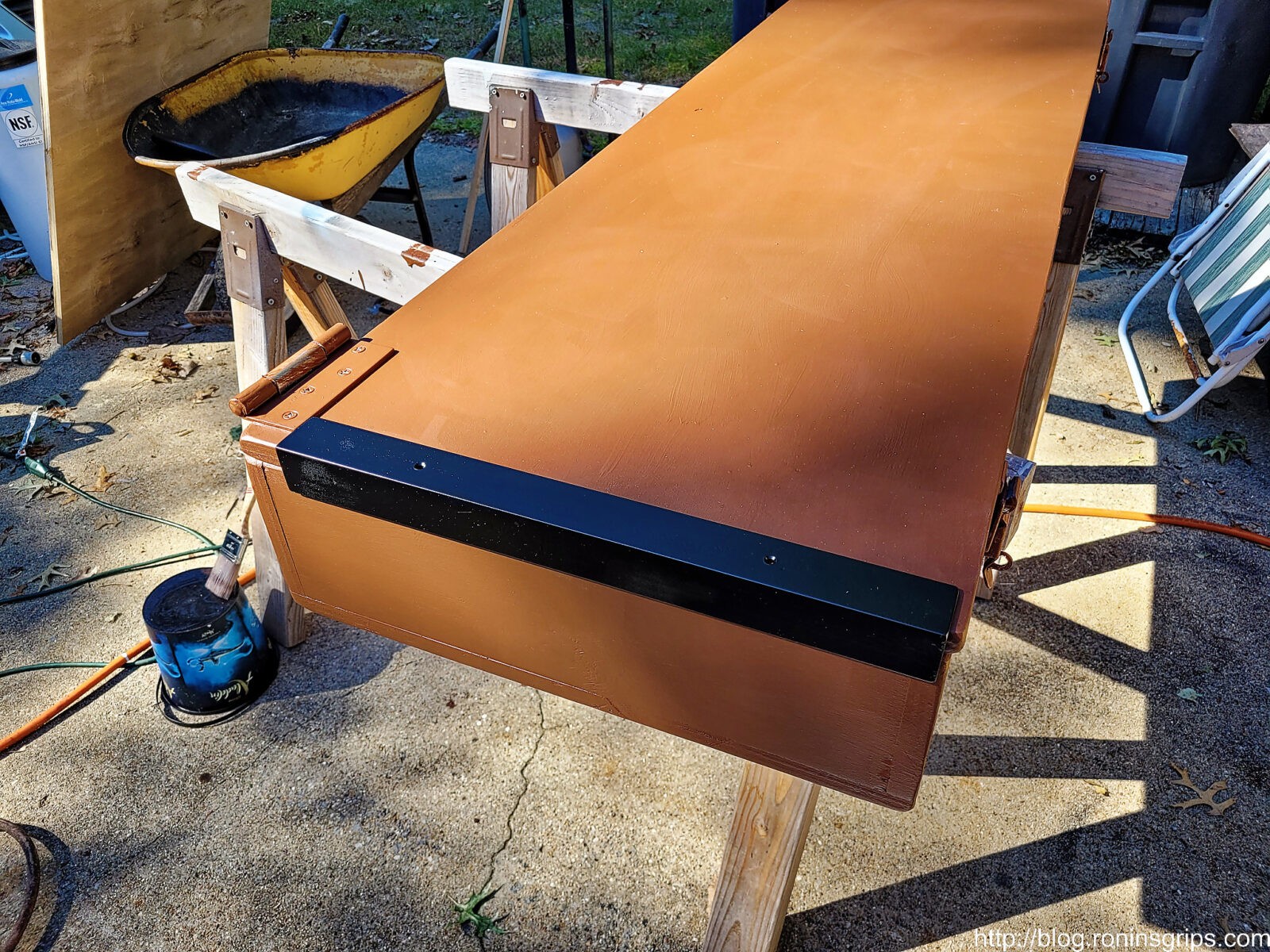
I did have some spare 1-1/4×1/8″ thick” angle iron that I cut, drilled and painted to protect the sides of the lid from the ratchet strap and to also distribute the downward pressure of the strap more evenly.
The box fit the back and I did have some room as I flattened the tubes out. By the way, I let the deck finish cure for a day before I put in the truck and part of the second before I installed the tubes. I didn’t want the deck stain to glue itself to the rubber floor mat if I pushed it down too early.
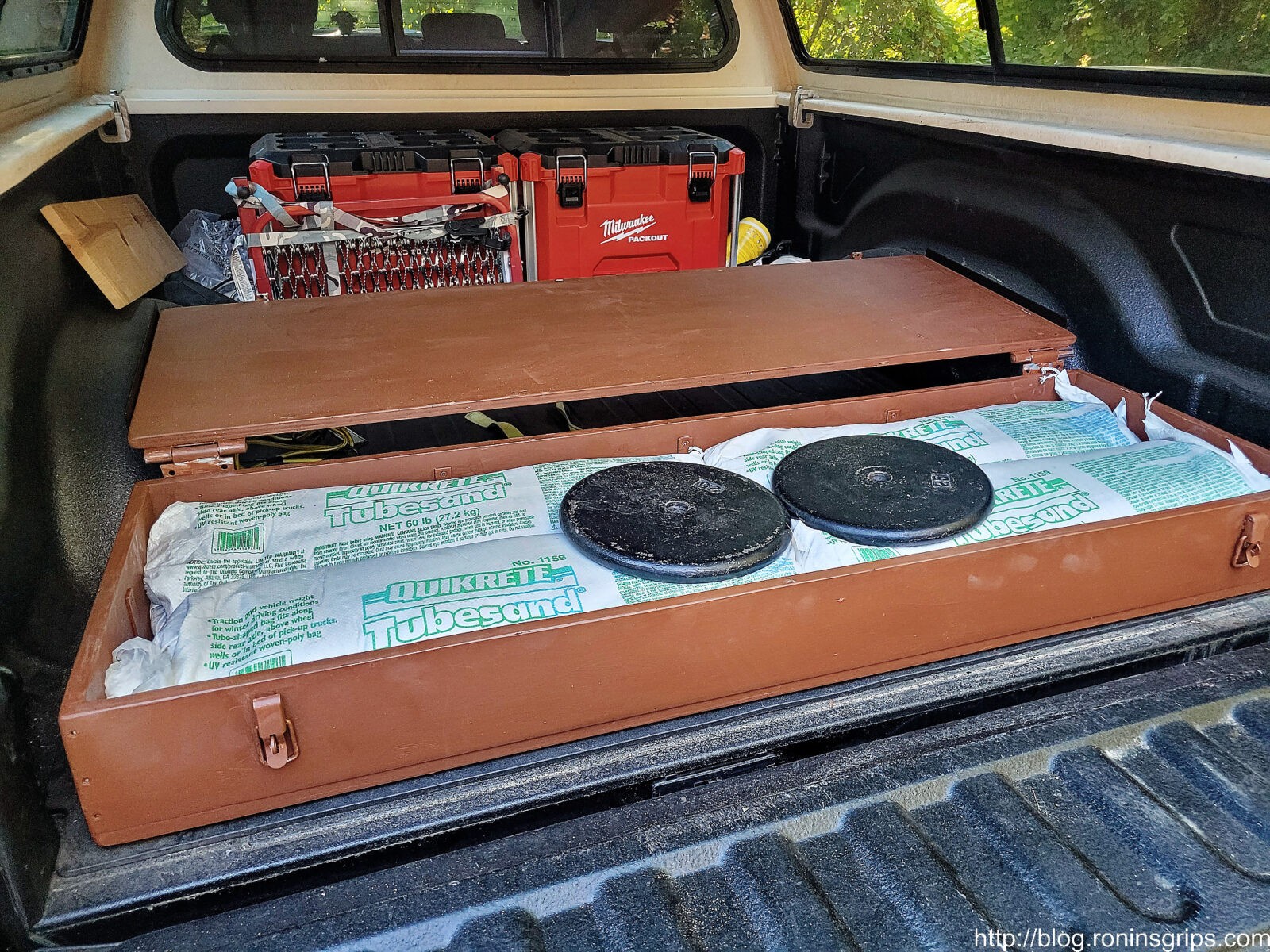
Added in two 1″ 25 pound plates that date back to my early days of weight lifting – late 80s if I were to guess. I had four but there wasn’t room towards the sides. Now that the box was at 290 pounds that was good enough for me.
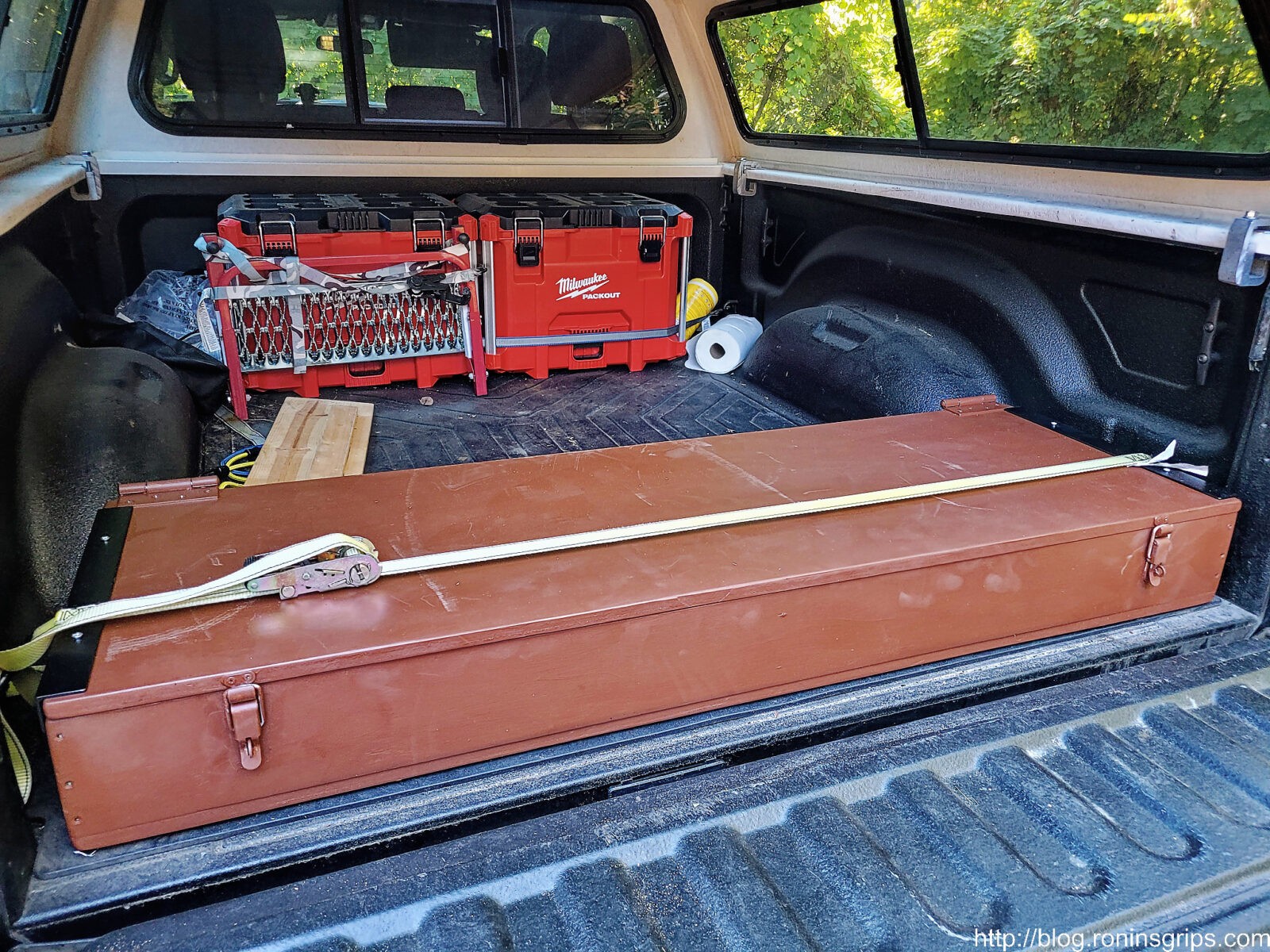
The box is secured by the 1.25″ ratchet strap to the tie down eyelets of the truck. I really didn’t want to drill holes in the bed and invite rust plus the box will only be installed during the winter. The box can’t slide forward because of the wheel tubs plus the rubber floor mat really has a healthy grip on it and the bed floor thanks to the strap.
Summary
The box feels very sturdy and can’t move at all now that it is strapped in place. I think the truck has the weight it needs and I don’t have to worry about it shifting around.
I hope this helps you out!
10/31/24 – I am still using this setup and it works great. If I had installed a rubber matt or something on top the lid would have been protected better. I have scuff marks all over mine from pushing stuff in and pulling it out. I may get add some rubber floor mat on top but it’s near the bottom of the to-do list.
Note, I have to buy all of my parts – nothing here was paid for by sponsors, etc. I do make a small amount if you click on an ad and buy something but that is it. You’re getting my real opinion on stuff.
My one big disappointment with my 2021 Ram 2500 with the 6.4 Hemi is it’s lack of sufficient electrical power to run my Western Pro Plow 2 snow plow and the heater on full – yeah, that combo has issues. My truck came with the Snow Chief option package that was supposed to make it snow plow ready with a 220 amp alternator plus anti-spin rear differential, aux switches, LED clearance lamps, LT275/70R/18E tires on 18″ wheels and a transfer case skid plate. One would think it’s good to go but it’s not – at least not in terms of the alternator. Can’t say I am overly thrilled by the tires but at least they work even though not ideally on ice and snow.
At any rate, back to the point of the post – my bone to pick with DC power system (the combination of alternator and battery) is that it can’t keep up with my raising my 8′ Western Pro Plow 2 while having the defroster on full. The truck’s computer senses that there is too much of a power draw and it literally shuts off the blower motor … in the middle of winter while I am trying to plow. When this first happened last year, I couldn’t believe it. I thought for sure something was wrong.
The local Dodge dealer, Siemens in Bridgman, Michigan, was next to no help even though I bought the plow from them — they said the battery and alternator were just fine. Honestly, I am usually not impressed by car dealership service departments and SIeman’s underwhelming response didn’t surprise me although it was disappointing. Bear in mind that 2500-series Ram trucks were hard to find due to COVID and a shortage of chips so I decided to figure this out myself despite being more than a little ticked off that my brand new plow ready truck wasn’t exactly plow ready – which for me means that the heater on full and the plow’s hydraulic motor should be able to run at the same time.
So what was happening?
The newer Ram 2500 computers (technically it is the ECU or Electronic Control Unit), maybe all newer RAMs actually, have their computers programmed to protect electronics by using a strategy that prioritizes some loads over others. This means it shuts off some high draw loads before others to prevent a brownout (a drop below the recommended power levels) that would cause damage. This is known as “load shedding” or just “shedding”.
On one hand, yes, I am thankful that the electronics were protected and the computer shut off the blower and not the plow itself – either of those cases would have really ticked me off. On the other hand, I need heat in the Winter and sometimes the blower set on high is needed. Why was this even happening? Yeah … that was the big question.
Note, I could not find any official details behind how the 2021 Ram’s computer handles load shedding. If you have some any official details, I would sure like to learn more. Email me at in**@*********ps.com
The Western Pro Plow 2
To give some background, I bought a brand new Western Pro Plow 2 with the truck and financed them together. It has an 8′ steel blade and Western’s documentation rates the motor’s draw at 205 amps at 2,250 PSI. There are a few other relatively small draws – 1.5 amps for the solenoid coil, motor relay draw 2.2 amps and switched accessories of 0.75amps.
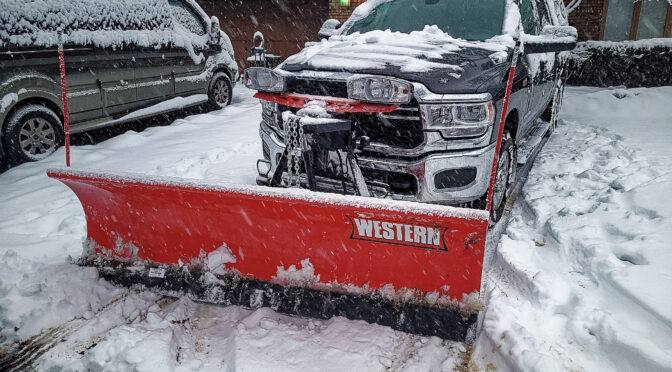
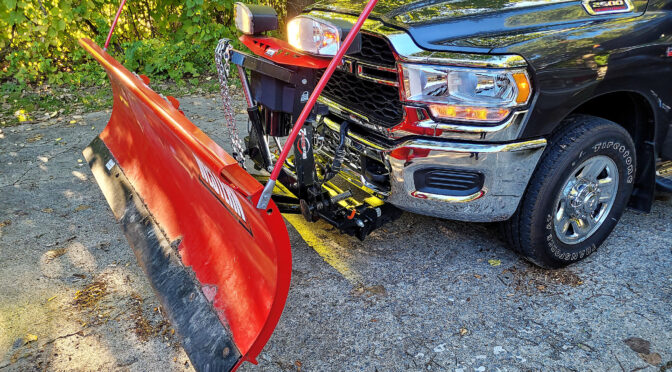
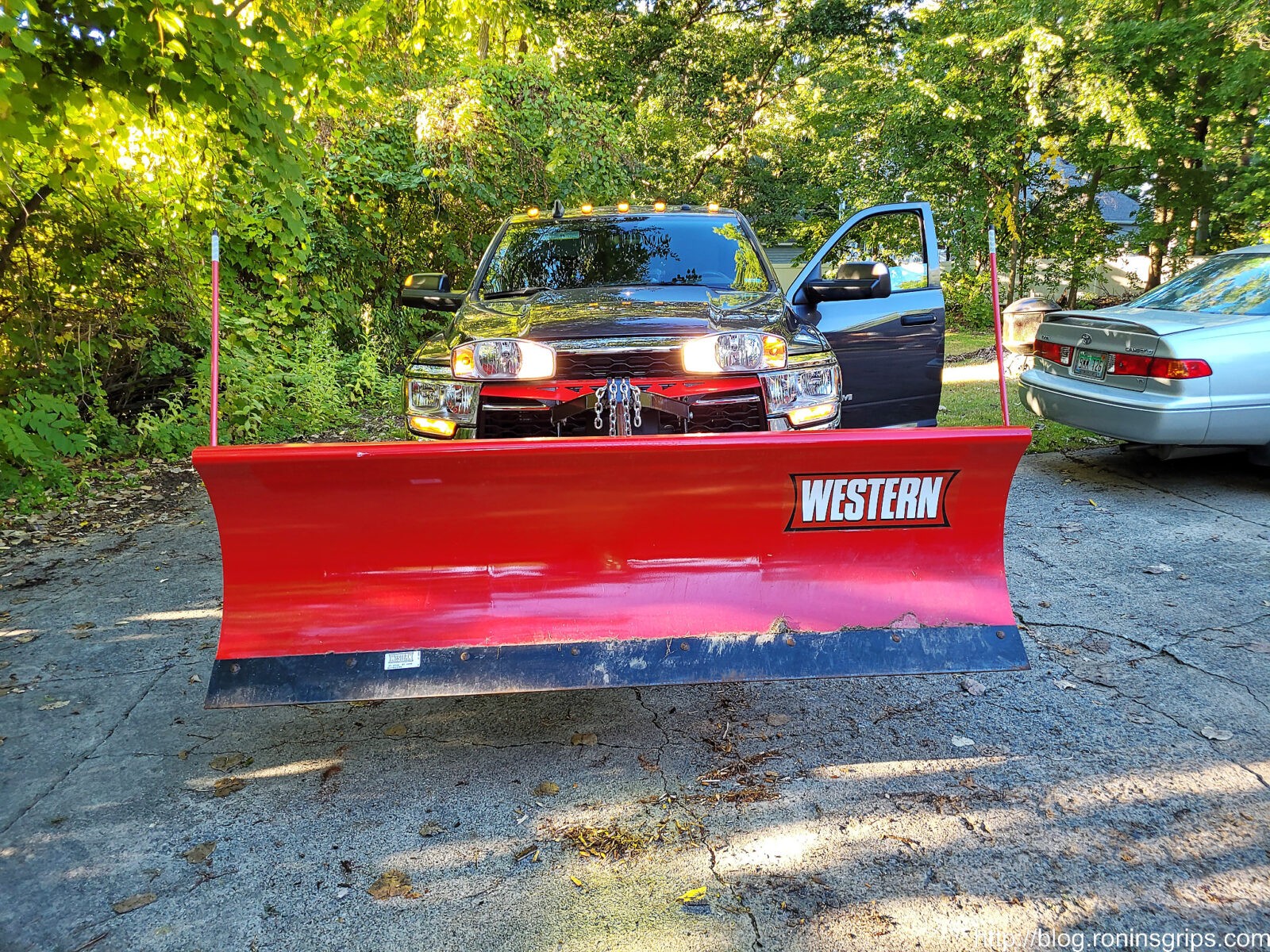
This is a Western 8′ Pro Plow 2. The plow assembly less the mount weighs 668 pounds.
So. running the hydraulic motor to lift the big 8′ steel blade is substantial – probably pushing near or even past the rated 205amps. I don’t think I ever had shedding happen with left and right pivoting but I can’t say for sure.
The problem scenario was that I would get in the truck, warm it up, turn the blower on high, lift the plow and the computer would shut off the blower completely. I was told it would restart after some time but did not experience that – I would turn off the truck, turn the blower motor down one notch and things would be fine. That was my work around though – I would warm up the cab, reduce the blower by one notch and then use the plow. As the cab warmed up, I reduced the blower speed further and further. Now if I forgot that then the computer would shut off the blower. Man, it was frustrating.
The 220 Amp Alternator
To be very candid, Dodge’s decision to put in place both an underpowered alternator and battery and claim it to be plow ready is bogus. I am not running an abnormally large plow for a 2500 – 8′ is the recommended blade width.
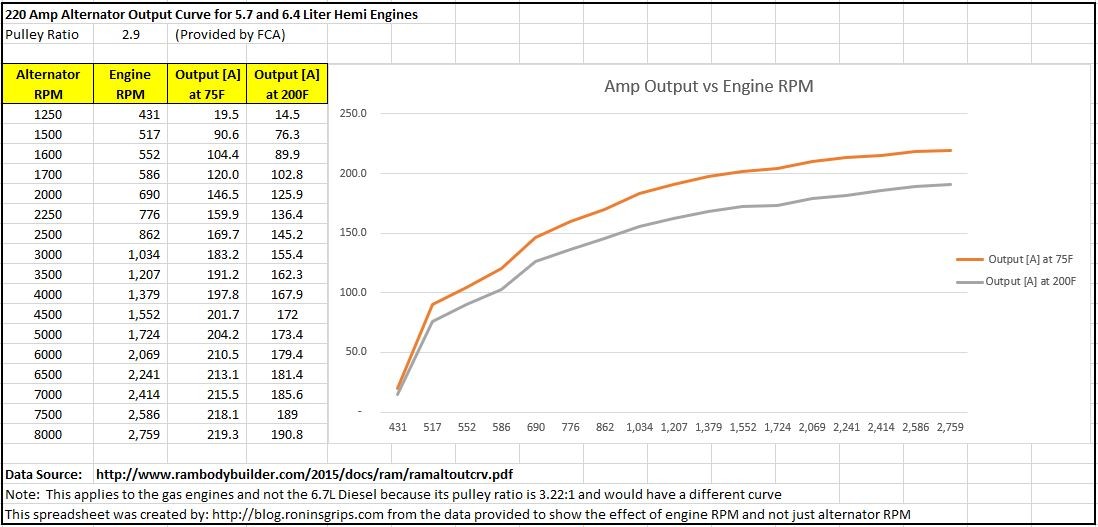
Yes, it is a 220 amp alternator but it is not cranking out that many amps all the time – it depends on the engine RPM. In doing some reading, many/most alternators rate their full output at 6,000 RPM. The RPM is of the alternator itself and the pulley will likely have some multiplier vs. engine RPM. I found a FCA technical bulletin on the smaller 160 amp alternators and they have a 2.9:1 ratio and show the steepest power output between 1,250 and about 2,500 alternator RPM. The power increases much more gradually until they stopped the curve at 8,000 RPM.
The Snow Chief option package includes a 220 amp alternator. The problem is that while 220 amps sounds great it is not producing that level of output all of the time.
My point is that even with the bigger alternator, given that I am plowing, the RPMs are going up and down over and over plus I am never going very fast. Hmmm….. I usually was idling when I had the blower running and went to lift the plow. With an engine idle speed of 720 RPM (I just went out and got that from my ODB2 scanner), we’d get an alternator speed of 720 x 2.90 pulley ratio = 2,088 alternator RPM. Using the output chart that FCA has at 2,000 RPM the alternator is producing about 146.5 amps.
Hmmmm…. far less than the plow’s draw of 205amp let alone having the blower on high. I did some digging and while I couldn’t find an absolute number from Dodge, the range mentioned seems to be 15-20amps. I don’t often plow in the dark so I am not factoring in lights. Regardless, the alternator would not be producing enough amps so the demand would need to tap into the battery’s reserve but that wasn’t enough obviously.
To make this more approachable, I took the data from FCA and generated the following table that shows you engine RPM and the amp output. If you click on the photo you can see a larger version.
Quick comment: I did not know it but there is a dual alternator option for the Hemi-powered 2500. With two alternators, both are contributing amps even at lower RPMs. Had I known, I would have tried to negotiate adding this option in as part of the purchase and at least had it financed. Then again, it would have been a gamble to avoid this problem that I didn’t even know existed.
The Original 730 CCA Battery
Let’s now consider a second important element – The battery powers the starter to start the truck of course but it also serves as a reserve buffer to even out power delivery when there are surges in demand that the alternator is unable to cover. Dodge went mediocre here. Why they didn’t use a bigger battery or even dual batteries – I don’t know. Well, I do know – either they went cheap to make more money or the engineers didn’t have real world snow plowing experience or didn’t talk to any real snow plow owners. Sorry guys – I have to call it the way I see it.
The OEM (Original Equipment Manufacturer) battery that came with the truck brand new was only rated for 730 cold cranking amps (CCA). While that is enough to start a 6.4 liter Hemi and run the stock electronics, it would appear to not enough to compensate for a plow at lower RPMs – at least not my Western 8′ Pro Plow 2 anyways. A smaller plow would likely have lower power demands and conversely, a larger plow would likely have higher power demands.
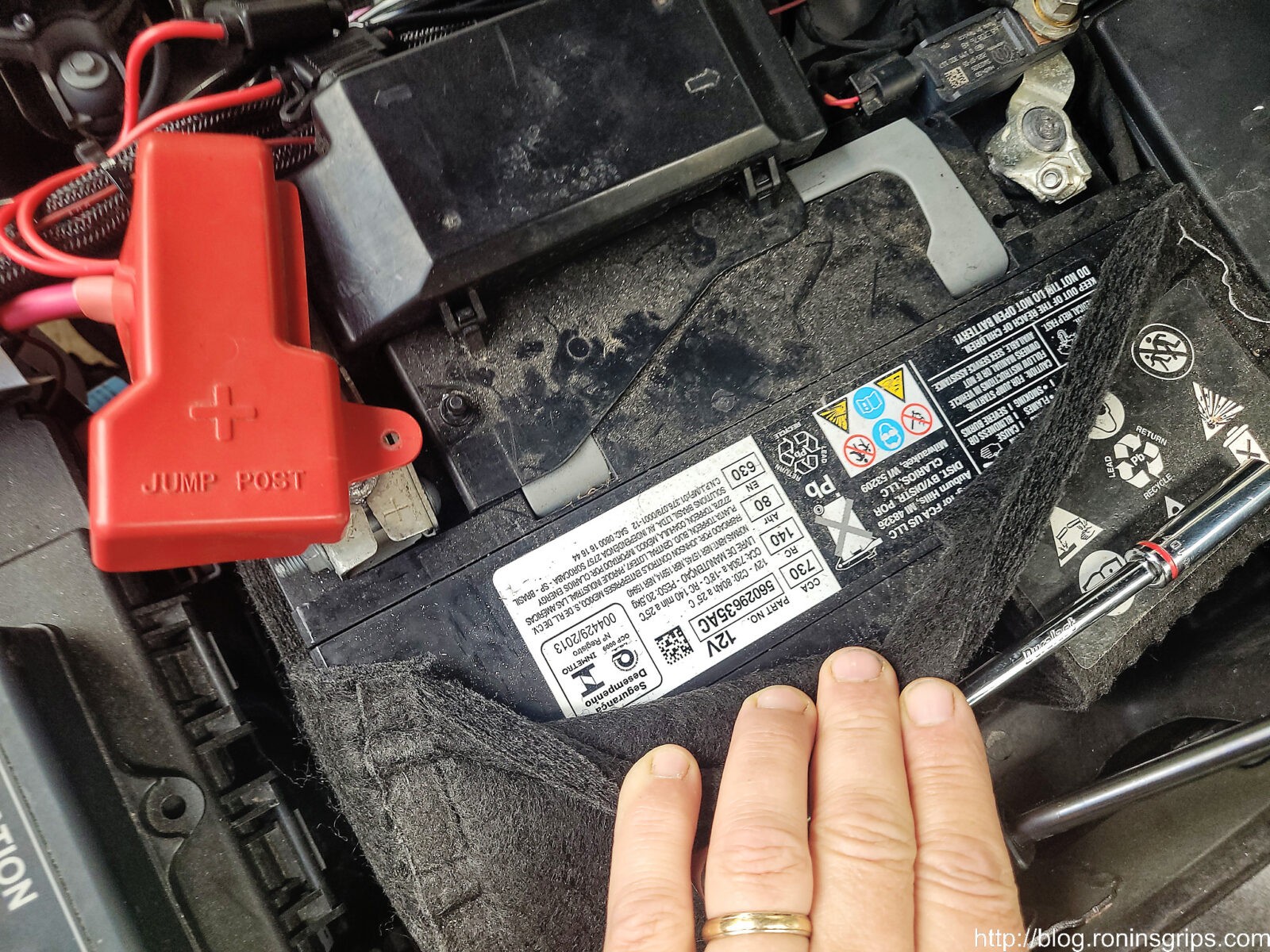
Here’s a peek at the label that partially covered by insulation. Having the right battery is critical to serve as a buffer for when power draw is higher than what the alternator is currently producing.
By the way, cold cranking amps identifies the battery’s potential amp output at 0 degrees Fahrenheit or -18 Celsius. They measure the output of the new battery for 30 seconds and it has to maintain at least 7.2 volts (technically it is 1.2 volts per cell of the battery).
Because I live in Michigan and it has Winter weather, CCA is what I care about. Cranking Amps (CA) is measured at freezing which is 32F or 0C and not really something that matters to me. I need more CCA both because of starting the big Hemi in the cold winter (the stock battery did fine at that) but also to support all of the electronics plus the plow’s hydraulic motor … and this is where the stock battery fell short.
What did I do?
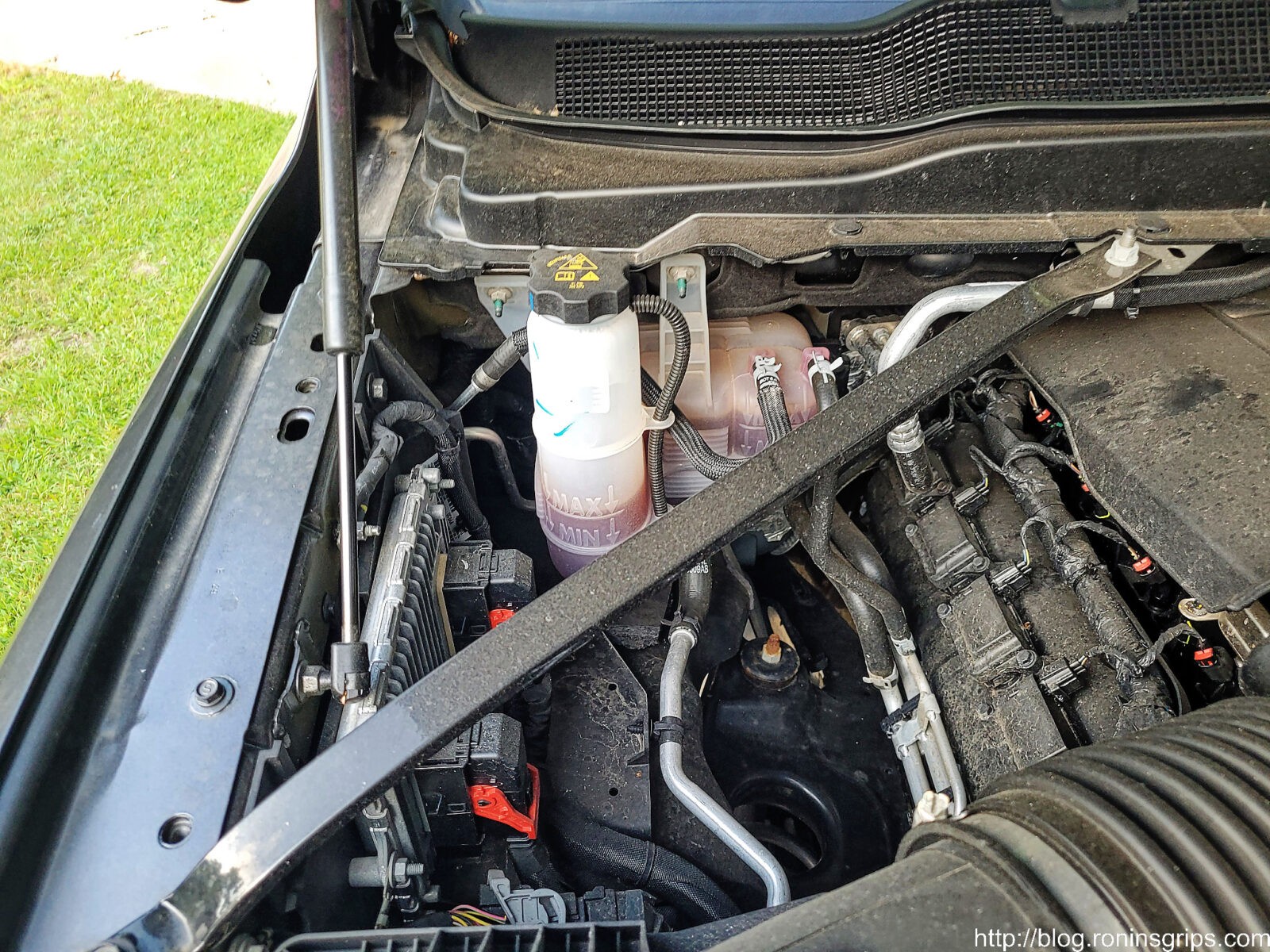
Well, I couldn’t afford to add a second alternator and aftermarket second battery mounts in the engine compartment were expensive (unless I wanted to mount something underneath on the frame which I did not want to do). By the way, I actually bought and tried to test fit the passenger side battery tray for the Cummins diesel models and it will not fit due to the location of the computer/ECU on the fender wall and there wasn’t enough space between the air box and the engine coolant reservoir.
Even though you can buy the passenger side battery tray from the Cummins version of the 2500, the ECU is in the way and there is not enough room between the coolant reservoir on the firewall and the air filter box. So the hope for a Mopar OEM second try and that would fit in there went out the window.
So, once I realized I couldn’t afford to add a second battery given my budget, I opted to buy the best AGM (Absorbed Glass Mat) battery I could find with the highest CCA rating in the H7 form factor. It also had to be affordable (sorry Optima – you’re too expensive).
I talked all of this over with my friend John – who is a professional mechanic with a ton of experience. He recommended that I go with an Interstate H7 size AGM battery. Now let me explain a bit more about why this was the case.
Starting with the brand, Interstate works with a number of manufacturers who actually build their batteries – namely Clarios and Exide. They are sold through a series of 200,000 dealers including Costco.
H7 relates to the shape of the battery that the RAM 2500 is designed to hold. An H7 measures 12-3/8″ x 6-7/8″ x7-1/2″ (315x175x190mm).
AGM is a relatively newer battery technology (it was invented in 1980) that can produce both higher CCA and reserve power compared to traditional flooded lead acid batteries of the same size. AGMs are still lead acid but there is a thin fiberglass matt sandwiched between the lead plates and they are bundled together. There are tons of websites out there with far more details on AGM where you can read more.
The Interstate AGM battery is rated at 850 CCA – almost 120 more than the OEM battery. That really sold me. I’ve used AGM batteries in the past and had very good luck with them so I had John pick one up for me the next time he visited Costco. Thanks to inflation, it was about $217 out the door.
Installing The New Battery
Okay, before you do anything else – make sure the battery you just bought is the same size and the terminals are still in the right place. Stuff happens. It’s better to find a mistaken purchase out before you do anything to your truck.
Modern vehicles have a ton of info in their computer and a lot of it disappears when the power is lost – either when your battery completely dies, or in our case, if the battery is disconnected. A lot of it will be re-learned as the computer communicates with the sensors and figures out what is normal. Now what all gets lost in the UConnect system after a power loss tends to get different answers. Let me just say I didn’t want to deal with any problems so what I did was power the computer (ECU) through the OBD2 port under the dash using a purpose built cable from VSTM and a Clore Automotive JNC660 jump pack. This combination provides electricity to the computer so none of your settings are lost – it makes changing a battery very straight forward.
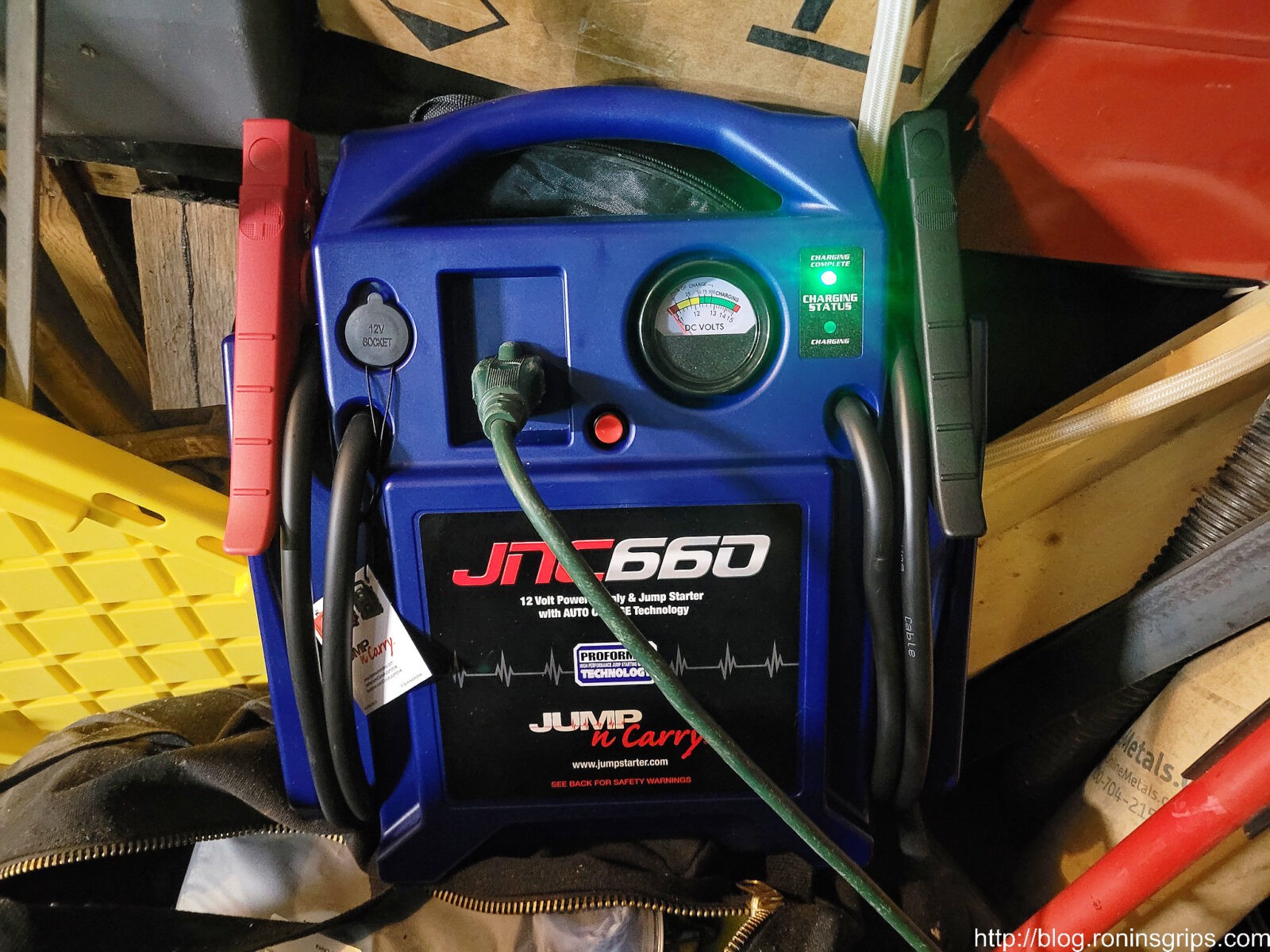
I ran into a situation this summer with our Highlander that had a completely drained battery and my little Noco jump pack couldn’t start it so I decided to get a bigger one. The Clore Automative jump packs got really good reviews so I bought this one plus it has a 12 volt cigarette lighter-type outlet on the left side that I can use to power ECUs via the ODB2 port. I had to charge it and the male prongs for plugging into an extension cord are conveniently located on the front. The green light means it is fully charged,
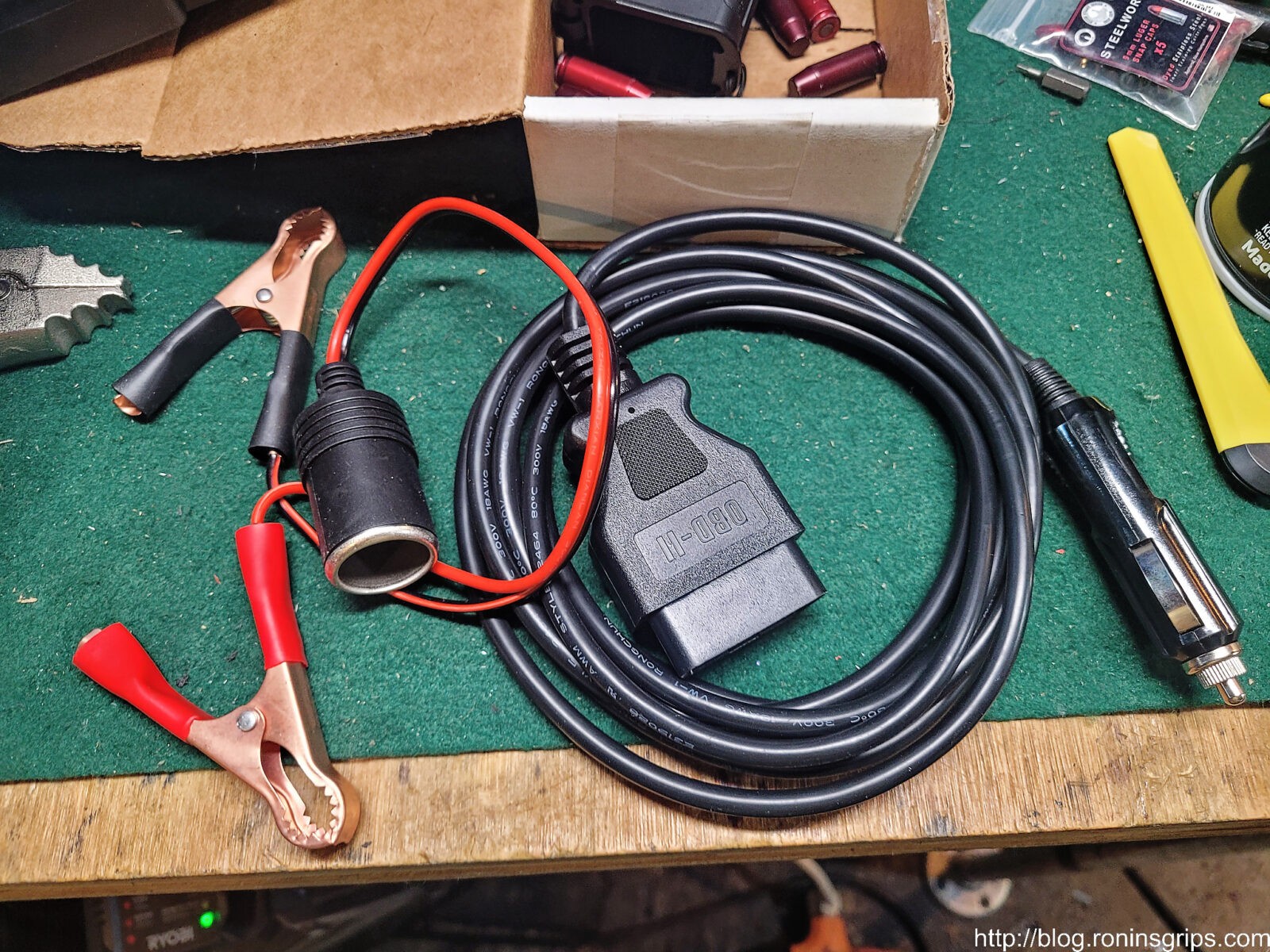
This is an ODB2 power cord from VTSM. You can plug it into a cigarette outlet in a jump pack or used the supplied adapter and connect it to any 12 volt power source such as another battery.
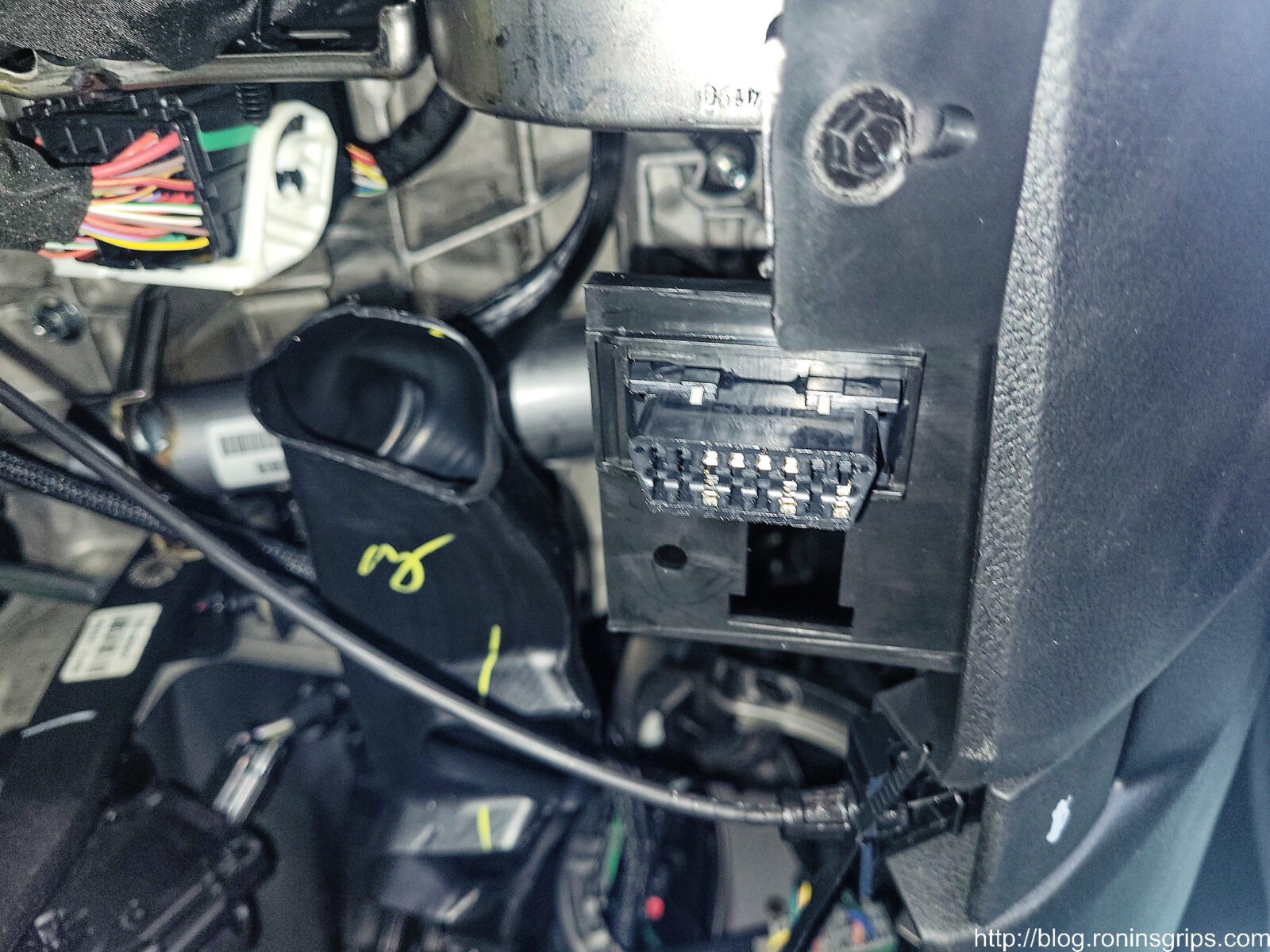
The photo is from a weird angle – I’m down in the foot well looking up – you can see the hood release in the lower right portion of the photo. The V-ish shaped female receptacle is the ODB2 port where we can connect the power charger or connect any ODB2 device such as a code scanner for that matter.
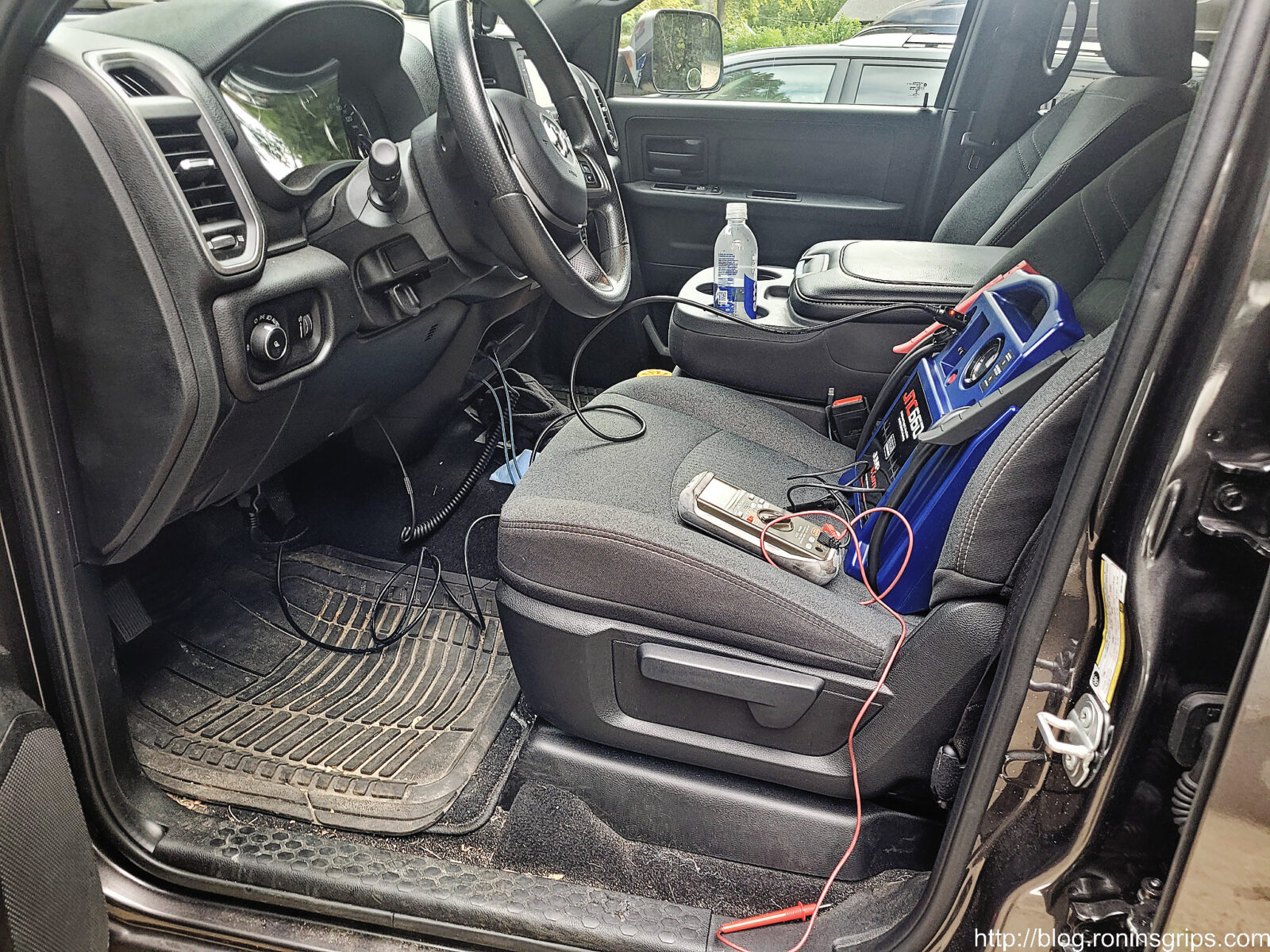
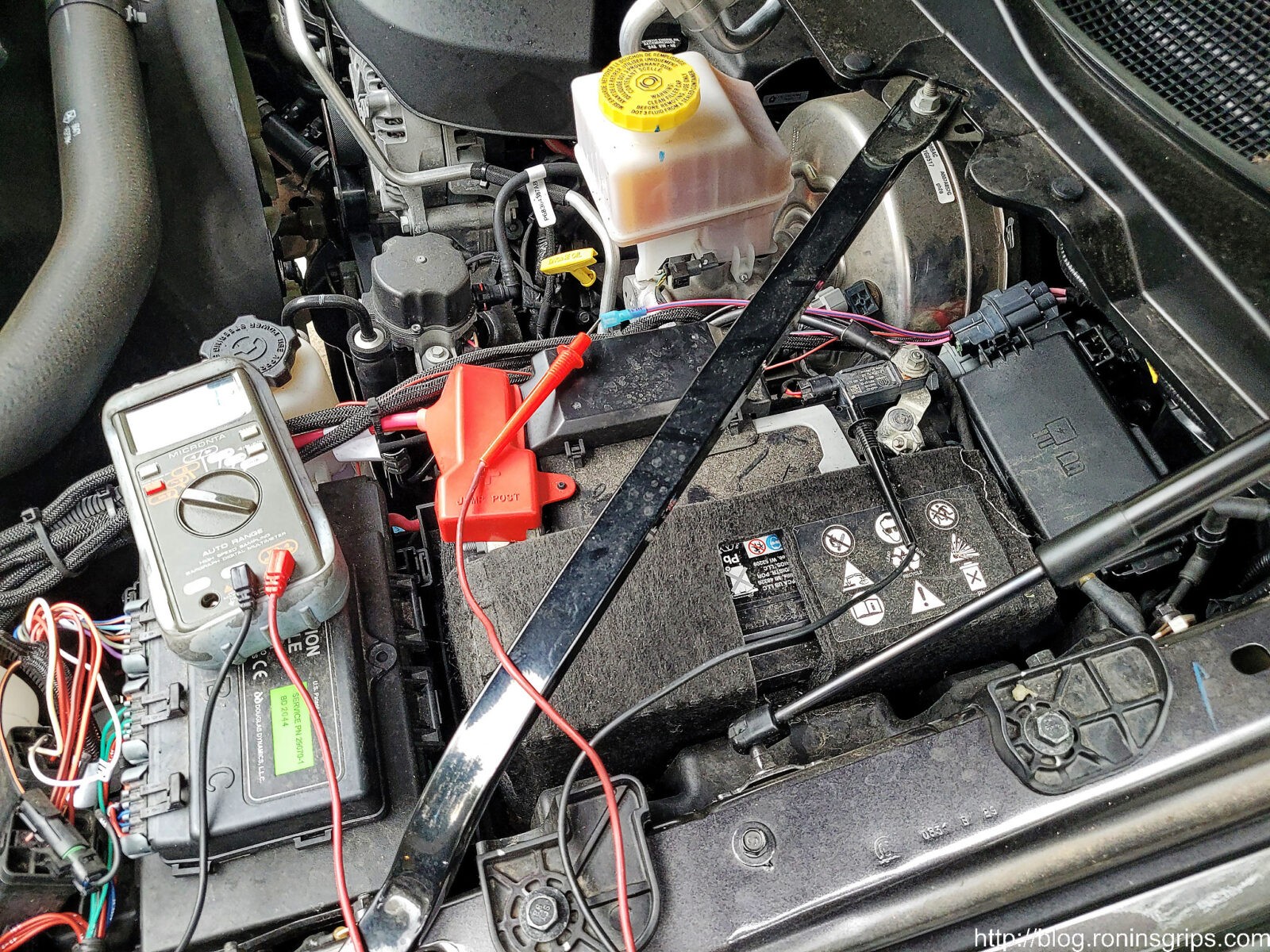
With the ignition off, plug the power cord from the jump pack to the ODB2 connector. My multimeter is on the seat because I wanted to make sure the jump pack was putting out 12-14 volts and the polarity was right before I plugged it into my truck.
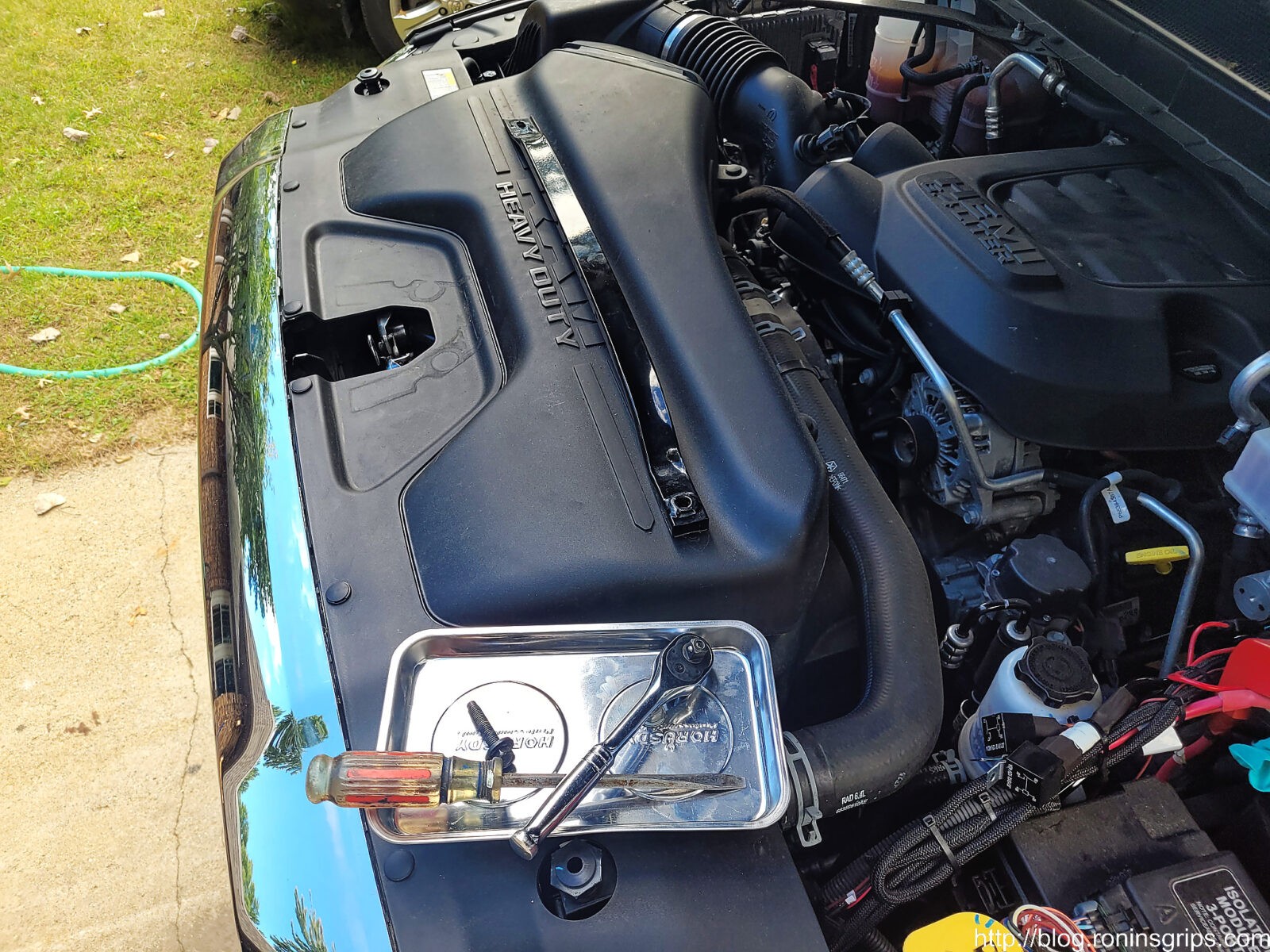
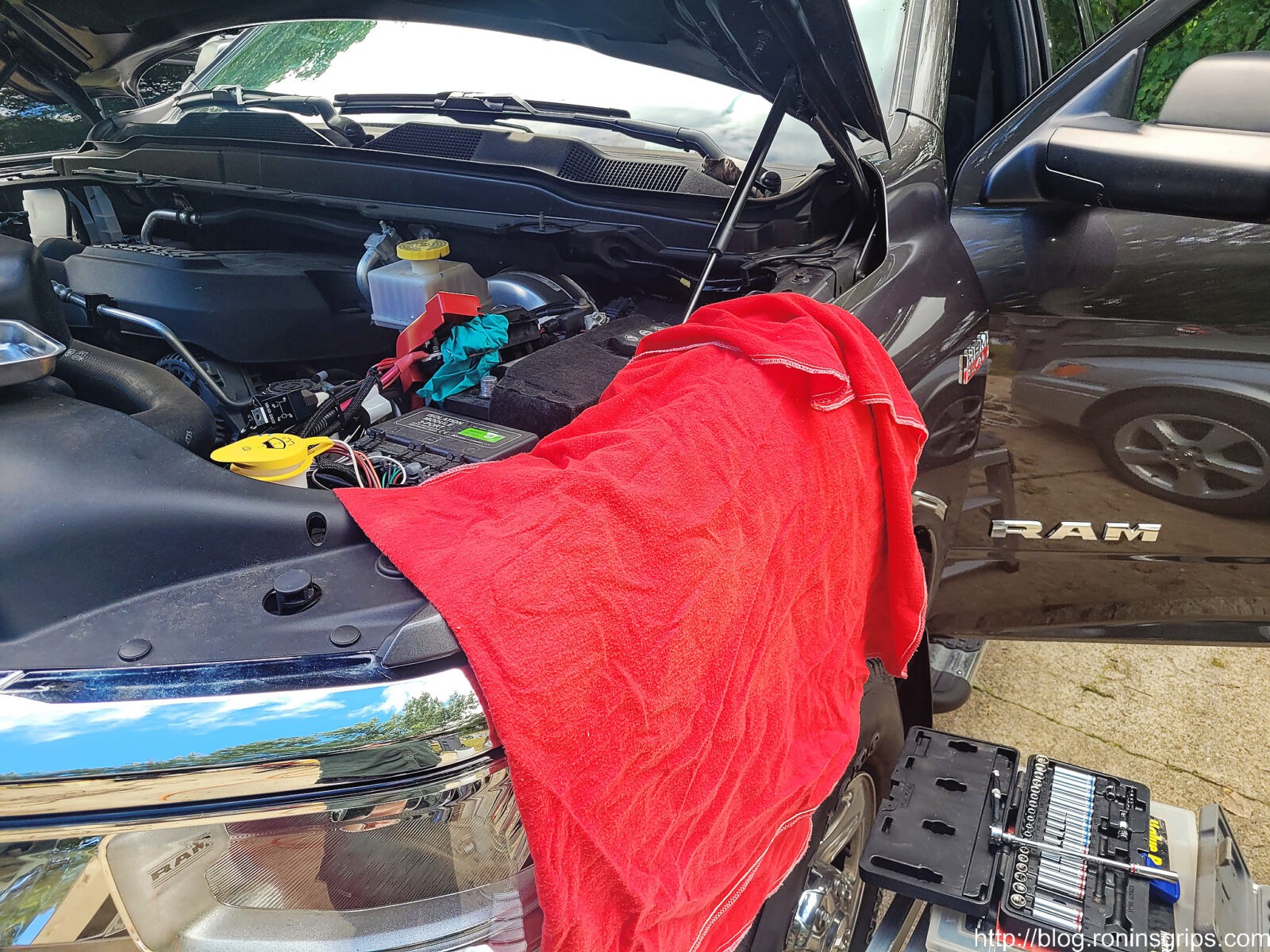
To get started under the hood, I disconnected the stiffening brace that is located right above the battery and set it to the side out the way. I really like magnetic trays to avoid losing parts.
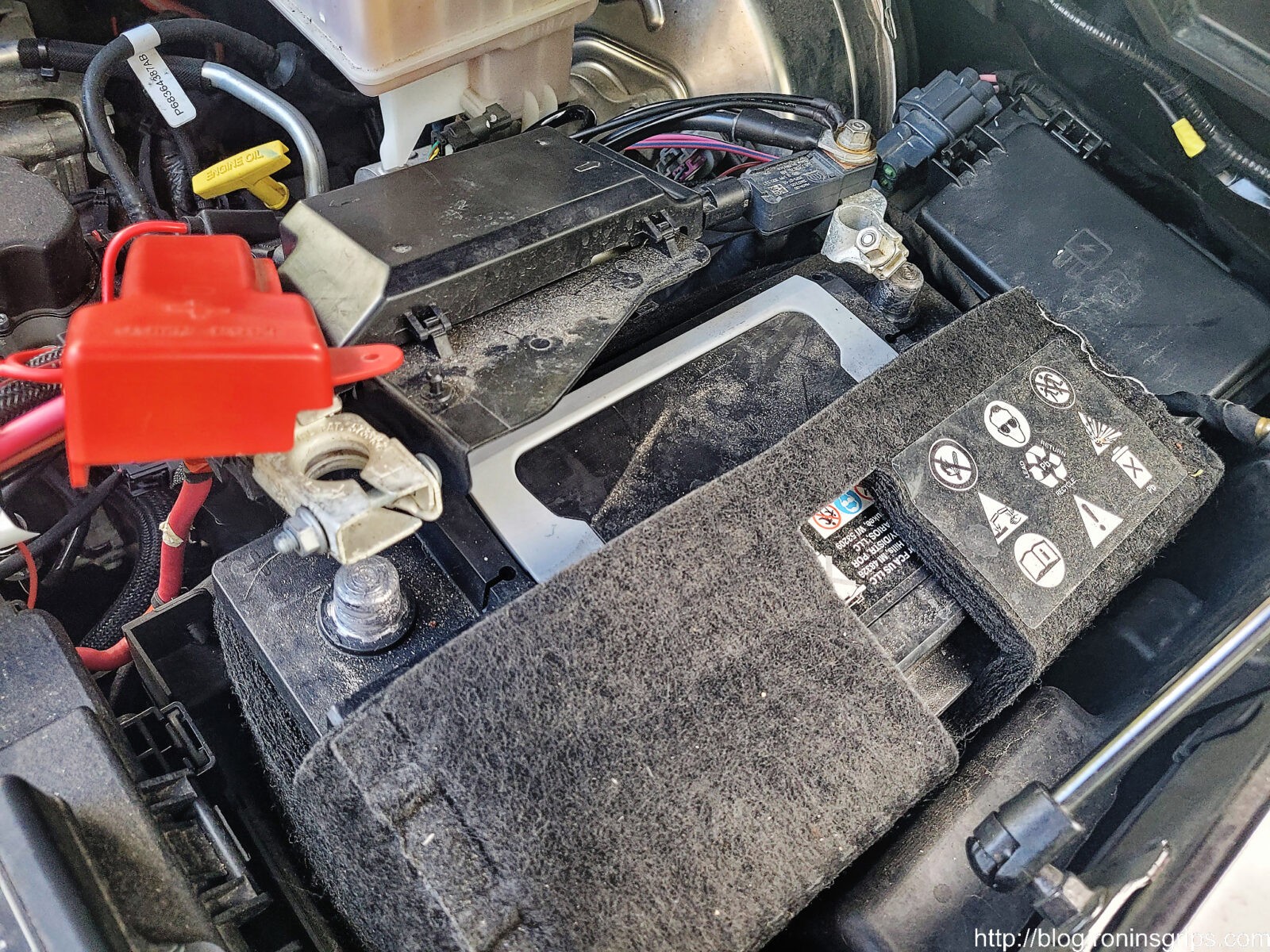
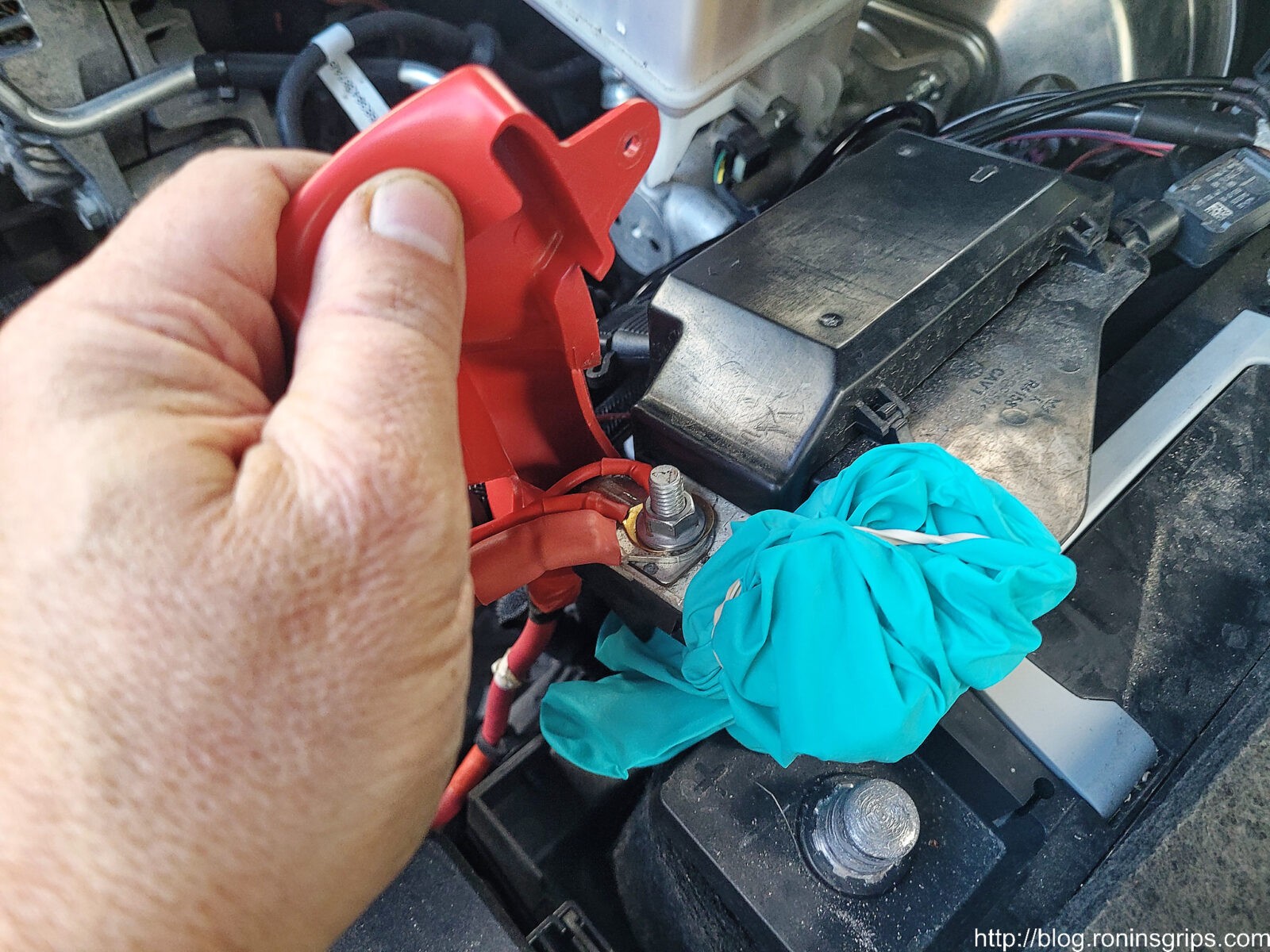
The next step was to disconnect the battery. I removed the negative terminal first and pushed it to the side. I disconnected the positive terminal assembly from the battery’s top post and covered it with a Nitrile glove. In most cars, and I am assuming it is the case with my truck, the powering of the computer through the OBD2 port also sends 12 volt power to the now-disconnected positive power cable and I did not want a surprise from something shorting. Cheap insurance in other words.
With the plow and everything, there is a lot of additional stuff on the positive (red) side but they are all connected to the terminal. When you loosen the terminal and lift it up, everything comes with it. There wasn’t anything else securing the positive terminal assembly in my case.
If it looks stupid but it works then it’s not stupid. Yeah, I wrap the exposed positive terminal with a nitrile glove that is an electrical insulator and rubber band it in place. I don’t want any surprise sparks/shorts. In many cars if you power the ECU via the ODB2 connector then the positive battery wire is energized. I didn’t confirm my Ram was this way – I just assembled it to be clear. I just wrapped the terminal with a glove and called it even out of an abundance of caution.
I should mention that I have an aluminum work platform that I stand on to reach in the engine compartment and I also put a fender protector (in this case a thick red fabric) to make sure I don’t scratch anything. Many years ago I scratched a car with a belt buckle and felt like an idiot. Lesson learned. I protect fenders now.
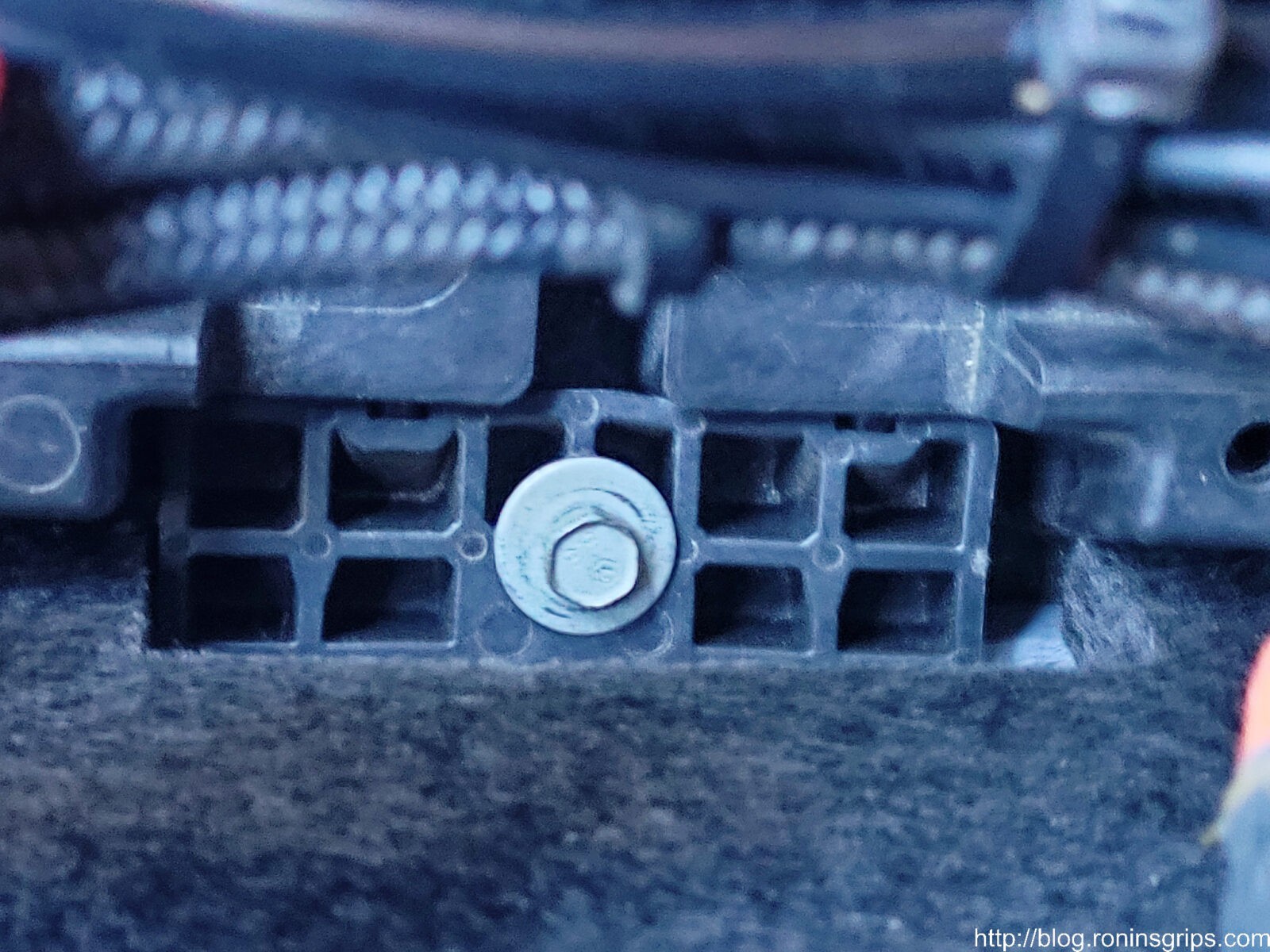
This is the battery clamp that is a plastic wedge and bolt. I removed mine and put them in the magnetic parts holder. Note the orientation of the clamp – if you try to reassemble it smooth side up you will be wondering why it doesn’t line up. Yeah, I tried to install it upside down and spent a few minutes trying to figure out why that was so. The photo shown is the correct orientation.
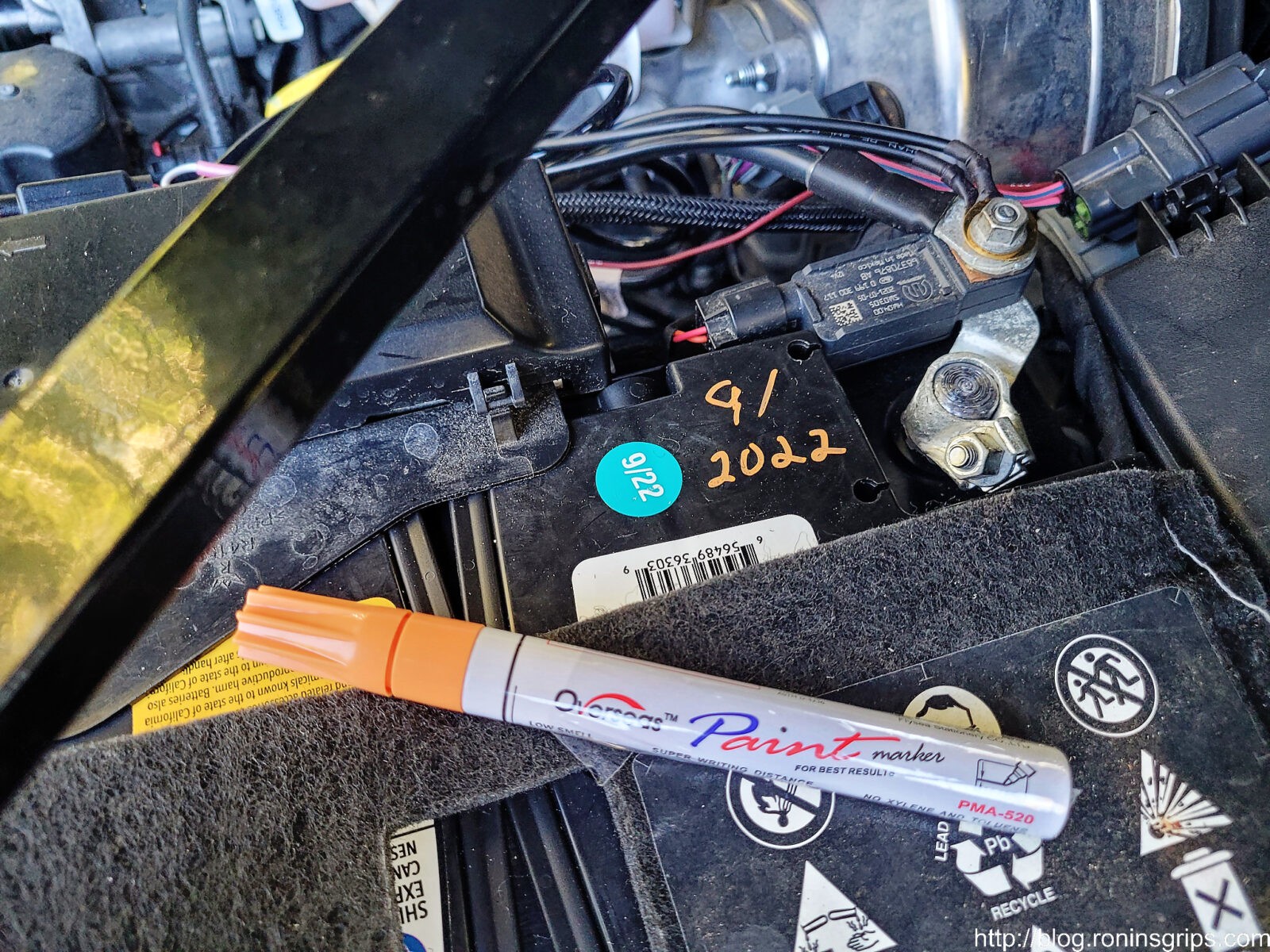
Starting a few years ago I realized it was a really good idea to take a paint pen and write down when I installed the battery. I went to write on the battery and noticed an aqua colored sticker with 9/22 printed on it. Maybe Costco put it there – I don’t know. Knowing my lousy memory I could see me looking at the sticker years from now wondering if it was the install date so I went ahead and wrote 9/2022 on it anyways because I still recognize my own handwriting at my current age 🙂
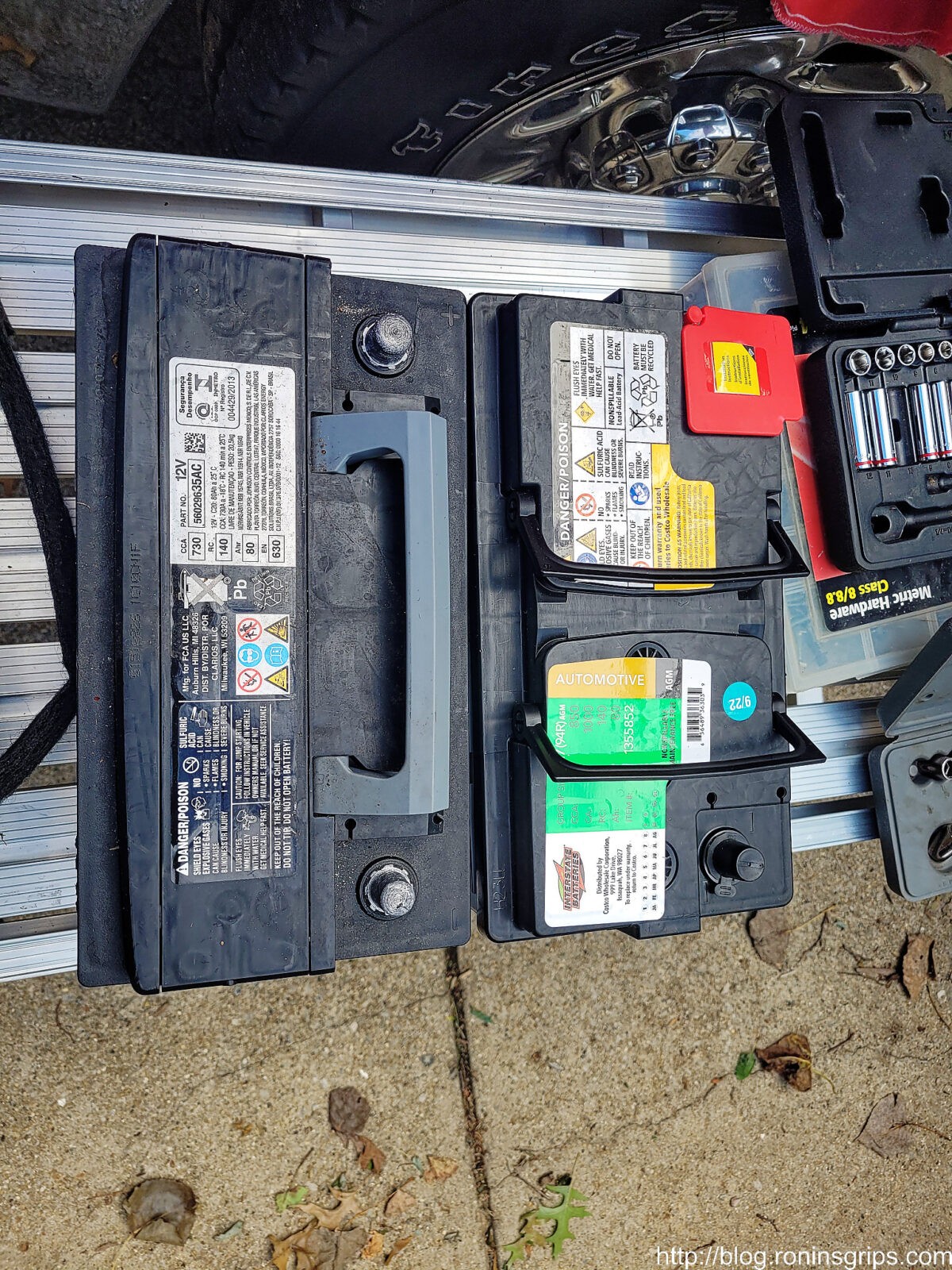
Left is the OEM battery and right is the new Interstate. I always put batteries side by side one last time to make sure the layout matches. I’ve made my share of mistakes in the past and don’t mind sharing with you that it pays to verify things several times before you get too far.
I did take the insulated jacket off the OEM battery and put it on the new Interstate AGM battery. It’s not necessarily to keep it warm – it protects it to some extent from high heat in the engine compartment as well.
Batteries are heavy. Make sure you have a step or something so you can line things up and protect your fender. Installing the new battery is just a reverse of what I listed. Re-install the clamp, the positive side terminal, the negative side terminal and then the reinforcing strut.
Be sure to remove the ODB2 power cord at this point. The battery tested over 12 volts so I turned on the ignition and everything seemed to work – the truck started, ran fine, all of my phone settings and stored Sirius XM stations were there, etc.
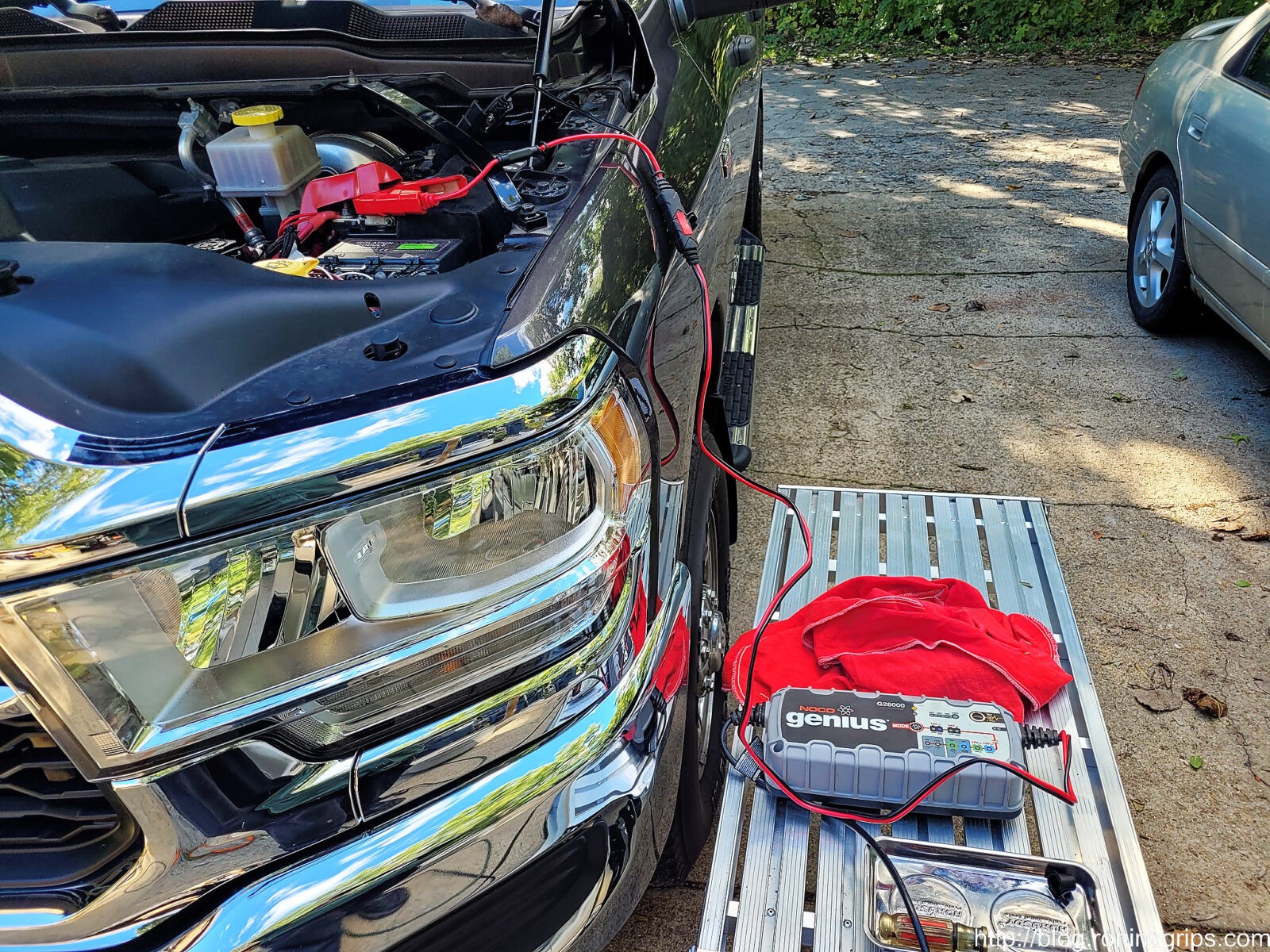
The truck is back together at this point. I do like to make sure any new battery is fully charged. If I had thought about it, I would have done this before I installed the battery – that’s what I usually do. I forgot and just stuck my Noco 26 amp charger on after testing and it went to full very fast meaning the battery was practically full.
Truck & Plow Testing
Starting the truck and running the base electronics are one thing but could it actually support the plow better? Now that was the big expensive question. I sure hoped it would.
For the first time this fall, I hooked up the big plow, lifted it up and brought it over to the driveway. The fact the truck could lift the plow was the first promising sign.
I tested the truck and plow three ways and did short videos of each:
The first test was turning on all of the lights, AC on full, defroster and then running the plow.The second test was running the heater on full plus the lights and defroster then running the plow.I forgot the truck’s voltmeter gauge until I was doing the tests. This lets you see what happens to the volts when each item is turned on. I never thought to do this with the original battery but wasn’t going to bother swapping to do this either – too much work and I am not that curious.
Battery Testing Via Foxwell BT705
The company that actually makes the OEM battery for FCA/Dodge is Clarios. They were a spin off from Johnson Controls and were bought by Brookfield Business Partners, an equity firm, in 2019. My point is that they know how to make batteries and also point out on their website that 1 in 3 cars on the road are running a battery made by them.
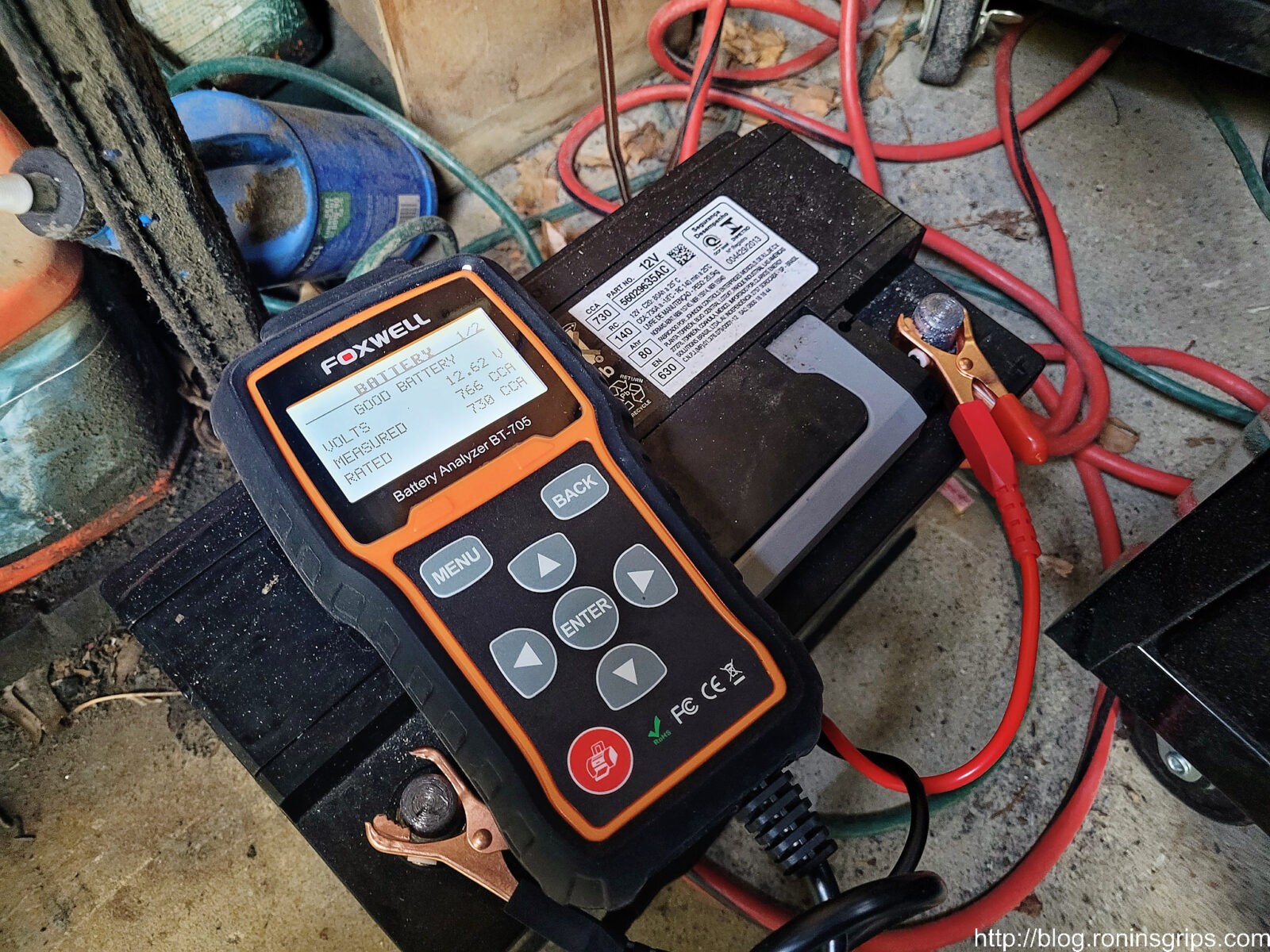
The reason I am bringing the lineage up is that the shortcoming is not their fault or something defective during the manufacture of the actual battery in my truck. The factory battery label claims 730 CCA and in testing with my Foxwell BT705 with the temperature at 46F, it delivered 760 CCA and this is despite being out of the truck without any charging for 7 days. No, the battery was just fine in terms of hitting its declared specification but Dodge should have put a bigger one in.
The OEM battery made by Clarios delivers in excess of the amps claimed (766 as measured vs 730 on the label). It’s not their fault that Dodge under-spec’d the battery or failed to do the right pairing of alternator and battery.
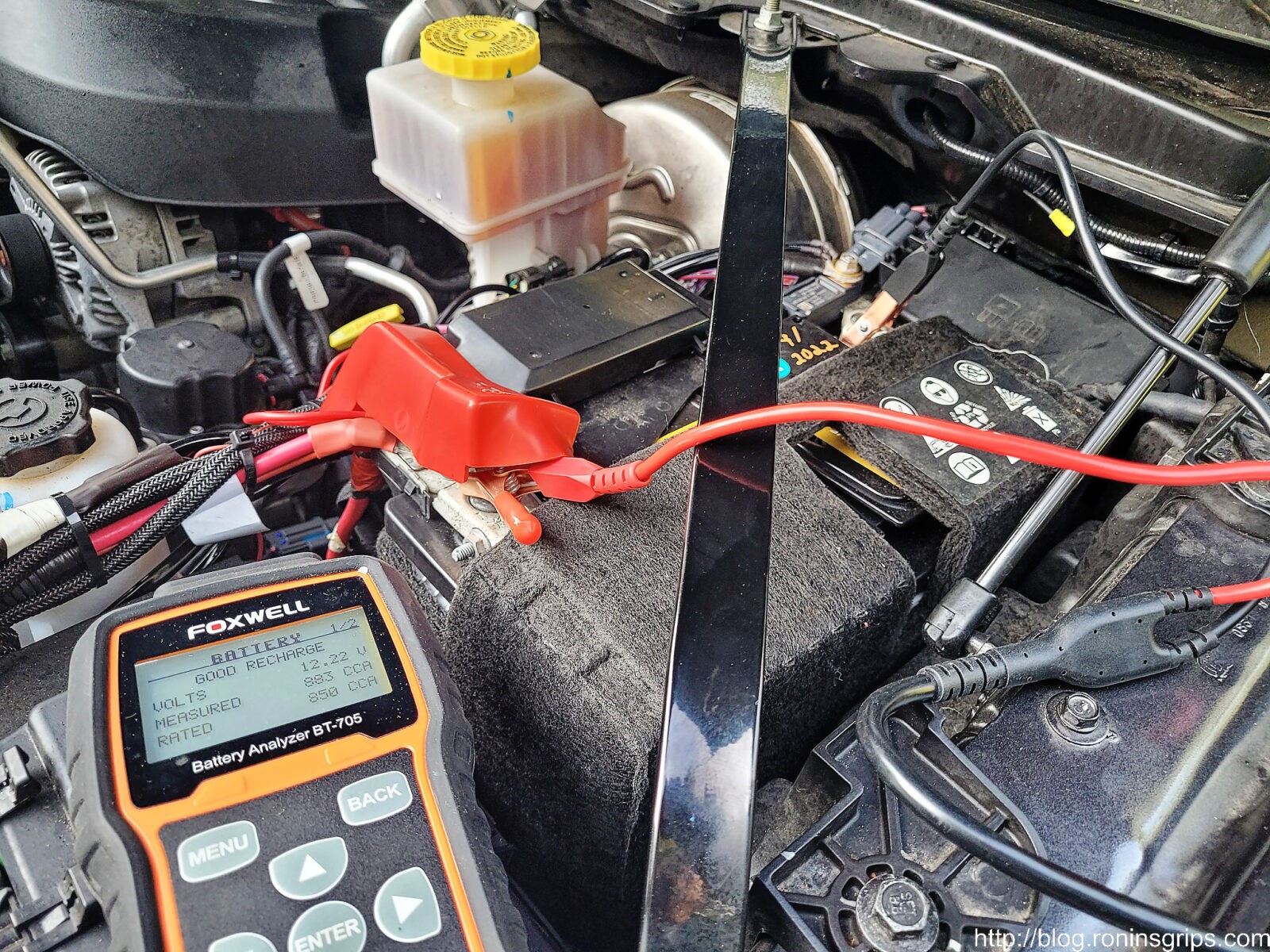
In terms of the Interstate, whew. It is packing some amps. The label claims 850 CCA and the digital BT705 meter is reporting 883 CCA. That is 133 amps more than the flooded lead acid OEM battery. The truck hasn’t been used for over 24 hours – closer to 36 if I were to estimate it – so no last minute charging there either. The temperature was still 46F so neither battery was tested at 0F just to be clear.
The Interstate AGM tested at 883 CCA vs 850 on the label. It also scores higher.
By the way, I’ve owned the BT705 battery tester since January 2018 and have found it to be quite reliable. The tester gets great scores on Amazon and I have never had it tell me that a battery was ok that then failed. This matters to be a lot in the Winter as I don’t want family or friends getting stranded with a dead battery.
Test Conclusion
Based on the tests conducted above, the Interstate AGM battery provides enough of a buffer that the problem appears to be fixed. There is one variable though and that is the temperature. You can see from the dash that it was 61F when I did these tests. When I plow it might be anywhere from 0 to 40F. In general, the colder a battery is, the less output it will have. I still have the Interstate’s higher 850 CCA (measured at 0F) to make me hopeful but winter will be the real test. I can hope, right? If I were to bet though, I bet the shedding problem is solved because real world I will not be running all of those accessories at once either.
It’s Not A Perfect Solution — AGM Batteries Still Have Limits
I do need to make one thing very clear – a battery is a buffer. If you are using power faster than the battery can be charged, then eventually load shedding will happen. Think of water behind a dam. If the water goes out slowly or once in a while and the reservoir can refill, everything is good. In contrast, if you use the water too fast or for too long, the reservoir will empty and there will be little to no water running from the dam. Same idea.
An AGM battery contains quite a bit of reserve power and can sustain higher loads longer than a flooded lead acid battery designed for starting and lights. Even an AGM has limits though
I tend to do a bit of plowing and then drive. A bit of plowing and then drive. If you are doing a ton of plowing before the alternator can replenish the battery sufficiently then shedding will still happen. You will then need to decide if you add battery capacity via a second battery or invest in a dual alternator set up. One trick is to hook up a battery charger – I like Noco Genius smart chargers – to fully charge your battery over night if need be. It all comes down to how much you plow and how long the alternator has to catch up.
Summary
Let’s wrap this post up. Despite Dodge’s claim that the Snow Chief package makes a 2500 truck plow ready, that is not necessarily the case. It would appear that the single 220 amp alternator running at realistic engine speeds during plowing will not produce enough amps to support the plow and the blower motor. In addition, the original battery doesn’t provide enough buffer to temporarily compensate either for the lack of alternator output relative to demand.
There is no indication that anything is defective – let me be clear on that. Instead, these are design issues and should not have surprised anyone. Plows have been around for decades. The dealership who sold me the truck and the plow, not to mention the installers they contracted with, should have known whether there would be an issue or not but nobody raised a flag and said “stop” or “hey, just so you know – you can’t run your blower motor on high and raise your plow at the same time.”
Given the test results of placing a full load on the combination of the original 220 amp alternator and new Interstate AGM battery, it would seem that the load shedding problem has been solved. While the temperature during testing was 61F and thus 30-60 degrees higher than what would be encountered during my typical plowing work, the higher CCA rating of the new battery and the likely load on the battery during real use being lower, the probability is quite high that the problem is fixed. That’s a mouth full.
If you are having problems with load shedding, your first least expensive option is to go get a good AGM battery from a reputable dealer with as high of a CCA rating as you can get for the size battery your truck uses – again, my 2021 Ram 2500 Tradesman with the 6.7L Hemi uses an H7 size battery.
I’ll post updates after I actually use the plow in the Winter but I’m betting the problem is fixed. $50 says I never hear a peep from Dodge about fixing this, paying for the battery or even just providing any further insight. So, for all of you folks that snowplow and have a Ram 2500, I hope this helps you out.
01/21/2024 Update: Well, winter hit us hard this past week. Temperatures in the single digits and pushing 20″ of snow not including drifts. The truck is working like a champ – I can plow with the blower on whatever and no shedding happens. I can definitely say now that the AGM battery fixed the problem. Still not thrilled with what Dodge did but then again, the 2500 and 8′ plow are doing an amazing job. I’m very happy. If you’re reading this and are experiencing shedding, get a solid AGM battery such as the Interstate I bought, and it will fix the problem.
12/27/2022: It was 19F and I was plowing about 8-12″ of snow in places. Defrost was on high and my regular plow (halogen) lights were running. I could hear the defrost slow down when I lifted the plow but the computer never shut off the blower. I still wish a better alternator or pair of alternators had been used but the AGM battery seems to have solved my problem.
Note, I have to buy all of my parts – nothing here was paid for by sponsors, etc. I do make a small amount if you click on an ad and buy something but that is it. You’re getting my real opinion on stuff.
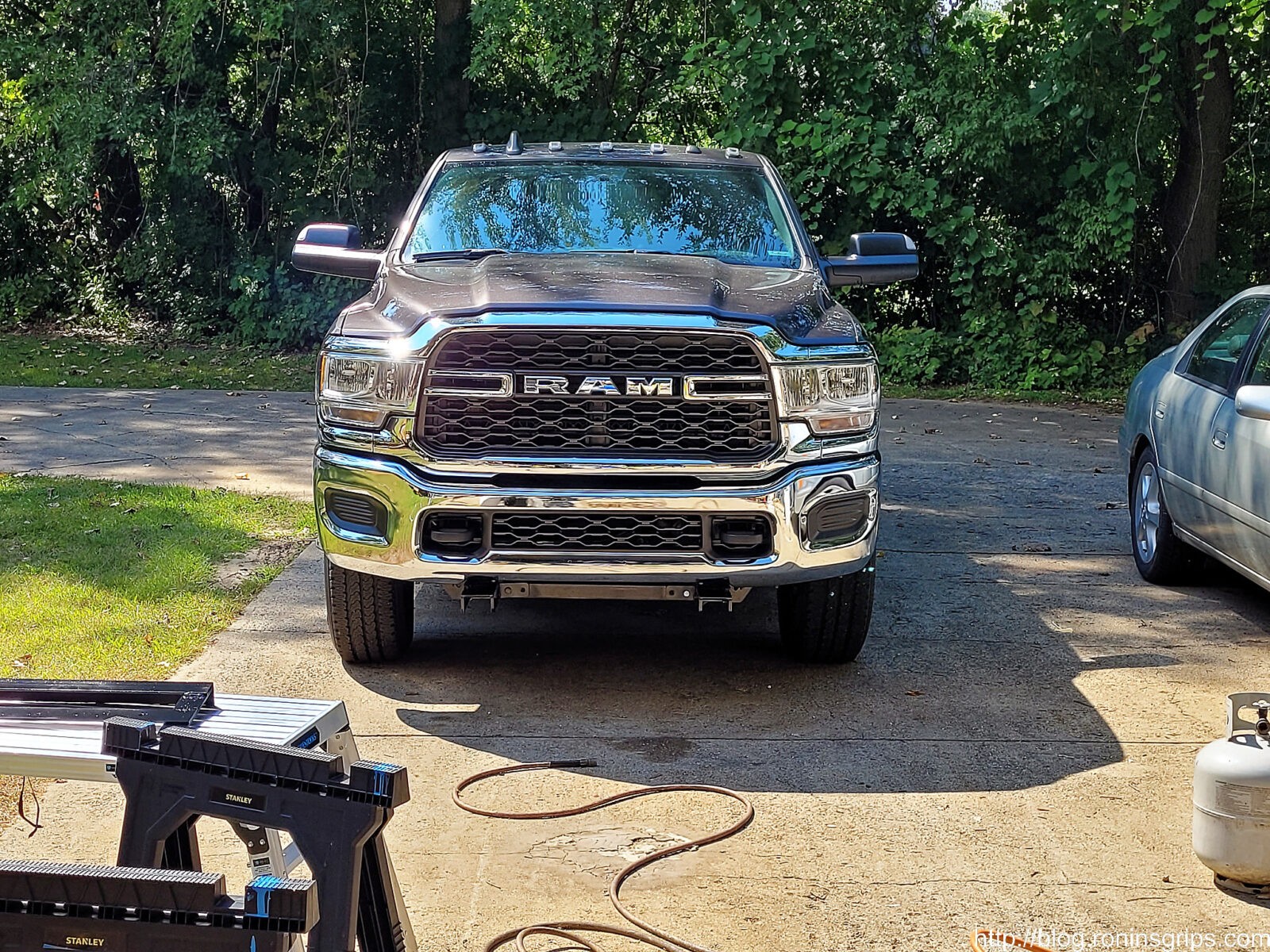
In September 2021, I bought my first new truck – a 2021 Ram 2500 Tradesman. Something about it being straight forward without a ton of bells and whistles appealed to me and I managed to buy it – I’ll be making payments for four more years 🙂 At any rate, there were a number of things I did to customize it more to my needs – one area was lighting. For whatever reason, Dodge went cheap and used halogen bulbs and they were anemic.
The first thing I did was to buy a set of Lasfit LED replacement bulbs and upgraded the high beams. Wow – what a difference. I considered doing the low beams too but changed my mind. First, I could not get my hands into the low beam housings to make the swap without taking more of the truck apart. Second, after seeing how bright the high beams were, I was worried about blinding oncoming drivers so I just settled and left the low beams alone. I don’t really regret it – when I am on country roads at night and turn on the high beams, wow – there’s a HUGE difference.
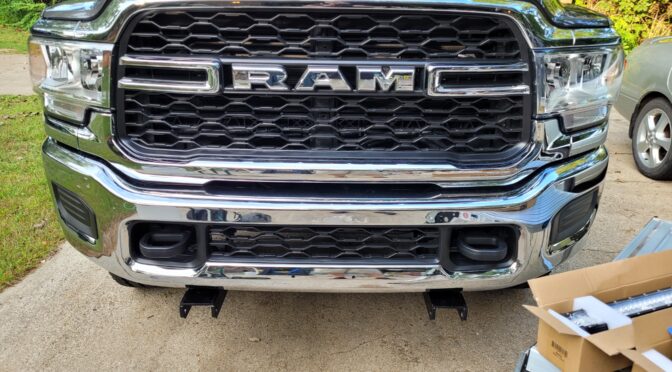
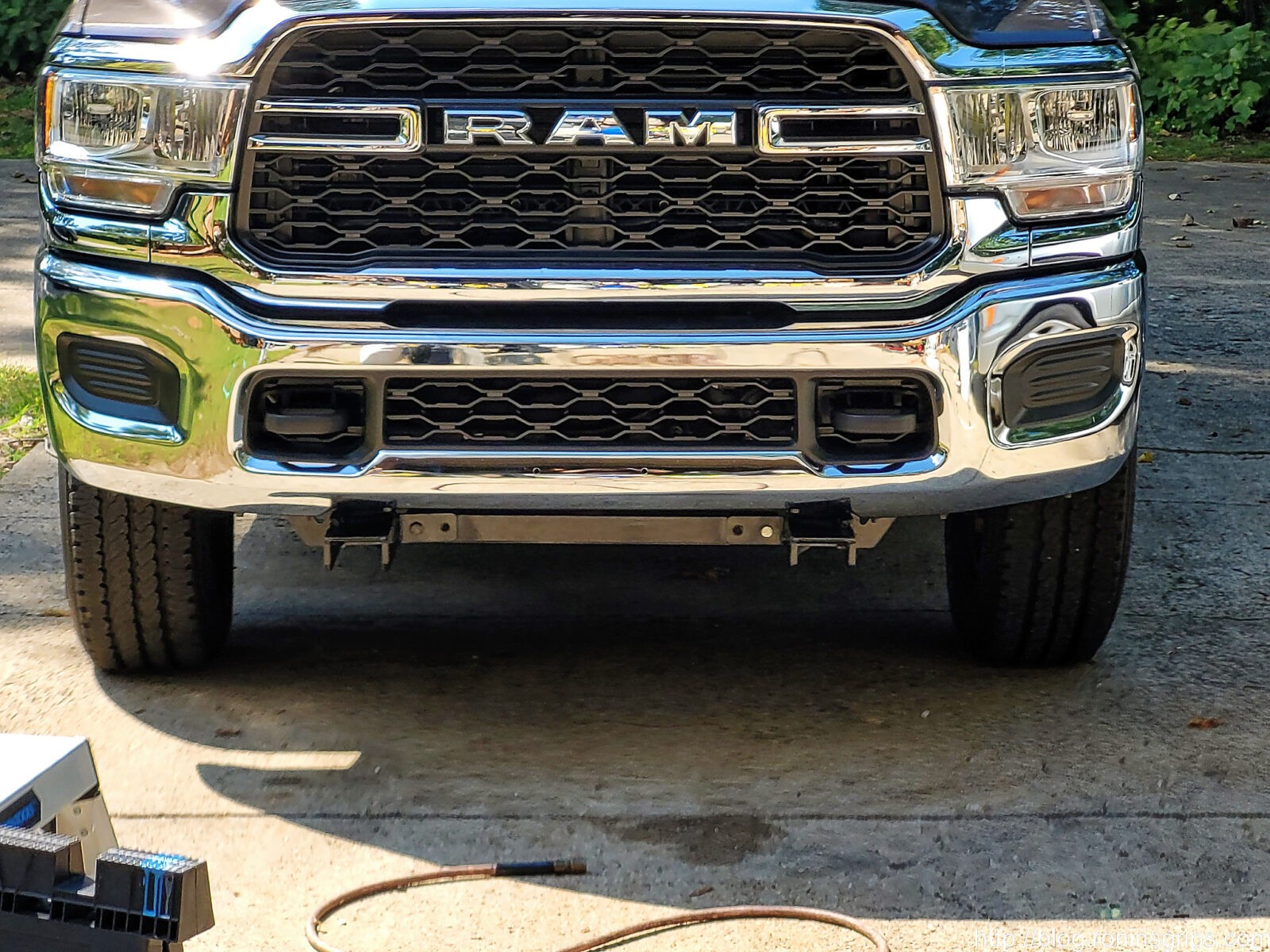
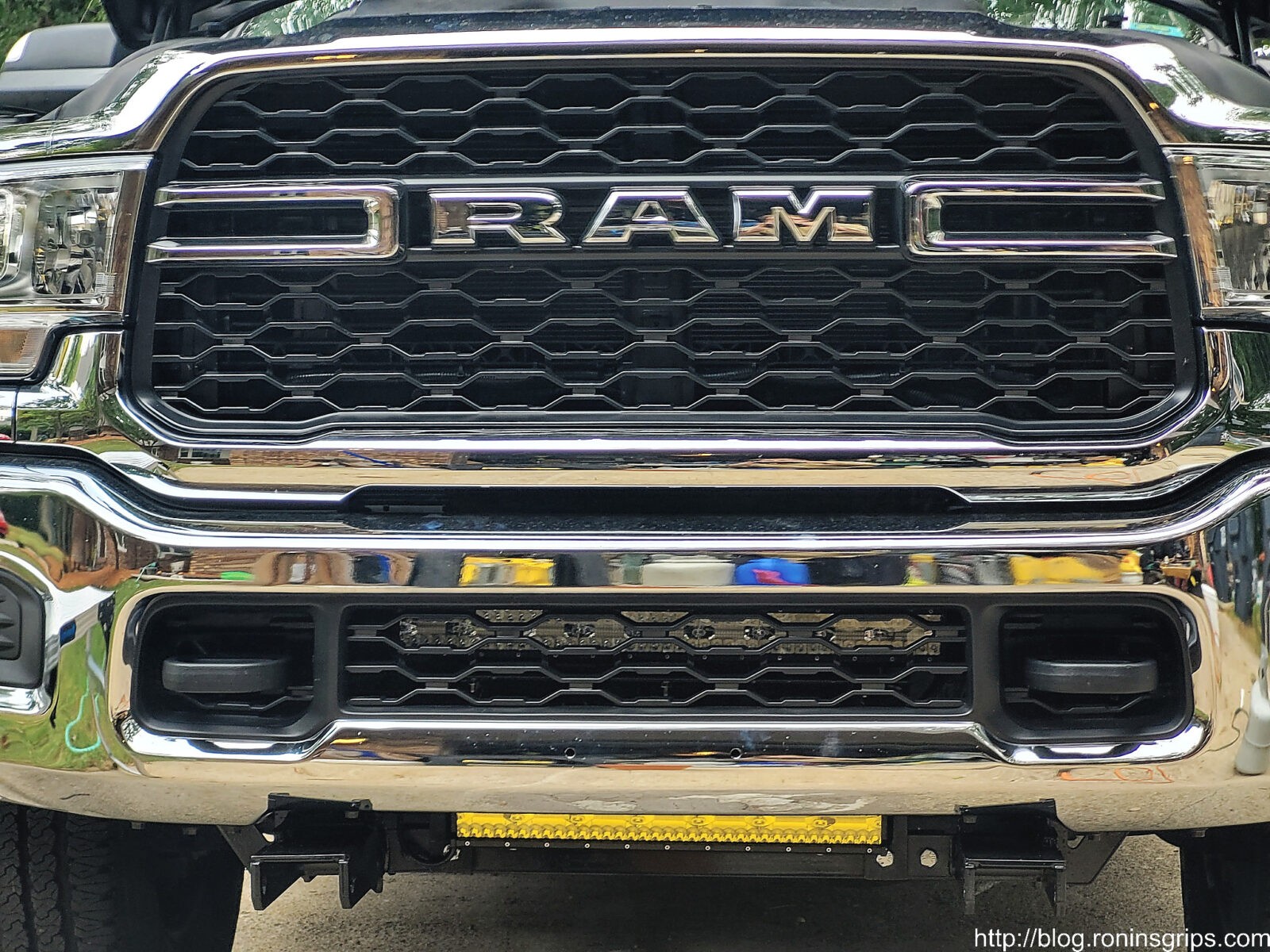
Until you drive rural farm roads at night or go off-road, you don’t really appreciate having good lights. The new high beams were good but I wanted even better – I really wanted a light bar but I wanted it without making a ton of alterations to the truck. My 2500 has a cap and no roll bar or headache bar to mount on so that left the bumper, the A-frame or some form of roof mount. I did some thinking and decided to go with a non-traditional approach – I would mount the light bar behind the lower grill and add a yellow light bar for fog and snow below it angled downwards.
Legal Disclaimer: The LED light bars are rated for off-road use only. Be considerate and don’t blind other drivers. Not to mention you would likely get a ticket operating these on public roads.
What LEDs To Use
Okay, I am short on funds right now and needed good enough parts. I’ve had pretty good luck with Nilight LED bars that you can get really good pricing on from Amazon plus they also have wiring harnesses with relays that you can use.
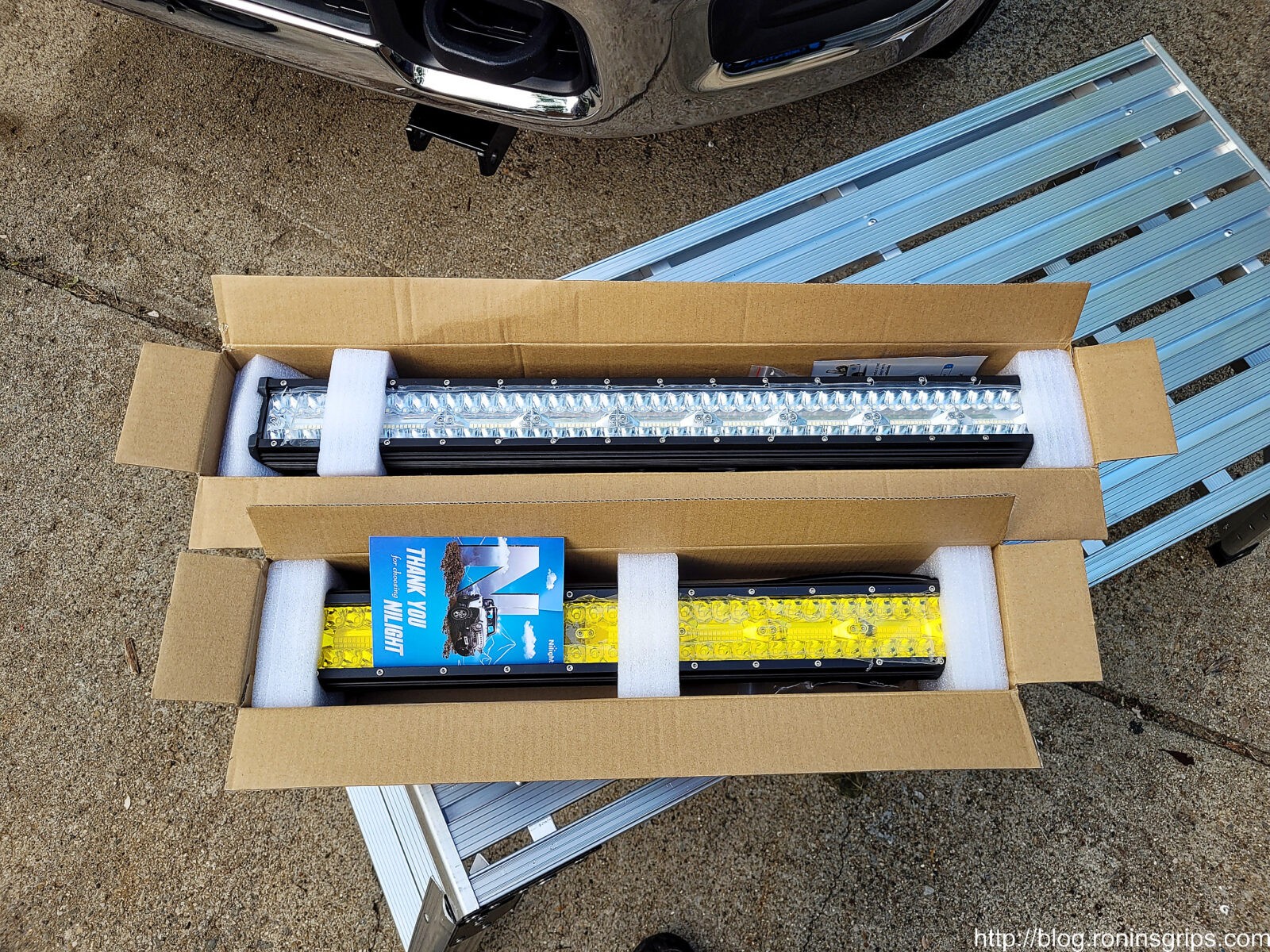
I wanted to fill the lower bracket from left to right so that meant about a 26″ light bar. To project the light both far and wide, I bought a triple row unit that combines flood and spot lighting.
For the amber LED, the biggest they had was 20″. I didn’t really want massive light from it because it is for snow and rain. In case you didn’t know, amber/yellow lighting is preferred for fog lights because that wavelength of light does a better job penetrating and letting you see objects in those conditions.
We were in the Smoky Mountains near Wears Valley between Pigeon Forge and Townsend a few years back trying to get to a cabin during heavy rain at night. Our old Highlander had so-so white fog lights that were better than nothing but I became a believer after that. Tons of white light just bounces back at you in rain, fog and snow. Go with amber lights.
In terms of the wiring harnesses, I bought two 14 gauge Nilight sets. I planned to remove their switch and plug into the Ram upfitter switches. The upfitter switches are an option and a truck is prewired with a number of access ports to let you plug in things like lights, pumps, etc. If your truck doesn’t have upfitter switches then just run their switches into your cab and mount them on the dash. I’ve used 3-4 Nilight light bars and switches over the years and none have failed on me – they look good too because they light up when turned on.
When it comes to wiring lights, I prefer to use relays when possible. This allows you to use a switch with fairly low amperage that then powers the relay and closes the switch that then feeds current from the battery through a thicker gauge wire. This avoids choking the power running too thin long wire to the switch and back. When your lights are properly powered, they will produce their maximum light is what it boils down to.
Designing the Bracket
Sticking with not wanting to alter the truck, I wanted to bolt the lights to a bracket and then the bracket to the truck. Since the truck was relatively new and not rusted like crazing, I had tons of potential bolts to use – I could have secured the bracket to the bolts of the tow hooks for example. What really caught my eye was the subframe for my Western Pro Plow 2. I’m a big Western plow fan – my dad had one when I was growing up and while I’ve had others – notably a Meyer and a SuperPlow – I still liked Westerns.
To mount the plow, Western creates bolt on sub frames that will connect to a given truck and then there are receivers that the plow connects to. Part of the sub frame is a 2″ x 1/4″ thick cross member that is secured by four bolts – two on each side. That was perfect. The inside bolts were on about 20″ centers. I would connect the bracket to that and go up with a cross member and a top shelf of angled steel. The material would be 1/4″ hot rolled mild steel – why? Because I didn’t want the bracket to bend or stress crack over time from the wind hitting the lights. On one hand, I figured the aerodynamics around the truck would stop some of the air flow but on the other, I’d seen guys in the past run big old school KC Daylighters on cheap light bars and they broke. So, yeah, I overbuilt the heck out of it.
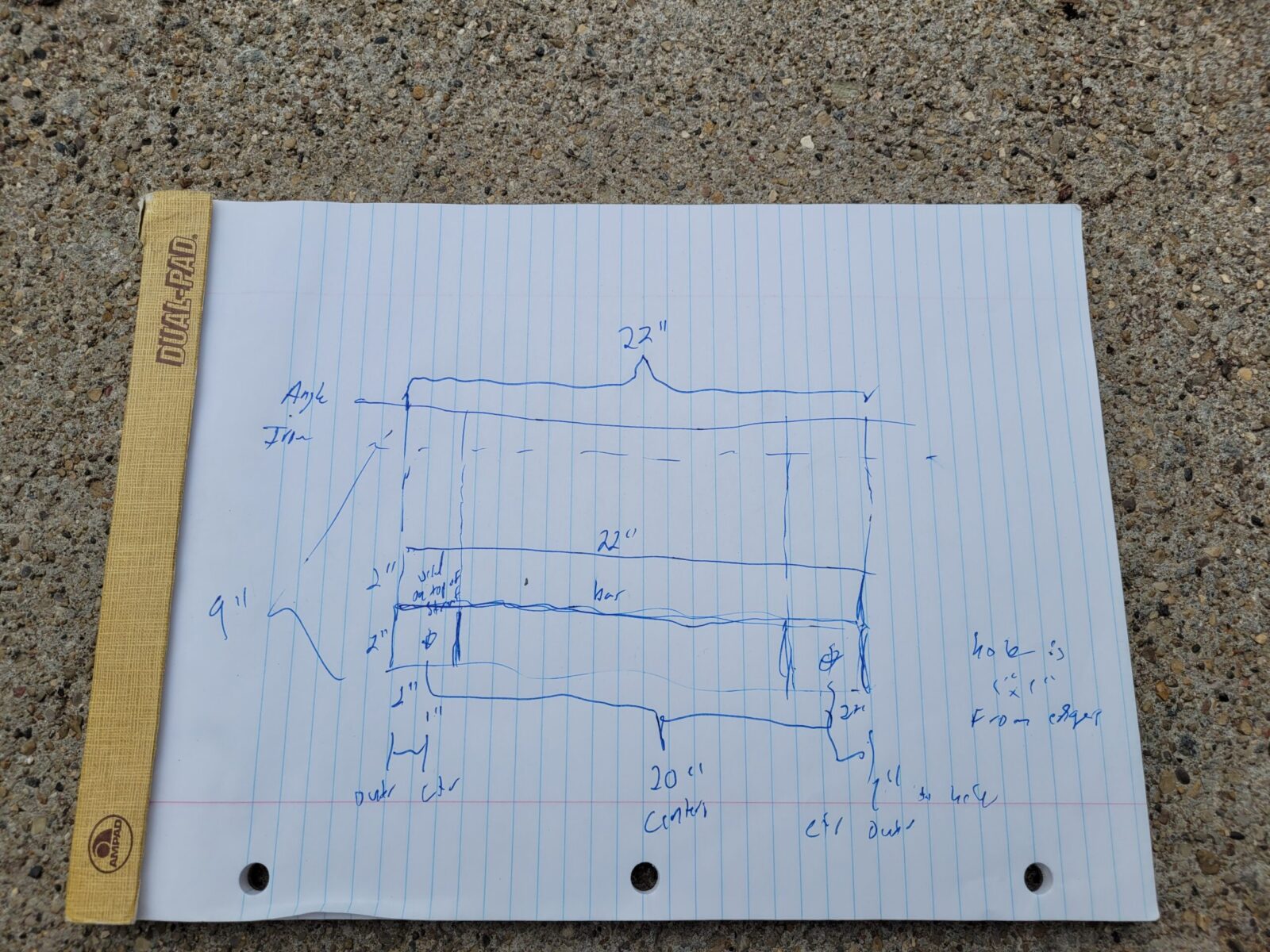
I credit junior high shop class and the instructor, Mr. Tack, with teaching me the benefit of sketching a layout before starting work. Over the years, I’ve learned to sketch, mock up, and test fit before finalizing stuff. With that in mind, I sketched the bracket with pin and paper – young people will certainly think this is from the stone age but it works for me.
This super low-tech sketch was me thinking through what I wanted to do. It all began with knowing the grill’s hole was 26″, the distance between hole centers of the Western plow sub-frame was 20″ and I had to cut a upright pieces about 9″ tall.
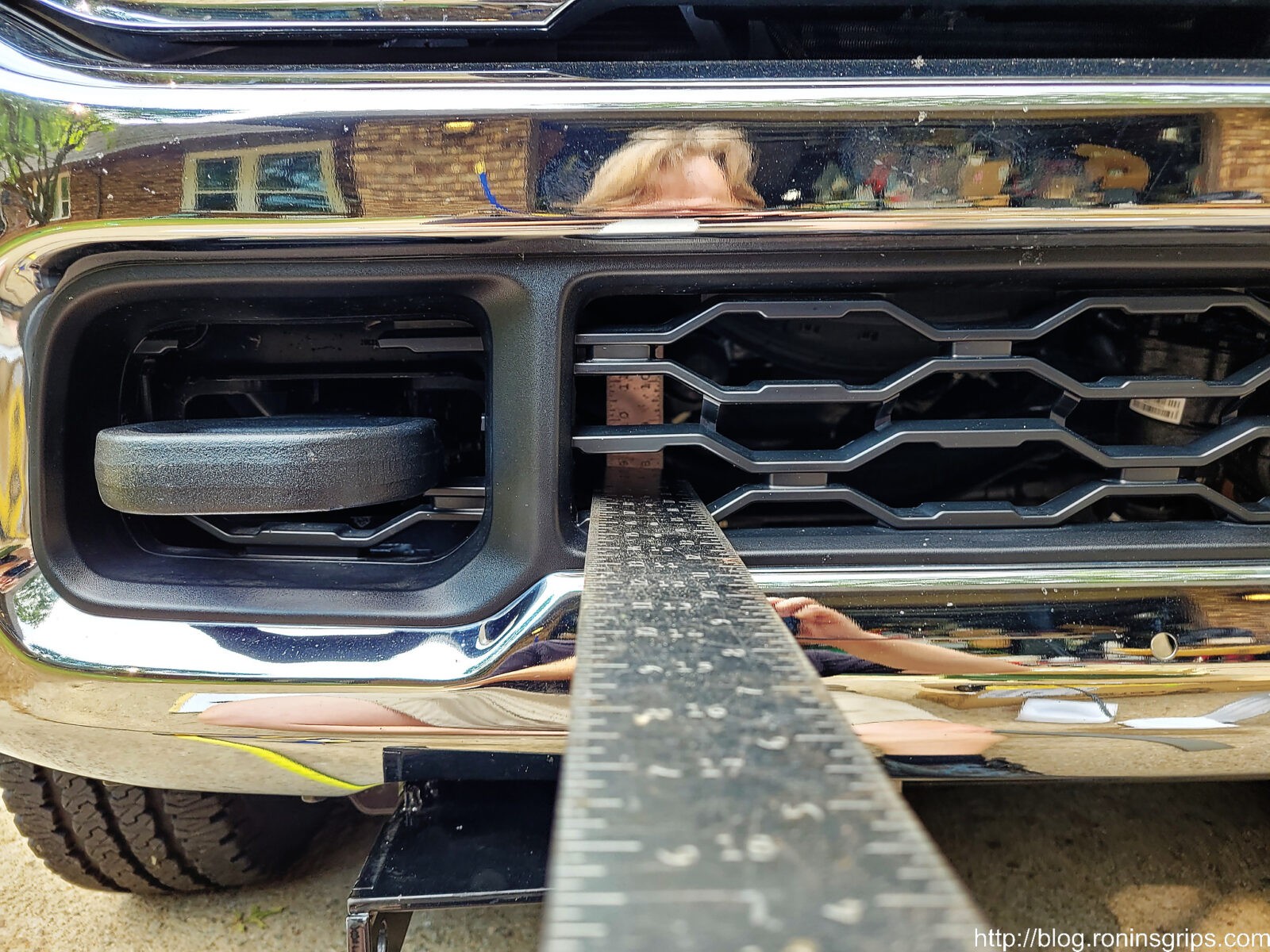
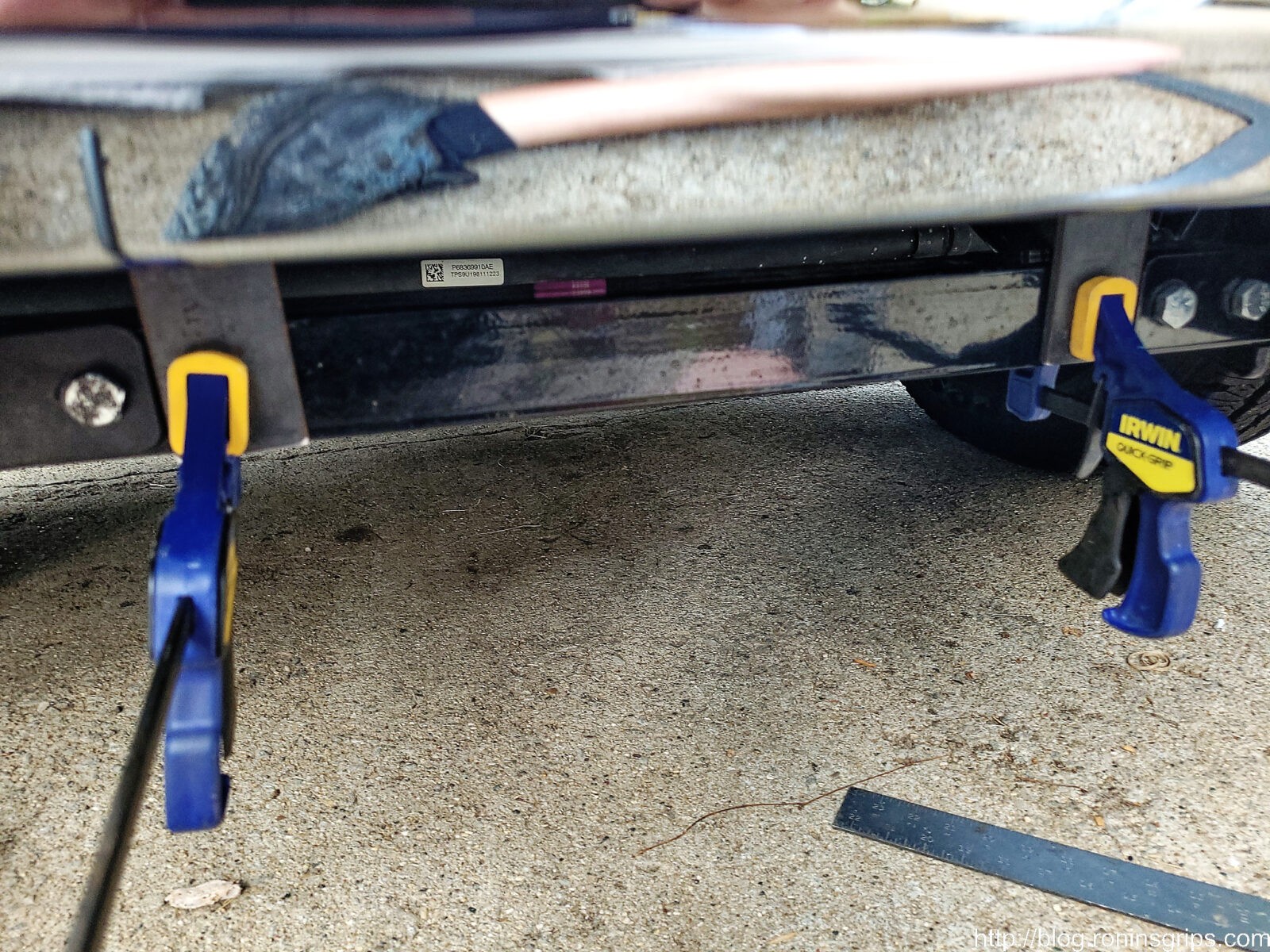
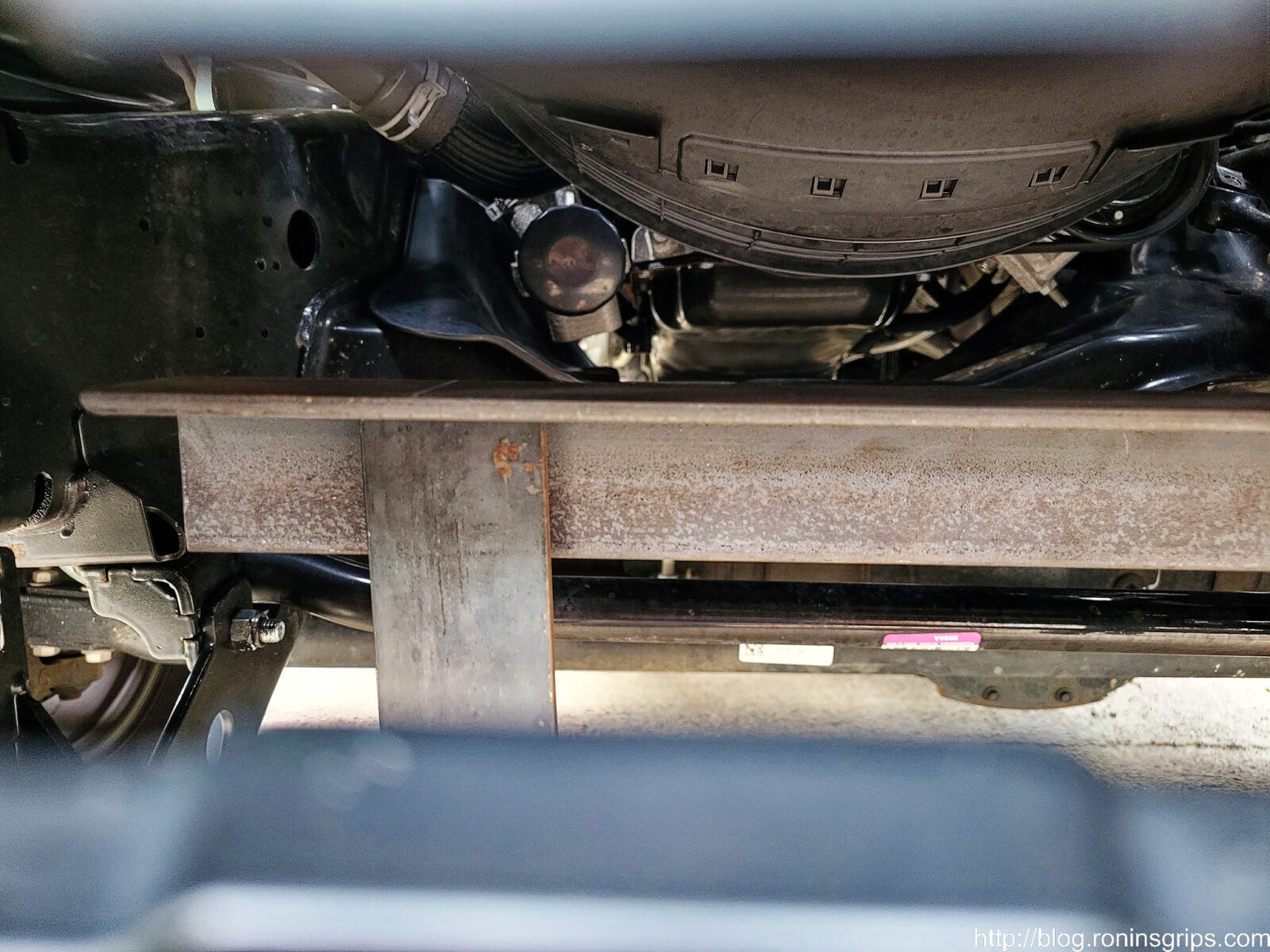
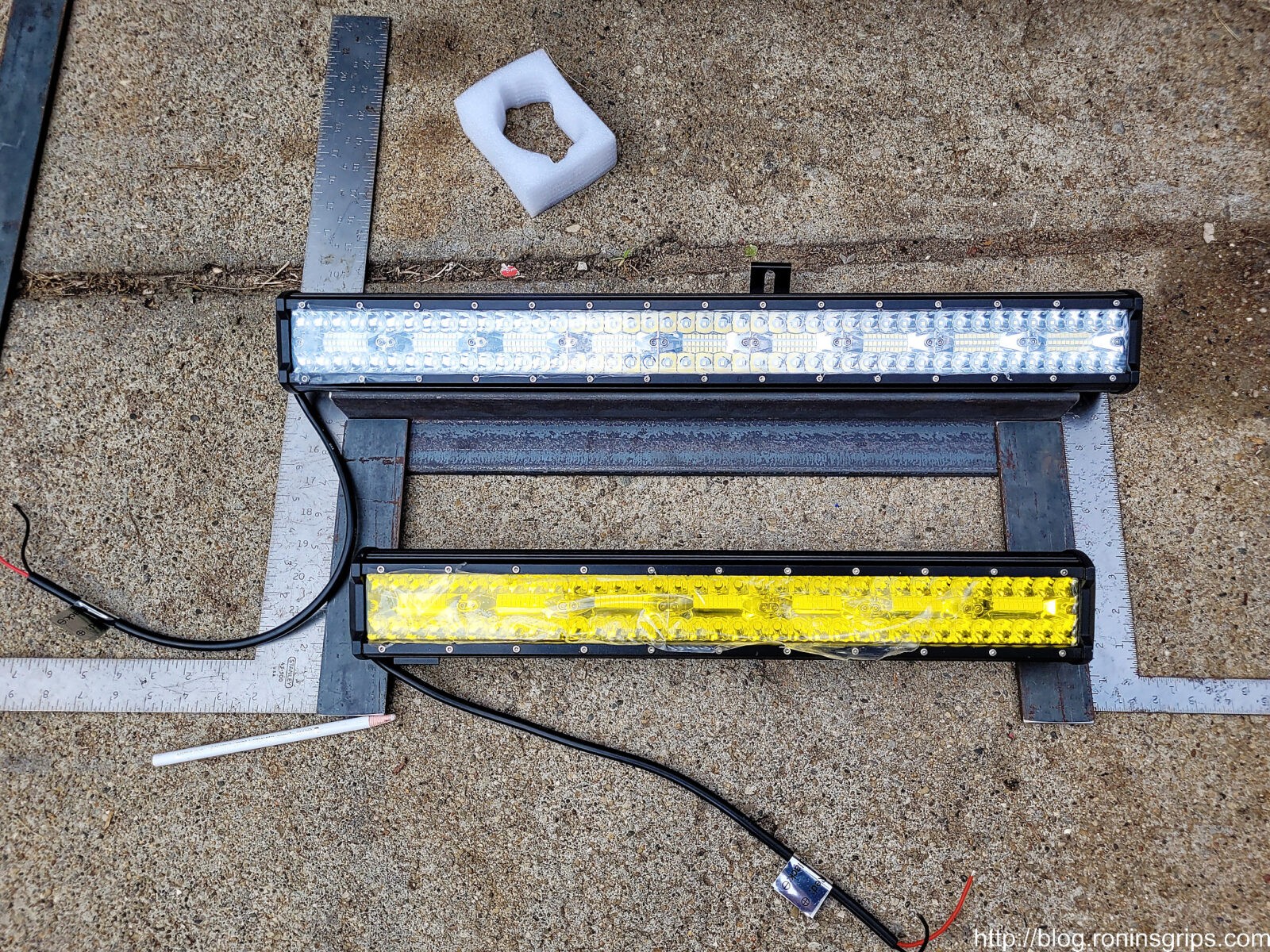
I figured out the vertical by clamping a steel square rule to the plow’s sub-frame and then ran a piece of steel through the grill to measure the height where the two met.
Before You Start!
When it comes to lighting in general, trust but verify. Before you do anything else, take the lights out of the boxes and connect them direct tot he battery to make sure they work.
Each light bar has a short lead. You need to either touch them directly to the battery and make sure the bar turns on or use some short jumper cables. I clipped the negative to the battery and bridged the positive to the battery using a remote starter switch that I had handy. Really, you can use just about any short length of wire to make the connections and make sure they turn on – quick and dirty is all you need.
Fabricating the Bracket
With the design roughed out, the next step was to begin cutting out the pieces of steel. Over the years, I’ve learned that I am better off to work on a section at a time vs. cutting everything at once. This way, if I make a mistake or need to adjust the design, it’s easier. I tend to find design mistakes earlier on this way.
I cut two 9″ pieces of the 2″x1//4″ bar stock and clamped them to the frame. Note they are not in the final position. I planned to pull the inside set of bolts, drill holes in the bar stock and mount them there. What this let me do was to test if I had the height right.
With the uprights clamped in place, I then cut the 2″x1/4″ angle iron to a length of 22″. I did 22 because I wanted plenty of material surrounding the bolt holes that I would drill but also had to be mindful that I would clear the outer bolts of the sub-frame’s cross member. I then set the LED light bar on this, took a step back and looked to see if I had it right and thought it looked good enough to proceed. Note, this puts the LED light bar close to the top of the bumper hole’s top edge.
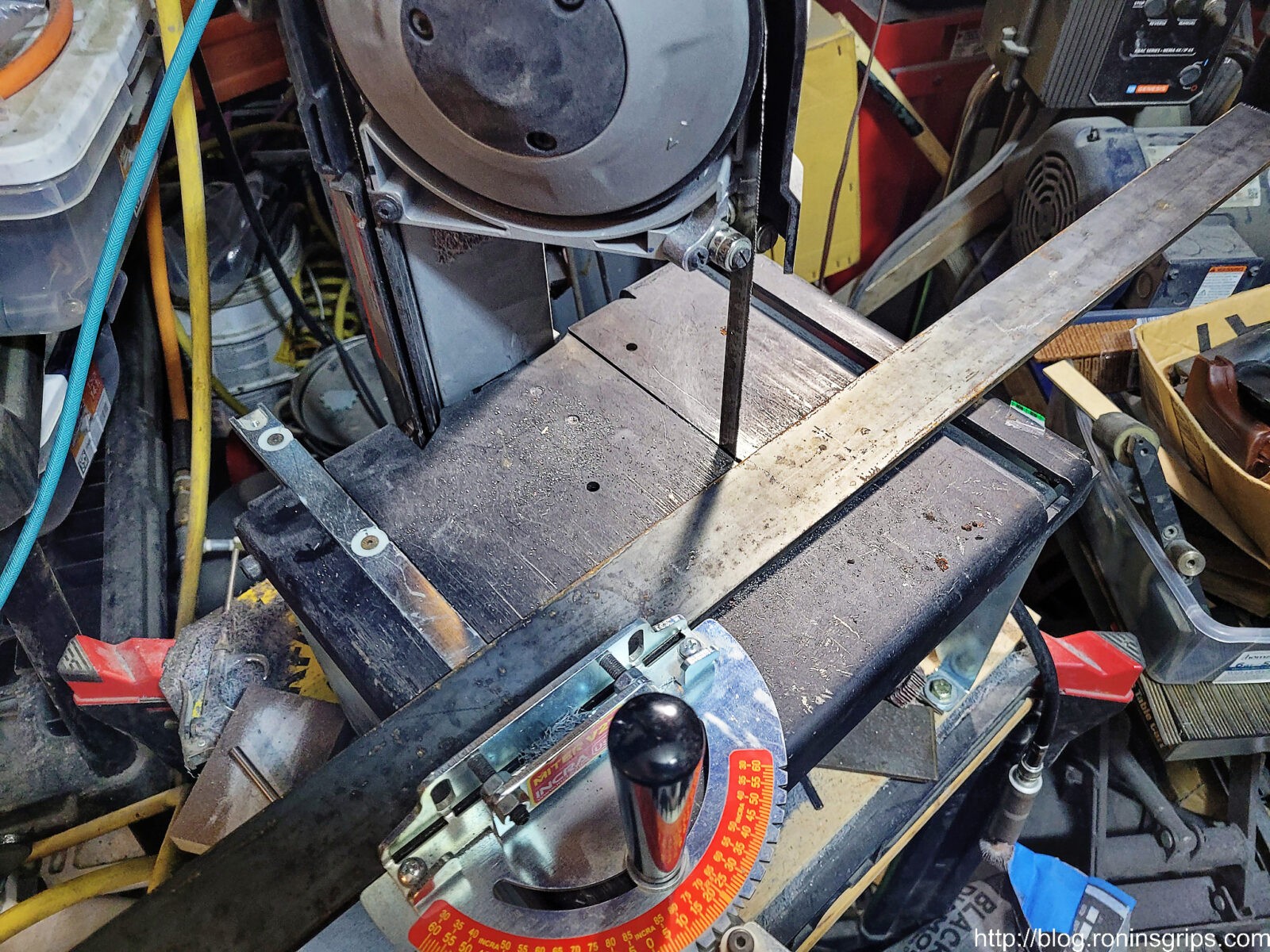
Armed with the dimensions confirmed, I then cut out the horizontal cross member that would hold the amber fog light. This is my SWAG Offroad table holding a Milwaukee Portaband. I use this all of the time for cutting steel and composites in my small shop.
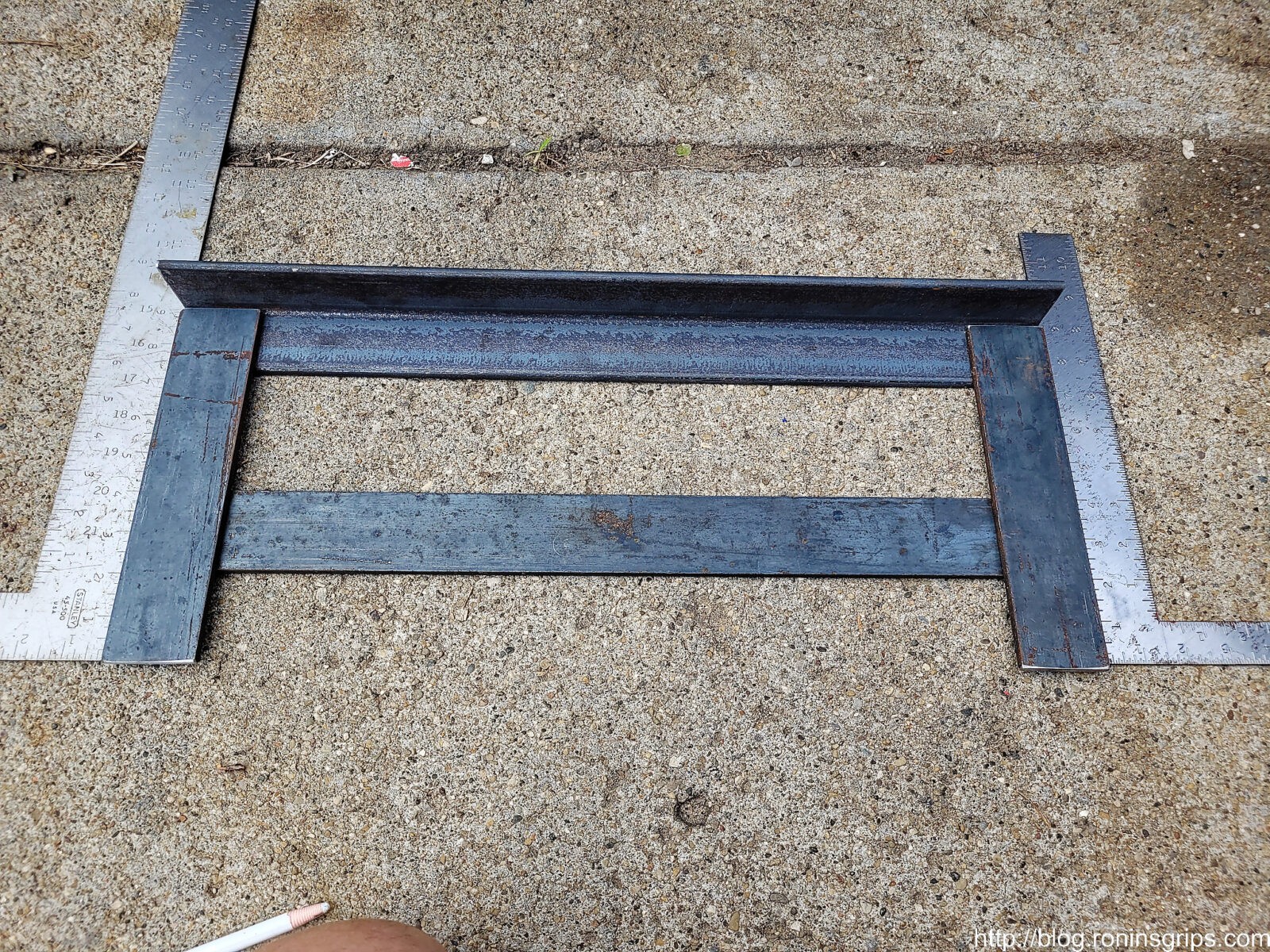
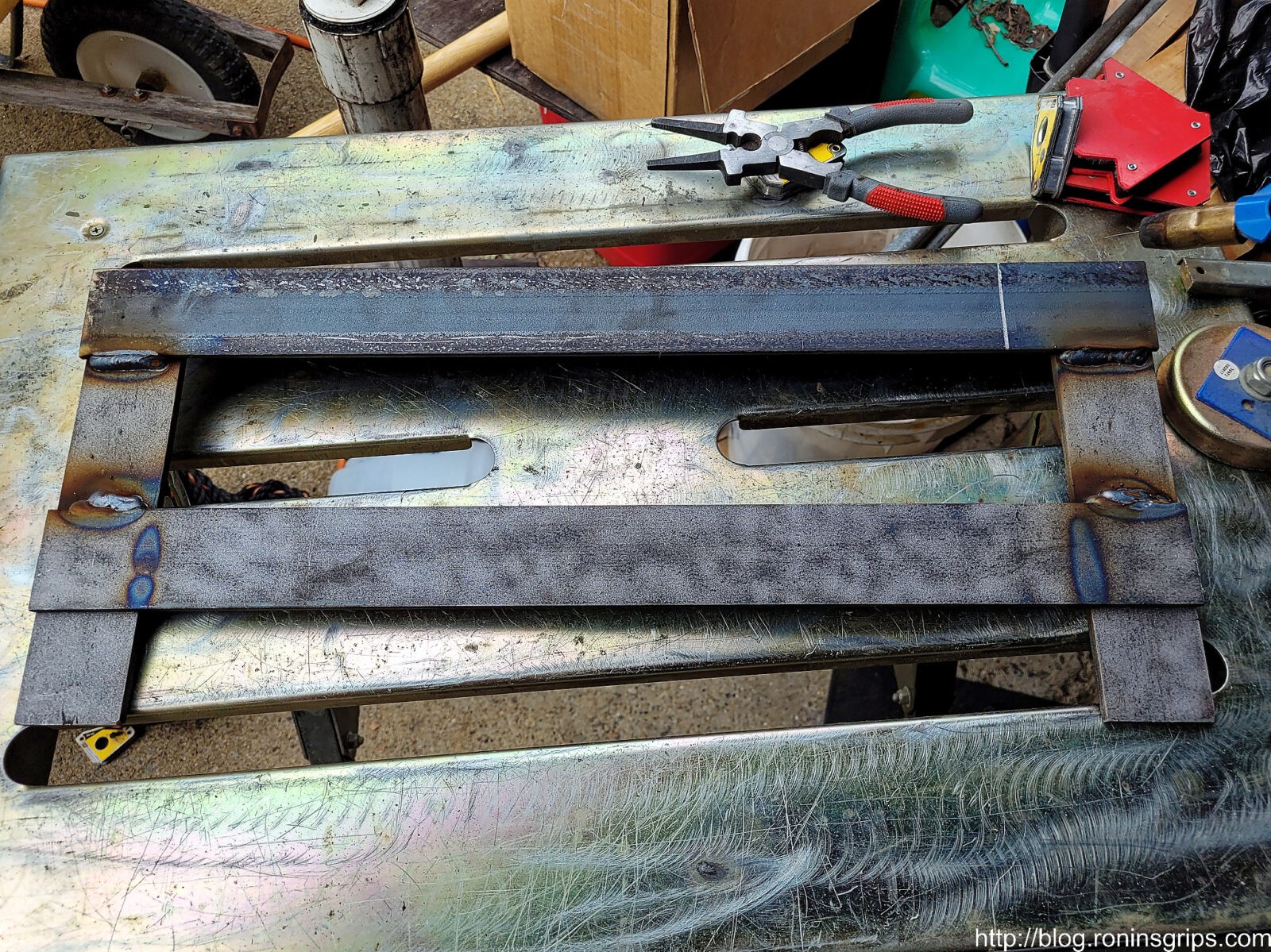
This is the mocked up bracket. I confirmed the dimensions one more time. Note, I planned it this way because with the cross member to the back, it will be sitting just fraction of an inch above the plow sub-frame’s cross member. I wanted the fog lights to be low . I debated about using a piece of angle iron for that lower portion but at some point design overkill isn’t worth it. Also, I welded the bracket together. If you prefer, you could bolt them together also.
Part of the mockup was to check the lights. Note, I did not drill the mounting holes until after welding in case I wanted to adjust something.
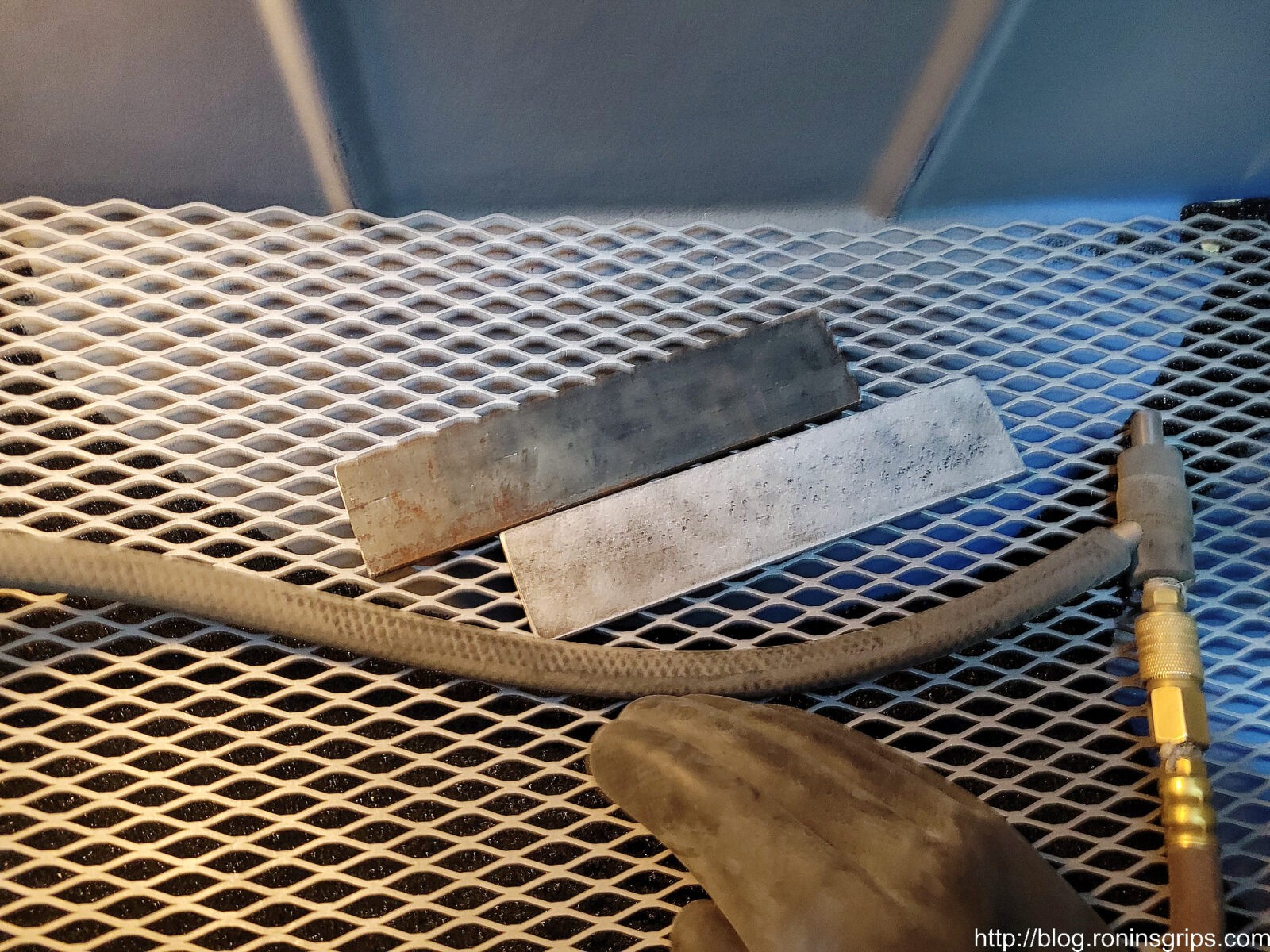
I did remember to take a quick photo while cleaning up the steel prior to welding. Note, if you want good welds, sand, grind or abrasive blast down to the shiny silver steel. The grey coating on the metal is known as mill slag which will contaminate your welds and the brown is rust which will do the same. I didn’t bother getting all of the steel equally clean. I did make a quick pass through everything so the paint would have a good surface to adhere to but I really focused my cleaning on where the welds would be.
Welding the Bracket
I used my Miller Millermatic 211 MIG running 75/25 shielding gas and .030 wire. I set the thickness to 1/4″ and let the machine figure things out. I bought this machine years ago and it really does a great job for me – most of my work is light fabrication anyways with thicknesses usually at or under 3/8″ thick and relatively short weld times.
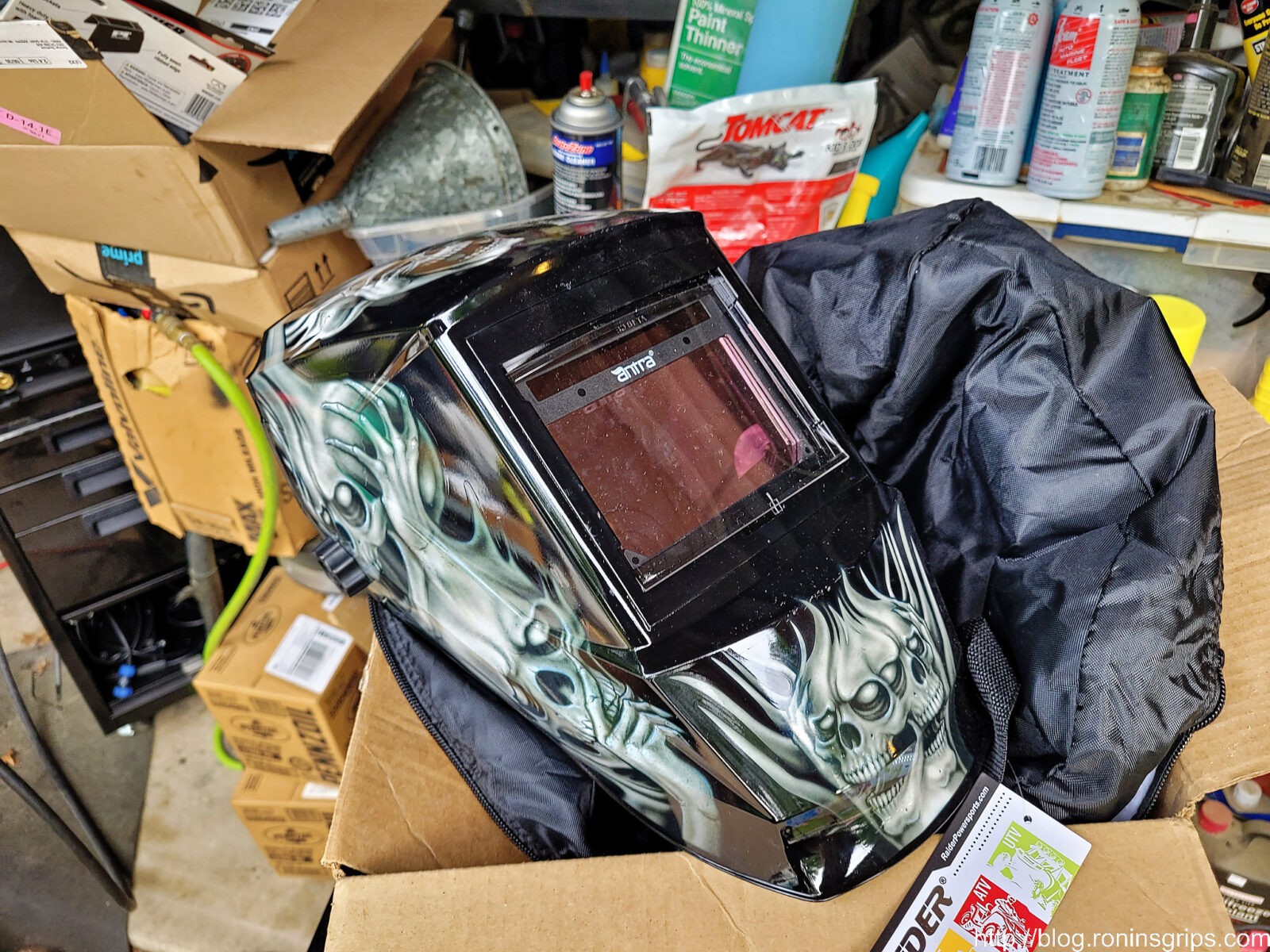
This past summer I bought a new Antra welding helmet with a large view port. I had an older Antra helmet that I bought in 2014 that still works it just looks very used. The cool skull graphics and larger viewing area tipped me to buying a new one. I like Antra helmets – not only do they work well but they also come with spare lens protectors.
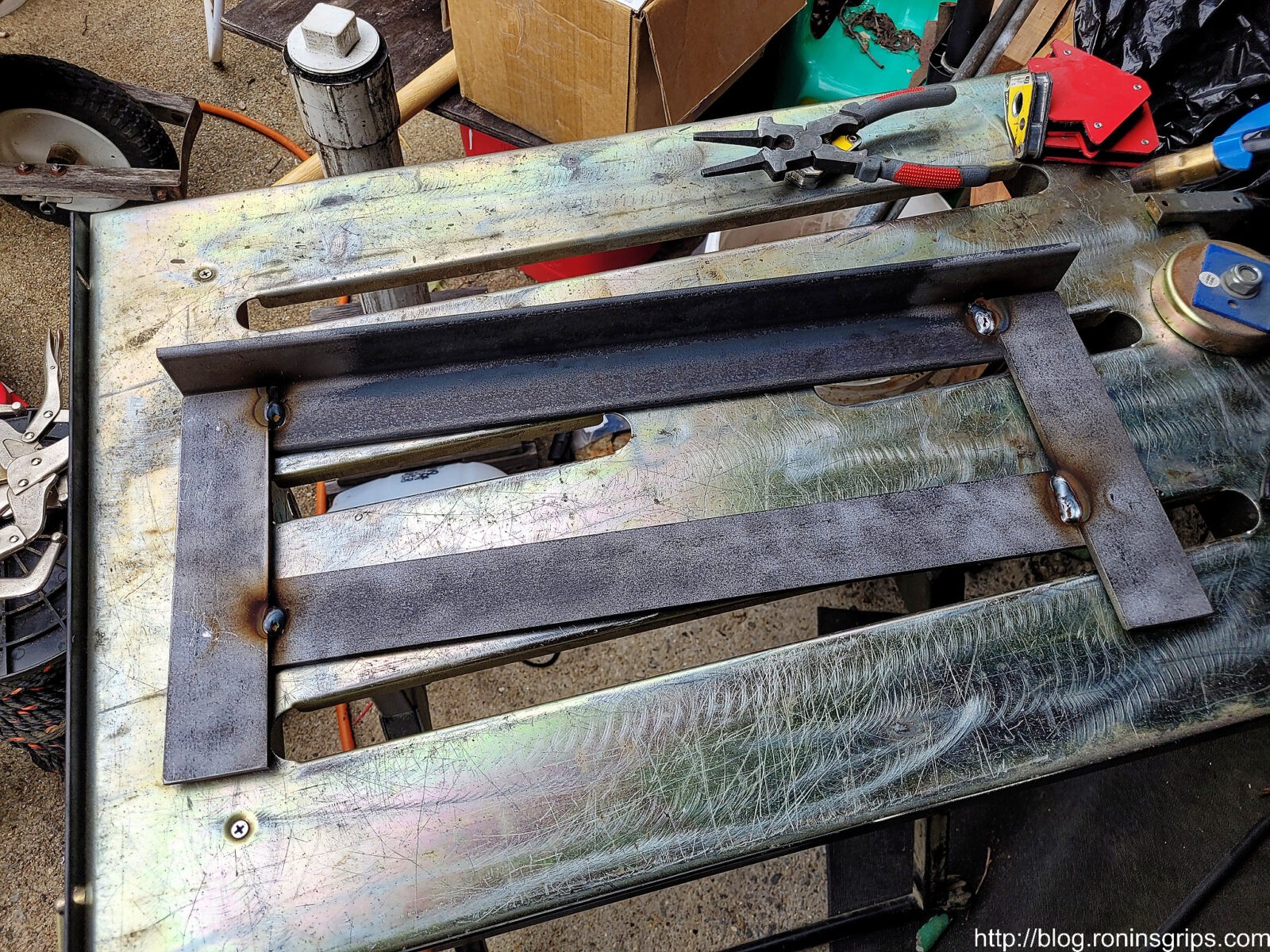
I did some quick tack welds with my Miler MIG. The purpose of small welds like these is to get the assembly basically held together so things don’t move plus you can take and confirm the fitment one more time — which is what I did. If a mistake was made or something shifted, you could grind the small tack weld off. The photo doesn’t show to but I clamped everything together very securely to make sure things didn’t move. It really pays off to make sure everything is laid out tight and clamped together before you weld. I’ve had stuff get messed up so many times over the years that I am now very careful.
With everything confirmed, I proceeded to weld the joints front and back. Note, do a small bead and then move to another area to weld so you don’t cause the bracket to get too hot and warp. None of these beads were done all at once. The discolorations reflect the welding on the other side.
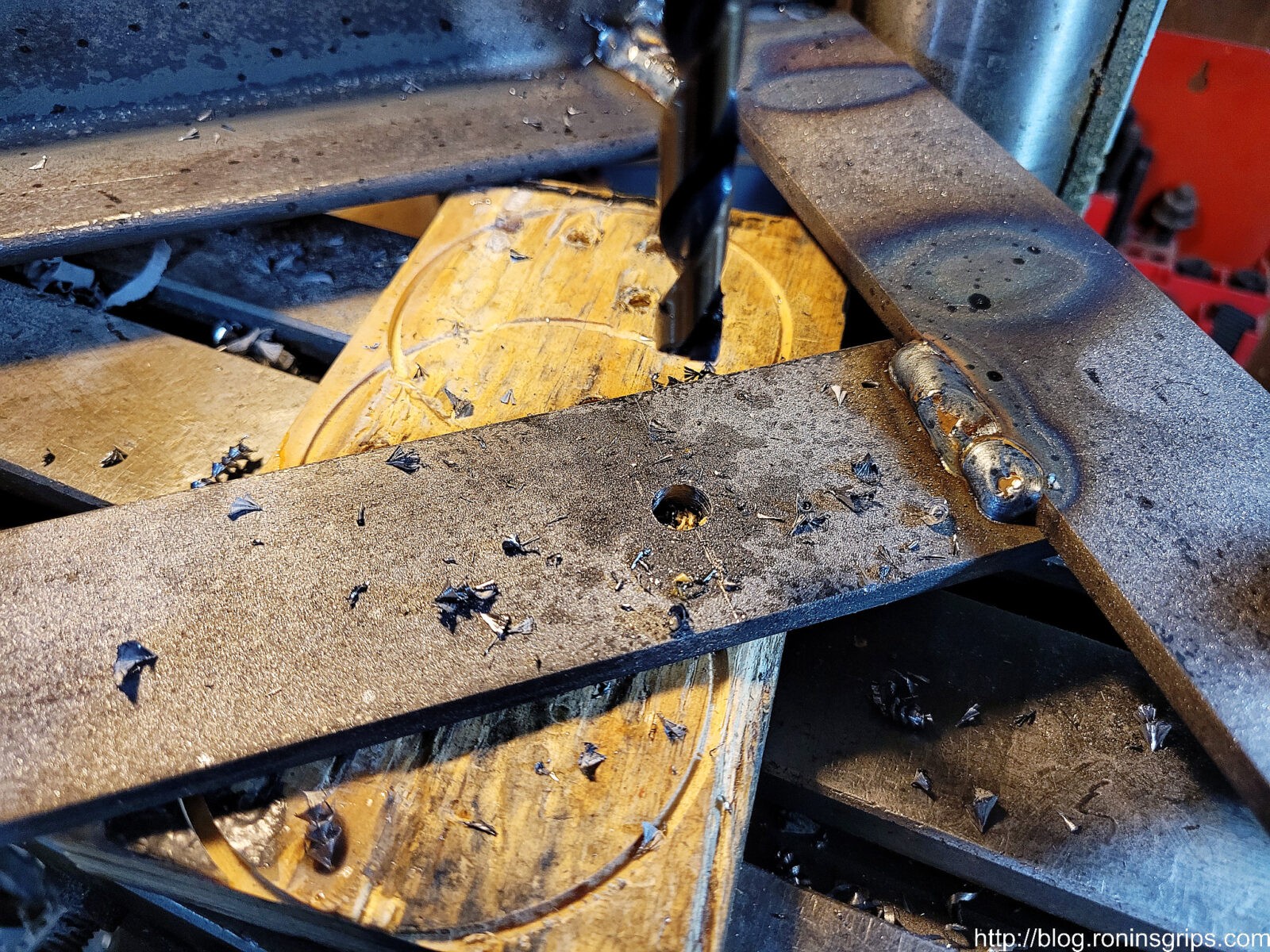
Before painting, I drilled the various mounting holes I needed for the LEDs. Note, not all have the same number of mounts – the 20″ light bar and two and the 26″ light bar had three. You can slide them all around to get the angles you want. Be sure to use cutting fluid to making cutting easier – your bits will last longer.
I like to drill the holes slightly oversized so I can wiggle the bolts around a bit if needed. I’ll own the mistake this photo shows — I forgot to drill the third hole in the middle. I fixed that later. By the way, the cross-member bolts are quite large. I used a Silver & Deming reduced shank 5/8″ bit. When bits are that big, using a drill press really helps.
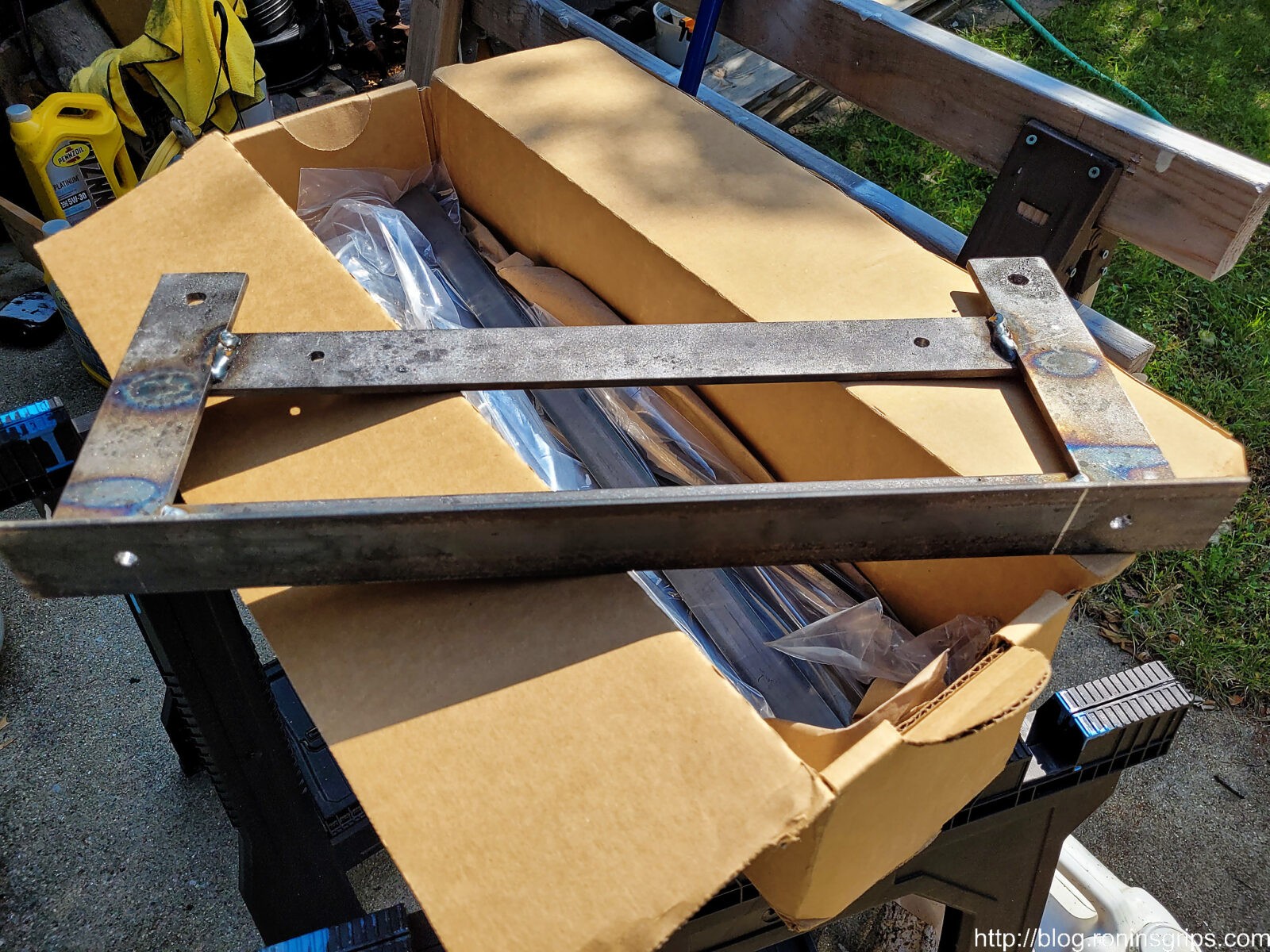
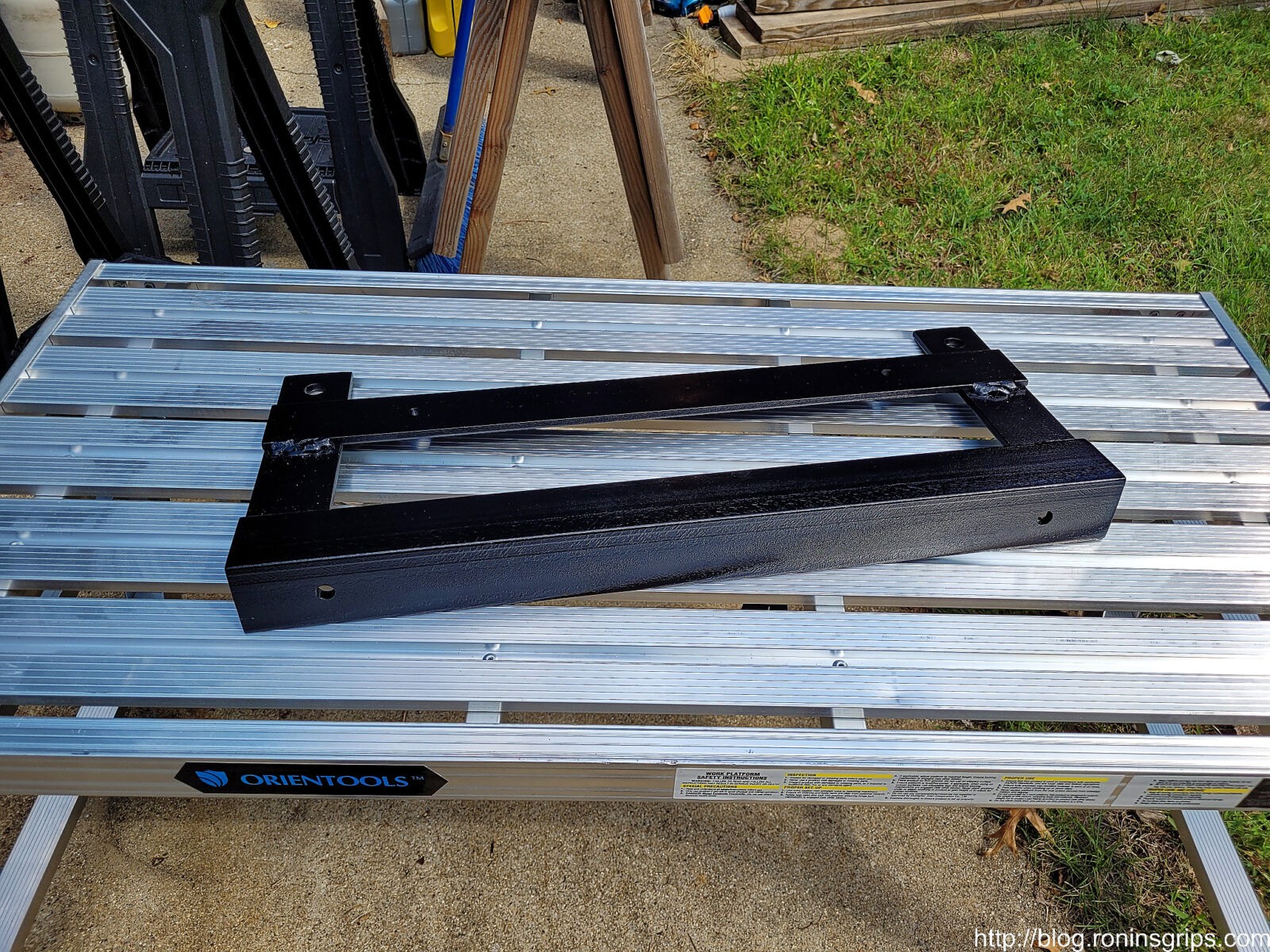
The front of the bracket has four coats of black Rustoleum all in one and the back has three. It’s impossible to stop rust in Michigan due to our salting roads in the winter but we can at least try and delay it. Yeah, still no third hole on the top yet. I don’t think I have a photo of the bracket before mounting the lights with the third hole. For all of the holes, try and make sure they are true to one another and horizontally parallel .
Before mounting the lights, I did test mount the bracket just to make sure. One interesting thing surfaced – when the tech installed the plow sub-frame, he did not true the left side. The right side is properly parallel to the ground. The left side’s bracket is clocked up a degree or two. If you look at the cross member where it bolts together you can see the left side is not true. I plan to find out what they did wrong and fix it but didn’t do so when I installed the lights.
By the way, this was not light by any means. The bracket weighed just under 12.5 pounds prior to the lights.
Mounting the Light Bars
With the bracket completed, next up was to mount the light bars. I wanted to do that and then install the whole assembly into the truck vs. installing the bracket and trying to install everything in an awkward position under the truck.
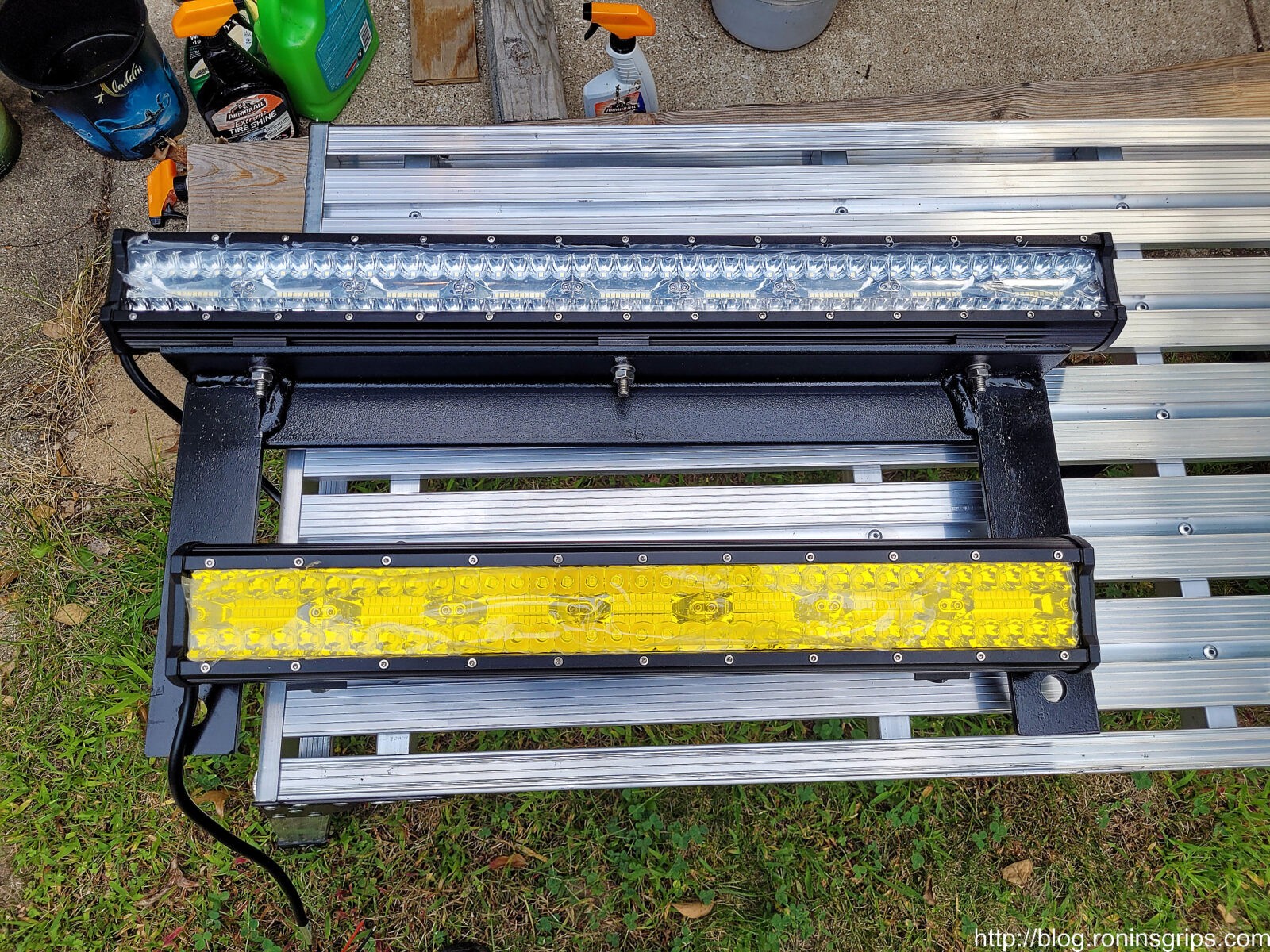
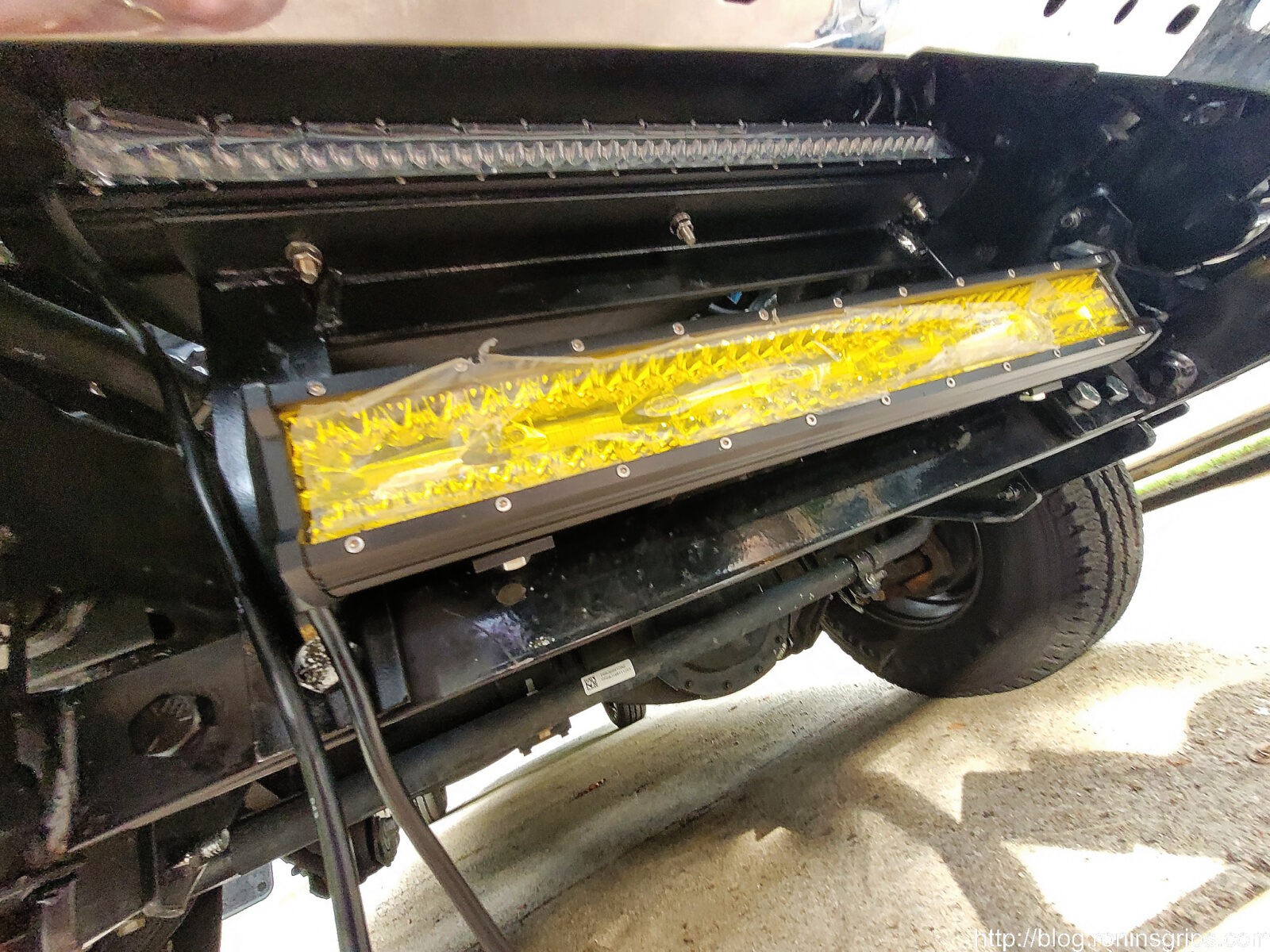
Here are the lights in their mounts. As you can see, the third bolt on the top is now in place. I did put a couple of coats of black paint in the new hole to slow down the rust. The top white LED is pointing straight ahead. The amber light is angled down as far as the bracket allows. I could have filed the slots a tad and been able to angle it down another degree or two but it turned out to be enough to keep the amber light out of the eyes of oncoming traffic.
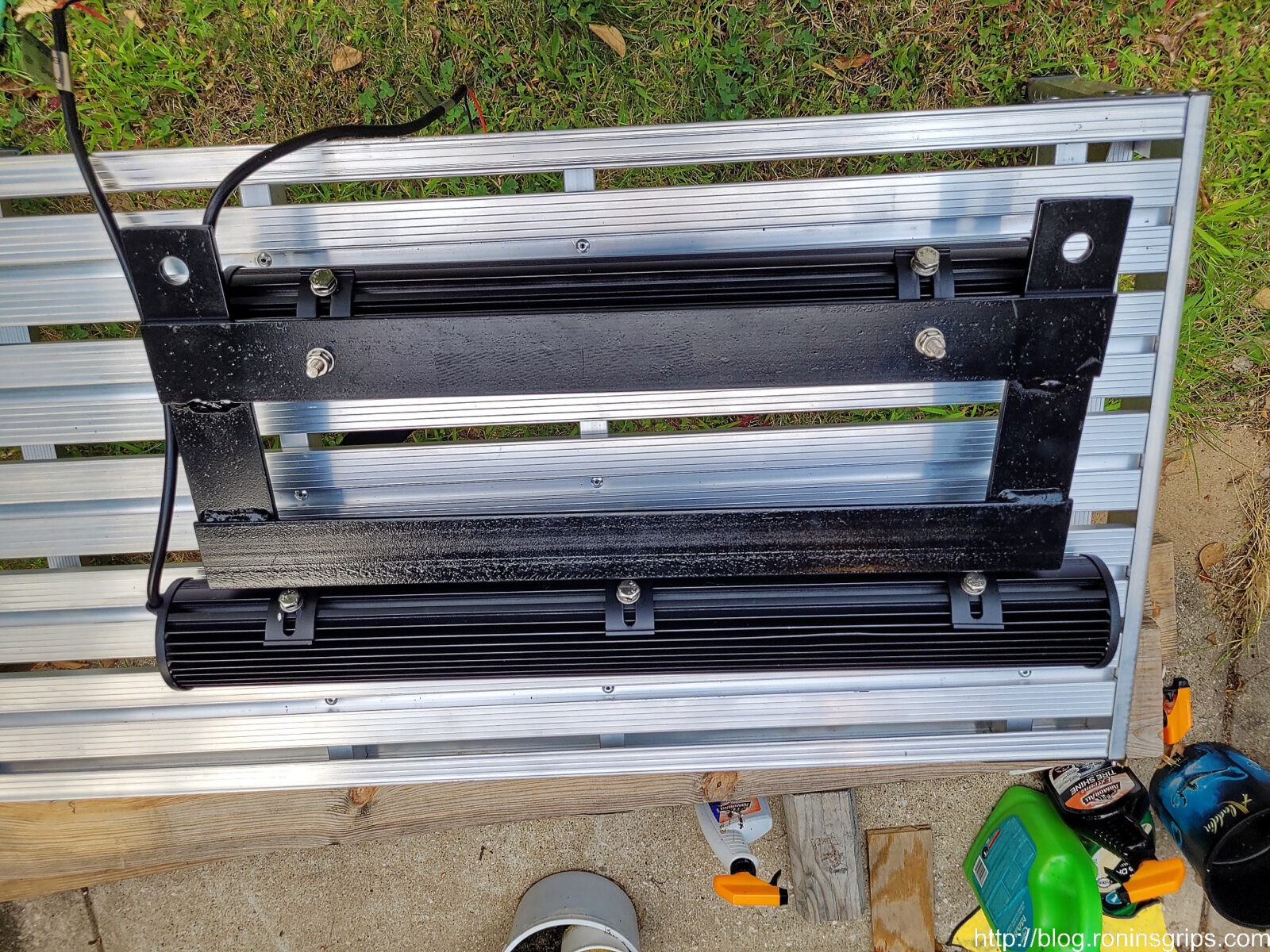
Here’s a rear view where you can see Nilight’s brackets better. Each one has a slight arc and you have quite a bit of adjustment.
Wiring Up The Lights
As mentioned my plan was to use the upfitter switches and I did. If you do not plan to, then use the Nilight switch. I am going to detail what I did with the upfitter wiring. Why use the upfitter switches? Personally, I think it makes for a very clean look. You have the nice integrated switches in the dash and then RAM also did the wiring out to a number of different terminal locations for you hook up accessories.
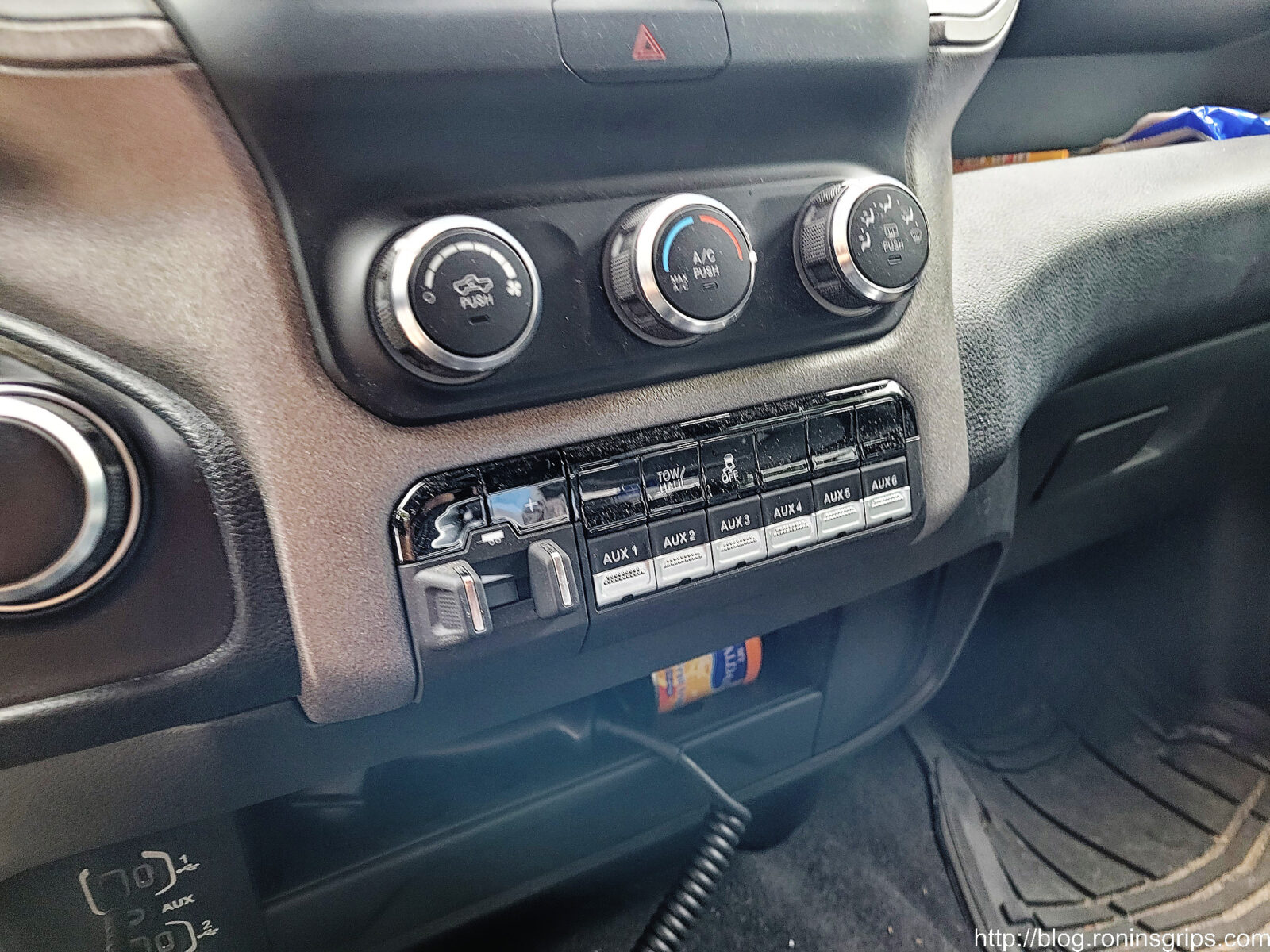
These are the upfitter switches. If you do not see something like this in your truck then you do not have that option package and can just go ahead with using a separate switch – such as the one that comes with Nilight’s wiring harness. My plan was to use Aux 1 for the 20″ amber fog light and Aux 2 for the 26″ white LED bar.
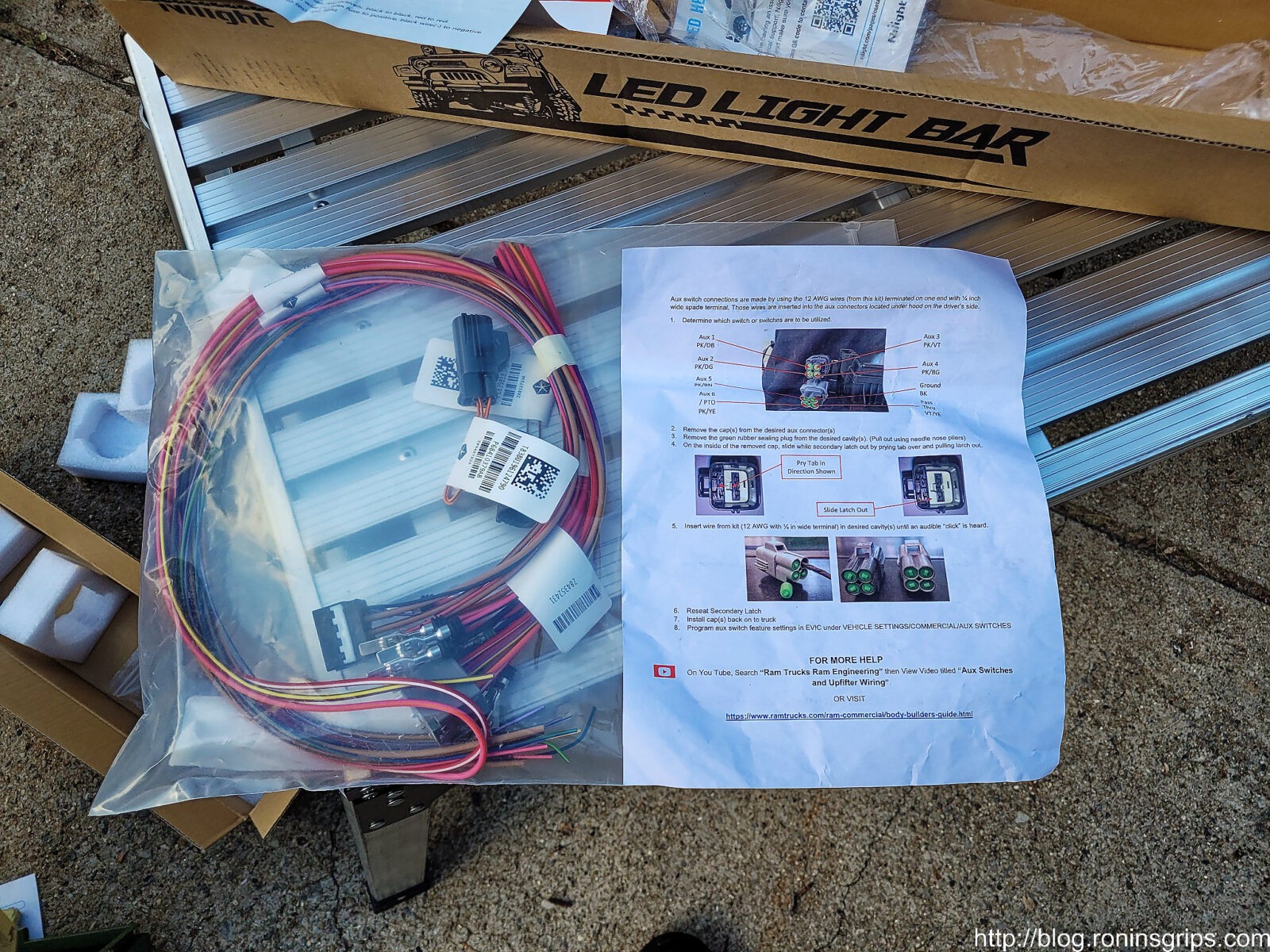
In addition to the switches you should have a bag of wires and a brief guide in a plastic bag. My bag was under my back bench when I bought the truck. You need the wiring in this kit. There are aftermarket wiring kits if you lost your’s but bottom line is that you need the wiring.
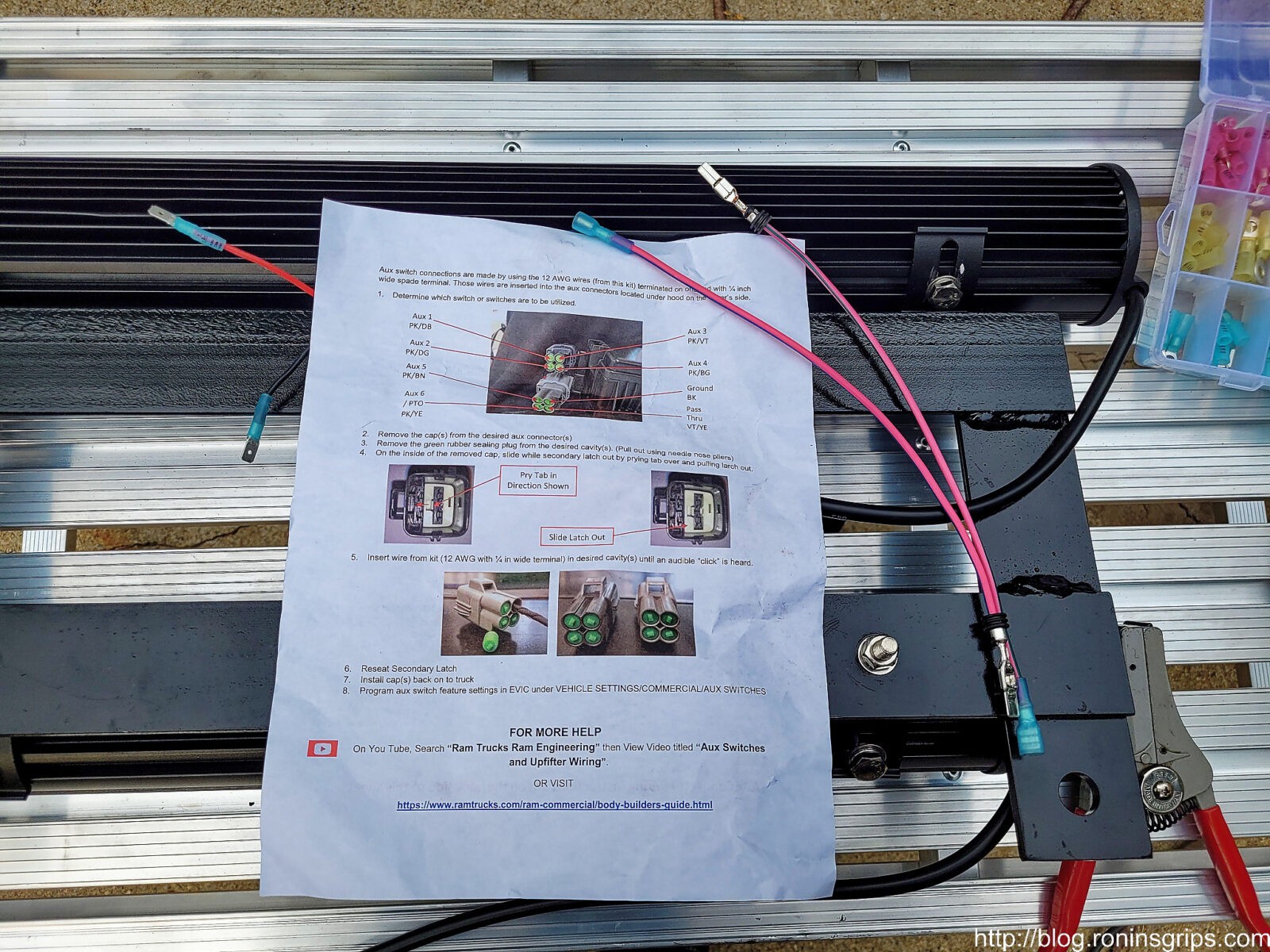
We are using two of the 12 AWG wires – the color code for Aux 1 is Pink with a dark blue line abbreviated PK/DB. The Aux 2 is Pink with a dark green line abbreviated PK/DG.
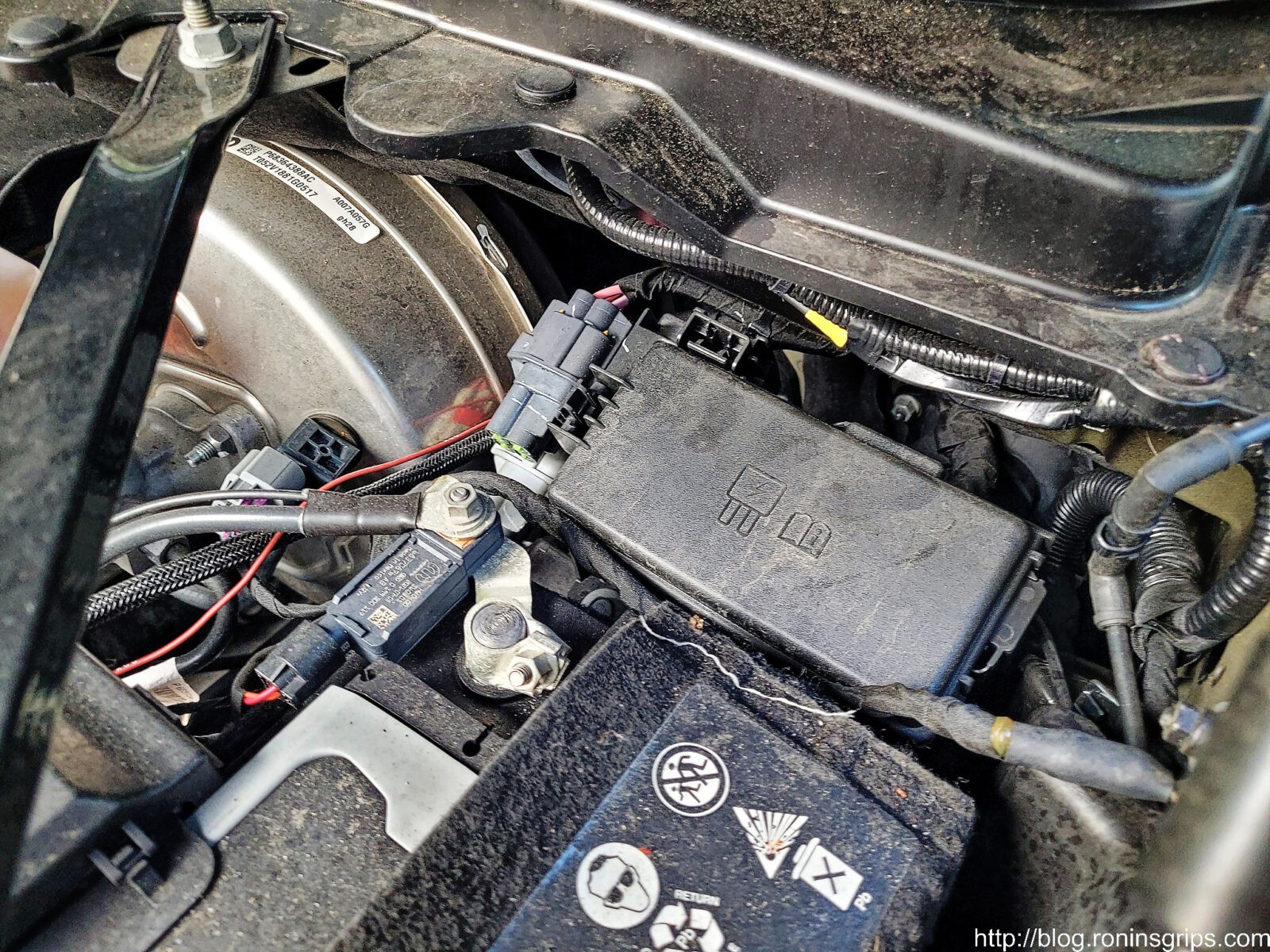
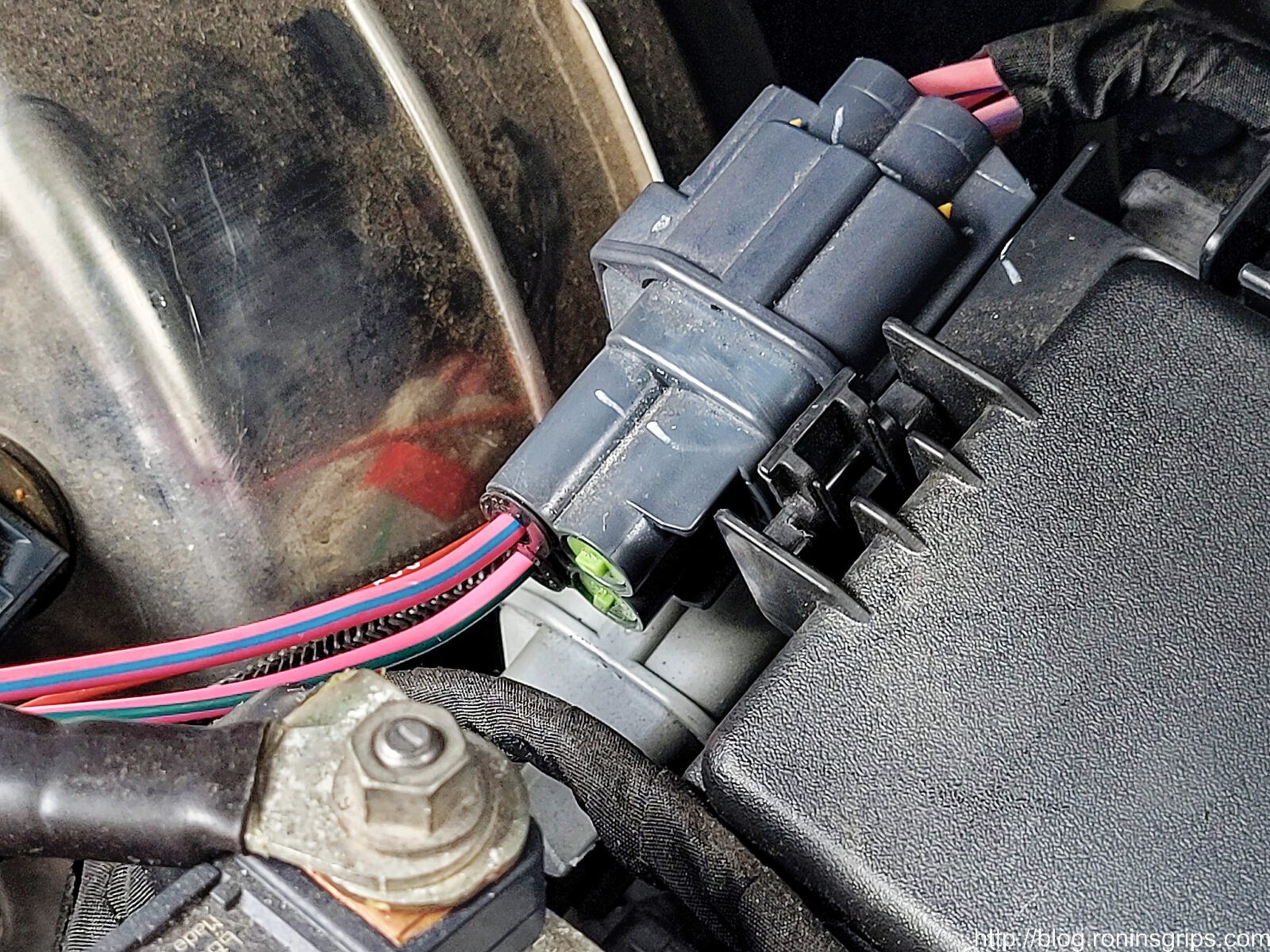
See the funny looking grey connector with the green plugs on the left side of the fuse box? That is the upfitter terminals for Aux ports 1 through 4. Aux 1 is top left. Aux 2 is bottom left. Aux 3 is top right and Aux 4 is bottom right. Now there is another grey connector block under that which we do not need.
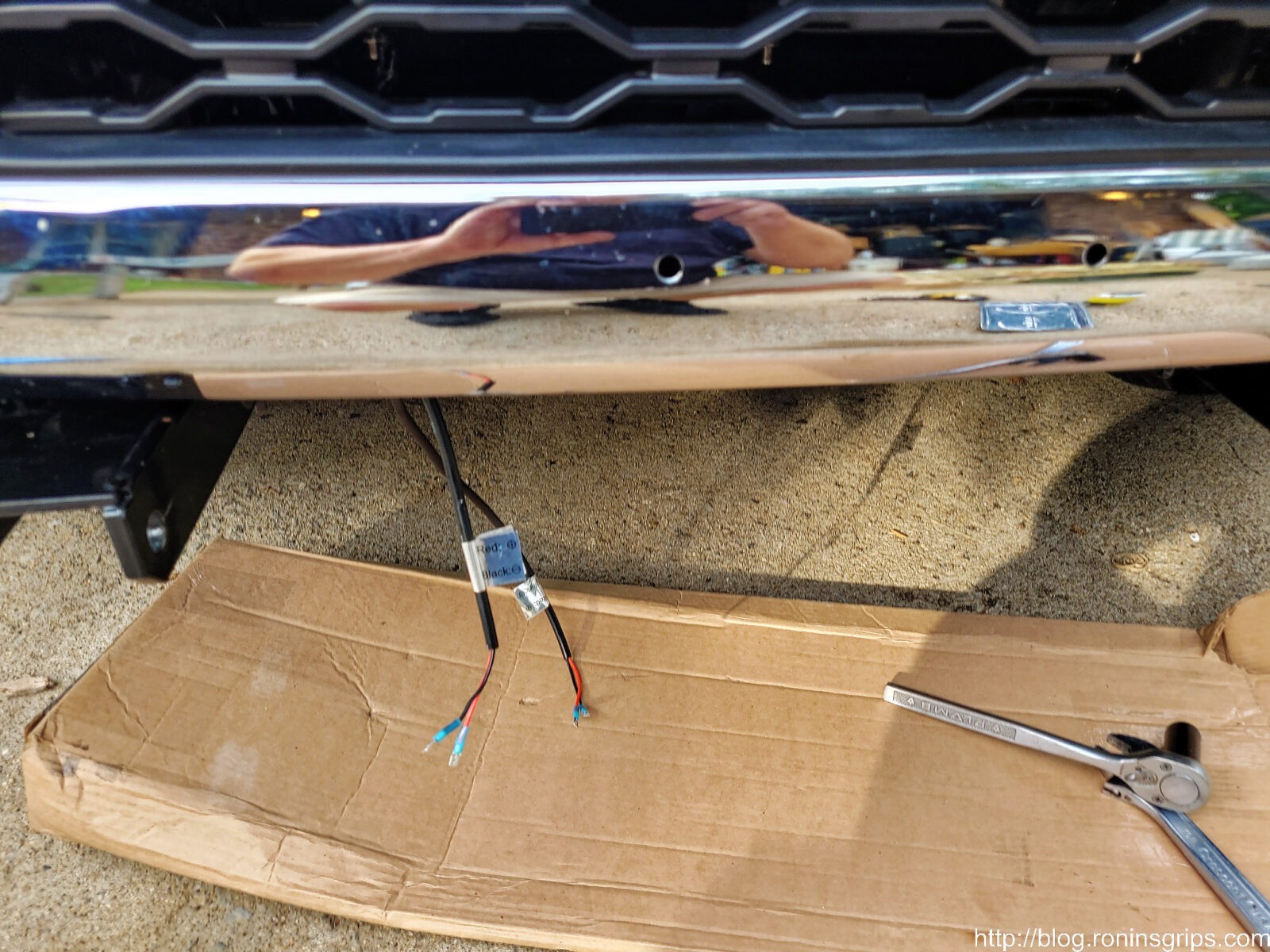
With the male spade fitting installed, I then went ahead and mounted the light bar assembly under the truck and tightened down the bolts. I put a cardboard box there because if I dropped the assembly I didn’t want to trash the paint. Thankfully, I didn’t drop it but I have fumbled stuff in the past hence the relatively soft landing zone.
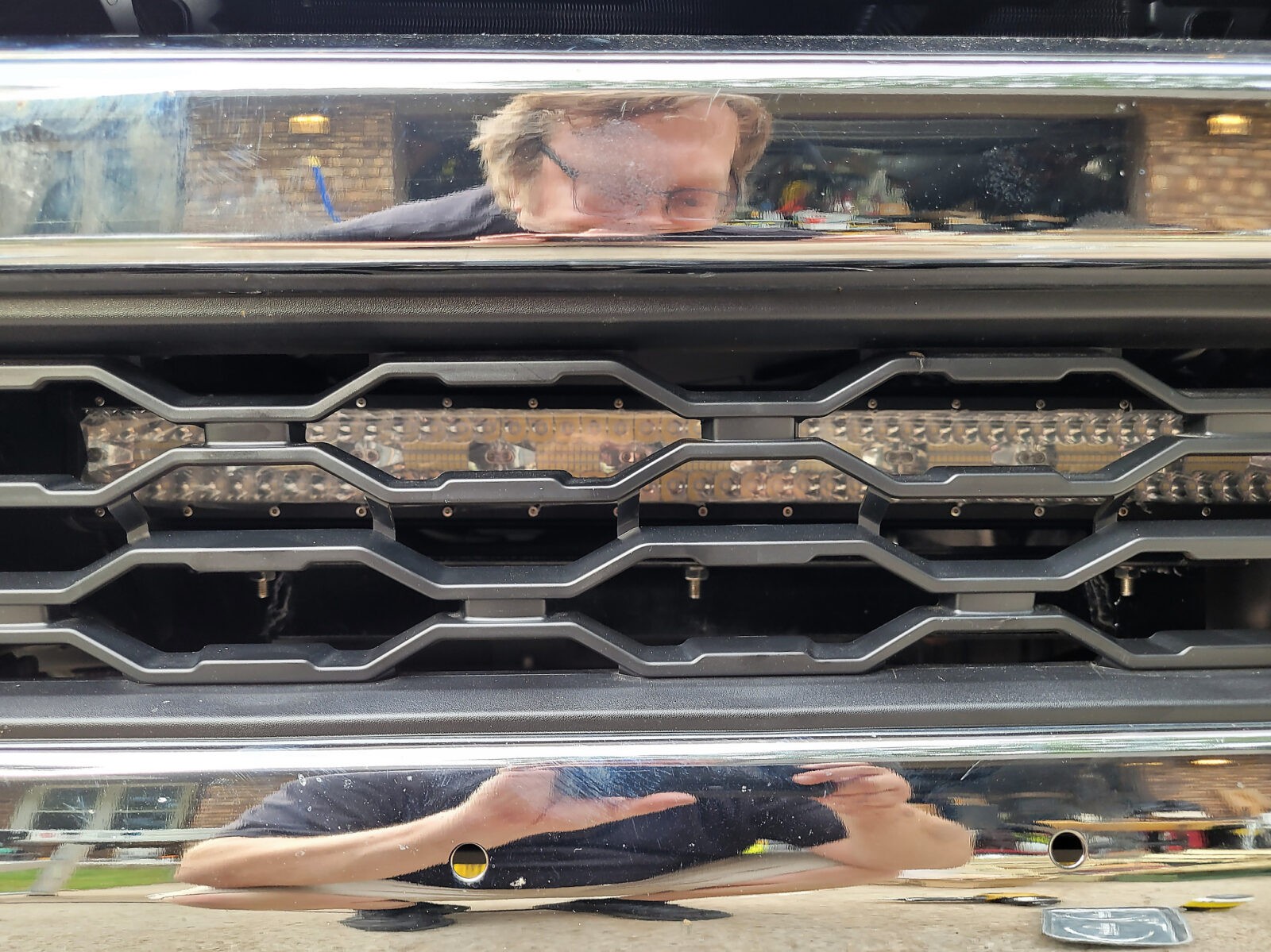
Peeking up from ground level this is how things looked. I did not pull the protective lens cover film off until it was time to test the lights.
The white LED is located back from the grill. LEDs can get surprisingly hot and I didn’t want to melt the plastic. I may be losing some of the projected light being set back like that but the end result is still remarkable and I don’t have to worry about melting the grill if the truck is standing still with the LED on.
The green rubber plugs are pulled out using needle nose pliers. As you can wee, we have the pink & blue wire in the Aux 1 port and the pink and green wire in Aux 2.
Even when it comes to the upfitter switches and wiring, I wanted to make sure they worked. I turned on Aux 1 and got over 12 volts and when I turned it off, no volts. Same with Aux 2. We are using power from the Aux switches to switch relays on or off. Relays have a very low current draw so I don’t need to worry about blowing fuses relating to the upfitter wiring.
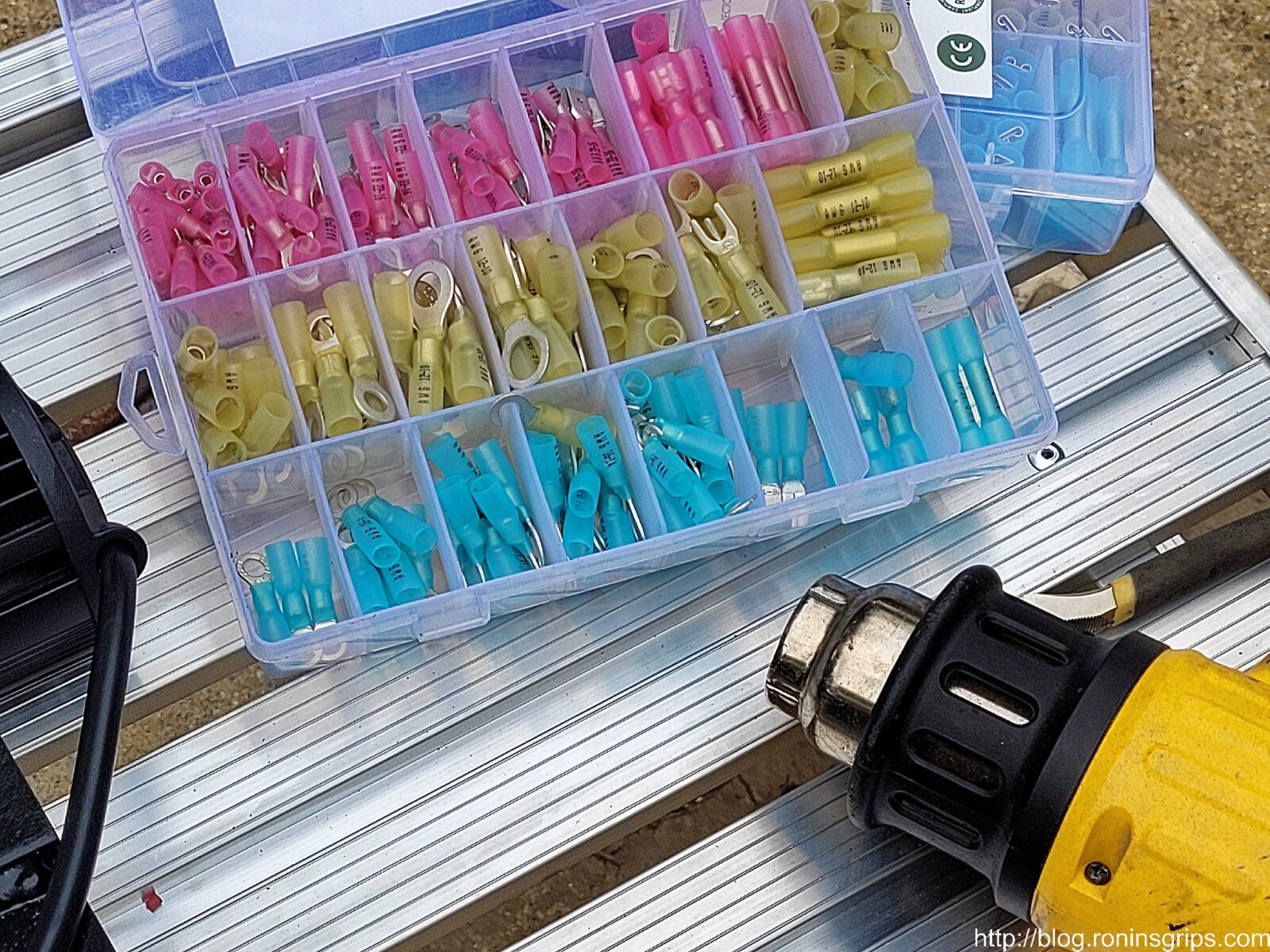
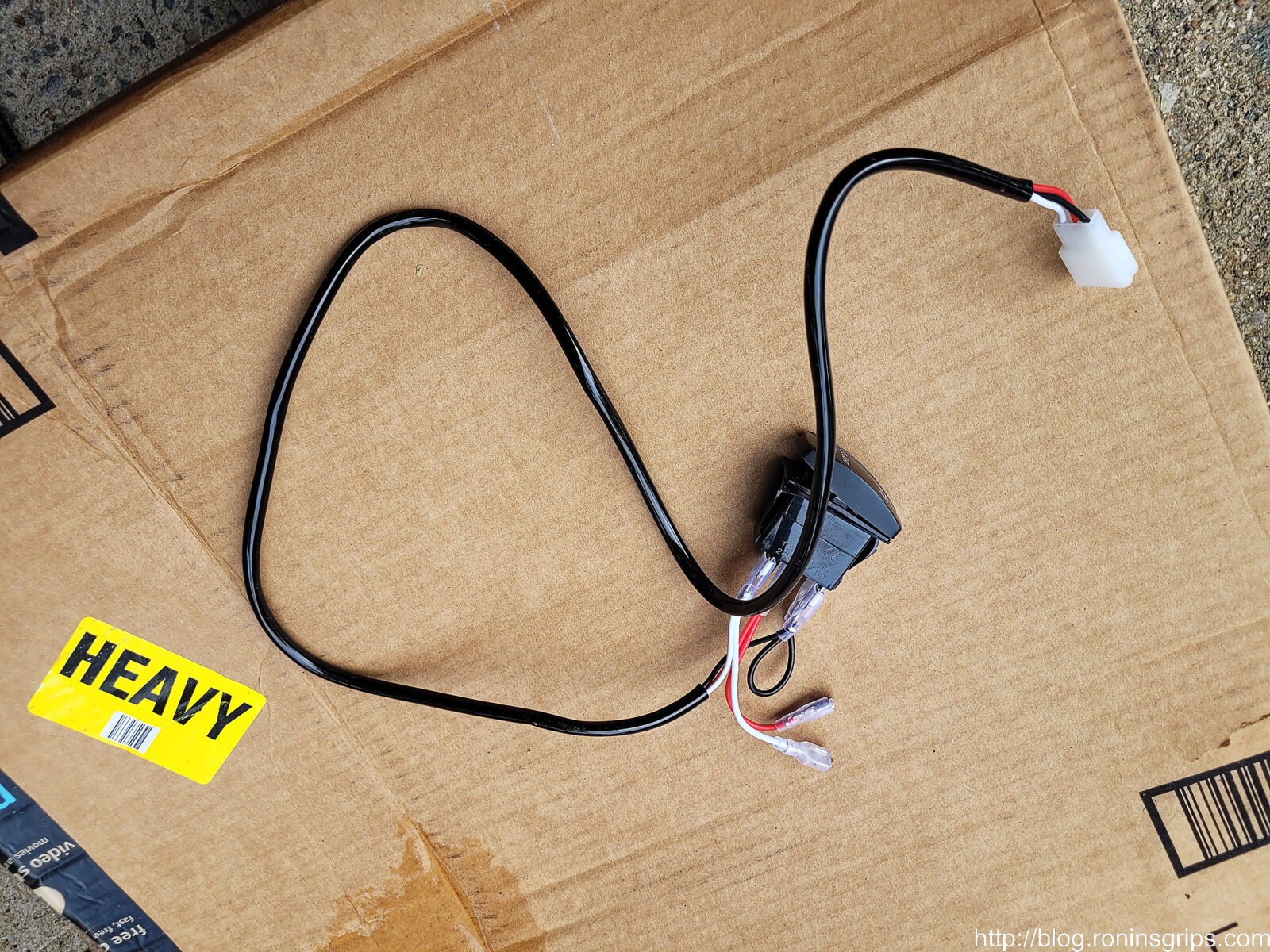
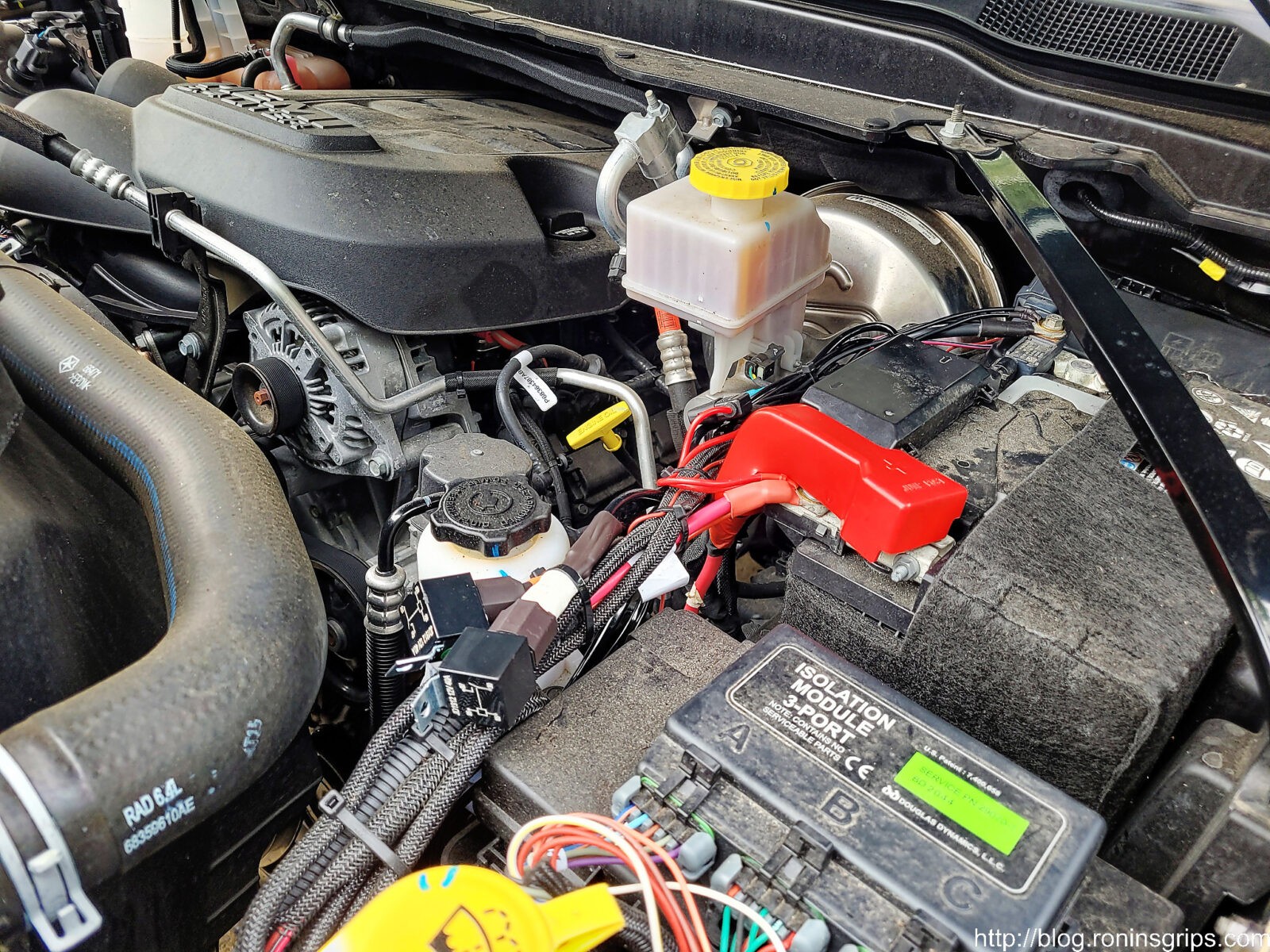
This is the modular swith portion of the Nilight wiring harness, Red is positive, Black is negative and White is switch circuit for the relay. In other words, positive comes in on red, when the switch turns on, power then goes through the white circuit, the relay switches and then the larger/heavier 14 gauge wires carry the current from the battery to each light bar. You will connect the white wire of the wiring harness to the relevant Aux pigtail lead. As mentioned, I used spade connectors but you can solder them if you wish, You will not use/need the red or black so make sure they are cut back and protected to prevent any surprises.
I trimmed the switch wire back and then zip tied everything in place so it wasn’t flopping around. One thing I did was to wrap yellow electrical tape at the base of the fog light relay so I would rapidly know which of the two it was and I wrapped white electrical tape at the base of the relay for the white 26″ bar. You want them secure so the wires don’t flex around unnecessarily and break down over time.
Testing and Results
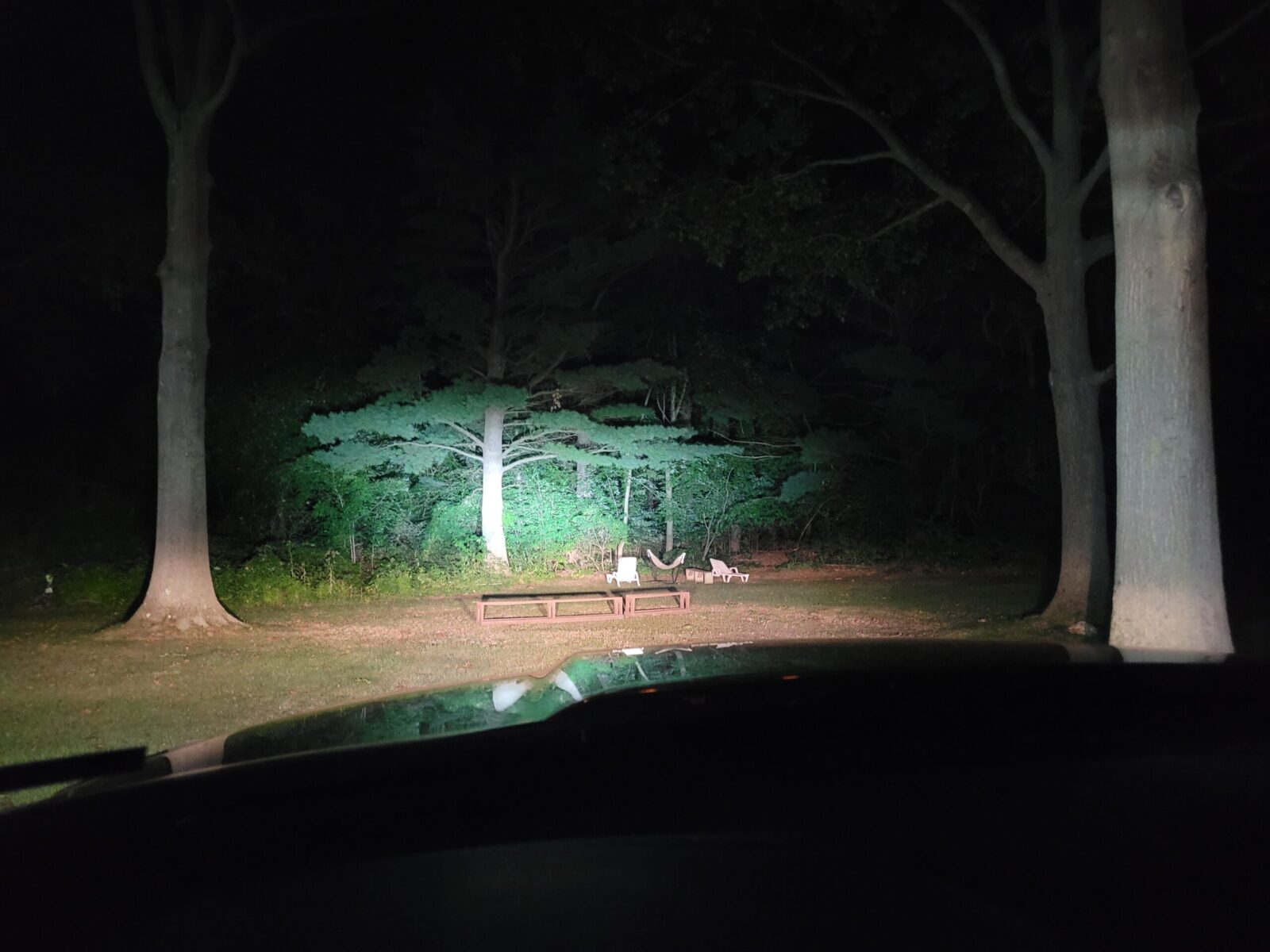
I turned the switches on and confirmed the lights work then I waited for it to get dark. The following photos are of a tree line about 40 yards from the front of the truck plus are straight out of the camera – no color changing, sharpening, etc.
Low beam – these are the stock halogens.
High beams – Lasfit LED upgrade
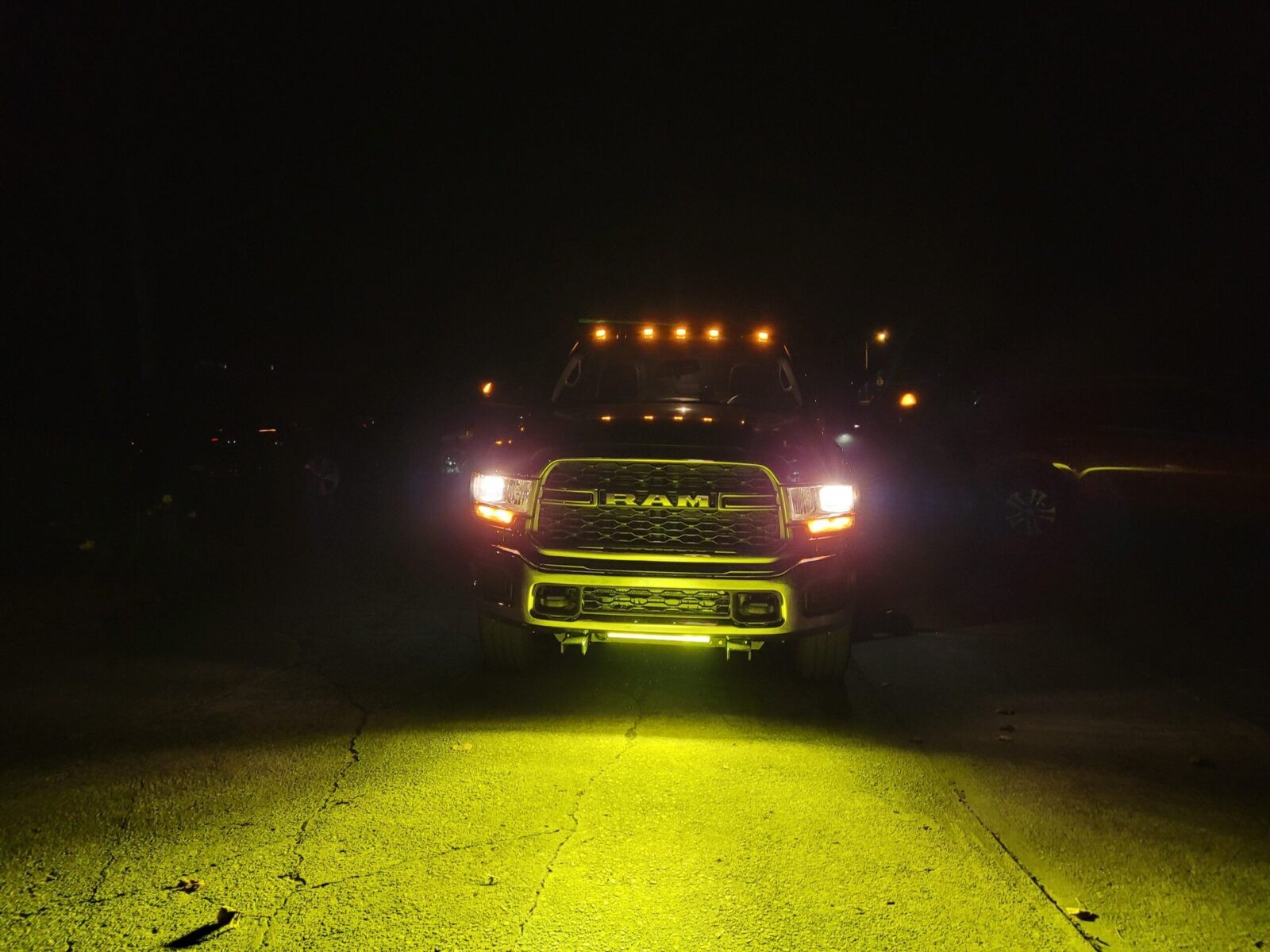
High beams and new Nilight 20″ yellow fog light bar turned on.
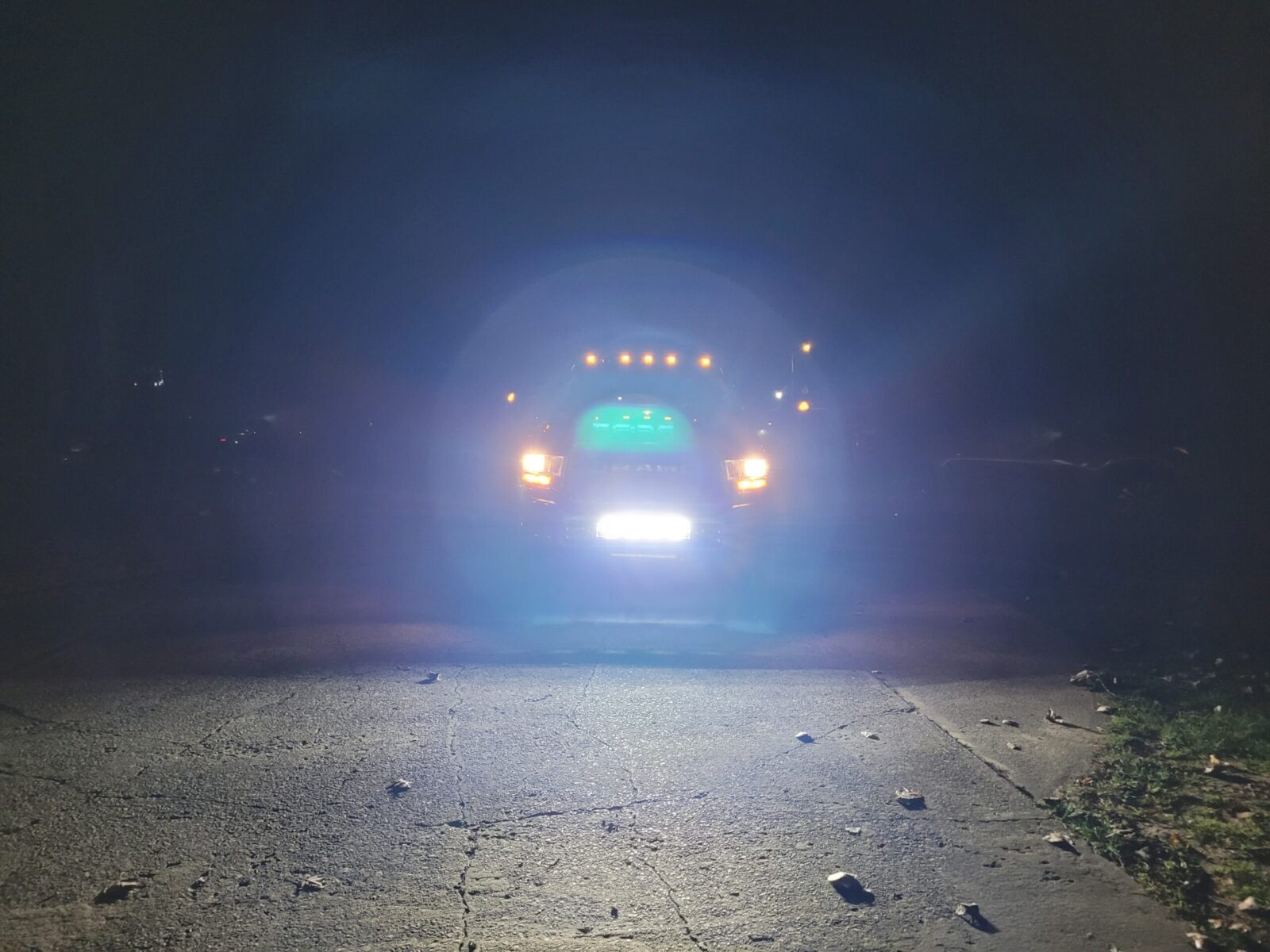
High beam, yellow fog and 26″ light bar all on. What you can’t see in this photo is that peripheral light increased dramatically. If you were on a trail and wanting to see a deer or something coming in from the side, it’s a definite improvement. Just to be clear though, this is not street legal.
Here’s a video of the testing:
This really helps you see the results.
Here’s looking at the truck with low beams on and the yellow LED bar. I really like how it lights the road up directly in front of the truck. You can see the clocking issue I mentioned because the amber light bar is slightly lower on the right than on the left.
Oh man, do not run that 26″ bar on the road. It is like looking at a camera flash going off continuously. It’s incredibly bright and will blind anyone looking at it. It took a few minutes for my vision to come back after quickly snapping this photo.
From a distance you really don’t see the lights blatantly there – you have to look for them.
You get in closer and you can see them but you have to be looking for them.
Conclusion
I like how things turned out. I’ve been using the set up for about a month now and am very happy. I’ll post updates down the road. Lighting may look daunting but it is actually quite straight forward. Nilight is a cost effective way to get started.
I hope this helps you out!
4/7/24 Update: Everything has held up just fine – no problems of any kind since I installed them.
Note, I have to buy all of my parts – nothing here was paid for by sponsors, etc. I do make a small amount if you click on an ad and buy something but that is it. You’re getting my real opinion on stuff.
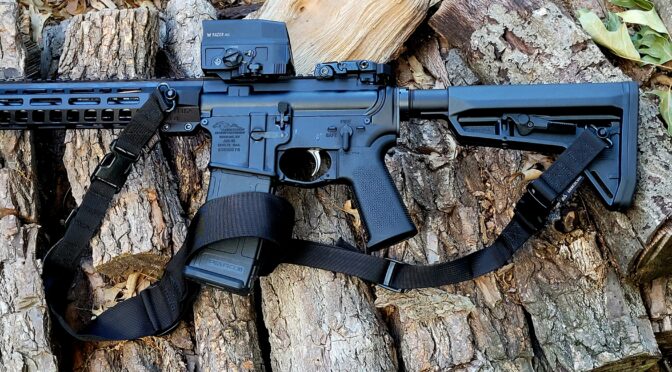
A good sling for a rifle is really worth it if you plan on carrying them around much. The challenge can be finding one that is quality made that doesnb’t break the bank in terms of cost. Over the past few years, I’ve found a vendor that makes their slings in the USA and does a really nice job – that group is S2Delta.
S2Delta was founded by two Marine Recon vets in Albuquerque, NM, that offers a variety of accessories includling slings, rifle rests and patches. It also looks like they are working on bringing a Remington 700 short action rifle chassis to market as well. My experience with them focuses on their two point modular slings. Let’s review a few things first.
What do they mean by 1-point vs. 2-point slings?
When you see companies refer to a sling being one or two-point, they are referring to the number of places the sling attaches to the weapon. A one-point sling connects only at one point and exactly where depends on the length of the weapon and the preferences of the operator. For example, a relatively short AR may be attached at the end of the buttstock and swung up into position as needed. I’ve also seen guys run connectors along the stock on purpose built end plates just in front of the castle nut.
A two-point slings connects to the weapon and two points – at forward and rear positions usually. I’ve seen guys run their forward position way out at the end of their handguard or even the front sight. The rear tends to be towards the rear of the stock.
Personally, I tend to run two point slings given how I like to distribute the weight of the weapon and how I swing it up into firing position. If I have something relatively small and light, I might run a one point sling but again, this really depends on what you prefer and you learn this over time.
What is a modular sling?
A sling has to connect to the weapon somehow. These days it might be strapped, clipped, a “mash hook”, snap gate D-ring or some form of quick detach (QD) swivel. Instead of dedicating one sling per method, a modular approach became popular that allows you to take a base sling and then pick the connector of your choice to use at one or both ends. You could also start one way and then change just the end vs. the whole sling.
This helps settle the debate of “what connector is best?” Instead, you let your needs dictate what to use. For example, with MP5s I would use HK hooks. With ARs and AKs with modern furniture, I tend to run QD swivels. Again, it’s up to you and what your weapon can support.
What makes a sling “good”?
Ah yes, the quality section. Years ago, I wanted to carry slings forRonin’s Grips and bought a bunch of import samples and all of them were junk meaning they were made from questionable materials and methods. It dawned on me that bringing another sling to market without a differentiator was pointless so I dropped the idea.
Ok, so what you want to look for is the use of wide heavy duty nylon straps, reliable connectors and slides, plus good stitching in a nutshell. So let’s look at each of these points.
Let’s start with the connectors that attach the sling to the weapon – the cheap no-name or import airsoft-grade slings have connectors of real bad quality. I’ve seen hooks snap, QD swivels jam or disintegrate… I dropped an AR on concrete once when the QD failed for example. The connector is very important.
By the way, remember the Die Hard movie scene withere Bruce Willis’ character is dangling from an HK strap? That was a pretty cool memorable movie scene but I wouldn’t say it should set expectations in reality.
These days, I tend to prefer the QD swivels as most of my rifles have them so I can move a sling around quickly if I need to. Also, if I am cleaning, working on the weapon or even firing from the bench, it’s super easy to disconnect the sling and set it to the side.
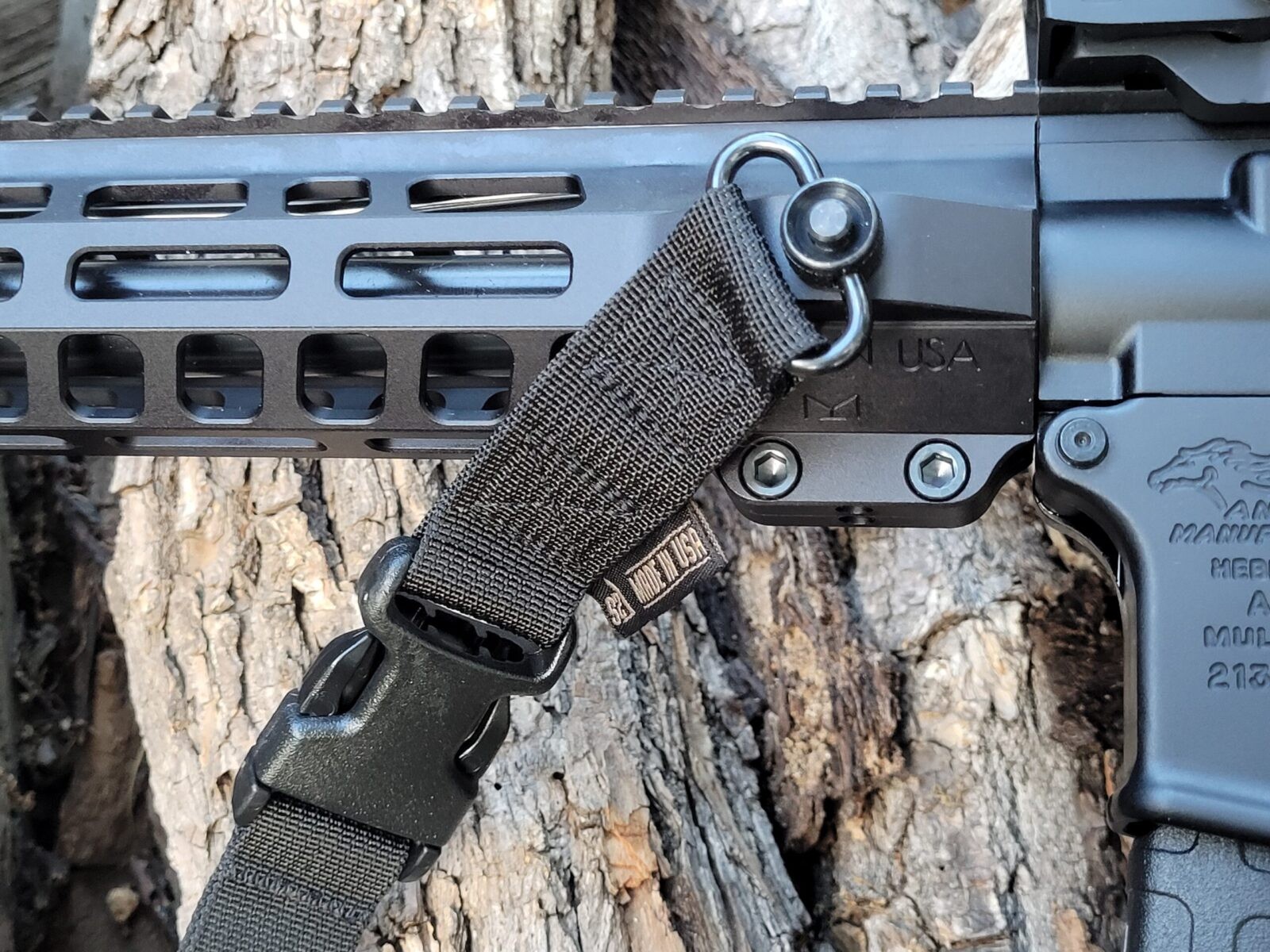
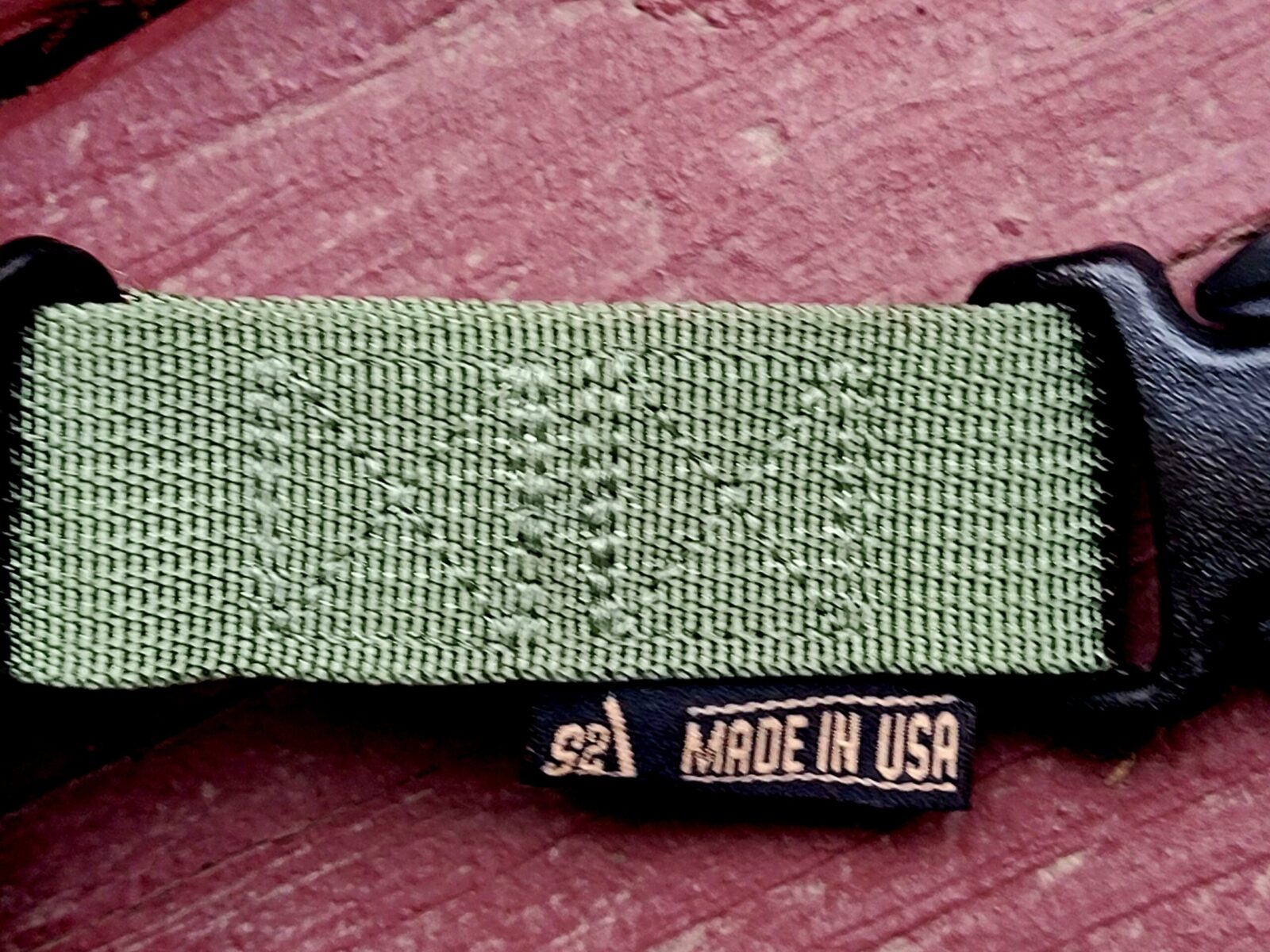
This is an S2Delta sling with one of their supplied QD swivels that is installed in the handguard of a 16″ AR. Note the beefy stitching and the clips they are using to secure the modular end to the sling.
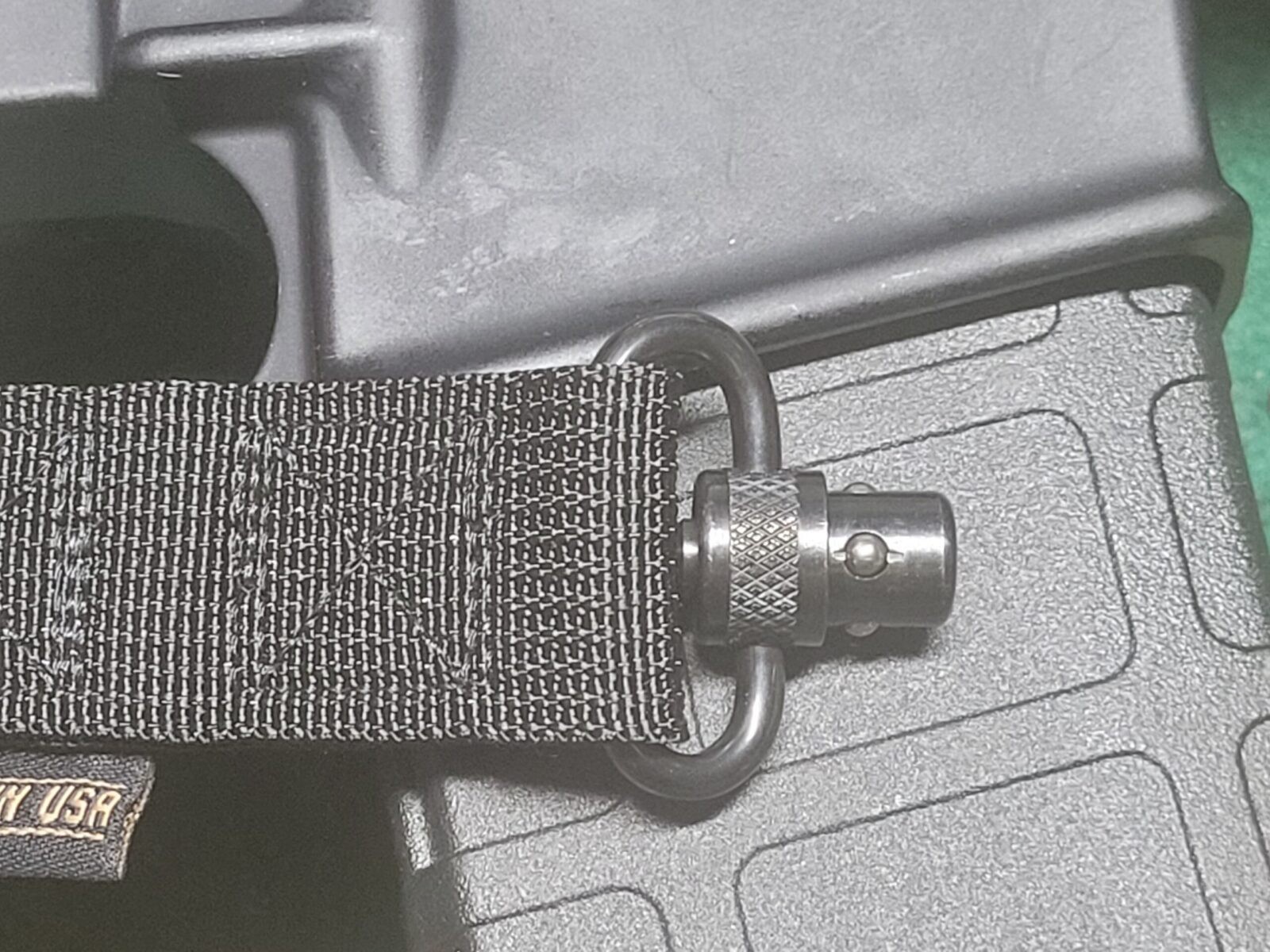
Here’s one of the S2Delta supplied quick disconnect swivels
For the straps, I prefer nylon and you need them to be at least 1″ to 1.25″ wide to fit swivels, etc. When you get up to the area that will be on your portion, look for 1.5-2″ or even having padding. If you are wearing body armor, the weight is distributed. If you aren’t then the weight of your weapon will only be distributed by the area of the sling that is in contact with how you have it slung on your body. A weapon can get uncomfortable surprisingly fast if the weight isn’t distributed. For heavier long range rifles, I will either get a sling with a pad or buy a pad to help spread out the load.
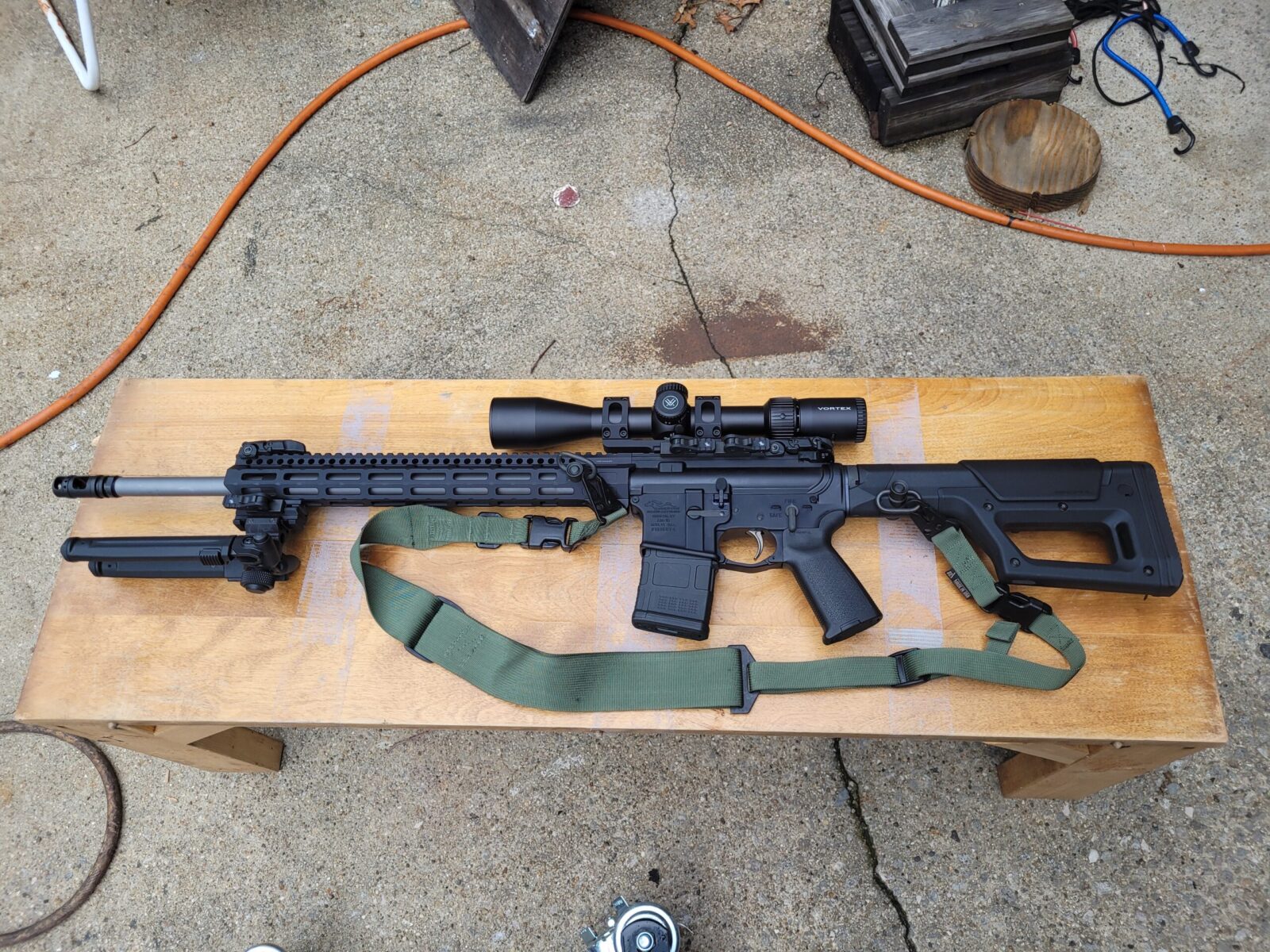
S2Delta modular sling on DMR with a 20″ Ballistic Advantage barrell, Magpul PRS Lite stock and Vortex Diamondback scope. Note the ample 2″ wide portion of the sling for the shoulder.
Another thing to consider are the slides, D-rings and other strap management parts – cheap ones tend to be thin and flimsy while the quality parts tend to be beefy and a reinforced plastic.
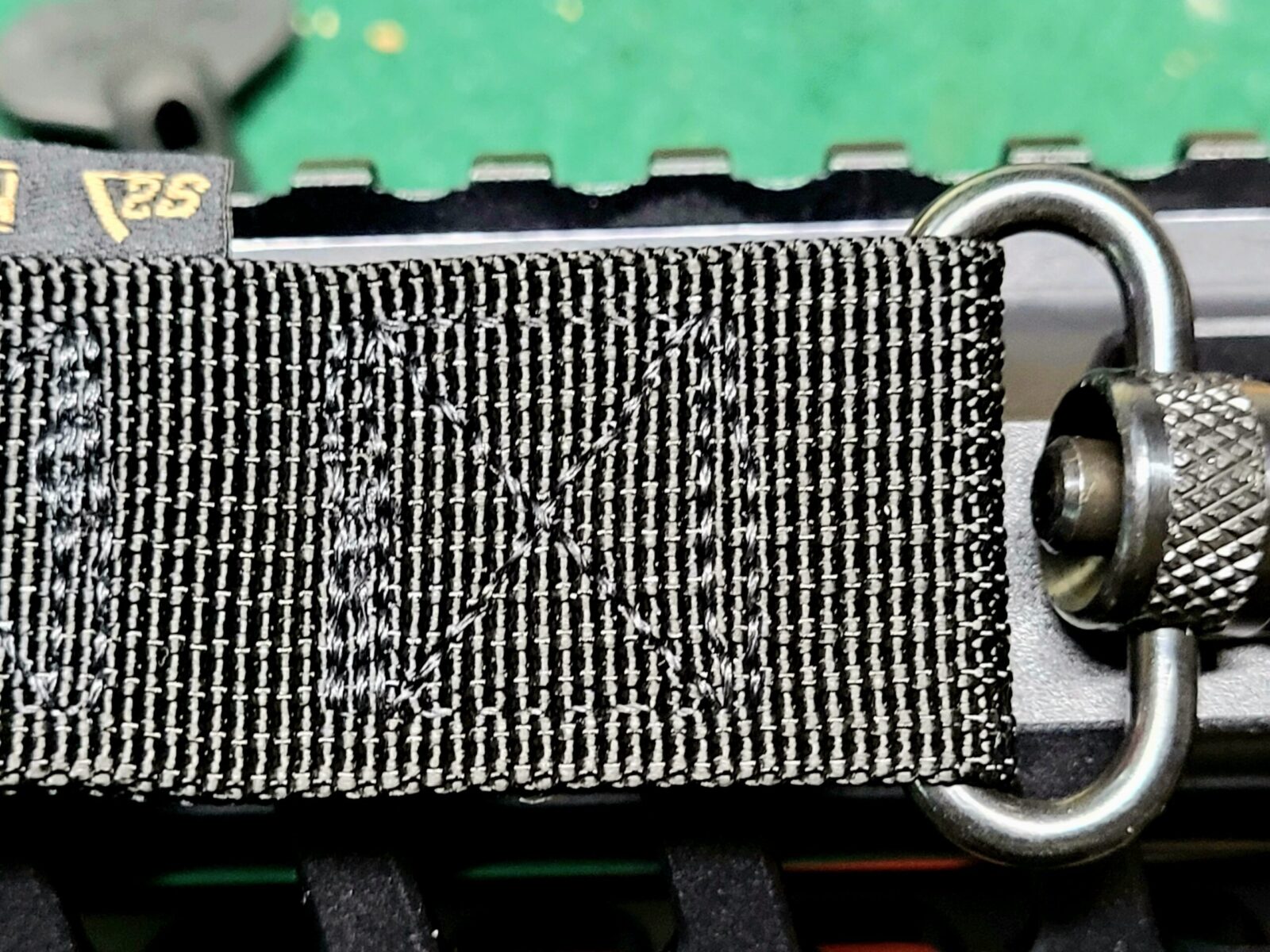
Last but not least, look at the stitching. Edges should be double stitiched and ends box stitched (think of a rectangular box with an X stitched inside extending to each corner.
Solid stitching for sure.
Another up close shot of the stitching.
The end of the day, the sling is only as strong as its weakest component.
Oh – I should mention length. For two point slings look for at least 50-55″. To short and you will not be able to carry the rifle in a patrol postion perpendicular to your body. A rifle over your shoulder may take too long to deply depending on what your use is.
By the way, before you take that comment to be purely tactical. A charter captain I met this summer in Alaska told me the story of his good friend who was nearly killed by a brown bear. The friend had the rifle on his back and couldn’t deploy it hast enough when the brown bear did a surprise charge from the brush. He would have bled to death from the mauling excepthe got real lucky that there just happened to be a helicopter nearby that could medevac him out. The friend still hunts but carries a .44 magnum in a Kenai-style chest holster and has his rifle much more accessible.
Conclusion
I am now using four of their two-point modular slings on a variety of AR configurations ranging from a 16″ defensive carbine up to a 24″ Criterion varmint barreled custom Aero designated marksman’s rifle with a Vortex PST Gen II scope that weighs quite a bit. The first time I tried one was back in 2019.
The S2Delta slings are made in the USA from good materials and I have not had any problems so far. You get a very good level of quality at an affordable price is what it boils down to.
Note, I have to buy all of my parts – nothing here was paid for by sponsors, etc. I do make a small amount if you click on an ad and buy something but that is it. You’re getting my real opinion on stuff.
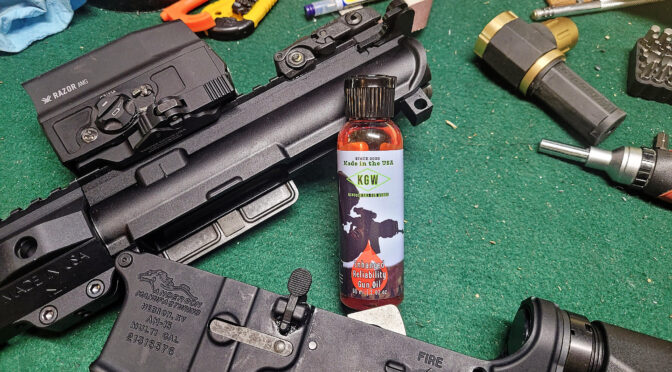
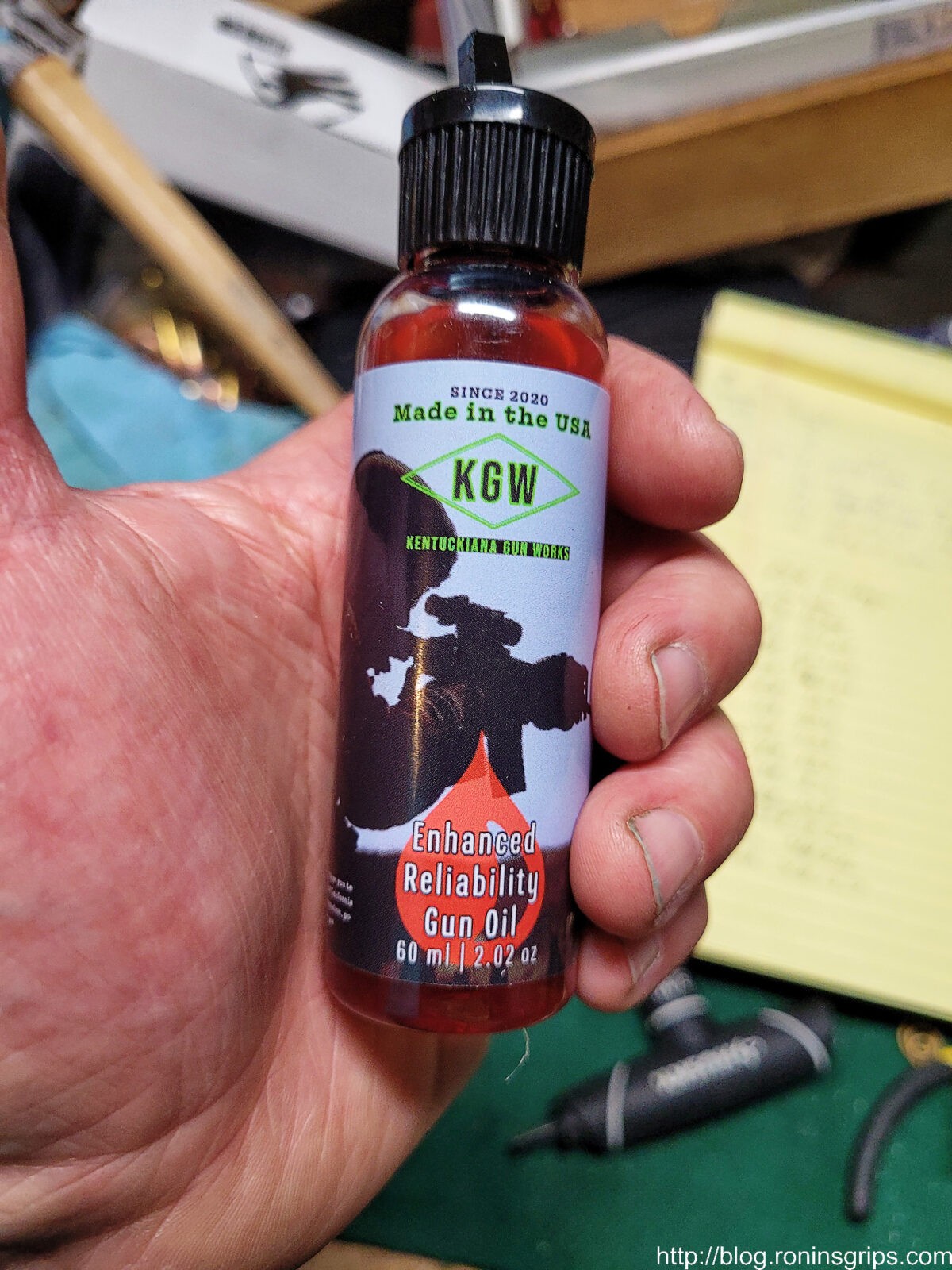
So I stopped in to talk to Scott Igert, my good friend who owns Michigan Gun Exchange, a few weeks back. Scott told me about a new gun oil that he had samples of that the maker had handed him directly and that I ought to take a look at it. I kind of groaned because everyone and their brother claims to have the best gun oil. Some have ok oil and some don’t (remember the canola oil mess some years back?) but nobody has THE best oil.
Many times the oils they are selling you are an existing product that has been put into tiny containers with some really splashy marketing and packaging. For example, if you find a red colored weapon oil that feels, smells and is colored red like ATF, then it is probably some variant of automatic transmission fluid – Dexron, ATF, etc. If it’s colored blue and smells and feels like hydraulic fluid then that might well be what it is. Now I am not saying all products are that way but a lot are.
In looking at the oil, it was yellow-ish with a hint of red. It’s a blend of something – but not something right out of a bottle. I felt it and it had a nice 30 weight-ish feel to it. It wasn’t really thin but it was slippery.
The smell was that of a petroleum oil but nothing uniquely stood out.
Did I taste it … no, I have standards to uphold at least while I am sober.
Okay, those quick observations may sound ridiculous to you – well, the taste part was a joke – but many products you can kind of group by color, feel and smell. This one I couldn’t because the color was unique plus it felt like a decent lubricant so I decided to dig a bit more.
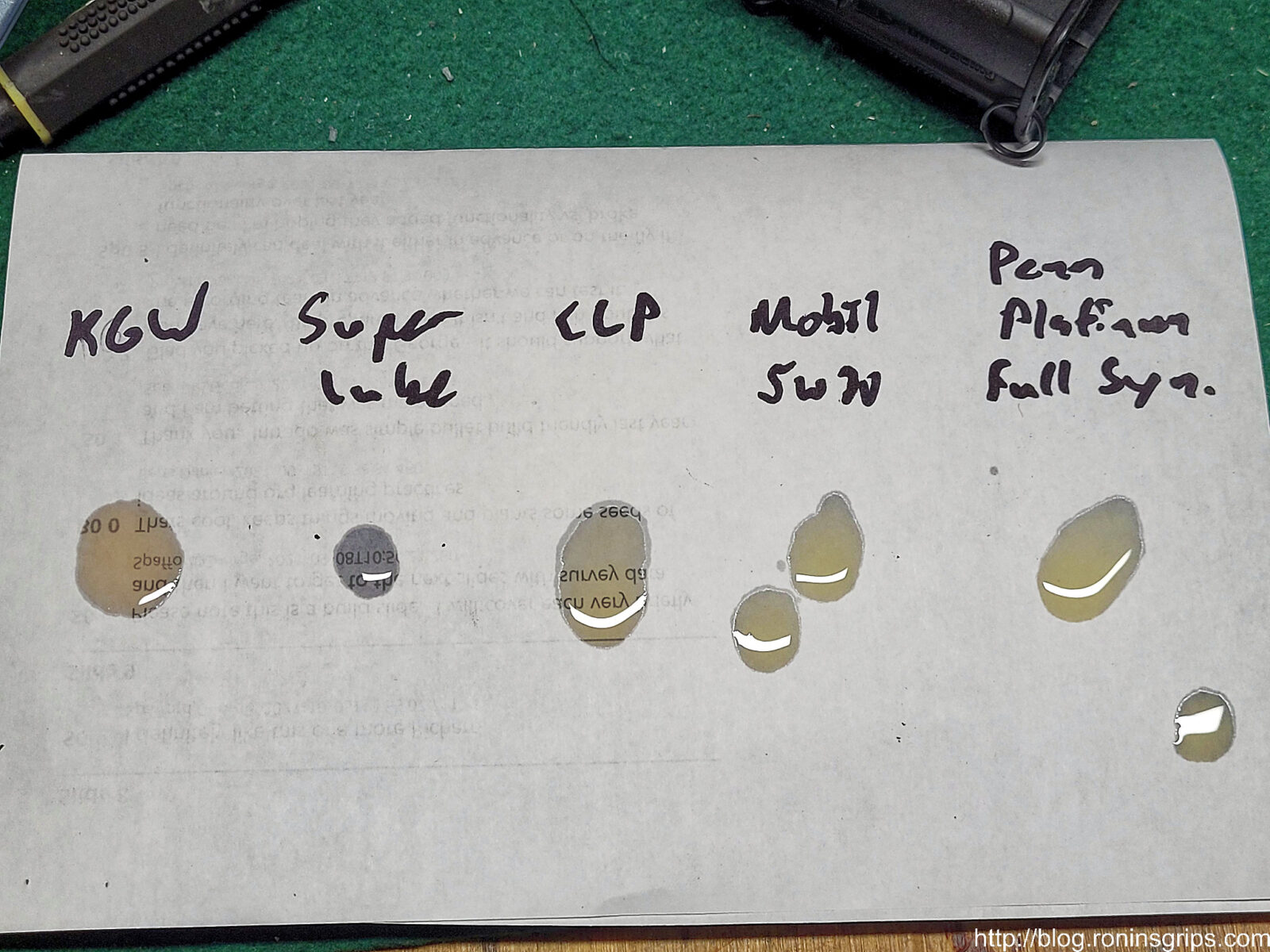
I took a few drops of some common lubricants and put them on a piece of white printer paper. Left is the KGW product, then Super Lube, them CLP, followed by Mobile 1 5w-30 synthetic engine oil and finally Pennzoil Platinum Full Synthetic 5w-30. Super lube is clear – it just turned the paper black. KGW has a slight red hue and then the others are different yellows. The CLP soaked in the fastest by the way reflecting how thin it is.
Did Some Digging
I visited their website and also did some searching. KGW is a new firm so there really isn’t much info out there which meant I needed to reach out to Kohl Oettle, the owner of KGW who developed the oil. Scott had his contact info so we traded some emails.
Kohl was a tanker in the Marine Corp Reserve for six years and had developed a dislike for CLP as a lubricant – CLP stands for Cleaner Lubricant Protector just in case you didn’t know. Kohl pointed out, “We used CLP on everything, m4, m16, 240, m2, m48 etc, and in every application it burned off and ran off so quickly that I developed a real hate for all types of CLP. I wanted something that was thicker, handled heat better, and just lasted longer. “
That resonated with me because CLP is just way too thin for me. When I have big clunking parts, I need a thicker lubricant such as as oil or a grease to have reliable lubrication especially during break in. I still use CLP as a cleaner once in a while but I haven’t used it as a lubricant for probably 16 years — tt dawned on me that I started working on AKs around 2006 and CLP was just too thin to use as an assembly lube on those rifles so it’s been more like 16 years.
So I asked Kohl what set his oil apart from the tons of other products on the market. He responded, “It’s not trying to do everything. It wasn’t designed to be a cleaner. It’s a damn good oil and protector, without all the cleaners that make so many others thin, and less heat tolerant. I do have a very small amount of carbon deposit reducers in my oil, but just enough help control the carbon buildup and thus make the bolt reciprocate much easier. It’s not nearly enough to be used as a cleaner, and that’s on purpose. “
For the last seven years, Kohl has worked in industrial maintenance working on a variety of machines ranging from food processing to automotive parts manufacturing. As part of this, he learned that one of the most effective means of keeping a machine running reliably was to use the proper oil and grease.
What I found especially interesting was that Kohl tinkered with the the blend until he achieved the viscosity and lubrication he wanted through trial and error. He primarily had the AR-15 and similar rifles in mind when he was designing it but it will work on other pistols, rifles and shotguns as well. By the way, I mentioned earlier I thought it was about 30 weight – Kohl told me it’s a tad thicker than that.
When he was ready, he took to shooting classes and and shot thousands of rounds through a variety of weapons. He also sent out samples to people and a local gun store helped him sell his oil and collect feedback for 18 months. He took this feedback and further refined his product.
I respected what he did. Both Scott and I started our respective businesses and learned over time the same way Kohl has done.
Assembly Lube Testing
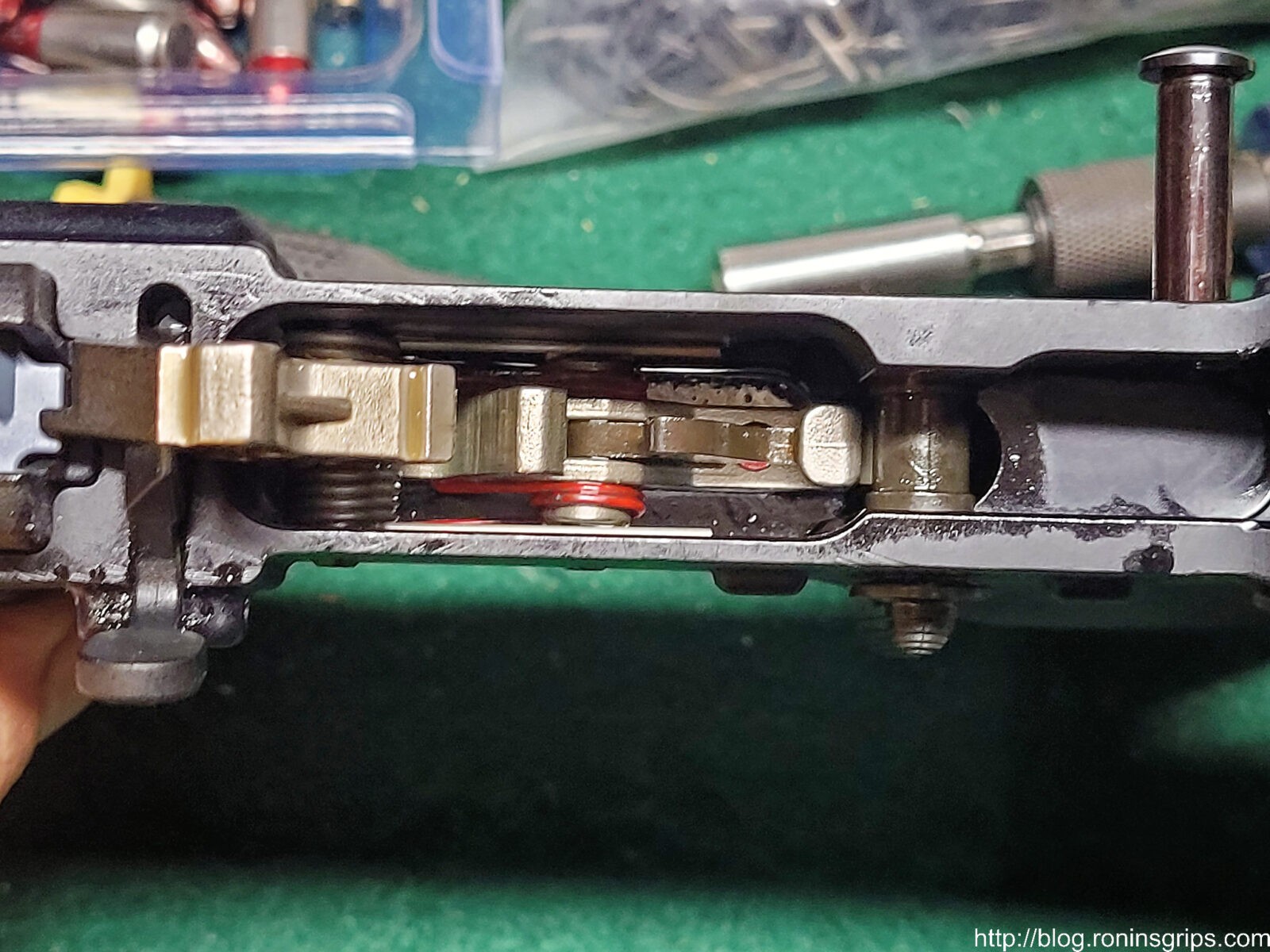
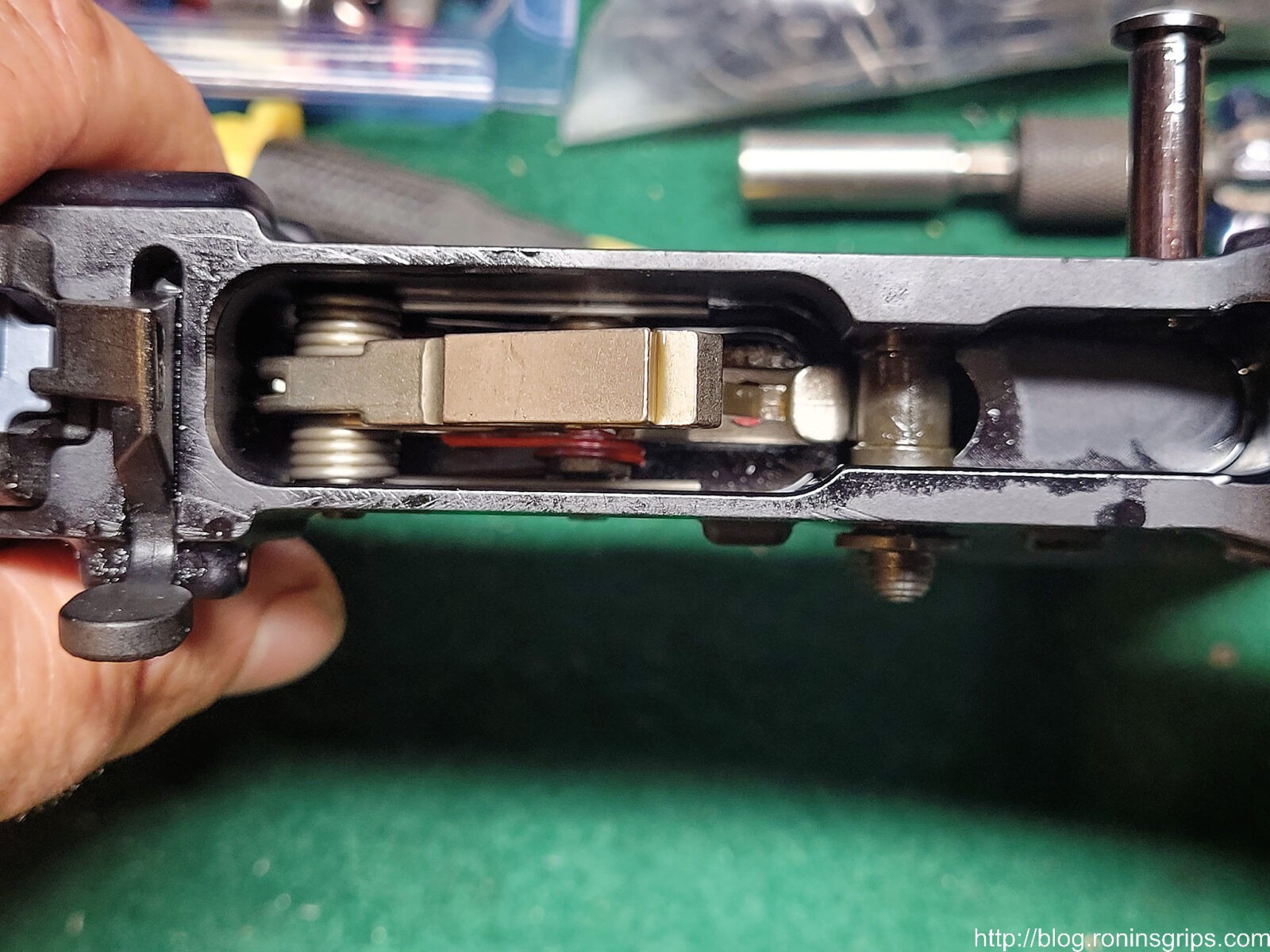
I used the KGW Enhanced Reliability Oil as an assembly lube for the fire control group, bolt catch, bolt, and bolt carrier. I grease the takedown pins so not there.
I ensured there was a thin film on both the top/front of the hammer as well as the bolt carrier.
My testing has been limited so far but I will update this post after my first range trip. I recently built two AR rifles and used Kohl’s oil as an assembly lube. I could tell everything was moving very easily. In this regard it worked great. Time is a challenge these days and I hope to get these rifles to the range in the next 3-4 weeks but didn’t want to hold up getting the word out there.
You can buy the oil direct from KGW’s website or you may find it at your local gun store as their business expands.
By the way, I don’t make any money off this post and Kohl didn’t ask me to. I just know what it’s like to be an entrepreneur trying to start a small business – I figured helping Kohl was the least I could do after all the folks who helped me.
Note, I have to buy all of my parts – nothing here was paid for by sponsors, etc. I do make a small amount if you click on an ad and buy something but that is it. You’re getting my real opinion on stuff.
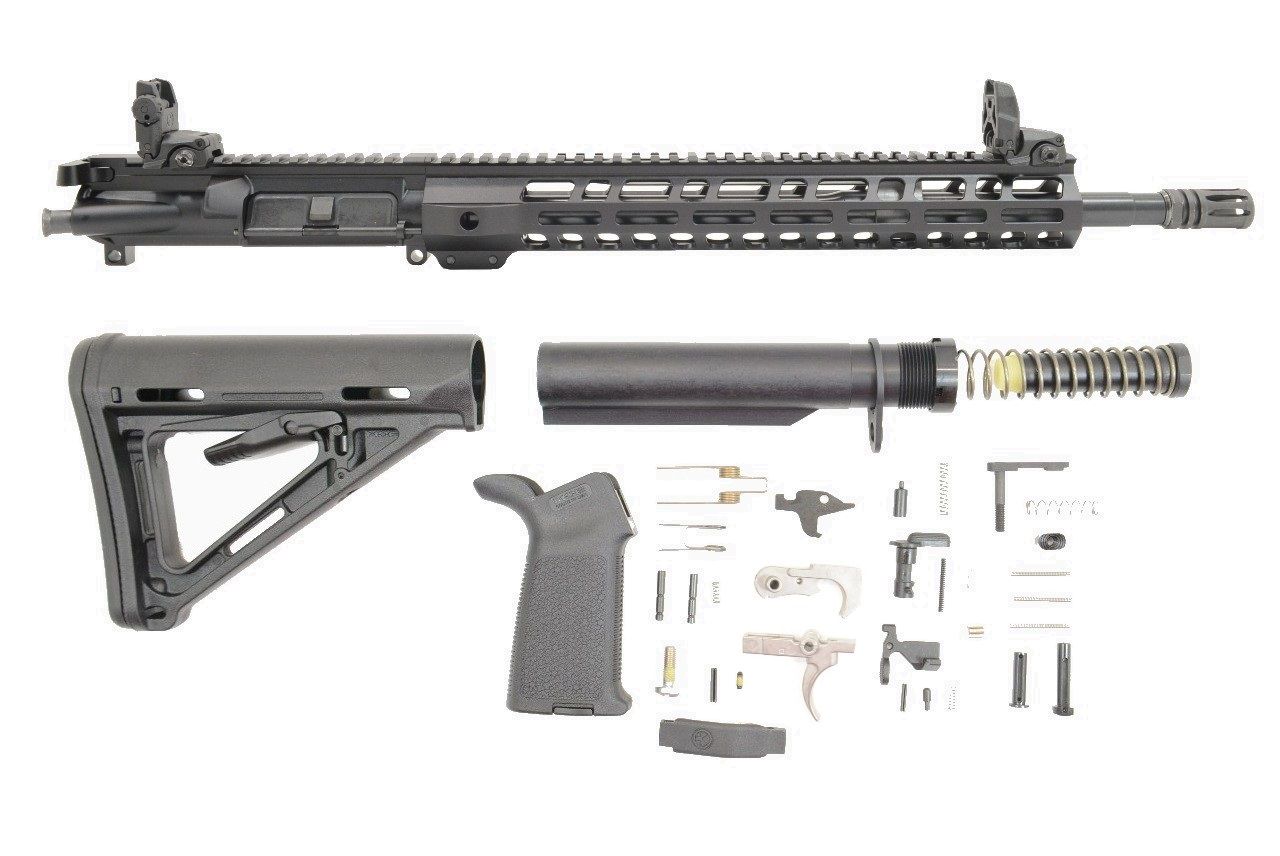
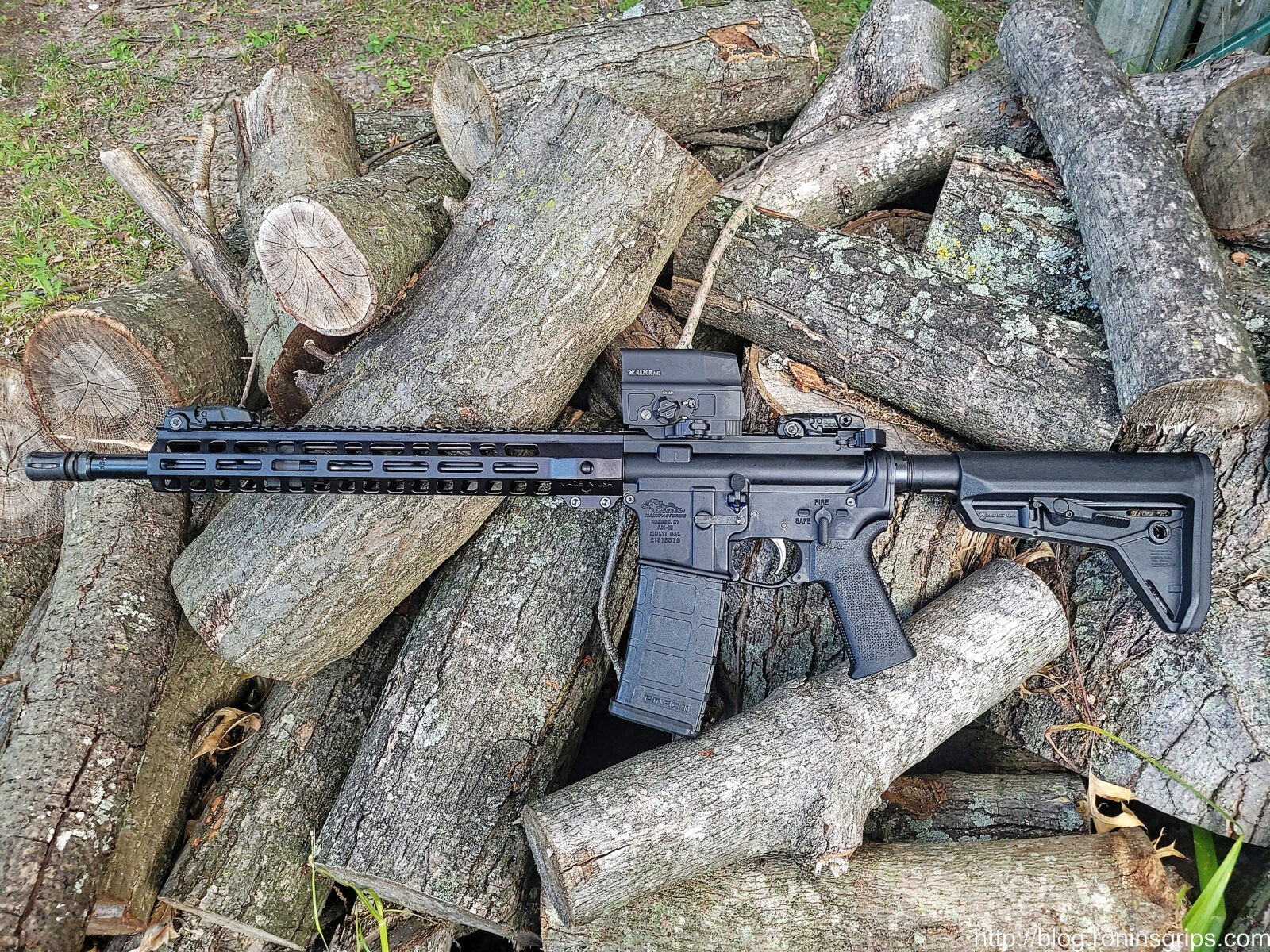
I’ve pointed thius out before – I really enjoy building firearms. I don’t have the hardcore machinist skills to build one from scratch – I wish I could though – but I do enjoy assembling and tinkering plus I don’t mind some fitting / fabricating. With this in mind, I have a lot of fun building ARs from PSA kits because they are affordable, reliable and accurate. I’m not going to waste time with the whole manufacturing tiering or the rediculous “poor” labels – that’s all they are. Now, if you are in the military and you need special weapons, you aren’t reading this post – it’s that simple. If you are like most folks and want to build an AR that you can enjoy with friends and family, then read on.
Founded in 2008
For those of you who do not know Palmetto State Armory (PSA) – they have been around since 2008. It was founded by Josiah McCallum after his Iraq deployment and he started it in his garage. To put it mildly, he has been growing PSA ever since into the powerhouse it is today. Folks, PSA has a ton of offerings now – ARs, AKs, pistols, ammo, parts … the list goes on and on. One thing you will notice is that they are constantly learning and evolving.
I’ve Only Had One Problem
So, I bought and built my first PSA AR many years back – I looked at my order history and it looks like it was 2014. In all the years, I can only remember one problem – they forgot to include the disconnector. I contacted customer service and had one a few days later. That was probably a year or two after my first one and I’ve not had a problem since. You’ll notice now they bag their parts by grouping so this probably helps with quality control considerably.
Have I ever had a part fail? No – not that I recall. I normally will put a few hundred rounds through a build, eventually get bored of it and have my FFL, Michigan Gun Exchange, sell it to fund another project. So all I can tell you is that my experience with their AR kits has been very favorable and have no reservations telling someone to use them – especially if they want to start and learn.
What options do they have?
Whew – they have tons and tons of kits and parts you can choose from. Different barrel lengths, handguards, furniture, triggers, and so forth. You can buy a kit with everything except for a stripped lower receiver or you can buy assemblies such as a build kit for a stripped lower to then use with whatever upper receiver you want.
The point is that they have something for everyone and if you are patient and watch their Daily Deals (you can sign up for their emails) then you can get a great deal. For example, the kit I built this time is their “PSA 16″ 5.56NATO 1:7 MIDLENGTH NITRIDE 13.5″ LIGHTWEIGHT M-LOK MOE EPT RIFLE KIT W/ MBUS SIGHT SET” – which means in has a 16″ barrel that is chambered for 5.56 NATO with a 1:7 twist and black nitried finish, has a 13.5″ M-LOK handguard, comes with Magpul MOE grip and buttstock, their enhanced polished trigger (EPT) fire control group and has a set of Magpul BackUp Iron Sights (BUIS). Yeah, they pack a lot into that description. The kit comes with everything you need except for a stripped lower receiver (I used an Anderson I already happened to have) and the best part was that it was only $479.99 vs. the list of $799.99.
The AR parts are all Mil-Spec – what this means is that rifles that use parts built to the original military specification dimensions can use other parts. For example, I prefer the Magpul ACS stocks – they just feel better to me. Because the PSA buffer tube is Mil-Spec, that meant I coul easily replace the MOE buttstock that came with the kit with an ACS.
My point is that a PSA kit can serve as a foundation that you can very readily build on. Down, the road if you want to change out barrels, triggers, uppers, etc. you can easily do so. If something has a problem and you need to replace, again, there will not be a problem finding parts.
By the way, I would recommend a spare parts kit regardless of brand AR you are using – they are usually relatively inexpensive and include wear items, such as the firing pin, plus parts that get lost – for example, the takedown detents.
A quick comment on the EPT triggers
The PSA EPT triggers are a decent. I recently did a test on a number of triggers and a Mil-Spec Aero brand trigger had an average pull of 6 pounds 12.4oz. The PSA EPT had an average pull of 6 pounds 12.3oz and that was with both lubricated by oil. So, not a huge benefit but I do like them – just don’t expect a world of difference is my point.
If you really want a remarkable trigger, buy the PSA 2-stage trigger that has an average pull of 4 pounds 9.5 oz when lubed. It’s a must-have upgrade for only $64.99 and yes, you can always change to it later.
How do you assemble these kits?
Really, the only thing you need to assemble is the lower. PSA has already done the upper and headspaced it just to be safe. In theory, Mil-Spec barrels going into Mil-Spec uppers should not need headspacing but the reality is that you better check it just to be safe and PSA does.
This is my latest 16″ PSA AR build. It has a MOE stock, Magpul BUIS and a Vortex Optics UH-1 sight.
Recommended Tools
Over the years, I have bought and tried quite a few tools but there are just a few that have stood the test of time that I still use. I figured it might help you to have a list so you can consider whether you want to pick them up or not.
Trigger Guard Jig – there are a ton of ways to do the trigger guard roll pin but a tool makes it really simple and reduces the odds of marring the finish or snapping an ear off the receiver.
Magazine Catch Punches – folks, Wheeler and others make long roll pin punches that have a vinyl coating to help install the mag catch. They are totally worth it. No more tearing up your finish or having to apply duct tape – these tools help you get it right the first time.
Front Pivot Pin Detent Jig – installing front pivot pin’s detent and spring is next to impossible without the right tools. Wheeler and others make a very simple pin set to help you save your sanity.
Trigger slave pin – greatly simplifies installation of the assembled trigger, disconnector and spring assembly. We make one 🙂
Magpul Castle Nut Wrench – I have used a wide variety of tools over the years ranging from the old GI tool to bizarre looking combination wrenches. If you want a solid tool that will hold up over time, the Magpul wrench is the way to go.
Gunsmith Punch Set – there are tons of makers. Basically you want a wide range of punches and roll pin punches. I have a mix of punches from Tekton, Weaver and Wheeler plus ones that I have no idea where they came from.
Non-Marring Hammer – You’ll need a small hammer from time to time that will not tear up your finish – I use Vaughan hammers.
Automatic Punch – I have a tremor so my hands shake. To stake the rear castle nut, I just use a good General brand automatic punch. It’s not as deep/good of a stake as a hammer driven punch but I do the automatic punch repeatedly to deform the surface and lock the nut.
Magpul BEV-Block – If you plan to install barrel nuts or muzzle devices, you will need a really secure means to hold the barrel and receiver securely. DO NOT use the blocks that just use the pivot and rear pin holes your you are apt to bend them. I did that once. Get a BEV block. It’s way, way easier and does a great job.
In Conclusion
If you are looking for something fun to do and there are tons and tons of tutorials out there – build an AR. The PSA kits are reliable and very affordable with different options to suit your tastes.
Note, I have to buy all of my parts – nothing here was paid for by sponsors, etc. I do make a small amount if you click on an ad and buy something but that is it. You’re getting my real opinion on stuff.
The short answer is “yes” and I think the forecast bears some explaining. First, there was massive demand due to civil unrest and Biden winning the presidency making people fearful of more gun control via regulations and executive orders. Second, there was a general concern about COVID and self-defense due to various “defund the police” movements at the same time that crime was increasing due to liberal policies reducing prosecution and incarceration. These factors all pushed existing gun owners to buy both more firearms and ammunition while at the same time creating a very definite increase in new first-time gun owners. In short, this all put demand for ammunition through the roof.
Why did prices increase?
While demand was increasing, factories, suppliers and distribution firms were all sorely short-staffed due to COVID. Making this even worse was the government paying people to stay home which continues to affect staffing levels – a lot of people simply do not want to work. The politically correct term many use is “we are having supply chain issues” meaning the vendor you want to buy from is having a hard time finding raw materials or components causing delayed shipments, higher prices and general uncertainty about what will happen next.
If we look at these two forces coming togeter – increasing demand and shrinking supply, prices went up and availability went down. For a brief while, you could not even find 9×19/9mm Luger FMJ range ammo unless you were willing to pay $0.40/round or more of sites like Gunbroker.
Why are prices going down?
Now over the past year, what has happened? Prices for 9mm ammo have steadily gone down and now dipped well below $.030/round and will continue downwards. Now why can I say that? We’re going to look at factors influencing demand and supply at this point.
Demand Side Factors
These are things that happened to influence whether people buy ammo or not:
First, inflation – the increase in prices you pay – is hitting everyone hard. People are making hard decisions about whether to buy ammo, food, gas, fix something at home, repair the car … in these scenarios, ammo is often put on hold because you can’t drive or eat a case of ammo. This is causing demand to go down.
Second, panic buying is dropping. Gun owners can only panic buy for so long and then they either run out of money to spend or they feel they have enough / are safe enough and then stop. Again, this causes demand to go down.
Third, all things being equal, if ammo costs you a fortune, are you going to frivolously go and shoot tons of ammo at the range or are you going to conserve it a bit more? Or to put it differently, are you going to waste a case of ammo that cost you $300-400 just to have fun or will you maybe shoot a bit less and save the rest for another day? A lot of folks will respond with the latter and not shoot more than is necessary. Again, this causes demand to go down.
Supply Side Factors
Now let’s look at the supply side – what influences groups to sell ammo:
First, the major US ammo makers are running their plants non-stop trying to make ammo. For example, Vista Outdoor, the holding company who owns CCI, Federal and Speer bought the Remington ammunition plant and brought it back online and has it up to speed now. Why are these groups doing this? Well, they exist to make a profit and when prices are high, they can afford to invest to do just that – to make money. This is also why Palmetto State Armory has spent over $100 million to bring their AAC ammo plant on-line – to make money. So what does all of this do – these producer actions increase the supply of ammo in the market.
Second, not only did the bigger firms try to produce more but lots of smaller firms either started or are trying to scale up to to meet demand and make money. Some examples include Ammo Inc , Frontier, Gorilla and Sergeant Major. The result is an increase in the supply of ammo.
What else is going on? Well, importers are bringing in tons of ammo (literally). This includes established brands like Aguila, Eley, Fiocchi, IMI Systems, Lapua, MagTech, Norma, MEN, PMC, S&B, brands of ammo I have never heard of before such as Belom, DRZ, STV Scorpio and Turan. The increased prices created an opportunity that made it worth the time and investment needed for foreign suppliers to make and sell the ammo as well as for importers to bring it in by the container load and this all increases supply.
Fourth on the list, I notice vendors are finally advertising they have primers, powders and other reloading components back in stock. For ammo buyers who want to reload, or get back into reloading, they can which takes some buyers for finished ammo out of the market. This factor is both supply and demand related in a sense so I am just sticking it here.
The Result
In short, demand is contracting/decreasing and supply is expanding/increasing. When this happens, prices go down. To put it simply, you have more ammo chasing fewer buyers and so the sellers begin to compete on the basis of price – whether it is lowering the price of the ammo itself, throwing in free shipping or some per bundle “buy this ammo and get two free magazines” or even some combination.
As of my writing this post, I checked Ammoseek.com and the cheapest 9mm 115gr FMJ ammo in case quantity (meaning 1,000 rounds) is $0.24/round and the most expensive is $0.60/round — the $0.60 listing is from a single seller who appears to be premium pricing their Tula steel case. There’s quite a spectrum of prices for sure – quite a few sellers are offering sup $0.30 pricing. Far from its peak price but also far from it’s bottom before all of this happened.
By the way, due to its popularity, I have watched the pricing of 9mm FMJ case lots for a while now to judge how things are going. When you get into the unique wildcat calibers or obsolete/hard-to-find calibers they are different and my prediction doesn’t necessarily apply.
Government Regulation Risk
At this point, there doesn’t seem to be a huge risk of the government introducing regulations that impact the free market in terms of ammo. The ATF does have a new head and, in general, the current administration openly despises both gun owners and the firearms industry but they don’t have a ton of support for gun control at the moment. Granted they have more after all the public shootings as of late but hopefully it will not increase.
So this is my riskiest part of the prediction – at least through the mid-term elections the politicians and the bureaucrats they control are not going to want to rock the boat or they are apt to put some of the more conservative democrats from areas with large populations with firearms at risk of re-election. There are gun owners in all political parties at this point.
Conclusion
To sum it up, demand has shrunk and supply has increased. Vendors are starting to compete on the basis of price and this is driving down prices, at least for popular calibers, across the board.
We’ll see how my forecast holds up and I feel pretty confident about it.
Note, I have to buy all of my parts – nothing here was paid for by sponsors, etc. I do make a small amount if you click on an ad and buy something but that is it. You’re getting my real opinion on stuff.