Executive Summary
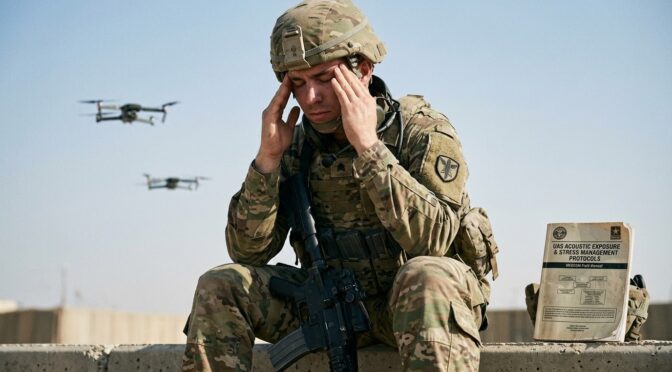
The proliferation of unmanned aerial systems and loitering munitions has fundamentally altered the character of modern combat, introducing unprecedented psychological stressors to the battlefield. The near-persistent presence of surveillance and strike drones has eroded the traditional concept of secure rear areas, subjecting infantry to continuous anticipatory anxiety. This exposure has precipitated a marked increase in acute stress reactions, burnout, and post-traumatic stress disorder among affected personnel. A critical component of this psychological toll is the psychoacoustic profile of the drones themselves. The distinct tonal frequencies and blade passing frequencies of multirotor systems act as profound auditory triggers, capable of inducing fear and paralysis even when the threat remains unseen. In response to these evolving threats, military medical commands are developing and fielding specialized psychiatric protocols. Frameworks such as the iCOVER peer-support tool and the application of Virtual Reality Exposure Therapy have demonstrated clinical efficacy in mitigating acute trauma and rehabilitating combat-ineffective personnel. Concurrently, advancements in electronic hearing protection offer tactical mitigation strategies, filtering noxious acoustic triggers while preserving critical situational awareness. This report synthesizes current clinical data, frontline observations, and equipment specifications to provide a detailed analysis of drone-induced mental trauma and the emerging protocols designed to sustain infantry resilience.
1.0 The Evolution of Drone-Induced Psychological Trauma
The integration of inexpensive, commercially available unmanned aerial systems into modern military doctrine has transformed the psychological landscape of warfare. While historic conflicts relied on intermittent artillery barrages or localized kinetic engagements to suppress enemy forces, contemporary battlefields are characterized by the continuous, omnipresent threat of aerial observation and precision strikes.1 The scale of this deployment is vast, with nations like Ukraine contracting the production of more than one million unmanned aerial systems in a single year to support combat operations, while adversaries augment domestic fleets with thousands of imported platforms.1 This sheer volume ensures that drone encounters are no longer isolated incidents but rather a defining feature of daily infantry existence.
1.1 Anticipatory Anxiety and the Loss of Sanctuary
The psychological impact of drone warfare extends far beyond the immediate kinetic destruction caused by explosive payloads. The daily deployment of hundreds of First-Person View drones and surveillance quadcopters generates a state of anticipatory anxiety among targeted populations.1 This condition is conceptually similar to the “shell shock” observed during the continuous artillery bombardments of World War I, and the “battle fatigue” documented during the protracted engagements of World War II.1 However, the drone threat introduces novel vectors of psychological pressure that previous generations of infantry did not face.
A primary driver of this trauma is the total loss of battlefield sanctuary. Historically, troops rotated away from the immediate frontline could expect a degree of safety from direct fire, allowing for psychological decompression and physical rest. The extended operational range of modern loitering munitions and First-Person View quadcopters has effectively nullified this security, extending danger zones deep into rear echelons and logistical hubs.2 Furthermore, First-Person View drones possess the maneuverability to bypass traditional cover entirely. Operators can navigate these platforms to pursue infantry into trench networks, through narrow structural openings, and around natural terrain features that would otherwise block direct-fire weapons.2 The realization that standard defensive measures are inadequate against an agile aerial threat severely diminishes an individual’s perceived survivability, fostering a pervasive and deeply entrenched sense of helplessness among ground forces.2
In addition to physical pursuit, the psychological toll is intentionally amplified through adversarial information operations. Combatants actively distribute combat footage featuring successful drone strikes across social media platforms.1 These broadcasts are often augmented with unsettling audio or fast-paced editing to project an aura of inescapable surveillance and impending doom.2 This deliberate psychological warfare accelerates the breakdown of unit cohesion and individual resilience, with frontline reports documenting instances of extreme panic, erratic evasion, and profound despair among troops subjected to relentless aerial pursuit.2 The knowledge that one is being watched, recorded, and potentially targeted by an unseen operator creates a unique psychological dynamic, where the traditional boundaries between combatant and distant observer are erased.3
1.2 The Fear of Devastating Physical Injuries
The psychological dread associated with drone strikes is inextricably linked to the severe physical trauma inflicted by their payloads. Medical personnel operating in active drone threat environments report that the injuries sustained from these aerial platforms are fundamentally altering military surgical requirements. The high-energy explosives deployed by First-Person View drones and loitering munitions create complex, devastating wounds that often eclipse the damage profiles seen in previous asymmetric conflicts like Iraq and Afghanistan.4
Military surgeons emphasize that today’s medics are increasingly required to treat traumatic amputations, severe soft tissue damage, and extensive thermal burns resulting from drone-delivered ordnance.5 The use of thermobaric payloads and chemical irritants attached to commercial drone frames further exacerbates the severity of these injuries.6 The visceral knowledge among infantry that a drone strike is highly likely to result in catastrophic dismemberment or permanent disability amplifies the psychological friction of every patrol and defensive shift. This fear is not limited to frontline assault troops. The targeting capabilities of drones allow adversaries to strike medical evacuation vehicles, civilian ambulances, and forward operating hospitals, meaning that the trauma of potential injury affects the entire logistical and medical supply chain.5
2.0 Clinical Epidemiology of Drone-Induced Psychiatric Disorders
The sustained stress of operating under constant drone surveillance has resulted in a measurable and alarming escalation of psychiatric casualties. Clinical assessments of military personnel and combat-exposed populations reveal a severe deterioration in mental health metrics, underscoring the necessity for immediate systemic intervention.
2.1 Prevalence of Post-Traumatic Stress and Depressive Disorders
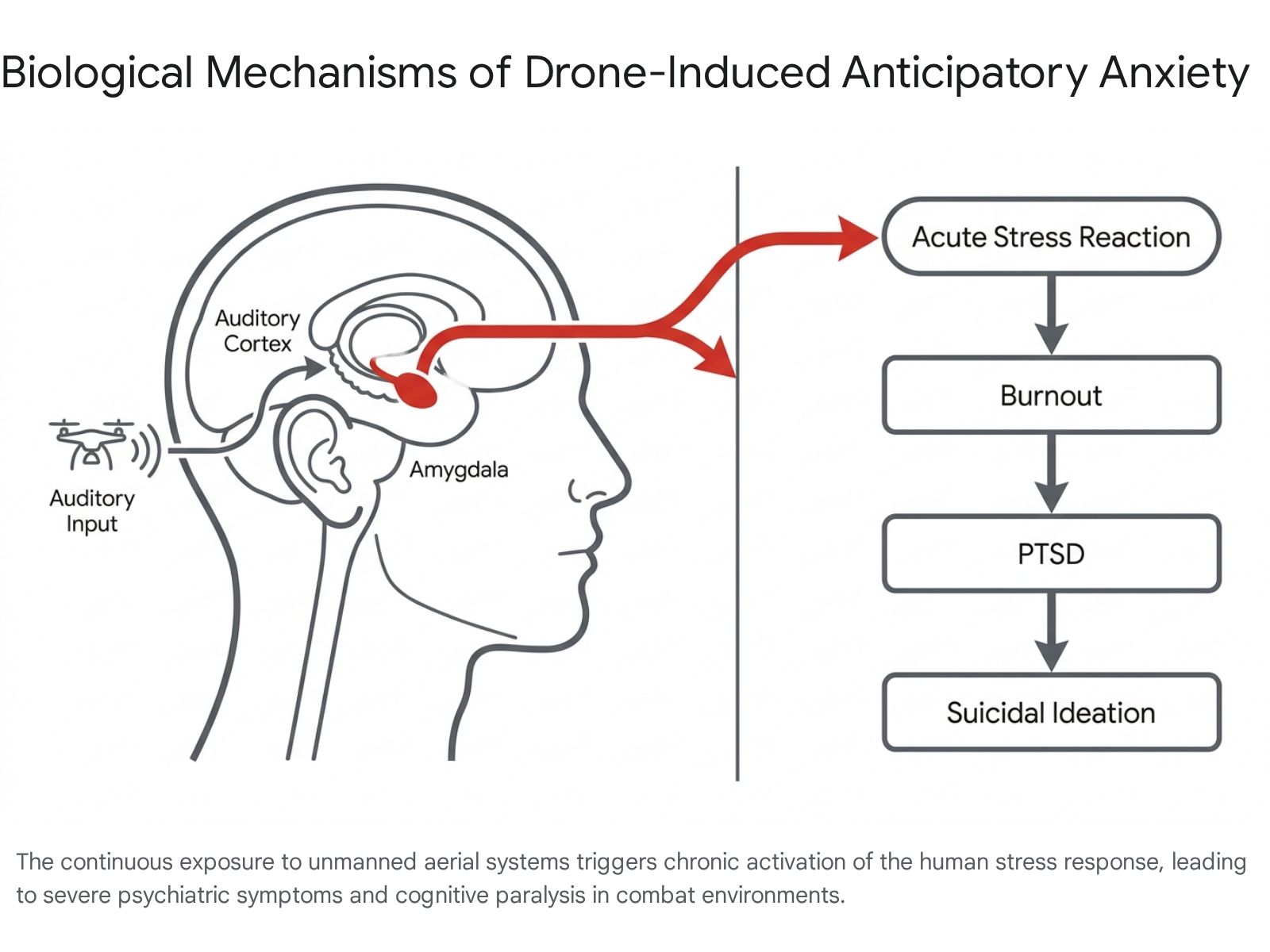
Data collected from medical facilities treating cohorts affected by drone warfare indicates that psychiatric trauma is pervasive. Among patients affected by these specific combat conditions, 70 percent exhibit clinical signs of severe burnout, a state characterized by deep emotional exhaustion and depersonalization.5 More critically, an estimated 38 percent of these affected patients meet the diagnostic criteria for post-traumatic stress disorder, demonstrating symptoms such as intrusive memories, hyperarousal, and avoidance behaviors.5 Furthermore, a deeply concerning 11 percent of these individuals report active suicidal ideation, highlighting the acute psychiatric emergencies generated by this specific mode of warfare.5
Longitudinal observations of veteran populations further underscore the trajectory of this crisis. Reports from national ministries overseeing veteran affairs indicate a rapid escalation in depressive disorders among personnel returning from high-intensity drone combat zones. While baseline assessments showed 30 percent of surveyed veterans reporting severe depression in August of 2023, subsequent evaluations recorded an increase to 50 percent by June of 2024.8 The persistent exposure to drone activity leads to an array of debilitating symptoms that persist long after the individual has been removed from the threat environment. These symptoms include exaggerated startle responses to ordinary environmental sounds, chronic insomnia, poor appetite, and severe psychosomatic complaints.1 In the most severe cases, personnel report startled awakenings accompanied by vivid auditory hallucinations of drone engine noises.1
2.2 Systemic Strain on Military Medical Infrastructure
The influx of psychiatric casualties, combined with the complex physical trauma inflicted by drone strikes, has placed unprecedented strain on military medical systems. Assessments of military healthcare structures operating under large-scale combat operations reveal critical systemic limitations across multiple domains, including training, materiel, doctrine, and policy.9 Traditional triage and treatment doctrines were designed around historical injury patterns, prioritizing gunshot wounds and conventional artillery shrapnel.4 The modern reality of continuous aerial surveillance requires a rapid evolution in medical doctrine.
The military medical apparatus must now account for prolonged field care, as drone activity severely restricts the movement of medical evacuation helicopters and ground ambulances.10 Medics are forced to hold patients in forward positions for extended periods, requiring advanced training in continuous monitoring and the psychological management of conscious casualties who are acutely aware of the ongoing drone threat above them.10 This systemic pressure underscores the urgent requirement for new treatment paradigms that integrate psychological resilience training directly into standard combat lifesaver curriculums.
3.0 The Science of Drone Psychoacoustics
The physical presence of an unmanned aerial vehicle is almost always preceded by its acoustic signature. This auditory warning has evolved into a primary vector for psychological trauma on the modern battlefield. The distinct hum or whine of drone rotors serves as an inescapable reminder of imminent danger, activating high levels of fear and altering infantry behavior long before the aircraft enters visual range.1 To understand why these sounds are so traumatizing, it is necessary to examine the psychoacoustic properties of the noise generated by these platforms.
3.1 Auditory Processing and Annoyance Metrics
The noise generated by small multirotor drones is fundamentally different from conventional aviation noise, natural environmental sounds, or the impulse noises of firearms. Drone acoustics are characterized by high-frequency, tonal noise with significant fluctuations in sound pressure caused by high-speed movements, aerodynamic turbulence, and the constant micro-adjustments required to maintain stable flight.11 Psychoacoustic studies consistently reveal that human subjects find drone noise substantially more annoying, distressing, and distracting than the noise produced by heavy road vehicles or full-sized commercial aircraft.13
This elevated psychological response is deeply connected to specific psychoacoustic metrics, primarily roughness, sharpness, and tonality.13 The acoustic signature of a drone is dominated by the Blade Passing Frequency and its subsequent harmonics.17 Because drones frequently utilize open-rotor configurations rather than enclosed jet turbines, the interaction of the propeller blades with the surrounding air and the drone’s structural frame generates distinct tonal peaks.17 In complex acoustic environments, these distinct high-frequency tones cut through the ambient broadband noise of the battlefield, ensuring that the sound is easily isolated by the human auditory cortex.18
3.2 Tonal Oscillators and Environmental Propagation
Research indicates that the roughness of the drone sound, a key metric for human discomfort, is driven by consistent low-frequency peaks that relate directly to the structural and mechanical attributes of the drone.15 These low-frequency components travel vast distances and penetrate physical barriers, creating a persistent, underlying thrum.12 Simultaneously, the higher frequencies are heavily influenced by the drone’s position relative to the observer and the rapid changes in motor speed control.15
The resulting sound is perceived as an unsteady, whiny, and aggressive buzzing, which triggers an immediate sympathetic nervous system response.11 This unsteady nature is further complicated by environmental factors. When a drone is hovering or moving slowly, destructive interference occurs between the direct sound radiating from the unmanned aerial vehicle and the sound reflecting off the ground.20 This interference causes significant, unpredictable reductions in sound pressure levels at certain frequencies, creating a pulsing or phasing effect.20 This acoustic phasing makes it exceedingly difficult for infantry to accurately judge the distance and precise vector of the approaching threat, significantly increasing psychological tension and paranoia.21 The unpredictability of the sound ensures that the targeted individual’s threat-detection mechanisms remain fully engaged, leading to rapid neurological fatigue.
4.0 Acoustic Profiling of Specific Threat Platforms
Different drone models exhibit unique acoustic profiles based on their size, propulsion systems, and operational parameters. Each classification of drone carries a distinct psychological weight on the battlefield, dictating how infantry respond to their presence and the specific type of trauma they induce.
4.1 First-Person View Quadcopters and the DJI Mavic Series
Commercial platforms adapted for military use, such as the DJI Mavic series and custom-built high-speed racing drones, dominate the tactical airspace immediately above infantry units. Spectrogram analyses of drones like the DJI FPV indicate extraordinary motor performance, with rotational speeds approaching 11,000 revolutions per minute.17 These extreme speeds generate a dominant tonal contribution with sharp Blade Passing Frequencies that vary between 560 Hertz and 600 Hertz during standard flight profiles.17 The harmonics of these frequencies extend well into the 2.5 kilohertz range, accompanied by broad peak emissions in the ultrasonic spectrum.19
The rapid acceleration, deceleration, and sharp banking maneuvers inherent to First-Person View flight cause wild, instantaneous fluctuations in these tonal frequencies, creating a highly erratic acoustic signature.11 This erratic noise prevents targeted infantry from predicting the drone’s exact trajectory.11 The reliance on powerful 2.4 Gigahertz and 5.8 Gigahertz transmission bands ensures that the drone operator maintains a high-definition, real-time video feed, allowing them to pursue targets with terrifying precision.22 The acoustic manifestation of this pursuit is a high-pitched, angry whine that grows louder and more frantic as the drone closes the distance. This specific auditory profile triggers acute panic, erratic evasion behavior, and a profound feeling of inescapable pursuit among ground forces.2
4.2 The “Baba Yaga” Heavy Multirotor Night-Bombers
In stark contrast to the high-pitched whine of small racing drones is the acoustic profile of heavy multirotor systems, colloquially referred to by Russian forces as “Baba Yaga” or the Ukrainian “Vampire”.1 These platforms are often large agricultural hexacopters or octocopters retrofitted to carry heavy explosive payloads, including anti-tank mines and mortar rounds.6 They are specifically named after a terrifying, child-eating figure from Slavic folklore to maximize their psychological impact on adversarial troops.2
These heavy drones operate predominantly under the cover of darkness, utilizing thermal optics to locate targets.2 Their large rotors and heavy payloads produce a loud, deep, low-frequency thrum that resonates across the battlefield.1 The psychological impact of this specific acoustic signature is immense. Frontline reports detail how the approaching hum of a heavy multirotor at night forces troops to instantly disperse vehicles, abandon logistical movements, and seek reinforced cover, effectively paralyzing operational momentum.25 More insidiously, the continuous presence of this noise throughout the night induces profound sleep deprivation and chronic anticipatory dread.21 Soldiers report lying awake in trenches or basements, listening to the drone orbit above, trapped in a state of suspended terror, waiting to hear the release mechanism of the payload.21
4.3 Military Loitering Munitions: The Zala Lancet
Purpose-built military loitering munitions, such as the Russian Zala Lancet, present a completely different auditory and psychological challenge. Unlike commercial multirotors that rely on continuous lift from noisy propellers, the Lancet features aerodynamic wings and is powered by a highly efficient electric motor.26 This design grants the Lancet a remarkably low acoustic and radar cross-section, rendering it exceptionally difficult to detect until it initiates its terminal dive phase.26
The Lancet utilizes encrypted radio frequency channels operating between 868 to 870 Megahertz and 902 to 928 Megahertz, allowing it to interface with communication relays while remaining resistant to standard electronic warfare jamming.26 It cruises at altitudes where its electric motor is entirely inaudible from the ground, scanning for targets using advanced optical-electronic guidance.26 When a target is acquired, the Lancet can accelerate to speeds of up to 300 kilometers per hour in a steep dive.26 The psychological terror of the Lancet lies in its comparative silence. The absence of a prolonged auditory warning means infantry cannot rely on their hearing to seek cover or prepare air defenses. This lack of acoustic warning perpetuates a state of extreme hypervigilance and paranoia, as troops know a strike could occur at any second without the preceding hum that characterizes multirotor attacks.27
4.4 Fixed-Wing Surveillance: The STC Orlan-10
The STC Orlan-10 represents the fixed-wing intelligence, surveillance, and reconnaissance echelon of the drone threat.29 Cruising at speeds between 110 and 150 kilometers per hour, the Orlan-10 utilizes a traditional internal combustion engine, producing a steady, droning acoustic signature that is distinct from the fluctuating whine of quadcopters.29 Operating telemetry channels at frequencies from 921 to 922 Megahertz, the Orlan-10 is primarily utilized for target acquisition and artillery spotting rather than direct kinetic strikes.31
While the drone itself does not drop munitions, its acoustic signature is synonymous with impending destruction. Infantry have been conditioned to understand that the steady hum of an Orlan-10 orbiting overhead will inevitably be followed by a devastating artillery barrage.32 Therefore, the psychological impact of the Orlan-10 is the dread of the subsequent bombardment, forcing troops to remain confined in subterranean bunkers or hardened shelters for extended periods while the drone loiters above, significantly degrading morale and operational flexibility.
Table 1: Acoustic Profiles and Psychological Impacts of Specific Drone Platforms
| Drone Classification | Acoustic Characteristics | Operational Parameters | Primary Psychological Impact |
| First-Person View Quadcopters (e.g., DJI FPV) | High-frequency whine (560-600 Hz BPF), erratic tonal shifts, ultrasonic harmonics. | Speeds up to 140 km/h, highly agile, pursues targets into cover. | Acute panic, erratic evasion behavior, feeling of inescapable pursuit. |
| Heavy Night-Bombers (e.g., “Baba Yaga”) | Deep, low-frequency thrum, loud sustained resonance, ground-penetrating acoustics. | Night operations, heavy payloads, slow orbiting patterns. | Sleep deprivation, chronic anticipatory dread, logistical paralysis. |
| Loitering Munitions (e.g., Zala Lancet) | Exceptionally low acoustic signature, nearly silent electric motor. | 110 km/h cruise, 300 km/h terminal dive, 868-928 MHz telemetry. | Severe hypervigilance, paranoia, inability to rely on auditory early warning. |
| Fixed-Wing ISR (e.g., Orlan-10) | Steady, mechanical droning sound from internal combustion engine. | 110-150 km/h cruise, high-altitude loitering, artillery spotting. | Dread of subsequent artillery bombardment, confinement to hardened shelters. |
5.0 Frontline Psychiatric Protocols and Treatment Frameworks
To combat the escalating psychological crisis induced by modern drone warfare, military medical researchers and psychiatric professionals have been forced to rapidly develop and field specialized protocols. These interventions must span the entire continuum of care, ranging from immediate peer-support techniques applied under active fire to advanced digital therapeutics utilized in rear-echelon rehabilitation centers.
5.1 Acute Stress Reaction Management: The iCOVER Protocol
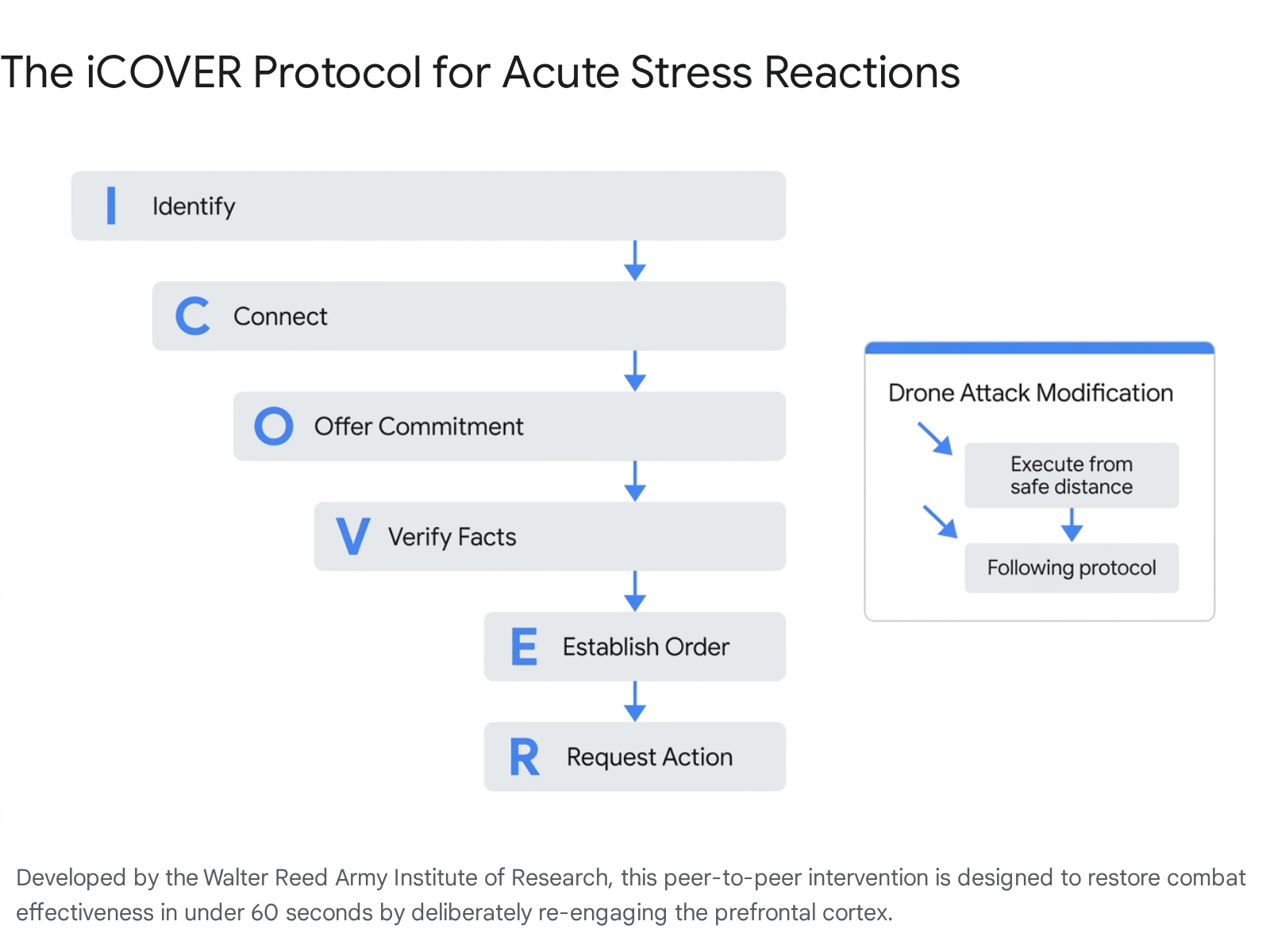
During high-intensity drone strikes, service members frequently experience severe acute stress reactions. Often referred to clinically as an “amygdala hijack,” this state occurs when the brain’s threat detection center overwhelms the prefrontal cortex, resulting in extreme emotional detachment, panic, or a complete physical freeze.33 In this frozen state, the soldier is entirely combat ineffective and highly vulnerable to subsequent strikes.33 Recognizing that professional medical personnel cannot be present at every engagement, the Walter Reed Army Institute of Research, in close collaboration with the Israeli Defense Forces, developed the iCOVER protocol.33
The iCOVER system is a rapid, peer-to-peer intervention designed specifically for far-forward environments. It empowers any service member, regardless of medical training, to break a teammate’s psychological paralysis and restore productive functioning in under 60 seconds.33 The process relies on a rigid, six-step framework:
- Identify: The responder must quickly recognize a teammate exhibiting signs of an acute stress reaction, such as freezing in the open, dropping equipment, or displaying erratic behavior.33
- Connect: The responder establishes contact. In conventional scenarios, this involves direct eye contact and physical proximity. However, recent adaptations for drone attacks dictate that if the impacted individual is in an unsafe open area, the responder must establish a vocal connection from behind cover, encouraging the frozen soldier to look at them.33
- Offer Commitment: The responder verbally assures the affected individual that they are present and fully committed to guiding them to safety, ensuring the soldier knows they are not abandoned.33
- Verify Facts: This is the critical cognitive reset. The responder asks a simple, logical question to force the frozen individual’s prefrontal cortex to engage, bypassing the panicked amygdala. In a remote drone scenario, this may involve requesting a physical signal, such as asking the soldier to give a “thumbs up” to confirm they are processing verbal commands.33
- Establish Order of Events: The responder reorients the individual to reality by clearly stating a timeline: what just happened, what is happening right now, and what is going to happen next.33
- Request Action: The responder gives a specific, simple, mission-related command to restore purposeful movement. During an active drone strike, this entails directing the frozen soldier to move toward structural cover, coaching them “one movement at a time” until safety is reached.33
Crucially, the protocol dictates strict parameters for the responder’s behavior. Before initiating iCOVER, the responder must regulate their own emotional state, often by taking a deliberate breath to ensure they project a calm, authoritative, and mission-oriented tone.33 Using overly emotional or soothing language is strictly prohibited, as it can further confuse or agitate an individual experiencing an amygdala hijack.33 Frontline feedback from the conflict in Ukraine indicates that iCOVER has been exceptionally successful in mitigating drone-induced paralysis, prompting the accelerated deployment of updated training modules tailored specifically for continuous aerial threat environments.36
5.2 Virtual Reality and the Reconsolidation of Traumatic Memories
For personnel who have been evacuated from the frontline suffering from entrenched post-traumatic stress disorder resulting from repeated drone exposures, advanced clinical therapies are required. Virtual Reality Exposure Therapy has emerged as a highly effective, scalable clinical protocol for treating this specific iteration of combat trauma.37
Utilizing immersive digital environments, clinical psychologists can safely expose veterans to trauma-related stimuli, meticulously recreating the visual signatures and precise acoustic frequencies of various drone platforms.37 Standard Virtual Reality Exposure Therapy protocols involve ten structured, 60-minute sessions.38 Following initial psychological screening and psychoeducation, the patient is gradually exposed to the simulated trauma.38 The therapist maintains total, real-time control over the simulation, adjusting the realism and intensity of the drone sounds based on the patient’s physiological and emotional responses.38 This controlled, heavily supervised exposure facilitates cognitive restructuring, allowing the patient to process the trauma and diminish the severity of their trigger responses without the immense risks associated with real-world, in vivo exposure.37 Clinical trials evaluating Ukrainian veterans have demonstrated that this technological approach significantly reduces anxiety and depressive symptoms, while effectively bypassing the social stigma often associated with traditional, face-to-face talk therapy.8
Concurrently, international collaborations such as the Lux4UA project are introducing the Reconsolidation of Traumatic Memories protocol to the theater.39 Unlike traditional therapies that require the patient to repeatedly recount and relive the granular details of their trauma, the Reconsolidation of Traumatic Memories protocol employs carefully guided imaginary exercises designed to quickly alleviate symptoms.39 This structured approach can yield significant clinical improvements in just three to five sessions.39 The brevity of this protocol is highly advantageous in military contexts, where personnel cannot be sequestered in rehabilitation facilities for extended, multi-month psychiatric programs.
5.3 Decentralized Support via Digital Therapeutics
In addition to formal clinical environments, digital mental health tools are being distributed directly to service members and affected populations via secure mobile applications. Platforms such as the “PTSD INFO” and “PTSD Help” applications have been localized for Ukrainian and Romanian users, developed in cooperation with the United States Department of Veterans Affairs National Center for PTSD.40
These mobile applications provide immediate, decentralized access to evidence-based psychological support.42 Users can access guided meditations, breathing practices, daily mood trackers, and comprehensive psychoeducational materials designed to stabilize emotional states.42 Many of these applications are designed for complete anonymity, allowing users to record their emotional state or request basic psychological guidance without navigating formal military medical channels.42 While military psychologists emphasize that these applications are not a substitute for comprehensive, in-person psychotherapy, they offer a critical, daily support infrastructure.42 By empowering infantry to manage their baseline anxiety levels and recognize the early warning signs of severe trauma, these digital tools serve as a vital stopgap in austere environments where formal clinical psychiatric care is geographically or logistically unavailable.
6.0 Tactical Auditory Mitigation and Electronic Protection
Given that the acoustic signature of an approaching drone is the primary catalyst for anticipatory anxiety and subsequent acute stress reactions, intercepting and managing this auditory input is recognized as a critical tactical priority. Traditional methods of hearing protection, however, are fundamentally unsuited for the modern battlefield.
6.1 The Failure of Passive Attenuation and the Need for Electronic Filtering
Standard passive foam earplugs provide mechanical noise reduction, indiscriminately blocking all sound waves from entering the ear canal. While these devices are highly effective at protecting the eardrum from the concussive blasts of artillery or breaching charges, they critically sever a soldier’s situational awareness.43 Infantry relying on passive foam earplugs cannot hear verbal squad commands, radio transmissions, or the subtle environmental cues necessary to detect enemy movement.43 In an environment where survival depends on early detection, intentionally deafening a soldier is tactically unacceptable.
Consequently, modern military units are shifting toward the procurement of advanced, level-dependent electronic hearing protection. These active systems utilize exterior microphones to capture the surrounding acoustic environment, passing the audio through sophisticated internal digital signal processors before delivering it to speakers inside the earcups.43 The processors are programmed to instantly compress or block high-decibel impulse noises, such as close-quarters gunfire, while simultaneously amplifying low-decibel ambient sounds.43
However, mitigating drone noise presents a unique engineering challenge. Unlike the abrupt, microsecond impulse of a gunshot, drone motor noise is a continuous, fluctuating, high-frequency hum.45 High-end tactical headsets employ advanced algorithms designed to filter these specific continuous frequencies. By utilizing proprietary integrated circuits and advanced environmental listening modes, these electronic headsets can selectively attenuate the fatiguing, high-pitched whine of a multirotor propeller, drastically reducing the psychological friction and auditory exhaustion it causes, while still preserving the user’s ability to communicate clearly with their squad.44
6.2 Commercial Availability and Evaluation of Tactical Headsets
The procurement of specialized electronic hearing protection requires navigating rigorous military supply chains. The most effective technologies are heavily restricted by manufacturers to ensure they remain exclusively in the hands of authorized defense and law enforcement personnel. Below is an evaluation of three prominent systems currently utilized for auditory mitigation and tactical communication.
3M Peltor ComTac VII
The 3M Peltor ComTac VII represents the seventh generation of tactical headsets, featuring a completely redesigned digital signal processor explicitly tailored for complex, multi-threat acoustical environments.47 A core technological feature of the ComTac VII is its Mission Audio Profiles, which provide the operator with advanced ambient listening modes. These profiles utilize sophisticated frequency shaping to enhance overall situational awareness while actively suppressing unwanted, fatiguing noise signatures.47 Furthermore, the headset integrates Natural Interaction Behavior technology, a system that allows for short-range, automatic headset-to-headset communication without the need to route signals through an external radio, vastly improving squad cohesion in chaotic environments.47 Due to its advanced capabilities, 3M restricts the sale of the ComTac VII strictly to verified military and law enforcement personnel.49
Gentex Ops-Core AMP Communication Headset
Manufactured by Gentex Corporation, the Ops-Core AMP headset is highly regarded in special operations communities for its proprietary 3D Hear-Through Technology.50 This advanced processing restores and enhances the natural directional hearing that is typically lost when wearing heavy ear protection.51 This unprecedented spatial audio awareness allows the user to accurately determine the exact directional origin and distance of a sound, a capability that is absolutely vital for locating the precise vector of an incoming drone based solely on its acoustic emissions. For environments requiring extreme noise reduction, the system can be integrated with Near Field Magnetic Induction earplugs, providing double hearing protection without sacrificing the headset’s electronic pass-through capabilities or audio clarity.52
Decibullz Custom-Molded Percussive Shooting Filters
For tactical applications requiring a lower physical profile, or in environments where the bulk of full over-ear headsets interferes with specific helmets or equipment, custom-molded percussive filters offer a highly viable alternative. Decibullz manufactures thermoplastic earplugs that the individual user molds precisely to the exact shape of their own ear canal using hot water, ensuring a perfect, customized acoustic seal.54 Instead of relying on batteries and digital processors, these plugs utilize a mechanical percussive filter. This state-of-the-art physical filter instantly restricts damaging impulse sound waves while allowing safe ambient noise to pass through organically.54 While they lack the electronic amplification and frequency-shaping capabilities of the ComTac or Ops-Core systems, they provide critical protection against concussive blasts without compromising baseline situational awareness.54
Table 2: Tactical Auditory Mitigation Systems, Technical Specifications, and Vendor Availability
| Manufacturer & Product Model | Primary Acoustic Mitigation Technology | Verified Vendor / Distributor | Current Listed Price (USD) | Stock Availability and Lead Time Status | Verified Vendor URL |
| 3M Peltor ComTac VII | Mission Audio Profiles, NIB Wireless, Active DSP | Atomic Defense | $1,306.00 | In Stock (Strict Military/LEO verification required) | (https://www.atomicdefense.com/products/3m-comtac-vii) |
| 3M Peltor ComTac VII | Mission Audio Profiles, NIB Wireless, Active DSP | Comm Gear Supply | Variable (Dependent on Comms Configuration) | Available for Order | (https://www.commgearsupply.com/products/3m-peltor-comtac-vii-tactical-headset-w-active-hearing-protection-enhancement-nib-function-headset-only-no-downlead) |
| Gentex Ops-Core AMP (Connectorized) | 3D Hear-Through Spatial Audio, NFMI Integration | Gentex Official Store | $1,595.95 | Active Production: 2 to 4 weeks lead time | (https://shop.gentexcorp.com/ops-core-amp-communication-headset-connectorized/) |
| Gentex Ops-Core AMP (Connectorized) | 3D Hear-Through Spatial Audio, NFMI Integration | Custom Night Vision | $1,099.99 | In Stock and Ready to Ship | Custom Night Vision |
| Decibullz Percussive Shooting Filters | Custom-Molded Thermoplastic, Mechanical Filter | Decibullz Official | $69.99 (Current Sale Price) | Deferred / Subscription Fulfillment Model | (https://decibullz.com/products/custom-molded-percussive-shooting-filter-earplugs) |
| Decibullz Percussive Shooting Filters | Custom-Molded Thermoplastic, Mechanical Filter | Bass Pro Shops | $79.99 | Limited Stock (Dependent on local store inventory) | (https://www.basspro.com/p/decibullz-custom-molded-percussive-shooting-filter-earplugs) |
7.0 Conclusions
The integration of unmanned aerial systems into routine combat operations represents a permanent paradigm shift in modern warfare, necessitating an urgent and fundamental realignment of military psychiatric protocols and tactical equipment provisioning. The synthesized clinical data and frontline reports clearly demonstrate that the constant acoustic and visual threat of drone surveillance generates profound anticipatory anxiety among targeted infantry. This persistent stressor rapidly degrades combat effectiveness and precipitates long-term, debilitating psychiatric disorders, as evidenced by the severe escalation in post-traumatic stress and depressive diagnoses.
The psychoacoustic analysis of these aerial platforms reveals that the high-frequency acoustic signatures of commercial multirotors, alongside the ground-penetrating resonant hum of heavy night-bombers, serve as potent, inescapable psychological triggers. These specific tonal frequencies exploit human evolutionary biology to induce acute panic, severe sleep deprivation, and operational paralysis.
To sustain infantry resilience in these highly contested environments, military organizations must evolve beyond a reliance on purely kinetic countermeasures. The widespread implementation of robust, evidence-based peer-support frameworks, specifically the six-step iCOVER protocol, is essential for arresting acute stress reactions and amygdala hijacks directly at the point of origin. Furthermore, the integration of advanced digital tools, including decentralized mobile psychiatric support applications and Virtual Reality Exposure Therapy, represents the necessary future of rear-echelon rehabilitation and memory reconsolidation. Finally, the procurement and universal deployment of advanced electronic hearing protection systems equipped with spatial audio and frequency shaping capabilities must be prioritized. These systems are no longer optional tactical luxuries; they are vital force-protection assets required to mitigate the noxious auditory stimuli of the modern drone-saturated battlefield. Addressing the cognitive, psychological, and auditory vulnerabilities of the infantry is paramount to maintaining both individual survivability and broader operational momentum in contemporary conflicts.
Note: Vendor Sources listed are not an endorsement of any given vendor. It is our software reporting a product page given the direction to list products that are between the minimum and average sales price when last scanned.
Please share the link on Facebook, Forums, with colleagues, etc. Your support is much appreciated and if you have any feedback, please email us in**@*********ps.com. If you’d like to request a report or order a reprint, please click here for the corresponding page to open in new tab.
Sources Used
- Drones Having Psychological Impact On Soldiers | T2COM G2 Operational Environment Enterprise, accessed April 18, 2026, https://oe.t2com.army.mil/product/drones-having-psychological-impact-on-soldiers/
- Drones Having Psychological Impact on Soldiers, accessed April 18, 2026, https://g2webcontent.z2.web.core.usgovcloudapi.net/OEE/Red%20Diamond/TRADOC_11DEC2024_Drone_Psychological_Impact_Peno_Pettigrew.pdf
- DOD ordered to study mental health impacts among military drone pilots, accessed April 18, 2026, https://www.militarytimes.com/news/your-military/2026/01/30/dod-ordered-to-study-mental-health-impacts-among-military-drone-pilots/
- Drone warfare has dramatically changed the battlefield. Is the US medical corps ready? – North Carolina Health News, accessed April 18, 2026, https://www.northcarolinahealthnews.org/2026/04/12/drone-warfare-has-dramatically-changed-the-battlefield-is-the-us-medical-corps-ready/
- Beyond the battlefield: Drone warfare’s impact on health — from …, accessed April 18, 2026, https://www.health.mil/News/Dvids-Articles/2025/09/16/news548331
- Analysis of the power of drones and limitations of the anti-drone solutions on the Russian-Ukrainian battlefield – Security and Defence Quarterly, accessed April 18, 2026, https://securityanddefence.pl/Analysis-of-the-power-of-drones-and-limitations-of-the-anti-drone-solutions-on-the,208347,0,2.html
- Dispatches from a Ukrainian UAS Strike Battalion – Canada.ca, accessed April 18, 2026, https://www.canada.ca/en/army/services/line-sight/articles/2024/12/dispatches-from-a-ukrainian-uas-strike-battalion.html
- Effectiveness of immersive VR therapy in reducing stress-associated symptoms in Ukraine, accessed April 18, 2026, https://pmc.ncbi.nlm.nih.gov/articles/PMC12016277/
- A Synthesis of Recommendations to Strengthen Health and Trauma Care in Ukraine Since the Start of the Russian Invasion – Oxford Academic, accessed April 18, 2026, https://academic.oup.com/milmed/advance-article-pdf/doi/10.1093/milmed/usaf489/64739331/usaf489.pdf
- UKRAINE MEDICAL LESSONS LEARNED REPORT – Line of Departure, accessed April 18, 2026, https://www.lineofdeparture.army.mil/Portals/144/PDF/Journals/Pulse-of-Army-Medicine/June%202025/Ukraine.pdf
- Psychological Impact of FPV Drone Sounds on the Battlefield, accessed April 18, 2026, https://real.mtak.hu/218773/1/2024_Honvedorvos_kulonszam_85_93.pdf
- Drone Noise Assessment Methods and Noise Containment Approaches – WebThesis, accessed April 18, 2026, https://webthesis.biblio.polito.it/secure/36745/1/tesi.pdf
- Short-term noise annoyance towards drones and other transportation noise sources: A laboratory study – AIP Publishing, accessed April 18, 2026, https://pubs.aip.org/asa/jasa/article/156/4/2578/3316980/Short-term-noise-annoyance-towards-drones-and
- Drone Noise Emission Characteristics and Noise Effects on Humans—A Systematic Review – PMC, accessed April 18, 2026, https://pmc.ncbi.nlm.nih.gov/articles/PMC8198898/
- Drone Acoustic Analysis for Predicting Psychoacoustic Annoyance via Artificial Neural Networks – arXiv, accessed April 18, 2026, https://arxiv.org/html/2410.22208v1
- Prediction of perceived annoyance caused by an electric drone noise through its technical, operational, and psychoacoustic parameters – AIP Publishing, accessed April 18, 2026, https://pubs.aip.org/asa/jasa/article/156/3/1929/3313919/Prediction-of-perceived-annoyance-caused-by-an
- Aeroacoustics of drones – Aerospace Research Central, accessed April 18, 2026, https://arc.aiaa.org/doi/pdfplus/10.2514/6.2023-4524
- The Tactical Acoustic Layer: How Sound AI Reinforces Modern Defense Systems – Medium, accessed April 18, 2026, https://medium.com/cochl/the-tactical-acoustic-layer-how-sound-ai-reinforces-modern-defense-systems-f07f84550be0
- Drone auralization model with statistical synthesis of amplitude and …, accessed April 18, 2026, https://acta-acustica.edpsciences.org/articles/aacus/full_html/2024/01/aacus240076/aacus240076.html
- Quantification of the Psychoacoustic Effect of Noise from Small Unmanned Aerial Vehicles, accessed April 18, 2026, https://www.mdpi.com/1660-4601/18/17/8893
- How the Sound of Drones Inflicts Psychological Trauma in Ukraine – New Lines Magazine, accessed April 18, 2026, https://newlinesmag.com/spotlight/how-the-sound-of-drones-inflicts-psychological-trauma-in-ukraine/
- DJI Mavic 3 Classic – Specs, accessed April 18, 2026, https://www.dji.com/mavic-3-classic/specs
- Specs – DJI Mavic 3 Enterprise, accessed April 18, 2026, https://enterprise.dji.com/mavic-3-enterprise/specs
- DJI Mavic 3M – Specifications, accessed April 18, 2026, https://ag.dji.com/mavic-3-m/specs
- Baba Yaga Drone Becomes a Symbol of Ukraine’s Evolving Drone Warfare | TheDefenseWatch.com, accessed April 18, 2026, https://thedefensewatch.com/global-news/baba-yaga-drone-ukraine/
- ZALA Lancet – Wikipedia, accessed April 18, 2026, https://en.wikipedia.org/wiki/ZALA_Lancet
- ZALA Z-16E — a UAV with resistance to electronic warfare and air defense signals, accessed April 18, 2026, https://zala-aero.com/en/product/zala-z-16/
- ZALA Lancet: engagement and countereffort, accessed April 18, 2026, https://militarnyi.com/en/articles/zala-lancet-engagement-and-countereffort/
- STC Orlan-10 – Wikipedia, accessed April 18, 2026, https://en.wikipedia.org/wiki/STC_Orlan-10
- On the Horizon: The Ukraine War and the Evolving Threat of Drone Terrorism, accessed April 18, 2026, https://ctc.westpoint.edu/on-the-horizon-the-ukraine-war-and-the-evolving-threat-of-drone-terrorism/
- Spectrum and spectrogram spectrogram of the telemetry channel signal of the Orlan-10 unmanned aerial vehicle [6, 42, 43] – ResearchGate, accessed April 18, 2026, https://www.researchgate.net/figure/Spectrum-and-spectrogram-spectrogram-of-the-telemetry-channel-signal-of-the-Orlan-10_fig1_373789302
- How Russia Fights: A Compendium of Troika Observations on Russia’s Special Military Operations – U.S. Army, accessed April 18, 2026, https://api.army.mil/e2/c/downloads/2025/07/11/f2b1e75e/how-russia-fights-a-compendium-of-troika-observations-on-russia-s-special-military-operations.pdf
- This module was developed by the Walter Reed Army Institute of …, accessed April 18, 2026, https://jts.health.mil/assets/docs/cpgs/iCOVER_stand-alone_training_6FEB2026.pdf
- RECOGNIZE THE SIGNS OF ACUTE STRESS REACTION HOW YOU CAN HELP, accessed April 18, 2026, https://media.defense.gov/2023/Apr/11/2003197390/-1/-1/1/ICOVER-MED-COVID-19-QUICK-GUIDE-WRAIR-V1.PDF
- iCOVER Protocol for Acute Stress Reaction – Internet Archive, accessed April 18, 2026, https://archive.org/details/i-cover-v-4
- WRAIR’s iCOVER bolsters resilience in the face of drone attacks – DVIDS, accessed April 18, 2026, https://www.dvidshub.net/news/562560/wrairs-icover-bolsters-resilience-face-drone-attacks
- Virtual Reality Exposure Therapy Protocol for Post-Traumatic Stress Disorder Treatment in Military Veterans – Mental Health: Global Challenges Journal, accessed April 18, 2026, https://mhgcj.org/index.php/MHGCJ/article/view/245
- NCT06806267 | Study of the Effectiveness of VRET Combined With tDCS in the Treatment of PTSD in Ukrainian Veterans and Civilians | ClinicalTrials.gov, accessed April 18, 2026, https://clinicaltrials.gov/study/NCT06806267
- Study Details | NCT07318181 | Building Ukraine’s Strength in PTSD Treatment and Research | ClinicalTrials.gov, accessed April 18, 2026, https://clinicaltrials.gov/study/NCT07318181
- PTSD INFO app is now available in Ukrainian, accessed April 18, 2026, https://afuo.org.au/ptsd-info-app-is-now-available-in-ukrainian/
- PTSD Help App, your free assistant for managing Post Traumatic Stress Disorder (PTSD), available for Ukrainians all over the world – Commit Global, accessed April 18, 2026, https://commitglobal.org/en/blog/ptsd-help-app-your-free-assistant-for-managing-post-traumatic-stress-disorder-ptsd-available-for-ukrainians-all-over-the-world
- Mobile apps help veterans maintain mental health – Humanitarian Media Hub, accessed April 18, 2026, https://hmh.news/en/21916/mobile-apps-help-veterans-maintain-mental-health/
- Hearing Protection Tools & Resources | Health.mil, accessed April 18, 2026, https://www.health.mil/Military-Health-Topics/Centers-of-Excellence/HCE/Service-Member-Resources/Protection
- PELTOR™ Military & Law Enforcement Hearing Protection – 3M, accessed April 18, 2026, https://www.3m.com/3M/en_US/hearing-protection-us/applications/military-law-enforcement/
- Electronic ear protection recommendations? : r/CompetitionShooting – Reddit, accessed April 18, 2026, https://www.reddit.com/r/CompetitionShooting/comments/1irtye6/electronic_ear_protection_recommendations/
- How Do Ear Defenders Work? | A Comprehensive Guide – Talking Headsets, accessed April 18, 2026, https://www.talkingheadsets.co.uk/how-do-ear-defenders-work/
- 3M™ PELTOR™ ComTac™ VII Headset | 3M United States, accessed April 18, 2026, https://www.3m.com/3M/en_US/p/d/b5005303002/
- 3M™ PELTOR™ ComTac™ and SWAT-TAC™ Protection and Communication | Hearing Protection | 3M – US, accessed April 18, 2026, https://www.3m.com/3M/en_US/hearing-protection-us/products/protection-communication-safety-solutions/
- 3M Peltor ComTac VII | New Generation w/ TMAS & NIB – Atomic Defense, accessed April 18, 2026, https://www.atomicdefense.com/products/3m-comtac-vii
- Ops-Core AMP Communication Headset Connectorized – Own The Night, accessed April 18, 2026, https://ownthenight.com/ops-core-amp-communication-headset-connectorized
- Ops-Core AMP Tactical Headset w/ Active Hearing Protection – Comm Gear Supply, accessed April 18, 2026, https://www.commgearsupply.com/products/ops-core-amp-tactical-headset-w-active-hearing-protection-headset-only-fixed-single-lead-u174
- OPS-CORE AMP COMMUNICATION HEADSET – FIXED DOWNLEAD – Gentex, accessed April 18, 2026, https://shop.gentexcorp.com/ops-core-amp-communication-headset-fixed-downlead/
- OPS-CORE AMP COMMUNICATION HEADSET – CONNECTORIZED – Gentex, accessed April 18, 2026, https://shop.gentexcorp.com/ops-core-amp-communication-headset-connectorized/
- Decibullz Custom-Molded Percussive Shooting Filter Earplugs | Bass Pro Shops, accessed April 18, 2026, https://www.basspro.com/p/decibullz-custom-molded-percussive-shooting-filter-earplugs