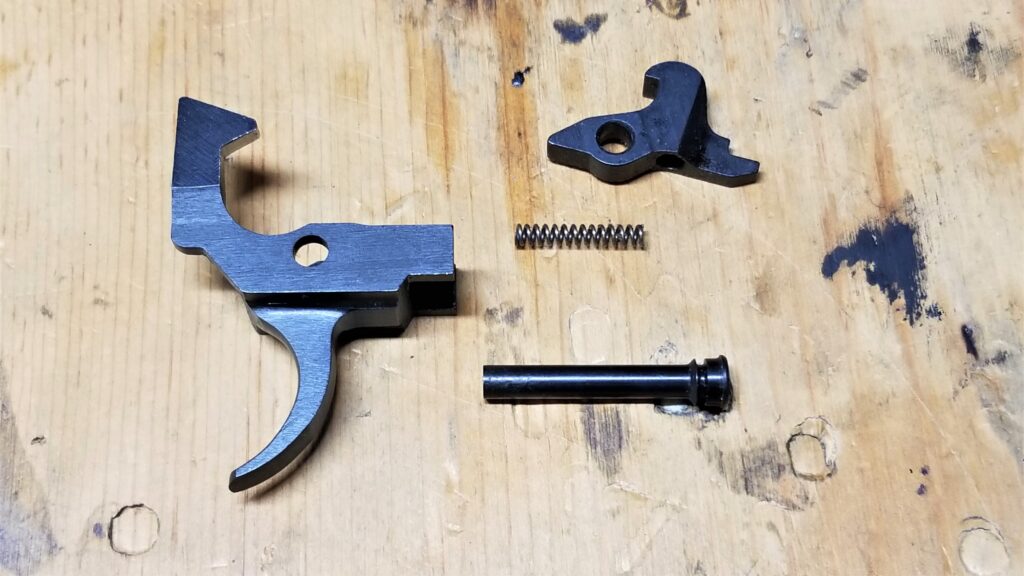
The typical semi-auto AK trigger has four parts – the trigger body, disconnector, disconnector spring and pin. Installing it can be a challenge because you need to properly align the disconnector while sliding the pin through from one side of the receiver to another. For me, with big hands, this task takes more effort than I want.
This is your typical semi-automatic AK trigger group. On the left is the trigger body, top right is the disconnector, under the disconnector is its spring and at the bottom right is the trigger pin. The challenge is getting this all assembled inside of the AK receiver as the pin needs to pass from one side of the receiver, through one side of the trigger, through the disconnector to capture it, out the other side of the trigger and finally out the other side of the receiver. Trying to get it all to align inside of the trigger takes some patience.
The Solution – Use A Slave Pin
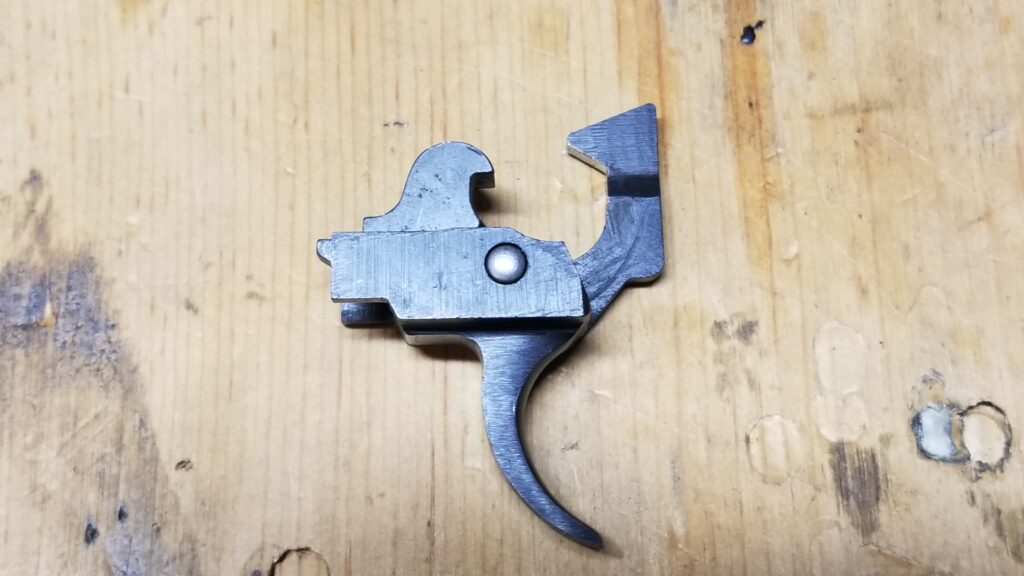
There is an easier approach. We can slide a properly sized dowel pin to serve as a “slave pin” during assembly to secure and properly align the disconnector and trigger outside of the receiver. This simplifies life tremendously. The unit is assembled outside where you can see what is going on, is lowered into the receiver and then the actual trigger pin is pushed through and it displaces the slave pin – the slave just exits the other side of the receiver.
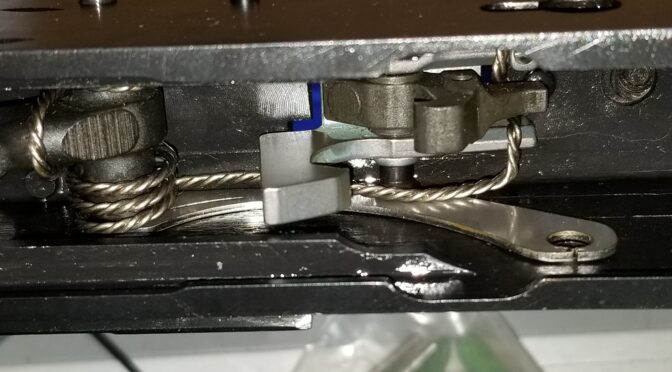
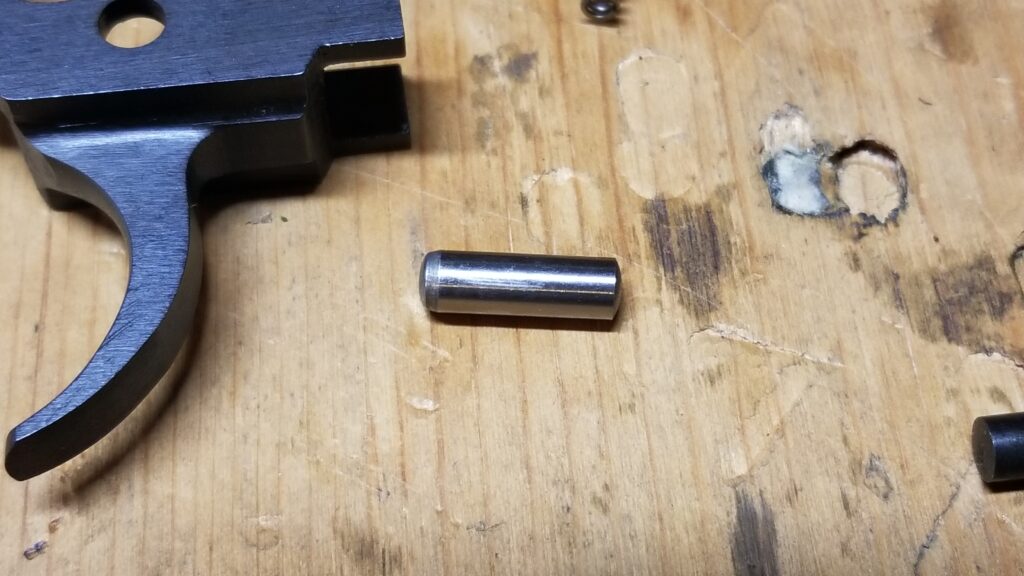
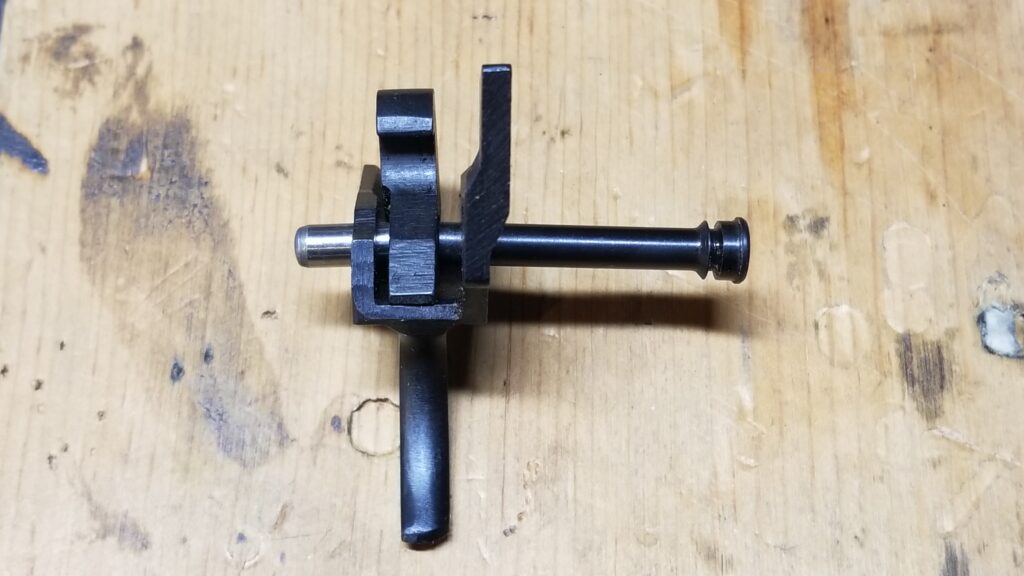
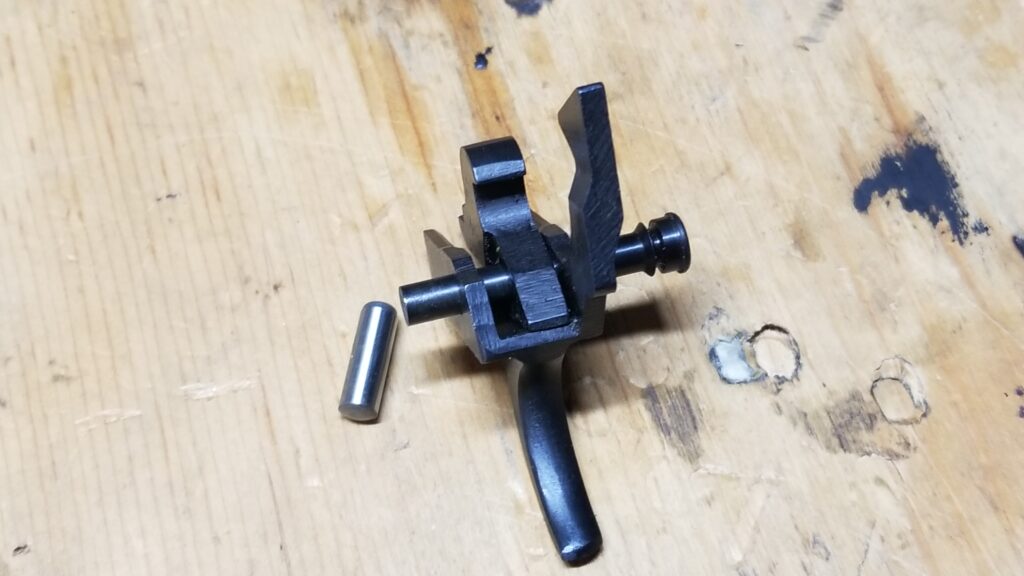
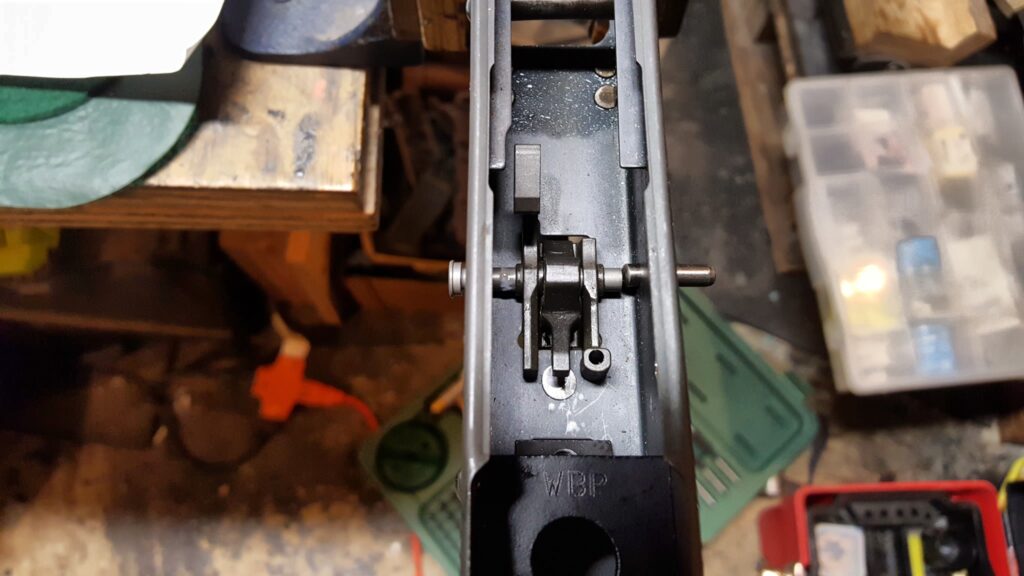
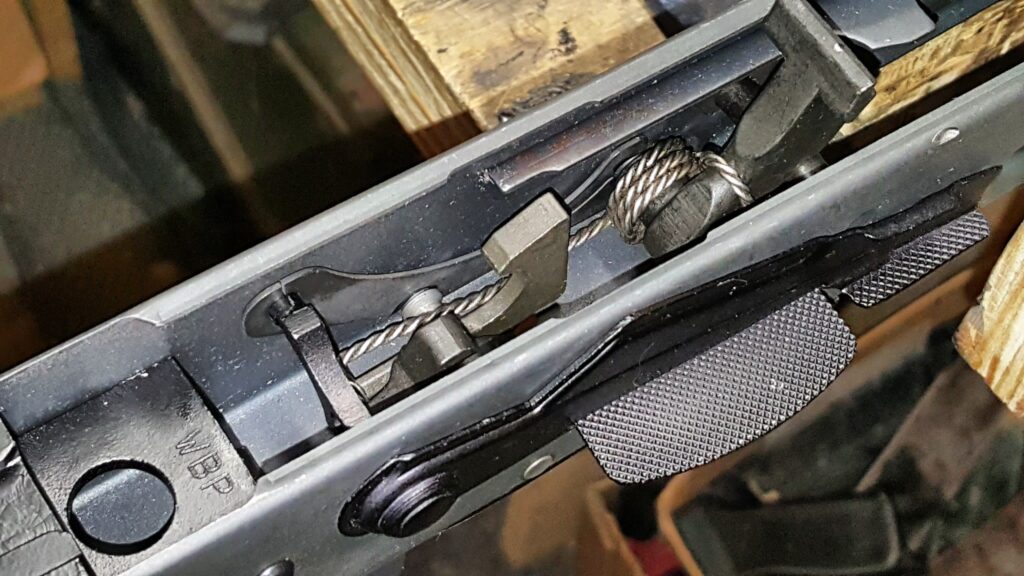
This is the slave pin. Note how one side is beveled more than the other. That is the side that is inserted first. The bevel helps move things around during insertion and then the 5mm body provides the actual alignment for the trigger pin.This is the assembled trigger group with the slave pin holding it all together.Normally this would be in the receiver but I want you to see what is going on. As the trigger pin is inserted, it pushes the slave pin out of the way and it exits via the opposite receiver hole.This photo shows how when the trigger pin is fully inserted, the slave simply drops out.This is an ALG semi-auto trigger and you can see how slave pin is exiting the receiver as the trigger pin is installed. So there’s the end result. A slave pin makes a world of difference. Note, that is one if our fire control group plates retaining the trigger and hammer pins.