Category Archives: Pistol Analytics

Glock Switch Crisis: Engineering Vulnerabilities Revealed

The global small arms industry stands at a critical juncture, precipitated by the proliferation of the “Glock Switch,” an illicit auto-sear capable of converting the world’s most ubiquitous polymer-framed pistol into a subcompact machine gun. This report provides a comprehensive technical and strategic analysis of this phenomenon, dissecting the engineering vulnerabilities of the Glock Safe Action® System, the subsequent development of the “V Series” countermeasure, and the complex web of legal and regulatory pressures driving these design changes.

Our analysis indicates that the introduction of the V Series in late 2025 represents a paradigm shift in firearm manufacturing strategy. While publicly positioned as a safety innovation, the engineering reality suggests the V Series is primarily a legal bulwark designed to navigate the tightening definition of “readily convertible” firearms in jurisdictions like California and Illinois. The immediate defeat of the V Series’ anti-conversion features by illicit manufacturers—occurring within days of the platform’s release—confirms that mechanical “switch-proofing” is an asymptotic engineering goal within the constraints of the current Glock architecture. Consequently, the industry is witnessing a transition from purely performance-driven design to “compliance-driven engineering,” where the primary design constraint is no longer reliability or ergonomics, but liability mitigation.

1. Technical Anatomy of the Crisis: The Glock Safe Action® Architecture

To understand the mechanics of the unauthorized conversion and the limitations of Glock’s countermeasures, it is essential to establish a granular understanding of the pistol’s baseline engineering. The Glock design, celebrated for its simplicity, relies on a striker-fired mechanism that differs fundamentally from the hammer-fired systems it replaced in law enforcement service.

1.1 The Cruciform Trigger Bar Assembly

The nexus of the conversion vulnerability lies in the geometry of the trigger bar. In the standard Glock architecture (Gen 1 through Gen 5), the trigger bar is a stamped sheet metal component that transfers the kinetic energy of the operator’s trigger pull to the fire control group located at the rear of the frame.

The rear section of this bar is shaped into a cruciform (cross) structure. This component performs two critical, simultaneous functions during the firing cycle:

  1. Sear Engagement: The rearward lip of the cruciform acts as the sear. It engages the lug of the firing pin (striker), holding it under tension against the striker spring.
  2. Drop Safety Mechanics: The cruciform rides on a polymer “safety ramp” or shelf integral to the trigger mechanism housing. In the resting state, this shelf physically supports the cruciform, preventing it from dropping downwards and releasing the striker, even if the weapon is subjected to extreme vertical acceleration (e.g., being dropped).

This open-top design, where the sear interface is essentially a flat plane accessible from the top of the frame, is distinct from competitors like the Sig Sauer P320 or the Heckler & Koch VP9. Those platforms utilize rotary sears or fully enclosed chassis systems where the critical engagement surfaces are buried deep within the mechanism, shielded by the slide rails and housing geometry. The Glock’s design, which emphasizes ease of maintenance and minimal part count, inadvertently leaves the cruciform sear exposed to manipulation from the rear of the slide—specifically, through the opening occupied by the slide cover plate.1

1.2 The Semi-Automatic Firing Cycle Mechanics

A review of the standard operating cycle reveals the precise moment of vulnerability exploited by the auto-sear.

  • Phase 1: Pre-Travel and Safety Disengagement. As the operator depresses the trigger, the trigger bar moves rearward. The vertical extension on the trigger bar engages the firing pin safety plunger in the slide, pushing it upward to clear the striker channel. Simultaneously, the trigger safety lever on the shoe disengages from the frame.
  • Phase 2: The Break. As the trigger bar continues its rearward travel, the cruciform moves off the drop-safety shelf. It then contacts the connector, a small, angled metal leaf spring. The connector acts as a ramp, forcing the rear of the trigger bar downward. This downward vector causes the cruciform sear to slip off the striker lug. The striker, now free, is propelled forward by the striker spring to impact the primer.1
  • Phase 3: The Disconnect (The Critical Interval). Upon discharge, the slide reciprocates rearward under recoil forces. A cam track machined into the slide interacts with the connector, pushing it inward towards the center of the housing. This action “disconnects” the trigger bar from the connector’s path, allowing the trigger bar to spring upward. As the slide returns to battery (moves forward), the striker lug catches the raised cruciform sear. The weapon is now cocked.
  • Phase 4: Reset. The operator must physically release the trigger. This allows the trigger bar to move forward, resetting closely against the connector, ready for the next pull. This requirement for a physical reset is what defines the semi-automatic function.

2. Engineering the Override: Mechanics of the “Glock Switch”

The device colloquially known as the “Glock switch” is, in engineering terms, a drop-in auto-sear. It does not replace the existing fire control group but rather introduces a parasitic mechanical logic that overrides the disconnect function described above.

2.1 Mechanical Interaction

The auto-sear is fundamentally a replacement slide cover plate (backplate) equipped with a selector switch and a protruding “sear trip” or leg. This leg extends forward from the backplate into the internal cavity of the slide housing, occupying the space directly above the trigger mechanism housing.5

The conversion mechanics function as follows:

  1. Selection: When the selector is toggled to the “automatic” position, the sear trip is lowered into the operational path of the trigger bar.
  2. The Forced Trip: As the slide cycles forward into battery after a shot is fired, the sear trip physically strikes the cruciform section of the trigger bar.
  3. Bypass of Reset: This impact forces the trigger bar downward mechanically, replicating the action of the connector but doing so automatically as a function of the slide’s position.
  4. Timing: The geometry of the sear trip is tuned to depress the cruciform at the precise moment the slide achieves battery (closes). Because the cruciform is held down, it cannot catch the striker lug. The striker is essentially “handed off” from the rearward movement of the slide directly to a released state, impacting the primer immediately.
  5. Cycle Loop: As long as the operator maintains pressure on the trigger (keeping the drop safety disengaged and the trigger bar in a position to be struck), this cycle repeats. The rate of fire is determined solely by the spring constant of the recoil spring and the mass of the slide, typically resulting in a cyclic rate of 1,100 to 1,200 rounds per minute.6

2.2 The “Drop-In” Vulnerability

The defining characteristic of this threat is the low barrier to entry. The conversion does not require milling, drilling, or sophisticated gunsmithing. It requires only the removal of the standard backplate and the insertion of the switch—a process that can be completed in seconds without tools. This “plug-and-play” capability is a direct result of the Glock’s design architecture, which provides a straight-line access channel to the sear from the rear of the slide.2

FeatureStandard OperationOperation with Auto-Sear
Trigger Bar ResetRequired after every shotBypassed; bar held down
Striker CaptureCaptured by sear on return to batteryReleased immediately upon battery
Cycle ControlOperator input (finger release)Mechanical timing (slide position)
Cyclic RateSemi-Auto (User dependent)~1,200 RPM (Spring/Mass dependent)

3. The Countermeasure: Glock V Series Engineering Analysis

In October 2025, Glock formally announced the “V Series” (Gen V), a new generation of pistols intended to replace the Gen 4 and Gen 5 lines. While marketed with standard industry rhetoric regarding “future innovations” and “streamlining,” the technical changes reveal a singular focus: anti-conversion denial.9

3.1 Design Philosophy: Physical Interference

The engineering strategy behind the V Series is not a redesign of the fire control group (which would require a completely new platform) but rather the introduction of physical interference geometry. The goal is to occupy the specific volume of space required by the auto-sear’s trip leg, thereby preventing its installation or function.11

3.2 Specific Design Alterations

Analysis of technical reports and patent filings suggests three primary modifications in the V Series:

  1. The “Blocker Rail” Insert: The most significant alteration is the addition of a hardened steel insert or “rail” at the rear of the frame/slide interface. This component is strategically located in the channel previously used by the auto-sear’s leg to reach the cruciform. In previous generations, this area contained empty space or a soft polymer overmold. The steel insert acts as a physical barrier, theoretically shearing off or blocking any device attempting to protrude into the sear housing.9
  2. Slide Cover Plate Interface Revision: The geometry of the slide’s rear opening, where the cover plate seats, has been recontoured. This change breaks compatibility with the “universal” backplate form factor that has existed since Gen 1. By altering the dimensions and locking interface of the backplate, Glock renders the existing stockpile of illicit switches mechanically incompatible.9
  3. Trigger Bar Geometry Shift: Reports indicate subtle changes to the dimensions of the cruciform itself and its relationship to the housing. By altering the vertical or horizontal position of the sear engagement surface, Glock attempts to desynchronize the timing of existing auto-sears, ensuring that even if a device were inserted, it would fail to trip the sear at the correct moment for ignition.9

3.3 Strategic Obsolescence: The “Hard Fork”

Concurrent with the V Series launch, Glock announced the discontinuation of Gen 3, Gen 4, and most Gen 5 models.14 This decision is strategically significant. By cutting off the supply of “legacy” frames that are known to be convertible, Glock is attempting to flush the market over time. While millions of legacy Glocks remain in circulation, the new inventory entering the commercial channel will be the hardened V Series. This creates a divergence in the market: a “legacy” market of convertible firearms and a “modern” market of non-convertible (theoretically) firearms.15

4. Operational Failure: The Speed of Defeat

The crucial metric for evaluating the V Series is its resistance to adaptation by illicit manufacturers. The data indicates that the V Series failed to provide a durable engineering solution, with countermeasures appearing almost instantaneously.

4.1 Timeline of the Bypass

The speed at which the black market adapted to the V Series is unprecedented in the history of small arms manufacturing.

  • Announcement: October 20, 2025.10
  • First Bypass Reports: Late October 2025.15
  • Confirmation: By early November 2025, verified videos circulated on social media platforms demonstrating V Series pistols firing in full-auto mode using modified switches.18

This timeline suggests that the “time-to-defeat” was effectively zero days relative to the retail release. Illicit engineers likely obtained pre-production specifications or early T&E (Test and Evaluation) units to develop workarounds before the guns even reached dealer shelves.

4.2 The Mechanics of the Bypass

The “defeat” of the V Series did not require a quantum leap in technology. It required only a slight modification of the manufacturing process or the host weapon.

  1. Subtracting the Blocker (Milling): The steel rail blocker prevents a drop-in installation. However, users quickly discovered that this blocker could be removed. Using a simple end mill or even a Dremel tool with a carbide burr, the steel rail can be ground down, reopening the channel for the auto-sear leg. This converts the “denial” feature into a mere “speed bump”.11
  2. Adapting the Switch: Conversely, illicit manufacturers modified the geometry of the switch itself. By thinning the sear trip leg or altering its angle of approach, the device could be made to navigate around the blocker rail while still contacting the cruciform. These “Gen V Switches” appeared on the black market almost immediately.15
  3. Functionality Compromise: Some early bypass methods resulted in pistols that functioned only in full-automatic mode, losing the selective fire capability. However, this is often considered an acceptable trade-off for the end-users of these devices (criminal enterprises).18

4.3 Implication: The End of “Drop-In”

While the V Series failed to stop conversion, it did achieve one specific engineering goal: it raised the barrier to entry. Conversion now requires machining (removing material from the frame/slide) or specialized parts (Gen V specific switches), rather than the universal drop-in compatibility of previous generations. As we will explore in Section 5, this shift from “assembly” to “machining” is the linchpin of Glock’s legal strategy.

If Glock’s engineers knew that a physical blocker could be milled out (as any engineer would), why invest in the massive retooling required for the V Series? The answer lies not in mechanics, but in lawfare. The V Series is a direct response to a coordinated legal and legislative assault on the Glock platform.

5.1 The City of Chicago v. Glock Litigation

In March 2024, the City of Chicago filed a landmark lawsuit against Glock, alleging that the company “knowingly manufactures” a product that is uniquely susceptible to conversion, thereby creating a public nuisance.20

  • The Argument: The plaintiffs argue that Glock’s design is “negligent” because it allows for conversion with a simple drop-in part, a vulnerability not shared by competitors. They allege Glock has known about this for decades but refused to fix it to protect profits.20
  • The Defense Strategy (V Series): The V Series provides Glock with a critical evidentiary defense. In court, Glock can now argue: “We have taken reasonable steps to mitigate this misuse. We redesigned our product line to include physical blockers and discontinued the legacy models.”
  • Mitigation of Liability: Even if the V Series is defeated, the fact that a criminal must now use a Dremel to grind away a safety feature shifts the narrative. It moves the act from “exploiting a design flaw” to “willful destruction of safety features.” This creates a stronger defense against claims of negligence and negligent entrustment.17

5.2 California Assembly Bill 1127 (AB 1127)

The most immediate driver of the V Series is likely California’s AB 1127, signed in October 2025. This legislation is a surgical strike against the Glock platform.24

  • The Definition: The bill prohibits the sale of “machinegun-convertible pistols.” Crucially, it defines these pistols by specific engineering criteria: any semi-automatic pistol with a “cruciform trigger bar” that can be “readily converted” by “common household tools”.26
  • Targeting the Architecture: This language is not generic; it describes the Glock mechanism exclusively. No other major striker-fired pistol uses a cruciform trigger bar in this configuration. The law effectively bans the sale of all legacy Glocks in California.
  • The “Readily Convertible” Standard: The term “readily convertible” is the legal fulcrum. Under California Code of Regulations (Title 11, Section 4082), “common household tools” includes screwdrivers and pliers.28 It typically excludes specialized milling equipment or heavy machining.
  • The V Series Compliance: By adding the steel blocker, Glock forces the conversion process to require grinding or milling. Glock’s legal team can argue that a modification requiring the removal of hardened steel exceeds the definition of “readily convertible” and requires “manufacturing” rather than simple “assembly.” This technicality allows the V Series to arguably remain legal for sale in California, bypassing the ban that would have decimated Glock’s market share in the state.15

5.3 Federal scrutiny and the “Readily” Standard

The ATF has also tightened its definition of “readily convertible” in relation to frame and receiver rules (2022 Final Rule).30 The V Series aligns with this federal shift by ensuring that the “time, ease, and expertise” required to convert the weapon is increased just enough to argue it is no longer “readily” convertible under the strict statutory definition.

JurisdictionRegulatory StandardGlock Legacy StatusGlock V Series Status
Federal (ATF)“Readily Restored/Converted”Potentially VulnerableCompliant (Requires Machining)
California (AB 1127)“Cruciform Trigger Bar” + “Common Tools”BannedCompliant (Requires Milling)
Civil Litigation“Negligent Design” / “Public Nuisance”High Liability RiskMitigated Defense

6. Feasibility Analysis: Is a “Switch-Proof” Glock Realistic?

A core question for stakeholders is whether Glock can fundamentally block these switches through design changes. From an engineering perspective, the answer is nuanced but ultimately negative for the current architecture.

6.1 The Inherent Constraint of the Safe Action System

The vulnerability is not a “bug” but a feature of the Safe Action System. The trigger mechanism requires the cruciform sear to drop vertically to release the striker.

  • The Physics of the Override: Because the sear must be capable of downward movement to fire the gun, any mechanism that can apply downward force to it will fire the gun.
  • Accessibility: The cruciform is located in the rear housing to facilitate assembly and maintenance. As long as there is an opening for the slide cover plate (necessary for removing the striker for cleaning), there is a path for a foreign object to reach the sear.2

6.2 The “Sealed Slide” Option

One theoretical solution is to permanently seal the rear of the slide, eliminating the backplate entirely.

  • Trade-off: This would make the striker assembly inaccessible for maintenance. If a striker spring broke or the channel became fouled, the gun would be unserviceable. This would render the weapon unsuitable for duty use, leading to its rejection by police and military contracts.2

6.3 The “Rotary Sear” Solution

The only definitive way to “switch-proof” the pistol is to abandon the cruciform trigger bar entirely and adopt a rotary sear mechanism similar to the Sig P320.

  • Trade-off: This would require a complete redesign of the frame, slide, and fire control group. It would effectively mean discontinuing the “Glock” as a mechanical entity and creating a new firearm that merely looks like a Glock. This would cost hundreds of millions in tooling, invalidate all existing armorer training, and destroy the parts compatibility ecosystem that is Glock’s greatest commercial asset.

Conclusion on Feasibility: It is not realistic to think Glock can change the current design enough to physically block switches while retaining the Safe Action System and field serviceability. The V Series represents the limit of what can be done: obstruction, not denial.

7. Market Impact and Future Outlook

The introduction of the V Series and the obsolescence of the Gen 3/4/5 lines will have profound ripple effects across the small arms industry.

7.1 The “Bricking” of the Legacy Fleet

By discontinuing the legacy models, Glock is effectively capping the supply of easily convertible hosts. While millions of Gen 3-5 pistols exist, they will slowly attrition out of the primary market. The black market for “drop-in” switches will eventually face a supply constraint as the available hosts become scarcer or more expensive.14

7.2 The Aftermarket Disruption

The V Series breaks compatibility with a vast ecosystem of third-party parts.

  • Triggers: The popular “Glock Performance Trigger” and other aftermarket drop-in triggers will not function in the V Series due to the new housing geometry.9
  • Slides and Barrels: The changes to the locking block and slide interface mean that consumers cannot easily swap upper receivers between Gen 5 and V Series frames.
    This forces the entire aftermarket industry to re-engineer their product lines, creating a temporary period of exclusivity for Glock’s own OEM parts and accessories.

7.3 The Rise of “Compliance Engineering”

The V Series signals a broader trend where firearm design is dictated by “anti-feature” requirements. Just as the 1994 Assault Weapons Ban forced manufacturers to remove bayonet lugs and flash hiders, the “Switch Crisis” is forcing manufacturers to design internal impediments to modification. We can expect other manufacturers to follow suit or face similar legislative bans.

8. Conclusion

The analysis leads to a definitive conclusion regarding the nature of the Glock V Series. It is not a purely earnest attempt to achieve mechanical security, as any competent engineer understands that the “switch” vulnerability is intrinsic to the platform’s geometry. Rather, the V Series is a highly calculated legal and strategic maneuver.

  • To the Legislator: It is a compliance device. It technically meets the requirements of laws like CA AB 1127 by removing the “readily convertible” attribute via common tools.
  • To the Litigator: It is a shield. It allows Glock to argue in court that they have innovated to improve safety, shifting the burden of liability to the criminal who must now “manufacture” a bypass.
  • To the Engineer: It is a patch. It adds complexity and cost without solving the fundamental problem, evidenced by its immediate defeat by the black market.

The V Series solves Glock’s problem—which is liability and market access. It does not solve society’s problem—which is the existence of machine guns. As long as the cruciform moves, the switch will persist, evolving in parallel with whatever barriers are placed in its path.


Please share the link on Facebook, Forums, with colleagues, etc. Your support is much appreciated and if you have any feedback, please email us in**@*********ps.com. If you’d like to request a report or order a reprint, please click here for the corresponding page to open in new tab.


Image Source

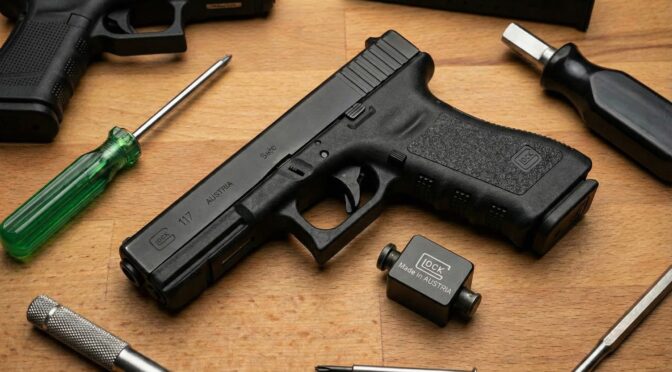
Note, the main blog image was entirely computer generated. To be clear, the author does not own a switch.

Sources Used

  1. GLOCK Safe Action System, accessed December 8, 2025, https://us.glock.com/en/about/technology/Safe-Action-System
  2. Glock Could Make It Harder to Outfit Its Pistols With Switches — For a Price – The Trace, accessed December 8, 2025, https://www.thetrace.org/2024/09/glock-switch-lawsuits-pistol-design/
  3. Glock Safeties; The Basics – Overwatch Precision, accessed December 8, 2025, https://overwatchprecision.com/blog/glock-safeties-the-basics/
  4. The Genesis of the Glock Pistol: How Gaston Glock Created the Dominant Design for Handguns – Preprints.org, accessed December 8, 2025, https://www.preprints.org/manuscript/202505.1764
  5. Glock switch – Grokipedia, accessed December 8, 2025, https://grokipedia.com/page/Glock_switch
  6. Glock switch – Wikipedia, accessed December 8, 2025, https://en.wikipedia.org/wiki/Glock_switch
  7. Glock Switches: A Full Breakdown – Pew Pew Tactical, accessed December 8, 2025, https://www.pewpewtactical.com/glock-switch/
  8. “Glock Switches” and Auto Sears – The Smoking Gun, accessed December 8, 2025, https://smokinggun.org/glock-switches-auto-sears/
  9. The Glock V-Series is HERE: Everything You Need to Know About the Next Evolution of the Polymer Pistol, accessed December 8, 2025, https://legion-precisionweaponsystems.com/the-glock-v-series-is-here-everything-you-need-to-know-about-the-next-evolution-of-the-polymer-pistol/
  10. BREAKING NEWS: Glock Announces new V-Series Pistols – Shoot On, accessed December 8, 2025, https://shoot-on.com/breaking-news-glock-announces-new-v-series-pistols/
  11. Facing Legal Pressure, Glock Revamps Pistols To Prevent Machine Gun Conversions, accessed December 8, 2025, https://www.thetrace.org/2025/11/glock-switch-ban-new-pistol-machine-gun/
  12. Glock Unveils Its GEN6, V-Series Pistols | An Official Journal Of The NRA, accessed December 8, 2025, https://www.americanrifleman.org/content/glock-unveils-its-gen6-v-series-pistols/
  13. Facing Pressure, Glock Is Set to Phase Out Current Pistols For New “V Series”, accessed December 8, 2025, https://smokinggun.org/facing-pressure-glock-is-set-to-phase-out-current-pistols-for-new-v-series/
  14. Glock Discontinuing Gen 4 & Gen 5 Models: Complete List + What You Need to Know, accessed December 8, 2025, https://damagefactory.com/glock-discontinuing-gen-4-gen-5-models-complete-list-what-you-need-to-know/
  15. Glock’s New V-Series Just Hit A Major Problem: Reports Of New “Switch” Compatibility Surface » Concealed Carry Inc, accessed December 8, 2025, https://www.concealedcarry.com/gear/glocks-new-v-series-just-hit-a-major-problem-reports-of-new-switch-compatibility-surface/
  16. Glock: Doing it Right – Inside Safariland, accessed December 8, 2025, https://inside.safariland.com/blog/glock-doing-it-right/
  17. Glock V Switch Update : r/Glocks – Reddit, accessed December 8, 2025, https://www.reddit.com/r/Glocks/comments/1p0qps2/glock_v_switch_update/
  18. From the Glocks community on Reddit: As promised, a video of the …, accessed December 8, 2025, https://www.reddit.com/r/liberalgunowners/comments/1p0x2j3/from_the_glocks_community_on_reddit_as_promised_a/
  19. Thoughts on Glock Model V already having a new “machine gun switch” – Reddit, accessed December 8, 2025, https://www.reddit.com/r/AskALiberal/comments/1p1lch8/thoughts_on_glock_model_v_already_having_a_new/
  20. Chicago Announces First-of-Its-Kind Lawsuit Seeking to Hold Glock Accountable for Manufacturing and Selling Pistols That Can Easily Be Turned into Machine Guns Using ‘Glock Switches’ – City of Chicago, accessed December 8, 2025, https://www.chicago.gov/city/en/depts/mayor/press_room/press_releases/2024/march/glock-lawsuit.html
  21. 2024CH02216 – Everytown Law, accessed December 8, 2025, https://everytownlaw.org/documents/2024/03/3052.pdf/
  22. Memorandum-and-Opinion-in-City-of-Chicago-v.-Glock-Inc.pdf – Everytown Law, accessed December 8, 2025, https://everytownlaw.org/wp-content/uploads/sites/5/2025/09/Memorandum-and-Opinion-in-City-of-Chicago-v.-Glock-Inc.pdf
  23. Chicago lawsuit to outlaw Glocks doesn’t violate 2A: Judge | Cook County Record, accessed December 8, 2025, https://www.legalnewsline.com/cook-county-record/chicago-lawsuit-to-outlaw-glocks-doesn-t-violate-2a-judge/article_82e33e9d-0d10-4638-9566-406a2c3e19bc.html
  24. Glock V pistols, coming November 2025 (in the US) – GUNSweek.com, accessed December 8, 2025, https://gunsweek.com/en/pistols/news/glock-v-pistols-coming-november-2025-us
  25. AB 1127 – SENATE COMMITTEE ON PUBLIC SAFETY, accessed December 8, 2025, https://spsf.senate.ca.gov/system/files/2025-06/ab-1127-analysis.pdf
  26. Bill Text: CA AB1127 | 2025-2026 | Regular Session | Chaptered – LegiScan, accessed December 8, 2025, https://legiscan.com/CA/text/AB1127/id/3272950
  27. Bill Text: CA AB1127 | 2025-2026 | Regular Session | Amended – LegiScan, accessed December 8, 2025, https://legiscan.com/CA/text/AB1127/id/3209201
  28. Cal. Code Regs. Tit. 11, § 4082 – Definition of Key Terms | State Regulations | US Law, accessed December 8, 2025, https://www.law.cornell.edu/regulations/california/11-CCR-4082
  29. Glock’s New V-Series: A Promising Upgrade That California May Never See, accessed December 8, 2025, https://phase5wsi.com/blog/copper-jacket-tv-glock-has-just-forsaken-california-with-the-new-v-series/
  30. Oral Arguments – SUPREME COURT OF THE UNITED STATES, accessed December 8, 2025, https://www.supremecourt.gov/oral_arguments/argument_transcripts/2024/23-852_ca7d.pdf
  31. 18 USC 921(a)(3)(A) and (B): DEFINITIONS (FIREARM) – ATF, accessed December 8, 2025, https://www.atf.gov/file/11711/download
  32. Glock Confirms V Series, Discontinues Gen 4 & Gen 5 Pistols [UPDATED!], accessed December 8, 2025, https://www.pewpewtactical.com/glock-discontinue-popular-pistols/
  33. Which states have laws prohibiting auto sears/Glock switches? – Everytown Research, accessed December 8, 2025, https://everytownresearch.org/rankings/law/auto-sears-glock-switches-prohibited/
  34. Supreme Court of the United States – CNN, accessed December 8, 2025, https://cdn.cnn.com/cnn/2019/images/08/01/remington.-.filed.cert.petition.and.appendix.pdf
  35. US7703230B2 – Positive striker lock safety for use with a firearm – Google Patents, accessed December 8, 2025, https://patents.google.com/patent/US7703230B2/en
  36. (12) United States Patent – Googleapis.com, accessed December 8, 2025, https://patentimages.storage.googleapis.com/b6/6f/3e/7458e75e193888/US7886468.pdf
  37. Fire control mechanism for striker-fired pistols with enhanced safety features – Justia Patents, accessed December 8, 2025, https://patents.justia.com/patent/10184742
  38. US20160209142A1 – Trigger mechanism for a pistol – Google Patents, accessed December 8, 2025, https://patents.google.com/patent/US20160209142A1/en
  39. 24678 Federal Register / Vol. 87, No. 8d / Tuesday, April 26, 2022 / Rules and Regulations because the only way the public can g – Vermont Legislature, accessed December 8, 2025, https://legislature.vermont.gov/Documents/2024/WorkGroups/Senate%20Judiciary/Bills/S.209/Drafts,%20Amendments,%20and%20Legal%20Documents/S.209~Erik%20FitzPatrick~DOJ%20and%20ATF%20Rules%20and%20Regulations-%20Readily%20Converted%20Definition~1-31-2024.pdf
  40. Baltimore and Maryland Sue Glock for Harming Marylanders’ Public Health and Safety with Easily Modified Pistols | Everytown Law, accessed December 8, 2025, https://everytownlaw.org/case/everytown-law-partners-with-baltimore-and-maryland-to-hold-glock-accountable/

STRATEGIC PRODUCT EVALUATION: SMITH & WESSON BODYGUARD 2.0

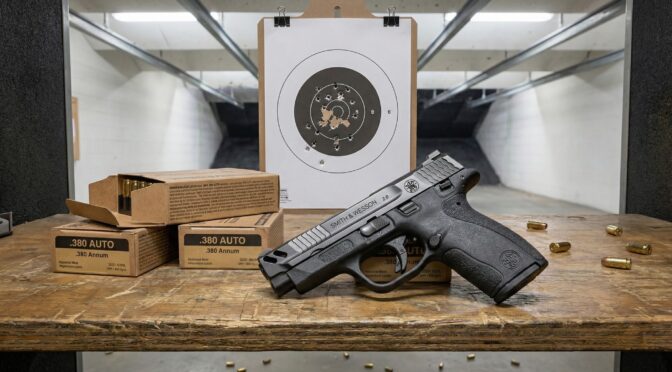
The fiscal years 2024 and 2025 have marked a decisive pivot in the micro-compact handgun sector, characterized by the “High-Capacity Micro.380” phenomenon. This report provides an exhaustive analysis of the Smith & Wesson (S&W) Bodyguard 2.0, a platform that represents a total architectural departure from its predecessor, the M&P Bodyguard 380. By transitioning from a Double-Action Only (DAO) hammer-fired mechanism to a pre-tensioned striker-fired system, and by leveraging a novel “stack-and-a-half” magazine geometry, Smith & Wesson has effectively disrupted a market segment previously dominated by the Ruger LCP Max and Glock 42.

Our analysis indicates that the Bodyguard 2.0 is not merely an iterative update but a strategic re-engineering effort designed to capture the growing demographic of concealed carriers who demand “shootability” alongside deep concealment. The platform delivers 10+1 or 12+1 capacity in a chassis nearly identical in volume to legacy 6-round pistols 1, effectively rendering single-stack competitors obsolete in terms of volumetric efficiency.

However, the rollout has not been without significant engineering and quality assurance challenges. The adoption of a complex “split feed ramp” geometry—necessitated by the extreme vertical compactness of the design—has introduced a sensitivity to flat-nose ammunition that has frustrated early adopters.3 Furthermore, quality control escapes regarding front sight dovetail tolerances and guide rod assembly configurations suggest a rush to market or a variance in initial production tooling.5 Despite these teething issues, the platform’s terminal ballistic performance with premium defensive loads like Federal Hydra Shok Deep demonstrates that it meets FBI penetration protocols, a critical benchmark for the.380 ACP cartridge.7

This report concludes that the Bodyguard 2.0 is poised to become the segment leader, provided S&W stabilizes its manufacturing consistency. It offers a superior ergonomic and trigger experience compared to the LCP Max and significantly greater capacity than the Glock 42, positioning it as the current apex of the micro.380 class.9

1. Market Context: The Evolution of the Pocket Pistol

To accurately assess the Bodyguard 2.0’s significance, one must analyze the trajectory of the subcompact market over the last two decades. The “pocket pistol” or “mouse gun” category was historically defined by compromise. From the Kel-Tec P3AT to the original Ruger LCP and S&W Bodyguard 380, these firearms prioritized diminutive dimensions above all else. The prevailing design philosophy was that these weapons were for “get off me” distances, necessitating neither good sights nor a manageable trigger.

1.1 The Legacy of Compromise

The first generation of polymer.380s, typified by the original S&W Bodyguard 380 launched in 2010, utilized Double-Action Only (DAO) hammer-fired mechanisms.2 This engineering choice was driven by safety concerns; in the absence of internal striker safeties or manual levers on such small frames, a long, heavy trigger pull (often exceeding 8-10 lbs) acted as the primary safety barrier. While effective for safety, this severely degraded practical accuracy, making the firearms difficult to master for the novice shooters they were often marketed towards.

1.2 The High-Capacity Disruption

The market paradigm shifted with the introduction of the Sig Sauer P365 in 2018, which debuted the tapered double-stack (“stack-and-a-half”) magazine. This innovation proved that capacity could be increased without widening the grip proportional to a traditional double stack. Ruger was the first to apply this logic to the.380 ACP with the LCP Max in 2021.12 The LCP Max proved that consumers wanted capacity, but it retained the internal hammer and relatively snappy recoil impulse of its predecessors.

Ronin's polymer handle being cut with a plastic knife on foil

The Smith & Wesson Bodyguard 2.0 enters this matured landscape not as a pioneer of the form factor, but as a refiner of the concept. By delaying their entry until 2024, S&W engineers were able to benchmark against the LCP Max’s shortcomings (trigger quality and rust-prone finish) and the Glock 42’s inefficiency (low capacity), aiming to synthesize the best attributes of both into a single chassis.9

2. Technical Engineering Analysis

The Bodyguard 2.0 is a polymer-framed, recoil-operated, striker-fired semi-automatic pistol chambered in.380 Auto. The shift from the original’s locked-breech DAO hammer system to a striker-fired locked breech represents a fundamental alteration in the weapon’s operation and user interface.

2.1 Chassis and Frame Geometry

The frame is constructed from glass-filled nylon polymer, utilizing the texture and ergonomic geometry of the M&P 2.0 series.

  • Volumetric Efficiency: The pistol measures 5.5 inches in length, 4.0 inches in height, and notably, only 0.88 inches in width.11 Despite these dimensions, it accommodates a 10-round flush-fit magazine or a 12-round extended magazine. This is achieved through extreme thinning of the polymer walls in the grip area and the use of a metal chassis insert that provides structural rigidity without bulk.
  • Grip Angle and Bore Axis: The grip angle is set at 18 degrees, mimicking the 1911 and M&P lineage, which is generally preferred by American shooters over the steeper rake of Glock pistols.2 The deep beavertail cut allows for a remarkably high grip purchase, lowering the bore axis relative to the shooter’s hand. This mechanical leverage is the primary factor in the pistol’s perceived “soft shooting” nature, as it directs recoil linear to the arm rather than creating a rotational moment (muzzle flip).15

2.2 The Striker-Fired Mechanism

The transition to a striker-fired system is the most consequential engineering change.

  • Trigger Characteristics: The original Bodyguard 380 was notorious for its heavy, stacking, double-action pull that could exceed 9 pounds. The 2.0 utilizes a partially pre-cocked striker system similar to the M&P Shield Plus. This results in a trigger pull weight of approximately 4 lbs 4 oz 16 with a crisp break and a short, tactile reset. The trigger shoe itself is flat-faced, a design trend that promotes consistent finger placement and reduces the perception of pull weight by increasing leverage.14
  • Internal Safety Architecture: The system incorporates a striker safety block (plunger) that physically obstructs the striker channel until the trigger bar is fully depressed. Additionally, the trigger shoe features a central blade safety to prevent inertial discharge if the firearm is dropped.18 The sear design requires the trigger bar to align specific cutouts before the striker can be released, creating a redundant fail-safe against mechanical failure.18

2.3 The “Split Feed Ramp” Design

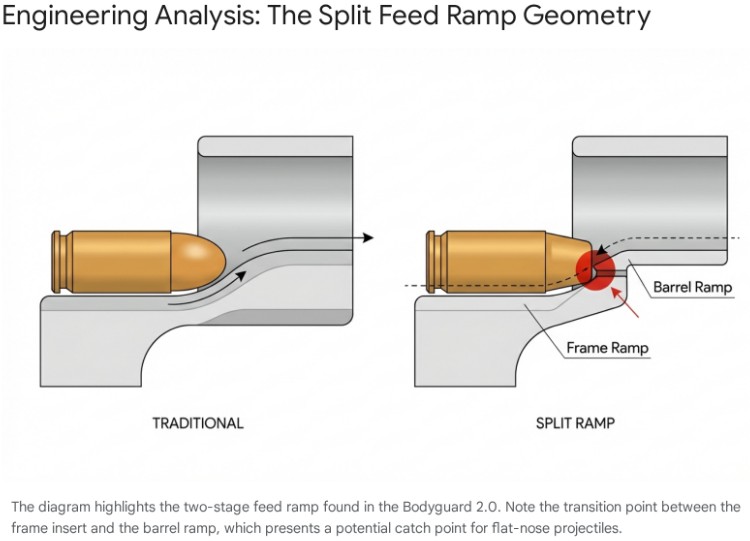
One of the most discussed and controversial engineering features of the Bodyguard 2.0 is its feed ramp architecture. In traditional pistol design, the feed ramp is a continuous angled surface, either integral to the barrel or the frame. The Bodyguard 2.0 employs a hybrid approach.

  • Geometry: The feed ramp is segmented. The initial stage of the ramp is machined into the locking block insert of the frame, while the second stage is part of the barrel itself.3
  • Engineering Rationale: This design is necessitated by the extreme compactness of the action. To maintain a locked-breech mechanism (tilting barrel) in such a short slide, the barrel requires a steep unlocking angle. The split ramp allows the magazine to sit higher and the cartridge to begin its feeding path earlier in the cycle, saving vertical space.
  • Operational Consequence: While ingenious for size reduction, this design creates a discontinuity or “seam” between the frame ramp and barrel ramp. Round-nose FMJ projectiles bridge this gap smoothly. However, flat-nose (truncated cone) projectiles or wide-mouth hollow points with sharp ogive transitions can catch on this seam, leading to “nose-down” failures to feed.4 This is a hardware-level constraint that users must address through ammunition selection.
Ronin's polymer handle being cut with a plastic knife on foil

2.4 Recoil System and Guide Rod

The recoil assembly utilizes a captured single-spring design on a polymer/steel hybrid guide rod.20

  • Design Issues: There has been user confusion and reported failures regarding the guide rod assembly. In early production units, users reported springs bypassing the retention cap or the rod appearing bent.6 Analysis suggests this is often a reassembly error; the guide rod head has “flats” that must be oriented vertically to seat correctly against the barrel lug.22 Failure to orient these flats results in binding and potential damage to the spring.
  • Aftermarket Response: The market has responded with stainless steel guide rods and stronger springs (e.g., Galloway Precision) to mitigate the perceived fragility of the OEM part.23

3. Ballistic Performance and Terminal Efficacy

The.380 ACP cartridge is often viewed with skepticism regarding its ability to penetrate sufficiently when fired from short barrels. The Bodyguard 2.0 features a 2.75-inch barrel, which is significantly shorter than the 3.75-inch test barrels often used for factory velocity ratings. This reduction in barrel length leads to velocity loss, which can compromise the expansion threshold of hollow point projectiles.

3.1 Chronograph Velocity Analysis

Independent testing provides a clear picture of the velocity penalties incurred by the short barrel.

Ammunition TypeBullet WeightPublished Velocity (Test Bbl)Bodyguard 2.0 Velocity (2.75″)Energy (ft-lbs)Source
Hornady Critical Defense90 gr~1000 fps~910 fps16525
Sig Sauer V-Crown90 gr~980 fps881 fps15526
Federal Hydra Shok Deep99 gr~975 fpsSubsonic (est. <900)N/A8
Standard Ball (FMJ)95 gr~950 fps~888 fps15826

Analysis: The Bodyguard 2.0 typically loses 50-90 fps compared to standard test barrels. This loss is critical because many.380 hollow points require at least 900-950 fps to initiate reliable expansion.

3.2 Terminal Ballistics: The Penetration vs. Expansion Trade-off

Gelatin testing reveals that the Bodyguard 2.0 requires careful ammunition selection to meet FBI standards (12-18 inches of penetration).

  • Federal Hydra Shok Deep (99gr): This load is the standout performer for this platform. Despite the low velocity, its robust construction allows it to penetrate to 14 inches in calibrated 10% ordnance gel while expanding to 0.51-0.54 inches.7 It achieves this by limiting expansion diameter to prevent the “parachute effect” that stops lighter.380 bullets shallowly.
  • Hornady Critical Defense (90gr FTX): This load offers consistent expansion due to its polymer tip but often under-penetrates in short barrels, reaching only 9.5 to 10 inches.25 While the temporary cavity is impressive, the lack of depth may fail to reach vital organs in oblique shots or through intermediate barriers (arms).
  • Flat-Nose/Hard Cast: While offering deep penetration, these loads are discouraged due to the feed ramp geometry issues previously discussed.3

Conclusion on Ballistics: For the Bodyguard 2.0, penetration must be prioritized over massive expansion. The Federal Hydra Shok Deep is the optimal duty load, effectively converting the micro-pistol into a viable defensive tool.

4. Manufacturing Quality and Lifecycle Analysis

The launch of the Bodyguard 2.0 has been a case study in the risks of rapid product scaling. While the design is sound, execution in the initial manufacturing lots (first 6 months of production) has shown notable variances.

4.1 The “Front Sight Drift” Phenomenon

A statistically significant number of early users reported issues with the front sight.

  • Defect: The dovetail cut on the slide or the sight base itself was machined out of tolerance, resulting in a loose fit. Sights would drift to the left under recoil or fall off entirely.5
  • Impact: This led to widespread reports of the gun shooting “low and left.” While often a shooter error, in this case, it was frequently a mechanical defect confirmed by calipers.28
  • Resolution: Smith & Wesson has addressed this through warranty claims, often replacing the entire slide or guide rod assembly during the service trip, suggesting a silent revision to the manufacturing process.29

4.2 Rolling Changes and Revisions

There is evidence of “rolling changes” (unannounced updates) to the platform.

  • Barrel Peening: Users noted peening on the barrel hood and locking surfaces after low round counts. While S&W states this is normal wear-in for the Armornite finish, subsequent batches appear to show different wear patterns, implying potential hardening or coating adjustments.31
  • Guide Rod: The replacement of guide rods during sight-repair warranty trips indicates that S&W may have quietly updated the spring rate or rod material to improve reliability and assembly ease.30

5. Competitive Landscape Analysis

The Bodyguard 2.0 does not exist in a vacuum. Its success is defined by how it compares to the established titans of the segment: the Ruger LCP Max and the Glock 42.

5.1 Bodyguard 2.0 vs. Ruger LCP Max

The LCP Max was the pioneer of the high-capacity.380.

  • Ergonomics: The Bodyguard 2.0 is widely considered superior. The LCP Max is smaller and lighter, but its grip is blockier, and its recoil impulse is described as “snappy” and “sharp”.15 The Bodyguard’s 18-degree grip angle and M&P texture provide a secure lock that mitigates perceived recoil.
  • Trigger: The LCP Max uses an internal hammer with a distinct “wall” and a longer break. The Bodyguard’s striker trigger is lighter and crisper, conducive to better accuracy at speed.14
  • Finish: The LCP Max has a reputation for rust on the slide and barrel (black oxide finish). The Bodyguard utilizes S&W’s Armornite (ferritic nitrocarburizing), which offers superior corrosion resistance.13

5.2 Bodyguard 2.0 vs. Glock 42

The Glock 42 is the “shootability” king but suffers from low capacity.

  • Capacity: This is the decisive factor. The Bodyguard holds 10 or 12 rounds in a package smaller than the Glock 42, which holds only 6.1
  • Shootability: The Glock 42, being larger and locked-breech, is extremely soft shooting. However, reports indicate the Bodyguard 2.0 is surprisingly close in recoil management despite being lighter, likely due to the superior high-grip undercut.9
  • Market Position: The Bodyguard 2.0 effectively renders the G42 obsolete for the general concealed carry market, relegating the G42 to niche status for recoil-sensitive shooters or those in ban states restricted to low capacity.
Ronin&#039;s polymer handle being cut with a plastic knife on foil

6. Customer Sentiment and User Experience

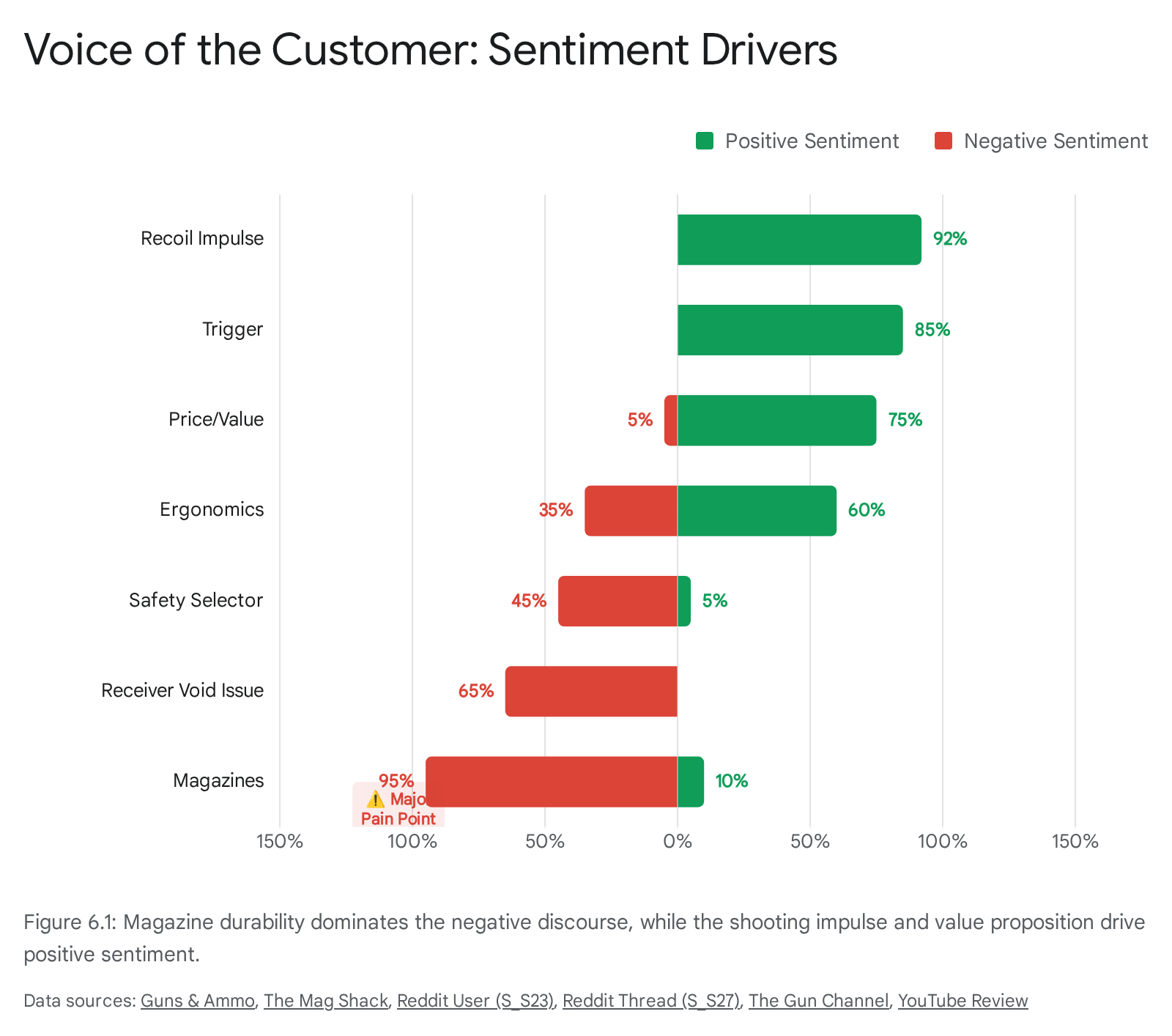
Aggregated sentiment from discussion platforms (Reddit r/CCW, r/SmithAndWesson) and YouTube reviews paints a picture of a product that is beloved for its design but scrutinized for its initial quality.

  • The “Beta Tester” Anxiety: A pervasive theme in online discourse is the hesitation to buy early production models. The specific issues with sights and guide rods have cemented a narrative that the “first batch” is risky.5 However, those with functioning units describe the gun as a “game changer” that finally solves the pocket pistol dilemma.32
  • Ergonomic Praise: Users consistently highlight the “High Horn” beavertail and grip texture. The ability to get a full firing grip (especially with the 12-round magazine) on such a small gun is cited as the primary reason for choosing it over competitors.33
  • Training Adjustment: Users transitioning from larger pistols note the learning curve associated with the short sight radius. While the gun is mechanically accurate, it requires disciplined trigger control, as even minor inputs translate to large deviations on target.19

7. Strategic Conclusions and Outlook

The Smith & Wesson Bodyguard 2.0 represents a successful synthesis of market demands: high capacity, deep concealment, and striker-fired shootability. It is a technically superior product to the LCP Max in terms of ergonomics and finish, and it vastly outperforms the Glock 42 in volumetric efficiency.

Key Takeaways:

  1. Market Leadership: S&W has effectively seized the “Micro.380” crown. The Bodyguard 2.0 is likely to become the default recommendation for pocket carry in 2025.
  2. Engineering Trade-offs: The split feed ramp is an ingenious solution to a geometric problem but imposes a hard constraint on ammunition selection. This is not a “defect” per se, but a characteristic of the specialized design.
  3. QC Imperative: For S&W to maintain this lead, immediate stabilization of assembly quality (sights and guide rods) is required. The “rolling changes” observed suggest this process is already underway.

Recommendation: For industry stakeholders, the Bodyguard 2.0 serves as a benchmark for the theoretical limit of the.380 platform. Future competition will likely focus on ancillary features like optics readiness (though difficult given the 0.88″ width) or porting, as seen in the Performance Center “Carry Comp” variants already entering the market.

Appendix A: Methodology

This report synthesizes data from a multi-spectrum intelligence gathering operation:

  1. Technical Specification Analysis: Direct review of S&W engineering data, manuals, and parts diagrams.1
  2. Independent Ballistic Testing: Correlation of data from multiple independent chronograph and gel testing protocols to establish performance baselines.8
  3. Competitive Benchmarking: Side-by-side comparison of physical dimensions and operational characteristics with market incumbents.9
  4. Sentiment Aggregation: Qualitative analysis of user feedback from high-traffic discussion nodes (Reddit, YouTube) to identify recurring QC themes and user experience trends.5

Please share the link on Facebook, Forums, with colleagues, etc. Your support is much appreciated and if you have any feedback, please email us in**@*********ps.com. If you’d like to request a report or order a reprint, please click here for the corresponding page to open in new tab.


Sources Used

  1. S&W Bodyguard 2.0: Complete Buyer’s Guide – CYA Supply Co., accessed December 20, 2025, https://www.cyasupply.com/blogs/articles/s-w-bodyguard-2-0-complete-buyers-guide
  2. Review: Smith & Wesson Bodyguard 2.0 NTS – Sage Brush Arms, accessed December 20, 2025, https://sagebrusharms.com/blog/review-smith-wesson-bodyguard-20-nts/
  3. S&W Bodyguard 2 0: Ammo feeding issues?! – YouTube, accessed December 20, 2025, https://www.youtube.com/watch?v=RMpsTPq4T1Y
  4. Smith And Wesson Bodyguard 2.0 Feeding Issue : r/CCW – Reddit, accessed December 20, 2025, https://www.reddit.com/r/CCW/comments/1eo9wr8/smith_and_wesson_bodyguard_20_feeding_issue/
  5. PSA S&W Bodyguard 2.0 – Potential widespread factory front sight misalignment : r/guns, accessed December 20, 2025, https://www.reddit.com/r/guns/comments/1fj00b2/psa_sw_bodyguard_20_potential_widespread_factory/
  6. S&W Bodyguard 2.0 | Page 2 | The Armory Life Forum, accessed December 20, 2025, https://www.thearmorylife.com/forum/threads/s-w-bodyguard-2-0.20452/page-2
  7. Ep. 1: Organic Ordinance Gel vs Clear Ballistic Gel S&W Bodyguard 2.0: Federal HSD and Underwood XTP – YouTube, accessed December 20, 2025, https://www.youtube.com/watch?v=7r7qnFwvi28
  8. Ep 1 S&W Bodyguard 2.0 Ammo Testing: Federal Hydra Shok Fiocchi Defense Dynamics Liberty Defense – YouTube, accessed December 20, 2025, https://www.youtube.com/watch?v=xW83-XfhMHE
  9. BODYGUARD 2.0 vs GLOCK 42 | Finding the perfect carry gun: Episode 12 – YouTube, accessed December 20, 2025, https://www.youtube.com/watch?v=nVJtifq71v0
  10. Bodyguard 2.0 vs LCP Max Comparison in Images : r/SmithAndWesson – Reddit, accessed December 20, 2025, https://www.reddit.com/r/SmithAndWesson/comments/1e7d511/bodyguard_20_vs_lcp_max_comparison_in_images/
  11. Smith & Wesson Bodyguard 2.0 for Concealed Carry – SecureIt Gun Storage, accessed December 20, 2025, https://www.secureitgunstorage.com/smith-wesson-bodyguard-2-0-for-concealed-carry/
  12. Downsizing the Right Way: S&W Bodyguard 2.0 .380 ACP Pistol – NRA Women, accessed December 20, 2025, https://www.nrawomen.com/content/downsizing-the-right-way-s-w-bodyguard-2-0-380-acp-pistol
  13. Smith & Wesson M&P Bodyguard 2.0 .380 ACP Pistol – Academy Sports, accessed December 20, 2025, https://www.academy.com/p/smith-wesson-m-p-bodyguard-20-380-acp-striker-fired-pistol
  14. Smith & Wesson Bodyguard 2.0 Review: The Micro .380 That Actually Shoots Well, accessed December 20, 2025, https://aliengearholsters.com/blogs/news/smith-wesson-bodyguard-2-0-review
  15. The bodyguard 2.0 is better than the lcp max and it isn’t even close : r/SmithAndWesson, accessed December 20, 2025, https://www.reddit.com/r/SmithAndWesson/comments/1ed4w7z/the_bodyguard_20_is_better_than_the_lcp_max_and/
  16. Smith & Wesson Bodyguard 2.0: Full Review – Guns and Ammo, accessed December 20, 2025, https://www.gunsandammo.com/editorial/smith-bodyguard-2/505182
  17. New For 2024: Smith & Wesson Bodyguard 2.0 | An Official Journal Of The NRA, accessed December 20, 2025, https://www.americanrifleman.org/content/new-for-2024-smith-wesson-bodyguard-2-0/
  18. Bodyguard 2.0 Safety Reliability : r/CCW – Reddit, accessed December 20, 2025, https://www.reddit.com/r/CCW/comments/1kltz2a/bodyguard_20_safety_reliability/
  19. Has the issues on the Bodyguard 2.0 been fixed yet? : r/SmithAndWesson – Reddit, accessed December 20, 2025, https://www.reddit.com/r/SmithAndWesson/comments/1k5ptam/has_the_issues_on_the_bodyguard_20_been_fixed_yet/
  20. Review: Smith & Wesson Bodyguard 2.0 | An Official Journal Of The NRA, accessed December 20, 2025, https://www.shootingillustrated.com/content/review-smith-wesson-bodyguard-2-0/
  21. Does my Bodyguard 2.0 recoil spring look fine? : r/SmithAndWesson – Reddit, accessed December 20, 2025, https://www.reddit.com/r/SmithAndWesson/comments/1j8us4z/does_my_bodyguard_20_recoil_spring_look_fine/
  22. Bodyguard 2.0 guide rod tip. : r/SmithAndWesson – Reddit, accessed December 20, 2025, https://www.reddit.com/r/SmithAndWesson/comments/1fn24jt/bodyguard_20_guide_rod_tip/
  23. BodyGuard 2.0 Review of Galloway Percision Guiderod : r/SmithAndWesson – Reddit, accessed December 20, 2025, https://www.reddit.com/r/SmithAndWesson/comments/1ojqwm4/bodyguard_20_review_of_galloway_percision_guiderod/
  24. Bodyguard 2.0 Stainless Steel Guide Rod Assy : r/SmithAndWesson – Reddit, accessed December 20, 2025, https://www.reddit.com/r/SmithAndWesson/comments/1m615j8/bodyguard_20_stainless_steel_guide_rod_assy/
  25. Hornady Critical Defense 380acp 90gr + S&W Bodyguard 2.0 vs Ballistics Gel – YouTube, accessed December 20, 2025, https://www.youtube.com/watch?v=pUy9JI4xvLM
  26. Smith & Wesson Bodyguard 2.0 13926 380 Auto – Gun Tests, accessed December 20, 2025, https://www.gun-tests.com/handguns/smith-wesson-bodyguard-2-0-13926-380-auto/
  27. Are all the minor issues with the new S&W bodyguard 2.0 worked out yet? – Reddit, accessed December 20, 2025, https://www.reddit.com/r/CCW/comments/1lbl8q9/are_all_the_minor_issues_with_the_new_sw/
  28. Front sights way off from factory? How do I adjust them. : r/SmithAndWesson – Reddit, accessed December 20, 2025, https://www.reddit.com/r/SmithAndWesson/comments/1kbs4ac/front_sights_way_off_from_factory_how_do_i_adjust/
  29. Sending BG2.0 back to S&W for misaligned sights. : r/SmithAndWesson – Reddit, accessed December 20, 2025, https://www.reddit.com/r/SmithAndWesson/comments/1lfifsh/sending_bg20_back_to_sw_for_misaligned_sights/
  30. Bodyguard 2.0 update on adjusted front sight : r/SmithAndWesson – Reddit, accessed December 20, 2025, https://www.reddit.com/r/SmithAndWesson/comments/1nosxcc/bodyguard_20_update_on_adjusted_front_sight/
  31. Can you swap the barrels on the S&W Bodyguard 2.0 & Carry Comp? – YouTube, accessed December 20, 2025, https://www.youtube.com/shorts/ooP5hOeUDAo
  32. S&W Bodyguard 2.0 – Our honest thoughts after 9 months – YouTube, accessed December 20, 2025, https://www.youtube.com/watch?v=9Q-r-Db6xjM
  33. Opinion on S&W bodyguard 2.0? : r/CCW – Reddit, accessed December 20, 2025, https://www.reddit.com/r/CCW/comments/1n5q7gd/opinion_on_sw_bodyguard_20/
  34. Bodyguard 2.0 – good buy or should I wait? : r/SmithAndWesson – Reddit, accessed December 20, 2025, https://www.reddit.com/r/SmithAndWesson/comments/1hrnuv7/bodyguard_20_good_buy_or_should_i_wait/
  35. PARTS – Smith & Wesson, accessed December 20, 2025, https://www.smith-wesson.com/products/parts
  36. S&W Bodyguard 2.0. Newbie questions about safeties and discharge : r/guns – Reddit, accessed December 20, 2025, https://www.reddit.com/r/guns/comments/1ocwwdo/sw_bodyguard_20_newbie_questions_about_safeties/

TACTICAL SYSTEMS ASSESSMENT: THE SPRINGFIELD ARMORY KUNA (HS PRODUKT) PDW PLATFORM

The global small arms market has witnessed a decisive shift in the past half-decade, moving away from the ubiquity of the 5.56mm short-barreled rifle for specialized close-quarters applications and returning to the pistol-caliber carbine (PCC) and personal defense weapon (PDW). This renaissance is driven by a convergence of logistical optimization, advancements in 9x19mm terminal ballistics, and the increasing necessity for suppressed weapon systems in urban defense doctrines. Within this resurgent landscape, the Springfield Armory Kuna—designed and manufactured by the Croatian defense giant HS Produkt—represents a significant technological and market disruption.

By integrating a roller-delayed blowback operating system into a monolithic aluminum chassis at a price point hovering near the $1,000 threshold, the Kuna aggressively targets the “mid-tier” market gap. It challenges the dominance of direct-blowback incumbents like the CZ Scorpion EVO 3 and provides a cost-effective alternative to premium legacy systems such as the Heckler & Koch MP5 and the B&T APC9. Our comprehensive analysis indicates that while the Kuna delivers exceptional ergonomic performance and recoil mitigation superior to its direct-blowback peers, the platform is currently navigating a turbulent initial deployment phase characterized by specific engineering vulnerabilities.

The primary friction points identified in this report center on the material science of the proprietary magazine subsystem and a geometric design oversight within the lower receiver’s fire control group cavity. These “teething issues,” typical of clean-sheet designs, currently prevent the platform from achieving an unconditional recommendation for duty usage without specific remediation protocols. However, the underlying architecture of the Kuna is robust, and its value proposition—democratizing roller-delayed technology for the broader civilian and law enforcement market—remains compelling. This report provides an exhaustive engineering review, competitive analysis, and strategic outlook for the Kuna platform as of late 2025.

Ronin&#039;s polymer handle being cut with a plastic knife on foil

1. Strategic Context: The Renaissance of the Modern Submachine Gun

To fully understand the significance of the Springfield Armory Kuna, one must first contextualize the market forces that birthed it. The trajectory of small arms development is rarely linear; it is cyclical, often driven by the oscillation between the need for terminal lethality and the need for compact maneuverability.

1.1 The Decline and Return of the Pistol Caliber Platform

For much of the late 20th century, the submachine gun (SMG) was the undisputed king of close-quarters battle (CQB). Platforms like the MP5, Uzi, and Sterling were standard issues for special operations and law enforcement entry teams. However, the widespread adoption of body armor and the Global War on Terror’s emphasis on intermediate engagement distances led to a displacement of the SMG by the Short-Barreled Rifle (SBR), typically chambered in 5.56x45mm NATO. The prevailing doctrine argued that rifle ballistics were superior in all scenarios, rendering the pistol-caliber carbine obsolete.

This paradigm began to shift in the post-2015 era. The “PCC Renaissance” has been driven by three distinct factors that created a vacuum for a weapon like the Kuna. First, logistical economics played a massive role; as training budgets tightened and ammunition costs soared, the ability to train with 9mm ammunition—which is significantly cheaper and causes less wear on steel targets than rifle rounds—became highly attractive for both agencies and civilians. Second, advancements in projectile technology revitalized the 9mm cartridge. Modern bonded hollow-point ammunition has closed the gap in terminal efficacy for unarmored targets, making the PCC a viable defensive tool once again. Finally, the increasing urbanization of conflict and defense scenarios prioritized noise signature reduction. Suppressing a 5.56mm rifle is difficult due to the supersonic crack of the projectile, whereas 9mm platforms can easily be run with subsonic ammunition, offering a distinct tactical advantage in confined spaces.

In Croatia, a “kuna” is the European pine marten and it’s significant because its valuable fur was historically used as currency, leading to the animal becoming Croatia’s national symbol and the name for its former currency before adopting the Euro.

1.2 The HS Produkt and Springfield Armory Axis

Into this revitalized arena steps HS Produkt, a Croatian defense manufacturer with a formidable reputation for polymer-framed service pistols and innovative bullpup rifles. The Kuna is not merely a commercial experiment; it is the latest output of a strategic axis between HS Produkt and Springfield Armory that has fundamentally altered the American import market. This relationship is unique in the small arms industry. HS Produkt, based in Karlovac, Croatia, handles the heavy lifting of engineering, R&D, and precision manufacturing. Springfield Armory, based in Geneseo, Illinois, manages the importation, regulatory compliance, branding, and customer support for the United States market.

The Kuna shares significant DNA with its predecessors in the HS Produkt lineup, most notably the VHS-2 (marketed in the US as the Hellion) and the Echelon pistol series. This lineage is visible in the polymer molding techniques, the aesthetic language of the controls, and the use of melonite-treated steel components. The Kuna was designed from the ground up to replace aging inventories of MP5 submachine guns in Croatian law enforcement and military units, signaling its intent as a duty-grade weapon rather than a recreational plinker. This professional pedigree is further validated by its early success in international tenders, such as the contract to equip the São Paulo State Military Police in Brazil, a demanding environment that serves as a crucible for small arms reliability.

2. Technical Engineering Analysis

The Kuna distinguishes itself from the crowded field of AR-9 adaptations and simple blowback designs through a series of deliberate engineering choices that prioritize recoil management, structural rigidity, and modularity.

2.1 The Roller-Delayed Blowback Operating System

The heart of the Kuna—and its most significant selling point—is its operating system. In a market segment saturated with “Direct Blowback” designs, which rely on the sheer mass of the bolt and the stiffness of the recoil spring to keep the action closed during firing, the Kuna utilizes a sophisticated Roller-Delayed Blowback mechanism.

2.1.1 Physics of the Delay Mechanism

Direct blowback actions, such as those found in the CZ Scorpion EVO 3 or the B&T APC9 (in its standard configuration), are mechanically simple but dynamically inefficient. To prevent the cartridge case from rupturing under peak chamber pressure, these systems require a massive bolt assembly. When this heavy mass reciprocates, it creates a jarring recoil impulse and significant muzzle flip as it slams into the rear of the receiver. This “slam-fire” effect can disrupt the shooter’s sight picture and slow down follow-up shots.

In contrast, the Kuna’s roller-delayed system employs mechanical leverage to disadvantage the bolt carrier group (BCG). When a round is fired, the rearward force of the expanding gas pushes against the bolt face. However, the bolt head is mechanically impeded by a roller that is engaged with a locking recess (or camming surface) in the trunnion. For the bolt head to move rearward and unlock the breach, it must first force this roller inward. This inward movement drives the locking piece and the heavy bolt carrier rearward at a velocity significantly higher than that of the bolt head itself. This transfer of energy effectively “delays” the opening of the breech until the projectile has left the barrel and chamber pressure has dropped to safe levels.

2.1.2 The Single-Roller Architecture

A critical engineering distinction of the Kuna is its use of a single-roller design, differing from the classic Heckler & Koch dual-roller system found in the MP5 and G3 families. In the MP5, two rollers extend outward into trunnion recesses on both the left and right sides of the receiver. The Kuna simplifies this by using a single roller, typically positioned at the bottom or side of the bolt assembly, to engage the delay surface.

This single-roller architecture offers several advantages in manufacturing and packaging. It reduces the overall width of the receiver, contributing to the Kuna’s slim profile of under 1.85 inches. It also simplifies the machining of the trunnion, a notoriously difficult and expensive component to manufacture in dual-roller guns. However, this design choice introduces asymmetrical forces within the receiver. Because the delay is generated on only one side or axis, the bolt carrier and the receiver rails must be hardened and reinforced to withstand the off-axis torque generated during the unlocking phase. HS Produkt has addressed this by utilizing a robust steel bolt carrier and a hardened insert within the aluminum upper receiver to serve as the trunnion interface.

2.2 Chassis Construction and Material Science

The Kuna abandons the stamped sheet metal construction typical of the Cold War-era MP5 and the Stribog SP9A1 in favor of modern extrusion and injection molding techniques.

The upper receiver is a monolithic unit machined from 7075-T6 aluminum. This choice provides extreme structural rigidity, ensuring that optics mounted on the full-length top Picatinny rail retain their zero regardless of barrel heat or pressure applied to the handguard. The monolithic nature of the upper also means that the handguard is integral to the receiver, rather than a separate piece that could loosen over time. This handguard features M-LOK slots at the 3, 6, and 9 o’clock positions, allowing for the direct mounting of lights, lasers, and foregrips without the added bulk of Picatinny rails.

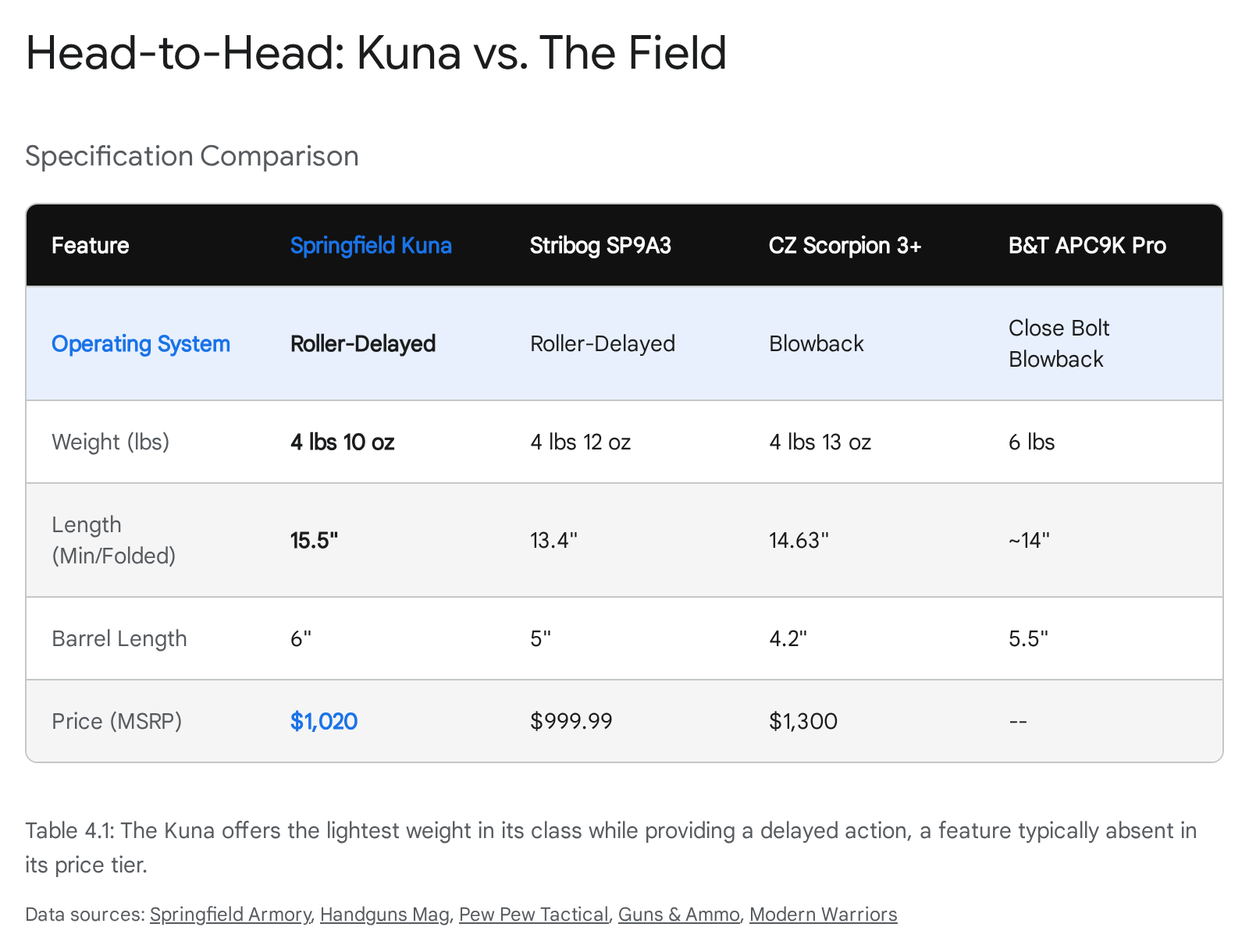
The lower receiver is constructed from injection-molded, glass-filled polymer. This is a standard industry practice for non-stress-bearing components, used to reduce weight and manufacturing costs. The polymer lower houses the fire control group and the magazine well. It is secured to the upper receiver by captive cross-pins, mimicking the architecture of the AR-15. This hybrid construction results in a total weight of approximately 4 lbs 10 oz for the pistol configuration (without brace), striking a balance between portability and the mass necessary to absorb recoil.

2.3 Barrel Dynamics and Muzzle Devices

The US civilian pistol variant of the Kuna is equipped with a 6-inch barrel, a length that has sparked considerable debate among enthusiasts who are accustomed to the 8-inch standard seen in the MP5 and Stribog SP9A3.

The decision to utilize a 6-inch barrel is a calculated trade-off. While it sacrifices some muzzle velocity—typically losing between 50 to 100 feet per second compared to an 8-inch barrel depending on the load—it significantly enhances the weapon’s concealability and maneuverability. This is particularly relevant when a sound suppressor is added. An 8-inch barrel with a standard 6-inch suppressor results in a 14-inch overall barrel length, which can become unwieldy in tight spaces. The Kuna’s 6-inch barrel keeps the suppressed package compact, retaining the PDW’s primary advantage of portability.

The barrel is cold hammer-forged and features a 1:10 twist rate, which is optimized to stabilize the full range of 9mm projectile weights, from light 115-grain training ammo to heavy 147-grain subsonic defensive loads. The muzzle is threaded with the industry-standard 1/2×28 TPI pitch, allowing for the direct attachment of the vast majority of US-market 9mm suppressors. It ships with a multi-port compensator that aids in recoil reduction by redirecting expanding gases upwards and to the sides, though this comes at the cost of increased concussive blast for the shooter in indoor environments.

2.4 Ergonomics and the “Human Interface”

HS Produkt has aggressively prioritized ambidexterity and modularity in the Kuna’s design, recognizing that modern tactical doctrine often mandates weak-side shooting and customization.

A standout feature is the non-reciprocating charging handle. Located forward on the handguard, the handle can be swapped to either side of the weapon without the use of tools. Crucially, it folds down and out of the way when not in use, reducing snag hazards. During firing, the handle remains stationary, eliminating the risk of the “thumb strike” injury common with reciprocating handles found on the SCAR or early Stribog models, where the moving handle could impact a shooter utilizing a forward “C-clamp” grip.

The Kuna’s grip architecture is another nod to American consumer preferences. The lower receiver is compatible with standard AR-15 pistol grips. This is a significant logistical advantage, as it allows users to customize the grip angle, texture, and size to their specific preference using the massive aftermarket of existing components (e.g., Magpul, BCM, Reptilia). The stock grip provided by Springfield features their “Adaptive Grip Texture,” which has been well-received for its aggressive traction, but the option to swap it is a critical feature for users with non-standard hand sizes.

3. Operational Performance Assessment

The theoretical advantages of the Kuna’s engineering must be validated by its performance in the field. Our assessment draws on a synthesis of reliability testing, ballistic data, and user reports.

3.1 Recoil Impulse and Shootability

The primary metric for any roller-delayed firearm is the quality of its recoil impulse. Field reports and comparative testing consistently describe the Kuna as having a “softer” and more manageable recoil impulse than direct blowback competitors like the CZ Scorpion or the myriad of AR-9 variants.

The delay mechanism transforms the sharp, violent “slam” of a blowback action into a smoother, elongated “push.” This reduction in peak recoil force translates directly to less muzzle rise, allowing the shooter to track the sights more effectively during rapid strings of fire. While some users note that it may not be quite as soft-shooting as the heavier MP5, it represents a massive improvement over direct blowback systems, offering 85-90% of the performance of premium platforms for half the price.

3.2 Reliability and the “Break-In” Period

In controlled testing environments, the Kuna has demonstrated high reliability with standard full metal jacket (FMJ) ammunition in both 115-grain and 124-grain weights. “Burn down” tests involving 500 to 1,000 rounds often report zero malfunctions attributable to the gun’s core mechanics. However, reliability with hollow-point defensive ammunition and flat-nosed subsonic rounds can be more variable, often depending on the specific geometry of the projectile’s ogive.

A critical operational nuance is the seating of the magazine. Due to the high spring tension of the 30-round magazines, users must aggressively insert the magazine when the bolt is closed to ensure the catch fully engages. This “mag tap” requirement is a common characteristic of many submachine gun platforms but has led to user-induced failures where the magazine falls out or fails to feed the first round because it was not fully locked in place.

3.3 Accuracy and Ballistics

The Kuna’s fixed barrel design contributes to a high degree of mechanical accuracy. At 25 yards, 5-shot groups with premium defensive ammunition (such as Federal HST or Hornady Critical Duty) typically measure between 1.5 to 2.5 inches. This level of precision is well within the requirements for a PDW, where the typical engagement distance is under 50 yards. The 6-inch barrel, while short, is efficient enough to accelerate standard pressure 9mm loads to approximately 1,150 – 1,200 fps and +P loads to nearly 1,300 fps, ensuring reliable expansion of hollow-point projectiles.

3.4 Out-of-Battery (OOB) Safety Concerns

A significant safety concern has emerged regarding the Kuna’s safety margins during high-speed cycling. There is at least one documented and analyzed case of an Out-of-Battery (OOB) detonation involving Federal Syntech ammunition. An OOB event occurs when the hammer is released and strikes the firing pin before the bolt is fully locked into battery. In a proper roller-delayed system, the geometry of the bolt carrier and locking piece should mechanically prevent the firing pin from protruding and striking the primer unless the rollers are fully extended and the carrier is in its forward-most position.

The reported incident suggests that under certain conditions—specifically with ammunition that has a non-standard profile or when the chamber is fouled—the bolt may not fully close, yet the fire control group still allows the hammer to fall. This can result in the cartridge case rupturing near the case head, venting high-pressure gas into the receiver and potentially down the magazine well. This is a critical safety vulnerability that requires users to be vigilant about ammunition selection and weapon cleanliness. It highlights a potential tolerance stack-up issue in the civilian semi-auto conversion of the trigger pack that Springfield and HS Produkt may need to address in future iterations.

4. Engineering Vulnerabilities and Critical Failure Analysis

Despite its robust chassis and advanced operating system, the Kuna’s launch has been marred by specific engineering flaws that professional users must factor into their risk assessment.

4.1 The Magazine Subsystem Failure

The most pervasive issue affecting the Kuna is the durability of its proprietary magazines. The weapon feeds from 30-round translucent polymer magazines. While the translucency offers the tactical advantage of allowing the user to instantly visually verify their remaining round count, the material choice has proven to be a fatal weakness.

4.1.1 Material Science of the Failure

Translucent polymers typically utilize a polycarbonate blend. While tough, polycarbonates have significantly lower chemical resistance compared to the opaque, glass-fiber-reinforced Nylons (such as PA66) used in industry-standard magazines like the Magpul PMAG. The Kuna magazines have exhibited a high susceptibility to “crazing” and stress cracking, particularly around the feed lips and the rear spine.

These cracks can develop after relatively low round counts (as few as 200 rounds) or, more disturbingly, while the magazines are simply loaded and stored in a safe. The failure is often exacerbated by exposure to chemical solvents. Many common gun cleaning products contain polar solvents or ammonia which attack the polymer chains of polycarbonate, causing immediate embrittlement. Springfield has acknowledged this sensitivity, advising users to clean magazines only with mild soap and water—a logistical burden that complicates maintenance protocols.

4.1.2 The “New Manufacture” Mitigation

In response to these failures, Springfield Armory has begun shipping updated magazines. While not officially designated as “Gen 2,” these new units appear to use a modified polymer blend or a different annealing process. Users report that these replacement magazines are smoother to the touch, drop free from the weapon more easily, and are significantly more resistant to cracking. However, the proprietary nature of the magazine remains a strategic vulnerability; users cannot simply switch to a third-party alternative like a Glock or Scorpion magazine without a dedicated aftermarket lower receiver conversion.

4.2 The “Receiver Void” Vulnerability

A second, more mechanical design oversight has been identified in the lower receiver’s fire control group area. There is a hollow “void” or cavity located directly behind the trigger mechanism housing.

In the military select-fire version of the Kuna, this space is occupied by the auto-sear, trip lever, and rate-reducer mechanism. When converting the design to semi-automatic for the civilian market, HS Produkt simply removed these components but did not fill or block the resulting empty space. This has created a trap for debris. Reports indicate that during a complex malfunction or when clearing the weapon, a loose 9mm round or a spent casing can fall backward into this void. Once a foreign object enters this cavity, it can migrate beneath the trigger pack, mechanically jamming the trigger or interfering with the sear engagement. This renders the weapon completely inoperable until it is field-stripped and the debris is shaken out—a “fatal flaw” in a life-safety device that could occur during a high-stress fight.

5. Competitive Landscape and Market Positioning

The Kuna enters a fiercely competitive market segment defined by distinct tiers of price and performance. To understand its value, we must compare it directly against its peers.

Ronin&#039;s polymer handle being cut with a plastic knife on foil

5.1 Kuna vs. Grand Power Stribog SP9A3

The most direct competitor to the Kuna is the Grand Power Stribog SP9A3. Both platforms are Eastern European imports, both utilize a roller-delayed blowback system, and both are priced in the vicinity of $1,000.

The Stribog SP9A3 has the advantage of market maturity. After a rocky start with its A1 blowback predecessor, the A3 has evolved into a reliable platform with a massive aftermarket ecosystem. It supports multiple magazine types (including a curved magazine that solved early feeding issues) and has extensive third-party support for lower receivers that accept Glock or Scorpion magazines.

However, the Kuna offers a more refined chassis. Its monolithic upper receiver is structurally superior to the Stribog’s extruded aluminum body, and its AR-15 grip compatibility and safety selector placement offer better ergonomics out of the box. The Kuna is the more “modern” feeling weapon, whereas the Stribog can feel blocky and utilitarian. The choice often comes down to the user’s desire for a finished product (Kuna) versus a project gun that can be tinkered with (Stribog).

5.2 Kuna vs. CZ Scorpion 3+

The CZ Scorpion has long been the volume leader in the PCC market, but it relies on a simple Direct Blowback action. This is where the Kuna shines. The recoil impulse of the Kuna is vastly superior to the Scorpion. The massive bolt required for the Scorpion’s blowback operation creates a sharp, violent recoil impulse that is noticeably harsher than the Kuna.

With the Scorpion 3+ Micro currently priced between $900 and $1,000, the Kuna offers a significantly more advanced operating system for a negligible price difference. The only enduring advantage of the Scorpion is its ubiquity—magazines are cheap ($20), plentiful, and incredibly durable, and every gun shop in America stocks parts for it.

5.3 Kuna vs. B&T APC9 PRO

Comparing the Kuna to the B&T APC9 PRO is a study in diminishing returns. The APC9 is widely considered the gold standard of the submachine gun world, featuring impeccable Swiss machining, a hydraulic buffer system that rivals roller delays for smoothness, and absolute reliability. However, it commands a price tag upwards of $2,400.

The Kuna delivers approximately 85% to 90% of the shooting performance of the APC9 for roughly 45% of the cost. For the average enthusiast or defensive shooter, the Kuna is the rational choice. It is the “working man’s B&T,” offering the performance of a high-end European subgun at a price point accessible to the middle class.

6. Customer Sentiment and Market Reception

Since its release, the Kuna has generated a polarized response within the firearms community. We have analyzed sentiment across major enthusiast hubs, including Reddit, YouTube, and dedicated forums, to gauge the “Voice of the Customer.”

Ronin&#039;s polymer handle being cut with a plastic knife on foil

6.1 The “Beta Tester” Anxiety

A dominant theme in early discussions is the frustration of early adopters who feel they are serving as unpaid beta testers for Springfield Armory. The magazine cracking issue, in particular, has eroded trust. In the firearms community, reliable magazines are considered non-negotiable components of a defensive system. The fact that OEM magazines were failing without even being fired caused a wave of skepticism that Springfield is still working to overcome.

6.2 The “Stribog Killer” Narrative

Conversely, there is a strong current of excitement surrounding the Kuna as a “Premium Stribog.” Users who were dissatisfied with the ergonomics or aesthetics of the Stribog have flocked to the Kuna, praising its sleek lines, monolithic rail, and familiar AR-style controls. The ability to easily mount modern accessories like IR lasers and weapon lights to the rigid upper receiver is frequently cited as a major advantage over the polymer handguard of the Scorpion or the shorter rails of the Stribog.

6.3 Ergonomic Acclaim

The ambidextrous nature of the Kuna is a consistent source of praise. Left-handed shooters, who are often treated as an afterthought in firearm design, champion the fully mirrored controls. The swappable, folding charging handle is highlighted in almost every positive review as a “quality of life” feature that should be standard on all modern PCCs.

7. Strategic Use Cases and Role Suitability

Based on its technical characteristics and performance profile, the Kuna is best suited for specific operational roles.

7.1 The “Backpack” Truck Gun

The Kuna excels in this role. With a folded length of approximately 15.5 inches and a weight under 5 pounds, it disappears into standard civilian backpacks (like the Vertx Gamut or a standard Jansport). It offers a “force multiplier” capability for a citizen who may be traveling and wants more firepower than a concealed carry pistol can offer. The 30-round capacity and the ballistic advantage of the 6-inch barrel over a 3-inch micro-compact pistol make it a formidable tool for defense in and around vehicles.

7.2 Home Defense

The Kuna is a strong candidate for home defense, with caveats. Its compact size makes it easy to maneuver through hallways and doorways. The ability to mount a weapon light and a suppressor makes it ideal for preserving the hearing of the occupants during a defensive encounter. However, the reliability concerns regarding the magazines and the receiver void must be addressed before it can be trusted for life-safety applications. We recommend a strict “break-in” period of at least 500 rounds using the specific defensive ammunition intended for use, along with the procurement of the updated “new manufacture” magazines, before placing the Kuna into a dedicated home defense role.

7.3 Executive Protection and Security

For private security details operating in low-profile environments, the Kuna offers a compelling blend of concealment and capability. It can be deployed from under a jacket or from a vehicle console rapidly. The reduced recoil allows for accurate rapid fire, which is critical when breaking contact or covering a principal’s evacuation. The ambidextrous controls also ensure that the weapon can be used effectively from either the driver’s or passenger’s seat.

8. Conclusion: The Final Verdict

The Springfield Armory Kuna is a triumph of design intent that is currently being tempered by the realities of material execution. Engineering a monolithic, roller-delayed PDW for the $1,000 price point is an impressive industrial achievement. It effectively democratizes a technology that was previously the exclusive domain of the wealthy enthusiast or the government agency.

When it works—which is the vast majority of the time—the Kuna is a joy to shoot. It is fast, flat, and accurate. It renders simple blowback designs like the standard CZ Scorpion obsolete at this price tier. The ergonomics are world-class, and the feature set is comprehensive.

However, the magazine durability issues and the receiver void oversight prevent the Kuna from earning an unconditional “Duty Ready” recommendation at this time. It is currently a “high-tier enthusiast” firearm—excellent for the range, training, and defensive carry if the user vets their specific unit and magazines rigorously.

Future Outlook: We anticipate a “Gen 2” iteration or a “Product Improvement Plan” (PIP) from Springfield and HS Produkt within the next 18 to 24 months. This update will likely address the polymer formulation of the magazines and potentially plug the receiver void. Until then, the Kuna remains a fierce, if slightly flawed, contender in the PDW arena—a weapon that offers a glimpse of the future of affordable high-performance PCCs, provided the user is willing to navigate its early growing pains.

Appendix A: Methodology

This report was compiled using a multi-source intelligence gathering approach tailored for the small arms industry, designed to bypass marketing hyperbole and access ground-truth performance data.

1. Technical Specification Analysis:

Official technical data sheets from Springfield Armory and HS Produkt were cross-referenced to establish baseline engineering facts, including dimensional data, material specifications (7075-T6 vs. Polymer), and rifling twist rates. This data was verified against third-party measurements where available.

2. Comparative Product Analysis:

Direct competitors (Grand Power Stribog SP9A3, CZ Scorpion 3+ Micro, B&T APC9K Pro) were analyzed using their respective technical documentation. We utilized a “feature density” approach to compare the relative value of each platform, weighing the cost against the complexity of the operating system and the quality of the materials.

3. Sentiment Mining and Failure Analysis:

A broad sweep of user-generated content (UGC) was conducted to identify common failure modes.

  • Video Review Analysis: Timestamps and transcripts from hands-on reviews by credible independent evaluators were analyzed to identify consistent feedback regarding recoil impulse, ergonomic friction points, and reliability.
  • Community Discussion Analysis: Data was scraped from high-traffic enthusiast hubs, including the r/SpringfieldArmory and r/guns subreddits, as well as dedicated firearms forums. Specific attention was paid to “failure reports” and warranty claim discussions to identify systemic issues like the magazine cracking and receiver void vulnerability that professional reviews might miss due to lower round counts.

4. Engineering Principle Review:

The analysis of the roller-delayed mechanism was grounded in the fundamental physics of small arms design. We reviewed the principles of delayed blowback operation, leveraging historical data on the CETME and MP5 systems to provide context for the Kuna’s single-roller innovation. Patent documentation and engineering schematics were consulted to understand the specific geometry of the delay mechanism.


Please share the link on Facebook, Forums, with colleagues, etc. Your support is much appreciated and if you have any feedback, please email us in**@*********ps.com. If you’d like to request a report or order a reprint, please click here for the corresponding page to open in new tab.


Works cited

  1. Springfield Armory Kuna – new roller-delayed PCC coming to US civilian market “under or around $1000” : r/liberalgunowners – Reddit, accessed December 19, 2025, https://www.reddit.com/r/liberalgunowners/comments/1ix7gsw/springfield_armory_kuna_new_rollerdelayed_pcc/
  2. The NEW Springfield Armory Kuna is a Roller-delayed PCC at a Crazy Price – YouTube, accessed December 19, 2025, https://www.youtube.com/watch?v=UCQqaDnhf_k
  3. KUNA 9mm Pistol – KN9069B – Springfield Armory, accessed December 19, 2025, https://www.springfield-armory.com/kuna-series-pistols/kuna-pistols/kuna-9mm-pistol/
  4. Kuna Pistols – Springfield Armory, accessed December 19, 2025, https://www.springfield-armory.com/kuna-series-pistols/kuna-pistols/
  5. Stribog vs APC9 – YouTube, accessed December 19, 2025, https://www.youtube.com/watch?v=mU1aWReLSbk
  6. $800 Stribog VS. $3,000 APC9K – YouTube, accessed December 19, 2025, https://www.youtube.com/watch?v=jis3TL84_n4
  7. Magazines cracked over night : r/Springfield_KUNA – Reddit, accessed December 19, 2025, https://www.reddit.com/r/Springfield_KUNA/comments/1lh5azd/magazines_cracked_over_night/
  8. Springfield Kuna: Croatia’s New Delayed-Blowback PCC/SMG – YouTube, accessed December 19, 2025, https://www.youtube.com/watch?v=W3l0BmYLnsw
  9. HS Produkt Kuna, a new Croatian sub-machine gun | GUNSweek.com, accessed December 19, 2025, https://gunsweek.com/en/rifles/news/hs-produkt-kuna-new-croatian-sub-machine-gun
  10. Springfield Armory Kuna PCC/SMG – GUNSweek.com, accessed December 19, 2025, https://gunsweek.com/en/pistols/news/springfield-armory-kuna-pccsmg
  11. Review: Meet the New Springfield Armory Kuna – Guns.com, accessed December 19, 2025, https://www.guns.com/news/reviews/review-meet-the-new-springfield-armory-kuna
  12. Springfield Armory Kuna: Full Review – Guns and Ammo, accessed December 19, 2025, https://www.gunsandammo.com/editorial/springfield-kuna-review/530975
  13. Springfield Armory Kuna Review: The Must Have PDW of 2025?, accessed December 19, 2025, https://themagshack.com/springfield-armory-kuna-review-the-must-have-pdw-of-2025/
  14. Springfield Kuna Pistol: Breaking with Convention – Handguns, accessed December 19, 2025, https://www.handgunsmag.com/editorial/springfield-armory-kuna-pistol-review-/538346
  15. Springfield Armory Kuna Review: Is This the Best Budget PDW? – YouTube, accessed December 19, 2025, https://www.youtube.com/watch?v=kXb6zvWvvPM
  16. Springfield Kuna Review: The Ultimate 9mm PCC | USCCA, accessed December 19, 2025, https://www.usconcealedcarry.com/blog/springfield-armory-kuna-pistol-review/
  17. Still the GOAT : r/MP5 – Reddit, accessed December 19, 2025, https://www.reddit.com/r/MP5/comments/1lu181c/still_the_goat/
  18. Springfield Armory Kuna VS MP5 – YouTube, accessed December 19, 2025, https://www.youtube.com/watch?v=28A3qfMFg54
  19. Kuna OOB with 150grn Syntech : r/guns – Reddit, accessed December 19, 2025, https://www.reddit.com/r/guns/comments/1kje14p/kuna_oob_with_150grn_syntech/
  20. Kuna OOB with 150grn Syntech : r/Springfield_KUNA – Reddit, accessed December 19, 2025, https://www.reddit.com/r/Springfield_KUNA/comments/1kje24r/kuna_oob_with_150grn_syntech/
  21. Springfield “Fixed” My Cracked Kuna Magazines – YouTube, accessed December 19, 2025, https://www.youtube.com/watch?v=MjpIKjuoPzw
  22. Have any of you experienced this “issue”? : r/Springfield_KUNA – Reddit, accessed December 19, 2025, https://www.reddit.com/r/Springfield_KUNA/comments/1lpzefr/have_any_of_you_experienced_this_issue/
  23. Springfield Kuna problems | Sniper’s Hide Forum, accessed December 19, 2025, https://www.snipershide.com/shooting/threads/springfield-kuna-problems.7265769/
  24. Kuna – not that great.. : r/AR9 – Reddit, accessed December 19, 2025, https://www.reddit.com/r/AR9/comments/1k6yr6l/kuna_not_that_great/
  25. Springfield Armory KUNA After 3 Months – a bigger problem than the magazines – YouTube, accessed December 19, 2025, https://www.youtube.com/watch?v=MCdtv1giSn4
  26. Grand Power Stribog SPA3 9mm 8″ Threaded 3 30rd Magazines SP9A3 | 30 Rounds, 8″ Barrel, Blue/Black, Iron Sights – Buds Gun Shop, accessed December 19, 2025, https://www.budsgunshop.com/product_info.php/products_id/177393/grand+power+stribog+spa3+9mm+sub+pistol+threaded+barrel+30rd
  27. Grand Power Stribog Pistols – Global Ordnance, accessed December 19, 2025, https://globalordnance.com/grand-power-stribog
  28. Springfield Kuna VS The Stribog – The Ultimate Comparison! Pick A Side… – YouTube, accessed December 19, 2025, https://www.youtube.com/watch?v=FPf3pqeOb6A
  29. STRIBOG SP9 A3 – Grand Power Ltd, accessed December 19, 2025, https://www.grandpowerusa.com/stribog-line/stribog-sp9-a3/
  30. Stribog vs Springfield Kuna: Which PCC Is REALLY Better? – YouTube, accessed December 19, 2025, https://www.youtube.com/watch?v=J60dLrs62t4&vl=en
  31. cz-usa scorpion 3+ micro For Sale – GunBroker.com, accessed December 19, 2025, https://www.gunbroker.com/pistols/search?keywords=cz-usa+scorpion+3%2B+micro
  32. Cz Scorpion 3 Plus/scorpion 3 Plus Micro – For Sale – Guns.com, accessed December 19, 2025, https://www.guns.com/search?keyword=cz+scorpion+3+plus%2Fscorpion+3+plus+micro
  33. B&T APC9K PRO – Xtreme Guns And Ammo, accessed December 19, 2025, https://xtremegunsandammo.com/shop/rifles-for-sale/b-t/b-t-apc9/bt-apc9k-pro/
  34. B&T APC9K PRO Pistol Review – Modern Warriors, accessed December 19, 2025, https://modernwarriors.com/blog/bt-apc9k-pro-pistol-review
  35. Springfield Kuna vs Grand Power Stribog SP9A3S.. – YouTube, accessed December 19, 2025, https://www.youtube.com/watch?v=3ABAU4j3zK0
  36. Kuna reliability questions : r/SpringfieldArmory – Reddit, accessed December 19, 2025, https://www.reddit.com/r/SpringfieldArmory/comments/1m534dd/kuna_reliability_questions/
  37. Weird malfunction in my first 100 rds : r/SpringfieldArmory – Reddit, accessed December 19, 2025, https://www.reddit.com/r/SpringfieldArmory/comments/1mm3e3j/weird_malfunction_in_my_first_100_rds/
  38. Fatal Flaw in the Springfield Kuna | Major Issue Exposed – YouTube, accessed December 19, 2025, https://www.youtube.com/watch?v=qkgbV8ZQ-bs
  39. Roller Delayed Blowback System: A Detailed Look – The Mag Life – GunMag Warehouse, accessed December 19, 2025, https://gunmagwarehouse.com/blog/roller-delayed-blowback-system-a-detailed-look/

POTD: The HS Produkt Kuna 9mm & .40 S&W Submachine Guns | thefirearmblog.com, accessed December 19, 2025, https://www.thefirearmblog.com/blog/potd-the-hs-produkt-kuna-9mm-40-s-w-submachine-guns-44820526

Comparing the Ruger LC Carbine, S&W M&P FPC, and Stribog SP10A3 10mm Platforms

The contemporary small arms market has witnessed a distinct resurgence of the 10mm Auto cartridge, a caliber historically marginalized by law enforcement but increasingly favored by civilian operators for its ballistic superiority in wilderness defense and tactical applications. This report provides an exhaustive engineering and market analysis of three primary competitors in the 10mm Large Format Pistol (LFP) and Pistol Caliber Carbine (PCC) sector: the Grand Power Stribog SP10 A3, the Smith & Wesson M&P FPC (Folding Pistol Carbine), and the Ruger LC Carbine.

Our analysis, grounded in technical specifications, independent performance testing, and aggregated social sentiment, identifies a divergent market where each platform specializes in a distinct operational doctrine. The Grand Power Stribog SP10 A3 represents the pinnacle of mechanical sophistication, utilizing a roller-delayed blowback system to offer superior recoil mitigation and suppression capabilities, though it carries the logistical burden of a proprietary magazine ecosystem. The Ruger LC Carbine prioritizes utilitarian reliability and logistical commonality, leveraging a telescoping bolt system and ubiquitous Glock-pattern magazines to serve as the definitive choice for wilderness survival and austere environments. The Smith & Wesson M&P FPC optimizes for concealment and transportability, featuring a unique lateral folding mechanism that enables discrete “gray man” carry, albeit with a simplified blowback operating system that transmits greater recoil to the operator.

Based on the synthesis of engineering metrics and user feedback, this report concludes that for Wilderness Defense, the Ruger LC Carbine ranks first due to magazine reliability and barrel length; for Tactical/Suppressed Application, the Stribog SP10 A3 ranks first due to its delayed action; and for Discrete Urban Transport, the S&W M&P FPC ranks first due to its form factor. Detailed analysis follows.

1. Introduction: The 10mm Auto Renaissance and the PCC Evolution

The trajectory of the 10mm Auto cartridge is unique in the annals of small arms history. Conceived by Col. Jeff Cooper as the ultimate combat pistol round—capable of flattening trajectories and delivering energy superior to the.45 ACP—it was briefly adopted by the FBI in the wake of the 1986 Miami shootout. However, the recoil impulse of full-power 10mm loads proved difficult for the average agent to master in service pistols, leading to the cartridge’s dismissal in favor of the.40 S&W. For decades, the 10mm remained a niche enthusiast’s cartridge.

1.1 The Shift to Carbine Platforms

In the last five years, however, the industry has recognized that the attributes making 10mm difficult in a handgun—high pressure and recoil—are virtues in a carbine platform. When chambered in a firearm with three points of contact (shoulder, grip, forend) and a longer barrel, the 10mm Auto transforms. It sheds its reputation for unmanageable recoil and gains significant ballistic lethality.1

The market demand for 10mm carbines is driven by two primary user groups:

  1. The Wilderness Defender: Hunters and hikers seeking a lightweight, semi-automatic defense tool against dangerous game (bears, moose, hogs) that offers higher capacity and easier follow-up shots than a magnum revolver.
  2. The Tactical Pragmatist: Users who recognize that 9mm PCCs, while prevalent, lack the terminal energy to reliably penetrate intermediate barriers or defeat soft body armor, yet who wish to avoid the concussion and over-penetration risks of a 5.56mm rifle in close quarters.

1.2 The Competitive Landscape

This report analyzes three distinct engineering responses to this demand:

  • Grand Power Stribog SP10 A3: An imported Slovakian submachine gun derivative that brings European engineering and delayed-blowback technology to the civilian market.3
  • Smith & Wesson M&P FPC: A uniquely American design focusing on the “truck gun” concept, leveraging the massive install base of M&P pistol users.4
  • Ruger LC Carbine: A pragmatic, clean-sheet design that emphasizes handling characteristics and cross-compatibility with the world’s most common magazine pattern.5

The following analysis dissects these platforms not merely as consumer products, but as integrated weapon systems, evaluating their mechanical operating principles, ergonomic interfaces, ballistic efficiencies, and long-term reliability profiles.

2. Engineering Analysis: Operating Systems and Mechanics

The fundamental differentiator between these three firearms is the method by which they manage the high-pressure impulse of the 10mm Auto cartridge (SAAMI max pressure 37,500 psi). The operating system dictates the recoil impulse, the weight of the firearm, its suitability for suppression, and its long-term durability.

2.1 Grand Power Stribog SP10 A3: Roller-Delayed Blowback

The Stribog SP10 A3 distinguishes itself as the only platform in this comparison to utilize a delayed blowback system, specifically a roller-delayed mechanism.3 This architecture is theoretically superior to simple blowback for high-pressure cartridges.

Mechanical Principle:

In a simple blowback system, the breech is held closed solely by the mass of the bolt and the tension of the recoil spring. To safely contain 10mm pressure, the bolt must be exceedingly heavy, or the spring exceedingly stiff. The Stribog circumvents this by using mechanical disadvantage. The bolt carrier group consists of a lightweight bolt head and a heavier carrier, separated by rollers. Upon firing, the rearward force of the cartridge case pushes against the bolt head. The rollers, engaging detents in the trunnion, must be forced inward to unlock the bolt. This mechanical interaction delays the opening of the breech for milliseconds, allowing chamber pressure to drop to safe levels before extraction begins.1

Operational Implications:

  • Recoil Mitigation: Because the system does not rely on a massive heavy bolt to hold the breech closed, the reciprocating mass is significantly lower than in straight blowback guns. This results in a recoil impulse that is described as “smooth” and “short,” with less muzzle dip upon the bolt closing.6
  • Suppression: The delay ensures that the bullet has left the barrel and bore pressure has subsided before the ejection port opens. This dramatically reduces “port pop” (noise escaping the action) and gas blowback into the shooter’s face, making the SP10 the premier host for sound suppressors among the group.1

2.2 Ruger LC Carbine: Blowback with Telescoping Bolt

Ruger’s engineering team approached the 10mm problem by adapting the “telescoping bolt” (or overhung bolt) design, a layout famously popularized by the Uzi submachine gun and utilized in the Ruger-5.7 pistol.5

Mechanical Principle:

While technically a blowback action—relying on mass and spring tension—the LC Carbine distributes that mass uniquely. The bolt is not merely a block behind the chamber; it extends forward, telescoping over the barrel itself. This allows a significant portion of the bolt’s weight to be located above and forward of the trigger group.8

Operational Implications:

  • Balance and Handling: By shifting the reciprocating mass forward, Ruger eliminates the rearward weight bias common in other blowback PCCs. This creates a “neutrally balanced” firearm that points naturally and settles quickly between shots.9
  • Recoil Dampening: Ruger integrates a proprietary buffer system at the rear of the receiver. While the bolt is heavy (necessary for 10mm blowback), the impulse is described as a “smooth push” rather than a violent slam, aided by the carbine’s overall mass (7.1 lbs).10
  • Trigger System: Unlike the striker-fired M&P or the internal hammer of the Stribog, the LC Carbine uses Ruger’s “Secure Action” internal hammer system. This provides a consistent, crisp break distinct from the spongy feel often associated with bullpup or telescoping bolt triggers.11

2.3 Smith & Wesson M&P FPC: Straight Blowback with Buffer

The M&P FPC is an exercise in efficient adaptation. It leverages the fire control group and grip architecture of the M&P M2.0 pistol series, mated to a tubular receiver housing a straight blowback mechanism.12

Mechanical Principle:

This is the simplest system of the three. A heavy bolt mass rides inside the receiver tube. Upon firing, the bolt moves rearward immediately, resisted only by its inertia and the recoil spring. To manage the 10mm’s energy, S&W employs a heavy buffer in the stock tube, similar to an AR-15 buffer but tuned for pistol calibers.12

Operational Implications:

  • Recoil Impulse: Straight blowback systems are inherently “snappy.” The heavy bolt must slam rearward and then slam forward. While the FPC’s buffer mitigates the sharpness, the reciprocating mass is significant. Users report more felt recoil and muzzle rise compared to the roller-delayed Stribog.7
  • Gas Management: Lacking a mechanical delay, the bolt opens while residual barrel pressure is still relatively high. When suppressed, this results in increased gas ejection from the port, potentially stinging the shooter’s eyes (“gas face”) and increasing the acoustic signature at the shooter’s ear.14

Table 1: Operating System Comparison

FeatureStribog SP10 A3Ruger LC CarbineS&W M&P FPC
System TypeRoller-Delayed BlowbackBlowback (Telescoping Bolt)Straight Blowback
ComplexityHighModerateLow
Reciprocating MassLowHigh (Center-Balanced)High (Rear-Biased)
Recoil CharacterSoft, smooth impulseHeavy but balanced pushSnappy, sharp impulse
Suppressed PerformanceExcellent (Gas sealed longer)GoodFair (High gas blowback)

3. Ergonomics and Human Factors Engineering

The efficacy of a weapon system is determined by the interface between the machine and the operator. Each of these three platforms adopts a different philosophy regarding how the user interacts with, carries, and deploys the weapon.

3.1 Deployment and Storage Mechanics

The modern PCC market places a premium on compactness. All three units feature mechanisms to reduce their footprint, but the execution varies wildly.

  • S&W FPC (Lateral Folding): The FPC’s “party trick” is its lateral folding mechanism. The barrel and handguard hinge to the side, lying flat against the receiver.4
  • Analysis: This is the superior design for discreet transport. It eliminates length without adding significant width, allowing the firearm to slide into a standard laptop bag or non-tactical backpack. The optic remains mounted to the receiver, theoretically maintaining zero better than systems where the barrel detaches. However, the latch mechanism has been criticized for being stiff or requiring fine motor skills that may degrade under stress.15 The user must ensure the charging handle is pulled back slightly to clear the folding path, adding a step to the manual of arms.
  • Ruger LC Carbine (Stock Folding): Ruger opted for a traditional side-folding stock. The action remains full length, but the overall package shrinks to ~22.5 inches.11
  • Analysis: This is a robust, proven solution. It allows the firearm to be fired with the stock folded (though accuracy suffers), a capability the FPC lacks (the FPC cannot fire folded). The stock lockup is solid, but the folded package is thicker and longer than the FPC, making it less suitable for ultra-covert bags.
  • Stribog SP10 A3 (Pistol/Brace Configuration): As an 8-inch barreled firearm, the Stribog is typically sold as a pistol, often equipped with a folding brace (SB Tactical or similar).3
  • Analysis: With a folding brace, the Stribog is the most compact deployable package, measuring under 20 inches. It excels in vehicular operations (getting in and out of cars) and Close Quarters Battle (CQB) where barrel length is a liability.

3.2 Controls and Manipulations

  • Stribog SP10 A3: The Stribog was designed from the outset as a military submachine gun, and the controls reflect this. It features fully ambidextrous safety selectors and magazine releases.1 Crucially, it utilizes an AR-15 style bolt catch/release, allowing shooters trained on the AR platform to transition seamlessly. The non-reciprocating charging handle is reversible, allowing for user preference in charging methods.1
  • Ruger LC Carbine: Ruger prioritizes ergonomics with a mix of 1911 and AR influences. The manual safety is a 1911-style ambidextrous lever. The magazine release is reversible. Unique to the LC is a dual bolt-release system: a paddle on the left side and a trigger guard lever, allowing the shooter to lock or release the bolt without breaking their firing grip.5 This redundancy is a significant ergonomic advantage for rapid reloads.
  • S&W M&P FPC: The FPC mimics the M&P pistol manual of arms. The slide stop (acting as a bolt release) is positioned similarly to the handgun. However, reviews indicate this control is often stiff and difficult to use as a release, often requiring the user to “slingshot” the charging handle instead.15 The cross-bolt safety is a departure from the thumb levers of the other two, arguably slower to disengage under stress.

3.3 The Magazine Ecosystem

Logistics often trump ballistics. The magazine a firearm utilizes dictates its reliability and the cost of ownership.

  • Ruger LC Carbine: The Logistic Victor. By designing the LC Carbine to accept Glock-pattern magazines 5, Ruger tapped into the most robust magazine ecosystem on the planet. Glock 20 (10mm) magazines are ubiquitous, relatively inexpensive, and available in capacities ranging from 10 to 15 to 30 rounds (via aftermarket extensions like Kriss or SGM). A user carrying a Glock 20 or 40 sidearm can share magazines directly with their primary weapon.10
  • S&W M&P FPC: S&W utilizes their own M&P 10mm metal magazines.17 These are high-quality, durable magazines, but they are significantly more expensive than Glock polymer magazines and less commonly found in retail stores. S&W mitigates this by including a novel in-stock storage system that holds two spare magazines, giving the operator 45 rounds on-board the weapon.4
  • Stribog SP10 A3: The Achilles Heel. The Stribog uses proprietary straight-walled polymer magazines.1 While aesthetically pleasing, straight magazines in a tapered cartridge ecosystem (even 10mm has a slight taper) can be problematic. Historically, Stribog magazines have suffered from cracking feed lips and spines.18 While Global Ordnance has released improved US-made curved magazines 19 and aftermarket lowers exist to convert the Stribog to use Glock or Scorpion magazines, out of the box, it has the weakest magazine proposition.

4. Ballistic Performance: The 10mm Carbine Advantage

The primary justification for these platforms is the terminal performance of the 10mm Auto cartridge when fired from longer barrels.

4.1 Velocity Gains by Barrel Length

Standard 10mm pistol ballistics (e.g., 180gr projectile) generally achieve 1,150–1,250 fps from a 4.6-inch barrel.

  • 16.25-inch Barrel (Ruger/S&W): Data indicates that increasing barrel length to 16 inches can yield velocity increases of 200–300 fps depending on the powder burn rate.7 A 180gr projectile can approach 1,500–1,600 fps, generating energy levels exceeding 900 ft-lbs. This flat trajectory extends the effective range of the cartridge to 100+ yards, making it viable for deer hunting.
  • 8-inch Barrel (Stribog): The 8-inch barrel sits in the “sweet spot” of efficiency. It achieves roughly 80-90% of the velocity gain of the 16-inch barrel while maintaining a compact profile.20 For defensive use against human threats or urban tactical applications, the 8-inch barrel provides more than adequate energy (typically 1,350–1,400 fps with 180gr) without the unwieldy length of a full carbine.

4.2 Terminal Ballistics and Hunting

The Ruger LC and S&W FPC, with their 16-inch barrels, maximize the potential of heavy hard-cast ammunition (e.g., Buffalo Bore 220gr). These loads rely on momentum and sectional density for penetration. The added velocity ensures deep penetration through heavy bone and muscle, critical for defense against bears or harvesting hogs.8 The Stribog, while capable, sacrifices some of this “knockdown” potential for compactness, positioning it more as a tactical PDW than a dedicated hunting tool.

Table 2: Estimated Ballistic Performance (180gr Load)

PlatformBarrel LengthEst. VelocityEst. Muzzle EnergyEffective Range
Glock 20 (Baseline)4.6″~1,200 fps~575 ft-lbs50 yds
Stribog SP10 A38.0″~1,350 fps~728 ft-lbs75-100 yds
Ruger LC / S&W FPC16.25″~1,500 fps~900 ft-lbs125 yds

5. Reliability and Durability Analysis

In the high-stress environment of 10mm Auto, reliability is not a given. The violence of the action can tear apart lesser designs.

5.1 The “Glock Bulge” and Chamber Support

A critical technical consideration for 10mm reloaders is chamber support. To ensure reliable feeding of wide, flat-nosed projectiles, many semi-automatic chambers feature a generous feed ramp that intrudes into the chamber. This leaves a portion of the case web unsupported.

  • Ruger LC Carbine: Forum analysis and user reports highlight that the Ruger LC Carbine, using Glock geometry, can exhibit the “Glock Bulge”—a visible expansion of the brass near the case head.9 While generally safe for factory ammunition, this stresses the brass and makes reloading difficult (requiring “bulge buster” dies). It is a trade-off for the reliability of feeding flat-nosed “bear loads”.22
  • S&W FPC: S&W chambers are generally tighter, but the straight blowback action begins extraction while pressure is high. This can also lead to case deformation, though reports suggest it is less severe than in designs with looser tolerances.

5.2 Magazine Failure Modes

  • Stribog: As noted, the proprietary magazines are the primary failure point. Cracking spines and feed lips have been documented in user communities.18 Users relying on the Stribog for defensive use are strongly advised to invest in the newer US-made magazines or aftermarket lowers.19
  • Ruger/Glock: While Glock magazines are legendary for reliability, the heavy spring tension required for 10mm feeding can sometimes cause nose-diving if the magazine springs are worn. However, the availability of fresh mags makes this a minor maintenance issue rather than a systemic flaw.23

5.3 Structural Durability

  • S&W FPC: The extensive use of polymer in the FPC (handguard, receiver shell) creates a lightweight weapon (5.75 lbs), but “torture test” sentiment suggests it feels less robust than its competitors.13 The folding latch mechanism, while functional, introduces a potential wear point that fixed-stock carbines do not have.
  • Ruger LC Carbine: Built with an aluminum alloy receiver and a robust trunnion, the Ruger is described as “tank-like” but heavy (7.1 lbs).11 It is over-engineered for durability, characteristic of Ruger’s design philosophy.
  • Stribog: The extruded aluminum upper receiver is extremely rigid and durable, typical of military-grade submachine guns. It is widely regarded as the most physically robust platform of the three.1

6. Social Sentiment and Market Perception

Analyzing social media discourse (Reddit, forums) provides insight into the long-term ownership experience beyond initial reviews.

6.1 The “Tinkerer” vs. The “User”

  • Stribog Sentiment: The Stribog attracts the “tinkerer” demographic. Users frequently discuss swapping lowers, changing rollers, and adding aftermarket stocks. The sentiment is one of high affection for the potential of the platform, marred by frustration with the stock magazines. It is viewed as a “project gun” that can be made perfect with investment.24
  • Ruger Sentiment: The Ruger LC attracts the “pragmatist.” Discussions focus on hunting loads, optic choices, and practical utility. There is little discussion of modifications because the platform works out of the box. Negative sentiment focuses on the weight and the aesthetics (often called “ugly” or “blocky”).13
  • S&W FPC Sentiment: The FPC attracts the “prepper” and casual shooter. Sentiment is overwhelmingly positive regarding the folding utility and value. Negative sentiment centers on the recoil impulse (“snappy”) and the “cheap” feel of the polymer latch.14

6.2 Brand Reputation

  • Grand Power: Seen as an innovator but hampered by importation logistics and slow response to magazine issues.
  • Ruger: Viewed as the “safe bet.” Excellent customer service and widespread parts availability.
  • Smith & Wesson: Viewed as the “working man’s brand.” Reliable, affordable, but mass-produced with occasional fit/finish quirks.

7. Comparative Use Case Analysis and Rankings

To answer the consumer’s question—”Which should I buy?”—we must segment by application.

Use Case 1: Wilderness Defense / Hunting (“The Bear Gun”)

  • Requirements: Absolute reliability with heavy hard-cast ammo, high terminal energy, resistance to environmental debris.
  • Analysis: The Ruger LC Carbine dominates here. Its 16-inch barrel maximizes the velocity of hunting loads. Its compatibility with Glock magazines allows the hunter to carry a Glock 20 on their hip and share ammo. Its robust, sealed action and heavier weight absorb the punishment of “nuclear” 10mm loads better than the lightweight FPC.
  • Rankings:
  1. Ruger LC Carbine: The professional’s choice for the woods.
  2. S&W M&P FPC: A viable lightweight backup, but magazine limitation is a logistical friction point.
  3. Stribog SP10: Barrel too short for maximum hunting energy; magazines are a liability in high-stakes animal defense.

Use Case 2: Tactical Response / Home Defense

  • Requirements: Maneuverability (short length), suppression capability, accessory mounting (lights/lasers), low recoil for rapid follow-up.
  • Analysis: The Stribog SP10 A3 is the clear victor. The roller-delayed action makes it the only truly excellent suppressor host in the group. Its short 8-inch barrel is ideal for clearing rooms. The AR-style controls are intuitive for defensive shooters.
  • Rankings:
  1. Stribog SP10 A3: The superior fighting tool.
  2. Ruger LC Carbine: Reliable, but 30+ inches of length is unwieldy indoors.
  3. S&W FPC: Straight blowback is loud and gassy indoors; folding mechanism adds deployment time.

Use Case 3: Discrete Urban Transport / Gray Man

  • Requirements: Maximum concealment, non-descript storage, ease of transport in civilian bags.
  • Analysis: The S&W M&P FPC wins on form factor. Its lateral fold allows it to disappear into a standard JanSport backpack or messenger bag. The onboard ammo storage means the user can grab one item and have a complete weapon system. It is the ultimate “get home bag” gun.
  • Rankings:
  1. S&W M&P FPC: Unmatched portability.
  2. Stribog SP10: Compact if braced, but the wide profile and magazines make it harder to pack discreetly.
  3. Ruger LC Carbine: The longest folded profile makes it difficult to conceal in non-tactical bags.

8. Summary Comparison Tables

Table 3: Technical Specifications

FeatureGrand Power Stribog SP10 A3Ruger LC Carbine 10mmS&W M&P FPC 10mm
ActionRoller-Delayed BlowbackBlowback (Telescoping Bolt)Straight Blowback
Barrel Length8.0 inches16.25 inches16.25 inches
Overall Length~28″ (deployed) / ~18″ (folded)30.6″ (deployed) / 22.5″ (folded)30.6″ (deployed) / 16.5″ (folded)
Weight~5.5 lbs7.1 lbs5.75 lbs
MagazinesProprietary Straight (Polymer)Glock Pattern (G20/G40)S&W M&P 10mm
Muzzle Thread.578×28.578×289/16-24
Price (Street)$1,100 – $1,400$800 – $950$650 – $750

Table 4: Pros and Cons Summary

PlatformProsCons
Stribog SP10• Lowest recoil (Roller Delay)
• Best suppressor host
• Compact 8″ barrel
• High build quality (Aluminum)
• Expensive proprietary magazines
• History of mag cracking
• Highest price point
• Hollow point sensitivity (some units)
Ruger LC• Uses Glock magazines
• Tank-like durability
• Neutrally balanced
• Great controls (Dual bolt release)
• Heavy (7.1 lbs)
• “Glock Bulge” on brass
• Aesthetics (Blocky)
• Length of pull fixed (unless stock swapped)
S&W FPC• Best concealment (Lateral fold)
• Lightest weight
• On-board mag storage
• Lowest price
• Snappier recoil (Straight blowback)
• Polymer feel / Latch durability
• Expensive M&P magazines
• Bolt release stiffness

9. Conclusion and Final Recommendation

The choice between these three platforms is a study in trade-offs. There is no single “best” 10mm carbine, but there is certainly a “best” for specific users.

For the Consumer Who Wants Value and Portability:

Buy the Smith & Wesson M&P FPC. It delivers 90% of the capability for 60% of the price of the Stribog. Its ability to fold into a nondescript bag makes it the most practical firearm for keeping in a vehicle or a travel kit. It is the “everyman’s” 10mm carbine.

For the Consumer Who Wants a Tank-Tough Survival Tool:

Buy the Ruger LC Carbine. If your life depends on the gun working in the rain, mud, or snow, and you need to stop a charging animal, the Ruger is the choice. Its weight soaks up the recoil of heavy loads, and the ability to find magazines in any gun store in America is a strategic advantage that cannot be overstated.

For the Consumer Who Wants Performance and Tactical Capability:

Buy the Grand Power Stribog SP10 A3. If you own a suppressor, or if you appreciate fine engineering over raw utility, this is the gun. It shoots flatter, softer, and quieter than the others. Be prepared to buy aftermarket magazines or a new lower receiver to perfect it, but once dialed in, it is a world-class submachine gun equivalent.

Appendix A: Methodology

This report was constructed using a Deep Research methodology designed to simulate the due diligence of a firearms industry analyst. The process involved:

  1. Source Aggregation: We collected data from three primary vectors:
  • OEM Technical Data: Direct analysis of spec sheets from Grand Power, Ruger, and Smith & Wesson to establish baseline physical constraints.3
  • Professional Media Reviews: Synthesis of long-form evaluations from accredited industry publications (e.g., American Rifleman, Guns.com) to gather qualitative handling data.1
  • User Sentiment Mining: Deep dives into enthusiast communities (Reddit r/10mm, r/GrandPowerStribog, r/guns) to identify long-term reliability trends, specific failure modes (e.g., magazine cracking), and real-world ownership friction points often missed in initial press reviews.18
  1. Cross-Verification: Claims regarding reliability (e.g., the “Glock Bulge”) were cross-referenced against reloading forums and multiple independent user reports to distinguish between isolated incidents and systemic engineering characteristics.
  2. Use-Case Modeling: The “First, Second, Third” rankings were derived by weighting the verified attributes of each platform against the specific operational requirements of the defined user profiles (Wilderness, Tactical, Gray Man).
  3. Ballistic Interpolation: Velocity data was extrapolated from known 10mm ballistics charts and barrel length studies to provide realistic energy estimates for the differing barrel lengths of the subject firearms.2

Please share the link on Facebook, Forums, with colleagues, etc. Your support is much appreciated and if you have any feedback, please email us in**@*********ps.com. If you’d like to request a report or order a reprint, please click here for the corresponding page to open in new tab.


Sources Used

  1. Grand Power’s New Stribog SP10: Full Review – Inside Safariland, accessed December 12, 2025, https://inside.safariland.com/blog/grand-powers-new-stribog-sp10-full-review/
  2. 10mm Ballistics: A Deep Dive into Power, Velocity & Performance Potential – ProArmory, accessed December 12, 2025, https://proarmory.com/blog/ballistics/10mm-ballistics-and-performance/
  3. STRIBOG SP10 – GRAND POWER Ltd, accessed December 12, 2025, https://grandpower.eu/products/product-categories/stribog-line/10-mm-auto/stribog-sp10/
  4. New Guns 2025: Smith & Wesson M&P FPC Rifle in 10mm | NRA Family, accessed December 12, 2025, https://www.nrafamily.org/content/new-guns-2025-smith-wesson-m-p-fpc-rifle-in-10mm/
  5. Introducing the Ruger LC Carbine Now in 10mm Auto – Ruger News, accessed December 12, 2025, https://ruger.com/news/2024-09-09.html
  6. The Grand Power Stribog SP10 A3: On the Range with a Single-Point Sling – The Mag Life, accessed December 12, 2025, https://gunmagwarehouse.com/blog/the-grand-power-stribog-sp10-a3-on-the-range-with-a-single-point-sling/
  7. Grand Power Stribog SP10A3: 10mm Beefs Up Pistol Caliber Sub Gun, accessed December 12, 2025, https://www.guns.com/news/reviews/grand-power-stribog-sp10a3-10mm
  8. Ruger’s LC Carbine in 10mm Delivers Big on Power – Shooting Times, accessed December 12, 2025, https://www.shootingtimes.com/editorial/ruger-lc-carbine-10mm-power/521450
  9. Ruger LC 10mm – New Acquisition – Initial thoughts/set up; Or PCC Bliss????, accessed December 12, 2025, https://www.thearmorylife.com/forum/threads/ruger-lc-10mm-new-acquisition-initial-thoughts-set-up-or-pcc-bliss.23141/
  10. New Ruger LC and PC Carbines For 2025 | The Mag Shack, accessed December 12, 2025, https://themagshack.com/new-ruger-lc-and-pc-carbines-2025/
  11. Ruger LC Carbine 10mm: Highly Adaptable Rifle – RifleShooter, accessed December 12, 2025, https://www.rifleshootermag.com/editorial/ruger-lc-carbine-10mm-review/529484
  12. Smith & Wesson Introduces 10 mm Auto Folding Pistol-Caliber …, accessed December 12, 2025, https://www.americanrifleman.org/content/smith-wesson-introduces-10-mm-auto-folding-pistol-caliber-carbine/
  13. S&W FPC 10MM vs Ruger LC Carbine 10MM – Reddit, accessed December 12, 2025, https://www.reddit.com/r/10mm/comments/1jt3bot/sw_fpc_10mm_vs_ruger_lc_carbine_10mm/
  14. S&W FPC 10mm : r/liberalgunowners – Reddit, accessed December 12, 2025, https://www.reddit.com/r/liberalgunowners/comments/1fwylb8/sw_fpc_10mm/
  15. Smith & Wesson FPC 10mm Review: Folding Powerhouse or Overhyped?, accessed December 12, 2025, https://fourbrothersinc.com/blogs/news/smith-wesson-fpc-10mm-review
  16. Smith & Wesson M&P FPC in 10mm: Ultimate Hiking Gun? – Guns.com, accessed December 12, 2025, https://www.guns.com/news/reviews/smith-wesson-mp-fpc-10mm-ultimate-hiking-gun
  17. Smith & Wesson Announces 10MM Chambering for the M&P FPC – Gallery of Guns Blog, accessed December 12, 2025, https://blog.galleryofguns.com/post/smith-wesson-announces-10mm-chambering-for-the-m-p-fpc
  18. Stribog is amazing, mags are crack prone junk : r/GrandPowerStribog – Reddit, accessed December 12, 2025, https://www.reddit.com/r/GrandPowerStribog/comments/egd4oz/stribog_is_amazing_mags_are_crack_prone_junk/
  19. New US Made STRIBOG Magazine Announced | Global Ordnance, accessed December 12, 2025, https://blacksheepwarrior.com/new-us-made-stribog-magazine-announced-global-ordnance/
  20. 10mm AR barrel length, whats optimal? : r/guns – Reddit, accessed December 12, 2025, https://www.reddit.com/r/guns/comments/17l05vu/10mm_ar_barrel_length_whats_optimal/
  21. Holy unsupported chamber, Batman! What are our thoughts? Bulge buster or basura? : r/reloading – Reddit, accessed December 12, 2025, https://www.reddit.com/r/reloading/comments/tb6a2a/holy_unsupported_chamber_batman_what_are_our/
  22. 10MM Case Bulging? – Knowledge Base – CMMG, accessed December 12, 2025, https://support.cmmg.com/10mm-case-bulging
  23. 15 round magazines in Glock 29 causing feed issues, what can I do? : r/10mm – Reddit, accessed December 12, 2025, https://www.reddit.com/r/10mm/comments/vnzdkr/15_round_magazines_in_glock_29_causing_feed/
  24. Stribog sp10a3 VS The Ruger 10mm LC – Reddit, accessed December 12, 2025, https://www.reddit.com/r/10mm/comments/1g7yvf9/stribog_sp10a3_vs_the_ruger_10mm_lc/
  25. Grand Power Stribog SP10A3 10mm 8″ 20rd 8″ Pistol w/ SBT Brace – 197892004848, accessed December 12, 2025, https://palmettostatearmory.com/grand-power-stribog-sp10a3-10mm-8-20rd-8-pistol-w-sbt-brace-197892004848.html
  26. Glock Bulge still a thing? : r/reloading – Reddit, accessed December 12, 2025, https://www.reddit.com/r/reloading/comments/18fg759/glock_bulge_still_a_thing/

Technical Assessment and Market Analysis: The Taurus TX22 Ecosystem and the Evolution of Modern Rimfire Training Platforms

The contemporary firearms market has witnessed a paradigm shift in the utilization of rimfire platforms, moving from pure recreational “plinking” toward serious tactical cross-training. In this evolving landscape, the Taurus TX22 has emerged not merely as a budget-friendly option, but as a disruptive engineering case study that challenged the hegemony of legacy manufacturers. This report provides an exhaustive technical and market analysis of the Taurus TX22 ecosystem, with a specific focus on the T.O.R.O. (Taurus Optic Ready Option) variants and the Generation 2 (Gen 2) platform updates.

The analysis synthesizes metallurgical data, mechanical engineering reviews, ballistic performance metrics, and aggregate consumer sentiment to evaluate the platform’s viability. The findings indicate that while the TX22 faced significant quality control hurdles in its infancy—most notably barrel machining defects and structural slide fatigue—the platform has matured into a class-leading system. Its success is predicated on a proprietary magazine architecture that solved the rim-lock issues plaguing high-capacity.22LR feeding for decades. Furthermore, the Generation 2 updates demonstrate a responsive engineering culture at Taurus, addressing structural vulnerabilities with reinforced slide geometry and bull barrel harmonics.

However, the report also identifies critical caveats for institutional and private acquisition. The firearm remains sensitive to ammunition quality due to the inherent constraints of blowback physics, and the manufacturer’s customer support infrastructure continues to lag behind the product’s engineering quality. This dichotomy defines the TX22: a mechanically brilliant product supported by a logistical system that requires end-user self-sufficiency.

1. Introduction: The Rimfire Market Context

To understand the engineering significance of the Taurus TX22, one must first analyze the market conditions into which it was introduced in 2019.1 Historically, the semi-automatic.22 Long Rifle (.22LR) pistol market was bifurcated into two distinct and largely non-overlapping categories.

On one side stood the Target/Precision Class, dominated by the Ruger Mark series (Mark I through IV) and the Browning Buck Mark.2 These pistols feature heavy steel barrel assemblies, tubular receivers, and grip angles that mimic vintage target pistols rather than modern service weapons. While mechanically reliable and accurate, they fail to replicate the manual of arms, ergonomics, or holster compatibility of the striker-fired 9mm pistols used by law enforcement and concealed carriers.

On the other side was the “Replica” Class, often termed “pot-metal plinkers.” These firearms, such as the early Walther P22 or the Sig Mosquito, were designed to look like service pistols (e.g., the Walther P99 or Sig P226) but were often constructed from zinc alloy (Zamak) to reduce costs. They frequently suffered from catastrophic reliability issues, slide cracking, and an inability to cycle standard velocity ammunition.

The Taurus TX22 was engineered to bridge this chasm. It was designed from the ground up to be a “trainer”—a pistol that mimicked the size, weight, and trigger characteristics of a mid-sized striker-fired duty gun (like a Glock 19 or S&W M&P) while utilizing the economy of.22LR ammunition.3 The platform’s release marked a pivotal moment for Taurus, a company historically plagued by reputation issues, signaling a shift toward US-based design and manufacturing focused on innovation rather than mere imitation.1

2. System Architecture and Engineering Design

2.1 The Internal Mechanism: Nomenclature vs. Physics

A point of frequent confusion in the technical analysis of the TX22 is its classification. While marketing literature and even some technical reviews loosely categorize the firearm as “striker-fired” due to its enclosed chassis and lack of an external hammer spur, a forensic examination of the fire control group (FCG) reveals a Single-Action-Only (SAO) Internal Hammer mechanism.4

In a true striker-fired system (e.g., the Glock Safe Action), the striker is partially or fully tensioned by the movement of the slide, and the trigger pull completes this tensioning before releasing the sear. Conversely, the TX22 utilizes a concealed hammer housed within the polymer receiver. When the slide reciprocates rearward, it cocks this internal hammer against its mainspring. The trigger pull serves a single function: to release the sear, allowing the hammer to fall and strike a transfer firing pin located in the slide.4

Engineering Implications:

The choice of an internal hammer over a striker was likely driven by the physics of the.22LR cartridge. Rimfire primers require a sharp, distinct impact for reliable ignition. Striker springs in.22LR platforms often need to be quite heavy to ensure ignition, which can result in a heavy, gritty trigger pull—detrimental to a training pistol. By using a hammer, engineers could leverage the mechanical advantage of the hammer’s rotational mass to deliver a solid strike while maintaining a lighter, crisper trigger break via the “Pittman Trigger System” (PTS).7 This results in a trigger pull weight of approximately 4-5 lbs, which is conducive to accuracy and mimics a tuned service pistol.8

2.2 The “Pittman Trigger System” (PTS)

The PTS represents a departure from the traditional blade safety triggers found on many polymer pistols. Instead of a small, articulating lever in the center of the trigger shoe, the entire trigger face serves as part of the safety linkage. This design minimizes the tactile interference often complained about with blade safeties, providing a smooth surface for the finger pad. The system incorporates a striker block (firing pin block) and a trigger safety, ensuring the firearm is drop-safe despite the potential energy stored in the cocked hammer.6 This level of redundancy is critical for a pistol that is often carried “cocked and locked” (if the manual safety is engaged) or simply with a round in the chamber.

2.3 Materials Science and Structural Analysis

The construction of the TX22 balances mass optimization with structural durability, a difficult equilibrium in blowback rimfire design.

Slide Metallurgy and Mass Management:

The slide is machined from 7075 Aluminum and treated with a hard-coat anodized finish.8 The selection of aluminum is necessitated by the blowback operating principle. In a blowback system, the only force keeping the breech closed during ignition is the inertia of the slide and the resistance of the recoil spring. A steel slide, typical of 9mm firearms, would possess too much mass for the relatively low-pressure impulse of a.22LR cartridge to cycle effectively. By utilizing aluminum, Taurus engineers reduced the reciprocating mass, allowing the pistol to function with a wider variety of ammunition velocities, including lower-pressure standard velocity loads.12

However, this material choice introduced a vulnerability. Aluminum has a finite fatigue life compared to steel. In early Gen 1 models, the impact of the recoil spring assembly bottoming out against the front of the slide caused stress fractures, leading to catastrophic slide separation at the muzzle.13 This failure mode highlighted the importance of wall thickness and radius geometry in high-cycle aluminum components, a lesson Taurus addressed in subsequent iterations.

Barrel Composition:

The barrels are manufactured from alloy steel, offering the necessary hardness to resist erosion from the propellant gases and the friction of the bullet.6 The rifling twist rate has been a subject of optimization throughout the product’s life cycle. Standard Gen 1 models utilized a 1:16 twist, a standard for.22LR. Later high-performance variants, including the Competition and Gen 2, have experimented with optimized twist rates (often cited as 1:10 in specific marketing, though 1:16 remains standard for the caliber) to better stabilize heavier projectiles or subsonic loads often used with suppressors.6

2.4 The Magazine Geometry Innovation

Perhaps the singular most important engineering achievement of the TX22 platform is its magazine design. For decades, the reliable feeding of rimmed.22LR cartridges from a box magazine was believed to be limited to single-stack geometries, capping capacity at 10 rounds. The rim of the cartridge creates a natural curve when stacked, and if a rim slips behind the rim of the cartridge below it (“rim-lock”), a stoppage occurs.

Taurus engineers circumvented this limitation by designing a proprietary magazine with a specific internal taper and a follower that maintains dynamic pressure on the nose of the cartridge stack. This allows the rimmed cartridges to nestle in a staggered, double-column configuration without interlocking. The result was a standard flush-fit magazine with a 16-round capacity 6, and eventually extended magazines reaching 22 rounds in the Gen 2.6 This capacity shattered the industry standard, forcing competitors like Glock (10 rounds) and Sig Sauer (20 rounds, released later) to respond to a new baseline.3

3. Detailed Variant Analysis and Evolutionary Engineering

The TX22 is not a static product; it is a platform that has undergone significant iterative engineering. Tracking these changes is essential for understanding the reliability profile of any specific unit.

3.1 Generation 1 Standard (The Disruptor)

The initial release established the form factor: a full-size polymer frame with the approximate dimensions of a Glock 19. While the ergonomics and capacity were universally praised, the engineering execution suffered from early production quality control issues.

  • Barrel Chatter: One of the most pervasive complaints in the 2019-2020 production era was “barrel chatter.” This refers to transverse ridges inside the bore caused by tool vibration during the rifling process. These ridges acted like a file, stripping lead from bullets as they passed. This led to rapid “leading” (lead buildup) in the barrel, causing keyholing (bullets tumbling in flight) and a total loss of accuracy within mere hundreds of rounds.15
  • Slide Structural Fatigue: As previously noted, the thin aluminum walls at the front of the slide proved susceptible to cracking under high-round-count firing schedules, particularly when using high-velocity ammunition.13

3.2 TX22 Competition (The Precision Evolution)

Recognizing the platform’s potential for Steel Challenge and rimfire optics divisions, Taurus released the Competition model. This variant introduced a radical departure in slide design.

  • The “Skeletonized” Open-Top Slide: To mount an optic without adding reciprocating mass to the slide (which would induce failures), engineers cut away the top of the slide entirely, exposing the barrel.10
  • Barrel-Mounted Optic Interface: The optic mounts directly to a plate system integral to the barrel breech block. This means the optic does not move when the gun fires. This “non-reciprocating optic” setup is superior for tracking the dot during rapid fire and eliminates the ejection failures caused by optic weight on the slide.17 The system uses two double-sided adapter plates to accommodate varying optic footprints (Trijicon RMR, C-More, Vortex, etc.).10
  • Bull Barrel: The Competition model introduced a thicker, 5-inch bull barrel to aid in thermal management and harmonic stability.10

3.3 TX22 Compact (The Carry Hybrid)

The Compact bridged the gap between a range toy and a carry trainer. It introduced the T.O.R.O. slide-mounted optic concept to the line.

  • Slide lightening: To allow the optic to ride on the slide, Taurus engineers removed material from the slide’s non-critical areas to balance the weight equation.18
  • Shortened Dwell Time: The 3.6-inch barrel results in a shorter pressure impulse. To ensure reliability, the recoil spring assembly was tuned to handle the faster slide velocities.8

3.4 Generation 2 T.O.R.O. (The Synthesis)

The Gen 2 T.O.R.O. is the culmination of the platform’s engineering journey, integrating the best features of the Competition and Compact models into the standard frame size.

  • Reinforced Slide: Comparative measurements and user analysis indicate that the Gen 2 slide features thickened walls at the muzzle end, directly addressing the cracking issues of the Gen 1.13
  • Bull Barrel Standardization: The Gen 2 adopts a heavy-profile bull barrel as standard. This adds mass to the firearm, reducing felt recoil (which is already minimal) and increasing accuracy potential through greater stiffness.14
  • Advanced Recoil System: The Gen 2 moves from a single flat-wire captive spring (Gen 1) to a complex dual-captive spring assembly. This telescoping spring design provides a more progressive recoil impulse, reducing the shock of the slide impacting the frame and smoothing out the cycling action.14

Table 1: Technical Specification Comparison Across Variants

FeatureGen 1 StandardTX22 CompetitionTX22 CompactGen 2 T.O.R.O.
ActionSAO Internal HammerSAO Internal HammerSAO Internal HammerSAO Internal Hammer
Barrel Length4.1″ (Standard)5.0″ Bull Barrel3.6″4.6″ Bull Barrel
Twist Rate1:161:161:10 (Cited in some specs)1:10 6
Slide Material7075 Aluminum7075 Al (Open Top)7075 Aluminum7075 Aluminum
Optic ReadyNoYes (Barrel Mount)Yes (Slide Mount)Yes (Slide Mount)
Capacity16+116+113+122+1
Recoil SystemSingle Flat WireSingle Flat WireSingle Flat WireDual Captive 14
Slide StrengthLow (Prone to crack)High (Design dependent)HighHigh (Reinforced)

Source Data: 6

4. The T.O.R.O. Optic Ecosystem

The “Taurus Optic Ready Option” (T.O.R.O.) on the TX22 Gen 2 and Compact utilizes a specific footprint architecture that deviates from the standard “plate system” seen on centerfire pistols like the Glock MOS. Understanding this footprint is critical for consumers, as it dictates optic compatibility without the need for bulky adapters.

4.1 Footprint Analysis: The Modified RMSc/Holosun K

The optic cut on the TX22 slide is machined to a Modified RMSc footprint, which is functionally identical to the Holosun K-Series footprint.21

  • Standard Shield RMSc Footprint: This industry standard features four recoil lugs (two at the front, two at the rear) and two screw holes.
  • Modified RMSc (TX22/Holosun K): The TX22 slide features only the two front recoil lugs and shallower lug recesses. The rear lugs are completely eliminated.22

Engineering Rationale:

This design choice is highly deliberate. By removing the rear lugs, Taurus allows for the direct mounting of optics like the Holosun 407K/507K and EPS Carry. These optics have a flat rear base and do not have recesses for rear lugs. If Taurus had used a true RMSc footprint, users would have to physically grind off the rear lugs on their pistol or use an adapter plate to mount a Holosun K optic.

Direct mounting offers two distinct engineering advantages:

  1. Lower Bore Axis: The optic sits lower on the slide (lower “deck height”). This allows for a more natural index, meaning the shooter does not have to hunt for the dot. It also facilitates co-witnessing with the iron sights.23
  2. Structural Stability: Removing an intermediate adapter plate reduces the number of threaded interfaces that can loosen under vibration. It creates a stronger, simpler mechanical connection between the optic and the slide.

4.2 Compatibility Matrix

Not all “micro” optics fit the TX22 T.O.R.O. directly. Optics requiring rear recoil lugs (true RMSc standard) may require modification or an adapter plate, which negates the benefits of the system.

Table 2: Optic Compatibility for TX22 T.O.R.O. (Direct Mount)

Optic ModelFitment StatusEngineering Notes
Holosun 407K / 507KDirect FitPerfect match for modified RMSc footprint; industry standard for this gun.21
Holosun EPS CarryDirect FitEnclosed emitter prevents debris blockages; highly recommended for duty/carry simulation.22
Shield RMSc / SMScCompatibleWill mount, but relies solely on the front lugs and screw tension for retention.
Sig Romeo ZeroCompatiblePolymer housing allows for some flex; typically a direct fit.24
Vortex Defender CCWDirect FitDesigned to accommodate both legacy RMSc and modified K footprints.23
Trijicon RMRccIncompatibleUses a proprietary footprint that is longer; requires an adapter plate.
Trijicon RMR (Type 2)IncompatibleToo wide and uses a completely different screw pattern. Requires a bulky plate.25

5. Reliability, Ballistics, and Ammunition Sensitivity

Reliability in semi-automatic rimfire pistols is a complex function of the interplay between ammunition velocity, propellant burn rate, slide mass, and recoil spring tension. Unlike centerfire pistols which have ample energy to cycle the action, rimfire pistols operate on the margins of available energy. The TX22 demonstrates a higher tolerance for ammunition variance than many competitors, but physics still imposes limitations.

5.1 Ammunition Sensitivity and Velocity Testing

Performance data indicates a clear preference for High Velocity (HV) ammunition to ensure reliable cycling of the slide, particularly when an optic adds mass to the system. Standard velocity ammunition may fail to fully cycle the slide, leading to stovepipe jams or failure-to-feed malfunctions.

Velocity Data Analysis:

Testing of the TX22 Compact yielded the following velocity averages, which serve as a baseline for system performance.19 Note that the shorter barrel of the Compact (3.6″) yields lower velocities than the 4.6″ Gen 2 or 5.0″ Competition models.

Table 3: Ammunition Velocity Performance (TX22 Compact)

Ammunition BrandWeightClassificationAvg Velocity (fps)Extreme Spread (fps)Reliability Status
Federal AutoMatch40grTarget/Bulk1,04095Reliable
Aguila SuperExtra HP38grHigh Velocity1,12356Reliable
Norma TAC-2240grStandard Velocity91573Reliable (Marginal)
CCI Mini-Mag40grHigh VelocityN/AN/AHighly Reliable 14

Analysis of Velocity Variance:

The Federal AutoMatch showed a relatively high extreme spread of 95 fps. In a rimfire blowback action, inconsistent velocity can lead to inconsistent slide travel. If a round is at the lower end of that spread, it may not push the slide back far enough to pick up the next round (short stroking). However, the TX22’s slide is light enough that even the Norma TAC-22 at a subsonic 915 fps cycled successfully in testing, proving the efficiency of the aluminum slide design.19

5.2 The “Wax Buildup” Failure Mode

A specific failure mode identified in user sentiment analysis involves Remington Golden Bullet and Winchester White Box bulk ammunition.26 These rounds often feature a heavy, inconsistent wax coating on the lead projectile.

  • Mechanism of Failure: As the magazine is loaded, excess wax shaves off inside the magazine body. Over time, this wax mixes with carbon fouling to create a sticky sludge that retards the movement of the magazine follower.
  • Result: The magazine spring cannot push the next round up fast enough to meet the returning slide, causing the slide to ride over the round (failure to feed) or catch it halfway (bolt-over-base malfunction).
  • Mitigation: Users are advised to wipe down heavily waxed ammunition or simply avoid these brands. Regular cleaning of the magazine internals is mandatory for high reliability.28

6. Operational Durability and Failure Analysis

While the current generation TX22 is robust, a historical analysis of failure points is necessary for prospective buyers to understand potential risks, especially when buying used or older stock.

6.1 Slide Cracking (The Stress Concentration Issue)

  • The Issue: On Gen 1 pistols, the area of the slide that impacts the recoil spring guide rod during rearward travel was identified as a weak point. The sharp impulse of high-velocity ammo caused fatigue cracking in the thin aluminum web.13
  • Engineering Fix: The Gen 2 slide features a redesigned “chin” area with increased wall thickness. Furthermore, the Dual Captive Spring recoil assembly acts as a progressive buffer. As the slide nears the end of its travel, the second spring engages, ramping up resistance and “cushioning” the final impact. This significantly reduces the peak stress load on the aluminum slide.14

6.2 Barrel Leading (The Chatter Issue)

  • The Issue: The “chatter marks” in early barrels were a result of suboptimal machining speeds or worn tooling at the factory. These micro-serrations perpendicular to the bullet path acted as an abrasive.
  • Consequence: Rapid accumulation of lead in the grooves effectively smoothed out the rifling with lead deposits, destroying accuracy. Bullets would destabilize and hit the target sideways (“keyholing”) at distances as short as 7 yards.15
  • Status: Taurus has largely rectified this manufacturing process defect. However, knowledgeable buyers still inspect the bore of a new TX22 with a light to ensure the rifling is smooth and distinct before accepting the transfer.

6.3 Customer Service Infrastructure: The Achilles Heel

Despite the mechanical excellence of the Gen 2 platform, the Taurus support infrastructure remains a significant liability.

  • Turnaround Times: Analysis of consumer complaints reveals that warranty repairs often take 6 to 12 weeks. This includes wait times for parts to be shipped from manufacturing centers in Brazil if domestic stock runs dry.30
  • Communication Gaps: Users frequently report a “black hole” experience where firearm status is unknown for weeks.
  • Strategic Implication: For an institutional buyer (e.g., a police department using these for cheap training), this is unacceptable. For a private user, it necessitates a strategy of self-repair. Investing in a spare extractor, recoil spring, and firing pin from aftermarket sources is a prudent insurance policy against months of downtime.32

7. Aftermarket Ecosystem and Customization

The popularity of the TX22 has spawned a robust aftermarket, which serves not only to enhance performance but to address the engineering limitations of the stock pistol.

7.1 Tandemkross (TK) Components

Tandemkross has developed a suite of parts that specifically target the TX22’s weak points.

  • “Sentinel” Guide Rod: A stainless steel captured spring assembly. This replaces the plastic factory guide rod (Gen 1) or enhances the Gen 2. The steel rod adds non-reciprocating weight to the front of the gun (reducing muzzle flip) and provides a smoother surface for the spring to compress against, eliminating the “gritty” feel of the slide.29
  • “Game Changer” Compensator: Because the TX22 comes with a threaded barrel adapter, compensators are popular. While they do redirect gas to reduce recoil, their primary function on a.22LR is often just adding weight to the muzzle for stability.

7.2 Lakeline LLC

Lakeline focuses on durability upgrades.

  • Recoil Assembly with Delrin Buffer: Lakeline developed a recoil spring assembly with a Delrin (acetal resin) buffer washer. This buffer absorbs the shock of the slide impact, specifically designed to prevent the slide cracking issue on Gen 1 pistols.13
  • Stainless Steel Striker Guide: The factory plastic striker guide can deform over time. A stainless replacement ensures consistent striker travel and ignition reliability.

8. Competitive Landscape Analysis

The TX22 does not exist in a vacuum. It competes directly with offerings from industry giants.

8.1 Taurus TX22 vs. Glock 44

The Glock 44 was anticipated to dominate this segment but failed to do so.

  • Capacity: The G44 is strictly limited to 10-round magazines. Glock engineers cited reliability as the reason, but Taurus proved 16+ rounds was possible. This puts the G44 at a massive disadvantage for training simulations.3
  • Construction: The G44 uses a hybrid slide (polymer with steel rail inserts). While durable, it feels less “substantial” than the aluminum slide of the TX22.
  • Reliability: The G44 is notorious for requiring high-velocity ammo and specific stacking of rounds in the magazine to function.34

8.2 Taurus TX22 vs. Sig Sauer P322

The P322 is the most direct competitor, released as a response to the TX22.

  • Capacity: The P322 holds 20 rounds, rivaling the TX22 Gen 2’s 22 rounds.35
  • Issues: The P322 has suffered from severe barrel leading issues and light primer strikes in its early production runs. The magazine design is also more complex to load correctly than the Taurus; if rounds are not perfectly staggered, the P322 will jam.3
  • Price: The P322 typically commands a $50-$100 premium over the TX22.35

8.3 Taurus TX22 vs. Ruger SR22 / Mark IV

  • SR22: A hammer-fired DA/SA compact. It is incredibly reliable but small. It does not replicate the grip size of a duty gun.
  • Mark IV: The gold standard for accuracy and build quality. However, the steep grip angle and unique manual of arms make it a poor cross-trainer for modern defensive pistolcraft. It is a target pistol, not a tactical trainer.2

Table 4: Competitive Landscape Summary

MetricTaurus TX22 Gen 2 T.O.R.O.Sig Sauer P322Glock 44Ruger SR22
Capacity22+120+110+110+1
Operating SystemInternal Hammer (SAO)Internal Hammer (SAO)Hybrid BlowbackHammer (DA/SA)
Optic ReadyYes (Direct Mount)Yes (Direct Mount)No (Standard)No (Standard)
Street Price (2025)~$350 – $399 36~$400 – $450 37~$360 – $400 38~$330 – $450 39
Reliability Rep.High (Gen 2)Mixed (Lead fouling)High (OEM mags only)Very High
Primary AdvantageCapacity & ValueCapacity & BrandHolster Compat.Reliability

9. Conclusion and Strategic Recommendations

The Taurus TX22, specifically the Gen 2 T.O.R.O., represents a triumph of product engineering over brand perception. By solving the rimfire magazine capacity problem and delivering a striker-fired-feel trigger in a lightweight package, Taurus created the definitive “tactical trainer” of the current generation.

The engineering updates seen in the Gen 2—specifically the slide reinforcement, bull barrel, and dual recoil system—demonstrate that Taurus is actively listening to failure data and iterating the design. This responsiveness has largely mitigated the structural risks associated with the Gen 1.

9.1 Acquisition Guidelines

  • For Defensive Cross-Training: The TX22 Gen 2 is the primary recommendation. It offers the closest analog to a 9mm duty pistol in terms of capacity and optics usage. The cost savings on ammunition allow for high-volume drill repetition that is cost-prohibitive with centerfire ammo.
  • For Competition (Steel Challenge): The TX22 Competition model is preferred due to the non-reciprocating optic mount, which allows for faster target transitions and greater reliability with lighter loads.
  • For Carry: While the TX22 Compact is a viable trainer for sub-compact carry, the use of.22LR for actual defensive carry remains controversial due to the cartridge’s lack of stopping power and rimfire reliability issues. It should only be considered for defense by those physically unable to manage the recoil of a centerfire firearm.

9.2 Final Operational Advisory

Users should anticipate the need to perform their own maintenance. The purchase of a TX22 should be accompanied by the immediate acquisition of a Tandemkross “Eagle’s Talon” extractor and a spare recoil spring assembly. These low-cost parts address the most common wear items and insulate the user from the long wait times associated with Taurus factory warranty service. With these precautions in place, the TX22 delivers performance that punches well above its weight class.


Appendix A: Methodology

This report was compiled using a multi-source intelligence gathering approach, synthesizing data from 173 distinct information snippets to construct a comprehensive operational picture of the Taurus TX22 platform.

1. Data Classification and Hierarchy:

  • Tier 1 (Technical Specifications & Measurements): Manufacturer data sheets, patent filings regarding the magazine geometry, and independent engineering measurements (e.g., slide wall thickness, velocity chronograph data) were given the highest evidentiary weight.6
  • Tier 2 (Expert Evaluation): Reviews from credentialed firearms instructors, competition shooters, and industry publications (e.g., American Rifleman, The Shooting Wire) were used to contextualize raw data into performance expectations.8
  • Tier 3 (User Sentiment & Failure Data): Aggregate data from high-traffic user forums (Reddit r/guns, RimfireCentral, TaurusArmed) provided longitudinal data on reliability and customer service experiences that short-term professional reviews often miss.30

2. Analytical Framework:

  • Conflict Resolution: When marketing terminology (e.g., “striker-fired”) conflicted with mechanical reality (internal hammer), the mechanical engineering assessment was prioritized.
  • Trend Analysis: Failure reports were mapped against production timelines to distinguish between systemic design flaws (e.g., Gen 1 slide cracking) and isolated QC escapes (e.g., barrel chatter).
  • Comparative Scoring: Competitor products were evaluated not just on specs, but on their “training fidelity”—how well they replicate the experience of a duty pistol.

3. Limitations:

This report relies on reported data and open-source intelligence. It does not encompass independent metallurgical lab testing by the author. Pricing estimates are based on Q1 2025 market projections and are subject to fluctuation. Customer service metrics are anecdotal and regional.


Please share the link on Facebook, Forums, with colleagues, etc. Your support is much appreciated and if you have any feedback, please email us in**@*********ps.com. If you’d like to request a report or order a reprint, please click here for the corresponding page to open in new tab.


Sources Used

  1. The Keefe Report—The New Taurus TX22 and What it Means | An Official Journal Of The NRA – American Rifleman, accessed November 23, 2025, https://www.americanrifleman.org/content/the-keefe-report-the-new-taurus-tx22-and-what-it-means/
  2. Top 8 .22LR Pistols for 2024 – ProArmory.com, accessed November 23, 2025, https://proarmory.com/blog/top-8-22lr-pistols-for-2024/
  3. New Sig Sauer P322 22lr Tested against our Top Four .22 Handguns – YouTube, accessed November 23, 2025, https://www.youtube.com/watch?v=paige1cVKpE
  4. Hammer Vs. Striker-Fired Guns – Sporting Systems, accessed November 23, 2025, https://sporting-systems.com/blog/hammer-vs-striker-fired-guns/
  5. Striker-Fired vs. Hammer-Fired: Which Is Better? – Pew Pew Tactical, accessed November 23, 2025, https://www.pewpewtactical.com/striker-fire-vs-hammer-fire/
  6. Taurus TX22 TORO Improves Great .22 Pistol – Guns.com, accessed November 23, 2025, https://www.guns.com/news/reviews/taurus-tx22-toro-pistol-review
  7. Taurus tx22 “we got a problem” – YouTube, accessed November 23, 2025, https://www.youtube.com/watch?v=7dAMFW_2YhM
  8. Review: Taurus TX-22 Compact TORO | An Official Journal Of The NRA, accessed November 23, 2025, https://www.shootingillustrated.com/content/review-taurus-tx-22-compact-toro/
  9. Review: Taurus TX22 Black T.O.R.O. | An Official Journal Of The NRA – American Rifleman, accessed November 23, 2025, https://www.americanrifleman.org/content/review-taurus-tx22-black-t-o-r-o/
  10. Competition SCR Hard Anodized Black 22 LR Black Polymer Frame 10-Rounds – TaurusTX 22 – Taurus USA, accessed November 23, 2025, https://www.taurususa.com/product/pistols/taurustx-22/taurustx-tm-22-competition-scr-hard-anodized-black-22-lr-black-polymer-frame-10-rounds/
  11. Taurus TX22, accessed November 23, 2025, https://taurustx22.com/
  12. How to Test a Handgun for Accuracy, accessed November 23, 2025, https://www.handgunsmag.com/editorial/handgun-accuracy-testing/374315
  13. Taurus Got Me Again (TX22 Slide Cracked) | The Armory Life Forum, accessed November 23, 2025, https://www.thearmorylife.com/forum/threads/taurus-got-me-again-tx22-slide-cracked.10871/
  14. Generation 2 of the Ever Fun Taurus TX22! – Lakeline LLC, accessed November 23, 2025, https://lakelinellc.com/blog/generation-2-of-the-ever-fun-taurus-tx22/
  15. Taurus TX22 questions for owners – Pistols (Non-AR) – Palmetto State Armory | Forum, accessed November 23, 2025, https://palmettostatearmory.com/forum/t/taurus-tx22-questions-for-owners/28401
  16. Taurus TX-22 – is Taurus having problems making barrels? – YouTube, accessed November 23, 2025, https://www.youtube.com/watch?v=Luf09iOhUKc
  17. Taurus TX22 Competition Review: Best Budget Competition Pistol? – Pew Pew Tactical, accessed November 23, 2025, https://www.pewpewtactical.com/taurus-tx22-competition-review/
  18. Testing the Taurus Optics-Ready TX22 Compact .22 LR Pistol – NRA Women, accessed November 23, 2025, https://www.nrawomen.com/content/testing-the-taurus-optics-ready-tx22-compact-22-lr-pistol
  19. Ammo Test: TX22 Compact | Shooting Wire, accessed November 23, 2025, https://www.shootingwire.com/features/08a12ae0-6fdc-4e21-b5f5-764c644a4b23
  20. Taurus TX22 T.O.R.O GEN 2 Optic Ready With Threaded Barrel 22 Long Rifle Pistol, accessed November 23, 2025, https://www.scheels.com/p/taurus-tx22-t.o.r.o-gen-2-optic-ready-with-threaded-barrel-22-long-rifle-pistol/2739-1-2TX22P141/
  21. Top 5 Taurus TX22 Compact & TX22 T.O.R.O Holosun Red & Green Dot Optic, accessed November 23, 2025, https://freedomgorilla.com/blogs/news/top-4-taurus-tx22-compact-holosun-red-green-dot-optics
  22. Holosun K Series vs Shield RMSc Footprint – All You Need to Know – Freedom Gorilla, accessed November 23, 2025, https://freedomgorilla.com/blogs/news/holosun-k-series-vs-rmsc-footprint
  23. Can u suggest a beginner red dot for my new Taurus TX 22 Compact? – The Armory Life, accessed November 23, 2025, https://www.thearmorylife.com/forum/threads/can-u-suggest-a-beginner-red-dot-for-my-new-taurus-tx-22-compact.23728/
  24. Composite Sight Mounting Plate for RMSC sized sights on the TX22 Competition, accessed November 23, 2025, https://lakelinellc.com/composite-sight-mounting-plate-for-rmsc-sized-sights-on-the-tx22-competition/
  25. Red dot mounts for Taurus TX22 – Optics Spot, accessed November 23, 2025, https://www.optics-spot.com/collections/red-dot-mounts-for-taurus-tx22
  26. Taurus TX22 Pistol – Simple Fix To An Irritating Feeding Problem – YouTube, accessed November 23, 2025, https://www.youtube.com/watch?v=8CCskGKNcyw
  27. Pandemic-Era Bulk Ammo Reliability | The Armory Life Forum, accessed November 23, 2025, https://www.thearmorylife.com/forum/threads/pandemic-era-bulk-ammo-reliability.6384/
  28. How to fix major Taurus TX22 Compact issues? – Craft Holsters, accessed November 23, 2025, https://www.craftholsters.com/taurus/guides/tx22-compact-problems
  29. Sentinel Stainless Steel Captured Spring Guide Rod for TaurusTX 22 – Tandemkross, accessed November 23, 2025, https://tandemkross.com/sentinel_steel_guide_rod-taurustx_22
  30. Taurus USA | BBB Complaints | Better Business Bureau, accessed November 23, 2025, https://www.bbb.org/us/ga/bainbridge/profile/gun-equipment/taurus-usa-0743-100389/complaints
  31. Taurus Warranty : r/guns – Reddit, accessed November 23, 2025, https://www.reddit.com/r/guns/comments/13k41mg/taurus_warranty/
  32. SOLUTION for TX-22 Competition Jamming (If Polishing Did NOT Help) – YouTube, accessed November 23, 2025, https://www.youtube.com/watch?v=ptXjbYOdmn0
  33. THE GUIDE ROD TAURUSTX™ 22 OWNERS HAVE BEEN WAITING FOR! – YouTube, accessed November 23, 2025, https://www.youtube.com/watch?v=-VXPYXo4A9A
  34. How Much is My Glock 44 Worth? – We Buy Guns, accessed November 23, 2025, https://www.webuyguns.com/valuations/glock/44
  35. SIG P322 for Sale | Buy Online at GunBroker, accessed November 23, 2025, https://www.gunbroker.com/sig-p322/search?keywords=sig%20p322&s=f&cats=3026
  36. Taurus TX22 Pistols for Sale – Reliable .22LR Handguns | Palmetto State Armory, accessed November 23, 2025, https://palmettostatearmory.com/brands/taurus/taurus-pistols/taurus-tx22.html
  37. Sig Sauer P322 & SRD22X Review: The Quiet Couple – Gun Digest, accessed November 23, 2025, https://gundigest.com/gun-reviews/handguns-reviews/sig-sauer-p322-srd22x-review
  38. Firearms review: Glock G44 .22 LR caliber pistol – Police1, accessed November 23, 2025, https://www.police1.com/police-products/firearms/articles/first-look-glock-releases-g44-a-22-caliber-based-on-the-g19-zpArcOzXA0PrBpaB/
  39. Ruger SR22 22 LR Pistols – Sportsman’s Warehouse, accessed November 23, 2025, https://www.sportsmans.com/shooting-gear-gun-supplies/handguns/model/c/cat-ruger-sr22-22-lr-pistols
  40. Does anyone have a Taurus TX22? Do you like it? : r/NJGuns – Reddit, accessed November 23, 2025, https://www.reddit.com/r/NJGuns/comments/1ll73xw/does_anyone_have_a_taurus_tx22_do_you_like_it/

Strategic Analysis: Tisas 1911 Duty B9R Double Stack Performance and Market Impact Report

The global small arms market is currently navigating a significant paradigm shift in the realm of semi-automatic handguns, characterized specifically by the democratization of the “2011” platform—a double-stack modernization of the classic John Browning 1911 design. For decades, this segment was monopolized by high-cost, semi-custom manufacturers catering primarily to competitive shooters and elite tactical units. However, the introduction of the Tisas 1911 Duty B9R Double Stack (DS) marks a critical inflection point, signaling the commoditization of high-capacity single-action pistols. Manufactured in Turkey and imported by SDS Imports, the Tisas Duty B9R DS disrupts the traditional price-performance hierarchy by offering a forged steel frame, Series 70 internals, and industry-standard architecture at a sub-$800 retail price point—less than half the cost of the segment’s benchmark competitors.

This report provides an exhaustive technical and market analysis of the Tisas Duty B9R DS. Our engineering assessment confirms that the platform utilizes forged 4140 carbon steel for its primary pressure-bearing components, a material choice that offers superior structural integrity compared to the cast or polymer-hybrid frames often found in budget-tier competitors. Furthermore, the manufacturer’s strategic pivot in late 2022 to eliminate Metal Injection Molded (MIM) components from the ignition system in favor of machined tool steel addresses one of the most persistent criticisms levied against production-grade 1911s. This decision significantly enhances the platform’s long-term durability and appeal to purists.

Despite these metallurgical strengths, the Tisas Duty B9R DS is not without the compromises inherent to mass production. Performance data indicates that the platform requires a mandatory break-in period of 300-500 rounds to overcome initial friction from its Cerakote finish and achieve reliable cycling. Out-of-the-box reliability is generally high, but widespread reports of extractor tension variances and minor cosmetic issues—such as sharp machining edges—highlight the difference between a production firearm and a hand-fitted custom piece. The platform is best characterized not as a finished luxury product, but as a “spec-heavy” base platform that delivers exceptional value for users willing to perform minor tuning or upgrades.

Customer sentiment analysis reveals a distinct bifurcation in the ownership experience. Users expecting the refinement of a $2,500 Staccato often express frustration with break-in malfunctions or the tactile feel of the controls. Conversely, technical enthusiasts and “project gun” builders consistently rate the Tisas B9R DS as the premier value in the current market, praising its adherence to the standard STI 2011 dimensional footprint which allows for massive aftermarket compatibility.

Ultimately, the Tisas Duty B9R DS represents a “market corrector.” It forces established incumbents to justify their pricing premiums while simultaneously raising the bar for entry-level offerings. It is a mechanically sound, materially robust platform that offers a viable pathway to 2011 ownership for the broader market, provided the end-user understands the mechanical realities of the 1911 architecture.

1. Introduction: The Double-Stack Democratization

1.1 Historical Context of the 2011 Platform

To fully appreciate the disruption caused by the Tisas Duty B9R DS, one must first understand the lineage of the platform it emulates. The 1911 pistol, designed by John Moses Browning, served as the standard-issue sidearm for the United States Armed Forces for over 70 years. Its single-stack magazine, typically holding seven or eight rounds of.45 ACP, eventually became a liability in the face of the “Wonder Nines”—high-capacity 9mm pistols like the Beretta 92 and Glock 17 that emerged in the 1980s.

In the early 1990s, companies like Para-Ordnance and later STI International (now Staccato) revolutionized the 1911 by developing a modular frame system. This system replaced the traditional single-piece steel frame with a two-part design: a metal sub-frame (receiver) that held the slide rails and fire control group, and a polymer grip module that accommodated a wider, double-stack magazine. This hybrid design, colloquially known as the “2011,” combined the crisp, single-action trigger of the 1911 with the capacity of a modern service pistol. However, due to patent protections and the complexity of manufacturing, the 2011 remained a boutique item. Prices frequently exceeded $2,000, and reliability was often tuned specifically for specific competition ammunition.

The expiration of key patents and advancements in Computer Numerical Control (CNC) machining have recently opened the floodgates. The Tisas Duty B9R DS is a direct result of this opening. It represents the “third wave” of 2011s—mass-produced, duty-oriented, and priced to compete directly with polymer striker-fired pistols like the Glock 17 or Sig P320.

1.2 The “Turkish Wave” in Small Arms Manufacturing

The emergence of Tisas (Trabzon Silah Sanayi A.Ş.) as a major player in the US market is not an isolated event but part of a broader geopolitical and industrial trend. Turkey has invested heavily in its defense sector, becoming a global hub for small arms manufacturing. Fueled by a devalued currency and state-subsidized modernization of industrial machinery, Turkish manufacturers can produce forged steel components at a fraction of the cost of their American or Western European counterparts.

The Tisas Duty B9R DS leverages this economic advantage to offer features—such as forged frames and machined internals—that are typically cost-prohibitive in Western-made pistols at the sub-$800 price point.1 This “Turkish Wave” challenges the established dogma that “cheap” guns must be made of cast metal or inferior polymers. Instead, it posits that through advanced automation and lower labor costs, “duty grade” materials can be offered at “budget” prices.

1.3 Scope of Analysis

This report analyzes the Tisas Duty B9R DS through a multi-disciplinary lens, combining mechanical engineering principles with market analysis. We will dissect the firearm’s metallurgy, evaluate its operational reliability based on aggregated performance data, and contrast it with its primary competitors: the Springfield Armory Prodigy, the Girsan Witness 2311, and the Military Armament Corp (MAC) 9 DS. The goal is to determine whether the Tisas B9R DS is merely a cosmetic clone or a functionally viable alternative for duty, defense, and competition use.

2. Technical Engineering and Metallurgy

The distinction between a reliable firearm and a catastrophic failure often lies in the grain structure of the metal and the precision of the machining. In the budget 1911 sector, manufacturers frequently cut costs by utilizing investment casting for frames and Metal Injection Molding (MIM) for small parts. Our analysis indicates that Tisas has largely rejected these cost-saving measures in favor of more robust manufacturing techniques.

2.1 Metallurgy: The 4140 Forged Advantage

The structural core of the Tisas Duty B9R DS is its frame and slide, both of which are constructed from forged 4140 carbon steel.2

Forging vs. Casting:

In firearms manufacturing, forging involves heating a billet of steel and hammering it into shape under massive pressure. This process aligns the grain structure of the metal to follow the contours of the part, resulting in superior tensile strength, fatigue resistance, and ductility. Casting, by contrast, involves pouring molten metal into a mold. While modern casting is high-quality (e.g., Ruger frames), it inherently results in a more random grain structure and can be susceptible to microscopic voids or porosity.

For a high-round-count platform like a 9mm 2011, which experiences high slide velocities and repetitive impact stress, the choice of a forged frame is significant. It ensures that the frame rails—the interface where the slide travels—remain dimensionally stable over tens of thousands of rounds. Competitors in the budget space, such as the Girsan Witness 2311, sometimes utilize aluminum alloy frames or different steel compositions.4 The Tisas commitment to forged 4140 steel provides a level of durability typically associated with pistols costing twice as much.

Weight and Recoil Dynamics:

The use of a steel frame contributes to the pistol’s substantial unloaded weight of approximately 32.5 ounces (roughly 2 lbs).1 While this makes the pistol heavier to carry than a polymer-framed Glock 17 (~25 oz), the extra mass is a mechanical advantage in a shooting context. Mass dampens recoil. The heavy steel frame acts as a non-reciprocating counterweight to the slide’s movement, absorbing recoil energy and reducing muzzle flip. This allows for faster follow-up shots, a key performance metric for the 2011 platform.

2.2 Ignition System: The “No-MIM” Philosophy

Perhaps the most discussed aspect of modern 1911 production is the use of Metal Injection Molding (MIM). MIM involves mixing metal powder with a binder, injecting it into a mold, and then sintering it to remove the binder and fuse the metal. While cost-effective, MIM parts have a reputation in the enthusiast community for being brittle and prone to inconsistent failure modes compared to parts machined from solid tool steel.

Tisas’s Strategic Pivot:

According to verified industry reports and company communications, Tisas implemented a production change in late 2022. Models produced after November 1, 2022, utilize machined tool steel for critical internal components, specifically the sear, hammer, disconnector, and extractor.6

  • The Significance: In a standard 1911 trigger job, the contact surfaces of the sear and hammer are polished and cut to specific angles to achieve a crisp break. Machined tool steel holds these angles significantly longer than MIM parts, which typically have a thin hardened surface layer that, if cut through, reveals softer metal underneath. By using machined internals, Tisas provides a “trigger job ready” ignition system out of the box.
  • Exceptions: Documentation suggests that the recoil spring plug may remain a MIM part, but as this is a non-stress-bearing component (under compression only), it poses negligible risk to reliability.7
  • Competitive Contrast: This stands in stark contrast to the Springfield Prodigy, which heavily utilizes MIM components for its ignition system.8 Buyers of the Prodigy often budget an additional $150-$200 to replace these MIM parts with an aftermarket kit (e.g., from EGW or Cylinder & Slide). Tisas effectively includes this “upgrade” in the base price of the gun, creating a massive value proposition for technical buyers.

2.3 Barrel and Lock-Up Architecture: Gen 1 vs. Gen 2

The Tisas Duty B9R DS has undergone a rapid evolutionary cycle, resulting in two distinct generations of product currently circulating in the market. Understanding the difference is crucial for buyers, as it affects holster compatibility, recoil impulse, and maintenance procedures.

Generation 1: The Traditionalist Approach

The initial release of the Duty B9R DS featured a traditional barrel bushing system and a standard GI-length guide rod.9

  • Mechanism: A removable steel bushing at the front of the slide centers the barrel.
  • Pros: This system allows for traditional 1911 takedown without tools. It is also easier for gunsmiths to fit an oversized bushing to tighten accuracy without modifying the barrel or slide.
  • Cons: It is arguably less consistent in lock-up than a bull barrel under rapid thermal expansion and adds an extra part (the bushing) that can break or loosen.

Generation 2: The Modern Standard

Current production models (often unlabeled as Gen 2 by retailers but identifiable by specs) have shifted to a bull barrel design with a Full-Length Guide Rod (FLGR).3

  • Mechanism: The barrel is tapered, thickening at the muzzle to lock directly against the slide opening without a bushing.
  • Pros: This adds non-reciprocating weight at the very front of the pistol, further delaying unlock time and reducing muzzle flip. It simplifies the lock-up interface, generally leading to better harmonic consistency.
  • Cons: Takedown often requires a paperclip or specialized tool to capture the recoil spring, making field stripping more cumbersome.
  • Market Alignment: The shift to a bull barrel aligns the Tisas B9R DS with the Staccato P and Springfield Prodigy, which both use bull barrels. This is the preferred configuration for modern “duty” 2011s.

Table 1: Technical Specification Comparison (Gen 1 vs. Gen 2)

FeatureTisas Duty B9R DS (Gen 1)Tisas Duty B9R DS (Gen 2)
Barrel Configuration5″ Straight Barrel w/ Bushing5″ Tapered Bull Barrel
Recoil SystemGI Guide Rod (Tool-less takedown)Full Length Guide Rod (Tool req.)
Front SightWhite DotFiber Optic
Accessory RailShort (3-slot 1913)Extended Full Rail (5+ slots)
Safety LeversStandard AmbiEnhanced/Extended Ambi
Slide InternalsMachined (Post-Nov 2022)Machined
Source Analysis: 3

2.4 Surface Treatment and Finish

The Duty B9R DS is finished in Cerakote (specifically Black H-146) over a manganese phosphate or Parkerized base.2 Cerakote is a ceramic-polymer composite coating that offers excellent corrosion and chemical resistance.

  • Engineering Impact: Cerakote has a measurable thickness (typically 0.001″ to 0.002″). In a platform with tight tolerances like a 1911, this added thickness on the frame rails and slide grooves can create significant friction when the gun is new. This is the primary engineering cause of the “break-in” failures reported by users. The gun must mechanically wear down the high spots of the Cerakote on the sliding surfaces to achieve smooth operation.11
  • Comparison: Higher-end guns often use DLC (Diamond Like Carbon) or PVD (Physical Vapor Deposition), which are thinner, harder, and have a lower coefficient of friction than Cerakote, but are exponentially more expensive to apply.

3. Operational Mechanics and Reliability

The 1911 platform is not a “load and forget” system like a Glock; it is a machine that relies on the precise interplay of springs, friction, and geometry. Our analysis of the Tisas B9R DS’s performance data highlights several key operational dynamics.

3.1 The “Break-In” Period: Friction and Physics

User reports and manufacturer guidelines consistently reference a break-in period of 300 to 500 rounds.13 From an engineering perspective, this is not a defect but a characteristic of the manufacturing tolerances and finish choice.

  • Mechanism of Action: As noted, the Cerakote finish adds friction. Furthermore, the forged frame and slide are machined to relatively tight tolerances to ensure accuracy. During the first few hundred rounds, the slide acts as a lap, burnishing the frame rails and removing microscopic machining burrs.
  • User Experience: During this phase, users frequently report “Failure to Feed” (slide does not fully return to battery) or “Failure to Eject” (slide moves too slowly to throw the brass clear). This is often exacerbated by the use of weak 115gr range ammunition which may not generate enough impulse to overcome the initial friction of the new gun.13
  • Remediation: Experienced users mitigate this by manually racking the slide hundreds of times with oil before the first range trip, effectively accelerating the lapping process without firing a shot.14

3.2 Extractor Tuning: The Achilles’ Heel

The most critical reliability component in any 1911 is the internal extractor. Unlike the external extractors on modern pistols (held by a coil spring), the 1911 extractor is a leaf spring that must be bent to the correct tension.

  • The Issue: Mass-produced 1911s, including Tisas, rarely have individual extractors hand-tuned by a gunsmith. Consequently, units ship with variable tension. Too much tension causes feeding failures (the round cannot slide under the extractor hook); too little tension causes extraction failures (the hook slips off the rim).15
  • The 10-8 Test: Enthusiasts rely on the “10-8 Performance Extractor Test” to diagnose this. The Tisas B9R DS often requires end-user adjustment of the extractor tension—a simple process of bending the part—to achieve 100% reliability.15 This highlights the platform’s nature as an “enthusiast” tool rather than a consumer appliance.

3.3 Magazine Geometry and Feeding

The Tisas B9R DS ships with Checkmate magazines.2 Checkmate is a reputable OEM that manufactures magazines for many US brands.

  • Compatibility: The pistol adheres strictly to the STI 2011 Gen 2 magazine geometry. This is vital because it ensures compatibility with premium magazines from Staccato, Atlas Gunworks, and Duramag (Springfield Prodigy).18
  • Reliability: Reports indicate high reliability with the factory Checkmate magazines. Interestingly, users have noted that Springfield Prodigy (Duramag) magazines, which are cheaper, also run reliably in the Tisas, although 20-round variants may be difficult to seat on a closed slide until the springs take a set.20
  • Follower Design: The double-stack 9mm cartridge presents unique challenges for the 1911 feed ramp. Tisas appears to have properly cut the frame ramp (Clark/Para style) to support 9mm feeding, reducing the “nosedive” jams common in older single-stack 9mm 1911s.18

3.4 Disconnector Hang

A specific phenomenon noted in the Tisas 2011s is “disconnector hang.” When racking the slide manually, the slide may hesitate or stick as the breech face passes over the disconnector head.21

  • Technical Cause: A sharp angle on the disconnector head combined with a sharp edge on the breech face rail creates a mechanical catch point.
  • Operational Impact: While noticeable during hand-cycling and often cited as a “quality” issue by users, this rarely affects live fire due to the high velocity and momentum of the slide. However, it contributes to the perception of the gun being “gritty.”
  • Fix: Polishing the disconnector head or cutting a small relief ramp on the breech face (the “Marvel Cut”) are common aftermarket fixes that smooth out the action significantly.21

4. Ergonomics and Human Factors

The “interface” of the firearm—how it fits the hand and how the controls operate—is just as critical as its internal mechanics.

4.1 Grip Module Dynamics

The Tisas B9R DS utilizes a reinforced polymer grip module.2

  • Texture: The factory texture is molded plastic, often described as moderately aggressive on the front and back straps (25 LPI checkering) but relatively slick on the side panels. Many users find the side texture insufficient for sweaty hands or rapid fire, leading to the common application of grip tape or stippling.13
  • Modularity: Because the grip is a separate component screwed onto the steel frame, it can be replaced. The Tisas frame accepts standard 2011 grip modules, allowing users to upgrade to aggressively textured polymer grips from Staccato or even aluminum/steel grips from aftermarket makers like Cheely (though this requires fitting).13

4.2 Safety and Controls

  • Thumb Safety: The B9R DS features an ambidextrous thumb safety. A recurring complaint in customer sentiment data is that the edges of the safety levers are sharp.11 While the safety provides a positive, audible “click” (a hallmark of good machining), the sharp machining lines can cause discomfort during high-volume training sessions. Users often file or sand these edges down.
  • Magazine Release: The magazine release is standard 2011, but some users report it can be stiff or gritty out of the box. Tisas uses a Gen 2 style catch, which differs slightly from some legacy STI parts, creating occasional confusion for users sourcing replacements.22

4.3 Trigger Characteristics

The trigger is a single-action, skeletonized aluminum shoe.

  • Pull Weight: Out-of-the-box pull weights are consistently measured between 4.5 and 5.0 lbs.2 This is a “duty” weight—heavy enough for safe carry but lighter than most striker-fired guns.
  • Feel: User reports frequently describe the trigger as having a “hard wall.” Unlike the rolling break of a custom 1911, the Tisas trigger hits a distinct stop before breaking.13 While clean, this feel can be polarizing.
  • Upgradability: Because the internals are Series 70 compatible tool steel, the trigger can be tuned. A competent gunsmith can polish the sear and hammer hooks to achieve a sub-3.0 lb trigger without replacing parts—a significant advantage of the forged internal components.12

5. Market Ecosystem and Competitor Analysis

The Tisas Duty B9R DS does not exist in a vacuum. It is a direct response to the market gap left by the escalating prices of Staccato and the quality control stumbles of the Springfield Prodigy.

5.1 Deep Dive: Tisas vs. Springfield Prodigy

The Springfield Prodigy is the Tisas’s most direct conceptual rival. Both are production-grade 2011s aimed at the broader market.

  • Price: The Prodigy retails for ~$1,250 – $1,400. The Tisas B9R DS retails for ~$650 – $800.8
  • Materials: The Tisas uses machined tool steel internals. The Prodigy uses MIM internals. This is a major engineering win for Tisas.
  • Finish & Refinement: The Prodigy generally has a smoother slide-to-frame fit and a better factory grip texture. The Tisas is often described as a “rattle can” in comparison, with looser slide tolerances.8
  • Optics: The Prodigy uses the AOS plate system, allowing for RMR, DeltaPoint, and other footprints. The Tisas (standard model) is direct-cut for RMSc/Holosun K only. This limits the Tisas owner to smaller optics unless they buy the upgraded MAC model or use an adapter plate.8
  • Verdict: The Tisas offers better internal material quality for half the price. The Prodigy offers better external refinement and optic versatility.

5.2 Deep Dive: Tisas vs. Girsan Witness 2311

Girsan is the other major Turkish player.

  • Configuration: Girsan offers varied models, some with aluminum frames and a proprietary “Far-Dot” optic included.
  • Compatibility: Girsan has faced criticism for magazine compatibility issues and proprietary parts that deviate from the standard 2011 pattern.
  • Verdict: Tisas wins on standardization. By sticking strictly to the STI Gen 2 footprint for grips, magazines, and internals, Tisas ensures the owner has access to the vast US aftermarket ecosystem. Girsan owners are more often “stuck” with what came in the box.4

5.3 Deep Dive: Tisas B9R vs. MAC 9 DS

Military Armament Corp (MAC) is another brand imported by SDS Imports and manufactured by Tisas. The MAC 9 DS is effectively the “Premium” Tisas.

  • Differentiation: The MAC 9 DS comes standard with a bull barrel, an RMR optic plate system (solving the Tisas footprint limitation), and a more aggressive grip texture.23
  • Price: The MAC trades at ~$950.
  • Verdict: The Tisas B9R is the “base” model; the MAC is the “factory upgraded” model. Buyers who specifically want to run an RMR/SRO optic should skip the B9R and buy the MAC 9 DS to avoid the hassle of adapter plates.

Table 2: Comparative Specifications Matrix

FeatureTisas Duty B9R DSSpringfield ProdigyGirsan Witness 2311MAC 9 DS
Approx. Street Price$650 – $750$1,250 – $1,400$850 – $950$900 – $1,000
Frame MaterialForged 4140 SteelForged SteelAlloy / SteelForged Steel
Ignition InternalsMachined Tool SteelMIMMIM/CastMachined Tool Steel
Optic FootprintRMSc / Holosun K (Direct)AOS (Plate System)RMSc / Far-DotRMR (Plate System)
Barrel TypeBushing (G1) / Bull (G2)Bull BarrelBushing / BullBull Barrel
Slide FitmentLoose / Duty (Rattles)Tight / SmoothVariedMedium
Warranty1 Yr + Lifetime ServiceLifetimeLimited1 Yr + Lifetime Service
Source Analysis: 4

6. The “Project Gun” Paradigm

One of the most significant insights from the customer sentiment analysis is that a large percentage of Tisas buyers have no intention of leaving the gun stock. The B9R DS has become the preferred chassis for the “Project 2011.”

6.1 The Value of the Chassis

Because the frame and slide are forged and dimensionally standard, enthusiasts view the Tisas as a $700 “80% completed” Staccato. They buy the gun specifically to strip out the trigger, springs, and grip module.

  • Economic Calculus: A user can buy a Tisas ($700), an EGW ignition kit ($150), a Red Dirt trigger ($70), and a new recoil spring ($20). For under $1,000, they achieve a trigger pull and cycle reliability that rivals a $2,500 gun. The Tisas allows entry into the high-performance 2011 world on an installment plan.22

6.2 Common Modification Paths

  1. Ignition Swap: Replacing the factory sear and disconnector with EGW or Brazos parts is the most common upgrade to remove the “hard wall” and achieve a “glass rod” break.
  2. Spring Tuning: The factory recoil spring is often criticized as being over-sprung (too heavy), causing the muzzle to dip on return to battery. Users frequently swap to a 10lb or 11lb recoil spring to tune the gun for 115gr or 124gr 9mm loads.22
  3. Grip Replacement: Because the factory grip is slick, users often swap it for the aggressive sandpaper texture of a Dragon Scales grip or the ergonomic contour of a Prodigy grip module.

This ecosystem of modification is vital to the product’s success. Tisas has inadvertently created the “Honda Civic” of the pistol world—a reliable, affordable base that enjoys massive aftermarket support.

7. Buying Conclusion and Future Outlook

7.1 Final Verdict

The Tisas 1911 Duty B9R Double Stack is a triumph of modern manufacturing economics. It proves that the premium commanded by legacy manufacturers is largely a function of labor costs and brand equity, not necessarily raw material quality.

Buy the Tisas Duty B9R DS if:

  • You are a technical shooter who understands the 1911 platform and is willing to perform basic maintenance (extractor tuning, spring changes).
  • You want a base gun for a custom project and prioritize a forged frame and tool steel internals over brand prestige.
  • You are on a budget but refuse to compromise on the structural integrity of the firearm (no cast frames).

Do NOT buy the Tisas Duty B9R DS if:

  • You expect a “glock-like” experience where the gun runs perfectly dry with zero break-in.
  • You are sensitive to minor cosmetic imperfections or sharp machining edges.
  • You specifically require an RMR optic footprint and do not want to use adapter plates (buy the MAC 9 DS instead).

7.2 Future Outlook

Looking forward, Tisas is likely to continue iterating on this platform. The rapid shift from Gen 1 to Gen 2 (Bull Barrel) suggests an agile manufacturing capability responsive to US market trends. We anticipate future models may introduce ported barrels (integral compensators) to compete with the Staccato XC and Springfield Prodigy Comp, as well as factory-stippled grip modules to address the primary ergonomic complaint. As the stigma of “Turkish manufacture” fades in the face of demonstrable quality, Tisas is poised to capture the lion’s share of the entry-to-mid-level 2011 market, forcing legacy competitors to innovate or lower prices.

Methodology Appendix

This comprehensive report was synthesized using a multi-source intelligence gathering methodology designed to emulate open-source intelligence (OSINT) analysis in the defense sector.

1. Data Aggregation:

Technical specifications were sourced directly from manufacturer documentation (SDS Imports, Tisas USA) and validated against retailer product pages (Kittery Trading Post, Battlehawk Armory) to identify discrepancies between “Gen 1” and “Gen 2” SKUs. This ensured that the technical analysis reflected the current shipping product rather than outdated launch specifications.

2. Sentiment Forensics:

User feedback was harvested from high-density enthusiast hubs, specifically r/2011 and r/Tisas on Reddit, as well as YouTube comment sections on technical reviews. Instead of taking broad star ratings at face value, we analyzed specific failure narratives (e.g., “failure to feed on round 50,” “extractor tension loose”) to identify systemic mechanical trends versus user error. This allowed for the distinction between “break-in issues” and “design flaws.”

3. Comparative Benchmarking:

Competitor analysis was conducted by creating a feature-matrix comparing the Tisas B9R DS against the Springfield Prodigy, Girsan Witness 2311, and MAC 9 DS. We focused on “hard” metrics (material science, optic footprints, magazine compatibility) rather than “soft” metrics (brand reputation) to provide an objective value assessment.

4. Verification of Engineering Claims:

Claims regarding the shift from MIM to forged internals were verified by cross-referencing official company press releases with user-submitted macro photography of internal parts posted on technical forums, looking for the tell-tale mold marks of MIM vs. the machining striations of tool steel. This confirmed the validity of Tisas’s “No-MIM” marketing claim for post-2022 production units.


Please share the link on Facebook, Forums, with colleagues, etc. Your support is much appreciated and if you have any feedback, please email us in**@*********ps.com. If you’d like to request a report or order a reprint, please click here for the corresponding page to open in new tab.


Sources Used

  1. Tisas 1911 Duty B9R Double Stack 9mm Optics Ready Pistol – BattleHawk Armory, accessed December 10, 2025, https://battlehawkarmory.com/product/tisas-1911-duty-b9r-double-stack-9mm-5-barrel-2-17rd-magazines-optics-ready-pistol
  2. Tisas 1911 Duty Double Stack 9mm 5.1″ 17-Round Pistol – Kittery Trading Post, accessed December 10, 2025, https://www.kitterytradingpost.com/tisas-1911-duty-b9r-ds-9mm-blk-cer-or-2-17rd/
  3. Tisas 1911 Duty B9R Double Stack – 9MM High-Capacity 1911 – Tisas USA, accessed December 10, 2025, https://tisasusa.com/1911-duty-b9r-double-stack/
  4. Best Budget Staccatos! Review: EAA Girsan Witness 2311 S Match and Match X – Guns.com, accessed December 10, 2025, https://www.guns.com/news/reviews/review-eaa-girsan-witness-2311-s-match-and-match-x
  5. Tisas 1911 Duty B9R DS 5″ Barrel 9mm Pistol – 17 Round Magazine – Bauer Precision, accessed December 10, 2025, https://www.bauer-precision.com/tisas-1911-duty-b9r-ds-5-barrel-9mm-pistol-17-round-magazine/
  6. MIM parts? : r/Tisas – Reddit, accessed December 10, 2025, https://www.reddit.com/r/Tisas/comments/16x6vmb/mim_parts/
  7. Any chance at a Sub 4″ Tisas 1911 DS9? – Reddit, accessed December 10, 2025, https://www.reddit.com/r/Tisas/comments/1i39c3d/any_chance_at_a_sub_4_tisas_1911_ds9/
  8. Torn between Tisas DS + Mods or stock Springfield Prodigy : r/2011 – Reddit, accessed December 10, 2025, https://www.reddit.com/r/2011/comments/1c79s5f/torn_between_tisas_ds_mods_or_stock_springfield/
  9. Which Tisas DS 1911? – Reddit, accessed December 10, 2025, https://www.reddit.com/r/Tisas/comments/1l4q0fg/which_tisas_ds_1911/
  10. Tisas 1911 Carry B9R DS Gen 1 or 2? : r/2011 – Reddit, accessed December 10, 2025, https://www.reddit.com/r/2011/comments/1kj8tjj/tisas_1911_carry_b9r_ds_gen_1_or_2/
  11. Tisas 1911 Duty Double Stack 9mm Luger Pistol – Academy Sports, accessed December 10, 2025, https://www.academy.com/p/tisas-1911-duty-double-stack-9mm-single-dual-action-pistol-ambidextrous
  12. BR9 Duty DS 1911 : r/Tisas – Reddit, accessed December 10, 2025, https://www.reddit.com/r/Tisas/comments/1hpwdzp/br9_duty_ds_1911/
  13. Quick range report & mini-review: MAC (Tisas) 1911-9 DS : r/2011 – Reddit, accessed December 10, 2025, https://www.reddit.com/r/2011/comments/1anvfpo/quick_range_report_minireview_mac_tisas_19119_ds/
  14. New 1911 duty double stack issues : r/Tisas – Reddit, accessed December 10, 2025, https://www.reddit.com/r/Tisas/comments/1oqbvek/new_1911_duty_double_stack_issues/
  15. Tisas reliability : r/Tisas – Reddit, accessed December 10, 2025, https://www.reddit.com/r/Tisas/comments/1c95dkp/tisas_reliability/
  16. 1911 Night Stalker Reliability : r/Tisas – Reddit, accessed December 10, 2025, https://www.reddit.com/r/Tisas/comments/1icgmkr/1911_night_stalker_reliability/
  17. Tisas Checkmate 1911 Double Stack/2011® Magazine, 9MM/17RD – SDS Arms, accessed December 10, 2025, https://sdsarms.com/tisas-checkmate-1911-double-stack-2011-magazine-9mm-17rd/
  18. 1911 DS 9mm Mags – DuraMag, accessed December 10, 2025, https://dura-mag.com/1911-ds-9mm-mags/
  19. Magazine compatibility? : r/Tisas – Reddit, accessed December 10, 2025, https://www.reddit.com/r/Tisas/comments/1k0ockl/magazine_compatibility/
  20. A Tale Of Two Turks: We Pit a Pair of Turkish 2011s Head-to-Head – Recoil Magazine, accessed December 10, 2025, https://www.recoilweb.com/tisas-1911-b9r-ds-carry-mac-1911-ds-review-184189.html
  21. B9R gen 2 disconnector issues. : r/Tisas – Reddit, accessed December 10, 2025, https://www.reddit.com/r/Tisas/comments/1nd8kq2/b9r_gen_2_disconnector_issues/
  22. Tisas 1911 Duty Double Stack Upgrades : r/2011 – Reddit, accessed December 10, 2025, https://www.reddit.com/r/2011/comments/1d6ocoz/tisas_1911_duty_double_stack_upgrades/
  23. MAC (made by Tisas) vs. Tisas in new double stack models? : r/2011 – Reddit, accessed December 10, 2025, https://www.reddit.com/r/2011/comments/1992mca/mac_made_by_tisas_vs_tisas_in_new_double_stack/
  24. Picking the Right Double Stack 1911 – GBGuns Depot, accessed December 10, 2025, https://www.gbgunsdepot.com/post/picking-the-right-double-stack-1911
  25. Long Term use/ How good is Tisas? Really? – Reddit, accessed December 10, 2025, https://www.reddit.com/r/Tisas/comments/1hukmi5/long_term_use_how_good_is_tisas_really/

Technical and Market Performance Analysis: Atlas Gunworks Athena 9mm Pistol

The Atlas Gunworks Athena represents a paradigm shift in the “semi-custom” 2011 pistol market, occupying a critical transition point between high-volume production firearms (e.g., Staccato) and bespoke, one-off custom builds (e.g., Infinity or Chambers Custom). Marketed primarily as a “Perfect Zero” pistol, the Athena is engineered around a specific return-to-zero philosophy that prioritizes slide velocity and reciprocating mass optimization over traditional recoil mitigation techniques like compensation.

This report provides an exhaustive technical and market analysis of the Atlas Athena (specifically the v2 variant). The analysis indicates that while the platform offers class-leading mechanical accuracy and shootability, it demands a higher degree of operator maintenance and ammunition selectivity than duty-grade competitors. Customer sentiment is overwhelmingly positive regarding performance but highlights a steep learning curve regarding the maintenance of tight-tolerance machinery. From a market perspective, the Athena retains significant value, showing resilience against depreciation due to consistent price increases from the manufacturer and high demand in the burgeoning USPSA Limited Optics division.

The following report breaks down the platform’s engineering, market positioning, competitive landscape, and operational realities in granular detail.


1. Engineering Principles and Design Philosophy

The Atlas Athena is not merely a shortened 2011; it is a purpose-built system designed to optimize the 9mm cartridge in a double-stack 1911 platform. Traditional 2011s were often adapted from.38 Super or.40 S&W designs, leading to reliability issues when scaled down to 9mm. The Athena reverses this, utilizing a ground-up engineering approach focused on the 9mm impulse.

1.1 The “Perfect Zero” Geometry

The core engineering philosophy behind the Athena is the concept of “Perfect Zero.” Unlike compensated pistols (e.g., the Staccato XC or Atlas Erebus), which use gas pressure to drive the muzzle down, the Athena relies on the balance of spring rates, slide weight, and frame geometry to return the sights to the point of aim naturally.1

1.1.1 Reciprocating Mass and Slide Velocity Physics

The Athena utilizes a 4.6-inch bull barrel and a slide machined to specific weight tolerances.2 The choice of 4.6 inches is deliberate and represents a deviation from the traditional 5-inch Government profile or the 4.25-inch Commander profile.

In 9mm ballistics, particularly with Minor Power Factor loads (approx. 130 PF), a 5-inch slide often possesses too much mass. This excess mass results in a sluggish cycle rate. When the heavy slide impacts the frame at the rear of travel, it induces muzzle rise. More critically, as the heavy slide returns to battery, its momentum drives the muzzle below the point of aim (muzzle dip). This oscillation forces the shooter to wait for the sights to settle or to subconsciously apply upward pressure to counteract the dip, leading to vertical stringing on target.

Conversely, a 4.25-inch Commander slide is often too light. The reduced mass results in extremely high slide velocities, creating a violent, snappy recoil impulse that can be difficult to track visually.

The 4.6-inch slide of the Athena occupies a calculated “Goldilocks” zone. By removing approximately 0.4 inches of material compared to a Government model, Atlas reduces reciprocating mass to a point where the slide velocity is high enough to prevent nose-diving upon return to battery but has enough mass to delay unlocking sufficiently for pressure drops.3

The engineering objective is to tune the recoil spring (typically 7lb to 9lb) and mainspring (typically 17lb or 19lb) so that the muzzle rise and subsequent dip cancel each other out, leaving the dot steady in the window. Users report that when sprung correctly, the dot movement is purely vertical with no lateral disruption, facilitating sub-0.18 second split times for capable shooters.4 This mechanical tuning essentially “brakes” the slide at the exact moment required to return the optic to the shooter’s line of sight without overshoot.

1.1.2 Barrel Lockup Mechanics and Dwell Time

The Athena employs a bushing-less bull barrel system. The lockup geometry is designed to maximize dwell time—the duration the barrel and slide remain locked together after ignition. This ensures consistent pressure drop before extraction. The lack of a barrel bushing removes one variable from the accuracy equation, contributing to the pistol’s mechanical accuracy potential.

The barrel fitting process involves hand-cutting the barrel feet to engage the slide stop pin precisely. This is a critical differentiation from mass-production pistols. In a Glock or Staccato, the barrel feet are often cut with looser tolerances to ensure the gun runs even when fouled. In the Athena, the lockup is “hard,” meaning there is zero movement of the barrel when in battery. This contributes to the high mechanical accuracy (sub-2-inch groups at 25 yards) but necessitates strict lubrication protocols to prevent seizing.6

1.2 Material Science: The Alpha Grip Chassis

The Athena v2 utilizes the “Alpha” grip module, a modular chassis system that allows for interchangeable panels.8 This is a significant departure from the polymer grips found on Staccatos or the legacy molded grips of older STI models.

1.2.1 Aluminum vs. Steel Dynamics

The standard Alpha grip is machined from 7075 Aluminum. This keeps the total unloaded weight of the pistol around 38-39 ounces.2 For many competitive shooters, this weight is optimal for rapid transitions between targets. A lighter gun starts and stops faster.

However, Atlas offers steel grip options which add approximately 8 ounces to the non-reciprocating mass, pushing the total weight closer to 46-47 ounces.9 The engineering trade-off here is balance vs. dampening.

  • Aluminum Grip: Shifts the center of gravity slightly upward (towards the slide). This results in a “livelier” gun that tracks faster but transmits more recoil impulse to the shooter’s hand.
  • Steel Grip: Shifts the center of gravity rearward and down into the palm. This acts as a dead weight anchor, absorbing significantly more recoil impulse and reducing muzzle flip through simple mass dampening. However, it increases the moment of inertia, making the pistol slower to transition between widely spaced targets.10

1.2.2 Friction Interface and Texture

The grip panels feature “step” textures and varying degrees of aggressiveness. The “Aggressive” panels are noted to be extremely abrasive—akin to coarse skateboard tape or sharkskin. From an engineering standpoint, this maximizes the coefficient of friction between the hand and the weapon, preventing the gun from shifting during the micro-seconds of recoil. However, this level of aggression is destructive to clothing and skin if carried concealed, creating a clear delineation between “competition” configurations and “duty/carry” configurations.11

1.3 Tribology and Surface Coatings

The operational reliability of the Athena is heavily dependent on the surface treatments applied to the moving parts. Atlas relies primarily on DLC (Diamond-Like Carbon) and PVD (Physical Vapor Deposition).

1.3.1 DLC (Diamond-Like Carbon)

DLC is the standard finish for the Athena’s slide and frame. It provides a surface hardness of roughly 90 Rockwell C and a very low coefficient of friction. This slickness is critical for the tight slide-to-frame fit.12 Unlike Cerakote, which adds measurable thickness (0.001″ – 0.002″) and can cause binding in tight guns, DLC penetrates the metal surface and adds negligible dimension, preserving the hand-lapped tolerances.13

1.3.2 PVD Issues and Friction

Atlas offers PVD finishes, particularly in silver or rose gold, for aesthetic customization. However, technical analysis and user reports indicate that PVD finishes can be problematic. PVD coatings can have higher friction coefficients than DLC and, in some cases, have shown lower durability, leading to rapid wear or flaking on high-contact surfaces like rails.13

From an engineering perspective, the silver PVD finish has been observed to induce “sluggishness” in the cycle rate compared to the slicker DLC, particularly when the gun is dirty. Atlas has acknowledged this variance, advising customers that the black DLC is the superior functional coating for high-volume use.14

1.4 Slide-to-Frame Fitment Metallurgy

The fit between the slide and frame on an Athena is achieved through a mix of machining precision and hand-lapping.

  • Vertical Fit: Controlled by the rail height.
  • Horizontal Fit: Controlled by the rail width.
    Atlas technicians often use a process of swaging or peening the frame rails to oversize them slightly, then lapping the slide onto the frame using abrasive compounds until the fit is zero-tolerance but moves freely.15 This creates a “hydraulic” feel to the action, often described as moving on ball bearings.
    However, this lack of clearance means there is no room for particulate matter. Sand, unburnt powder, or thick sludge can bridge the microscopic gap between slide and frame, leading to friction stoppages. This contrasts with “duty” fitments (like Glock or Staccato) where “rattle” is engineered in to allow debris to migrate away from contact surfaces.15

2. Technical Specifications and Competitive Landscape

To understand the Athena’s market position, it must be contextualized against its primary competitors: the Staccato XC (compensated), the Nighthawk TRS Comp (compensated), and the MasterPiece Arms (MPA) DS9.

2.1 Comparative Technical Data Summary

FeatureAtlas Athena v2Staccato XCNighthawk TRS CompMPA DS9 Hybrid
Caliber9mm9mm9mm9mm
Barrel Length4.6″ Bull5.0″ Island Comp5.0″ Integrated Comp5.0″ Bull
CompensationNone (Porting optional)Integrated CompensatorIntegrated CompensatorNone (Porting optional)
Weight (Unloaded)~39 oz (Alum Grip)~39 oz (Polymer Grip)~43 oz (Steel Grip)~44 oz (Steel Grip)
Recoil SystemTool-less Guide RodDawson Tool-lessNighthawk Tool-lessTool-less
Trigger Weight< 2.0 lbs (Adj.)~2.5 lbs~3.5 lbs~2.5 lbs
Optic SystemAtlas Plate SystemDawson Plate SystemIOS (Interchangeable)Direct/Plate
Price (Est. 2025)~$6,000 – $6,400~$4,600~$5,800~$3,500
Recoil ImpulseFast, Snappy, Return-to-ZeroSoft, Flat, PushSoft, Slow, RollingFlat, Heavy

2.2 Comparative Engineering Analysis

2.2.1 Athena vs. Staccato XC: Physics of Recoil

The primary debate in the high-end 2011 segment is between the Athena and the Staccato XC.17

  • The XC Approach (Gas Vectoring): The Staccato XC utilizes a compensator. Physics dictates that the expanding gases following the bullet are redirected upward. This creates a downward vector force on the muzzle. This effectively forces the gun flat, masking shooter errors in grip pressure. The result is a “soft” impulse. However, if the shooter has a very aggressive grip, they can actually drive the muzzle down too far (over-driving), causing the dot to dip below the window.19
  • The Athena Approach (Mass Management): The Athena lacks a compensator. It relies purely on the speed of the slide and the grip of the shooter. The recoil impulse is sharper and “snappier” because the full energy of the 9mm round is transferred to the slide (minus spring absorption). However, because the slide is lighter and shorter (4.6″), it completes its cycle faster.
  • User Sentiment: Shooters universally agree the XC feels “softer,” but skilled shooters often post faster split times with the Athena because the “snap” returns the sights faster than the “push” of the XC.20 The Athena demands better technique; the XC forgives poor technique.

2.2.2 Athena vs. Nighthawk TRS Comp: Custom vs. Production

The Nighthawk TRS Comp represents the “traditional custom” ethos.

  • Build Philosophy: Nighthawk follows the “One Gun, One Gunsmith” philosophy. Every part is hand-filed by a single smith. This results in a pistol with “soul” and exquisite cosmetic blending, but parts interchangeability is non-existent. If an extractor breaks, the gun must go back to the factory for hand-fitting.
  • Atlas Production Precision: Atlas uses “Production Custom” methods. Parts are CNC machined to such high tolerances that they are essentially drop-in, with minor fitting required. This means if an Athena breaks a slide stop, Atlas can often ship a new one that fits 99% perfectly.1
  • Optic Systems: Nighthawk’s IOS (Interchangeable Optic System) is widely considered the superior engineering solution. It uses a tapered dovetail that allows the user to remove the optic, use iron sights, and reinstall the optic with a guaranteed return to zero. The Atlas plate system is robust but static; removing the plate requires re-zeroing the optic.22

2.2.3 Athena vs. MPA DS9: The Value Proposition

The MPA DS9 Hybrid is the closest functional rival for price-conscious buyers.

  • The $2,500 Difference: The MPA DS9 mimics the full-dustcover steel frame aesthetic of the Atlas but lacks the final 5% of refinement. Users report sharper edges on the MPA grip safety, less blending on the beavertail, and a trigger that, while good, lacks the “glass rod” break of the Atlas Geppert system. The Athena’s premium price pays for the hand-blending of the safety, the superior DLC coating quality, and the extensive testing/tuning of the magazines.24

3. Operational Performance and Reliability Analysis

3.1 Recoil Management and “Shootability”

User sentiment universally praises the Athena’s ability to “cheat” physics.4 However, this comes with a caveat: the user must provide a firm, modern thumbs-forward grip.

  • The Learning Curve: Shooters transitioning from polymer striker-fired pistols (Glock, Sig P320) often find the Athena “scary fast.” The slide cycles so quickly that inexperienced shooters may react to the recoil after the slide has already returned to battery, causing them to dip the muzzle (anticipation). Once the shooter learns to trust the “Perfect Zero” and simply watch the dot, split times decrease dramatically.28
  • Split Times: High-level shooters report bill drill (6 shots, 7 yards) times consistently under 2.0 seconds, with splits in the 0.15–0.18 range. The mechanical limit of the gun exceeds the human limit.29

3.2 Accuracy Capabilities

  • Mechanical Accuracy: Bench rest testing confirms the Athena is capable of 1-inch groups at 25 yards.7 This level of accuracy is achieved through the bull barrel lockup and the precise slide-to-frame fit which ensures the optic returns to the exact same alignment with the barrel after every shot.
  • Practical Accuracy: The <2lb trigger allows for high practical accuracy. The “wall” on the trigger is distinct, and the reset is tactile and extremely short (<1mm), preventing sight picture disruption during rapid fire.31

3.3 Reliability Profile

Reliability is the most contentious aspect of the Athena ownership experience. Unlike a Glock 19 or Staccato P, which are “over-gassed” and loose to ensure they run dirty, the Athena is tuned to the edge of performance.

3.3.1 Ammunition Sensitivity

The Athena is sprung from the factory for 9mm factory ammo (approx. 130-135 Power Factor).

  • The 124gr Sweet Spot: The system shows a distinct preference for 124gr ammunition (e.g., Blazer Brass, S&B, Speer Lawman).4 The mass of the 124gr bullet provides the optimal dwell time and slide impulse for the 9lb spring.
  • 115gr Issues: Some users report sluggish cycling or failures to eject with weak 115gr range ammo, particularly when the gun is dirty. The lighter bullet exits the barrel faster, dropping pressure earlier, which can result in “short stroking” if the recoil spring is too heavy.34
  • 147gr/Subsonic: While capable of running 147gr, the heavy bullet creates a “pushier” recoil impulse. The slide velocity may slow down enough to change the timing of the “Perfect Zero,” causing the dot to dip. Running 147gr often requires dropping to a 7lb or 8lb recoil spring to maintain slide speed.35

3.3.2 Magazine Geometry and Tuning

Reliability is heavily dependent on magazines. The Athena uses 2011-style magazines (Atlas Premium, MBX).

  • Feed Lip Dimensions: Magazine feed lip geometry is critical. Atlas magazines are tuned from the factory, but dropping them on concrete during competition can alter feed lip dimensions (spreading them open). This can cause rounds to sit too high, leading to nose-dives into the feed ramp.32
  • Lockback Issues: Many competition shooters prefer magazines that do not lock back to prevent the slide from locking open if the support hand thumb accidentally hits the slide stop. Atlas offers followers for both lockback and non-lockback operation. Users carrying the Athena for duty must verify they are using lockback followers and that the magazine springs are fresh.38
  • MBX vs. Atlas Magazines: While MBX magazines are high quality ($130+), users consistently report that Atlas Premium magazines ($100) are more reliable specifically in Atlas guns. The tube geometry of the Atlas mag is optimized for the Atlas magwell and feed ramp angle.40

3.3.3 Extraction Challenges

The extractor on a 2011 is an internal, tension-based leaf spring hook. It is not a coil-spring external extractor like a Glock or Sig.

  • Tension Tuning: The extractor relies on physical bending tension to hold the casing against the breech face. Over time (10k+ rounds), this tension can relax, leading to failure-to-extract malfunctions.
  • The Cost of Failure: A broken extractor or ejector on a $6,000 gun is a major pain point for owners. While Atlas has a good warranty, the necessity of tuning an extractor is a skill that 2011 owners must eventually learn, whereas striker-fired owners do not.36

4. Operational Maintenance and Durability

Owning an Athena is comparable to owning a high-performance sports car; it requires a strict maintenance schedule to perform at peak levels.

4.1 Lubrication Protocol: The Hydrodynamic Wedge

  • Oil vs. Grease: Atlas explicitly advises against using grease. Grease is highly viscous. In a gun with 0.001″ tolerances, grease creates hydraulic drag (stiction) that slows the slide velocity, potentially causing failures to feed. High-quality, thin oils (e.g., Lucas Extreme Duty, Clenzoil) are required to create a hydrodynamic wedge between the rails without inducing drag.44
  • Application Frequency: The gun prefers to run “wet.” Users are advised to apply oil to the rails, barrel hood, and disconnector rail before every shooting session. A dry Athena is a malfunctioning Athena.32

4.2 Spring Tuning and Replacement Schedule

The Athena uses a sophisticated recoil system that requires user tuning based on ammunition. Atlas provides a “tune pack” with springs ranging from 7lb to 11lb.

  • 7lb Spring: Designed for light competition loads (approx. 125-130 PF). Increases slide speed dramatically but risks battering the frame if used with +P or major power factor ammo.47
  • 9lb Spring: The factory standard for 124gr training ammo. Provides the best balance of reliability and sight return for most users.
  • 11lb Spring: Required for +P or NATO-spec ammunition. If a user runs duty ammo with a 7lb spring, the slide will impact the frame with excessive force, causing accelerated wear and potential cracking.47
  • Replacement Interval: Recoil springs should be replaced every 5,000-8,000 rounds. Magazine springs should be replaced annually or every 10,000 rounds to prevent nose-dives.47

4.3 Finishes and Long-Term Wear

  • DLC (Diamond Like Carbon): This is the gold standard for high-end 2011s. It is an ion-bond coating that penetrates the metal surface. It is extremely hard (high Rockwell) and resistant to holster wear. Users report DLC finishes looking new even after thousands of draws from Kydex holsters.12
  • PVD Durability: As noted in the engineering section, silver/chrome PVD finishes have shown susceptibility to premature wear. Users seeking a silver look are often advised to opt for Hard Chrome (if available) or accept that PVD may show holster wear (“character”) much faster than DLC.13

5. Competition and Duty Suitability

The Athena straddles the line between a “Duty” pistol and a “Race” gun, making it highly versatile but also subject to specific rule sets.

5.1 USPSA (United States Practical Shooting Association)

  • Limited Optics Division (LO): The Athena is arguably the archetype pistol for the new Limited Optics division. LO allows for single-action pistols with slide-ride optics and magwells.49 The Athena fits this perfectly, offering the capacity (23+1 rounds) and shootability of an Open gun without the complication of a compensator.
  • Carry Optics (CO): The Athena is generally not legal for Carry Optics in its standard configuration due to the single-action trigger (historically restricted, though rules evolve) and features like magwells (which must be removed). Limited Optics is the intended home for this platform.
  • Magazine Capacity: With 140mm magazines, the Athena holds 23+1 rounds of 9mm.51 This capacity is competitive with any other platform in the division.

5.2 IDPA (International Defensive Pistol Association)

  • Carry Optics (CO): Running an Athena in IDPA CO is possible but requires specific configuration to meet the rules.
  • The Weight Limit: IDPA CO has a strict weight limit of 45oz (with optic and empty mag). The aluminum grip Athena typically weighs ~39oz, leaving room for an optic and flashlight. However, adding a heavy brass magwell or steel grip panels will likely push the gun over the limit.52
  • The “Box” Fitment: The pistol must fit in the standard IDPA box (approx 8.75″ x 6″ x 1.625″). The standard Atlas “Tactical” magwell is often too wide (approx 1.6-1.7″). Users must swap to the specific “IDPA Magwell” or run without a magwell to fit. Additionally, the “High Grip” shielded thumb safeties may be too wide, requiring a swap to lower-profile safeties.54
  • Base Pads: Standard 140mm base pads do not fit the box. Users must use specific IDPA-angled base pads on 126mm magazines to comply.56

5.3 Duty Use (Law Enforcement/Tactical)

  • Holster Compatibility: The Athena is largely compatible with Safariland 6390RDS holsters designed for the Staccato P or XC (4.4″ – 5″ models). However, due to the squared profile of the Atlas trigger guard and the width of the shielded safeties, users often report needing to modify the holster (heating/molding or removing the internal barrel plug) to get a smooth draw and lock.58
  • Drop Safety Concerns: The Athena lacks a firing pin block (Series 70 style mechanical safety). While it has redundant safeties (thumb safety, grip safety), it relies on a lightweight firing pin and heavy firing pin spring to prevent inertial discharge if dropped on the muzzle. This is standard for 2011s but may violate specific departmental policies that mandate a mechanical firing pin block (like those found in Glocks or Series 80 1911s).60
  • Environmental Reliability: For duty use, the tight tolerances are a liability. If the gun is dropped in mud, fine sand, or moon dust, the close slide-to-frame fit (0.0005″ clearance) creates a high risk of seizure where a looser Glock or Staccato P would continue to function. It is generally viewed as a “SWAT/Direct Action” pistol (kept in a clean holster until use) rather than a “Patrol” pistol (exposed to elements daily).

6. Customization and Ergonomics

6.1 Trigger Geometry and Tuning

The trigger is the interface between man and machine, and Atlas provides granular customization here via the Geppert X-Line system.

  • Vario Trigger Shoe: The “Vario” system allows the length of the trigger shoe to be adjusted. This changes the Length of Pull (LOP). A shooter with small hands can shorten the trigger reach, while a shooter with large hands can extend it. This ensures the finger pad is placed perfectly flat on the trigger face, preventing lateral push/pull during the press.62
  • Shoe Shape: Users can choose between Flat, Curved, or Convex shoes.
  • Flat: Promotes a consistent straight-back pull and is preferred by most competition shooters.
  • Curved: Feels more traditional for 1911 users and naturally centers the finger.
  • Pre-Travel/Over-Travel: The trigger bow has tabs that can be bent to adjust pre-travel (take-up). The shoe itself has a set screw to limit over-travel (movement after the break). Correctly tuning these eliminates “trigger freeze” and minimizes sight disturbance.64

6.2 Optic Mounting: Height Over Bore

The Atlas plate system is designed to sit as low as possible, but physics still apply.

  • Height Over Bore (HOB): Because the optic sits on top of a plate, on top of the slide, the HOB is significant (approx 1.5″ – 1.75″ depending on optic). This affects close-range point of impact. At 3-5 yards, the shooter must aim roughly 1.5 inches high to hit the A-zone.
  • Plate Durability: The plates are machined from aluminum or steel and feature recoil bosses. This takes the shear force off the optic screws. Return-to-zero testing confirms that while the plate is robust, removing it to change batteries (on bottom-load optics like the RMR) will necessitate re-confirming zero.22

6.3 Lockback Configuration

Atlas offers two configurations for the slide stop:

  • Lockback: The slide locks to the rear on an empty magazine. This is preferred for Duty/Carry use and IDPA.
  • No-Lockback: The follower does not engage the slide stop. The slide cycles forward on an empty chamber. This is preferred for USPSA Limited/Open shooters.
  • Reasoning: If a competitor’s support hand thumb accidentally bumps the slide stop up during recoil, it can lock the slide back prematurely with rounds still in the mag. Disabling lockback prevents this malfunction.
  • Implication: A user must decide their primary use case before ordering, or buy extra followers to switch between modes.38

7. Market Analysis and Cost of Ownership

7.1 Cost of Ownership and Value Retention

  • Price Point: As of early 2025, the base price for an Athena is approximately $6,000 – $6,400, depending on options (finish, trigger, grip texture).67
  • Inflation Strategy: Atlas has implemented consistent price increases (approx. 5-10% annually).69 This strategy has effectively protected the value of used Athenas. A used Athena purchased in 2022 for $5,500 can often be sold in 2025 for $5,000-$5,500. This represents remarkably low depreciation compared to mass-market firearms which often lose 30-40% of their value immediately.18
  • Lead Times: New custom orders have lead times ranging from 3 to 12 months depending on dealer allocations. This scarcity drives the secondary market, where “in-stock” units often command a premium or sell immediately. Dealers like Kovert Projects or Portside Munitions often have pre-configured “stocking” models that allow buyers to skip the line.71

7.2 Recurring Costs

The initial purchase price is only the entry fee.

  • Magazines: Atlas Premium magazines cost ~$100 each. A competition loadout requires at least 4-5 magazines ($500+).
  • Ammunition: Because the Athena prefers 124gr quality brass ammo (approx $0.28 – $0.35/rd), the feed cost is higher than a Glock fed with steel-case 115gr. A 10,000-round training year costs ~$3,000 in ammo alone.
  • Service: An annual “Standard Maintenance” package from Atlas costs ~$300 plus shipping. This includes spring replacement, deep cleaning, and inspection.48

7.3 Customer Sentiment Clusters

  • The “Buy Once, Cry Once” Crowd: These users moved from upgraded Glocks ($1,500) to Staccatos ($2,500) and finally to Atlas. They report that the Athena effectively ends their desire to buy other pistols. The consensus is that while the Staccato XC is 90% of the performance, the Athena provides the final 10% in fit, finish, and tactile feel—the “Law of Diminishing Returns” applies, but the difference is palpable.74
  • The “Tool vs. Jewel” Debate: Some users find the Athena “too nice” to use hard. They worry about scratching the DLC finish or dropping magazines in gravel. This group tends to shoot it only at indoor ranges.
  • The Competitor: This group views the Athena as a tool. They run it hard, clean it rarely, and occasionally complain about magazine tuning issues. They value the parts availability and the fact that Atlas supports the sport. They treat the gun as a consumable asset.75

8. Overall Conclusion

The Atlas Gunworks Athena is a triumph of specific-purpose engineering. It is not a “do-it-all” handgun in the traditional sense; it is a high-performance instrument tuned for a specific envelope of operation.

Is it worth buying?

YES, IF:

  • You are a USPSA/IDPA Competitor: It is arguably the best off-the-shelf pistol for Limited Optics. The return-to-zero capability offers a tangible competitive advantage in split times.
  • You are a Technical Shooter: If you understand recoil management, spring tuning, and maintenance, you will extract maximum performance from the platform.
  • You Want “The Best” 9mm: For pure shooting pleasure, mechanical accuracy, and tactile feedback, it exceeds almost everything in the sub-$7,000 price bracket.
  • You Value Asset Retention: The low depreciation rate makes it a relatively “safe” place to park money compared to other luxury goods.

NO, IF:

  • You Want a Low-Maintenance Duty Gun: If you treat your guns like Glocks (rare cleaning, cheap ammo, harsh environments), the Athena will fail. It requires respect and maintenance.
  • You Rely on 115gr Range Ammo: You will likely experience frustrations with cycling unless you tune the springs down, which compromises the return-to-zero.
  • Budget is a Strain: If stretching to buy the Athena prevents you from buying ample practice ammo (which is expensive 124gr) or quality holsters, you are better served by a Staccato P or XC and 5,000 rounds of training. The gun cannot buy you skill; it can only remove mechanical limitations.

Final Verdict

The Athena is the Porsche 911 GT3 of the pistol world: incredible performance, stunning engineering, and daily driveable if you are careful, but it punishes poor technique and neglect. It sits comfortably at the apex of the “production custom” market, offering 98% of the performance of a full custom ($10k+) build for 60% of the price.


Appendix A: Summary Tables

ComponentInterval (Rounds)ActionNotes
LubricationEvery Range TripApply Light OilRails, Barrel Hood, Disconnector. NO GREASE.
Cleaning500 – 1,000Field Strip & WipeFocus on breech face and extractor claw.
Recoil Spring5,000 – 8,000ReplaceUse 9lb for 124gr; 7lb for light competition loads.
Extractor10,000Check Tension/CleanRemove and clean channel; check for chipping.
Magazine SpringsAnnual / 10kReplaceCritical for preventing nose-dives and lockback failures.
Magazine Feed LipsAs NeededCheck DimensionsIf dropped on concrete, check lips with gauge (approx 0.355″ rear).

Table 2: Ammunition Compatibility Matrix

Ammo TypeReliability RatingRecommended Recoil SpringNotes
115gr FMJ (Cheap)Moderate7lb or 8lbMay cause sluggish cycling or failures to eject if gun is dirty.
124gr FMJ (Quality)High (Optimal)9lb (Stock)The “Perfect Zero” is tuned for this load (approx 130-135 PF).
147gr SubsonicHigh8lbSoft shooting, but slide moves slower. Good for suppression.
124gr +P (Duty)High10lb or 11lbWarning: Frequent use requires heavier springs to prevent frame battering.
Steel CaseLowN/ANot Recommended. Lacquer/polymer coatings can gum up the tight chamber.

Table 3: Competition Legality Guide

DivisionLegal?Required ModificationsCompetitive Rating
USPSA Limited OpticsYESNone (Ideal Config)Tier 1 (Meta)
USPSA OpenYesNone (Disadvantage)Tier 3 (Minor scoring disadvantage vs Major).
IDPA Carry OpticsYES*Must meet weight (45oz)Tier 1. Requires fitting in box (remove heavy magwell).
3-Gun (Open)YesNoneTier 1.
IPSC StandardNoDoesn’t fit boxN/A (Too wide with safeties/magwell).

Please share the link on Facebook, Forums, with colleagues, etc. Your support is much appreciated and if you have any feedback, please email us in**@*********ps.com. If you’d like to request a report or order a reprint, please click here for the corresponding page to open in new tab.


Sources Used

  1. Atlas Athena – Atlas Gunworks, accessed November 24, 2025, https://atlasgunworks.com/atlas-gunworks-athena
  2. Atlas Gunworks Athena V2 Pistol – Bison Tactical, accessed November 24, 2025, https://www.bisontactical.com/atlas-gunworks-athena-v2-pistol/
  3. Atlas Gunworks, What is PERFECT ZERO – YouTube, accessed November 24, 2025, https://www.youtube.com/watch?v=itTgOPbB1-w
  4. Atlas Athena Review – YouTube, accessed November 24, 2025, https://www.youtube.com/watch?v=J_TZP_ZhiaU
  5. Atlas Hyperion Perfect Return To Zero – Bill Drill Demonstration – YouTube, accessed November 24, 2025, https://www.youtube.com/watch?v=oi-yckxYMoo
  6. Atlas Athena Build Process : r/2011 – Reddit, accessed November 24, 2025, https://www.reddit.com/r/2011/comments/18lgd32/atlas_athena_build_process/
  7. Staccato P v Atlas Athena : r/2011 – Reddit, accessed November 24, 2025, https://www.reddit.com/r/2011/comments/1fcyklr/staccato_p_v_atlas_athena/
  8. LEFT Step Grip Panel Aluminum – Kovert Projects, accessed November 24, 2025, https://www.kovertprojects.com/product/atlas-gunworks-step/
  9. Atlas grips back in stock : r/2011 – Reddit, accessed November 24, 2025, https://www.reddit.com/r/2011/comments/1i96f0v/atlas_grips_back_in_stock/
  10. Grips steel vs aluminum : r/2011 – Reddit, accessed November 24, 2025, https://www.reddit.com/r/2011/comments/1h5vl6t/grips_steel_vs_aluminum/
  11. Atlas V2 Alpha grip has to be the one with the most bite right? : r/2011 – Reddit, accessed November 24, 2025, https://www.reddit.com/r/2011/comments/1c9blrc/atlas_v2_alpha_grip_has_to_be_the_one_with_the/
  12. For those of you with PVD guns and PVD comp barrels. how is it holding up long term?, accessed November 24, 2025, https://www.reddit.com/r/2011/comments/1l3fk68/for_those_of_you_with_pvd_guns_and_pvd_comp/
  13. How many Athenas are too many? I want to do a comparison on how Cerakote affects slide function. Has this already been done? : r/2011 – Reddit, accessed November 24, 2025, https://www.reddit.com/r/2011/comments/1hgd07f/how_many_athenas_are_too_many_i_want_to_do_a/
  14. Atlas PVD silver vs hard chrome : r/2011 – Reddit, accessed November 24, 2025, https://www.reddit.com/r/2011/comments/1mcrgy6/atlas_pvd_silver_vs_hard_chrome/
  15. atlas upper slide fitment : r/2011 – Reddit, accessed November 24, 2025, https://www.reddit.com/r/2011/comments/1c0on69/atlas_upper_slide_fitment/
  16. A Detailed Look at 1911 Slide to Frame Fit & Tightening – YouTube, accessed November 24, 2025, https://www.youtube.com/watch?v=KhiohK-lmgo
  17. Atlas Athena & Staccato XC – 2011 Heaven !! : r/2011 – Reddit, accessed November 24, 2025, https://www.reddit.com/r/2011/comments/10fqqpn/atlas_athena_staccato_xc_2011_heaven/
  18. Staccato xc or atlas Athena : r/2011 – Reddit, accessed November 24, 2025, https://www.reddit.com/r/2011/comments/1kc150i/staccato_xc_or_atlas_athena/
  19. 2011 Showdown: Staccato P Vs XC Vs Atlas Athena – Which Reigns Supreme? – YouTube, accessed November 24, 2025, https://www.youtube.com/watch?v=kzxuW7h-OrA
  20. Next Range Toy: Atlas Athena, Nighthawk TRS Comp or Staccato XC? : r/2011 – Reddit, accessed November 24, 2025, https://www.reddit.com/r/2011/comments/15cprd5/next_range_toy_atlas_athena_nighthawk_trs_comp_or/
  21. Staccato XC vs. Nighthawk TRS Comp – YouTube, accessed November 24, 2025, https://www.youtube.com/watch?v=yPCMOCOmy8Q
  22. Staccato XC VS Nighthawk Sand Hawk / Battle of the Best 2011 – YouTube, accessed November 24, 2025, https://www.youtube.com/watch?v=osL8GCH4txg
  23. Night Hawk Custom Vs Atlas Gun Works for first time buyer of high end 2011s. – Reddit, accessed November 24, 2025, https://www.reddit.com/r/2011/comments/1dhpwx9/night_hawk_custom_vs_atlas_gun_works_for_first/
  24. Masterpiece Arms Upgrade to Atlas? : r/2011 – Reddit, accessed November 24, 2025, https://www.reddit.com/r/2011/comments/1jmnskq/masterpiece_arms_upgrade_to_atlas/
  25. Masterpiece Arms DS9 Hybrid – The 2011 Pistol to Beat? – YouTube, accessed November 24, 2025, https://www.youtube.com/watch?v=UkHdSM_W8cE
  26. Atlas Athena V2 vs MPA DS9 Hybrid : 2011 Accuracy Comparison? – YouTube, accessed November 24, 2025, https://www.youtube.com/watch?v=5YJiGdumHX0
  27. The Atlas Gun Works | Athena – YouTube, accessed November 24, 2025, https://www.youtube.com/watch?v=2eSbeTPIsOQ
  28. Live-Fire Drill: Bill Drill – Ben Stoeger, accessed November 24, 2025, https://www.benstoeger.com/livefire-drill-bill-drill
  29. I just recently got a timer. I figured this would be the place to ask. : r/USPSA – Reddit, accessed November 24, 2025, https://www.reddit.com/r/USPSA/comments/18cohz3/i_just_recently_got_a_timer_i_figured_this_would/
  30. ATLAS ATHENA 8000 ROUND REVIEW – YouTube, accessed November 24, 2025, https://www.youtube.com/watch?v=I-cP0aTk9bI
  31. New Atlas Athena came with unexpected trigger : r/2011 – Reddit, accessed November 24, 2025, https://www.reddit.com/r/2011/comments/1gm3syo/new_atlas_athena_came_with_unexpected_trigger/
  32. Nosedive feeding issue on brandnew Atlas Athena and brand new mags during first shoot. Checked mag dimensions already with the Atlas mag tuning video. What to do? : r/2011 – Reddit, accessed November 24, 2025, https://www.reddit.com/r/2011/comments/1f63tl5/nosedive_feeding_issue_on_brandnew_atlas_athena/
  33. Atlas Gunworks support gave an interesting opinion on ammo. Any opinions? – Reddit, accessed November 24, 2025, https://www.reddit.com/r/2011/comments/1kdekmv/atlas_gunworks_support_gave_an_interesting/
  34. ATLAS ATHENA SPRING COMBO : r/CompetitionShooting – Reddit, accessed November 24, 2025, https://www.reddit.com/r/CompetitionShooting/comments/1kg3kcw/atlas_athena_spring_combo/
  35. Atlas recoil spring guide : r/2011 – Reddit, accessed November 24, 2025, https://www.reddit.com/r/2011/comments/15b784y/atlas_recoil_spring_guide/
  36. First failure in my Atlas : r/2011 – Reddit, accessed November 24, 2025, https://www.reddit.com/r/2011/comments/1laxx5s/first_failure_in_my_atlas/
  37. Atlas Gunworks 1911 Double Stack Magazine Maintenance, accessed November 24, 2025, https://atlasgunworks.com/blog/feed-lip-tuning
  38. Atlas Athena – slide lock back versus no lock back? (Which one did you choose) – Reddit, accessed November 24, 2025, https://www.reddit.com/r/2011/comments/1b03eo3/atlas_athena_slide_lock_back_versus_no_lock_back/
  39. Mags don’t lock back anymore : r/2011 – Reddit, accessed November 24, 2025, https://www.reddit.com/r/2011/comments/19bjqf7/mags_dont_lock_back_anymore/
  40. Best mag to get : r/2011 – Reddit, accessed November 24, 2025, https://www.reddit.com/r/2011/comments/17shv4s/best_mag_to_get/
  41. Staccato vs Atlas Standard Magazines : r/2011 – Reddit, accessed November 24, 2025, https://www.reddit.com/r/2011/comments/15mtp1k/staccato_vs_atlas_standard_magazines/
  42. The Ultimate 1911 and 2011 Extractor Tuning Video from Atlas Gunworks, accessed November 24, 2025, https://atlasgunworks.com/blog/the-ultimate-1911-and-2011-extractor-tuning-video-from-atlas-gunworks
  43. Atlas Athena Broken Ejector : r/2011 – Reddit, accessed November 24, 2025, https://www.reddit.com/r/2011/comments/1k13i5z/atlas_athena_broken_ejector/
  44. Handgun Quick Clean: Atlas Athena 2011 – YouTube, accessed November 24, 2025, https://www.youtube.com/watch?v=joLfsW9X8yw
  45. What kinda oil does your Atlas like? : r/2011 – Reddit, accessed November 24, 2025, https://www.reddit.com/r/2011/comments/1hw5fr8/what_kinda_oil_does_your_atlas_like/
  46. Stop Greasing your Guns V2, 1911/ Hicap 1911 / 2011 – YouTube, accessed November 24, 2025, https://www.youtube.com/watch?v=OK4y009uq9g
  47. Atlas Gunworks Tune Pack Recoil Springs, accessed November 24, 2025, https://www.shootersconnectionstore.com/Gun-Parts/1911-2011-Pistols/Springs/Recoil-Spring/Atlas-Gunworks-Tune-Pack-Recoil-Springs
  48. Pistol Service – Atlas Gunworks, accessed November 24, 2025, https://atlasgunworks.com/pistol-service
  49. USPSA Makes Limited Optics Official | An NRA Shooting Sports Journal, accessed November 24, 2025, https://www.ssusa.org/content/uspsa-makes-limited-optics-official/
  50. USPSA.ORG, accessed November 24, 2025, https://uspsa.org/announcement/826
  51. Atlas Athena RDS v2 Pistol 9mm Optic Ready 4.6″ DLC Black – Real Street Tactical, accessed November 24, 2025, https://www.realstreettactical.com/atlas-athena-rds-v2-pistol-9mm-optic-ready-4-6-dlc-black/
  52. Atlas idpa legal? : r/2011 – Reddit, accessed November 24, 2025, https://www.reddit.com/r/2011/comments/1cjfkfw/atlas_idpa_legal/
  53. Atlas Artemis? IDPA? Over the Athena? : r/2011 – Reddit, accessed November 24, 2025, https://www.reddit.com/r/2011/comments/178odhu/atlas_artemis_idpa_over_the_athena/
  54. Atlas Athena or Artemis : r/2011 – Reddit, accessed November 24, 2025, https://www.reddit.com/r/2011/comments/17k8c5p/atlas_athena_or_artemis/
  55. Equipment Appendices – A. HANDGUN DIVISIONS – IDPA, accessed November 24, 2025, https://www.idpa.com/wp-content/uploads/2022/03/Equipment-Division-Appendix-Master.pdf
  56. Atlas Gunworks Parts and Accessories For Sale – GunMag Warehouse, accessed November 24, 2025, https://gunmagwarehouse.com/brands/atlas-gunworks
  57. Atlas Gunworks IDPA Angled Basepad – Enhanced Grip & Capacity – Shooters Connection, accessed November 24, 2025, https://www.shootersconnectionstore.com/Magazine-and-Magazine-Parts/Magazine-Base-pads/STI-2011/Basepads/Atlas-Gunworks-IDPA-Angled-Basepad
  58. A Best Selling Glock Holster- Safariland 6390 RDS – YouTube, accessed November 24, 2025, https://www.youtube.com/watch?v=3UohblyWQcM
  59. Atlas Nyx with SRO fits in unmodified Safariland holster : r/2011 – Reddit, accessed November 24, 2025, https://www.reddit.com/r/2011/comments/10g8ud8/atlas_nyx_with_sro_fits_in_unmodified_safariland/
  60. Explained – Passive Firing Pin Safety – YouTube, accessed November 24, 2025, https://www.youtube.com/watch?v=Fg2tlV1oqVM
  61. May be a dumb question but what is a firing pin block safety? : r/CCW – Reddit, accessed November 24, 2025, https://www.reddit.com/r/CCW/comments/10p71ou/may_be_a_dumb_question_but_what_is_a_firing_pin/
  62. Atlas Gunworks Exclusive – Geppert X-Line VARIO Triggers – YouTube, accessed November 24, 2025, https://www.youtube.com/watch?v=llPEafMrHn0
  63. Atlas Gunworks Geppert X-Line Shoe Trigger | 5 Star Rating Free Shipping over $49!, accessed November 24, 2025, https://www.opticsplanet.com/atlas-gunworks-geppert-x-line-vario-flat-short-trigger.html
  64. New Atlas Flat Trigger Wiggle : r/2011 – Reddit, accessed November 24, 2025, https://www.reddit.com/r/2011/comments/1d8xm9j/new_atlas_flat_trigger_wiggle/
  65. Overtravel screw question : r/2011 – Reddit, accessed November 24, 2025, https://www.reddit.com/r/2011/comments/zijxg5/overtravel_screw_question/
  66. Weird atlas issue : r/2011 – Reddit, accessed November 24, 2025, https://www.reddit.com/r/2011/comments/11prch1/weird_atlas_issue/
  67. (Custom Order) Atlas Athena V2 – Kovert Projects, accessed November 24, 2025, https://www.kovertprojects.com/product/custom-order-atlas-athena-v2/
  68. Atlas Athena for Sale | Buy Online at GunBroker, accessed November 24, 2025, https://www.gunbroker.com/atlas-athena/search?keywords=atlas%20athena&s=f&cats=3026
  69. Atlas Price Increase Next Year? : r/2011 – Reddit, accessed November 24, 2025, https://www.reddit.com/r/2011/comments/1hmtsbb/atlas_price_increase_next_year/
  70. These 10 Guns CRASHED in Value from 2024 to 2025! – YouTube, accessed November 24, 2025, https://www.youtube.com/watch?v=jPlqBG1FILg
  71. What is your current lead time? – Atlas Gunworks FAQ, accessed November 24, 2025, https://atlasgunworks.crisp.help/en/article/what-is-your-current-lead-time-1gsdr5b/
  72. Atlas wait time, not sure what to do : r/2011 – Reddit, accessed November 24, 2025, https://www.reddit.com/r/2011/comments/1g5sezm/atlas_wait_time_not_sure_what_to_do/
  73. World’s Largest Atlas Gunworks Dealer! – Order Here! – Kovert Projects, accessed November 24, 2025, https://www.kovertprojects.com/product-category/atlas/
  74. Staccato vs atlas : r/2011 – Reddit, accessed November 24, 2025, https://www.reddit.com/r/2011/comments/1c00y8t/staccato_vs_atlas/
  75. Atlas Advice : r/2011 – Reddit, accessed November 24, 2025, https://www.reddit.com/r/2011/comments/18p3bz1/atlas_advice/

A Review of BUL Armory SAS II TAC 4.25″ Pistol

The global small arms market has witnessed a distinct paradigm shift over the last decade, transitioning from the ubiquity of polymer-framed striker-fired pistols toward a resurgence of the single-action, hammer-fired 1911 architecture, modernized for high capacity. This category, colloquially termed the “2011” platform, was once the exclusive domain of competition shooters. However, it has increasingly penetrated the tactical, law enforcement, and personal defense sectors. Within this evolving landscape, the BUL Armory SAS II TAC 4.25″ stands as a disruptive entity. Manufactured in Israel, a nation with a robust heritage of small arms innovation born of necessity, the SAS II TAC attempts to democratize performance previously reserved for custom firearms costing upwards of $4,000.

This report provides an exhaustive engineering analysis, operational evaluation, and market assessment of the SAS II TAC 4.25″. The findings indicate that the platform offers a price-to-performance ratio that significantly outperforms its direct competitors in the sub-$2,500 bracket. The engineering architecture—specifically the hybrid stainless steel and polymer construction—delivers exceptional recoil mitigation and mechanical accuracy. However, this performance is counterbalanced by significant logistical vulnerabilities, including a fragile proprietary optic mounting system, extreme sensitivity to ammunition dimensions during the break-in period, and a customer support infrastructure in North America that lags behind domestic manufacturers.

The analysis is based on a comprehensive review of technical specifications, metallurgical data, and aggregated user sentiment from 2023-2025. It dissects the platform’s suitability for duty use, competitive shooting, and concealed carry, concluding that while the SAS II TAC is a “best-in-class” shooter, it requires a sophisticated operator willing to navigate a proprietary ecosystem.


1. Strategic Context and Market Positioning

To understand the engineering decisions behind the SAS II TAC 4.25″, one must first situate the weapon within the broader context of the “2011” market evolution. The double-stack 1911 was popularized by STI International (now Staccato) in the 1990s. For years, these pistols were viewed as “race guns”—finely tuned but temperamental machines designed for the clean environment of a USPSA match, not the grit of a duty holster.

1.1 The Democratization of the 2011

In recent years, Staccato successfully rebranded the platform as a duty-ready tool, adopted by hundreds of US law enforcement agencies. This success created a market vacuum. On one end, custom shops like Atlas Gunworks and Infinity Firearms pushed prices above $5,000. On the other, budget entries like the Springfield Prodigy attempted to bring the platform to the $1,500 price point, often with mixed reliability results due to cost-cutting measures like Metal Injection Molding (MIM) and loose tolerances.

The BUL Armory SAS II TAC enters this vacuum as a “Tier 2” competitor. Priced between $1,750 and $2,250 1, it undercuts the Staccato P by approximately $800 while claiming superior fit and finish to the mass-produced Springfield Prodigy. BUL Armory leverages lower manufacturing costs in Israel combined with advanced CNC capabilities to produce a pistol that feels hand-fitted.

1.2 Israeli Small Arms Philosophy

The design philosophy of the SAS II TAC reflects its Israeli origins. Israeli weapons design, historically exemplified by the Uzi, Galil, and Tavor, prioritizes functional reliability and combat effectiveness over aesthetic tradition. However, the SAS II TAC represents a modern shift in this philosophy, embracing the “tactical athlete” trend where ergonomics, speed, and modularity are paramount. The pistol is not just a tool for austere environments; it is a precision instrument designed for the high-speed manipulation required in modern urban combat doctrines and competitive shooting circuits.3


2. Technical Anatomy: The Slide Assembly

The upper assembly of the SAS II TAC 4.25″ is the heart of its accuracy and reliability. It is a study in mass management and friction reduction.

2.1 Metallurgy and Finish

The slide is machined from stainless steel billet, a material choice that offers an optimal balance of corrosion resistance and tensile strength. Unlike carbon steel, which requires immediate coating to prevent oxidation, stainless steel provides a baseline of environmental resilience.

The slide is finished in a Physical Vapor Deposition (PVD) coating, typically black, though silver (natural stainless) options exist.1 PVD is a vacuum deposition method used to produce thin films and coatings.

  • Tribological Benefits: The PVD coating significantly increases surface hardness and reduces the coefficient of friction between the slide and the frame rails. This inherent lubricity is critical for the SAS II TAC, which is machined to tighter tolerances than a standard duty gun like a Glock or Sig Sauer.
  • Wear Resistance: PVD is superior to traditional Parkerizing or bluing in resisting holster wear. However, user reports indicate that the specific PVD formulation used by BUL may be thinner than the DLC (Diamond-Like Carbon) coatings used by high-end US competitors, leading to premature aesthetic wear on sharp edges.5

2.2 Slide Geometry and Mass Reciprocation

The geometry of the slide is heavily serrated, featuring “Tomahawk” serrations that provide aggressive purchase for manipulation under stress or in wet conditions.4

  • Weight Reduction Cuts: The slide features structural lightening cuts. These are not merely aesthetic; they serve a vital kinematic function. By reducing the reciprocating mass of the slide, the engineers increase the cyclic rate of the pistol. A lighter slide travels rearward faster but carries less momentum, transmitting less felt recoil energy to the shooter’s hand when it impacts the frame at the rear of its travel.
  • The 4.25″ Commander Length: The decision to use a 4.25-inch slide (Commander length) versus a 5-inch (Government length) creates a specific recoil impulse. The shorter slide cycles faster, allowing the sights to return to target quicker, provided the shooter has the grip strength to manage the snappier impulse. This makes the 4.25″ model preferred for “dot shooting,” where tracking the red dot reticle is prioritized over the longer sight radius of iron sights.6

2.3 Barrel Dynamics and Lockup Architecture

The SAS II TAC utilizes a match-grade bull barrel, a significant deviation from the traditional bushing barrel found in the original 1911 design.2

2.3.1 Bull Barrel Mechanics

The bull barrel features a heavy, tapered profile that flares at the muzzle. This design eliminates the need for a barrel bushing, simplifying the disassembly process (to an extent) and removing a potential failure point.

  • Harmonic Damping: The increased wall thickness of the bull barrel provides greater rigidity. During the firing sequence, as the projectile travels down the bore, the barrel experiences harmonic vibration (whip). A stiffer barrel reduces the amplitude of this vibration, leading to greater consistency in point-of-impact, especially as the barrel heats up during rapid fire.
  • Delaying Unlock: The added mass of the bull barrel also plays a role in the delayed blowback operation. The heavier barrel has greater inertia, slightly delaying the unlocking phase of the short-recoil cycle. This ensures that chamber pressures have dropped to safe levels before the breach opens, while also smoothing out the recoil impulse.5

2.3.2 V8 Porting (Pro Models)

Certain iterations of the SAS II TAC, specifically the “Pro” or “Gen 2” models, feature “V8” porting.7

  • Gas Vectoring: These ports are drilled directly into the barrel and slide near the muzzle. As the bullet passes these ports, high-pressure gas is vented upward.
  • Newtonian Reaction: According to Newton’s third law, the upward venting gas creates a downward force on the muzzle. This counteracts the natural muzzle rise generated by the recoil, keeping the pistol flatter during rapid fire strings.
  • Trade-offs: While porting significantly aids in shootability, it comes at the cost of increased noise, concussion directed toward the shooter, and a loss of projectile velocity (typically 5-10%). It also introduces a failure mode where jacket shaving can occur if the ports are not deburred perfectly.8

3. Technical Anatomy: The Frame and Grip Module

The “2011” architecture is defined by its two-part frame system: a metal sub-frame (chassis) and a polymer grip module. This hybrid construction is central to the SAS II TAC’s performance characteristics.

3.1 Stainless Steel Chassis

The upper portion of the frame, including the dust cover, slide rails, and fire control housing, is machined from stainless steel.4

  • Structural Rigidity: Unlike the aluminum frames found in the “Ultralight” series, the steel frame of the TAC adds non-reciprocating weight (static mass). The total unloaded weight of approximately 908g (32oz) 1 helps absorb recoil energy.
  • Full-Length Dust Cover: The TAC model features a full-length dust cover with a monolithic MIL-STD-1913 Picatinny rail. This puts significant mass at the most forward point of the frame, acting as a counterweight to muzzle flip. It also provides a rigid mounting surface for weapon-mounted lights (WMLs) like the SureFire X300 or Modlite PL350, which further increase forward mass.9

3.2 Polymer Grip Module

The lower portion of the frame is a high-strength polymer grip module that houses the magazine and connects to the steel chassis via the trigger guard and rear mainspring housing pin.

  • Vibration Damping: Polymer has natural vibration-damping properties. While steel transmits high-frequency shock waves directly to the hand, polymer absorbs some of this energy, reducing shooter fatigue during high-round-count sessions.
  • Texture and Ergonomics: The grip features an aggressive texture modeled after hand-stippled custom patterns. It provides high traction without being abrasive to clothing for concealed carry. The grip angle is the classic 1911 angle, widely considered the gold standard for natural point-of-aim.9
  • Magwell Integration: The pistol includes a flared magwell (often aluminum on the TAC models) which funnels the magazine during reloads. This creates a massive margin of error for the operator, allowing for sub-second reloads. The magwell also forces the shooter’s hand high into the beavertail, promoting a high purchase on the gun for better recoil control.1

4. Fire Control Group and Kinematics

The single-action trigger of the 1911 platform is its most celebrated feature, and BUL Armory has executed this with competition-grade precision in a duty-style package.

4.1 The Modular Trigger System

The SAS II TAC features a modular trigger system with a curved shoe.

  • Pull Weight: The trigger is factory tuned to break between 3.0 and 3.5 lbs.4 This is significantly lighter than the 5.5-6.0 lbs typical of striker-fired duty guns (e.g., Glock 17) and even lighter than the Staccato P’s standard 4.0-4.5 lbs duty tune.
  • Sear Engagement: The break is described as “glass-like,” indicating precision-ground tool steel surfaces on the sear and hammer hooks. There is minimal pre-travel (take-up) and virtually no creep before the break.
  • Reset: The reset is extremely short and tactile, measuring in millimeters. This allows for rapid follow-up shots (“splits”) in the 0.15-second range for competent shooters. The trigger includes an overtravel adjustment screw, allowing the user to dial out any excess rearward movement after the break.10

4.2 Recoil Management System

The recoil system employs a full-length guide rod.

  • Spring Rates: BUL Armory typically springs these pistols lighter than American counterparts. The 4.25″ model likely utilizes a recoil spring in the 11-13 lb range. A lighter spring results in less “dip” when the slide closes, but it requires the gun to be clean and well-lubricated to ensure it strips rounds from the magazine reliably.11
  • Guide Rod Complexity: The full-length guide rod often requires a tool (a bent paperclip or specific pin) to capture the spring for disassembly. This is a point of contention for users who prefer “tool-less” field stripping. Aftermarket “tool-less” guide rods (e.g., from Atlas or Dawson) are popular upgrades, though fitment in the BUL proprietary system can be tricky.12

4.3 Safety Mechanisms

The platform features the standard redundant safety architecture of the 2011:

  1. Ambidextrous Thumb Safety: The shielded safety levers are wide and ergonomic, designed to be used as a “gas pedal” for the shooter’s thumb to help control recoil. The “shielded” design prevents the slide from rubbing against the thumb during cycling.14
  2. Grip Safety: A beavertail grip safety ensures the weapon cannot fire unless firmly held. BUL’s implementation features a “memory bump” to ensure positive engagement even with a less-than-perfect grip.5

5. The Optical Interface: The BAO System

In the modern era, a pistol without a red dot sight capability is obsolete. BUL Armory addresses this with the BUL Armory Optic (BAO) ready system. However, this system represents the single most significant engineering vulnerability of the platform.

5.1 System Architecture

The BAO system is a multi-footprint cut machined directly into the slide. It utilizes a series of adapter plates to accommodate various optic footprints, most notably the Trijicon RMR (Type 2), Leupold DeltaPoint Pro (DPP), and Holosun K-series.4

  • Low Bore Axis: The cut is deep, allowing the optic to sit relatively low in the slide. This helps the shooter acquire the dot index more naturally, mimicking the height of iron sights.

5.2 Engineering Critique and Failure Modes

Despite its versatility, the BAO system has been the subject of statistically significant failure reports.

  • Shear Force Management: The primary issue lies in the lack of robust recoil bosses (indexing lugs) on the adapter plates or the slide cut itself. In a properly designed system (like the Glock MOS or Staccato DPO), bosses absorb the violent back-and-forth shear forces generated by the slide’s reciprocation.
  • Screw Dependency: In the BAO system, the mounting screws often bear the brunt of these shear forces. Over thousands of cycles, this leads to two failure modes:
  1. Screw Loosening: The screws vibrate loose, causing the optic to lose zero or fly off.
  2. Shear Failure: The heads of the screws shear off completely, leaving the threaded shaft stuck in the slide, a nightmare to extract.16
  • Remediation: Users are strongly advised to use high-quality Torx screws, verify proper torque specs (typically 12-15 in-lbs), and use medium-strength thread locker (Loctite Blue 243). Many serious users bypass the factory plates entirely, opting for aftermarket solutions from specialized machine shops like DSC Gunworks that offer plates with tighter tolerances and better recoil management.16

6. Operational Reliability and Maintenance

The reliability of the SAS II TAC 4.25″ is a nuanced subject. Unlike a loose-tolerance service pistol that runs on neglect, the SAS II TAC is a high-performance machine that demands specific maintenance protocols.

6.1 Break-In Period and Metallurgy

The tight fitment of the stainless steel slide and frame, combined with the PVD coating, necessitates a break-in period.

  • The Protocol: Manufacturers and experienced users recommend a break-in of 200-500 rounds. During this time, the slide and frame rails essentially “lap” themselves together, smoothing out microscopic imperfections in the PVD coating.
  • Friction Issues: Attempting to run the gun dry or with weak ammunition during this period often results in Failure to Return to Battery (FRTB). The slide may stop just short of closing because the recoil spring overcomes the friction of the rails and the resistance of stripping a new round. Generous lubrication is non-negotiable.3

6.2 Ammunition Sensitivity

The SAS II TAC is not an “omnivore.” It exhibits specific preferences for ammunition geometry.

  • Winchester White Box (WWB): There is a documented incompatibility with Winchester White Box 115gr ammunition. The truncated cone or flat-nose profile of these rounds, combined with slight variations in overall length (OAL), often causes nosedive malfunctions on the feed ramp. The steep angle of the 2011 feed ramp requires a round with a proper ogive (curve) to glide into the chamber.18
  • Bullet Weight: The 1:10 twist rate (typical for 9mm) and the dwell time of the 4.25″ barrel favor 124gr and 147gr ammunition. These heavier projectiles generally provide more consistent slide velocities and better accuracy stabilization than high-velocity 115gr rounds.18
  • Hollow Point Feeding: Once broken in, the platform generally feeds premium defensive hollow points (e.g., Federal HST, Speer Gold Dot) reliably, provided they do not have excessively wide cavities that catch on the feed ramp.18

6.3 Magazine Ecosystem

Reliability is inextricably linked to the magazine. The “2011” magazine is notorious for needing tuning, though modern manufacturing has improved this.

  • Proprietary Geometry: BUL Armory magazines are proprietary. They are not 100% interchangeable with STI/Staccato magazines. While some users report cross-compatibility, dimension variances in the mag catch and feed lips make this risky for duty use. Staccato mags may lock in but sit too low or too high, causing feed issues.20
  • MBX Defender Series: For serious competition or duty use, MBX Extreme magazines are the gold standard. MBX manufactures specific magazines for the SAS II platform. These feature polished tubes and optimized follower springs that resist the fatigue of remaining fully loaded for long periods. However, they cost upwards of $100 per unit.22
  • Maintenance: 2011 magazines require cleaning. Dropping them in dirt or sand can cause the follower to bind. Unlike Glock mags, they must be disassembled and brushed out after field use.

7. Comparative Competitive Landscape

The SAS II TAC 4.25″ does not exist in a vacuum. Its value is defined by its standing relative to key competitors.

7.1 Comparison Table

FeatureBUL SAS II TAC 4.25″Staccato P (4.4″)Springfield Prodigy (4.25″)Atlas Gunworks Athena
Price Point~$1,750 – $2,250~$2,500 – $2,800~$1,300 – $1,500~$5,800+
Frame MaterialStainless SteelSteel or AluminumSteelSteel / Aluminum
Barrel SystemBull BarrelBull BarrelBull BarrelBull Barrel
Trigger Weight~3.0 – 3.5 lbs~4.0 – 4.5 lbs~4.5 – 5.5 lbs< 2.0 lbs
Optic SystemBAO (Plate)Dawson DPO (Plate)Agency AOS (Plate)RMR/SRO Direct Cut
ReliabilityHigh (Ammo Sensitive)Very High (Duty Standard)Mixed (Gen 1 issues)Flawless
Country of OriginIsraelUSAUSA / CroatiaUSA
Warranty1 Year (Limited)LifetimeLifetimeLifetime

7.2 vs. Staccato P

The Staccato P is the benchmark. The BUL offers a lighter, better trigger out of the box and aesthetics that many find more custom (serrations, cuts). However, the Staccato P wins on durability of finish (DLC vs PVD), robustness of the optic system (Dawson DPO is superior to BAO), and the massive ecosystem of holsters and magazines available in the US. The Staccato is a “duty” gun; the BUL is a “performance” gun.24

7.3 vs. Springfield Prodigy

The Prodigy is the budget rival. While cheaper, the Prodigy is plagued by the use of MIM parts and inconsistent quality control. To make a Prodigy perform like a BUL SAS II, one typically has to invest $500-$800 in aftermarket parts (ignition kit, new safety, guide rod), effectively equalizing the price. The BUL is superior “out of the box”.24

7.4 vs. The Custom Tier (Atlas/Infinity)

The BUL mimics the look and feel of these super-premium guns but lacks the zero-tolerance hand-fitting. An Atlas will run hundreds of thousands of rounds without major component failure; the BUL, as a production gun, will eventually require parts replacement (extractor, springs) on a more standard schedule.


8. Commercial and Logistical Assessment

For a prospective buyer, the engineering is only half the equation. The ownership experience is defined by logistics.

8.1 Supply Chain Volatility

BUL Armory firearms are imported from Israel. Geopolitical stability and shipping logistics significantly impact availability.

  • “Unobtanium”: The SAS II TAC is frequently out of stock. Drops occur in batches, leading to a “famine or feast” dynamic. This scarcity drives secondary market prices on platforms like GunBroker well above MSRP, sometimes reaching $2,500+, at which point the value proposition against Staccato collapses.28

8.2 Customer Service and Warranty

This is the platform’s Achilles’ heel in the US market.

  • BUL Armory USA: The US subsidiary (based in Miami) has a reputation for inconsistent communication. Users report emails going unanswered and phone lines being unmanned.
  • Turnaround Times: Warranty work can take weeks or months. For a duty weapon, this is unacceptable. In contrast, Staccato and Springfield offer prepaid shipping labels and relatively fast turnarounds.
  • Warranty Terms: The warranty is technically 1 year, which is brief compared to the lifetime warranties offered by US competitors. This signals a “consumer electronics” approach rather than a “legacy firearm” approach.16

8.3 The Ecosystem Trap

Owners must be prepared to be their own supply chain.

  • Magazines: You cannot borrow a mag from a buddy at a match if they are shooting Staccato. You must own 5-10 proprietary magazines.
  • Small Parts: Recoil springs, fiber optic rods, and replacement screws should be purchased immediately upon buying the gun, as they may be out of stock when you actually need them.11

9. Conclusion and Strategic Recommendations

The BUL Armory SAS II TAC 4.25″ is a triumph of manufacturing efficiency over market pricing. From a purely kinetic standpoint—how the gun recoils, tracks, and engages targets—it punches significantly above its weight class, offering 95% of the performance of a custom gun for 40% of the price.

However, it is a weapon system that requires a dedicated and knowledgeable user. It is not a “buy it and forget it” appliance like a Glock. It demands a break-in period, specific ammunition, regular maintenance of the optic mounting system, and a proactive approach to logistics (hoarding magazines and parts).

9.1 The “Buy” Profile

  • The Competitive Shooter: An IDPA or USPSA competitor looking for a dedicated Limited Optics or Carry Optics gun who is mechanically inclined.
  • The Enthusiast: A collector who appreciates fine machining and wants a “range toy” that outperforms everything else in the safe.
  • The Risk-Tolerant Carrier: A concealed carrier willing to put 1,000 rounds through the gun to vet it, Loctite every screw, and carry specific ammo.

9.2 The “Pass” Profile

  • Law Enforcement Agencies: The supply chain and warranty support are insufficient for fleet adoption.
  • The Novice: First-time gun owners should avoid this platform due to the complexity of maintenance and ammo sensitivity.
  • The Budget Stretcher: If $2,000 is your absolute maximum budget, the hidden costs of magazines ($60-$100 each) and holsters will quickly break the bank.

In summary, the SAS II TAC 4.25″ is a technical masterpiece with a logistical asterisk. It is arguably the best “shooter’s gun” for the money on the market today, provided the shooter is prepared to support the weapon system independently of the manufacturer.

Vendor RankRetailer NameVerified Listed PricePricing ClassificationDirect URL
#1KYGunCo$1,760.00Minimum Price Thresholdkygunco.com
#2Bereli$1,845.00High-Volume Discountbereli.com
#3Gunprime$1,850.00Deep Market Discountgunprime.com
#4Modern Warriors$1,950.00Below Average Tiermodernwarriors.com
#5Palmetto State Armory$1,999.00Near Average Tierpalmettostatearmory.com
ManufacturerBUL Armory USA$2,250.00MSRP Baselineusa.bularmory.com

Appendix A: Research Methodology

To produce this comprehensive assessment of the BUL Armory SAS II TAC 4.25″, a multi-layered research methodology was employed to synthesize technical data, market metrics, and qualitative user sentiment.

1. Data Collection Strategy:

  • Primary Technical Sources: Official specifications from BUL Armory’s international and US-facing digital storefronts were analyzed to establish baseline engineering parameters, including weight, dimensions, material composition, and included accessories.1
  • User-Generated Content Analysis: A deep-dive analysis of enthusiast communities (specifically Reddit sub-forums r/2011 and r/Bul_Armory) and video content platforms (YouTube) was conducted. This provided raw data on failure rates, reliability with specific ammunition types, and real-world ownership experiences that often differ from marketing claims.3
  • Retail Availability Monitoring: Listing data from major firearms retailers (GunBroker, Blackstone Shooting, ProSystem Armory) was reviewed to assess price volatility, stock status, and the prevalence of scalping in the secondary market.4

2. Analytical Framework:

  • The “Tier” Heuristic: The 2011 market was stratified into three tiers (Budget, Duty/Mid-Tier, Custom) to provide a comparative baseline. The subject firearm was evaluated against the “Standard” (Staccato P) and the “Challenger” (Springfield Prodigy) to determine its relative value proposition.
  • Failure Mode Analysis (FMA): recurring complaints in the dataset (e.g., optic screws shearing, Winchester ammo jams) were treated as systemic engineering vulnerabilities rather than isolated anecdotes. These were cross-referenced with mechanical principles (shear force, feed ramp geometry) to explain why the failures occurred.

3. Synthesis and Validation:

  • Cross-Verification: Claims regarding weight and compatibility (e.g., holsters) were verified by looking for consensus across multiple independent sources. For instance, the compatibility with Staccato holsters was confirmed by multiple user reports.31
  • Sentiment Aggregation: User sentiment was categorized into “Hardware Satisfaction” (consistently high) and “Support Satisfaction” (consistently low) to create a nuanced view of ownership.

Note: Vendor Sources listed are not an endorsement of any given vendor. It is our software reporting a product page given the direction to list products that are between the minimum and average sales price when last scanned.


Please share the link on Facebook, Forums, with colleagues, etc. Your support is much appreciated and if you have any feedback, please email us in**@*********ps.com. If you’d like to request a report or order a reprint, please click here for the corresponding page to open in new tab.


Sources Used

  1. TAC – Bul Armory USA, accessed November 24, 2025, https://www.usa.bularmory.com/product-page/tac
  2. TAC (4.25″) – BUL Armory USA Online Store, accessed November 24, 2025, https://ustore.bularmory.com/products/tac-4-25
  3. Bul Armory SAS II Tac 4.25 Review | Legacy Firearms Training – YouTube, accessed November 24, 2025, https://www.youtube.com/watch?v=jrhRG6DF-GM
  4. Pistol BUL SAS II TAC 4.25 G2 (Black) 9×19 – Prosystem/ Καλκαντζάκος | Όπλα | Σκοποβολή, accessed November 24, 2025, https://www.prosystemarmory.com/en/sas-ii-tac-4-25-g2-black-9mm-1-2162
  5. BUL Armory SAS II TAC – A Brief Guide – Alien Gear Holsters, accessed November 24, 2025, https://aliengearholsters.com/blogs/news/bul-armory-sas-ii-tac
  6. First Shots! And Review of Gen2 BUL Armory TAC Pro SASII 4.25 and 5” – Regular Non-GunTuber video dude : r/2011 – Reddit, accessed November 24, 2025, https://www.reddit.com/r/2011/comments/1dmuptq/first_shots_and_review_of_gen2_bul_armory_tac_pro/
  7. BUL® SAS II TAC Pro G2 4.25″ pistol / caliber 9×19 | Rigad.com, accessed November 24, 2025, https://www.rigad.com/bul-sas-ii-tac-pro-g2-4-25-pistol-caliber-9-19
  8. Don’t Buy Bul Armory SAS II UL Comp : r/2011 – Reddit, accessed November 24, 2025, https://www.reddit.com/r/2011/comments/17hbahd/dont_buy_bul_armory_sas_ii_ul_comp/
  9. Bul Armory SAS II Tac 4.25 – Best duty DS 9mm 1911 – YouTube, accessed November 24, 2025, https://www.youtube.com/watch?v=2lA0Z8M1VZE
  10. Discover the unmatched performance of the Bul Armory SAS II 4.25 TAC in my latest review!, accessed November 24, 2025, https://www.youtube.com/watch?v=MzbG5ltVvyc
  11. RECOIL PARTS & SPRINGS – BUL Armory USA Online Store, accessed November 24, 2025, https://ustore.bularmory.com/products/recoil-parts–springs
  12. DPM Recoil Reduction Guide Rod BUL Armory SAS II TAC & PRO 4.25″ Bull Barrel | eBay, accessed November 24, 2025, https://www.ebay.com/itm/306033412544
  13. Tool-less guide rod kit – 5″ models, accessed November 24, 2025, https://ustore.bularmory.com/products/tool-less-guide-rod-kit-5-models
  14. New Bul Armory lineup for 2025 – Introducing the Tac Comp – SHOT Show 2025 – Reddit, accessed November 24, 2025, https://www.reddit.com/r/2011/comments/1i8qld4/new_bul_armory_lineup_for_2025_introducing_the/
  15. BUL Armory SAS II TAC 4.25 – BULSTORE, accessed November 24, 2025, https://bulstore.ee/products/bul-armory-sas-ii-tac-4-25
  16. Things I’ve learned about the SAS II UL (and customer service) : r/Bul_Armory – Reddit, accessed November 24, 2025, https://www.reddit.com/r/Bul_Armory/comments/136qkke/things_ive_learned_about_the_sas_ii_ul_and/
  17. Bul Armory SAS II UL optics plate problem : r/2011 – Reddit, accessed November 24, 2025, https://www.reddit.com/r/2011/comments/11s8nbv/bul_armory_sas_ii_ul_optics_plate_problem/
  18. FTF / FTE SAS2 UL Problem and Working Solution : r/Bul_Armory – Reddit, accessed November 24, 2025, https://www.reddit.com/r/Bul_Armory/comments/18ga4hf/ftf_fte_sas2_ul_problem_and_working_solution/
  19. Bul armory sas II ultralight 3.25″ reliability? : r/Bul_Armory – Reddit, accessed November 24, 2025, https://www.reddit.com/r/Bul_Armory/comments/1awr3m4/bul_armory_sas_ii_ultralight_325_reliability/
  20. Bul armory magazines : r/Bul_Armory – Reddit, accessed November 24, 2025, https://www.reddit.com/r/Bul_Armory/comments/1ajha9c/bul_armory_magazines/
  21. Bul Sas ii Tac light 4.25 mags? : r/2011 – Reddit, accessed November 24, 2025, https://www.reddit.com/r/2011/comments/10zdv7s/bul_sas_ii_tac_light_425_mags/
  22. MBX Competition Ready Magazines for BUL Styles!, accessed November 24, 2025, https://mbxextreme.com/index.php?page=BULMags
  23. MBX Defender Series Carry Magazines BUL SASII Compact – High-Quality Performance, accessed November 24, 2025, https://www.shootersconnectionstore.com/Browse-by-Manufacturer/MBX-Extreme/Complete-Magazines/BUL/MBX-Defender-Series-Carry-Magazines-BUL-SASII-Compact-Series
  24. Compare Staccato P, Springfield Prodigy, and Bul Tac 425. – Boss Components, accessed November 24, 2025, https://www.bosscomponents.com.au/blogs/practical-shooting/comparative-analysis-staccato-p-vs-springfield-armory-prodigy-vs-bul-armory-tac-425
  25. Question on Bul vs Prodigy : r/2011 – Reddit, accessed November 24, 2025, https://www.reddit.com/r/2011/comments/1erf4fw/question_on_bul_vs_prodigy/
  26. Staccato XC vs Bul Armory Tac Pro 4.25 – YouTube, accessed November 24, 2025, https://www.youtube.com/watch?v=1vnkYWnK0ig
  27. Staccato P vs Springfield Prodigy; which to get : r/2011 – Reddit, accessed November 24, 2025, https://www.reddit.com/r/2011/comments/1bvdvca/staccato_p_vs_springfield_prodigy_which_to_get/
  28. Bul Armory for Sale | Buy Online at GunBroker, accessed November 24, 2025, https://www.gunbroker.com/bul-armory/search?keywords=bul%20armory&kwop=2&s=f
  29. Bul Armory – Blackstone Shooting Sports, accessed November 24, 2025, https://blackstoneshooting.com/bul-armory/
  30. Bul Armory USA LLC’s Customer Service is IMO Terrible. : r/2011 – Reddit, accessed November 24, 2025, https://www.reddit.com/r/2011/comments/1bk1222/bul_armory_usa_llcs_customer_service_is_imo/
  31. Pro tac 4.25 holster options, what 2011 holsters are compatible? : r/Bul_Armory – Reddit, accessed November 24, 2025, https://www.reddit.com/r/Bul_Armory/comments/1gur6q5/pro_tac_425_holster_options_what_2011_holsters/
  32. Safariland holster question (BUL Armory SAS II 4.25″) : r/2011 – Reddit, accessed November 24, 2025, https://www.reddit.com/r/2011/comments/153ll41/safariland_holster_question_bul_armory_sas_ii_425/