Category Archives: Drone Analytics

Military Drone Evolution: Top 10 Nations of 2026

Executive Summary

The character of modern warfare has undergone a structural transformation, driven by the rapid maturation and proliferation of unmanned aerial systems. By 2026, the military drone sector is no longer a niche domain reserved for high-end intelligence, surveillance, and reconnaissance operations. Instead, it has evolved into a central pillar of global defense strategy, fundamentally altering the economics of combat, force generation, and deterrence. World military expenditure reached $2.7 trillion in 2024, representing a 9.4 percent year-on-year increase, with an estimated global military burden of 2.5 percent of world gross domestic product.1 Within this expanding financial envelope, the global drone market is forecast to reach $209.91 billion by 2025 and continue its upward trajectory, fueled by urgent procurement signals and shifting tactical doctrines.1

This report provides an objective analysis of the top ten nations leading the military application of drone technology in 2026. The ranking methodology departs from traditional assessments that prioritize exquisite, high-cost platforms. Instead, it embraces a multidimensional framework that weighs theoretical doctrine, research and development investment, and demonstrated battlefield outcomes. As recent conflicts in Eastern Europe and the Middle East have proven, a higher unit cost does not equate to superior capability. Operational success is increasingly dictated by cost-imposition ratios, replacement speed, and the ability to field attritable mass alongside intelligent, autonomous swarms.

The United States retains the top position through sheer investment scale and its recent operational successes in Operation Epic Fury, leveraging both high-end platforms and low-cost swarm technologies.4 Ukraine occupies the second position, having practically rewritten the doctrine of unmanned warfare through its mastery of attrition economics and high-volume interceptor production.6 Russia and China follow closely, leveraging massive industrial capacity and rapid physical integration of artificial intelligence.8 Iran, despite recent strategic setbacks, remains a critical force due to its pioneering of low-cost, highly effective loitering munitions.10 The latter half of the ranking includes Turkey, South Korea, India, Taiwan, and Poland, each demonstrating highly specialized approaches to unmanned systems, ranging from drone training initiatives for half a million troops to sophisticated multi-layered anti-drone defense networks.12

The analysis underscores a critical strategic reality, which is that the exposed human warfighter is operating at a growing economic disadvantage relative to low-cost, rapidly replaceable machine systems.15 Future military dominance will belong to nations that can successfully integrate advanced artificial intelligence, secure robust supply chains, and master the brutal economics of sustained attrition.

1.0 Theoretical Frameworks of Modern Drone Warfare

To accurately assess and rank national drone capabilities, it is necessary to establish the theoretical frameworks governing modern unmanned combat. The proliferation of cheap, precise drones has challenged traditional principles of force concentration and maneuverability, requiring a reassessment of how militaries achieve mass and saturation effects.16 The fundamentals of land warfare rely on holding and occupying territory, an endeavor that centers of gravity traditionally placed on armies and capitals.17 However, the methods of protecting or attacking these centers have fundamentally shifted.

1.1 Attrition Economics and the Cost-Imposition Asymmetry

Recent global conflicts have demonstrated a structural inversion in the economics of warfare. Historically, military effectiveness was closely tied to platform sophistication and the extensive training of the human operator. In 2026, the battlefield is increasingly governed by logistics, replacement dynamics, and cost asymmetry.15

The concept of attrition economics centers on the cost-exchange ratio between an offensive weapon and the defensive countermeasure required to defeat it. In several recent theaters, low-cost unmanned aerial systems have successfully targeted air defense networks worth millions of dollars, creating an unsustainable cost-imposition challenge for advanced military forces.6 The production cost of an Iranian Shahed-136 one-way attack drone is estimated at $20,000 to $35,000.6 When defending nations utilize traditional kinetic interceptors, such as the Patriot missile system which costs over $1 million per shot, the economic advantage shifts decisively to the attacker.6 This asymmetry is a deliberate strategy. By launching large numbers of inexpensive drones alongside more advanced weapons, attackers force defenders to expend costly interceptors and draw down stockpiles that cannot be replenished quickly.18

This dynamic is further explained by Jevons’s Paradox, which posits that as technological progress increases the efficiency with which a resource is used, the rate of consumption of that resource rises due to increasing demand.16 In military terms, as precision strike capabilities become cheaper and more efficient through drone technology, their usage proliferates exponentially, demanding an unprecedented mass of production. Simultaneously, the Red Queen Effect dictates that adversaries must constantly adapt just to maintain parity, leading to rapid cycles of countermeasure and counter-countermeasure development.16 Lanchester’s Laws and Hughes’s Salvo Equations further illustrate how numerical superiority in a salvo of autonomous weapons will predictably overwhelm a technologically superior but numerically inferior defense system.16 In environments characterized by sustained attrition, the human warfighter becomes economically non-viable in the highest-attrition exposure layers, accelerating the push toward attritable unmanned platforms.15

Economic inversion of air defense: low-cost drones vs. high-cost interceptors. "Global Military Drone Applications 2026

1.2 Intelligentized Warfare and Artificial Intelligence Integration

While attrition economics favors cheap mass, the concept of intelligentized warfare focuses on maximizing the effectiveness of those assets through artificial intelligence and autonomous networking. Intelligentized warfare is a concept deeply embedded in modern defense white papers, envisioning combat where artificial intelligence enables machine-speed decision-making, target recognition, and swarm coordination.19

The integration of artificial intelligence addresses the primary vulnerabilities of remotely piloted systems, specifically their reliance on continuous data links and global navigation satellite systems. In heavily contested electronic warfare environments, traditional command links are routinely jammed. Next-generation platforms mitigate this through onboard edge computing, visual terrain navigation, and algorithmic swarm logic.20 Furthermore, artificial intelligence enables the shift from a single-operator paradigm to a framework where one soldier manages a coordinated swarm of hundreds of autonomous vehicles.19 This intelligent synergy allows platforms to split into sub-swarms, dynamically assign targets, and maintain formation without human intervention, thereby exponentially increasing the lethality of a strike package.21

2.0 Evaluation Methodology

The ranking of the top ten nations in military drone usage relies on a strict methodology designed to look past pure procurement numbers and theoretical unit costs. Better capability is evaluated as a judgment based on total system cost relative to targets destroyed, overall effectiveness, resilience in contested environments, and the ability to scale operations rapidly under pressure. The evaluation utilizes three primary dimensions.

The first dimension is the Theoretical Foundation and Doctrine of the assessed nation. This evaluates how deeply a nation has integrated unmanned systems into its core military strategy, assessing whether drones are treated as auxiliary assets or as central components of combined arms operations and force structure.

The second dimension is the Investment in Research and Development. This metric analyzes capital expenditure and institutional focus on next-generation capabilities, specifically artificial intelligence, swarm networking, domestic industrial base expansion, and the development of cost-effective platforms designed for mass production.

The third dimension relies on Demonstrated Operational Outcomes. This measures actual battlefield performance utilizing open-source intelligence. Key metrics include verified kill-to-loss ratios, success in cost-imposition strategies, and the ability to rapidly iterate countermeasures in response to adversary adaptations in active theaters of conflict.

The detailed data points for these criteria were sourced from national defense budgets, operational reports from conflicts such as the war in Ukraine and Operation Epic Fury, and authoritative defense industry analysis updated through April 2026. A detailed breakdown of the source parameters and analytical frameworks is located in the Appendix of this report.

3.0 Summary Ranking of the Top 10 Nations

The following table summarizes the top ten countries leading the global application of military drone technology, highlighting their estimated inventory scale and primary doctrinal focus. These estimates account for persistent operational fleets but do not fully capture the rapid churn rate of highly expendable tactical munitions utilized on active frontlines.

RankCountryEstimated Unmanned Fleet SizePrimary Doctrinal FocusKey Platforms and Initiatives
1United States12,000 to 13,000High-end ISR, Attritable Mass, AI IntegrationMQ-9A Reaper, Switchblade 600, LUCAS, Replicator
2Ukraine1,500 to 2,000 (Excludes millions of expendables)Attrition Economics, High-Volume Domestic ProductionMagura-7, Interceptor Drones, FPV Dominance
3Russia4,000 to 5,000Mass Scale, Deep Strike, Decoy OperationsShahed/Geran-2, Lancet-3, Molniya
4China8,000 to 9,000Export Dominance, Intelligentized WarfareWing Loong II/III, Swarm AI
5Islamic Republic of Iran3,500 to 4,000Asymmetric Cost-Imposition, Regional ProliferationShahed 131/136
6Turkey2,500 to 3,000Cost-Effective Strike, GNSS-Denied SwarmsBaykar K2, STM Kargu, TB2/TB3
7South Korea800 to 1,000 (Targeting 60,000)Mass Infantry Training, Border Surveillance500k Drone Warrior Initiative, LIG Nex1 Swarms
8India2,000 to 2,200Border Monitoring, Collaborative SwarmsShield AI V-BAT, Sheshnaag-150
9Taiwan (ROC)Rapidly GrowingMulti-Layered Defense, Porcupine StrategyT-Dome Network, Chien Hsiang
10Poland1,000 to 1,200Eastern Border Security, Rapid ProcurementEU SAFE Anti-Drone Wall
Close-up of WBP AK receiver with Polish eagle crest and barrel assembly.

4.0 Detailed Country Analysis and Justification

4.1 United States

The United States secures the top ranking through an unmatched combination of legacy high-end platforms, massive capital allocation for future autonomy, and recent operational validation of its shifting doctrines. Recognizing the need to balance exquisite platforms with attritable mass, the Department of Defense requested a $13.4 billion autonomy line in its fiscal year 2026 budget.1 This funding includes $9.4 billion specifically allocated for unmanned and remotely operated aerial vehicles, alongside a $3.1 billion request for counter-unmanned aircraft system efforts.1 Furthermore, the United States Army allocated $803.9 million in the 2026 fiscal year to institutionalize small drones as standard equipment across its formations, allocating $747.9 million for procurement and $56 million for research and development.1 The Replicator initiative, designed to field large numbers of low-cost drones, received a $300 million reprogramming request in fiscal year 2023, $200 million in appropriations for 2024, and a $500 million request for 2025, although fielding thousands of systems has faced operational delays, resulting in only hundreds deployed by summer 2025.1

The United States continues to operate the world’s largest and most advanced legacy drone fleet, counting approximately 12,000 to 13,000 active persistent platforms.22 This fleet is anchored by systems like the General Atomics MQ-9A Reaper. The Reaper boasts an endurance of over 27 hours, a 50,000-foot operational altitude, and a payload capacity of 3,850 pounds, making it a premier intelligence collection and precision strike asset.24 It carries a fault-tolerant flight control system and is powered by a Honeywell TPE331-10 turboprop engine, delivering high performance and reliability.25 However, the cost dynamics of modern warfare have forced an evolution. During the 2026 Operation Epic Fury against Iran, the United States lost over a dozen MQ-9 Reapers, valued at $16 million each, highlighting the vulnerability of high-value assets in contested airspace.6

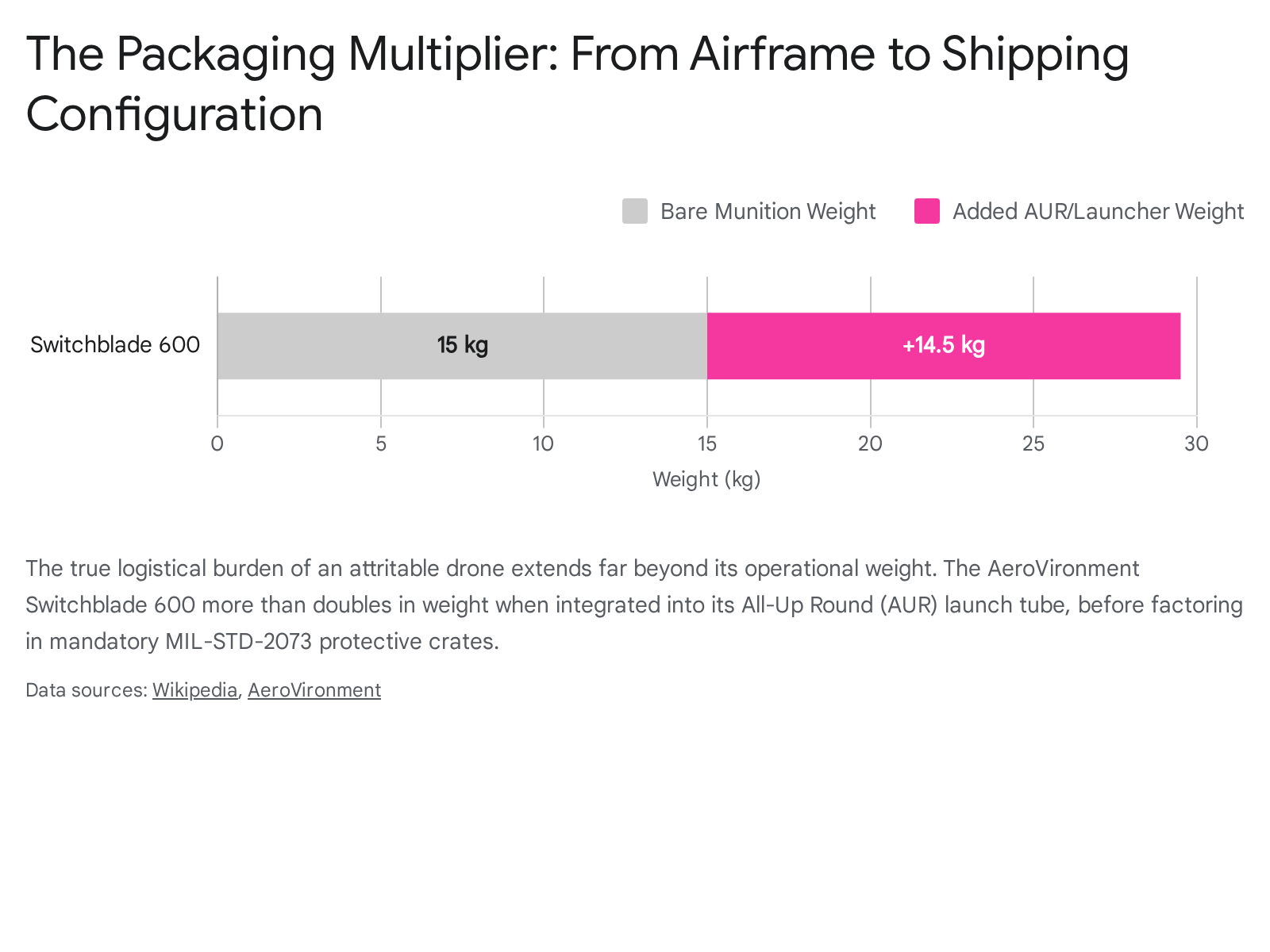
In response to these vulnerabilities, the United States demonstrated a profound strategic pivot during the same conflict. United States Central Command integrated hundreds of Low-cost Uncrewed Combat Attack Systems into offensive operations.5 These platforms, featuring autonomy, anti-jamming capabilities, and a unit cost under $55,000, proved highly effective in saturating enemy defenses.5 The success of Operation Epic Fury, which saw over 13,000 targets struck in just 38 days, relied heavily on this layered approach of high-end command platforms and low-cost attritable swarms.4 Additionally, the United States Army recently placed a $186 million order for AeroVironment’s Switchblade 600 Block 2 loitering munitions.27 This next-generation munition, capable of autonomous target recognition and boasting an extended endurance of over 50 minutes and a range exceeding 110 kilometers, confirms a firm commitment to long-range, anti-armor precision at the tactical edge.27

4.2 Ukraine

Ukraine ranks second due to its unprecedented role as the global laboratory for modern drone warfare. Lacking the massive defense budgets of global superpowers, Ukraine has achieved remarkable success through ruthless innovation and a mastery of attrition economics. The Ukrainian government allocated approximately $2.6 billion for drone procurement in 2025, aiming to purchase 4.5 million first-person view drones, an increase from 1.5 million purchased in 2024, with 96 percent sourced directly from domestic manufacturers.1 This massive domestic production scale ensures that the nation maintains operational persistence despite extreme battlefield attrition.

The operational outcomes are staggering. In March 2026, the Ukrainian armed forces reported that drones accounted for 96 percent of all Russian casualties, with a monthly total exceeding 35,000 casualties.29 The strategic integration of drones has allowed Ukraine to maintain a 1:5 kill-to-loss ratio against Russian forces, inflicting roughly 150 to 157 casualties per square kilometer captured by the adversary.7 The sheer volume of drone strikes, which constitute an estimated 80 to 90 percent of all successful target destructions, demonstrates a complete doctrinal shift toward unmanned mass.7

Ukraine has also excelled in developing low-cost countermeasures against asymmetric threats. Facing saturation attacks from Russian Shahed drones, Ukraine produced over 100,000 interceptor drones in 2025.6 Costing only $3,000 to $5,000 apiece, these interceptors rely on the tactic of manually ramming incoming threats, a method that accounts for downing one in three Russian aerial targets and vastly improving the economic exchange ratio compared to firing million-dollar Patriot missiles.6 The ingenuity of Ukrainian operators extends into the maritime and ground domains. Networked unmanned ground vehicles have transitioned from experimentation to active fielding for logistics and fire support missions, while AI-powered Magura-7 surface drones equipped with air-to-air missiles successfully recorded the world’s first shootdown of fighter aircraft, downing two Russian Sukhoi Su-30 jets over Novorossiysk and Crimea in May 2025.6 Ukraine’s decentralized communications model, utilizing dispersed radio nodes, further protects these operations from electronic jamming.30 This relentless, cost-effective innovation secures Ukraine’s position at the forefront of applied unmanned warfare.

4.3 Russia

Russia commands the third position driven by its immense industrial capacity, its deep integration of drone logistics, and its commitment to large-scale, deep-strike drone operations. While initially reliant on imports, Russia has aggressively localized its production capabilities, most notably at the Alabuga Special Economic Zone in the Republic of Tatarstan.9 This facility has undergone rapid expansion, featuring domed structures of 2,200 square meters and 900 square meters constructed specifically to shield manufacturing activities.32 This localized capacity is central to the domestic manufacturing of the Geran-2, a variant of the Iranian Shahed-136, enabling Russia to produce over 6,000 one-way attack drones in 2024, with goals to increase production significantly through 2025.9

Russia’s operational strategy heavily emphasizes cost-imposition and the exhaustion of adversary defenses. To maximize the economic drain on Ukrainian air defense systems, Russia has evolved its tactics to include a high percentage of decoys.33 Systems like the polystyrene and plywood Gerbera and Parodya decoys cost approximately $10,000 each and currently represent roughly 40 percent of all Russian drone launches.33 By mixing these decoys with armed Geran-2s in synchronized waves, Russian forces force defenders to expend scarce and expensive interceptors, acting as combat reconnaissance to pave the way for subsequent ballistic and cruise missile strikes.33 In April 2026, Russia launched a coordinated strike involving 324 drones and multiple Iskander-M ballistic missiles, underscoring this saturation strategy.35

On the tactical front, Russia has utilized the ZALA Lancet-3 loitering munition against high-value targets, requiring specialized operators and target designation from reconnaissance assets.36 However, the Lancet highlights the constraints of modern drone economics. Its $35,000 unit cost and the requirement for highly specialized operators have limited its scalable deployment compared to cheaper alternatives.31 Consequently, Russian forces have increasingly pivoted to cheaper alternatives like the Molniya strike drone to maintain mass on the frontlines.31 Despite challenges in high-tech component acquisition and personnel generation, Russia’s sheer volume of production and brutal application of attrition warfare keep it firmly near the top of the global hierarchy.

4.4 China

China ranks fourth, combining vast manufacturing supremacy with a highly focused strategy on intelligentized warfare and export dominance. Chinese policymakers approach artificial intelligence not merely as an auxiliary tool but as a general-purpose technology meant for deep physical integration across all military and civilian platforms.8 The nation operates a massive fleet of 8,000 to 9,000 estimated persistent drones.22 While open-source analysis suggests China maintains a cautious posture regarding achieving short-term overall parity with the United States in frontier artificial intelligence models, its military is aggressively testing autonomous swarm capabilities, demonstrating exercises where a single soldier manages 200 autonomous vehicles simultaneously.8 Furthermore, the Chinese navy has integrated artificial intelligence algorithms into guided-missile frigates like the Qinzhou to illuminate blind spots during air defense engagements.19

China’s influence is profoundly felt through its export of the Wing Loong series, developed by the Aviation Industry Corporation of China and the Chengdu Aircraft Design Institute.37 The Wing Loong II, a medium-altitude long-endurance platform with satellite link capability, has seen extensive use globally and has recently been deployed by the Chinese Coast Guard for maritime patrols.38 This deployment marks a critical escalation in projecting state power and utilizing advanced surveillance platforms for paramilitary operations in contested waters around Taiwan.39

The scope of China’s strategic ambitions was firmly underscored by a monumental $5 billion agreement signed in 2026 with Saudi Arabia’s General Authority for Military Industries.40 This deal establishes a full assembly line in Jeddah capable of producing 48 Wing Loong-3 unmanned combat aerial vehicles annually, shifting Riyadh’s procurement strategy amid regional conflict.40 The Wing Loong-3 is a massive platform capable of flying 10,000 kilometers with a maximum take-off weight of 6,200 kilograms, integrating intelligent recognition systems capable of locking onto targets in 0.3 seconds.41 This industrial partnership represents a significant transfer of technology, comprehensive training pipelines, and a calculated move by Beijing to embed its aerospace manufacturing capabilities within the strategic infrastructure of key regional powers, effectively altering the drone power balance in the Middle East.43

4.5 Islamic Republic of Iran

Iran occupies the fifth position, recognized primarily as the architect of the low-cost, high-impact drone warfare model that currently defines global conflict. The cornerstone of Iran’s influence is the Shahed series of loitering munitions, particularly the Shahed-136 and Shahed-131.9 Produced at an estimated unit cost of $20,000 to $35,000, these platforms lack the exquisite sensors and survivability of Western systems, but they compensate through sheer volume, simple pre-programmed navigation, and undeniable cost-effectiveness.6 The Shahed-136, carrying a 50-kilogram warhead, has forced militaries globally to rethink air defense architecture.33

Iran’s strategic doctrine leverages these platforms to project power asymmetrically, creating severe sustainment crises for adversaries forced to intercept them with multimillion-dollar munitions.18 This approach proved highly disruptive globally, fueled by extensive proliferation and technology transfers to state and non-state actors alike, including large-scale technology transfers to Russia for domestic Geran-2 production.9

However, Iran’s ranking reflects a recent and severe degradation of its domestic capabilities. During the 2026 Operation Epic Fury, coordinated strikes shattered Iran’s defense industrial base.4 Open-source reports indicate that over 10,200 total air sorties systematically dismantled more than two-thirds of Iran’s drone and missile production facilities.4 The campaign involved strikes on over 1,450 defense and industrial base targets and approximately 800 attack drone targets.4 Furthermore, United States and allied integrated air defense systems successfully intercepted over 1,000 incoming attack drones and 700 ballistic missiles during the 38-day conflict, achieving interception rates between 80 percent and 90 percent.4 While Iran’s theoretical model of attrition warfare remains highly influential, its physical capacity to generate and deploy mass has been critically compromised, halting its upward momentum in the global rankings.

4.6 Turkey

Turkey secures the sixth spot by successfully merging cost-effective manufacturing with cutting-edge artificial intelligence, creating highly exportable platforms that have proven decisive in multiple theaters. Operating a fleet of 2,500 to 3,000 drones, Turkish defense contractors, notably Baykar and STM, have pioneered the development of autonomous systems designed to operate in highly contested environments.22

In early 2026, STM announced the successful execution of Turkey’s first live-fire drone swarm attack using 20 KARGU rotary-wing loitering munitions.21 The KARGU swarm operated autonomously, utilizing distributed intelligence to navigate, split into sub-swarms, and strike targets simultaneously without reliance on global navigation satellite systems.21 The system features electronic warfare resistance and mission continuity algorithms despite attrition.21

Concurrently, Baykar unveiled the K2 Kamikaze unmanned aerial vehicle, a fixed-wing loitering munition with a range exceeding 2,000 kilometers, a 200-kilogram warhead, and a maximum take-off weight of 800 kilograms.20 During multi-sortie tests over the Gulf of Saros in March 2026, a swarm of five K2 platforms demonstrated advanced artificial intelligence synergy, executing complex formation flights alongside an AKINCI unmanned combat aerial vehicle.49 The K2 embodies Turkey’s strategic intent, which is to field high-impact platforms that deliver cruise missile-like effects at a fraction of the cost, utilizing terrain-referenced visual navigation to bypass severe electronic warfare jamming.20 Supported by the continued global demand for systems like the Bayraktar TB2 and the recent successful operational demonstration of the Bayraktar TB3 aboard the TCG ANADOLU during NATO’s Steadfast Dart 2026 exercise, Turkey maintains a highly robust and innovative drone industrial base.52

4.7 South Korea

South Korea is ranked seventh, driven by an urgent national mandate to integrate unmanned mass into its ground forces to counter regional asymmetric threats. Facing demographic challenges and a rapidly evolving threat landscape, the Ministry of National Defense approved a $44.7 billion defense budget, or 65.86 trillion Korean Won, for 2026, heavily emphasizing force modernization and the three-axis defense system.54

The cornerstone of South Korea’s strategy is the initiative to foster 500,000 drone warriors.14 This policy aims to embed drone operating skills across all ranks, ensuring that piloting an unmanned system becomes as routine as handling a standard-issue K2 rifle.56 To achieve this, the defense ministry expanded its training budget to $22 million, or 33 billion Korean Won, in 2026, facilitating the rapid procurement of 11,000 to 17,000 commercial training drones, with a goal of acquiring 60,000 units by 2029.55 The Republic of Korea Army’s 36th Infantry Division in Wonju serves as the central test bed for these pilot programs.14

Beyond mass infantry training, South Korean defense contractors are developing highly sophisticated platforms to enhance intelligence and strike capabilities. At the 2026 Drone Show Korea, LIG Nex1 showcased advanced artificial intelligence-driven swarm drones, the Block-I small unmanned aerial vehicle response system, and autonomous surface vehicles like the Sea Sword.59 The Block-I system acts as a soft-kill jammer capable of emitting signals to deviate paths or induce crashes of enemy drones.61 South Korea’s ranking reflects its aggressive, society-wide integration of drone technology, prioritizing rapid commercial acquisition to build an immediate, scalable capability.14

4.8 India

India holds the eighth position, characterized by a rapid acceleration in domestic innovation and the strategic procurement of advanced autonomous systems to secure its contested borders. Operating a fleet of 2,000 to 2,200 systems, the Indian military has recognized the necessity of bridging the capability gap with regional competitors by prioritizing cross-service integration and asymmetric tools.22 The Indian armed forces have integrated artificial intelligence across command-and-control systems, predictive maintenance, and targeting, ensuring that ultimate command responsibility remains with humans.62

The Indian Army has aggressively expanded its tactical footprint, establishing 19 dedicated drone training centers in 2026 and inaugurating a state-of-the-art laboratory at the Madras Regimental Centre.64 Operationally, India has demonstrated a commitment to kinetic and non-kinetic measures. Following the Pahalgam terror attack in 2025, India launched Operation Sindoor, a tri-services mission employing indigenous unmanned aerial systems to execute precision strikes on nine terrorist camps and neutralize enemy radar units.65 Additionally, India has advanced its collaborative swarm technology. In early 2026, startup Newspace Research Technologies successfully flight-tested the Sheshnaag-150, a long-range collaborative attack swarming system.66 Designed for saturation attacks, the Sheshnaag-150 boasts an operational range of over 1,000 kilometers, a five-hour endurance, and the ability to autonomously identify and engage targets with a 25 to 40 kilogram warhead, signifying a major leap in indigenous software development.66

Furthermore, India has bolstered its intelligence and surveillance capabilities through strategic international partnerships. In January 2026, India selected Shield AI to supply the Indian Army with V-BAT unmanned aircraft systems, uniquely integrating Shield AI’s Hivemind autonomy software.67 This allows Indian forces to deploy long-endurance platforms in contested environments without relying on runways or continuous communication links, essential for intelligence, surveillance, and reconnaissance operations in challenging terrains like the Himalayas.67

4.9 Taiwan (Republic of China)

Taiwan occupies the ninth rank, driven by an existential imperative to develop an asymmetric porcupine strategy against the overwhelming numerical superiority of the People’s Liberation Army. Recognizing that traditional air defense missiles could be rapidly depleted by millions of low-cost Chinese drone swarms, Taiwan is heavily investing in affordable interception methods and counter-drone measures.12

Central to this defense posture is the development of the T-Dome, a $32 billion integrated, multi-layered air defense network inspired by Israel’s Iron Dome and the United States’ Golden Dome.12 First announced in October 2025, the T-Dome aims to unify various defense assets, including incoming United States-supplied systems and domestic interception units, to detect, track, and intercept missiles, aircraft, and drones across multiple altitudes while ignoring harmless decoys.12

In the offensive and deterrent domain, the National Chung-Shan Institute of Science and Technology has developed the Chien Hsiang anti-radiation loitering munition.71 Measuring 1.2 meters long with a 2-meter wingspan, the Chien Hsiang has a loiter time of 100 hours, a top speed of 185 kilometers per hour, and a range of 1,000 kilometers.71 It is specifically designed to autonomously hunt and destroy enemy radar installations using an anti-radiation seeker, providing a critical deterrent capability against adversary air defense networks.71 The institute is also planning to develop low-cost munitions domestically to counter enemy rockets, with test flights expected soon.68 Taiwan’s approach illustrates how smaller nations must prioritize specialized, defensive unmanned integration over broad force projection.

4.10 Poland

Poland rounds out the top ten, distinguished by its massive and rapid capital deployment to secure its eastern borders following incursions by Russian unmanned systems.73 Operating a fleet of 1,000 to 1,200 systems, Poland does not possess the massive indigenous drone manufacturing base of a nation like Turkey, but its strategic positioning, integration with NATO standards, and purchasing power make it a formidable actor.22

In early 2026, the Polish government announced the allocation of a massive $51.6 billion loan via the European Union’s Security Action for Europe program, dedicating a significant portion to defense modernization between 2026 and 2030.13 The centerpiece of this effort is the San program, which aims to establish a comprehensive anti-drone wall along its borders to intercept cross-border drone activity.13 Utilizing the Kongsberg-PGZ consortium, Poland plans to deploy a dozen anti-drone batteries rapidly, with the first units scheduled to enter service as early as 2026 and the final battery expected by 2027.13 Poland is also balancing its maritime capabilities, evaluating the procurement of Swedish Saab A26 submarines under the Orka program, though debate continues over the exclusion of cruise missile armaments in favor of classical torpedo configurations.76 Poland’s ranking underscores the critical importance of massive, rapid procurement and the implementation of robust defensive drone architectures in high-threat geopolitical environments.

5.0 Global Industrial Base and Vendor Ecosystem

The capabilities demonstrated by the top ten nations are underpinned by a robust and highly competitive global industrial base. The ecosystem includes legacy defense contractors transitioning to autonomy, alongside agile technology firms specializing in artificial intelligence and edge computing. The market dynamics reflect a shift toward companies that can produce scalable, interoperable, and attritable systems.

The following table summarizes key vendors, their flagship products, and their production availability status based on current market intelligence.

VendorFlagship PlatformPrimary FunctionProduction and Stock StatusVendor Official URL
General AtomicsMQ-9A Reaper / SkyGuardianHigh-altitude long-endurance intelligence and strikeIn active production; 575 units built as of 2026.ga-asi.com
AeroVironmentSwitchblade 600 Block 2Precision tactical loitering munitionIn active production; fulfilling $186M US Army order.avinc.com
BaykarBayraktar TB2 / K2 Kamikaze / AKINCIMedium-altitude strike and AI swarm munitionsIn active mass production; extensive export fulfillment.baykartech.com
Shield AIV-BAT (with Hivemind autonomy)Vertical takeoff, GNSS-denied reconnaissanceIn active production; deployed by Indian Army and Netherlands Navy.shield.ai
STMKARGU Rotary-Wing UAVPrecision attack and autonomous swarm operationsIn active production; exported to over 15 countries.stm.com.tr
LIG Nex1Sea Sword / Block-I JammerUnmanned surface operations and counter-drone systemsIn active production; integrated into South Korean defense infrastructure.lignex1.com

Note: Vendor apparel and civilian merchandise availability varies independently of military hardware. For example, the Baykar store lists the Bayraktar KIZILELMA Patch and AKINCI Pin as out of stock, while the TB2 Pin remains available, but this does not reflect the robust production lines of their actual combat aircraft.77

The financial markets further validate the immense growth in this sector. Major public defense companies involved in unmanned systems carry massive market capitalizations, indicating strong institutional confidence. Airbus SE leads with a market capitalization of approximately $176.48 billion, followed by Lockheed Martin at $140.17 billion, and Northrop Grumman at nearly $100.05 billion.79 Pure-play drone operators and specialized defense technology firms also show robust valuations, with Kratos Defense and Security Solutions valued at nearly $15.42 billion and AeroVironment at $11.82 billion.79 The inclusion of these companies in thematic exchange-traded funds, such as the ARK Autonomous Technology and Robotics ETF, signals ongoing interest in scalable, artificial intelligence-enabled uncrewed systems.80

6.0 Strategic Conclusions and Future Outlook

The landscape of military drone application in 2026 confirms a definitive shift away from a paradigm dominated solely by high-cost, multi-role platforms. While systems like the MQ-9 Reaper maintain utility in permissive environments, maritime surveillance, or specialized command roles, the vanguard of modern warfare belongs to attritable mass, intelligent swarms, and brutal cost-imposition strategies.

Nations that fail to adapt their procurement structures will find their expensive interceptor magazines rapidly depleted by swarms of low-cost munitions. Future tactical overmatch will require a delicate balance. Militaries must maintain high-end platforms for coordination while rapidly generating massive volumes of inexpensive, artificial intelligence-enabled tactical drones. Furthermore, as global navigation satellite systems become increasingly contested through spoofing and jamming, the integration of edge-computing, artificial intelligence, and visual terrain navigation will be the defining technical differentiator between operational success and catastrophic failure.

The rapid industrial expansion seen in countries like China, Russia, and Turkey, contrasted with the agile, decentralized innovation in Ukraine and the massive scale adjustments in the United States and South Korea, sets the stage for a highly volatile and technologically accelerated future. The economic logic of the battlefield has permanently changed, dictating that victory relies not just on who has the best technology, but who can produce good enough technology in overwhelming quantities.

7.0 Appendix: Methodology Documentation

The research methodology utilized for this report relied on a qualitative and quantitative synthesis of open-source intelligence and authoritative defense industry reporting updated through April 2026.

The analytical process involved aggregating data from major defense budgets, specialized market research forecasts, and combat outcome reports from recent conflicts, including the war in Ukraine and Operation Epic Fury. Fleet size estimations were derived from compiled defense analyses and triangulated against known production capacities of major manufacturing hubs, such as the Alabuga Special Economic Zone in Russia and Aviation Industry Corporation of China facilities.9

To establish the rankings, data points were categorized into three primary dimensions: Theoretical Foundation, Research and Development Investment, and Demonstrated Outcomes. Countries were evaluated not merely on gross spending, but on the efficiency of their capital deployment regarding cost-imposition economics. Success was measured by a nation’s ability to inflict disproportionate costs on adversaries, maintain high kill-to-loss ratios through unmanned systems, and successfully integrate autonomous networking software into their tactical doctrine.

All vendor status updates and product availabilities were verified against contemporary defense procurement announcements and open-source validation to ensure that listed products are actively deployed or in stated production pipelines. Stock valuations and market capitalizations were sourced from public financial indices relevant to aerospace and defense equities in 2026.


Please share the link on Facebook, Forums, with colleagues, etc. Your support is much appreciated and if you have any feedback, please email us in**@*********ps.com. If you’d like to request a report or order a reprint, please click here for the corresponding page to open in new tab.


Sources Used

  1. Military Drones Report 2026 [Free PDF] | StartUs Insights, accessed April 18, 2026, https://www.startus-insights.com/innovators-guide/military-drones-report/
  2. Global Ai In Drone Market Research Report: Forecast (2026-2032) – MarkNtel Advisors, accessed April 18, 2026, https://www.marknteladvisors.com/research-library/ai-in-drone-market.html
  3. Why 2026 will be a big year for drones | VettaFi, accessed April 18, 2026, https://www.vettafi.com/insights/indexing-article-why-2026-will-be-a-big-year-for-drones
  4. Peace Through Strength: Operation Epic Fury Crushes Iranian Threat as Ceasefire Takes Hold – The White House, accessed April 18, 2026, https://www.whitehouse.gov/releases/2026/04/peace-through-strength-operation-epic-fury-crushes-iranian-threat-as-ceasefire-takes-hold/
  5. Centcom commander says ‘hundreds’ of U.S. drones are involved in Iran war, accessed April 18, 2026, https://defensescoop.com/2026/04/07/us-launches-more-attack-drones-iran-epic-fury-adm-cooper-centcom/
  6. Monthly Drone Report – March 2026 | SOF News, accessed April 18, 2026, https://sof.news/drones/march-2026/
  7. 1:5 kill ratio: Ukraine inflicts heavy Russian losses using drones, says Finnish president, accessed April 18, 2026, https://breakingdefense.com/2026/04/15-kill-ratio-ukraine-inflicts-heavy-russian-losses-using-drones-says-finnish-president/
  8. Competing AI strategies for the US and China | Brookings, accessed April 18, 2026, https://www.brookings.edu/articles/competing-ai-strategies-for-the-us-and-china/
  9. Russia doubles down on the Shahed – The International Institute for Strategic Studies, accessed April 18, 2026, https://www.iiss.org/online-analysis/military-balance/2025/04/russia-doubles-down-on-the-shahed/
  10. Asymmetric Warfare and the Rise of Low-Tech Defense: Lessons …, accessed April 18, 2026, https://atlasinstitute.org/asymmetric-warfare-and-the-rise-of-low-tech-defense-lessons-and-opportunities-for-europe-to-enhance-strategic-autonomy/
  11. Epic Fury Reveals Vulnerabilities in the Axis Behind Iran, accessed April 18, 2026, https://jinsa.org/jinsa_report/epic-fury-reveals-vulnerabilities-in-the-axis-behind-iran/
  12. The Perfect Swarm: Taiwan’s T-Dome in the Era of Drone Warfare – Small Wars Journal, accessed April 18, 2026, https://smallwarsjournal.com/2026/03/17/taiwan-t-dome-drone-warfare/
  13. Poland picks Kongsberg-PGZ consortium to build anti-drone ‘wall’ – Defense News, accessed April 18, 2026, https://www.defensenews.com/global/europe/2026/02/02/poland-picks-kongsberg-pgz-consortium-to-build-anti-drone-wall/
  14. S. Korean military to boost unmanned capabilities by training 500000 ‘drone warriors’, accessed April 18, 2026, https://www.koreaherald.com/article/10568760
  15. The End of the Exposed Warfighter—Cost Asymmetry and Attrition Economics in Modern Combat – Preprints.org, accessed April 18, 2026, https://www.preprints.org/manuscript/202601.0190
  16. Drones and the Changing Character of War – USAWC Press, accessed April 18, 2026, https://press.armywarcollege.edu/cgi/viewcontent.cgi?article=3369&context=parameters
  17. Drones Are Game-Changing, But They Are Not the Answer to the Inherent Challenges of Land War, accessed April 18, 2026, https://smallwarsjournal.com/2025/08/06/drones-are-game-changing/
  18. The dangerous economics of drone warfare – Resilience Media, accessed April 18, 2026, https://resiliencemedia.co/the-dangerous-economics-of-drone-warfare/
  19. Outpaced by the US, China’s military places selective bets on artificial intelligence, accessed April 18, 2026, https://www.defensenews.com/global/asia-pacific/2026/04/07/outpaced-by-the-us-chinas-military-places-selective-bets-on-artificial-intelligence/
  20. Turkey’s Baykar tests swarm behavior of its K2 one-way attack drone – Defense News, accessed April 18, 2026, https://www.defensenews.com/global/europe/2026/03/16/turkeys-baykar-tests-swarm-behavior-of-its-k2-one-way-attack-drone/
  21. Türkiye Just Launched Its First Live-Fire KARGU Drone Swarm – YouTube, accessed April 18, 2026, https://www.youtube.com/shorts/2ssthO09Nzk
  22. 10 Countries Leading The Way In Military Drones – Mavdrones, accessed April 18, 2026, https://www.mavdrones.com/top-10-country-leading-military-drones-drone-news/
  23. Top 10 countries with most military drones in the world – The Times of India, accessed April 18, 2026, https://timesofindia.indiatimes.com/world/top-10-countries-with-most-military-drones-in-the-world/articleshow/113983550.cms
  24. Top 10 Most Advanced Military Drones in the World Right Now – insideFPV, accessed April 18, 2026, https://insidefpv.com/blogs/blogs/top-10-most-advanced-military-drones-in-the-world-right-now
  25. MQ-9A Reaper (Predator B) | General Atomics Aeronautical Systems Inc., accessed April 18, 2026, https://www.ga-asi.com/remotely-piloted-aircraft/mq-9a
  26. MQ-9 Reaper > Air Force > Fact Sheet Display, accessed April 18, 2026, https://www.af.mil/About-Us/Fact-Sheets/Display/Article/104470/mq-9-reaper/
  27. AV Receives $186 Million U.S. Army Delivery Order for Next-Generation Switchblade Systems – Investor Relations | AeroVironment, Inc., accessed April 18, 2026, https://investor.avinc.com/news-releases/news-release-details/av-receives-186-million-us-army-delivery-order-next-generation
  28. Switchblade 600 Block 2 – AeroVironment, Inc., accessed April 18, 2026, https://www.avinc.com/lms/switchblade-600-block2
  29. Russia suffers ‘record’ soldier casualties as Ukraine ups drone production, accessed April 18, 2026, https://www.aljazeera.com/news/2026/4/10/ukraine-says-russia-suffers-record-losses-of-soldiers
  30. Technological Evolution on the Battlefield – CSIS, accessed April 18, 2026, https://www.csis.org/analysis/chapter-9-technological-evolution-battlefield
  31. Russian Force Generation and Technological Adaptations Update July 25, 2025, accessed April 18, 2026, https://understandingwar.org/research/russia-ukraine/russian-force-generation-and-technological-adaptations-update-july-25-2025/
  32. A Closer Look at the Yelabuga UAV Factory – Beyond Parallel – CSIS, accessed April 18, 2026, https://beyondparallel.csis.org/a-closer-look-at-the-yelabuga-uav-factory/
  33. Shahed is evolving threat that will keep haunting Ukraine. And rest of us, accessed April 18, 2026, https://kyivindependent.com/the-shahed-is-an-evolving-threat-that-will-keep-haunting-ukraine-and-the-rest-of-us/
  34. Russian Offensive Campaign Assessment, April 16, 2026, accessed April 18, 2026, https://understandingwar.org/research/russia-ukraine/russian-offensive-campaign-assessment-april-16-2026/
  35. Russian Offensive Campaign Assessment, April 15, 2026, accessed April 18, 2026, https://understandingwar.org/research/russia-ukraine/russian-offensive-campaign-assessment-april-15-2026/
  36. ZALA Lancet – Wikipedia, accessed April 18, 2026, https://en.wikipedia.org/wiki/ZALA_Lancet
  37. CAIG Wing Loong – Wikipedia, accessed April 18, 2026, https://en.wikipedia.org/wiki/CAIG_Wing_Loong
  38. CAIG Wing Loong II – Wikipedia, accessed April 18, 2026, https://en.wikipedia.org/wiki/CAIG_Wing_Loong_II
  39. China Deploys Wing Loong II Drones for Coast Guard Patrols Around Taiwan, accessed April 18, 2026, https://www.armyrecognition.com/news/navy-news/2026/china-deploys-wing-loong-ii-drones-for-coast-guard-patrols-around-taiwan
  40. Saudi Arabia Signs $5B Deal for Chinese Wing Loong-3 Drones – House of Saud, accessed April 18, 2026, https://houseofsaud.com/saudi-arabia-china-5-billion-wing-loong-3-drone-factory-jeddah/
  41. Rs 459667500000: Bad news for US as Saudi Arabia inks deal with… for drones amid Iran war tensions, advanced UAV capable of… – News24, accessed April 18, 2026, https://news24online.com/world/rs-459667500000-bad-news-for-us-as-saudi-arabia-inks-deal-with-china-for-drones-amid-iran-war-tensions-advanced-uav-capable-of-lightning-fast-attacks/768177/
  42. Chengdu Wing Loong-3 – Wikipedia, accessed April 18, 2026, https://en.wikipedia.org/wiki/Chengdu_Wing_Loong-3
  43. China–Saudi $5 Billion Wing Loong-3 Drone Factory Deal Signals Major Shift in Middle East Military Power Balance – Defence Security Asia, accessed April 18, 2026, https://defencesecurityasia.com/en/china-saudi-5-billion-wing-loong-3-drone-factory-middle-east-uav-power-balance/
  44. U.S. military to continue dispatching counter-drone capabilities to the Middle East | DefenseScoop, accessed April 18, 2026, https://defensescoop.com/2026/04/10/drone-defense-middle-east-centcom-jiatf-401/
  45. Background on Iran and Operation Epic Fury – Republican Policy Committee |, accessed April 18, 2026, https://republicanpolicy.house.gov/sites/evo-subsites/republicanpolicy.house.gov/files/evo-media-document/rpc-iran-operation-epic-fury-memo.pdf
  46. The proliferation of AI-enabled military technology in the Middle East, accessed April 18, 2026, https://www.iiss.org/online-analysis/charting-middle-east/2026/04/the-proliferation-of-ai-enabled-military-technology-in-the-middle-east/
  47. STM – KARGU Combat Proven Rotary Wing Loitering Munition System, accessed April 18, 2026, https://www.stm.com.tr/en/kargu-autonomous-tactical-multi-rotor-attack-uav
  48. Baykar Unveils K2: A Cruise Missile That Costs Like A Drone, accessed April 18, 2026, https://dronexl.co/2026/03/22/baykar-k2-cruise-missile-drone/
  49. K2 KAMIKAZE UAV TAKES THE FIELD – Baykar, accessed April 18, 2026, https://baykartech.com/en/press/k2-kamikaze-uav-takes-the-field/
  50. Baykar’s K2 Kamikaze UAV Completes Swarm Test with AKINCI – TURDEF, accessed April 18, 2026, https://turdef.com/article/baykar-s-k2-kamikaze-uav-completes-swarm-test-with-akinci
  51. Baykar’s K2 Kamikaze UAV completes autonomous swarm flight tests, accessed April 18, 2026, https://www.airforce-technology.com/news/baykar-k2-kamikaze-uav-flight/
  52. Turkey’s first tech company to develop indigenous UAVs – BAYKAR Technology, accessed April 18, 2026, https://baykartech.com/en/
  53. Unmanned Aerial Vehicle Systems – BAYKAR Technology, accessed April 18, 2026, https://baykartech.com/en/unmanned-aerial-vehicle-systems/
  54. Military’s 2026 plan features 3-axis system, 500K war drones – Korea.net, accessed April 18, 2026, https://www.korea.net/NewsFocus/policies/view?articleId=284412
  55. South Korea approves defense budget increase – The Defence Blog, accessed April 18, 2026, https://defence-blog.com/south-korea-approves-defense-budget-increase/
  56. South Korea expands drone training to equip every squad by 2029 – CHOSUNBIZ, accessed April 18, 2026, https://biz.chosun.com/en/en-policy/2026/04/16/HPSAW77X7ZCBXC3VFZ4COON53E/
  57. South Korea to Train 500000 ‘Drone Warriors’ as Military Expands Unmanned Capabilities, accessed April 18, 2026, http://koreabizwire.com/south-korea-to-train-500000-drone-warriors-as-military-expands-unmanned-capabilities/332147
  58. South Korea to Acquire 11,000 Drones for Military Training – GuruFocus, accessed April 18, 2026, https://www.gurufocus.com/news/8791422/south-korea-to-acquire-11000-drones-for-military-training?mobile=true%3Fmobile%3Dtrue&mobile=true%3Fmobile%3Dtrue%3Fmobile%3Dtrue&mobile=true&mobile=true
  59. Unmanned Systems & Future Warfare – LIG Defense&Aerospace, accessed April 18, 2026, https://www.ligdefenseaerospace.com/eng/business/unmnFtrwList.do
  60. LIG Nex1 Unveils AI Swarm Drone at DSK 2026 – Businesskorea, accessed April 18, 2026, https://www.businesskorea.co.kr/news/articleView.html?idxno=263808
  61. News – LIG Defense&Aerospace, accessed April 18, 2026, https://www.ligdefenseaerospace.com/eng/news/nex1newsNewView.do?bbs_no=7104
  62. AI in Modern Warfare: India’s Strategic Challenges and Opportunities, accessed April 18, 2026, https://www.orfonline.org/english/expert-speak/ai-in-modern-warfare-india-s-strategic-challenges-and-opportunities
  63. India’s Approach to Military AI – CSDR, accessed April 18, 2026, https://csdronline.com/wp-content/uploads/2026/02/CSDR_Feb-26_Indias-Approach-to-Military-AI-1.pdf
  64. Indian Army Soars into the Future: Every Soldier to be a Drone Operator by 2027, accessed April 18, 2026, https://markets.financialcontent.com/wral/article/tokenring-2025-11-5-indian-army-soars-into-the-future-every-soldier-to-be-a-drone-operator-by-2027
  65. Operation Sindoor: The Emergence of India’s Drone Doctrine, accessed April 18, 2026, https://www.dronefederation.in/media-hub/operation-sindoor-the-emergence-of-india’s-drone-doctrine
  66. India’s Own Long-Range Swarming Killer Drone Flies – Livefist, accessed April 18, 2026, https://www.livefistdefence.com/indian-own-long-range-swarming-killer-drone-flies/
  67. Shield AI selected to provide V-BAT unmanned aircraft systems and Hivemind autonomy software to the Indian Army, accessed April 18, 2026, https://shield.ai/shield-ai-selected-to-provide-v-bat-unmanned-aircraft-systems-and-hivemind-autonomy-software-to-the-indian-army/
  68. NCSIST plans low-cost munitions to counter China’s potential attack – OCAC.R.O.C.(TAIWAN) – News, accessed April 18, 2026, https://www.ocac.gov.tw/OCAC/Pages/Detail.aspx?nodeid=329&pid=84595313
  69. T-Dome: political instrument or operational solution? | Taiwan Security and Diplomacy Program | Foundation for Strategic Research | FRS, accessed April 18, 2026, https://www.frstrategie.org/en/programs/taiwan-security-and-diplomacy-program/t-dome-political-instrument-or-operational-solution-2026
  70. to enhance Taiwan’s multi-layer air defense capabilities – OCAC.R.O.C.(TAIWAN) – News, accessed April 18, 2026, https://www.ocac.gov.tw/OCAC/Pages/Detail.aspx?nodeid=329&pid=80273032
  71. NCSIST Chien Hsiang – Wikipedia, accessed April 18, 2026, https://en.wikipedia.org/wiki/NCSIST_Chien_Hsiang
  72. Loitering munition – Wikipedia, accessed April 18, 2026, https://en.wikipedia.org/wiki/Loitering_munition
  73. Poland signs contract for anti-drone system in wake of Russian incursions, accessed April 18, 2026, https://www.globaldefensecorp.com/2026/02/03/poland-signs-contract-for-anti-drone-system-in-wake-of-russian-incursions/
  74. A major anti-drone program is being introduced in the [Polish] military. : r/europe – Reddit, accessed April 18, 2026, https://www.reddit.com/r/europe/comments/1qkwa56/a_major_antidrone_program_is_being_introduced_in/
  75. Poland unveils detailed defense spending for $51B in EU SAFE loans, accessed April 18, 2026, https://breakingdefense.com/2026/02/poland-unveils-detailed-defense-spending-for-51b-in-eu-safe-loans/
  76. Poland Expresses Concern Over Lack of Cruise Missiles on Future Orka Submarines, accessed April 18, 2026, https://militarnyi.com/en/news/poland-concern-cruise-missiles-submarines/
  77. Bayraktar Kızılelma – Wikipedia, accessed April 18, 2026, https://en.wikipedia.org/wiki/Bayraktar_K%C4%B1z%C4%B1lelma
  78. BAYKAR Store | Products, accessed April 18, 2026, https://baykarmagaza.com/en/product/product-list/
  79. Top 10 Public Drone Companies in 2026 Ranked by Market Cap – FOREX.com, accessed April 18, 2026, https://www.forex.com/ie/news-and-analysis/top-10-public-drone-companies-in-2026-ranked-by-market-cap/
  80. Best Drone Stocks to Buy in 2026 and How to Invest | The Motley Fool, accessed April 18, 2026, https://www.fool.com/investing/stock-market/market-sectors/industrials/drone-stocks/
  81. What Is the Best Drone Stock to Buy in 2026? RCAT Stock, DPRO Stock or the Others? – TradingKey, accessed April 18, 2026, https://www.tradingkey.com/analysis/stocks/us-stocks/261694603-drone-stock-2026-rcat-dpro-tradingkey

Analysis of Drones vs. Heavy Armor

Executive Summary

The proliferation of uncrewed aerial systems has fundamentally altered the calculus of modern mechanized warfare. Over the past three years, the battlefield has transformed into a highly transparent, sensor-saturated environment where precise, low-cost kinetic effectors have challenged the historical dominance of heavy armor. First-Person View drones and loitering munitions now act as the primary nodes for intelligence, surveillance, reconnaissance, and indirect fire. This shift has precipitated an asymmetric cost-per-effect dynamic, wherein commercially derived aerial systems costing less than a thousand dollars routinely neutralize multimillion-dollar main battle tanks.

This analysis evaluates the economic asymmetry defining the current threat landscape, assessing the structural impact on defense procurement and operational sustainment. The report explores the specific engineering adaptations required to ensure the survivability of armored formations, focusing heavily on the integration and evolution of Active Protection Systems and electronic warfare modules. By examining current vendor solutions, such as those from Rafael Advanced Defense Systems, Elbit Systems, Rheinmetall, Hensoldt, and Aselsan, the text details how hard-kill and soft-kill countermeasures are being rapidly upgraded to defeat top-attack threats.

Furthermore, the document addresses the prevailing debate surrounding the strategic obsolescence of heavy armor. While the tactical vulnerability of tanks has undeniably increased, leading to the temporary de-mechanization and dispersal of ground forces, armored vehicles remain strategically indispensable for projecting mobile, protected firepower. Examining massive procurement initiatives, such as Poland’s aggressive expansion of its armored forces, indicates that allied militaries are heavily investing in upgraded platforms rather than abandoning the concept of armored maneuver. The analysis concludes that the future of mechanized warfare relies on the deep integration of combined arms doctrine, automated defensive technologies, and resilient, dispersed logistical networks.

1.0 Introduction to the Drone-Saturated Battlespace

The character of ground combat is undergoing a rapid technological evolution driven by the mass deployment of cheap, disposable, and networked aerial technologies.1 Traditional military doctrine, which has long relied on the shock action of armored columns, is currently lagging behind the realities of a battlespace dominated by persistent aerial surveillance and precision strike capabilities.2

1.1 The Shift in the Tactical Paradigm

In contemporary high-intensity conflicts, the battlespace is saturated with sensors to a degree previously considered impossible. Within 15 kilometers of the forward line of own troops, vehicle movement has become exceedingly difficult, and in many sectors, nearly impossible during daylight hours.3 Infantry units are frequently forced to dismount and march significant distances to their positions to avoid the high probability of detection and destruction that accompanies mechanized transport.3

This environment has been characterized as the “Uberization” of warfare, a paradigm where low-cost, on-demand weaponry provides ubiquitous fires across the operational theater.1 Drones now account for an estimated 60 to 70 percent of all battlefield losses across all categories.4 They function simultaneously as binoculars, grenades, and mortars, forming an automated nervous system that dictates the pace of fire support and movement coordination.4 In response to this persistent threat, armies have developed improvised defenses and rely heavily on camouflage, decoys, and dispersed operations.5

1.2 The Ubiquity of Sensor-Shooter Networks

The defining feature of this new paradigm is the collapse of the sensor-to-shooter timeline. Historically, calling in precision artillery required specialized forward observers, complex communication relays, and high-value munitions like the Excalibur precision artillery round, which costs approximately $100,000 per unit.6 Today, small tactical units possess organic aerial assets that provide both the target acquisition and the terminal kinetic effect. This integration allows a small cadre of operators to inflict disproportionate damage. Simulated exercises have demonstrated that a group of ten drone operators can successfully neutralize up to twenty armored vehicles in a single day, highlighting the severe threat posed to concentrated mechanized formations.7

To survive in this transparent environment, forces have resorted to de-mechanization and extreme dispersal. Large-scale operations involving battalion or regimental maneuvers have become prohibitive due to the intense requirements for integrated air defense and electronic warfare support.4 Instead, defensive operations are increasingly conducted by highly dispersed squads, where a maximum of ten personnel can effectively hold off heavily reinforced enemy companies by leveraging deep drone magazines.4 Psychologically, the battlespace has become transparent, leaving units struggling to hide from persistent surveillance and slowing the overall operational tempo.5

2.0 Economic Asymmetry and the Cost-Imposition Model

The core disruption in modern armored warfare is not merely tactical, but deeply economic. The cost-per-effect ratio has tilted heavily in favor of the offense, creating a structural dilemma for defense planners who must protect incredibly expensive assets against ubiquitous, inexpensive threats.6

2.1 The Mathematics of Attrition

The stark contrast in unit costs defines the current attrition dynamics. A standard First-Person View drone customized for lethal payload delivery ranges in price from $300 to $1,500.6 In contrast, the targets they seek to destroy are capital-intensive strategic assets. A modern infantry fighting vehicle costs between $3 million and $4 million, while a main battle tank ranges from $2 million for older, upgraded models to over $10 million for the latest Western variants.6

Empirical data from recent conflicts indicates that FPV drones are the primary driver of tank losses, accounting for approximately 65 percent of Russian tank combat losses as of early 2025.8 For advanced platforms like the T-90M, which has an estimated unit cost of $3.84 million, roughly 50 percent of confirmed losses were attributed directly to final terminal strikes by FPV drones.8

The cost disparity is staggering. Based on field estimates, it typically requires a swarm of 5 to 6 FPV drones to successfully isolate, disable, and destroy a single heavily armored unit.8 Even at the upper end of the cost spectrum, six $1,500 drones represent an investment of $9,000 to eliminate a $3 million to $10 million asset. This yields an exchange ratio that is entirely unsustainable for traditional armor procurement models. As a point of reference, a BTR-82A armored personnel carrier, valued at approximately $360,000, costs the equivalent of 300 heavy FPV drones.9 A BMP-3 infantry fighting vehicle equates to 870 drones, and a BMD-4M airborne combat vehicle equates to 1,170 drones.9

Tap Magic cutting fluid can on a metalworking machine

2.2 Component Economics and Commercial Supply Chains

The economic advantage of the drone swarm is driven by the commoditization of commercial-off-the-shelf electronics. Unlike bespoke military hardware subject to decades of rigid qualification processes, lethal drones rely on agile, iteration-heavy commercial supply chains.

High-performance components are readily available on the global retail market, currently in stock, and actively utilized by drone manufacturing hubs. For example, flight controllers designed for micro-drones, such as the(https://betafpv.com/products/f4-1s-12a-aio-brushless-flight-controller-v3-0), provide sophisticated multi-axis stabilization and motor regulation for lightweight aerial platforms.10 These boards feature built-in current meters, serial receivers, and highly capable microprocessors that easily handle the flight dynamics required for terminal dive attacks, and are priced well under $50.10

Propulsion is similarly inexpensive. High-torque brushless motors, such as the(https://emax-usa.com/products/eco-ii-2807-brushless-motor-1300kv-1500kv-1700kv), deliver the heavy-lifting capability necessary to strap shaped-charge warheads to carbon fiber frames.12 These motors are widely available in retail stock for roughly $20 per unit.12 For targeting, high-definition video transmission systems like the(https://store.dji.com/product/dji-o3-air-unit) offer exceptionally low latency and high-definition feeds over distances of several kilometers for approximately $229.14

When state-sponsored manufacturing hubs combine these components with 3D-printed payload releases and legacy anti-tank grenades, the result is a highly maneuverable precision guided munition produced at a fraction of the cost of a traditional guided missile.8

2.3 Structural Shift in Procurement

This dynamic creates a durable cost-imposition model. Cheap, iterative offensive systems force the defender to continuously invest in expensive, heavy, and complex defensive adaptations.6 Ukraine’s defense industrial base, for instance, scaled its production capacity to an estimated 200,000 drones per month in 2024, with formal plans to procure upwards of 4.5 million units in 2025.6

If multi-million annual production volumes become the global standard, industrial depth and rapid manufacturing will become far more decisive than the baseline sophistication of a single combat platform.6 The burden is entirely on the armored vehicle to survive a gauntlet of attacks, burning through finite stocks of expensive countermeasures, or forcing air defense batteries to illuminate their positions, which opens them up to subsequent kinetic strikes.16 Wielding such new weapons, attackers aim to wear down sophisticated defenses by cluttering and confusing the sensor picture.16

To address this gap, Western defense departments have initiated rapid procurement programs. The United States Pentagon initiated the Gauntlet program, a billion-dollar phased initiative aimed at identifying and procuring small, one-way attack drones at scale.17 During Phase I evaluations in March 2026, Skycutter’s fiber-optic Shrike topped the leaderboard with 99.3 points, resulting in eleven companies securing prototype delivery orders totaling approximately $150 million.17 This highlights a distinct pivot toward integrating cheap, mass precision fires force-wide, moving away from systems like the older Switchblade-300, which cost over 100 times the price of a standard FPV unit.17

However, the economic argument has logistical limits. Russian defense analysts have correctly pointed out that drones are not yet fully autonomous and cannot be fielded in exact proportion to armored vehicle costs.9 While a T-90M costs the equivalent of 3,200 heavy drones, operating a swarm of that magnitude simultaneously would require at least 6,400 skilled personnel functioning in a highly coordinated, jam-free environment.9 Therefore, the current limiting factor for the offense is human capital and electromagnetic spectrum availability, rather than pure financial expenditure.

3.0 Engineering Adaptations for Top-Attack Survivability

The sudden ubiquity of aerial threats has laid bare the fundamental design biases of legacy armored vehicles. For the past seventy years, tank design prioritized protection against direct-fire kinetic energy penetrators and ground-launched anti-tank guided missiles. Consequently, heavily layered composite armor and explosive reactive armor were concentrated on the frontal arc and turret cheeks.

3.1 The Vulnerability of Legacy Armor Topologies

The top hemisphere of the tank, including the turret roof, commander’s cupola, and the engine deck, remained relatively thin to save weight and preserve the platform’s mobility.8 FPV operators have successfully exploited this structural weakness, utilizing the drone’s high maneuverability to bypass frontal defenses entirely. The standard engagement tactic involves a preliminary strike aimed at the vehicle’s tracks or transmission to disable its mobility, followed by terminal strikes directed vertically down into the top armor or optical sensor housings.8

In response, militaries initially resorted to improvised physical defenses, welding steel cage armor over the turrets to mitigate top-attack drones by prematurely detonating shaped charges.5 However, as drone payloads increase in penetration capability, these static physical barriers have proven insufficient, necessitating the rapid deployment of complex, sensor-driven countermeasures. Furthermore, there is a fundamental limit to the addition of physical firepower and protection before the vehicle’s mobility is critically compromised.18

3.2 Hard-Kill Active Protection Systems

Hard-kill Active Protection Systems operate by detecting an incoming threat via radar or electro-optical sensors and physically destroying the projectile before it impacts the vehicle’s armor. The integration of these systems is no longer an optional upgrade, it is an absolute necessity for platform survival against loitering munitions.

Rafael Trophy Active Protection System Developed by Israel’s Rafael Advanced Defense Systems, the(https://www.rafael.co.il/trophy/) is currently the most widely deployed and combat-proven system on the market, having been utilized extensively on Merkava tanks and Namer armored personnel carriers.20 Initially designed to defeat ground-launched rockets by firing a matrix of explosively formed penetrators to disintegrate the incoming threat, Trophy has undergone significant software and hardware evolution.22

In 2024, Rafael announced a critical top-attack defense capability upgrade.21 By integrating an artificial intelligence layer into the system’s processing architecture, the upgraded Trophy speeds up detection-to-intercept timelines, allowing the radar to track and destroy drones and loitering munitions diving from high angles above the turret.21 This capability is executed via non-explosive kinetic slugs that intercept the threat while minimizing collateral damage to nearby dismounted infantry.22

The system’s effectiveness is well regarded, with European nations actively standardizing its use. In early 2026, a €330 million multi-nation contract was signed between EuroTrophy and KNDS Deutschland to integrate Trophy as part of the baseline configuration for the Leopard 2A8 fleets of Lithuania, the Netherlands, the Czech Republic, and Croatia.20 Embedding the system directly into the electrical and command architecture at the production stage, rather than functioning as a retrofit, indicates a major shift in NATO armored force design.26

Elbit Systems Iron Fist The(https://www.elbitsystems.com/land/combat-vehicle-systems/warning-self-protection/iron-fist-aps) offers a different mechanical approach to threat neutralization. It utilizes a highly sensitive dual-sensor suite comprising small active electronically scanned array radars paired with passive infrared cameras.27 When a threat is detected, Iron Fist launches a small blast interceptor that detonates at a precisely calculated safe distance.27 This creates a shockwave that destroys the incoming warhead or disrupts the jet formation of a shaped charge without initiating the explosive payload of the threat itself.27

Recent testing has officially validated Iron Fist’s capability to shoot down quadcopters and small fixed-wing drones, marking a significant milestone in counter-UAS vehicle defense.27 The system’s low weight and minimal power requirements have made it attractive for infantry fighting vehicles, where preserving operational weight is critical. In 2026, Elbit secured a $228 million contract to supply Iron Fist for the U.S. Army’s Bradley M2A4E1 variants, followed closely by a $150 million contract with BAE Systems Hägglunds for European NATO CV90 fleets.28 During European demonstrations, the system successfully intercepted over a dozen 120mm kinetic energy tank rounds, validating its capabilities against high-velocity threats alongside drones.29

Rheinmetall StrikeShield Germany’s(https://www.rheinmetall.com/en/products/protection-systems/protection-systems-land/active-protection-systems) represents a highly innovative approach to standoff active protection technologies.30 Unlike the turreted launchers of Trophy and Iron Fist, StrikeShield utilizes a distributed architecture. The system physically embeds sensors and directed-energy countermeasure modules seamlessly into the passive armor profile along the length of the vehicle.30

This distributed layout provides the fastest possible reaction time, intercepting missiles or drones in the immediate vicinity of the hull, which drastically reduces the collateral damage radius.30 Furthermore, StrikeShield operates with a highly restricted radar emission range, providing the lowest electronic warfare signature on the market.31 This is a critical advantage in an environment where adversary electronic support measures continuously hunt for active radar emissions to target artillery strikes.16 By combining active and passive protection into a modular design, the system manages weight distribution efficiently across the platform.31

Aselsan AKKOR Turkey has aggressively pursued indigenous protection networks following combat lessons learned in recent conflicts. The(https://www.aselsan.com/en/blog/detail/533/akkor-active-protection-system) active protection system is entering serial production in 2025, specifically designed for the new Altay main battle tank and upgraded Leopard 2A4s.32 AKKOR operates entirely optics-free, relying strictly on high-resolution radio frequency radars to cut through severe battlefield obscurants like mud, dust, and heavy snow.32 It pairs smart hard-kill munitions with an integrated electronic warfare computer, offering comprehensive 360-degree coverage against asymmetric threats.32 The Turkish Armed Forces have formally adopted the AKKOR 10 variant following successful qualification tests against anti-tank guided missiles.33

Russian Arena-M The Russian defense industry has similarly accelerated its protection programs, despite severe industrial constraints. The Arena-M system has been specifically updated with software algorithms to recognize and engage drones approaching from non-traditional trajectories.34 In early 2026, footage confirmed that fresh batches of T-90M Proryv tanks were rolling off the Uralvagonzavod production lines with Arena-M integrated directly alongside their standard Relikt explosive reactive armor, an acknowledgment that passive protection alone is inadequate.35 The system has also undergone expanded trials against captured foreign munitions to verify its effectiveness under current combat conditions.37

Tap Magic cutting fluid can on a metalworking machine
System NameManufacturerPrimary Defeat MechanismKey Feature / Threat FocusCurrent Status / Platform
TrophyRafael Advanced Defense SystemsHard-Kill (Kinetic Slug)AI-upgraded for top-attack drone interceptCombat proven; Baseline for Leopard 2A8
Iron FistElbit SystemsHard-Kill (Blast Interceptor)Low collateral damage, UAV intercept provenSerial production; Bradley M2A4E1, CV90
StrikeShieldRheinmetallHard-Kill (Distributed Directed Energy)Lowest EW signature, passive armor integrationProduction; Modular platform integration
AKKORAselsanHard & Soft-Kill (RF Radar / EW)High-resolution optics-free operationSerial production 2025; Altay, Leopard 2A4
MUSS 2.0HensoldtSoft-Kill (IR Jamming / Obscurant)Defeats laser-guided munitions, low weightProduction; Puma IFV integration

4.0 Soft-Kill Countermeasures and Electronic Warfare Integration

Hard-kill systems suffer from a distinct vulnerability regarding magazine depth. A launcher holding only a few physical interceptors can be rapidly overwhelmed by a coordinated swarm attack designed to exhaust the vehicle’s defensive stores.27 Therefore, hard-kill systems must be seamlessly layered with soft-kill countermeasures that disrupt the threat’s guidance mechanisms before terminal approach.

4.1 Automated Soft-Kill Networks

The(https://www.hensoldt.net/products/muss-20-self-protection-for-armoured-vehicles) functions as a premier soft-kill active protection system. Weighing under 60 kilograms, the system employs four passive missile and laser warning sensors linked to a central computer, minimizing the vehicle’s own electronic signature.38 When an incoming threat is detected, MUSS 2.0 automatically prioritizes the danger and triggers an advanced laser-based infrared jammer to break the lock of semi-automatic command to line of sight missiles.38 Simultaneously, a directional smoke launcher dispenses multi-spectral obscurant to hide the vehicle from thermal targeting.38 The 2.0 variant has been explicitly upgraded to classify low-power lasers and second-generation beam-riders, preventing advanced guided munitions from acquiring the platform.40

4.2 Theater-Level Spectrum Dominance

On a broader operational level, dedicated electronic warfare vehicles are required to sanitize the airspace surrounding armored columns. Systems like the(https://gdmissionsystems.com/intelligence-systems/signals-intelligence/tactical-electronic-warfare-system-tews) provide brigade commanders with modular, platform-independent electronic attack capabilities.41 By moving alongside mechanized formations, TEWS units can detect, locate, and identify enemy positions while simultaneously denying, disrupting, and degrading the control frequencies used by FPV operators.41 This forces incoming drones to either drop out of the sky or revert to basic analog behavior, rendering them largely ineffective.

However, this measure-countermeasure cycle is advancing rapidly. In response to heavy localized radio frequency jamming, drone manufacturers have begun reverting to physical optical fiber spools for guidance, completely bypassing the electromagnetic spectrum and rendering traditional EW jammers obsolete for those specific engagements.7 Furthermore, AI integration is allowing drones to utilize automatic target recognition, meaning the drone can autonomously complete its terminal dive even if the operator’s video feed is severed by electronic warfare.8 These developments underscore that no single countermeasure can guarantee absolute protection.

5.0 Industrial Depth and Supply Chain Resilience

The tactical deployment of active protection systems and heavily armored vehicles relies entirely on an invisible tether of logistical support and supply chain resilience. The drone war has proven that industrial depth and the ability to rapidly reconstitute losses are just as decisive as the initial technological sophistication of the combat platform.6

5.1 The Component Obsolescence Challenge

The integration of complex defense systems like APS and EW modules onto tanks exacerbates long-term sustainment challenges. These high-tech components rely on fragile electronic supply chains. When critical commercial components reach the end of their lifecycle mid-program, the fallout immediately degrades mission readiness.42

Procurement teams face mounting pressure to navigate hardware obsolescence. Replacing a single obsolete timing circuit in an aerospace or defense program can trigger months of required requalification testing, costing millions of dollars in programmatic delays and lost production capacity.42 This rigid defense procurement reality sits in stark contrast to the agile, commercial component supply chain utilized by FPV drone manufacturers, who can swap generic parts with minimal friction. To counter this, defense programs must adopt early lifecycle planning to secure long-term component availability and build structural contingencies into their schedules.42

5.2 OSINT and Evaluating Defense Production

Accurately evaluating the impact of these industrial challenges requires navigating the profound fog of war regarding defense industrial production. Traditional strategic intelligence often struggles to quantify the exact scale of drone production versus armored vehicle attrition.

Open Source Intelligence methodologies have emerged as a critical tool for assessing national defense capacities.43 By methodically cross-referencing visual evidence of battlefield losses with official state claims and expert estimates, OSINT models can expose significant discrepancies in reported production figures.43 For instance, while Russian state media may claim massive outputs of newly modernized tanks, OSINT verification of chassis losses often suggests that actual serial production is much lower than reported, and that forces are relying heavily on the refurbishment of obsolete Cold War-era stockpiles.43 This data transparency provides defense planners with a more accurate picture of strategic attrition rates.

6.0 The Strategic Obsolescence Debate

The proliferation of videos showcasing million-dollar tanks burning after strikes by hobbyist drones has sparked intense debate over the future of armored warfare. Pundits and defense analysts alike have questioned whether the era of the main battle tank has finally come to an end, drawing historical parallels to the obsolescence of the battleship.

6.1 The Enduring Requirement for Mobile Firepower

Despite the severe tactical vulnerabilities exposed by the drone-saturated environment, reports of the tank’s strategic obsolescence are premature. The tank remains an indispensable component of ground combat because it uniquely combines mobility, protection, and direct firepower.44

In modern conflicts, infantry troops remain the ultimate arbiter of holding and seizing terrain.3 However, advancing infantry across contested ground without heavy armored support results in unsustainable casualties. Artillery and machine guns create an impassable environment for unprotected troops. The tank was invented precisely to break this deadlock during World War I, and its core function, providing a mobile fortress capable of delivering high-explosive ordnance directly onto enemy strongpoints, cannot currently be replicated by any other platform.7

To declare the tank obsolete is to misunderstand the cyclical nature of military technology. Throughout the 20th century, anti-tank guided missiles, rocket-propelled grenades, and attack helicopters all periodically threatened to render armor useless. In each instance, the equilibrium was restored not by abandoning the tank, but through the integration of new countermeasures and refined tactics.7

6.2 Poland’s Massive Armor Procurement

Concrete evidence against the obsolescence theory can be seen in the procurement strategies of frontline NATO states. Poland’s recent armor buildup is the most aggressive in Europe since the Cold War, transitioning their doctrine from contract to capability at an unprecedented speed.45

By 2030, Poland aims to field approximately 900 modern tanks across three distinct platforms, an inventory larger than those of France, Germany, and the United Kingdom combined.45 This includes a $6.7 billion contract with Hyundai Rotem for 290 K2 Black Panther tanks, with options potentially reaching 1,000 vehicles.45 The K2PL variant specifically incorporates recent armored warfare lessons, including the integration of an active protection system like Trophy.45

Simultaneously, Poland has aggressively acquired American armor, receiving 117 M1A2 SEPv3 Abrams tanks as of early 2026, alongside 116 refurbished M1A1 FEP variants.45 Sustaining these assets requires massive long-term investment, as evidenced by a June 2025 Foreign Military Sale approving $325 million merely for M1A2 Abrams system sustainment support in Kuwait.46 Furthermore, Poland continues to operate and upgrade approximately 233 Leopard 2 tanks.45 This monumental financial commitment by a frontline state facing immediate strategic threats clearly indicates that professional defense establishments do not view the main battle tank as obsolete, but rather as an asset requiring profound modernization.

PlatformContracted UnitsDelivered (End 2025)Total Goal by 2030Sourcing Details
K2 / K2PL290~180290+South Korea / Poland JV ($6.7B contract)
M1A2 SEPv3250~117250United States FMS
M1A1 FEP116116116US Army surplus (Refurbished)
Leopard 2~233~233~233Germany (2A5) / Domestic Upgrade (2PL)

7.0 Doctrinal Shifts and the Future of Combined Arms

The technological and economic realities of drone warfare dictate a fundamental re-evaluation of military doctrine and force structure at the brigade and tactical levels. The conundrum posed by FPV drones will not be solved by a single “silver bullet” technology, but through the strict application of combined arms theory.7

7.1 De-mechanization and Dispersal of Forces

To survive the persistent threat of aerial surveillance and precision strikes, front-line infantry units have largely abandoned standard mechanized movement near the zero line. Ground operations have temporarily de-mechanized, with troops advancing in highly dispersed, small teams of between two and four personnel to minimize their visual and thermal signatures.3

This extreme dispersal severely limits the ability of commanders to concentrate combat power for decisive shock action, a core tenet of modern combined arms doctrine.2 Western militaries, particularly the U.S. Army, are currently facing a doctrinal lag. Existing manuals and operational concepts continue to emphasize massed armored formations striking at the point of decision, but largely fail to account for battlespaces where low-cost aerial threats can attrit the armor to combat ineffectiveness long before the decisive engagement occurs.2

7.2 Operational Logistics in the Kill Web

The tactical deployment of heavily armored vehicles relies on redefining operational logistics. Historically, mechanized armies relied on massive, static logistics nodes, often colloquially referred to as “iron mountains,” to store the ammunition, fuel, and spare parts required to keep tanks operational. Today, these static nodes present easy, high-value targets for adversaries equipped with long-range strike capabilities and continuous drone surveillance.47

To ensure survivability, sustainment operations must undergo a radical transformation toward dispersed, lean logistics. Supply chains must reduce their physical footprint and enhance their mobility to remain effective in contested environments.47 Formations are adapting by maintaining only mission-critical supplies forward, heavily utilizing uncrewed ground vehicles to transport spare parts and evacuate casualties across dangerous terrain.1 Furthermore, retrograde operations, the continuous identification and removal of excess materials from the front lines, must become a synchronized, daily function to minimize the target signature of forward operating bases.47

7.3 The Future Armored Brigade

Defense ministries recognize that structural redesign is required. The Trump administration’s initiatives in 2025 pushed for the forceful integration of uncrewed aerial systems from the brigade down to the squad level, recognizing that small, disposable drones must be classified and procured as expendable ammunition rather than traditional aircraft.17

Simultaneously, the demand for armored vehicles has not vanished, but the baseline requirements have shifted. The future armored brigade combat team will likely feature a highly diverse mix of platforms. It will consist of a smaller number of heavily protected, APS-equipped main battle tanks acting as the primary nodes for direct fire, supported by a vast periphery of automated, uncrewed ground vehicles and organic drone swarms providing continuous screening and reconnaissance. When tanks operate alongside data networks, agile logistics, and integrated air support, their effectiveness improves exponentially, reinforcing their permanent role in multi-domain warfare.44

8.0 Conclusion

The saturation of the modern battlespace by inexpensive, precision-guided FPV drones has undeniably disrupted the traditional dominance of mechanized formations. The extreme cost asymmetry, where commercial components enable thousand-dollar drones to reliably destroy multimillion-dollar tanks, forces a profound reckoning for defense procurement and operational strategy.

However, heavy armor is not strategically obsolete. The necessity for mobile, protected firepower to support infantry maneuvers remains an immutable law of ground combat. Instead of abandoning the tank, the defense industry is engaged in a rapid, high-stakes measure-countermeasure cycle. Through the deployment of highly sophisticated hard-kill Active Protection Systems with top-attack interception capabilities, paired with integrated soft-kill electronic warfare modules, armored vehicles are adapting to survive the kill web. Widespread procurement efforts by allied nations demonstrate a continued reliance on heavily modernized platforms. Ultimately, the future of mechanized warfare will belong to the forces that can seamlessly integrate these defensive technologies with dispersed logistics, robust industrial depth, and deeply refined combined arms doctrine.

Works cited

  1. The Impact of Drones on the Battlefield: Lessons of the Russia-Ukraine War from a French Perspective | Hudson Institute, accessed April 19, 2026, https://www.hudson.org/missile-defense/impact-drones-battlefield-lessons-russian-ukraine-war-french-perspective-tsiporah-fried
  2. Armor in 2025: Getting Armored Brigades Back into the Fight – Line of Departure, accessed April 19, 2026, https://www.lineofdeparture.army.mil/Journals/Air-Defense-Artillery/ADA-Archive/2026-E-Edition/Armor-in-2025/
  3. Seven Contemporary Insights on the State of the Ukraine War – CSIS, accessed April 19, 2026, https://www.csis.org/analysis/seven-contemporary-insights-state-ukraine-war
  4. Design, Destroy, Dominate. The Mass Drone Warfare as a Potential Military Revolution | Ifri, accessed April 19, 2026, https://www.ifri.org/en/papers/design-destroy-dominate-mass-drone-warfare-potential-military-revolution
  5. Loitering Munitions in Modern Combat: Addressing Tactical Gaps at the Small Unit Level, accessed April 19, 2026, https://www.swcs.mil/Special-Warfare-Journal/Article/4338971/loitering-munitions-in-modern-combat-addressing-tactical-gaps-at-the-small-unit/
  6. Cost asymmetry in Ukraine: Can $800 FPV drones sustainably threaten $2M armored platforms? – Reddit, accessed April 19, 2026, https://www.reddit.com/r/CredibleDefense/comments/1rh2dpq/cost_asymmetry_in_ukraine_can_800_fpv_drones/
  7. The Menace of Misunderstanding: Learning the Wrong Lessons …, accessed April 19, 2026, https://mwi.westpoint.edu/the-menace-of-misunderstanding-learning-the-wrong-lessons-from-ukraines-drone-saturated-battlefields/
  8. (PDF) The $500 Drone That Kills a $3M Tank: Cost-Efficient Lethality …, accessed April 19, 2026, https://www.researchgate.net/publication/393440648_The_500_Drone_That_Kills_a_3M_Tank_Cost-Efficient_Lethality_and_the_Rise_of_FPV_Warfare
  9. Russian Analysts Question Tanks’ Cost Effectiveness Compared to Modern Drone Swarms, accessed April 19, 2026, https://militarywatchmagazine.com/article/russian-analysts-question-tanks-cost-effectiveness-drone
  10. F4 1S 12A AIO Brushless Flight Controller V3 – BETAFPV, accessed April 19, 2026, https://betafpv.com/products/f4-1s-12a-aio-brushless-flight-controller-v3-0
  11. Flight Controllers – BETAFPV, accessed April 19, 2026, https://betafpv.com/collections/flight-controllers
  12. ECO II 2807 Brushless Motor – CHOOSE KV – Emax USA, accessed April 19, 2026, https://emax-usa.com/products/eco-ii-2807-brushless-motor-1300kv-1500kv-1700kv
  13. Emax ECO II Series 2807-1300KV Motor – Pyrodrone, accessed April 19, 2026, https://pyrodrone.com/products/emax-eco-ii-2807-stator-for-7-propeller-freestyle-heavy-lifter-and-long-range-crafts-1300kv
  14. DJI O3 Air Unit – Digital HD FPV Transmission System – GetFPV, accessed April 19, 2026, https://www.getfpv.com/dji-o3-air-unit.html
  15. DJI Introduces The O3 Air Unit To Empower FPV To Truly Go The Distance, accessed April 19, 2026, https://www.dji.com/media-center/announcements/dji-launches-o3-air-unit
  16. David vs. Goliath: Cost Asymmetry in Warfare – RAND, accessed April 19, 2026, https://www.rand.org/pubs/commentary/2025/03/david-vs-goliath-cost-asymmetry-in-warfare.html
  17. Beyond the Gauntlet: Drone Dominance and the Lessons of Ukraine’s FPV War, accessed April 19, 2026, https://insideunmannedsystems.com/beyond-the-gauntlet-drone-dominance-and-the-lessons-of-ukraines-fpv-war/
  18. Systems Analysis of Sense and Strike Capabilities within an Armored Combat Unit in an Offensive Urban Operation – DTIC, accessed April 19, 2026, https://apps.dtic.mil/sti/trecms/pdf/AD1201779.pdf
  19. Exclusive Report: How British Challenger 3 Tank Must Evolve to …, accessed April 19, 2026, https://www.armyrecognition.com/focus-analysis-conflicts/army/defence-security-industry-technology/exclusive-report-how-british-challenger-3-tank-must-evolve-to-counter-drone-and-loitering-munition-threats
  20. TROPHY APS has been selected by Four NATO countries for their Leopard 2 A8 Fleets, accessed April 19, 2026, https://www.rafael.co.il/news/trophy-aps-has-been-selected-by-four-nato-countries-for-their-leopard-2-a8-fleets/
  21. Trophy vehicle-defense system gets top-attack upgrade, accessed April 19, 2026, https://www.defensenews.com/global/mideast-africa/2024/10/08/trophy-vehicle-defense-system-gets-top-attack-upgrade/
  22. JUST IN: Rafael Upgrading Trophy System to Protect Against Drones, accessed April 19, 2026, https://www.nationaldefensemagazine.org/articles/2025/10/22/just-in-rafael-looks-to-upgrade-trophy-system-to-protect-against-drones
  23. Trophy (countermeasure) – Wikipedia, accessed April 19, 2026, https://en.wikipedia.org/wiki/Trophy_(countermeasure)
  24. AI Supercharges Rafael’s TROPHY Active Protection System for Top‑Attack Drone and Missile Threats – Autonomy Global, accessed April 19, 2026, https://www.autonomyglobal.co/ai-supercharges-rafaels-trophy-active-protection-system-for-top-attack-drone-and-missile-threats/
  25. TROPHY™ – Active Protection System and Hostile Fire Detection – Leonardo DRS, accessed April 19, 2026, https://www.leonardodrs.com/what-we-do/products-and-services/trophy-active-protection-system-aps/
  26. Trophy Selected as Baseline Protection for NATO’s Next-Generation Tanks – Techtime News, accessed April 19, 2026, https://techtime.news/2026/01/19/trophy-selected-as-baseline-protection-for-natos-next-generation-tanks/
  27. Iron Fist Active Protection System For Armor Can Shoot Down Drones – The War Zone, accessed April 19, 2026, https://www.twz.com/land/iron-fist-active-protection-system-for-armor-can-shoot-down-drones
  28. Elbit Systems Awarded $228 Million Follow-on Contract to Provide Iron Fist APS for U.S. Army Bradley IFV Upgrades, accessed April 19, 2026, https://www.elbitsystems.com/news/elbit-systems-awarded-228-million-follow-contract-provide-iron-fist-aps-us-army-bradley-ifv
  29. Elbit Systems’ Iron Fist APS to Enhance the Survivability of NATO European CV90 Fleets, accessed April 19, 2026, https://www.elbitsystems.com/news/elbit-systems-iron-fist-aps-enhance-survivability-nato-european-cv90-fleets
  30. StrikeShield – Active Protection System – Rheinmetall, accessed April 19, 2026, https://www.rheinmetall.com/en/products/protection-systems/protection-systems-land/active-protection-systems
  31. STRIKESHIELD – Rheinmetall, accessed April 19, 2026, https://www.rheinmetall.com/Rheinmetall%20Group/brochure-download/Protection-Systems/B316e0324-StrikeShield-APS-active-protection-system.pdf
  32. AKKOR ACTIVE PROTECTION SYSTEM – ASELSAN, accessed April 19, 2026, https://www.aselsan.com/en/blog/detail/533/akkor-active-protection-system
  33. Turkey has adopted the AKKOR 10 active protection system, accessed April 19, 2026, https://militarnyi.com/en/news/turkey-has-adopted-the-akkor-10-active-protection-system/
  34. Russia adds Arena-M protection to latest T-90M production – The Defence Blog, accessed April 19, 2026, https://defence-blog.com/russia-adds-arena-m-protection-to-latest-t-90m-production/
  35. Russia Delivers New T-90M Tanks Despite Sanctions – YouTube, accessed April 19, 2026, https://www.youtube.com/shorts/U7mB61YHHmY
  36. Russian Army Receives New T-90M Tanks as Incremental Modernisation Further Boosts Performance – Military Watch Magazine, accessed April 19, 2026, https://militarywatchmagazine.com/article/russian-army-t90m-tanks-modernisation
  37. Russian industry continues development of key land warfare systems, accessed April 19, 2026, https://euro-sd.com/2025/07/articles/exclusive/45628/russian-industry-continues-development-of-key-land-warfare-systems/
  38. HENSOLDT develops “MUSS 2.0, accessed April 19, 2026, https://www.hensoldt.net/news/hensoldt-develops-muss-20
  39. MUSS 2.0 | HENSOLDT, accessed April 19, 2026, https://www.hensoldt.net/products/muss-20-self-protection-for-armoured-vehicles
  40. HENSOLDT presents further developed fully autonomous self-protection system MUSS 2.0, accessed April 19, 2026, https://www.hensoldt.net/news/hensoldt-presents-further-developed-fully-autonomous-self-protection-system-muss-20
  41. Tactical Electronic Warfare System (TEWS) – General Dynamics Mission Systems, accessed April 19, 2026, https://gdmissionsystems.com/intelligence-systems/signals-intelligence/tactical-electronic-warfare-system-tews
  42. How defence tech faces the obsolescence challenge – Procurement Pro, accessed April 19, 2026, https://procurementpro.com/how-defence-tech-faces-the-obsolescence-challenge/
  43. Open Source Intelligence (OSINT) and the fog of war at the strategic level: Defence industrial production in Russia | European Journal of International Security | Cambridge Core, accessed April 19, 2026, https://www.cambridge.org/core/journals/european-journal-of-international-security/article/open-source-intelligence-osint-and-the-fog-of-war-at-the-strategic-level-defence-industrial-production-in-russia/C732FF8D8AE9956A4920BA6DC2451F20
  44. Why are Main Battle Tanks Strategic in Today’s Warfare Scenario? – Indra Defence, accessed April 19, 2026, https://defence.indragroup.com/en/blog/why-are-main-battle-tanks-strategic-in-todays-warfare-scenario
  45. Poland’s Armour Surge: 900 Tanks, Three Platforms, and the Gap to Berlin – Großwald, accessed April 19, 2026, https://www.grosswald.org/polands-armor-surge-779-modern-tanks-by-end-of-2026/
  46. Major Arms Sales | Defense Security Cooperation Agency – Tag tanks, accessed April 19, 2026, https://www.dsca.mil/Press-Media/Major-Arms-Sales/Tag/73676/tanks
  47. Surviving the Kill Web Adapting Army Sustainment to the Precision Strike and Unmanned Threat Era – Line of Departure, accessed April 19, 2026, https://www.lineofdeparture.army.mil/Journals/Army-Sustainment/Army-Sustainment-Archive/ASPB-Summer-2025/Surviving-the-Kill-Web/

Lessons from Ukraine: Transforming U.S. Defense Procurement

1.0 Executive Summary

The global security architecture in early 2026 is defined by interconnected logistical vulnerabilities and overlapping structural constraints. The escalation of the military conflict between the United States, Israel, and Iran in February 2026 exposed severe frailties in global supply chains. The virtual closure of the Strait of Hormuz paralyzed the movement of approximately 20 million barrels per day of crude oil and petroleum liquids, alongside critical industrial inputs such as liquefied natural gas, helium, petrochemicals, and fertilizers.1 The resulting rerouting of commercial vessels around the Cape of Good Hope compounded transit times, elevated fuel consumption, and disrupted the global delivery of pharmaceuticals, semiconductors, and construction materials.5

These acute logistical shocks highlight a profound strategic vulnerability for national security apparatuses. Traditional defense manufacturing and centralized procurement systems rely heavily on uninterrupted global transit lines and highly predictable peacetime timelines. The United States defense acquisition process is historically characterized by multi-year budget cycles, a consolidated monopolistic prime contractor base, and a rigid bureaucratic pathway known as the technology transition “Valley of Death”.8 The Department of War has recognized these systemic failures, launching the Warfighting Acquisition System transformation in late 2025 to prioritize speed to capability and operational agility.10 However, structural reforms require a proven operational blueprint to succeed.

The Ukrainian defense sector provides this necessary blueprint. Since the escalation of hostilities in 2022, the Ukrainian defense industry has transitioned from a rigid, state-owned industrial base into a highly decentralized, commercially driven ecosystem.13 By integrating open-source intelligence, leveraging direct-to-manufacturer allied funding, and empowering tactical units to drive localized procurement, Ukraine has drastically compressed the technology development and deployment timeline.

This report analyzes the logistical lessons of the 2026 Middle East conflict and juxtaposes them with Ukrainian procurement innovations. It identifies the top 10 approaches the United States must adopt to successfully reform its defense industrial base. These lessons are ranked sequentially, moving from immediate structural and policy changes to long-term industrial capability scaling, providing a precise order of operations for strategic reform.

2.0 The 2026 Strategic Context

Understanding the necessity of procurement reform requires analyzing the dual failures of physical logistics and administrative acquisition processes observed in recent and ongoing conflicts. The intersection of kinetic military action and brittle supply chains dictates a shift in how modern militaries must acquire and sustain their technological advantages.

2.1 Logistical Constraints Exposed by the Iran Conflict

The targeted military strikes against Iranian facilities on February 28, 2026, instantly transformed the Persian Gulf into a high-risk combat zone.5 The immediate consequence was the virtual cessation of commercial maritime traffic through the Strait of Hormuz, a critical corridor that traditionally handles 25 percent of the global maritime oil trade.4 The strategic fallout extended far beyond energy markets and localized shipping lines.

The Middle East serves as a critical node for petrochemicals, holding up to 30 percent of global capacity for vital inputs like helium, polyethylene, and methanol.16 The disruption forced maritime traffic to divert around the southern tip of Africa, introducing severe delays and capacity shortages across the global supply chain.6 Data indicates that roughly 3,200 ships, representing about 4 percent of global ship tonnage, became idle inside the Persian Gulf.6 Another 500 ships were forced to wait outside the Gulf in ports off the coast of the United Arab Emirates and Oman.6 This congestion created a cascading domino effect across global port infrastructure, severely elevating freight rates. Financial analysts projected that extended closures would drive freight rates up by an additional 30 percent, equating to a 65 percent increase from pre-conflict baseline levels.17

Simultaneously, air cargo capacity out of the Gulf region plummeted by 79 percent between late February and early March 2026, triggering a 22 percent worldwide reduction in air freight capabilities.7 This contraction threatened highly sensitive supply chains, notably the cold-chain transport of pharmaceuticals from India, highlighting how military conflict in a single geographic chokepoint generates compounding, multi-sector economic degradation.6 The conflict also impacted the construction industry, with restricted access to cement, steel, concrete, and aluminum driving up material costs and delaying critical infrastructure projects globally.5

For military logisticians, the core observation is that reliance on heavily centralized manufacturing hubs and extended maritime shipping routes represents a critical strategic liability. A defense industrial base that requires years of lead time and complex global component sourcing cannot adequately supply a warfighter in a contested environment. The disruption necessitates a shift toward decentralized, localized production and the utilization of commercially available components that circumvent traditional, highly vulnerable military supply chains.

2.2 The U.S. Defense Procurement Valley of Death

The physical supply chain vulnerabilities exposed in 2026 are severely exacerbated by the administrative rigidities of the United States defense acquisition system. The process of transitioning new technology from research and development into fielded military capabilities is hampered by a systemic barrier universally referred to in the defense sector as the “Valley of Death”.9

This valley is defined by four primary failure conditions. First, financial timelines are misaligned with the pace of modern innovation. If a new technology achieves viability, it often takes two or more years to secure funding due to rigid federal budget submission deadlines and the frequent reliance on continuing resolutions.9 Small, innovative firms cannot survive this prolonged revenue gap, forcing them to exit the defense market or pivot to commercial applications. Second, technical integration is stifled by a reliance on legacy architectures that resist modular upgrades, making it difficult to insert new components into existing platforms without triggering massive system overhauls.19

Third, the doctrinal requirements process forces developers to build toward rigid, speculative top-down mandates rather than adapting to current, observable battlefield realities.14 Finally, the industrial base has suffered from severe consolidation. The ecosystem transitioned from dozens of prime contractors during the Cold War down to just five major entities, creating a rigid oligopoly that inherently discourages disruptive competition and limits the entry of scaling commercial technology firms.8

The Department of War sought to rectify these administrative issues with the November 2025 Acquisition Transformation Strategy.10 This strategy mandated the establishment of Portfolio Acquisition Executives to streamline authority and directed a shift toward commercial solutions and modular open system architectures.10 It explicitly called for the transition of the Defense Acquisition System into the Warfighting Acquisition System to put the industrial base on a wartime footing.11 However, to successfully execute these theoretical mandates, the United States must study and operationalize the specific methodologies deployed by Ukraine under active combat conditions.

Cleaning M92 PAP muzzle cap detent pin with a cotton swab

3.0 Strategic Priority Ranking: 10 Lessons from the Ukrainian Procurement Model

To implement effective changes within the United States defense apparatus, reforms must be sequenced logically to build compounding capability. The following 10 lessons represent the specific approaches the United States must adapt from the Ukrainian defense sector. They are organized in a strict operational hierarchy, beginning with foundational shifts in policy and contracting authority, progressing through novel funding and testing methodologies, and culminating in sustainment strategies and production scaling.

3.1 Lesson 1: Decentralization of Procurement Authority to the Tactical Level

The most critical and immediate structural change the United States must implement is the decentralization of procurement authority. The traditional United States system is heavily centralized and service-centric, focusing predominantly on large-scale programs of record managed at the highest levels of the Pentagon.14 Combatant commands, despite being the entities responsible for executing military operations, control a negligible fraction of the overall defense budget, possessing influence over roughly 0.7 percent of acquisition funding.14 This top-down structure dictates requirements based on theoretical future conflicts, resulting in systems that are often mismatched to operational realities by the time they are fielded years later.

Ukraine radically altered this dynamic by decentralizing procurement and permitting individual military units and brigades to purchase equipment directly.14 Using reallocated local budgets and decentralized state funds, tactical commanders purchase technologies that address the exact threats they face on their specific sector of the front line.14 This decentralization eliminates layers of bureaucracy, reducing contracting timelines from multiple years to a matter of months, or even weeks in the case of critical unmanned systems.14

For the United States, granting localized purchasing power to combatant commands and tactical units allows the military to respond dynamically to shifting adversary tactics. If a new electronic warfare threat emerges in a specific theater, units must have the financial authority and contracting flexibility to immediately acquire commercial countermeasures without waiting for a multi-year program of record to be established, debated, and funded by Congress. This approach ensures that the operators facing the highest risk have direct control over the tools required for their survival and mission success.

3.2 Lesson 2: Establishment of an Integrated Innovation Cluster

Once decentralized funding is authorized, the military requires a secure, high-speed mechanism to connect tactical units with the commercial sector. Ukraine achieved this structural bridge through the creation of Brave1, a specialized defense technology cluster that functions as a centralized coordination platform.21

Brave1 operates as an ecosystem manager rather than a traditional, slow-moving procurement office. It bridges the financial Valley of Death by maintaining an active database of over 150 venture funds and hosting direct pitching events for startups.21 By acting as an official validator of technology, Brave1 provides the necessary technical intelligence to private investors, enabling defense startups to secure capital rounds without waiting for government budget cycles.21 The platform has supported over 2,800 research and development projects and facilitated the distribution of hundreds of grants.21 Furthermore, the platform facilitates direct military range testing for new products, ensuring that developers receive immediate technical feedback from the soldiers who will ultimately deploy the technology.21 This direct interaction between engineer and operator is vital for iterative design.

The United States must establish a highly resourced national platform equivalent to Brave1. While entities like the Defense Innovation Unit exist, they often remain constrained by broader federal acquisition regulations and scale limitations. An effective United States cluster must replicate the Brave1 model by aggressively linking private venture capital with military testing infrastructure, creating a unified marketplace where operators, engineers, and financiers interact without bureaucratic mediation. This cluster must be empowered to issue immediate grants and serve as the definitive clearinghouse for commercial defense solutions.

3.3 Lesson 3: Prioritization of Commercial-Off-The-Shelf Technologies

The third priority requires a fundamental shift in the technical philosophy of military engineering. Historically, the United States defense sector relies heavily on highly specialized, custom-developed systems designed specifically for military use.14 This bespoke approach demands massive research and development expenditures, introduces significant technical risk, and guarantees prolonged delivery schedules.

Ukraine realized that wartime survival requires the immediate deployment of available resources, leading to the heavy prioritization of commercial-off-the-shelf technologies.14 A primary example of this philosophy is the battlefield adaptation of civilian drone platforms. Instead of waiting for defense primes to design a bespoke loitering munition from scratch, Ukrainian engineers affixed Soviet-era RKG-3 anti-tank hand grenades to widely available commercial drones.24 This approach bypassed the research and development phase entirely, transforming a cheap, readily available civilian product into an effective armor-defeating weapon capable of neutralizing advanced main battle tanks.

The Department of War has recently introduced a presumption of commerciality in its new acquisition guidelines, but cultural resistance remains deeply entrenched within the acquisition workforce.10 The United States must aggressively expand the use of Commercial Solutions Openings and prioritize the procurement of existing technologies, modifying them for military use rather than initiating ground-up development programs.10 This commercial-first posture leverages the massive research budgets of the private technology sector, allowing the military to absorb innovations at the speed of the commercial market.

3.4 Lesson 4: Implementation of Direct-to-Manufacturer Funding Vehicles

To bypass the logistical bottlenecks associated with traditional foreign military sales and centralized bureaucratic distribution, the United States must study and implement the “Danish Model” of allied procurement utilized in Ukraine.

Pioneered in 2024, the Danish Model channels foreign financing directly into the domestic defense industrial base of the recipient nation.25 Instead of Denmark purchasing weapons from its own contractors and shipping them globally to Ukraine, Denmark invests directly in Ukrainian firms to manufacture the weapons domestically.27 This direct-procurement mechanism serves multiple strategic purposes simultaneously. It radically shortens delivery times because the weapons are produced near the front lines, eliminating transnational shipping vulnerabilities.26 It expands manufacturing capacity within the conflict zone, promotes transparency by circumventing traditional intermediary procurement agencies, and builds dynamic industrial capabilities within the domestic sector.27 This approach collectively delivered EUR 590 million worth of weapons to Ukraine in 2024 with exceptional speed.26

The United States should apply this model both internally and externally. Internally, the Department of War should utilize direct investment vehicles and advance market commitments to capitalize mid-tier suppliers, bypassing the dominant defense primes to foster a wider, more resilient industrial base.12 Externally, when supporting allies, the United States should fund partner-nation manufacturing capabilities to build regional resilience, rather than relying solely on trans-oceanic shipments that are highly vulnerable to chokepoints like the Strait of Hormuz.

Cleaning M92 PAP muzzle cap detent pin with a cotton swab

3.5 Lesson 5: Rapid Iteration and Frontline Testing Over Perfection

The United States acquisition culture is heavily risk-averse, prioritizing extensive developmental testing, regulatory compliance, and perfect system engineering over operational speed. The Department of War has historically relied on rigorous Enterprise Technical Execution and complex systems engineering validation to prevent field failures.10 While this level of perfectionism is absolutely necessary for nuclear deterrence systems or manned aviation platforms, it is severely detrimental to the acquisition of rapidly evolving tactical technologies.

Ukraine operates on a fundamentally different philosophy of rapid prototyping and immediate battlefield validation. Technologies are pushed from initial concept to the battlefield in a matter of months, and occasionally weeks.23 The Brave1 platform facilitates immediate frontline testing, allowing software developers and hardware engineers to refine their products based on actual combat data rather than simulated testing environments.21 A minimum viable product is deployed, its flaws are exposed under severe combat conditions, and the next iteration is engineered and deployed immediately to ensure a tight observe, orient, decide, and act loop.30

The United States must implement a stratified testing protocol to support this pace. Software, unmanned systems, and electronic warfare tools must be explicitly exempted from traditional multi-year milestone testing. The Department of War must adopt the Ukrainian model of deploying minimum viable products to realistic training environments and active theaters, utilizing the warfighter as the ultimate operational tester to drive continuous, software-like updates to hardware systems.

3.6 Lesson 6: Shifting from Monopolistic Primes to a Diversified Private Ecosystem

The resilience of an industrial supply chain is directly proportional to its diversity and the volume of active participants. The United States defense industrial base is currently dominated by five major prime contractors.8 This severe consolidation stifles innovation, creates single points of failure, and results in oligopolistic pricing structures that drain the defense budget and discourage commercial players from entering the sector.8

Prior to 2022, Ukraine suffered from a similar structural vulnerability, relying heavily on the massive state-owned conglomerate UkrOboronProm, which suffered from inefficiency and corruption.14 The intense pressures of the conflict forced a rapid transition. Between 2015 and 2020, the share of state orders going to private companies grew from 25 percent to 54 percent.31 By 2024, the Ukrainian defense ecosystem had exploded to encompass approximately 500 active defense companies, the vast majority of which were highly agile, private enterprises.14 This structural shift from legacy state platforms toward an innovation-driven private production base fostered immense competition, driving down unit costs and accelerating technological breakthroughs across the sector.20

The United States must actively deconstruct its monopolistic reliance on legacy primes. The Department of War’s recent mandate to maintain at least two qualified sources for critical program content through initial production is a vital first step.10 However, true reform requires structuring contracts so that smaller, venture-backed technology firms can compete as primary vendors, rather than forcing them to act as subordinate subcontractors to legacy defense primes. Expanding the supplier base stabilizes demand signals and injects necessary commercial velocity into the sector.12

3.7 Lesson 7: Frontline Maintenance and Open Architecture Over Vendor Lock

Traditional United States weapon systems are accompanied by highly lucrative, long-term sustainment and maintenance contracts. Original equipment manufacturers maintain proprietary control over technical data, forcing the military to rely exclusively on specialized civilian contractors for repairs, a concept known as vendor lock.10 This centralized depot-level maintenance structure requires broken equipment to be shipped vast distances back to secure facilities. Such a structure is entirely incompatible with high-intensity warfare, where transporting damaged equipment back to secure depots is logistically unfeasible and presents a prime target for adversary interdiction.

Ukraine has adapted by aggressively discarding long-term maintenance contracts for many frontline assets. Manufacturers invest heavily in training frontline fighters to perform basic repairs and component swaps directly in the combat zone to ensure operational resilience.14 For highly attritable systems like small drones, the concept of long-term maintenance is eliminated entirely in favor of rapid replacement.

To operationalize this lesson, the United States must strictly enforce Modular Open System Architectures across all new acquisition programs.10 The military must mandate the acquisition of technical data packages and access rights during the initial competitive phases. The government must effectively own the operator’s manual, ensuring that military mechanics and frontline troops can perform organic depot-level maintenance and immediate tactical repairs using standardized, interchangeable components without relying on original equipment manufacturers.10

3.8 Lesson 8: Exploitation of Open-Source Intelligence and Crowdsourced Data

The ongoing conflict in Ukraine has demonstrated conclusively that intelligence gathering and battlefield situational awareness are no longer the exclusive domains of classified military satellites and specialized reconnaissance units. Ukraine has expertly leveraged open-source intelligence to achieve a decisive information advantage over heavily centralized adversaries.32

Civilian activists, non-governmental organizations, and decentralized intelligence groups process vast amounts of publicly available data, utilizing machine learning and computer vision models to track adversary troop movements, identify naval deployments, and assess infrastructure damage.33 Ukrainian military units have successfully utilized commercial social media platforms to geolocate adversary positions.33 Furthermore, geographic information systems software has been critical in mapping areas littered with unexploded ordnance to prioritize de-mining operations.33 This integration of civilian data science with military operations provides near real-time situational awareness. Furthermore, Ukraine has partnered with commercial data firms, utilizing platforms like Palantir to create data rooms to train artificial intelligence models using raw, unstructured battlefield data.22

The United States acquisition system must prioritize the procurement of software and artificial intelligence tools capable of ingesting and analyzing massive streams of open-source data. The reliance on purely bespoke, highly classified intelligence collection architectures must be immediately augmented by the agility, scale, and ubiquity of commercial data analytics and satellite imagery providers.

3.9 Lesson 9: Gamification and Performance-Based Rapid Acquisition

Traditional military requirements are generated through theoretical war-gaming, academic studies, and lengthy bureaucratic committee processes. Ukraine has circumvented this slow methodology by introducing concepts of gamification and pure market dynamics directly into the weapons development cycle.

The Brave1 marketplace operates on a performance-based feedback loop that some observers have termed a scoreboard economy.34 Operators on the frontline utilize a system where effective combat actions are tracked, and users earn points to acquire more equipment from the marketplace.34 Manufacturers receive direct, quantified validation of their product’s utility in real-time. Consequently, manufacturers are no longer designing systems to meet a static list of hypothetical requirements drafted by a distant procurement office. Instead, they are building to maximize their value on the operational scoreboard, continually iterating their designs to ensure they remain the most lethal or effective asset available to the warfighter.34

The United States should adopt similar performance-based acquisition models for tactical systems. By implementing a digital feedback loop that directly connects end-user combat evaluations to subsequent funding tranches, the Department of War can eliminate multi-year development cycles and ensure that only the most effective, battle-proven technologies receive continued government investment.

3.10 Lesson 10: Asymmetric Scaling of Unmanned and Electronic Warfare Systems

The final structural lesson addresses the specific types of systems the industrial base must be configured to produce. While the United States continues to invest heavily in exquisite, high-cost platforms such as sixth-generation aviation, advanced bombers, and nuclear-powered submarines 8, the battlefield reality in Ukraine demonstrates the profound strategic dominance of massed, low-cost asymmetric weapons.

Ukraine has achieved significant strategic impact by rapidly scaling the production of unmanned systems. The domestic industry achieved the capacity to produce over 8 million first-person view drones annually, accounting for the vast majority of adversary vehicle and personnel losses in recent operational periods.36 Furthermore, the rapid scaling of interceptor drones provided a highly effective, low-cost alternative to exhausting expensive legacy air defense missiles against cheap incoming munitions.36 Maritime drones, engineered with extended ranges, fundamentally altered the naval balance of power in the Black Sea, successfully targeting dozens of adversary vessels.36 Electronic warfare production surged massively to counter adversary drone technologies and protect localized troop concentrations.20

The United States must balance its procurement portfolio to reflect this reality. While high-end systems remain necessary for strategic deterrence and power projection, the acquisition system must demonstrate the capability to rapidly surge the production of low-cost, attritable systems. The defense industrial base must be reconfigured to mass-produce autonomous and remote-controlled technologies that provide a high-impact asymmetric advantage.

Defense Technology SegmentUkrainian Production Growth (2025)Strategic Impact and Tactical Utility
Unmanned Aerial Vehicles137% IncreaseProvides mass asymmetric strike capability, enables deep strike pressure on logistics, and delivers pervasive frontline reconnaissance.20
Unmanned Ground Vehicles488% IncreaseFacilitates logistical support, enables casualty evacuation under fire, allows remote strike capabilities, and minimizes human exposure.20
Electronic Warfare Systems215% IncreaseJams adversary targeting frequencies, protects localized command nodes, and disrupts incoming drone operations across the frontline.20
Interceptor Drones800% Increase (100,000 units)Delivers high-volume aerial defense, preserving critical and high-cost legacy anti-air missile stocks for larger strategic threats.36

Table 1: Strategic scaling of asymmetric technology segments within the Ukrainian defense industrial base during the 2025 operational period, highlighting the shift toward high-volume, innovation-driven production.20

4.0 Implementation Roadmap for the U.S. Warfighting Acquisition System

Adopting these 10 distinct lessons requires a phased execution plan directly aligned with the Department of War’s Acquisition Transformation Strategy. The transition from a compliance-focused peacetime bureaucracy to an agile, execution-oriented Warfighting Acquisition System must be executed with extreme urgency.

4.1 Phase 1: Structural and Cultural Shifts

The initial phase must focus on dismantling entrenched bureaucratic barriers and fundamentally altering the cultural incentives within the acquisition workforce. The Department of War must fully empower the newly established Portfolio Acquisition Executives, granting them explicit authority to make prudent cost and schedule trades, waive technical standards, and bypass traditional 5000-series documentation in favor of speed.10 The Defense Acquisition University must be aggressively transformed into the Warfighting Acquisition University, shifting the curriculum from rigid compliance training to competency-based education focused on rapid capability delivery.10

Concurrently, the military must pilot decentralized procurement authorities. Select combatant commands and specialized tactical units should be allocated immediate discretionary budgets explicitly earmarked for the rapid acquisition of commercial-off-the-shelf technologies.14 Finally, the United States must establish an immediate domestic analogue to the Brave1 cluster, creating an integrated digital and physical ecosystem where venture capital, defense startups, and military operators can interact without regulatory friction.21

4.2 Phase 2: Procedural and Financial Realignments

The second phase targets the rigid financial structures that create the acquisition Valley of Death. The Department of War must collaborate with the legislative branch to secure flexible funding mechanisms that permit continuous, rather than annualized, capital allocation for high-priority technology development.9 The fundamental principle that money must follow need requires significant legislative support to alter current appropriations law.37

During this phase, the United States must actively deploy the principles of the Danish Model. The government should utilize direct advance market commitments and risk-sharing agreements to capitalize emerging non-traditional defense firms, specifically those focused on unmanned systems, artificial intelligence, and electronic warfare.12 The objective is to dilute the monopolistic hold of the prime contractors and build a robust, diversified network of secondary and tertiary suppliers capable of independent innovation. Furthermore, this phase must see the institutionalization of rapid frontline testing protocols, replacing speculative requirement documents with iterative field evaluations utilizing the newly mandated Software Acquisition Pathway as the default solicitation approach.11

4.3 Phase 3: Industrial Scaling and Capability Delivery

The final phase involves achieving mass production and ensuring sustainable logistical resilience across the entire industrial base. With a diversified supplier ecosystem established, the Department of War must rigidly execute the two-to-production standard, ensuring multiple qualified sources exist for all critical components to eliminate supply chain chokepoints.10

Supply chains must be deeply mapped and localized to mitigate the severe risks exposed by the 2026 maritime chokepoint closures in the Middle East.3 The military must transition fully to Modular Open System Architectures, strictly enforcing the acquisition of technical data rights necessary to perform decentralized, organic frontline maintenance.10 The ultimate goal of this phase is to demonstrate the domestic capacity to rapidly prototype, field test, and mass-produce asymmetric technologies at a scale that fundamentally deters near-peer adversaries globally.

5.0 Conclusion

The strategic environment of 2026 demands a radical departure from legacy military procurement methodologies. The logistical paralysis caused by kinetic conflicts in global maritime transit zones, particularly the Strait of Hormuz, proves conclusively that a defense apparatus reliant on extended, fragile supply chains and slow, centralized manufacturing cannot sustain high-intensity operations. The United States defense acquisition process, historically characterized by extreme risk aversion, monopolistic consolidation, and bureaucratic stagnation, is fundamentally ill-equipped for the velocity of modern warfare.

The Ukrainian experience provides a validated, battle-tested alternative. By treating defense technology as a dynamic commercial market rather than a rigid state enterprise, Ukraine achieved unparalleled speed, efficiency, and operational adaptability. The 10 lessons outlined in this report, from the decentralization of purchasing authority and the embrace of commercial technologies, to the direct capitalization of manufacturing bases and the integration of open-source intelligence, offer a precise roadmap for strategic reform. To maintain operational dominance and secure the national interest in an increasingly volatile global landscape, the United States must decisively implement these changes, transforming its industrial base into an agile, resilient, and continuously iterating warfighting ecosystem.


Please share the link on Facebook, Forums, with colleagues, etc. Your support is much appreciated and if you have any feedback, please email us in**@*********ps.com. If you’d like to request a report or order a reprint, please click here for the corresponding page to open in new tab.


Sources Used

  1. Dire Straits: The Hidden Supply Chains of the Strait of Hormuz | Insights – BRG, accessed April 13, 2026, https://www.thinkbrg.com/insights/publications/dire-straits-the-hidden-supply-chains-of-the-strait-of-hormuz/
  2. Strait of Hormuz – About – IEA, accessed April 13, 2026, https://www.iea.org/about/oil-security-and-emergency-response/strait-of-hormuz
  3. World Oil Transit Chokepoints – International – U.S. Energy Information Administration (EIA), accessed April 13, 2026, https://www.eia.gov/international/analysis/special-topics/World_Oil_Transit_Chokepoints
  4. Chart: Ship Traffic in the Strait of Hormuz Has Virtually Stopped | Statista, accessed April 13, 2026, https://www.statista.com/chart/35984/ship-traffic-in-the-strait-of-hormuz/
  5. The 2026 Iran War and Its Global Impact on Construction Supply …, accessed April 13, 2026, https://www.bakerdonelson.com/the-2026-iran-war-and-its-global-impact-on-construction-supply-chains
  6. Supply chain disruptions from the Iran war could raise prices for drugs, electronics and more – AP News, accessed April 13, 2026, https://apnews.com/article/iran-war-supply-chain-disruption-8f262bb210710b7509221a3dccf787c9
  7. Where the Iran War Could Disrupt Pharmaceutical Supply Chains | Think Global Health, accessed April 13, 2026, https://www.thinkglobalhealth.org/article/where-the-iran-war-could-disrupt-pharmaceutical-supply-chains
  8. The Pentagon is Overhauling the Defense Acquisitions Process: What to Know | Steptoe, accessed April 13, 2026, https://www.steptoe.com/en/news-publications/stepwise-risk-outlook/the-pentagon-is-overhauling-the-defense-acquisitions-process-what-to-know.html
  9. UNDERSTANDING ACQUISITION: THE VALLEY OF DEATH – USAASC, accessed April 13, 2026, https://asc.army.mil/web/news-understanding-acquisition-the-valley-of-death/
  10. Transforming the Defense Acquisition System into the Warfighting Acquisition System to Accelerate Fielding of Urgently Needed Ca – Department of War, accessed April 13, 2026, https://media.defense.gov/2025/Nov/10/2003819439/-1/-1/1/TRANSFORMING-THE-DEFENSE-ACQUISITION-SYSTEM-INTO-THE-WARFIGHTING-ACQUISITION-SYSTEM-TO-ACCELERATE-FIELDING-OF-URGENTLY-NEEDED-CAPABILITIES-TO-OUR-WARRIORS.PDF
  11. Acquisition Transformation Strategy – Department of War, accessed April 13, 2026, https://media.defense.gov/2025/Nov/10/2003819441/-1/-1/1/ACQUISITION-TRANSFORMATION-STRATEGY.PDF
  12. War Secretary Announces Strategy Regarding Defense Acquisition Reform | Insights, accessed April 13, 2026, https://www.hklaw.com/en/insights/publications/2025/11/war-secretary-announces-strategy-regarding-defense-acquisition-reform
  13. Ukraine’s emerging defense export strategy: What investors and defense companies need to know – Dentons, accessed April 13, 2026, https://www.dentons.com/en/insights/articles/2026/march/5/ukraine-emerging-defense-export-strategy
  14. How Ukraine Rebuilt Its Military Acquisition System Around … – CSIS, accessed April 13, 2026, https://www.csis.org/analysis/how-ukraine-rebuilt-its-military-acquisition-system-around-commercial-technology
  15. How the Iran Conflict Is Disrupting Global Supply Chains, accessed April 13, 2026, https://www.oxfordcollegeofprocurementandsupply.com/how-the-iran-conflict-is-disrupting-global-supply-chains/
  16. The Hormuz Strait: Which Sectors Are Impacted Most? | BCG, accessed April 13, 2026, https://www.bcg.com/publications/2026/the-hormuz-strait-which-sectors-and-regions-are-impacted-most
  17. Food, flights and more: The ripple effects of the Iran conflict – J.P. Morgan, accessed April 13, 2026, https://www.jpmorgan.com/insights/global-research/current-events/iran-conflict-ripple-effects
  18. TERRAFORMING THE VALLEY OF DEATH – Defense Innovation Board, accessed April 13, 2026, https://stib.cto.mil/wp-content/uploads/2026/01/2023-1_DIB_Report_Terraforming_the_Valley_of_Death.pdf
  19. A Platform Across the Valley of Death: Tech Transition via Open Enterprise Information System Development – Naval Postgraduate School, accessed April 13, 2026, https://nps.edu/documents/104466966/104581936/A+Platform+Across+the+Valley+of+Death/2249c450-4f04-45d4-b45d-98a348ce8073
  20. Ukraine’s top defense market segments more than doubled to $6.8 Billion in 2025, accessed April 13, 2026, https://euromaidanpress.com/2026/04/04/ukraines-top-defense-market-segments-doubled-to-6-8-billion-in-2025/
  21. UKRAINE’S DRONES INDUSTRY: INVESTMENTS AND PRODUCT …, accessed April 13, 2026, https://kse.ua/wp-content/uploads/2024/10/241004-Brave1-report-v.1.pdf
  22. information about the project Brave1 – Digital State UA, accessed April 13, 2026, https://digitalstate.gov.ua/projects/tech/brave1
  23. Now that’s innovation: Ukrainian army units compete for weapons; start-ups compete for their business | The Strategist, accessed April 13, 2026, https://www.aspistrategist.org.au/now-thats-innovation-ukrainian-army-units-compete-for-weapons-start-ups-compete-for-their-business/
  24. What the Pentagon Might Learn from Ukraine About Fielding New Tech – RAND, accessed April 13, 2026, https://www.rand.org/pubs/commentary/2025/02/what-the-pentagon-might-learn-from-ukraine-about-fielding.html
  25. From Production to Procurement: How Europe and Ukraine are Transforming Defense Supply Chains – CSIS, accessed April 13, 2026, https://www.csis.org/analysis/production-procurement-how-europe-and-ukraine-are-transforming-defense-supply-chains
  26. The Danish Model – a sustainable approach to supporting Ukraine – DSEI UK, accessed April 13, 2026, https://www.dsei.co.uk/news/danish-model-sustainable-approach-supporting-ukraine
  27. From Production to Procurement: How Europe and Ukraine Are Transforming Defense Supply Chains – CSCE – Helsinki Commission, accessed April 13, 2026, https://www.csce.gov/briefings/from-production-to-procurement-how-europe-and-ukraine-are-transforming-defense-supply-chains/
  28. Danish Model Pathway to Dynamic Capabilities in Ukraine’s …, accessed April 13, 2026, https://www.researchgate.net/figure/Danish-Model-Pathway-to-Dynamic-Capabilities-in-Ukraines-Wartime-Defence-Industry-22_fig1_398290521
  29. DEPARTMENT OF WAR – Defense Standardization Program, accessed April 13, 2026, https://www.dsp.dla.mil/Portals/26/Documents/Publications/2026_Digital%20Standards%20Strategy_010826.pdf
  30. Agile procurement front and center as U.S. observes lessons from Ukraine – Apex Defense, accessed April 13, 2026, https://www.apexdefense.org/past-engagements/agile-procurement-front-center-us-observes-lessons-ukraine
  31. The transformation of Ukraine’s arms industry amid war with Russia – SIPRI, accessed April 13, 2026, https://www.sipri.org/commentary/topical-backgrounder/2025/transformation-ukraines-arms-industry-amid-war-russia
  32. How OSINT has given Ukraine a strategic advantage – YouTube, accessed April 13, 2026, https://www.youtube.com/watch?v=JkhjtGhMGNk
  33. Artificial Intelligence, OSINT and Russia’s Information Landscape, accessed April 13, 2026, https://cetas.turing.ac.uk/publications/artificial-intelligence-osint-and-russias-information-landscape
  34. Ukraine turned war into a point-based game with a real-world rewards market, accessed April 13, 2026, https://www.wearethemighty.com/feature/brave1-market-walmart-of-war/
  35. UNDER SECRETARY OF DEFENSE, accessed April 13, 2026, https://comptroller.war.gov/Portals/45/Documents/defbudget/FY2026/FY2026_Budget_Request_Overview_Book.pdf
  36. Ukrainian Defense Industry: Scale, Effectiveness, Results – National Security and Defense Council of Ukraine, accessed April 13, 2026, https://www.rnbo.gov.ua/en/Diialnist/7384.html
  37. Acquisition Transformation: How to Make it Last – War on the Rocks, accessed April 13, 2026, https://warontherocks.com/2025/11/acquisition-transformation-how-to-make-it-last/

The Tactical Edge of Agentic Autonomy: Strategic Shifts in US Defense and Small Arms Integration for 2026

1. Executive Summary

The year 2026 marks a structural inflection point within the United States defense sector, characterized by a decisive transition from generative artificial intelligence to agentic artificial intelligence. This shift represents a move from passive analytical tools to autonomous, goal-oriented software agents capable of executing complex workflows, streamlining supply chains, and integrating directly into tactical infantry systems. The fiscal year 2026 defense budget underscores this transition by allocating a dedicated USD 13.4 billion specifically to autonomy and artificial intelligence within an overall budget that has crossed the trillion-dollar threshold.1 This unprecedented financial commitment, which exceeds the entire annual budget of the National Aeronautics and Space Administration, signifies that artificial intelligence is no longer viewed merely as an experimental supportive force multiplier. Instead, the technology has evolved into a primary intelligence layer designed to compress decision cycles from hours to seconds across multiple operational domains.1

A pivotal element of this modernization effort is the Department of War’s focus on deploying these autonomous capabilities directly to the tactical edge. Initiatives such as the January 2026 implementation of the “AI-first” agenda and the launch of the Agent Network project demonstrate a top-down mandate to integrate agentic systems into battle management and squad-level operations.2 Concurrently, the private defense industrial base is answering this demand with specialized, domain-specific platforms. The deployment of WarClaw, a military-specific autonomous software agent developed by the veteran-founded startup Edgerunner AI, exemplifies a broader industry trend of moving away from massive, generalized frontier models toward secure, on-device systems optimized for Denied, Disconnected, Intermittent, and Low-bandwidth environments.3 These localized models offer unprecedented operational security and speed for frontline units operating in contested spaces.

For the small arms industry and associated infantry modernization programs, this software integration is manifesting rapidly in hardware procurement programs like the Next Generation Squad Weapon and advanced fire control optics such as the XM157.4 Agentic systems are currently being evaluated to automate the early phases of the tactical operational loop, allowing warfighters to focus exclusively on action, lethality, and ethical compliance rather than data processing.7 However, the delegation of decision-making authority to autonomous software agents introduces profound ethical and strategic complexities. The defense industry is currently engaged in intense discourse regarding the boundaries of machine autonomy, the strict definition of human accountability, and the operational risks of deploying fully integrated, artificial intelligence-native systems in highly volatile environments.8 This comprehensive research report provides an exhaustive analysis of these technological transitions, procurement strategies, and doctrinal shifts defining the agentic warfare landscape in 2026.

2. The Strategic Pivot to Agentic Warfare

For the better part of the last decade, the integration of artificial intelligence into defense applications has been dominated by generative models. These systems, while highly capable of synthesizing vast amounts of data, drafting intelligence reports, and generating complex code structures, operate primarily as reactive tools that require constant human prompting and oversight. In 2026, the sentiment among government technology leaders, procurement officers, and defense contractors has firmly shifted from exploring what is theoretically possible with generative systems to effectively operationalizing agentic artificial intelligence.1

Agentic artificial intelligence systems are fundamentally different from their generative predecessors. They are designed not merely to process or analyze information passively but to pursue distinct objectives and take action autonomously within digital and physical environments.11 When given a high-level intent by a human operator, an agentic system can independently break that broad intent down into actionable tasks, coordinate with other specialized digital tools, evaluate varying potential outcomes, and execute a comprehensive plan with minimal to no human intervention during the intermediate steps.7 This transition from data generation to workflow execution is redefining how the United States military approaches everything from deep-tier supply chain logistics to frontline infantry squad engagements.

The operational reality of modern conflict necessitates this shift. Warfighters and intelligence analysts are currently subjected to immense cognitive overload, constantly bombarded by data streams from overhead drones, ground sensors, biometric wearables, and digital communication networks. Generative systems attempted to alleviate this by summarizing the data, but summarizing data still requires the human to formulate a decision and manually execute the subsequent steps across multiple disparate software platforms. Agentic systems, functioning as autonomous digital workers, bridge this gap by taking the summarized data and independently initiating the required software protocols to address the situation, presenting the human operator with a nearly finalized action plan ready for execution authorization.7 This capability is rapidly transforming from a theoretical concept discussed in academic white papers into a deployable asset utilized by the Department of Defense.

Public and institutional interest in agentic capabilities has surged dramatically. Industry reports indicate that interest in agentic artificial intelligence rose by 6,100 percent between October 2024 and October 2025, driven by the realization that autonomous execution holds vastly more commercial and military value than simple text generation.13 Furthermore, demand for software that can autonomously achieve complex tasks by designing and implementing processes, and then fine-tuning the results without continuous human prompting, is forecast to rise from USD 4 billion in the previous year to more than USD 100 billion by the end of the decade.13 The Department of Defense, recognizing the strategic imperative of mastering this technology before peer adversaries, has moved to capitalize on this trend early, restructuring its entire approach to software acquisition and battlefield deployment.

3. The Fiscal Year 2026 Defense Budget Breakdown and Implications

The strategic pivot toward agentic execution is heavily supported by unprecedented financial allocations, moving artificial intelligence out of the realm of experimental research and development and into the core procurement budget. The fiscal year 2026 defense budget represents a historical milestone for the military-industrial complex, as the Department of Defense has carved out a dedicated budget line for autonomy and artificial intelligence for the first time.1According to analysis published by(RNG Strategy Consulting), the allocation of USD 13.4 billion specifically to these technologies is a definitive signal to the defense industrial base regarding future procurement priorities.1

This dedicated funding is distributed across a clear doctrinal hierarchy, focusing heavily on unmanned platforms and the complex software integration required to make them operate autonomously in contested environments. A detailed breakdown of this investment reveals strategic priorities aimed at dominating the unmanned battlespace across multiple physical domains. The data indicates that the Department of Defense is not merely investing in abstract software algorithms but is heavily focused on the physical materialization of agentic artificial intelligence within specific vehicle and weapon platforms.

Capability DomainFY 2026 Budget Allocation (Billions USD)Strategic Focus Area
Unmanned Aerial Vehicles9.400Autonomous flight, drone swarm coordination, counter-UAS systems.
Maritime Autonomous Systems1.700Surface vessel navigation, autonomous fleet integration, port security.
Cross-Domain Software Integration1.200Interoperability layers, Joint All-Domain Command and Control (JADC2).
Underwater Capabilities0.734Submersible command interfaces, anti-submarine autonomous tracking.
Exclusive AI Technology0.200Foundational agentic research, algorithmic efficiency, neuromorphic computing.

The budget distribution reveals a strong preference for aerial autonomy integration, which receives more than triple the funding of all other physical domains combined.1 The allocation of USD 9.4 billion to unmanned and remotely operated aerial vehicles underscores the military’s reliance on drones for both intelligence gathering and kinetic strikes.1 However, the USD 1.2 billion dedicated to cross-domain software integration is arguably the most critical component for the small arms industry.1 This funding is intended to build the digital infrastructure that allows disparate systems, such as an autonomous aerial drone and a squad leader’s rifle optic, to communicate and share targeting data seamlessly without human routing.

The sheer magnitude of this funding has a direct cascading effect on the tactical equipment sectors. As major platforms like aircraft and maritime vessels become highly autonomous, the infantry units operating alongside them require equivalent technological upgrades to interface with these systems. A soldier utilizing conventional optical sights and analog radios cannot effectively coordinate with an agentic drone swarm moving at machine speed. Therefore, the budget necessitates a corresponding revolution in soldier-borne electronics, pushing the industry to develop smart fire control systems, localized communication nodes, and on-device processing capabilities that can integrate the individual rifleman into the broader autonomous network.

Furthermore, the scale of global defense spending adds durability to this modernization cycle. Global defense spending surged to USD 2.7 trillion in 2025 and is projected to surpass USD 3.6 trillion by 2030, driven by structural geopolitical priorities and the need for technological sovereignty.14 Within this expanding market, the center of gravity is decisively shifting from heavy hardware to advanced software. AI-enabled systems, unmanned platforms, and digital command networks are moving from pilot programs into widespread deployment, reshaping the economic fundamentals of defense contractors and demanding a rapid evolution from companies traditionally focused solely on metallurgy and ballistics.15

4. The Department of War AI-First Agenda

To effectively operationalize the massive capital influx provided by the 2026 budget, the United States Department of War initiated a comprehensive restructuring of its technology acquisition, data management, and deployment frameworks early in the year. On January 9, 2026, the Department issued three highly coordinated memoranda, which were followed shortly by a policy address from Secretary Pete Hegseth on January 12.2 Together, these actions established a unified, top-down “AI-first” agenda intended to move the military bureaucracy at wartime speed.2

This agenda represents far more than a standard set of procurement guidelines. It is a fundamental reorganization of how the military accesses data, how it recruits technical talent, and how it deploys complex software architectures across the joint force. According to legal and policy analysis provided by Holland & Knight, the central thesis of the new strategy is to aggressively leverage asymmetric American advantages in advanced computing power, deep capital markets, and decades of diverse operational experience to drive rapid experimentation with leading artificial intelligence models.2 This approach actively embraces a Silicon Valley-inspired “test, fail, adjust” culture, aiming to field iterative improvements rapidly rather than waiting for perfect, decades-long development cycles.16

The three memoranda target specific systemic bottlenecks that have historically hindered software adoption within the military. The first document, the “Artificial Intelligence Strategy for the Department of War” memorandum, directs the entire department to accelerate America’s military dominance in this sector by centering efforts on aggressive data-access mandates, expanded computing infrastructure, and accelerated hiring practices for specialized talent.2 The third document, the “Transforming the Defense Innovation Ecosystem to Accelerate Warfighting Advantage” memorandum, streamlines the bureaucratic hierarchy. It designates the Under Secretary of War for Research and Engineering as the single Chief Technology Officer, creates a dedicated action group, and elevates organizations like the Defense Innovation Unit as core components within a unified ecosystem.2

However, the second memorandum is perhaps the most consequential for the deployment of agentic systems. Titled “Transforming Advana to Accelerate Artificial Intelligence and Enhance Auditability,” this directive mandates the comprehensive restructuring of the existing Advana data system into a new entity known as the War Data Platform.2 Agentic artificial intelligence cannot function reliably without structured, accessible, and highly accurate data. The War Data Platform is tasked with expanding the core data integration layer to provide secure, standardized data access across the entire department, specifically tailored to support agentic applications.2

This restructuring ensures that when an autonomous agent is deployed at the tactical edge, whether on a drone or integrated into a rifle’s fire control system, it pulls targeting parameters, threat profiles, and environmental data from a unified, verified stream rather than fragmented, siloed databases maintained by different service branches.2 The Chief Digital and AI Office has been explicitly directed to ensure that these foundational enablers are available across the department in real time, creating a robust digital nervous system necessary for autonomous operations.2

5. The Seven Pace-Setting Projects

The operational core of the AI Strategy Memo is the immediate implementation of seven “Pace-Setting Projects,” which are designed to force rapid technological integration across warfighting, intelligence, and enterprise missions.2 Each of these projects operates under strict parameters, guided by a single accountable leader, aggressive development timelines, and a requirement for detailed monthly progress reporting directly to the Deputy Secretary of War and the Chief Technology Officer.2 These projects serve as the primary mechanisms through which the Department of War translates its strategic vision into tangible capabilities on the battlefield.

The seven projects are divided into three distinct strategic categories, reflecting the comprehensive nature of the modernization effort.

Mission CategoryProject NameStrategic Objective and Operational Scope
WarfightingSwarm ForgeA competitive mechanism pairing elite warfighting units with technology innovators for iterative discovery, testing, and scaling of new combat tactics using AI capabilities.
WarfightingAgent NetworkDedicated development of AI agents for battle management and decision support, covering the entire operational cycle from campaign planning through kill chain execution.
WarfightingEnder’s FoundryAcceleration of AI-enabled simulation capabilities and tighter feedback loops to outpace adversaries in tactical planning and wargaming scenarios.
IntelligenceOpen ArsenalCompression of the technical intelligence-to-capability development pipeline, aiming to turn raw intelligence into deployable weapon algorithms in hours rather than years.
IntelligenceProject GrantUtilization of AI to transform static deterrence postures into dynamic, interpretable pressure models informed by real-time strategic analysis.
EnterpriseGenAI.milDepartmentwide deployment of frontier generative models, providing millions of civilian and military personnel access to advanced capabilities at multiple classification levels.
EnterpriseEnterprise AgentsDevelopment of a comprehensive playbook for the rapid and secure design and deployment of AI agents intended to transform administrative and logistical workflows.

For the small arms industry and infantry tacticians, the Swarm Forge and Agent Network projects hold the most immediate relevance. Swarm Forge represents a paradigm shift in doctrinal development. By pairing elite warfighting units directly with technology developers, the military is bypassing traditional, slow-moving testing centers.2 Infantry units are actively discovering new ways to utilize advanced small arms, smart optics, and localized drone assets in simulated combat, providing immediate feedback to software engineers who can update the algorithms in real time. This rapid iteration ensures that the tactical software deployed on the battlefield accurately reflects the chaotic realities of close-quarters combat.

The Agent Network project is the most direct implementation of agentic warfare theory. It is specifically defined as a warfighting mission dedicated to the development and experimentation with artificial intelligence agents for battle management.2 The scope of this project is vast, encompassing everything from high-level campaign planning down to the tactical execution of the kill chain.2 The digital enablers developed through this project, including the models and the underlying data infrastructure, are designed to be integrated seamlessly with the hardware systems currently being procured for infantry squads, creating a highly networked and autonomous battlefield environment.2

To support the enterprise and administrative side of these operations, the Pentagon has also aggressively expanded its GenAI.mil platform. This initiative involves integrating advanced commercial generative capabilities, including agentic workflows and cloud-based infrastructure, into the daily operations of military personnel.17 Recent agreements have brought frontier models from major commercial entities, such as xAI’s Grok models and specialized government platforms from OpenAI, into the defense ecosystem.17 These integrations provide users with access to real-time global insights, facilitating faster intelligence gathering and administrative processing, which ultimately supports the logistical demands of the frontline warfighter.17

6. Operationalizing at the Tactical Edge: Edgerunner AI and WarClaw

While the Department of War focuses on building the macro-level data architecture through the War Data Platform and establishing strategic frameworks through the Agent Network, private industry is rapidly developing the specific, tactical software agents that will execute these tasks on the battlefield. A detailed analysis of the defense software market in 2026 reveals a distinct and vital pivot. Military organizations are increasingly moving away from massive, generalized frontier models created by commercial technology giants, recognizing that these large models often exhibit unpredictable behaviors, require massive cloud computing resources, and lack the specialized nuance required for lethal operations.13 Instead, the trend strongly favors smaller, highly customized models tailored for specific military domains that offer absolute user control.13

A prominent and highly successful example of this trend is Edgerunner AI, a veteran-founded startup based in Bellevue, Washington. Edgerunner AI recently emerged from stealth mode following a highly publicized USD 5.5 million seed funding round aimed at building generative artificial intelligence specifically for the edge.19According to statements from the company’s leadership reported by BusinessWire, the primary challenge with modern artificial intelligence lies in its broad applicability without addressing specific, high-stakes operational needs.19To solve this, Edgerunner focused exclusively on military applications.

In April 2026, Edgerunner AI officially launched “WarClaw,” an advanced agentic artificial intelligence tool built specifically for military deployment.3 WarClaw represents a critical departure from general-purpose corporate assistants. It functions as a hardened agentic orchestration layer based on the popular open-source OpenClaw framework.3 Unlike consumer models trained on the open internet, WarClaw was meticulously trained by former military operators and subject matter experts, utilizing data derived from actual military tasks and validated in realistic combat simulations.13 This focused training ensures that the agent understands tactical terminology, standard operating procedures, and the strict rules of engagement governing military operations.

The core capability of WarClaw is its ability to provide what the company terms “agentic decision dominance” directly at the front lines.3 By functioning as an autonomous orchestration layer, WarClaw effectively manages multiple smaller sub-agents to achieve complex goals. The system is designed to seamlessly search and analyze vast intelligence databases, interpret complex reconnaissance reports, extract relevant tactical information, and autonomously draft operational briefings and mission documents.13 Furthermore, to ensure broad utility for command staff, the software integrates directly with standard productivity tools ubiquitous in military command centers, including Microsoft Word, Excel, PowerPoint, Teams, and Outlook.13

The efficacy of Edgerunner’s highly specialized approach has garnered rapid institutional validation within the defense apparatus. Edgerunner AI recently secured a firm-fixed price contract with the United States Space Force Space Systems Command, facilitated via the Chief Digital and Artificial Intelligence Office’s Tradewinds Solutions Marketplace.3 This contract aims to deploy the Edgerunner platform into the Space Force’s highly secure environment to modernize and accelerate the acquisitions process.3 This successful deployment demonstrates that the underlying agentic orchestration technology is highly robust and capable of handling complex, high-stakes aerospace procurement and integration tasks, validating its potential for widespread integration into other critical military domains, including ground combat and small arms coordination.

7. Hardware Constraints and DDIL Environments

The most significant operational advantage of WarClaw, and the primary reason it holds such potential for infantry integration, is its foundational architecture designed to run completely on-device.3 Modern warfighters operate in environments where persistent cloud connectivity is not just unreliable; it is an active liability. Continuous connections to external servers can be jammed by electronic warfare units, intercepted by adversarial signals intelligence, or geolocated to target command posts with artillery fire. Therefore, tactical software must function independently of the broader network.

WarClaw is engineered specifically to excel in Denied, Disconnected, Intermittent, and Low-bandwidth environments.3 By processing all data locally on the user’s hardware, the platform ensures absolute data privacy and operational security.21 It transforms workflows without broadcasting electronic signatures that could compromise a unit’s position.21 The technology specifically addresses the challenge of cognitive overload by moving beyond simple chat functions into autonomous execution, allowing the software to operate on laptops, workstations, and ruggedized servers directly at the forward edge of the battle area.21

To achieve this high level of localized capability, Edgerunner utilizes state-of-the-art Small Language Models rather than massive neural networks.22 These models are optimized to work together collaboratively, creating a localized swarm intelligence that tackles distinct tasks efficiently.19 This localized, multi-agent approach significantly reduces near-zero latency, as data does not need to travel to a remote server and back.19 Crucially, it also dramatically reduces power consumption, which is a paramount concern when designing electronic systems intended to be carried by dismounted infantry where battery weight is strictly limited.19

However, deploying agentic artificial intelligence locally still requires robust tactical hardware, highlighting a current constraint in the technology’s evolution. The initial public beta for military users specified minimum hardware requirements that underscore the intense computational demands of modern agentic software, even when optimized.23

Hardware PlatformMinimum Processor RequirementMinimum Memory RequirementMinimum Graphics Requirement
Windows DevicesAMD Ryzen AI Max32GB Total System RAMNVIDIA or AMD discrete GPU with 16GB VRAM
Apple DevicesApple M-series Processors32GB Total System RAMIntegrated unified memory architecture

These requirements indicate that while the models are considered “small” compared to global frontier models, they still necessitate high-end components with substantial Video Random Access Memory to process the agentic workflows smoothly.23 Current iterations require significant local compute power, presenting thermal management and form-factor challenges for hardware engineers designing ruggedized infantry gear. Nevertheless, the technological trajectory points firmly toward highly optimized models functioning on increasingly smaller, lower-power devices. Edgerunner has explicitly stated that future versions of their platform will function on significantly smaller devices with much less required memory, paving the way for eventual integration directly into individual soldier systems, helmet-mounted displays, and advanced optical sights.23

8. Infantry Lethality and Small Arms Integration

The convergence of sophisticated agentic artificial intelligence software and increasingly capable tactical hardware fundamentally alters the operational reality of the infantry squad. For the small arms industry, 2026 represents the year where software integration and digital networking became as critical to weapon design as metallurgical engineering and internal ballistics. The traditional view of a rifle as a purely mechanical tool, operating independently of the broader battlefield network, has been permanently superseded; the modern small arm is now viewed as an active data node within a comprehensive digital ecosystem.

The physical foundation for this tactical artificial intelligence integration is heavily reliant on the United States Army’s deployment of the Next Generation Squad Weapon program.6 This program, designed to replace the legacy M4 carbine and M249 squad automatic weapon, centers on two primary platforms: the XM7 rifle and the XM250 automatic rifle.6 These weapons utilize a novel 6.8mm projectile designed to defeat modern body armor at extended ranges. However, while the ballistic improvements are significant, the true technological leap of the Next Generation Squad Weapon program lies not in the chamber, but in the advanced electronics mounted above it.

The weapons serve as the physical chassis for highly sophisticated optical systems that bridge the gap between the individual rifleman and the broader digital network. As agentic software like WarClaw becomes capable of running on smaller hardware, the integration of these agents directly into the weapon’s electronic suite becomes the obvious next step in infantry modernization. This integration allows the weapon itself to participate actively in threat assessment, target prioritization, and communication, transforming the dismounted soldier from an isolated combatant into a fully integrated node within the artificial intelligence-driven battlespace.

9. The XM157 Fire Control System and Smart Optics

The critical component enabling the digital transformation of small arms is the advanced fire control mechanism. The Department of Defense has invested heavily in this area, recognizing that superior ballistics are useless without superior targeting capabilities. A cornerstone of this effort is the contract awarded to Vortex Optics, a landmark 10-year, firm-fixed-price agreement with a maximum ceiling value of USD 2.7 billion.4 Under this contract, Vortex Optics is tasked with providing up to 250,000 XM157 Next Generation Squad Weapons Fire Control systems to the United States Army.4

The XM157 is not merely a telescopic sight; it is a comprehensive, integrated ballistic computer. The system features variable magnification optics, an integrated precision laser rangefinder, a suite of atmospheric sensors to measure temperature and pressure, a digital compass, and a digital display overlay that projects critical information directly into the shooter’s field of view.6 When a soldier utilizes the XM157, the system instantly calculates the exact ballistic trajectory for the specific 6.8mm round, accounting for distance, wind, and environmental factors, and displays an adjusted aiming point.24

When combined with agentic artificial intelligence orchestration layers, such as those being developed through the Agent Network or localized on-device agents like WarClaw, systems like the XM157 undergo a profound transformation. They transition from being passive calculating tools into active threat assessment nodes.6 Market intelligence and industry data highlight that smart fire control technology is currently being utilized to upgrade conventional weapons into sophisticated anti-drone defense systems.25

By employing artificial intelligence-enabled optics and integrating acoustic echolocation neural networks—technology originally developed for autonomous small drone navigation in low-visibility environments—infantry units can gain unprecedented situational awareness.25 An agentic system integrated with the XM157 could autonomously scan the environment, track the erratic flight paths of attritable multirotor strike drones, prioritize targets based on their immediate threat level to the squad, and provide real-time firing solutions to the operator before the human eye could even register the threat.25 This level of integration represents the ultimate goal of the Department of War’s modernization efforts at the tactical edge.

10. Automating the Tactical OODA Loop

The primary strategic objective of integrating agentic artificial intelligence directly at the squad level, and the underlying rationale for the billions invested in systems like the XM157, is the aggressive compression of the tactical decision-making cycle. In military doctrine, this cycle is widely known as the OODA Loop, an acronym representing the sequential phases of Observe, Orient, Decide, and Act.7 In highly contested combat environments, the combatant who can cycle through this loop faster than their adversary generally achieves victory.

M92 PAP muzzle cap and detent pin assembly
John Boyd’s OODA Loop Concept

According to analyses discussing the impact of artificial intelligence on infantry units, traditional intelligence, surveillance, and reconnaissance systems serve primarily to augment the “Observe” phase.7 They feed vast amounts of raw data, imagery, and sensor readings to the warfighter. The introduction of generative artificial intelligence assisted the “Orient” phase by rapidly summarizing that raw data into a cohesive, understandable picture of the battlefield. However, agentic artificial intelligence is fundamentally designed to advance further and assume significant control over the “Decide” phase.7

By functioning as autonomous digital workers, agentic systems can continuously analyze the incoming sensor feed from smart optics and overhead drones. They map this data against the squad leader’s predefined strategic intent, evaluate the environmental variables, generate highly optimized targeting options, and present a nearly finalized decision to the human operator.7 This paradigm, increasingly referred to within the industry as the Agentic OODA Loop, radically compresses the timeline from the moment a sensor detects a threat to the moment a shooter executes a response.7

M92 PAP muzzle cap removal: close-up of a hand unscrewing the cap

In modern combat scenarios, where engagements with autonomous enemy drone swarms or rapid-maneuver mechanized infantry are measured in fractions of a second, the ability to offload the heavy cognitive processing of observation and orientation to localized agents like WarClaw provides a decisive, life-saving advantage. The human operator is freed from the burden of calculation and analysis, allowing them to focus entirely on the physical execution of the action and the critical assessment of ethical compliance.

Furthermore, the integration of agentic artificial intelligence into small arms facilitates seamless, machine-speed communication across the broader battle management network. For example, if an individual rifleman’s optic identifies a specific, high-value thermal signature, the localized artificial intelligence agent can autonomously log the exact geographic coordinates, cross-reference the signature with known enemy vehicle profiles via a secure connection to the War Data Platform, and instantaneously disseminate precise targeting data to heavy anti-armor assets positioned elsewhere in the sector. This entire process can be completed autonomously before the rifleman even pulls the trigger, ensuring a highly coordinated, overwhelming response to emerging threats.

11. Logistics, Procurement, and Ammunition Supply Chains

The operational efficacy of front-line agentic weapon systems and advanced small arms is entirely dependent on the resilience and efficiency of the complex supply chains that sustain them. A smart rifle without ammunition is simply an expensive club. In 2026, as peer competitors actively map and target global logistics nodes, maintaining continuous operational support requires highly advanced supply chain risk management capabilities.28 Consequently, the defense sector is increasingly relying on agentic artificial intelligence not just for augmenting fire control systems, but for managing the massive procurement networks required for ammunition and replacement parts.

The manufacturing and global distribution of small arms ammunition is a remarkably complex process susceptible to numerous bottlenecks. To support the widespread deployment of the Next Generation Squad Weapon program, the United States Army’s Joint Program Executive Office for Armaments and Ammunition officially broke ground on a massive new 6.8mm ammunition production facility at the Lake City Army Ammunition Plant in Missouri.29 Managing the vast, continuous quantities of raw materials, chemical propellants, specialized brass, and specialized tooling required to maintain output at such facilities is a prime, high-value use case for autonomous software agents.

Agentic artificial intelligence has emerged as a transformative force in the broader electronics and defense sector procurement landscape. A significant development in 2026 has been the rise of autonomous agents designed specifically for logistics.30 These agents function far beyond the capabilities of passive analytical dashboards. They actively and continuously monitor supplier risk profiles, review complex legal contracts, and issue Requests for Proposal without requiring human initiation.30 When a logistics-focused agentic system detects a potential disruption in the supply of critical materials necessary for 6.8mm production, it can autonomously evaluate secondary international suppliers, trigger the necessary bureaucratic onboarding processes, and secure alternative delivery contracts with minimal human intervention.30

This automation is critical for mitigating component obsolescence, which industry analysts frequently cite as a silent profit killer and a major threat to military readiness. A sudden shortage of a specific microchip required for the XM157 optic can halt the entire weapon system’s deployment. Agentic systems actively monitor the global electronics market, predicting shortages and autonomously securing stockpiles of critical components before they become obsolete or unavailable.30 By automating these complex administrative tasks, human procurement teams are freed from tedious bureaucratic churn, allowing them to focus entirely on strategic relationship management and high-level negotiation.

12. The European Manufacturing Transition

The intricacies of defense supply chains extend far beyond domestic manufacturing plants in the United States. The shifting geopolitical environment, heavily influenced by prolonged conflicts in Eastern Europe, has forced a massive restructuring of global small arms production and transit networks. Following the full-scale invasion of Ukraine, Central European nations, specifically the Republic of Poland, the Czech Republic, and the Slovak Republic, experienced a fundamental systemic transformation.31

These nations effectively transitioned from acting as passive regulatory buffer zones into highly active, high-velocity military-industrial hubs.31 By early 2026, industry reports analyzing the Central European arms synthesis noted that the small arms and light weapons landscape across this region achieved a state characterized as a “Hyper-Regulated Equilibrium”.31 While traditional, domestic gun violence metrics in these nations remain at historic lows, their strategic role as massive logistical and manufacturing source-transit hubs has matured significantly.31 The volume of weapons, ammunition, and tactical components flowing through these specific corridors is immense.

Managing this level of industrial integration and high-velocity transit requires tracking capabilities that exceed human capacity. Agentic artificial intelligence systems deployed by allied defense logistics agencies are essential for integrating with local European digital networks to monitor the movement of small arms and munitions continuously.11 These autonomous agents ensure strict compliance with international export controls, monitor shipping manifests against global intelligence databases, and identify potential illicit diversion pathways in real-time.11 The ability to autonomously track millions of serialized parts, electronic optical components, and bulk ammunition shipments across international borders represents a critical application of enterprise-level agentic capabilities in maintaining allied military readiness and preventing arms proliferation.

13. Ethical Implications and the Taxonomy of Autonomy

As agentic artificial intelligence systems proliferate rapidly from deep-tier supply chain management to squad-level fire control, the ethical implications of autonomous warfare have rightfully come to dominate industry, academic, and geopolitical discourse. The integration of these technologies forces a confrontation with profound moral questions. When machine intelligence begins making, or significantly accelerating, critical decisions regarding lethal force, the stakes transition immediately from matters of operational efficiency to matters of existential risk and human rights.32

A primary and persistent concern within the defense policy community is the dangerous ambiguity surrounding the terminology itself. Currently, the term “agentic AI” functions as a broad, loosely defined umbrella encompassing everything from helpful administrative chatbots managing schedules to fully combat-ready, autonomous drone swarms.8 Analysts warn that this lack of precise definition risks severely undermining United States governance frameworks.8 If policymakers and procurement officers apply the exact same terminology to a benign logistics tool and a lethal targeting system, military organizations risk deploying software with the authority to initiate combat operations before the system truly comprehends the contextual risks involved.8

The core danger explicitly identified by policy experts at institutions like the CSIS is not that these artificial intelligence systems lack raw intelligence, but rather that they completely lack human judgment.8A tactical agent operating a smart fire control system on a next-generation rifle might possess the computational intelligence to execute a complex targeting solution flawlessly. However, that same system may fail entirely to recognize that a sudden, nuanced shift in the local civilian situation, a subtle change in the behavior of bystanders, makes executing that perfectly calculated engagement a catastrophic strategic error.8

To mitigate these risks, experts are calling urgently for the establishment of a rigorous, relational, capability-based taxonomy.8 This taxonomy would move beyond technical specifications and specify exactly where an artificial intelligence agent sits within a specific operational workflow, what exact authorities it exercises, and most importantly, how human accountability is distributed when system failures occur.8

The rapid pace of technological development fundamentally disrupts traditional military understandings of command and control. Current United States policy, explicitly outlined in Department of War Directive 3000.09, mandates strictly that all autonomous weapon systems must operate under clear human authority and within defined legal and ethical bounds.9 The current ethical discourse focuses heavily on categorizing the spectrum of human involvement. This involves defining whether a human operator is positionally “in the loop”, requiring explicit authorization for every action, “on the loop”, where the agent executes autonomously while the human merely monitors and can intervene, or completely “out of the loop”.9

The transition toward a “human on the loop” model creates significant friction regarding ultimate legal accountability.33 If a squad leader utilizes a system like WarClaw to designate general target areas, and the system autonomously coordinates a localized strike without explicit, final human authorization for that specific target, defining the accountable leader becomes legally ambiguous. Generally, accountable parties are increasingly identified as those senior commanders who sign off on the initial use of the agentic artificial intelligence and its overarching automated governance protocols, shifting the burden of responsibility from the tactical shooter to the strategic planner.33 Furthermore, the increasing automation of battlefield decisions raises profound fears of algorithmic warfare evolving into fully automated agentic warfare, where lethal decision loops run entirely without human intervention, leading to unpredictable escalations.32

14. Cyber Vulnerabilities and System Hardening

Beyond the kinetic implications of autonomous lethality, the integration of agentic artificial intelligence introduces severe, novel vulnerabilities within the cyber domain. The fundamental characteristic that makes agentic systems so powerful, their ability to carry out complex tasks with minimal oversight, is also heavily utilized by sophisticated adversaries to automate massive cyber attacks and rapidly learn from failed network intrusions.34 Artificial intelligence is functioning as a powerful force multiplier for the modern adversary.34

The aggressive integration of agentic capabilities into defense contractor workflows, often driven by the pursuit of wartime speed and efficiency, is occurring at a pace that frequently outstrips the organization’s ability to fully understand the intricate components or the downstream systemic risks.34 This is a recognized and critical vulnerability. Without robust, multi-layered governance protocols and strict encryption standards for the Application Programming Interfaces utilized by these autonomous agents, the automation that is supposed to assist the military can easily be co-opted.33

The Pentagon faces a difficult balancing act. Officials must continuously balance the strong strategic desire for rapid innovation with the absolute necessity of maintaining strict control over how automated software interacts with sensitive tactical networks and physical hardware.34 If an adversary successfully breaches the communication network utilized by a localized agent like WarClaw, they could potentially manipulate the data feeding into the XM157 fire control system, feeding false targeting coordinates to frontline infantry. Therefore, ensuring the absolute cybersecurity of these digital workers is as critical to mission success as the physical armor worn by the soldiers.

15. Strategic Outlook and Recommendations

Looking ahead from the vantage point of 2026, the defense industrial base and the small arms sector must prepare for a fundamentally altered procurement and operational landscape. The debate within military circles is no longer centered on whether artificial intelligence will be integrated into the force structure, but rather how deeply and securely it will be embedded into the foundational architecture of all defense platforms.

At major international gatherings, such as the 2026 World Defense Show, military officials and defense contractors highlighted an impending strategic choice facing all global armed forces. Organizations must decide whether to procure “AI-enhanced” systems or commit to developing “AI-native” systems.10 Artificial intelligence-enhanced systems involve integrating modern software into existing, legacy platforms in a relatively limited capacity. This approach is akin to bolting a sophisticated smart optic onto a conventional, mechanically operated rifle.10 It provides a capability boost but is limited by the underlying analog architecture.

Conversely, artificial intelligence-native platforms are built entirely from the ground up with artificial intelligence baked into the entire value chain.10 This involves designing custom silicon chips, specific data architectures, and agentic behavioral models before the physical hardware is even prototyped.10 While AI-native systems require massive initial capital investments and necessitate significant organizational readiness, defense experts widely view them as the ultimate force multiplier.10 The small arms industry must anticipate this definitive shift, moving aggressively toward clean-sheet weapon designs where electronic integration, continuous power delivery, and advanced thermal management for on-board compute modules are prioritized alongside traditional metrics of ballistic performance and mechanical reliability.

To navigate this complex transition successfully, several strategic recommendations emerge for defense contractors, software developers, and military procurement agencies:

First, the industry must prioritize Size, Weight, and Power optimization for all processing hardware intended for the tactical edge. Infantry units, already burdened by heavy protective gear and ammunition, cannot bear the physical weight of power-hungry servers. Engineering solutions must focus relentlessly on developing hyper-efficient Small Language Models and specialized neuromorphic hardware capable of running sophisticated agents locally on minimal battery power.19

Second, the defense sector must rigorously and transparently address issues of trust and system verification. As noted by leading industry researchers, human trust in an artificial intelligence system is the paramount factor determining its operational success. The system must function strictly as a trusted component of the decision-making process, allowing the human operator to make faster decisions at machine speed while retaining human accuracy and judgment.10 Organizations must implement comprehensive context charts and clear workflow definitions, ensuring that commanders and frontline soldiers understand exactly which tasks an agentic system is authorized to handle autonomously and which require manual override.8

Finally, cybersecurity protocols must be addressed at the foundational, architectural level of agentic development, not applied as an afterthought. Companies developing autonomous agents for military deployment must guarantee that the communication pathways utilized by these agents are heavily encrypted and that the core systems are hardened against adversarial spoofing and data poisoning.33 Only by unequivocally securing the integrity of these digital workers can the military confidently deploy them into contested environments. The era of agentic defense has firmly arrived, and the organizations that successfully build secure data infrastructure and seamless, trustworthy human-machine teaming capabilities will secure the decisive competitive advantage in the conflicts of the coming decades.

16. Appendix: Methodology

The exhaustive analysis presented in this research report relies on a rigorous synthesis of diverse defense sector data points, policy memoranda, and industry announcements generated throughout the first quarter of 2026. The methodological approach centered on extracting, categorizing, and correlating qualitative policy directives, quantitative budget allocations, and highly specific technical product specifications related to agentic artificial intelligence and its integration into small arms and tactical networks.

Financial assessments were derived by carefully isolating the fiscal year 2026 Department of Defense budget figures, specifically analyzing the designated USD 13.4 billion dedicated to autonomy and artificial intelligence. This capital was mapped across various operational domains to accurately determine the military’s strategic funding priorities. Comprehensive policy analysis was conducted by reviewing the specific directives outlined in the Department of War’s January 2026 memoranda. This involved tracking the bureaucratic restructuring of internal data systems, such as the evolution of Advana into the War Data Platform, and evaluating the strategic objectives of the seven designated Pace-Setting Projects.

The technical capabilities of private sector software, notably Edgerunner AI’s WarClaw platform, were evaluated based on their stated operational environment constraints. This specifically involved analyzing the engineering requirements for functioning in Denied, Disconnected, Intermittent, and Low-bandwidth settings, and assessing the minimum hardware specifications required for on-device processing. This software assessment was then systematically cross-referenced with ongoing physical hardware procurement programs, such as the Next Generation Squad Weapon program and the specific capabilities of the XM157 Fire Control system, to determine the physical pathways for artificial intelligence integration directly at the squad level. Finally, the broader industry discourse regarding ethical and strategic implications was synthesized by analyzing policy essays, defense industry white papers, and recorded statements from international defense conferences regarding the operational and legal limits of autonomous lethality.


Please share the link on Facebook, Forums, with colleagues, etc. Your support is much appreciated and if you have any feedback, please email us in**@*********ps.com. If you’d like to request a report or order a reprint, please click here for the corresponding page to open in new tab.


Sources Used

  1. Agentic Systems and AI in Defense Modernization 2026, accessed April 10, 2026, https://rngstrategyconsulting.com/insights/industry/aerospace-defense/ai-in-defense-modernization/
  2. Department of War’s Artificial Intelligence-First Agenda: A New Era …, accessed April 10, 2026, https://www.hklaw.com/en/insights/publications/2026/02/department-of-wars-ai-first-agenda-a-new-era-for-defense-contractors
  3. News – EdgeRunner AI, accessed April 10, 2026, https://www.edgerunnerai.com/news
  4. Fire-control system from Vortex Optics wins 10-year contract with U.S. Army, accessed April 10, 2026, https://militaryembedded.com/radar-ew/sensors/fire-control-system-from-vortex-optics-wins-10-year-contract-with-us-army
  5. Vortex Optics – Military Embedded Systems, accessed April 10, 2026, https://militaryembedded.com/company/vortex-optics
  6. 2026 DoW Directory Update 2.docx – REXOTA Solutions, accessed April 10, 2026, https://rexota.com/wp-content/uploads/2026-DoW-Directory-Rev-2.pdf
  7. Full Archive Search – ISK Online, accessed April 10, 2026, https://indianstrategicknowledgeonline.com/archive.php
  8. Lost in Definition: How Confusion over Agentic AI Risks Undermining U.S. Governance Frameworks – CSIS, accessed April 10, 2026, https://www.csis.org/analysis/lost-definition-how-confusion-over-agentic-ai-risks-governance
  9. Controlling Command: Is AI Capturing the Ethics of War?, accessed April 10, 2026, https://inss.ndu.edu/Media/News/Article/4454555/controlling-command-is-ai-capturing-the-ethics-of-war/
  10. Future of military AI in Saudi Arabia: AI-enhanced, or AI-native? – Breaking Defense, accessed April 10, 2026, https://breakingdefense.com/2026/02/future-of-military-ai-in-saudi-arabia-ai-enhanced-or-ai-native/
  11. From intelligence to agency: AI’s new frontier in international security → UNIDIR, accessed April 10, 2026, https://unidir.org/event/from-intelligence-to-agency-ais-new-frontier-in-international-security/
  12. Defense Tech Trends for 2026: Innovation in Action – NSTXL, accessed April 10, 2026, https://nstxl.org/defense-tech-trends/
  13. Startup debuts agentic AI assistant for war – Defense One, accessed April 10, 2026, https://www.defenseone.com/technology/2026/04/startup-takes-different-approach-ai-assistants/412545/
  14. Rising Defense Spending: Fueling A Deep Tech Boom In 2026 – Forbes, accessed April 10, 2026, https://www.forbes.com/councils/forbesfinancecouncil/2026/03/03/rising-defense-spending-fueling-a-deep-tech-boom-in-2026/
  15. Defense Tech Enters 2026 with Strengthening Fundamentals – Global X ETFs, accessed April 10, 2026, https://www.globalxetfs.com/articles/defense-tech-enters-2026-with-strengthening-fundamentals
  16. Pentagon Releases Artificial Intelligence Strategy | Inside Government Contracts, accessed April 10, 2026, https://www.insidegovernmentcontracts.com/2026/02/pentagon-releases-artificial-intelligence-strategy/
  17. Department Of War Integrates OpenAI ChatGPT Into GenAI.mil Platform For 3 Million Personnel – The Defense Watch, accessed April 10, 2026, https://thedefensewatch.com/cyber-space-defense/pentagon-genai-mil-adds-chatgpt/
  18. Startup debuts agentic AI assistant for war – OODAloop, accessed April 10, 2026, https://oodaloop.com/briefs/technology/startup-debuts-agentic-ai-assistant-for-war/
  19. EdgeRunner AI Emerges from Stealth with $5.5M Seed Funding to Build Generative AI for the Edge – Business Wire, accessed April 10, 2026, https://www.businesswire.com/news/home/20240718441467/en/EdgeRunner-AI-Emerges-from-Stealth-with-%245.5M-Seed-Funding-to-Build-Generative-AI-for-the-Edge
  20. EdgeRunner Releases “WarClaw” for Agentic Decision Dominance at the Tactical Edge, accessed April 10, 2026, https://www.businesswire.com/news/home/20260331235388/en/EdgeRunner-Releases-WarClaw-for-Agentic-Decision-Dominance-at-the-Tactical-Edge
  21. EdgeRunner Launches WarClaw Agentic AI & Decision Support – Defense Advancement, accessed April 10, 2026, https://www.defenseadvancement.com/news/edgerunner-launches-warclaw-agentic-ai-decision-support/
  22. EdgeRunner Achieves GPT-5 Level Performance For Key Military Tasks While Running Locally On-Device – Business Wire, accessed April 10, 2026, https://www.businesswire.com/news/home/20251112202469/en/EdgeRunner-Achieves-GPT-5-Level-Performance-For-Key-Military-Tasks-While-Running-Locally-On-Device
  23. EdgeRunner Announces Public Beta for Military Users – Business Wire, accessed April 10, 2026, https://www.businesswire.com/news/home/20250708291724/en/EdgeRunner-Announces-Public-Beta-for-Military-Users
  24. Soldier Systems Daily Soldier Systems Daily, accessed April 10, 2026, https://soldiersystems.net/page/16/
  25. Counter-UAS Market: Business Models – Full List (Agentic AI Market, accessed April 10, 2026, https://newmarketpitch.com/blogs/news/counter-uas-business-model
  26. Resources — o16g – Outcome Engineering, accessed April 10, 2026, https://o16g.com/resources/
  27. GPMG – 7.62mm General Purpose Machine Gun – Defense Advancement, accessed April 10, 2026, https://www.defenseadvancement.com/projects/gpmg-7-62mm-general-purpose-machine-gun/
  28. What Are the Top Defense Technology Priorities for 2026? A Quick Guide – IDGA, accessed April 10, 2026, https://www.idga.org/command-and-control/articles/the-top-defense-technology-priorities-2026-a-quick-guide
  29. Weapons Systems | Technical Briefs, Aerospace & Defense Engineering News, accessed April 10, 2026, https://www.mobilityengineeringtech.com/met/topic/aerospace/weapons-systems
  30. The 2026 Supply Chain: New Rules for Electronics OEMs – DigiKey, accessed April 10, 2026, https://www.digikey.com/en/blog/the-2026-supply-chain-new-rules-for-electronics-oems
  31. The 2026 Central European Arms Synthesis: Phantom Networks, Export Fracture Points and the Post-Conflict Proliferation Horizon – https://debuglies.com, accessed April 10, 2026, https://debuglies.com/2026/03/26/the-2026-central-european-arms-synthesis-phantom-networks-export-fracture-points-and-the-post-conflict-proliferation-horizon/
  32. In the Age of AI, the Fog of War Thickens – Centre for International Governance Innovation, accessed April 10, 2026, https://www.cigionline.org/articles/in-the-age-of-ai-the-fog-of-war-thickens/
  33. The evolving ethics and governance landscape of agentic AI – IBM, accessed April 10, 2026, https://www.ibm.com/think/insights/ethics-governance-agentic-ai
  34. JUST IN: AI Enabling New Cyber Risks, Report Says – National Defense Magazine, accessed April 10, 2026, https://www.nationaldefensemagazine.org/articles/2026/3/11/just-in-ai-enabling-new-cyber-risks-report-says
  35. MIL-DTL Guide to Rugged Interconnects – Defense Advancement, accessed April 10, 2026, https://www.defenseadvancement.com/resources/mil-dtl-rugged-connectors/

The Tactical and Strategic Integration of Unmanned Aircraft Systems in United States Law Enforcement

1. Executive Summary

The transition of Unmanned Aircraft Systems from military-exclusive assets to foundational tools in domestic public safety represents a major paradigm shift in modern policing. Once viewed as an experimental capability accessible only to heavily funded federal agencies, drone technology has permeated nearly every level of law enforcement. Recent analyses indicate that public safety agencies in the United States operate approximately 6,000 active drone programs, a dramatic increase driven by technological miniaturization, cost efficiencies, and evolving tactical methodologies.12

This exhaustive report analyzes the integration of Unmanned Aircraft Systems within federal, state, and local law enforcement operations. By dissecting empirical data, operational metrics, and economic evaluations, the research identifies the top ten strategic applications for drones in law enforcement. These applications range from proactive, pre-arrival intelligence gathering via Drone as First Responder programs to complex collision reconstruction and maritime surveillance. The empirical evidence demonstrates that drones function as a significant force multiplier. They reduce response times, minimize operational costs compared to traditional crewed aviation, and mitigate physical risks to sworn personnel and the public.234

Simultaneously, the widespread adoption of these systems introduces profound complexities regarding constitutional privacy rights, airspace regulations, and cybersecurity. The proliferation of malicious drone use by transnational criminal organizations and localized threat actors further necessitates the rapid development of counter-drone technologies.56 This report provides an in-depth examination of these ten primary use cases, supported by financial modeling, regulatory analysis, and performance metrics, to offer a comprehensive framework for agencies navigating the modernization of public safety aviation.

2. The Evolution of Public Safety Aviation

The historical trajectory of police aviation has traditionally been defined by crewed aircraft, predominantly turbine helicopters and fixed-wing airplanes. While highly effective for aerial overwatch, these assets are constrained by exorbitant acquisition costs, intensive maintenance schedules, and significant hourly operational expenses.78 The barriers to entry limited aerial capabilities to large metropolitan departments and federal entities, leaving smaller municipalities to rely on mutual aid agreements or ground-based resources.

The introduction of the Unmanned Aircraft System disrupted this dynamic entirely. The first recorded utilization of a drone in domestic law enforcement occurred in July 2005, when the Hays County Sheriff’s Office in Texas deployed a custom-built Spectra drone, developed by retired military personnel, to search for a missing schoolteacher.29 Following this nascent stage, the integration of drones expanded slowly, largely due to rigid aviation regulations and primitive hardware. However, a watershed moment occurred in 2011 in Grand Forks, North Dakota, when local law enforcement borrowed a Predator drone from the Department of Homeland Security to assist in the apprehension of an armed suspect who had barricaded himself on his property, marking one of the first times an unmanned system directly facilitated a high-risk tactical arrest.92

Adoption grew steadily over the following decade, heavily influenced by the commercial proliferation of smaller, more affordable multirotor drones. By 2018, approximately 580 municipal and county law enforcement agencies possessed drones.2 By 2020, research indicated that this number had risen to over 1,500 police agencies.510 In a remarkably compressed timeframe, that number expanded to an estimated 6,000 programs by 2024, representing a widespread democratization of aerial intelligence across the entire spectrum of public safety.1 The regulatory environment adapted to this surge, particularly following the 2025 “Unleashing American Drone Dominance” Executive Order, which aimed to streamline the approval process for autonomous docking stations and advanced flight waivers.111

This rapid expansion is underpinned by a transition from reactive deployments to proactive, systemic integration. Early drone use was characterized by carrying the aircraft in the trunk of a patrol vehicle, deploying it manually only after officers arrived at a scene and assessed the need for aerial support. Today, the operational model has evolved toward persistent, automated readiness, linking drone hardware directly with computer-aided dispatch systems and Real-Time Crime Centers.1112 This evolution requires agencies to develop rigorous standard operating procedures, navigate complex federal airspace waivers, and establish transparency initiatives to maintain community trust.104

3. The Top 10 Tactical Applications for Law Enforcement Drones

The utility of drones in policing is not monolithic. The technology adapts to the specific operational mandates of the deploying agency. The following sections detail the ten most impactful applications of Unmanned Aircraft Systems across all echelons of United States law enforcement.

3.1. Drone as First Responder and Real-Time Intelligence

The Drone as First Responder operational model constitutes the most significant advancement in patrol response logistics in decades. Pioneered by the Chula Vista Police Department in California in 2018, the model reverses the traditional deployment sequence.2 Instead of launching a drone from a patrol vehicle already on the scene, these highly automated aircraft are stationed on fixed rooftop launchpads strategically dispersed throughout a municipality. When a 911 call is received, a certified teleoperator launches the aircraft immediately, often before ground units have even been dispatched by the communications center.12

The tactical advantage of this framework is rooted in unparalleled response speed and pre-arrival intelligence. Drones travel in a direct vector to the incident, unhindered by road networks, traffic congestion, or physical barriers. In Chula Vista, the system averages a response time of approximately 4.4 minutes for high-priority emergency calls, frequently arriving on the scene minutes ahead of ground officers.713 Upon arrival, the drone’s payload, which typically includes high-definition optical sensors and thermal imaging, provides a live video stream to the dispatch center, the responding officers’ mobile data terminals, and the incident commander.14

This real-time aerial intelligence fundamentally alters the decision-making process. Officers are no longer responding to dynamic, volatile situations with only the fragmented, and often frantic, information provided by a distressed 911 caller. The video feed reveals critical variables, such as whether a suspect is visibly armed, the exact location of victims in need of immediate triage, and potential ambush points surrounding a structure.12 For example, Chula Vista operators once launched an aircraft in response to a mother reporting her autistic son had run into traffic. The drone located the child within minutes, allowing a directed ground unit to secure him safely before tragedy struck.14

Furthermore, these programs have demonstrated a profound capability to optimize resource allocation. In thousands of instances, the aerial assessment has determined that a situation was a false alarm, a minor issue, or had resolved itself, allowing dispatchers to cancel the patrol response entirely.715 The Chula Vista Police Department data shows that out of more than 18,000 responses, the drone was the first on the scene 13,500 times, assisted in 2,512 arrests, and allowed the department to avoid dispatching a ground unit 4,177 times.7 This avoidance of unnecessary dispatches preserves patrol capacity for true emergencies, reduces municipal fuel consumption, and eliminates the physical risks associated with high-speed emergency driving.

The empirical success of this model is evident in the deployment statistics from larger municipalities as well. The San Francisco Police Department, facing a severe shortage of approximately 500 sworn officers, integrated a drone response program linked to its Real-Time Crime Center in 2024. The subsequent operational data indicated a 30 percent drop in overall crime and a 42 percent reduction in auto theft in 2025, alongside over 500 drone-assisted arrests and 166 stolen vehicle recoveries.16 By acting as an operational force multiplier, automated aerial systems allow severely understaffed agencies to maintain high levels of situational awareness and public safety capability despite personnel deficits.

M92 PAP muzzle cap removal: close-up of a hand unscrewing the cap

3.2. Search and Rescue Operations

Search and rescue operations are inherently resource-intensive, highly time-sensitive, and environmentally perilous. The survival probability of a missing person, particularly vulnerable populations such as wandering individuals with cognitive impairments, lost children, or injured hikers, decreases precipitously with each passing hour.17 Drones have revolutionized search and rescue methodologies by drastically increasing the Probability of Detection while simultaneously minimizing the exposure of ground search teams to hazardous, unpredictable terrain.182

The primary advantage of unmanned systems in search operations is the rapid acquisition of a comprehensive aerial perspective. A single drone, programmed to fly an automated grid pattern, can cover a search area in minutes that would require hours or even days for a line of human searchers to traverse on foot.19 This metric is formally known as the Search Area Coverage Rate.17 Research evaluating the efficacy of drones in simulated search environments has generated highly compelling quantitative data. A comprehensive study involving search trials in Ireland and Wales, orchestrated by the European Emergency Number Association, demonstrated that search teams equipped with drones located their targets an average of 3.18 minutes faster, or 191 seconds, than teams relying solely on traditional ground search methods.2021 While overall success rates between drone and non-drone teams remain comparable, the reduction in the critical First Detection Time metric is a vital enhancement in life-saving operations where biological exposure elements are present.17

Search Metric EvaluatedDrone-Assisted Team PerformanceGround-Only Team PerformanceOperational Impact
First Detection TimeAccelerated by 191 seconds on averageBaseline measurementImmediate reduction in victim exposure to harsh environmental conditions.
Area Coverage RateVastly superior, navigating above obstaclesLimited by physical terrain and exhaustionFacilitates rapid clearance of massive geographic sectors.
Safety FactorOperator remains in secure command centerSearchers face physical risks from terrainReduces liability and prevents secondary injuries to rescue personnel.

The integration of advanced sensor payloads elevates search capabilities beyond simple visual observation. Forward-Looking Infrared cameras detect the specific heat signatures of individuals against cooler backgrounds, a capability that is absolutely indispensable when searching in dense forests, rugged mountainous terrain, or during nighttime operations where human eyesight is useless.197 Furthermore, drones can be equipped with high-intensity spotlights to illuminate search sectors and integrated loudspeakers to broadcast instructions directly to lost individuals. This provides immediate psychological reassurance and physical directions while ground rescue teams meticulously navigate to the precise GPS coordinates generated by the aircraft.19 In expansive, highly challenging environments like the Canadian Arctic or remote national parks, analysts continuously use historical weather data and terrain modeling to determine the operability of drones, ensuring deployments are executed under optimal conditions that maximize the probability of success while pairing aerial data with Unattended Ground Sensors to track movement.1822

3.3. Traffic Collision Reconstruction and Crime Scene Mapping

Traffic collisions that result in serious injury or fatality require rigorous, exhaustive investigation and precise physical documentation for both criminal prosecution and civil liability proceedings. Historically, accident reconstruction units utilized manual measuring tapes, rolling wheels, and later, ground-based robotic total stations to map the expansive debris fields, microscopic skid marks, and final vehicle rest positions.2324 These traditional methods are labor-intensive and incredibly time-consuming, routinely forcing the closure of major highways and local thoroughfares for four to eight hours.2325

Extended road closures generate a cascade of negative economic and public safety consequences that impact entire municipalities. Traffic congestion disrupts local commerce, while stalled vehicles massively increase the likelihood of secondary collisions. The Federal Highway Administration notes that the statistical probability of a secondary crash increases by 2.8 percent for every minute a primary incident remains active and blocks a roadway.23 Furthermore, police officers manually mapping a highway scene are exposed to the severe danger of being struck by passing vehicles, a leading cause of line-of-duty fatalities with 12 officers killed in struck-by accidents during 2016 alone.26

The implementation of drone technology fundamentally streamlines this dangerous process through the science of photogrammetry and Unmanned Aerial Vehicle Structure from Motion methodologies.2724 An investigating officer launches a drone over the collision scene, capturing hundreds of high-resolution, overlapping photographs from various altitudes and angles in a pre-programmed grid pattern. Using specialized rendering software, these two-dimensional images are computationally stitched together to generate a highly accurate, measurable three-dimensional point cloud and orthomosaic map of the entire geographical area.27 This process yields root mean square error values below five centimeters, ensuring forensic viability in court.27

The operational time savings associated with this methodology are profound and heavily documented. The Washington State Patrol reported an 80 percent reduction in road closure times at serious crashes following the integration of drone mapping capabilities.28 Similarly, the Tippecanoe County Sheriff’s Office in Indiana documented a 60 percent reduction in overall scene time.28 The Colorado State Patrol noted that tasks which previously consumed up to eight hours using total stations can now be completed with greater dimensional accuracy in as little as ten minutes using drones.2324 This rapid acceleration restores normal traffic flow quickly, drastically mitigates the risk of secondary accidents, and crucially reduces the duration officers are forced to stand exposed in live traffic lanes.

3.4. Special Weapons and Tactics and High-Risk Operations

The deployment of Special Weapons and Tactics teams occurs during the most volatile, unpredictable, and dangerous incidents in law enforcement, including barricaded suspects, prolonged hostage situations, and active shooter events. In these high-stress environments, incomplete intelligence is a fatal liability. Drones provide tactical commanders with dynamic, high-resolution situational awareness that fundamentally enhances tactical decision-making, negotiations, and operational safety.72

During hostage or standoff scenarios, an exterior drone provides persistent, unblinking overwatch of the operational perimeter. This aerial containment ensures that commanders immediately detect any attempts by the suspect to flee, move to an advantageous firing position, or destroy critical evidence.7 The high-powered optical zoom capabilities of modern law enforcement drones allow operators to maintain a covert, safe distance while peering directly through windows to ascertain the exact location, number, and armament of suspects and hostages.7 This exact scenario played out when the York County Fire and Life Safety and Poquoson Sheriff’s drone team in Virginia provided intelligence that allowed tactical officers to successfully breach a structure, apprehend a suspect, and rescue hostages without any injuries.7 Similarly, during a standoff handled by the Oklahoma City Police Department, a drone provided critical, split-second intelligence that the suspect was actively retrieving an AR-15 rifle, allowing the tactical team to neutralize the threat proactively before officers were fired upon.7

A highly specialized evolution within this sector is the deployment of interior tactical drones. Small, highly maneuverable unmanned systems equipped with collision-avoidance sensors and protective prop-guards are flown directly into buildings to clear rooms, navigate complex hallways, and locate subjects prior to the physical entry of the human tactical stack.2930 This clears blind corners and fatal funnels without exposing human operators to potential gunfire. Because of the highly specialized nature of these close-quarters deployments, progressive law enforcement agencies are actively transitioning the piloting responsibilities for interior drones directly to SWAT operators rather than civilian drone teams.30 This integration ensures that the pilot controlling the aircraft inherently understands the complex tactical geometry, the entry team’s specific movement patterns, and the subtle threat indicators, successfully bridging the gap between raw video collection and actionable, life-saving tactical intelligence.

3.5. Suspect Tracking and Fugitive Apprehension

The apprehension of fleeing suspects, particularly those escaping on foot into complex environments like densely populated residential neighborhoods, commercial districts, or heavily wooded areas, presents a significant operational challenge for ground officers. Suspects can easily conceal themselves behind structures, scale high fences, or utilize the uneven terrain to break the visual line of sight with pursuing officers, leading to exhaustive and often dangerous grid searches. In these chaotic scenarios, the deployment of an unmanned aircraft offers an asymmetrical tactical advantage to law enforcement personnel.3132

An aircraft hovering hundreds of feet above an active pursuit establishes a dominant vantage point that completely negates the suspect’s ability to hide behind lateral ground obstacles. The drone pilot can continuously track the suspect’s movements, predict their trajectory, and coordinate the rapid establishment of ground perimeters. This centralized coordination allows dispatchers to guide officers directly to the suspect’s location, eliminating the need for haphazard searching and dramatically reducing the physical exertion and vulnerability of the responding officers.32 For instance, police in Lodi, California successfully utilized a drone to track and capture a suspect who fled during the execution of an arrest warrant, smoothly guiding ground units to his hiding location.31 Similarly, officers in Monroe, North Carolina tracked a violent offender deep into a wooded area, an environment that would normally heavily favor the fleeing suspect.32

The integration of thermal imaging is particularly devastating to a suspect’s evasion efforts. A thermal sensor detects the radiated heat signature of a human body, making it highly visible even in total darkness, dense brush, or beneath the thick canopy of trees where optical cameras fail. Furthermore, thermal imaging can detect secondary physical evidence, such as a recently discarded firearm that retains the heat of the suspect’s body or friction from being fired, or a recently parked vehicle with a warm engine block, providing vital investigative leads that would be entirely invisible to the naked eye.7 In one notable deployment, a suspect tossed drugs onto a roof, threw a gun into bushes, and changed out of a black shirt into a pink one to blend in, entirely unaware that a drone was tracking every single action from above, leading to a surprised and immediate apprehension by deputies.7 By systematically tracking and cornering fugitives from the air, drones heavily reduce the necessity for dangerous high-speed vehicle pursuits and unpredictable, exhausting foot chases, thereby protecting both the officers and the surrounding civilian population from harm.

3.6. Border Security and Transnational Narcotics Interdiction

The interdiction of illegal narcotics and the management of national borders involve patrolling vast, often inhospitable geographic expanses characterized by deserts, mountains, and dense riverways. Federal law enforcement agencies, including United States Customs and Border Protection and the Drug Enforcement Administration, have increasingly relied on unmanned systems to establish persistent, wide-area surveillance over these expansive territories where deploying personnel is logistically impossible.3334

Drones serve as critical strategic assets in identifying and disrupting the complex supply chains of transnational criminal organizations. Medium-altitude, long-endurance platforms, such as the Predator drones historically utilized by the Department of Homeland Security, provide high-level intelligence by monitoring remote border sectors continuously, identifying hidden human smuggling routes, and tracking the movements of illicit cargo across rugged terrain.933 In localized tactical scenarios, smaller drone teams offer immediate, direct support to ground interdiction units. For instance, a drone team operated by the Texas National Guard and the Department of Public Safety successfully tracked a group of individuals illegally crossing the Rio Grande, vectoring ground brush operations teams to seize over 127 pounds of narcotics hidden in thick vegetation.35

However, border security operators and domestic narcotics task forces currently face an escalating technological arms race. Transnational cartels have aggressively adopted commercial drone technology, utilizing unmanned systems to bypass physical border walls and deliver high-value, lightweight payloads of fentanyl and other synthetics directly into the United States.3637 These illicit flights occur at low altitudes and at night, rendering them nearly undetectable by conventional radar systems.37 Furthermore, organized crime syndicates deploy drones to conduct sophisticated counter-surveillance against Border Patrol agents, identifying gaps in patrol routes to facilitate massive smuggling operations.6 This threat is not isolated to the borders; in October 2024, a suspect in Los Angeles utilized a drone to drop fentanyl directly to buyers, resulting in a fatal overdose.38 Intelligence reports indicate an alarming tactical escalation, with cartels developing weaponized kamikaze drones equipped with improvised explosives to target law enforcement and military personnel.396 This asymmetric, lethal threat necessitates the urgent development and deployment of sophisticated counter-drone technologies by federal agencies to protect border infrastructure and personnel.

3.7. Prison Contraband Interdiction and Counter-UAS Operations

Correctional facilities across the United States are currently grappling with a severe, highly organized, and escalating security crisis driven by the malicious use of drones. Criminal networks leverage relatively inexpensive, commercially available drones to breach the secure perimeters of local, state, and federal prisons, delivering illicit payloads directly into recreation yards or hovering close to cell windows for extraction.4041

The introduction of this contraband completely undermines the foundational security and rehabilitative goals of a correctional institution. Drones are routinely used to drop significant quantities of fentanyl, heroin, and other potent narcotics, leading to a surge in fatal overdoses among the incarcerated population.38 Additionally, drones deliver cellular communications devices, which inmates covertly utilize to orchestrate ongoing criminal enterprises outside the facility walls, intimidate witnesses, and coordinate gang violence across different cell blocks.4238 In extreme cases, drones have been used to deliver weapons and specialized tools designed to facilitate elaborate escapes.41

The Federal Bureau of Prisons has documented a staggering increase in drone incursions at federal facilities, reflecting a nationwide trend. In one specific Office of the Inspector General investigation, a downed drone was recovered at a facility carrying a highly organized package containing 20 cell phones, 23 vials of injectable drugs, and dozens of syringes.42

YearDocumented Incursions (Federal Bureau of Prisons)Growth Metric
201823Baseline
201957Over 100 percent increase from baseline
2024479Twenty-fold escalation over six years

To combat this relentless threat, law enforcement and correctional administrators must heavily invest in and deploy advanced Counter-Unmanned Aircraft Systems. Evaluating these systems requires a rigorous analytical framework that tests the efficacy of various detection modalities, including radar arrays, acoustic sensors listening for propeller frequencies, radio frequency scanners, and automated optical cameras.4341 Active mitigation techniques, which involve neutralizing the threatening drone via localized signal jamming, GPS spoofing, or kinetic physical interception, remain highly restricted by existing federal regulations concerning airspace authority and communications interference.3143 The ongoing development of robust legal frameworks that safely empower local and federal authorities to aggressively disable malicious drones without disrupting civilian infrastructure is a critical priority for national security.44

3.8. Maritime Law Enforcement and Coastal Patrol

Maritime law enforcement presents unique, immense logistical challenges characterized by massive areas of operation, harsh and corrosive environmental conditions, and the need to constantly monitor both commercial shipping lanes and covert illicit maritime traffic. To address these hurdles, the United States Coast Guard has established a dedicated Robotics and Autonomous Systems Program Executive Office to accelerate the integration of unmanned systems across all eleven of its statutory missions, predicting it will be the largest expansion of capabilities since the inception of aviation itself.4546

The deployment of drones directly from Coast Guard Cutters significantly expands the surveillance and operational horizon of the vessel. Without drones, a ship relies entirely on its onboard radar limits and the visual range of its crew. By launching a vertical take-off and landing unmanned aircraft, such as the Shield AI V-BAT system recently tested extensively aboard the Cutters Midgett and Stone, the Coast Guard achieves a persistent airborne intelligence capability without the massive footprint of a helicopter.47 These medium-range drones carry sophisticated payloads, including automated identification system receivers, electro-optical cameras, and infrared sensors, to detect, classify, and track targets of interest far beyond the visual line of sight of the host ship.4547

This capability is instrumental in executing complex maritime operations globally. Drones assist heavily in the interdiction of drug smuggling vessels, such as low-profile semi-submersibles operating in the Caribbean, by tracking the vessels covertly from above and providing real-time intercept coordinates to fast pursuit boats, a tactic utilized since the joint deployment of the MQ-9 Guardian with Customs and Border Protection.4648 In search and rescue contexts, Coast Guard drones survey vast stretches of the ocean to locate disabled vessels or persons in the water. This was demonstrated when Coast Guard assets diverted to rescue distressed mariners in the expansive Western Pacific, and when airlifting individuals from the disabled motor yacht Proudfoot drifting in rough seas off the coast of New York.4950 Furthermore, unmanned systems are deployed to conduct post-disaster damage assessments of critical port infrastructure and to monitor illegal, unreported, and unregulated fishing fleets, thereby safeguarding both national security and vital economic interests.46

3.9. Crowd Monitoring and Large-Scale Event Security

Managing large public gatherings, outdoor music festivals, volatile political demonstrations, and major sporting events requires meticulous planning, immense manpower, and dynamic situational awareness to prevent tragedies. Law enforcement agencies utilize tethered and free-flying drones to provide an elevated, comprehensive view of the crowd dynamics and the surrounding infrastructure that ground officers simply cannot achieve.3119

An aerial perspective allows incident commanders to continuously monitor crowd density, identify potential crush conditions forming at bottlenecks, and observe the flow of pedestrians through entry and exit points. This real-time intelligence is seamlessly integrated into ground-based security operations at the command center, ensuring a highly coordinated response to any emerging incidents.19 If a medical emergency occurs within a dense, chaotic crowd, the drone can rapidly locate the individual and guide emergency medical personnel through the most efficient path, minimizing response times when every second is critical.19

The use of drones at high-profile events also acts as a powerful visible deterrent against criminal activity. However, this application demands strict adherence to privacy protocols. To maintain public trust and comply with constitutional protections, agencies must ensure that drone surveillance at public events focuses strictly on macro-level safety and crowd management, rather than the persistent, unwarranted monitoring or facial recognition of specific individuals engaging in peaceful assembly.108 Furthermore, the airspace over major events is heavily regulated to prevent collisions. The Federal Aviation Administration aggressively enforces temporary flight restrictions over sporting events, levying substantial fines against unauthorized civilian operators who endanger the public, including a recent 14,790 dollar fine for flying near the Super Bowl and a 20,370 dollar fine for crashing a drone into a tree over the Sunfest Music Festival.51

3.10. Disaster Response and Hazardous Materials Assessment

Natural disasters and massive industrial accidents create chaotic and structurally compromised environments that are incredibly dangerous to navigate. Following earthquakes, hurricanes, widespread floods, or intense wildfires, critical infrastructure is often destroyed, and primary access routes are completely blocked by debris. Drones are indispensable tools for rapid damage assessment in these scenarios, allowing emergency managers to evaluate the scale of the destruction from a safe distance and prioritize the deployment of rescue and recovery resources without risking further lives.1946 Specialized medical drones are even being tested to deliver automated external defibrillators, naloxone, and antiepileptics directly to disaster zones where ambulances cannot travel.52

In scenarios involving hazardous materials, such as chemical plant explosions, train derailments involving toxic substances, or radiological incidents, deploying human responders to assess the scene initially carries unacceptable risks of lethal exposure. Drones serve as vital remote sensing platforms. Equipped with specialized chemical sniffers, thermal cameras to gauge temperature spikes, and high-definition lenses, drones can fly directly into the exclusion zone. They are used to identify the source of a leak, read the tiny warning placards on overturned chemical railcars, and determine the exact perimeter of the invisible contamination plume.3119 This remote data collection protects first responders from toxic exposure while providing the incident commander with the precise information required to execute evacuations, formulate containment strategies, and safely mitigate the hazard.7

4. Analytical Methodologies for Program Evaluation and Cost Analysis

The establishment and sustained operation of a law enforcement drone program demand rigorous analytical justification. Police executives must demonstrate to municipal leadership, city councils, and the voting public that the deployment of Unmanned Aircraft Systems delivers a measurable return on investment and superior operational efficacy compared to legacy methods.314

4.1. Comparative Financial Analysis: Drones versus Crewed Aviation

The most compelling economic methodology for evaluating a drone program is a comprehensive comparative cost-benefit analysis against traditional crewed aviation. Helicopters possess distinct historical advantages, primarily the ability to carry heavy payloads, transport tactical personnel, and cover immense distances rapidly. However, their financial footprint is staggeringly high and often unsustainable for average municipalities.

The initial capital expenditure to acquire a police-spec turbine helicopter ranges from three million to several million dollars.8 Beyond acquisition, the operational expenditures are punishing. The city of Columbus, Ohio, documented that the maintenance, fuel, and insurance for its police helicopter fleet exceeded 2.1 million dollars annually.3 In major metropolitan areas like Los Angeles, the police air unit operates with a massive annual budget approaching fifty million dollars, resulting in an average flight-hour cost of approximately three thousand dollars.325

In stark contrast, a comprehensive law enforcement drone program operates at a fraction of these costs. Initial acquisition costs for a fleet of enterprise-grade drones, including thermal payloads, extra batteries, and advanced ground control stations, typically range from fifty thousand to a few hundred thousand dollars.252 For instance, a suburban police department launched a complete three-year drone program with multiple airframes for under 492,000 dollars, an amount less than twenty-five percent of the acquisition cost of a single new helicopter.3 The hourly operating costs of a drone, governed primarily by electricity for battery charging and routine component replacement, are statistically negligible when compared to the highly volatile costs of aviation fuel, specialized maintenance, and pilot salaries required for turbine aircraft.313

Table 2 presents a generalized comparative matrix of these financial profiles based on industry averages and agency reports.32582

Cost MetricCrewed Turbine HelicopterUnmanned Aircraft System Fleet
Initial Capital Expenditure3,000,000 to 5,000,000+ dollars50,000 to 200,000 dollars
Hourly Operating Cost800 to 3,000+ dollarsNegligible (Electricity/Battery Depreciation)
Annual Maintenance & Support500,000 to 2,000,000+ dollars10,000 to 30,000 dollars
Deployment Time10 to 30 minutes (from airport base)1 to 5 minutes (from patrol or DFR launchpad)

While drones absolutely cannot replicate the heavy transport capabilities of a helicopter, this comparative analysis proves that for missions involving aerial observation, mapping, and suspect tracking, drones deliver identical or vastly superior intelligence at an overwhelmingly reduced financial burden to the taxpayer.73

M92 PAP muzzle cap removal: close-up of a hand unscrewing the cap

4.2. Operational Performance Metrics and Dashboards

To ensure accountability and objectively measure effectiveness, forward-leaning agencies utilize real-time data dashboards to share information with the public.5354 These analytical platforms integrate directly with computer-aided dispatch systems to automatically log key performance indicators for every single drone deployment without human bias.54

Critical metrics tracked include the First Detection Time in search and rescue missions, the Average Response Time categorized by specific incident priority levels, and the precise geographic coordinates of the deployment area.1713 A highly scrutinized metric within Drone as First Responder programs is the avoided dispatch rate, which quantifies the exact number of incidents where drone intelligence successfully resolved the call, entirely negating the need to dispatch expensive ground personnel and keeping them available for real emergencies.755 Community surveys support this transparency, with data showing a 74 percent approval rating for safely clearing buildings and an 85 percent approval rating for searching for lost persons.29

By publishing these dashboards on public-facing websites, as successfully demonstrated by the Chula Vista and Redmond Police Departments, agencies actively cultivate community trust rather than suspicion. Citizens can view the exact purpose of every single drone flight, discovering that many are for welfare checks or traffic collisions, thereby dispelling unfounded fears of unwarranted mass surveillance operations.15531

5. Regulatory, Privacy, and Security Frameworks

The integration of drones into the airspace and the immense surveillance capabilities they possess trigger complex legal and regulatory challenges that law enforcement agencies must meticulously navigate to remain compliant and trusted.

5.1. Airspace Integration and FAA Regulations

The federal airspace of the United States is strictly governed by the Federal Aviation Administration. Law enforcement agencies typically operate drones under two distinct regulatory frameworks: Part 107, which dictates the rules for small unmanned aircraft systems and individual remote pilots, or under a public Certificate of Waiver or Authorization under Part 91, which covers the entire agency’s program and allows for specialized exemptions.231

The most significant regulatory hurdle for advanced programs, particularly Drone as First Responder initiatives, is the rigid requirement to maintain visual line of sight with the aircraft at all times.1156 To launch a drone across a city to respond to an emergency, the agency must apply for an elusive Beyond Visual Line of Sight waiver.11 Historically, acquiring these waivers was an arduous, highly bespoke process that took months or years. However, recognizing the critical public safety imperative, the Federal Aviation Administration streamlined the approval process in recent years, leading to a massive surge in authorizations with hundreds granted in mere months.1110 Furthermore, the industry is anticipating the implementation of a new standardized framework, Part 108, expected in early 2026, which will permanently normalize Beyond Visual Line of Sight operations and significantly reduce the administrative burden on police departments attempting to scale their autonomous fleets.10 When rules are ignored, consequences are severe; in January 2025, an operator named Zhou pled guilty to violating national defense airspace after flying a drone over Vandenburg Space Force Base for nearly an hour.38

5.2. Constitutional Protections and Community Trust

The aerial surveillance capabilities of modern drones invariably provoke profound concerns regarding civil liberties and the Fourth Amendment protection against unreasonable searches and seizures.58 The ability of a small drone to hover silently over a residential backyard, capturing high-resolution video and thermal data, challenges traditional legal boundaries of privacy established before the invention of flight.15

To operate within constitutional parameters, law enforcement agencies must implement stringent internal policies and engage in robust community consultation prior to launching a drone program.314 Judicial rulings in various states, including landmark decisions in California, Alaska, Hawaii, and Vermont, have reinforced the absolute necessity of obtaining a search warrant before utilizing a drone to conduct surveillance over private property where an individual maintains a reasonable expectation of privacy, except in strictly defined exigent circumstances such as an active shooter or a fleeing felon.151

Furthermore, the data retention policies concerning the video footage captured by police drones are subject to intense legal scrutiny and public records requests. Agencies must establish clear, publicly accessible guidelines regarding how long video is stored, who exactly has access to it, and how it is released to the media or defense attorneys. Transparency initiatives, such as open flight logs and active consultation with civil liberties organizations, are not merely administrative formalities; they are critical operational requirements necessary to secure the social license to operate within a democracy.1015

5.3. Cybersecurity and Supply Chain Risks

An emerging and highly critical concern involves the cybersecurity integrity of the drones utilized by domestic law enforcement. A substantial majority of the commercial drones historically adopted by police departments are manufactured by international corporations, most notably DJI, which is based in the People’s Republic of China.511

Federal intelligence and defense agencies have raised significant alarms regarding the potential for these systems to covertly transmit sensitive infrastructure data or operational intelligence to foreign servers.457 In response, the Department of Homeland Security and the Department of Justice released comprehensive guidance in 2024 titled “Cybersecurity Guidance: Chinese-Manufactured UAS”, urging law enforcement to evaluate the severe risks associated with foreign-manufactured systems.5 Furthermore, federal legislative actions have moved rapidly toward restricting or entirely banning the procurement and operation of non-compliant foreign drones by federal agencies and those utilizing federal grant funding, pushing the public safety sector toward domestic, secure alternatives and radically altering the supply chain landscape.511

6. Strategic Conclusions

The empirical data, tactical outcomes, and exhaustive economic analyses presented in this report confirm that Unmanned Aircraft Systems are no longer ancillary equipment in United States law enforcement. They have fundamentally and permanently altered the operational landscape of public safety. By acting as highly mobile, rapidly deployable intelligence nodes, drones bridge the critical, historically dangerous gap between the occurrence of an incident and the arrival of an informed response.

The top ten applications detailed in this study, ranging from the immediate situational awareness provided by Drone as First Responder programs to the meticulous documentation of traffic collisions and the strategic disruption of transnational narcotics smuggling, demonstrate a versatility unmatched by traditional technological integrations. As hardware miniaturization continues and artificial intelligence increasingly automates flight patterns and data analysis, the reliance on unmanned systems will only deepen across federal, state, and local agencies.

However, realizing the full potential of these systems requires law enforcement executives to navigate a multifaceted matrix of challenges. They must rigorously evaluate life-cycle costs, aggressively pursue necessary airspace waivers in a shifting regulatory landscape, invest in defensive countermeasures to defeat malicious drone incursions at prisons and borders, and above all, fiercely protect the constitutional privacy rights of the citizens they serve. When implemented with maximum transparency and strategic foresight, the integration of drones represents one of the most effective, life-saving advancements in the history of public safety operations.

7. Appendix: Analytical Approach

The synthesis of this report relied on a multi-layered evaluation of recent empirical studies, federal agency publications, and municipal police department operational data to provide an exhaustive overview. The primary objective was to extract hard quantitative metrics and qualitative operational narratives concerning the deployment of Unmanned Aircraft Systems in law enforcement.

Data collection focused heavily on extracting discrete variables such as response times, cost differentials, and operational success rates across different tactical scenarios. For the evaluation of Drone as First Responder programs, metrics regarding priority response averages and call clearance rates were analyzed from distinct municipal dashboards to determine operational efficiency.713 The economic analysis involved building a comparative financial model, measuring the capital acquisition and hourly operational costs of traditional crewed turbine helicopters against the aggregate costs of deploying and maintaining a fleet of enterprise-grade multirotor drones.38

Furthermore, the legal and regulatory framework was meticulously assessed by reviewing operational guidance from the Federal Aviation Administration and the Department of Homeland Security, ensuring the operational models discussed adhere strictly to the evolving standards of federal airspace integration and cybersecurity mandates.51056 This synthesized approach ensured that the identified use cases were completely grounded in verifiable tactical realities rather than theoretical capabilities.


Please share the link on Facebook, Forums, with colleagues, etc. Your support is much appreciated and if you have any feedback, please email us in**@*********ps.com. If you’d like to request a report or order a reprint, please click here for the corresponding page to open in new tab.


Sources Used

  1. Drone as First Responder (DFR): Key Uses & Implementation – Motorola Solutions, accessed April 10, 2026, https://www.motorolasolutions.com/en_us/blog/drone-first-responder
  2. Drones as First Responders – CNA.org., accessed April 10, 2026, https://www.cna.org/reports/2025/09/Drones-as-First-Responders.pdf
  3. Why Drones Are Replacing Helicopters in Everyday Police Operations – Candrone, accessed April 10, 2026, https://candrone.com/blogs/news/why-drones-are-replacing-helicopters-in-everyday-police-operations
  4. Roadmap to Implementing an Effective Unmanned Aircraft System (UAS) Program – Police Executive Research Forum (PERF), accessed April 10, 2026, https://www.policeforum.org/assets/UASRoadmap.pdf
  5. All the Buzz About Drones as First Responders – Police Chief …, accessed April 10, 2026, https://www.policechiefmagazine.org/all-the-buzz-dfr/
  6. Border Security Under Threat: The Role of Drones in Smuggling and Surveillance – AirSight, accessed April 10, 2026, https://www.airsight.com/blog/border-security-drones-smuggling-surveillance
  7. Drones in Tactical Crisis Response – Police Chief Magazine, accessed April 10, 2026, https://www.policechiefmagazine.org/drones-tactical-response/
  8. We Already Have Police Helicopters, So What’s the Big Deal Over Drones? | ACLU, accessed April 10, 2026, https://www.aclu.org/news/smart-justice/we-already-have-police-helicopters-so-whats-big-deal-over
  9. Police drones: The complete guide – Axon.com, accessed April 10, 2026, https://www.axon.com/resources/police-drones
  10. Police Drones in 2026: The complete guide to law enforcement UAS – Motorola Solutions, accessed April 10, 2026, https://www.motorolasolutions.com/en_us/blog/police-drones
  11. Drone as First Responder Programs: 2025 in Review – Electronic Frontier Foundation, accessed April 10, 2026, https://www.eff.org/deeplinks/2025/12/drone-first-responder-programs-2025-review
  12. Law Enforcement Drones: The Future of Policing and Crime Prevention – Flock Safety, accessed April 10, 2026, https://www.flocksafety.com/blog/law-enforcement-drones
  13. chula vista police department – drone as first responder (dfr) – Microsoft Power BI, accessed April 10, 2026, https://app.powerbigov.us/view?r=eyJrIjoiNWNiYmI5ZTEtMzVjZi00NjNjLTkzNzgtNjg5NDQ3Yzk1NzEzIiwidCI6IjU2ZmM0NjE4LWM4M2QtNDAxZS1hNTMxLWZlYTEyNGI2NDZhNyJ9
  14. Chula Vista Police Department’s Unmanned Aircraft System Program – Agency Portal, accessed April 10, 2026, https://portal.cops.usdoj.gov/resourcecenter/content.ashx/cops-r1170-pub.pdf
  15. Drone As First Responder Programs Are Swarming Across the United States, accessed April 10, 2026, https://www.eff.org/deeplinks/2024/06/drone-first-responder-programs-are-latest-aerial-police-surveillance-push
  16. DFR in Action: Proven Results from SFPD, Redmond PD & more | Skydio, accessed April 10, 2026, https://www.skydio.com/resources/guides/guide-drone-as-first-responder-in-action-real-results
  17. Key Performance Indicators For Drone Search And Rescue Effectiveness | AAI-Drones, accessed April 10, 2026, https://aai-drones.com/key-performance-indicators-for-drone-search-and-rescue-effectiveness/
  18. Assessing Drone Performance and Probability of Detection for Search and Rescue Operation in Northern Canada – Proceedings of the International ISCRAM Conference, accessed April 10, 2026, https://ojs.iscram.org/index.php/Proceedings/article/download/197/175
  19. How Drones for Police are Enhancing Law Enforcement Operations – Elistair, accessed April 10, 2026, https://elistair.com/resources/police-drones/drones-for-police/
  20. Study on the Advantages of Drones for Search and Rescue – DJI Enterprise Insights, accessed April 10, 2026, https://enterprise-insights.dji.com/en/en/learning-center/drone-efficacy-report-sar
  21. Drone Efficacy Study Project – EENA – European Emergency Number Association, accessed April 10, 2026, https://eena.org/drone-efficacy-study-project/
  22. UNODC explains the combined use of Unmanned Aerial Vehicles and Ground Surveillance Systems, accessed April 10, 2026, https://www.unodc.org/roca/en/news/unodc-explains-the-combined-use-of-unmanned-aerial-vehicles-and-ground-surveillance-systems.html
  23. Colorado State Patrol Saving Time and Lives With Drone Mapping for Crash Analysis, accessed April 10, 2026, https://csp.colorado.gov/press-release/colorado-state-patrol-saving-time-and-lives-with-drone-mapping-for-crash-analysis
  24. Drones For Good: Saving Time And Lives With Faster Crash Scene Reconstruction – DJI, accessed April 10, 2026, https://www.dji.com/altitude/drones-for-good-planting-crash-scene-reconstruction-photogrammetry-purdue
  25. Government Saves Time, Money With Drones – MeriTalk, accessed April 10, 2026, https://www.meritalk.com/articles/government-saves-time-money-with-drones/
  26. Unmanned Aircraft Systems Can Support Law Enforcement in Crash Scene Reconstruction, accessed April 10, 2026, https://nij.ojp.gov/topics/articles/unmanned-aircraft-systems-can-support-law-enforcement-crash-scene-reconstruction
  27. Low-cost tools for virtual reconstruction of traffic accident scenarios – PMC, accessed April 10, 2026, https://pmc.ncbi.nlm.nih.gov/articles/PMC11064080/
  28. Unmanned Aircraft Systems for Traffic Incident Management – FHWA Operations, accessed April 10, 2026, https://ops.fhwa.dot.gov/tim/docs/EDC-6_Factsheet_TIM_UnmannedAircraft_v2_508.pdf
  29. Chula Vista Community Survey 2024: Drone as a First Responder Addendum – SANDAG, accessed April 10, 2026, https://www.sandag.org/-/media/SANDAG/Documents/PDF/data-and-research/criminal-justice-and-public-safety/evaluation-services/courts-and-police/2023-ripa-community-survey-drone-first-responder-addendum.pdf
  30. Interior/tactical drone operations: Why SWAT should control the sticks – Police1, accessed April 10, 2026, https://www.police1.com/drones/interior-tactical-drone-operations-why-swat-should-control-the-sticks
  31. A Report on the Use of Drones by Public Safety Agencies—and a Wake-Up Call about the Threat of Malicious, accessed April 10, 2026, https://portal.cops.usdoj.gov/resourcecenter/content.ashx/cops-w0894-pub.pdf
  32. An Update on Law Enforcement Use of Drones – North Carolina Criminal Law Blog, accessed April 10, 2026, https://nccriminallaw.sog.unc.edu/2025/11/17/an-update-on-law-enforcement-use-of-drones/
  33. Up to 20% of Border Patrol Drone Flights Are Inside the United States | ACLU, accessed April 10, 2026, https://www.aclu.org/news/immigrants-rights/20-border-patrol-drone-flights-are-inside-united
  34. Law Enforcement and Technology: Use of Unmanned Aircraft Systems – Every CRS Report, accessed April 10, 2026, https://www.everycrsreport.com/reports/R47660.html
  35. Texas Drone Technology Aids In Large Narcotics Seizure, accessed April 10, 2026, https://gov.texas.gov/news/post/texas-drone-technology-aids-in-large-narcotics-seizure
  36. Death from above: How criminal organizations’ use of drones threatens Americans, accessed April 10, 2026, https://www.brookings.edu/articles/death-from-above-how-criminal-organizations-use-of-drones-threatens-americans/
  37. High Crimes in Low Airspace: The Rise of Drones in Cross-Border Drug Trafficking – SMU Scholar, accessed April 10, 2026, https://scholar.smu.edu/cgi/viewcontent.cgi?article=4279&context=jalc
  38. Statement of Christopher Hardee and Micheal Torphy to the Senate Judiciary Committee, accessed April 10, 2026, https://www.fbi.gov/news/speeches-and-testimony/statement-of-christopher-hardee-and-micheal-torphy-to-the-senate-judiciary-committee
  39. Crime by drone: A new paradigm for organized crime | Global Initiative, accessed April 10, 2026, https://globalinitiative.net/analysis/crime-by-drone-a-new-paradigm-for-organized-crime/
  40. Addressing Contraband in Prisons and Jails as the Threat of Drone Deliveries Grows, accessed April 10, 2026, https://nij.ojp.gov/topics/articles/addressing-contraband-prisons-and-jails-threat-drone-deliveries-grows
  41. Countering the Emerging Drone Threat to Correctional Security – RAND, accessed April 10, 2026, https://www.rand.org/content/dam/rand/pubs/research_reports/RRA100/RRA108-21/RAND_RRA108-21.pdf
  42. Audit of the Department of Justice’s Efforts to Protect Federal Bureau of Prisons Facilities Against Threats Posed by Unmanned Aircraft Systems, accessed April 10, 2026, https://oig.justice.gov/sites/default/files/reports/20-104.pdf
  43. C-UAS Test & Evaluation Framework – DroneSec, accessed April 10, 2026, https://dronesec.com/resources/865bf130-d6d7-11ef-8479-bd
  44. U.S. seeks to tighten, update drone regulations – The Watch, accessed April 10, 2026, https://thewatch-journal.com/2025/09/04/u-s-seeks-to-tighten-update-drone-regulations/
  45. Coast Guard wants contractors to provide and operate drone services from cutters, shore-based sites, accessed April 10, 2026, https://defensescoop.com/2026/04/09/coast-guard-drone-coco-uas-isr-services/
  46. Coast Guard accelerating use of unmanned systems, accessed April 10, 2026, https://www.mycg.uscg.mil/News/Article/4284885/coast-guard-accelerating-use-of-unmanned-systems/
  47. Unmanned Aircraft System – Deputy Commandant for Mission Support – Coast Guard, accessed April 10, 2026, https://www.dcms.uscg.mil/Our-Organization/Assistant-Commandant-for-Acquisitions-CG-9/Programs/Air-Programs/UAS/
  48. Legal analysis on the use of maritime drones in law enforcement operations, accessed April 10, 2026, https://commons.wmu.se/cgi/viewcontent.cgi?article=3665&context=all_dissertations
  49. Coast Guard Cutter Midgett Rescues Family Missing in Western Pacific, accessed April 10, 2026, https://www.war.gov/News/News-Stories/Article/Article/4453234/coast-guard-cutter-midgett-rescues-family-missing-in-western-pacific/
  50. U.S. Coast Guard Airlifts 4 People From Disabled Motor Yacht Off New York, accessed April 10, 2026, https://www.marineinsight.com/u-s-coast-guard-airlifts-4-people-from-disabled-motor-yacht-off-new-york/
  51. FAA Steps Up Drone Enforcement in 2025 | Federal Aviation Administration, accessed April 10, 2026, https://www.faa.gov/newsroom/faa-steps-drone-enforcement-2025
  52. Current summary of the evidence in drone-based emergency medical services care – PMC, accessed April 10, 2026, https://pmc.ncbi.nlm.nih.gov/articles/PMC9841214/
  53. Drone Program Dashboard | Redmond, WA, accessed April 10, 2026, https://www.redmond.gov/2172/Drone-Program-Dashboard
  54. Designing an Effective Law Enforcement Data Dashboard: Developing a Concept of Operations Document – Agency Portal, accessed April 10, 2026, https://portal.cops.usdoj.gov/resourcecenter/content.ashx/cops-w1012-pub.pdf
  55. Police Department Drone Dashboard – Microsoft Fabric Community, accessed April 10, 2026, https://community.fabric.microsoft.com/t5/Data-Stories-Gallery/Police-Department-Drone-Dashboard/td-p/5125543
  56. Unmanned Aircraft System Traffic Management (UTM) – Federal Aviation Administration, accessed April 10, 2026, https://www.faa.gov/uas/advanced_operations/traffic_management
  57. Annual Threat Assessment of the U.S. Intelligence Community, accessed April 10, 2026, https://www.dni.gov/files/ODNI/documents/assessments/ATA-2025-Unclassified-Report.pdf

The Future of Warfare: Affordable Mass and Agile Logistics

1. Executive Summary

The strategic landscape of modern conflict is undergoing a structural realignment. Recent military engagements, notably the United States operations against Iranian proxies in the Red Sea and the subsequent Operation Epic Fury against Iran, have exposed a critical vulnerability in traditional defense paradigms. Initiating conventional military attacks using highly complex and exquisite weaponry against an adversary deploying massed, low-cost unmanned systems results in an unsustainable cost-exchange ratio.1 The United States military has historically relied on technological overmatch, utilizing multi-million-dollar interceptors and strike platforms to counter threats.1 However, adversaries have successfully weaponized this reliance, employing a strategy of cost-imposition and magazine depletion to strain logistics networks, exhaust defense budgets, and limit operational agility.1

To improve its ability to fight smart and hard, the United States military must systematically change its operational concepts, procurement methodologies, and logistical frameworks. The necessary transformation requires a shift from an overwhelming reliance on small quantities of exquisite platforms to the deployment of smart, affordable mass.5 This transition demands a strict, phased order of operations to ensure lasting institutional change.

First, the foundational budgeting and requirements processes must be reformed to allow for agile funding in the year of execution, moving away from rigid prediction models.6 Second, procurement must transition to an iterative, building-block approach utilizing Other Transaction Authorities and Commercial Solutions Openings to acquire commercial technology rapidly.8 Third, a Modular Open Systems Architecture must be strictly enforced by statute to decouple hardware from software, preventing vendor lock-in and allowing for rapid field upgrades.10 Fourth, the military must shift its operational architecture from fragile, linear kill chains to resilient, dynamic kill webs that achieve convergence across all domains.12 Finally, the logistical tail must be radically decentralized, moving toward point-of-need manufacturing and distributed maritime operations to sustain forces actively engaged in contested environments.14 This report details the precise mechanisms required to achieve these strategic imperatives, identifying the specific technological and procedural adaptations necessary to secure a decisive warfighting edge.

2. The Strategic Context: Asymmetry and the New Cost Curve of War

For several decades, the standard doctrine of advanced militaries focused on developing highly sophisticated, survivable, and multi-role platforms. This approach operated on the historical assumption that qualitative superiority would inevitably overwhelm quantitative advantages.1 The current conflicts in the Middle East have severely tested this assumption, revealing a new cost curve of war where weaker militaries utilize commercially available and highly prolific technologies to offset the advantages of stronger adversaries.1

2.1 The Unsustainable Economics of Defensive Attrition

The initial phases of the conflict in the Red Sea against Houthi forces, heavily backed and supplied by Iran, served as a stark demonstration of this new operational reality. United States naval destroyers, operating under Operation Prosperity Guardian, successfully defended commercial shipping lanes against continuous barrages of incoming anti-ship ballistic missiles and one-way attack drones.3 While tactically successful in kinetic terms, the strategic arithmetic presented a severe crisis for military logisticians and planners.2

Adversaries deployed systems such as the Shahed-136 drone, which carries an estimated unit cost of between $20,000 and $50,000.1 In stark contrast, the defensive architecture of Aegis-equipped destroyers relies heavily on advanced interceptors such as the Standard Missile-2, Standard Missile-6, and the Evolved SeaSparrow Missile.2 The cost of these interceptors ranges from $1.5 million to over $4.3 million per shot.3 Furthermore, land-based defense systems like the Terminal High Altitude Area Defense interceptors can cost between $12 million and $15 million each, supported by radar systems like the AN/TPY-2 that cost upward of $1 billion.4 When Iranian forces successfully disabled these highly expensive sensor networks using swarms of inexpensive drones, the resulting cost-exchange ratio exceeded 30,000 to one in favor of the adversary.4

The total financial burden of this conventional approach is immense. Estimates regarding the costs of United States military activities in the wider Middle East since October 2023 place the expenditure between $9.65 billion and $12.07 billion through September 2025, with an additional $21.7 billion allocated for military aid to Israel.17 During the initial direct engagement with Iran, the Department of Defense informed Congress that the first six days of the conflict alone resulted in $11.3 billion in unbudgeted costs.18

This asymmetry extends far beyond immediate financial outlays. Every high-end interceptor expended on a low-end drone represents a depletion of finite magazine depth.2 Because advanced interceptors take years to manufacture and rely on complex, slow-moving defense industrial bases, utilizing them against cheap drones degrades the readiness of the military for high-end contingencies involving peer competitors.2 The strategy of the adversary relies on launching large numbers of relatively cheap drones and missiles in mixed salvos to stretch defensive systems, consume interceptor inventories, and impose economic costs that far outweigh the investment required to launch the attack.1

System TypeSpecific PlatformPrimary RoleEstimated Unit Cost (USD)
Adversary AsymmetricShahed-136 DroneOffensive Strike / Swarm$20,000 – $50,000 4
US ConventionalTomahawk Cruise MissileOffensive Strike$2,000,000 – $2,500,000 19
US ConventionalPatriot InterceptorAir Defense$1,500,000 – $4,000,000 4
US ConventionalSM-2 / SM-6 InterceptorNaval Air Defense$1,000,000 – $4,300,000 2
US ConventionalTHAAD InterceptorBallistic Missile Defense$12,000,000 – $15,000,000 4
US IterativeLUCAS DroneOffensive Strike / Swarm$30,000 – $40,000 2
Cleaning M92 PAP muzzle cap detent pin with a cotton swab

2.2 The Shift to Offensive Cost-Imposition: Operation Epic Fury

Recognizing the unsustainability of absorbing this painful asymmetry indefinitely, military leadership initiated a structural pivot to alter the operational calculus. The objective shifted from purely defensive interception to offensive cost-imposition, aiming to weaponize asymmetry against the adversary rather than suffering its effects.2 This shift was fully realized during Operation Epic Fury, a military operation targeting Iranian leadership, missile assets, and critical infrastructure.21

Instead of relying solely on expensive cruise missiles that can cost upward of two million dollars each, United States Central Command integrated hundreds of Low-Cost Uncrewed Combat Attack Systems into its offensive architecture.19 Known as the LUCAS, this system represents a rare instance of rapid military adaptation through reverse-engineering.1 Originally modeled after the Iranian Shahed-136 drone, the LUCAS was designed and built for the military by the Arizona-based company SpektreWorks.20

The technical specifications of the LUCAS directly address the need for affordable mass. The drone costs approximately $35,000 per unit, features an 8-foot wingspan, measures roughly 10 feet in length, and possesses an operational range of 500 miles powered by a commercial-grade 215cc carbureted internal-combustion engine.19 First utilized operationally in January 2026 during Operation Absolute Resolve in Venezuela, the system saw its first officially confirmed use against Iranian targets in late February 2026.20

By launching these attritable drones in massed waves, the military actively flips the cost equation. The drones, utilizing commercial-grade components and open-architecture guidance systems potentially linked to military networks like SpaceX Starshield, navigate autonomously to saturate adversary air defense networks.2 This saturation forces the enemy to expend their own expensive surface-to-air missiles and reveal the geographical locations of their radar emitters and command nodes.2 Once the defense network is depleted and exposed by the low-cost drones, higher-end exquisite assets can safely follow to strike critical nodes, thereby preserving expensive United States capacity for decisive effects.2 This transition from a defensive posture to an offensive cost-imposition strategy demonstrates the precise operational shift required for future conflicts.

3. Redesigning the Acquisition Architecture: What Must Change and In What Order

Recognizing the tactical need for affordable mass is only the first step in military modernization. The acquisition, deployment, and sustainment of systems like LUCAS cannot be managed through the traditional defense apparatus. The legacy system relies on linear requirements processes and bureaucratic layers that take five to ten years to deliver a capability.2 In contrast, commercial drone innovation cycles in active conflict zones are currently measured in weeks rather than years.5 To fight smart and hard, the military must overhaul its entire development lifecycle. This transformation must occur in a specific, sequenced order to prevent localized innovations from being stifled by broader systemic inertia.

3.1 Phase One: Reforming the Budgeting and Requirements Foundation

The most critical bottleneck hindering military agility is not a lack of available technology, but rather the extreme rigidity of the resource allocation system. The Planning, Programming, Budgeting, and Execution process has served as the bedrock of defense resourcing for over sixty years.6 However, this system requires planners to predict technological requirements and secure funding years in advance of the actual deployment of those funds. In an era where the commercial technology sector dictates the pace of innovation, predicting the required specifications for an autonomous drone or artificial intelligence software suite two years ahead is an exercise in futility.7

The mandatory first change is the structural reform of the Planning, Programming, Budgeting, and Execution process to allow for high agility in the year of execution.7 The Commission on PPBE Reform has highlighted that the current interfaces with Congress do not provide the flexibility required to adopt commercial technological advances at the speed of relevance.7 The Commission published a final report containing 28 recommendations critical to reforming this structure, emphasizing the need for much-needed changes to the period of availability of funds, account structures, and reprogramming processes.7 Without the ability to dynamically reprogram funds toward successful rapid prototypes mid-year, innovative systems inevitably fall into the “valley of death” between initial prototype demonstration and full-scale production.7

Coupled with budgetary reform is the absolute necessity to bypass the traditional Joint Capabilities Integration and Development System for urgent technological needs. Traditional requirements generation relies on highly complex, predictive analysis to forecast future military challenges.27 A modern, agile approach requires adaptation in contact, where requirements are driven iteratively by continuous feedback from operators actively engaging adversaries in the field.27 Legislative initiatives, such as the Streamlining Procurement for Effective Execution and Delivery Act, aim to tackle defense acquisition challenges head-on by cutting red tape, accelerating timelines, and creating alternative pathways that are significantly more comfortable for commercial technology entities to navigate.28 Establishing this flexible financial and regulatory foundation is the necessary first step, without which all subsequent technological innovations will stall in bureaucratic gridlock.

3.2 Phase Two: Implementing Iterative Procurement and Commercial Adoption

Once flexible funding mechanisms and appropriate authorities are established, the military must formally abandon the traditional bespoke development model in favor of an iterative, building-block approach. The commercial sector now drives the bulk of global technology development, leading progress in eleven of the fourteen critical technology areas designated by the Department of Defense, including artificial intelligence, autonomy, and cyber capabilities.30 The military must harness this existing commercial engine rather than attempt to replicate it at a higher cost and slower speed.

The Defense Innovation Unit serves as the primary conduit for this vital transformation. Through its recent evolution into the DIU 3.0 model, the organization’s focus has shifted from simply demonstrating the feasibility of commercial technology to aggressively scaling those technologies for strategic effect across the joint force.8 The operational flow of DIU 3.0 is organized into eight mutually reinforcing lines of effort, which include focusing on the most critical capability gaps by embedding directly with the warfighter, partnering with the engines of scale within the military, and taking partnerships with the commercial tech sector to an unprecedented level.31

This scaling process is heavily reliant on the use of Commercial Solutions Openings and the leveraging of Other Transaction Authorities.9 Other Transaction Authorities, operating pursuant to Title 10 U.S.C. Section 4022, provide critical exemptions from standard federal procurement regulations.8 This drastically reduces the bureaucratic burden for non-traditional defense contractors, eliminating the need for government-unique cost accounting systems and significantly accelerating the time to award.8 Instead of issuing highly rigid and outdated technical specifications, the military publishes a broad statement of the problem, allowing commercial firms to pitch innovative solutions.8

This procurement process is intrinsically iterative and repeatable. It begins with a problem curation stage lasting 30 to 60 days, where military partners clarify core needs and determine the feasibility of meeting those needs through commercial technology.8 This is followed by a solicitation phase lasting approximately 30 days. The selection process involves rapid evaluation and negotiation, culminating in prototype execution agreements that typically last 12 to 24 months.8 Between fiscal years 2016 and 2023, this flexible award process yielded more than 450 prototype agreements, with 51 percent of completed prototypes successfully transitioning into full production.8

Cleaning M92 PAP muzzle cap detent pin with a cotton swab

In addition to the Commercial Solutions Openings, the military must increasingly utilize Middle Tier Acquisition pathways, authorized under Section 804 of the National Defense Authorization Act.8 This pathway specifically seeks to provide capabilities rapidly by bypassing the traditional acquisition system. It is divided into two primary objectives: rapid prototyping, which requires fielding a prototype that can be demonstrated in an operational environment within five years of an approved requirement, and rapid fielding, which requires beginning production within six months and completing fielding within five years.35 By utilizing these iterative pathways, the military prioritizes speed, adaptability, and residual operational capability over the pursuit of perfect but outdated systems.36

Acquisition PathwayPrimary ObjectiveKey Timeline MetricStatutory Authority
Commercial Solutions OpeningRapidly evaluate commercial technology against warfighter problems.60-90 days to prototype award.10 U.S.C. § 4022 (OTAs) 8
Middle Tier – Rapid PrototypingDemonstrate fieldable prototypes in an operational environment.Residual capability within 5 years.Section 804 NDAA 35
Middle Tier – Rapid FieldingField production quantities of proven technologies.Begin production within 6 months.Section 804 NDAA 35

3.3 The Replicator Initiative: Scaling Attritable Autonomy

The Replicator initiative serves as the clearest strategic manifestation of this new iterative procurement doctrine. Announced by the Deputy Secretary of Defense, Replicator is designed to accelerate the delivery of innovative capabilities to warfighters at unprecedented speed and scale, specifically to counter the asymmetric advantages of peer competitors.26 The initiative is managed by the Defense Innovation Unit and the Deputy’s Innovation Steering Group, focusing on leveraging existing congressional authorities to bypass traditional bottlenecks.8

The first iteration, known as Replicator 1, focused heavily on fielding all-domain attritable autonomous systems at a scale of multiple thousands within an 18-to-24 month timeframe.38 Following the success of this initial push, the Department of Defense announced Replicator 2, which tackles the urgent warfighter priority of countering the threat posed by small uncrewed aerial systems to critical military installations and force concentrations.8 The expectation for Replicator 2 is to deliver meaningfully improved protection within 24 months of Congress approving funding, thereby forcing the broader defense bureaucracy to adopt the rapid timelines characteristic of the commercial sector.40

3.4 Phase Three: Enforcing Modular Open Systems Architecture

Acquiring commercial technology rapidly is insufficient if those newly procured systems operate in closed, proprietary silos. The third vital change required to fight smart is the strict enforcement of a Modular Open Systems Approach across all new acquisitions and major legacy upgrades.10 Historically, defense contractors have utilized proprietary interfaces, resulting in severe vendor lock-in where the military must return to the original manufacturer, at exorbitant costs, for every minor software update or hardware modification. This legacy business model is antithetical to operational agility.

A Modular Open Systems Approach is defined as an integrated business and technical strategy that outlines system architectures using widely supported, consensus-based standards.11 Required by United States law under Title 10 U.S.C. Section 4401(b), this approach ensures that major defense acquisition programs employ modular designs where major system components are severable.10 By intentionally decoupling hardware from software, the military can incrementally add, remove, or replace specific components throughout the entire lifecycle of a platform to afford opportunities for enhanced competition and innovation.10

The implementation of a Modular Open Systems Architecture involves several highly specific functional steps.11 Program managers must partition systems into functional modules, define the interfaces between these modules, and standardize those interfaces using non-proprietary rules.11 This requires the delivery of software-defined interface syntax and properties in machine-readable formats, conveying the semantic meaning of interface elements so that third-party developers can build compatible upgrades seamlessly.10 Interface Control Working Groups are established to expose design drivers and ensure compliance across different organizations.11

The strategic value of this approach is immense. For example, if a specific low-cost drone requires an updated artificial intelligence targeting algorithm to counter a newly deployed adversary jamming technique, the military must be able to swap the software module immediately without requiring the original drone manufacturer to physically redesign the hardware. This modularity allows the military to utilize the best-in-class commercial software from an innovative startup, mount it on the hardware of a separate manufacturer, and integrate it with the sensor payload of a third. Considering that sixty to seventy percent of a system’s lifecycle cost occurs in sustainment, enforcing these open standards allows the military to continually upgrade warfighting capabilities with maximum flexibility and minimum cost.43

4. Transforming Operational Doctrine: From Linear Chains to Dynamic Webs

The implementation of agile procurement and open technical architectures provides the necessary foundation for a massive shift in warfighting doctrine. If the United States is to maximize the utility of its newly acquired attritable mass, the military must transition its tactical operations from linear, domain-specific kill chains to dynamic, multi-domain kill webs.12

4.1 The Vulnerability of the Traditional Kill Chain

The traditional military kill chain model operates sequentially through the Observe, Orient, Decide, and Act loop.12 Historically, these chains were tightly stovepiped within specific military branches. The Army maintained the sensors, decision networks, and weapons for land-based problems, while the Navy and Air Force maintained entirely separate architectures for their respective domains.12

A linear kill chain is inherently fragile and highly vulnerable to disruption. In a conventional setup, a radar system observes a threat, passes the data to a specific command center for orientation and decision, which then tasks a specific fighter jet to act.12 If a sophisticated adversary disables or jams a single critical functional node in that sequence, such as the airborne warning and control system or a low-earth orbit satellite, the entire chain collapses.44 The associated shooters are rendered completely blind and tactically useless. Furthermore, a sequential chain can only operate as fast as its slowest link, an operational reality that is unacceptable when defending against hypersonic missiles or reacting to rapidly maneuvering drone swarms.12

4.2 Convergence and the Joint All-Domain Command and Control Kill Web

To fight smart and hard, the military must replace these two-dimensional static sequences with a six-dimensional, dynamic network.13 This concept, known as convergence, is the driving force behind the Joint All-Domain Command and Control framework.13 A kill web seamlessly links any sensor to any shooter across all domains, including air, land, maritime, space, cyberspace, and the electromagnetic spectrum.13

In a fully realized kill web, every asset on the battlefield acts as both a sensor and a potential relay node. A commercial observation satellite in space, an autonomous underwater vehicle, or a specialized infantry unit on the ground can detect a target and instantly share that telemetry across a unified data architecture.13 Artificial intelligence systems process this data in real-time, discerning the important information and autonomously matching the threat to the most optimal available shooter, whether that is a naval destroyer, an artillery battery, or a loitering munition.2

This networked approach creates immense operational resilience. If one sensor is destroyed by enemy action, the web seamlessly routes data through alternative nodes without a loss of situational awareness. This resilient architecture is what makes the deployment of cheap, attritable mass so highly lethal. A swarm of low-cost drones like the LUCAS does not need exquisite, heavy, and expensive radar equipment onboard if it can securely tap into the high-fidelity targeting data provided by a stealth aircraft or satellite operating hundreds of miles away.2

Cleaning M92 PAP muzzle cap detent pin with a cotton swab

To successfully support this kill web, the Department of the Navy has begun establishing entities like the Navy Rapid Capabilities Office, which is designed to serve as an engine for enterprise-level adaptation.27 Rather than focusing on legacy platforms, this office focuses on deploying tailored forces and managing the continuous adaptation cycle required to keep kill webs operational in the face of rapidly evolving adversary countermeasures.27 This includes shifting significant investment away from the crewed platforms of the general-purpose force toward Robotics and Autonomous Systems, proposing to spend up to five percent of the Total Obligational Authority, roughly $10 billion, to ensure these tailored forces have the necessary technical support to function within the broader web.27

5. Decentralizing and Securing Contested Logistics

The final structural change involves completely overhauling the logistical tail required to sustain modern operations. The United States military has historically benefited from uncontested logistics, relying on massive, centralized depots and complex global supply chains that ship replacement parts thousands of miles across relatively secure oceans. In future conflicts against sophisticated adversaries, these traditional supply lines will be actively targeted, disrupted, and severed. Mastering the concept of contested logistics is a primary requirement for the future of combat, fundamentally altering military strategy by emphasizing the need for flexibility and advanced technological planning.46

5.1 The Challenge of Distributed Maritime Operations

The tactical shift toward Distributed Maritime Operations perfectly illustrates this logistical challenge.15 To counter adversary long-range anti-access and area-denial systems, the military is dispersing its offensive combat power away from concentrated, highly vulnerable carrier strike groups. Instead, forces are pushing smaller surface combatants, frigates, and autonomous vessels across vast geographic expanses to complicate the targeting calculus of the adversary.15

While this dispersion increases survivability and creates offensive dilemmas for the enemy, it creates a logistical nightmare for sustainment planners. Resupplying thousands of distributed, disconnected units with fuel, food, munitions, and highly specific repair parts using traditional, slow-moving cargo ships is practically impossible when those ships are highly vulnerable to long-range missile attack.15

5.2 Vulnerabilities in the Uncrewed Systems Supply Chain

The solution to sustaining distributed forces requires securing the components necessary to maintain affordable mass. Currently, the supply chain for uncrewed systems is fraught with vulnerabilities.50 Modern drone warfare relies heavily on specific raw materials and components, many of which are dominated by foreign supply chains controlled by strategic competitors.50 Every drone involved in modern conflicts, from palm-sized quadcopters to long-range loitering munitions, depends on materials such as carbon fiber, rare-earth neodymium magnets, lithium-ion battery cells, and gallium-nitride semiconductor chips.50

The ability to sustain mass production of these systems translates directly into a geopolitical battle for the raw materials needed to employ drones at scale.50 Mitigating these five strategic vulnerabilities across structural materials, propulsion, power, sensors, and logistics requires the integration of commercial off-the-shelf components that can be sourced globally and manufactured at high volume.50 By utilizing civilian-defense production lines, the military avoids the fragile, highly specialized, and slow-moving supply chains of traditional defense contractors.2 If one manufacturing facility is compromised, multiple secondary commercial vendors can rapidly surge production to meet battlefield demands, ensuring that the supply of attritable drones remains uninterrupted.

5.3 Point-of-Need Manufacturing and Fabrication at the Tactical Edge

To further secure contested logistics, the military must push production capabilities directly to the front lines through an operational paradigm known as Fabrication at the Tactical Edge.52 By leveraging advanced additive manufacturing, commonly known as 3D printing, combined with artificial intelligence, the military can produce vital spare parts on demand directly in the theater of operations, drastically reducing lead times and logistics burdens.14

This decentralized manufacturing capability fundamentally reshapes sustainment. For example, if an autonomous system or a mobile artillery launcher experiences a critical mechanical fault in a remote, contested island environment, traditional logistics would dictate aborting the mission to await a replacement part shipped via vulnerable maritime routes from a centralized depot.54 Under a decentralized model, troops connect to a secure tele-maintenance network where remote engineers identify the failure visually.54 The necessary component is then manufactured on-site using portable additive manufacturing systems, or printed at a nearby allied facility and delivered rapidly via a cargo uncrewed aerial system.14 The system comes back online rapidly, strikes the target, and restores operational tempo without relying on vulnerable supply ships.54

The cost and time savings associated with this point-of-need manufacturing are substantial and proven. In documented instances, the Navy Southeast Regional Maintenance Center successfully utilized additive manufacturing to reverse-engineer and print a critical six-blade rotor for a chilled-water pump aboard an Arleigh Burke-class destroyer.14 The conventional alternative would have cost approximately $316,544, but the final printed part cost only $131, and it was installed in a fraction of the time.14 When dealing with large fleets of attritable mass, the ability to print replacement drone wings, payload mounts, or battery housings at the edge of the battlefield ensures continuous combat effectiveness.

Sustainment ModelProcurement MethodLogistics GeographyExpected Cost / Speed
Traditional LogisticsCentralized defense contracting.Global supply chains via vulnerable cargo ships.High cost, slow delivery (months).
Contested LogisticsAdditive manufacturing (3D printing).Point-of-need fabrication at the tactical edge.Low cost, rapid delivery (hours/days). 14

6. Strategic Conclusion

The hard lessons drawn from recent operations in the Red Sea and operations against Iran clearly indicate that the fundamental character of warfare has irrevocably changed. A strategy reliant exclusively on expensive, exquisite, and slow-to-produce defense systems is highly vulnerable to exhaustion and economic defeat by adversaries leveraging low-cost, commercially derived mass. The cost-exchange ratio of using multi-million-dollar interceptors to defeat twenty-thousand-dollar drones is a path to strategic failure.

To restore its warfighting edge and improve its ability to fight smart and hard, the United States military must execute a comprehensive structural transformation, abandoning the slug-fest mentality of conventional warfare. This transformation requires initiating the following specific changes in a strict, sequential order:

First, enact comprehensive budgetary and policy reform by overhauling the Planning, Programming, Budgeting, and Execution process to allow for flexible funding in the year of execution, enabling the rapid capitalization of successful technological prototypes. Second, accelerate iterative procurement by utilizing Commercial Solutions Openings and Other Transaction Authorities to aggressively integrate civilian innovation into the defense ecosystem, prioritizing the rapid fielding of affordable mass over the slow perfection of complex platforms. Third, mandate Modular Open Systems Architecture by enforcing strict open standards for all hardware and software interfaces to prevent vendor lock-in, enabling continuous adaptation in contact. Fourth, deploy dynamic kill webs, transitioning away from vulnerable linear kill chains toward resilient, multi-domain command and control networks that seamlessly connect disparate sensors to autonomous shooters. Finally, decentralize logistics by developing robust sustainment capabilities for contested environments, integrating point-of-need additive manufacturing, tele-maintenance, and autonomous supply delivery systems.

By embracing this iterative, building-block approach across acquisition, operations, and logistics, the military can successfully invert the cost curve of modern conflict. Transitioning from a posture of defensive attrition to one of offensive cost-imposition ensures that the force remains agile, economically resilient, and fully capable of maintaining deterrence in an era defined by rapid technological disruption and asymmetric threats.


Please share the link on Facebook, Forums, with colleagues, etc. Your support is much appreciated and if you have any feedback, please email us in**@*********ps.com. If you’d like to request a report or order a reprint, please click here for the corresponding page to open in new tab.


Sources Used

  1. The Iran conflict exposes the new cost curve of war – Atlantic Council, accessed April 13, 2026, https://www.atlanticcouncil.org/blogs/menasource/the-iran-conflict-exposes-the-new-cost-curve-of-war/
  2. From Red Sea Defense to Epic Fury: How the U.S. Flipped the …, accessed April 13, 2026, https://defense.info/re-shaping-defense-security/2026/03/from-red-sea-defense-to-epic-fury-how-the-u-s-flipped-the-drone-cost-equation/
  3. The cost of US fighting Houthis in the Red Sea just went up | Responsible Statecraft, accessed April 13, 2026, https://responsiblestatecraft.org/operation-prosperity-guardian/
  4. The new economics of warfare – European Policy Centre (EPC), accessed April 13, 2026, https://www.epc.eu/publication/the-new-economics-of-warfare/
  5. Smart and affordable mass | Roland Berger, accessed April 13, 2026, https://www.rolandberger.com/en/Insights/Publications/Smart-and-affordable-mass.html
  6. DoD PPBE Reform Implementation Plan – Department of War, accessed April 13, 2026, https://media.defense.gov/2025/Jan/17/2003629812/-1/-1/1/DOD-PPBE-REFORM-IMPLEMENTATION-PLAN.pdf
  7. Commission-on-PPBE-Reform_Full-Report_6-March-2024_FINAL.pdf, accessed April 13, 2026, https://ppbereform.senate.gov/wp-content/uploads/2024/03/Commission-on-PPBE-Reform_Full-Report_6-March-2024_FINAL.pdf
  8. Defense Innovation Unit: Actions Needed to Assess Progress and …, accessed April 13, 2026, https://www.gao.gov/products/gao-25-106856
  9. Defense Innovation Unit FY23 Annual Report | DIU, accessed April 13, 2026, https://www.diu.mil/fy23
  10. DSP :: MOSA – Defense Standardization Program, accessed April 13, 2026, https://www.dsp.dla.mil/Programs/MOSA/
  11. Implementing a Modular Open Systems Approach in … – USD(R&E), accessed April 13, 2026, https://www.cto.mil/wp-content/uploads/2025/03/MOSA-Implementation-Guidebook-27Feb2025-Cleared.pdf
  12. Transitioning from the kill chain to the kill web – Military Embedded Systems, accessed April 13, 2026, https://militaryembedded.com/comms/communications/transitioning-from-the-kill-chain-to-the-kill-web
  13. Joint All-Domain Kill Webs – Marine Corps Association, accessed April 13, 2026, https://www.mca-marines.org/wp-content/uploads/Pavlak-Oct23.pdf
  14. Reshaping Military Logistics Through Additive Manufacturing, accessed April 13, 2026, https://www.military.com/daily-news/2025/10/25/additive-manufacturing-could-reshape-military-logistics.html
  15. Naval Logistics in Contested Environments: Examination of Stockpiles and Industrial Base Issues | RAND, accessed April 13, 2026, https://www.rand.org/pubs/research_reports/RRA1921-1.html
  16. Is The US Running Out Of Missiles? $20000 Drones vs $1.5 Million Interceptors – YouTube, accessed April 13, 2026, https://www.youtube.com/watch?v=-C-ma3aoltw
  17. 1 Costs of United States Military Activities in the Wider Middle East Since October 7, 2023 Linda J. Bilmes1 October 7, 2025 – Costs of War, accessed April 13, 2026, https://costsofwar.watson.brown.edu/sites/default/files/2025-10/Wider-Middle-East-Costs_Costs-of-War_Bilmes_10.7.25.pdf
  18. Iran War Cost Estimate Update: $11.3 Billion at Day 6, $16.5 Billion at Day 12 – CSIS, accessed April 13, 2026, https://www.csis.org/analysis/iran-war-cost-estimate-update-113-billion-day-6-165-billion-day-12
  19. LUCAS Kamikaze Drones Lauded As “Indispensable” By U.S. Admiral In Charge Of Iran War, accessed April 13, 2026, https://www.twz.com/news-features/lucas-kamikaze-drones-lauded-as-indispensable-by-u-s-admiral-in-charge-of-iran-war
  20. Low-cost Uncrewed Combat Attack System – Wikipedia, accessed April 13, 2026, https://en.wikipedia.org/wiki/Low-cost_Uncrewed_Combat_Attack_System
  21. Centcom commander says ‘hundreds’ of U.S. drones are involved in Iran war, accessed April 13, 2026, https://defensescoop.com/2026/04/07/us-launches-more-attack-drones-iran-epic-fury-adm-cooper-centcom/
  22. DOD’s arsenal of LUCAS drones ‘in the dozens’ amid their combat debut, accessed April 13, 2026, https://defensescoop.com/2026/03/17/lucas-drone-production-emil-michael-operation-epic-fury/
  23. Low-Cost Unmanned Combat Attack System (LUCAS): Future of Warfare Strategy, accessed April 13, 2026, https://straitsresearch.com/article/lucas-new-age-warfare-strategy
  24. Modernizing and Simplifying Defense Resourcing: Updated and Expanded PPBE Reform Report Released – Department of War, accessed April 13, 2026, https://www.war.gov/News/Releases/Release/Article/4032945/modernizing-and-simplifying-defense-resourcing-updated-and-expanded-ppbe-reform/
  25. Final Report – PPBE Reform Commission – Senate.gov, accessed April 13, 2026, https://ppbereform.senate.gov/finalreport/
  26. Implementing DoD Replicator Initiative at Speed and Scale – Defense Innovation Unit, accessed April 13, 2026, https://www.diu.mil/latest/implementing-the-department-of-defense-replicator-initiative-to-accelerate
  27. Adapting to Win | Hudson Institute, accessed April 13, 2026, https://www.hudson.org/defense-strategy/adapting-win-us-navy-rapid-capabilities-office-nrco-new-approach-military-acquisition-bryan-clark-dan-patt
  28. The Need for Speed: Transforming Defense Procurement for a Dangerous World – YouTube, accessed April 13, 2026, https://www.youtube.com/watch?v=xOpIMY80NDo
  29. The Need for Speed: Transforming Defense Procurement for a Dangerous World | Hudson Institute, accessed April 13, 2026, https://www.hudson.org/events/need-speed-transforming-defense-procurement-dangerous-world
  30. “DIU 3.0” | CNAS, accessed April 13, 2026, https://www.cnas.org/publications/reports/diu-3-0
  31. DIU 3.0: Scaling Defense Innovation for Strategic Impact, accessed April 13, 2026, https://www.diu.mil/latest/diu-3-0-scaling-defense-innovation-for-strategic-impact
  32. FY 2023 ANNUAL REPORT THE DEFENSE INNOVATION UNIT – Amazon S3, accessed April 13, 2026, https://s3.us-gov-west-1.amazonaws.com/publicdocs.diu.mil/DIU_Annual_Report_FY2023.pdf
  33. Government Contracting Trends | Focus Areas – CSIS, accessed April 13, 2026, https://www.csis.org/programs/center-industrial-base/focus-areas/government-contracting-trends
  34. Advancing DoD Operations With Software Acquisition Reform – Defense Innovation Unit, accessed April 13, 2026, https://www.diu.mil/latest/advancing-dod-operational-capabilities-with-software-acquisition-reform
  35. Middle Tier of Acquisition (Section 804) – AiDA – Mitre, accessed April 13, 2026, https://aida.mitre.org/middle-tier/
  36. Rapid Acquisition – The Challenge to Accelerate – National Defense Industrial Association, accessed April 13, 2026, https://www.ndia.org/-/media/sites/ndia/divisions/ipmd/2019/2019-04-meeting/207-middle-tier-of-acquisition-lacamera-190508215620.pdf
  37. DoD Instruction 5000.80, “Operation of the Middle Tier of Acquisition,” December 30, 2019 – Executive Services Directorate, accessed April 13, 2026, https://www.esd.whs.mil/Portals/54/Documents/DD/issuances/dodi/500080p.PDF
  38. The Replicator initiative is key to the Army’s modernization – Brookings Institution, accessed April 13, 2026, https://www.brookings.edu/articles/the-replicator-initiative-is-key-to-the-armys-modernization/
  39. Is Replicator Replicable? | The Belfer Center for Science and International Affairs, accessed April 13, 2026, https://www.belfercenter.org/research-analysis/replicator-replicable
  40. Secretary of Defense Memorandum: Replicator 2 Direction and Execution, accessed April 13, 2026, https://media.defense.gov/2024/Sep/30/2003555473/-1/-1/0/REPLICATOR-2-MEMO-SD-SIGNED.PDF
  41. Modular Open Systems Approach – DoW Research & Engineering, OUSW(R&E), accessed April 13, 2026, https://www.cto.mil/sea/mosa/
  42. mosa-pocket-guide.pdf, accessed April 13, 2026, https://api.army.mil/e2/c/downloads/2022/03/29/59226bed/mosa-pocket-guide.pdf
  43. Modular Open Systems Approach – Implementation Challenges and Opportunities – National Defense Industrial Association, accessed April 13, 2026, https://www.ndia.org/-/media/sites/ndia/divisions/systems-engineering/studies-and-reports/mosa-implementation-challenges-and-opportunities–ndia-v1-20231016.pdf
  44. Winning the Kill Chain Competition – Mitchell Institute for Aerospace Studies, accessed April 13, 2026, https://www.mitchellaerospacepower.org/app/uploads/2023/05/Scale_Scope_Speed_Survivability_-KillChain_-Policy_Paper_40-New.pdf
  45. Battle Networks and the Future Force – CSIS, accessed April 13, 2026, https://www.csis.org/analysis/battle-networks-and-future-force
  46. The Future of Combat: Exploring the Need for Contested Logistics and Its Impact on the Military – New Jersey Innovation Institute, accessed April 13, 2026, https://www.njii.com/2024/07/contested-logistics-impact-on-military/
  47. CNO Navigation Plan 2024 – Navy.mil, accessed April 13, 2026, https://www.navy.mil/leadership/chief-of-naval-operations/cno-navplan-2024/
  48. U.S. Navy’s Distributed Maritime Operations Concept: Something for NATO to Consider?, accessed April 13, 2026, https://www.cjoscoe.org/post/u-s-navy-s-distributed-maritime-operations-concept-something-for-nato-to-consider
  49. Distributed Maritime Operations, Logistics, Industry, and American Strategy in Asia, accessed April 13, 2026, https://www.militarystrategymagazine.com/article/distributed-maritime-operations-logistics-industry-and-american-strategy-in-asia/
  50. The Drone Supply Chain War: Identifying the Chokepoints to Making a Drone – CSIS, accessed April 13, 2026, https://www.csis.org/analysis/drone-supply-chain-war-identifying-chokepoints-making-drone
  51. Affordable Drones and Civilian Supply Chains are Transforming Warfare | Small Wars Journal by Arizona State University, accessed April 13, 2026, https://smallwarsjournal.com/2024/11/26/affordable-drones-and-civilian-supply-chains-are-transforming-warfare/
  52. Fabrication at the Tactical Edge – National Defense University, accessed April 13, 2026, https://www.ndu.edu/News/Article-View/Article/4445402/fabrication-at-the-tactical-edge/
  53. DoD Additive Manufacturing Strategy – DoW Research & Engineering, OUSW(R&E), accessed April 13, 2026, https://www.cto.mil/dod-ams/
  54. Army Adopting New Approaches, Tech to Sustain Dispersed Units, accessed April 13, 2026, https://www.nationaldefensemagazine.org/articles/2025/5/2/army-adopting-new-approaches-tech-to–sustain-dispersed-units

March 2026 Kupiansk Drone Swarm Attack Infographic

Cleaning M92 PAP muzzle cap detent pin with a cotton swab


Please share the link on Facebook, Forums, with colleagues, etc. Your support is much appreciated and if you have any feedback, please email us in**@*********ps.com. If you’d like to request a report or order a reprint, please click here for the corresponding page to open in new tab.


The Day Warfare Changed: The March 2026 Kupiansk Drone Swarm Attack

Executive Summary

In late March 2026, the fundamental nature of mechanized maneuver warfare underwent a catastrophic and irreversible shift. During a stalled Russian armored offensive in the Kupiansk sector, the Ukrainian Unmanned Systems Forces (USF) executed the first fully documented, combat-effective “coordinated swarm” attack in modern military history. Confirmed through frontline telemetry and official USF post-action reports released on April 9, 2026, this engagement violently exposed the obsolescence of mid-20th-century combined arms doctrine.1

In an engagement lasting precisely 142 seconds, a decentralized mesh network of 40 autonomous unmanned aerial vehicles (UAVs) identified, prioritized, and systematically eradicated an entire Russian armored platoon, including its command T-90M main battle tank and supporting infantry fighting vehicles (IFVs). The entire terminal phase of this engagement occurred without human operator input. This incident represents the maturation of “Swarm Intelligence” from a theoretical laboratory concept into a lethal, combat-ready reality.4

Traditional short-range air defenses (SHORAD) and electronic warfare (EW) umbrellas, long relied upon to provide an “Iron Ceiling” for advancing armor, were bypassed and rendered mechanically and economically irrelevant.5 The reduction of a $120 million armored column by a drone swarm costing under $150,000 establishes a profound economic asymmetry that breaks existing defense procurement models. This report provides an exhaustive open-source intelligence (OSINT) analysis of the tactical execution, hardware and software architectures, and the global doctrinal implications of the March 2026 Kupiansk strike.

The Strategic and Operational Context: Spring 2026

The Macro-Operational Environment

Entering the spring of 2026, the operational environment in eastern Ukraine was defined by intense, attritional warfare, heavily shaped by the deployment of unmanned systems and loitering munitions. Russian forces, seeking to exploit early spring conditions ahead of the Rasputitsa (mud season), initiated a series of localized mechanized assaults aimed at pushing Ukrainian forces back from the international border and crossing the Oskil River in the Kupiansk direction.7 These operations were intended to create a defensible buffer zone and open operational vectors toward the Slovyansk-Kramatorsk agglomeration.9

Russian elements, notably including the 1st Guards Tank Army and the 47th Tank Division, repeatedly attempted to breach Ukrainian lines using traditional concentrated armored columns.3 These columns were ostensibly protected by organic EW and SHORAD assets, adhering to standard Russian ground forces doctrine that relies on mass and localized fire superiority.

Concurrently, the Armed Forces of Ukraine (AFU) had fundamentally restructured its force posture to accommodate the realities of the modern battlefield. The establishment of the Unmanned Systems Forces (USF) as a dedicated military branch in 2024 marked a pivotal institutional adaptation.11 Under the command of Major General Robert “Magyar” Brovdi, the USF rapidly scaled from tactical ad-hoc units to a highly integrated, strategic force responsible for significant percentages of confirmed enemy attrition.11 Throughout March and April 2026, the USF intensified its mid-range and deep-strike campaigns, systemically degrading Russian logistics hubs, oil infrastructure, and air defense networks.1

Strategic Force PostureRussian Federation ForcesUkrainian Armed Forces (AFU)
Primary Effort AreaOskil River crossing, Kupiansk-Lyman axis.8Deep strike interdiction, algorithmic attrition, Kupiansk defense.9
Key Units1st Guards Tank Army, 47th Tank Division, VDV Airborne elements, Rubicon Drone Unit.3Unmanned Systems Forces (USF), 3rd Assault Brigade, 414th Marine Strike UAV Battalion.13
Tactical DoctrineMassed armor, linear SHORAD umbrellas, heavy artillery preparation.1Tactical dispersion, decentralized mesh networking, autonomous swarm strikes.20

The Evolution of the Threat: From Mass to Swarm

Prior to March 2026, UAV operations heavily relied on “mass” attacks. In a mass attack, dozens of drones (such as FPV quadcopters or fixed-wing loitering munitions) are launched simultaneously to saturate air defenses, but each unit requires an individual human operator maintaining a continuous radio frequency (RF) control link.21 While highly effective at increasing the volume of fire, this hub-and-spoke architecture is vulnerable to broad-spectrum EW jamming and requires significant human capital. If the pilot’s control signal is severed, or if the pilot is incapacitated by counter-battery fire, the drone is rendered inert.

The March engagement near Kupiansk marked the definitive transition to a “true swarm.” Unlike mass attacks, a true swarm is a singular, cohesive entity comprised of multiple individual nodes. It utilizes decentralized mesh networking and edge-processing artificial intelligence to communicate, negotiate, and execute complex tactical behaviors autonomously.22 The USF, supported heavily by Ukraine’s Brave1 defense technology cluster, spent late 2025 and early 2026 integrating autonomous target allocation algorithms into highly mobile, low-cost platforms.24

The convergence of these technologies in the Kupiansk sector culminated in an engagement that permanently altered battlefield calculus. As Russian forces attempted a mechanized push, they encountered a defensive capability that operated outside the parameters of human reaction time and traditional electronic countermeasures.

Anatomy of the March 2026 Kupiansk Engagement

The destruction of the Russian armored column was not a conventional skirmish; it was a highly synchronized algorithmic execution. Telemetry data, visual confirmation, and OSINT analysis indicate that the 142-second engagement was broken down into distinct, machine-speed phases that completely neutralized the attacking force.

Phase I: Detection and Autonomous Target Allocation

The engagement commenced when the Russian tank platoon, advancing along a localized axis toward the Kupiansk-Lyman line, was detected by Ukrainian wide-area surveillance and reconnaissance drones operating at high altitudes. Upon detection and verification of the threat vector, a swarm of 40 UAVs was deployed from dispersed, concealed positions.

Crucially, once the swarm reached the operational grid and acquired visual confirmation of the targets, operators severed the manual control link, handing full tactical authority over to the swarm’s onboard AI. This transition to full autonomy was a tactical necessity designed to bypass the Russian Pole-21 EW systems, which were establishing a localized jamming dome over the advancing column to sever traditional RF control links.

Operating on a decentralized “mesh” network, the 40 drones shared sensor data in real-time.27 When the optical sensors of the lead drone identified the thermal and visual signature of the Russian command T-90M tank, the data was instantaneously broadcast across the entire swarm network. The swarm’s internal algorithm subsequently executed an autonomous target allocation protocol.28

Recognizing the T-90M as a high-value target (HVT) and the primary node of Russian tactical command and control (C2), the network automatically assigned six drones to prosecute the tank. The remaining 34 units simultaneously identified, mapped, and locked onto the supporting BMP infantry fighting vehicles, MT-LB personnel carriers, and logistical supply trucks. This entire triage, prioritization, and allocation process occurred in milliseconds, completely without any human-in-the-loop (HITL) authorization for the terminal phase.

Cleaning M92 PAP muzzle cap detent pin with a cotton swab

Phase II: The “Blind Spot” Maneuver

The tactical brilliance of the March engagement lay in the swarm’s ability to dynamically restructure its formation based on the immediate threat environment. Telemetry analysis reveals that the 40-drone cluster executed a coordinated separation tactic, unofficially designated by analysts as the “Blind Spot” maneuver.29 The swarm divided into three highly specialized sub-groups, each serving a distinct function in the algorithmic kill chain:

  1. The Suppression Element (EW/Decoy Group): A subset of the swarm dove rapidly toward the column, emitting localized RF noise and acting as kinetic decoys. Their primary function was to saturate the local Russian radar environment and force the automated targeting systems of the Russian SHORAD into a processing feedback loop, effectively blinding them to the true threat vectors.
  2. The Reconnaissance and Relay Node: A second group hovered at a higher altitude, remaining outside the immediate kinetic engagement envelope of the Russian column. These units acted as airborne routers. Using configurations similar to the domestically produced “Bucha” fixed-wing platform—which can substitute a warhead for extended battery and relay equipment—they maintained the integrity of the mesh network.27 This ensured that even if terminal strike drones were destroyed by kinetic countermeasures, the swarm’s collective intelligence, targeting data, and spatial mapping remained intact.
  3. The “Killer” Group: The largest contingent of the swarm approached the column from the vehicles’ literal and electronic blind spots. Striking from a high-angle, top-down trajectory, these munitions bypassed the heavy frontal glacis and side armor of the T-90M and BMPs. Instead, they targeted the notoriously thin turret roofs and engine decking, maximizing the probability of catastrophic catastrophic ammunition cook-offs and mobility kills.
Swarm Sub-Group ClassificationEstimated QuantityAltitude ProfilePrimary Tactical Objective
Suppression (EW / Decoy)4 – 6Low / VariableRadar saturation; localized EW jamming; target distraction.
Reconnaissance / Relay2 – 4High / LoiteringMaintain mesh network integrity; real-time BDA (Battle Damage Assessment).
Terminal “Killer” (Strike)30 – 34High-Angle DiveKinetic strike execution via autonomous target allocation.

Phase III: Saturation Speed and the 142-Second Kill Chain

The concept of “saturation speed” dictates that a defense system—whether mechanical or biological—can only process and react to a finite number of threats within a given timeframe. The Kupiansk swarm attack weaponized time. From the exact moment the swarm algorithm detected the column to the final munition detonating, precisely 142 seconds elapsed.31

In a conventional combined arms attack, sequential missile launches or artillery barrages give a well-trained tank crew time to deploy smoke screens, activate hard-kill active protection systems (APS), or traverse their turrets to return fire. In this engagement, the Russian crews were overwhelmed by a 360-degree volume of simultaneous, highly coordinated threats. Six drones struck the command T-90M in rapid succession. The initial strikes systematically stripped away the Explosive Reactive Armor (ERA) blocks and triggered any passive defenses, while the subsequent drones exploited the newly exposed base armor. The human operators inside the vehicles were physically, cognitively, and mechanically incapable of assessing the threat, let alone engaging it, before the column was entirely reduced to burning wreckage.

Hardware and Software Architecture of the Swarm

The success of the March 2026 strike was heavily predicated on advancements in both off-the-shelf hardware integration and bespoke, military-grade software developed rapidly under wartime conditions. The synergy between these components represents a masterclass in decentralized military innovation, spearheaded by organizations like the Brave1 defense-tech cluster.25

Platform Agnosticism and Hybrid Airframes

OSINT analysis suggests that the swarm deployed in Kupiansk was not monolithic in its hardware profile. Rather than relying on a single, expensive, and difficult-to-procure platform, the USF utilized a heterogeneous mix of airframes designed to maximize operational flexibility and minimize per-unit costs.

The relay nodes likely utilized small, fixed-wing designs engineered for endurance and extended loiter times. Technologies analogous to the “Bucha” drone, developed by UFORCE, fit this mission profile perfectly. The Bucha operates in coordinated groups using a mesh-network approach and configures specific aircraft as relay nodes to extend communication ranges up to 200 kilometers.27

Conversely, the terminal strike elements were almost certainly highly maneuverable rotary-wing FPV drones, heavily modified for autonomous flight. Companies within the Brave1 ecosystem, such as Vyriy and Wild Hornets, had already pioneered small FPV drones (like the “Molfar” and “Sting” interceptors) capable of swarm functioning and evading Russian jamming.33 These airframes, built largely from commercially available components but heavily modified with domestic flight controllers and optical targeting modules, cost roughly $3,000 each. They carry shaped-charge anti-tank munitions capable of penetrating over 200mm of rolled homogeneous armor (RHA) when striking perpendicularly.

The Nervous System: Wireless Mesh Networking

The core enabler of the swarm is its communication architecture. Traditional military drones operate on a hub-and-spoke model; if the hub (the pilot’s radio or the command center) is jammed by EW, the drone is lost or forced to return to base. The Kupiansk swarm utilized a highly resilient wireless mesh network.

In a mesh configuration, every drone acts as both a client and a router. If one drone’s communication is degraded by localized RF interference, or if a drone is destroyed, data packets seamlessly route through adjacent surviving drones. This system allows the swarm to maintain tactical cohesion over highly contested airspace. The integration of advanced communication data links, potentially leveraging localized edge computing and directional antennas, ensures that the swarm can coordinate attack timings down to the millisecond. This network elasticity is what permitted the “Blind Spot” maneuver to be executed flawlessly; as drones shifted positions and altered altitudes, the network dynamically healed itself, maintaining the continuous flow of targeting telemetry across the battlefield.22

The Brain: Edge-Processing AI and Autonomous Algorithms

The most profound and destabilizing aspect of the March engagement for global military planners is the high degree of autonomy achieved by the Ukrainian systems. The drones utilized “edge-processing AI.” This signifies that the massive computational power required for machine vision, target recognition, and dynamic flight path calculation was housed directly on the drone’s onboard microprocessors, rather than relying on a continuous uplink to a remote server or human operator.24

Using advanced Convolutional Neural Networks (CNNs) trained on vast, real-world datasets of Russian armored vehicles, the drones’ optical sensors could instantly differentiate between a high-value T-90M, a standard BMP-2, and a logistical Ural truck. The swarm intelligence algorithms—likely inspired by biological models of flocking and foraging—allowed the drones to negotiate target assignments among themselves. If two drones locked onto the same weak point of a BMP, the algorithm instantly de-conflicted their paths, redirecting one to an alternate target to prevent overkill and optimize munition distribution.28 This edge-processing capability fundamentally breaks the traditional electronic warfare kill chain, which relies almost entirely on severing the link between pilot and machine.

The Collapse of Traditional Defense: The “Iron Ceiling” Problem

For roughly a century, the tank has dominated terrestrial warfare, acting as the apex predator of the battlefield. Its survival, however, has always been contingent on a combined arms umbrella—an “Iron Ceiling” provided by infantry screens and mobile air defense systems. The March 2026 swarm attack definitively shredded this doctrine, exposing three critical vulnerabilities in Russian, and by extension global, mechanized defense architectures.

1. Mechanical Incapability of SHORAD

Russian short-range air defense systems, such as the Pantsir-S1 and the Tor-M2, represent some of the most capable kinetic defense platforms globally. However, their design philosophy is rooted in Cold War operational requirements, optimized to track and destroy linear, high-velocity threats like cruise missiles, or singular, high-radar-cross-section (RCS) targets like fighter jets and attack helicopters.

A Tor-M2 system can simultaneously track dozens of targets but has a severely limited number of engagement channels (typically 4 to 8 missiles guided simultaneously). When confronted with 40 independent, highly maneuverable, bird-sized objects converging simultaneously from multiple vectors, the radar and fire control systems undergo massive task saturation. They are mechanically and computationally incapable of slewing their turrets, acquiring radar locks, and launching interceptors fast enough to stem the tide. Even if the SHORAD system operates flawlessly within its design parameters, the math is unforgiving: successfully intercepting 8 drones leaves 32 free to prosecute the column.

2. The Obsolescence of Traditional Electronic Warfare

Russian tactical doctrine relies heavily on layered, deep electronic warfare. Systems like the Pole-21 are designed to create a dome of RF interference, jamming GPS signals and severing the command and control links of incoming drones. Against first-generation FPV drones piloted by humans, this tactic proved highly effective in the attrition battles of 2023 and 2024.

However, the advent of edge-processing AI has rendered these multi-million-dollar EW systems obsolete in the face of a true autonomous swarm. Because the drones rely on internal optical navigation (machine vision matching terrain features to pre-loaded maps) and edge-computed target recognition, they simply do not require GPS or a continuous pilot RF uplink during the terminal engagement phase.33 The swarm effectively ignores the EW jamming, flying through the electronic noise as easily as a kinetic projectile flies through a smoke screen. The Pole-21, designed to break a digital tether, is useless against a machine that has severed its own tether by design.

3. Profound Economic Asymmetry

Perhaps the most destabilizing strategic implication of the Kupiansk attack is the financial calculus it imposes. Historically, warfare has favored the state actor that can out-produce its rival in heavy industry, steel, and complex machinery. Today, microchips, open-source algorithms, and injection-molded plastics have aggressively subverted heavy steel.

Cleaning M92 PAP muzzle cap detent pin with a cotton swab

The Russian armored column destroyed in the March engagement was valued at an estimated $120 million. The 40-unit swarm that systematically dismantled it cost less than $150,000—representing an unsustainable cost-exchange ratio of roughly 800:1.

Furthermore, attempting to defend against these swarms using traditional kinetic means is a losing financial proposition. A single interceptor missile for a Tor-M1 system costs roughly $800,000. Firing an $800,000 missile to destroy a $3,000 plastic drone is economically ruinous over a prolonged campaign. The military force employing massed autonomous swarms can simply exhaust and bankrupt the defender’s air defense magazines long before their own drone stockpiles are depleted.

Doctrinal Shift: The End of Concentrated Armor

Military planners globally are currently facing a profound “triage” moment for armored warfare. For decades, the concentration of mass—grouping tanks, mechanized infantry, and self-propelled artillery into tightly packed divisions or Battalion Tactical Groups (BTGs)—was the fundamental key to achieving an operational breakthrough. The March 2026 engagement proves that a concentrated mass of steel is no longer a spearhead; it is merely a high-value, target-rich environment waiting to be processed by an algorithm.

Tactical Dispersion and Mosaic Warfare

As Major General Brovdi noted following the engagement, the very concept of a traditional tank division is now a liability.20 Survival on the modern, sensor-saturated battlefield dictates a doctrine of “tactical dispersion,” aligning closely with the emerging concepts of Mosaic Warfare. Units must spread out significantly, minimizing their visual, thermal, and electromagnetic signatures. They must operate as small, highly mobile, and semi-independent nodes that assemble rapidly only at the precise point of attack, execute the mission, and disperse again before an algorithmic swarm can be routed to their coordinates. The battlefield is becoming highly transparent, and any concentrated force will trigger a devastating autonomous response.

The Vulnerability of Hard-Kill Active Protection Systems (APS)

If external SHORAD systems cannot protect armor from swarms, conventional wisdom dictates that the armor must protect itself. Global militaries are currently scrambling to retrofit Hard-Kill Active Protection Systems (APS), such as the Israeli Trophy or the U.S. Iron Fist, onto their main battle tanks.6

However, as demonstrated in Kupiansk, current APS technology is severely limited by physical reload speeds, limited traverse rates, and shallow magazine depths. A swarm of 40 drones will simply bait the APS to expend its kinetic charges, depleting the defense in seconds, and systematically kill the tank with the remaining munitions. APS is designed to defeat a single RPG or ATGM, not a coordinated multi-vector saturation attack.

The “Carrier” Concept and Defensive Swarms

This glaring vulnerability has given rise to the “Carrier Concept” in forward-looking military analysis. Analysts project that the future main battle tank cannot rely on passive armor or slow-to-reload kinetic interceptors. Instead, armored vehicles must evolve into “drone carriers”—essentially mobile armored hives equipped with their own AI-driven defensive swarms.26

When an offensive swarm is detected, the carrier vehicle would autonomously launch dozens of micro-interceptor drones. These interceptors, functioning like an airborne digital immune system, would engage the incoming threat in a decentralized, high-speed dogfight 40, re-establishing a dynamic and fluid “Iron Ceiling” above the dispersed tactical unit. Ukraine is already pioneering this concept with the rapid development of autonomous interceptor swarms designed to hunt down incoming threats with minimal human input, moving toward a 1:1 intercept ratio.35

Strategic Horizon: The Scaling of Algorithmic Warfare

The March 2026 Kupiansk strike was not an anomaly; it was a lethal proof of concept that is rapidly moving into mass production. The technological innovations that enabled this strike were incubated within Ukraine’s Brave1 defense tech cluster, a government-backed platform that has gamified and exponentially accelerated the procurement and R&D cycle.25 By creating an open ecosystem where frontline telemetry directly informs immediate software patches and hardware iterations, Ukraine has decoupled defense innovation from the sluggish, decades-long procurement cycles typical of Western militaries.37

The strategic implications extend far beyond the steppes of eastern Europe. The proliferation of low-cost, edge-processing AI modules, combined with commercially available drone components, means that the barrier to entry for possessing an autonomous precision-strike air force has plummeted. Non-state actors, proxy forces, and smaller nations can now procure swarm capabilities that threaten the multi-billion-dollar expeditionary forces of major superpowers.

As Ukraine scales the production of true swarms, integrating them deeply into their operational planning for 2026 and beyond, Russian forces will be forced into a frantic cycle of adaptation. The Russian deployment of the “Rubikon” elite drone unit and the formal establishment of their own Unmanned Systems Forces—a direct mirror of Ukraine’s USF—indicates that Moscow recognizes the existential threat posed by algorithmic warfare.17 However, successfully countering a decentralized, autonomous mesh network requires a level of advanced software engineering, rapid iteration, and micro-electronic supply chain integrity that Russia currently struggles to maintain under global sanctions.45

Conclusion

The March 2026 Kupiansk drone swarm attack represents a paradigm shift equivalent to the introduction of the machine gun in World War I or the aircraft carrier in World War II. The Unmanned Systems Forces of Ukraine have unequivocally demonstrated that a decentralized network of autonomous, low-cost UAVs can dismantle a state-of-the-art armored platoon in a matter of seconds. By circumventing traditional electronic warfare, overwhelming kinetic air defenses through saturation speed, and enforcing an unsustainable economic asymmetry, the swarm has deposed the tank as the king of the battlefield.

Military institutions worldwide must urgently reevaluate their procurement priorities and doctrinal assumptions. Investments heavily skewed toward concentrated heavy armor and legacy air defense systems risk outfitting armies for a war that no longer exists. The “Iron Ceiling” of defense is no longer forged from steel plates and radar-guided missiles; it is woven from adaptive mesh networks, edge-processing artificial intelligence, and algorithmic swarms. In the rapidly evolving landscape of modern conflict, survival relies not on the thickness of armor, but on the speed and autonomy of the algorithm.


Please share the link on Facebook, Forums, with colleagues, etc. Your support is much appreciated and if you have any feedback, please email us in**@*********ps.com. If you’d like to request a report or order a reprint, please click here for the corresponding page to open in new tab.


Sources Used

  1. Russian Offensive Campaign Assessment, March 14, 2026 | ISW, accessed April 12, 2026, https://understandingwar.org/research/russia-ukraine/russian-offensive-campaign-assessment-march-14-2026/
  2. Russian Offensive Campaign Assessment, April 8, 2026, accessed April 12, 2026, https://understandingwar.org/research/russia-ukraine/russian-offensive-campaign-assessment-april-8-2026/
  3. Russian Offensive Campaign Assessment, April 9, 2026 | ISW, accessed April 12, 2026, https://understandingwar.org/research/russia-ukraine/russian-offensive-campaign-assessment-april-9-2026/
  4. 6 predictions for defence in 2026 – Resilience Media, accessed April 12, 2026, https://resiliencemedia.co/resilience-medias-predictions-for-2026/
  5. Design, Control, and Motion-Planning for a Root-Perching Rotor-Distributed Manipulator | Request PDF – ResearchGate, accessed April 12, 2026, https://www.researchgate.net/publication/374996654_Design_Control_and_Motion-Planning_for_a_Root-Perching_Rotor-Distributed_Manipulator
  6. The Future of Minefield Breaching – European Security & Defence, accessed April 12, 2026, https://euro-sd.com/wp-content/uploads/2026/01/ESD_02_2026_WEB.pdf
  7. Russian Offensive Campaign Assessment, March 19, 2026 | ISW, accessed April 12, 2026, https://understandingwar.org/research/russia-ukraine/russian-offensive-campaign-assessment-march-19-2026/
  8. Russia’s Battlefield Woes in Ukraine – CSIS, accessed April 12, 2026, https://www.csis.org/analysis/russias-battlefield-woes-ukraine
  9. Russian Offensive Campaign Assessment, March 17, 2026 | ISW, accessed April 12, 2026, https://understandingwar.org/research/russia-ukraine/russian-offensive-campaign-assessment-march-17-2026/
  10. Ukraine war situation update | 14 – 20 March 2026 – ReliefWeb, accessed April 12, 2026, https://reliefweb.int/report/ukraine/ukraine-war-situation-update-14-20-march-2026
  11. Drone Warfare in Ukraine: From Myths to Operational Reality – Part 1, accessed April 12, 2026, https://researchcentre.army.gov.au/library/land-power-forum/drone-warfare-ukraine-myths-operational-reality-part-1
  12. Unmanned Aircraft and the Revolution in Operational Warfare – Army University Press, accessed April 12, 2026, https://www.armyupress.army.mil/Journals/Military-Review/English-Edition-Archives/July-August-2025/Unmanned-Aircraft-Revolution/
  13. Opinion: Pokrovsk Revisited Again – Deadlier Drone Wars – Laughing at Luna – Kyiv Post, accessed April 12, 2026, https://www.kyivpost.com/opinion/63546
  14. Russia Opens ‘Terrorism’ Case Against Ukraine’s Top Drone Commander – Kyiv Post, accessed April 12, 2026, https://www.kyivpost.com/post/65828
  15. Ukrainian drones destroy ninth Russian air defense system in nine days of April – The New Voice of Ukraine, accessed April 12, 2026, https://english.nv.ua/nation/unmanned-aerial-systems-have-destroyed-9-russian-air-defense-systems-since-early-april-video-50599013.html
  16. Active Conflicts & News Megathread February 24, 2026 : r/CredibleDefense – Reddit, accessed April 12, 2026, https://www.reddit.com/r/CredibleDefense/comments/1rdcp7w/active_conflicts_news_megathread_february_24_2026/
  17. November 14 2025 — Day 1359 — Drones Over Pokrovsk, Kyiv Takes a Shot, Neptunes and Flamingos | by Stefan Korshak | Medium, accessed April 12, 2026, https://medium.com/@Stefan.Korshak/november-14-2025-day-1359-drones-over-pokrovsk-kyiv-takes-a-shot-neptunes-and-flamingos-24e79d15896b
  18. Ukrainian drone units damaged 54 units of Russian military equipment over winter, accessed April 12, 2026, https://gwaramedia.com/en/ukrainian-drone-units-damaged-54-units-of-russian-military-equipment-over-winter/
  19. Video: Russia Deployed Heavy Armor on the Lyman Direction, but the Column Was Destroyed | UA.NEWS, accessed April 12, 2026, https://ua.news/en/war-vs-rf/video-rf-kinula-vazhku-bronetekhniku-na-limanskomu-napriamku-ale-kolonu-rozgromili
  20. Mosaic Warfare In Ukraine – The Defence Horizon Journal, accessed April 12, 2026, https://tdhj.org/blog/post/mosaic-warfare-ukraine/
  21. How are Drones Changing Modern Warfare? | Australian Army Research Centre (AARC), accessed April 12, 2026, https://researchcentre.army.gov.au/library/land-power-forum/how-are-drones-changing-modern-warfare
  22. Technological Evolution on the Battlefield – CSIS, accessed April 12, 2026, https://www.csis.org/analysis/chapter-9-technological-evolution-battlefield
  23. Drones in Modern Warfare: Lessons Learnt from the War in Ukraine – Australian Army Research Centre, accessed April 12, 2026, https://researchcentre.army.gov.au/sites/default/files/241022-Occasional-Paper-29-Lessons-Learnt-from-Ukraine_2.pdf
  24. What Tech Will Define Warfare in 2026? Here’s What Insiders Say, accessed April 12, 2026, https://united24media.com/war-in-ukraine/what-tech-will-define-warfare-in-2026-heres-what-insiders-say-14123
  25. Brave1 Defense Tech Valley 2026: Ukraine is shaping a new global standard for defense solutions | MoD News, accessed April 12, 2026, https://mod.gov.ua/en/news/brave1-defense-tech-valley-2026-ukraine-is-shaping-a-new-global-standard-for-defense-solutions
  26. information about the project Brave1 – Digital State UA, accessed April 12, 2026, https://digitalstate.gov.ua/projects/tech/brave1
  27. Ukrainian Firm Unveils ‘Bucha’ Kamikaze Drone With 200 km Range …, accessed April 12, 2026, https://www.kyivpost.com/post/72062
  28. Drone Swarm System Market Research Report 2034 – Dataintelo, accessed April 12, 2026, https://dataintelo.com/report/drone-swarm-system-market
  29. MCU Insights, vol. 16, no. 4 – Marine Corps University, accessed April 12, 2026, https://www.usmcu.edu/Outreach/Marine-Corps-University-Press/MES-Publications/MES-Insights/MCU-Insights-vol-16-no-4/
  30. PRC Concepts for UAV Swarms in Future Warfare | CNA.org., accessed April 12, 2026, https://www.cna.org/reports/2025/07/PRC-Concepts-for-UAV-Swarms-in-Future-Warfare.pdf
  31. The Greatest Adventure: A History of Human Space Exploration 9781789144604, accessed April 12, 2026, https://dokumen.pub/the-greatest-adventure-a-history-of-human-space-exploration-9781789144604.html
  32. Innovation under tough circumstances: Ukraine’s AI strategy in times of war – Oxford Insights, accessed April 12, 2026, https://oxfordinsights.com/insights/innovation-under-tough-circumstances-ukraines-ai-strategy-in-times-of-war/
  33. Lessons from Ukraine’s ‘First World Drone War’ | Opinion – The Philadelphia Inquirer, accessed April 12, 2026, https://www.inquirer.com/opinion/inq2/first-world-drone-war-ukraine-russia-20250824.html
  34. Can Interceptor Drones Protect Ukraine’s Skies? – VGI-9, accessed April 12, 2026, https://vgi.com.ua/en/interceptor-drones-ukraine-russia-war/
  35. Ukraine Developing AI-Driven Drone Swarms to Counter Russian Shaheds – Kyiv Post, accessed April 12, 2026, https://www.kyivpost.com/post/72994
  36. IoT and Edge Computing impact on Beyond 5G: enabling technologies and challenges Release 3.0 AIOTI WG Standardisation 30 Novembe, accessed April 12, 2026, https://aioti.eu/wp-content/uploads/2023/11/AIOTI-Report-IoT-and-Edge-impact-on-Beyond-5G-R3-Final.pdf
  37. Opinion: US Blind Spot in the Drone War: Why Ukraine Holds the Key to America’s AI Supremacy – Kyiv Post, accessed April 12, 2026, https://www.kyivpost.com/opinion/51165
  38. M W J – Modern War Institute -, accessed April 12, 2026, https://mwi.westpoint.edu/wp-content/uploads/2026/03/Modern-War-Journal-MWJ-second-edition-final-draft-as-of-12MAR26-pdf-1.pdf
  39. The significant decrease in T-90M tank losses in Ukraine masks a more complex reality., accessed April 12, 2026, https://meta-defense.fr/en/2026/03/16/t-90m-baisse-pertes-chars-russes/
  40. Evolution Not Revolution – Amazon S3, accessed April 12, 2026, https://s3.us-east-1.amazonaws.com/files.cnas.org/documents/CNAS-Report-Defense-Ukraine-Drones-Final.pdf
  41. Ukraine’s $1,200 drone is getting an upgrade: swarm mode – Euromaidan Press, accessed April 12, 2026, https://euromaidanpress.com/2026/04/01/ukraines-1200-drone-is-getting-an-upgrade-swarm-mode/
  42. Commercial Equipment is Reshaping the Battlefield – Defense Opinion, accessed April 12, 2026, https://defenseopinion.com/commercial-equipment-is-reshaping-the-battlefield/1121/
  43. Red Skies Ahead: Russia Planning for Its Drone-Driven Army of Tomorrow, accessed April 12, 2026, https://www.armyupress.army.mil/Journals/Military-Review/English-Edition-Archives/January-February-2026/Red-Skies-Ahead/
  44. Russia in Review, Dec. 19, 2025–Jan. 9, 2026, accessed April 12, 2026, https://www.russiamatters.org/news/russia-review/russia-review-dec-19-2025-jan-9-2026
  45. Russia Analytical Report, Oct. 27–Nov. 3, 2025, accessed April 12, 2026, https://www.russiamatters.org/news/russia-analytical-report/russia-analytical-report-oct-27-nov-3-2025