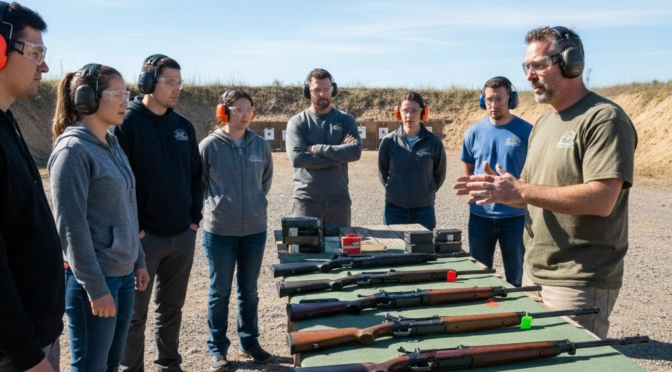
The landscape of American firearm ownership has entered a period of unprecedented demographic and technological transition as of early 2026. Data-driven analysis reveals a market characterized by a significant influx of new owners, many of whom lack traditional exposure to shooting sports through familial lineages, necessitating a more robust and formalized approach to safety instruction.1 The evolution of small arms technology, including the integration of biometric “smart” systems and advanced modular platforms, has altered the traditional interaction between the user and the tool.2 Despite these advancements, the human element remains the primary variable in the prevention of unintentional injuries. Statistical evidence from the National Safety Council and the Centers for Disease Control and Prevention (CDC) demonstrates that while accidental firearm fatalities have plummeted by 95.8 percent since 1903, a core of preventable incidents persists, primarily driven by lapses in the fundamental rules of gun handling.3 This report provides an exhaustive, industry-level review of the ten most critical safety statements, substantiated by epidemiological data, to guide instructors and owners in mitigating risk while fostering a sustainable culture of responsible use.
The Hierarchy of Safety: The Top 10 Critical Statements for 2025
The following table serves as the foundational curriculum for the modern shooter. These statements are ranked based on their efficacy in preventing the most common types of fatal and non-fatal accidents reported in federal surveillance databases such as the National Violent Death Reporting System (NVDRS) and the National Electronic Injury Surveillance System (NEISS).4
| Rank | Safety Statement | Primary Objective | Estimated Annual Impact (Accidents/Injuries Preventable) |
| 1 | Always keep the muzzle pointed in a safe direction. | Redundancy against discharge. | Prevents nearly 100% of injuries in the event of an unintended discharge.7 |
| 2 | Keep your finger off the trigger until ready to shoot. | Preventing involuntary discharge. | Targets the 21.3% of pediatric deaths caused by unintentional trigger pulls.6 |
| 3 | Treat every firearm as if it were loaded at all times. | Eliminating hazardous assumptions. | Targets the 20.5% of accidents where the shooter “thought” the gun was empty.6 |
| 4 | Store firearms unloaded and locked in a secure container. | Preventing unauthorized access. | Could prevent 1/3 of youth suicides and 85% of pediatric accidents.8 |
| 5 | Be sure of your target and what lies beyond it. | Preventing over-penetration/misID. | Targets the 37% of hunting accidents caused by misidentification.10 |
| 6 | Use only the correct ammunition for your firearm. | Preventing catastrophic failure. | Prevents 99% of “exploding gun” failures from caliber mismatch.12 |
| 7 | Wear hearing and eye protection at all times. | Preventing sensory degradation. | Prevents high-frequency hearing loss found in 50% of heavy shooters.14 |
| 8 | Ensure the barrel is clear of obstructions before use. | Preventing structural failure. | Prevents barrel bursts and shrapnel injuries from debris.7 |
| 9 | Never handle firearms under the influence of drugs/alcohol. | Maintaining cognitive judgment. | Targets the nearly 50% of 20-29 age group accidents involving impairment.16 |
| 10 | Maintain medical readiness and “Stop the Bleed” training. | Mitigating injury severity. | Prevents the 1-2% of deaths from isolated extremity hemorrhage.18 |
Rule 1: Always keep the muzzle pointed in a safe direction.
The mandate to maintain a safe muzzle direction is the single most important rule in the small arms industry because it acknowledges the possibility of both mechanical failure and human error. A “safe direction” is defined as an orientation where a bullet cannot strike anyone or anything not intended as a target, accounting for the penetration capabilities of modern projectiles through common residential barriers such as drywall, flooring, and ceilings.7 Muzzle discipline creates a fail-safe; if every other safety protocol is breached and the firearm discharges, the resulting impact is directed into an inert backstop rather than a human being.
The prevalence of muzzle-related accidents is most visible in social settings where firearms are “played with” or “shown” to others. Statistical clusters from the NVDRS indicate that 66.6% of unintentional firearm deaths among children and adolescents occur during these social interactions.6 In these scenarios, the primary failure is the “flagging” of others—the act of sweeping the muzzle across a person’s body. The industry estimate suggests that if muzzle discipline were universally practiced, the number of unintentional firearm fatalities in the United States could drop from the current average of approximately 526 per year to near zero.7
The complexity of this rule increases in the context of the modern 2025 home, where construction materials are often insufficient to stop high-velocity rounds. Instructors must educate new owners on “laser-rule” thinking: imagining a continuous laser beam emitting from the barrel and ensuring that beam never crosses a human target.20 This discipline is especially critical during administrative tasks such as loading, unloading, and cleaning, which account for 7.0% of pediatric unintentional deaths.6
| Incident Context | Percentage of Fatal Pediatric Accidents | Primary Safety Breach |
| Playing/Showing to others | 66.6% | Muzzle flagging.6 |
| Mistaken for a toy | 10.6% | Failure to orient muzzle safely.6 |
| Loading/Unloading/Cleaning | 7.0% | Negligence during handling.6 |
Rule 2: Keep your finger off the trigger until ready to shoot.
Trigger discipline—keeping the index finger outside the trigger guard and indexed along the frame or slide—is the primary defense against involuntary discharges caused by physiological responses. In 2025, with the market dominance of striker-fired pistols that lack external manual safeties, this rule has become the de facto mechanical safety for millions of owners.21 The industry emphasizes that the only time a finger should touch the trigger is when the sights are on target and the decision to fire has been finalized.20
The physiological research into unintended discharges (UDs) reveals that human biology often works against safety in high-stress or routine environments. Studies on law enforcement personnel indicate that nearly 25% of UDs are the result of “muscle co-activation” or the “startle response”.24 For instance, if a person loses their balance and stumbles while holding a firearm, the natural reflex is to clench the hands. If the finger is inside the trigger guard, this clenching provides more than enough force to overcome a standard 4 to 6-pound trigger pull.24
Among the civilian population, the failure to adhere to trigger discipline is a major contributor to non-fatal injuries. The CDC notes that “unintentionally pulling the trigger” accounts for 21.3% of all unintentional firearm deaths among youth.6 For instructors, the challenge lies in breaking the “Hollywood” habit of resting the finger on the trigger, a common trait among new owners influenced by media. In the 2025 landscape, where concealed carry has expanded into new demographics, the risk of “re-holstering” accidents—where clothing or a finger snags the trigger as the gun is placed in the holster—remains a persistent cause of self-inflicted leg and foot injuries.17
Rule 3: Treat every firearm as if it were loaded at all times.
The “Load Assumption” protocol requires that every handler treat a firearm as a loaded and dangerous instrument, regardless of its perceived status. This rule is designed to counteract the psychological complacency that develops after years of handling or after receiving a firearm from another person who “claimed” it was empty.7
A critical failure point in Rule 3 occurs during the “administrative clearing” of semi-automatic firearms. New owners frequently make the mistake of cycling the slide to clear the chamber before removing the magazine. This sequence actually loads a fresh round into the chamber from the magazine, leaving the user with a “hot” gun that they believe is empty.28 NVDRS data indicates that 20.5% of fatal accidents occur specifically because the shooter “thought” the firearm was unloaded or that the safety was engaged.6
Instructors in 2025 must teach a “Physical and Visual” verification process. It is insufficient to merely look at the chamber; the user must also visually inspect the magazine well and, where possible, physically probe the chamber with a finger to ensure no brass is present.7 This is considered the mark of an experienced and safe handler. In California alone, roughly 50 unintentional deaths and 1,800 non-fatal injuries occur annually, many of which are traced back to a failure to verify the “empty” status of a firearm before cleaning or storage.16
Rule 4: Store firearms unloaded and locked in a secure container.
The most effective method for reducing firearm-related tragedies in the home is the “Triple-Secure Storage” model: storing firearms unloaded, locked, and in a location separate from ammunition.9 In 2025, secure storage is viewed not just as a safety rule, but as a critical component of community risk management. An estimated 54% of American gun owners do not lock all their firearms securely, leaving them accessible to children, unauthorized users, or potential thieves.8
The statistical argument for secure storage is undeniable. Research indicates that households that lock both firearms and ammunition have an 85 percent lower risk of unintentional firearm injuries among children compared to those that lock neither.8 Furthermore, nearly 80% of firearm suicides by minors involve a weapon owned by a family member, highlighting that “hiding” a gun is not a substitute for locking it.32
The small arms industry analyst must note that the “self-defense” argument—the idea that a lock slows down access—is being countered by 2025 technology. Modern biometric safes and RFID-enabled lockboxes allow for access in under two seconds, effectively neutralizing the conflict between readiness and safety.2 Instructors should frame secure storage as a professional obligation; the Everytown #NotAnAccident index documents over 3,500 unintentional child shootings over a ten-year period, nearly all of which were preventable through basic locking mechanisms.8
| Storage Habit | Impact on Child Injury Risk | Population Estimate |
| Unlocked & Loaded | 100% Baseline Risk | 4.6 million children live in these homes.8 |
| Locked Firearm Only | ~70% Risk Reduction | ~30% of owners practice this.8 |
| Locked Firearm & Locked Ammo | 85% Risk Reduction | Recommended “Gold Standard”.8 |
Rule 5: Be sure of your target and what lies beyond it.
A shooter is legally and morally responsible for every projectile that leaves the muzzle. Rule 5 mandates that a user must positively identify the target and be aware of everything in the foreground and background of the intended shot.7 This rule addresses two distinct hazards: misidentification (mistaking a person for game or a threat) and over-penetration (a bullet passing through a target or wall and striking a bystander).20
In the hunting sector, failure to identify the target is the leading cause of firearm-related injuries, accounting for 37% of accidents.10 These incidents often involve “judgmental errors” where a hunter fires at a sound or a patch of color, only to discover they have shot a fellow hunter. Furthermore, 10% of fatal hunting accidents involve a shooter “swinging on game”—following a moving animal with their firearm and failing to see another person in the line of fire.10
For home defense, Rule 5 is critical because of the high velocity of modern defensive rounds. Rifles chambered in 5.56 NATO or high-caliber handguns can easily penetrate multiple layers of drywall, potentially striking family members in adjacent rooms.20 Defensive gun use (DGU) is statistically rare, occurring in fewer than 1% of property crimes, yet when it does occur, the risk to bystanders is significant.32 Instructors emphasize the use of high-lumen weapon lights as a safety tool, ensuring that no trigger is pulled until the “threat” is clearly illuminated and verified.20
Rule 6: Use only the correct ammunition for your firearm.
Modern small arms are engineered to specific pressure tolerances and dimensional standards. Rule 6 mandates the use of only the exact caliber and type of ammunition designated by the manufacturer.7 The 2025 market sees a proliferation of calibers with similar dimensions but vastly different pressures, making this rule more vital than ever.12
The most dangerous scenario in 2025 involves the cross-loading of.300 Blackout ammunition into a 5.56 NATO rifle. Because the.300 Blackout round can physically chamber in some 5.56 barrels, a user who is not paying attention to their magazines can inadvertently fire a.30 caliber bullet through a.22 caliber bore. This results in an immediate “catastrophic failure,” where the pressure spike causes the upper receiver to explode, frequently injuring the shooter’s face and hands.12
While catastrophic mechanical failures are “exceedingly rare” when using correct ammunition (estimated at less than 1% of all AR-platform rifles), they are almost always the result of human error—either the use of “cheap,” over-pressured ammunition or caliber mismatches.12 Industry best practices require owners to mark their magazines clearly and to inspect every round before it is loaded into the firearm.12
Rule 7: Wear hearing and eye protection at all times.
Firearm safety is not limited to the prevention of immediate trauma; it also involves protecting the long-term sensory health of the shooter and bystanders. Discharge noise from a firearm (140 dB to 175 dB) is high-intensity impulse sound that causes immediate and irreversible damage to the cochlear structures of the inner ear.14
The prevalence of hearing loss among the shooting community is a significant public health issue. Data indicates that the risk of high-frequency hearing loss increases by 7% for every five years an individual has hunted without protection.15 A study of recreational shooters found that 50% of those who fired more than 1,000 rounds in their lifetime exhibited significant hearing impairment.15 Despite this, 95% of hunters report never wearing hearing protection in the field, likely due to a desire to hear ambient sounds.15
Instructors in 2025 are increasingly advocating for “Electronic Hearing Protection,” which amplifies quiet sounds while instantaneously clipping the dangerous impulse noise of a gunshot.14 Additionally, eye protection is non-negotiable; shooting glasses protect against the rare occurrence of a “ruptured case” or “pierced primer,” as well as mechanical debris like clay target chips or ejecting brass.7
| Firearm Type | Peak Sound Level (dB) | MPE (Max Permissible Exposure) |
| .22 LR Rifle | 140 dB | ~1 shot unprotected.14 |
| 12 Gauge Shotgun | 150-165 dB | 0 shots (Immediate Damage).14 |
| .308 Rifle | 160-175 dB | 0 shots (Severe Trauma).14 |
Rule 8: Ensure the barrel is clear of obstructions before use.
A firearm is a pressure vessel. Any obstruction in the barrel—whether it be mud, snow, a cleaning patch, or a “squib” load (a round that lacks enough powder to exit the barrel)—can lead to a catastrophic failure known as a “barrel burst”.7 Rule 8 requires handlers to inspect the bore before every shooting session and to immediately cease fire if a shot sounds “weak” or “off”.7
The mechanics of an obstruction burst are violent. When a following bullet strikes an obstruction, the gases expanding behind it have nowhere to go, causing the barrel to expand and fracture. This shrapnel poses a lethal threat to the shooter and anyone standing in the vicinity.13 In 2025, the rise of “budget” ammunition has increased the frequency of squib loads, making it imperative that new shooters know the difference between a standard recoil impulse and a malfunction.12 Instructors teach the “Stop and Strip” method: if a malfunction occurs, the shooter must strip the magazine, clear the action, and use a cleaning rod to verify the bore is clear before attempting to fire again.7
Rule 9: Never handle firearms under the influence of drugs/alcohol.
The handling of a firearm requires the same cognitive clarity as operating a motor vehicle or heavy machinery. Rule 9 prohibits the use of firearms while under the influence of any substance that alters mental or physical function.17 This includes not only alcohol but also prescription medications that list “drowsiness” or “impaired judgment” as side effects.23
The data on substance-related accidents is troubling. In the 20-29 age demographic, alcohol is suspected in nearly 50% of unintentional firearm deaths.16 Substance use leads to a catastrophic degradation of “situational awareness” and “motor control,” making a person significantly more likely to drop a weapon or violate the four fundamental rules of safety. Industry analysts suggest that sobriety is the most under-discussed safety rule, yet its violation accounts for a significant portion of the roughly 526 annual unintentional deaths recorded in the U.S..16
Rule 10: Maintain medical readiness and “Stop the Bleed” training.
The newest addition to the small arms safety hierarchy is the requirement for medical training. The industry has recognized that “safety” is not just about preventing a shot, but about surviving one should a tragedy occur.19 Rule 10 mandates that every responsible owner should be trained in trauma care, specifically the use of tourniquets and hemostatic dressings.40
Hemorrhage is the leading preventable cause of death in traumatic injuries, with uncontrolled bleeding from an arm or leg capable of causing death in as little as five minutes.19 A 2025 analysis of gunshot victims in Maryland indicated that approximately 1% of fatalities resulted from “isolated limb wounds” that would have been 100% survivable if a bystander had been trained in “Stop the Bleed” techniques.18
In the 2025 landscape, instructors are moving away from treating a trauma kit as an “extra” and are now making it a mandatory piece of range equipment.40 With over 5 million Americans trained as of 2025, the goal is for bleeding control to become as ubiquitous as CPR.40 For a new shooter, knowing how to stop a leak is as fundamental to safety as knowing how to point the gun.
| Injury Type | Fatality Rate (Untreated) | Survivability with Intervention |
| Isolated Extremity Wound | High (if arterial) | ~94% – 100%.18 |
| Multi-Site Trauma | Extreme | Varies; increases significantly.18 |
| Suicidal Attempt (Firearm) | 85% – 91% | Low (High lethality method).33 |
Industry Trends and the Role of the Instructor in 2025
The 2025 firearm market is shaped by “Digital Disruption” and shifting consumer expectations. Traditional influencers are being replaced by authentic, data-driven content creators who focus on sport and family-friendly recreation rather than purely tactical messaging.1 This shift is critical for normalizing firearm safety in mainstream contexts. Instructors must leverage this trend by incorporating technology such as Virtual Reality (VR) into their courses, allowing students to build muscle memory and “stress-test” their adherence to safety rules in a risk-free environment.2
Furthermore, the rise of “De-Influencing”—where creators critique unsafe products or practices—has created a more discerning consumer base.1 New owners are increasingly looking for “Scenario-Based Training” that goes beyond the static range, requiring instructors to be experts in situational awareness and de-escalation as well as mechanical safety.2 The ultimate goal for the 2025 instructor is to foster a “Safety-First” mindset where the owner views themselves as a professional operator of a dangerous tool, regardless of whether they are a hunter, a sport shooter, or a homeowner.1
Summary: Safety Matters To Everyone
The analysis of the 2025 small arms market makes it clear that firearm safety is an multifaceted discipline that integrates behavioral science, mechanical engineering, and emergency medicine. The “Top 10” safety statements are not merely suggestions; they are evidence-based interventions designed to prevent the roughly 43,000 non-fatal injuries and 500+ deaths that occur annually due to negligence.16
The success of the industry depends on its ability to internalize these rules. As ownership grows among diverse populations, the commitment to “Triple-Secure Storage,” “Muzzle Discipline,” and “Trigger Discipline” remains the primary barrier against a public health crisis.45 By adhering to these rules and embracing modern training standards like “Stop the Bleed,” the shooting community can ensure that the sport remains a safe, enjoyable, and responsible pursuit for future generations.7
Appendix A: Top 10 Fundamental Safety Rules (Numbered List)
The following list is provided for instructors and others to facilitate quick reference in training materials, presentations, and safety briefings.4
- Always keep the muzzle pointed in a safe direction.
- Keep your finger off the trigger until ready to shoot.
- Treat every firearm as if it were loaded at all times.
- Store firearms unloaded and locked in a secure container.
- Be sure of your target and what lies beyond it.
- Use only the correct ammunition for your firearm.
- Wear hearing and eye protection at all times.
- Ensure the barrel is clear of obstructions before use.
- Never handle firearms under the influence of drugs/alcohol.
- Maintain medical readiness and “Stop the Bleed” training.
Please feel free to share this report with interested parties and use this report and the top 10 list in your materials. I only ask that you cite this page’s address as the source.
Appendix B: Methodology and Data Synthesis
To generate this report, a multi-disciplinary analysis was performed, merging small arms industry marketing trends with federal epidemiological data. The methodology consisted of three primary stages:
- Rule Formulation: The “Top 10” statements were selected by aggregating the foundational safety guidelines of the National Shooting Sports Foundation (NSSF), Project ChildSafe, and the National Rifle Association (NRA). These traditional rules were then updated with 2025-specific requirements, such as medical readiness (Stop the Bleed) and digital-age storage solutions.
- Epidemiological Correlation: Each rule was cross-referenced with injury data from the National Violent Death Reporting System (NVDRS) and the National Electronic Injury Surveillance System (NEISS). The “importance” of each rule was determined by the frequency of accidents caused by its violation. For example, the prioritization of muzzle discipline and trigger discipline is a direct response to the 66.6% of accidents occurring during social “play” or “showing” of firearms.
- Future-Trend Projection: Industry trade publications and 2025 market reports were analyzed to identify how emerging technologies (AI, VR, and Smart Guns) are changing the way safety is taught and practiced. The report weights “secure storage” and “medical training” more heavily than in previous decades, reflecting the 2025 industry’s focus on pediatric safety and trauma mitigation.
The resulting analysis provides a 360-degree view of firearm safety, designed to be accessible to instructors while maintaining the rigor required for institutional and public health review.45
Please share the link on Facebook, Forums, with colleagues, etc. Your support is much appreciated and if you have any feedback, please email us in**@*********ps.com. If you’d like to request a report or order a reprint, please click here for the corresponding page to open in new tab.
Sources Used
- 6 Marketing Trends Set To Define 2025 – Shooting Industry Magazine, accessed February 11, 2026, https://shootingindustry.com/discover/6-marketing-trends-set-to-define-2025/
- Modern Firearms Training Trends for 2025: Skills, Tech, and Mindset, accessed February 11, 2026, https://www.e3firearmsassociation.com/modern-firearms-training-trends-for-2025-skills-tech-and-mindset-modern-firearms-training/
- FIREARM-RELATED – NSSF, accessed February 11, 2026, https://www.nssf.org/wp-content/uploads/2020/05/NSSF-IIR-Firearm-Related-Accident-Statistics.pdf
- Firearm Injury Surveillance Study, 2022 (ICPSR 39216), accessed February 11, 2026, https://www.icpsr.umich.edu/web/NACJD/studies/39216
- Firearm injuries in the United States – PMC – NIH, accessed February 11, 2026, https://pmc.ncbi.nlm.nih.gov/articles/PMC4700838/
- Unintentional Firearm Injury Deaths Among Children and Adolescents Aged 0–17 Years — National Violent Death Reporting System, United States, 2003–2021 | MMWR – CDC, accessed February 11, 2026, https://www.cdc.gov/mmwr/volumes/72/wr/mm7250a1.htm
- Firearm Safety – 10 Rules of Safe Gun Handling • NSSF, accessed February 11, 2026, https://www.nssf.org/safety/rules-firearms-safety/
- Secure Gun Storage – Everytown for Gun Safety, accessed February 11, 2026, https://www.everytown.org/solutions/responsible-gun-storage/
- Unload, Lock, and Separate: Secure Gun Storage Practices to Reduce Violence, accessed February 11, 2026, https://everytownresearch.org/report/unload-lock-and-separate-secure-storage-practices-to-reduce-gun-violence/
- Hunting Accident Statistics 2025 (Causes & Trends Per Year) – Ammo.com, accessed February 11, 2026, https://ammo.com/research/hunting-accident-statistics
- Most Common Hunting Accident: What To Know – Good Guys Injury Law, accessed February 11, 2026, https://christensenhymas.com/blog/most-common-hunting-accident-what-to-know/
- How common are AR15 catastrophic failures – Reddit, accessed February 11, 2026, https://www.reddit.com/r/ar15/comments/1gly76z/how_common_are_ar15_catastrophic_failures/
- Firearm malfunction – Wikipedia, accessed February 11, 2026, https://en.wikipedia.org/wiki/Firearm_malfunction
- Prevention of Noise-Induced Hearing Loss from Recreational Firearms – PMC, accessed February 11, 2026, https://pmc.ncbi.nlm.nih.gov/articles/PMC5634813/
- NHCA POSITION STATEMENT Recreational Firearm Noise – National Hearing Conservation Association, accessed February 11, 2026, https://www.hearingconservation.org/assets/docs/NHCA_position_paper_on_firea.pdf
- Unintentional Firearm Injury – The BulletPoints Project, accessed February 11, 2026, https://www.bulletpointsproject.org/unintentional-injury/
- Preventing Accidental Discharges with Concealed Carry – xinsurance, accessed February 11, 2026, https://www.xinsurance.com/blog/concealed-carry-accidental-discharge-what-to-know/
- Statewide Analysis Quantifies Life-Saving Potential of Stop the Bleed | ACS, accessed February 11, 2026, https://www.facs.org/media-center/press-releases/2025/statewide-analysis-quantifies-life-saving-potential-of-stop-the-bleed/
- Chicago’s ‘Stop the Bleed’ Kits Could Help Shooting Victims. Why Don’t More People Know About Them? – The Trace, accessed February 11, 2026, https://www.thetrace.org/2025/03/stop-bleed-kits-chicago-violence-program/
- 4 common mistakes beginners make when handling a gun – Gun Blast Vegas, accessed February 11, 2026, https://www.gunblast.vegas/mistakes-beginners-make-when-handling-a-gun/
- Sig Sauer P320 controversy: Separating fact from fiction in safety claims – Police1, accessed February 11, 2026, https://www.police1.com/firearms/sig-sauer-p320-controversy-separating-fact-from-fiction-in-safety-claims
- Office of Inspector General County of Los Angeles, accessed February 11, 2026, https://assets-us-01.kc-usercontent.com/0234f496-d2b7-00b6-17a4-b43e949b70a2/41818f76-4ea9-4ca2-9cb2-5fdd709d512b/Unintended%20Discharge%20Report.pdf
- NRA Gun Safety Rules | NRA Explore, accessed February 11, 2026, https://gunsafetyrules.nra.org/
- Further analysis of the unintentional discharge of firearms in law enforcement – Human Performance Training and Consulting Inc, accessed February 11, 2026, https://www.hptc-pro.com/wp-content/uploads/2018/10/Unintentional-Discharge-Science.pdf
- Further Analysis of the Unintentional Discharge of Firearms in Law Enforcement, accessed February 11, 2026, https://www.researchgate.net/publication/322101764_Further_Analysis_of_the_Unintentional_Discharge_of_Firearms_in_Law_Enforcement
- I’m confused, how likely, really is an accidental discharge while a handgun is holstered? : r/Firearms – Reddit, accessed February 11, 2026, https://www.reddit.com/r/Firearms/comments/1b6vnqs/im_confused_how_likely_really_is_an_accidental/
- A GUIDE TO RESPONSIBLE GUN OWNERSHIP, SAFE HANDLING AND SECURE STORAGE – Project Childsafe, accessed February 11, 2026, https://projectchildsafe.org/wp-content/uploads/2020/12/PCSDigitalBrochure2020.pdf
- 8 Accidental Discharge Risks According to Paul Harrell – Lockton Affinity Outdoor, accessed February 11, 2026, https://locktonaffinityoutdoor.com/blog/8-accidental-discharge-risks-according-to-paul-harrell/
- What Is Negligent Discharge and How to Prevent One – USCCA, accessed February 11, 2026, https://www.usconcealedcarry.com/blog/the-key-to-avoiding-a-negligent-discharge/
- TEN TIPS FOR FIREARM SAFETY IN YOUR HOME – Project Childsafe, accessed February 11, 2026, https://projectchildsafe.org/wp-content/uploads/2024/12/PCS_FirearmsSafety_2024_web_v3.pdf
- NotAnAccident Index – Everytown Research & Policy, accessed February 11, 2026, https://everytownresearch.org/maps/notanaccident/
- New Everytown Report Finds Defensive Gun Use is Rare and Ineffective, Debunking Gun Lobby Myth, accessed February 11, 2026, https://everytownsupportfund.org/press/new-everytown-report-finds-defensive-gun-use-is-rare-and-ineffective-debunking-gun-lobby-myth/
- Gun Safety and Injury Prevention – AAP, accessed February 11, 2026, https://www.aap.org/en/patient-care/gun-safety-and-injury-prevention/
- Disarming Fear: Debunking Myths of Defensive Gun Use | Everytown Research & Policy, accessed February 11, 2026, https://everytownresearch.org/report/disarming-fear-debunking-myths-of-defensive-gun-use/
- What 50 Years of Hunting Accidents Tell Us About the Dangers of the Sport – HLRBO, accessed February 11, 2026, https://www.hlrbo.com/news/fullarticle/What-50-Years-of-Hunting-Accidents-Tell-Us-About-the-Dangers-of-the-Sport
- Debunking the ‘Guns Make Us Safer’ Myth – Center for American Progress, accessed February 11, 2026, https://www.americanprogress.org/article/debunking-the-guns-make-us-safer-myth/
- Auditory risk estimates for youth target shooting – CDC Stacks, accessed February 11, 2026, https://stacks.cdc.gov/view/cdc/199749/cdc_199749_DS1.pdf
- Unintentional firearm injuries | Colorado Department of Public Health and Environment, accessed February 11, 2026, https://cdphe.colorado.gov/colorado-gun-violence-prevention-resource-bank/injury-and-death-involving-firearms/unintentional
- Unintentional Firearm Injuries Remain Prevalent Over a 12 Year Experience at a Rural Midwestern Level 1 Trauma Center – PMC, accessed February 11, 2026, https://pmc.ncbi.nlm.nih.gov/articles/PMC6047385/
- More Than 5 Million People Are Now Empowered To Control Bleeding | ACS, accessed February 11, 2026, https://www.facs.org/media-center/press-releases/2025/more-than-5-million-people-are-now-empowered-to-control-bleeding/
- Training Bystanders to Stop the Bleeding – Department of Surgery, accessed February 11, 2026, https://surgery.ucsd.edu/news-events/training-bystanders-to-stop-the-bleeding.html
- STOP THE BLEED training has saved lives from Sierra Leone to Connecticut | ACS, accessed February 11, 2026, https://www.facs.org/media-center/press-releases/2020/fridling-jacobs100320/
- Firearm Violence in the United States | Center for Gun Violence Solutions, accessed February 11, 2026, https://publichealth.jhu.edu/center-for-gun-violence-solutions/issues/gun-violence-in-the-united-states
- Finding common ground on firearm safety | Yale News, accessed February 11, 2026, https://news.yale.edu/2025/12/09/finding-common-ground-firearm-safety
- National Summit of Experts Charts Unprecedented Roadmap to Reduce Harms from Firearms in New Ways, accessed February 11, 2026, https://www.publichealth.columbia.edu/news/national-summit-experts-charts-unprecedented-roadmap-reduce-harms-firearms-new-ways
- Physician Involvement in Promoting Gun Safety – PMC – NIH, accessed February 11, 2026, https://pmc.ncbi.nlm.nih.gov/articles/PMC7213995/
- EveryShot’s 2025 Year-In-Review Report Bridges Federal Gun Violence Data Gap with … – Everytown Support Fund, accessed February 11, 2026, https://everytownsupportfund.org/press/everyshots-2025-year-in-review-report-bridges-federal-gun-violence-data-gap-with-comprehensive-ai-driven-analysis-of-38368-incidents-nationwide/
- Language of prevention: advancing firearm safety through health literacy – PMC, accessed February 11, 2026, https://pmc.ncbi.nlm.nih.gov/articles/PMC12315016/